A Short Hop on a Japan Airlines Boeing 737-800: Tokyo Haneda to Seoul Gimpo
After almost fourteen hours spent hurtling through the skies, my longest ever flight came to an end. Touching down in a dreary and rainy Tokyo onboard a Japan Airlines Boeing 787-9 Dreamliner, the weather was a far cry from the unusually sunny skies that I had left behind in London. Pulling onto stand forty minutes behind schedule, and having to wait about twenty minutes for a bus to appear and shuttle me over to the terminal, by the time I had made it through immigration my 8:25 connection time had been reduced to 7:15. However, this was no major issue and I still had plenty of time on my hands to do some spotting before my afternoon flight to Korea.
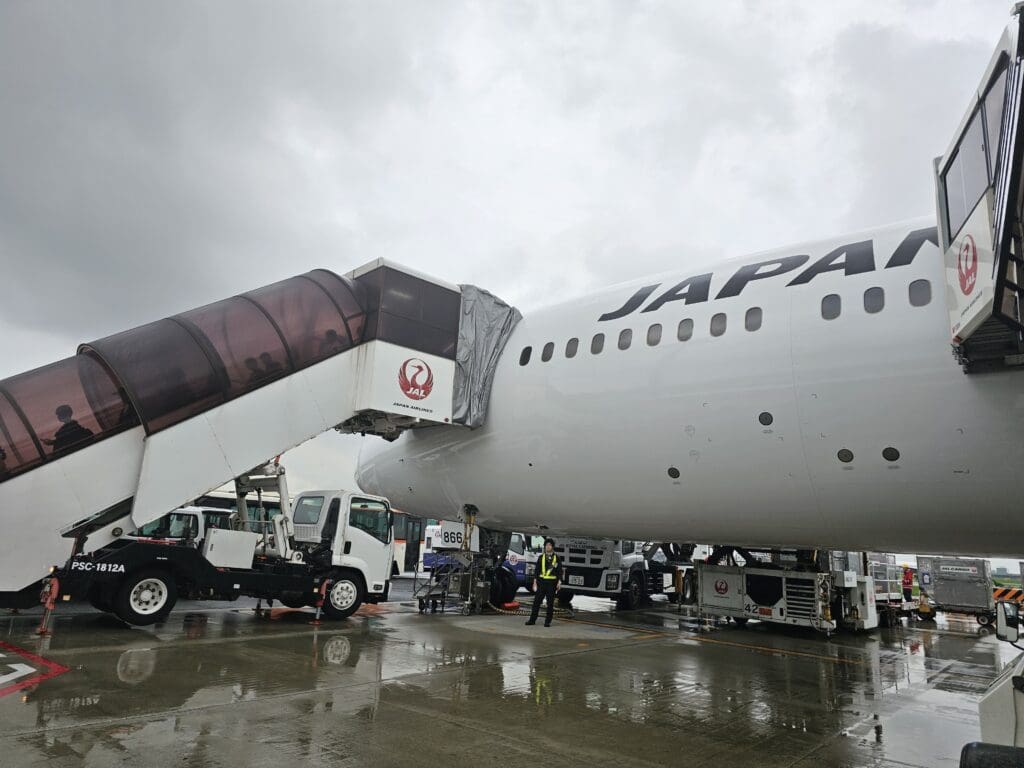
Having had minimal sleep for about two days, by the time I arrived in Japan I was rather shattered. Had I taken the form of a sensible passenger, then I would have likely followed signs for international transfers and spent the day lounging about in the airside portion of the terminal. Meanwhile, a more adventurous passenger equipped with a raincoat may well have gone for a whistlestop tour of Tokyo. Being neither sensible nor adventurous, and instead falling into the peculiar demographic of ‘aviation enthusiast’, I had a better idea. Japan is well known in the aviation enthusiast community as being a very spotter-friendly country, with many airports both large and small, and even some military bases featuring an observation area. Tokyo Haneda is no different, with open-air viewing decks perched atop each of the airport’s three terminals and offering superb views of the movements at the world’s fifth busiest airport. Thus, despite my tired and weary state, I made it my mission to visit all three of these and thus followed signs for immigration.
Having touched down in Haneda during the morning rush, with throngs of flights touching down from airports across Europe, and South and Southeast Asia, I had initially been fearful of long queues to enter Japan. However, much to my delight, thanks to the efficient system in place and the fact that virtually all immigration booths were manned, immigration was a quick and easy process. Having filled out the arrival card on the aircraft, as soon as I reached the desk I handed this over along with my passport and my boarding pass for my onward flight to Seoul Gimpo. At this point, they asked me some questions to ensure that I was indeed intending to enter Japan and had not taken a wrong turn. After the usual scanning and typing, my passport was returned and I was free to make my way through the baggage collection hall and out into the arrivals portion of the terminal.
Tokyo Haneda Airport features three detached Terminals. Terminal 1 and Terminal 2 sit at the heart of the airport complex and are connected via an underground walkway, whilst Terminal 3 sits quite some distance away at the southern end of the airfield. Examining their roles, Terminal 1 acts as Japan Airlines’ domestic hub of operations, serving as the starting point for the carrier’s flights to tens of destinations across Japan. Alongside Japan Airlines and their subsidiaries J-Air and Japan Transocean Air, the terminal also hosts low cost carrier Skymark Airlines and several StarFlyer flights. Directly opposite this sits Terminal 2, home to rival airline All Nippon Airways (ANA) and their partners Air Do and Solaseed Air, plus a number of StarFlyer services. Whilst once purely a domestic terminal, since 2023 a number of ANA’s international flights have also used this terminal which has allowed for quicker and easier connections between the airline’s domestic and international services. Finally, Terminal 3 is Haneda Airport’s international terminal, being the home of Japan Airlines’ international operation, as well as the focus of operations of all foreign carriers that serve the airport.
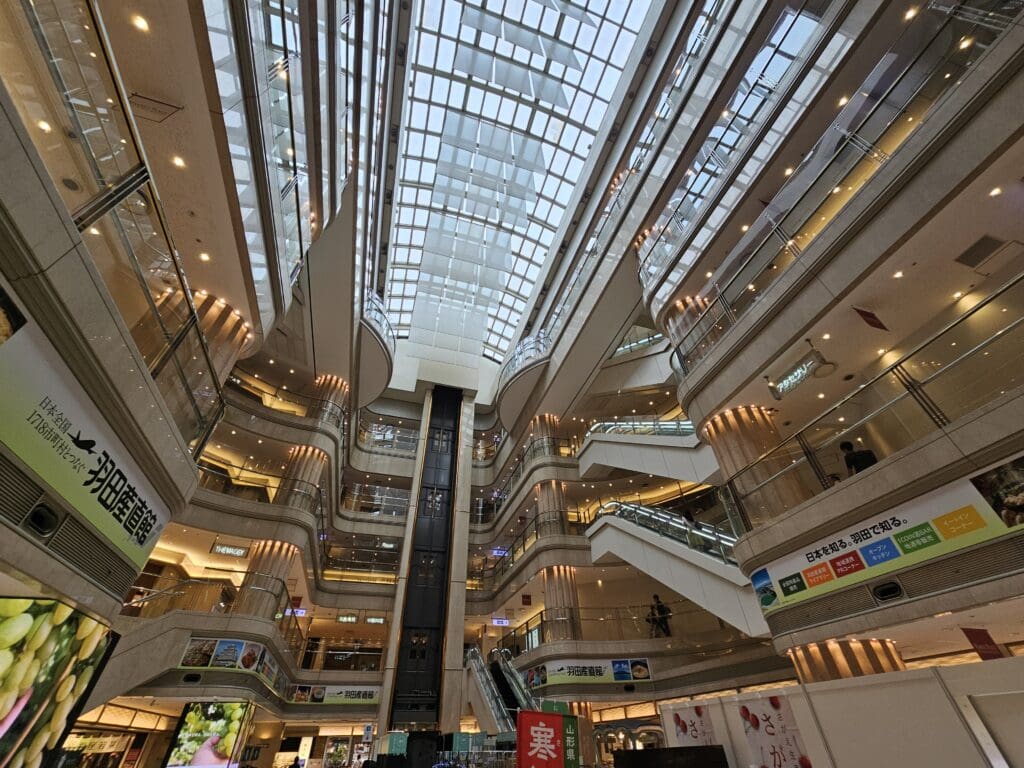
Thanks to its distance from the other terminals, getting to and from Terminal 3 requires either a ride on the monorail, the Keikyū Airport Line or a complimentary shuttle bus. Of these, perhaps the simplest means of getting between these for those lacking in the local lingo is the bus option. This departs at very regular intervals between 0400 and 0100 the next day and is hard to miss thanks to the well-sign posted nature of the bus stops and the fact that the bus is bright yellow! Being a free service, no ticket is needed and all you need to do is simply hop aboard and enjoy the short ride, with this operating in a loop, connecting Terminals 1, 2 and 3.
Hoping to see as much as possible, I had planned my day well in advance, and had mapped out where to go and at what time based on the position of the sun and aircraft photography opportunities. Yet, as it turned out, my planning was in vain and that day, low lying clouds, mist and heavy rain showers persisted throughout the day in Tokyo creating some rather grim and miserable conditions. Of course, being from the UK, I am most certainly not adverse to the odd torrential downpour and so I decided to stick to my original plan. Once I had steamed out of arrivals, I voyaged out to the bus stop that is located directly outside Terminal 3 and waited for the next complimentary shuttle over to Terminal 1. A few minutes later, a bus appeared and I soon piled on along with plenty of other passengers who appeared to be connecting onto domestic flights to destinations across Japan.
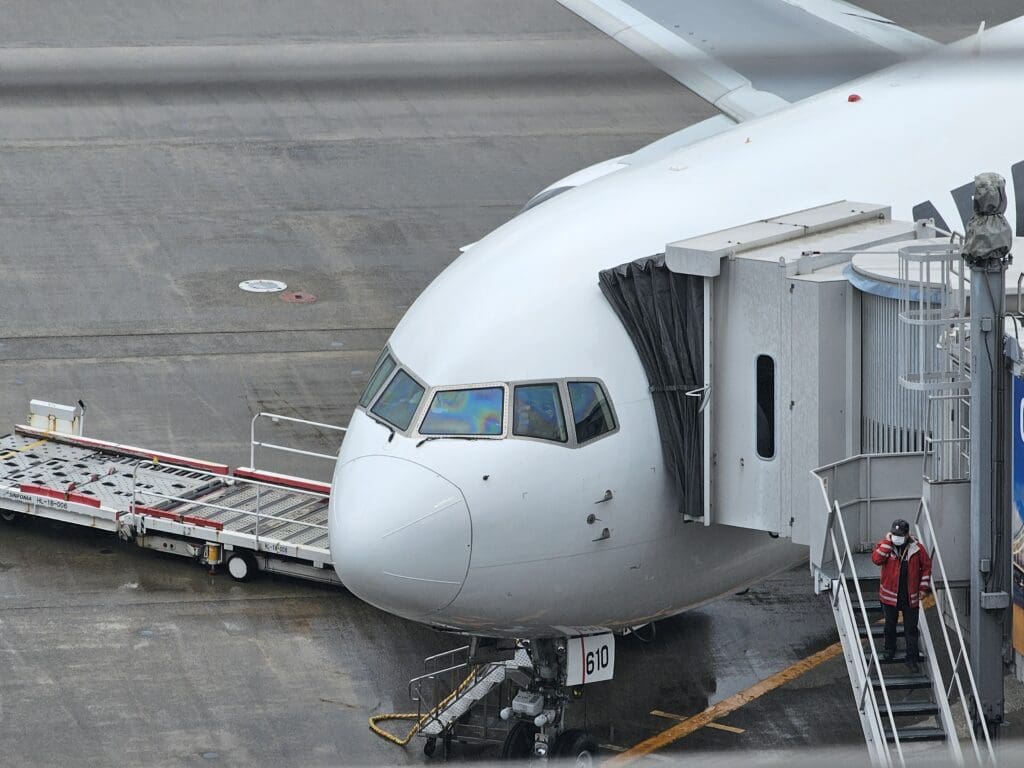
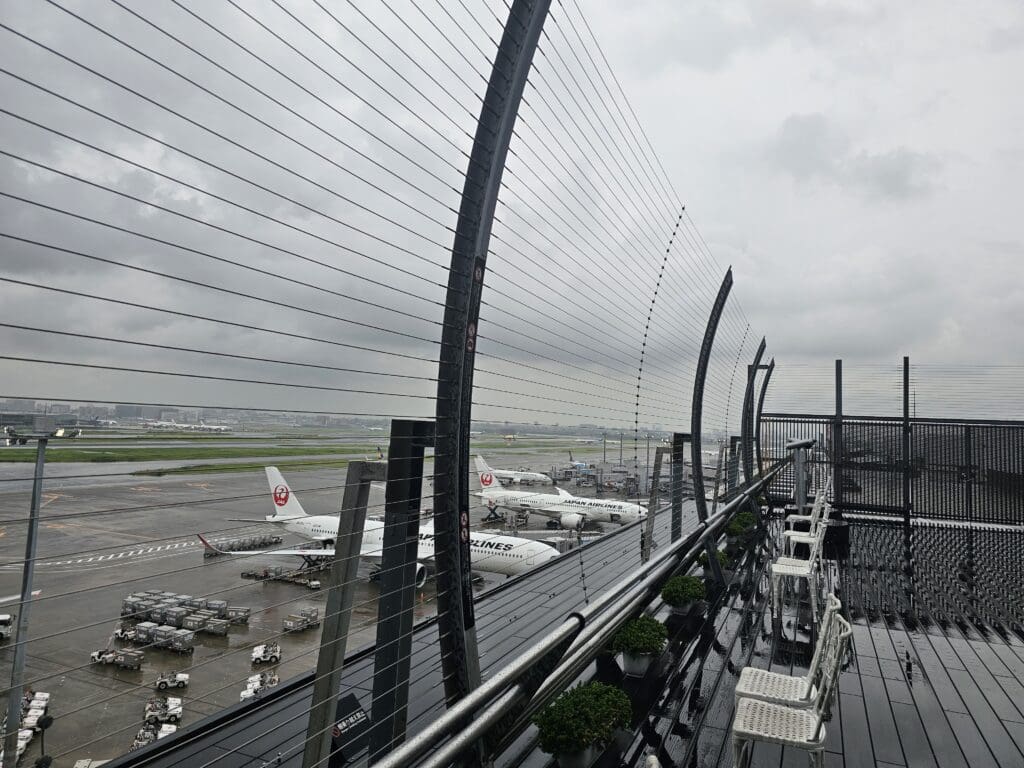
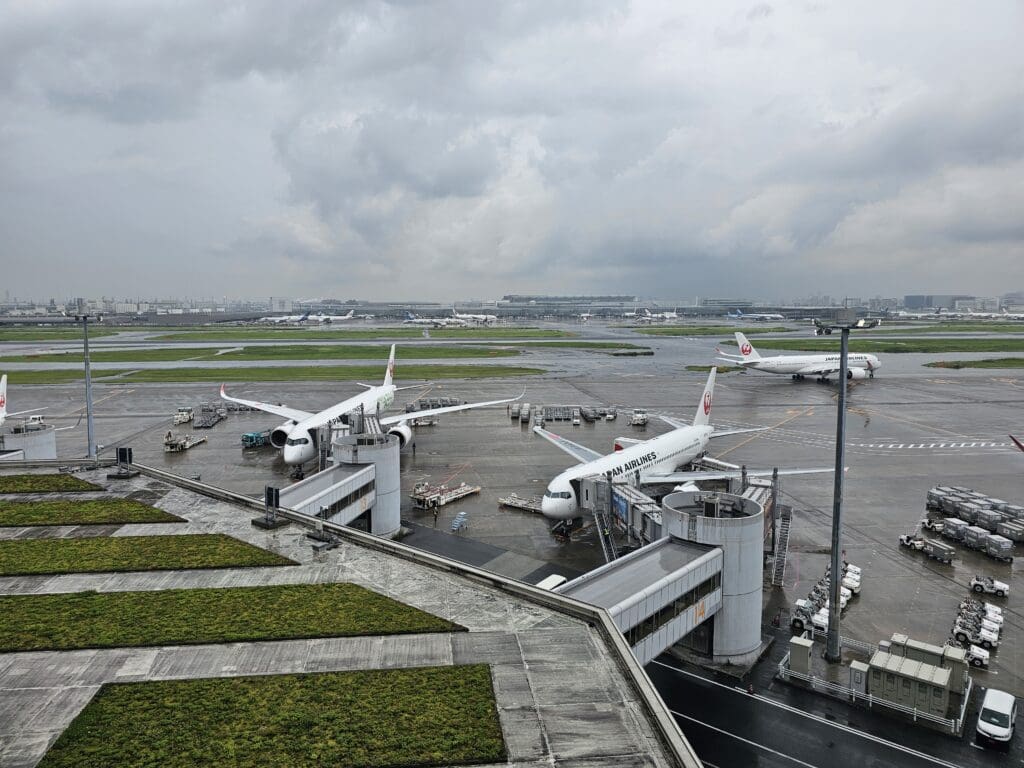
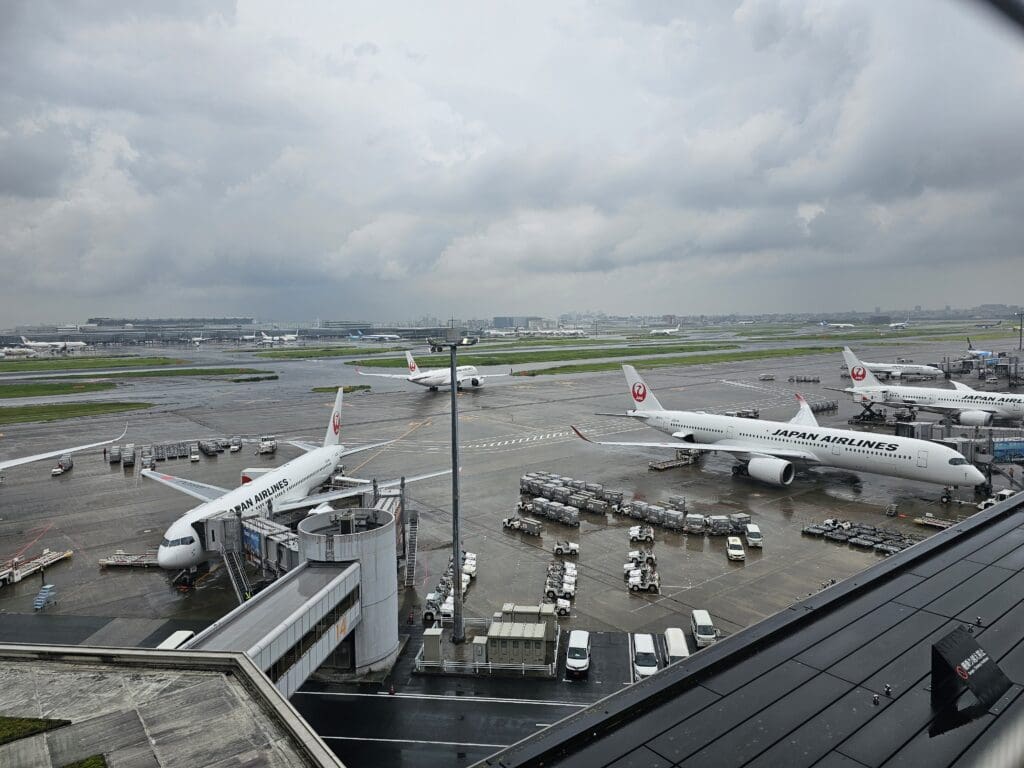
Whilst I will not fully detail my experience at the observation decks here for fear of scaring off the more ‘ordinary’ reader, as it turned out, the only one of these that featured an outdoor rain shelter and thus being suitable for all-weather photography was that of Terminal 1. Meanwhile, Terminal 2’s observation deck allowed for the constant stream of ANA movements to be watched through the glass thus whilst good for those looking to simply watch the aircraft, this was a little less suitable for photography. Last and least, Terminal 3’s observation deck lacked any rain shelter or indoor viewing area, meaning that I would probably suggest avoiding this in poor weather conditions unless you don’t mind getting absolutely soaked!
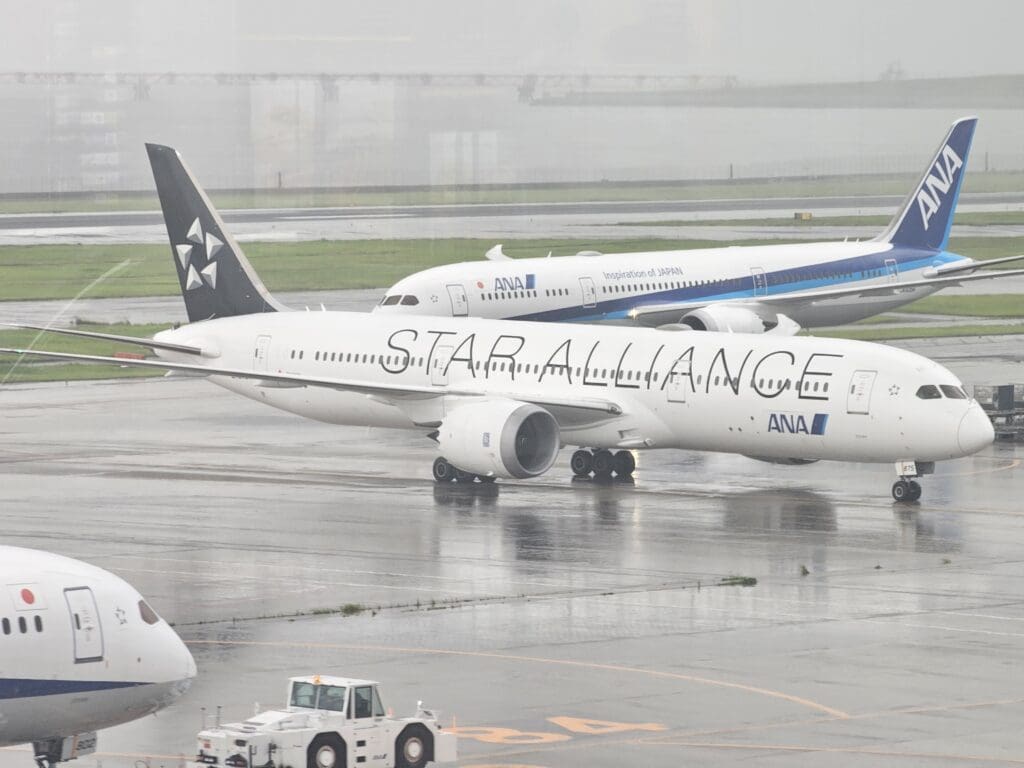
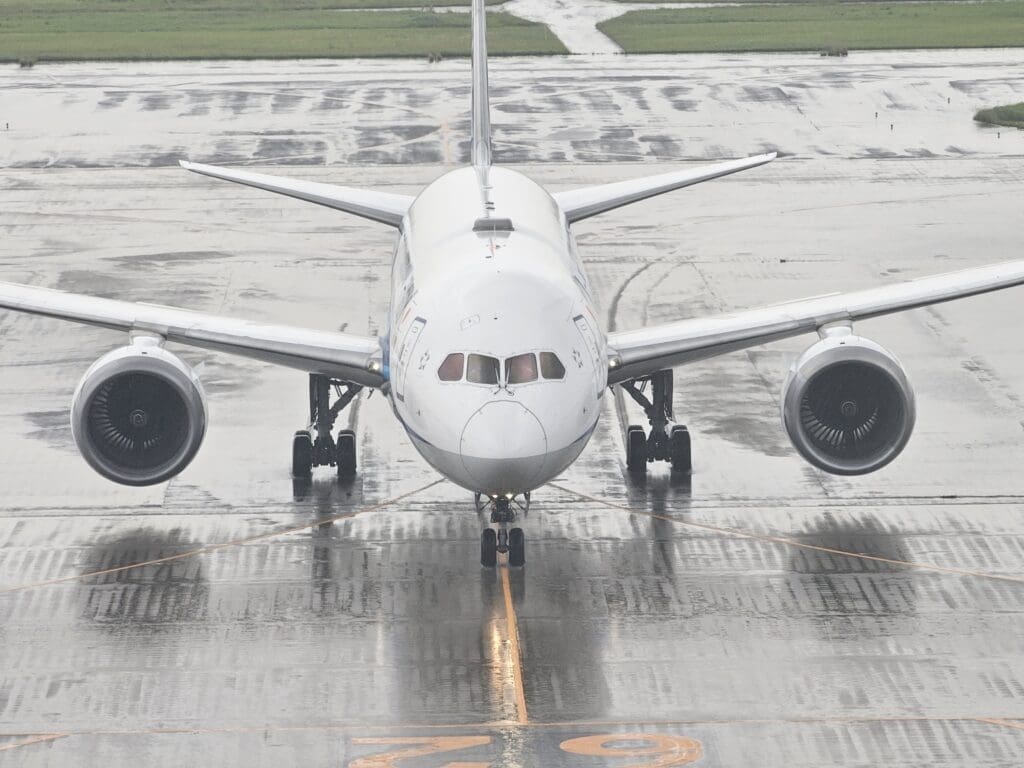
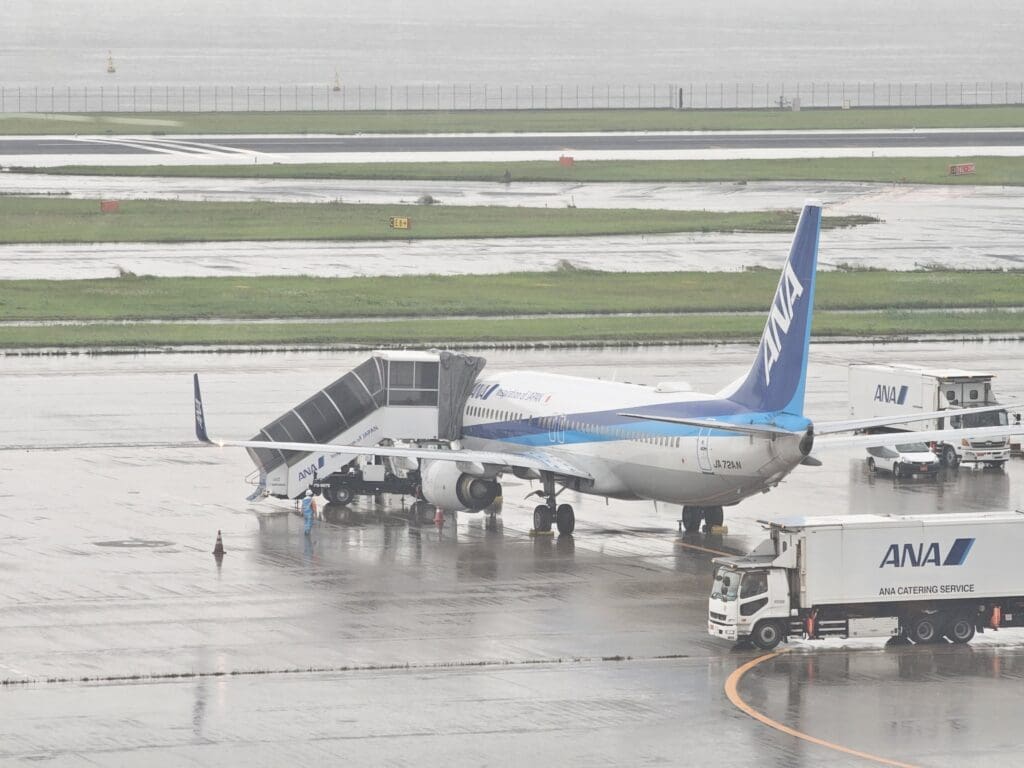
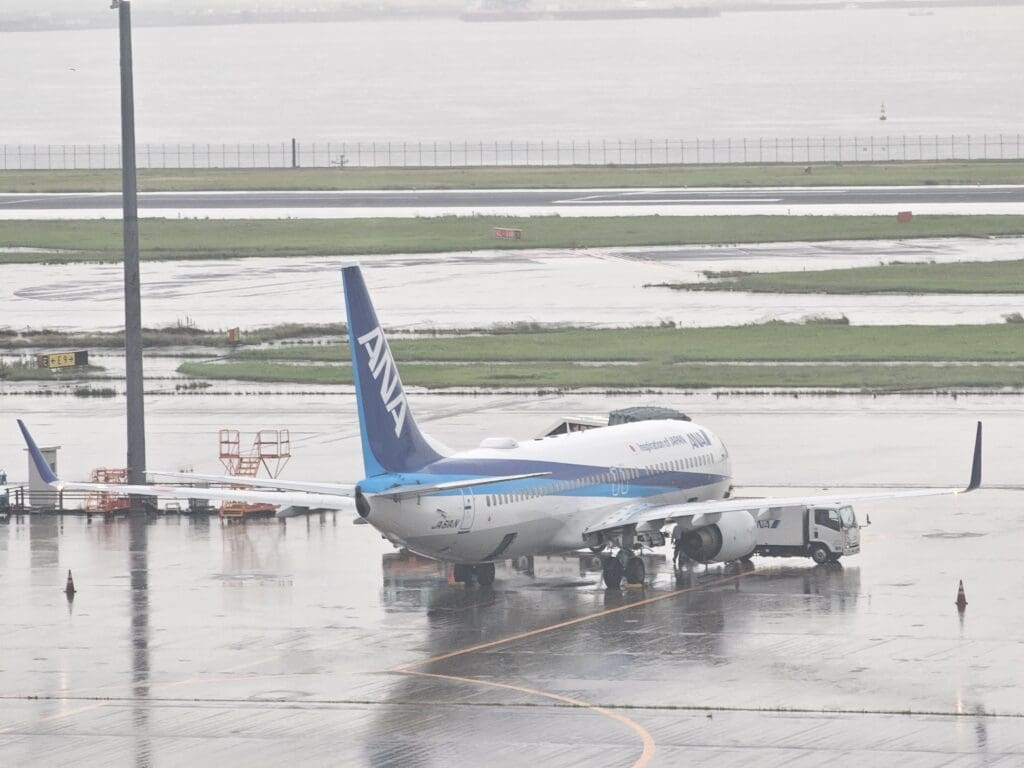
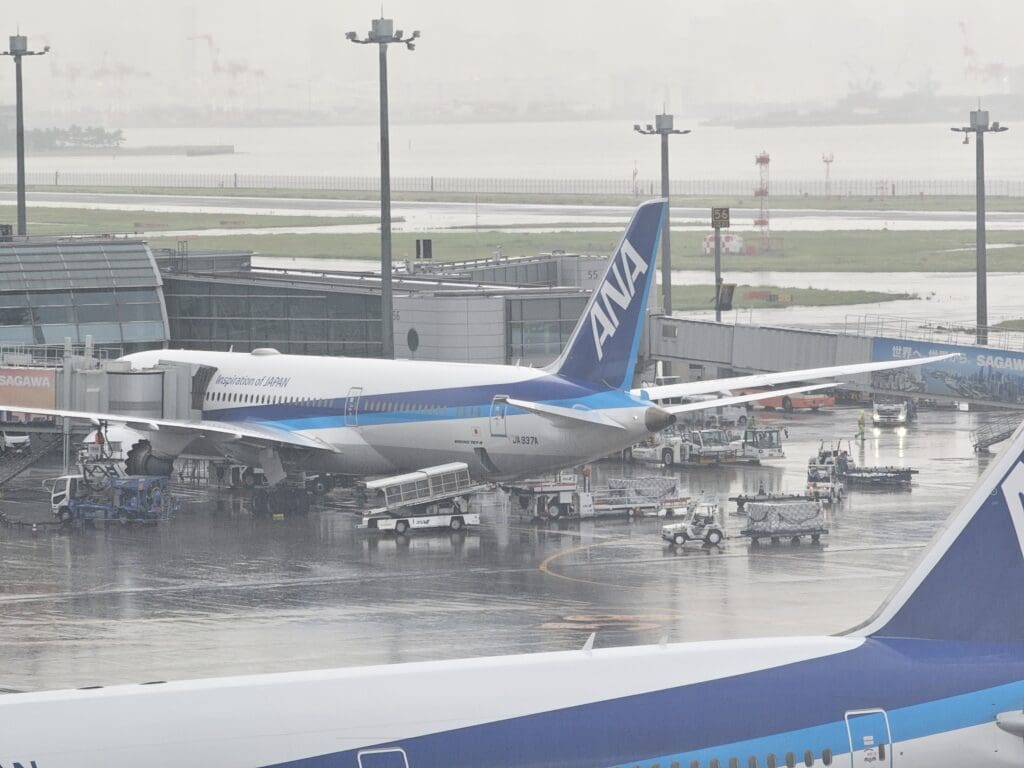
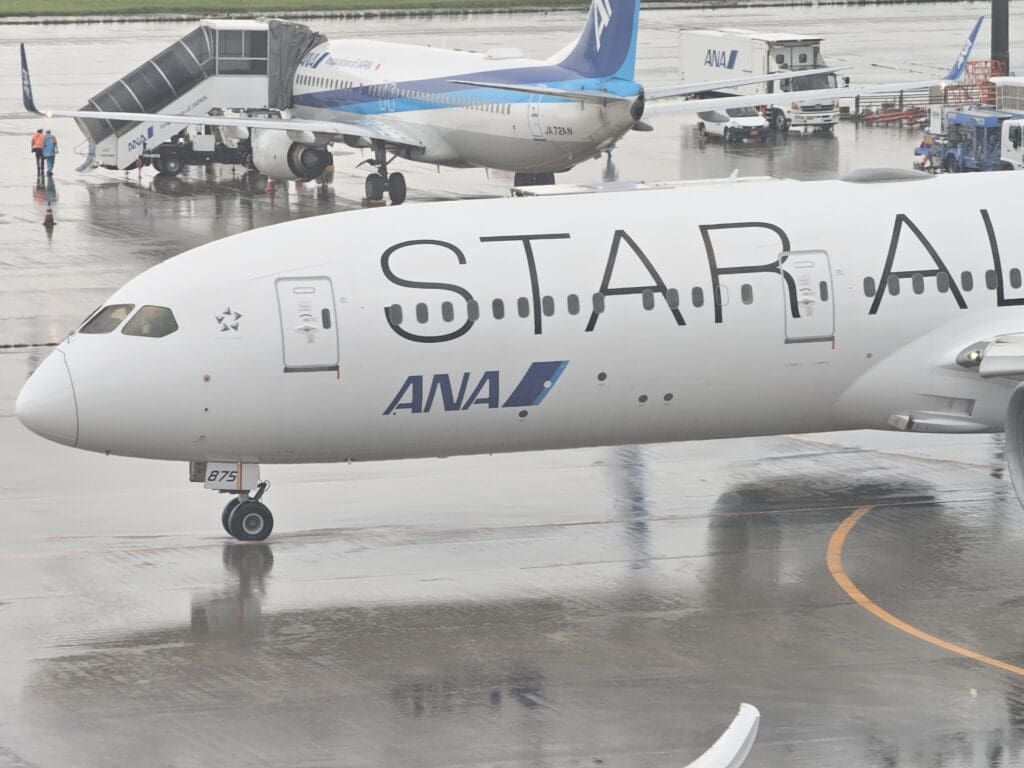
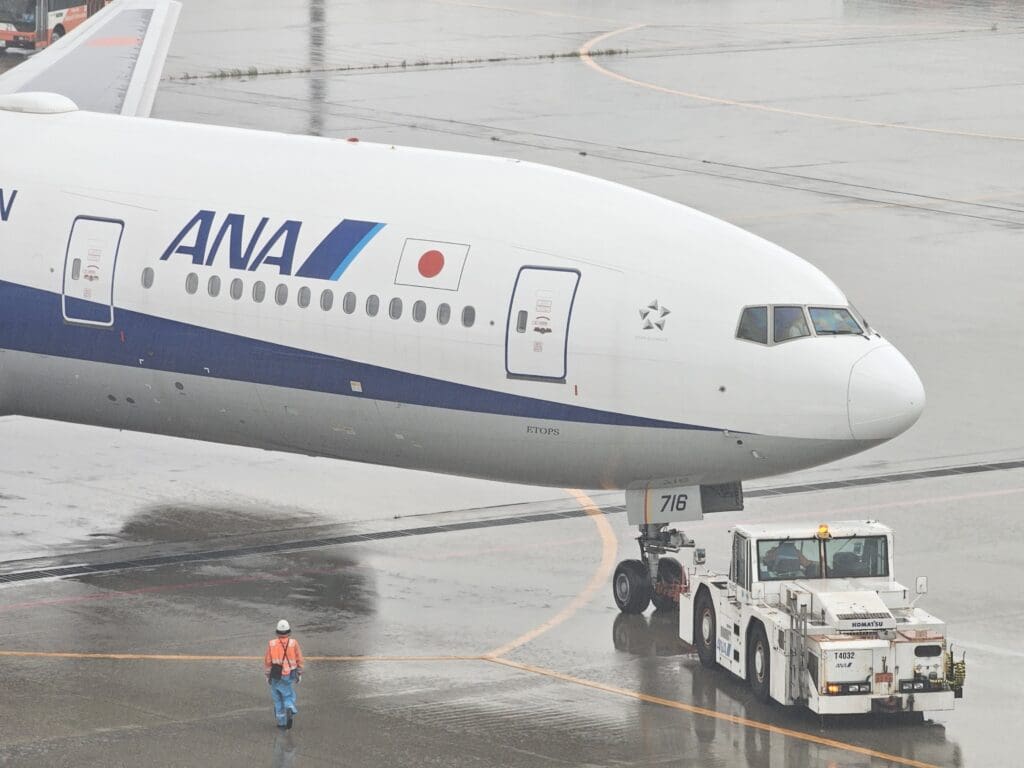
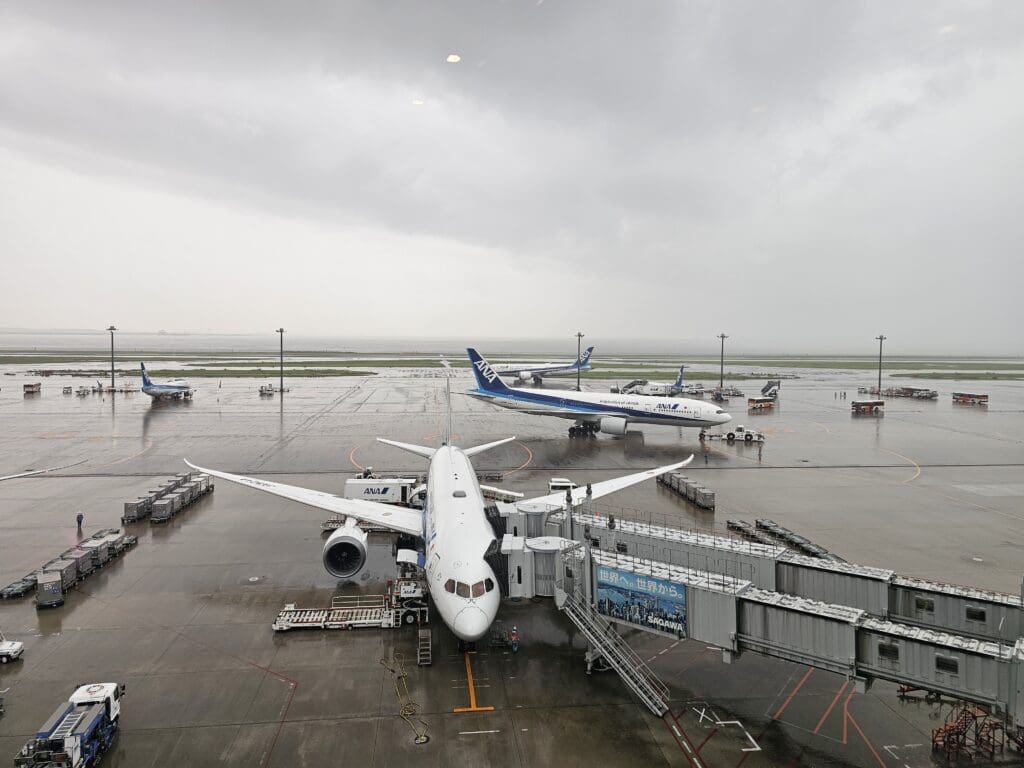
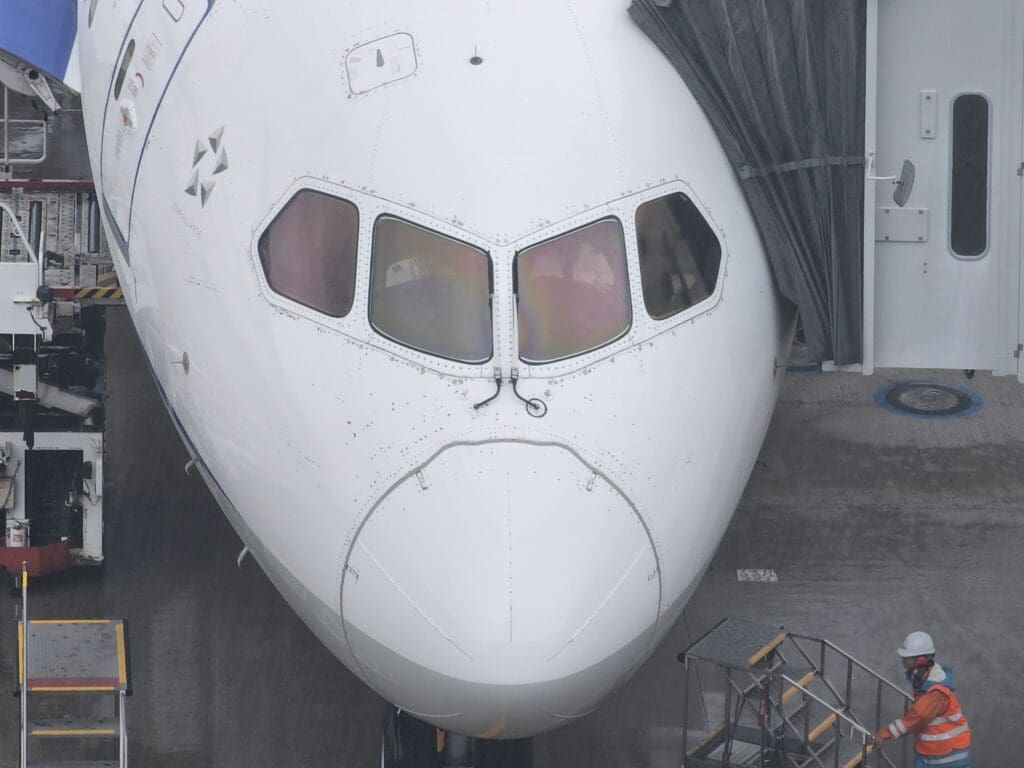
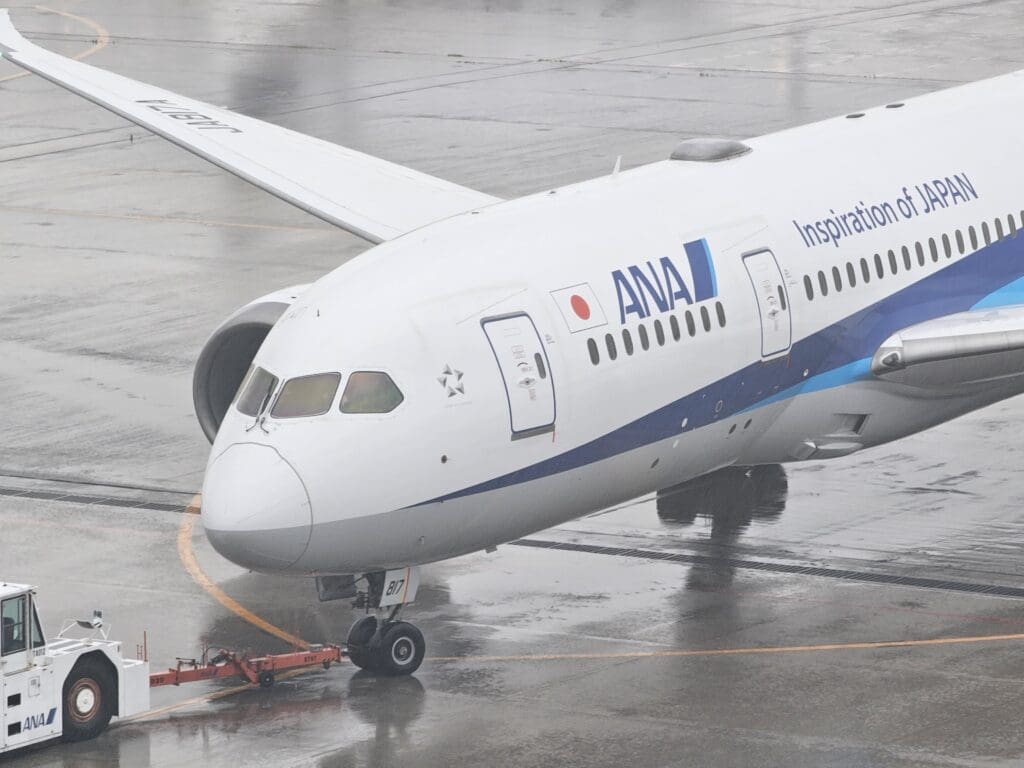
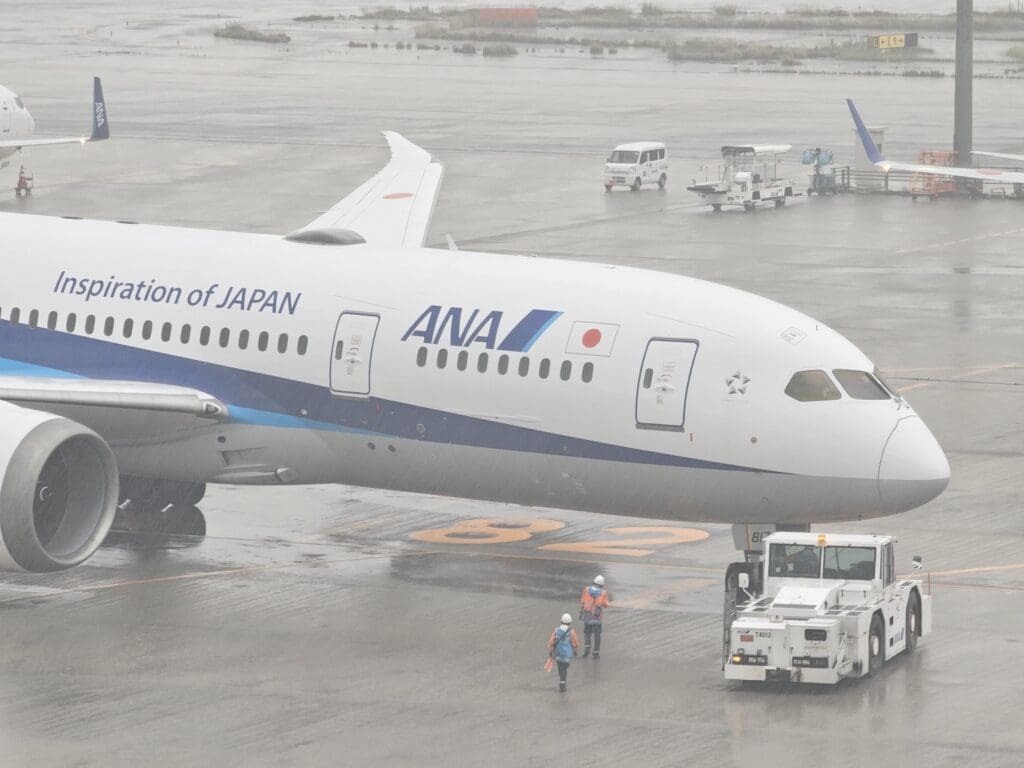
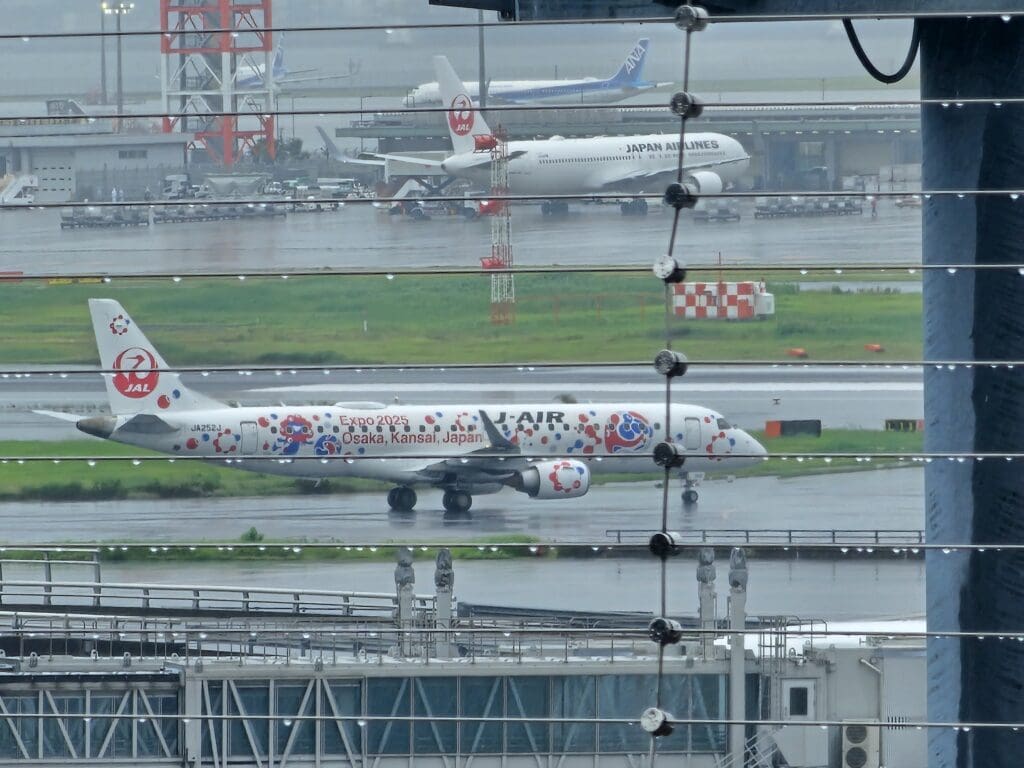
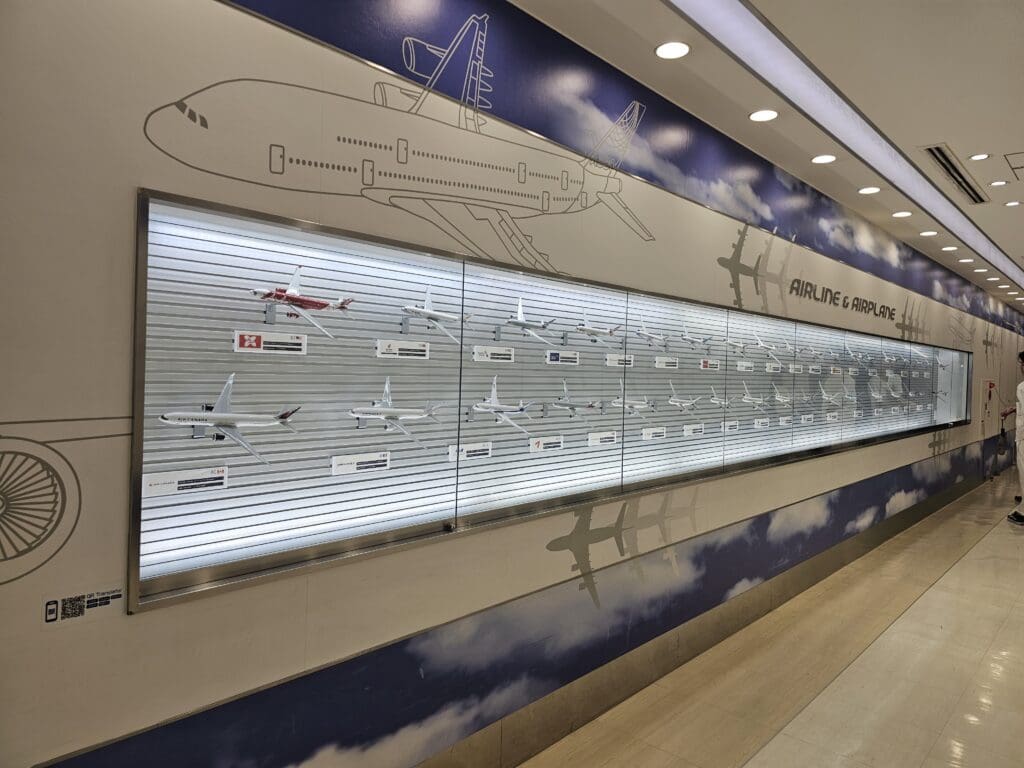
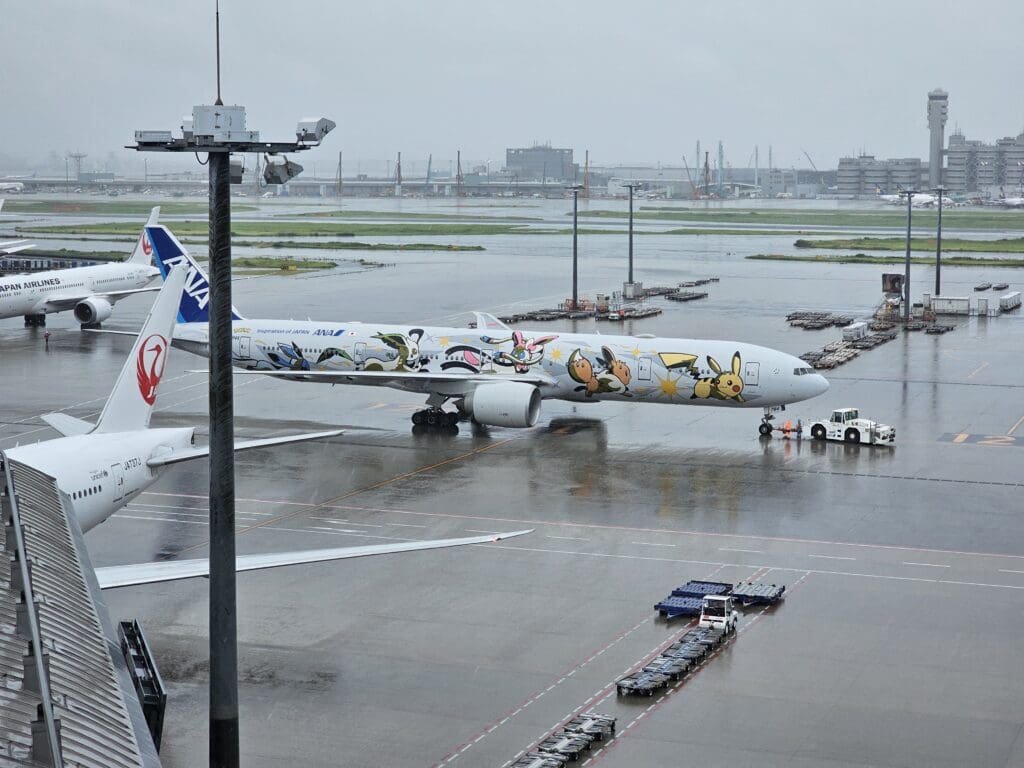
By midday, I was suitably drenched, shattered and in need of a rest. Having ended my journey at Terminal 3’s observation deck, I headed down to the arrivals level and navigated my way over to the shower facilities in order to freshen up and change my clothes before my short ride over to Korea. Once I had made it there, I paid the very polite and friendly attendant a grand total of 1,500 yen (£7.37) which provided me with access to a shower room for thirty minutes. This was clean, tidy and stocked with the basics, leaving me with no complaints and serving to be a great option for those needing to freshen up and lacking access to one of the terminal’s lounges. I may be completely wrong, but judging by the questions that I was asked at the start of my stay, it seems that premium passengers on a number of arriving airlines may be granted free access to this following their arrival.
Feeling refreshed and sporting a new set of clothes, I voyaged up the escalators and arrived in Terminal 3’s modern, bright, spacious and airy check-in hall. This hosts eight banks of rectangular check-in islands that are spread across a large rectangular hall. There, plenty of seating and charging points could be found for those who arrive too early to check-in or are in desperate need of some charge. Like most, if not all airport terminals in Japan, this space seemed to be very clean, pleasant and tidy. However, at first glance, this did seem to lack the shops, cafés and eateries that one may expect to find in a major international airport terminal, with refreshment facilities in the check-in hall limited to just a few vending machines.
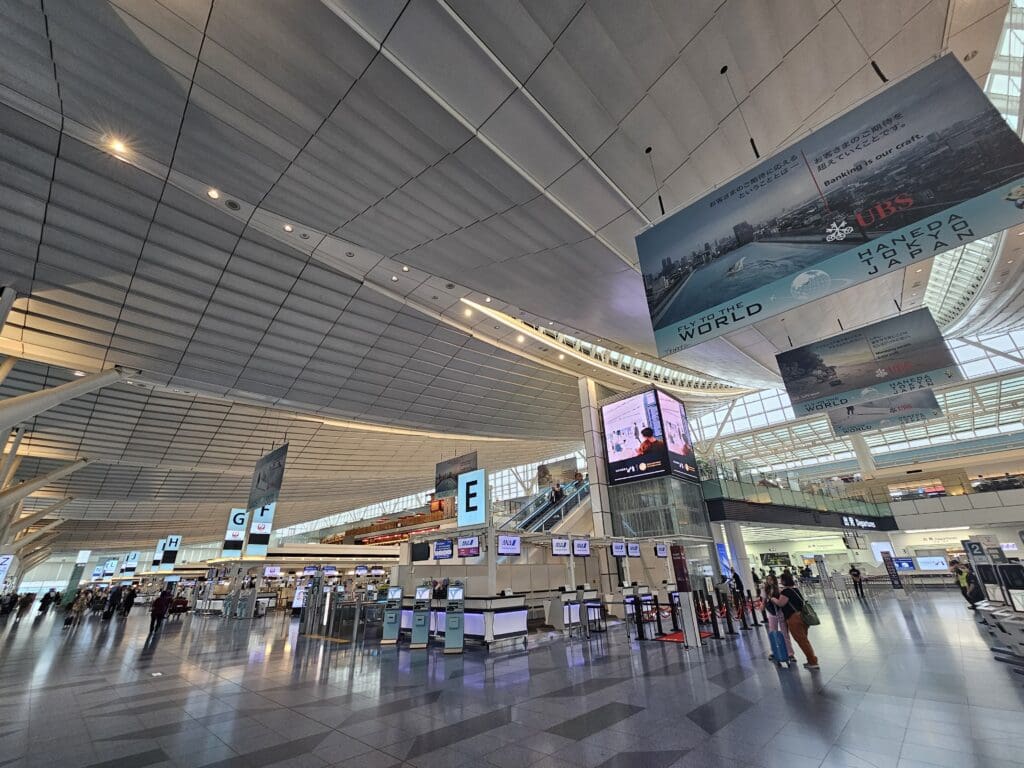
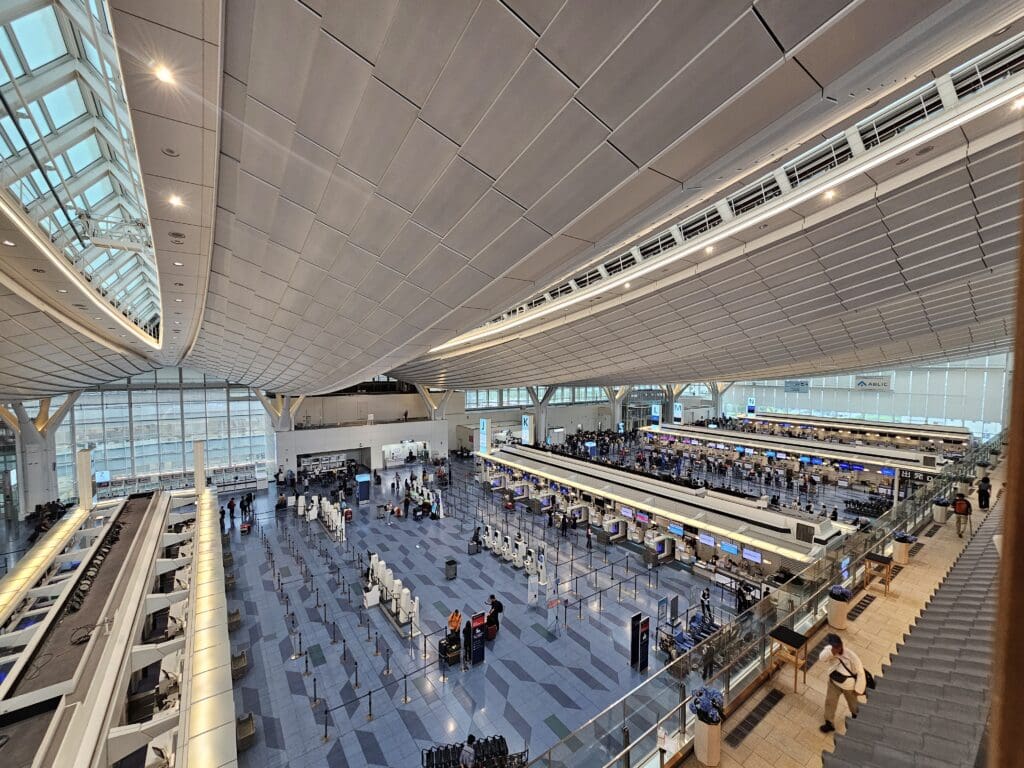
However, fear not, as the bulk of Terminal 3’s landside facilities are located above in the check-in hall in the Edo Market. As its name would suggest, this is a unique space designed to resemble a series of streets from Japan’s Edo period, with wooden façades, lanterns, and traditional signage creating a historical ambience. There, an impressive total of 26 restaurants are offered that specialise in cuisines from across the world, in addition to 12 shops, meanwhile, a smaller number of shops and eateries can be found on the floor above this next to the observation deck.
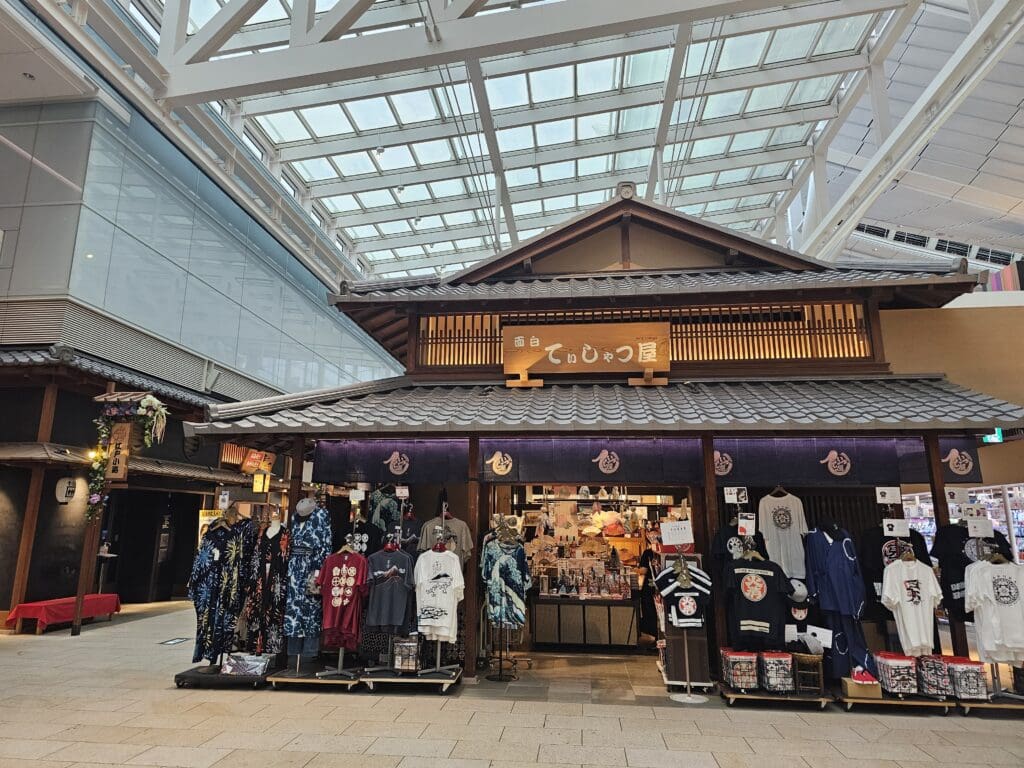
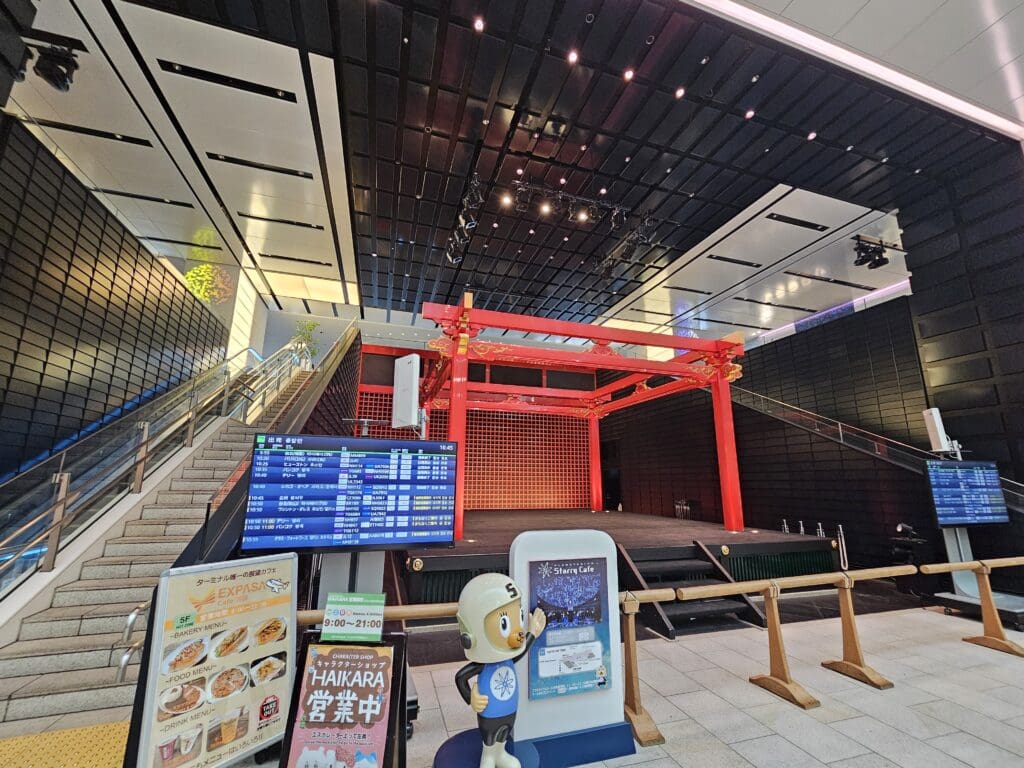
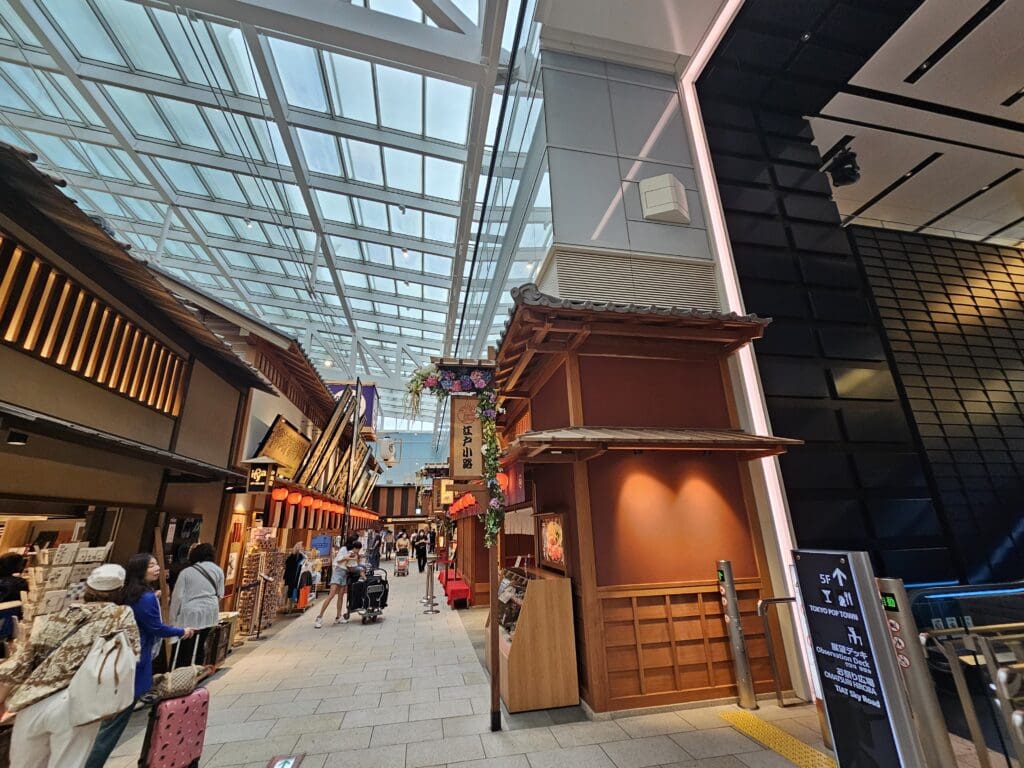
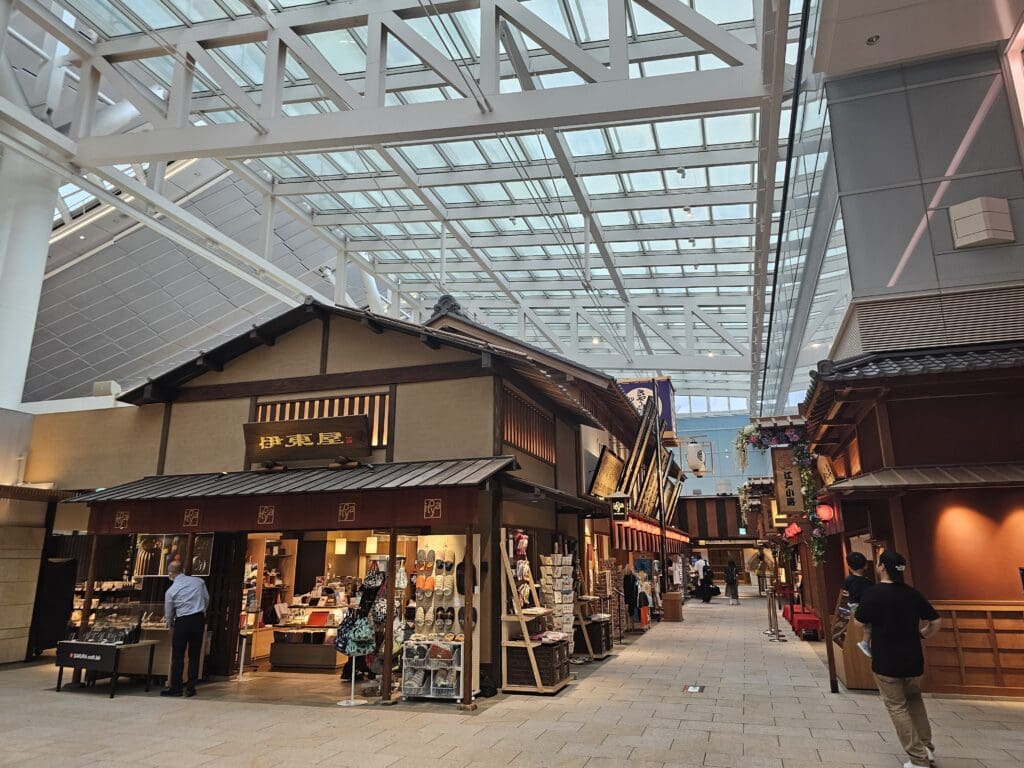
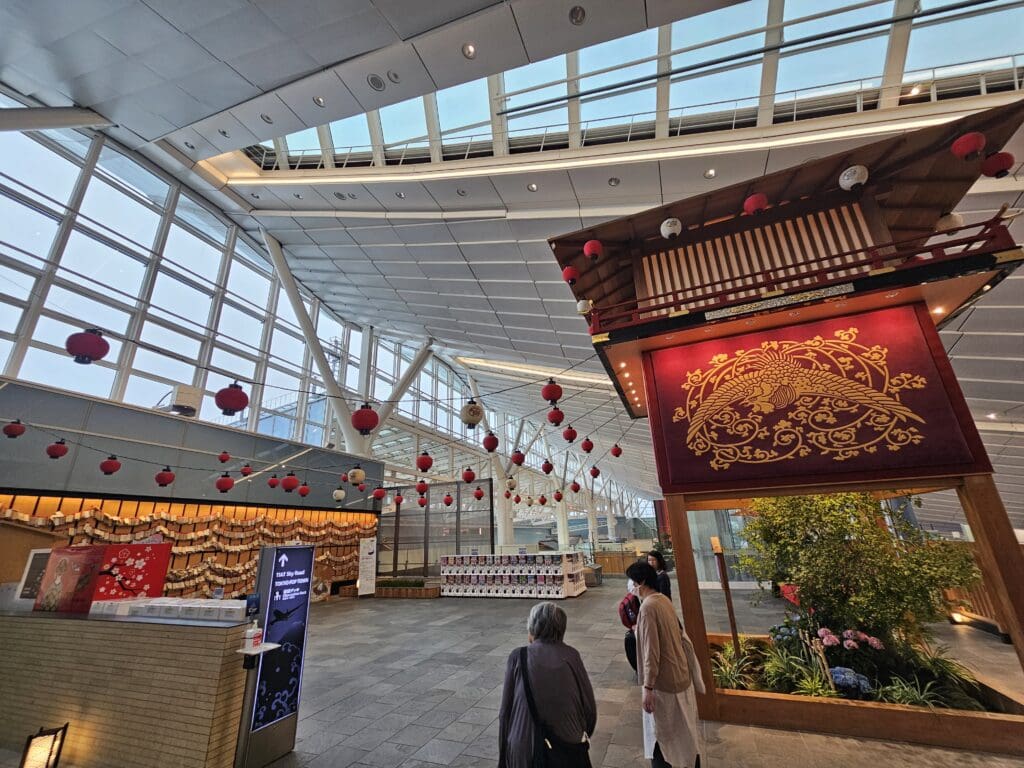
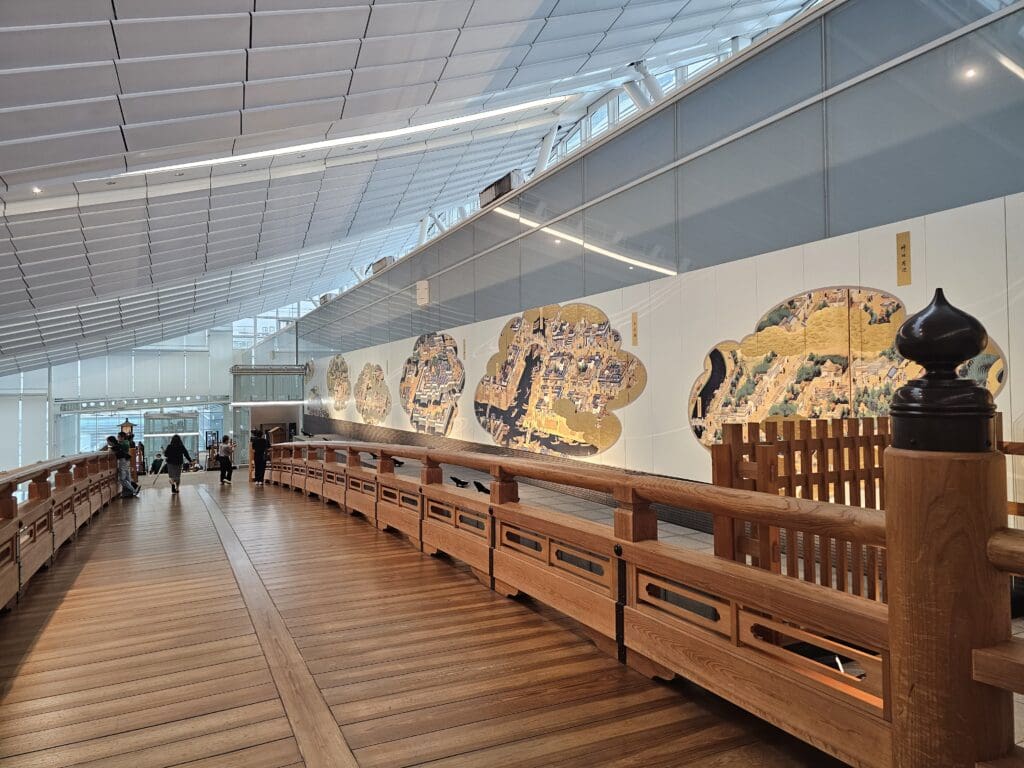
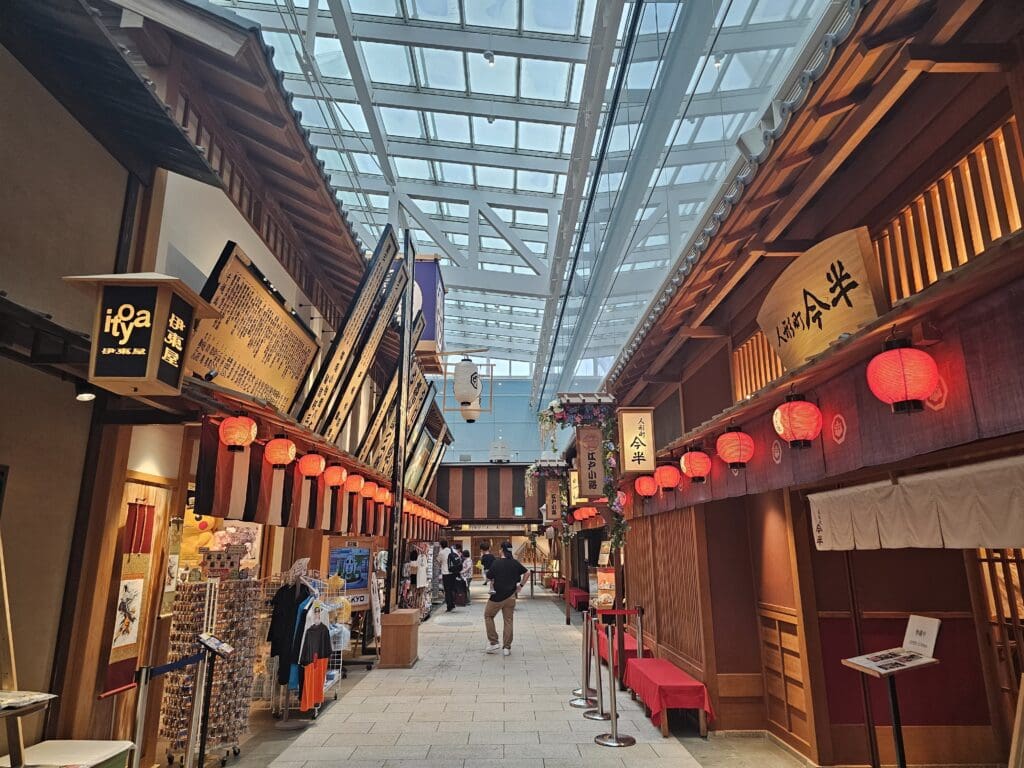
Once I had taken in the sights of the landside area and crossed over the famous scaled-down replica of the Nihonbashi Bridge, I decided to steam onwards to departures. Inside, the terminal features two security checkpoints – Central and North, and without too much thought, I made my way over to the latter simply as this was the closest to where I found myself once back on the departure level of the terminal. After scanning my boarding pass, I joined the short queue of waiting passengers and within five minutes I had passed through the painless security check, making it through without the need for any additional checks. Up next was immigration, and thankfully this was completely queueless. Credit ought to be given to the local authorities, as most visitors, even those without a Japanese visa can exit the country via e-gates. Walking straight up to one of these, after scanning my passport and having my photo taken, I was able to effortlessly pass through, leaving me with zero complaints about my journey to the airside area that afternoon.
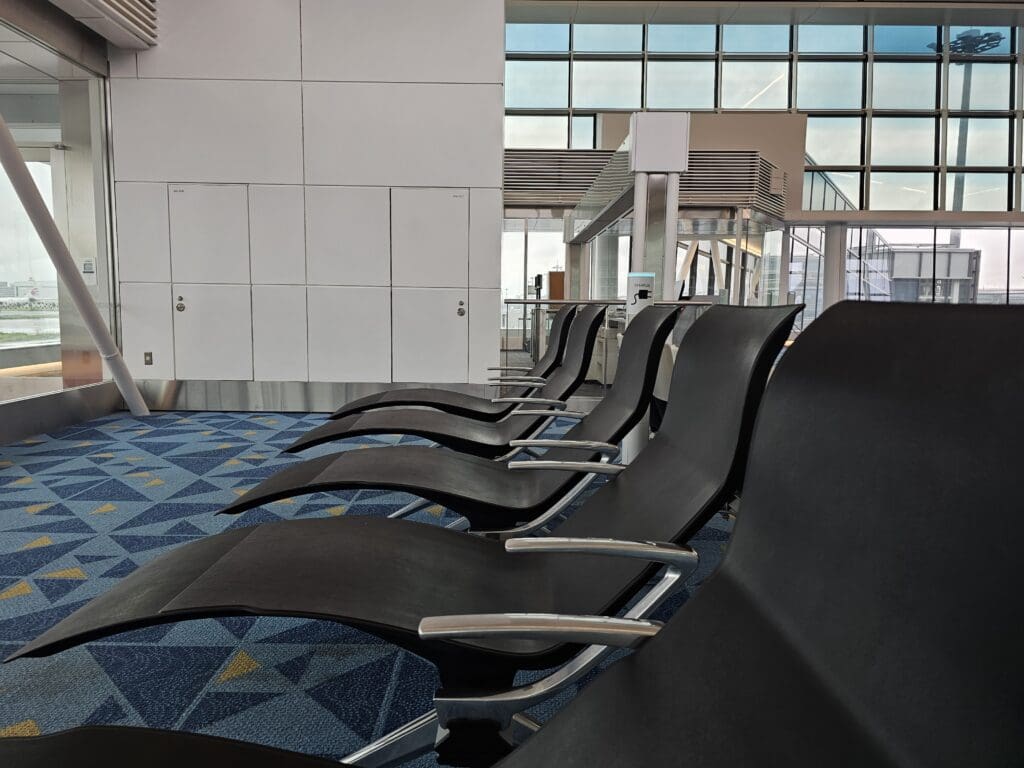
Examining Terminal 3’s layout, once airside this is arranged in an L-shape and consists of two conjoined rectangular piers. Whilst appearing to lack any particularly outstanding or memorable architectural features, I found this part of the terminal to be bright, modern and airy. However, at that time of day, this was particularly busy, and I had to wander quite some distance away from the main hub before I was able to find a quiet space to sit and wait. Throughout the terminal, there seemed to be a good variety of seating on offer which ranged from traditional uncomfortable airport-style benches, to more comfortable recliners, although unfortunately at that time, most of these seemed to be taken. Meanwhile, as many would expect in 2024, plenty of charging points can be found throughout this, whilst complimentary wifi is offered which I found to work without issue for the duration of my stay. Turning to the facilities on offer, this features 6 eateries and 32 shops, with more shops than the landside portion but far fewer eateries, thus, I would advise passengers coming from the landside area to stop at the Edo Market beforehand if looking for a greater selection of food. In terms of the shops, plenty of these seemed to come in the form of luxury brand outlets such as Bvlgari, Chanel and Louis Vuitton, however thankfully I did manage to spot a few more down-to-earth outlets such as 7-Eleven.
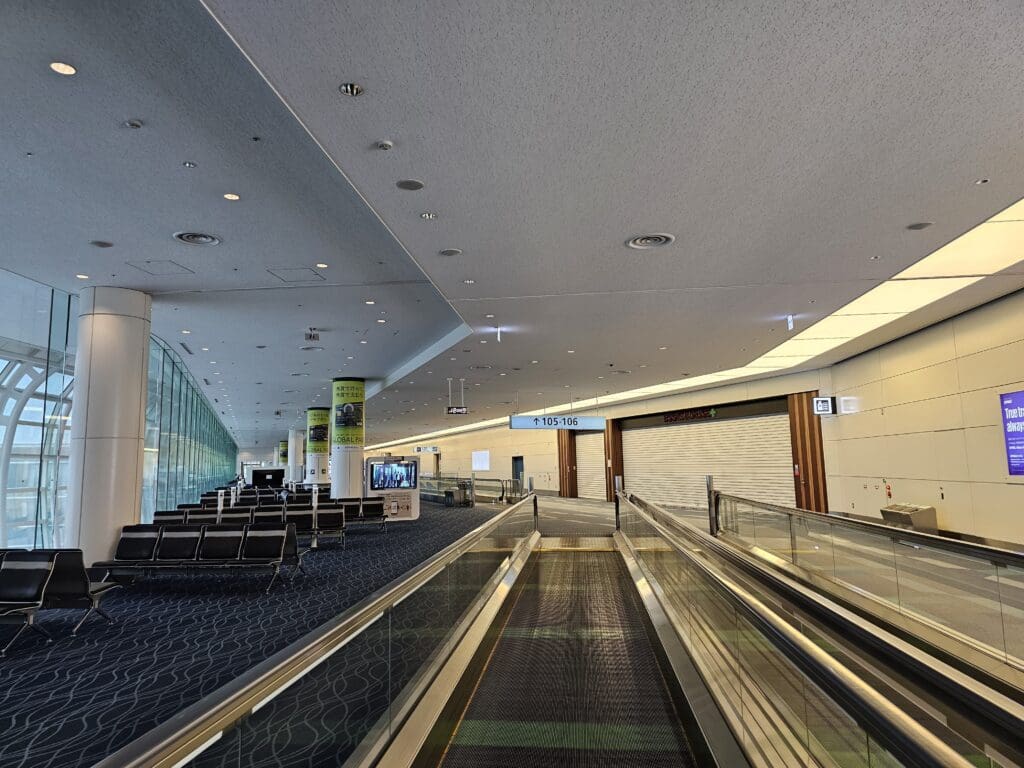
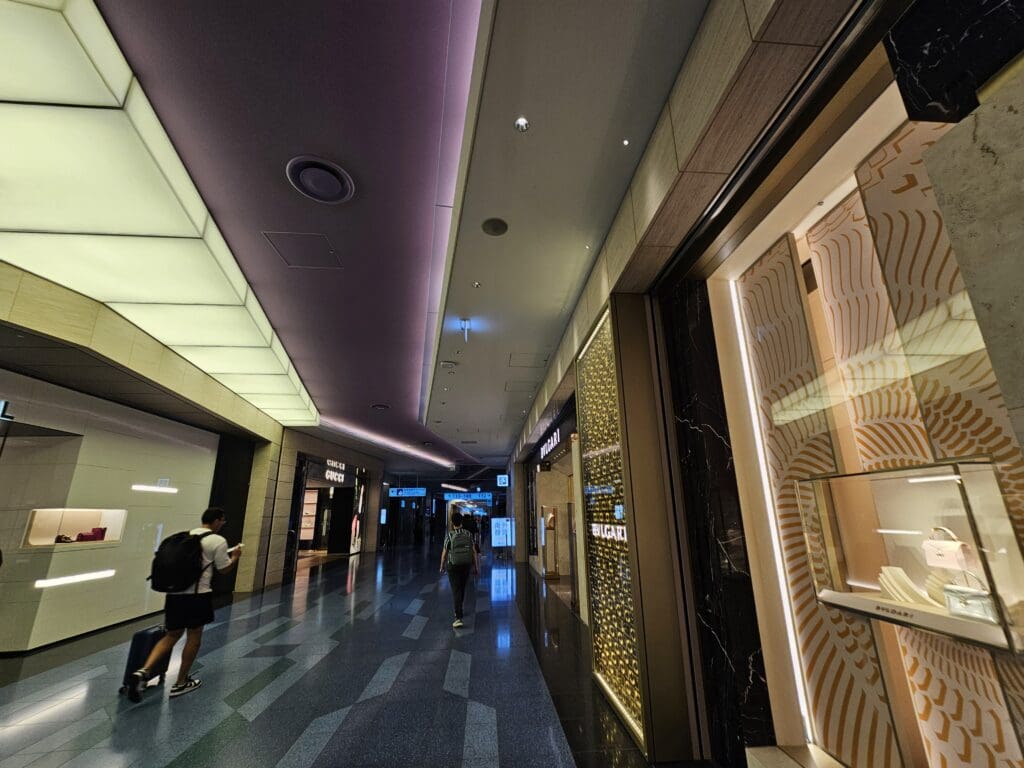
Unfortunately, when it comes to airside views, whilst these could be had from across the terminal – unobstructed vistas were hard to come by thanks to the terminal’s design, and thus any decent photography of the movements outside would have proved challenging. Nevertheless, after grabbing a reasonably priced coffee for 678 yen (£3.33), I took a seat near one of the large windows and watched as a near constant stream of aircraft made spray-filled touchdowns and departures on Runway 16R. These aircraft took the form of plenty of ANA and Japan Airlines jets heading to and from destinations both near and far, and ranging in size from J-Air’s Embraer 190, right up to the airline’s latest sleek addition, the Airbus A350-1000. Meanwhile international visitors that I spotted during my wait in the terminal were provided by the likes of Air Canada, Air China, Air France, American Airlines, Asiana Airlines, British Airways, Cathay Pacific Airways, China Airlines China Eastern Airlines, China Southern Airlines, Delta Air Lines, EVA Air, Finnair, Garuda Indonesia, ITA Airways, Korean Air, Lufthansa, Philippine Airlines, Qantas, Shanghai Airlines, United Airlines and Vietnam Airlines.
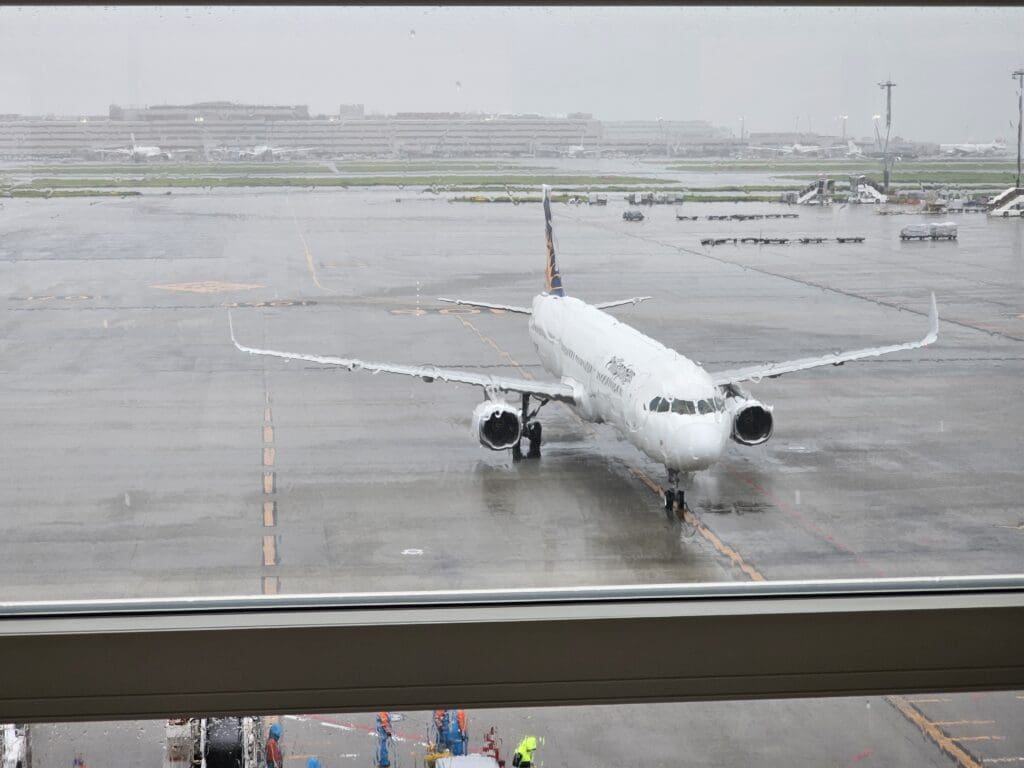
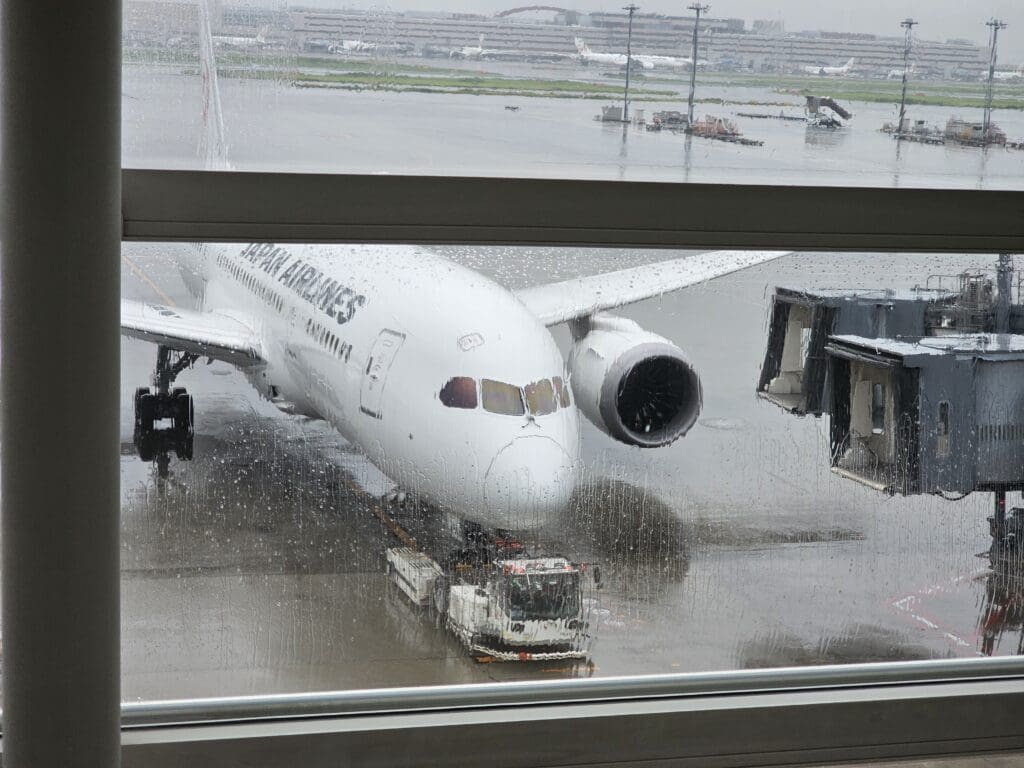
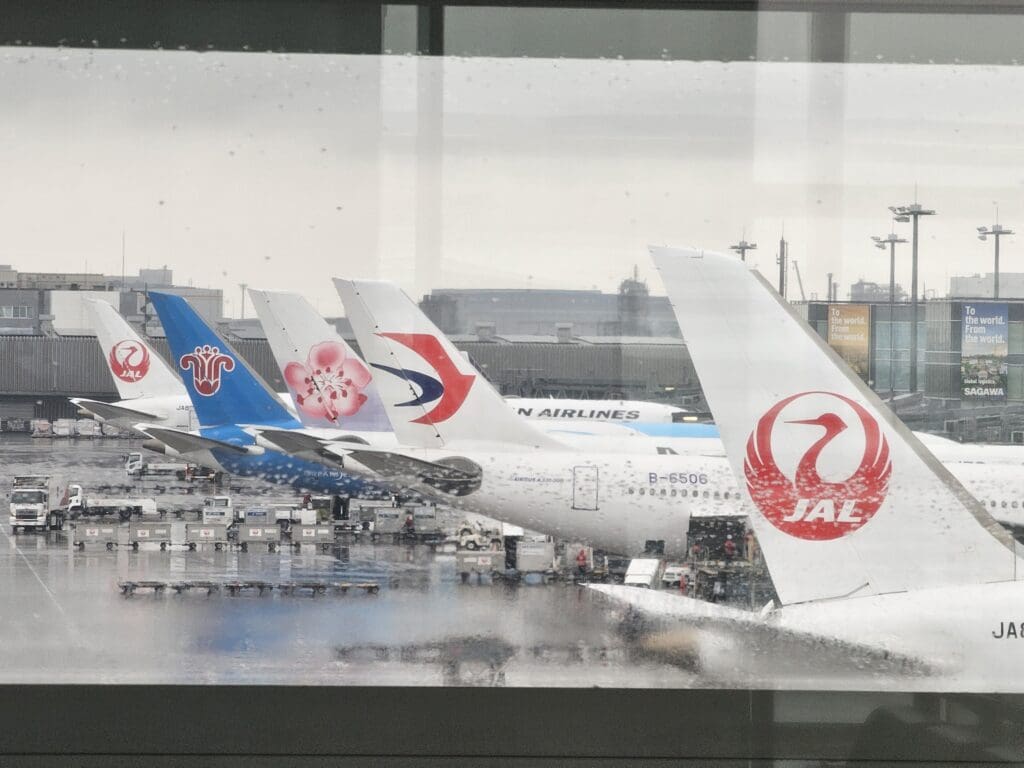
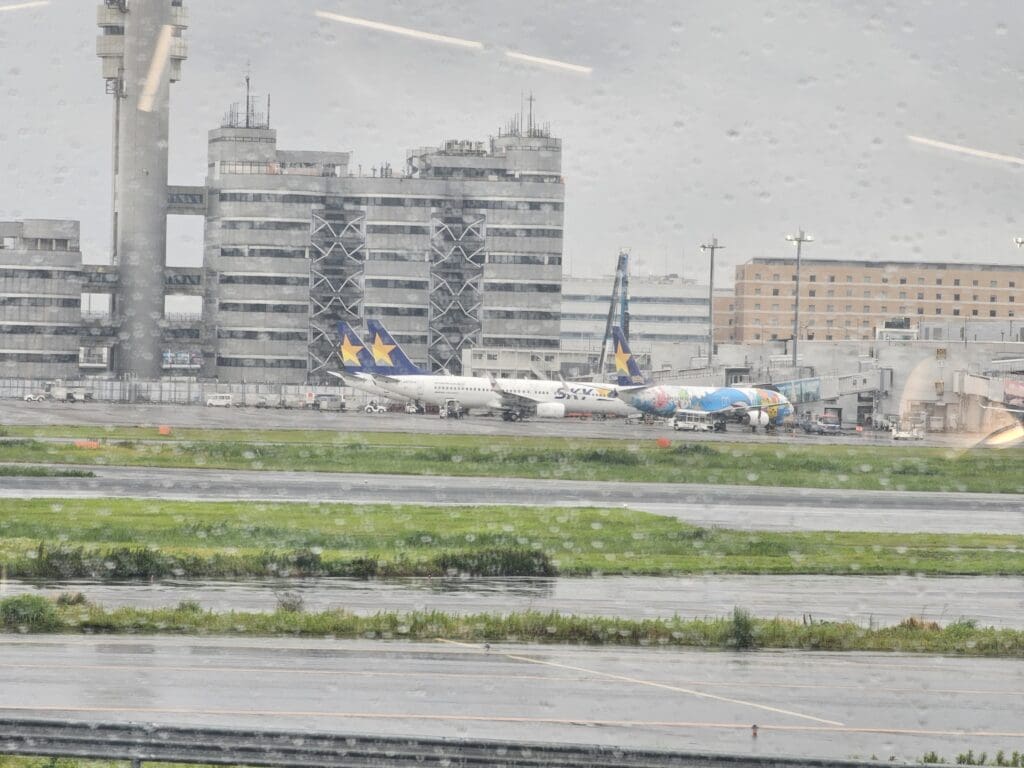
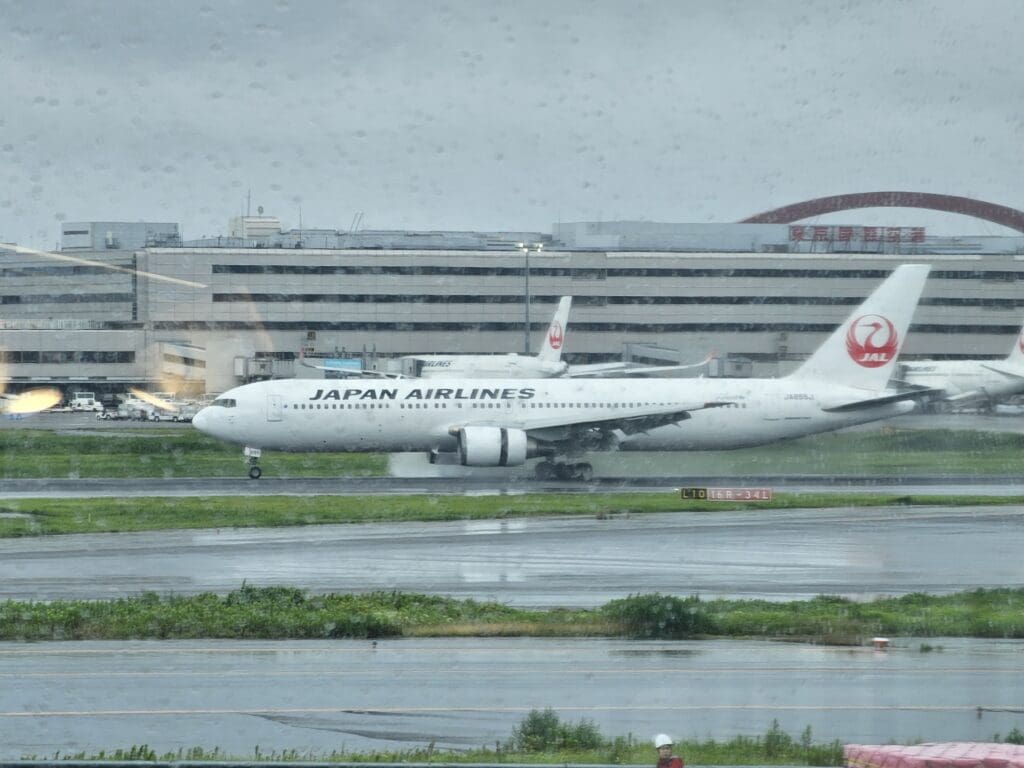
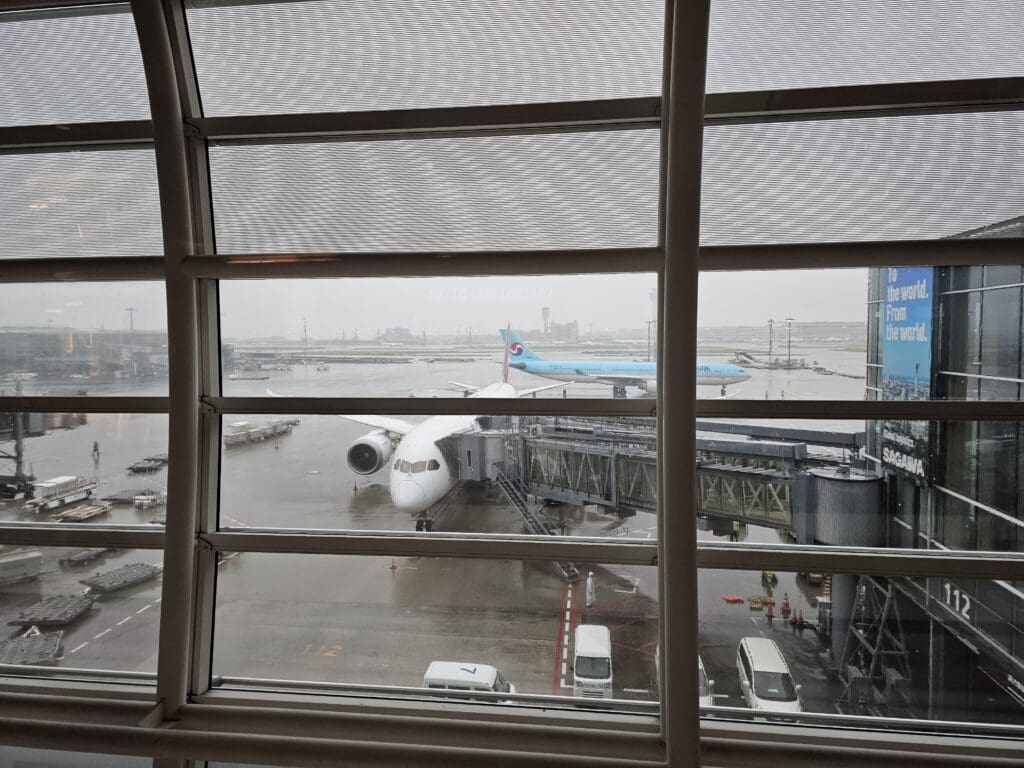
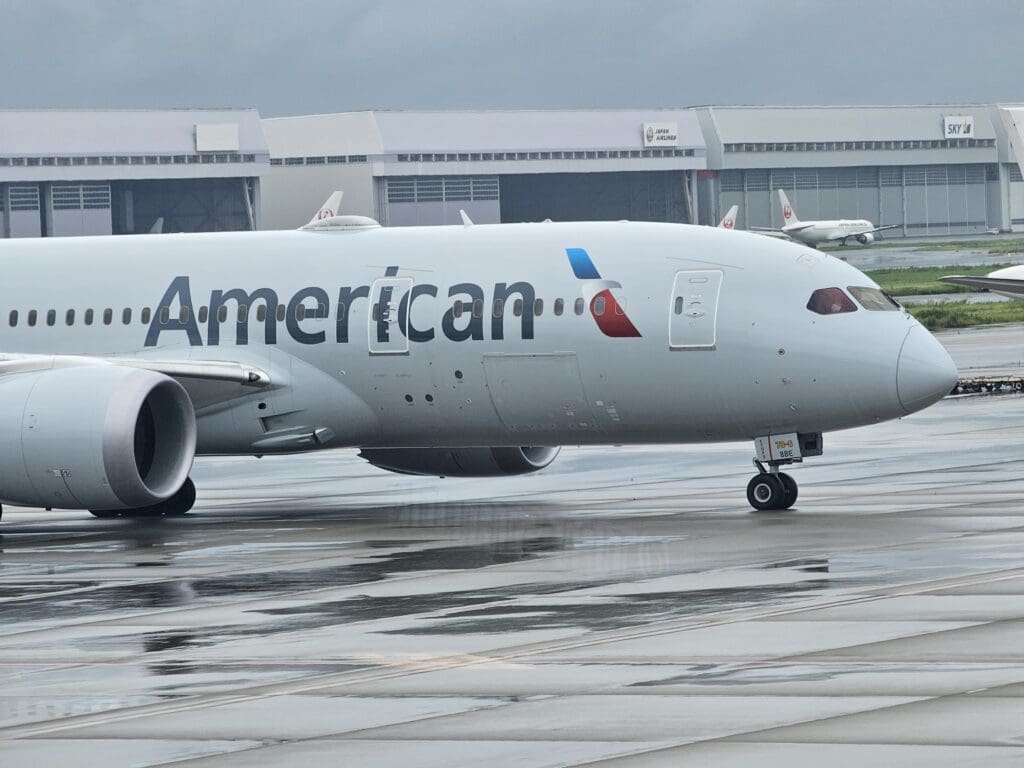
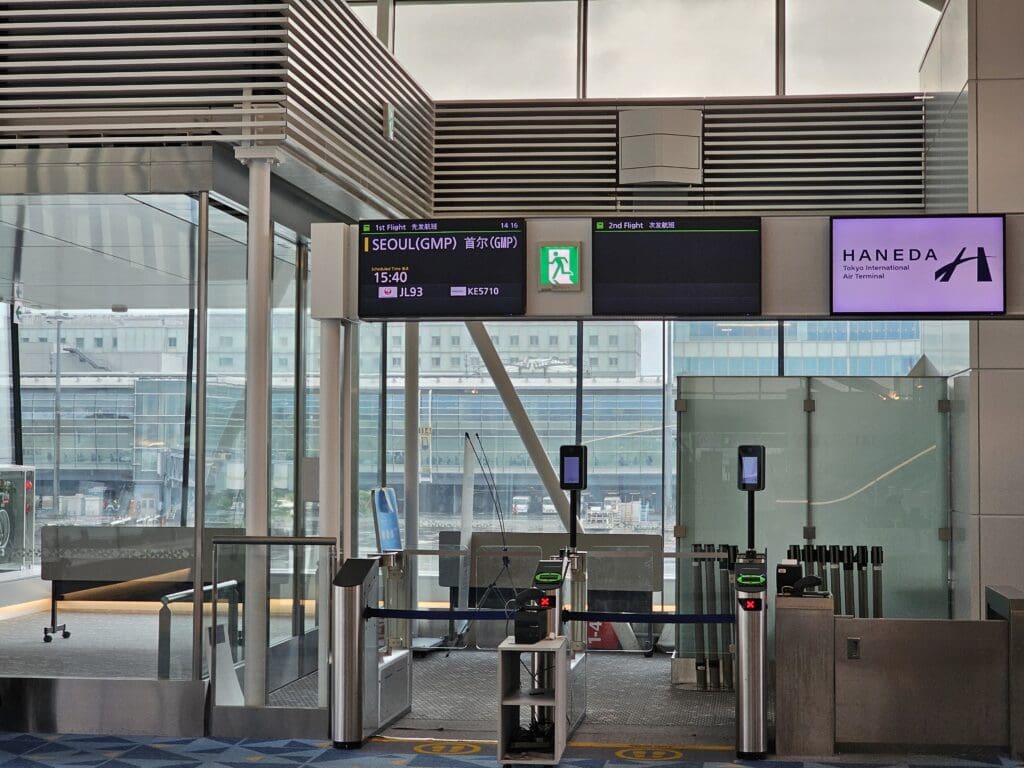
Looking at the departure boards, it was clear that there is high demand on the route between Tokyo Haneda and Seoul Gimpo. That day, my flight would be one of thirteen services between the two airports, with six others departing later that day. Of these, the vast majority were operated by widebody aircraft such as the Airbus A330, Boeing 767 and Boeing 787, with my flight being just one of two services operated by narrowbody jets. The other took the form of a middle-of-the-day Korean Air Airbus A321neo-operated flight. In addition to this service, Asiana Airlines, Korean Air and Japanese low cost carrier Peach Aviation all operate a daily service between Tokyo Haneda and Seoul Incheon.
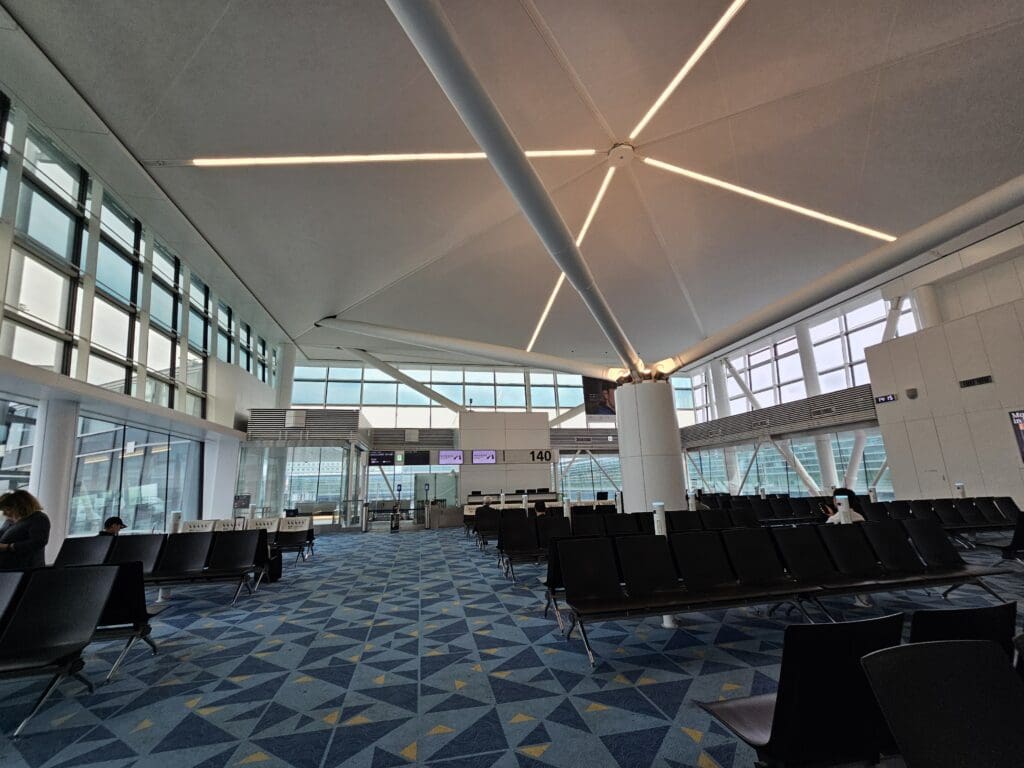
After a wander around and a relax, I decided to settle down at the modern and spacious waiting area around Gate 140 and upon making it there with two hours to go until departure, the aircraft that would be operating this could be seen being towed up to the gate. At the time of my flight, Japan Airlines operated a grand total of 43 Boeing 737-800s, with the type serving as a reliable workhorse on routes to regional Japanese airports as well as to a limited number of destinations abroad. The majority of these can carry up to 165 passengers and feature Japan Airlines’ quasi-business domestic ‘Class J’ product. This consists of four rows of premium economy-esque seats in a 2-3 configuration, with no divider or curtain separating these from the rest of the aircraft. However, Japan Airlines’ seven oldest Boeing 737-800s come in a wholly different configuration. These aircraft feature 144 seats and are fitted with real recliners in Business class, with this cabin separated from the Economy section by a divider. Meanwhile, unlike on the majority of their other Boeing 737s, each seat features its own inflight entertainment screen. As you would perhaps expect, those aircraft in the former configuration operate Japan Airlines’ domestic Boeing 737 routes, whilst those in the latter and more spacious layout operate both international and domestic services. Heading off on an international route, once at the gate, I wasn’t surprised to find one of Japan Airlines’ oldest Boeing 737-800s being readied for its rotation to Korea.
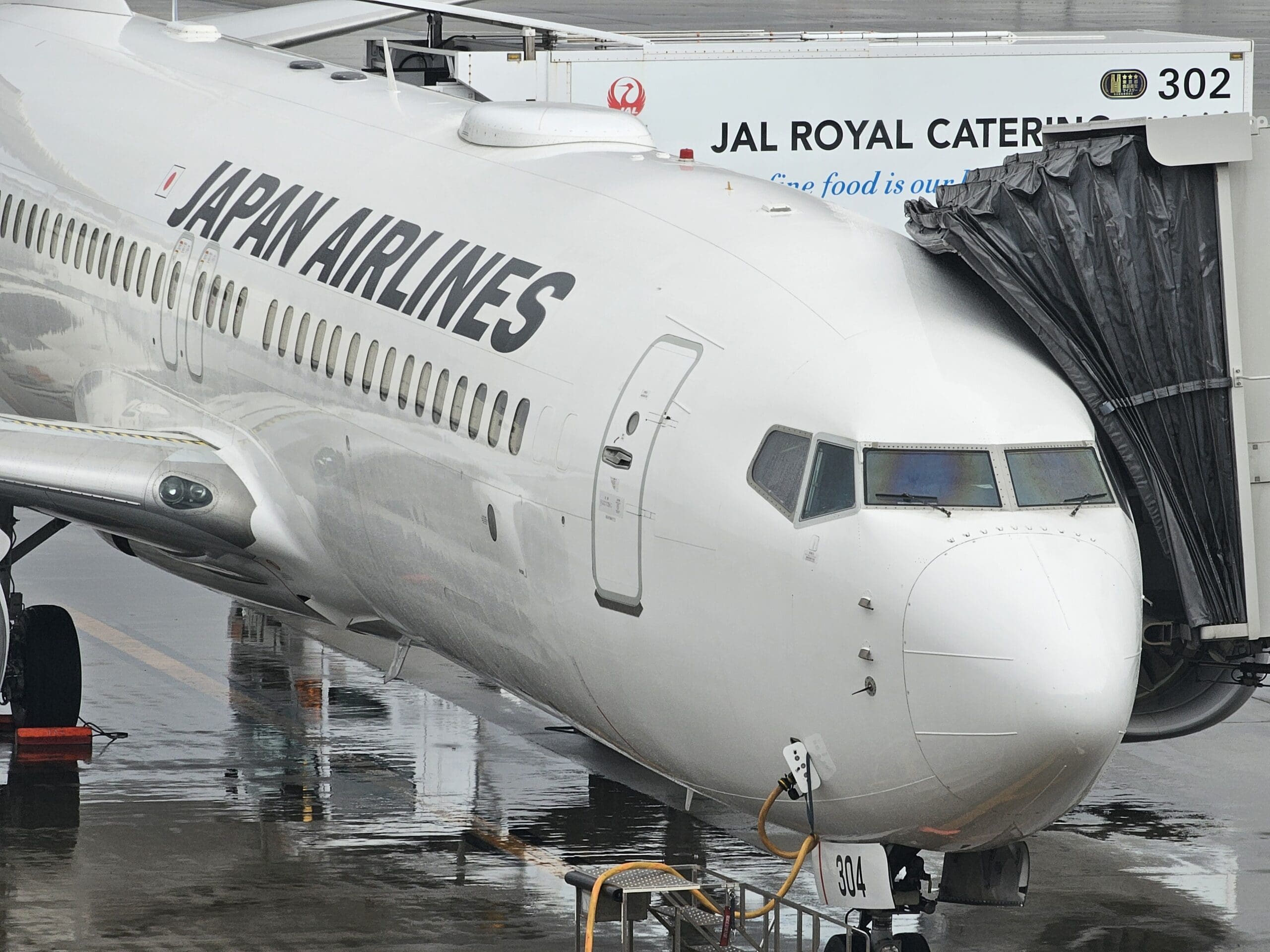
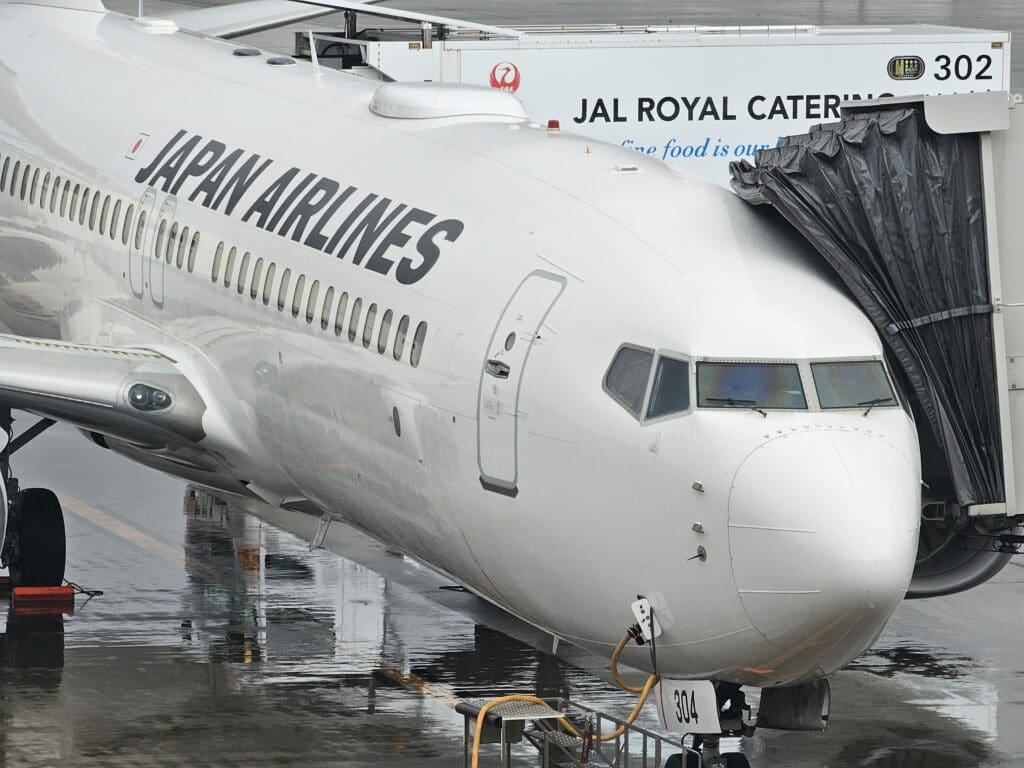
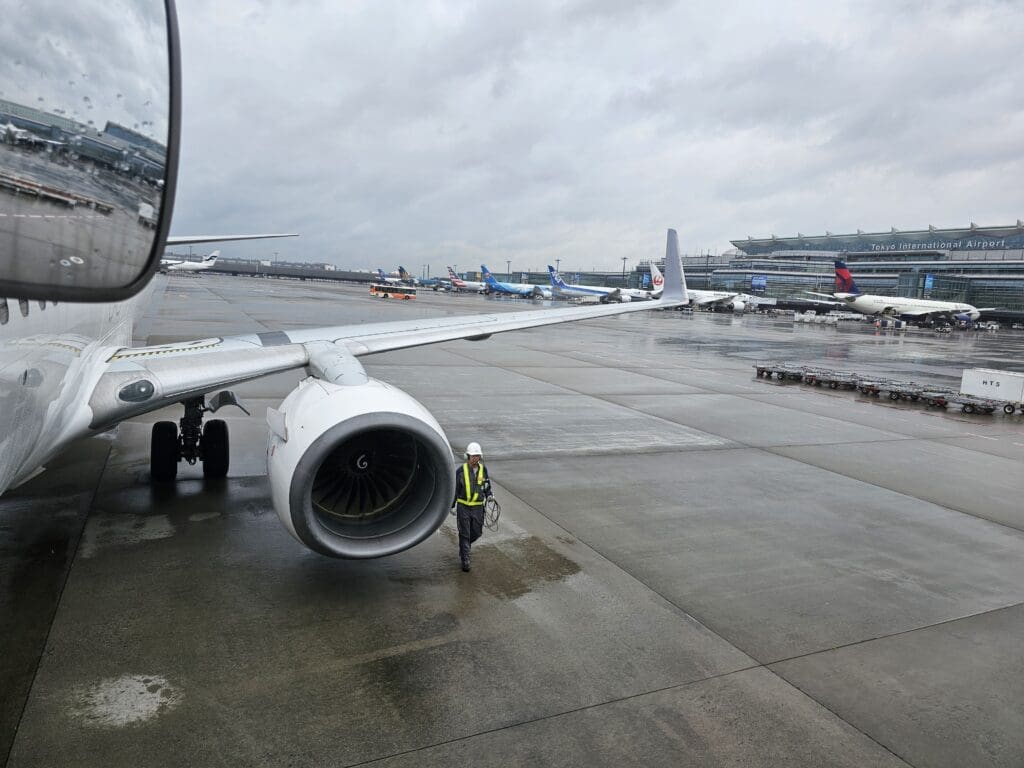
Outside, Boeing 737-846 JA304J could be seen being prepared for the flight. This had operated a domestic rotation to the city of Miyazaki on the southern island of Kyushu that morning, after which it had been towed over from Terminal 1 to Terminal 3. As with all Boeing 737s, this particular example was assembled in Renton, Washington, and carries the Line Number 2253. Taking to the skies for the first time in April 2007, at the time of my flight, the aircraft stood at the ripe old age of 17.16, and thus whilst far from the oldest Boeing 737 that I have ever had the pleasure of flying onboard, this was definitely on the slightly older side of things for Boeing 737NG. In May that year, the Boeing was ferried across the Pacific Ocean and soon arrived in the Land of the Rising Sun, where it was soon pressed into service at Tokyo Narita. Since then, the aircraft appeared to have had an uneventful life and I was unable to find any incidents involving this during its career with Japan Airlines. Following Japan Airlines’ livery change in 2011 and the retirement of the ‘Arc of the Sun’ livery, the aircraft was repainted in 2013 and like most of the airline’s aircraft, today the jet sports the airline’s plain livery. In the week prior to my flight, the aircraft had flown at least 17,000 miles and made visits to Akita, Aomori, Memanbetsu, Misawa, Miyazaki, Nagasaki, Nagoya, Nanki-Shirahama, Nagoya, Okayama, Seoul Gimpo, Shanghai Pudong, Tokyo Narita and Ube. With the vast majority of the aircraft’s flights taking the form of hops from Tokyo Haneda to domestic destinations across Japan.
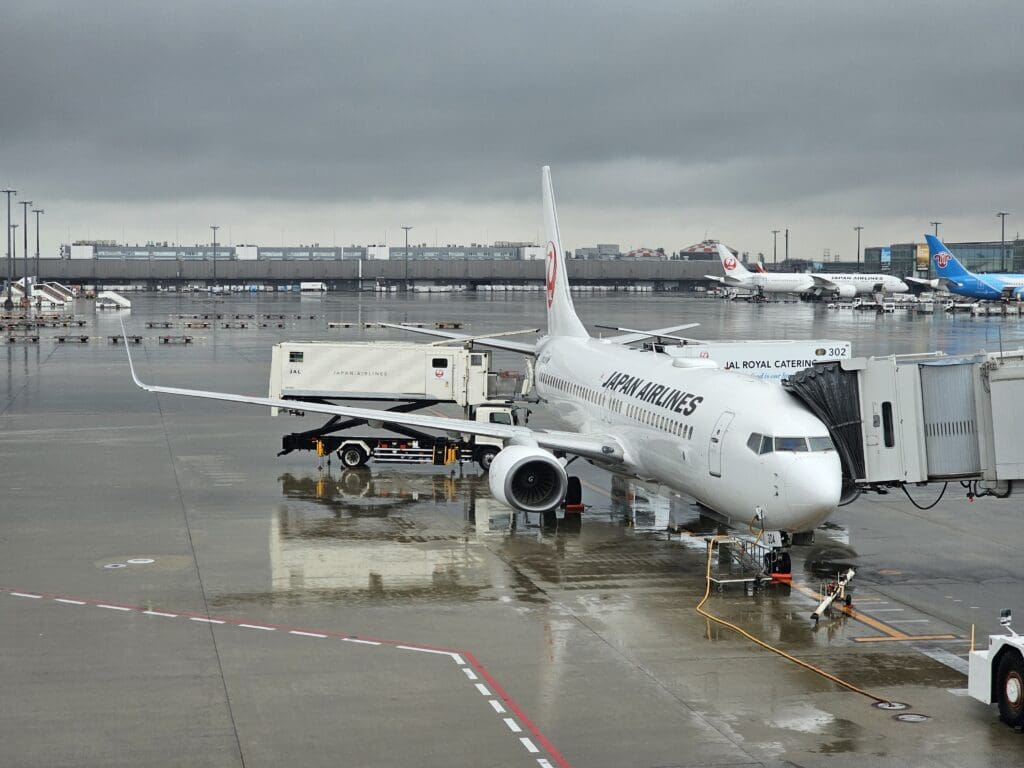
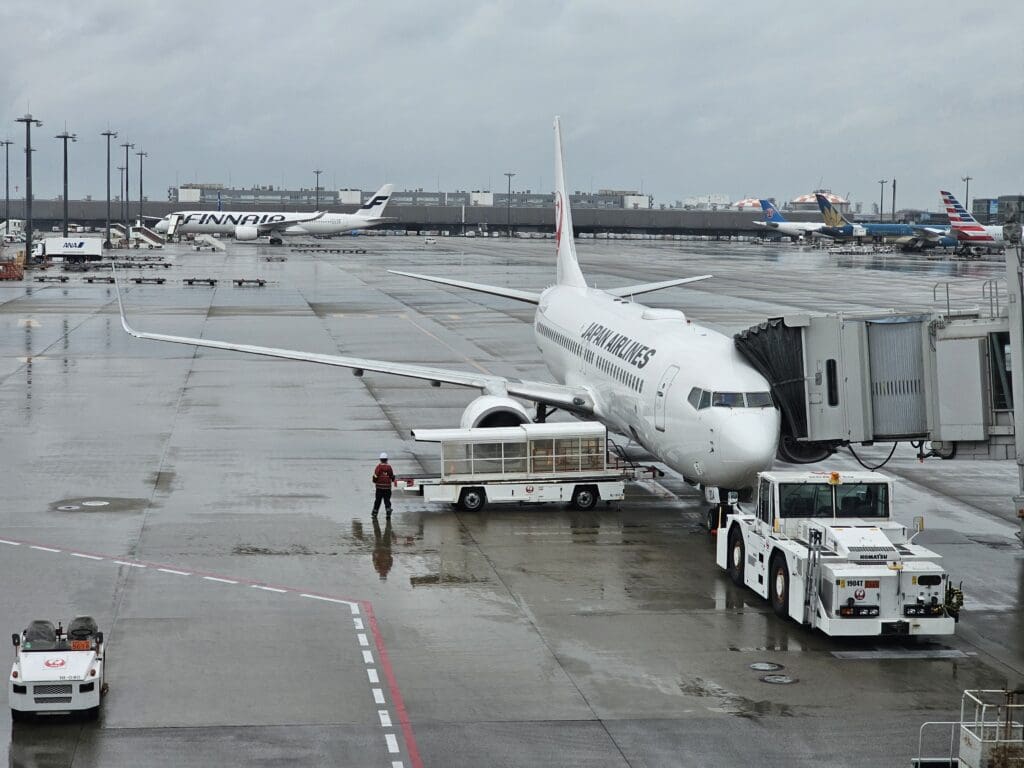
As time passed, expectedly, more and more Korea bound passengers filtered through to the gate. Taking a recliner seat next to the window, I partook in some last minute plane spotting and a few minutes later I was joined by two young Japanese aviation enthusiasts who whipped out their expensive cameras and began clicking away at the movements on the runway outside. At 145, an army of no fewer than seven smartly dressed Japan Airlines ground agents appeared and from then onwards made regular announcements in Japanese, English and Korean advising waiting passengers of the boarding order. As had been the case in London, those requiring assistance, expectant mothers and passengers travelling with young children were invited to board the aircraft first whilst all other passengers were divided into five groups. Seated in the forward half of the Economy cabin, that afternoon I ended up being in the final group of passengers to board the Boeing 737.
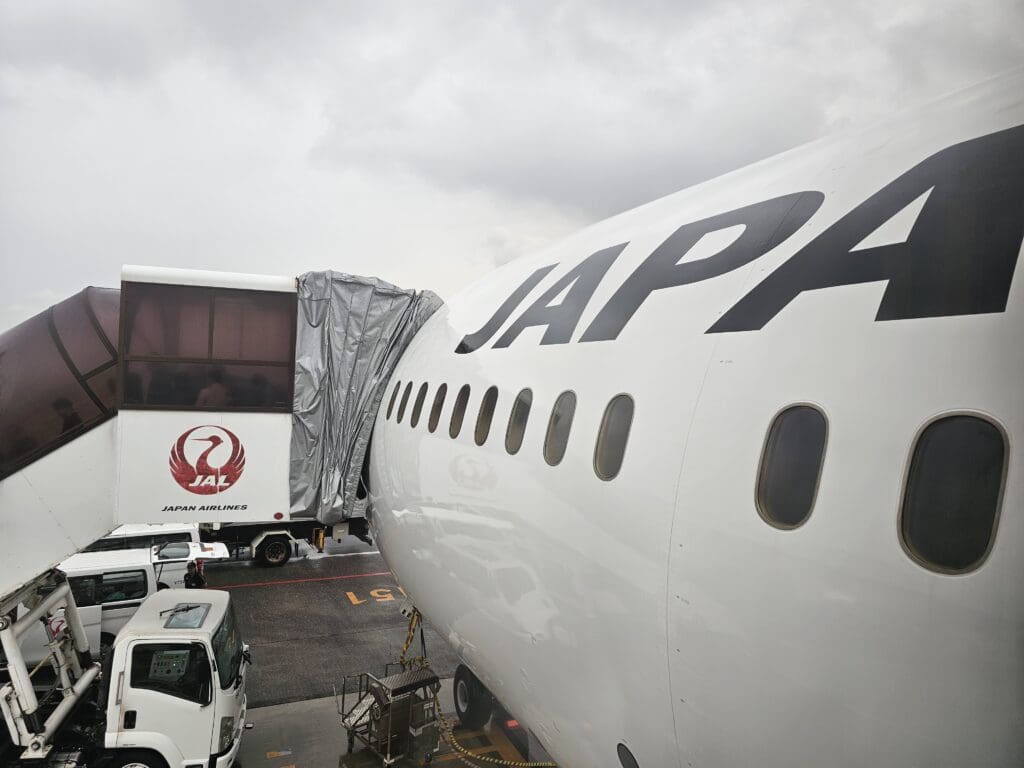
Keeping up with Japan’s punctual reputation, at our scheduled boarding time of 1520, an announcement was made inviting passengers to board the aircraft. Thanks to the army of staff on hand, this turned out to be an efficient and quick affair, with the staff speedily working through the boarding order. Despite being in the final cohort of passengers to board the aircraft, those in Group 5 were invited to board just seven minutes after boarding had commenced. A few moments after joining the queue, a friendly agent scanned my boarding pass and checked my passport before wishing me a nice flight in Japanese. From there, I toddled the short distance down the jetbridge and admired the clean fuselage of the mostly white jet before joining a short queue near the L1 door.
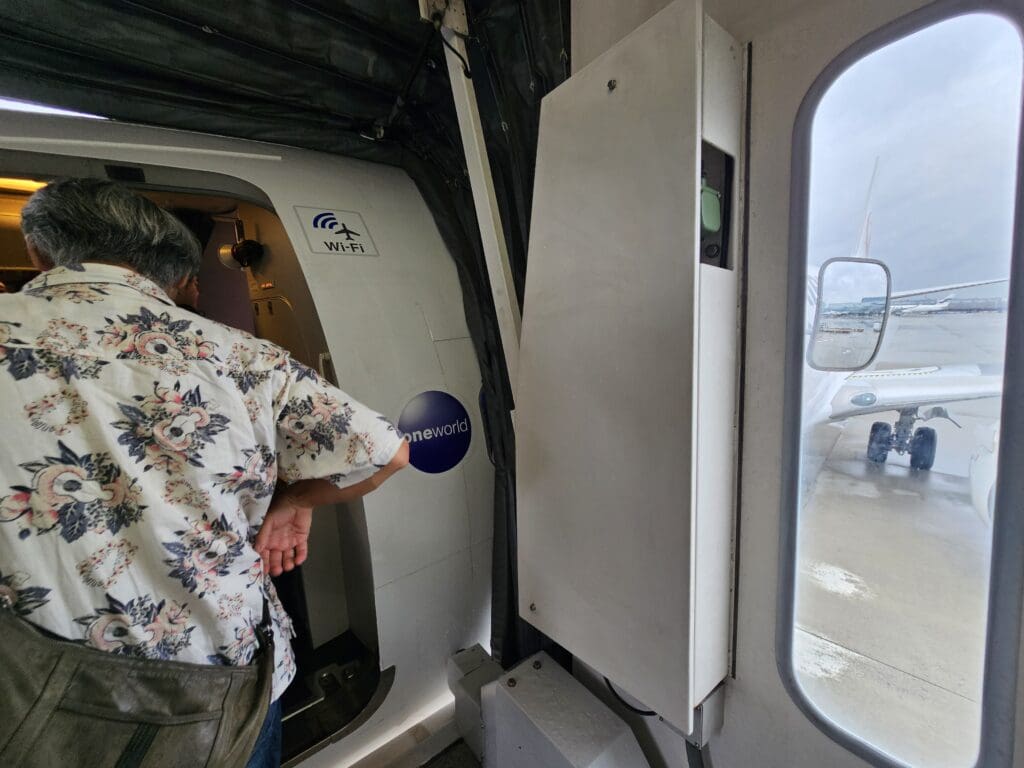
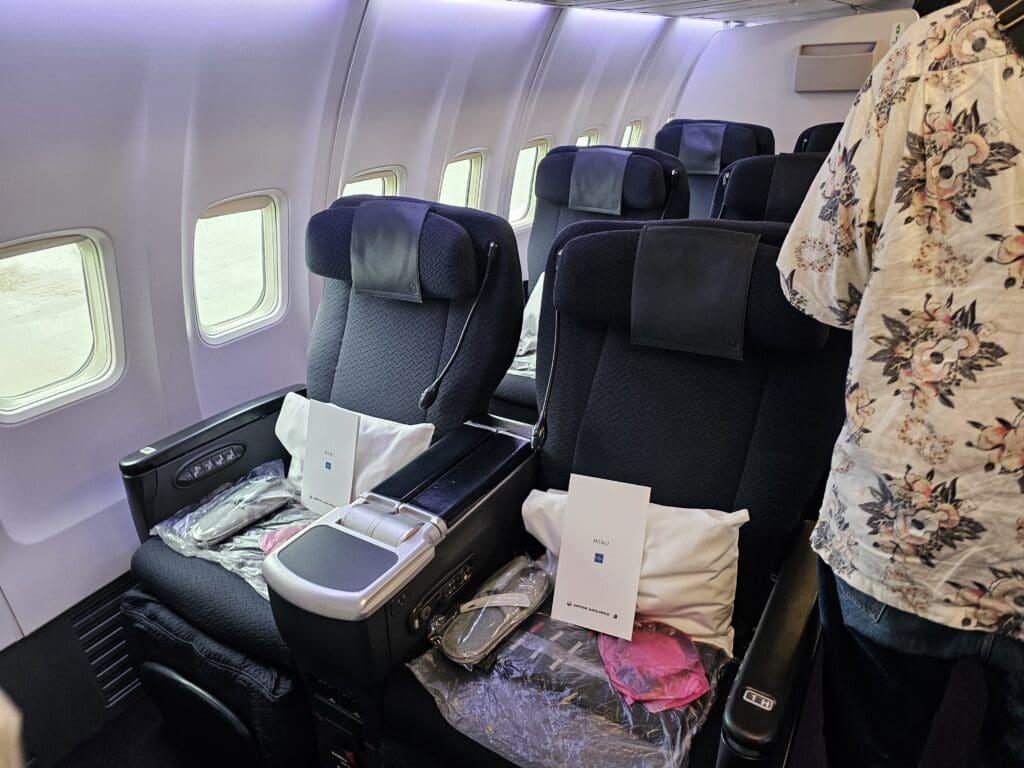
After waiting for a few moments, I stepped into the Boeing’s forward galley where I instantly received a polite and friendly greeting in Japanese and English from the smartly dressed Purser. Seeing as my boarding pass had already been scanned at the gate podium, and with just one aisle to head down, once onboard there was no boarding pass check and so I soon turned right, passed through the bulkhead and entered the Business cabin. There, three rows of chunky and comfortable looking JAL Skyluxe recliner seats in a 2-2 configuration could be seen. Each of these was topped with a large adjustable headrest that was partially covered by a dark pleather antimacassar on which Japan Airlines’ logo could be seen embossed. As expected, upon boarding, pillows and blankets had been placed on these premium seats along with a pair of slippers, a paper menu and a packaged set of headphones. Whilst such an offering is the norm on short flights on most East Asian carriers, from my European perspective, this was a delight to see and was certainly an upgrade from your typical ‘Eurobiz’ cabin!
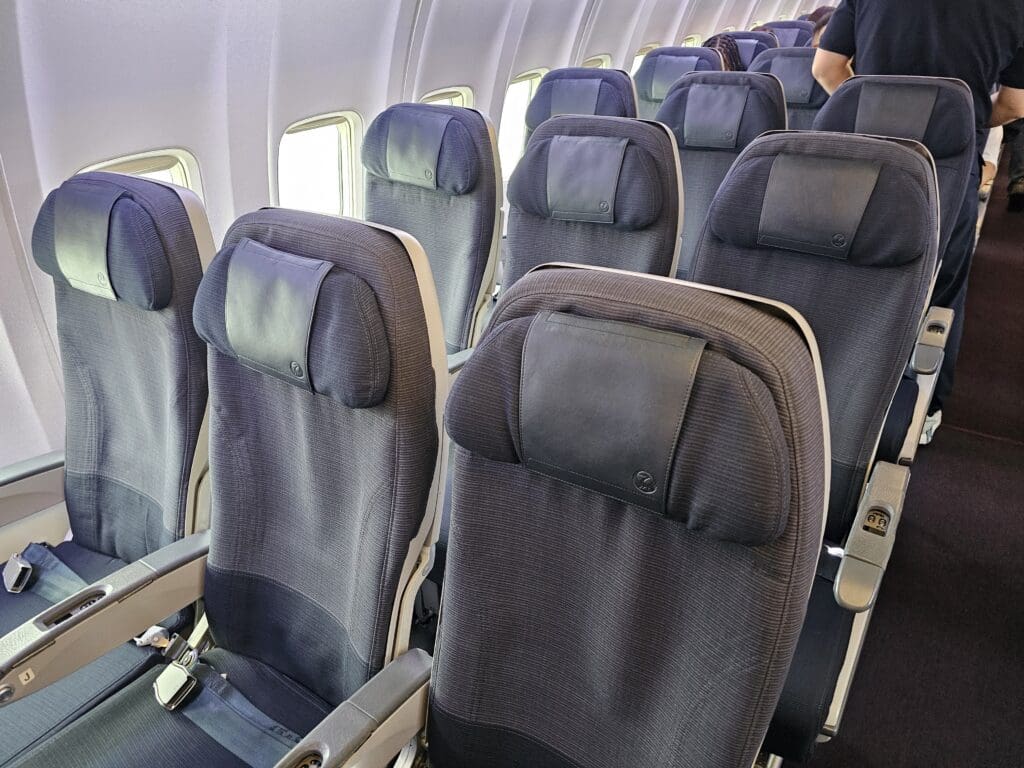
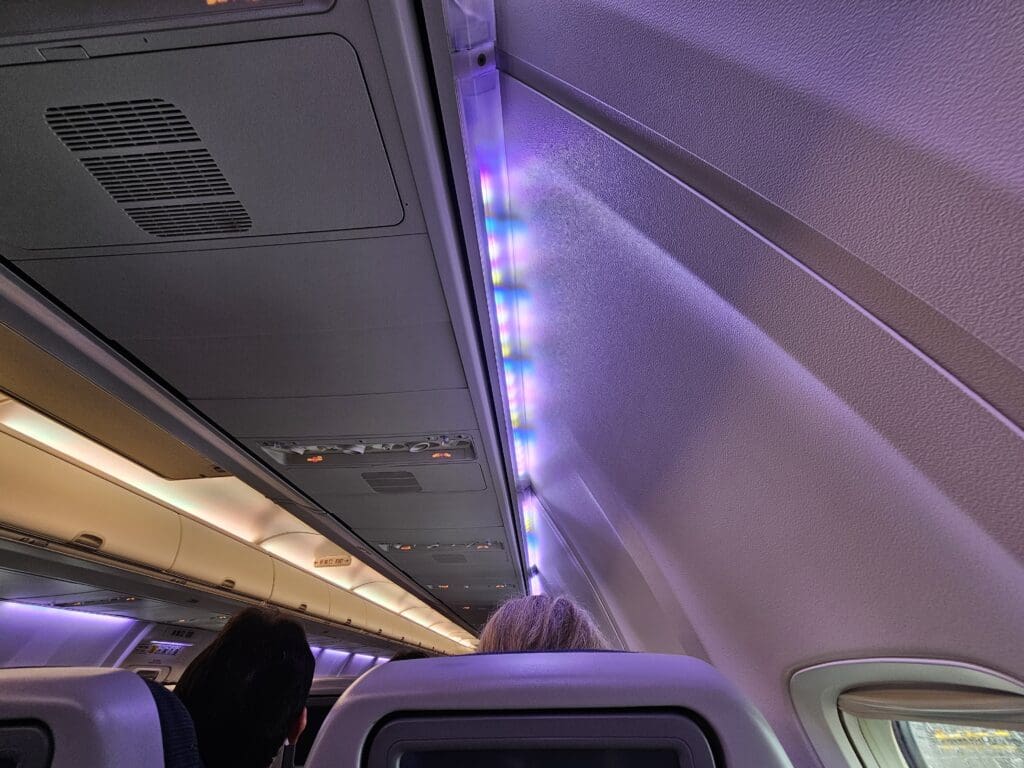
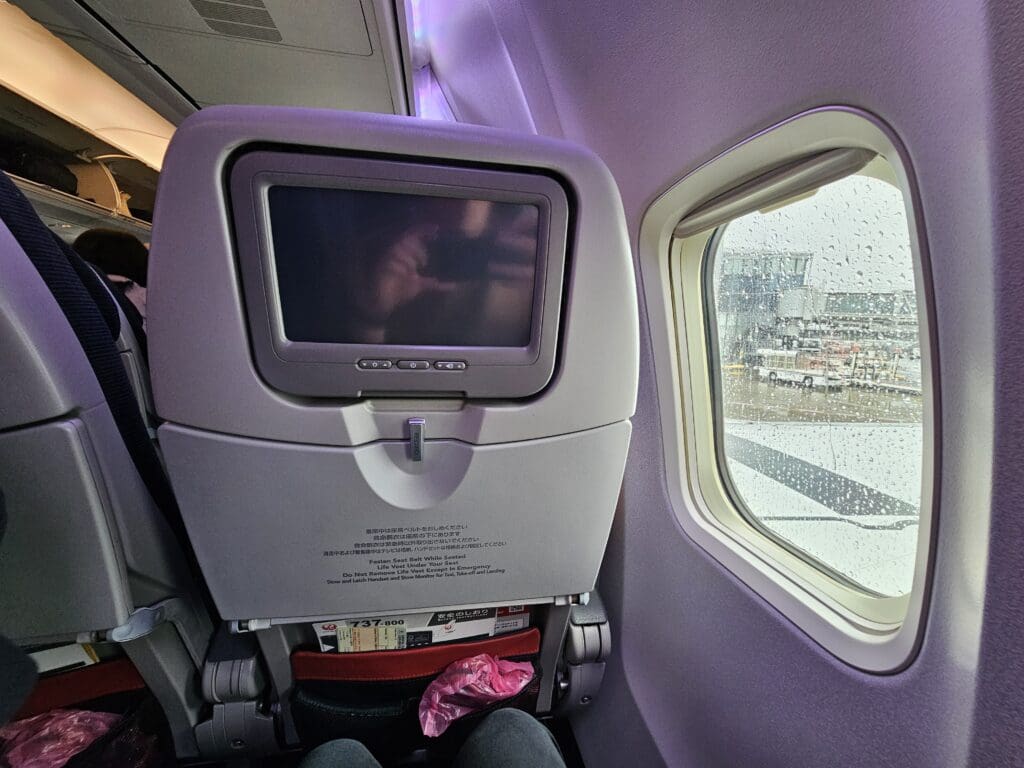
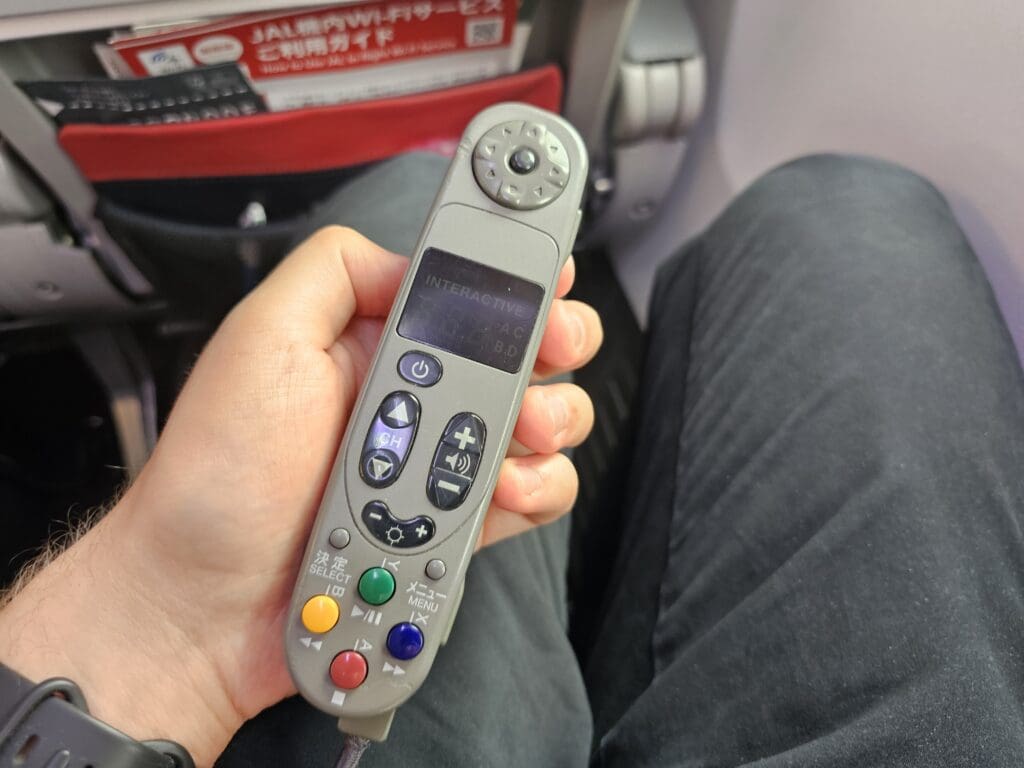
Voyaging onwards, I made my way through the cabin divider and reached the 132-seat Economy cabin. This featured rows of older Recaro CL3510 seats in a 3-3 configuration, which I believe are the same model as those that were originally fitted to Japan Airlines’ first Boeing 787-8 Dreamliners. Each seat came with an adjustable headrest covered by the same antimacassar as in Business. Compared to the Dreamliner, a different colour palette had been used in decorating the interior of this jet. Specifically, there was little red and instead each seat was covered in a black fabric. The rears featured the usual tray table and seatback pocket, as well as a footrest, water bottle/personal item holders, and a slightly dated yet still appreciated inflight entertainment screen which could be controlled via the chunky looking controllers in each armrest. The latter was turned off during boarding and could not be switched on until the safety video had broadcast. Whilst the older Boeing 737 cabin can now look a little dated, this cabin seemed to mask its age fairly well, not only because it was in tip-top condition and as I would soon discover, largely lacking in wear and tear, but also because of the retrofitted violet mood lighting that beamed down from each sidewall.
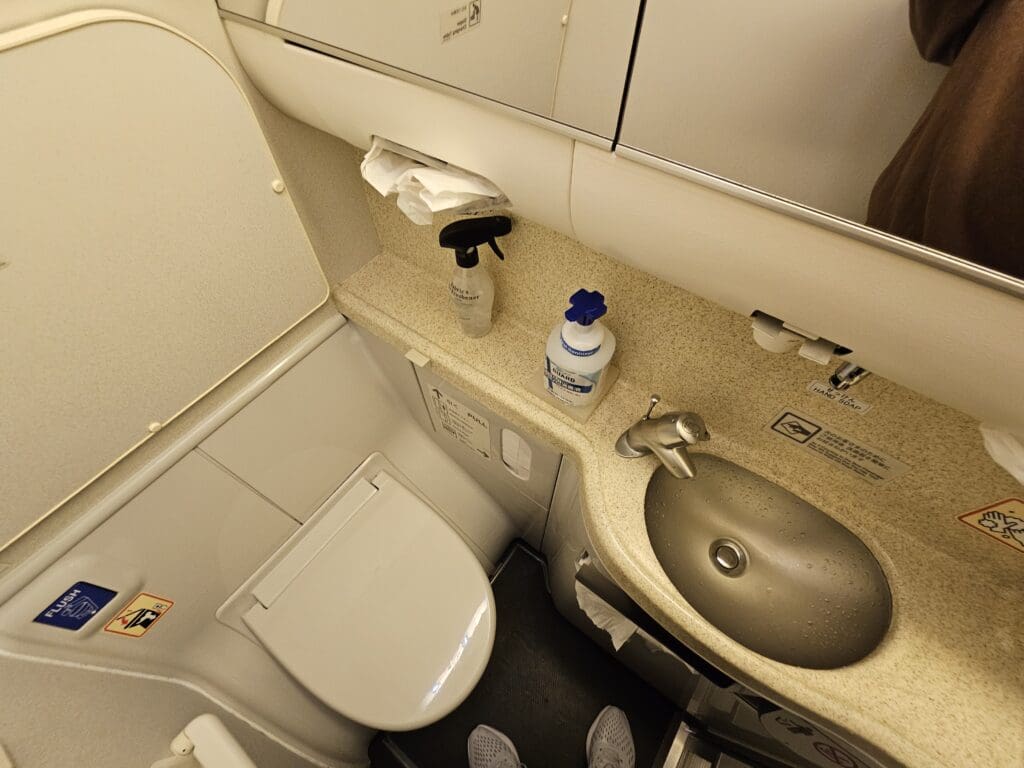
After crossing over the wing and receiving yet another warm welcome, I reached my row and stored my backpack in the overhead locker. Seeing as I would end up trapped for the next couple of hours, I decided to go for a pre-departure visit to one of the three lavatories at the rear of the cabin. Opening one of these up, this was spotlessly clean, and in good condition, stocked with the basics and serving its purpose, leaving me with absolutely nothing to complain about.
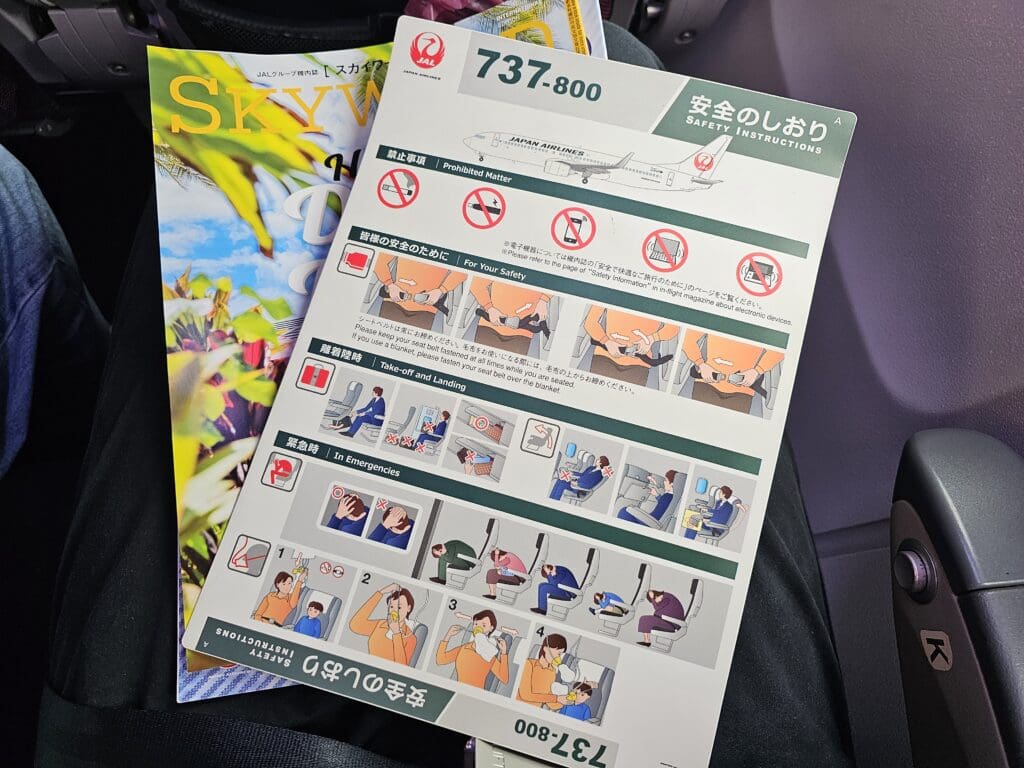
Eventually, after going against the tide of boarding passengers (probably much to their annoyance!), I returned to my seat and settled in for the journey ahead. As I had hoped (and expected), I found the seat to be soft, comfortable and offered a great amount of space, reassuring me that I would be in for a comfortable ride over to Korea. Furthermore, this was in a spotlessly clean condition and I also struggled to find any signs of wear and tear despite the fact that the aircraft was one of the oldest Boeing 737s in Japan Airlines’ fleet. I should mention that no form of at-seat power was provided, and thus I would advise passengers to board their flights with fully charged devices! Turning to the seatback pocket, this contained a copy of the Skyward inflight magazine, the safety card, sick bag, a card advertising the onboard wifi and the JAL Shop catalogue alongside a Korean immigration form. Meanwhile, headphones could be found in one of the smaller seatback pockets, and were of typical Economy class quality. Finally, a literature compartment could be seen on the rear bulkhead which contained timetables, Airbus A350-900 postcards and spare copies of Japan Airlines’ inflight magazine.
That afternoon boarding was an efficient and orderly affair, and there was no jostling in the aisles or rushing to get onboard the aircraft. By 1537, it appeared as if all passengers had made it onto the Boeing, however, some commotion soon followed and it was revealed that we were missing three stragglers. During this delay, the Purser made multiple announcements keeping passengers informed about the delay and at 1541, the trio of latecomers made it onto the aircraft after which the dispatcher shuttled off and the cabin door was closed. Looking around, the Seoul service appeared to be almost entirely full in Economy. Turning to the demographics, I would estimate around 70% of those onboard to hail from Japan, many of whom were young tourists, whilst around 20% of passengers seemed to be from Korea and 10% from elsewhere in the world. Turning to the six-strong crew, that afternoon there were no Korean speakers onboard, however, pre-recorded Korean versions of several key announcements such as the initial welcome and all safety related messages were played.
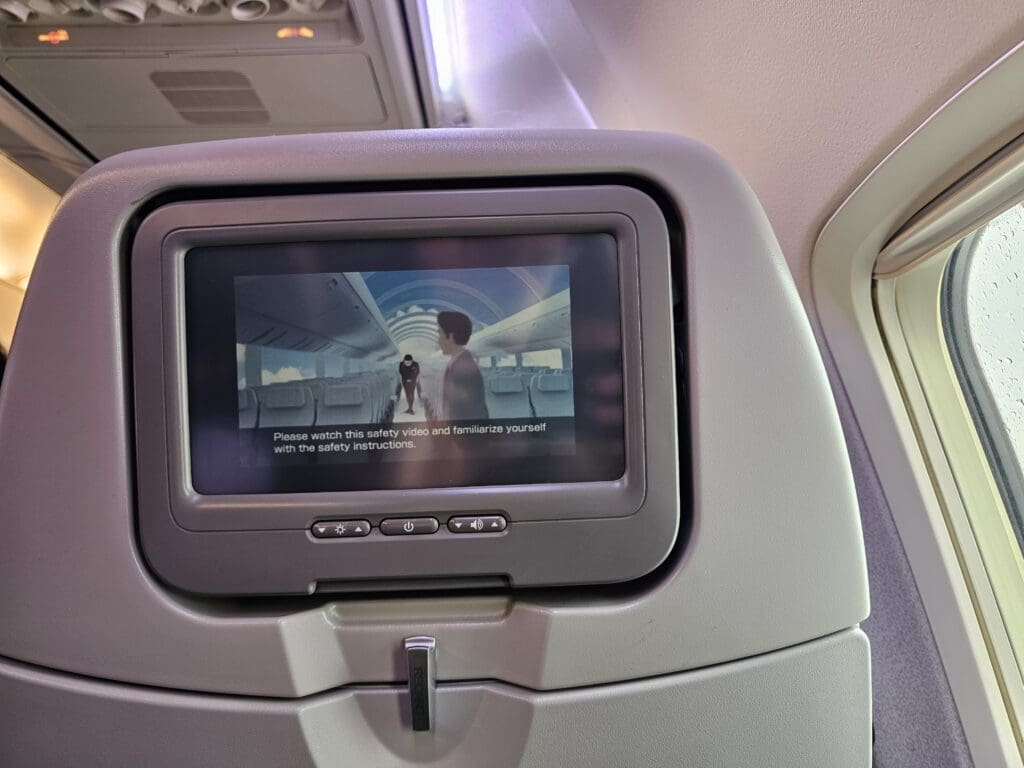
Once the cabin door was closed, the Purser wasted no time in commencing their welcome announcement in Japanese and English, this consisted of the usual thanks, welcomes and warnings, before several crew members took to the aisle and commenced their important pre-flight checks. Once complete, it wasn’t long before Japan Airlines’ clear, concise and gimmick-free safety video was broadcast on the inflight entertainment screens. As this was underway, ten minutes behind schedule, the aircraft jolted backwards and it wasn’t long before the familiar sound of the start-up procedure of the Boeing’s two CFMI CFM56-7B24 engines filled the cabin, temporarily resulting in some vibration and noise as our two engines powered into life. Once we came to a halt, the tug was disconnected before the ground crew retreated, bowing and waving at the aircraft as this powered away from the apron and made the relatively long trek over to the end of Runway 34R.
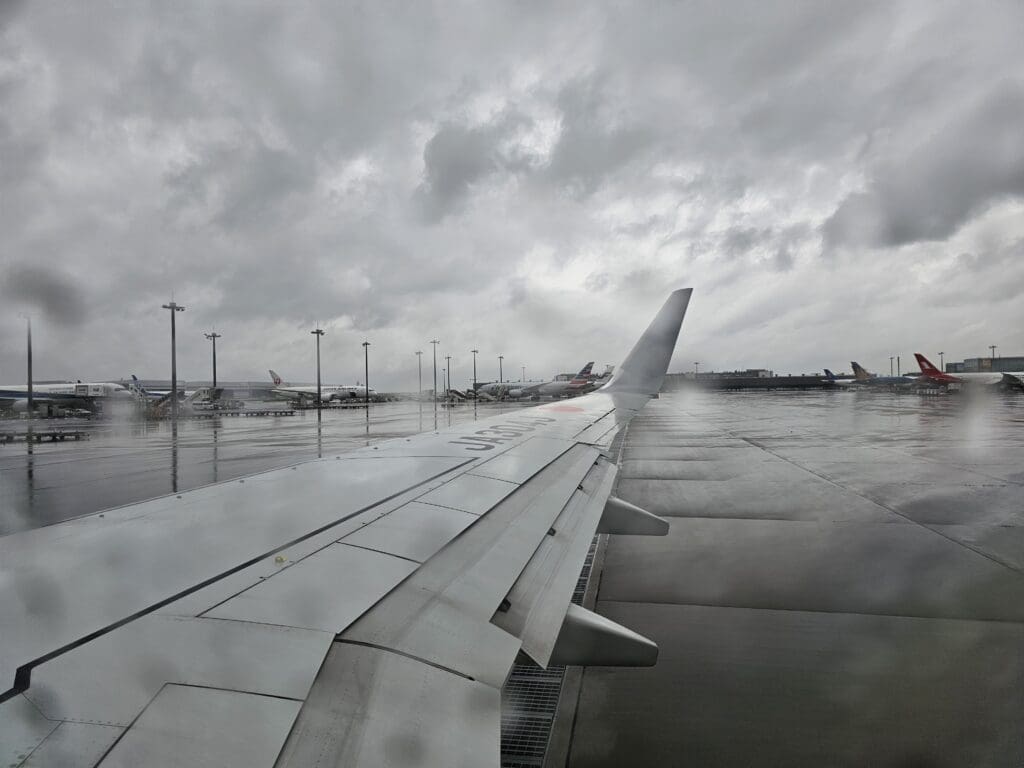
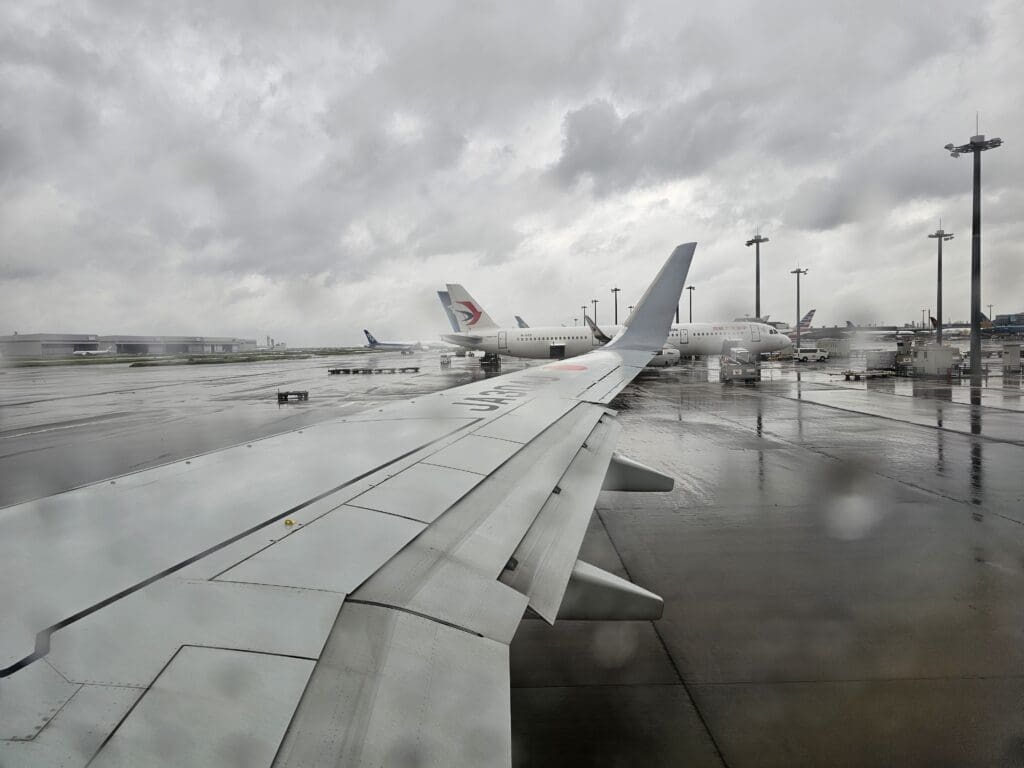
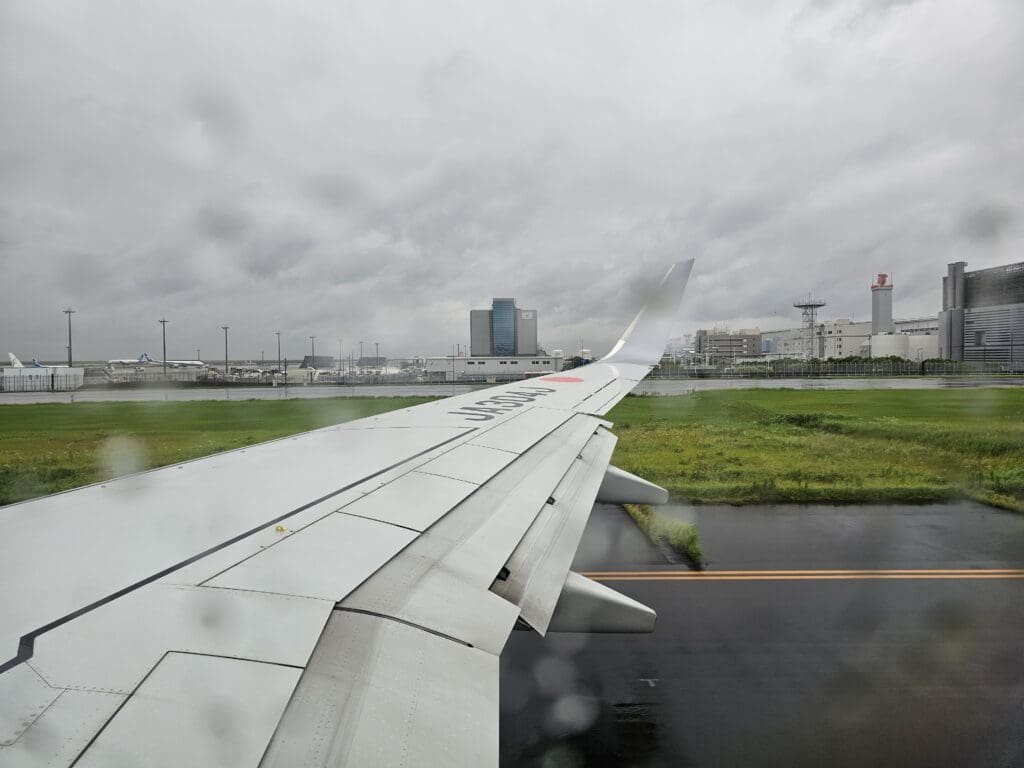
Soon leaving the sprawl of Tokyo Haneda Airport’s Terminal 3 behind, it wasn’t long before the Boeing came to a temporary halt to allow for an ANA Boeing 787-8 Dreamliner to touch down at the end of its short journey from Matsuyama, a city of around half a million located on the island of Shikoku. Once this had touched down and safely whizzed past the waiting Boeing 737, we crossed the runway and made our way past the line of Haneda Airport’s maintenance hangars, with these occupied by ANA, Japan Airlines and the Japanese Coast Guard. At the latter’s facility, I spotted an interesting smorgasbord of aircraft that included a heavily modified Dassault Falcon 2000, two Gulfstream G550s and a single Saab 340. A short time later, the Boeing came to a halt at the end of Runway 34R and paused in order to allow for a sleek brand new ANA Boeing 787-10 Dreamliner to land, with this one having travelled down from Sapporo. Afterwards, the aircraft taxied onto the runway and came to a halt whilst the Dreamliner vacated the runway up ahead.
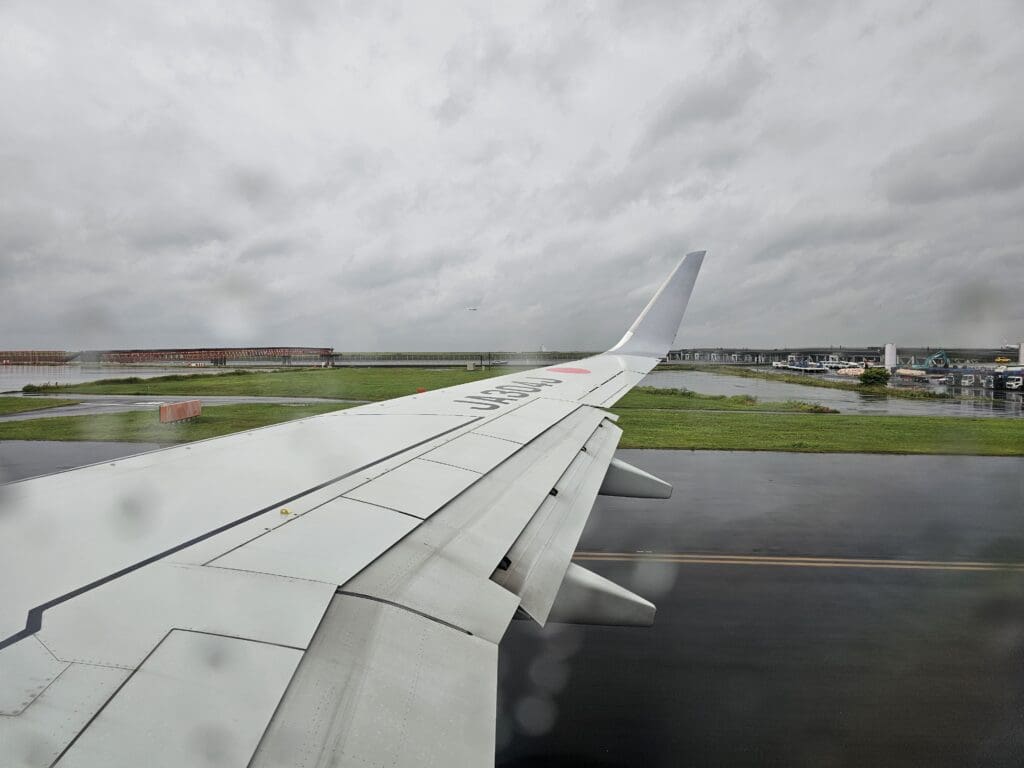
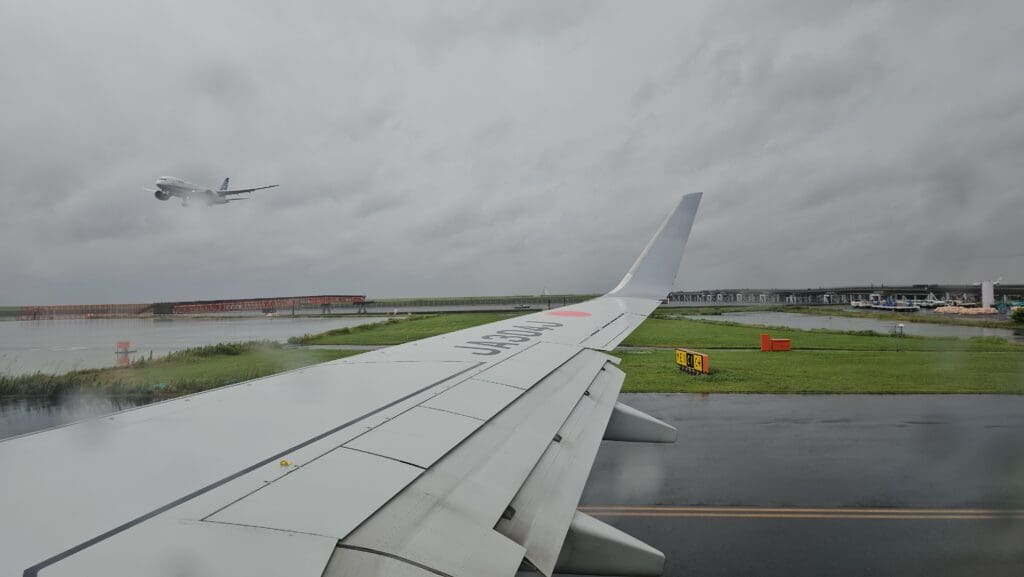
At 1609, the Boeing’s two CFMI engines roared into life as the Boeing made a short and powerful take-off roll, throwing up plenty of spray from that day’s persistent rainshowers and swaying slightly as it accelerated down the runway before rotating upwards and climbing into the skies above the Japanese capital. Thanks to the close proximity of Tokyo Haneda Airport to downtown Tokyo, window seat occupiers on flights to and from this are often treated to superb views of the megacity’s tall skyscrapers and famous landmarks. However, thanks to the low lying cloud, virtually nothing of the city could be seen other than the silvery grey waters of Tokyo Bay and the odd cargo ship ploughing through this before we steamed up into the clouds no more than a minute after taking to the skies.
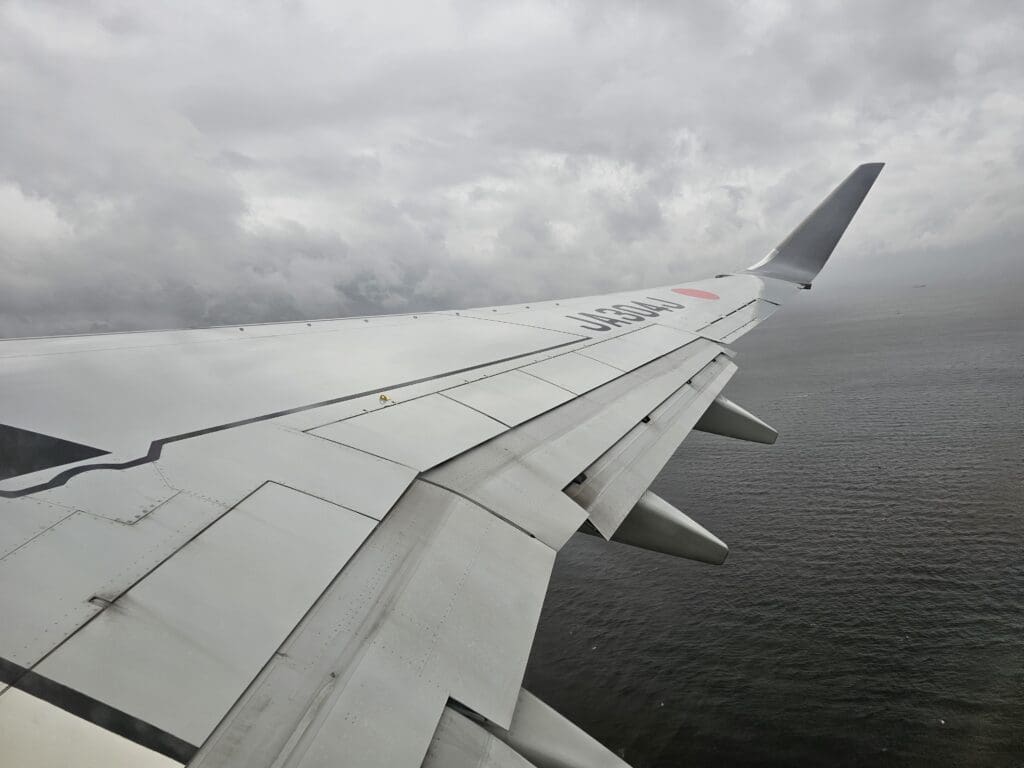
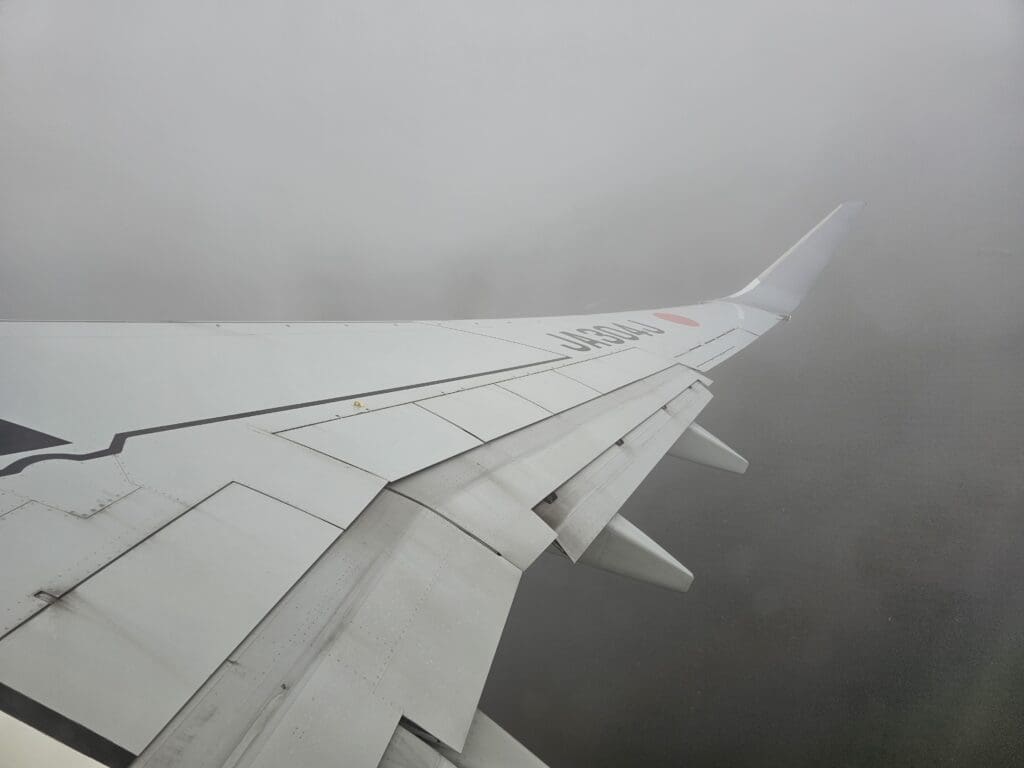
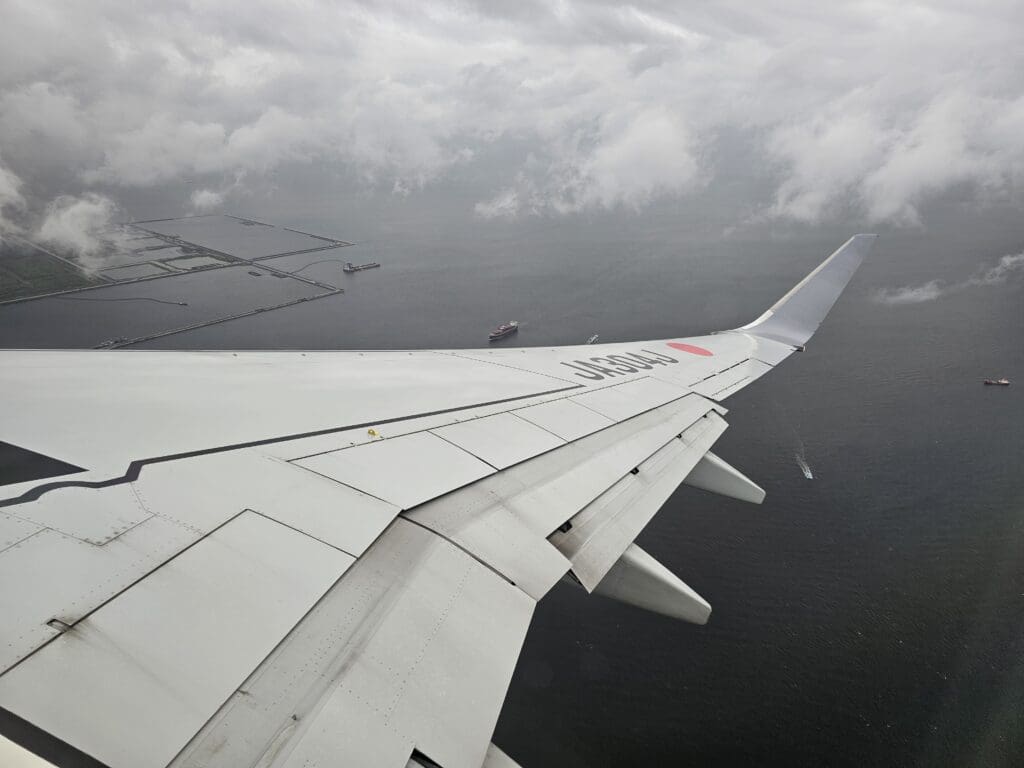
As soon as the Boeing left Tokyo Haneda Airport behind, the wings dipped and we turned onto a northerly heading. This took us to Nishikasai, Edogawa City, Katsushika City, Adachi City, Kita City and Itabashi City as we followed the course of the Arakawa River as it curves northwestwards away from Tokyo Bay. Around seven minutes after taking to the skies, the Boeing left Tokyo behind and made its way over Saitama Prefecture. Somewhere high above the mountains of Saitama’s Chichibu-Tama-Kai National Park, eleven minutes following our departure, the seatbelt signs were extinguished at which point we were climbing through 23,000 feet and nearing the final stages of our climb to our initial cruising altitude of 32,000 feet. At this time, the usual announcement was made by the Purser which requested passengers to keep seatbelts fastened whilst seated, and also advised passengers of the onboard duty free service.
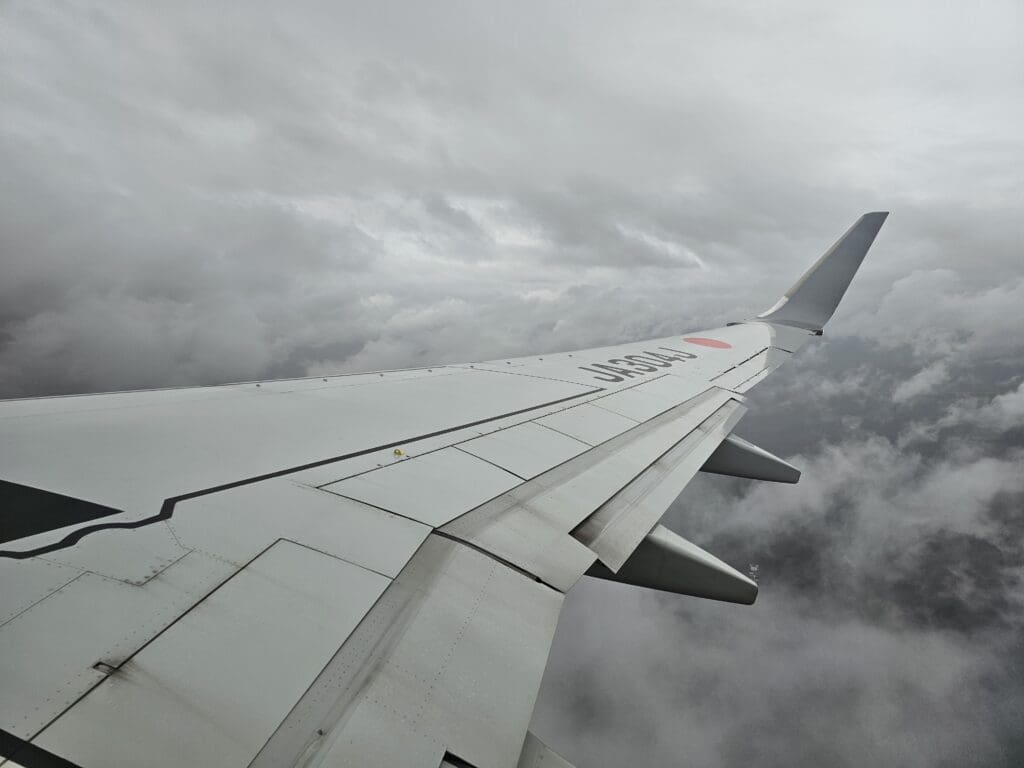
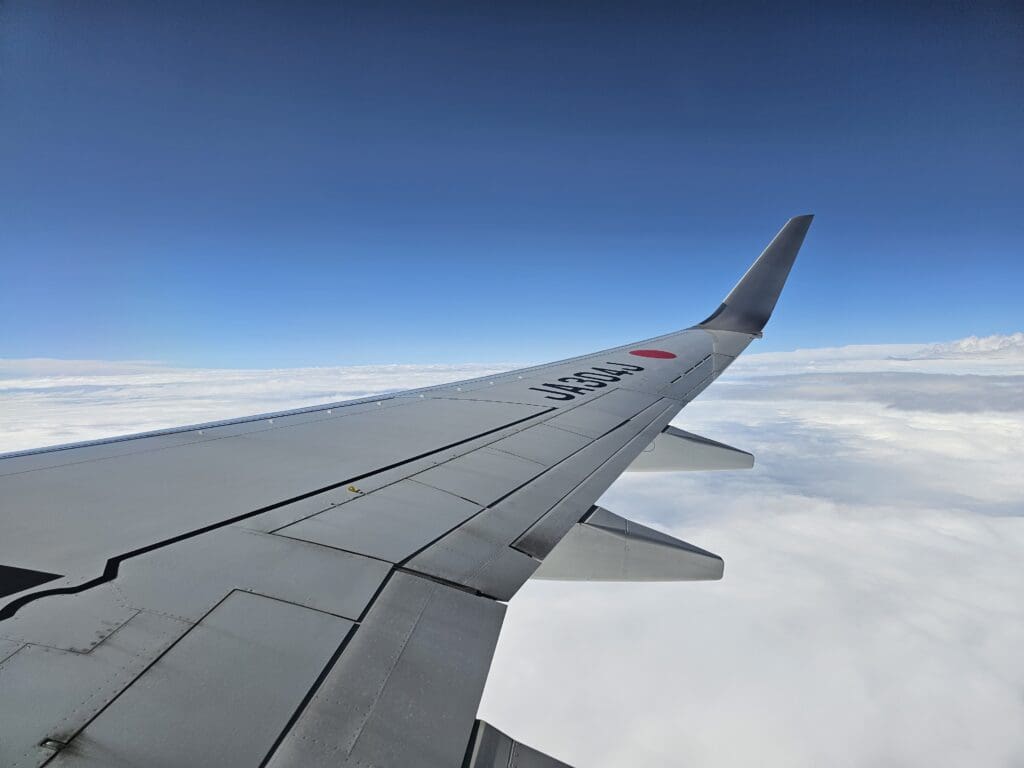
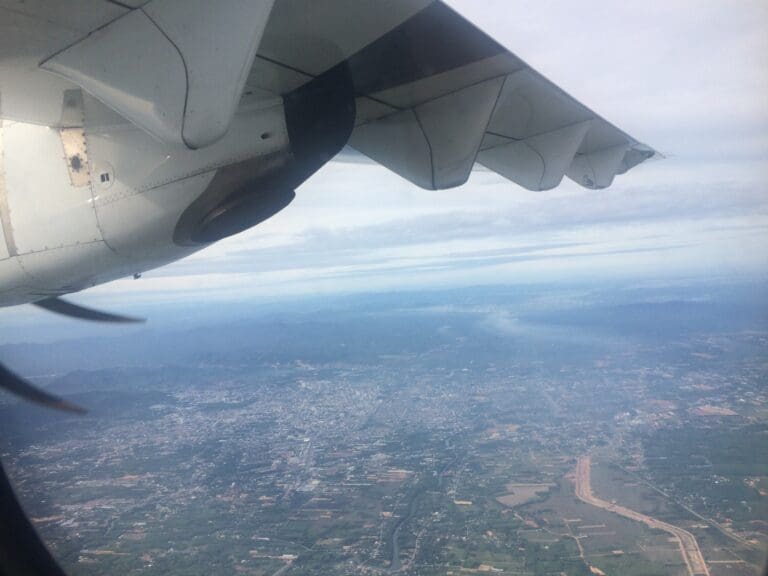
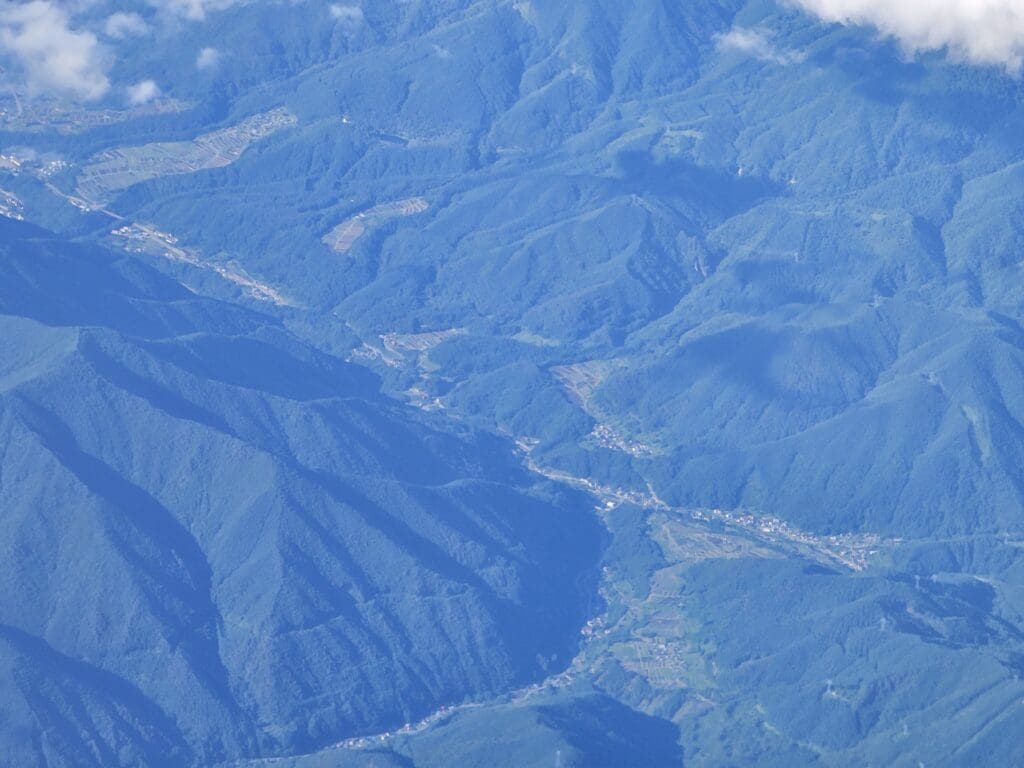
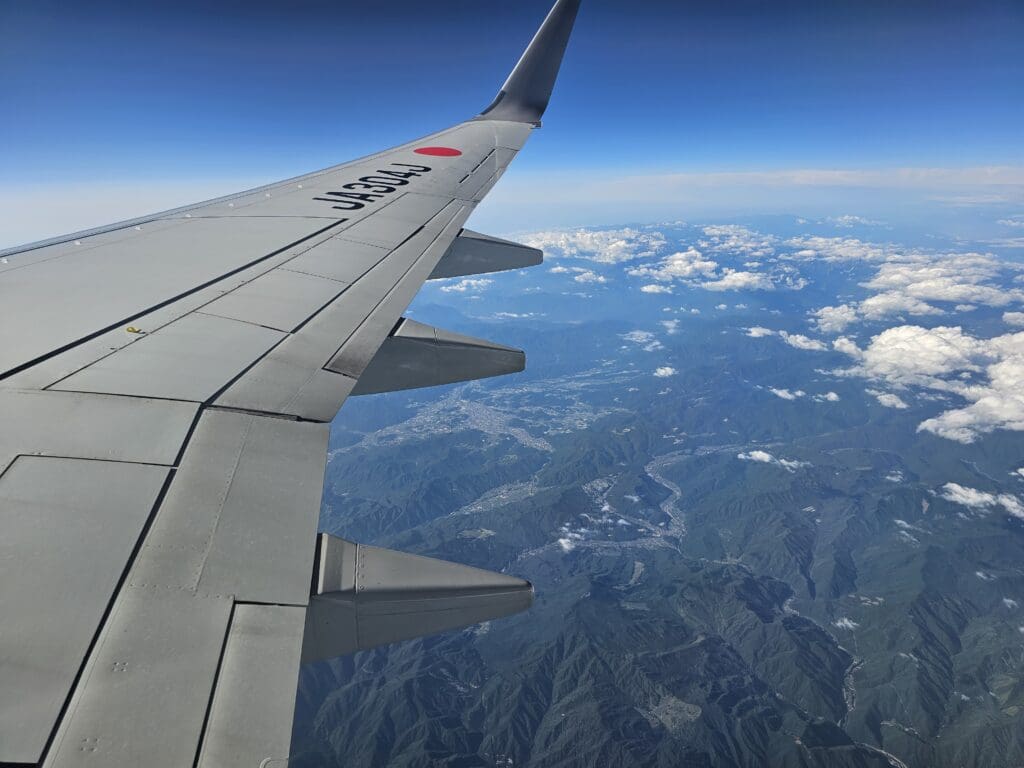
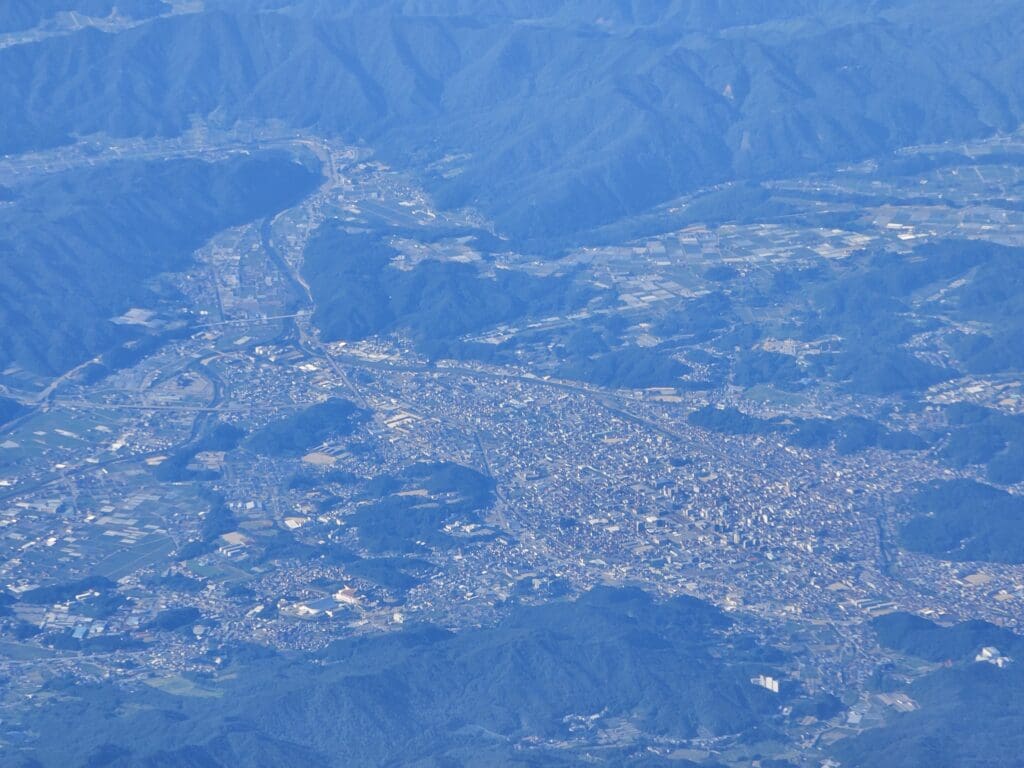
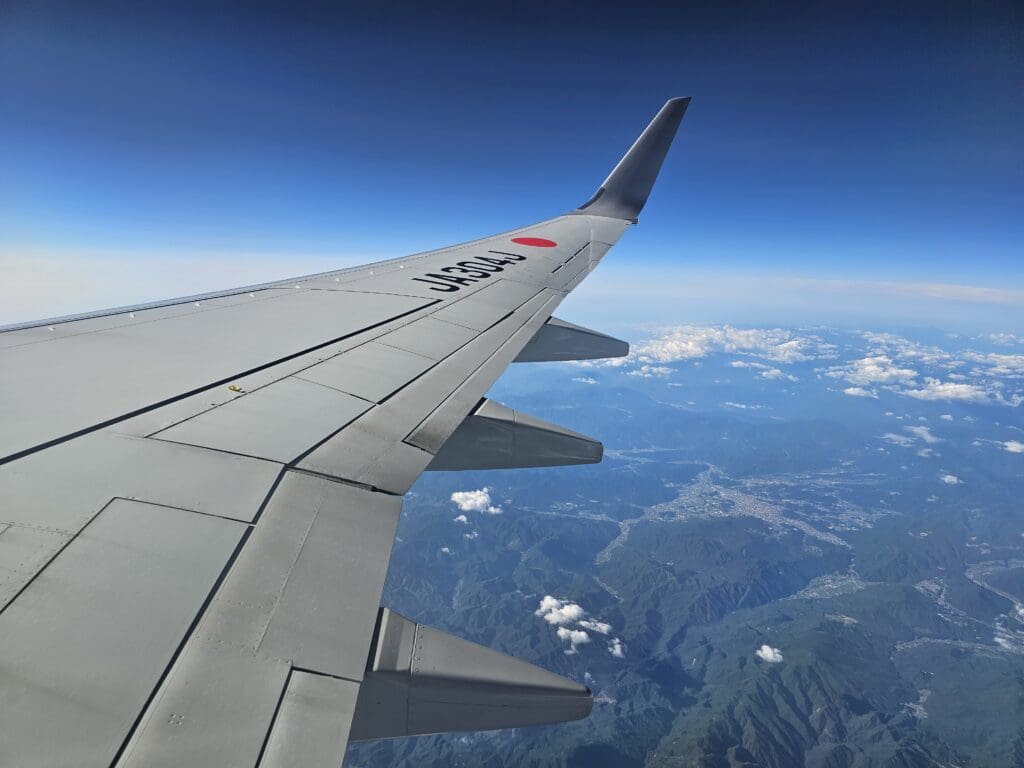
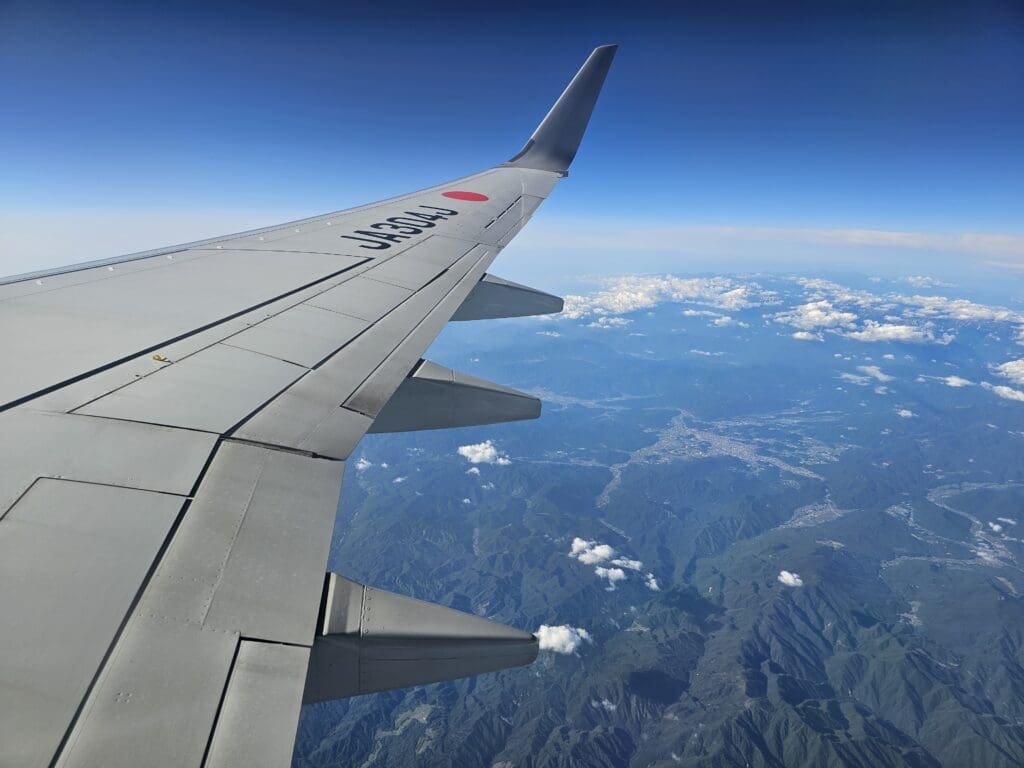
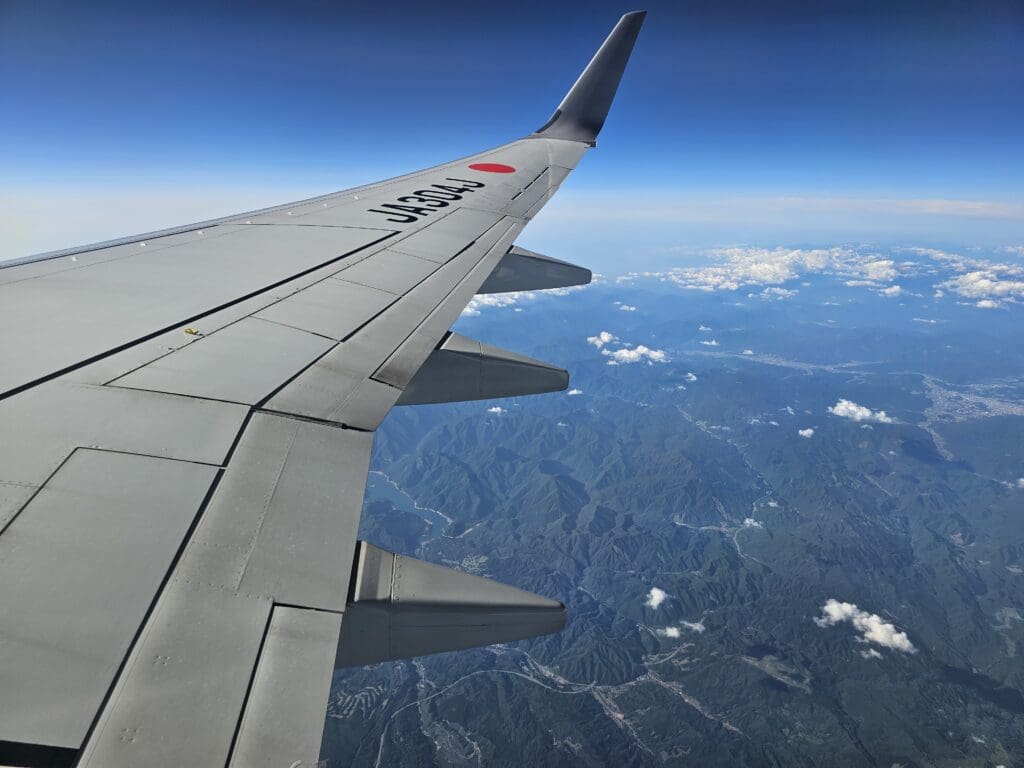
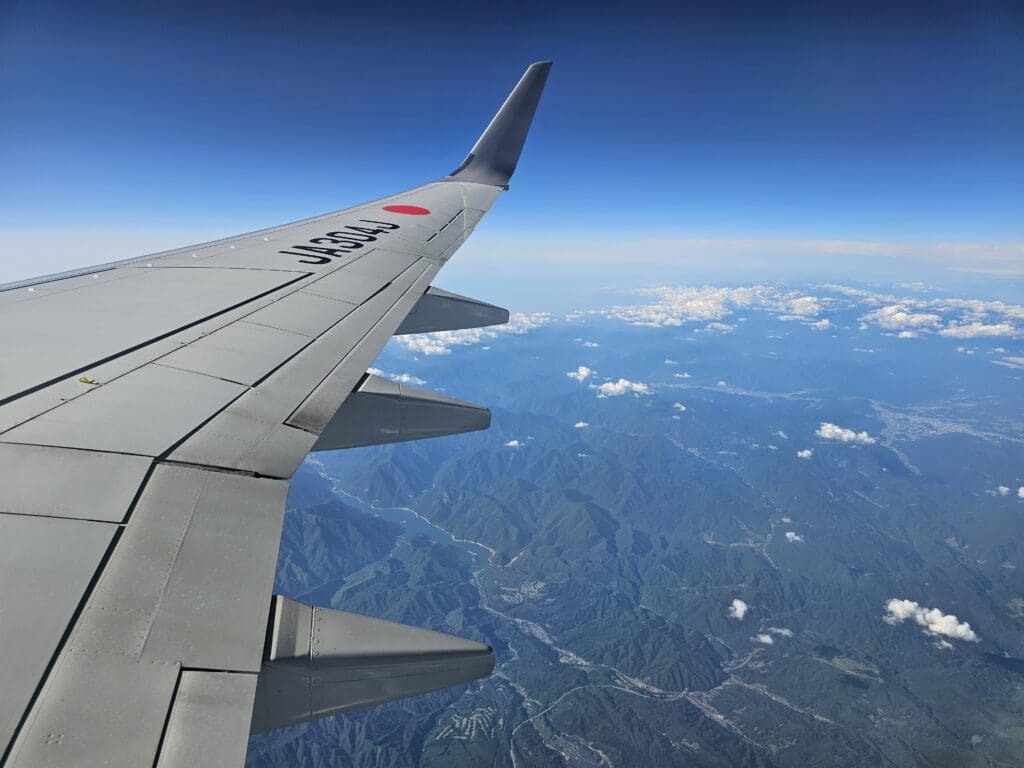
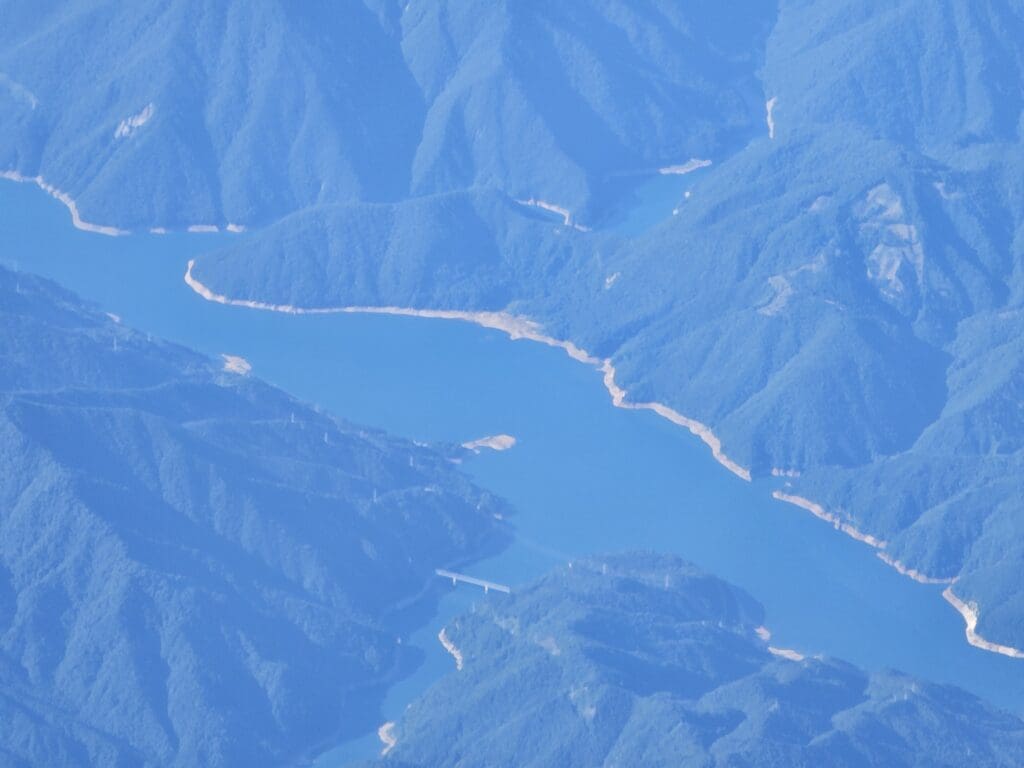
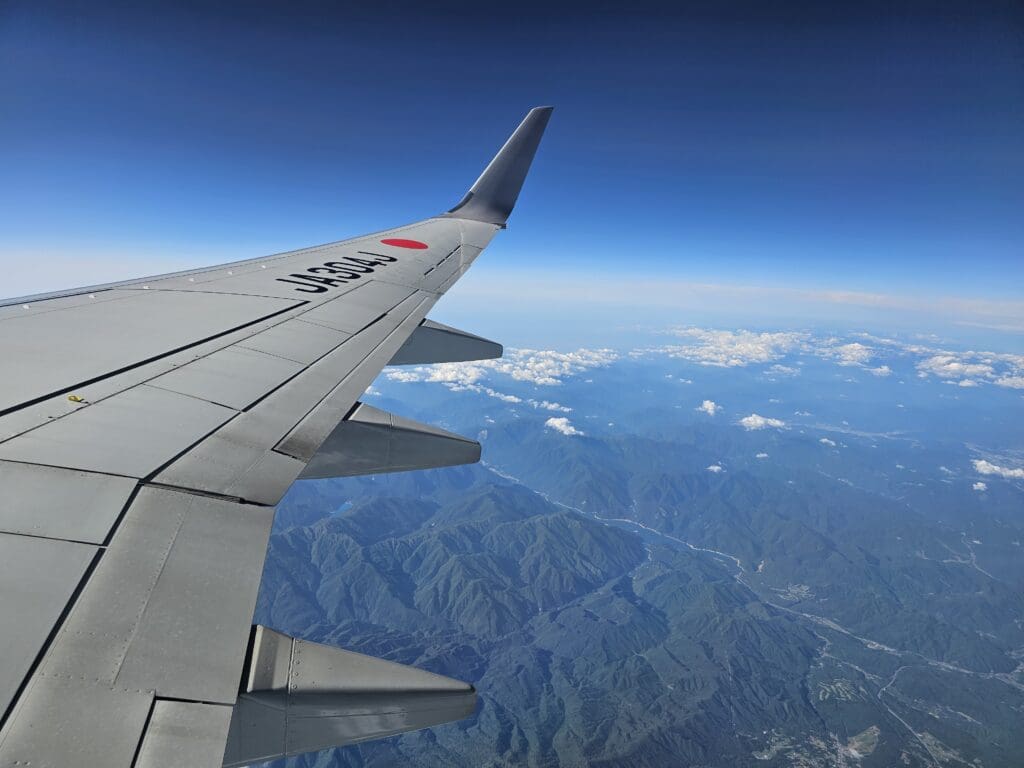
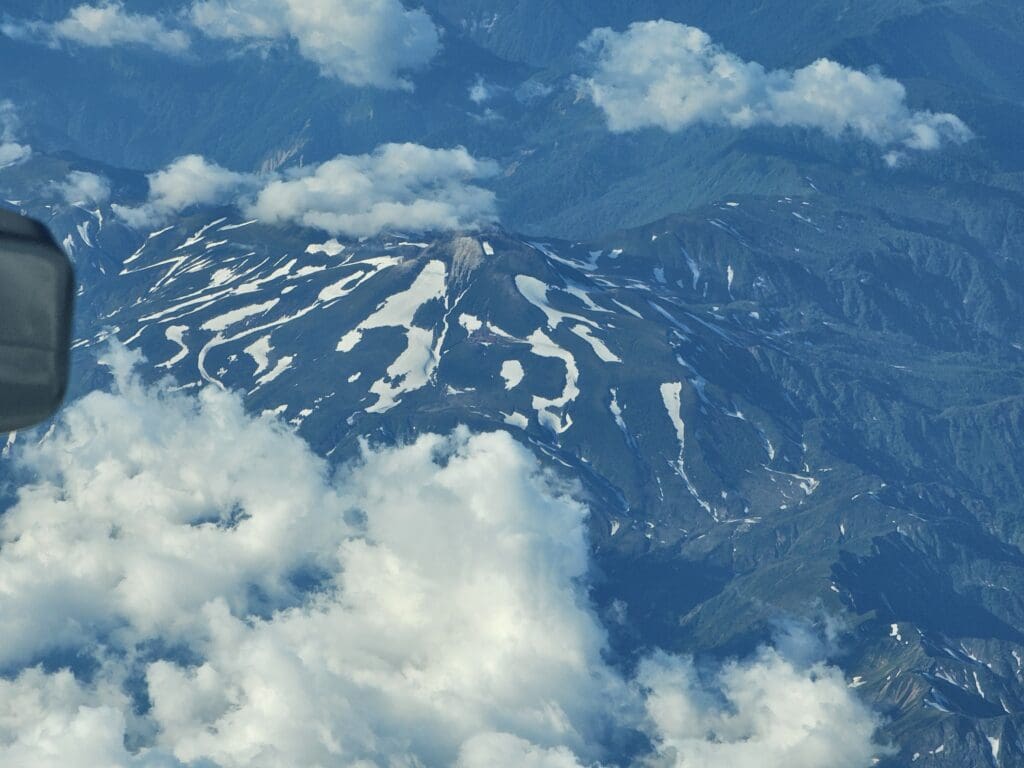
Thanks to the very inclement weather in Tokyo that day, I held little hope that we would be in for any particularly picturesque vistas of Japan as we cut across the centre of Honshu on our short journey from the island’s east to west coast. However, I was delighted to be proven wrong and at 1627, the clouds below magically parted revealing the scenic green forests and hills of Nagano Prefecture in the Chūbu Region. Once we had passed the towns of Fujimi, Minowa and Tatsuno, these hills rose up into Gifu Prefecture’s stunning Hida Mountains and despite travelling in the heat of late June, I managed to spot some snow on the rocky slopes of Mount Kurai and Mount Kaore.
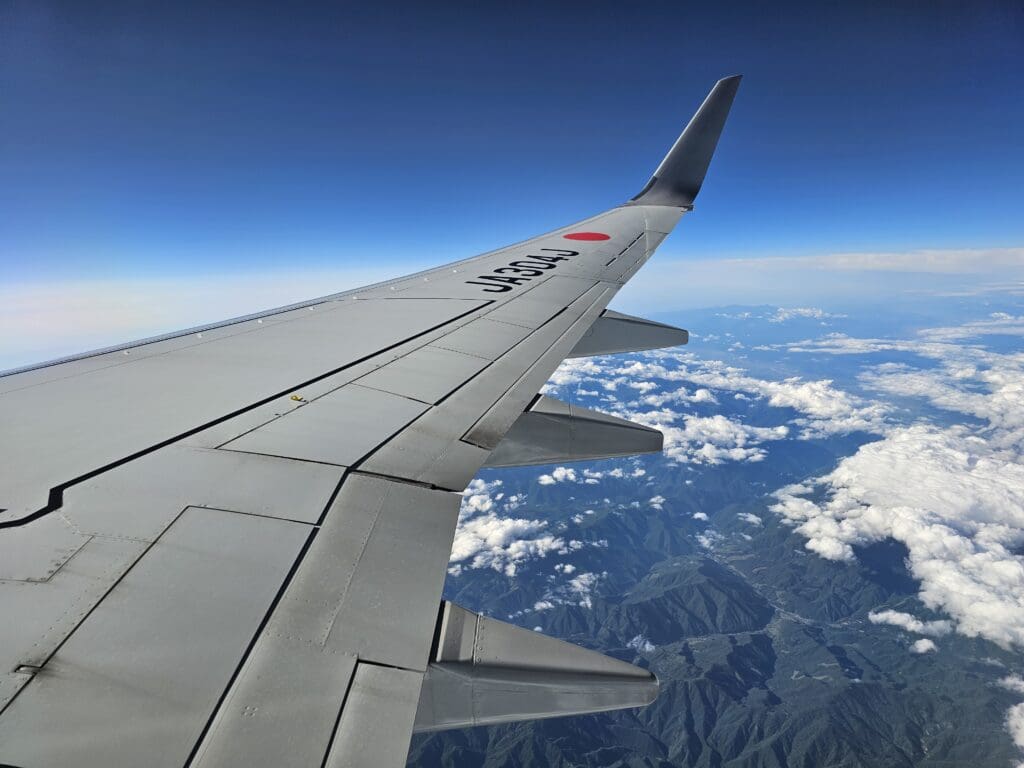
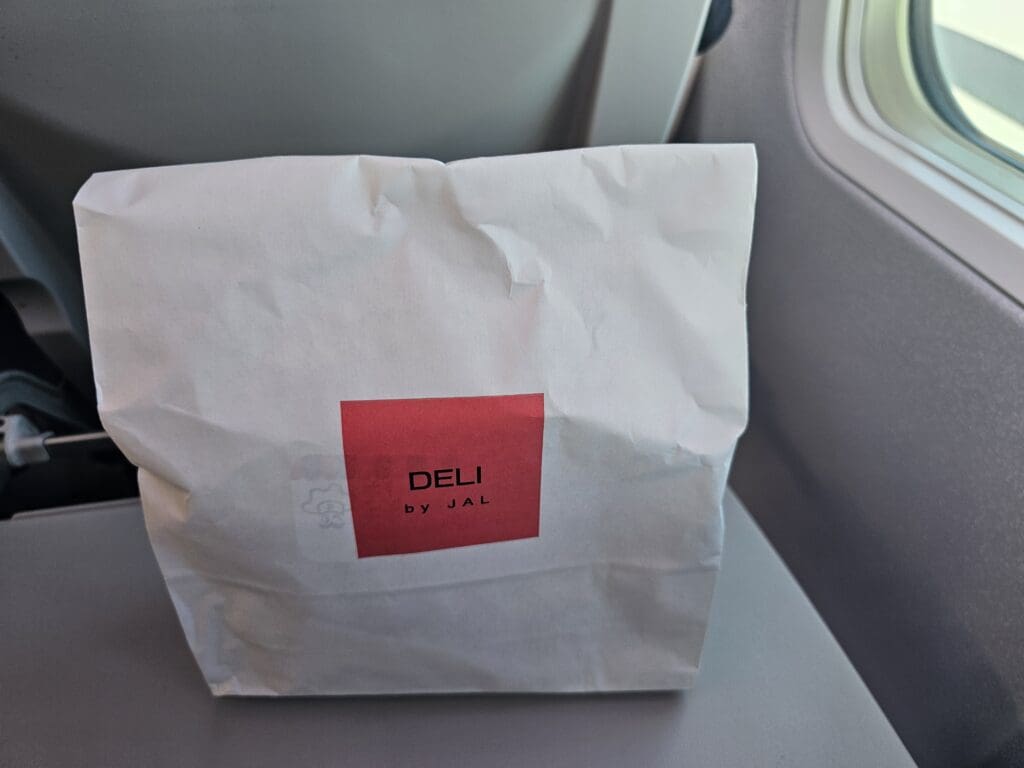
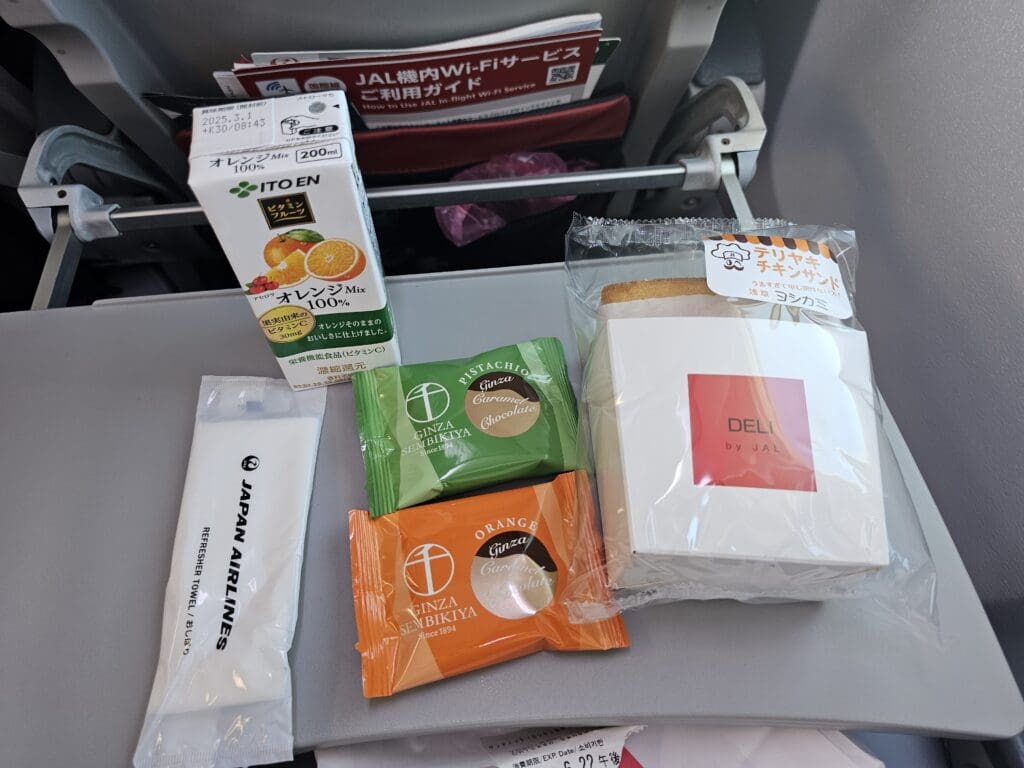
Given the relatively short length of the flight between Tokyo and Seoul, once we had levelled off at our initial cruising altitude, the crew soon took to the aisles and commenced that afternoon’s round of inflight service. With the distance between the two Northeast Asian capitals standing at 735 miles, this is almost identical in distance to the hop between London and Barcelona or Oslo. However, unlike on similarly lengthed services back home where passengers would be lucky to get a free bottle of water and a cereal bar, all passengers in Economy were to be treated to a reasonably filling inflight offering. Soon, one of the polite and friendly flight attendants handed me a JAL Sky Deli paper bag and opening this up, I found this to contain a small teriyaki chicken sandwich, two Ginza Sembikiya chocolate sandwich biscuits and a carton of fruit juice. Meanwhile, this was very shortly followed by a round of drinks. That afternoon, options were far more limited than the very expansive range of beverages that had been served on my flight over from London, with passengers able to pick from coffee, consomme soup, orange juice, still water or beer. Having had nothing more than convenience store snacks during my day stop in Tokyo, I got to work on the inflight offering without delay. In terms of the meal’s quality, this left me with no complaints, and it seemed to be of sufficient quantity given the length of the flight. Meanwhile, our early evening arrival time perhaps meant that many of my fellow passengers would eat a full evening meal in Seoul. However, I should note that route competitors ANA, Asiana Airlines and Korean Air all offer a hot meal on their services between Haneda and Gimpo, and so Japan Airlines is lagging slightly when compared to these carriers’ catering offerings. Nevertheless, I found no real reason to complain about this round of inflight service.
As I munched on the light early dinner, the landscapes below sank down as we crossed into the skies of Fukui Prefecture and passed the cities of Ono, Sabae and Echizen. From there, a total of 31 minutes after taking to the skies, the Boeing headed out over the blue waters of Wakasa Bay and voyaged westwards over the East Sea. As we made our way out to sea, the First Officer’s voice filled the cabin as they performed a standard announcement in Japanese and North American accented English. This consisted of a word of thanks for flying with Japan Airlines, an overview of our route, an update on the weather in Seoul and an apology for our delayed expected arrival time, with our flight now set to arrive in Korea ten minutes behind schedule at 1810. After leaving the coastline of Fukui, the Boeing travelled parallel to the northern shoreline of the Chūgoku region for a further thirty minutes. However, thanks to my seat on the right-hand side of the aircraft, little other than the sea below could be seen. However, I did manage to get a good view of the Oki Islands which sprung up out of nowhere before we left Japan behind for good. This is an archipelago of over 180 islands, of which four are inhabited and have a respectable population of around 24,500. These are connected to Kyushu by a number of ferry routes, whilst direct flights operate between Oki Airport and Izumo and Osaka Itami. At the time of writing these were operated by Japan Air Commuter ATR 42s and J-Air Embraer E-Jets respectively. After passing these islands, the Boeing left Japan behind and sped towards the Korean Peninsula.
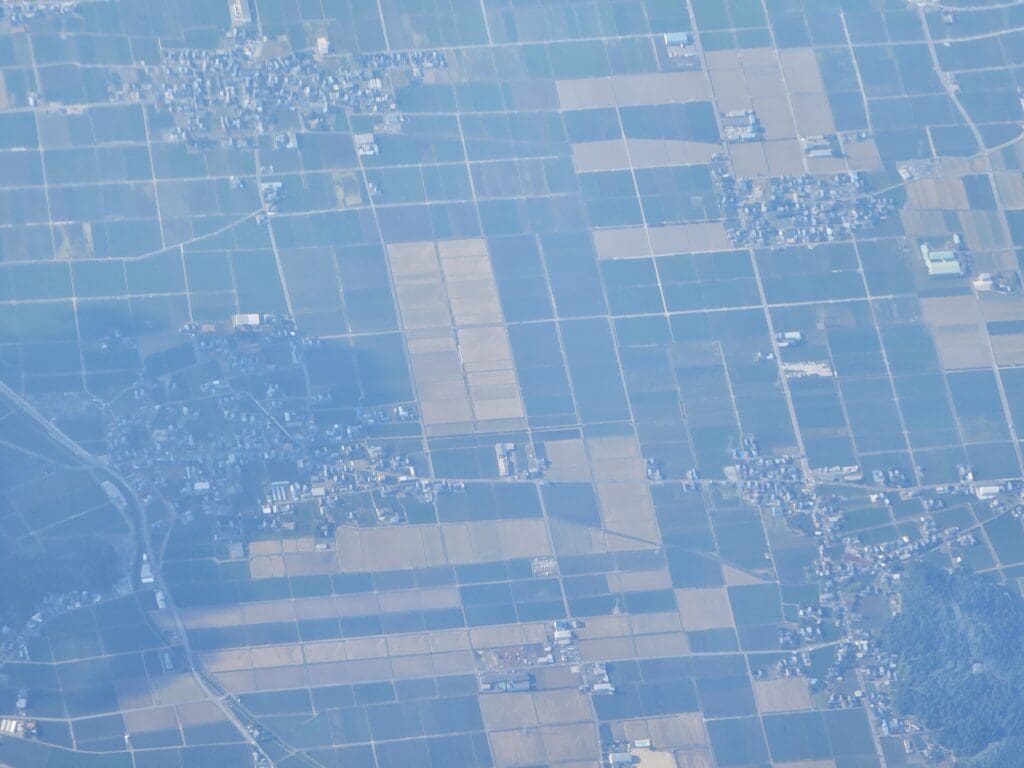
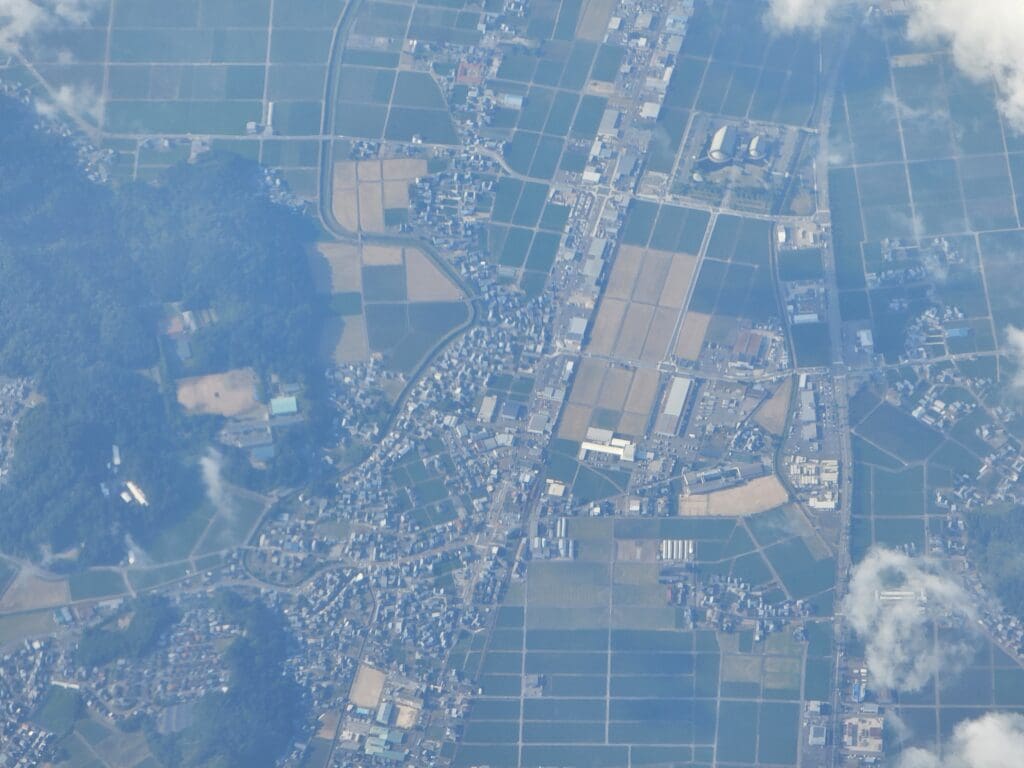
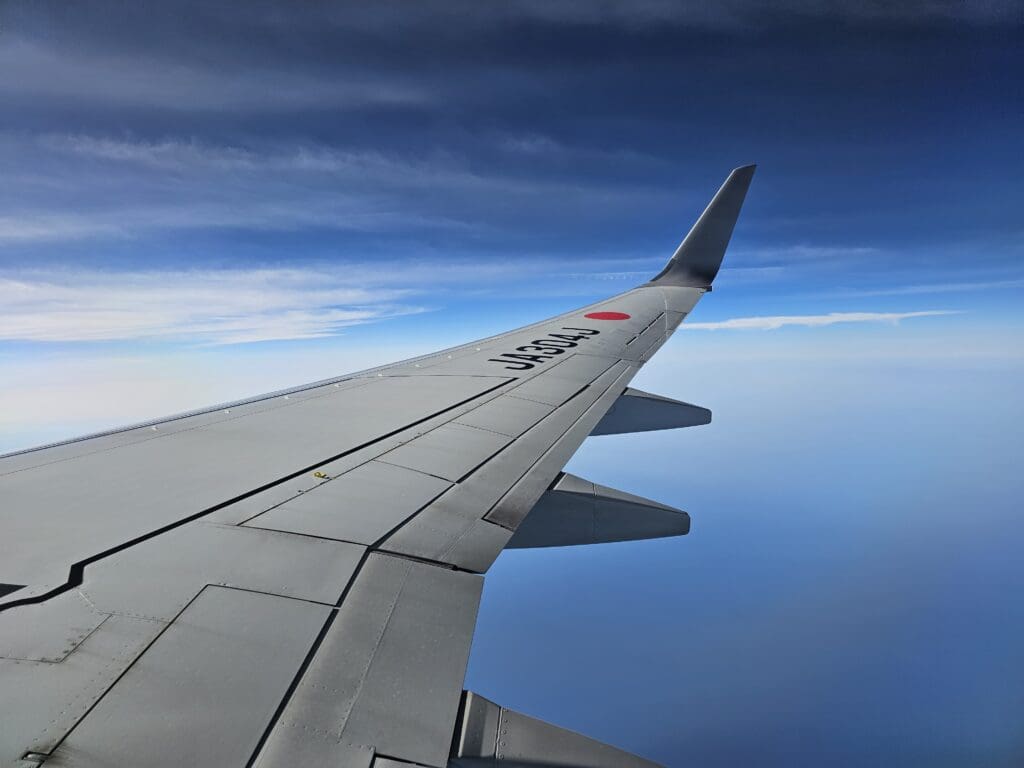
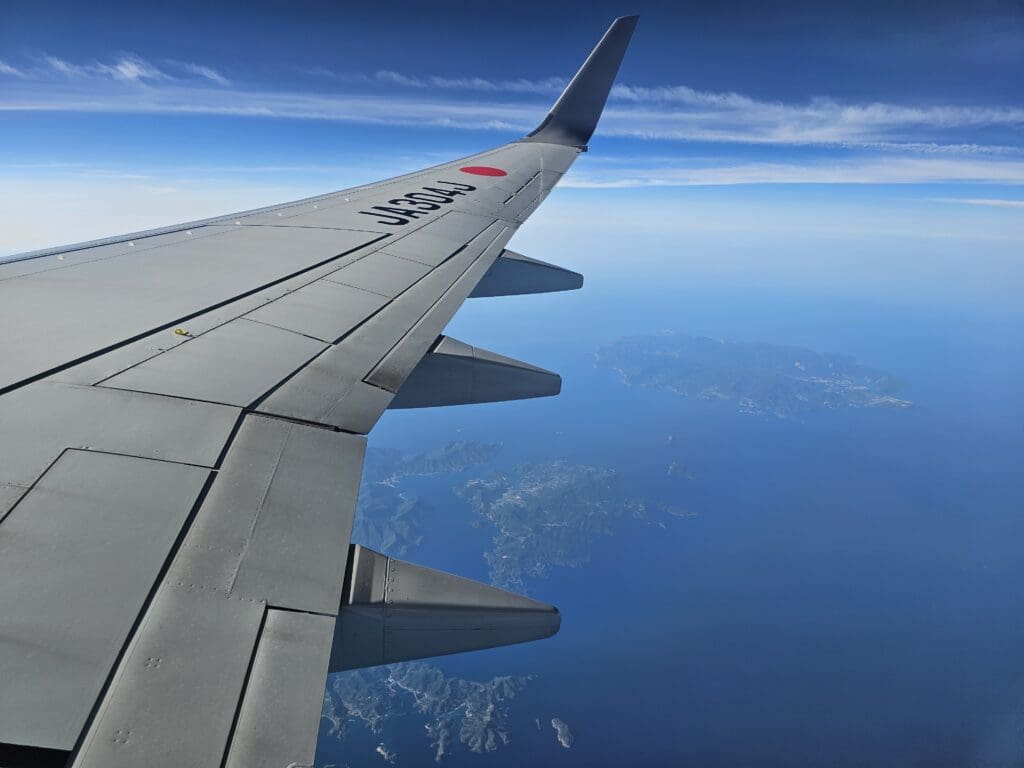
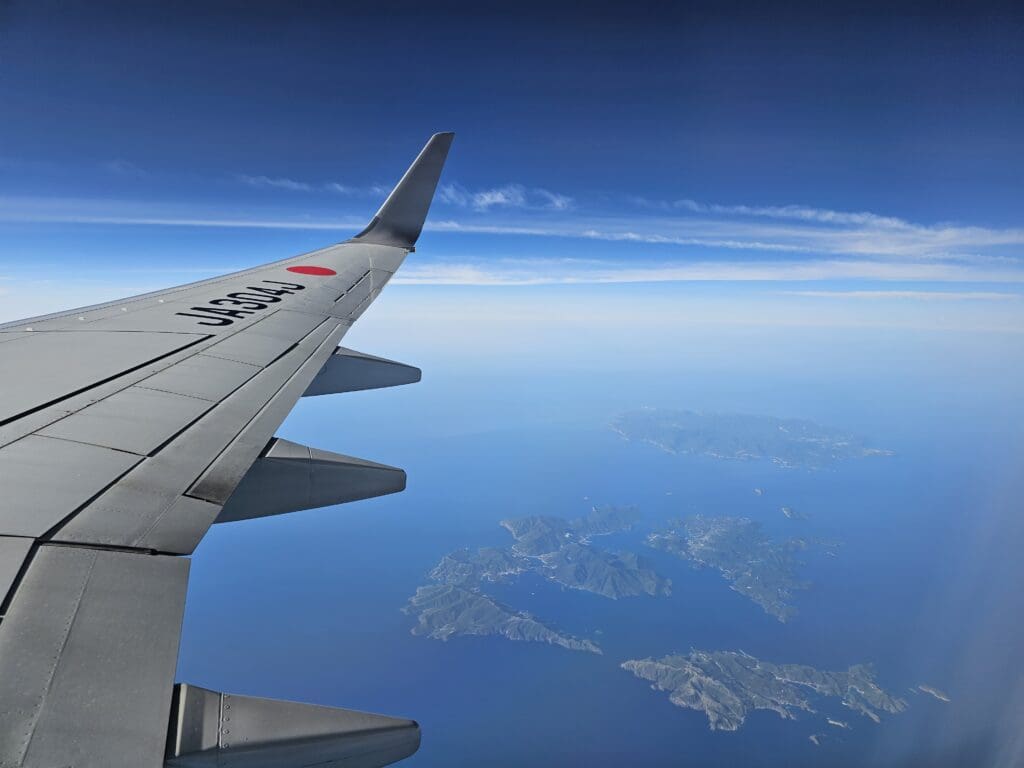
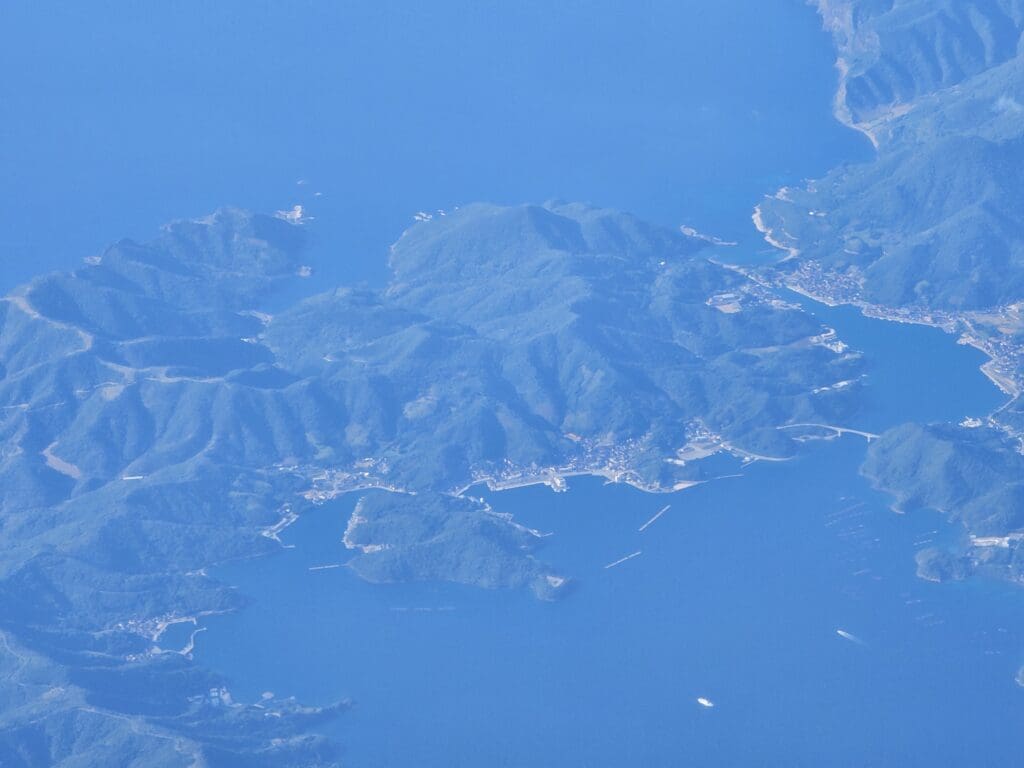
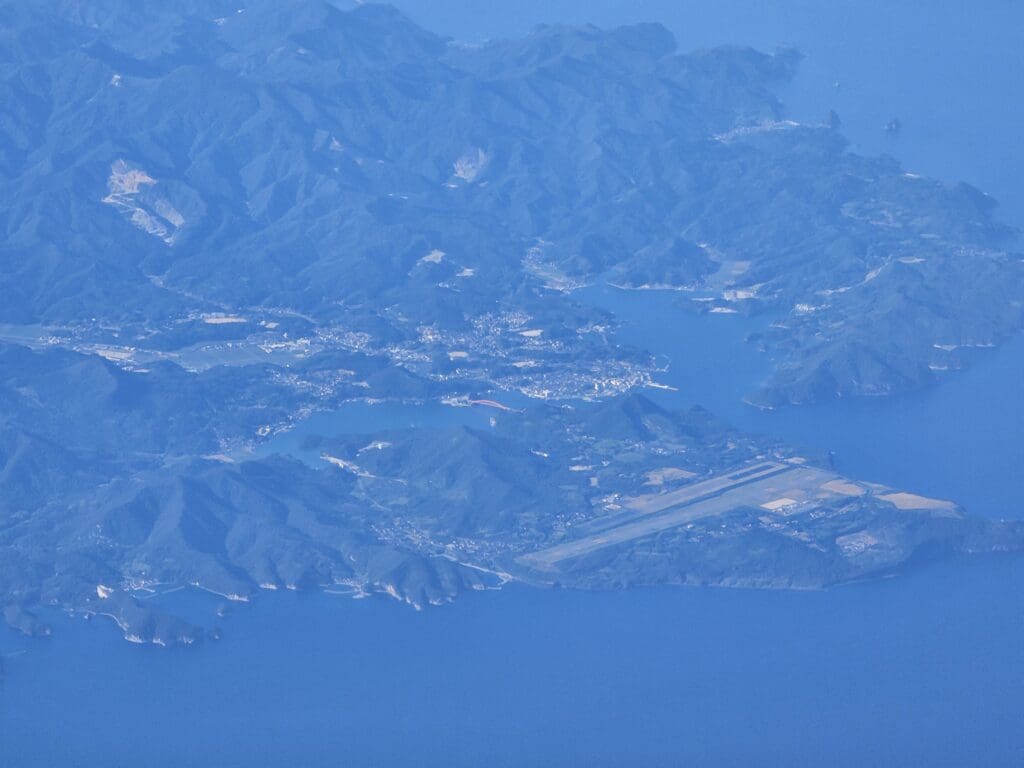
Given the short flight time, I had no intention of watching anything. Nevertheless, as we sped westwards over the East Sea, I decided to explore the MAGIC-IV inflight entertainment system. Judging by its name, I would hazard an educated guess and say that this system is two generations older than the MAGIC-VI system that I had sampled on my Dreamliner flight from London. Indeed, this was more dated and basic in its layout when compared to the newer system, and could only be controlled via the chunky pull-out armrest controller, with no touchscreen function available. Despite being a slight blast from the past, the system was fairly quick to load and available in the same smorgasbord of languages as the newer MAGIC-IV system – namely English, Japanese, Korean, Simplified and Traditional Chinese.
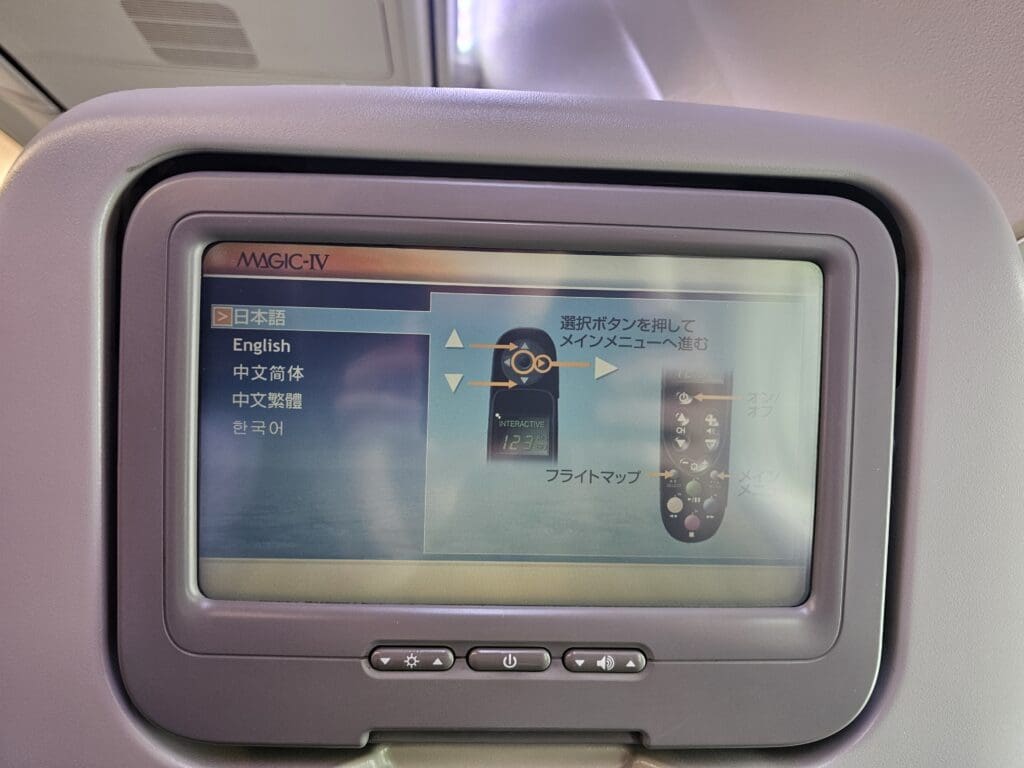
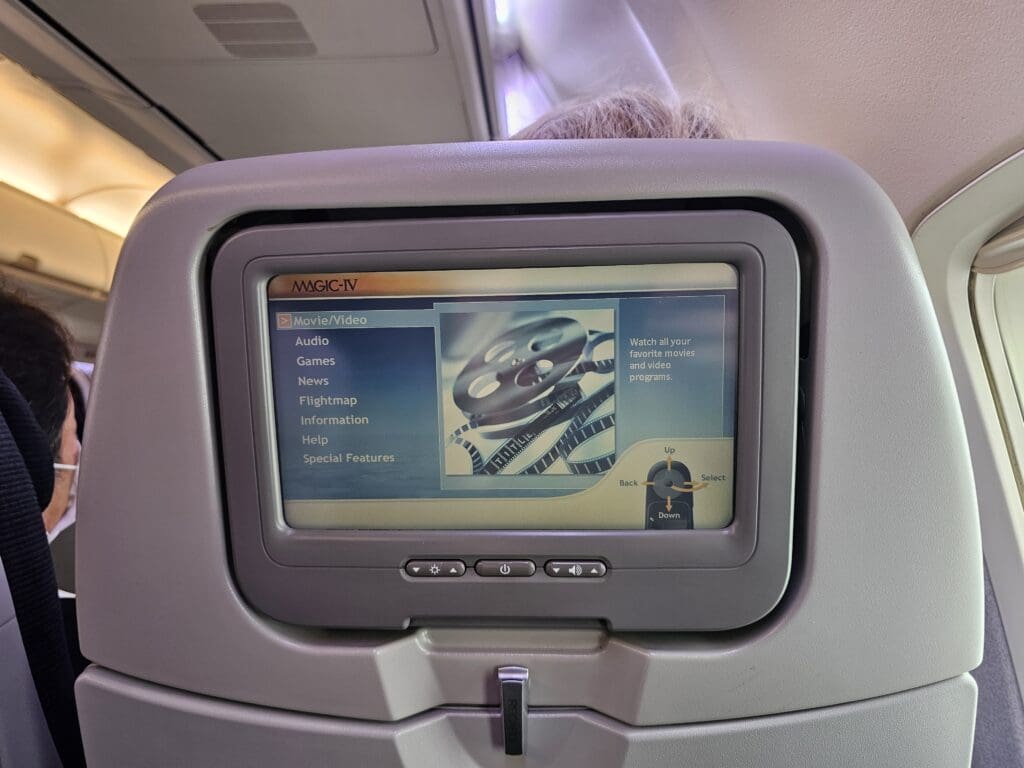
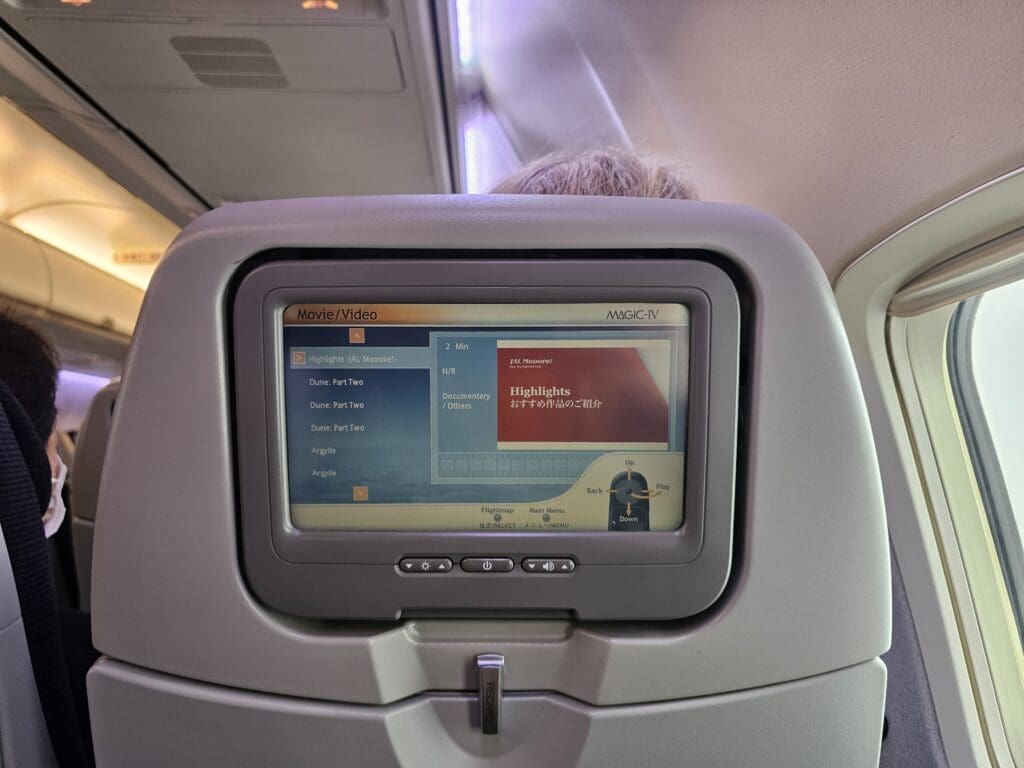
However, turning to the content, the Boeing 737’s MAGIC-IV system does lag behind those of Japan Airlines’ widebody jets and hosts a significantly lower number of items. That afternoon, I counted 22 films (12 Hollywood productions, 8 from Japan, 1 from China and 1 from Korea), 18 television programmes and 50 albums and playlists. Meanwhile, whilst a ‘moving map’ was offered, this simply scrolled through our flight information in Japanese and Korean, with no map actually being presented to passengers. In addition, the system offered three games, live NHK news (although this only seemed to work whilst over Japan), and a range of Japan Airlines content. Other than this, wifi was offered, with three paid options available. Rather delightfully, for those not wanting to bother with using the inflight entertainment system, passengers could watch the system’s content for free by connecting to the onboard wifi network.
A grand total of 46 minutes after leaving the Honshu coastline, and 20 minutes after I had had my last glimpse of Japan in the form of the Oki Islands, the Boeing crossed over the Korean coastline. That afternoon, we made landfall over the Homigot, a point of land in North Gyeongsang that serves as South Korea’s easternmost tip. Whilst located almost at the direct opposite end of South Korea to Seoul, highlighting the country’s small geographical size, as we passed over this the Purser advised passengers that we would soon be commencing our descent and informed all that the seatbelt signs would be reilluminated in fifteen minutes. Turning my attention back outside, a very short time after passing Homigot, the industrial sprawl of the city of Pohang appeared. Home to around half a million residents, this coastal city is famed for its industry and home to the major steel producer, POSCO. Meanwhile, aviation enthusiasts maybe slightly more interested in the city’s airport, which alongside a civilian terminal that hosts services to Jeju and Seoul Gimpo, is also home to several Korean Marines, Korean Navy squadrons. As of 2024, this hosts a smorgasbord of interesting types including Bell UH-1s, Boeing P-8A Poseidons, Cessna F406s, KAI MUH-1 Marineon, Lockheed P-3 Orions and Sikorsky UH-60s. Meanwhile near this sits the Korean Navy’s 6th Air Wing Museum where an array of preserved aircraft can be found.
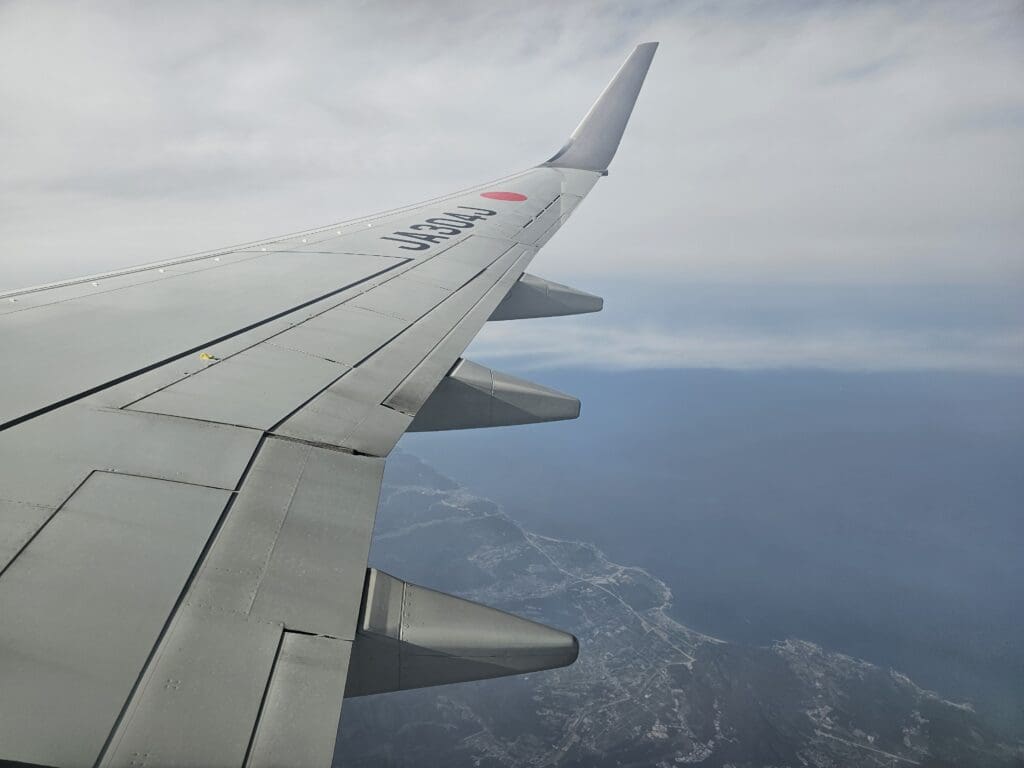
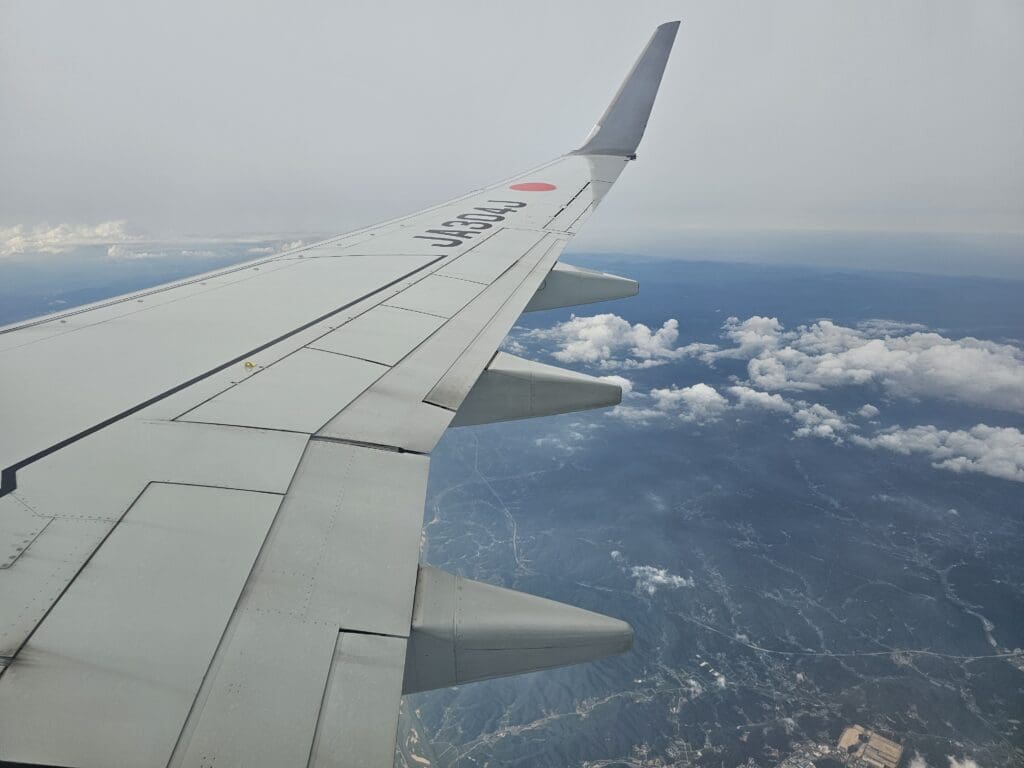
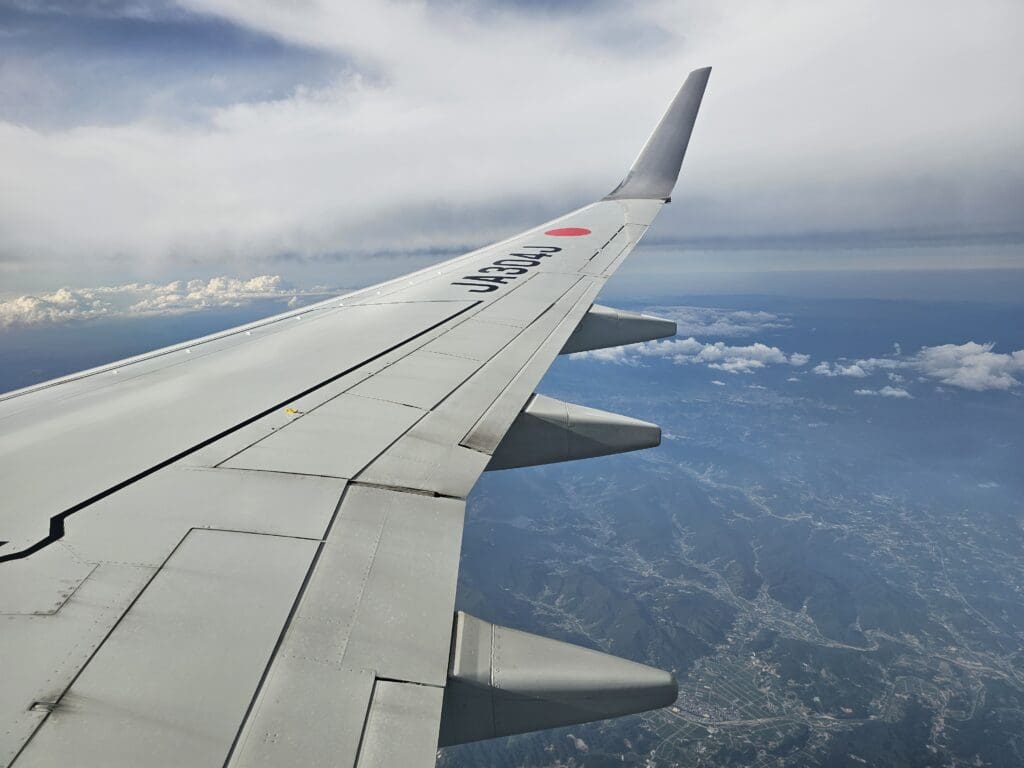
As we passed over Pohang, the cabin was filled with a pre-recorded announcement in Japanese, English and Korean on behalf of the Korea Customs Service and the Animal and Plant Quarantine Agency which went through the list of items that travellers are unable to bring into Korea and the consequences of doing so. Looking outside, unfortunately, as the jet left Pohang behind and crossed over Korea’s mountainous interior, clouds swept in below and blocked any views of the Korean Peninsula for much of the remainder of the flight. Voyaging northwestwards over North Gyeongsang, the Boeing didn’t really pass any particularly large towns or cities as we made our way towards Seoul. With the largest of these being Andong, which is home to around 154,000 residents and is famed for its historical and cultural significance which even saw Queen Elizabeth II pop in for a visit back in 1999 for her 73rd birthday!
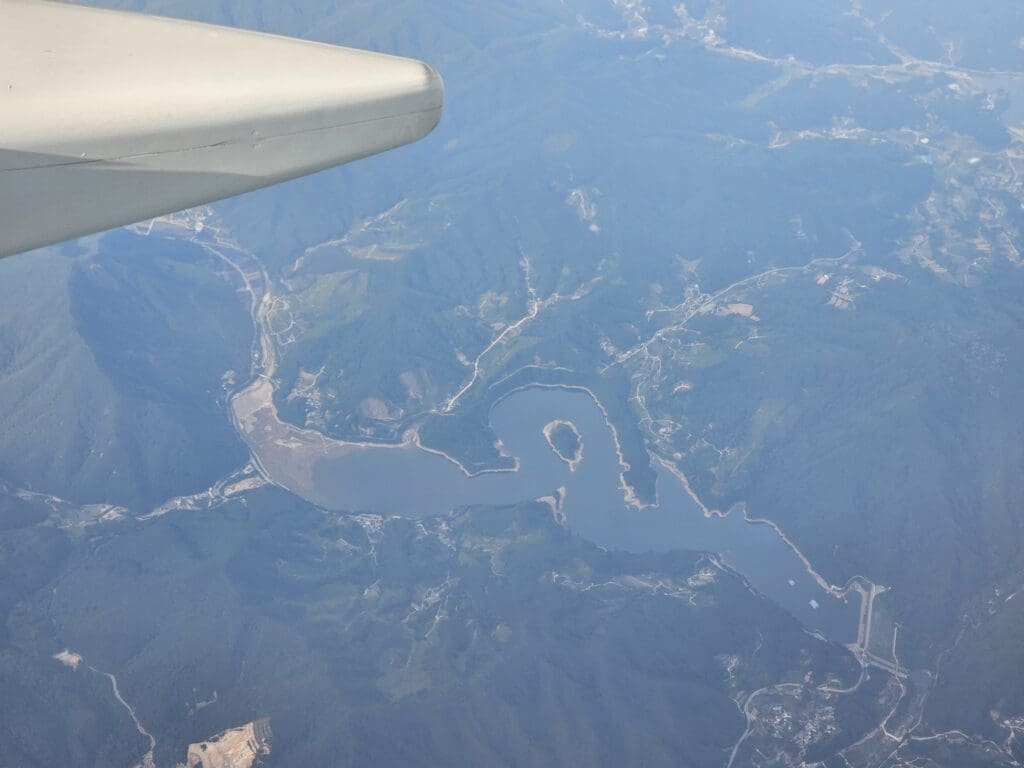
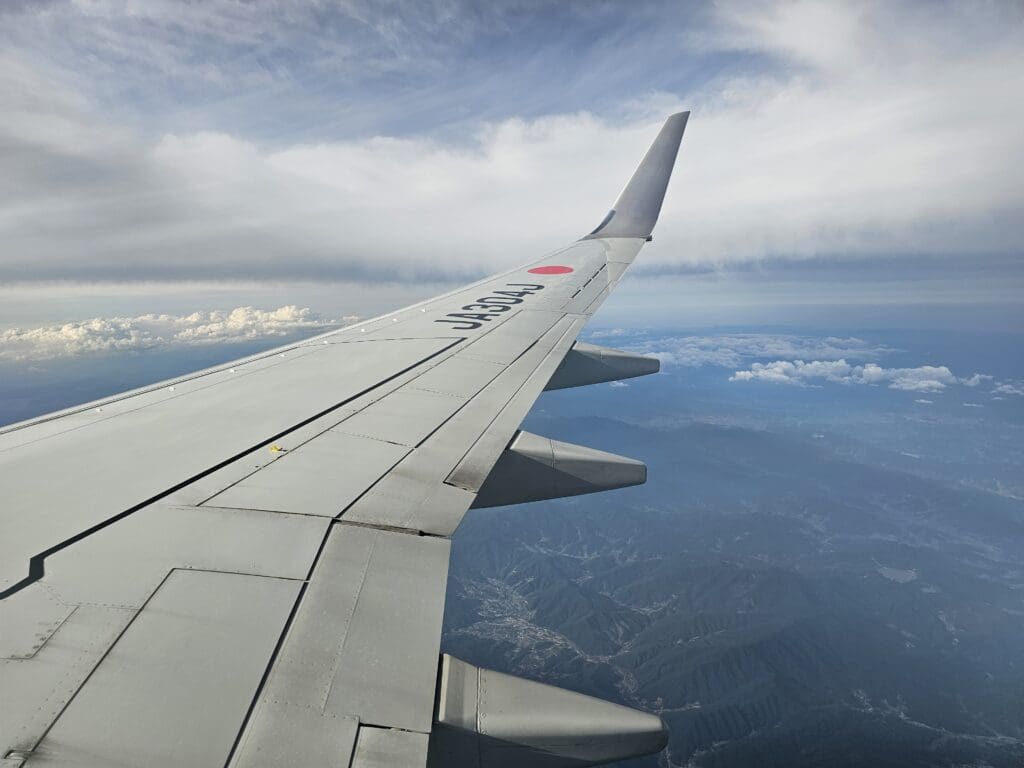
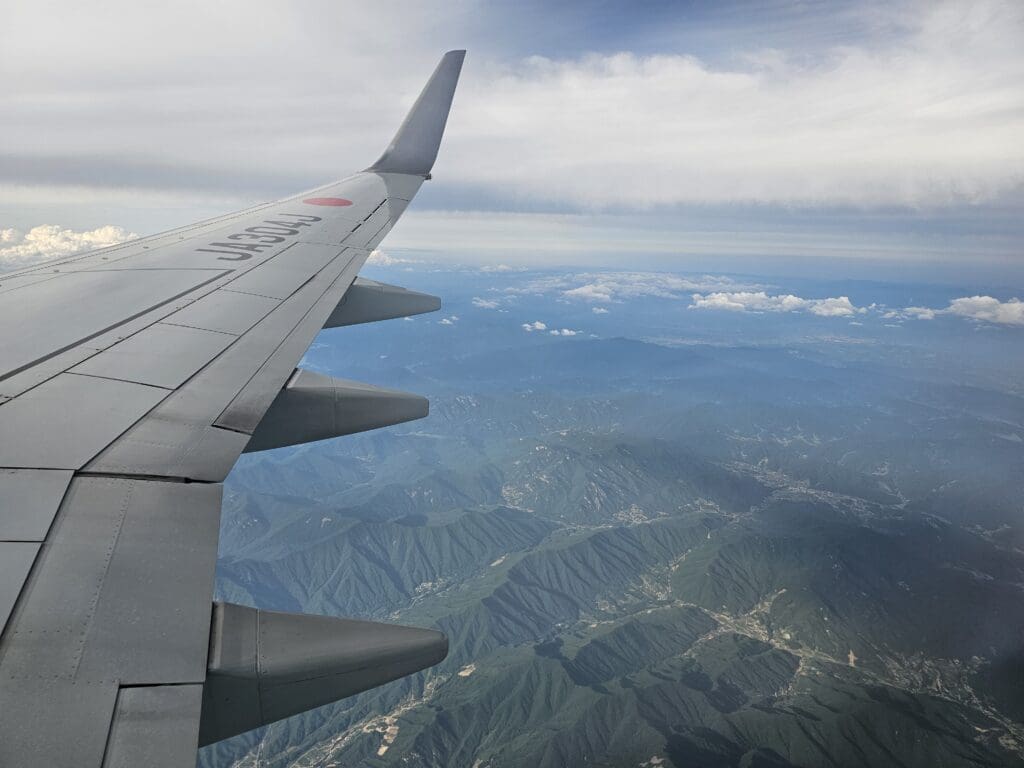
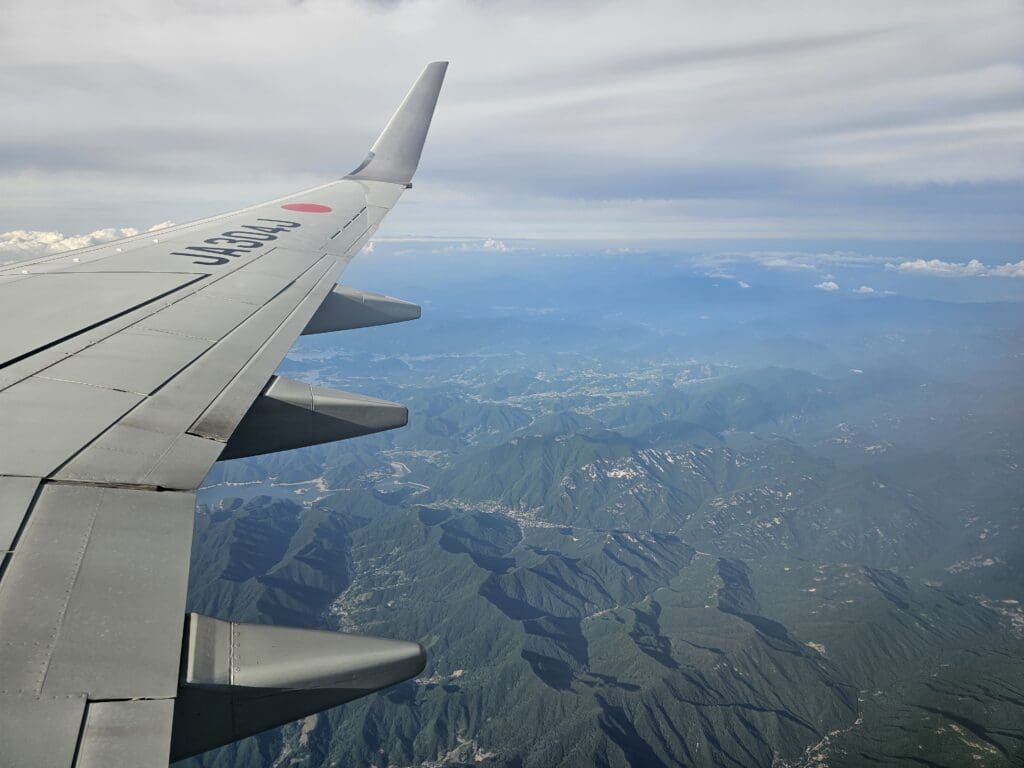
Thankfully, the clouds parted as we sped from the skies of North Gyeongsang to North Chungcheong, revealing the green mountains below, small towns and soon, the city of Chungju. This was easily recognisable thanks to Korea’s largest lake which sits just to the southeast of the city, as well as its airbase which hosts several squadrons of ROKAF F-16 fighter jets. After leaving Chungju behind, the aircraft made its way into the skies of Gyeonggi Province which loops around Seoul and soon the speed brakes were partially extended causing us to shudder and sway a little as we continued our descent. Inside the cabin, at this time, the crew made a thorough check to ensure that all was in place for our arrival before retreating to their jumpseats in the forward and rear galleys. Having picked a seat on the right hand side of the aircraft in the hope that this would offer a good view of Seoul if landing on either Runway 32L or 32R, that evening I was in luck as we approached the former.
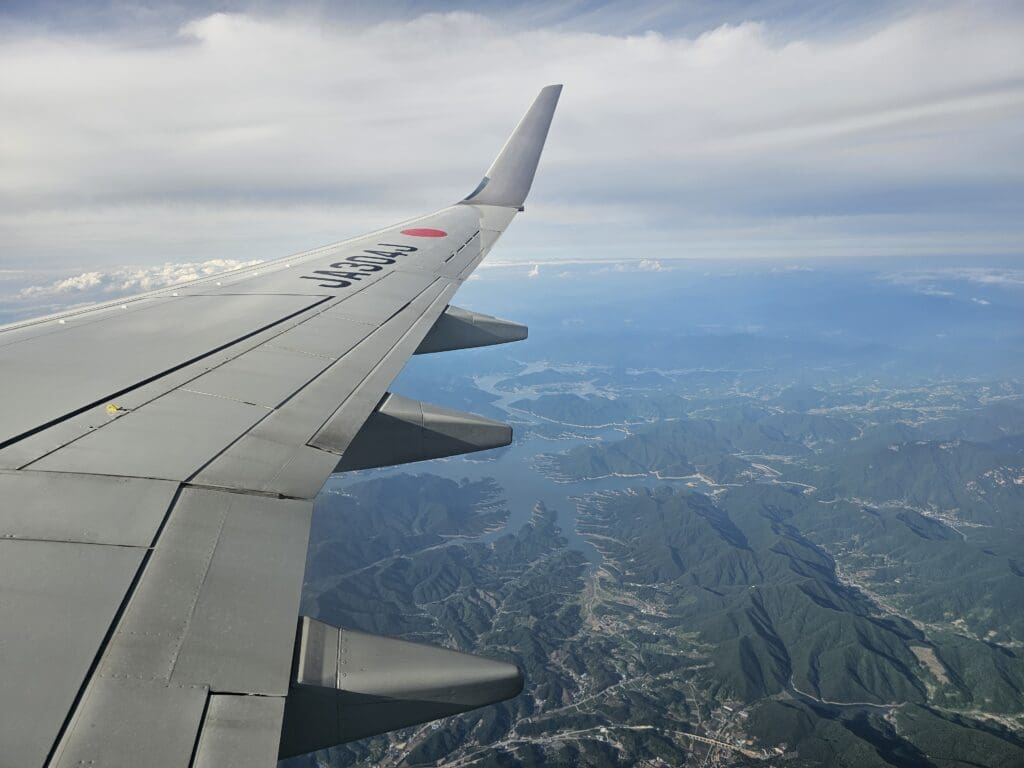
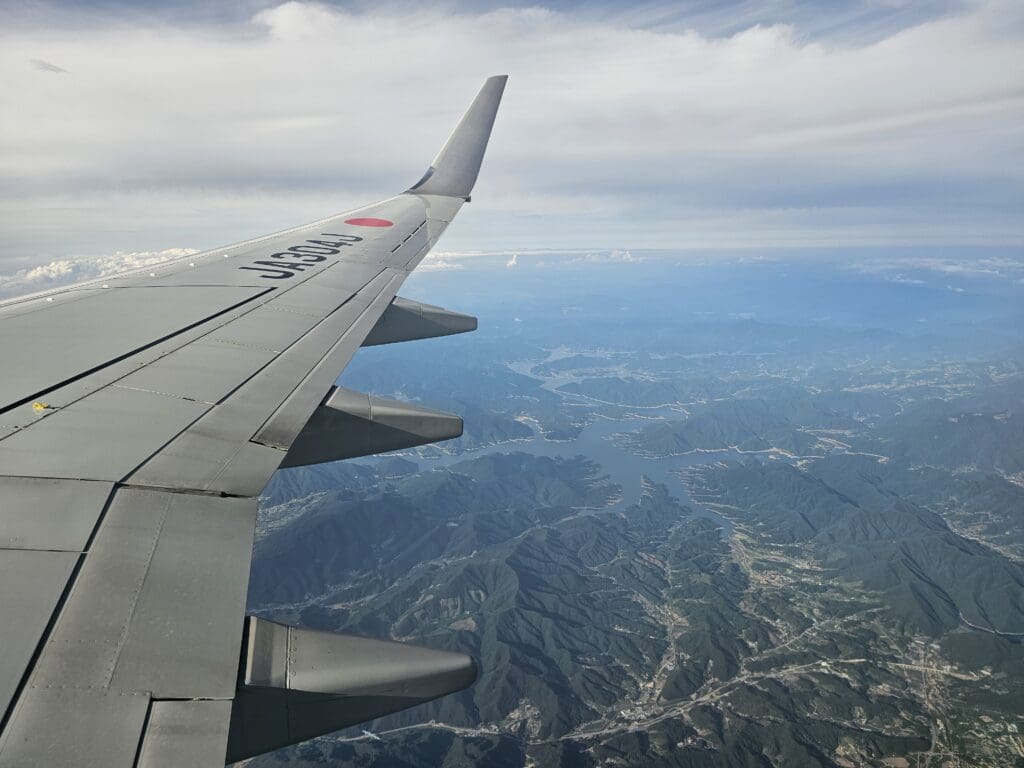
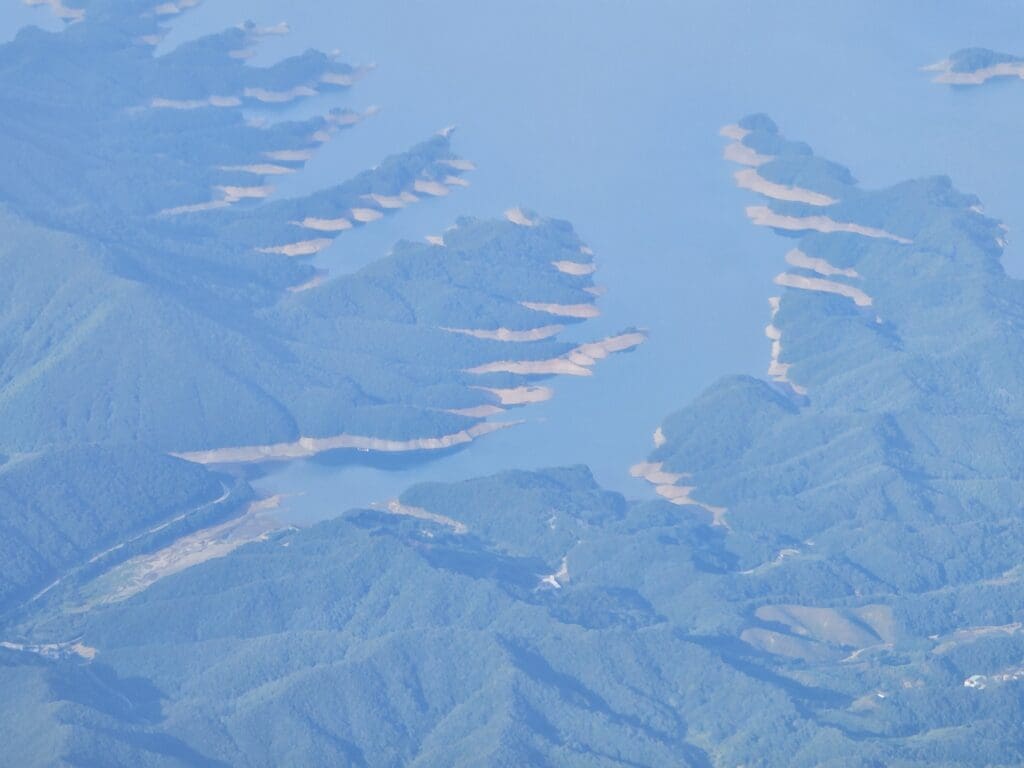
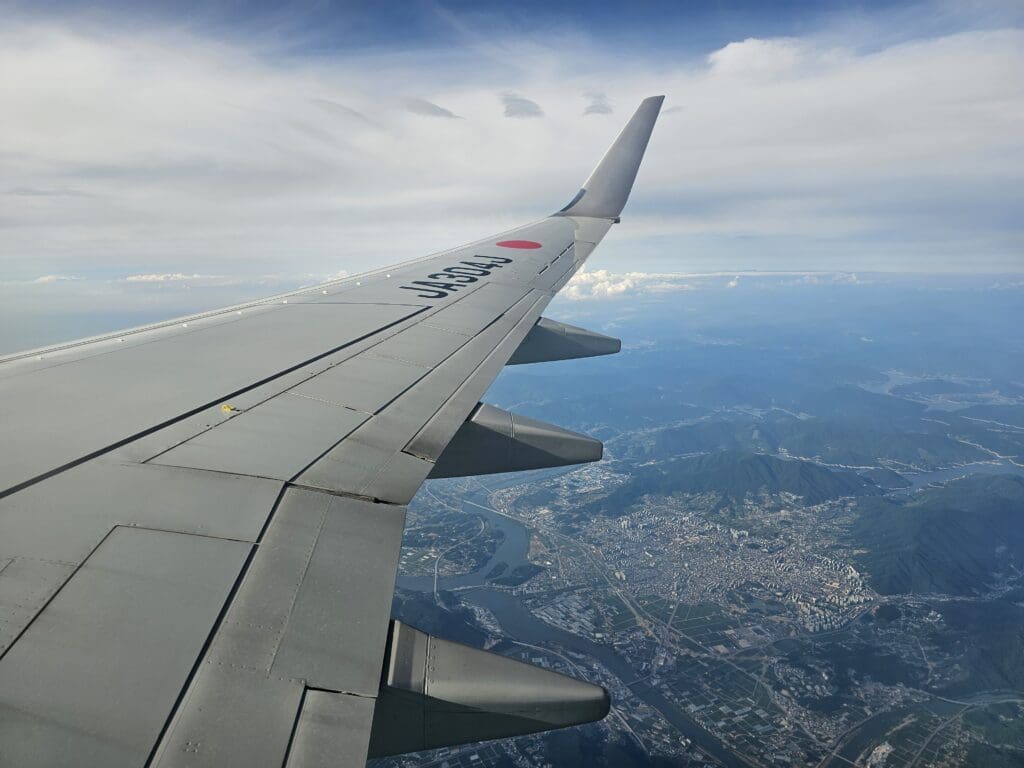
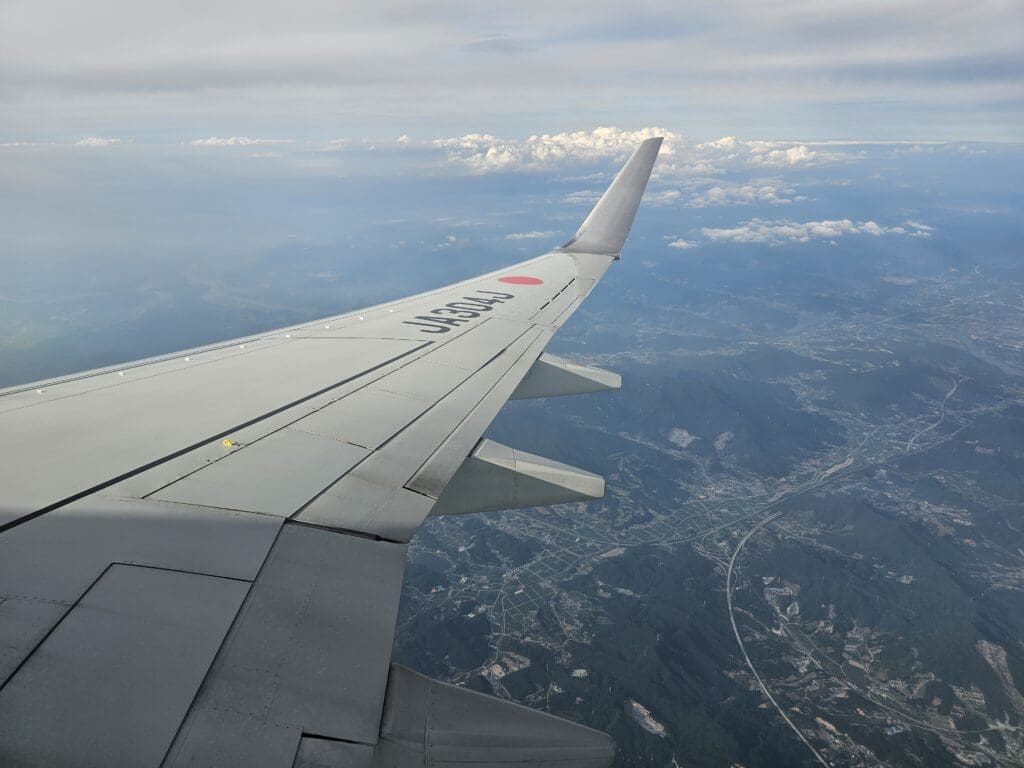
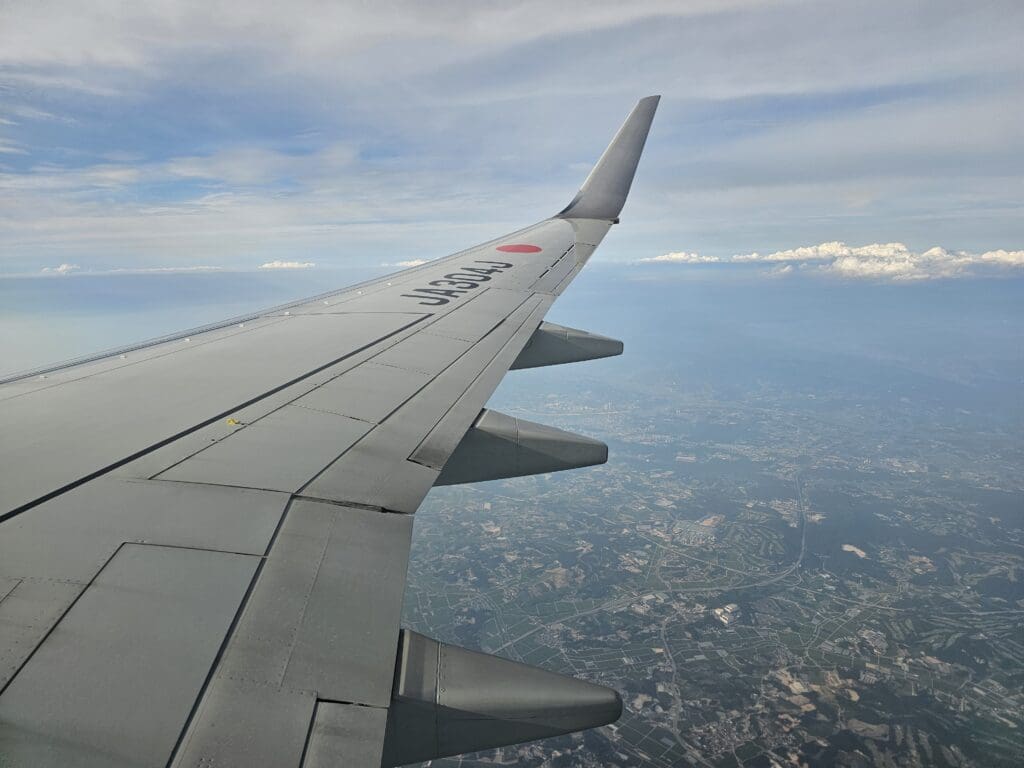
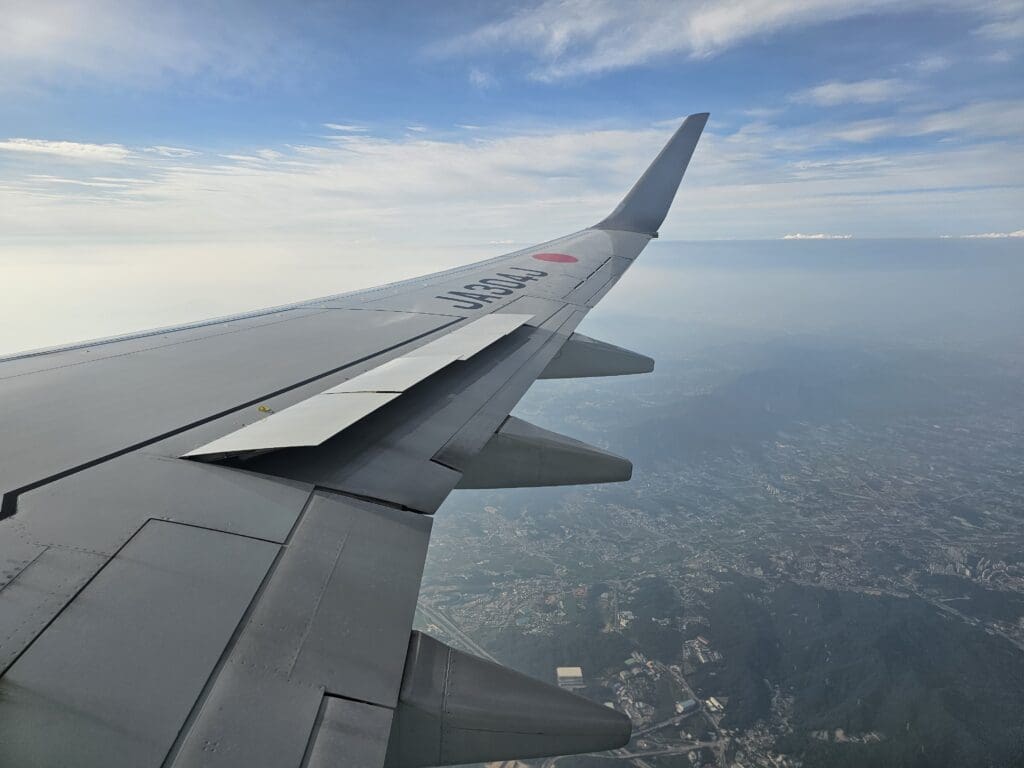
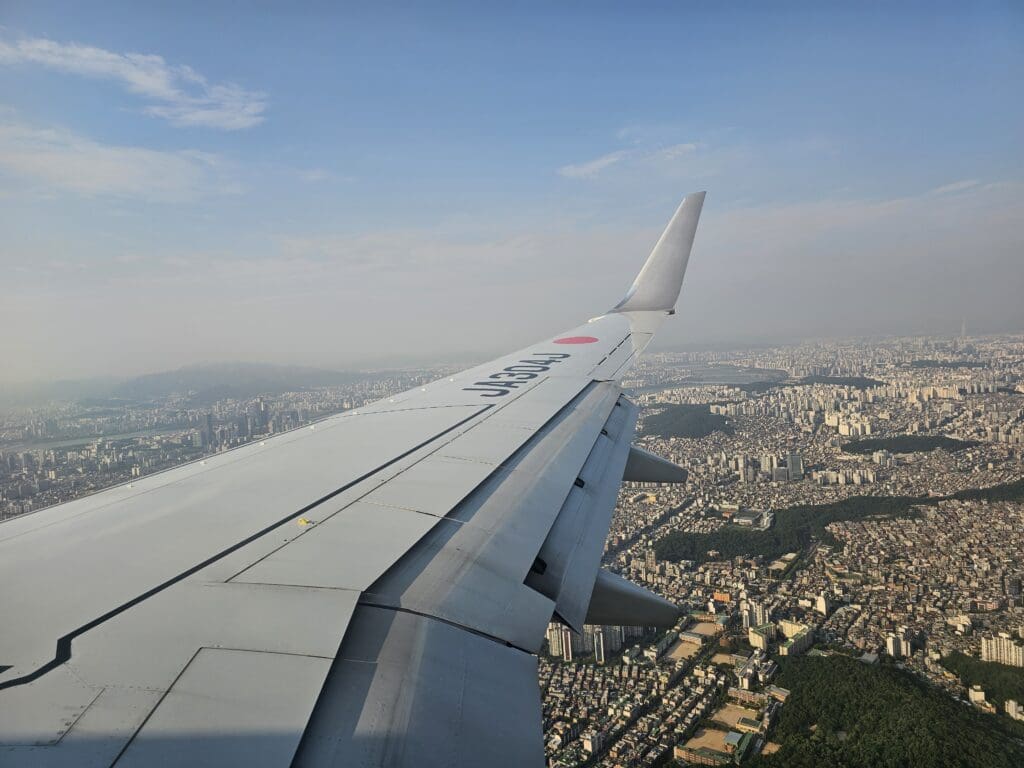
As we descended over Gyeonggi, the Boeing made its way over the satellite towns and cities that surround Seoul, the larger of which included Icheon, Suwon, Anyang and Seongnam as we sped towards the capital city. As we passed over one of my favourite hiking spots in the capital, Mount Gwanak, the Han River came into view, with Korea’s tallest building, the Lotte World Tower visible up river to the east. Moments later, Namsan and its famous tower as well as the skyscrapers of Central Seoul and the tall peaks of Bukhansan National Park beyond this to the north came into view as our flaps and gear were extended in preparation for our arrival into Seoul Gimpo.
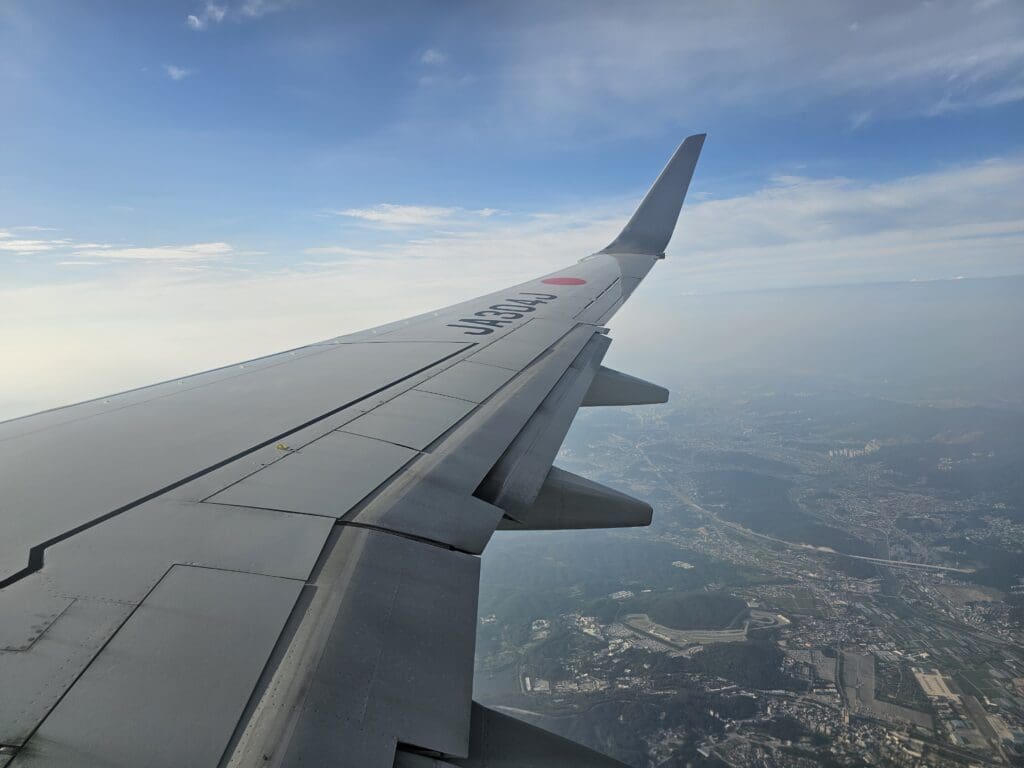
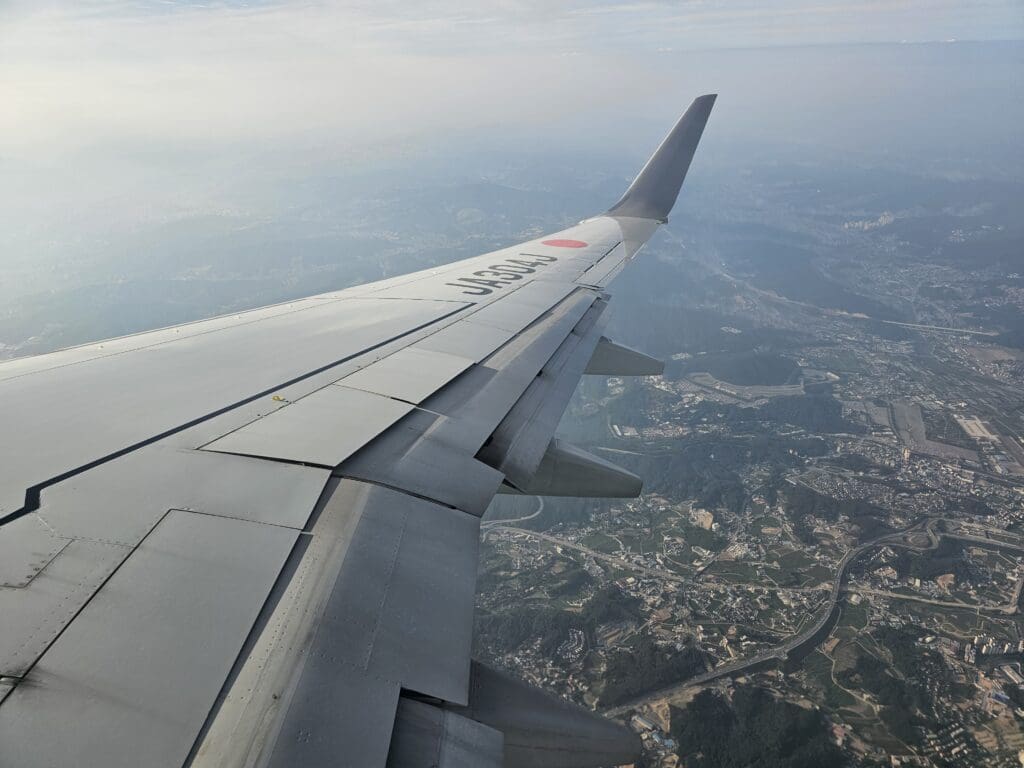
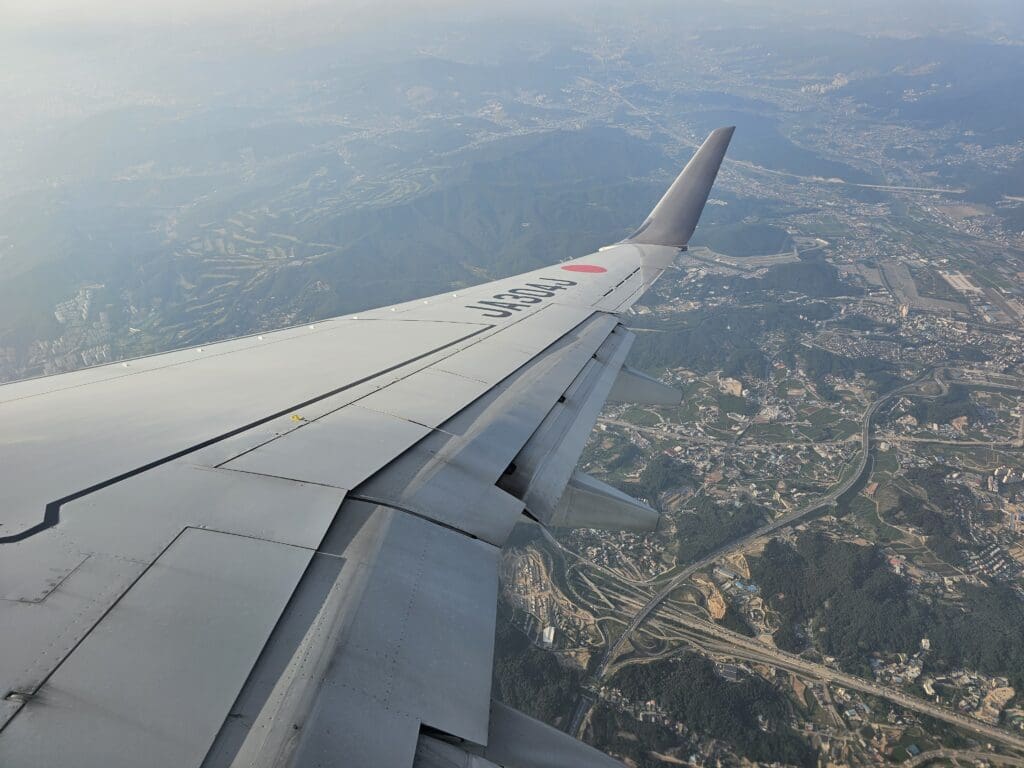
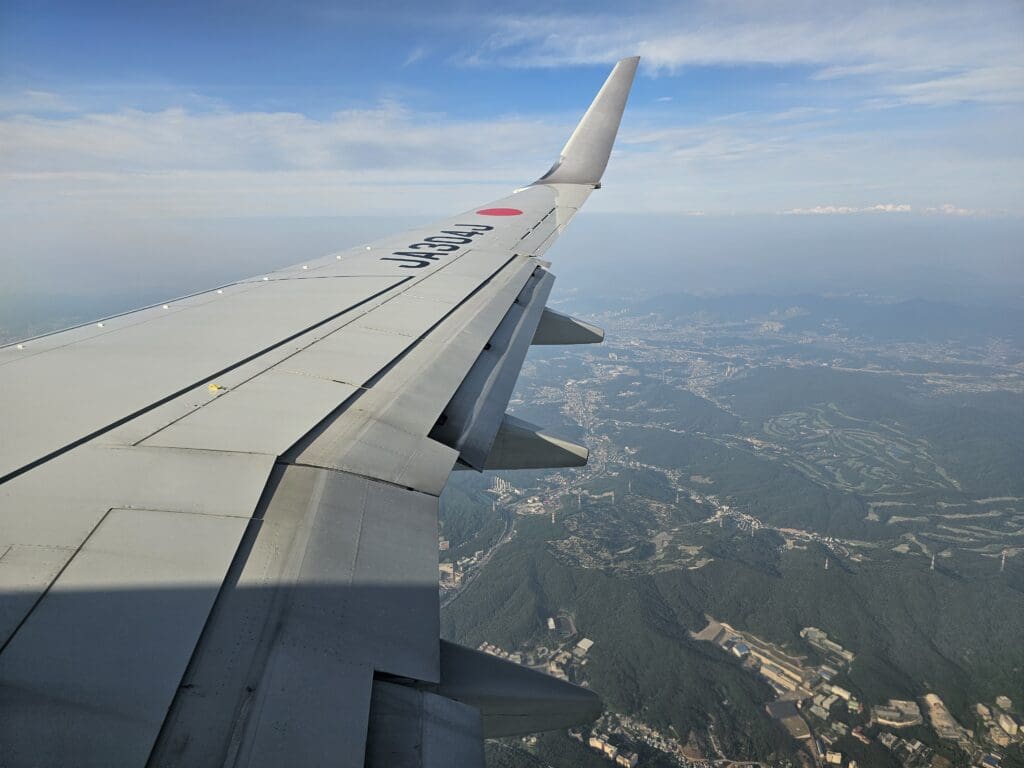
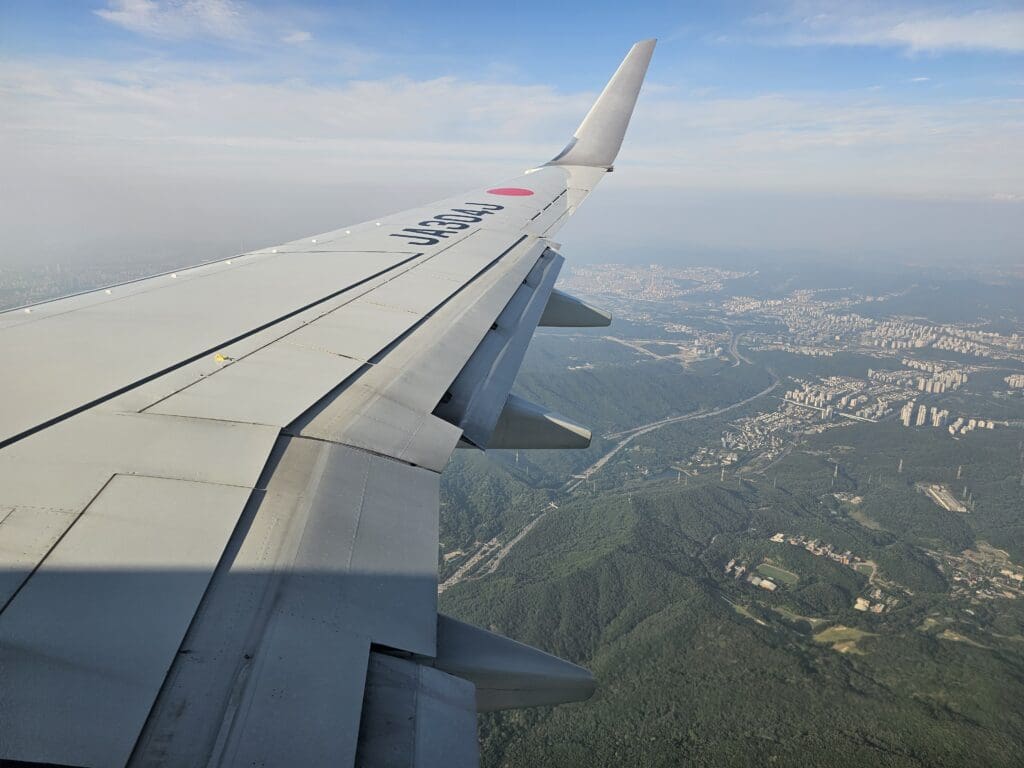
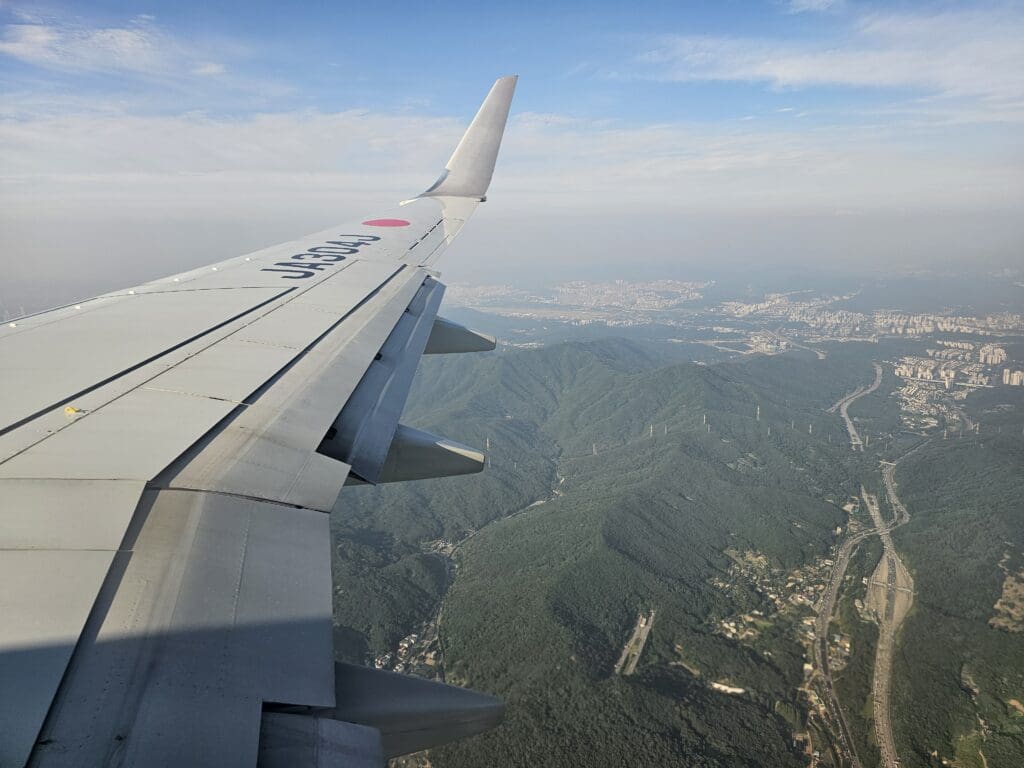
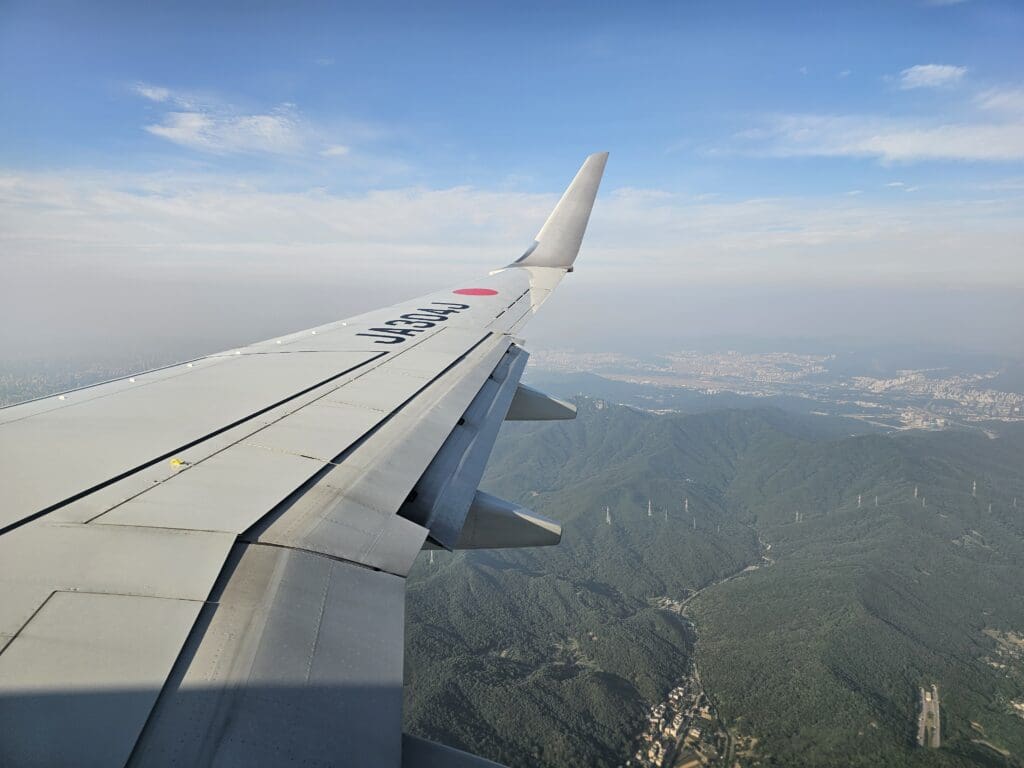
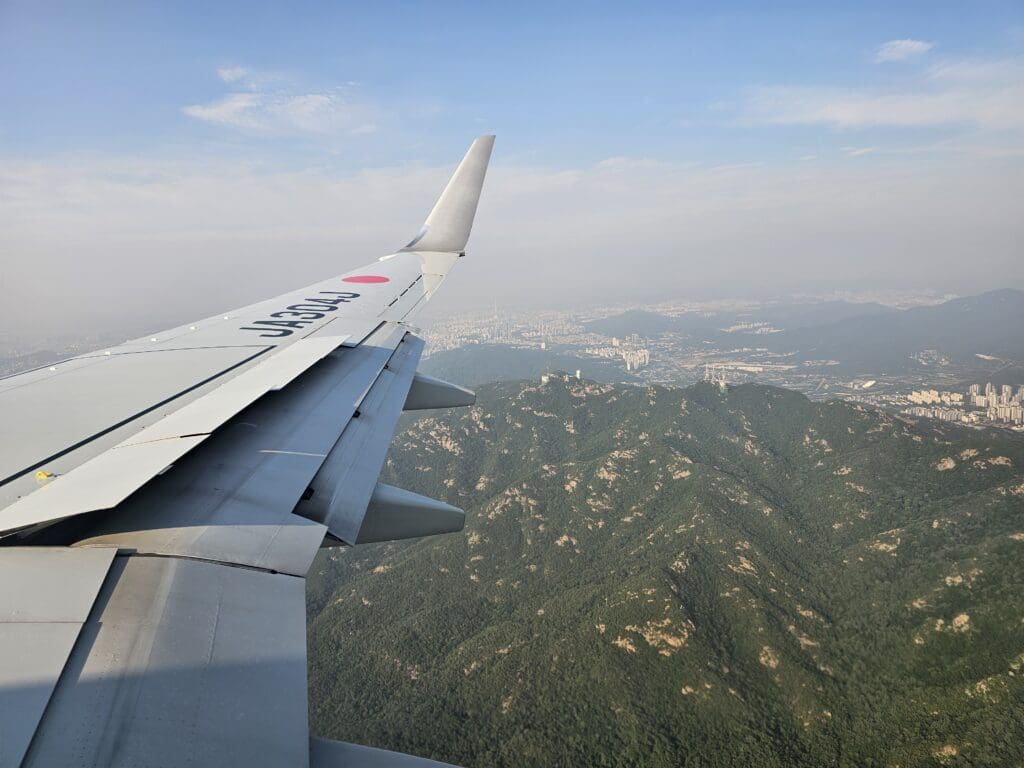
Below, an endless vista of grey apartment blocks could be seen whizzing past as we flew over the neighbourhoods of Gasan, Guro and Sindorim, with the buildings sinking down as we sank over the mostly residential areas that sit just to the south of the airport. Before I knew it, Korean Air’s hangars popped into view where the airline’s luxurious corporate Boeing 787-8 Dreamliner could be seen sitting wing-to-wing with a more down-to-earth Jin Air jet before we touched down on Seoul Gimpo Airport’s Runway 32L exactly 1H49 after taking to the skies of Tokyo.
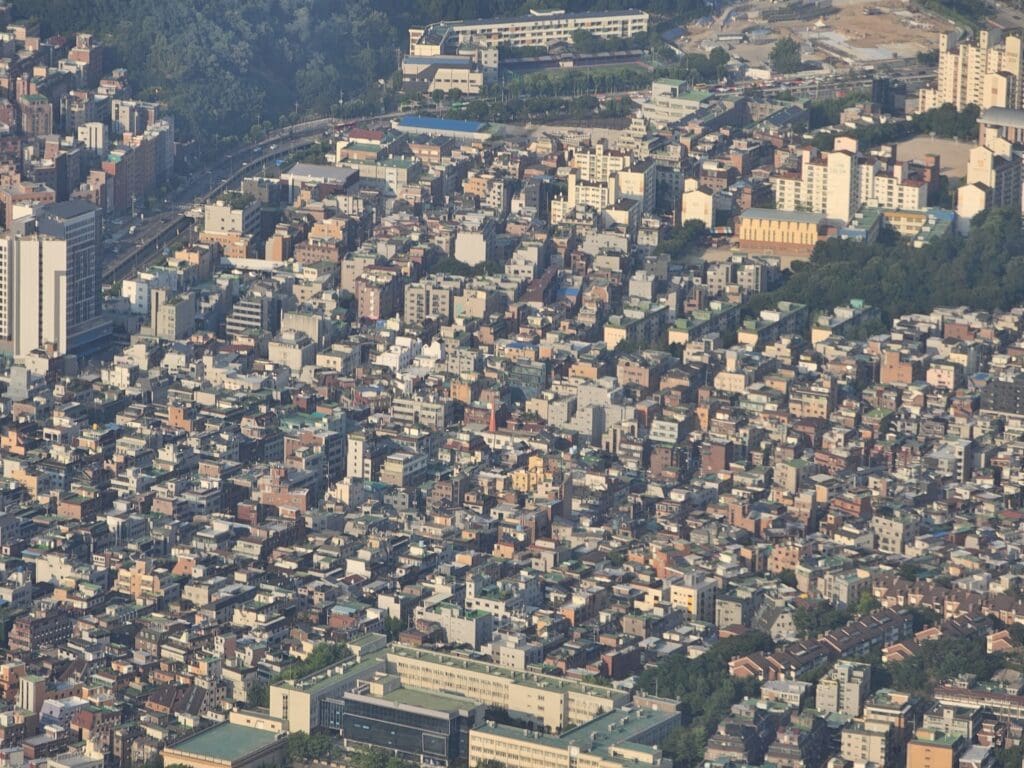
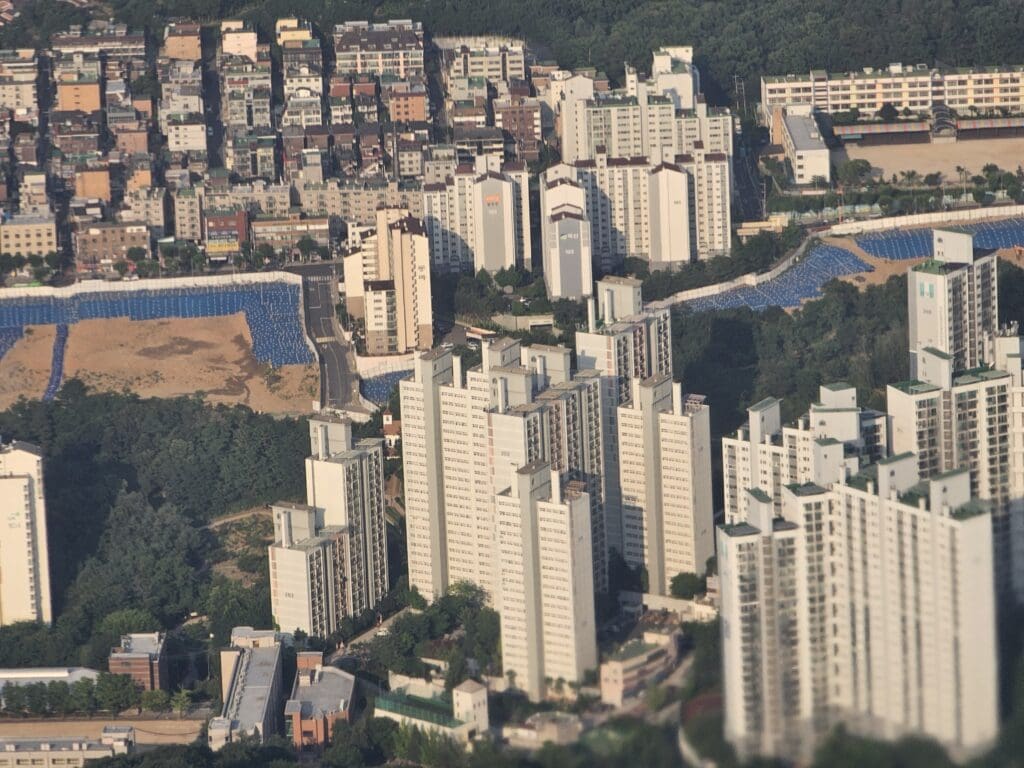
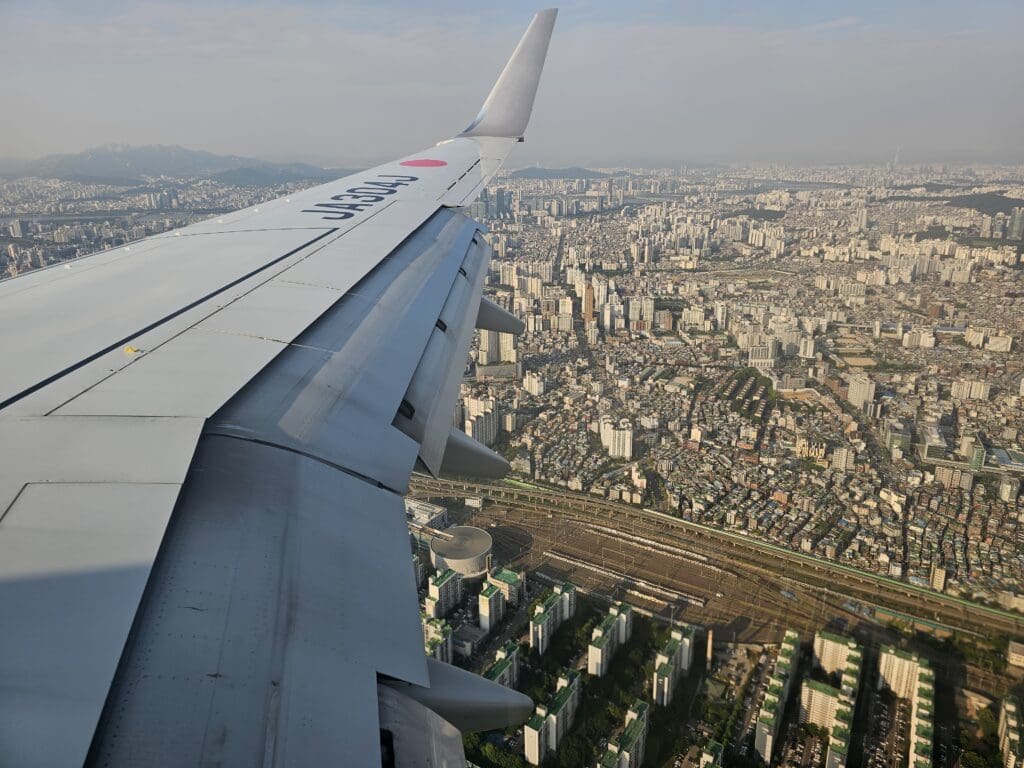
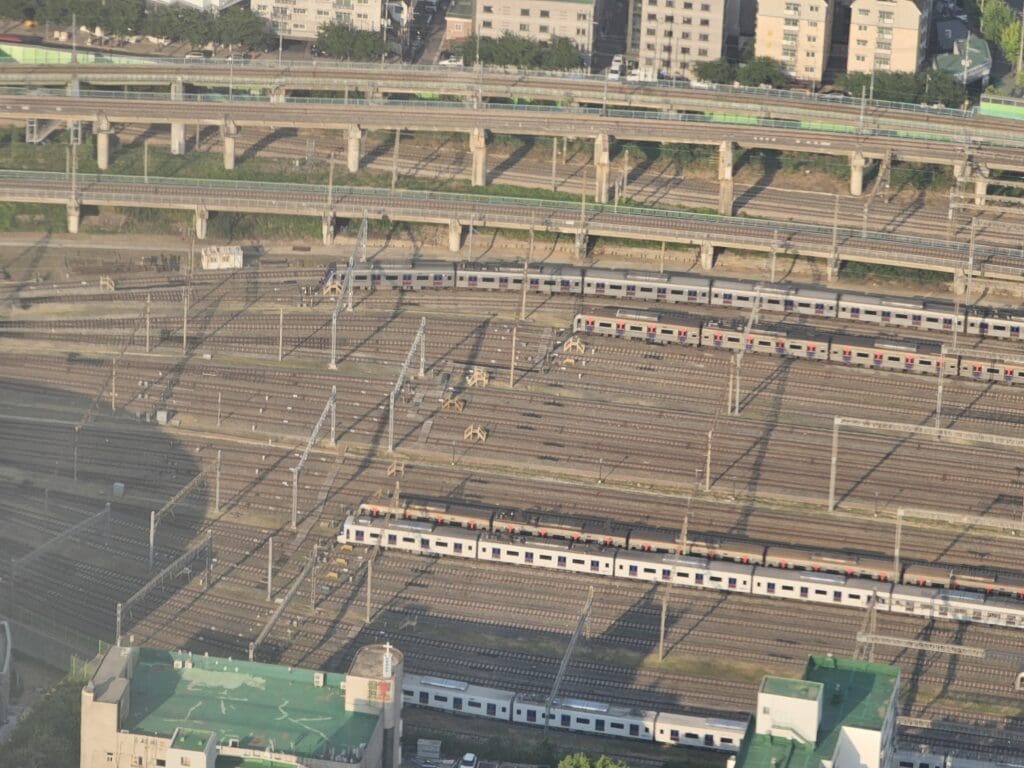
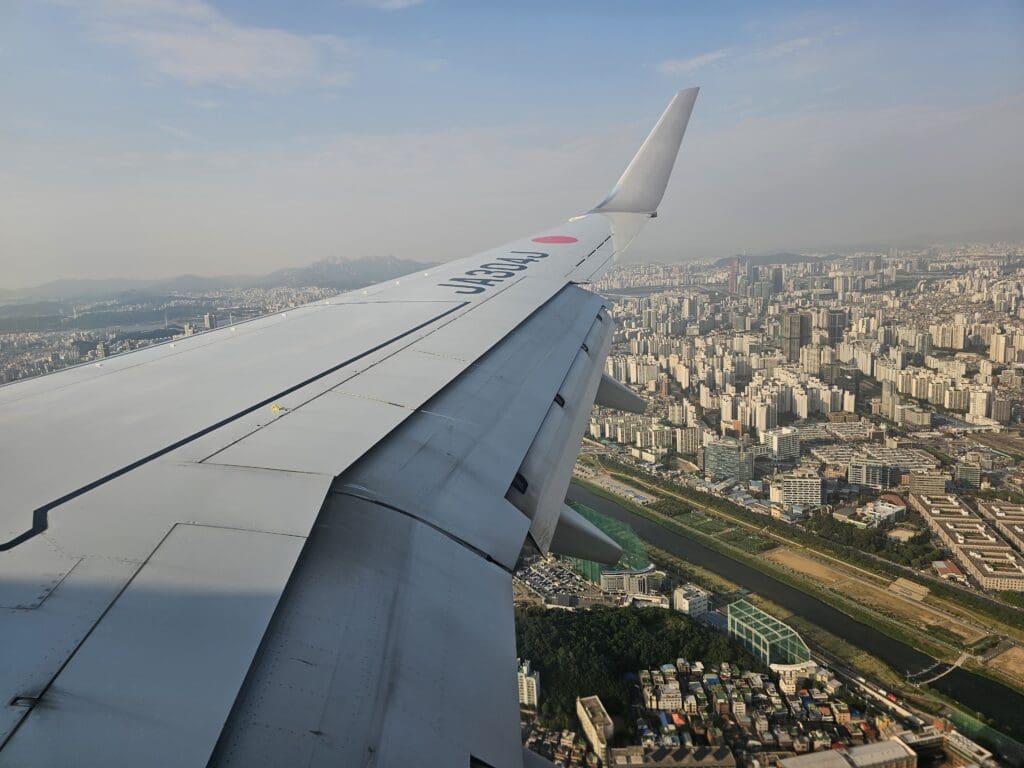
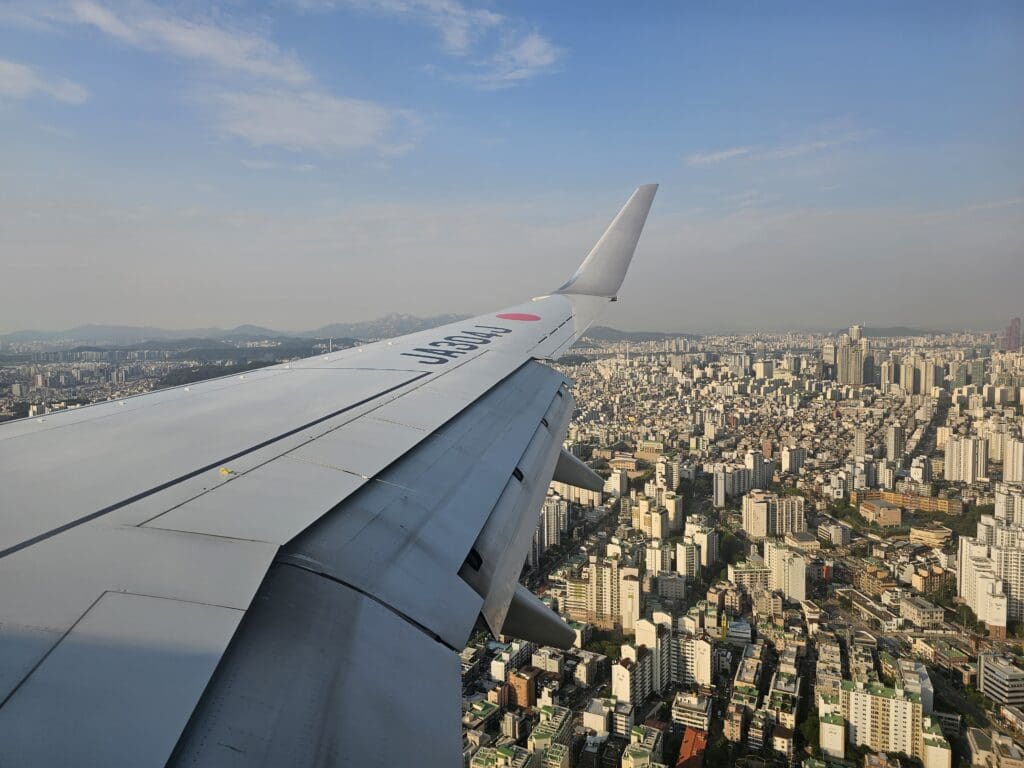
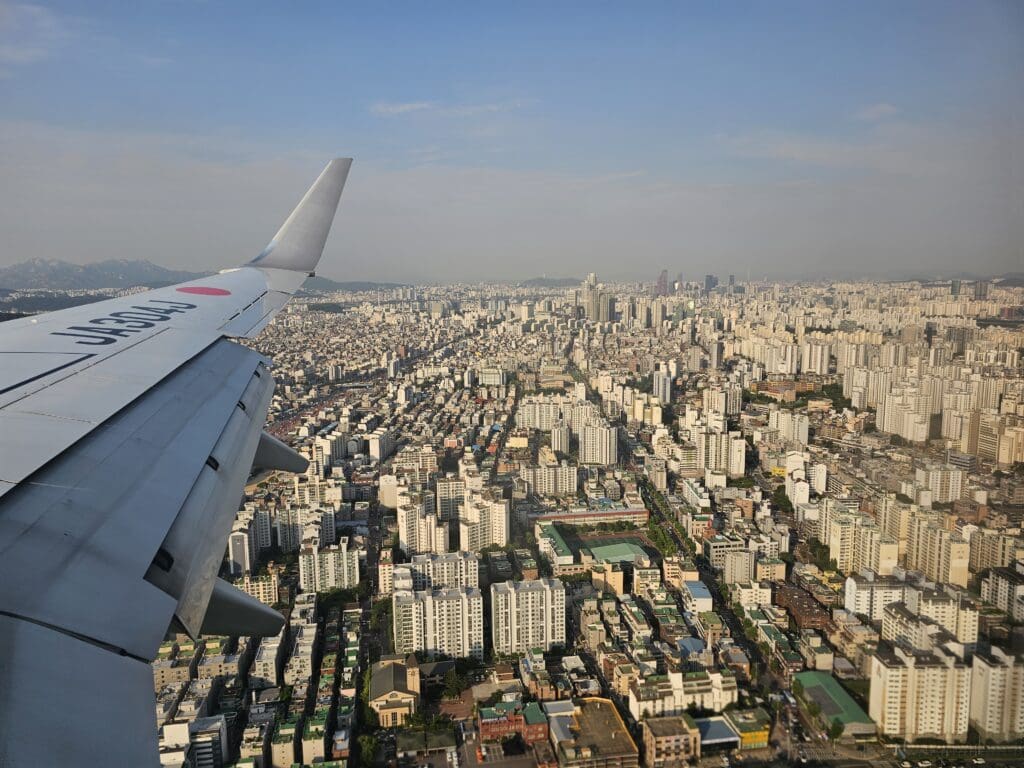
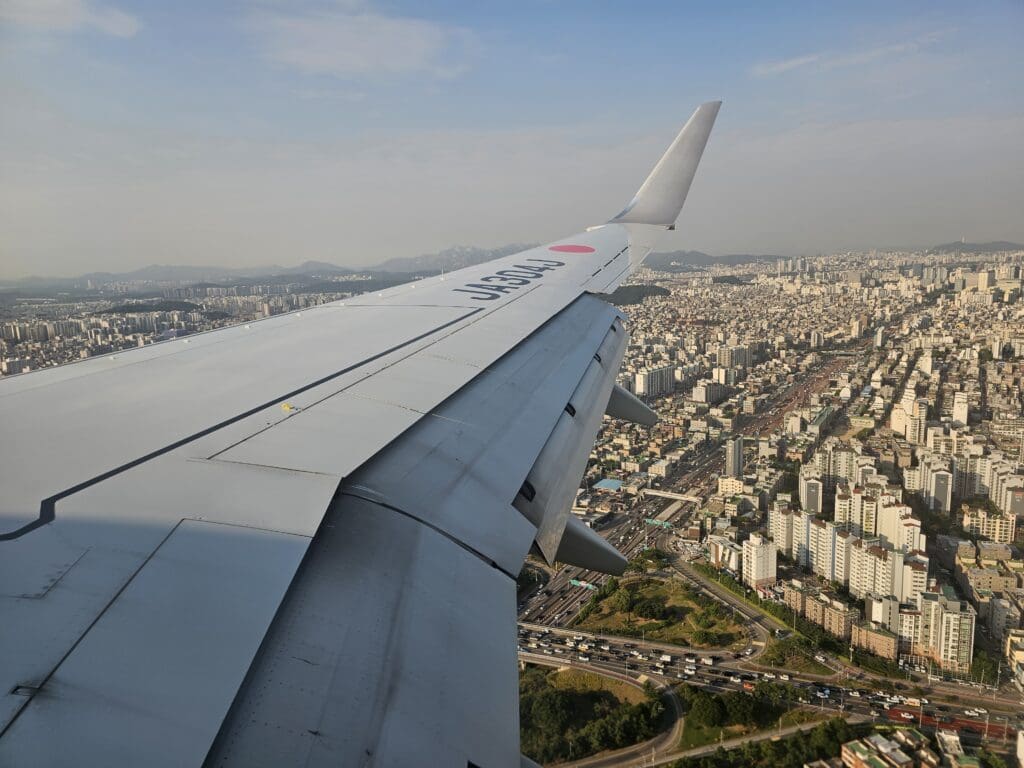
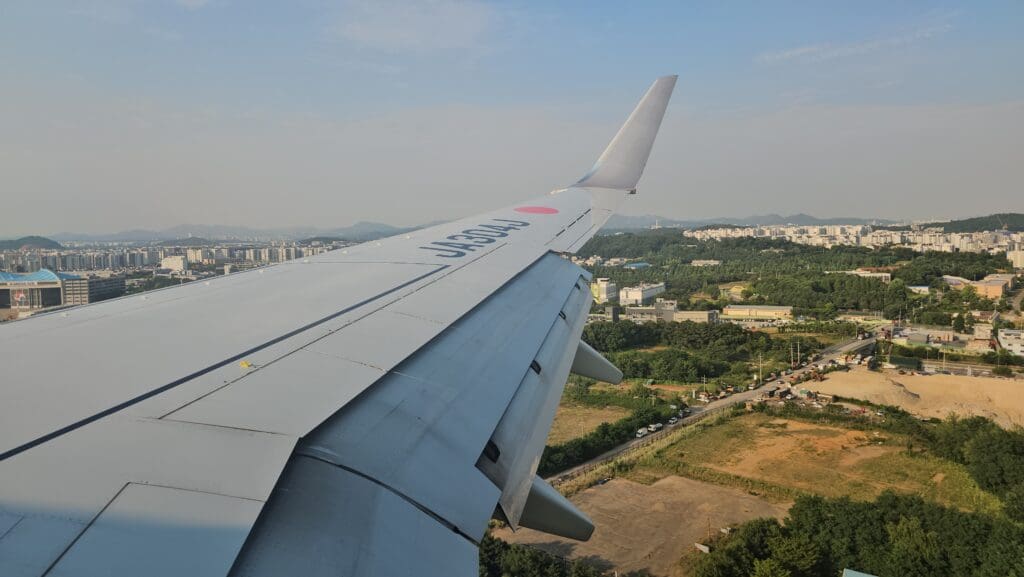
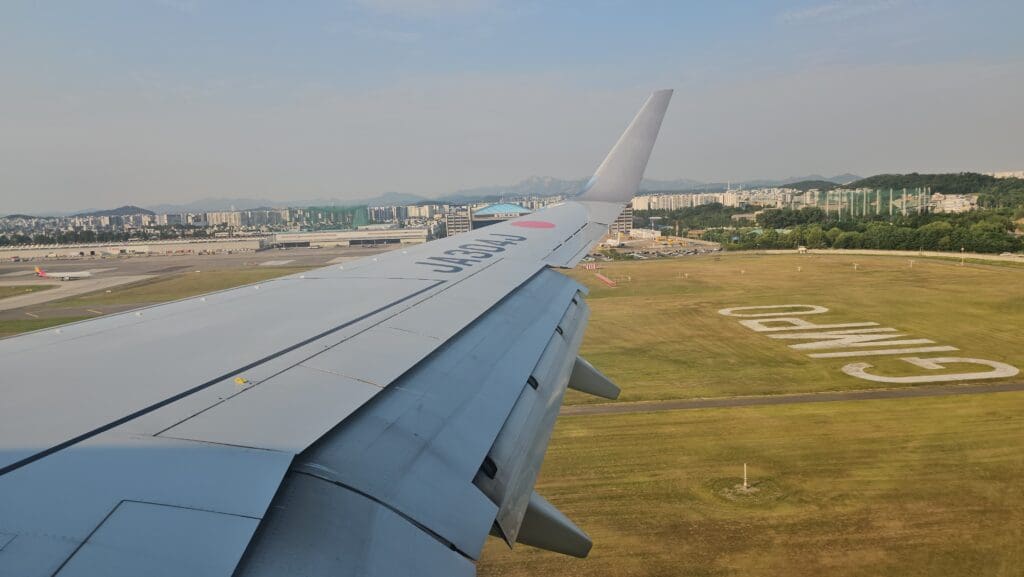
Once on the ground, the aircraft slowed with some vigour however once we had vacated the runway we ended up coming to a short halt to allow for an Air Busan Airbus A320 to take to the skies from the parallel runway at the start of its journey down to the island of Jeju. Once this had rocketed upwards, we crossed the runway and began a short taxi to Gimpo Airport’s northernmost apron. There, a single Korean Air Airbus A321neo could be seen at the international terminal, whilst the more interesting sightings included a Boeing Business Jet operated by the Korean conglomerate the Hanwha Chemical Corporation, and a much more modest San Marino registered Pilatus PC-12 NGX operated by Japanese fractional ownership specialist, OpenSky.
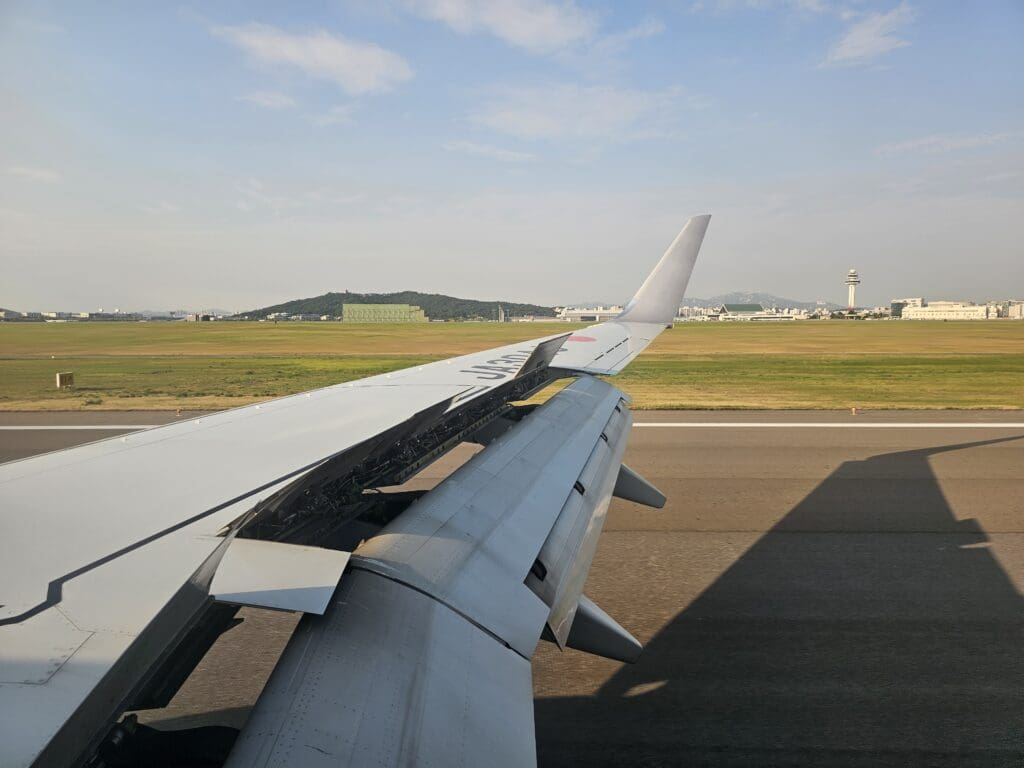
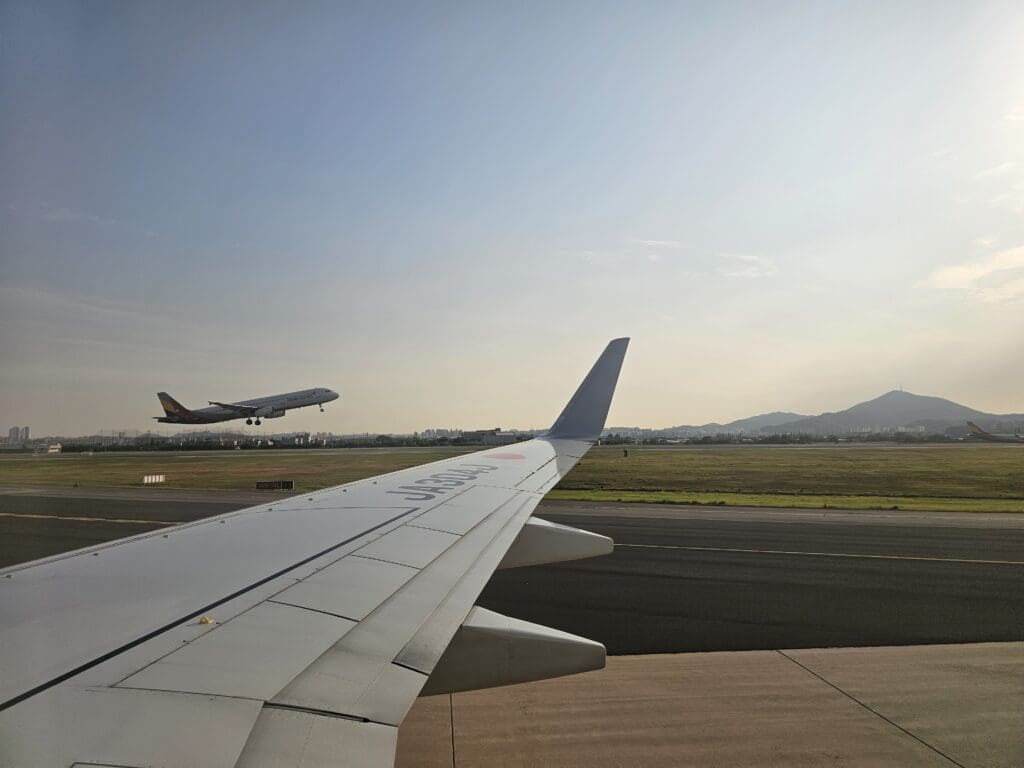
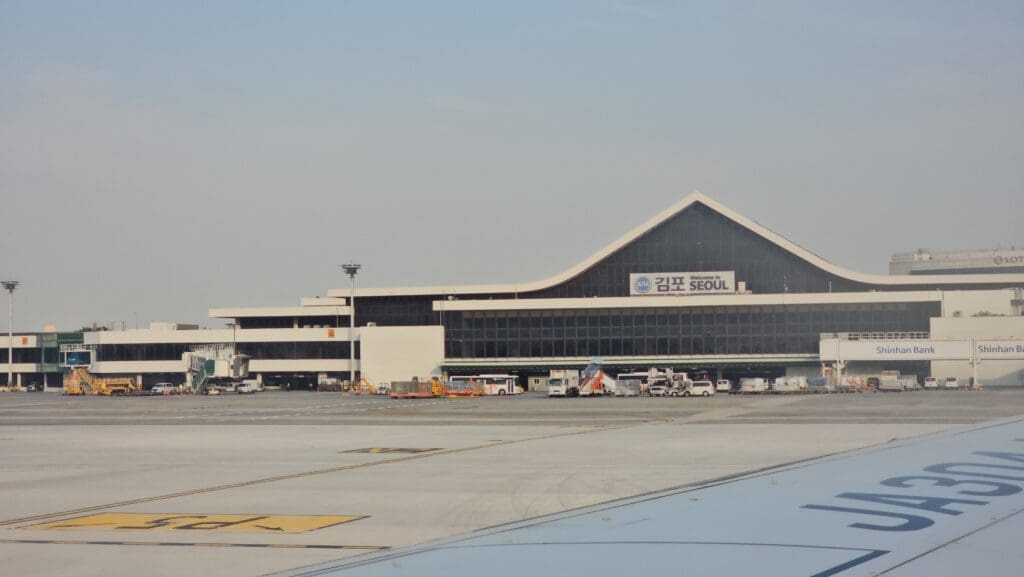
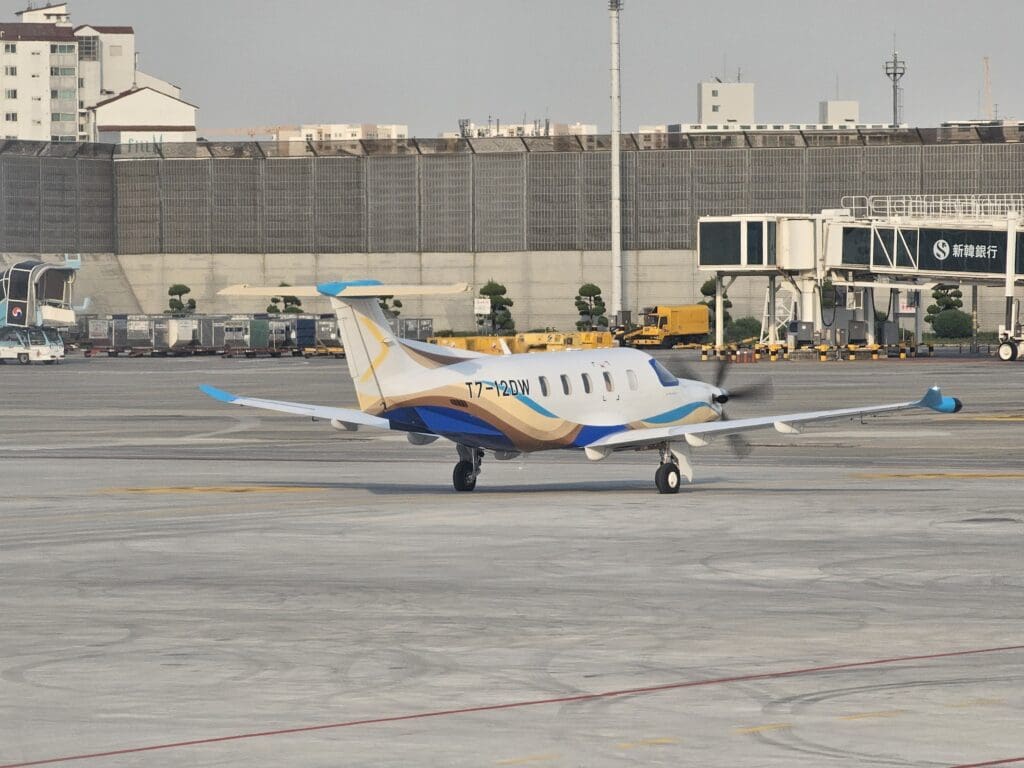
At 1805, the Boeing came to a gentle halt at Stand 38 and the jetbridge was soon connected up to the aircraft. That evening, many of my fellow passengers seemed to be in a rush and thankfully for them, no more than a three-minute wait was in store before disembarkation commenced and passengers shuffled off the aircraft. Soon, I collected my possessions from the overhead locker and made my way through the cabin, thanking the flight attendants and receiving a polite farewell in return before I trundled up the glass jetbridge and made my way into the terminal building.
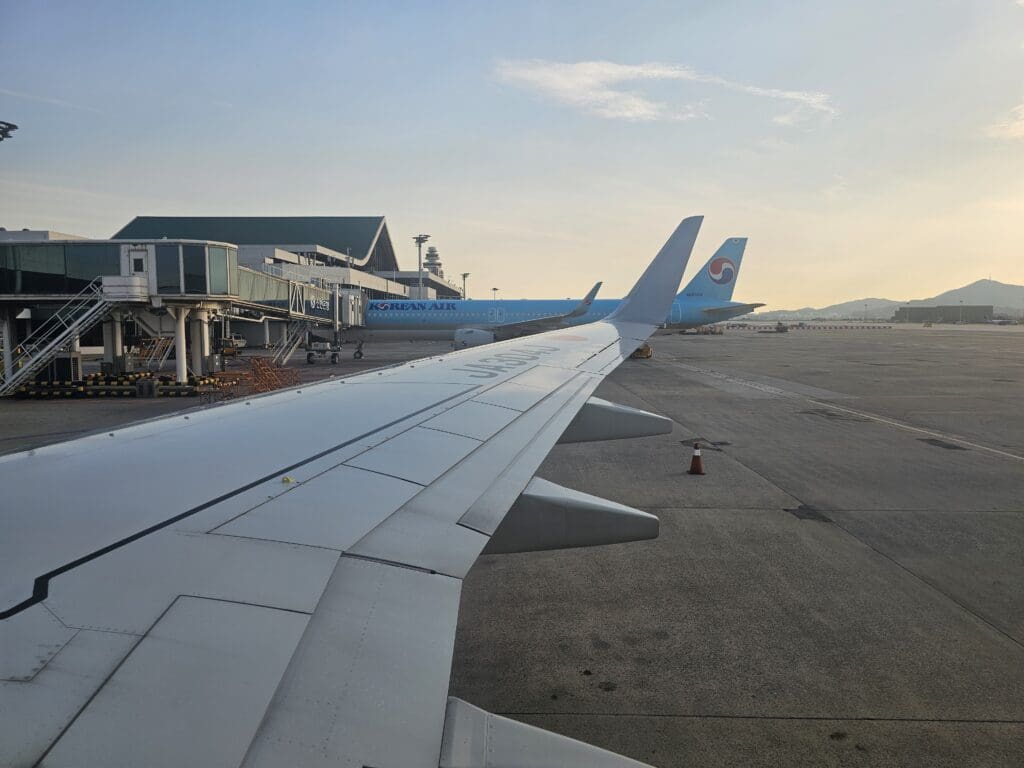
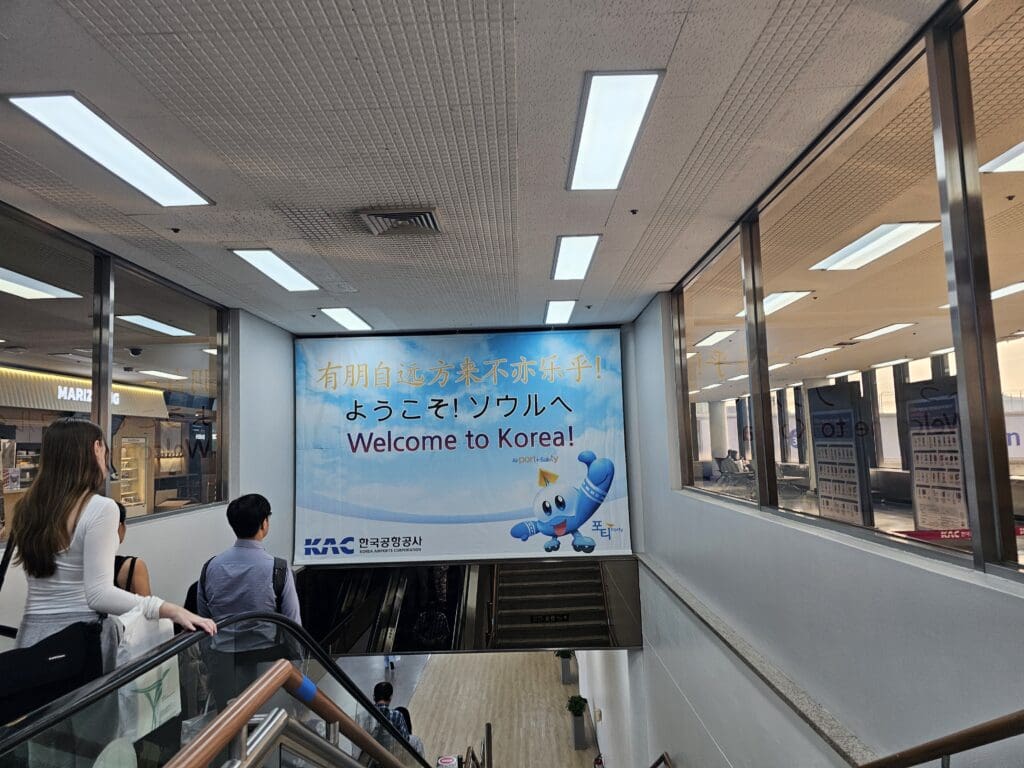
Other than being more convenient for those ending their journeys in Seoul, the relatively small size of Gimpo Airport’s international terminal means that unlike in Incheon, there are no long walks or people mover rides required to get from the gate to immigration. Yet, on the flip side, this part of the terminal does seem to be very dated in its aesthetic, perhaps largely unchanged from the eighties! Once up in the terminal, I headed down the escalators and within a couple of minutes I arrived in the immigration hall. Thankfully, seeing as our flight was the only international service arriving at that time, this hall was empty, and with an army of staff on hand, I was pointed towards a counter and following no more than a thirty second wait, I handed over my passport and immigration card before my fingerprints were taken and I was free to enter Korea. From there, I steamed onwards to baggage collection, and before I knew it, the first bags from the flight appeared. Soon spotting my suitcase, around ten minutes after disembarking the aircraft, I picked this up and steamed straight out into the landside arrivals portion of the terminal.
Summary
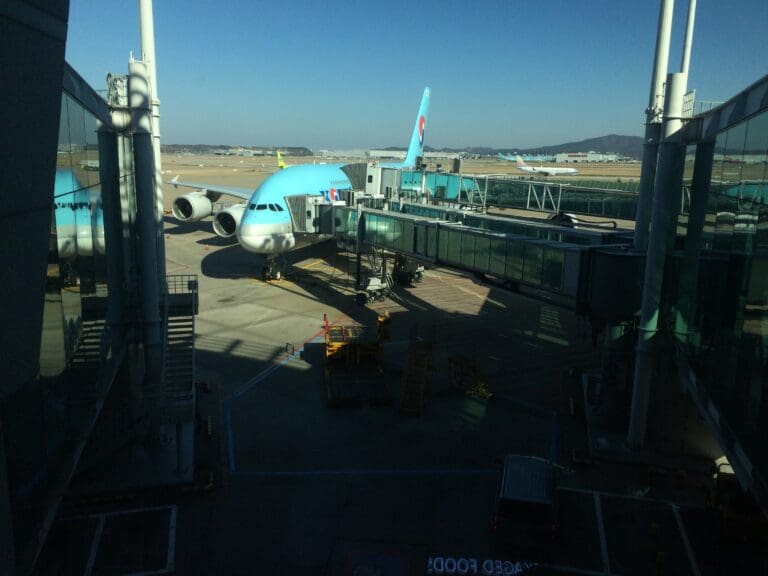
Overall, I was very pleased with my hop from Tokyo to Seoul on Japan Airlines. The seat was comfortable, clean and in tip-top condition, the crew were friendly and I was well fed given the length of the flight. Thus if the need arose to travel between Tokyo and Seoul again, I would most definitely consider flying with Japan Airlines! I did actually do this two weeks later, although I ended up flying the outbound route on an Asiana Airlines Airbus A380, and the inbound route on an Air Premia Boeing 787-9 Dreamliner.