Sampling Korean Air’s LCC: Seoul to Jeju on Jin Air
Background
Jin Air is an airline that, in recent times, I have had minimal interaction with. Of course, living in the UK, opportunities to fly with Korean Air’s low cost subsidiary are few and far between! However, even when living in Korea, I had only ever embarked on the carrier’s lime green and silver jets on just two occasions. These took the form of short domestic hops in 2015, flying once on one of Jin Air’s Boeing 777-200ERs, and again on one of their now-retired winglet-less Boeing 737-800s. Whilst there was nothing too memorable about my Jin Air flights (other than the novelty of flying on a Boeing 777-200ER on a short hop between Jeju and Seoul!), these had left me with no reason not to fly with the airline again. Finally, nine years later, I finally got around to doing so. However admittedly, my choice to fly with Jin Air was simply guided by the fact that they had the cheapest flights at the time that I needed to fly,
A Bit About Jin Air
The mid to late 2000s was an exciting time within the Korean airline industry. Specifically, the liberalisation of the tough restrictions imposed on the airline industry that had protected the duopoly enjoyed by Asiana Airlines and Korean Air fostered the sudden emergence of a host of new airlines. The ever-increasing number of ordinary Koreans holidaying abroad alongside tourists visiting Korea from elsewhere in East Asia ultimately ensured that the market conditions were conducive to the growth of low cost carrier operations. Starting with Jeju Air in 2005, over the next few years, a cluster of low cost carriers emerged, including Eastar Jet and Hansung Airlines (the predecessor of T’way Air), alongside long-forgotten and short-lived airlines such as Fokker 100 operators Kostar Air and Yeongnam Air.
Naturally, Korea’s two full-service carriers were alarmed by the sudden growth of low cost operations, and both Asiana Airlines and Korean Air soon established plans to develop their own low cost carriers. Working in partnership with the Busan Metropolitan City government, in August 2007 Asiana Airlines formed Air Busan, which has since enjoyed a reasonable amount of success and is Korea’s third-largest low cost carrier (as of 2024). Several months later, Korean Air fielded their entrant to this new low cost battle, Jin Air, which was established in January 2008. Operating several Boeing 737-800s inherited from its parent carrier, Jin Air operated its first service in July 2008 and spent a little over a year offering domestic services before launching its first international flight which connected Seoul Incheon with Bangkok. Since then, Jin Air has undergone significant expansion and as of July 2024 operates a mixed fleet consisting of 3 Boeing 737 MAX 8s, 3 Boeing 737-900s, 19 Boeing 737-800s and 4 Boeing 777-200ERs. These are deployed on routes to 28 destinations outside Korea across China, Guam, Japan, Laos, Malaysia, Mongolia, the Philippines, Thailand and Vietnam. Meanwhile, Jin Air has a major presence across Korea, serving 14 airports across the country and almost every single Korean airport with commercial service (the exceptions being Ulsan and Yangyang).
Booking
Once upon a distant time, booking domestic flights in Korea with a card issued overseas often proved to be an overcomplicated process. However, thankfully, those days seem to be long gone and I rarely find there to be any advantage to booking via a third-party website as opposed to with the carrier themselves. Specifically, it usually seems to be the case that there are more tickets available when booking via the operating carrier, whilst these are usually cheaper than on third-party booking sites. Not to mention the fact that almost all tickets on Korean domestic flights come with nothing more than a minuscule penalty fee if you require a refund or have to make changes. Thus, I had no reason not to book directly with Jin Air.
Navigating my way over to Jin Air’s homepage, once there I was immediately presented with the flight search engine superimposed on top of a photograph of the inviting turquoise coloured waters of some tropical beach. This website was only available in Chinese, English, Japanese and Korean, with no sign of any Southeast Asian language despite Jin Air’s fairly comprehensive route network in the region. Additionally, when using the English version of Jin Air’s website, payments could only be made in US Dollars, so I ended up using the Korean version of this in order to pay in Korean won. I should also note that passengers can purchase tickets for Jin Air’s services via Korean Air, which allows for payments to be made with a greater range of cards (including American Express). However, tickets for these services can end up being significantly pricer when booked via the Korean Air website.
Once I had switched to the Korean version of Jin Air’s website, I undertook a search for flights and was presented with eight options from Seoul Gimpo to Jeju that day. The first of these was to depart at 0600 and the last at 1905, with the shortest interval between departures standing at just five minutes! Of these, five were scheduled to be operated by Boeing 737-800s, whilst three were to be flown by Jin Air’s Boeing 737-900 which were relatively recently inherited from Korean Air. Seeing as the latter had not undergone any configuration change since their days with Korean Air, passengers could ride in these aircrafts’ former Prestige Class recliners for a flat fare of 132,000 won (£75.37). This was slightly cheaper than the business fares of the likes of Asiana Airlines and Korean Air, however, as far as I am aware this excludes lounge access and I’m not entirely sure as to whether passengers are treated to any complimentary offerings onboard.
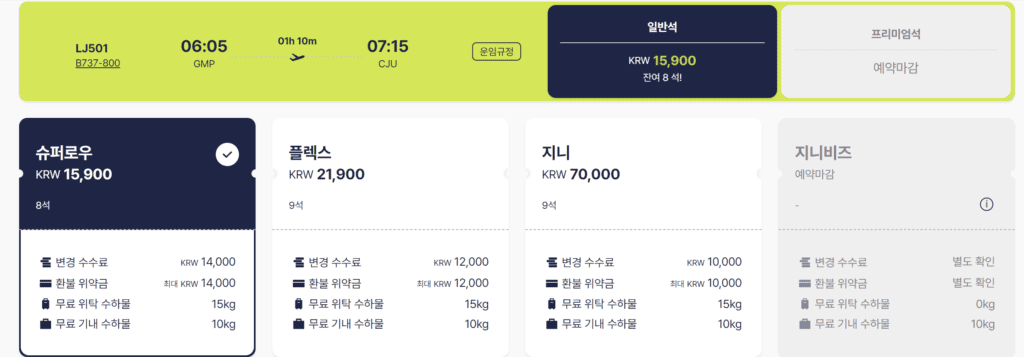
Seeing as the entire purpose of this flight was to position down to Jeju in order to ride T’way Air’s Airbus A330-200 operated service back up to Seoul at 0900, I was someone limited in terms of the flights that I could take. In the end, I went for Jin Air’s 0605 departure and was immediately presented with three fare options – Super Low, Flex and Jini. Examining these, as far as I could tell, despite the significant differences in price, the only notable difference between them was the marginal differences in change and refund penalties. Whilst not of particular relevance to me, but probably of importance to many of my fellow passengers, each fare included 15kg of hold luggage. Whilst this may come as a surprise to some given Jin Air’s status as a low cost carrier, most low cost carriers in Korea include a complimentary hold luggage allowance in their fares.
Selecting the cheapest fare, I steamed onwards at which point the mandatory airport and fuel surcharges were added, increasing my fare to a still-reasonable total of 32,000 won (£18.53). Once I had entered all my personal details, I was taken to the first page of optional extras where I was given the option of pre-reserving a seat. There, six options were available which ranged in price from 2,000 won (£1.14) up to 12,000 won (£6.80), and I decided to go for a window seat in the second half of the cabin which added an additional 2,000 won. Next up, I was given the option of adding additional hold luggage, with this priced at 8,000 won (£4.55) per additional five kilograms up to a maximum of an additional thirty kilograms. In addition, I was also able to add a priority luggage service which would hopefully enable my bag to emerge first for 3,000 won (£1.70), however, travelling without a suitcase, I decided to pass on this option. Once done, I then made a fairly quick and easy payment and received my ticket via email almost instantly.
Check-in for Jin Air’s services opens up 24 hours prior to departure, and the day before my flight, I decided to download Jin Air’s app and use this to obtain my boarding pass for the flight to Jeju. Being a domestic flight, this was a quick and easy process, and I was not required to enter any passport details or the like. After a few taps, my boarding pass appeared and I was all set to head off to Jeju. For those preferring to check-in at the airport, it is worth noting that Jin Air does not charge any sort of Ryanair-esque airport check-in fee!
The Journey
One of Seoul Gimpo Airport’s many advantages is its proximity to Seoul, especially when compared to Korea’s main international hub, Seoul Incheon Airport. That day, I would be starting my journey in the neighbourhood of Gongdeok, which sits on the western fringes of the city centre. I would thus have just 13.4 kilometres to trek that morning to reach Seoul Gimpo Airport’s domestic terminal, however, given my early departure time, this was easier said than done!
At most times of day, reaching Seoul Gimpo Airport is not a difficult task. With the airport enjoying a dedicated subterranean station connected to no fewer than five lines, getting there by train from across Seoul, Incheon and the wider Gyeonggi region is usually not an overly difficult task. From Gongdeok, the most straightforward means of reaching the airport would have involved riding several stops on a westbound all-stop Airport Express (AREX) service. However, with the first trains of the day not operating until 0500, I decided that doing so would cut things uncomfortably fine. Unable to take this, I turned my attention to the multiple city buses that run between Seoul and Gimpo Airport, however with these winding through virtually every neighbourhood in western Seoul, and with my journey from Gongdeok involving a change of buses, this option would have taken over a hundred minutes! I therefore decided to resign myself to catching the most expensive form of transport to the airport, an early morning taxi.
Having passed through Gimpo Airport’s domestic terminal plenty of times, I am well aware that this is very much somewhere you can rock up to thirty minutes before departure and (probably) comfortably make your flight. Of course, having a penchant for punctuality, I would never want to leave things quite so fine, however, wanting to get as much sleep as possible, I decided to aim to be at the airport around an hour ahead of my flight’s scheduled departure time. Not envisaging too much traffic during the early morning journey, this would mean leaving Gongdeok at around 0430 and so the night before, I set my alarm to 0400. Perhaps too excited for my morning jaunt to Jeju, after a very short night’s sleep, I woke up at 0230 and, unable to drift back off, I saw no point in tossing and turning and instead decided to jump in the shower and get my things ready for my mini trip.
Not taking too long to get ready, by 0310 I had donned a fresh set of clothes and packed everything I would need for the long morning ahead. Opting to save first coffee of the morning until I reached Gimpo Airport, without delay, I opened up the Kakao Taxi app and ordered a car to the airport. On a side note for those visiting Korea, Kakao Taxi is a Korean version of Uber, owned by the Kakao Corporation who are most well known for KakaoTalk, the most used messaging app in the country. As soon as I ordered this, I journeyed down to the ground floor and arrived there seconds before an ultra-modern Hyundai Sonata taxi. Upon jumping into the backseat, I received a lively greeting from the elderly driver and we almost instantly flew off down the quiet Seoul streets.
From Gongdeok, the taxi soon reached the northern banks of the Han River and sped westwards along this, soon leaving the sprawl of Seoul behind. Perhaps eager to end their shift, the driver than morning seemed to fancy themselves as somewhat of a Lewis Hamilton and we rapidly sped along the road, worryingly weaving in and out of slow-moving traffic. Resisting the temptation to inform the driver than I still had plenty of time to go until my flight, around thirty minutes after leaving Gongdeok, Gimpo Airport’s control tower and the nearby Lotte Mall appeared. A short time later, the taxi pulled up outside the doors to the terminal’s ground floor arrivals level. In total, this journey set me back an acceptable 26,100 won (£14.78). Whilst over thirteen times more expensive than the cost of riding the all-stop AREX train from the airport and about ten minutes slower, it certainly seemed like a fair cost for a very early morning taxi ride. However, I soon discovered that I ought to have left home a little later, as Gimpo Airport’s domestic terminal does not actually open up until 0430!

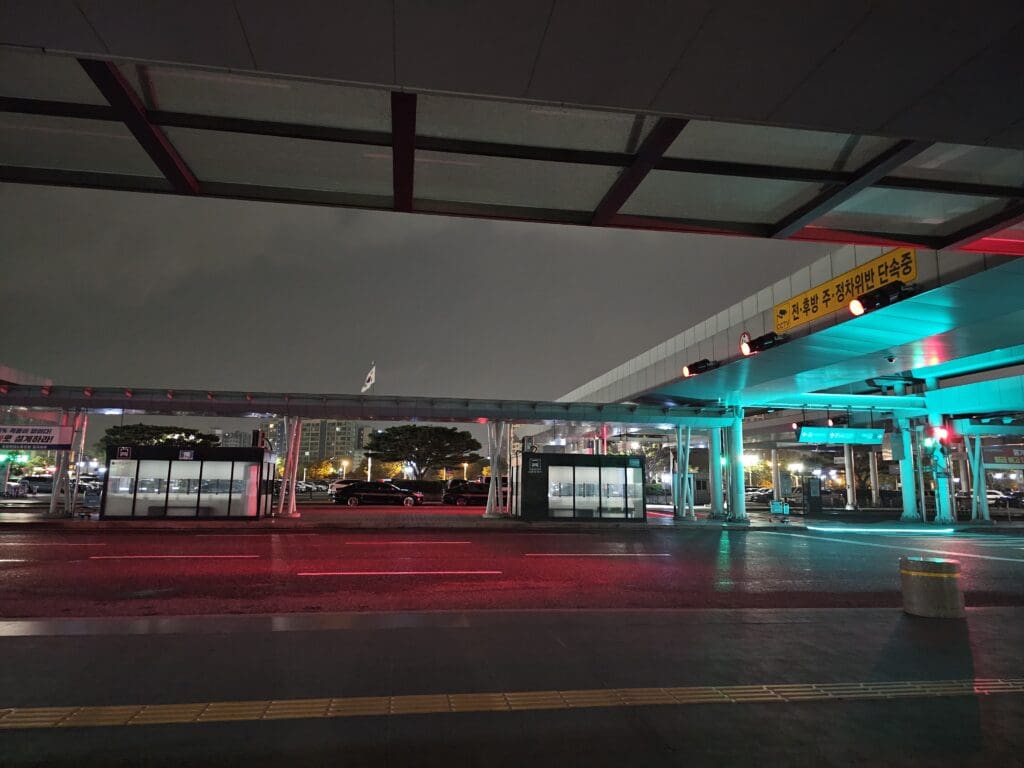
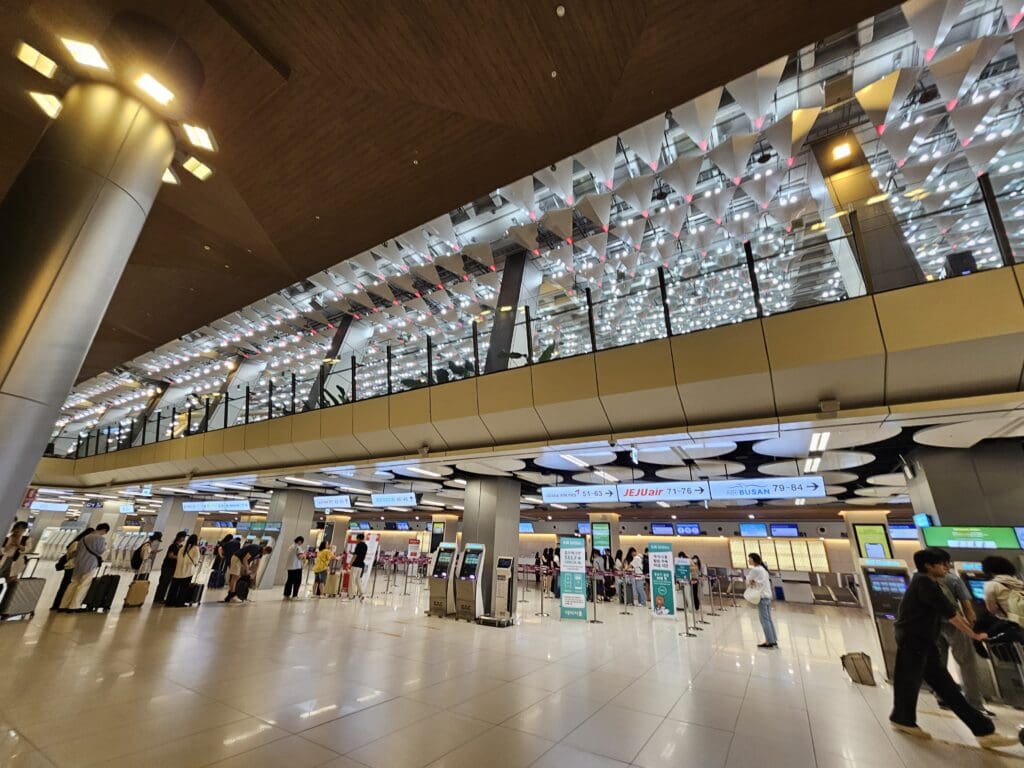
With little else to do, I plonked myself down on one of the hard benches outside, and was thankful that I was travelling in the heat of summer and not in the sub-zero Korean winter temperatures! As I waited, I watched as plenty of other passengers made the same mistake as me, likely not realising that the terminal was yet to open. Eventually, the lights inside were switched on and at 0430, we were all permitted to head inside. From arrivals, I headed up the escalators and reached Gimpo Airport’s modern and spacious check-in hall. There, each airline enjoys its own dedicated well-branded check-in area, however, at that time, these desks were largely devoid of staff, not opening until an hour prior to each airline’s first departure. However for those lacking both boarding passes and hold luggage, plenty of Korea Airports Corporation self check-in machines are available for use by those heading off on all airlines.
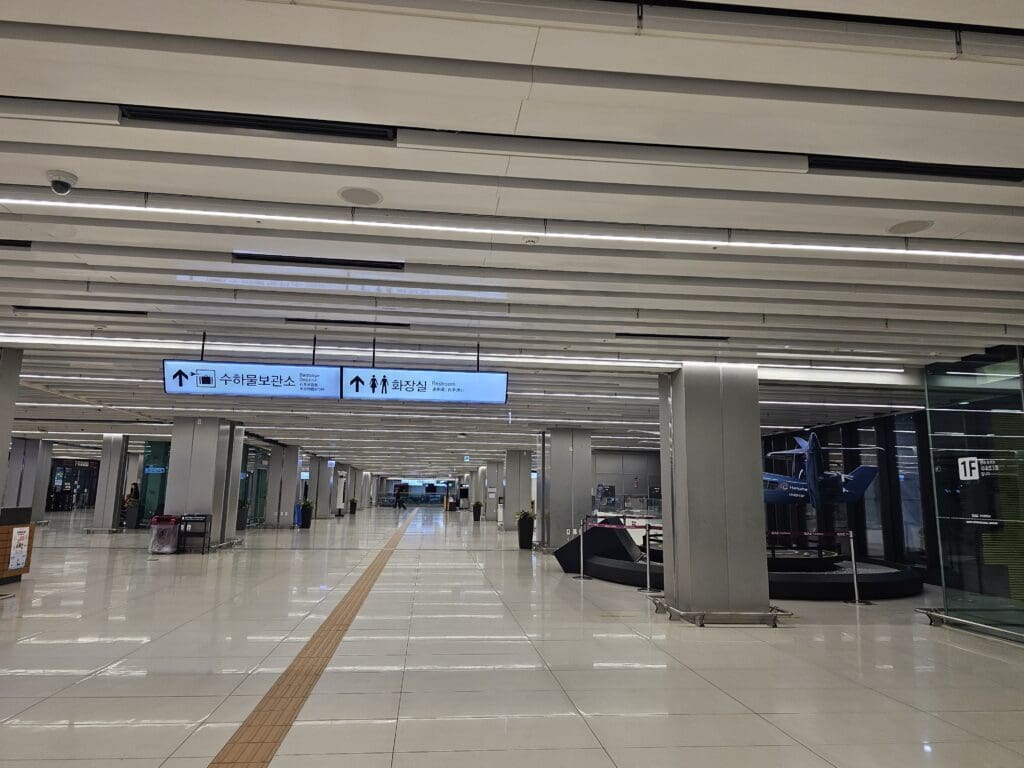
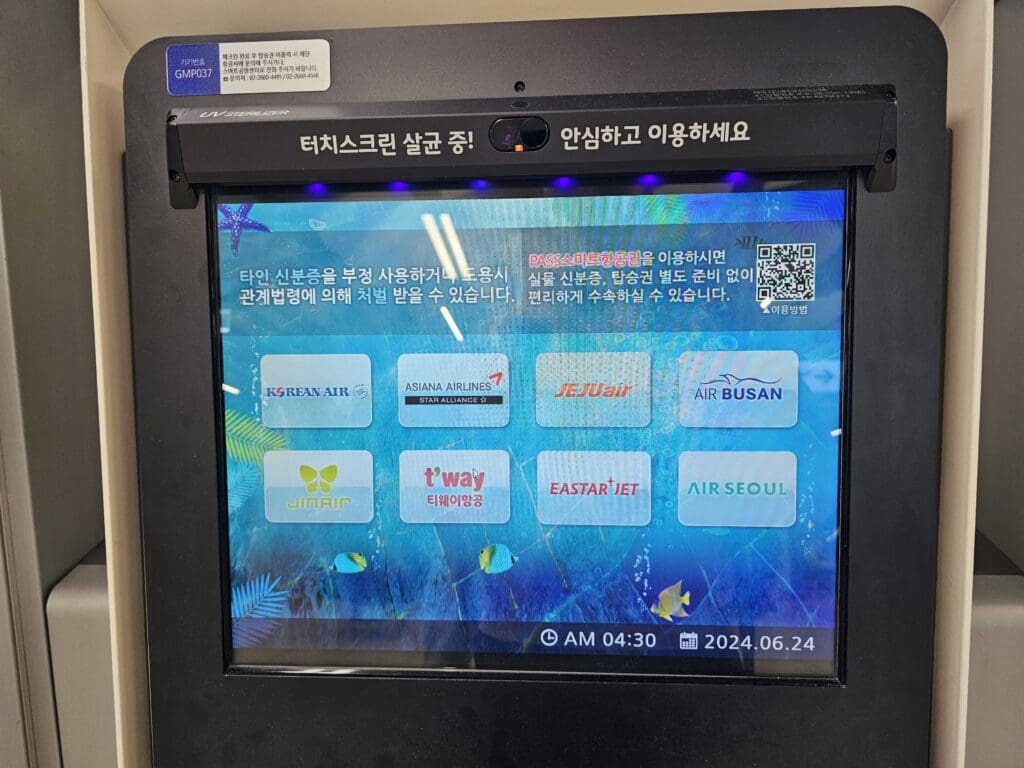
Seeing as I had already checked in and did not have anything to drop off at Jin Air’s counters, from the check-in hall I continued heading upstairs. First up that morning was a visit to the local branch of Caffè Pascucci for the first of many coffees that day, with this located near the entrance to the security checkpoint. Whilst the landside portion of Gimpo Airport contains twenty restaurants, eleven cafés, four shops and a pharmacy, very few of these seemed to be open at that time and were instead in the process of being opened up for a new day’s trade. Seeing as the security checkpoint was still closed, with my cappuccino in hand, I continued heading upwards and soon reached the top floor of the landside arrivals area. Alongside a food court that is home to many of the terminal’s eateries, this is home to one of Korea’s very few open-air observation decks and is, when the weather is good, a great place to wait for their flights. For enthusiasts, this provides a good view of some of the domestic terminal’s stands, alongside the eastern ends of Gimpo Airport’s two runways.
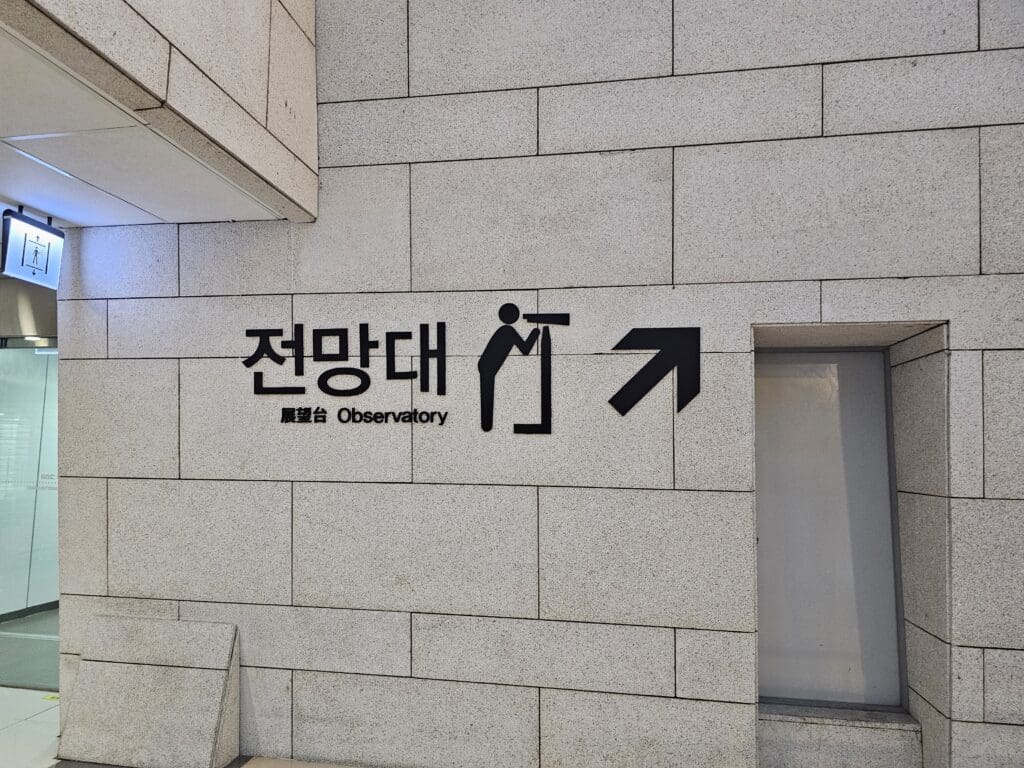
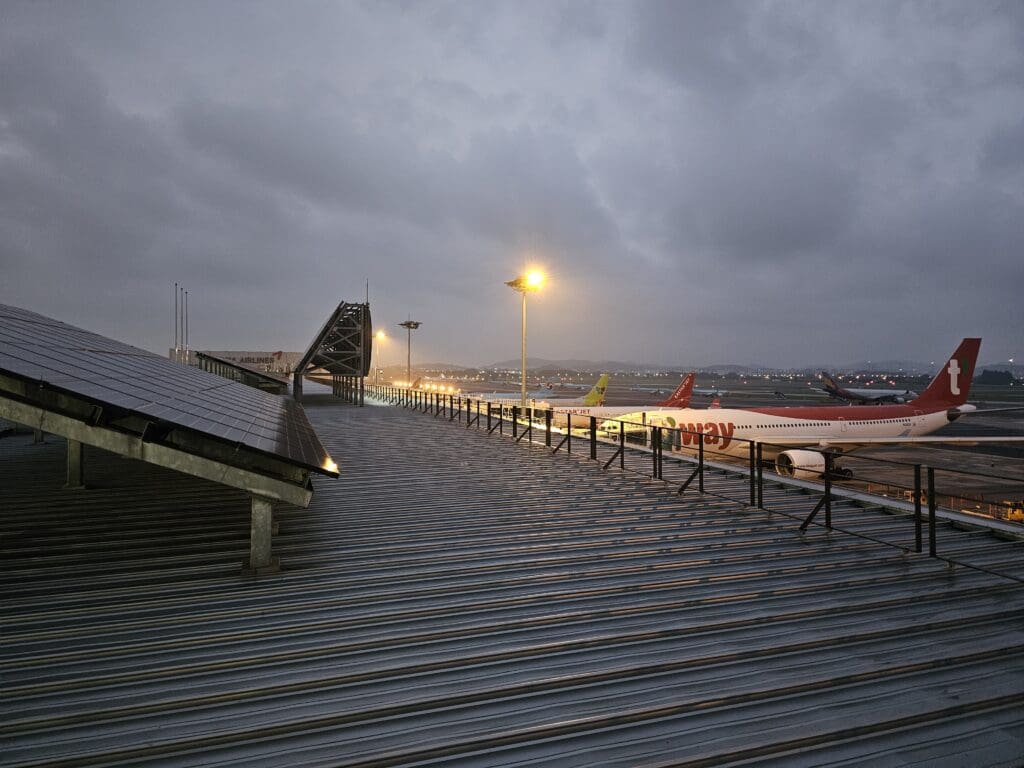
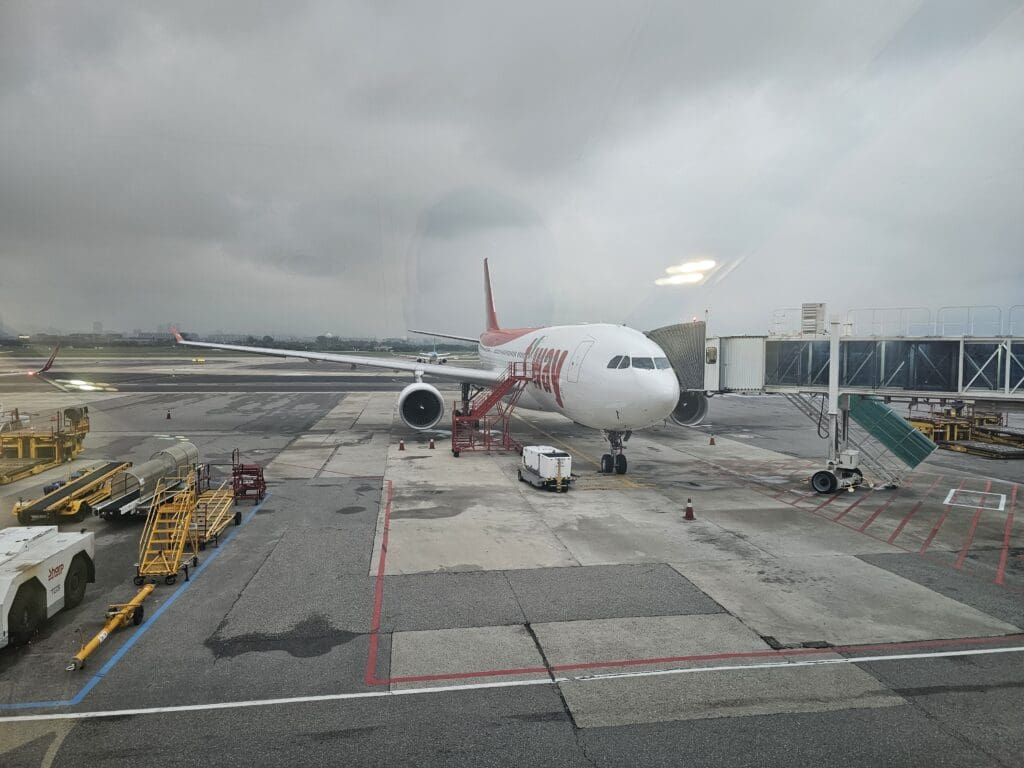
Seeing as the sun was yet to rise, views were a little limited, although I still managed to spot aircraft basking under the glow of the apron floodlights. These took the form of jets ranging in size from the Airbus A220 to the Airbus A330-300, operated by all Korean passenger carriers bar Aero K and Air Premia, neither of whom operate to Gimpo Airport. At that time, most of these were in the process of being prepared for a new day of flying to destinations across Korea and included the T’way Air Airbus A330-300 that I would ride back to Seoul a few hours later.
After looking out over the sea of aircraft and polishing off my coffee, I journeyed back inside and headed down to security. With this being in the final stages of being prepared for a new day of operation, an ever-growing crowd of passengers could be seen waiting, and I soon joined them. Glancing around, the demographic appeared to be atypical of Gimpo Airport, with that morning’s clientele being a mixture of Jeju-bound tourists and smartly dressed business people, plus the odd young camouflaged passenger heading to or from mid-military service leave. After no more than a few short minutes, the checkpoint opened up and I soon had my boarding pass scanned and passport checked before I was able to enter. As is usually the case, passing through security at Gimpo was a breeze. With no need for any queuing, I was able to walk straight up to one of the many manned where I had a quick and easy check before I was free to continue onwards to the airside portion of the terminal without the need for any additional checks.
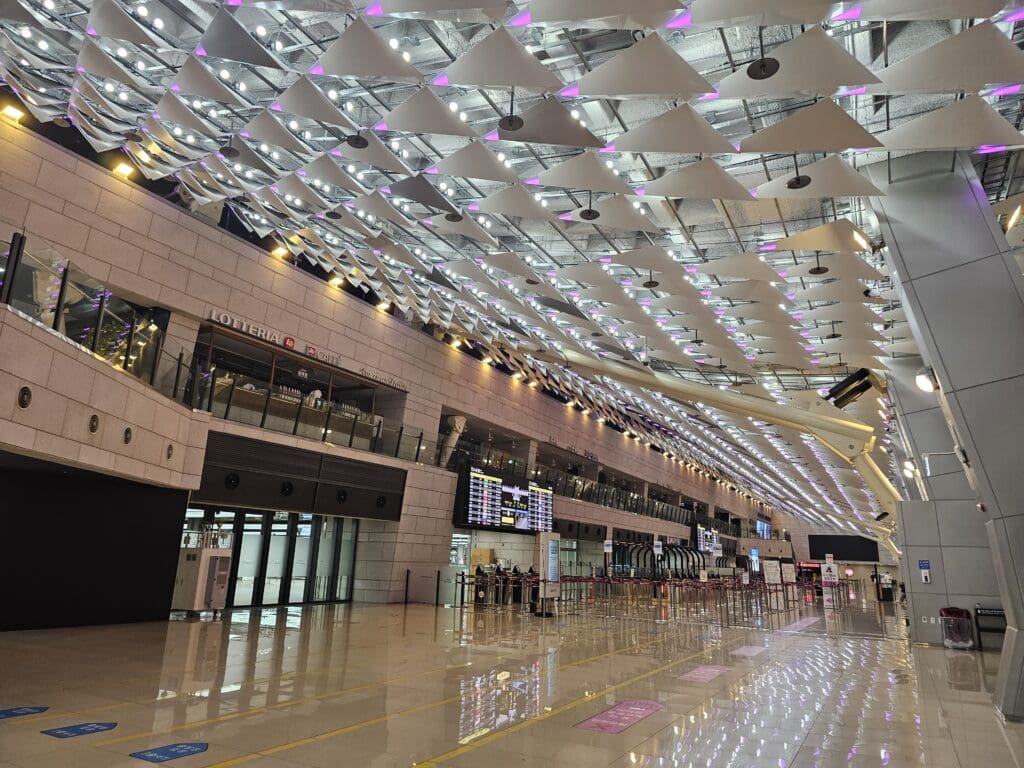
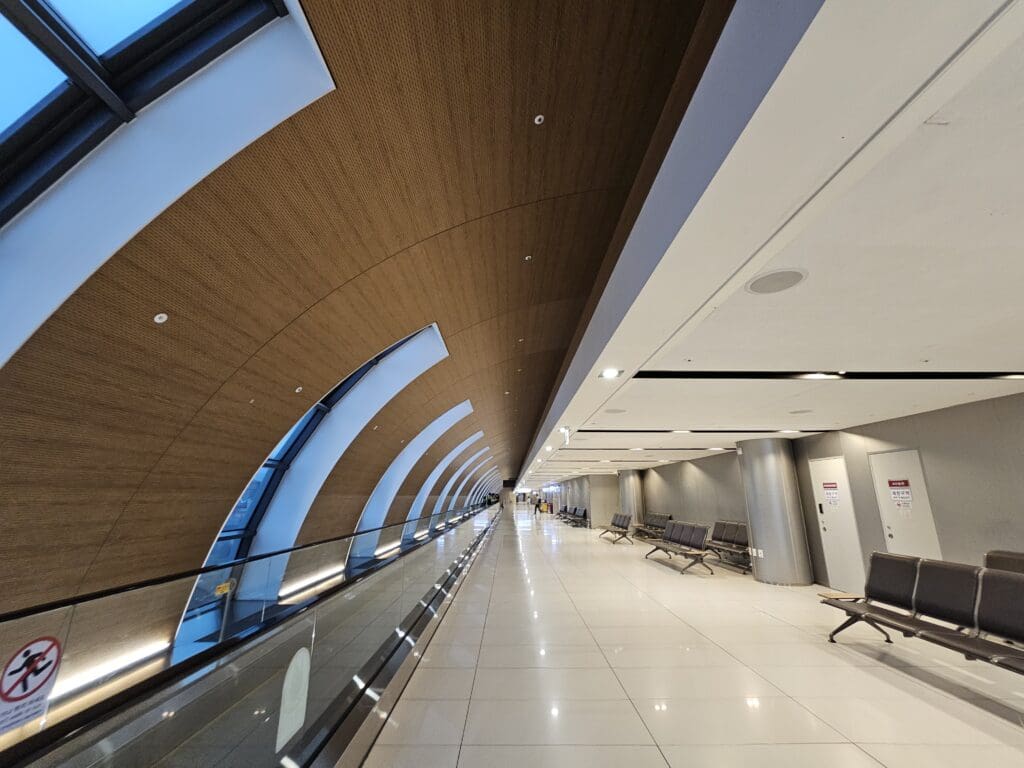
Dating back to the 1970s, Gimpo Airport’s domestic terminal is not particularly new, although having undergone a series of renovations and improvements, this conceals its true age as well as an ageing K-pop star! With the latest upgrade work having concluded in 2018, I found the terminal to be bright, modern and spacious. As is usually the case, I also found this to be clean and tidy and I was thus left with absolutely nothing to complain about. For those needing to charge their devices, plenty of charging points can be found throughout, and I also found the complimentary wifi to work well without any issues. Despite all of the positives, the airside portion of the terminal is not home to the same array of facilities as the landside area and designed with convenience in mind, this was never intended to be a place where passengers wait for hours before jetting off. Specifically, this is home to three cafés, three fast food outlets and a convenience store.
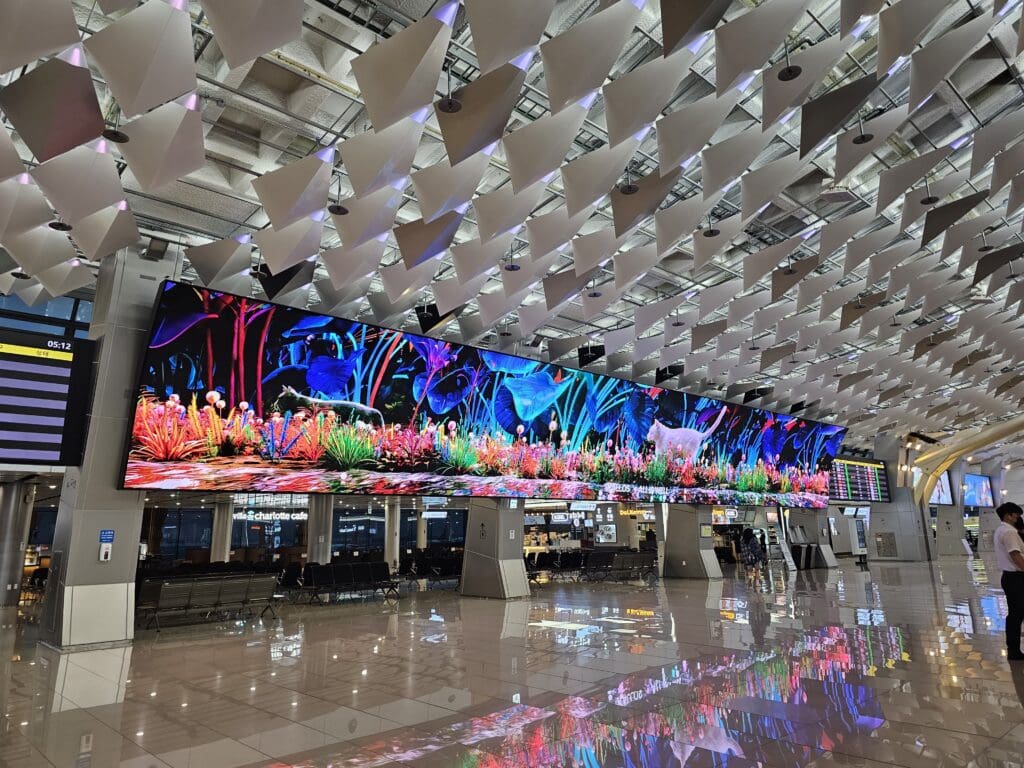
Fortunately, aviation enthusiasts will be happy to hear that floor-to-ceiling glass windows can be found throughout the terminal and offer a superb view out onto most stands. At that time, plenty of aircraft could be seen on the ground, with these operated by Air Busan, Air Seoul, Asiana Airlines, Eastar Jet, Jeju Air, Jin Air, Korean Air and T’way Air. Of course, being a domestic terminal in Korea, most flights were bound for Jeju, followed by Busan. Other than these two, the departure boards displayed flights heading off on early morning runs to Gwangju, Jinju, Pohang, Ulsan and Yeosu. Admittedly, with all of these cities connected to Korea’s high-speed rail network, it still puzzles me as to why someone would opt to fly to these from Gimpo!
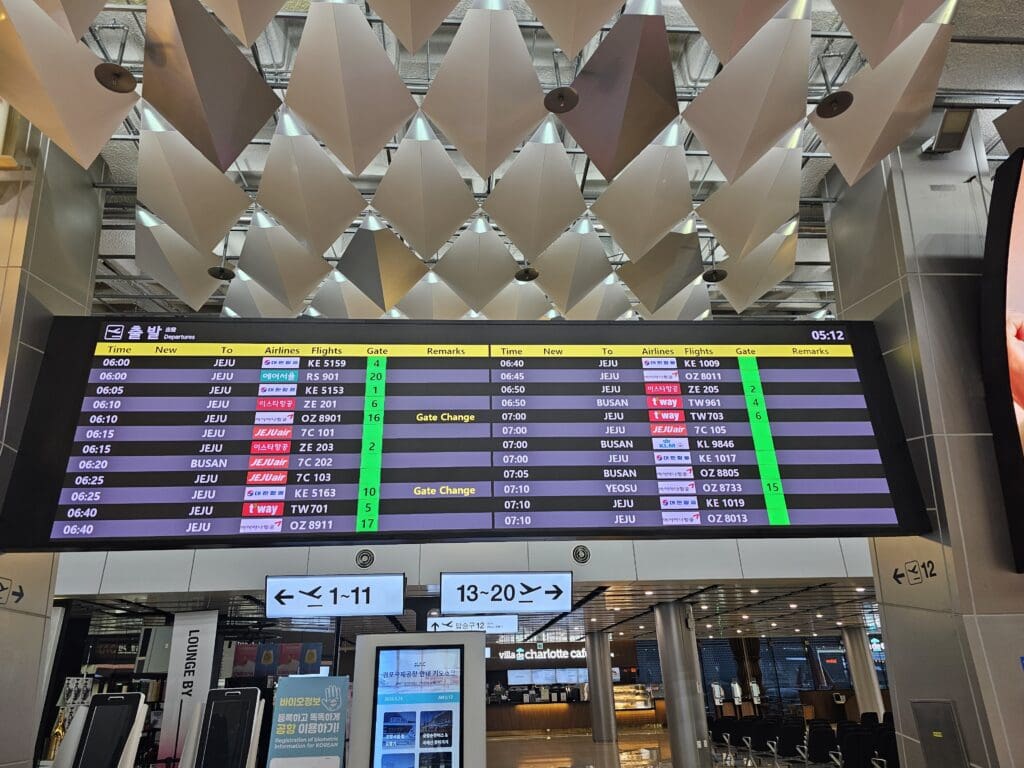
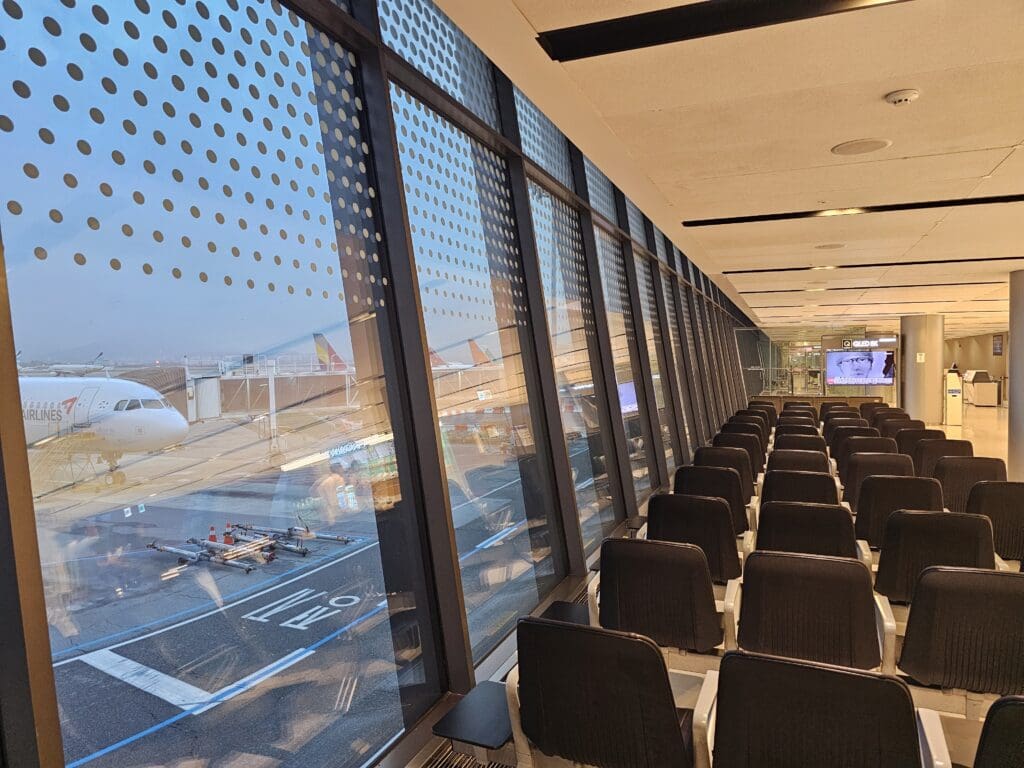
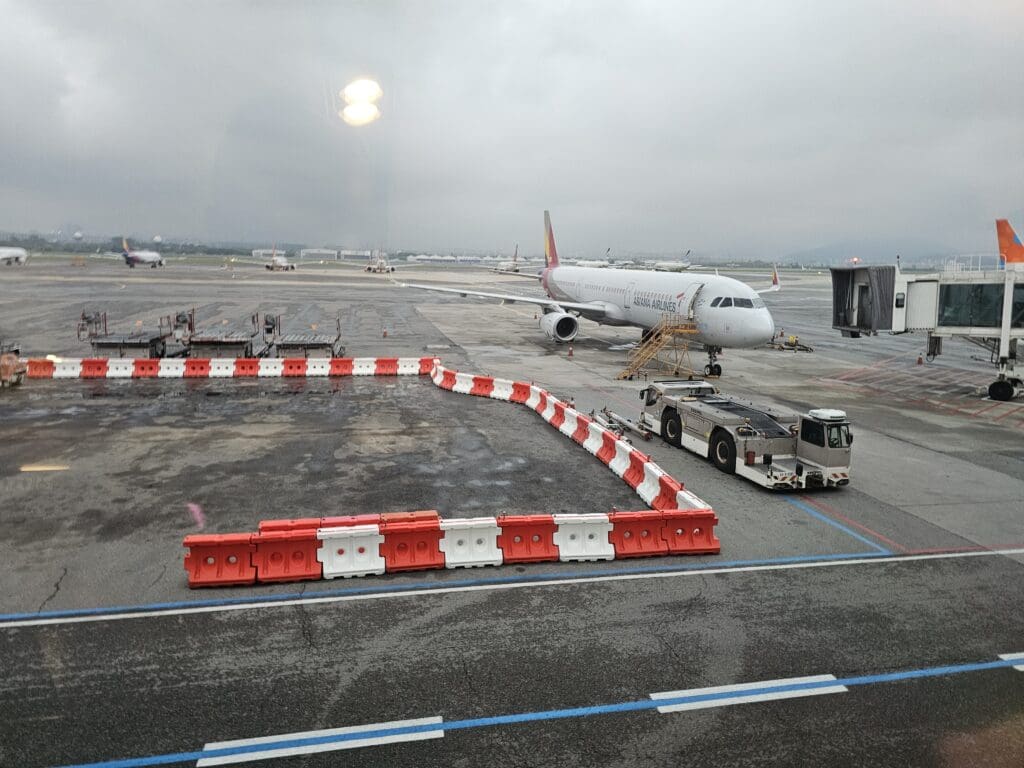
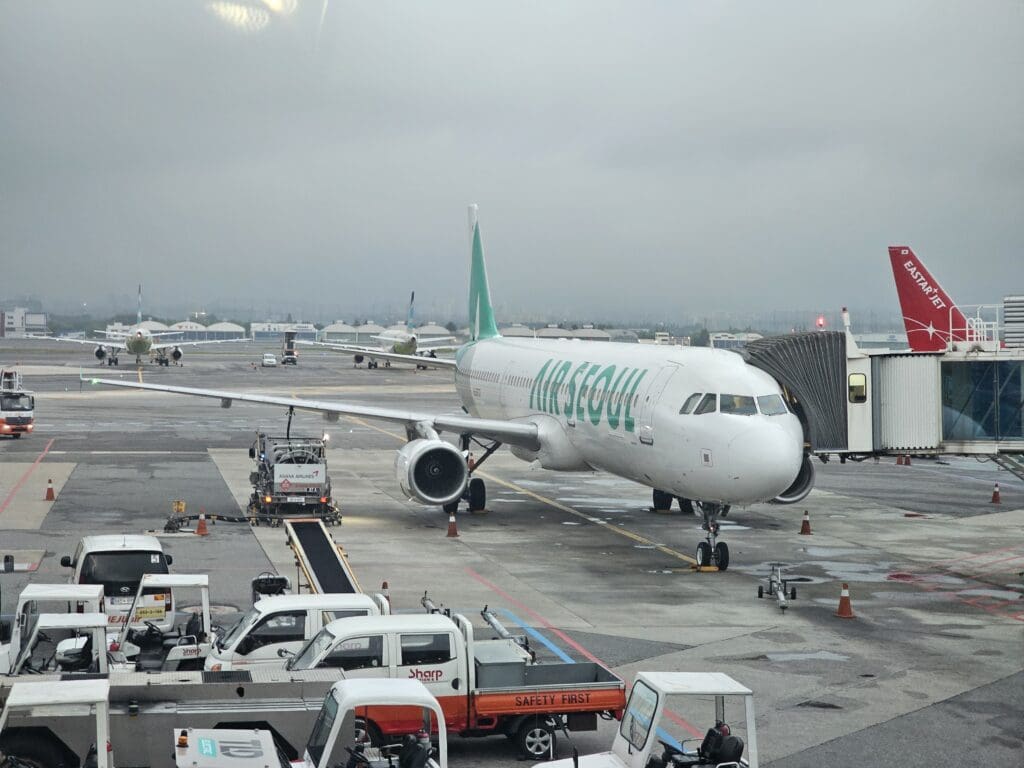
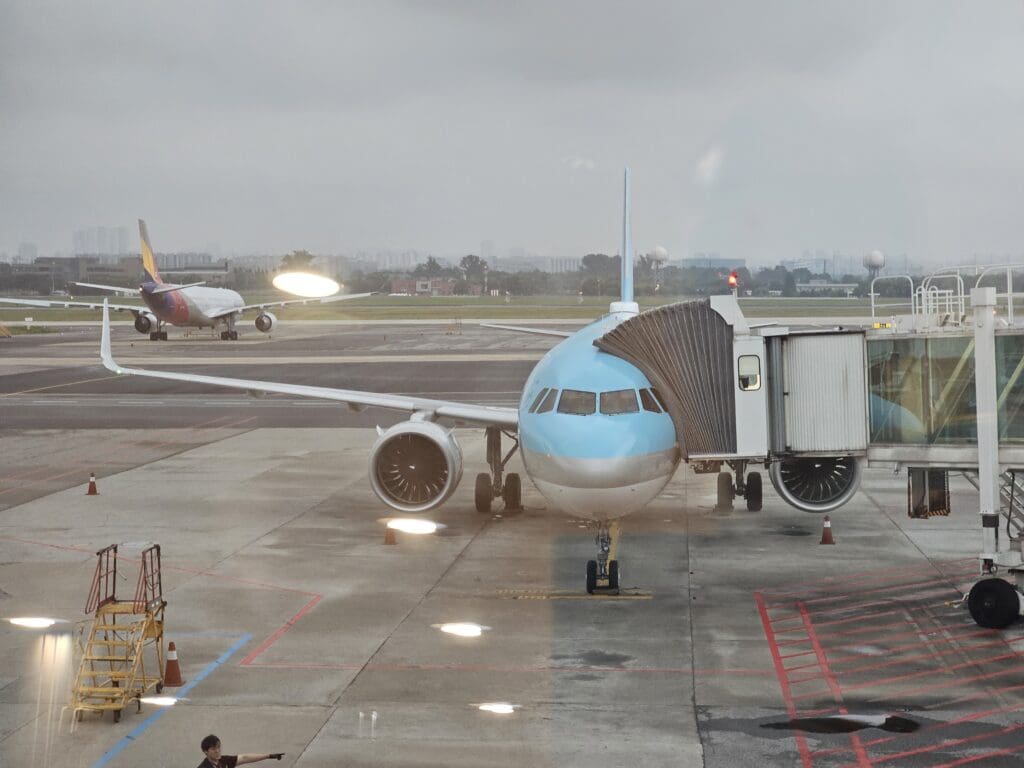
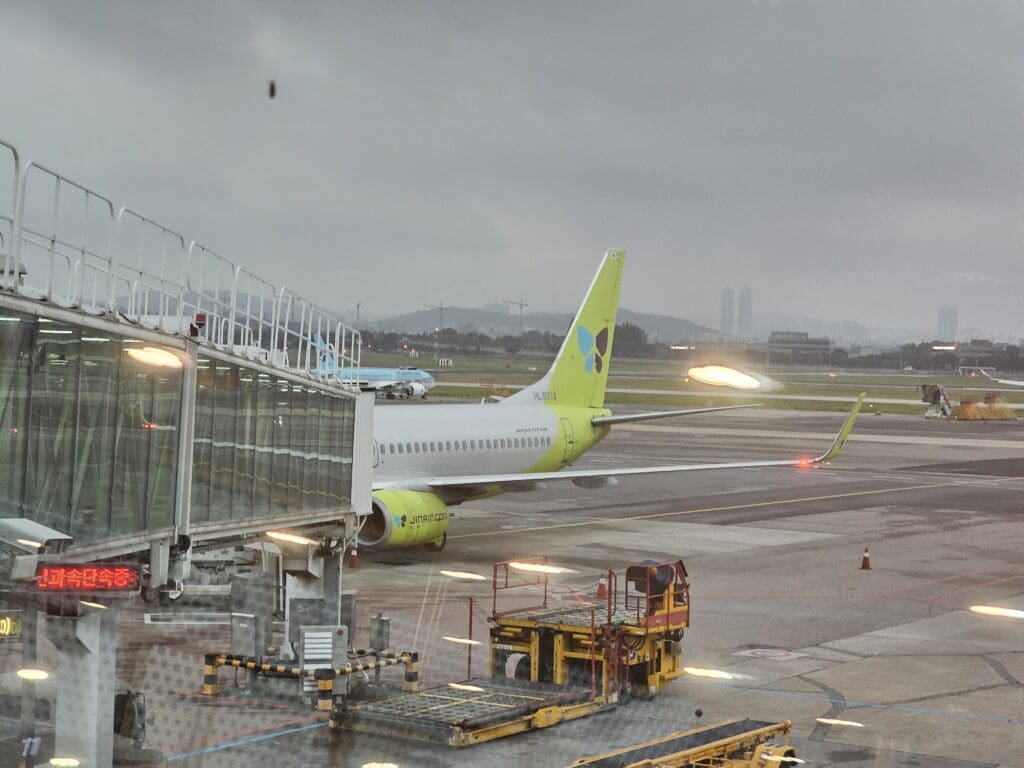
Upon examining the departure boards, I discovered that Jin Air’s second flight of the day to Jeju would depart from Stand 1, located at the far eastern end of the terminal. As seems to be the norm with Korean domestic flights, boarding was scheduled to commence twenty minutes before departure at 0545. Making it there with fifteen minutes to go until this time, upon reaching the gate the crew could be seen boarding the aircraft, whilst several Jin Air ground staff members could be seen preparing the gate for boarding. Sadly, Gate 1 is one of the few gates in the terminal that does not allow for a good view of the aircraft outside, and the green and silver jet that would be taking me down to Jeju could only just about be seen. This also seems to lack a sufficient number of seats and thus upon arriving there, many passengers could be seen lingering on their feet, with most of the seats at the gate having already been taken.
That morning, I would have the pleasure of flying to Jeju onboard Boeing 737-8SH, HL8014. Assembled thousands of miles away at Boeing’s facility in Renton, this Boeing took to the skies on its maiden flight in October 2015, making it around 8.6 years old at the time of my flight. Once tested, the Boeing was ferried across the Pacific to Seoul Gimpo Airport, stopping to refuel in Anchorage and Sapporo. Upon touching down in Korea, this was one of the first few brand new Jin Air jets to be delivered to the carrier directly, rather than be handed down from Korean Air. Today, the aircraft is deployed to destinations both near and far, undertaking some of the shortest and longest flights on Jin Air’s route network. In the week before my flight, the aircraft had operated 45 sectors and visited the likes of Bangkok, Busan, Clark, Danang, Guam, Incheon, Jeju, Jinju, Naha, Nha Trang, Osaka Kansai, Seoul Gimpo and Ulsan, flying sectors from forty minutes to six hours in duration!
Once all Jin Air signs had been erected at the gate, one of the gate staff announced that boarding was soon to commence, with this being made in Korean only. Slightly unusually, this was not to be made in any order, and at 0545, all passengers were invited to board the aircraft at once. Soon joining the short queue, I shuffled along before scanning my boarding pass on the gate scanner. Upon doing so, one of the ground staff wished me a nice flight before I headed down the glass jetbridge to the waiting Boeing 737. In the usual manner, I reached a short queue as I neared the cabin door which enabled me to examine the port wing and engine, as well as the decal to the right of the door which promoted the airline’s Consumer Centred Management certification.
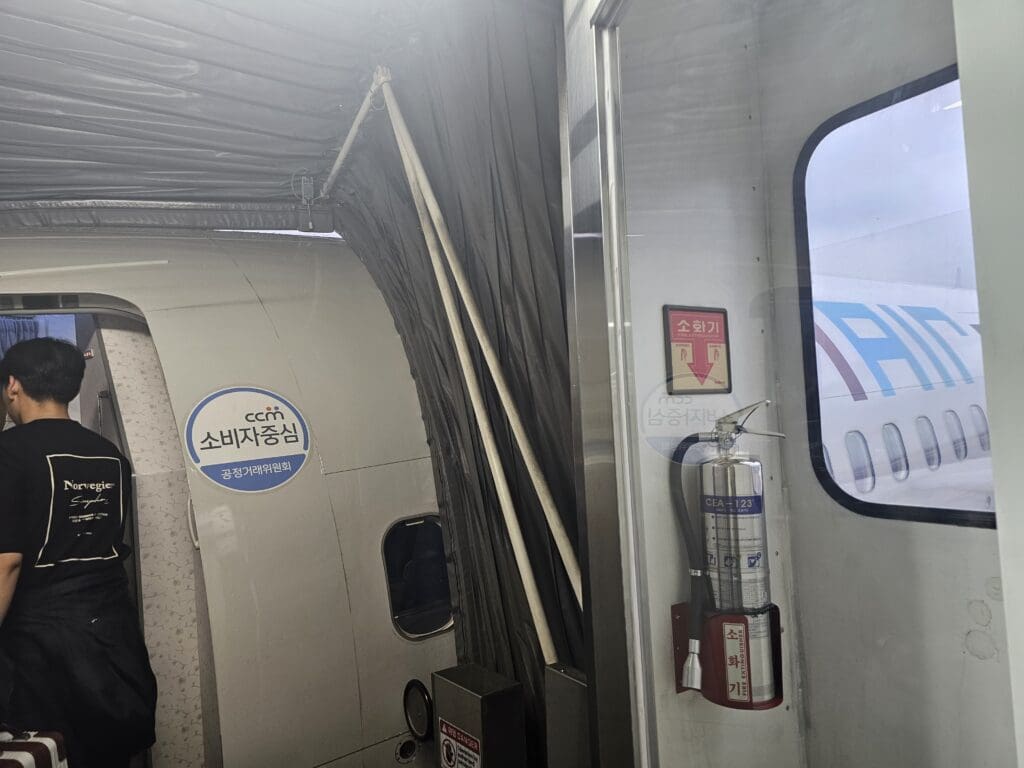
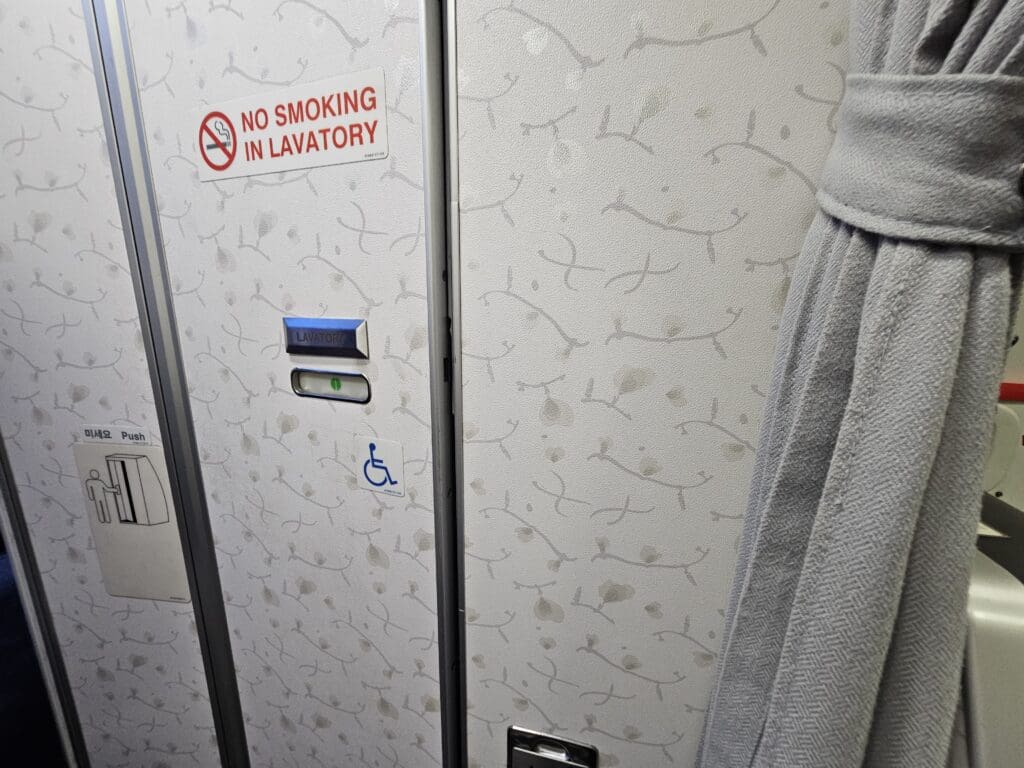
After no more than a minute of waiting, I stepped into the Boeing’s forward galley and immediately received a warm and friendly greeting in English that was perhaps a little too lively considering the early hour! This served to get the journey off to a positive start, and the friendly greetings I received as I journeyed to my seat, left me with a good first impression of the crew. With nine years having passed since I had last partaken in the exciting Jin Air experience, I was expecting some changes onboard. Perhaps the most obvious of these was the cabin crew’s updated uniform. While Air was once known for its unusually casual uniforms, which included polo shirts and jeans, these were refreshed in 2019 and replaced by more ‘standard’ attire. Designed by Lee Ju-young, these are mostly dark in tone and incorporate elements of traditional Korean jogakbo design. Another thing that I noticed was that whilst the aircraft had never operated for Korean Air, their parent airline’s cherry blossom pattern could be seen on all bulkheads as well as the lavatory doors and walls.
Once one of the flight attendants had checked my boarding pass, I swung right and passed through the bulkhead before reaching the Boeing 737’s bright and modern Sky Interior cabin. Onboard, Jin Air’s Boeing 737-800 aircraft feature 189 seats in an all-Economy configuration, with this being the same number of seats as can be found on the Boeing 737-800s of most low cost airlines worldwide. Despite this, the seats appeared to be far chunkier than those of your typical low cost carrier, whilst each was topped by an adjustable headrest partially covered by a smart dark pleather antimacassar on which Jin Air’s logo was debossed. Those expecting Jin Air to feature any sort of vibrant, colourful or unique cabin will be disappointed as the airline utilises the same dark blue fabric that can be found in the Economy cabins of most Korean Air aircraft.
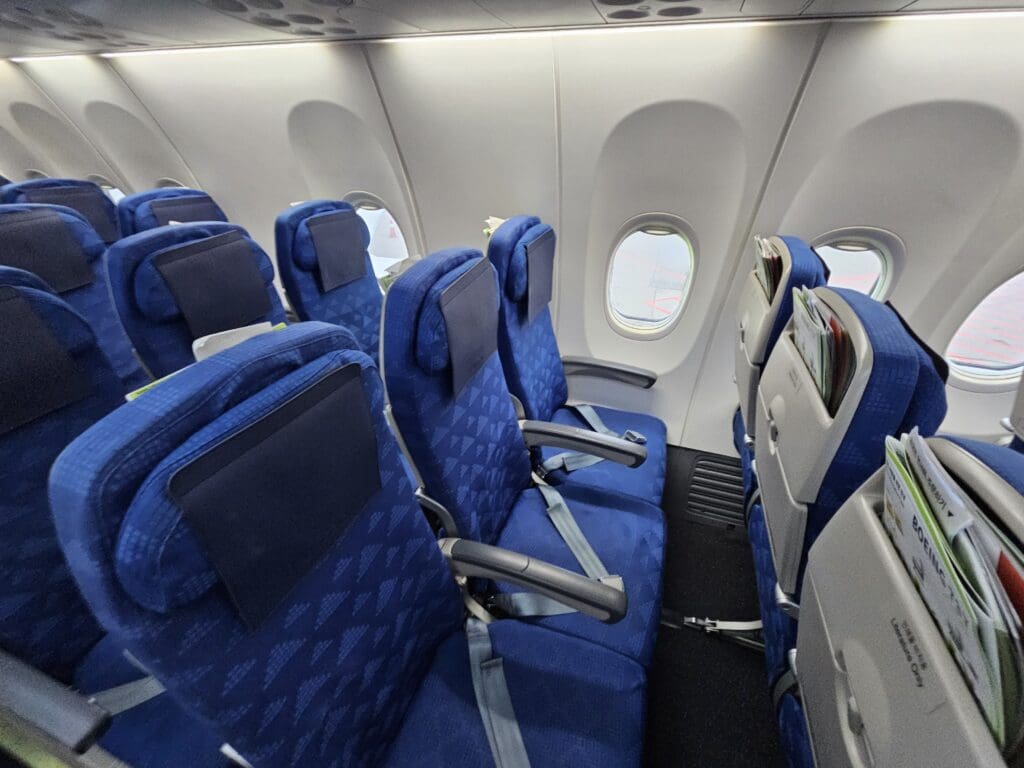
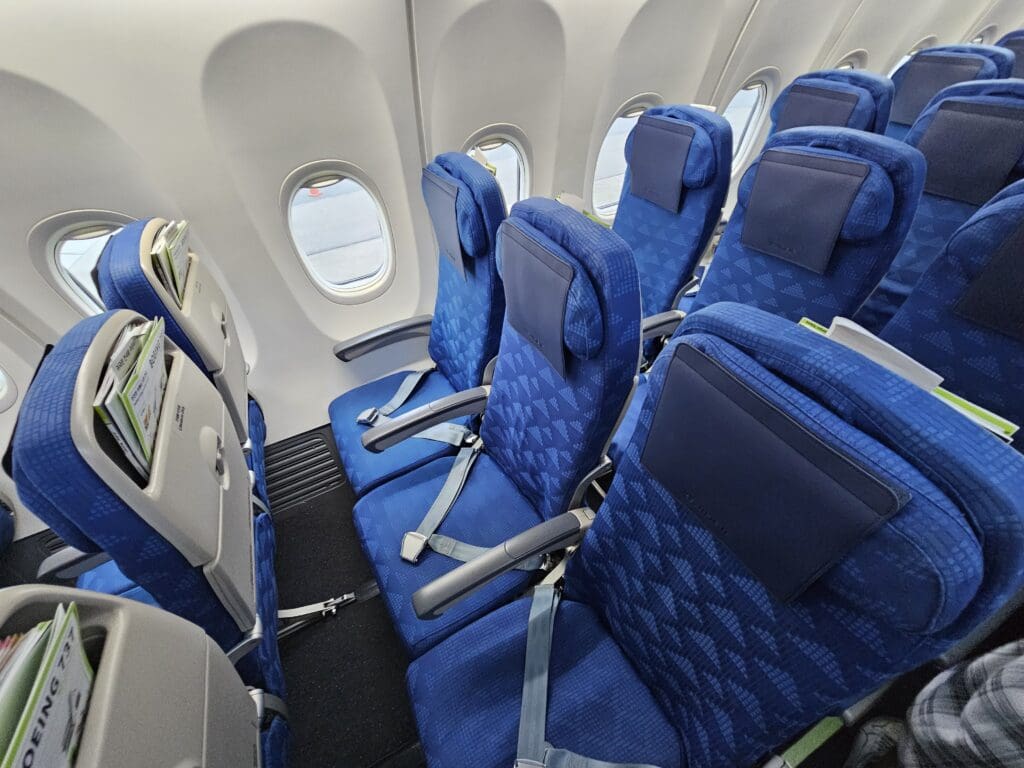
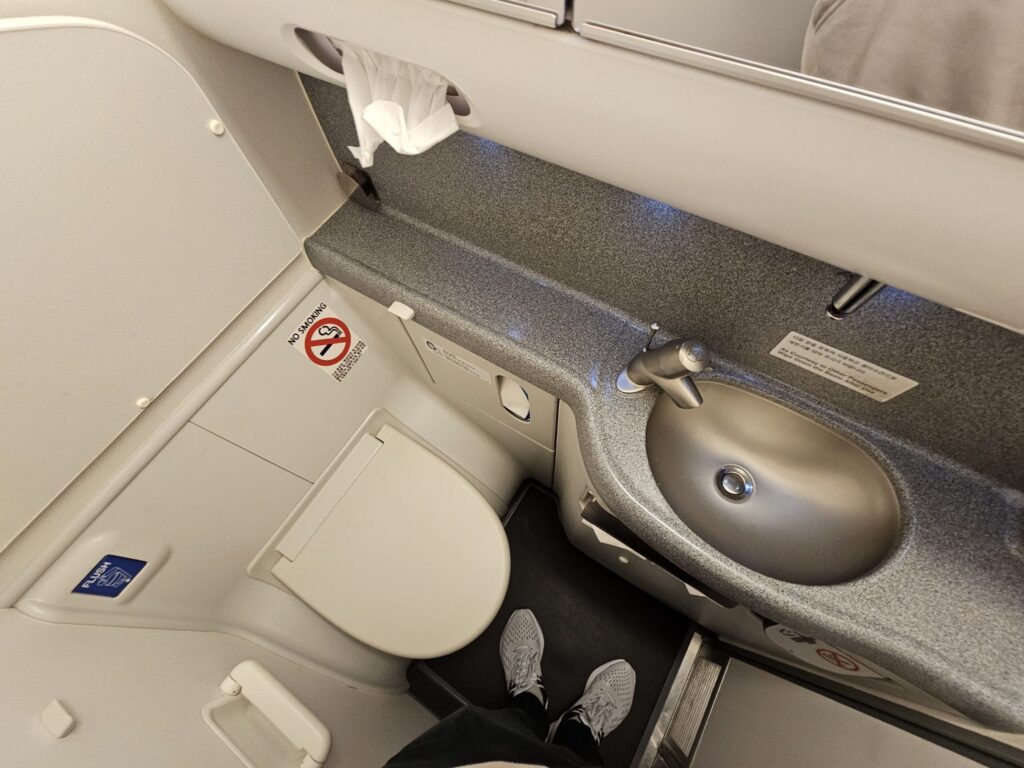
As I journeyed down the cabin, several upbeat K-pop songs could be heard ringing out, which I later discovered to be songs commissioned by Jin Air! As with Korean Air, curiously, the Economy cabin onboard each of Jin Air’s aircraft commences at Row 28, even if this is the first row. Thus, whilst seated in 52A, this was not some sort of lengthened Boeing 737 with a record number of rows! Anticipating that I would be trapped in the window seat for the duration of the flight, once at my row, I plonked my bag down and made a quick trip to one of the two lavatories at the rear of the aircraft. Opening this up, this was clean, modern and in good condition, with few signs of wear and tear, and being stocked with the basics, I could find absolutely no reason to complain.
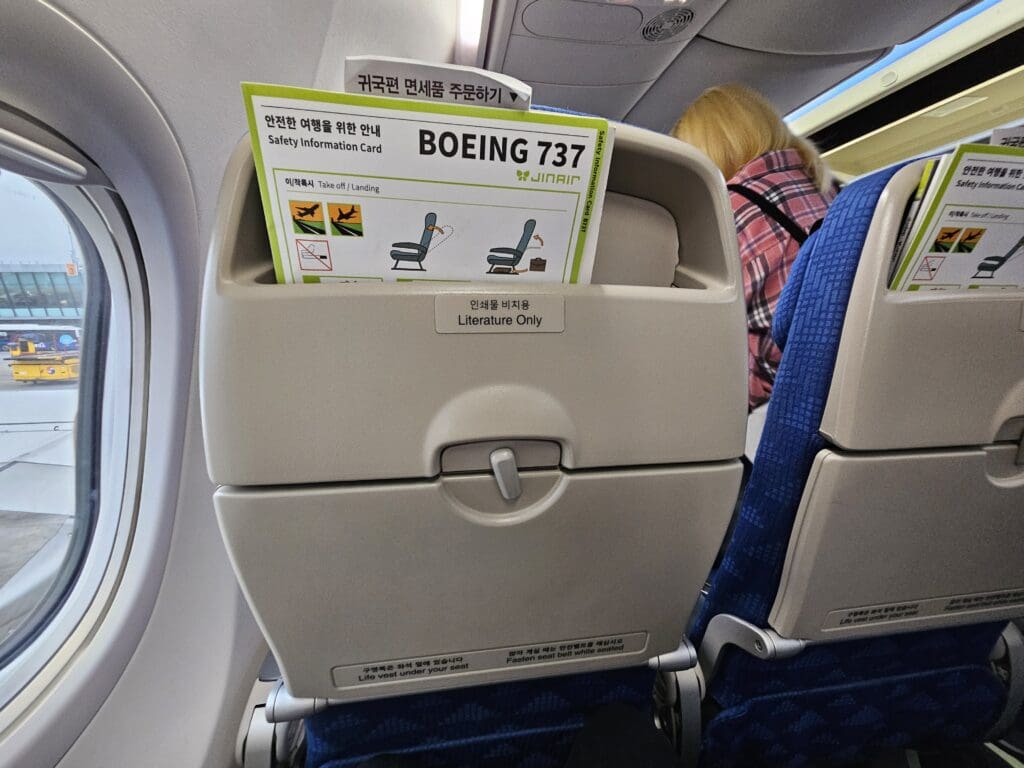
After battling through the crowds, I slid back into my seat and settled in for the journey ahead. Examining the seat, this was in immaculate condition and was spotlessly clean and lacking any signs of wear and tear. In addition, as its appearance had hinted, this was well-padded and soft. However, unfortunately, that is where my positives came to an end and I found the seat to be incredibly cramped, with very little provided in the way of legroom! Whilst I could just about put up with this on the short flight to Jeju, I most certainly would have not wanted to spend the best six hours squeezed in on a flight to Thailand! Additionally, no in-seat power was provided, although this was not really expected. However, in-seat USB-A outlets can be found on Jin Air’s Boeing 737 MAX 8 jets. Turning to the literature compartment, this contained a safety card, a sick bag, the Jini Onboard Shopping Catalogue (which also contained the buy-on-board menu), the Skyshop Duty Free catalogue and a duty free pre-order form.
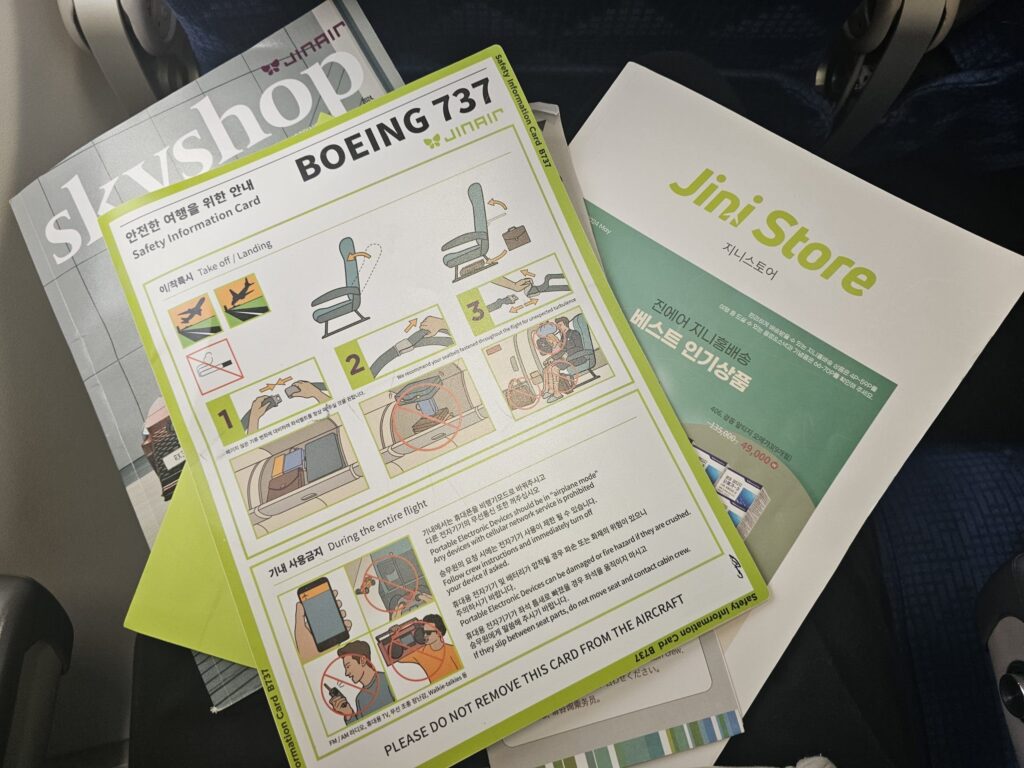
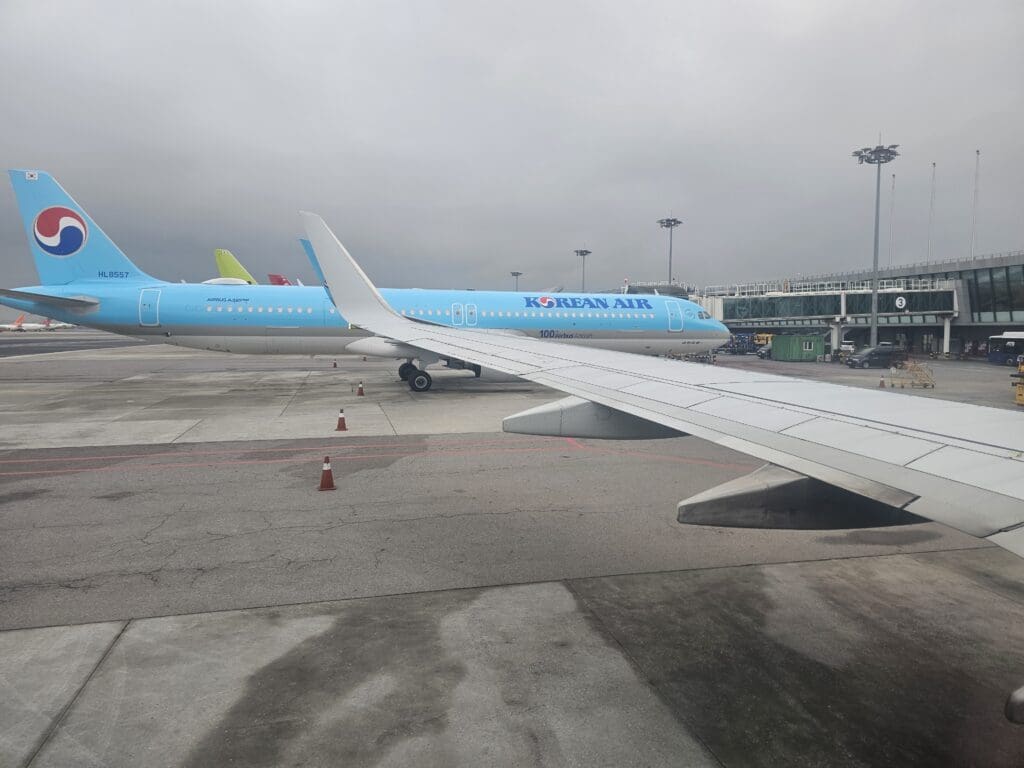
Almost immediately after taking my seat, I was joined by two passengers who took the form of Chinese tourists heading for a break in Jeju. Looking around, the flight was about 80% full, and as with most flights to Jeju, most passengers took the form of Korean tourists. Running an efficient operation and with no stragglers in Seoul, almost as soon as the final passenger had boarded the aircraft at 0602, the dispatcher disembarked and the cabin door was closed before the jetbridge was backed away. Looking outside, indicating our imminent pushback, the ground crew could be seen removing cones from around the aircraft whilst inside the upbeat music came to an end and the Purser performed their welcome speech in Korean and English. This consisted of the usual welcomes, thanks, warnings and a mention of our fifty-minute flight time, and was followed by a manual safety demonstration by the crew.
Seeing as Jin Air’s Boeing 737-900 operated 0600 flight to Jeju had been pushed back and pulled forwards, and was in the process of starting its two engines, whilst all was ready to go, it wasn’t until 0609 that the Boeing jolted backwards and its two CFMI CFM56-7B26 engines hummed and whined into life ready to take us on the 280-mile trip down to Jeju. After a few minutes, the tug was disconnected and the ground crew waved us goodbye as we commenced our short journey to the end of Runway 32R. This took us past the local Asiana Airlines and Korean Air hangars and the neighbouring apron where plenty of aircraft could be seen waiting for their next missions. At that time, Korean Air’s luxurious corporate Boeing 787-8 Dreamliner could be seen resting before heading off to Ho Chi Minh City the following day.
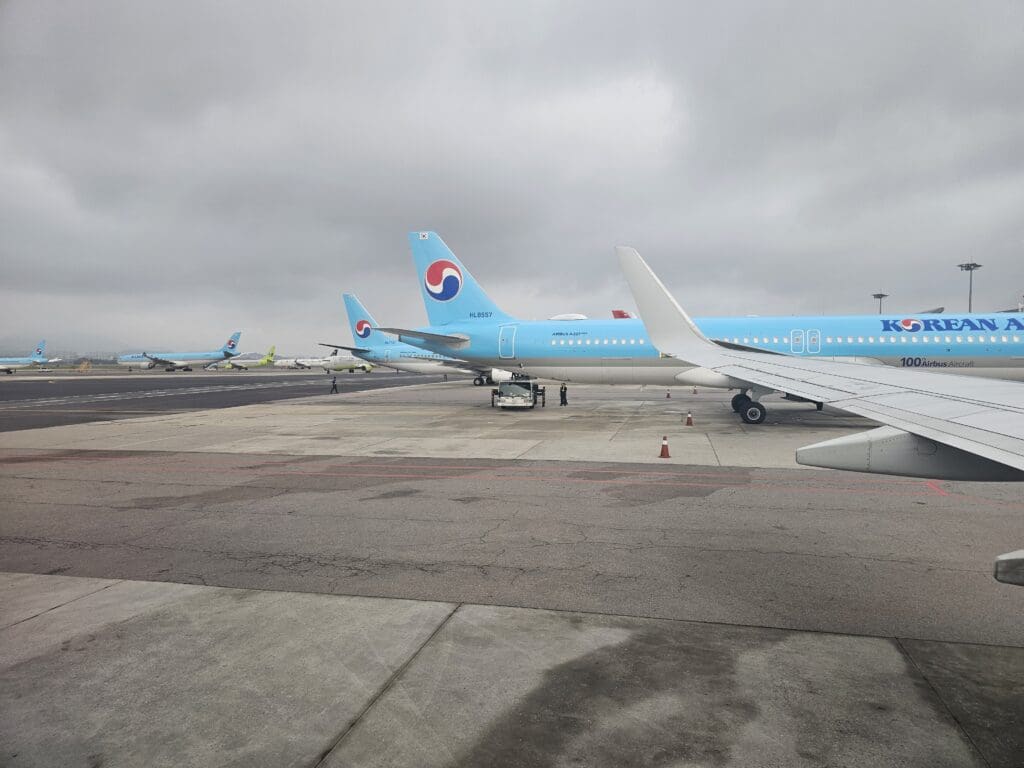

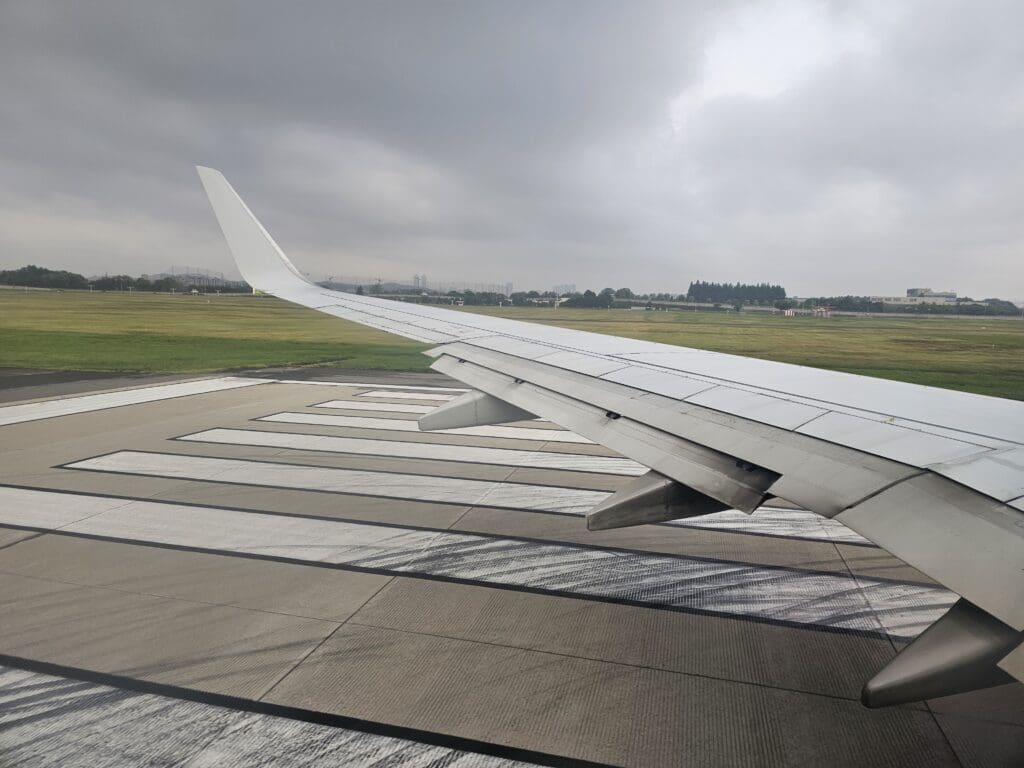
Once the Boeing made it to the end of the runway, we taxied onto this without holding and following a very short pause, at 0620, the two CFM56 engines roared into life as we commenced our short and powerful take-off roll. After speeding past the hangars to the south of the runway, the Boeing gently rotated upwards and rocketed into the grey and cloudy Seoul summer skies. As we left Gimpo Airport behind, we climbed out over the semi-rural area that surrounds the airport which houses a mixture of fields, farms and industrial estates.
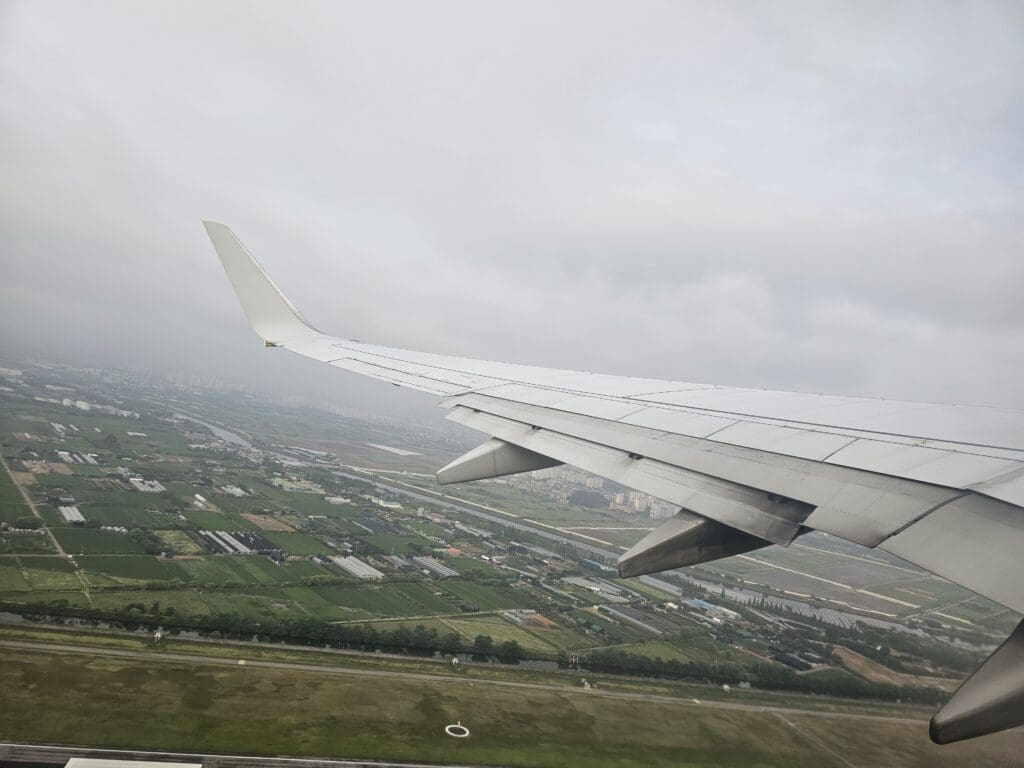
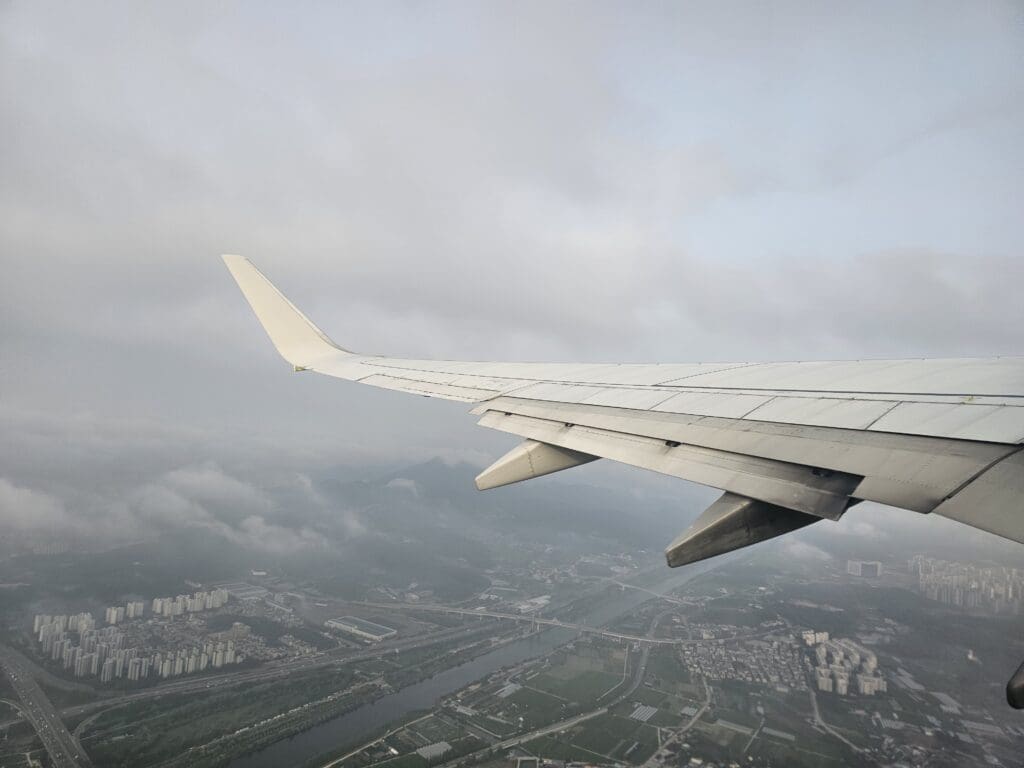
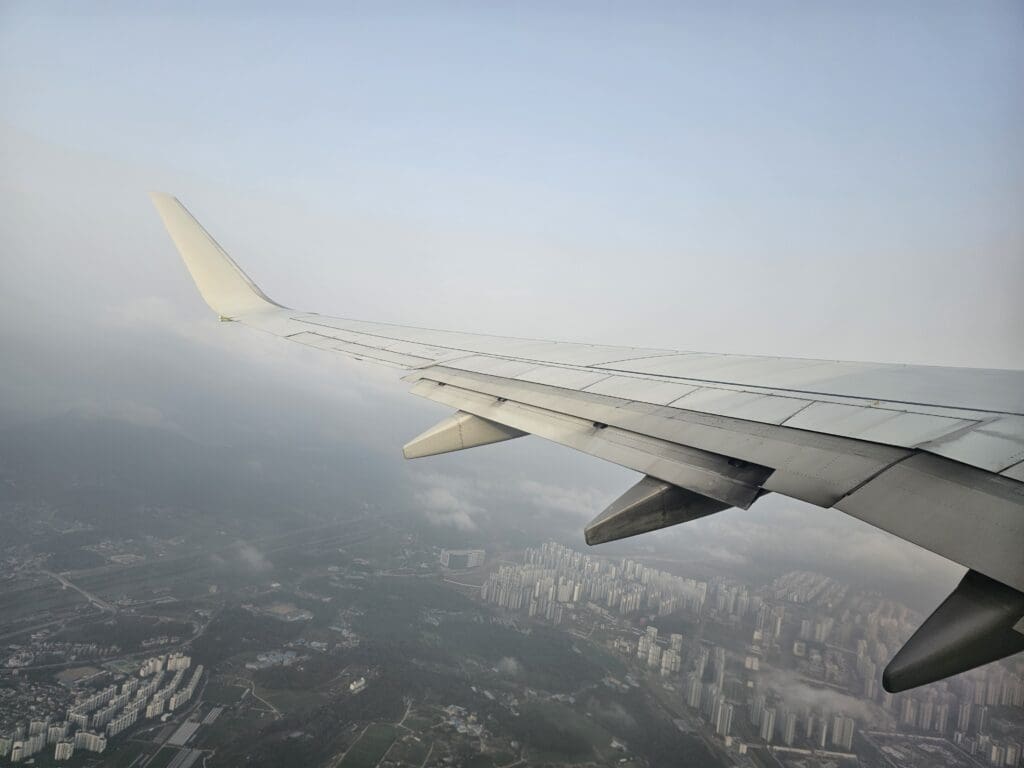
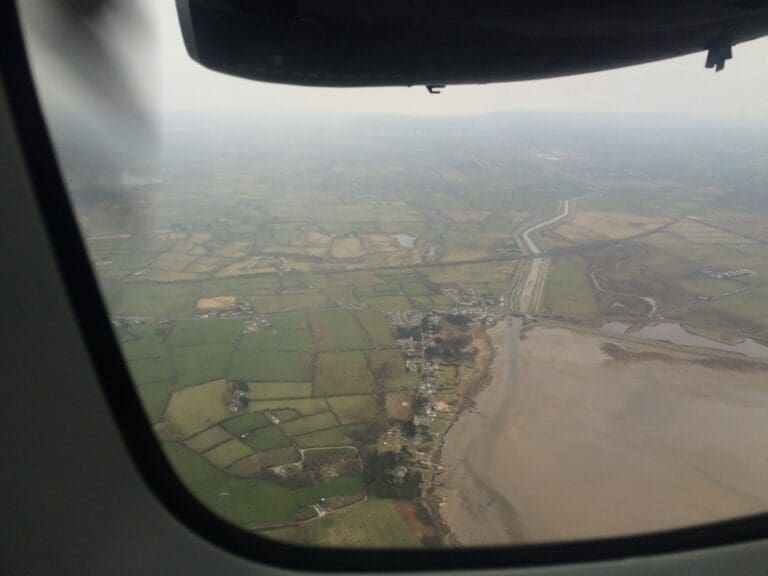
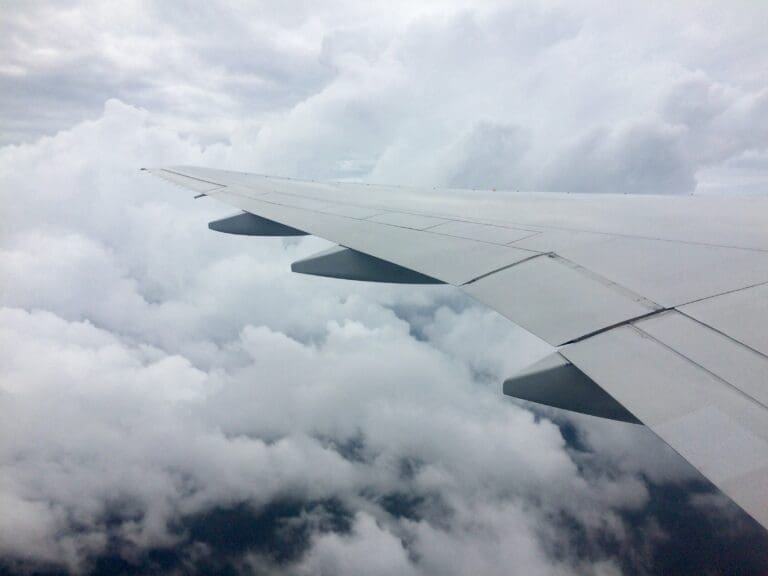
As we climbed, the Boeing remained on the runway heading for a couple of minutes and flew parallel with the Han River before reaching Gimpo Stadium at which point the Boeing turned onto a southerly heading and made its way towards Korea’s third largest city, Incheon. A few moments after Incheon’s endless sprawl of tower blocks appeared, the clouds swept in below and unfortunately remained there for the entirety of our journey south to Jeju that morning. This meant there was little to see during the flight besides the aircraft’s port wing. Thanks to the smooth climb, the seatbelt signs were extinguished as we climbed through 10,000 feet at which point the Purser performed the usual announcement requesting passengers to keep their seatbelt fastened whilst seated. At this point, the mood lighting was switched to its orange glow setting and looking around. Unsurprisingly given most passengers’ early starts, looking around, by this time it seemed that most of those around me had fallen fast asleep.
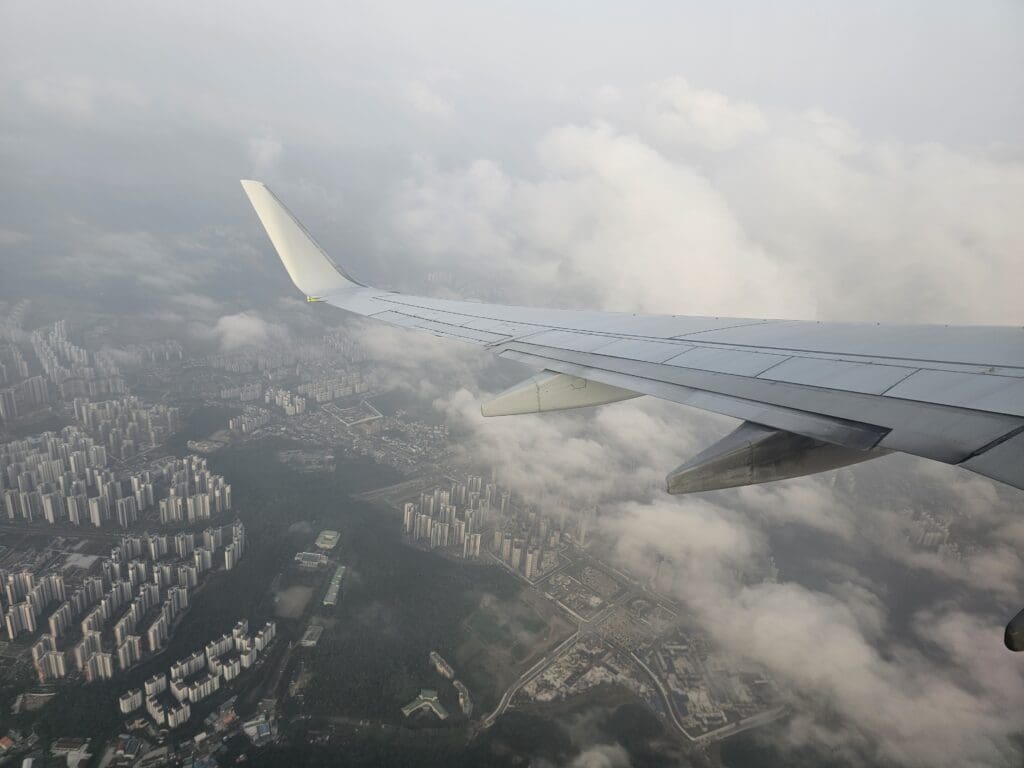
Heading south from Incheon, the aircraft skirted along Korea’s western coastline and passed the cities of Ansan, Hwaseong and Pyeongtaek. The latter is famous for its large port and American military base, known as Camp Humphreys. This features its own airfield which hosts a variety of types including Apaches, Blackhawks, Chinooks, Beechcraft RC-12 and the rarely seen EO-5C Crazy Hawk, a reconnaissance aircraft developed from the Dash 8 300. As we made our way from the skies of Gyeonggi Province and headed into those of North Chungcheong Province, the Boeing levelled off at its low cruising altitude of 28,000 feet. Moments after levelling off, the Captain’s voice filled the cabin as they undertook their only announcement of the flight in Korean and English. During this, they mentioned our cruising altitude in both metres and feet, our speed, the weather in Jeju, which was not too dissimilar to the gloomy conditions that we had left behind in Seoul, and our expected arrival time. Before ending this with a word of thanks, the Captain cautioned passengers against unfastening their seatbelt as we would likely experience some turbulence during the flight.
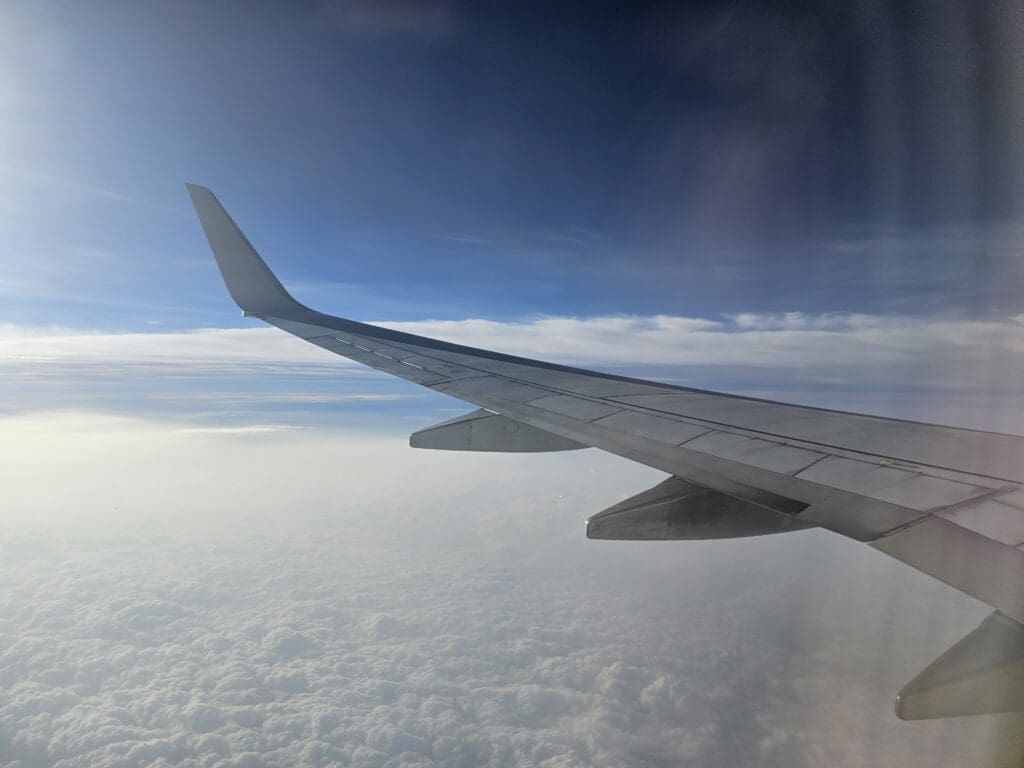

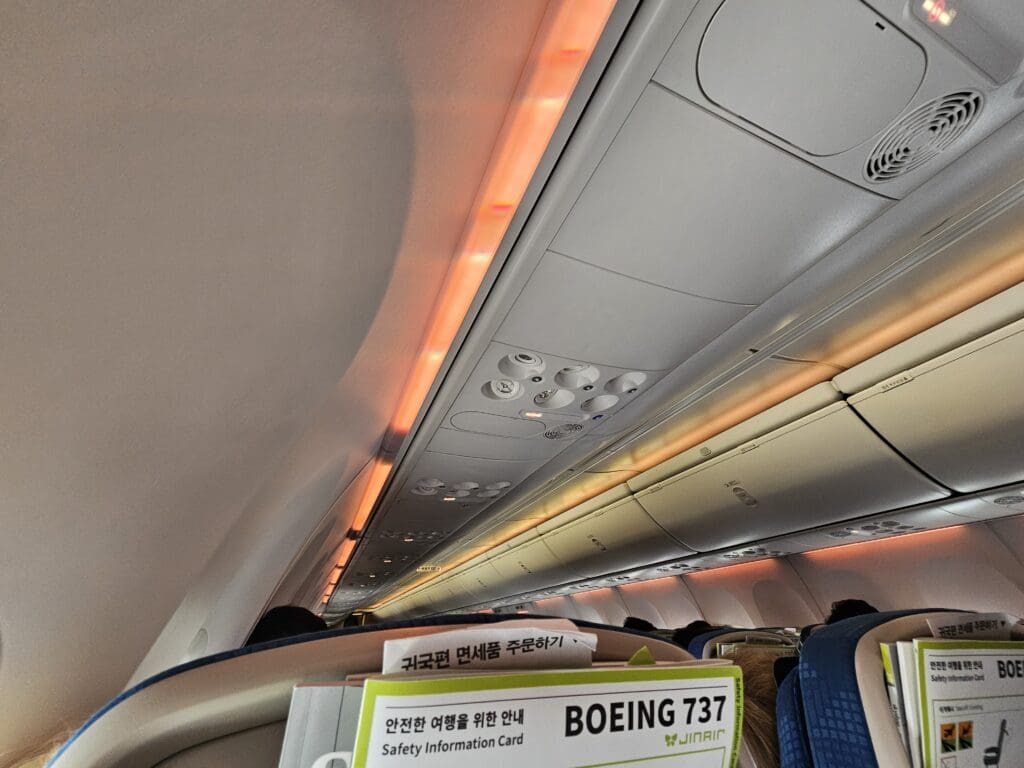
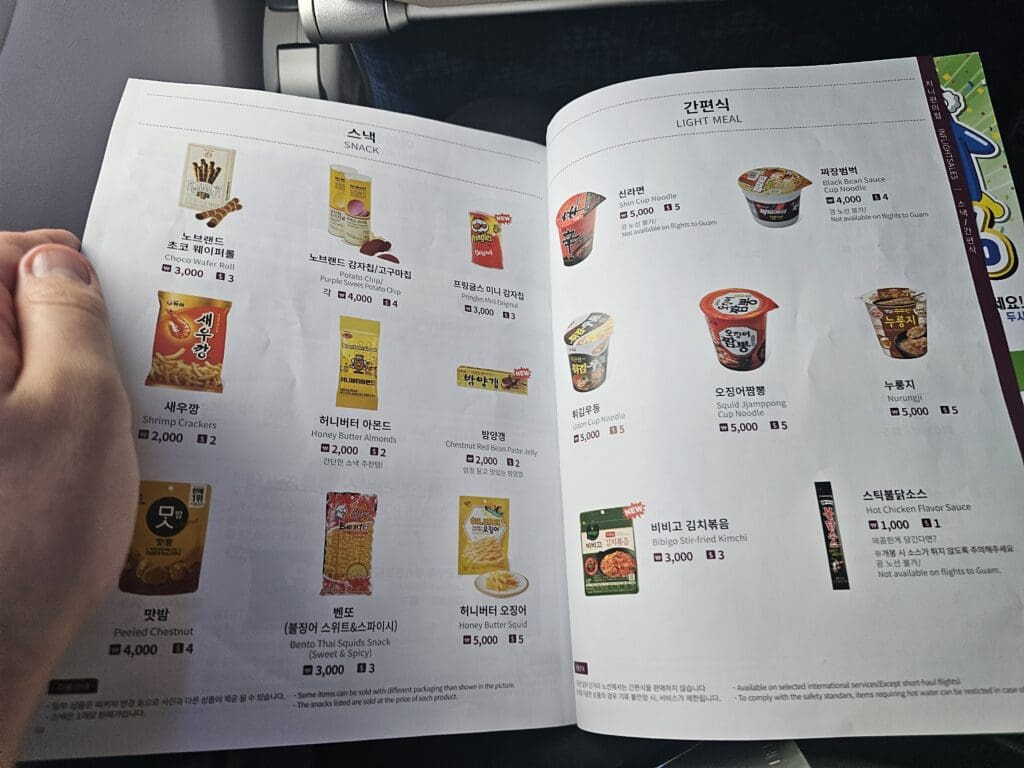
During my previous trip with Jin Air, despite being a low cost carrier, the airline offered complimentary soft drinks on its domestic services. As did their Asiana Airlines owned competitor, Air Busan. However, sadly times change and neither airline offers any complimentary offering to its domestic passengers. Instead, as we cruised down the Korean Peninsula, one of the cabin crew members walked down the cabin displaying the menu which could be found in the inflight shopping catalogue, implying that those who needed food or drink could stop them as they wandered down the cabin. However, as far as I could tell not a single passenger opted to purchase anything onboard that morning. Turning to briefly examine the selection of items for sale, these included a small range of snacks, the most substantial of which took the form of ramen which was priced at an acceptable 5,000 won. Meanwhile, an Americano would have set me back 5,000 won and a bottle of water, 2,000 won.
Given the length of the flight, inflight entertainment was most certainly not a necessity. However, with no inflight magazine, no wifi and no overhead entertainment, it is probably worth suggesting that those on longer slogs bring their own entertainment along with them. I should also mention that Jin Air’s Boeing 737 MAX 8 aircraft do feature paid-for wifi onboard, however, I’m not entirely sure as to whether this is something that will be rolled out across their entire fleet.
Returning to the route, heading through the skies of Chungcheong, the Boeing roughly followed the course of the Honam Line, a railway line that connects Seoul with Southwestern Korea. This took us past Asan and Iksan before we reached the coastal city of Gunsan. Making our way down the coastline of Jeolla, around halfway between Gunsan and Gwangju, after nine minutes at 28,000 feet, the aircraft could already be felt commencing its descent and we soon began to bump around a little.
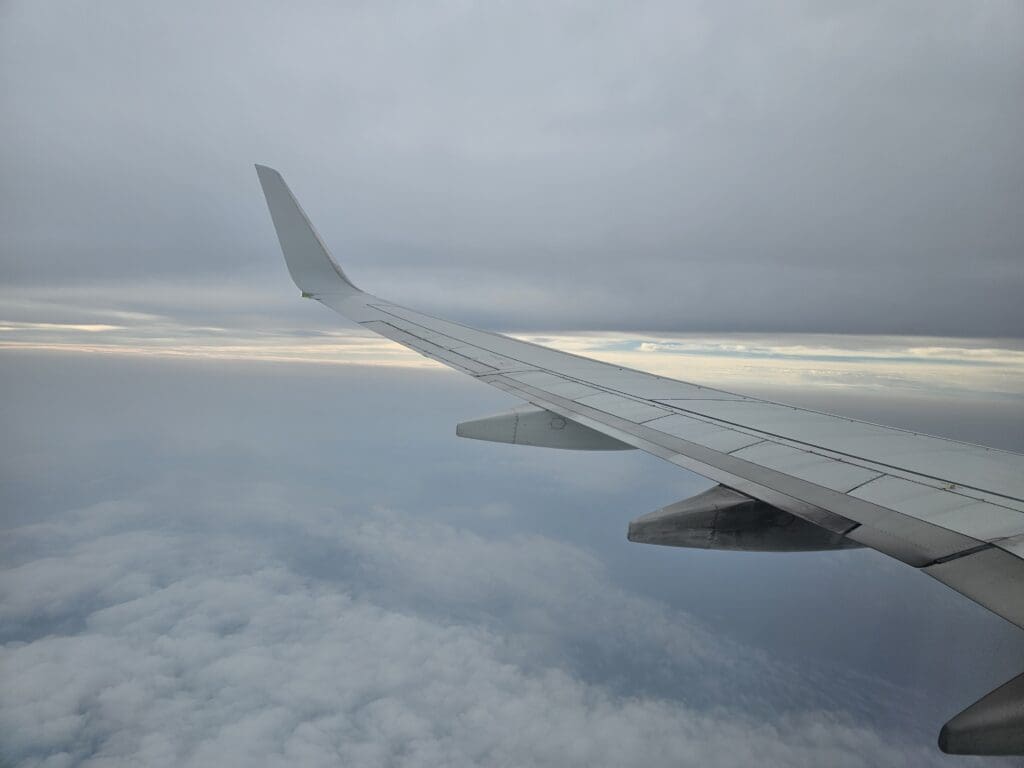
From Gwangju, the Boeing sped southwards towards the coastline of South Jeolla and as we neared this, a grand total of 29 minutes after we had taken to the skies, the seatbelt sign was reilluminated. At this stage, the Purser performed an announcement in Korean and English with all the usual pre-arrival warnings. Moments later, the cabin crew passed through the cabin, undertaking a a thorough pre-arrival check and taking their time to ensure that everything was secure and in place for our arrival.
As we descended, the Boeing left the coastline of the Korean mainland behind and voyaged out over the tens of islands that sit off South Jeolla’s coastline. However sadly, thanks to the clouds, none of these could be seen. Eventually, around halfway into our journey between the Korean mainland and Jeju, the clouds dissipated below and revealed the calm-looking waters below. A few minutes later, Jeju’s western coastline popped into view and I caught sight of Jeju’s famous Seongsan Ilchulbong volcano (the second most famous volcano in Jeju after Mount Halla!) and the island of Udo, both of where I had found myself a little more than a month prior.
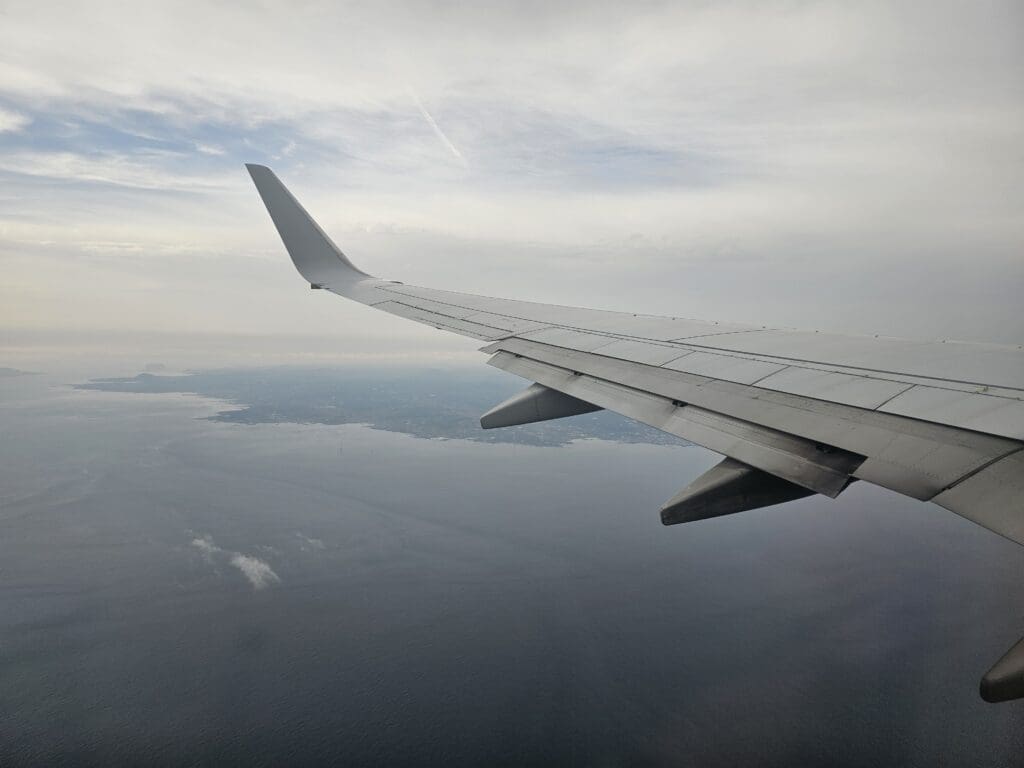
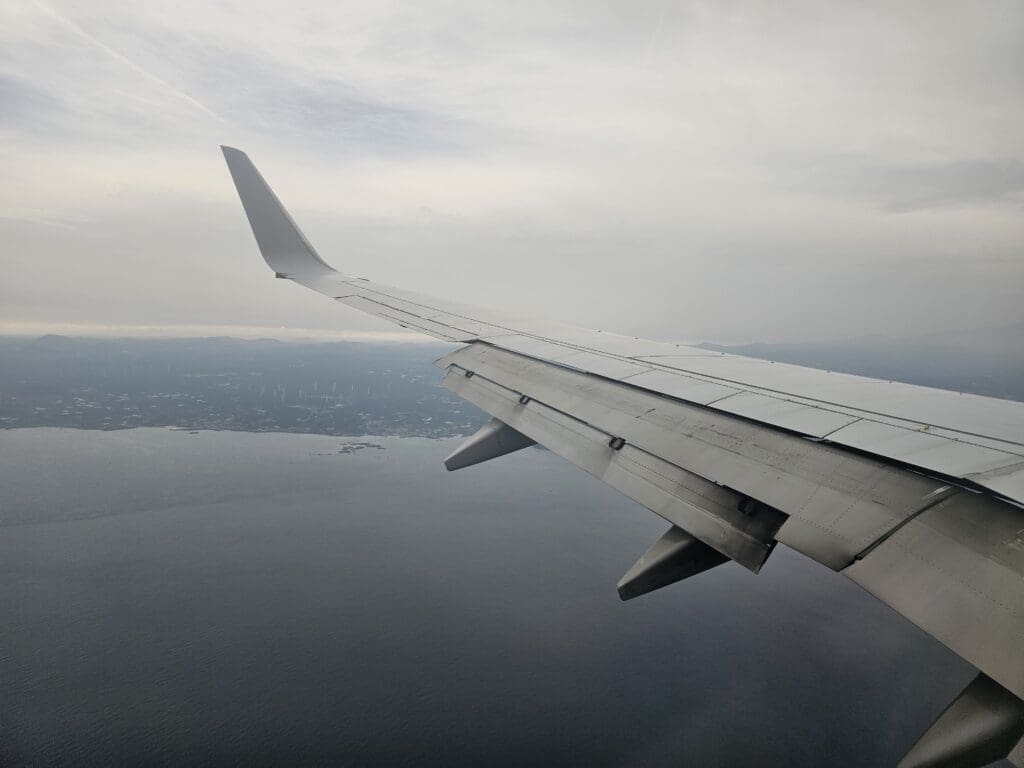
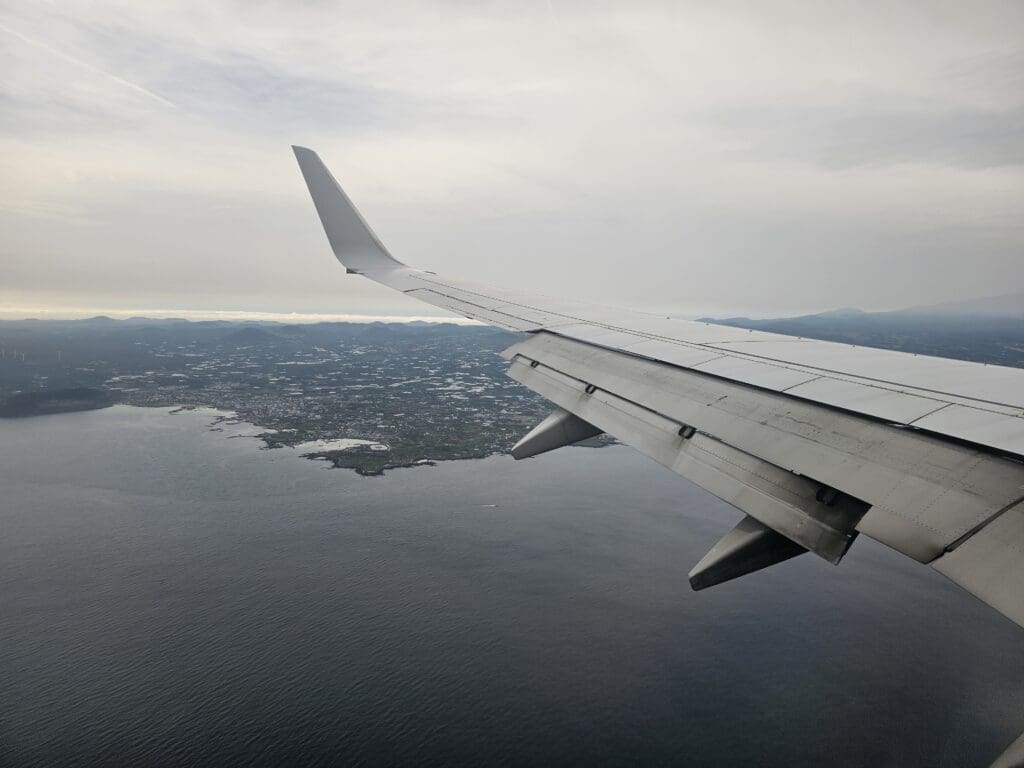
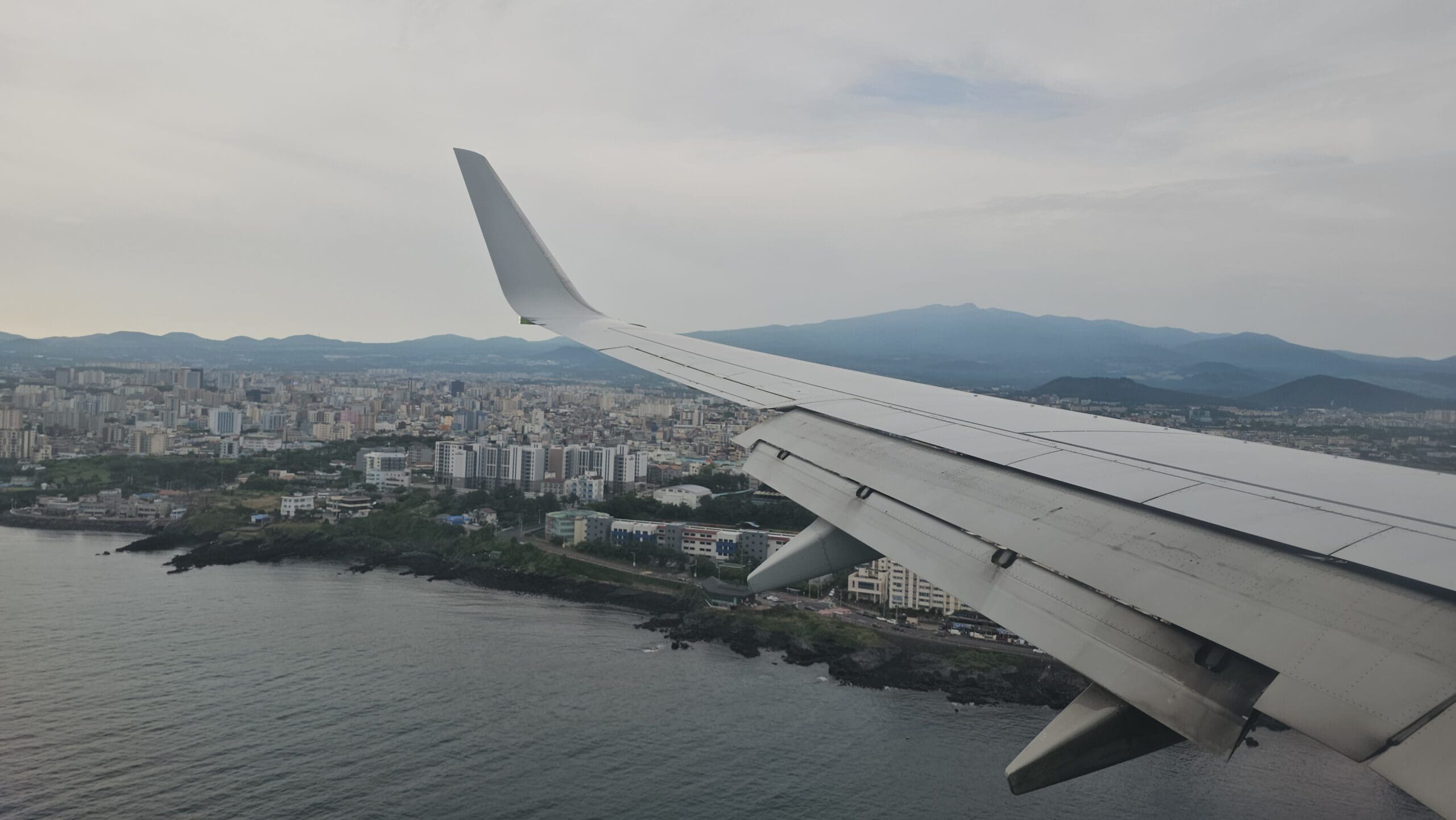
Having picked a seat on the left-hand side of the aircraft in the hope that we would be landing on Runway 25, I was in luck and would be treated to a short aerial tour of Jeju’s northern coastline. As we sank lower and lower, I was offered a superb view of the towns and villages on the northern shoreline, some of which are more touristy than others and feature hotels and resorts, whilst others feature factories and small ports. Trundling along the dark volcanic coastline, as we neared Jeju City the flaps and landing gear dropped into position in preparation for our arrival.
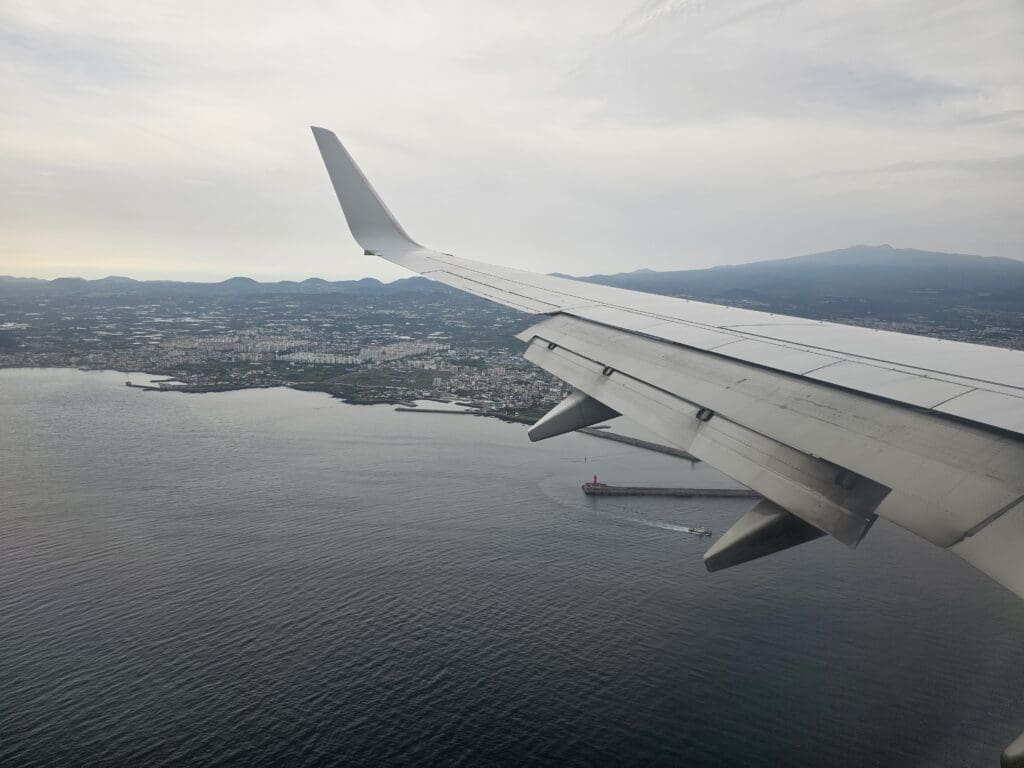
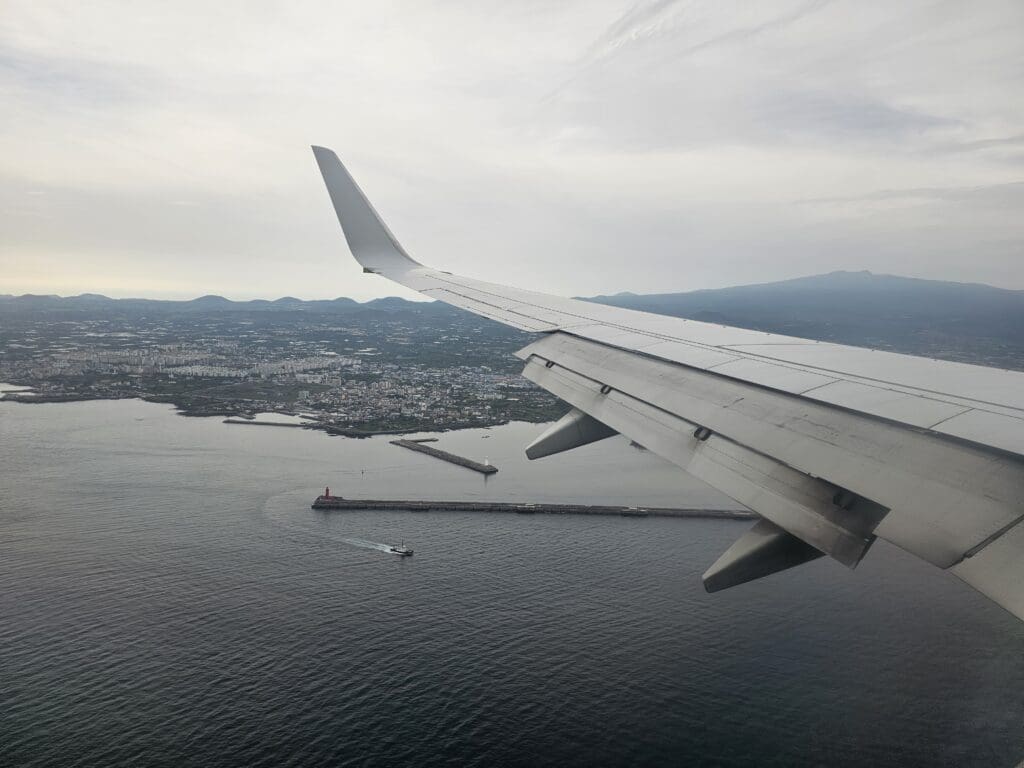
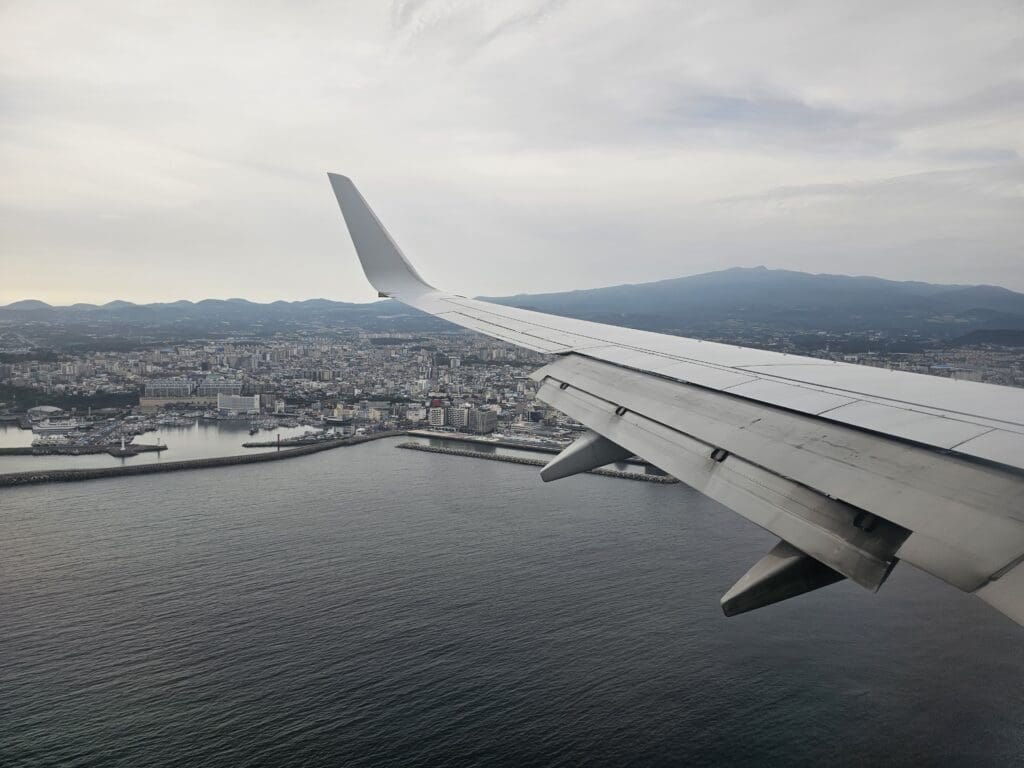
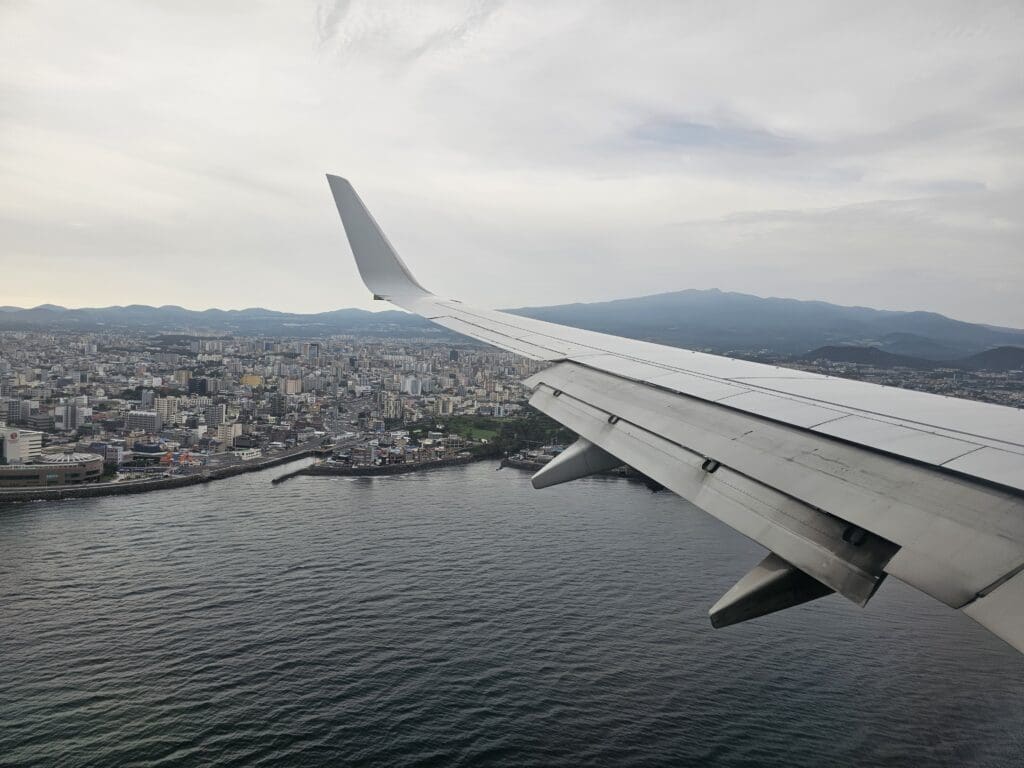
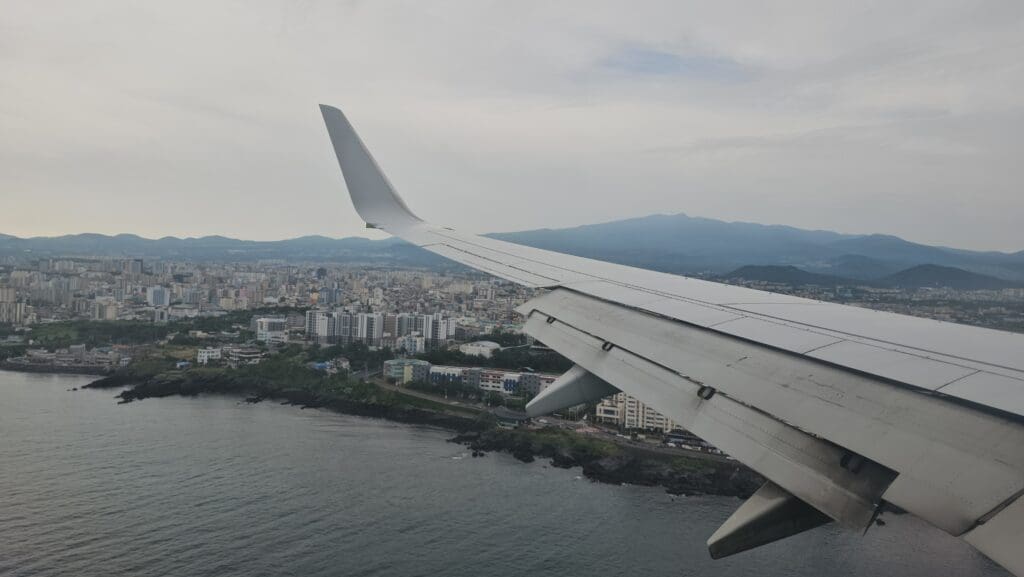
Indicating that we were nearly at our destination, Jeju City’s large port appeared where a mixture of freight vessels, ferries and other boats could be seen waiting to head out to sea, with this view soon replaced by the seafront at Tapdeong and Yongduam (Dragon’s Head Rock). With seconds to go until we touched down, the Boeing crossed over the coastline and whizzed past the local Korean navy base which hosts a squadron of Lockheed P-3 Orion submarine-hunting aircraft before we made a firm touchdown exactly fifty minutes after taking to the skies.
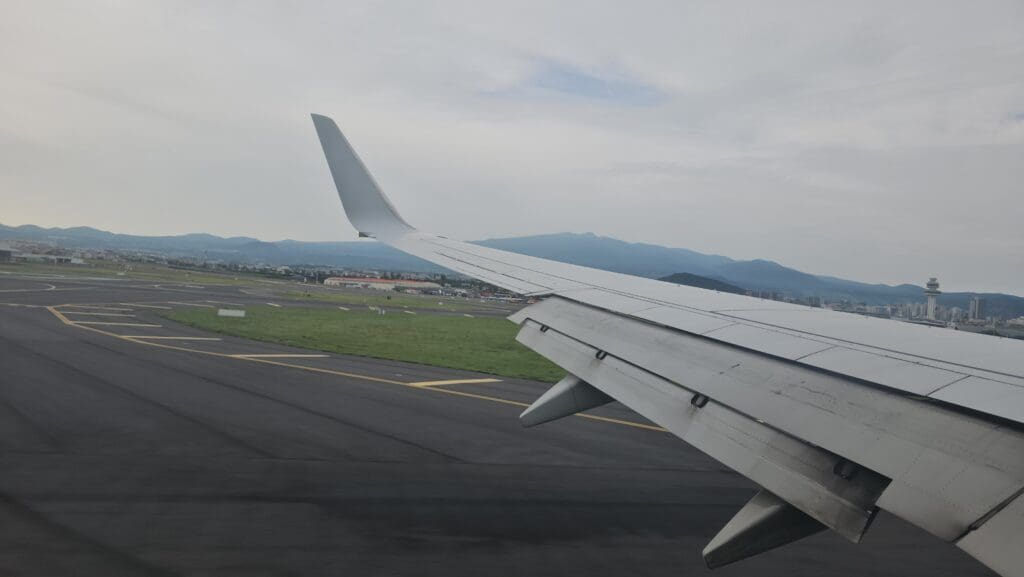
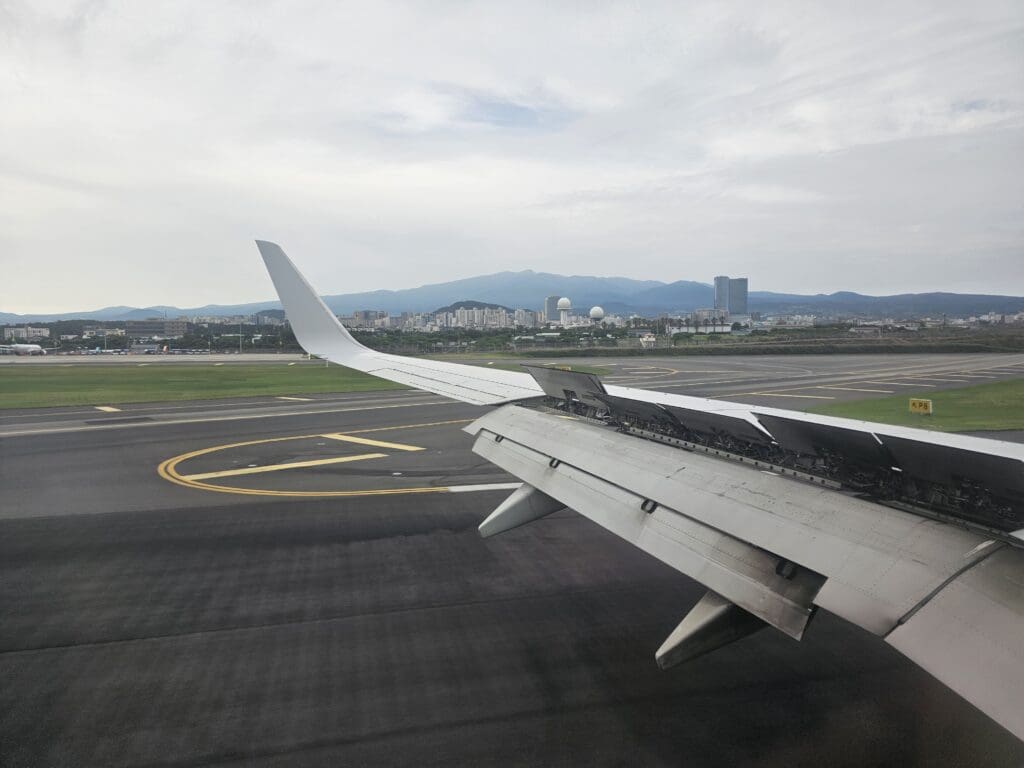
Once back on the ground, the Boeing decelerated with quite some vigour, travelling a little over half the way down the runway before vacating this to the runway and making a short taxi over to the terminal. In the usual manner, once the aircraft had vacated the runway, the Purser welcomed all to Jeju, thanked passengers for flying with Jin Air and advised passengers to remain seated. After a few minutes, the Boeing came to a gentle halt at Stand 7 at 0715 on the dot, meaning that we arrived right on time! Almost immediately the engines spooled down and the jetbridge was moved into position, whilst inside the cabin, many of my fellow passengers jumped up in a desperate rush to leave.
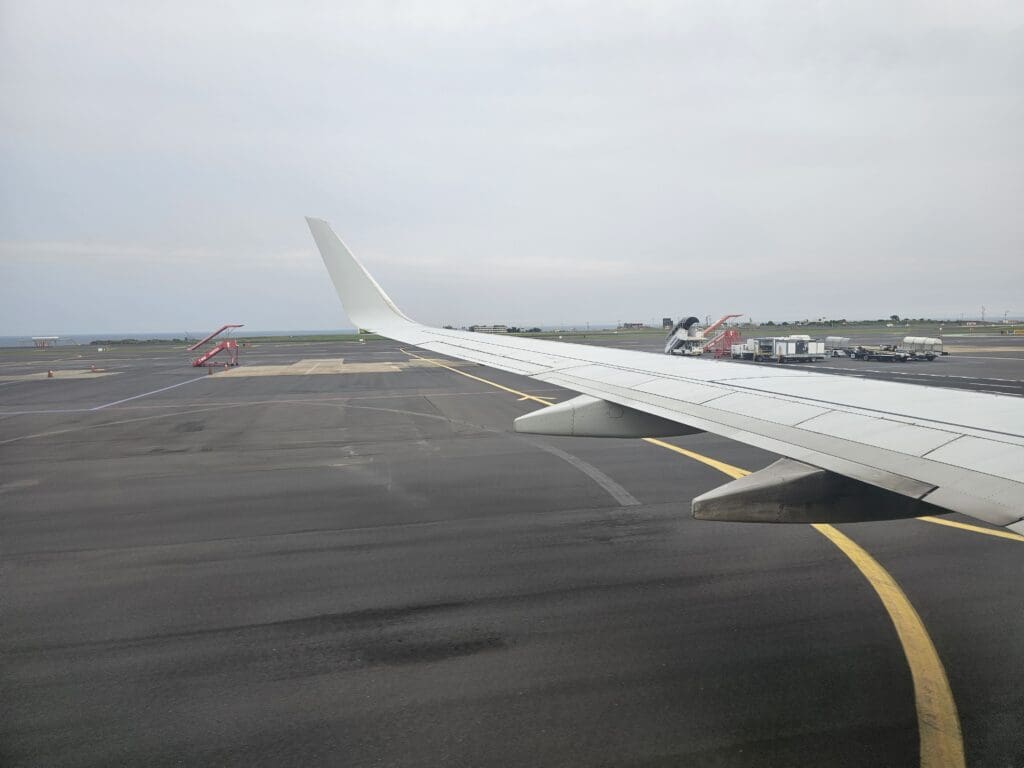
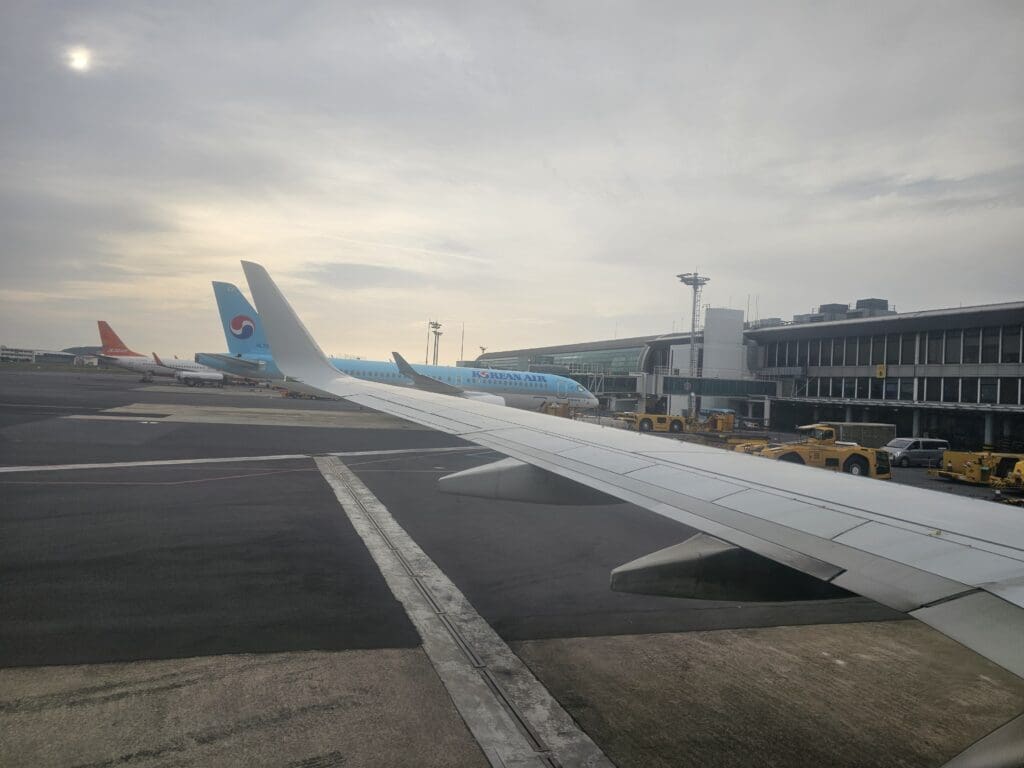
Not being in any major rush, I waited for the queue in the aisle to subside before I stood up and made my way forward. Upon reaching the forward galley, I thanked the crew members before stepping off the aircraft. That day, this aircraft would undertake an impressive total of eight more sectors and end its day in Vietnam! This would see the aircraft fly two rotations from Jeju to Daegu and back, before heading to Yeosu, and then to Seoul Gimpo. From Seoul, the aircraft would fly to Busan and then operate an evening flight to Danang, returning to Seoul Incheon the next morning. From our parking position, almost nothing of a walk was needed to reach the baggage claim area, and after heading down the escalators, with nothing to pick up, I steamed through this and made my way into the landside arrivals area no more than two minutes after stepping off the aircraft.
Summary
This flight left me with very mixed feelings about Jin Air. The aircraft was clean and in tip-top condition, the crew were incredibly friendly and the seat was well-padded. However, I most certainly could not have imagined spending much longer onboard and by the time we reached Jeju, I was in quite a rush to stretch my legs. Thus, whilst I would probably consider Jin Air for domestic hops in the future, I would be a little hesitant to fly with them on sectors of longer than say two hours.