A Taste of Bhutan: Bangkok to Kolkata on a Bhutan Airlines A319
Background
Sitting high in the Himalayas, the landlocked Kingdom of Bhutan is on many a more intrepid traveller’s bucket list. Surrounded on three sides by India and by China to the north, amongst other things the Land of the Thunder Dragon is famous for its remote Buddhist temples and monasteries, vibrant festivals and spectacular mountainous scenery. However, since Bhutan opened its doors for tourists in 1974, aware of the potential negative impact of mass tourism, the country has maintained a restrictive tourism policy. This requires almost all nationalities to apply for a visa in advance, and pay a $100 Sustainable Development Fee for each day they stay in the kingdom. Meanwhile, until recently, almost all tourists were required to visit as part of an organised tour, ultimately limiting tourists’ freedom within the country and making even just a short stay in Bhutan a highly expensive affair. Whilst I would have jumped at the opportunity to tour around the Land of the Thunder Dragon, enjoying neither endless time nor deep pockets, this was not something that I had planned on doing for quite some time!
For aviation enthusiasts, Bhutan is known across the world for the challenging approach to its main international gateway, Paro International Airports. Surrounded by high mountains, this requires aircraft to wend their way through deep mountain valleys before slamming down on the airport’s relatively short runway. This is home to two small airlines, who combined operate a fleet of just seven fixed-wing aircraft – one ATR-42, five Airbus A319s and one Airbus A320neo. These comprise of the state-owned flag carrier, Druk Air, and the relative newcomer, the privately owned Bhutan Airlines.
For those looking to get a taste of Bhutan without stepping foot in the country, both Bhutan Airlines and Drukair have long operated a host of fifth freedom flights. As per late 2023, Drukair operated services from Bangkok to both Dhaka and the Indian city of Siliguri, as well as between Singapore and Guwahati. Meanwhile, Bhutan Airways connected Bangkok with both Gaya and Kolkata, and Delhi with the Nepali capital, Kathmandu. Knowing that I would be unlikely to visit Bhutan at any point in the near future and needing to get between Bangkok and India, as an aviation enthusiast it was only right that I soon attempted to work a ride on a Bhutanese airline into my itinerary!
Being on both a budget and a tight itinerary, I soon discovered that I only had one real option. This involved hopping from Bangkok to Kolkata on Bhutan Airlines’ Sunday morning service. Needing to end the day in Delhi, I would spend the best part of the day in Kolkata before heading westwards to the capital on an evening Vistara flight. Seeing as there was no price difference between Bhutan Airlines’ website and other flight booking engines, I decided to try my luck at booking directly with the airline and was soon greeted by a scrolling montage of promotional images as I touched down on Bhutan Airlines’ slightly outdated homepage.
Wasting no time, I soon selected the departure and arrival points from the limited list of airports served and selected that I was an ‘Other National’ . Once I hit search, I was soon presented with the only flight option on my chosen departure day, with this featuring two fare options. These consisted of the ‘Special Economy Fare’ for $141.85 or ‘Business Class’ for $315.75. Examining the inclusions of the former, this would enable me to take 20kg of hold luggage and 7kg of hand luggage. Meanwhile, had I needed to cancel, I could have done this for a reasonable $35.40 penalty if done at least ten days before the flight, rising to $70.80. Picking the former, without the option to add any additional extras, I was then taken to the Thai company, K Bank’s payment processor and made a quick and easy payment. Whilst Bhutan Airlines’ website was not particularly modern, serving its purpose and encountering no issues whilst booking, I ultimately could not find reason to complain about this and soon received my ticket via email.
Bhutan Airlines offers an internet check-in service which opens up 48 hours prior to departure. However, seeing as I had a one-way ticket to India and would thus need my visa checked, I was sceptical that this would actually work. Much to my surprise, this did, and after entering all the required passport details, I was able to select any vacant seat for free before I received my boarding pass via email.
About the Airline
For decades, Bhutan’s state-owned carrier Drukair enjoyed a total monopoly in the country’s civil aviation industry. Formed in 1983, the airline commenced operations to Kolkata with a nineteen seat Dornier 228 jet before improvements to Paro Airport’s runway enabled them to add their first jet aircraft, a BAe 146 and later an Airbus A319. However, as time passed and the demand for flights to, from and within Bhutan grew slightly, so did the pressure on the Bhutanese Government to allow for the establishment of a privately owned rival. As such, in 2011, Bhutan’s largest conglomerate, the Tashi Group was permitted to commence operations on domestic services to Bathpalathang and Yonphula.
Initially known as Tashi Air, the carrier operated its first services in December 2011 with the small yet capable Pilatus PC-12. However, these lasted just six months before the airline suspended operations. Fortunately, in October 2013, the airline recommenced services as Bhutan Airlines operating under an entirely different model. Initially wet-leasing an Airbus A320 from the now-defunct Lithuanian ACMI specialist Small Planet Airlines, the carrier commenced services between Paro and Bangkok and Kolkata, before adding their own Airbus A319s the following year. Today, Bhutan Airlines continues to operate a very modest fleet of two Airbus A319s and deploys these on services to destinations in India, Nepal and Thailand from their hub in Paro.
The Journey
Following a superb Malaysia Airlines flight from Kuala Lumpur, I touched down in Thailand with around eleven hours to go until my flight to Kolkata. Hardly having the time to explore the streets of Sukhumvit or Khao San Road, I thought it best to stay as close to the airport as possible, yet, not wanting to remain airside I passed through immigration and navigated my way to one of the cheaper accommodation options on the airport grounds. This took the form of the Boxtel, a cluster of small wooden huts complete with a bed and little else, providing a quiet, clean and comfortable place to rest but little else. Located just above the terminal’s railway station, I spent £42.72 for the convenience of staying just across from the main terminal which seemed to be a fair price although I could have definitely managed to locate a much more luxurious hotel room in the surrounding neighbourhoods for less than that had I had the time and energy to do so. However, overall my little box was comfortable enough and my only complaint was that the nearest toilets were a few minutes’ walk away in the arrivals area of the terminal.
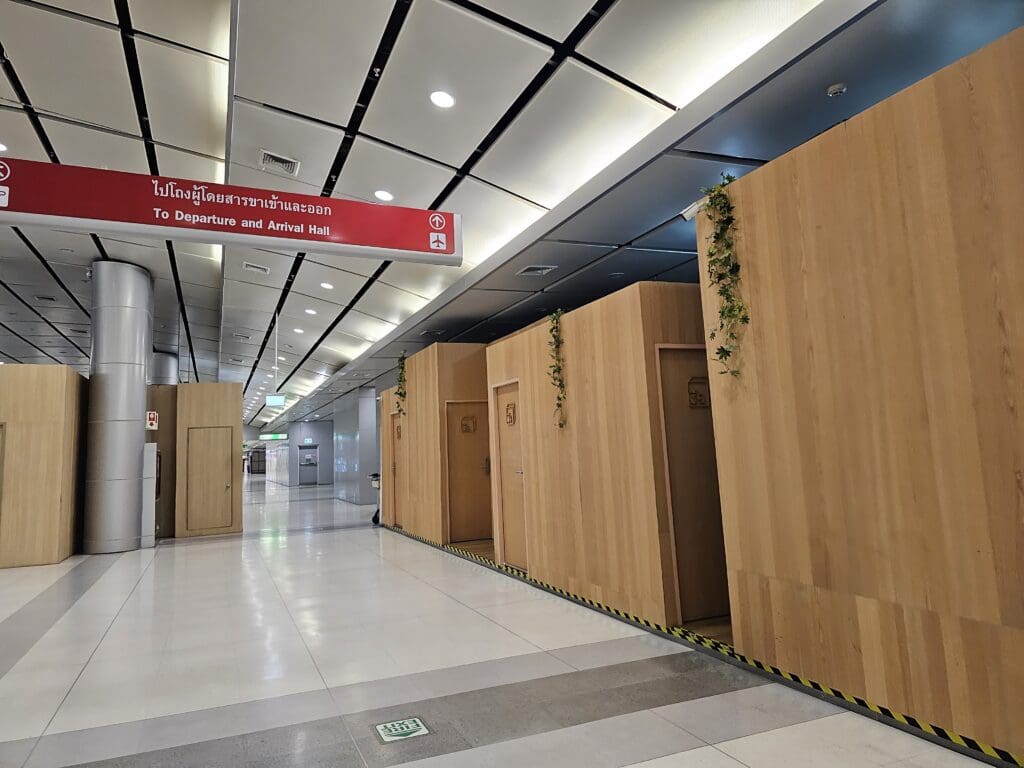
Following a short night’s sleep, I woke up at the ungodly hour of 0330 and returned my key to the reception desk. Once done with the check-out formalities, I began the short journey up to departures. In spite of being one of Asia’s busiest airports, simplifying things, Bangkok Airport features one single large terminal which takes the shape of two conjoined plus symbols plus a recently opened satellite terminal which at the time of my trip only served Thai AirAsia and AirAsiaX flights. To reach the departure level, I ascended a series of travelators, passing the arrivals level, followed by a floor sandwiched between arrivals and departures which featured plenty of cafés, restaurants and shops, most of which were open at that time, before arriving in the terminal’s humongous check-in hall. There, seemingly endless rows and rows of check-in islands could be seen along with various statues, murals and pieces of artwork which gave the terminal a suitably Thai feel.
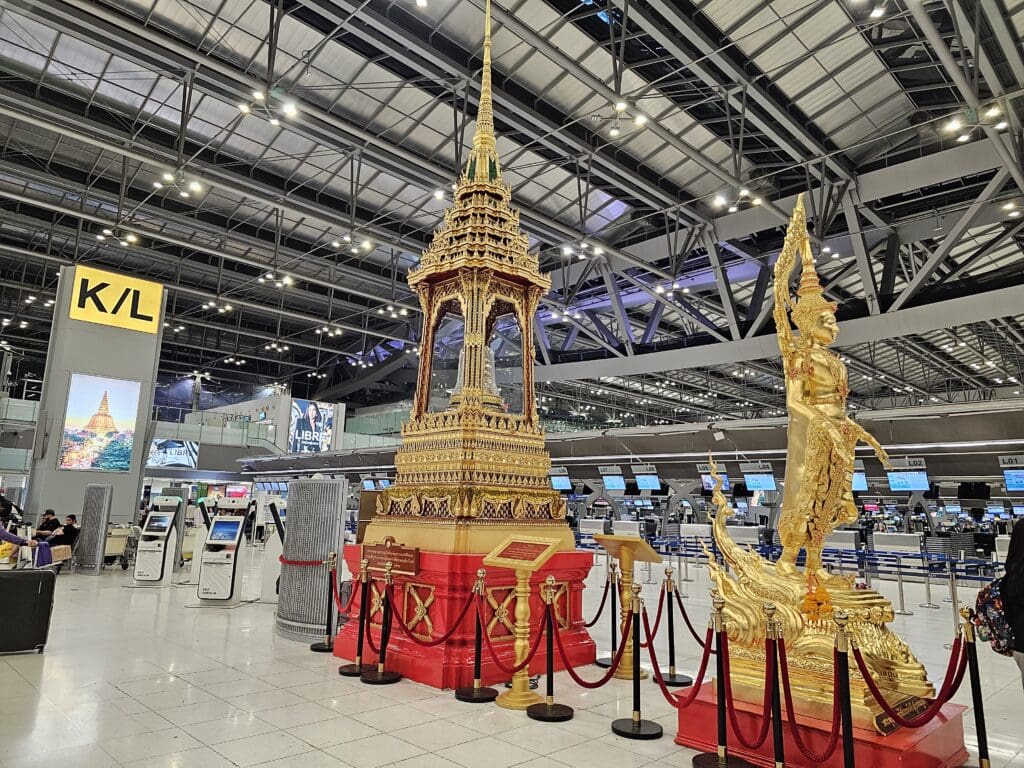
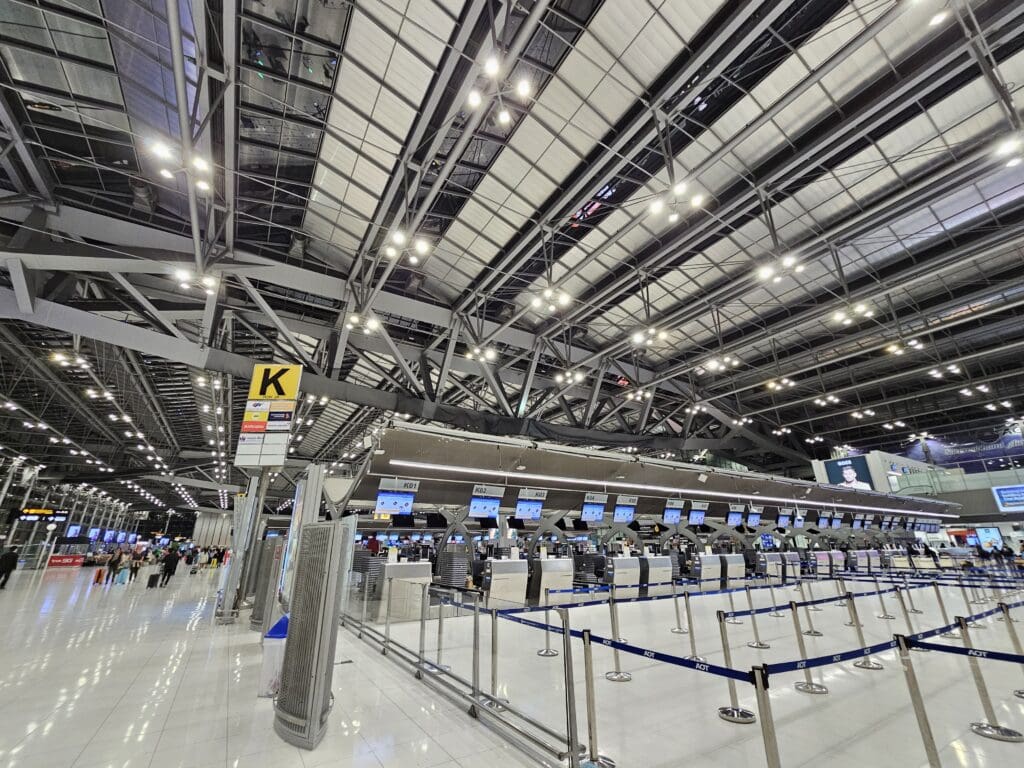
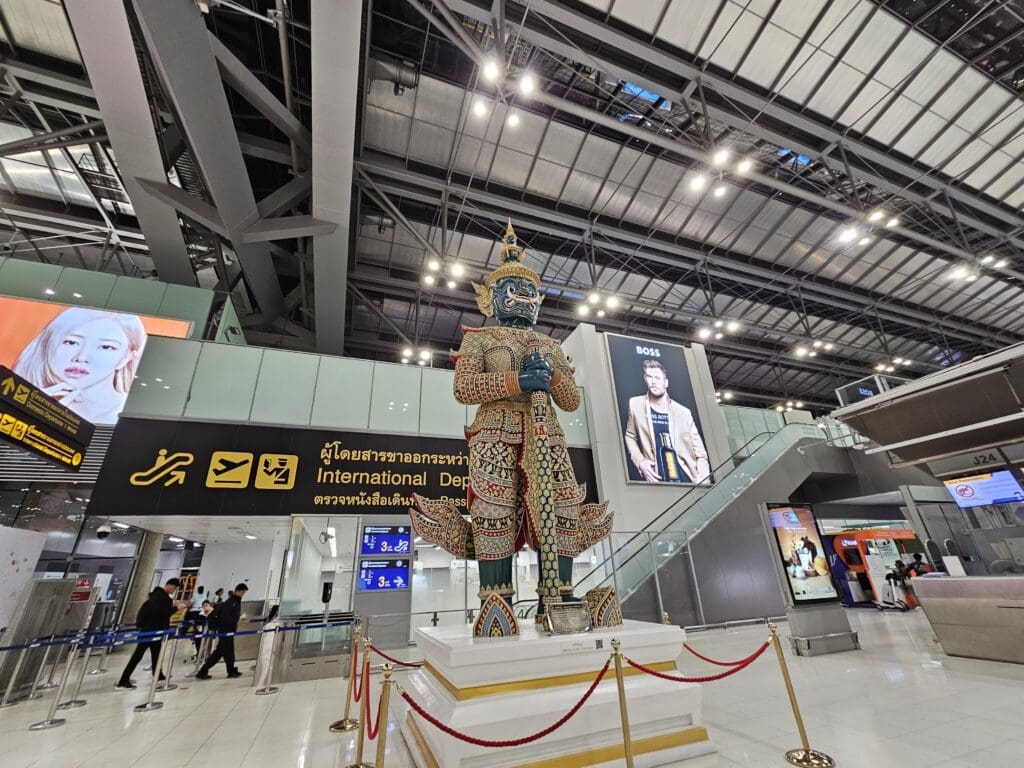
With the morning rush in full swing, unsurprisingly the terminal seemed to be rather busy, with some people rushing around and others sprawled out on the floor still asleep and waiting for check-in to open. Overall, in spite of the busyness, I found the landside area of the terminal to be clean and tidy, although unfortunately the same could not be said about the toilets! A quick look at the departure boards revealed that check-in for my flight would take place at the K check-in island. Seeing as I had checked-in online and was in possession of a boarding pass, and with no hold luggage to check-in, I decided that I would only stop by a check-in to collect a paper pass if this was quiet. However, upon arriving there a fairly long queue of passengers, most of whom appeared to have plenty of luggage piled high on trolleys, could be seen and I thus decided to make a beeline for security.
After scanning my digital boarding pass on the automated gates, these took my photograph before allowing me to enter and I soon arrived at the surprisingly empty security check. With most checkpoints open but almost no passengers, I was able to walk straight up to one of these and underwent the usual series of checks. Whilst I was not required to remove liquids or electronics, my power bank flagged up and I ended up having to take this out for a quick inspection; however following a glance of this to ensure that this was in the allowed capacity and was not some industrial class battery, the friendly security staff member permitted me to continue onwards. From there, I headed down a short escalator and arrived at the immigration hall where, like security, most checkpoints were open in spite of there being an almost total lack of passengers. Walking straight up to a desk, I handed over my passport and no more than thirty seconds later, this was stamped and returned to me, leaving me with plenty of time to explore the delights of Bangkok Suvarnabhumi Airport.
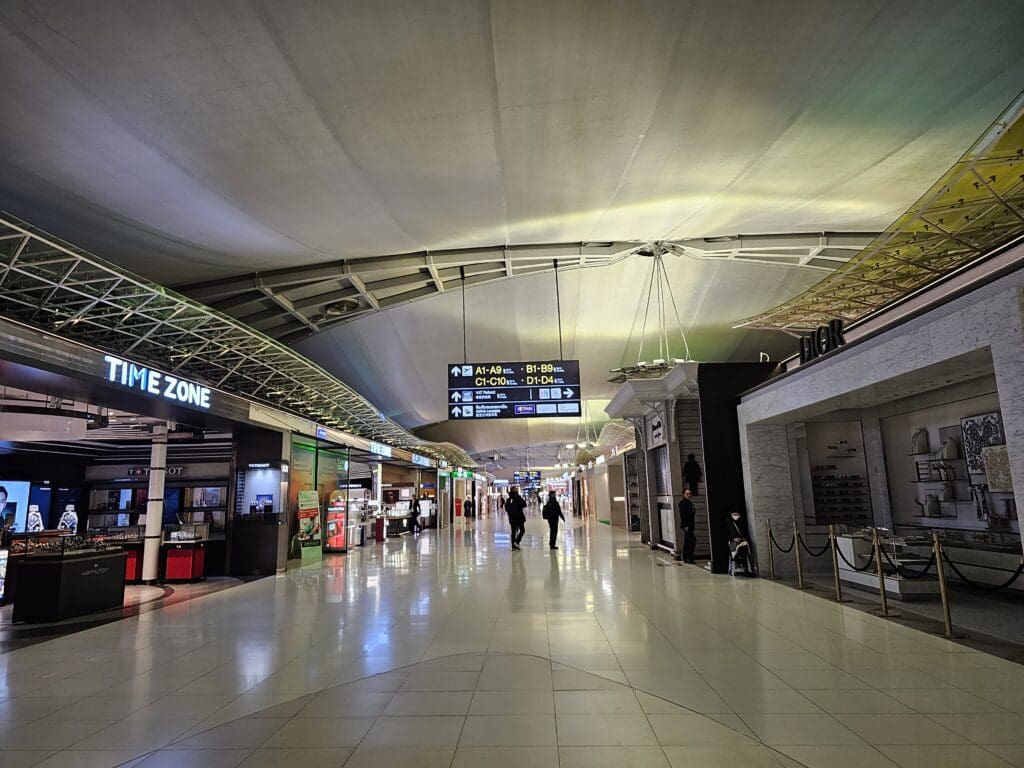
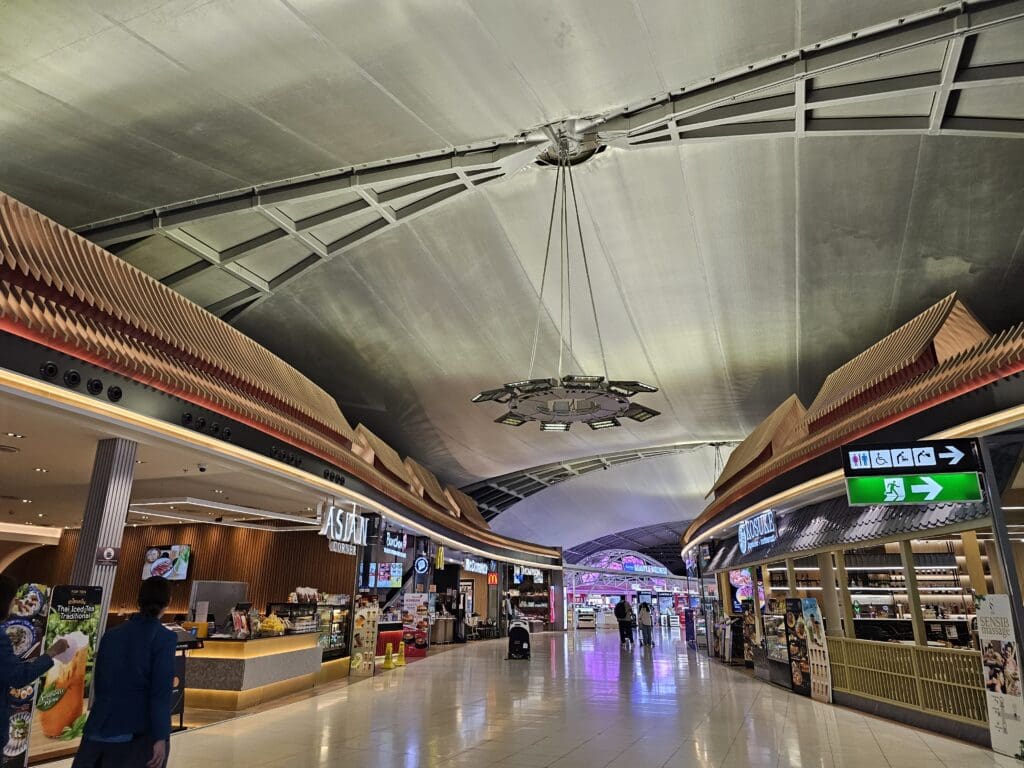
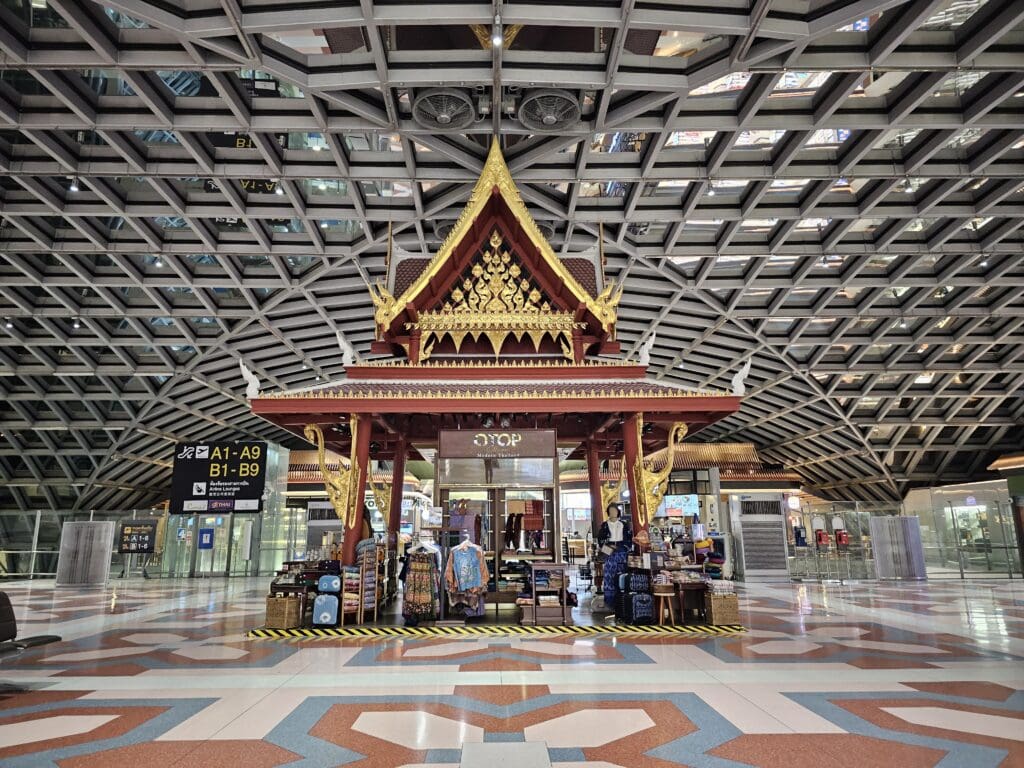
Immediately upon entering the airside area, I was greeted by the sight of one of the airport’s multiple ornate and impressive sculptures. Depicting the ‘Churning of the Milk Ocean’, I admired this for a while before heading to grab my first overpriced airport coffee of the day. One cappuccino and 165 Thai Baht (around £3.70) later, I was ready to have a wander around and explore the sights of the airside portion of the terminal. Given the relatively young age of the airport, and, designed by the late famed German-American architect Helmut Jahn, I was not surprised to find the terminal to definitely be one of the more pleasant terminals I have had the pleasure of passing through. Made with plenty of glass and metal, this seemed to be modern, bright and airy, and far more memorable in its design than most airports back home in the UK! As one would expect, plenty of shops, cafés and restaurants could be seen dotted around; however, upon arriving in the airside area, most of these were either closed or just opening up for the day. Unfortunately, yet, as is often the case at major airports, those looking for budget options would have been left disappointed as I failed to come across any convenience stores or cheaper eateries.
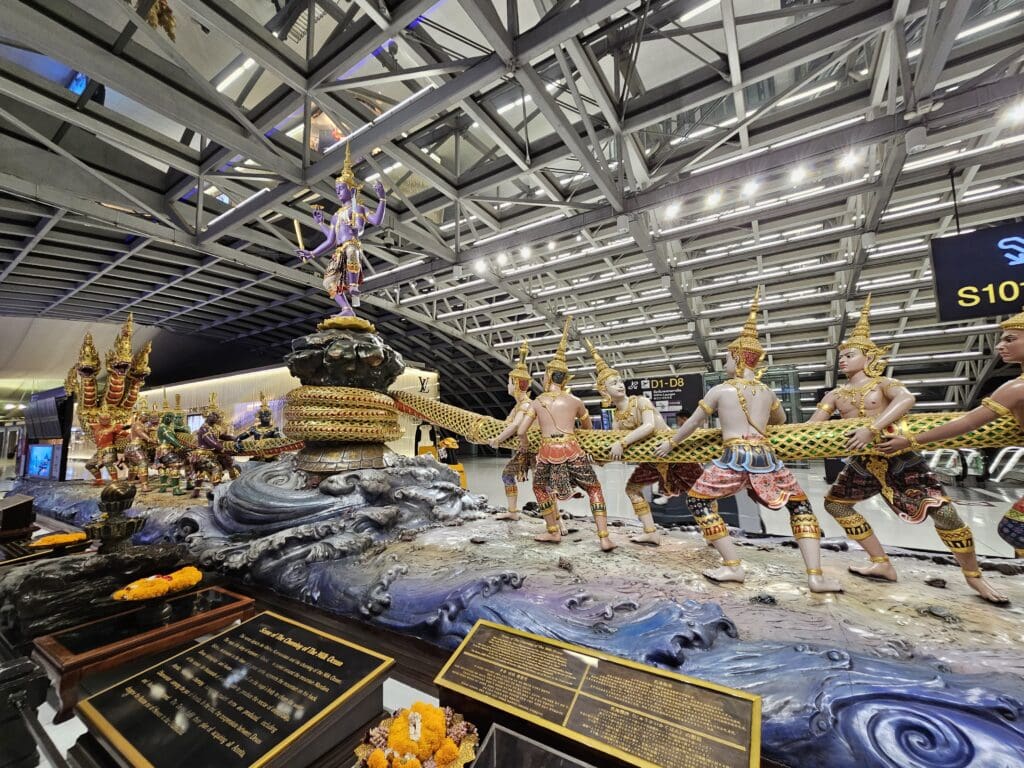
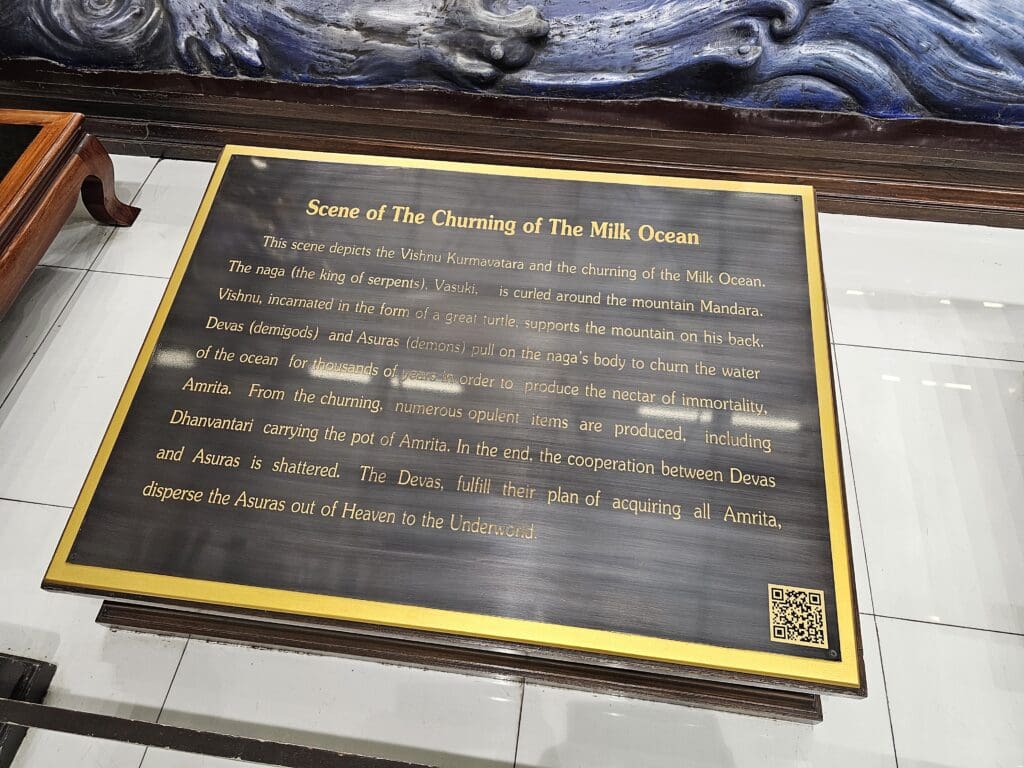
Away from its facilities, I was very pleased to find the terminal to be clean and tidy, with plenty of cleaners seen doing the rounds during my stay. Meanwhile, a fair number of charging points could be found whilst fast complimentary wifi was offered. Unfortunately for enthusiasts, thanks to the terminal’s layout, unobstructed airside views are a little hard to come by. However, seeing as the sun was yet to rise for much of my stay, this was not a major issue and I instead spent the majority of my stay wandering around before taking a seat and browsing the web. Nevertheless, I did manage to spot a few Thai Airways tails plus a China Airlines Airbus A321neo during my stay. That morning, as time passed more and more passengers began to arrive in the terminal ready to head off to destinations across Asia and beyond. Had I not wished to head off on Bhutan Airlines, looking at the departure boards, flights to Guangzhou, Istanbul, Kolkata, Kuala Lumpur, Paro and Shenzhen could all be seen departing prior to my flight, with these operated by Bangkok Airways, China Eastern, Druk Air, SpiceJet and Turkish Airlines. However, as one would expect, the majority of departures at that time took the form of domestic services, with locally based aircraft heading off on their first flights of the day.
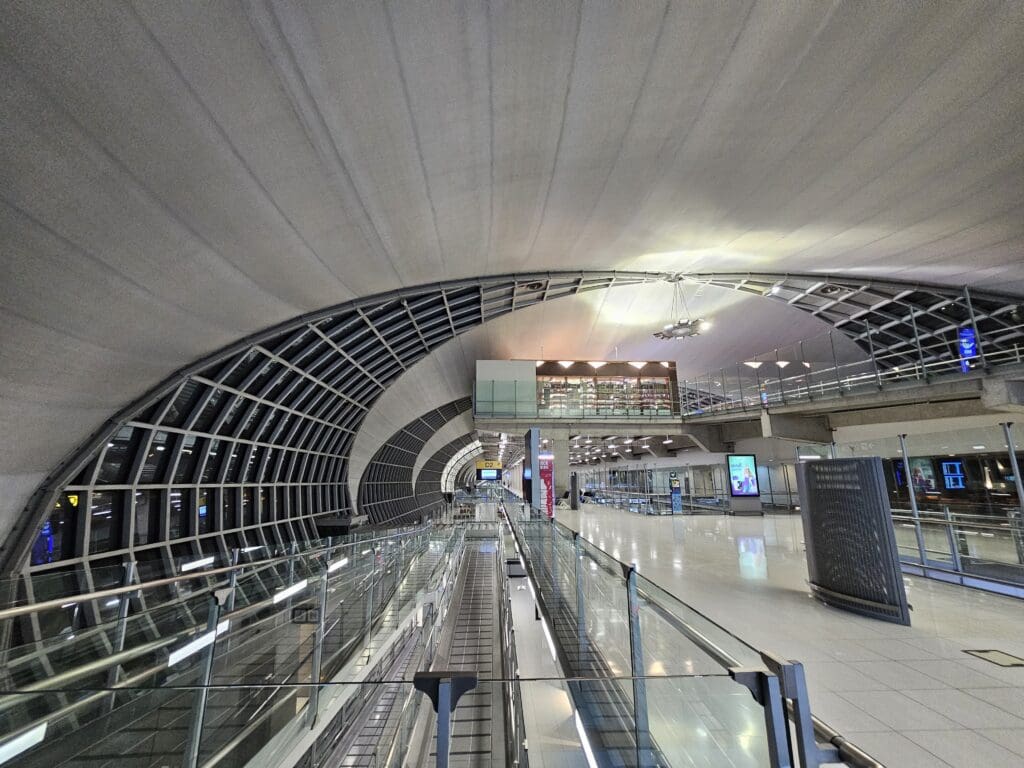
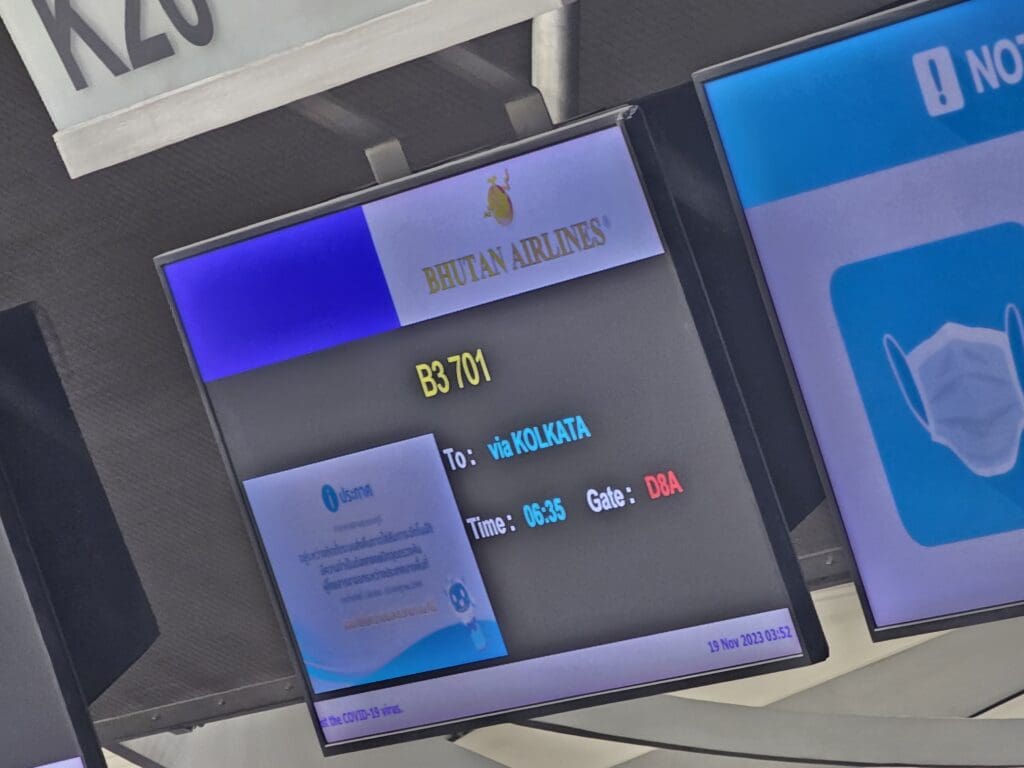
That morning boarding for Bhutan Airlines’ service to Paro via Kolkata was scheduled to commence at 0540 and take place through gate D8A, a bus boarding gate. A little before of this time, the crew could be seen making their way to the gate for their own shuttle out to the aircraft, presumably having operated the Paro to Bangkok via Gaya service the previous day.
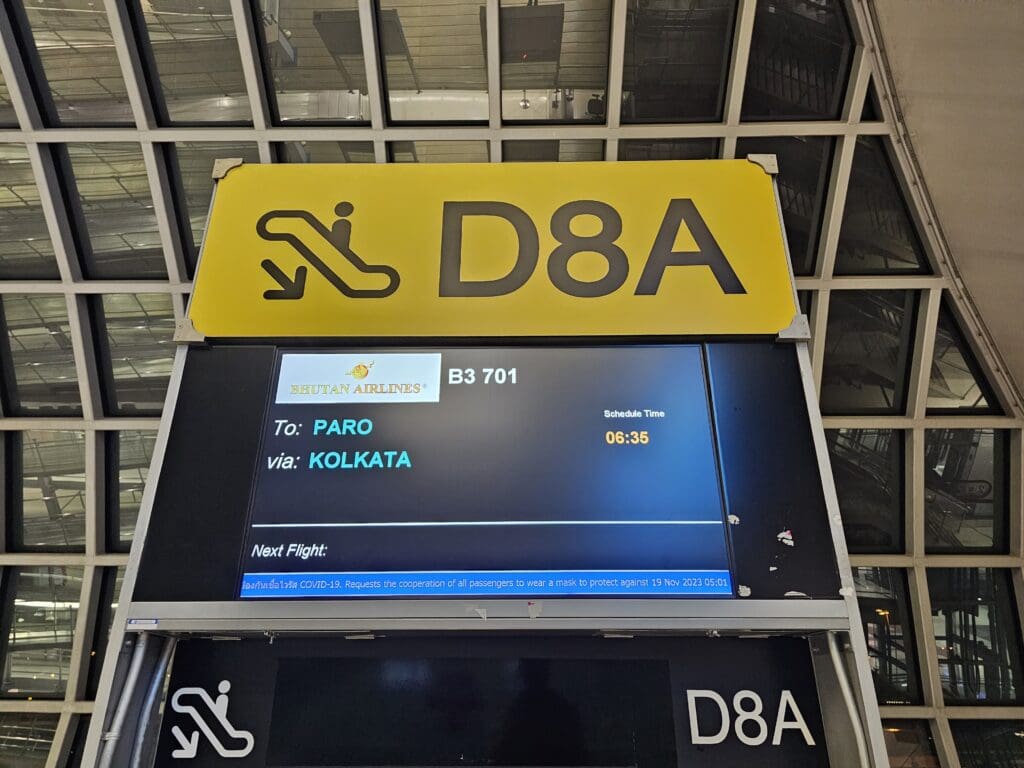
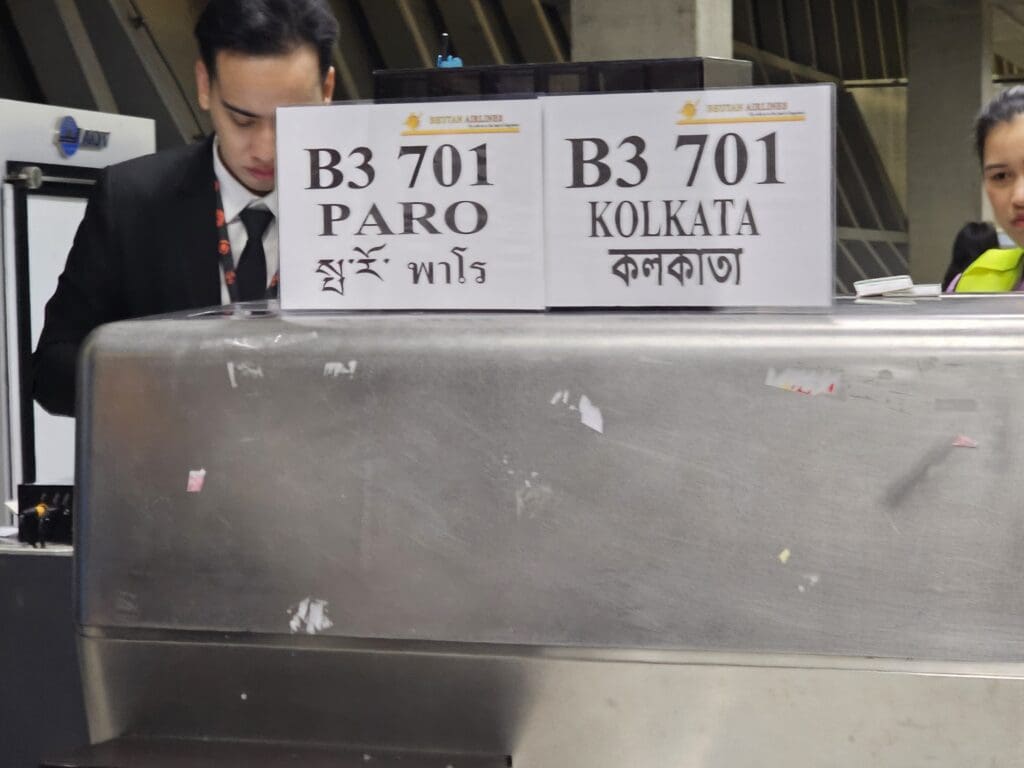
With 55 minutes to go until the flight’s scheduled departure time, an announcement was made inviting passengers to board the aircraft. This was not undertaken in any particular order and all passengers were invited to board at the same time. Soon joining the relatively short queue of passengers, upon presenting my boarding pass I received some strange looks from the gate agent as if this was their first time seeing a Bhutan Airlines mobile boarding pass. After writing my seat number and name down, they radioed for back up before advising me to take a seat as my Indian visa would need to be checked. After advising them that I could show them this, they informed me that their supervisor would have to check my visa, and so, following their instructions, I took a seat and waited. Thankfully, their supervisor appeared a short time later and came in the form of Bhutan Airlines’ local representative, following a quick check of my e-visa and passport, after taking a photo of this they advised me to rejoin the queue and so I did so before having my boarding pass scanned and passport checked. From there, I made my way down the escalator and soon darted on to the waiting Cobus.
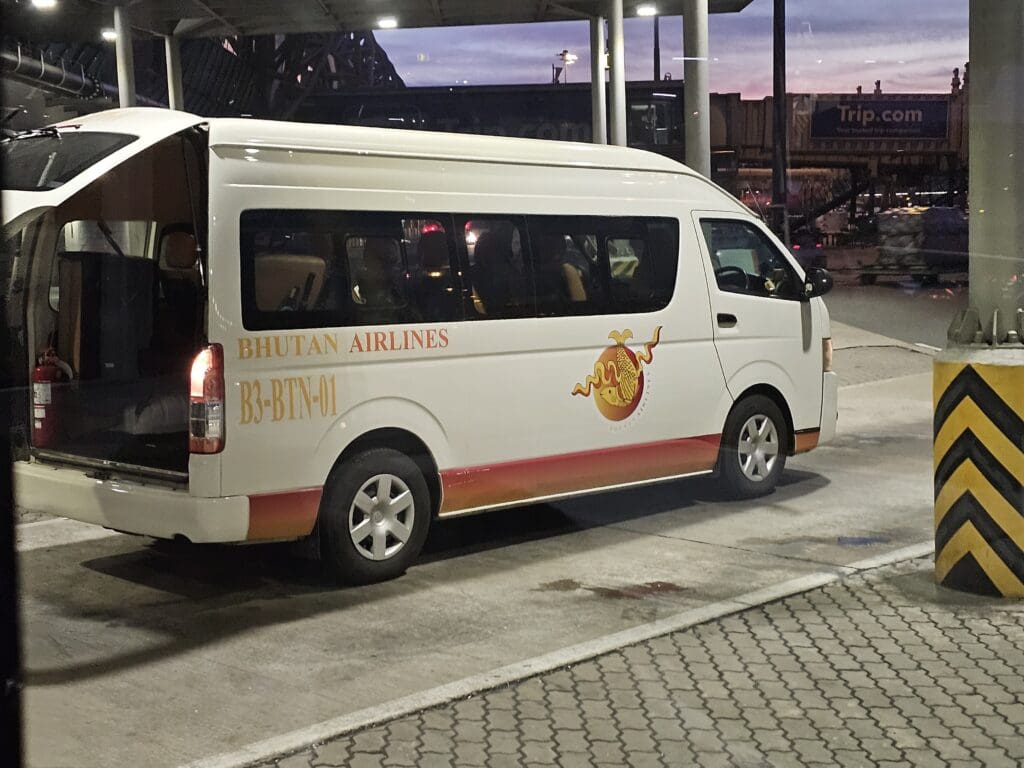
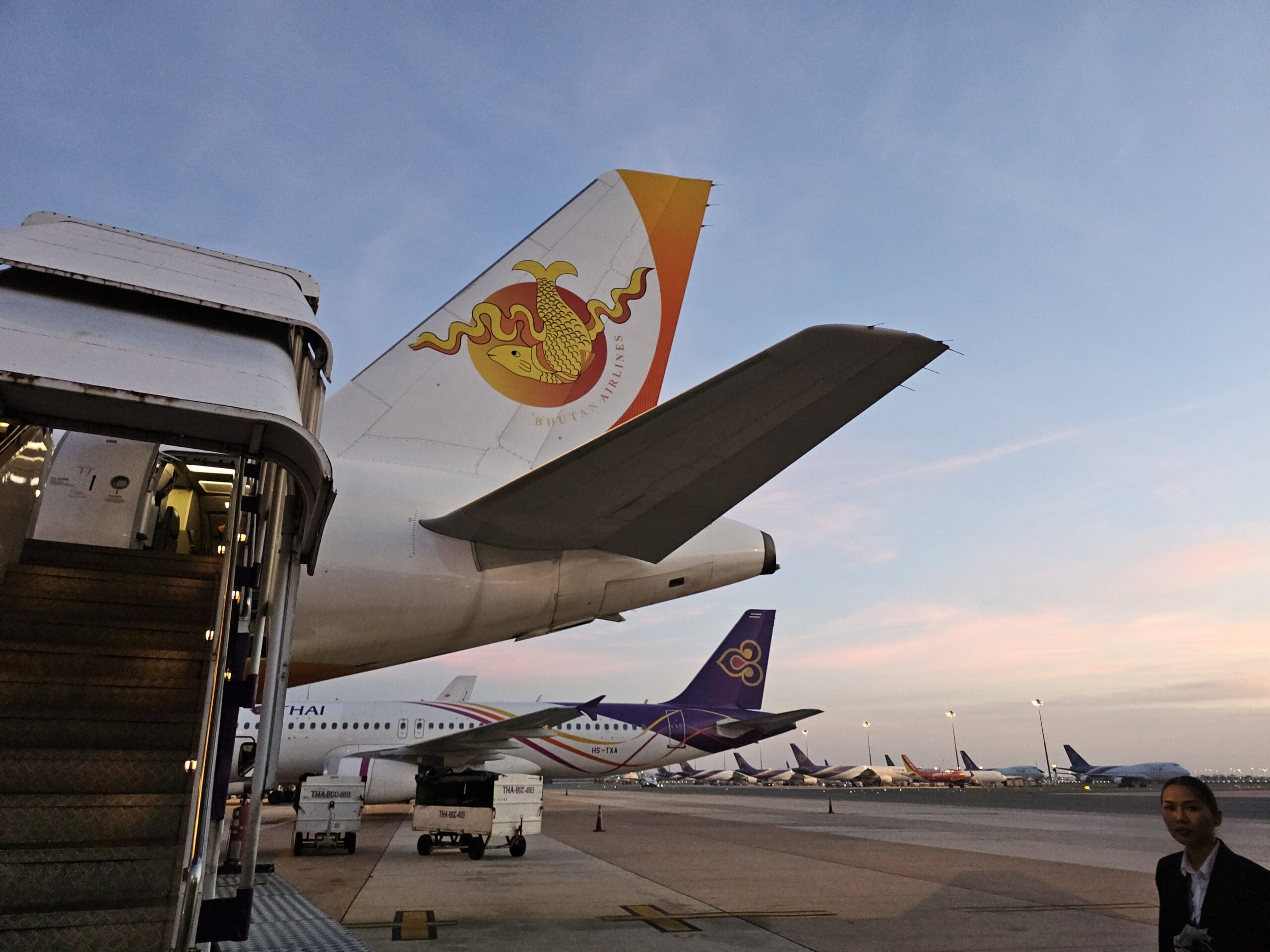
That morning, all Economy passengers were to travel out to the aircraft on one single bus, indicating that it would be a quiet ride up to India. Thus, once onboard, some waiting was required for the final stragglers to arrive. In addition to the flight’s ‘regular’ passengers, several Bhutan Airlines staff members could be seen waiting on the bus, identifiable thanks to their lanyards. Perhaps being a valuable currency in Bhutan, no fewer than two staff members could be seen transporting large bags that were filled to the brim with Krispy Kreme boxes! Given Bhutan Airlines’ limited operation in Bangkok, as we waited I was surprised to see a Bhutan Airlines branded minibus pull up next to the Cobus at which point the staff members disembarked the bus and headed onto this vehicle. As soon as they were off, the doors of the bus slid closed and we trundled out to the aircraft. Looking around, it appeared that the majority of passengers appeared to hail from India and were presumably only flying as far as Kolkata, whilst a small number of Bhutanese and Thai passengers could also be seen. That morning, as far as I could tell, I was to be the only Westerner on the flight. After pulling away from the bus boarding gate, the bus ran along the edge of the terminal and made a fairly slow journey, ending up stopping in a few small jams. Upon leaving the terminal behind, I soon caught sight of one half of Bhutan Airlines’ fleet waiting in a row of mostly Bangkok Airways, Thai Airways and Thai Smile Airbuses, and we slowly trundled towards this.
That morning, Airbus A319-115 A5-DOR, named Dorji, would be operating the flight to Bhutan via India. Assembled at Airbus’ plant at Hamburg Finkenwerder and carrying the construction number 4204, this aircraft made its first flight as D-AVYG in February 2010. This made the aircraft around 13.8 years old at the time of my flight. Following testing, the aircraft was ferried across the Atlantic via Keflavík and Montréal before arriving at its new home in México City. There, the aircraft was handed over to the now long defunct Mexican carrier, Mexicana, where it shuttled passengers around Central and North America as N204MX. However, with Mexicana ending operations several months later in August 2010, it wasn’t long before the aircraft entered storage at the Arizonan airport of Goodyear. Remaining on the ground until January 2011, the aircraft was given a new home and entered service with American low cost carrier Frontier Airlines as N952FR. There, the aircraft sported the ‘Mel the Mule Deer’ tail design and spent several years frequenting the airports of North and Central America. In February 2018, the aircraft was retired from Frontier Airlines service and stored at the Floridian airports of Lake City Municipal and Tampa. Fortunately, in early summer the aircraft was painted into Bhutan Airlines’ distinctive livery and received its current name and registration before beginning the very long trek to its new home. Starting in Tampa, the aircraft was shuttled to Paro, making stops in Goose Bay, Newcastle, Athens and Delhi, likely to the delight of aviation enthusiasts in each! In the week prior to my flight, the aircraft had visited every airport on Bhutan Airlines’ compact route network, connecting Paro with Bangkok, Delhi, Gaya, Kathmandu and Kolkata.
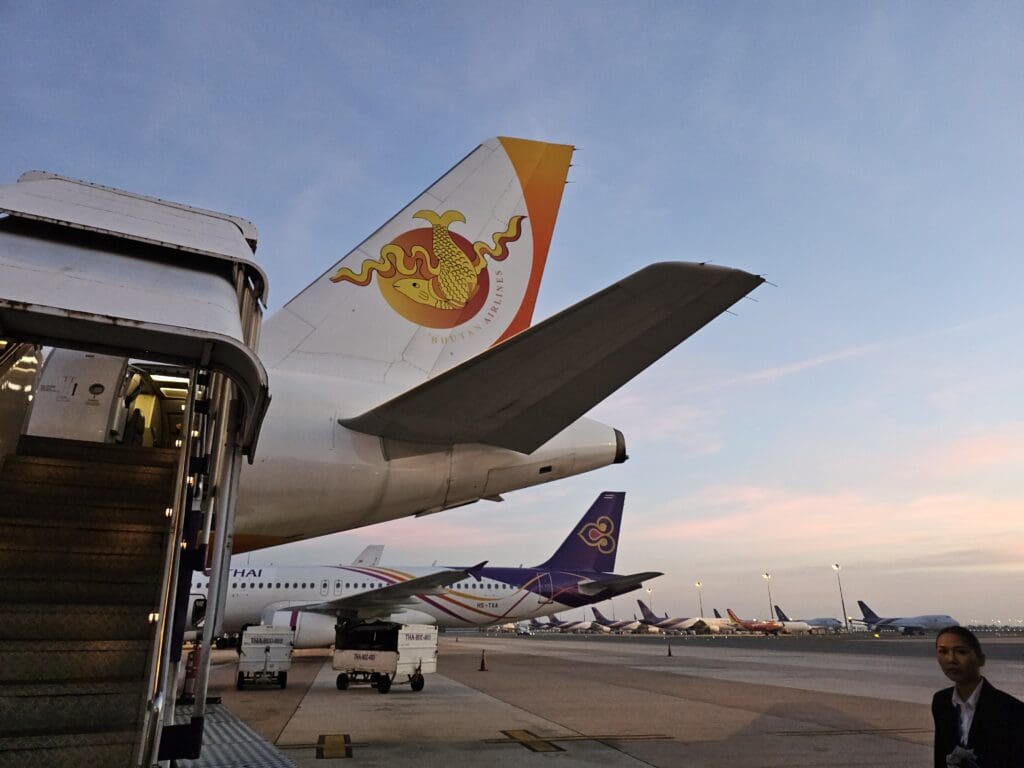
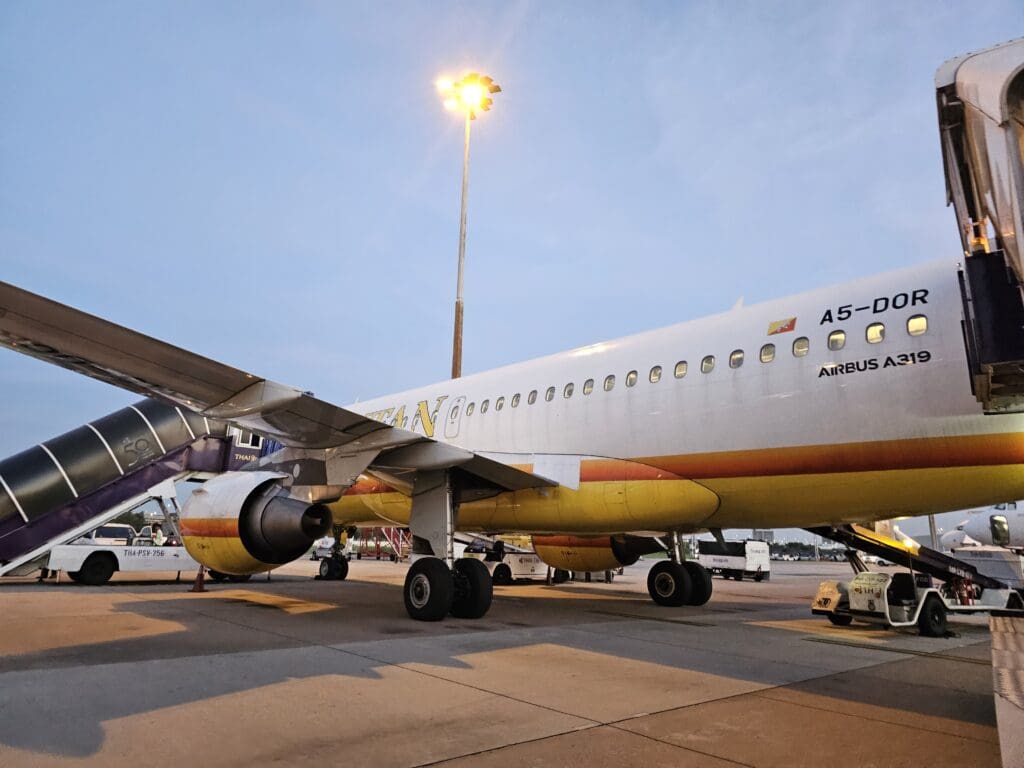
That morning, the bus pulled up to the airstairs at the rear of the aircraft, with those at the front reserved for the exclusive use of those travelling in Business. As soon as we came to a halt, passengers spilt out onto the apron and the ground crew immediately appeared to be having a hard time ensuring that no passengers made their way to the airstairs at the front of the aircraft. After snapping a few photos of the waiting jet, which, admittedly seemed to be in need of a wash with plenty of streaks of dirt and other marks seen on the fuselage, I made my way up to the steps and soon joined a queue as I neared the top of these. Upon reaching the top, I could not help but notice that the guard rail had not been set up correctly, with a significant unprotected gap between the airstairs and the aircraft. Without dwelling on this, I stepped into the Airbus’ rear galley where I received nothing by means of a greeting from one of the four flight attendants onboard. Proud of their identity, Bhutan Airlines’ crew uniform consists of an ornate traditional Bhutanese Kira on which a repeating pattern consisting of the airline’s motif could be seen. With the overcoat, or Tego, being made of red fabric for the ‘regular’ crew members and blue for the Purser.
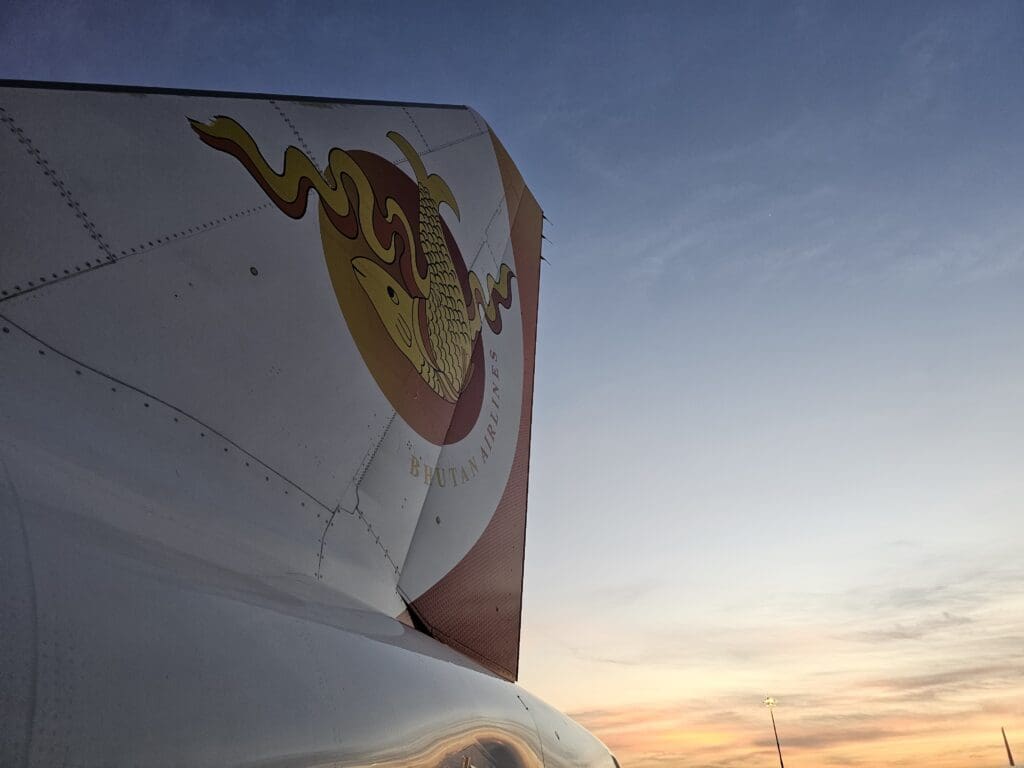
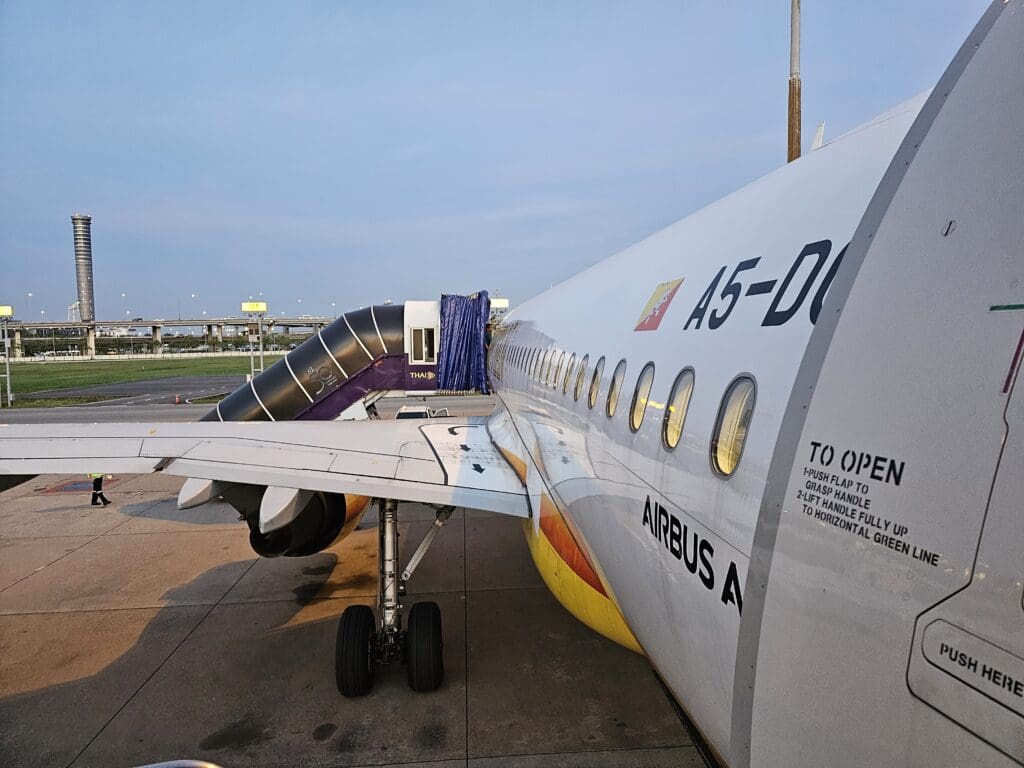
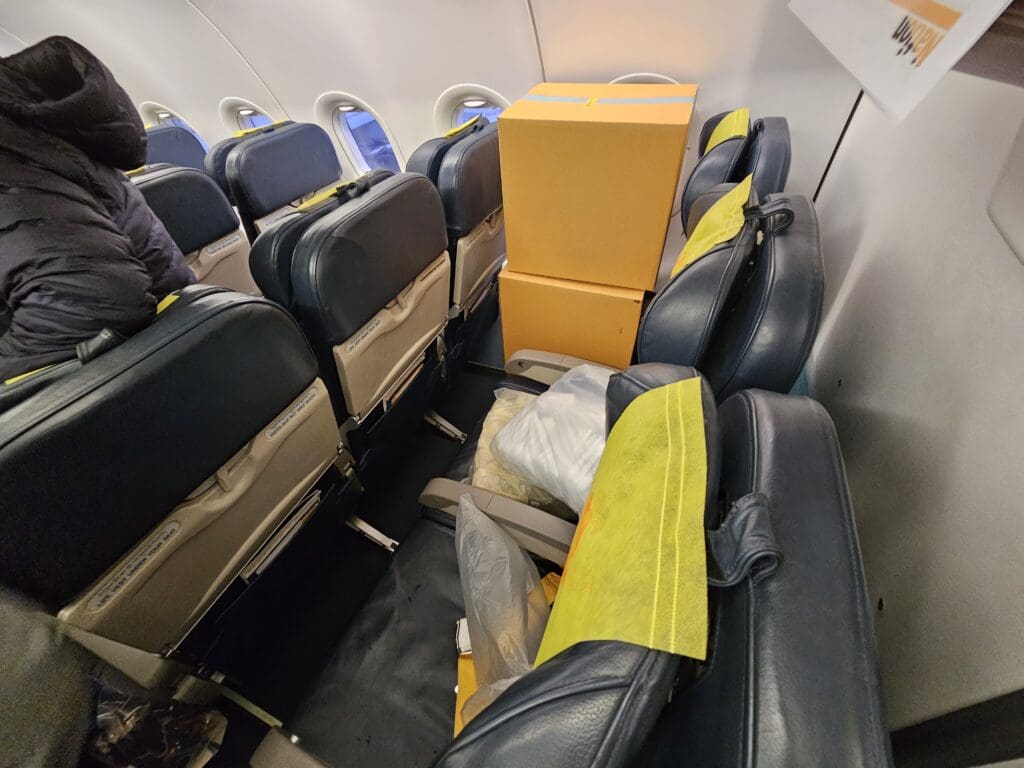
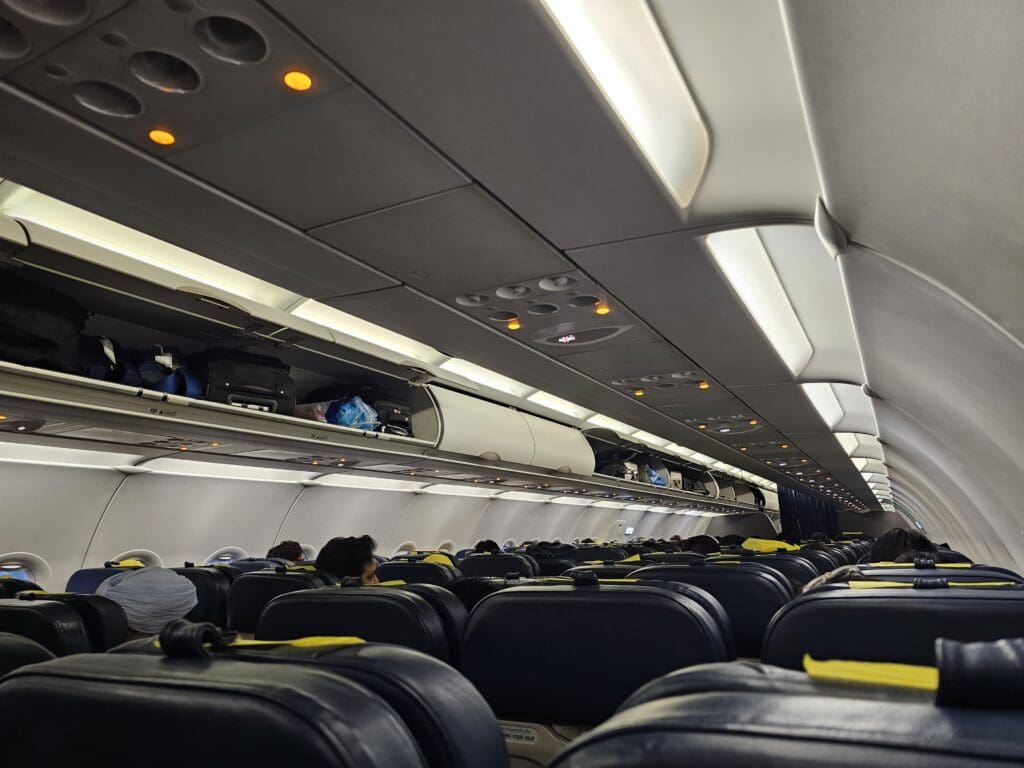
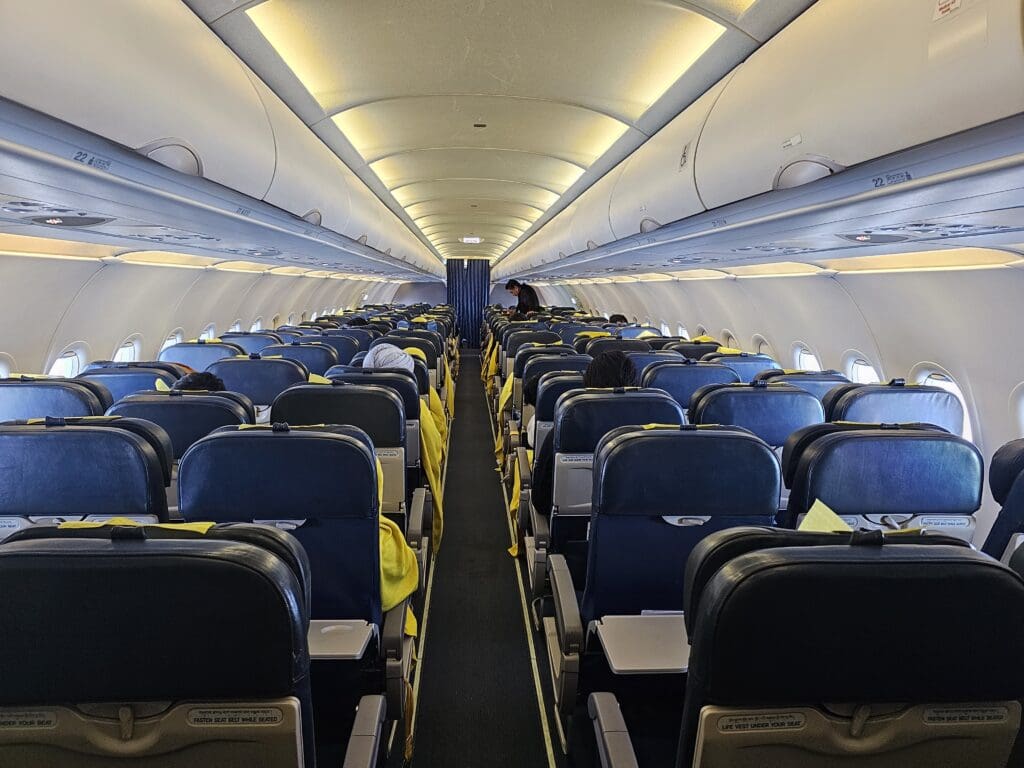
Once onboard, I turned left and entered the Airbus’ 114-seat Economy cabin. Whilst Bhutan Airlines may have a colourful livery, this is not reflected in their cabin design. Onboard, each Economy seat is covered in a dark blue pleather cover and topped with an adjustable headrest – with these seats being very similar in their design and perhaps even the same type as those previously used on British Airways’ Airbus A320 Family fleet. Adding a splash of colour, each seat featured a disposable bright yellow antimacassar that featured Bhutan Airlines’ logo, whilst these also featured bright yellow seatbelt straps. That morning, boarding was a chaotic affair as passengers scrambled to squeeze their bags into the overhead lockers and headed in all directions up and down the cabin. On the rearmost seats, several large boxes could be seen, with this perhaps being company cargo. Meanwhile, the overhead lockers of the rearmost four rows were reserved for crew use and contained a mixture of fresh flowers, Krispy Kreme boxes, packaged bright yellow blankets and crew luggage. Attempting to avoid the chaos and having already spotted a passenger sitting in my seat ,15F, I lingered around the rear of the aircraft and once all passengers had made it onboard, I sat down in Seat 21F enabling me to enjoy the journey without any seatmates.
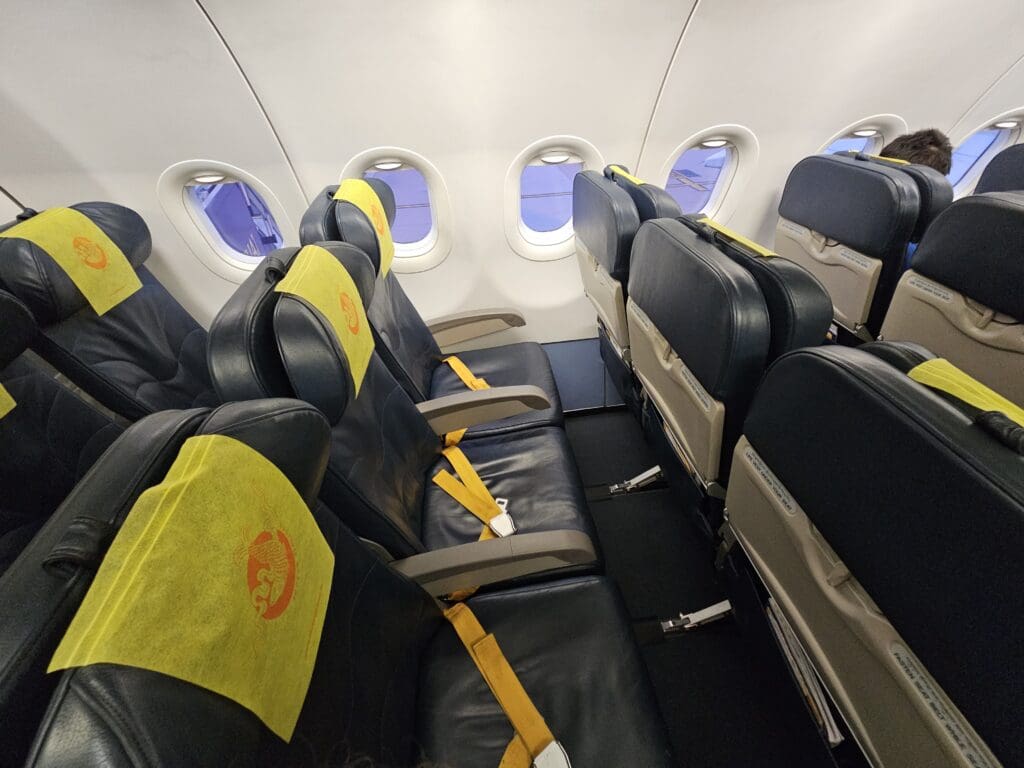
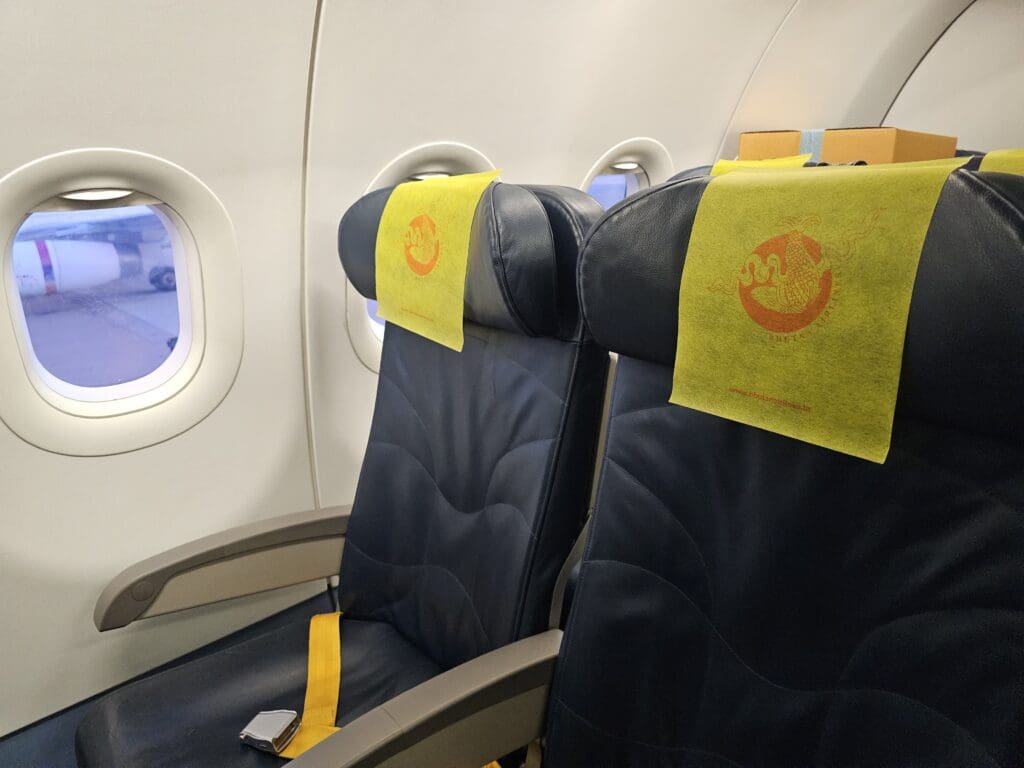
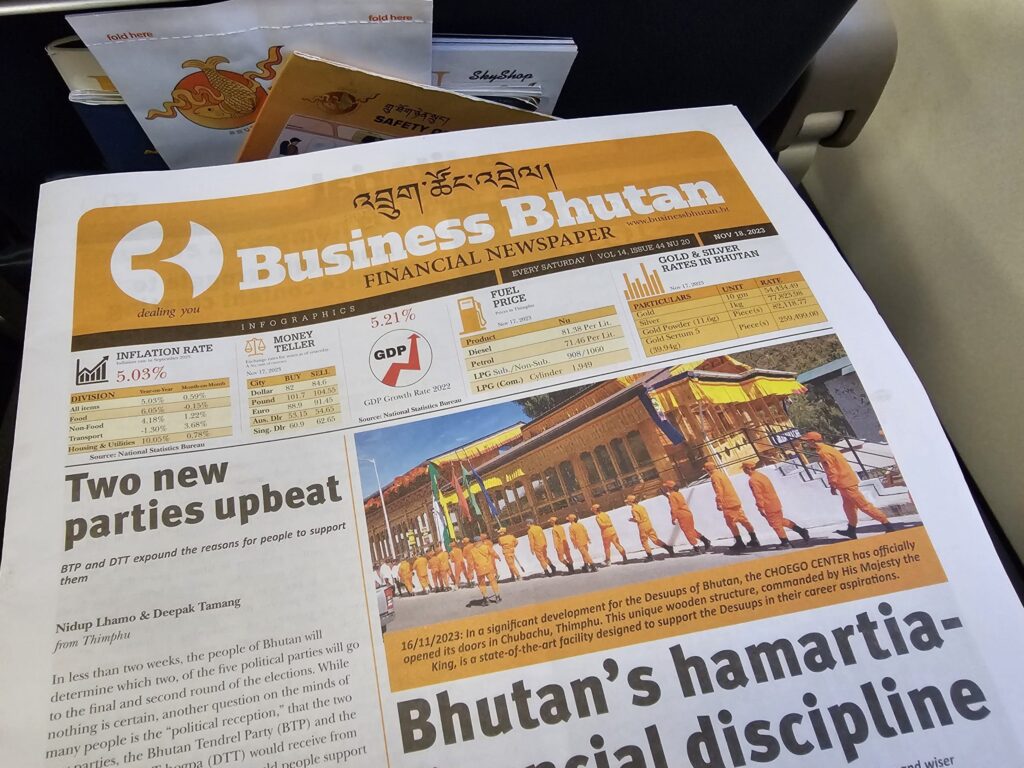
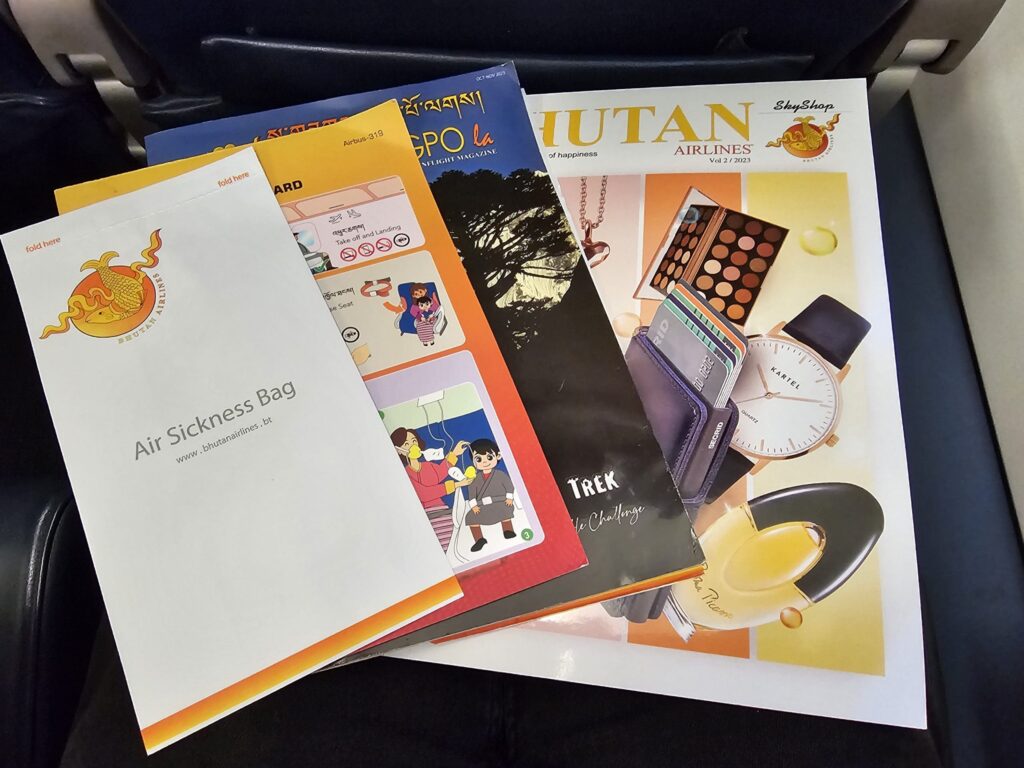
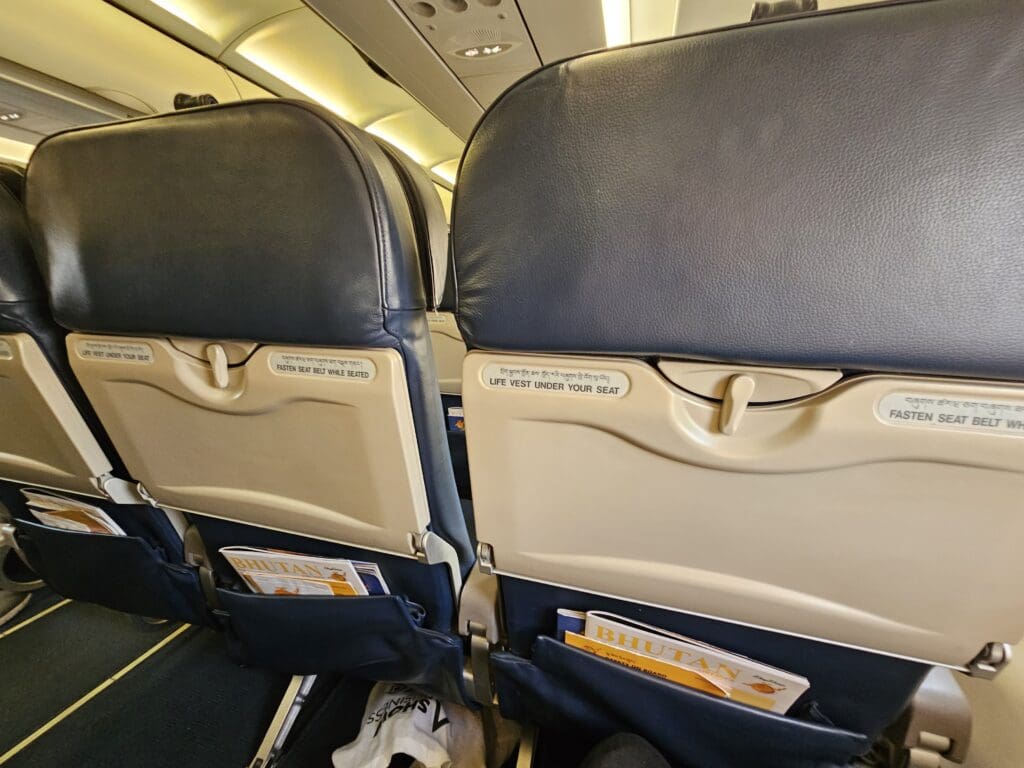
Upon taking my seat, I was pleased to find that the seat itself was soft whilst the legroom was fairly decent leaving me with little to complain about in terms of comfort. Having been cleaned following its arrival from Gaya the previous evening, this was in a clean and tidy state and I did not spot any rubbish or any other leftovers from the aircraft’s previous passengers. However, the cabin did appear to be a little tired looking with a few marks and scratches visible throughout. Nevertheless, these were only minor complaints and I have previously flown on far newer aircraft in a far worse condition! Turning to the seatback pocket, these contained the October to November copy of Bhutan Airlines’ Kuzuzangpo La inflight magazine (this translates to ‘hello’), a branded sickbag, safety card and a copy of the SkyShop inflight shopping catalogue. Meanwhile, copies of the weekly English language Business Bhutan newspaper could be found in the literature compartments on the rear bulkhead.
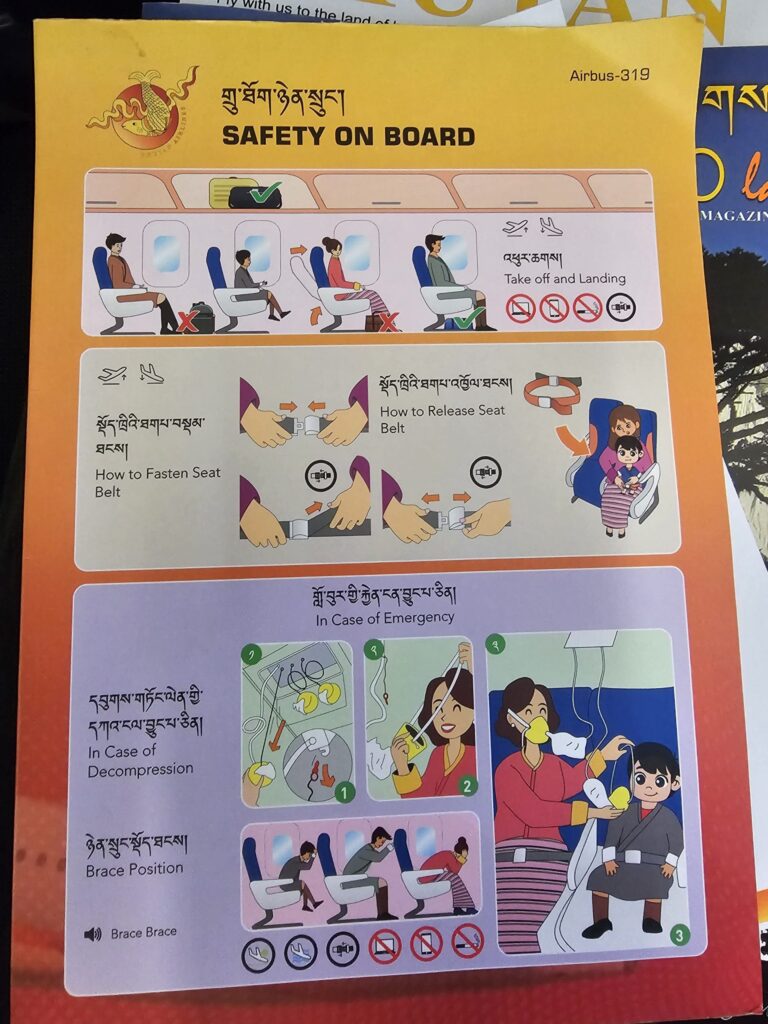
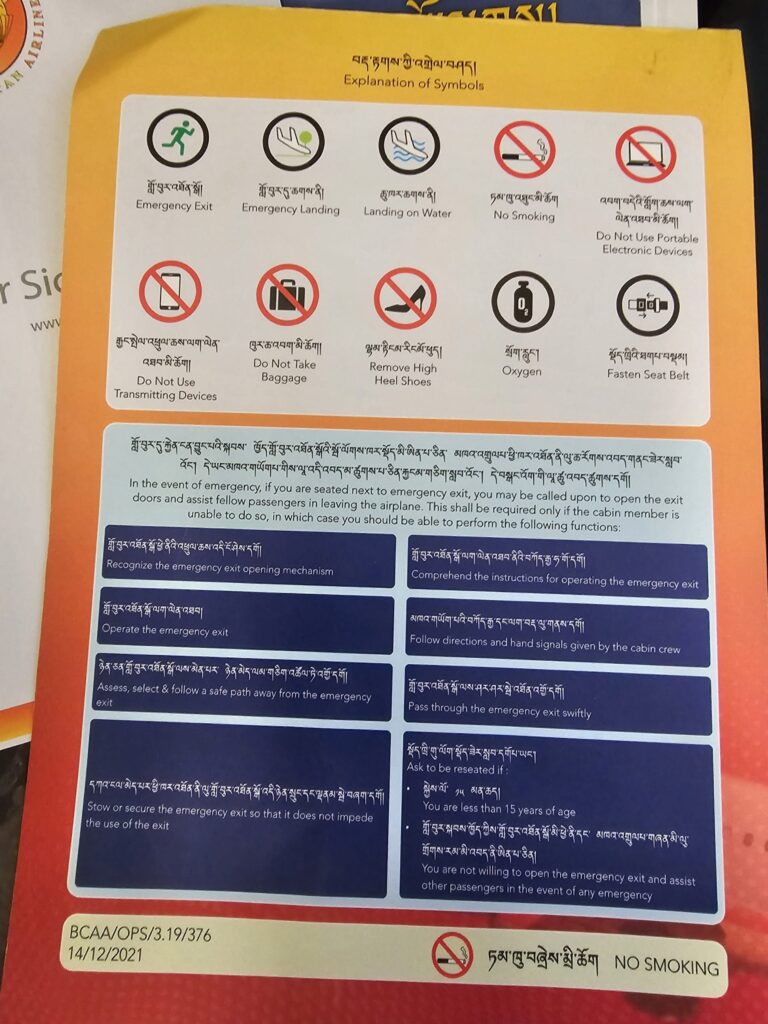

With fourteen minutes to go until our scheduled departure time, at 0621 the traditional music that had rang out during boarding came to an end and the cabin doors were closed and armed. Once this procedure had been completed, the Purser performed their welcome announcement first in English followed by Bhutanese. This consisted of the usual thanks and welcomes, a mention of our 2H20 flight time and an introduction to the Captain and First Officer. A short time later, this transformed into the safety demonstration with two crew members taking to the aisles – one at the front of the Business cabin and the other at the front of Economy with another crew member running through the safety instructions. As this was underway, the famous Airbus ‘barking dog’ sound (which I would describe as being more of a squeak) could be heard. Once the safety demonstration came to an end, the crew passed through the cabin ensuring all was secure and at 0632 the aircraft was pushed back away from its stand and the cabin was filled with the strong scent of jet fuel as the Airbus’ two CFMI CFM56-5B6/P engines spooled and whirred up into life.
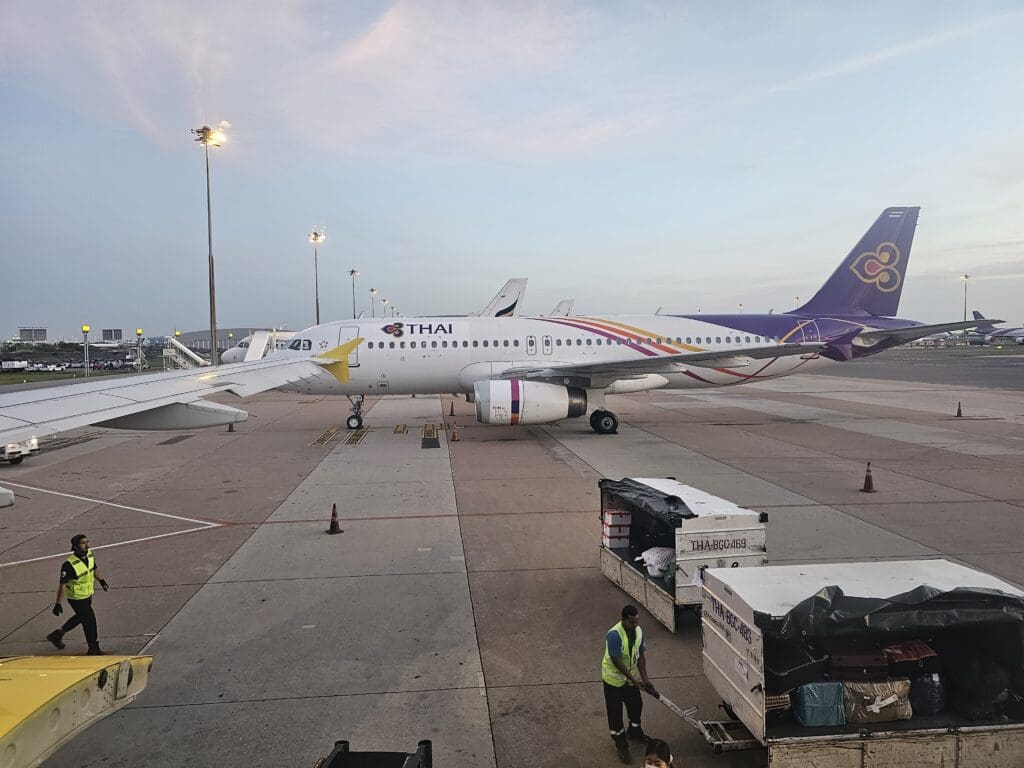
Once the engines had successfully powered up and the tug had been disconnected, the Airbus slowly commenced its journey to the end of Runway 01R. This first took us past several Bangkok Airways Airbus A319s and ATR 72s before arriving at the terminal where a mixture of Bangkok Airways, Thai Airways, Thai Smile and Thai VietJet aircraft could be seen waiting to head off for a new day of flying. Other aircraft seen included several Thai AirAsia and AirAsiaX aircraft, which was a slight surprise as I had believed their entire operation to be focused on Don Mueang Airport and not Suvarnabhumi. After passing the satellite terminal, the Airbus trundled past the sorry sight of a long line of stored Airbus A380 and Boeing 777 widebody jets, with their once iconic purple, gold and white liveries having faded.
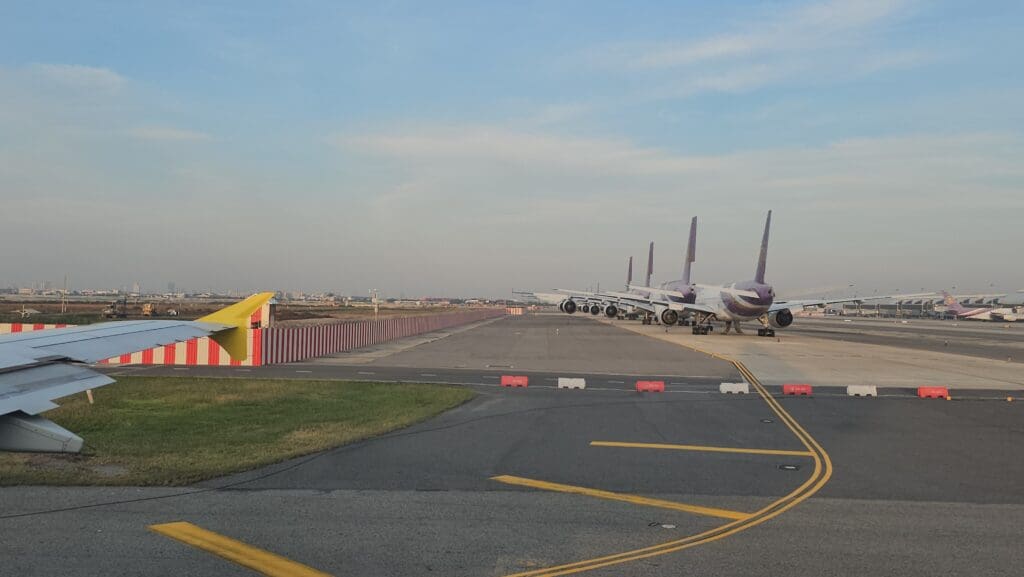
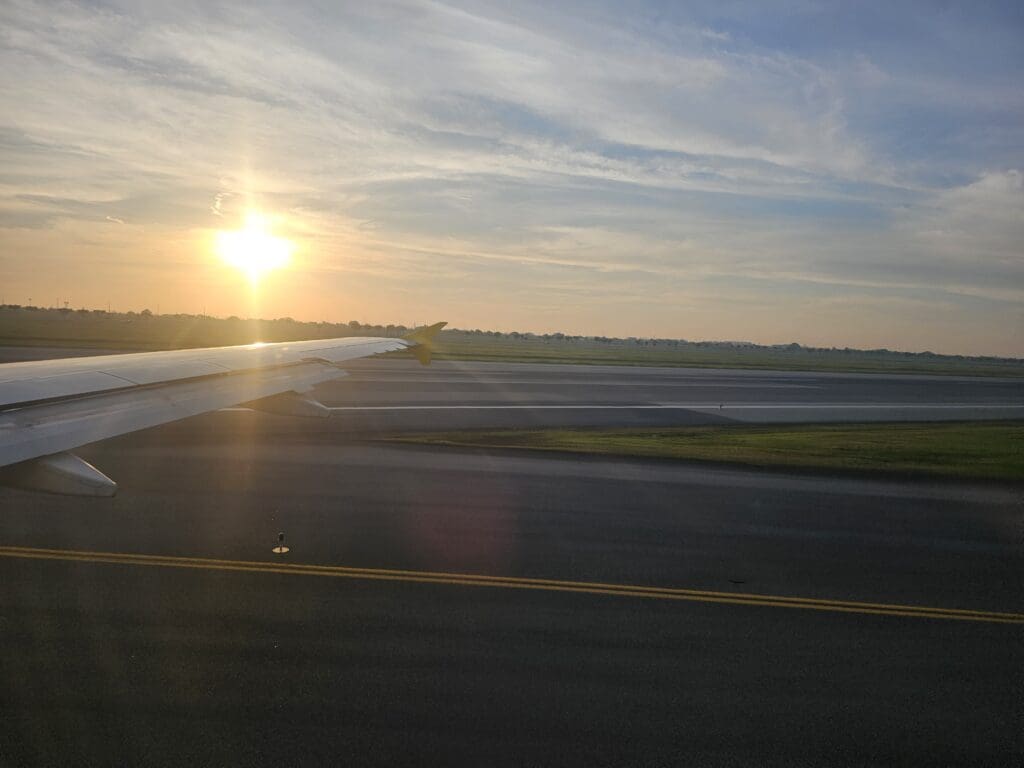
Following our short tour of Suvarnabhumi Airport, the aircraft passed the fire station and soon reached the end of the runway. Once there, without any holding the Airbus taxied onto this and came to a halt. Pausing for around thirty seconds, at 0647 the Airbus’ two engines noisily powered into life as we commenced our short and powerful takeoff roll, soon heading up into the morning Thai skies where we were immediately greeted by a few bumps before leaving the airport behind. During the first few minutes of the flight, the aircraft climbed out over the neighbourhoods of Lat Krabang, Min Buri and Pathum Thani before turning onto a northwesterly heading and leaving the sprawl of the Thai capital behind.
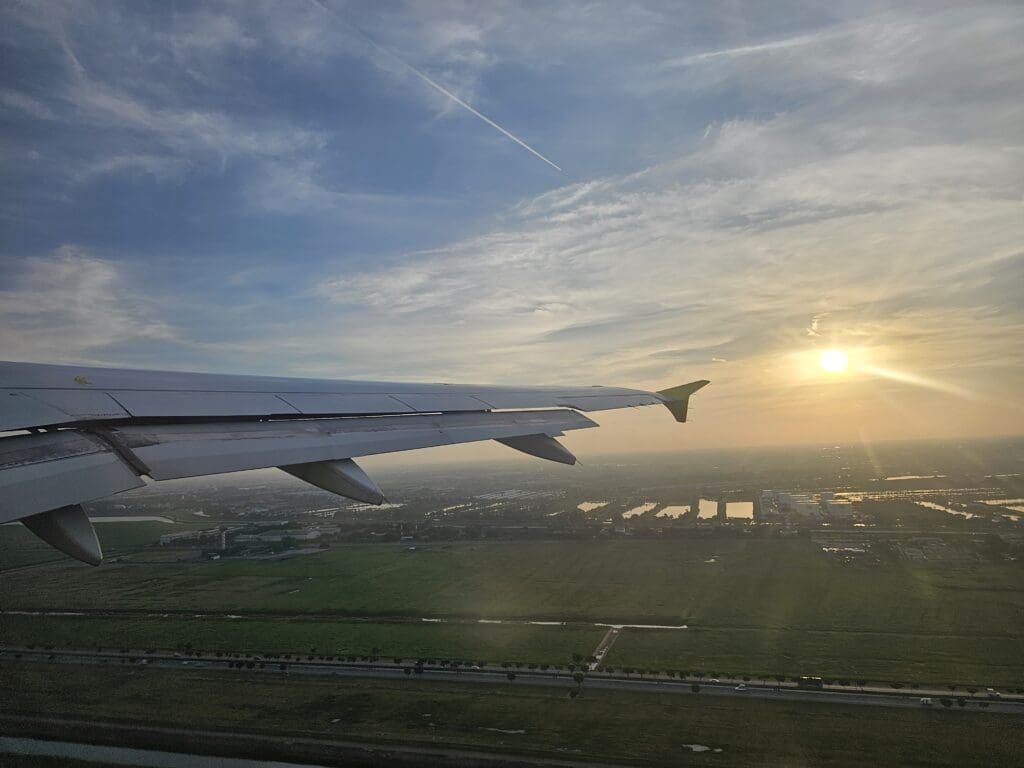
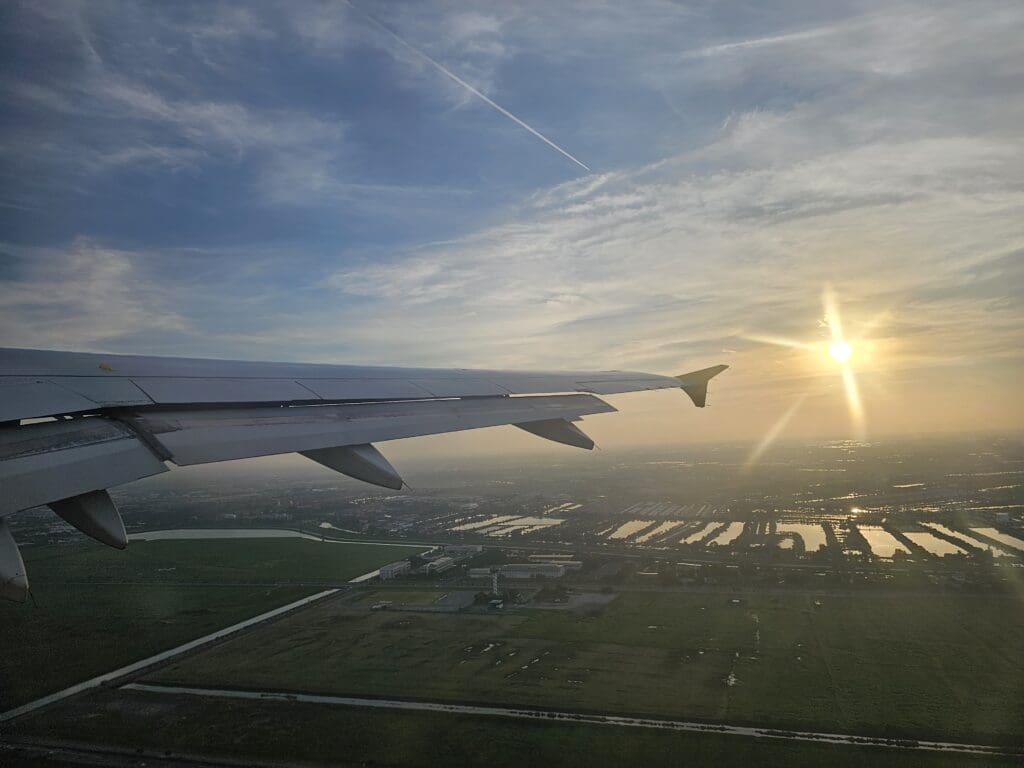
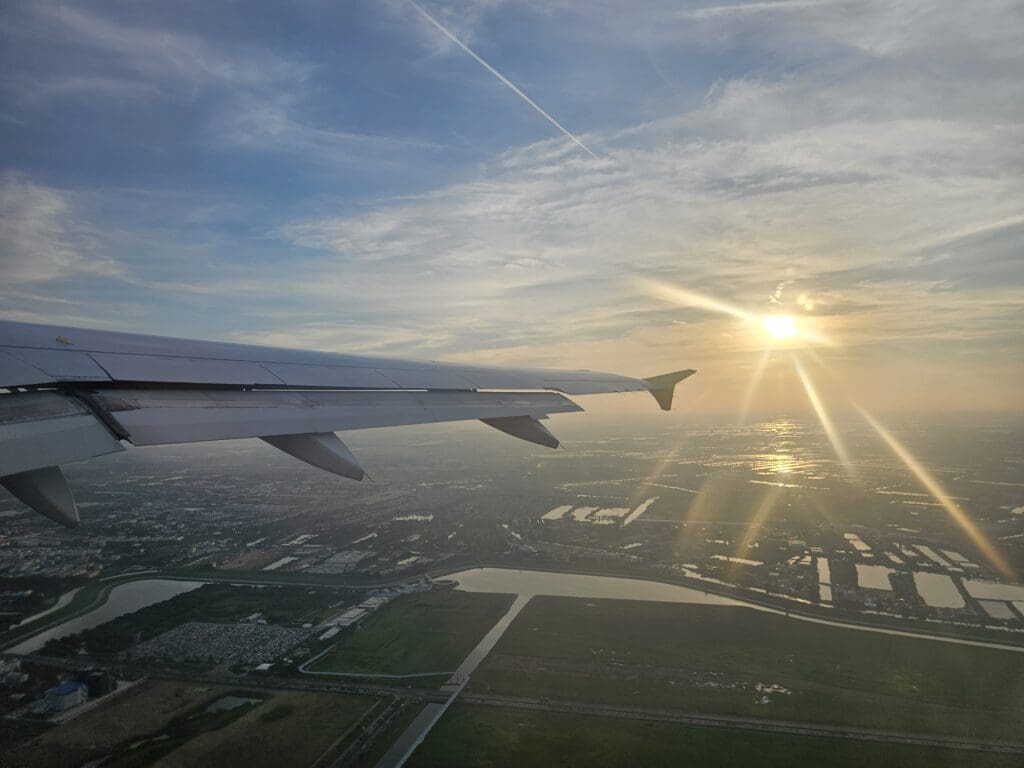
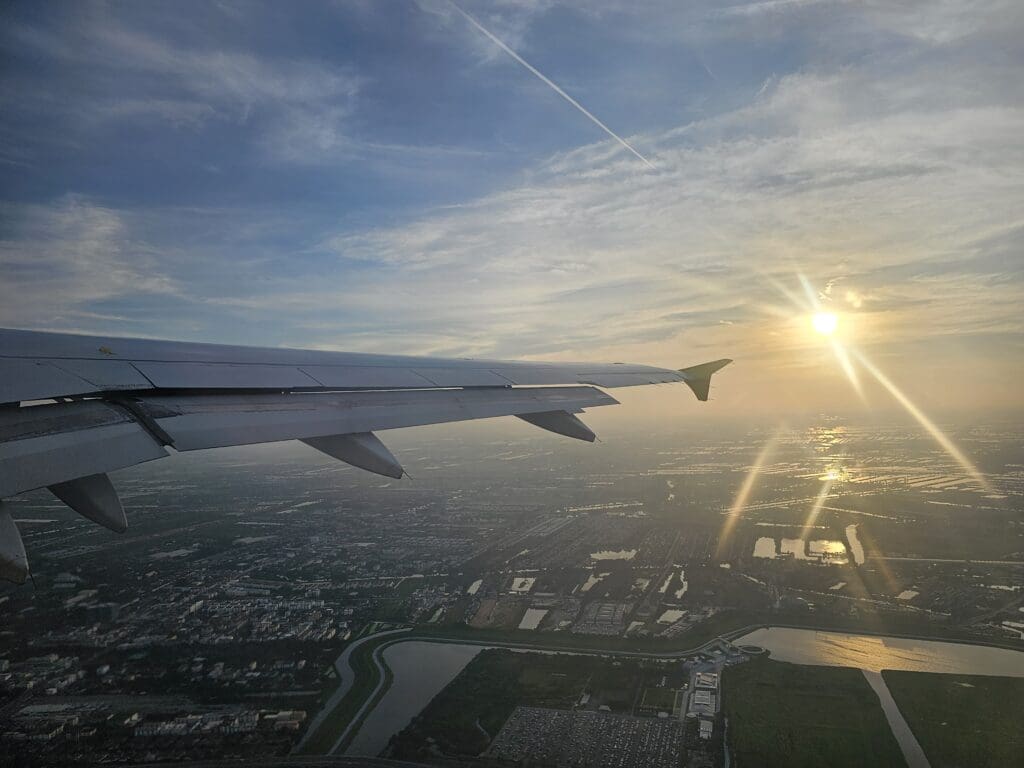
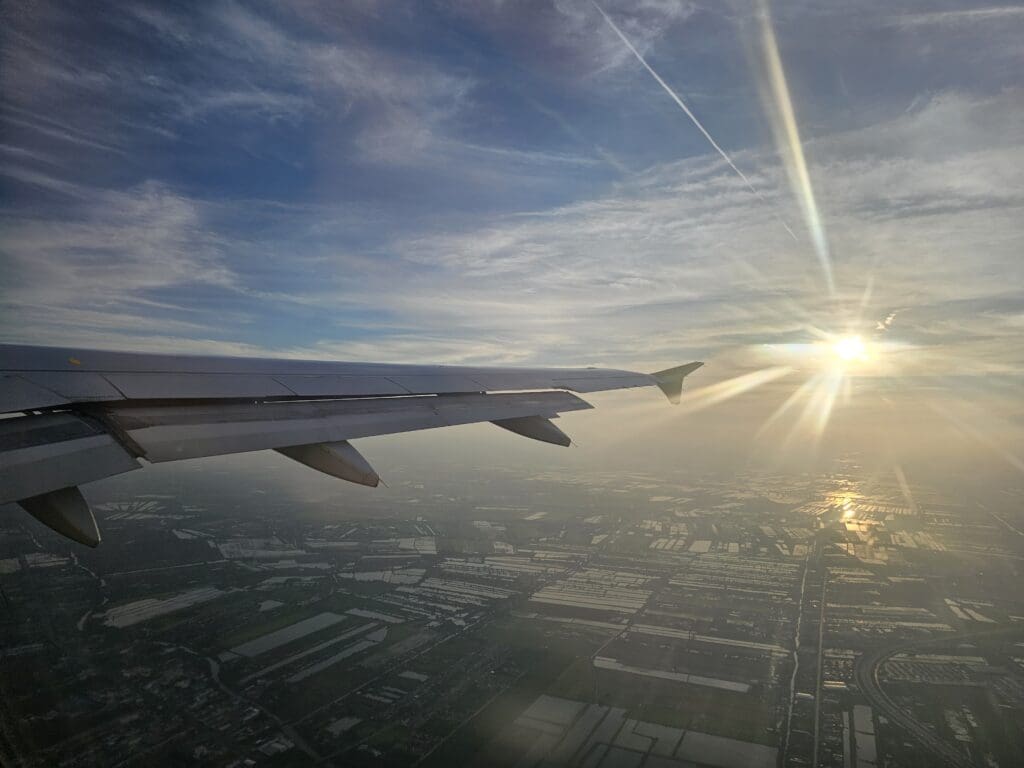
Other than a few lumps and bumps felt during the first minute of the flight, that morning the climb was relatively smooth and the seatbelt signs were extinguished as we climbed through 10,000 feet. This was followed by an announcement by the Purser which contained the usual warnings, before they advised that the breakfast service would commence shortly. This ended with a mention of the onboard wifi service. This was a little surprising as I had been unaware that Bhutan Airlines’ two aircraft were fitted with wifi although later research revealed that this had been rolled out in March 2023 and was provided by Dutch company AirFi. This enables passengers to stream a range of content using their own devices, however, that morning this seemed to be inoperative as no wifi networks could be found for the duration of the flight.
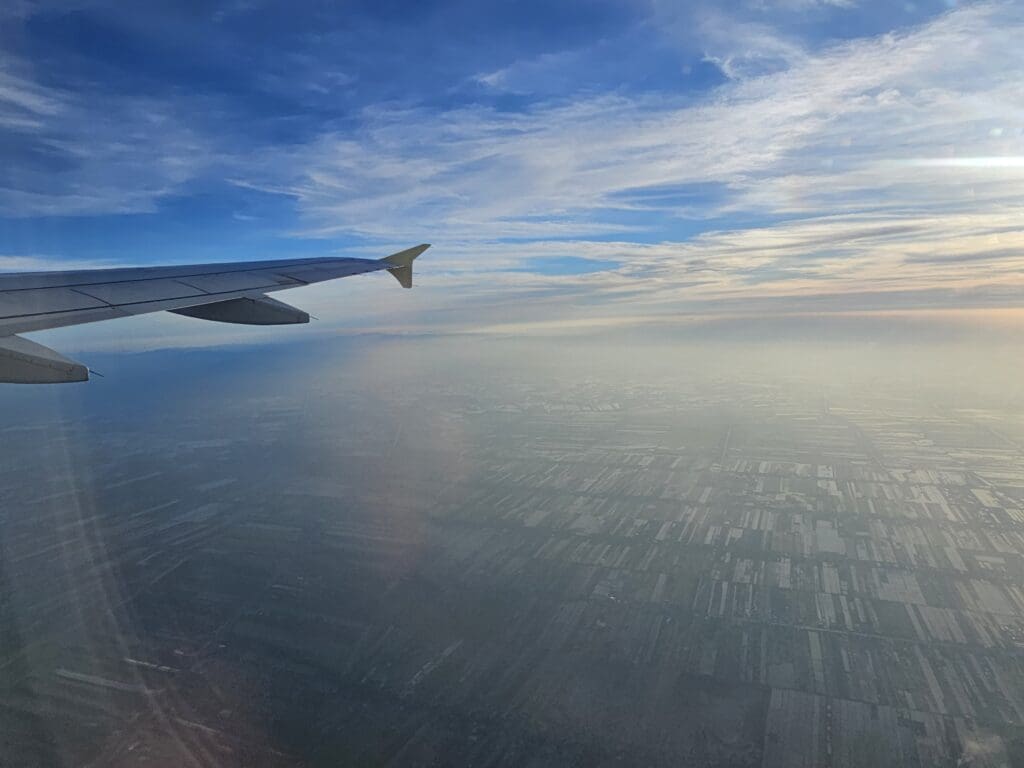
At 0705, one crew member rolled the drinks cart uphill to the front of the aircraft and commenced that day’s breakfast service, with another crew member rolling out the food cart a few minutes later as we levelled off at our cruising altitude of 38,000 feet. As they handed these out, the green mountains of Northern Thailand’s Uthai Thani region and Khao Laem National Park could be seen passing below, providing something to look at as I waited for the carts to arrive. Contrasting to what those who are more used to the five star service on the likes of Emirates or Singapore Airlines may expect, that morning this consisted of one crew member loudly shouting ‘breakfast, breakfast’ as they moved through the cabin, perhaps in an attempt to wake up the many sleeping passengers.
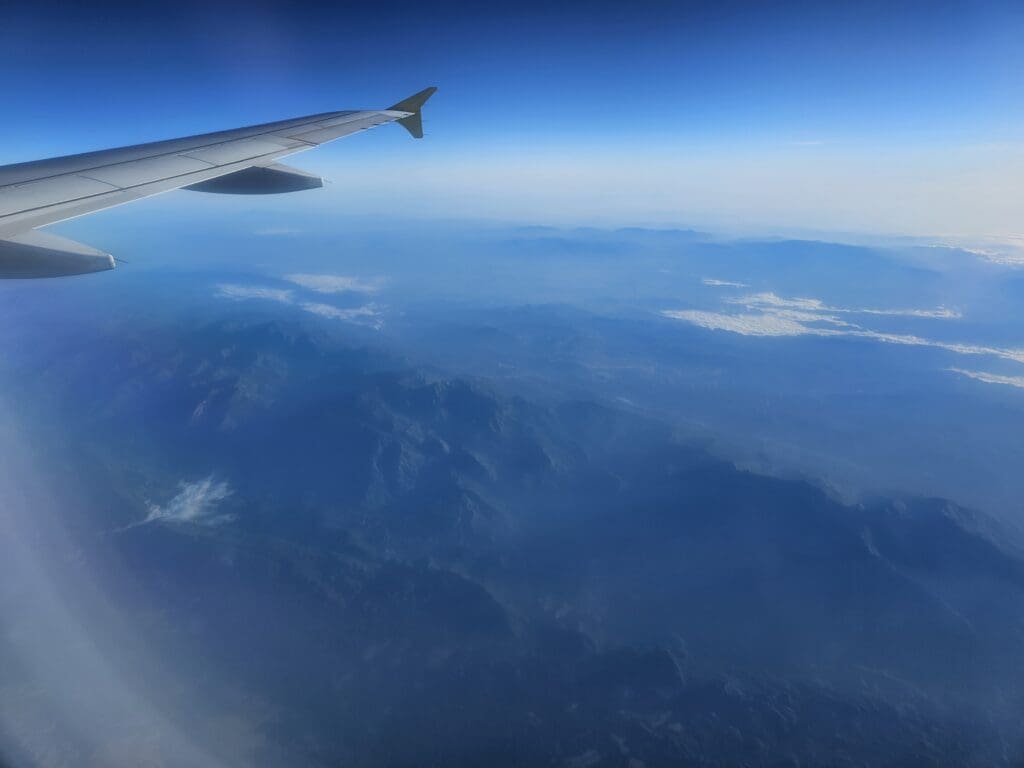
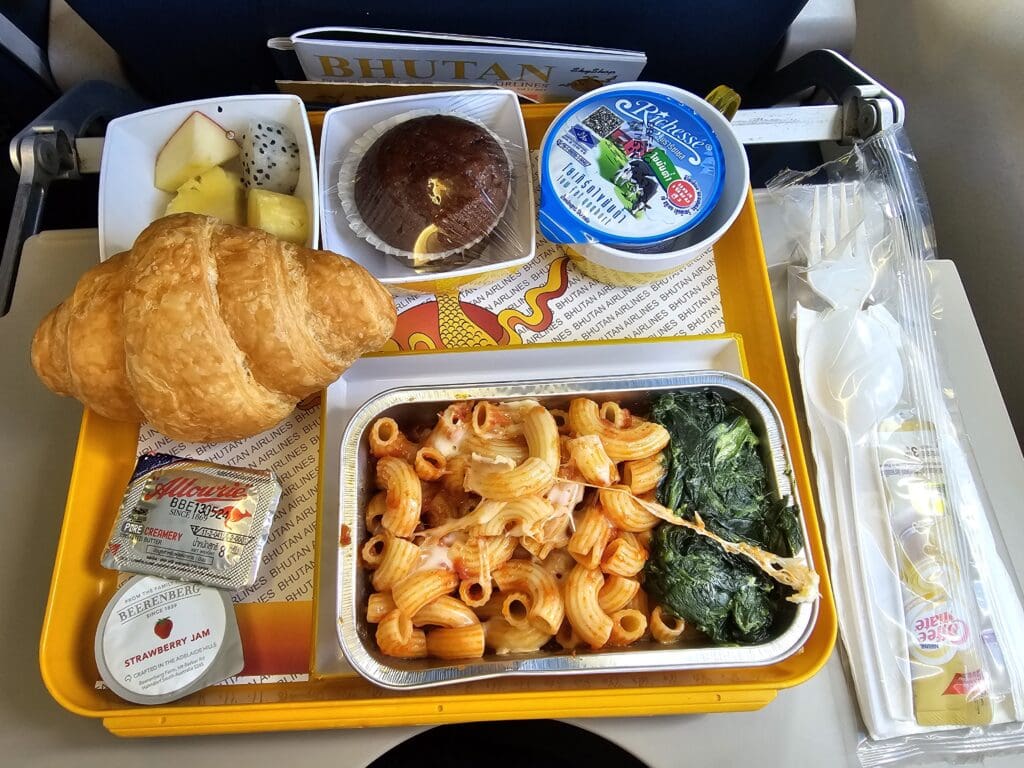
Given the light load, it did not take too long for the crew to reach my row and once they did they handed me a tray full of food. Upon doing so, one crew member exclaimed ‘this is pasta, would you like eggs instead?’, however I rejected their offer to swap the main dish and settled for the pasta. Contrasting with this novelly brash service, this crew member was followed by a very polite and friendly flight attendant who reached my row a couple of minutes later and offered me a choice of drinks – with water, a selection of juices, tea and coffee offered. That morning, I opted to pair breakfast with a coffee and a very sweet and worryingly unnaturally orange cup of mango juice. Opening up my main dish, this came in the form of pasta with cheese, tomato and spinach, and was accompanied by several chunks of fruit, a cold croissant, a plain yoghurt, a chocolate muffin and tubs of Australian butter and strawberry jam. Meanwhile, eating utensils came in the form of flimsy plastic cutlery. Whilst pasta may not be your typical breakfast option, this was of decent quality and the whole meal was very filling and far exceeded anything you would receive in Economy back home in Europe on a two hour flight!
That morning, the trays were collected a short time after the meals had been distributed and with clouds having rolled in below, I decided to have a flick through the inflight magazine. With this clearly aimed at those visiting Bhutan, this contained a range of articles on various things to see and do throughout the country, as well as pieces on Bhutanese culture and tradition. As with most inflight magazines, this featured a bit about the airline at the end of this and came complete with plenty of advertisements for various local services. By the time I finished browsing this, the clouds had cleared and revealed the mountains that run up Myanmar’s spine. After crossing these, we reached the Myanmar coastline and flew parallel to this, with the city of Kyaukpyu visible as well as a fair number of islands and towns as we continued heading northwestwards.
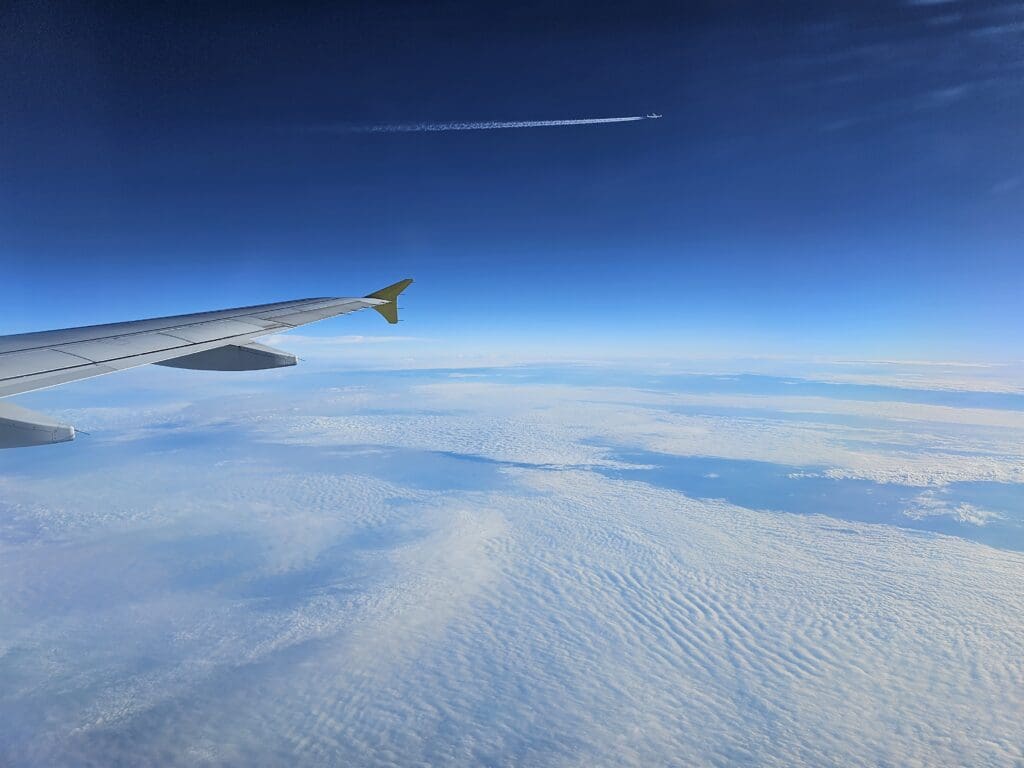
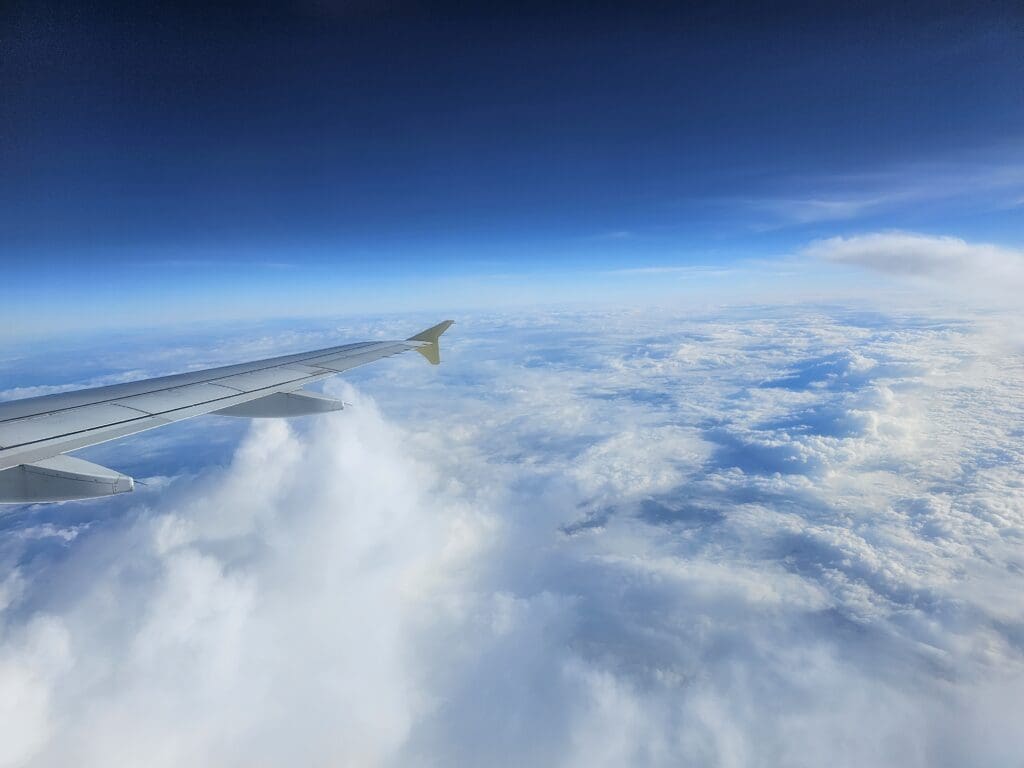
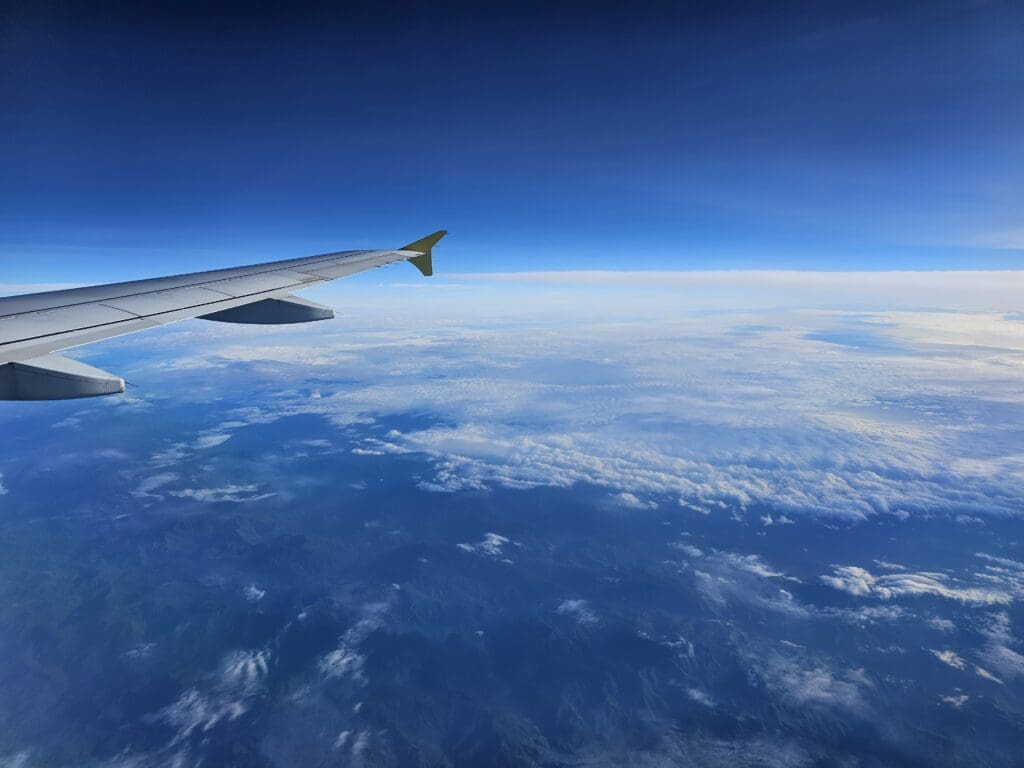
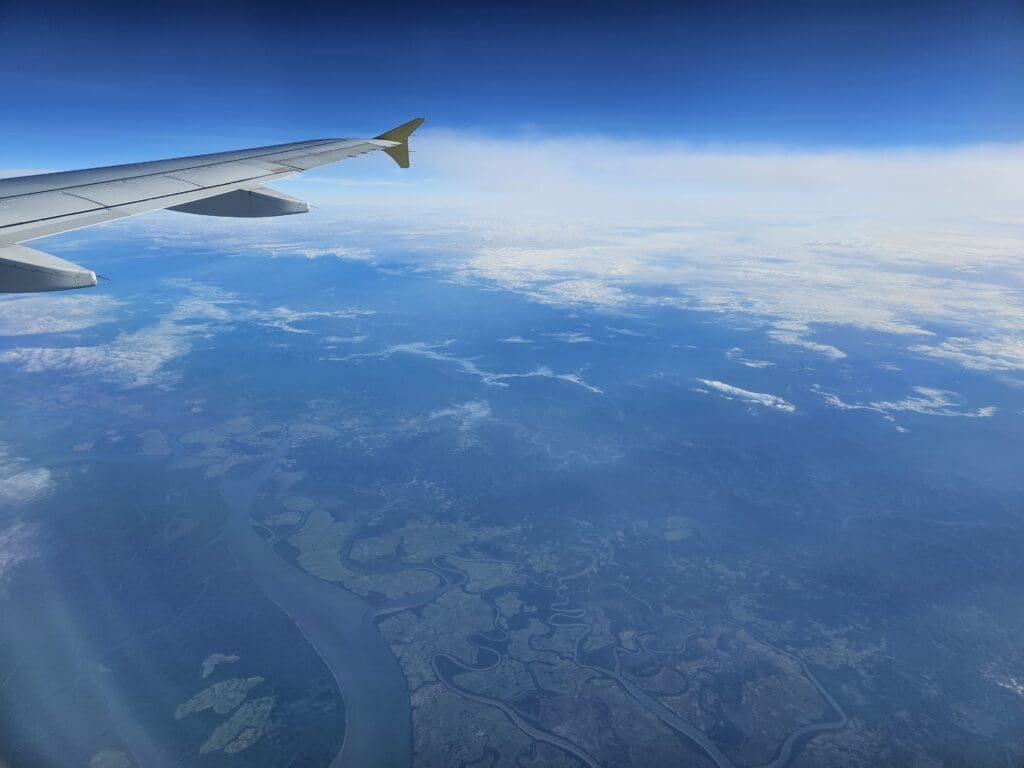
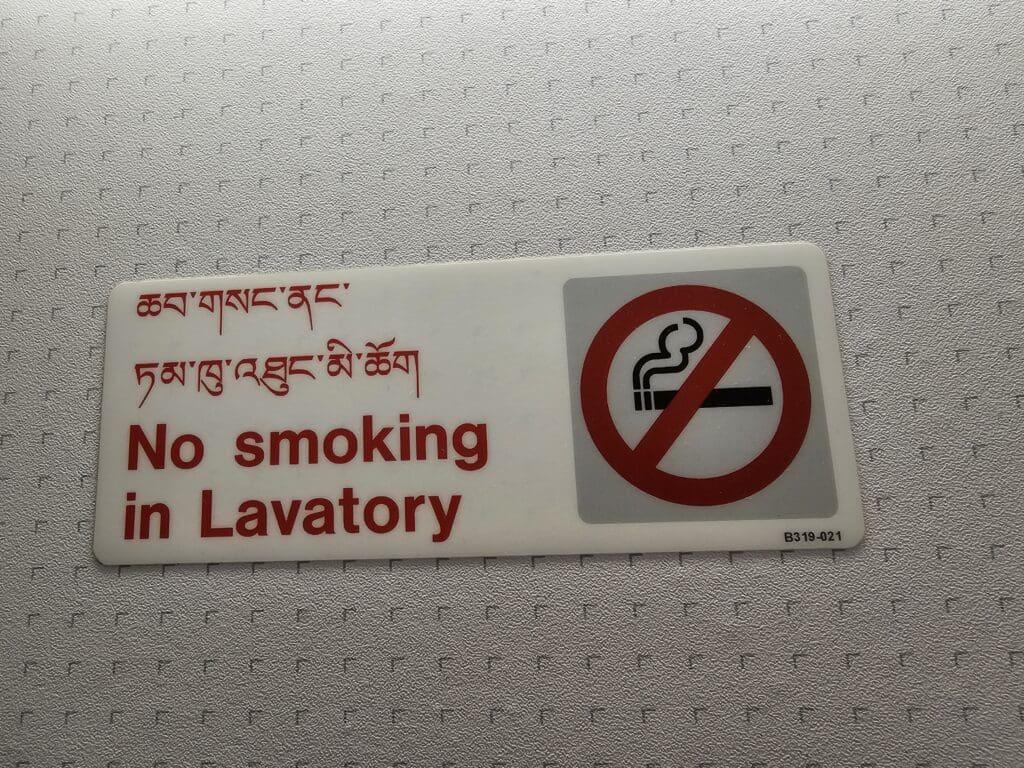
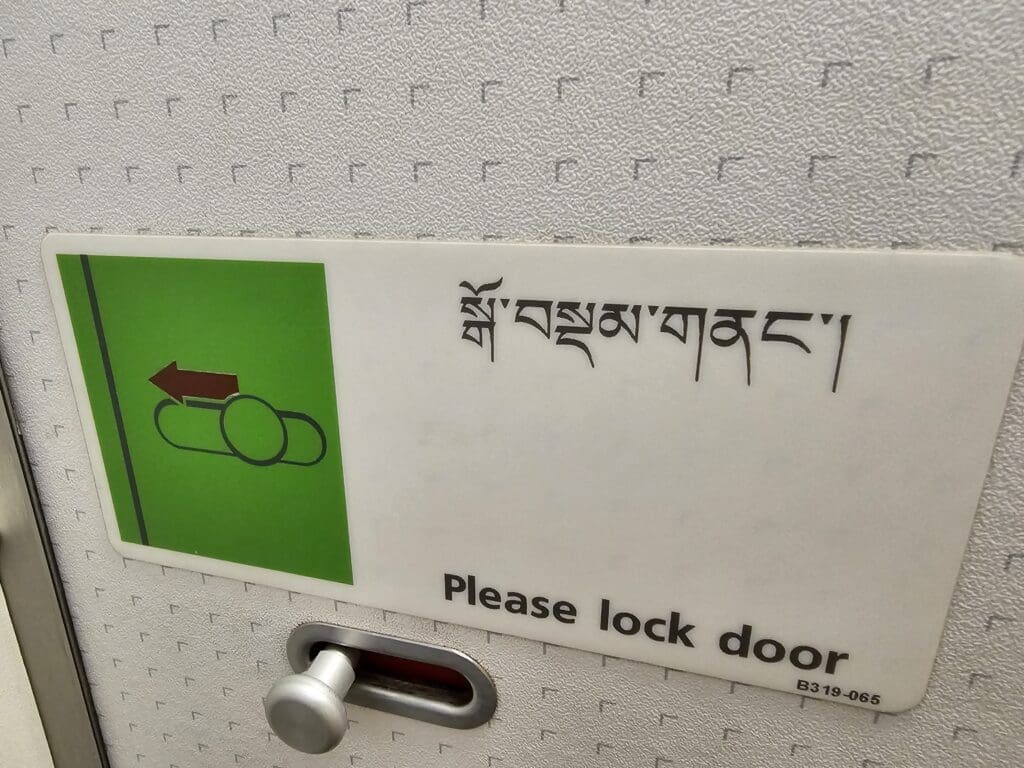
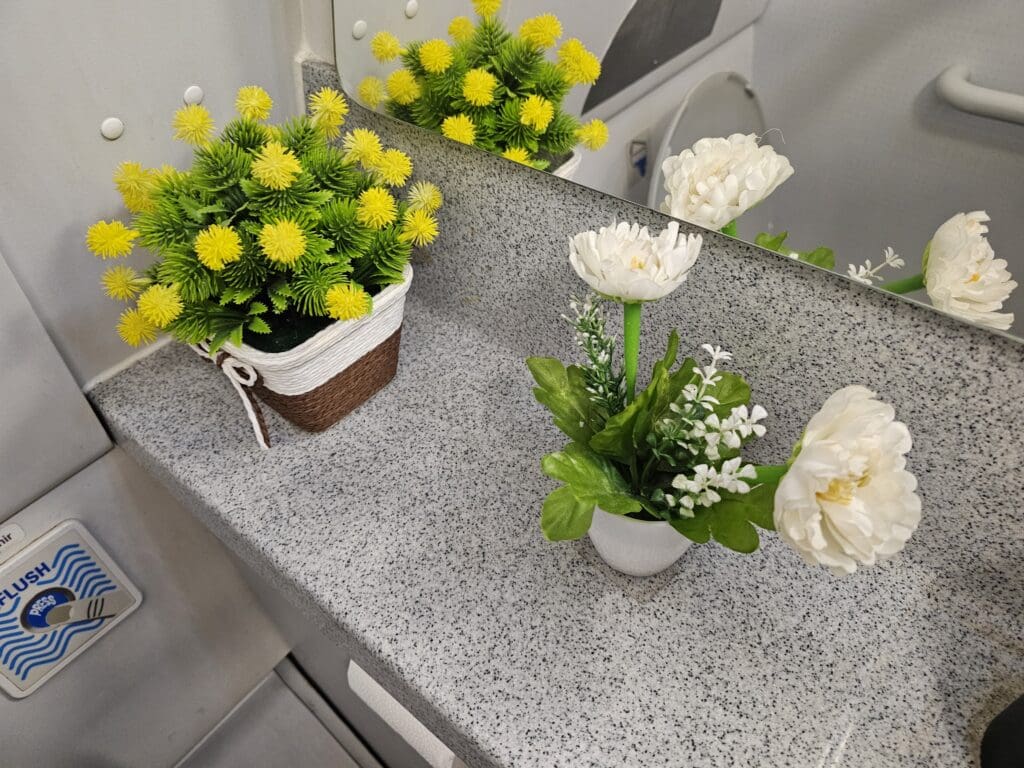
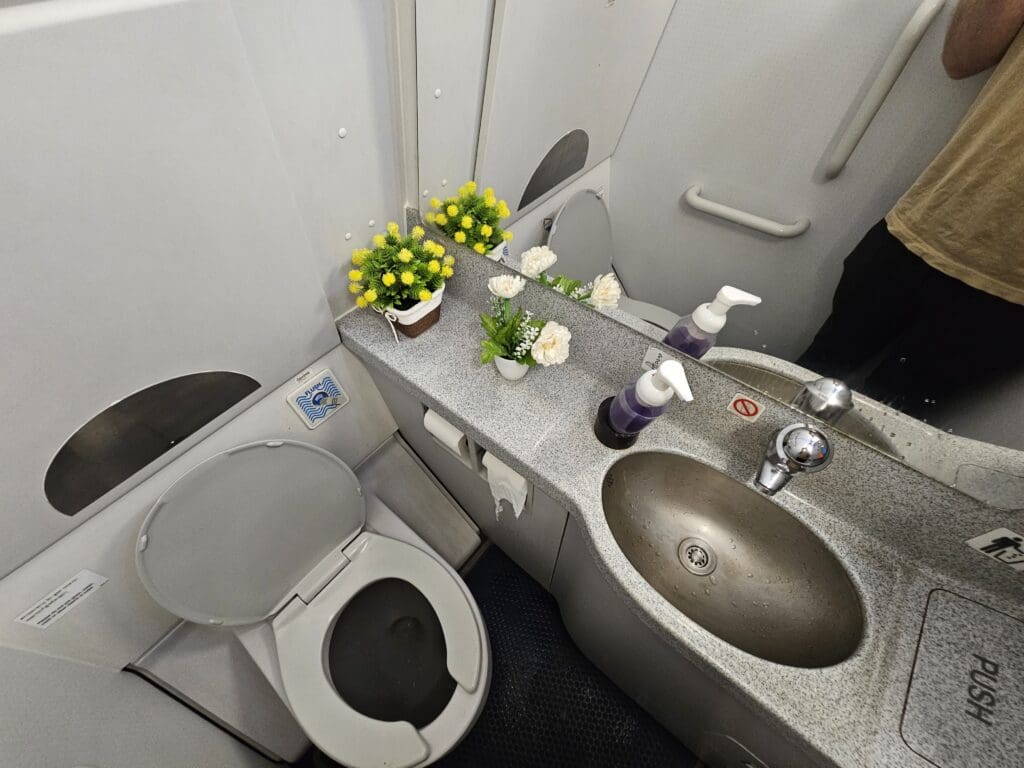
Realising that we were well into the second half of the flight, once the trays had been collected I decided to visit one of the two lavatories at the rear of the aircraft. Unfortunately, having seen heavy usage throughout the flight, this did not appear to be in the best condition although credit ought to be given to Bhutan Airlines for installing two bunches of fake flowers which gave off a fairly nice impression and is not something that is typically seen in Economy class lavatories! By the time I returned to my seat, the Bangladeshi coastline could be seen at the far southern tip of the country heralding our arrival into the skies of South Asia.
As we cruised northwards, following the meal service the crew took to the galleys and remained there until the Airbus commenced its descent. In spite of the presence of the onboard shopping catalogue, this service was not advertised during the flight, nor was any shop service made during the flight which begs the question of whether duty free items had been loaded onto the aircraft.
A little under two hours into the flight, the engine noise decreased slightly and the Airbus could be felt commencing its descent as it neared the coastline of Bangladesh. A short time later, the islands of the country’s Barisal region appeared as we passed just to the west of the town of Kuakata. At this time, the Captain’s calm and soothing tones filled the cabin as they performed their detailed pre-arrival announcement whereby they advised us that we were ninety kilometres away from Kolkata and could expect to land in seventeen minutes’ time, informing us that we were to land on the northerly runway. This was followed by an update on the weather in both Kolkata and Paro, and a mention of the 52 minute flight time for those lucky passengers continuing onwards to Bhutan.
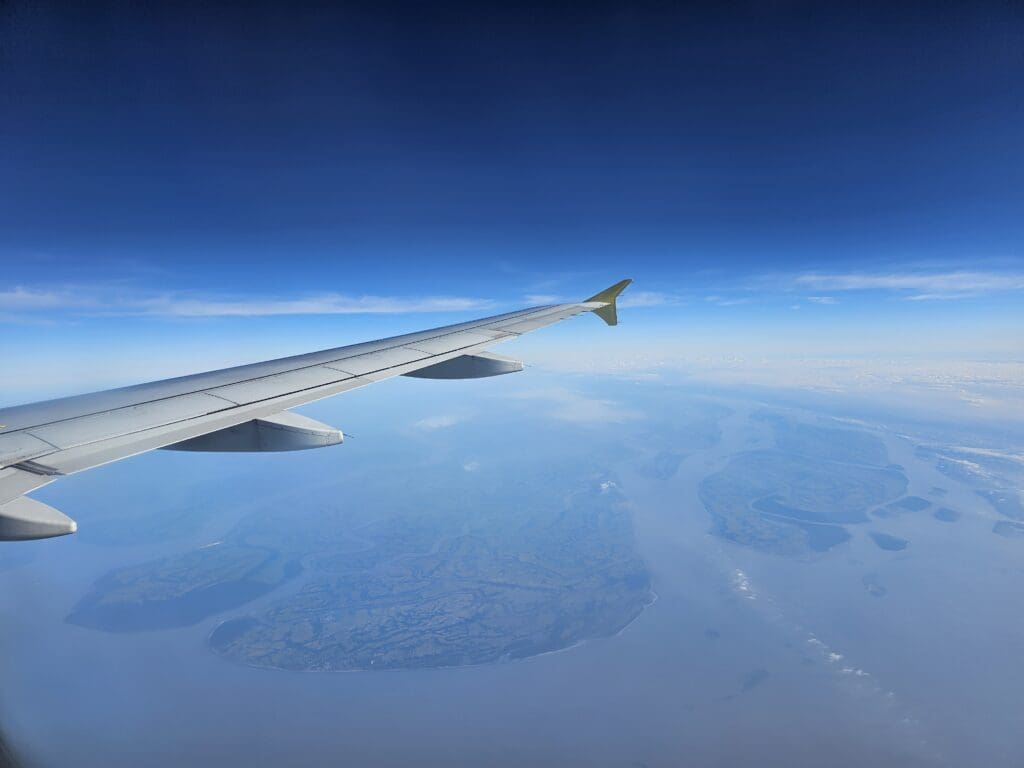
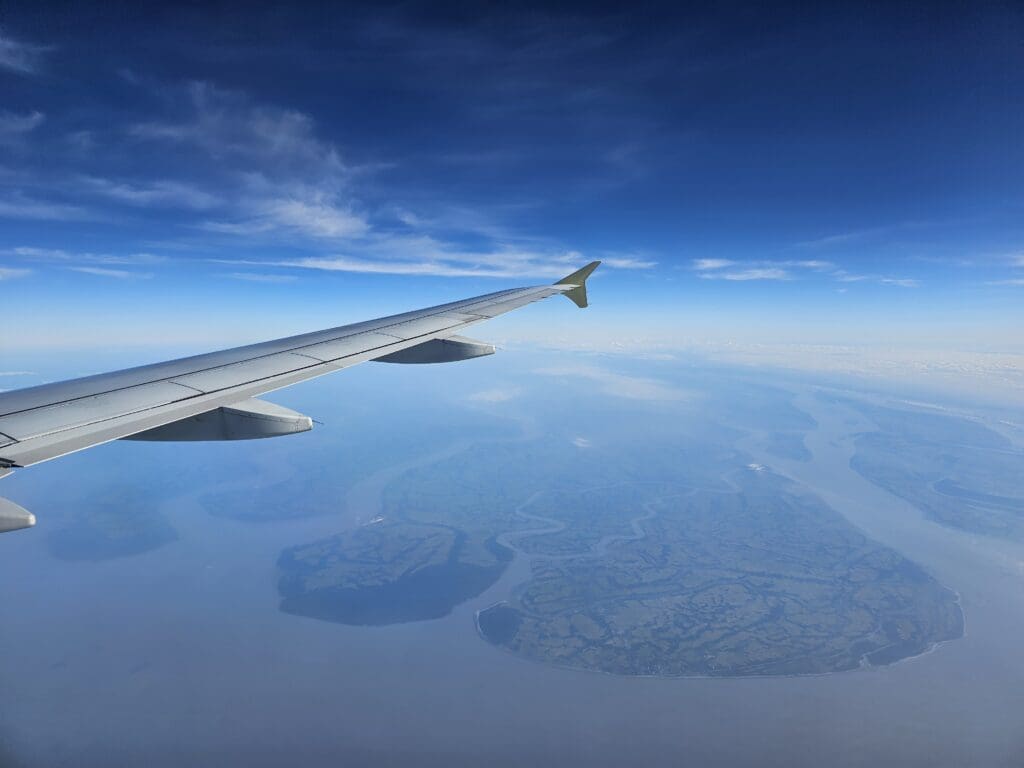
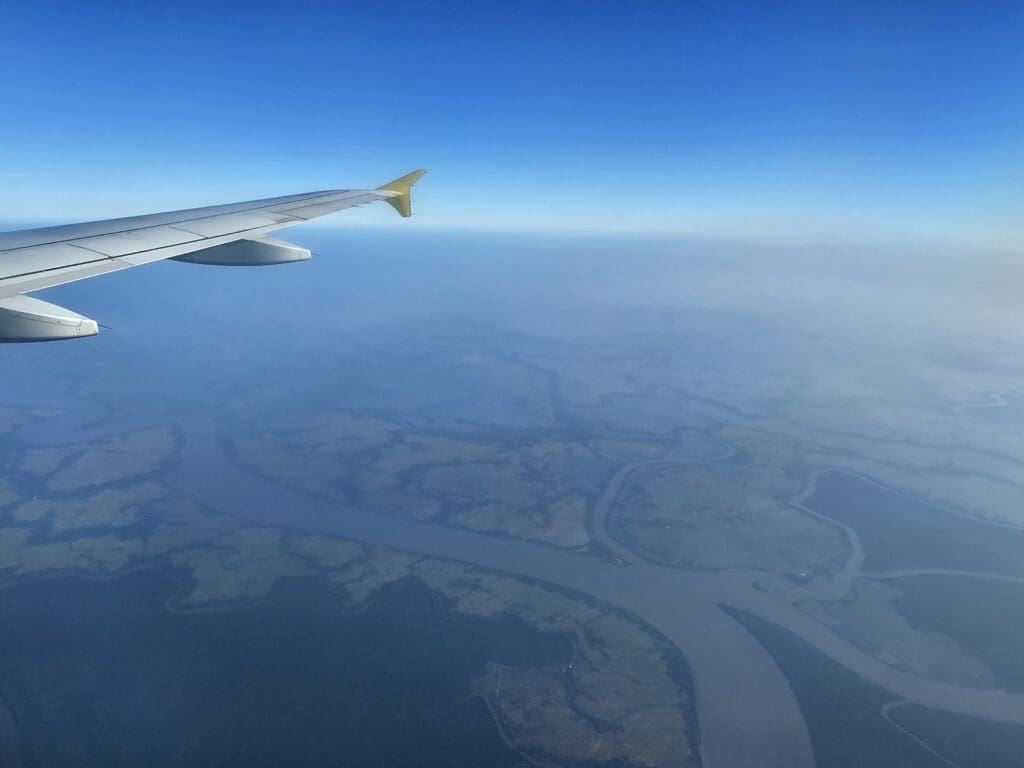
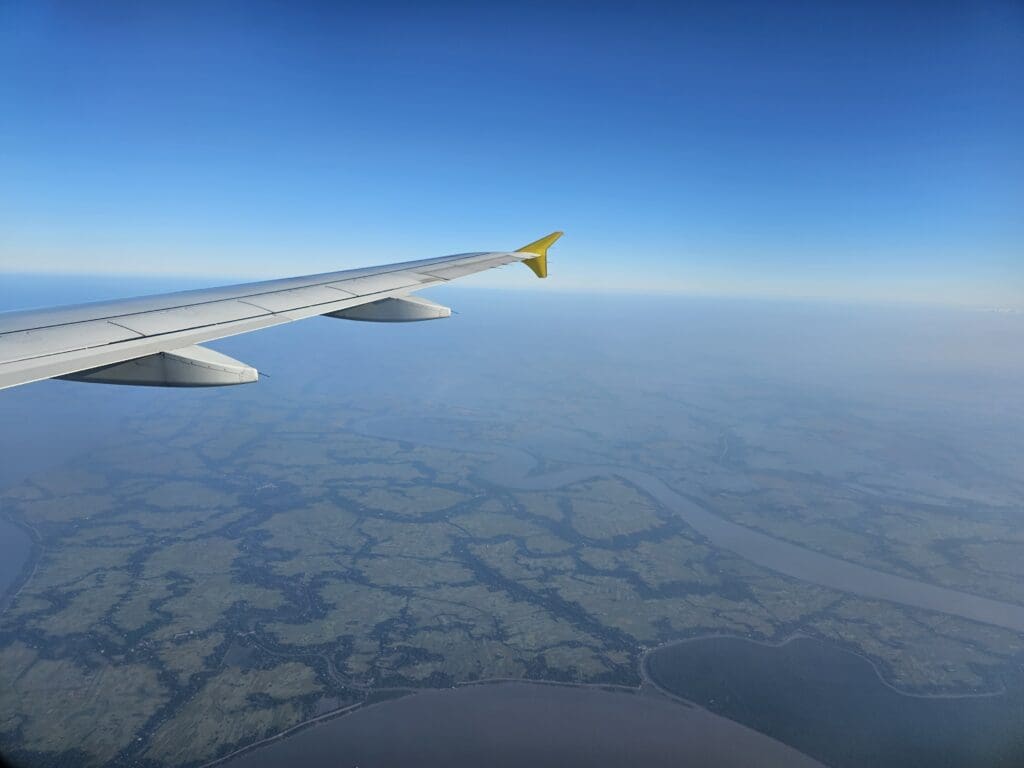
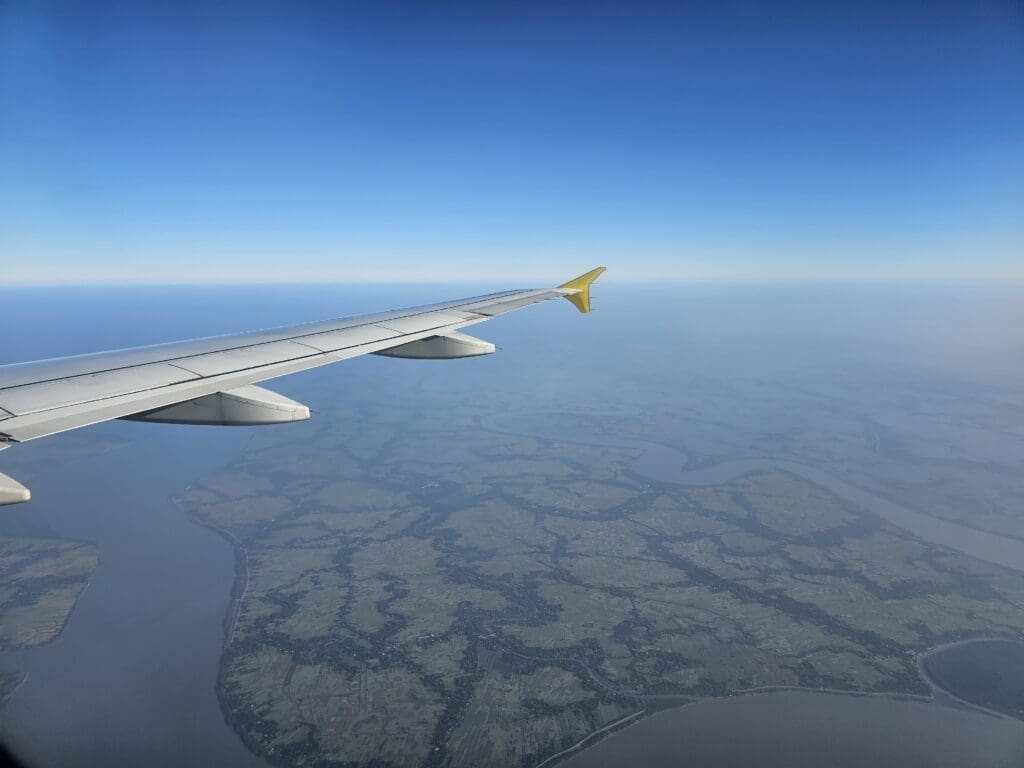
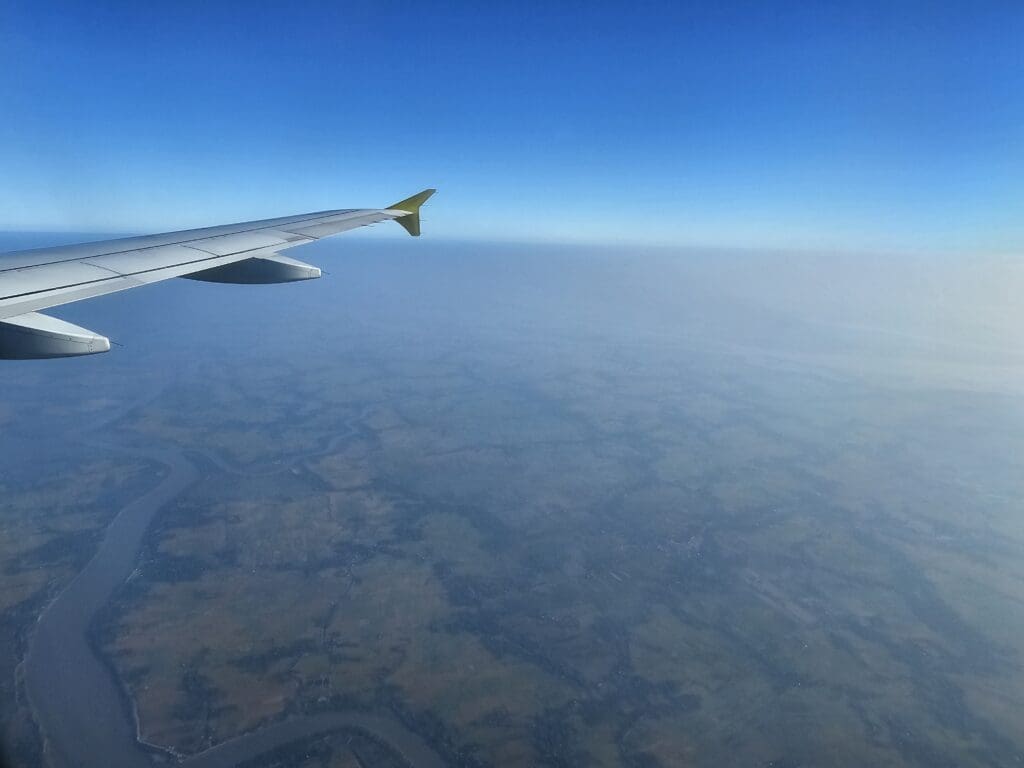
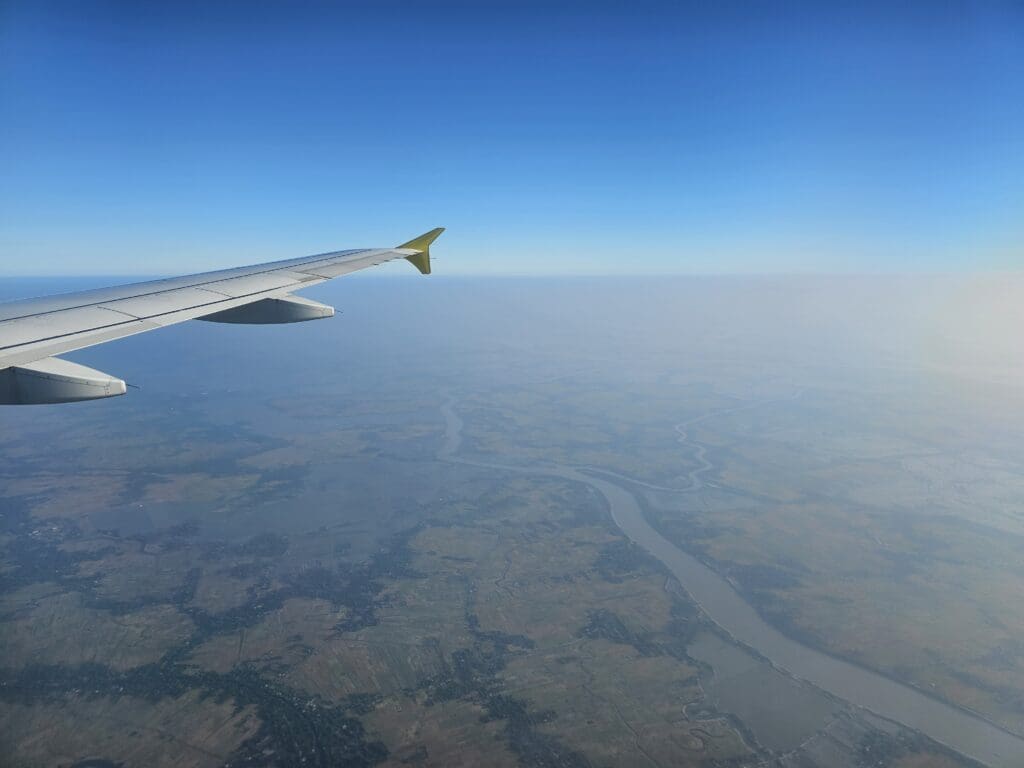
As we descended through 15,000 feet, the crew passed through the cabin ensuring everything was in place for our arrival before taking their seats just before we crossed over into Indian skies. As we neared Kolkata, the traditional music that had accompanied boarding rang out once more and below the villages and flat green countryside of West Bengal could be seen. All of a sudden, upon reaching the town of Kalikapur, the urban sprawl of Kolkata appeared and the air became infinitely more smoggy as we trundled northwards towards the airport.
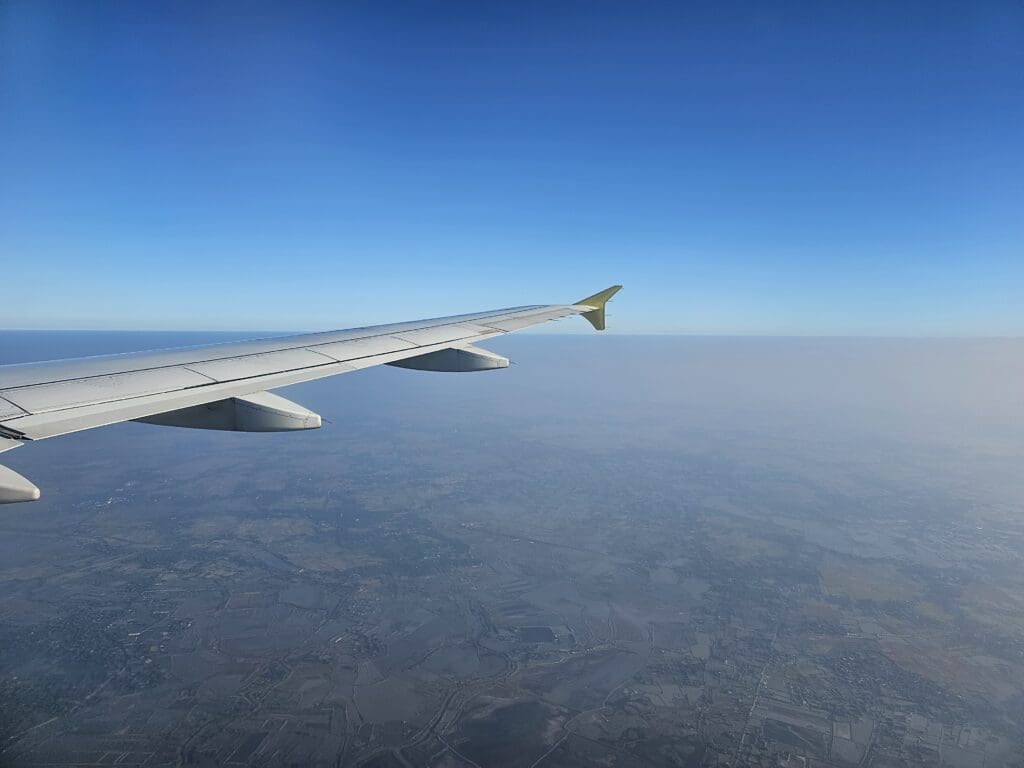
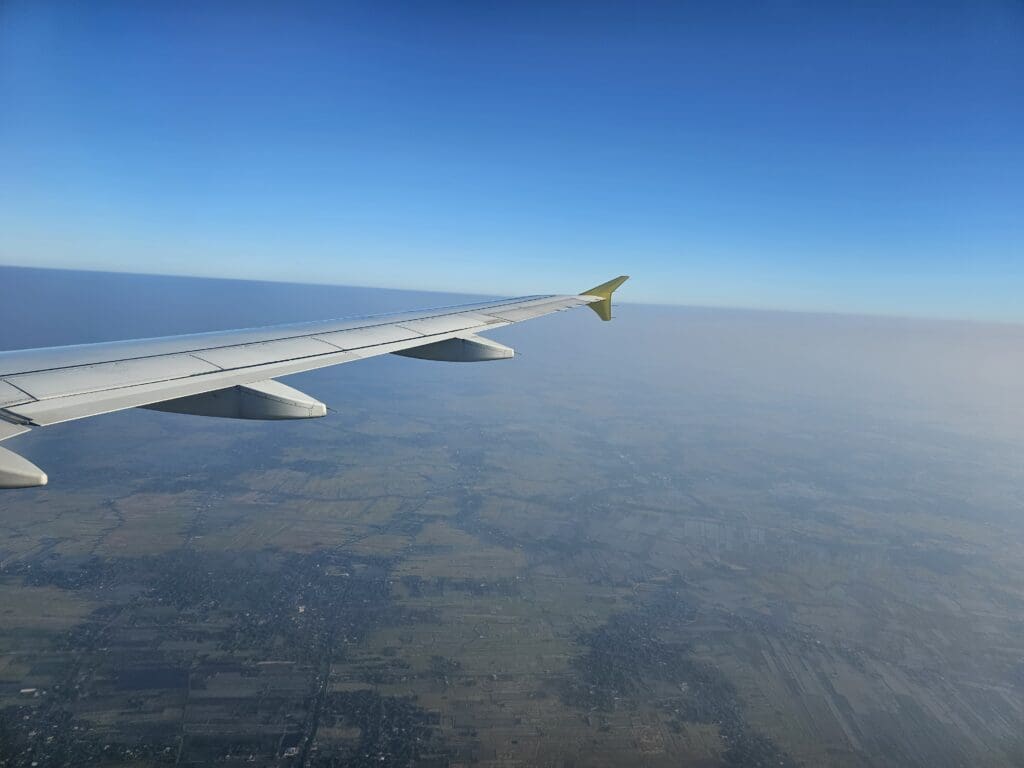
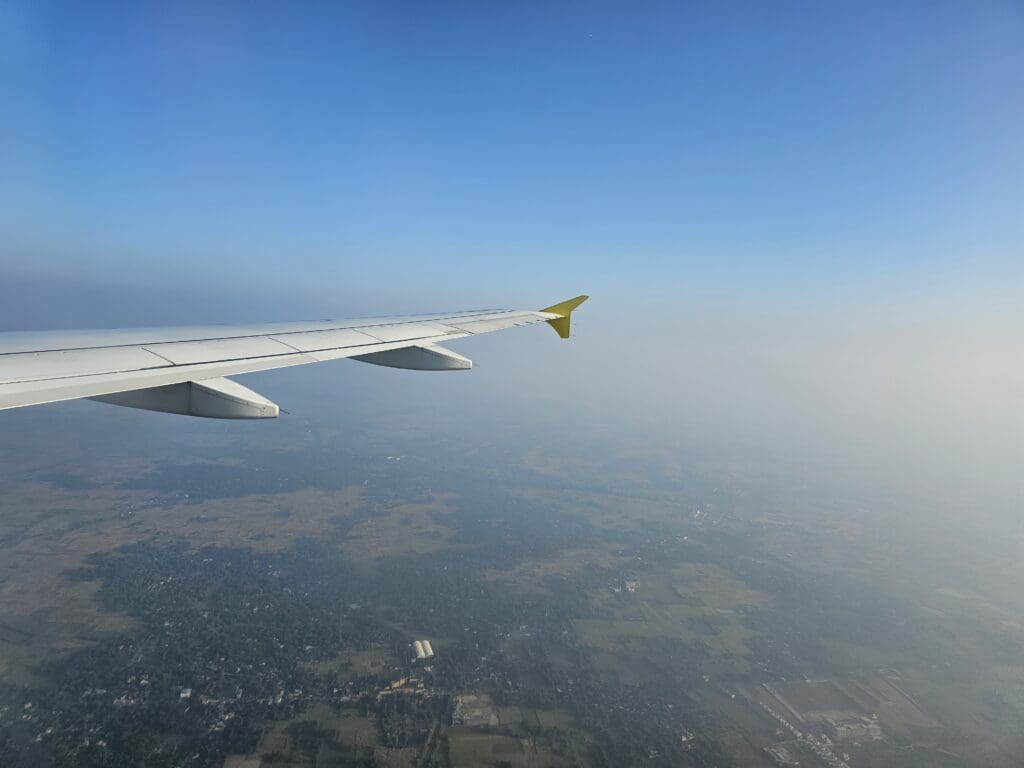
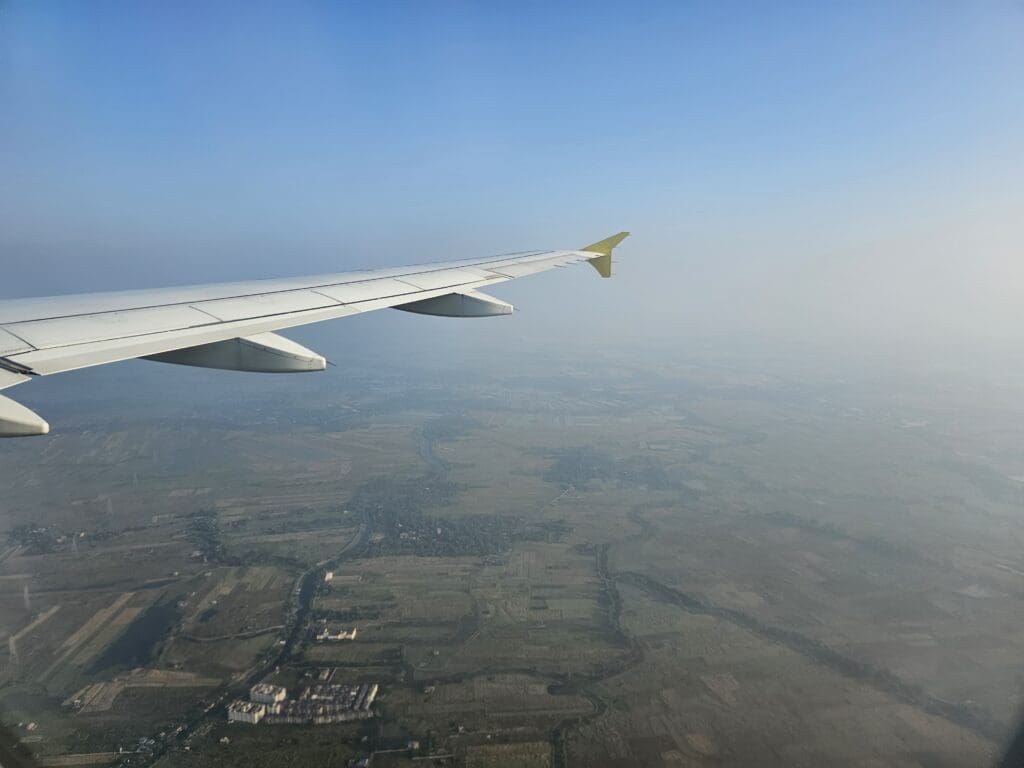
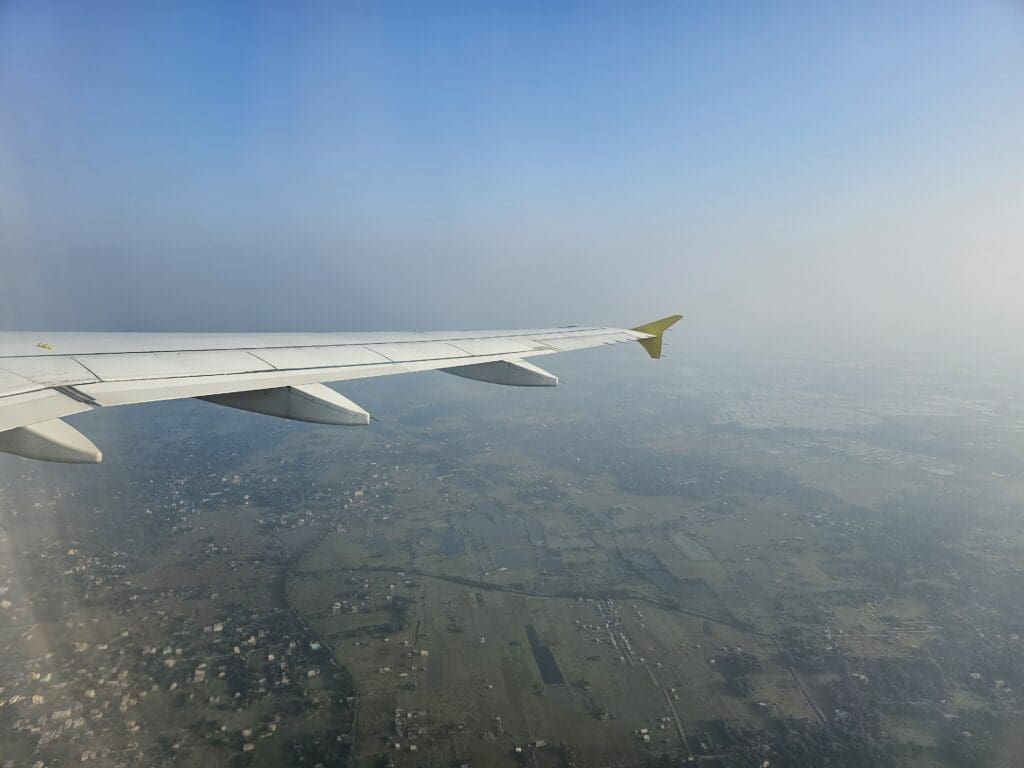
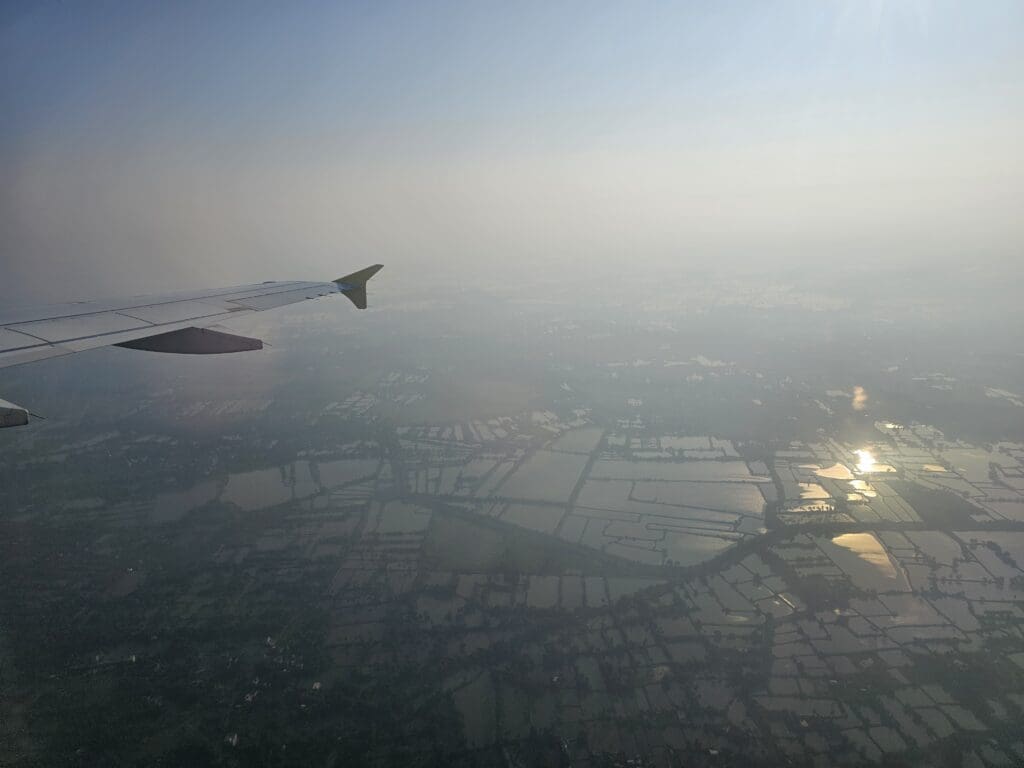
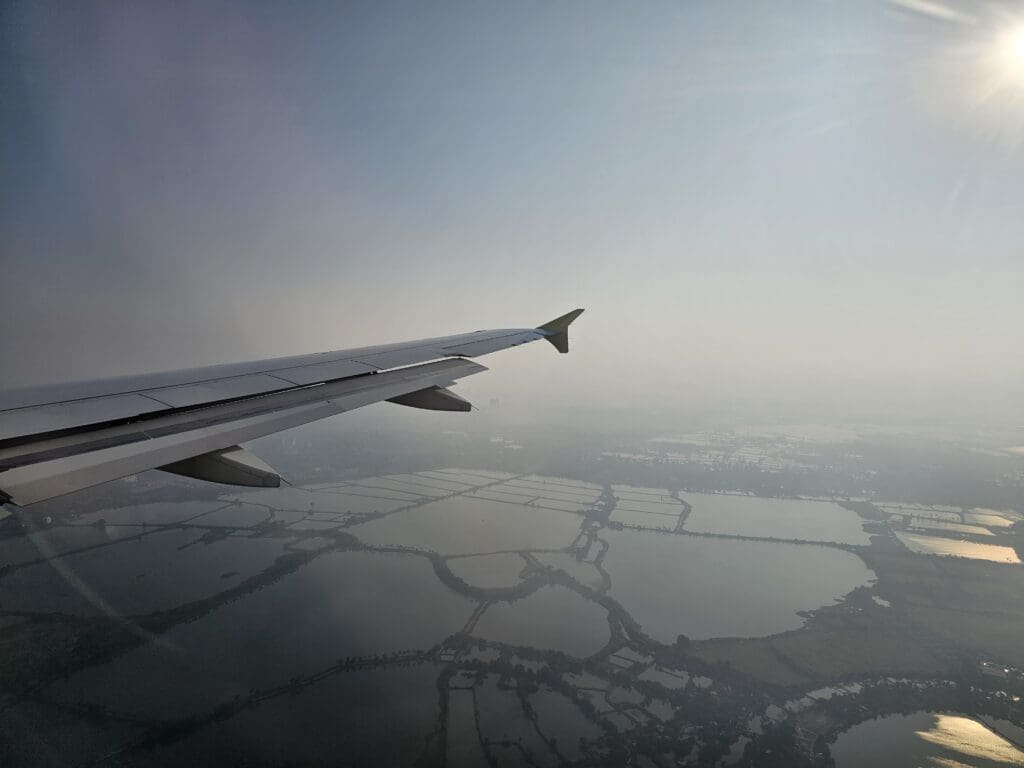
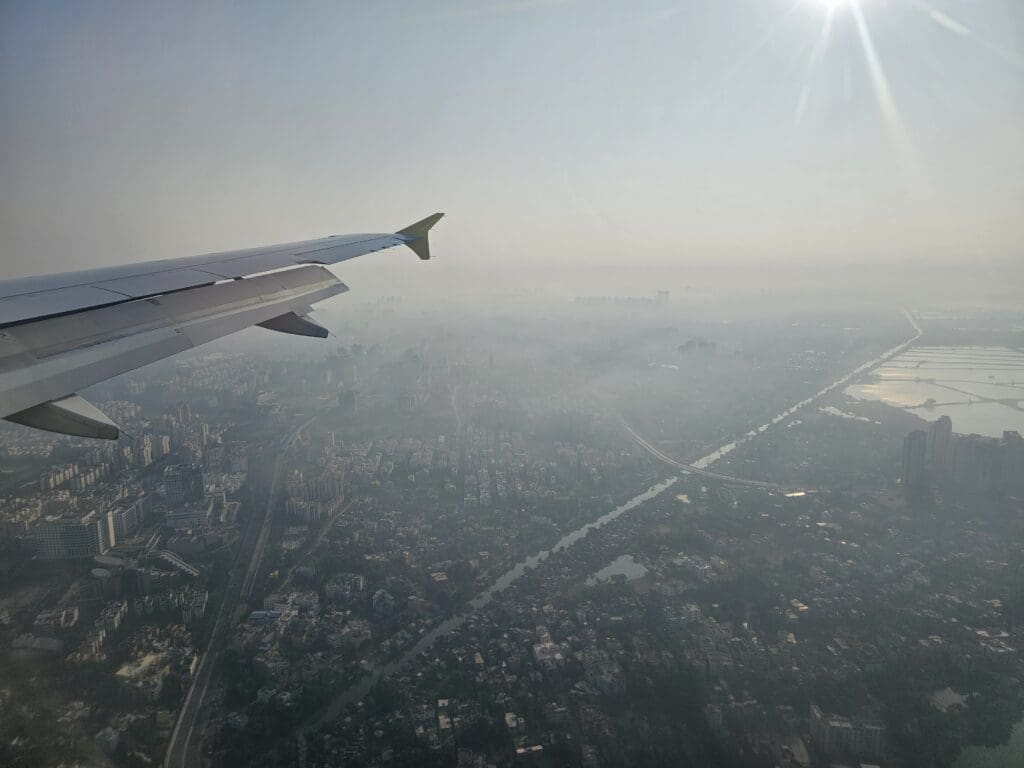
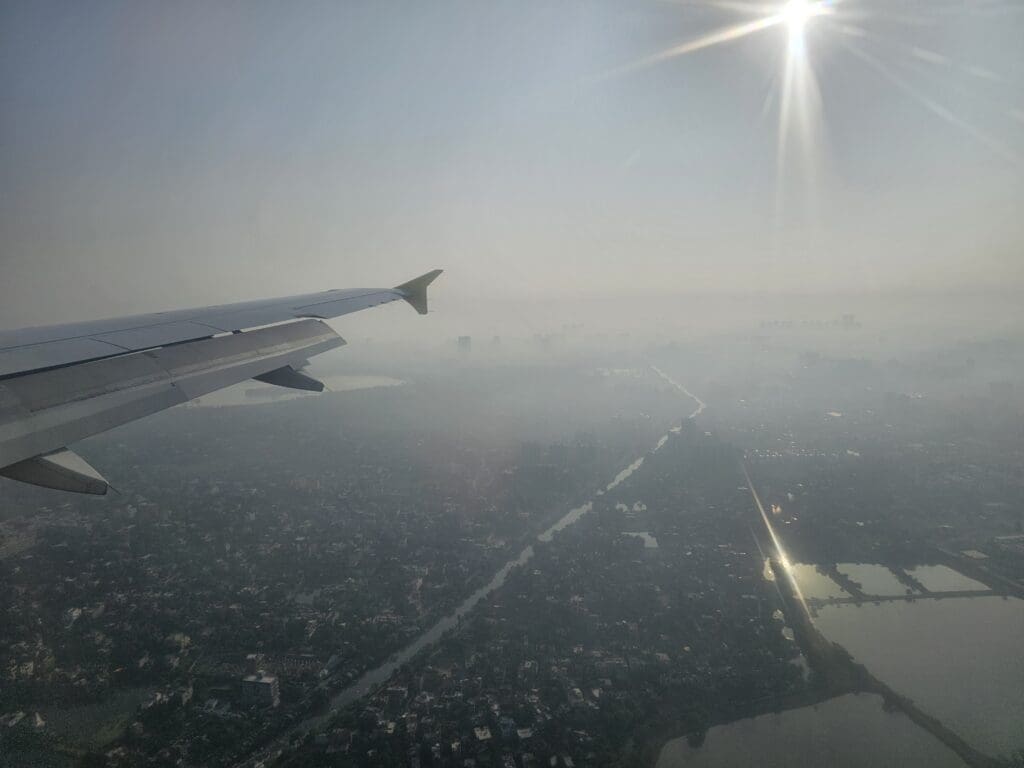
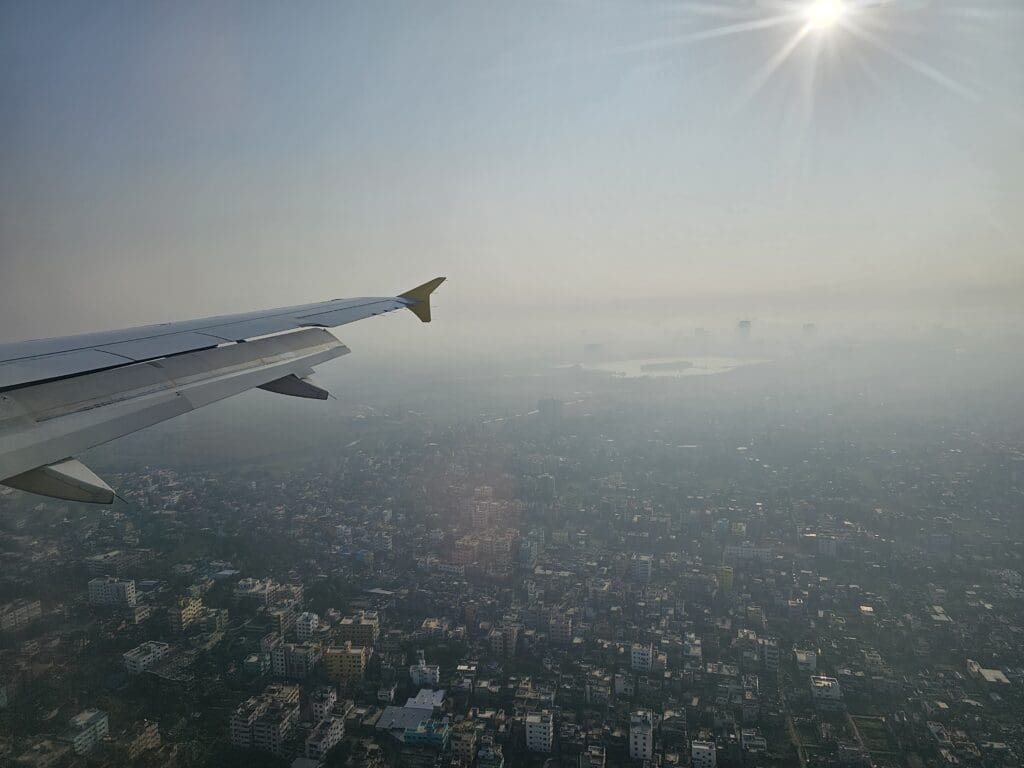
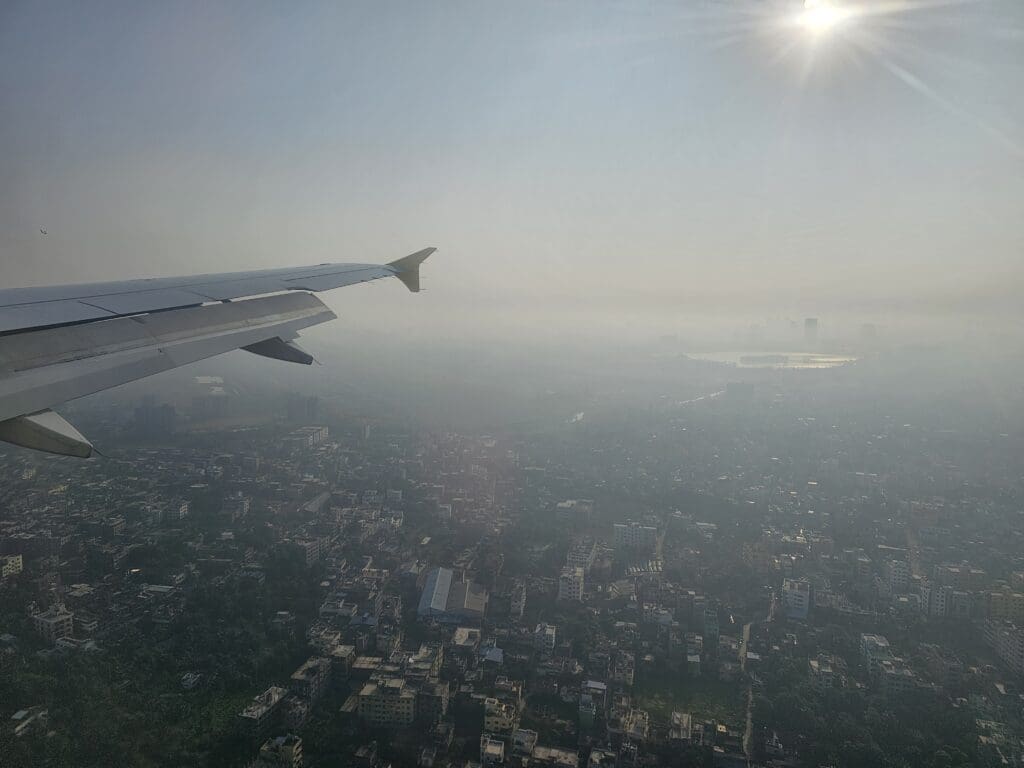
Bouncing around a fair bit, the flaps and landing gear were soon extended in preparation for our arrival and as the Captain had mentioned, that day we would land on one of Kolkata’s two northerly runways, Runway 01R. This meant that very few turns were required to set us up for an approach to this and it wasn’t long before we whizzed past the crowded and busy streets surrounding the airport before we crossed the airport’s southern perimeter and made a soft touchdown on Indian soil after 2H16 in the skies.
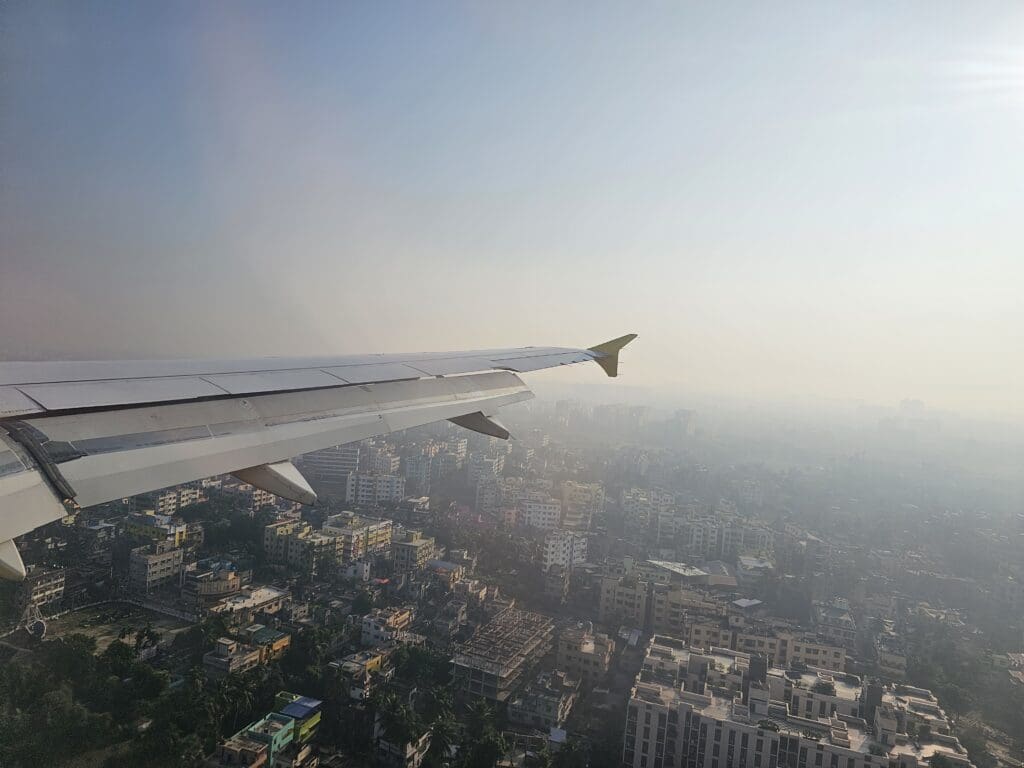
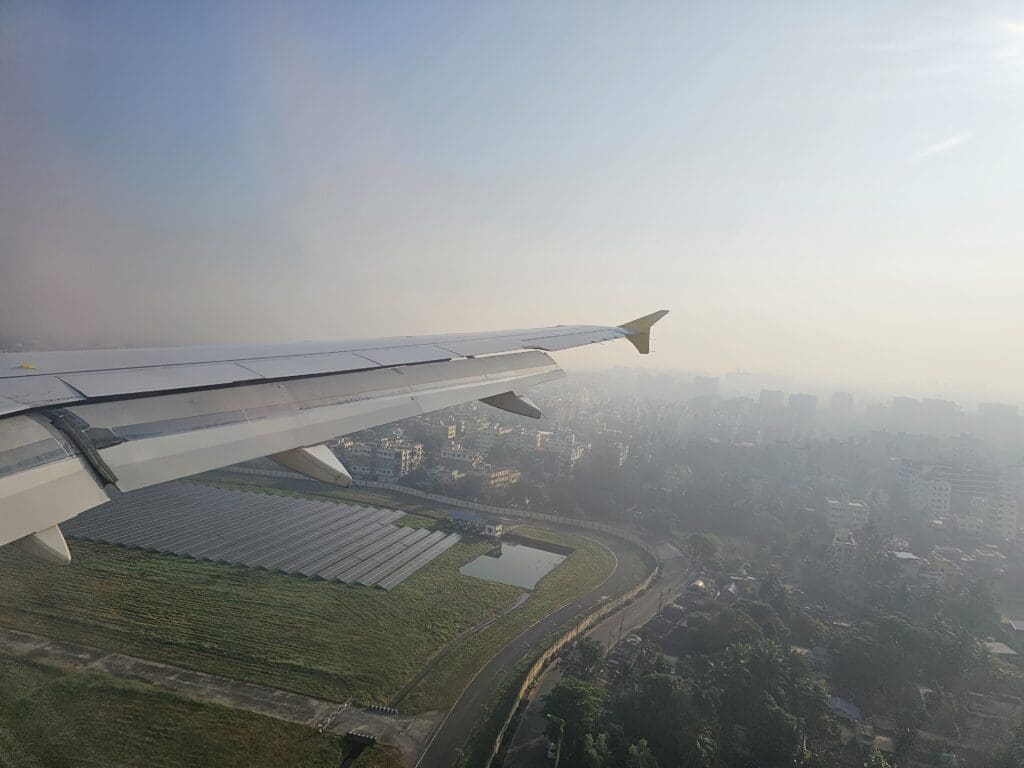
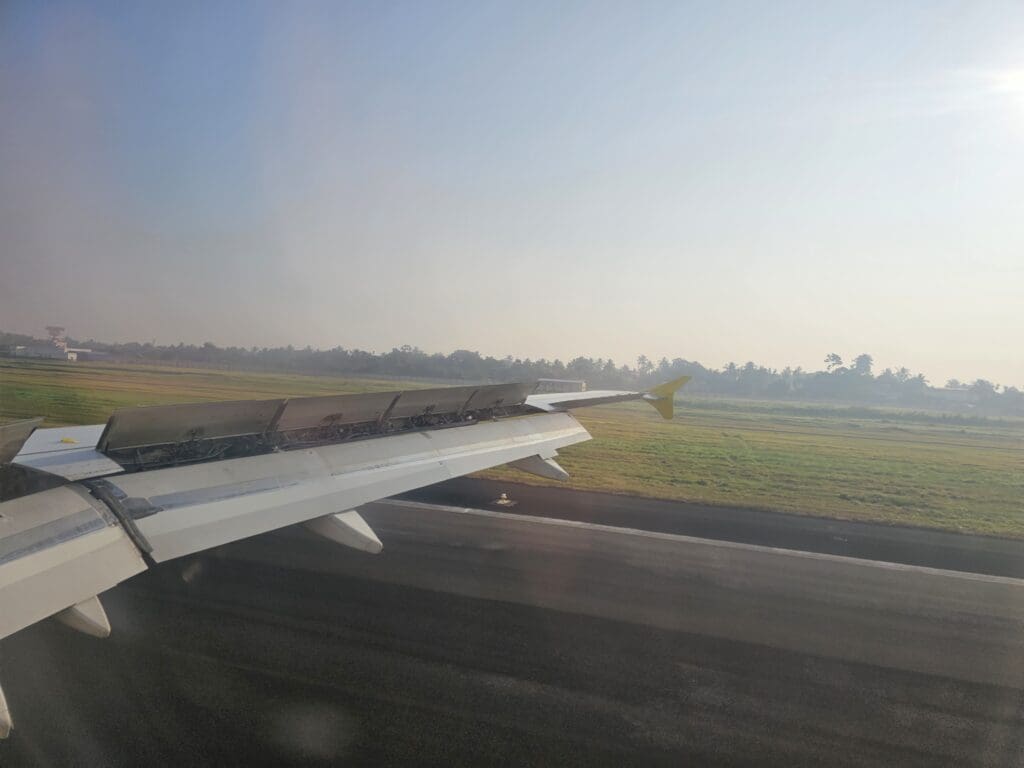
Contrasting with our soft touchdown, the brakes were slammed on and soon a cluster of stored Air India Airbus A320s popped into view. Vacating the runway to the left, as we exited this a selection of both passenger and cargo IndiGo jets, plus several examples from Air India and SpiceJet could also be seen. However, as an aviation enthusiast, the real highlight that morning was an Indian Air Force HS748 parked in between a couple of mundane ATR 72s. Back inside the cabin, as we commenced our taxi, the Purser performed their post-landing announcement and advised those bound for Paro to remain onboard the aircraft. From the runway, it did not take too long for us to reach Stand 52 which is located, as you would expect, in the international portion of the terminal. Coming to a halt next to an IndiGo Airbus A320neo that had arrived from Ho Chi Minh City earlier that morning, by the time we stopped it seemed that half of the cabin had already stood up in preparation to make a quick exit.
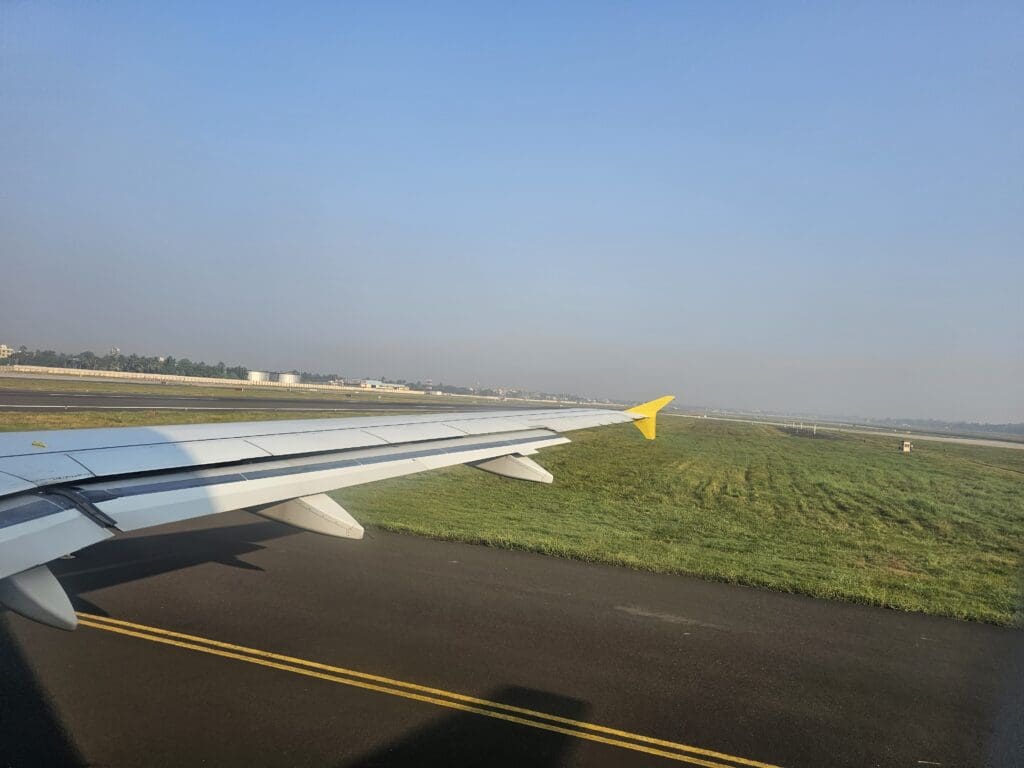
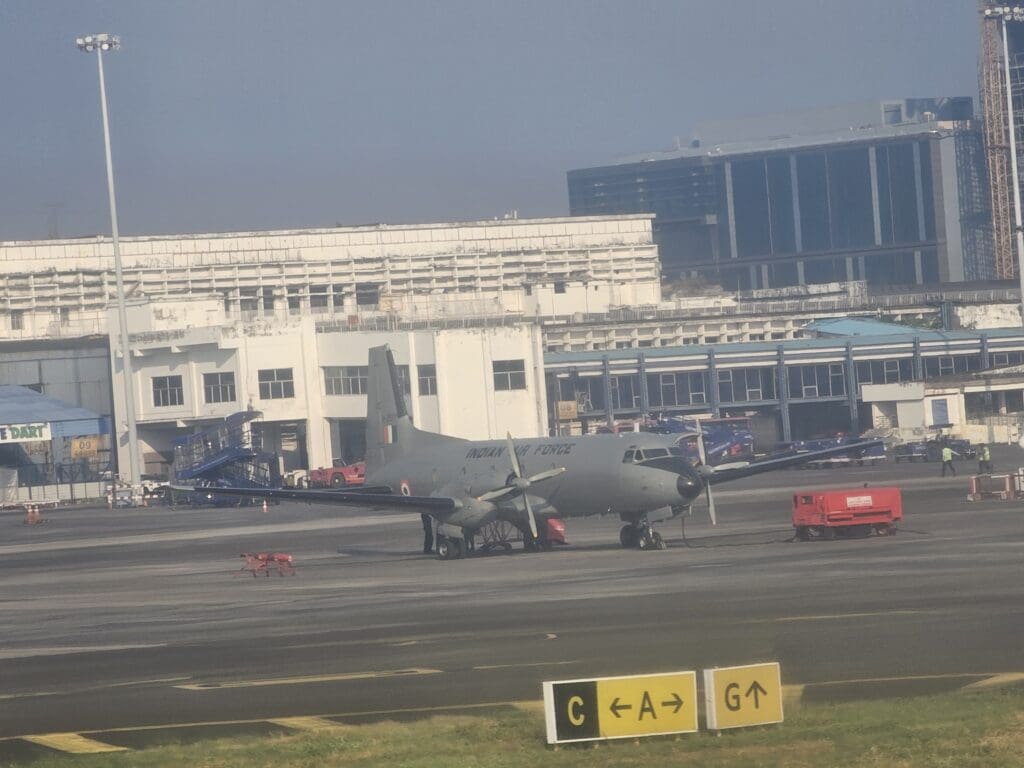
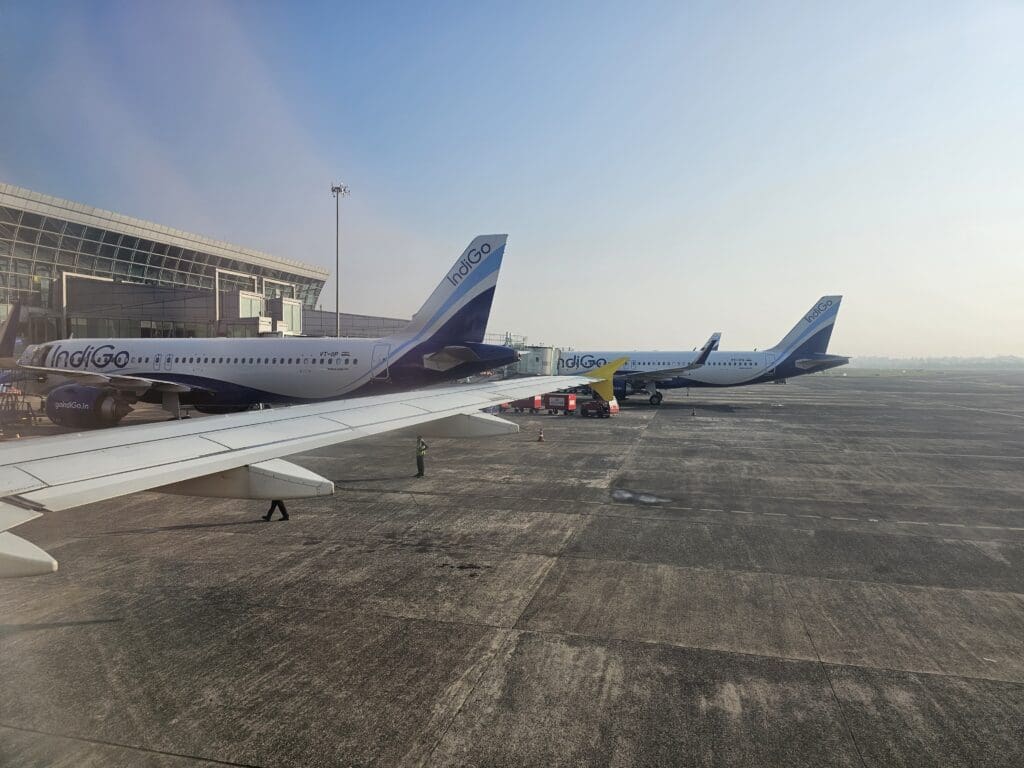
Fortunately, after coming to a halt it did not take too long for the jetbridge to be connected at which point disembarkation commenced. As I had suspected, it seemed that at least two thirds of those onboard were bound for Kolkata and I soon found myself walking up through the aircraft. As I reached the front of the Economy cabin one of the flight attendants thanked me and double-checked that I was indeed bound for Kolkata, which was then repeated by the Purser as I entered the forward galley. Up front three rows of old school recliners with red pleather covers could be seen, however, seeing as they were pretty much all taken by Bhutan Airlines staff, I didn’t manage to get a picture of them as I disembarked.
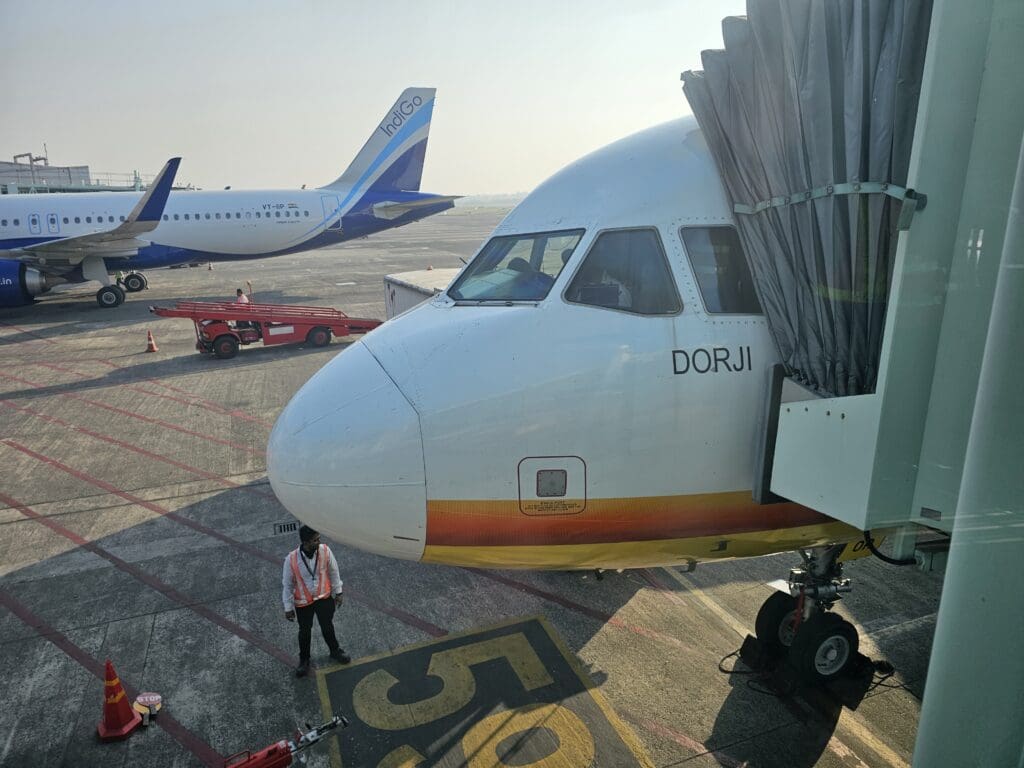
Upon stepping off the aircraft, I walked up into the terminal and, having perhaps arrived at the most convenient gate, I found myself standing in the immigration hall almost immediately after stepping off the jetbridge. There, I was handed a small immigration card to fill in and once I had done so I continued to the desks. Whilst a long row of desks could be seen, just one appeared to be in use for Indian passport holders, and another for all other passports. However, being one of just two non-Indians to disembark in Kolkata and with no other international flights at that time, I was able to walk straight up to the desk and handed over my e-visa, passport and immigration card. Once there, the friendly immigration officer typed away for a few minutes and wished me a nice stay in India. Eventually, I was free to continue onwards and made my way through a customs checkpoint where my bags were scanned before steaming through the baggage collection hall and making it to the landside area only a fairly short time after my flight had been scheduled to arrive.
Summary
Those more used to the likes of luxury carriers may have ended up disappointed with this ride on Bhutan Airlines. The cabin, whilst clean, looked a little tired, the aircraft lacked any form of inflight entertainment system or in-seat power and the flight attendants were, by and large, a little cold. However, being an aviation enthusiast, I was very happy to bag a ride on Bhutan Airlines and found the cabin to be comfortable, the meal to be filling and of reasonable quality, and the carrier to have made quite an effort in their branding both inside and out. Whilst some elements of my experience were a little rough around the edges, I found the carrier to have plenty of charm and it was clear that it is proud of its important role in connecting Bhutan. Whilst I would be unlikely to need to fly Bhutan Airlines again any time soon, I would not hesitate to do so, although not before sampling the delights of their main rival, Druk Air, first.