Remembering Vistara: Kolkata to Delhi on an A320neo
Background
Connecting India’s seventh and second largest cities, unsurprisingly, the 816-mile route between Kolkata and New Delhi is one of the country’s busiest and most well-serve air routes. Needing to travel between the two, as you would expect, I faced no shortage of options, with a slew of flights departing at almost all times of day operated by Air India, IndiGo and Vistara. Seeing as all three airlines offered similarly priced tickets, I shortlisted Air India and Vistara, owing to their full service status. Having previously flown with Air India on a Boeing 787-8 Dreamliner operated service from Seoul Incheon to Hong Kong, I decided to go for Vistara’s evening Airbus A320neo operated service. With tickets for this service proving to be cheaper when booked through booking platform Trip, I decided to book with them rather than directly with Vistara, although, despite this, I was able to manage my booking using Vistara’s website and I was able to reserve an ordinary seat without paying an additional fee.
About Vistara
Whilst only formed in 2013, Vistara had long been in the making. In the 1990s, the gigantic Indian conglomerate, Tata, sought to establish an airline to rival the likes of Air India and Indian Airlines. Partnering with highly regarded Singapore Airlines who were to provide the vital technical expertise required to run an airline, the two companies sought to launch a full service carrier. However, regulatory requirements saw this project ground to a halt, with the proposed airline failing to receive approval from the Indian government. Many years later, the Indian government introduced new regulations loosening restrictions on overseas entities maintaining major stakes in Indian airlines. As a result, it wasn’t long before both Singapore Airlines and Tata revived their plans to establish a carrier, and in 2013, Tata SIA Airlines Limited, known as Vistara was formed.
Since their initial plans to establish an airline, the Indian airline industry had changed dramatically, and the only major stalwart remaining since the 1990s was Air India. Luxurious Kingfisher Airlines had come and gone, Indian Airlines had disappeared, whilst Air India’s local full service rival now took the form of Jet Airways. However, perhaps the biggest change was the market entries of low cost carriers such as IndiGo and SpiceJet, who had shaken up the industry and provided a real challenge to the old guard. Vistara aimed to offer another full service competitor to Air India and Jet Airways, utilising its ties with Singapore Airlines, and the airline’s very good reputation across India and beyond.
In January 2015, Vistara operated its first flight, initially offering domestic services across India with a fleet of Airbus A320 aircraft. These jets were eventually replaced by a fleet of Airbus A320neo and A321neo aircraft, with the airline operating an impressive total of over sixty of these. The demise of Jet Airways in April 2019 saw Vistara lose on of its main local competitors, and the airline took on both staff and aircraft from the former carrier to further fuel its expansion. In August 2019, Vistara opened up its first international route, connecting its main hub, Delhi, with Singapore. Later on, the carrier expanded its international route network, opening routes to other destinations including Bangladesh, Hong Kong, Indonesia, Mauritius, Nepal, Oman, Saudi Arabia, Thailand and the United Arab Emirates. With long haul ambitions, in February 2020, Vistara received its first of seven Boeing 787-9 Dreamliners. Despite these not coming at the best time, given the onset of the pandemic, eventually, these enabled the airline to commence service to France, Germany, Japan, Turkey and the United Kingdom.
Amongst the travelling public, Vistara enjoyed a largely positive reputation and was arguably seen to be the best and most luxurious airline in the country. However, the airline ultimately became a victim of its own success. In January 2022, Air India was privatised and purchased by the Tata Group. Logically, both Singapore Airlines and the Tata Group did not see the purpose in maintaining two separate entities and the decision was made to merge the two airlines. With this decision approved by the Indian government in September 2023, the Vistara brand officially came to an end in November 2024, when operations were merged with Air India.
The Journey
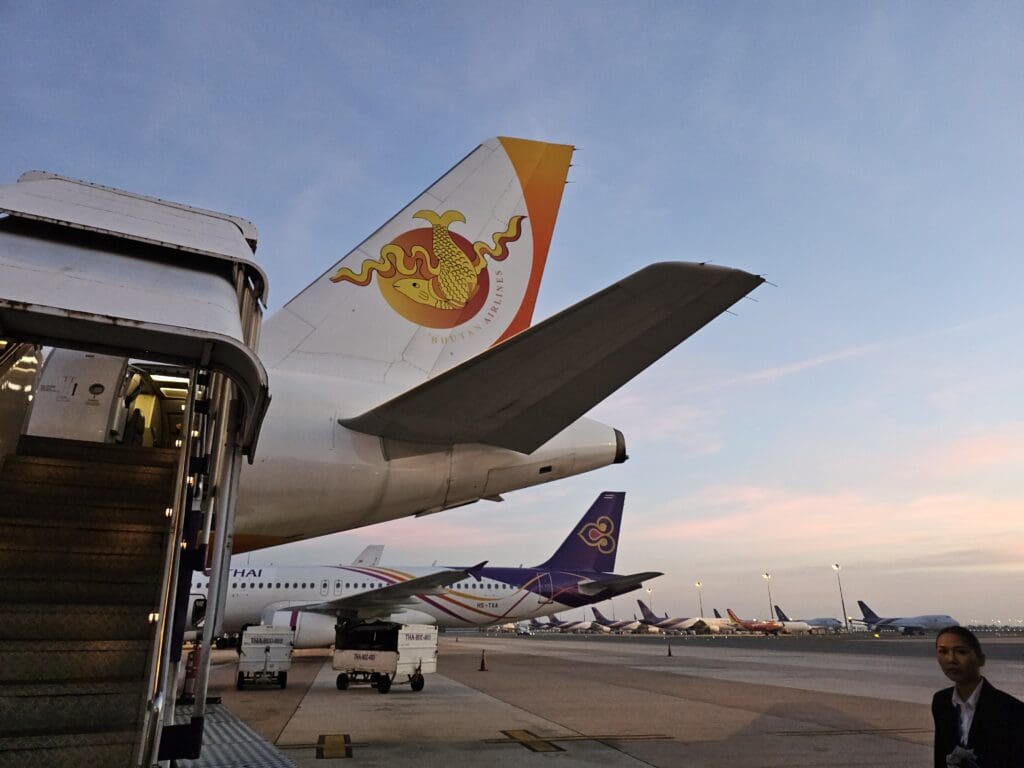
Following my exciting ride from Bangkok onboard a Bhutan Airlines Airbus A319, I touched down on Indian soil ahead of schedule, and by the time I had passed through immigration, I was left with around ten hours until my Vistara flight to New Delhi. Having done my research, I decided that I would see if any of the airport’s ‘retiring rooms’ were available. These are essentially basic hotel rooms located on the first floor of the arrivals level and reserved for the exclusive use of those with long transfers. Making my way to the retiring room counter, I enquired about rooms and to my delight, one of these was available and after agreeing to pay 2240 Rupees (around £21) to reserve this until 1600, I filled out what seemed to be an unnecessarily long and convoluted form before being pointed up the stairs to the accommodation reception area.
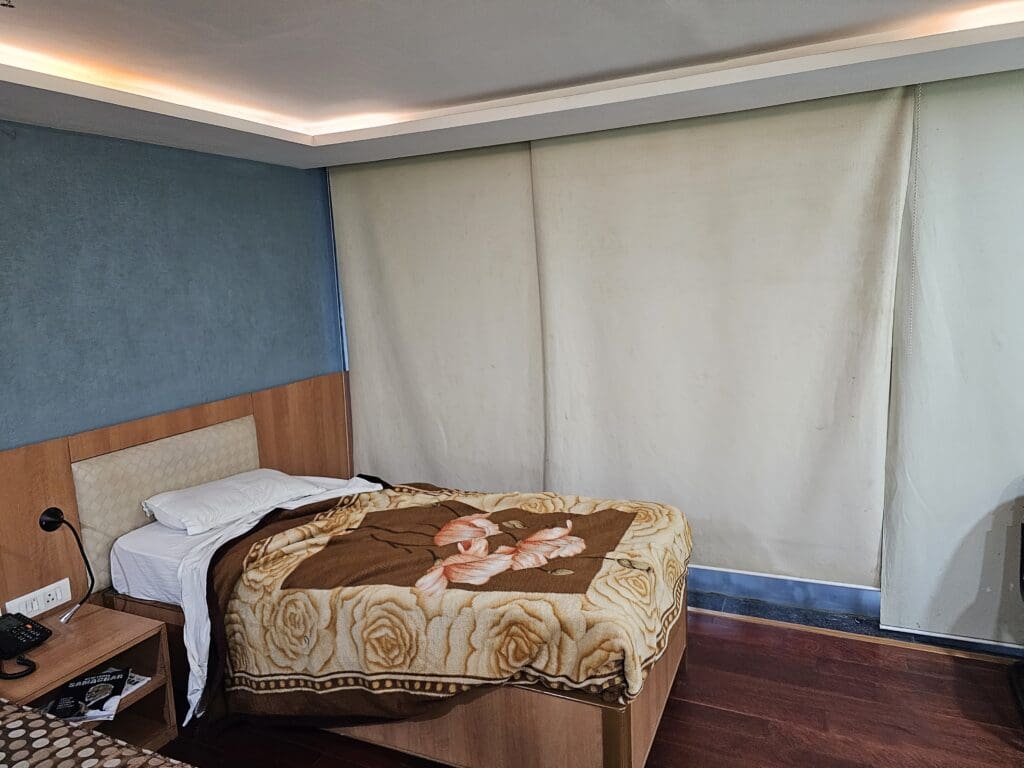
After being warmly greeted at the reception, I was escorted to my room. Much to my surprise, I was not given a key for this and instead the room were not lockable. Inside, this was a little shabby, although it proved to be comfortable and served its purpose, also offering a superb view of…the domestic baggage claim hall! Whilst I had intended to store my bags in the room and then catch a taxi into Kolkata to explore the city for a few hours, this plan fell apart when I spent a good hour trying to find an ATM in an attempt to get cash out for the taxi. With these located on the terminal’s departures level, most of this time was spent convincing security guards to let me in, given the massive amounts of time I had before my flight. Once finally in, I managed to get cash out however, I then encountered yet another hurdle when I attempted to return downstairs to the arrivals area and spent another hour trying to head downstairs. There, the strict security guards would not let me through without a Vistara escort. By the time I had found a very unfriendly member of Vistara staff to do this, my time in Kolkata had been significantly eroded and I decided that it would be best to resign myself to the confines of the retiring room.
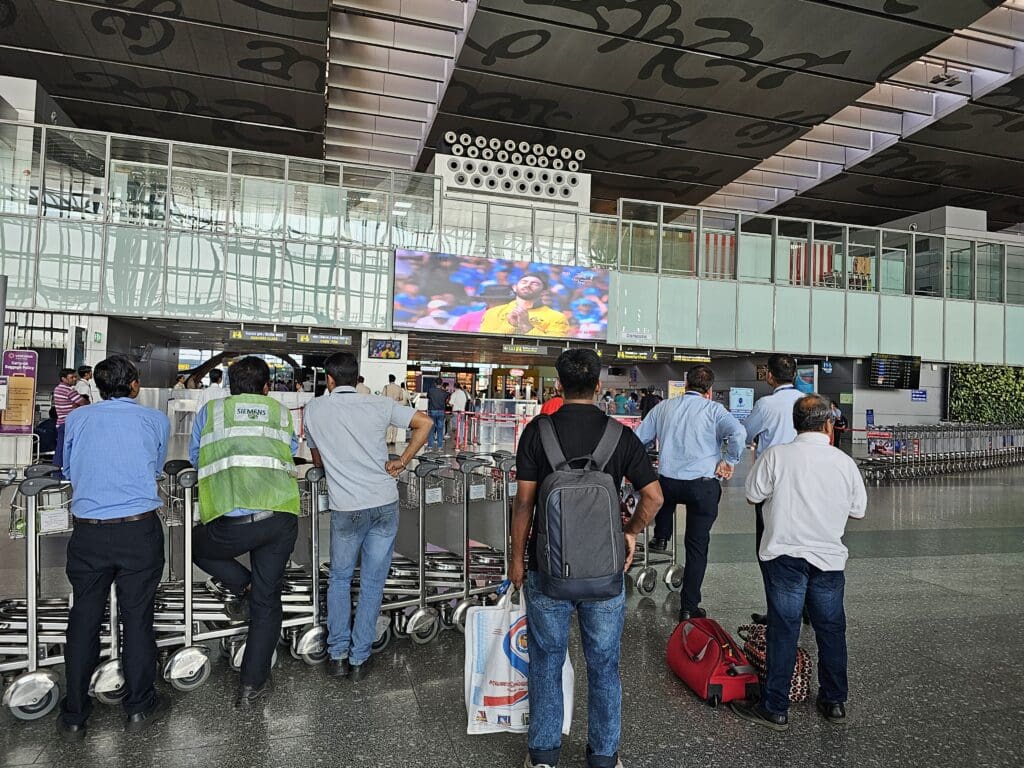
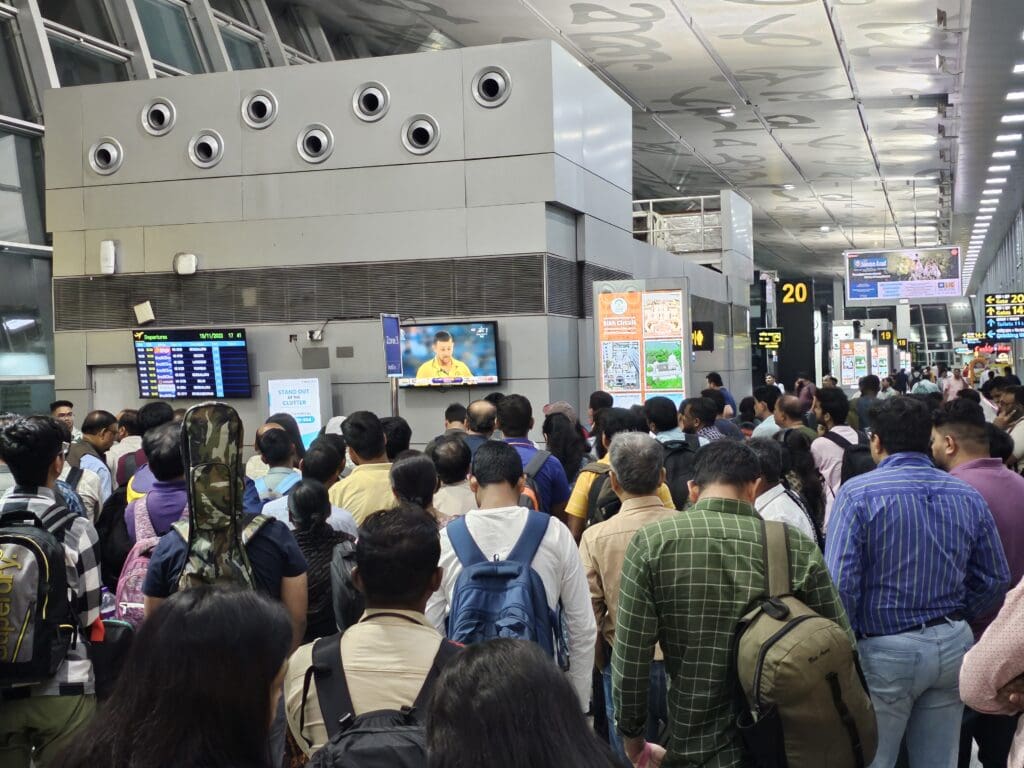
Seeing as my flight was not scheduled to depart Kolkata at 1845, I would not have to leave my room particularly early. However, with no wifi, no airside views and a fair few cockroaches, I decided to make my way airside at 1430 in the hope that once airside I would be treated to superb views of the movements outside. After a nap and shower, I gathered my belongings and made my way back to the reception area, where I signed out and made my way up the escalators that led to the departures level of the terminal. Once at the top of these, I was happy to find that upon presenting my boarding pass and passport, the security guards let me through after comprehensively checking this. Upon arriving there, I was greeted by a rapturous round of applause. Wondering for a moment what I had done, it soon became clear that the Cricket World Cup final between India and Australia was being broadcast on virtually every screen in the terminal with many passengers and staff fixated on this.
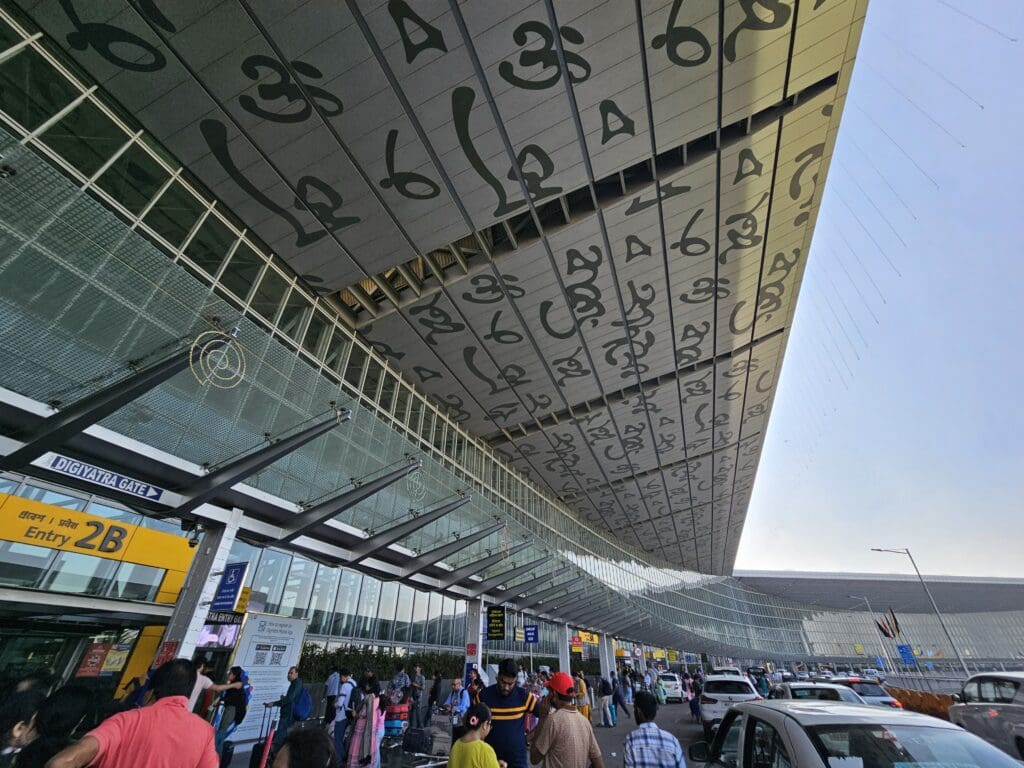
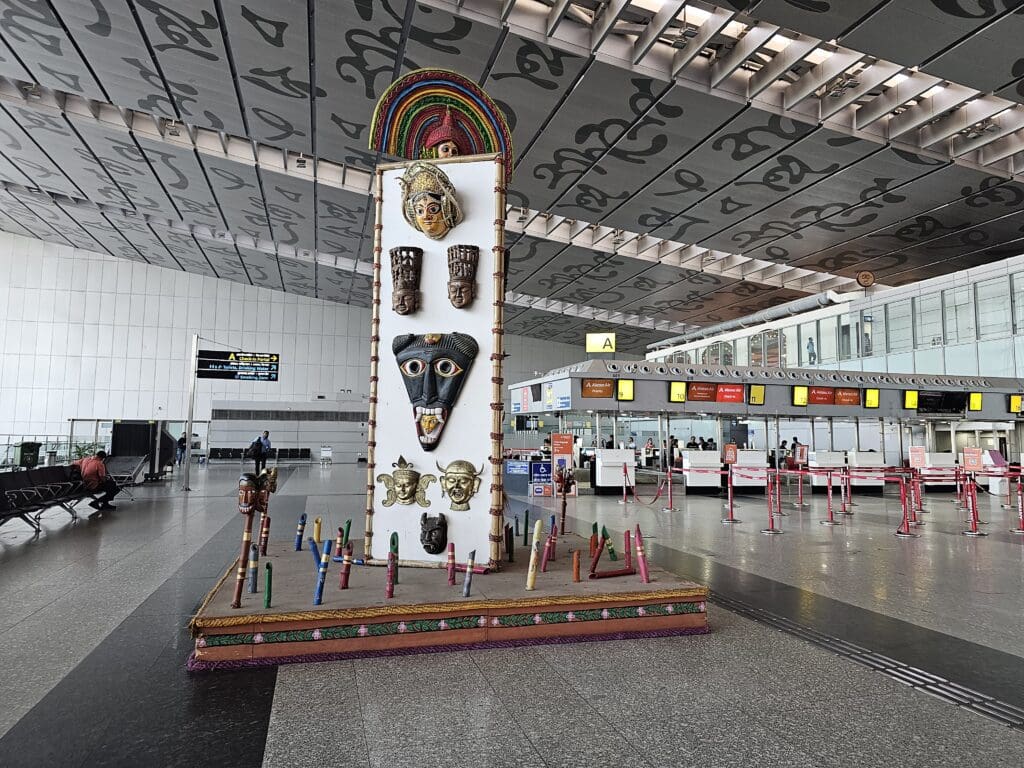
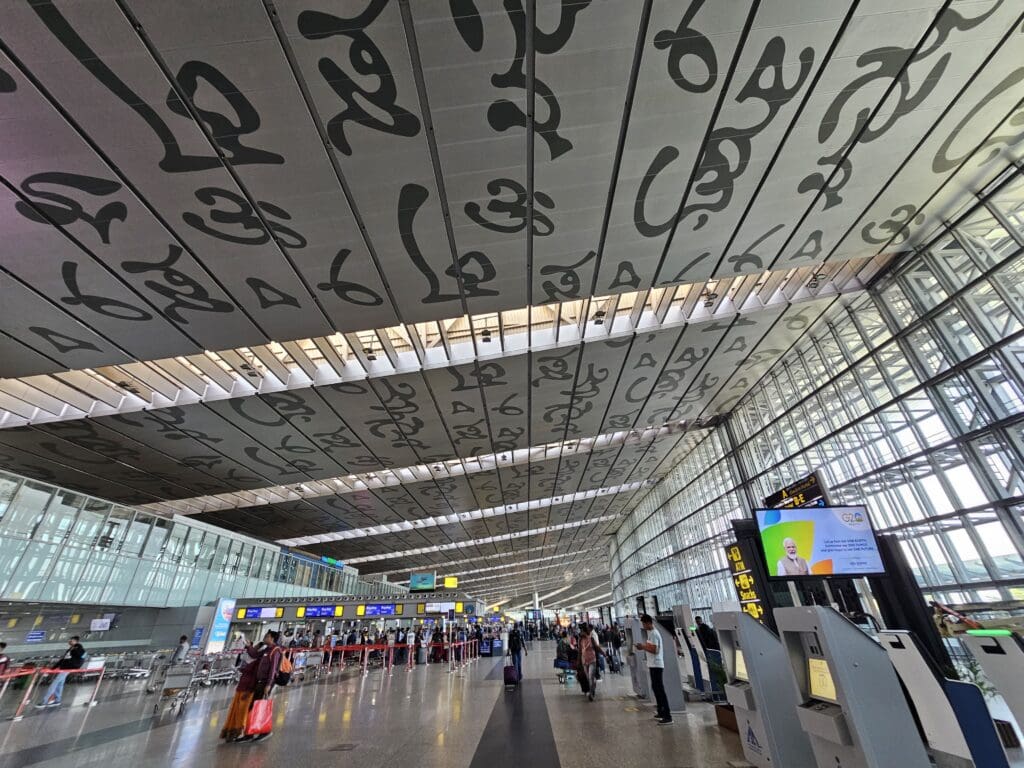
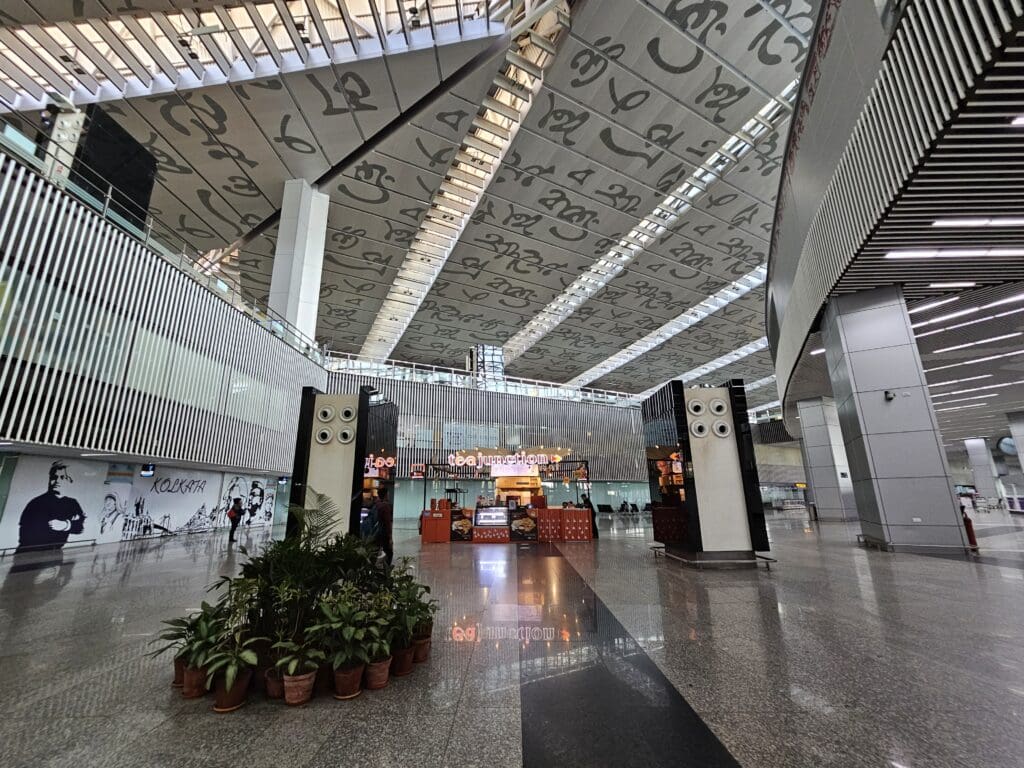
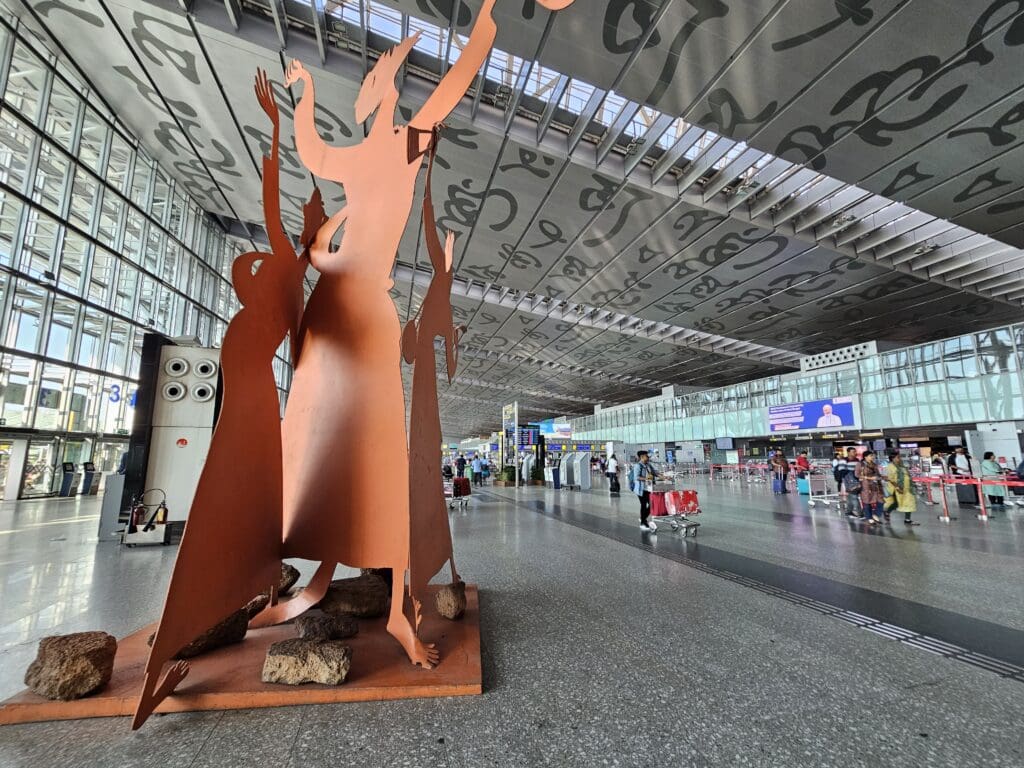
As with most, if not all Indian airports, the terminal building is accessible only to those with tickets. Inside the terminal is large and modern, having welcomed its first passengers in 2013. Whilst seeing plenty of flights, this consists of one single terminal, most of which is dedicated to domestic flights, whilst a smaller area at its southern end is siphoned off for international services. Inside, the check-in hall features plenty of check-in islands and was, at that time, rather busy with plenty of passengers seen scurrying about and long queues at many of the terminal’s check-in desks. Generally speaking, this portion of the terminal was fairly clean, although, despite its comparatively young age, it did seem to be a little shabby and worn in places. One nice and distinguishing feature present throughout the landside and airside portions of the terminal is the writings of local poet Rabindranath Tagore printed onto the roof. In terms of its facilities, the check-in hall is home to a few cafés and shops for those wanting to linger in this before heading through security.
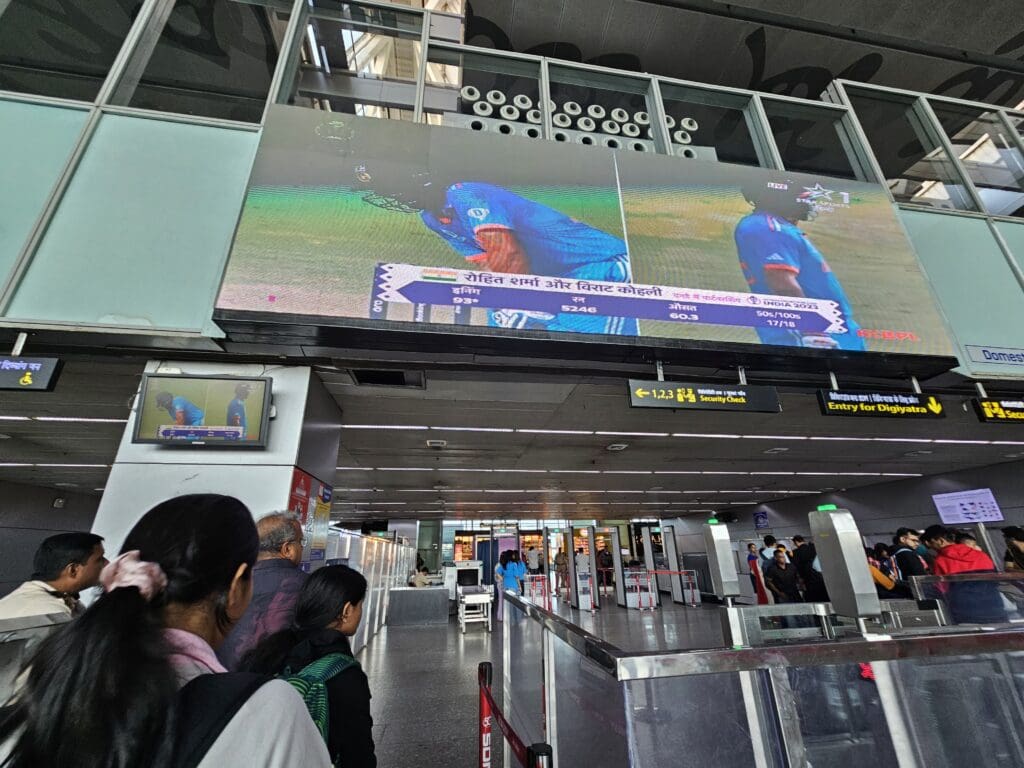
With no airside views offered from the landside area and not wishing to stop and watch the cricket, after a quick wander around, I decided to head to one of the security areas. This featured one checkpoint for all and another reserved for women and children. Whilst only a small queue of passengers were waiting there at that time, with the security staff regularly stopping to watch the cricket, passing through this took longer than expected. Although, this can be forgiven given cricket’s status in India and the importance of the match! Those who have travelled through Indian airports will know that security checks are often very thorough, and I was thus required to remove all liquids and electronics, large and small, from my hand luggage. With the presence of an umbrella in my bag causing this to be selected for an additional search, after around fifteen minutes, I was through and free to explore the airside portion of the terminal.
Aviation enthusiasts will be glad to hear that throughout the domestic portion of the terminal, large windows offer a view of the apron and many of the terminal’s gates. However, before stopping to do some spotting, I decided to have a look around the terminal. This is a fairly large terminal and is home to plenty of shops, restaurants and cafés, as well as a few other facilities such as a basic spa and several lounges. Despite the number of passengers, this was fairly clean and tidy, with an army of staff seen cleaning this for the duration of my long stay. As with the landside portion of the terminal, I found the airside area to be modern, although this seemed to already be a little shabby in places. Meanwhile, plug sockets were hard to come by and, unfortunately, as was the case across the terminal, no wifi networks were offered for those without an Indian SIM card; thus, I spent my stay being incommunicado with the outside world.
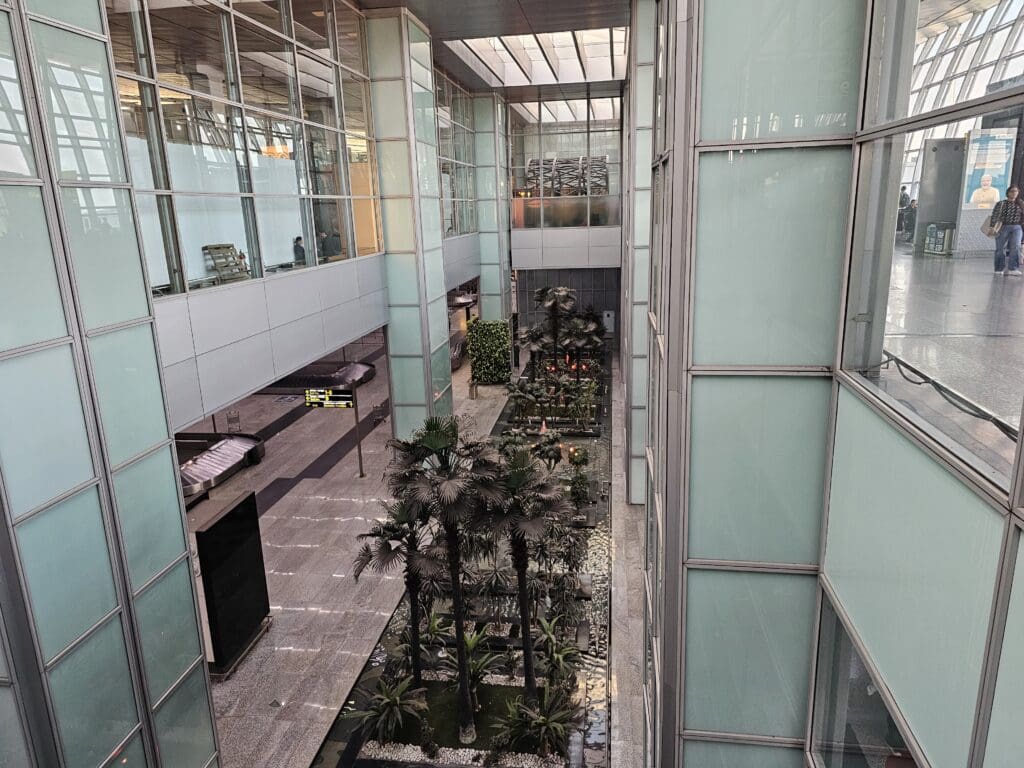
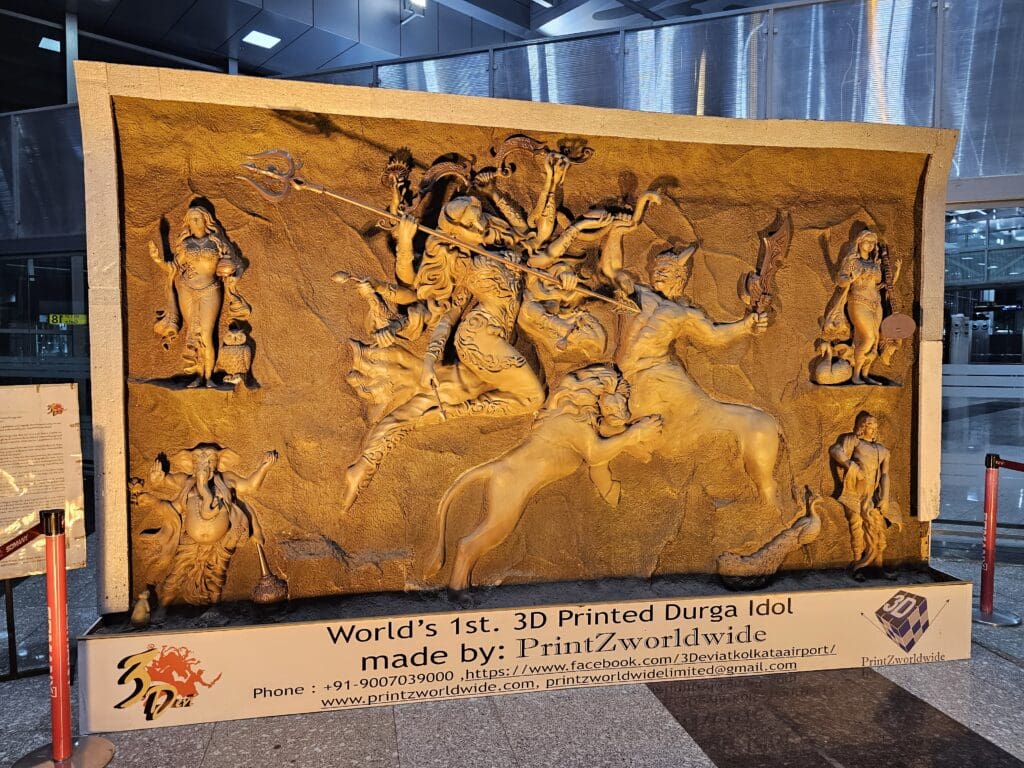
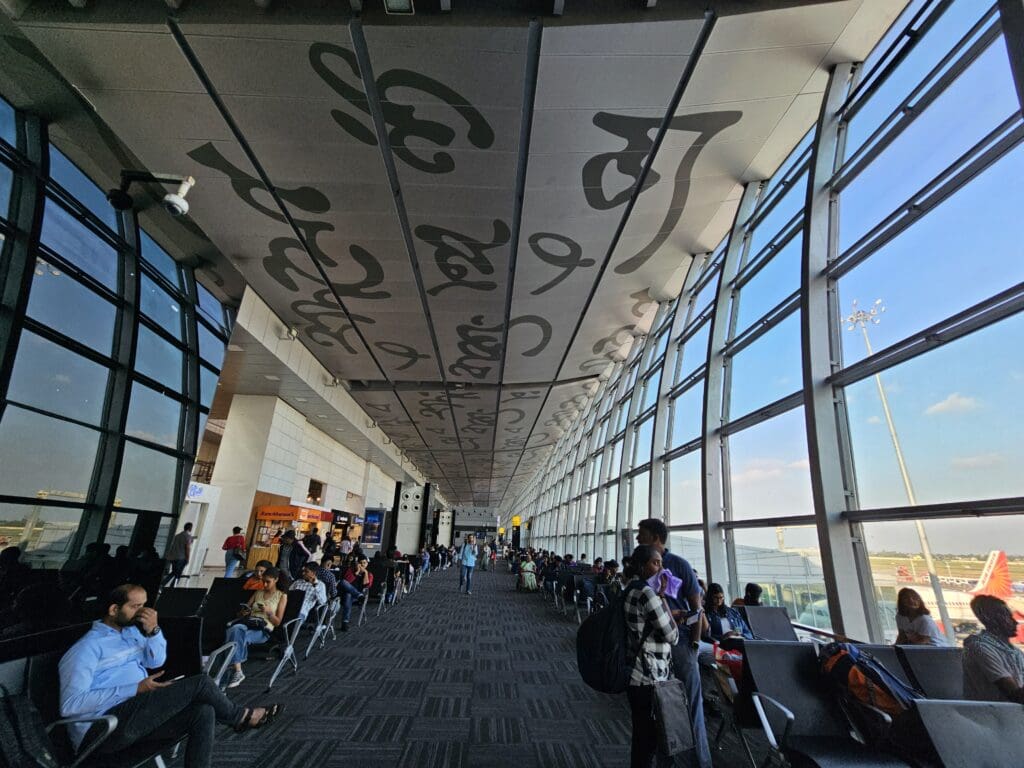
Having had little to eat since my flight from Bangkok, I decided to seek out some culinary delights. Whilst eateries can be seen all over the terminal, the bulk of these are located in two food halls at either end of this. After plenty of deliberation, I decided to stop for a paneer kathi roll and a masala chai which set me back 370 Rupees (around £3.50). Once I had polished this off, I found a seat near one of the large windows and watched the movements outside.
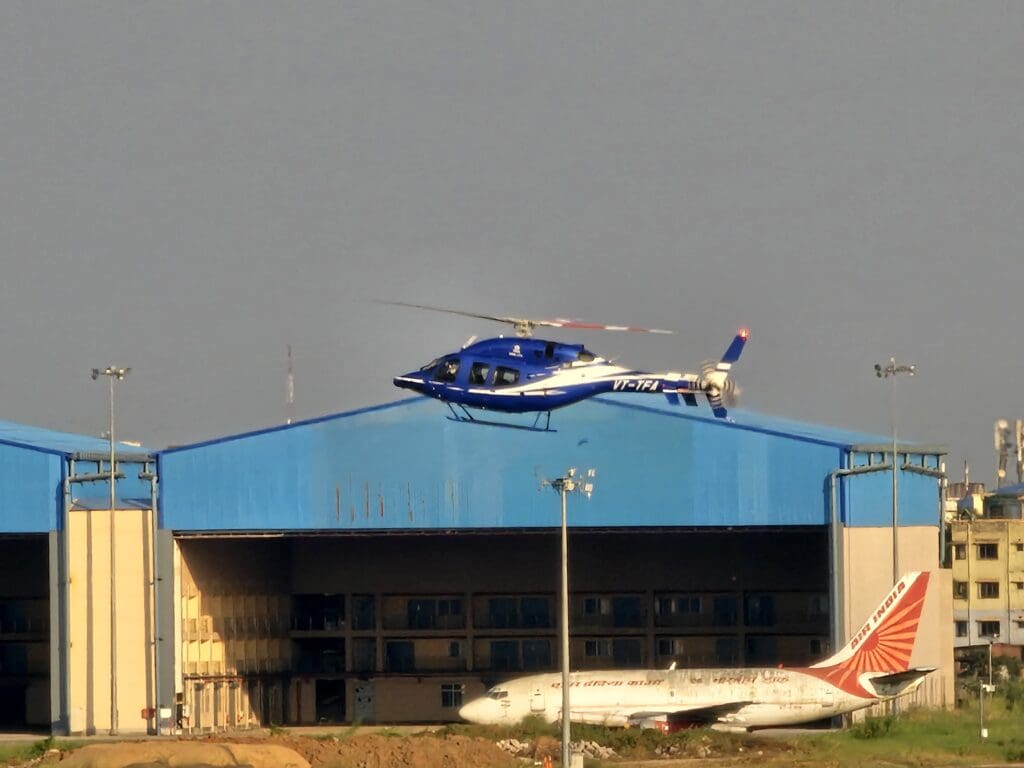
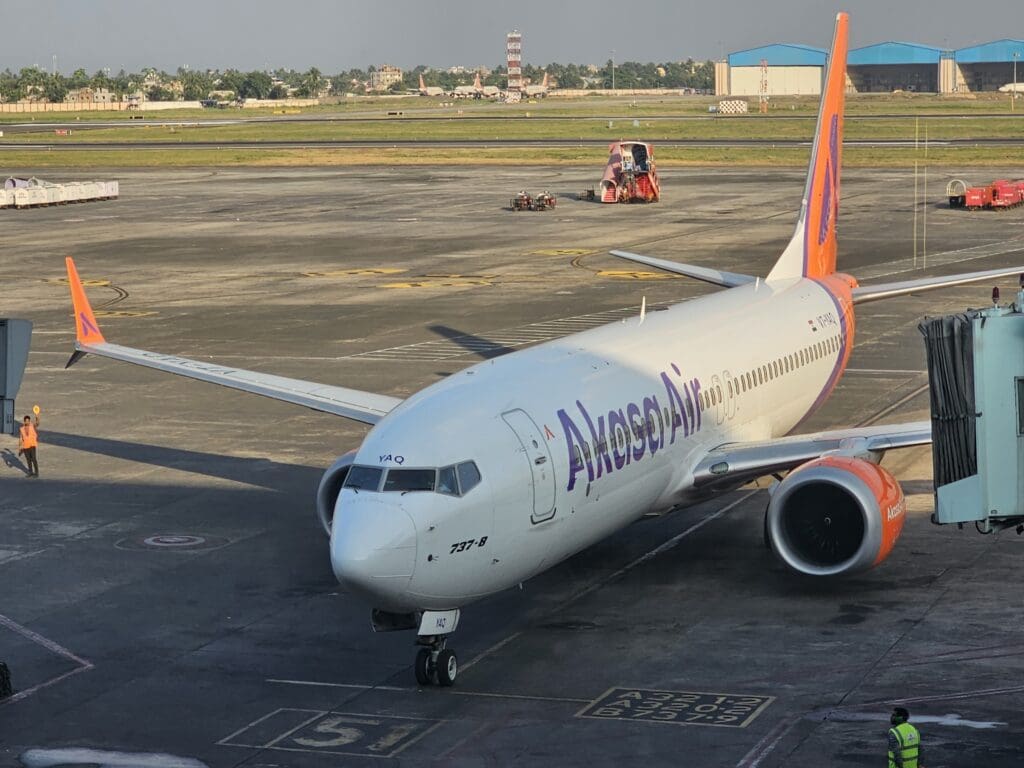
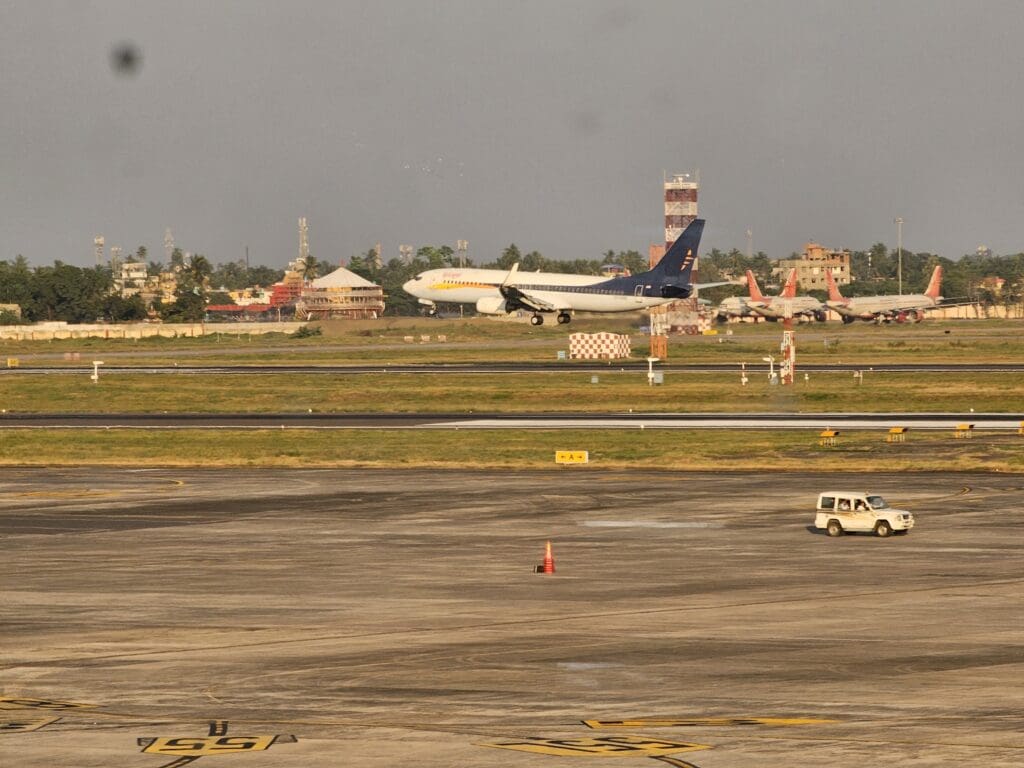
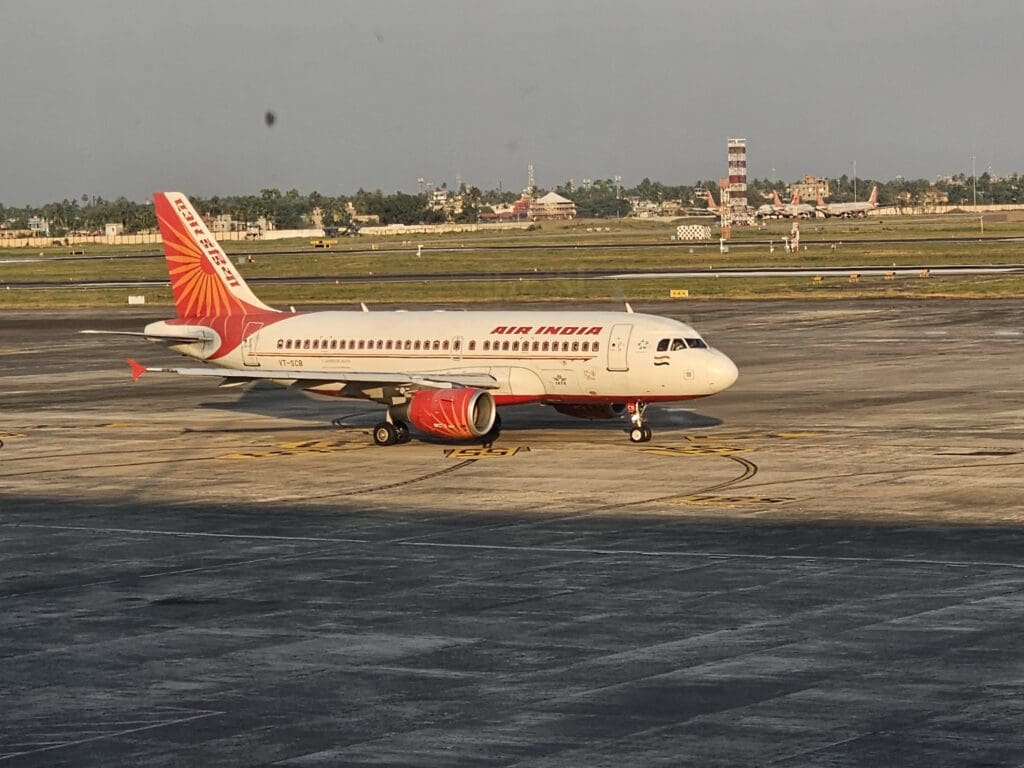
Being India’s sixth busiest airport, a regular stream of aircraft could be seen outside, and it seemed that Air India and IndiGo ruled the roost, with plenty of their narrowbody Airbus (and ATR) aircraft seen for the duration of my stay. This was followed by SpiceJet and Vistara, and then newcomer, Boeing 737 MAX 8 operator Akasa Air. Interestingly, whilst I was travelling over four years after the downfall of Indian giant Jet Airways, I managed to spot a SpiceJet aircraft still wearing a very faded basic Jet Airways livery! Meanwhile, another SpiceJet aircraft sported the faded colours of South Korean low-cost carrier T’way Air, even though the aircraft was never taken up by the Korean airline and instead delivered to SpiceJet 13 years before my trip! Other aircraft seen included a luxury Bell 429 helicopter operated by Tata Steel and a Beechcraft C90 King Air. Whilst Kolkata is served by a fair few international carriers, the only airlines from abroad seen during my stay were Emirates and Myanmar International Airlines, providing a Boeing 777-300ER and an Airbus A319 respectively.
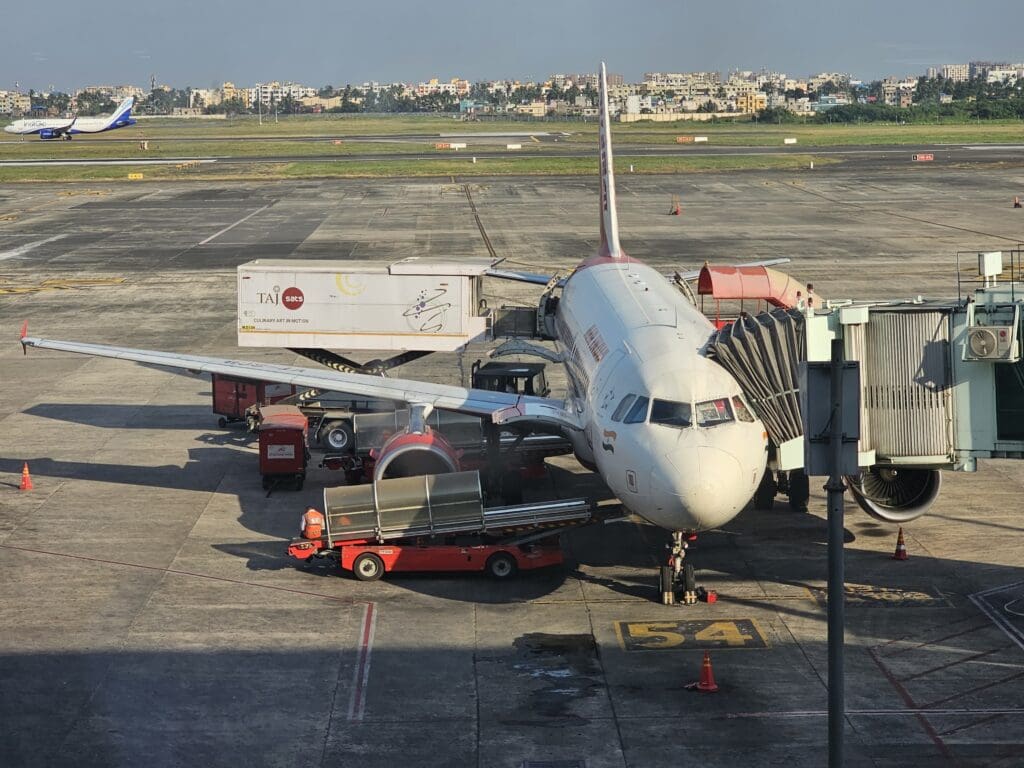
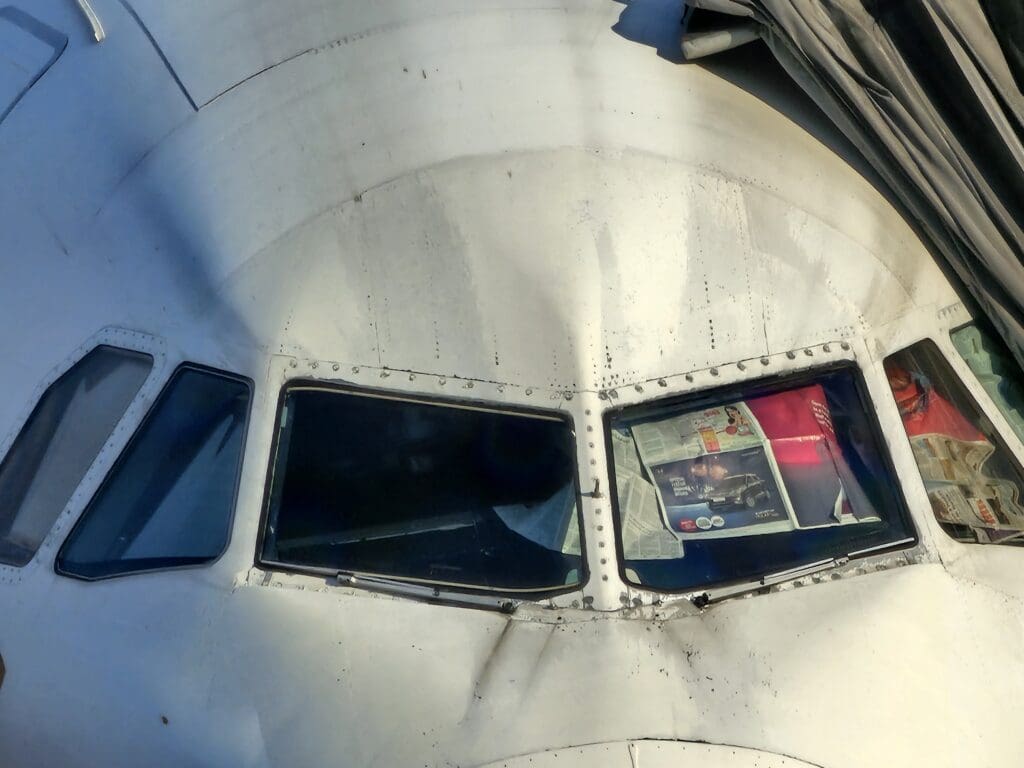
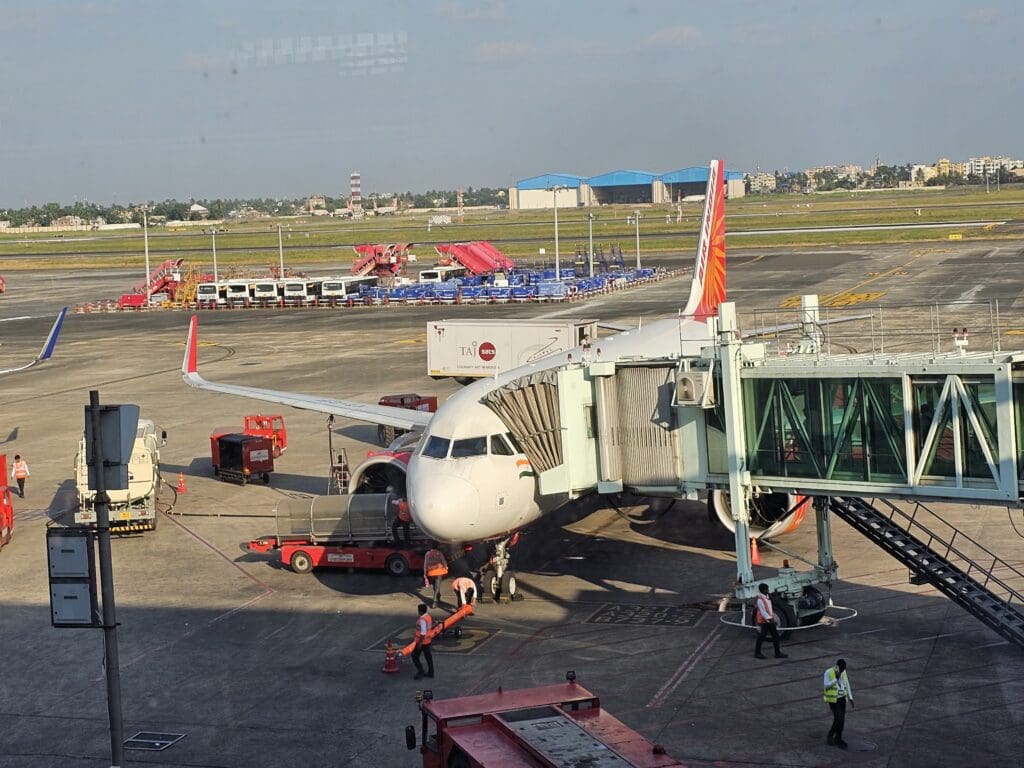
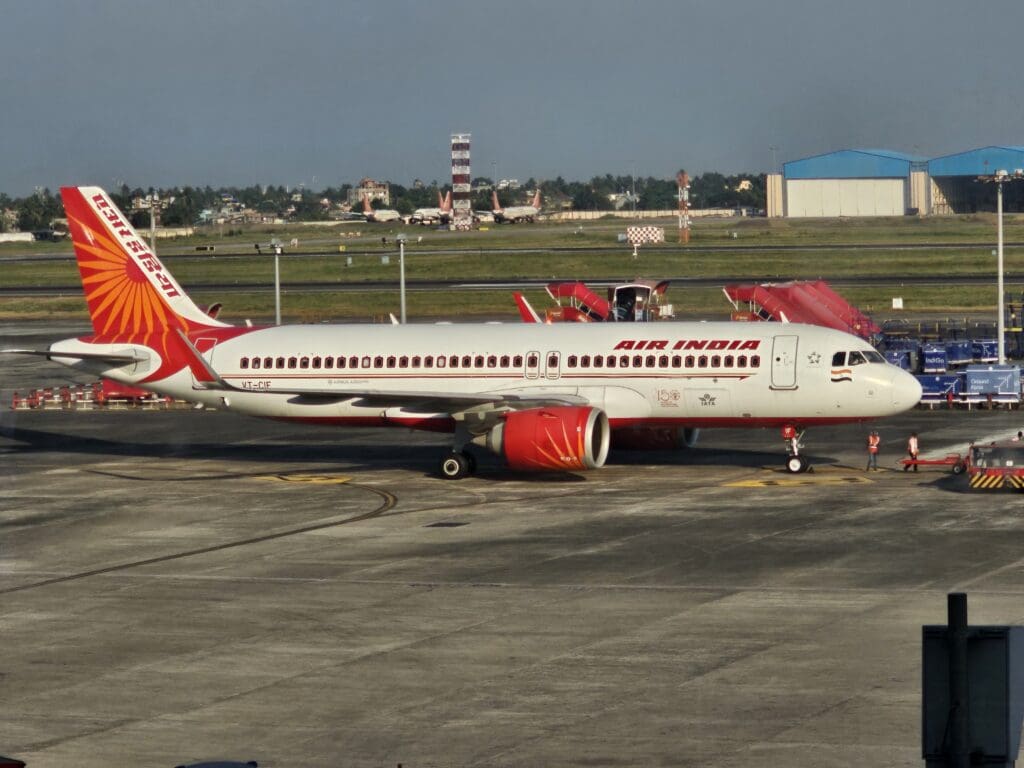
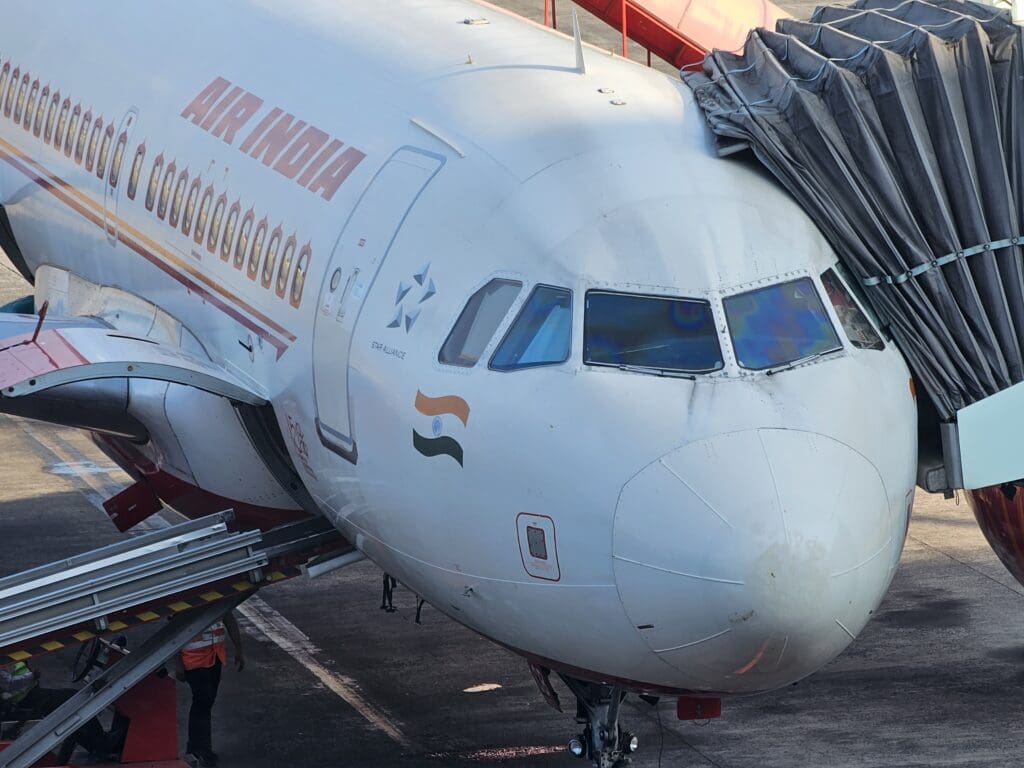
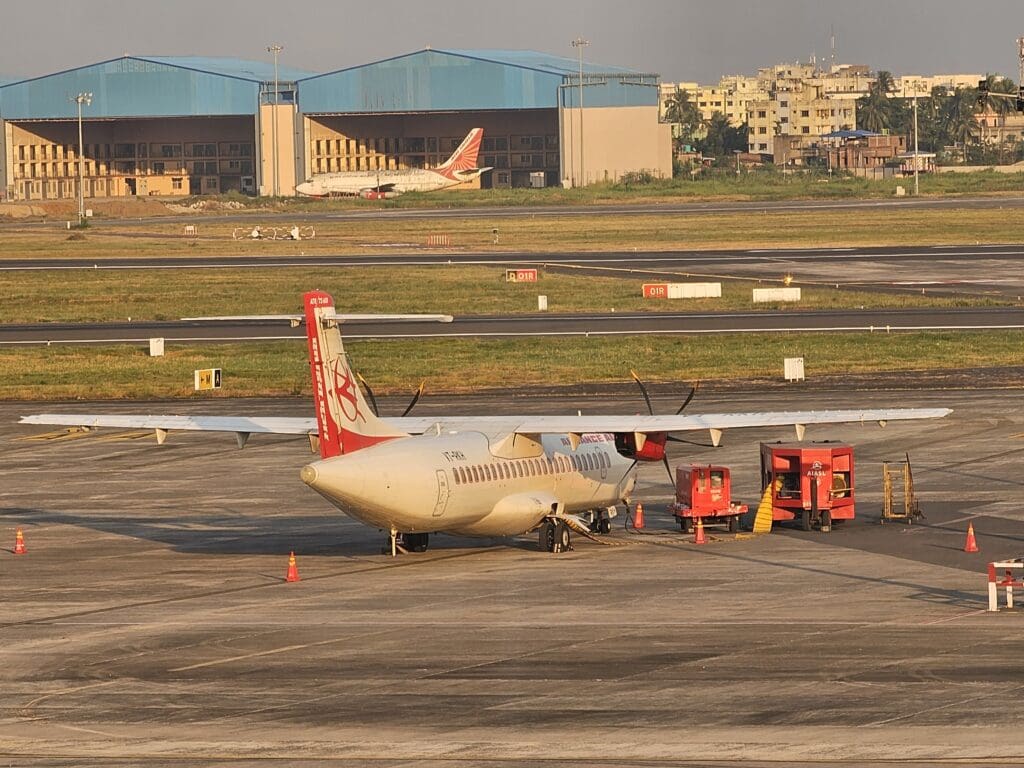
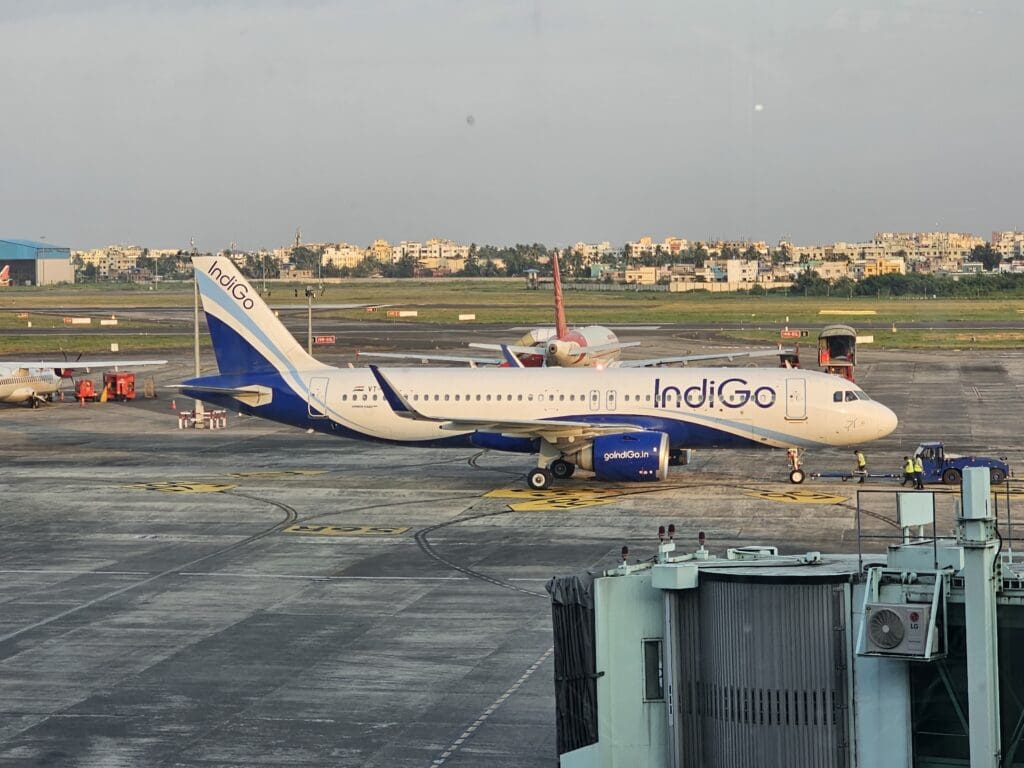
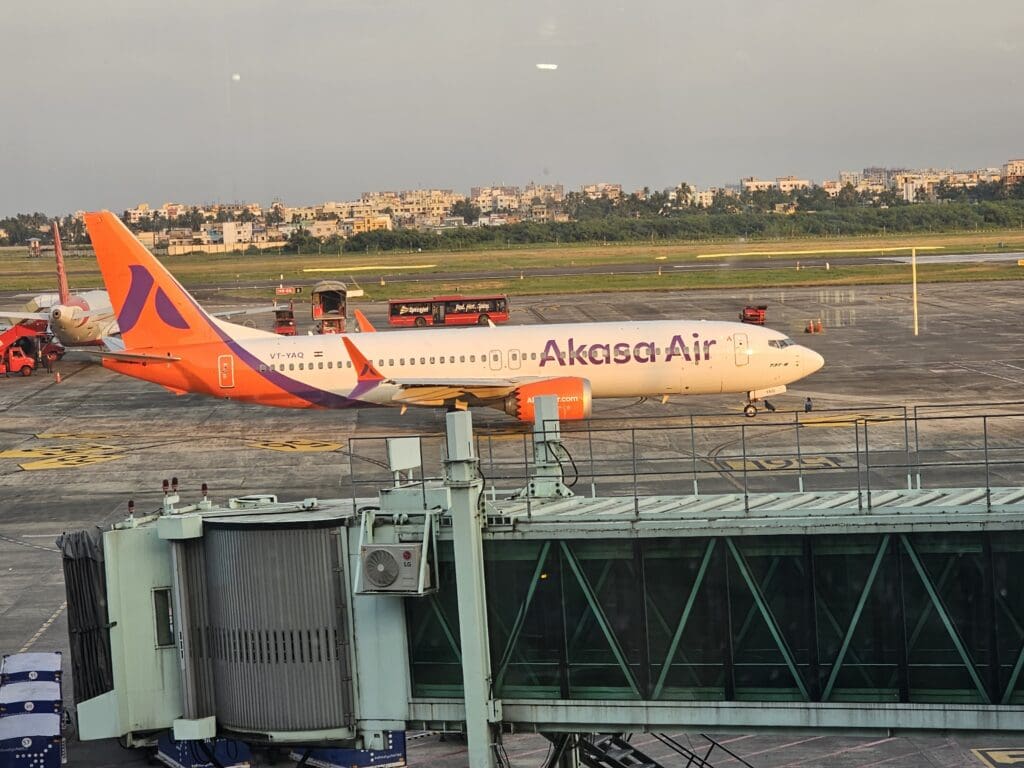
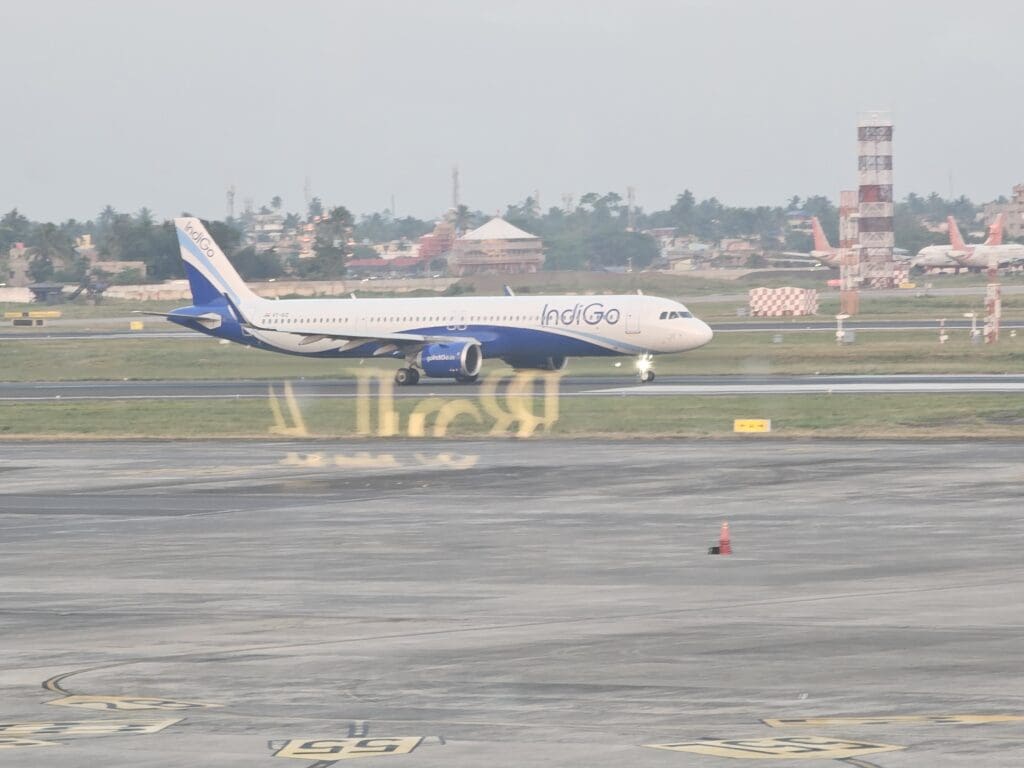
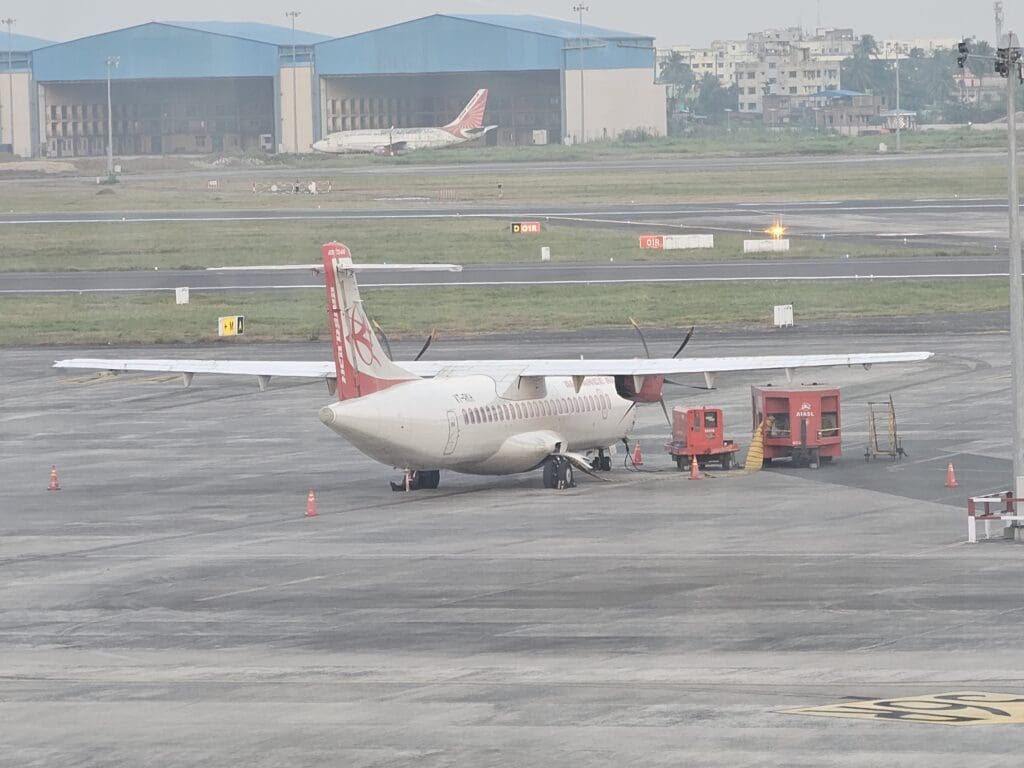
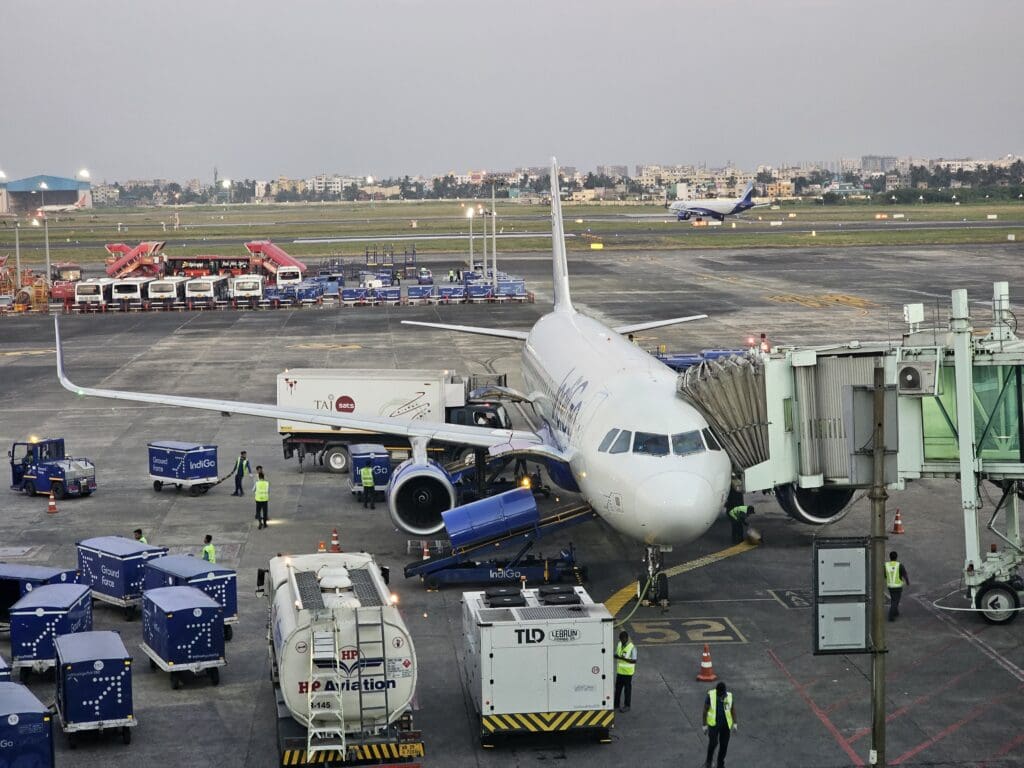
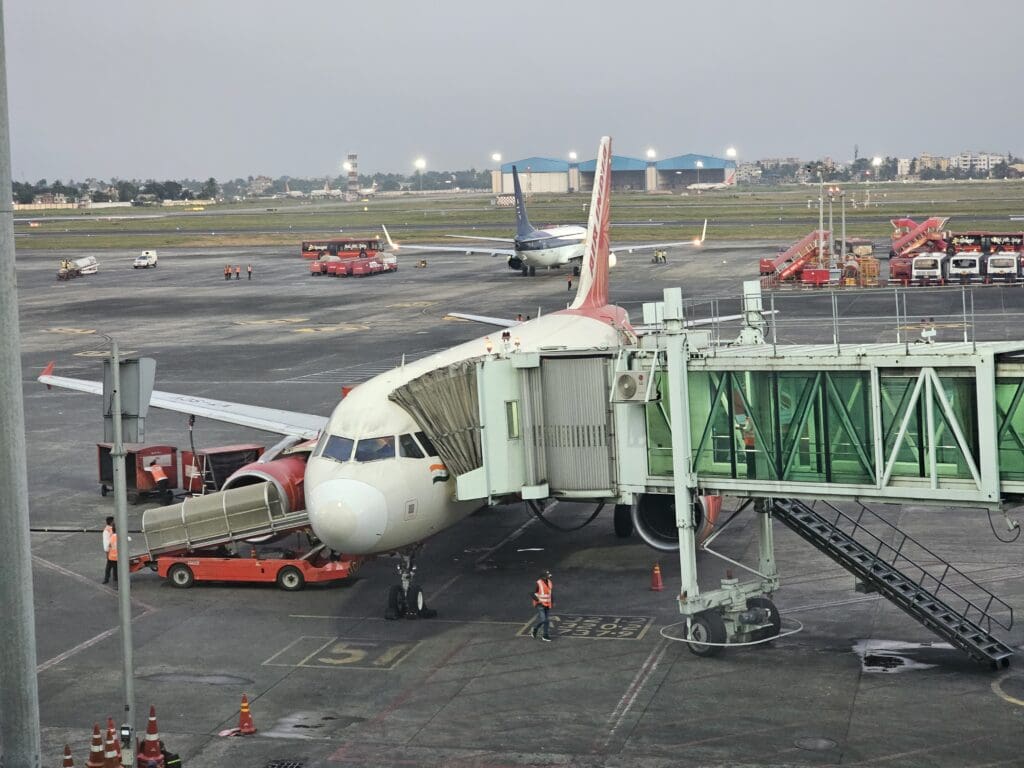
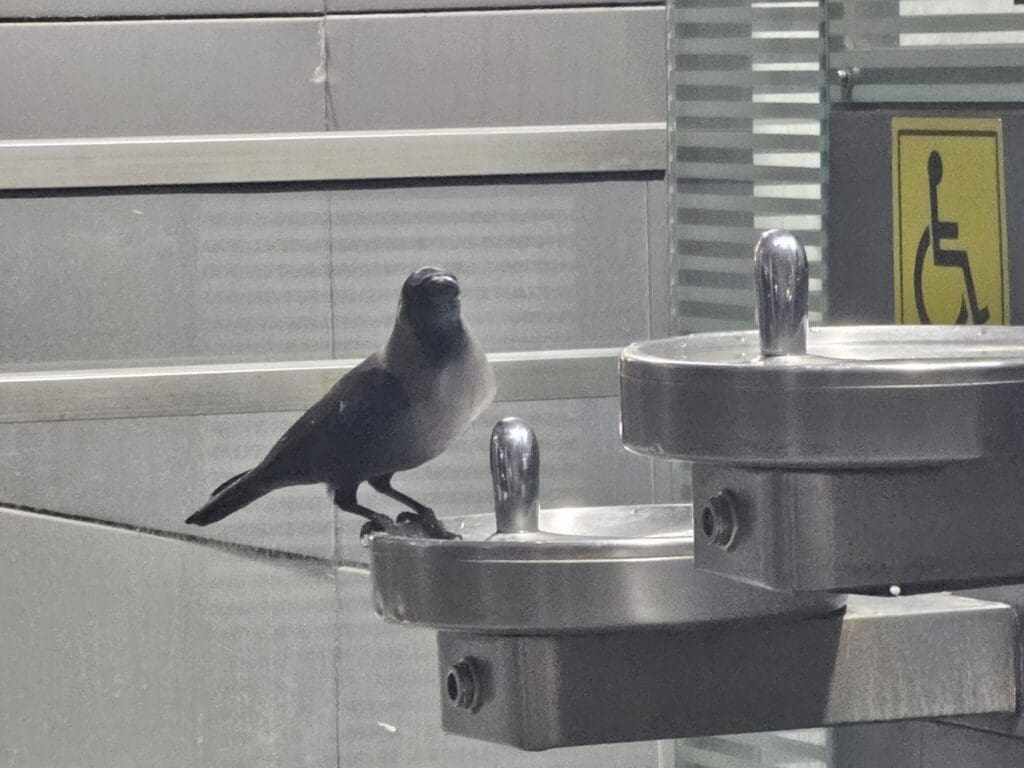
As time passed, passengers came and went, but the terminal never quietened down, and as expected, passengers remained fixated on the cricket. Outside, the skies slowly darkened with the sun finally setting just before 1700. Turning my attention inside the terminal, I was a little concerned to see a crow drinking from a passenger water fountain!
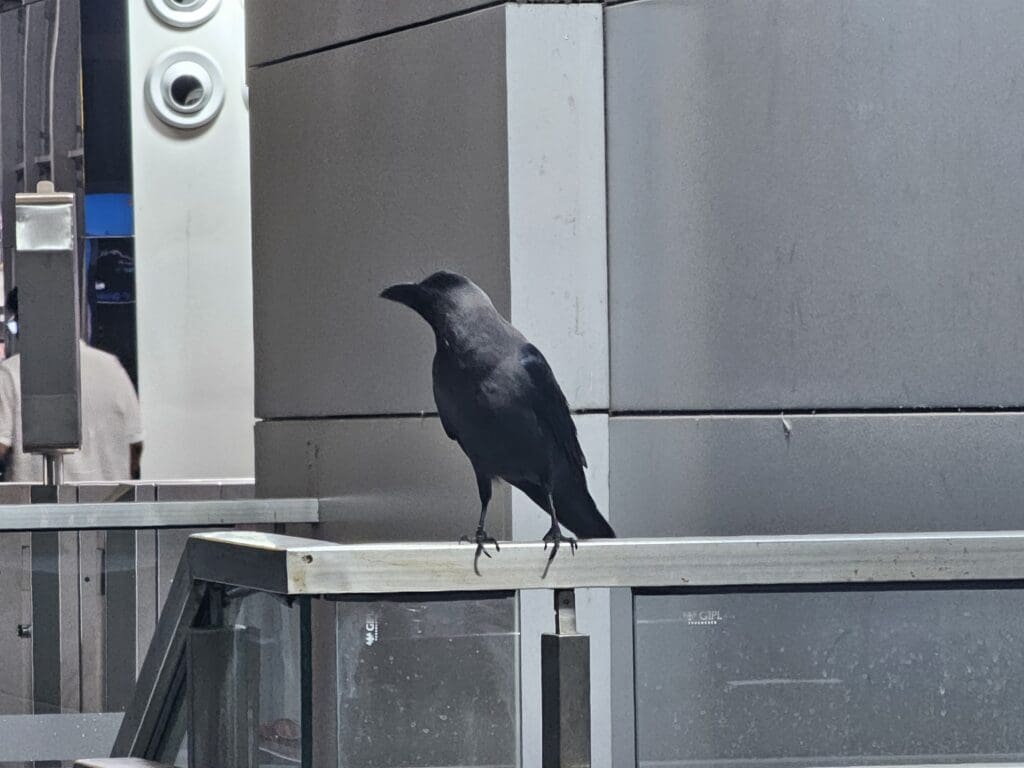
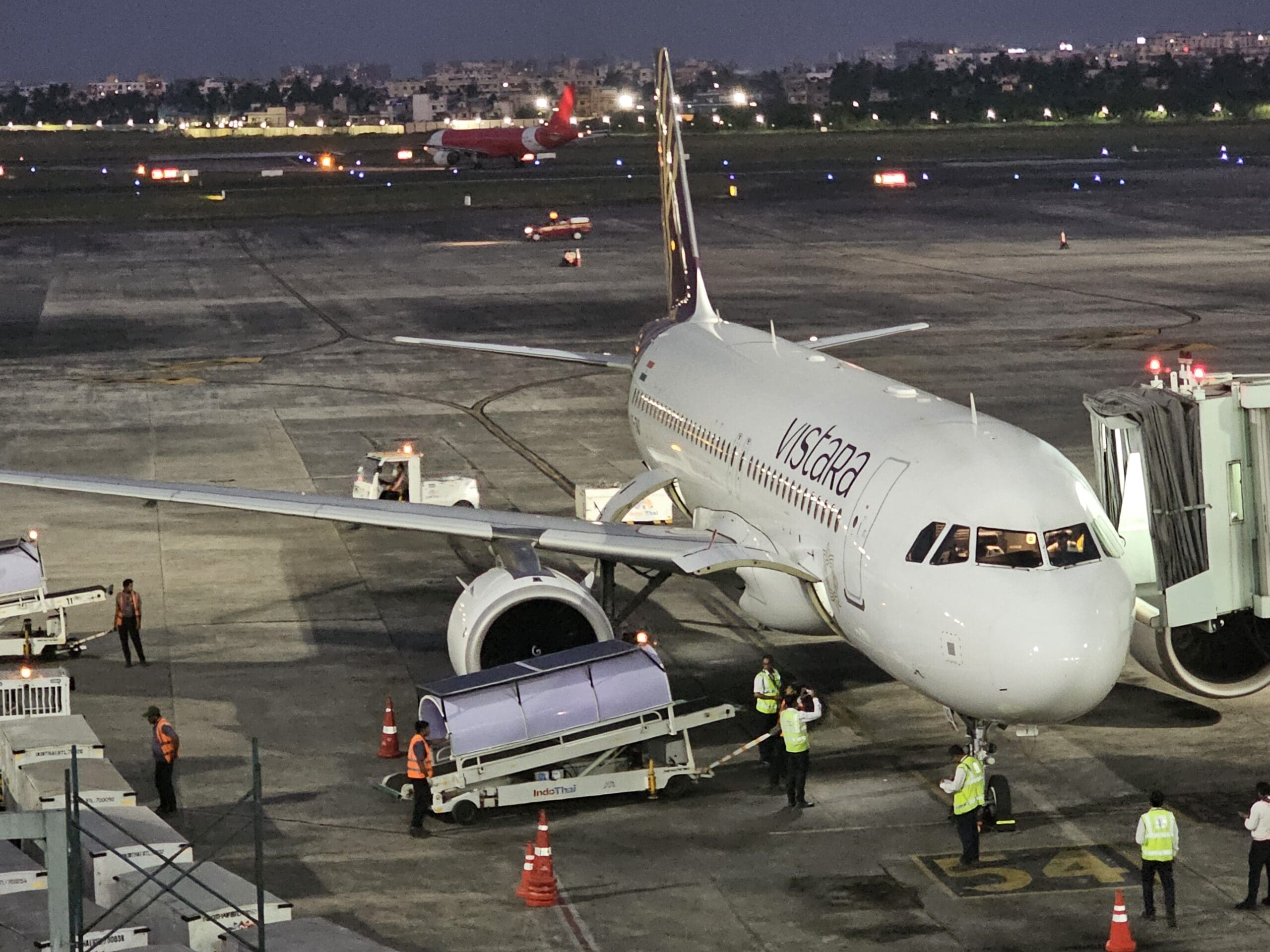
With just under an hour to go until our scheduled departure time, at 1751 a Vistara Airbus A320-251N touched down in Kolkata at the end of its flight over from Delhi. Soon coming to a halt at Stand 52, the engines spooled down and a team of ground crew could be seen springing into action. This particular aircraft took the form of VT-TQG which was assembled at Airbus’ Toulouse Blagnac factory and took to the skies for the first time in July 2021, making it 2.4 years old at the time of my flight. Following testing, the aircraft was ferried directly to Delhi and soon entered service with Vistara where it has remained ever since. In the week before my flight, the aircraft had been flying virtually non-stop primarily operating domestic services and making visits to Ahmedabad, Bengaluru, Chandigarh, Chennai, Coimbatore, Delhi, Goa, Hyderabad, Kolkata, Mumbai, Patna, Thiruvananthapuram and Varanasi, plus operating a single rotation between Mumbai and Abu Dhabi.
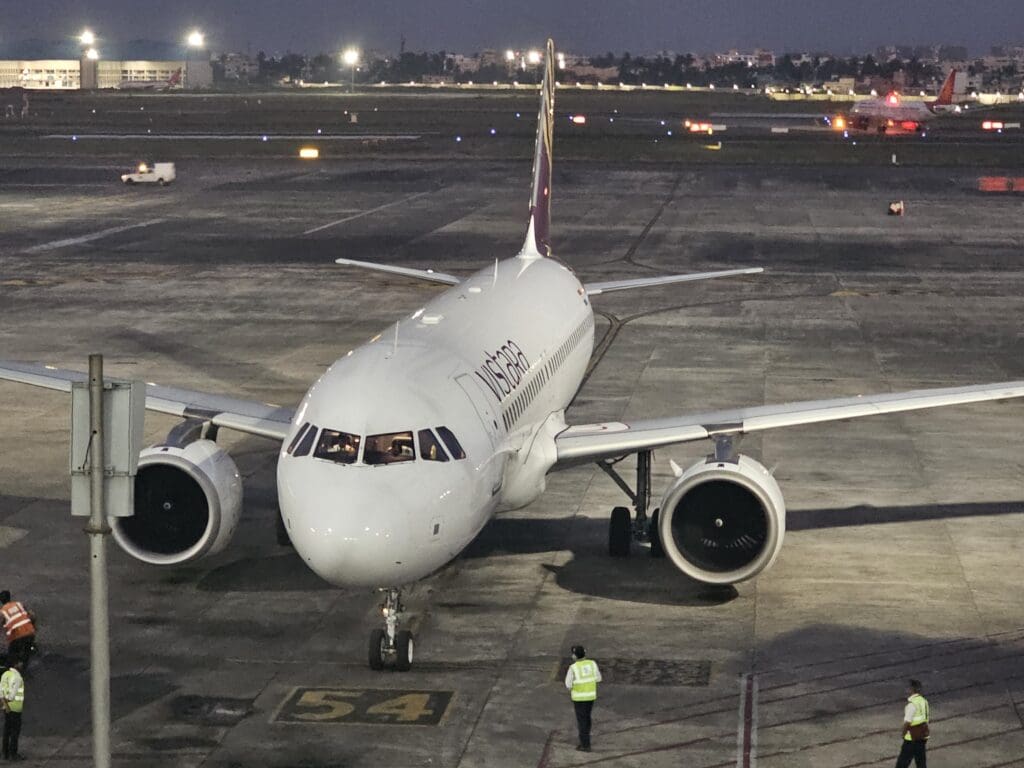
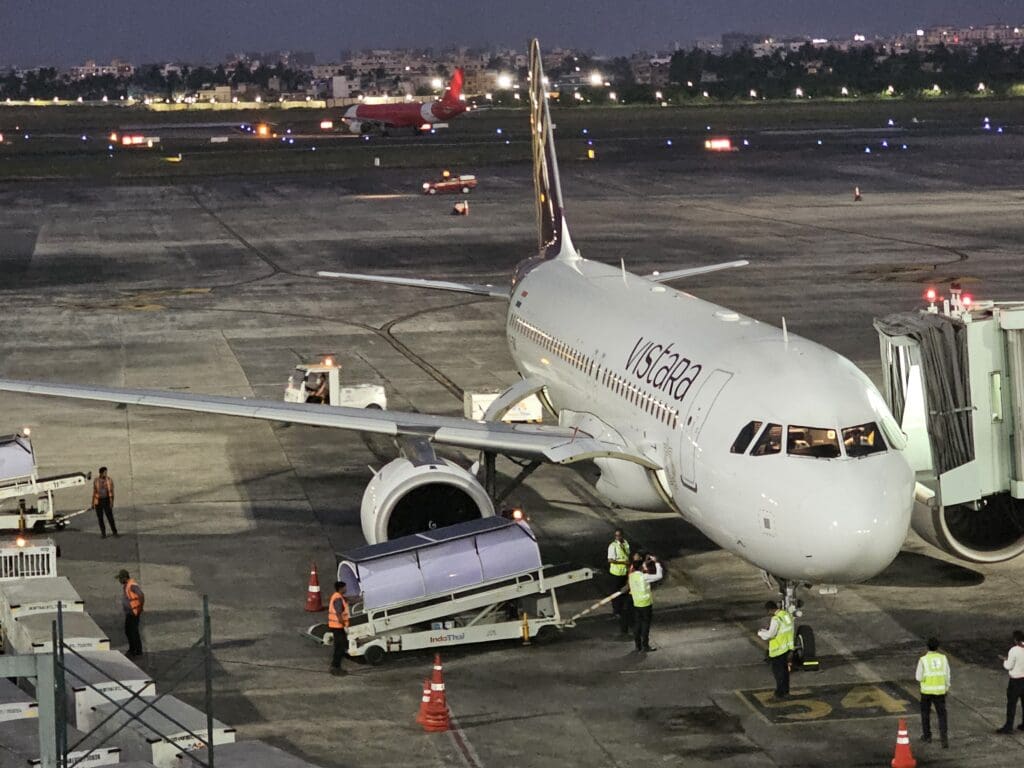
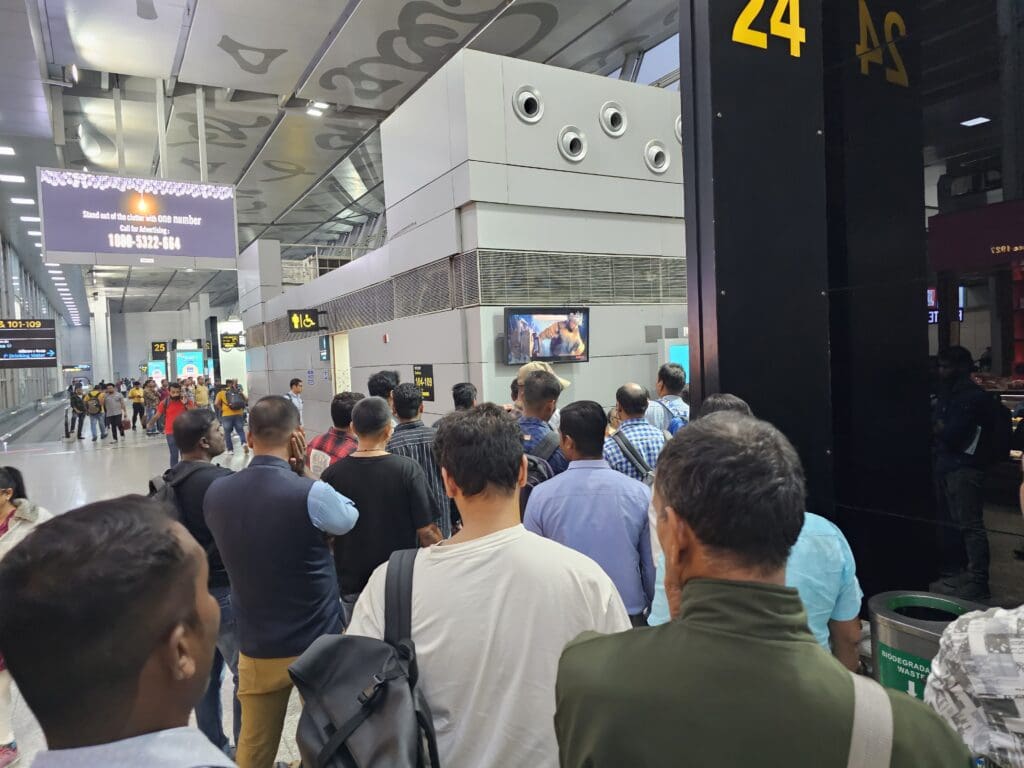
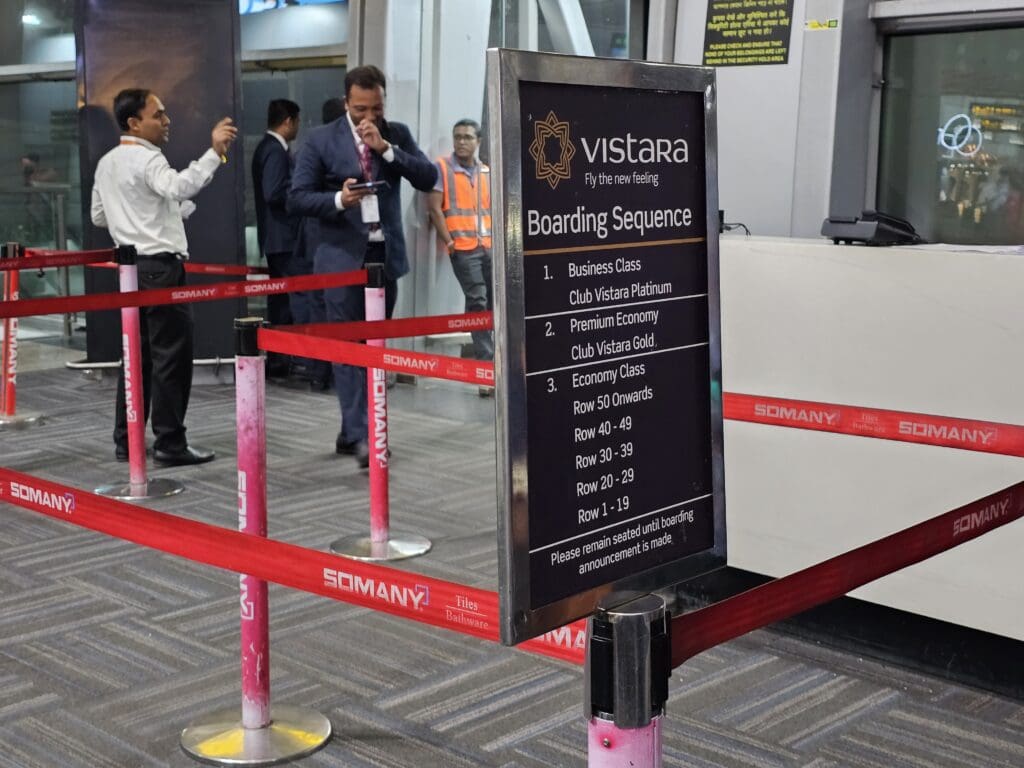
That evening, boarding for the service to Delhi was scheduled to commence at 1800, however, with the aircraft not pulling into the stand until 1755, I was sceptical that this would be the case. At this time, plenty of passengers could already be seen waiting for boarding to commence, and finally, at 1815, boarding for those in Business and Premium Economy was called. A few minutes later, an Indo Thai Airport Management Services agent wandered around the gate area requesting those in rows 25 to 29 to proceed forward for boarding however, with a long line of passengers in all Economy rows having already formed, boarding was definitely on the more chaotic side of things. Seated in the penultimate row of the aircraft, eventually, I had my boarding pass scanned before being wished a nice flight and was free to head down the jetbridge to the aircraft.
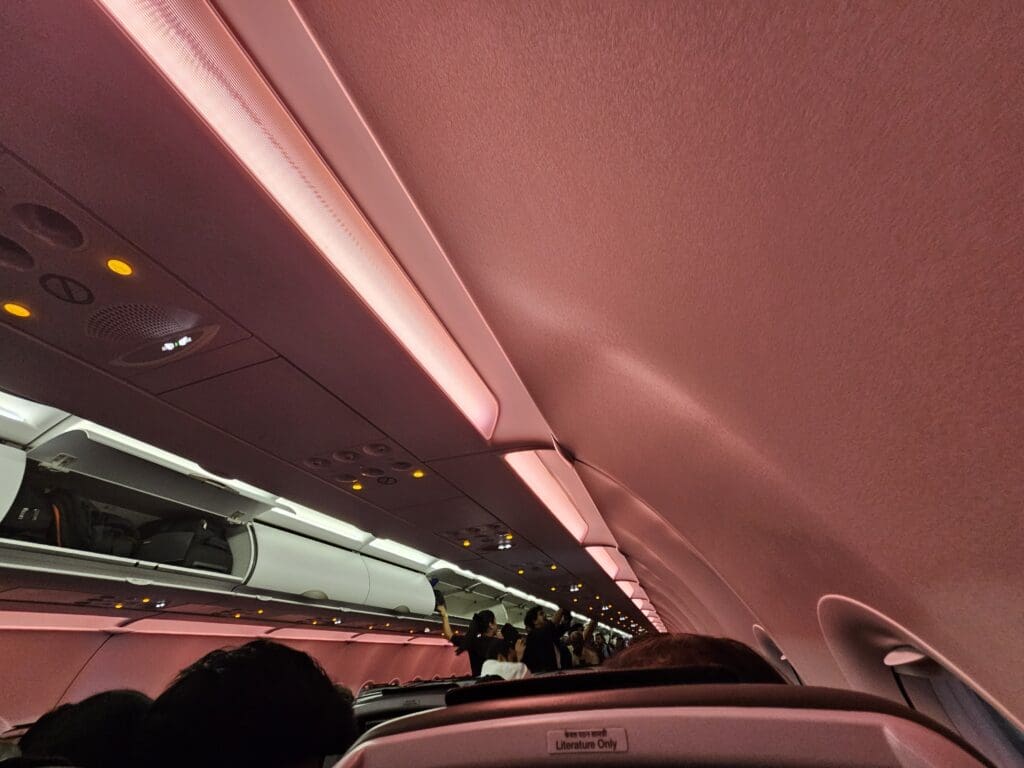
As I neared the aircraft, one final boarding pass check was undertaken to ensure that passengers were indeed boarding the correct aircraft. After this, I stepped into the Airbus’ forward galley where I received a warm and friendly greeting from the Purser, whilst another flight attendant could be seen there pouring drinks for Business class passengers. Turning right, I made my way into the boiling hot cabin and matching this, red moodlighting beamed down and lit the way. First up on my journey to the rear of the aircraft was the Airbus’ small Business class cabin. As is the norm outside of Europe, this consisted of ‘real’ Business class seats which came in the form of two rows of comfortable recliners in a 2-2 configuration. Each of these sported a purple and cream pleather cover and came with an adjustable headrest that was partially covered by a fabric antimacassar on which Vistara’s Yantra-inspired motif was embroidered.
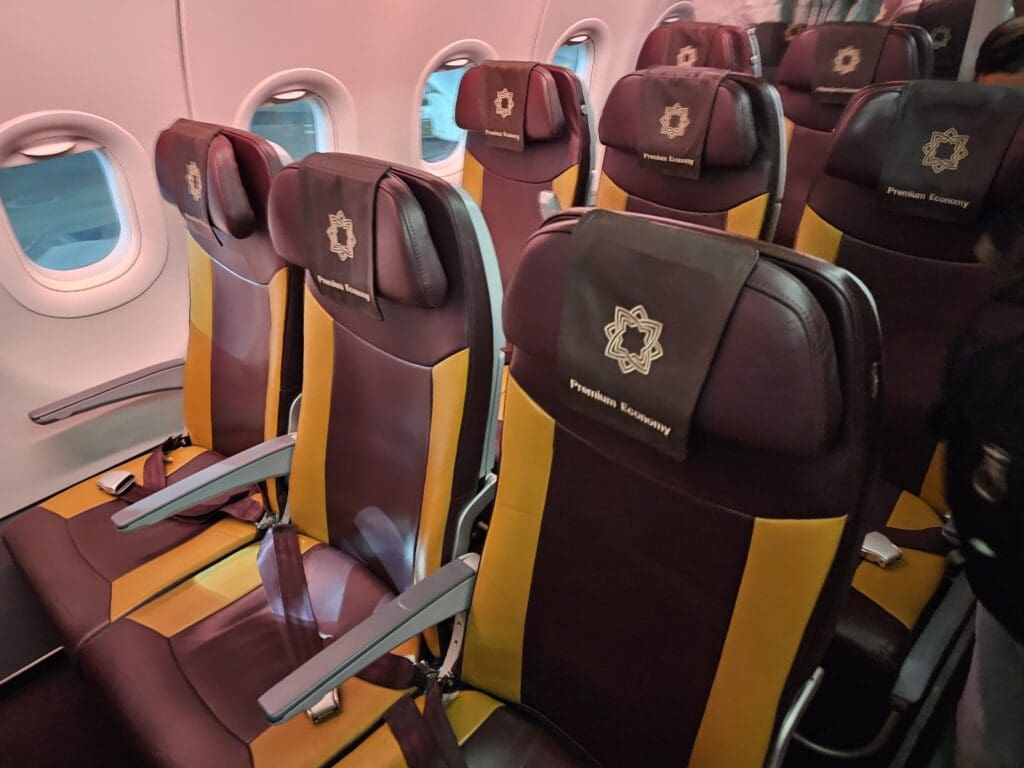
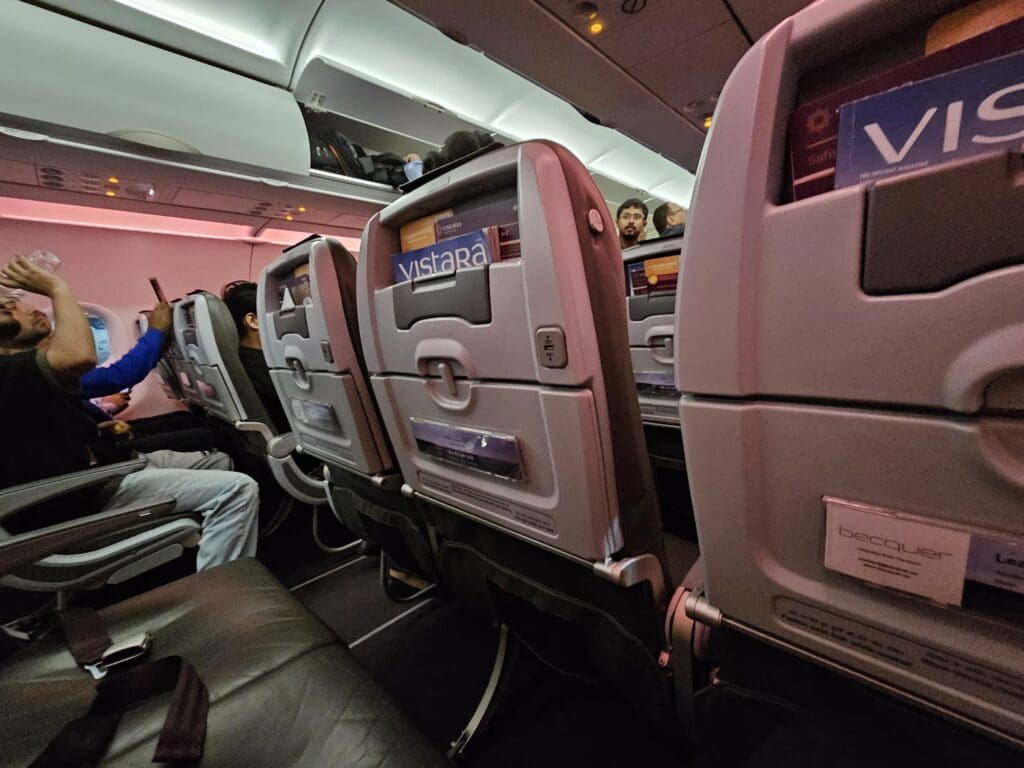
Given the Airbus A320’s size, few airlines across the world opt to squeeze more than two classes into the type, however, Vistara has opted for a three-class configuration onboard all their aircraft. The only other airline that I had seen do this was China Southern Airlines. Continuing onwards into Premium Economy, the seats in this cabin were more atypical of Economy and consisted of three rows of seats in a 3-3 configuration, each with an adjustable headrest and covered in a purple and grey pleather cover. Moving along to the Economy section, this hosted a grand total of 126 seats, which were covered in a grey and purple pleather cover and, whilst lacking in a headrest, came with an antimacassar sporting Vistara’s motif. These also featured the usual tray table, a seatback pocket, a literature compartment and a device holder, plus a USB-A port enabling passengers to charge their devices. Unlike onboard Vistara’s Airbus A321neos, their Airbus A320 fleet does not have any form of inflight entertainment screens onboard. However, an entertainment streaming service is available through the aircraft’s wifi network.
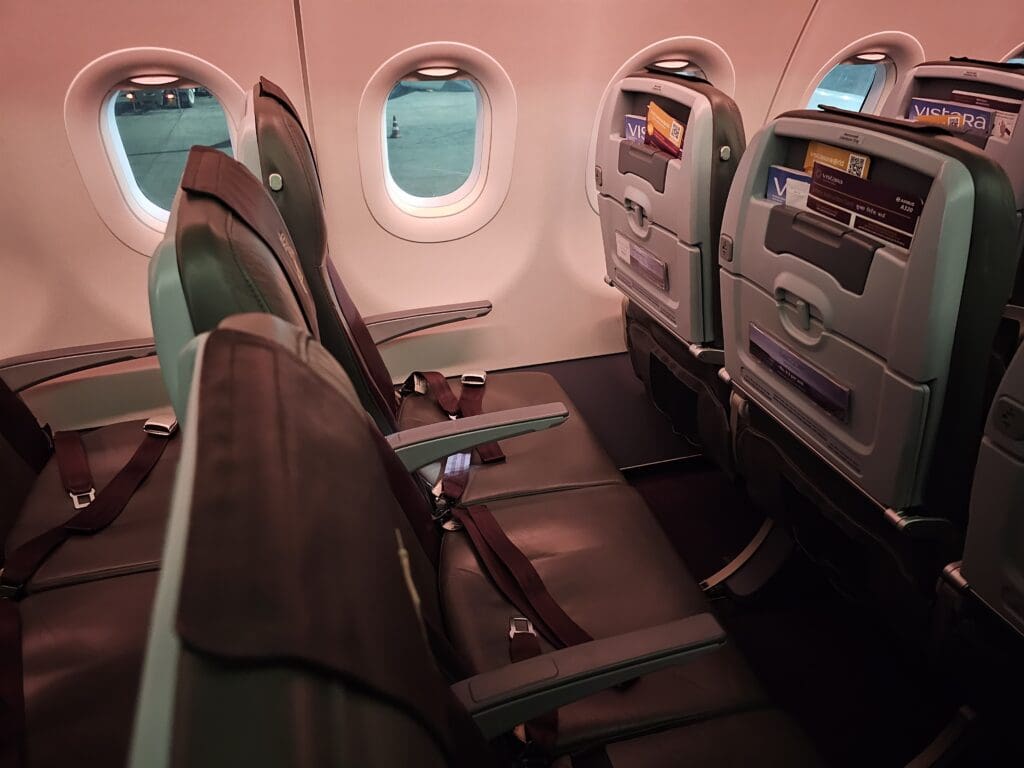
Other than the warm cabin temperature, I was left with few complaints as I trekked to my seat and received warm and friendly greetings from every crew member I passed on the journey to my seat, leaving me with a very good first impression. After a fair amount of stopping and starting, I arrived at the second-to-last row, and yet to be joined by any seatmates, I slid into Seat 28F and settled down for the journey ahead. Focusing first on the positives, in spite of the quick turnaround, the area around my seat was in a clean and tidy state, whilst also lacking any noticeable signs of wear and tear. However, unfortunately, I found the legroom to be absolutely dire whilst the seat was particularly firm, and I knew that I would be in for a fairly uncomfortable ride over to Delhi that evening. Turning to the contents of the literature compartment, this contained the all-important safety card, a card advertising the VistaraWorld inflight entertainment streaming service and instructing passengers on how to use this, the latest edition of Vista’s self-titled inflight magazine and a sick bag.
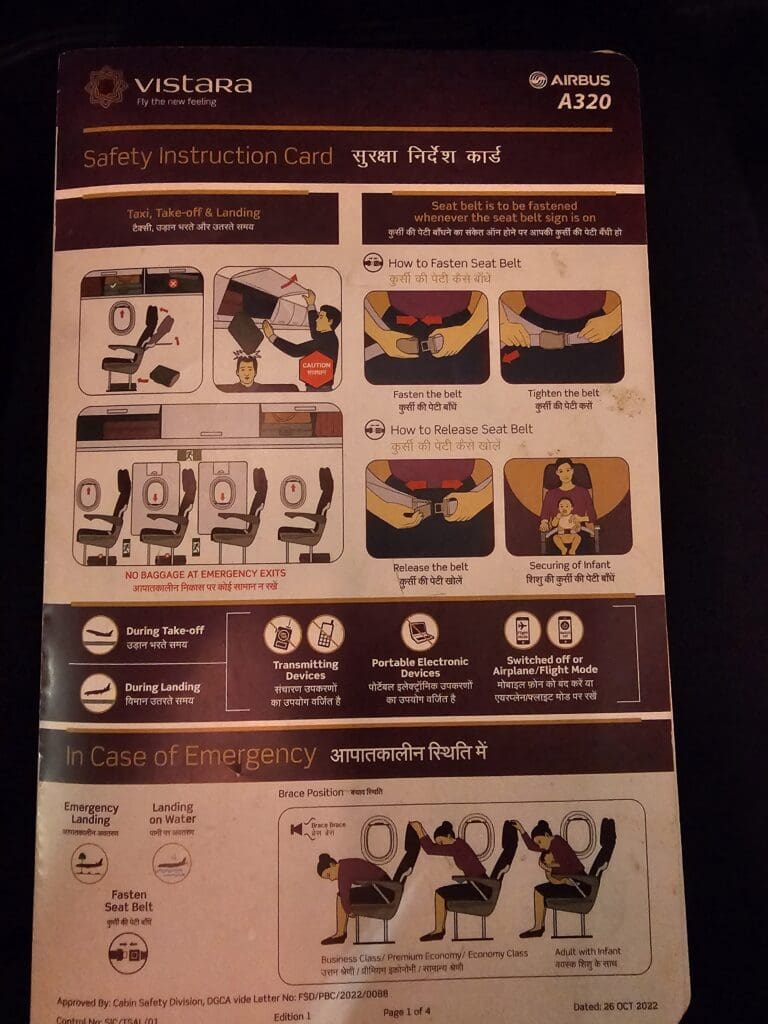
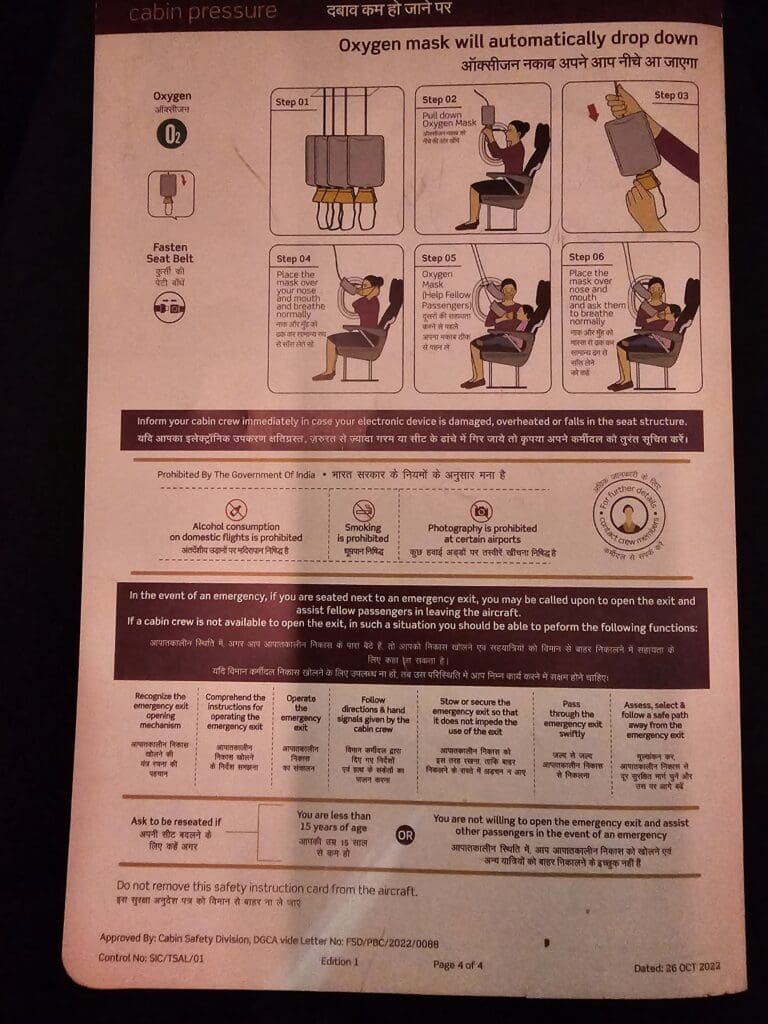
As passengers streamed onto the aircraft, calming boarding music rang out and it wasn’t long before all seats around me ended up being taken, making the aircraft feel even more cramped. Looking outside, an endless stream of bags and other cargo could be seen being fed into the hold and at 1840, the Captain performed their welcome announcement in English only. During this, they informed all onboard of the 2H10 flight time to Delhi, the expected calm weather conditions during the flight and an introduction to the First Officer and Purser. Immediately after this announcement reached its end, the Purser announced that boarding was complete and requested all ground crew to vacate the aircraft. This was followed by the welcome announcement, during which, Vistara was referred to as ‘Vistara, brought to you by TATA-Singapore Airlines’, whilst during this, all flight attendants were introduced by their first names, and the usual welcomes, warnings and thanks were offered.
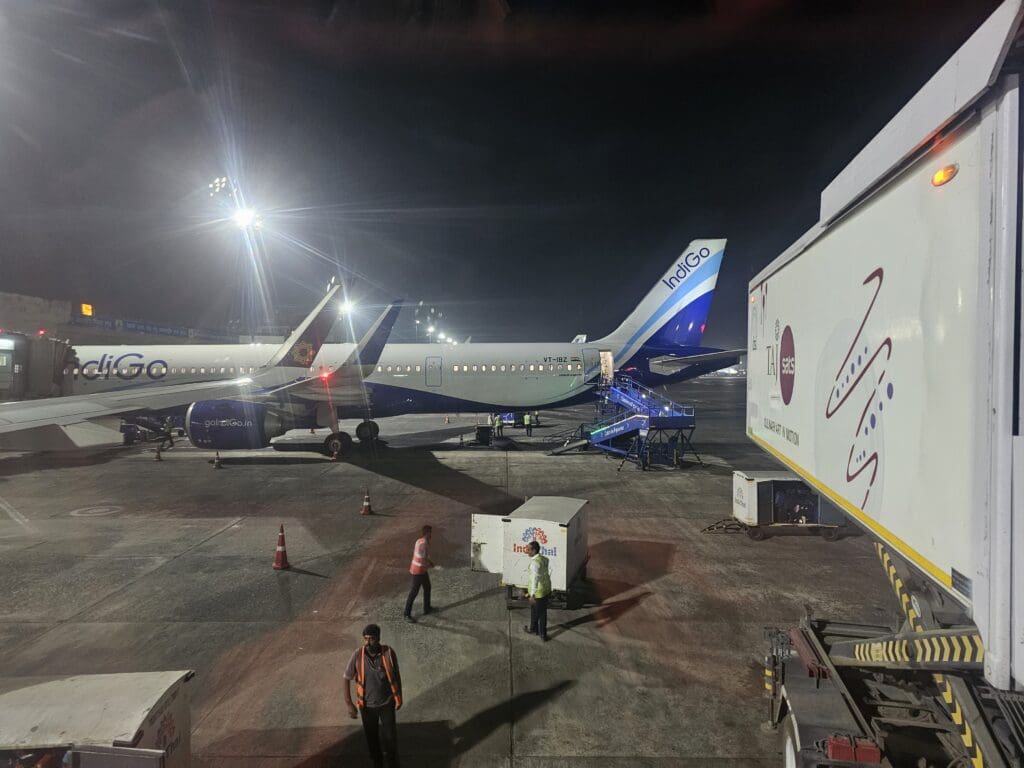
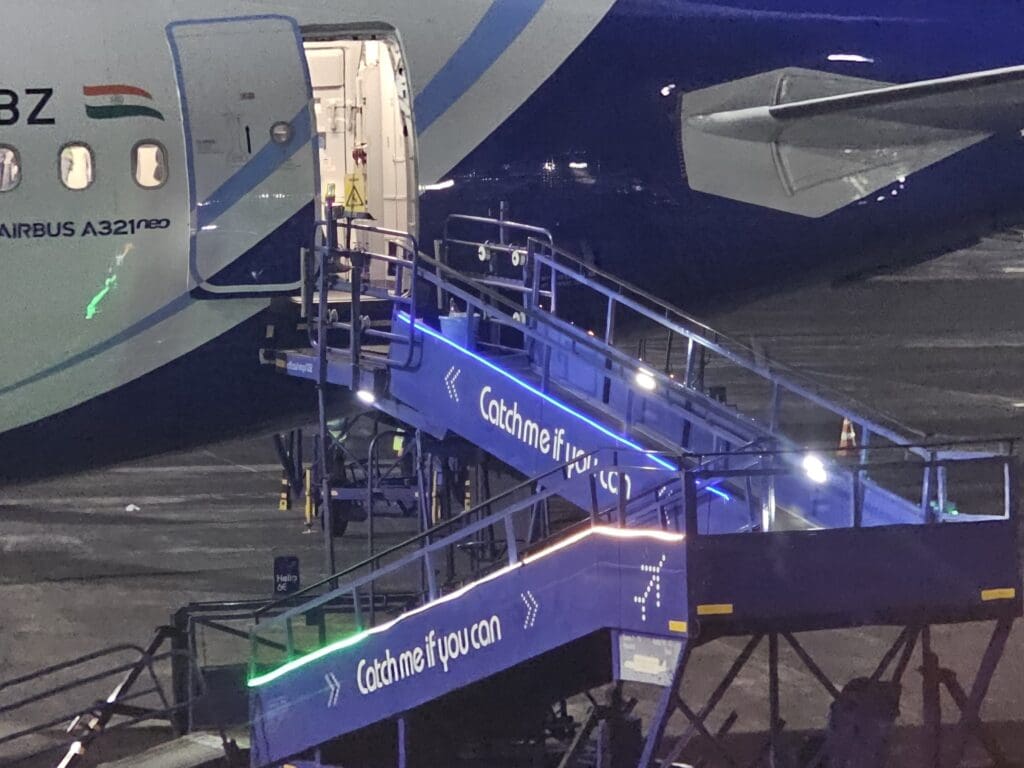
In spite of the delayed start to boarding, the ground crew appeared to have worked efficiently and the aircraft was pushed back away from its parking position only two minutes behind schedule. As the aircraft headed rearwards, its two large CFMI LEAP-1A26 engines powered into life with plenty of humming and whining. As these powered up, the crew members took to the aisles and the Purser read through the safety instructions in English and Hindi before a pre-recorded warning regarding chewing tobacco, cigarettes and e-cigarettes, and drinking alcohol onboard was made.
With Runway 01R in use for departures that evening, once the aircraft was moving only a short taxi was in store before we found ourselves holding at the end of this. Once there, a few minutes of waiting was required to allow an IndiGo Airbus A320neo to depart to Lucknow and an ATR 72 to arrive from Gorakhpur. Once the ATR was clear of the runway, the Airbus taxied onto this and at 1902, the two engines spooled up and we performed a powerful rolling takeoff before rocketing into the night skies of West Bengal.
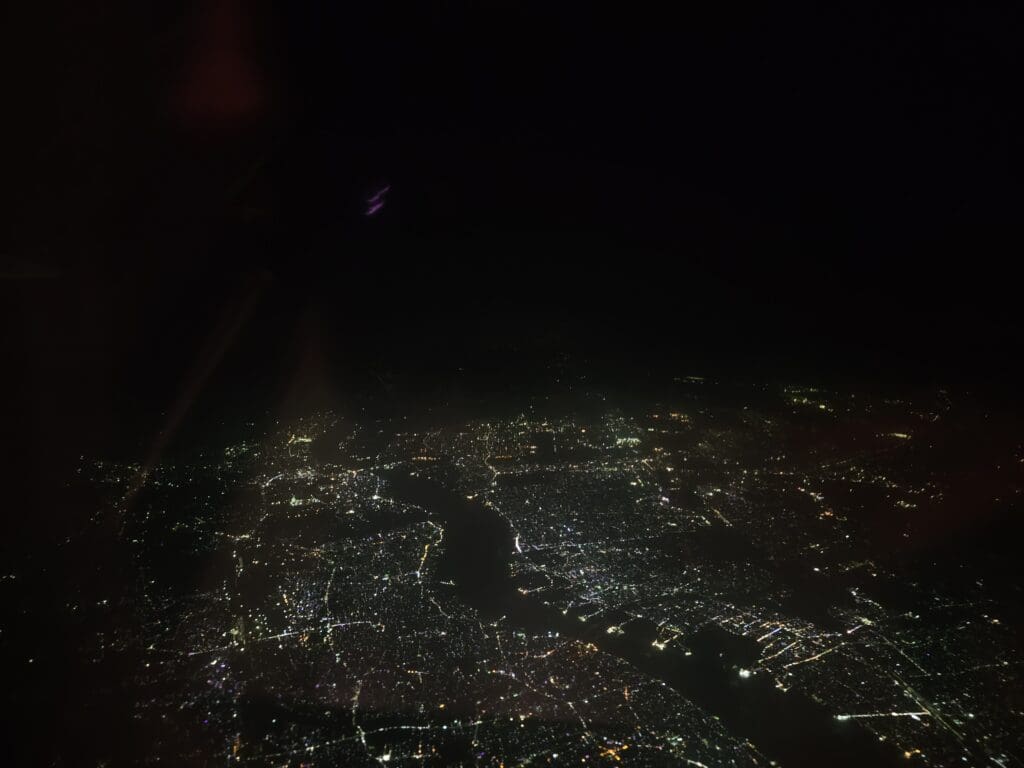
After leaving the airport behind, the lights of the Kolkatan suburbs of Basunagar and Barasat could be seen and a few minutes later, the aircraft banked to the left and rolled out on a northwesterly heading that would take us towards the Indian capital. With little turbulence felt during the first few minutes of the flight, as soon as we climbed through 10,000 feet, the seatbelt signs were extinguished, which was followed by a pre-recorded announcement advertising the VistaraWorld inflight entertainment streaming system. As we climbed up to our cruising altitude of 38,000 feet, the scent of warming airline food wafted from the rear galley, indicating that the meal service would soon commence. Soon, a cart was rolled out to the Premium Economy cabin whilst those who had pre-ordered special meals were handed these. At this time, the Captain’s voice filled the cabin as they performed an announcement advising passengers on the current cricket score. This was followed by regular announcements every ten minutes or so!
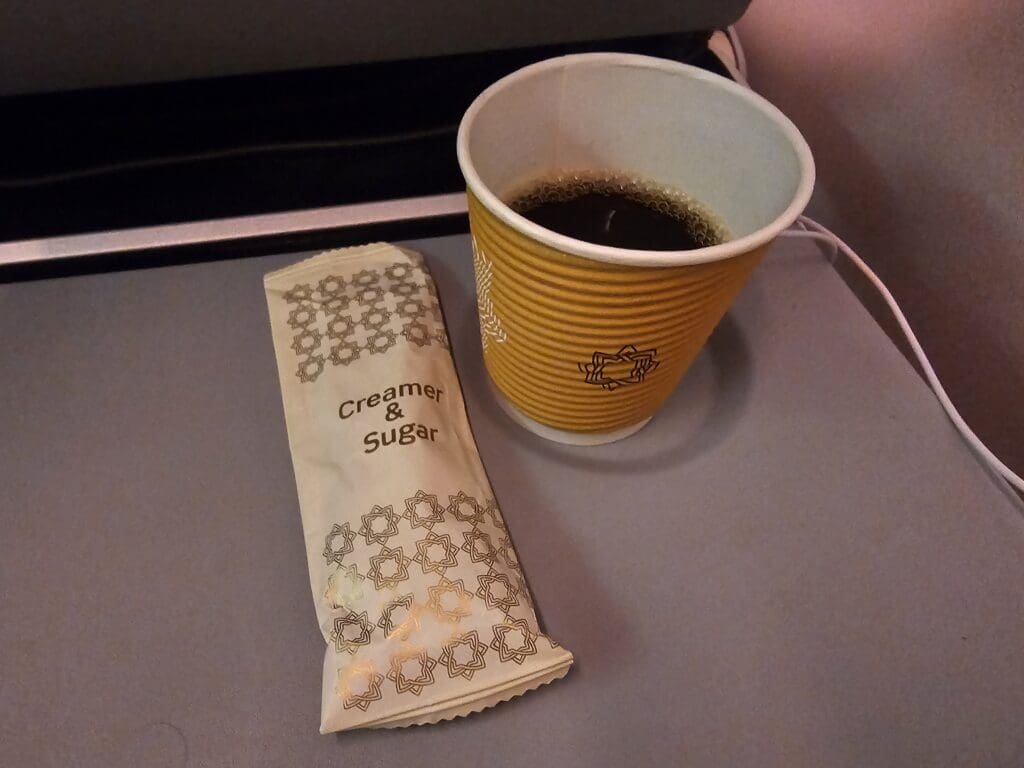
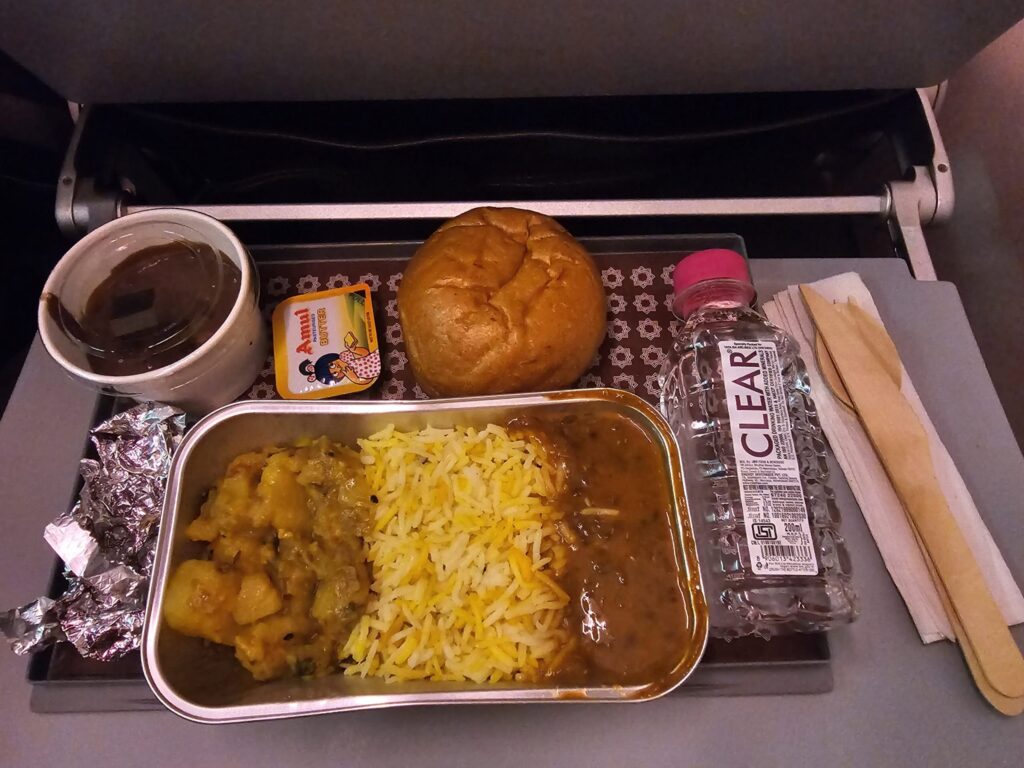
As is standard on many Indian domestic flights operated by full service carriers, despite the short flight time, a full meal was to be served in Economy! Soon, a cart was rolled out from the rear galley and commenced serving passengers from the rear of the cabin. Reaching my row in no time, a polite flight attendant offered me a vegetarian or non-vegetarian option, and I decided to go for the former. Soon, a tray was handed over to me, which contained a main dish with a portion of dhal and another of potato curry, separated by a portion of rice. Meanwhile, this was accompanied by a bread roll and butter, a chocolate mousse cake for dessert and a 200ml bottle of still water. This was then followed by a hot drinks round, in which I opted for a coffee. Overall, this meal left me with few complaints and was of sufficient quality and quantity for the relatively short service that evening.
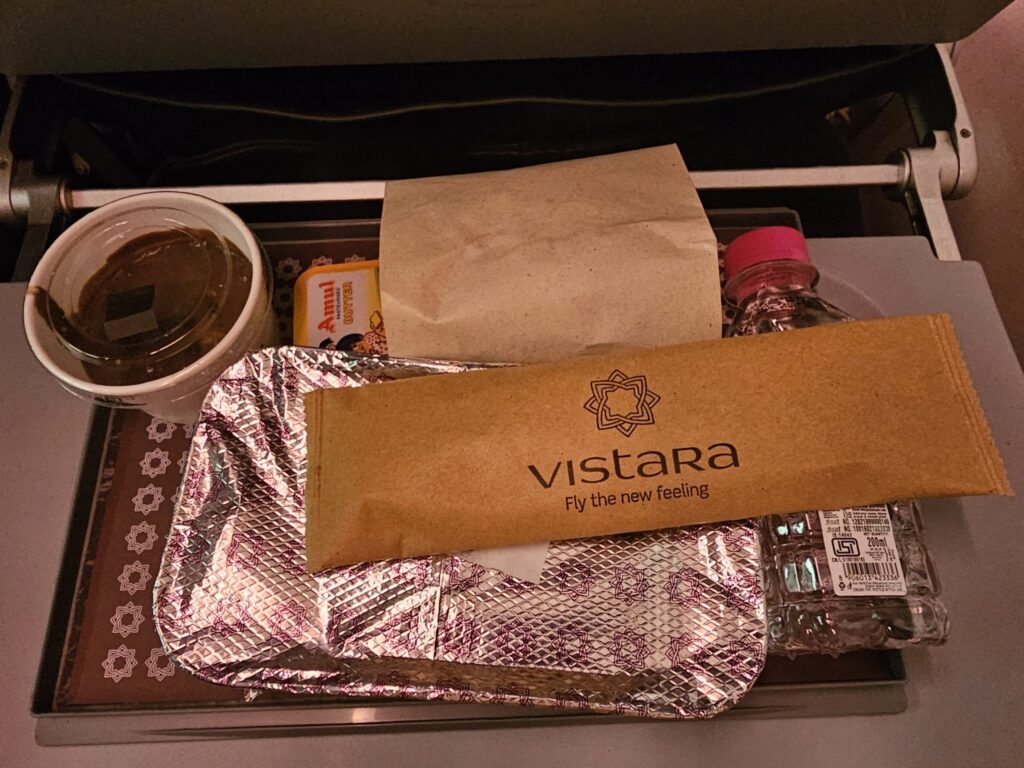
Turning to the route, once away from West Bengal, the aircraft cruised across Jharkhand and passed directly over Gaya, followed by Uttar Pradesh, where we passed directly over the region’s capital, Lucknow. Unfortunately, with the darkness outsid,e meaning that little could be seen, once the trays had been collected, I decided to turn my attention to the VistaraWorld inflight entertainment system. According to the information card in the literature pocket, this system was awarded by Skytrax as the world’s twentieth-best inflight entertainment system. However, if I’m hones,t this does not sound like much of a boast! Connecting to the wifi and navigating over to the inflight entertainment page without issue, I found this to be quick to load and featured a fairly expansive selection of Bollywood and Hollywood films, as well a good number of American and Indian television programmes and music. In addition, this also featured a moving map page, a digital version of the latest inflight magazine, and a page for passengers to sign up for Vistara’s frequent flyer program, Club Vistara. Overall, this was a good system and my only complaint was that occasionally, this did seem to take a while to transition between pages. Meanwhile, testing this out, I was pleased to see no advertisements were played before the visual content.
After exploring the inflight entertainment system, I was left with little to do as we trundled high above India, whilst many of my fellow passengers appeared to have fallen asleep. From Lucknow, the aircraft continued over the dark skies of Uttar Pradesh, which is India’s most populous and one of its geographically largest states. For those that weren’t asleep, the Captain’s cricket provided some entertainment, although, with an Indian win looking less likely, many passengers appeared to be becoming visibly disgruntled.
At 2030, the Captain’s voice filled the cabin as they provided a pre-arrival announcement, noting that we were 90 kilometres from Delhi and we would be commencing our descent, with an expected landing time of 2105, ending this with one last update of the cricket score. This was followed by a pre-recorded announcement regarding the use of the lavatories now as the crew would be securing the cabin for landing shortly. A short time later, the crew made their way through the cabin ensuring that all was secure and in place for our arrival into the Indian capital, however, they did seem to have their work cut out as many passengers appeared to have reclined their seats and drifted off to sleep, and were thus oblivious to the fact that the aircraft was nearing its destination.
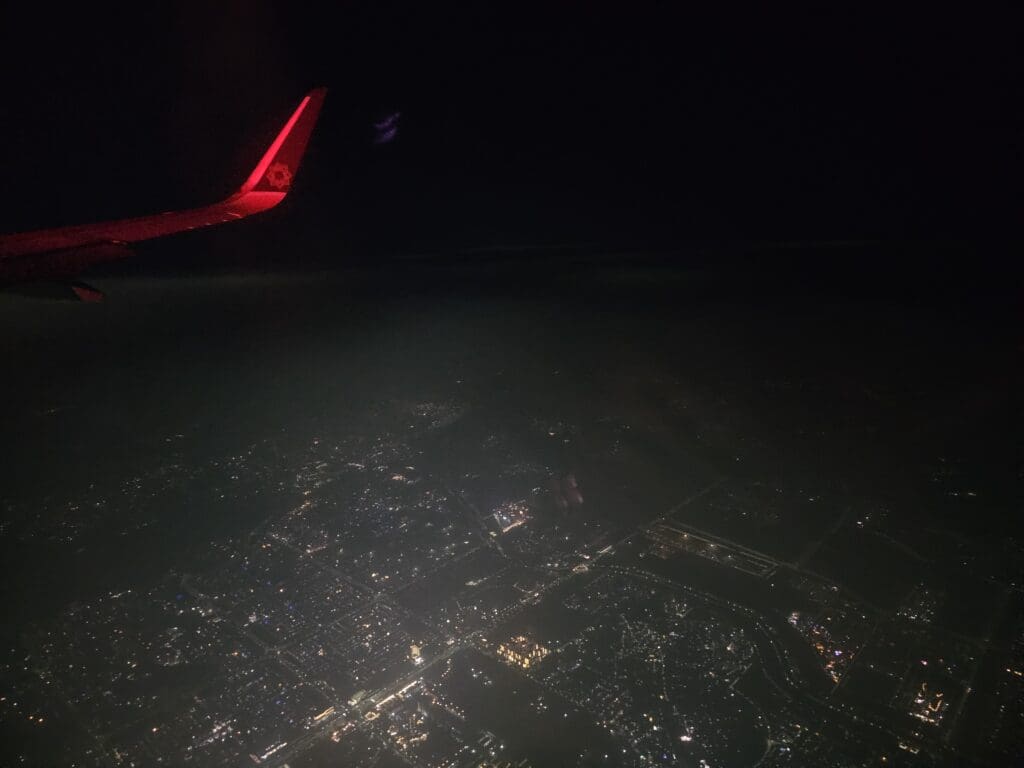
After a few minutes, the cabin was secure and the flight attendants strapped themselves in before the cabin lights were dimmed in preparation for our arrival. Looking outside, thanks to the darkness nothing could be seen other than lights of satellite that surround Delhi as we sank lower and lower, with our flaps soon extended for landing, followed by the aircraft’s landing gear.
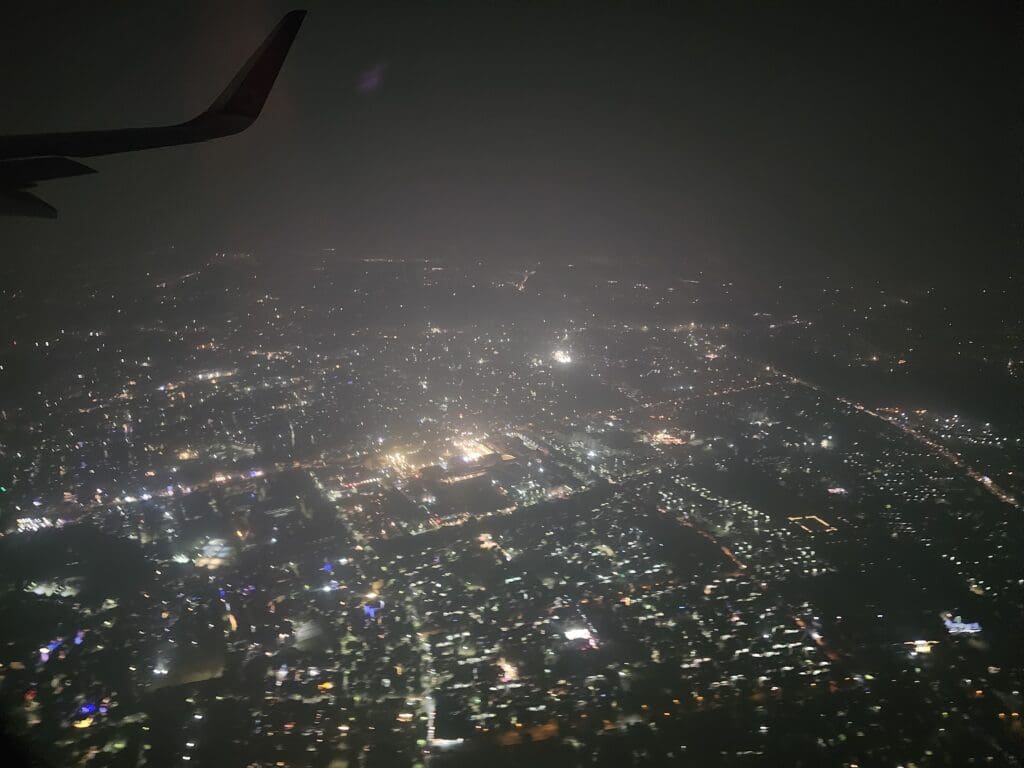
Soon, the sprawl of Delhi Airport popped into view as we crossed over the airport’s well-guarded perimeter fence before making a smooth touchdown on Runway 29L at 2102, exactly two hours after we had taken to the skies of Kolkata. In the usual manner, once the aircraft had vacated the runway, the Purser performed their usual announcement welcoming all to Delhi, thanking passengers and advising all to remain seated. Fortunately, all obeyed this command as we journeyed over to the terminal, coming to a halt at Stand D48 exactly ten minutes after touching down.
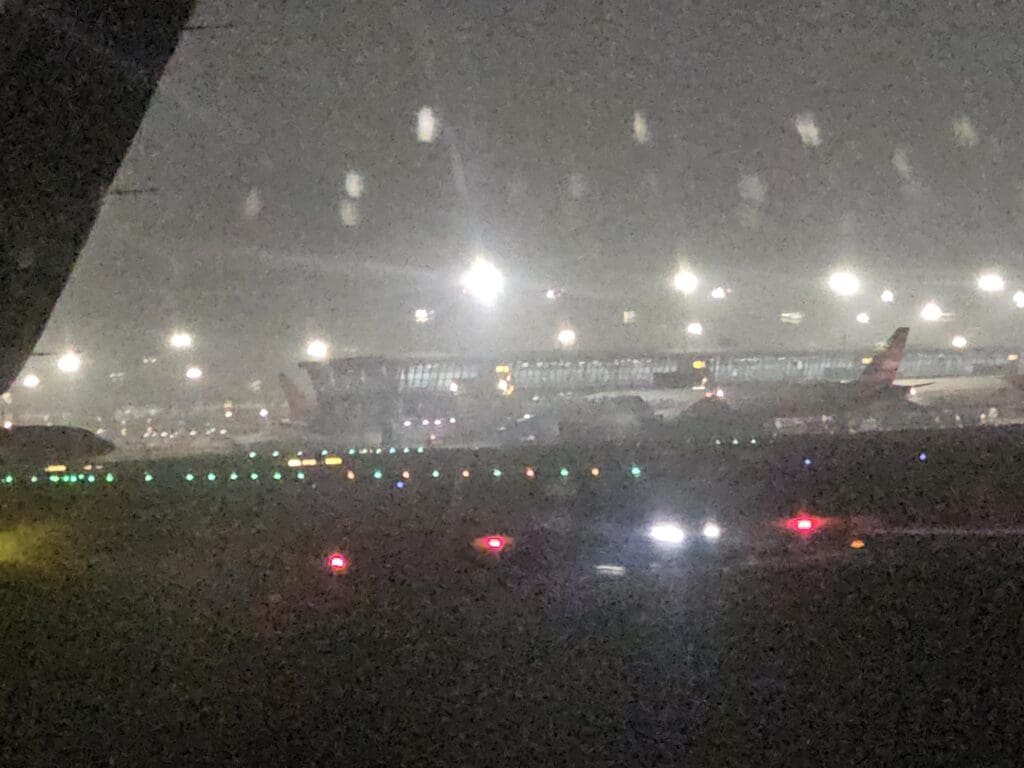
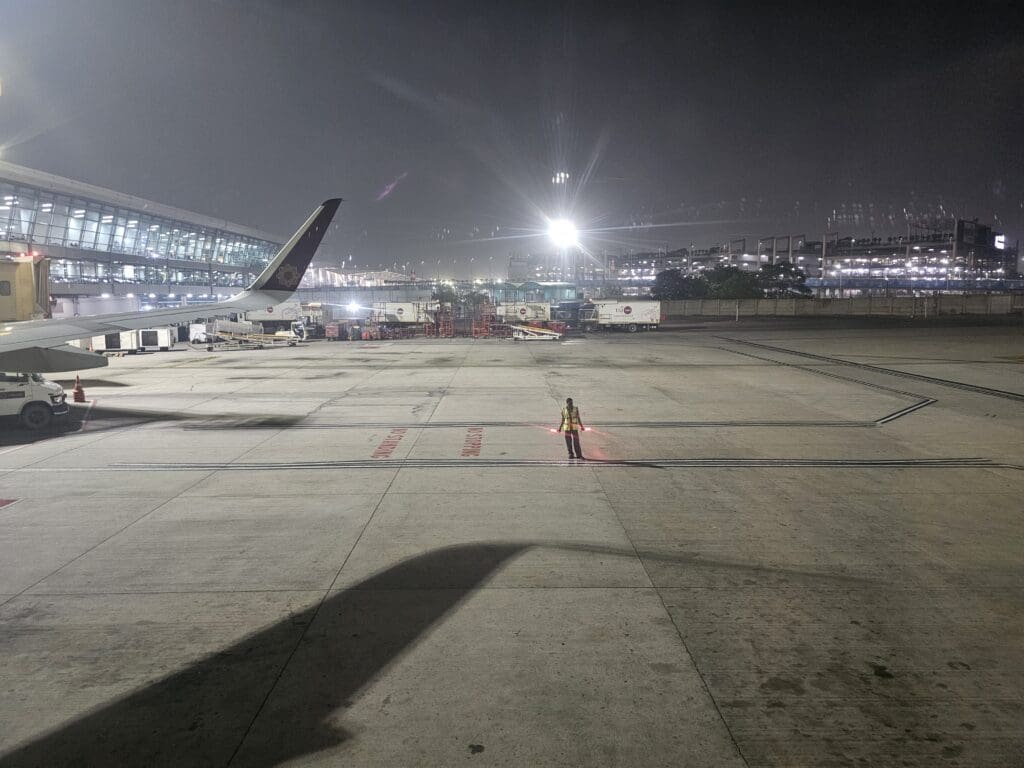
In the usual manner, many of those around me sprung up as soon as the engines spooled down. However, sitting at the rear of the jet, I saw no point in rushing off and so I instead waited for about ten minutes whilst the jetbridge was connected and disembarkation commenced. Once the queue in the aisle began to shuffle forwards, I too stood up, retrieved my belongings and made my way out of the aircraft, receiving friendly thanks and farewells from those crew members I passed before stepping off the aircraft and commencing the long walk to the arrivals area, ending my Vistara voyage.
Summary
Were it not for the uncomfortable seat, I would have had a good flight with Vistara. The aircraft was in good condition, the crew were polite and friendly, and I enjoyed the evening meal offerings. However, regretably, much of my lasting memories of the flight are of the cramped and uncomfortable seat. Nevertheless, I have had far worse flight experiences and overall enjoyed a reasonable flight.