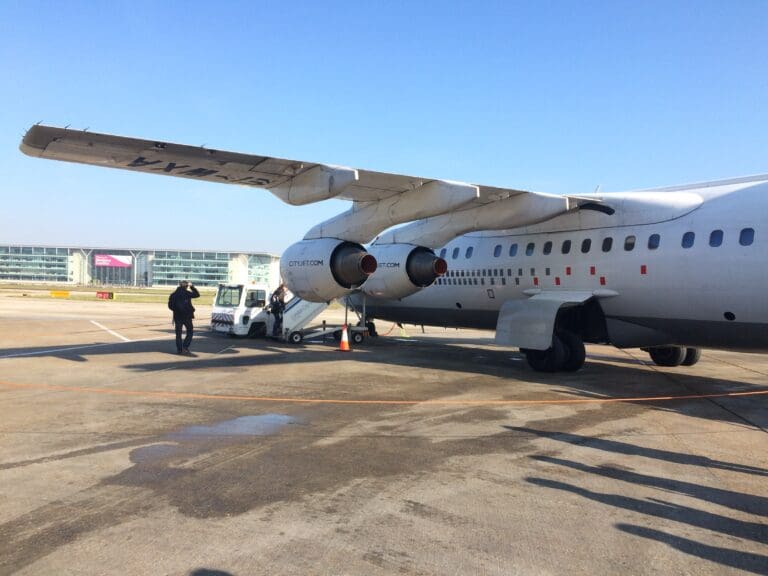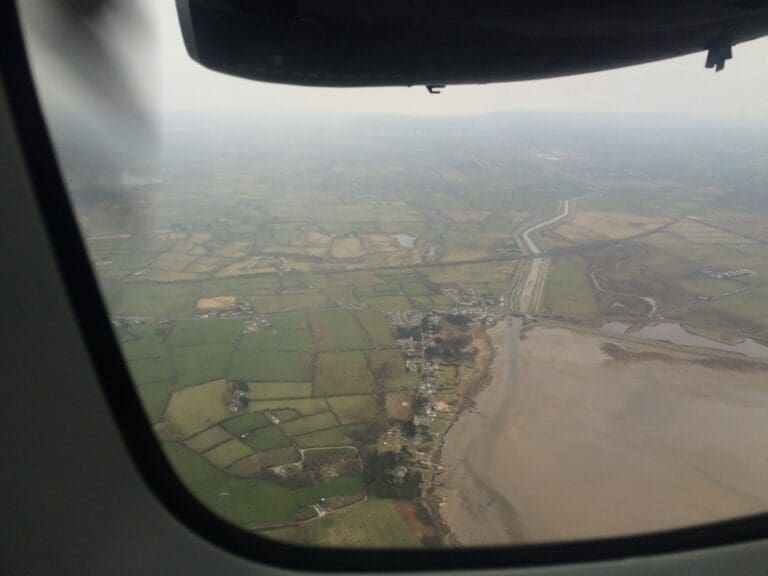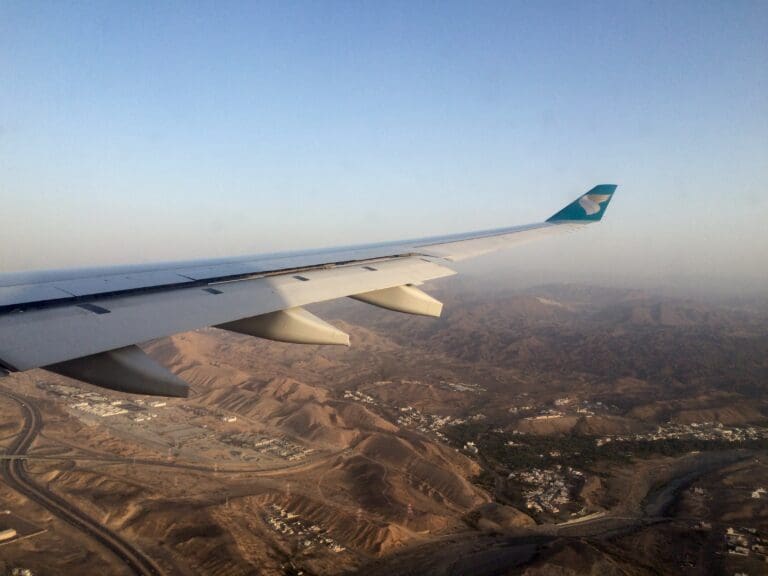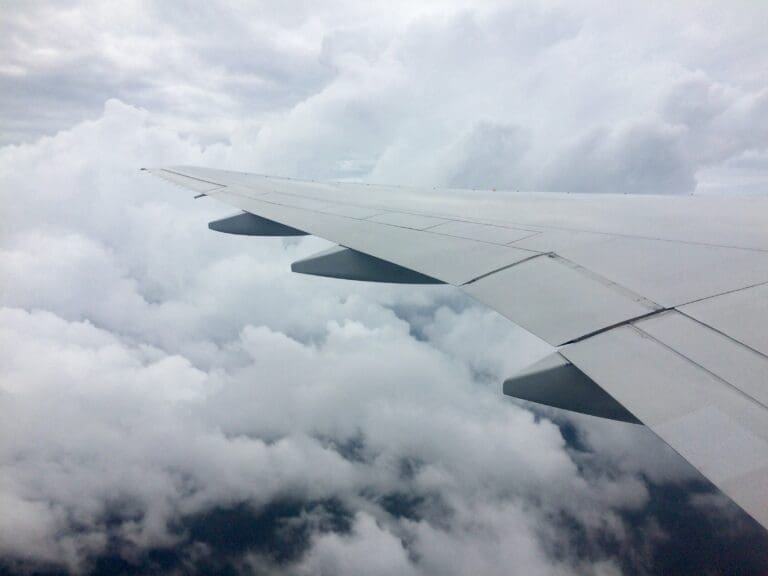
A White Knuckle Take-Off: Lukla to Kathmandu on a Sita Air Dornier 228
Background
A small mountainside village high in the Nepali Himalayas is not the usual place to find me on a Saturday lunchtime. However, in April 2025, I undertook a trek around Nepal’s Khumbu Region, famous for being home to some of the world’s tallest peaks, including Ama Dhablam, Everest and Lhotse. As I neared the end of this, my guide and I rocked up to a better-than-average teahouse in the village of Rimijung in search of lunch and to rest our knees after a long downhill trek from the surprisingly lively Himalayan metropolis of Namche Bazaar. As I munched on my mixture of fried potatoes, vegetables and eggs, my guide questioned me as to whether I would like to continue heading downhill to the village of Phakding, spend the night there, followed by Sunday evening in Lukla before flying back to Kathmandu on Monday morning as originally scheduled, or, soldier onwards to Lukla, and fly back to Kathmandu the next morning.
Any fan of fresh air and mountains would likely keep to the itinerary, favouring an additional night in the country rather than plan an early return to the smog and noisy chaos of Kathmandu. Whilst I initially leaned towards this option, a quick check of the weather forecast revealed almost endless rain showers from Monday morning to Wednesday evening, hinting that I may have to endure a prolonged stay in Lukla – something that was sadly not an option given my tight itinerary. Thus, I took up the guide’s offer of pressing onwards to Lukla, and soon began the three-hour march up the side of the Dhudh Kosi River Valley.
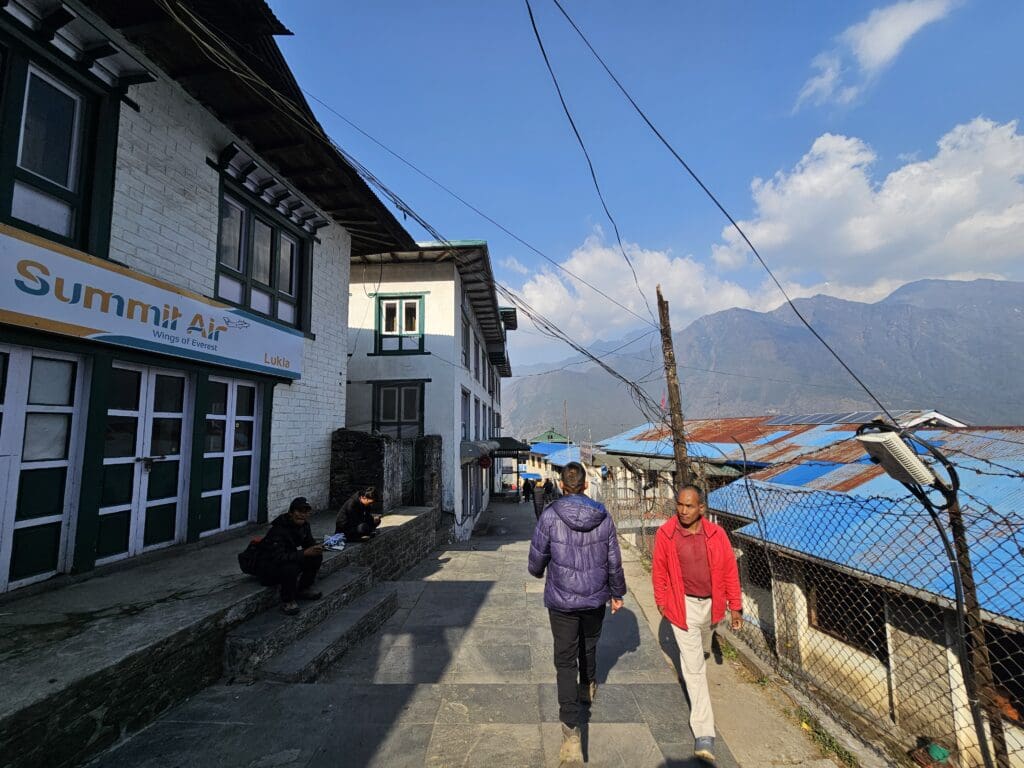
By the time I reached Lukla, I was shattered, although not wanting to miss out on the village’s sights and sounds, once I had dropped my bag off at the teahouse and fuelled myself with a cappuccino, I decided to head out and explore. Like Namche Bazaar, Lukla is probably not what you think of when you think of a Himalayan village. Home to 5,000 and the region’s only ‘proper’ airport, Lukla is the start and end point for most of those trekking in the Everest region. This consists of a main street, where visitors can find a slew of souvenir shops, hiking clothing outlets, restaurants, coffee shops, and even Irish and Scottish pubs! Indeed, wandering around, it is easy to forget that the village remains unconnected to Nepal’s road network, with the nearest road around a two-day trek away!
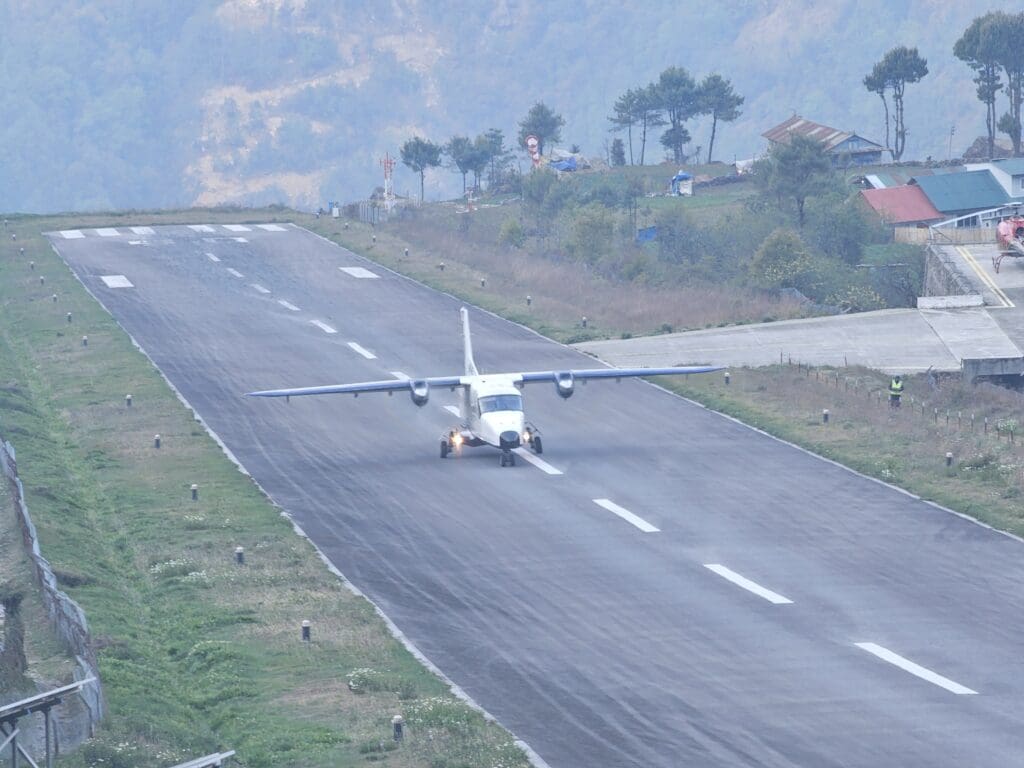
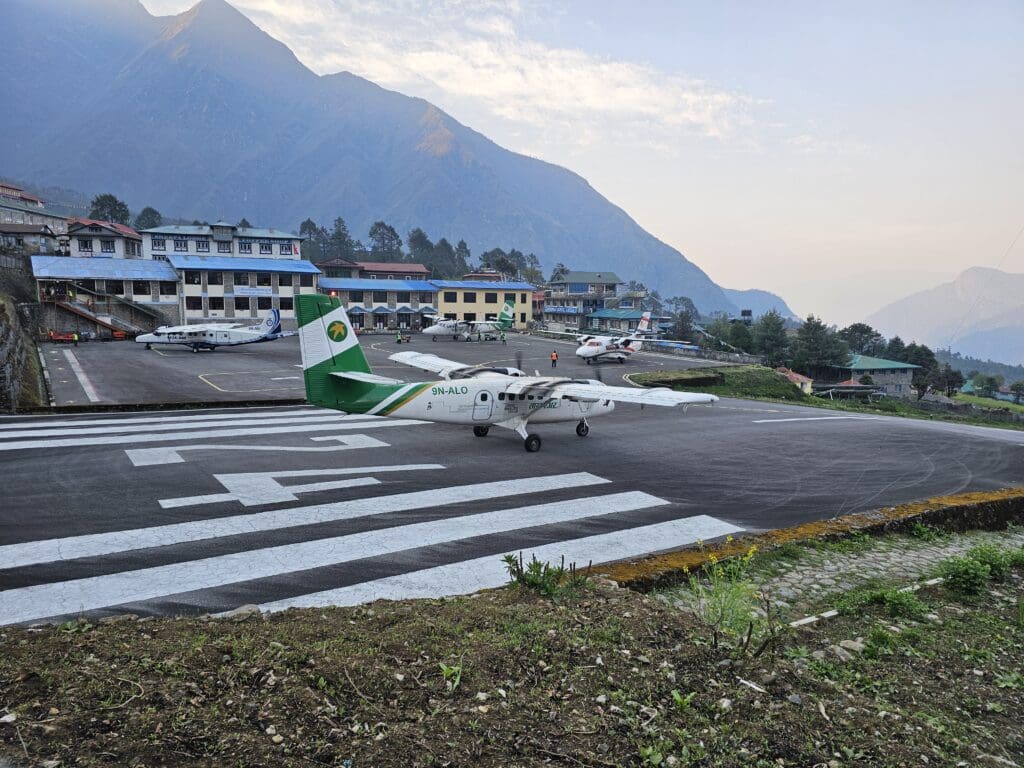
For its size, Lukla enjoys a surprising amount of notoriety. Much of this is thanks to its airport, Tenzing-Hillary Airport, named of course after Sherpa Tenzing Norgay and Sir Edmund Hillary, the first people recorded to have summited Everest. Constructed under Hillary’s supervision in 1964, since then, the airport has been the gateway to those visiting the region. Thanks to its short and sloping 527 metre (1,729 feet) long (or short!) runway, and the fact that there is only one way in and out thanks to the mountain just behind Lukla, the airport is known for being one of the trickiest and most dangerous in the world. Indeed, fixed-wing aircraft can only operate to Lukla under the command of pilots with significant STOL experience and in good weather conditions. The latter means that it is not unusual for flights to Lukla to be cancelled for days on end, especially during the rainy season.
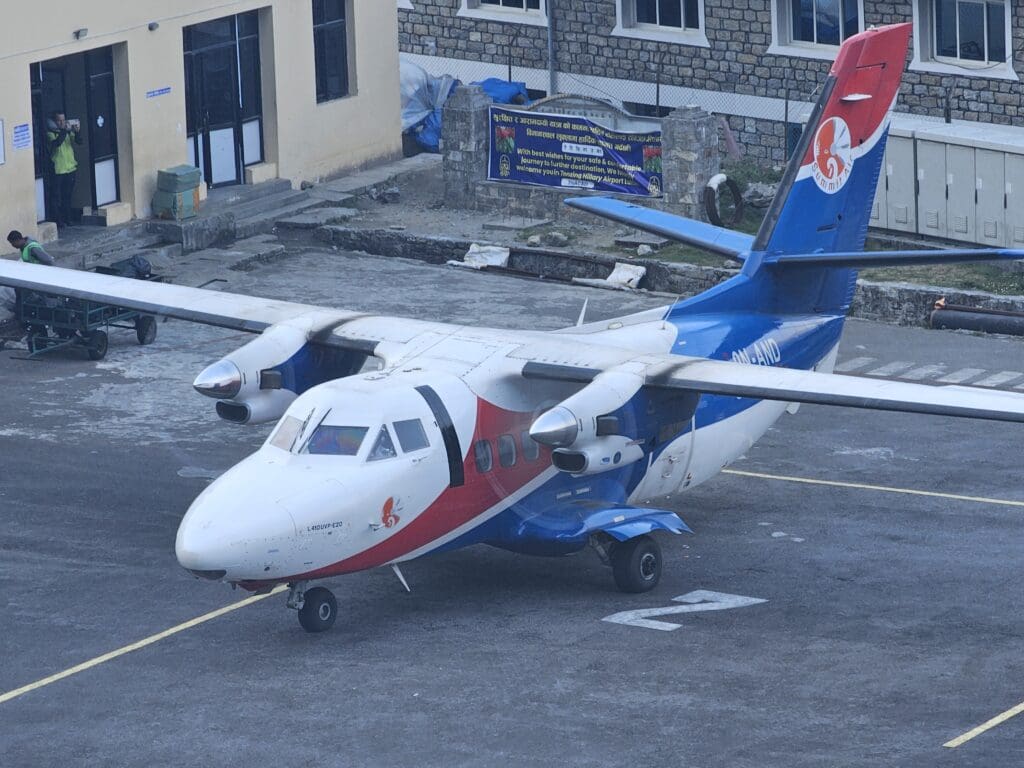
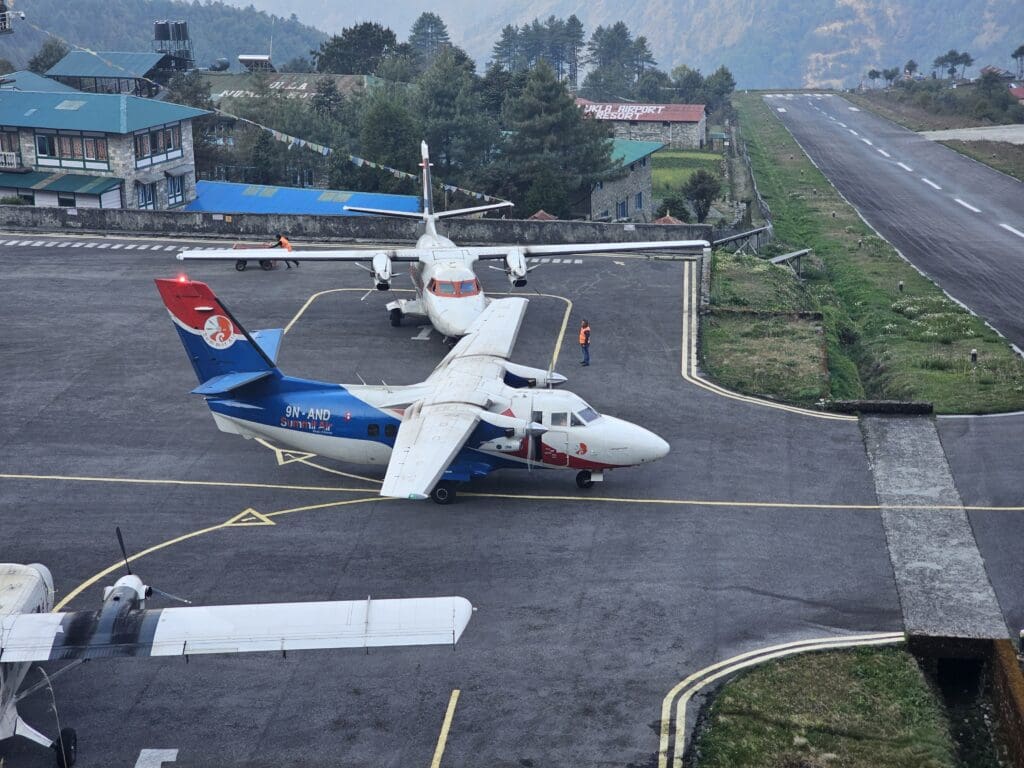
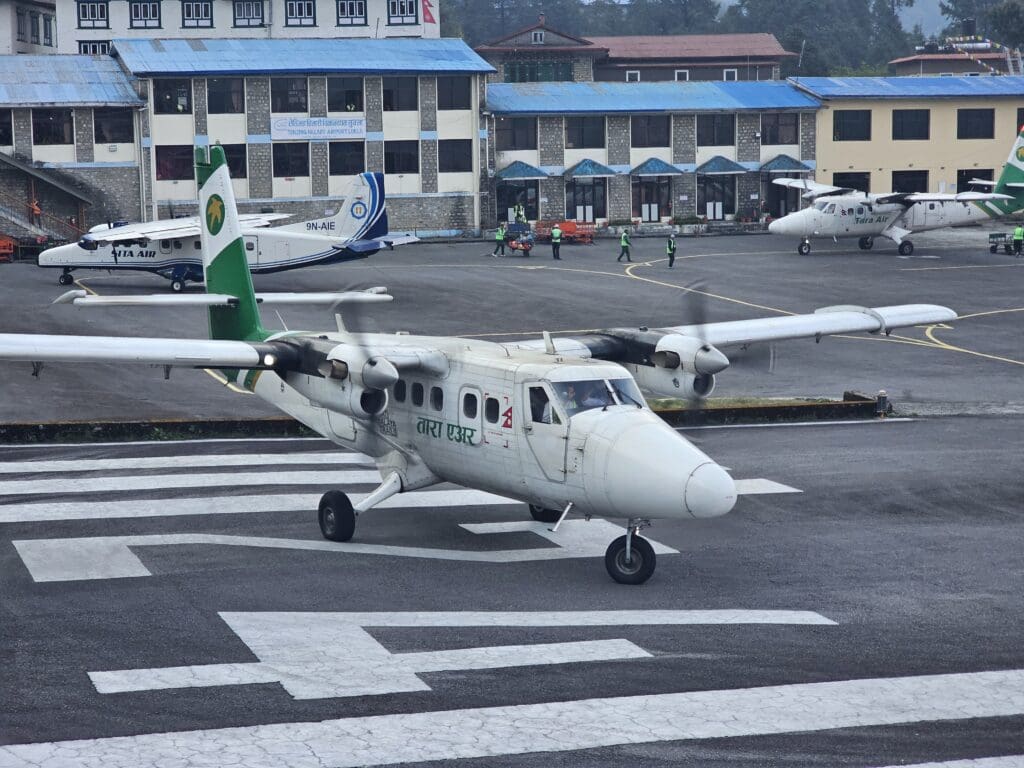
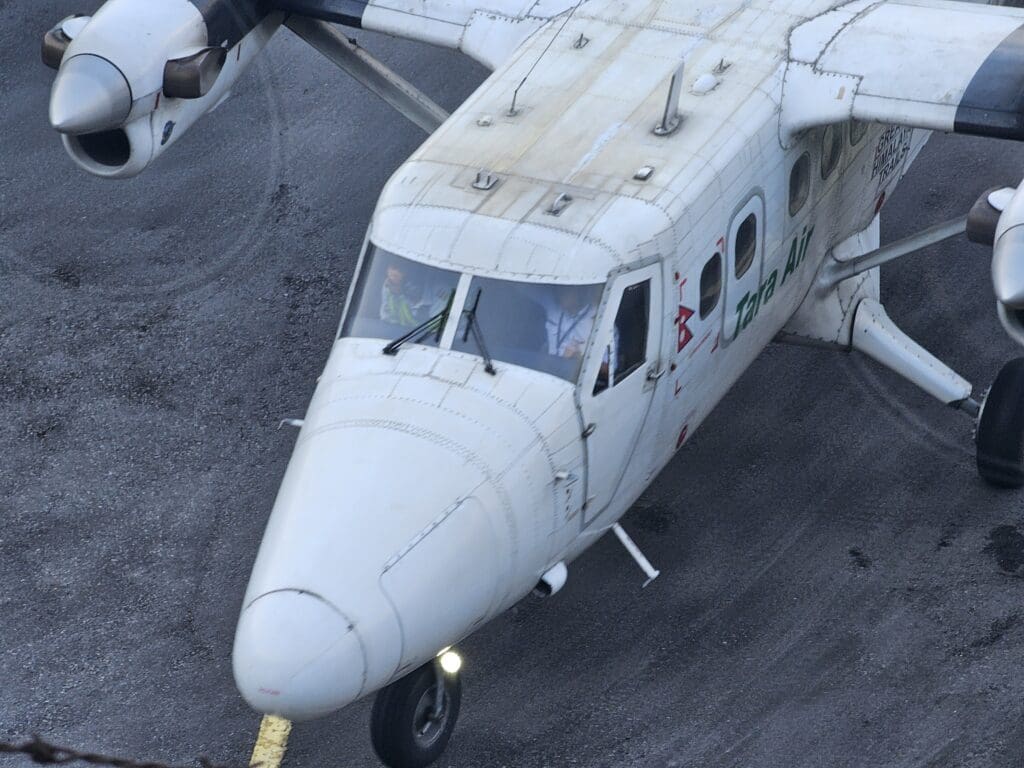
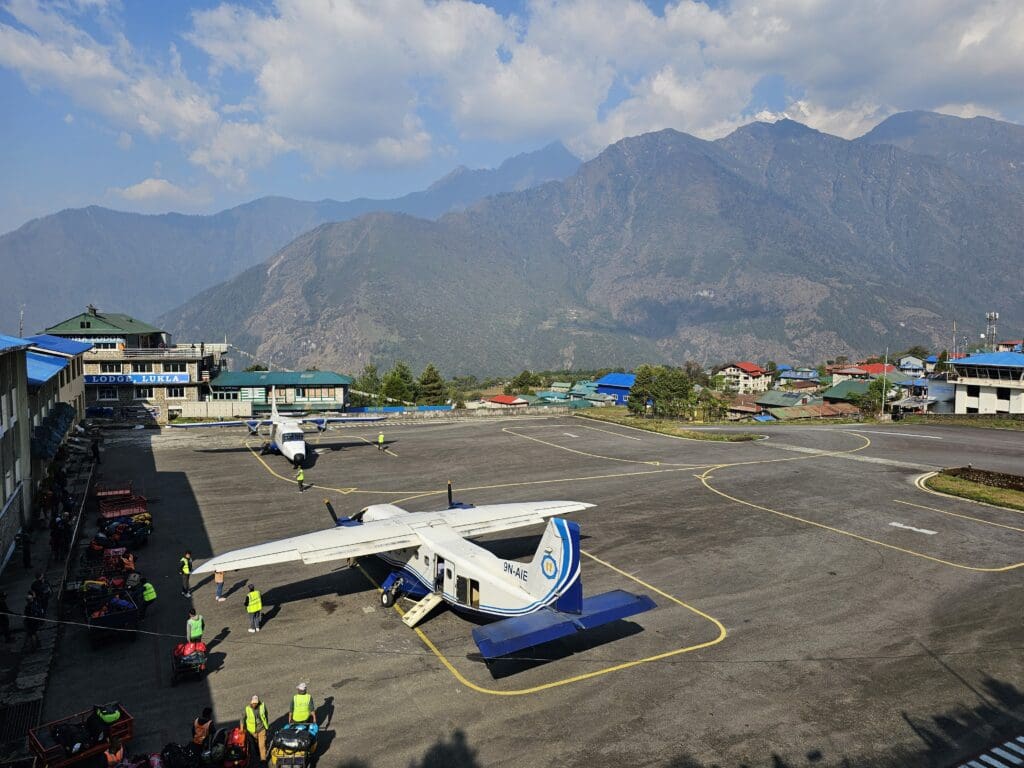
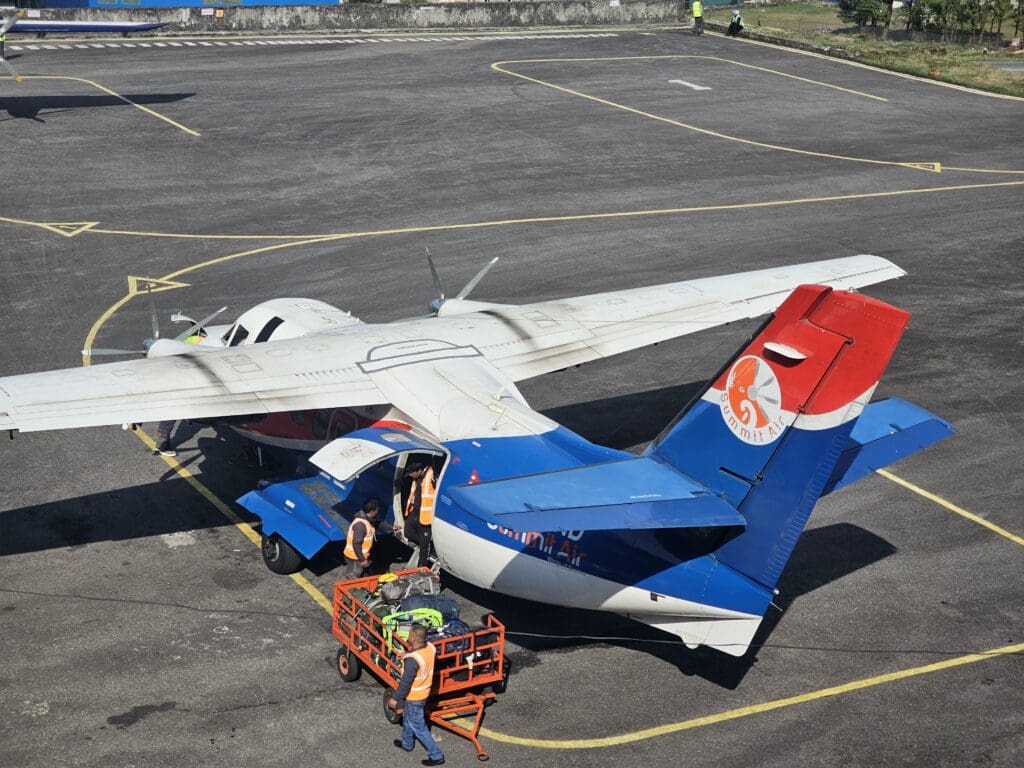
Today, the airport is home to two detached terminals which sit on opposite sides of the runway, one for the many rotary flights that serve both Kathmandu and the plethora of villages and camps at higher altitudes, and the original terminal that serves fixed-wing services. At the time of my flight in April 2025, three fixed-wing operators – Sita Air, Summit Air and Tara Air served Lukla, operating the Dornier 228, Let L-410 and Twin Otter respectively. Whilst traditionally Lukla has only been connected to Kathmandu, post-Covid, thanks to constraints at Kathmandu Tribhuvan International Airport, most fixed-wing services have instead connected Lukla with the nearby airfield of Ramechhap, located around a five-hour drive to the east of Kathmandu.
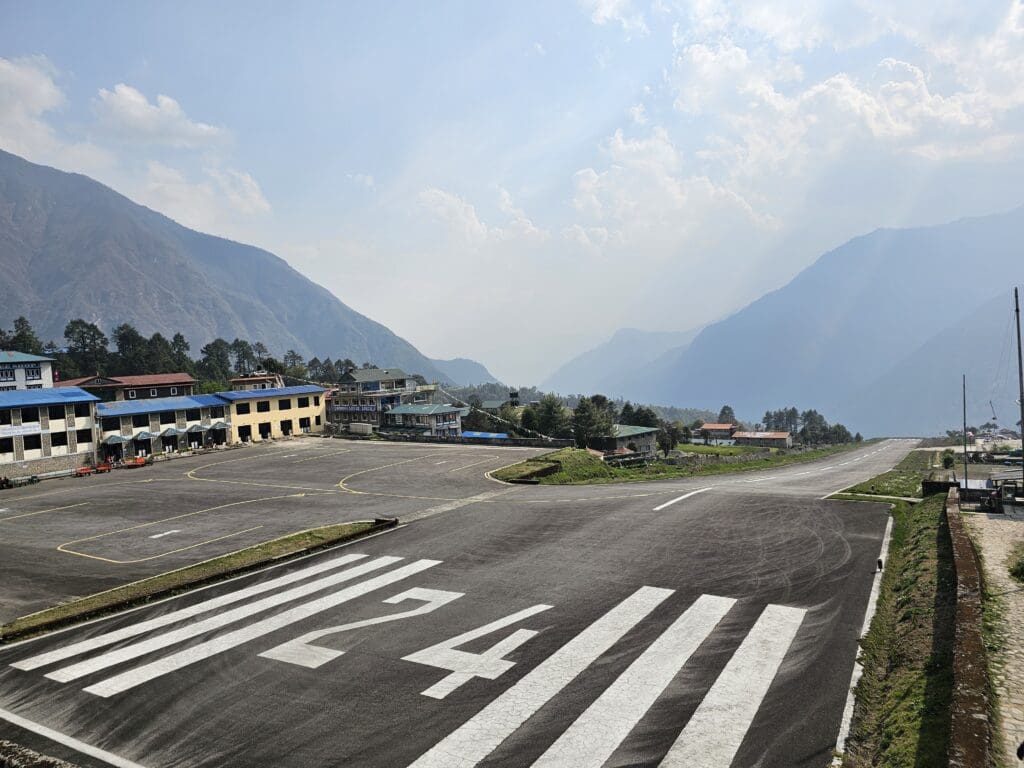

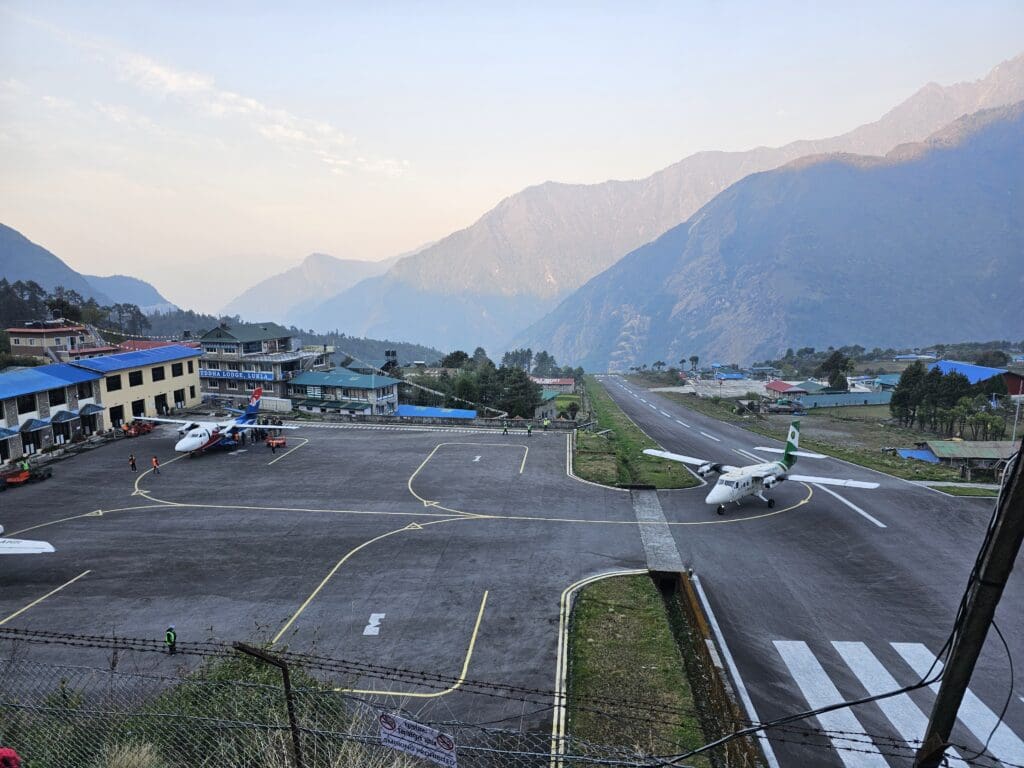
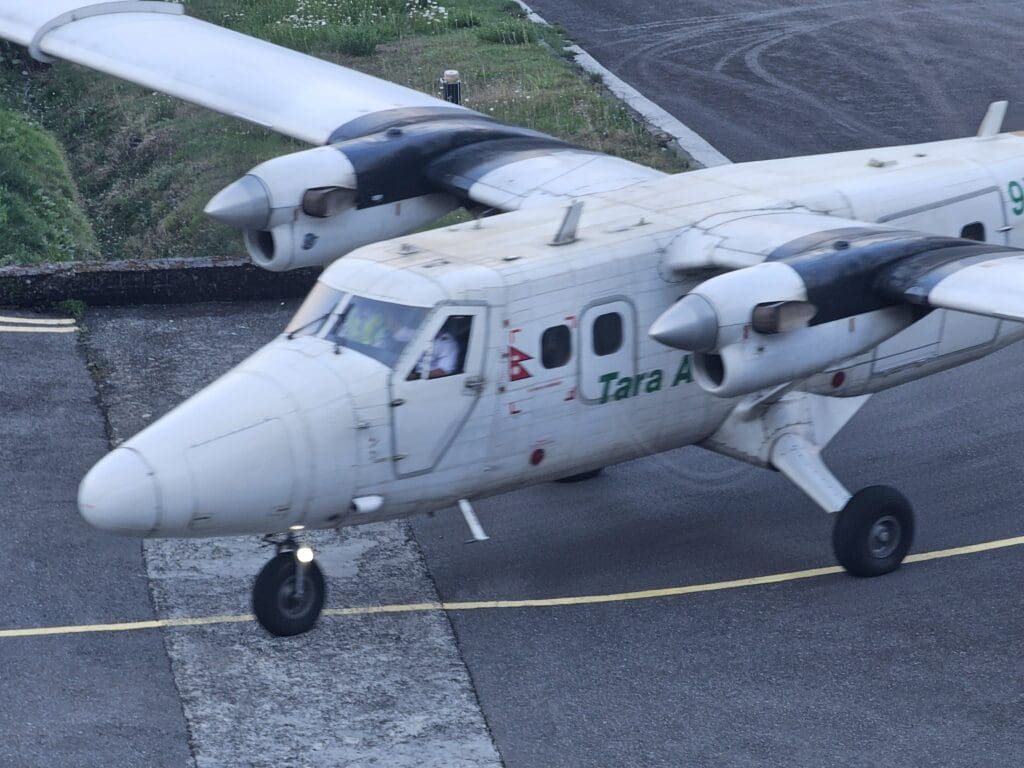
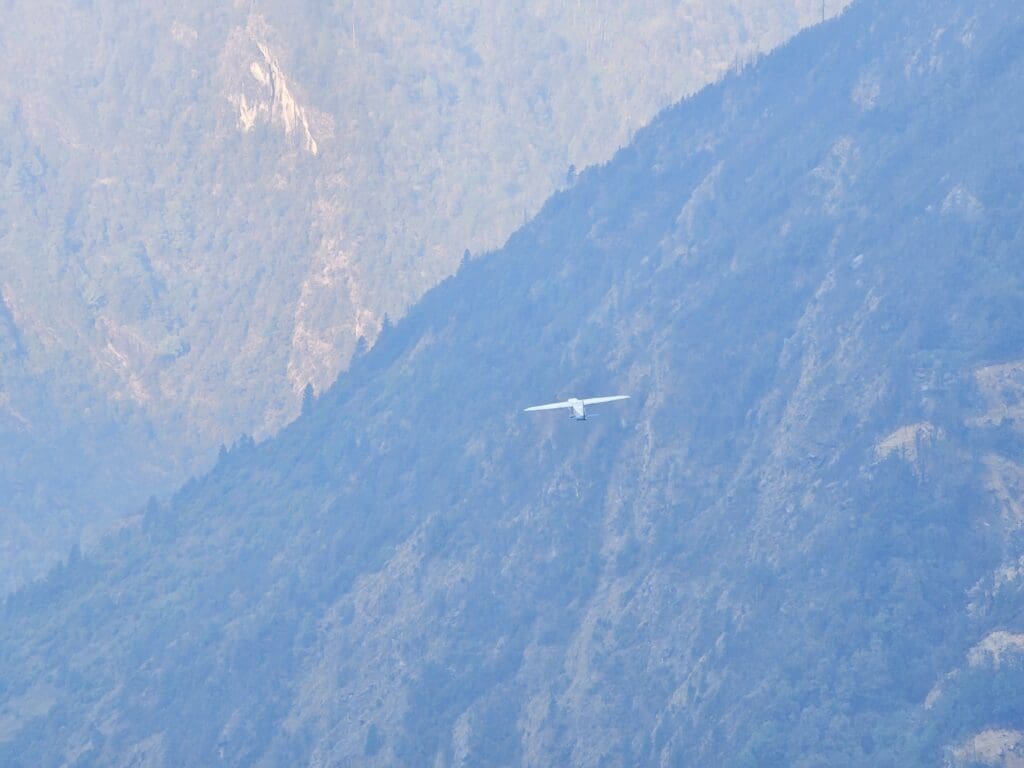
Once I had explored the delights Lukla, I retired to the teahouse in preparation for dinner and received a call from a representative at the trekking company. They advised me that I was scheduled to fly out on Monday morning at 0730 on one of the few direct services to Kathmandu, and would send my guide the ticket for this service that evening, however, they noted that they would endeavour to pull some strings to get me moved onto a Sunday flight to Kathmandu. True to their word, following my last dhal bhat dinner of the trek, my guide whipped out his phone and showed me the PDF ticket for Monday, which revealed that I would be returning to Kathmandu on a Sita Air Dornier 228. However, they noted that we would go to the airport together at 0800 the next day in the hope that there would be a free seat on the 0830 Sunday morning service – my guide reassuring me by noting that he is friends with Sita Air’s station manager in Lukla!
About Sita Air
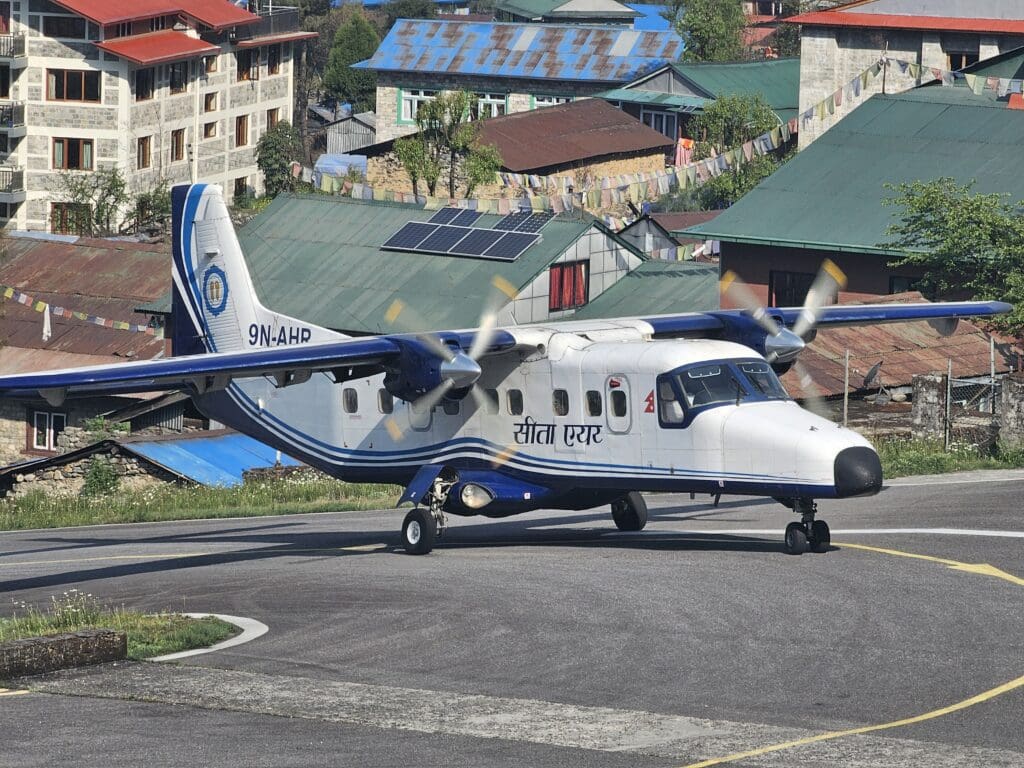
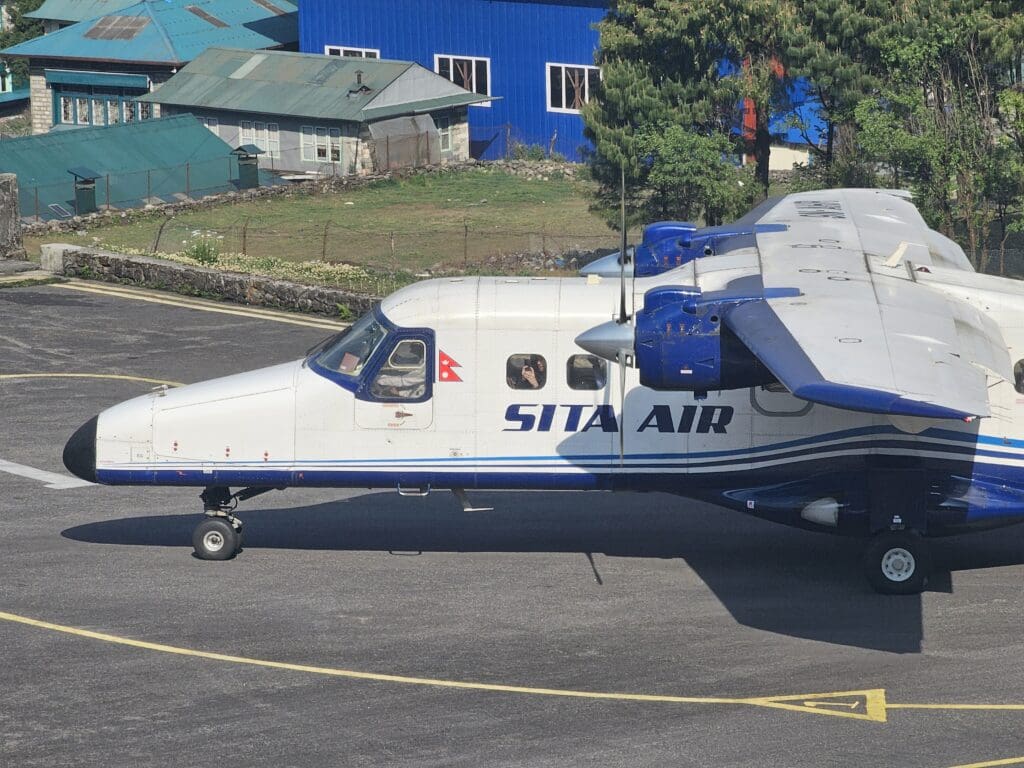
With a fleet of four Dornier 228s that fly exclusively within Nepal, there is a good chance that you will have never heard of Sita Air, however, they have been lingering in the Nepali aviation scene for almost a quarter-century at the time of my flight. Named after the Hindu goddess Sita, Sita Air was formed in 2000, although the then ongoing civil war meant that the airline did not operate its first service until 2003. For the duration of its life, Sita Air has solely operated the Dornier 228, a rather suitable type for Nepali regional flying owing to its rugged nature and STOL capabilities. Today the airline operates four such aircraft which are deployed on routes to thirteen destinations across Nepal, maintaining a primary hub in Kathmandu and secondary hubs in Nepalgunj and Pokhara.
Unfortunately, all has not been plain sailing for Sita Air and nervous flyers may not want to research the airline before flying with them. To date, the airline has suffered six major incidents and accidents, including one fatal crash in 2012 where all occupants were killed when one of their Dornier 228s suffered a bird strike on departure from Kathmandu. Further investigations uncovered significant safety issues which led to the Civil Aviation Authority of Nepal revoking Sita Air’s licence to carry passengers from August 2014 until 2016. As with all Nepali carriers, the airline is not currently permitted to fly in European Union and British airspace owing to a lack of safety oversight.
The Journey
Being a Saturday night in a Himalayan hub, that night, the music did not stop blurting from the nearby pubs until the early hours and was followed by the near-constant barking of Lukla’s dog population. Thus, when I arose at 0600, I did not feel particularly refreshed or well-rested. Yet, with no mountains to climb and hoping for an easy travel day, this was no major issue. Once up and about, with some time to go before breakfast at 0700, I decided to take a quick morning stroll to check out the latest happenings at the airport. Once outside, I was delighted to be greeted by sunny skies and clear air which allowed for superb views of the nearby mountains and gave me some confidence that flights would be operating as per schedule that morning. Indeed, this was soon reaffirmed by the roar of turboprop engines as multiple aircraft rocketed off at the start of their journeys to Ramechap. Indeed, given the size of Lukla, the sound of aircraft engines can be heard throughout the village with each movement at the airport.
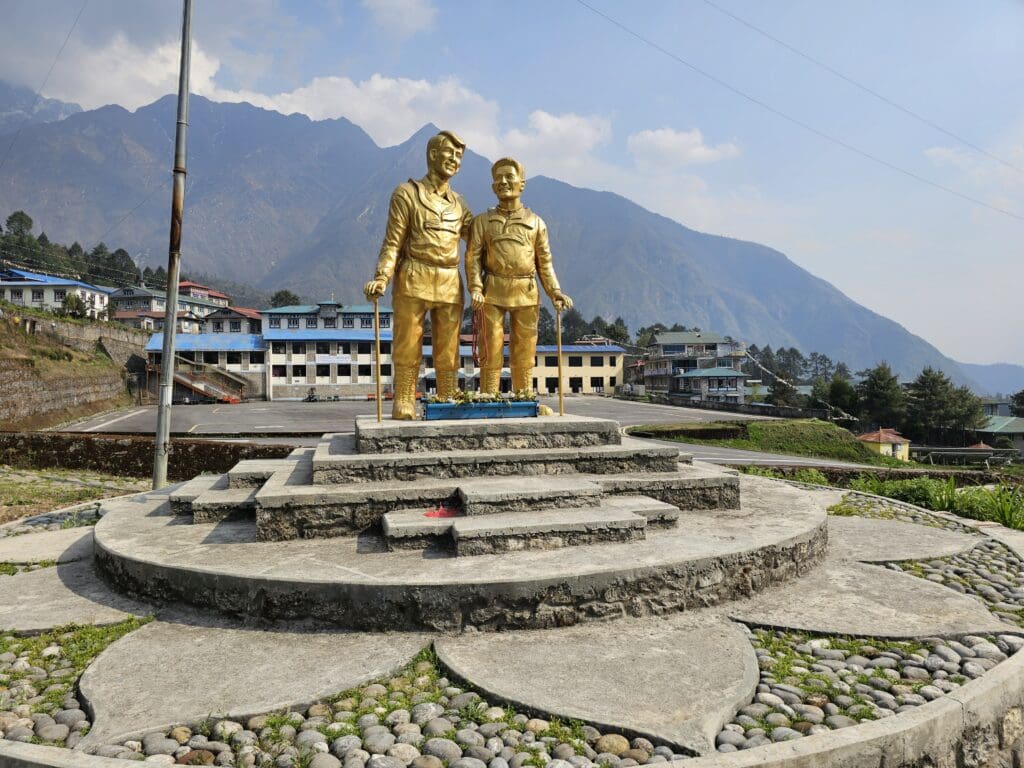
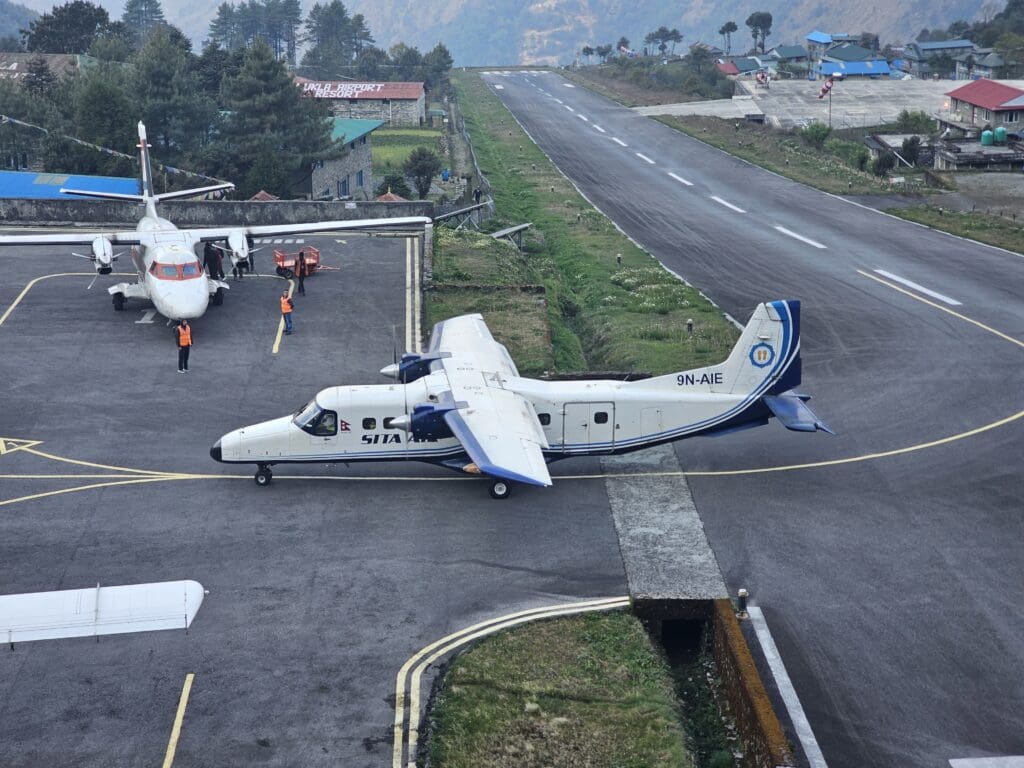
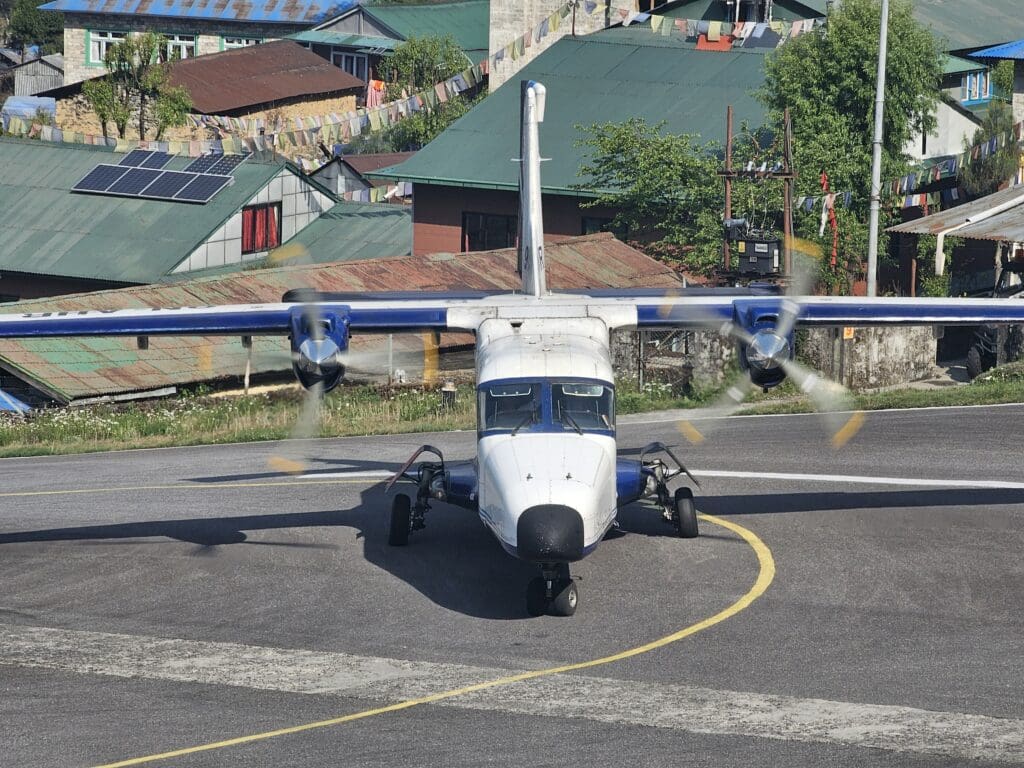
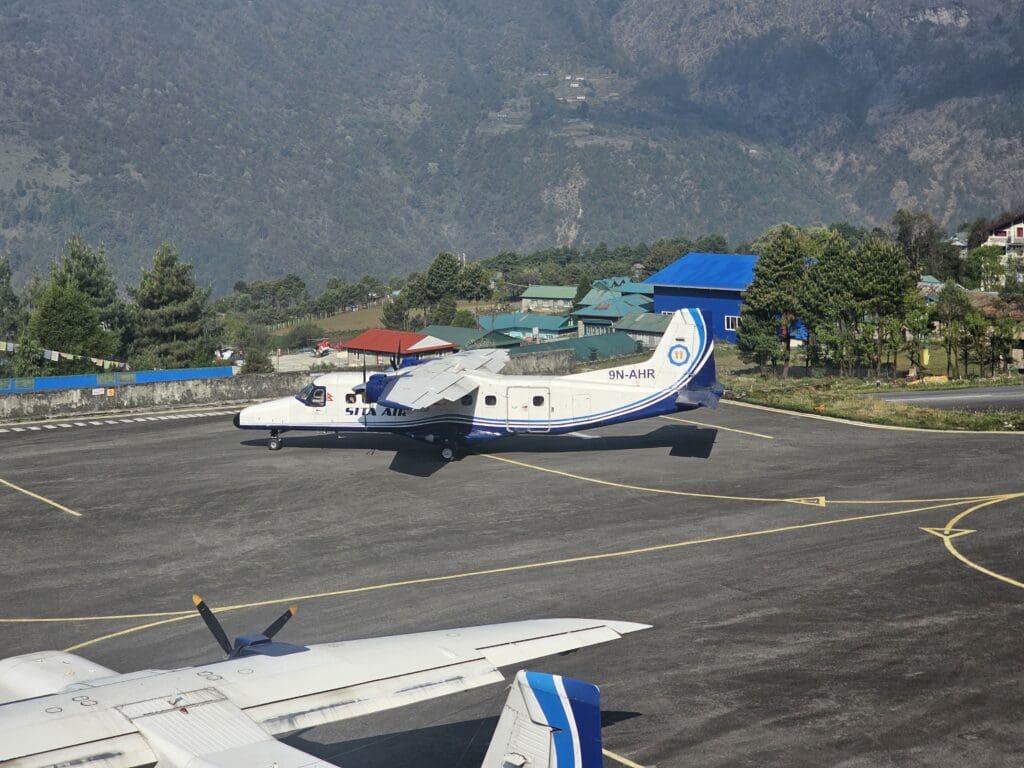
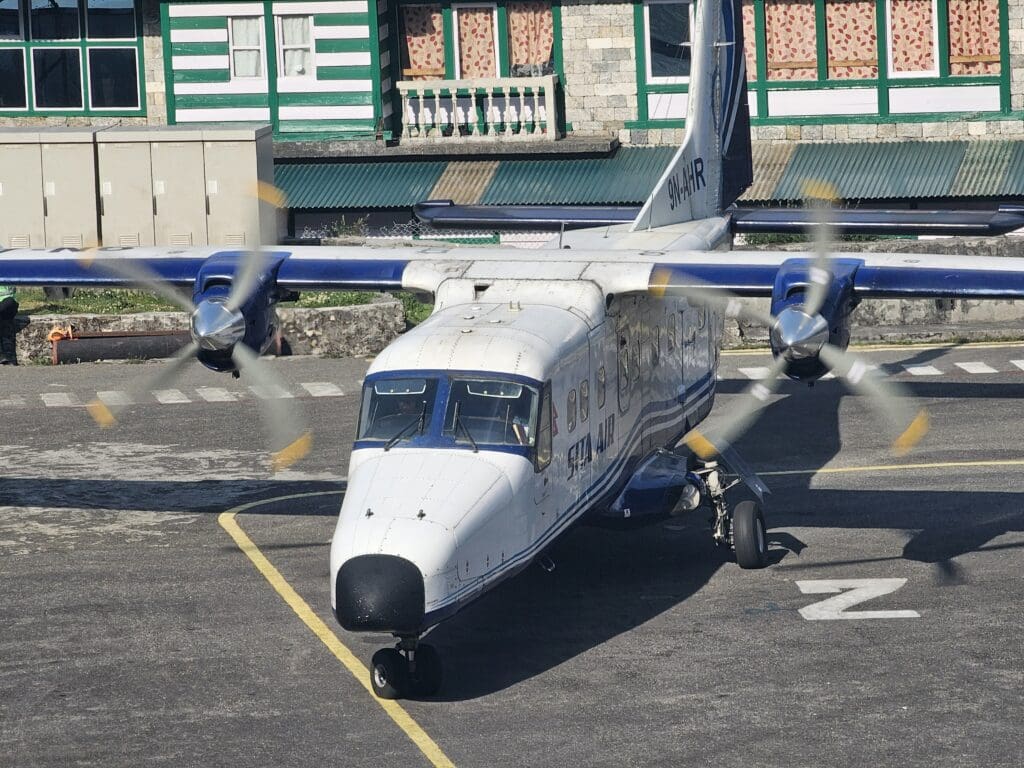
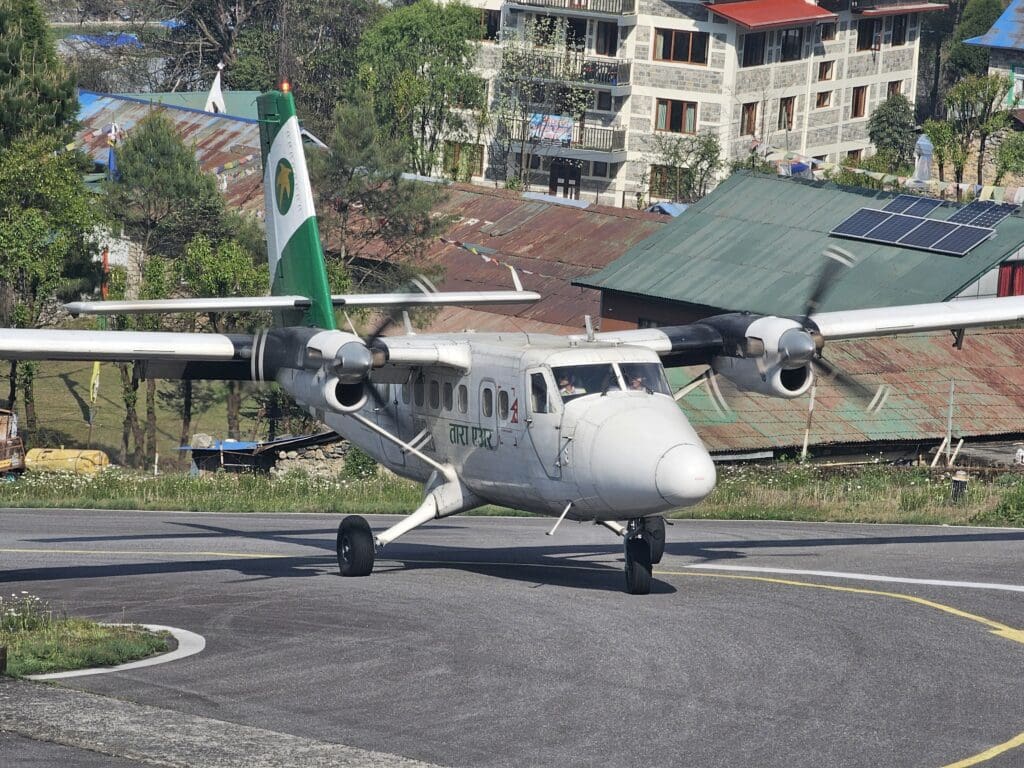
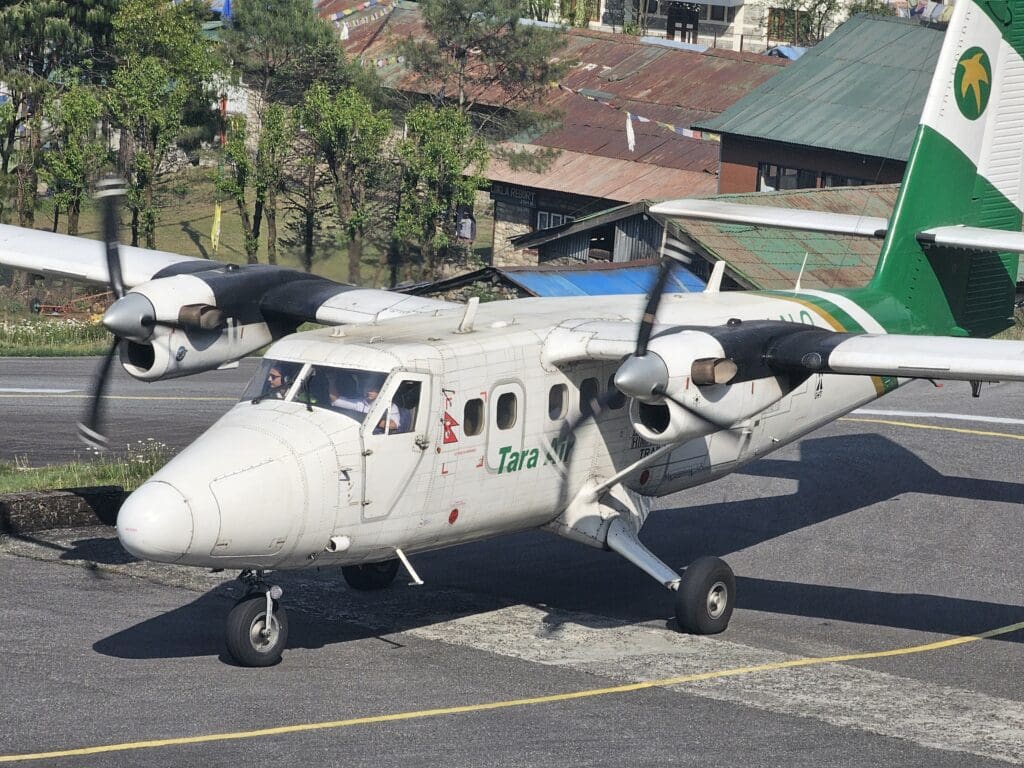
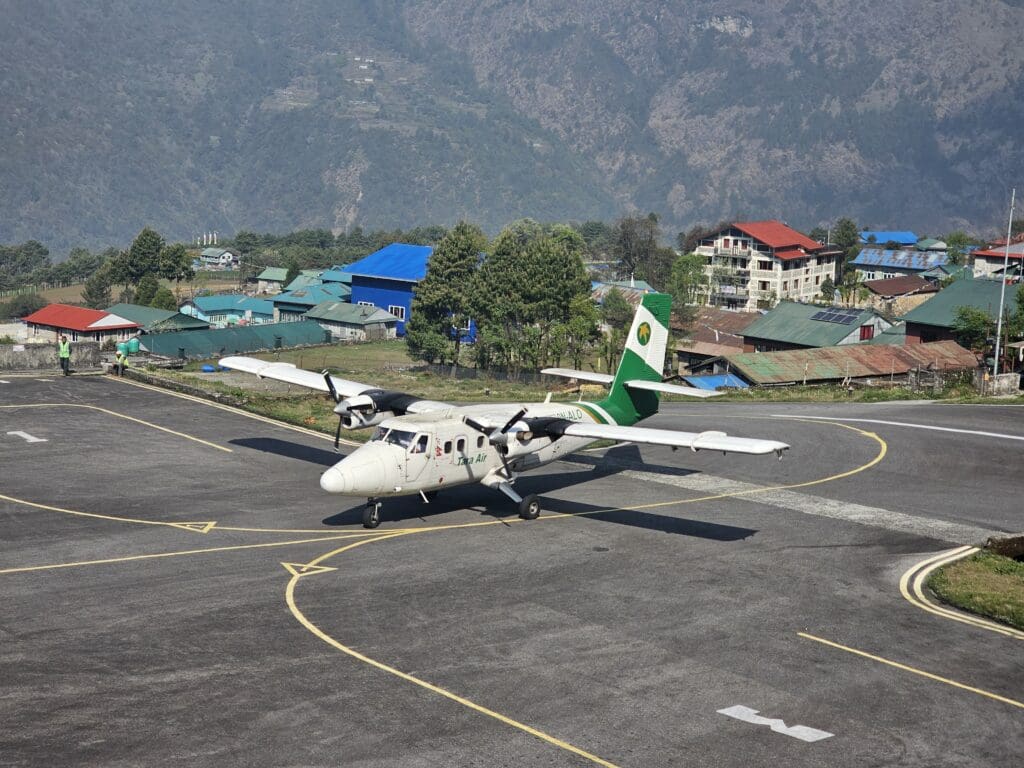
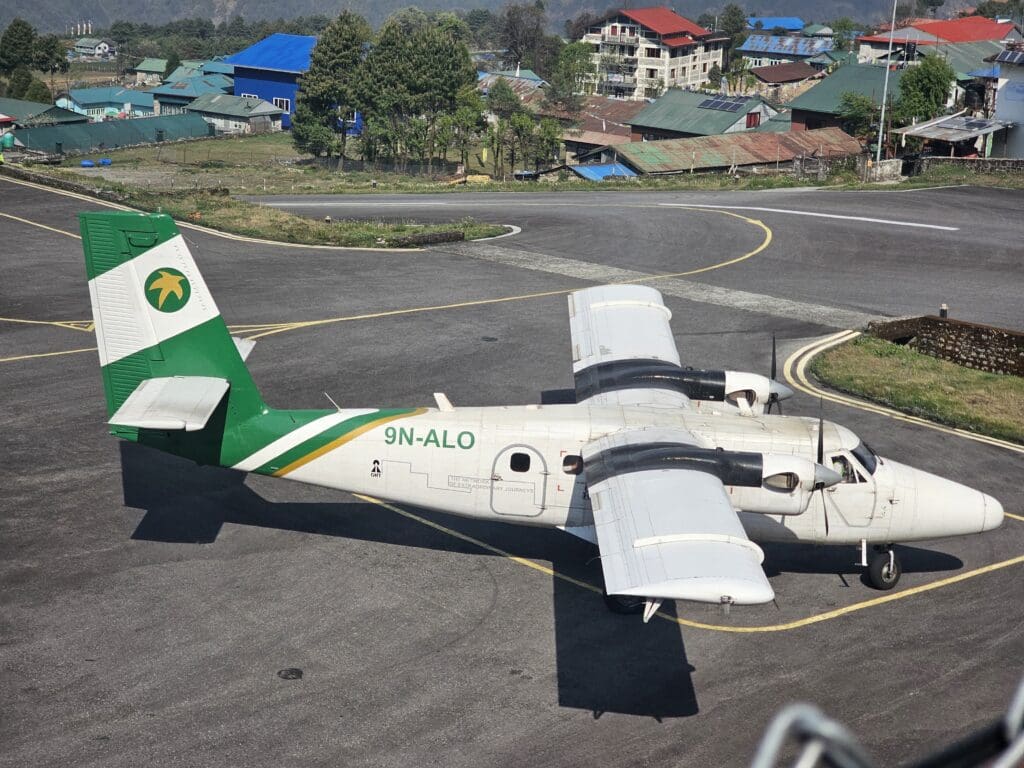
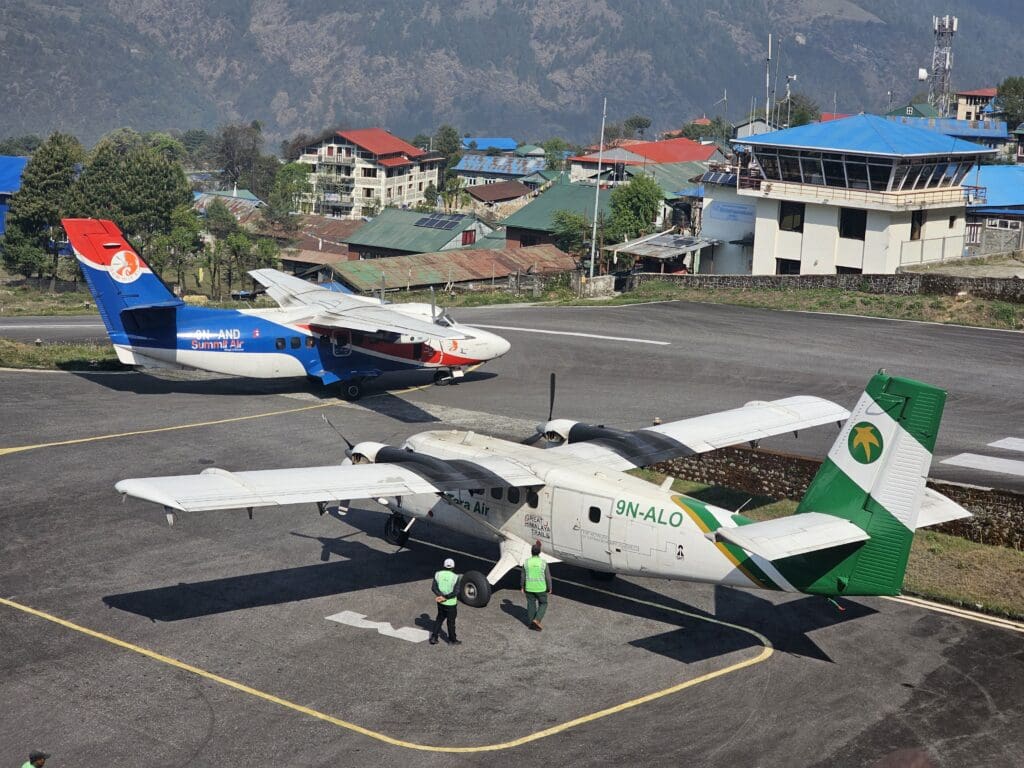
No more than two minutes after leaving the guest house, I passed through the ornately decorated Buddhist Chorten gate and past the golden statue of the airport’s namesake, Hilary and Norgay before taking my position at the airport’s viewpoint at the northern end of the runway. At that time, a single Sita Air Dornier 228 could be seen being readied for its flight to Ramechhap and was soon joined by a Summit Air Let L-410, arriving from Ramechhap. With the weather often clear in the morning, and cloudy in the afternoon, most fixed-wing services are scheduled for the morning, and minutes after I arrived, the airport’s other two stands were taken and it seemed as if as soon as one aircraft departed, another arrived to take its place. Looking down, the small square-shaped four-stand apron seemed to be a place of organised chaos, with very little room between the aircraft, quick turnarounds (often with one aircraft left running), and members of ground staff getting precariously close to the moving aircraft.
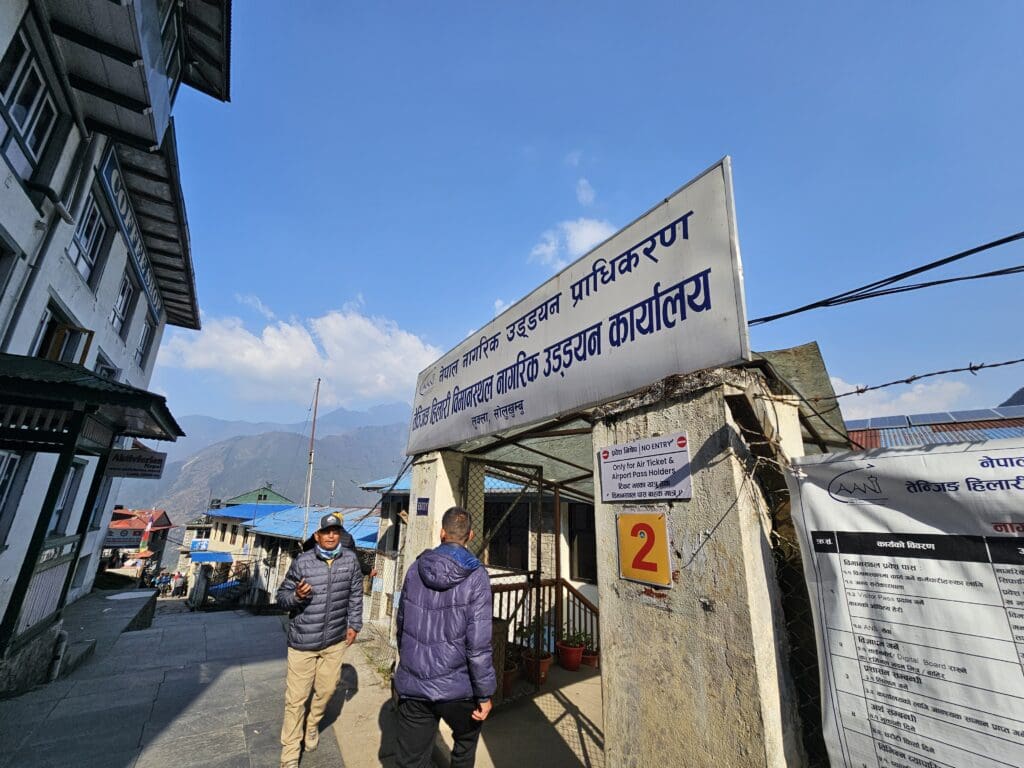
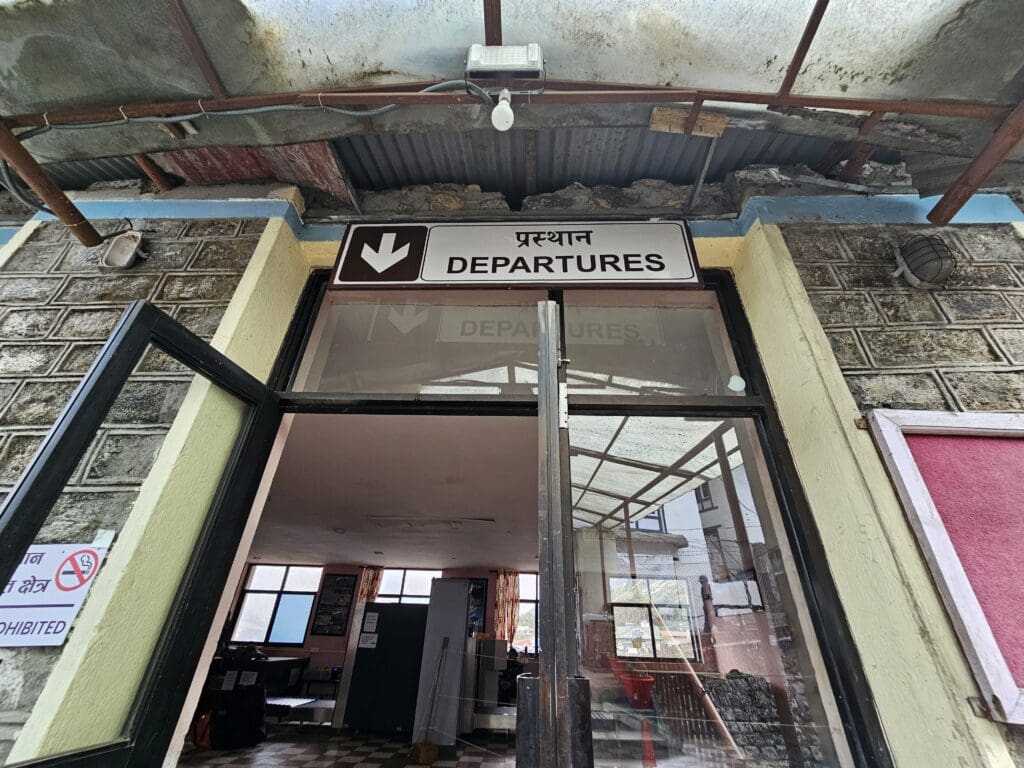
After some time spent watching Dornier 228s, Let L-410s and Viking Air Twin Otters come and go, I decided to retreat to the teahouse for my delicious aloo paratha and vegetable curry breakfast. Once I had polished this off, I headed back to my room to pack, before heading off back to the airport with my guide. Making our way around the busy airport perimeter, there was no change in the number of movements, with a constant stream of turboprops coming and going. Soon, we made it to the entrance of the terminal, located on the top floor of this small yet four-storey building. Once inside, a crowd of weary trekkers could be seen queuing for the primary security checkpoint. Looking around, the landside portion of the terminal is rather spartan, home to nothing other than a few benches, a block of squat toilets and offices for each of the three fixed-wing airlines that serve Lukla. In terms of its aesthetic, this part of the terminal is most certainly rather retro and could do with a makeover, featuring plenty of peeling paint and signs of tiredness – a common theme throughout the terminal. Nevertheless, for the most part, this was clean, and openable windows (not quite compliant with safety and security regulations!) offered a view out onto the apron.
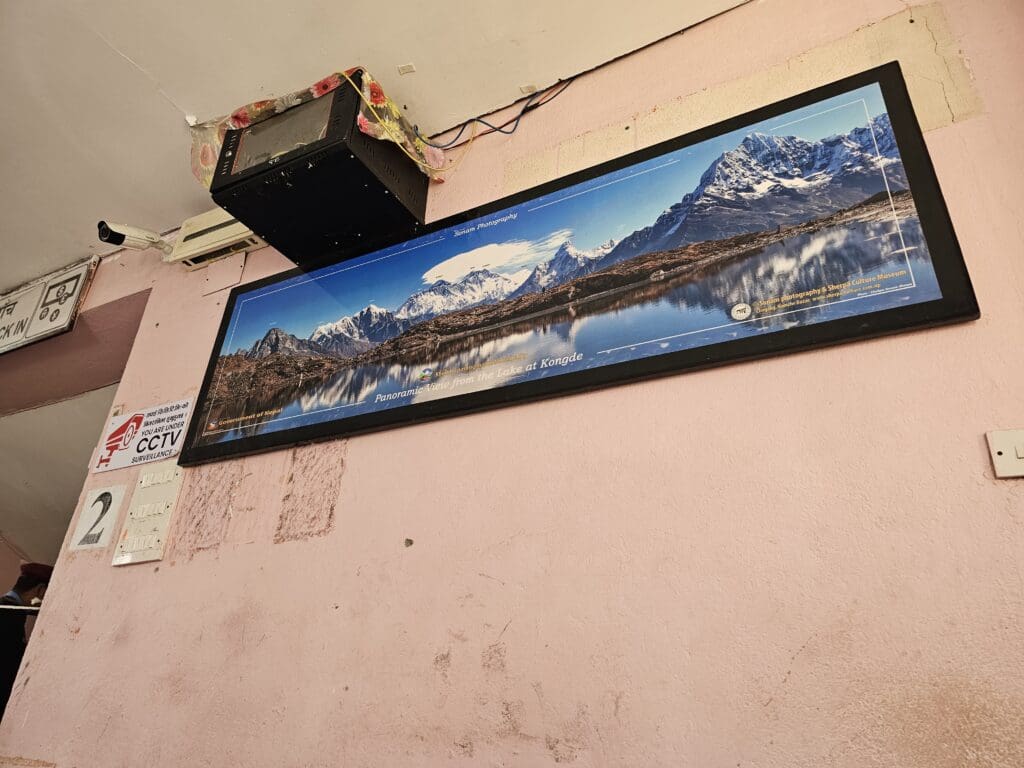
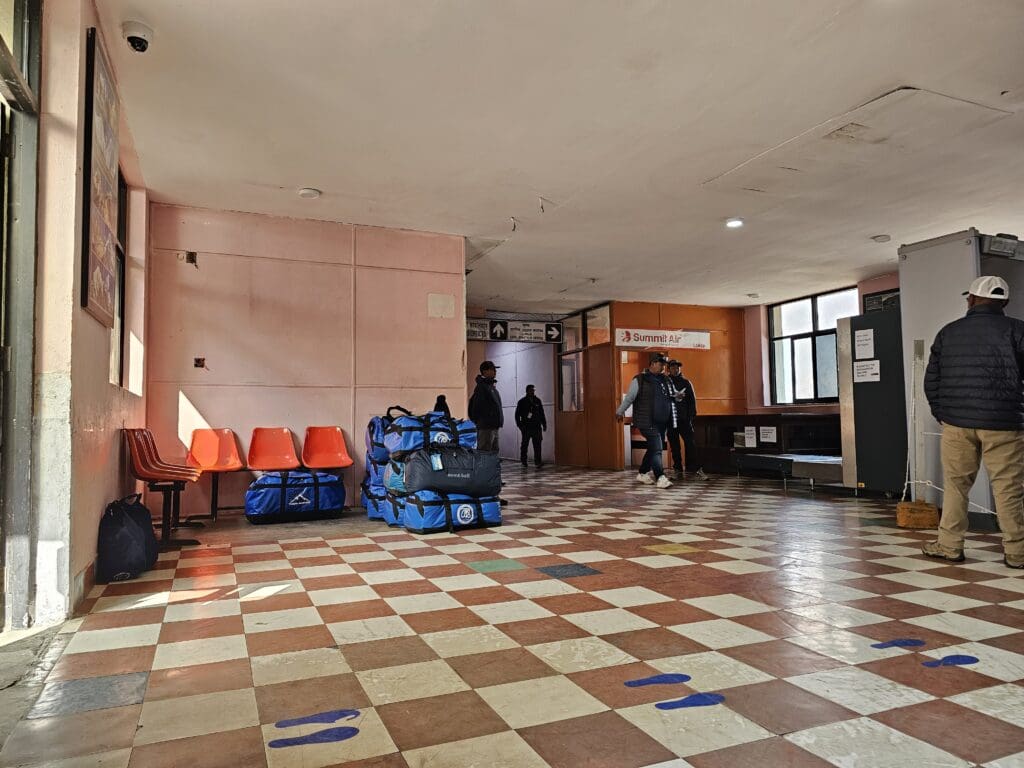
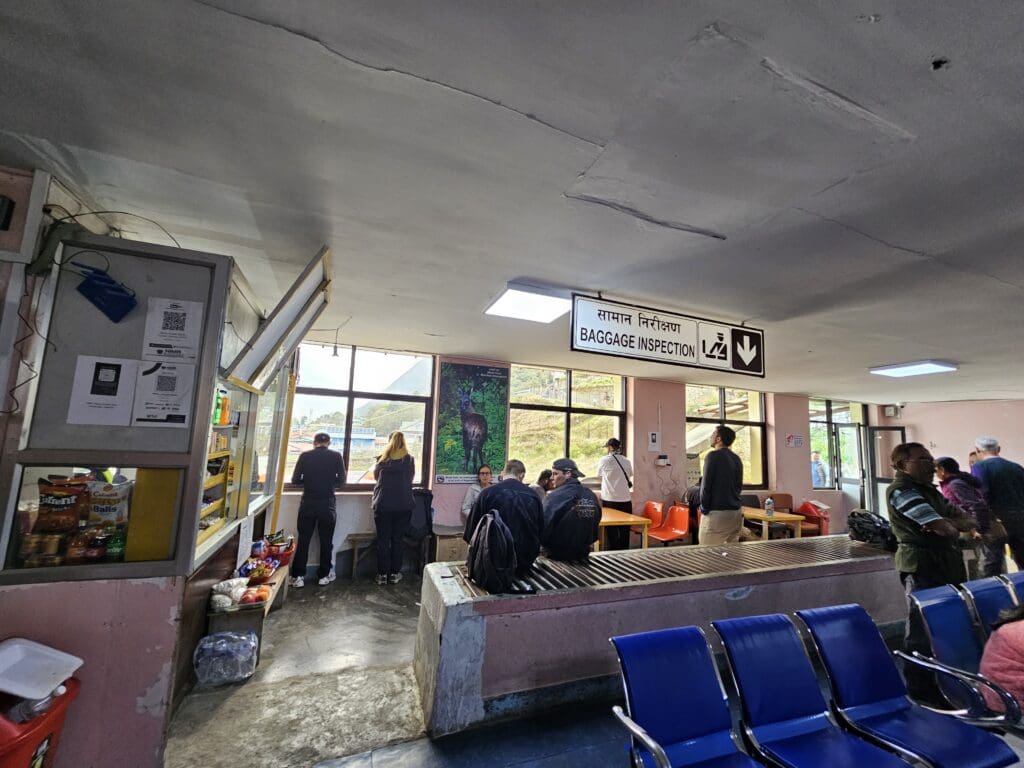
Once inside the terminal, my guide advised me to wait whilst they headed off in search of an update from Sita Air’s station manner. Returning a few minutes later, this update was not totally negative, with my guide informing me that the Kathmandu service was running late and ‘might’ depart at around 0930. With little to see inside the terminal, I decided to head back to the viewpoint for some more spotting in the morning sunshine before grabbing an overpriced can of mango juice for 450 rupees and returning to the terminal.
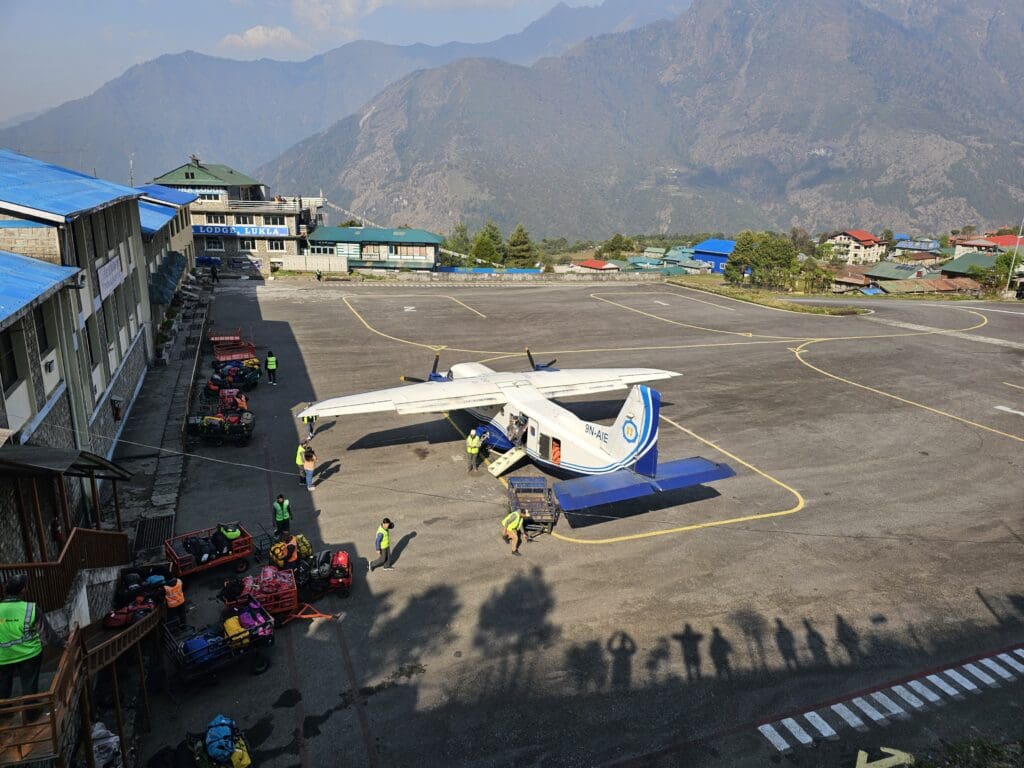
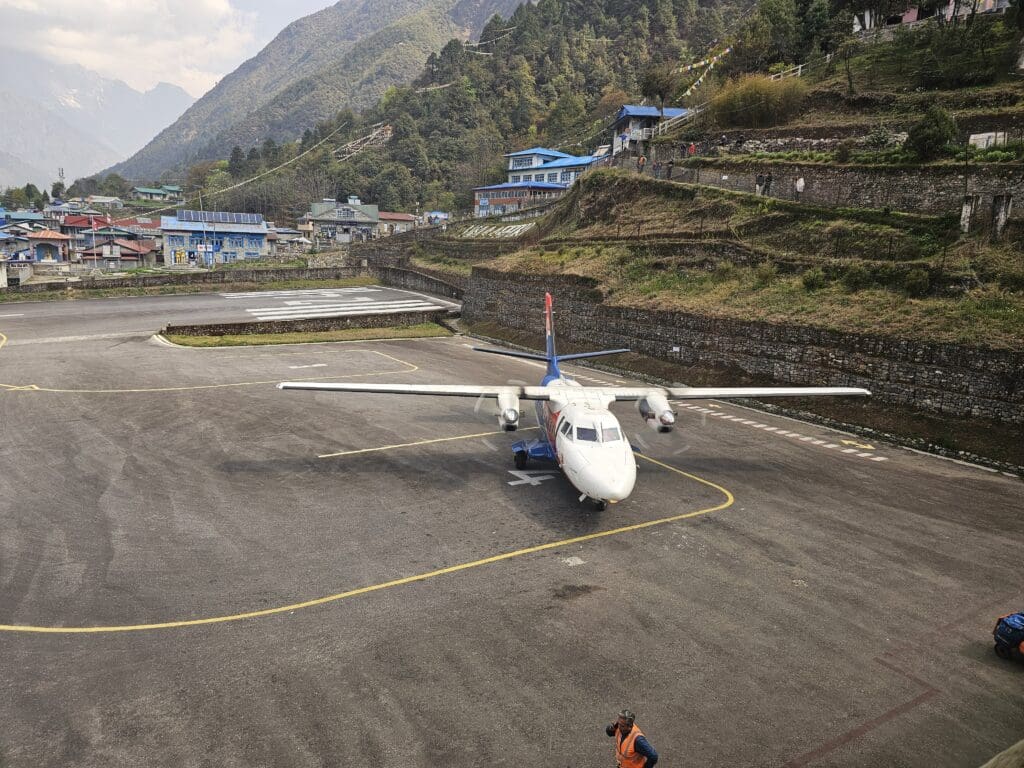
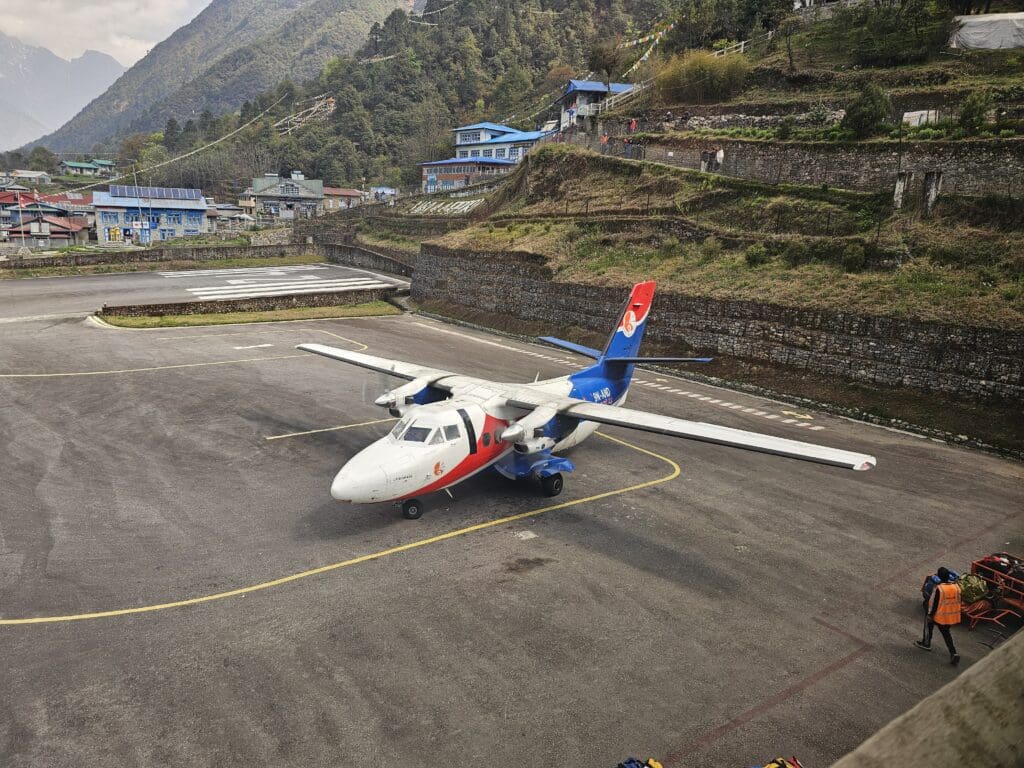
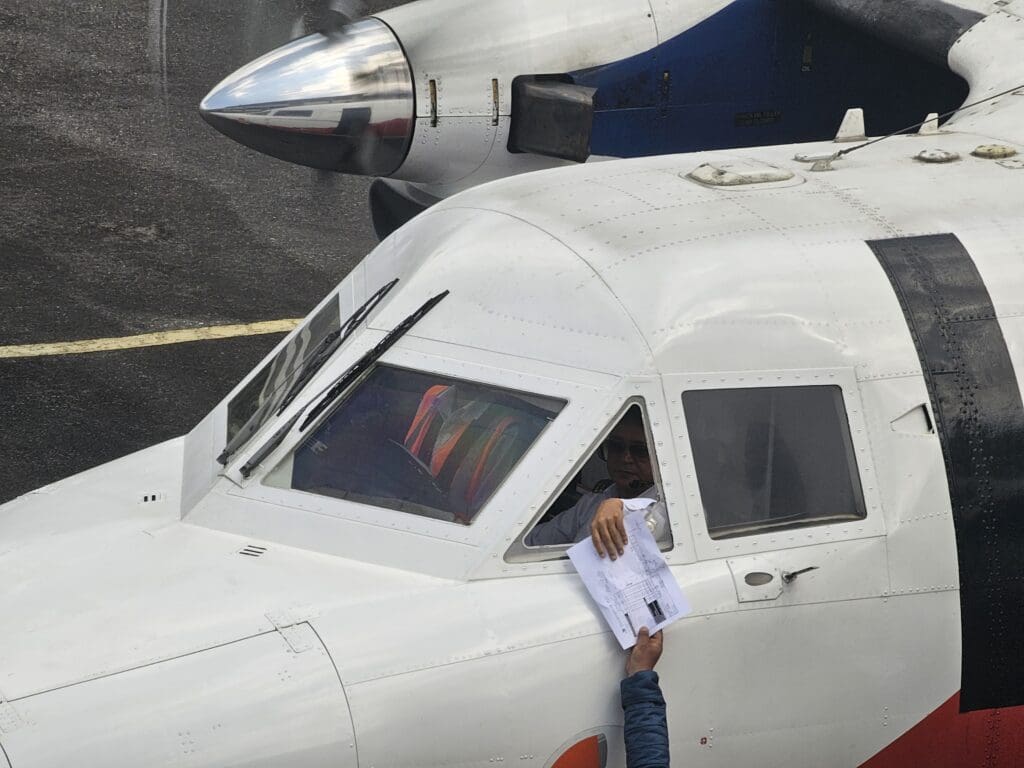
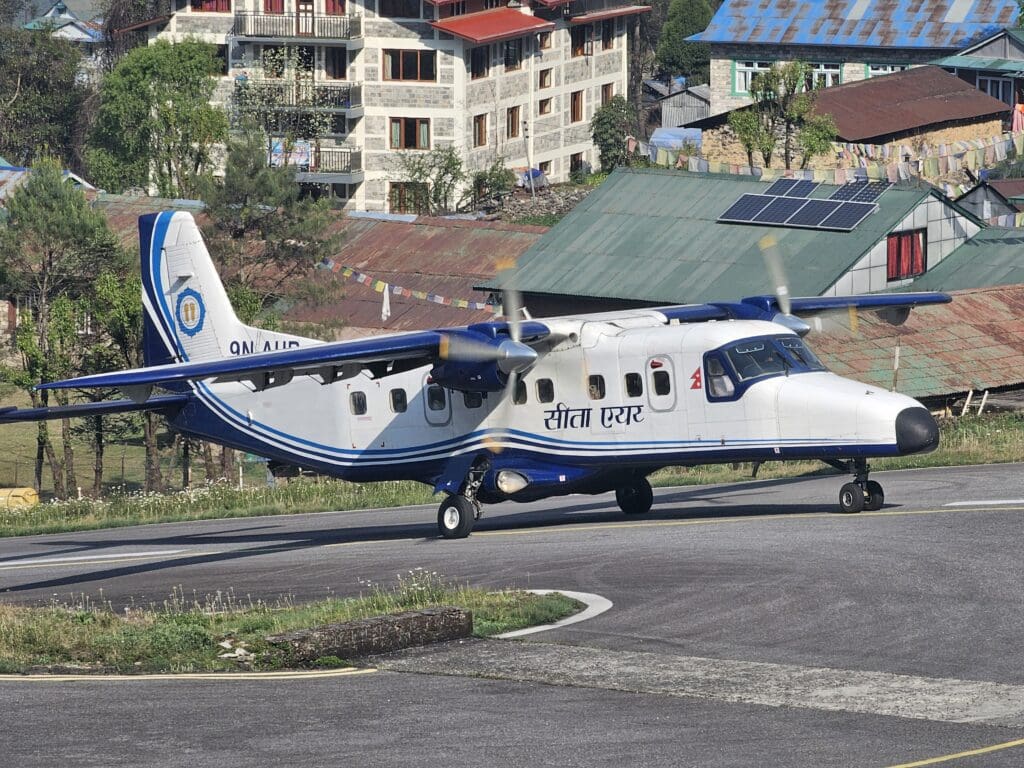
Once back on the bench, 0930 came and went with no sign of any activity from my guide or the station manager. However, at 0935, my guide received a phone call, and in what was a rather positive sign, scurried off to the Sita Air office, returning a couple of minutes later with the station manager who had a plain boarding pass with no details about myself, simply stating the flight route, number and date.
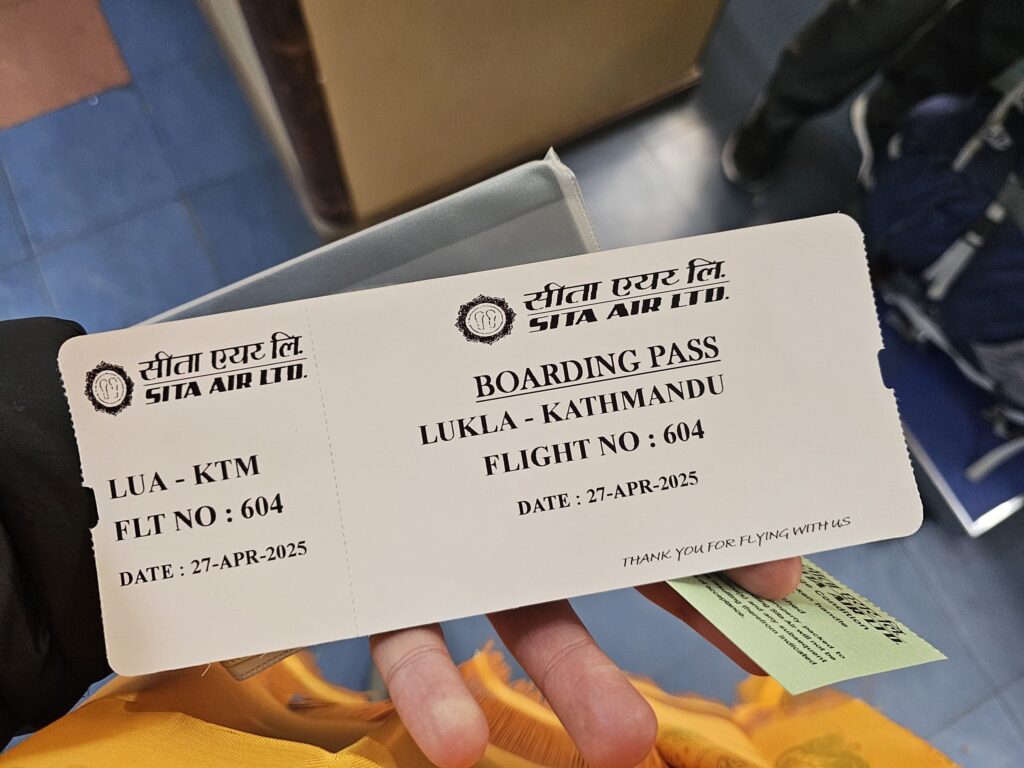
With this being confirmation that I would likely be heading to Kathmandu that morning, I shook hands and gave a final goodbye and thanks to my guide who handed me a scarf in return before I passed through the first security check. This consists of a baggage x-ray and a metal detecting arch, which was manned by a cluster of seemingly disinterested police officers who did not seem to care that all passengers, myself included, set off the metal detector! Once I had passed through this I headed down several steps to the busy check-in hall. This consists of plenty of benches, a small cafe kiosk and small counters for Sita Air, Summit Air and Sita Air. There, I was escorted straight to Sita Air’s counter where the manager weighed my backpack and tagged this, before advising me to head straight to security. With the Dornier 228 being a small aircraft with no overhead lockers and very little under-seat storage space, this would have to travel in the aircraft’s rear or nose hold, and so this was then shoved down a slide and placed on a Sita Air luggage ready to be loaded into the aircraft.
Expecting a slightly more comprehensive security check to enter the airside portion of the terminal, within seconds I reached a desk manned by a stern-looking police officer. Once I handed over my boarding pass, they pointed at a poster of prohibited items and asked ‘Have these?’ responding that I didn’t, my boarding pass was stamped and I passed through a metal detecting arch, once again setting this off, before I passed through a floor-to-ceiling curtain and entered the airside waiting area.
Like the rest of the terminal, the airside waiting area is retro and tired in its appearance, yet with a fair number of benches, offering airside views through openable windows and likely not somewhere where passengers will spend much time, I would say that this was functional if nothing else. This is spread out across two floors, with most facilities – namely a cafe kiosk and another block of squat toilets on the first floor. Curiously a ‘VIP Room’ could be found on the ground floor, although this looked very much out of use.
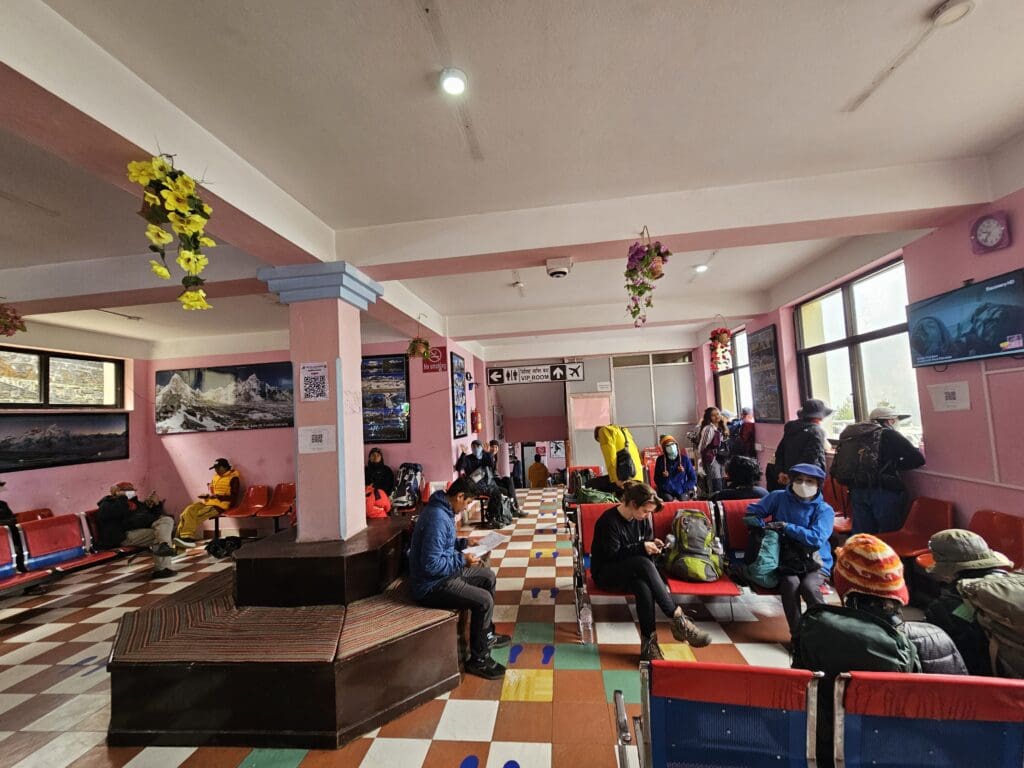
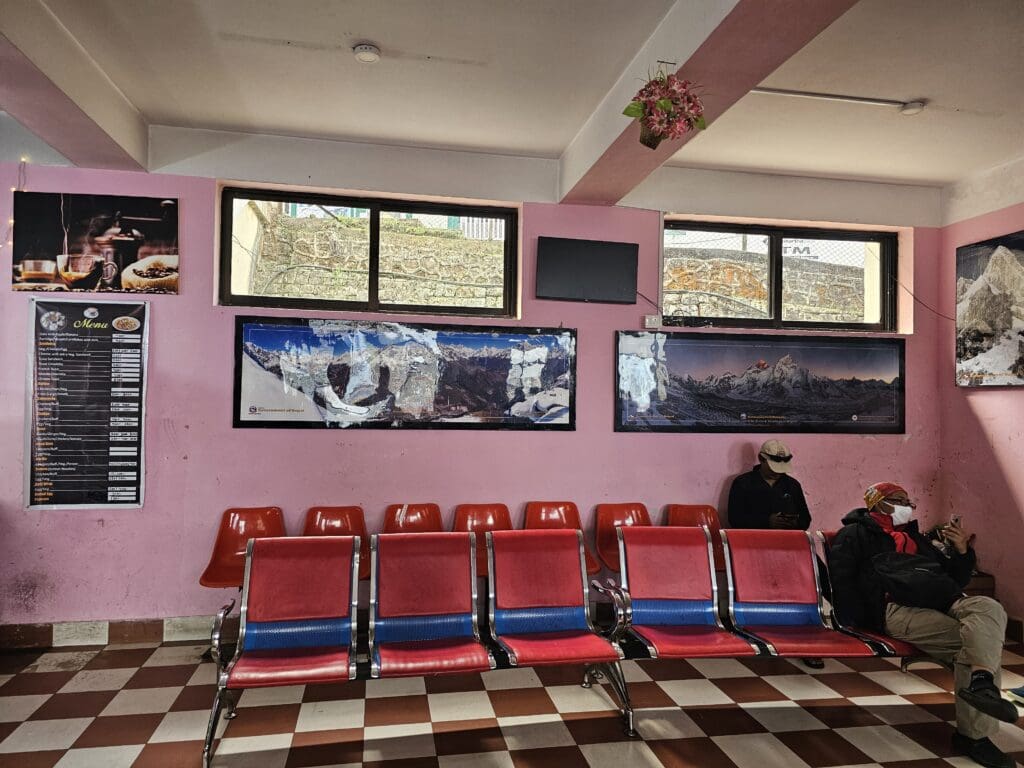
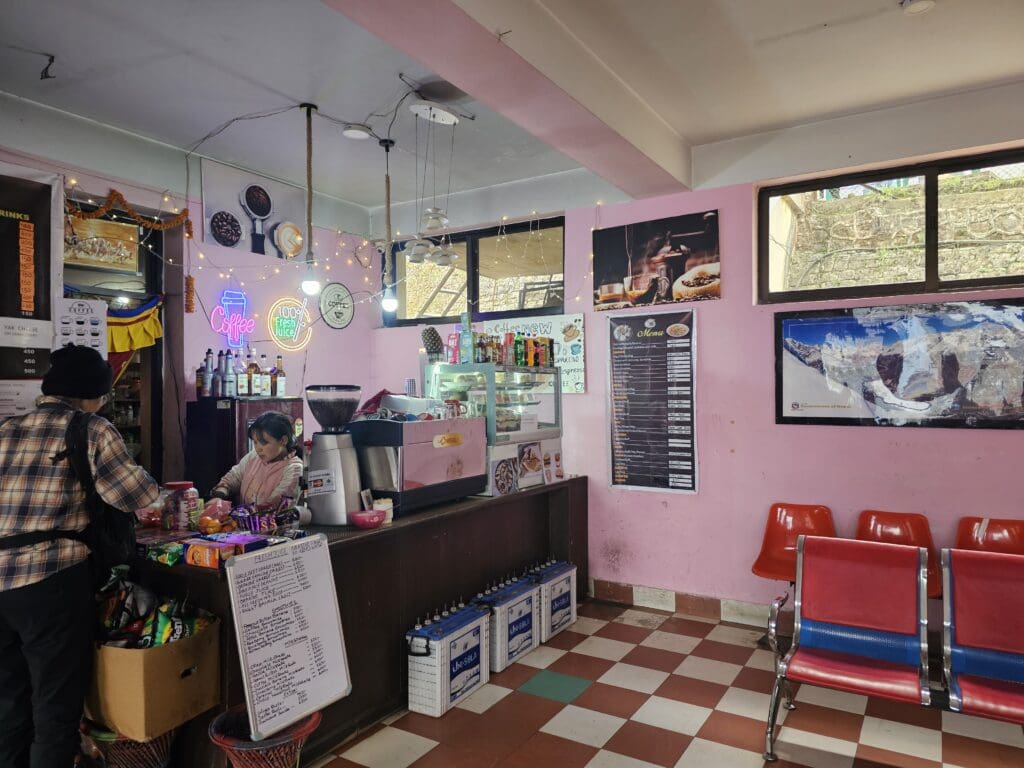
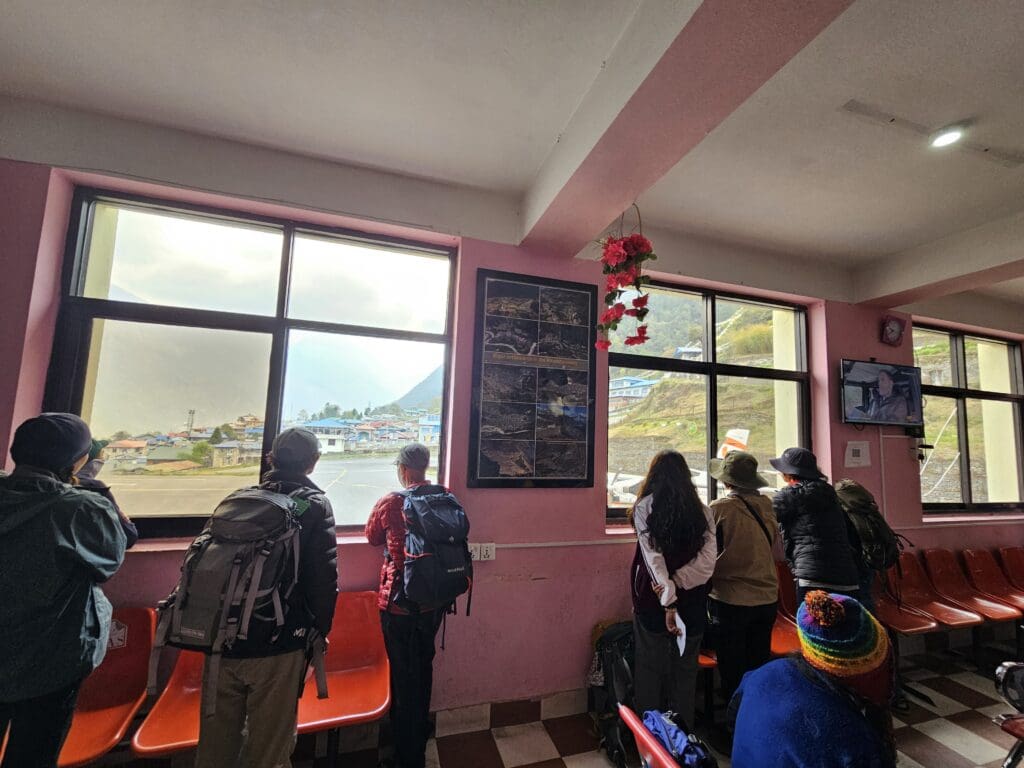
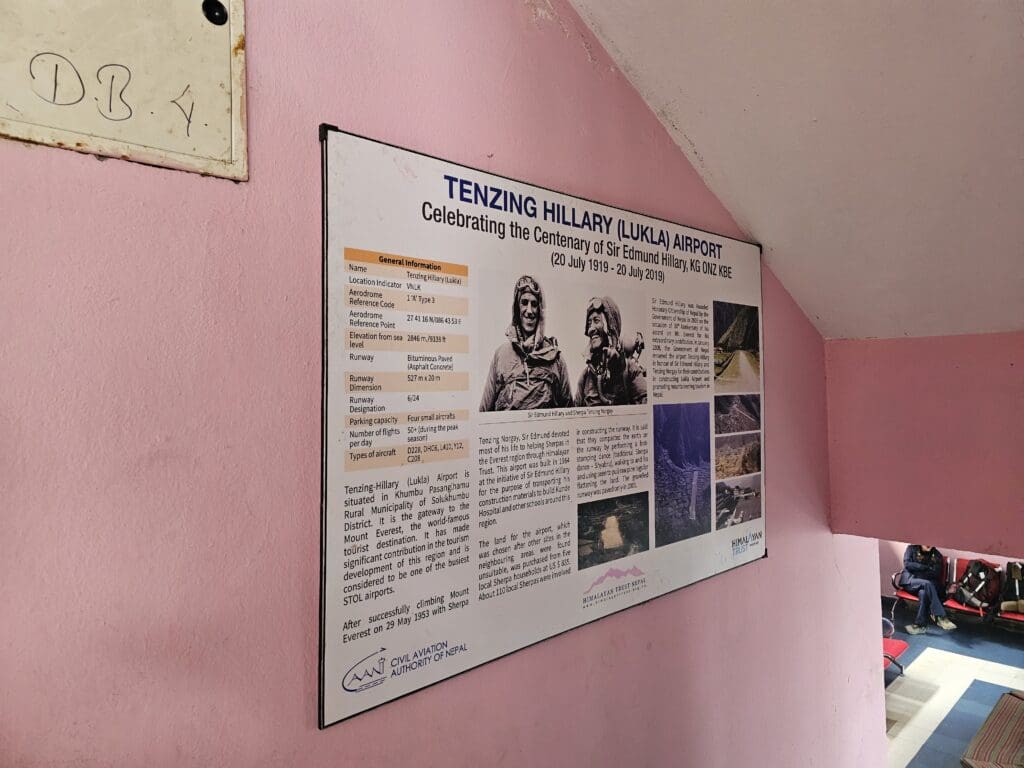
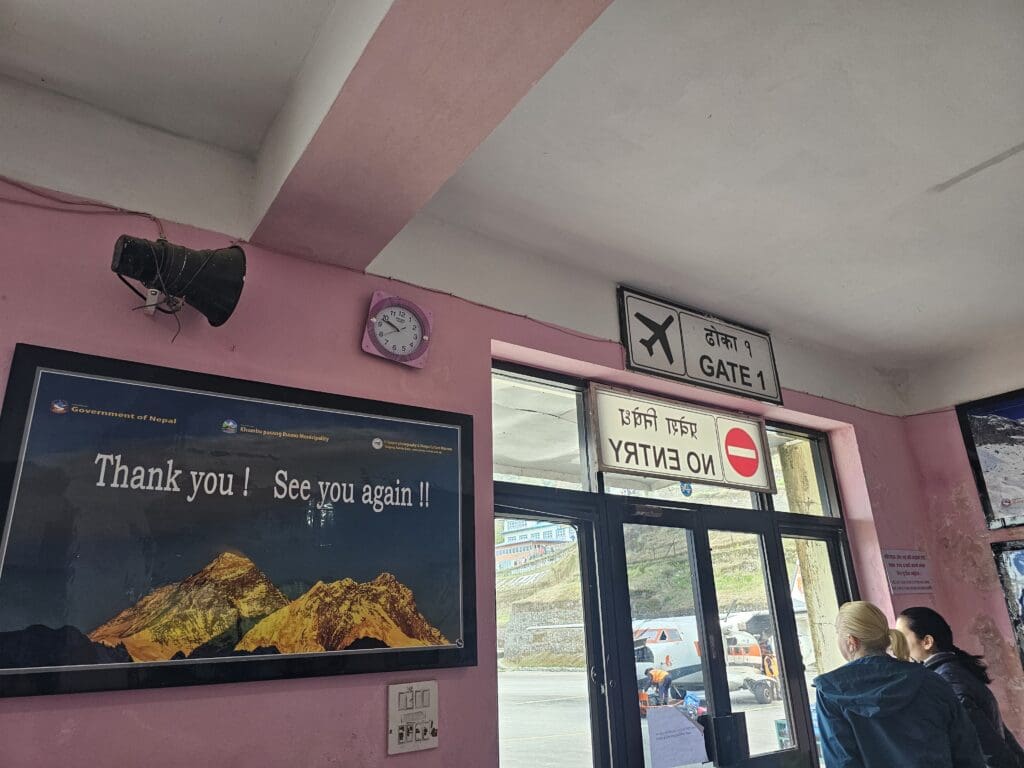
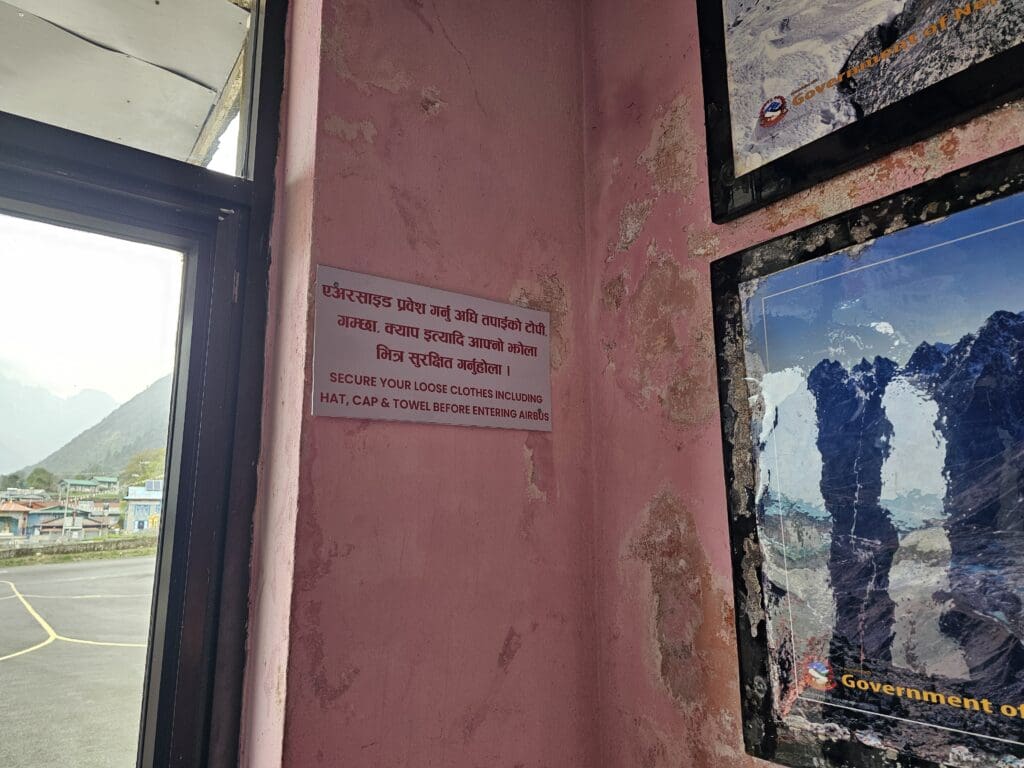
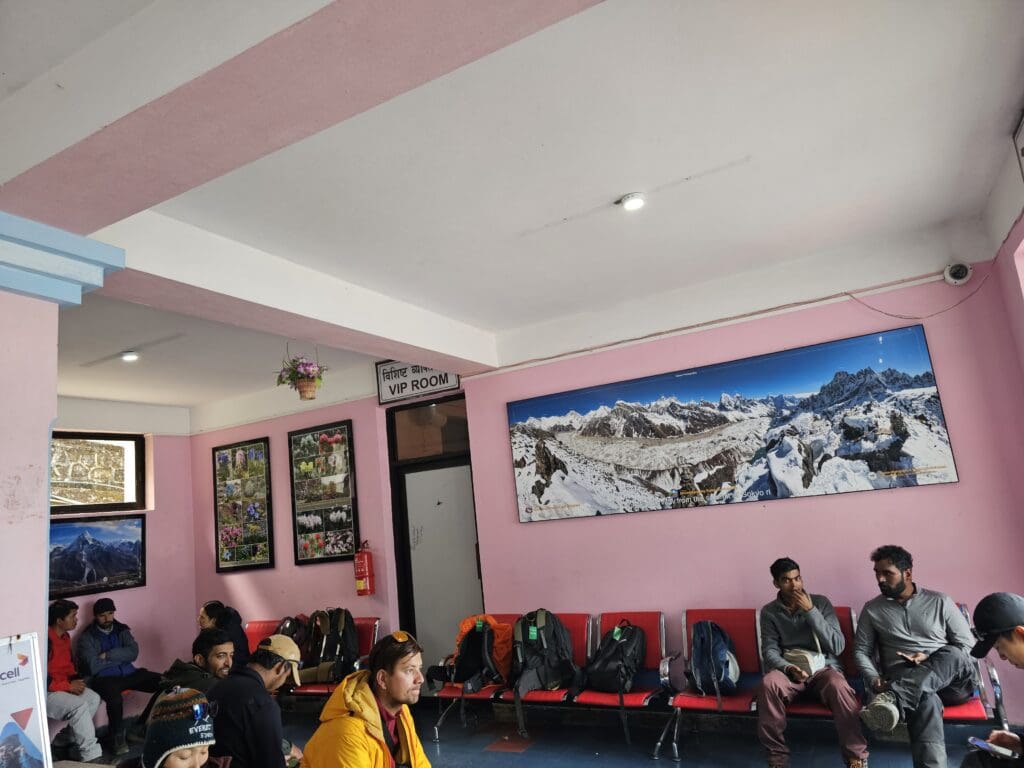
With no departure boards, and with very few aircraft operating into Lukla showing on any flight tracking app, there was absolutely no way of knowing how long it would be until my aircraft would appear. Giving me some hope of a prompt departure, the terminal was soon filled with noise as a Sita Air Dornier 228 touched down in Lukla and came to a halt outside. However, this was confirmed not to be my flight when an agent appeared and shouted ‘Ramechhap’ and that flight’s flight number. Once this departed, there was little sign of movement, and rather worryingly, the skies were becoming ever more cloudy as the morning progressed.
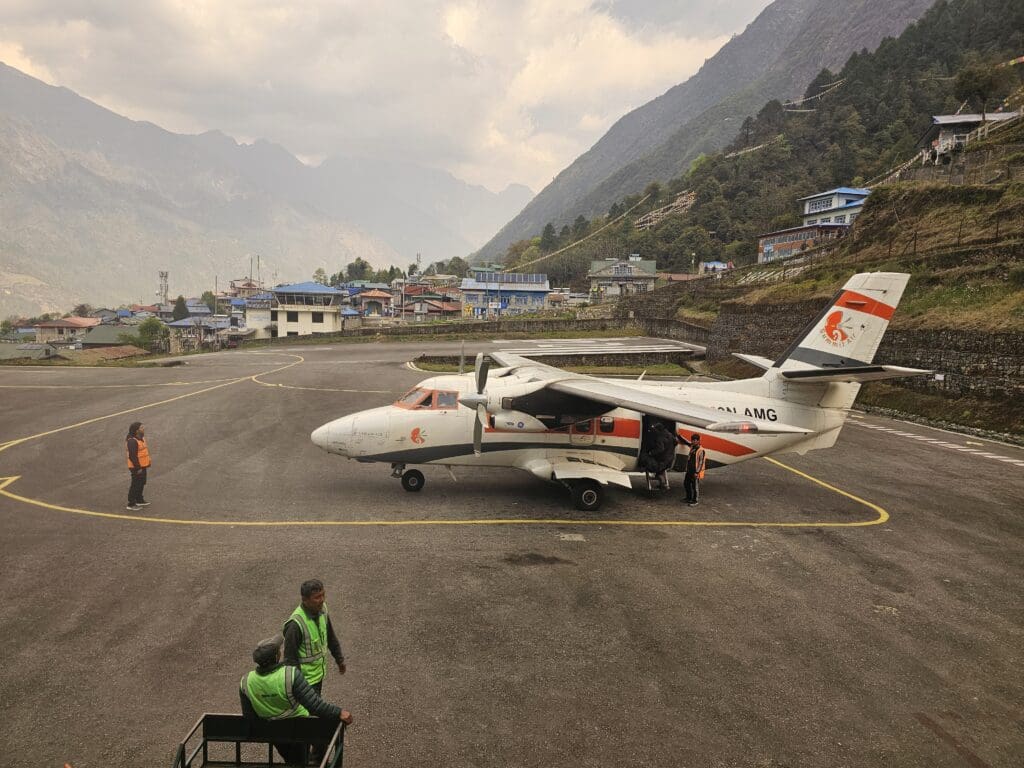
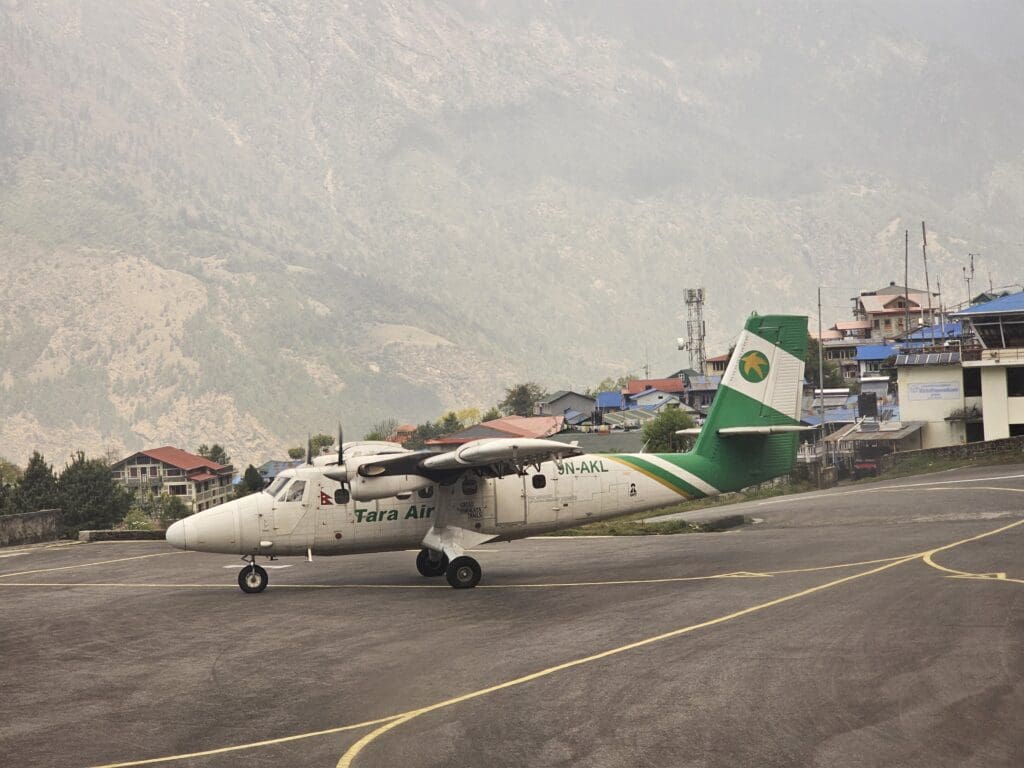
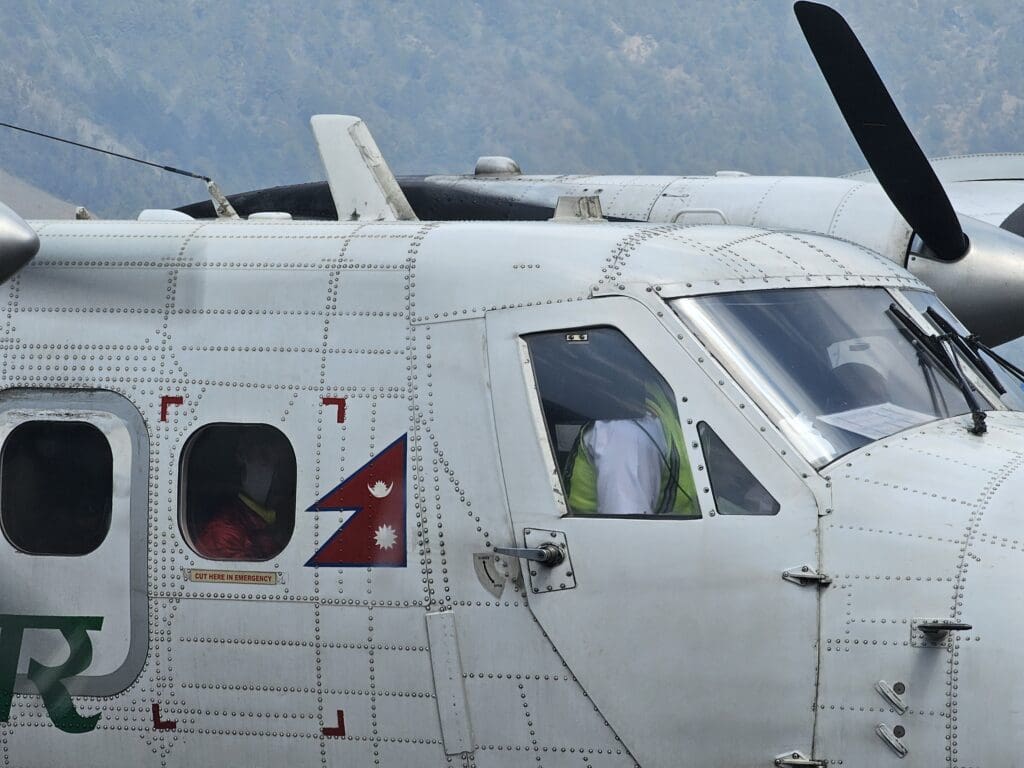
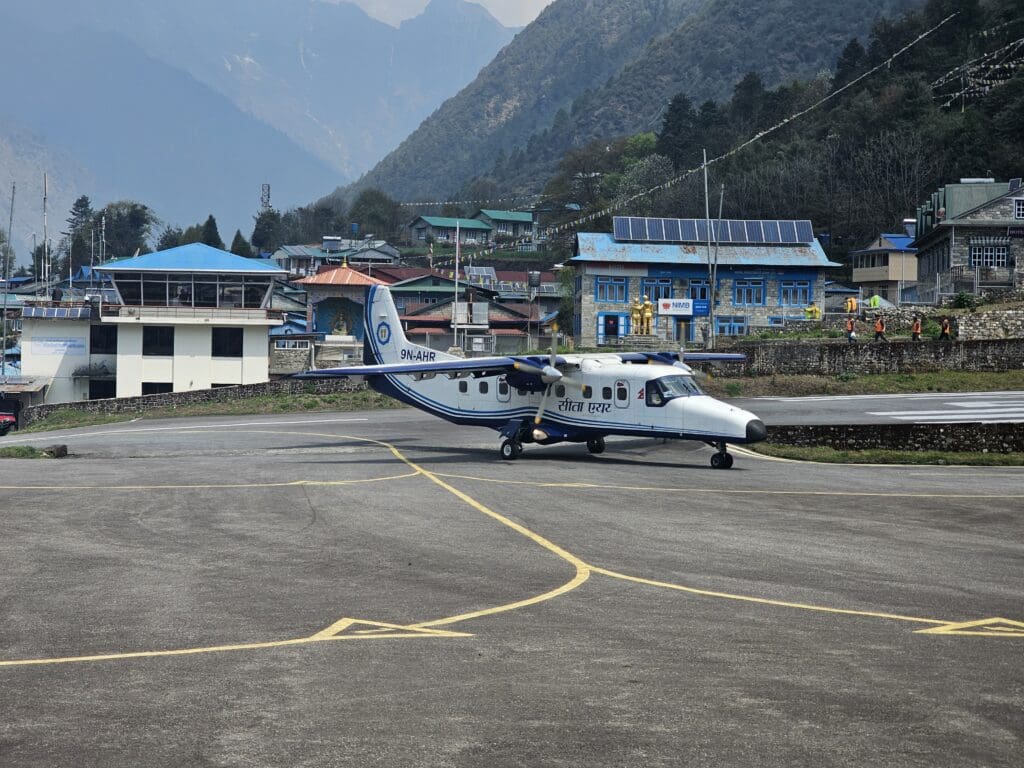
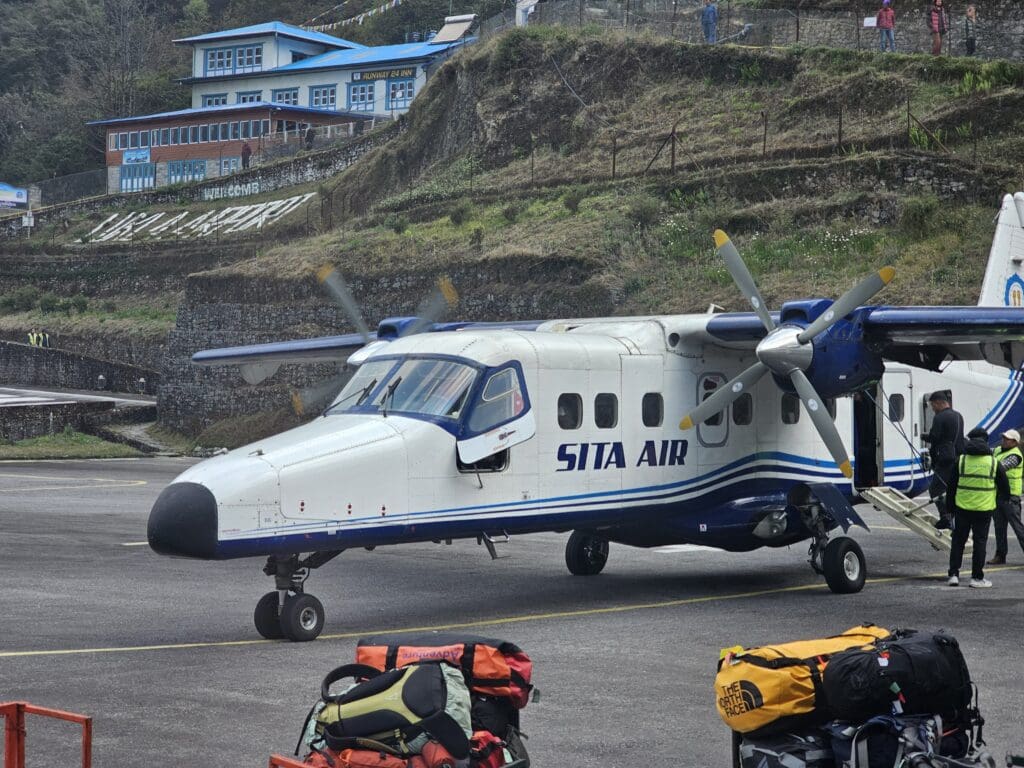
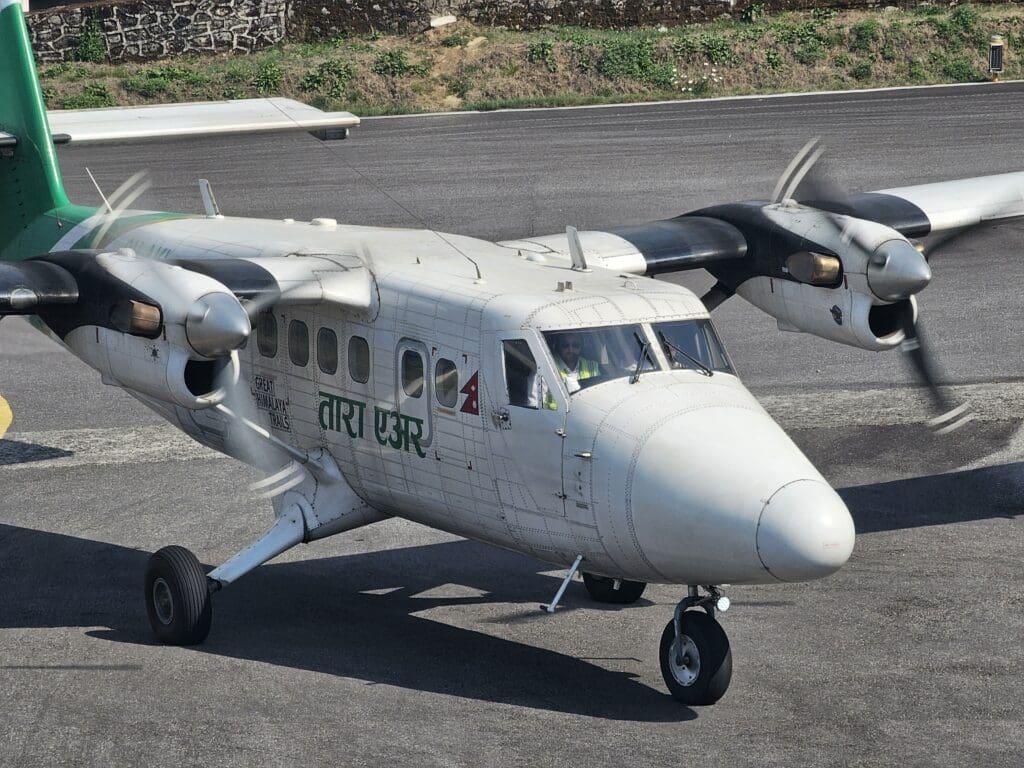
Inside the terminal, as time passed, this became ever busier, with passengers from across the world, including groups from Brazil, Israel and Korea. Back outside, after about an hour, the Dornier that had operated the Ramechhap service reappeared, and once it had come to a halt and the inbound passengers had disembarked, the two pilots and the flight attendant made their way out for a well-deserved break. This was soon followed by the other Sita Air Dornier 228 that had been a frequent visitor to Lukla that morning, and a Tara Air Viking Air Twin Otter which would be operating one of the airline’s few direct services to Kathmandu that day.
Indicating that the latest Sita Air arrival would be operating the Kathmandu service, once this aircraft came to a halt I watched as the cart with my bag on it was wheeled up to the small hold in the nose of the aircraft. Meanwhile, the two engines spooled down at which point the Captain jumped out and ran to the terminal, later returning to the aircraft with a couple of hot drinks for themselves and the First Officer.
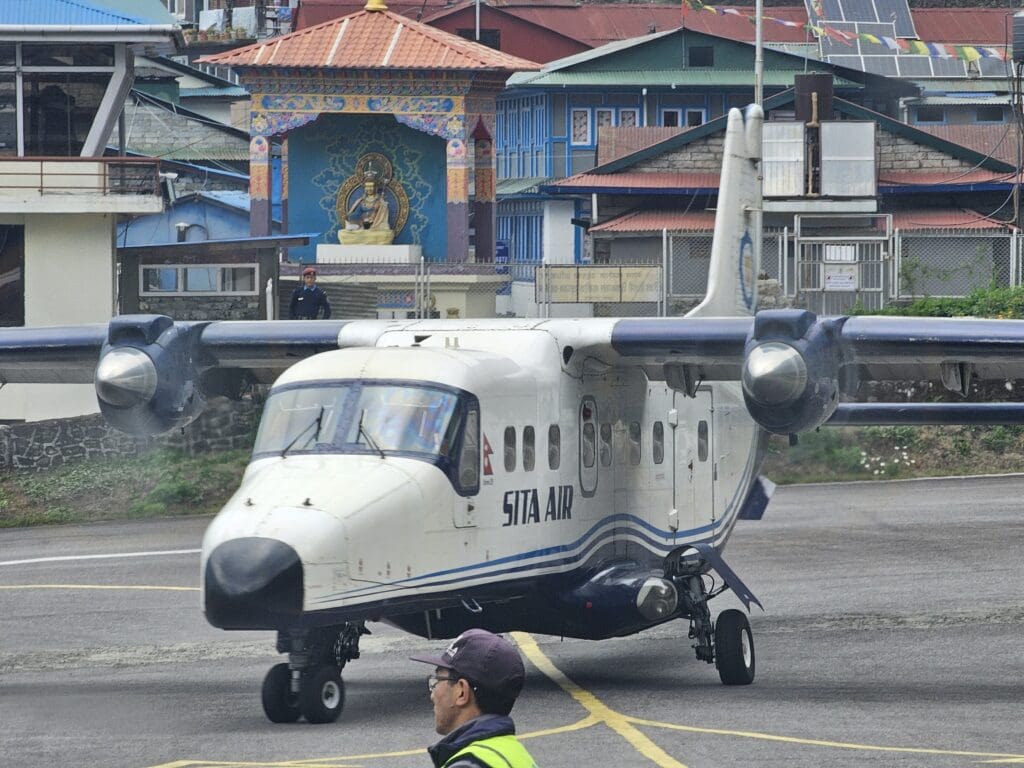
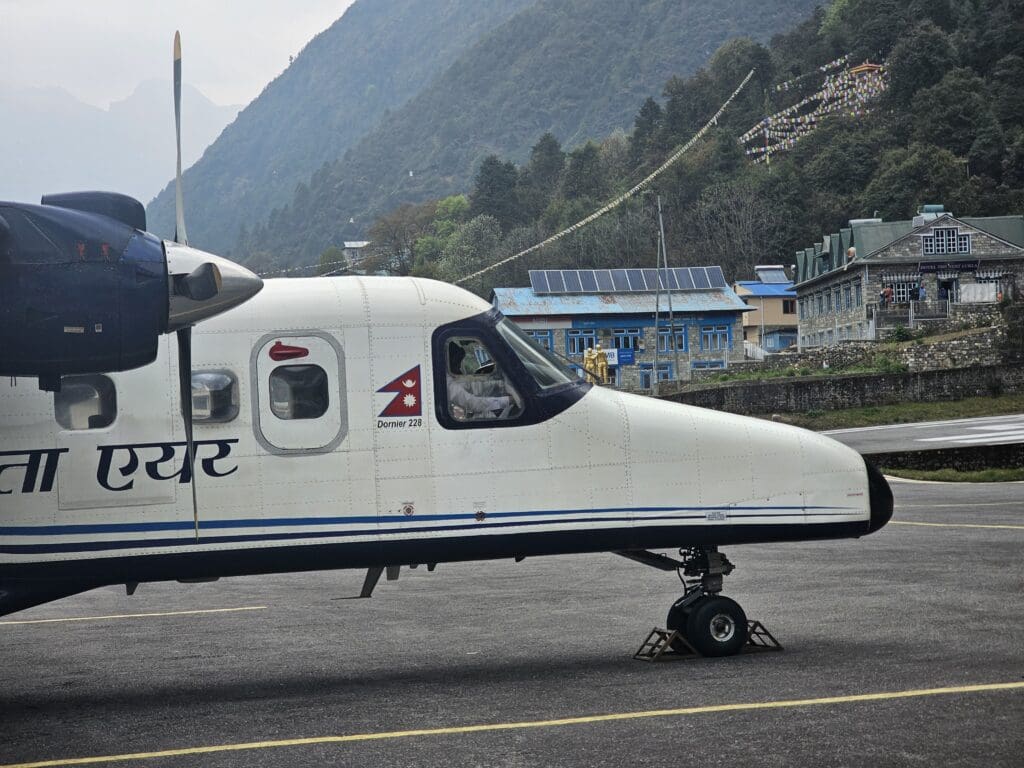
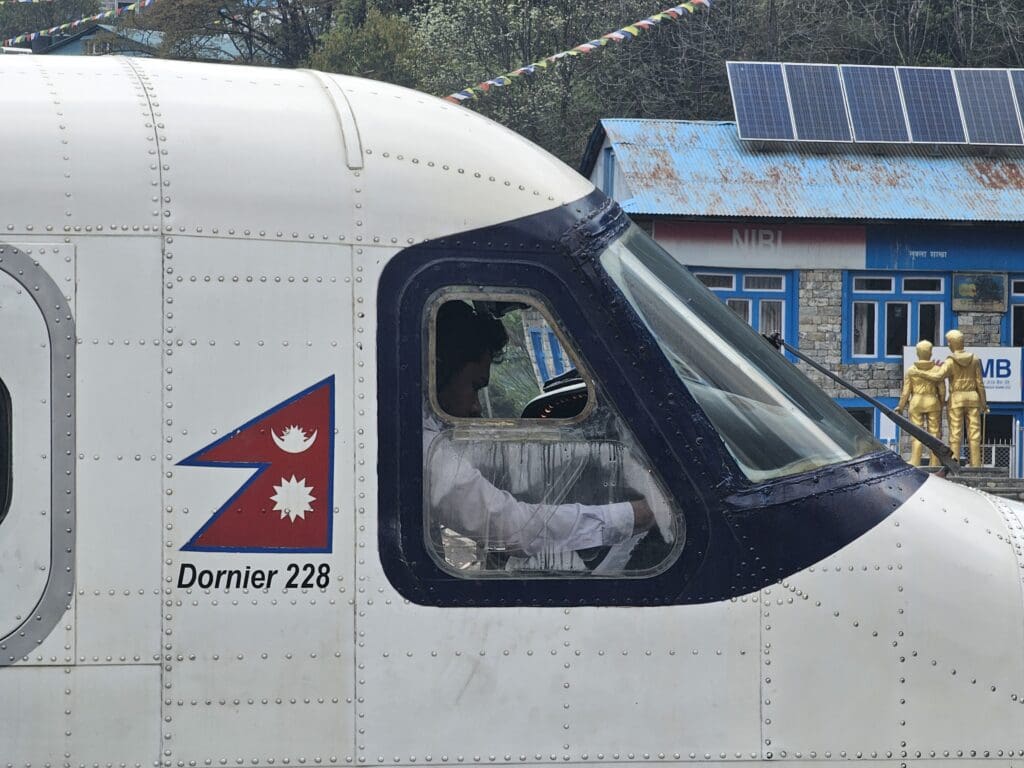
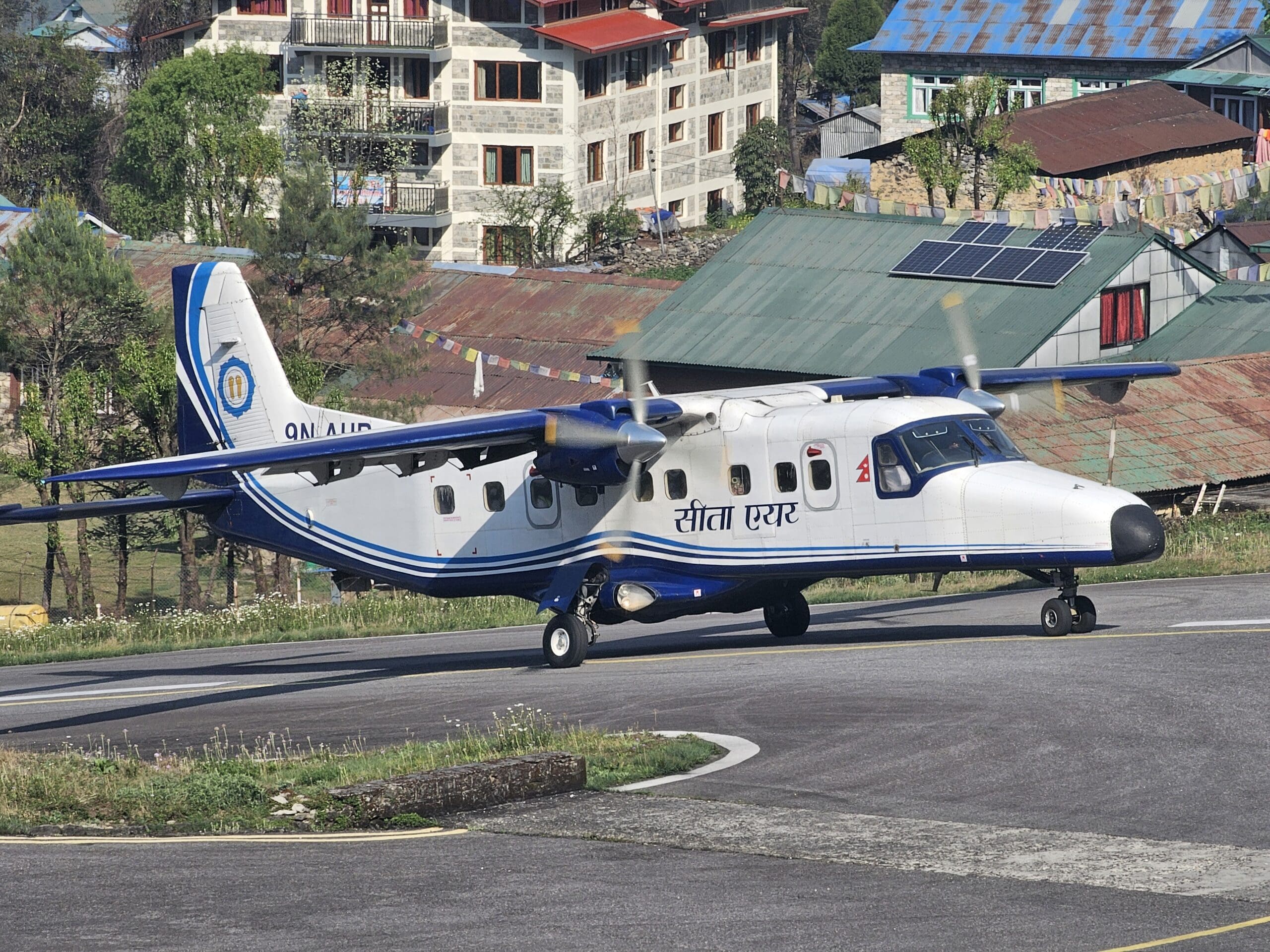
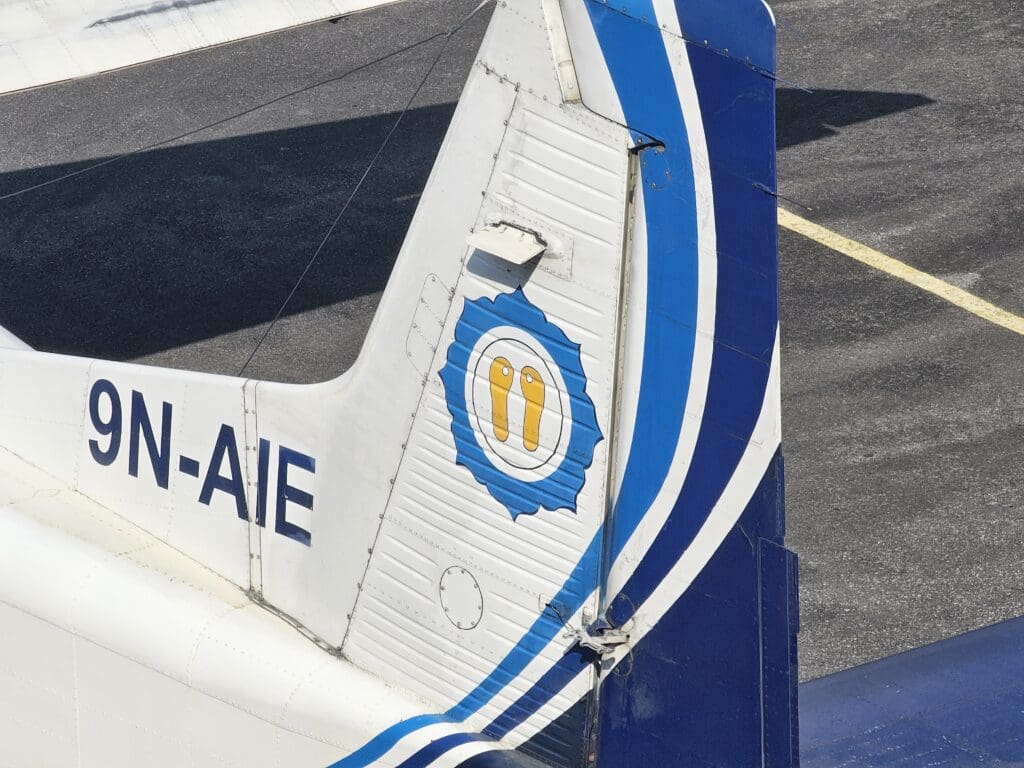
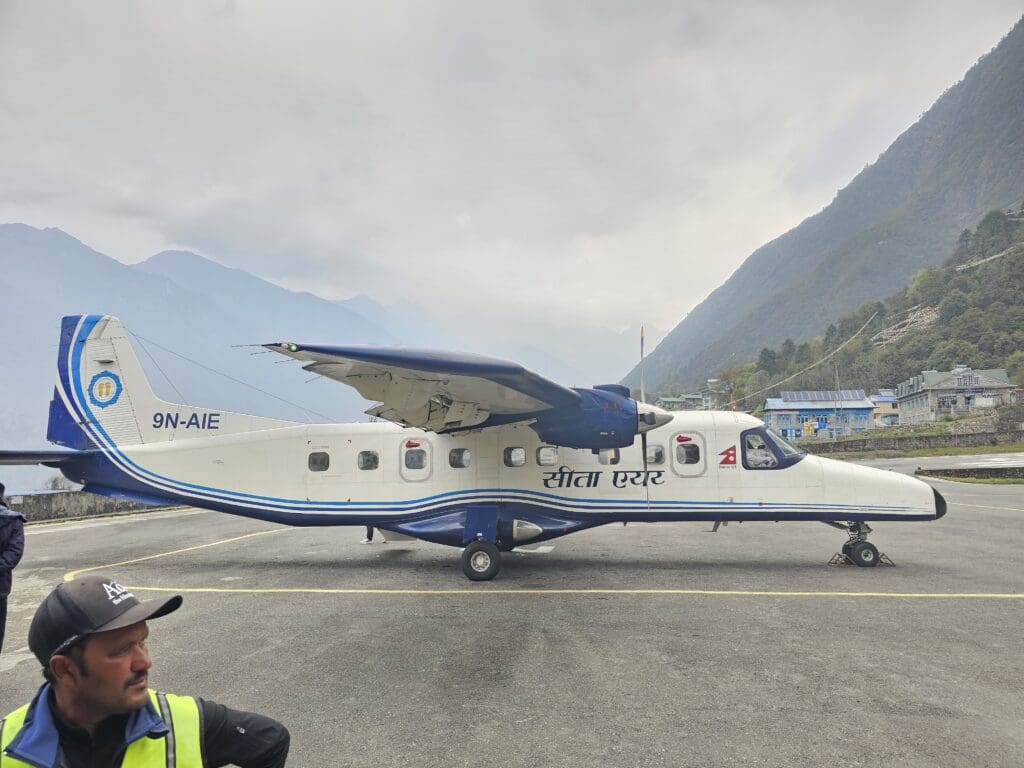
That day, I would have the pleasure of flying onboard Dornier 228-202K, 9N-AIE. Manufactured at Dornier’s plant in the Bavarian village of Oberpfaffenhofen, this aircraft first took to the skies in 1988, making it a veteran 37 years old at the time of my flight. As you may expect given its age, this aircraft has had a long a varied career, which it began at home in Germany, flying as D-CALK for Cologne-based Ratioflug Luftfahrtunternehmen. One of the more interesting tasks this aircraft undertook during this time was flying on behalf of the United Nations in Central America. In 1993, the Dornier hopped across the North Sea to Cambridge and began a new life operating both scheduled and charter passenger services for Suckling Airways. Continuing westwards, in 2001, the aircraft was given the registration N419VA and commenced operations for Las Vegas-based Vision Air. However, this stint was not to last for long as in late 2001, the aircraft was given the Malaysian registration 9M-VAA and ferried to Hornbill Skyways, a Sarawak-based operator specialising in supporting Borneo’s oil and gas industry. Finally, in 2007, this was given its current Nepali registration and ferried to Kathmandu where it was handed over to Agni Air, later operating for Simrik Airlines before finally ending up at Sita Air. Admittedly, this is not an aircraft for nervous flyers, having been involved in several incidents during its time in Nepal. These include a hydraulic failure a little over a week before my flight, which forced the aircraft to divert to Kathmandu on its flight from Lukla to Ramechhap!
Standing next to the terminal doors, a Sita Air agent soon appeared and shouted ‘Kathmandu, Flight 604’ at which point I handed them my boarding pass which was soon torn and returned to me, before I followed the pointed hands of several ground staff members which led me around the tail of the Dornier to the main entry door at the rear of the cabin. Making my way up the shallow steps built into the inner side of this door, I bent my head so as to avoid banging this on the low door before being politely greeted with a ‘Namaste, please head to the front of the aircraft’ by the flight attendant who was dressed in Sita Air’s smart blue uniform. I have to say that this was the smallest aircraft that I have ever flown where a flight attendant was present. In fact, one of the reasons the Dornier 228 is fitted with nineteen seats is that in many jurisdictions, this enables the aircraft to operate without a flight attendant. However, this is not the case in Nepal, and a flight attendant must be present on any commercial passenger service, no matter how small the aircraft.
Turning left, I made my way through the Dornier’s small square and rectangular box-like cabin. With this being just 1.55 metres high, I had to crouch down as I journeyed up the lino-covered aisle, taking care not to bang my head on the fabric strip just above this. One advantage of flying onboard the Dornier 228 over the Let L-410 or Twin Otter is that seating is arranged in a 1-1 configuration (other than at the very rear of the aircraft), enabling everyone to enjoy the luxury of one of the aircraft’s large windows and the aisle. However, unlike some Dornier 228s, those operated by Sita Air lack an onboard lavatory, so there is no reason for passengers to stand up during the flight. Turning to the seats themselves, as you perhaps expect from such a small airliner, these were thin and small. Each was covered in a fabric cover with a repeating pattern, on top of which was another removable light blue fabric cover. These featured a seatback pocket complete with a safety card and nothing else.
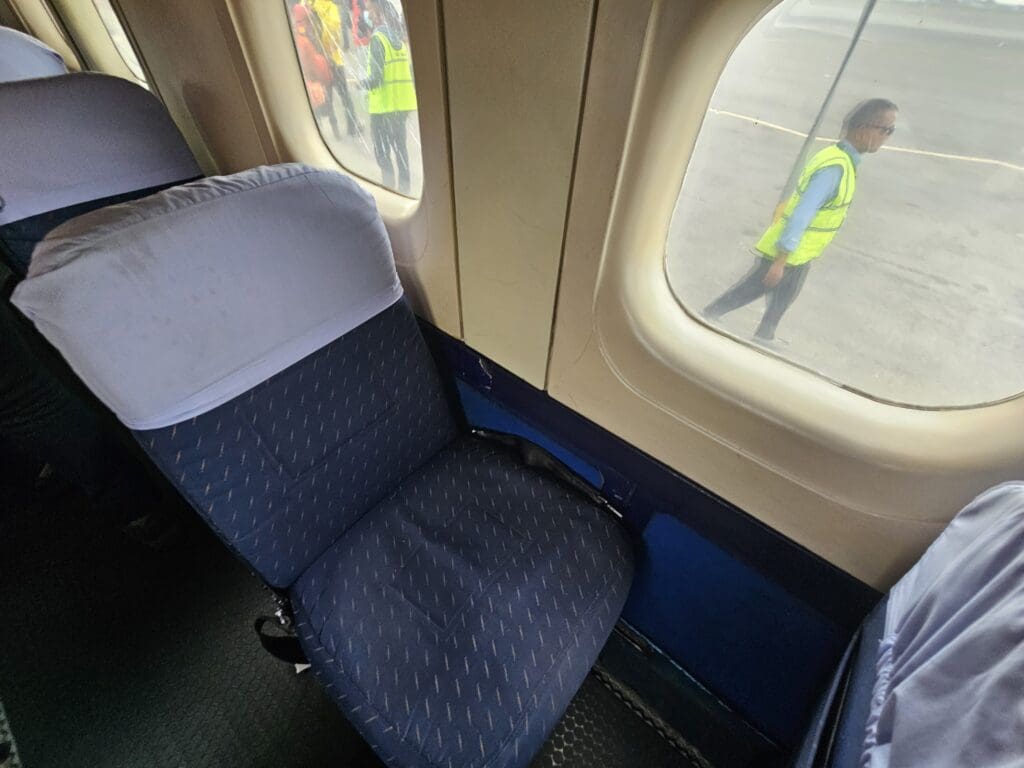
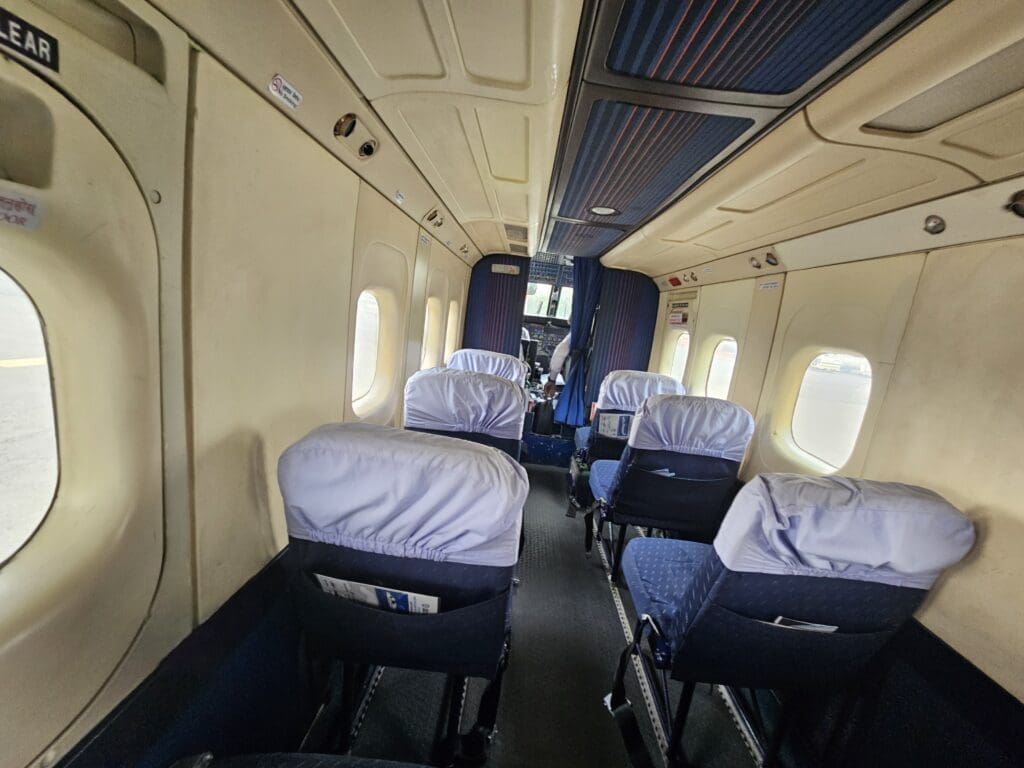
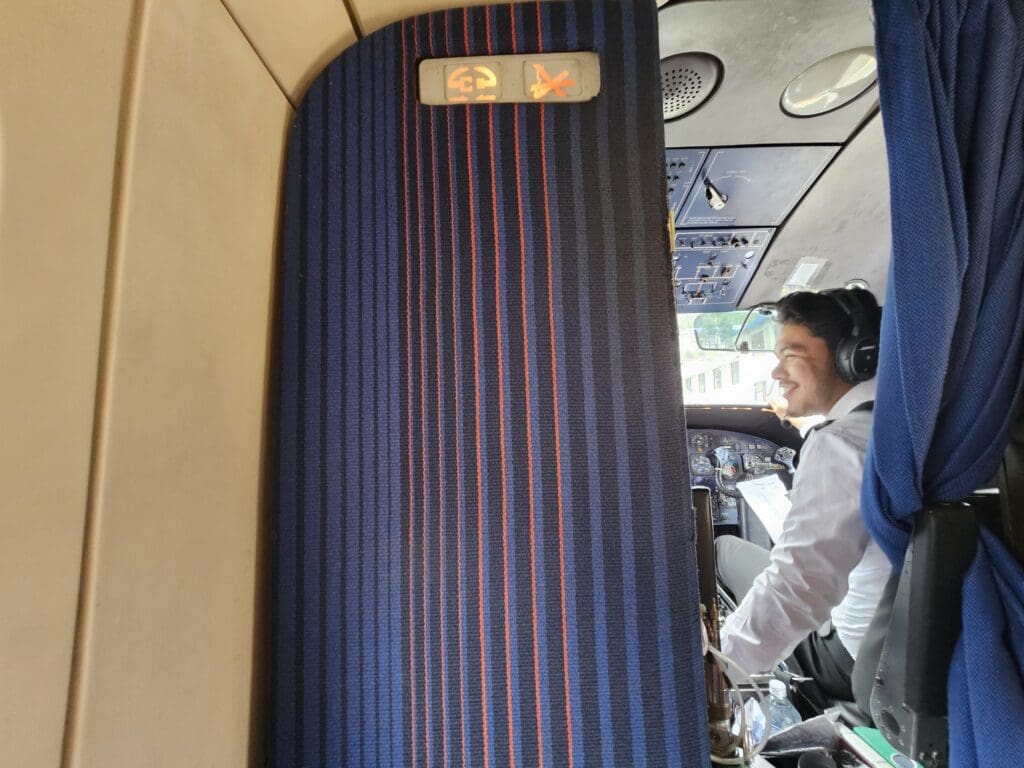
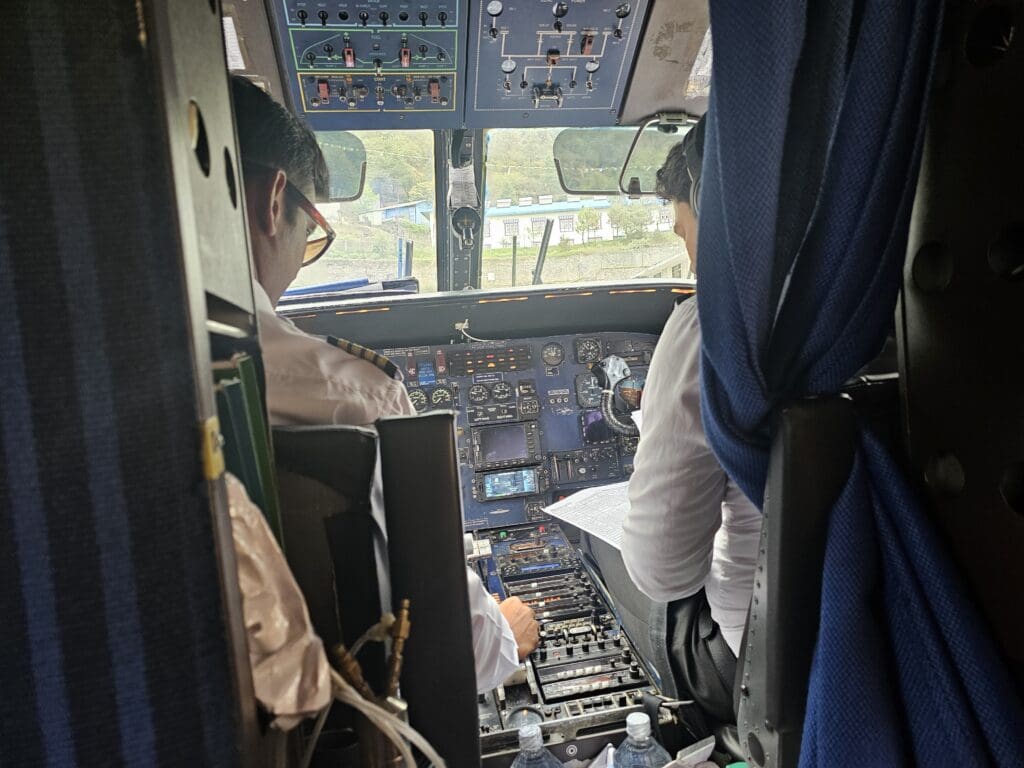
Soon, I plonked myself down behind the fabric-covered cabin divider that separates the cockpit from the cabin and settled in for the flight ahead. Sitting directly behind the Captain, I would have expected this to be Seat 1A, however, with free seating on all Sita Air flights, there was a total lack of seat numbering onboard. Interestingly, however, the safety card indicated that this seat was Seat 1B!
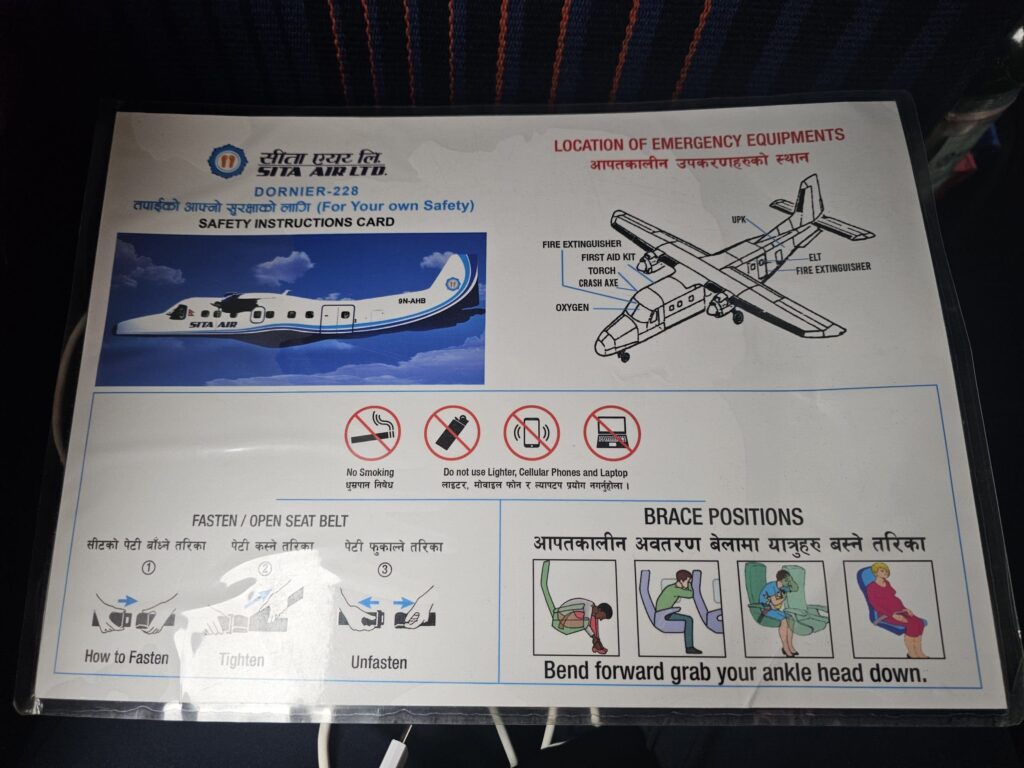
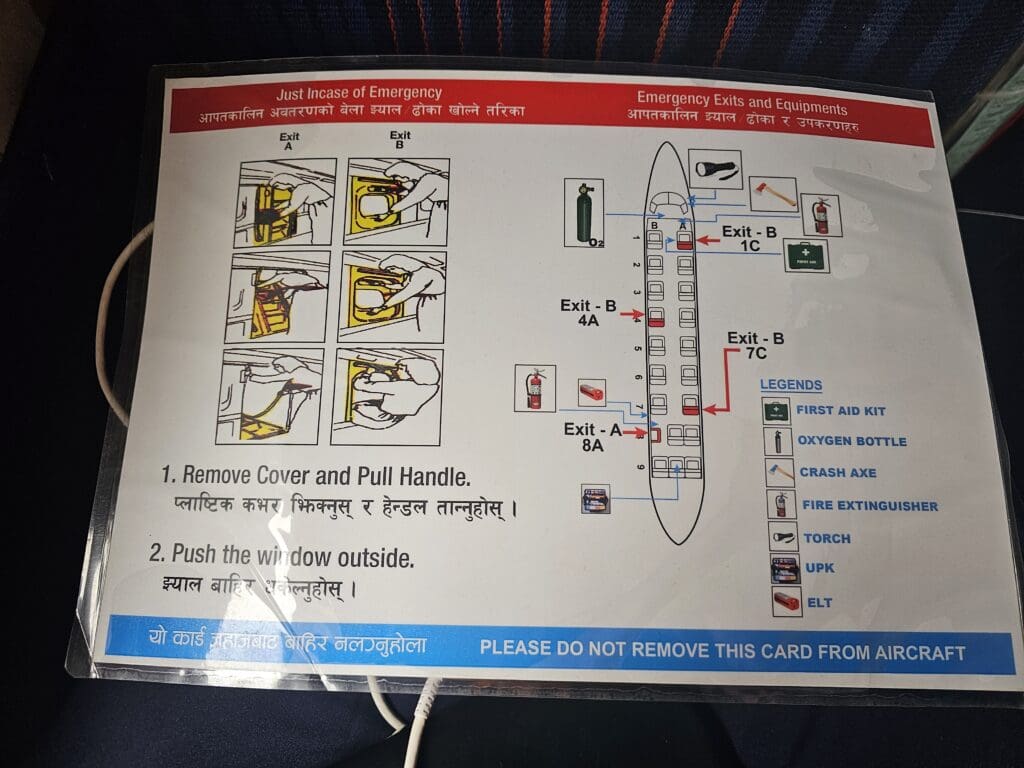
Settling in, I did not find the seat to be particularly comfortable, with this severely lacking when it came to legroom. However, considering the short flight duration, with was hardly an issue. As I had hoped, this offered a reasonable view of the First Officer’s side of the cockpit who would be the pilot flying on the return sector to Kathmandu and could be seen running through checklists and flicking plenty of switches in the old-school mostly analogue cockpit. With this being both similar yet very different to the cockpit of the much newer Aurigny Dornier 228s that I had previously flown. Examining my surroundings, the cabin was rather retro, featuring worn and slightly yellow plastic panelling, and home to plenty of marks and scratches that did little to mask the aircraft’s true age.
Within just three minutes or so, all passengers had taken their seats and strapped themselves in for the ride to Kathmandu. As I had expected, the flight was totally full, and most of my fellow passengers were, like me, trekkers on their way back from Kathmandu along with a couple of Nepali guides. Those onboard hailed from India, Korea and the United States, as well as myself of course from the UK. Once the cabin door had been closed, the flight attendant made their way to the front of the aircraft, turned around and made a short safety announcement in English, advising passengers to keep their seatbelts fastened, pointing out the exits and warning passengers not to take any photographs of the cockpit. They then briefed each exit seat occupier before retreating to the seat at the rear of the aircraft.
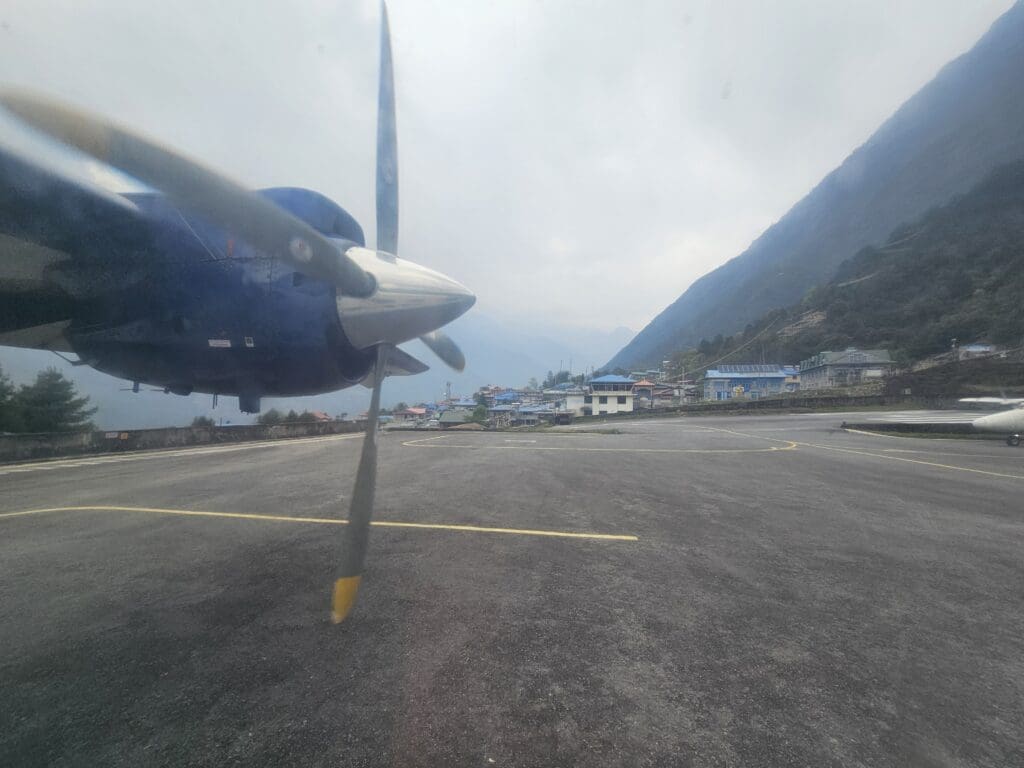
Soon, the sound of the Dornier’s two Garrett TPE331 engines filled the cabin and each four-blade propeller began to whirl into life with an incredible amount of noise. This was perhaps slightly amplified by the fact that the cockpit door remained open until just before the aircraft commenced its taxi. After a short pause, the Dornier gently powered forwards out of its stand, cautiously meandering around the neighbouring Dornier 228 and Twin Otter, before reaching the end of Runway 24 in a matter of seconds. During this journey, a couple of dings rang out in the cabin, presumably the flight attendant notifying the pilots that the cabin was secure. This was then followed by the First Officer looking down the cabin and giving a thumbs up to the flight attendant.
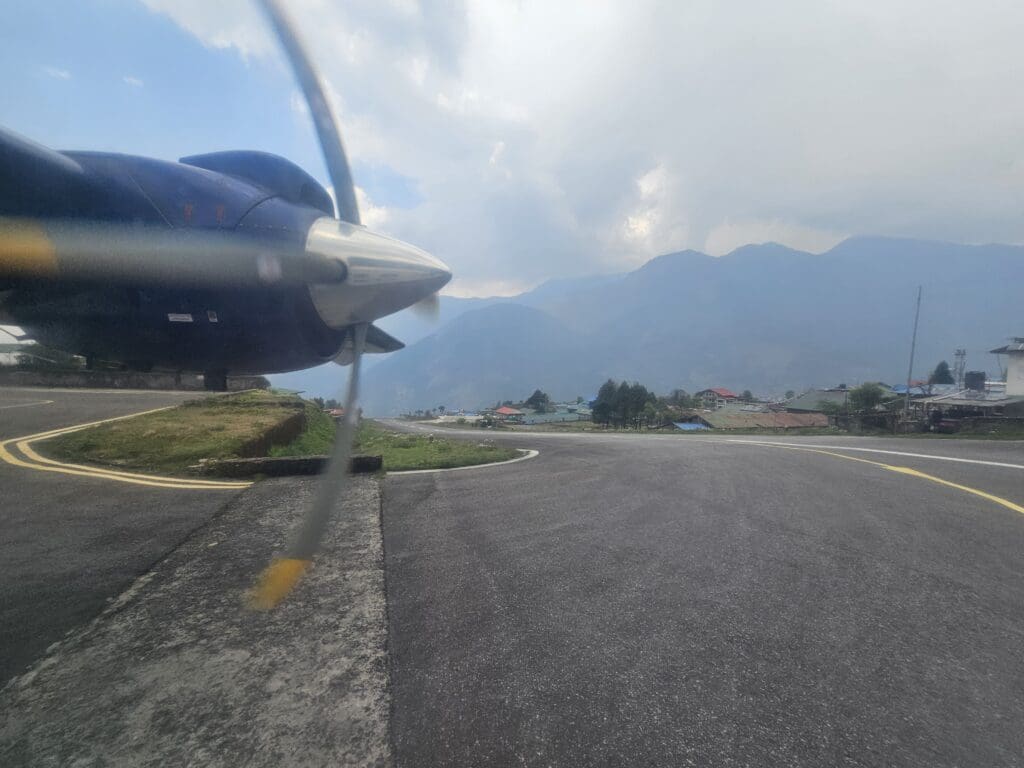
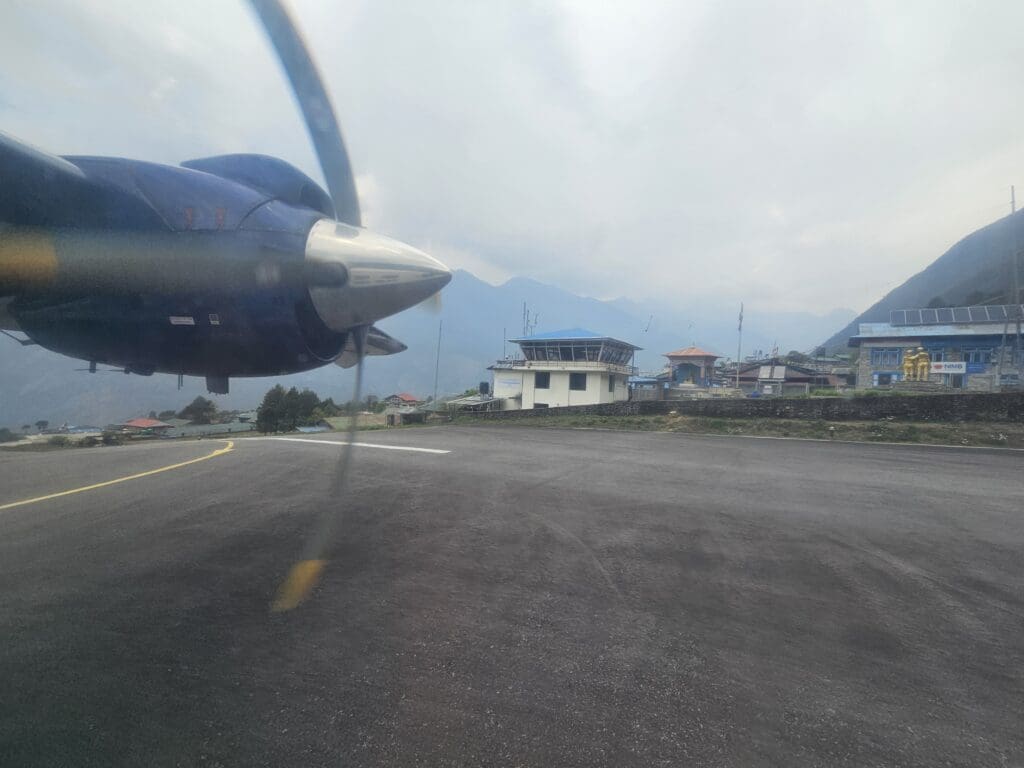
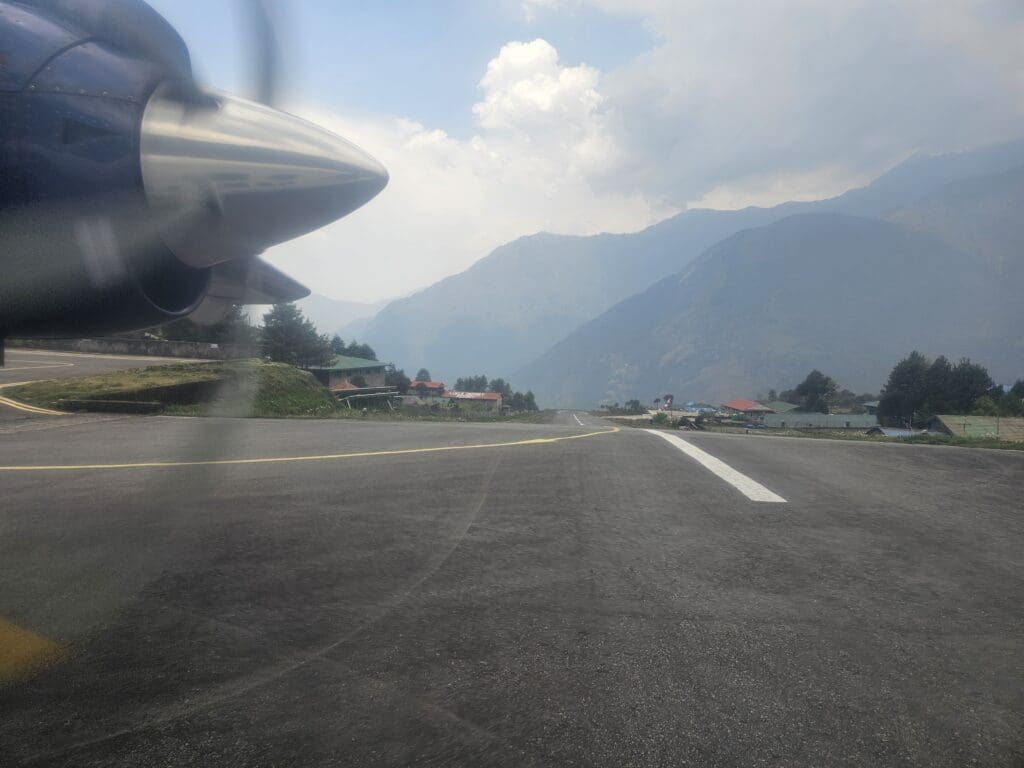
Once on the runway, the cabin was filled with noise and vibration as the power levers were pushed fully forward with the brakes held. After about ten seconds, the brakes were released and the Dornier went flying down the runway in what was perhaps the most sporty and ‘white knuckle’ departure that I have ever experienced on an airliner. Immediately after commencing our take-off roll, my stomach lifted slightly as we headed down the runway’s initial hump. As we barrelled down the runway, reassuringly the Dornier picked up plenty of speed before we floated upwards, the aircraft using virtually every metre of the runway before climbing up into the skies above the deep valley.
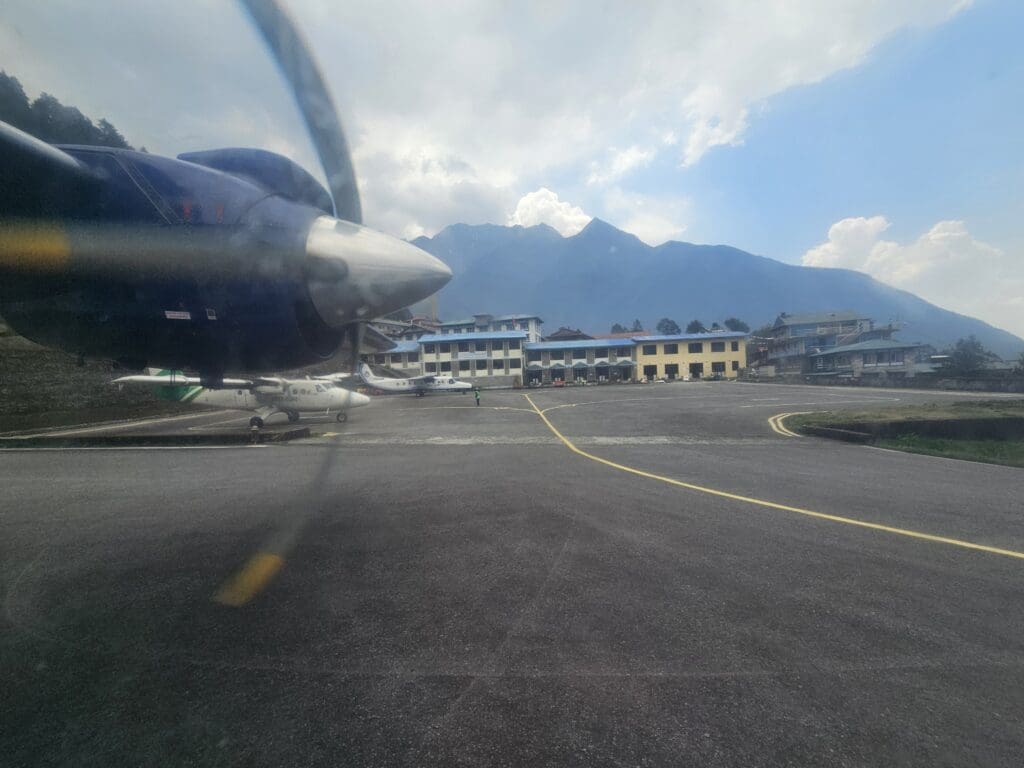
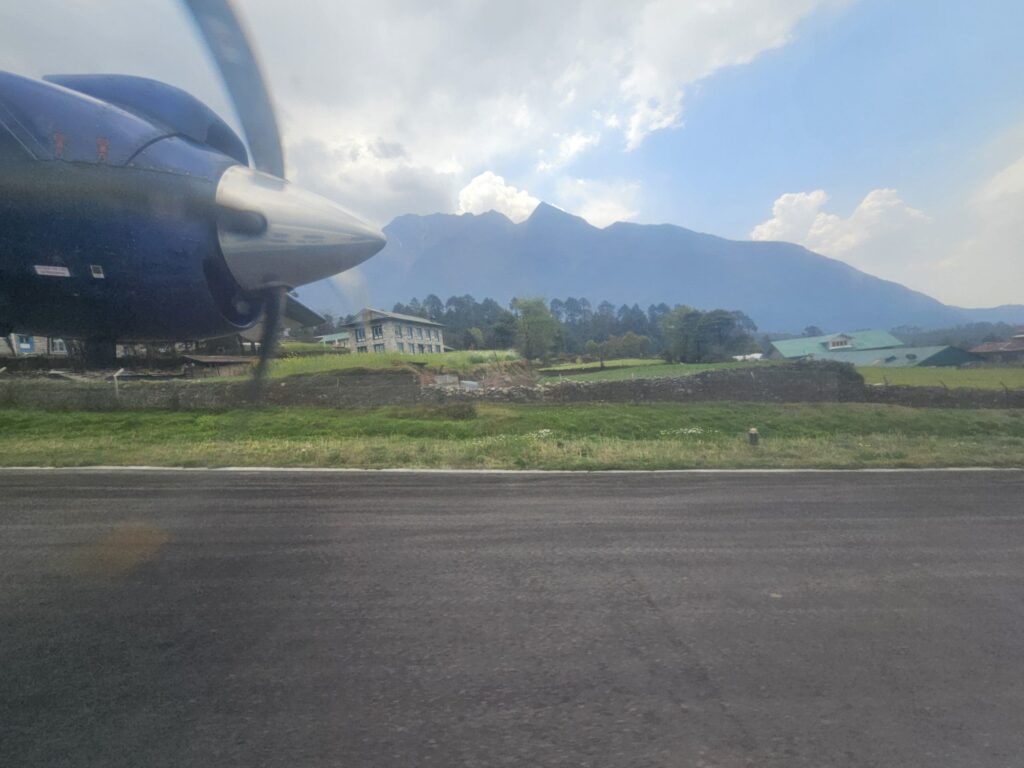
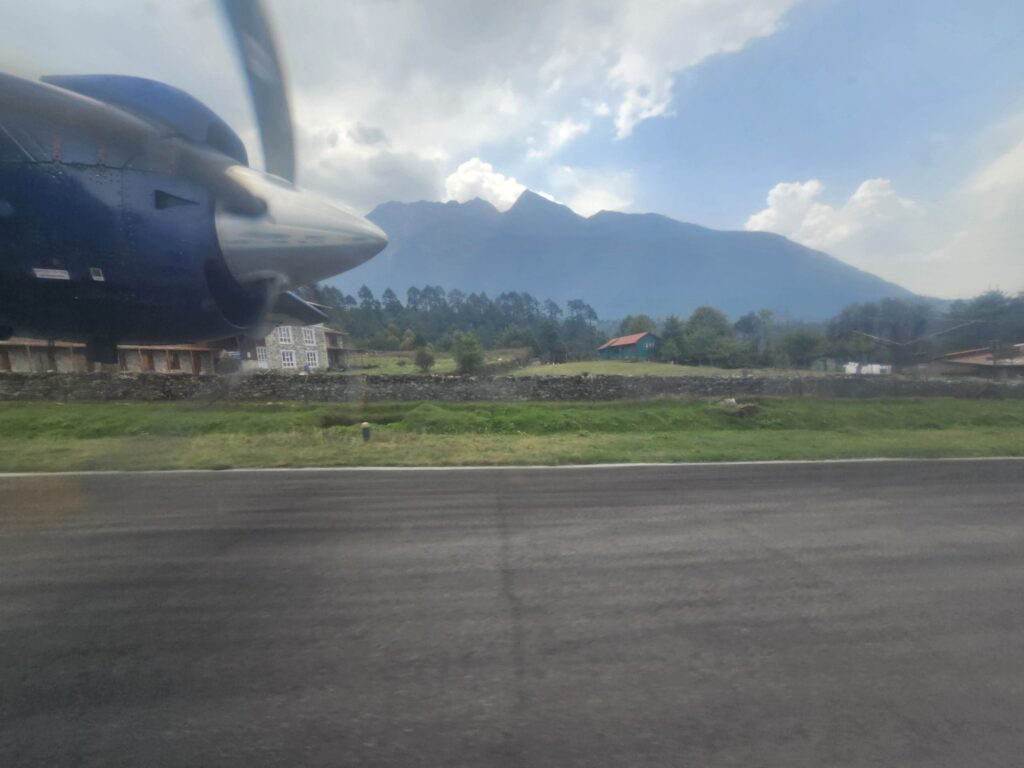
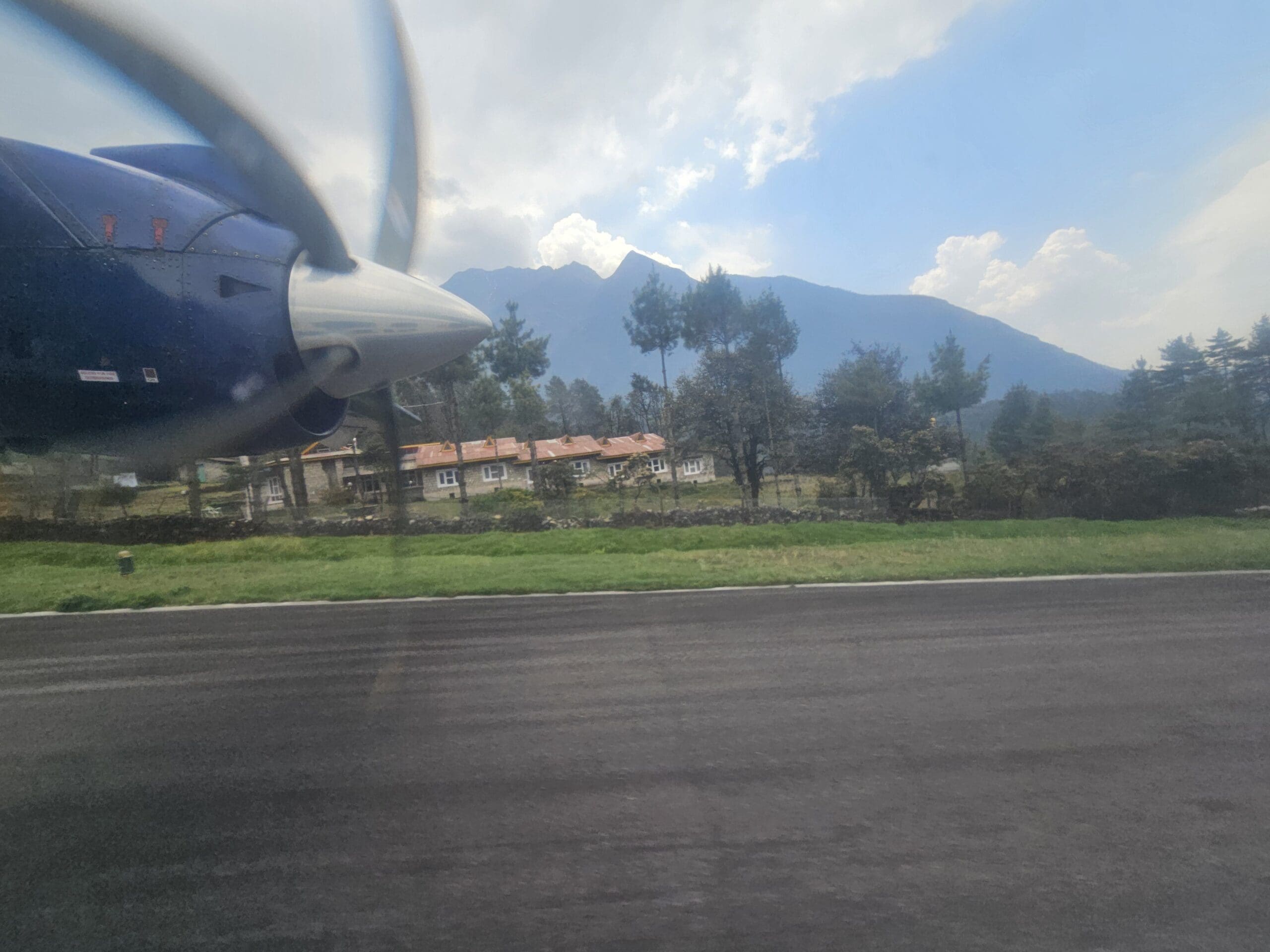
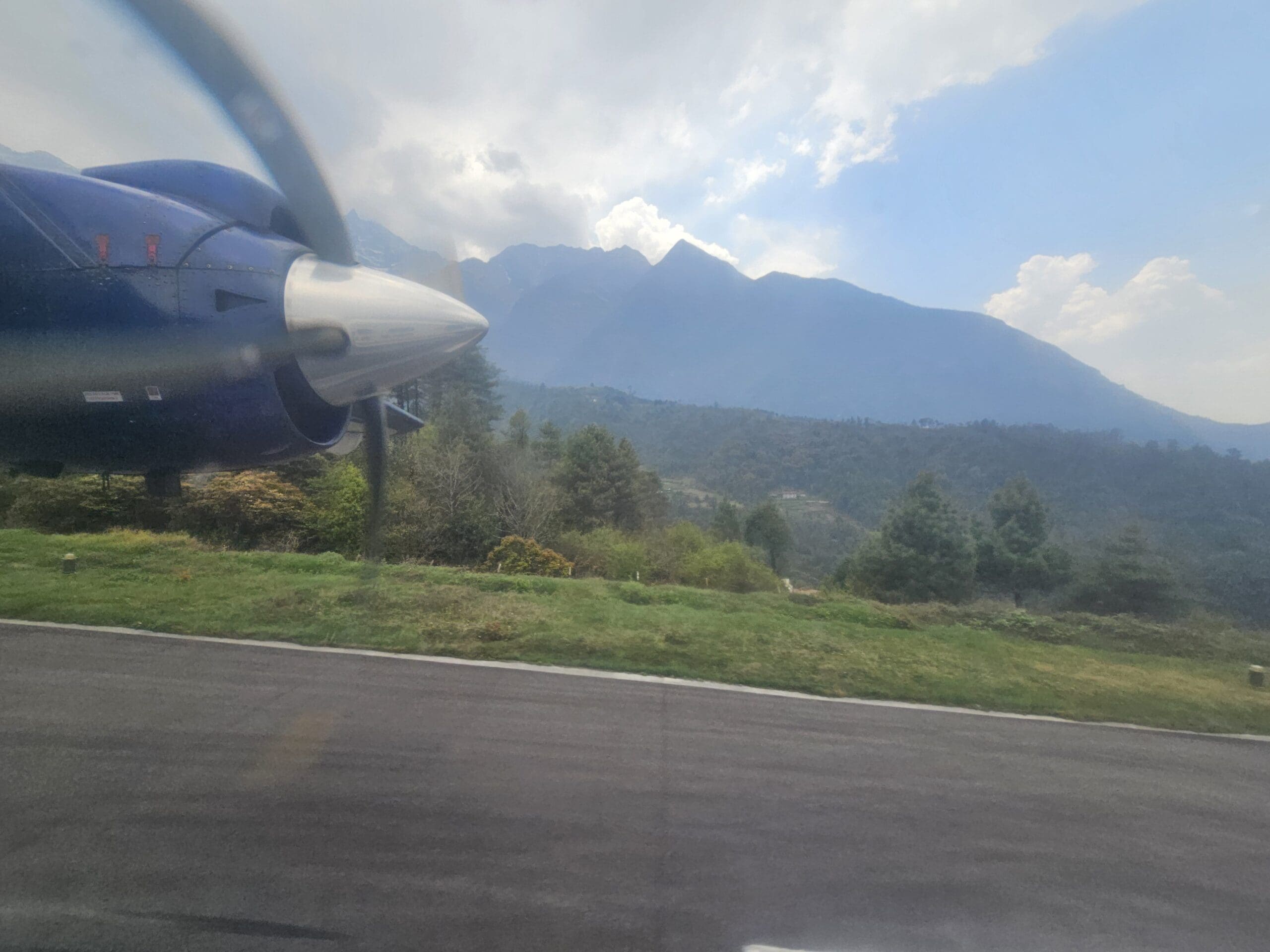
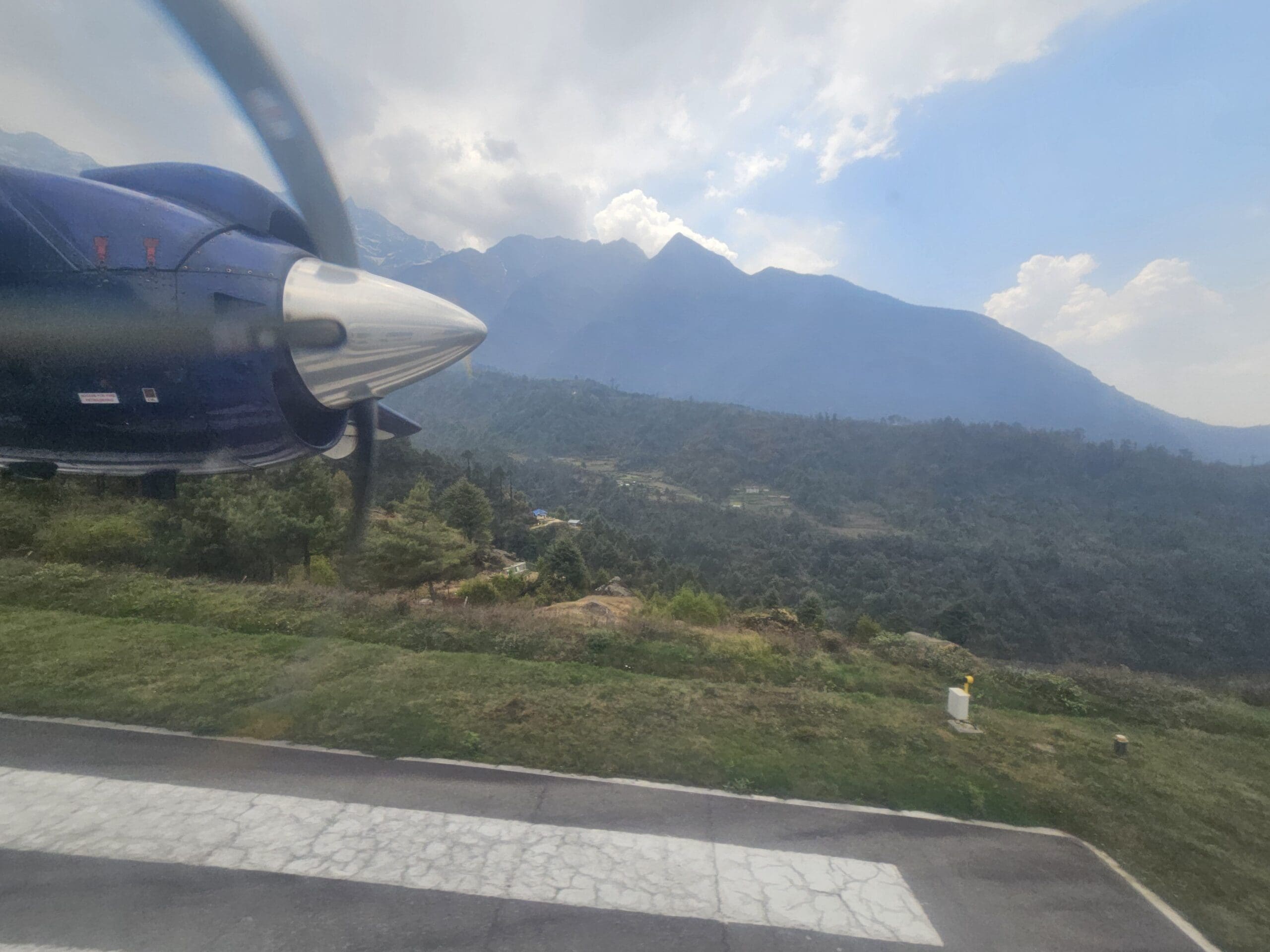
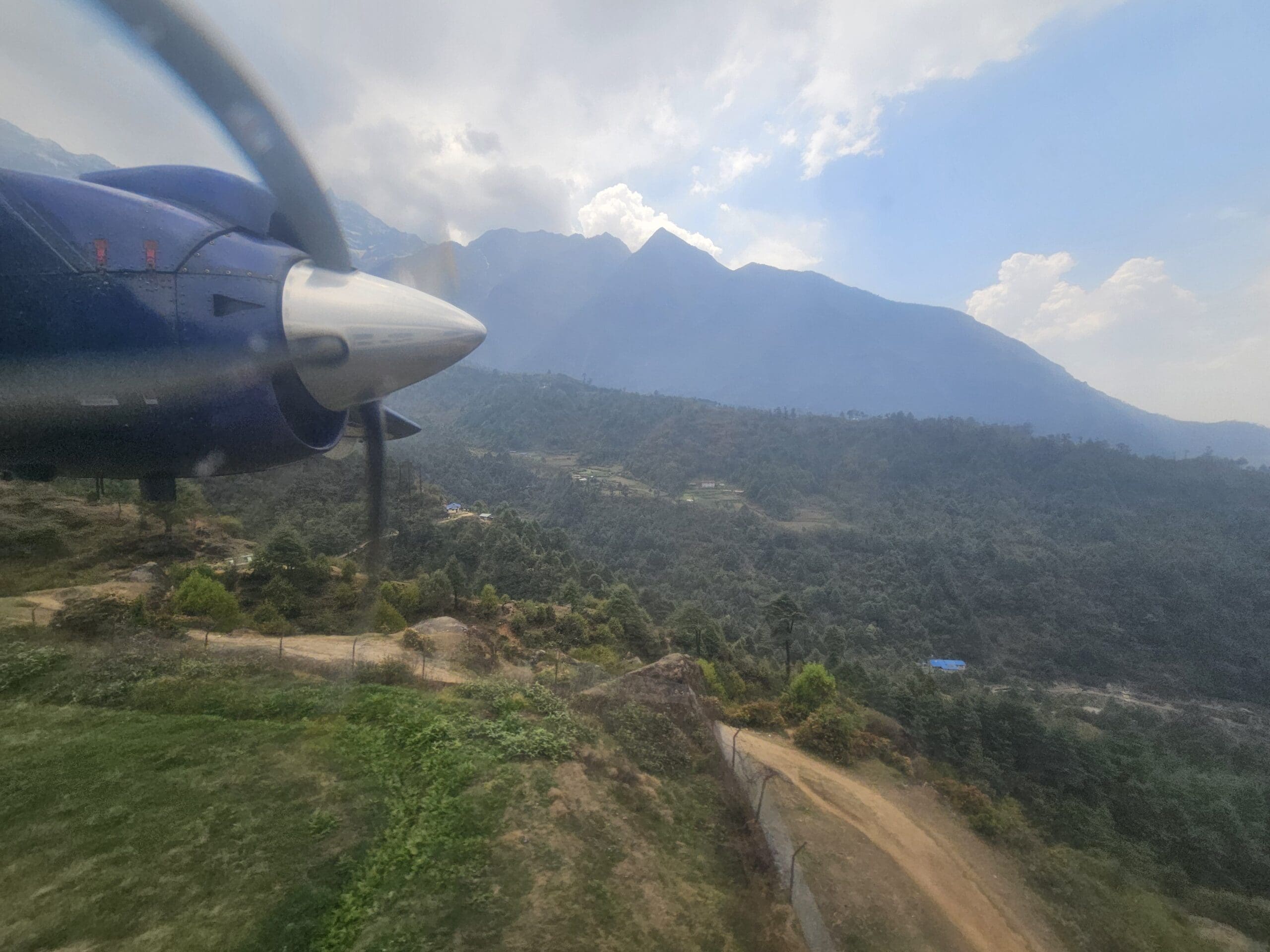
Upon taking to the skies, the landing gear was soon retracted and the Dornier banked to the left in order to fly down the Dhudh Kosi River Valley and I soon caught sight of a silver Airbus H125 helicopter making its way to Lukla. Interestingly, no more than a minute after departure and whilst still climbing, the seatbelt signs were extinguished, although, with nowhere for passengers to go and no onboard service, passengers remained firmly in their seats. This was indeed a good choice, as it wasn’t long before the Dornier was thrown about as we passed low over mountain ridges, resulting in some fairly strong turbulence which caused the seatbelt signs to be reilluminated as we journeyed westwards to Kathmandu.
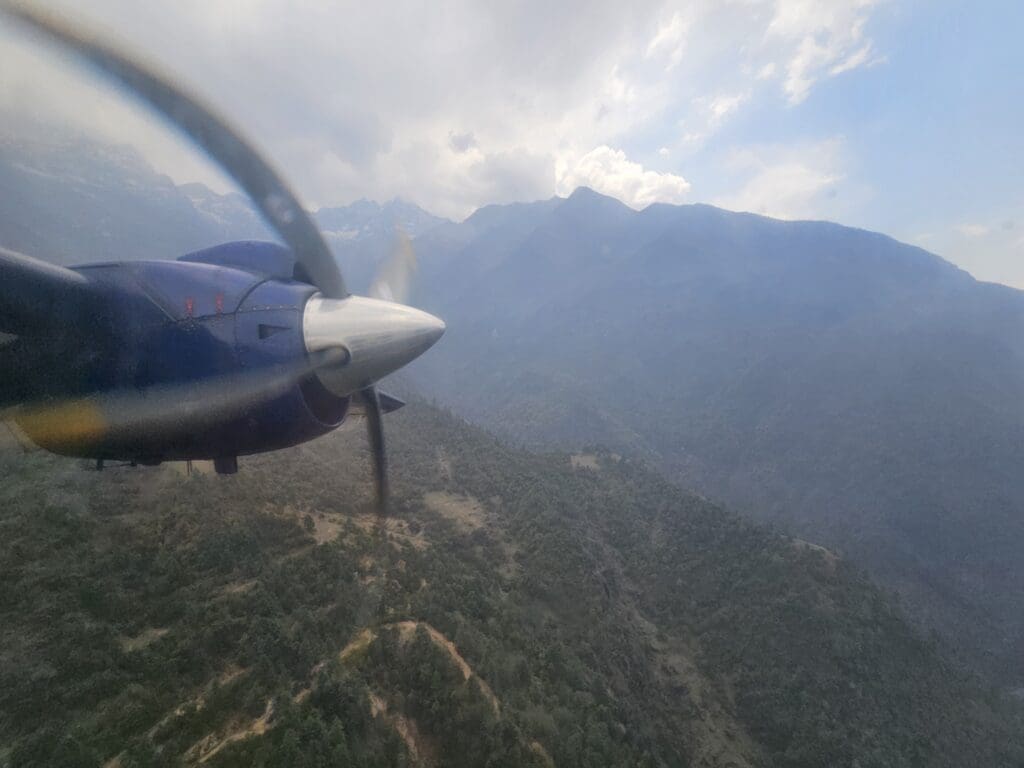
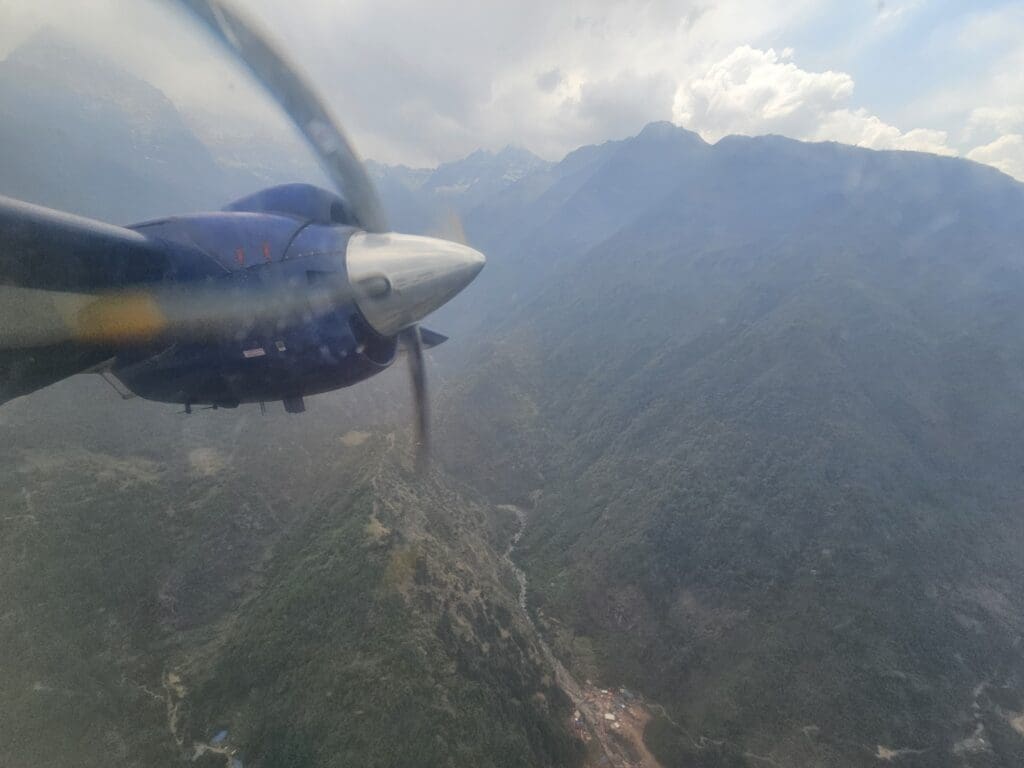
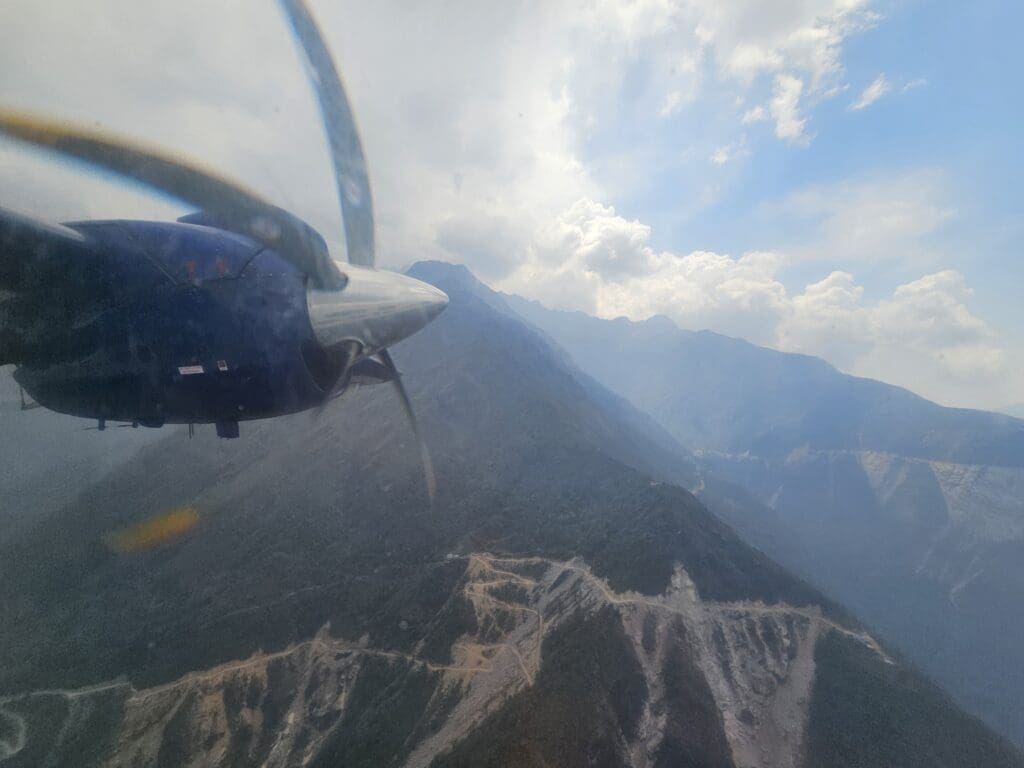
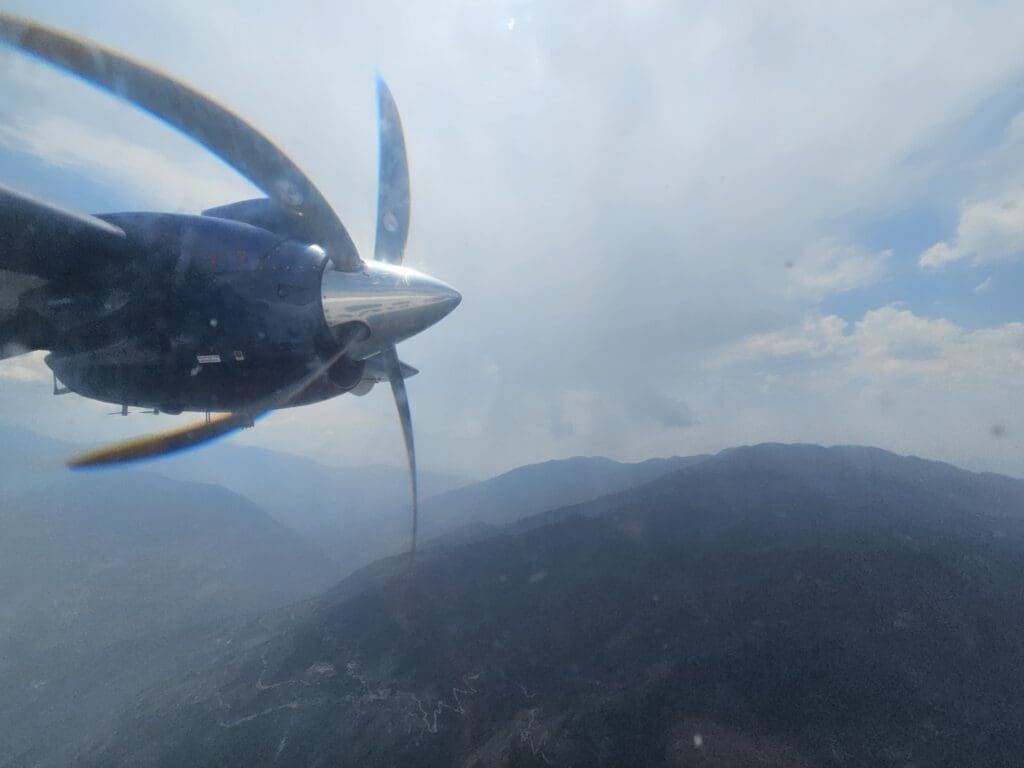
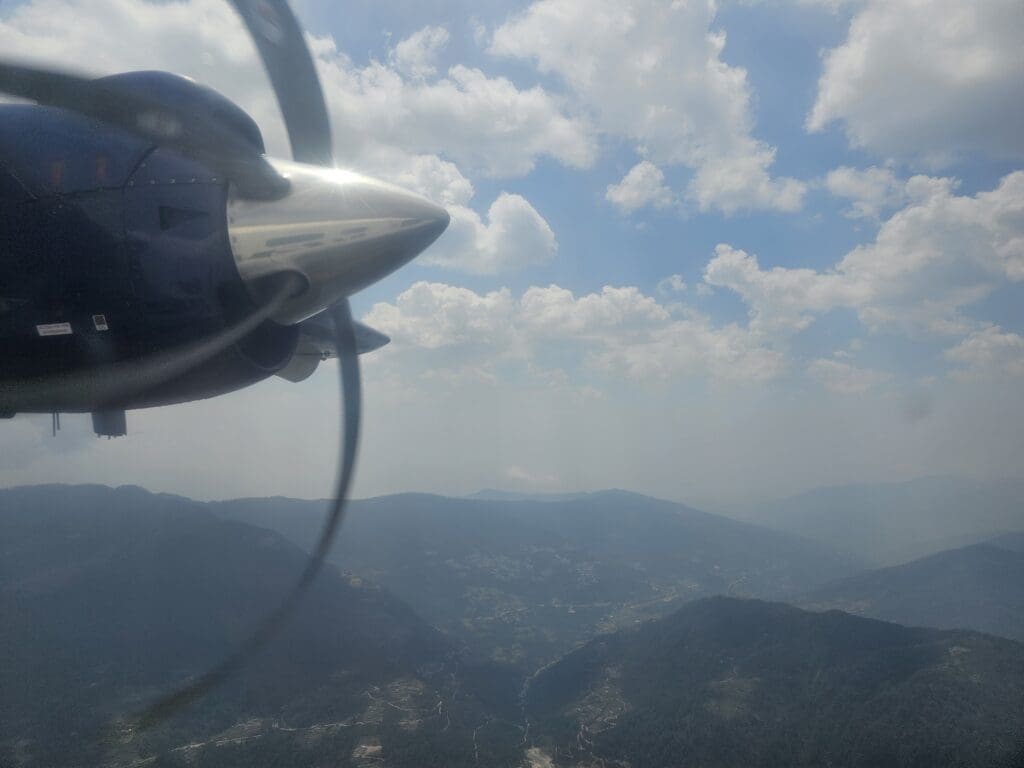
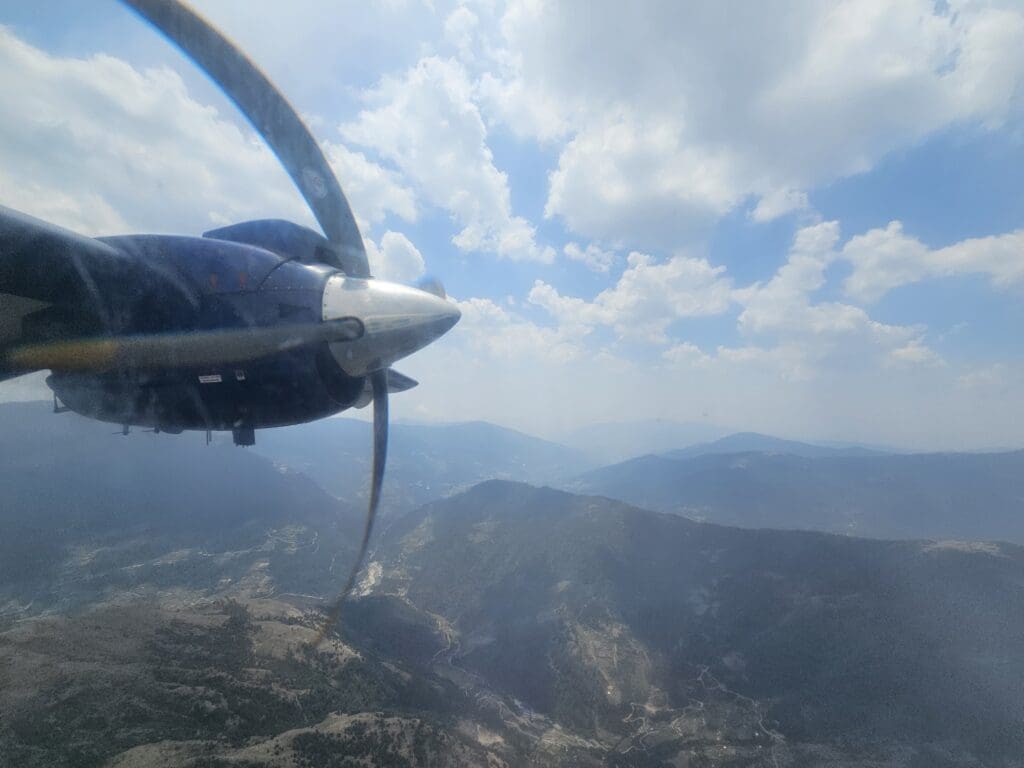
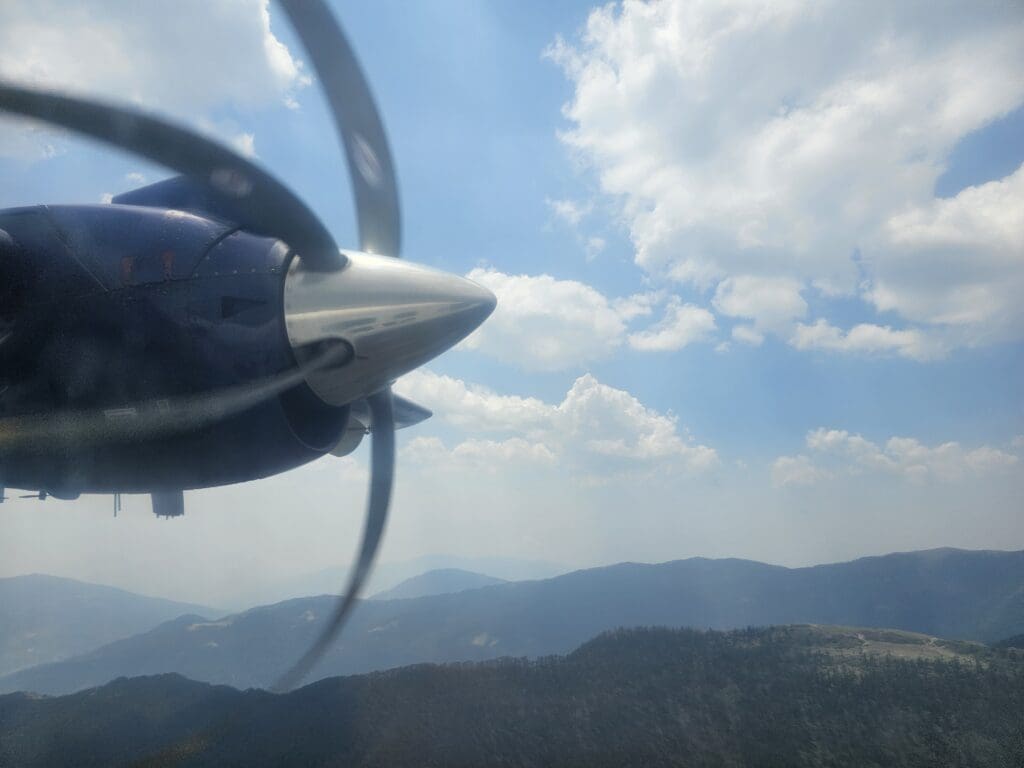
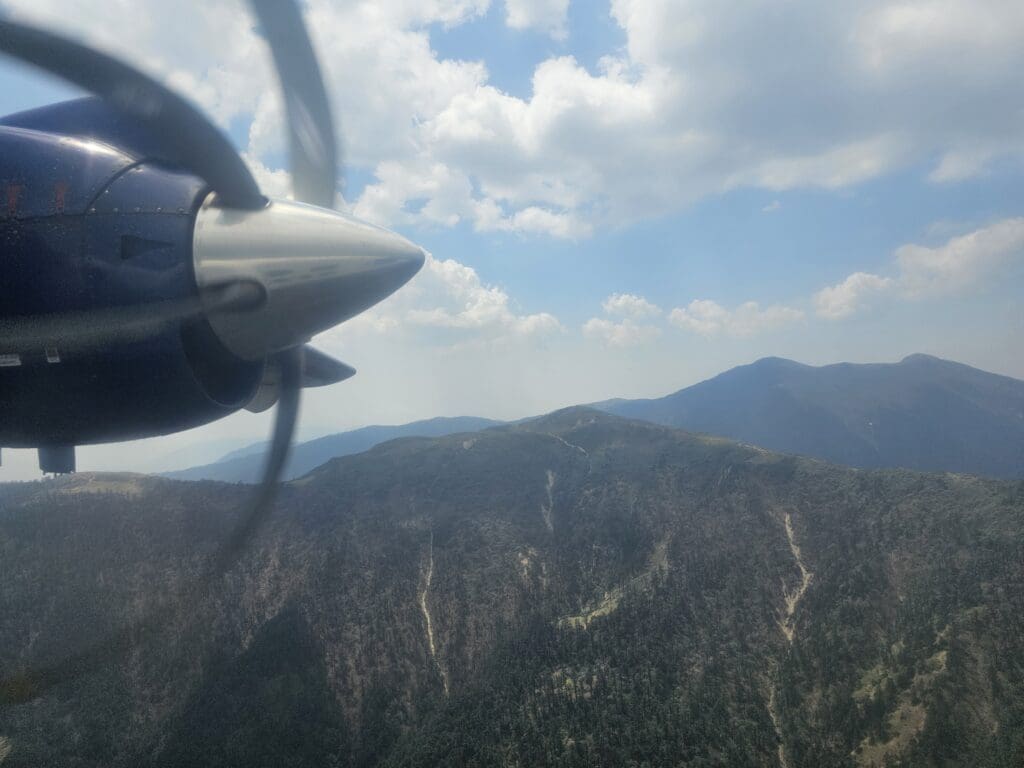
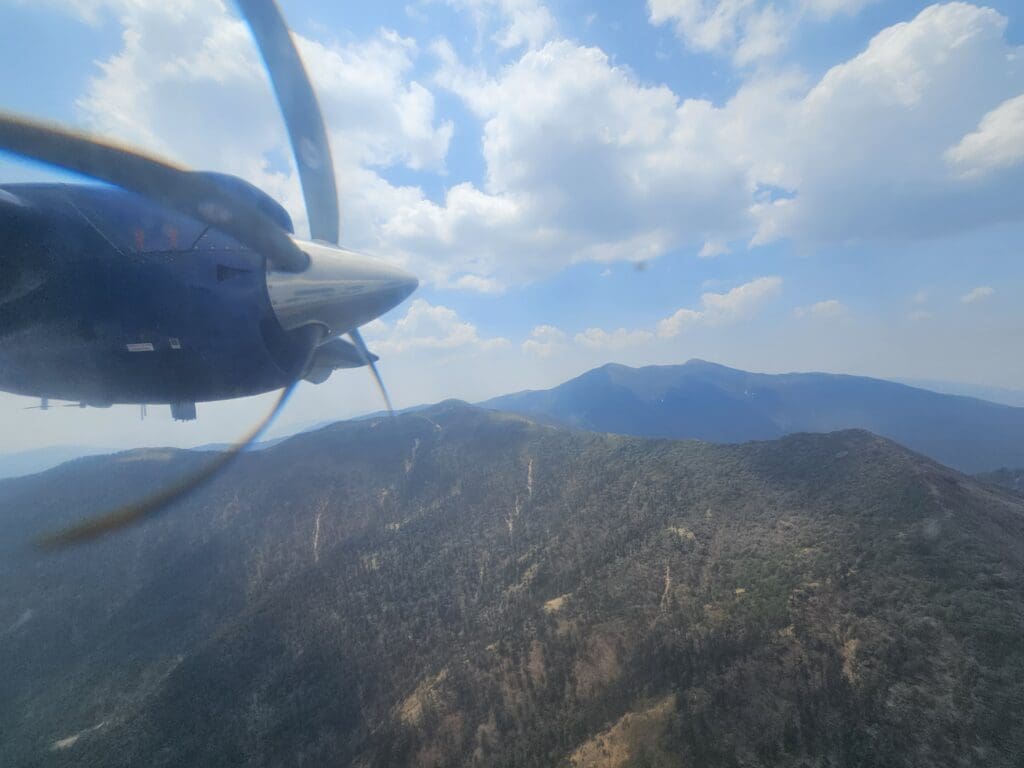
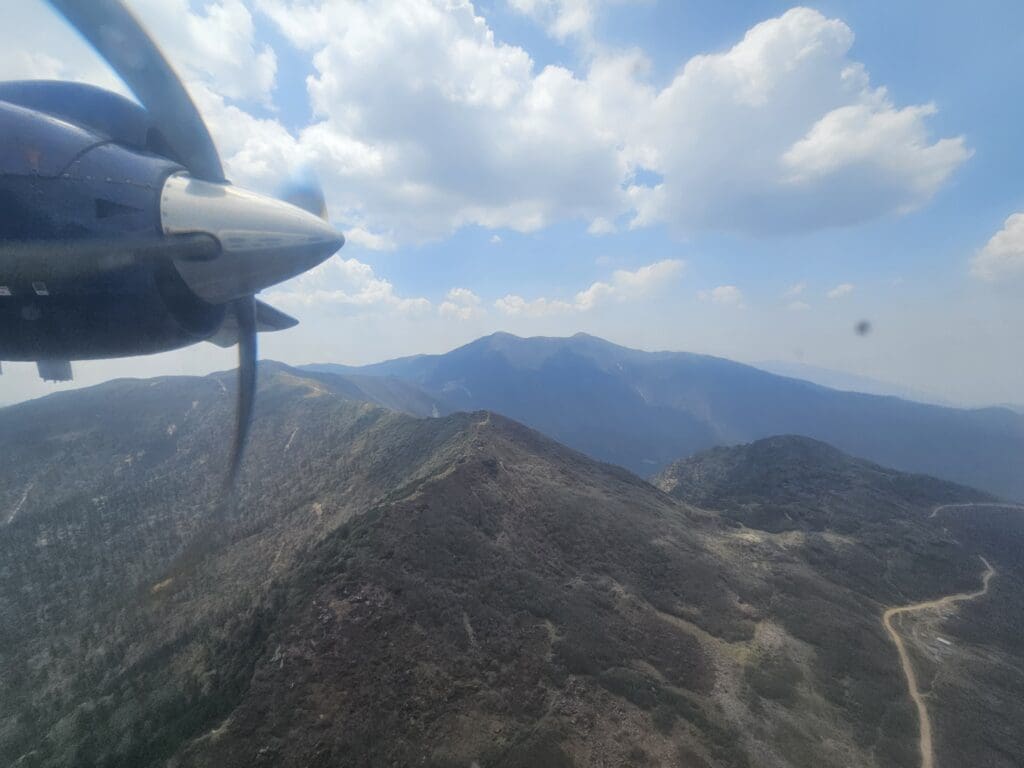
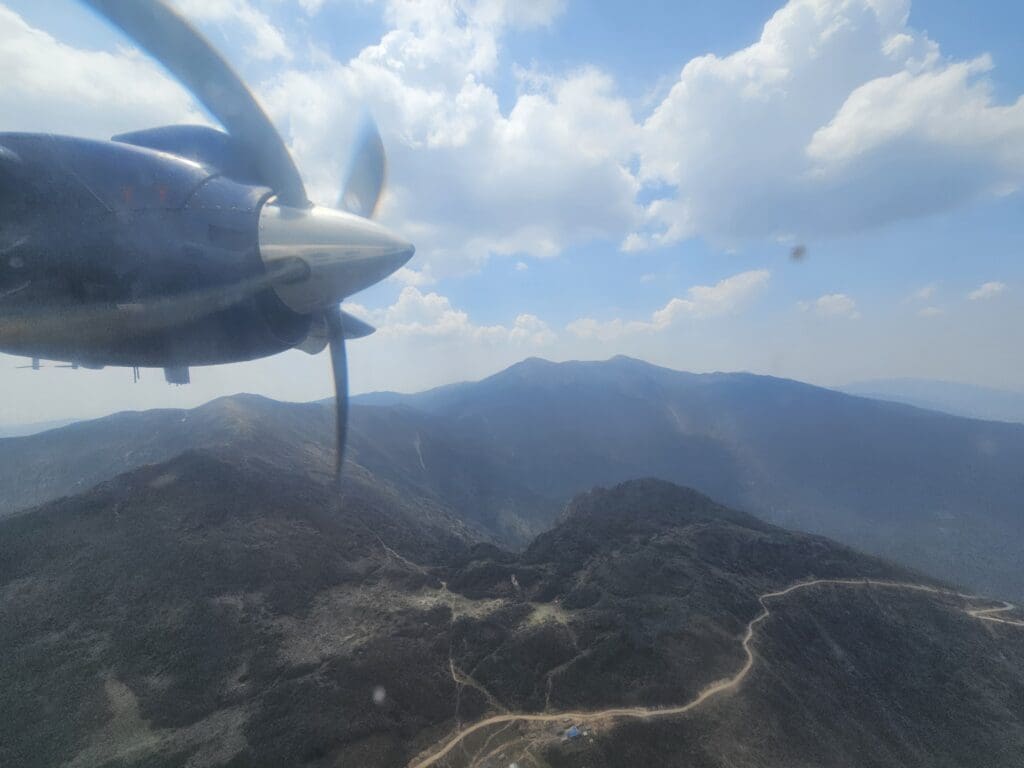
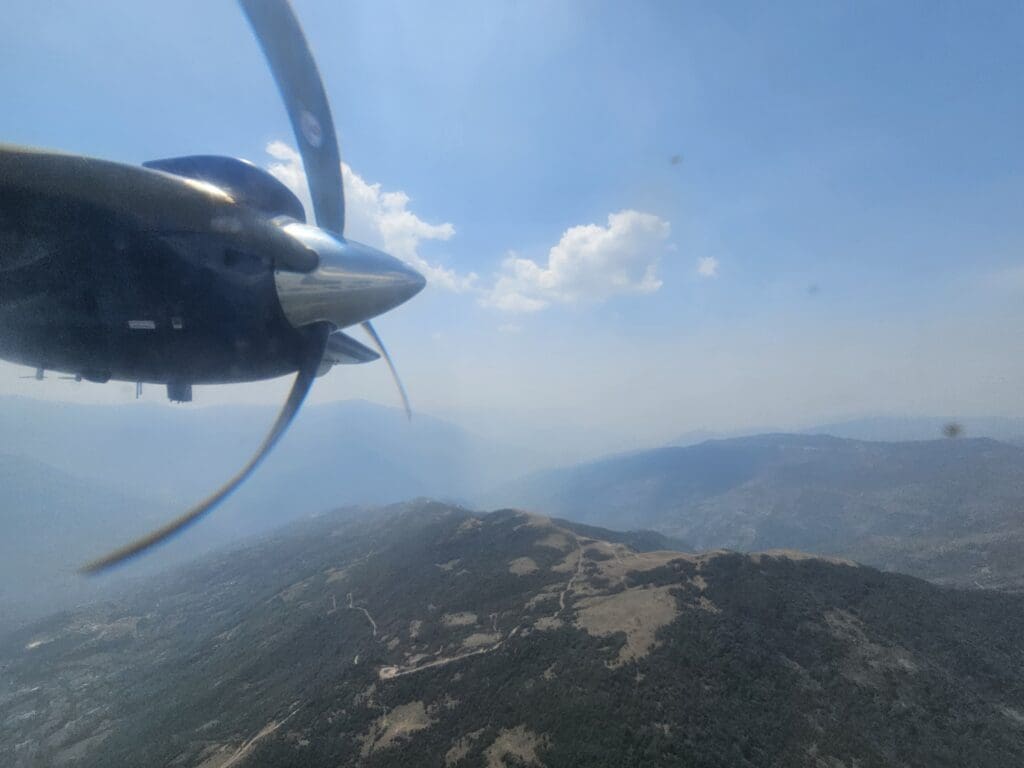
Soon, the Dornier levelled off at its cruising altitude of 12,000 feet and pootled along initially at 150 knots, before this was increased to 190 knots. Looking ahead, it appeared that the Dornier’s autopilot system was not used at all during the flight, with the aircraft being handflown by the First Officer for the entirety of our ride to Kathmandu. Inside the cabin, from a ‘normal’ passenger’s perspective, I cannot say that the Dornier offered a particularly fantastic ride. This was cramped and incredibly noisy, more so than the pair of much newer RUAG-manufactured Aurigny Dorniers that I had flown in 2021. With the engine noise remaining at high levels throughout the flight, a conversation would have proven to be impossible. However, as an aviation enthusiast, with few Dornier 228s in service across the world, I was left with no complaints about flying on this type that morning!
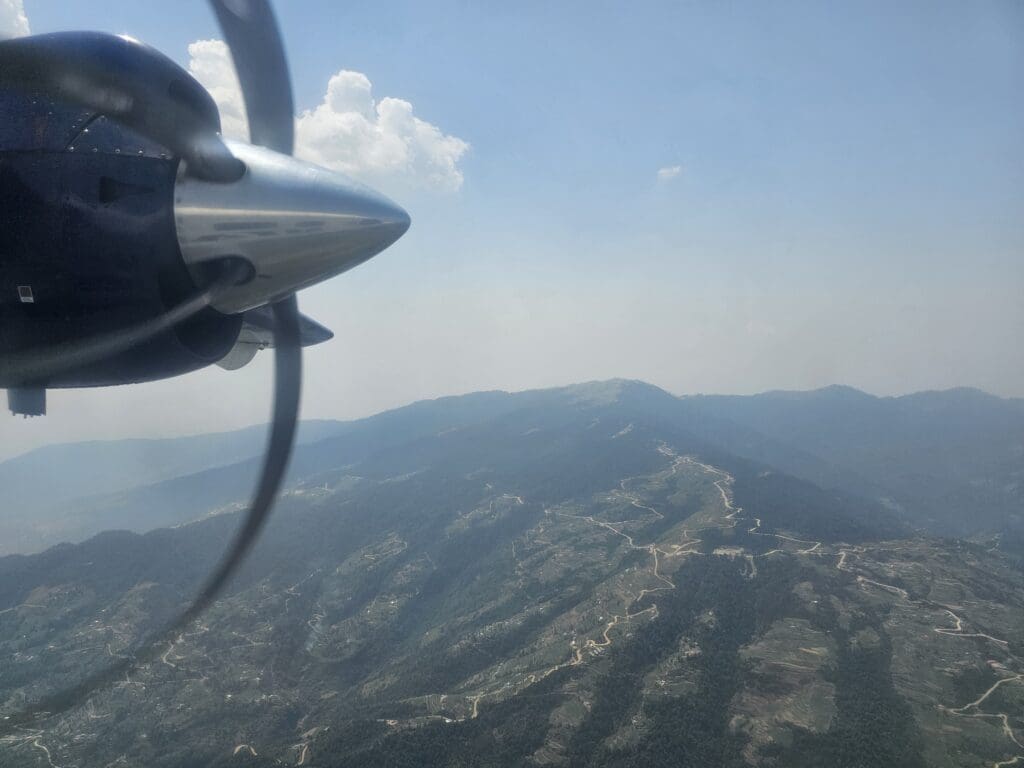
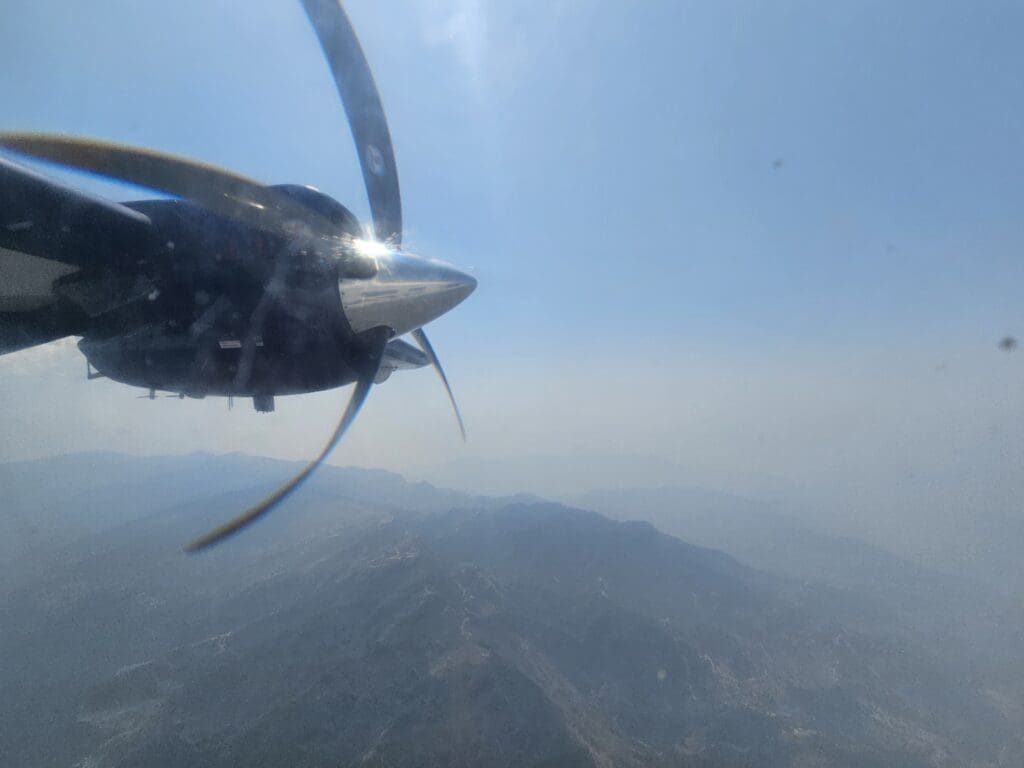
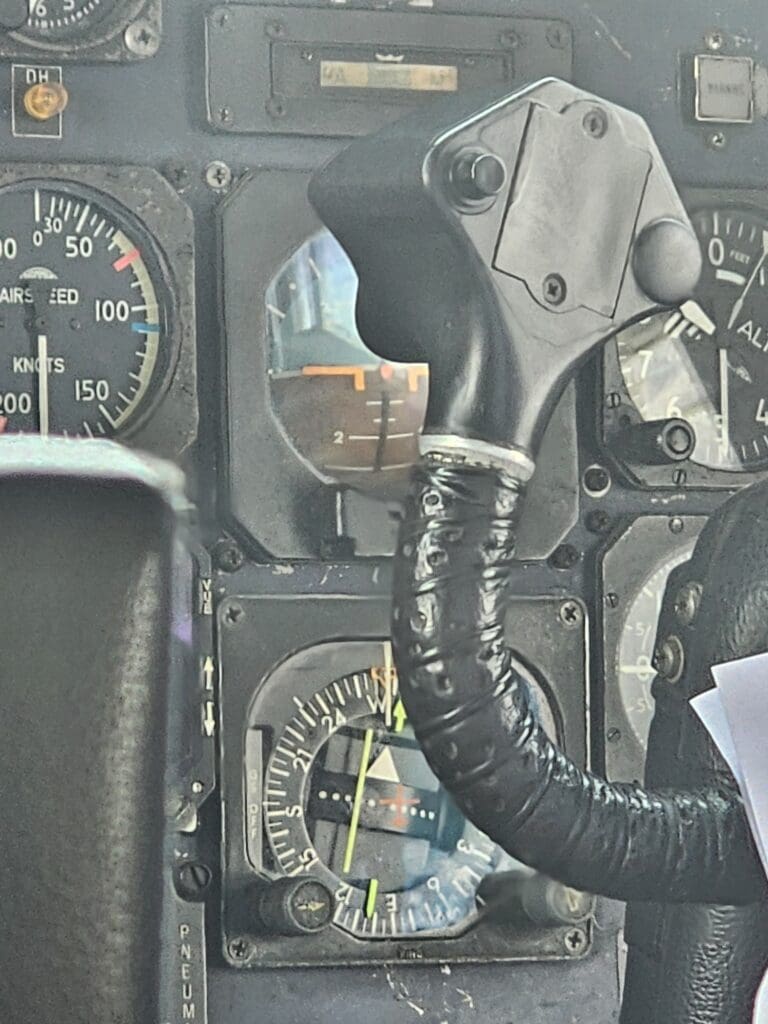
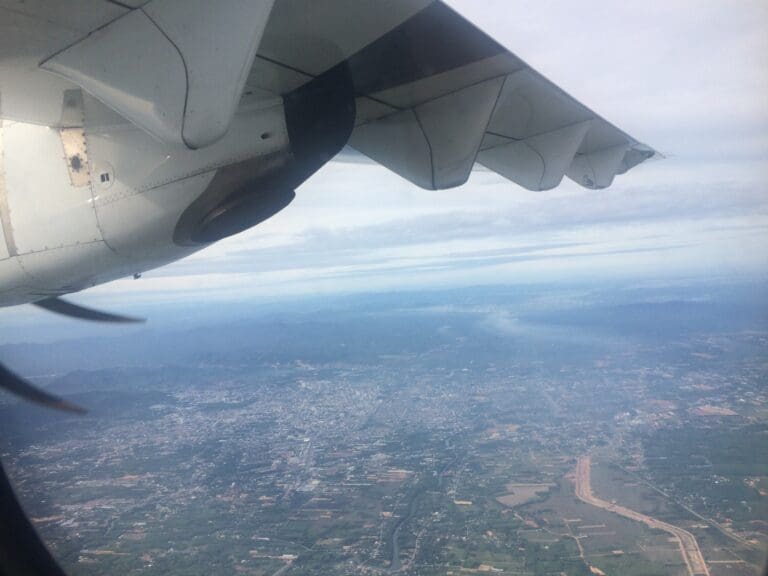
Looking outside, a combination of the scratched and slightly tinted window, and the haze and smog outside meant that views on the ride to Kathmandu were not particularly fantastic – especially when compared to those that I had been treated to on my helicopter ride to Lukla. From Lukla, the Dornier cruised over high mountains which seemed to pass no more than a short distance below the aircraft, alongside the odd remote village, each of which seemed to be connected to the rest of the country by winding roads that snaked along the hillside.
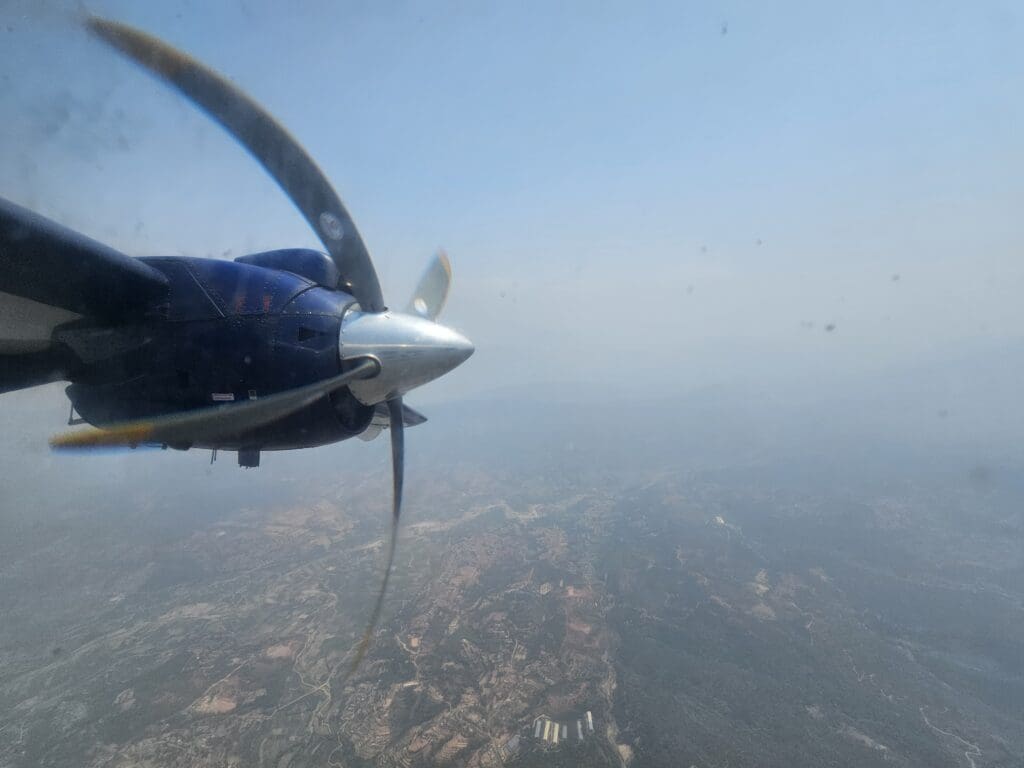
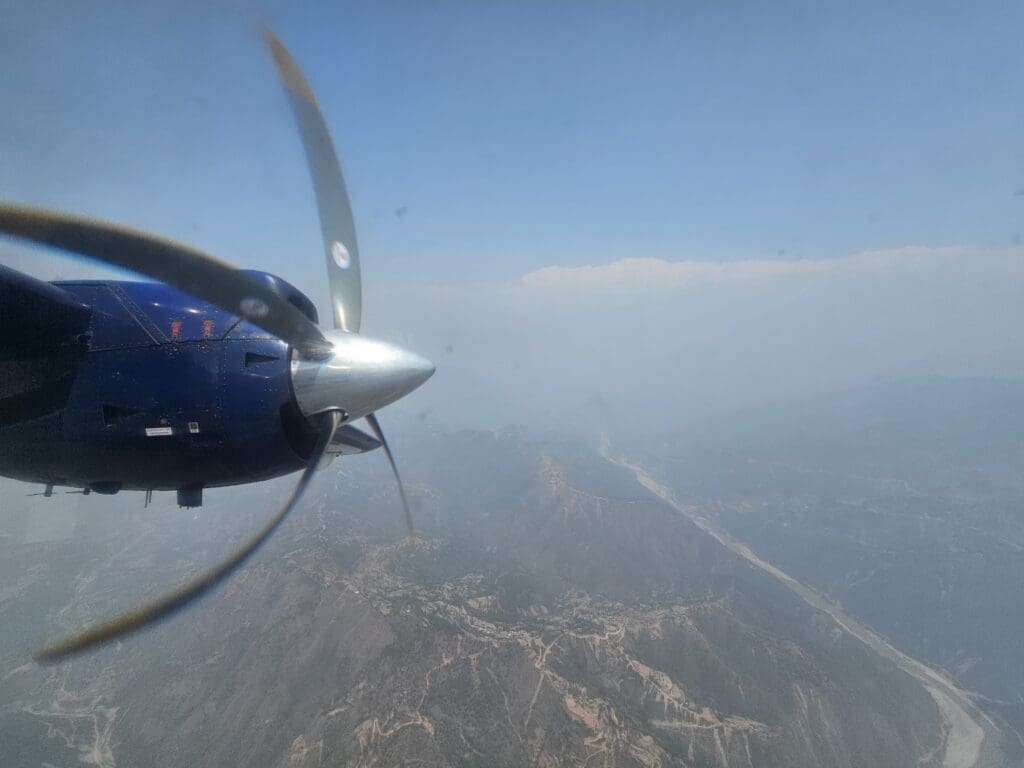
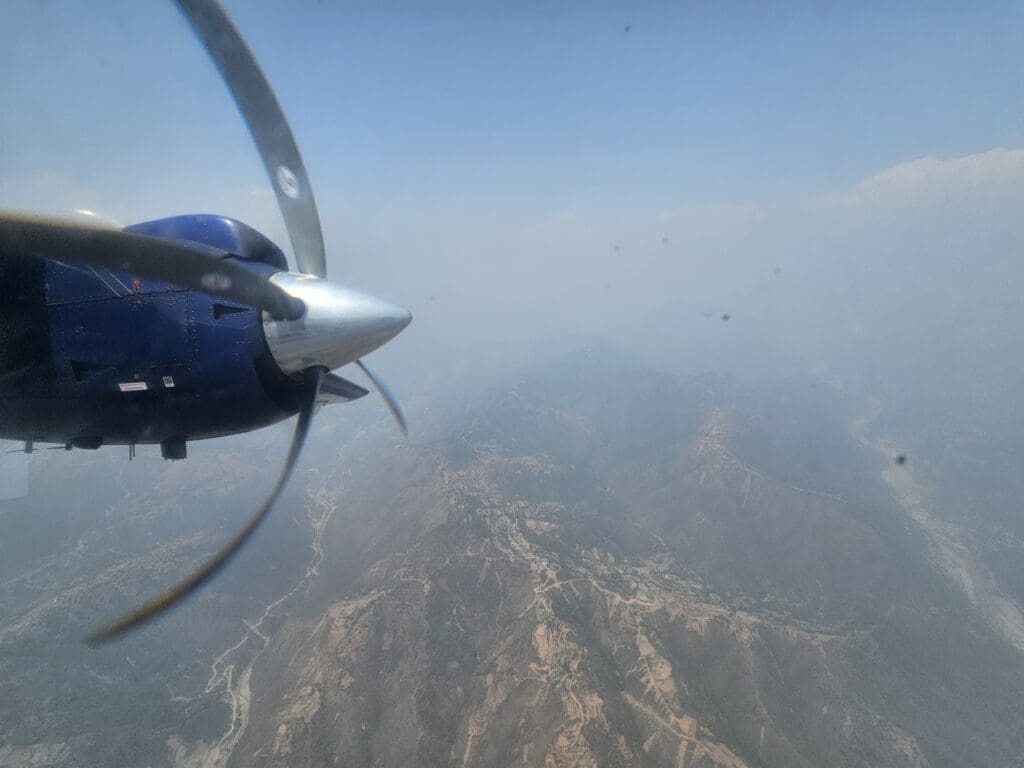
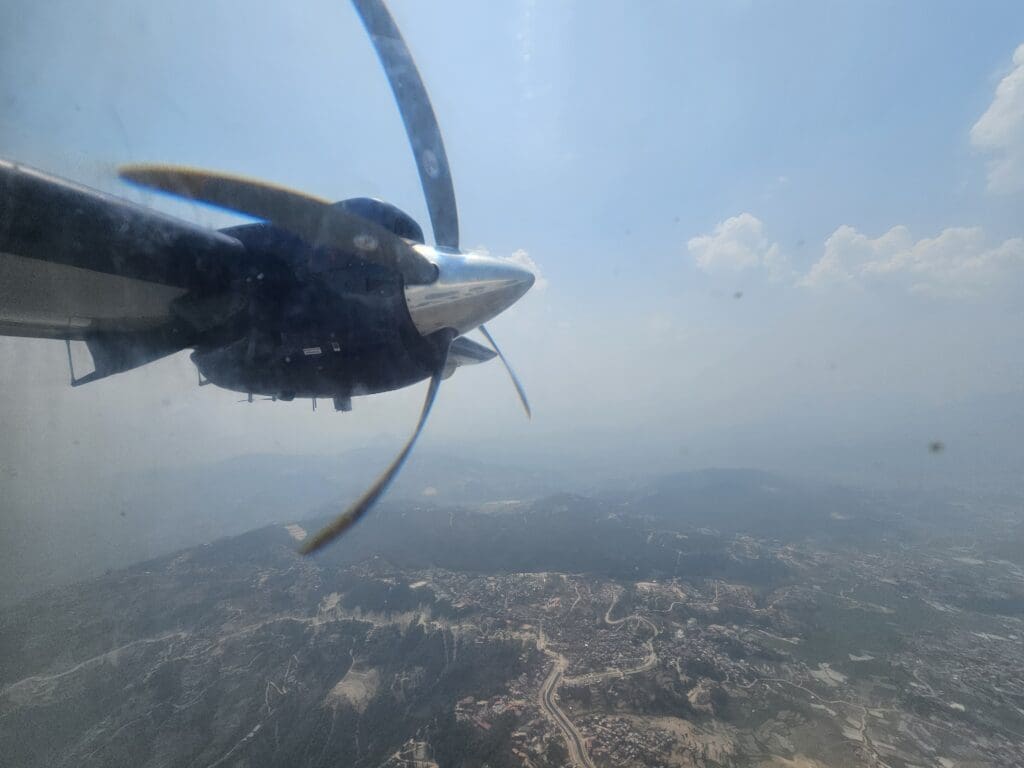
Soon, the Dornier left the skies of Nepal’s easternmost Koshi Province behind and made its way into Bagmati Province, home to Kathmandu. With Lukla and Kathmandu separated by just 84 miles, flight time are fairly short, however, enabling me a few extra minutes to enjoy the delights of the Dornier 228, as we neared the capital, the aircraft could be felt gently banking as it entered the first of two holds. The first of these took the form of a racetrack-shaped hold near the towns of Dolalghat and Panchkhal, followed by another shorter circular hold near the town of Dhulikhel just to the east of Kathmandu. With just a single runway and plenty of movements, it isn’t usual for Kathmandu-bound aircraft to have to hold.
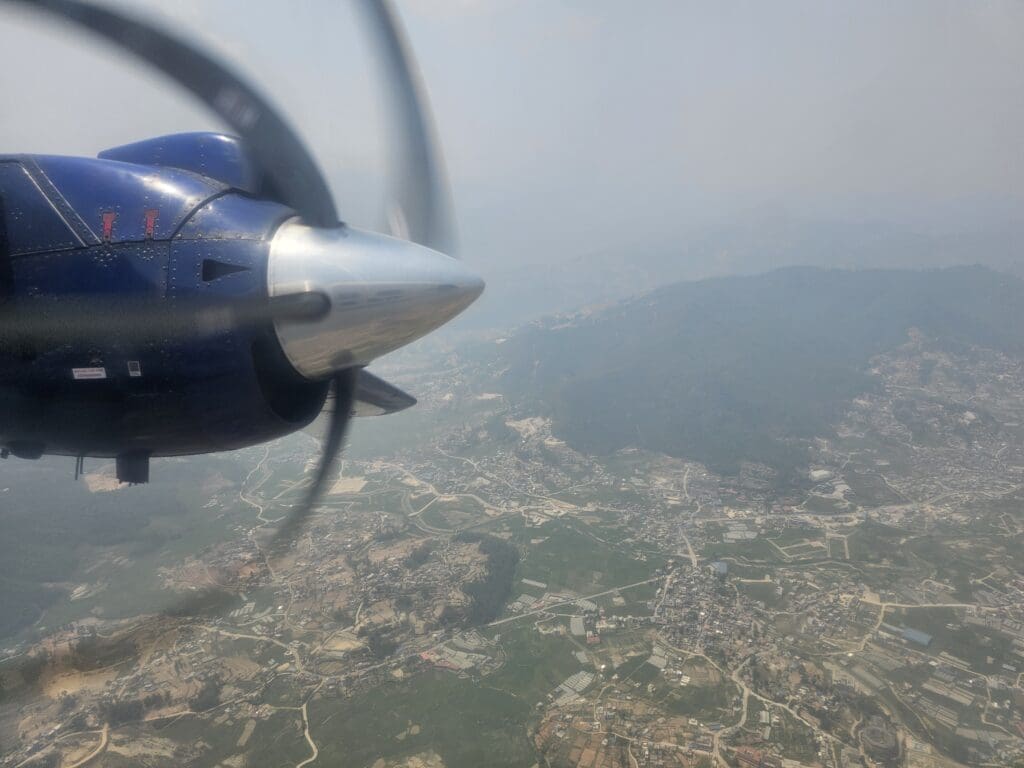
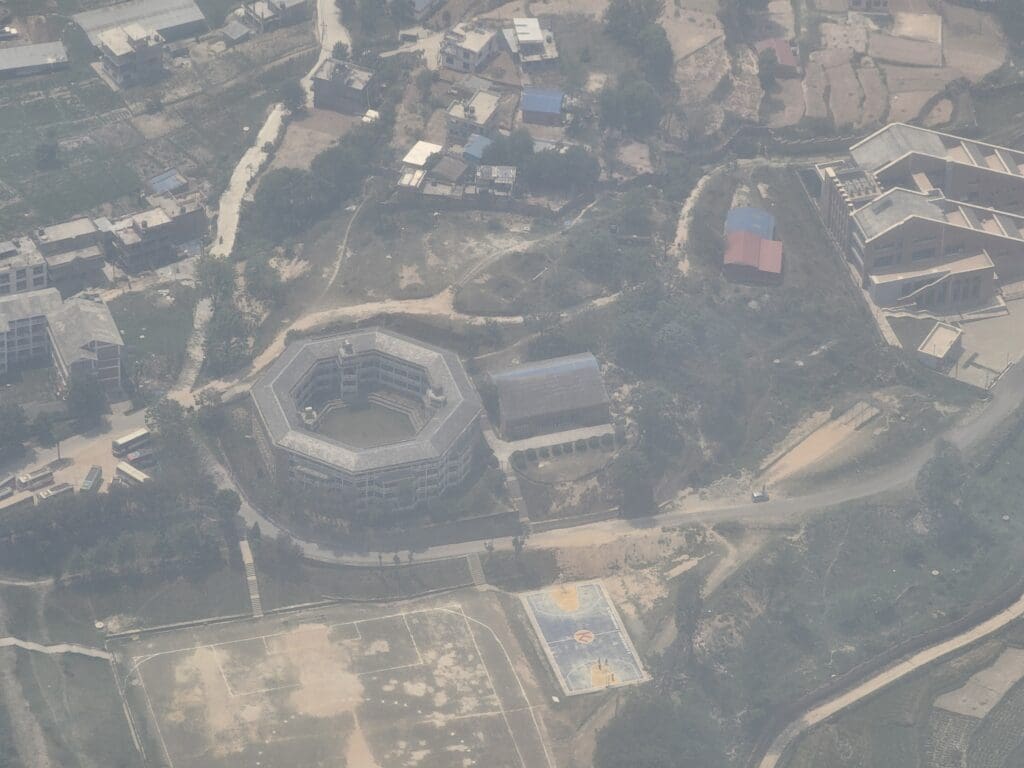
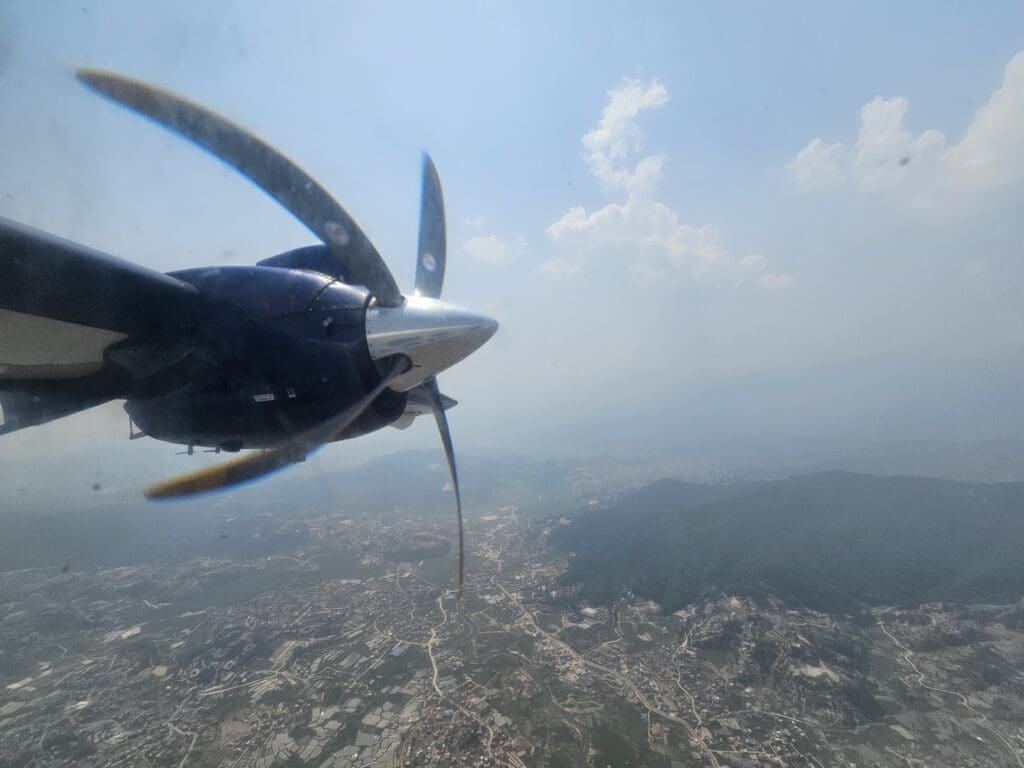
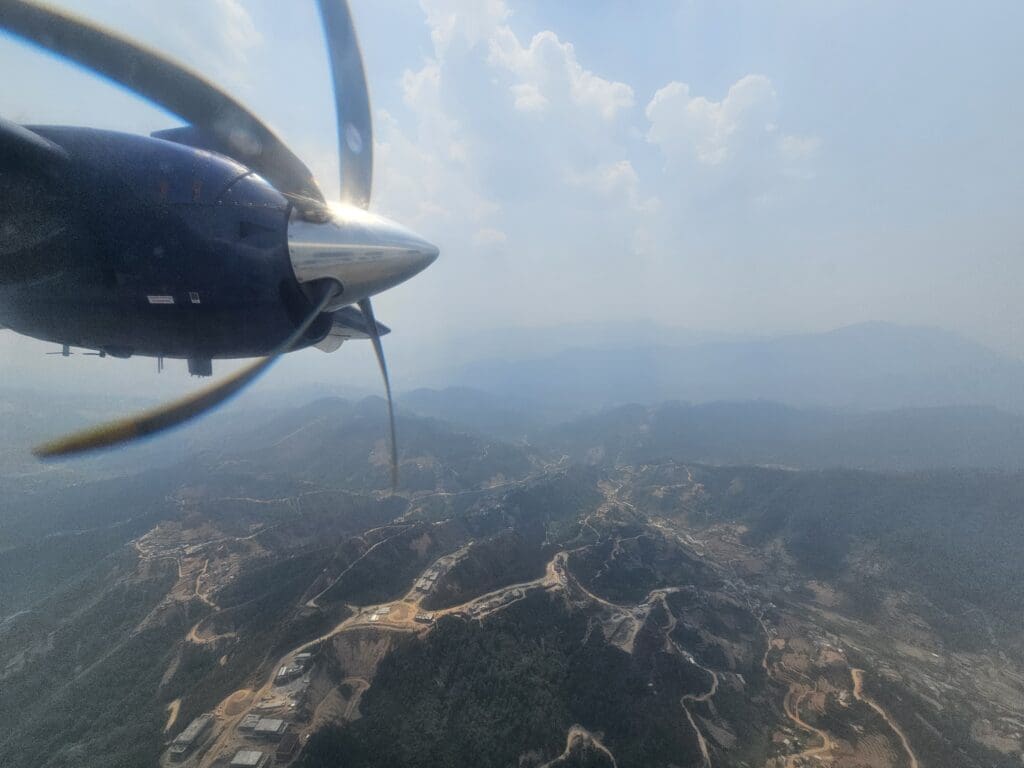
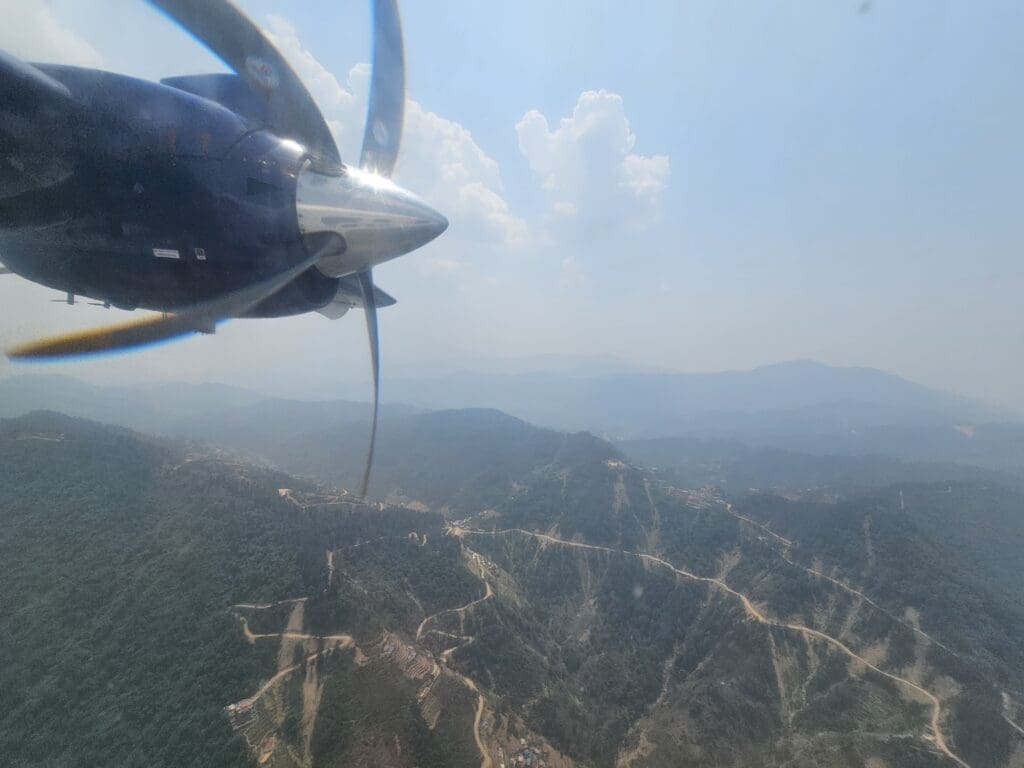
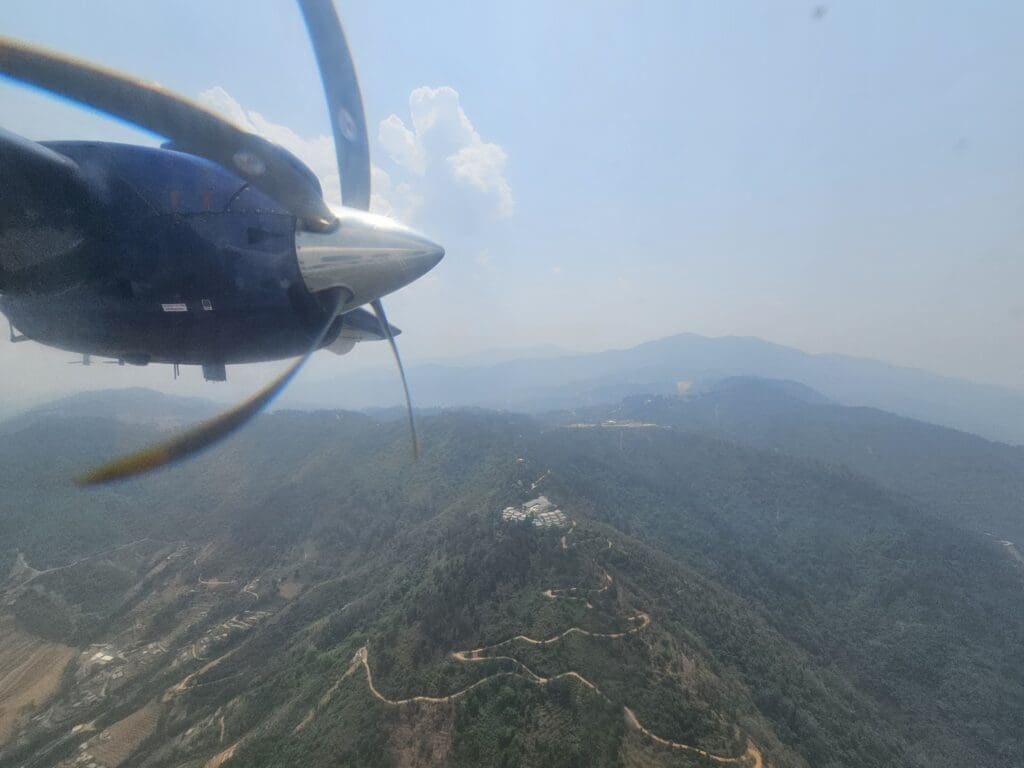
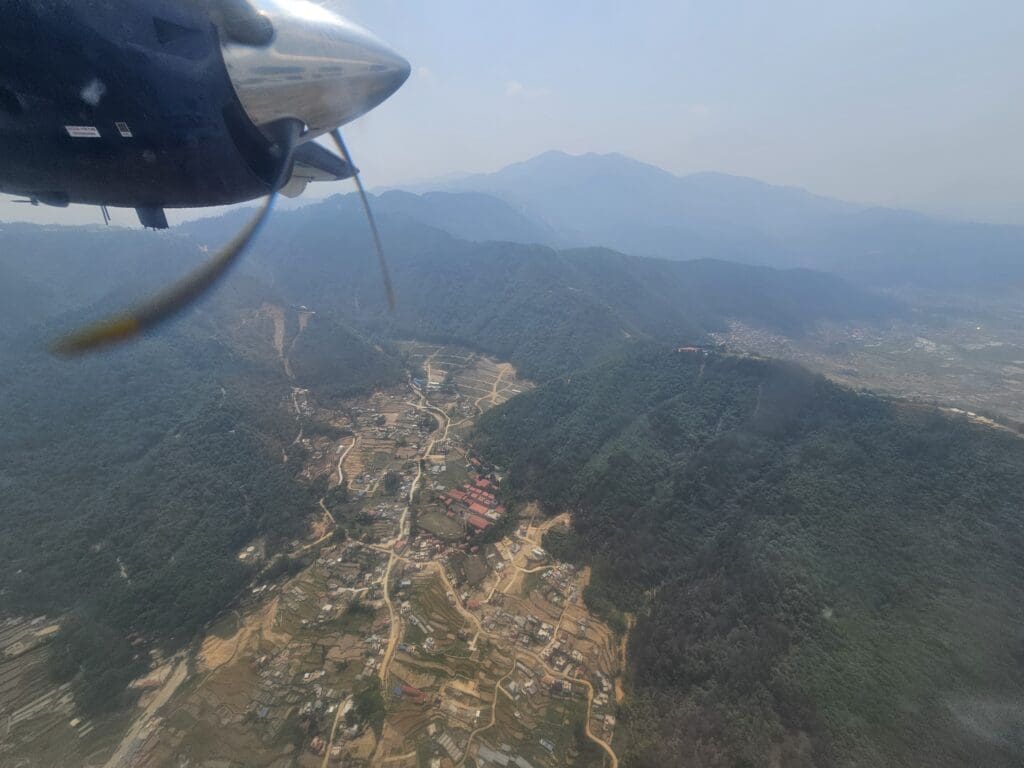
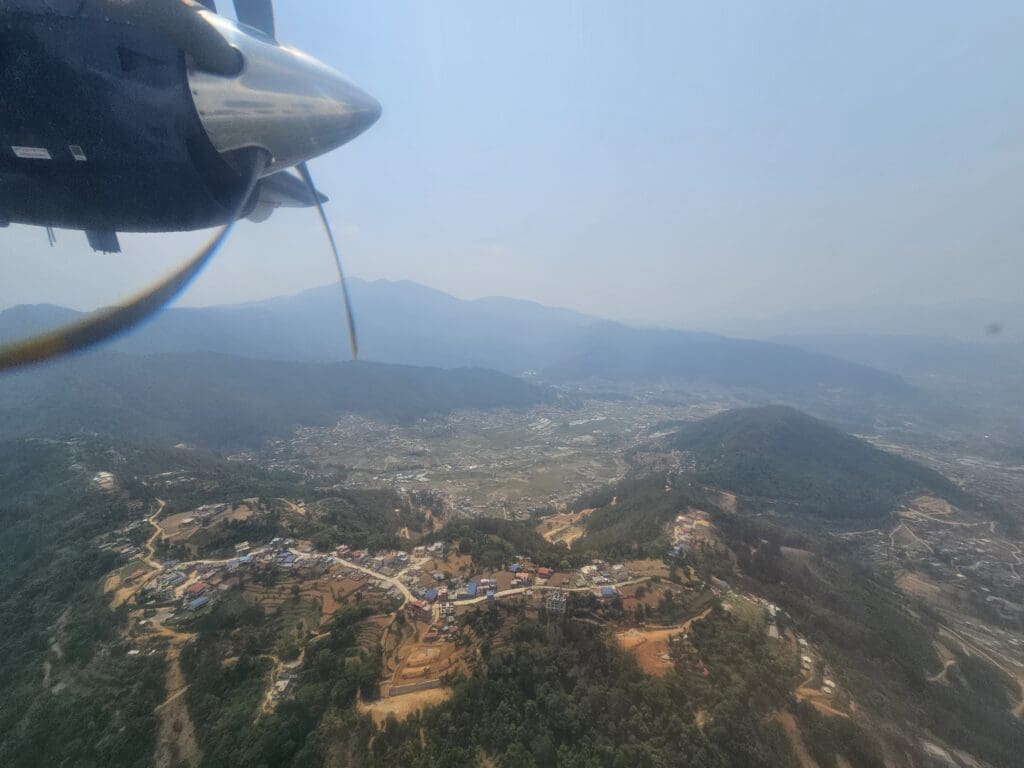
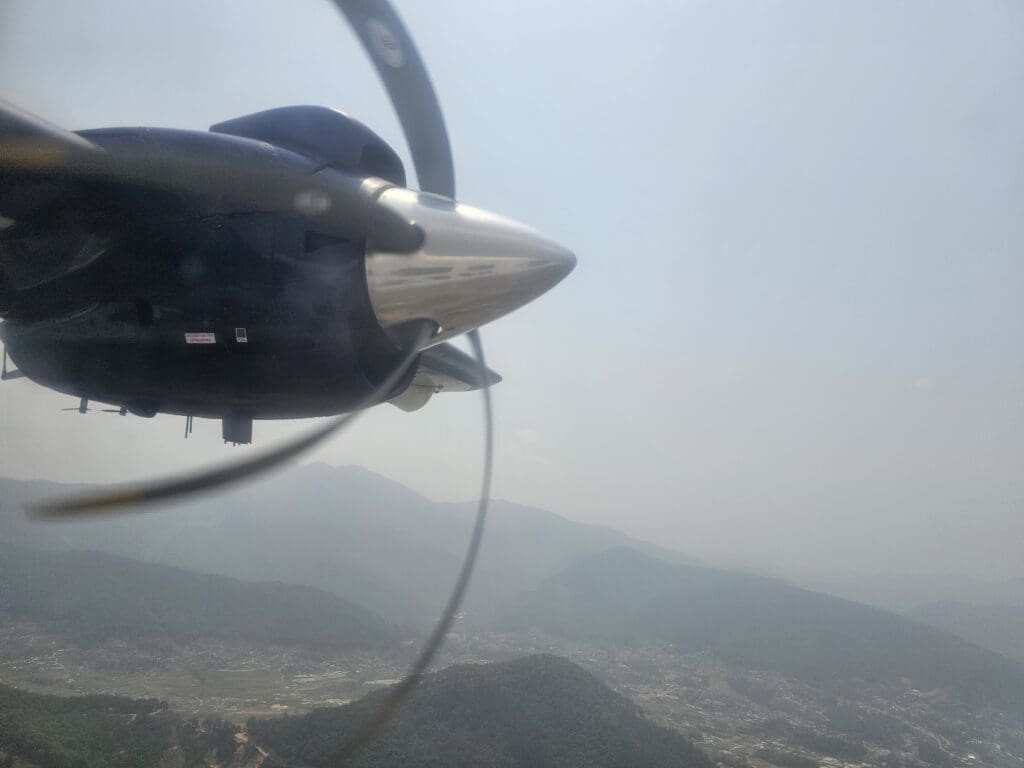
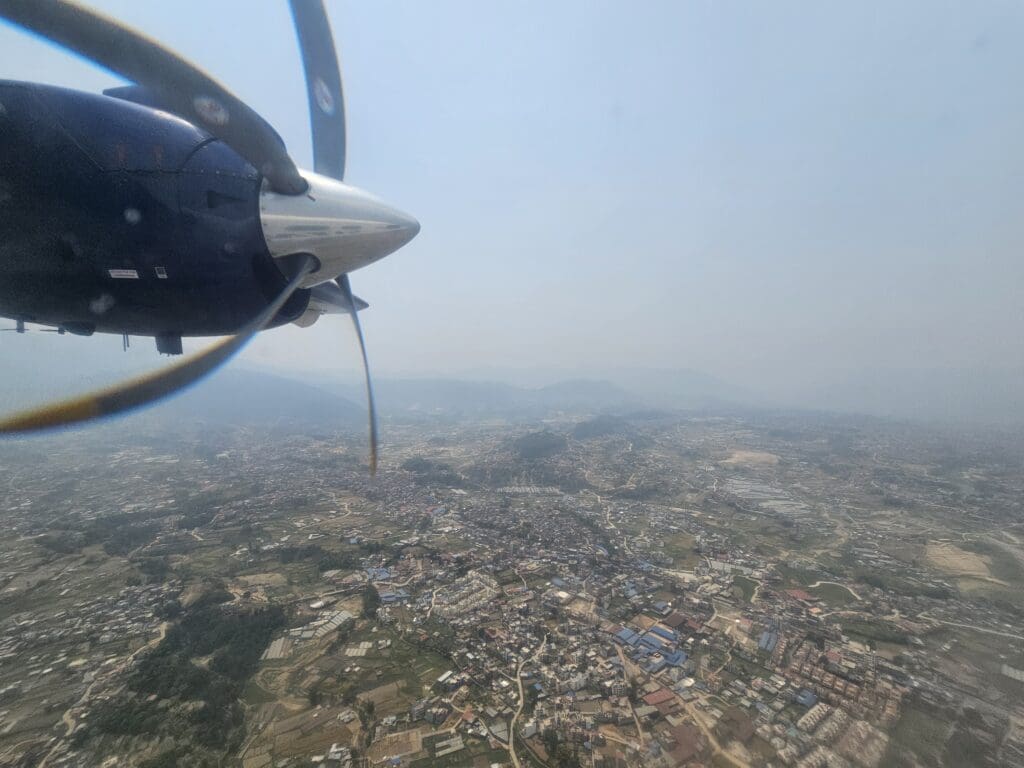
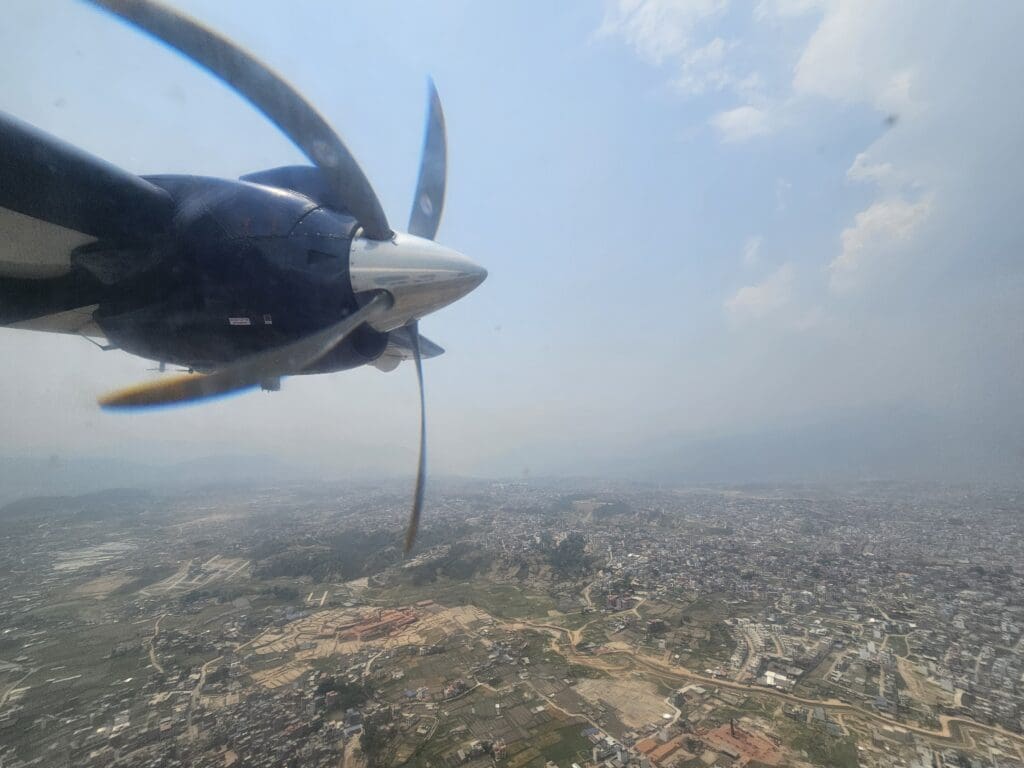
Looking outside, after undertaking two racetrack shaped loops, the green hills of the Kathmandu Valley were soon replaced by the dusty urban sprawl of the towns and suburbs such as Jharuwarasi, Mahalaxmi and Lalitpur which sit just to the south of the Nepali capital. Once lined up for an approach to Runway 02, a few jolts could be felt as the flaps were extended, soon followed by the aircraft’s landing gear which fell into position with a noisy clunk.
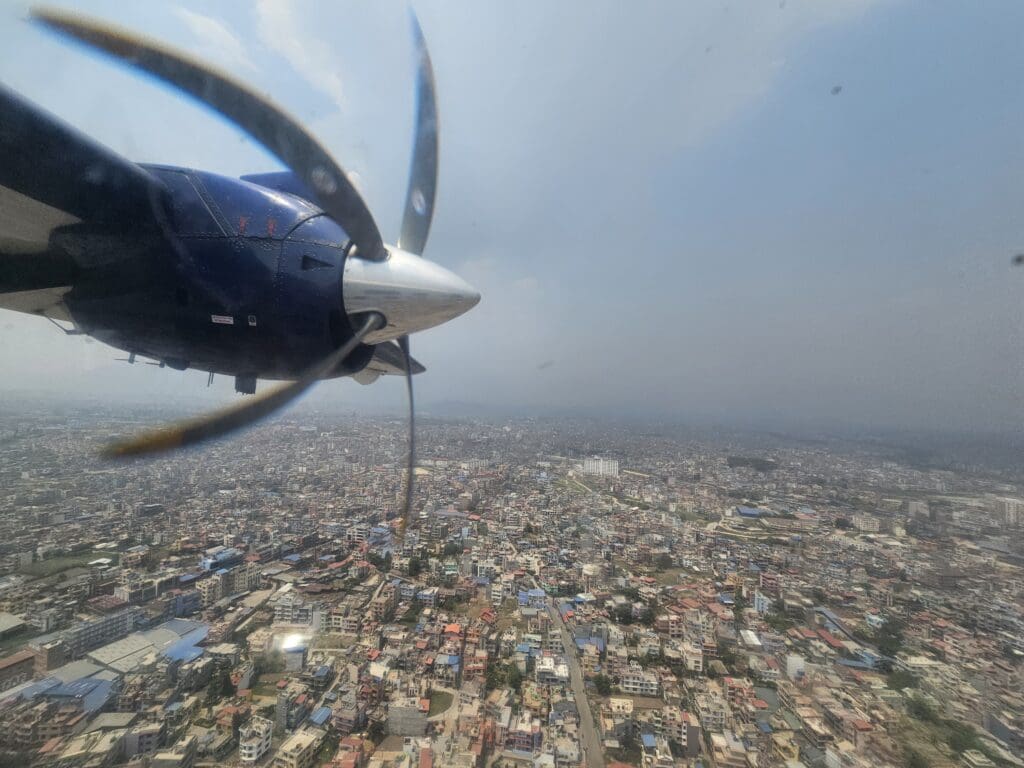
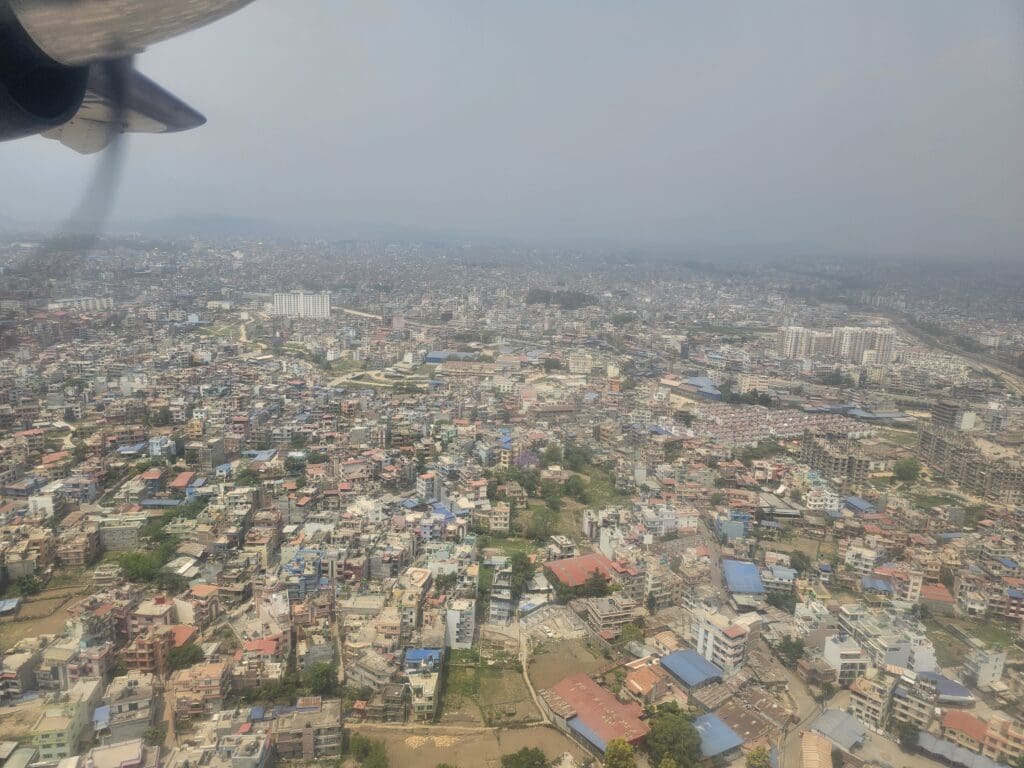
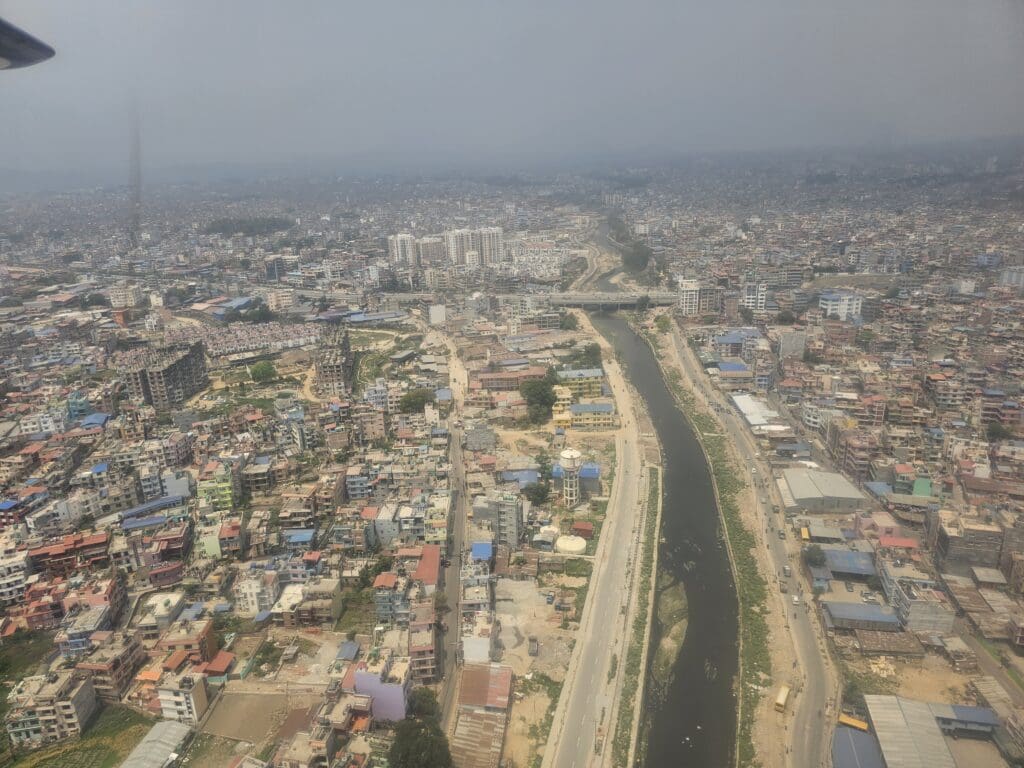
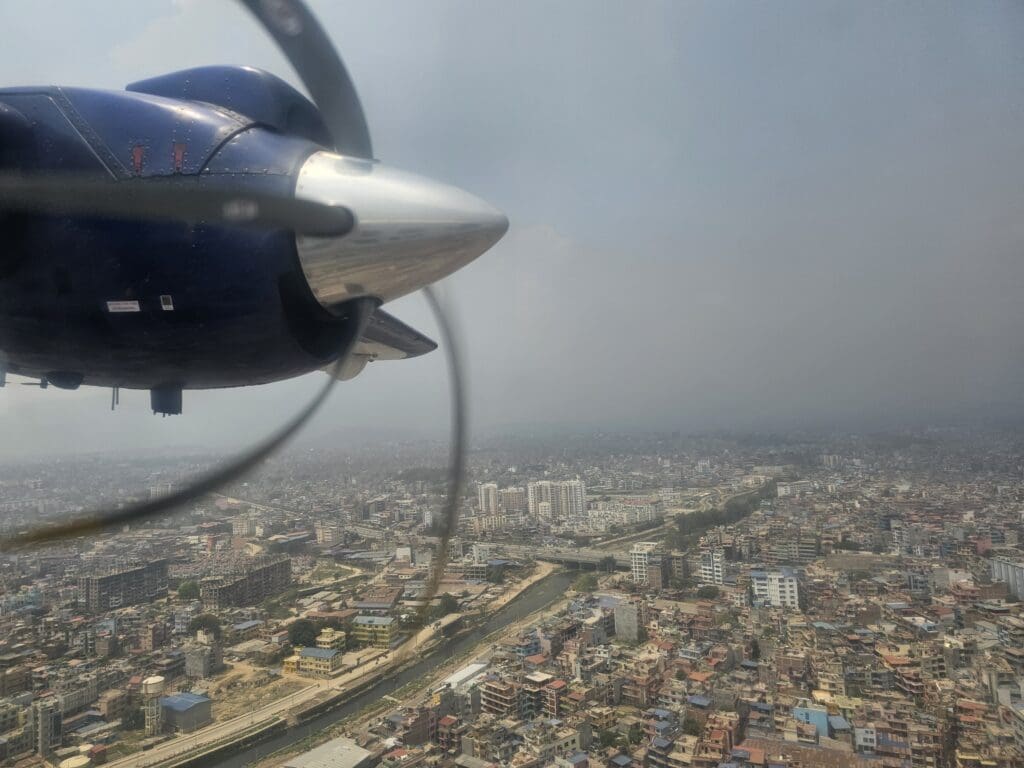
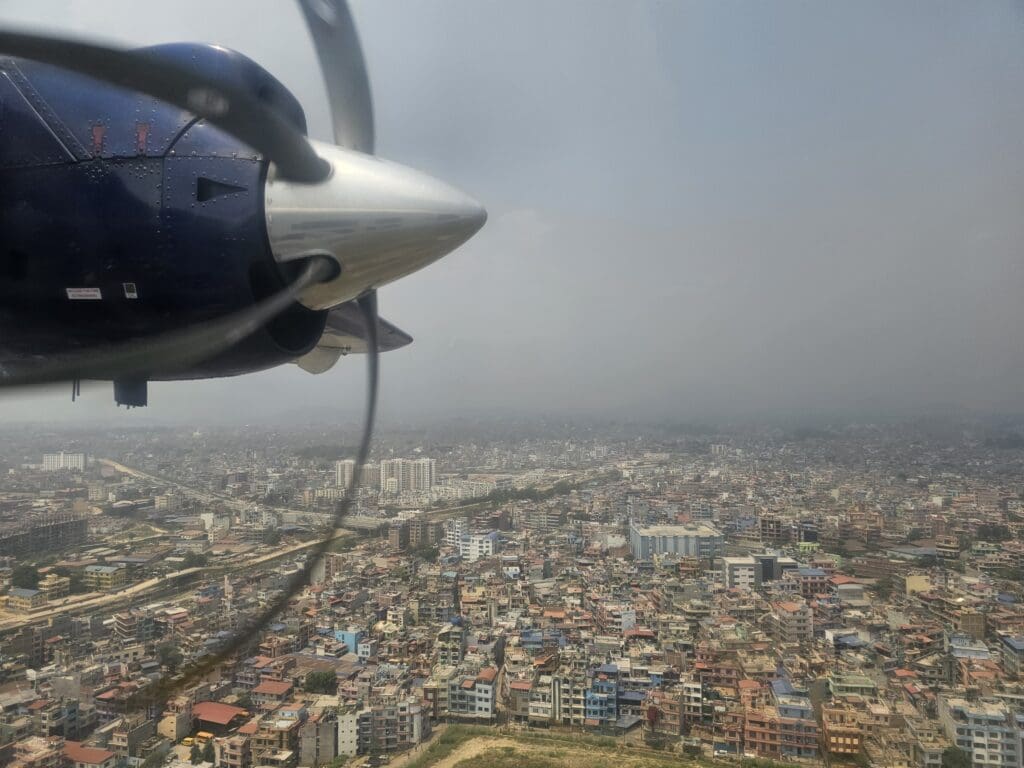
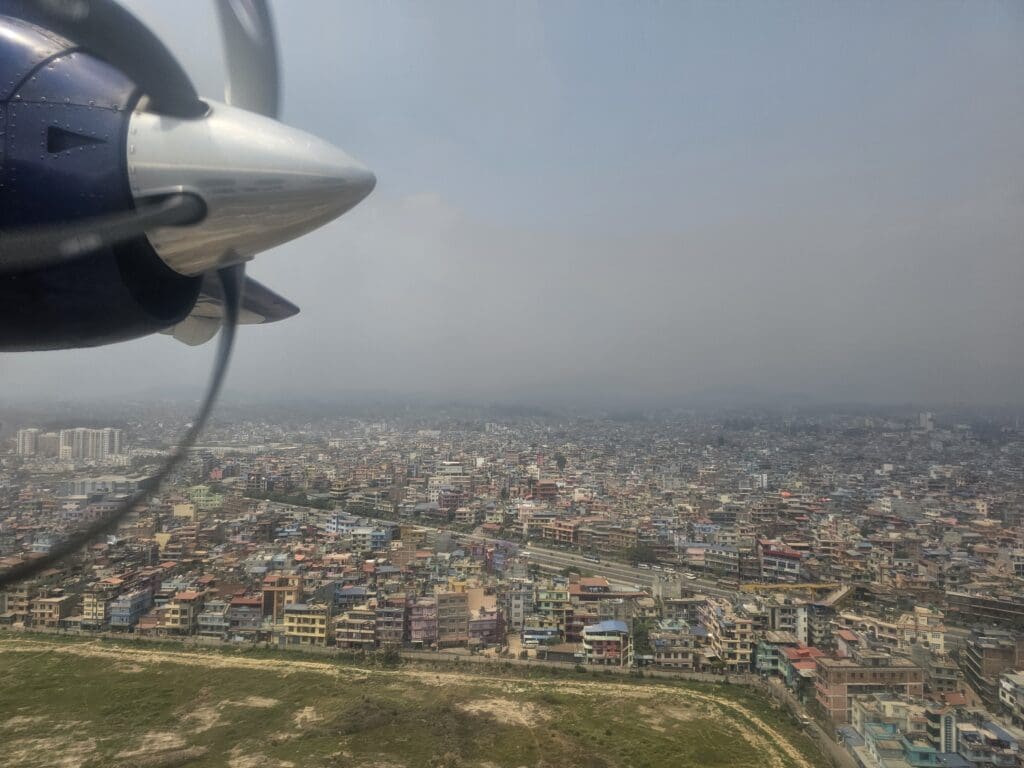
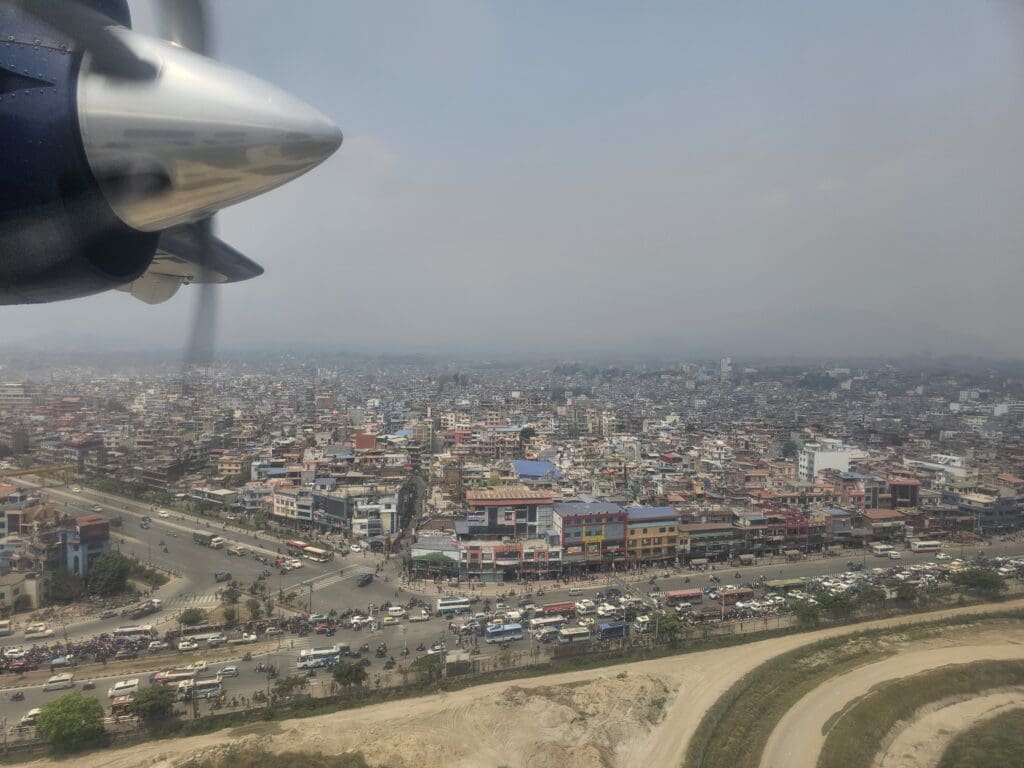
From Lalitpur, the Dornier descended over the busy and chaotic Kathmandu streets, soon crossing the Manohara River and whizzing over Kathmandu Tribhuvan Airport’s southern perimeter fence. After 37 minutes in the skies, the Dornier made a firm and squeaky touchdown on the runway which was soon followed by the roar of the reverse thrust. At that time, an elephant walk of turboprops consisting of two Buddha Air ATRs and a Shree Airlines Dash 8 Q400 could be seen waiting to depart, after which the terminal appeared. That lunchtime, the terminal and nearby stands seemed to be rather busy, hosting Nepal Airlines’ entire Airbus A330 fleet, three Himalaya Airlines aircraft, alongside two Chinese Airbus A319s provided by Air China and Sichuan Airlines. Meanwhile, one unexpected visitor took the form of an Azerbaijani government Gulfstream G650!
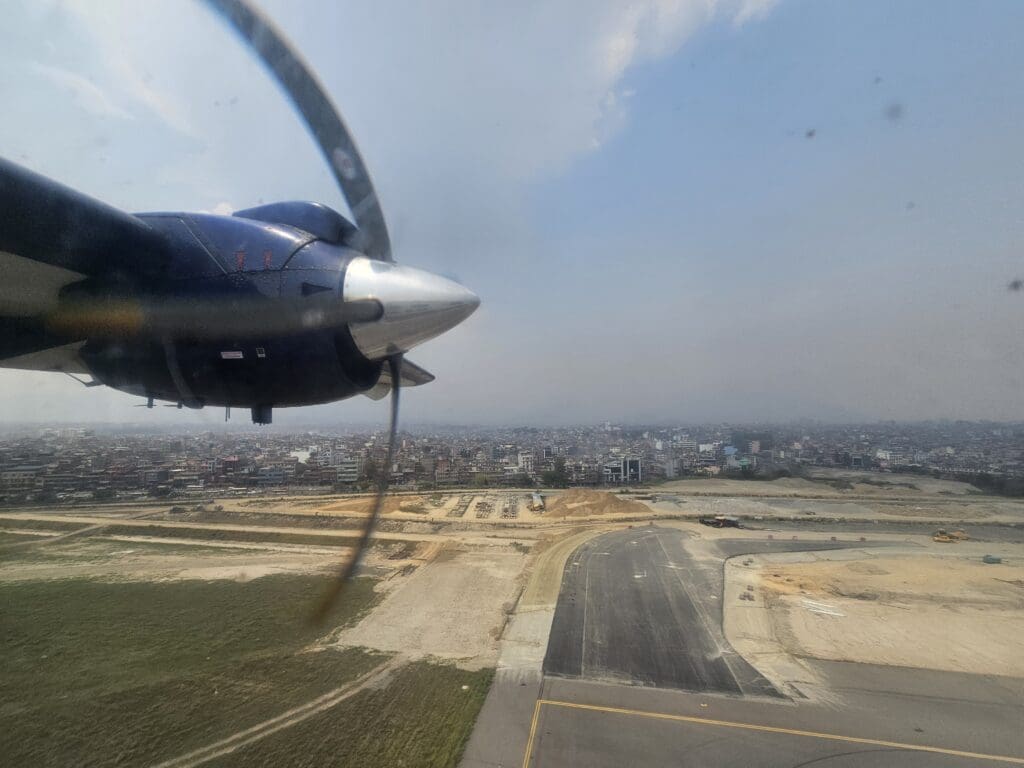
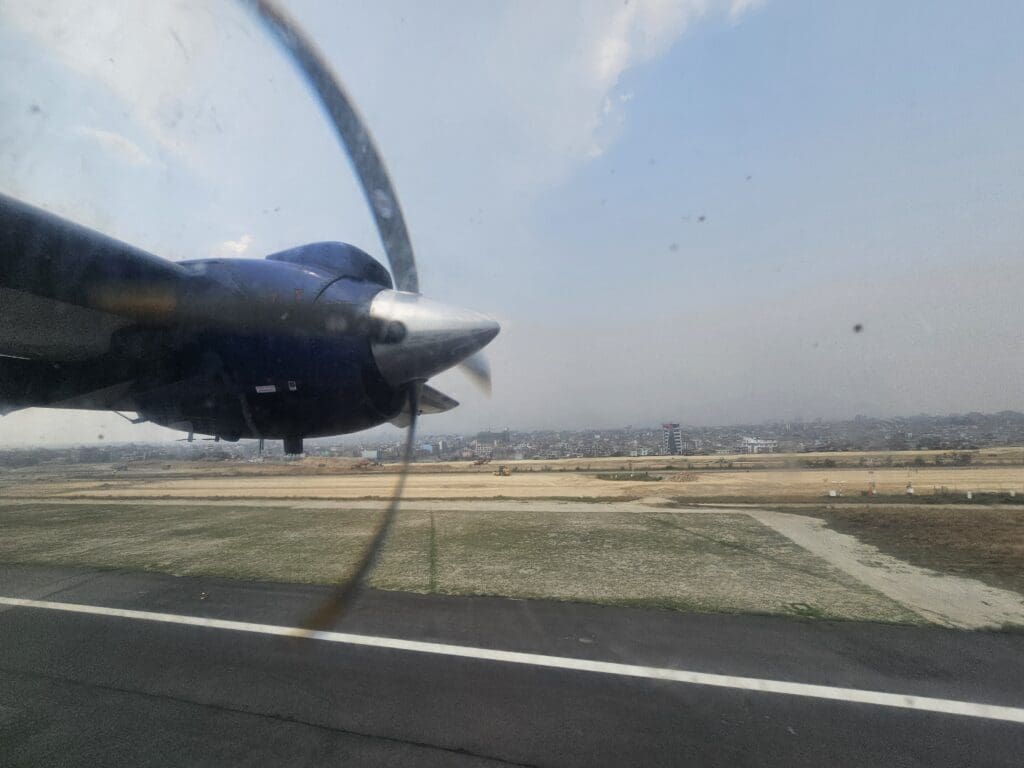
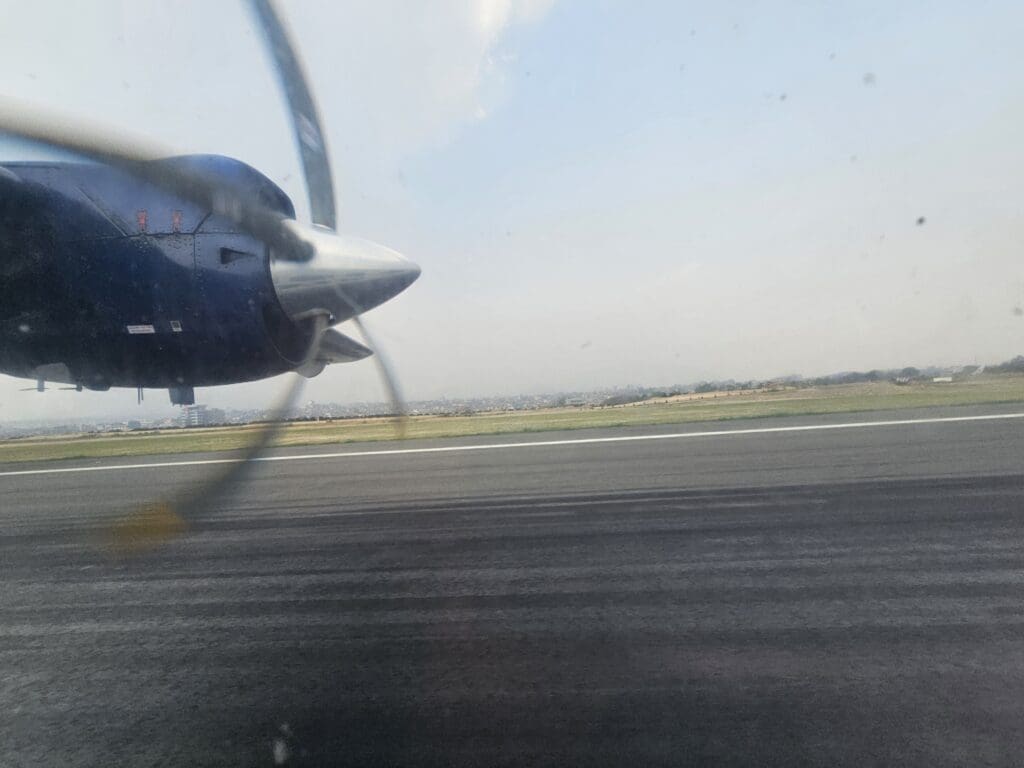
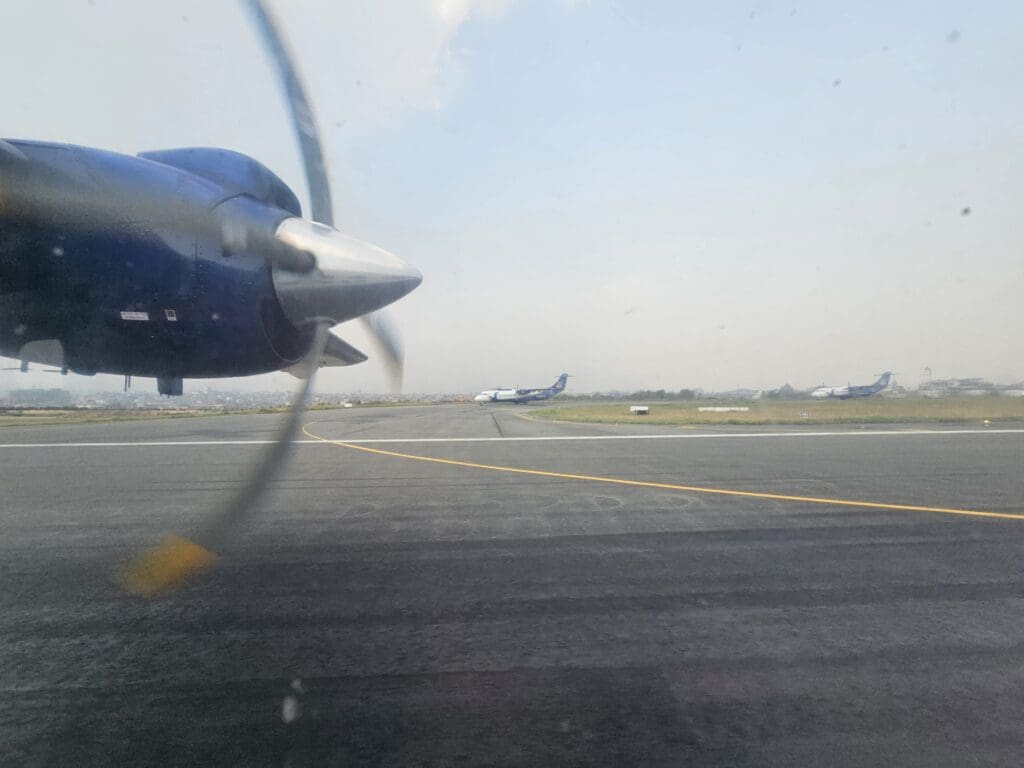
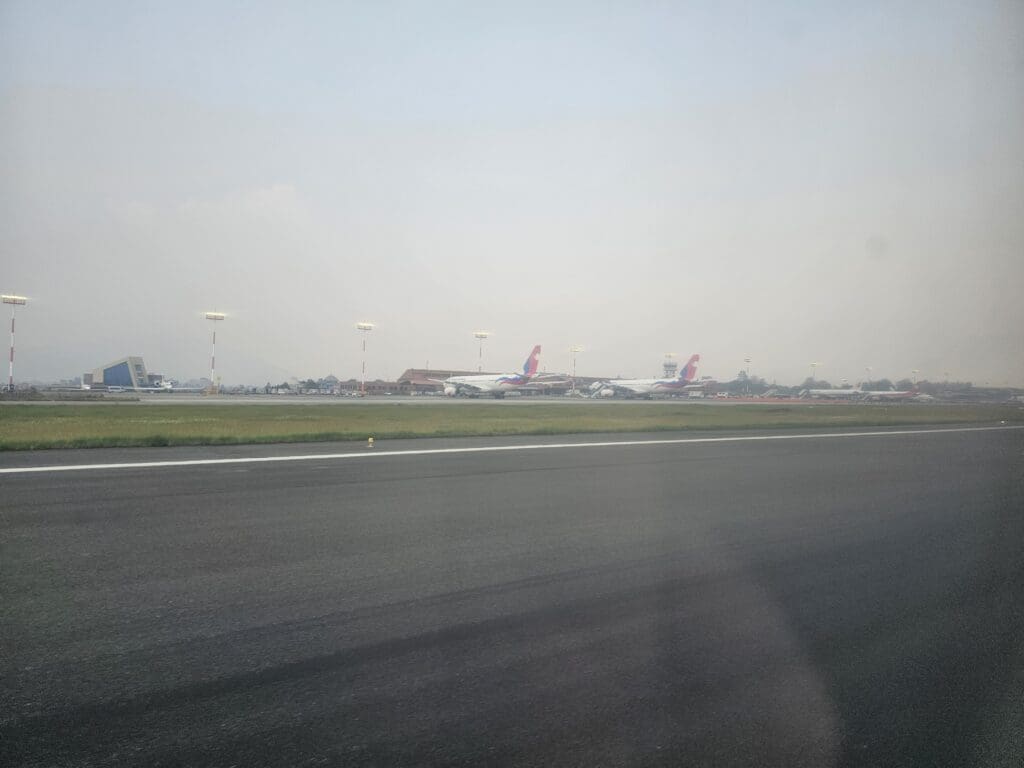
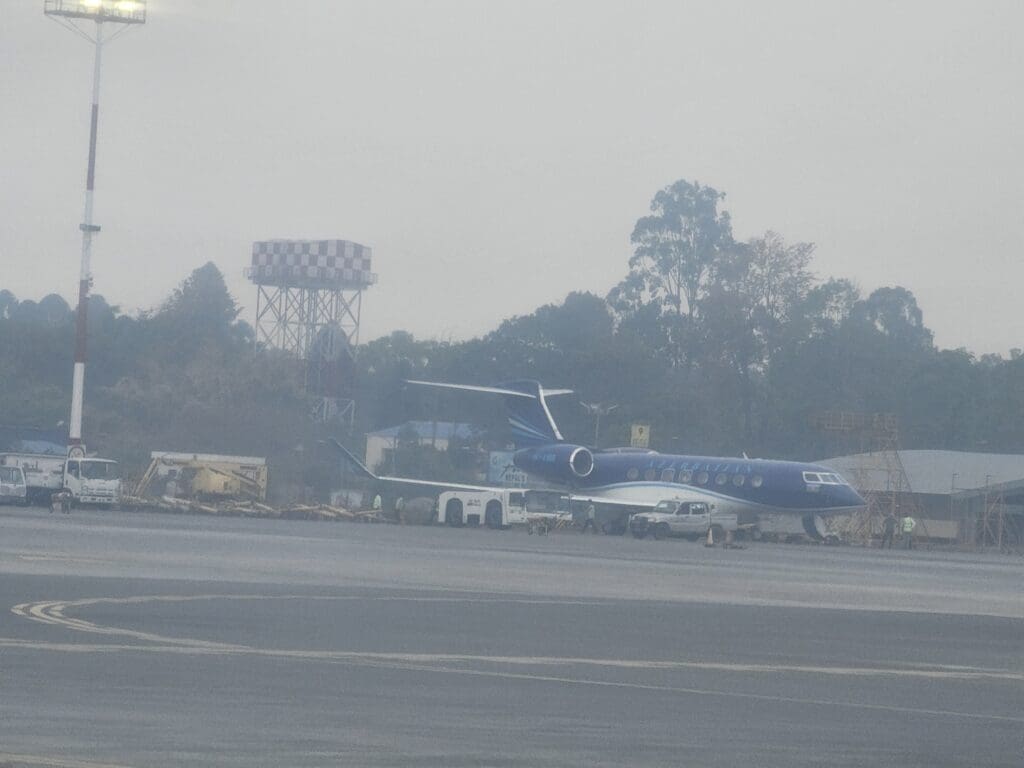
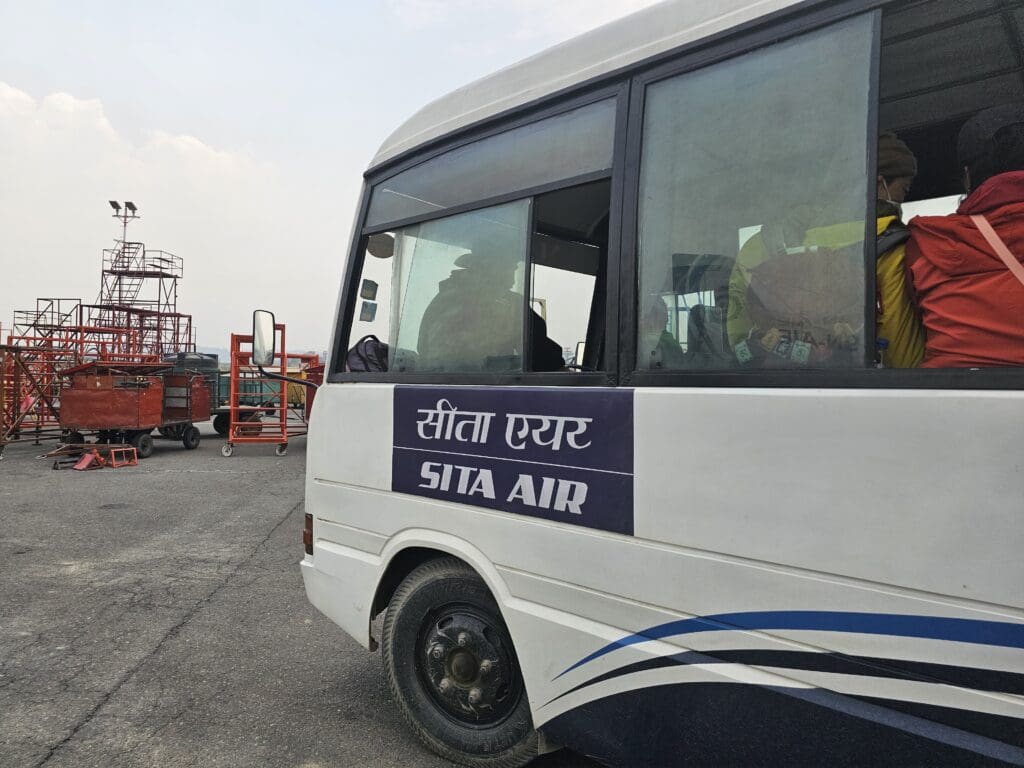
From the runway, the Dornier made its way over to the domestic apron, passing the terminal and the nearby hangars where a significant proportion of the eclectic fleet of fixed-wing aircraft and helicopters that make up the Nepalese Army Air Service’s fleet could be seen – the largest of which came in the form of their sole IPTN CN-235. After this, the Dornier headed down a line of ATR and Dash 8 Q400 turboprops operated by Buddha Air, Shree Airlines and Yeti Air, with these being readied for flights to destinations across Nepal. Soon, the Dornier came to a halt at Stand 16 where the engines spooled down temporarily resulting in peace and quiet before the cabin door was opened. With a battered Sita Air bus already waiting to meet the aircraft, once the cabin door was open, disembarkation commenced immediately. At the neighbouring stand, the Tara Air Twin Otter that had departed Lukla minutes after our flight came to a halt.
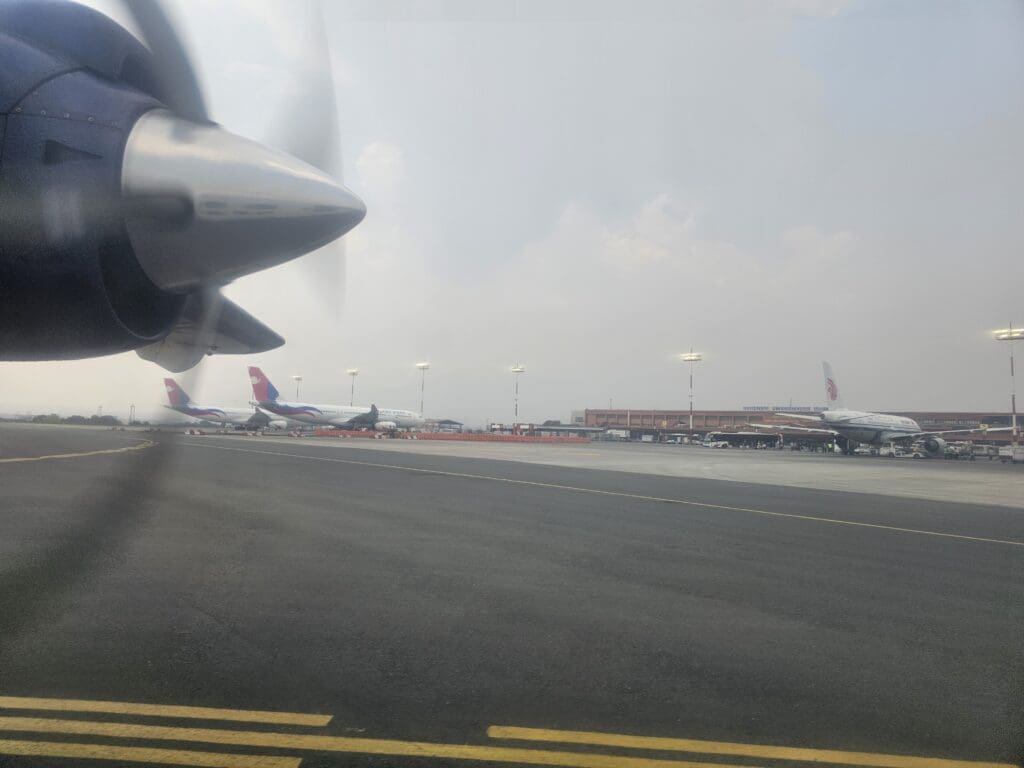
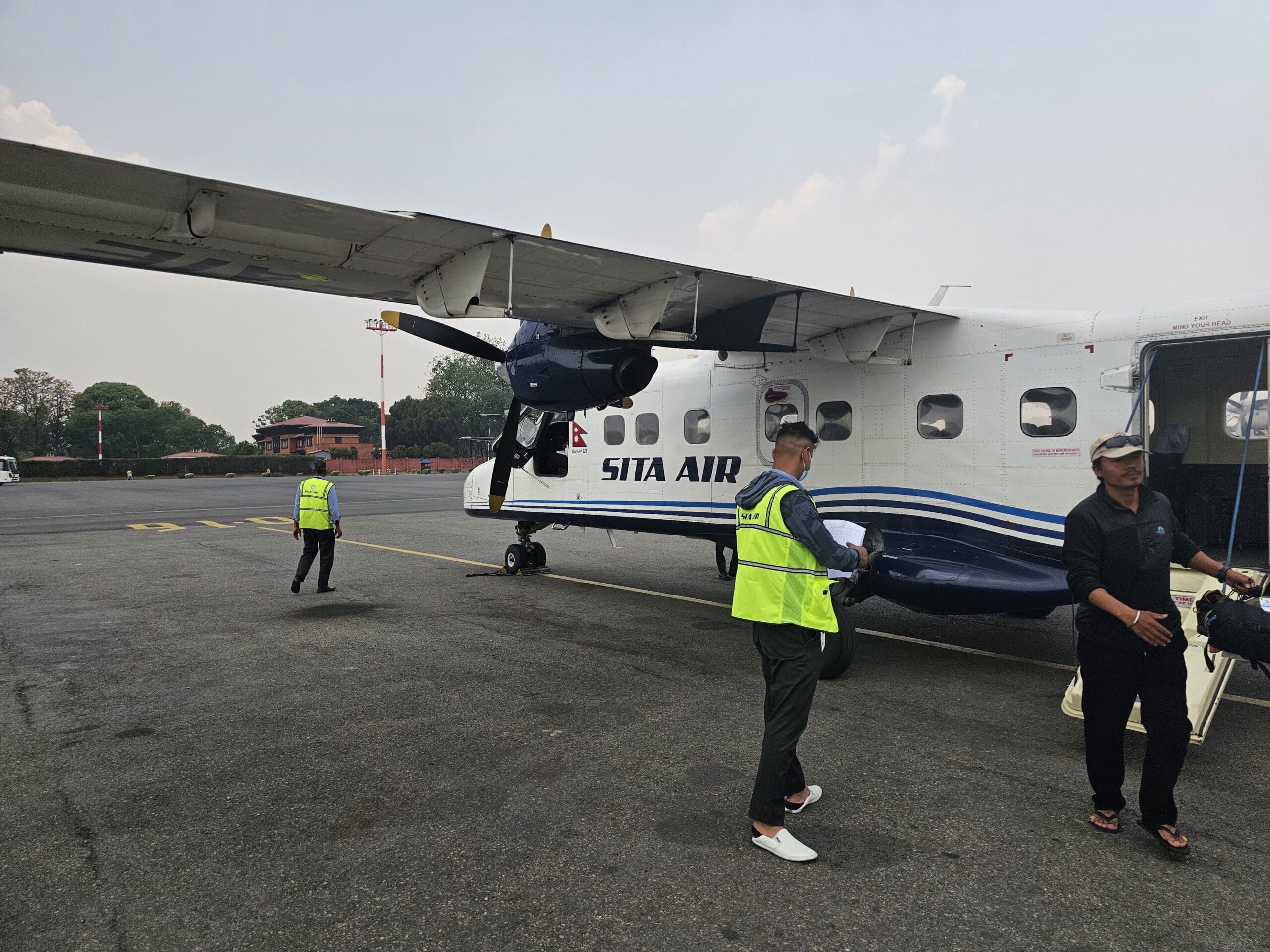
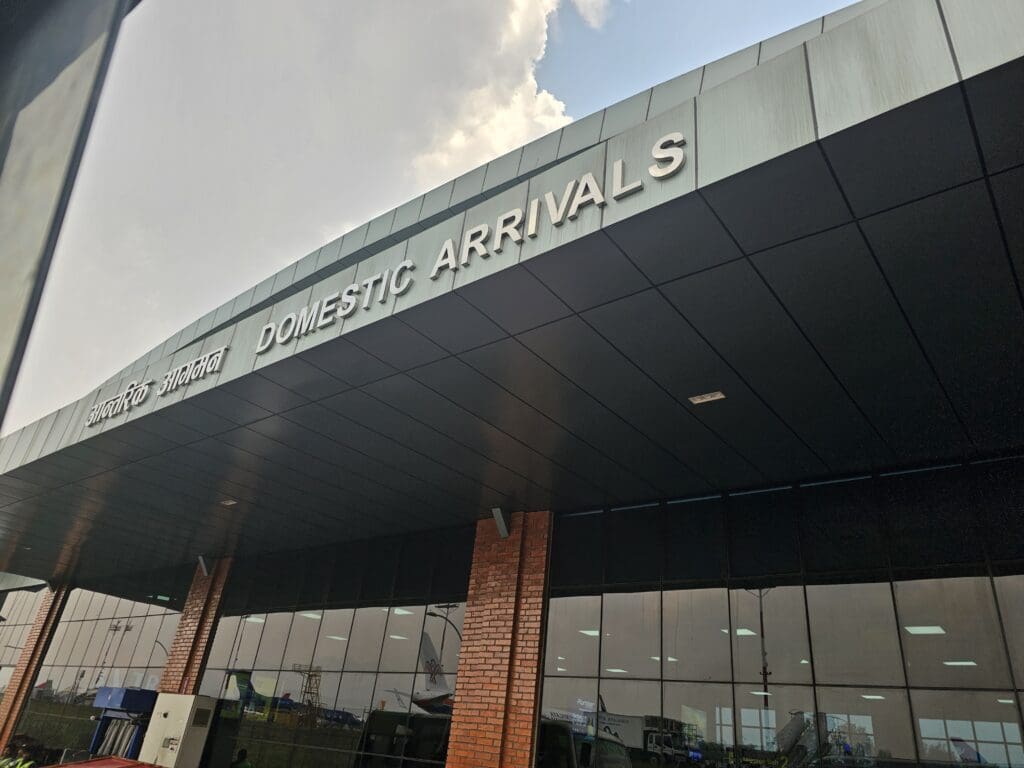
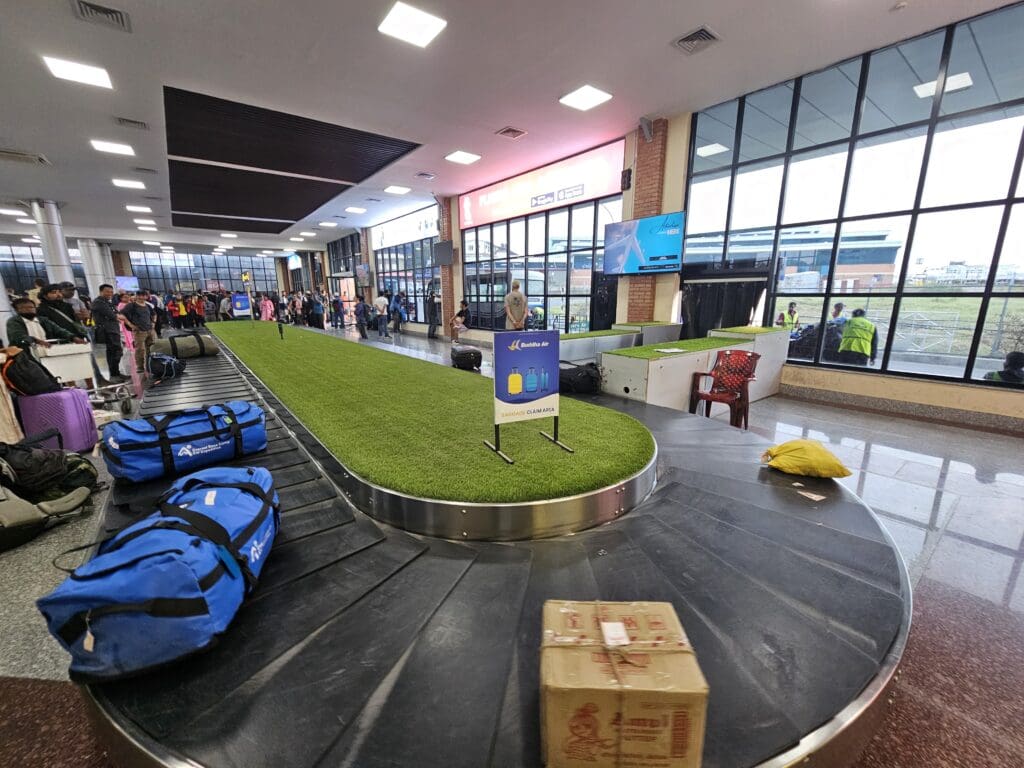
Whilst all passengers promptly boarded the bus, some waiting was in order as we would share this with the three crew members, who, having completed the Dornier’s last flight of the day would have to secure the aircraft. Meanwhile, bags were loaded onto a trolley, and, in a rather efficient manner, this trolley was then connected to the back of the bus! As we made our way to the terminal, the bus door remained open and the Captain hung out of the door – this being something that I have not seen at any other airport anywhere in the world! After a few minutes, we arrived at the domestic arrivals hall, which id detached from the main departure terminal – something that I have only previously come across in Tashkent. Once there, I got off the bus, whilst a ground agent loaded the bags onto one of the two conveyor belts. With bags appearing no more than a minute after walking into the baggage collection hall, I soon picked up my backpack and met the tour company representative who would shuttle me to my hotel.
Summary
As Nepali flying goes, my experience with Sita Air was totally fine. Granted, the Dornier 228 is not the most comfortable aircraft, but it got me to Kathmandu in one piece, and as an aviation enthusiast, I was happy to catch a ride on what is a fairly rare and unusual aircraft across much of the world.