Remembering British Airways Boeing 747: Heathrow to Dubai on the Queen of the Skies
After almost exactly fifty years in service, in April 2020, British Airways operated its last scheduled passenger Boeing 747-400 service, taking the form of an overnight slog from Miami to London Heathrow. The type which had once been heralded as British Airways’ long haul workhorse seen across the world had been slated for eventual retirement by the mid-2020s, however the downturn caused by the pandemic saw British Airways undertake the swift mass retirement of all remaining Boeing 747s. This would later prove rather controversial as once passenger figures began to pick up again, the airline ultimately lacked sufficient capacity to make the most of this bounce back, leading to cancelled routes. Unaware that this was going to be my final flight on a British Airways Jumbo Jet, in February 2018, I had the pleasure of flying onboard a British Airways Boeing 747-400 to Dubai and back. A ride which, being an aviation enthusiast, I was very much looking forward to and I could hardly resist the opportunity to write a review of this!
Background
As a Brit, I must admit that despite being a relatively regular flyer, before this flight my long haul experience with British Airways had been relatively limited. My last long haul slog with the airline occurred almost twelve years earlier when I had crossed the Atlantic on one of their Boeing 747-400s and Boeing 777-200ERs, flying from London Heathrow to New York and back. Since then, I had undertaken no more than a small handful of flights onboard British Airways’ Airbus A320 Family and now long-retired Boeing 737-400s to France and Germany. Thus, I was somewhat pleased to discover that I would be flying to Dubai with British Airways, and travelling onboard one of their venerable Boeing 747-400s.
I received my booking reference just two days before my flight, and I opened up my itinerary on British Airways’ modern and easy-to-use website. Opening up the seat map, few seats appeared to remain available and unlike some full-service carriers, unfortunately, seats can only be reserved for a fee for most British Airways World Traveller passengers. Those who wished to guarantee themselves a window seat could reserve this for a pricey £39 near the rear of the cabin, with the cost to pre-select a seat rising up to £77. Aside from seat selection, passengers can pay between £22 and £27 to reserve a luxury meal, with options including Gourmet Dining, Healthy Choice, Taste of the Far East and Vegetarian Kitchen. Finally, before departure, I downloaded British Airways’ app which rather usefully provided the service status of the Heathrow Express, Heathrow Connect and Piccadilly Line alongside the usual information regarding the weather at passengers’ destinations and flight information.
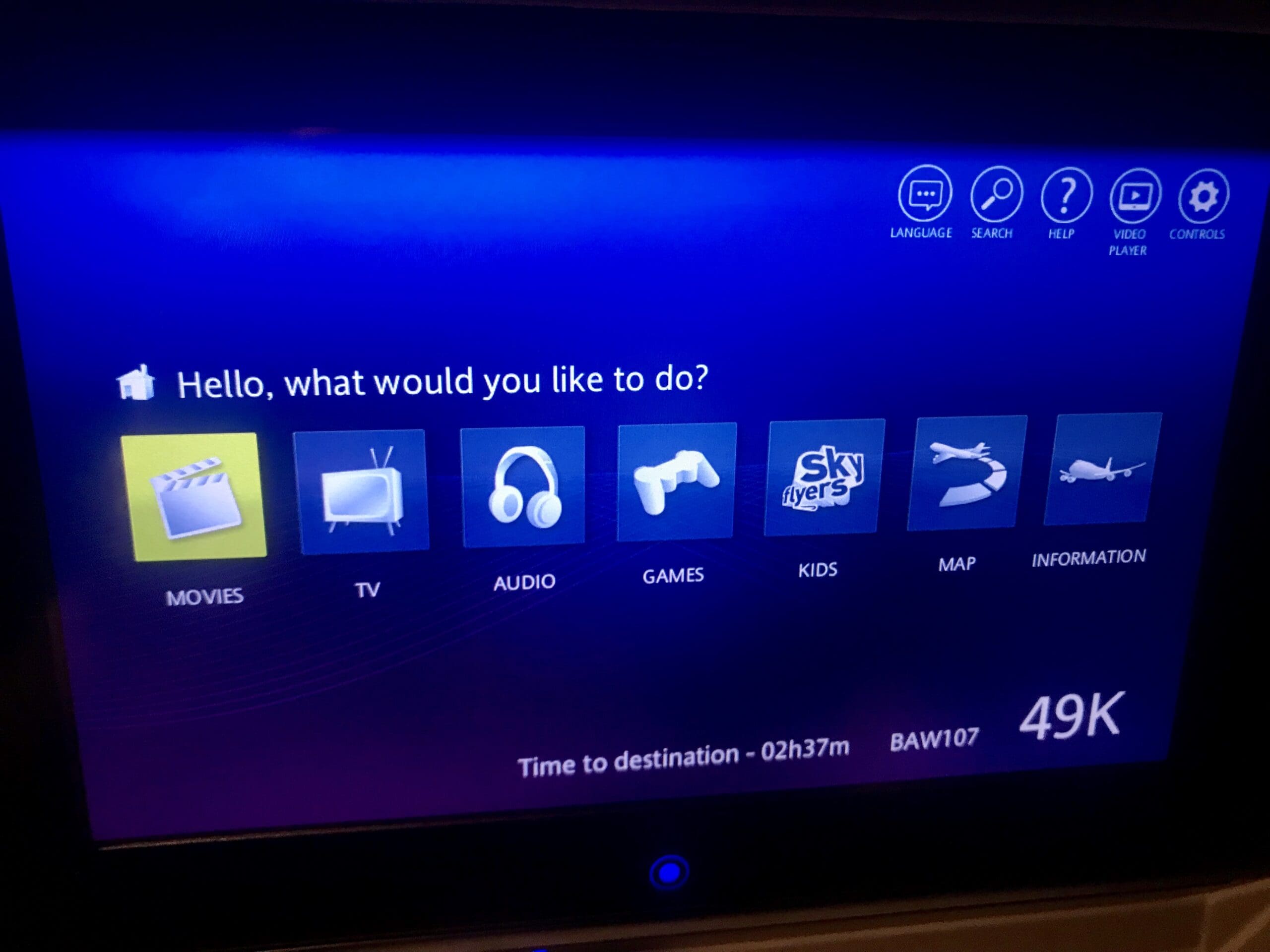
Much to my delight, despite opting not to pay to pre-reserve a seat, I was able to select this during online check-in. However, I did not have much of a choice, with just one window seat, Seat 49K remaining available. With little hesitation I selected this, and soon received my mobile boarding pass without issue.
The Flight
Ignoring the ‘traditional’ advice given to those departing Heathrow on long haul flights, I decided against rocking up to Terminal 5 with three hours to go until departure and cut things slightly finer. At the time, living a short walk away from Holloway Road Station in North London, the easiest and most direct means to reach Heathrow Airport was to take a Piccadilly Line London Underground train as it winds its way through Central and West London, taking a little over an hour to reach its terminus at Terminal 5.
Once I had packed everything that I would need for my stay in the Middle East, I left my flat at 0910 and made the short walk through the freezing January cold to Holloway Road Station where I arrived about five minutes later. Once inside, I tapped in and lugged my bags into the station’s rickety lift before arriving at the platform. Fortunately, having timed things just right, I didn’t have too long to wait until the next Terminal 5 bound tube train of 1973 vintage came rattling into the platform.
As one may expect when taking the tube between 0600 and 1000, this train was jam-packed with commuters, however many passengers left the train two stops later at King’s Cross St Pancras which enabled me to find a seat for the ride to Heathrow. After noisily screeching across central London, the aircraft headed out into the open air at Baron’s Court in West London. Now with signal, I decided to check British Airways’ app which advised that the flight would now be departing at 1300 due to the late arrival of the aircraft that was scheduled to operate the flight.
Eventually, after a long journey through suburbia, the train arrived at Heathrow, by which time this was rather empty, with just a small cluster of airport and airline staff and passengers jetting off remaining onboard. Once off the train and tapped out of the station, I entered a lift which transported me directly to Terminal 5’s large and modern check-in hall. That morning, this was surprisingly quiet with plenty of queueless desks, self check-in machines and an army of British Airways staff on hand waiting to assist passengers. Whilst I had checked in online and thus only needed to head to the bag drop-off area, wanting a paper boarding pass I decided to head over to one of the check-in machines. Despite the fact that this took a couple of attempts for it to recognise my passport, eventually, this worked and I printed off a black and white boarding pass. Once I had this in hand, I made my way over to the self-bag drop-off area where I had my boarding pass scanned and passport briefly checked before I was able to head up to one of the machines. These were easy to use and I was soon able to send my battered purple suitcase into the depths of the terminal before a paper luggage receipt was printed out. I also received a digital version of this by email, ending my efficient and trouble-free check-in experience.
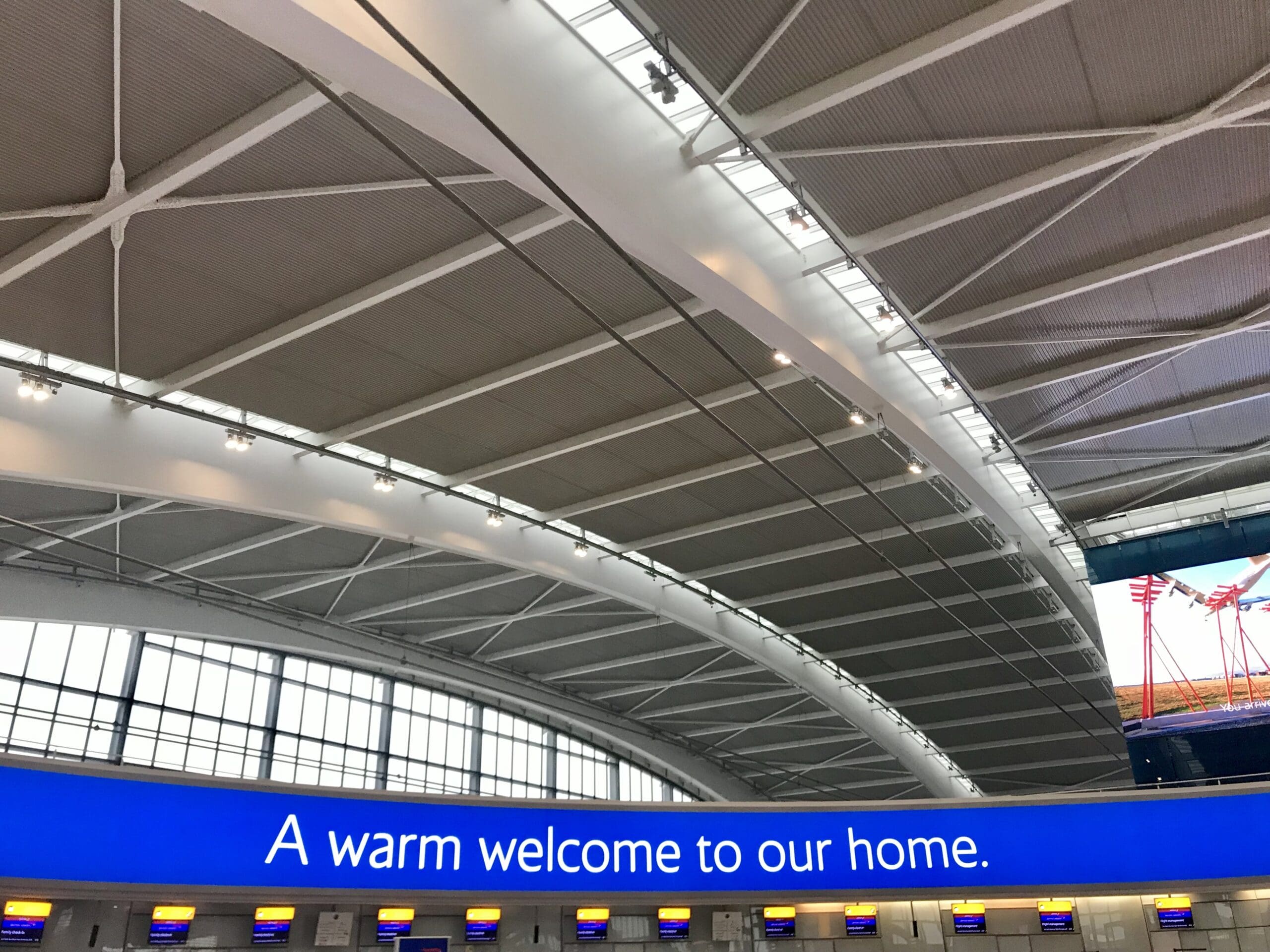
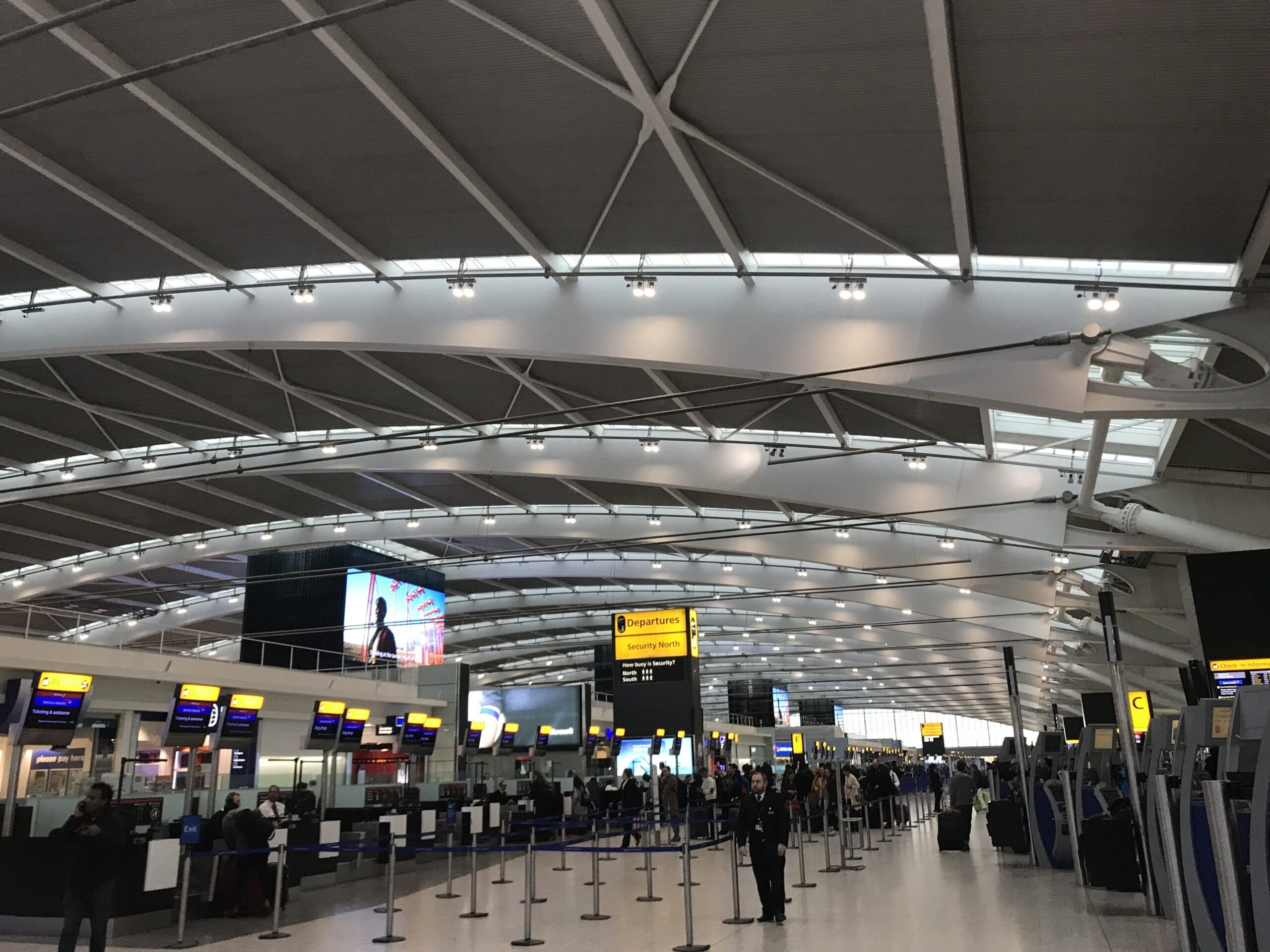
That morning, I found Terminal 5’s check-in hall to be calm, spacious, clean and pleasant, yet despite this, once I had checked in I had little reason to stay there, so I made a beeline for one of the security areas. As with the check-in hall, this was largely empty and I soon arrived at a checkpoint, passing through this quickly and without the need for additional checks. As is often the case at major airports, the terminal’s airside area was significantly busier than the landside portion of the terminal, although I was pleased to find that this appeared equally clean and tidy whilst there were also plenty of spaces to sit down. Whilst the main area of the terminal is modern and nicely designed, to be honest, I do not think I can refer to this as anything other than a glorified shopping centre, with a wide array of cafés, shops and restaurants on offer for passengers to pass the time, but little other that is of particular note.
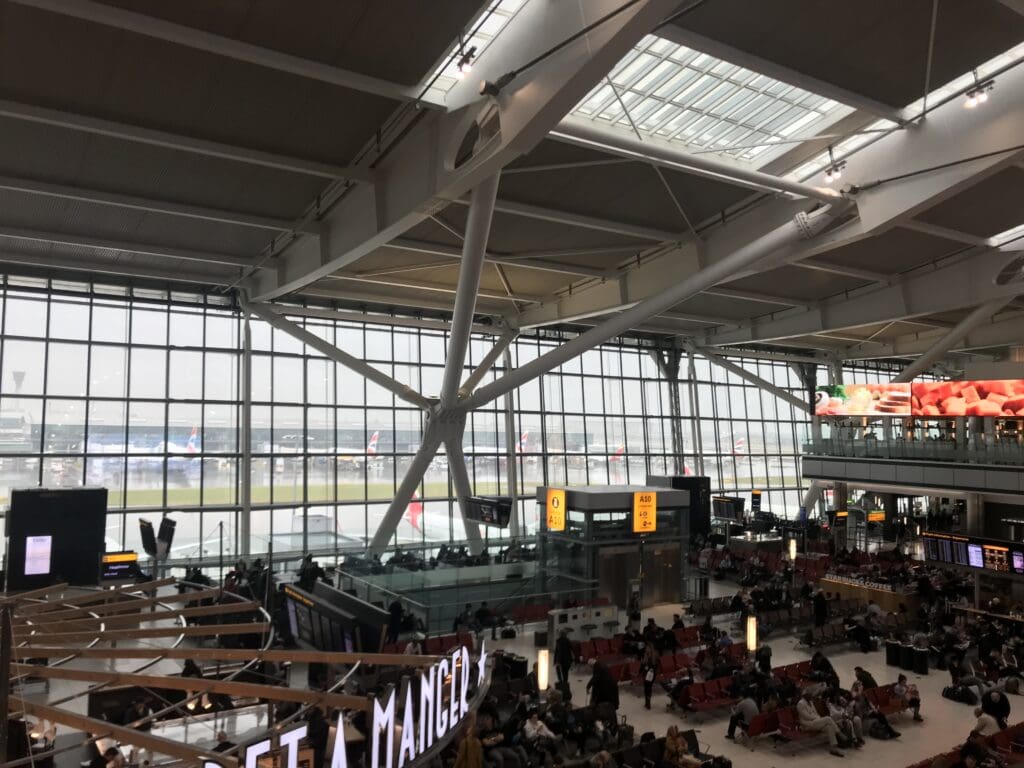
Examining Terminal 5’s layout, this consists of the main terminal and two satellite terminals, Terminal 5B and Terminal 5C. Seeing as the main portion of the terminal was a little busy and does not offer the very best airside views, I decided that, with my flight set to depart from Terminal 5B, I would wait there instead. Following my quick explore of the main terminal, I headed down the long escalators and soon arrived at the people mover station which connects the main terminal with the two satellite terminals.
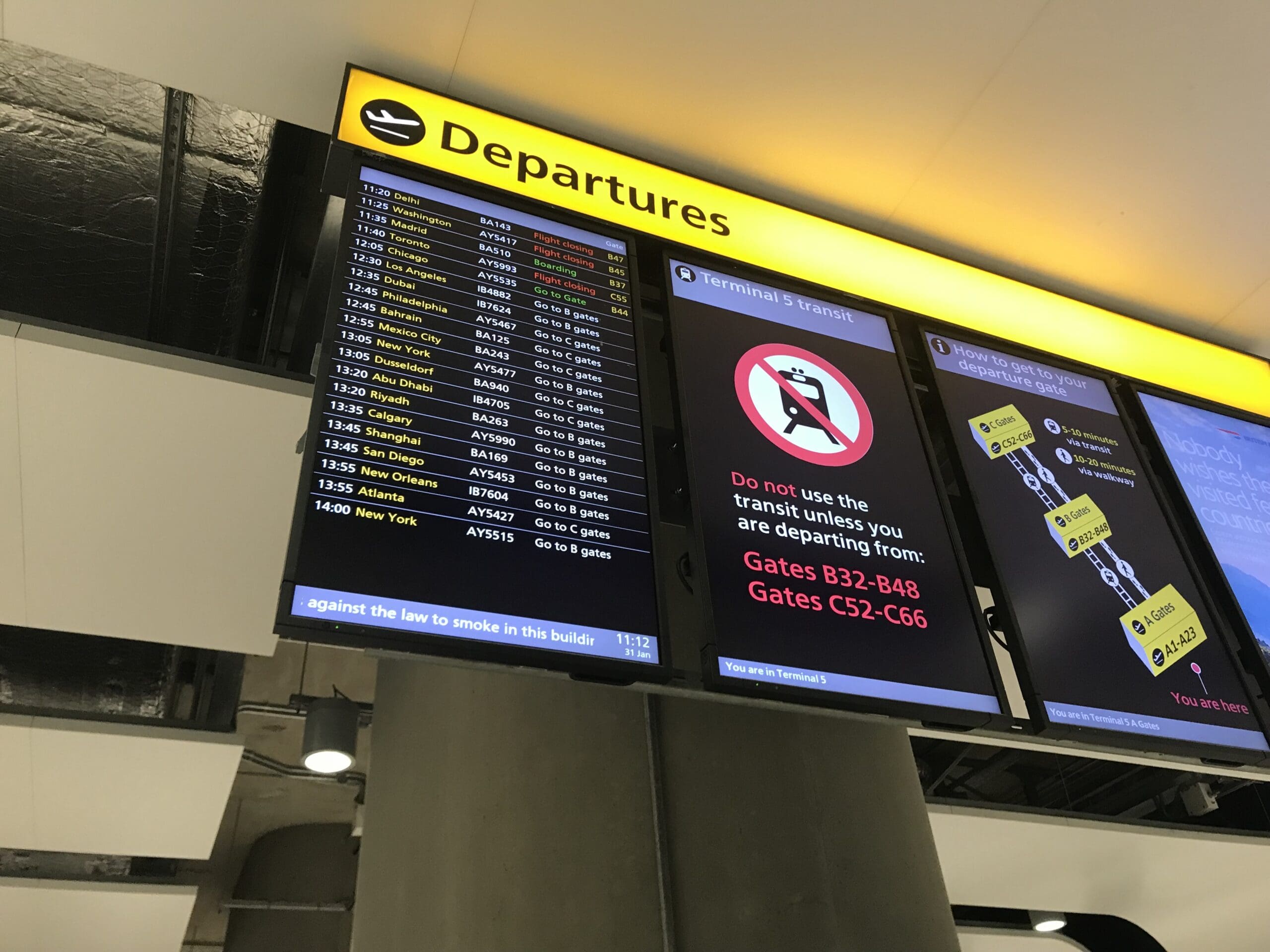
Following a quick ride on the driverless train, I disembarked at Terminal 5B alongside a handful of other passengers, most of whom appeared to be heading off on transatlantic flights to the United States. After heading up the escalators, I arrived in the spacious and modern satellite terminal which was nearly totally empty. Much to my delight, large and clean windows offered superb views of the stands outside, which good views of Heathrow’s two runways could be had from either end of the terminal. That lunchtime, a smorgasbord of British Airways’ Boeing widebodies could be seen below through the rain droplet filled windows, with these being prepared to head off on flights to Calgary, Chicago, Delhi, Los Angeles, Madrid, New Orleans, New York JFK, Riyadh, San Diego and Shanghai Pudong. As with the main terminal, Terminal 5B appeared to be spotlessly clean and I found the complimentary wifi to work well throughout my stay. As I waited, with little else to do I took a seat at the end of the terminal allowing for a good view of the stream of spray-filled departures from Runway 27L. These aircraft ranged in size from small Flybe Dash 8 Q400s to mammoth Airbus A380s and Boeing 747-400s as well as the pencil-like Airbus A340-600.
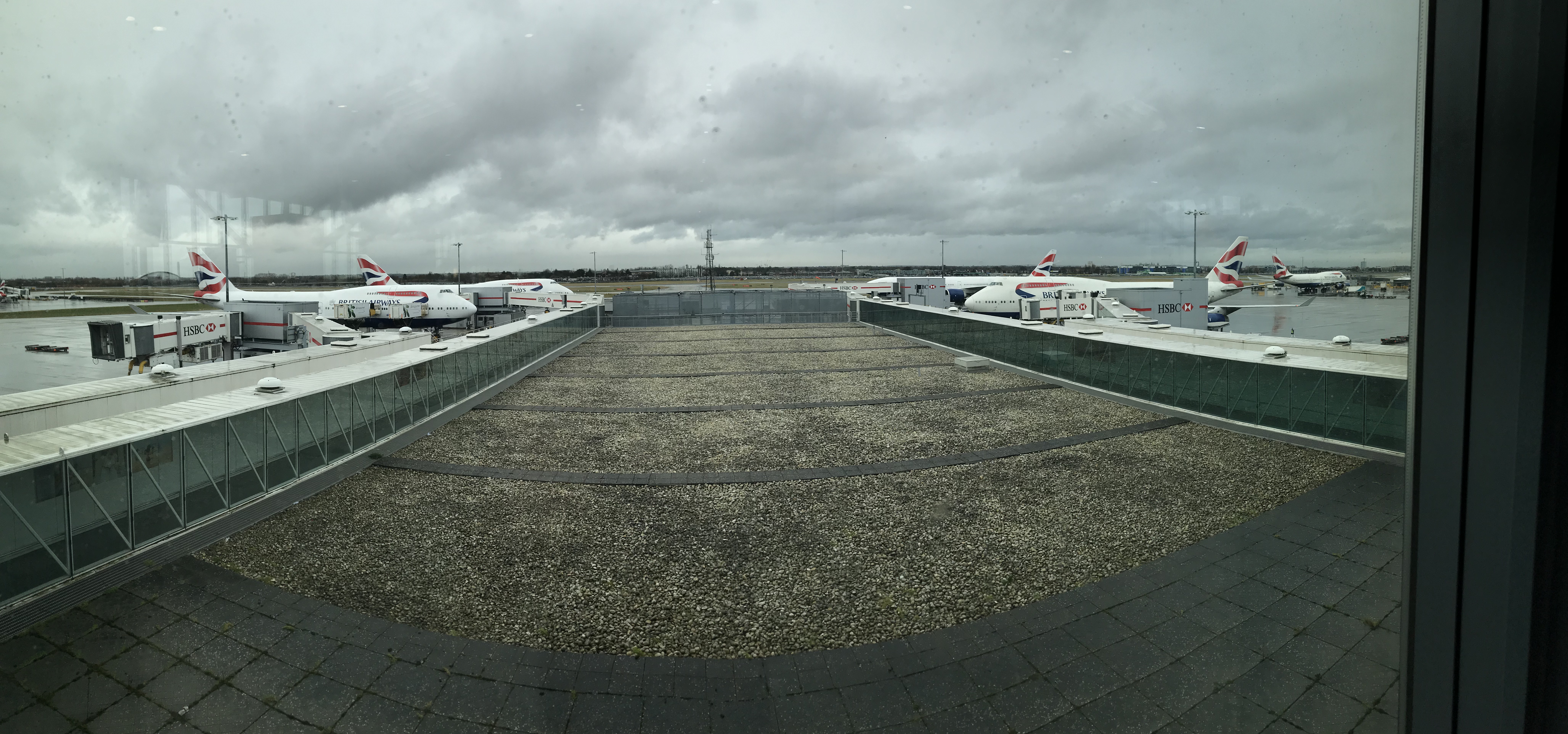
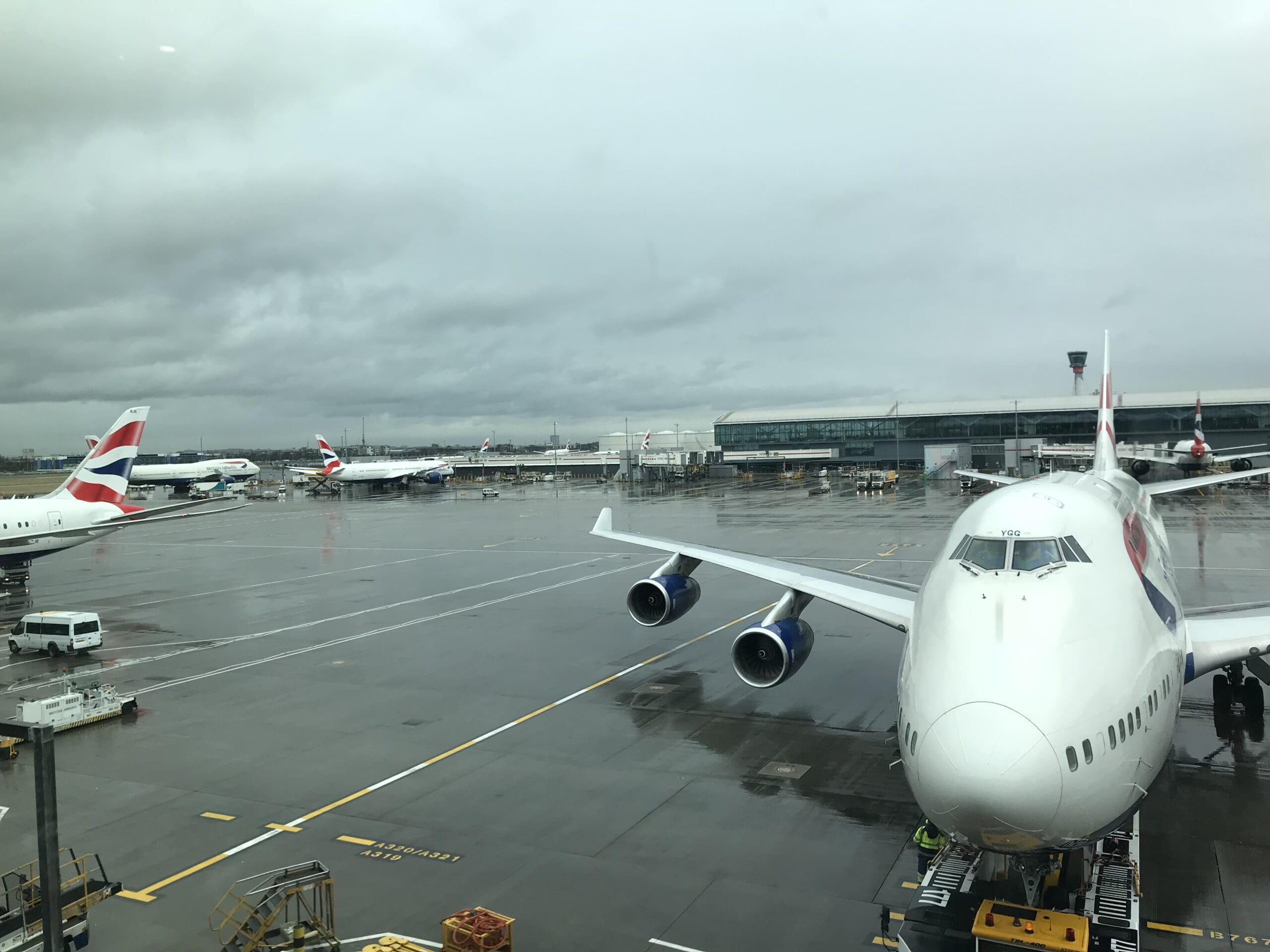
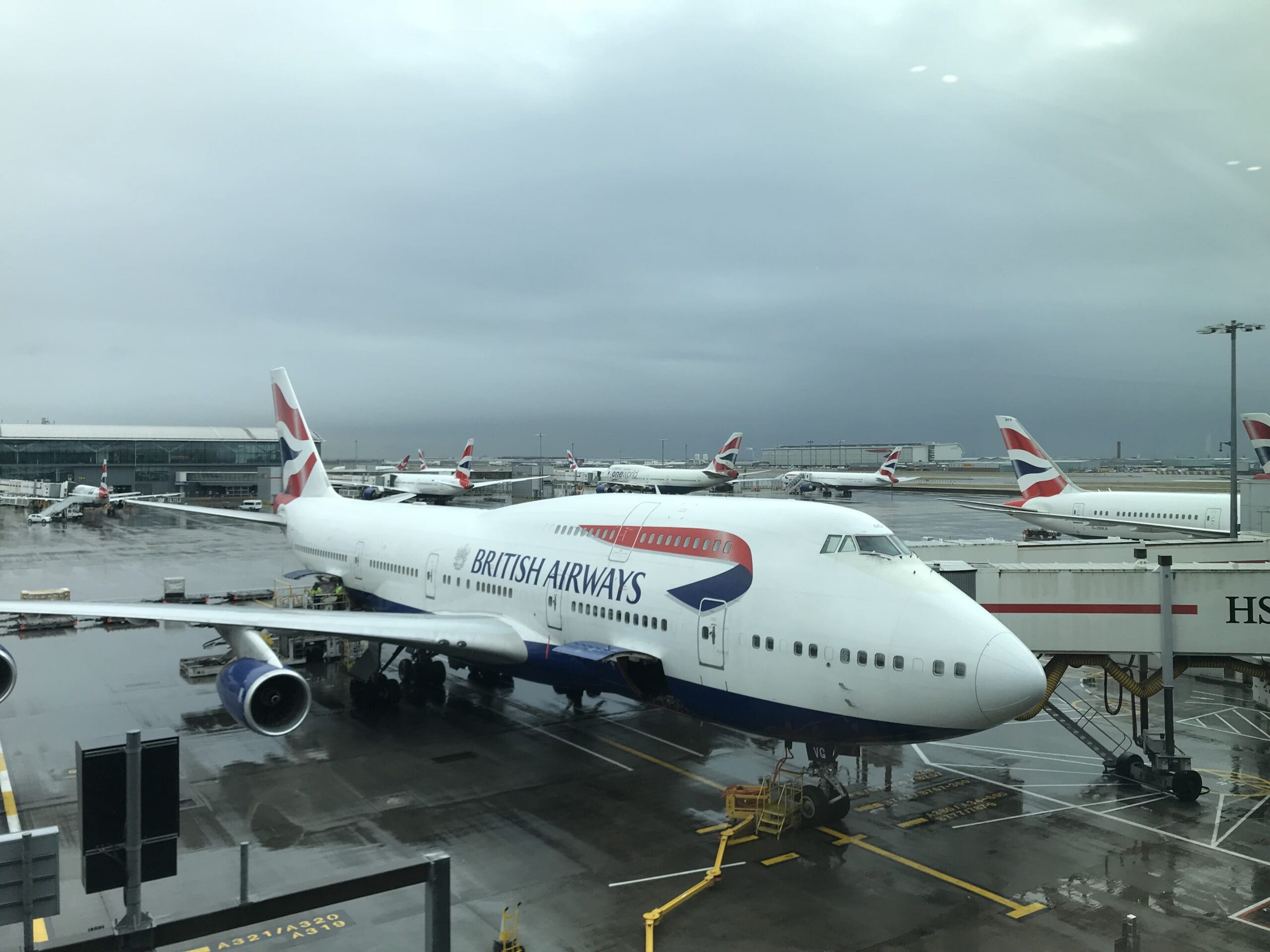
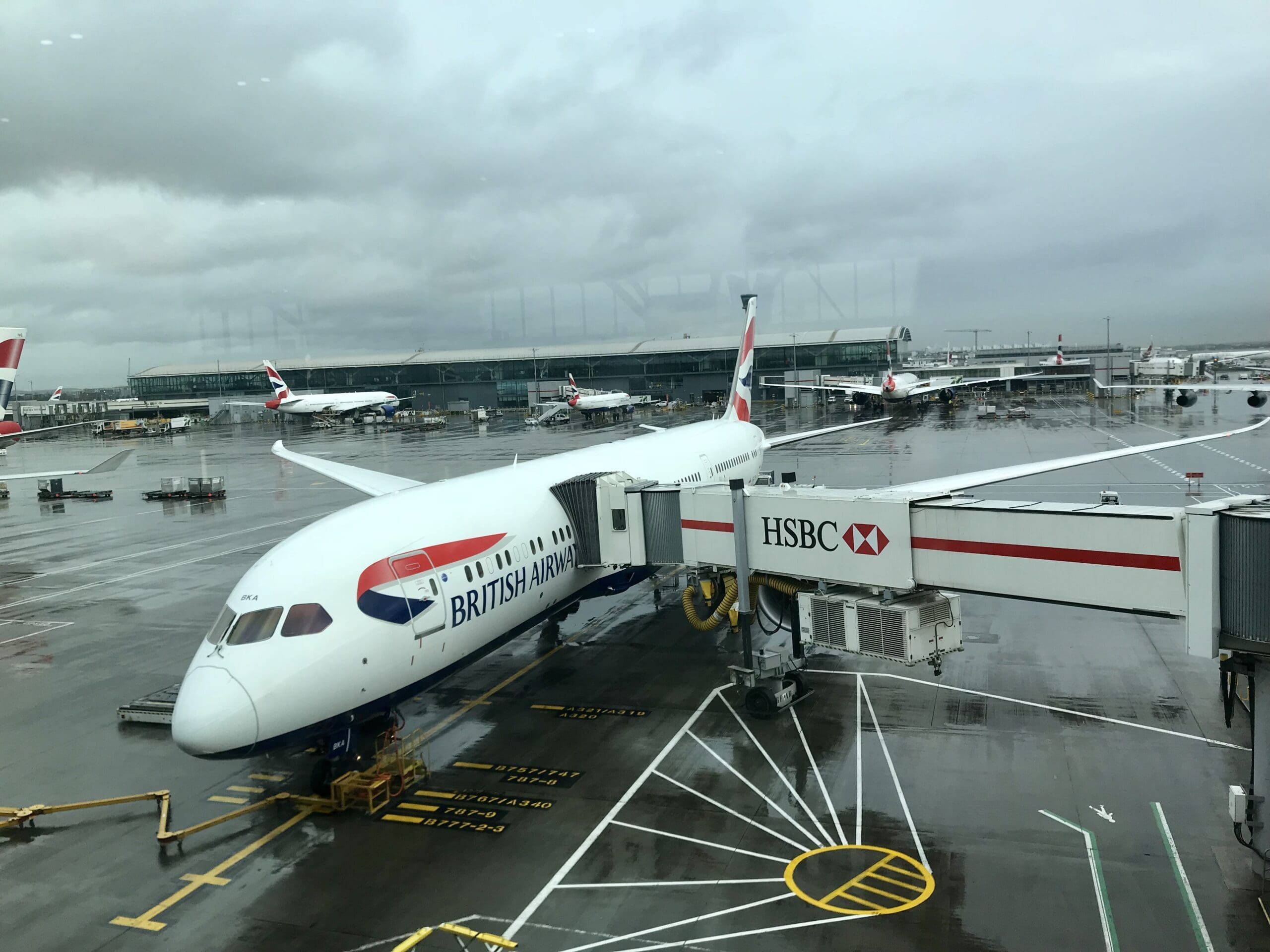
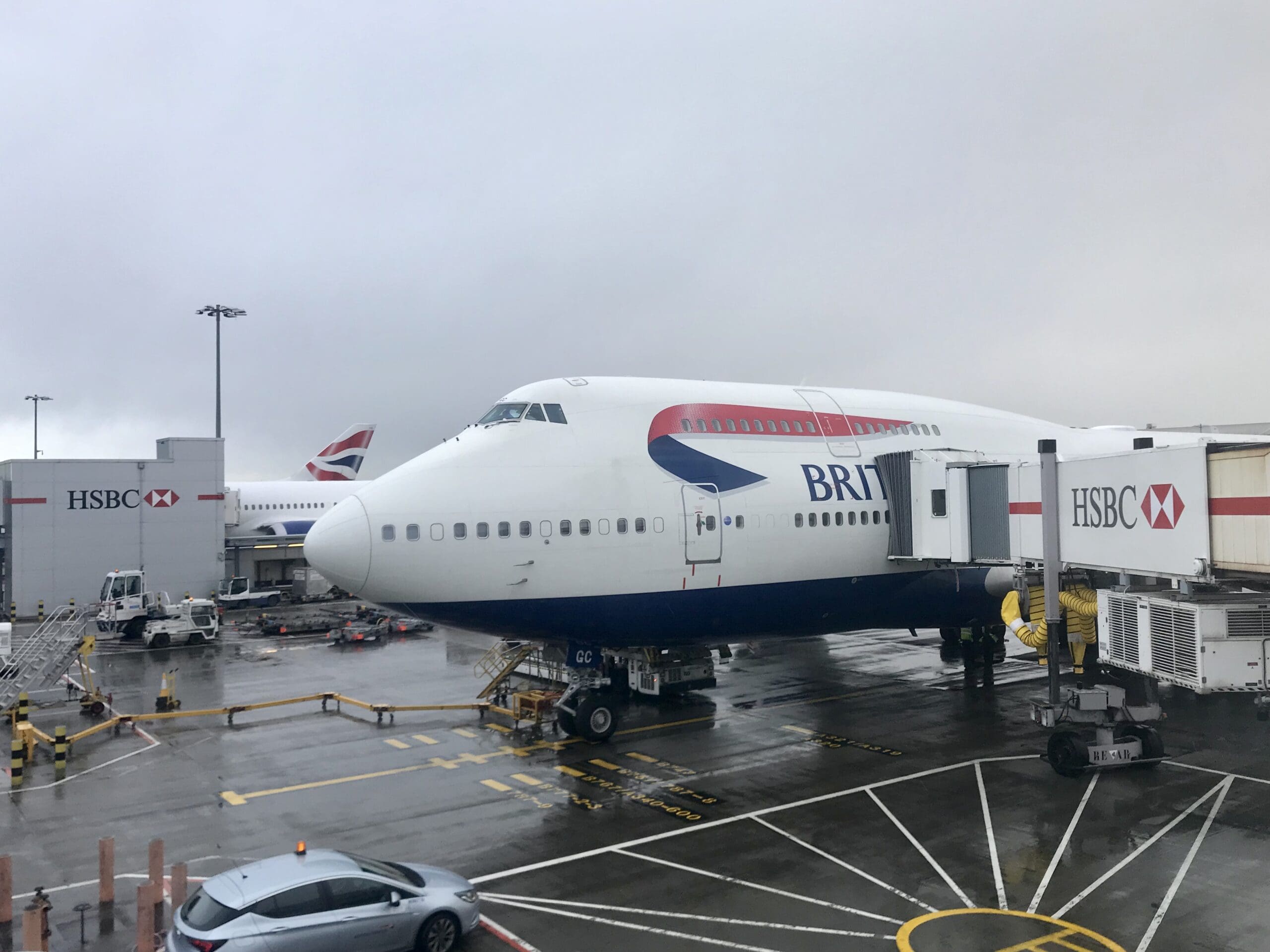
That day, my flight would be departing from Gate B42 near the southern end of the rectangular shaped terminal. Unfortunately, this is one of the few gates which doesn’t offer a particularly fantastic view of the aircraft outside. However, I did manage to see that this was occupied by G-BYGC, a Boeing 747-436 which was being prepared for its flight to Dubai International Airport. Assembled at Boeing’s factory in Everett, this particular Jumbo Jet carries the line number of 1195 and took to the skies for the first time in January 1999. This made the aircraft British Airways’ fifth youngest Boeing 747 at the time of my flight. This started its life as one of the airline’s 23 aircraft that sported the Pierse Casey designed Chelsea Rose tail, before this was repainted into the Union Flag tail in September 2003.
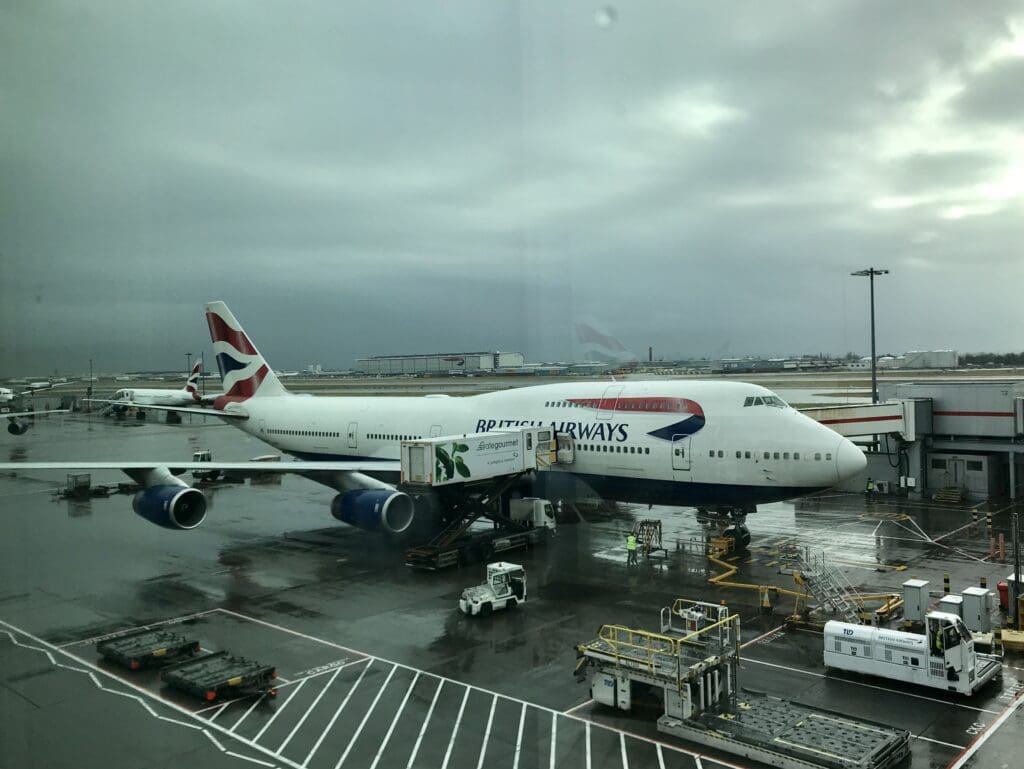
Onboard, the aircraft featured British Airways’ standard Boeing 747-400 configuration, with a grand total of 299 seats. Like most British Airways widebodies, their Boeing 747s featured a premium heavy layout, capable of carrying 14 in First Class, 70 in Club World, 30 in World Traveller Plus and 185 in World Traveller. Browsing the Aviation Herald, I found one incident involving G-BYGC. This occurred a short time after departure from Heathrow in February 2013 when the cabin failed to pressurise at the start of its flight to Seattle, thereby prompting a return to Heathrow. In the week before my flight, the aircraft undertook eleven sectors, exclusively shuttling passengers across the Atlantic to Chicago, Los Angeles, New York JFK, San Diego, San Francisco and Washington Dulles. Interestingly not all these flights had been plain sailing, as when operating Flight 273 from Heathrow to San Diego, a FedEx aircraft suffered a burst tyre on landing in San Diego, leading the aircraft to divert to Los Angeles before positioning back to San Diego later that evening.
Being one of British Airways’ youngest Boeing 747s, the aircraft was earmarked to be one of the final examples to be retired from service and the following year this was repainted into the iconic livery of the British Overseas Airways Corporation (BOAC) in commemoration of British Airways’ centenary. Unfortunately, whilst British Airways was originally going to be one of the last major airlines to operate Boeing 747-400s, the type’s premature retirement meant that this was shuttled just three miles from Cardiff to St Athan in South Wales in December 2020, undertaking the final ever British Airways Jumbo Jet flight! Whilst this was originally intended to be preserved, these plans never materialised and the aircraft was sadly scrapped in November 2023.
Returning to the journey, as the clock struck 1140, the screens at Gate B42 updated to note that pre-boarding checks were underway and an announcement rang out noting that boarding would commence in ten to fifteen minutes. At this time, the gate area was near totally full, however as it turned out, most passengers waiting there were actually bound for Los Angeles on a Boeing 787-9 Dreamliner waiting at the neighbouring gate. Almost twenty minutes after the initial announcement had been made, those requiring assistance, top tier members of British Airways’ Executive Club and other OneWorld programmes, and those in First Class and Club World were invited to board the aircraft. Given the Boeing 747’s premium heavy configuration, once this announcement had been made, plenty of passengers stood up and began to queue and the gate area soon emptied out.
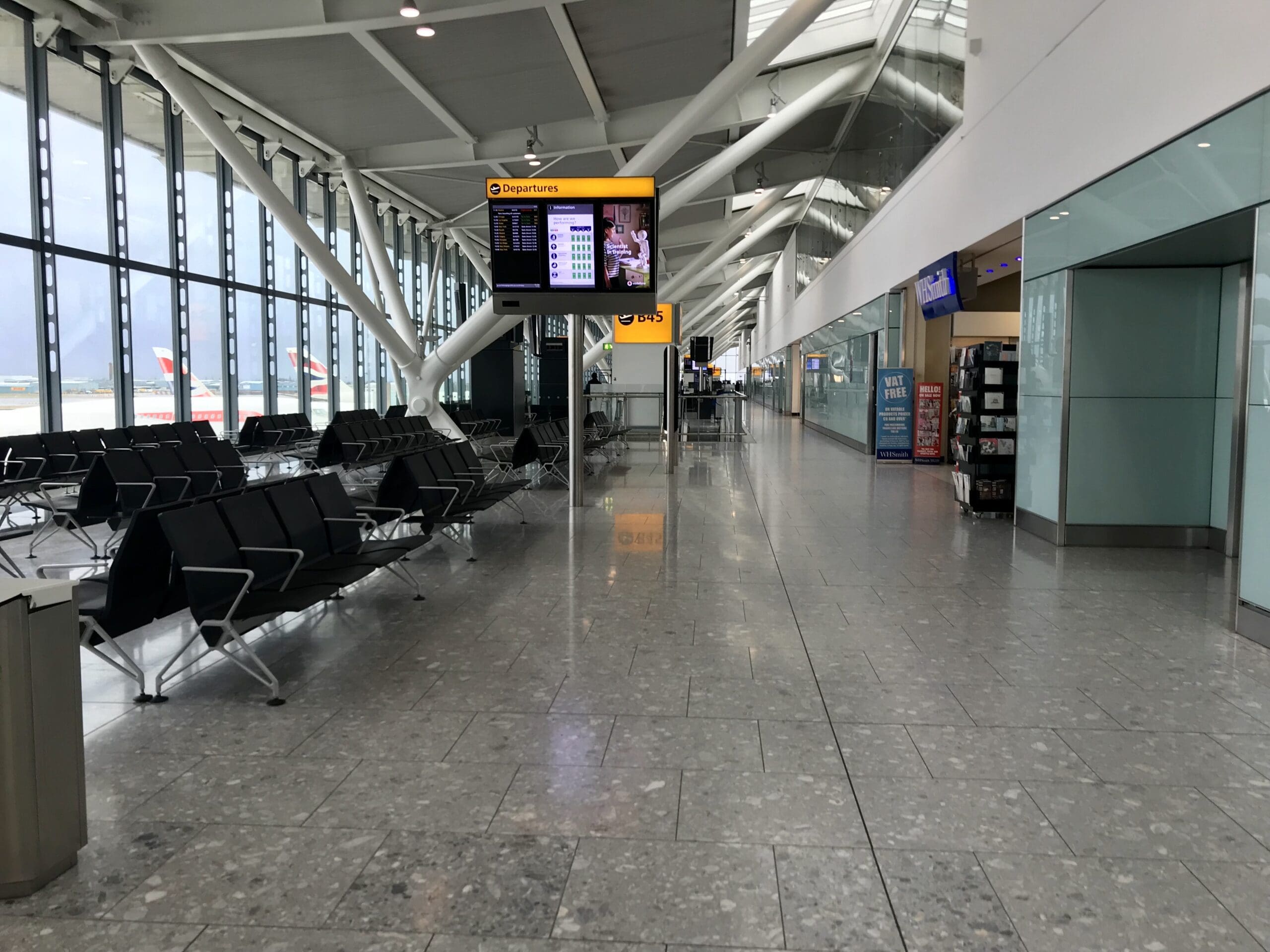
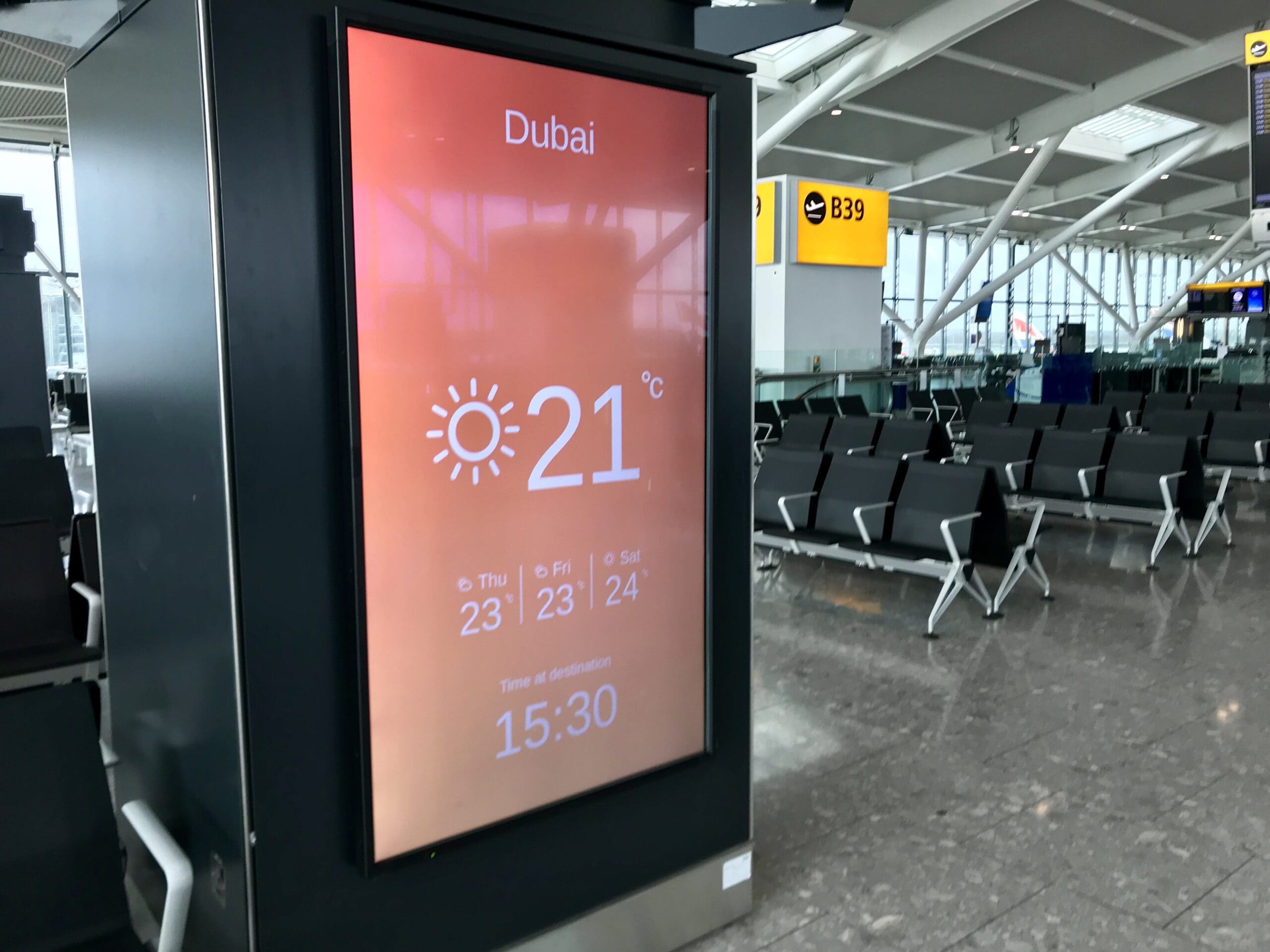
At 1205, boarding for all remaining passengers was announced and within a few minutes a friendly gate agent scanned my boarding pass and quickly checked my passport before no fewer than two agents wished me a nice flight. From the terminal, I journeyed down the chilly and seemingly unheated passageway that connects the terminal to the jetbridge before I soon hit a queue as I waited to reach the Boeing’s L2 door.
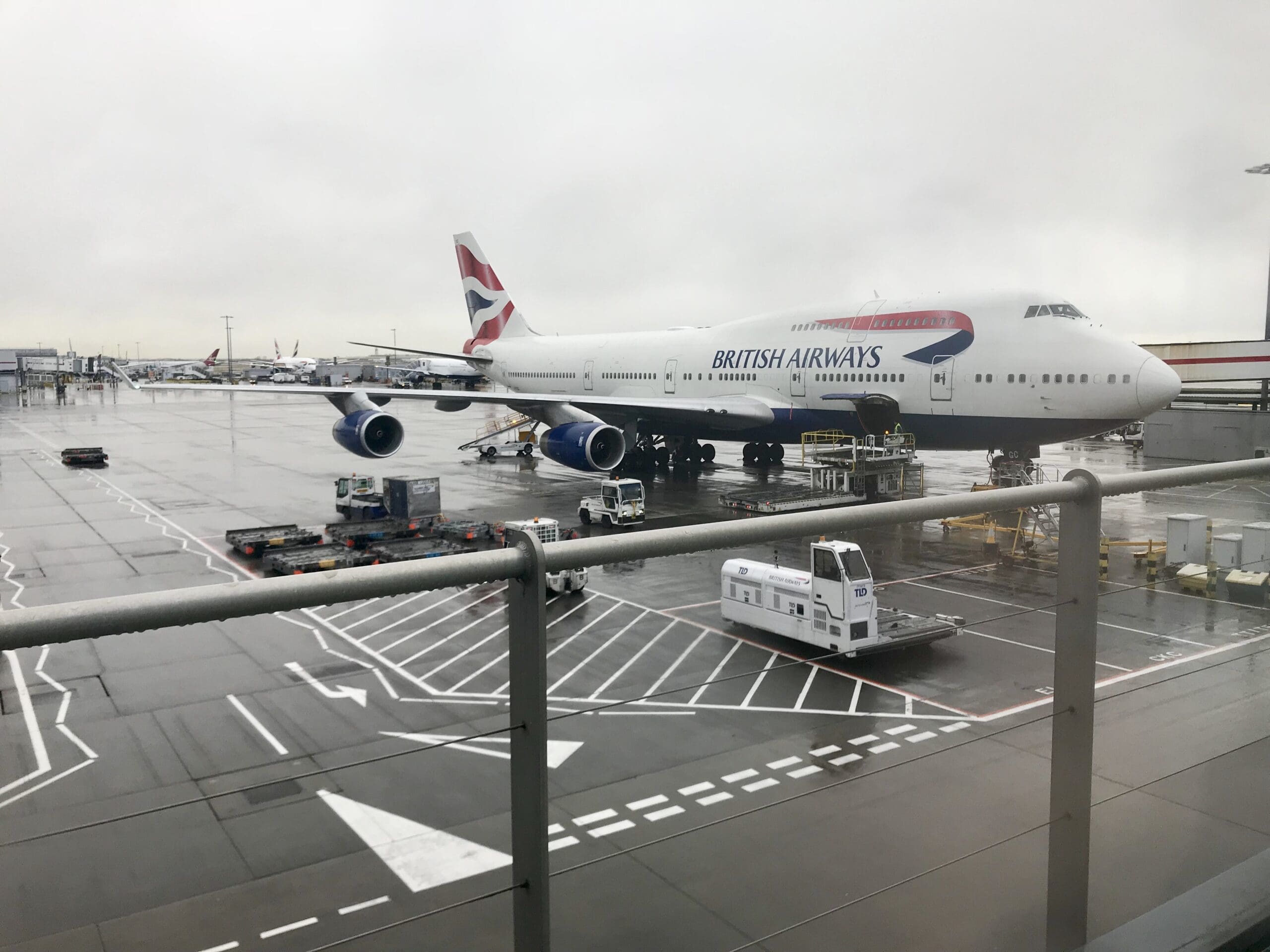
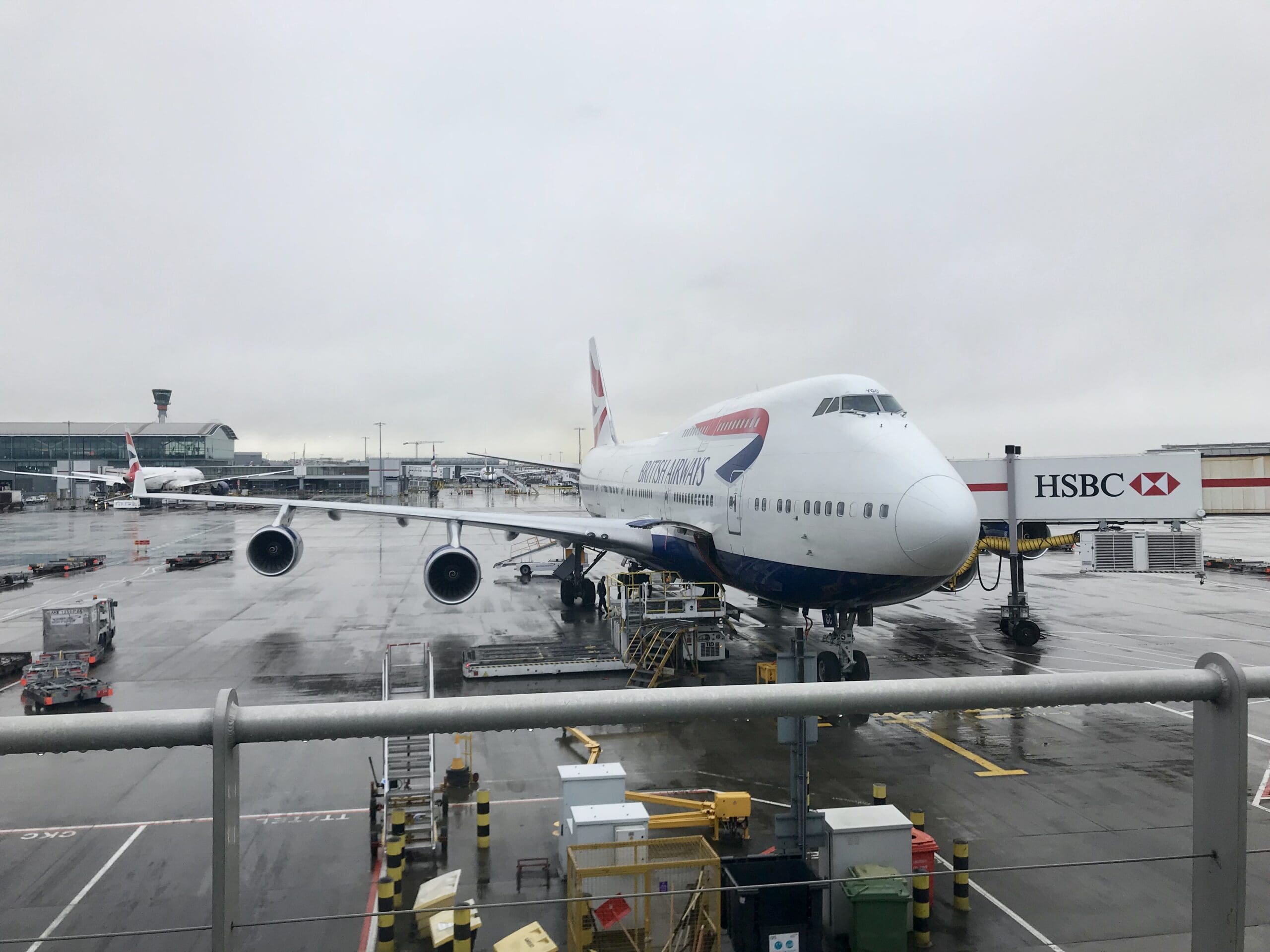
Following a few minutes, I stepped into the spacious galley that separates the two Club World cabins and almost immediately received a very cheery greeting from two flight attendants, leaving me with a very positive first impression of the cabin crew. This particular flight was operated by members of British Airways’ ‘Worldwide’ cabin crew – these are cabin crew hired by British Airways before 2010 and exclusively operate onboard the airline’s widebody fleet. After 2010, British Airways changed their cabin crew structure and from then on, new entrants were hired on the controversial and lower paid ‘Mixed Fleet’ contract, operating onboard both narrowbody and widebody aircraft for less pay and benefits to colleagues hired before 2010.
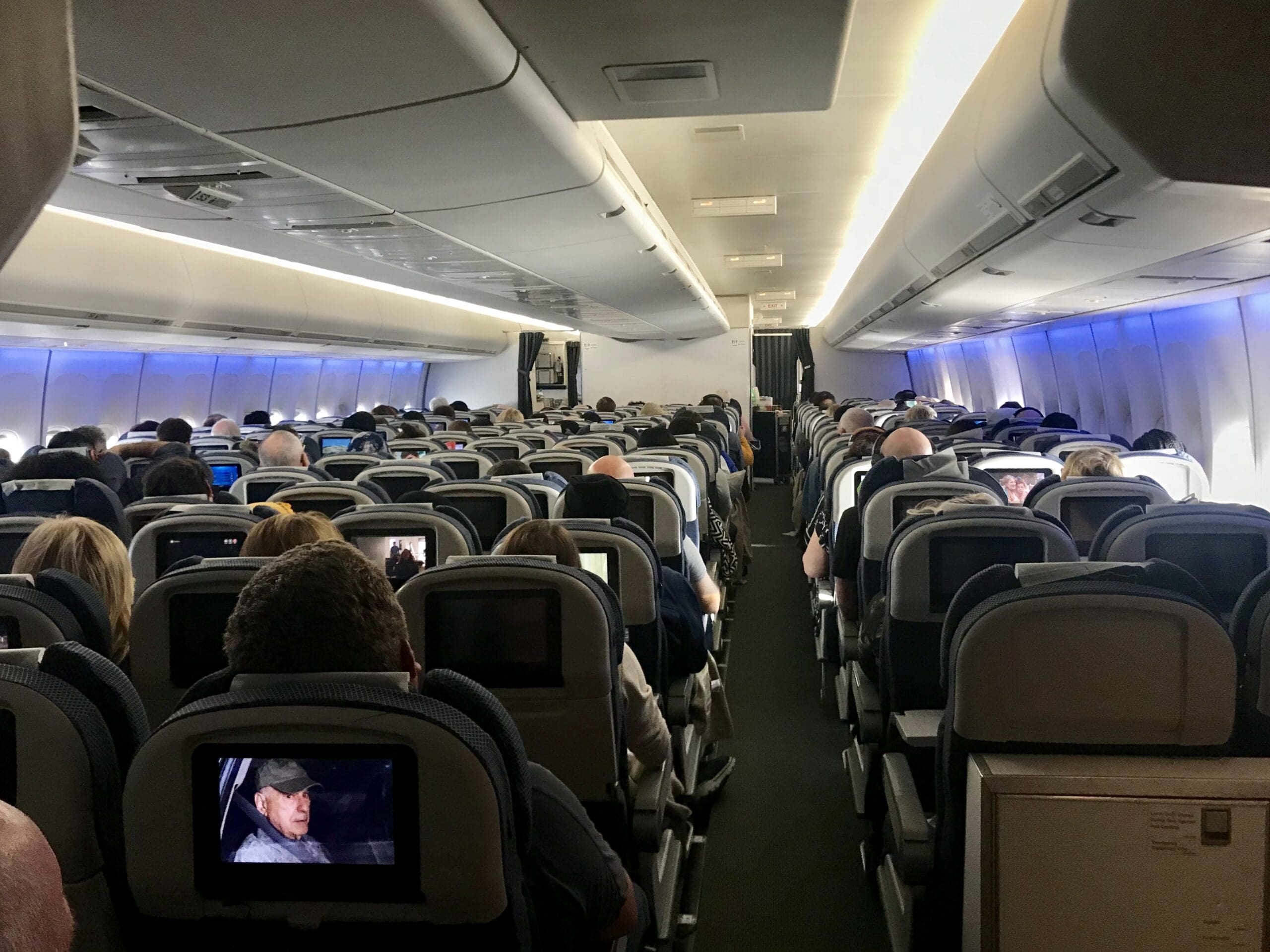
Once safely onboard, I crossed the galley and turned right down the second aisle before trundling through the second half of the Club World cabin. Much to my delight, this Boeing 747 was one of the eighteen that had received a cabin refresh in 2016, leading to new Club World and First suites, and upgraded inflight entertainment systems in World Traveller and World Traveller Plus. Making my way down the aircraft, I soon passed through the mostly full Club World and World Traveller Plus cabins, pausing several times to enable those in front of me to stow their luggage and take their seats. Unfortunately, contrasting with the friendly welcomes I had received upon boarding, I failed to attract a single greeting from the multiple flight attendants that I passed as I journeyed to my seat. Soon, I arrived in the rearmost cabin, where World Traveller seats could be seen arranged in the Boeing 747 standard 3-4-3 configuration. After side-stepping past a mechanic sprawled out on the floor conducting some last minute repairs to one of the World Traveller seats, I arrived at the empty trio of seats that I would call my home for the next seven hours or so and settled into Seat 49K.
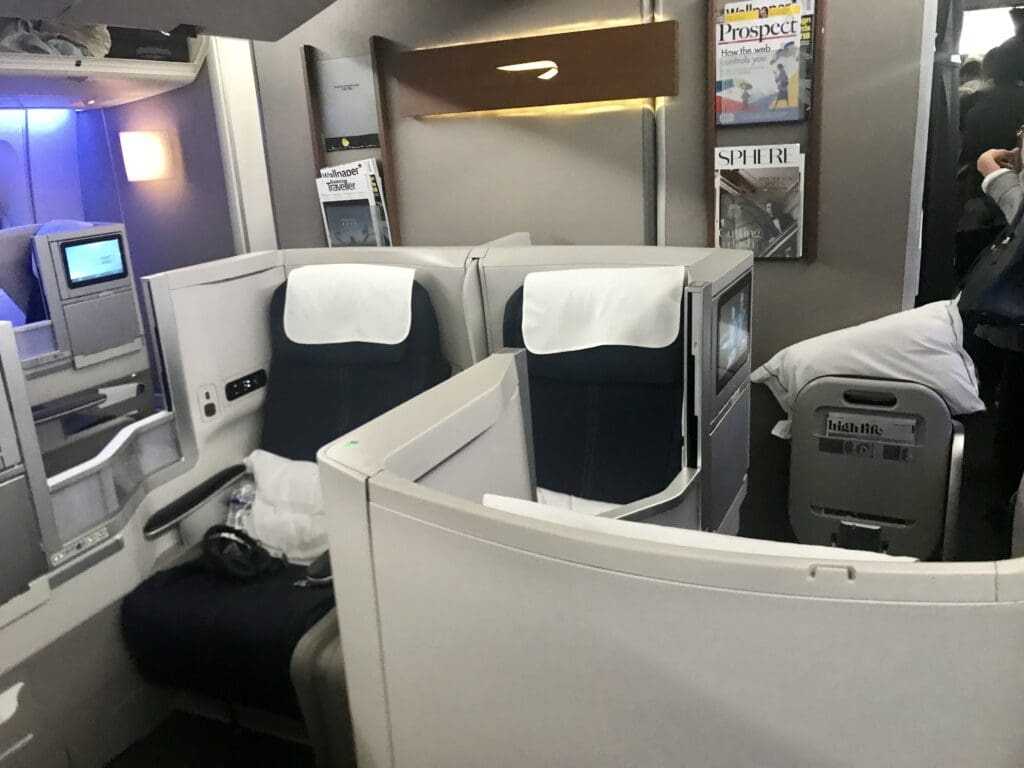
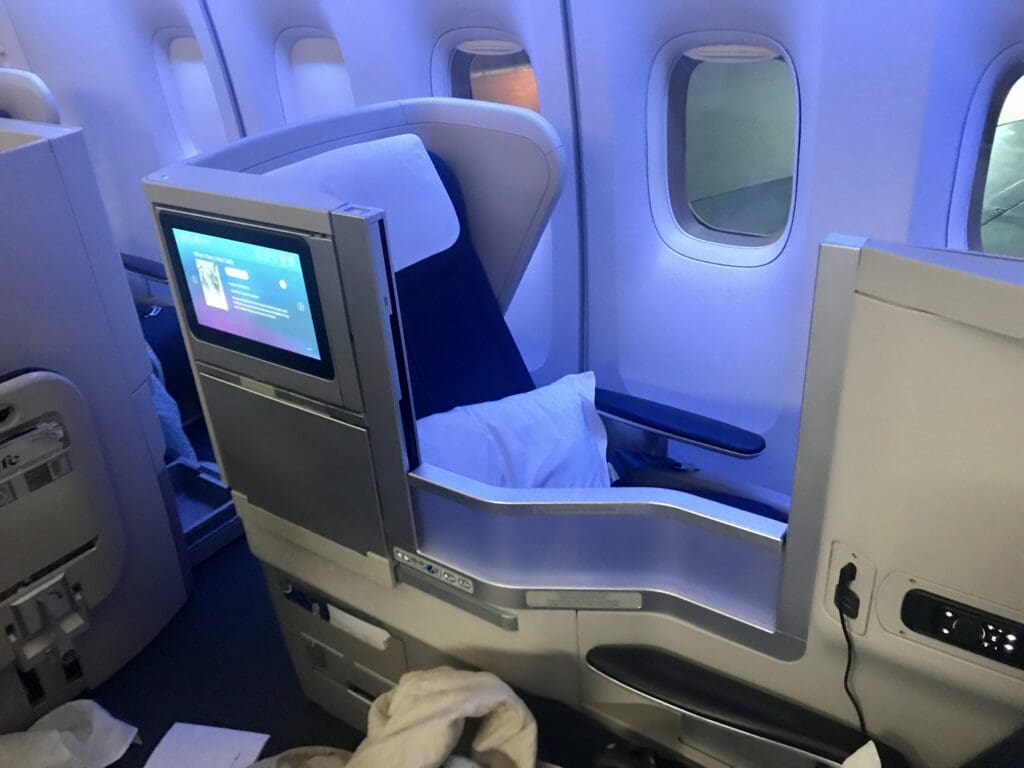
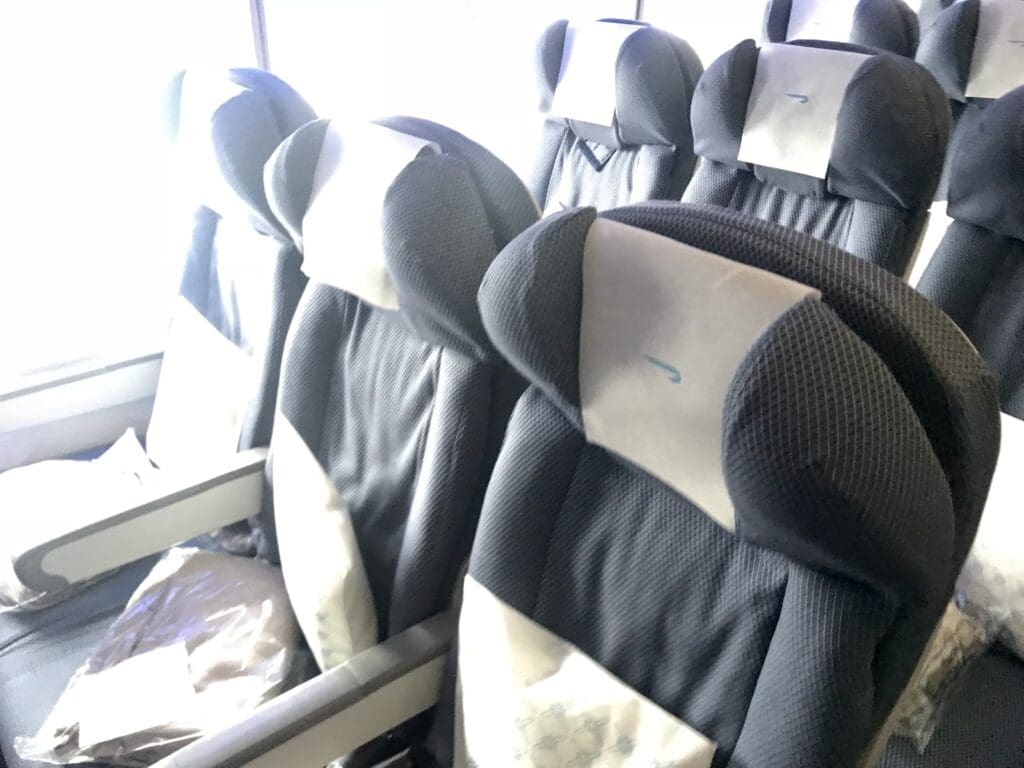
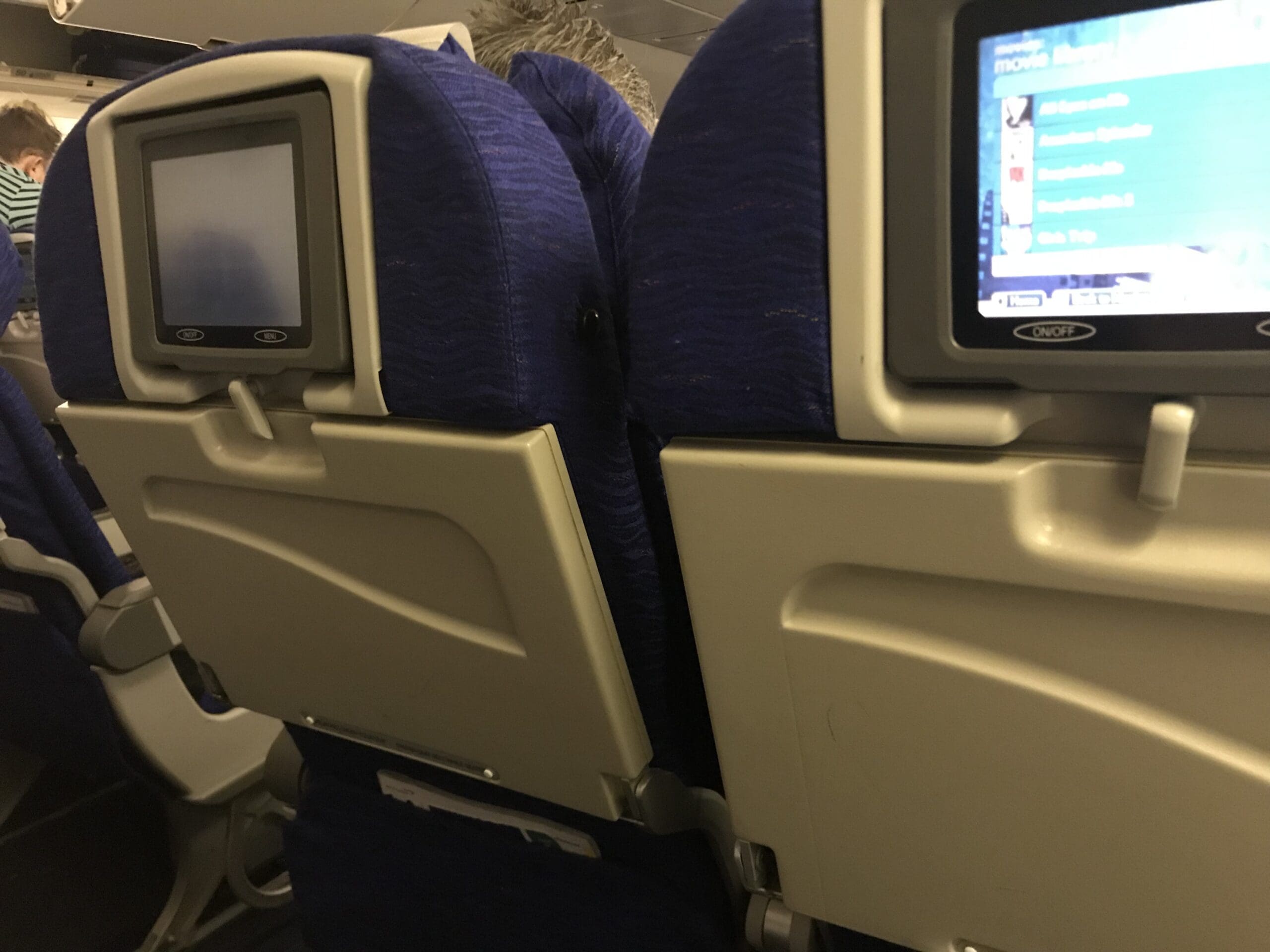
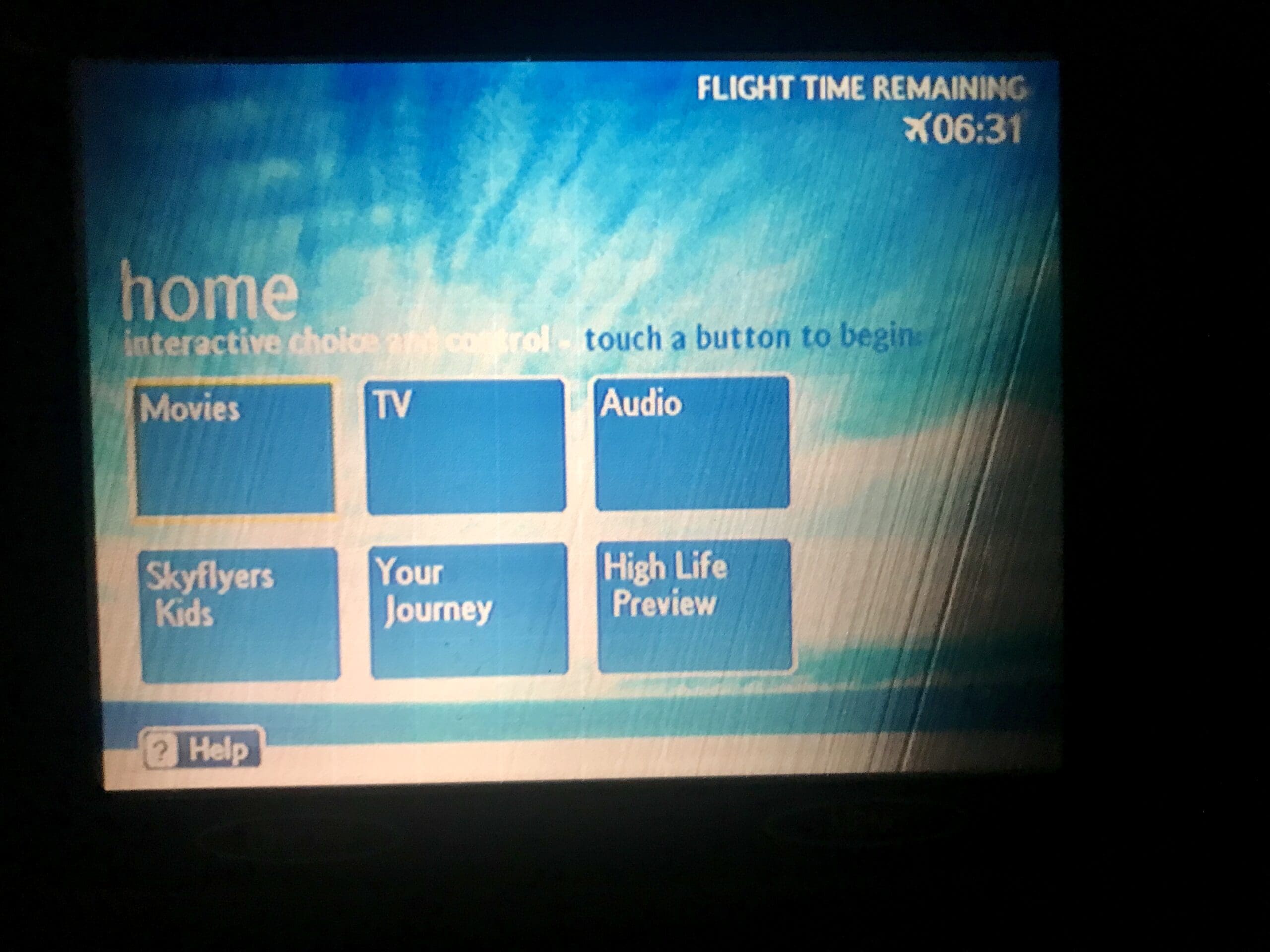
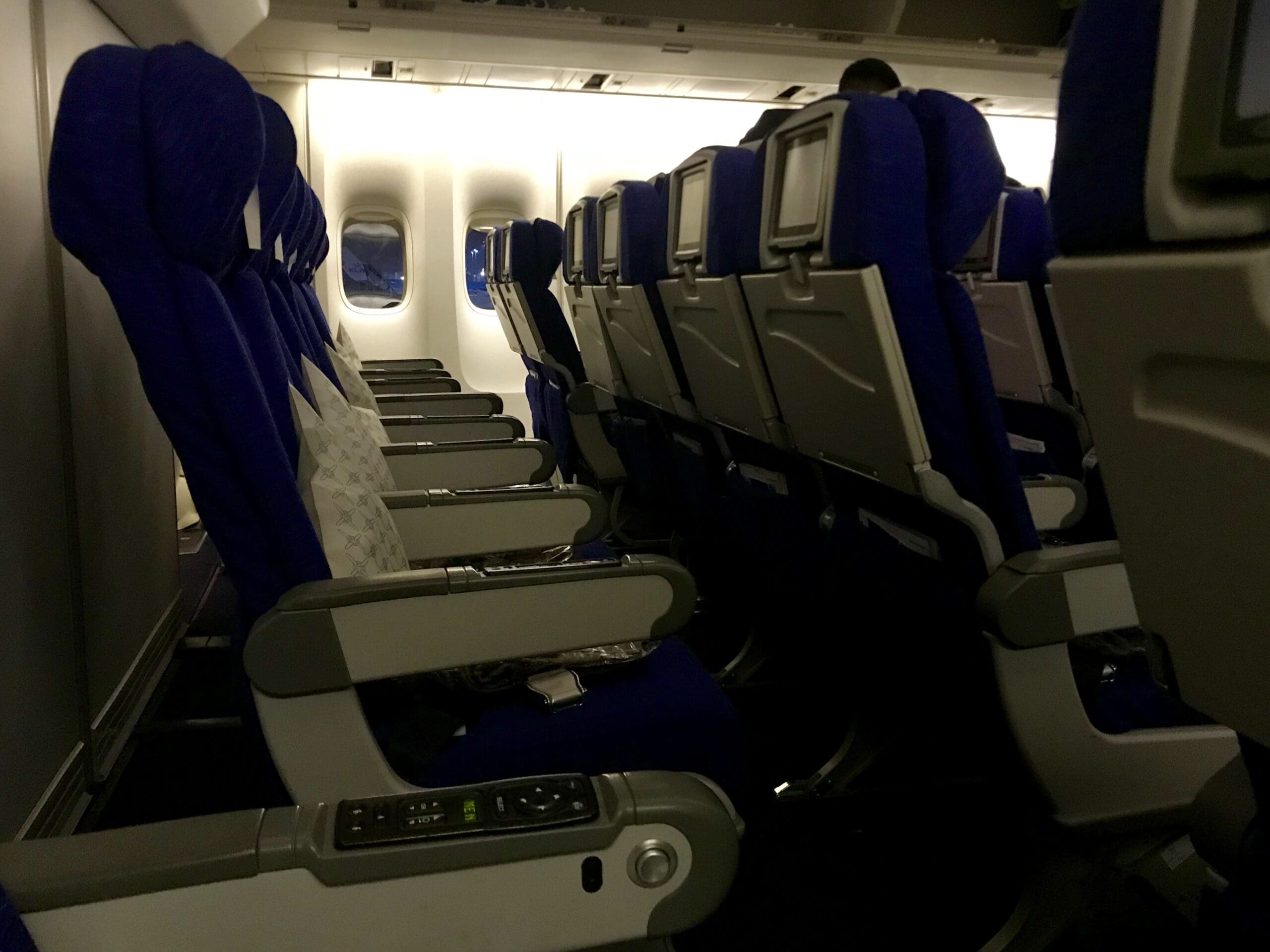
One seated, my first impressions of the cabin were mostly positive. Thanks to the aircraft’s recent refresh, the cabin appeared to be modern. Each seat came complete with high quality touch screen Panasonic eX3 inflight entertainment systems, a gigantic leap from the retro Rockwell Collins systems that had previously been fitted to the aircraft (I would have the joy of sampling these on my return flight!). Meanwhile, passengers could charge their devices via an in-seat USB-A port which I found to work without issue. In addition, new carpets, seat covers and mood lighting had been installed to the aircraft, giving this a reasonably modern feel.
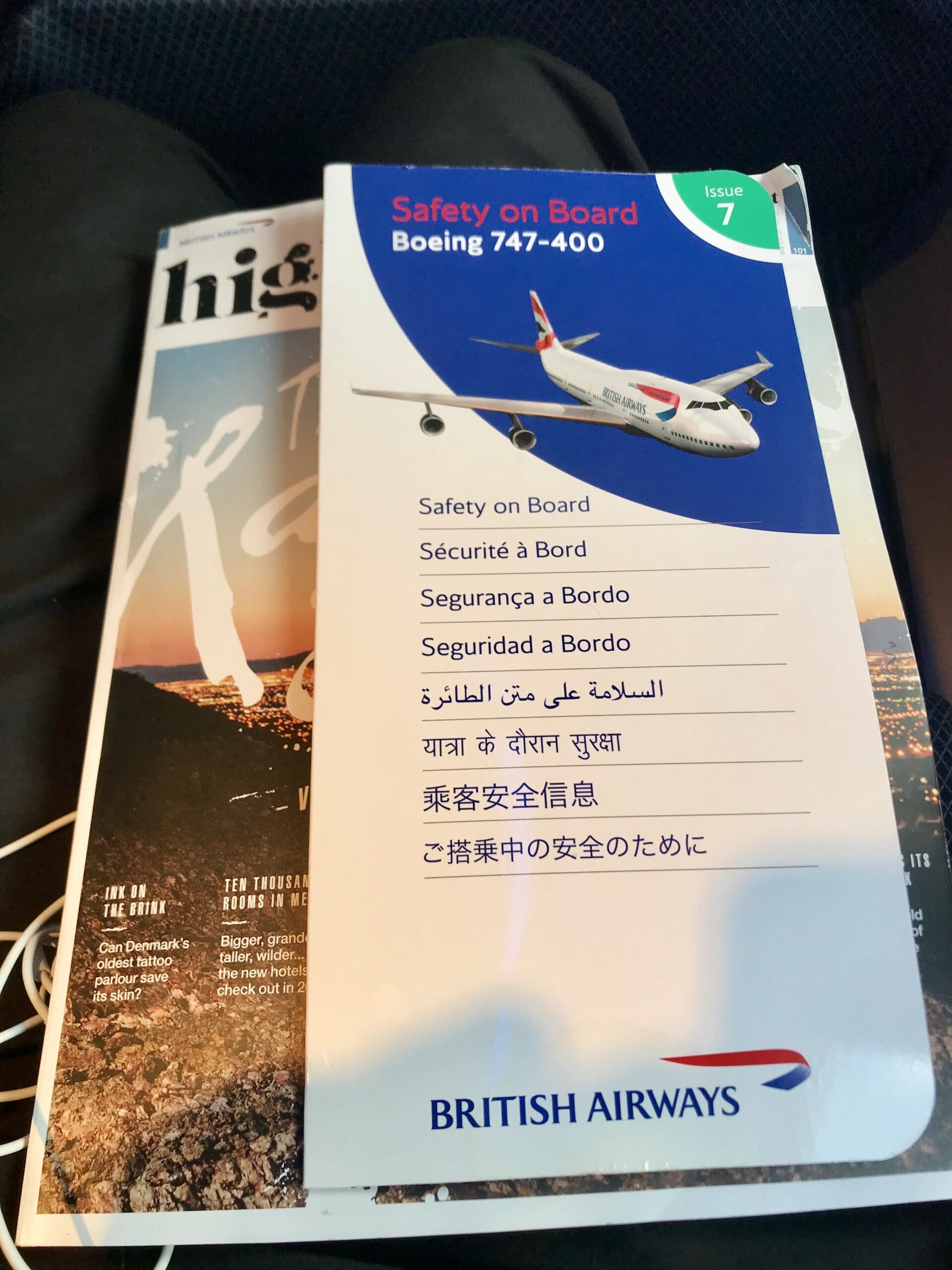
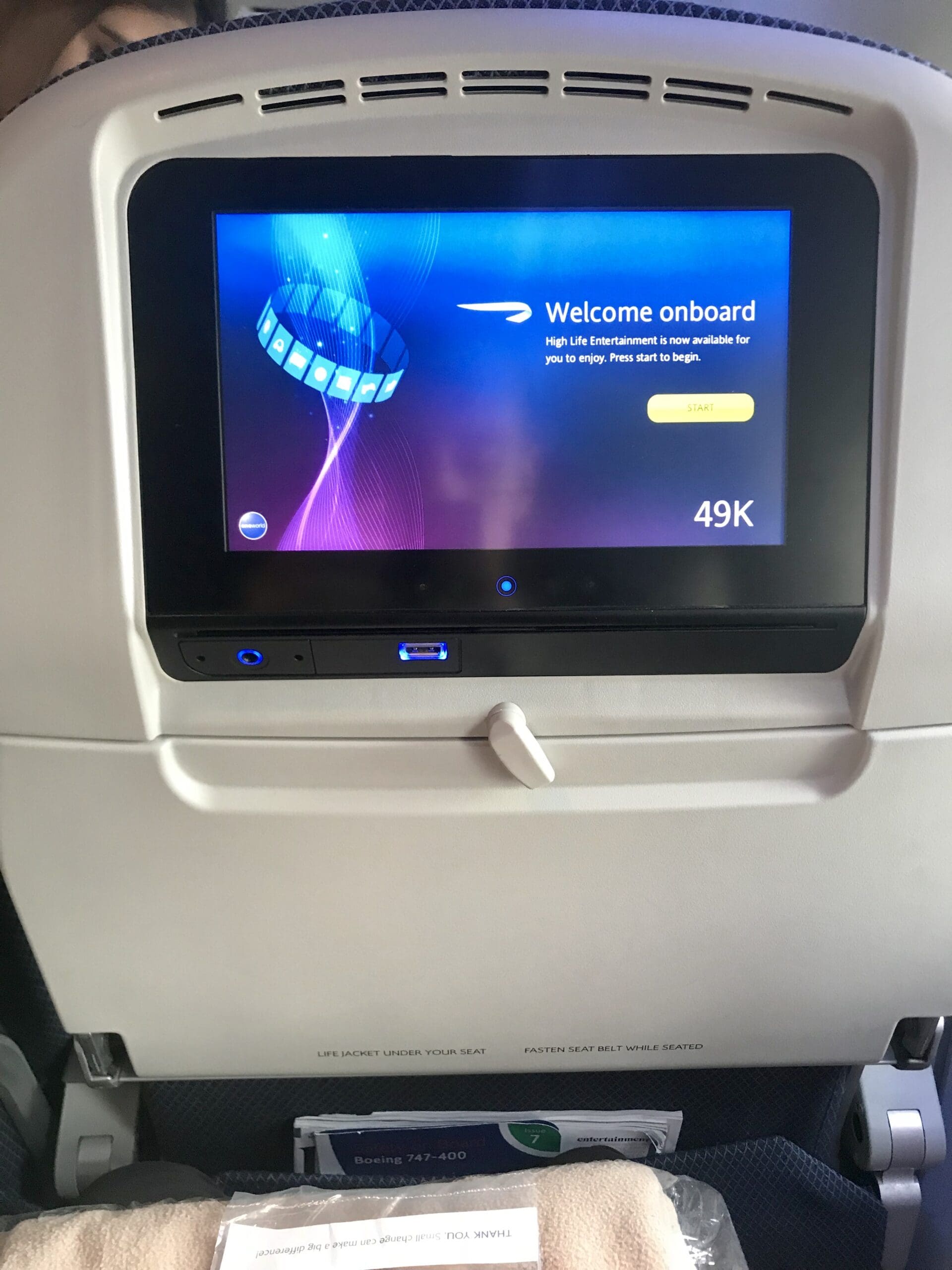
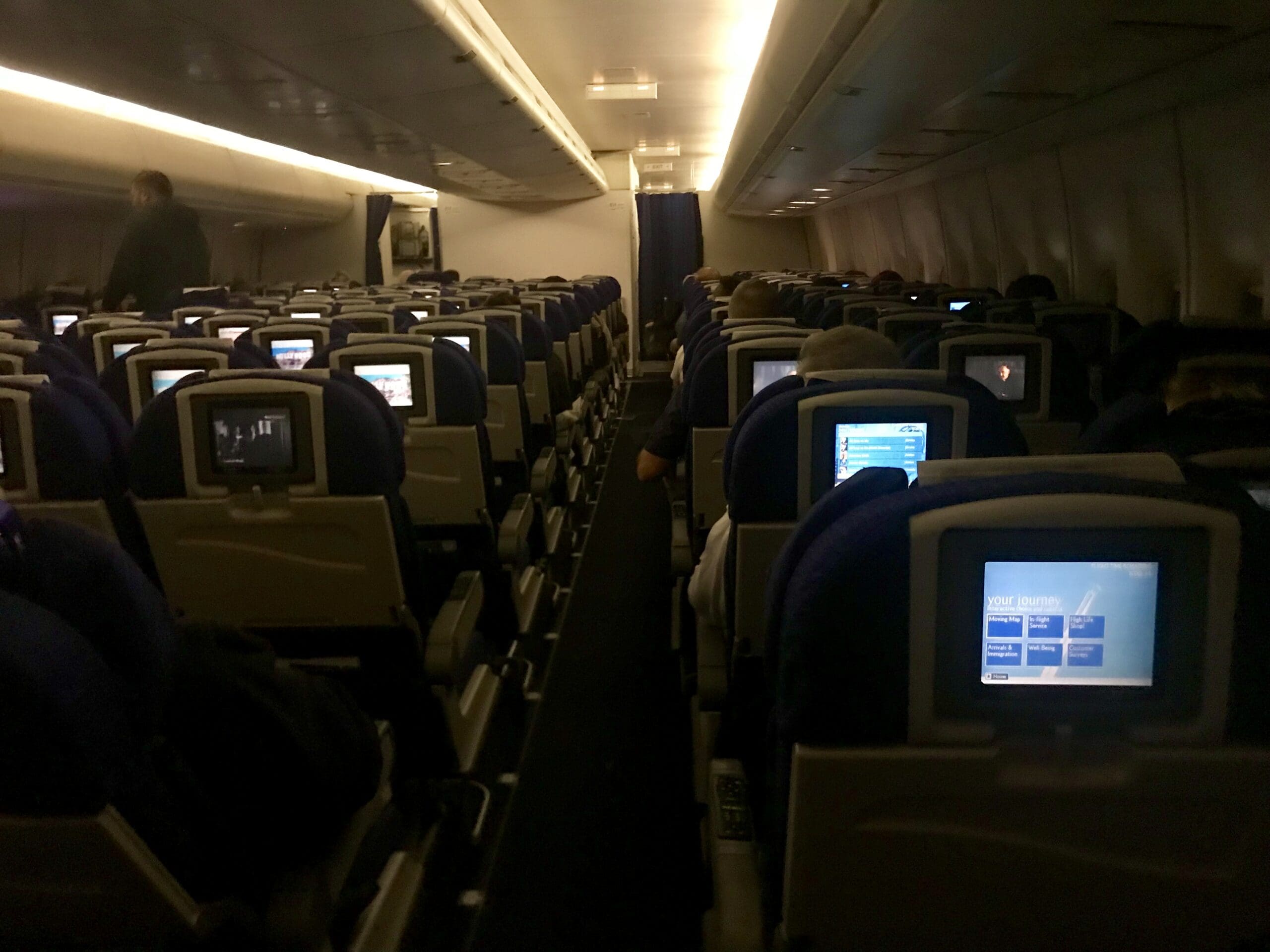
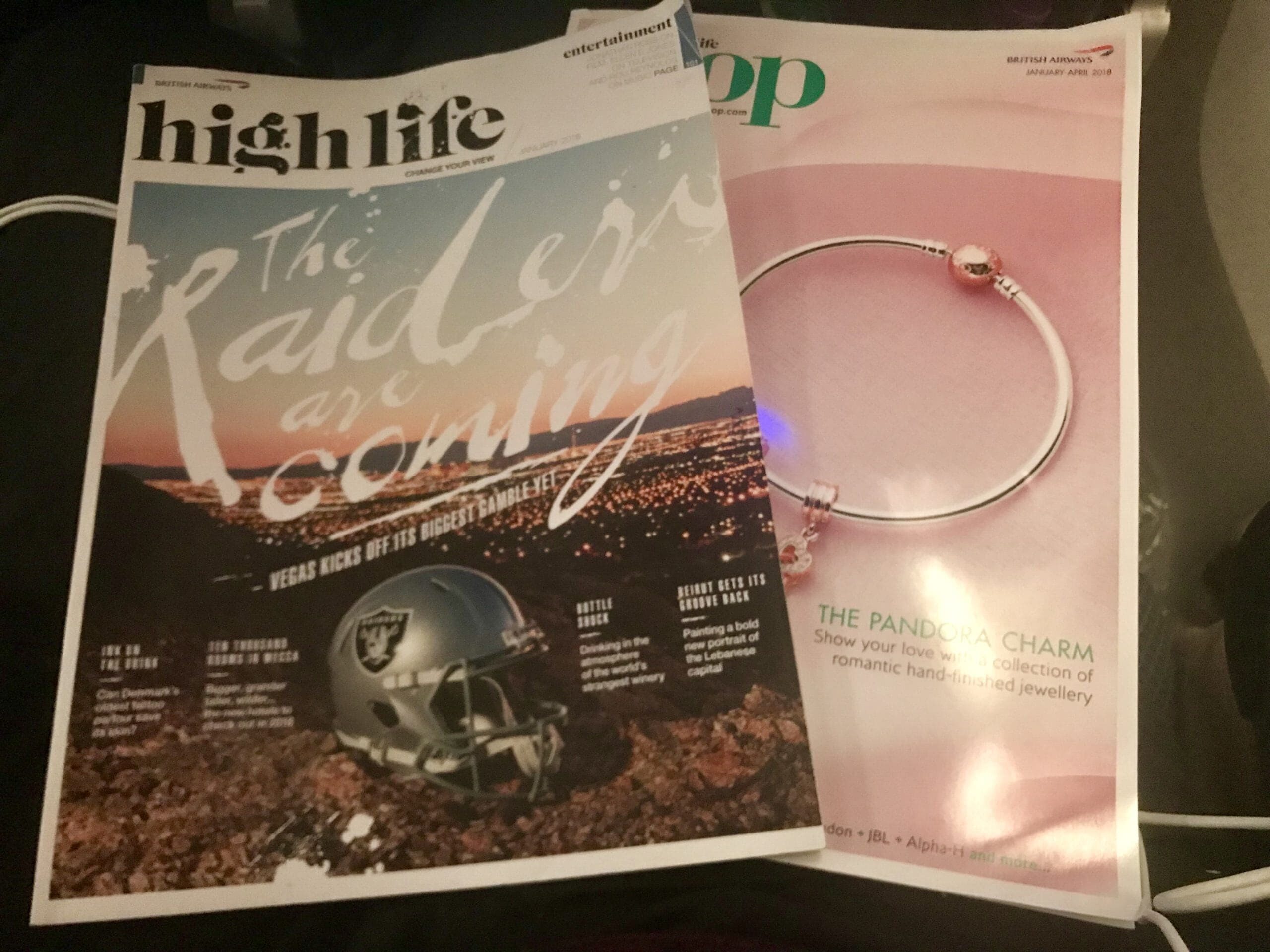
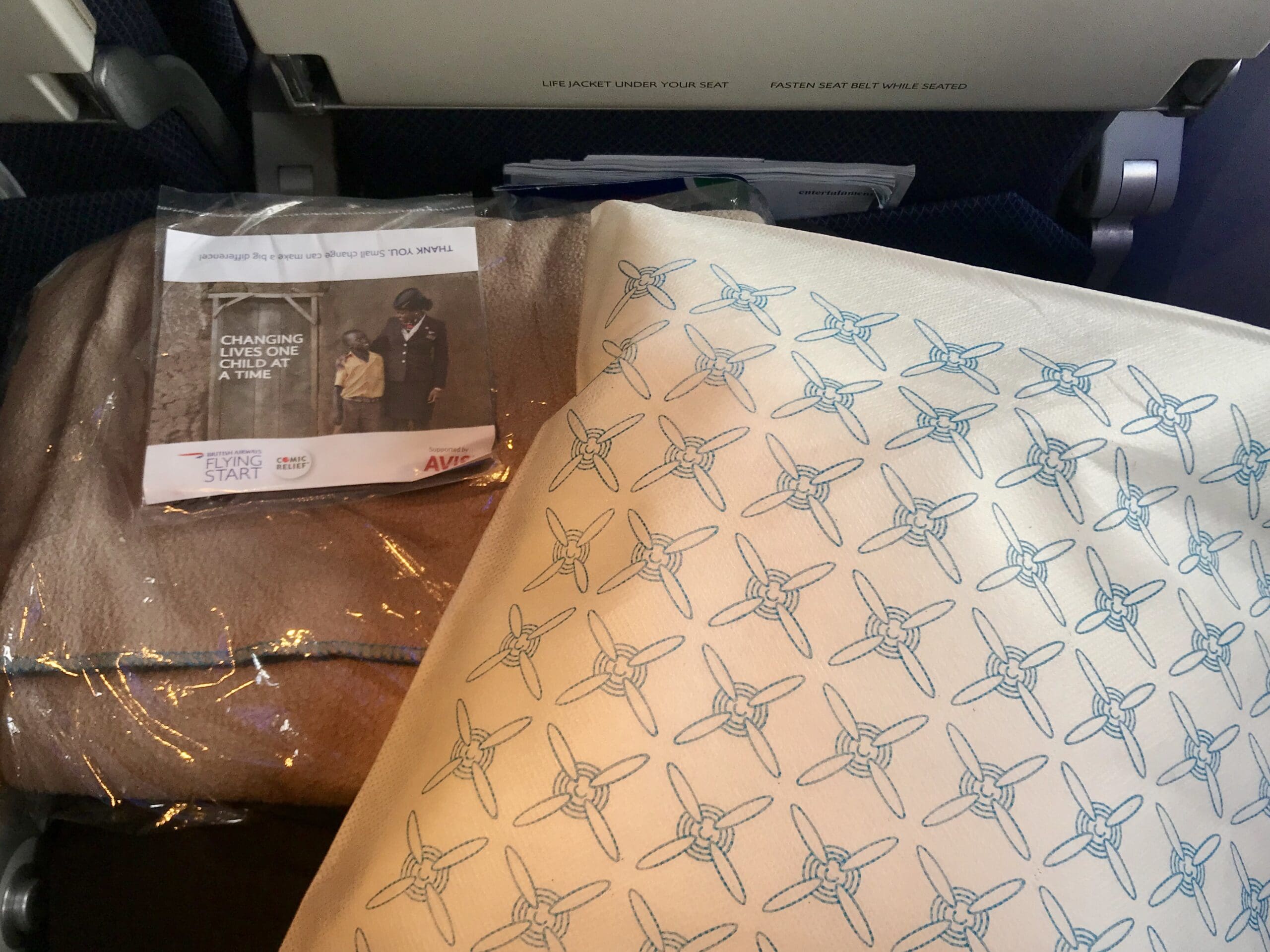
Turning to the seat itself, this featured a supportive headrest that was partially covered by a fabric antimacassar and, whilst the legroom was fairly middle-of-the-road, the seat itself was soft and comfortable. Meanwhile, this was spotlessly clean and lacked any significant wear and tear, bar some rather notable scratches on the window. Upon boarding, packaged blankets, a low quality pillow and a package containing low quality headphones and an envelope for donations to British Airways’ Change for Good charity could be found. Those expecting an amenity kit would have been left a little disappointed, however the lack of this was hardly surprising given the non-overnight nature of this relatively short long haul service and the increasing rarity of such luxuries. Turning to the seatback pocket, this contained everything you would expect – a sick bag, a safety card, a copy of the High Life Shop catalogue and the latest edition of British Airways’ High Life magazine.
Once seated it wasn’t long before I was joined by a fellow solo traveller who plonked themselves down in the aisle seat, and with fifteen minutes to go until departure, boarding was announced as complete. Despite the flight being almost totally full in World Traveller, I was delighted to find that the middle seat remained vacant. Looking around, most passengers appeared to take the form of workers and their families returning to the United Arab Emirates, and a fair number appeared to have connected from flights from across North America and Western Europe. After ten minutes of little action, the calming classical music that accompanied boarding was interrupted at 1230 when the well spoken First Office performed their detailed welcome announcement. This involved a comprehensive overview of the flight’s route, the weather conditions both during the journey and in Dubai, and the flight time which would be a little over six hours.
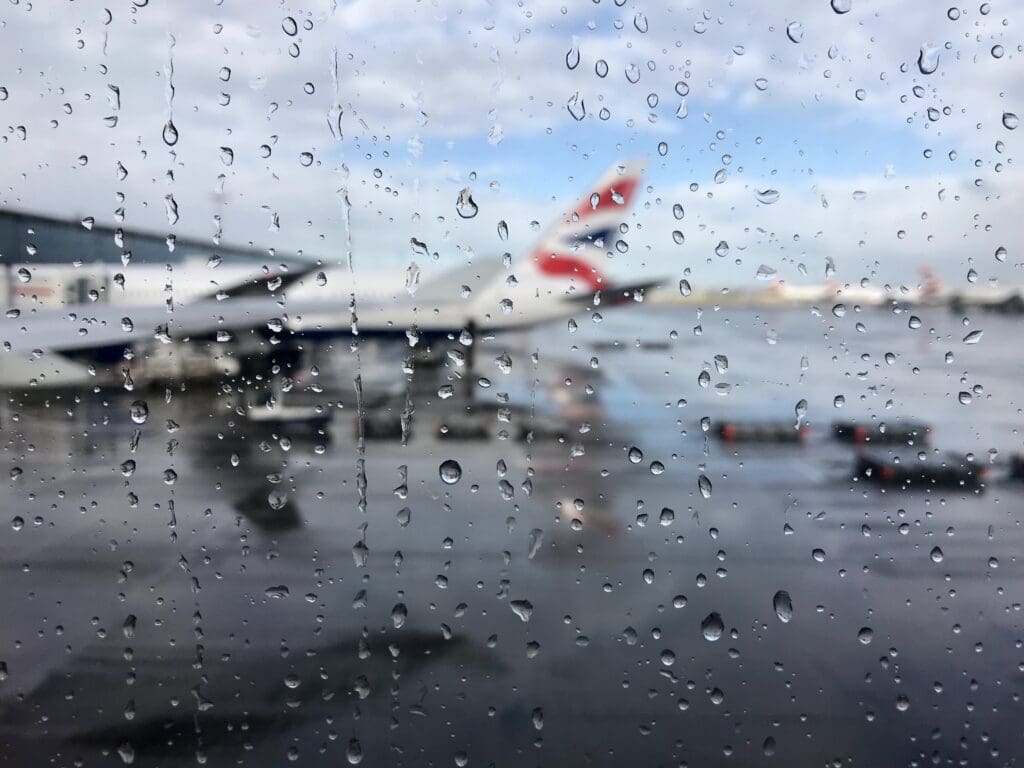
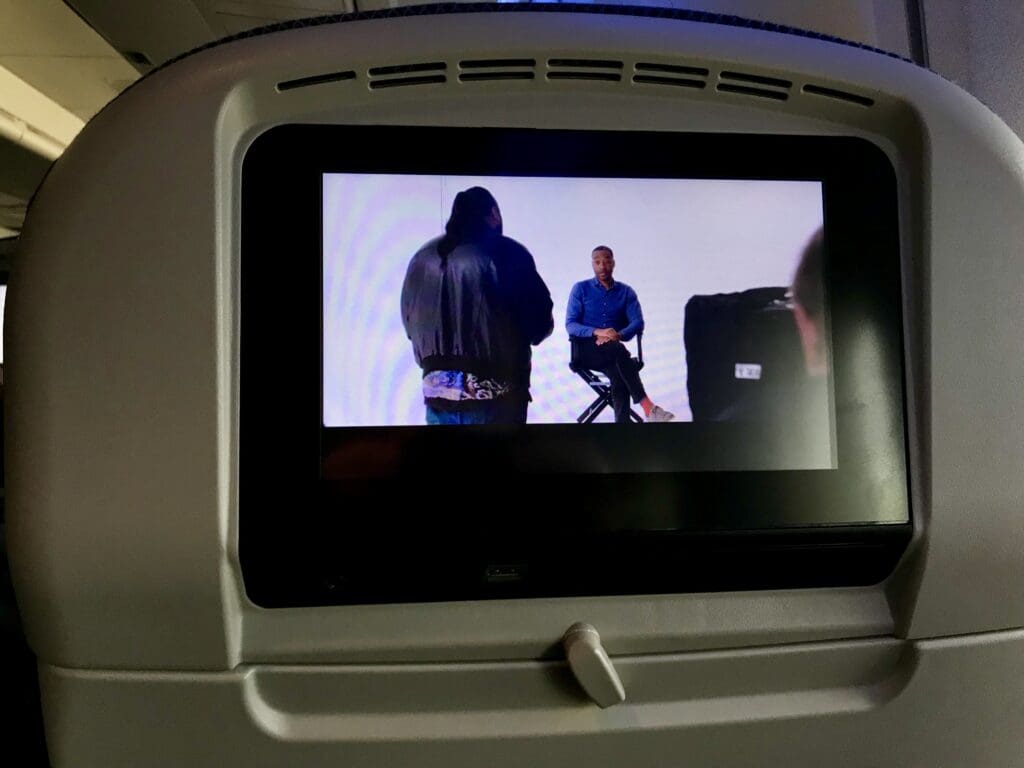
Looking outside, I watched as the neighbouring Dreamliner was pushed back at the start of its long journey to California whilst inside the cabin the Cabin Services Director undertook their welcome announcement which consisted of the usual thanks, welcomes and warnings. At 1238, the Boeing could be felt jolting back from its parking position. Whilst the pushback was underway, the four Rolls Royce RB211-524G ‘hairdryer’ engines powered into life one-by-one. As the engines fired up, British Airways’ Comic Relief safety video was broadcast on each screen, accompanied by Arabic subtitles, whilst the cabin crew pointed out the nearest exits in the aisle. After a short pause whilst the tug was disconnected from the Boeing 747’s nosewheel, the aircraft quietly commenced its journey towards Runway 27L.
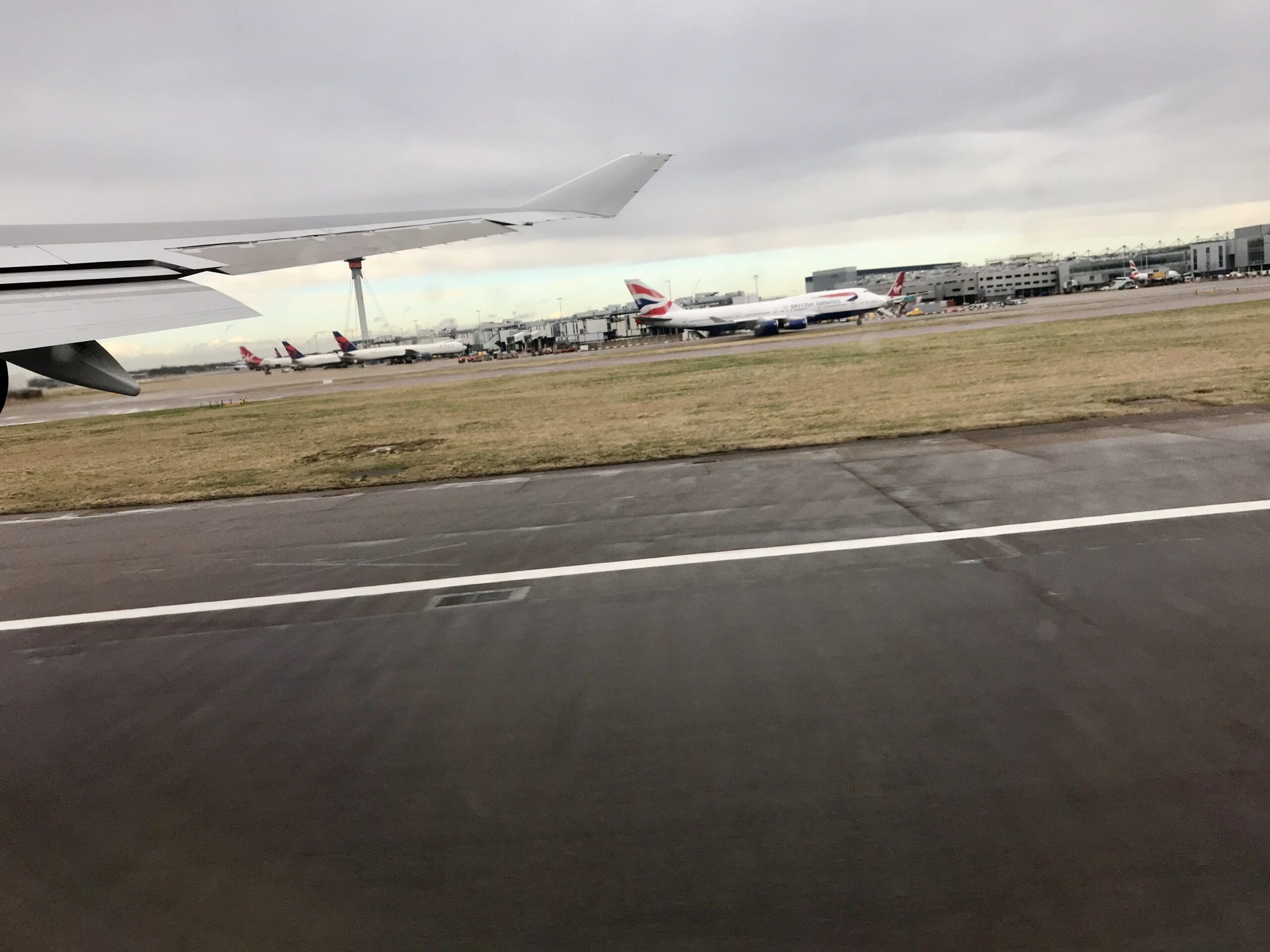
From my position on the starboard side of the aircraft, views during the taxi consisted of several aircraft climbing up into the sky, as well as Terminal 4 in the distance on the other side of the aforementioned runway. Interestingly, that afternoon no fewer than two Royal Brunei Airlines Boeing 787-8 Dreamliners could be seen waiting at the terminal, something that was a little unusual given the airline’s single daily flight. With just two runways and with Heathrow being one of the world’s busiest airports, it isn’t uncommon to have stop-start taxis and significant waits for departure. However, much to my delight, that lunchtime the Boeing was able to taxi straight onto the runway without holding, around twenty minutes after we had pushed back from the gate.
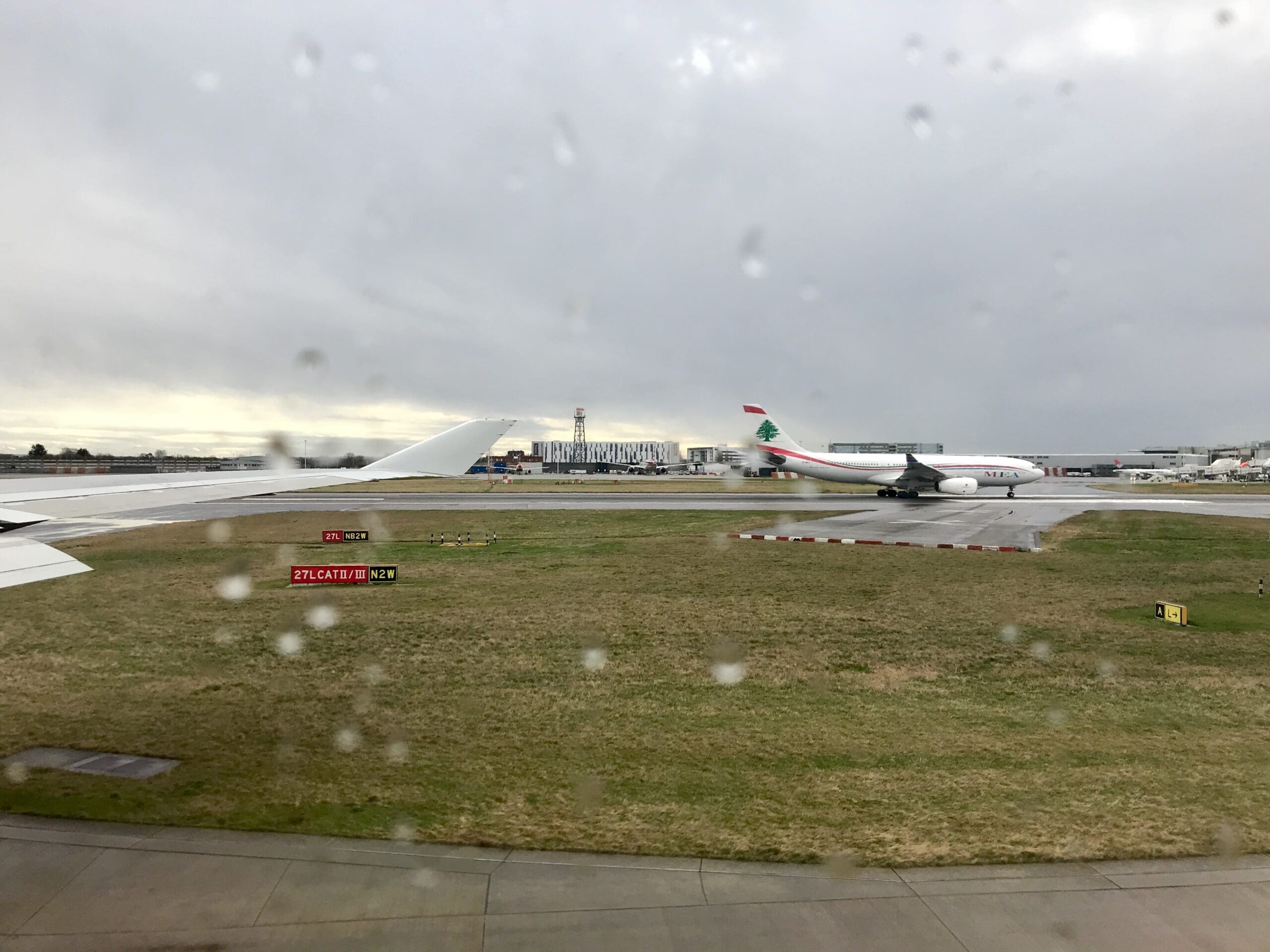
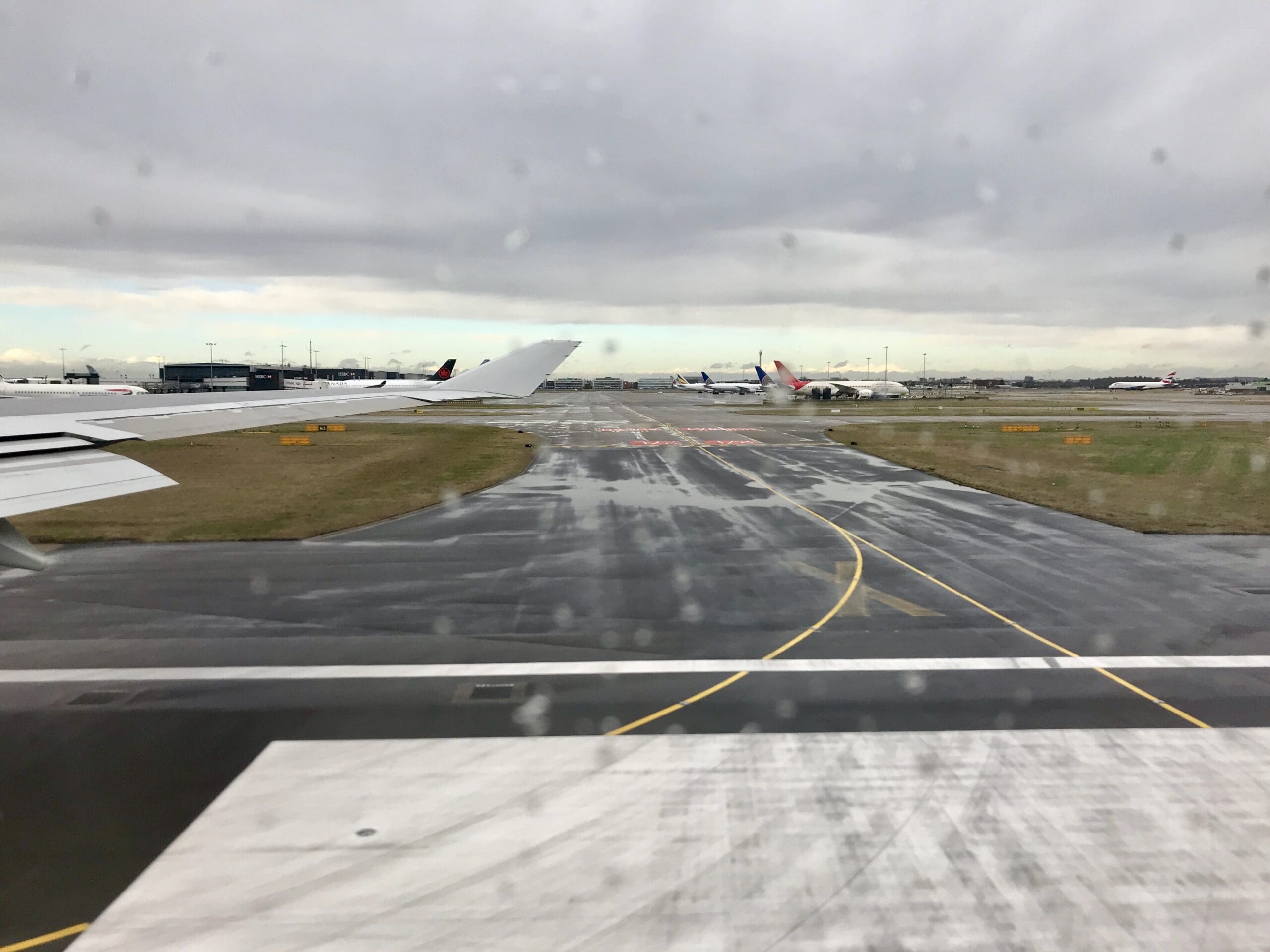
Once safely on Runway 27L, the Boeing paused for a few moments before the aircraft’s four engines spooled up, powering the jet down the runway before the nose was pointed skywards and we headed up into the British skies. This allowed for a superb birds eye view of the sprawl of Terminal 5 before we crossed over the busy M25 motorway and left Heathrow Airport behind.
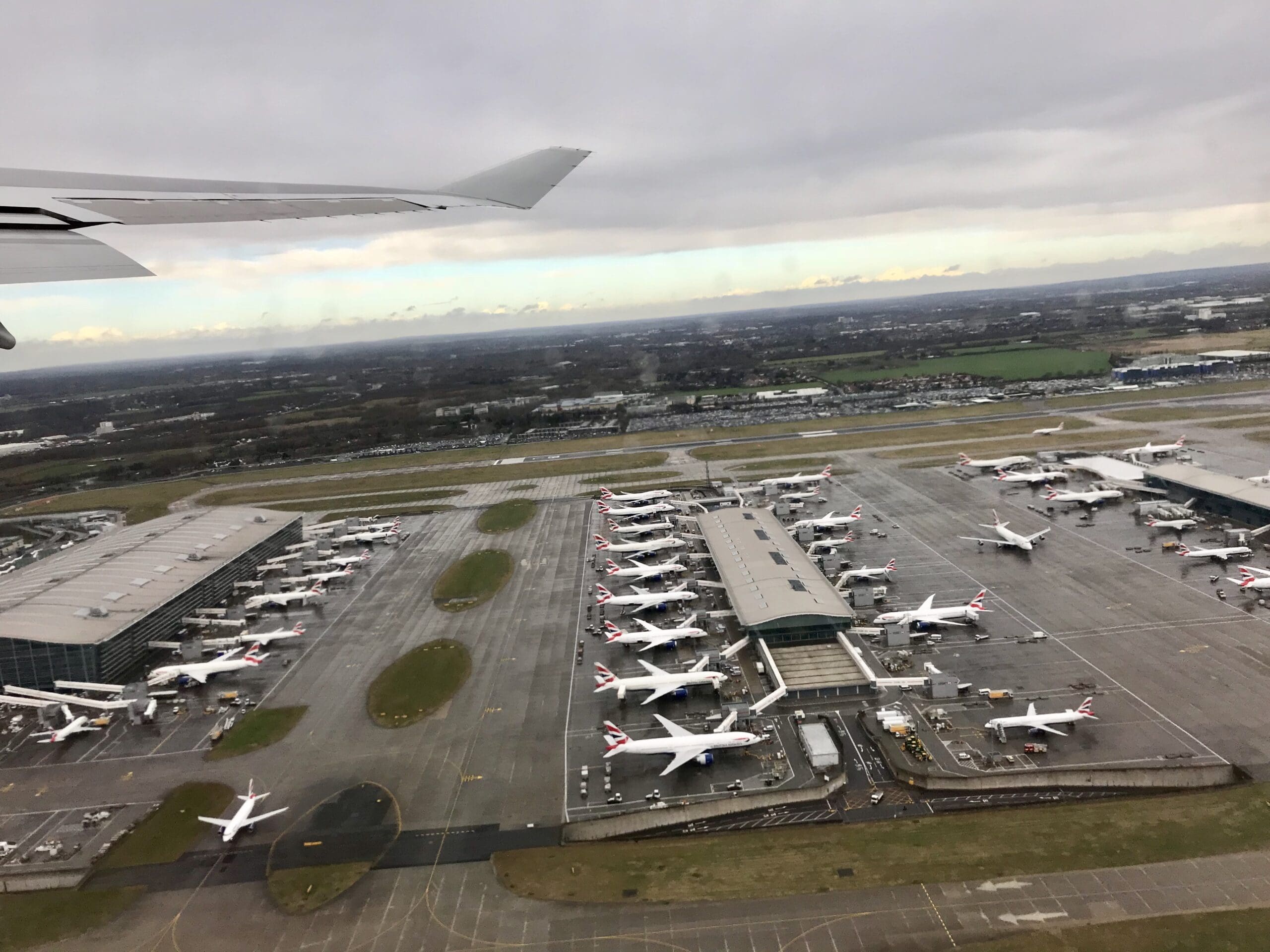
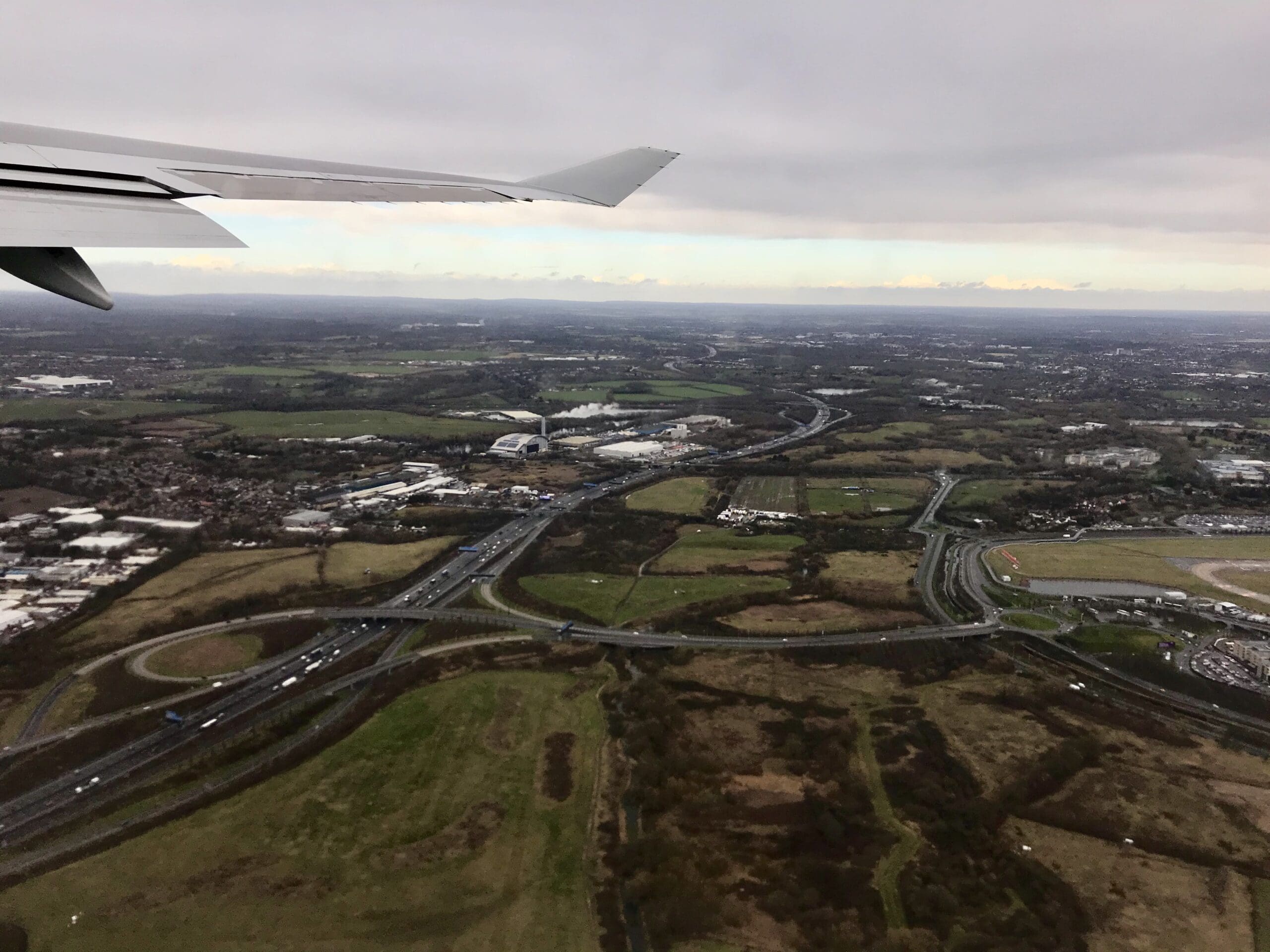
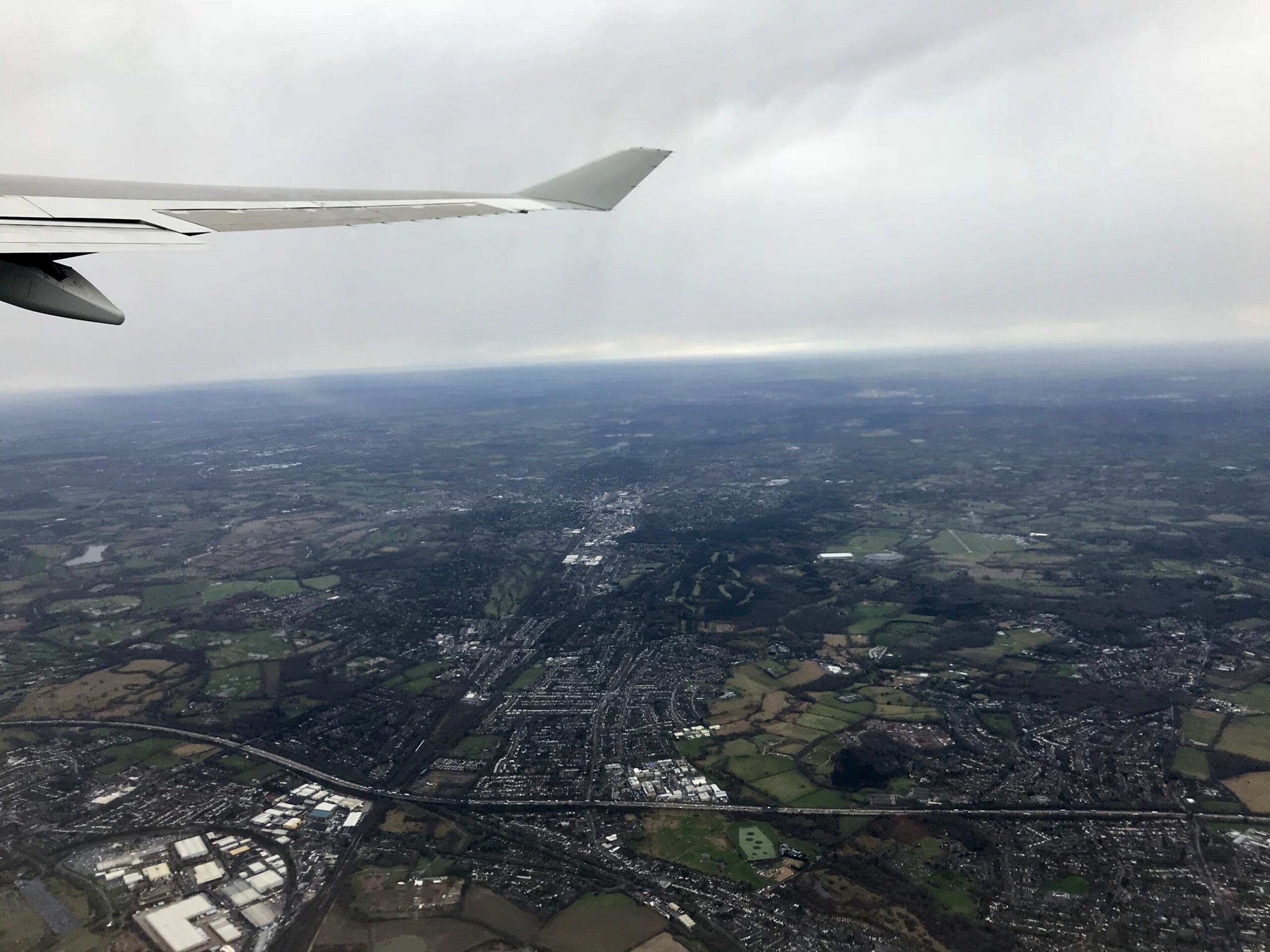
From Heathrow, the aircraft banked to the left before rolling out on an easterly heading. Once the wings had levelled, several airfields across Surrey and Hampshire could be seen, starting with Brooklands, the self-proclaimed ‘Birthplace of British Motorsport and Aviation’, followed by Farnborough, Fairoaks, Redhill before culminating with Gatwick, Britain’s second busiest airport. Upon reaching Tunbridge Wells, the aircraft climbed through impressive cloud formations with patches of the UK still visible until we crossed the British coastline near Dover.
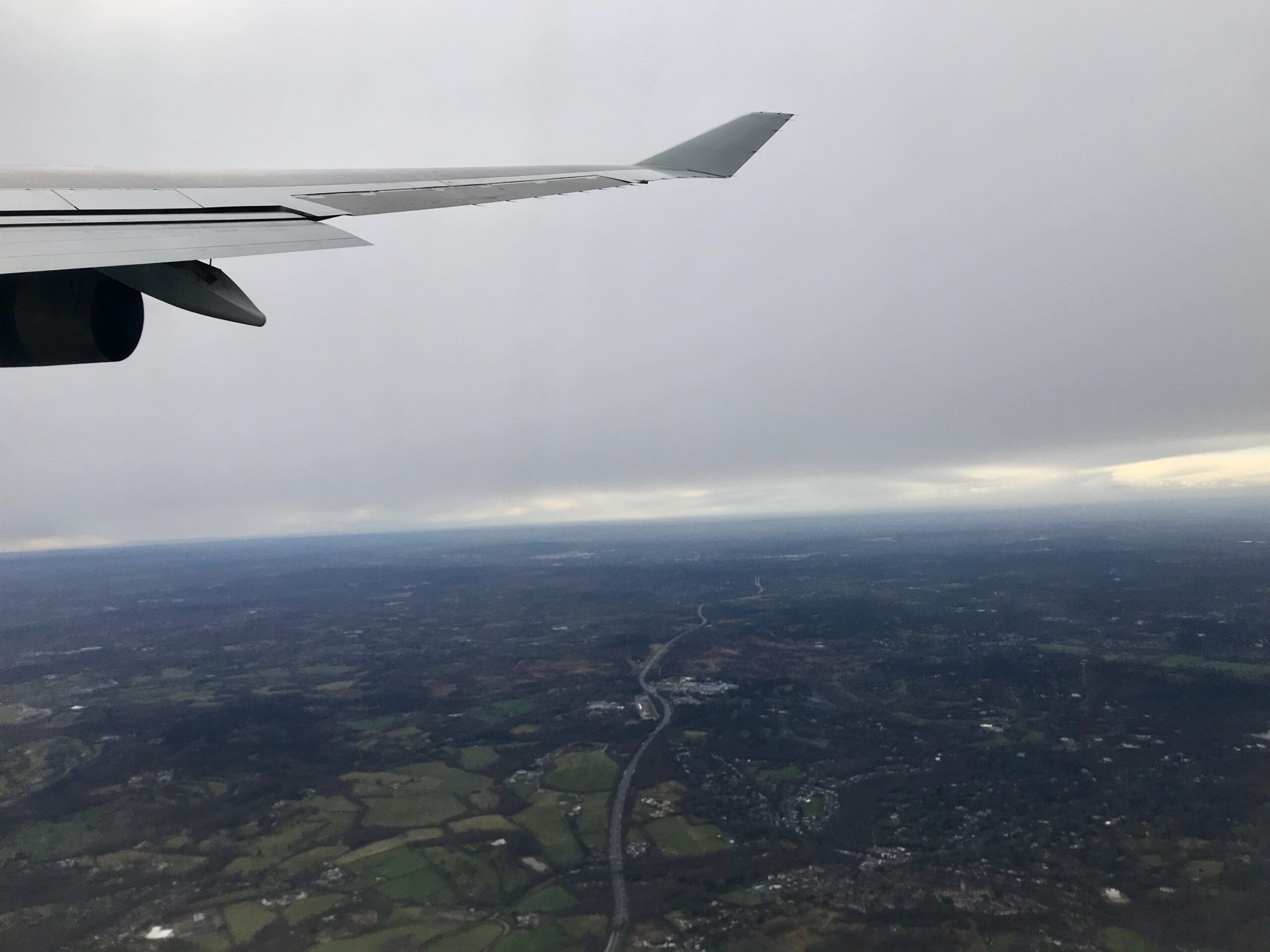
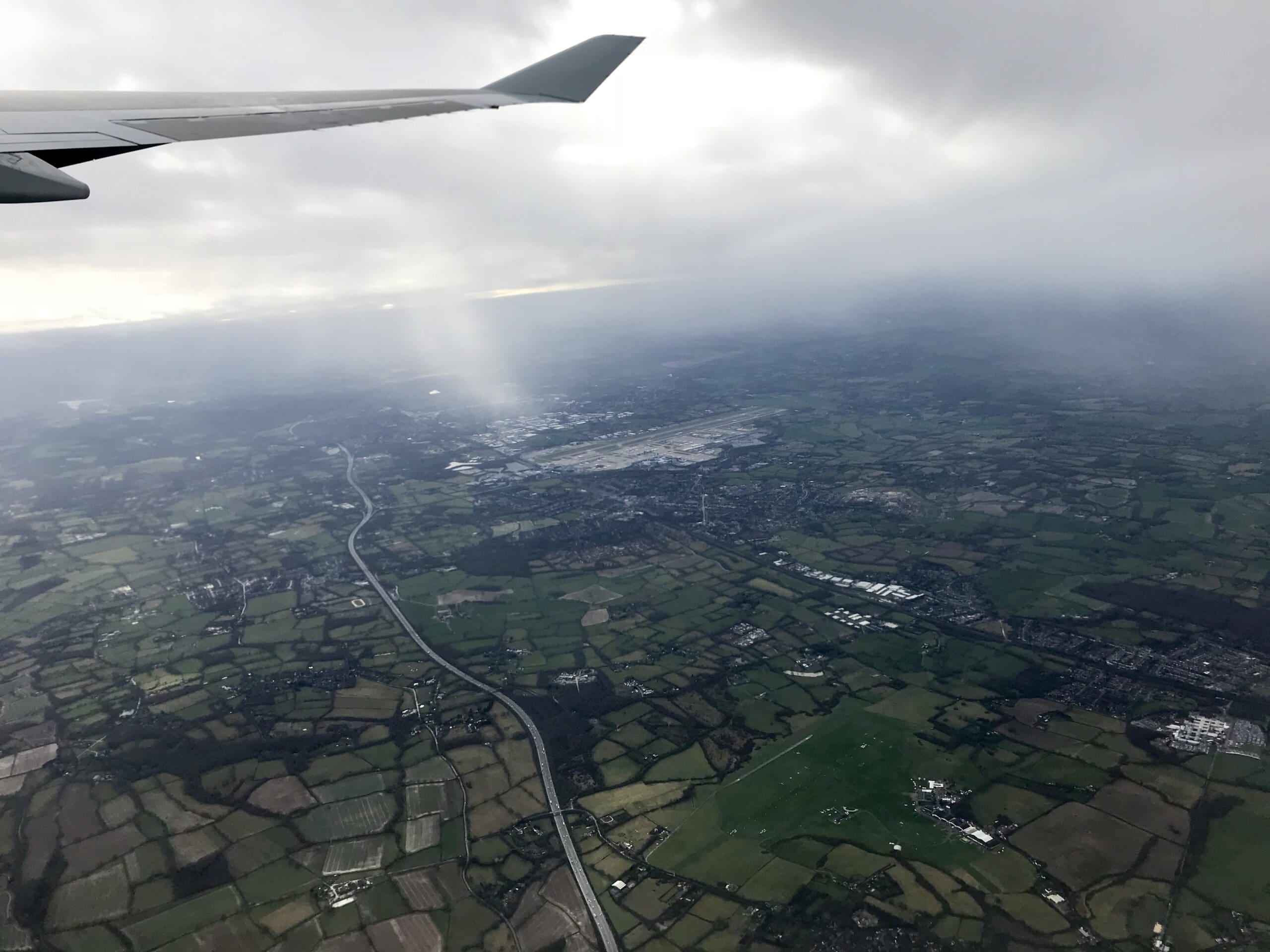
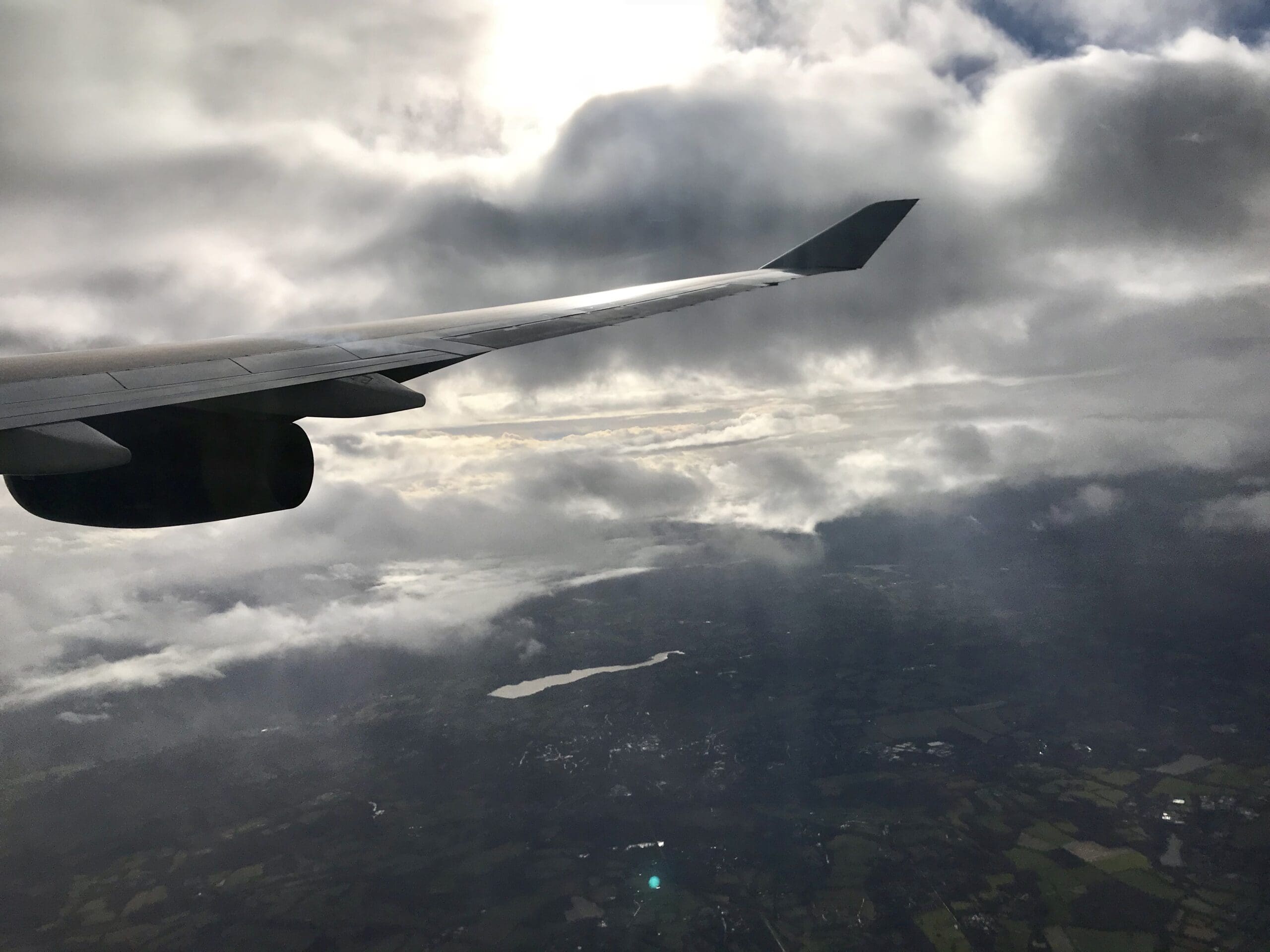
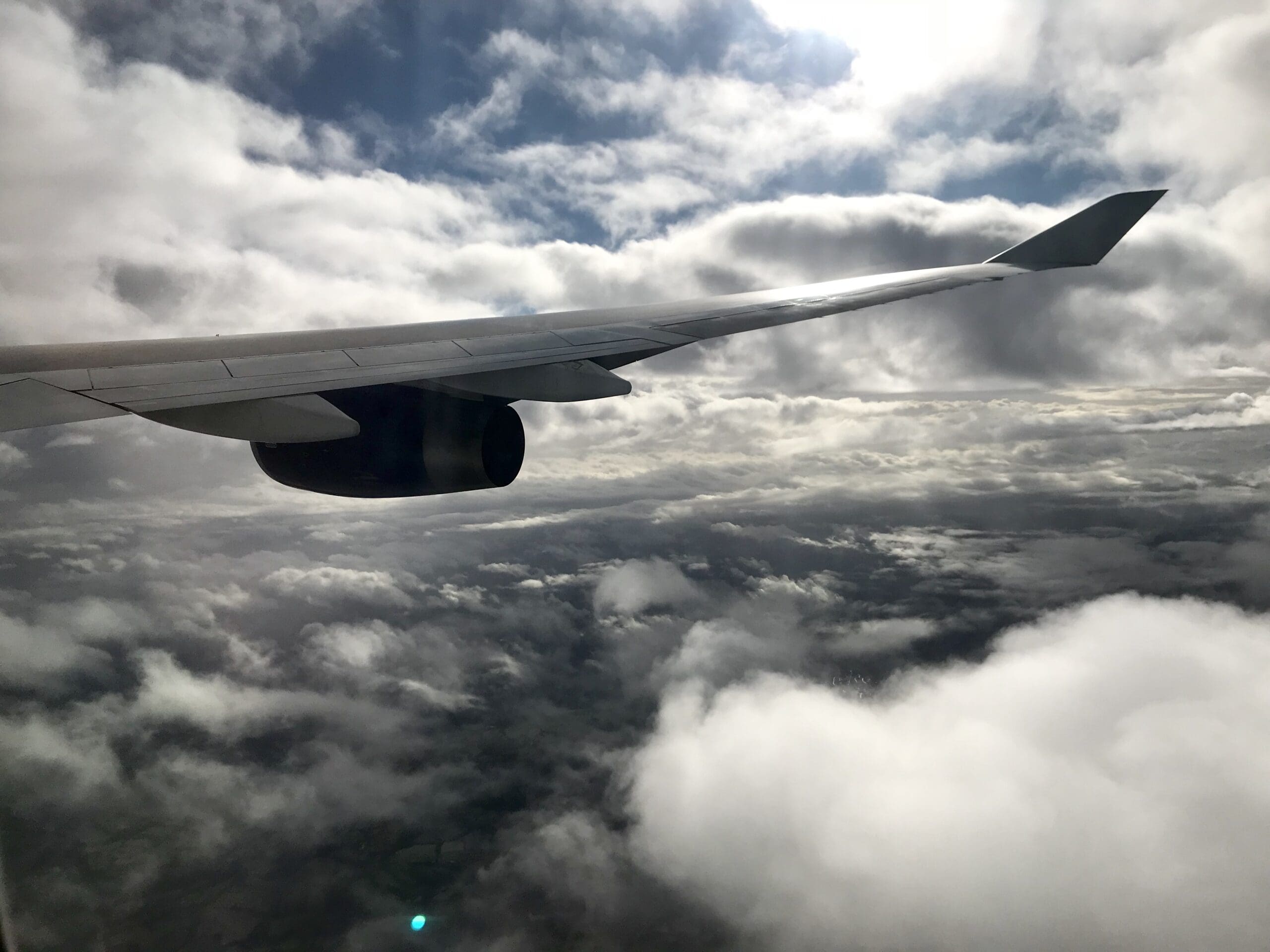
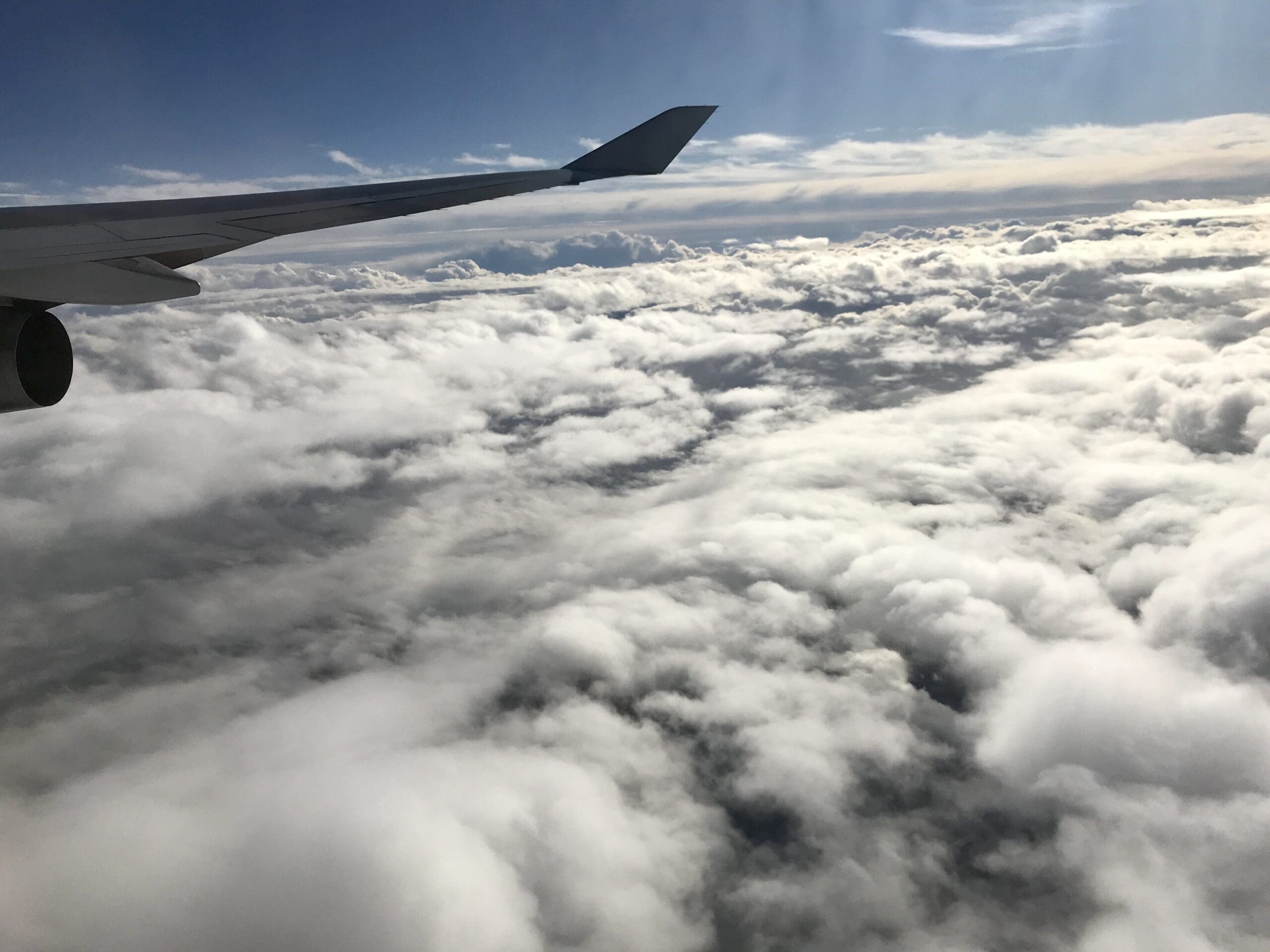
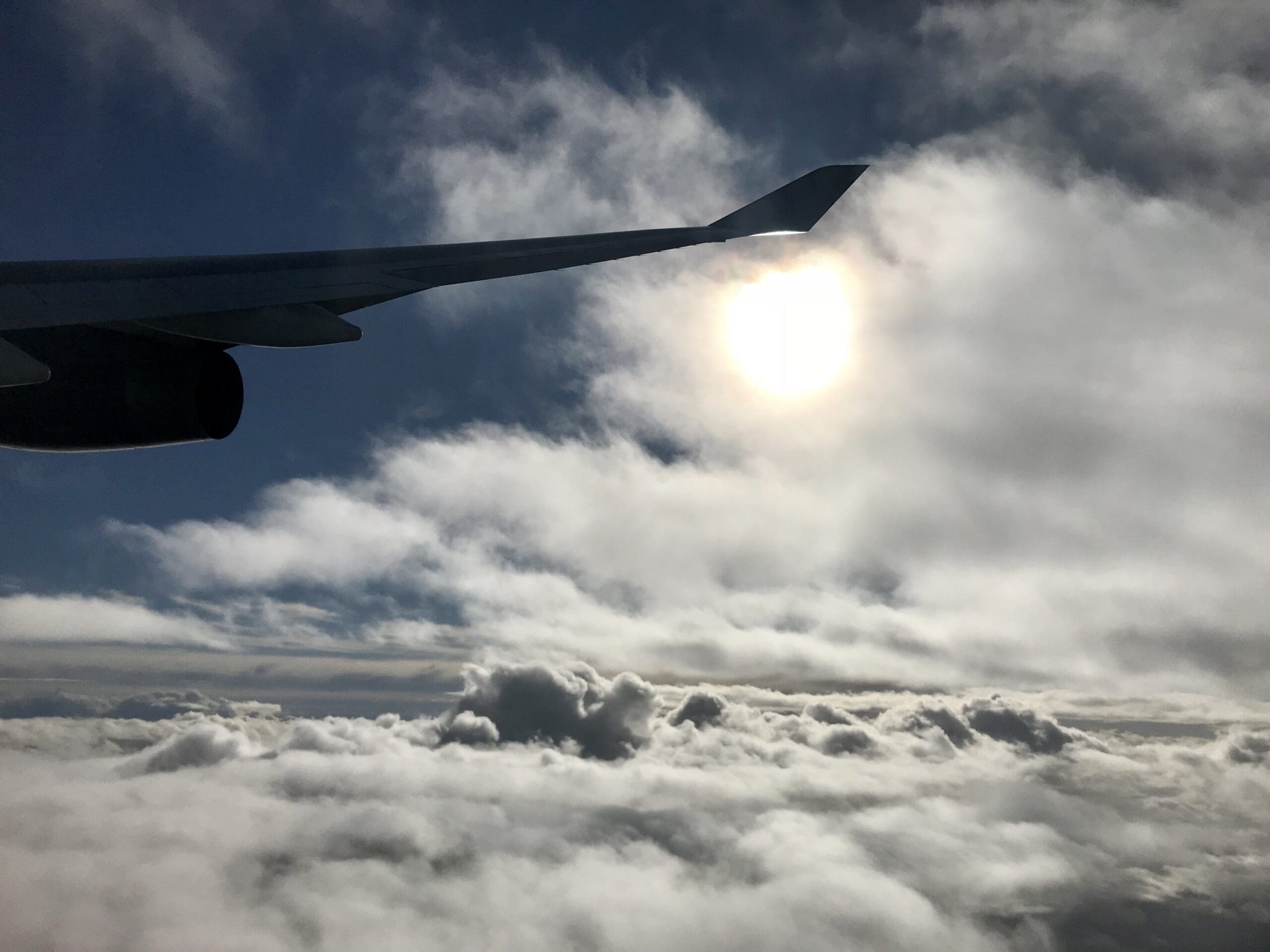
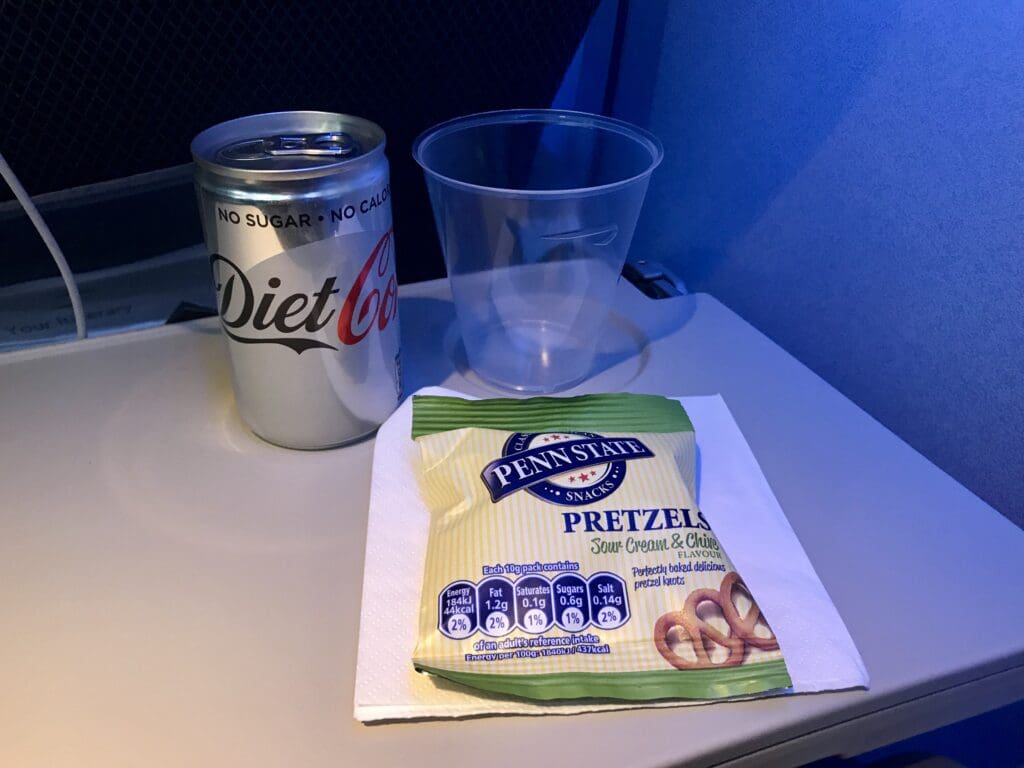
As the aircraft made a very short crossing of the English Channel, the Cabin Services Director performed another short welcome announcement, during which they promoted the High Life Connect wifi service. Several minutes later, as the aircraft passed Dunkirk, another brief announcement was made detailing the meal options available in the World Traveller cabin. These consisted of a meat option (chicken with rice) and a vegetarian option (tomato and mascarpone pasta). As soon as this announcement was made, the service commenced from the rear of the cabin and at 1330, a friendly crew member asked if I would like something to drink. Seeing as most onboard seemed to be ordering some sort of alcoholic beverage, the flight attendant looked a little surprised when I requested a Diet Coke and replied to my request with, ‘Would you like a beer with that?’. I found this to be a little funny but I declined their offer and was handed a small bag of pretzels – the very same type that I had been served on my last long haul flight with British Airways way back in 2006!
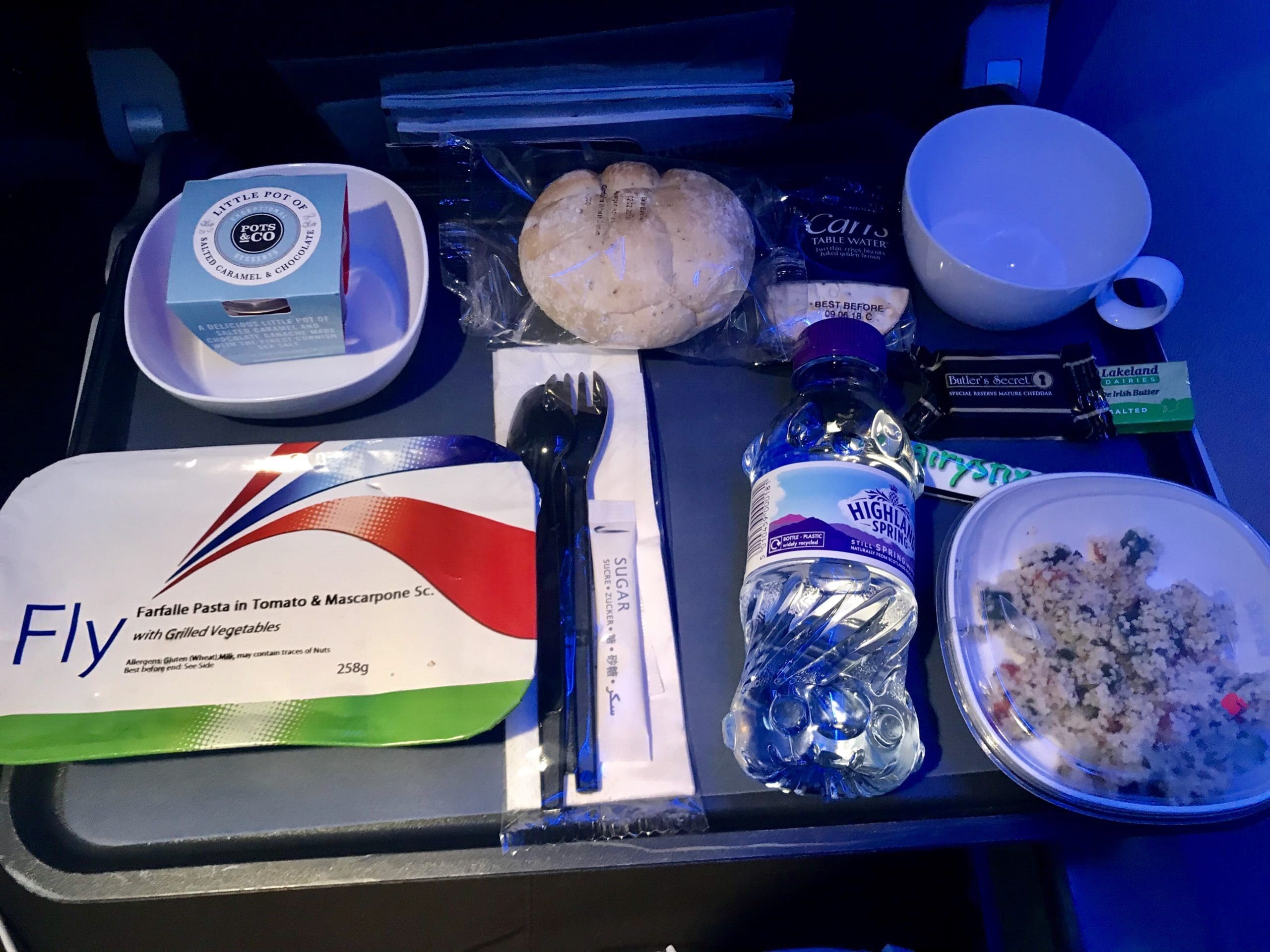
From Northern France, the aircraft soon crossed the border into Belgium and then into German airspace. Upon entering the skies over Germany, the aircraft experienced a short bout of turbulence – the first of several such patches during the flight. Whilst not particularly rough, this was enough to warrant the re-illumination of the seat belt signs thereby putting a temporary halt to the lunch proceedings. Fortunately, the signs were switched off after several minutes and at 1350 time, the crew passed through the cabin handing out special meals before commencing the main meal service. Once again, this commenced from the rear galley and seated near the rear of the cabin, I was served in almost no time. Having been torn between the two options, I ended up opting for the pasta which was served to me in a piping hot container on a tray that seemed to contain a reasonable spread of food. Alongside the main dish, I was treated to a delicious couscous salad, a small block of cheddar cheese, several crackers, a packet of butter, a cold but not rock-hard bread roll and a chocolate and caramel ganache. This was accompanied by a plastic knife, fork and spoon which could be found in a packet alongside a serviette, salt and pepper.
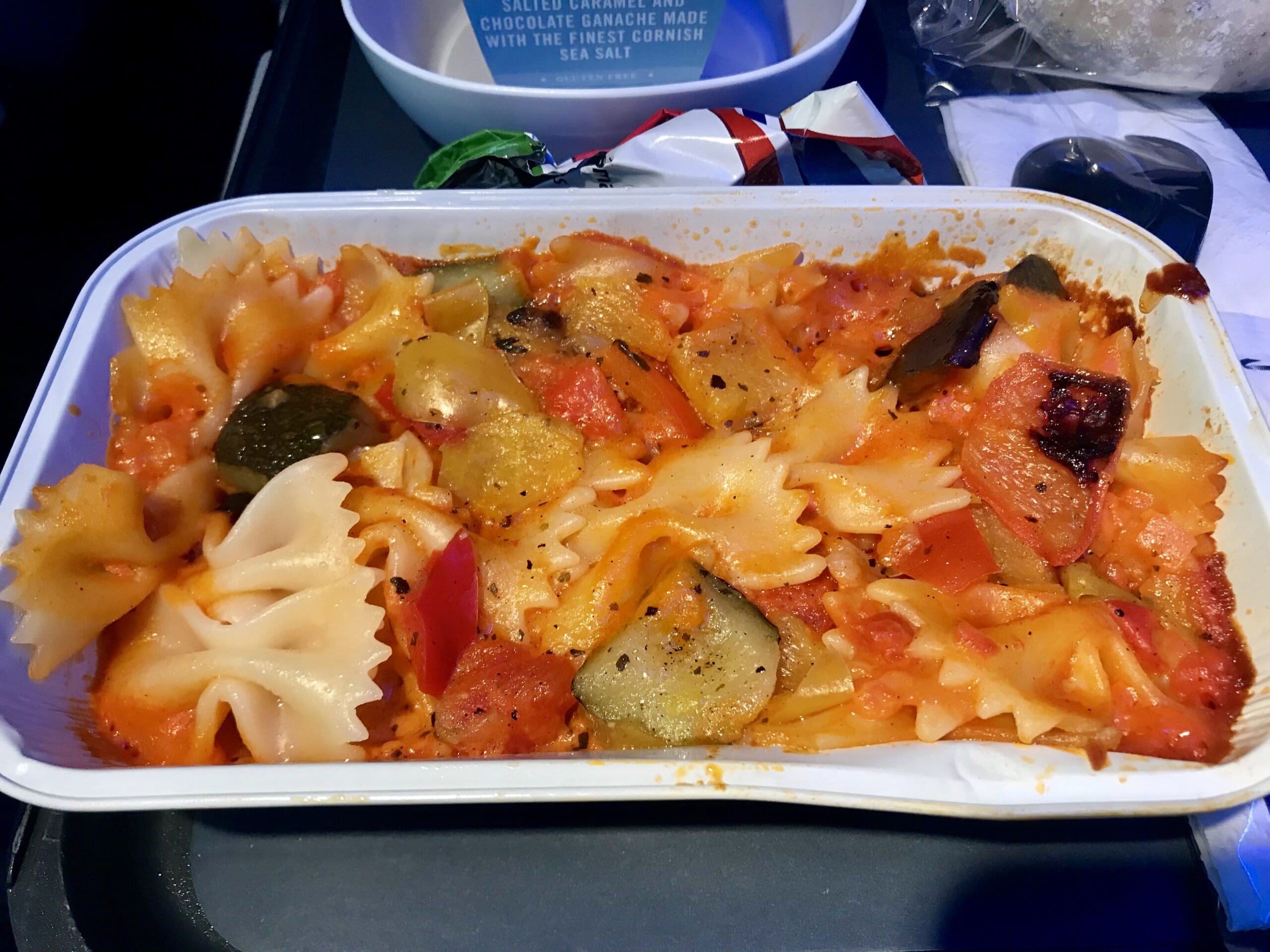
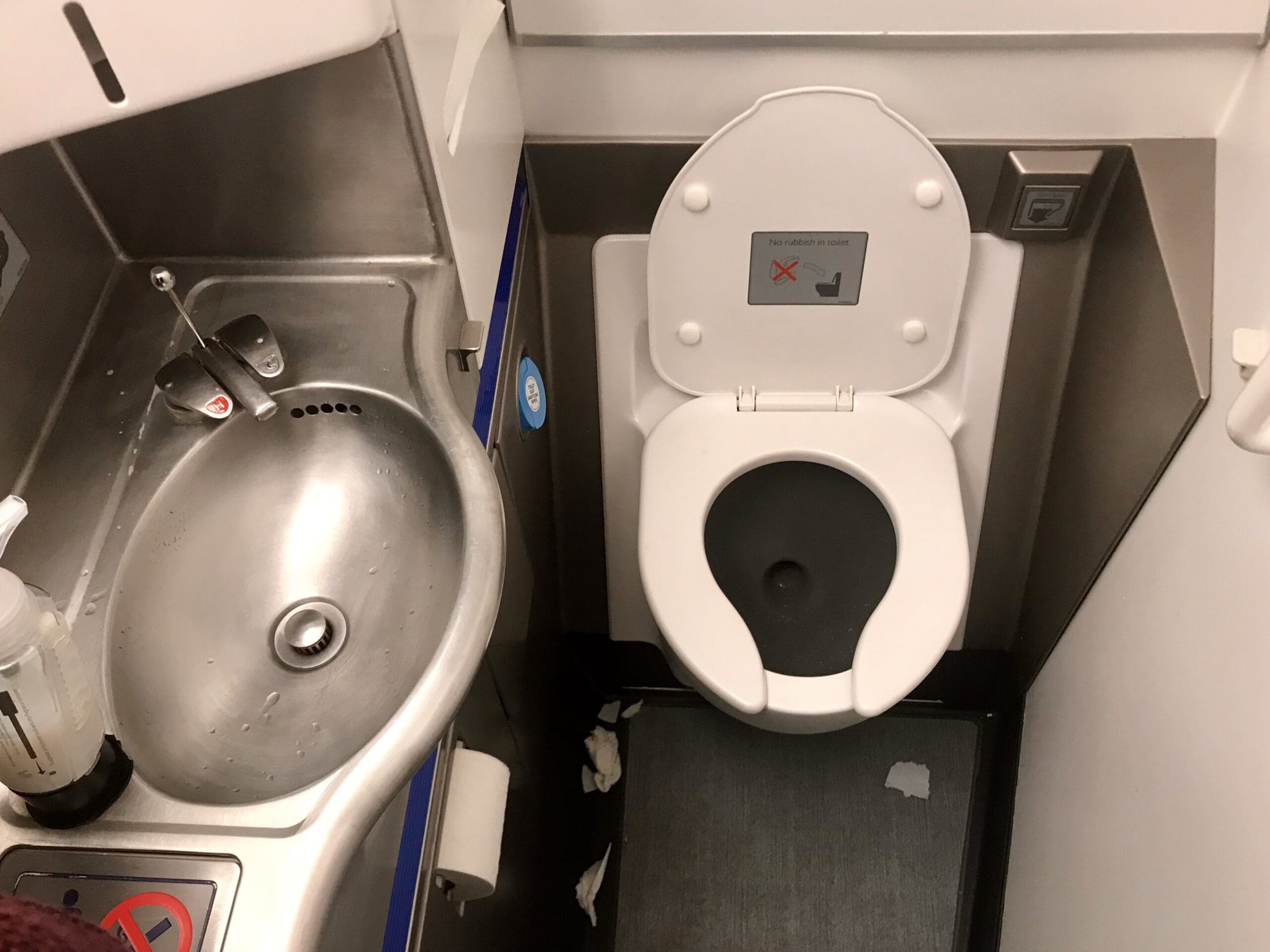
Whilst the main dish was a little bland and most certainly not the best inflight meal I have ever had, it was far from terrible and most certainly filled a gap. Almost exactly thirty minutes after I received lunch, the trays were collected before a round of hot drinks was made. At this stage I opted for a coffee which I found to be of standard quality, leaving me with no grumbles or praises. Once the trays had been collected, I decided to make a quick trip to the bathroom. Given the clean state of the rest of the aircraft upon boarding, I had expected something similar from the aircraft’s toilet facilities. I was however a little surprised to find these to be in a slightly dirty condition, albeit well stocked with the basics.
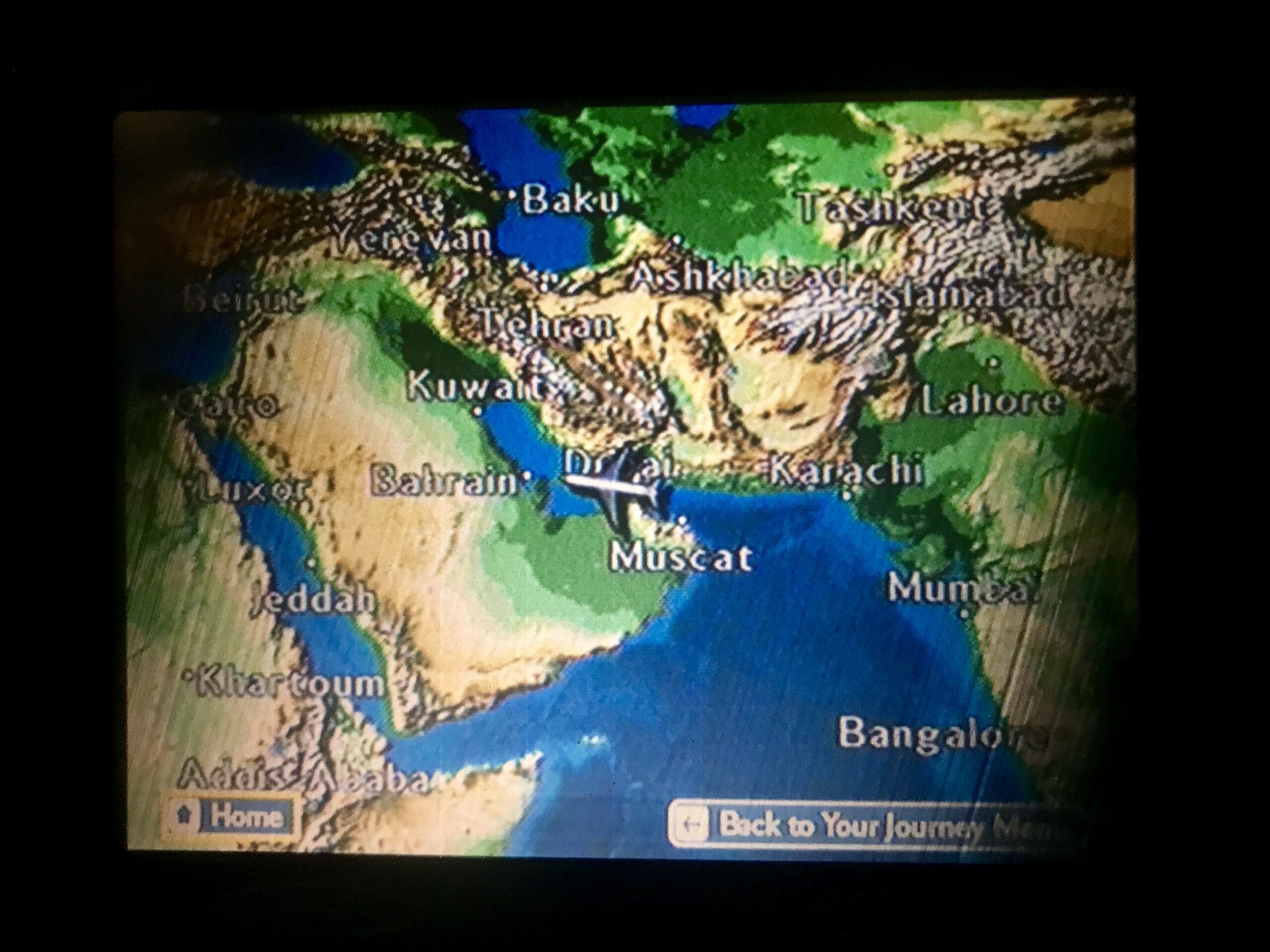
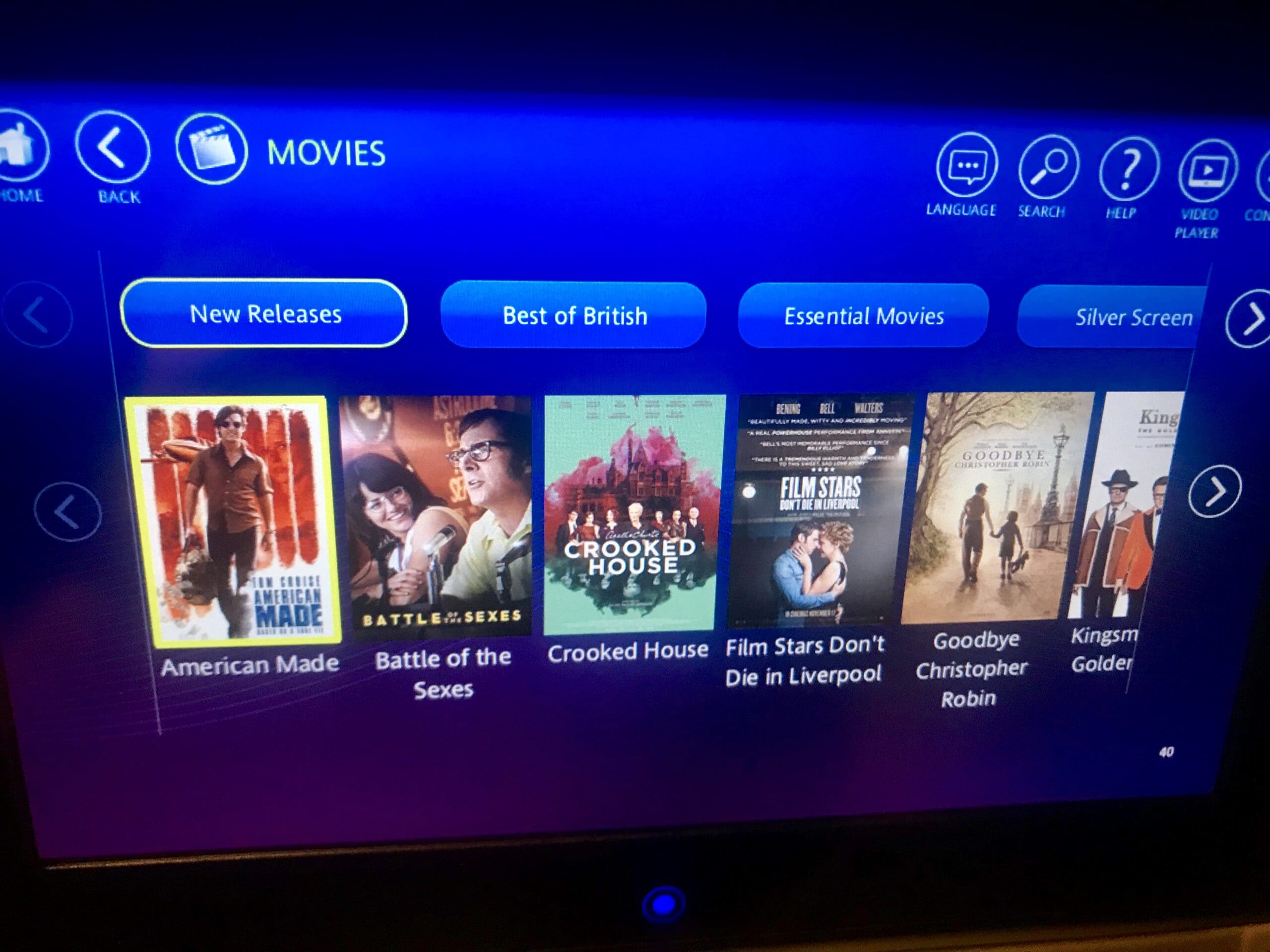
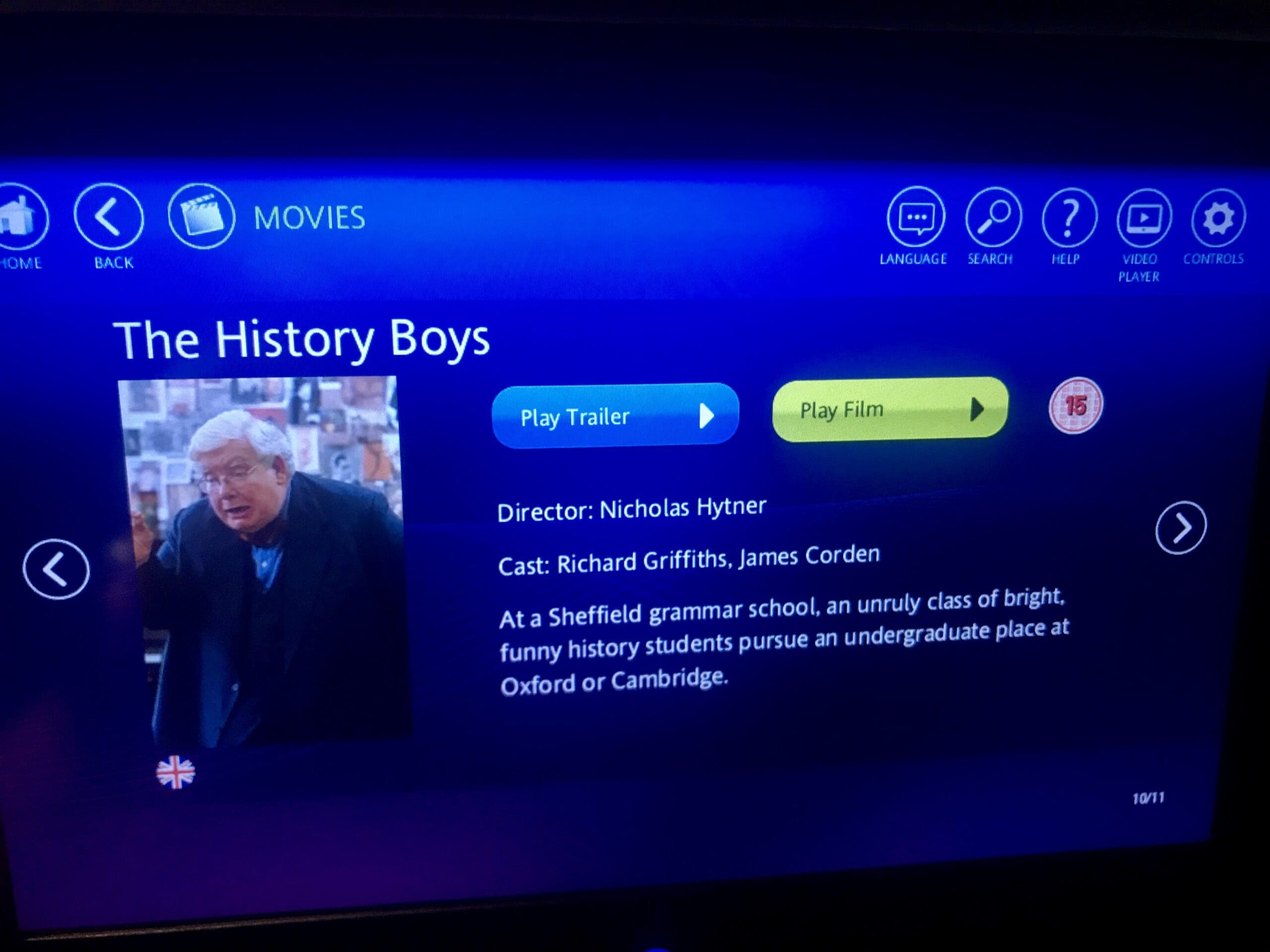
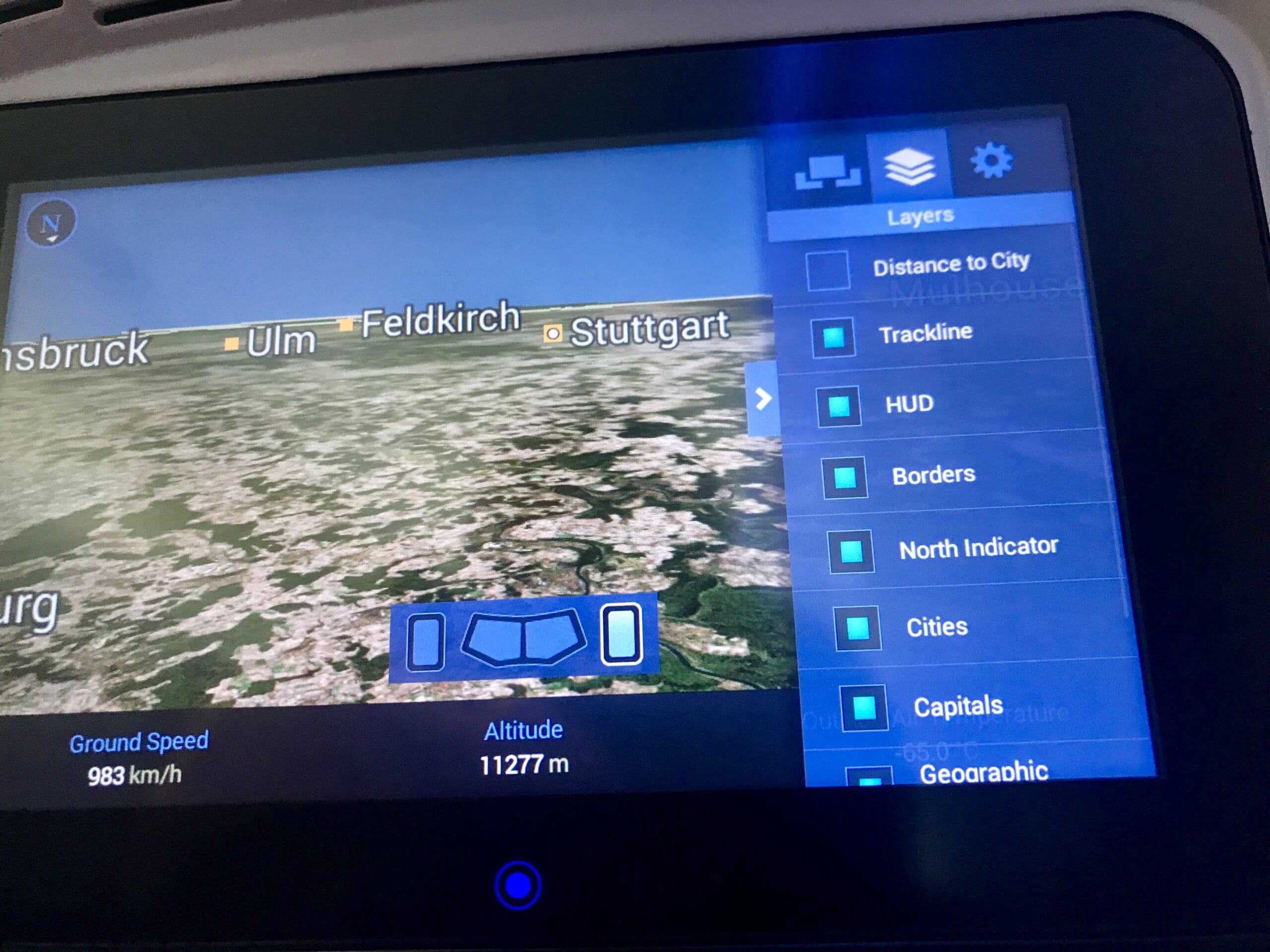
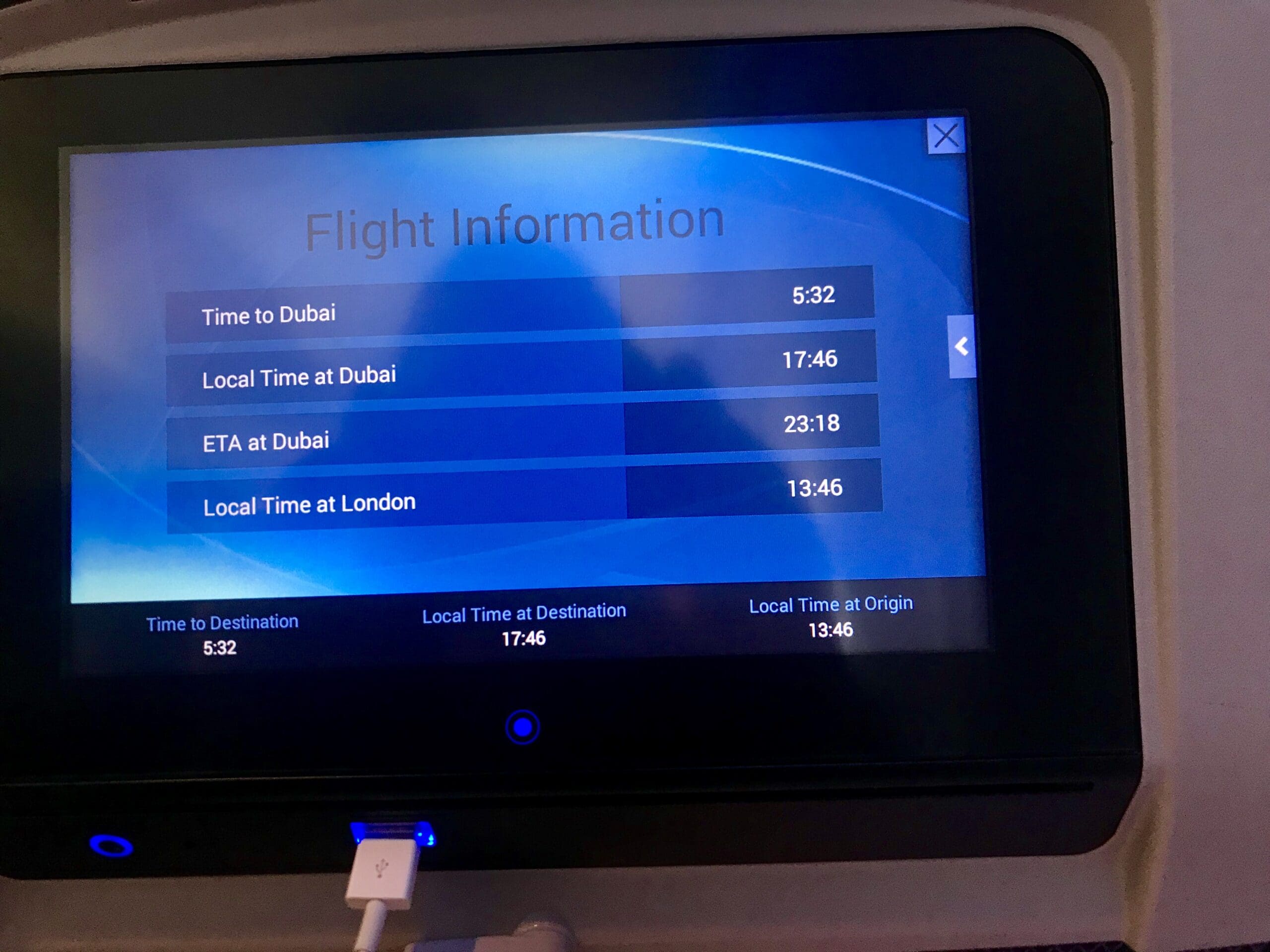
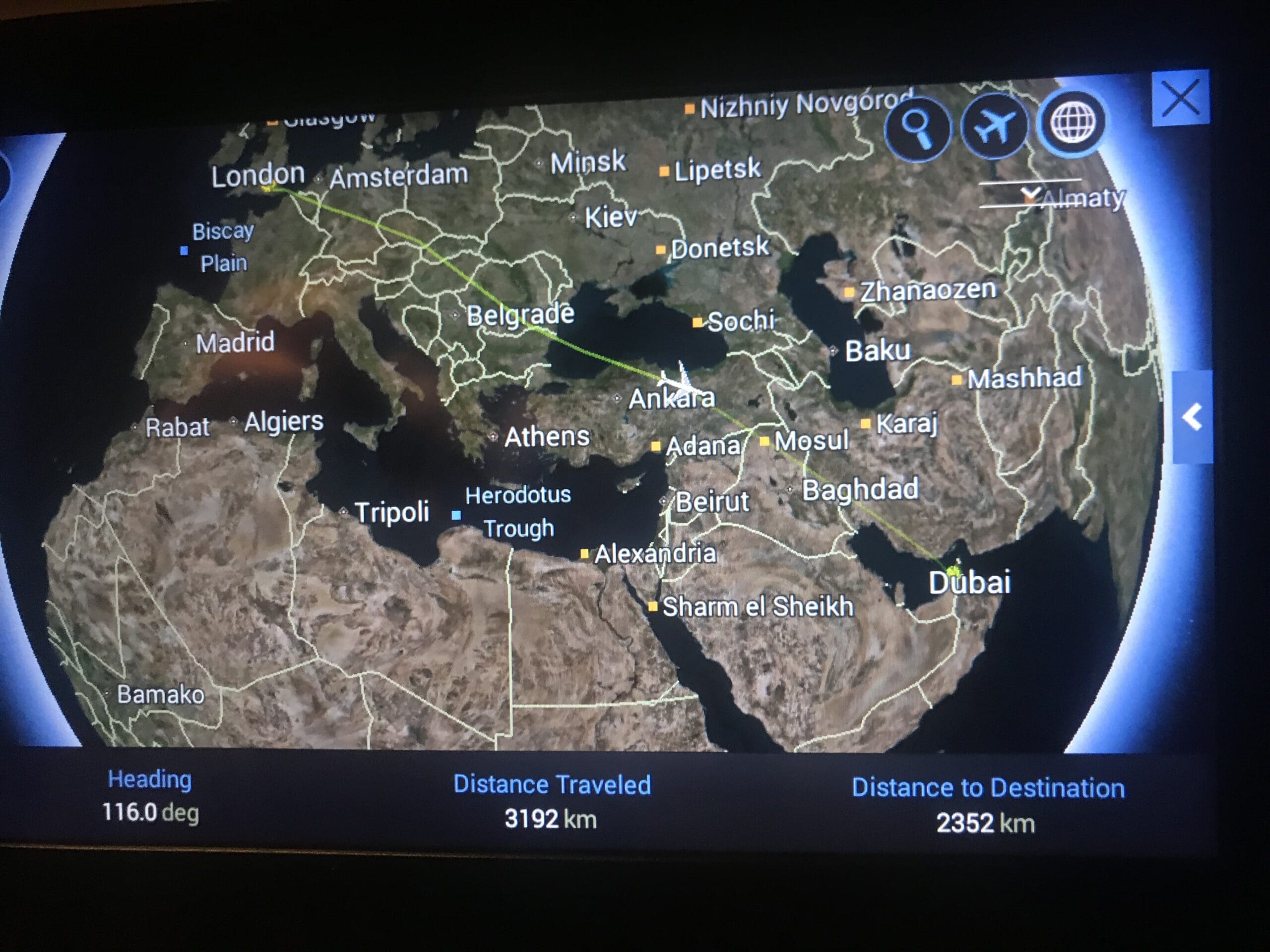
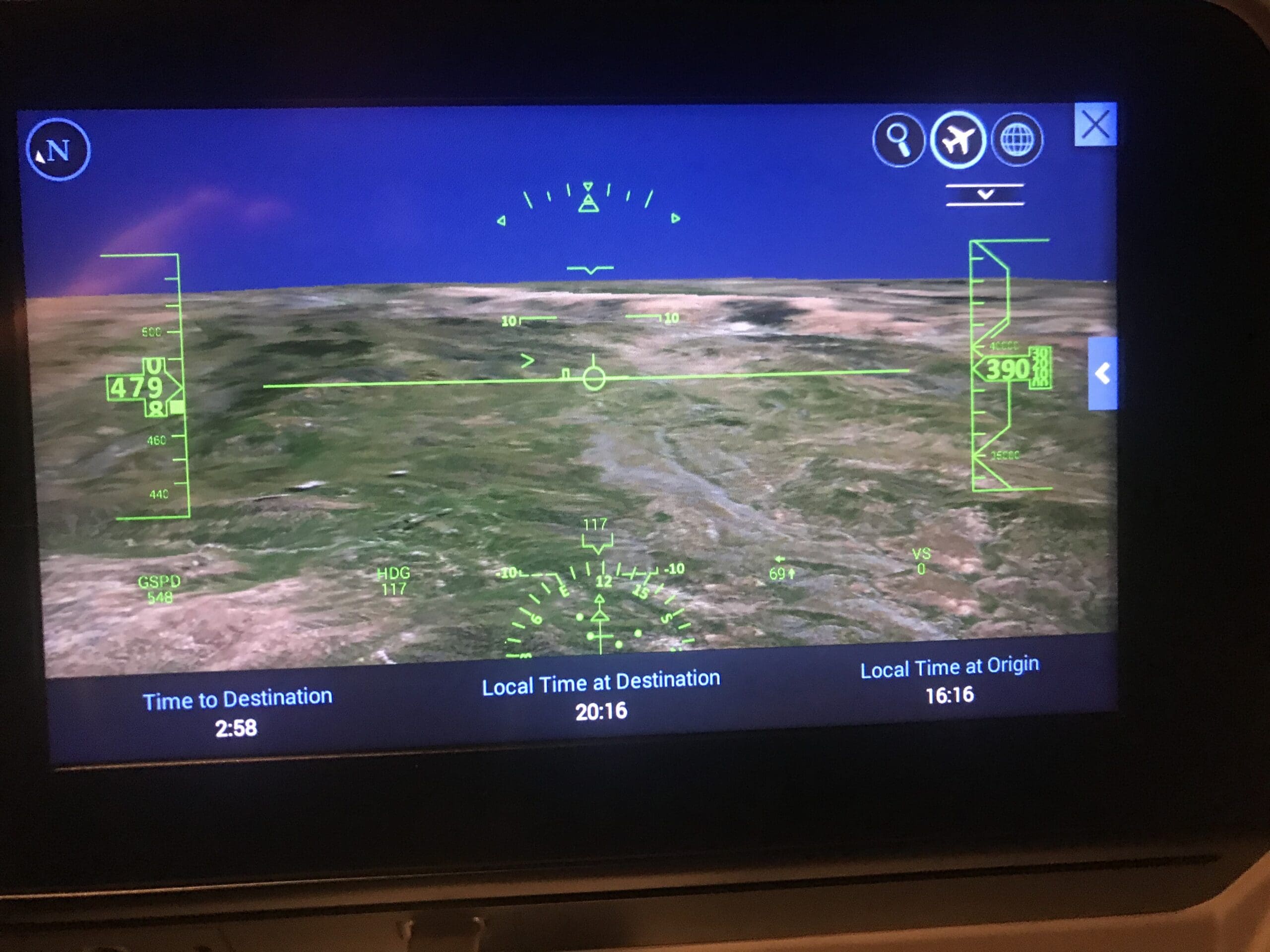
Upon returning to my seat, with little to see outside bar the passing clouds below, I turned to the inflight entertainment system. Starting with the basics, I found the system to be modern, well laid out, quick and highly responsive, whilst the screen quality was reasonably good. Moving onto the system’s content, British Airways does occasionally get criticism for its lack of items, especially when compared to some other major airlines, however I found this to contain a decent selection of television programmes, films and music. My status as an enthusiast meant I was quickly drawn to the moving map which featured the usual pages such as the head-up display and window view screens. After a short play around, I decided to settle on the classic British film, the History Boys, largely filmed in the Sheffield neighbourhood where I was born and had grown up! On a positive side note, no advertisements were played before the commencement of video content.
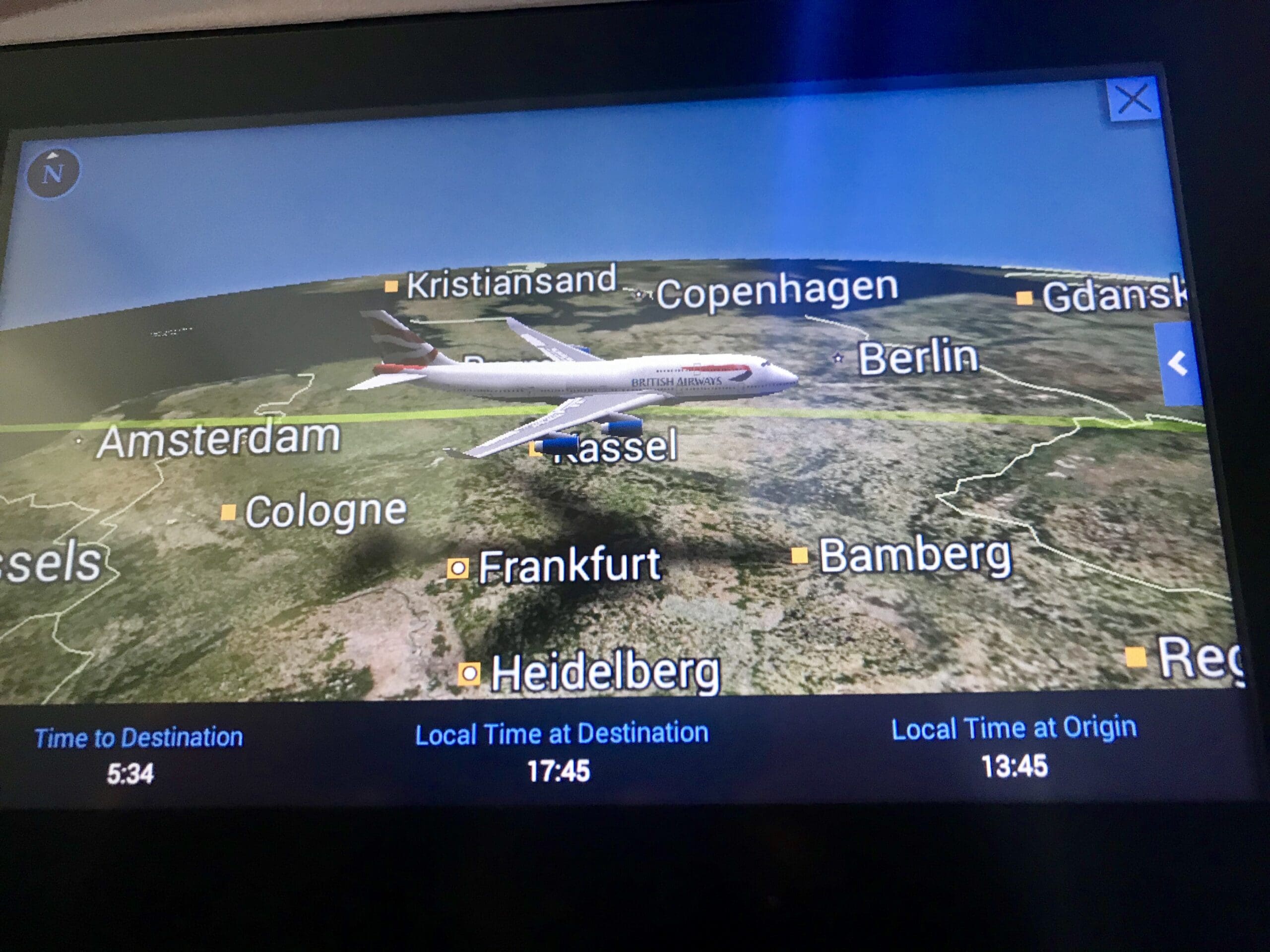
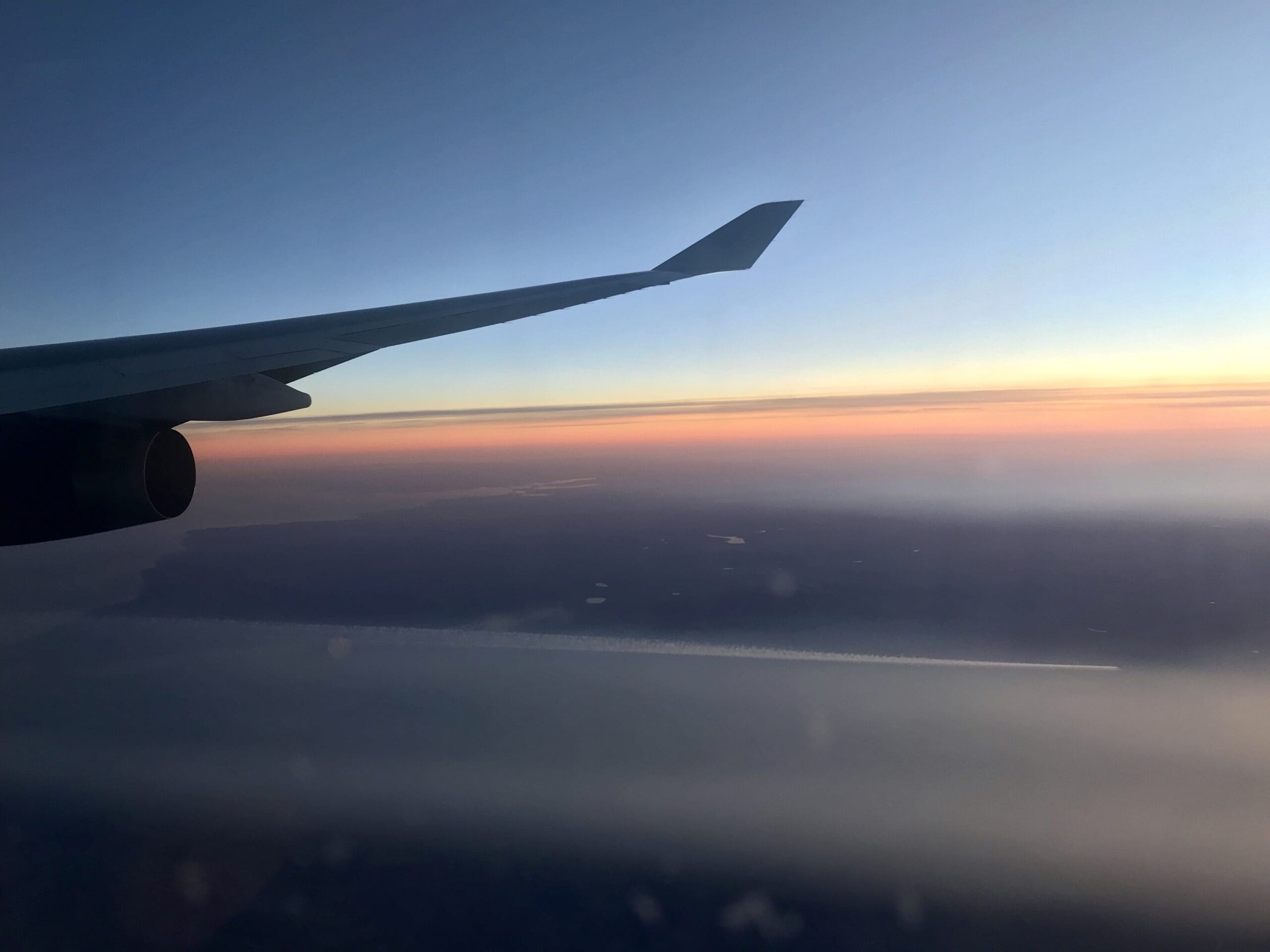
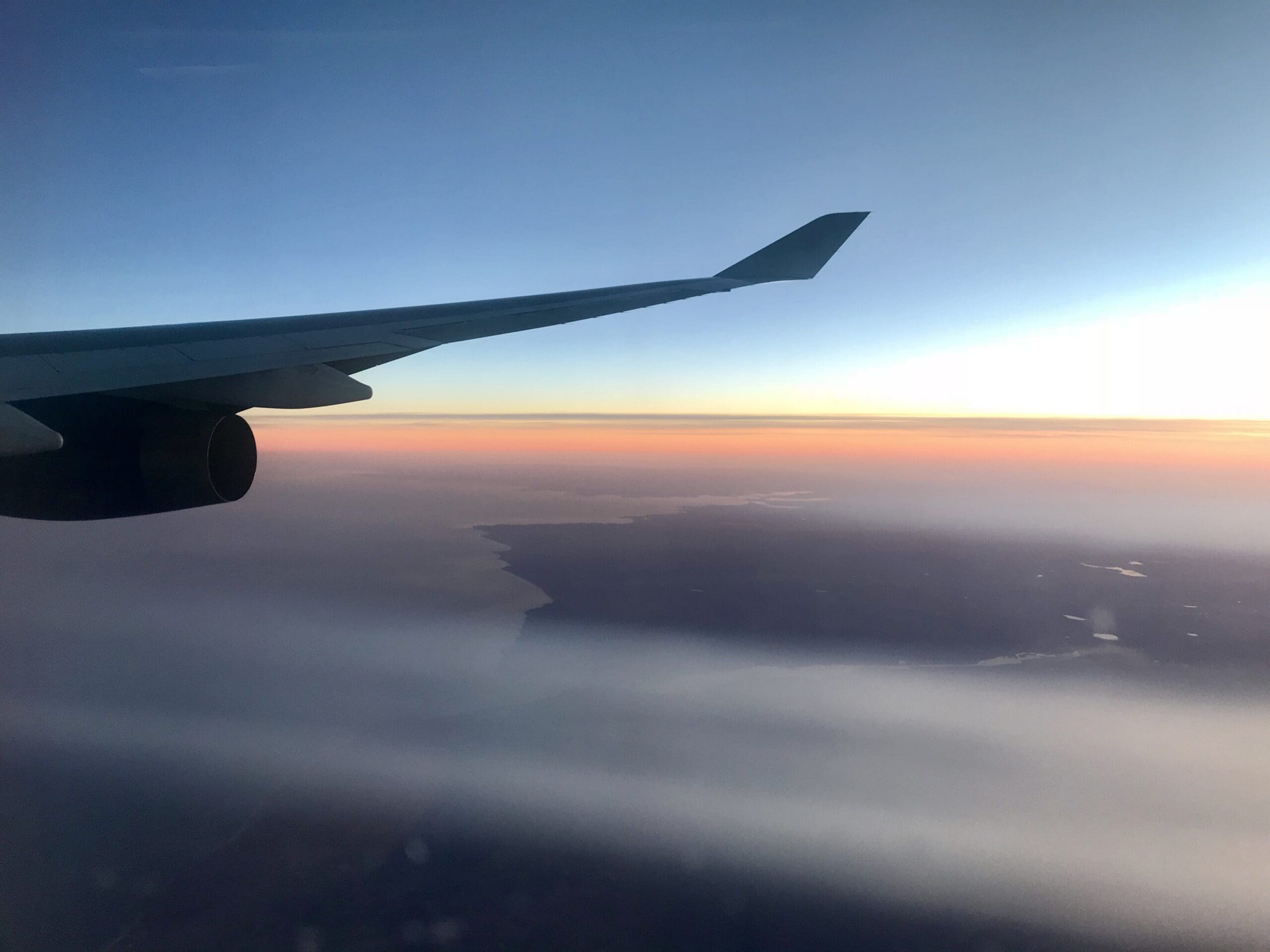
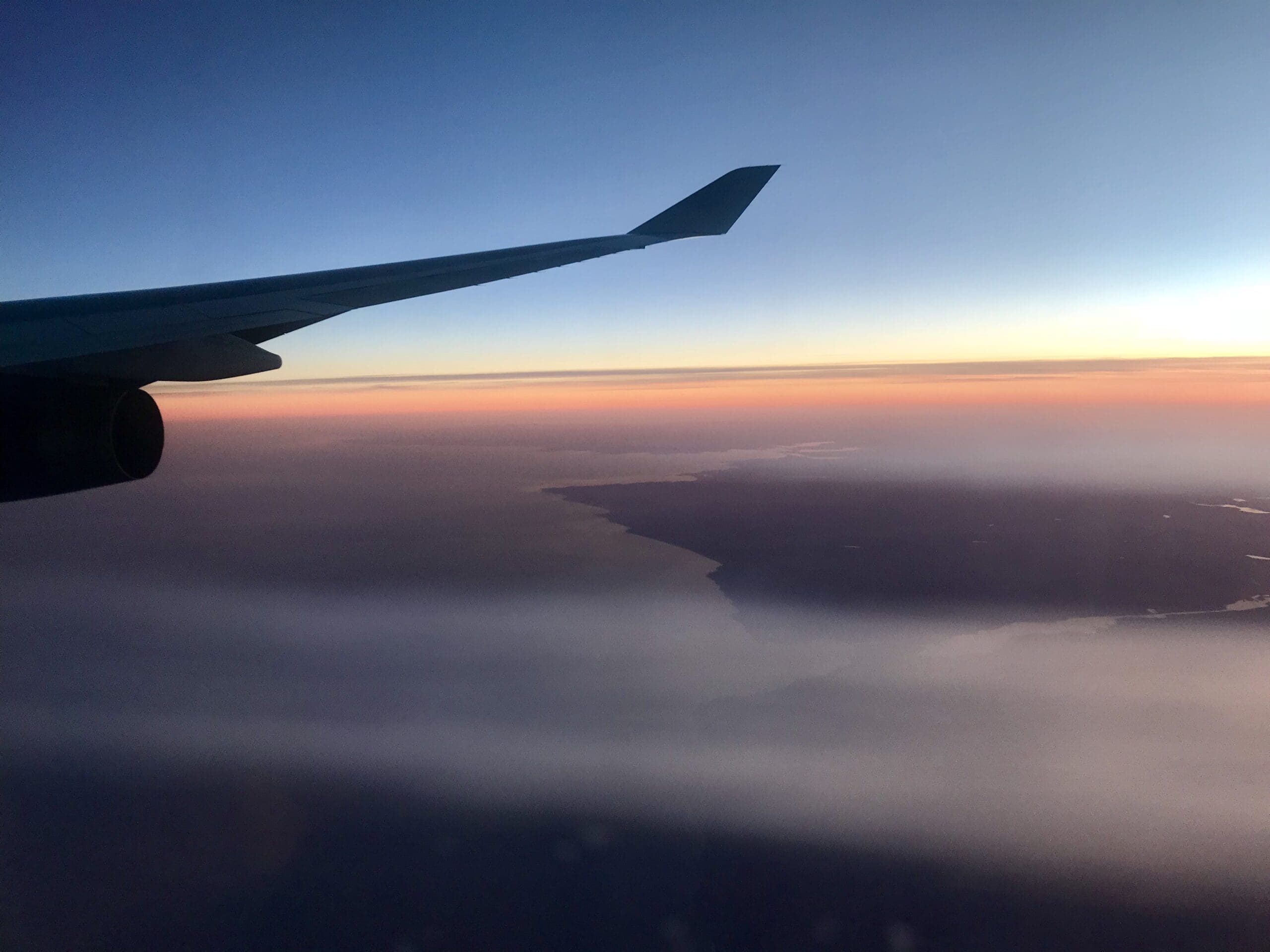
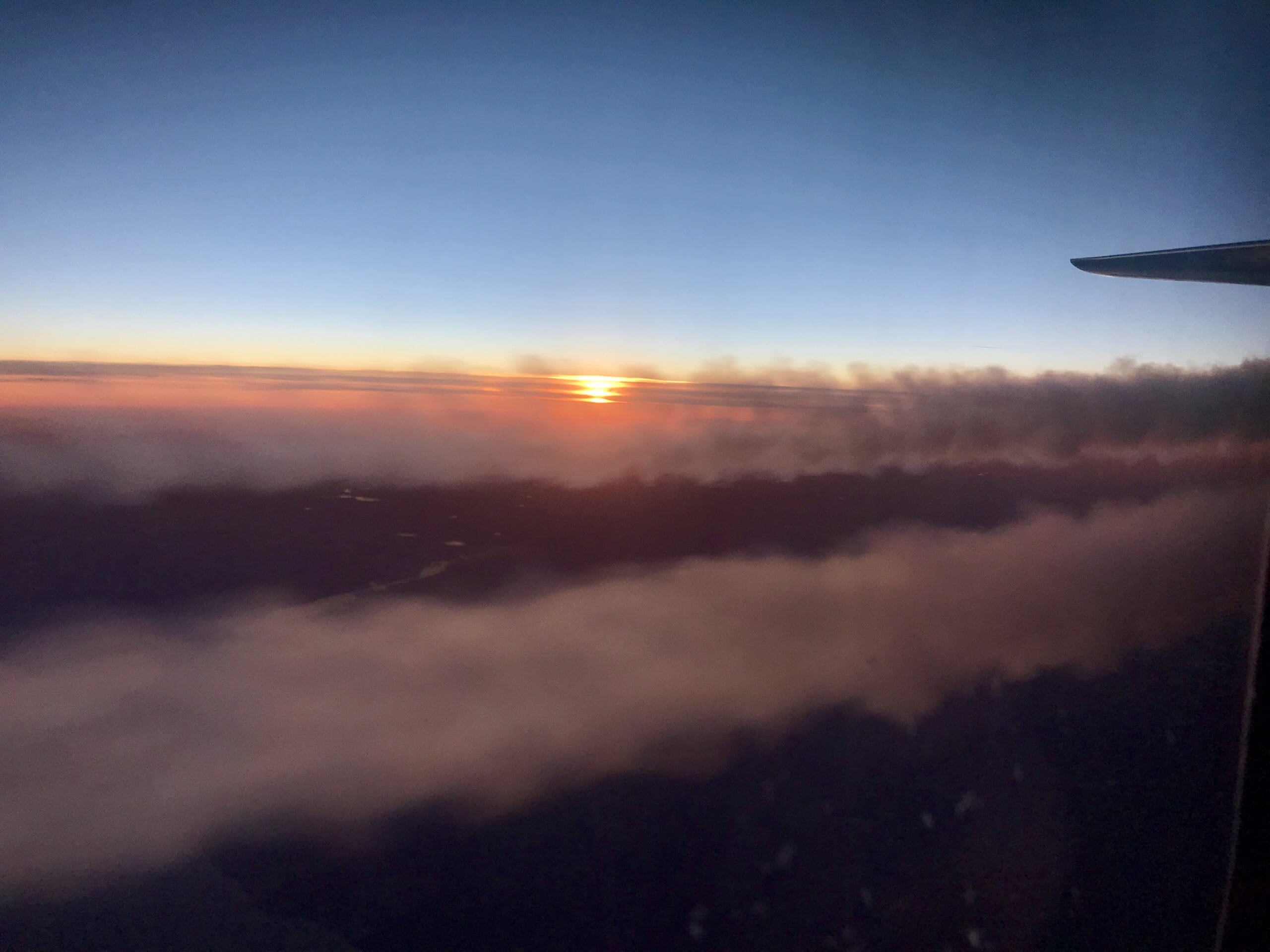
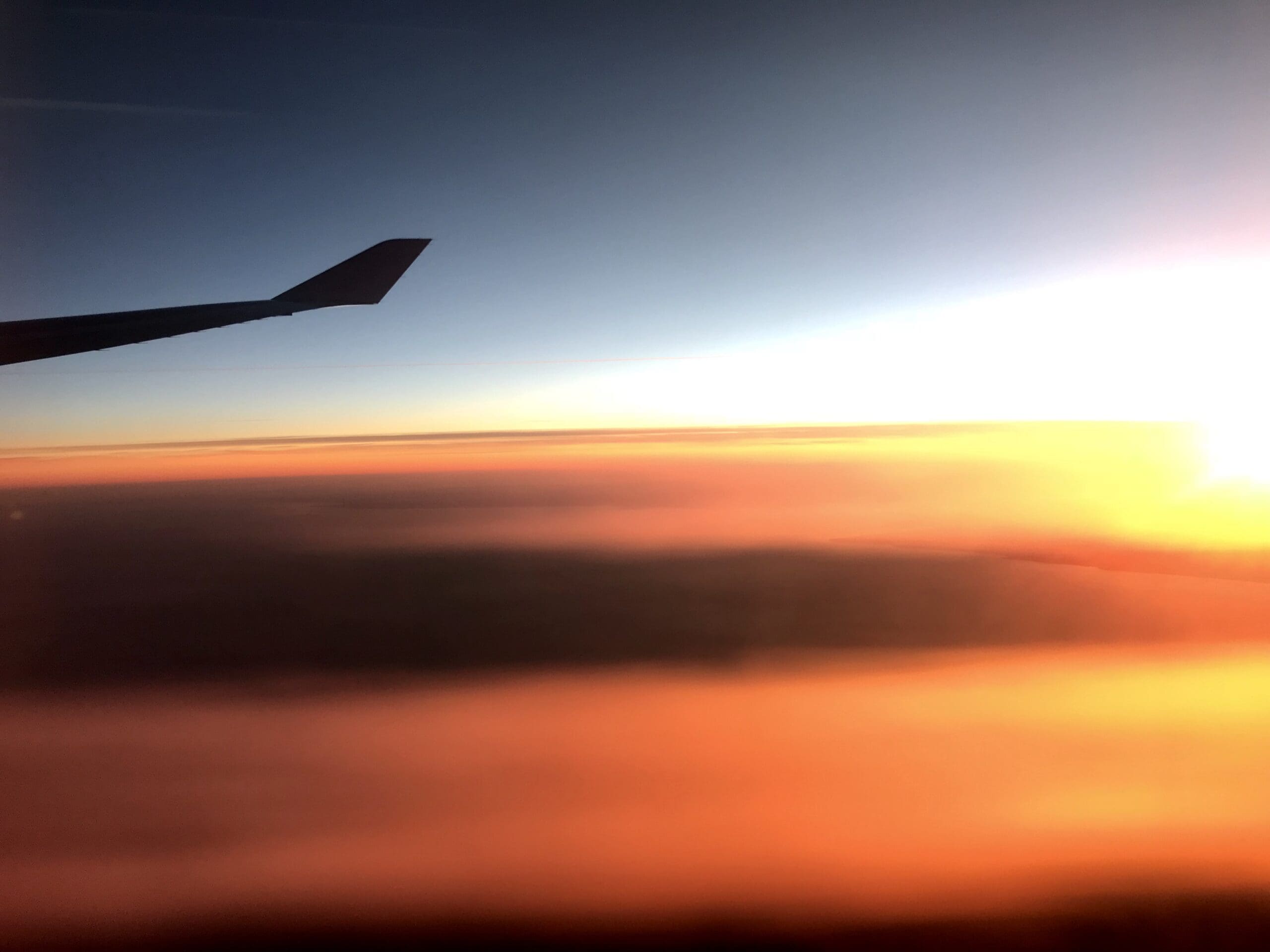
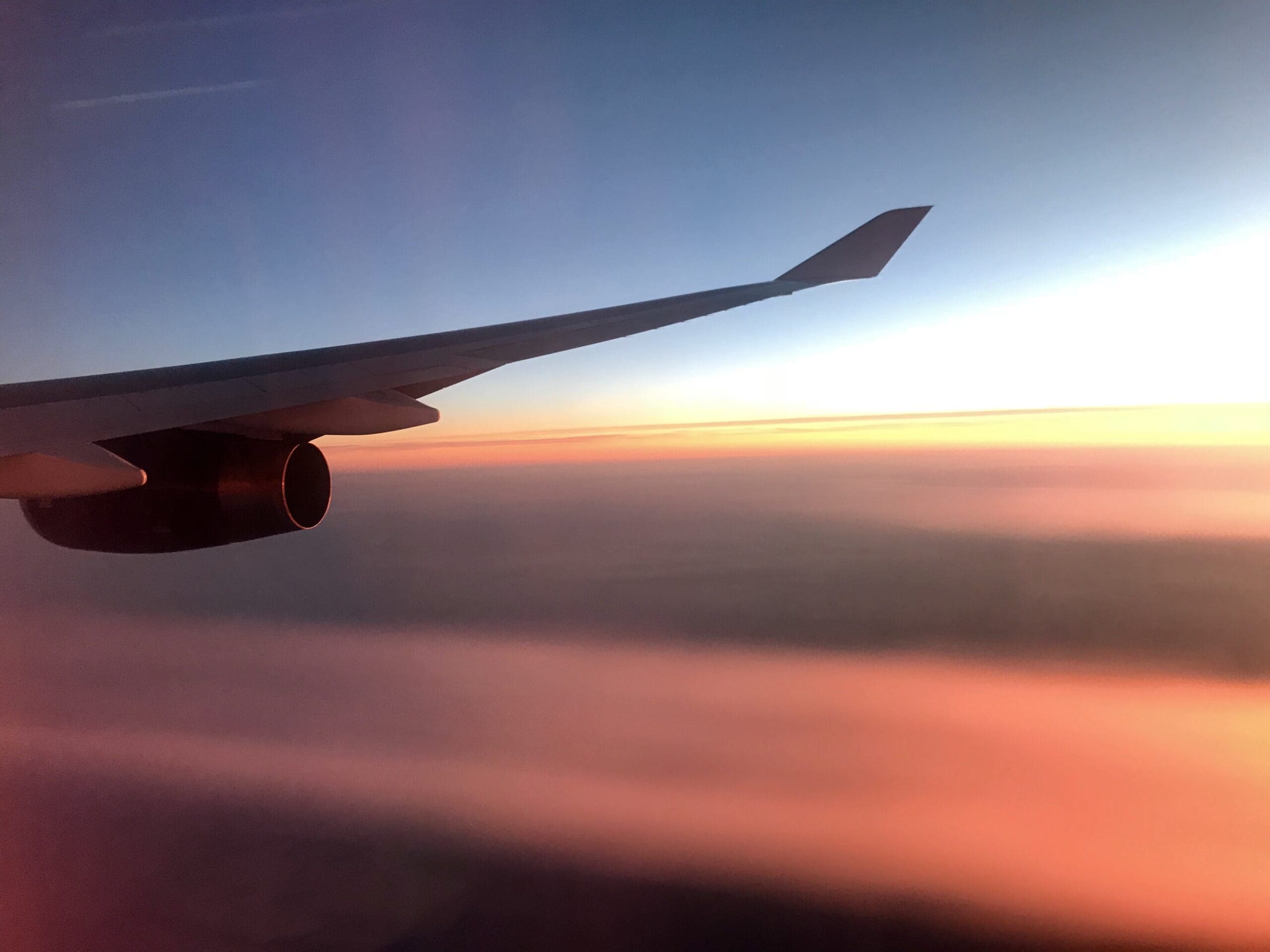
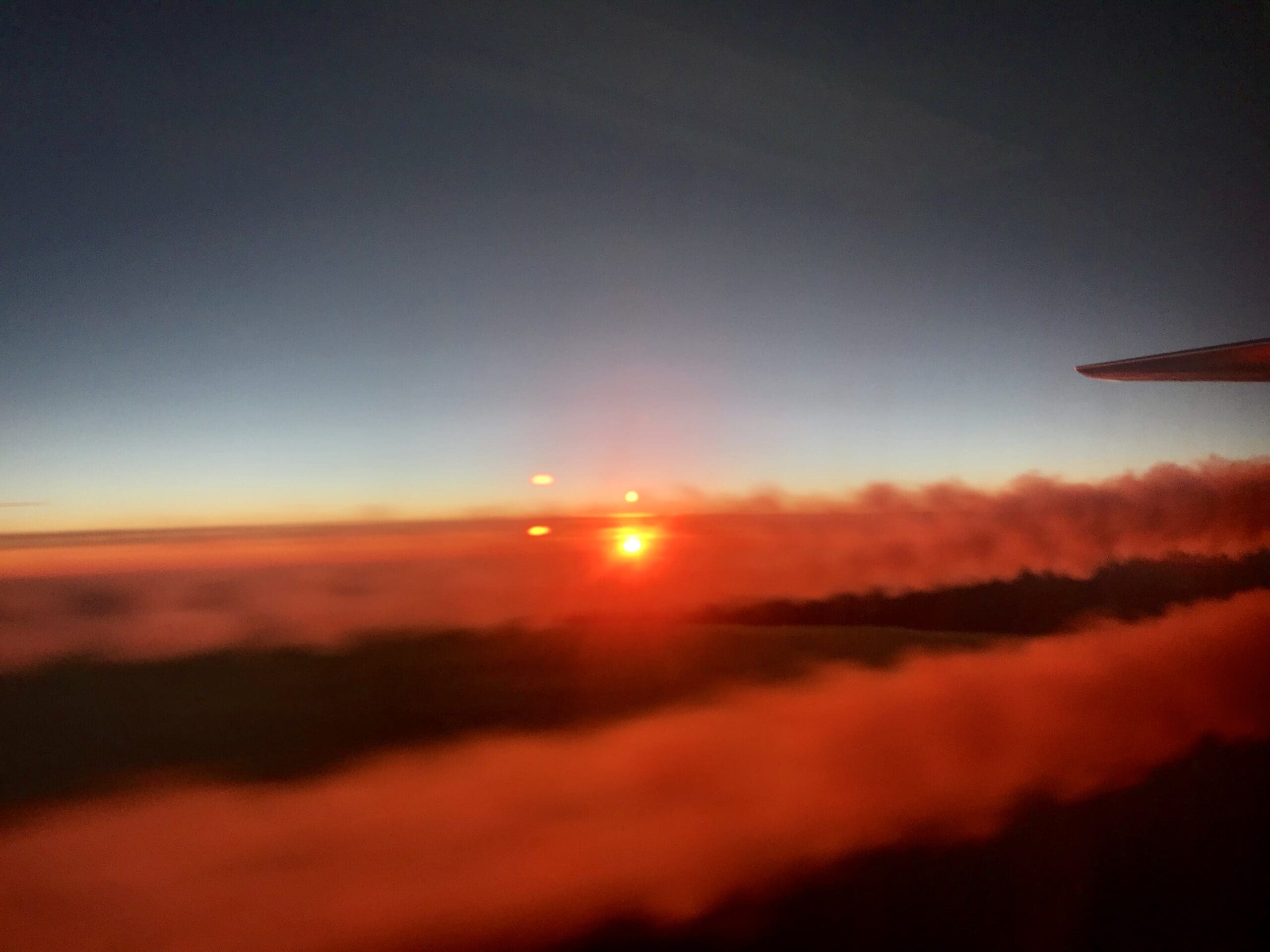
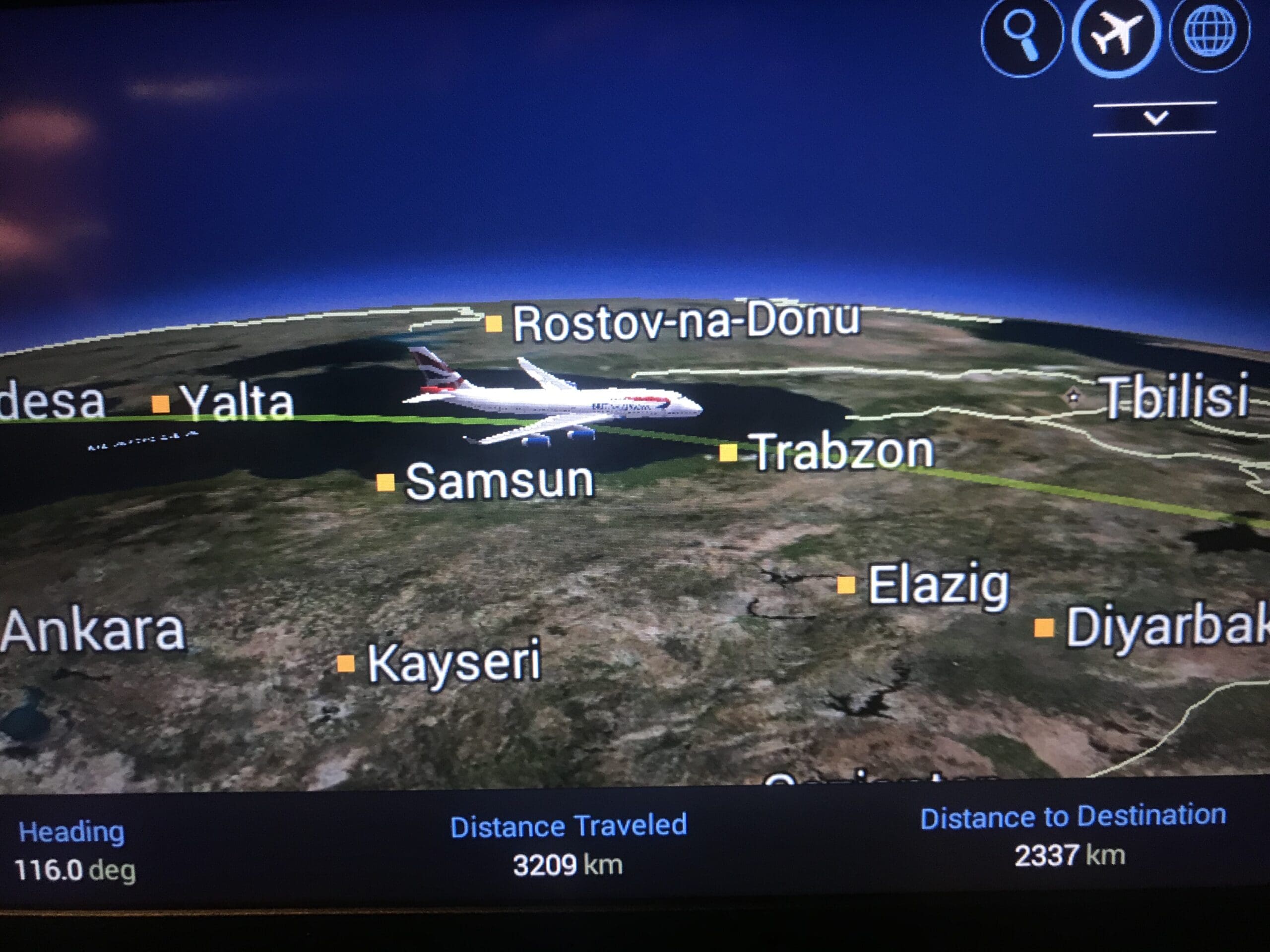
Following a thirty minute crossing of Germany, the Boeing 747 entered Czech airspace before turning further southeast and passing over a trio of nations – Slovakia, Hungary and Romania. Unfortunately, the presence of thick clouds below at this stage of the flight prevented the sights of Central and Southeastern Europe from being seen. However, at 37,000 feet in the middle of winter, the vapour produced from the aircraft’s engines immediately froze upon exiting these, this ensured that the aircraft’s contrail was visible from inside the aircraft. Eventually, the clouds below opened up resulting in vistas of a frozen-looking Romania in the late afternoon sun, which was followed by Bulgaria at which point an absolutely terrific red sunset could be seen outside the aircraft. From there the aircraft made its way out over the Black Sea towards northern Turkey at which point plenty of aircraft whizzed past in the opposite direction, these mainly originating in Qatar and the United Arab Emirates, and bound for destinations across Europe.
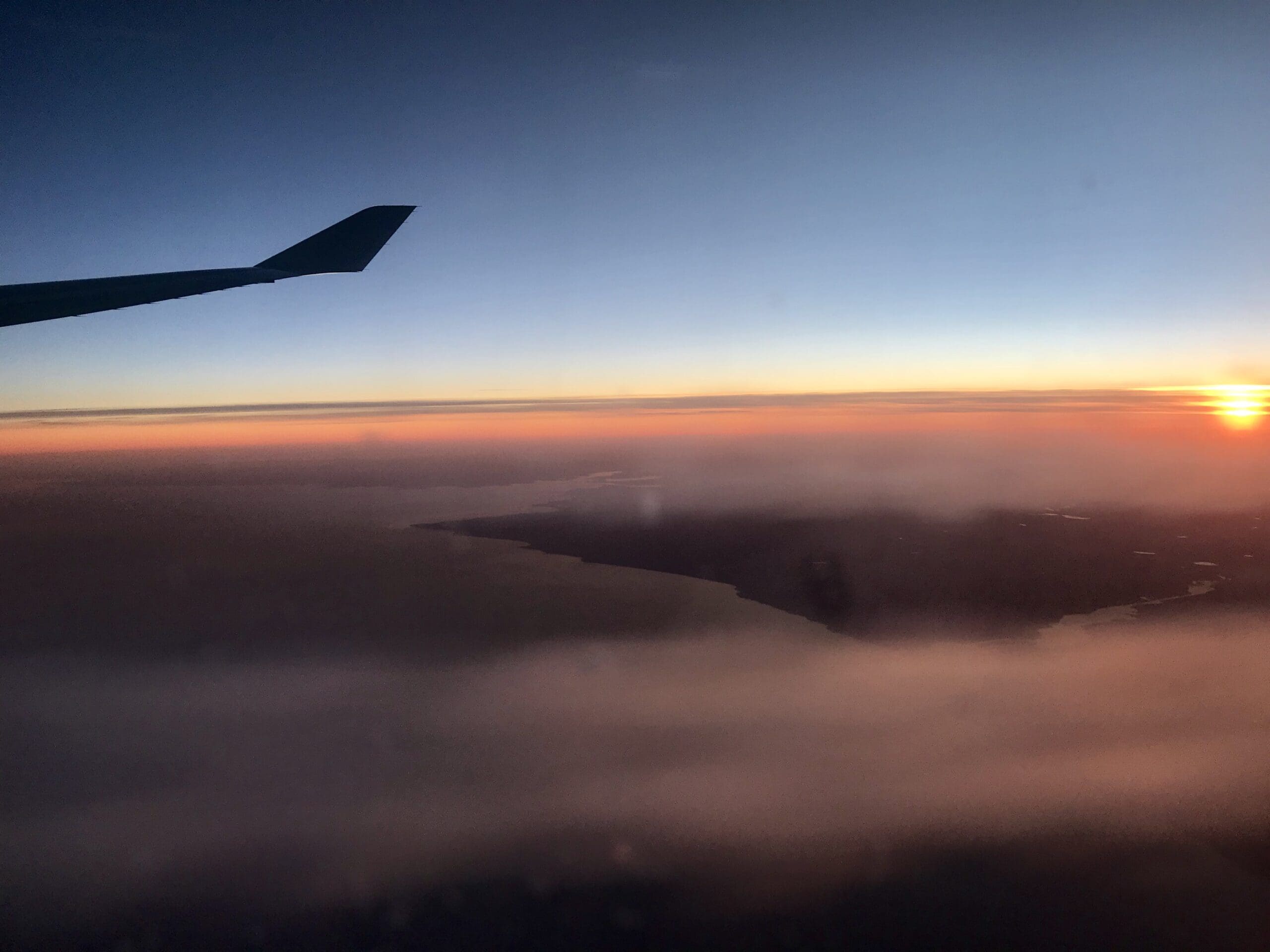
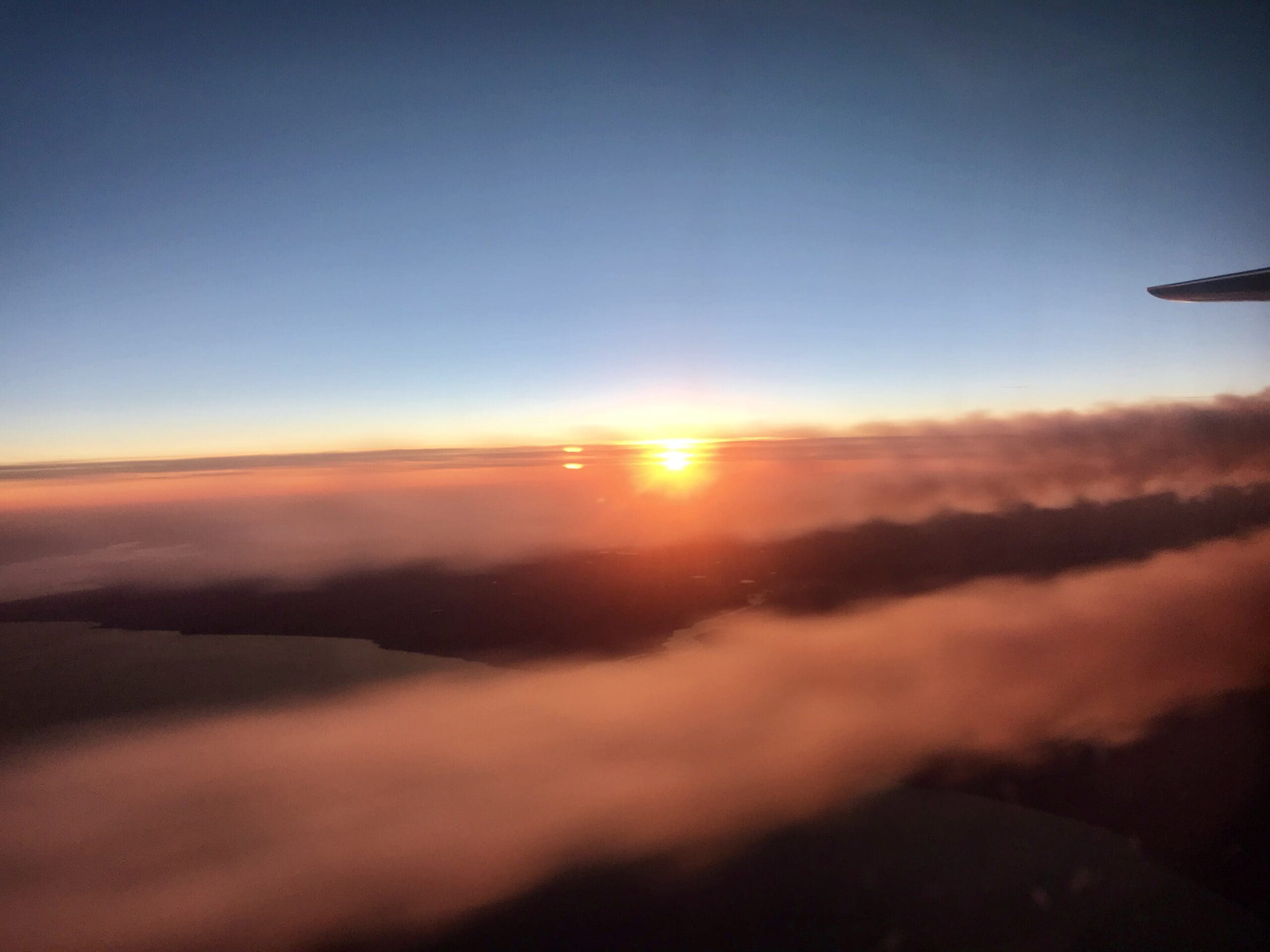
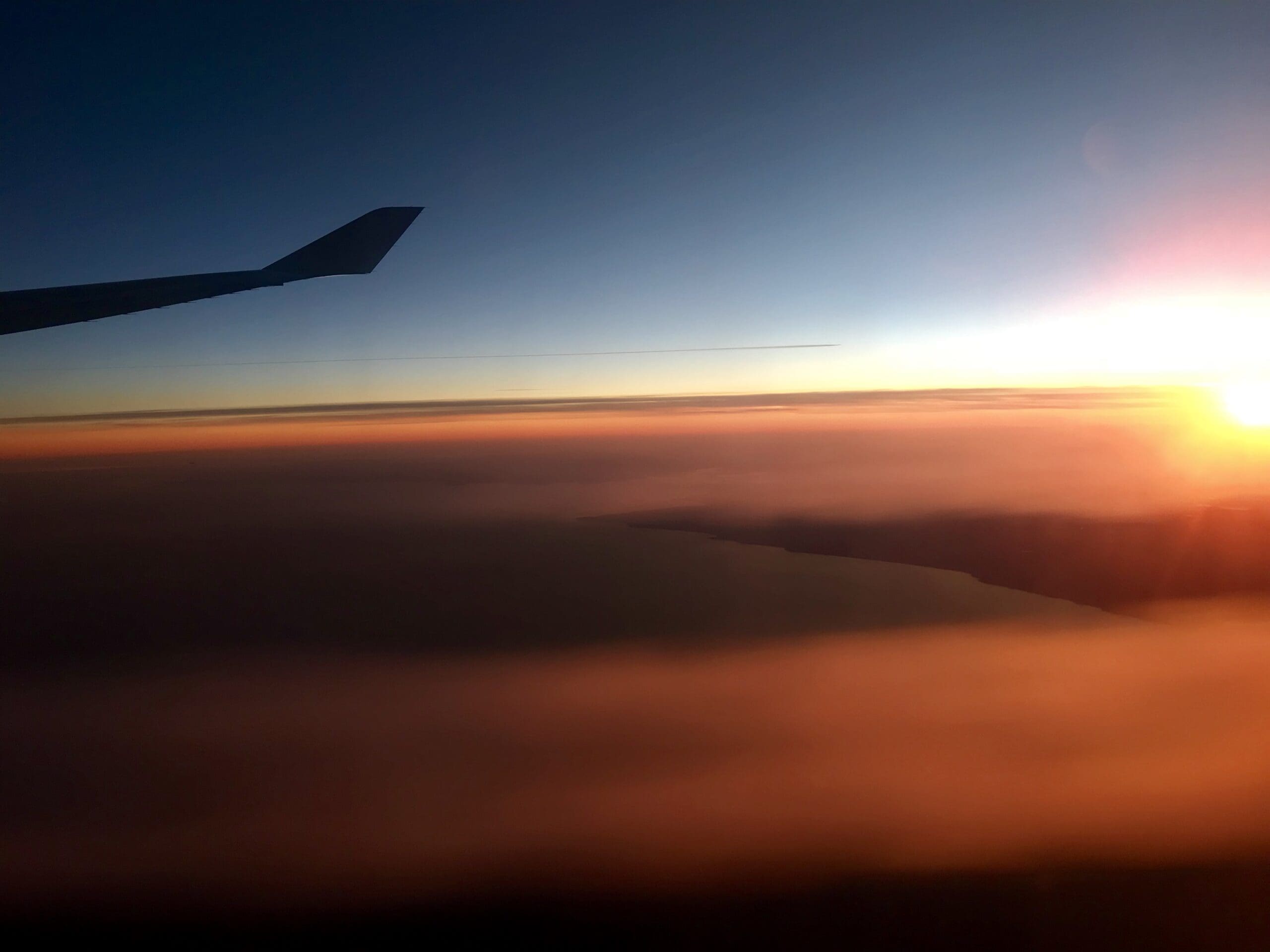
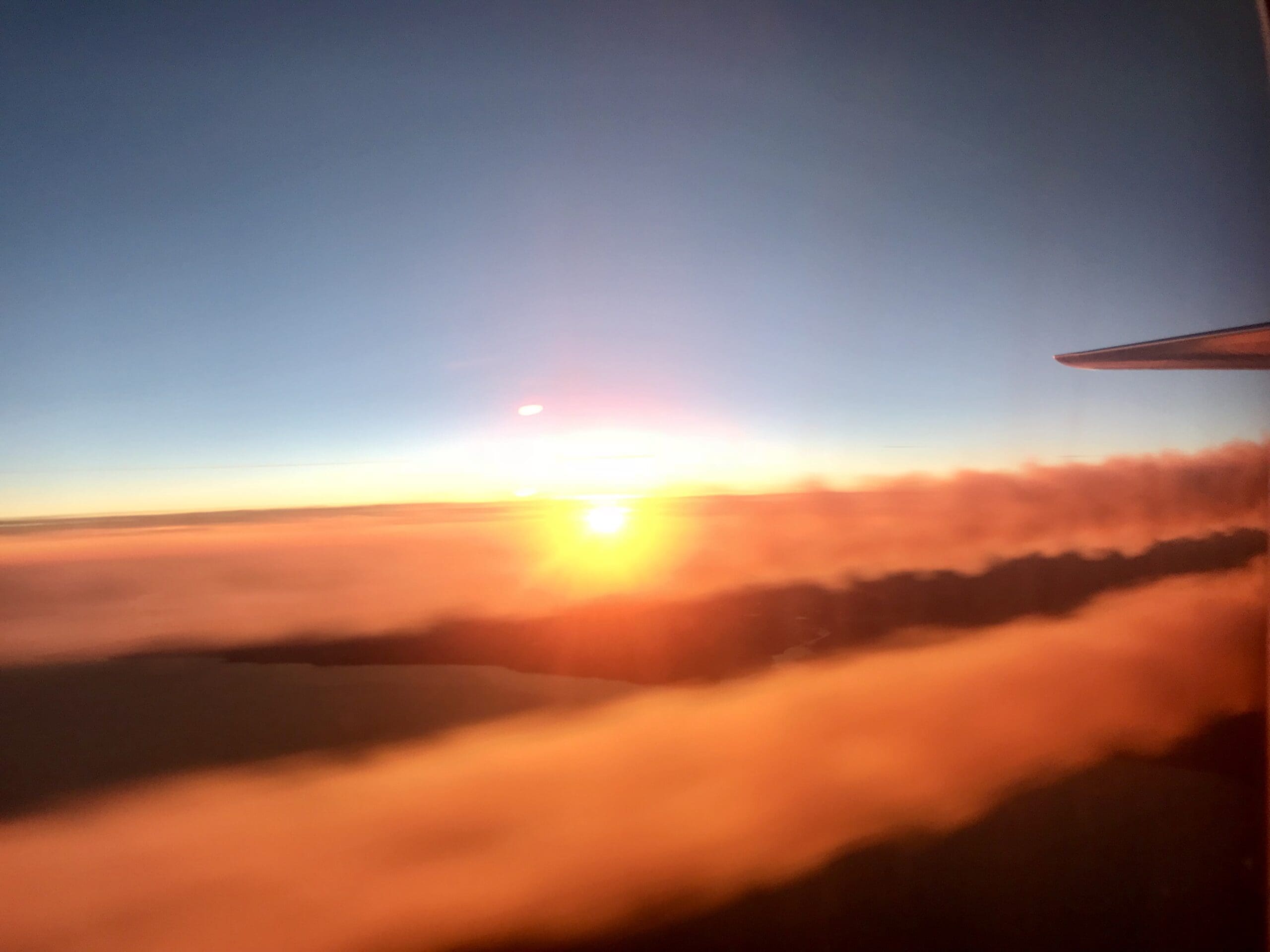
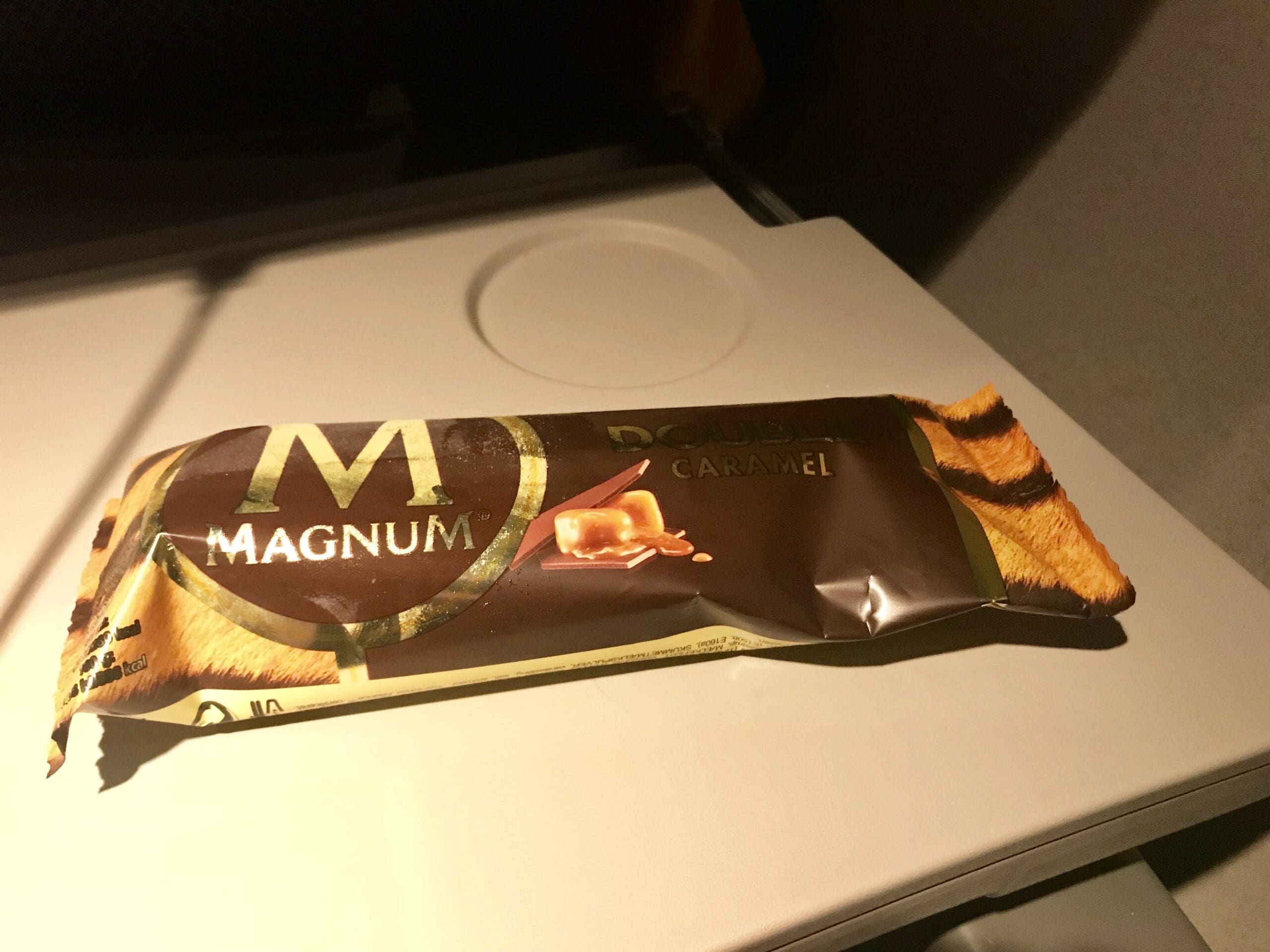
By the time the aircraft made landfall over Turkey’s northern shoreline, the skies had turned completely dark and the cabin lights were turned off. Making the most of the reading light, I decided to read a book and by the time I turned my attention to the outside world again, the aircraft had climbed to 39,000 feet and was about to enter Iraqi airspace. Due to the long period during which most flights between Europe and the Arabian Gulf were rerouted over Iran, this was my first time over the country in almost five years. That evening, the aircraft headed down the eastern side of the country, where the orange glow of passing towns and cities including Mosul, Kirkuk and Baghdad could all be seen. Shortly after leaving Turkish airspace, the crew passed through the cabin handing out full size Magnum Double Caramel ice creams. Whilst these were rock hard, the inclusion of what may be considered as the Rolls-Royce of shop-bought ice cream was a surprising and a very welcome addition to flight. Turning my attention back outside, after passing over Baghdad the glow of oil fields lit the way as we headed towards Basra and the Persian Gulf.
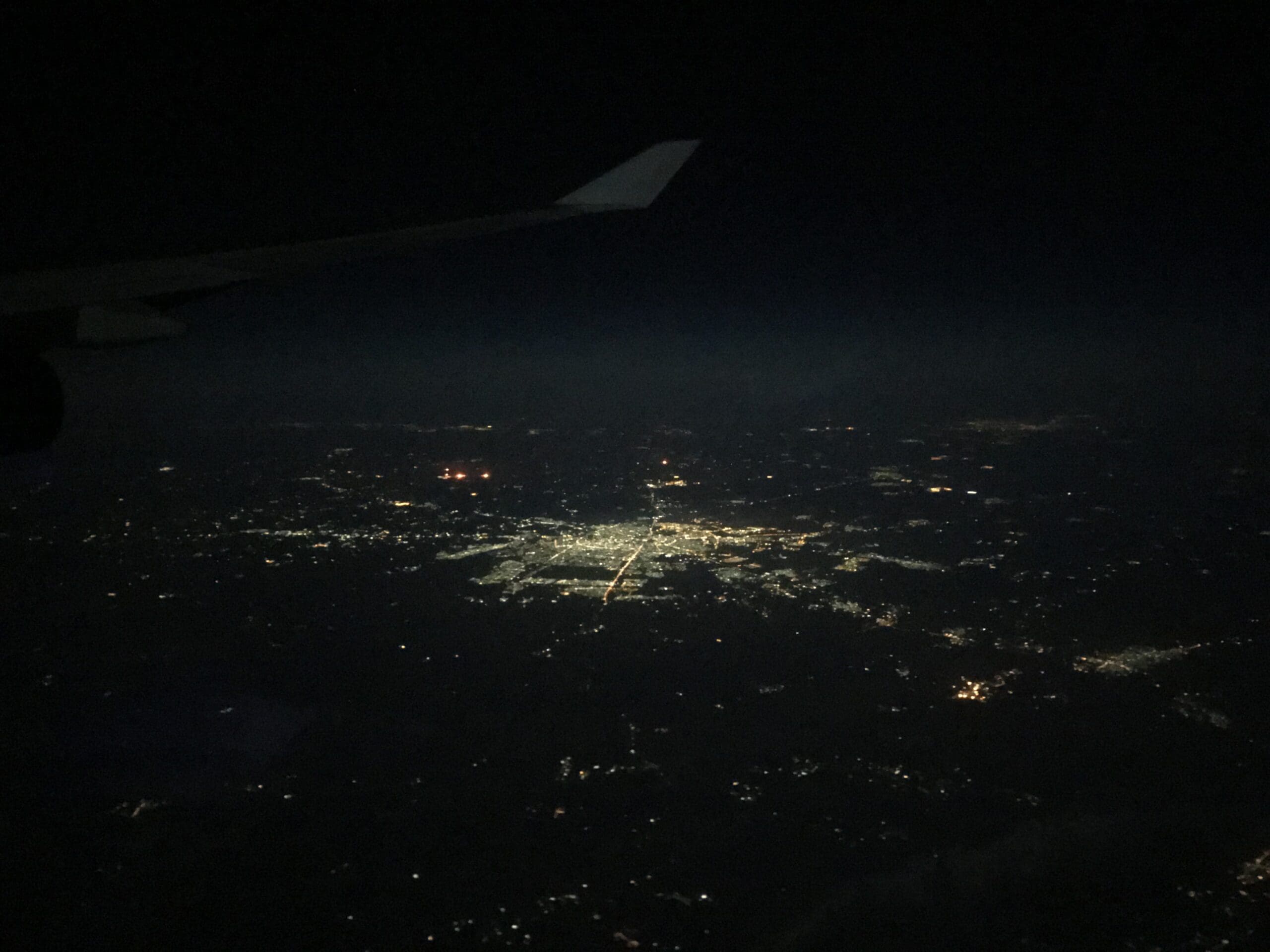
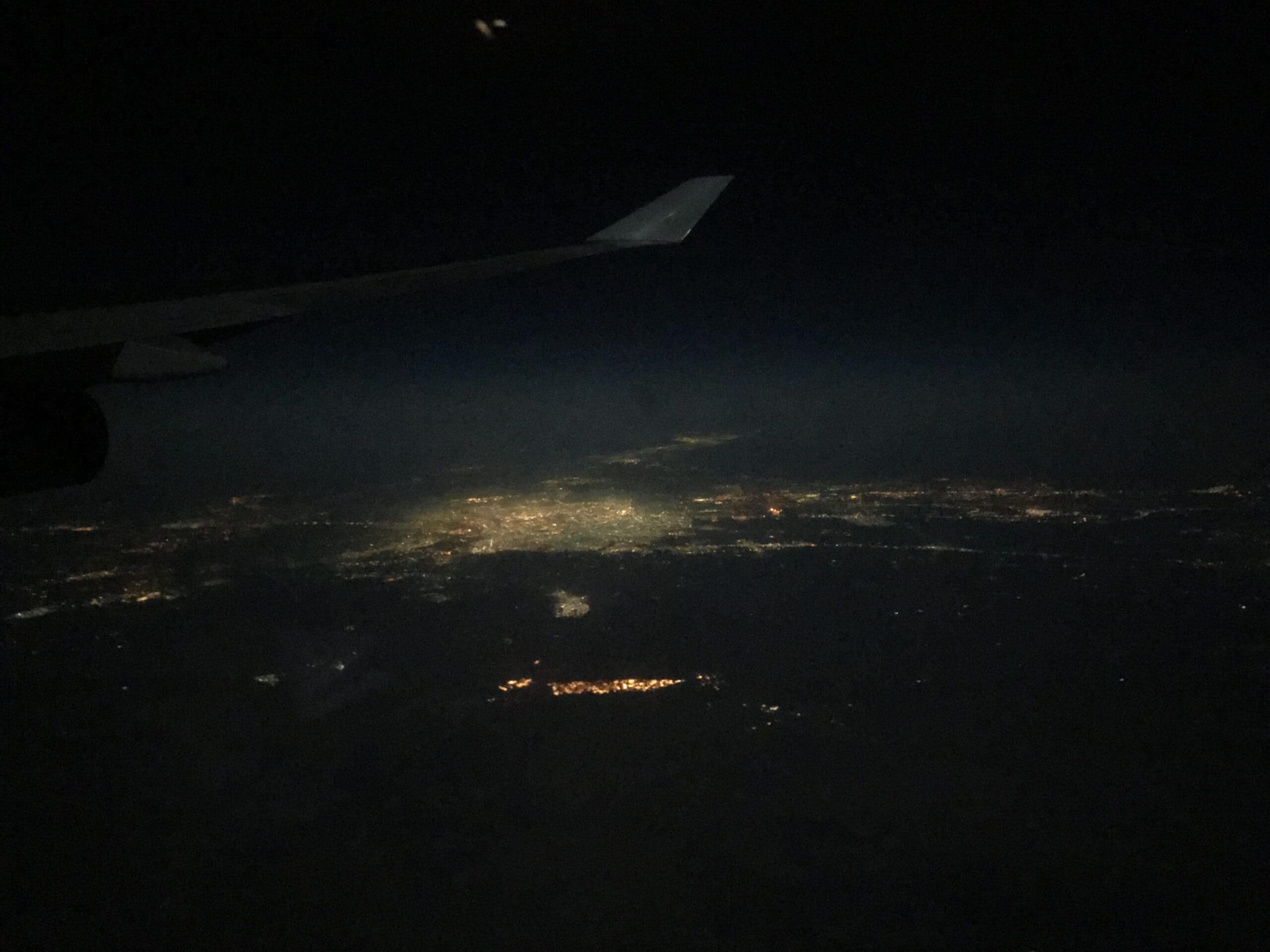
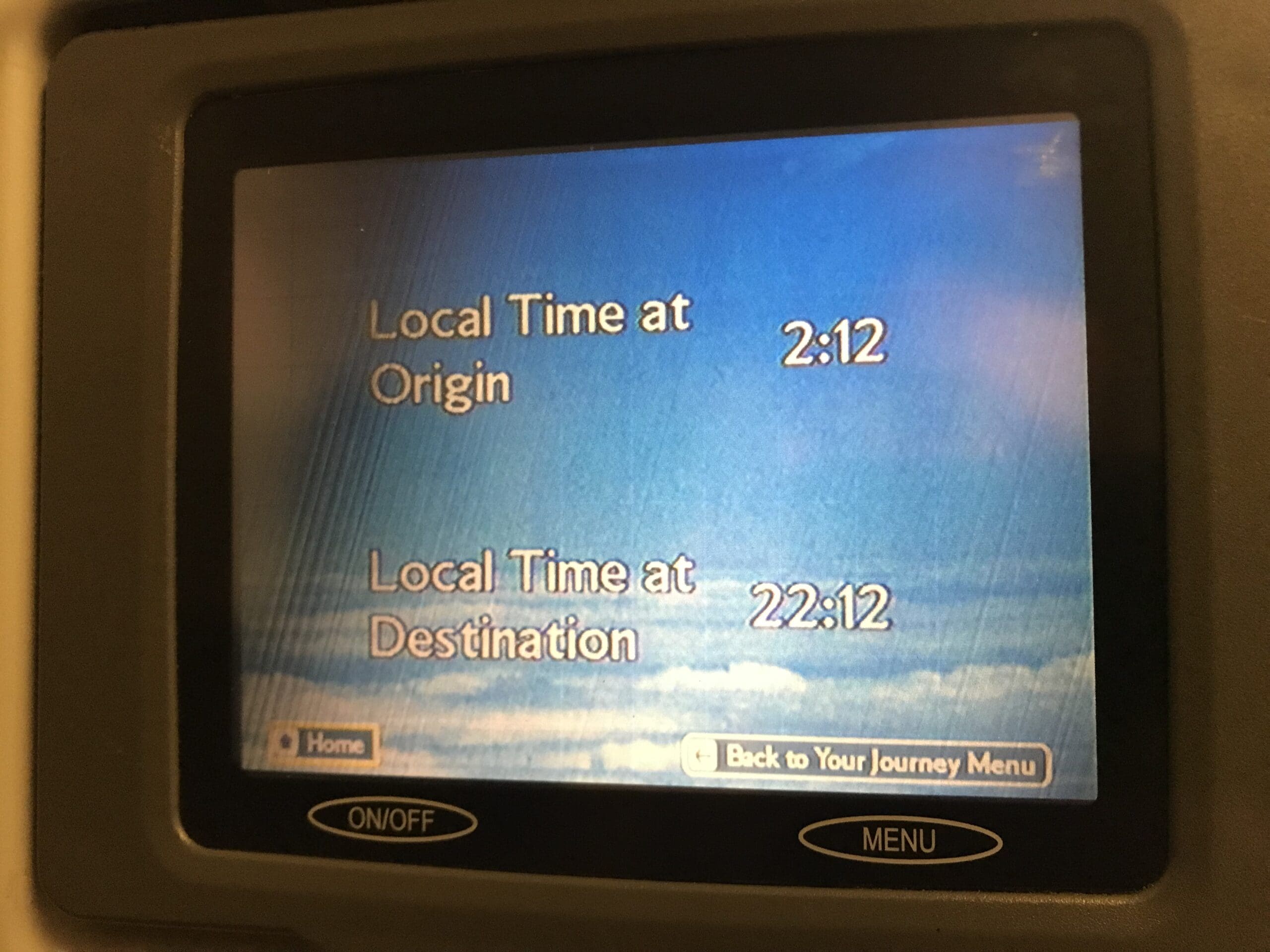
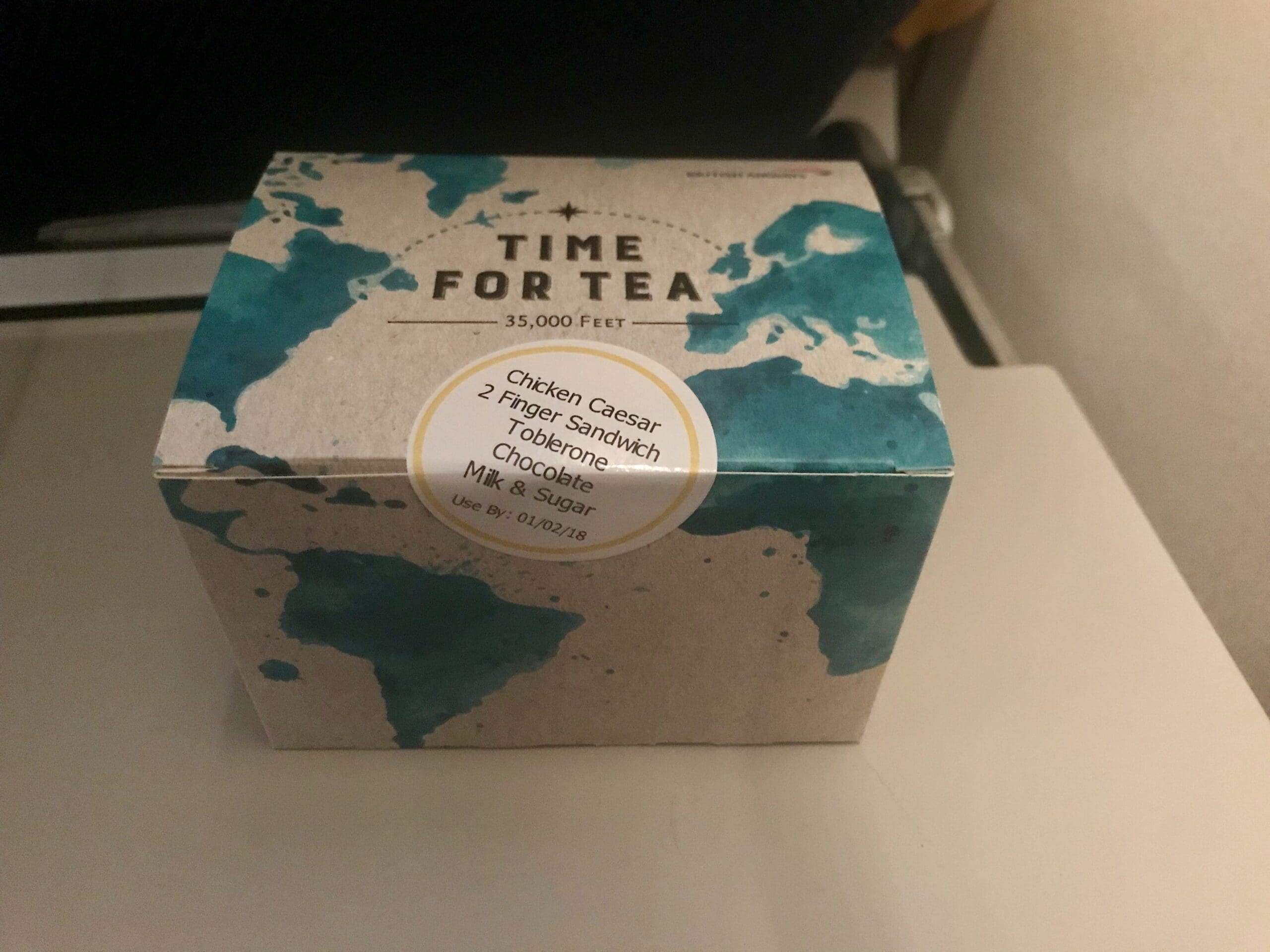
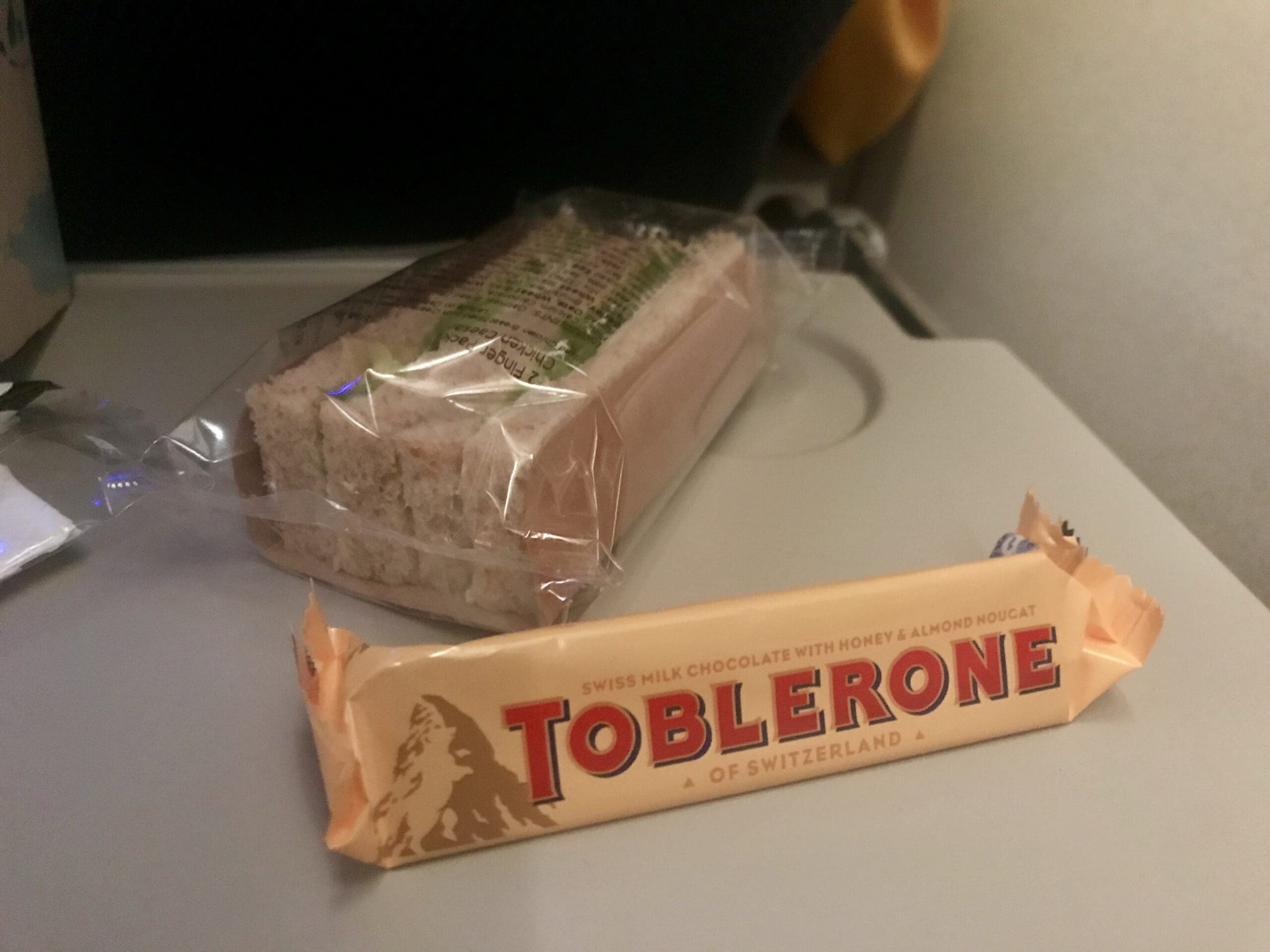
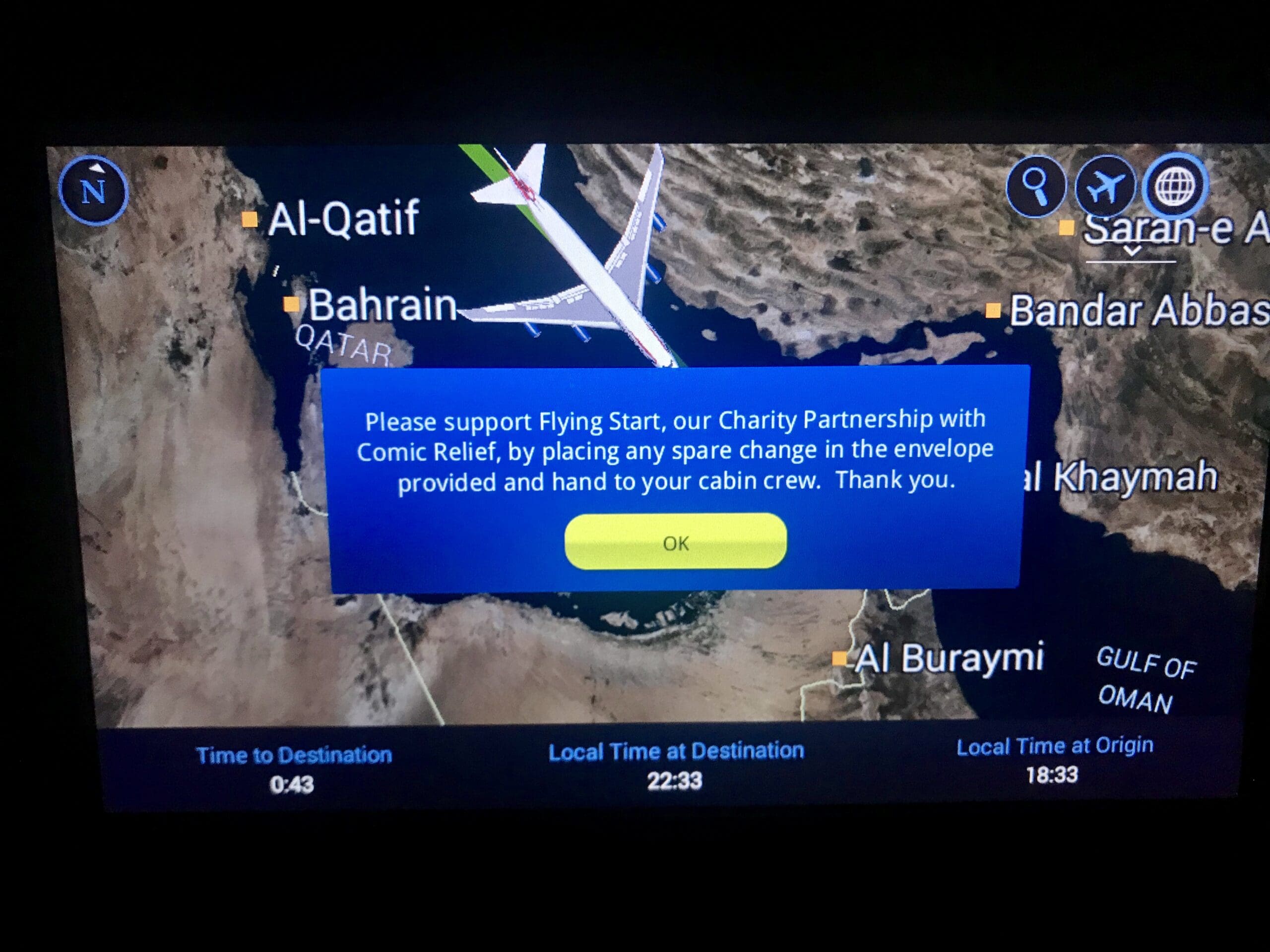
After leaving Iraq behind, the cabin lights were turned on and the cabin crew commenced the final round of service prior to our arrival. This consisted of snack boxes containing a small chicken sandwich and a miniature Toblerone as well as a drinks round, during which the crew seemed to be just as eager to hand out alcohol as they had been during the main meal service. As the aircraft headed out over the sea, the lack of clouds meant that the lights of tens if not hundreds of offshore oil and gas platforms such as those in Saudi Aramco’s Safaniya Oil Field and later the South Pars/North Dome natural gas fields became visible alongside the many ships servicing these and waiting to transport their products across the world. Just after the Qatari coast became visible, at 1830 UK time or 2230 Emirati time, the First Officer’s voice filled the cabin once again, informing all onboard that the aircraft would be touching down in forty minutes’ time and that the weather in Dubai was a pleasant 19 degrees with clear skies. This was immediately followed by an announcement from the Cabin Services Director inviting us to use the bathrooms within the next twenty minutes, after which the seatbelt signs would be reilluminated. After this announcement, the inflight entertainment system was temporarily overriden in order to play a short video asking for passengers to donate their loose change to the airline’s Flying Start charity.
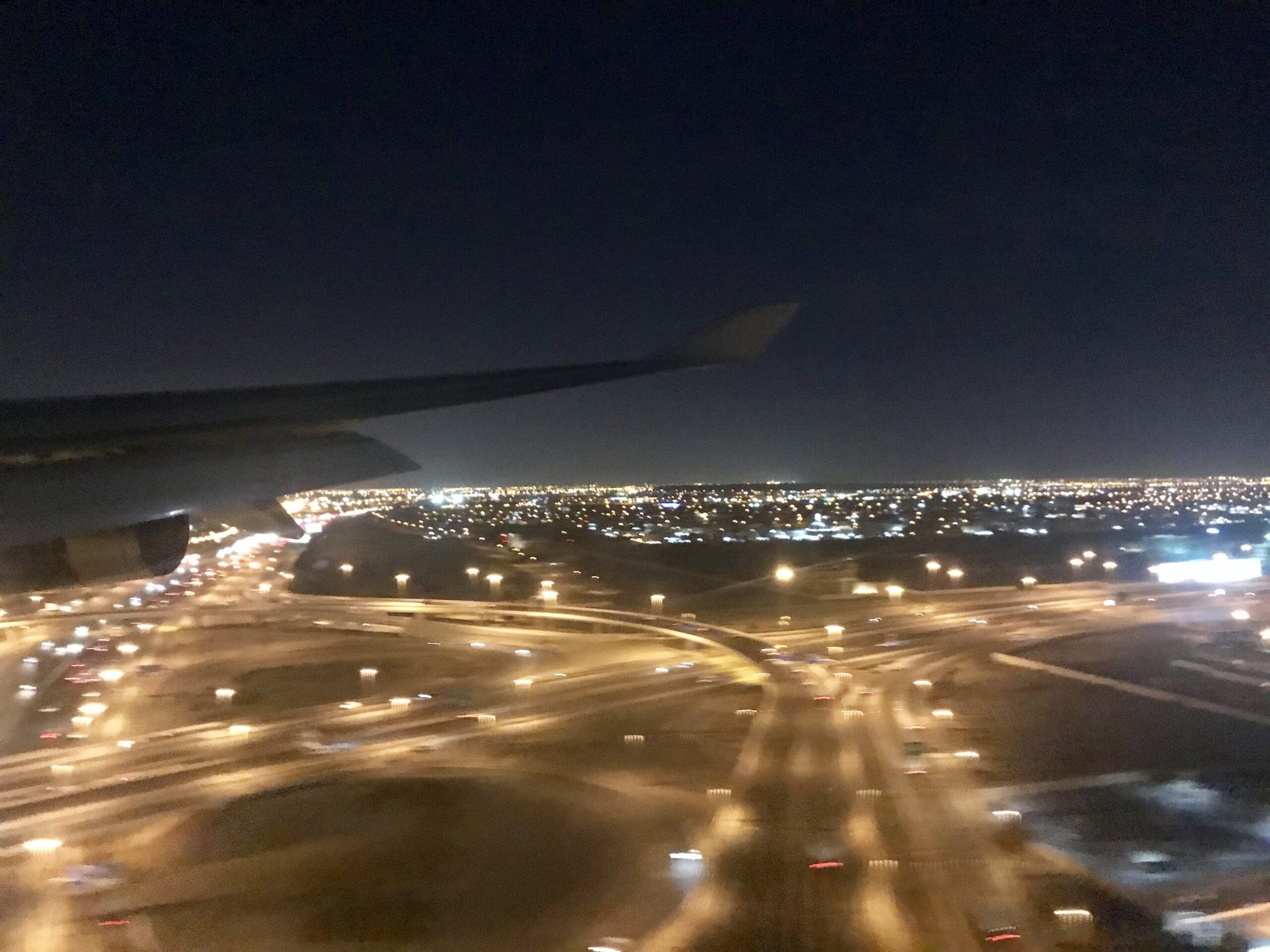
As we neared the United Arab Emirates’ coastline, the Arabian Sea became increasingly littered with the lights of a flotilla of ships. At 2255, the aircraft crossed the coastline to the north of the airport at an altitude of 7,000 feet – 2.5 times the height of the Burj Khalifa or 22.2 times the height of Big Ben. Thanks to the clear weather and the fact that the cabin lights had already been dimmed in preparation for arrival, superb night views could be had of the northern end of Dubai which included the lit up Burj Khalifa and the lights of the Dubai Airport. After passing over Dubai, the aircraft continued out over the dark desert where little could be seen aside from the occasional line of streetlights of those roads cutting across this. Around seven minutes later, the aircraft banked back towards the airport and the flaps and landing gear were soon extended in preparation for the aircraft’s arrival.
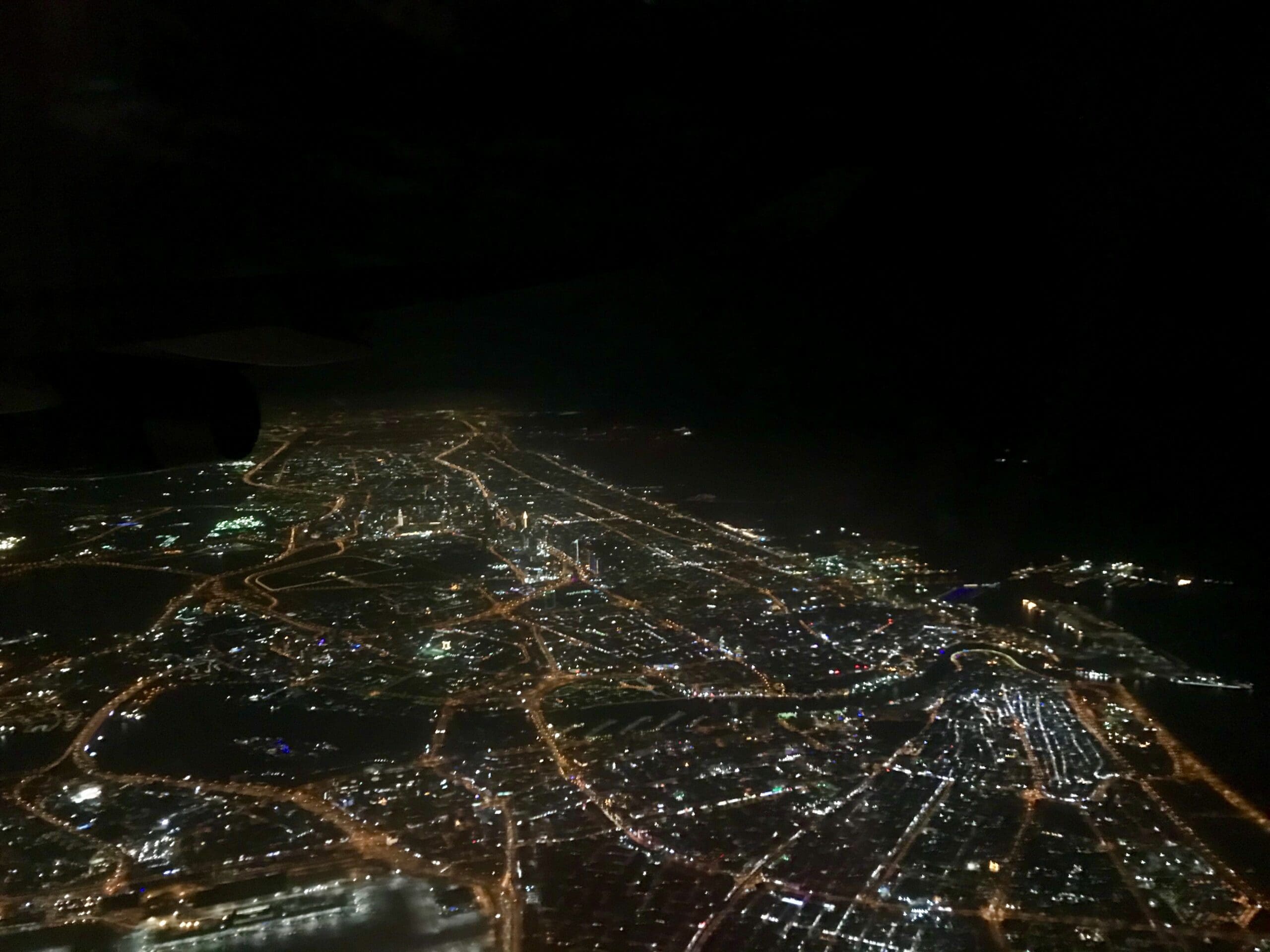
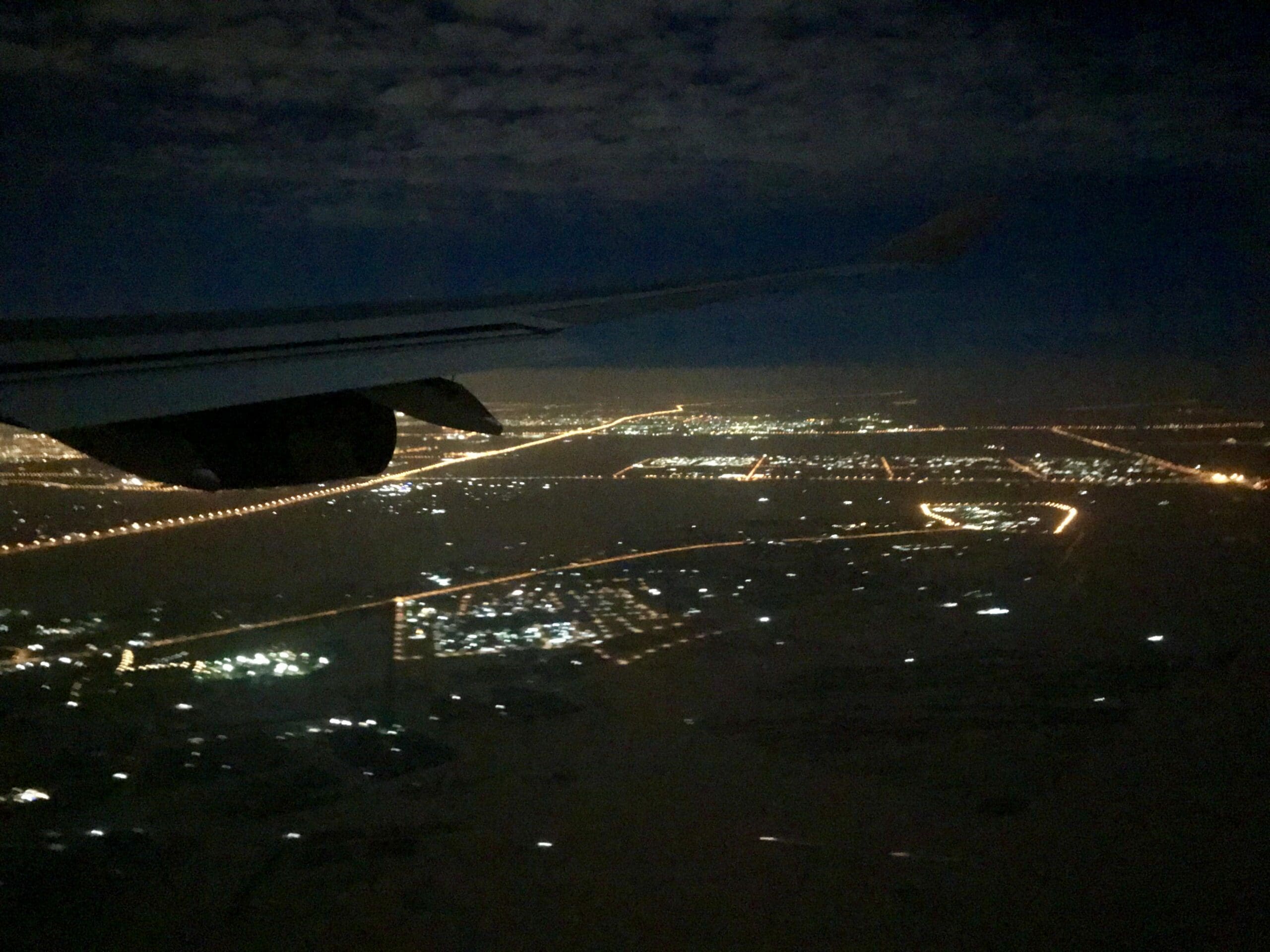
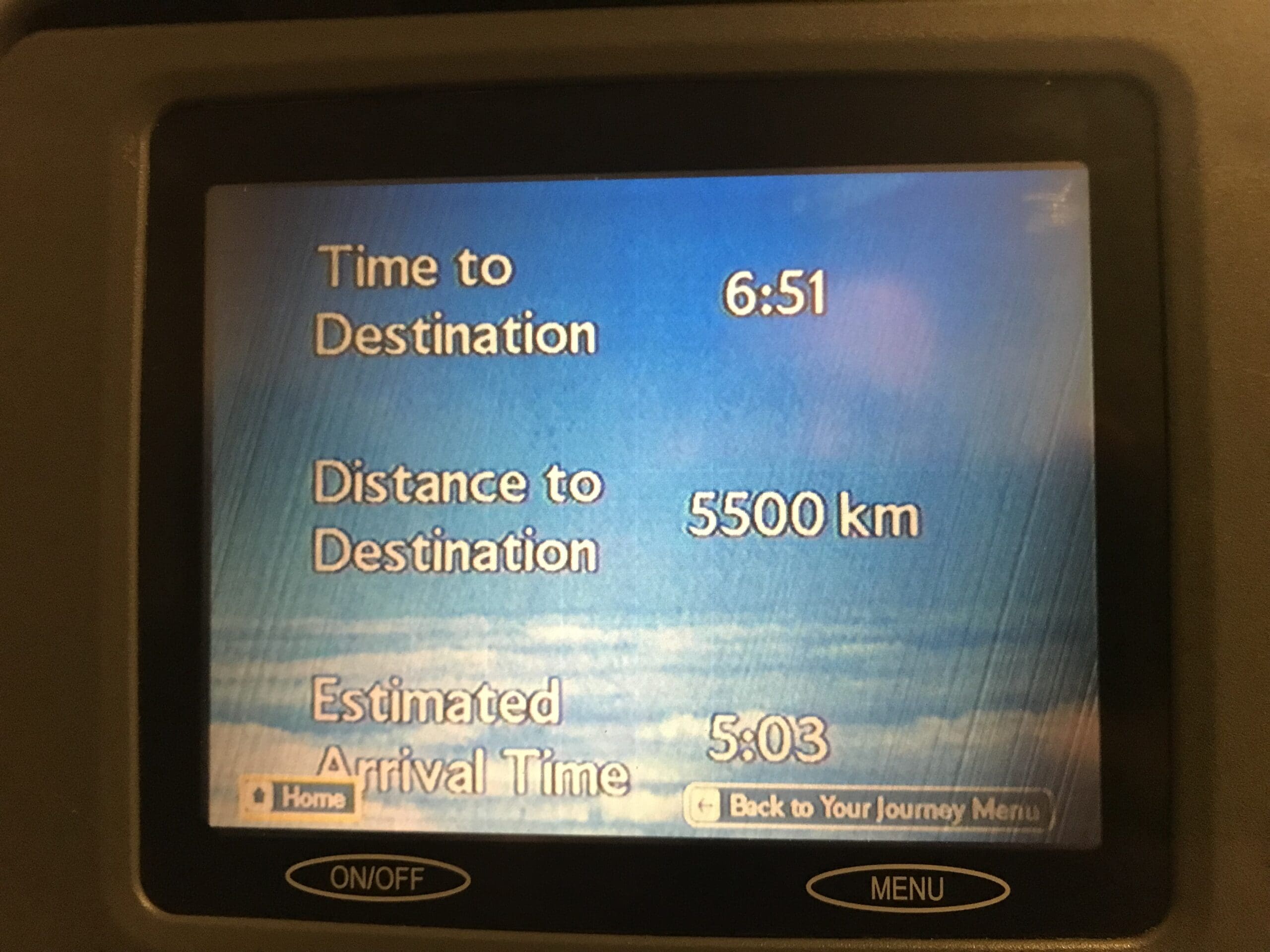
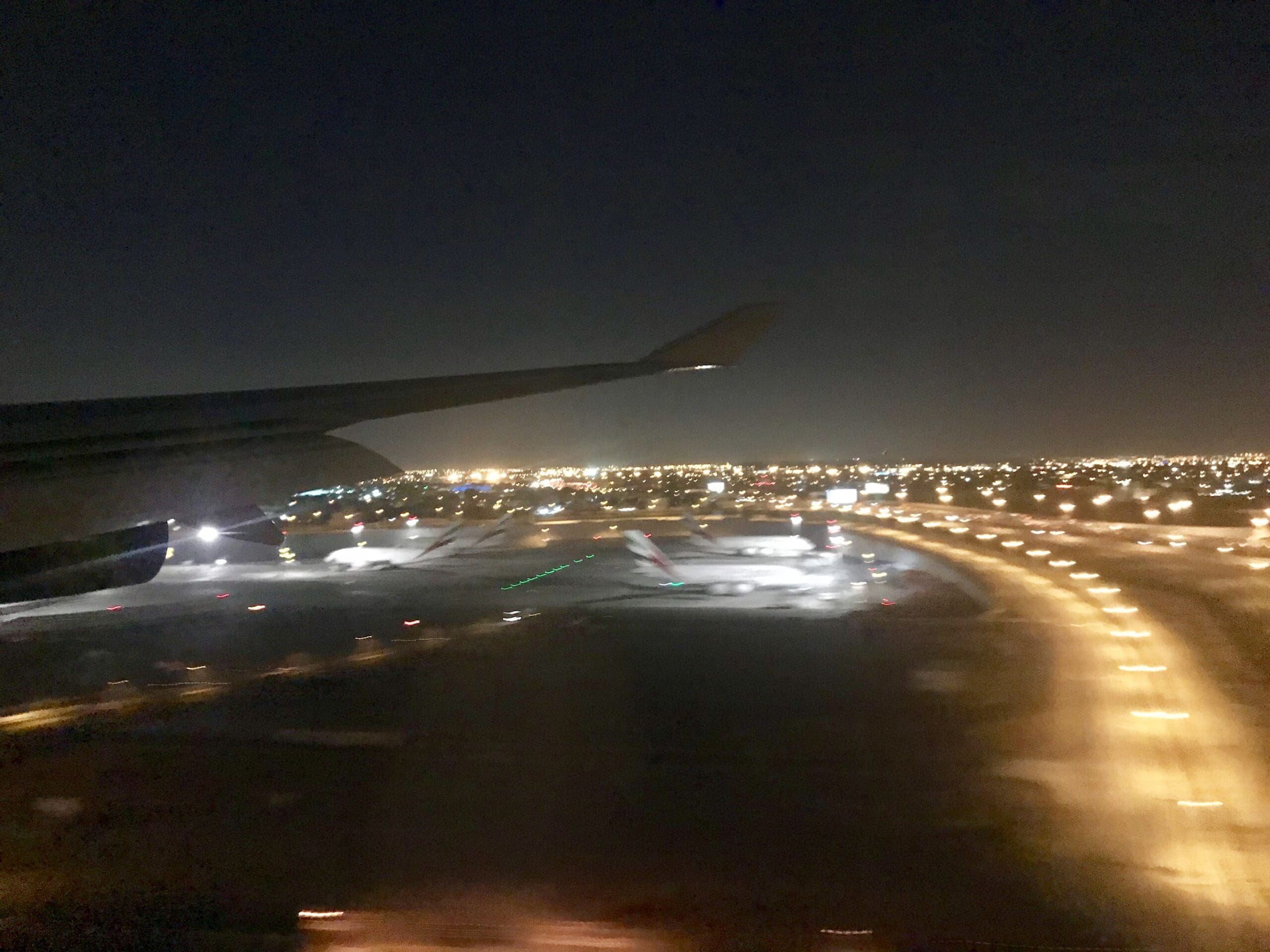
As the aircraft made its way back to the sprawl of Dubai International Airport, soon, the desert darkness was replaced by the glow of streetlights, villas and apartment blocks of the residential areas on the fringes of Dubai to the east of the airport. Sinking down without so much as a single bump, before I knew it the aircraft crossed over the airport’s eastern perimeter and made a barely noticeable touchdown on Runway 12R at 2310, a grand total of six hours and thirteen minutes after taking off. This was followed by some rather harsh braking, and as the aircraft decelerated, a sea of Emirates jets could be seen on the opposite side of the airfield before we turned off the runway and began our taxi to Terminal 1. That evening, during the taxi to the terminal, I caught sight of a number of aircraft never seen in British skies consisting of an Iran Air Airbus A320, a Saudi Arabian Airlines Airbus A330 and an Oman Air Boeing 737. At 2317, the aircraft pulled into Stand C52 next to an Air India Airbus A321 waiting to pushback and the aircraft’s four Rolls Royce engines were shutdown whilst inside the cabin the seatbelt signs were switched off.
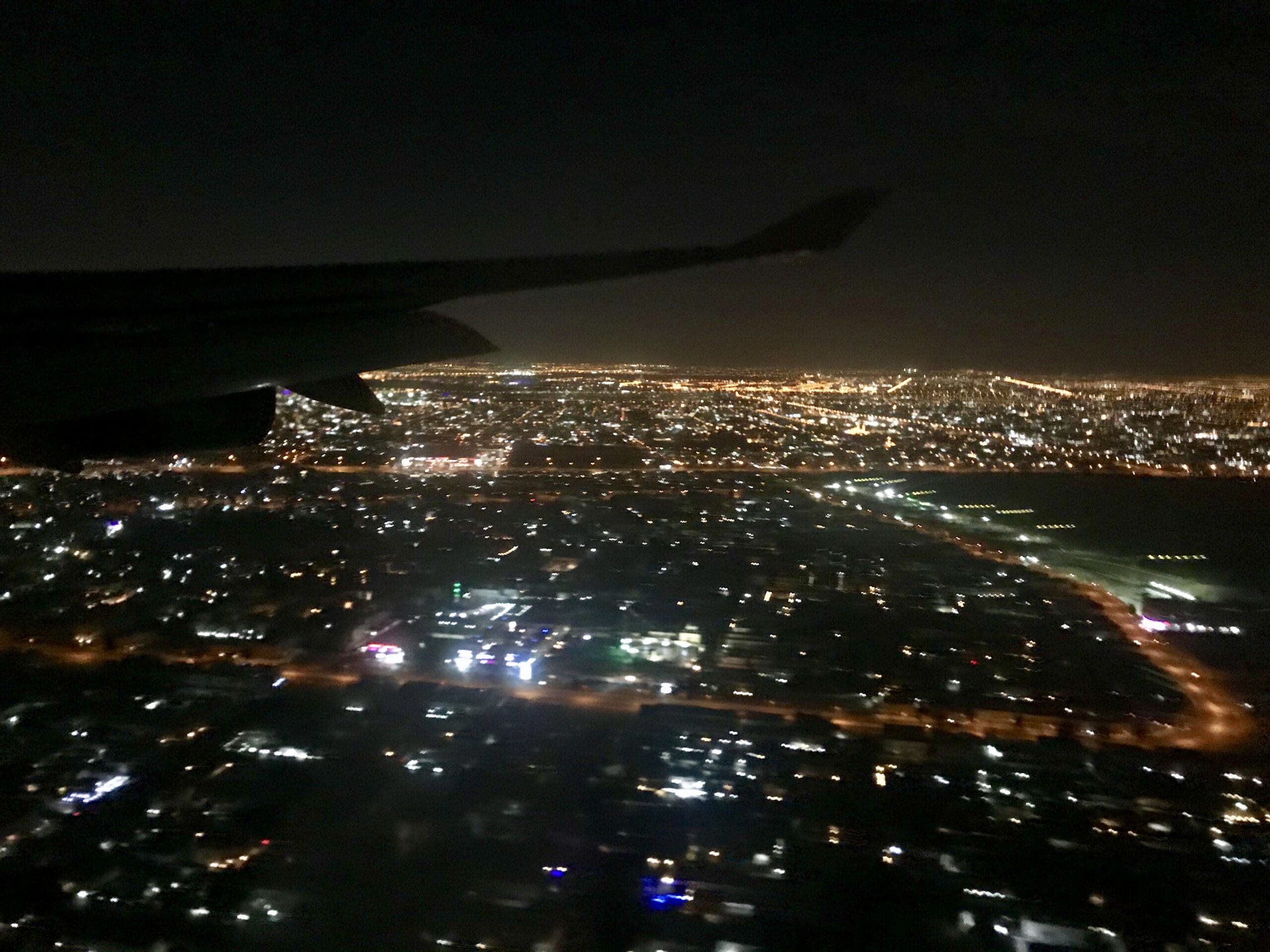
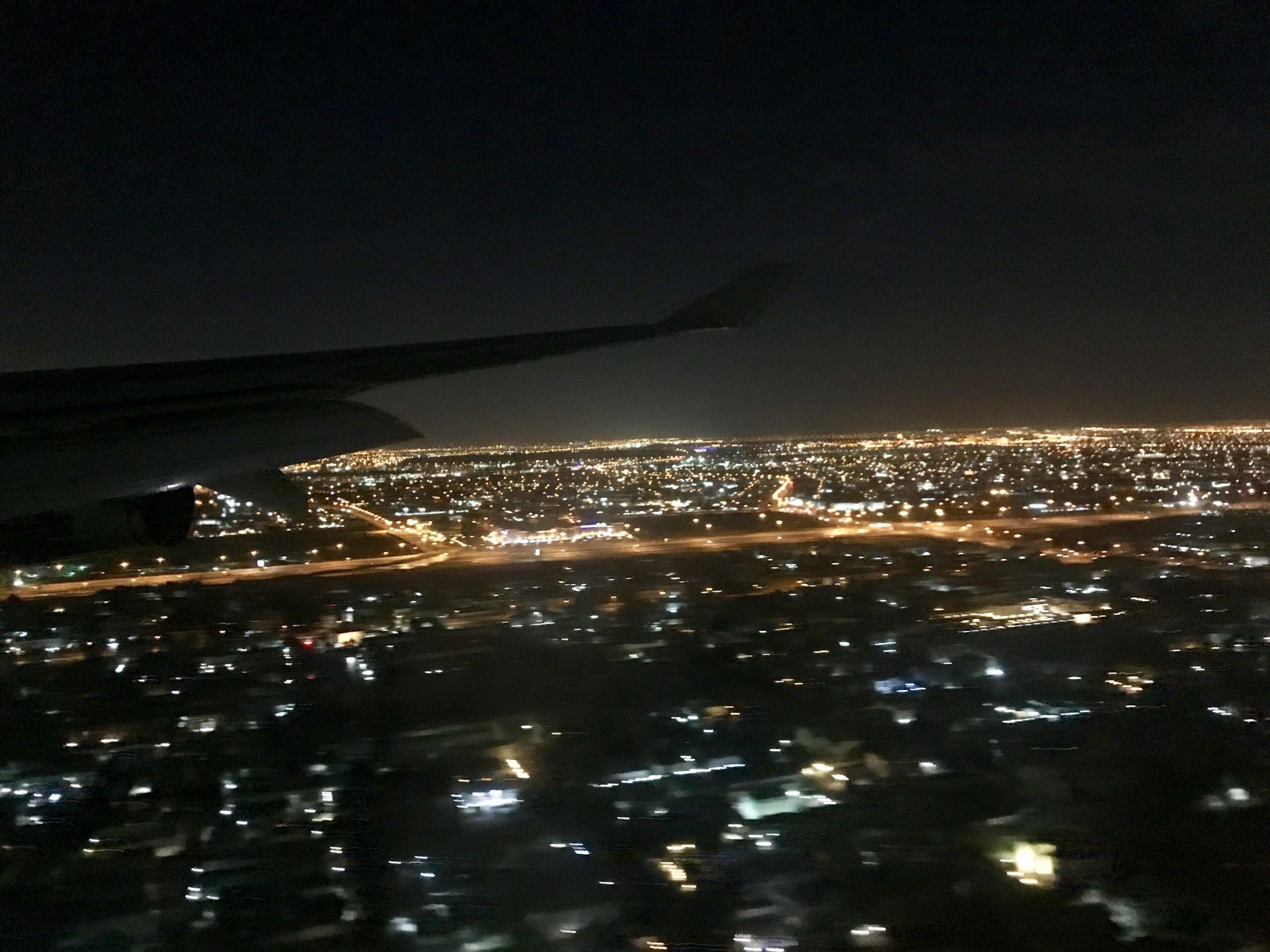
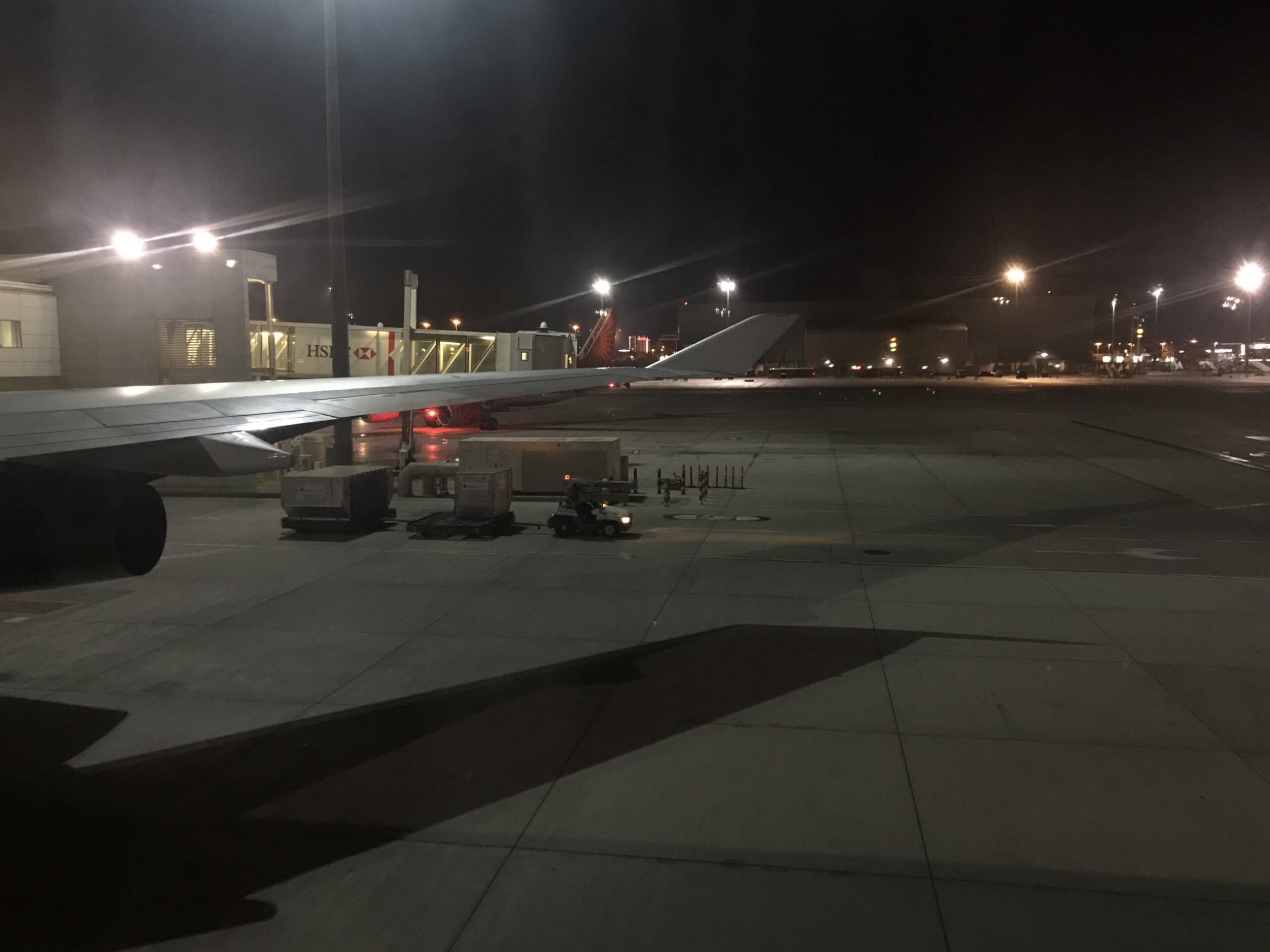
After the engines spooled down, disembarkation commenced fairly quickly, although seated at the rear of the large aircraft, it did take some time to exit the jet. A little over ten minutes after this had pulled into the gate, I thanked several of the flight’s crew members before stepping off and heading up the jetway. From the flight’s arrival gate, a reasonable walk was required in order to reach the train station where, having inadvertently timed things just right, I stepped onto the driverless train just before the doors of this slid closed.
Unlike my previous visit to Dubai whereby long snaking lines could be seen at immigration, that evening those desks for foreigners visiting the United Arab Emirates were reasonably quiet and so I was able to enter the country within several minutes of arriving at the large immigration hall. The downside to this was that once through immigration, I had to wait a good ten minutes before the first bags from the flight appeared. Thankfully, my small suitcase managed to be one of the first to emerge and so I soon exited the airport and found myself speeding away from the airport in a taxi bound for Dubai Marina.
Summary
My experience with British Airways was very pleasant. Granted, whilst I would say there are areas where the airline could improve, all-in-all, my British Airways experience left me with relatively little to complain about. The crew were, for the most part, friendly and welcoming, the quality and quantity of the inflight catering was reasonable and the aircraft was comfortable, clean and modern.
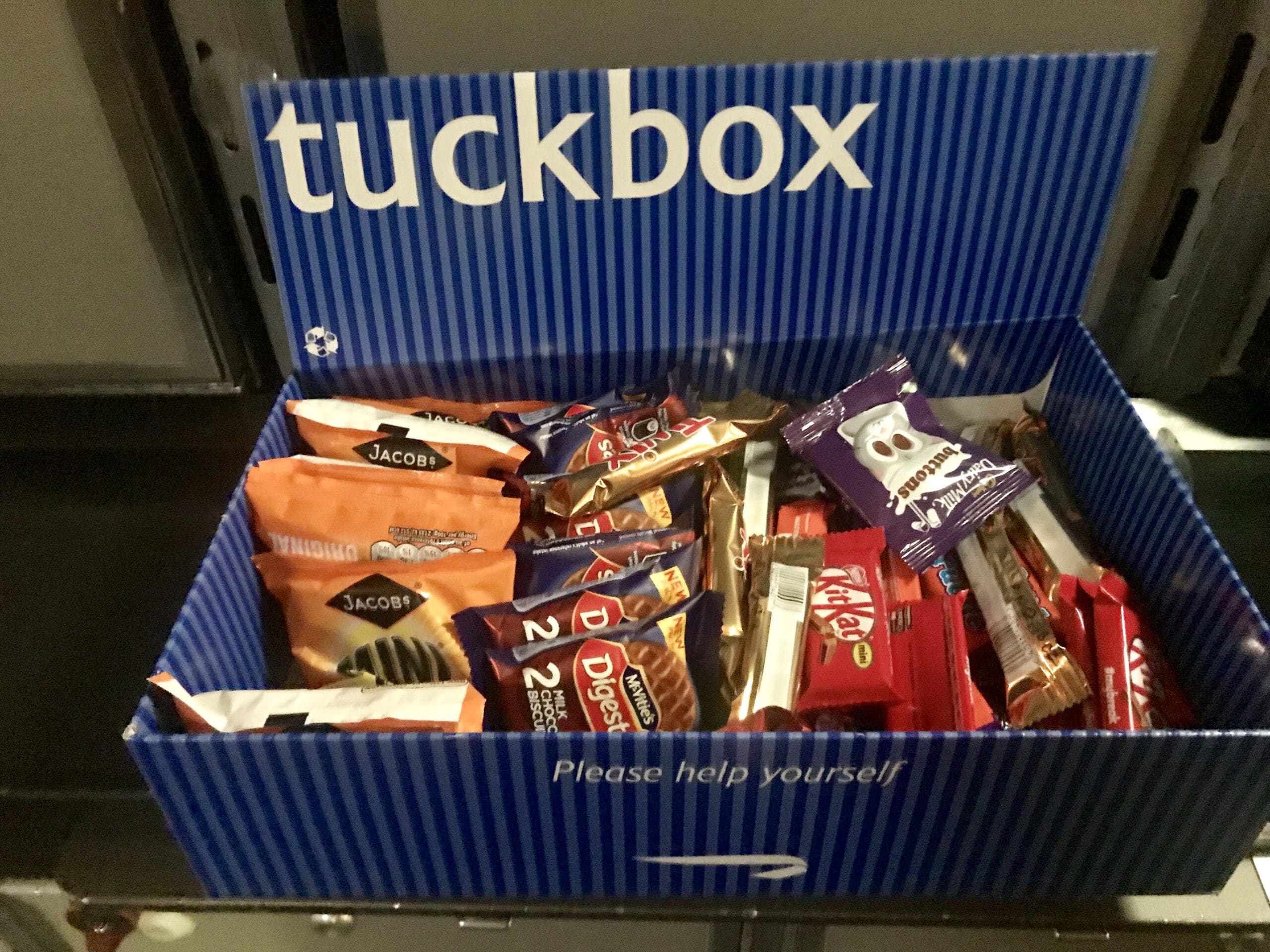
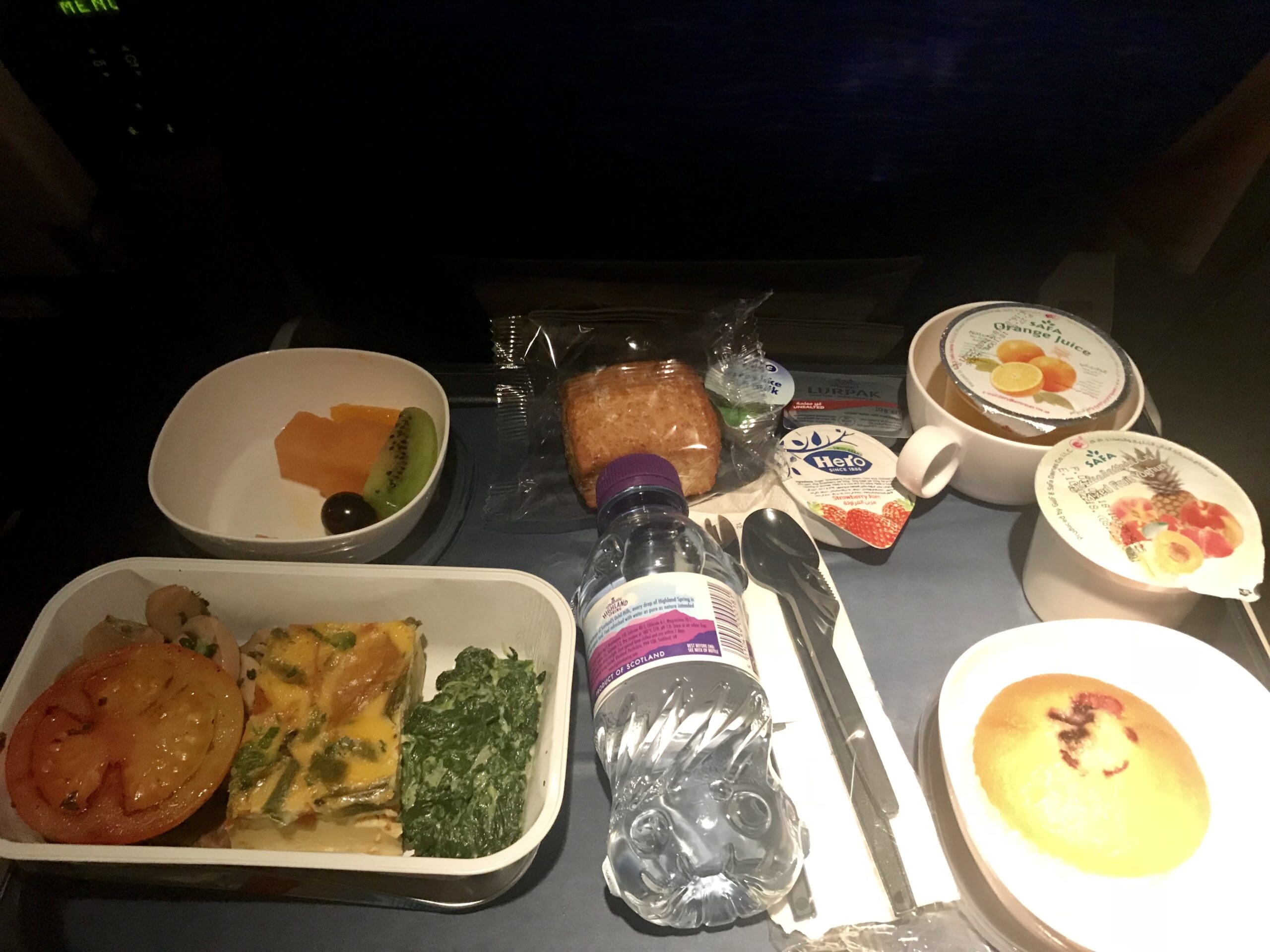
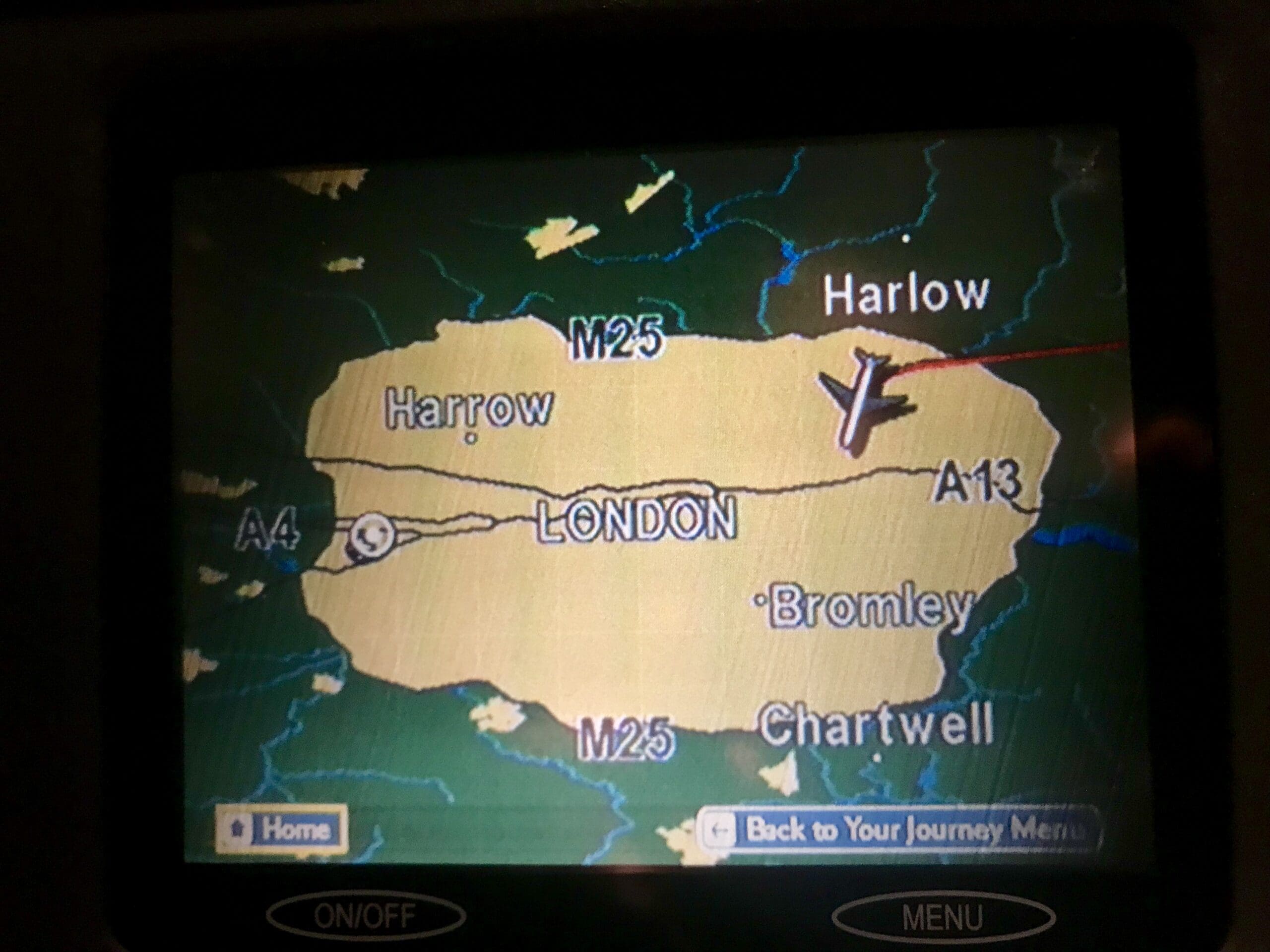
However, it should be worth adding that I returned to London onboard the highly dated and unrefurbished Boeing 747 G-CIVP. With a small, low-quality PTV and no USB-A port or power socket, had I travelled to Dubai on that aircraft, my conclusion of the flight may have been slightly different. That said, the crew were superb and whilst the catering was not as plentiful as on the outbound leg (unsurprisingly given the overnight nature of the return flight), quality wise this was pretty good. To conclude, I would most definitely be willing to fly with British Airways on a medium or long haul flight again in the future.
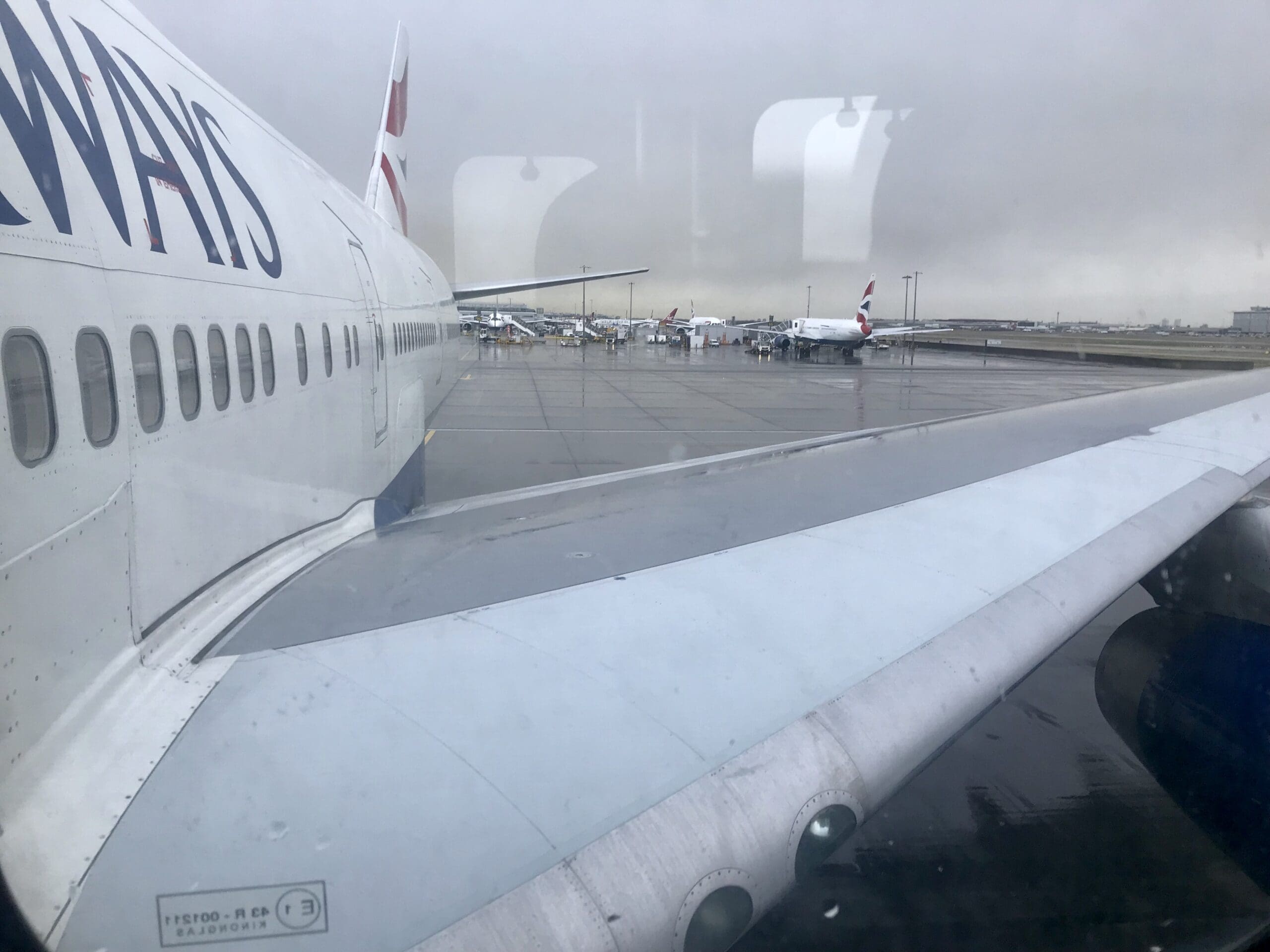
To end here are some photos from the return flight: