An International Yak 40 Flight: Zaporizhzhia to Minsk with Motor Sich
You can read the background and booking information for this flight here.
Home to over 700,000 residents, the southern Ukrainian city of Zaporizhzhia is the seventh largest in Ukraine. Whilst not on the tourist trail for most ‘regular’ tourists who visit the Eastern European country, the city is well known amongst engineering, mechanical and aviation enthusiasts for being the home of Motor Sich, and its associated airline, Motor Sich Airlines. Whilst lacking the architectural splendour of Lviv or the excitement of Kyiv, Zaporizhzhia has great cultural, historical and industrial significance. Despite this, relatively few of the above-average number of aviation enthusiasts who pass through the city spend much time there, with Motor Sich Airlines’ schedules meaning that many passengers arrive late in the evening onboard an Antonov An-24 or Antonov An-140 from Kyiv, and then whizz off to Minsk early the next morning.
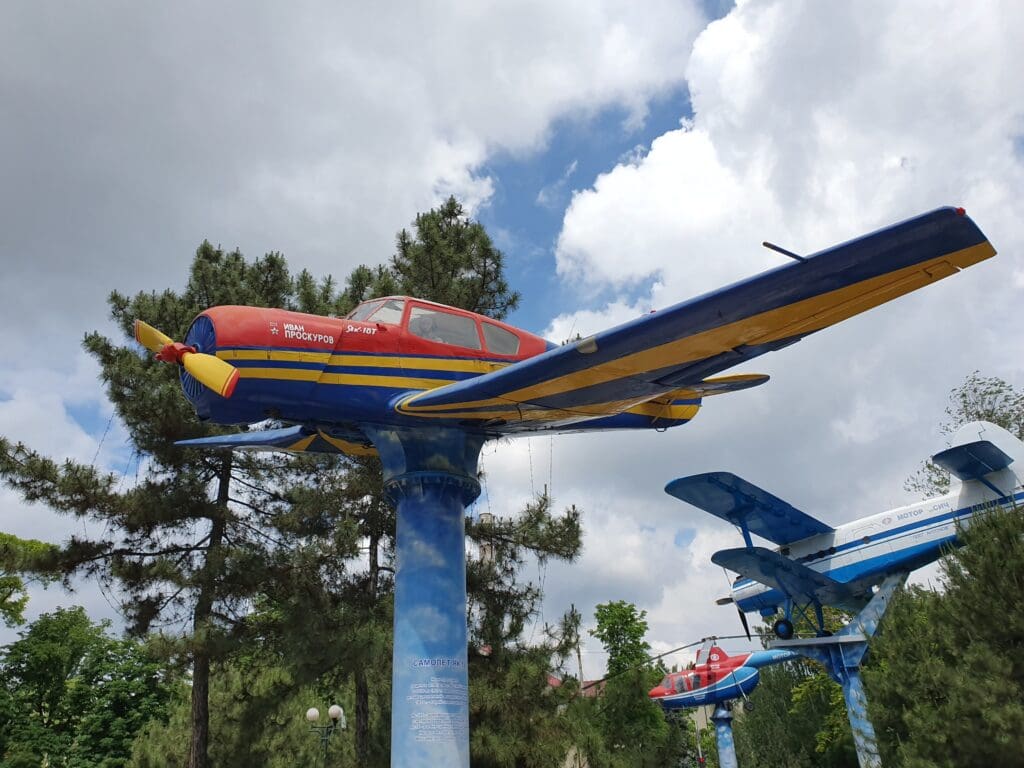
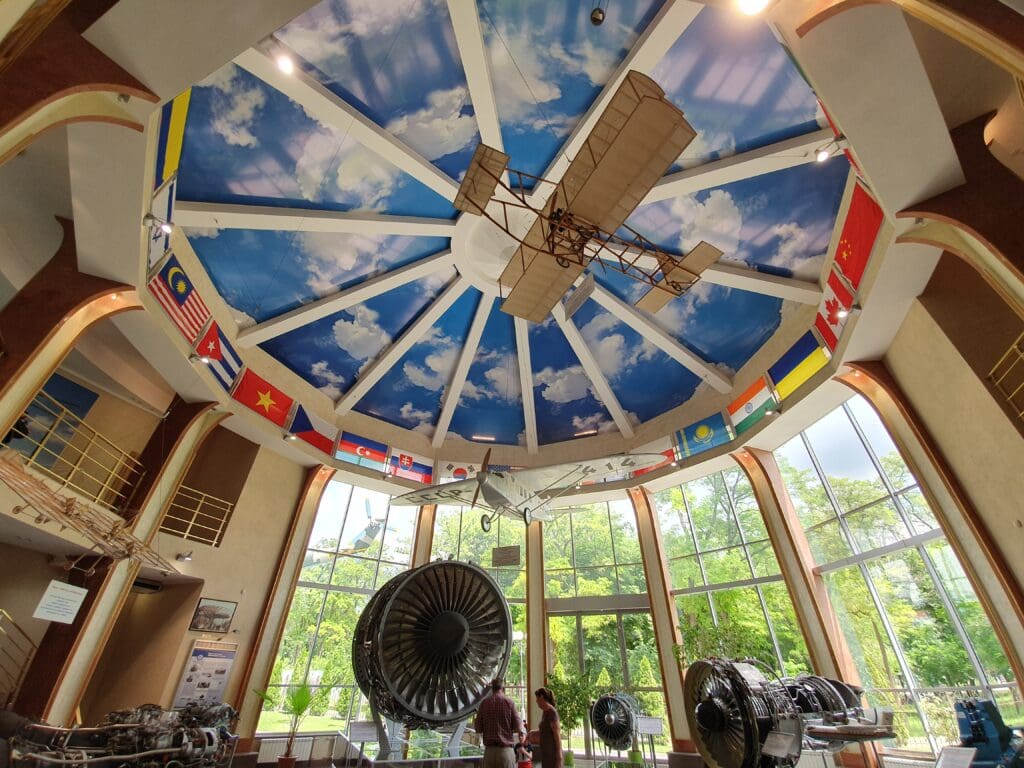
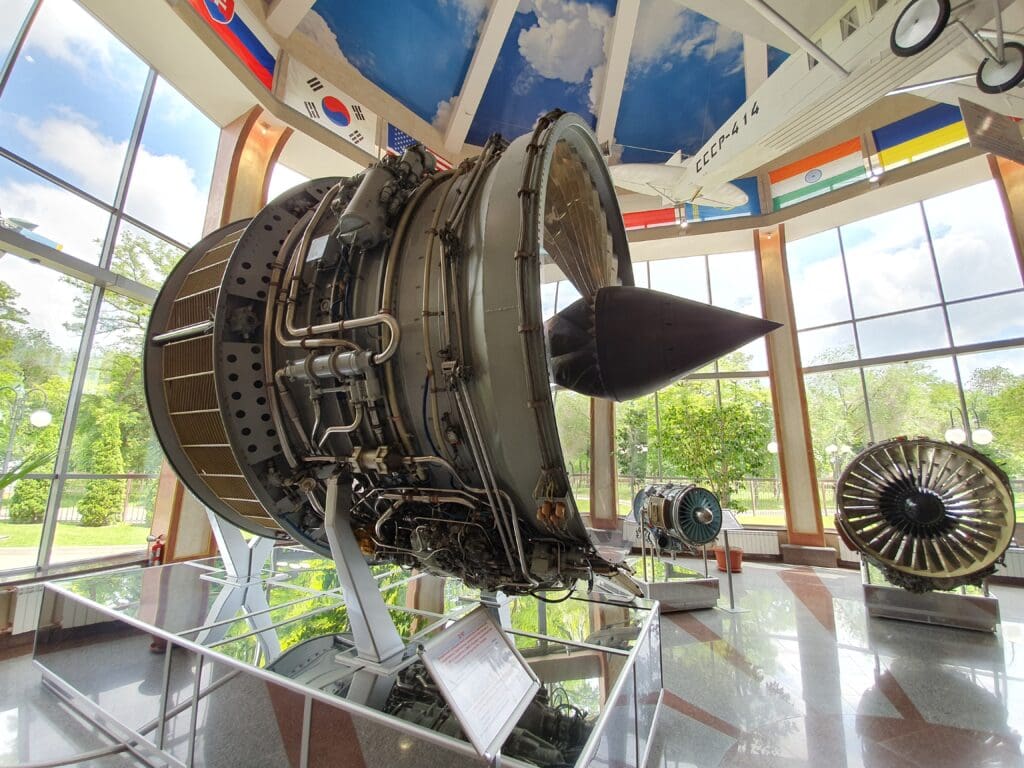
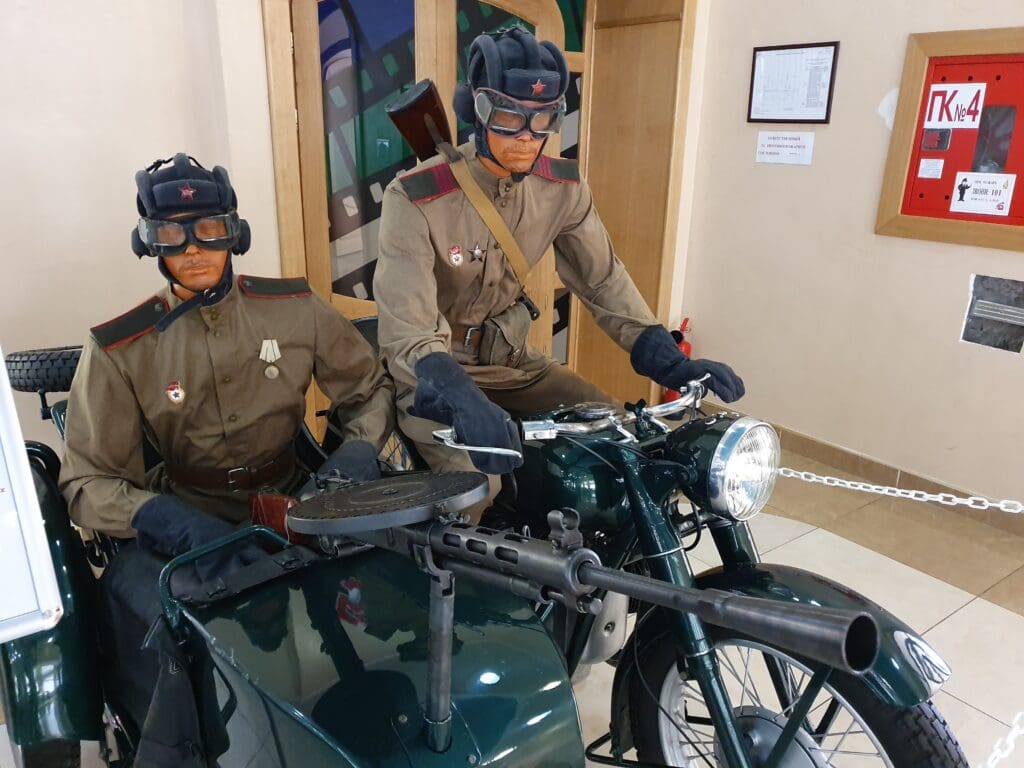
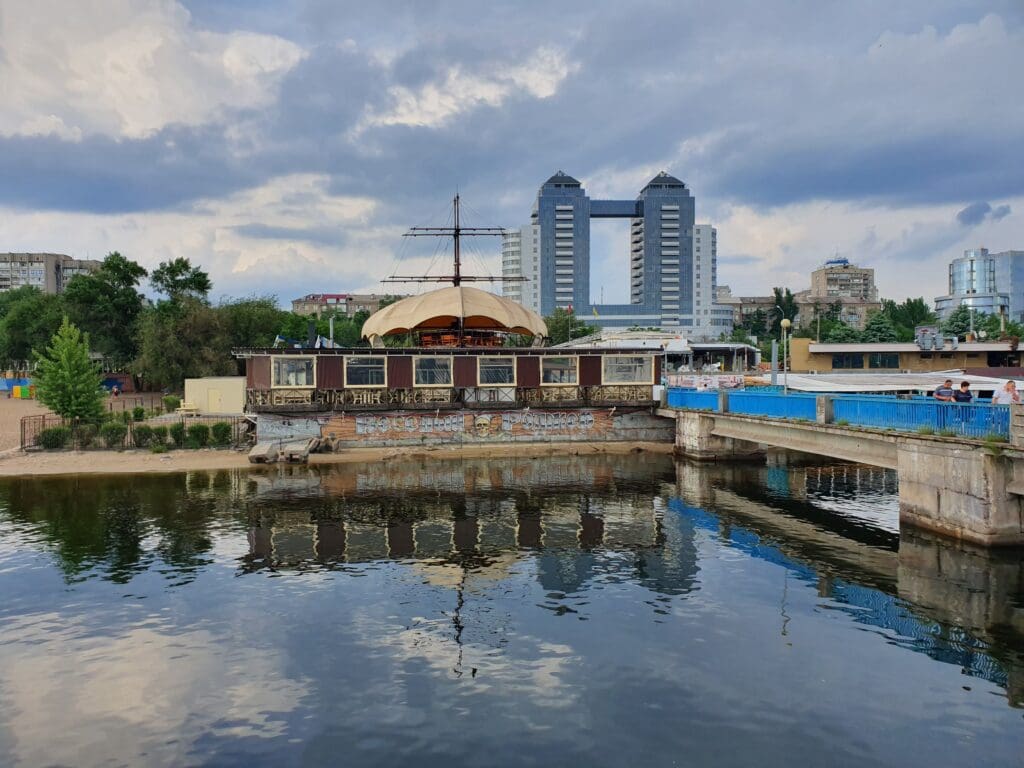
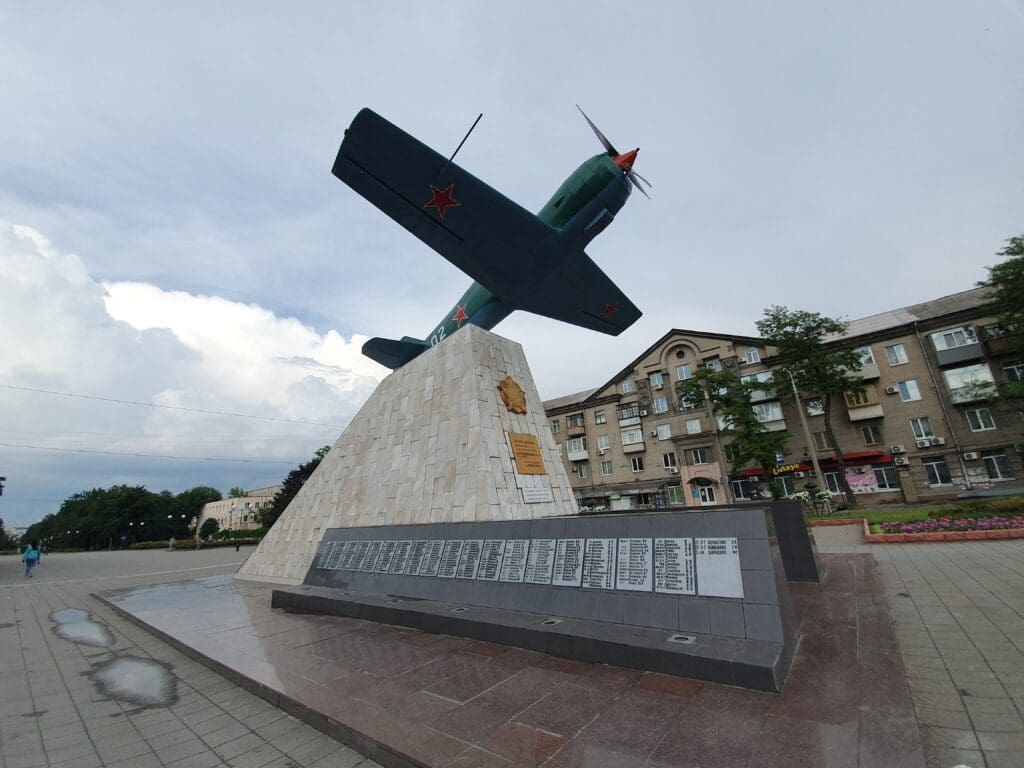
However, having already flown onboard a Motor Sich Airlines Antonov An-24 from Lviv to Kyiv, seeking to sample a new airline and wander around some of Zaporizhzhia’s sights by day, we decided to journey down from Kyiv Boryspil onboard a Windrose Airlines Embraer 145. Arriving in the late morning, this afforded us plenty of time to wander around the city. In the end, we visited the Motor Sich museum which proved to be an interesting insight into the diversity of the company’s operations, with everything from samovars to a massive Progress D-18T engine on display. Aside from this, we also had a good walk through the city visiting the main sights and accidentally stumbled across a Lavochkin La-11 fighter aircraft which commemorates the Soviet aircrew of the Second World War.
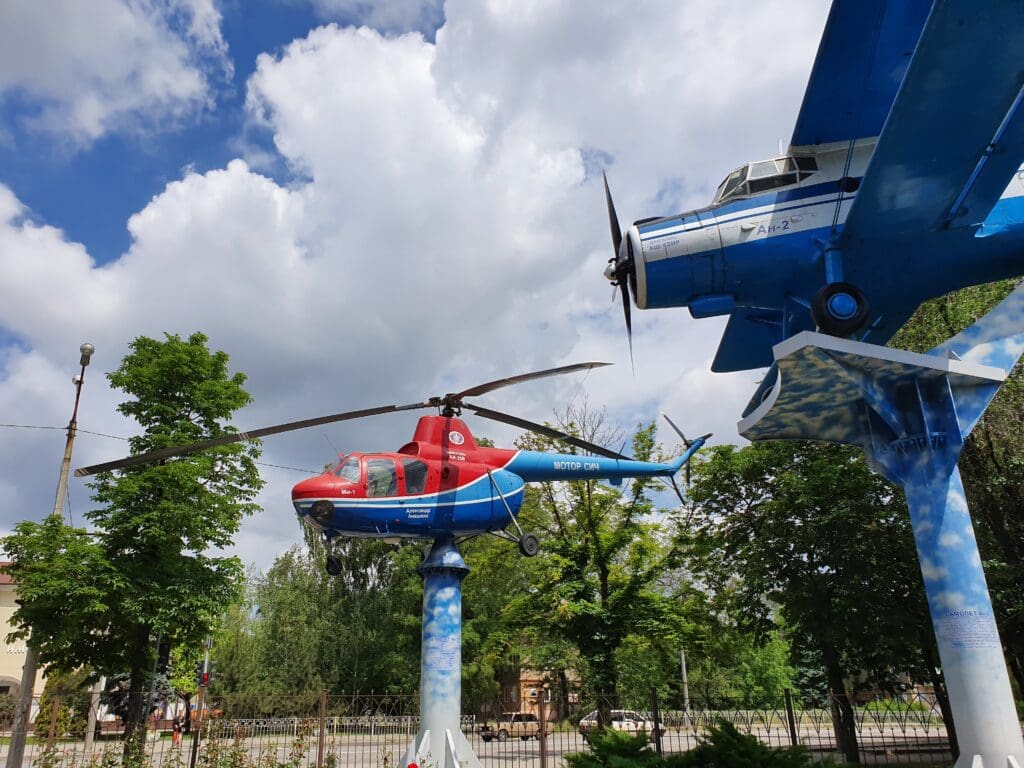
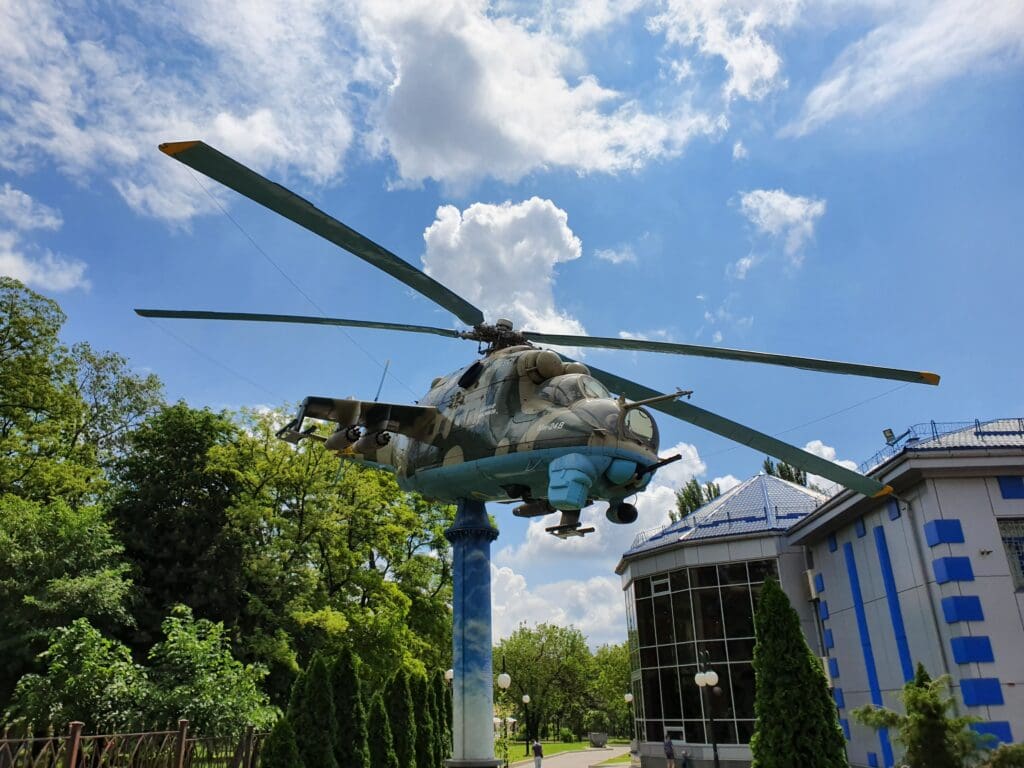
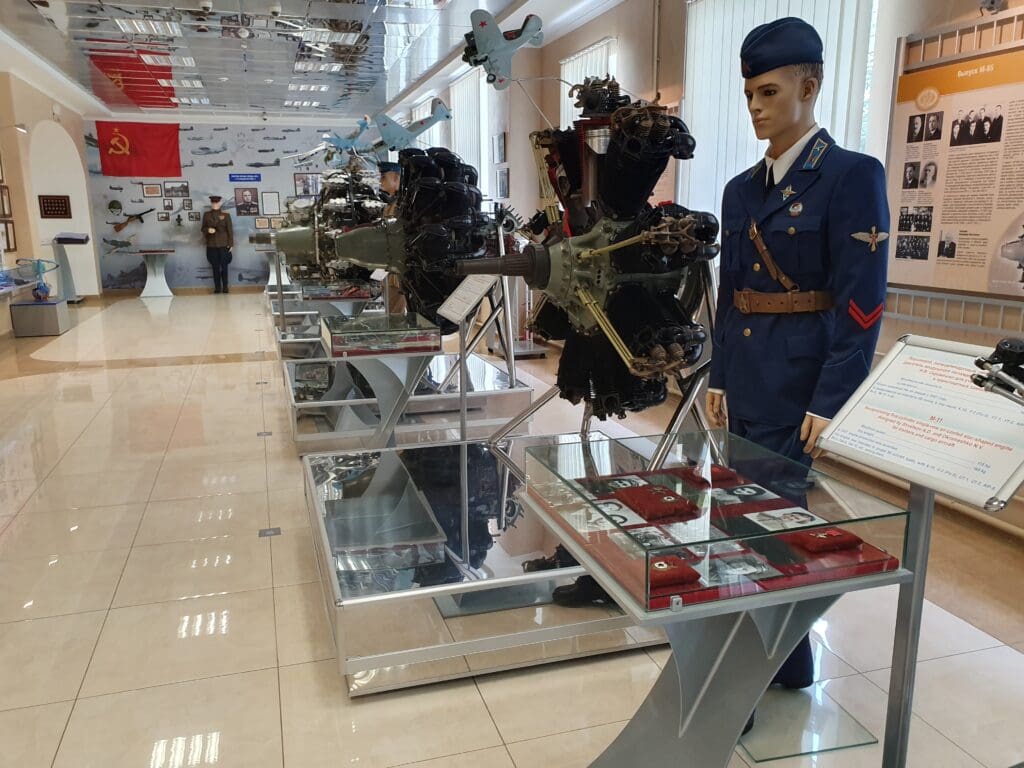
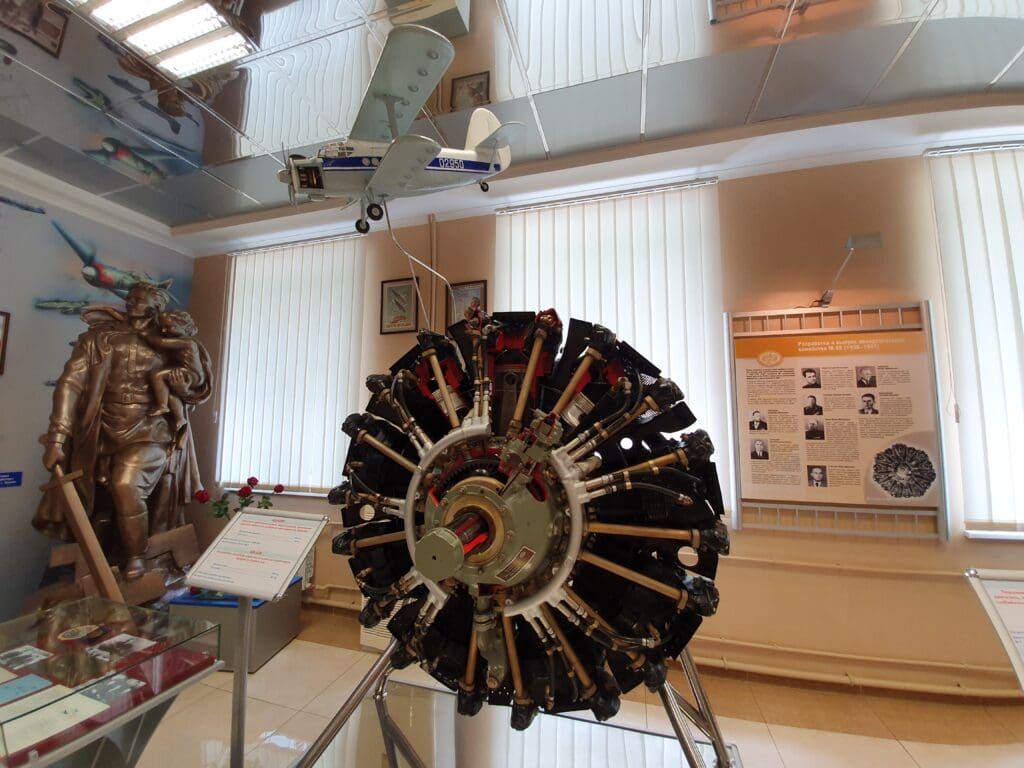

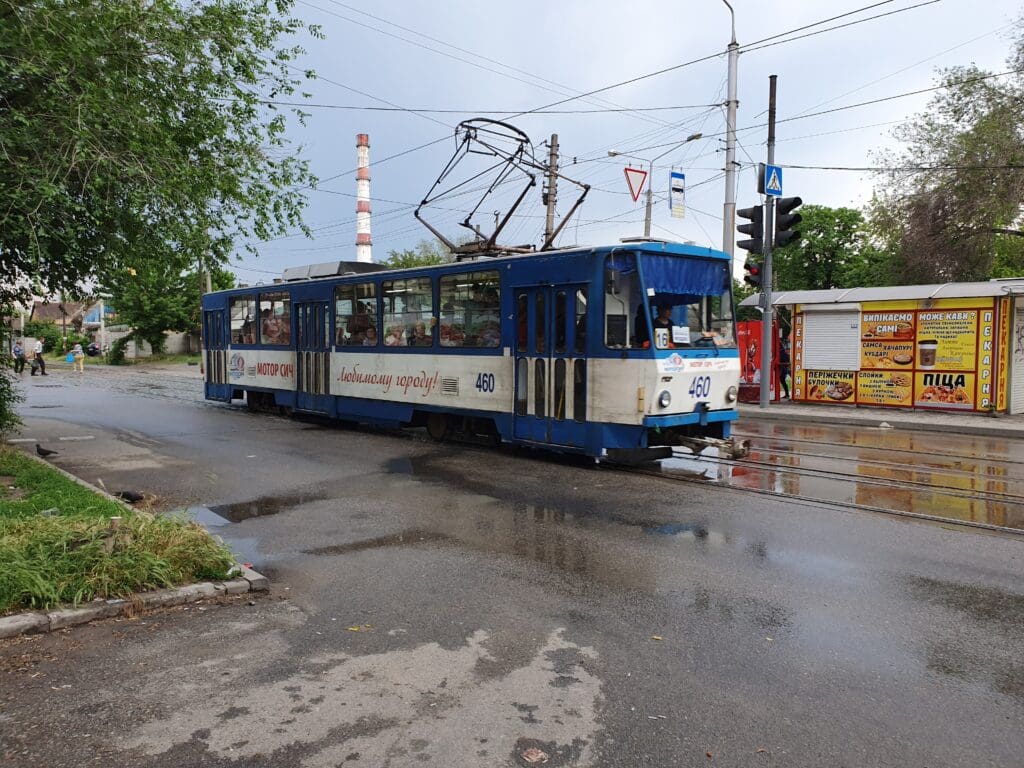
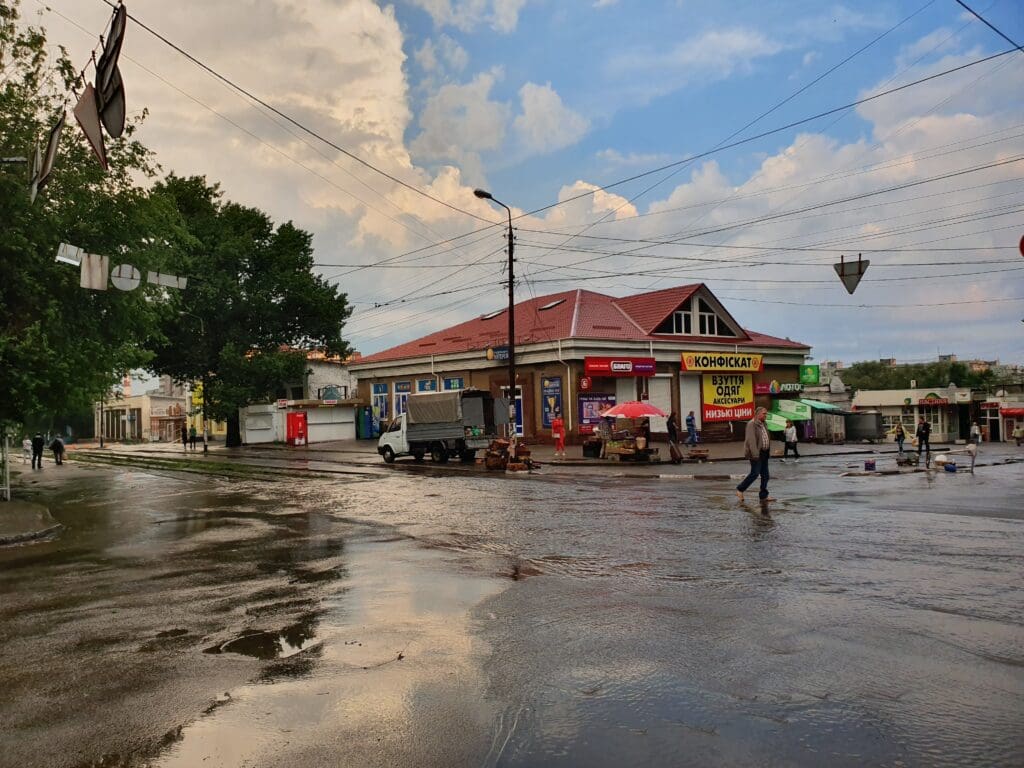
Whilst the local Intourist Hotel proves popular with those from abroad staying in the city, looking for a cheaper option we ended up staying in a large yet dated Airbnb apartment on the city’s main street. The only issue with this option was that we were unable to speak Ukrainian or Russian, whilst the host was unable to speak English, leading to a few complications. Meanwhile, we had little option but to arrange transport back to the airport ourselves. Fortunately, I was able to install and create an account with Uklon, the Ukrainian version of Uber.
Unsure of the availability of taxis early in the morning, the evening before our flight, I decided to pre-book a taxi to the airport with a departure time of 0455. However, what I didn’t realise was that the platform starts looking for a taxi forty minutes before your pre-booked time. That morning, this found a taxi driver almost instantly and by 0420 they had rocked up to the building and had phoned me multiple times – appearing to be rather irate and puzzled as to why we weren’t outside. Not wanting to annoy the driver further, we got ready as quickly as possible, making it to the taxi within around twenty minutes of the driver’s first call. As soon as we hopped in and closed the doors, the driver appeared to unleash their anger on the road, speeding through the streets as if they were in some sort of less glamorised version of a Formula 1 street circuit. After an exciting ride through Zaporizhzhia’s dawn streets, the taxi headed out of the city and soon pulled into the airport carpark just before 0500. Unlike a Formula 1 race, rather than any trophy or bottles of expensive champagne, the driver’s prize came in the form of a crisp 500 hryvnia note (260 hryvnias for the fare and the rest as an apologetic tip). Perhaps not expecting such a large tip, the driver appeared to be somewhat visibly pleased with this and once this was handed over, we disembarked and headed through the car park towards the terminal.
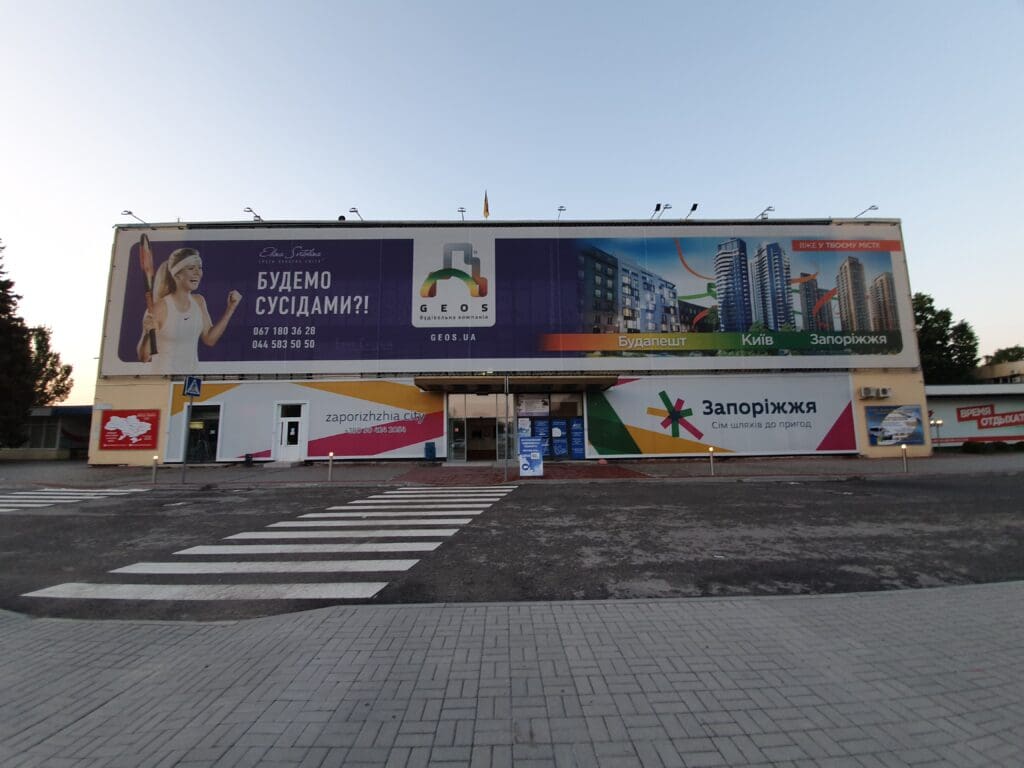
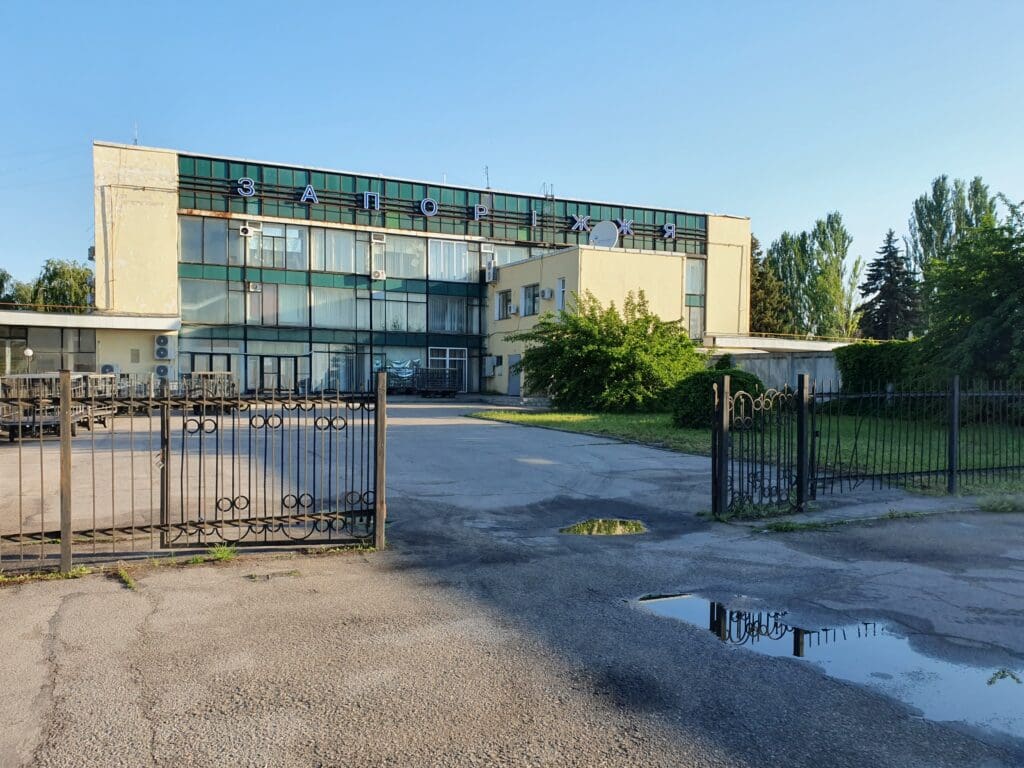
In the not-too-distant future, those arriving and departing through Zaporizhzhia Airport will be able to enjoy the comforts of a modern terminal, the construction of which commenced in December 2017. Whilst originally scheduled to open in 2019, at the time of our flight in late May 2019, the terminal still appeared far from complete and so all those departing on international flights were required to pass through the airport’s original terminal dating back to 1965. Still with plenty of time before our flight to Minsk, at this time in the morning, most passengers in the car park appeared to be heading to Kyiv Zhuliany on Motor Sich Airlines’ early morning Antonov An-24 service. After making it through the car park, we entered the small, rectangular and vintage-looking international terminal where only two other passengers could be seen. Seeing as passengers could not pass through to the miniscule check-in area until 0520, for the first twenty minutes of our stay we had little to do but take a seat on one of the metal benches and soak up the atmosphere of the spartan landside portion of the terminal. When it came to facilities, this contained nothing aside from some clean yet basic toilets, a café-bar and a ticket desk. However, unfortunately for those needing to buy a ticket or seeking some refreshment, the latter two were unsurprisingly closed. Shortly after we arrived, a smorgasbord of Belarus bound passengers arrived and by 0510 a small queue had formed leading up to the closed shutter that leads to the check-in area, the sign above which defined this area with the rather roundabout phrase of ‘registration of passengers and luggage’.
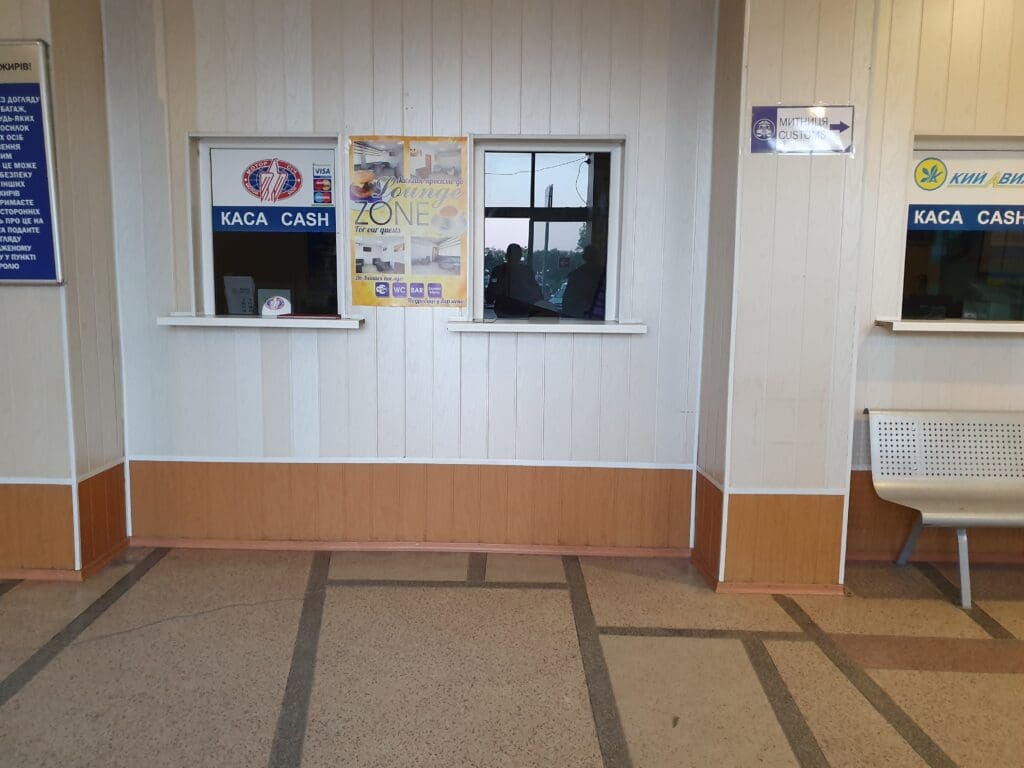
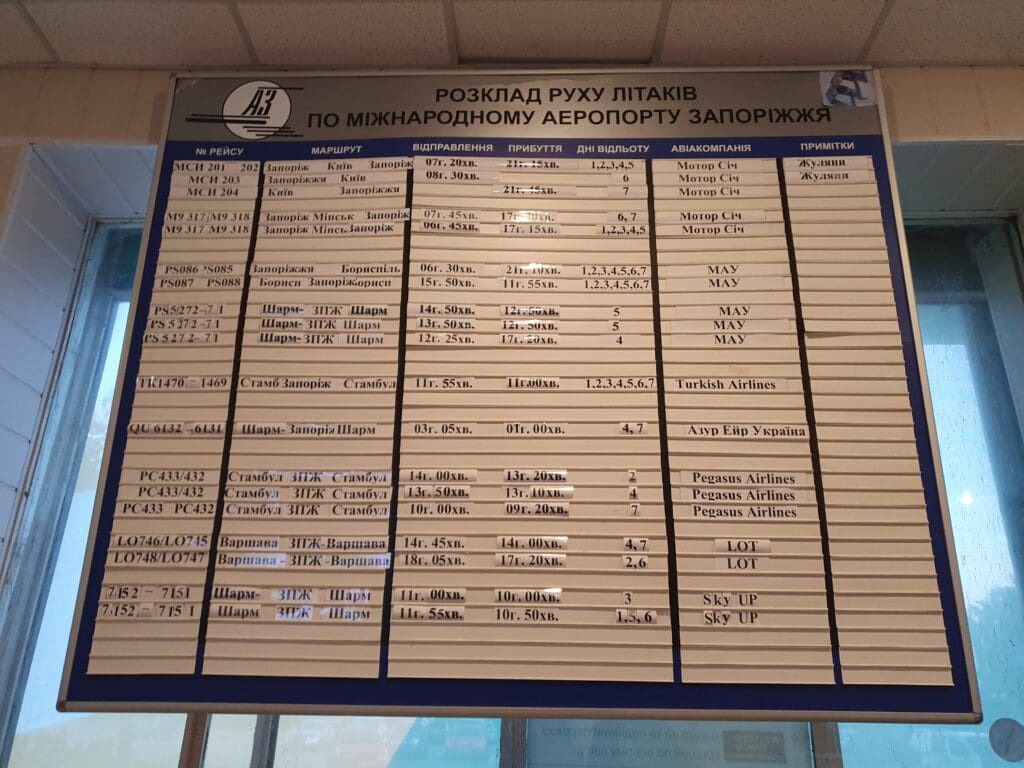
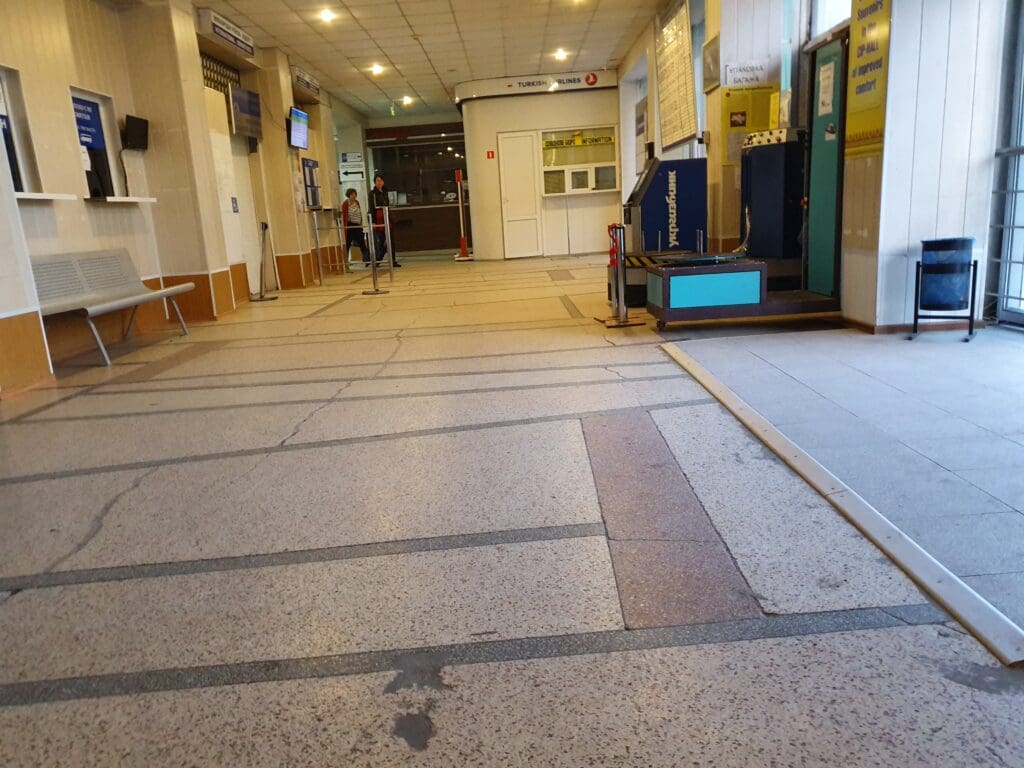
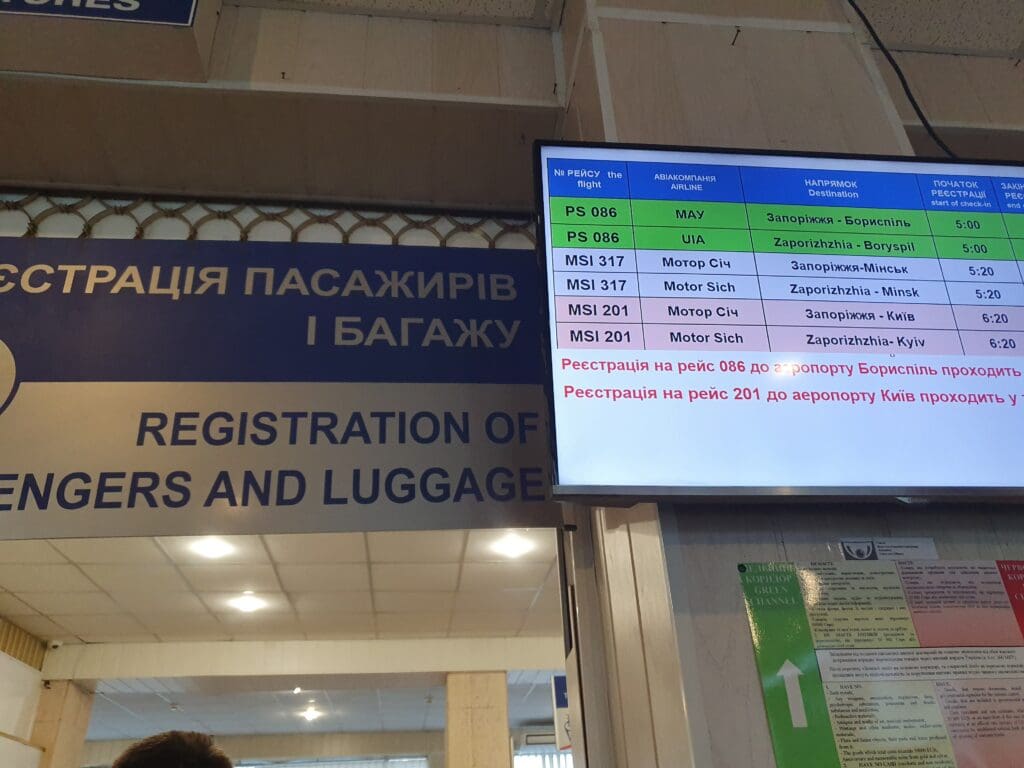
Seeing as we had checked in online and already selected our seats, we were in no major rush and decided not to join the queue until this began to budge. At 0520, two check-in agents in opposing clothing styles, one smartly dressed in a suit and the other in casual clothes appeared and the shutter was opened. Almost immediately, check in procedures commenced, with the two staff members ticking passengers’ names off the manifest, printing out boarding passes and weighing all bags set to make the journey in the aircraft’s ‘hold’. The ‘hold’ onboard a Yak-40 consists of several luggage racks at the rear of the aircraft and is far more reminiscent of what one would expect to see onboard a train! Fortunately, the two check-in agents worked efficiently and thus it took no more than about five minutes to reach the desk. Lacking any hold luggage, our two plain and unbranded boarding passes were printed off and we were free to continue onwards to security.
In the international terminal, the security checkpoint consisted of a single x-ray machine and a metal detector, with both hold and hand luggage passing through the former. Following a very short wait, we placed our items into several trays, passing through the security check quickly and without issue before heading up the stairway to immigration. At that time, just one of the two immigration booths was manned, whilst a stern camouflage-clad soldier could be seen eagerly eyeing up those waiting to pass through this, perhaps on the lookout for troublemakers. After another quick wait, I handed over my passport at the counter and soon received an exit stamp, making it to the airside area no more than ten minutes after joining the check-in queue.
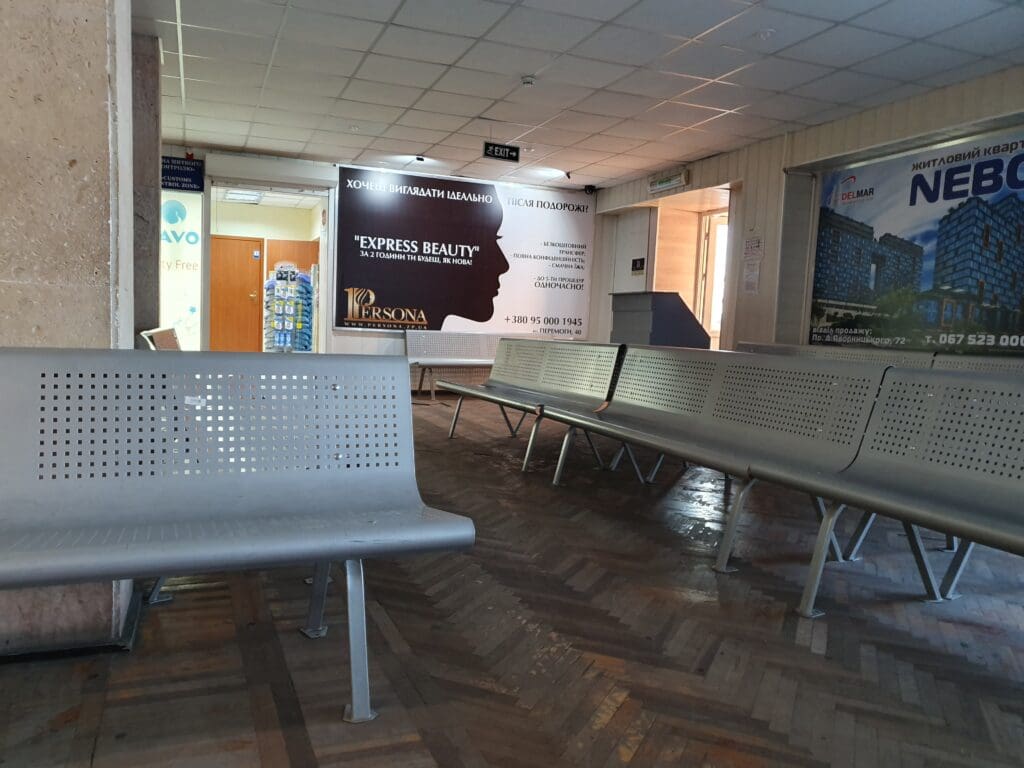
As you would likely expect, the airside waiting area was small, spartan and rather retro in its aesthetics, complete with stone-cold metal benches and clean yet basic squat toilets. To date, Zaporizhzhia Airport is the only airport in Europe where I have seen such toilets! For those looking to pass the time, a café-bar was open and serving a selection of refreshments, with a duty-free outlet being conjoined onto this for those looking to stock up on booze, cigarettes and other goods. With the terminal dating back to an era way before anyone had any personal devices that they would need to charge, unsurprisingly plug sockets were hard to come by. However, a complimentary wifi network was provided, although the connection was sporadic at best. All-in-all, despite its basic nature, the terminal left me with few complaints, although I can’t help but think that given its small size, this must end up rammed before the departure of Pegasus Airlines and Turkish Airlines’ Boeing 737-800 operated services to Istanbul.
As time passed, the waiting area gradually filled up with a significant number of passengers appearing to be aviation enthusiasts hailing from countries across Europe, armed with cameras and tales of their experiences flying interesting aircraft around the globe. In the end, I would say that around half of the flight’s load was comprised of this quirky demographic! With my academic life focused on all matters pertaining to Korea, I eagerly overheard an interesting account from one enthusiast who had partaken in one of the North Korean aviation tours and sampled all sorts of rare Soviet aircraft.
As per Motor Sich Airlines’ website, the Antonov An-140 is always officially scheduled to operate the service between Zaporizhzhia and Minsk. However, in reality, this is instead frequently operated by the Antonov An-24, and less frequently by the Antonov An-74 and Yakovlev Yak-40. Whilst I had booked this flight in the hope that the former type would be operating this, as I had come to suspect, in the end, this would be operated by the three-engined Yak. Despite flying this between Kyiv and Odesa and back several months earlier, this was by no means a complaint as this is most certainly a rare aircraft!
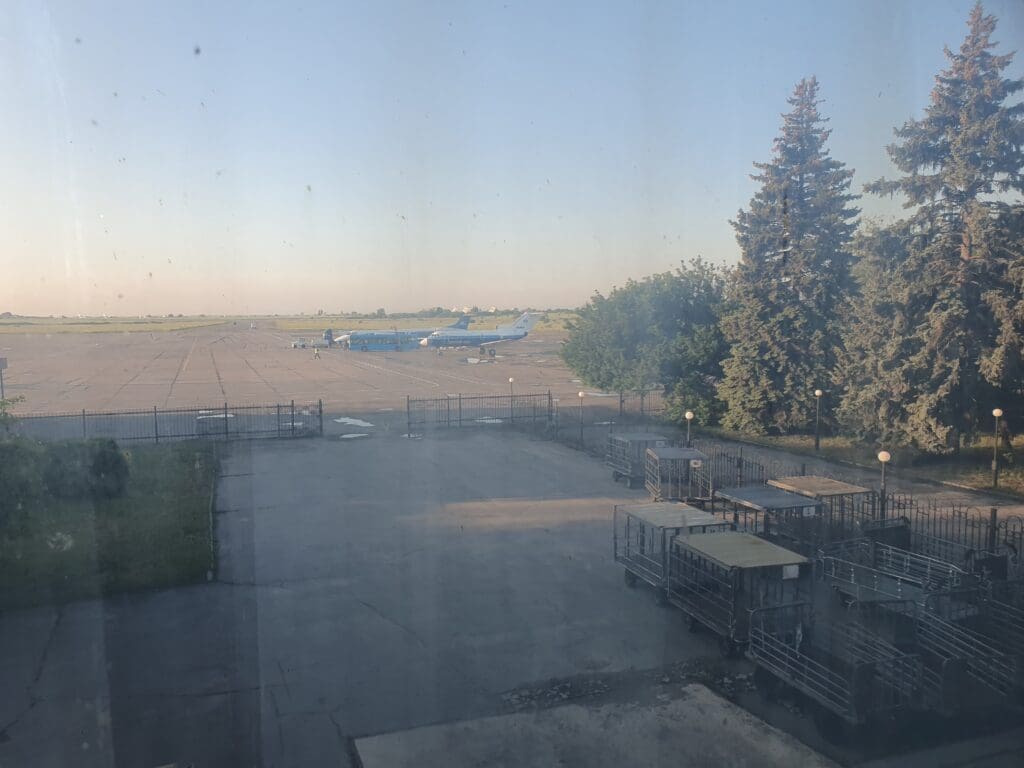
At 0555, the Yakovlev Yak-40 taxied onto the ramp where it joined Motor Sich Airlines’ Antonov An-24PB as it was being readied to head to Kyiv and a much newer Windrose Airlines Embraer 145LR. Fortunately, the international waiting area allows for good views of the small ramp and as the Yak-40 pulled up, many of the aviation enthusiast passengers snapped away at these with cameras and phones. Seeing more than its fair share of aviation enthusiasts and likely thus realising that such passengers lack any harmful intentions, the security guard and other staff members appeared not to care about such photographs being taken.
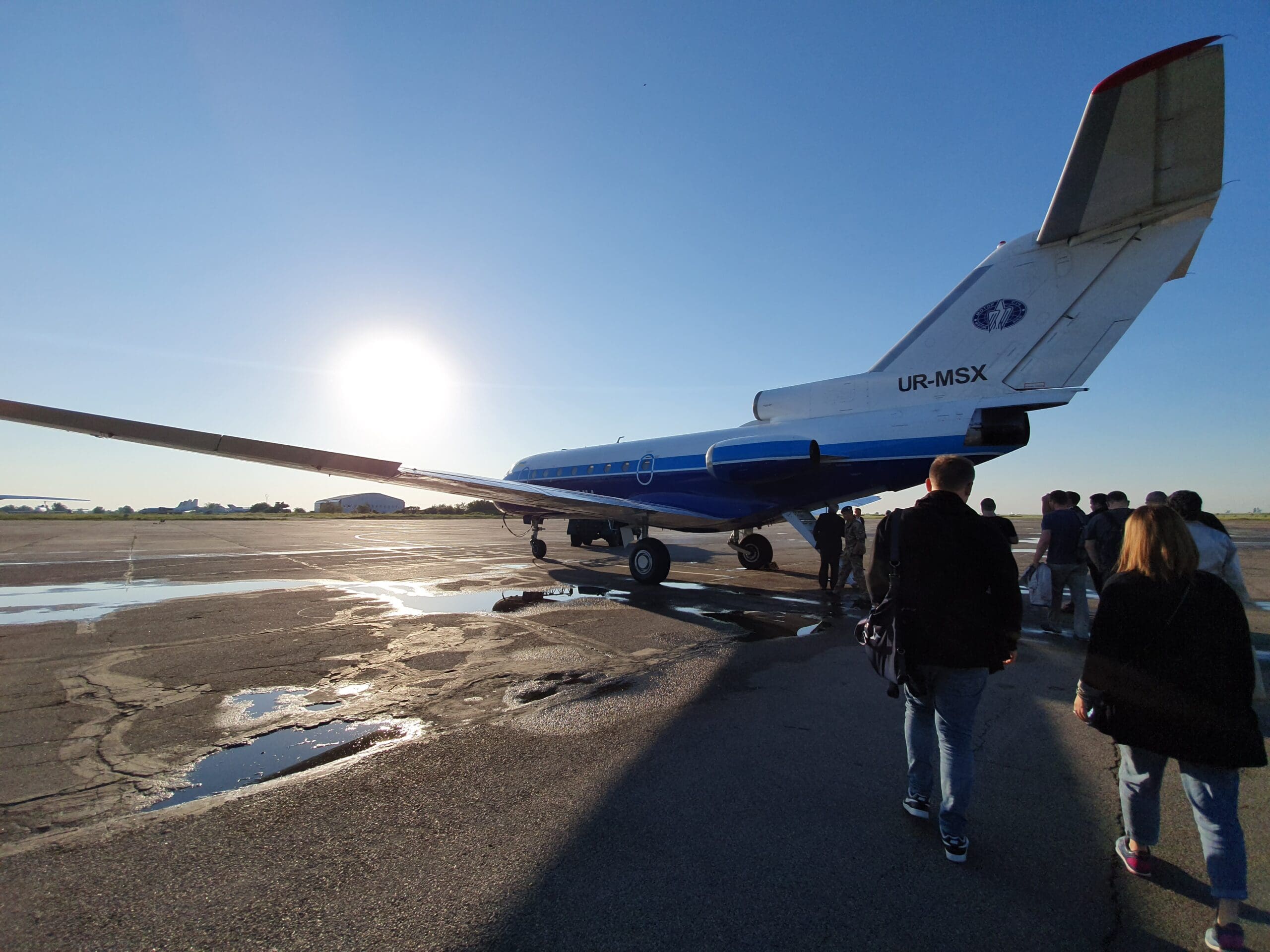
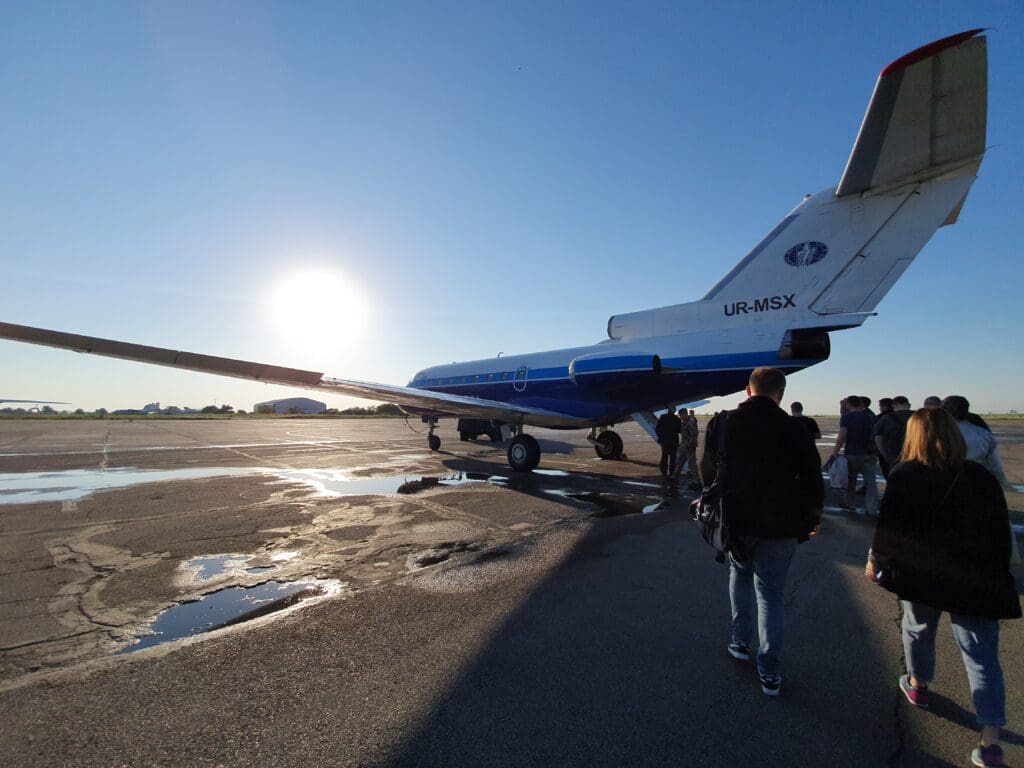
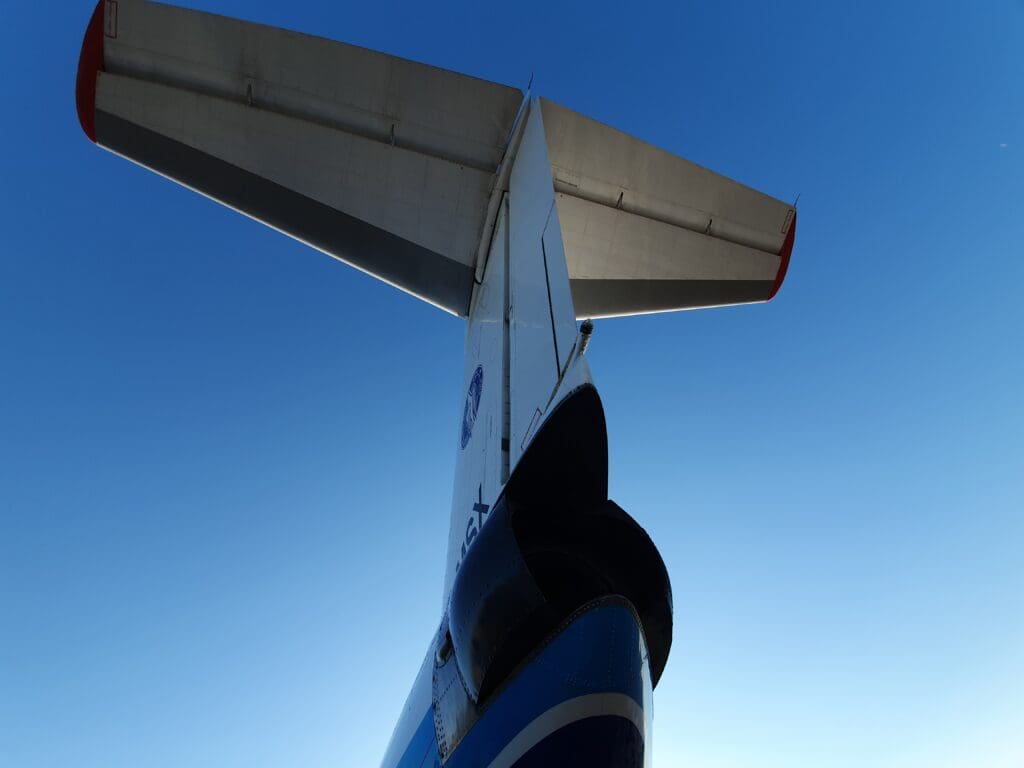
Much to my delight, I would be flying to Belarus on UR-MSX, and not the Motor Sich Airlines’ other Yakovlev Yak-40 which I had already sampled in December 2018. Carrying the construction number of 9530642, this aircraft was constructed at the Saratov Aviation Plant in southwestern Russia in 1975, making the aircraft 44 years old at the time of my flight. Bearing the registration CCCP-87541, in September of that year the aircraft was flown to the Baltic to commence its life with the Lithuanian division of Aeroflot. Less than a year later, the aircraft suffered a particularly significant accident in June 1976, when the flight engineer accidentally shut down all three of the aircraft’s engines whilst on approach to Kyiv Zhuliany causing the aircraft to land short of the runway in a swamp. Miraculously not only did the aircraft and all its occupants escape in one piece, the aircraft was salvaged and repaired. After continuing to fly passengers with Aeroflot, from 1988 the aircraft spent three years in a transport role for the Soviet Air Force. Following the collapse of the USSR, the aircraft’s ‘CCCP’ registration prefix was changed to ‘RA’ and later during the 1990s the aircraft commenced flying for Polet Airlines. After entering storage at Moscow Domodedovo in late 2005, the aircraft was listed for sale. The aircraft was purchased the following year by Ukrainian business aviation carrier Challenge Aero and given the registration UR-CLH. In 2013, the aircraft entered storage in Lviv and the aircraft’s registration was cancelled in 2015. Whilst the future of the aircraft may have for a time appeared bleak, after a long period of storage in February 2017 the aircraft was reregistered as UR-MSX and received a cabin refit as well as the distinctive blue and white livery of Motor Sich Airlines. Since then the aircraft has flown both charter flights and scheduled passenger services for Motor Sich Airlines and, in December 2018 the aircraft once again suffered an accident at Kyiv Zhuliany. This incident involved a ground power unit being knocked over by the aircraft’s wing, fortunately, this only resulted in minor damage to the aircraft, and so, soon this re-entered service.
Once the engines of the historic Yakovlev Yak-40 powered down, the aircraft’s rear stairs swung open and the veteran-looking crew disembarked and wandered over to the terminal to complete their immigration formalities. Once inside the airside waiting area, the Captain engaged in some lively conversation with the security guard, whilst outside several workers could be seen refuelling the aircraft in preparation for its morning flight to Minsk. Capable of flying 970 nautical miles (1800km/1100 miles), the Yak-40 is hardly a long-range aircraft. This figure roughly equates to the direct distance between Zaporizhzhia and Aktobe, Beirut, Berlin and St Petersburg to the east, south, west and north respectively. Soon enough, the three cockpit crew and sole flight attendant headed back across the apron to the aircraft and at 0610 the two staff members who had conducted the check-in procedures arrived in the departure lounge. Ten minutes later and five minutes past the flight’s scheduled boarding time, a brief announcement was made and boarding commenced. One by one passengers filtered out of the departure hall, down a flight of steps and out to the waiting bus. Seeing as UR-MSX is capable of carrying a mere 24 passengers, within no time all passengers had made it onto the bus which soon pulled away from the terminal and proceeded towards the aircraft at a snail’s pace.
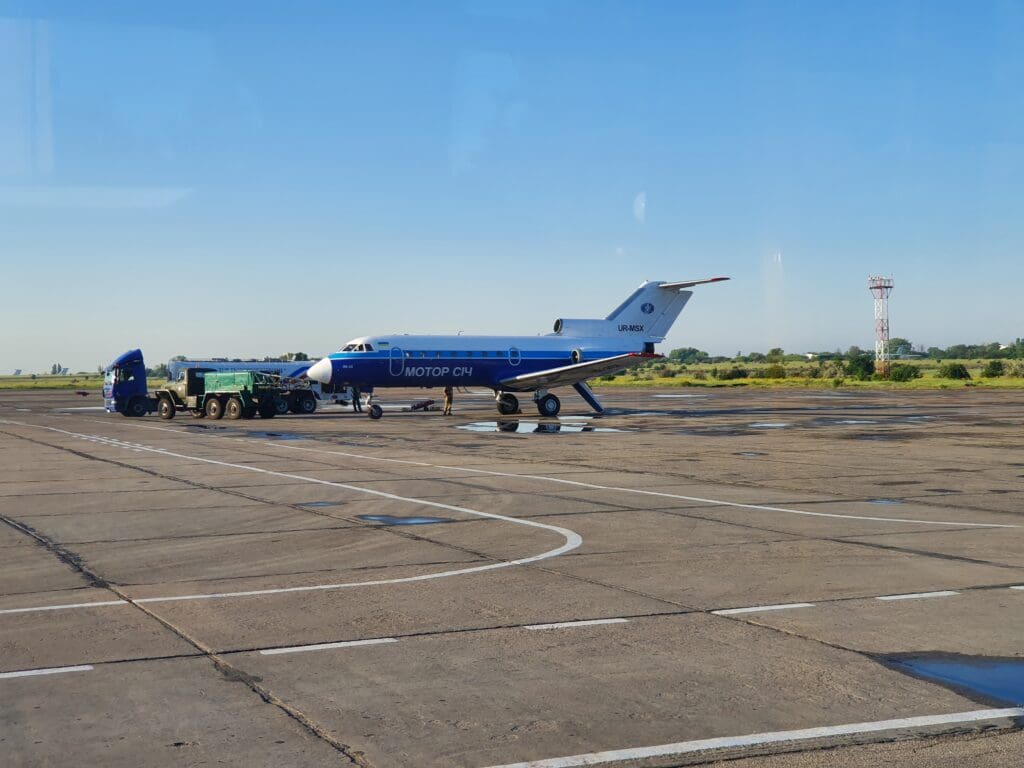
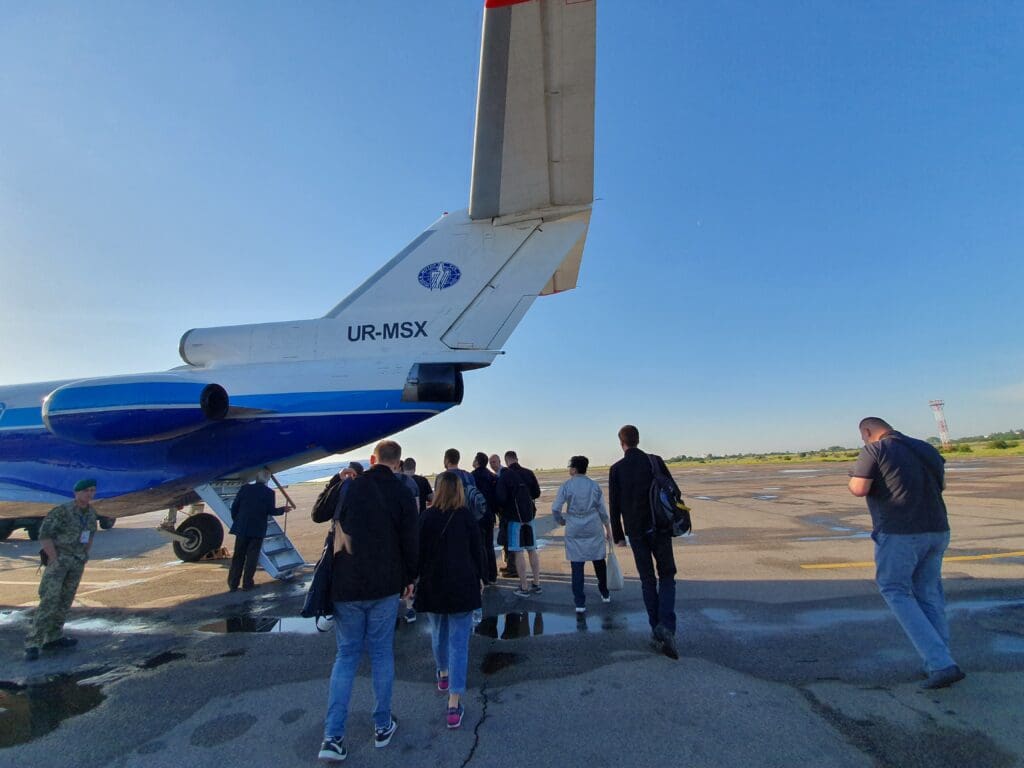
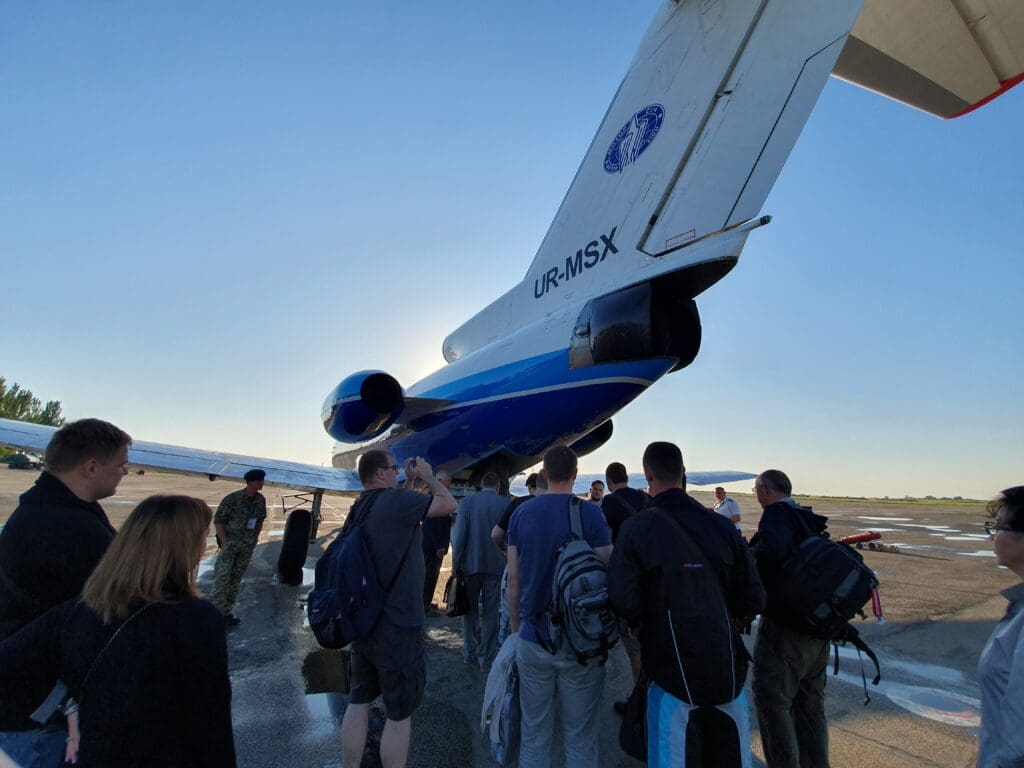
After a minute or two, the bus pulled up to the rear of the aircraft and the doors opened allowing passengers to spill onto the apron. As we waited, many passengers began snapping away photos of the aircraft which, like in the terminal seemed to cause no problems whatsoever. Following a short wait in the morning sunshine, we headed up the aircraft’s built-in steps, through the thick door at the rear of the aircraft and into the area which hosts the spacious galley, a less spacious toilet and the aforementioned baggage racks. As I entered the galley area I was greeted not only by the strong scent of leather but also by the sole flight attendant who greeted me in Russian. Sitting in Row 6, the aircraft’s penultimate row (the final row is reserved for a mechanic and the flight attendant), within seconds of boarding, we settled into Seats 6C and 6D, ready to head off on this rare airliner.
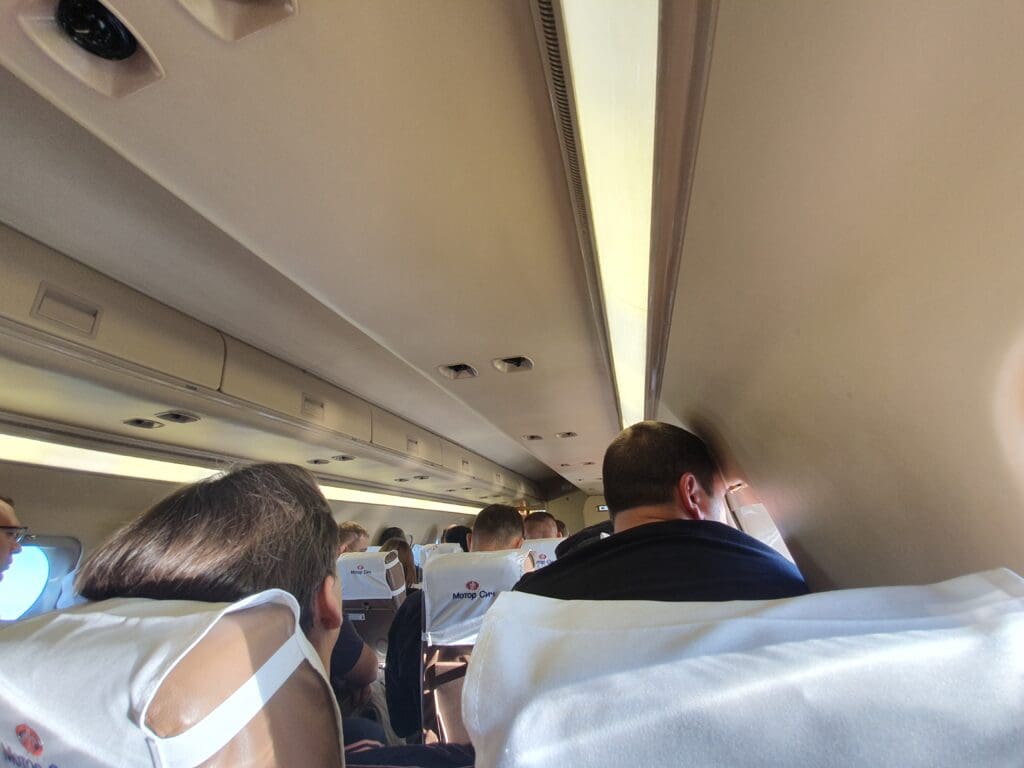
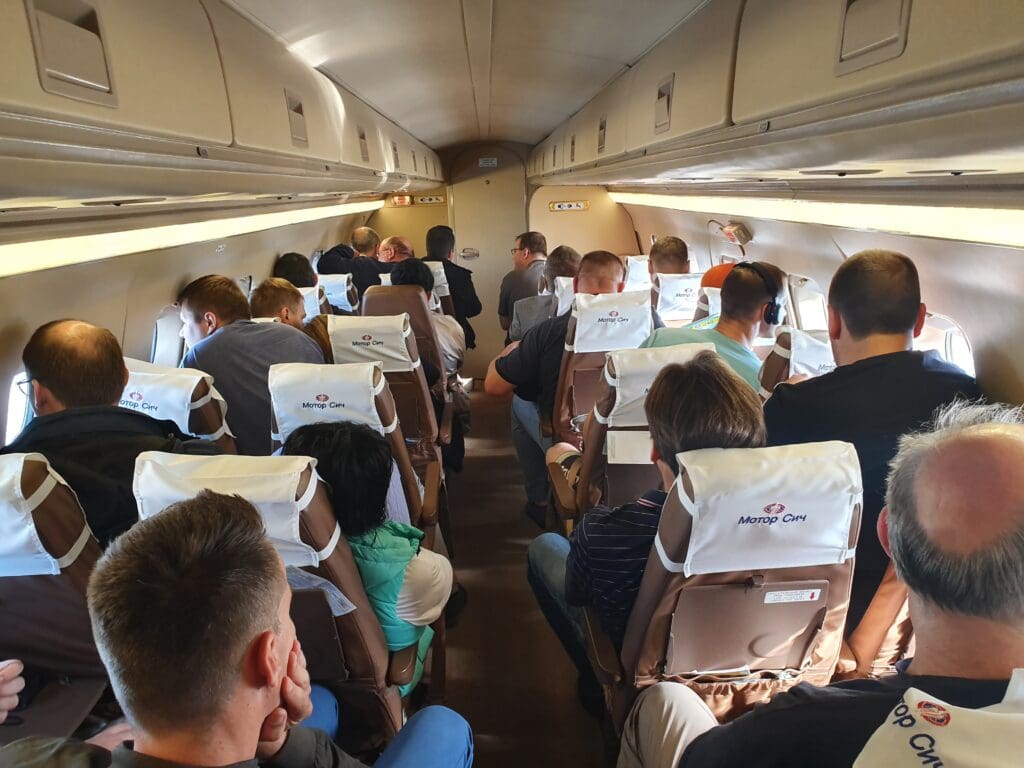
As I had expected, the interior of this Yakovlev Yak-40 was virtually identical to that of the airline’s other Yak-40 that I had flown, UR-88310. Onboard, each seat was covered in a beige leather giving the aircraft a sort of executive feel, which I suppose is unsurprising given the aircraft’s occasional role of shuttling around Motor Sich employees. As with UR-88310, the interior of UR-MSX appeared to be in mint condition with virtually no signs of wear and tear, and of course, being the aircraft’s first flight of the day, this was in a spotlessly clean condition. However, when it came to comfort, the Yakovlev was lacking a little, with the seat appearing to be rather thin and narrow, whilst the legroom was by all accounts, rather poor. This was hardly surprising, given the fact that the Yakovlev Yak-40 had originally been designed to accommodate passengers in a three-abreast configuration. Turning to the seatback pocket, this featured a plain sick bag and a copy of a safety card, which was personalised for UR-MSX. When it came to reading material, no magazine could be found in my seatback pocket however a copy of Kyiv Zhuliany Airport’s magazine could be found in that of my father’s seat.
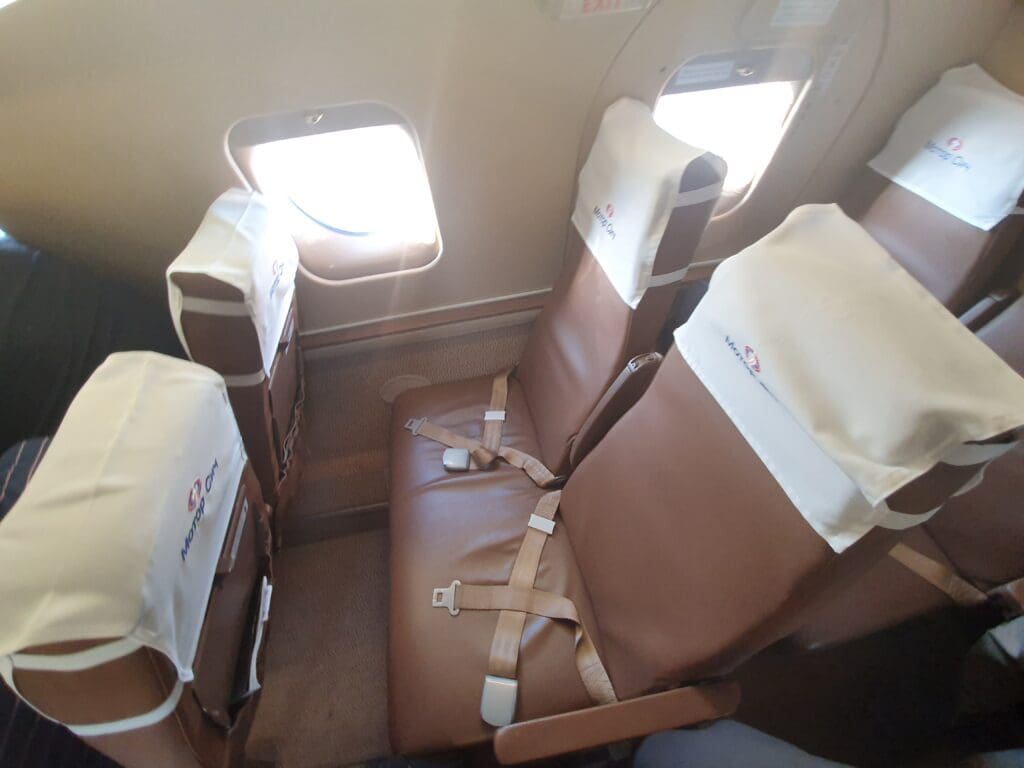
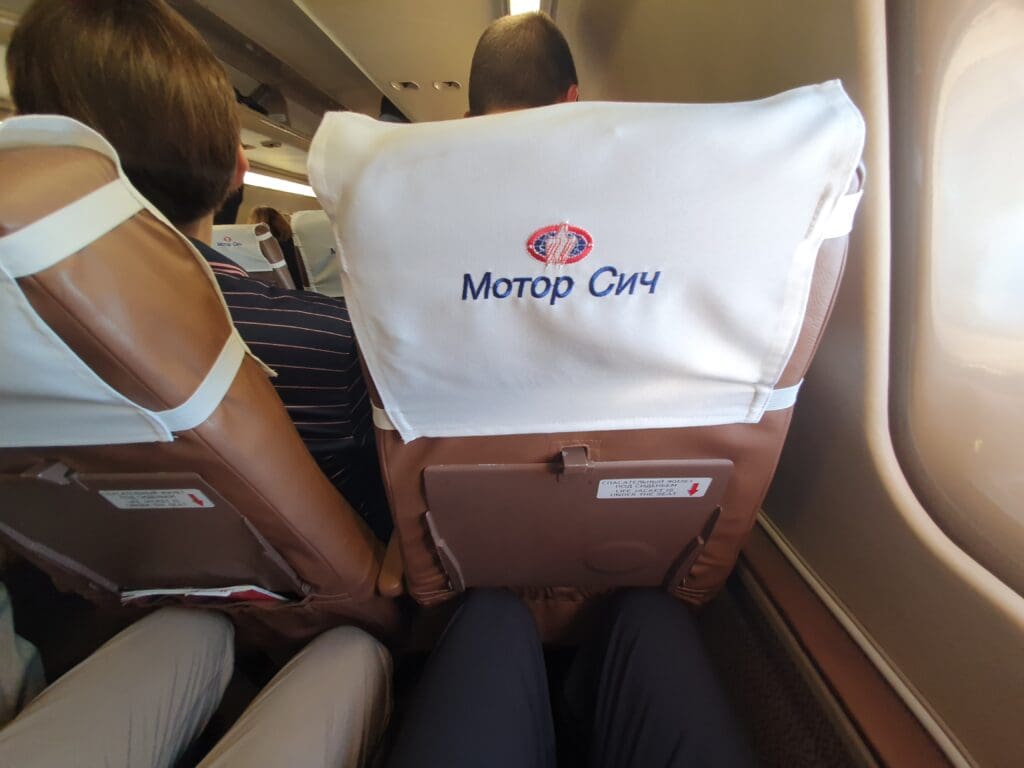
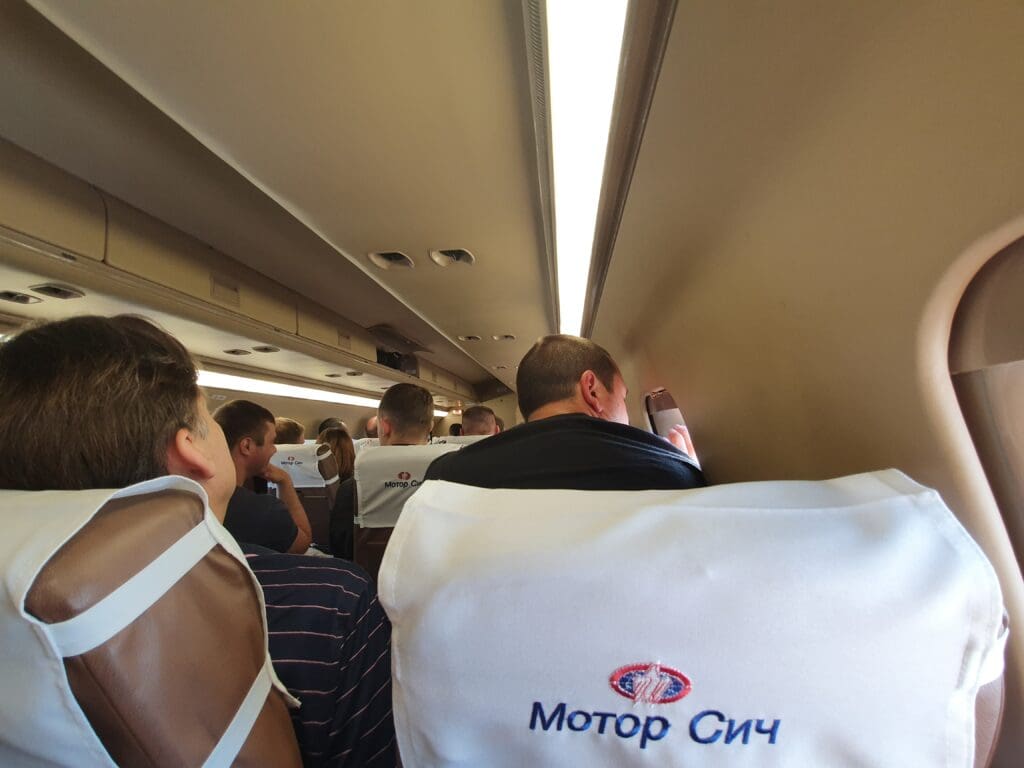
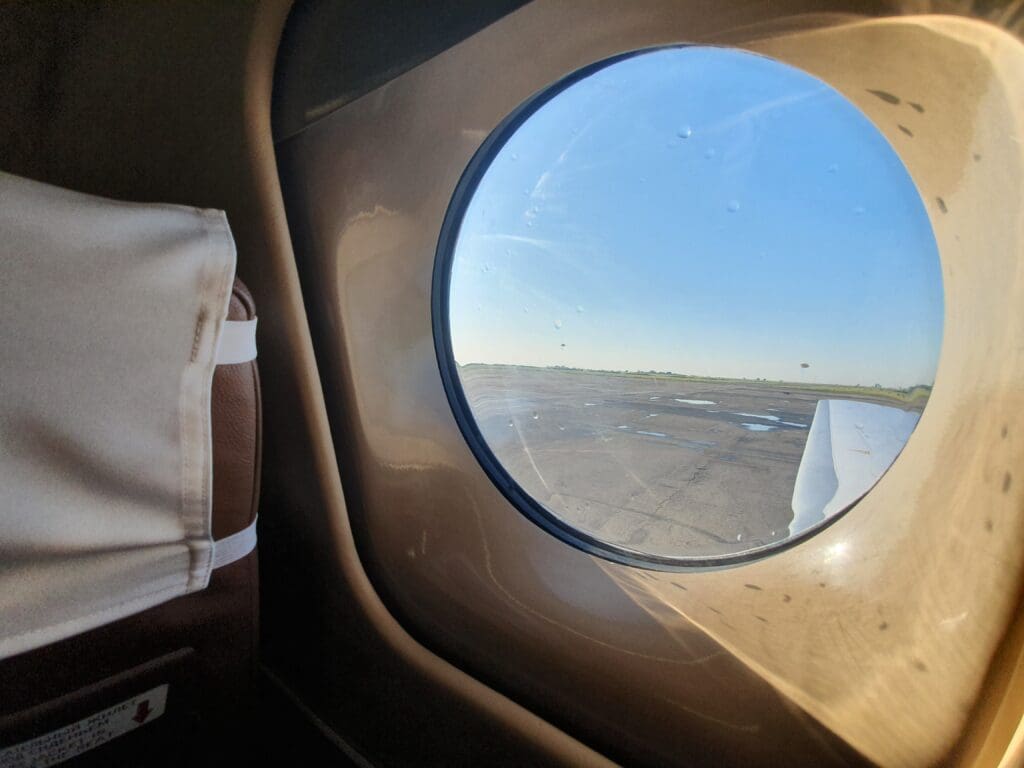
With fifteen minutes to go until the flight was scheduled to head off to Minsk, all passengers had made it onboard and were seated, settled and ready to go. Indicating that we would be making an early departure, a loud thud could soon be heard coming from the rear of the cabin as the steps were retracted and the cabin door was closed. Once the flight attendant had secured this for departure, they then performed a welcome announcement in Russian and English. However, the vacuum cleaner noise that preceded the start-up of the Yak’s three locally manufactured Ivchenko AI-24 engines, followed by the shrill whine as these powered into life in surround sound meant that much of this announcement could barely be heard. Nevertheless, once the three small engines had spooled up, the cabin noise was most certainly less than that of the mighty Antonov An-24.
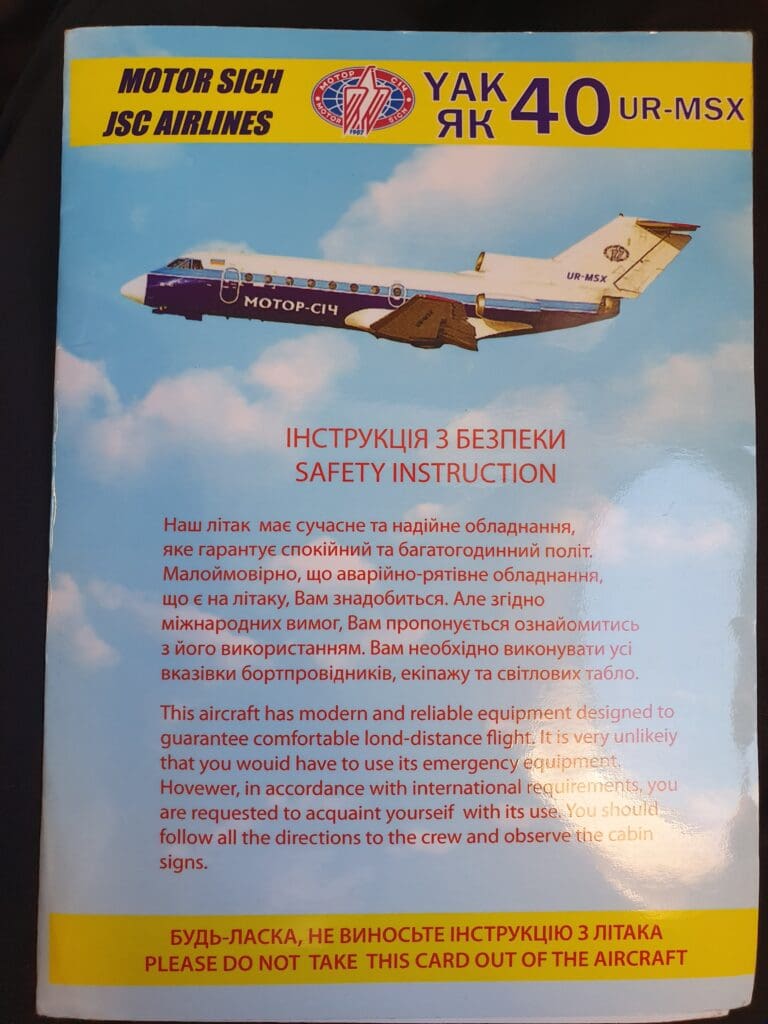
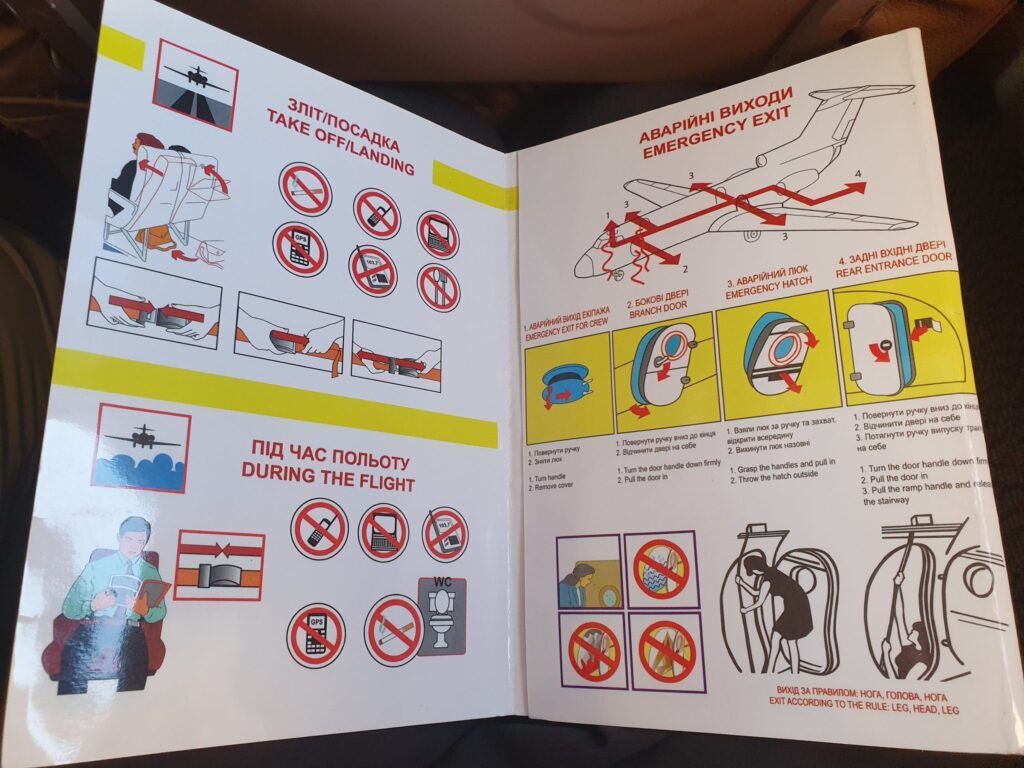
After quickly running through the safety instructions, with no real jumpseat the flight attendant took their seat in Row 7 as we commenced our taxi to Runway 02. At 0638, the aircraft lurched forwards out of its stand and made a quick taxi over to the airport’s sole runway. Peering outside, neither the apron nor the taxiway appeared to be particularly smooth, with these featuring plenty of cracks, lumps and bumps. However, seeing as the Yakovlev Yak-40 was designed with rough unprepared strips of deepest Siberia in mind, unsurprisingly the aircraft handled these with ease and the journey to the runway was rather smooth.
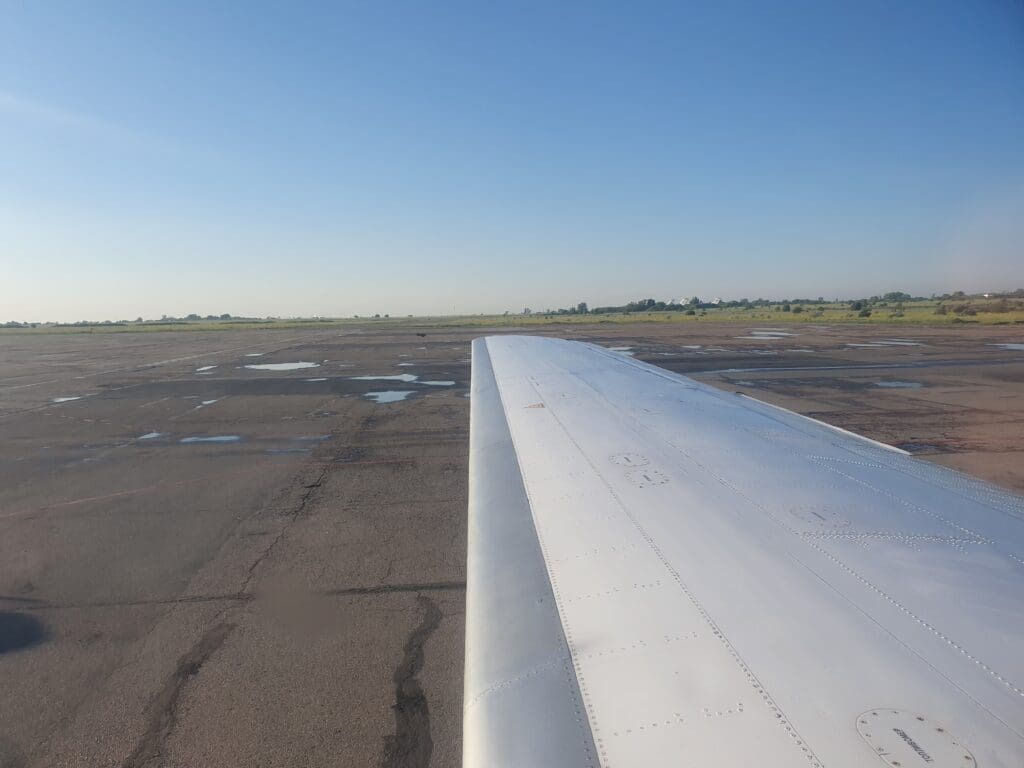
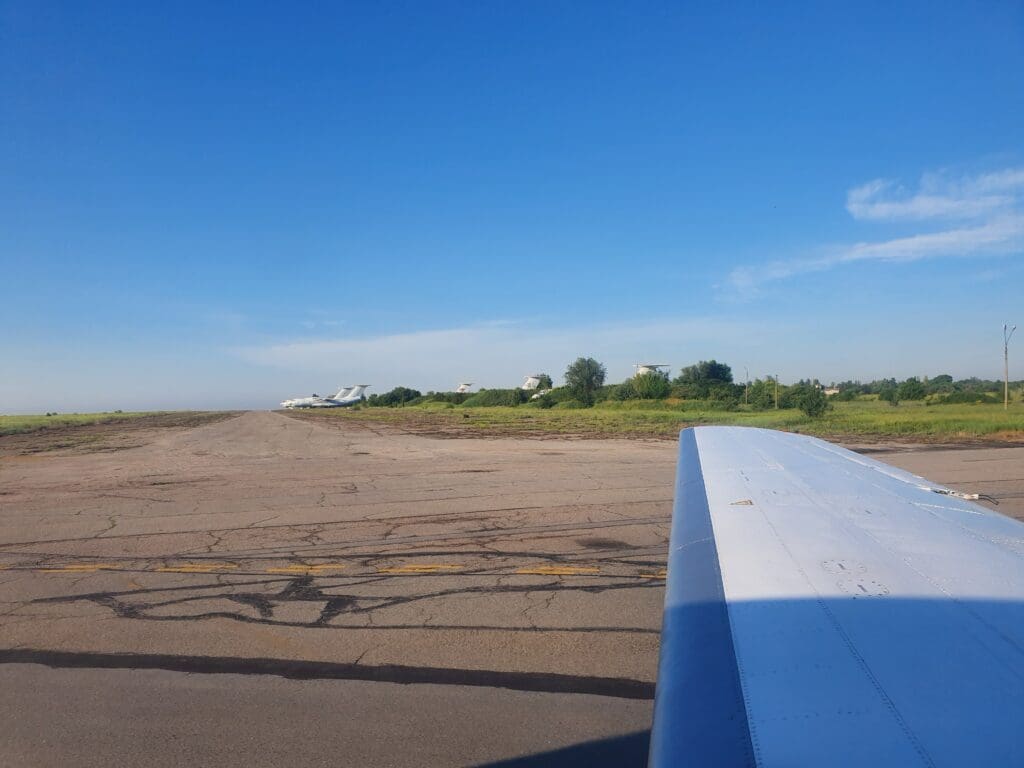
Without coming to a halt, the aircraft made its way onto the runway before turning right and backtracking. At this stage of the taxi, rows of decaying Ilyushin Il-76s could be seen, and using Google Earth, I later counted a total of thirty such aircraft scattered about the airfield. Before I knew it, the aircraft turned around and came to a gentle halt. With the brakes held, the aircraft’s three engines noisily spooled up before these were released as we commenced a long and gentle takeoff roll that lacked any sensation of being pushed back into your seat as we rattled down the runway. After speeding past several stored Ilyushin Il-76s, the aircraft whizzed past Motor Sich Airlines’ ramp which was home to an interesting smorgasbord of airliners including two Antonov An-12s, an Antonov An-2, the airline’s sole Antonov An-140 and the other operational Yakovlev Yak-40. Once we had passed this interesting collection of aircraft, the Yak calmly rotated upwards and made a typically shallow climb into the sunny Ukrainian skies.
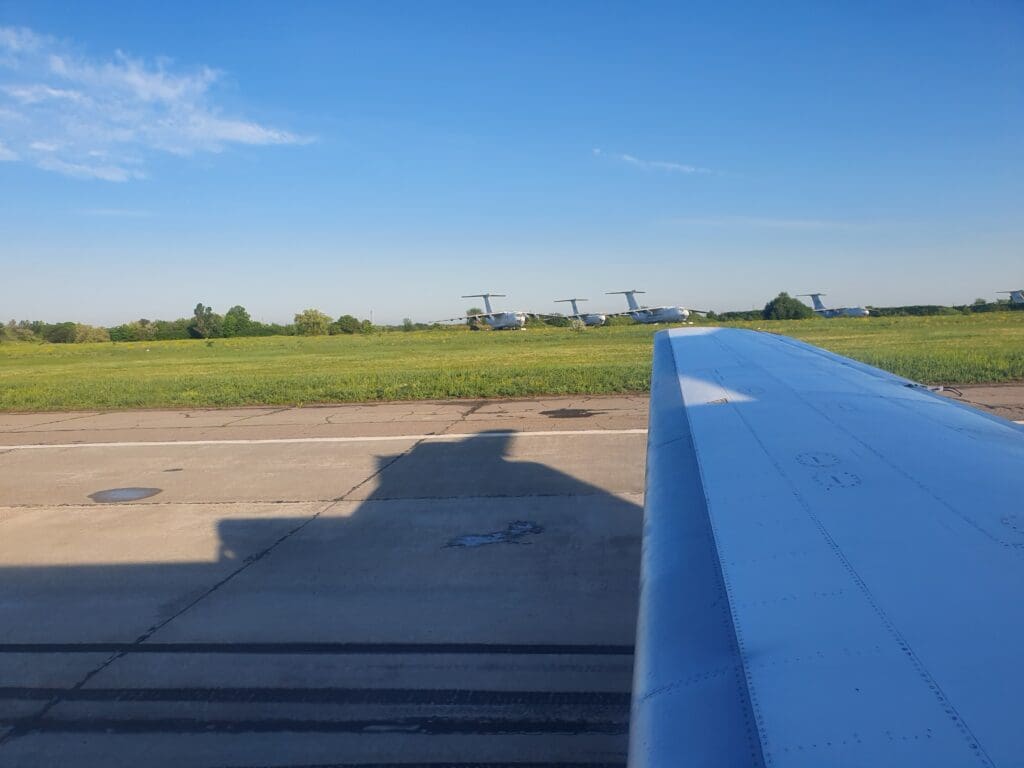
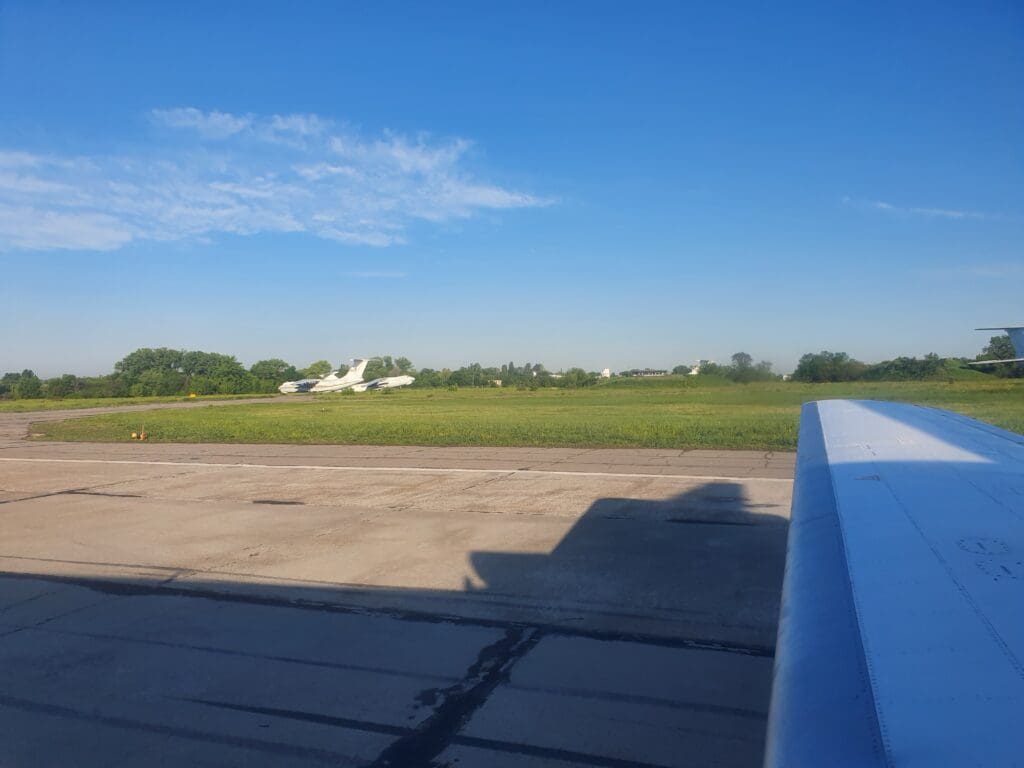
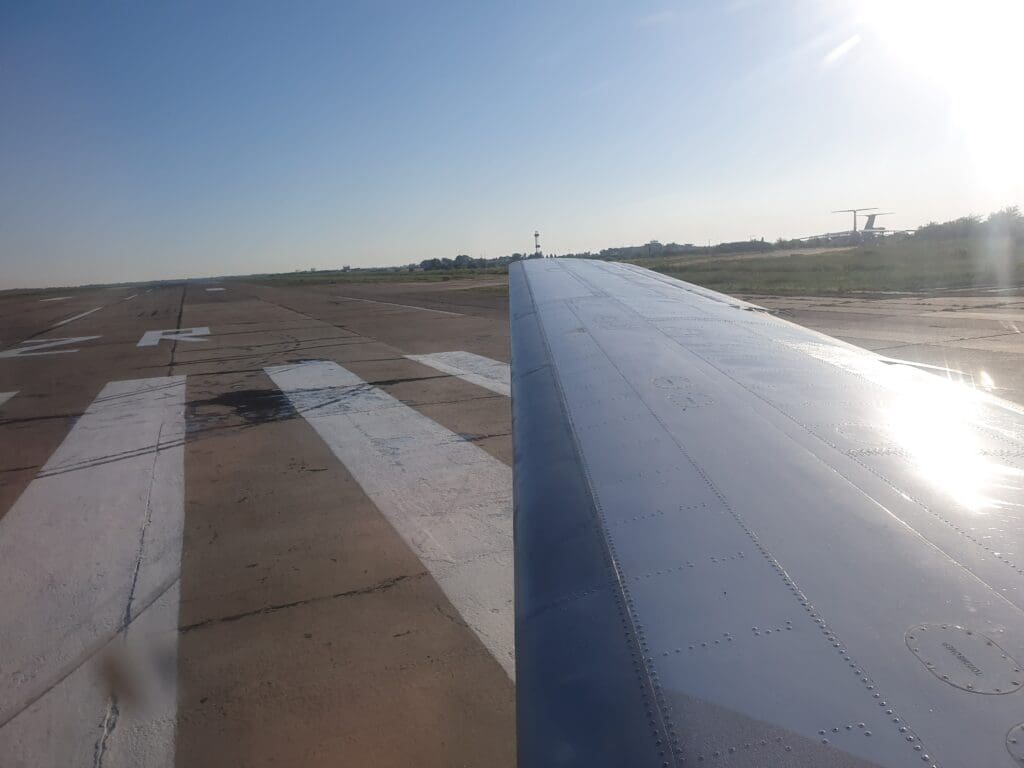
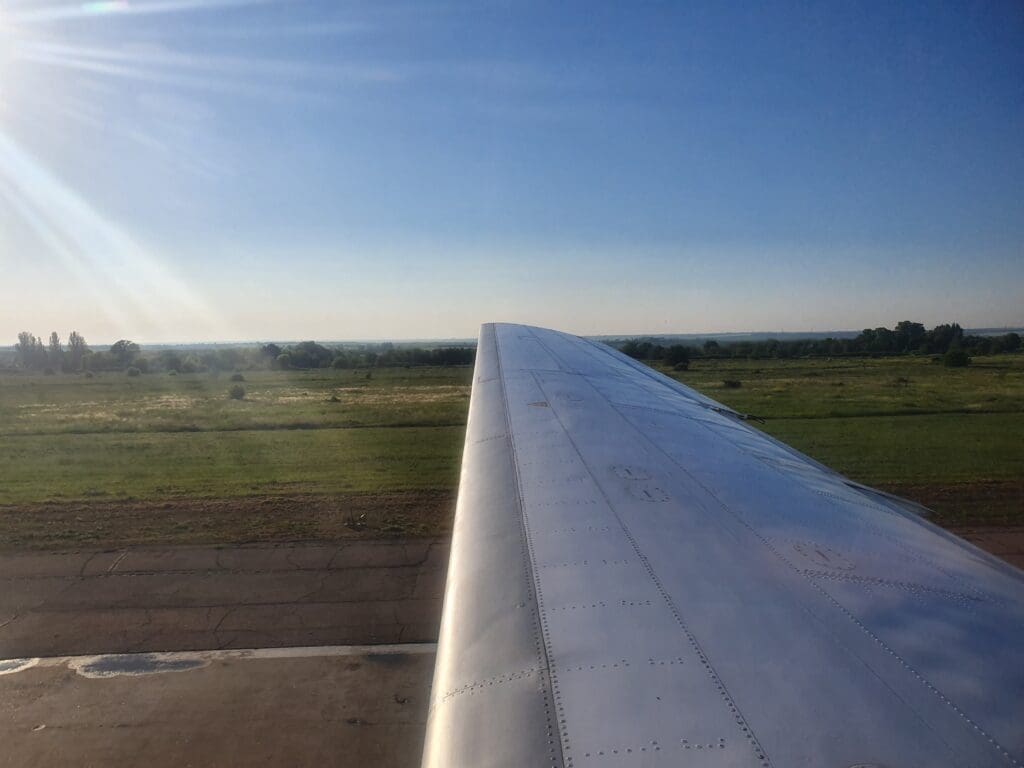
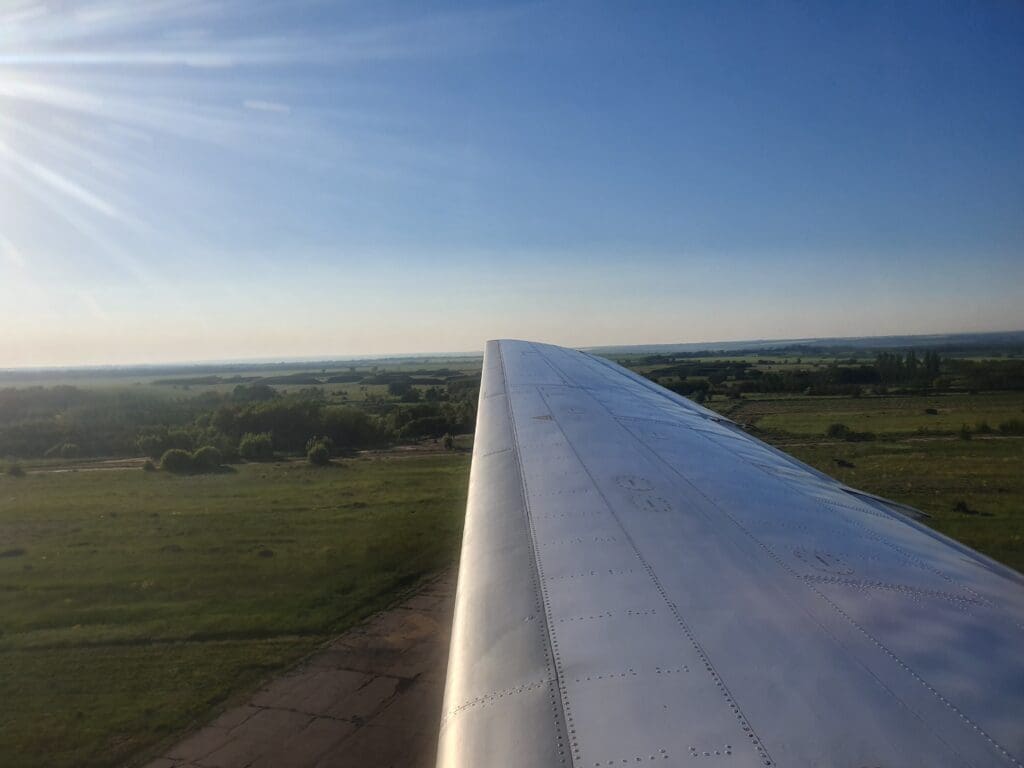
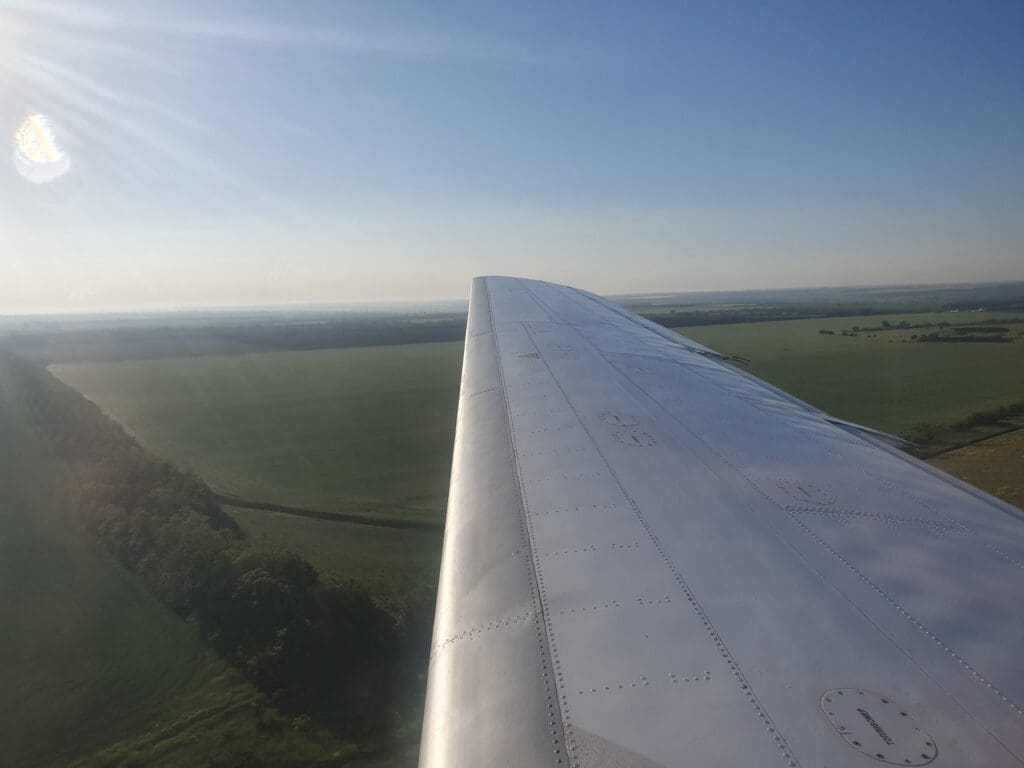
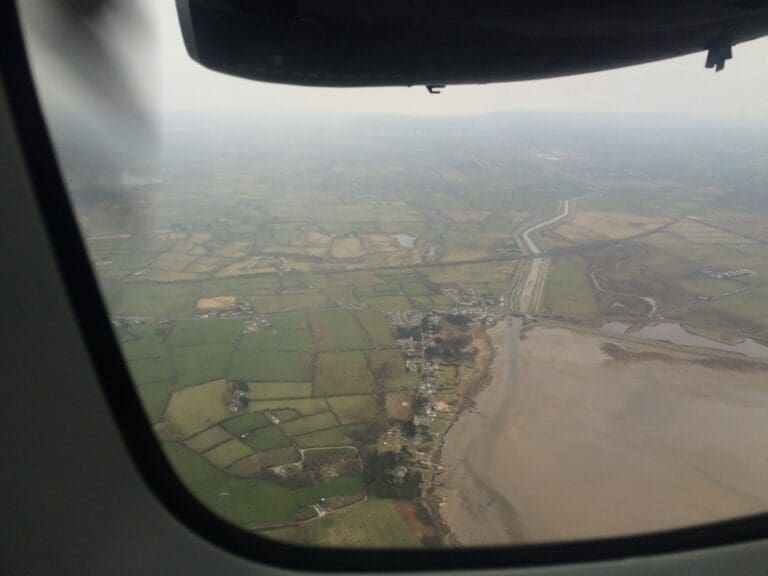
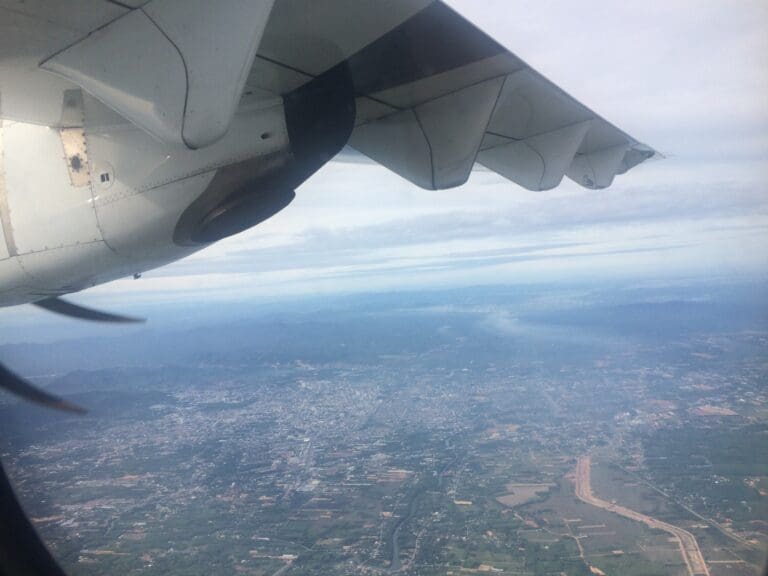
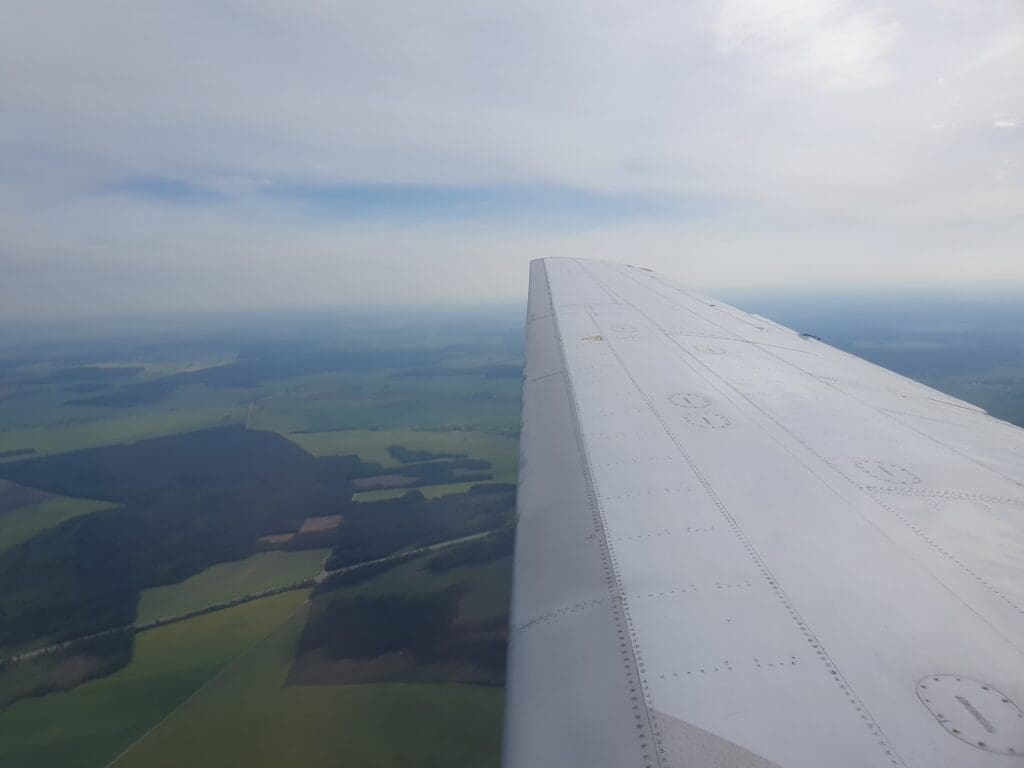
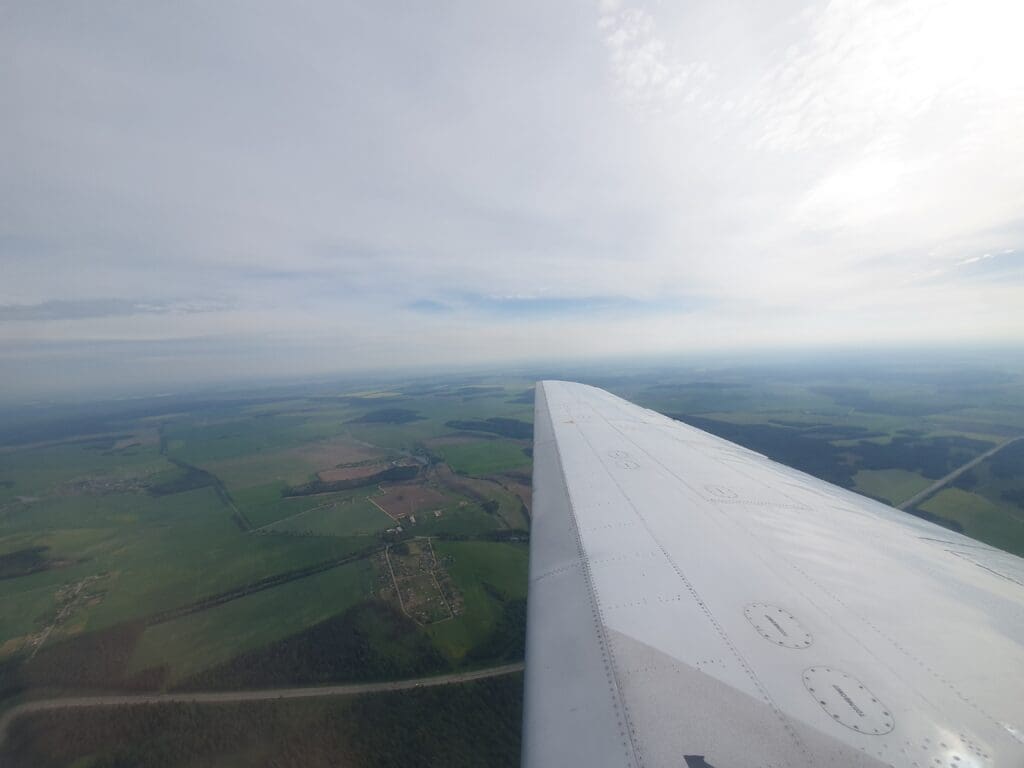
During the initial stages of the climb, I was treated to a good view of the fields and woodlands of rural Ukraine, alongside the occasional small village as we turned north and followed the Dnieper. A grand total of thirteen minutes after taking to the skies, the Yakovlev climbed through 10,000 feet and passed Ukraine’s fourth largest city, Dnipro, with the clear conditions allowing for a good view of this as we continued on our climb.
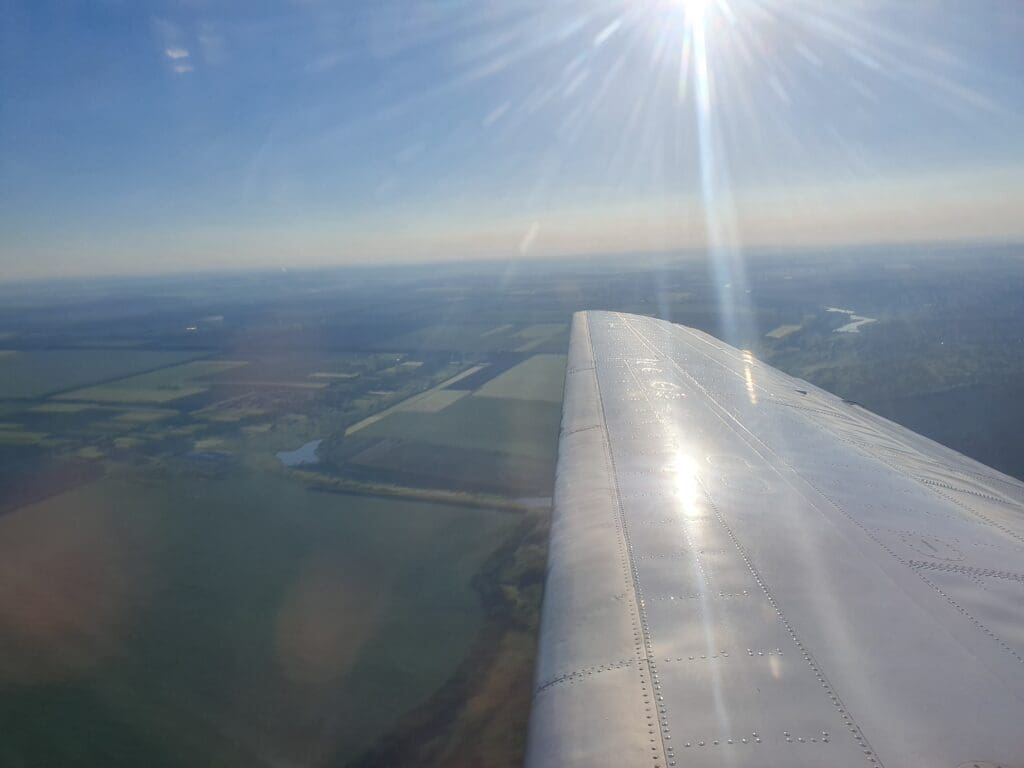
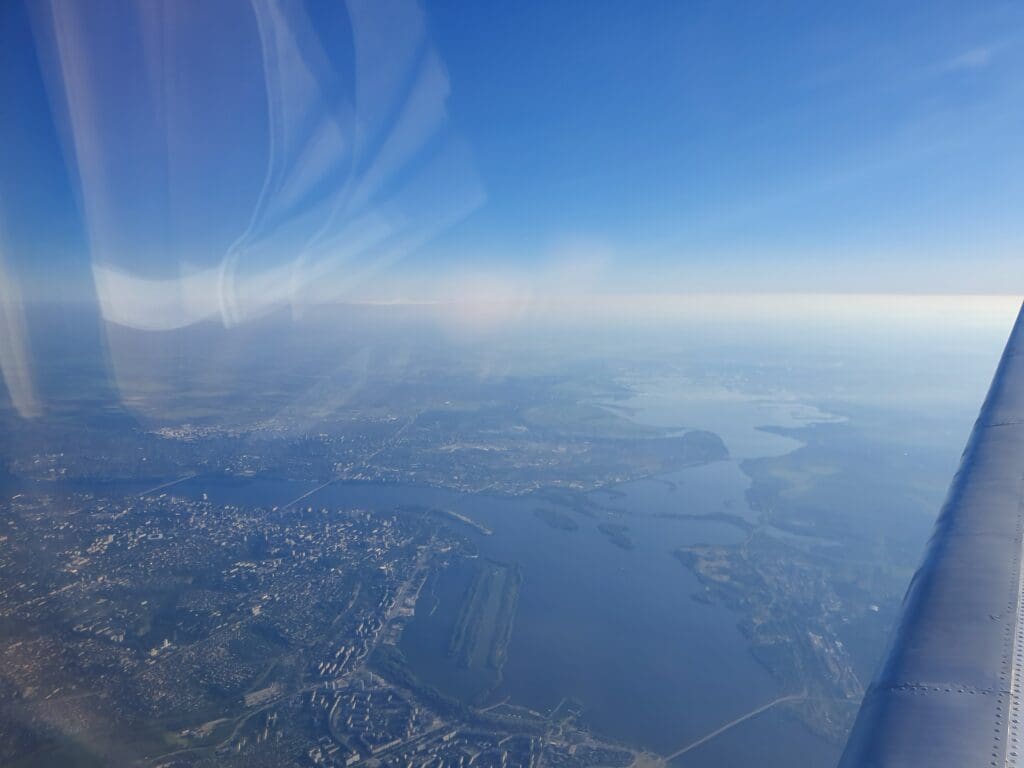
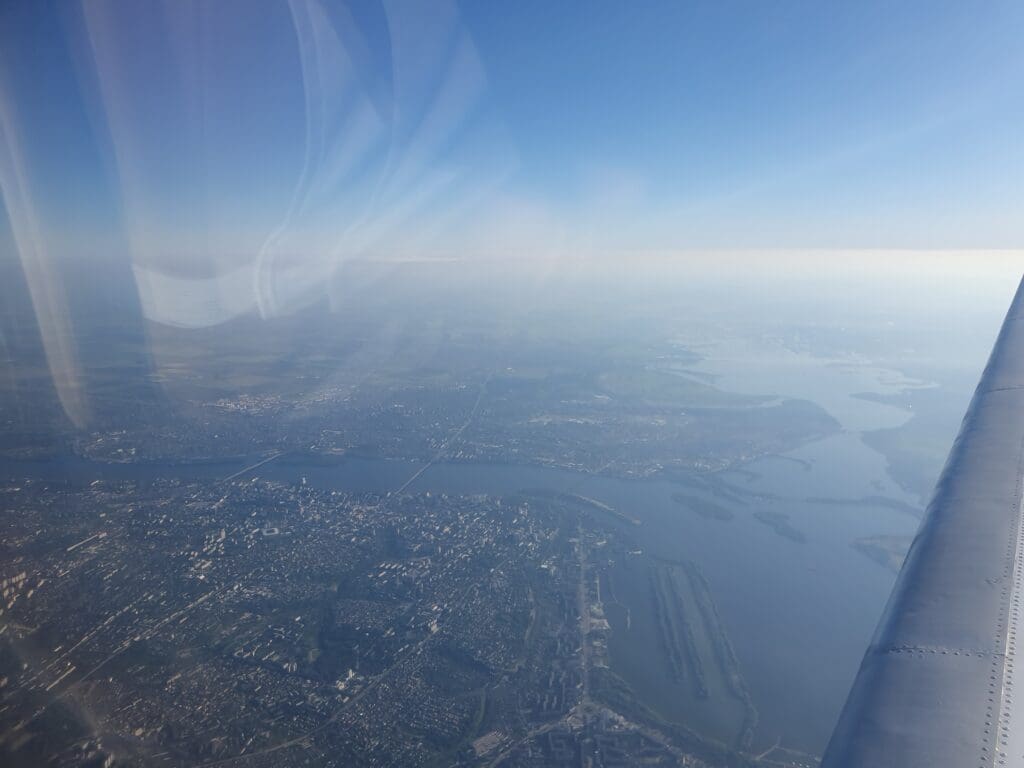
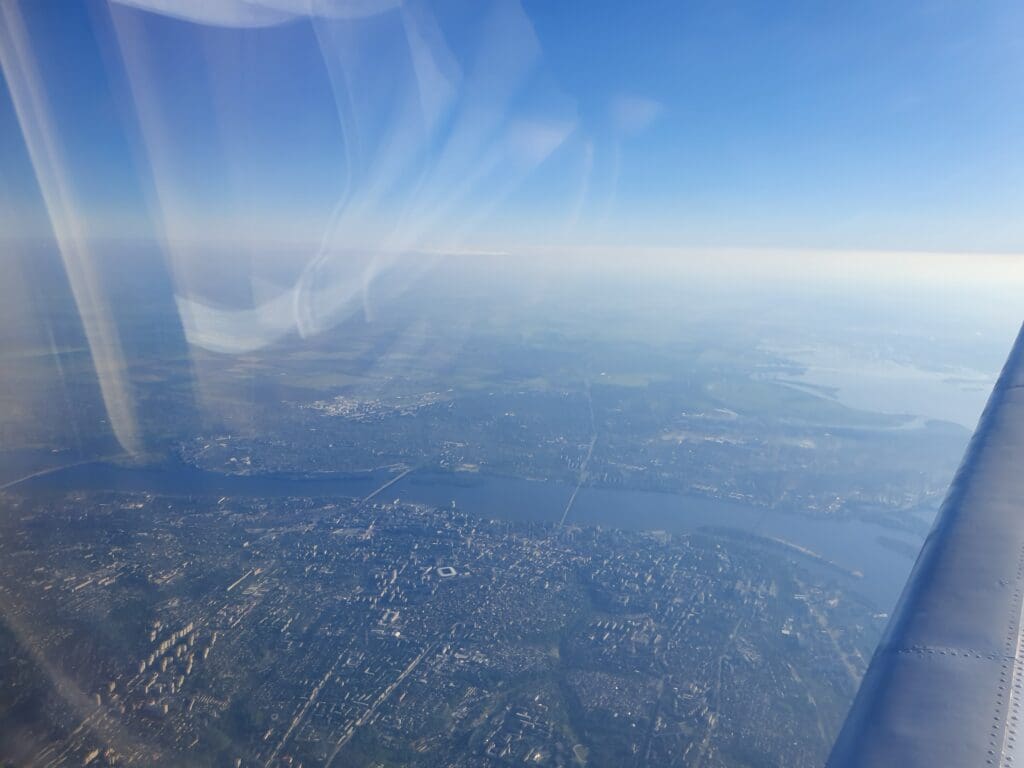
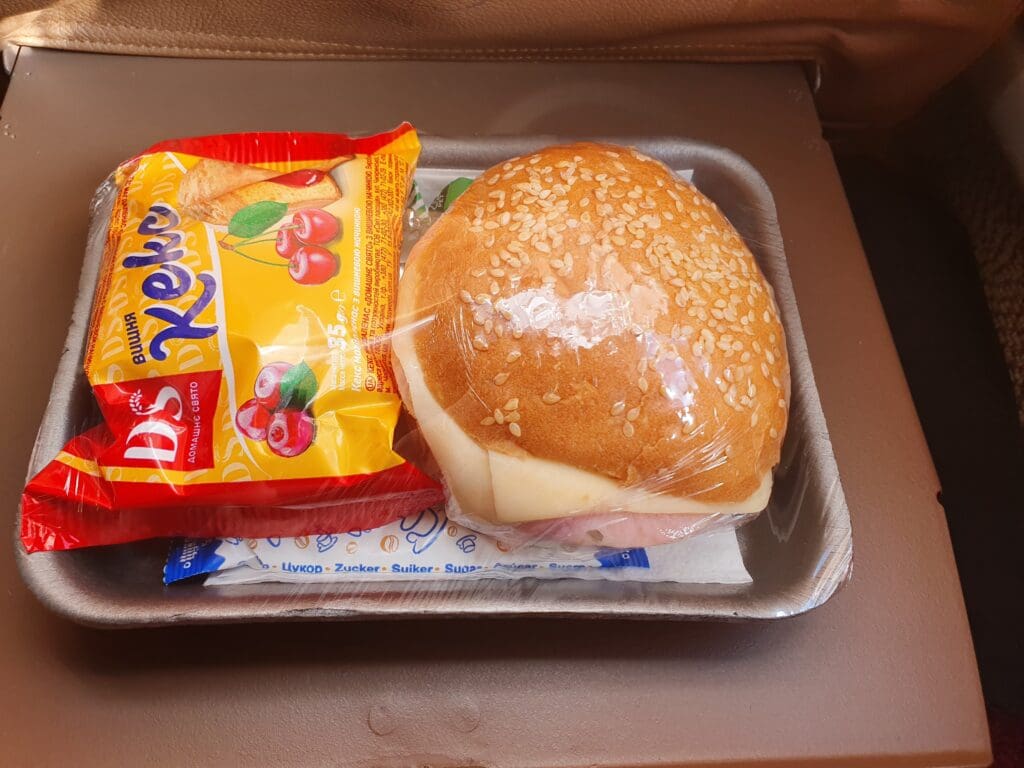
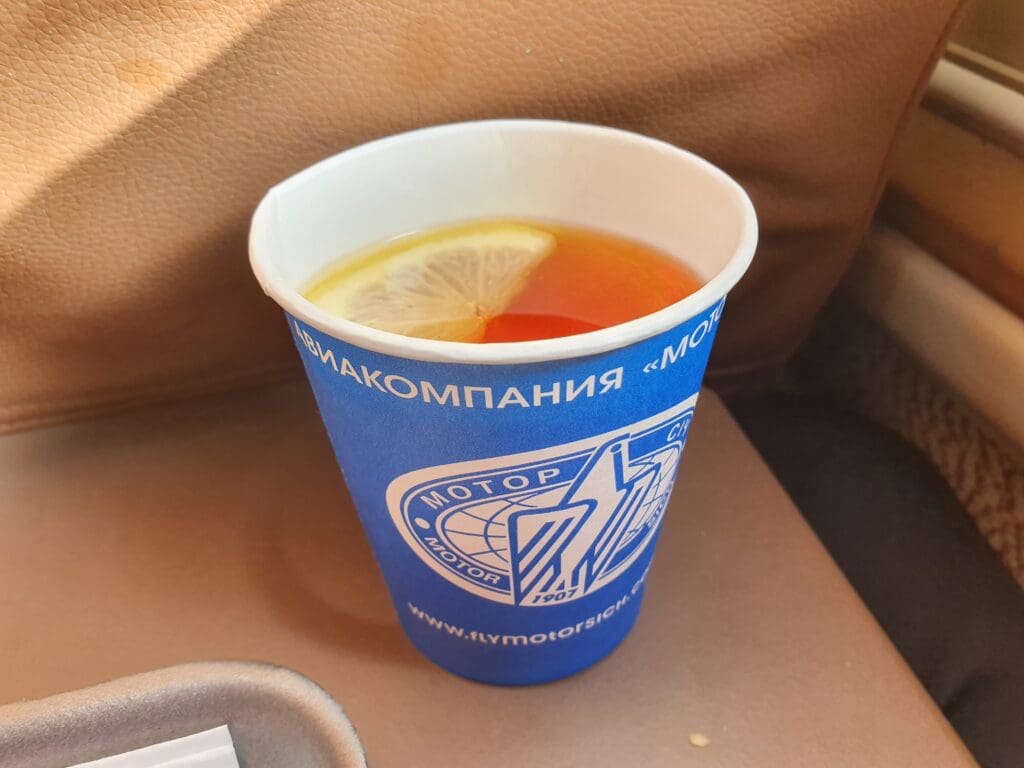
Inside the cabin, at 0700, the flight attendant and mechanic ended their conversation before the former moved to the galley and undertook an announcement during which they thanked passengers once again for flying with Motor Sich Airlines and advised passengers on the location of the sole toilet onboard. After this announcement had been made, the flight attendant passed through the cabin with a tray of Motor Sich Airlines branded paper cups filled with still water. Considering that at this time the cabin was rather sauna-like, this was an appreciated round of service and few seemed to pass on this offering. On many European airlines, this would be where the complimentary service ends. However, complimentary snacks are offered on all Motor Sich Airlines services. Upon levelling off at 22,000 feet, the onboard breakfast service commenced. Commencing from the rear of the aircraft, my father and I found ourselves to be the first passengers served and were promptly handed a package in a friendly manner albeit with minimal dialogue. This contained a ham and cheese sandwich, a small cherry cake and two boiled mint sweets, with this soon followed by a round of boiling hot tea. If seeking to be pedantic, I would claim that the sandwich was a little dry, however, overall this proved to be a satisfying and appreciated light breakfast.
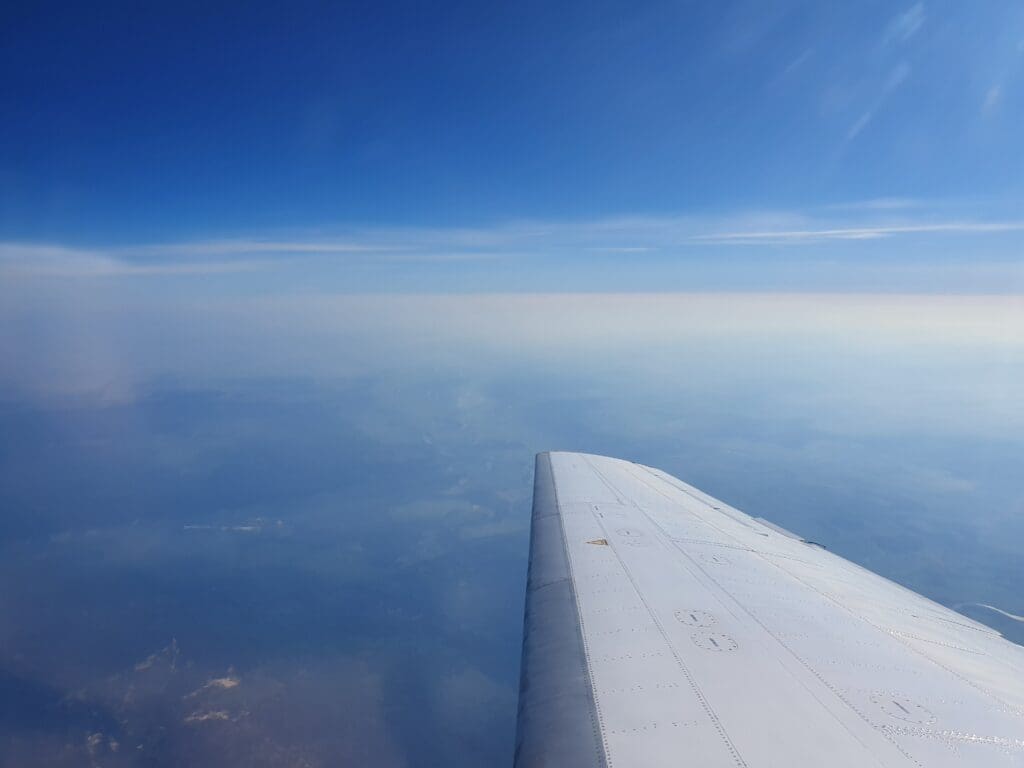
Turning my attention back outside, for the first half of the flight, the aircraft continued to fly parallel with the Dnieper, however, I ended up sitting on the wrong side of the aircraft for any particularly interesting views. Instead, as we cruised north the sights outside were limited to vistas of the Ukrainian countryside. Meanwhile, those sitting on the left-hand side were offered views of a selection of cities including Cherkasy, Kremenchuk and the capital, Kyiv. From there, our aircraft continued north towards Ukraine’s northern border with Belarus. As we neared this, at 0805 an announcement was made informing passengers that we were flying over Chornobyl which caused some commotion as both enthusiasts and regular passengers alike headed to the left side of the aircraft to snap photos of the disaster zone.
Once the cabin had settled again, hinting at the enthusiast-orientated and special nature of this flight, the flight attendant passed through the cabin handing out unfolded UR-MSX safety cards to those passengers who wished to take a souvenir home from the flight. This would prevent any of the aircraft’s actual safety cards from going missing from the seatback pockets! Despite not collecting these, like many, I could not resist taking home a Motor Sich Airlines souvenir. Once this was done, less interesting cards were handed out in the form of forms for those passengers who were transiting through Belarus on their way to Russia.
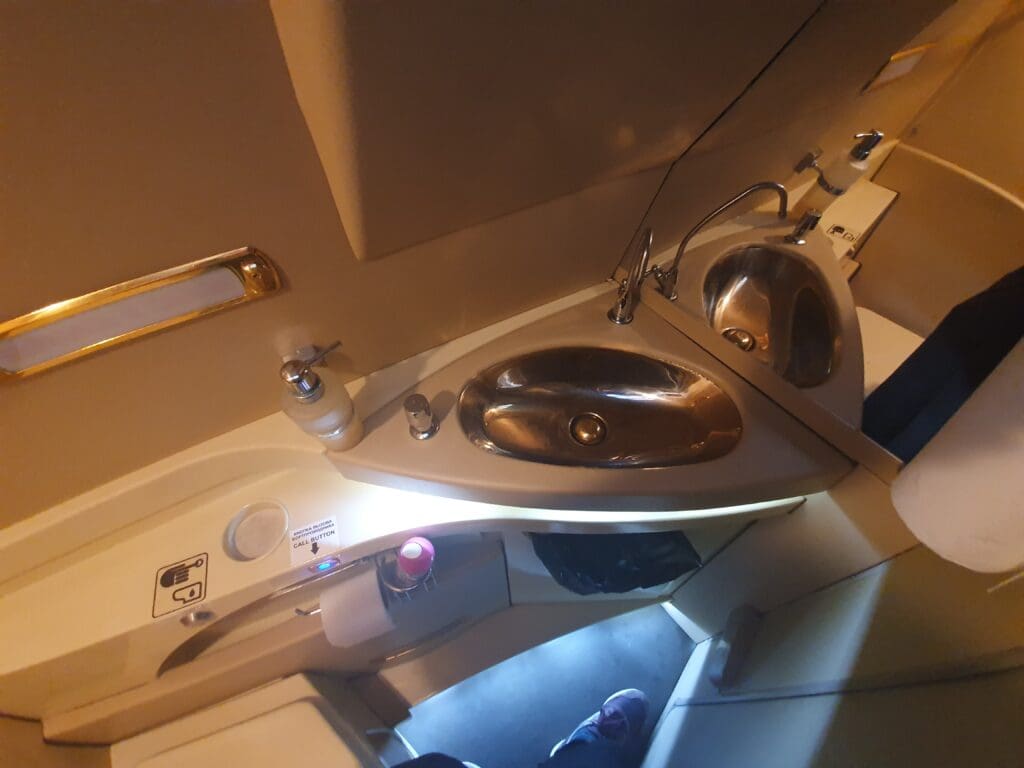
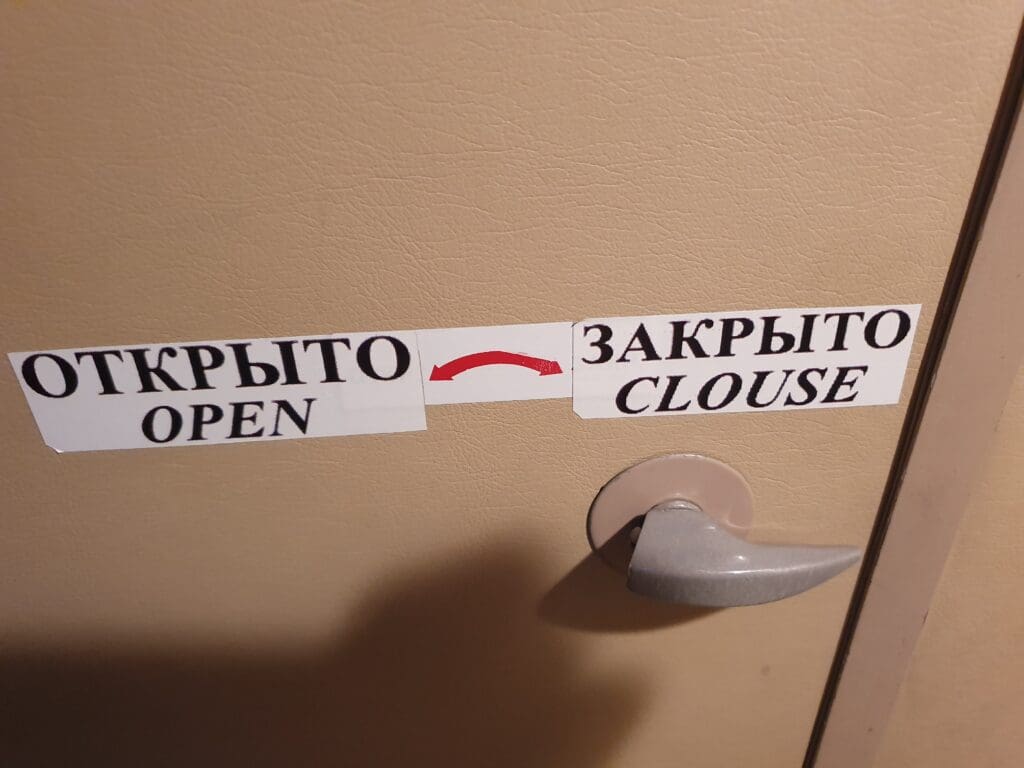
Moments after passing Chornobyl and the abandoned town of Pripyat, the aircraft entered Belarusian airspace and passed over the Polesie State Radioecological Reserve. From there, the aircraft headed towards the city of Babruysk and, realising that the aircraft’s descent into Minsk would commence not too long later, I decided to make a trip to the sole toilet at the rear of the aircraft. On my previous Motor Sich Airlines Yak-40 flight, I had been somewhat impressed by the good condition that these were in, however, they were nothing out of the ordinary – being neither impressively modern nor respectably old-fashioned. Thus, on this aircraft, upon opening the door to the noisy and cramped toilet, I was a little taken aback by the fact that this appeared to have received an impressive renovation giving it a slightly business jet bathroom feel. This included a well-polished sink and some fancy lighting which gave it a slightly modern feel. Importantly, the toilet appeared to be clean and was stocked with everything one would expect to find in an aircraft lavatory.


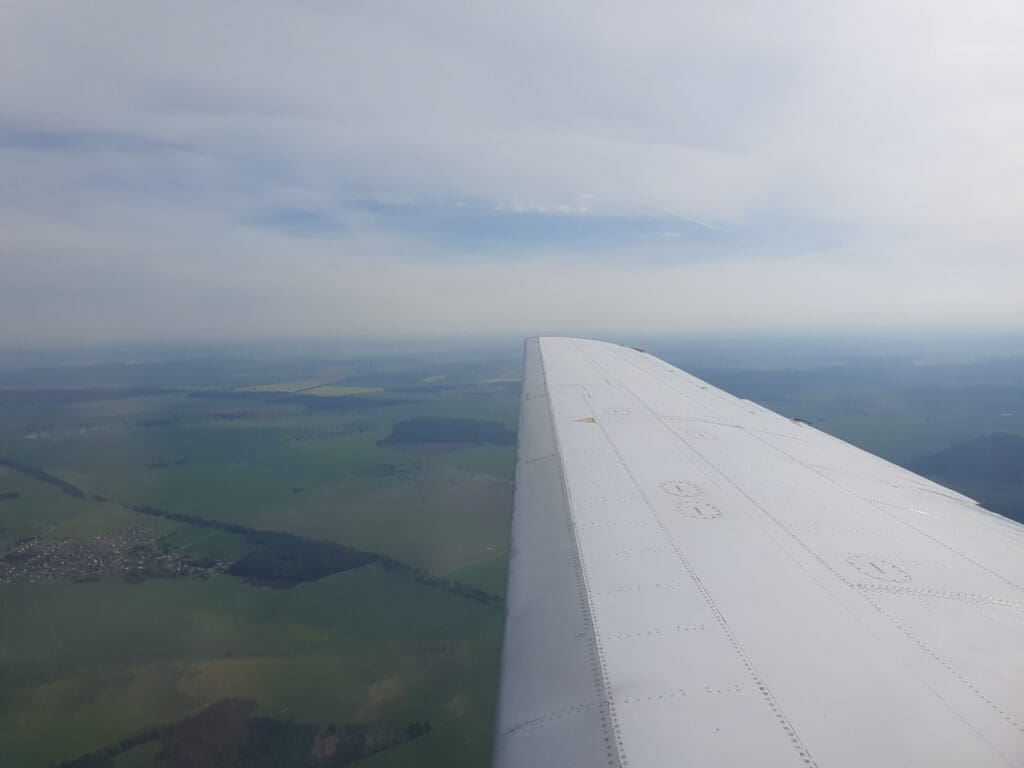
Upon returning to my seat, a thin layer of cloud appeared to have formed some way below the aircraft temporarily shielding those onboard from the views of the Belarusian woodlands below. At 0835, the engine noise decreased a little and the aircraft commenced its descent. This was soon followed by an announcement by the flight attendant asking all to ensure their seatbelts were fastened. As soon as this was made this crew member then passed through the cabin checking all was secure in preparation for the flight’s arrival. Meanwhile outside the aircraft continued to gently sink towards the clouds and soon cut through these with virtually no turbulence whatsoever. As we sank under these, the green landscapes of Belarus came into view once again which, like those we had left behind in Ukraine, consisted mainly of fields, woodland and villages as we proceeded towards Belarus’ capital.
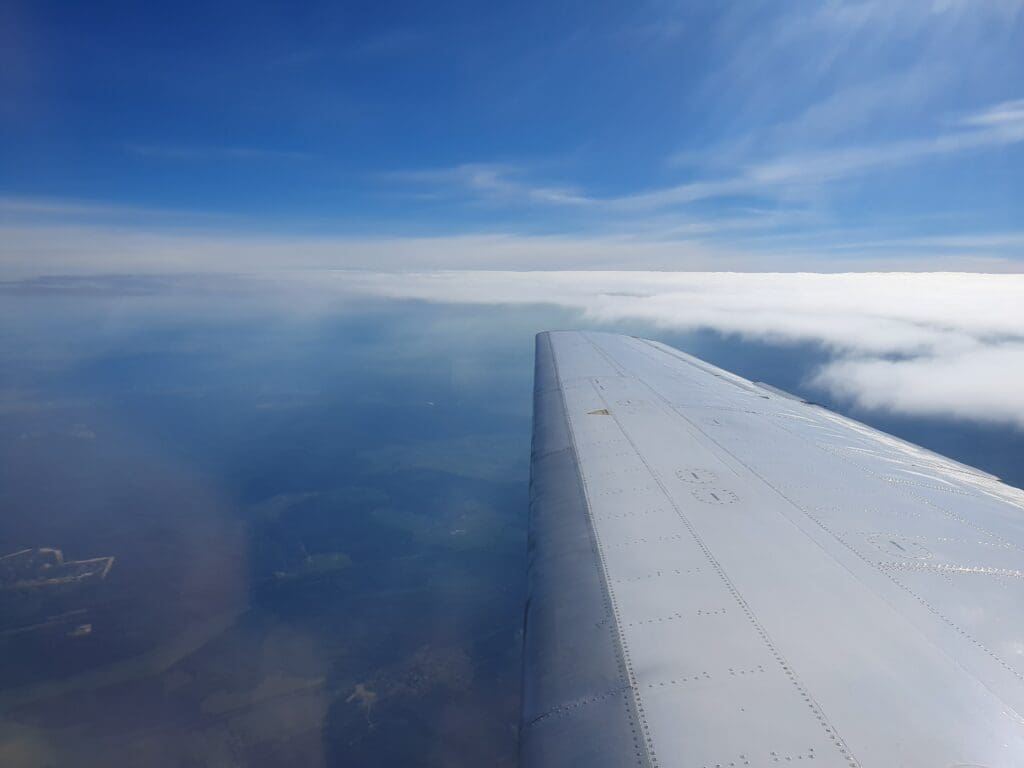
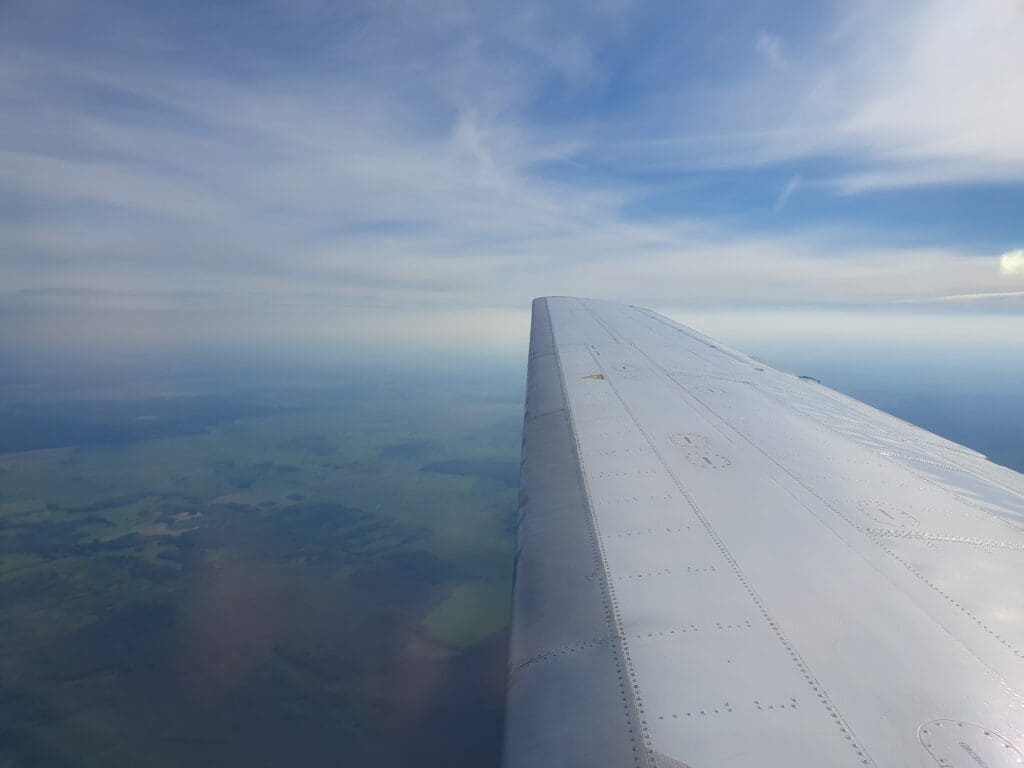
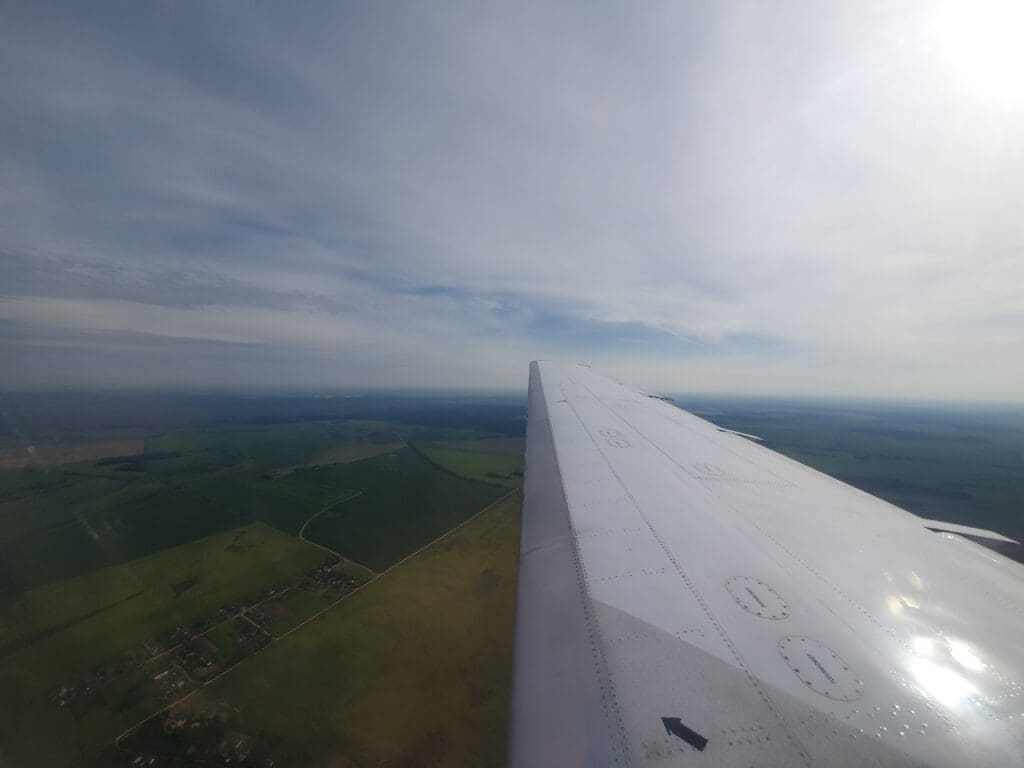
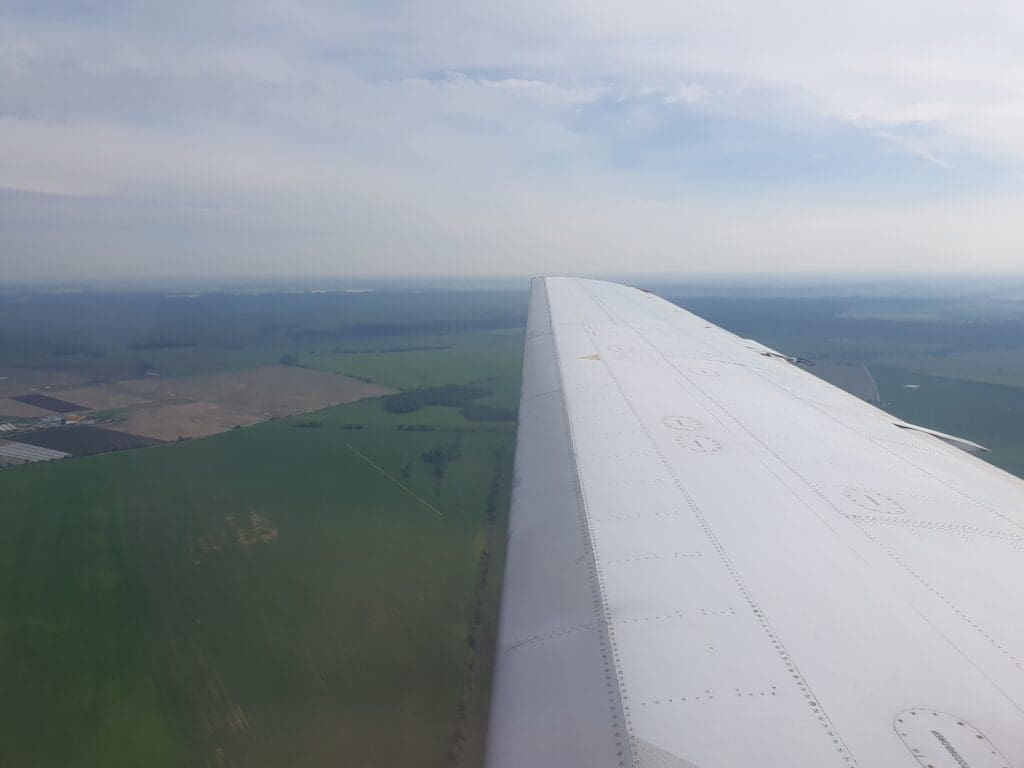
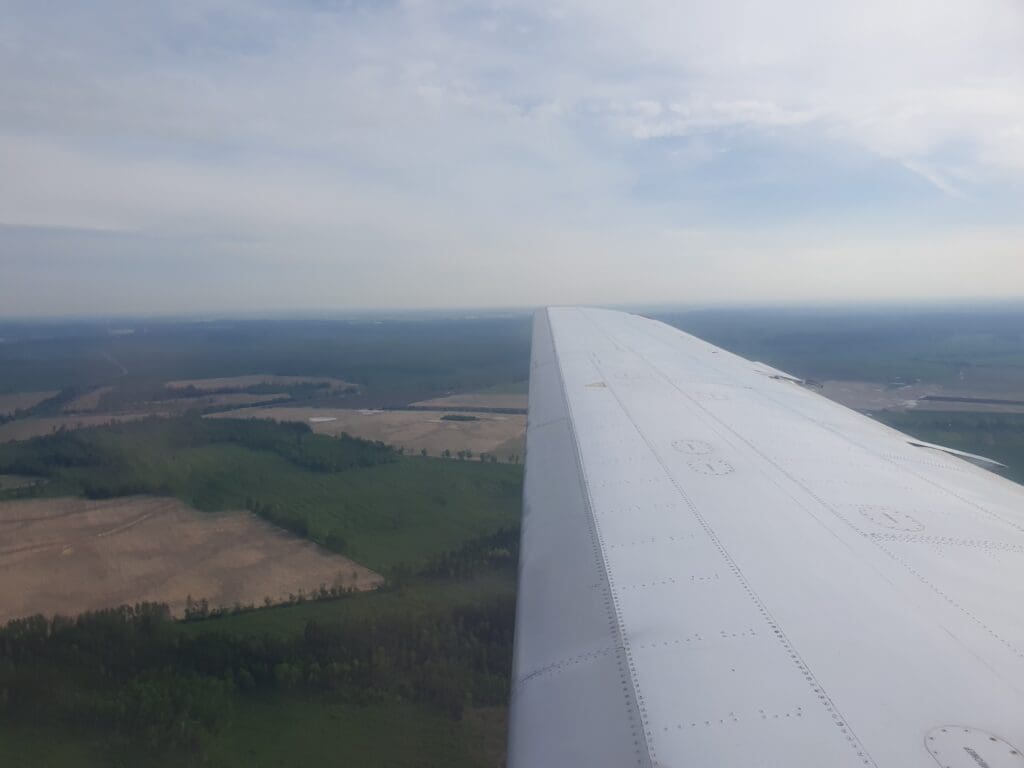
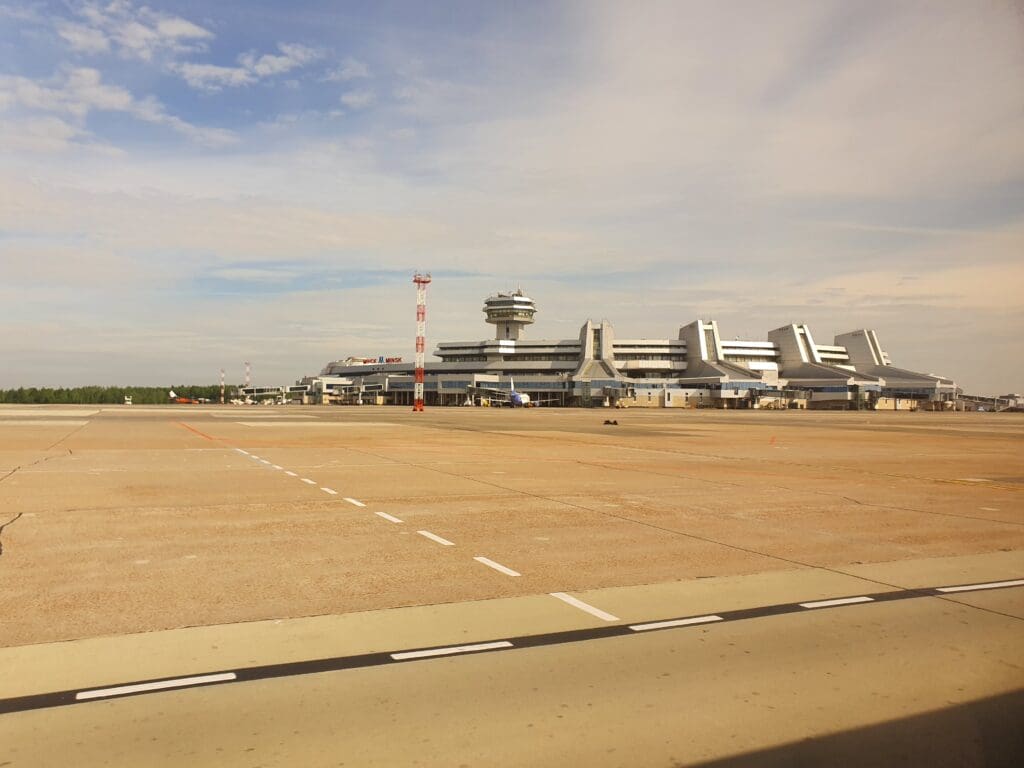
With only minimal turning, seventeen minutes after the descent commenced the flaps and undercarriage were extended simultaneously indicating that we were approaching Minsk National Airport. Behind us, the noise of our three Ivchenko engines continuously fluctuated as we continued downwards, and the pilots kept adjusting the power to maintain the relevant approach speed. A short time later, the airport’s concrete perimeter fence followed by the sight of two Tupolev Tu-134s, an engineless UN-liveried Ilyushin Il-76 and a modern Belavia Embraer came into view. After a relatively slow flight for a jet aircraft, at 0855, 2H13 after leaving Zaporizhzhia, the pilots brought the Yak-40 back to earth making a smooth touchdown on Runway 31L. As we began to slow, one of the particularly interesting visitors to the airport could be seen in the form of an Angolan Air Force Ilyushin Il-76 which was temporarily visiting for maintenance. After this, a long row of stored Ilyushin Il-76s alongside a couple of Tupolev Tu-154s came into view before Minsk National Airport’s distinctive concrete spaceship terminal popped up just before the jet exited the runway.
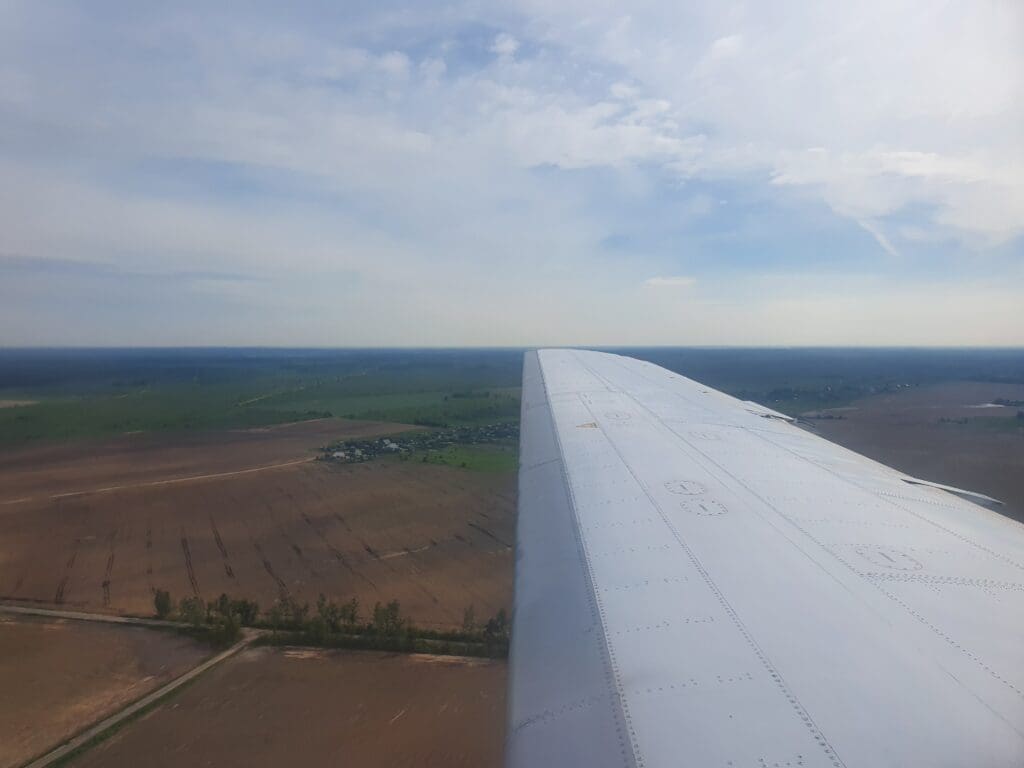
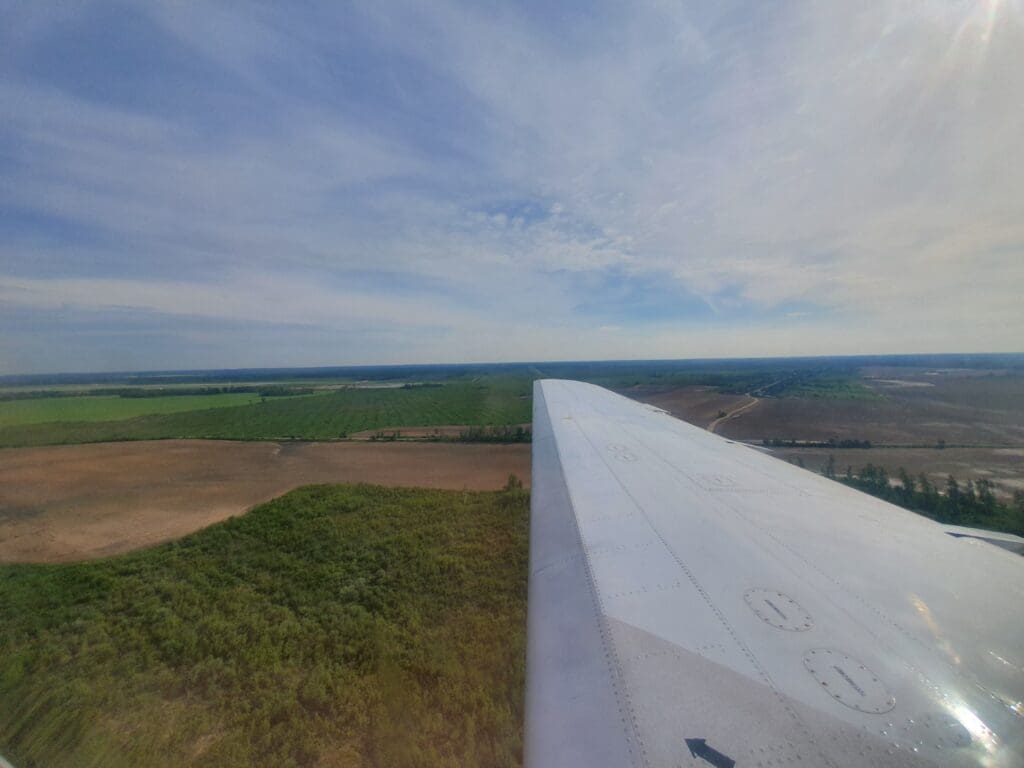
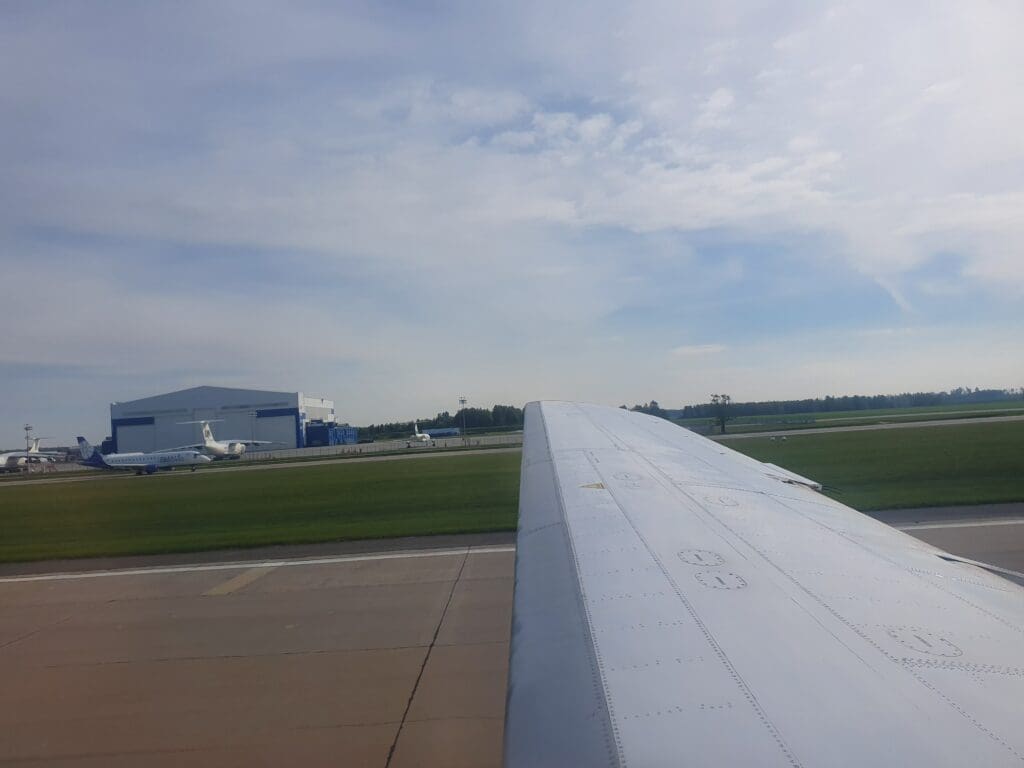
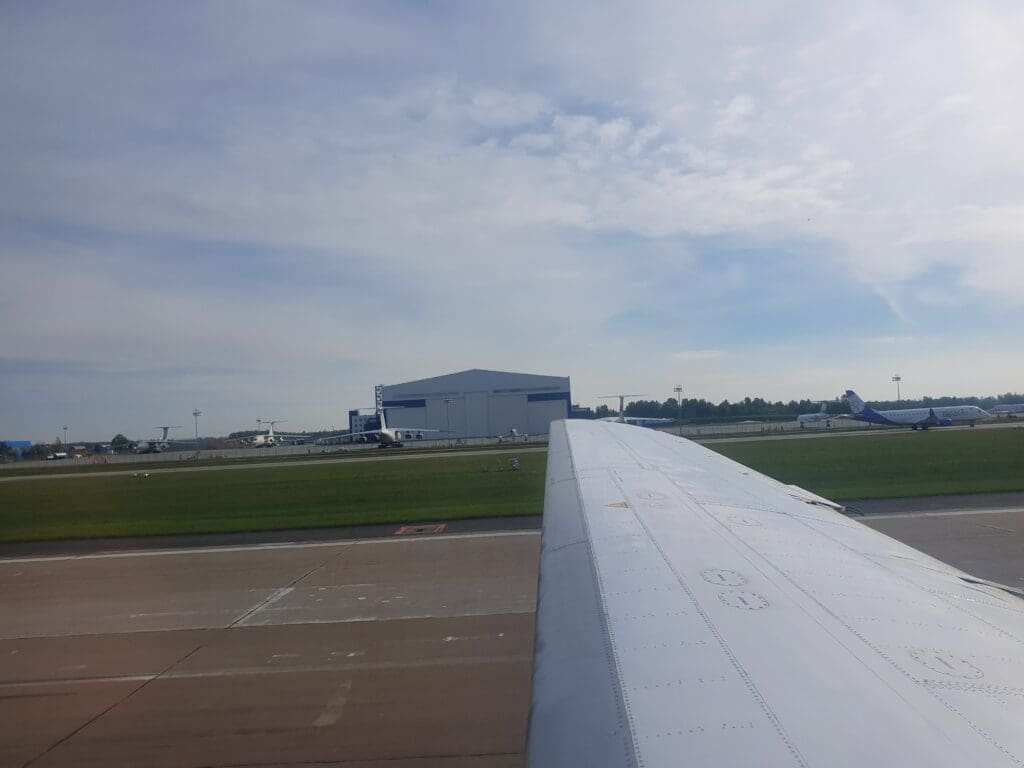
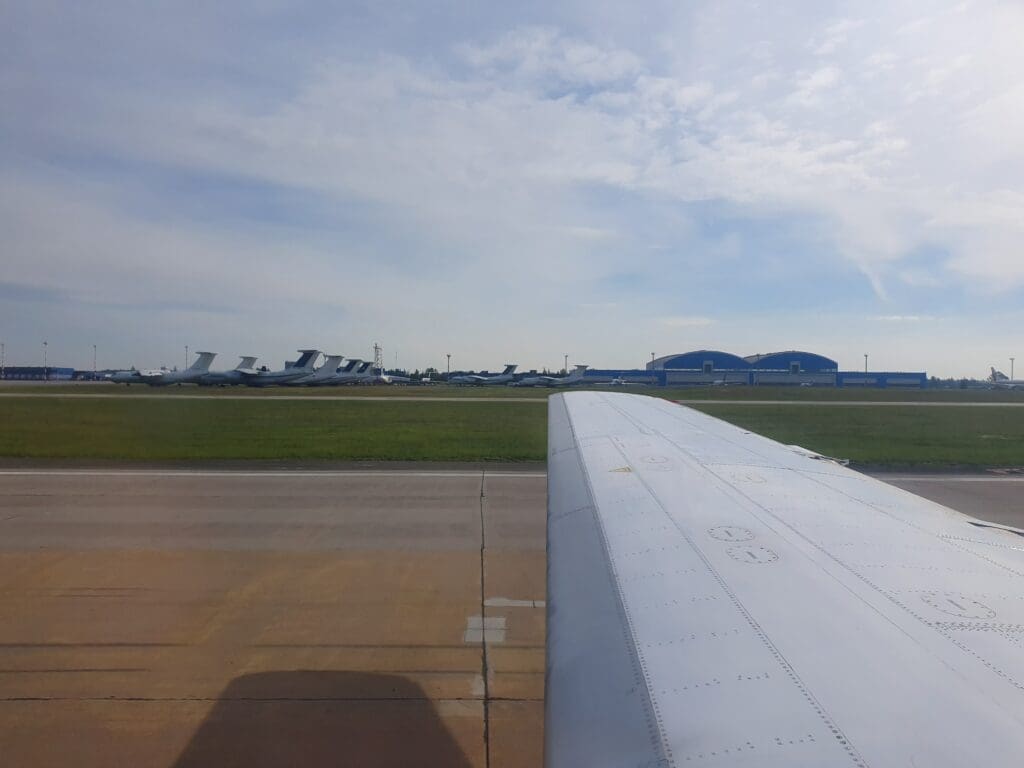
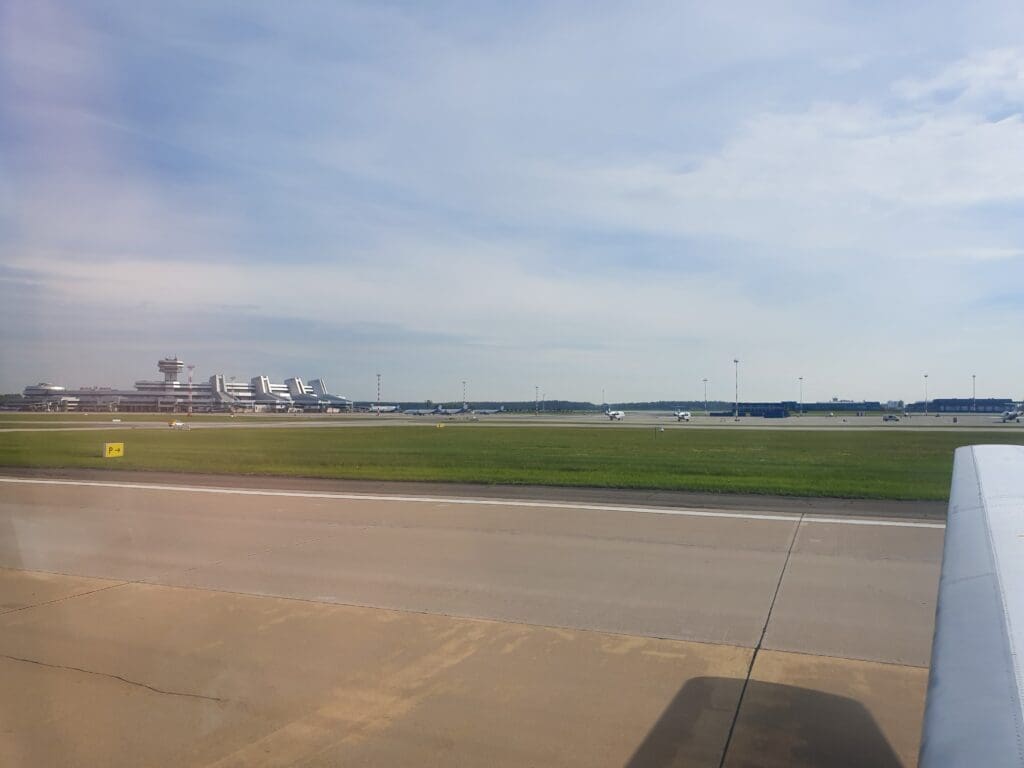
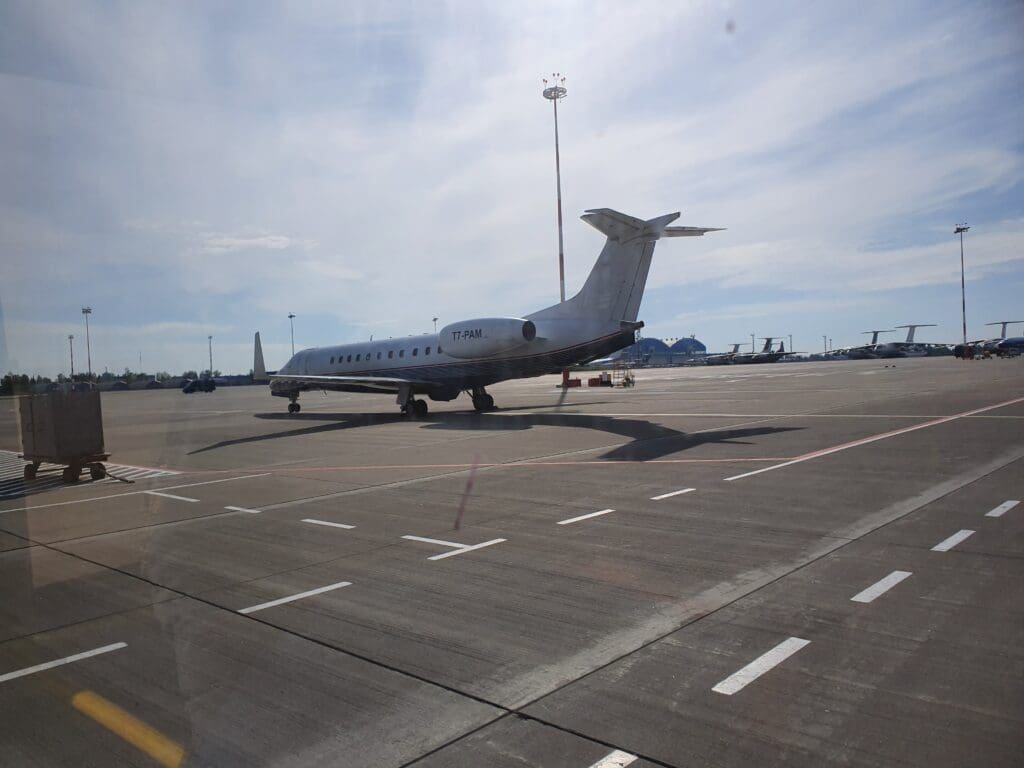
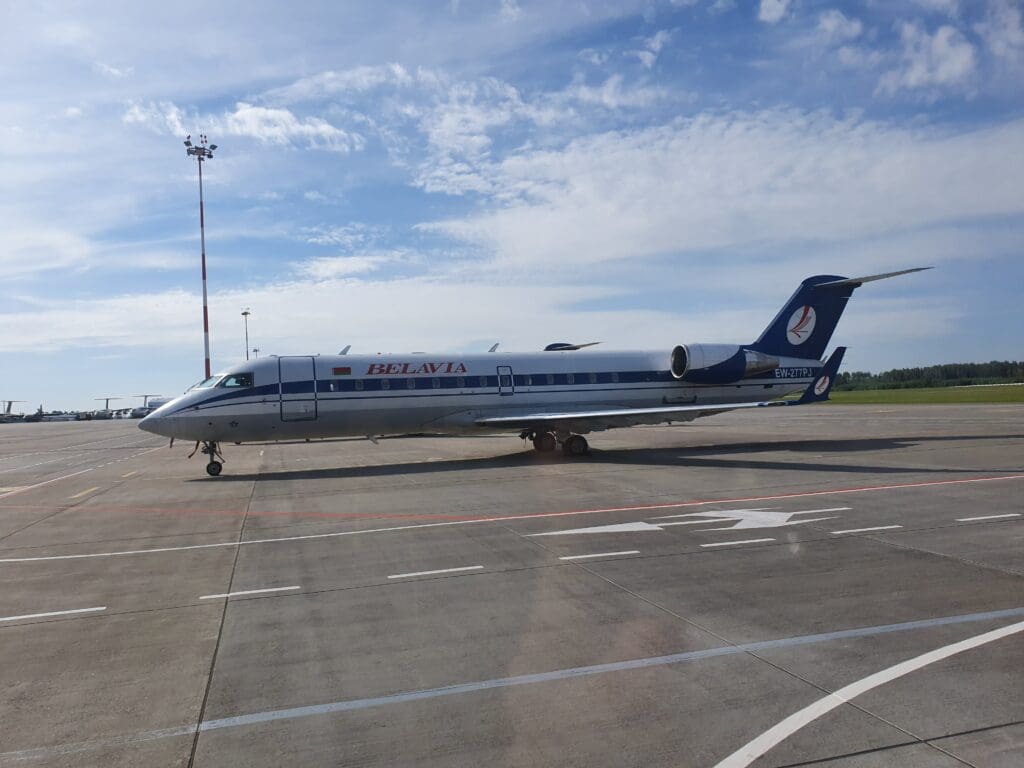
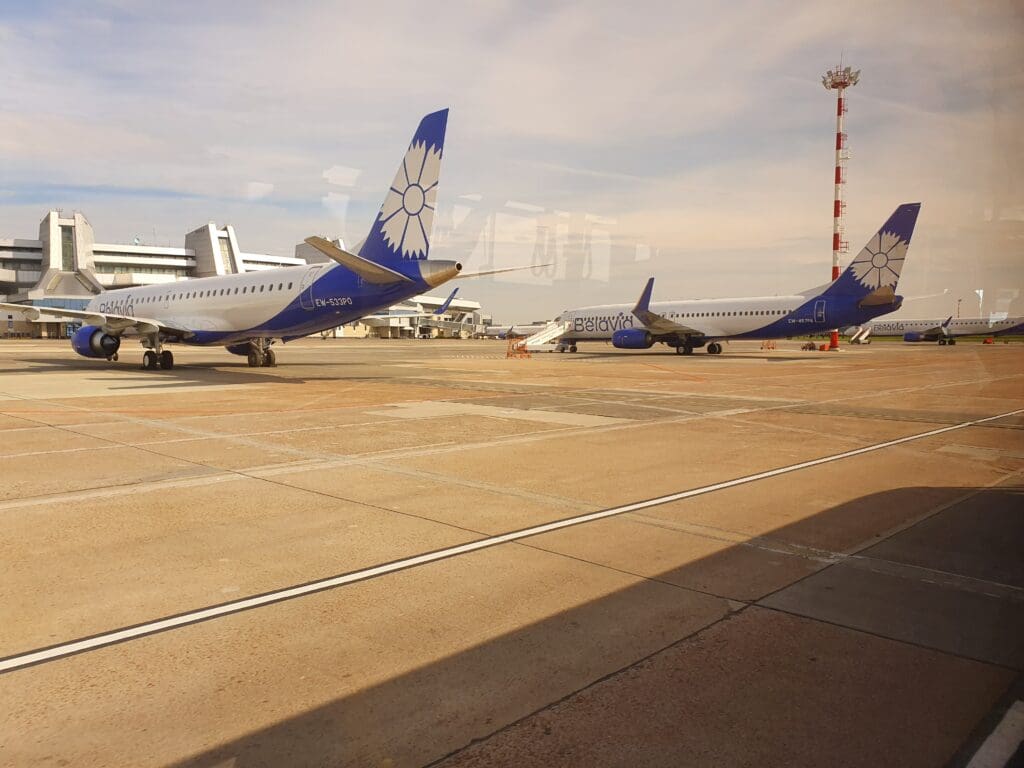
After gently heading off the runway, the aircraft commenced a short taxi to Stand 50 which took us past three fellow T-tailed jets – a couple of Belavia CRJ-200s and a luxurious and modern San Marino registered Embraer Legacy 600. Three minutes after touching down in Belarus, the aircraft turned left into the remote stand and pulled up to a Lithuanian-registered LET L-410. This particular aircraft belonged to Transaviabaltica and had arrived on a scheduled cargo flight from Vilnius. Once we came to a halt, the aircraft’s engines were soon shut down. Given the fact that many onboard wanted to be on the aircraft, unsurprisingly there was no major rush to disembark once the cabin door finally opened. Although this could perhaps also be explained by the fact that most passengers were probably numb after over two hours squished into their seats like sardines. Not too long after the aircraft came to a halt, I stood up and walked a few steps to the rear of the aircraft. After thanking the flight attendant I headed down the rear steps and onto the awaiting bus.
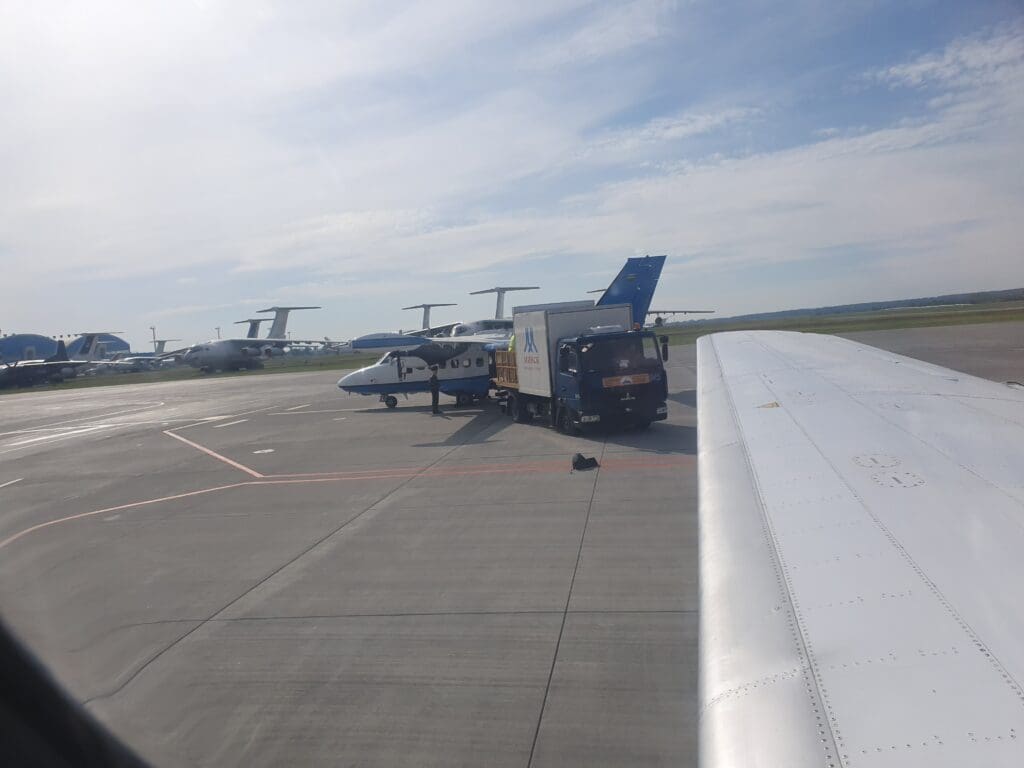
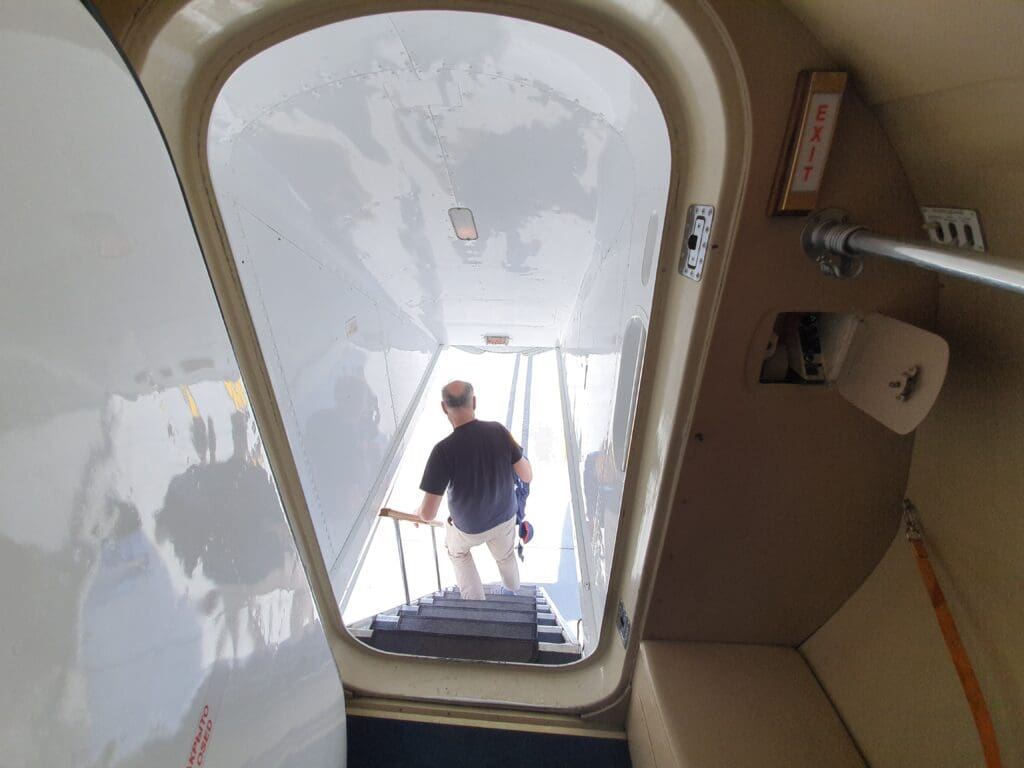
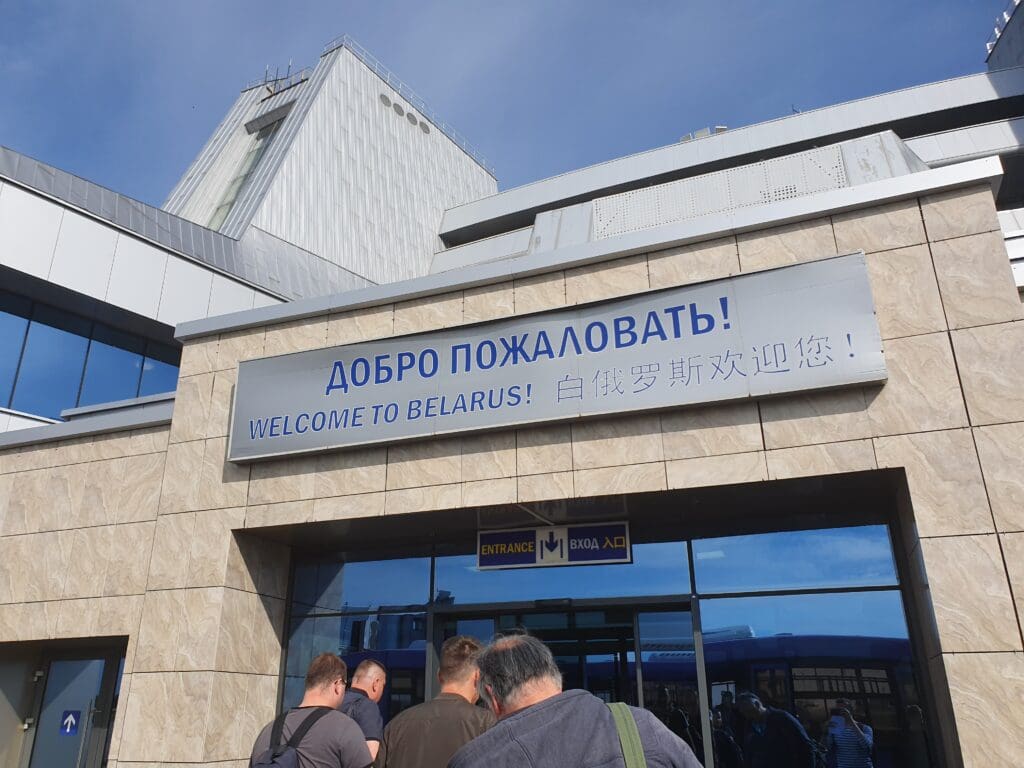
Given the Yak-40’s capacity, despite being a full flight all passengers had made it onto the bus in approximately three minutes. Once all were aboard, a signal was given to the driver, the doors slid closed and the bus made a quick journey over to the entry doors of the terminal. During this bus ride aside from getting a close-up view of the aforementioned Embraer Legacy and Belavia CRJs as we neared the terminal we passed several new Belavia Boeing 737-800s and Embraers before pulling up to the spaceship. From the entry doors, we soon arrived at the airport’s immigration booth where virtually all of the booths appeared to be manned. Combined with the fact that our flight appeared to be the only international arrival at that time, absolutely no waiting was required and instead, I was able to head straight up to an empty booth. After handing over my passport this was thoroughly checked and was asked a few questions about my time in Ukraine and the purpose of my stay in Belarus. After I showed proof of my medical insurance my passport was stamped and I was free to enter Belarus. Lacking any bags we were able to head straight out of the airport and towards the bus stop for the city, bringing my fourth flight with Motor Sich Airlines to a close.

Summary
Despite initially expecting and hoping this flight would be operated by Motor Sich’s Antonov An-74, as any aviation enthusiast would likely agree, one cannot complain about a flight in a classic and rare Yak-40! All in all, I had a fantastic experience with the airline that morning. Not only were the ground staff and flight attendant very friendly and welcoming of enthusiasts, I have to credit the airline for the provision of a sufficient mid-flight snack on the relatively short flight. Of course, whilst the aircraft was not the most comfortable, seeing as I was flying in a Yak-40 I did not care about this, plus, the rest of the aircraft appeared to be in tip-top condition.