
Superb Service on Kazakhstan’s National Airline from Paris to Astana: Air Astana Review
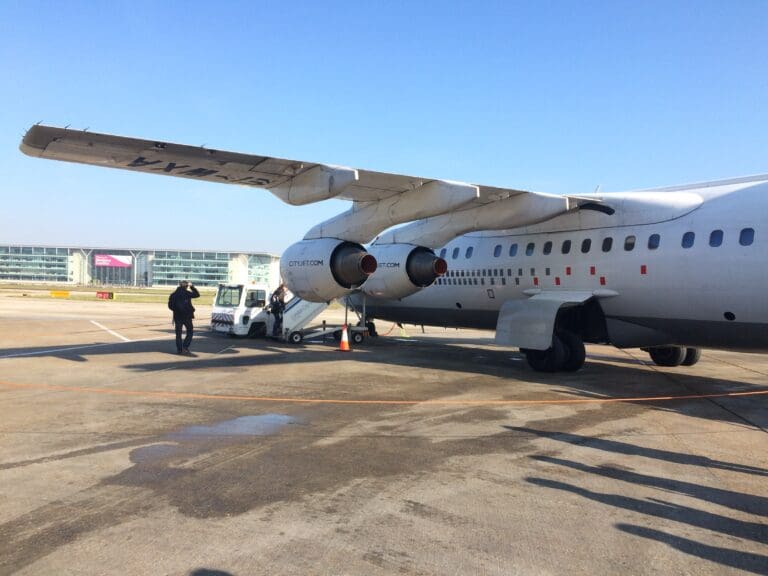
Following a short and enjoyable hop down from London City onboard a rare British Aerospace BAe 146-200 operated by WDL Aviation on behalf of BA CityFlyer, I touched down in Paris Orly at 1100. With my flight to Kazakhstan departing the French capital at 1920, I had buckets of time, despite the fact I would have to head around the city to France’s largest airport, Paris CDG. Having studied the various available options several days before departure, I was left with two fairly inexpensive options to get between Paris’ two major airports. The first involved taking the Orlyval train to Antony RER station from where I could take this through the city to Paris CDG. The second was more direct and a little pricer, consisting of the non-stop coach service between the airports operated by Le Bus Direct, with this costing €22 and taking approximately seventy minutes. Seeing as this would save me from lugging my belongings through the late spring heat, I opted for the bus, purchasing my ticket via Le Bus Direct’s website several days before departure.
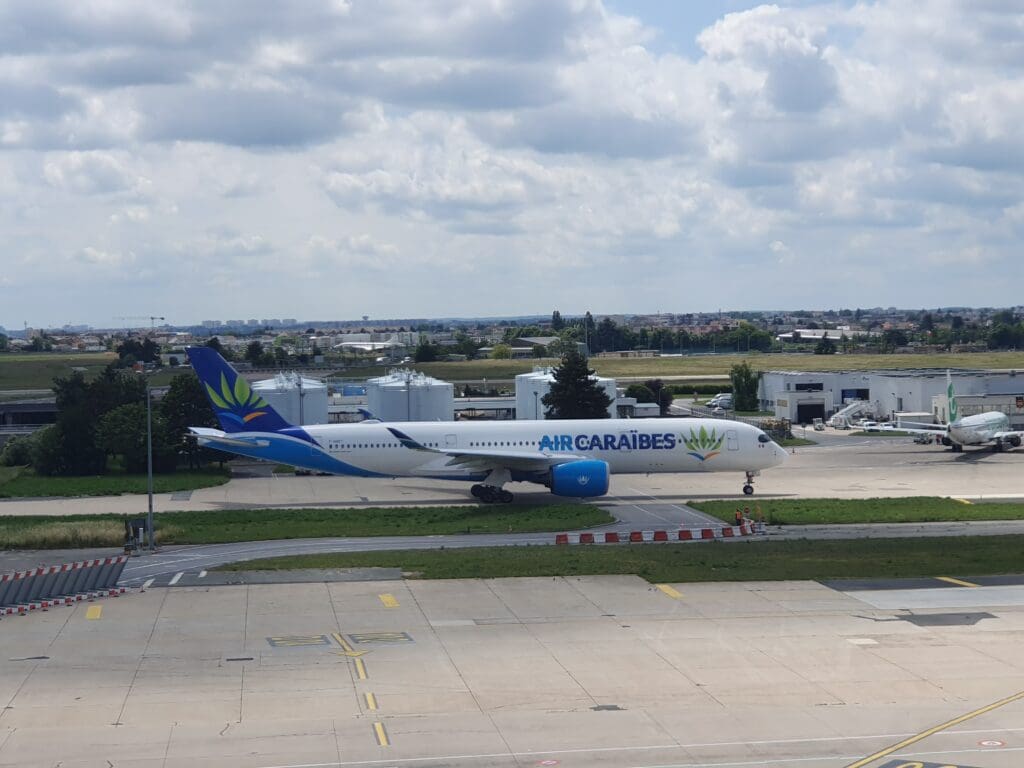
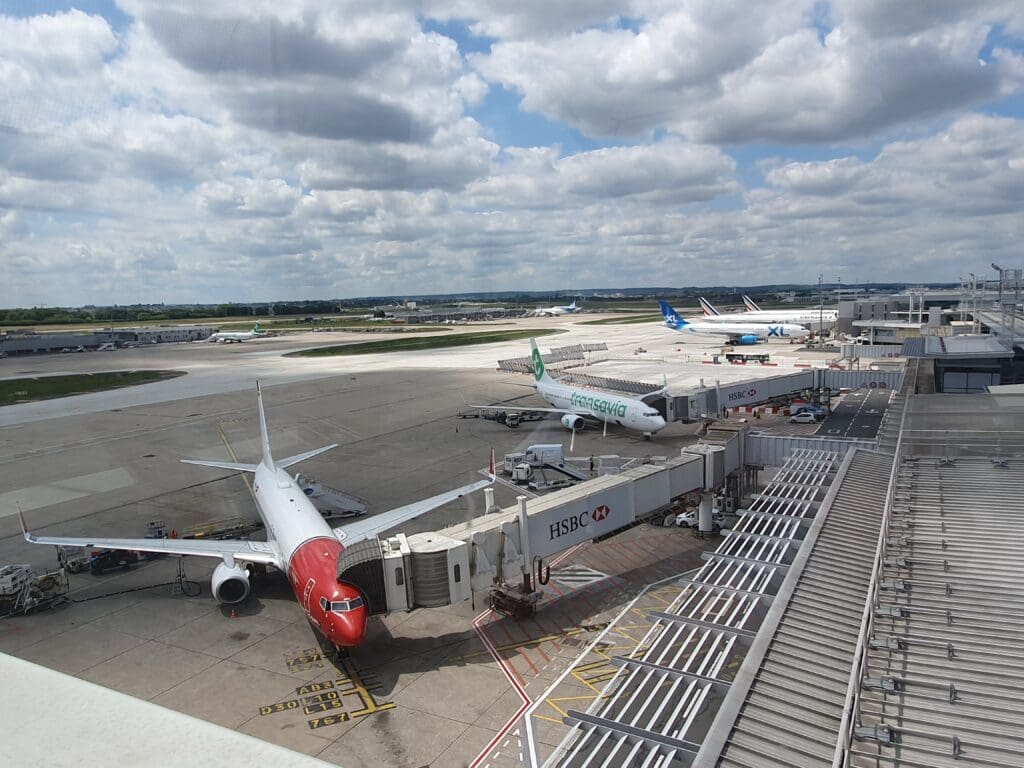
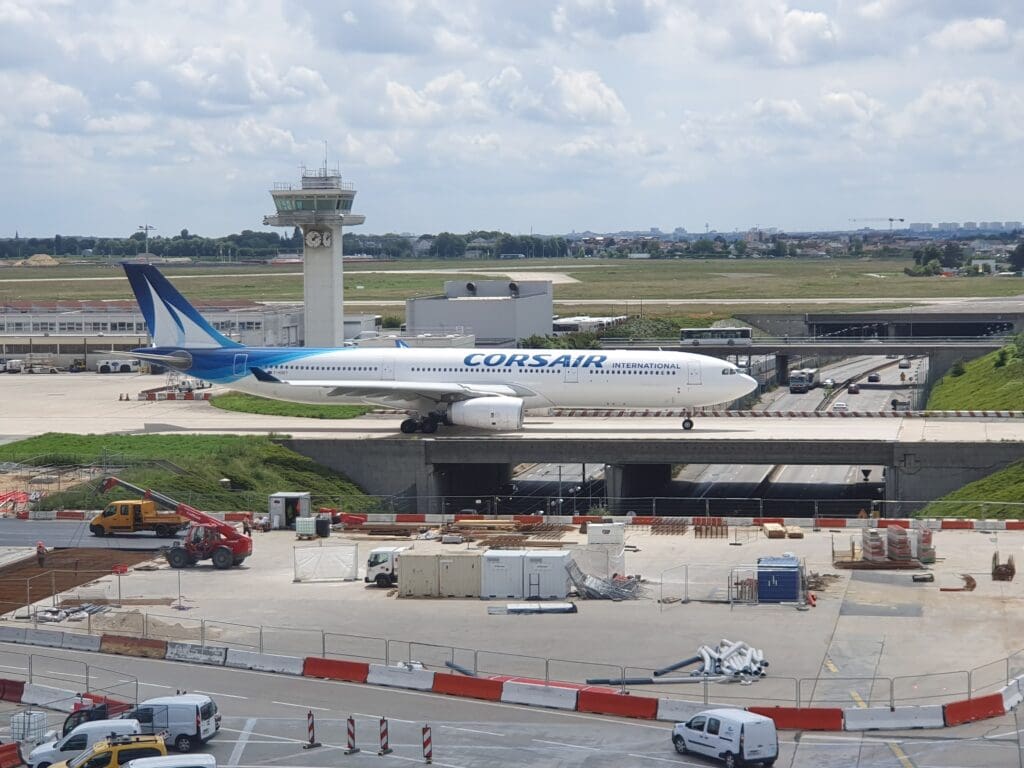
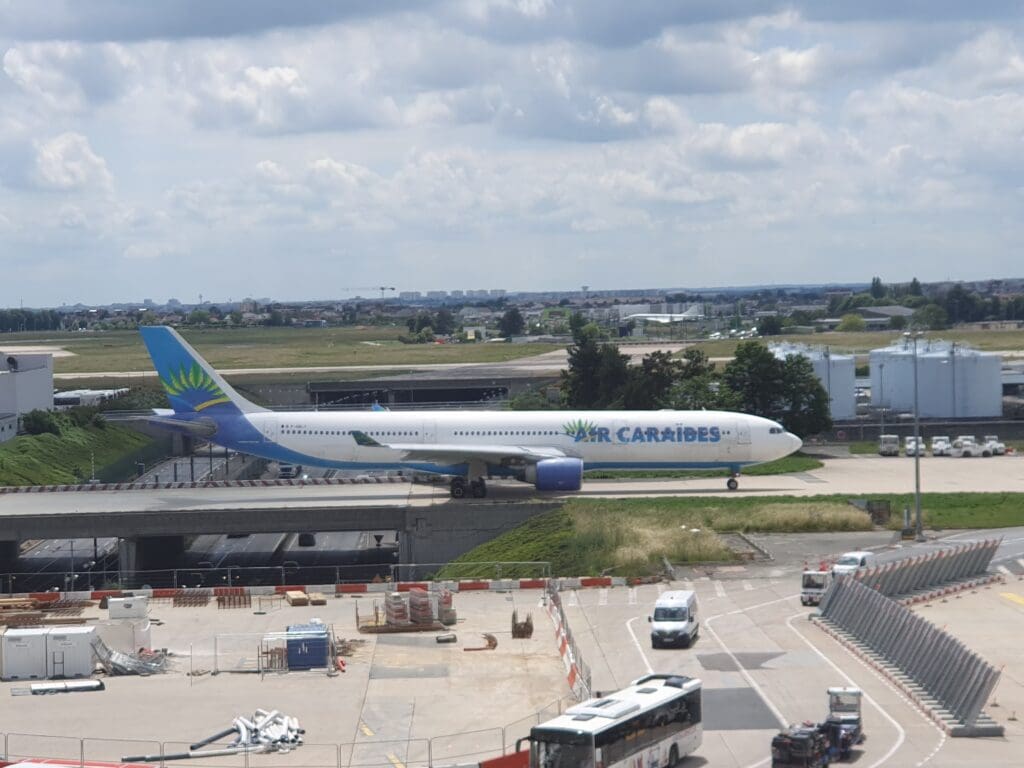
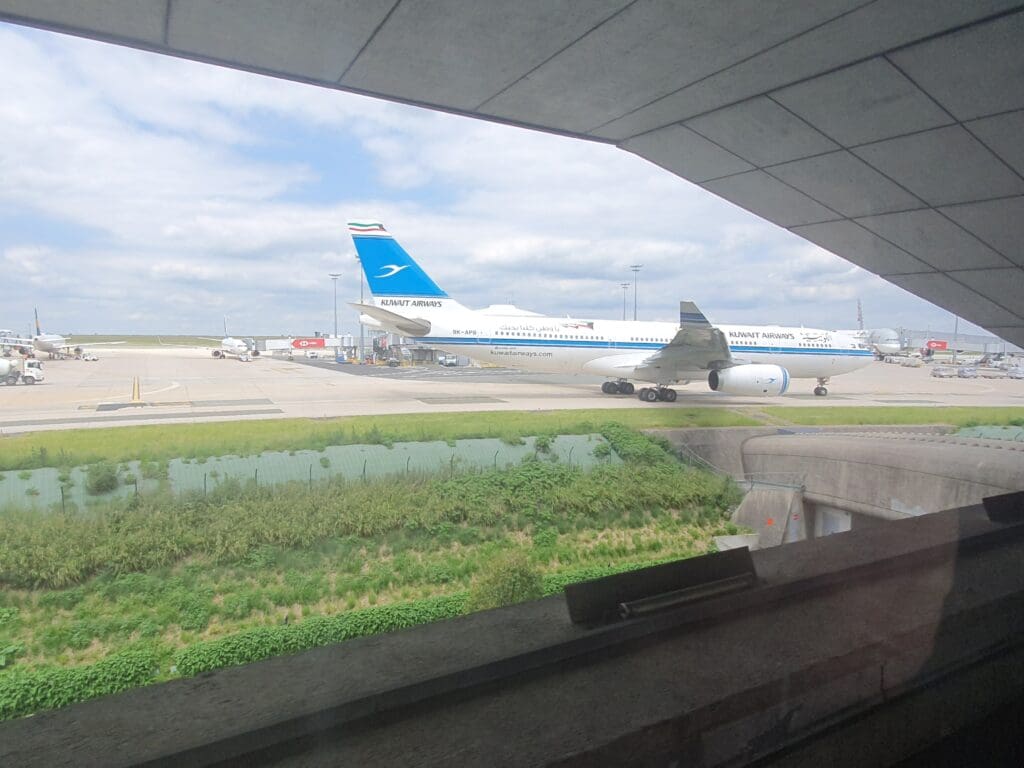
Seeing as I had touched down in Paris Orly on time, I was in no rush to dart across Paris. Thus, once on French soil, as an aviation enthusiast, it would have been sacrilege not to spend an hour or so on the open-air observation deck atop Paris Orly’s Terminal Sud. Basking in the warm sunshine, I watched as a regular stream of aircraft ranging in size from Bombardier CRJ-1000s up to Airbus A350s taxied past. Granted, whilst all photos must be taken through glass, this observation deck is probably not the best in the world for the more professional aviation photographers out there, however, it was still a very welcome addition to the terminal, especially given the balmy late May temperatures.
Once I had spotted myself silly, I continued onwards and made my way down to the ground floor and out to the nearby bus stop where I arrived with ten minutes to go until the next bus to Paris CDG. After showing my ticket to the friendly driver and confirming which terminal I needed to be dropped off at, I strapped myself in before being joined by five other passengers. Right on time, the bus pulled away, although we soon came to a halt and picked up an additional two passengers from Terminal Ouest. Almost totally empty, the bus soon left the sprawl of Paris Orly’s terminal complex behind and ventured out onto the busy afternoon roads of Île-de-France.
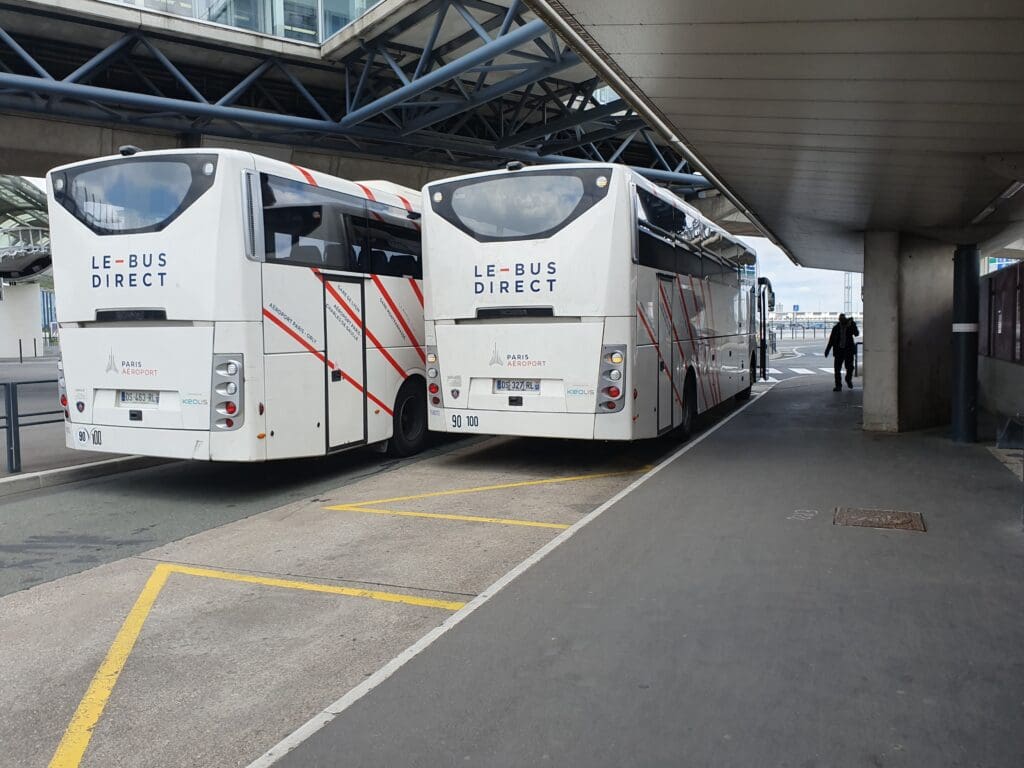
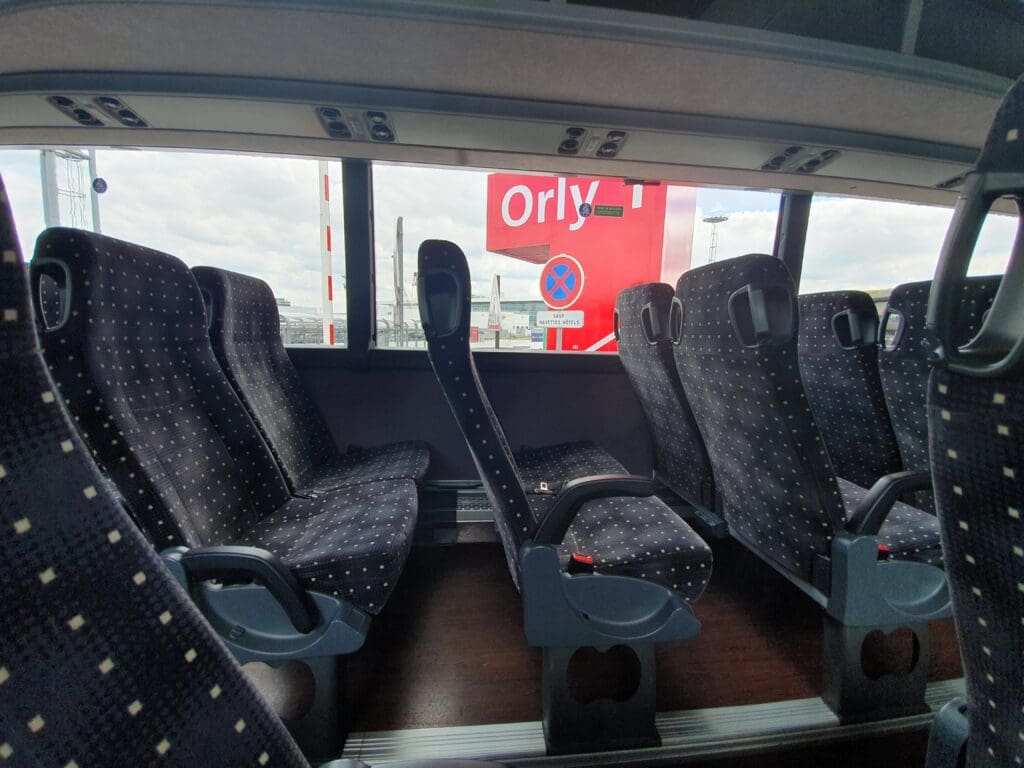
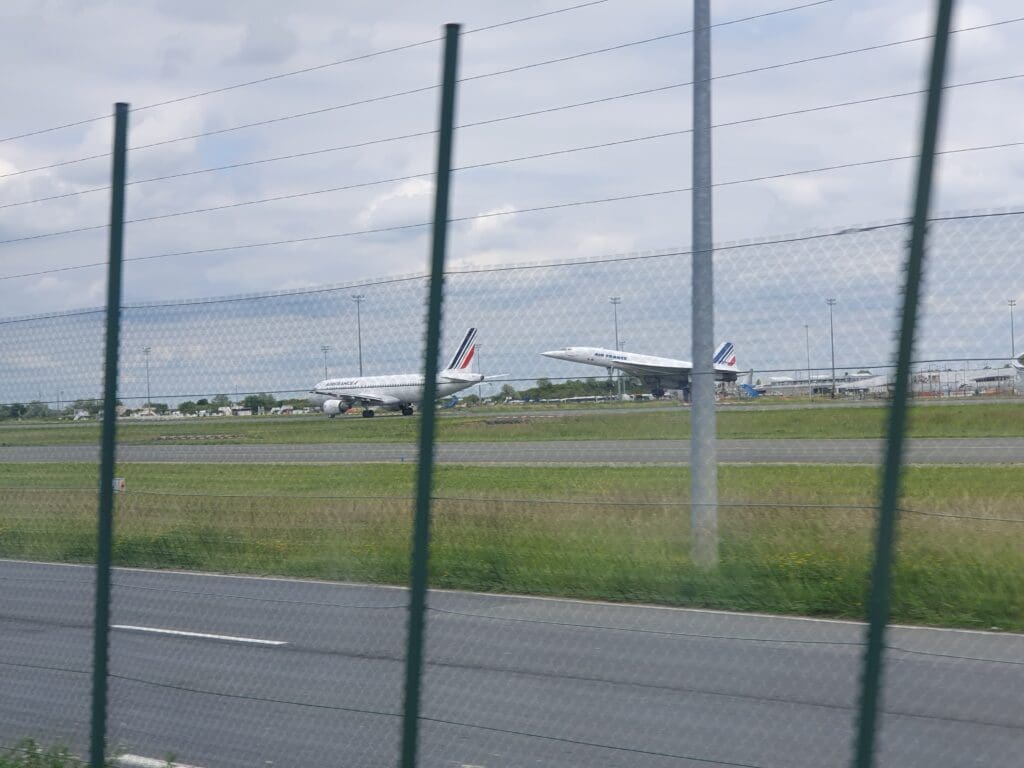
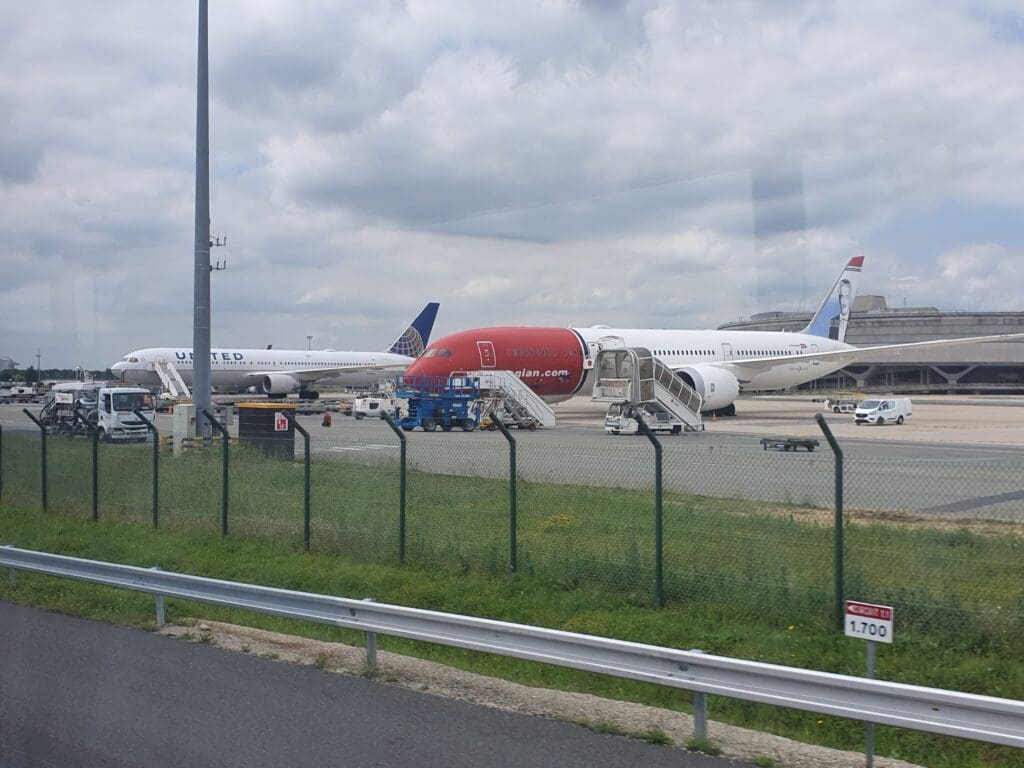
Admittedly, traversing the motorways around Paris, there was not exactly a great deal to see mid-journey, and I failed to catch a glimpse of the Eiffel Tower. Little did I know that I would end up living near it a couple of months later! That said, the bus was pleasant and clean, with free Wi-Fi and working USB-A ports, and thus left me with no complaints. As we headed north, the sight of aircraft floating down towards CDG Airport became increasingly frequent. Soon enough, the airport’s preserved Air France Concorde appeared alongside a couple of other interesting aircraft parked at the remote stands. These included one of France’s presidential Airbus A310s and a Qatari Government Boeing 747-8. Moments later, our bus pulled up to the circular Terminal 1. Since Air Astana had migrated from Terminal 1 to Terminal 2A in 2016, I stayed onboard during this brief stop, and before I knew it, our bus pulled up outside Terminal 2A.
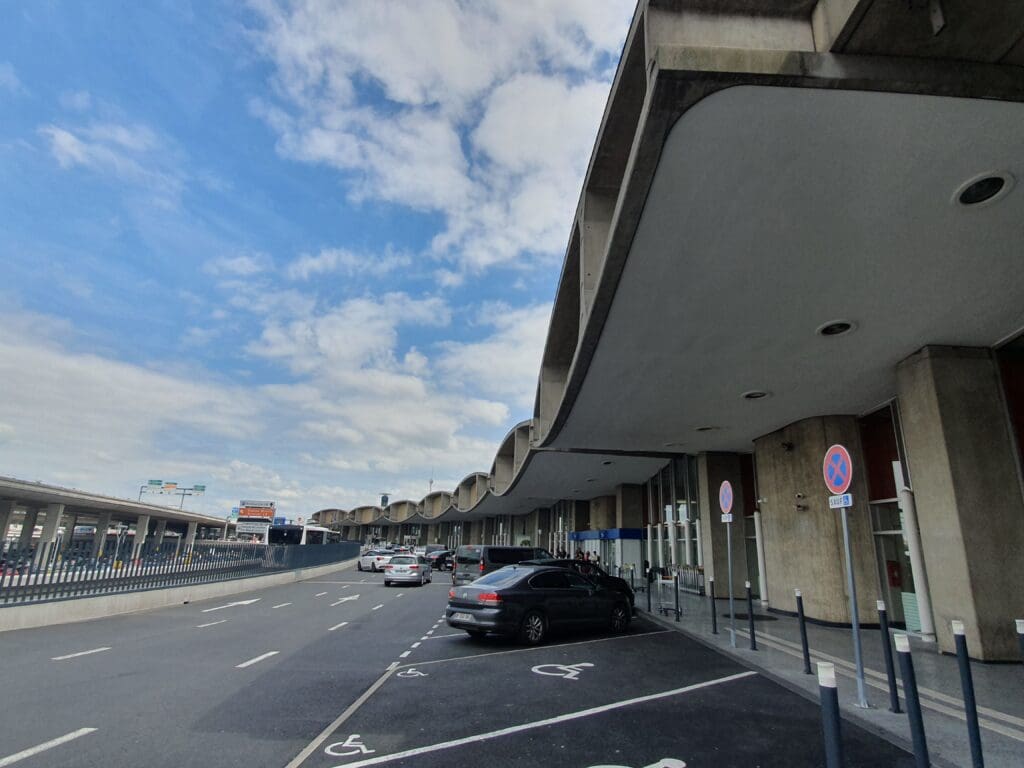
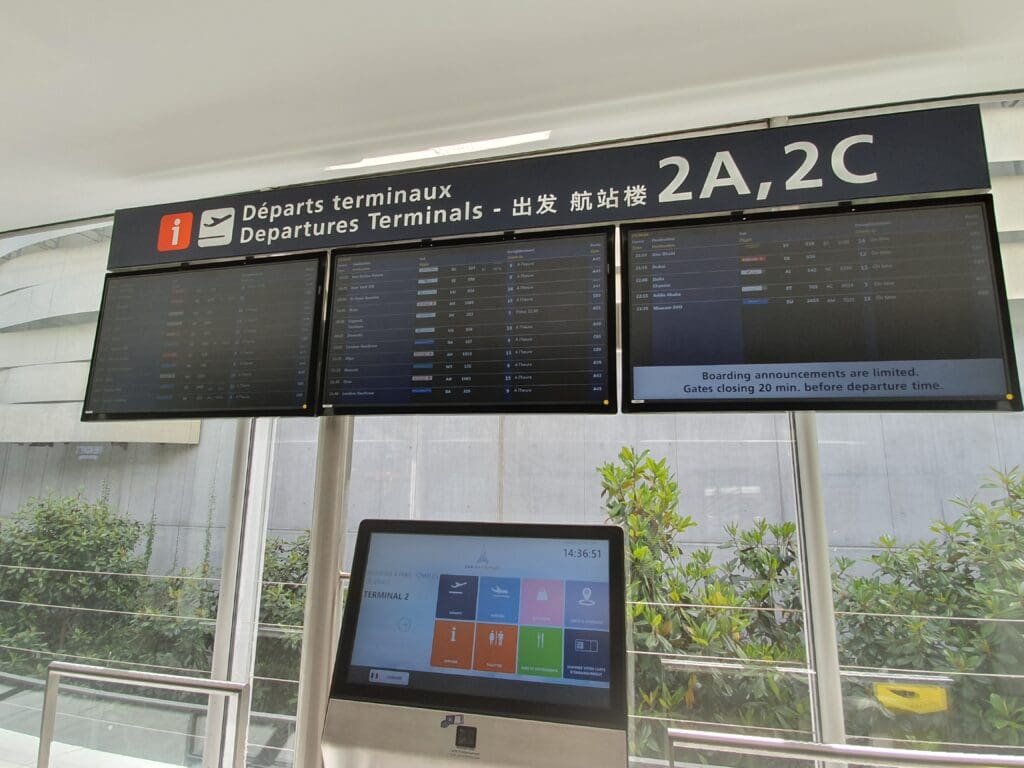
From the outside, Terminal 2A may appear drab, somewhat bleak, and even old-fashioned. However, upon entering the check-in hall, passengers are greeted with a bright, open, and airy area which, that afternoon, I found to be as clean as one would expect. With relatively few flights (a total of eleven departures in the four hours between my arrival and departure), the terminal was far from busy, and there were plenty of places to sit and wait for check-in to open.
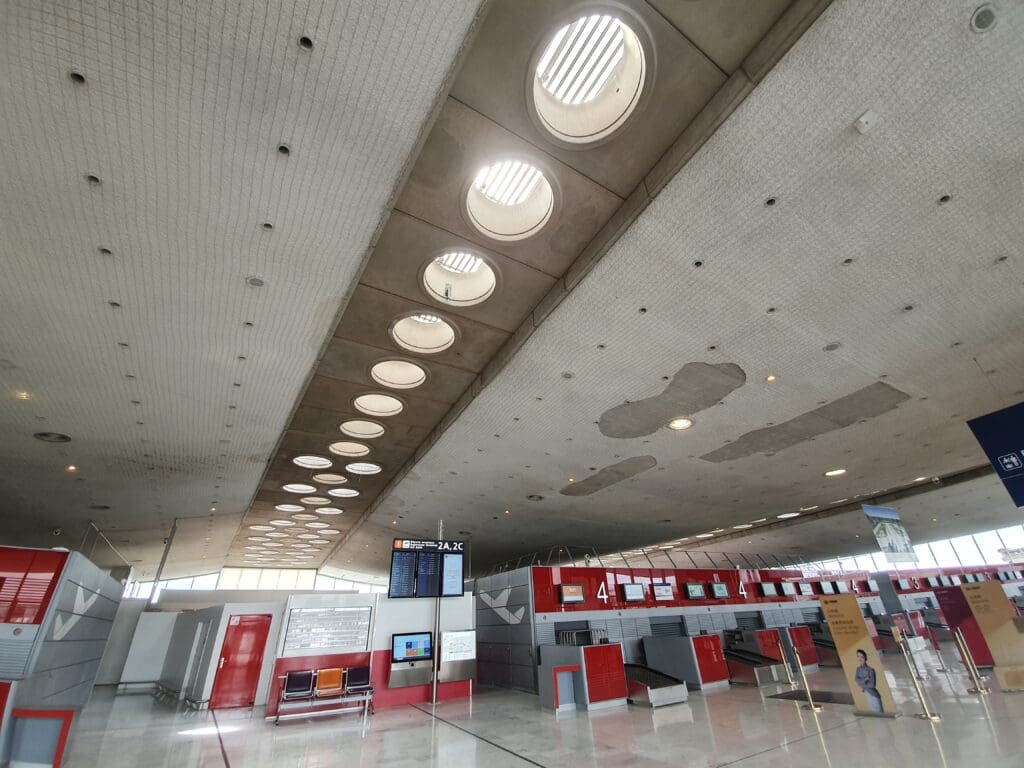
Having not eaten since the light breakfast service on my flight from London City, I was rather hungry. After stopping for a ham and Emmental baguette from Relay and having a picnic on some benches in the terminal, I headed to Starbucks to get a coffee, charge my phone, and do some work. Just over an hour later, I spotted a massive queue forming in the direction of Air Astana’s check-in desks. Somewhat fearful this was for the evening flight to Astana, I headed over at 1620, only to feel relieved when I realised the gaggle of passengers standing there were actually bound for New York on XL Airways France. By contrast, a total of five passengers were waiting at Air Astana’s four desks (two for Economy, one for Business, and one for bag drop-off).
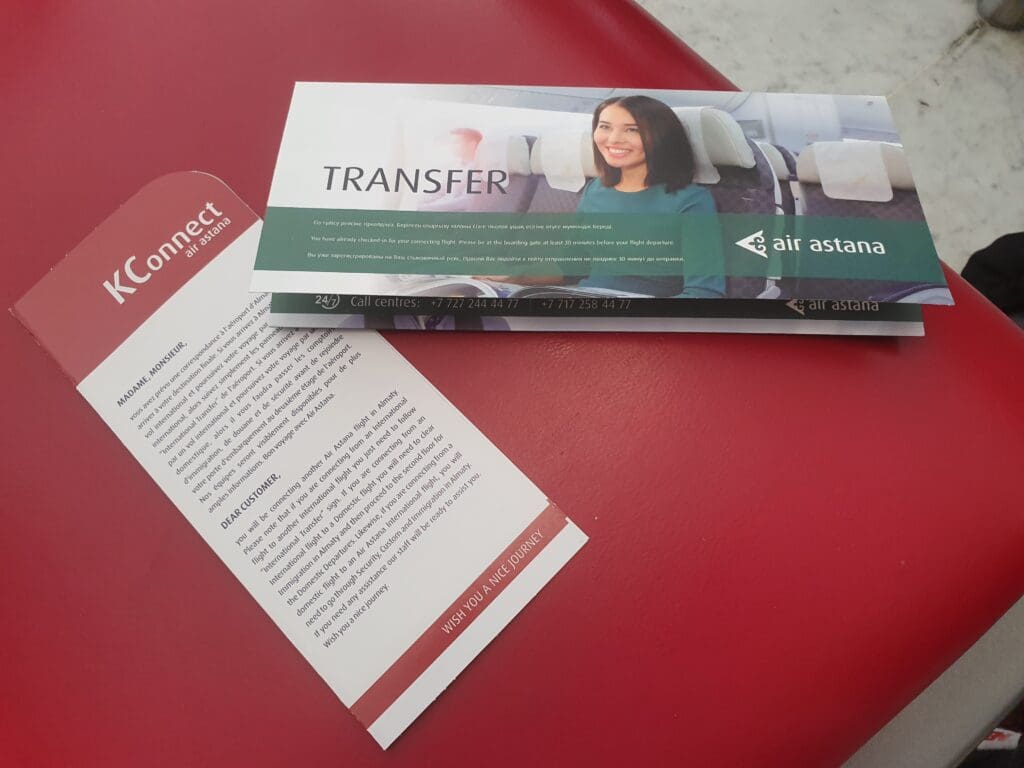
No more than five minutes after I arrived at the desks, I walked up to one of them, where I was greeted, albeit somewhat solemnly, in French. Whilst the check-in agent seemed less than enthusiastic about being at work (perhaps understandable given the boiling hot weather outside), he completed his duties efficiently and without issue. Within minutes, he had printed out my three Air Astana-branded boarding passes. Interestingly, these came in a smart-looking Air Astana paper wallet rather than individually, accompanied by a card detailing the immigration and transit procedures at Nursultan Nazarbayev International Airport. Once my bag was sent on its way, I thanked the gloomy check-in agent and headed through security and immigration.
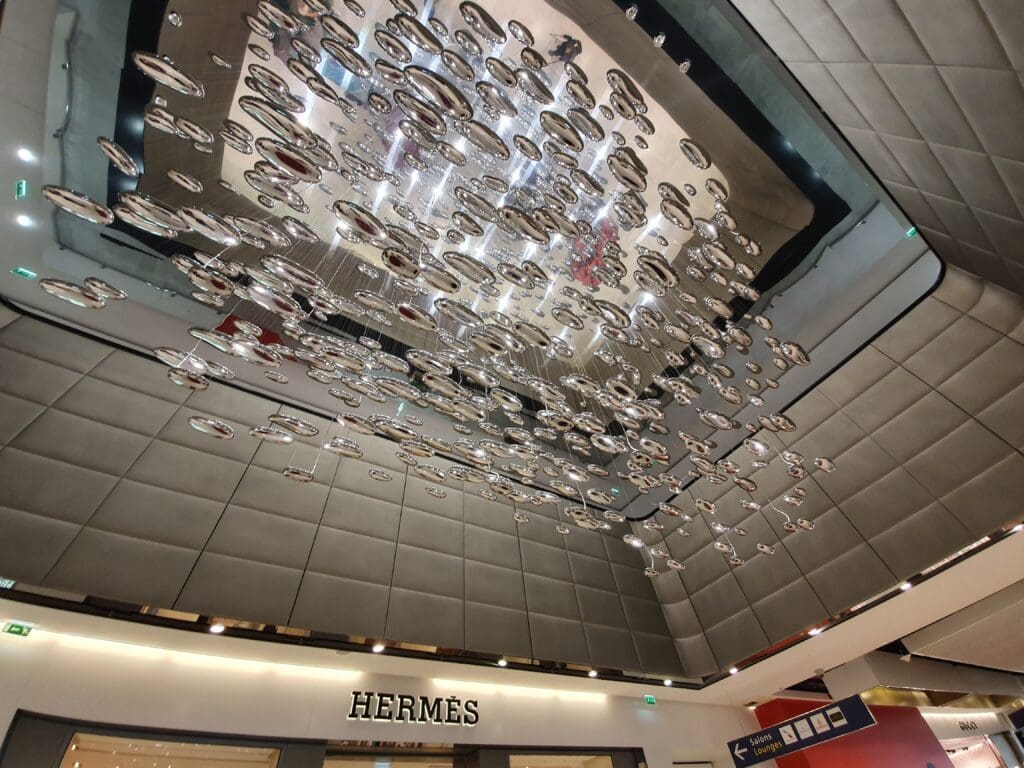
Thanks to the glorious European Union, immigration was quick and easy as I was able to walk straight up to an e-gate, with this opening and allowing me through no more than twenty seconds after I had inserted my passport. From there I joined a short queue at one of the security checkpoints, which, like immigration, was a painless process and I was through to the airside area in around five minutes. Once airside I headed up the escalators to the main departure area where I was greeted by the sight of a host of luxury brand shops such as Bulgari, Dior and Hermes. Yet, having neither the interest in nor money to purchase such goods I instead headed inside in search of a good airside view. Unfortunately, thanks to the terminal’s layout this was not a particularly easy task, however I did eventually find a seat with a good view of the action.
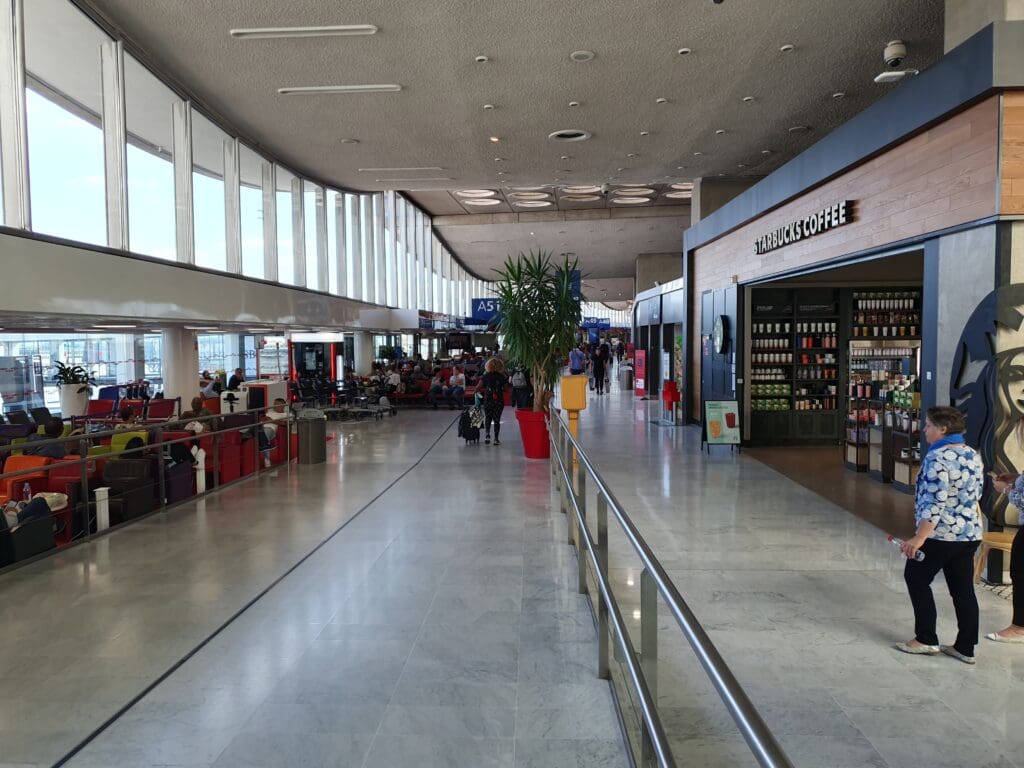
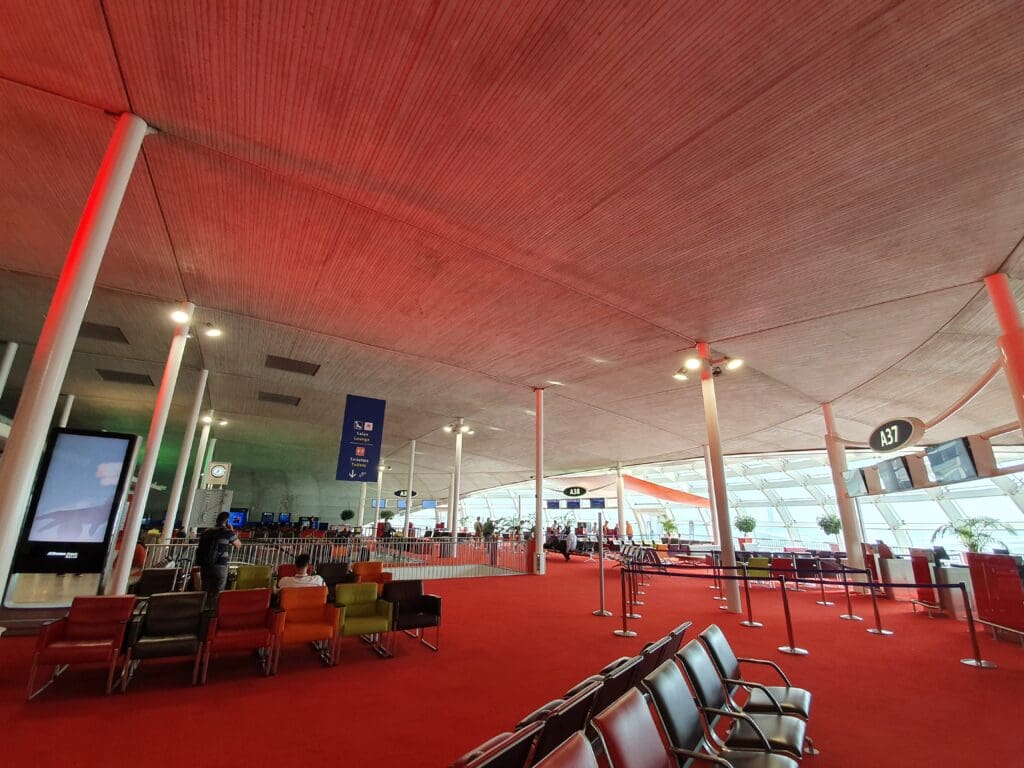
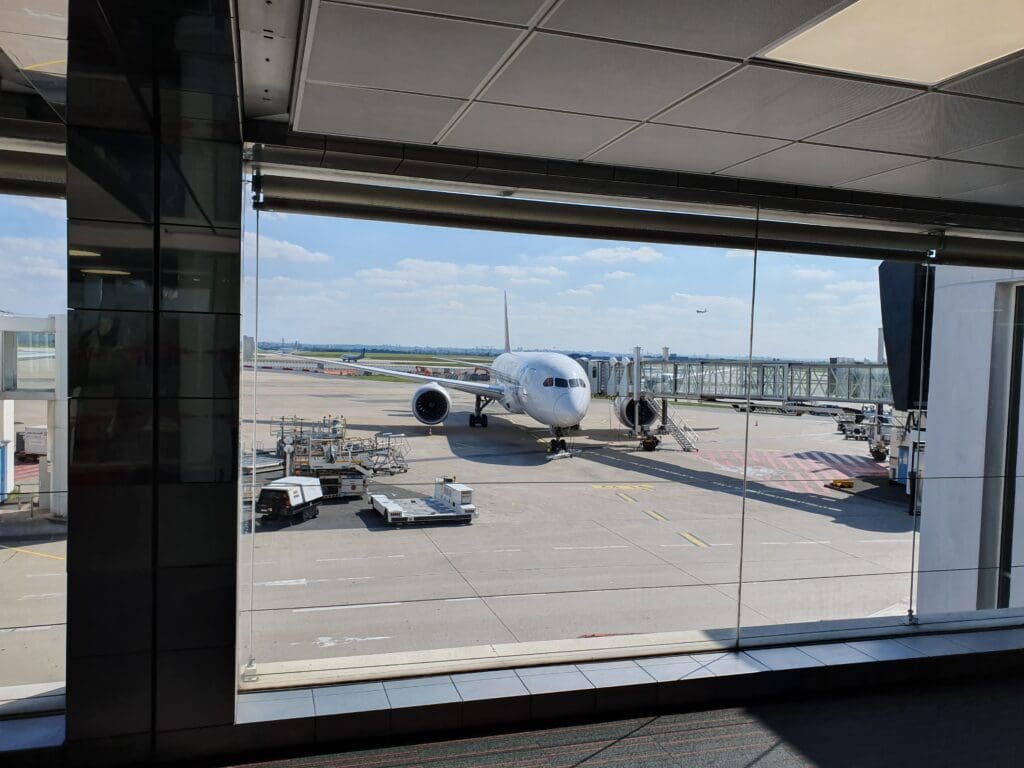
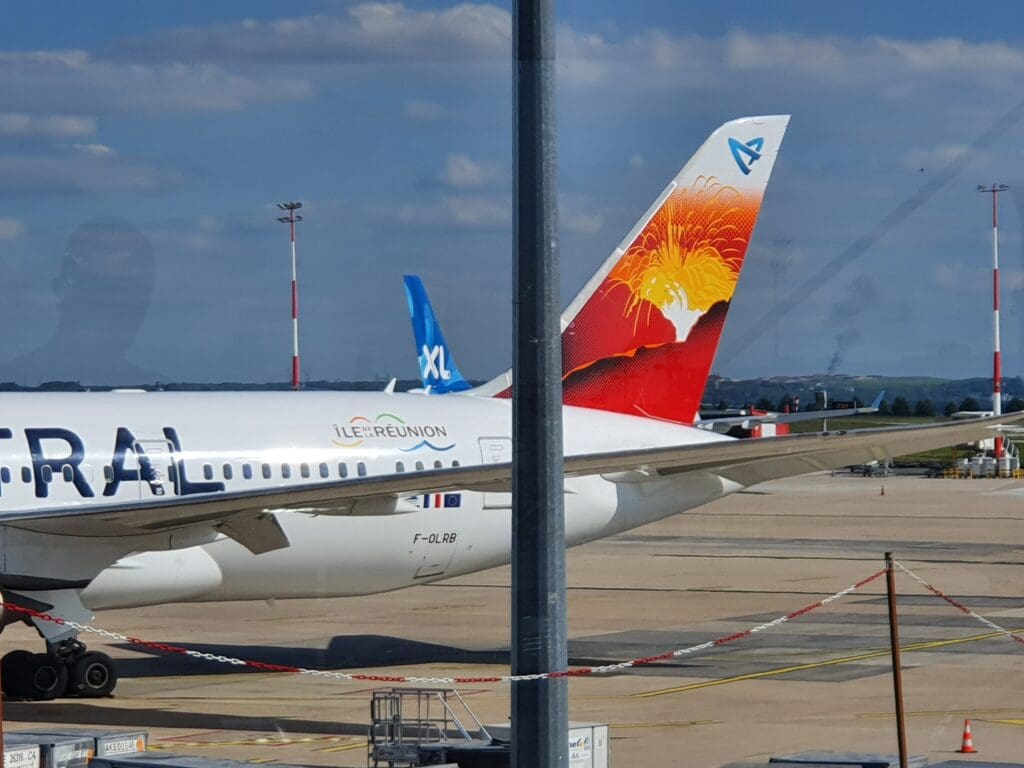
Unfortunately, the design of Terminal 2A does not allow for good photos of the action outside, yet aside from this, the airside portion of the terminal left me with few complaints. This was modern, bright and spacious with plenty of places to sit, an abundance of charging points and a decent array of shops, cafés, bars and restaurants for those looking to pass the time before jetting off to destinations both near and far. After doing some more work, at around 1800 I watched as the Air Astana Boeing 757-200 that would be operating that evening’s flight touched down after nearly seven hours in the air. A few minutes later, Boeing’s distinctive pencil jet slowly edged into Stand A10 where an army of ground crew could be seen springing into action as soon as the red flashing beacon flight was turned off. At that time, the aircraft was the only narrowbody that could be seen at the terminal, with the other jets taking the form of a Boeing 777-300ER and a Boeing 787-8 Dreamliner provided by Réunionese flag carrier Air Austral, an Etihad Airways Airbus A380 and an XL Airways France Airbus A330.
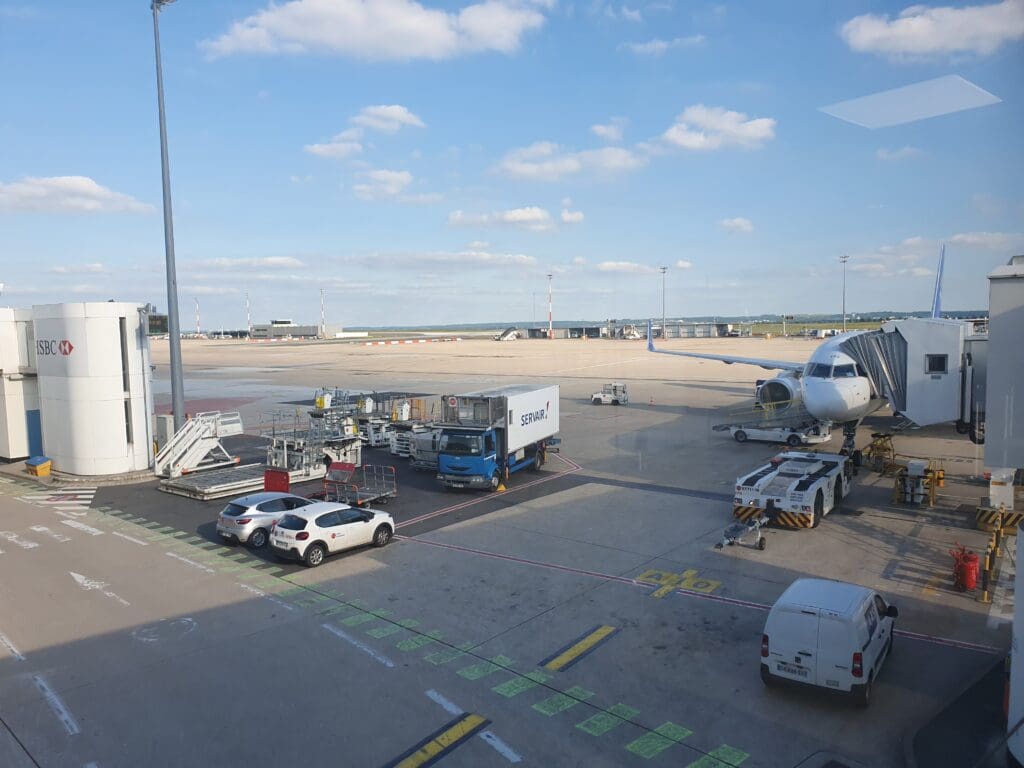
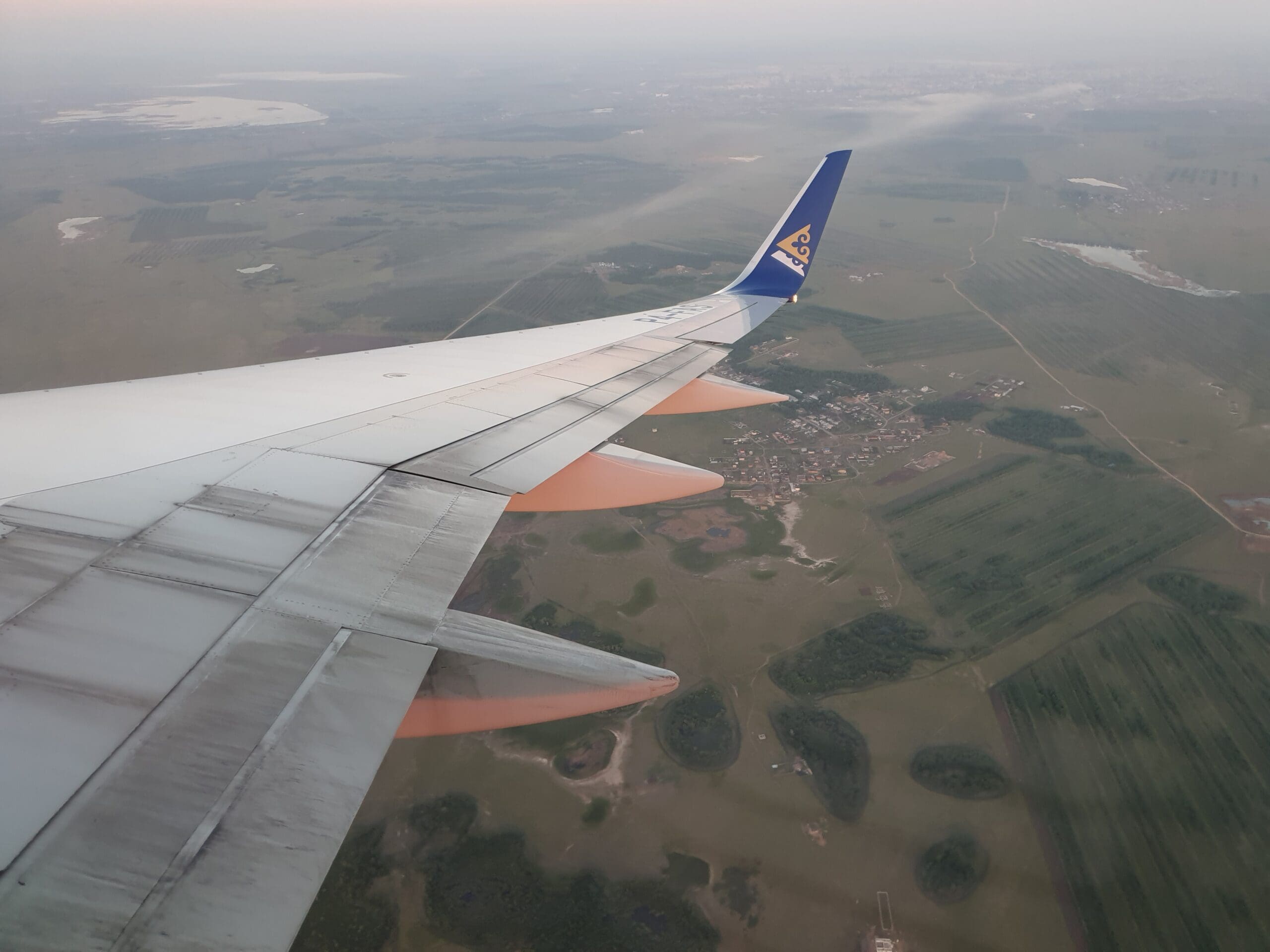
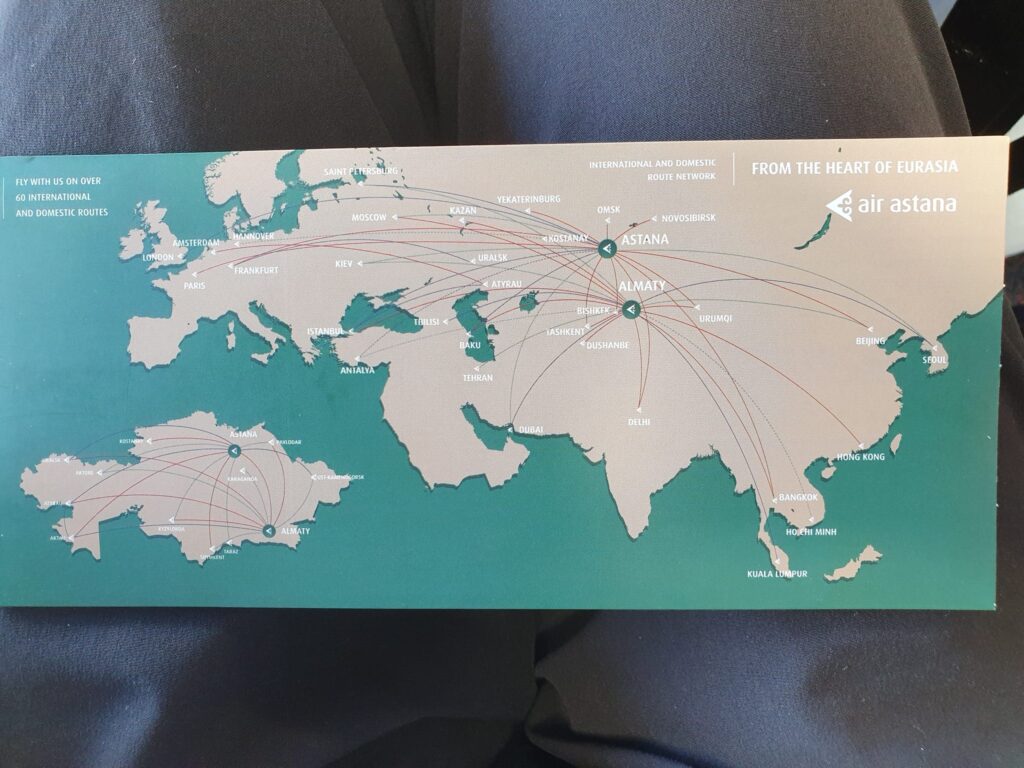
Operating the flight to Central Asia that evening was 20.5 year old Aruban registered Boeing 757-2G5, P4-FAS. Having taken to the skies for the first from Seattle in mid-November 1998, by the end of the month, the aircraft was delivered to the long-defunct German leisure airline LTU International Airways. After a five years spent shuttling holidaymakers, the Boeing headed eastwards for a new life in Kazakhstan, joining Air Astana’s fleet in December 2003 where it has remained ever since. Interestingly, this airframe is the second longest serving airframe in the entirety of the Air Astana’s fleet and today carries up to 176 passengers (16 in Business and 150 in Economy) to destinations across Asia and Europe. In the week before my flight, the aircraft had flown almost non-stop, making 38 journeys totalling over 41,500 miles. These included international services from Almaty and Astana to Bangkok, Bishkek, London Heathrow, Paris CDG, Tashkent and Urumqi as well as domestic flights to Aktobe, Aktau, Atyrau and Kostanay.
Sitting near the gate, at 1835, I observed the two pilots and six flight attendants arriving and heading onto the aircraft. Considering that boarding was set to commence at 1840, given the crew’s arrival time, I was sceptical that this would indeed prove to be the case. Meanwhile, the area around the gate soon filled up, however, listening in to the conversations and accents of those around me, it soon became evident that most passengers there were jetting off across the Atlantic onboard XL Airways France’s evening service to the Big Apple. Almost twenty minutes after our scheduled boarding time, just before 1900, boarding for our flight was announced and passengers were requested to head to the gate. As is usually the case, those holding an elite status with Air Astana’s Nomad Club, Business passengers and those needing assistance were invited to board the aircraft first, although it seemed as if relatively few passengers fell into these categories and so boarding for the majority of passengers commenced a few short moments after the gate opened.
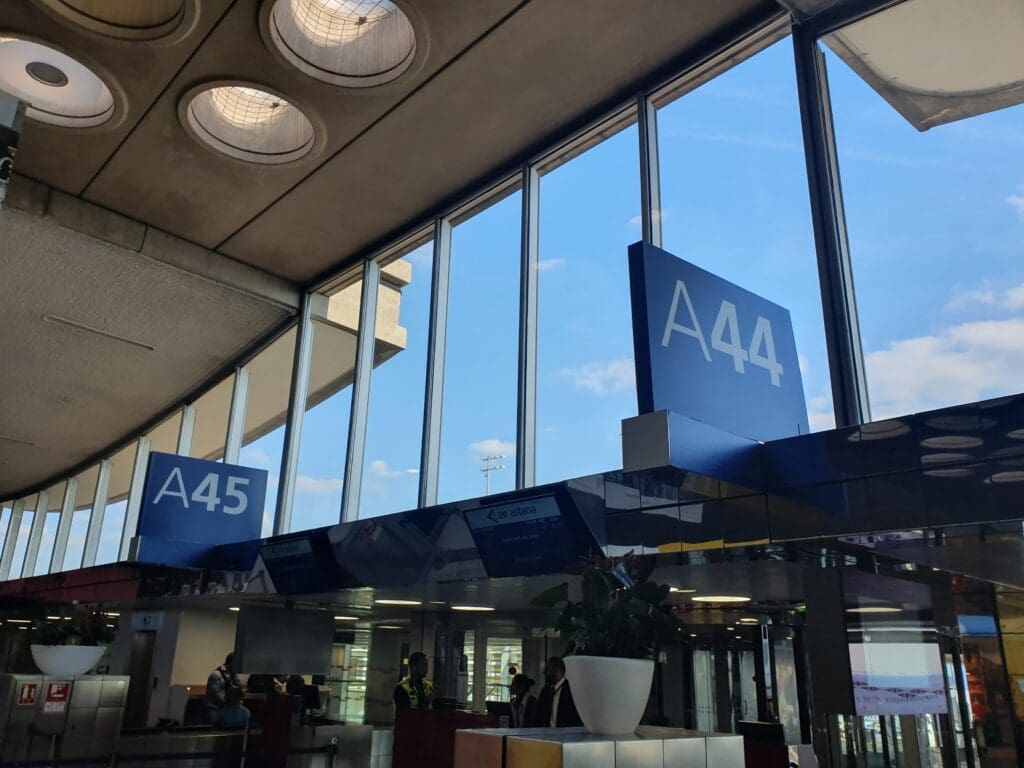
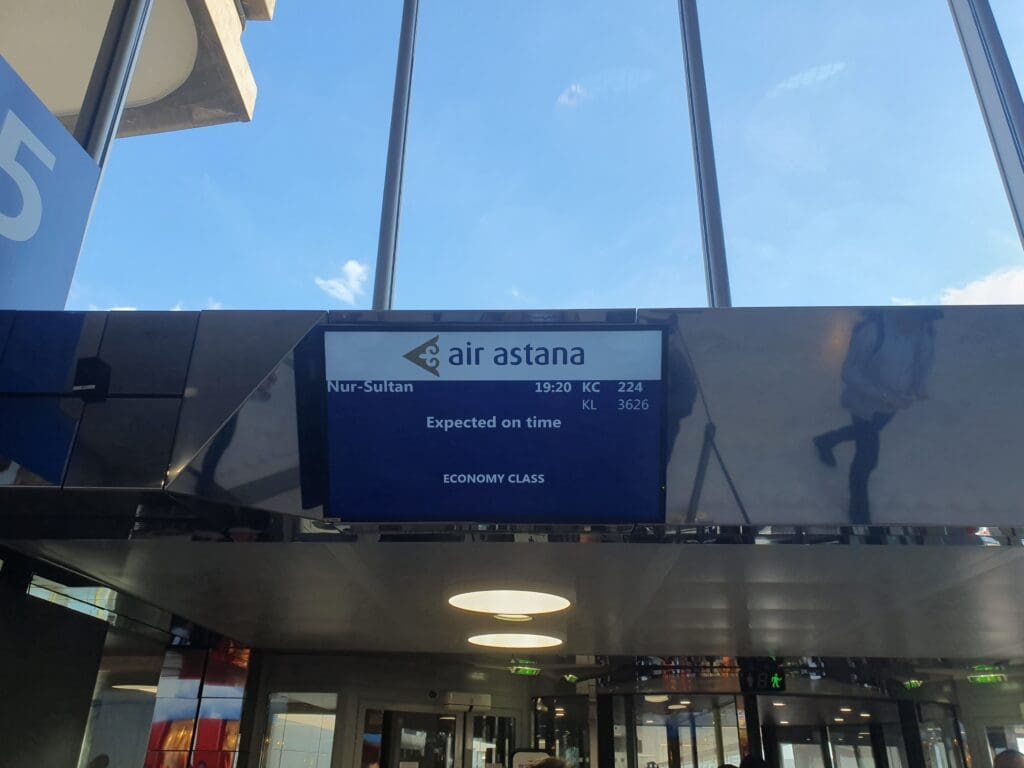
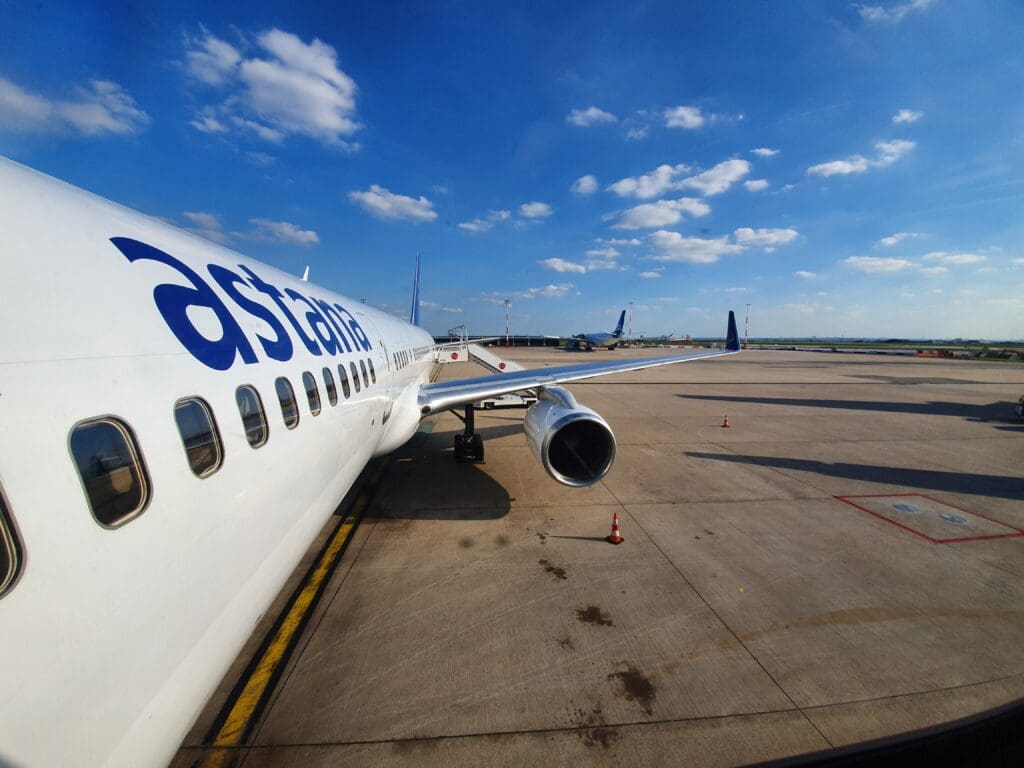
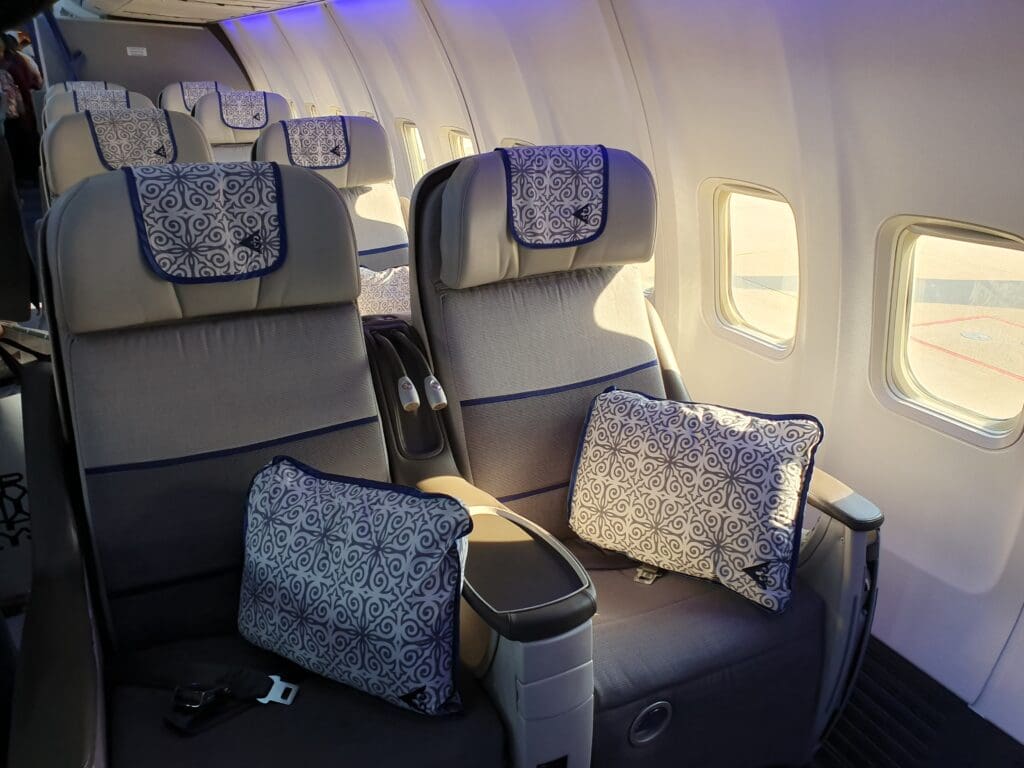
Once my boarding pass was scanned and my passport briefly checked, I was allowed to proceed down the jetway and soon stepped into the Boeing 757’s forward galley. As soon as I entered the aircraft, I received a warm and friendly welcome in Russian before I turned right and entered the four-row Business cabin. This consisted of angled lie-flat seats in a 2-2 arrangement, with each covered in a grey fabric. Whilst these lacked the same levels of privacy as those seats onboard a typical modern widebody, as well as those the Boeing 757’s replacement, the Airbus A321neo, these seemed to be smart and comfortable and I would have had little qualms about venturing to Central Asia in one of these that evening!
After passing through the cabin divider, I reached the small Economy Sleeper cabin in the middle of the aircraft. This product is Air Astana’s answer to premium economy, however, rather than offering a different seat or a more generous amount of legroom, the airline guarantees two empty seats next to the passenger which the crew transform into a bed once in the air. However, at the time of writing this service was only offered on Air Astana’s flights to Frankfurt, London and Paris, with this middle cabin serving as Economy on the rest of their services. Without any major delay, I arrived in the third portion of the aircraft and made my way to the rear of this, soon arriving at Row 39.
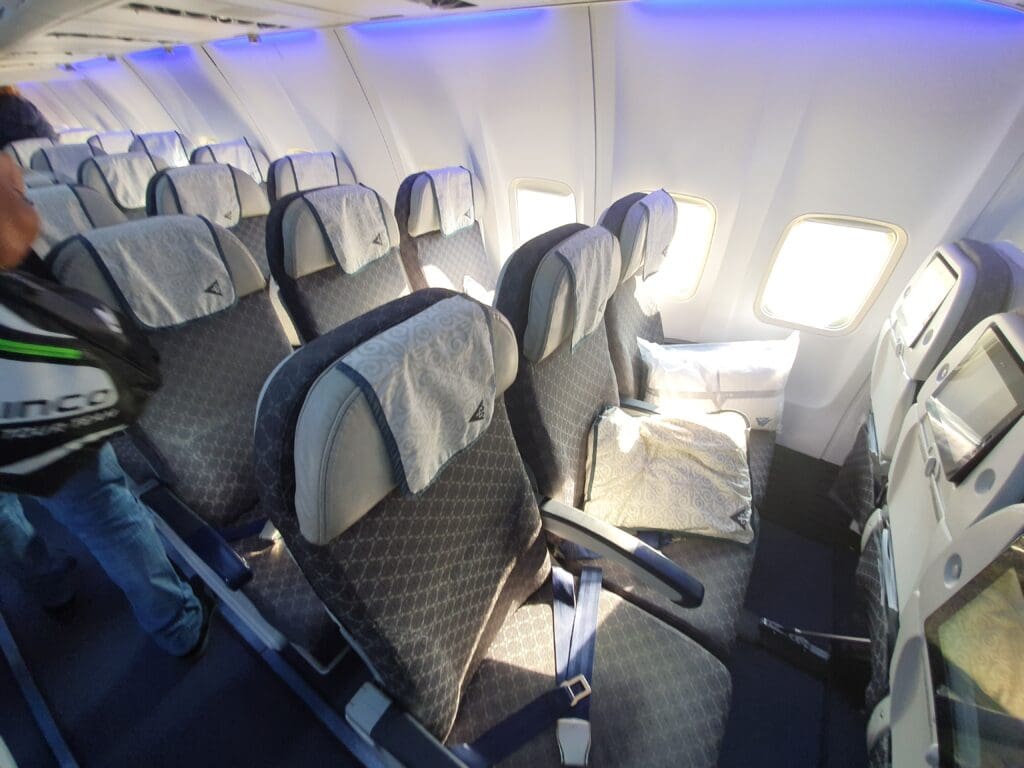
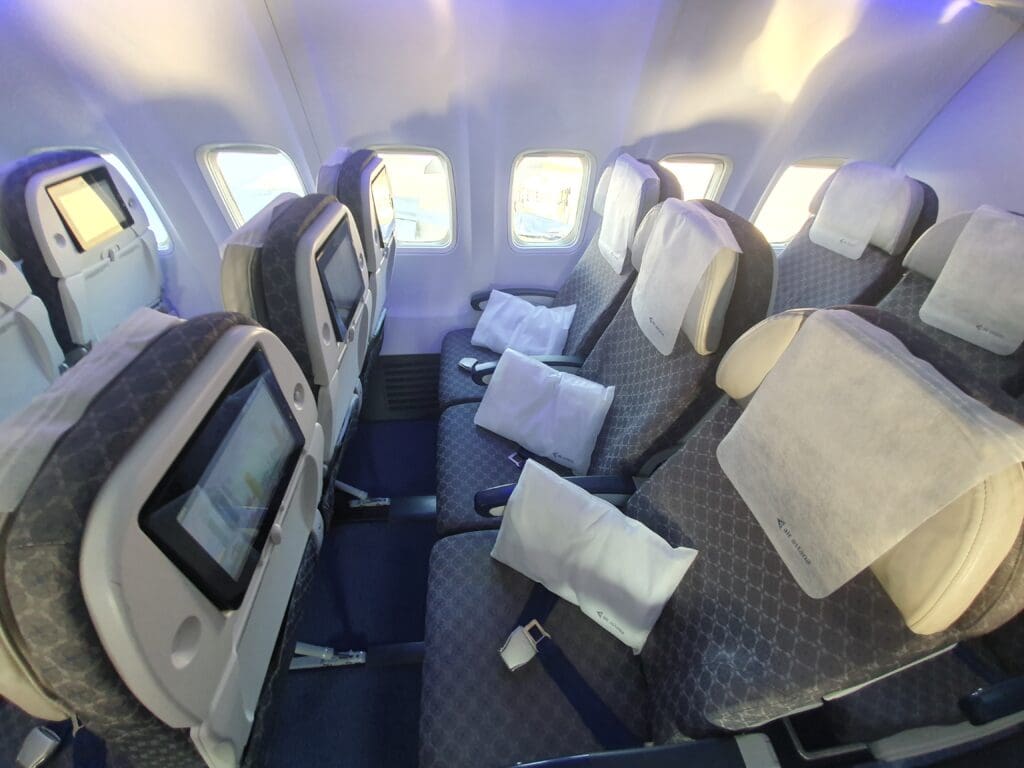
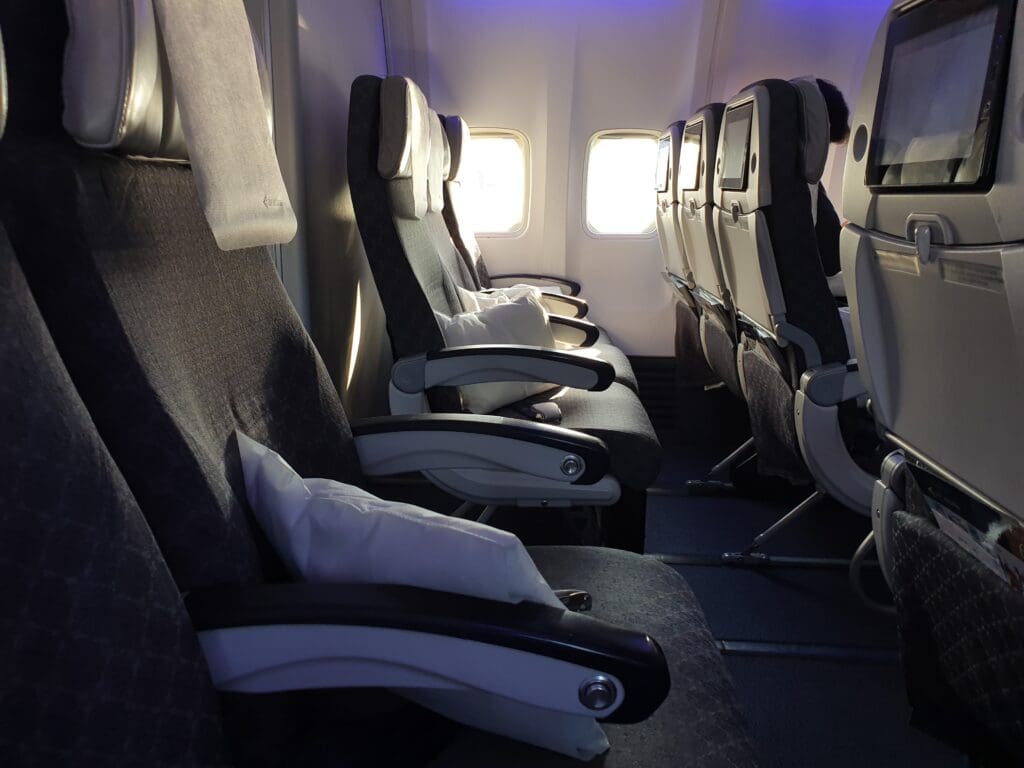
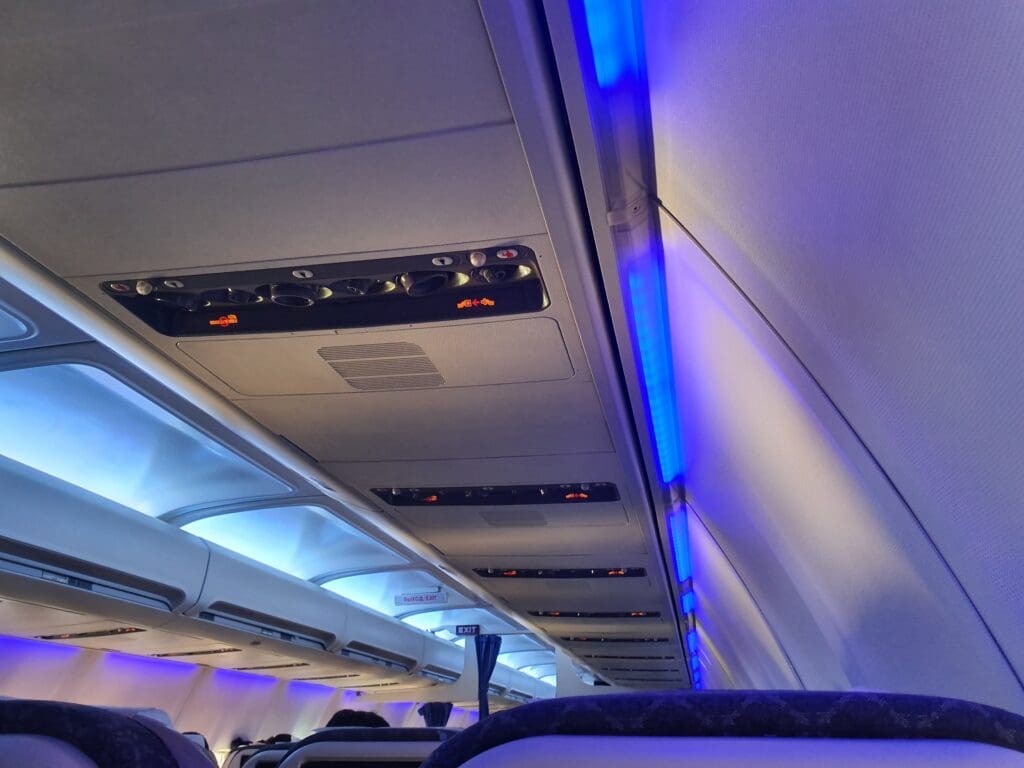
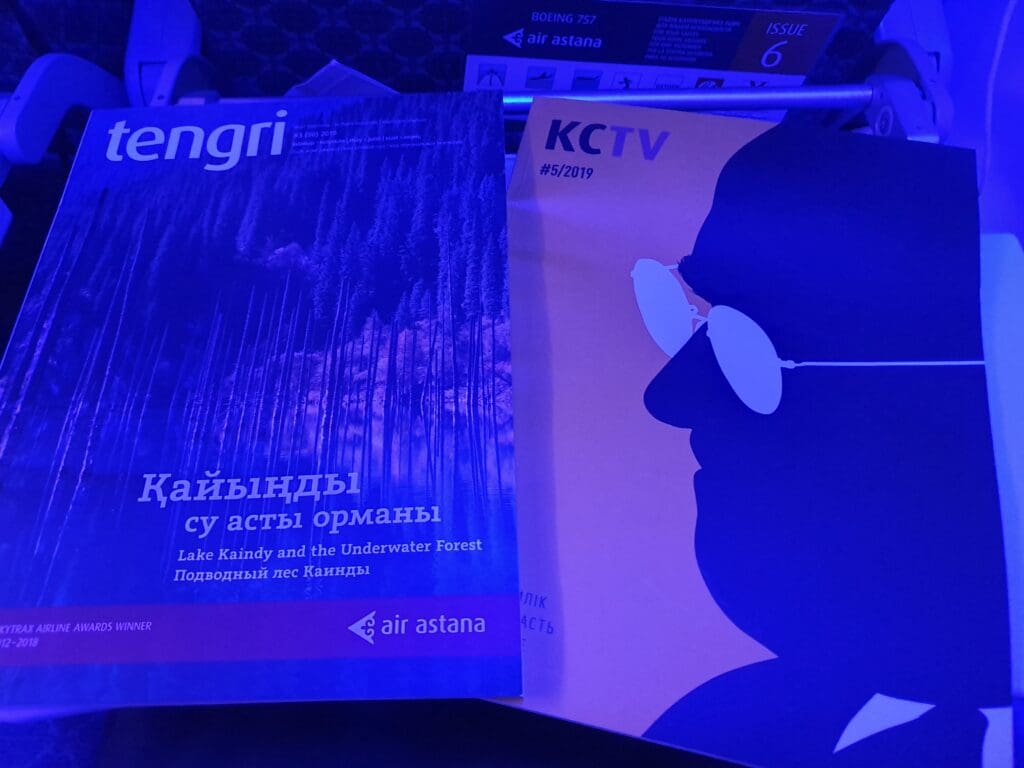
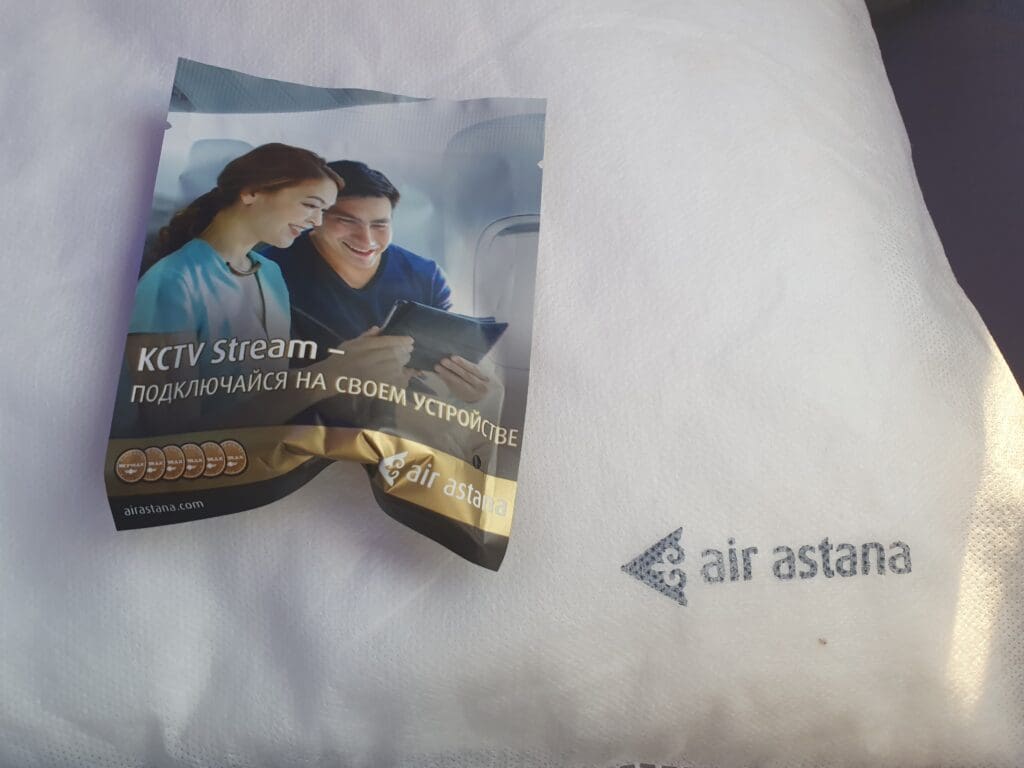
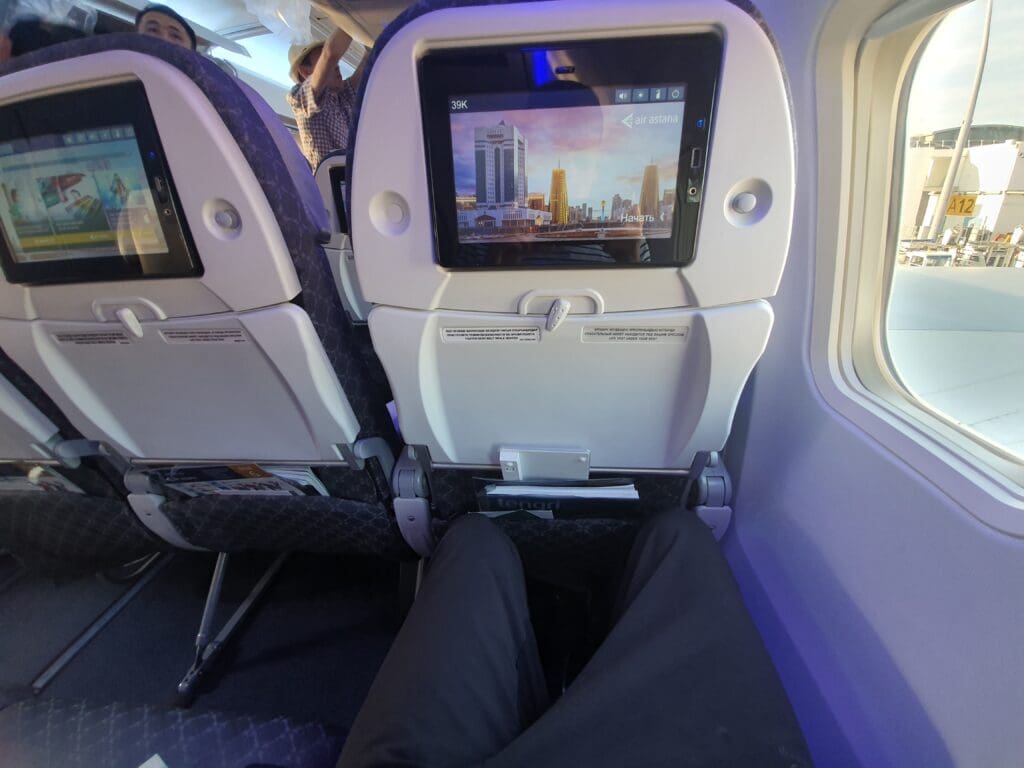
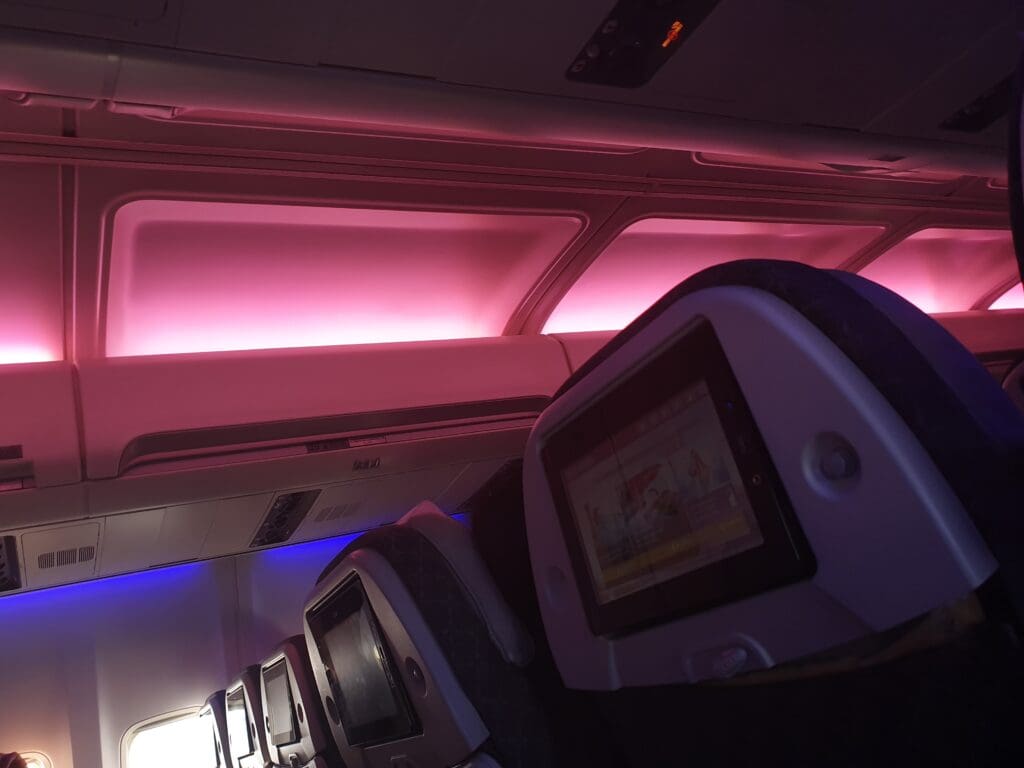
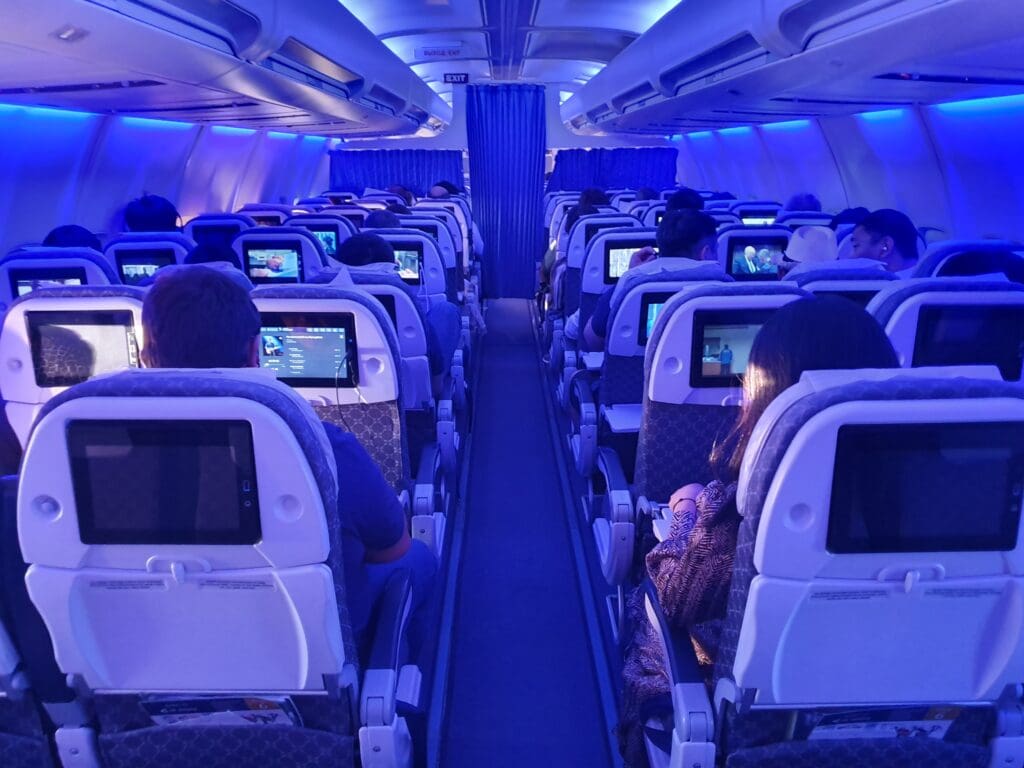
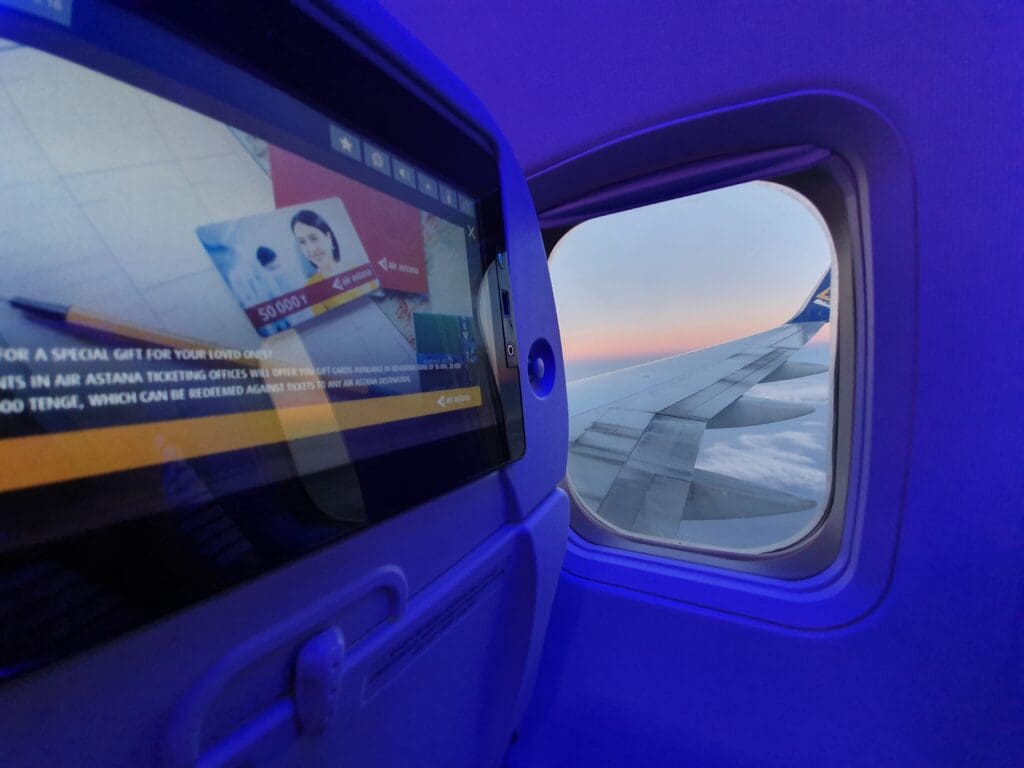
As I had expected given Air Astana’s stellar reputation, my first impressions of both the aircraft and crew were very positive. Whilst the cabin of the Boeing 757 may appear to be a little dated compared to the Sky interiors of today, Air Astana appeared to have masked this by retrofitting modern moodlighting, whilst I struggled to find any notable signs of wear and tear throughout the flight. Meanwhile, the cabin also appeared to be spotlessly clean. In Economy, each seat features an adjustable headrest covered in faux leather and partially covered by a disposable antimacassar, a large and high quality inflight entertainment screen powered by the Zodiac RAVE system, and is covered by fabric that sports a repeating pattern inspired by traditional Kazakh designs. At-seat power came in the form of USB-A ports, which I found to work well throughout the flight. Meanwhile, each seatback pocket contained a plastic wallet containing the latest edition of Air Astana’s Tengri inflight magazine and the KCTV entertainment guide alongside the usual safety card and sick bag.
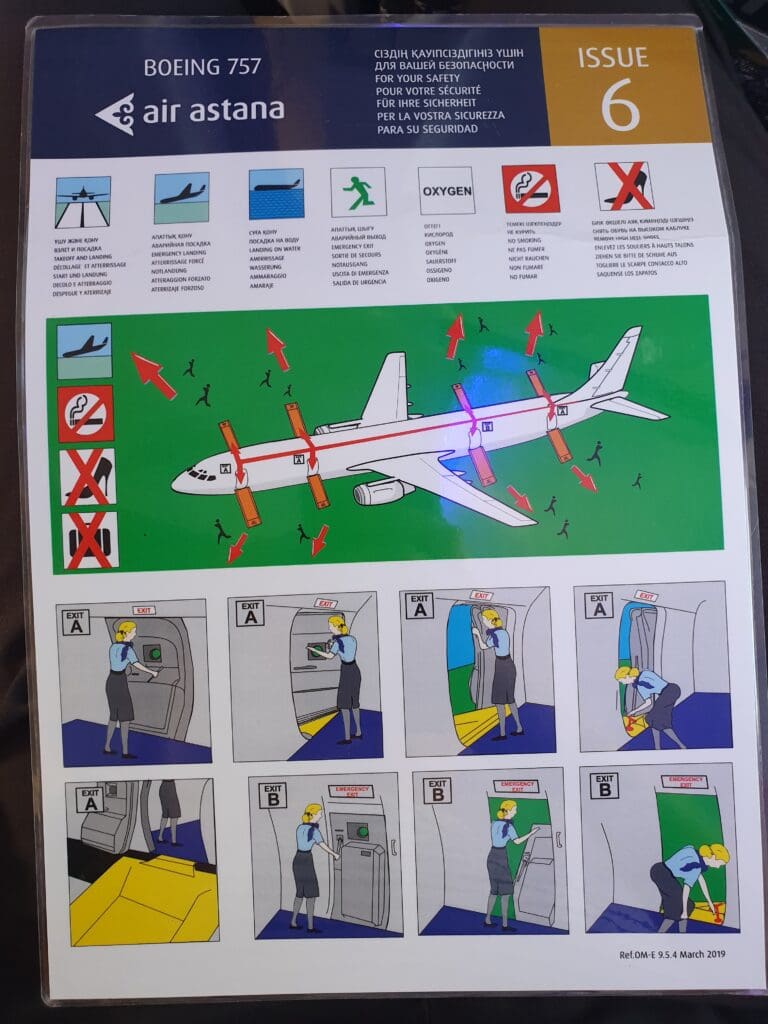
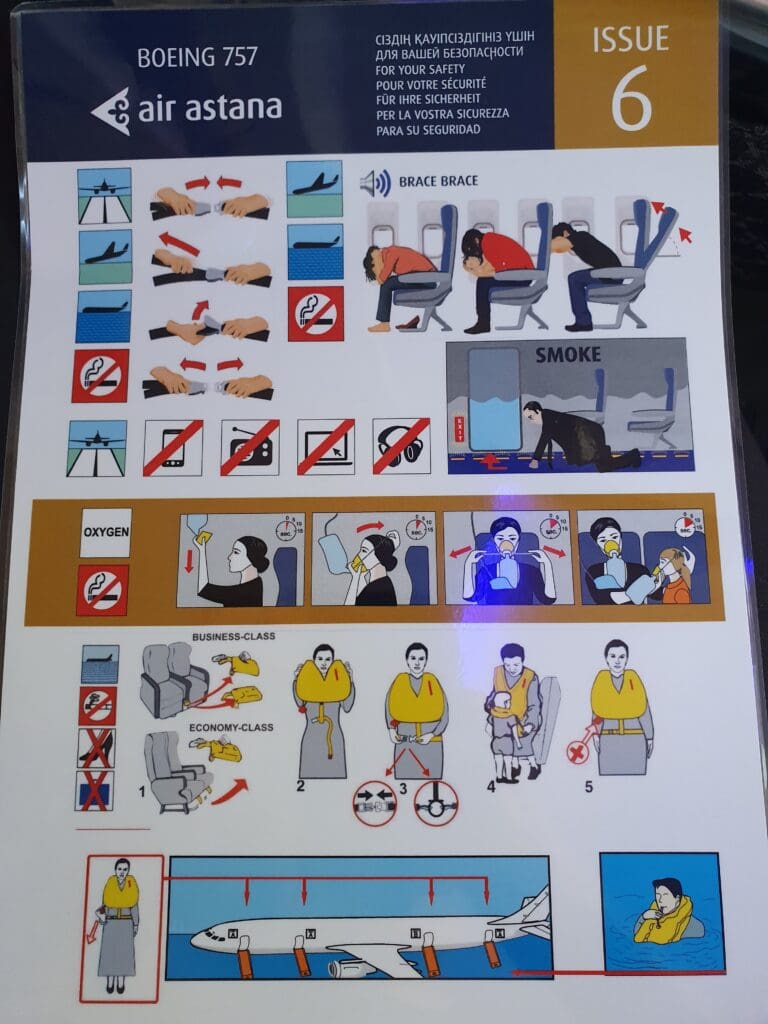
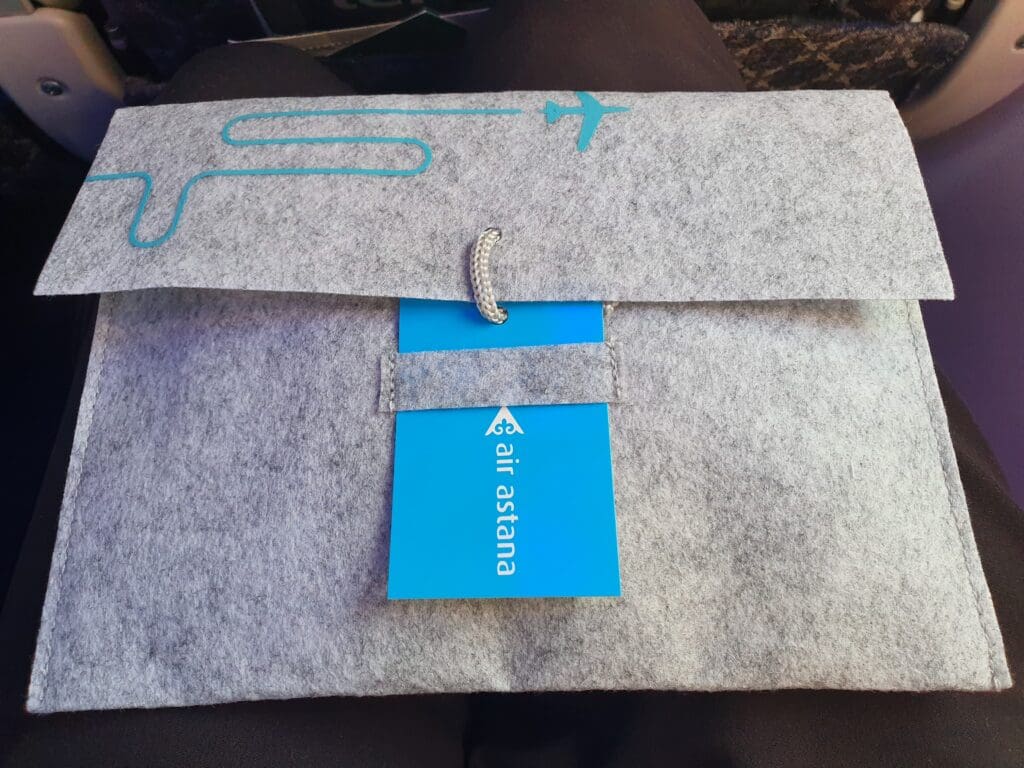
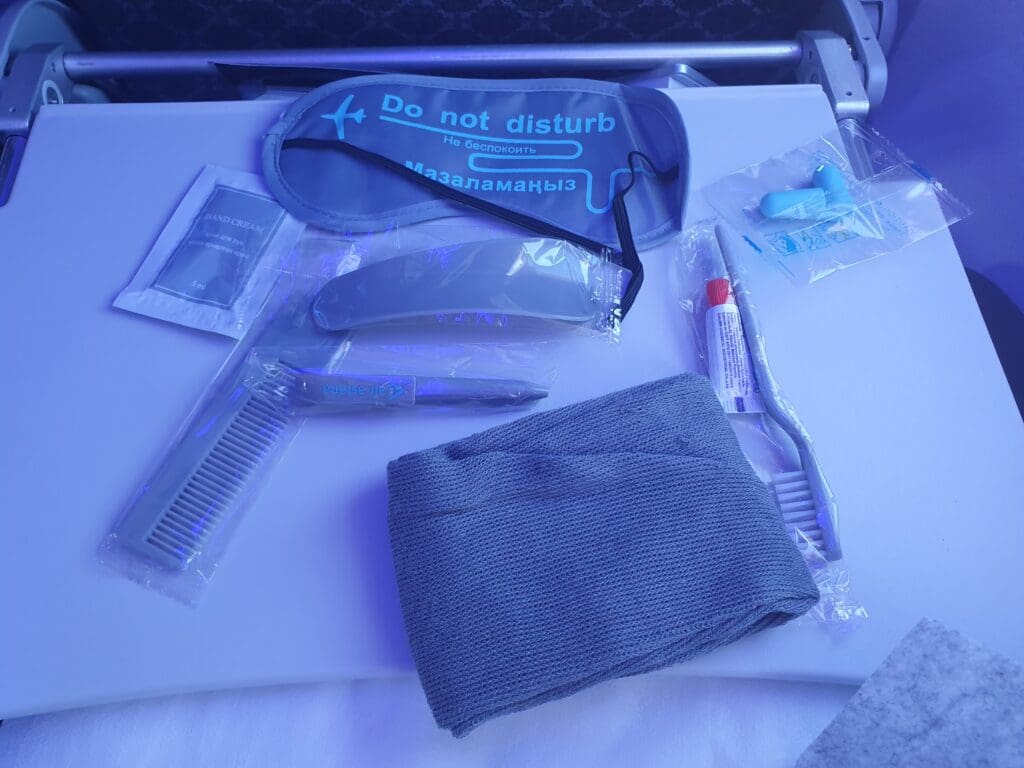
Despite the late commencement of boarding, thanks to a very light load with Economy appearing to be no more than 40% full, by 1910, all passengers had taken there seats. Looking around, there appeared to be very few passengers who did not hail from Kazakhstan – with the small number of passengers not from Kazakhstan hailing from China, Korea, the USA, and of course myself from the UK. Whilst the inflight entertainment system could be used from boarding until disembarkation, deciding to save this until we were up in the skies, as we waited to pushback I enjoyed the traditional Kazakh music that filled the cabin and watched the happenings outside as the last of the cargo was fed into the hold below. As we waited, the crew came around with boiled sweets, followed by packaged headphones and finally amenity kits – something that has unfortunately become a rarity on many airlines today or when provided, the contents scaled back to the very basics. Air Astana however is the exception, with this containing an impressive selection of socks, hand cream, a toothbrush and toothpaste, a comb, an eyemask, a shoe horn and a pen. Given the relatively short nature of the flight to Astana, this was a surprising and very welcome addition, furthering my very positive first impression of Kazakhstan’s national airline.
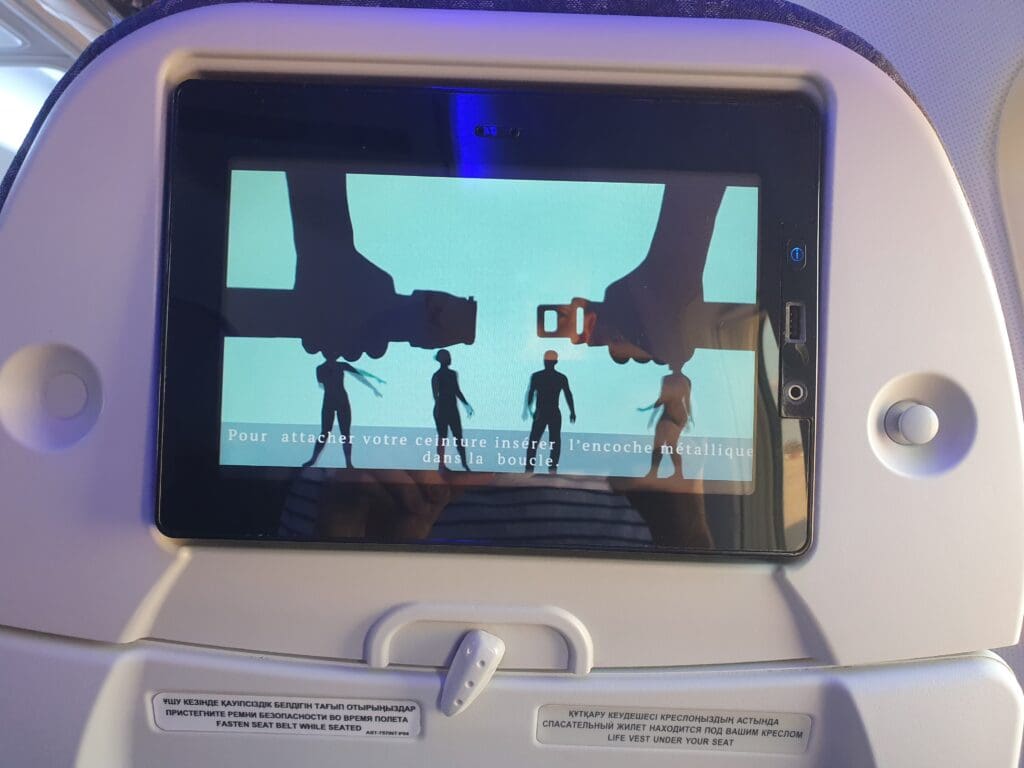
Around ten minutes after boarding had come to an end, at 1920 the Captain’s voice filled the cabin as they welcomed all passengers onboard – first in Russian and then again in English. During this opening speech, the Captain thanked passengers for flying with Air Astana, informed us all of the comparatively short 5H15 flight time and provided the next day’s weather forecast for Astana. This was followed by an announcement from the Purser in Kazakh, Russian and English with the usual welcomes, thanks and warnings. Once this had come to an end, Air Astana’s rather unique safety video was broadcast over the inflight entertainment screens. Introduced in 2017, this enlists the help of a troupe of ballet dancers (although only their silouettes can be seen) to detail the safety instructions. As was to be expected, this was played a total of three times – once in Kazakh with French subtitles, followed by Russian and English.
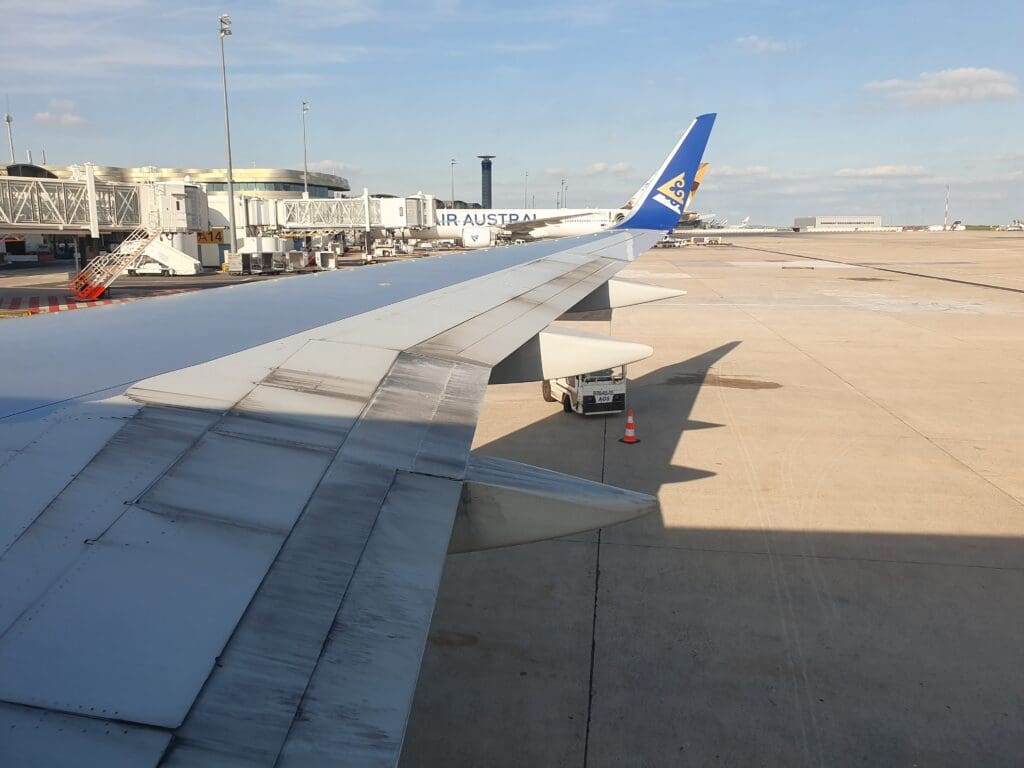
As the safety video was underway, the aircraft commenced its pushback before coming to a halt. At this point, the Boeing 757’s two large Rolls-Royce RB211-535E4 engines powered, with this process being slightly quieter than I had initially expected. At 1928, the Boeing propelled itself forward and began its trek to Runway 09R. Leaving the terminal complex behind, the aircraft soon passed over a road and made its way towards Paris CDG’s Air France Concorde. As we passed this world famous supersonic jet, the aircraft seemed to slow down significantly before speeding up again, perhaps allowing the pilots time to admire the aircraft! From there, the aircraft passed Terminal 3 where a trio of narrowbodies could be spotted. These consisted of a Vueling Airbus A320, a Blue Air Boeing 737-500 and a Tunisair Boeing 737-600, before the aircraft turned left and headed over the A1 motorway that connects Paris with the northern French city of Lille.
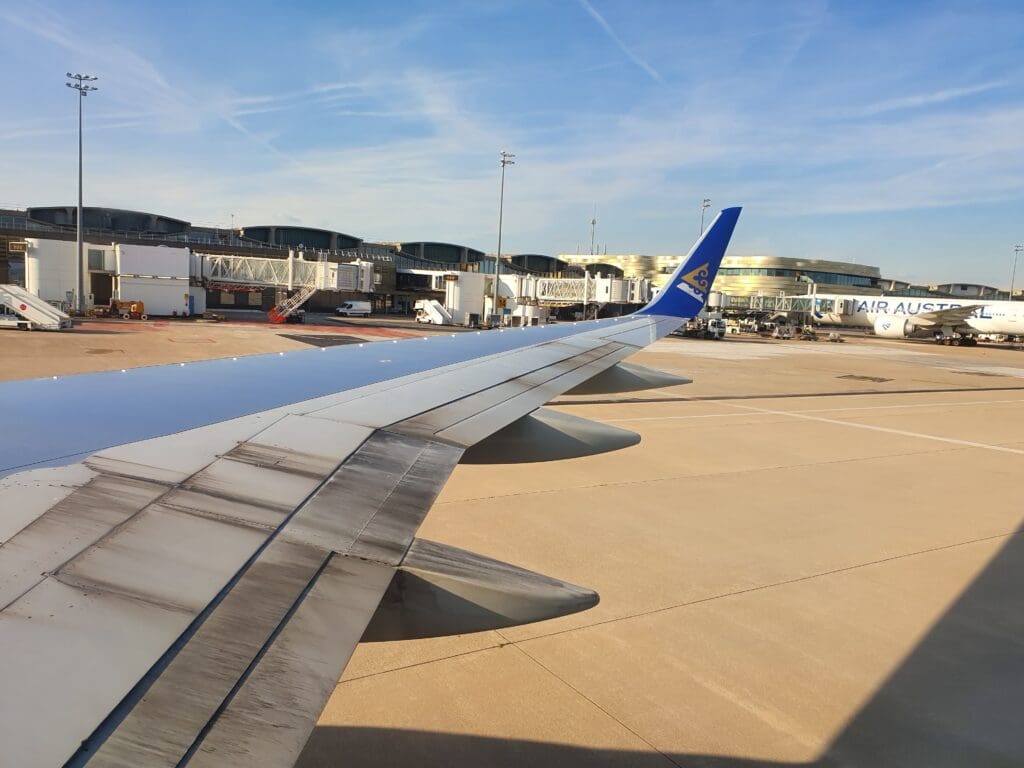
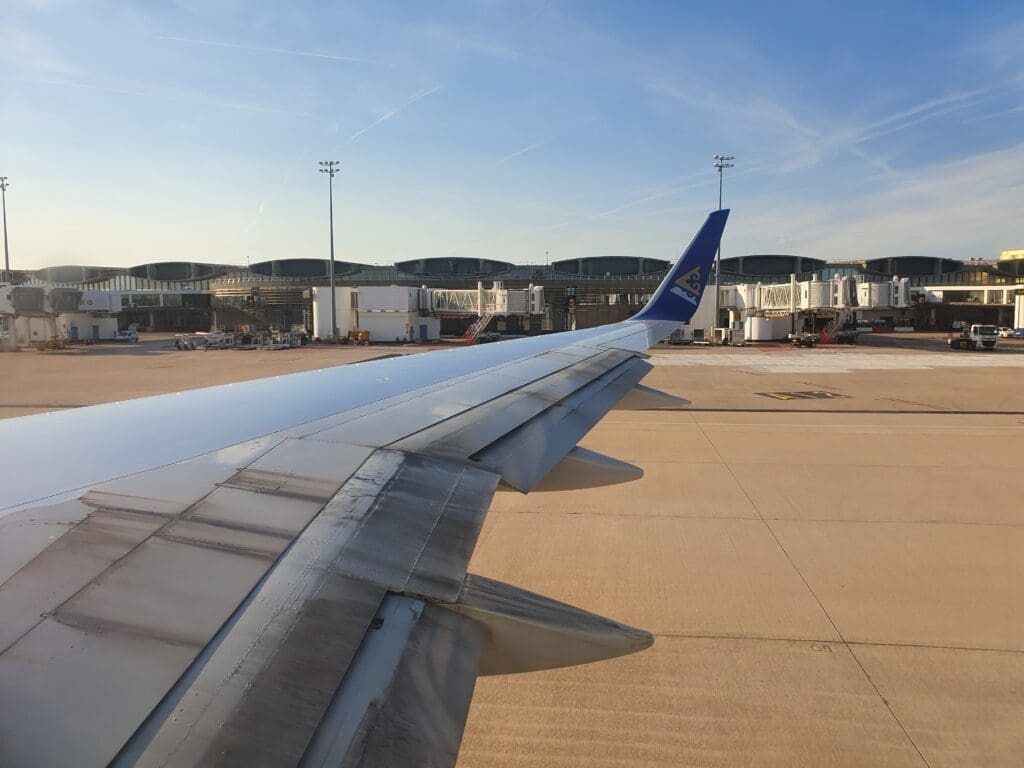
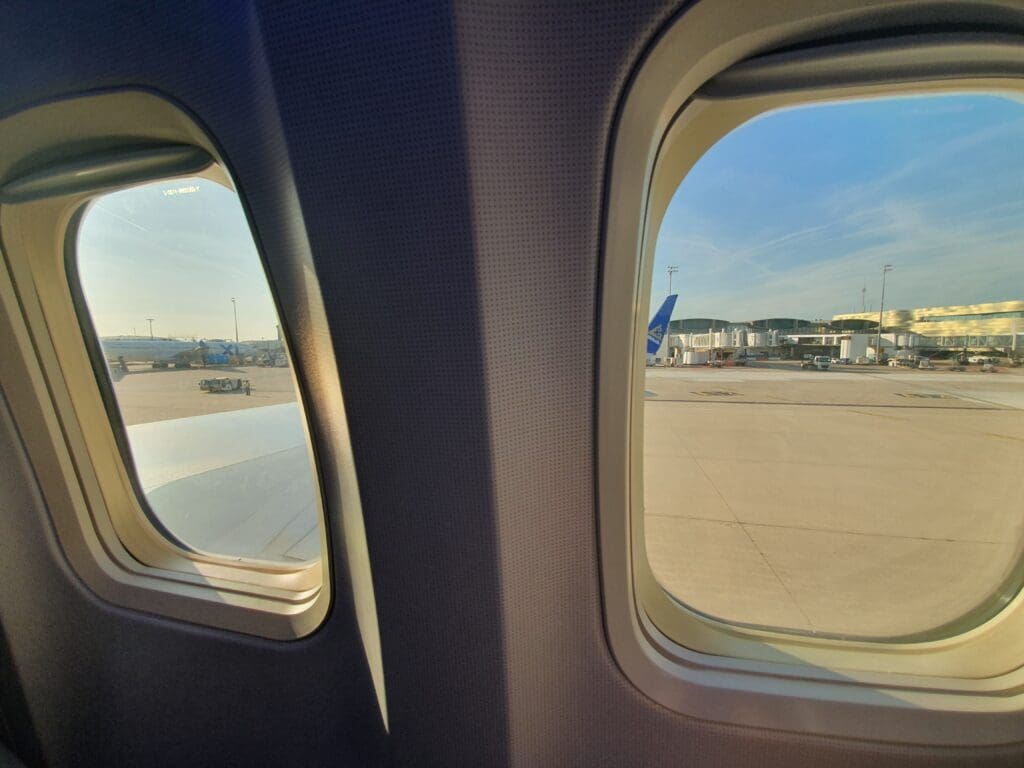
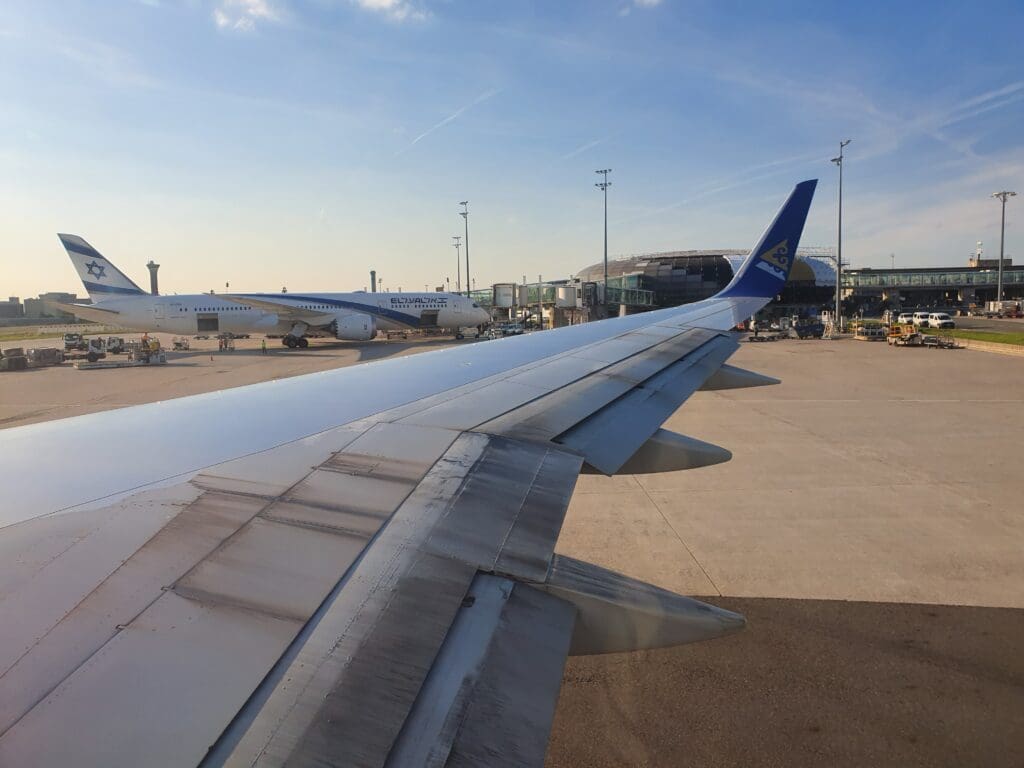
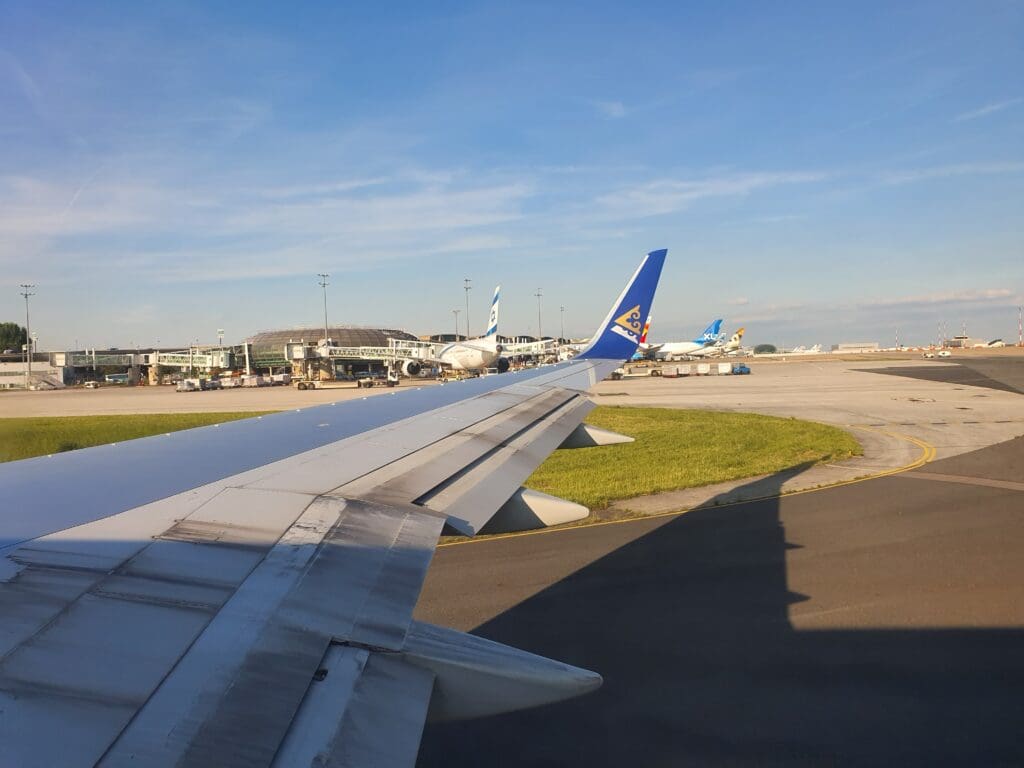
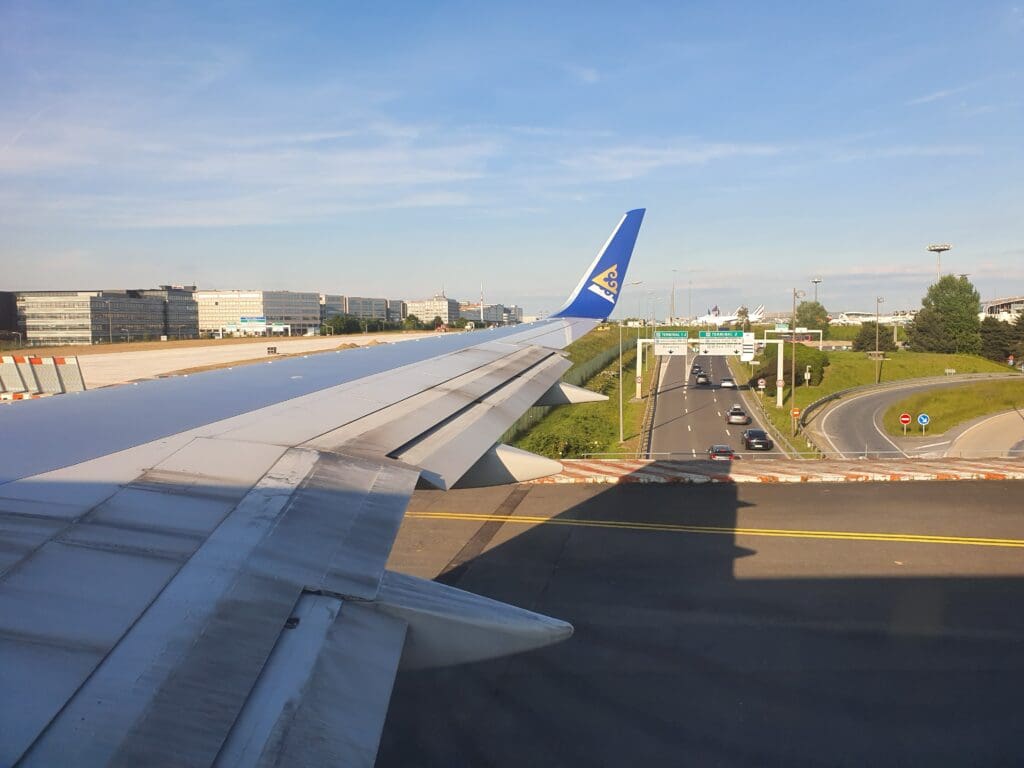
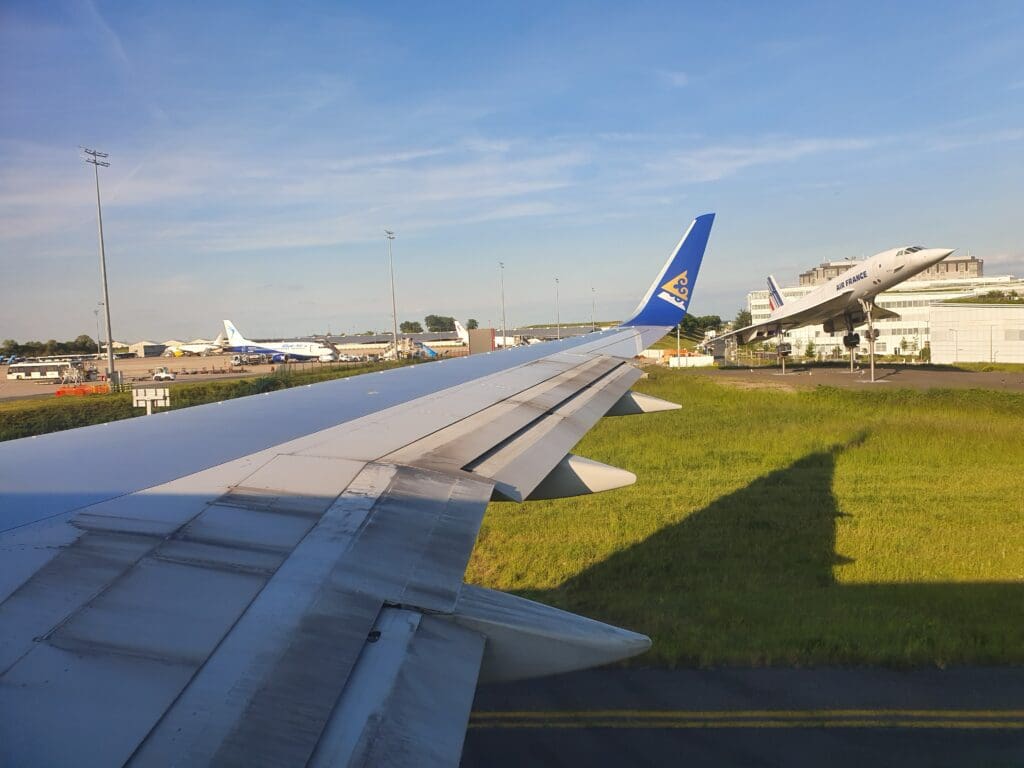
Twelve minutes after commencing our taxi, without any holding the aircraft turned onto Runway 09R and after a short pause commenced a noisy yet gentle takeoff. The light load combined with our powerful engines meant the takeoff roll was rather brief and we rotated up into the skies as we were roughly parallel with Terminal 1. Sitting on the right hand side of the aircraft, this departure allowed for fantastic parting vistas of Paris CDG and its many aircraft as we climbed upwards into the French skies.
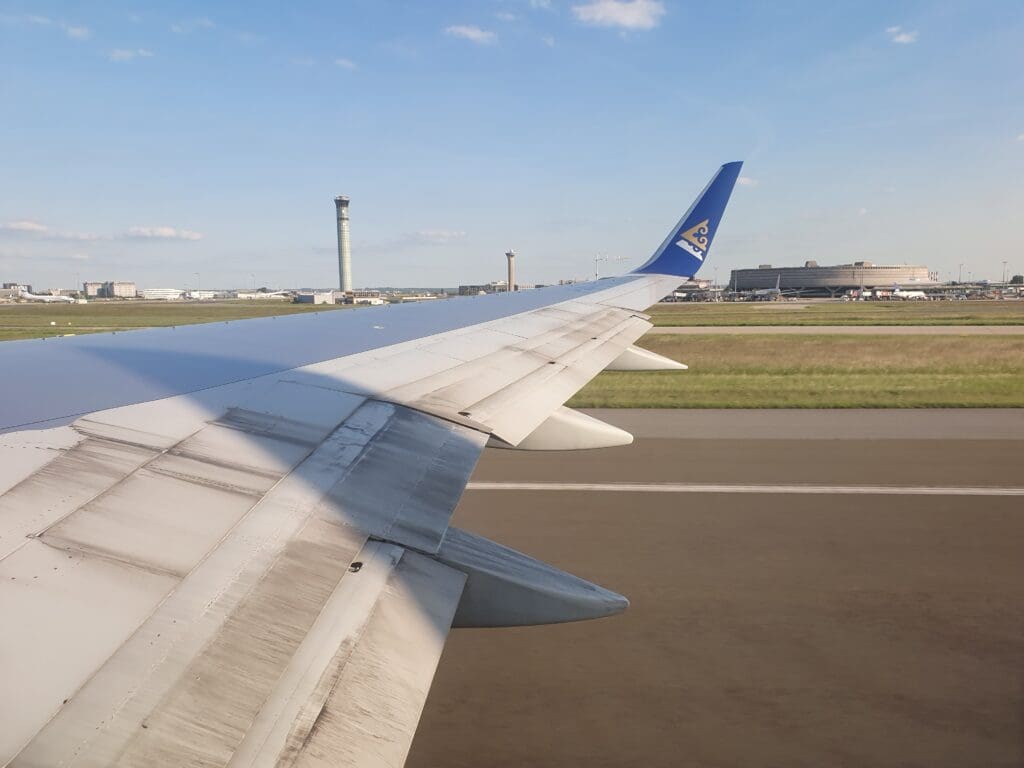
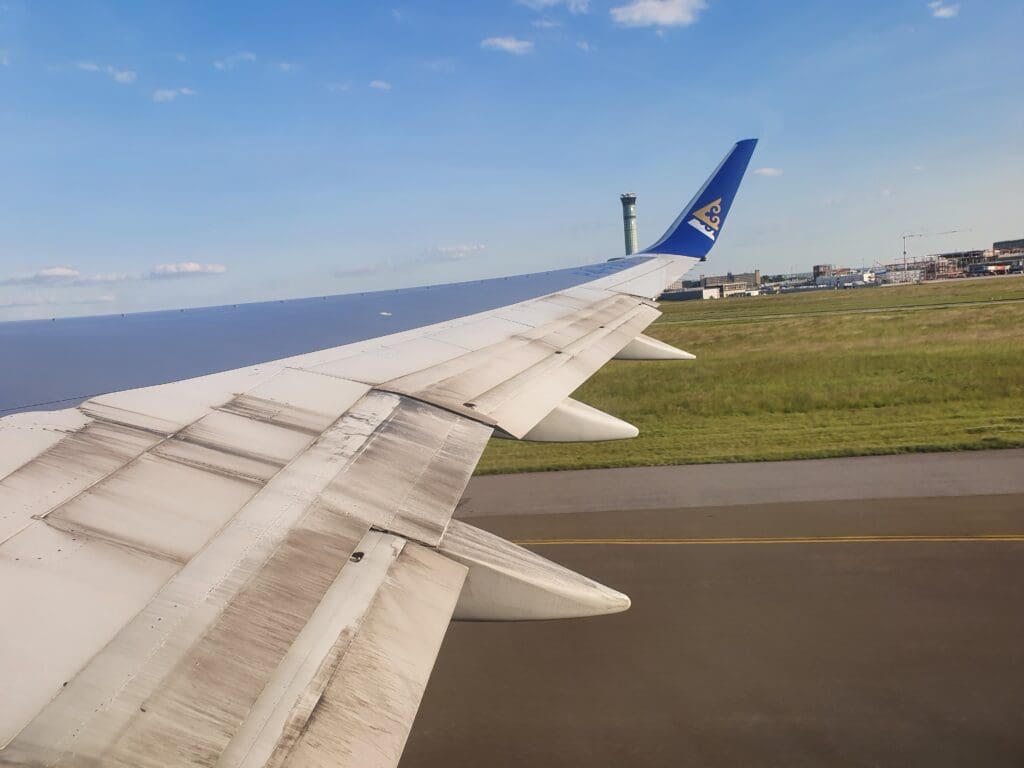
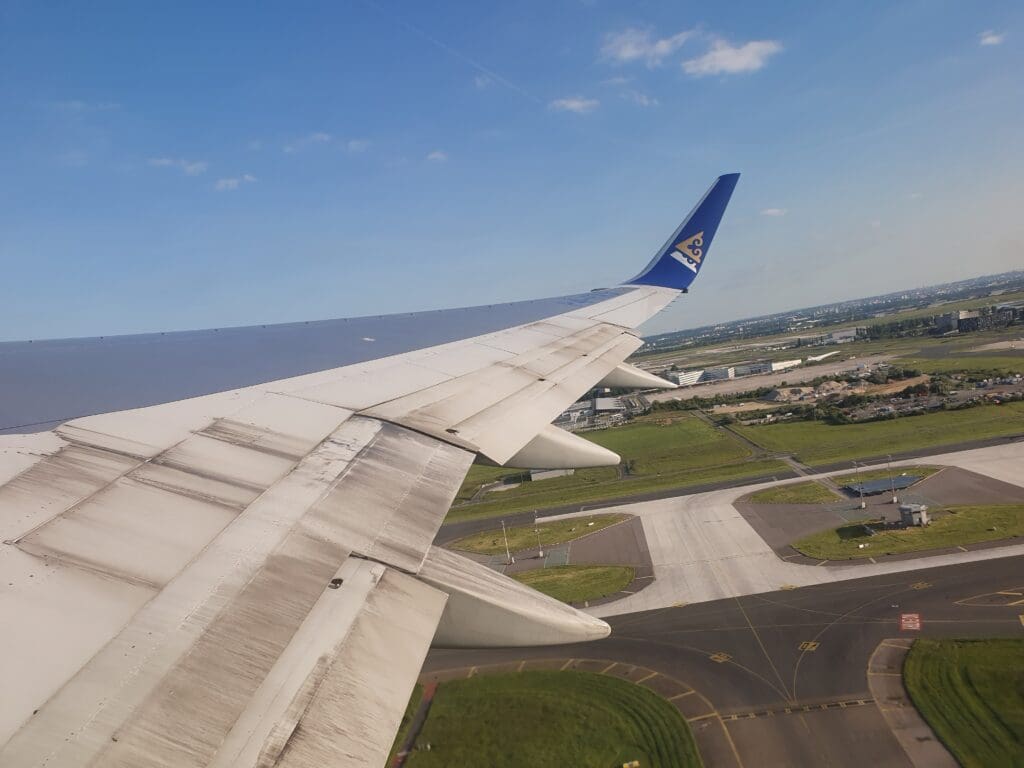

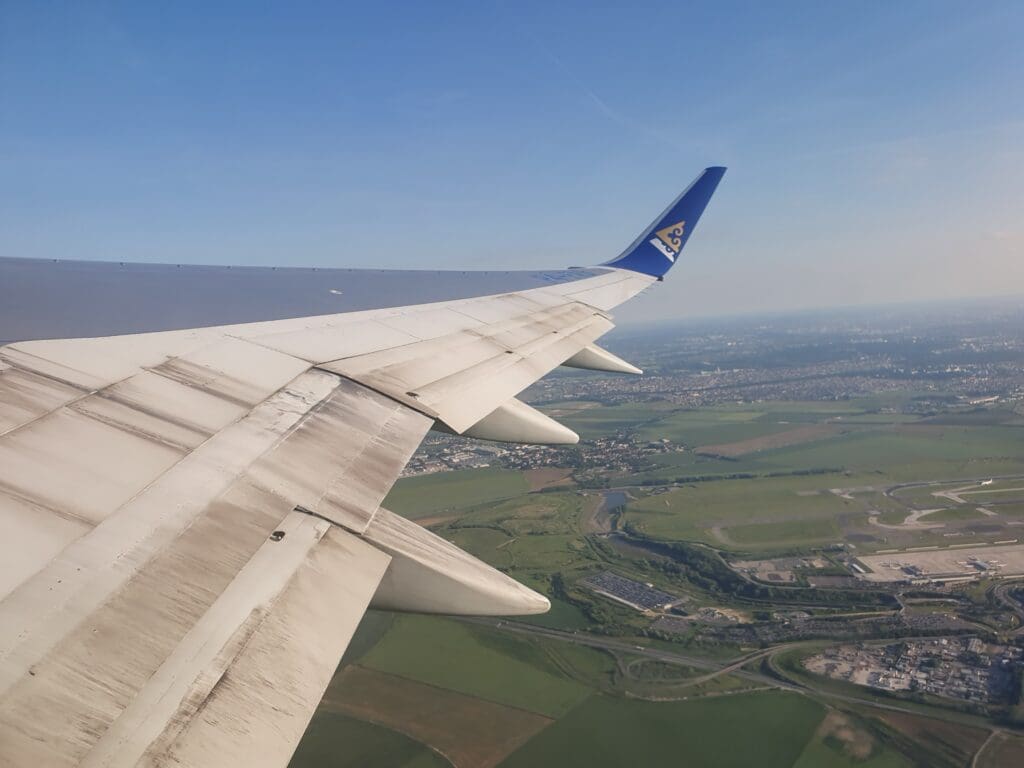
Eventually, as we climbed above the hotel-filled town of Le Mesnil-Amelot and the fields that surround the airport, one last view of the airport was provided in the form of Terminal 2G, the home base of Air France’s regional subsidiary, Hop!, before the massive expanse of France’s largest airport disappeared from view. As the aircraft climbed, it seemed as if only very minor changes to our heading were made until the aircraft reached the city of Reims, famous for its champagne, at which point the Boeing 757 banked slightly to take us towards Luxembourg.
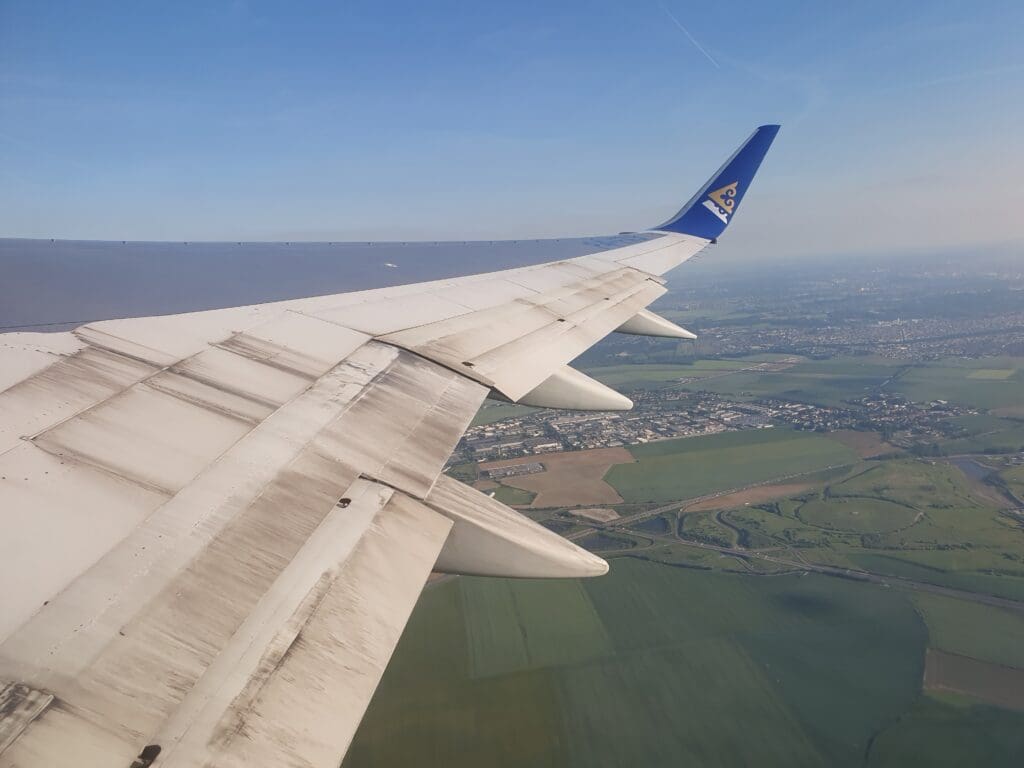
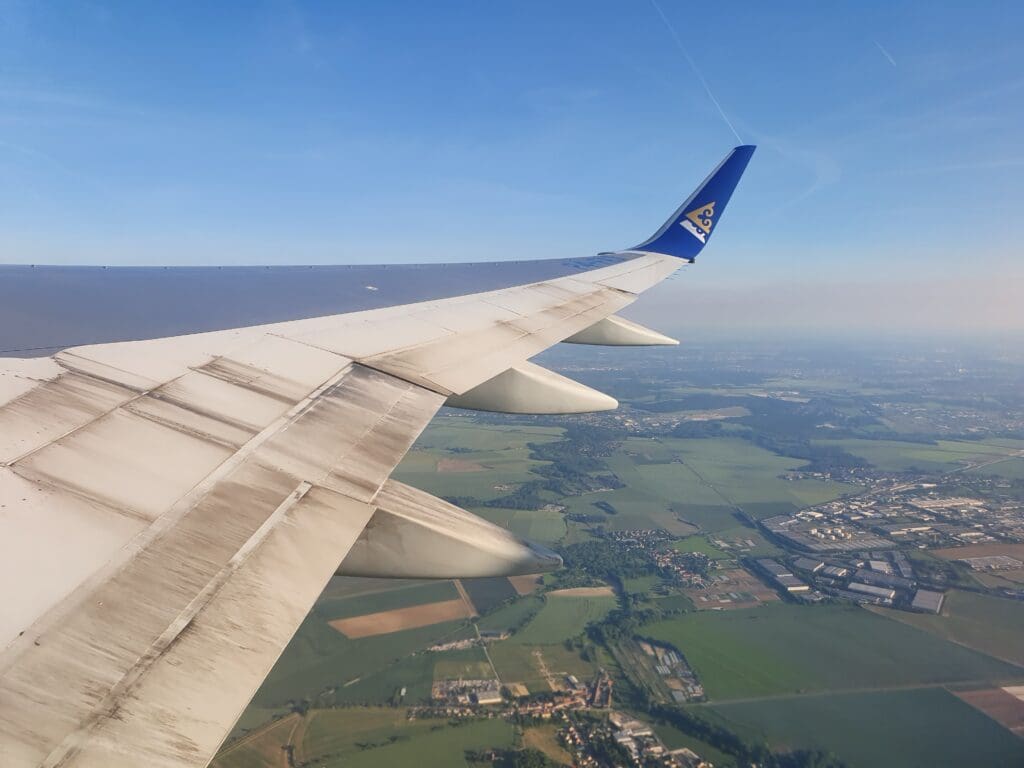
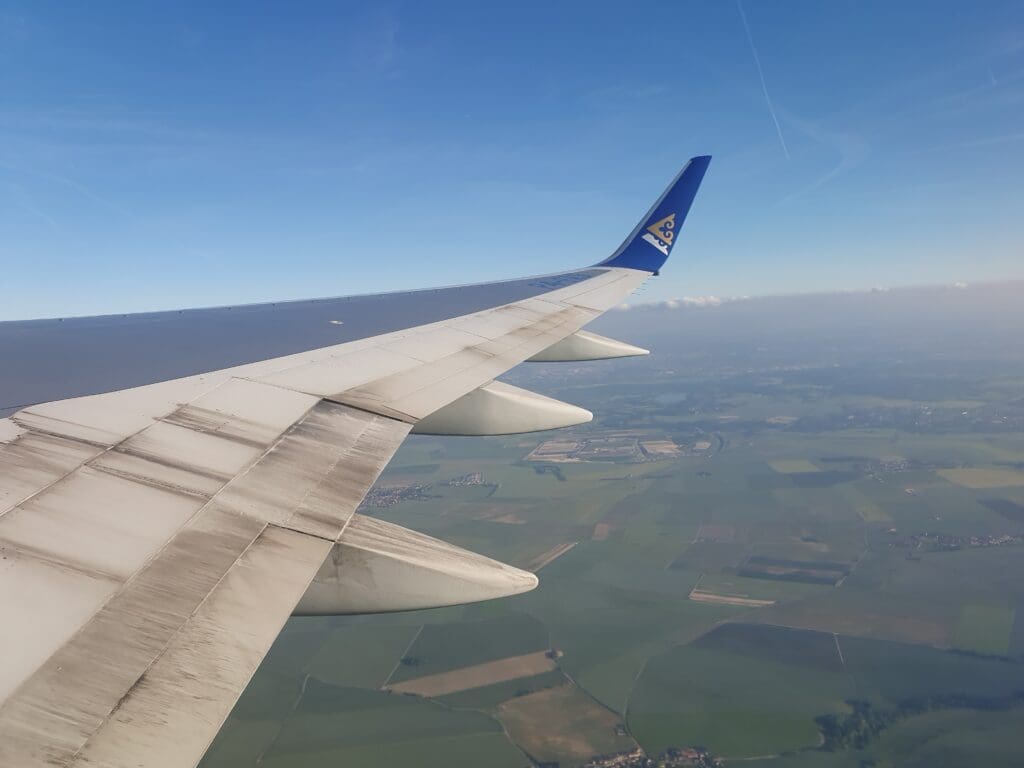
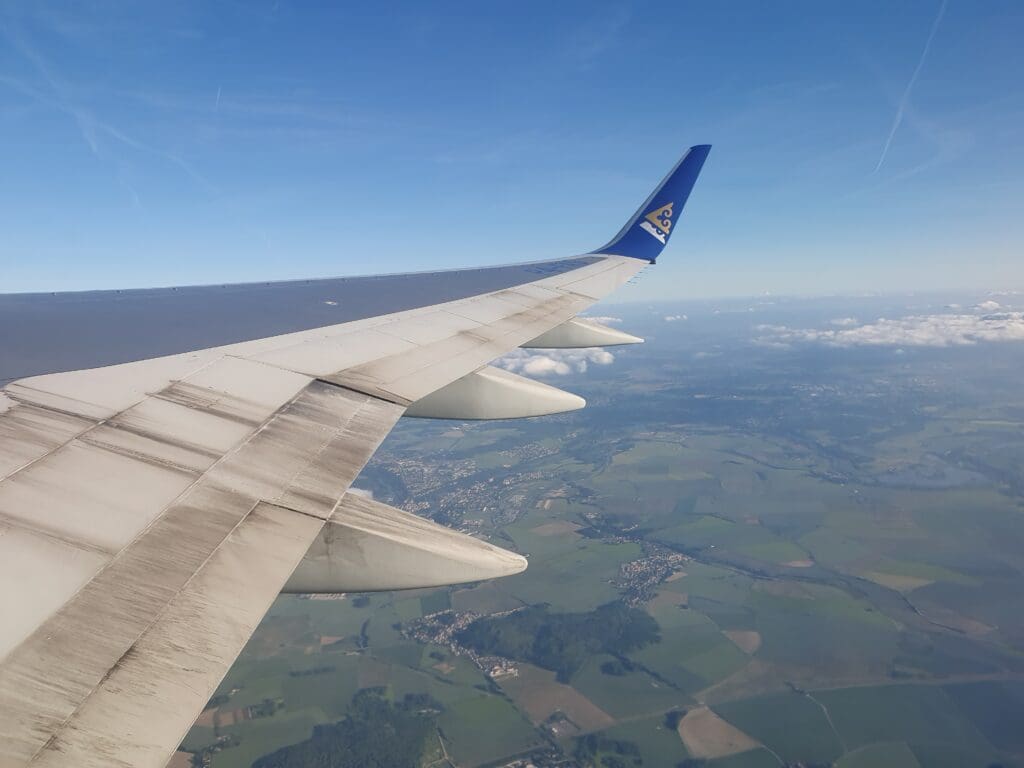
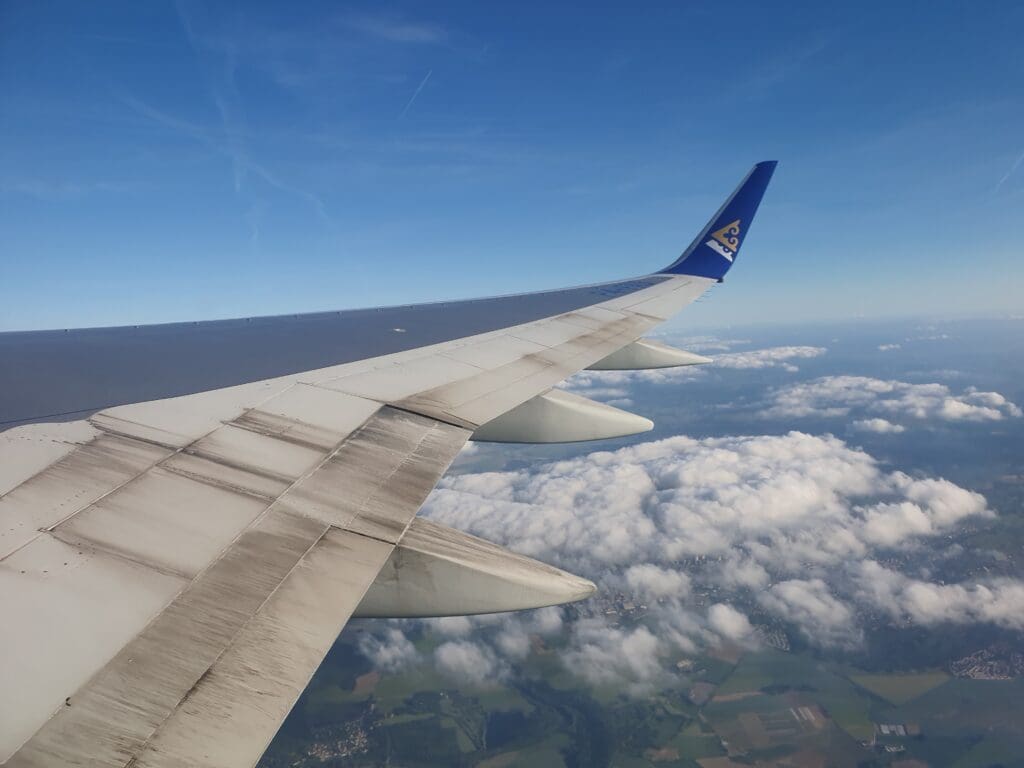
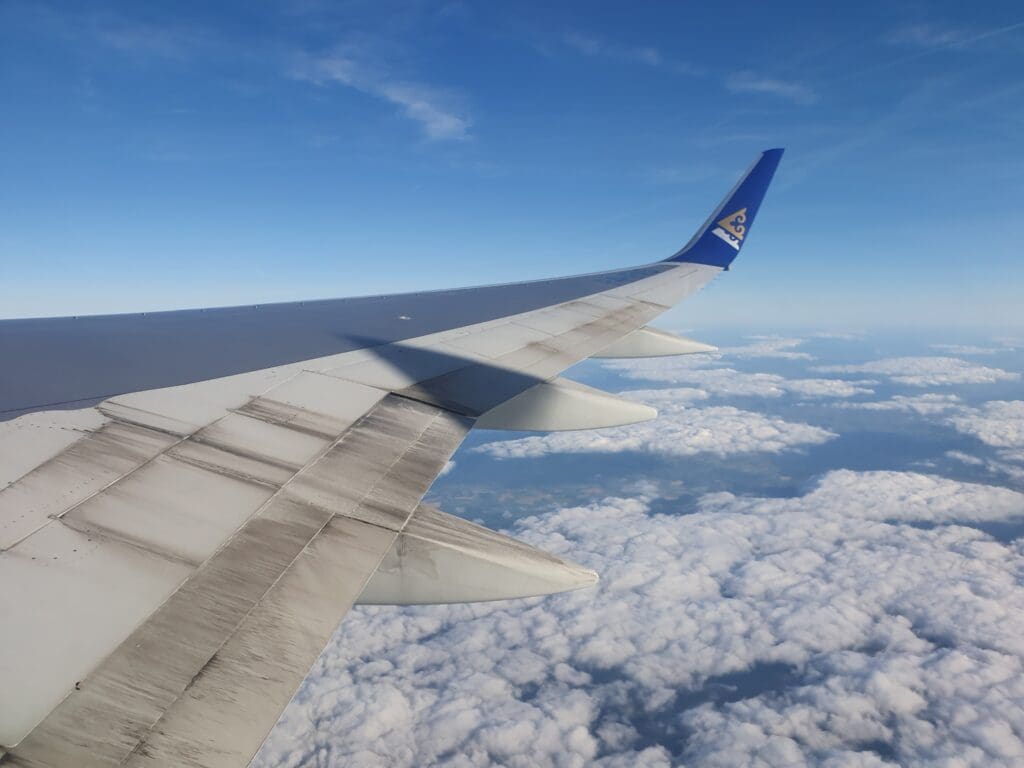
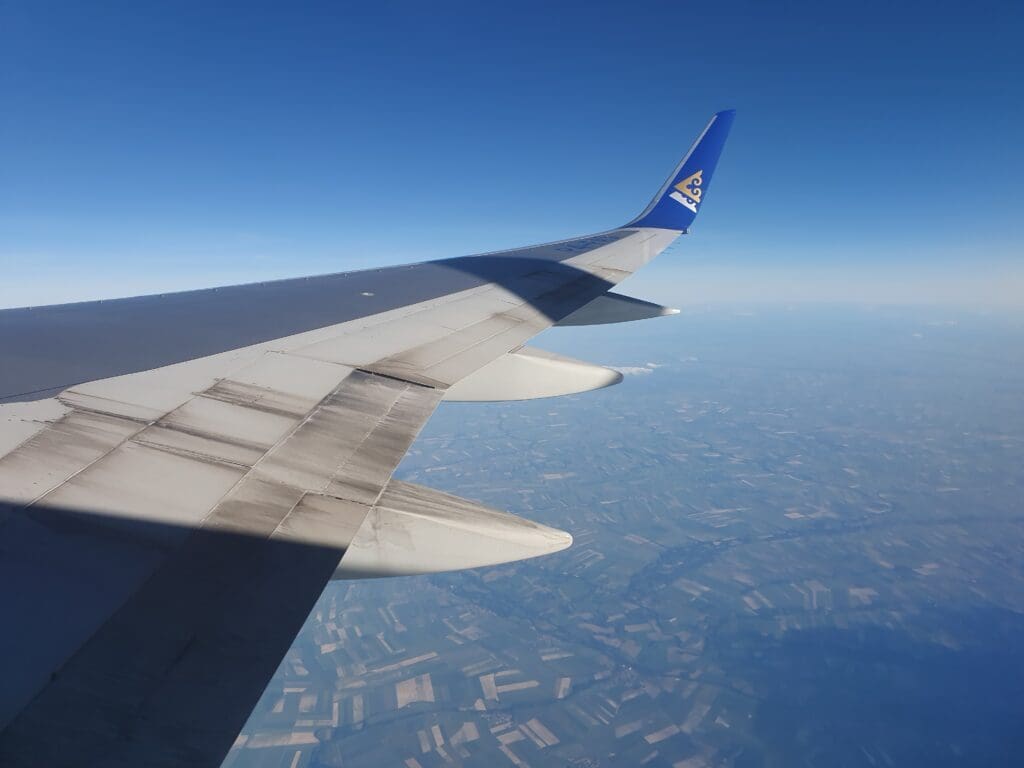
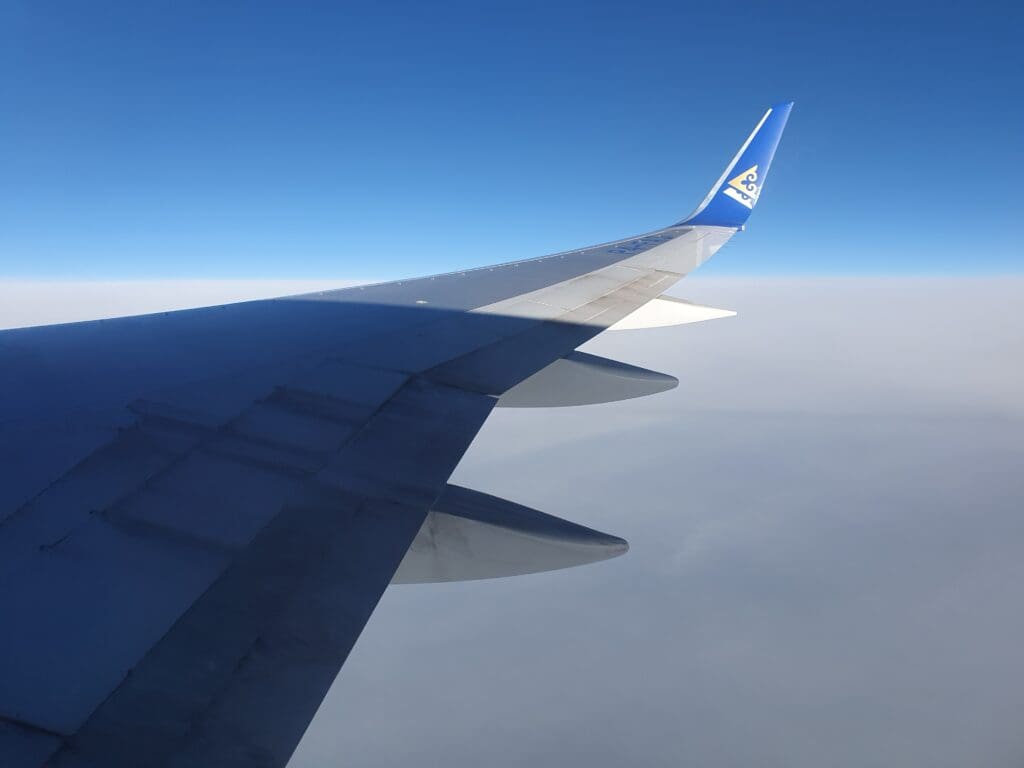
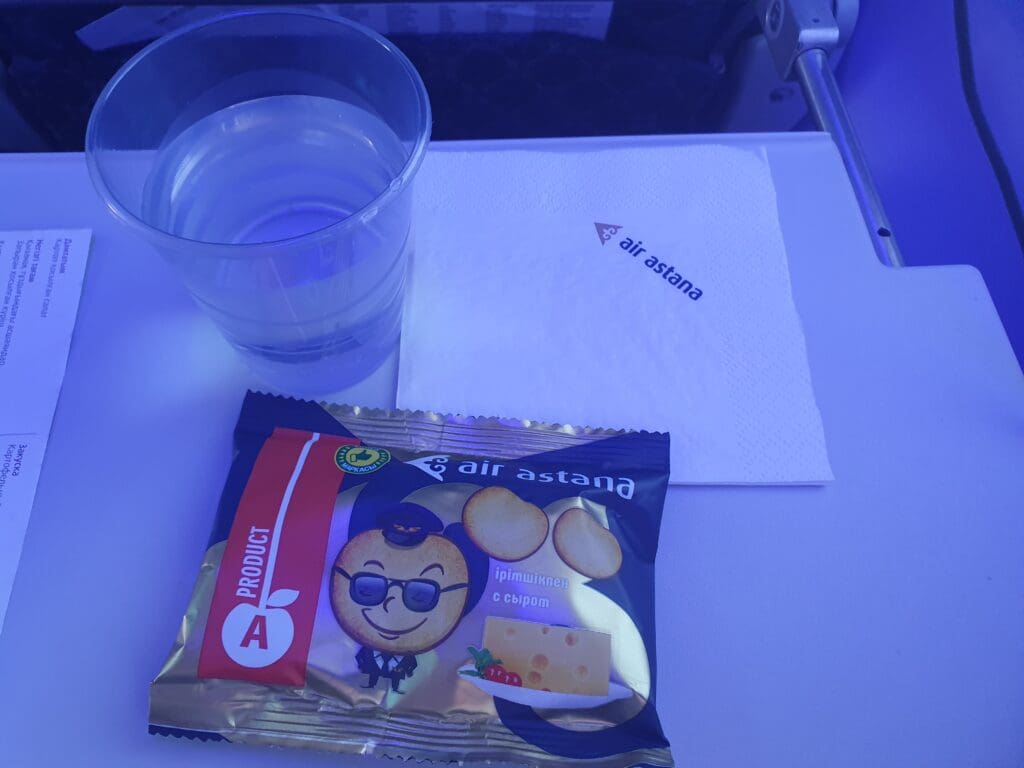
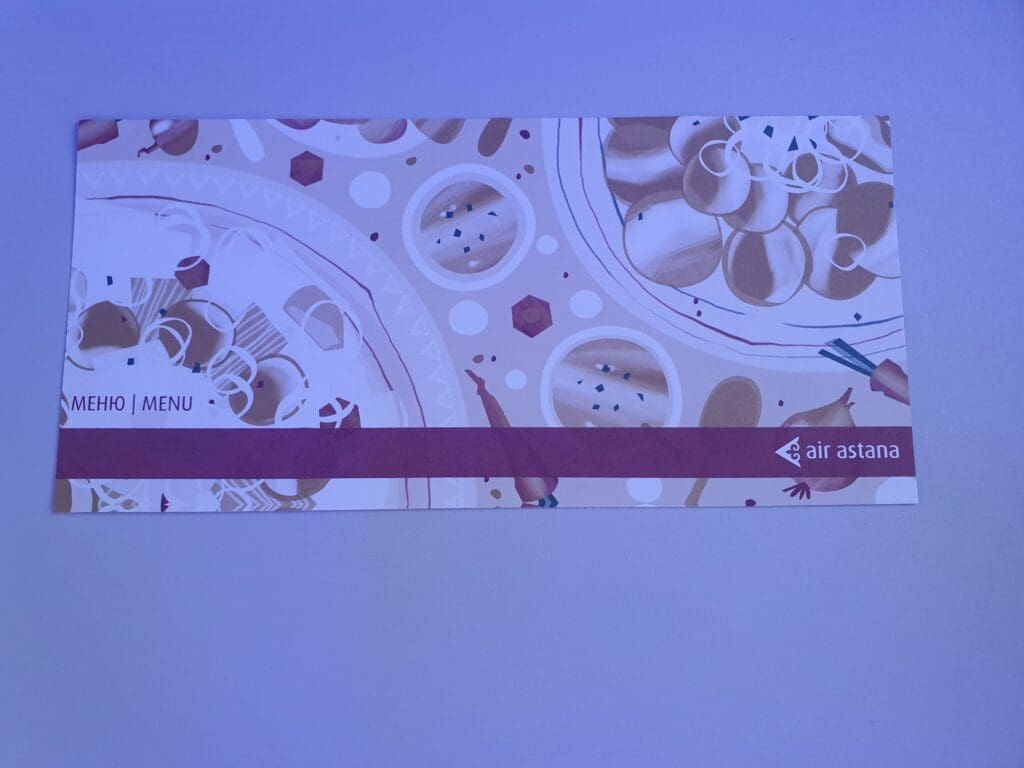
Given the fantastic weather conditions that evening, the seat belt signs were extinguished as soon as we passed through 10,000 feet and the crew quickly got to work. Continuing with the top-quality service, I soon received a hot towel alongside a real paper menu before the crew commenced the first round of drinks, at which point the Boeing was entering German airspace. Looking to stay hydrated and not wanting anything too sugary, I opted for a still water which was handed to me in a plastic cup, accompanied by a serviette and some salted crackers in an Air Astana branded packet. Upon handing this to me, the friendly crew member asked if I would like another drink, however, I declined this offer. As I sipped on this, the faint outline of Frankfurt popped into sight below, partially obscured by the clouds before these got somewhat thicker which unfortunately obscured views of the German landscape as we cruised eastwards across the country. Once I finished my crackers and drink, being rather attentive, one of flight attendants noticed that I had polished these off, removed my rubbish and asked if I would like another drink!
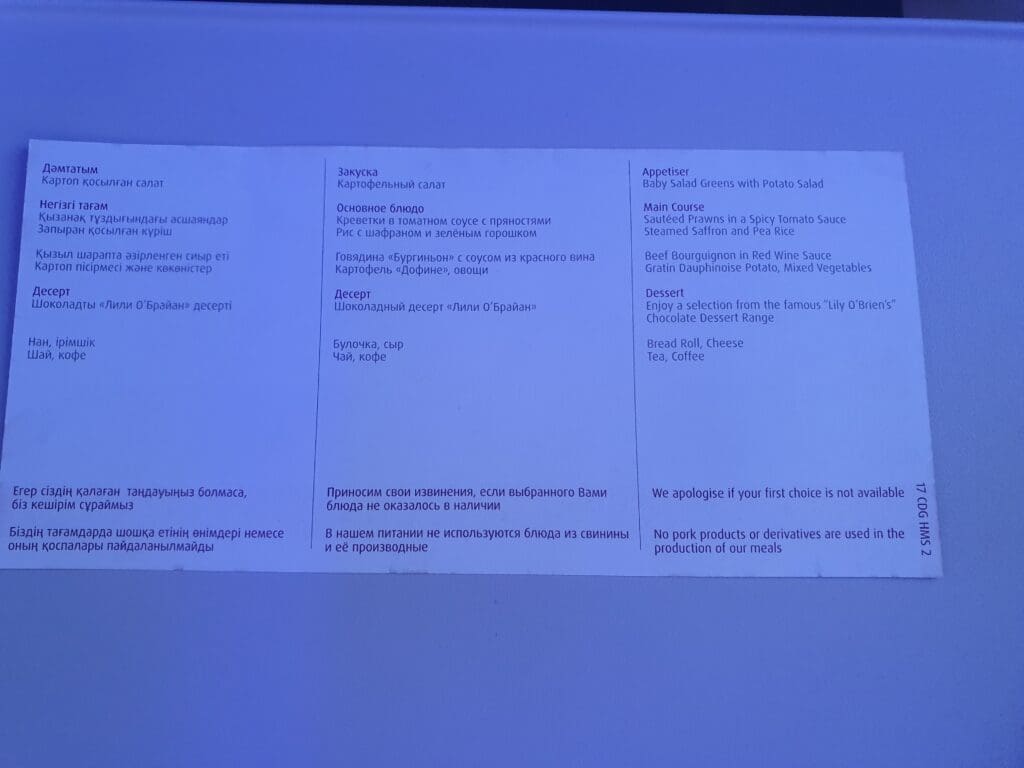
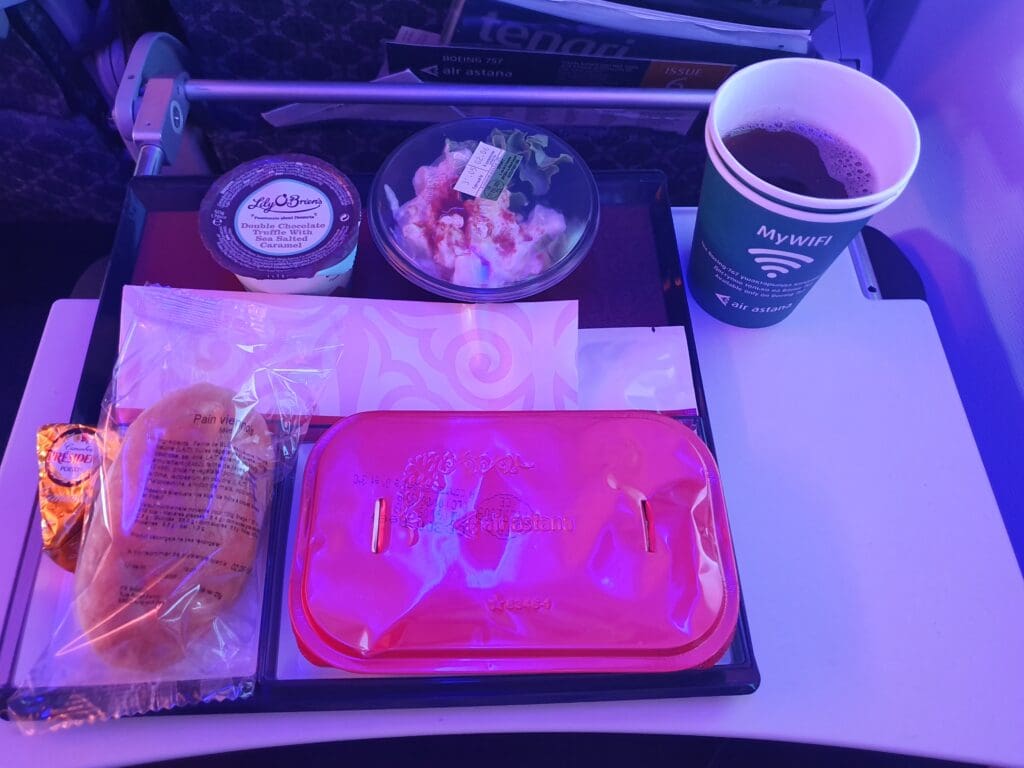
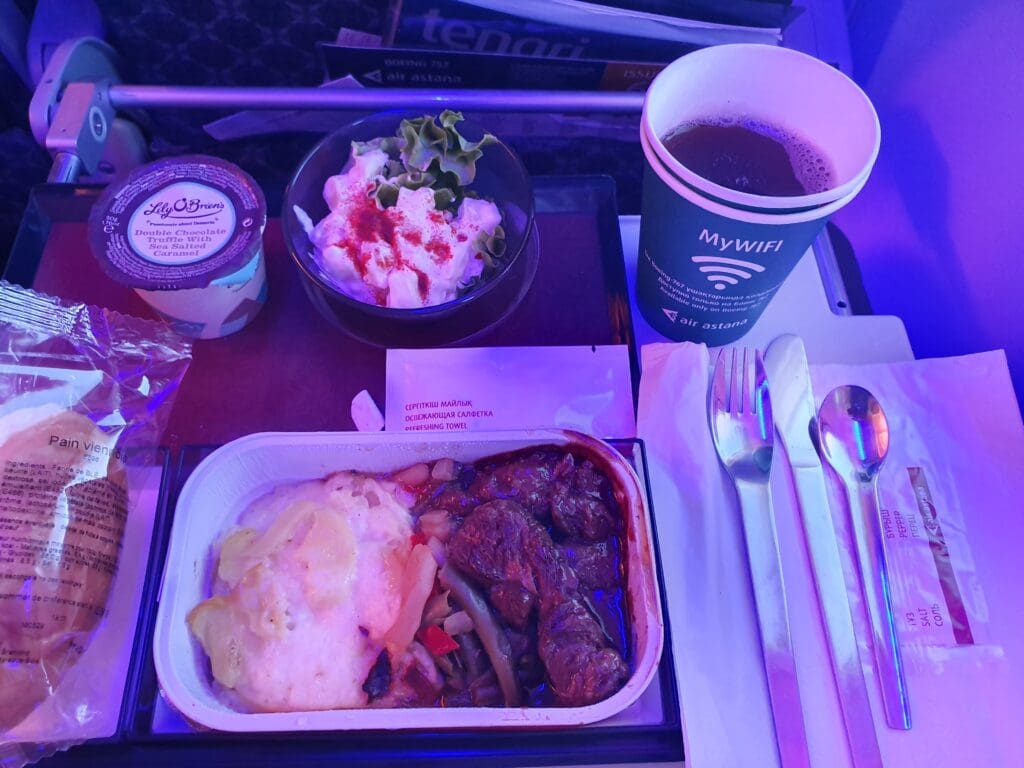
As our aircraft smoothly sped towards Berlin at an altitude of 39,000 feet, at 2035 the main meal service commenced. After around ten minutes, the crew reached my row and asked which of the two options I would like. Seeing as we had departed from one of the food capitals of the world, I opted for the French dish, beef bourguignon. This was accompanied by a potato salad, bread roll and a camembert triangle, with a sea salted caramel dessert provided to round this off. Adding a touch of class, eating utensils came in the form of real metal cutlery, whilst a sachet with a serviette, the usual salt, pepper and toothpick and a wet wipe was also provided. Being slightly greedy, I found the main dish to be a little on the smaller side, however overall this was a more than reasonable spread, especially seeing as the flight was not a particularly long slog. Furthermore, all of this was absolutely delicious and thus left me with no complaints. Fifteen minutes after I received this offering, the crew passed through the cabin undertaking another drinks round, collecting trays from those who had finished their meals. By this time, the aircraft was over central Poland and the skies were rapidly transforming from day to dusk as we sped northeast towards the Baltic state of Lithuania.
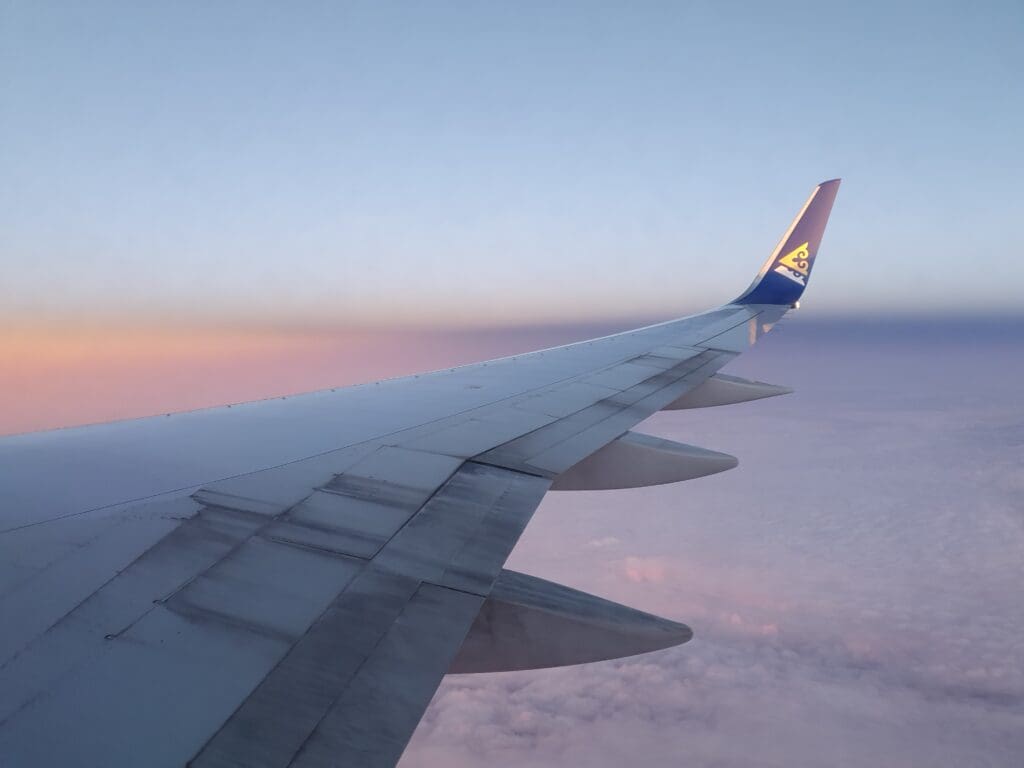
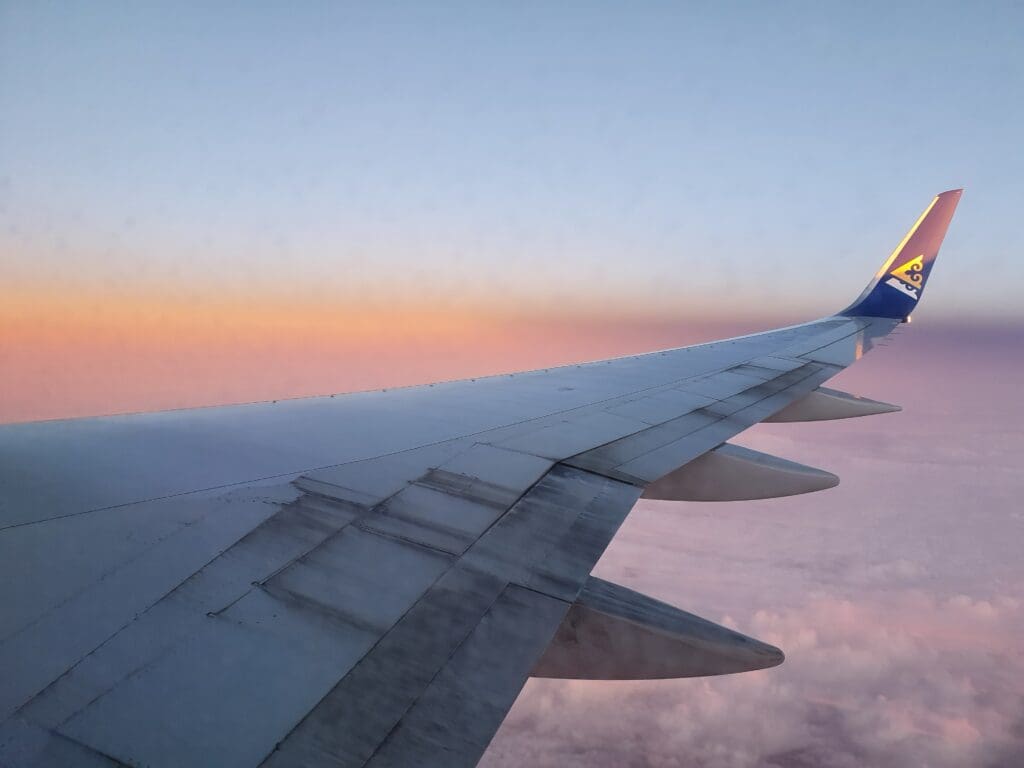
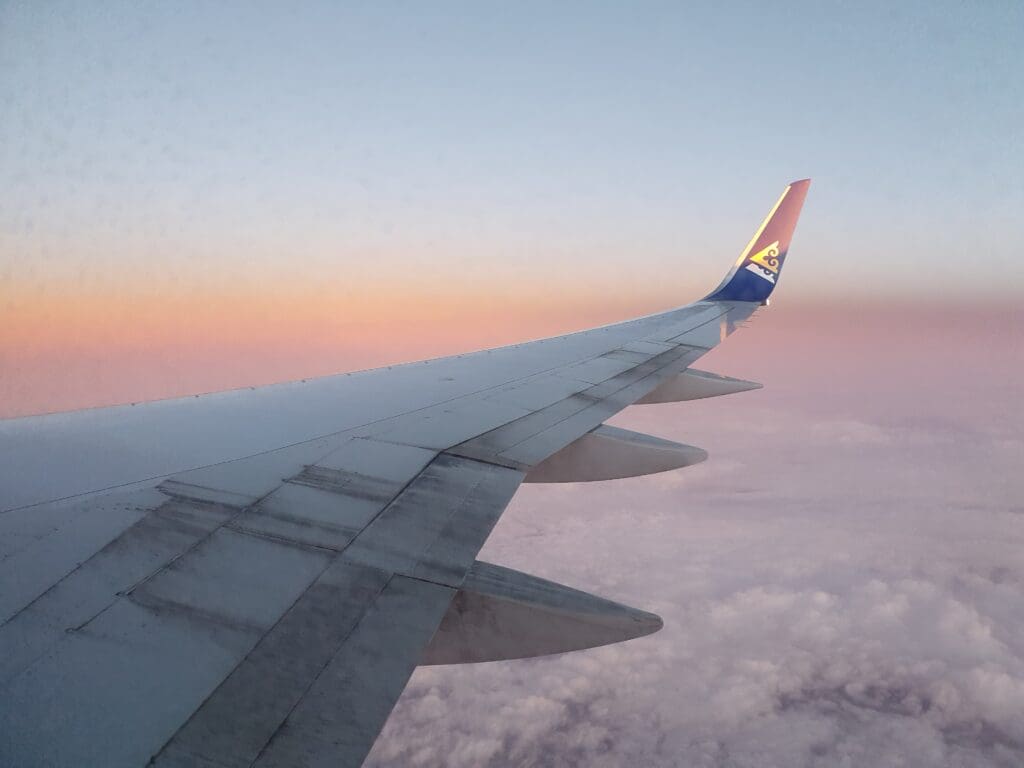
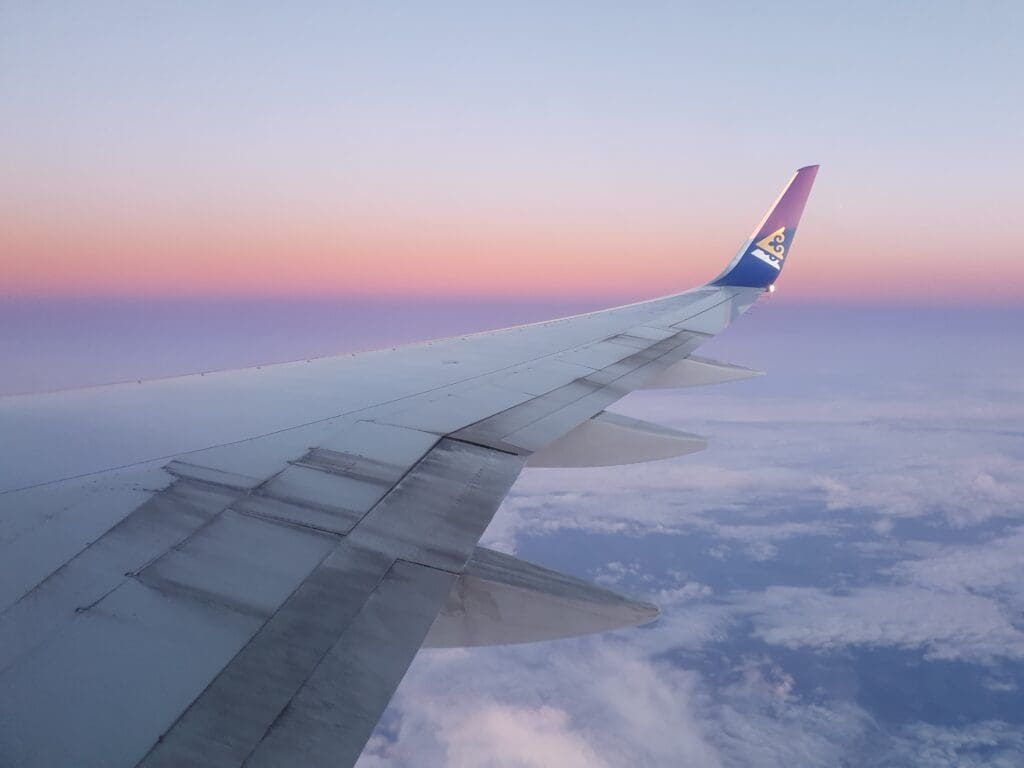
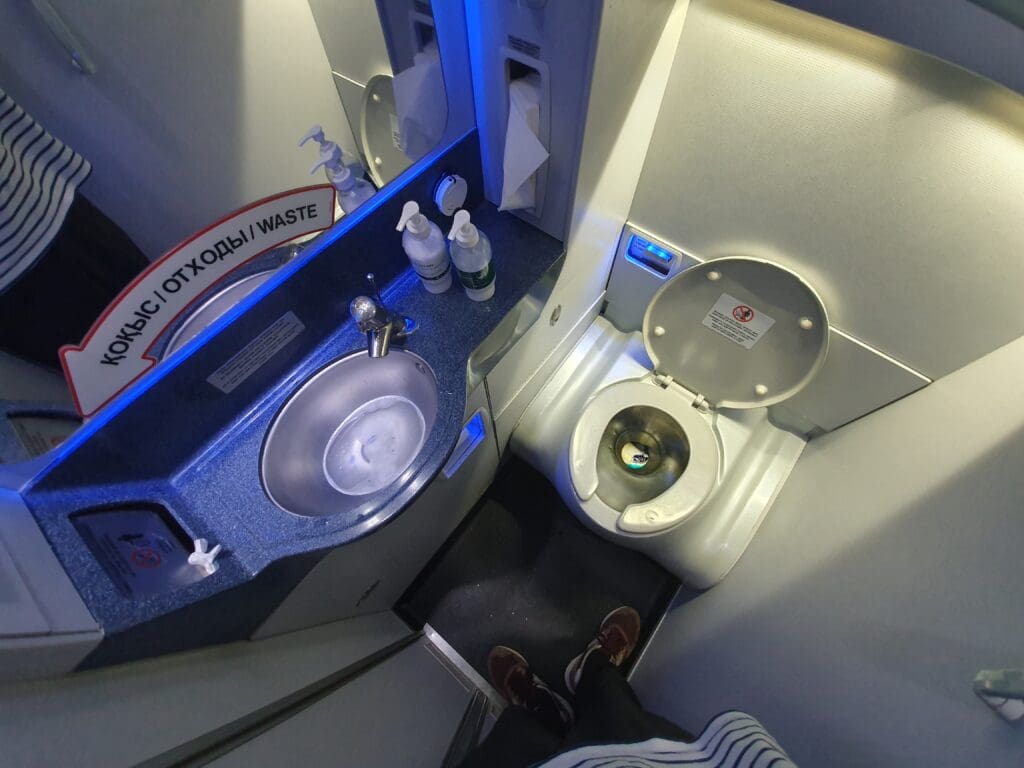
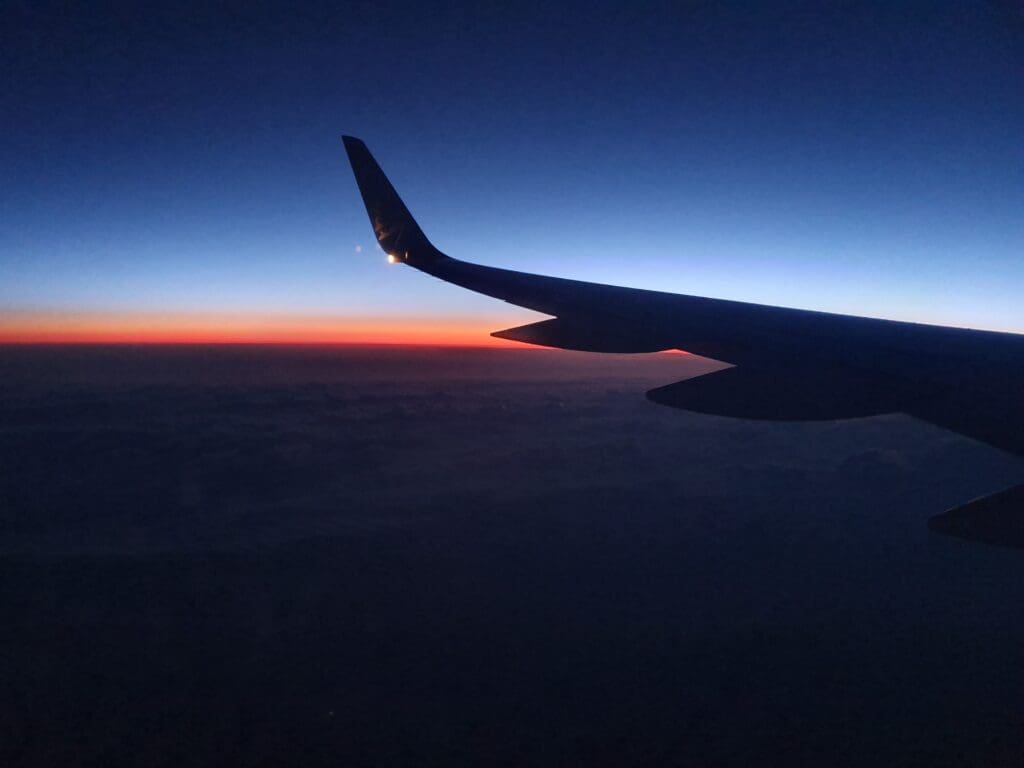
Once my tray had been collected, I decided to pay a visit to the lavatory, which, like the aircraft, appeared to be in a clean and well-kept condition, and, as with the main cabin this had been somewhat updated to give it a modern feel. A short time after returning to my seat, the cabin lights were turned off in order to allow those onboard to have a nap as we sped eastwards into the night. As we headed over Belarus, those on the left hand side were offered views of the sun shining to the north which remained until sunrise, whilst those on the right could see little bar darkness until the clouds parted below revealing the occasional town.
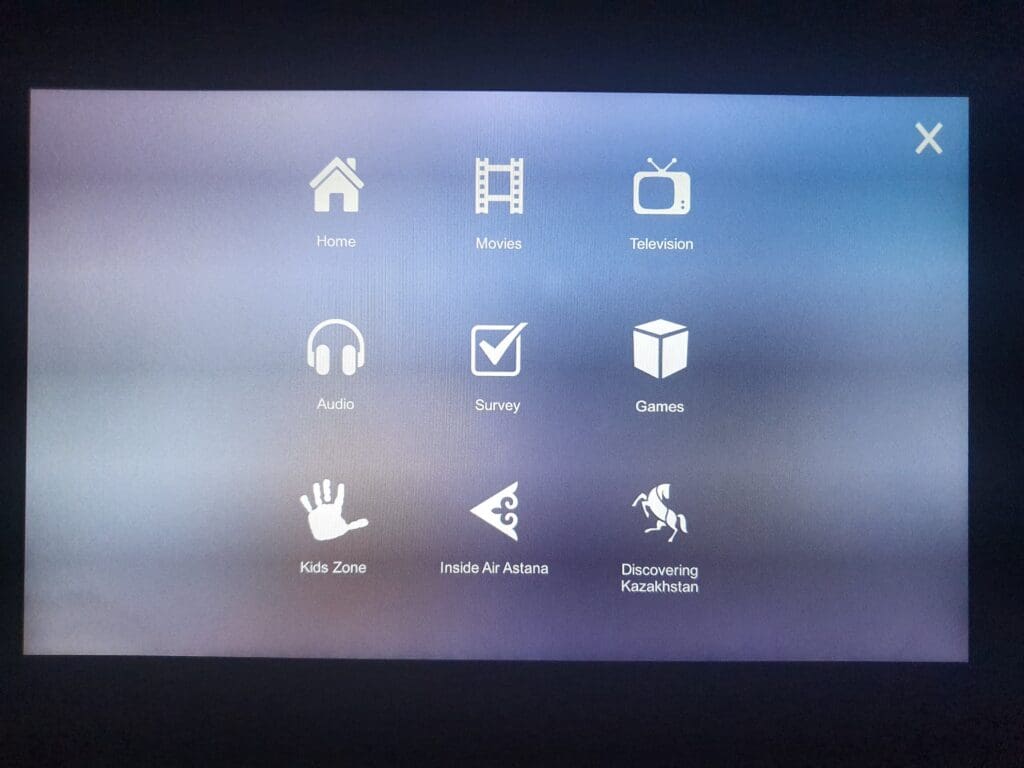
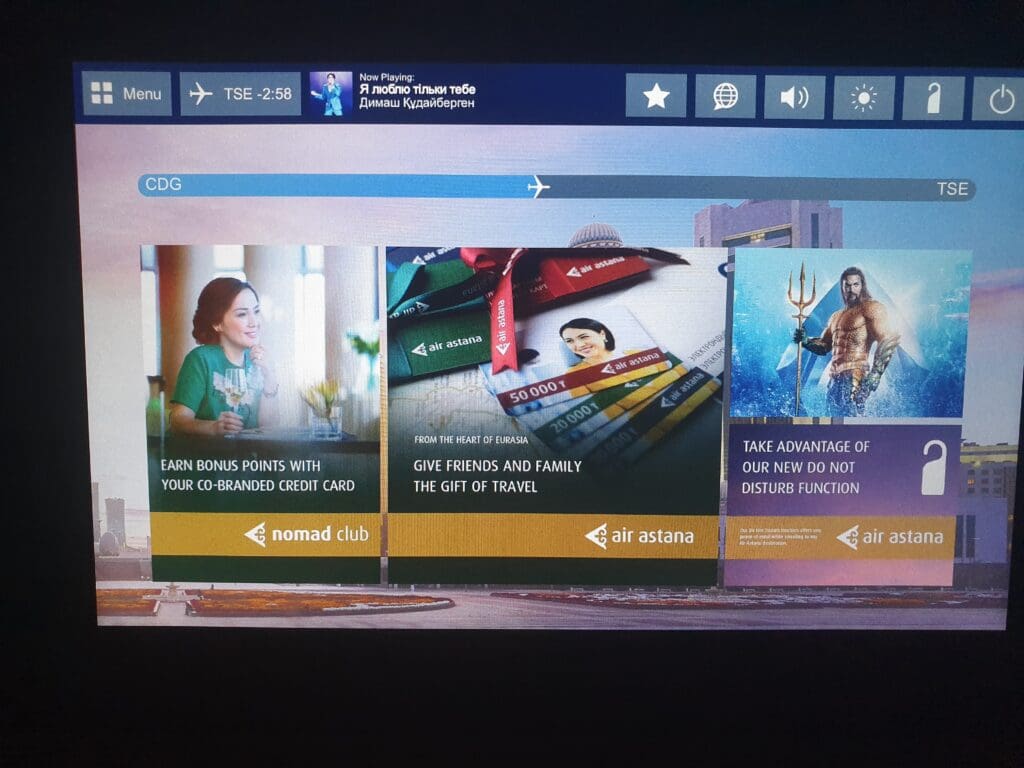
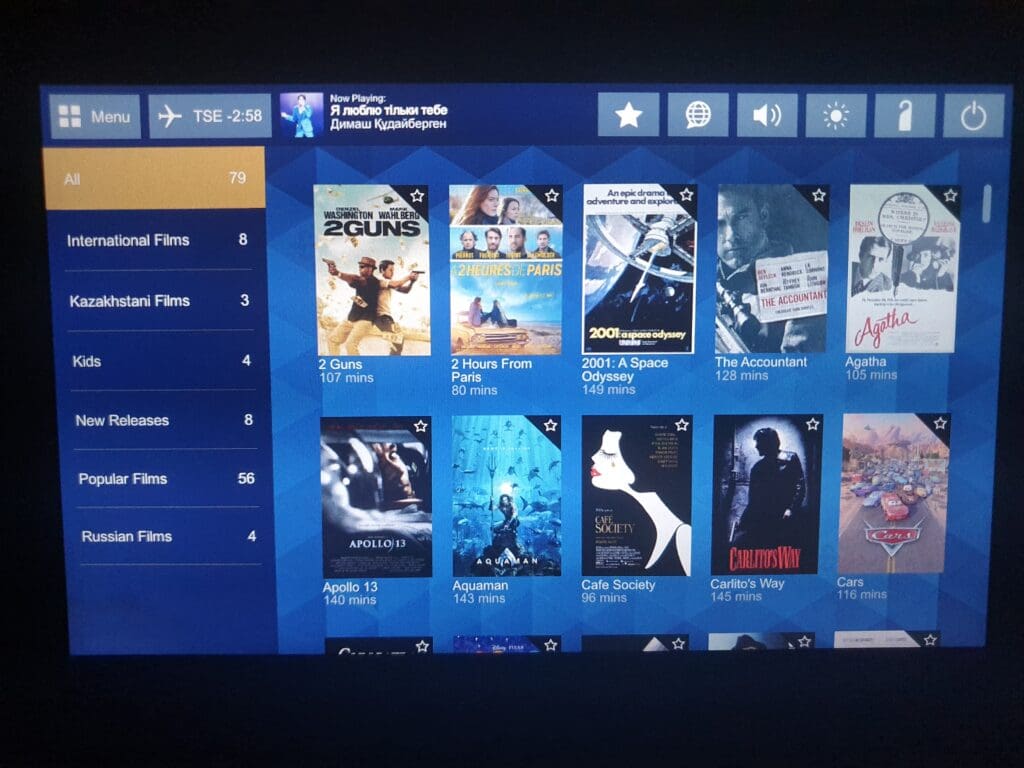
With little to see outside, I turned my attention to Air Astana’s inflight entertainment system. Named KCTV, I couldn’t help but notice that this shares a name with North Korea’s state-owned television channel, Korean Central Television! However, rather than being named in homage to this, this is the partnering of Air Astana’s IATA code ‘KC’ and television. Starting with the basics, I found the system to be easy to navigate, quick to load and respond to touch and home to a very decent selection of items. Specifically, this featured 79 films which ranged from the latest Hollywood releases to Soviet-era romantic comedies, alongside 65 television programmes and 250 audio albums. In addition to this, four programmes that were part of a series entitled ‘Discovering Kazakhstan’, seven interesting featurettes regarding the inner workings of Air Astana, titled ‘Inside Air Astana’ category, five games, a kids zone and a survey could be found. Last but not least, a scrolling moving map could be found for those wanting to follow the flight as we trundled eastwards towards Kazakhstan. Overall, I found the system to be well laid out and the touch screen highly responsive. My only complaint was that despite Air Astana’s fairly extensive route network, the system was available in just Kazakh, Russian and English only. Finally each visual item commenced with a series of advertisements for Lexus, Nazarbayev University, Cartier and Hyundai.
Once I had sufficiently explored the inflight entertainment system, I turned to the other form of airline-provided entertainment, the May-June 2019 copy of Tengri magazine. This edition of the airline’s tri-lingual publication was split into six sections – the first detailed the latest happenings at Air Astana and contained a large piece on the airline’s low cost subsidiary FlyArystan, the second offered articles on Kazakhstan and the third and largest section provided travel articles on locations across the world, namely Abu Dhabi, Langkawi, Georgia, Harbin and Lake Kaindy. After this came the ‘gallery’ section featuring a couple of art related articles and the ‘time out’ portion of the magazine which contained horoscopes. Last but not least details regarding the airline, their destinations and their fleet could be found at the very end of the magazine. Overall, I found the publication to be of decent quality, although like many inflight magazines, this was heavily laden with advertisements provided by companies from Kazakhstan and elsewhere.
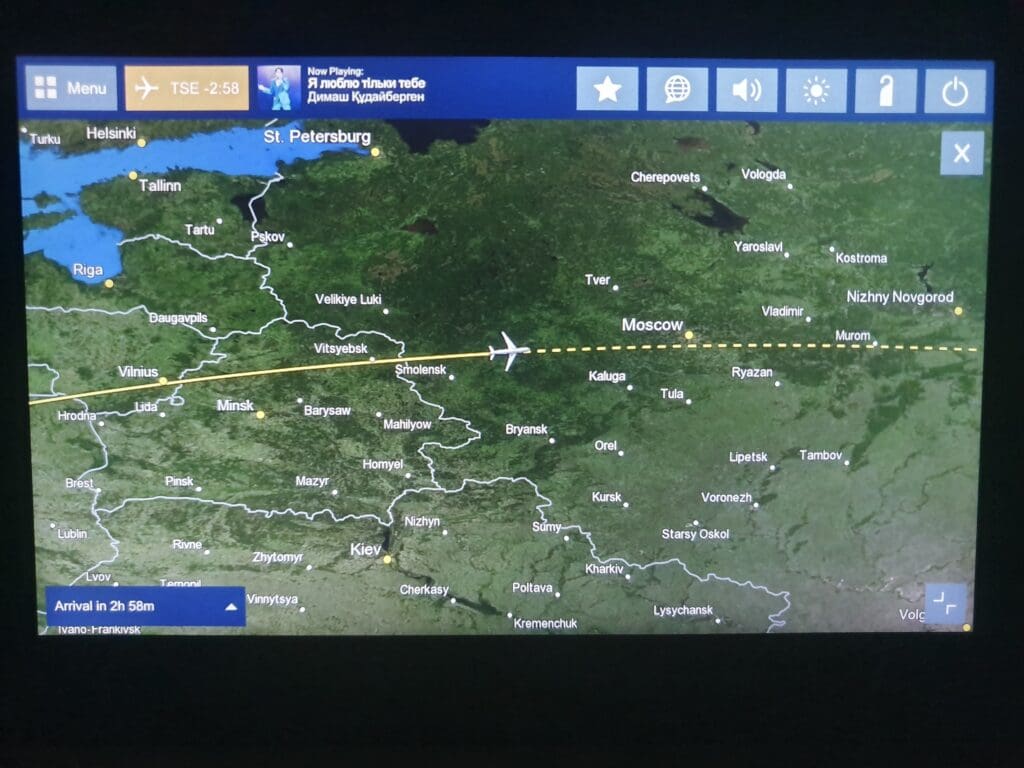
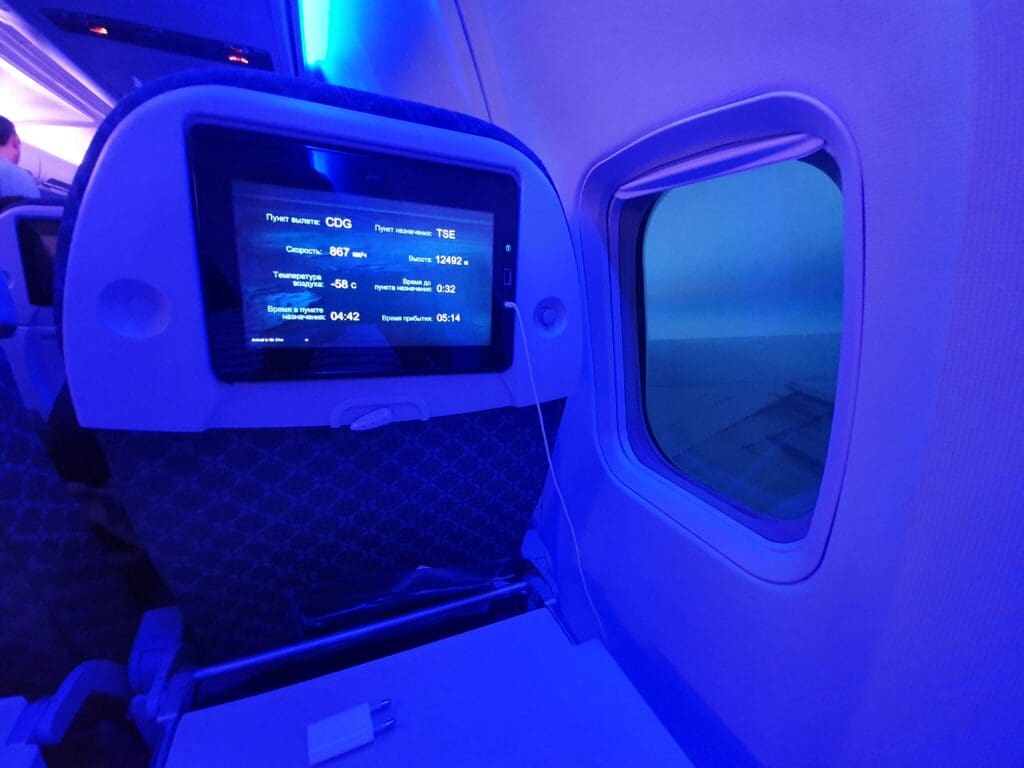
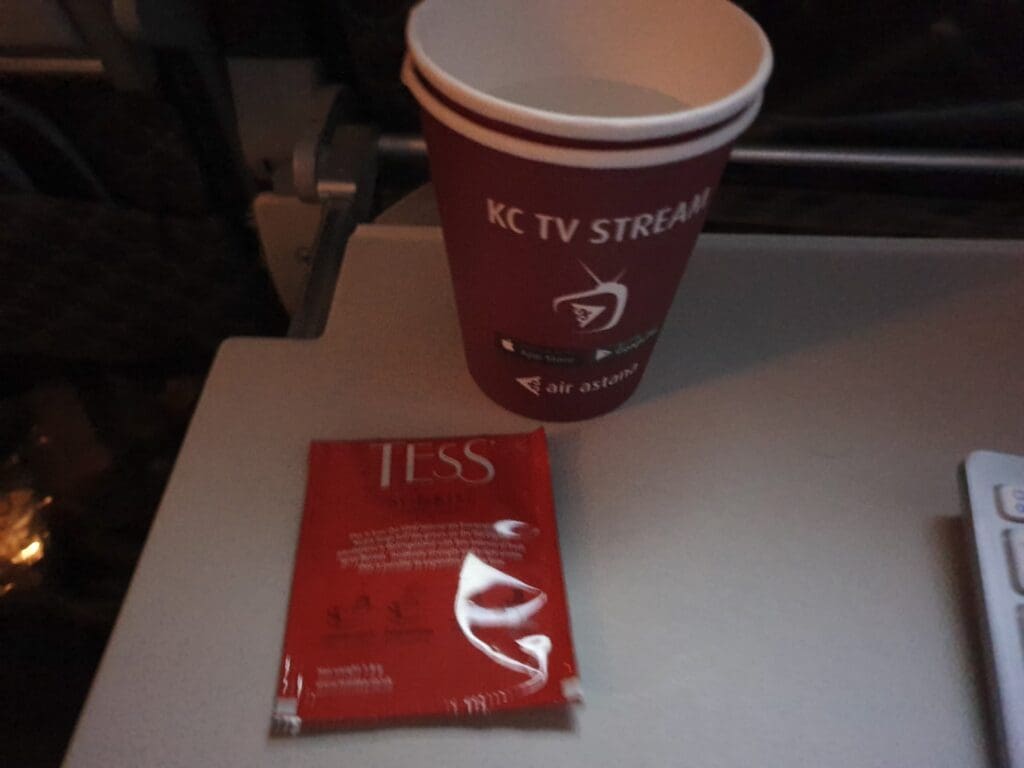
After a short twenty minute crossing of the northern portion of Belarus, the Boeing crossed into Russian airspace, passing to the north of Bryansk and Smolensk before reaching Moscow’s southern suburbs. Once south of Moscow, occasional bright flashes every fifteen seconds or so were visible, lighting up the sky towards Ryazan. With little to do, I decided to take a short thirty minute nap, waking up somewhere near Kazan with around two hours of flight time remaining. Having woken up incredibly thirsty, I decided to head to the rear galley and ask for a tea. However, seeing the curtain closed, for the first time in my life I decided to press the call button, feeling somewhat guilty after doing so as this illuminated the rows in front and behind of mine which were filled by slumbering passengers. Thankfully, this was soon answered and within no more than two minutes, the flight attendant returned with a boiling hot tea. As I carefully sipped this, our aircraft entered Kazakhstani airspace near Kostanay, a city that our aircraft had visited the previous day.
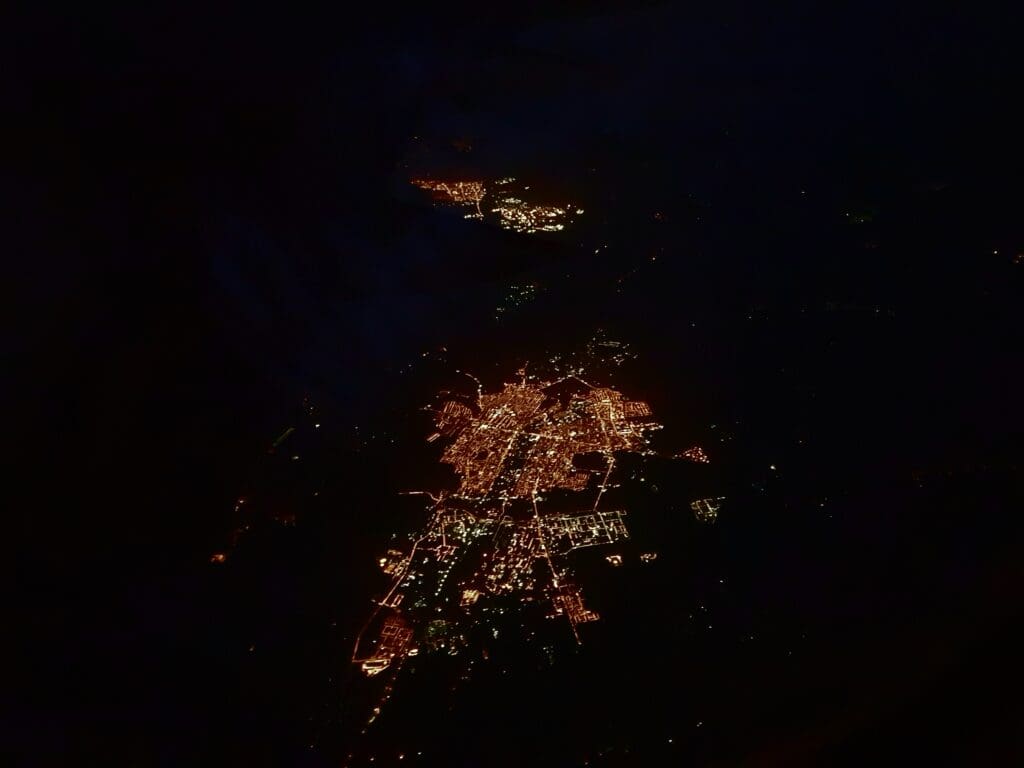
Once inside the skies of Kazakhstan, the short summer night was nearing its end and the skies could be seen gradually brightening in preparation for a new day. After a short while, the moodlighting was switched back on and a pre-recorded announcement was made asking passengers to return to their seats in preparation for our arrival. After this was made the crew passed through the cabin with trays of soft drinks before making a final pass through the cabin with boiled sweets. At 0455 our aircraft could be felt commencing its descent. Despite barely sleeping, the comfortable five hour flight had really flown by and as we neared Astana I was left with nothing to make any sort of valid complaint about. As we sank, the dusty steppe appeared below and our aircraft was thrown around a little.
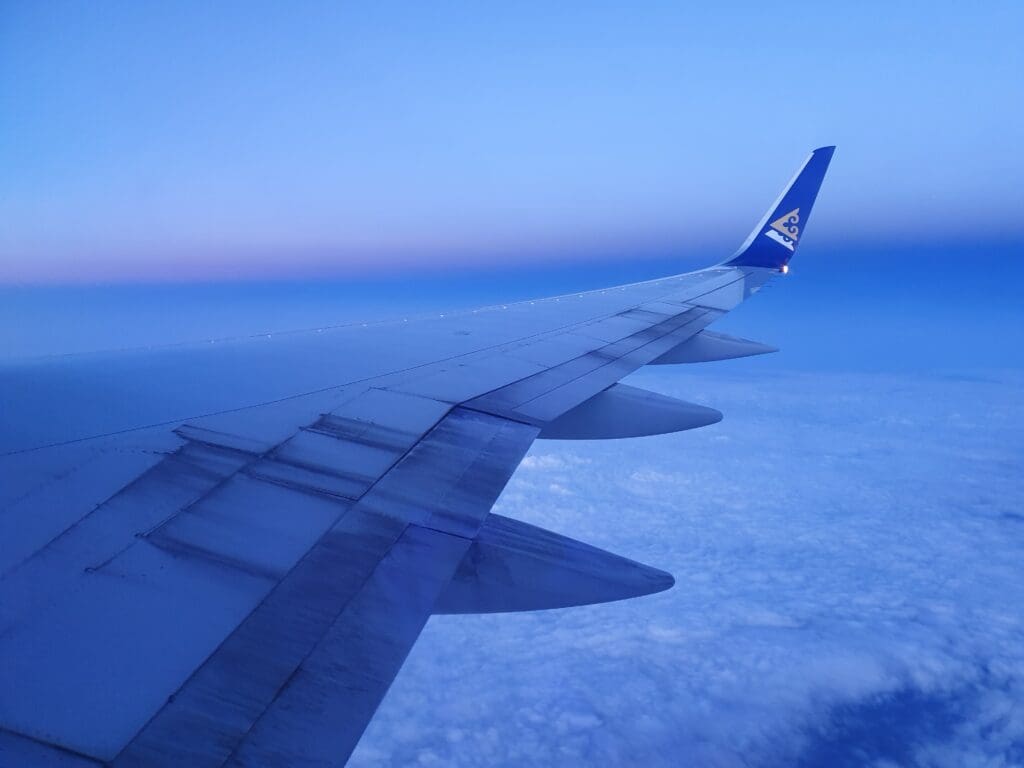
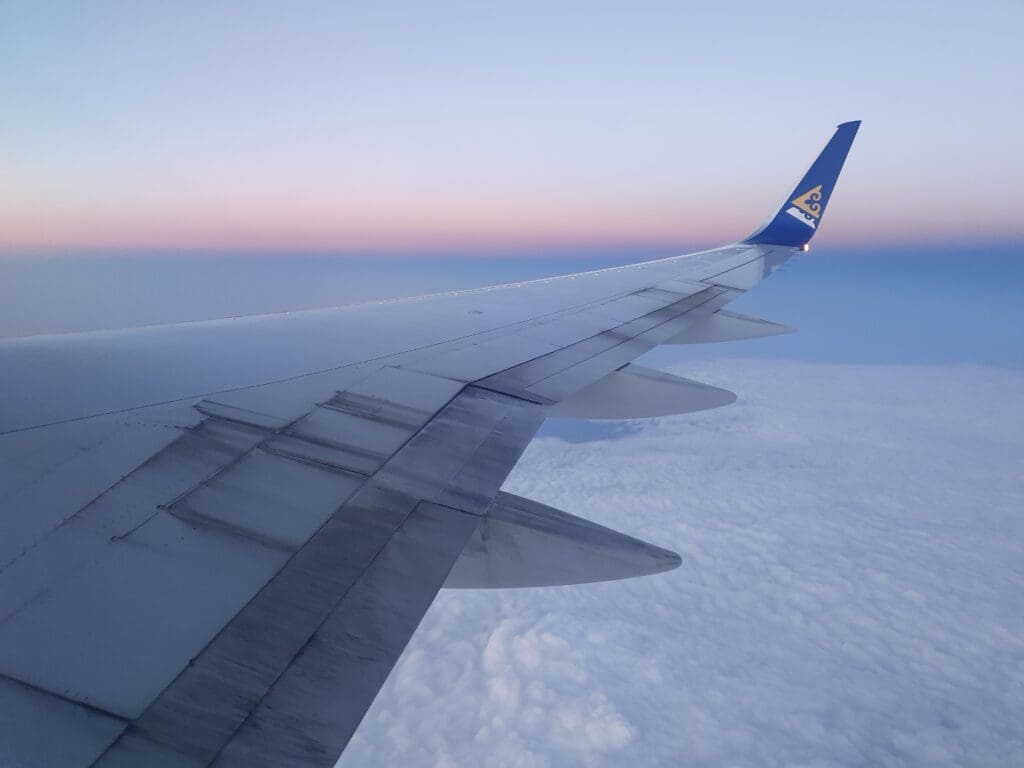
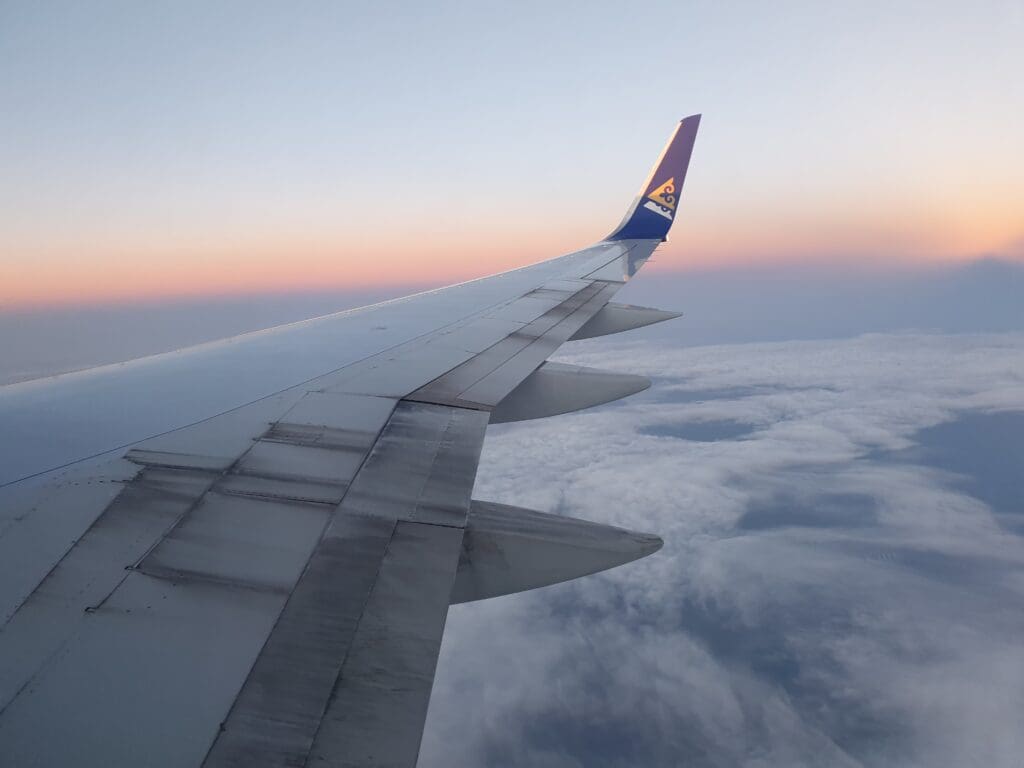
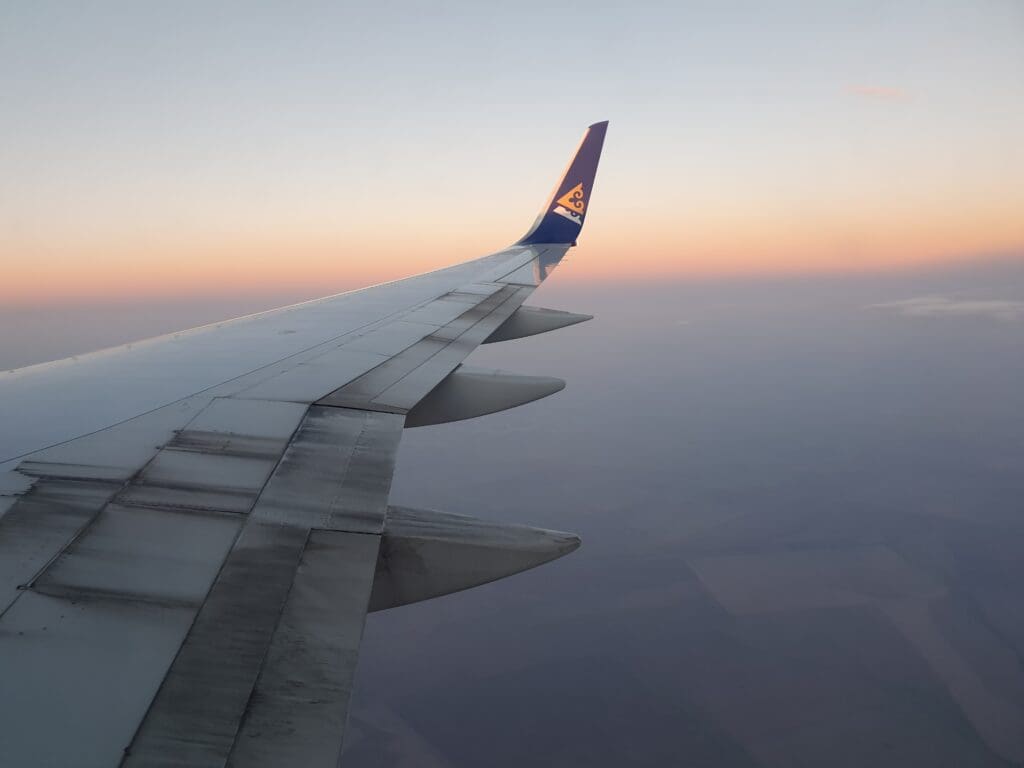
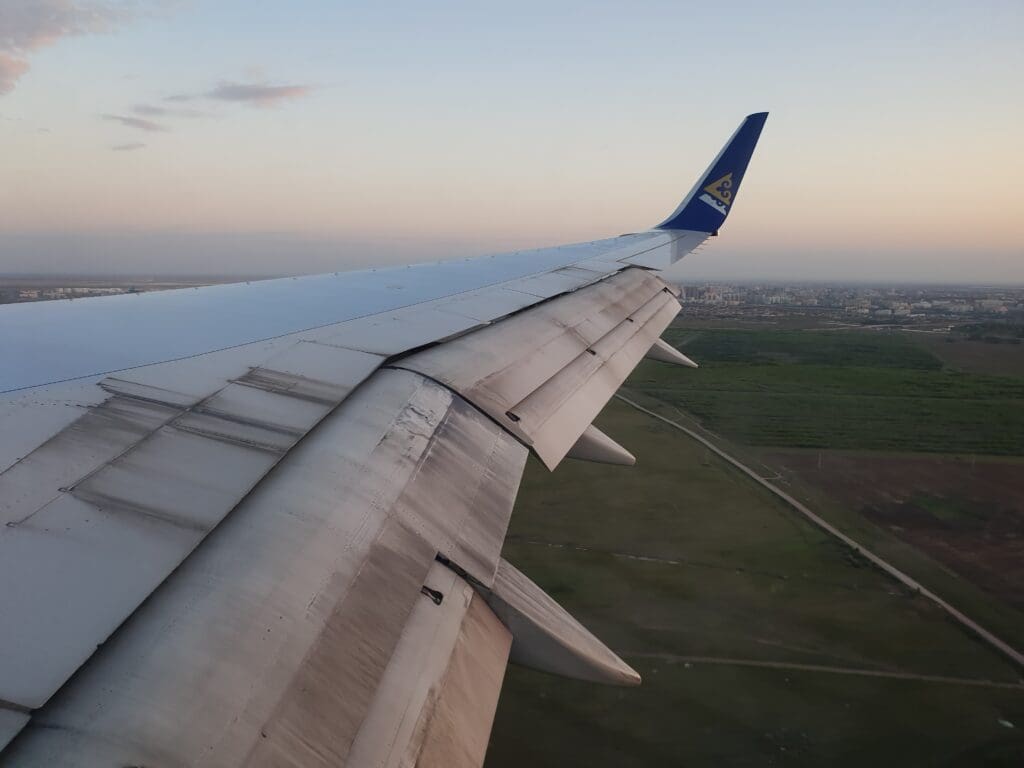
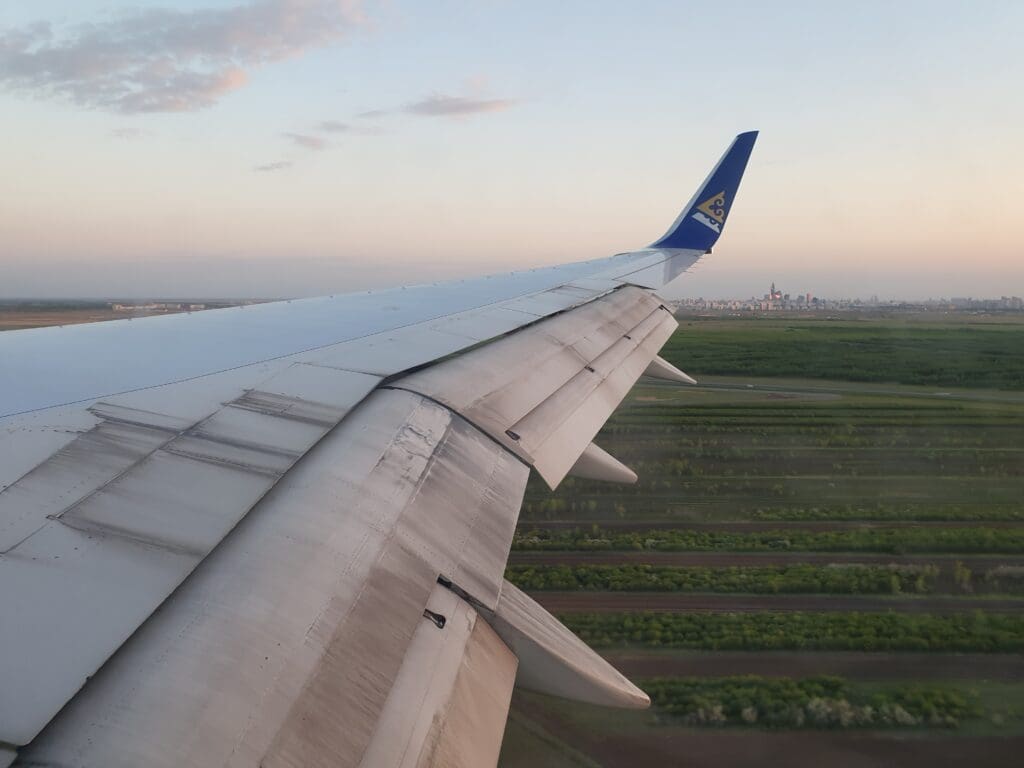
Eventually, at 0510, Kazakhstan’s capital city could be seen suddenly rising out of the countryside and our flaps began to be extended in stages whilst inside the cabin music rang out and would continue to do so until disembarkation. After flying past the city, our aircraft looped around the capital before setting itself up for an approach on Runway 22, an arrival that allows those on the right hand side of the aircraft superb views of the city.
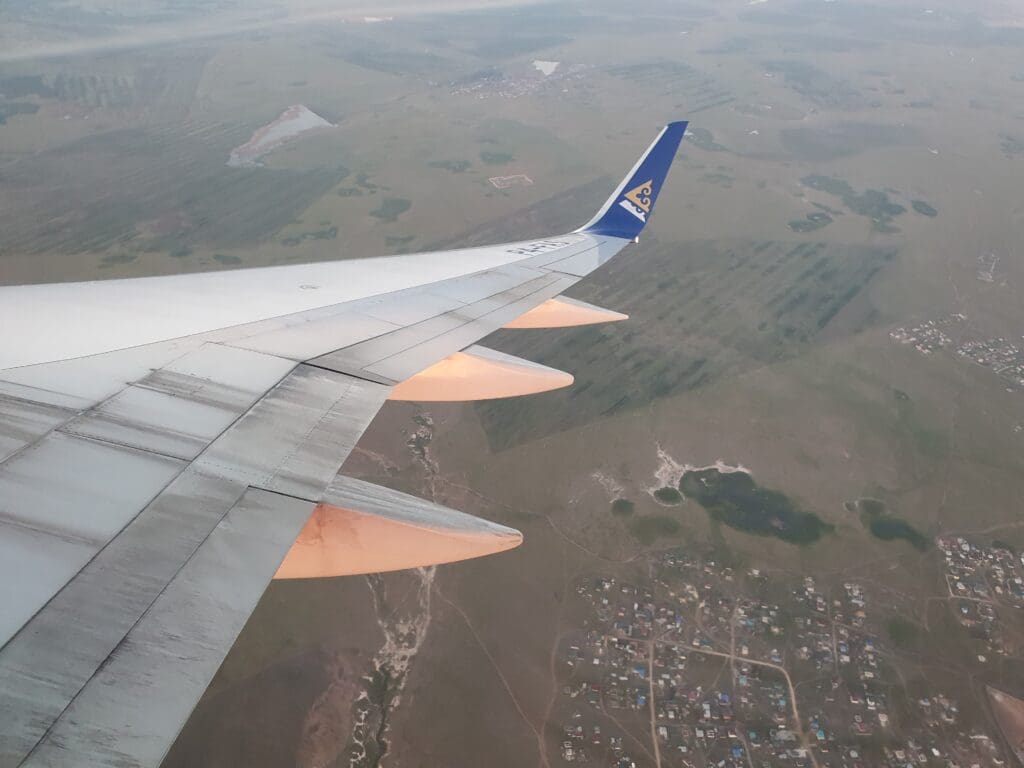
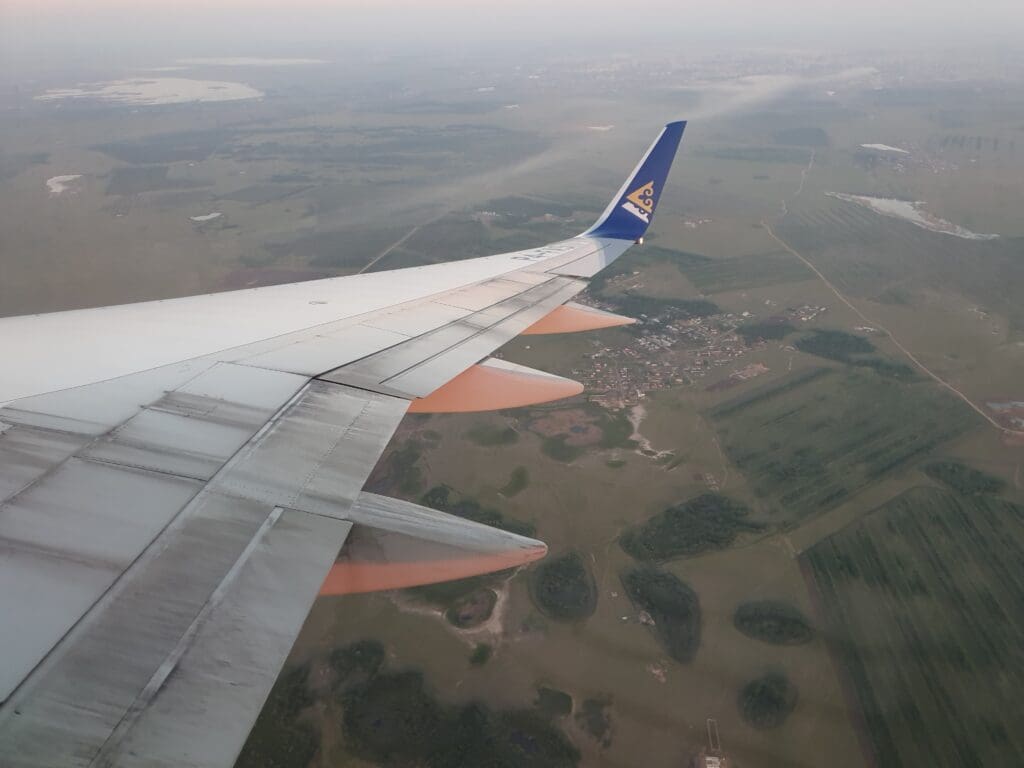
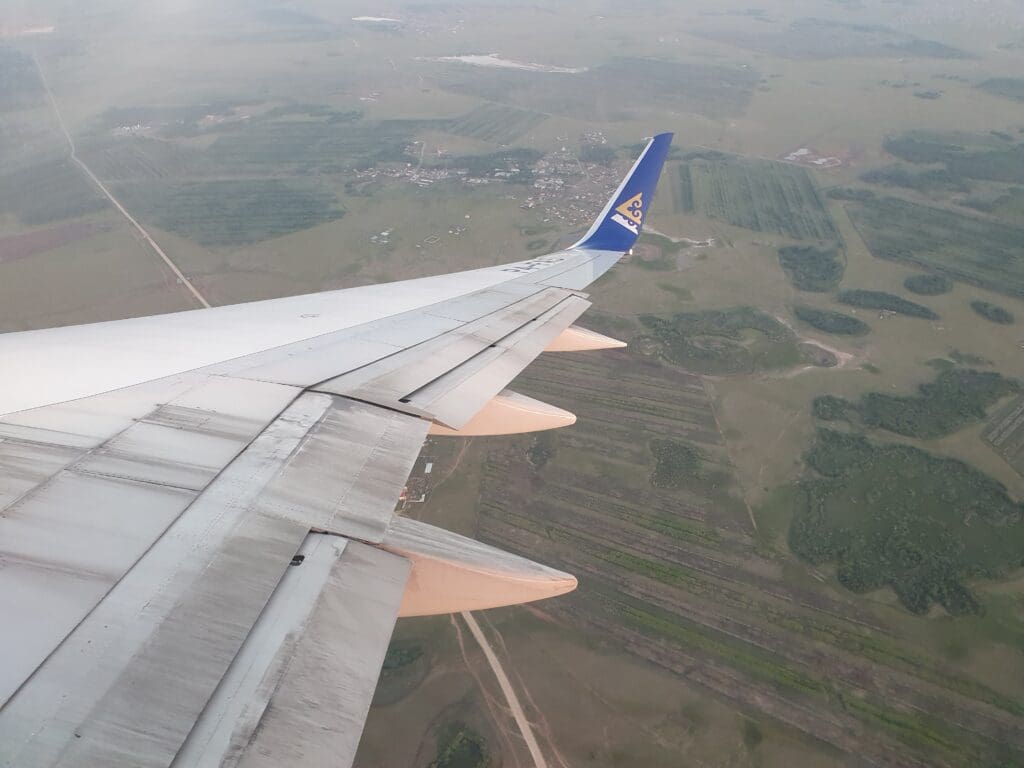

As we sank lower, the entire city came into view offering good views of the city’s landmarks including the Baiterek Tower, the pyramid Palace of Peace and Reconciliation, the Khan Shatyr Entertainment Complex, the Presidential Palace and the Nur-Astana Mosque before we gently floated down over the airport’s perimeter fence and past a host of interesting military aircraft before making a soft landing on the runway at 0520 Astana time, ending our overnight hop from France. Once on the runway, the Boeing decelerated rather gently before vacating the runway to the right.

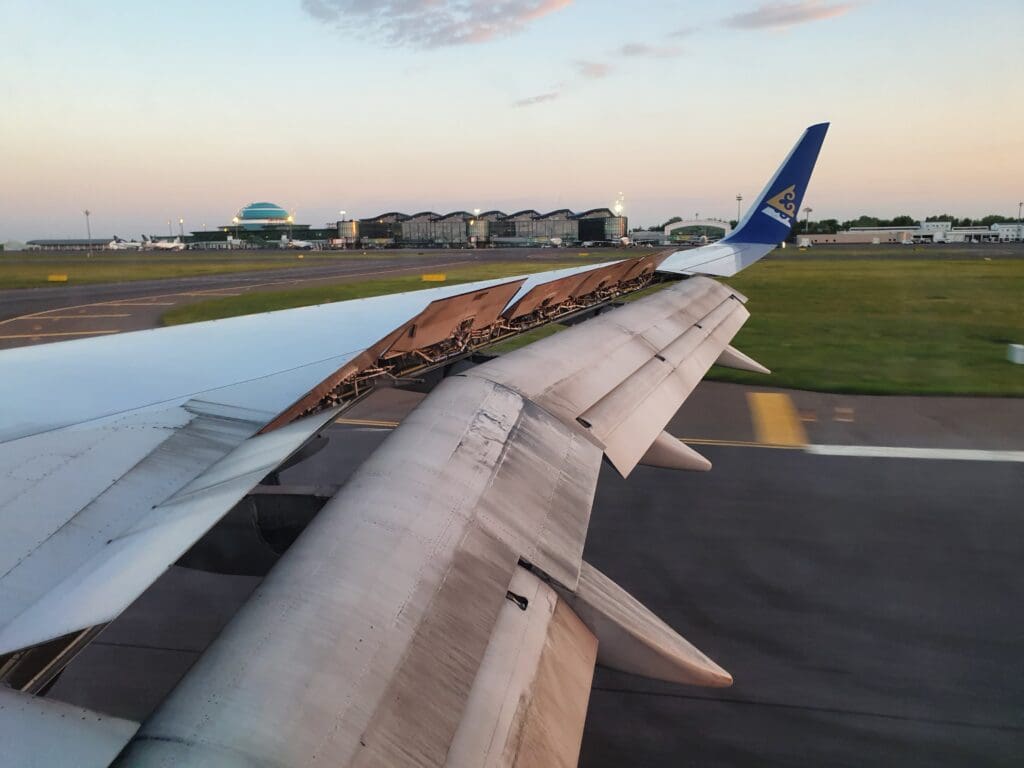
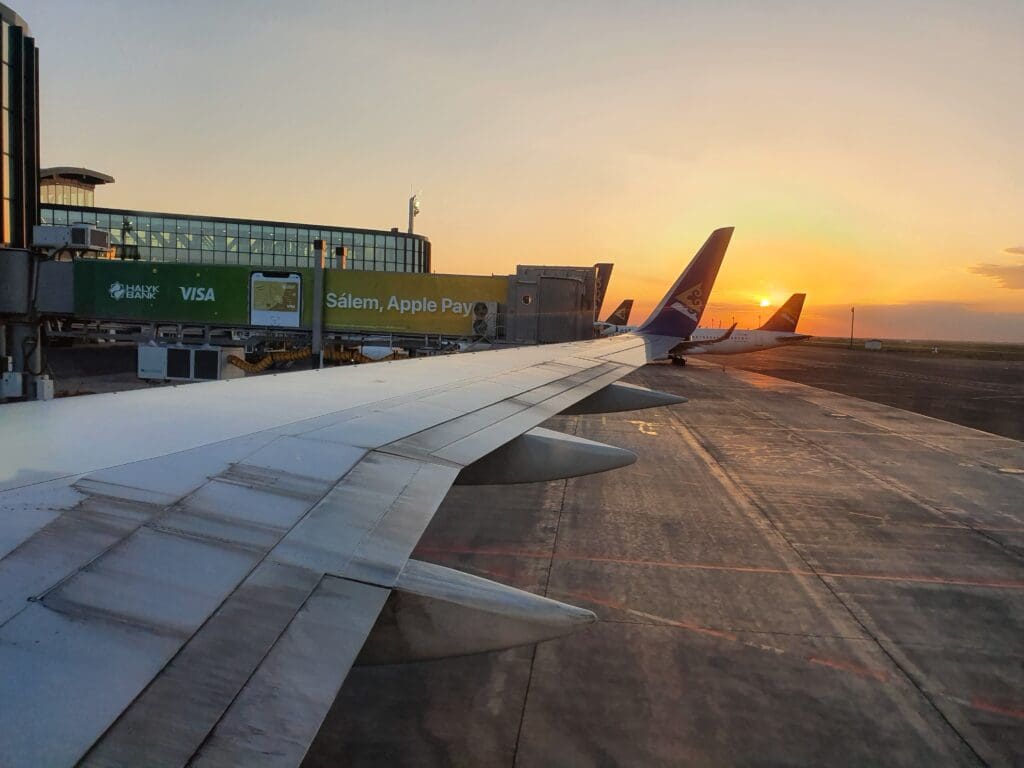
As we made our way to the terminal, a fantastic sunrise illuminated the airport whilst beneath this, a host of Air Astana Airbus, Boeing and Embraer jets could be seen ready to head off for a new day of flying. Inside the cabin, the Purser welcomed all passengers to Astana in Russian, Kazakh and English before the music continued inside the cabin. After a short taxi, our mighty Boeing 757 pulled into Stand 7R and came to a halt, with the entire cabin proceeding to stand up before the engines had even spooled down!
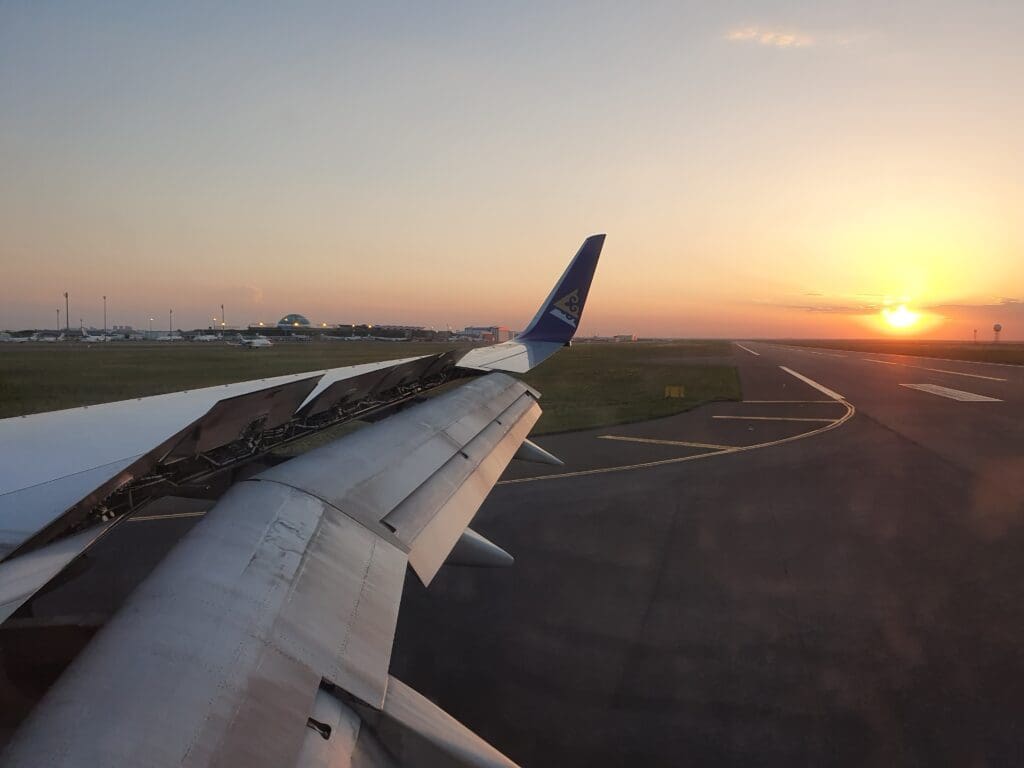
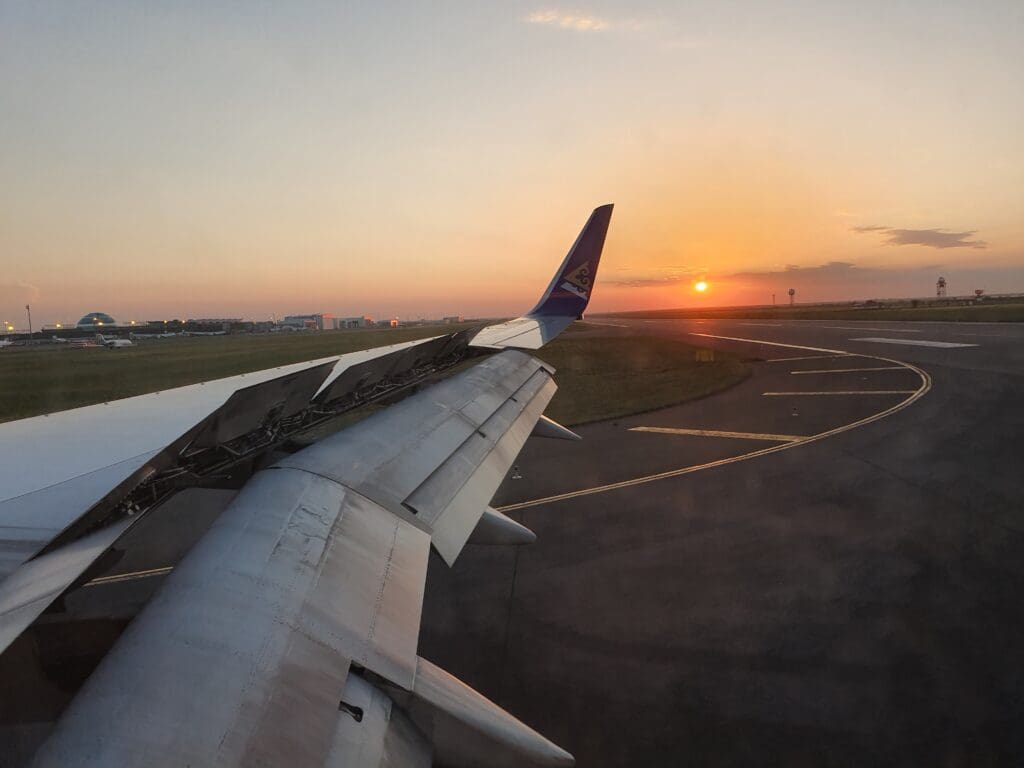
Once the engines did finally spool down, the Captain performed a final announcement thanking passengers for flying with Air Astana and the seatbelt signs were extinguished. Not too long later, the L2 door was opened and disembarkation commenced, however, given the fact that many passengers seemed to be carrying with them large amounts of hand luggage, this was a slow process. After thanking the crew, I headed up the jetway and into the airport’s modern terminal commencing the short walk to immigration. Arriving there within about three minutes, after a short wait in line, I headed over to a desk and was asked a few questions by the stern officer. I was then handed an arrival card and asked to fill this out, after which I had my passport stamped and officially entered Kazakhstan.
Summary
All-in-all, my first flight with Air Astana left me rather impressed. Despite the Boeing’s age, the aircraft’s cabin appeared to be in top condition and was clean and comfortable. The inflight entertainment system worked well and featured a decent range of content, meanwhile the crew were friendly and the inflight catering left me with little to complain about. Therefore, as I stepped off the Boeing 757 in Kazakhstan, I was left looking forward to my next to legs with the airline down to Uzbekistan, operated by one of the airline’s Airbus A321s.
What an excellent and comprehensive review on your Air Astana flight, not many 757’s in passenger service these days so it’s one to remember for sure.
Thank you very much – I’m glad you enjoyed! Agreed, and overall a really good flight!