
C’est Fantastique! Paris CDG to Beirut on an Air France Boeing 777
Background and Booking
As my work contract in Paris came to end, seeing as I had no immediate job to head into, inspired by tales of a favourable job market (just before Covid-19 struck), I decided to join my sister in Dubai. Whilst there I could continue my search for positions in the UAE and UK whilst making the most of the winter sunshine. Thus, as soon as I had decided on this course of action, I soon began searching for flights both from Paris and a host of airports in the UK.
As is often the case when searching for flights between Western Europe and the UAE, options provided by Pegasus Airlines and Wizz Air dominated the top of the search results when arranged by price. The former operating flights to Abu Dhabi and Dubai from Manchester, Paris Orly and Stansted via their hub at Istanbul Sabiha Gokcen, the latter offering rock bottom fares (as low as £80) on their flights from Beauvais, Birmingham, Gatwick and Luton to Dubai World Central, all with a long stop in excess of over twelve hours in Bucharest. Not wanting to break up the journey with a long stop, and fearful of the cost of additional extras with both carriers, I decided to scroll down baggage-inclusive options by full service carriers. Upon doing so, I stumbled across Middle East Airlines whose £186 cost for a one-way ticket from Heathrow to Dubai via Beirut seemed reasonable. Plus, having never flown with MEA before, I was open to sampling the delights of Lebanon’s national carrier. Whilst this was indeed a bargain, I had another look at flights from Paris and saw that a similar MEA combination priced at 145 Euros and so I settled for this instead! Sold through MEA, this duo of flights would involve departing Paris CDG at 0900 onboard an Air France Boeing 777-300ER, arriving in Beirut at 1415, making a short transfer at the airport before heading off on the 1615 MEA service to Dubai scheduled to be operated by one of the airline’s thirteen Airbus A320s. This combination not only allowed me to try out a new airline but also provided me with the opportunity to sample an Air France widebody aircraft for the first time.
Moments after finding this fare, without delay, I navigated myself to MEA’s homepage, which, like that of any major airline, was sleek and modern. Here, I was presented with several scenic backgrounds of both Beirut and a selection of MEA’s other destinations as well as a selection of offers for roundtrip flights from Madrid, Milan, Rome and Paris to Beirut (despite accessing the UK version of the site from the UK!). Seeing as I would depart from Paris and sought to pay in Euros, I switched over to the French site and proceeded to enter my origin and destination, after doing this, a photo of the Burj Khalifa appeared as did the expected temperatures in Paris (6 degrees) and Dubai (26 degrees) on departure day. I was soon presented with a long list of results consisting of three ultra-cheap fares priced at 142.22 EUR each and a cluster of ultra-expensive fares priced at over 2000 EUR each! Here, I opted for the Air France-MEA combination option which involved departing Paris CDG on an Air France Boeing 777-300ER at 0900, arriving in Beirut at 1415 and departing two hours later on an MEA Airbus A320, arriving at 2125. After selecting these flights, I entered my name, contact details and Korean Air Skypass number before being presented with the seat selection page. Unfortunately becoming a rarity these days, I was delighted to find that seat selection was completely free for the available ‘standard’ seats on both flights. After selecting a couple of window seats, I was offered a final summary detailing my 30kg hold luggage allowance and 12kg cabin baggage allowance before I went ahead and paid – receiving an email receipt moments later. All in all this was a smooth and painless process, and I was highly satisfied both by the complimentary seat selections and the above-average luggage allowance.
Online Check-In
Owing to Middle East Airlines’ complimentary seat selection, as departure day approached I was in no particular rush to check-in online to secure a particular seat. However, seeing as I had not entered any of my passport data and wanted to mitigate the risk of delays at Paris CDG, I opted to check-in online. Theoretically, passengers should not expect to have any issues when checking in for codeshared flights. However, many will know that this is not always the case, and having read a barrage of reviews of the Lebanese national carrier that detailed overcomplicated online procedures, I was not totally confident that I would be able to check-in without issue.
Nevertheless, I was still willing to give this a shot and 24 hours before departure I loaded up Middle East Airlines’ somewhat rudimentary app and tried my luck at checking in online. Once I had entered my booking reference and surname, I was only presented with the Middle East Airlines operated portion of my itinerary, and not my Air France flight from Paris CDG to Beirut. Hoping that it would not cause issues down the line, I opted to check-in for this flight and entered my passport details, soon completing the online check-in process and receiving my boarding pass via both email and through the app.
Once this was done, I headed over to Air France’s app in the hope that this would allow me to check-in for the first leg of my journey. Upon entering my booking reference and the Middle East Airlines flight number for the flight between Paris and Beirut, I was whisked to a page displaying both legs of my journey to Dubai. Here, after entering my passport details I was automatically checked in for both legs with my pre-selected seats without any issue.
The Journey
Seeing as my flight was scheduled to depart Paris at 0900, I pondered the idea of staying overnight at one of the airport hotels. However, with no last minute bargains to be had, I instead decided to spend the evening at a friend’s place in the city centre and leave at the crack of dawn. Fortunately, with no strikes or scheduled disruption on the Parisian transport network, reaching the airport in time for my flight would not prove too difficult and I opted to take the first Paris CDG bound RER B service of the day from Gare du Nord. Having already packed everything up the night before, after a light three hour sleep, I woke up at the ungodly hour of 0340 and had a quick shower and coffee.
Whilst I could have walked to Gare du Nord, with two suitcases in tow, some miserable drizzle forecast and the early hour, I decided to take an Uber to the station. Thankfully, I summoned a car without any issue and this turned up four minutes later. After struggling with my suitcases down the building’s typically Parisian winding wooden stairwell, I journeyed out onto the streets and lugged my suitcases into the car before being greeted by the friendly driver. Whizzing through the empty streets of Paris, we pulled up to the station no more than ten minutes later. After ensuring that I had all my bags and thanking the driver, I headed over to the station entrance which was in the process of being opened up for the day and thus a short wait was in order.
Once inside, I made my way through the deserted station and over to the ticket machines in order to purchase a one-way ticket to the airport. This set me back a slightly extortionate €10.30, although to be fair, I have definitely paid more to travel from a city centre to an airport. With my small paper ticket in hand I headed down to the RER platforms which are located deep within Gare du Nord’s basement. Upon arriving there, I saw no sign of any train, at which point I remembered that RER services originating from the station actually depart from the station’s ground level. Following an early morning workout that consisted of lugging my heavy suitcase up several flights of stairs, I arrived at an empty RER B train. That morning, those bound for the airport appeared to be an equal mix of airport employees and luggage-wielding passengers, all of whom appeared to be in a weary and subdued state.
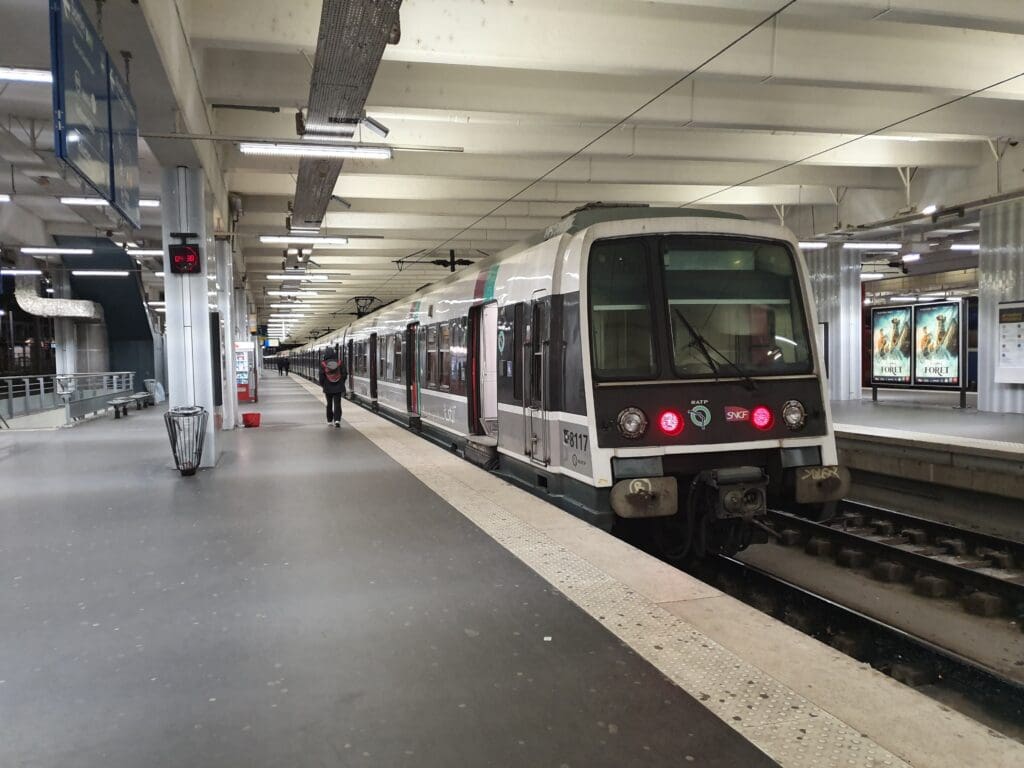

As the clock struck 0453, the doors closed and the train gently pulled away from the station before the lights of Paris’ northern suburbs came into view as we headed northwards. Being an all-stop train, we didn’t make it too far before the train could be felt slowing in preparation for the first of eleven stops we would make. With each stop, the train filled up and soon became rather full despite the early hour. Approximately 40 minutes after leaving central Paris, the train pulled up to Paris CDG 2 station bringing an end to my drama-free journey to the airport. Once off the train, I headed up the escalators into the station’s concourse before heading further upwards to the corridors that link the station with the airport’s multiple ‘2’ terminals.
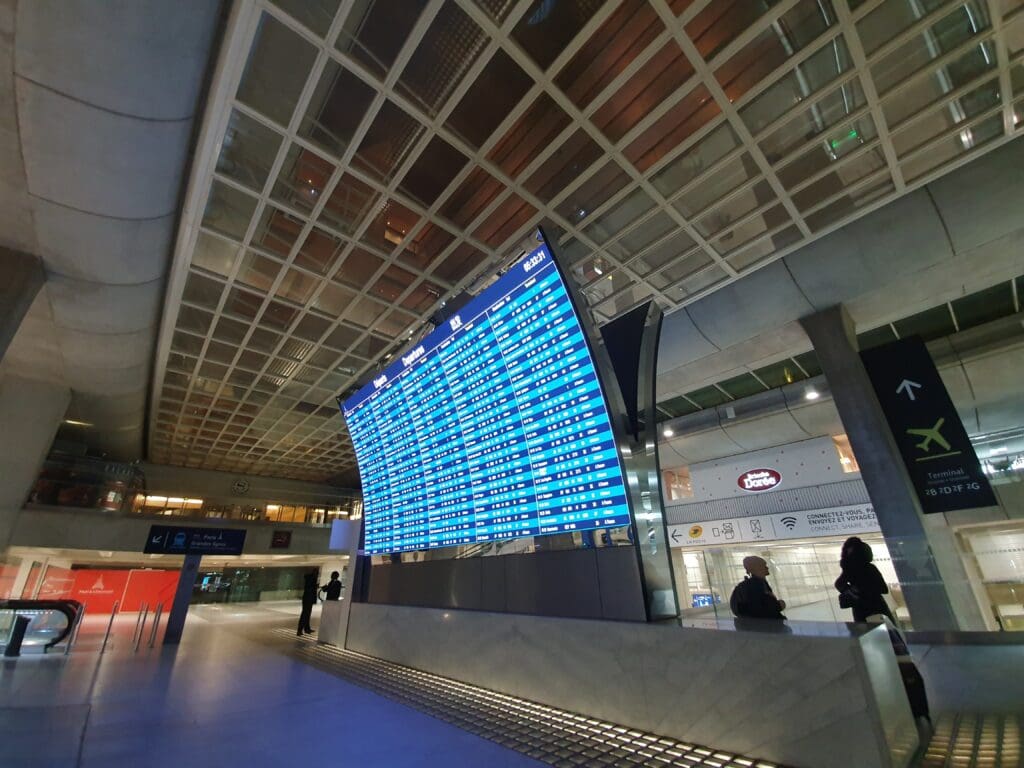
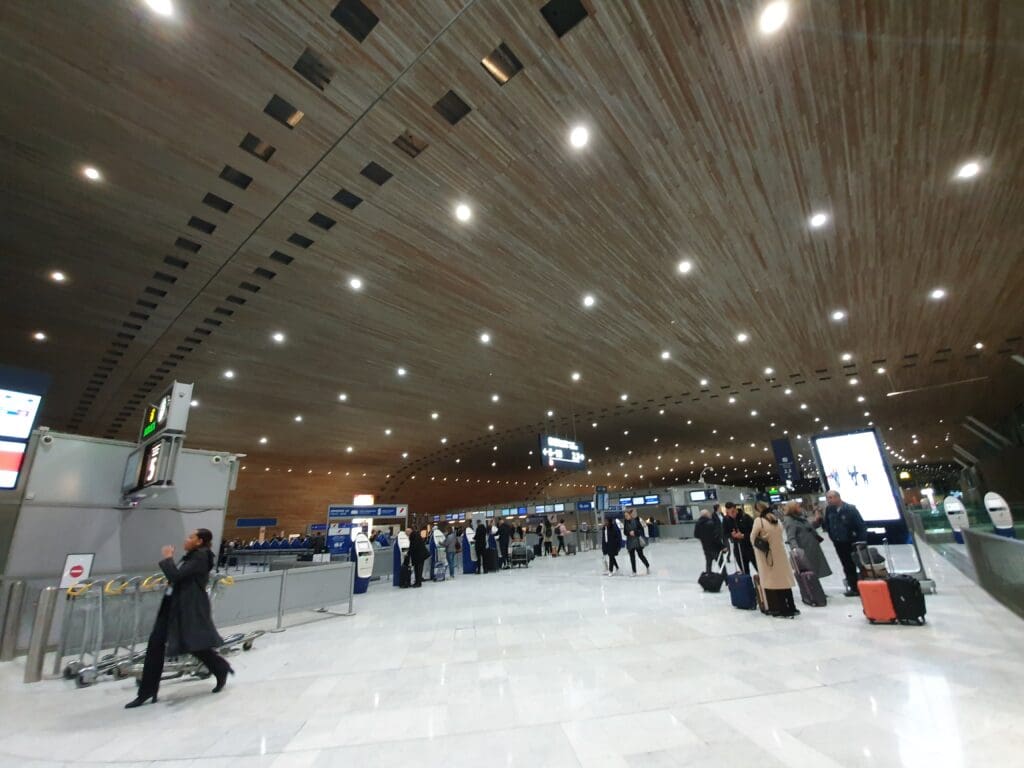
Like all of Air France’s services to those destinations outside of the Schengen area, my flight to Beirut was set to depart from Terminal 2E, located only a short walk from the station. No more than five minutes after disembarking the train, I found myself in this terminal’s large, spacious and modern check-in hall. Despite plenty of flights heading off to all corners of the world that morning, only a relatively small number of passengers could be seen milling around. Seeking to rid myself of my large suitcase, I first proceeded to the E check-in desks where those travelling to the nearby yet very different capitals of Beirut and Tel Aviv were required to drop off their luggage. There, an army of both Air France staff and contractors could be seen raring to help passengers, however I did not spot any manned check-in desks. Instead, the check-in and bag drop-off process was entirely automated with passengers first required to print off a baggage label from the check-in machines before depositing their bags at the automated baggage drop-off desks. Given the lack of passengers at that time, I was able to walk straight up to a check-in machine, scan my passport and retrieve my booking sans any issue. Within a few moments, the machine printed off a single boarding pass for both flights as well as a luggage label. After attaching the label to my bag, I headed over to the bag drop off desks. Aware of automated baggage drop-off counters’ lack of mercy when it comes to overweight baggage, much to my relief my suitcase weighed in at 20.5kg – well within the 23kg and 30kg baggage allowances of Air France and Middle East Airlines respectively and so I was able to send off my bag without any problems.
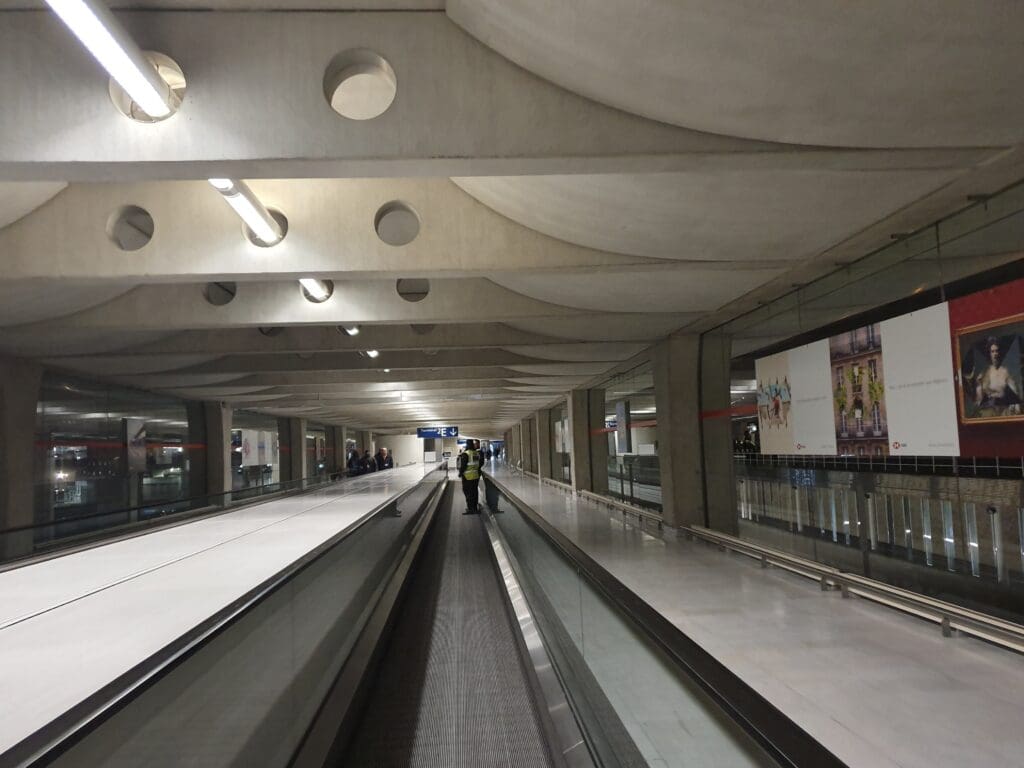
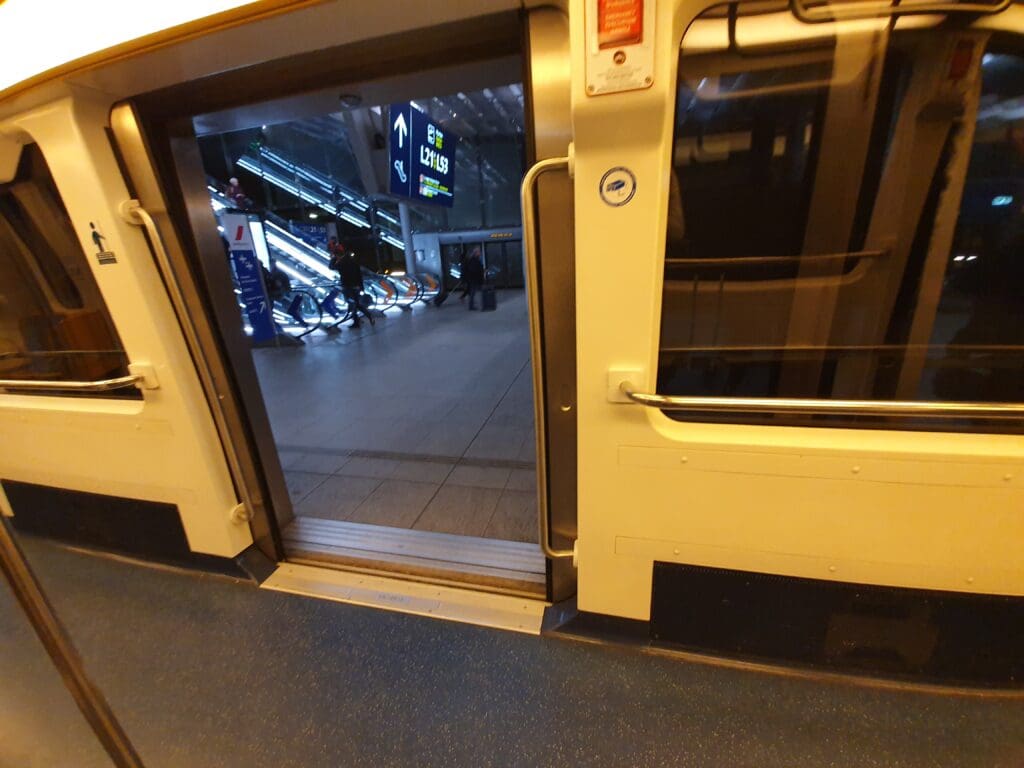
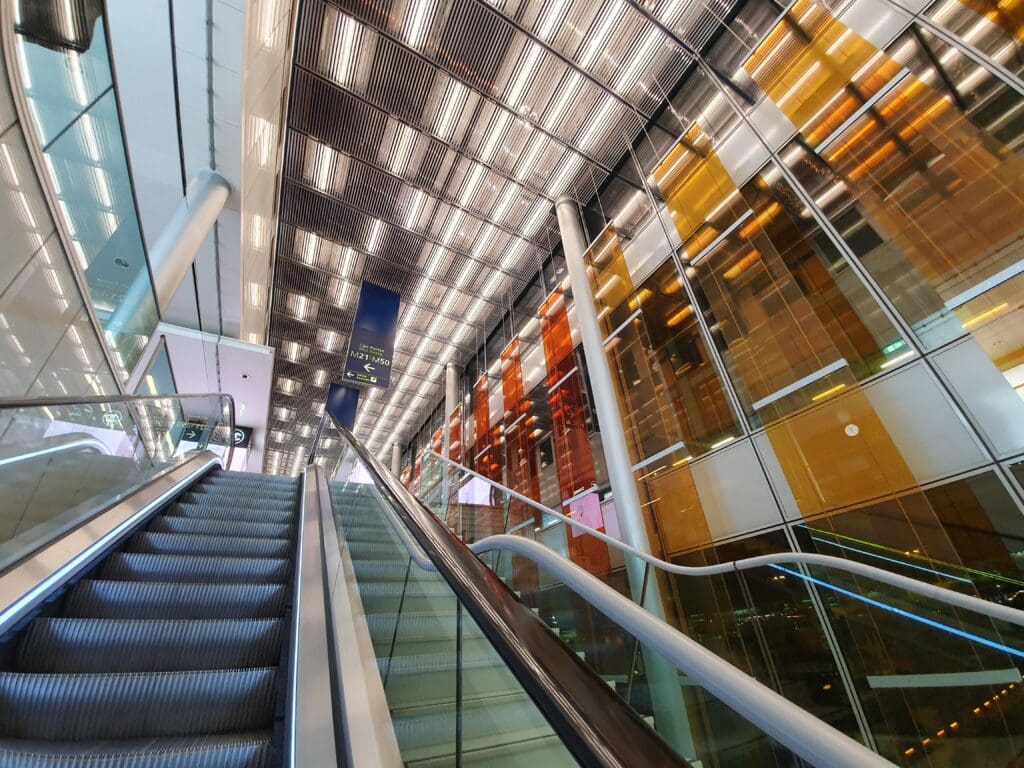
Once my suitcase was safely in the depths of the airport and hopefully on its way to the aircraft, I made a quick visit to one of the terminal’s clean and modern bathrooms before heading airside. After having my boarding pass scanned I ended up in a short queue where one worker eyed up everyone’s luggage, singling out those with suspiciously large bags and forcing them to put these in Air France’s baggage tester. Fortunately my small suitcase failed to draw the attention of this worker and I managed to get through to immigration without this being size checked. Without any further queuing, I walked up to one of the automated immigration booths which allowed me to exit France within about thirty seconds. From there, seeing as my flight would depart from satellite pier M, I was required to take the driverless train which runs to the L and M piers. Having inadvertently timed things just right, I managed to board a train moments before the doors for this closed and was soon whisked away from the main terminal. Following a short stop at the L pier, the train pulled up to the terminus station and I disembarked along with a crowd consisting mainly of airport staff. From there I headed up the escalators to a large security hall where a grand total of three out of fifteen security checkpoints could be seen open. Whilst this may not seem like a particularly impressive number, given the fact that virtually no passengers could be seen here, absolutely no queuing was needed and I made it through to the airside area at 0600. All in all I had absolutely nothing to complain about regarding either my journey to the airport, or my experience passing through the airport that day.
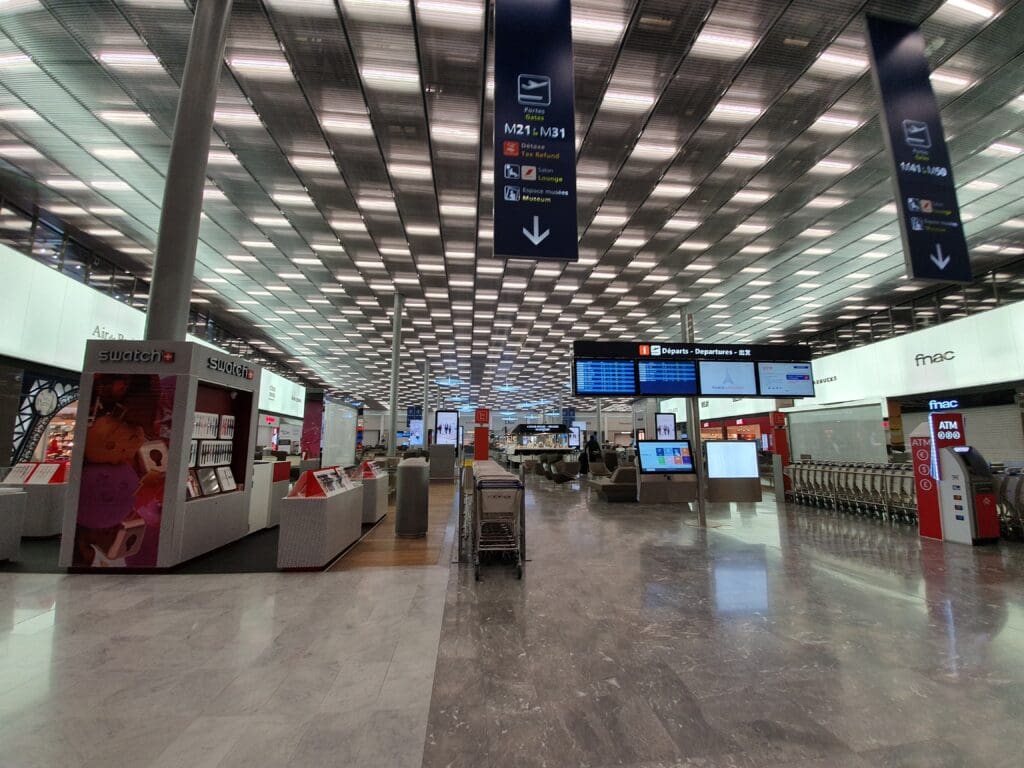
Reminiscent of a British airport terminal, all passengers departing from Terminal 2E’s M satellite must first pass through a large duty free shop before they reach the main area of the terminal. With no intention of buying anything plus with the duty free shop appearing to be in the process of opening up, I steamed straight through this before arriving at the large windowless waiting area. Like the rest of the terminal, this area was largely empty and I was able to count the total number of passengers milling about here on a single hand. Despite featuring a range of cafés, restaurants and shops, only the terminal’s cafés appeared open at that time as well as the local branch of Relay. Rather than spending a small fortune on an overpriced cappuccino, I instead headed to the Relay convenience store for a light breakfast consisting of a machine-made coffee and a biscuit. Once I purchased these, I headed down one of the terminal’s two piers for a short explore before taking one of the many vacant seats. From an aviation enthusiast’s perspective, the terminal is fairly good thanks to its large windows that offer a clear view of those aircraft waiting at the terminal’s stands. To the more ‘standard’ passengers, aside from the good selection of facilities, plenty of comfortable seating, plug sockets and fast complimentary are offered allowing for a tolerable wait. Meanwhile, the terminal is modern in design, airy, spacious and importantly that morning, this seemed to be spotlessly clean. Had I not wished to fly to Beirut, that morning a total of 10 flights could be seen listed on the departure board bound for Abidjan and Bamako, Beirut, Cancun, Cotonou and Niamy, Detroit, Los Angeles, Mexico City, Nairobi, New York JFK and Pointe Noire.

Upon arriving at the terminal and taking a seat near the windows, the terminal’s vacant stands appeared to fill up with mostly Air France widebody aircraft, namely Airbus A380s, Boeing 777s and Boeing 787s arriving during the morning rush of flights from North America. With aircraft from Skyteam carriers Delta, Kenya Airways and Middle East Airlines also present. As one would expect, as time passed, the terminal slowly but surely woke up and the number of passengers steadily increased. Fortunately, in spite of this latter point, the terminal never seemed to be particularly crowded and for the duration of my stay there appeared to be a reasonable number of places to sit and wait. After doing some work for a little over an hour, I decided to stroll over to Gate M45 from where Air France’s morning flight to Beirut was scheduled to depart.
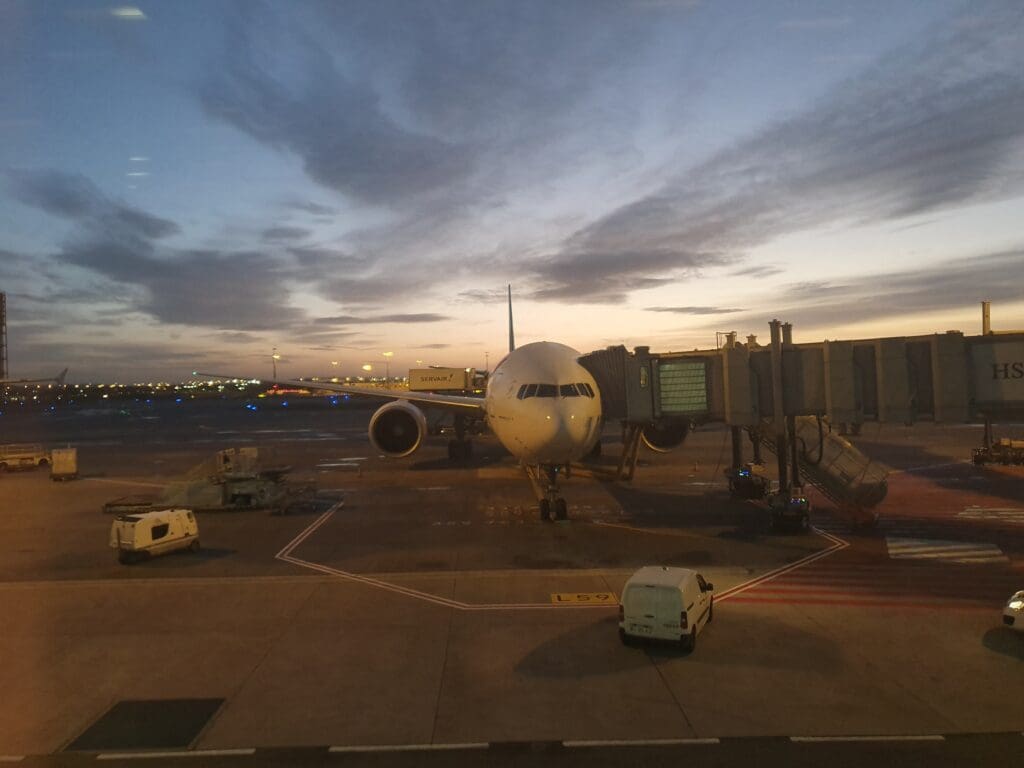
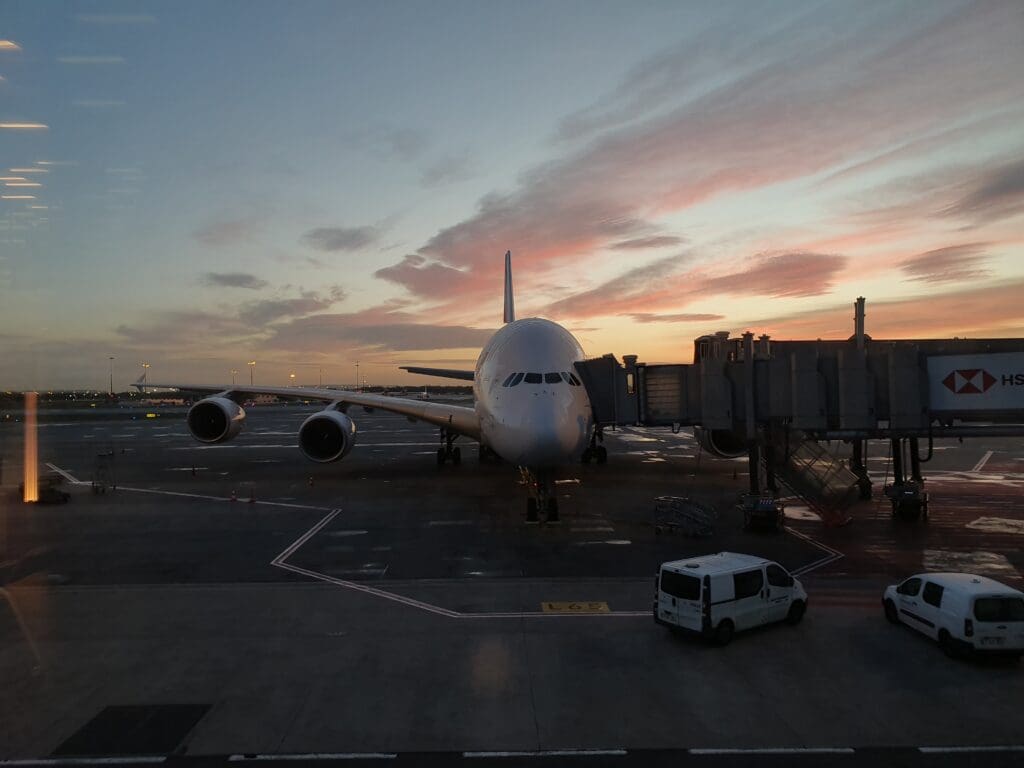
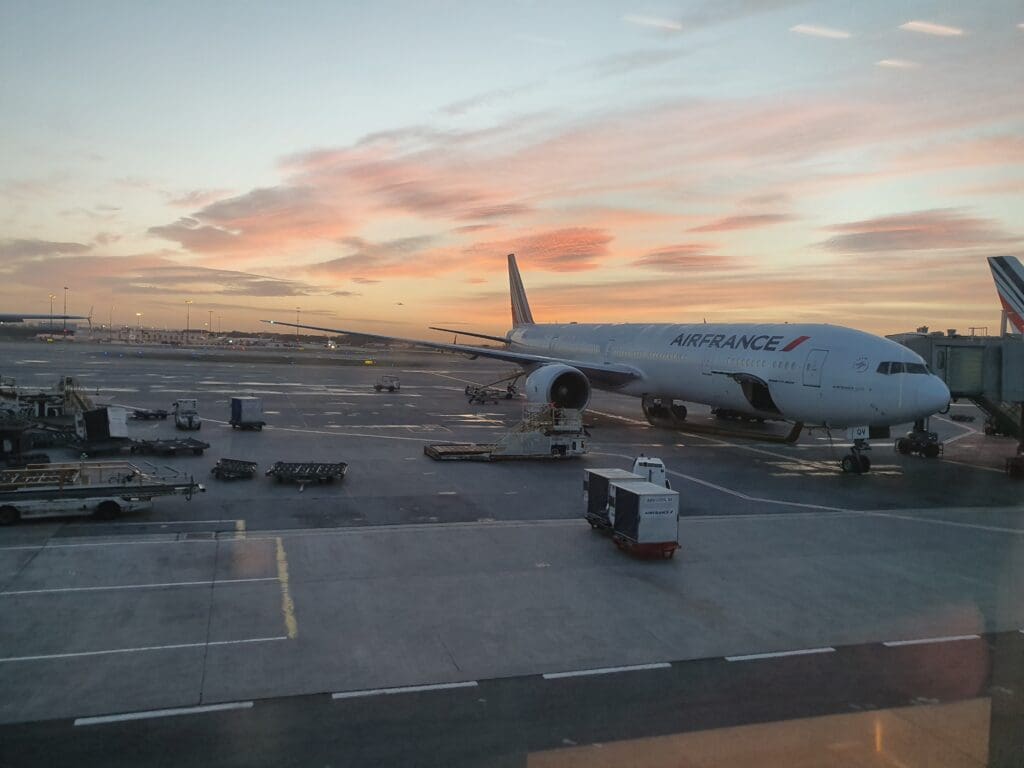
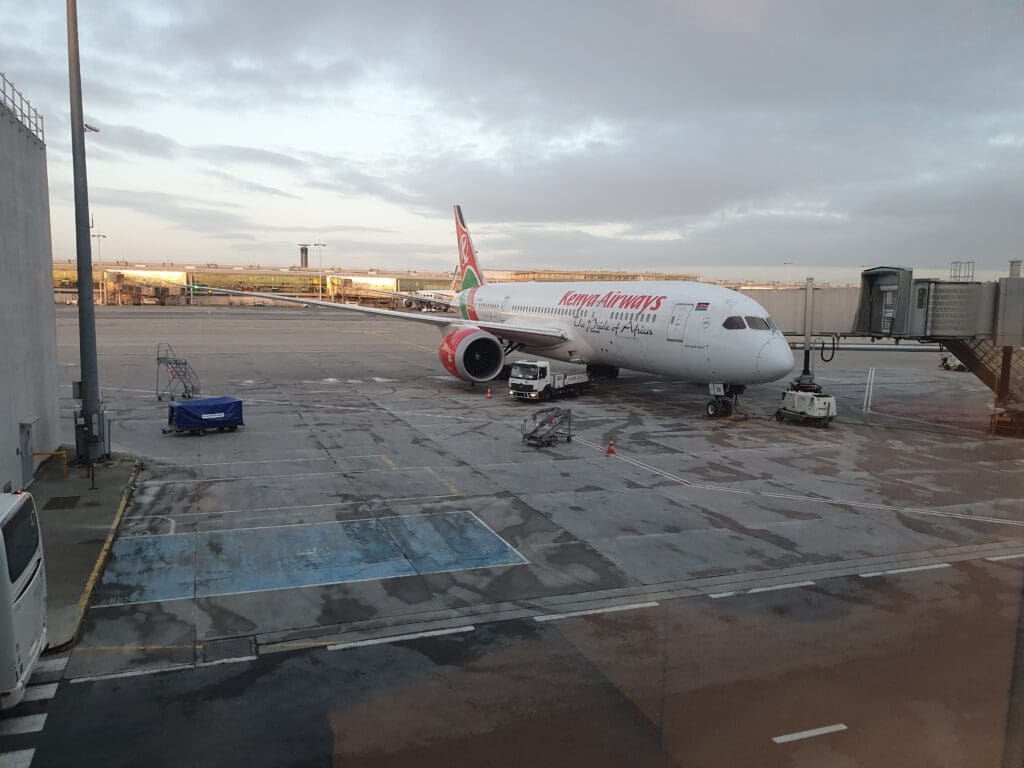
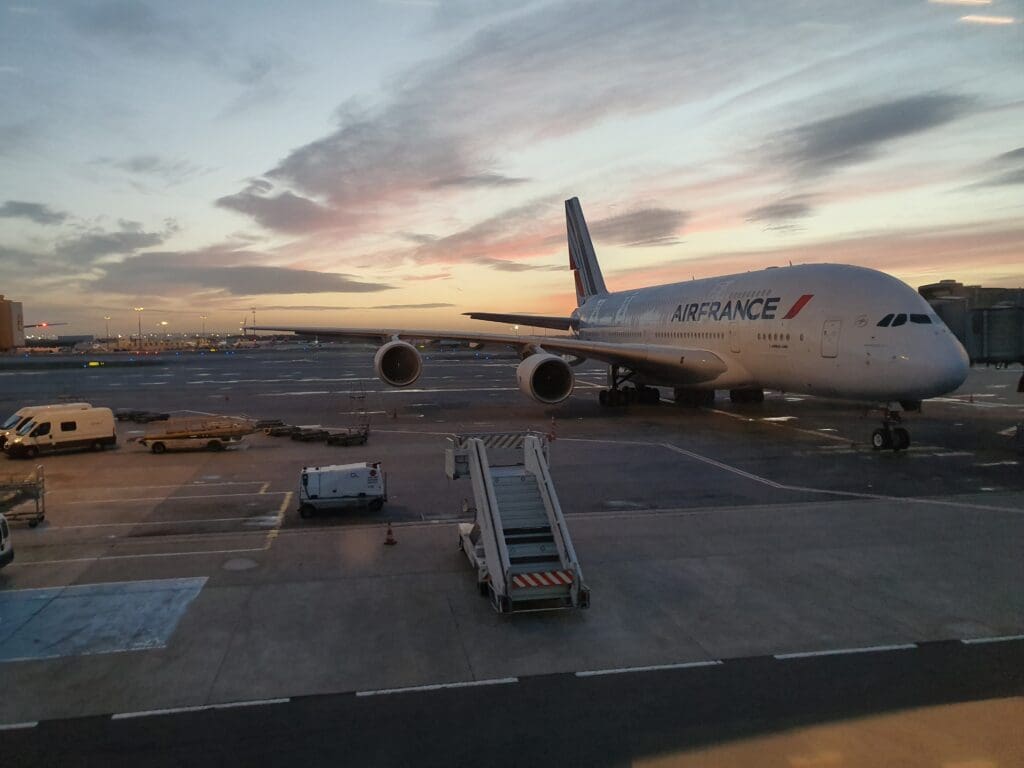
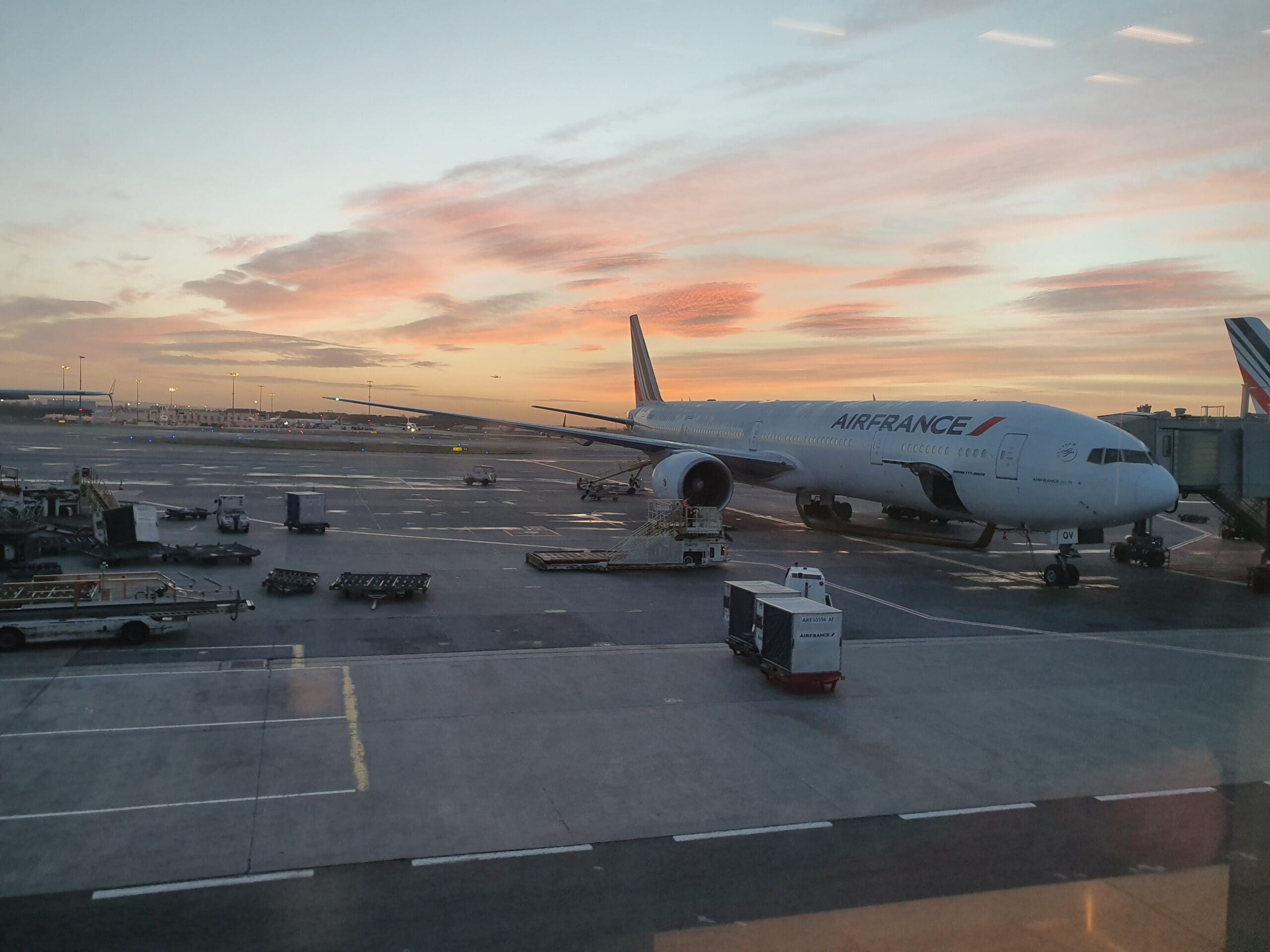
Outside, as expected a Boeing 777-300ER could be seen, this coming in the form of F-GSQV which had recently arrived after an overnight flight from New York JFK. Constructed in 2007 and making its first flight from Boeing Field in May that year, this Boeing 777 was neither particularly young nor old and at the time of my flight was several months off its thirteenth birthday. After several test flights over the US’ northwest, at the end of that month the aircraft was flown over to Europe to commence its commercial career with Air France. Since then the aircraft has been shuttling passengers between Paris and destinations across the world. Capable of carrying 296 passengers in a four class configuration (4 in La Première, 58 in Business, 28 in Premium Economy and 206 in Economy), comparing it to Korean Air’s three class Boeing 777-300ERs which I have sampled on multiple occasions, Air France squeezes in an extra 19 passengers in spite of featuring an extra class. Whilst Air France dispatches their Boeing 777s to destinations across the world, in the course of the previous week this particular airframe had conducted twelve relatively short flights connecting Paris CDG with Abidjan, Beirut, Dubai and New York JFK.
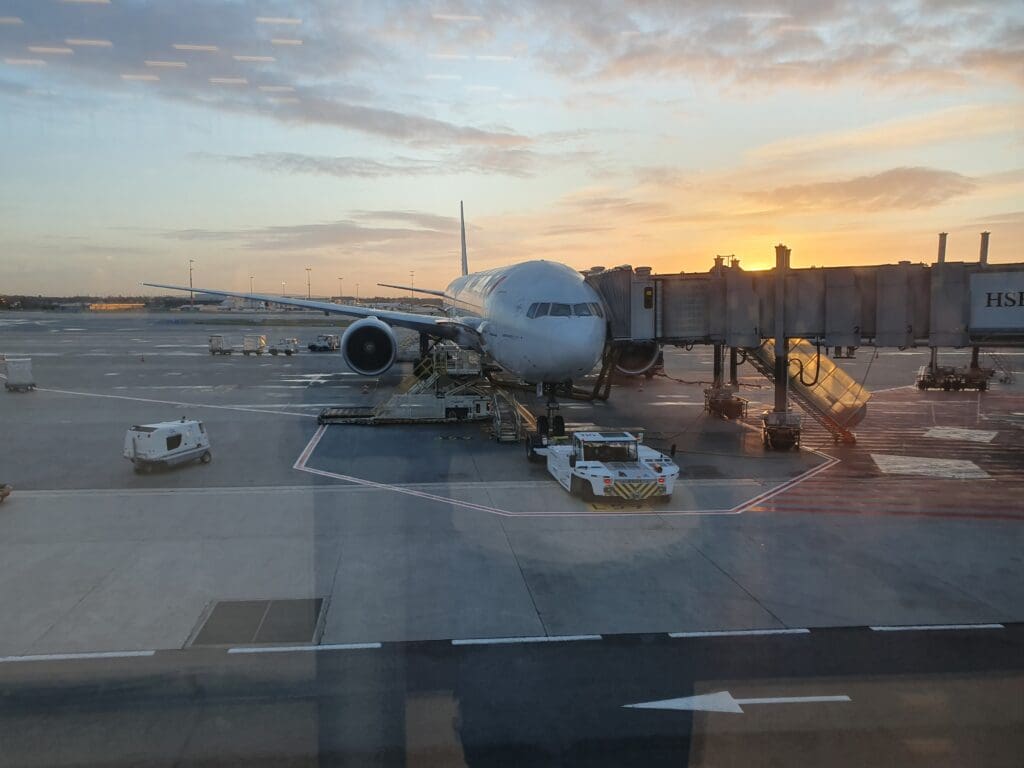
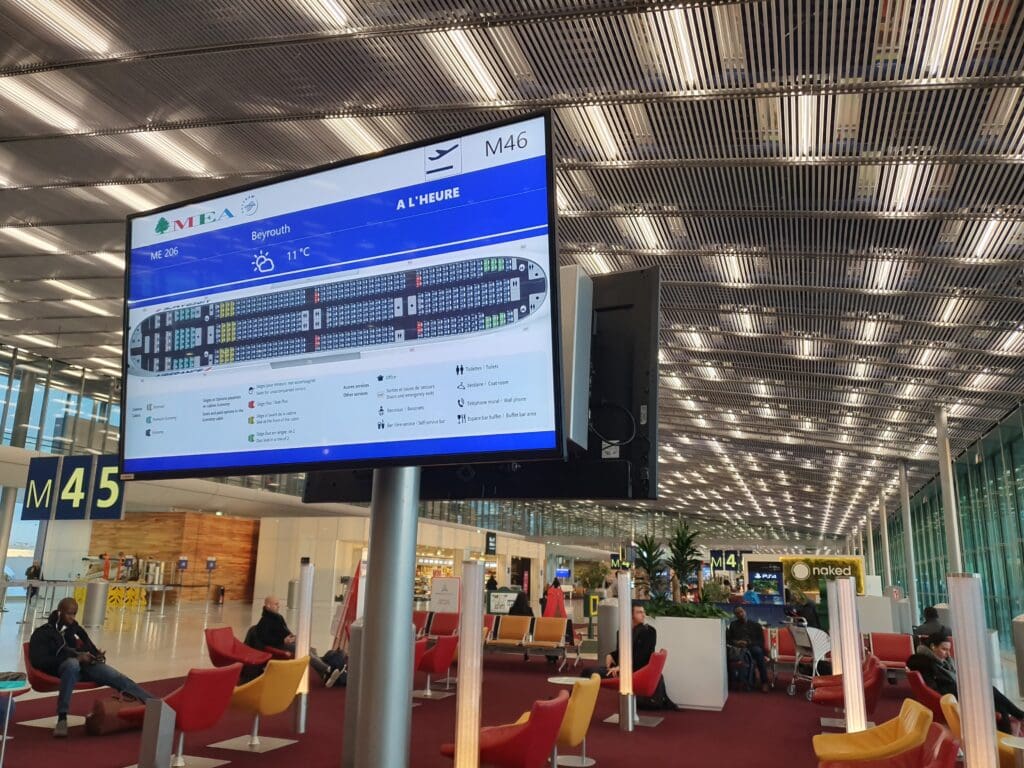
As the clock neared 0800, the area around M45 seemed to fill up and with five minutes to go until the scheduled commencement of boarding, a queue began to form. Seeing no point in joining this I remained seated and waited for boarding to be announced. Given the fact that Air France’s morning flight to Beirut is well timed to allow a short connection for those arriving on the airline’s overnight Transatlantic services, as I waited I heard a selection of languages including Arabic, French, North American English and Portuguese. As I had expected, many of the passengers seemed to be Americans, Brazilians and Canadians of Lebanese descent heading for a break in the country. Five minutes behind schedule, at 0810 an announcement was made by a trilingual gate agent in French, Arabic and finally English inviting those in groups one and two to board. Being in the fifth and final group, some waiting was in order before I was able to board. Eventually I joined a long line and after around ten minutes spent attempting to retain my position in the queue, boarding commenced and I soon scanned my boarding pass on one of the automated gates.

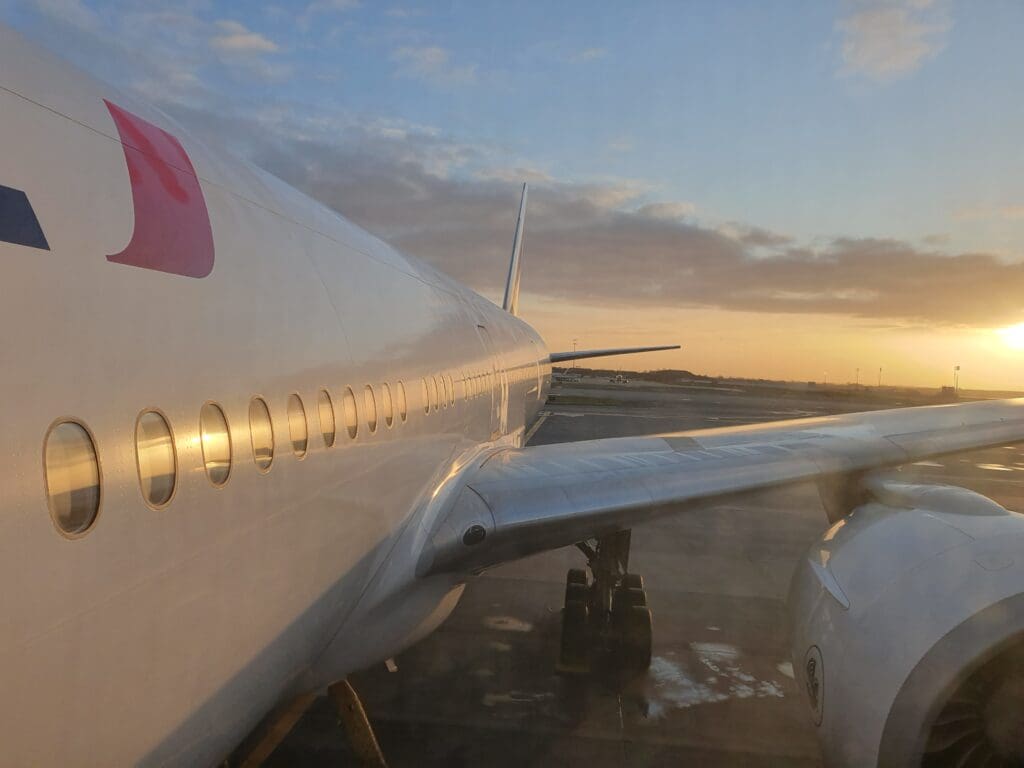
Once I was allowed to pass through the automated gates, I soon hit a queue and it took a good five minutes before I neared the aircraft’s L2 door. Eventually, I stepped into the galley and received a friendly greeting in French by one of the two cabin crew members tasked with welcoming passengers onto the aircraft. After showing my boarding pass I was pointed down the first aisle and passed through the larger of the two Business cabins. There, most of the Safran Cirrus 5C03 suites were already filled, with there appearing to be a fairly high load up front. Next up was the small Premium Economy cabin which consists of four rows of Recaro PL3530 seats in a 2-4-2 configuration. Whilst I most certainly would not have complained about travelling to Beirut in this cabin, this seemed to be a fairly standard Premium Economy product, with no particularly distinguishing features.
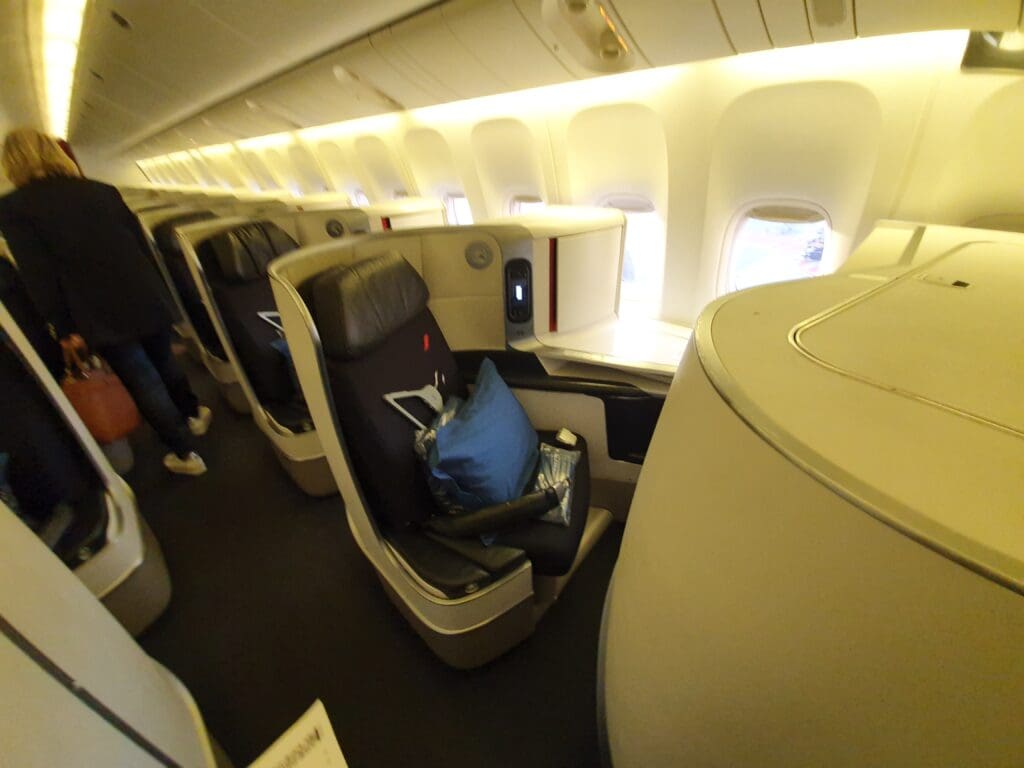
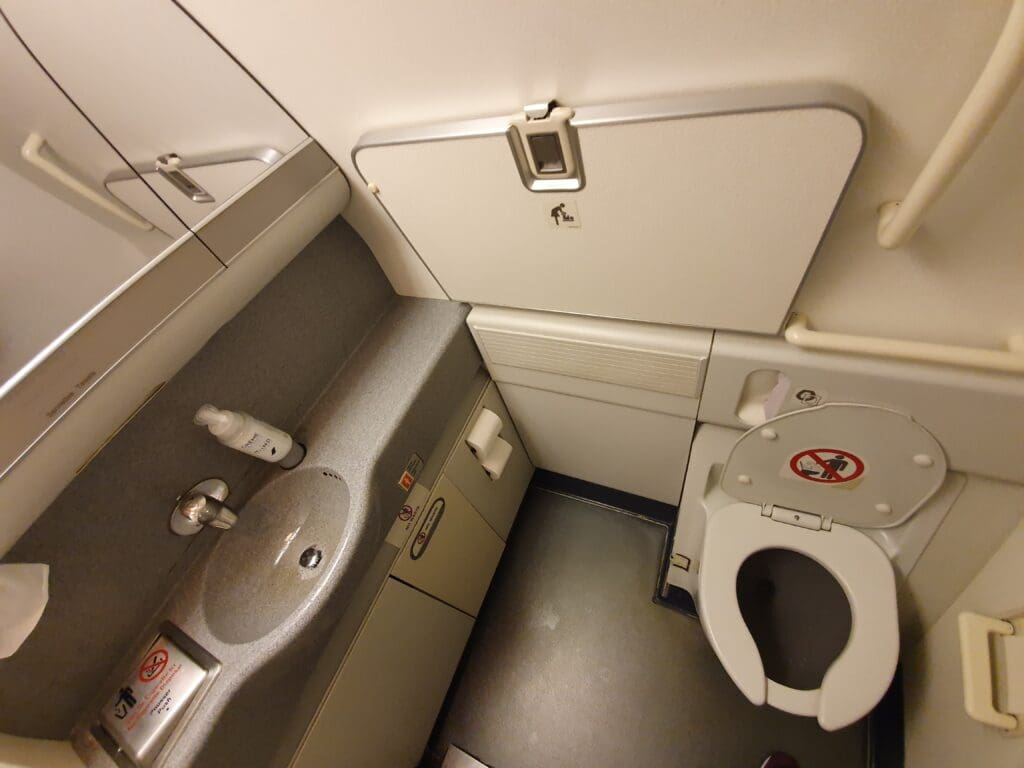
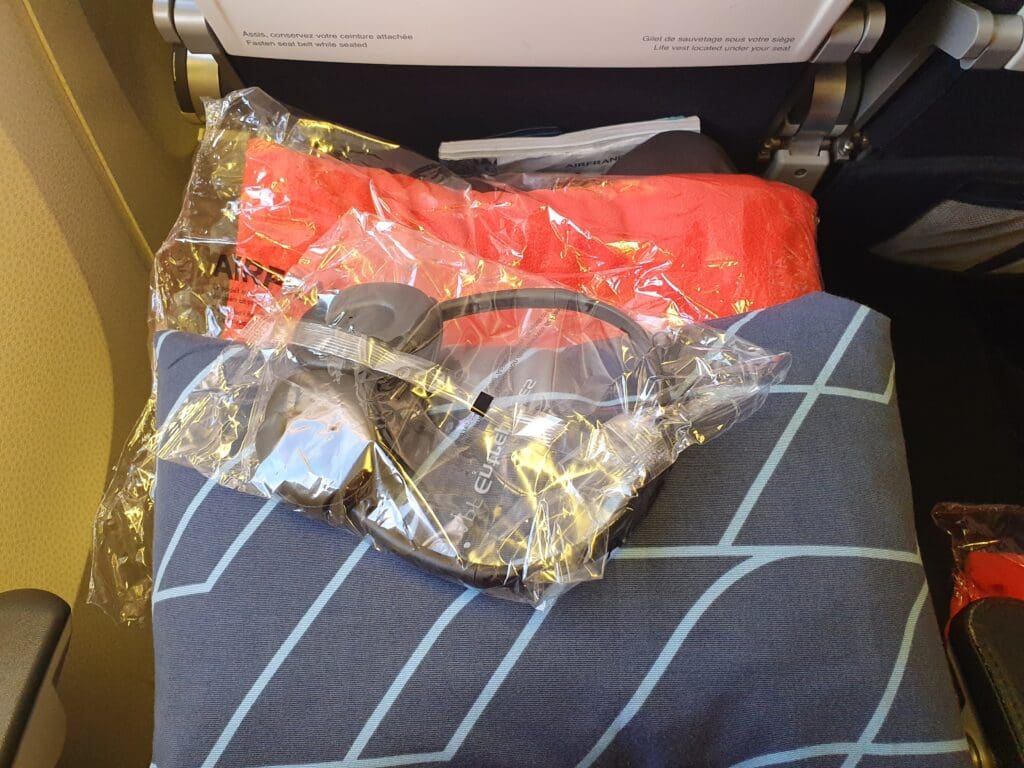
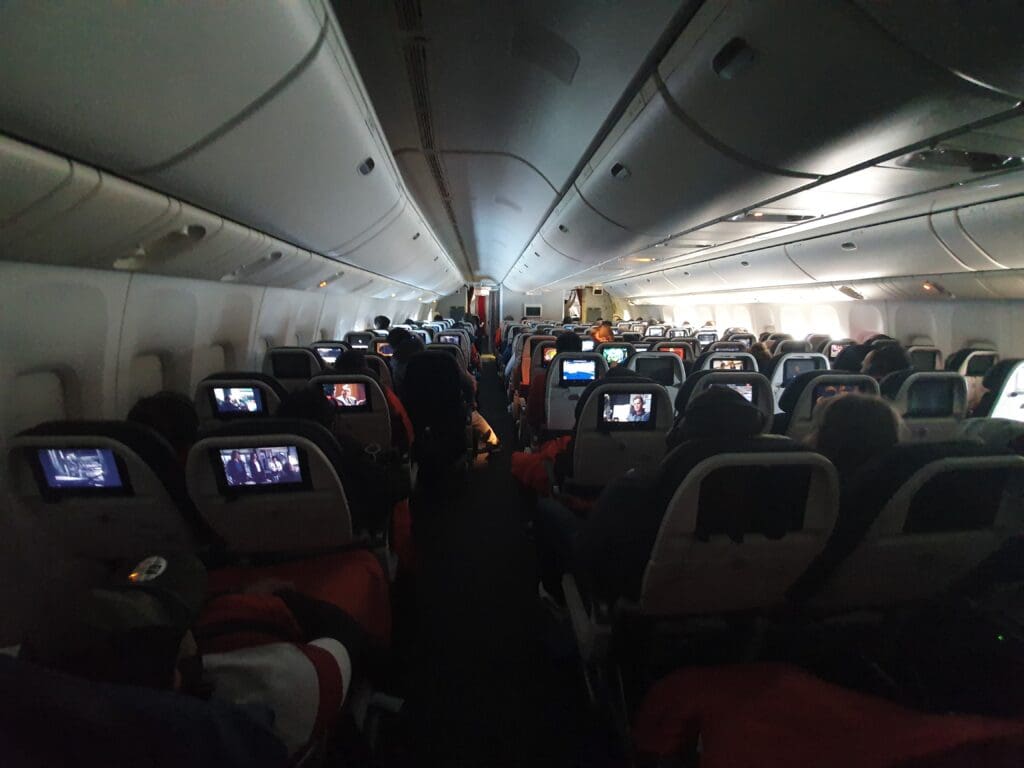
After several minutes, I arrived in the 206-seat Economy cabin that I would call home for the next four hours or so. In Economy, each seat came in the form of the Recaro CL3710 and was covered in a stylish dark blue fabric cover with red stitching and topped with a faux leather adjustable headrest. Whilst those who crave brighter tones and complex patterns would likely be left wholly uninspired by this design, I thought it to be rather calming and pleasing to the eye, especially after a sleep deprived night. As one would expect, a packaged grey blanket, a pillow and a package containing a typically flimsy set of low-quality headphones could be seen on each seat. As I neared the location of my seat in the rear of the forward Economy cabin, unaware of how long I would be trapped in the window seat and not wanting to disturb my neighbours during the flight, after placing my small suitcase in the overhead locker I made a quick trip to the very spacious toilet just behind my seat. Despite being slightly battered, unsurprisingly seeing as I may well have been the first passenger to use this on the flight, this was spotlessly clean and stocked with the basics.
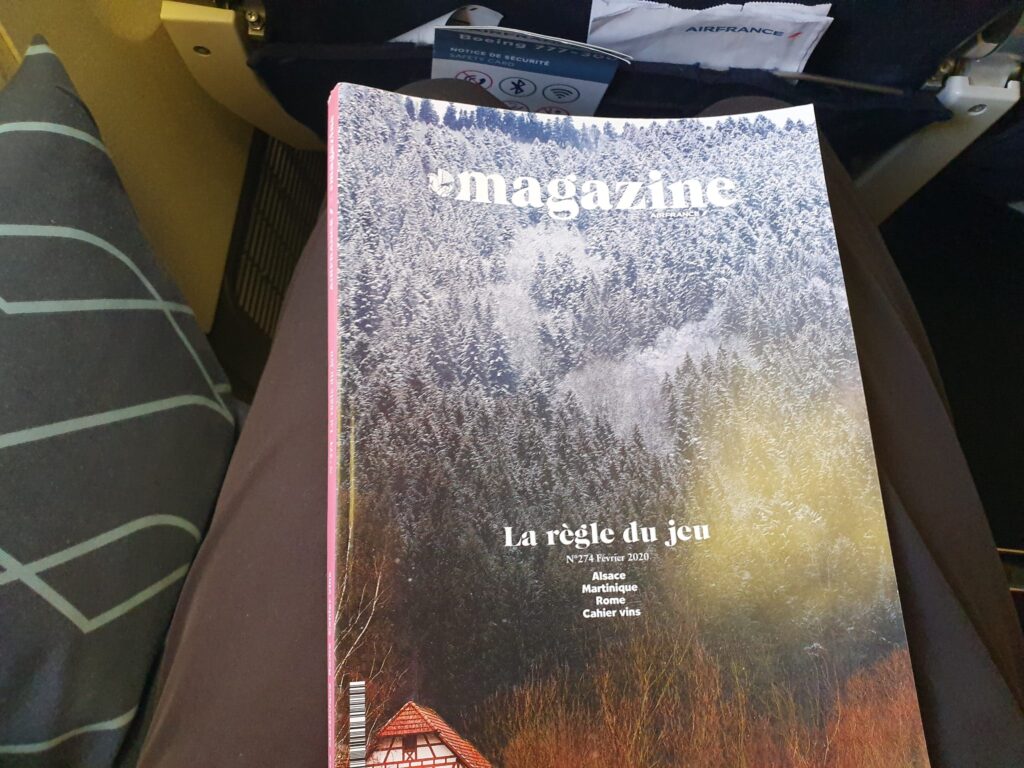
Following my bathroom visit I returned to Row 34 where the aisle seat occupier gave me some slightly annoyed looks owing to the fact I wished to reach my seat. With 30 minutes to go until departure, I slid in, made myself comfortable and decided to explore the area around my seat. Fortunately, this was clean and appeared to be devoid of any significant signs of wear and tear. Meanwhile at first glance, the 13.3 inch wide inflight entertainment screen seemed to be of a high quality and as I would later discover, this was responsive to touch and quick to load. Turning to the legroom, this was just mediocre for a full service airline operated long haul aircraft, however, I did find the seat to be well-padded and comfortable. Turning to the seat pocket, this contained the February copy of Air France’s magazine, named Magazine in addition to a sickbag, whilst a well-read looking safety card enjoyed its own individual pouch ensuring this to be both unmissable and easily reachable in times of need. Having noticed both during the online check-in process and when using the check-in machine at the airport that the middle seat had remained vacant, I had hoped that this would end up being the case for the flight. However five minutes after boarding this seat ended up being taken and so I would remain trapped in Seat 34A for the flight that morning.
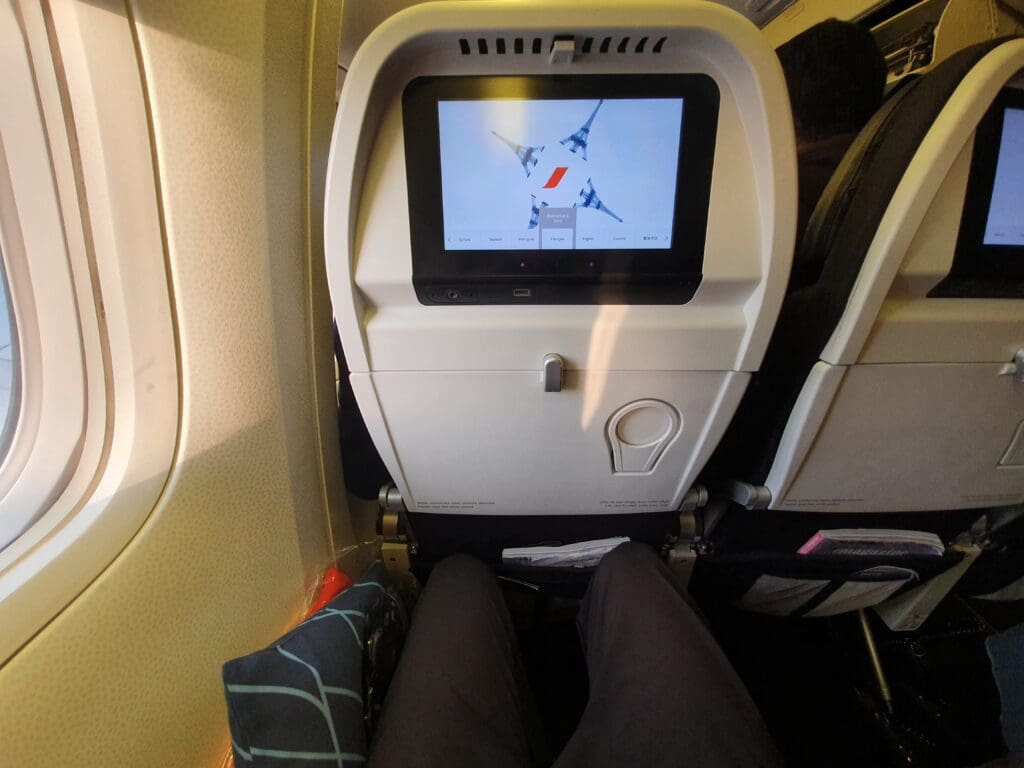
As time passed, passengers continued to stream onto the aircraft and the flight ended up being rather full. A walk through the cabin later on as we neared Beirut revealed the Economy section of the Boeing 777 to be approximately 95% full. Seeing as refuelling was underway for the first 15 minutes of my time on the aircraft, as I waited, regular announcements interrupted the light pop that provided the soundtrack to boarding and requested passengers to keep their seatbelts unfastened. With ten minutes to go until the flight’s scheduled departure time, at 0850 the Purser’s words of ‘embarquement terminé’ rang out throughout the cabin hinting at a punctual departure. However, over the next 10 minutes there seemed to be little sign of any departure preparations either in or outside the aircraft and the seatbelt signs remained off until 0858. This ding was followed by the Captain’s welcome announcement performed in French and English during which we were all thanked for choosing to fly with Air France, introduced to the flight’s Purser and informed of the flight’s estimated flight time of 3H45 and the weather in Beirut. Once this was made, at 0901 the Purser conducted a longer welcome announcement which included details of all languages spoken by the crew, these being English, French, Italian, Spanish and Vietnamese. Taking into account the flight’s destination, I was rather surprised to note the absence of Arabic from this list. However, throughout the flight, most announcements were followed by a shorter pre-recorded Arabic version.
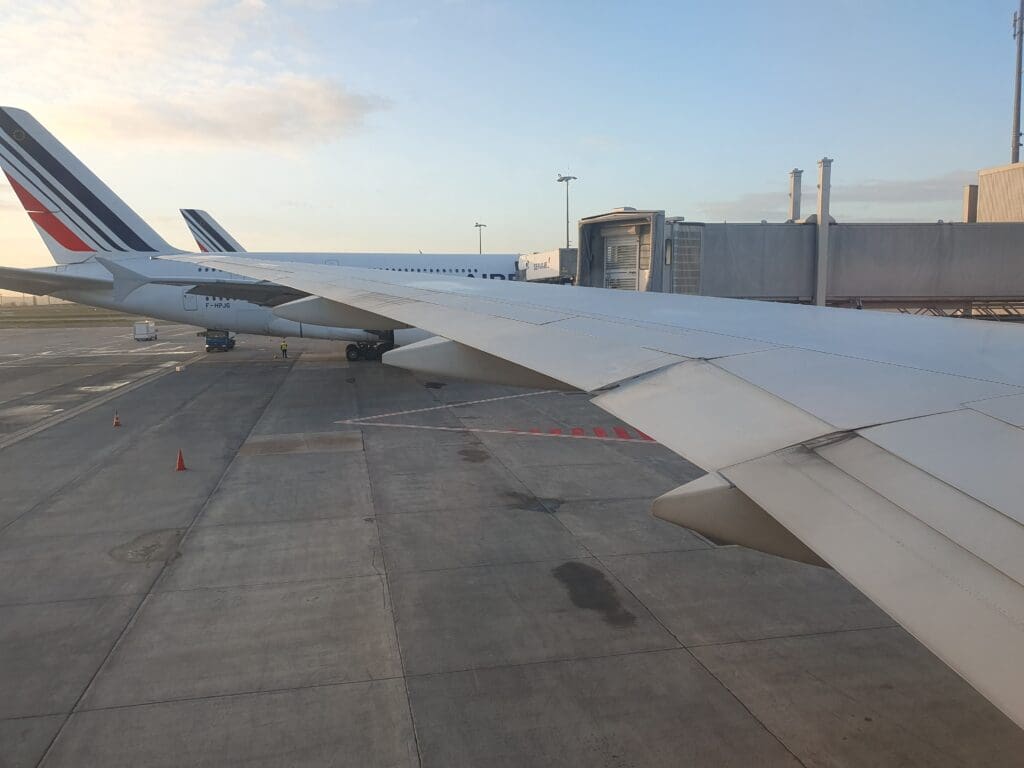
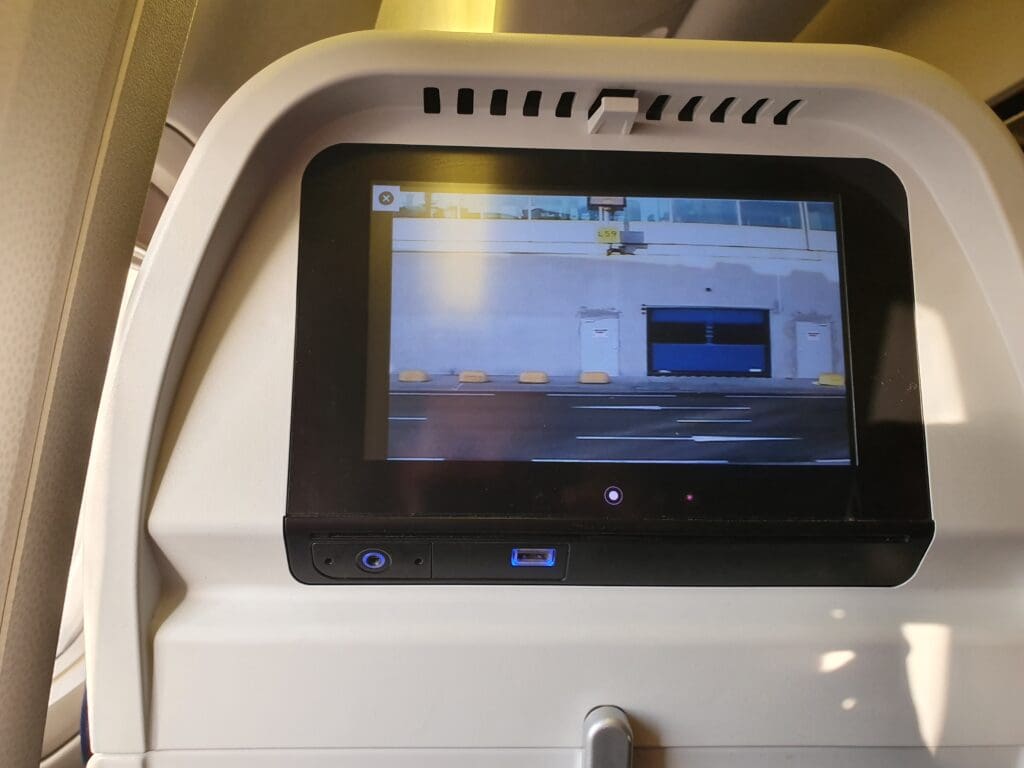
As the purser’s welcome came to an end, the aircraft pushed back away from the terminal and the aircraft’s two massive GE90 engines powered up into life accompanied by significant amounts of noise and vibration. Meanwhile as we headed backwards the airline’s France is in the Air 2015 safety video played as the crew members passed through the cabin ensuring all was in order for the aircraft’s departure. Following a short pause, at 0910 the Boeing 777 cautiously powered away from the ramp and commenced what would turn out to be a relatively short taxi to the nearest runway, Runway 26R. Given the short nature of this taxi, during this, views were limited to several remote stands as well as Terminal 2G, the home of Hop!’s Paris CDG operations. There, amongst the many E-Jets, an interesting wet-leased Avanti Air Fokker 100 could be seen waiting to head off to Ljubljana on behalf of Air France. Meanwhile, an impressive total of five Flybe aircraft could be seen at the remote stands waiting to head off to regional airports across the UK.
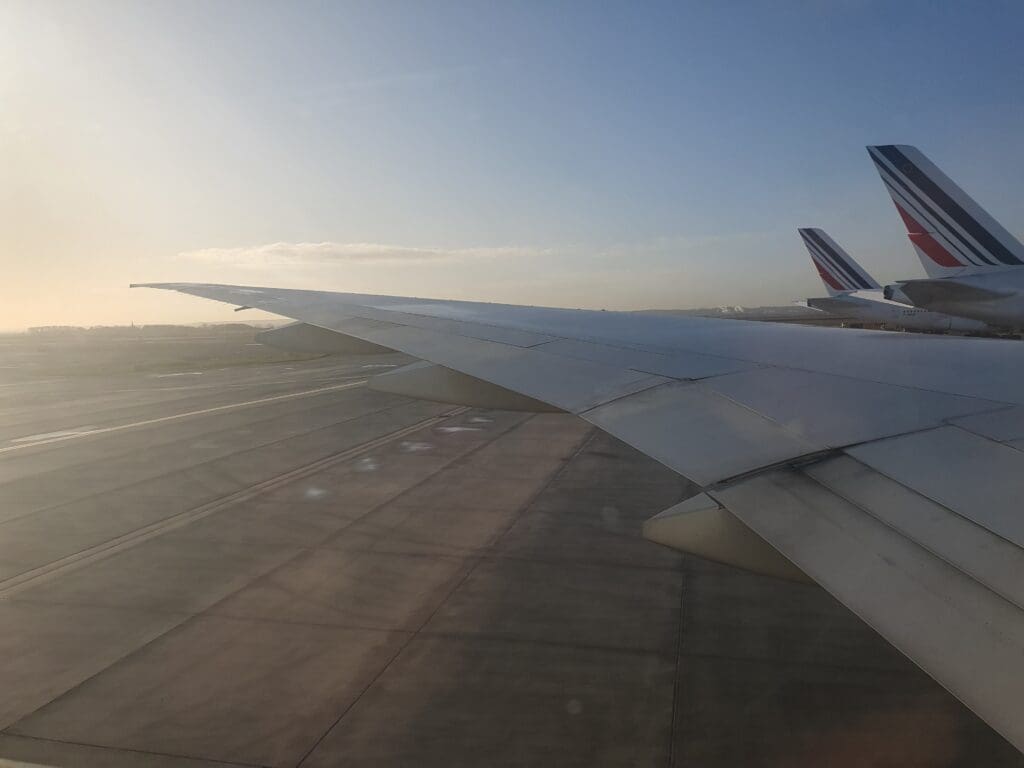
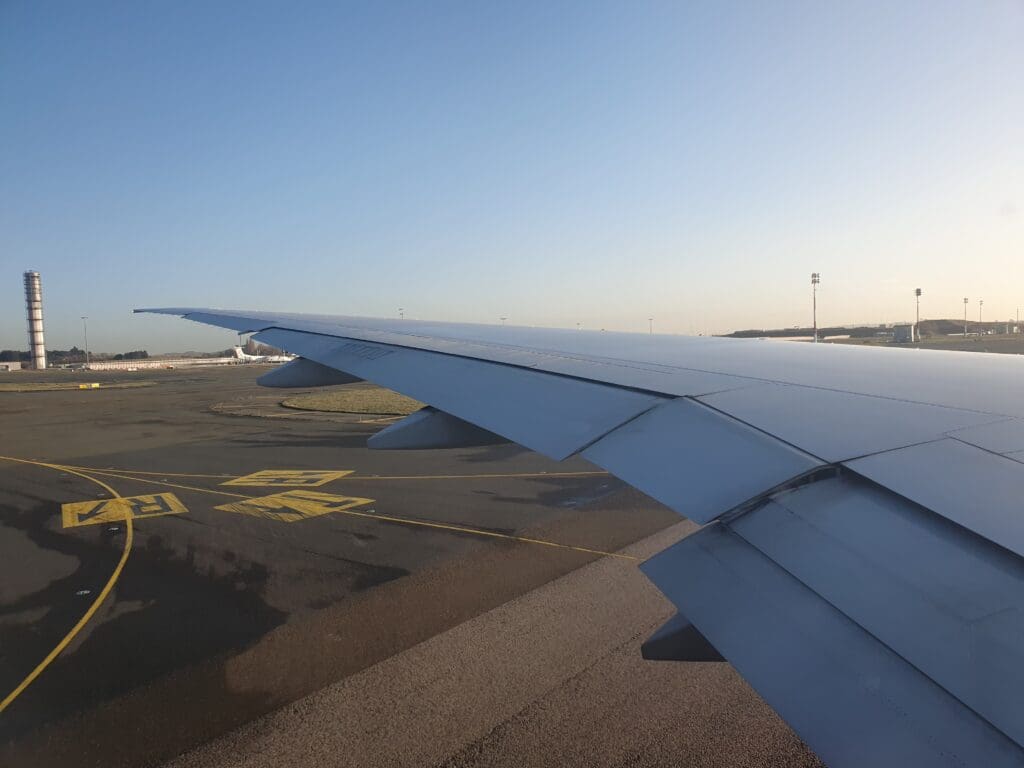
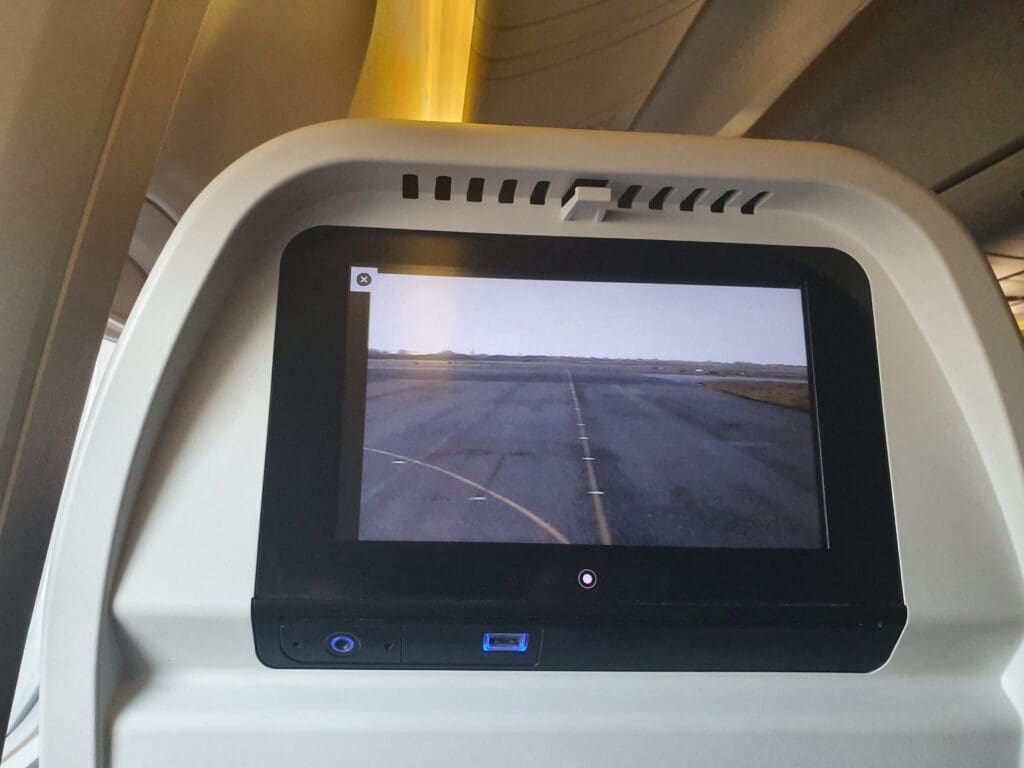
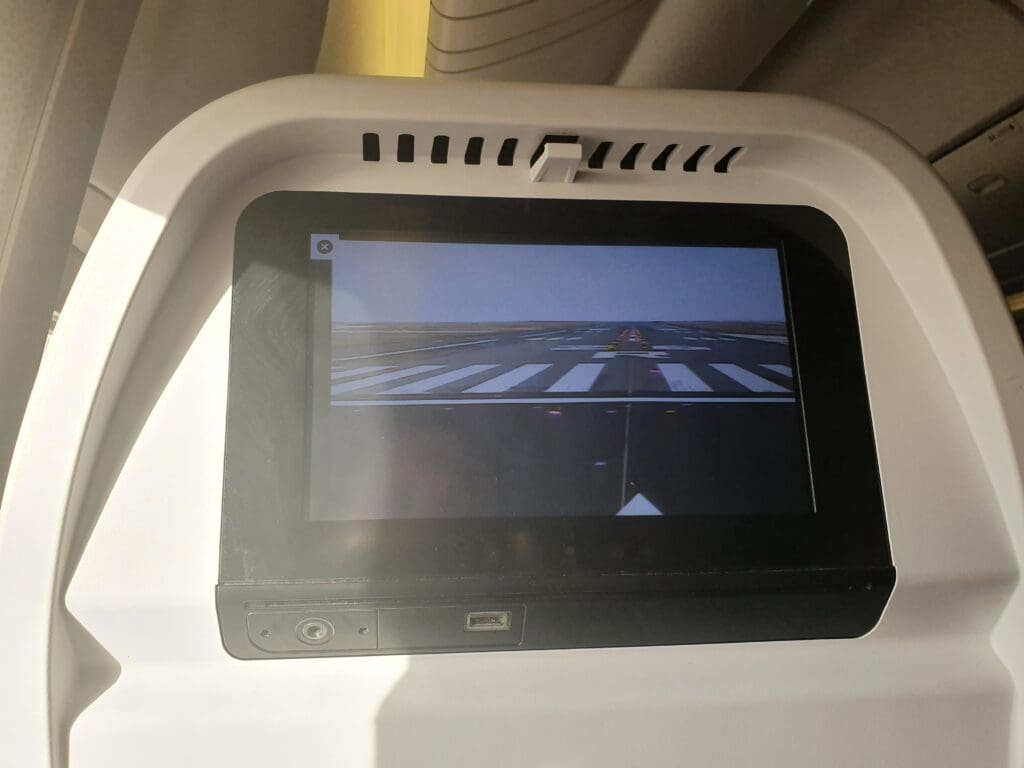
Without any pause whatsoever, at 0916 the Boeing 777 lumbered onto Runway 26R and took a short break. After no more than half a minute, allowing the previous departure, an Air France Airbus A320 to gain sufficient distance, the two engines roared into life and the aircraft made a short and powerful takeoff roll, soon rotating into the mostly clear skies. Had I opted for a seat on the opposite side of the aircraft, this departure would have allowed for superb views of the airport however instead as we climbed the fringes of Paris’ northern suburbs came into view.
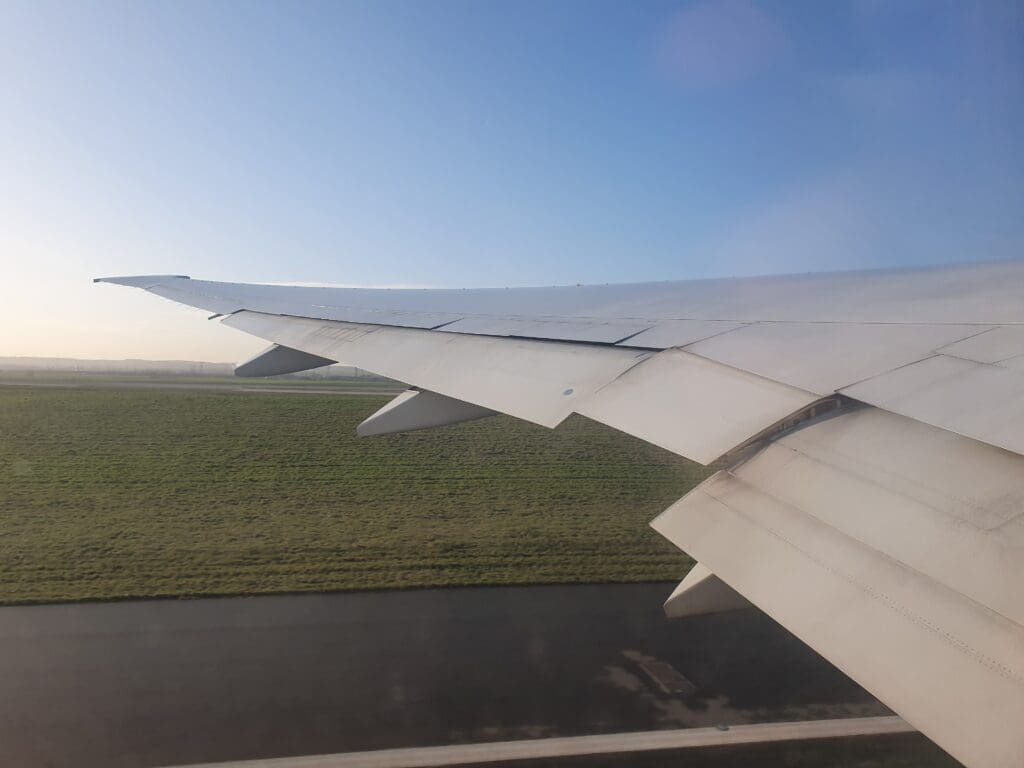
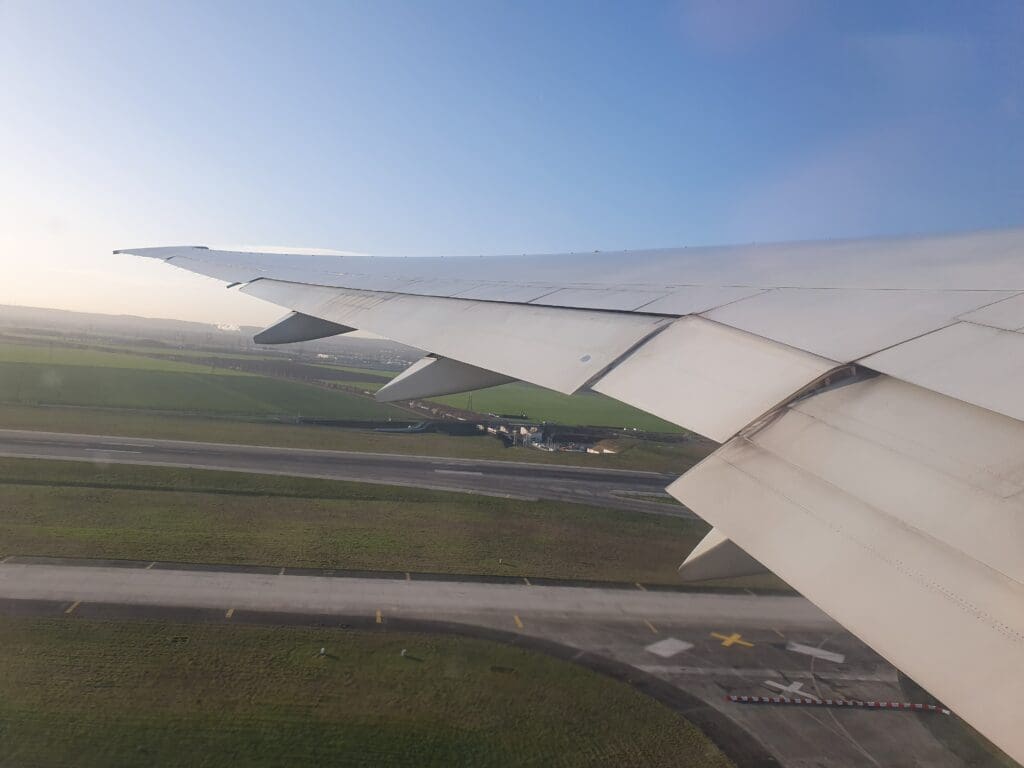
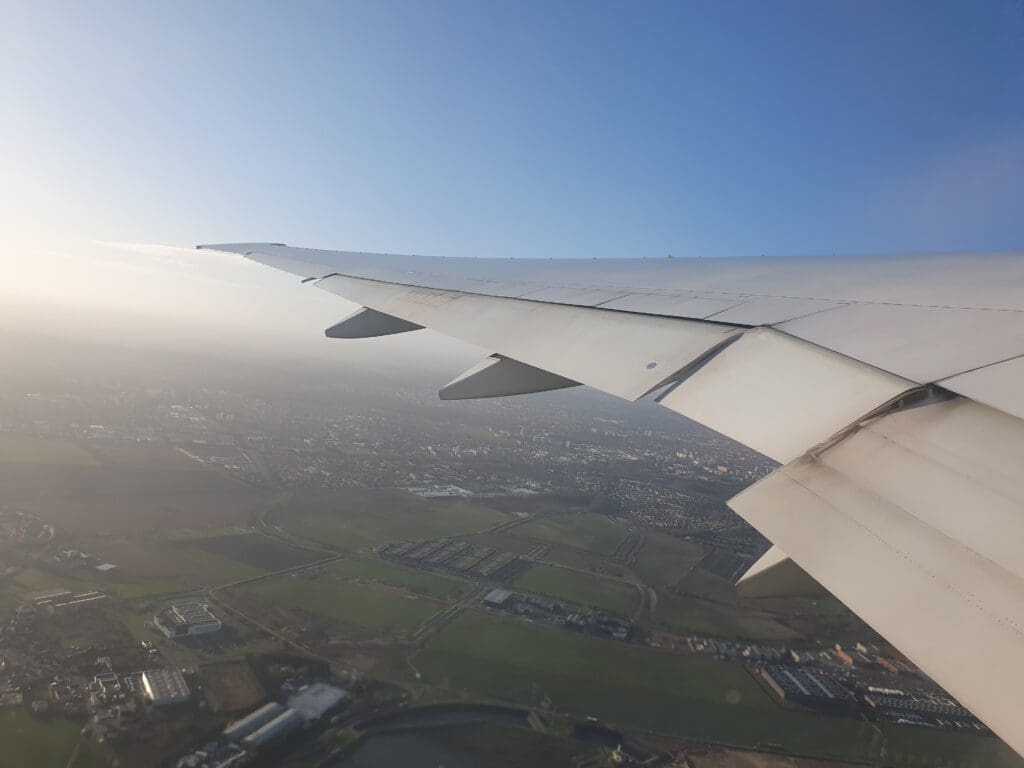
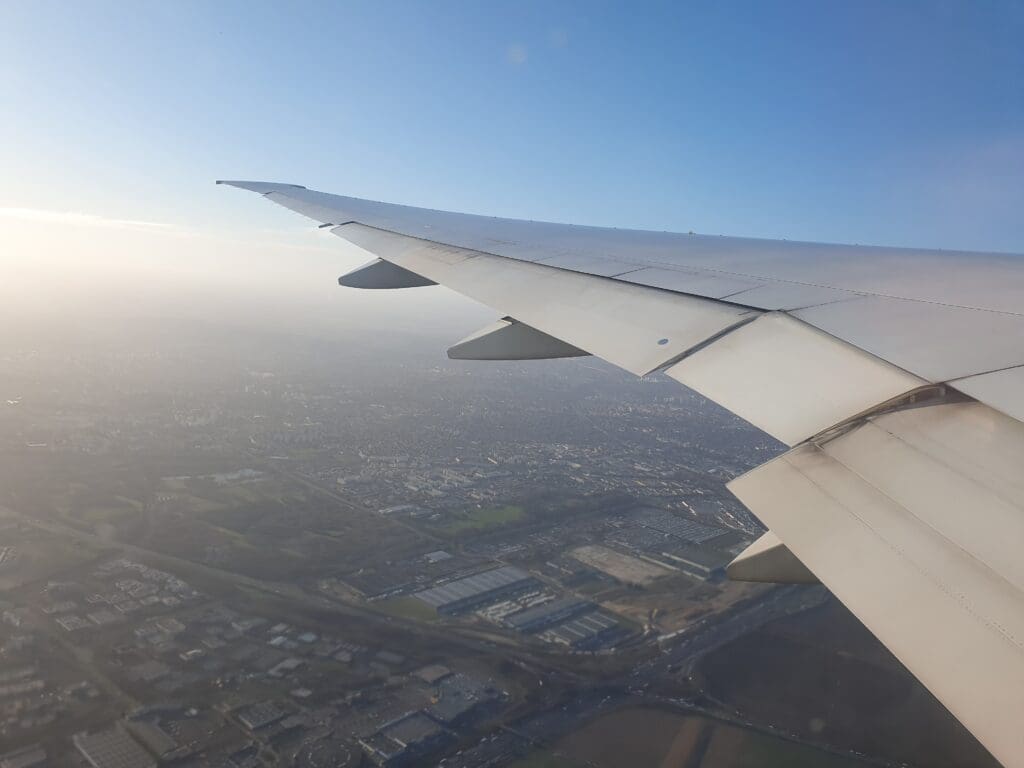
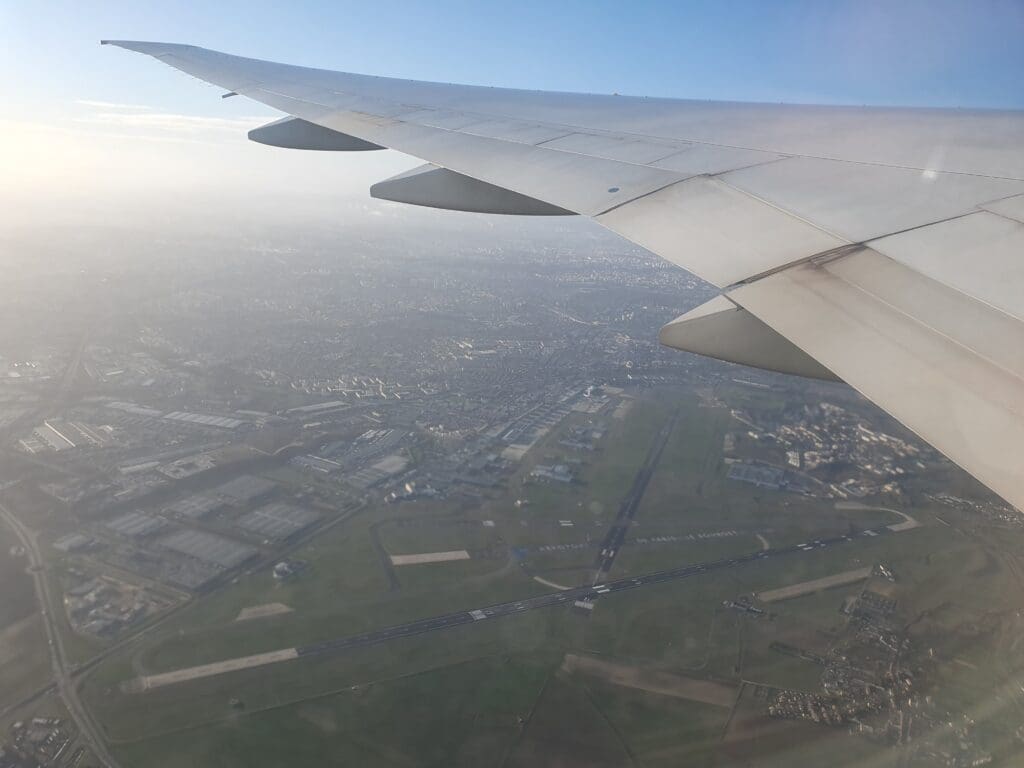
Almost immediately after taking to the skies, the usual announcement regarding keeping seatbelts fastened whilst seated was conducted after which a video detailing Air France’s sustainability projects and goals was broadcast on each inflight entertainment screen. Turning my attention back to the outside world, a short time after taking to the skies good views were offered of Paris’ private aviation hub, Le Bourget Airport before the aircraft banked left giving a birds eye view of St Denis and Aubervilliers. Admittedly, whilst these views were good, those on the opposite side of the aircraft were treated to an aerial tour of the sights of Central Paris.
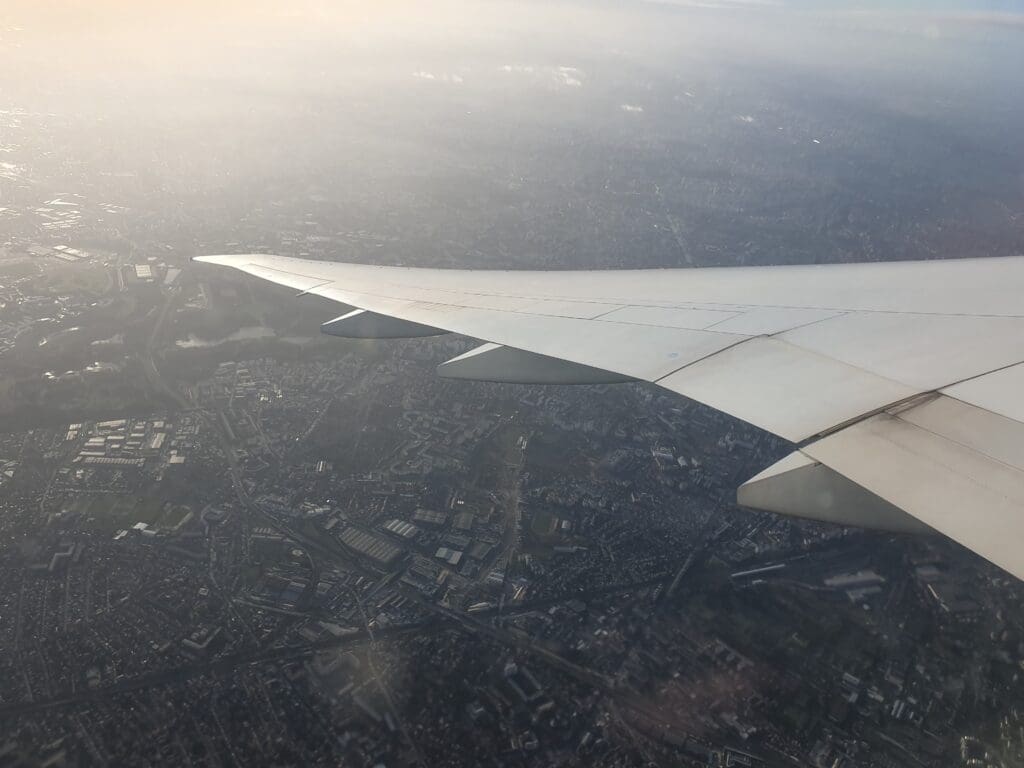
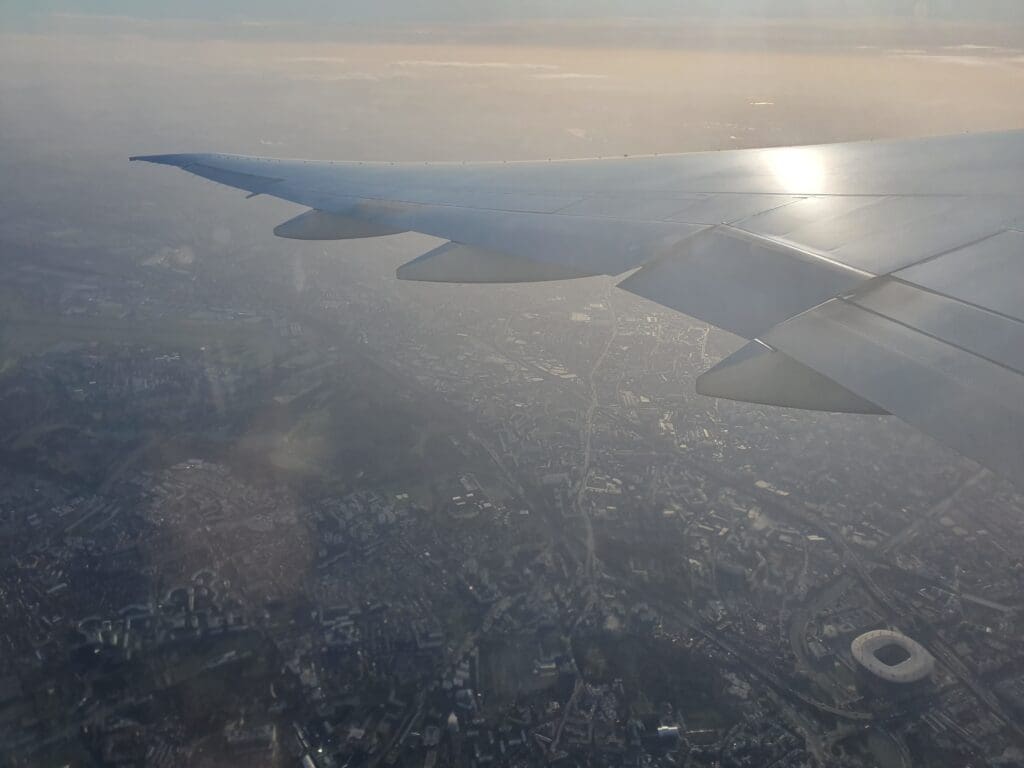
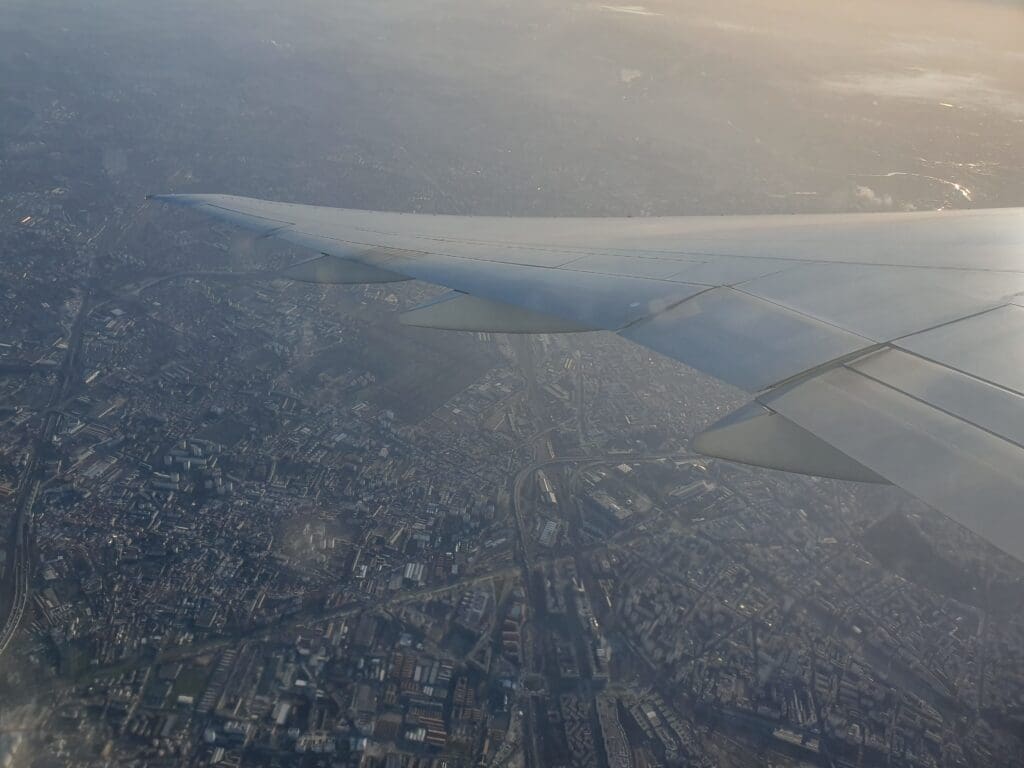
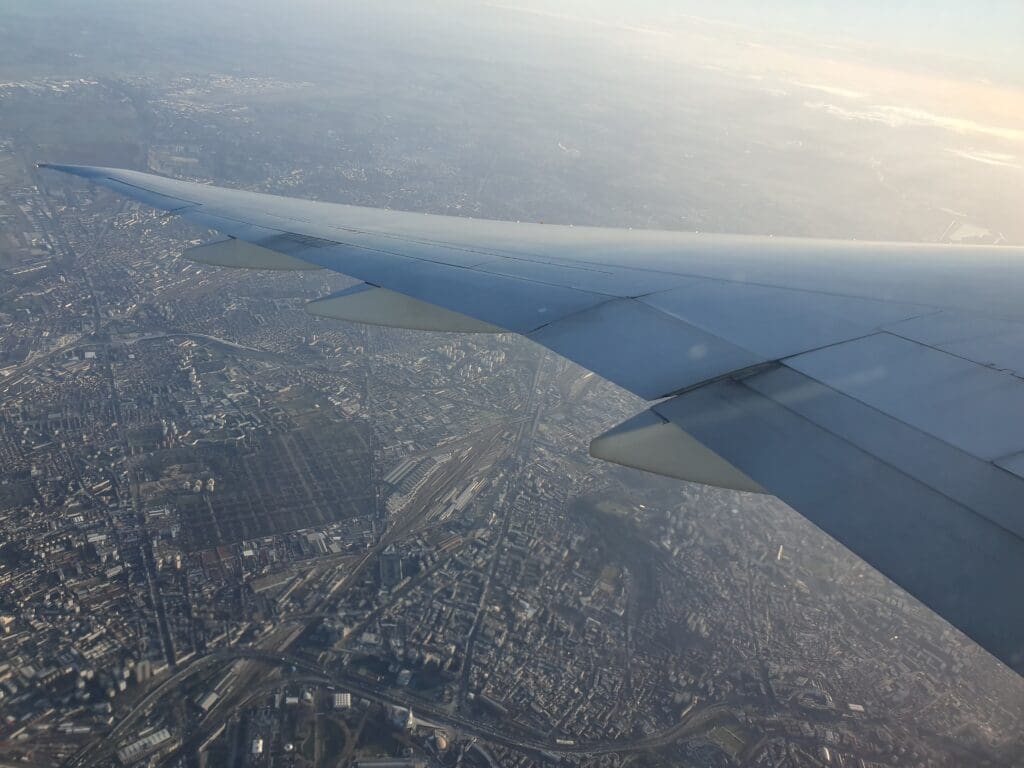
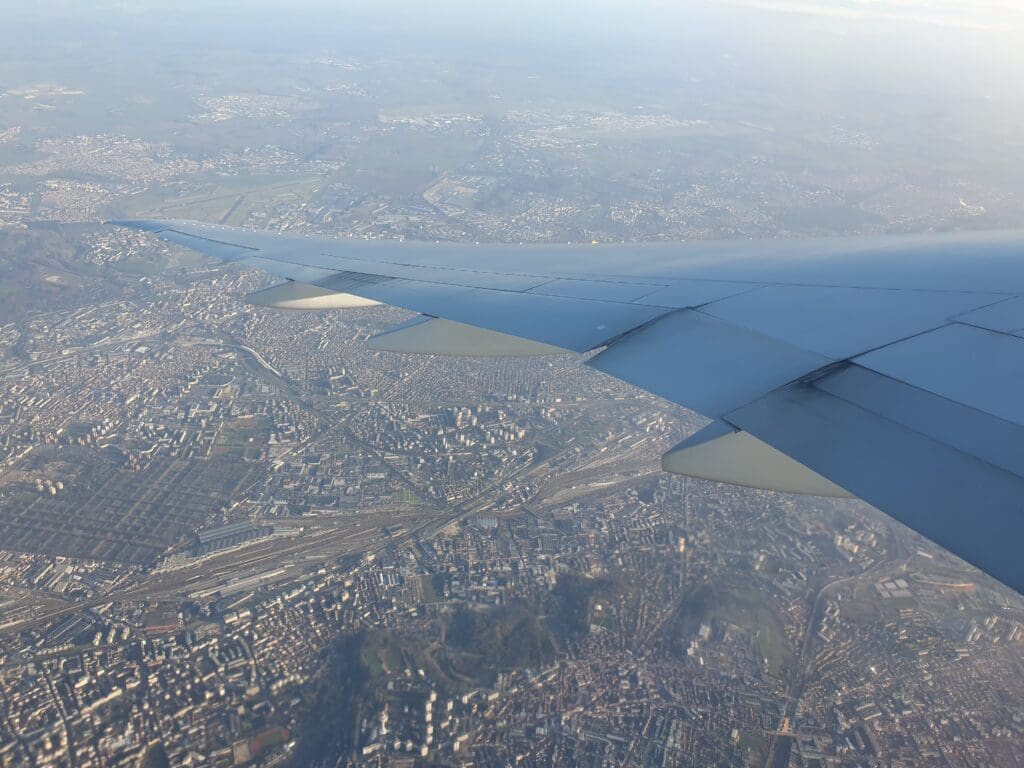
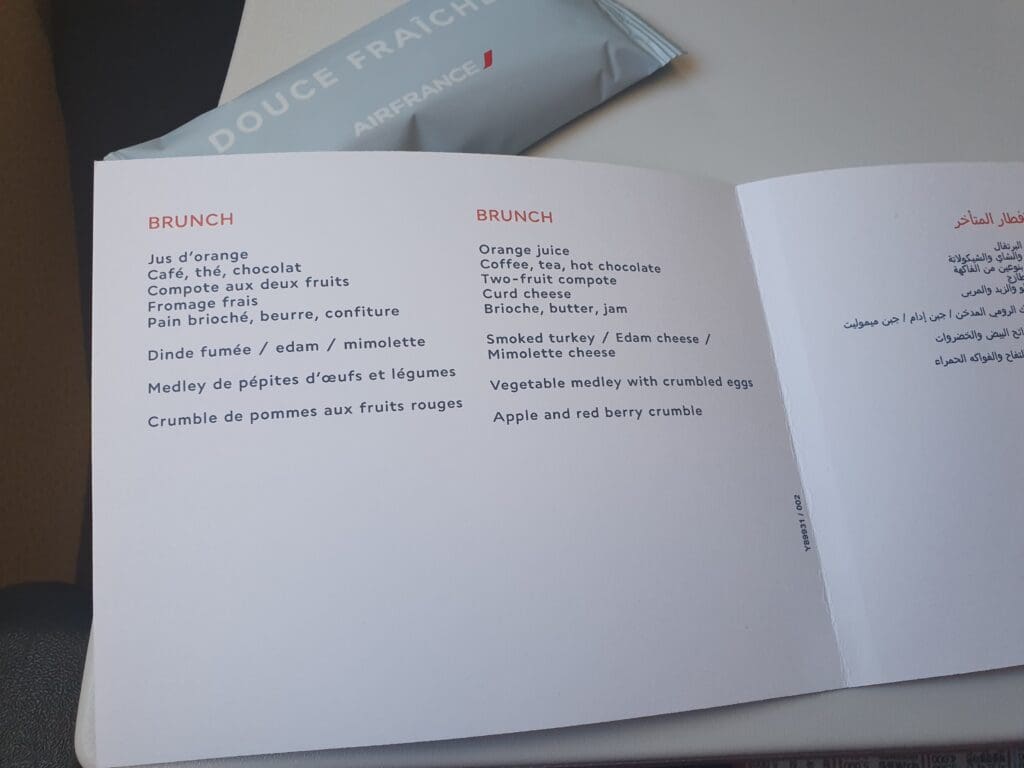
Just after passing over Paris’ centre, the aircraft cut above 10,000 feet and the seat belt signs were switched off. Below, the vistas of Paris’ suburbs were replaced by green fields and occasional towns to the east of the French capital before clouds formed beneath the aircraft. As soon as they were released from their seats, the crew commenced their preparations for the flight’s brunch service and the scent of warming airline food wafted through the cabin. As we climbed towards 37,000 feet, I was handed a packaged wet towel alongside a much appreciated stylishly designed paper menu summarising the food options in Arabic, English and French. I should also note that the crew member serving the portion of the aircraft where I was seated handed these out in a friendly and polite manner. After receiving this, I immediately got to work on deciding which of the two brunch options to go for, these being a ‘vegetable medley with crumbled eggs’ or apple and red berry crumble.
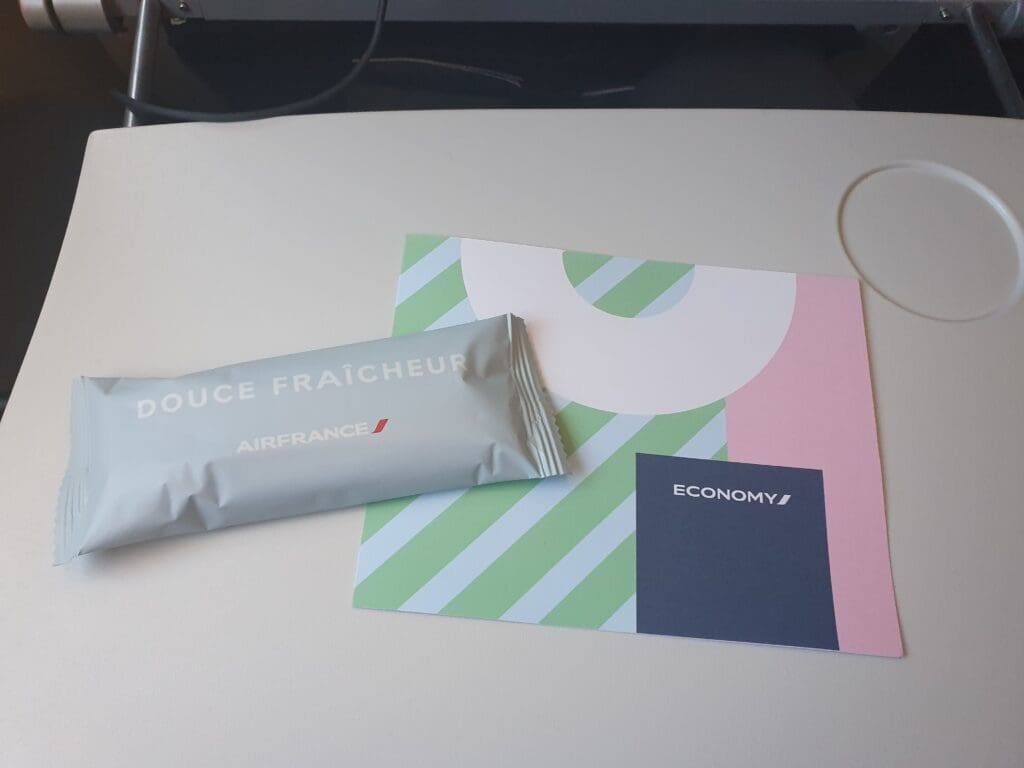
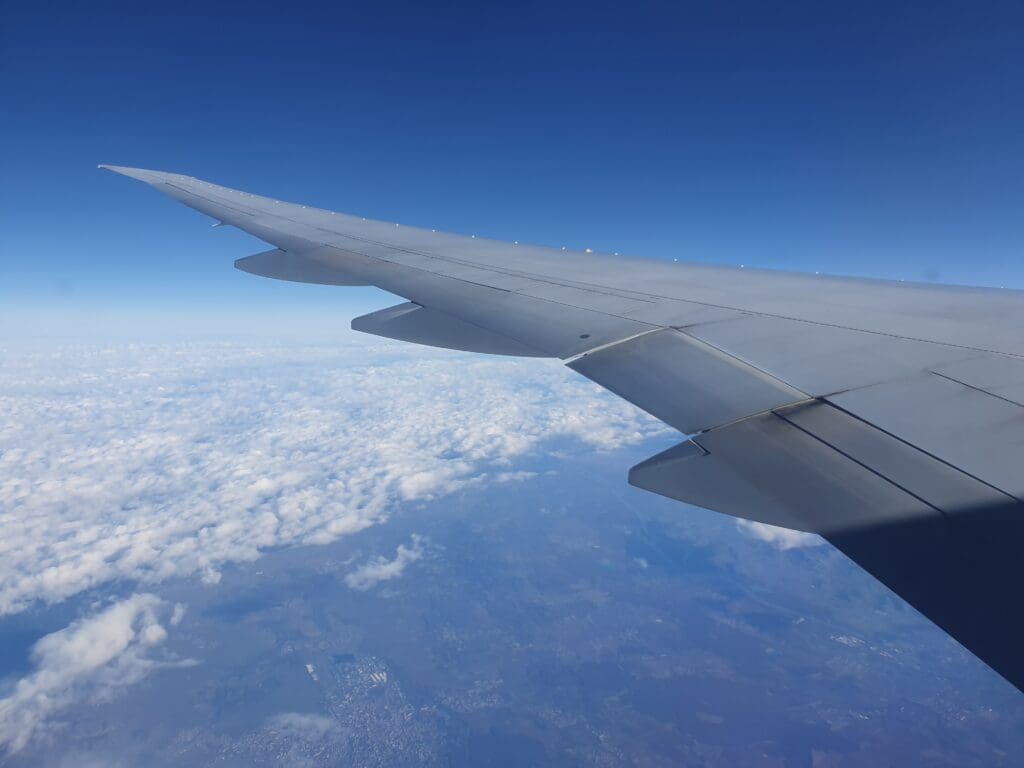
Around half an hour into the flight, our aircraft approached the French border with Germany at which time the clouds beneath us dissipated bringing into view the small town of Colmar and the nearby Rhine, indicating our arrival into German airspace. That morning, our time over Germany would be incredibly short, lasting no more than ten minutes before heading over Switzerland with Lake Constance soon appearing below the aircraft before being replaced by absolutely fantastic views of the Austrian, German and Swiss Alps.
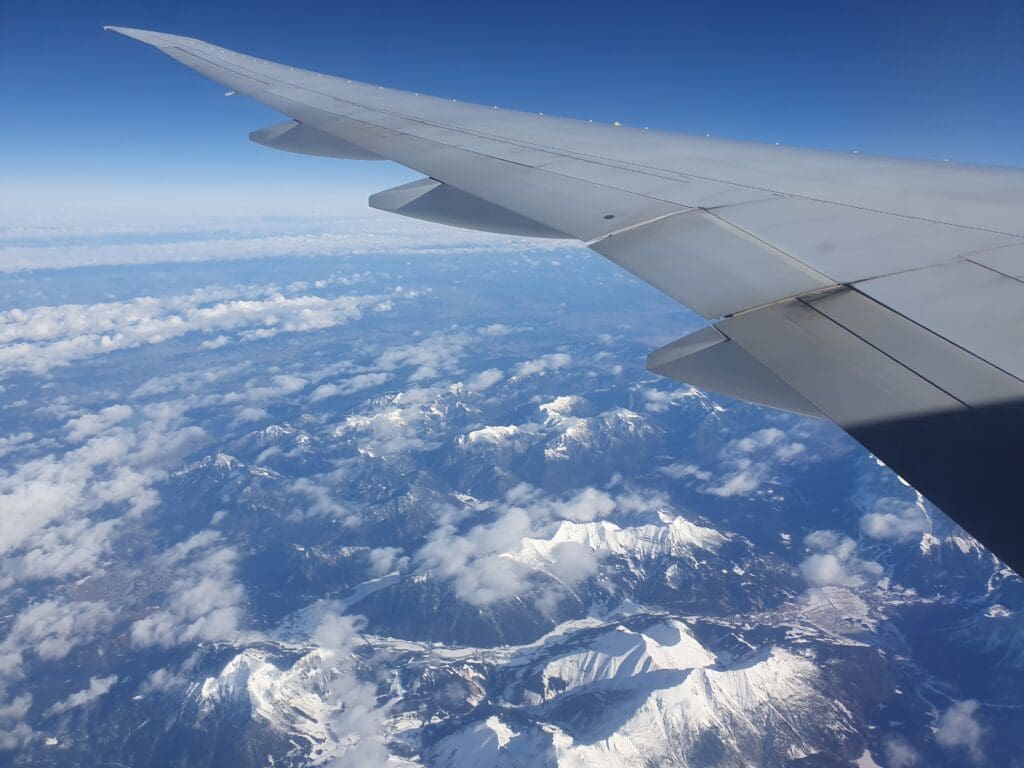
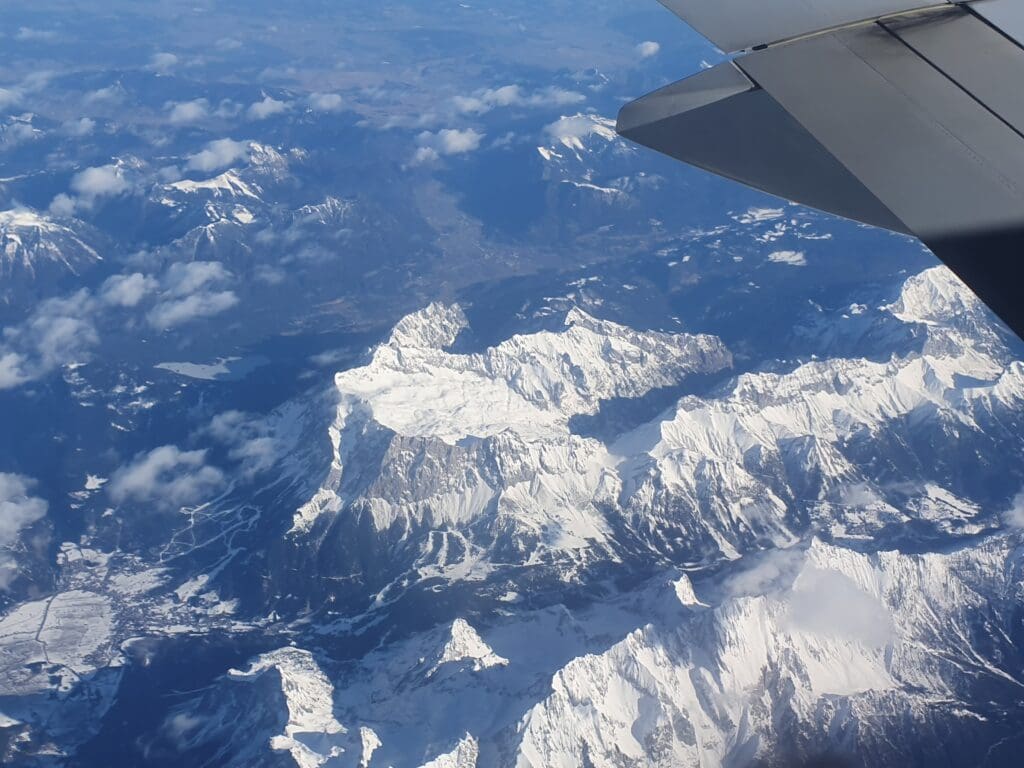
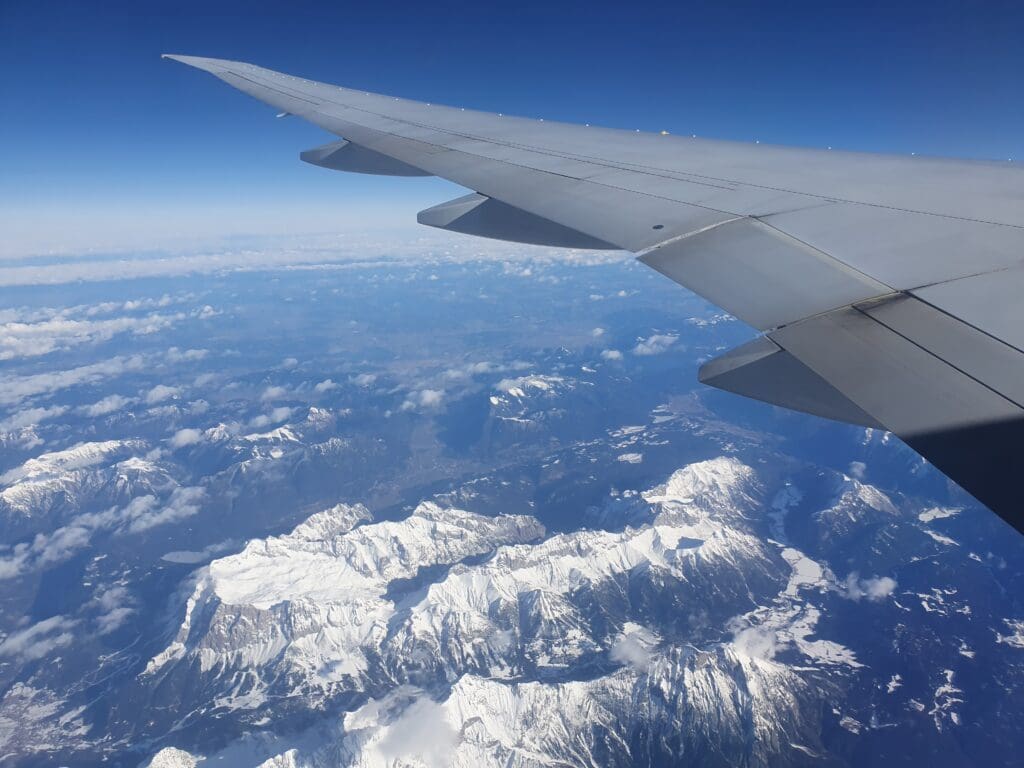

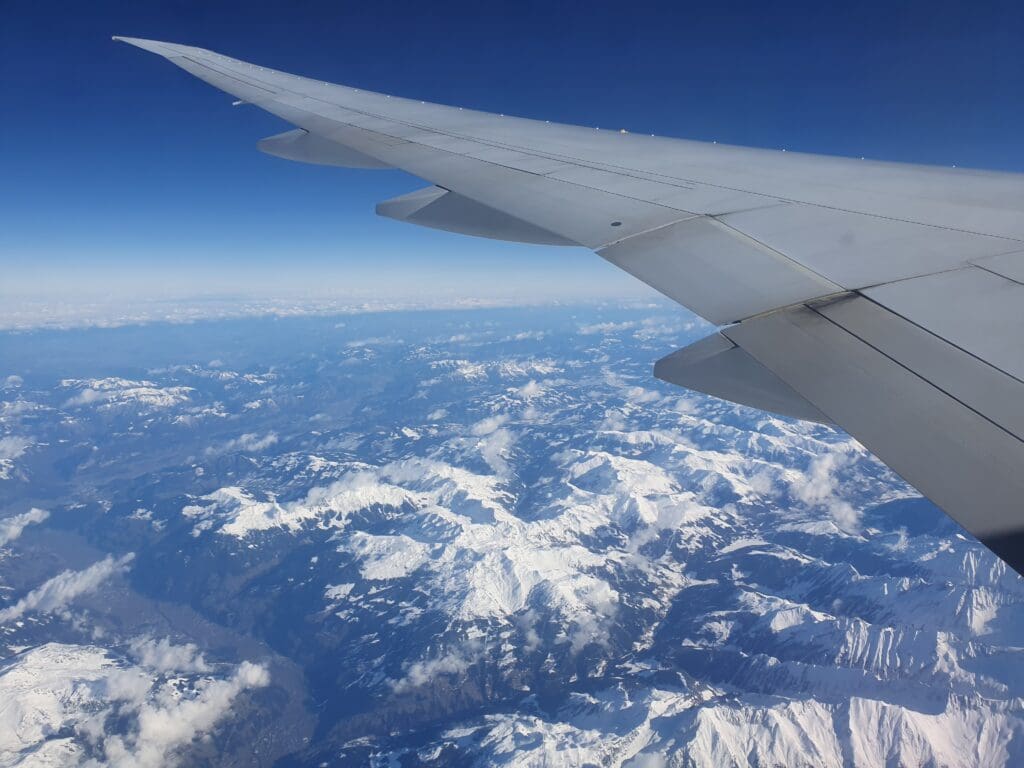
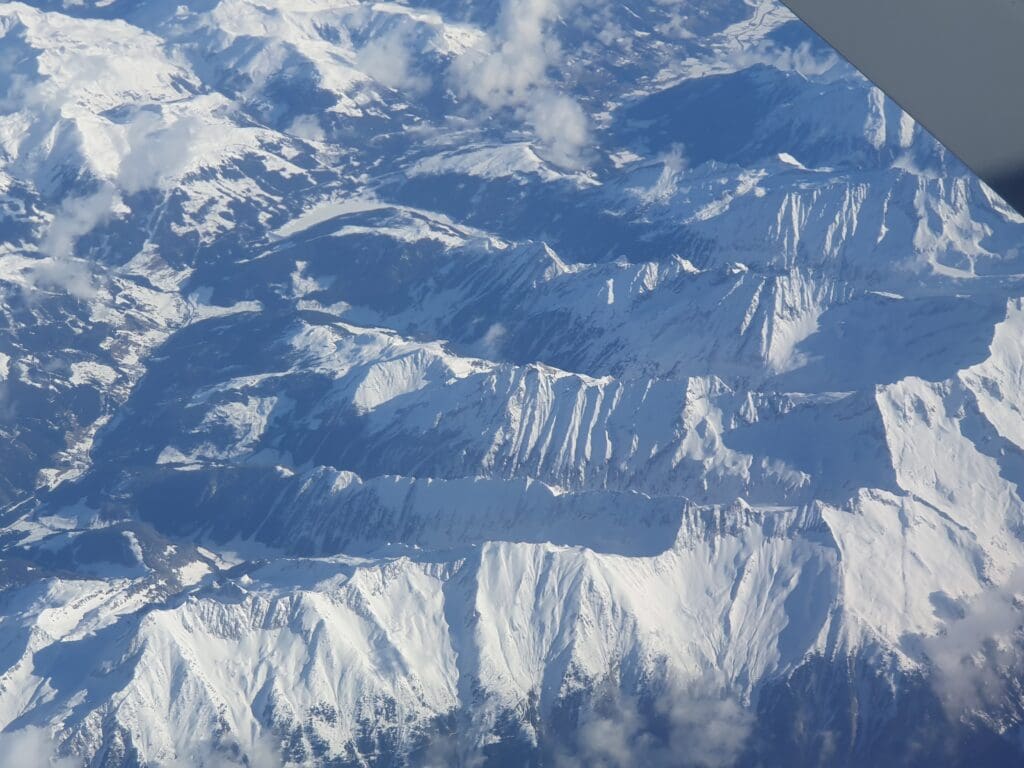
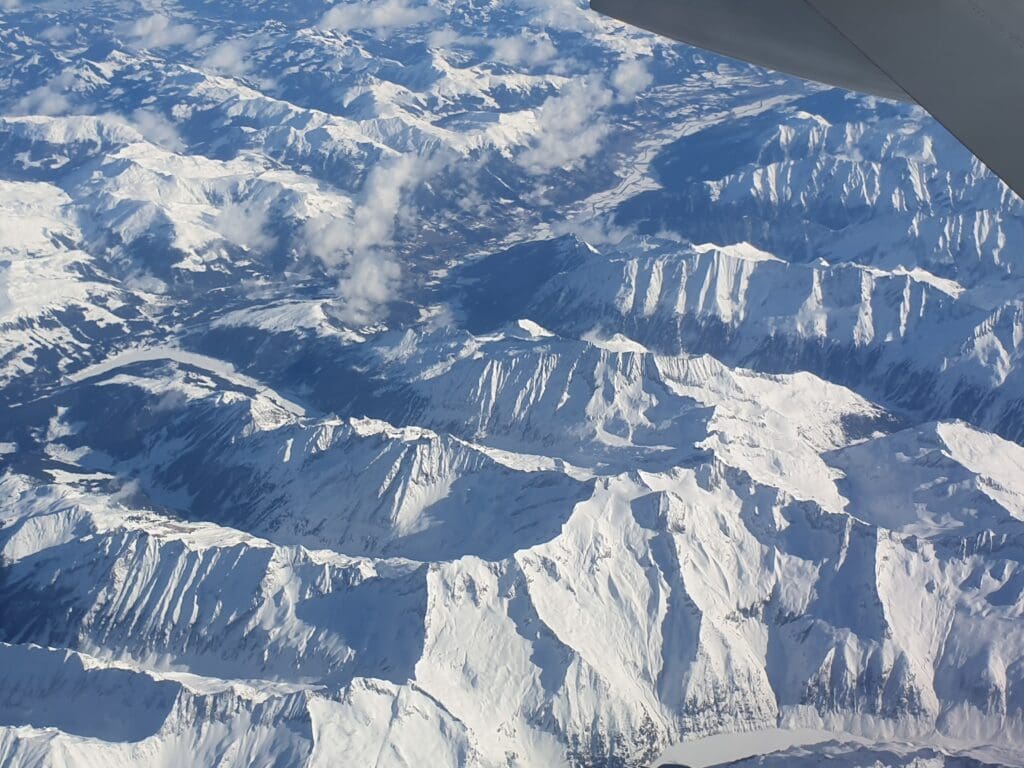
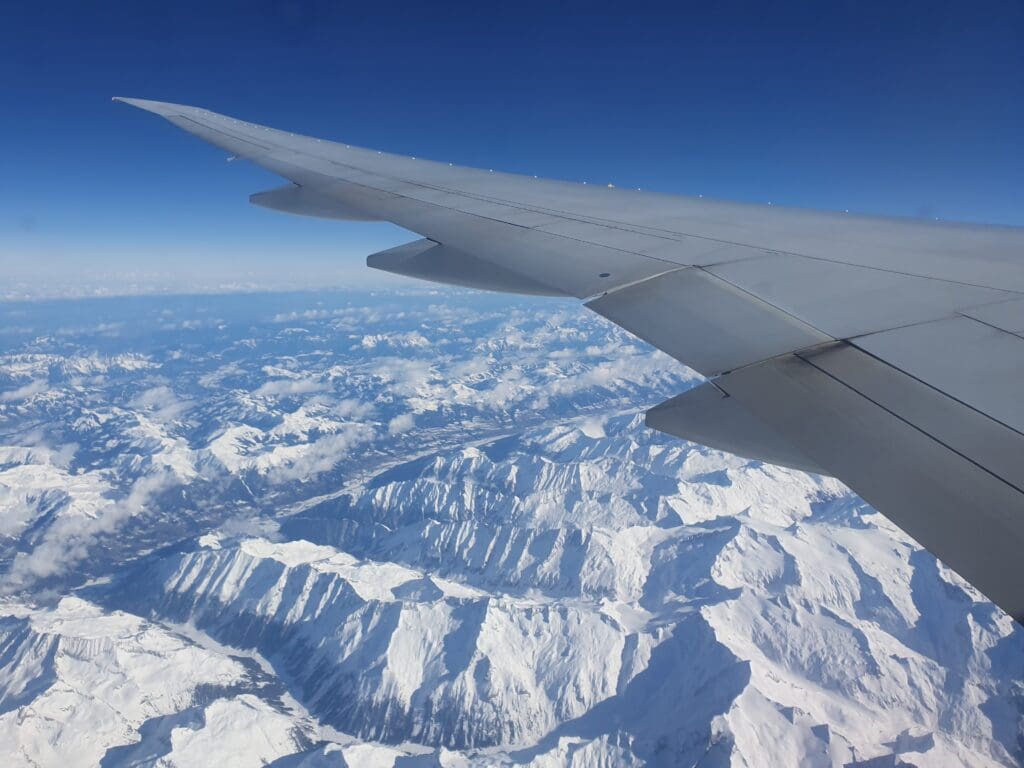

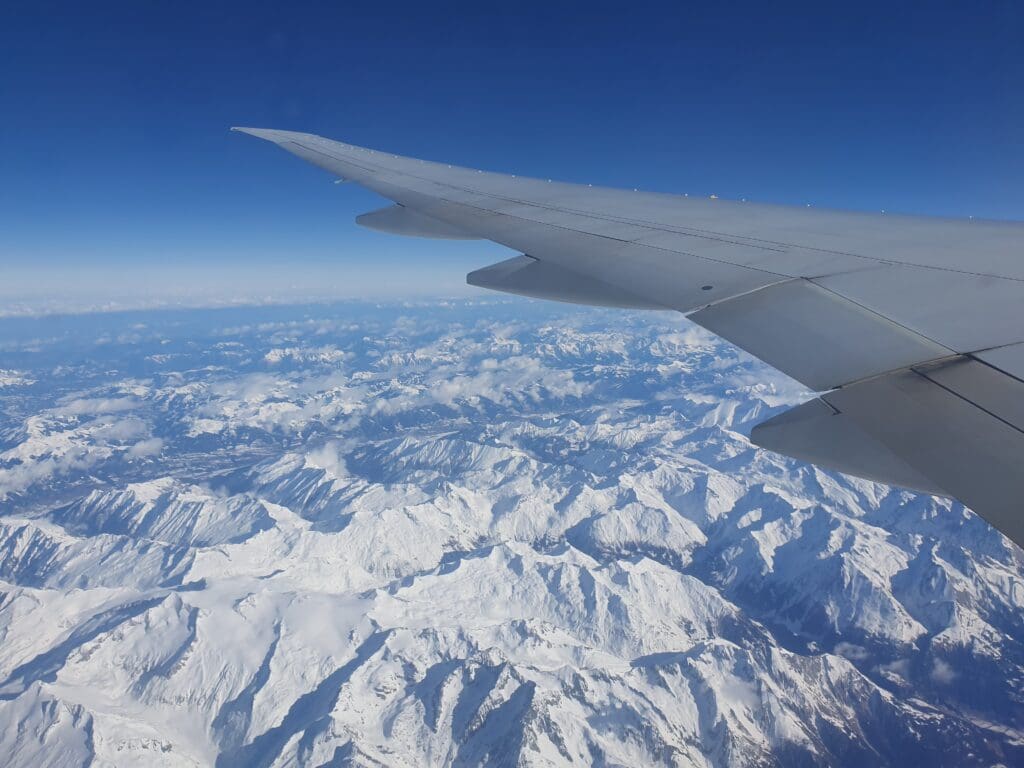
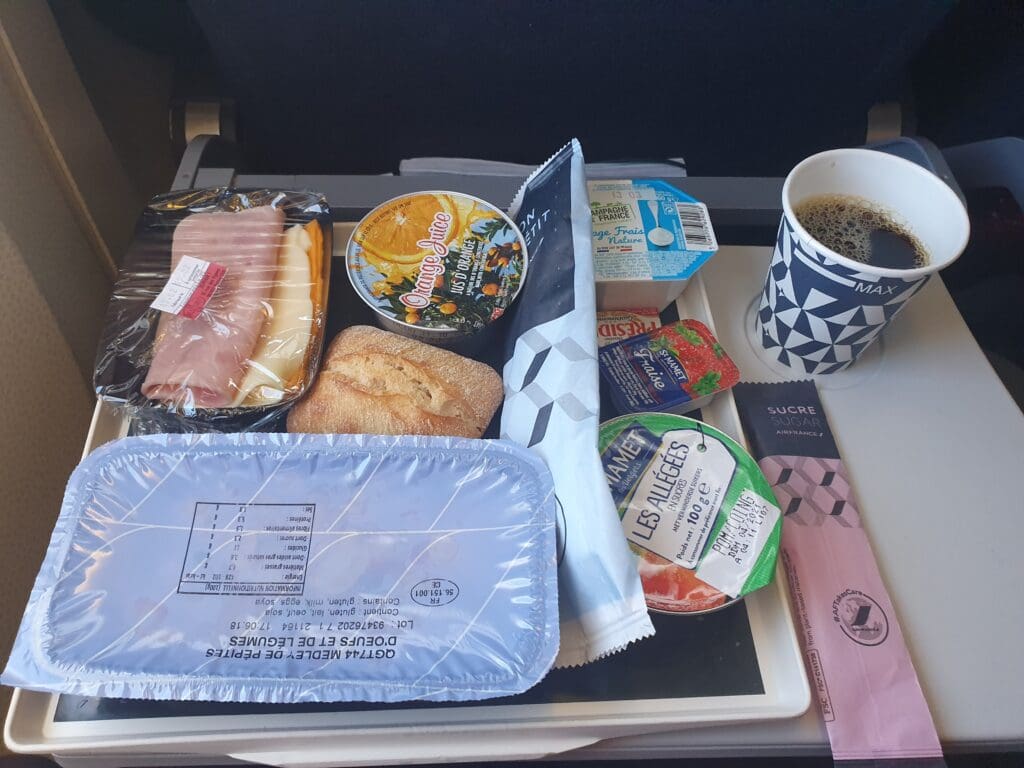
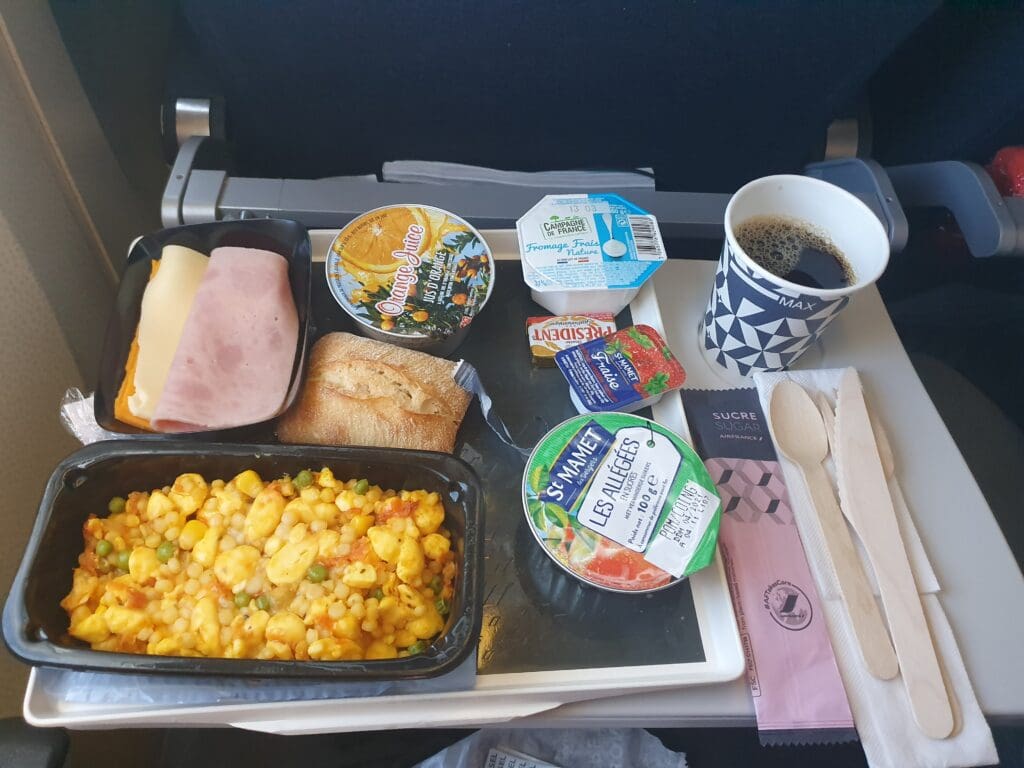
As the aircraft soared high over Innsbruck, the meal service commenced from the front of the cabin and reached Row 34 at 1010. After politely being asked what I would like to eat, seeing the fruit crumble as an overly sweet breakfast food, like both of my neighbours I opted for the egg dish which was carefully passed to me on a tray with several other dishes. Once this was safely on my tray table, I opted for a coffee which was handed to me in an equally cautious and friendly manner. This came in a paper cup, which, like most things on Air France featured a stylish and aesthetically pleasing pattern. After rejecting the crew member’s offer to pour me another drink, I got to work on exploring the contents of the tray. Whilst brunch may occasionally be associated with a meal that is lighter than both breakfast and lunch, thankfully that morning this was not the case and the tray contained a good amount of food. Aside from the main dish, this contained a side of meat and cheese consisting of a slice of smoked processed turkey and two slices of cheese, a bread roll (plus butter and a tub of jam), a plain yoghurt, an apple compote and a tub of orange juice. Rather than being presented with plastic or premium metal cutlery, a packet of wooden cutlery was offered, something I would take any day over its flimsy plastic equivalent. Having not really had anything substantial to eat in the past twelve hours, I soon got to work demolishing the meal. Whilst the main dish was a little small in quantity, this was delicious in taste and, overall, I had absolutely no issues with the amount of food provided given the length of the flight. Being a quick eater, I was pleased to see that the crew were proactive in removing trays, with no long delay in this, these being collected around fifteen minutes after the service commenced.
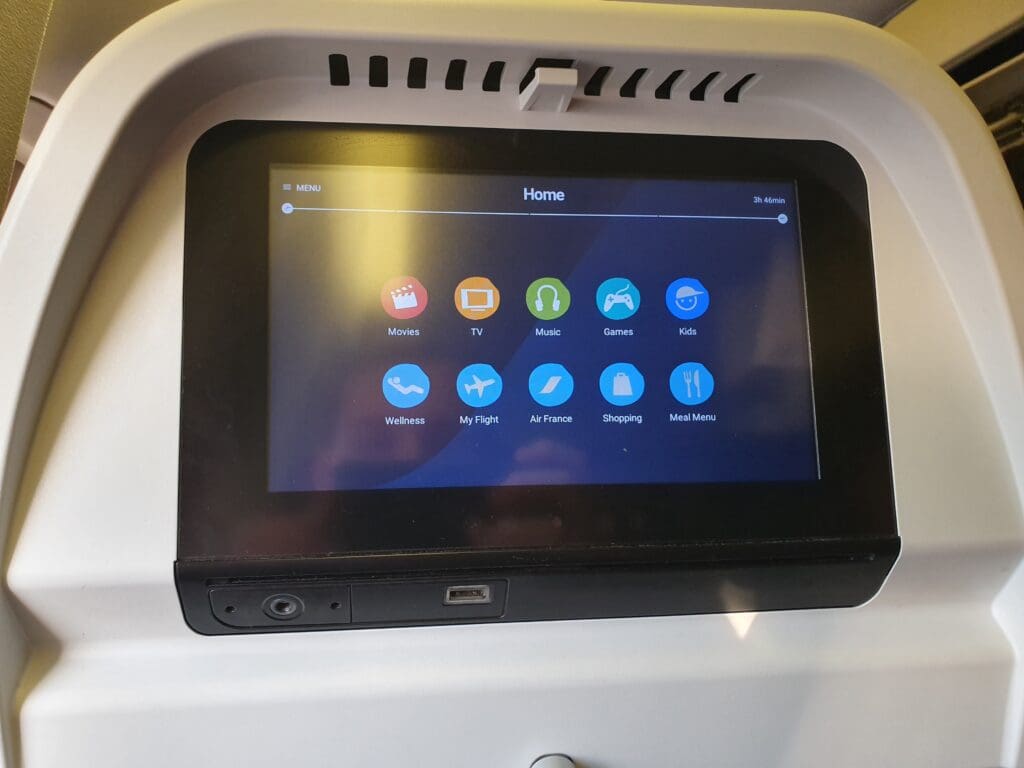
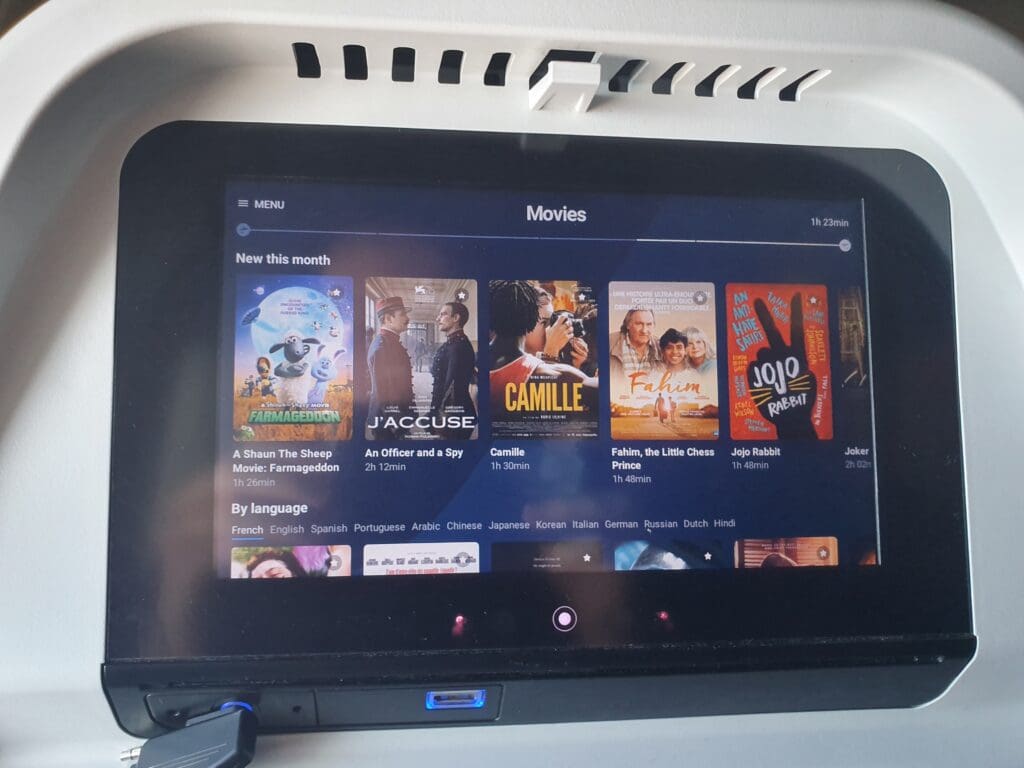
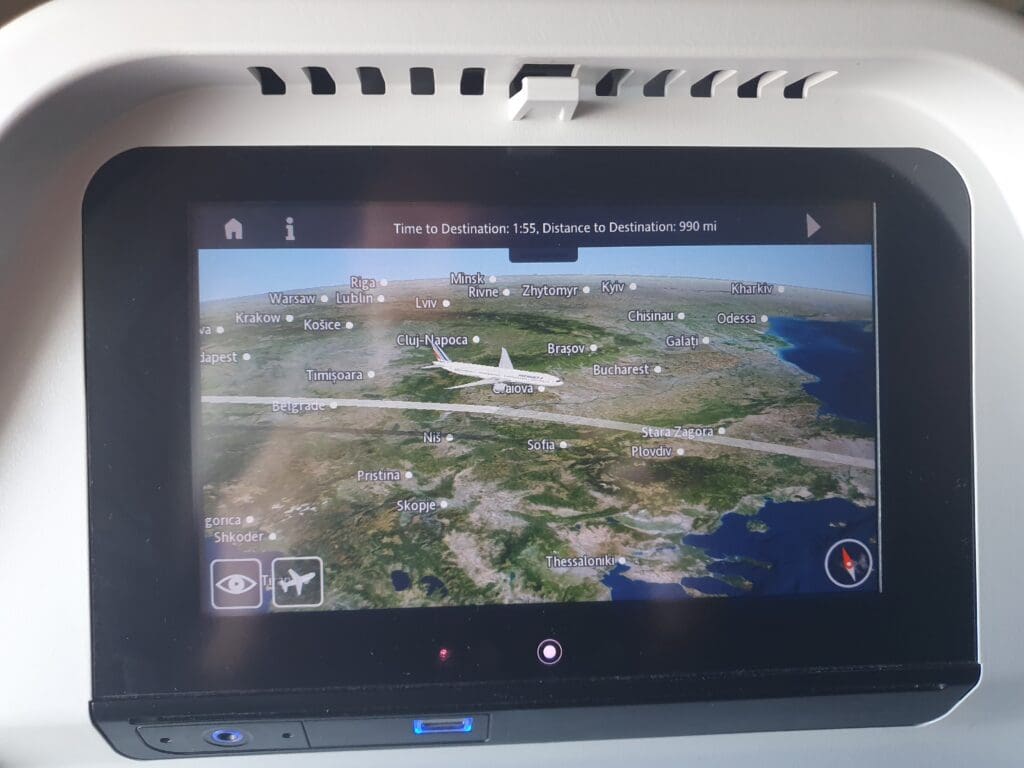
By the time the trays were collected, the beautiful Alps had flattened and the landscapes below were soon covered by clouds. With a temporary break in the good views outside I decided to explore the inflight entertainment options onboard the aircraft. As one would hope, the system appeared to be well laid out and available in a wide selection of languages representative of Air France’s destinations across the world. Moving onto the content available, this was plentiful with a wide selection of films, TV programmes, documentaries, games and music playlists available. In addition, a fantastic travel guide section with information related to many of Air France’s destinations, a comprehensive list of Air France related articles and a shopping section also feature on this system. Importantly, a high quality moving map and camera are offered for those looking to keep track of their flight’s progress. Continuing with the positives, I found the screen to be highly responsive to touch and quick to load, and, no adverts were played prior to the commencement of any item – something that prior to the flight I had only witnessed on British Airways and Korean Air. All in all this was good and I was only left with two slight negatives, the fact that the USB-A port beneath my screen did not work for the duration of my flight and the plug socket only worked in five minute bursts.
For those that need to stay in contact with the world below, wifi is provided on many of Air France’s aircraft with a complimentary package for those who wish to only send messages via iMessage, WeChat and WhatsApp. However it is worth mentioning that I was unable to connect to this, attempting to do so at various points throughout the flight. Finally, Air France allows passengers to download a number of publications several days prior to their flight via the Air France Play app, however, as I booked with Middle East Airlines, this was not possible.
By the time I had sufficiently explored the inflight entertainment options, the aircraft had headed southeast, remaining at a cruising altitude of 37,000 feet. After leaving the scenic Alps behind, the aircraft had flown high over Slovenia, Croatia and Bosnia and Herzegovina before the clouds parted mid-way over Serbia revealing the countryside before the nation’s third largest city, Niš, came into view. A short while later, a host of snow-capped mountains near the border between Serbia and Bulgaria could be seen and a short while later, Bulgaria’s capital, Sofia appeared.
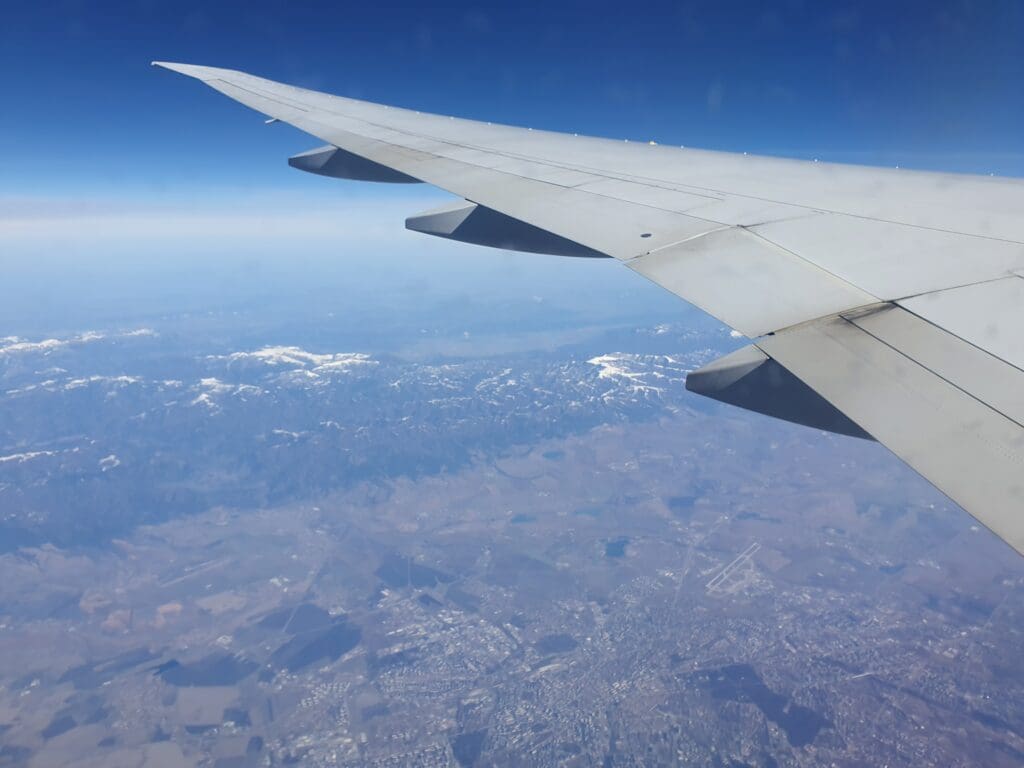
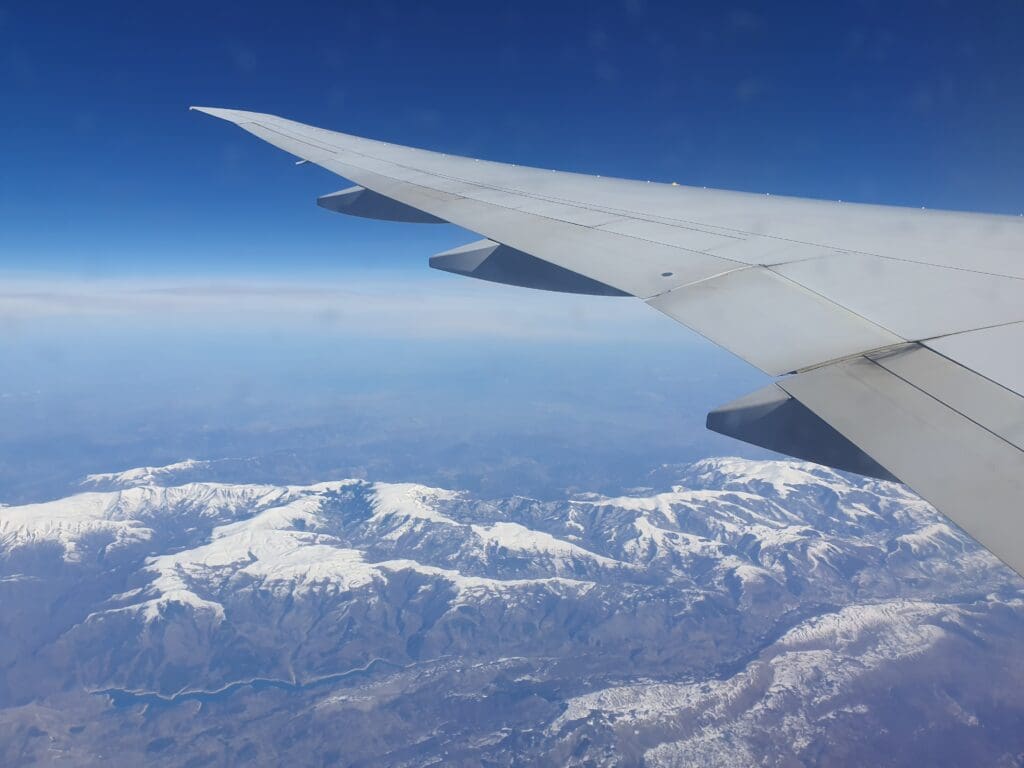
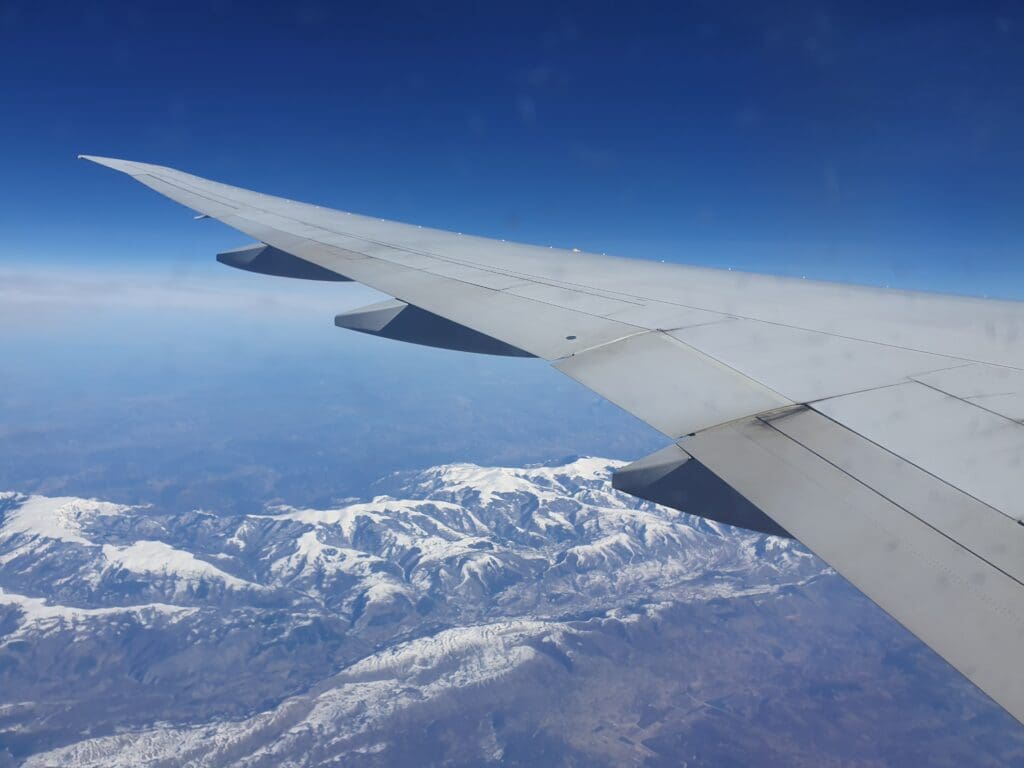
Cutting across Bulgaria’s southwestern corner, our flight over the country was relatively brief and no more than twenty minutes after passing Sofia, the aircraft headed out over the Greek region of Thrace. Unfortunately given the lack of clouds below, our crossing of Greece was to be even shorter than the crossing of Bulgaria and as we cruised over the nation, only the coastal city of Alexandropoulos and its airport were visible before the aircraft headed south over the coastline.
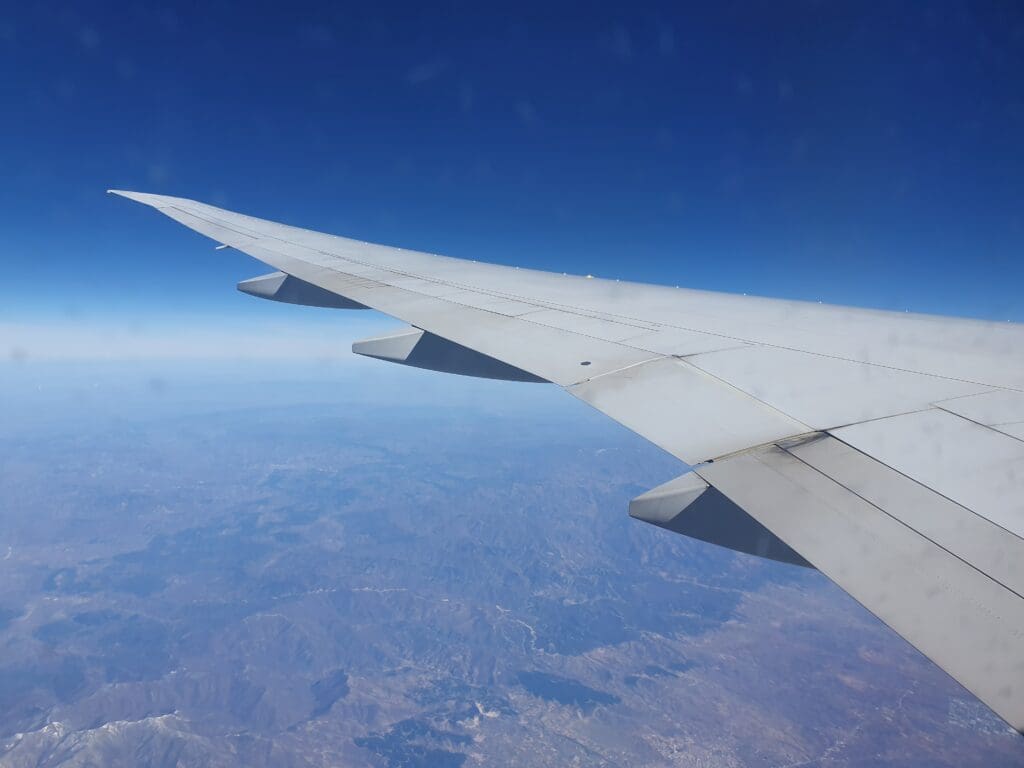
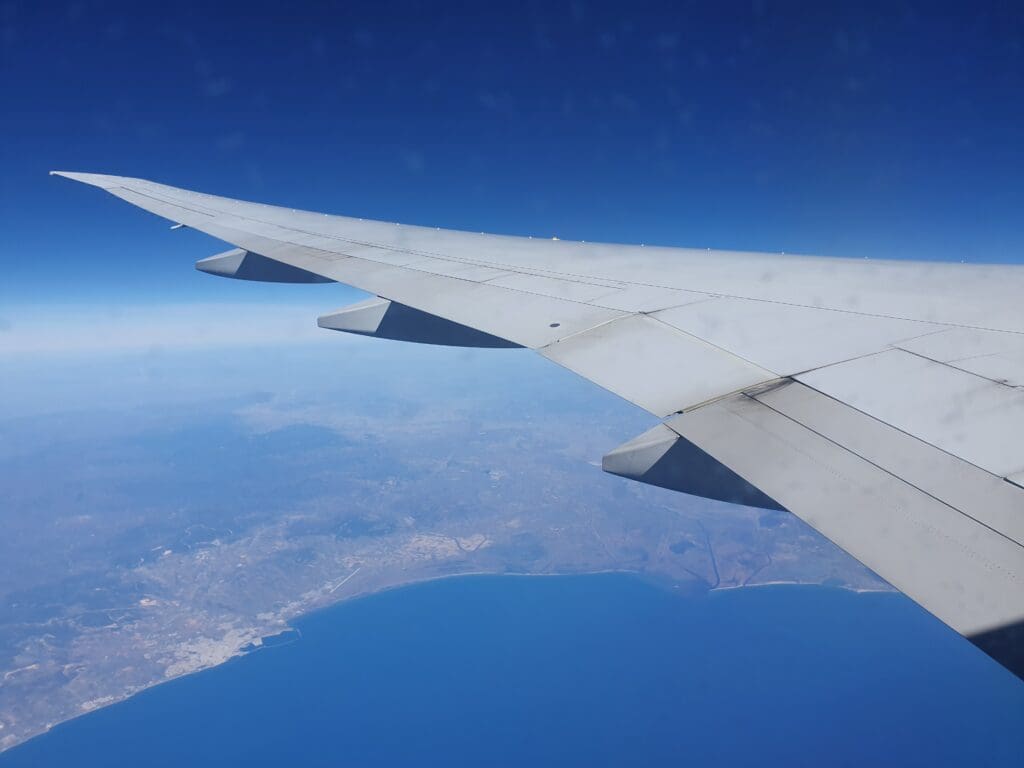

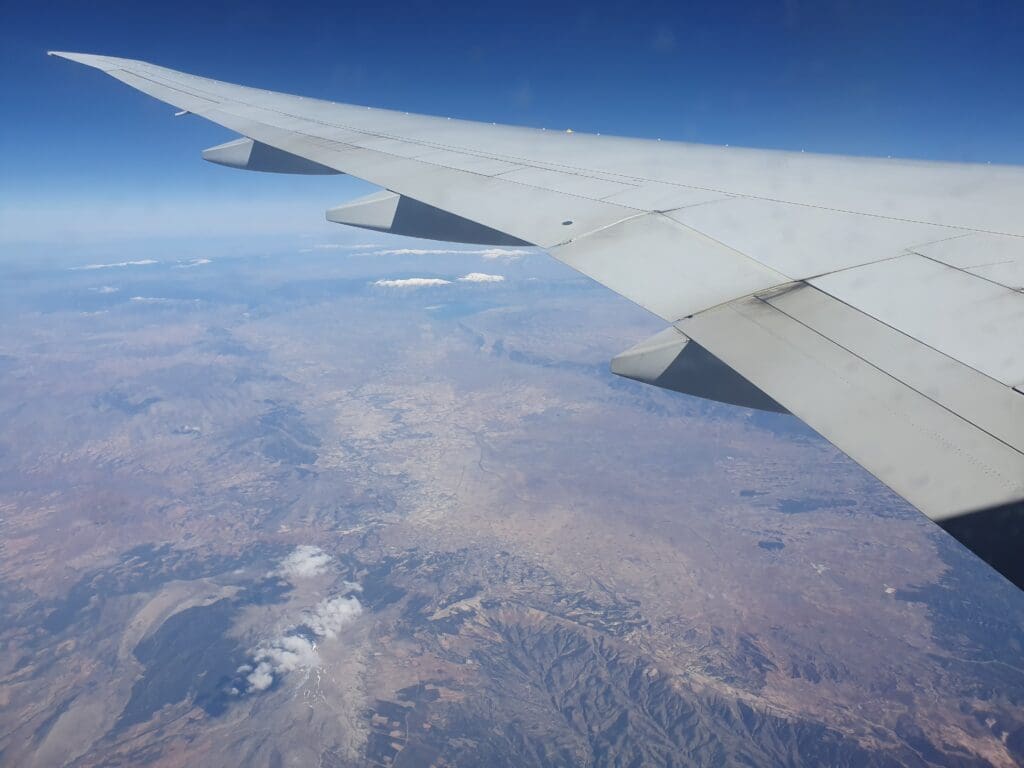
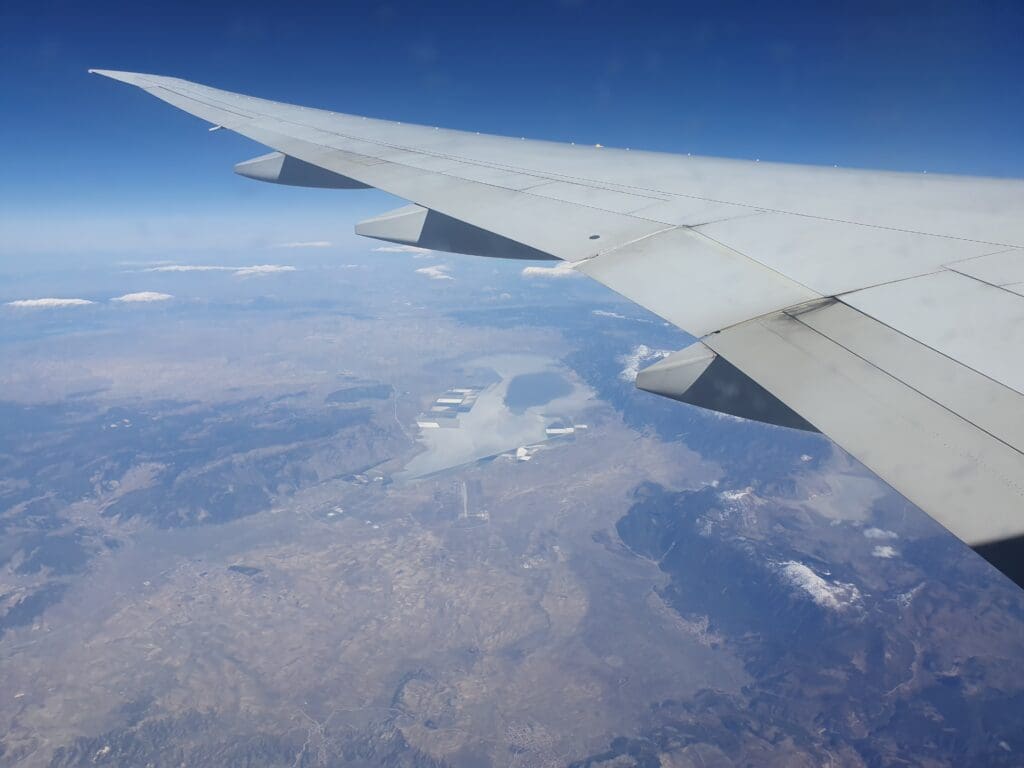
Fortunately, eight minutes after leaving the Greek coast, the aircraft made landfall over the Gallipoli Peninsula where good views of the landscapes below could be had. From there the aircraft headed over the Dardanelles where a stream of large cargo ships could be seen, presumably heading to and from Istanbul and other ports dotted across the Black Sea coastline. From there the aircraft headed inland over the hilly countryside of Turkey’s Aegean region before the skies clouded again, however a temporary break in these allowed for one final glimpse of the country as we passed just to the west of the popular resort destination of Antalya before heading out over the sea.
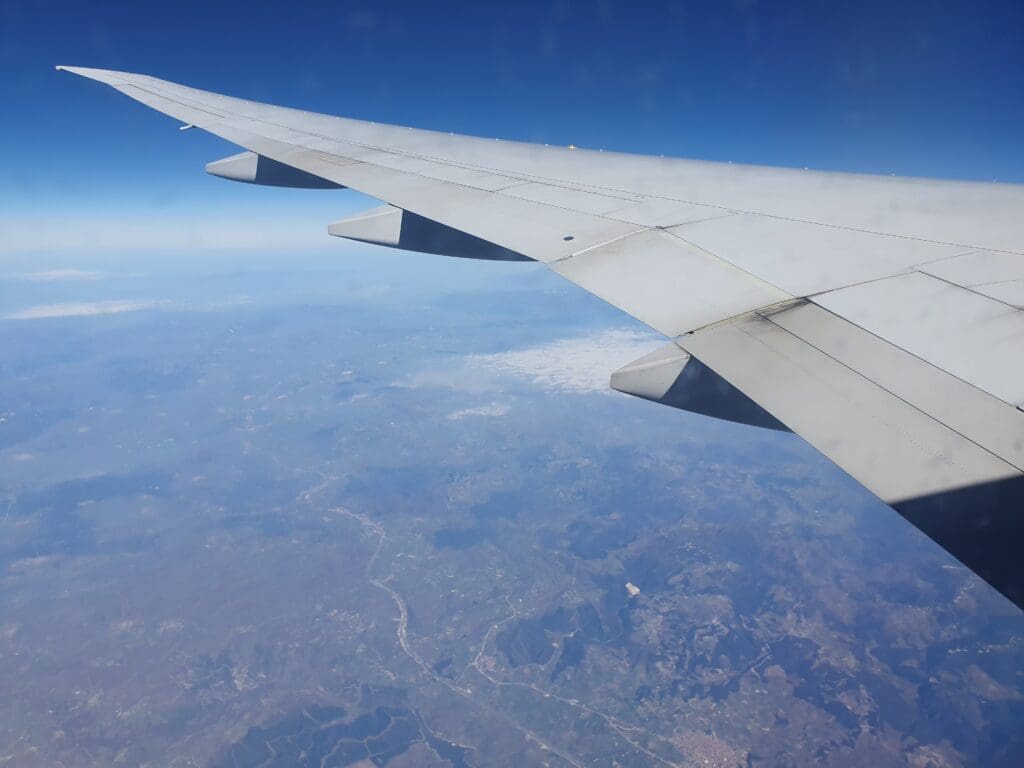
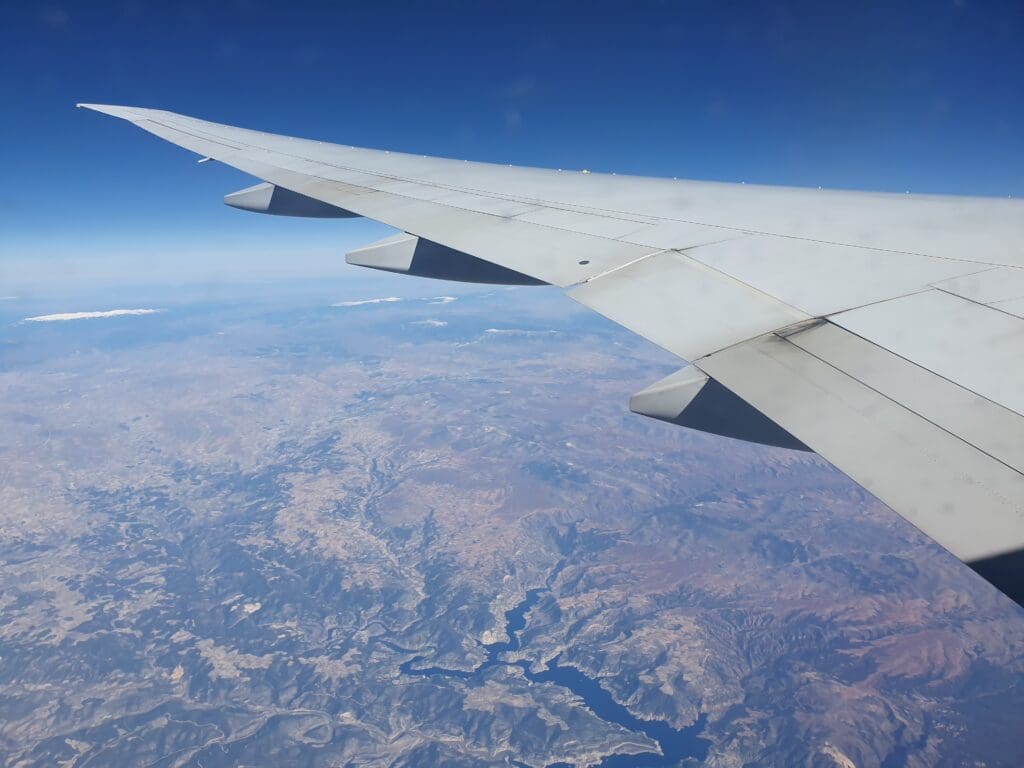
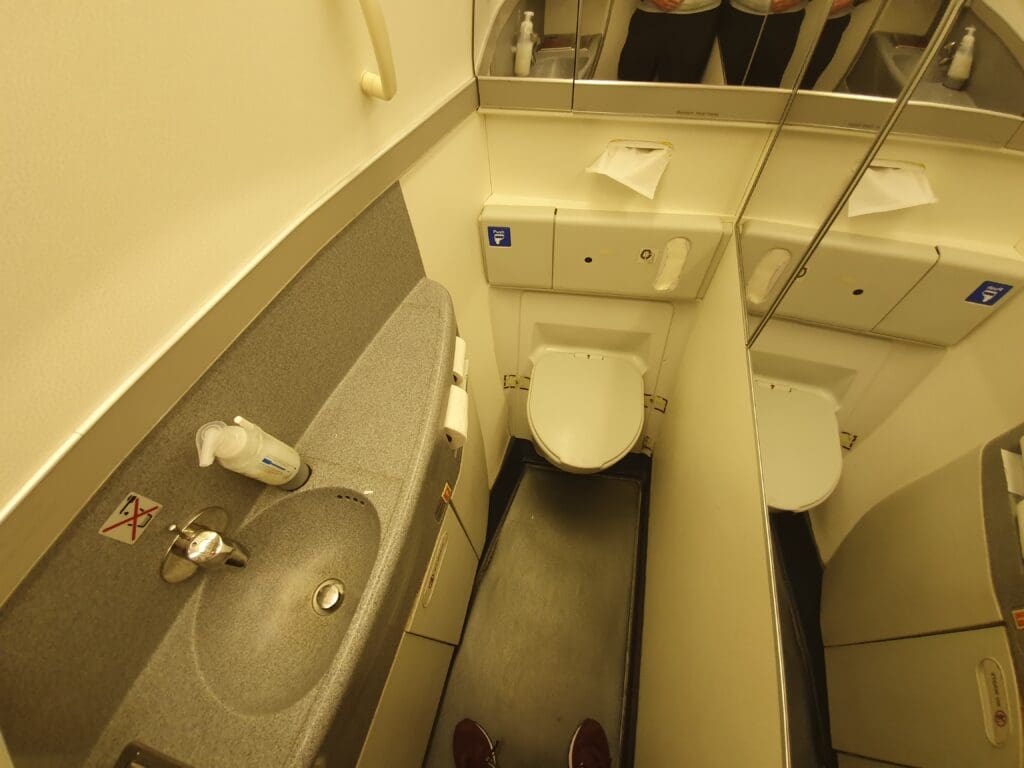
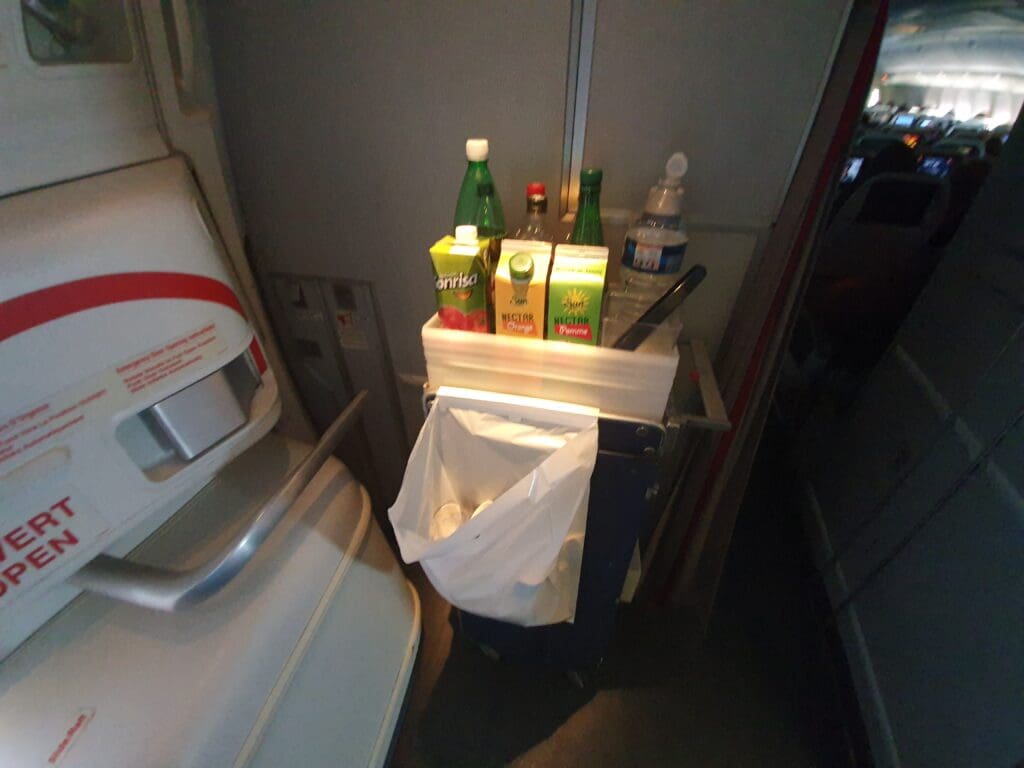
With less than an hour to go prior to the flight’s arrival in Lebanon, I decided to annoy my seatmates by making a second visit to the lavatory. Rather than making a trip to the toilets that separate the rear and forward Economy cabins, I instead decided to head through the rear cabin to one of the two toilets located at the very rear of the aircraft. As I entered the rear galley I noticed that a selection of soft drinks had been set up on a trolley for thirsty passengers. Whilst the presence of this was appreciated, seeing as only those who visited the rear galley would have been aware of this, I cannot help but think it would have been much better to instead of conducted a drinks round or at least a passing through the cabin with a tray of drinks during the later stages of the flight. Moving back to the positives, despite the fact that the flight was nearing its end, I found the spacious rearmost lavatory to be in a near spotless condition as if it had barely been used for the duration of the flight.
By the time I squeezed myself back into my seat, there was not a great deal of flight time remaining. At 1230 French time, or 1330 Beirut time as I shall use from now on in the report, small glimpses of Cyprus could be seen below the clouds as the aircraft sped eastwards towards Lebanon. At this time, the captain made their second and final announcement of the flight, thanking us again for our decision to fly with Air France, giving an updated briefing of Beirut’s slightly chilly weather (a temperature of 17 degrees) and informing us that we would be back on the ground at around 1410 local time.
Almost immediately after the Captain’s announcement came to a close, the aircraft could be felt starting its descent just as the purser performed their longer announcement in French and English regarding the aircraft’s arrival. This contained the usual messages regarding seatbelts, tray tables, window shades and seatbacks. As the aircraft headed downwards some gentle lumps and bumps could be felt and the seatbelt signs were reilluminated just before the aircraft headed down into the clouds. At this time one more announcement was made which broadcast the sensible yet all too often stupidly unheeded advice of leaving luggage onboard the aircraft in the event of an emergency. Several minutes after the aircraft entered the clouds, the blue waters of the eastern Mediterranean came into view and the crew passed through the cabin in order to ensure all was secure for landing. Unfortunately, this check appeared to be rather brief and lacklustre in nature as the passengers in front of both me and my neighbour had their seats in the fully reclined position until moments prior to the aircraft’s touchdown.
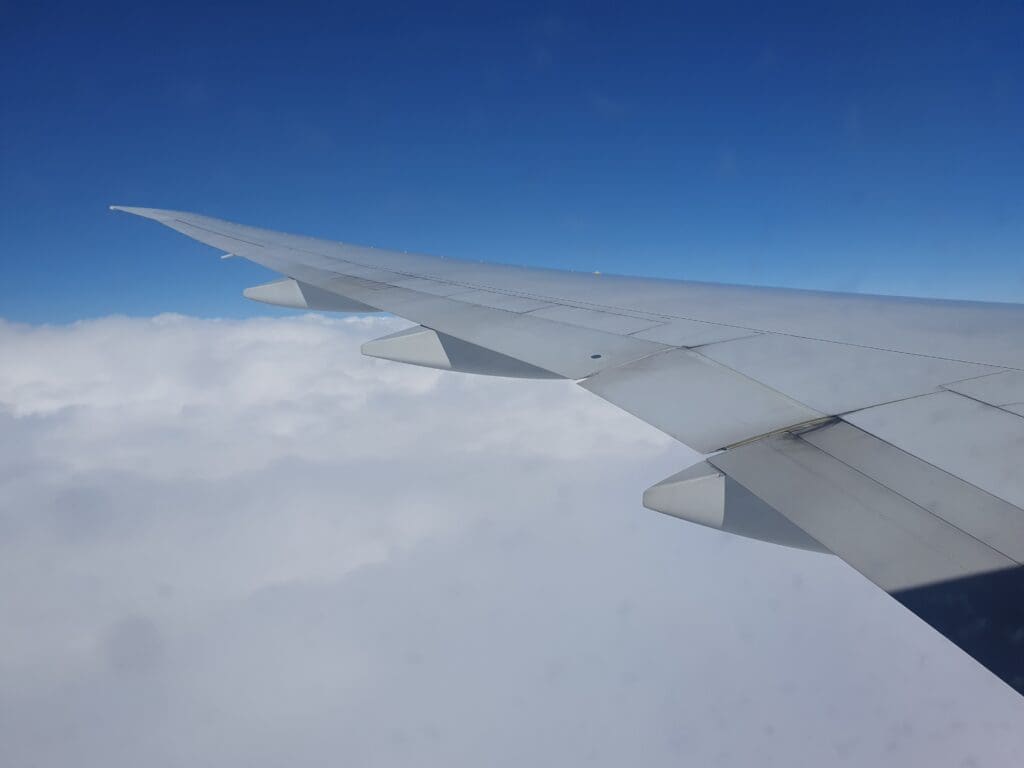
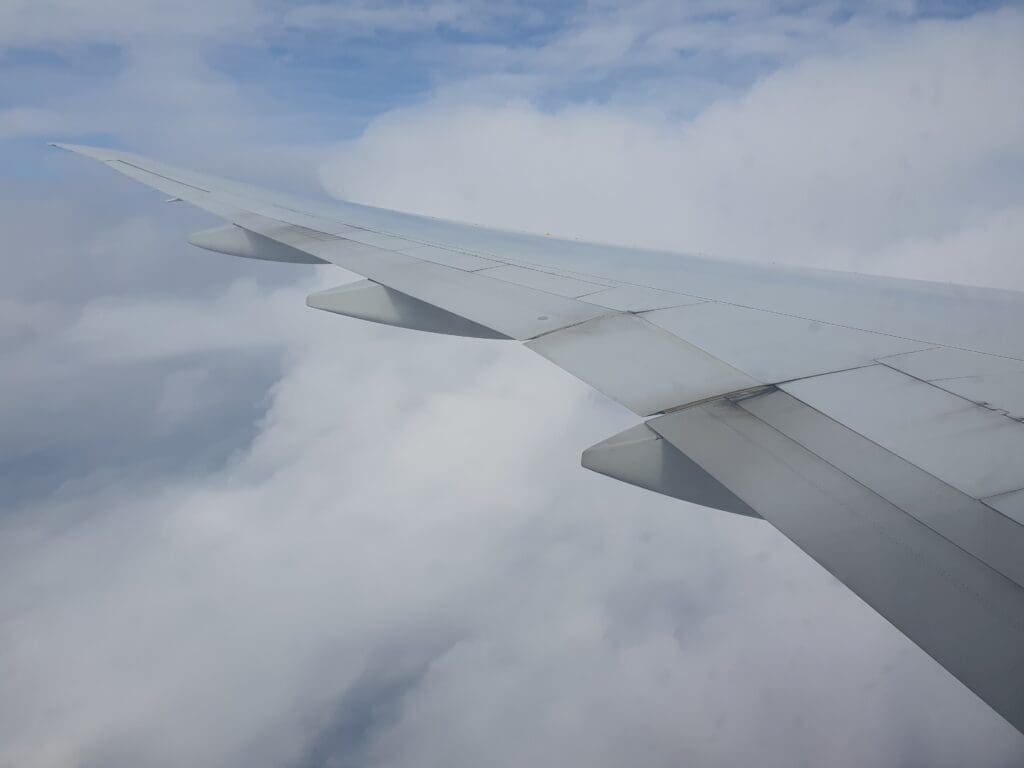
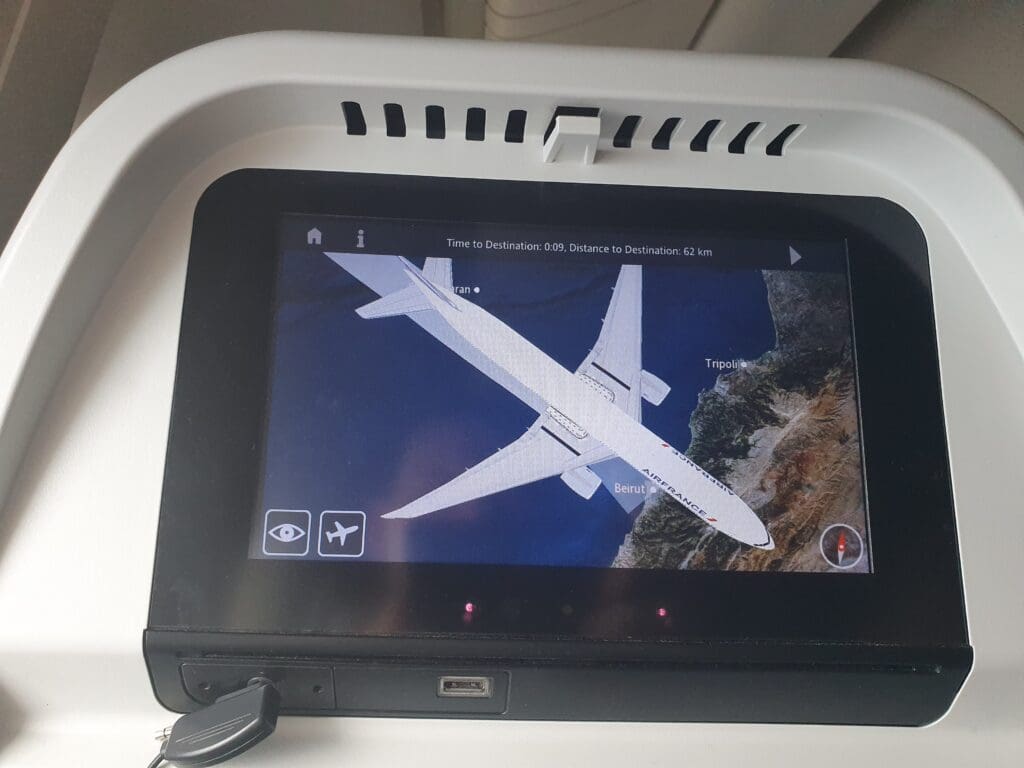
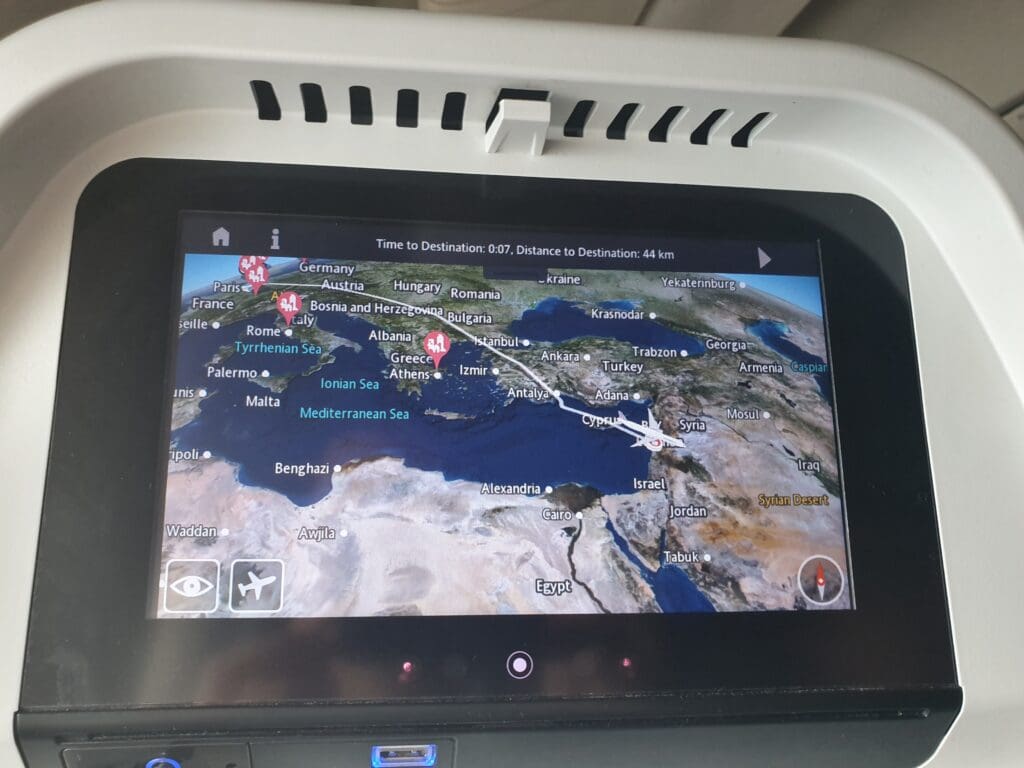
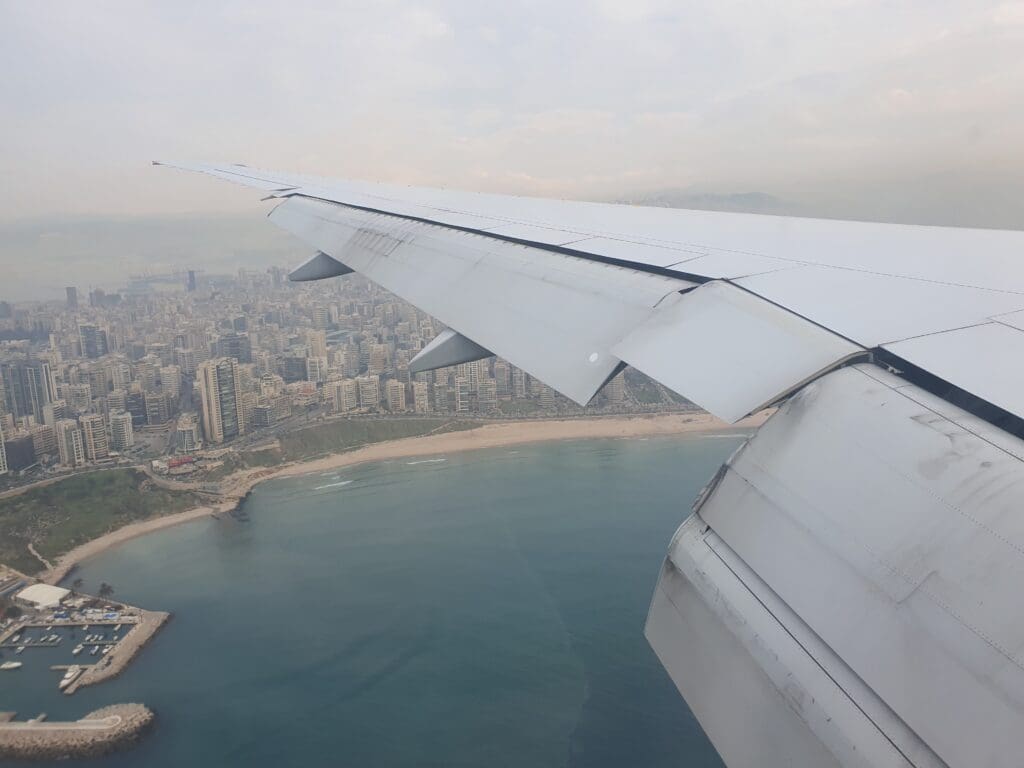
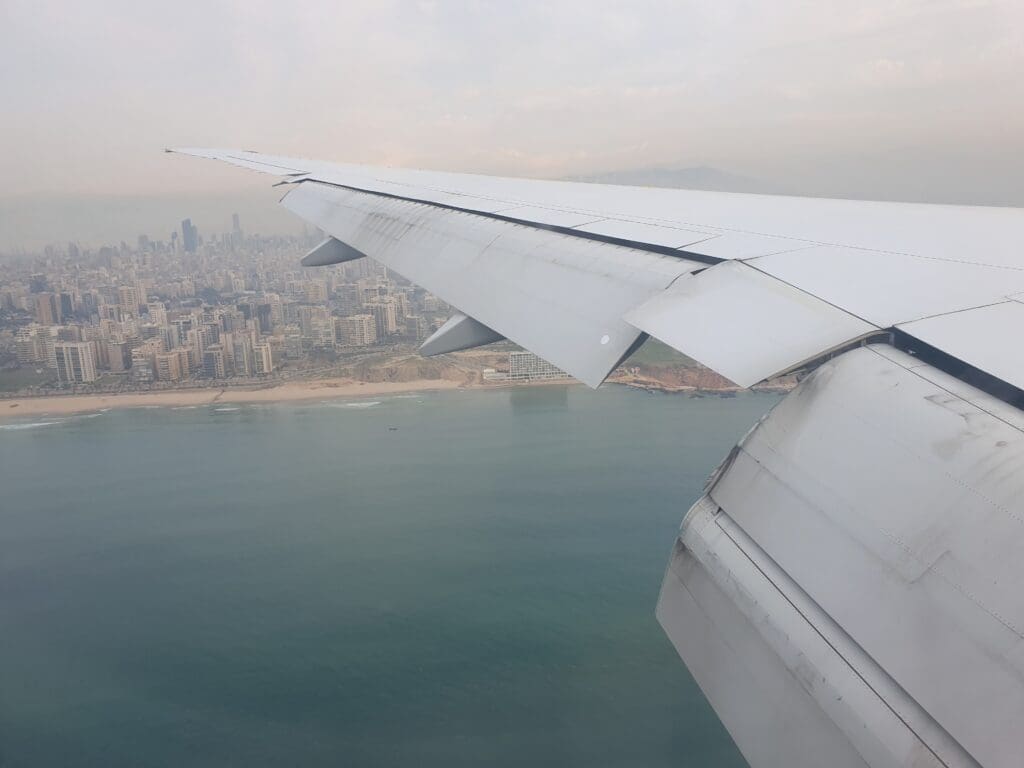
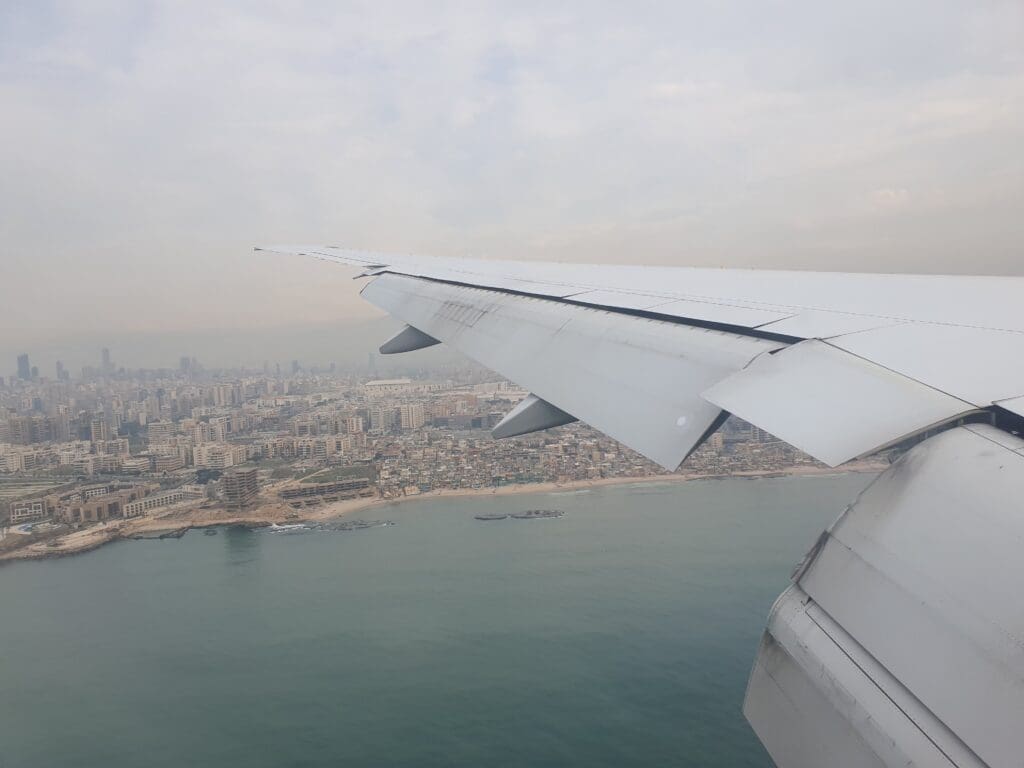
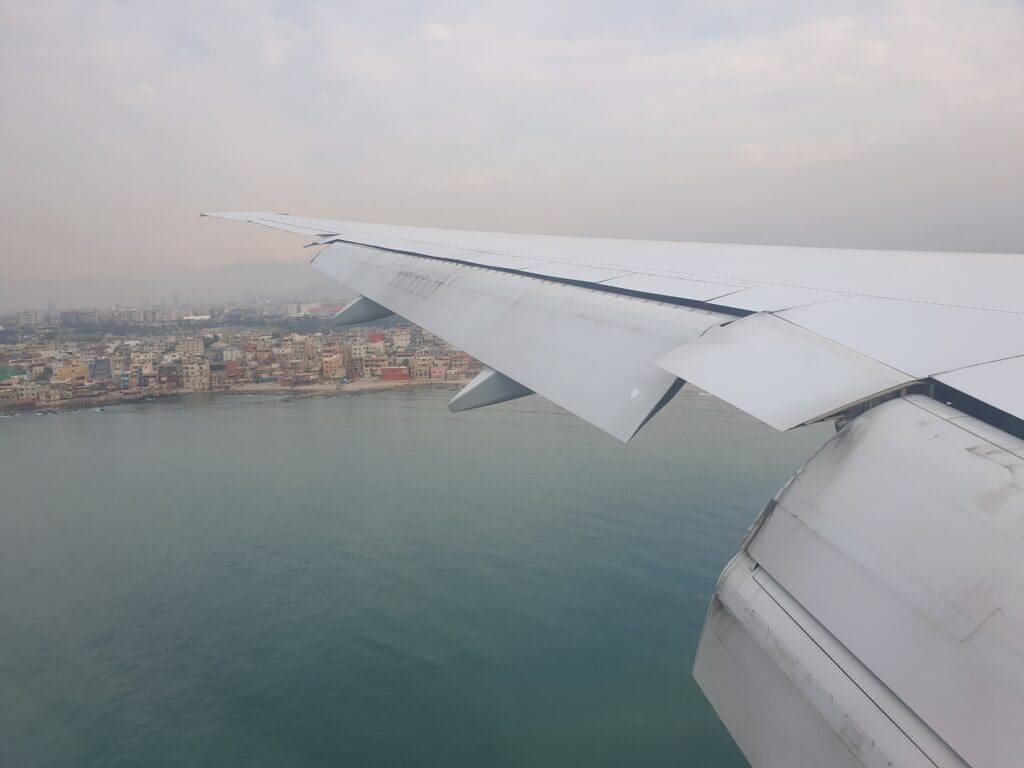
With no land in sight, the aircraft’s flaps were partially lowered and at 1358 the Lebanese coastline to the north of Beirut came into sight just off the wingtip. My first ever glimpse of Lebanon consisting of scenic coastal hills with snow capped mountains in the distance. This was soon replaced by the urban sprawl of the seaside capital as well as the tall buildings of Beirut’s upmarket district of Raouché along with one of the city’s landmarks, Pigeon Rock. As we aircraft neared the airport, the city centre’s tall buildings were replaced by more modest low rises and soon enough the aircraft floated down over the airport’s seawall and perimeter fence. At 1401, the Boeing 777 made a soft touch down on Beirut’s Runway 16, just as the captain had said prior to our departure from Paris, the aircraft was in the air for exactly 3H45. As the aircraft slowed, a very faint round of applause could be heard passing through the cabin. Following a very gentle deceleration, the aircraft turned left off the runway and began a cautious taxi to Stand 23 at which point the purser welcomed us all to Beirut.
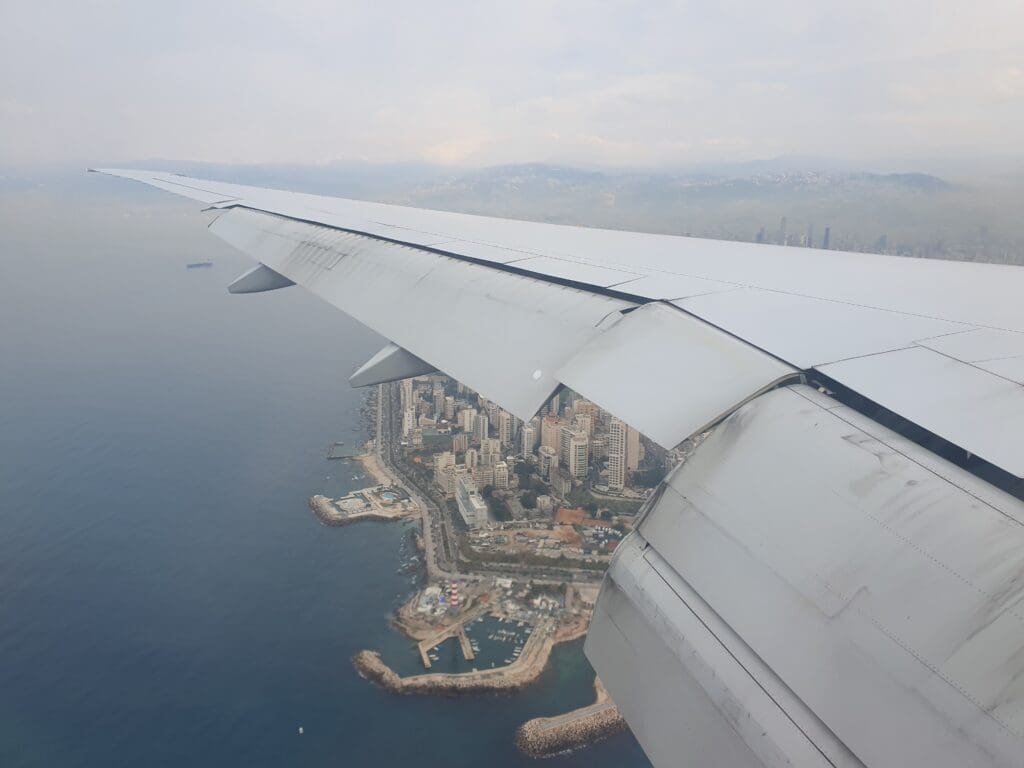
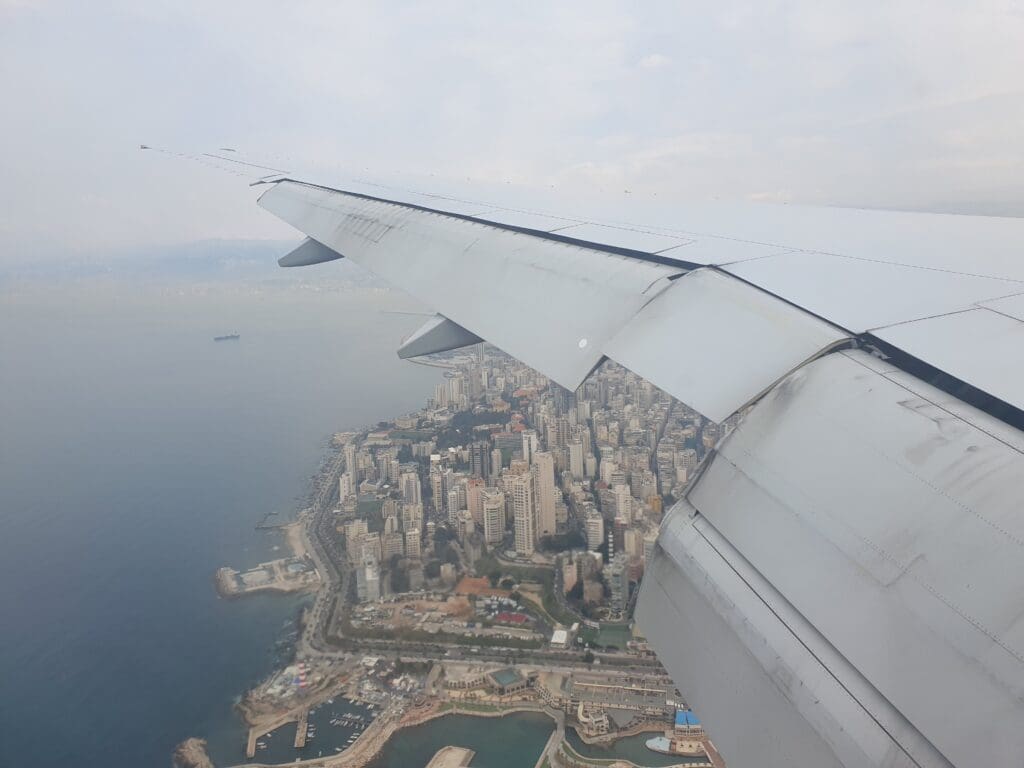
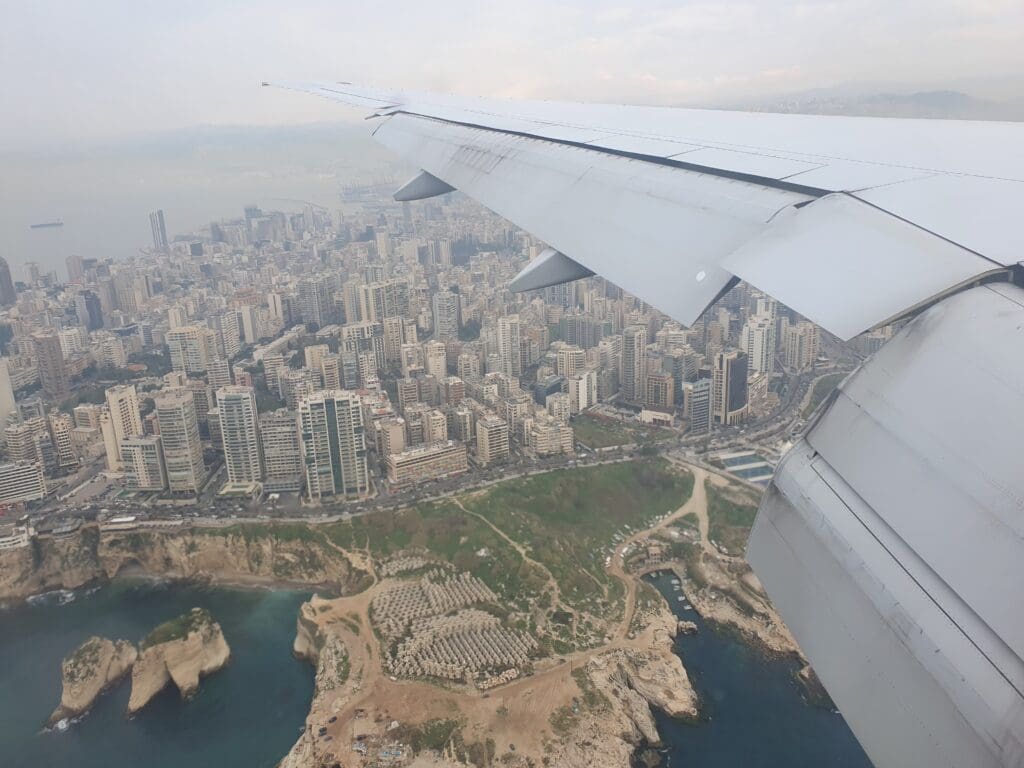
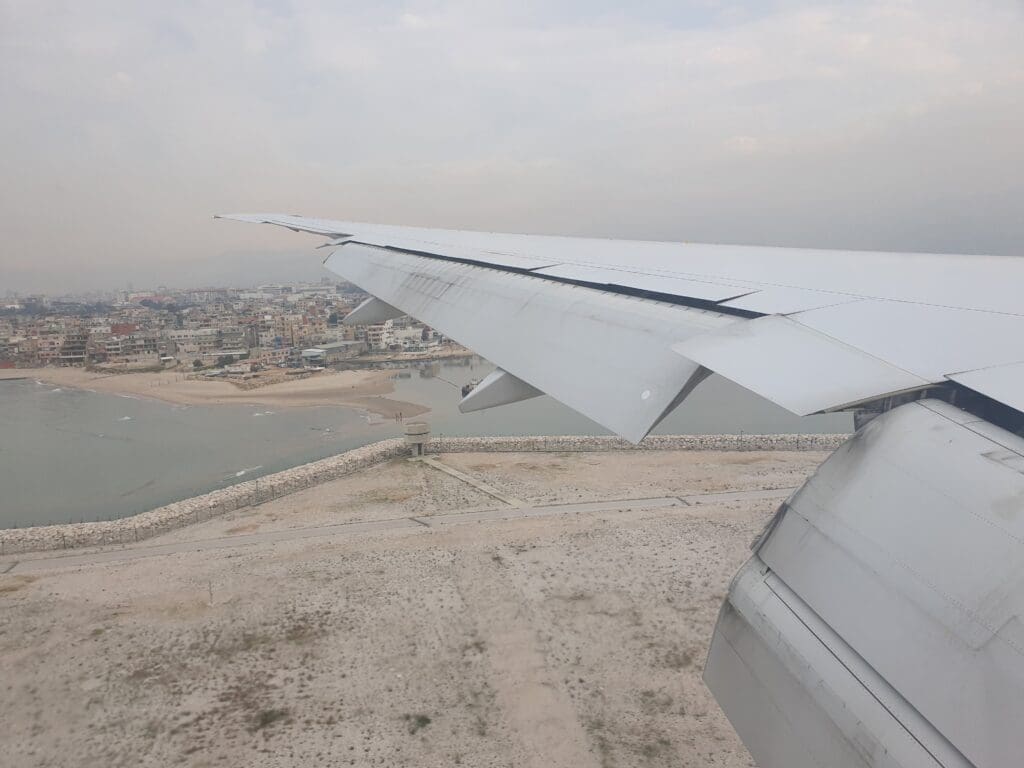
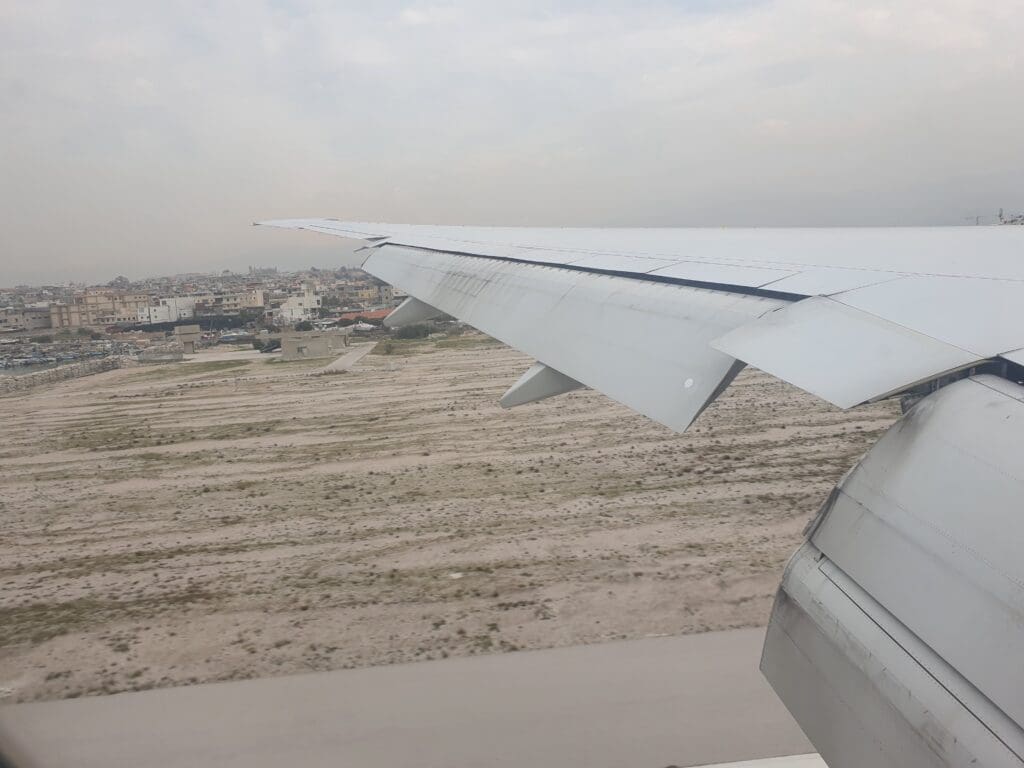
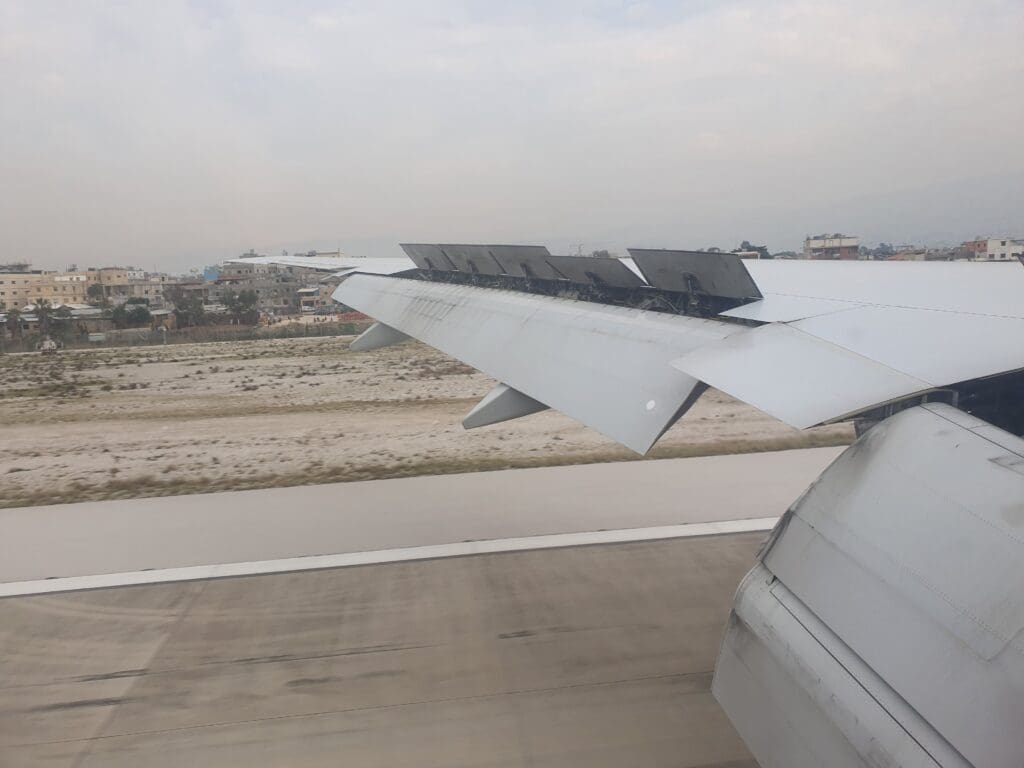
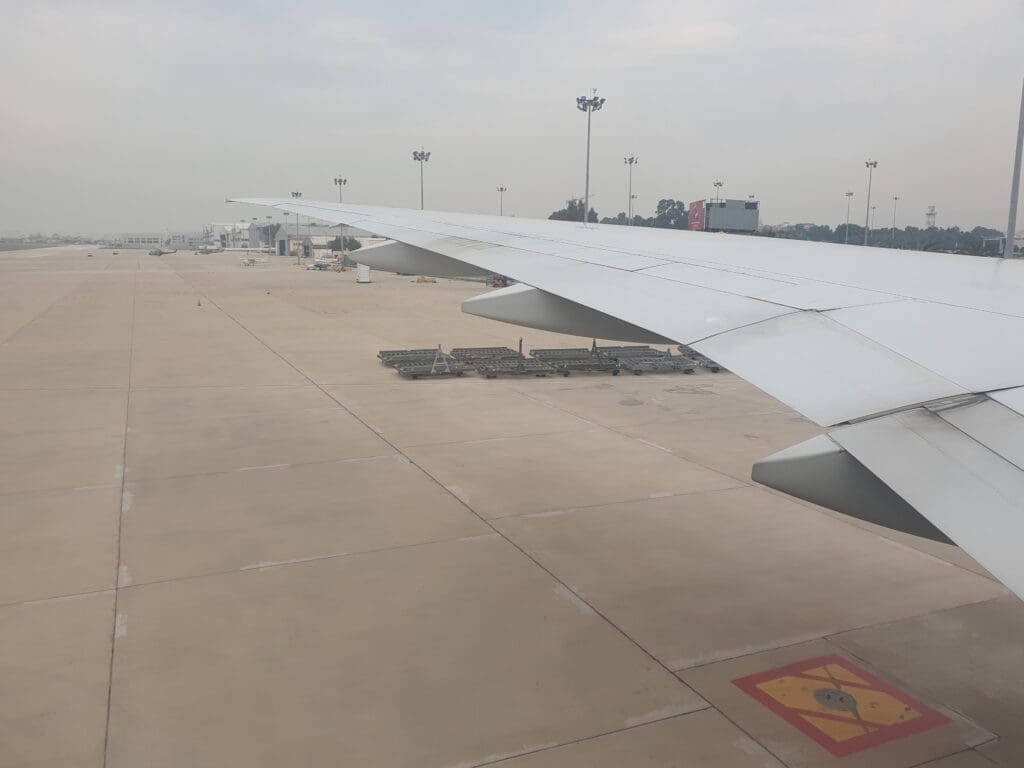
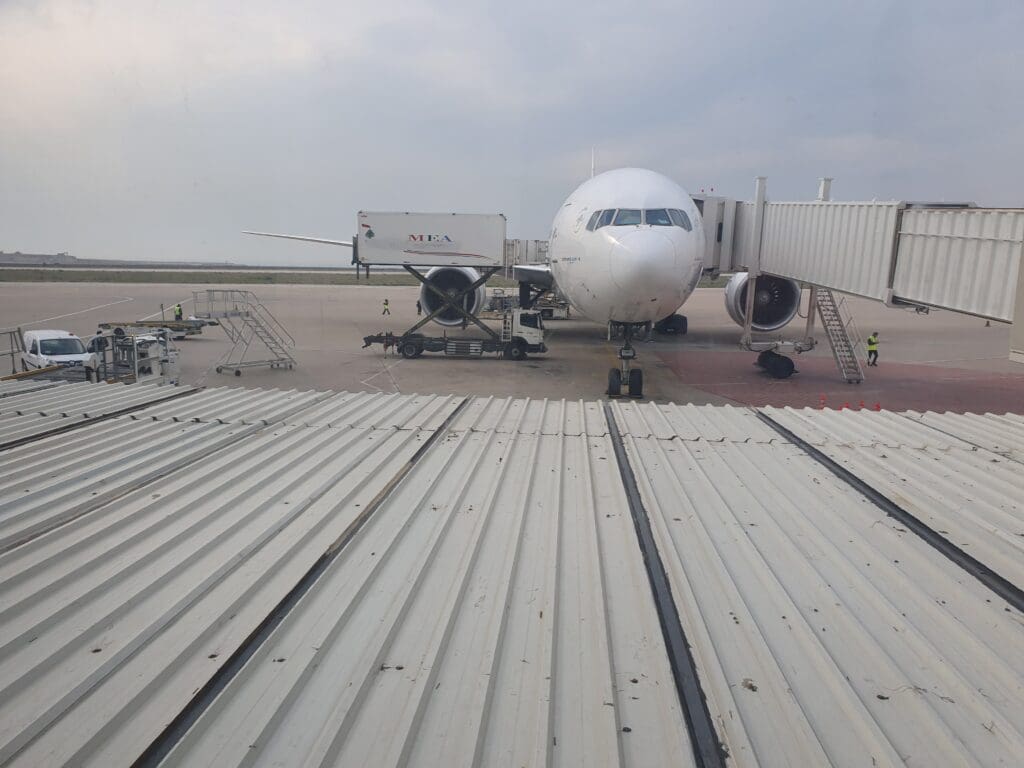
At 1406, the aircraft pulled into the stand at the end of the terminal bringing into view a couple of Bell UH-1 Iroquois helicopters and a selection of locally based light aircraft, these all serving to highlight the diversity of operations at the airport. Inside the cabin, as is often the case, as soon as the aircraft came to a halt queues of passengers seemingly desperate to escape formed in the aisles. Fortunately a single jet bridge was soon connected and around six minutes following our arrival, the queue of passengers began their shuffle to the front of the aircraft. After passing through the now scruffy looking Premium Economy and Business cabins, I thanked several crew members wishing a farewell to passengers before stepping out of the aircraft via the L2 door. From there I headed up the battered looking jet bridge and into the dated terminal bringing my first widebody flight with Air France to a close.
Summary
Despite my minor complaints at the areas where some improvements could be made, all in all, my flight from Paris CDG to Beirut was a positive experience from start to finish. Needless to say, if the opportunity were to arise, I would likely have little opposition to opting to take Air France on their longer services.
One of the most detailed reviews — especially running notation of landmarks along the way! Very nice, thanks!
Thank you very much for reading – I’m glad you enjoyed it!