
Air Canada Review: My Bargain Transatlantic Flight from Frankfurt to Montréal
Background and Booking
Whilst a plethora of relatively cheap transatlantic flights from the UK to North America exist compared to say a decade ago, regular passengers between the UK and Canada will likely be aware that the cheapest way of hopping across the pond involves first heading to Paris and then catching either a direct or one-stop service to Montréal. From there, passengers are usually offered a decent selection of cheap services to airports across much of Canada on the likes of Air Transat, Swoop and WestJet. With some time on my hands between jobs, and having been hoping to visit Canada since before the pandemic, I decided that I would make the trip west in mid-October 2021. Heading to Skyscanner, I came across fares priced as low as £65 one way from Paris to Montréal! However, booking less than a month in advance meant that the cheapest fares were around twice this price, although this still appeared to be a bargain for a transatlantic flight operated by a Star Alliance full-service carrier.
With no notable discrepancies in ticket prices between Air Canada’s website, and those offered by online travel agents, I opted to book via the former. Upon arriving at Air Canada’s UK homepage, I was greeted by a banner advertising Canada’s ‘open’ status for fully vaccinated travellers. Beneath this, the flight search engine could be found and I wasted no time in searching for flights from Paris to Montréal. Within seconds, I was presented with a grand total of thirteen options, with the cheapest tickets for these ranging from £114, all the way up to an eye-watering £1870 – these consisted of two direct services, whilst the others involved connections in Chicago, Frankfurt, New York Newark, Toronto, Vienna, Washington and Zurich. Unable to settle for the cheapest fare, an overnight slog with a one-night stay in Vienna, I instead went for the second best – an 0700 departure from Paris on a Lufthansa Airbus A320 followed by a transatlantic crossing onboard an Air Canada Boeing 777-300ER, arriving in Montréal at 1200 which came to a total of £152.20. Opting for the Economy Basic fare, after selecting this I was presented with a disclaimer which attempted to encourage me to upgrade to Air Canada’s Economy Standard fare for an additional $43. Rejecting this, I then entered my personal details. From there, I was then taken to a seat selection page where seats could be selected for between £38 and £85, skipping past this I arrived at the payment page where I went ahead and paid promptly and without any issue. Finally, for the return leg, I would spend some WestJet travel credit, flying from Vancouver to London Gatwick via Toronto, with this coming to an almost identical £154.45.
Check-In
With online check-in scheduled to open 24 hours before departure, with 22 hours to go I headed over to Air Canada’s website in the hope that I could check in for both my flight over to Frankfurt and the onward leg to Montréal. However, as it turned out, once I had entered my passport details, the website would not let me upload my PCR test and thus in place of a boarding pass, I was instead provided with a ‘check-in confirmation’ document which meant that I would have to collect my boarding pass at the airport. Seeing as I had less than two hours to transfer in Frankfurt, this was a slight concern. However, upon trying to check-in via Lufthansa’s website for my flight from Paris to Frankfurt, I was able to submit my travel and health documents and received boarding passes for both flights without an issue. Unfortunately, things went a little pear-shaped whilst waiting in Paris for my flight to Frankfurt when my boarding pass for the Montreal flight disappeared from the Lufthansa app and was replaced by another check-in confirmation, advising me to print out my boarding pass at the airport.
The Journey
Following a short and pleasantly forgettable Lufthansa flight from Paris, I disembarked the Airbus A320neo at the slightly delayed time of 0840, leaving me with an hour and a half before my flight to Canada. As I made my way up into the Schengen pier, I was greeted by the sight of hordes of passengers scurrying about, with the return to normality appearing to be in full swing that morning. After getting my bearings, I made my way over to the Lufthansa service centre, although upon arriving there I was advised to head straight over to the gate for the flight to Montréal, B42. Heeding their advice, I commenced a quick walk along the long underground passageway that runs between the piers before making my way upstairs to the immigration booths. Whilst Frankfurt is known as a global hub, surprisingly I found only a few of these to be offered for connecting passengers, and that morning only two of these appeared to be manned. Fortunately, few passengers could be seen there at that time and thus formally exiting the EU proved to be a quick and easy process that morning, with no boarding pass required to do so. Once through immigration, I made a quick walk over to gate B42 where two Air Canada agents could be seen waiting to assist Montréal bound passengers. There, I handed over my passport, PCR test and proof of vaccination before an Air Canada branded boarding pass was printed off and handed over to me with minimal fuss by the friendly staff member.
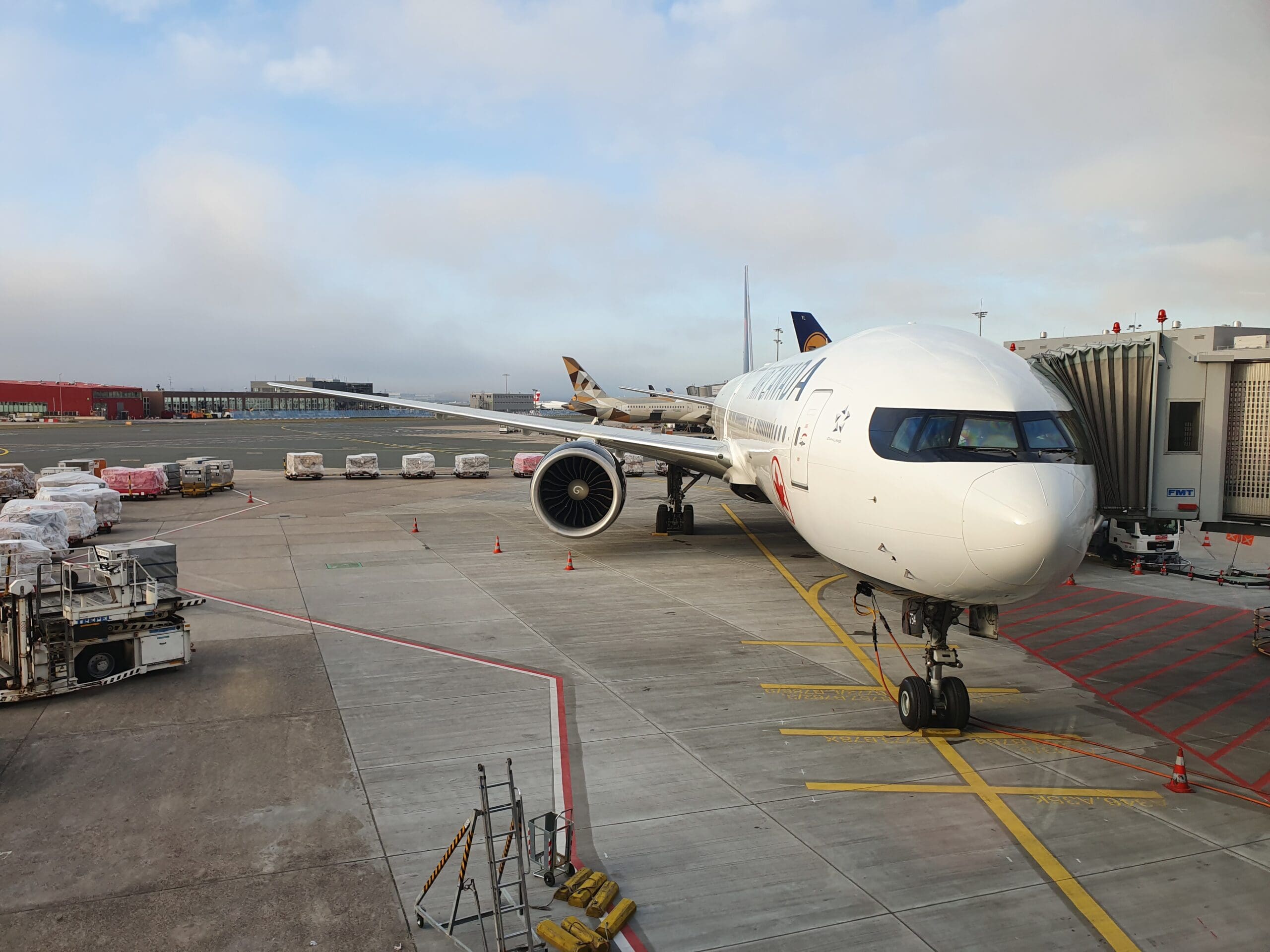
Outside through the terminal’s large windows, my trusty steed could be seen waiting to haul another load of passengers west across the Atlantic. In true Frankfurt-style, its nose appeared to be almost touching distance away from the terminal’s windows. Sporting Air Canada’s ‘new’ (then almost five year old) black and white colours, this particular jet took the form of Boeing 777-333ER C-FIUL, one of Air Canada’s oldest Boeing 777-300ERs. Manufactured in Washington State, this Boeing first took to the skies in June 2007 before being delivered to Air Canada a short time later with the tail number 734. Since then, Air Canada has dispatched the aircraft on services across the world, as well as on domestic flights. After almost a decade in the skies, in Spring 2016 C-FIUL was sent to the HAECO Group’s facility in the North Carolinian city of Greensboro where it received Air Canada’s new Dream Cabin, bringing the aircraft’s interior into line with that of Air Canada’s Dreamliners. Later on, as the pandemic began to take hold across the world and passenger numbers dropped, the aircraft was ferried southwards to Marana Pinal Airpark in Arizona where it remained until being pressed back into service in July 2021.
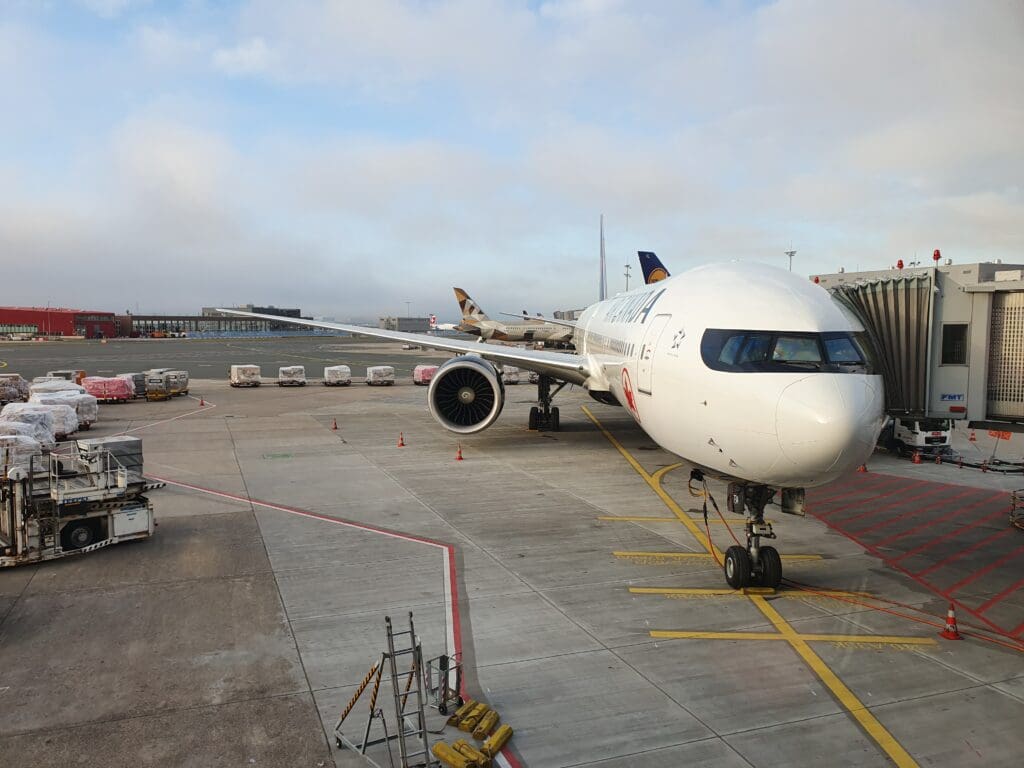
During the course of its fourteen year life, this particular Boeing had experienced three incidents worthy enough of publication on the Aviation Herald website. The first of these occurred on a flight between Toronto and Seoul Incheon in September 2008 when engine issues forced the jet to divert to the Alaskan city of Fairbanks. Almost a decade later, the second of these occurred in August 2017 when smoke appeared in the cabin during a flight from Toronto to Shanghai Pudong. Coincidentally, this incident occurred whilst cruising near Fairbanks, although with faulty recirculation fans determined to be the source of the smoke, these were shut down and the aircraft continued onwards to Shanghai without further issue. Finally, the most recent incident occurred on the ground in Toronto in December 2019 when the port wing tip of C-FIUL struck the tail of an Air Canada Airbus A321 whilst under tow. Fortunately, in the week before my flight, the aircraft appeared to have completed its flights without any issues. During this time, the Boeing 777 made two round trips from Canada to Shanghai Pudong via Seoul Incheon, one departing Toronto and the other from Vancouver, before heading east across the Atlantic to Frankfurt from Toronto the previous evening.
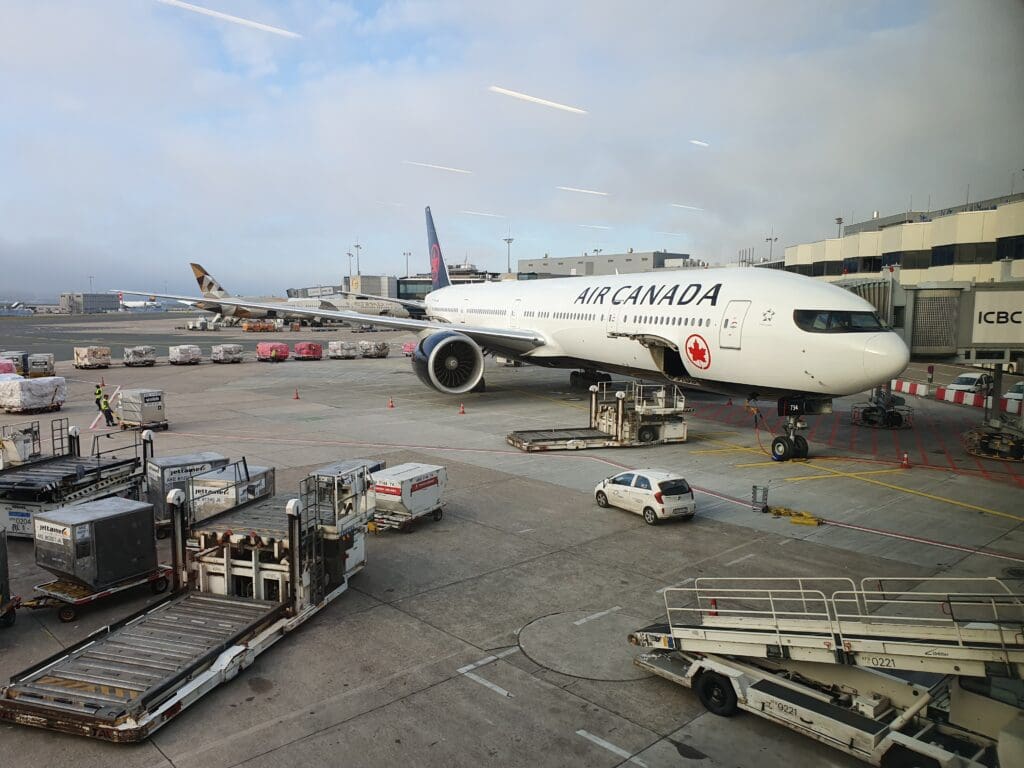
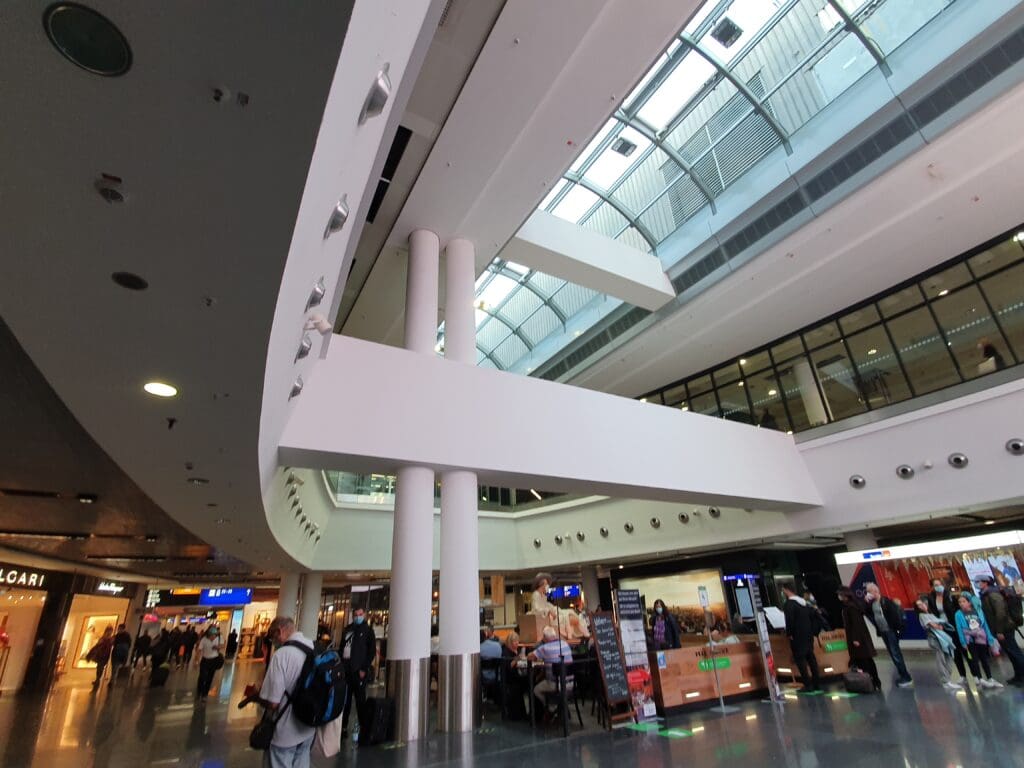
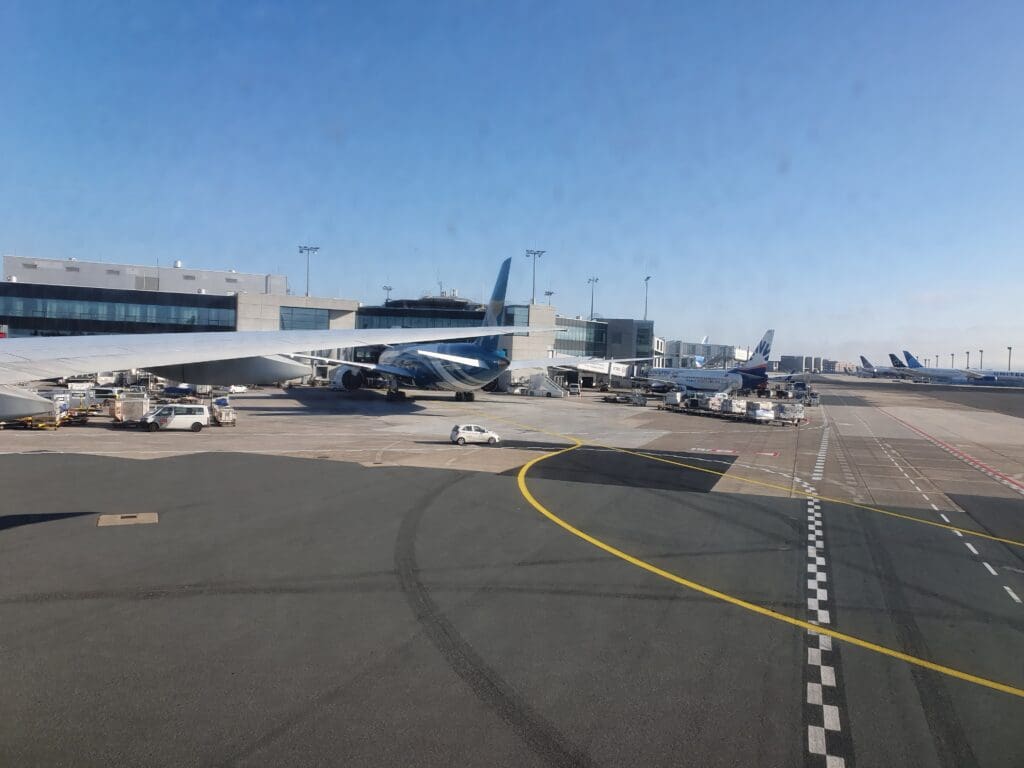
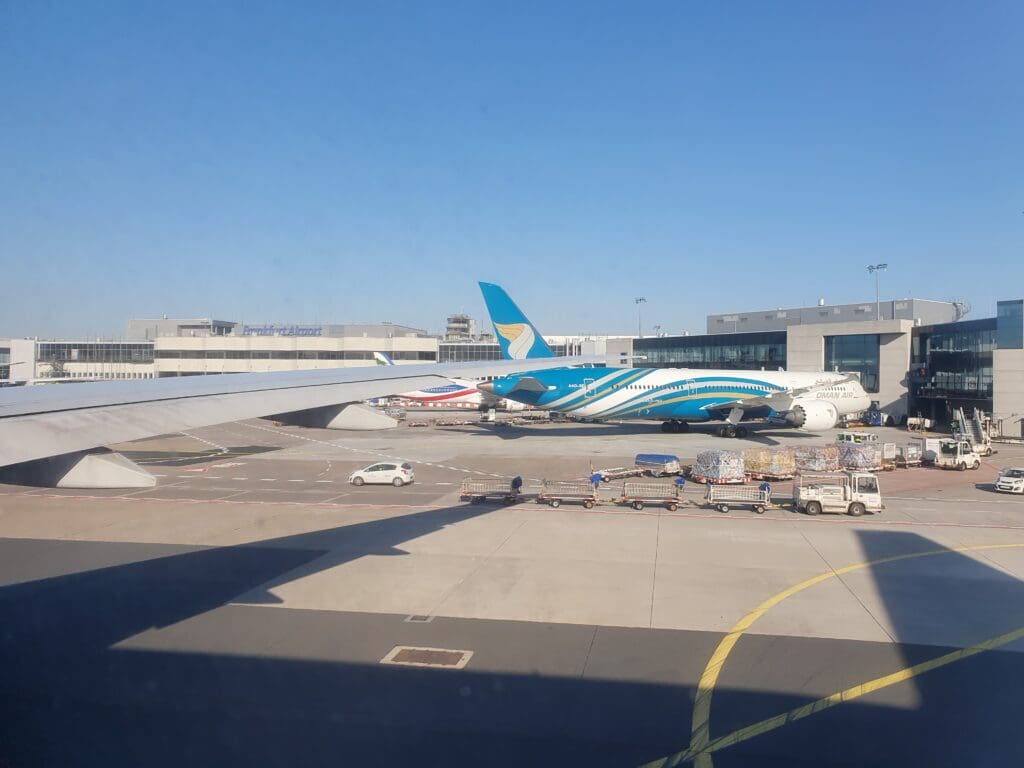
Fearful of long queues to collect my boarding pass, that morning I rushed through Frankfurt Airport. However, having encountered no issues during my transit, once I had completed all the required formalities, I was pleased to find that I still had some time to spare before boarding. According to my freshly printed boarding pass, that morning boarding would commence at 0920, fifty minutes before the service’s scheduled departure time. This left me with some time to have a quick wander around Frankfurt Airport’s ‘B’ pier, which serves flights to non-Schengen destinations. As with the rest of the airport, inside the pier appeared to be reasonably busy with a clear lack of available seating in some areas of this. Meanwhile outside a selection of narrow and widebodies could be seen being readied for their flights to destinations across the world. These included another Air Canada Boeing 777-300ER bound for Toronto, a Middle East Airlines Airbus A321neo, an Oman Air Dreamliner, a Sun Express Boeing 737 as well as several Lufthansa A320 family aircraft.
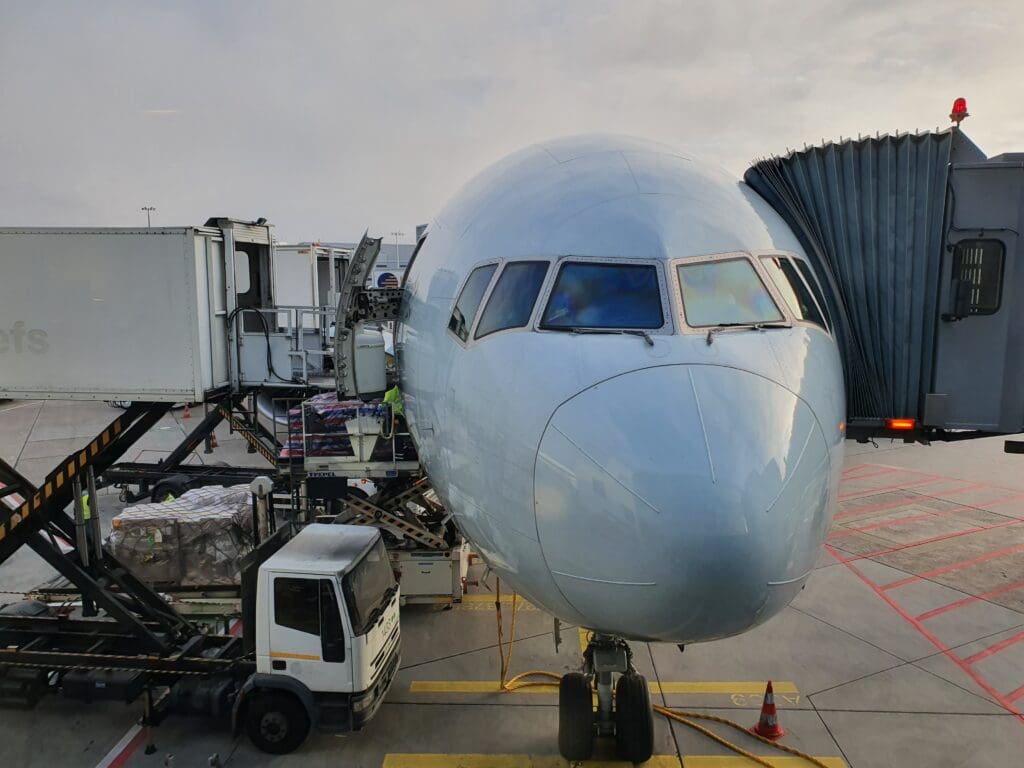
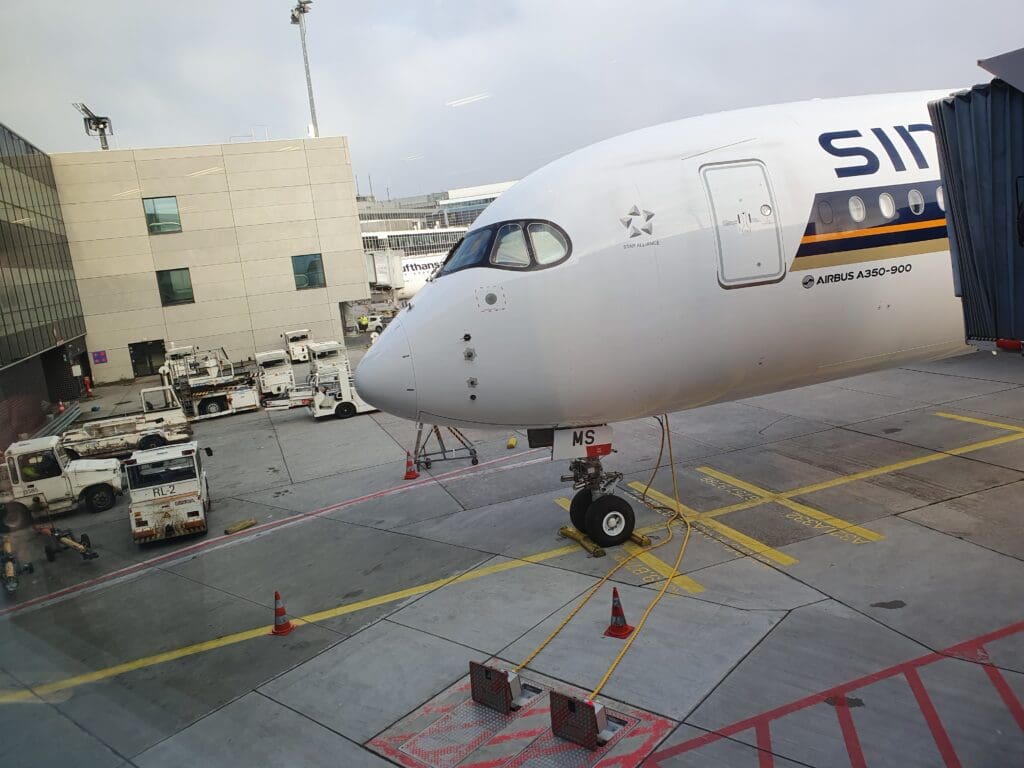
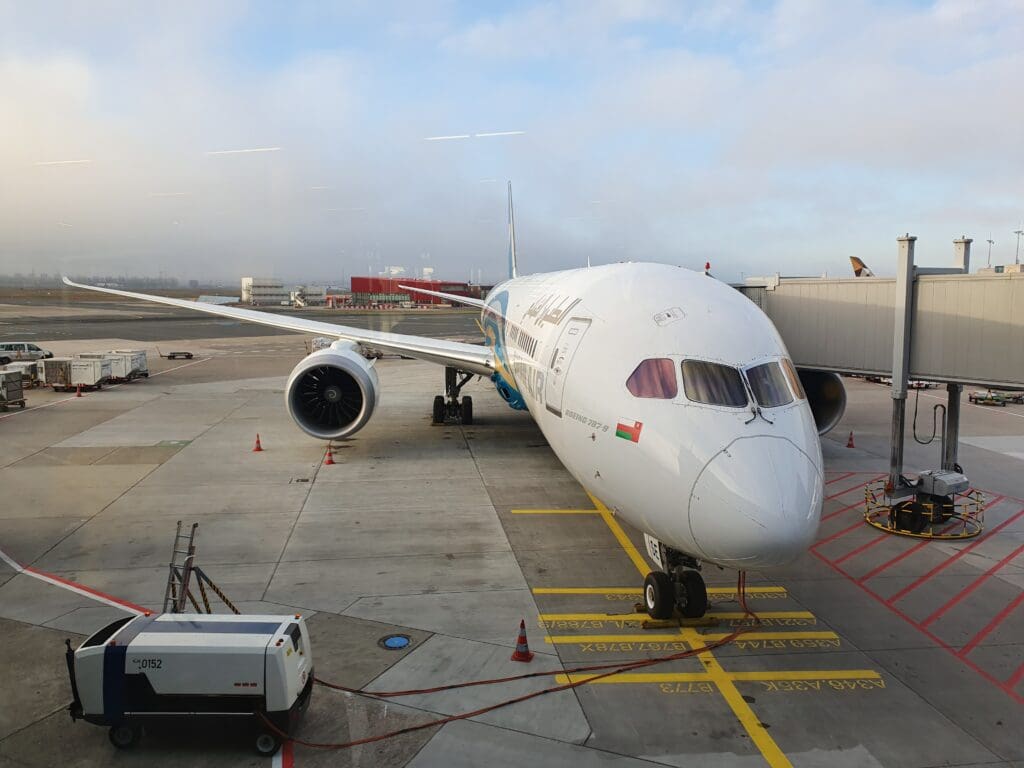
From the perspective of an ‘average’ passenger, the B Pier may well be seen to lack anything particularly memorable or special, featuring nothing more than the usual smorgasbord of facilities that you would expect to find in an international terminal. However, disappointingly, the terminal was rather messy, with plenty of rubbish seen on a few tables and around several of the seating areas. Furthermore, the pier did seem to lack an ample number of toilets, with queues leading to these that morning. I also found that few spare plug sockets could be seen, and I also was unable to connect to the complimentary Deutsche Telekom wifi network. That said, from an enthusiast’s perspective, the views offered by the terminal’s large windows left me with nothing to complain about.

After my pre-flight stroll, I wandered back to Gate B42 and took a seat next to one of the pier’s large windows. At that time, a stream of freight could be seen making its way into the belly of the aircraft ready to be hauled across the Atlantic along with containers filled with passengers’ bags. When 0920 arrived, the gate agent conducted an announcement in English and Germinal advising that boarding would commence shortly and would be conducted in accordance with the zones listed on passengers’ boarding passes. Around a minute later, priority passengers, i.e. those in Zone 1, were invited to proceed for boarding, soon followed by those in Zone 2, and then those in my zone, Zone 3, the rearmost Economy cabin. Wasting no time, once the announcement for those in Zone 3 had been made, I joined the short queue that led to one of the gate’s automated barriers. Whilst these rejected the boarding passes of a fair number of passengers that morning, after scanning my boarding pass, these let me through without any issue and I soon journeyed down towards the waiting Boeing 777. As is often the case for widebody aircraft, two jet bridges were connected to the aircraft with those in Economy directed to head down the second of these. However, prior to heading down the bridge, two Air Canada agents could be seen waiting to undertake a final boarding pass and identity check. Fortunately, this went quickly and without issue and I soon trundled down the aircraft.
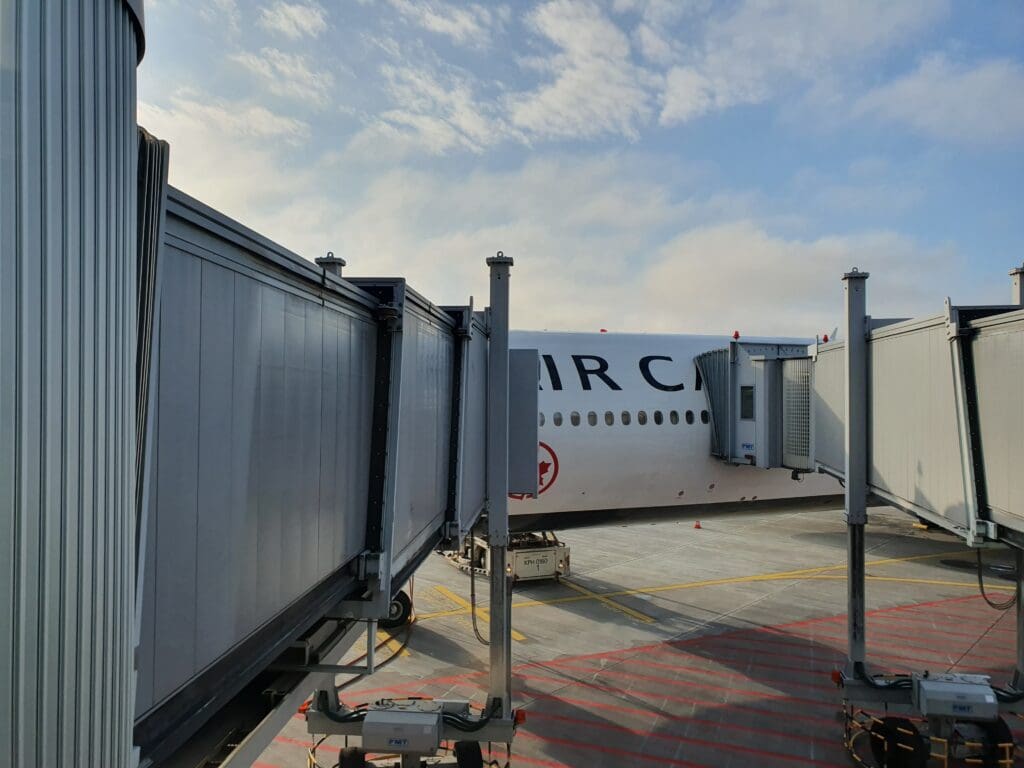
Without any queuing, I stepped into one of the Boeing’s four galleys where I received a somewhat unenthusiastic greeting in French and English from one of the two flight attendants tasked with welcoming those in Economy and Premium Economy. After presenting my boarding pass, I was pointed down the second aisle and journeyed through the smaller of the aircraft’s two Business class cabins, home to fourteen comfortable-looking Collins Aerospace Super Diamond seats arranged in a typical 1-2-1 configuration.
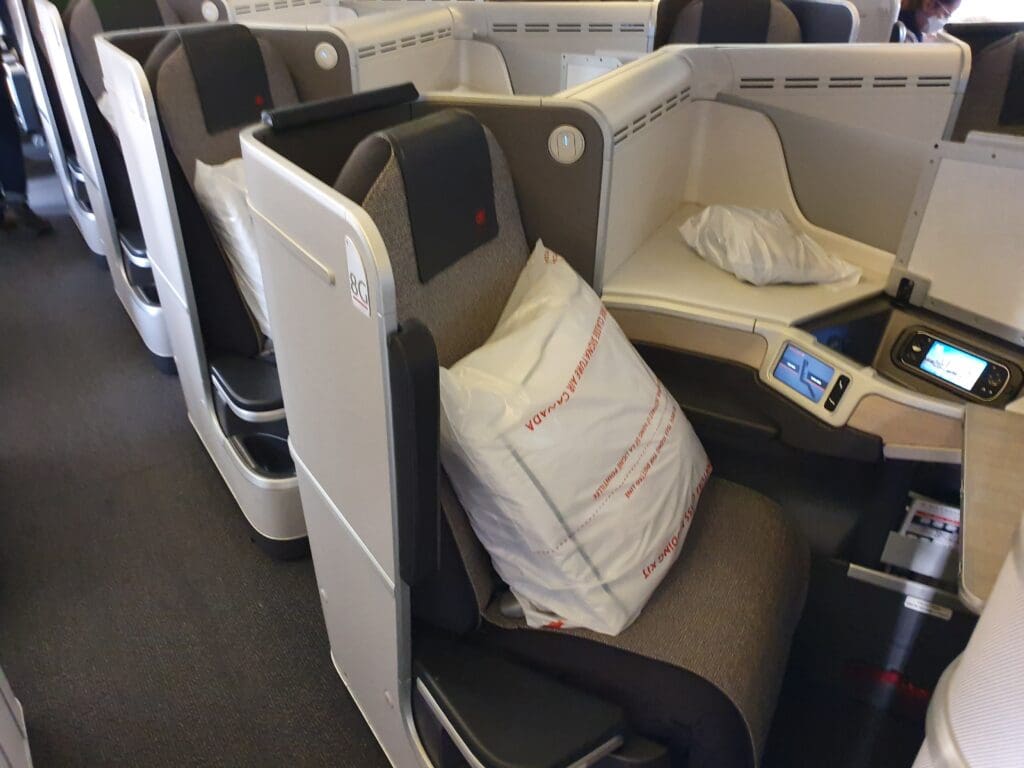
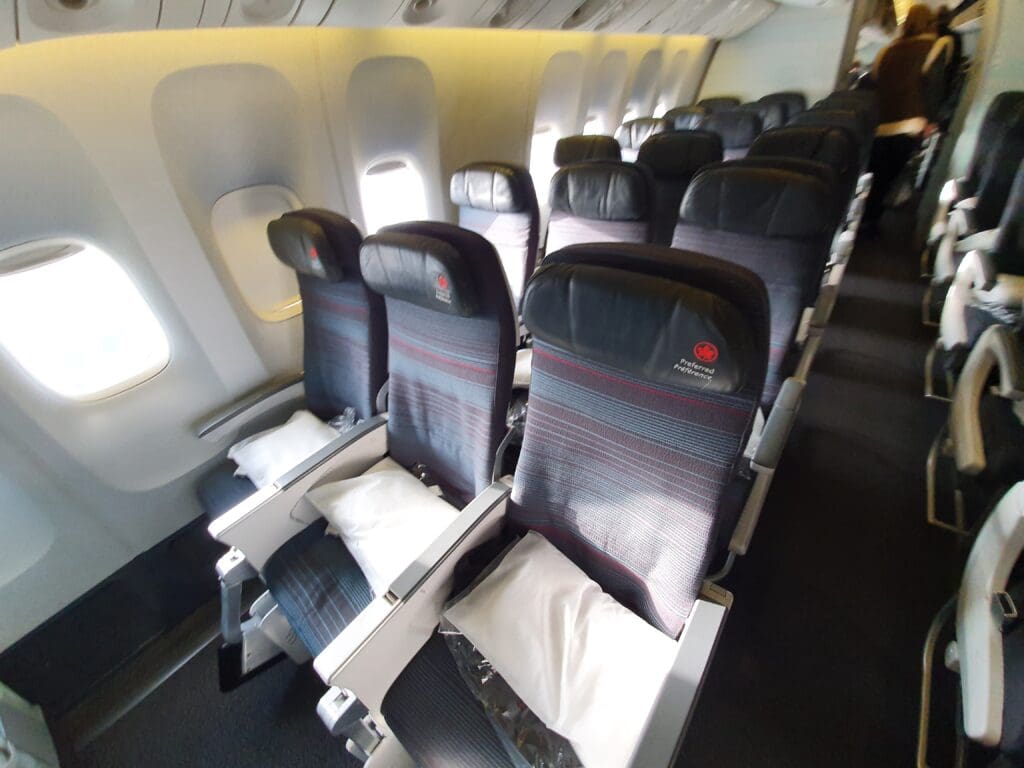
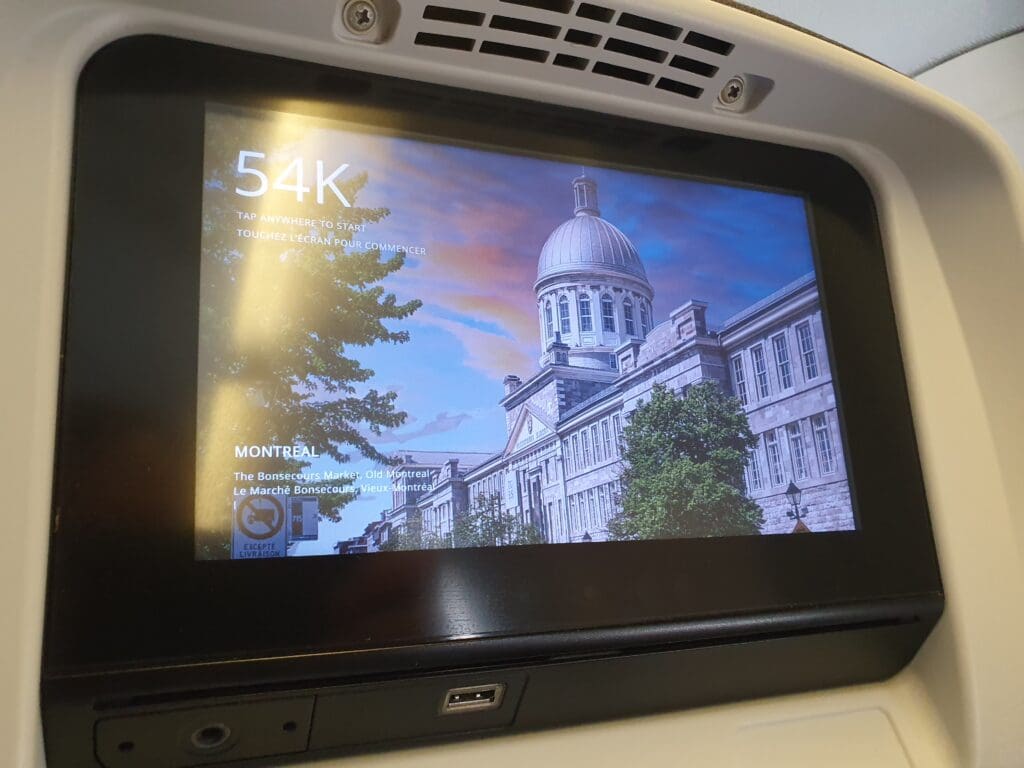
With no purpose being there, I passed through this without stopping and arrived in the jet’s small Premium Economy cabin which featured three rows of Recaro PL3510 seats in a 2-4-2 configuration, each covered in a dark grey fabric. The next stop on my journey down the aircraft was the forwardmost of the jet’s three Economy cabins. Onboard, the aircraft features a total of 336 Collins Pinnacle Economy seats. Identical to those on Air Canada’s Boeing 787 fleet, each seat is covered in a dark green fabric that features a subtle pattern of several horizontal lines. Meanwhile, adjustable (faux?) leather headrests can be found at the top of each seat, with these also featuring reasonably sized and high definition 8.9 inch wide personal television screens, powered by Panasonic Avionics’ eX3 system along with both a universal power outlet and a USB-A port. That morning, I was pleased yet not overly surprised to see that relatively thin packaged blankets and typical Economy standard quality pillows had been placed on each seat.
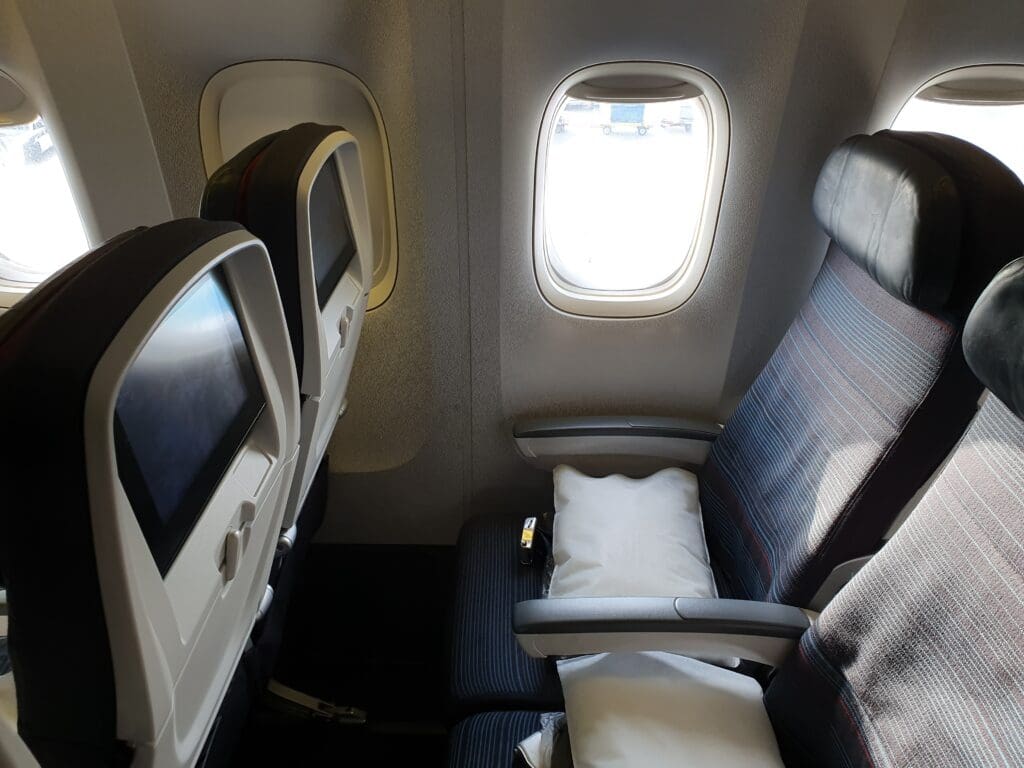
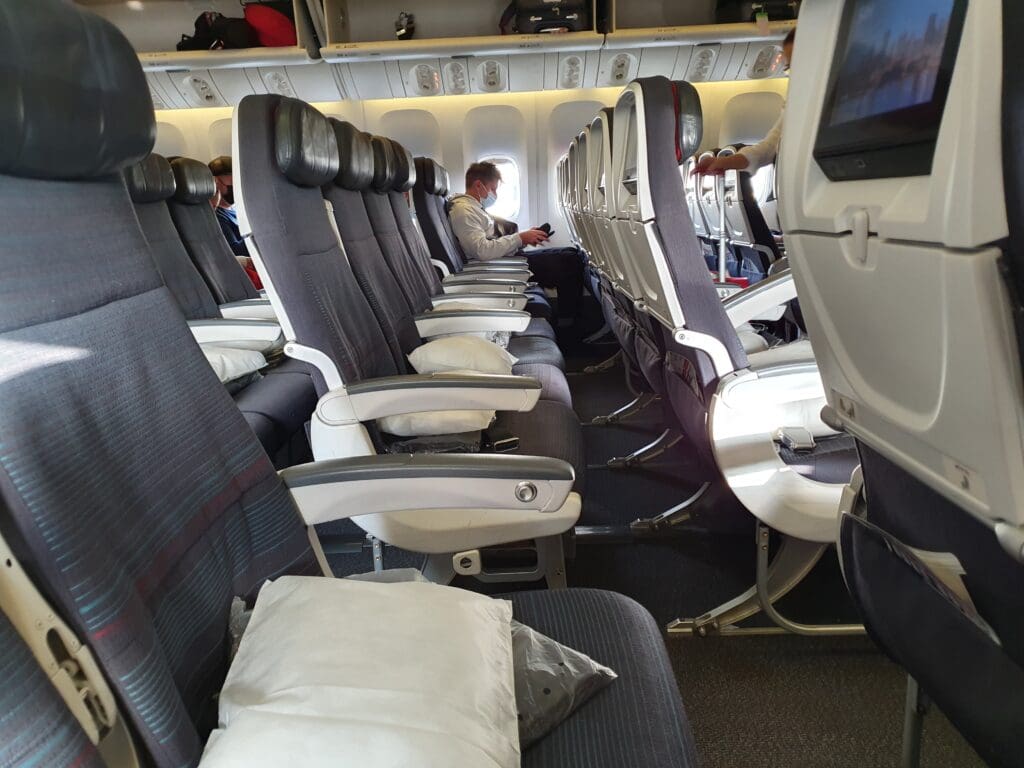
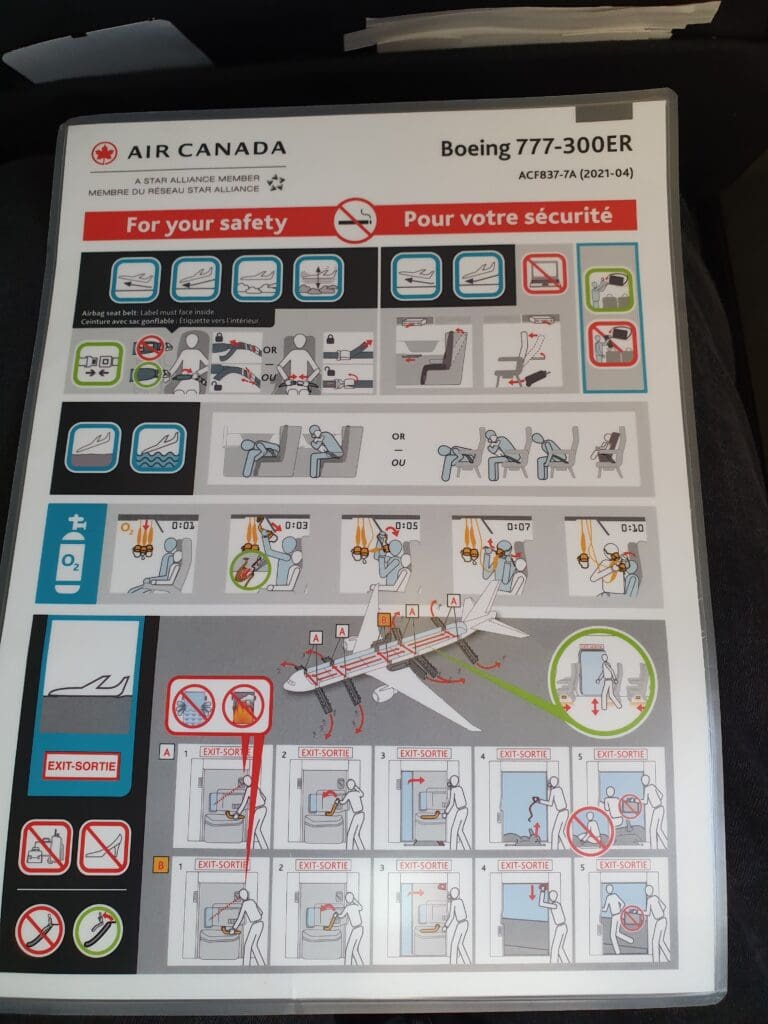
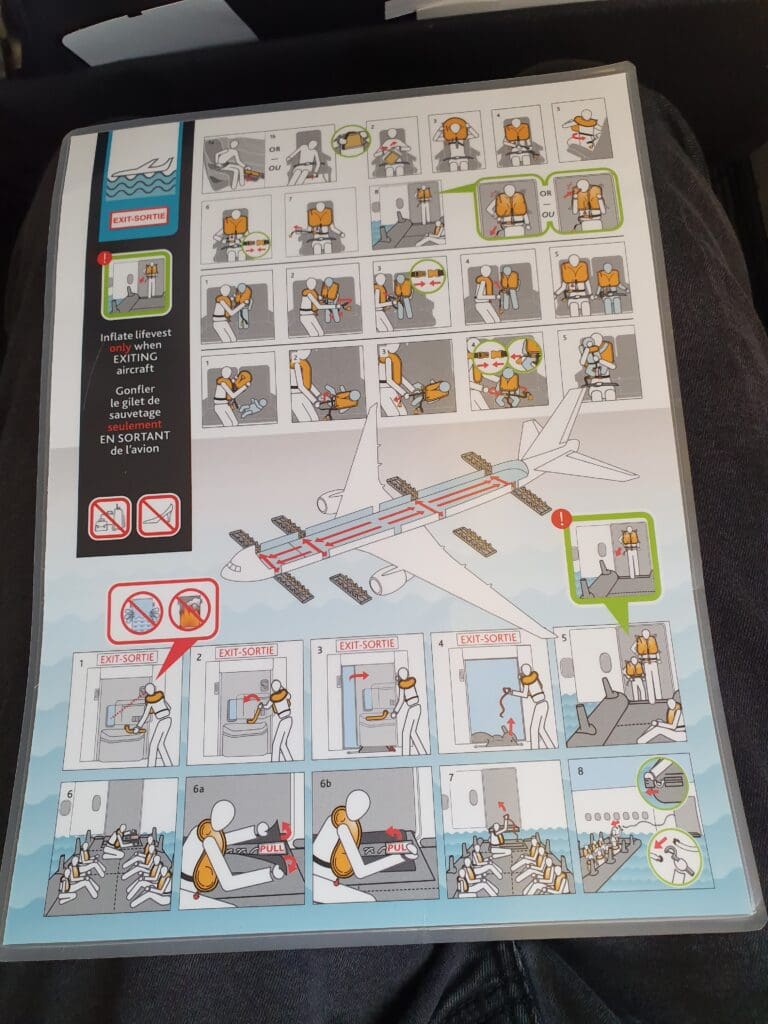
Being one of the first Economy passengers to board the aircraft, it did not take too long for me to reach Row 54, located near the front of the rearmost Economy cabin. Upon sitting down in Seat 54K, I was pleased to find this to be soft and comfortable, offering a good amount of legroom and in seemingly good shape with nothing more than a few barely noticeable marks and scratches. Having spent several hours on the ground in Germany after arriving in Toronto, the aircraft appeared to have been well cleaned during its morning stop, with no remnants from the aircraft’s previous load of passengers visible in the area around my seat. Turning to the seatback pocket, this contained a safety card as well as two sickbags, both of which featured a plain design with Air Canada’s maple leaf motif.
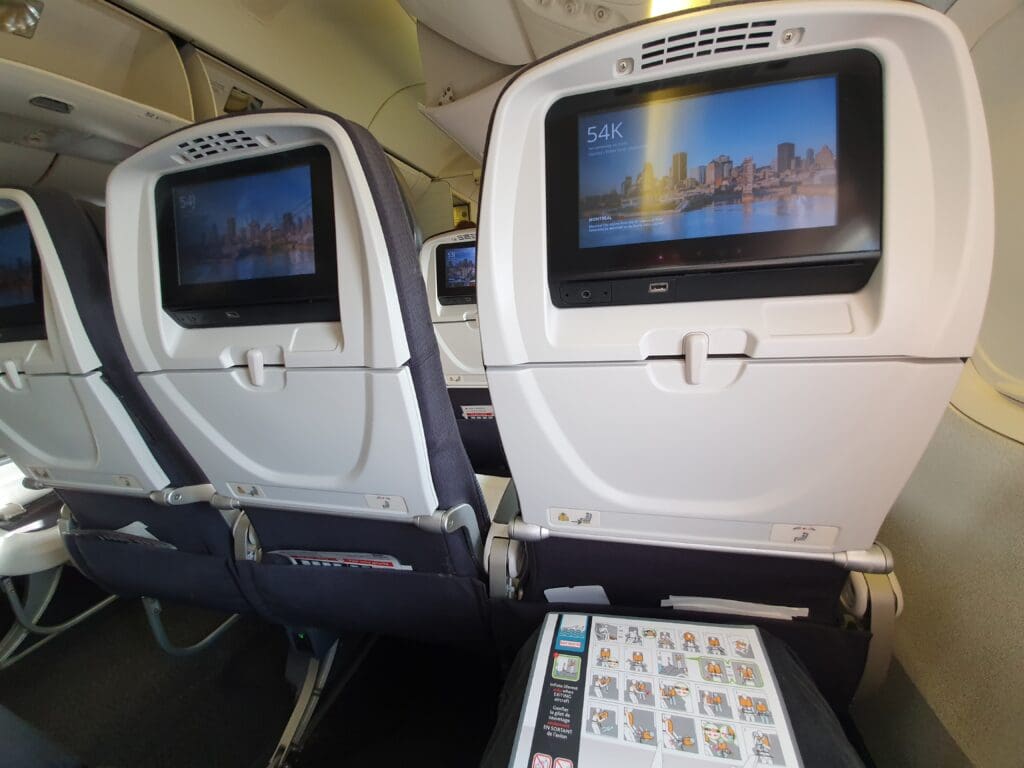
Once seated, I was pleased to see that there was no sudden rush of passengers and thus the rear Economy cabin remained relatively empty, even as the flight’s departure time neared. During this, some entertainment was provided in the form of a talkative late middle-aged passenger several rows ahead who asked me for directions to their seat. A long-term Canadian resident originating from Poland, once I had shown them to their seat the passenger then proceeded to advise me on how we could both expect plenty of grilling by Canadian immigration following our arrival in Montréal. With around fifteen minutes to go until the scheduled departure time, the Captain performed their first announcement of the transatlantic voyage, the timing of which indicated that boarding was nearing completion. This featured the usual welcome, introductions and thanks, before moving to the weather in Montréal as well as an overview of our route to Canada. That day, the Boeing would depart from Frankfurt’s Runway 07C and would cut across the Netherlands, North Sea, Southern England, Irish Sea and Ireland before soaring over Shannon and heading out across the Atlantic – crossing the ocean roughly along the 56th Parallel. With none of the three pilots appearing to be Québécois, the task of repeating this in French fell to a member of the cabin crew.

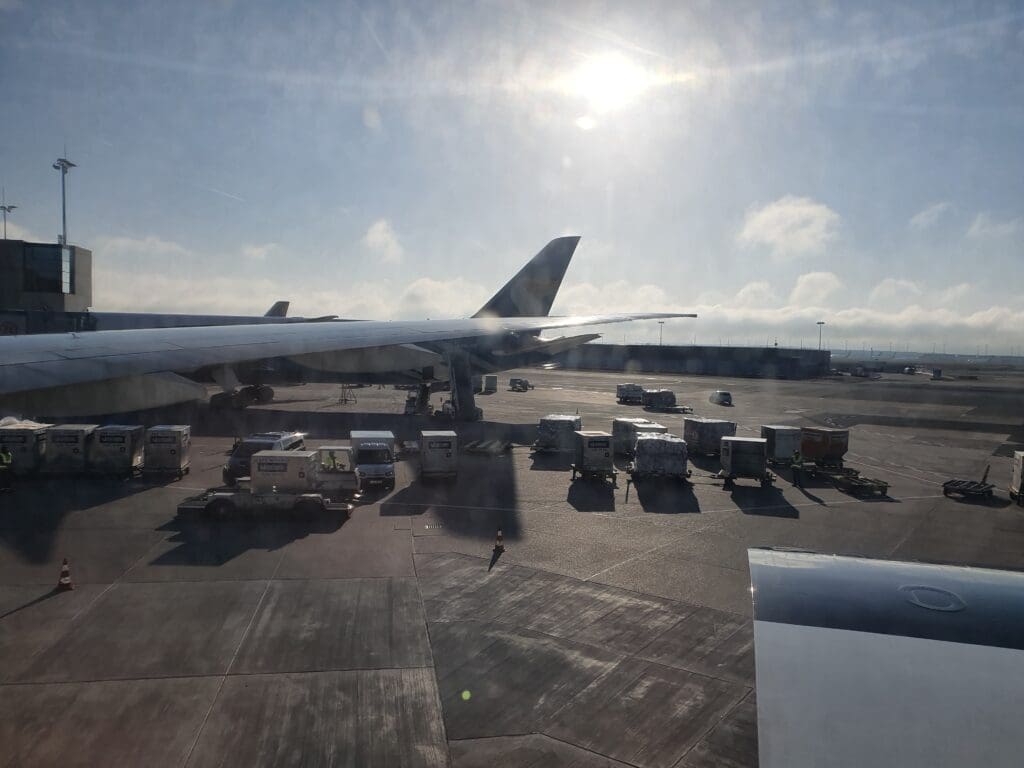
As the flight’s scheduled departure time of 1010 neared, the final stragglers made their way onto the aircraft and at the very last moment, a passenger came to occupy the aisle seat, crushing my hopes of enjoying the luxury of three seats to myself. That morning, the flight seemed to be no more than 60% full in Economy, with many of those onboard taking the form of Québécois holidaymakers returning to Canada alongside a smaller number of German tourists and other passengers. When the departure time arrived, the aft cargo door beneath my seat remained open and cargo continued to stream in below, ensuring that a punctual departure from Frankfurt was impossible. Several minutes later, the captain’s voice filled the cabin once again, informing all onboard that our departure would be delayed owing to the late arrival of several pieces of important Montréal bound cargo. Meanwhile, perhaps seeking to distract passengers, at this time the cabin crew passed through the cabin distributing packets of earbud-type headphones.
Twenty minutes after the service’s departure time, there was still little sign that our aircraft was ready to depart, with the aft cargo door remaining open. However, at this time the Purser, or Service Director as they are known at Air Canada performed their welcome announcement. Given our destination, unsurprisingly this was said first in French, followed by English before being repeated in German by another crew member. Almost as soon as this long series of announcements came to an end, the Captain could be heard once again and advised us that the last of the cargo should be onboard by 1045 and once done the pilots expected that we would be able to depart immediately. At 1037, a short whine could be heard followed by a loud clunk as the cargo door beneath my seat was closed whilst the ground crew cleared the space around the Boeing.
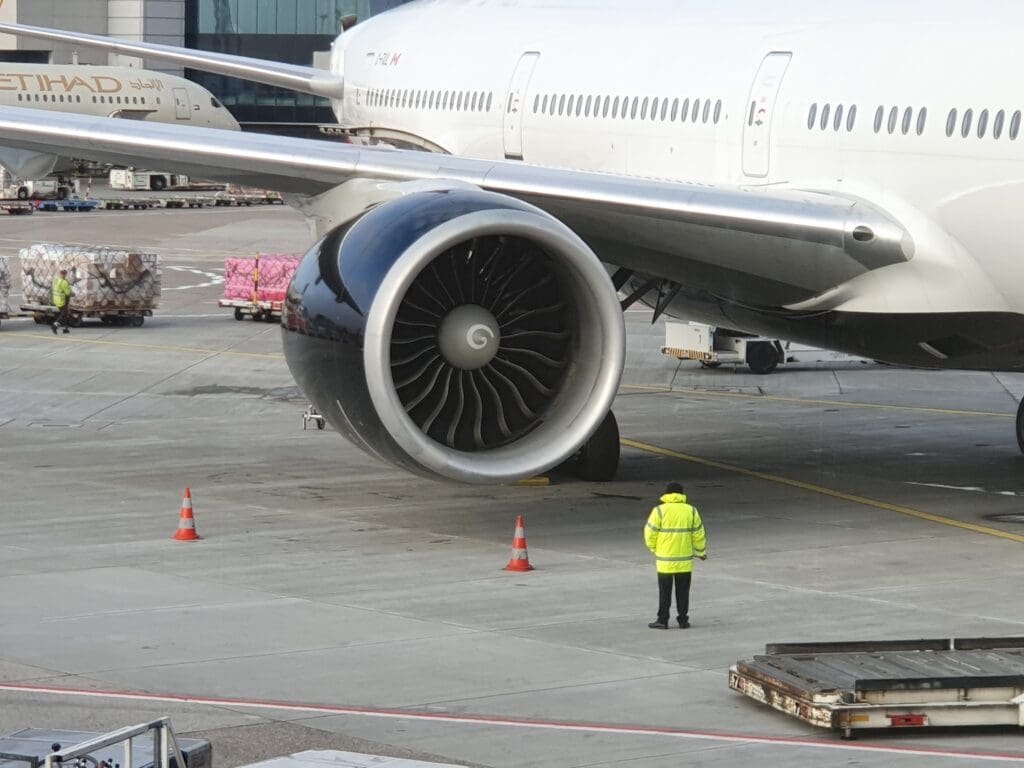
After another wait, at 1048 the aircraft could be felt jolting backwards and a few moments later the Boeing 777’s two gigantic General Electric GE90-115BL2 engines quietly hummed and vibrated into life. Inside the cabin, Air Canada’s Ode to Canada safety video took over all screens, combining the traditional safety video with a promotional video advertising a range of destinations across Canada. During this, crew members can be seen going through the safety instructions across Canada’s thirteen provinces and territories, from the Alberta foothills to the Nunavut Arctic. This was followed by a short advertisement for Canada, and another for Marriott International’s loyalty programme, Bonvoy.
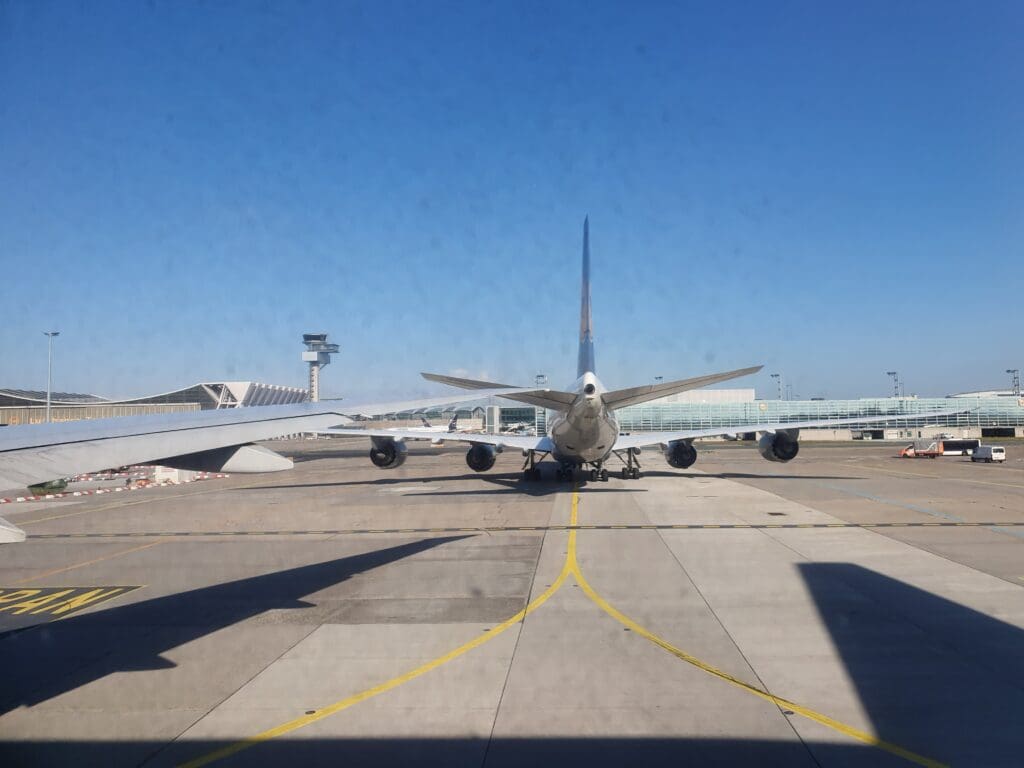
Following the usual short pause whilst the tug was disconnected, at 1054 the Boeing 777 powered away from the ramp under its own steam and the crew passed through the cabin undertaking their final pre-departure checks. From my position on the right hand side of the aircraft, during the first minute or so of our journey to the runway, I was treated to views of a mixture of Lufthansa widebodies that included Airbus A330s, Airbus A340-300s and a few Boeing 747-8s. After leaving the terminal behind, the Boeing trundled past a long line of locally based aircraft waiting at remote stands, varying in size from small Bombardier CRJ-900s up to a couple of large Boeing 747-8s.
A grand total of ten minutes after commencing its taxi, the aircraft cautiously made its way onto Frankfurt’s four-kilometre-long Runway 07C without any holding before coming to a gentle stop. After a couple of minutes of waiting, the Boeing’s two General Electric engines spooled up and the jet commenced a powerful takeoff roll. During this, I was offered views of the small collection of private jets parked up at the airport’s Business Aviation Centre waiting for their next missions, followed by a collection of airliners parked up on the south side of the airfield as aircraft gently rotated up into the German skies. After crossing the airport’s perimeter fence, the Boeing climbed out over the forests to the southwest of Frankfurt before arriving at the city’s residential suburbs. Unfortunately thanks to the patchy low-lying clouds that morning, from then on nothing could be seen of Frankfurt other than the town of Offenbach and the river Main.
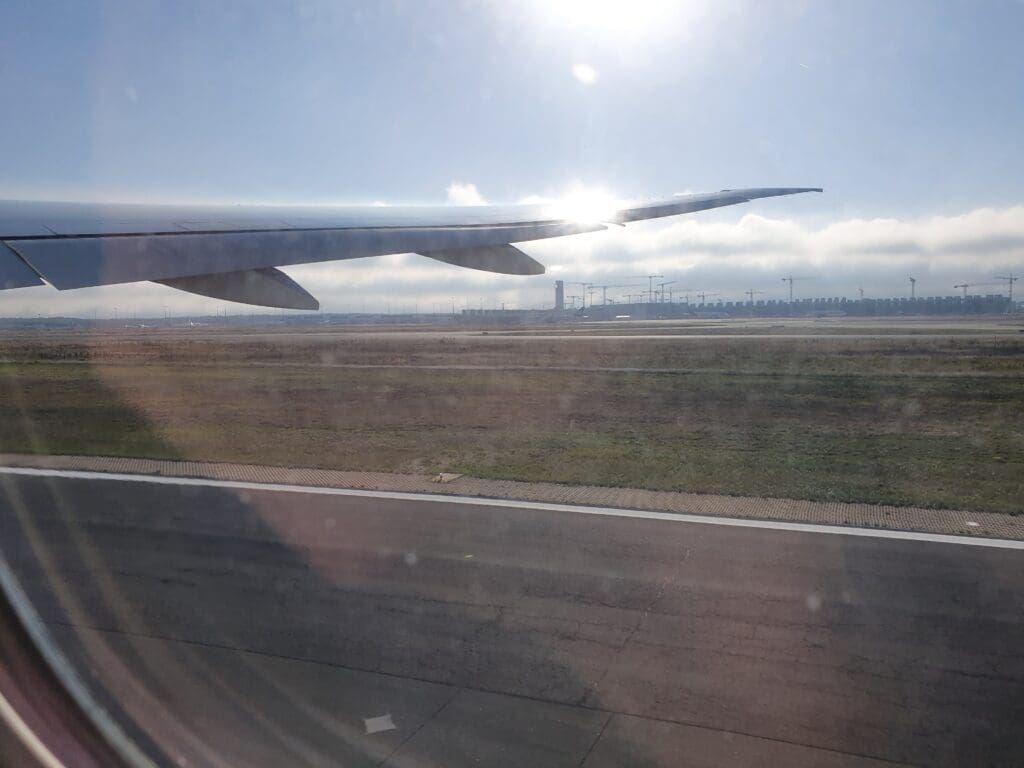
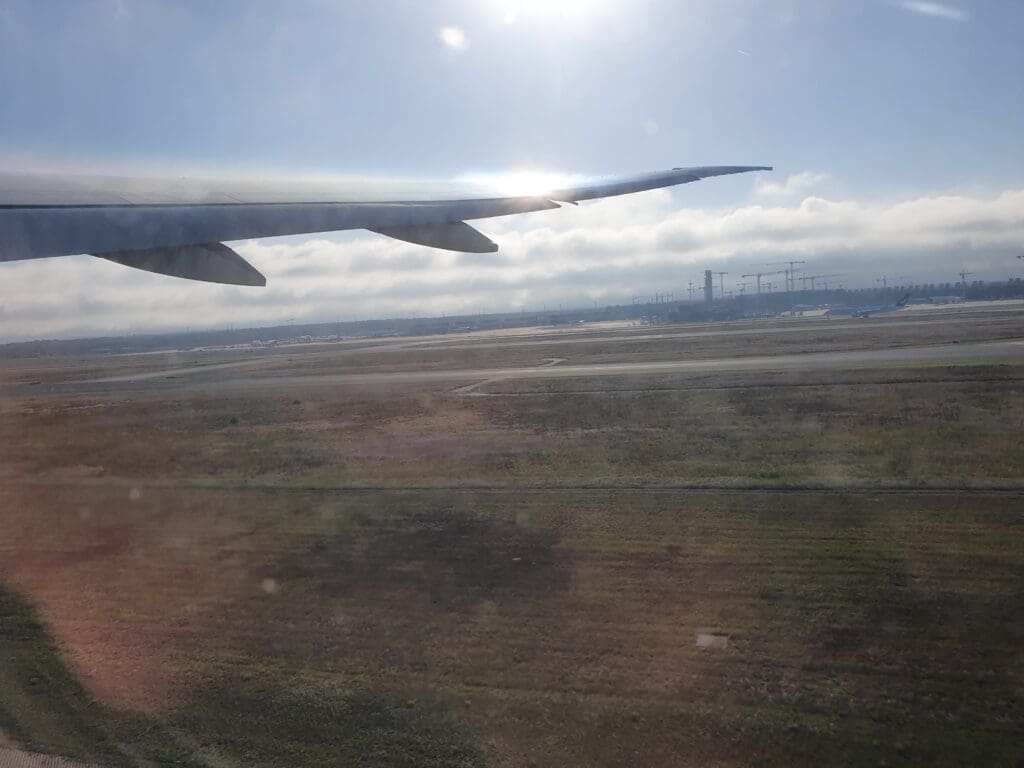
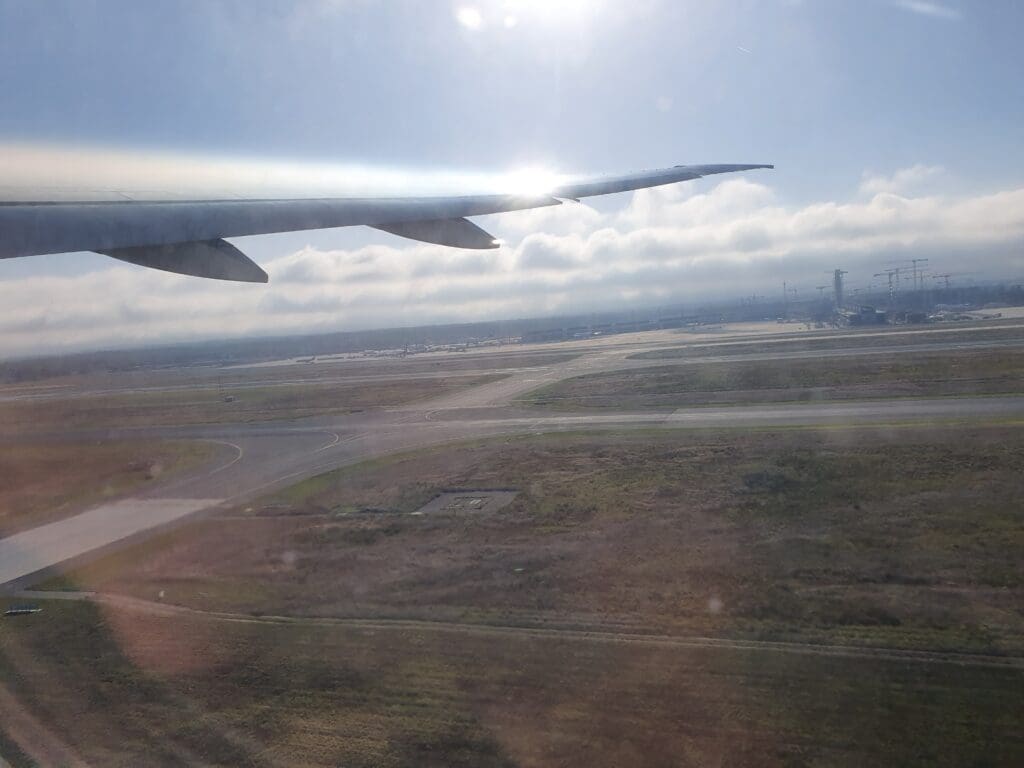
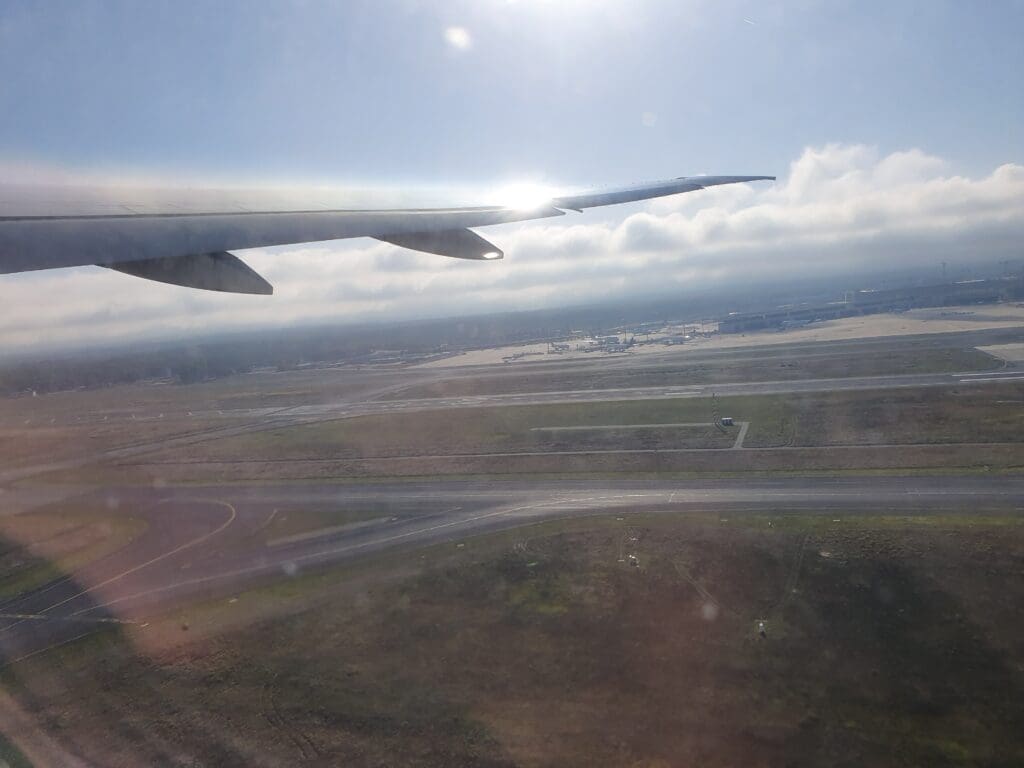
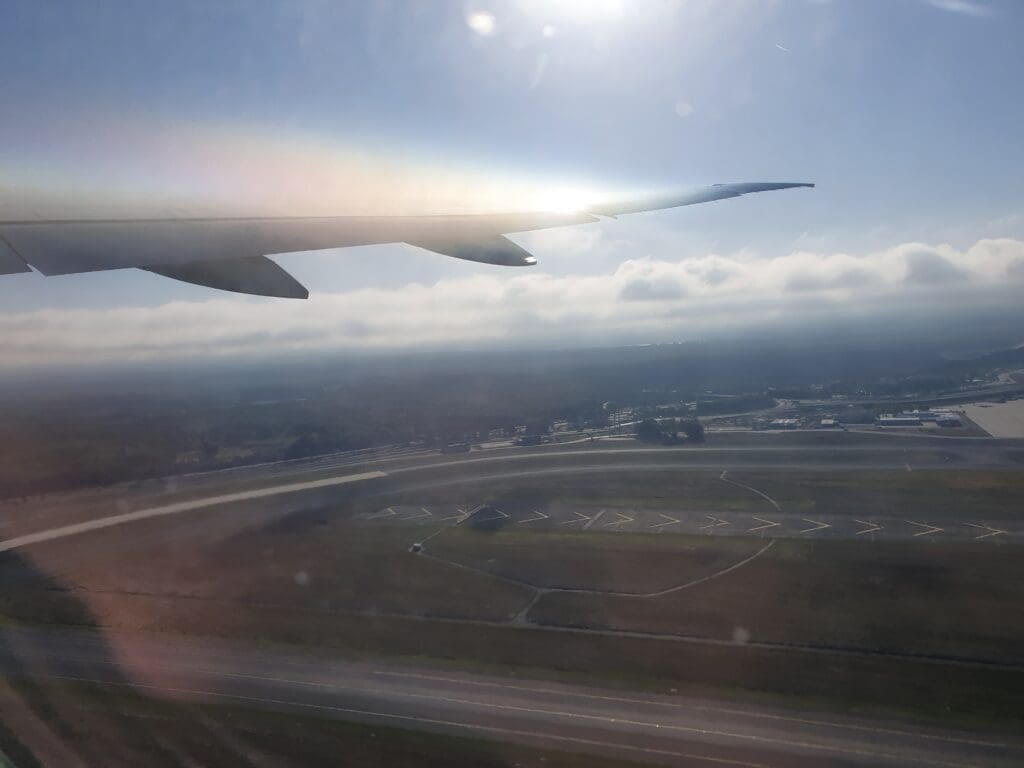
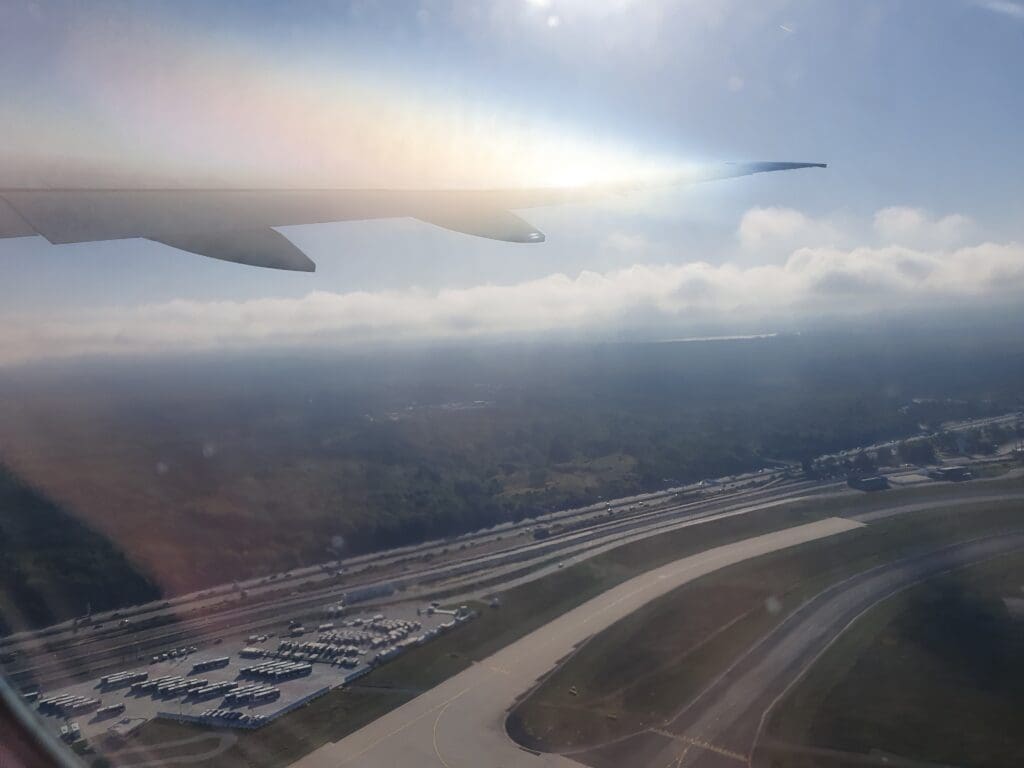
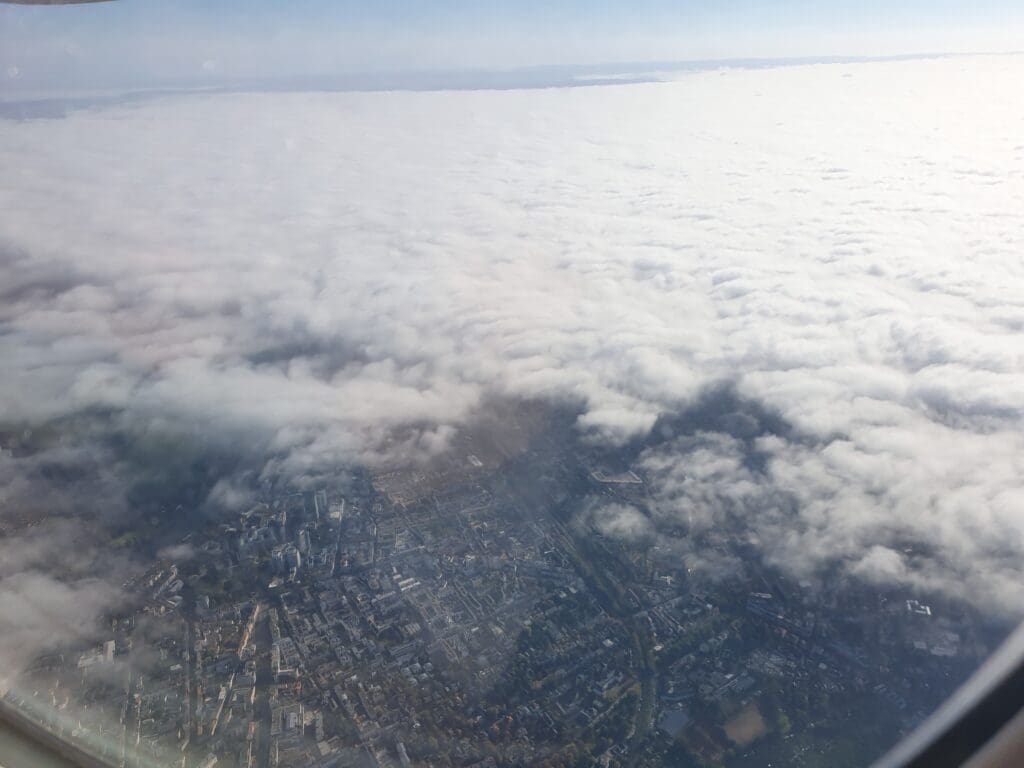
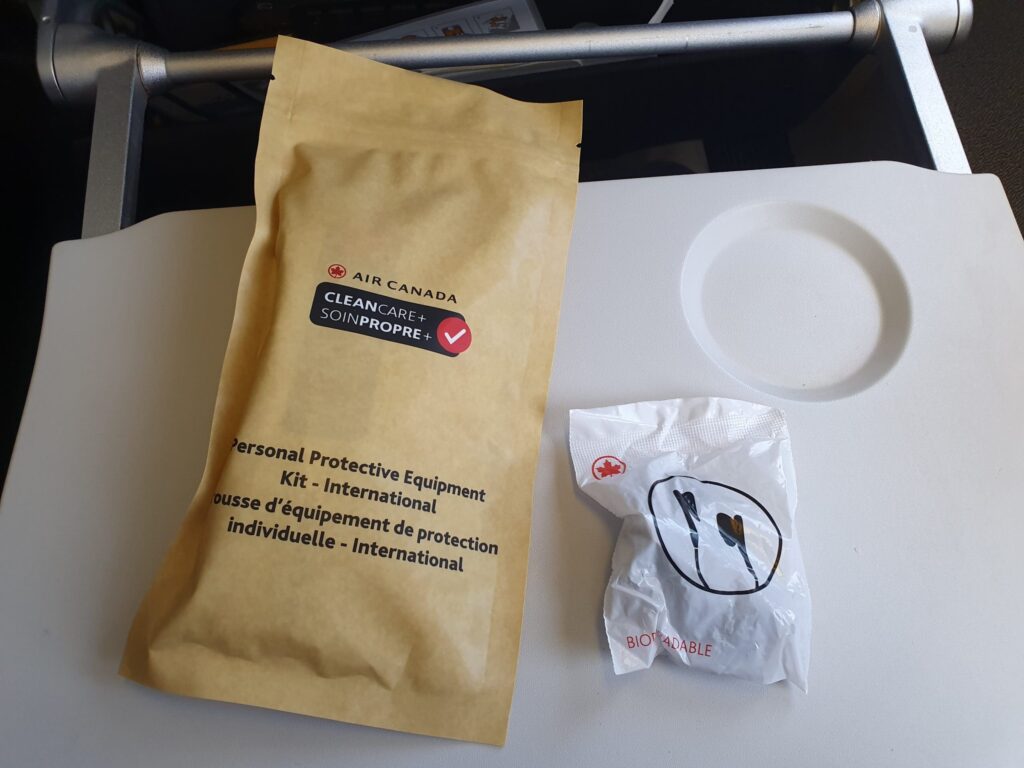
Despite the clouds that lingered around Frankfurt, the weather conditions over western Germany were fairly good that morning and the climb up to our cruising altitude brought with it nothing more than a few barely noticeable lumps and bumps. As soon as the aircraft passed through ten thousand feet, the pilots switched off the seatbelt signs. This was immediately followed by the usual announcement from the Service Director who advised passengers to keep seat belts on whilst seated, also requesting passengers to keep face masks on at all times other than when eating and drinking before ending this with a mention of the onboard wifi. As this announcement was being undertaken, several crew members passed through the cabin distributing Air Canada’s CleanCare+ kits, meanwhile, the familiar scent of warming inflight meals began to waft through the cabin indicating that the flight’s lunch service was soon to commence.
Several minutes after leaving Frankfurt behind, the clouds below temporarily parted and revealed the countryside and several towns of Germany’s Rhineland-Palatinate and North-Rhine Westphalia regions as the Boeing made its way towards Cologne. Unfortunately by the time the jet reached the historic city, the clouds had returned and thus nothing of this could be seen. Approximately twenty minutes after taking to the skies, the aircraft levelled off at its initial cruising altitude of 34,000 feet at which point the flight was nearing Germany’s border with the Netherlands, crossing this near Roermond. Once in Dutch skies, the aircraft flew along the country’s southern border with Belgium, crossing this various times as it journeyed towards the North Sea. However, thanks to the omnipresent cloud cover below, neither Belgium nor the Netherlands could be seen that morning. Fortunately, some entertainment was provided when our aircraft overtook a Cancun-bound Lufthansa Airbus A340-300 that had taken off a few minutes ahead of our flight and was leisurely tootling along two thousand feet below.
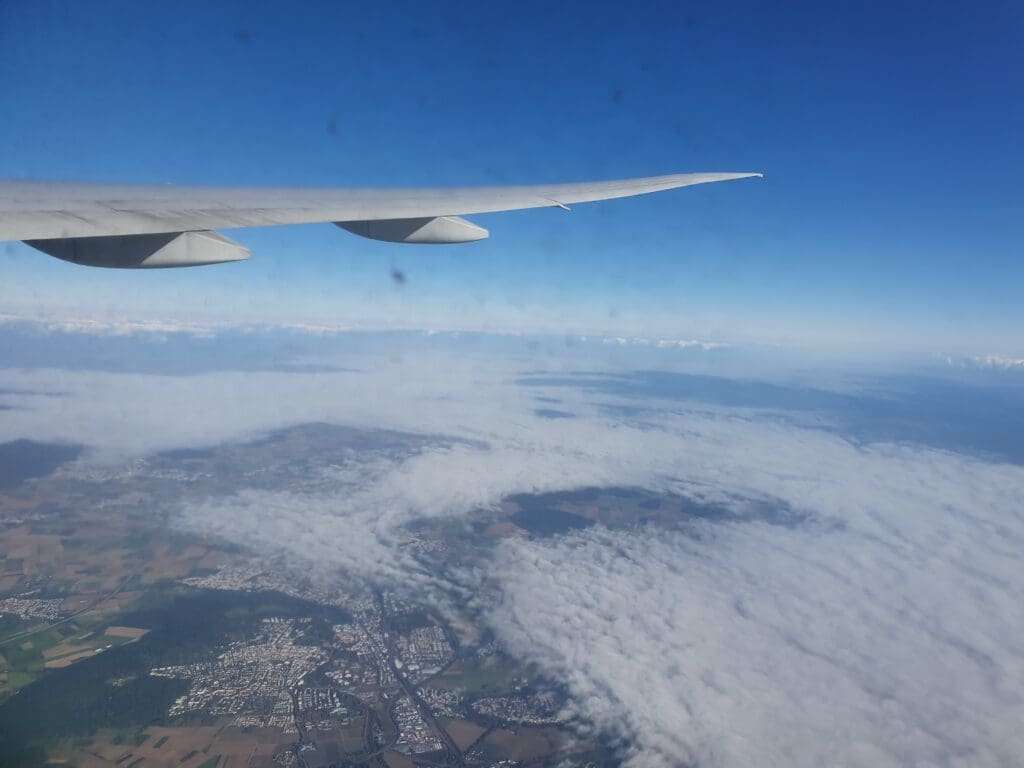
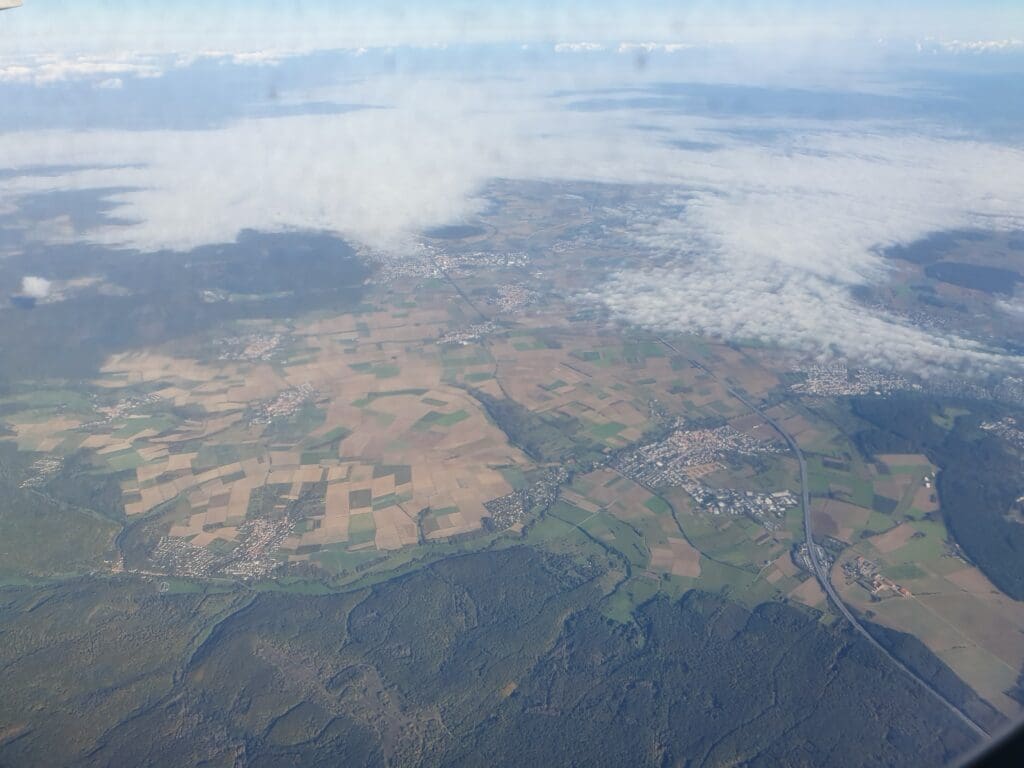
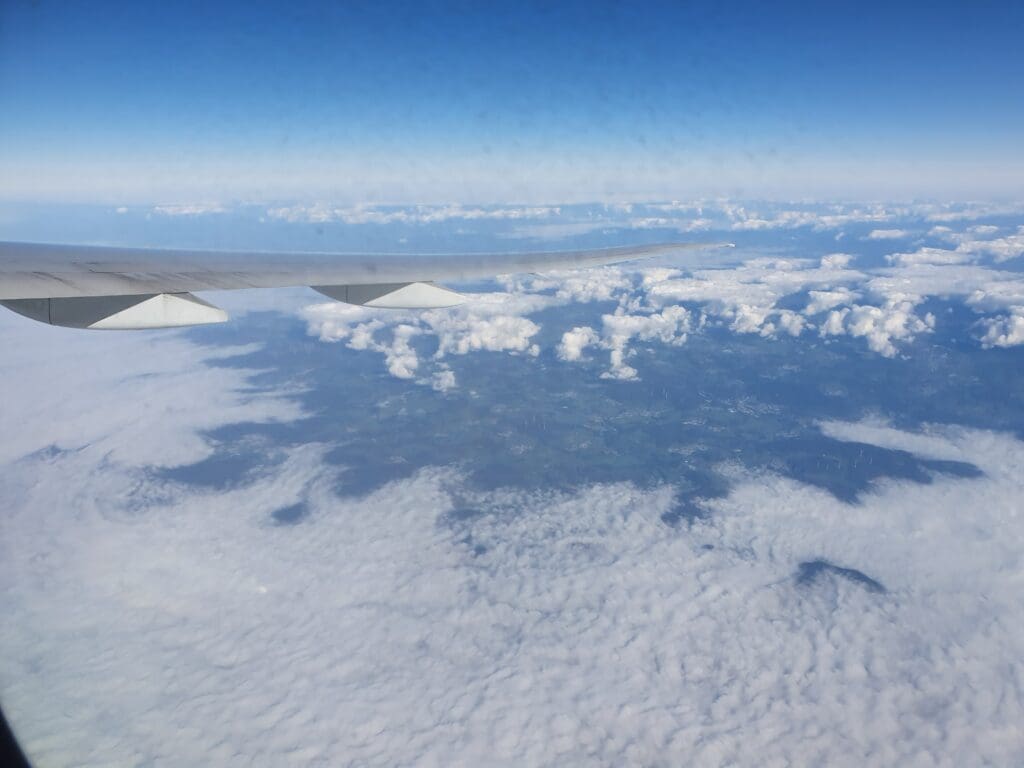
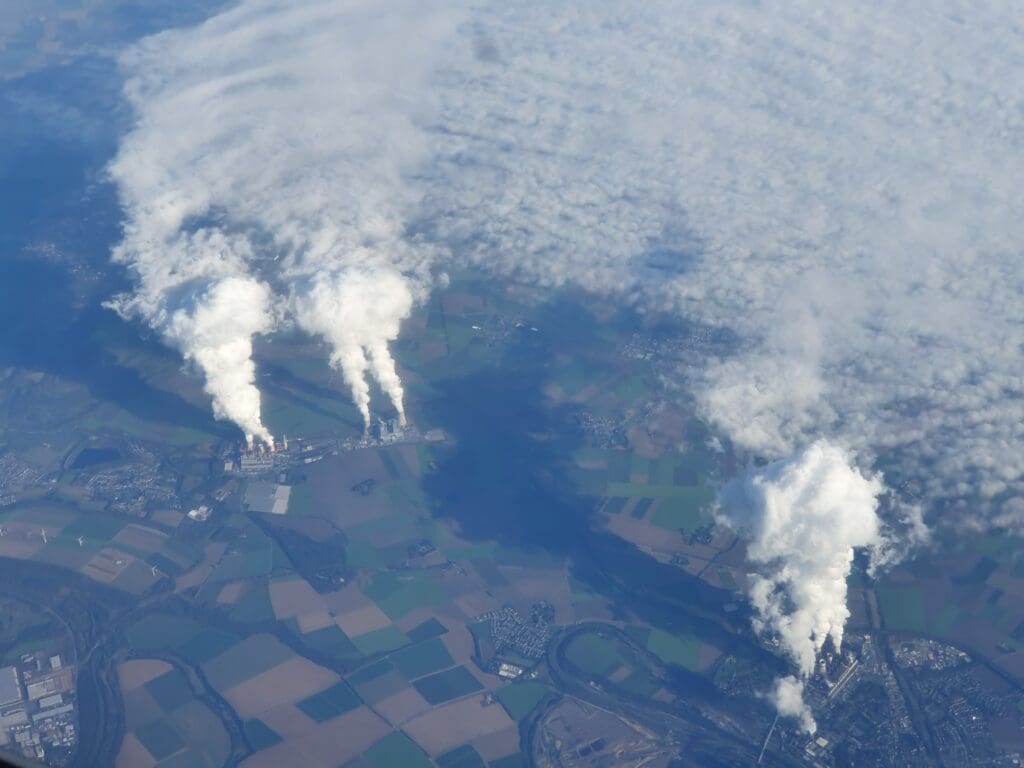
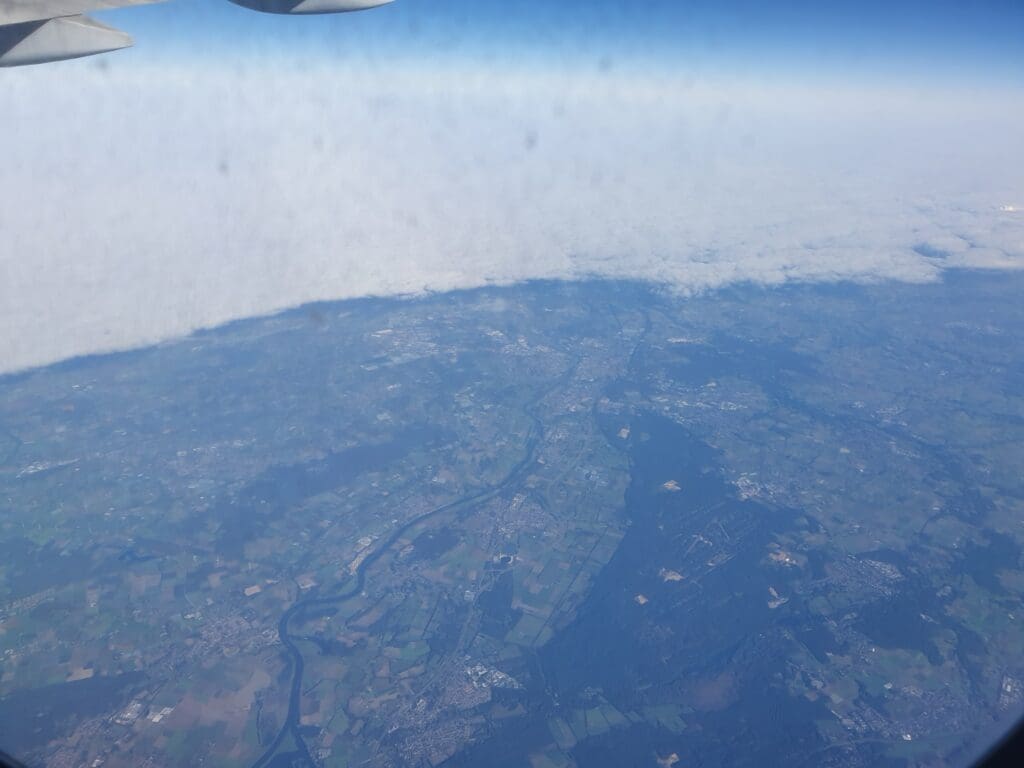

No more than fifteen minutes after entering Dutch airspace, the Boeing journeyed out over the North Sea where a gap in the clouds revealed seemingly endless rows of offshore wind turbines and several ships before these rolled in as the aircraft neared the East Anglian coastline. Following a quick crossing of the sea, the jet made landfall between the Essex seaside towns of Clacton-on-Sea and Southend-on Sea. As the aircraft headed towards London, having been in the skies for almost fifty minutes, several crew members could be seen commencing the flight’s main meal service in the rear Economy cabin. Seated near the front of this, and with relatively few passengers ahead of me, within a couple of minutes of this commencing a flight attendant enquired ‘chicken or pasta?’ in a rather cold and emotionless manner. Whilst no further information on either of the two options was provided, Air Canada publishes their Economy inflight menus for long haul flights on their website a week prior to departure, with these being downloadable in PDF format. Having already checked this, I was aware that the dishes consisted of chicken ratatouille with polenta corn mash, and pasta with a tomato sauce.
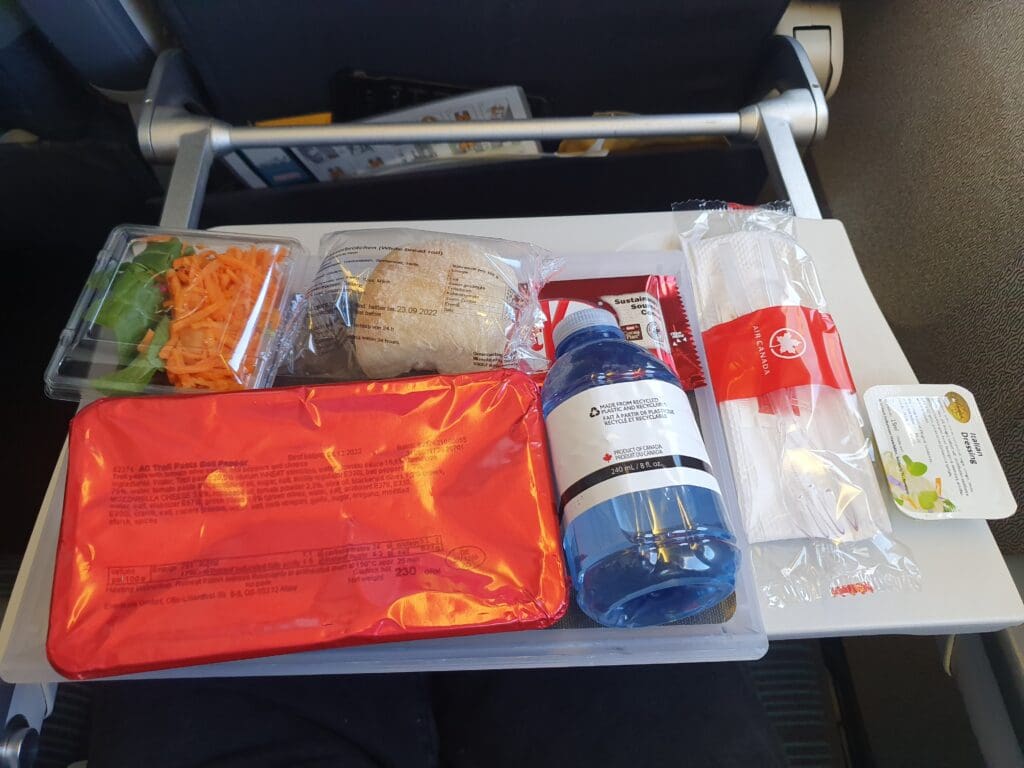
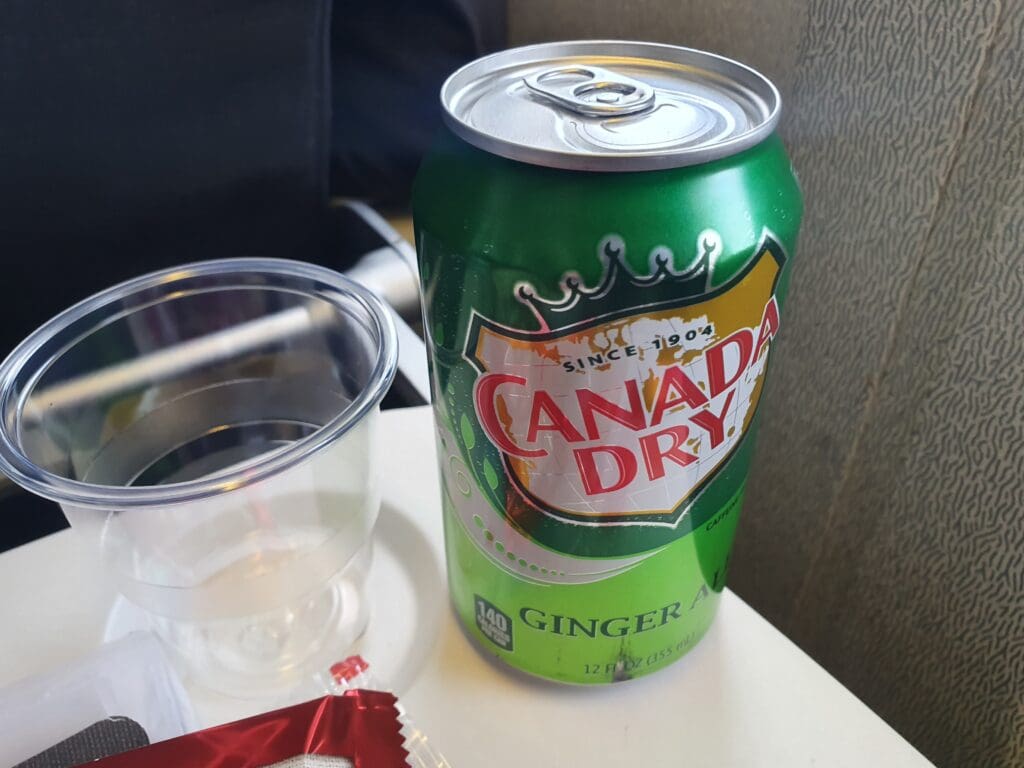
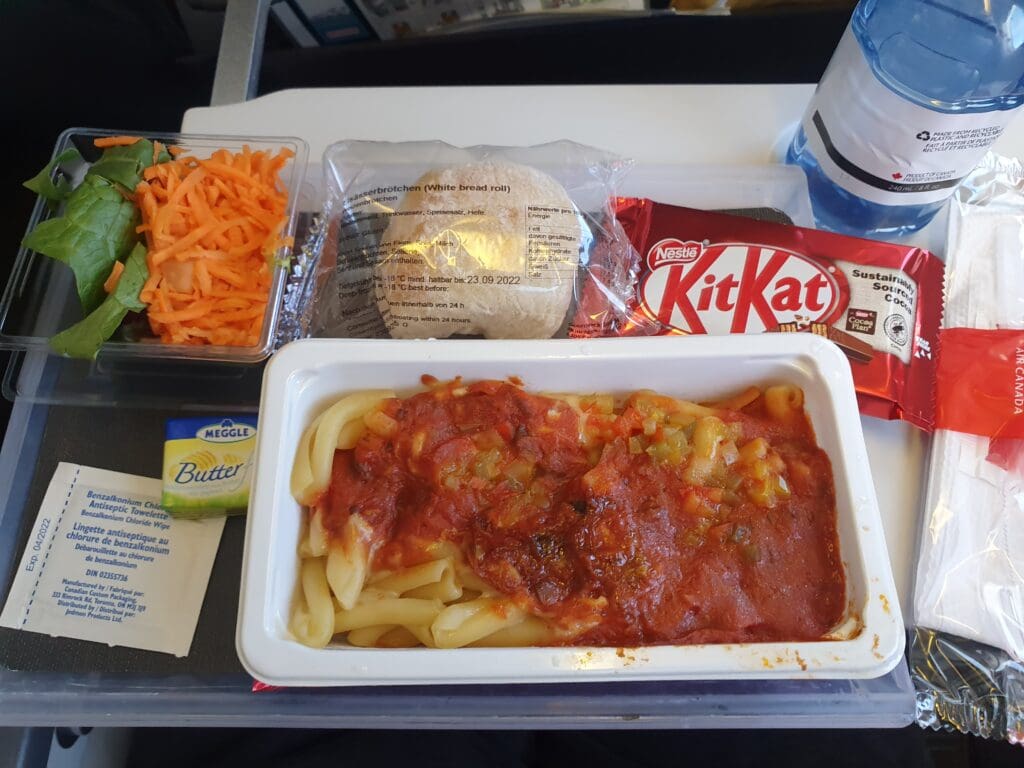
With little deliberation, I opted for the latter and I was soon passed a small tray that featured the main dish, a 240ml bottle of water, a small salad with a tub of Italian dressing, a bread roll and a packaged lump of butter, and a KitKat for dessert. Meanwhile, a packet containing the usual plastic cutlery, salt and pepper sachets, a serviette and wet wipe could also be seen on the tray. With no further communication, the flight attendant steamed down the cabin and a minute later another flight attendant who seemed to be equally cold asked for my choice of drink. Given my final destination, I opted for a Canada Dry ginger ale and to my delight I was given the full 355ml can! Slightly less impressive, although not particularly worthy of complaint, was the fact that this was handed to me along with a plastic cup, with no offer of ice, and no pouring undertaken by the flight attendant. With everything on my tray table, I began to tuck into the Air Canada lunch which I found to be fairly mediocre. Whilst I was left with nothing to complain about in terms of the quality of the main dish, nothing about it really stood out. Meanwhile, whilst the quantity of this was sufficient for lunch, I did find the portion size to be on the smaller side of things when compared to the offerings of other full service airlines. Other than the coldness of the two crew members, my only real complaint about the meal was the minuscule tray that this had been delivered on which made returning the tray to the crew members a high-risk balancing operation with the potential to tip everything from this onto the aisle seat occupier.
As I ate lunch, a few gaps in the clouds revealed the English countryside of the Home Counties, as well as several towns, whilst a short time later the rural border areas between the English county of Herefordshire and the Welsh county of Monmouthshire could be seen. Following a six minute flight in Welsh skies, the Boeing passed to the south of the town of Aberystwyth and headed out over the Irish Sea. During this stage of the flight, the crew began to collect passengers’ trays, which was done quickly and efficiently, in spite of the fact that the aircraft was flying through a patch of turbulence while this was underway which resulted in the aircraft climbing up to 35,000 feet. After ten minutes spent flying over the Irish Sea, the Boeing made landfall to the south of Dublin near the coastal town of Wicklow. Contrary to the captain’s speech which mentioned we would pass over Shannon, instead, the jet cut across Ireland, travelled up to County Mayo, passing to the south of Castlebar and over Achill Island before heading out over the Atlantic. Unfortunately thanks to the clouds, nothing of Ireland could be seen that morning.
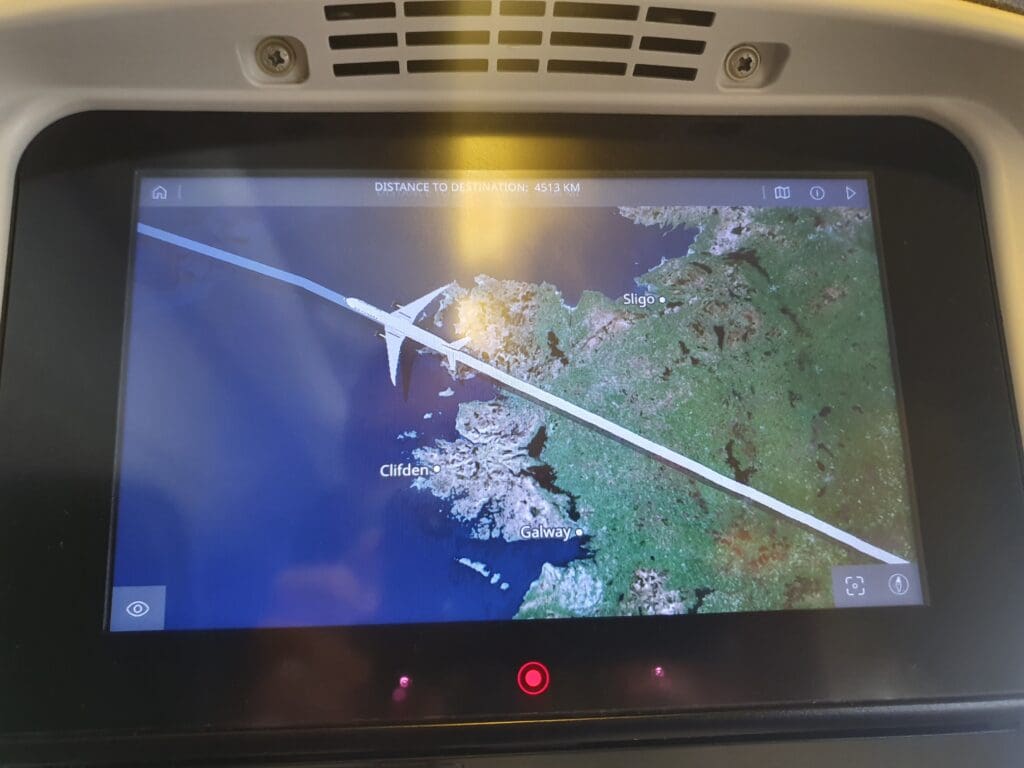
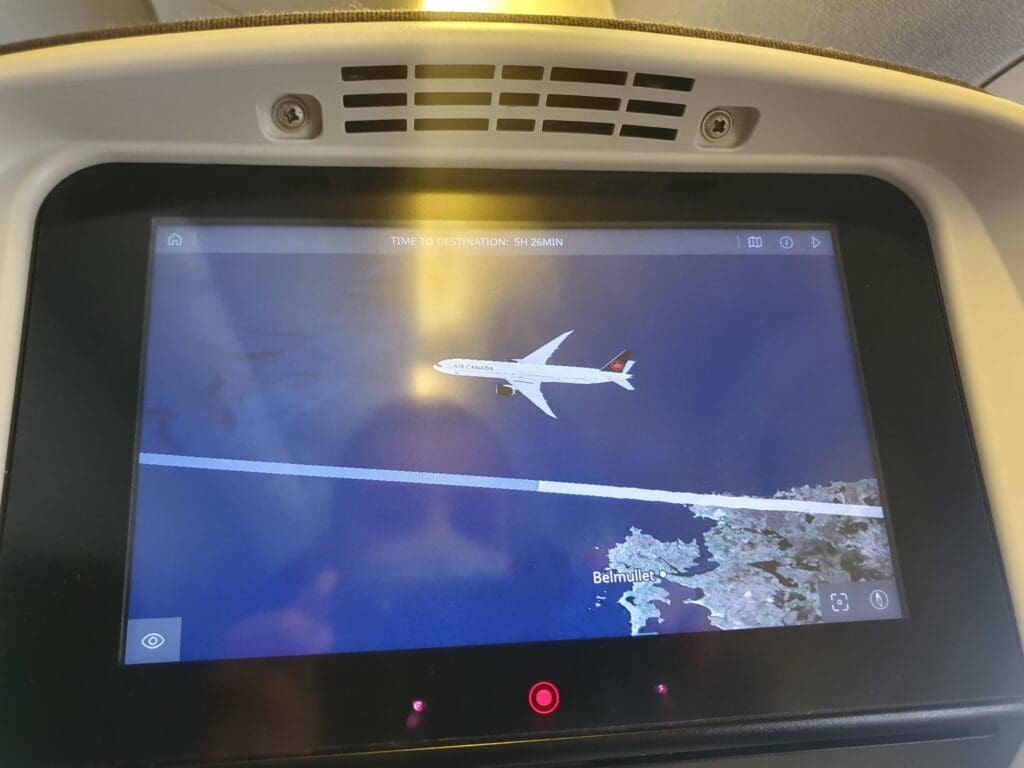
With little to see below, I decided to turn to the inflight entertainment system as the aircraft commenced its oceanic crossing. Catering to passengers from across Air Canada’s global route network, I was pleased to find the system to be offered in fifteen different languages. In terms of content, at the time of my flight, bored passengers could pass the time with an impressive list of 306 films from across the world, with plenty of television programmes, music playlists, audiobooks and several games also offered. I found that each film and television programme commenced with a couple of advertisements, although these were skippable. At the time of my flight one of these promoted Air Canada’s Aeroplan Visa Infinite card whilst the other advertised BMW. I also found the system to offer destination guides, the menu and beverage list for the flight, and plenty of information on Air Canada and its history.

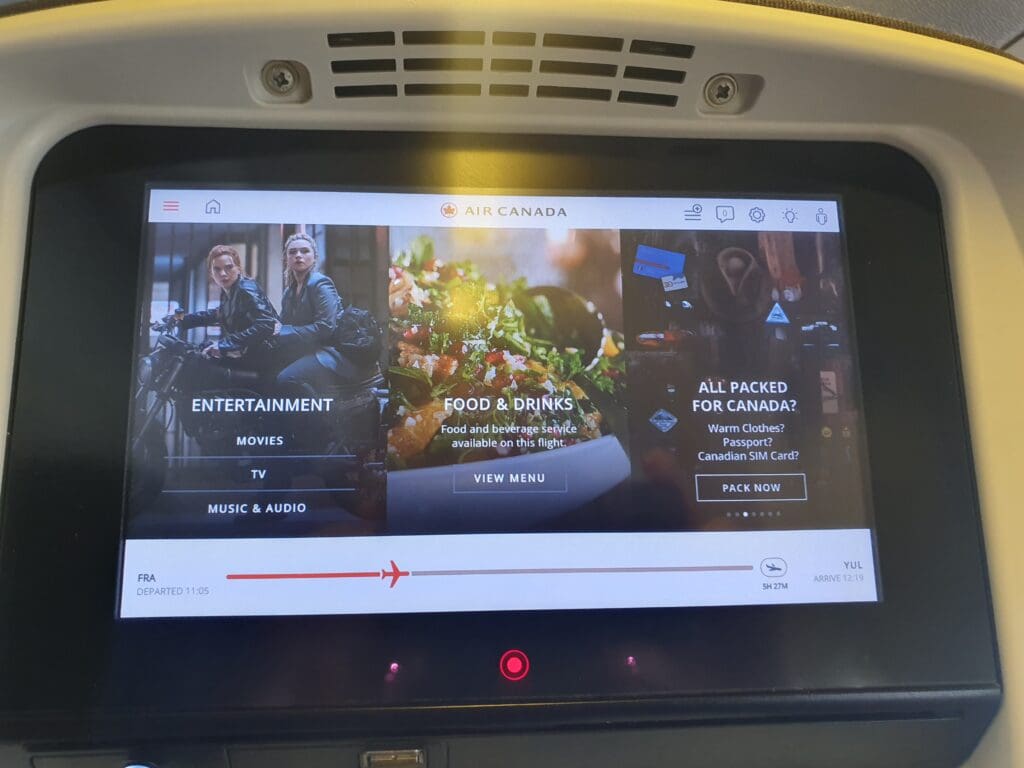
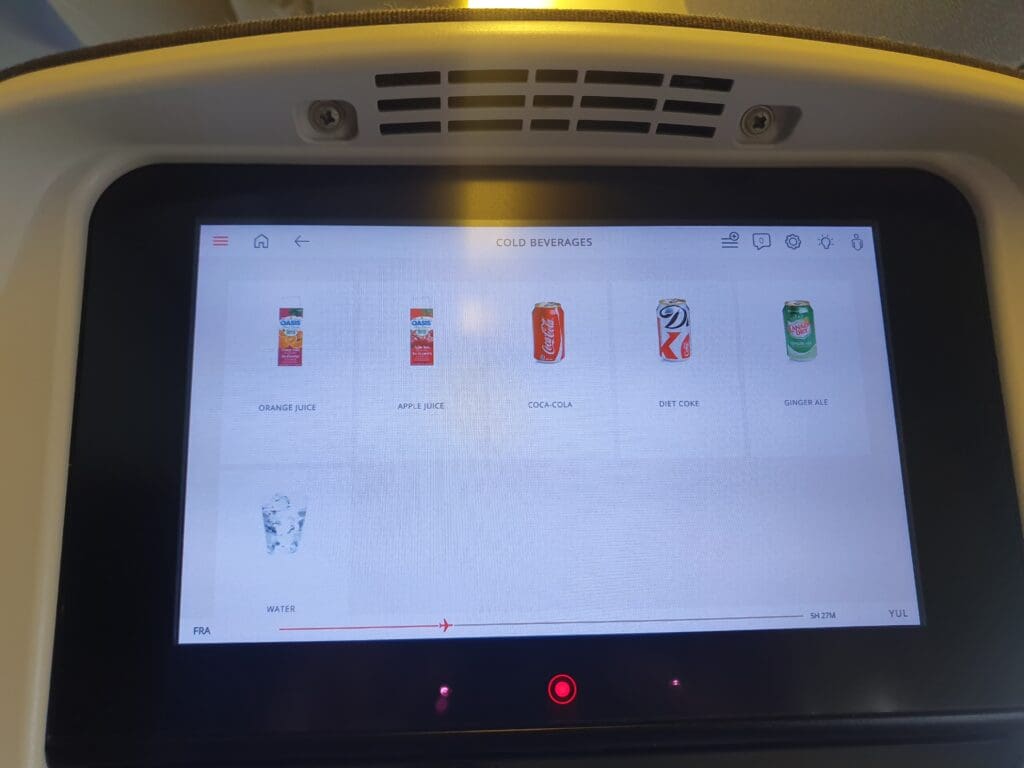
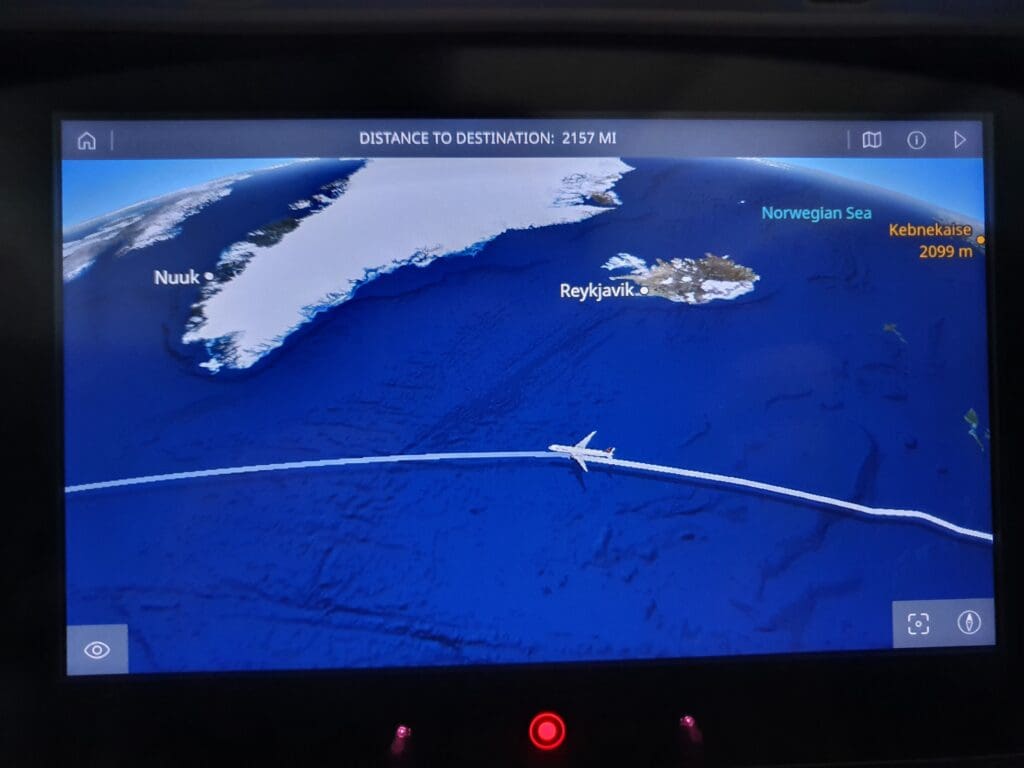
After exploring the inflight entertainment system, I settled down and had a brief nap before doing some work. As the Boeing powered its way westwards across the Atlantic, the first hour of its oceanic crossing proved uneventful. However, several hundred miles to the south of Reykjavik, the aircraft passed through a brief patch of turbulence which proved strong enough to warrant the reillumination of the seatbelt signs for around ten minutes. Once passengers were free to move about again, around halfway across the Atlantic I decided to pay a trip to one of the lavatories at the rear of the aircraft. Whilst I had noticed a fairly constant stream of passengers heading to and from these for the duration of the flight, I was pleased to find this bathroom to be in a clean state although this did appear to be slightly battered.
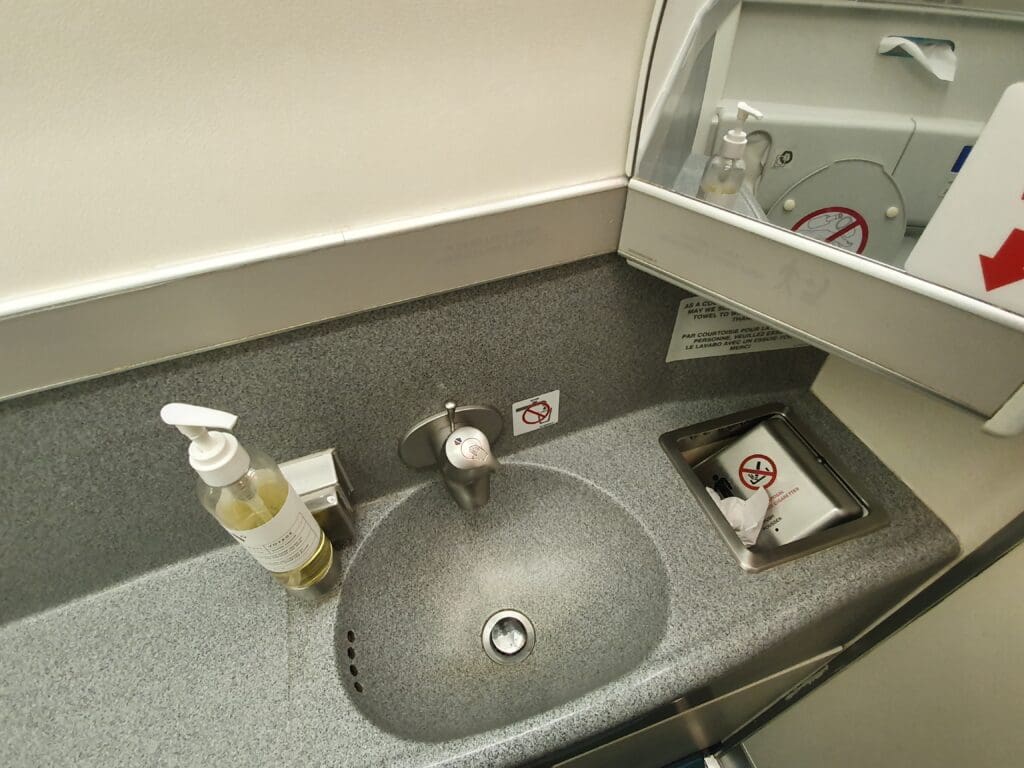

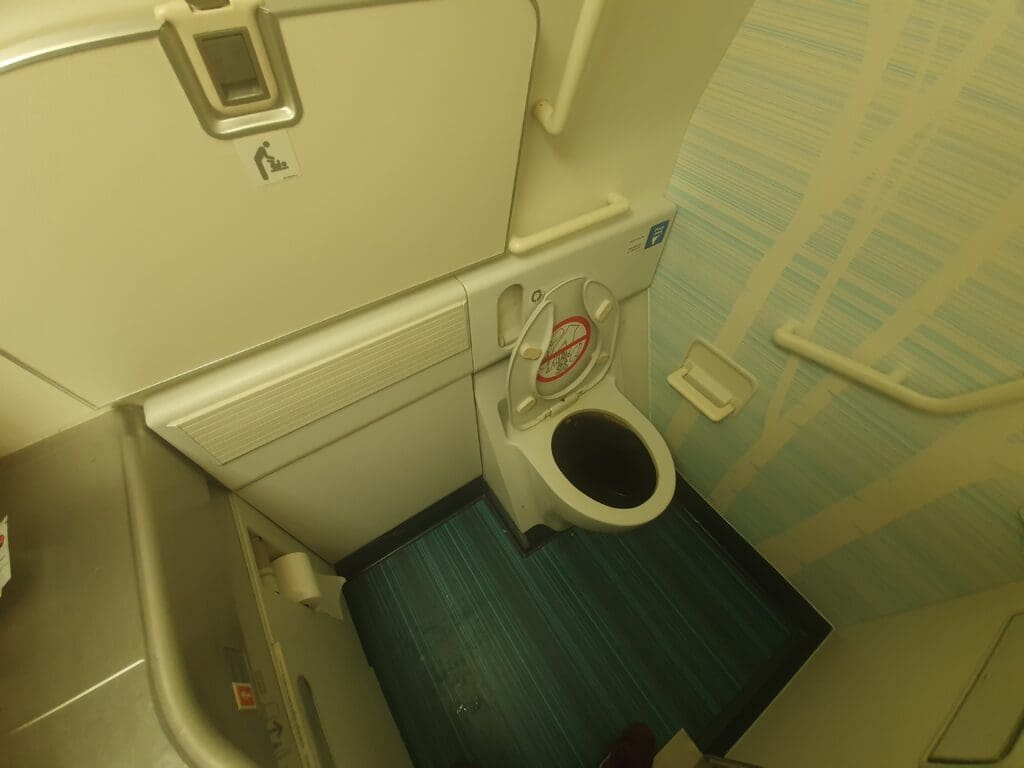
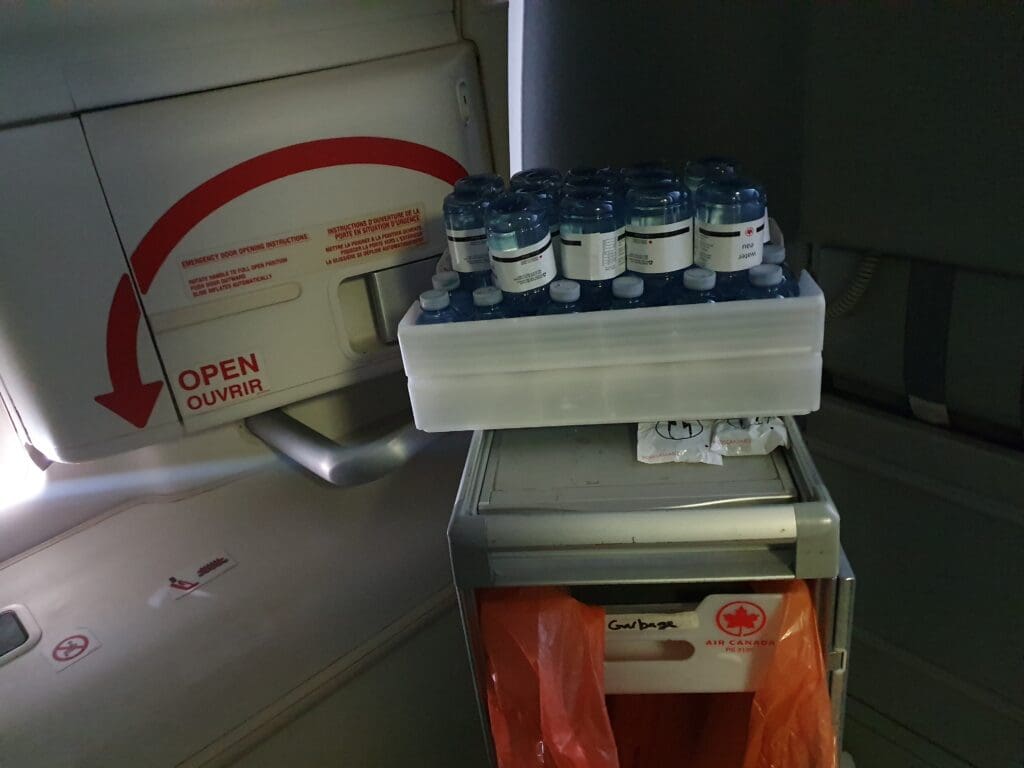
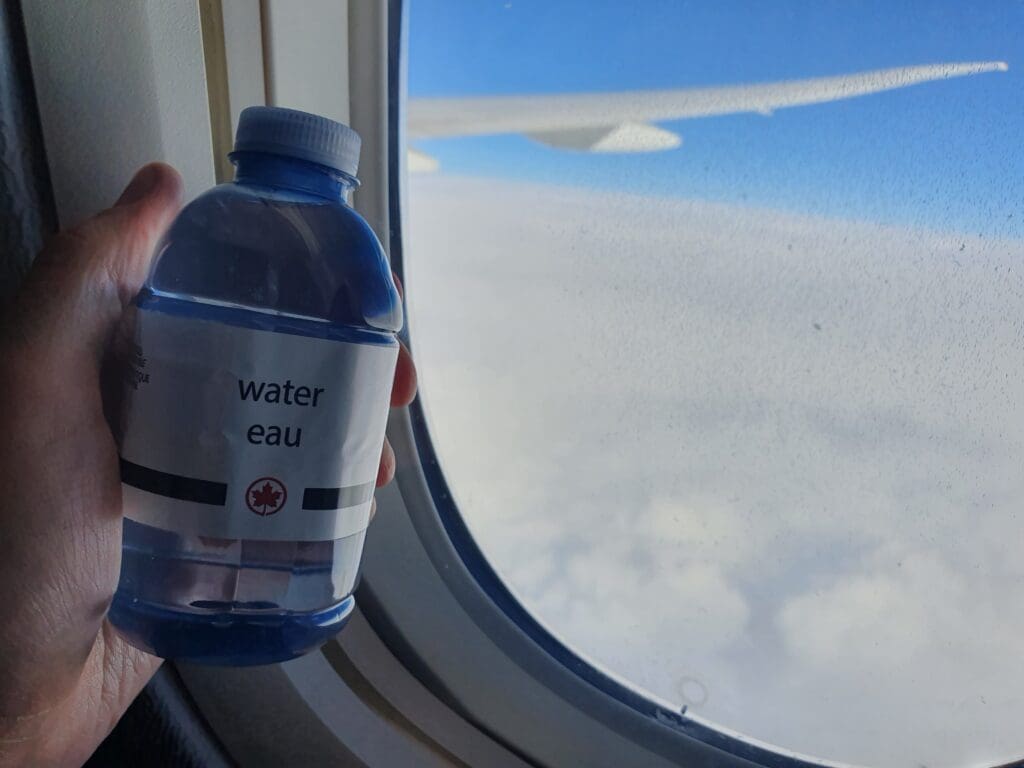
In the short time that I was away, the aisle seat occupier had fallen asleep. So as not to disturb this passenger, I decided to take one of the multiple vacant aisle seats at the rear of the cabin. It is worth noting that whilst in the cruise, no drinks round was made and perhaps owing to Covid precautions, only small bottles of still water had been left in the galley for passengers to take. By the time I had done some more work, had another nap and partaken in a brief walk around the cabin the flight was nearing the Newfoundland coastline. Noticing that the aisle seat occupier had woken up, I made my way back to my seat in time to get my first glimpse of Canada since 2002 and of North America since 2006.
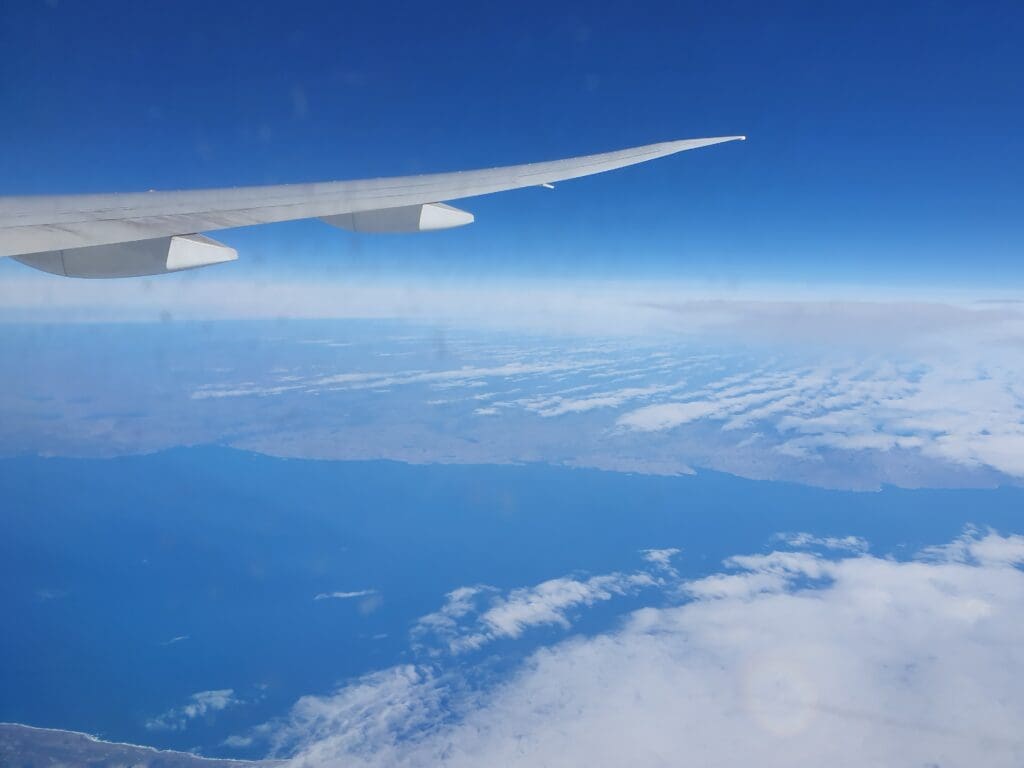
An impressively short total of just three and a half hours after crossing over the Irish coastline, the Boeing completed its Atlantic crossing and made landfall near the small town of Saint Lunaire-Griquet, located in the north of Newfoundland’s Great Northern Peninsula. Much to my delight, almost immediately after crossing the coastline, the clouds parted revealing the rocky shores of Newfoundland’s western coastline and the small settlements dotted about on this. Meanwhile across the Gulf of St Lawrence, the southern shoreline of Labrador and then Québec could be seen as the Boeing cruised Southwest towards Anticosti Island.
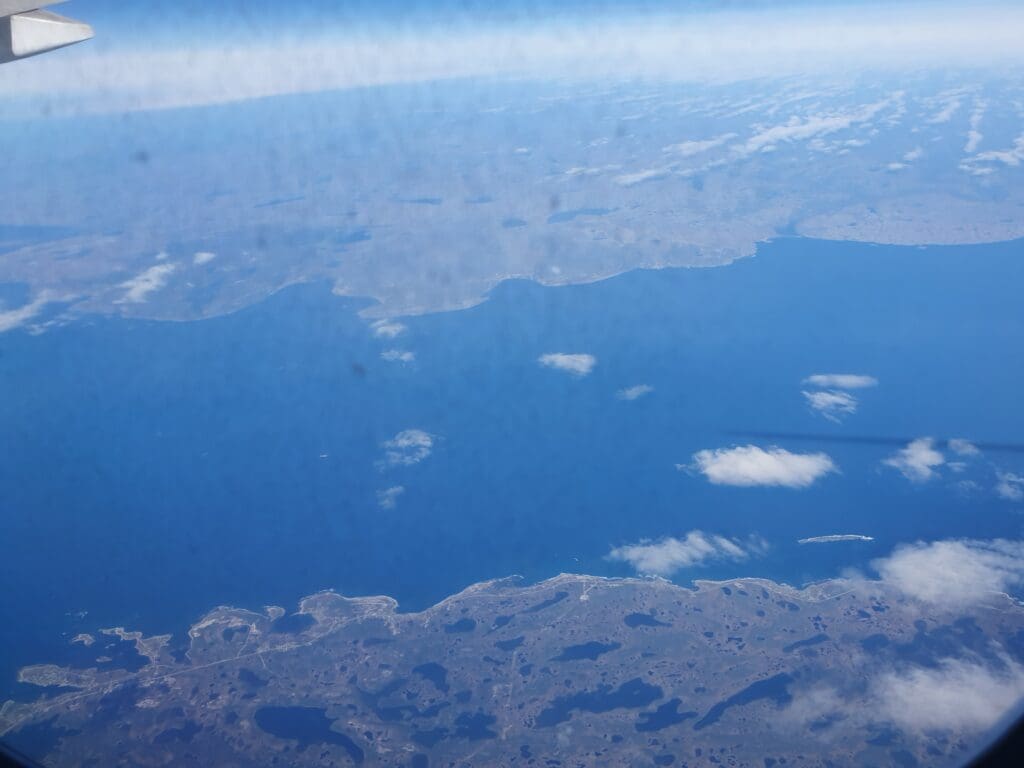
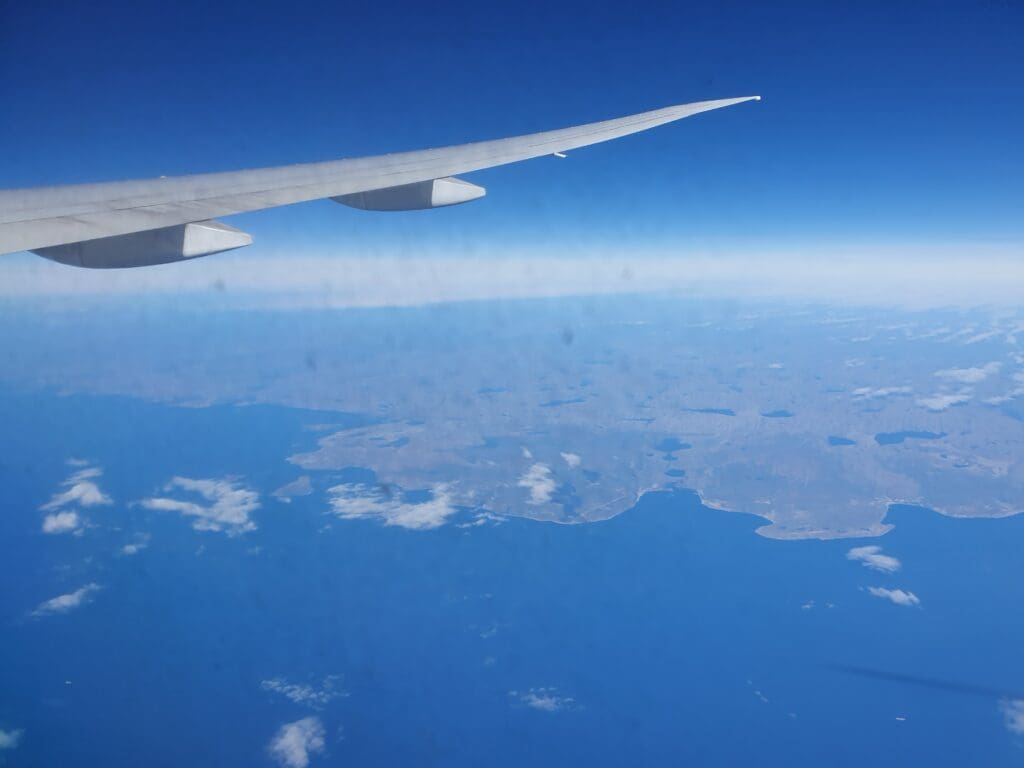
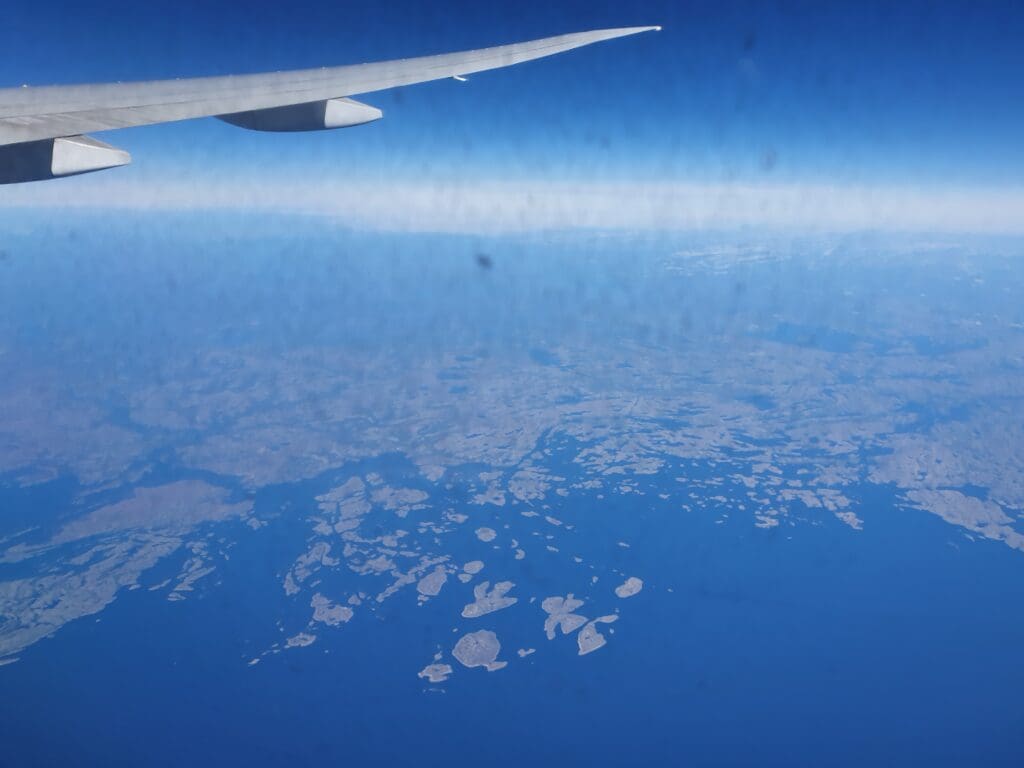
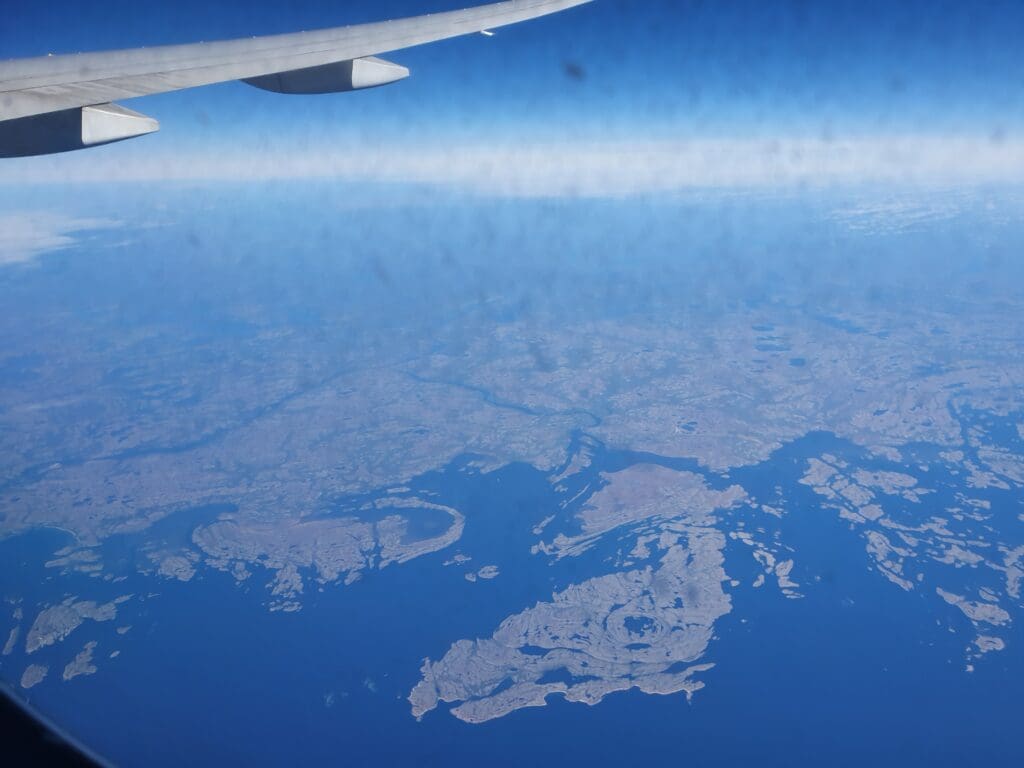
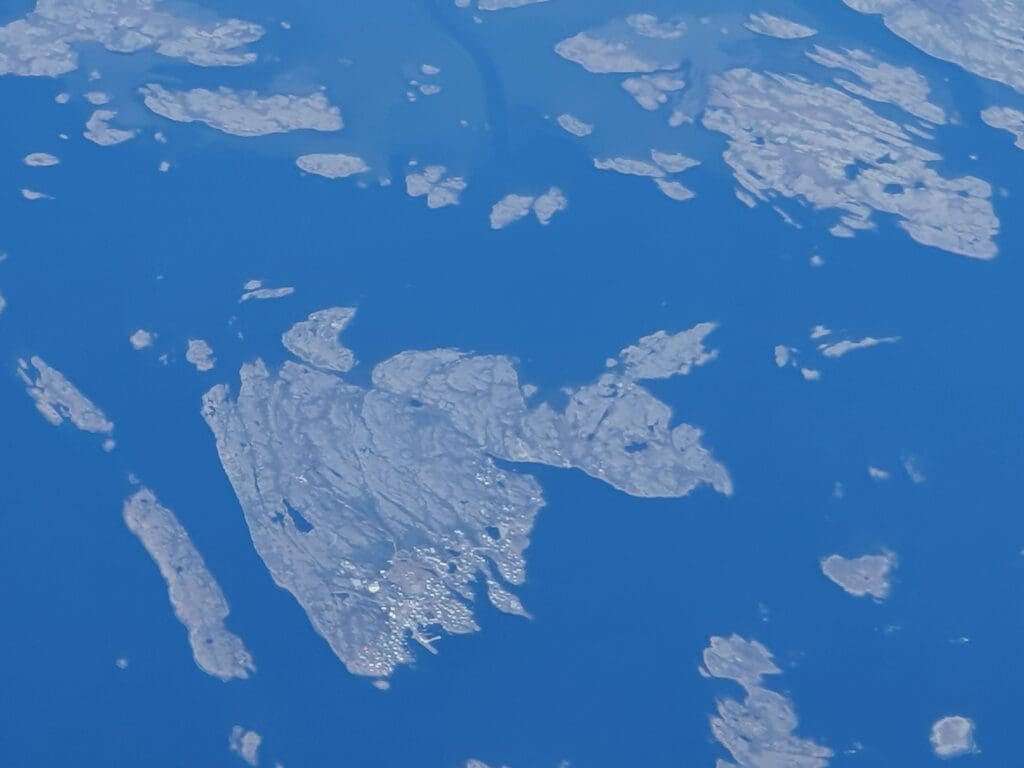
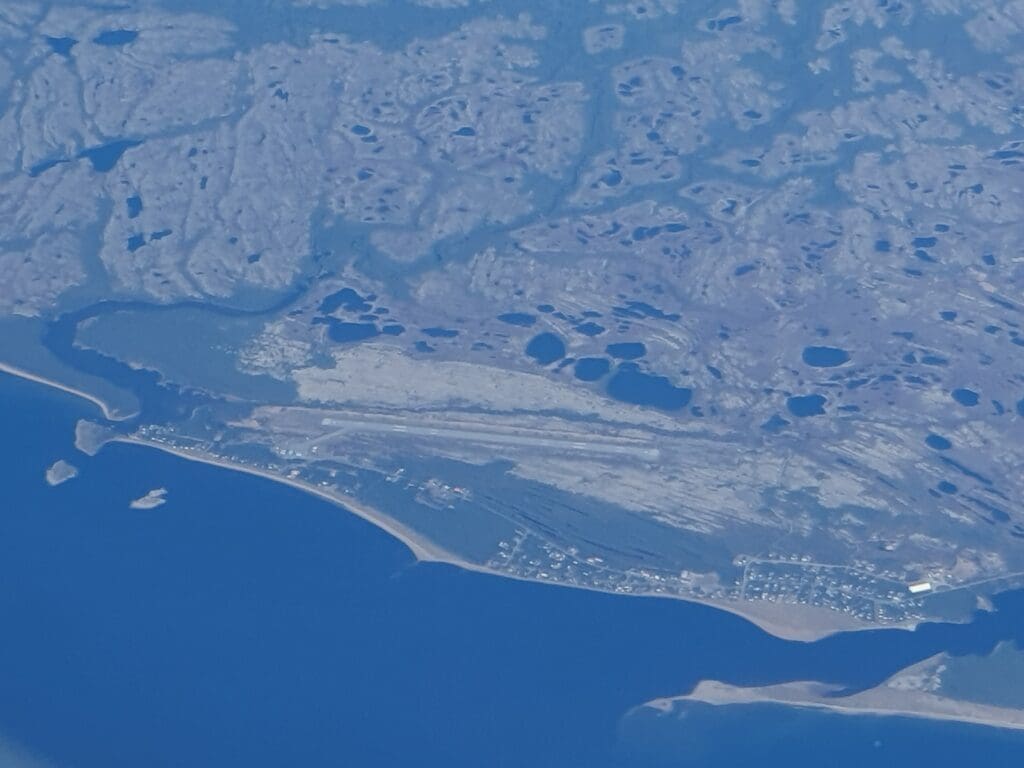
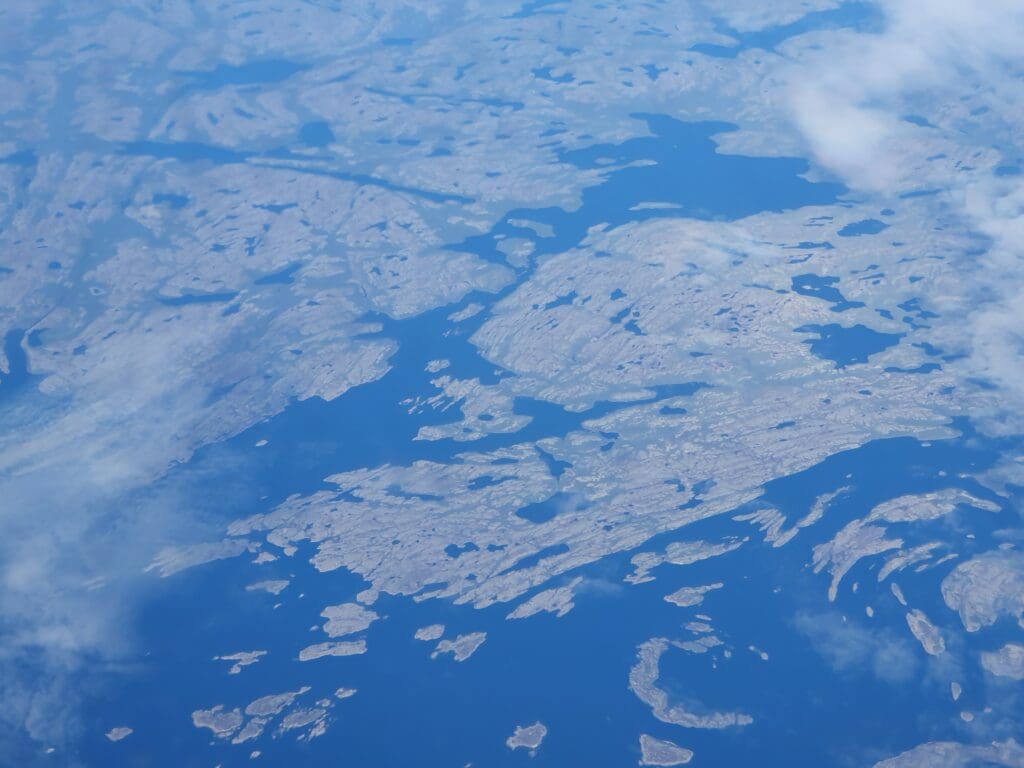
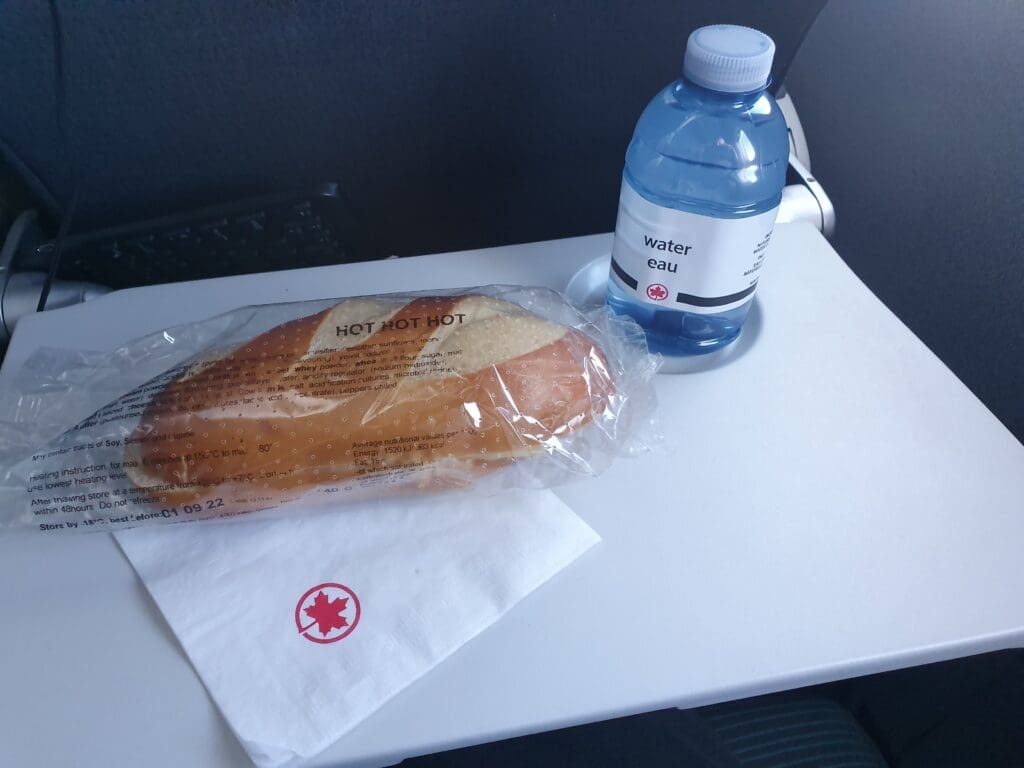
A short time after Canada came into view, an announcement was made regarding the commencement of the pre-arrival afternoon snack service. As I waited for this to commence, I spotted an airport near the Québec coastline which later research revealed to be Chevery Airport. At 1650 Frankfurt time, two crew members reached my row with one handing me a packaged sandwich, a small bottle of water and a serviette without a word, and the other asking ‘drink?’. Opting for an apple juice, without any further dialogue a small carton was then handed to me. Examining the sandwich, this consisted of a soft pretzel roll containing a slice of partially melted cheese, with the sandwich having been warmed up before cooling down before distribution. Whilst the sandwich was hardly the pinnacle of gastronomy, it was acceptable and left me with nothing to complain about.
Upon arriving at Québec’s Anticosti Island, the clouds rolled in below leaving nothing to be seen of the province’s Gaspé Peninsula. From there, the aircraft temporarily crossed into the skies over New Brunswick, before heading into American airspace and passing over a small portion of northern Maine. At 1149 Montréal time, the seatbelt sign was reilluminated several minutes before re-entering Canadian airspace and a short time later, the words ‘30 minutes to landing’ rang out through the cabin. Upon hearing this, going against the seatbelt signs, several passengers stood up and made their way to the bathrooms, however, the crew did little to intervene. At 1157, the aircraft could be felt commencing its descent and thirteen minutes later the sight of long rectangular fields in between the towns of Drummondville and St-Hyacinthe could be seen below as the crew passed through the cabin ensuring all was in place for the aircraft’s arrival.
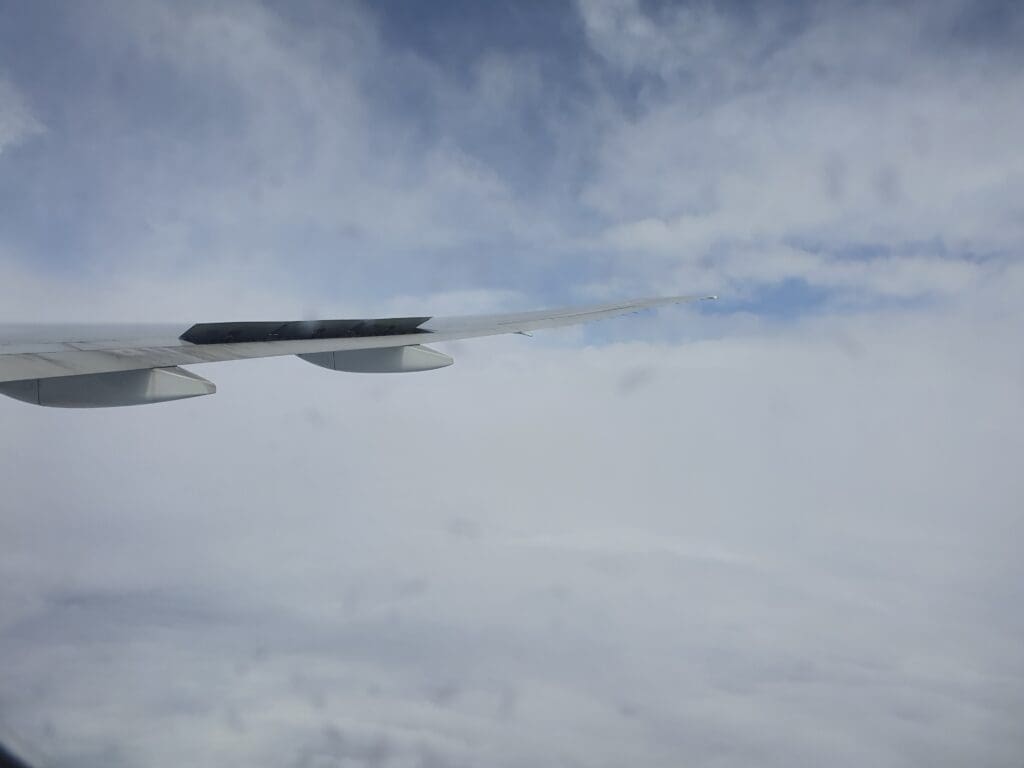
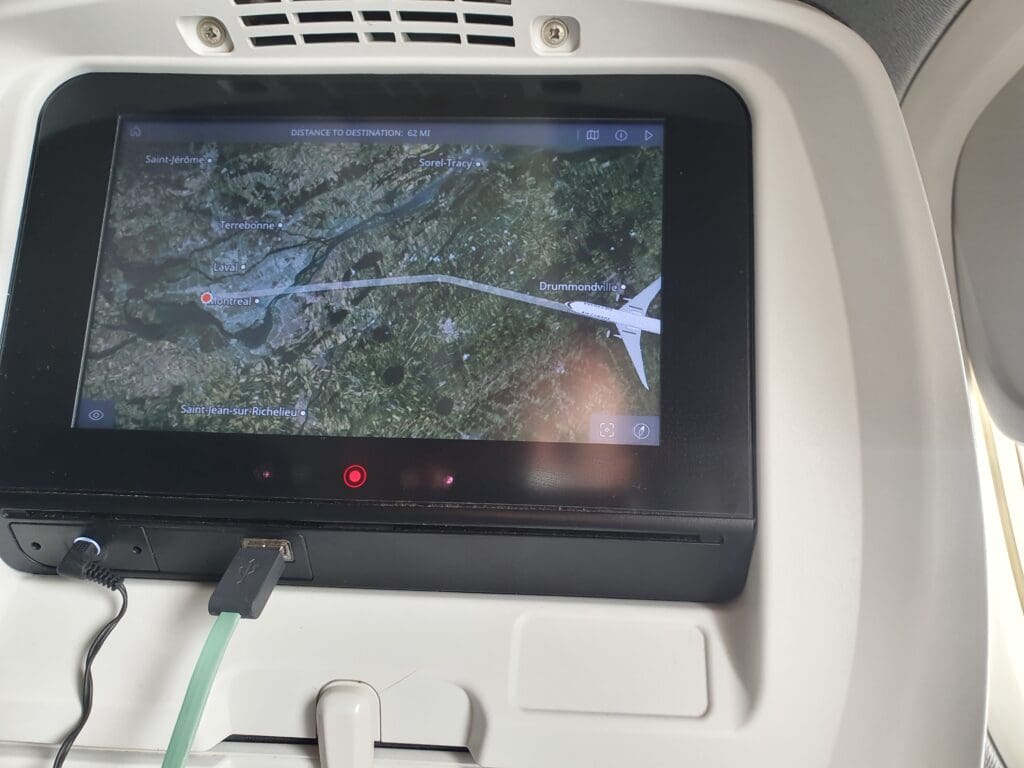
That lunchtime, the aircraft would land on Montréal-Trudeau Airport’s Runway 24L, the approach to which would have offered a scenic aerial tour of the city in good weather conditions, taking us around Montréal Saint-Hubert Airport, over Longueuil and Boucherville before turning back towards Montréal and lining up with the runway. Unfortunately, after leaving Montréal’s semi-rural fringes behind, the clouds stole the view of the ground below once again ensuring that little could be seen of the city until the very final minutes of the flight.
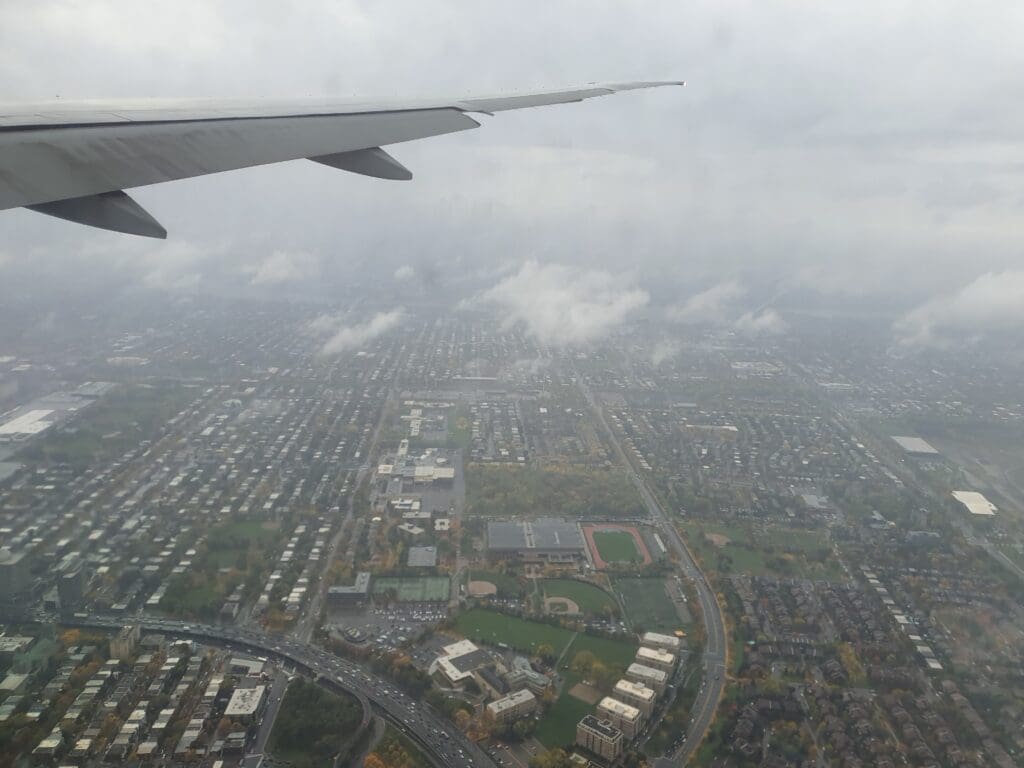
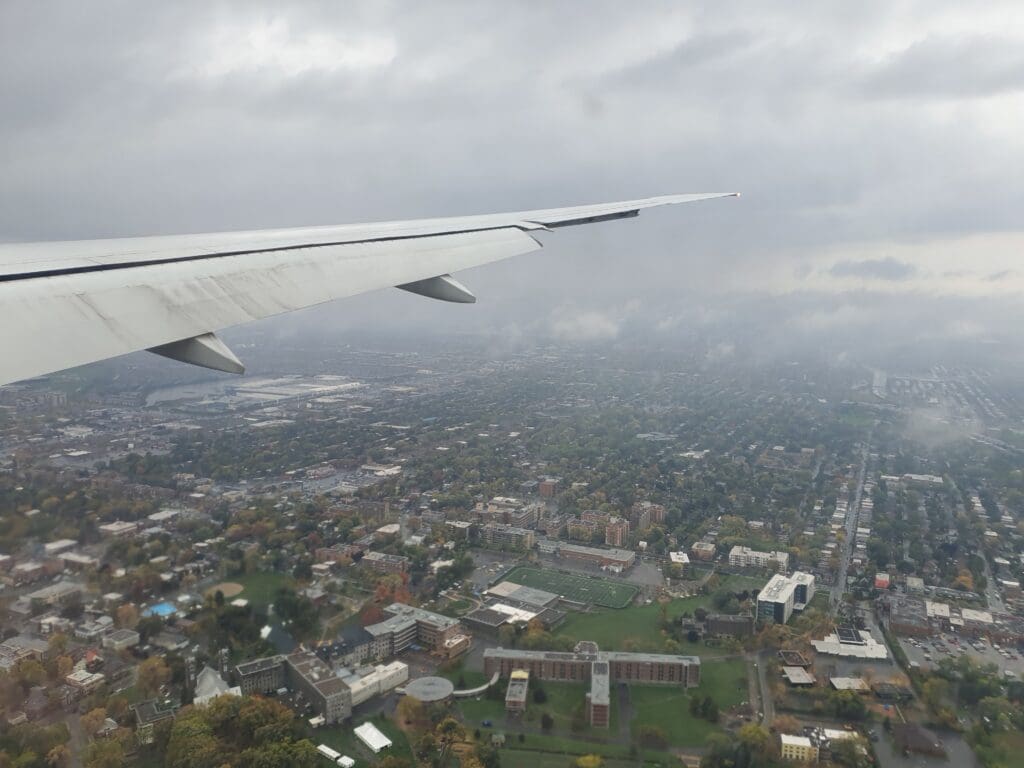
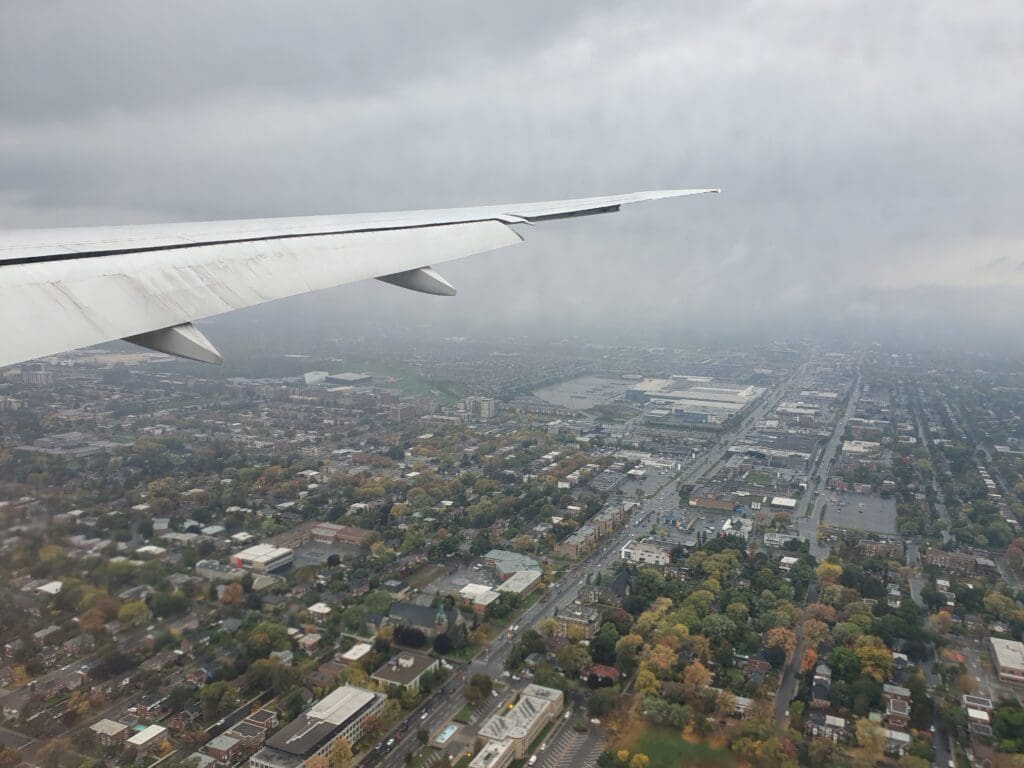
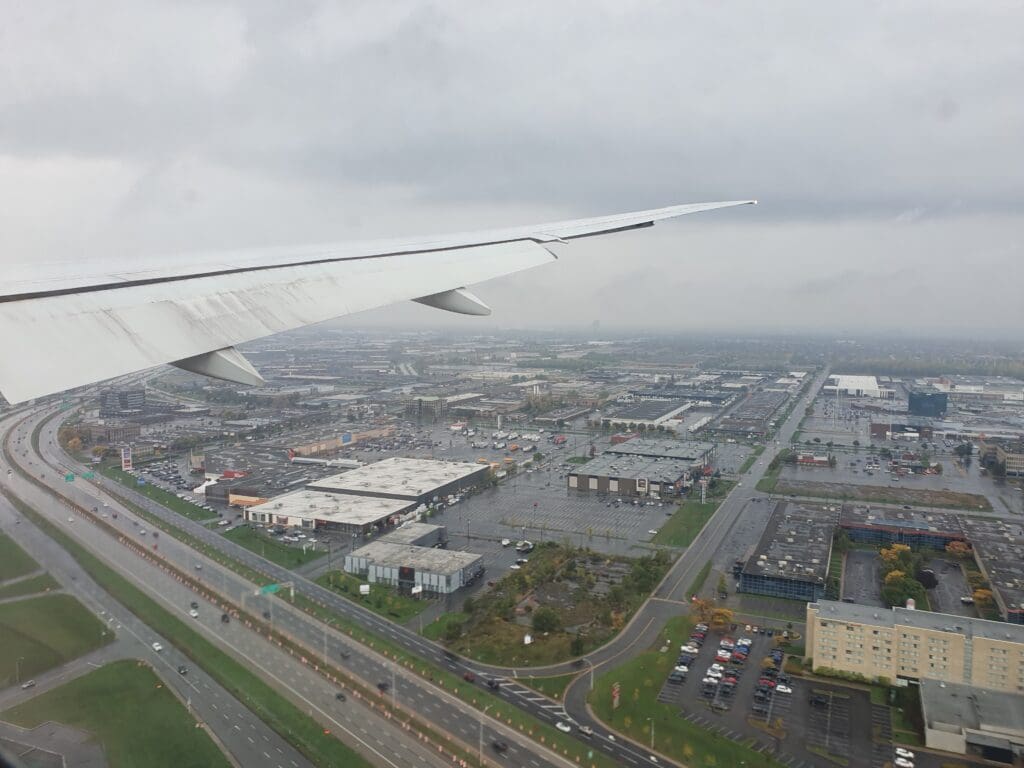
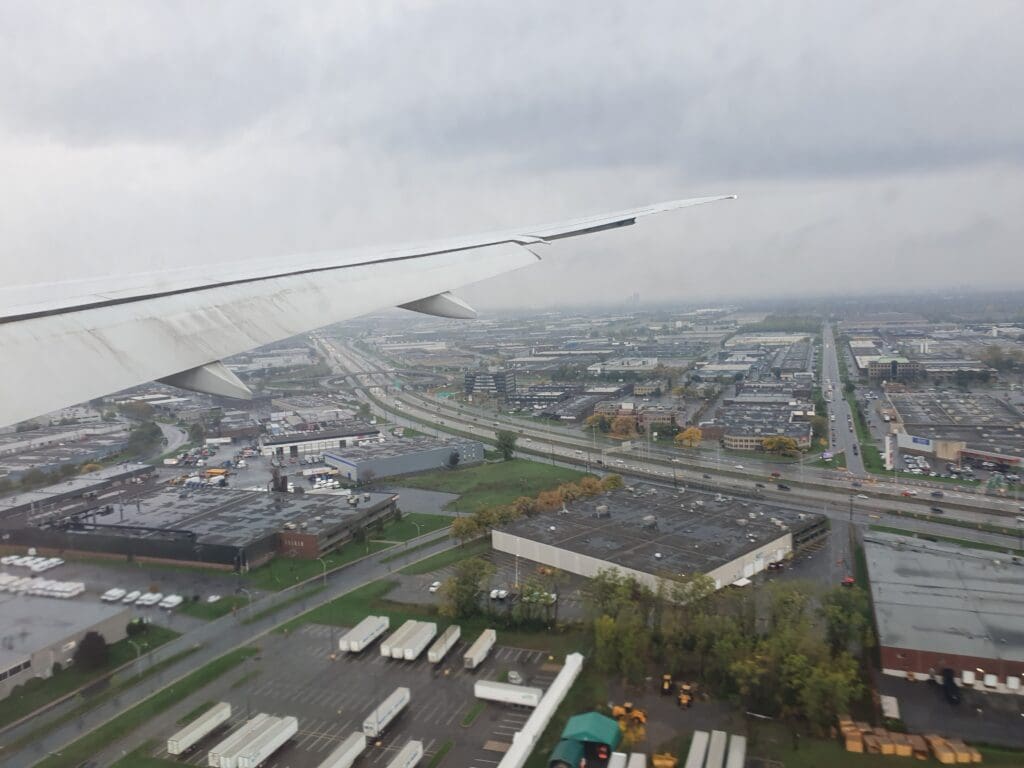
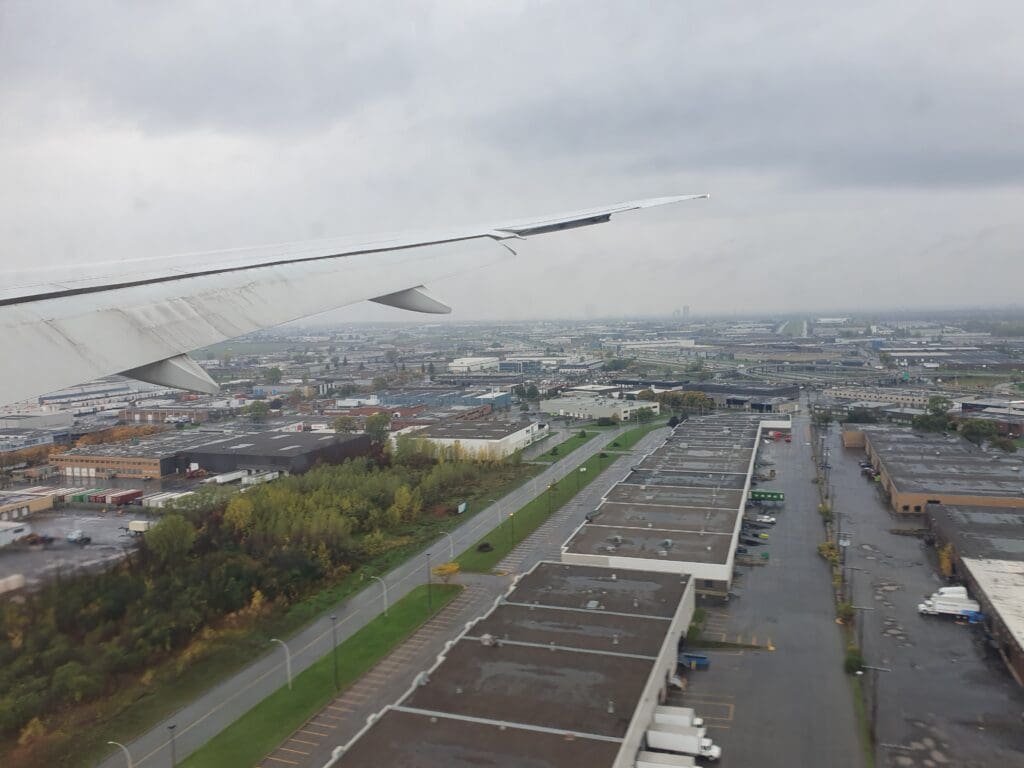
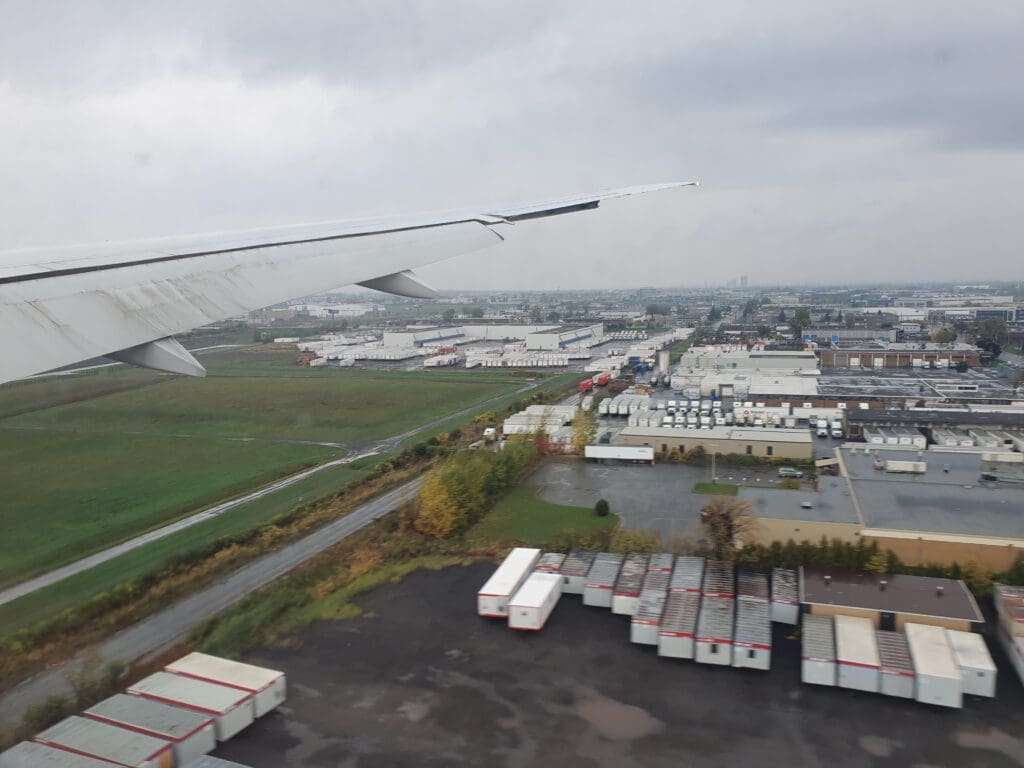
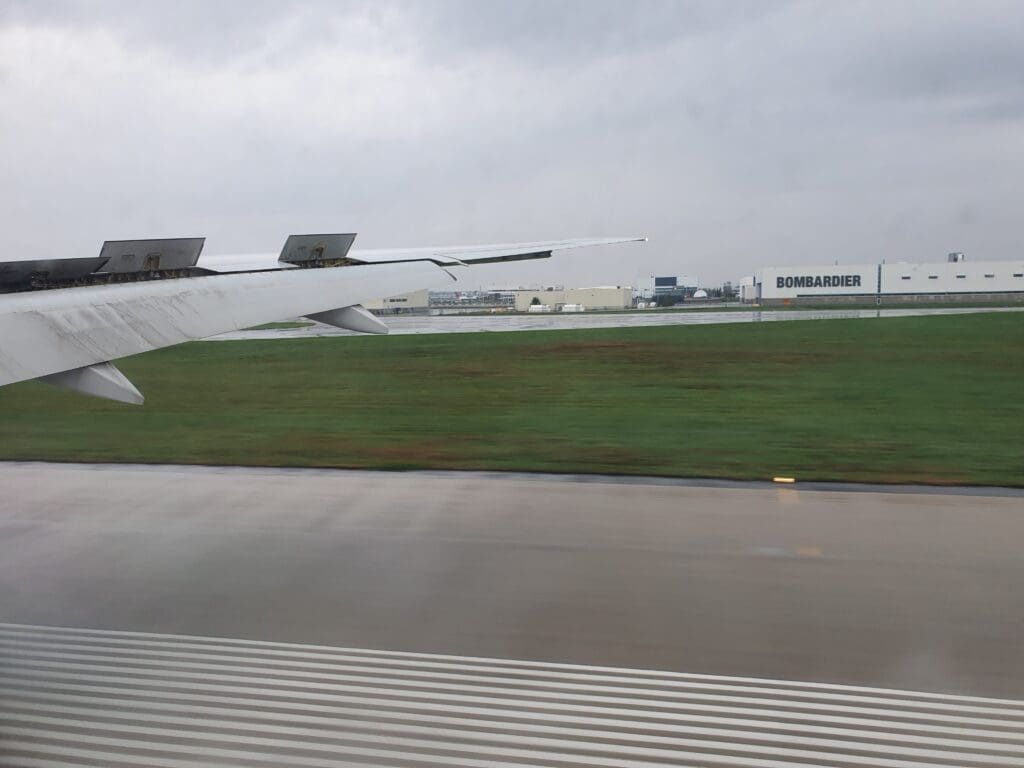
Whilst still in the clouds, the flaps were extended and at 1225, the Boeing finally broke free of these. Sitting on the right hand side of the aircraft, I was offered a good view of Montréal’s residential suburbs to the west of the city centre such as Saint-Leonard, Sault-au-Récollet and Bois-Franc, whilst the Prairies River could be seen through the mist. As the aircraft neared the airport, the residential neighbourhoods were replaced by the usual mixture of factories and warehouses that often surround airports across the world. At 1229, the jet whizzed over the airport’s perimeter fence and the locally based Bombardier factory appeared followed by Air Canada’s hangars as the Boeing made a firm touchdown on Runway 24L.
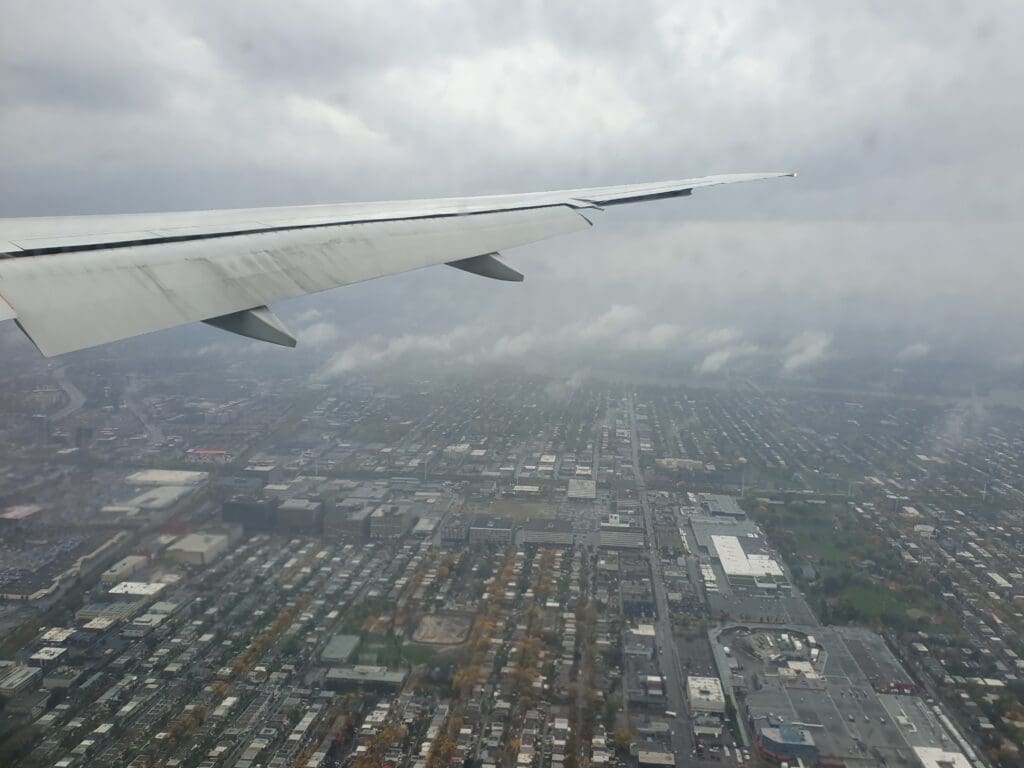
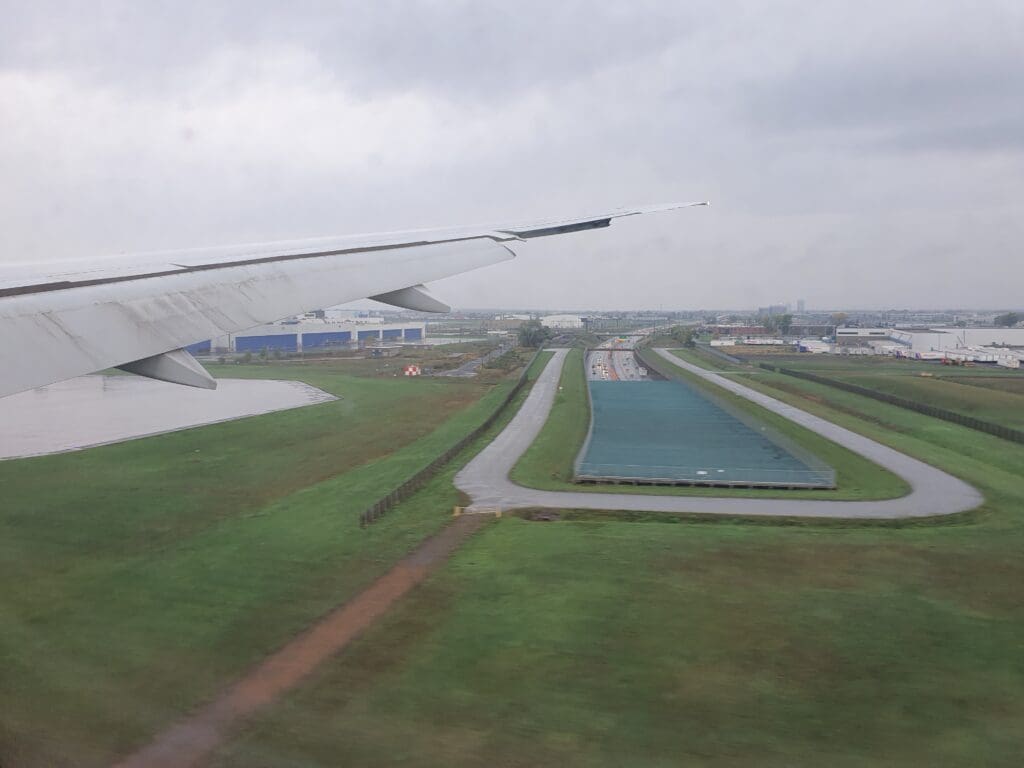
Once on the ground, the spoilers were extended and reverse thrust was applied as the jet gently decelerated before turning off the runway near its end. As the aircraft left the runway, the Service Director welcomed passengers to Montréal in French and English, and made the usual warning regarding keeping seatbelts fastened until the seatbelt signs were switched off. Once off the runway, the taxi over to the terminal was relatively short and at 1235, the Boeing slowly edged into Gate 52, pulling in between two other Air Canada heavies – an Airbus A330 and a Boeing 787. Whilst the taxi did not offer too much in terms of views, as we pulled into the gate, one of Montréal’s star movements, an Air Inuit Boeing 737-200 could be seen pushing back at the start of its afternoon journey north to Puvirnituq.
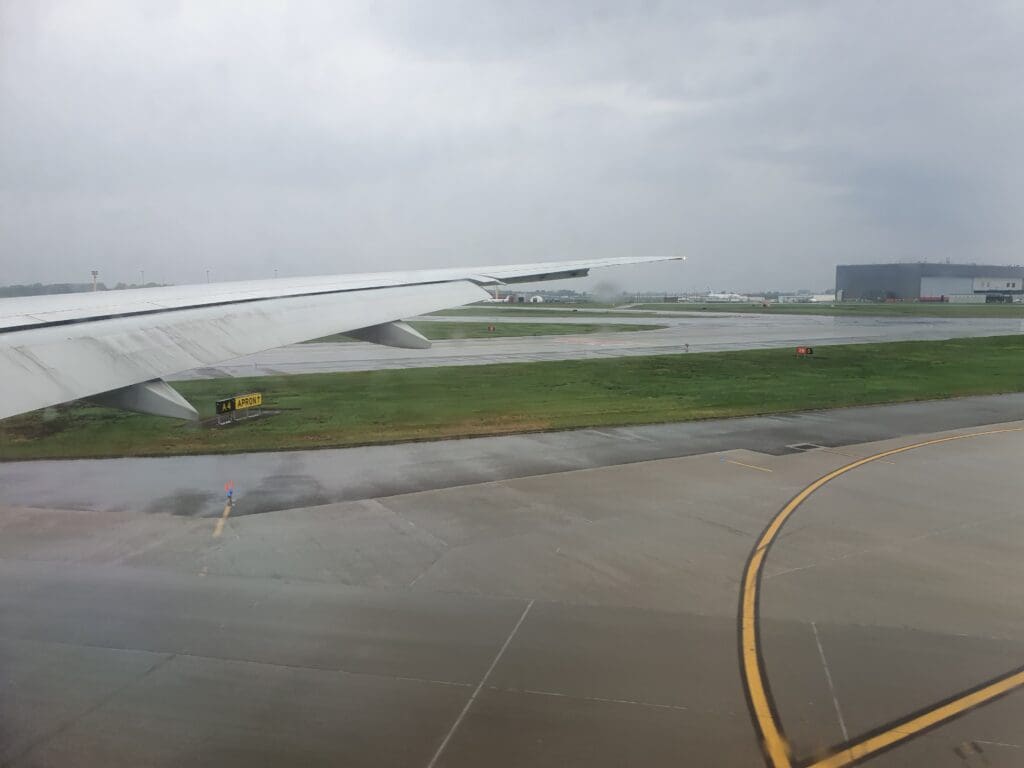
After the Boeing had come to a full stop and the engines had spooled down, as is common at the end of long haul slogs, it seemed like most in the cabin jumped up in a desperate rush to escape the aircraft. Fortunately for those in a hurry, disembarkation soon commenced via both the L1 and L2 doors. Seeing as I was in no particular rush, I exited the aircraft at a leisurely pace, slowly shuffling through the cabin before stepping onto the jet bridge around ten minutes after the aircraft had arrived at the gate. Given all the Covid formalities, and having read some rather negative reviews of Montreal’s immigration officials, I was not entirely confident that officially entering Canada would be a quick and queue-less experience. Once up in the terminal and following a quick stop at a rather messy block of toilets, I followed the crowds and soon ended up at the ArriveCAN Covid check. Having correctly filled out all of my vaccination information on the app prior to my arrival, this was a simple affair and consisted of me showing my ArriveCAN receipt to an immigration official. From there, I headed downstairs into the large immigration hall and joined a short queue for the automated booths. Upon reaching one of these, I scanned my passport, had my photo taken and entered some information about my trip to Canada and my possessions, before this spewed out a receipt with my mugshot on it. With this in hand, I then joined another quick-moving queue that led to an inquisitive immigration official who asked me various questions about my trip, as well as my activities back in the UK.
Thinking that I had been pointed in the direction of another queue that led to an immigration waiting room with a selection of booths. I waited a further ten minutes before reaching the immigration officer who was acting as the ‘bouncer’ for this room, checking passports and other documents before allowing passengers to enter. Upon handing over my passport and immigration machine receipt, this officer told me rather abruptly ‘you have no business here, go to the baggage claim’. On a side note, this immigration officer seemed to be a little familiar and after racking my brains for a few minutes as I trundled through arrivals, I realised that I had seen this particular officer on an episode of Border Security: Canada’s Front Line. From the immigration hall, I made my way down a long corridor, eventually handing in my immigration receipt to another officer before passing through customs and entering the very busy landside arrivals area. Even though I had unnecessarily made a slight diversion, I made it from aircraft to landside in around thirty minutes which was surprisingly good going – beating my experience in Paris CDG the previous evening by quite some way!
Summary
Air Canada provided me with one of the cheapest ways of crossing the Atlantic, delivering me to Montréal with minimal cost and almost on time. The aircraft itself was clean and comfortable enough for a long haul service and displayed little signs of wear and tear. In terms of quantity and quality, the food provided was sufficient enough for a short Transatlantic hop yet at the same time failed to be particularly memorable. Meanwhile, my experience of the crew onboard the flight that afternoon was largely mediocre. Whilst I did not have a completely negative experience in my interactions with the crew, they did seem to be rather cold, distant and not interacting with the passengers. All-in-all, whilst I wouldn’t hesitate to jump at a cheap Air Canada transatlantic fare again, I found there to be nothing about my flight that made it to be a particularly noteworthy or stand-out experience.
Are you AI?
No – I don’t think AI has mastered the ability to write something quite this dry!