Thundering Over Ontario to Thunder Bay: An Air Canada Express CRJ-900 Review
This is the third instalment of my series of trip reports detailing my journey from Quebéc City to Thunder Bay. You can read about my Dash 8 Q400 flight from Quebéc City to Montréal here, and my Airbus A220 flight from Montréal to Toronto here.
The Journey
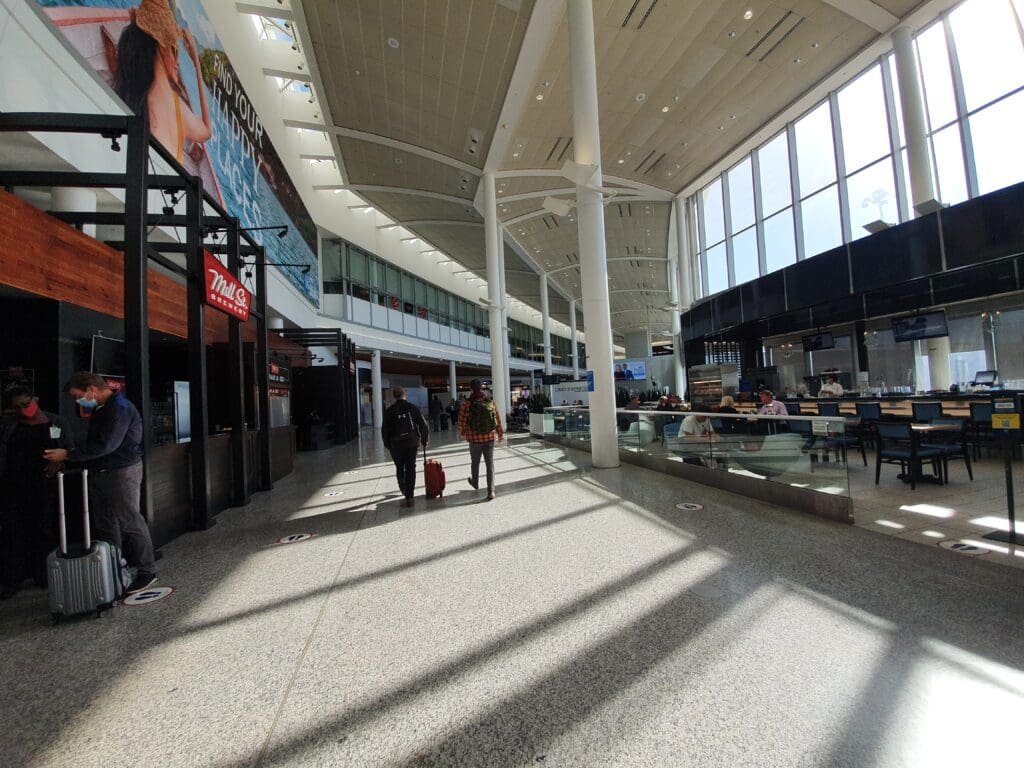
Having arrived in Terminal 1 at 1420, I was left with a fair amount of time before the scheduled boarding time for my next leg to Thunder Bay. With this not scheduled to commence until 1555, I decided to have a wander around the domestic portion of the terminal, exploring the nooks and crannies of this fairly modern, bright and spacious terminal building. Serving as Air Canada’s busiest hub and with a near constant stream of departures to destinations both across Canada and indeed the world, this is a good place to watch aircraft with large windows throughout the terminal offering views onto the stands below. That afternoon, I was able to see every single aircraft type in Air Canada and Air Canada Express’ fleet, from the small Dash 8 Q300 right up to the Boeing 777-300ER. Other than these, aircraft from across the world could also be spotted taxiing past the terminal, making their way to and from the runways. As you would expect from a major hub, inside the terminal, plenty of (overpriced) shops, cafés and eateries could be found, many of which appeared to be fairly quiet.
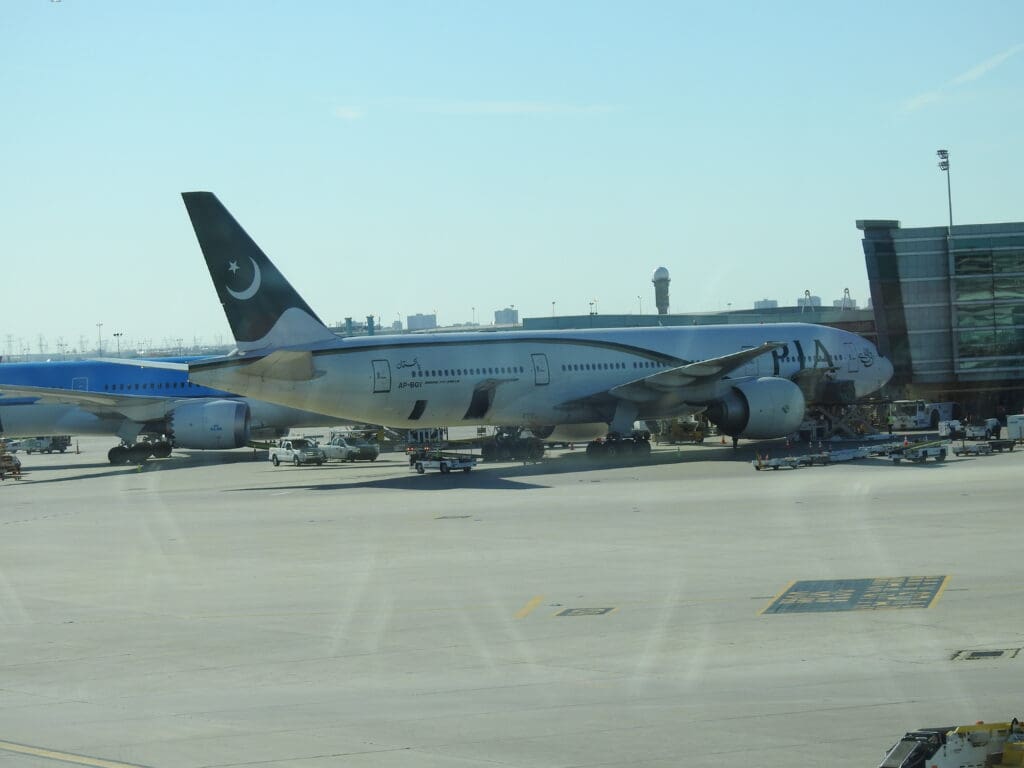
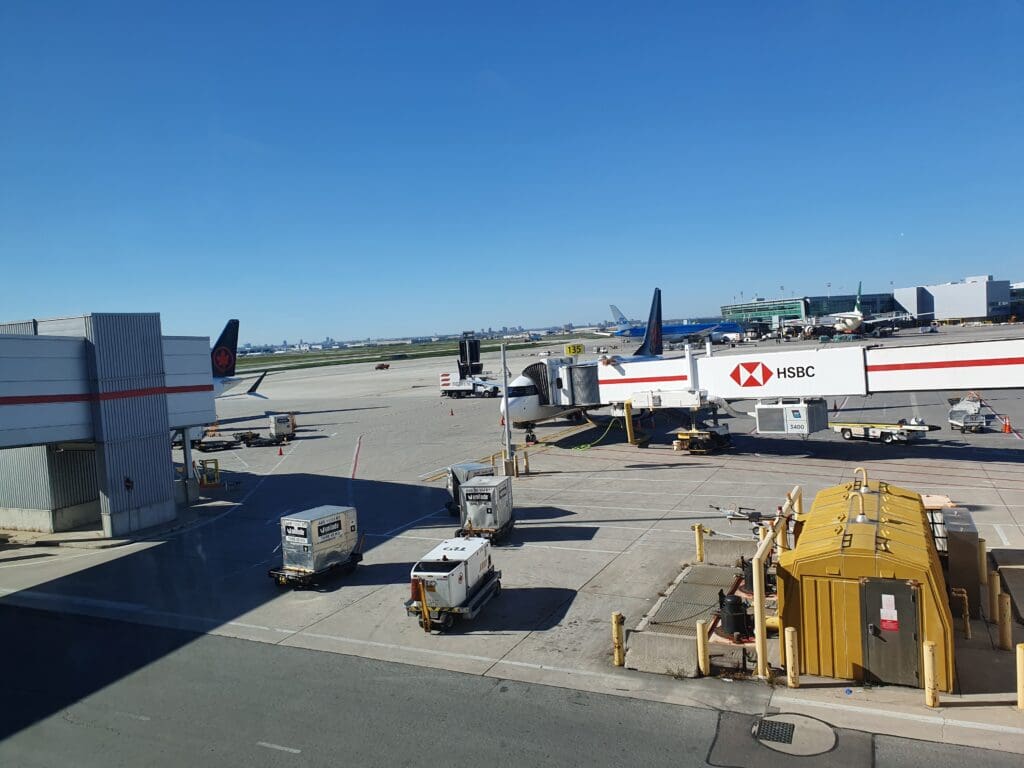
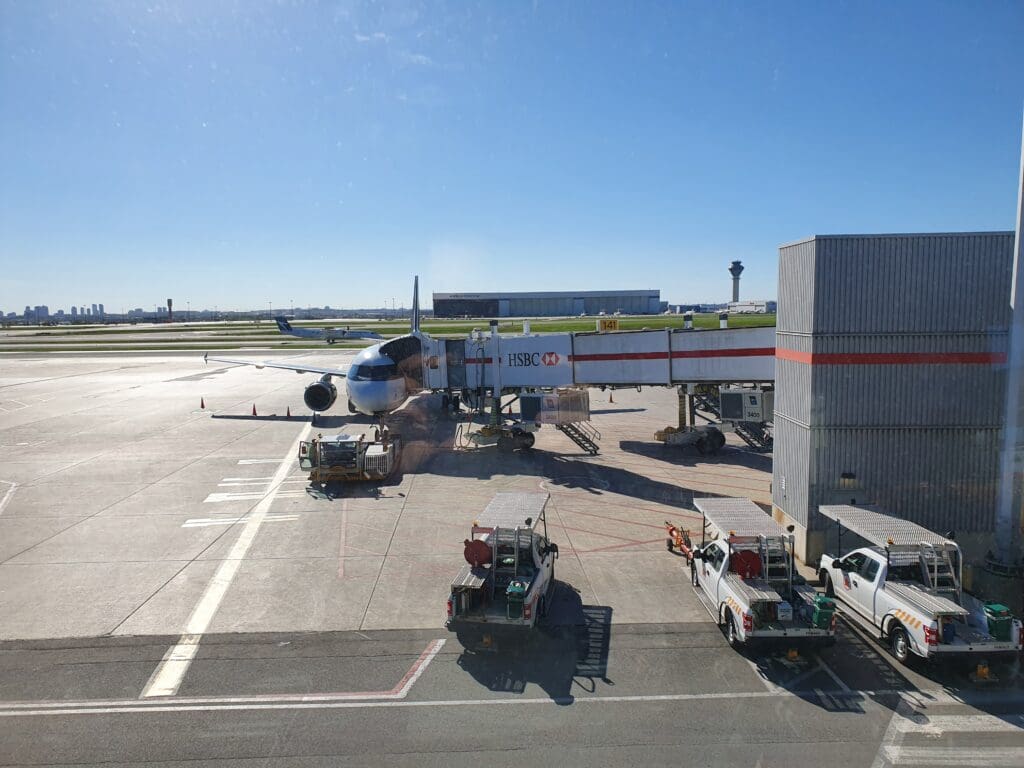
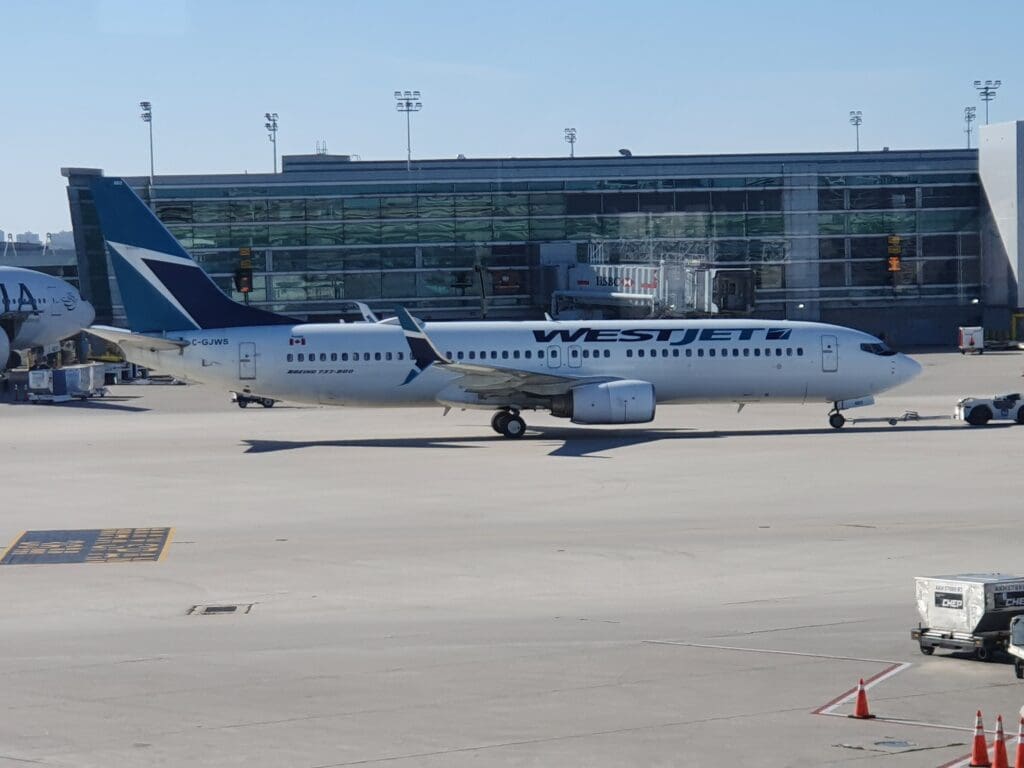
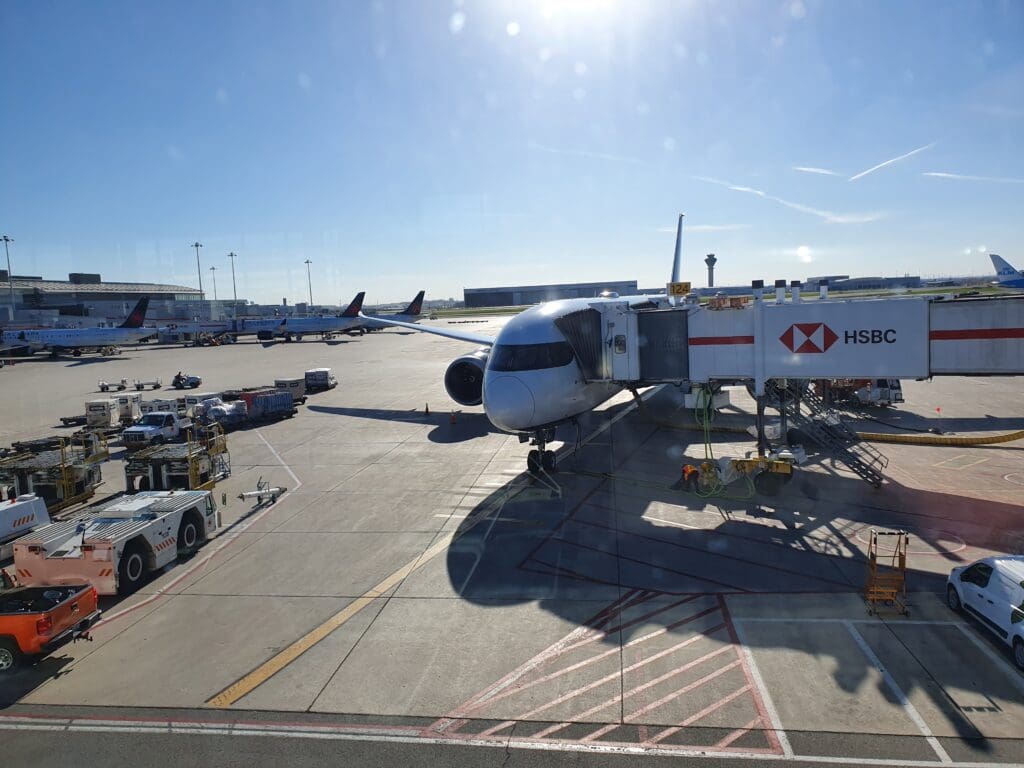
As most now expect, complimentary wifi is offered throughout the terminal which I found to work without any issues for the duration of my stay. However, the terminal is not without a few problems – I found several areas (including the toilets) in a rather filthy condition, with rubbish strewn about some of the waiting areas. Moreover whilst plug sockets and USB-A ports appeared to be plentiful, it took me quite a while to find a plug socket that actually worked.
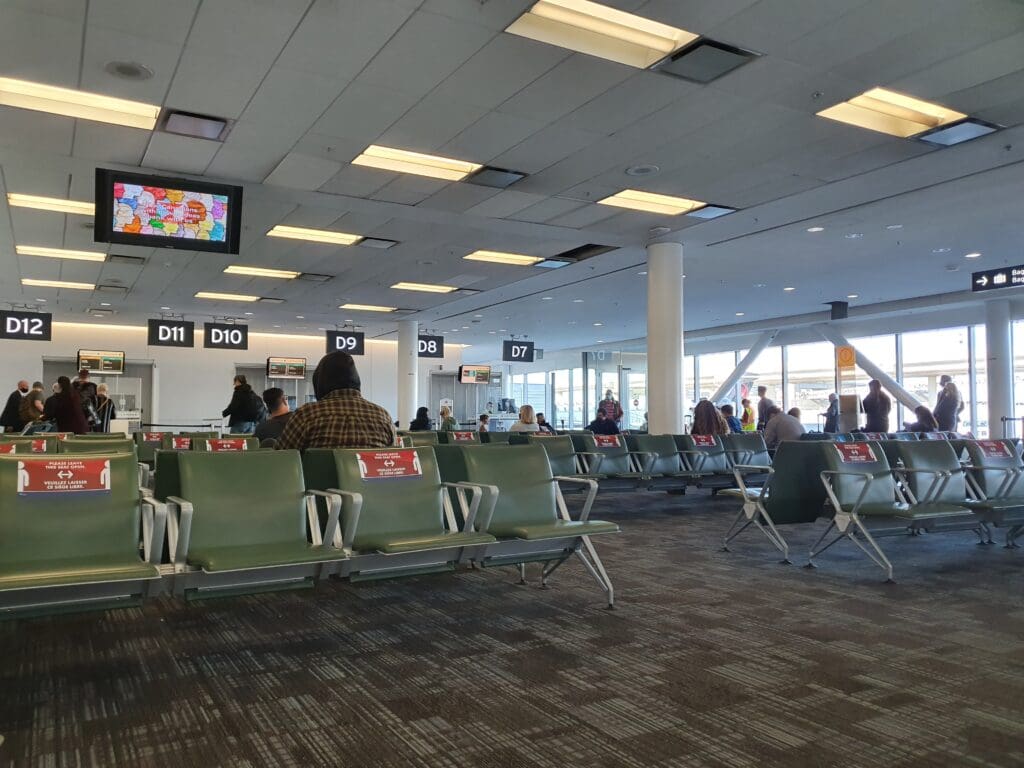
After exploring the terminal, I decided to make my way to the gate for my flight to Thunder Bay. That afternoon, my flight would depart from Gate D7 – one of the ground floor jetway-less gates reserved for Air Canada Express flights. Heading down the escalators, I reached a fairly small and busy holding area where passengers bound for both Sault Ste. Marie and Thunder Bay could be seen waiting for their flights. However, boarding was soon called for the flight to the former, with passengers soon making their way over to the waiting Dash 8 Q300 that would operate this flight, at which point this area emptied.
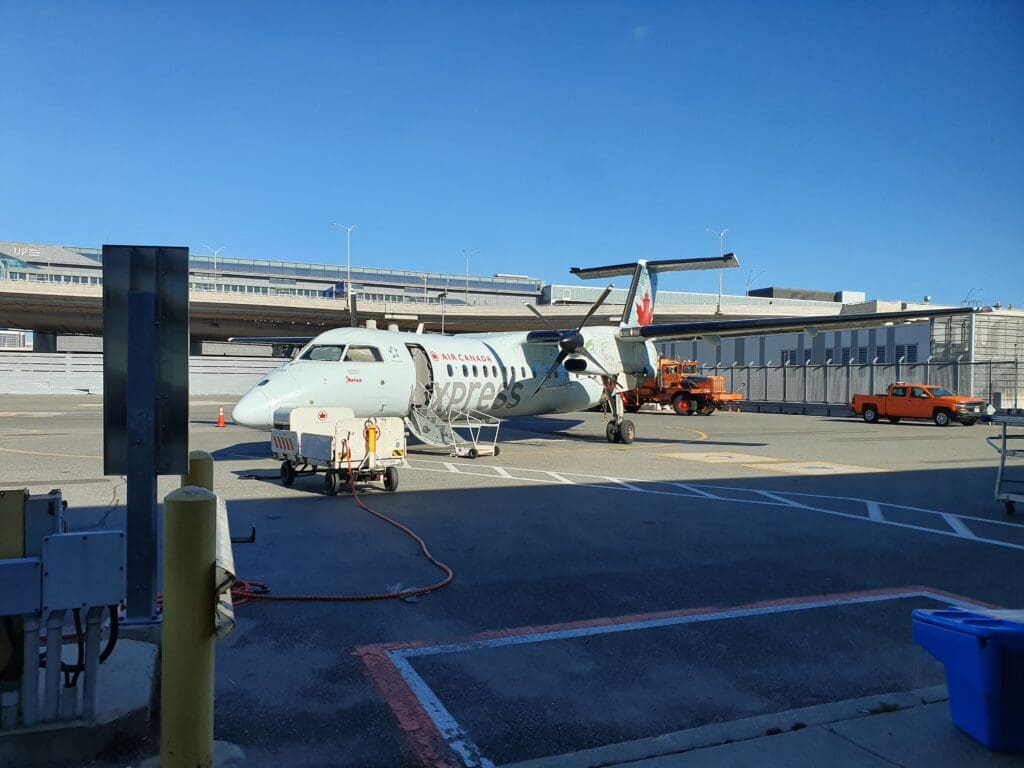
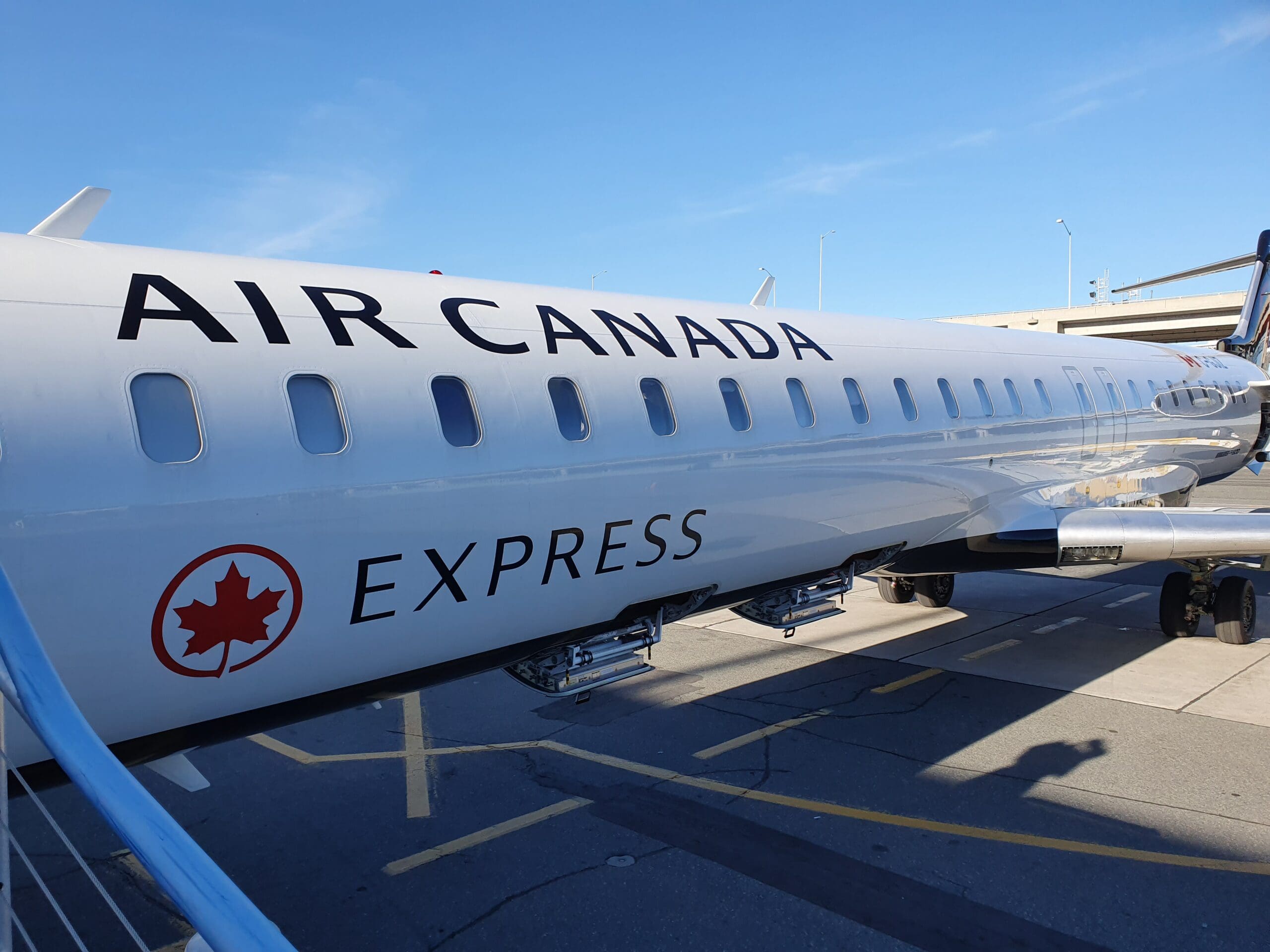
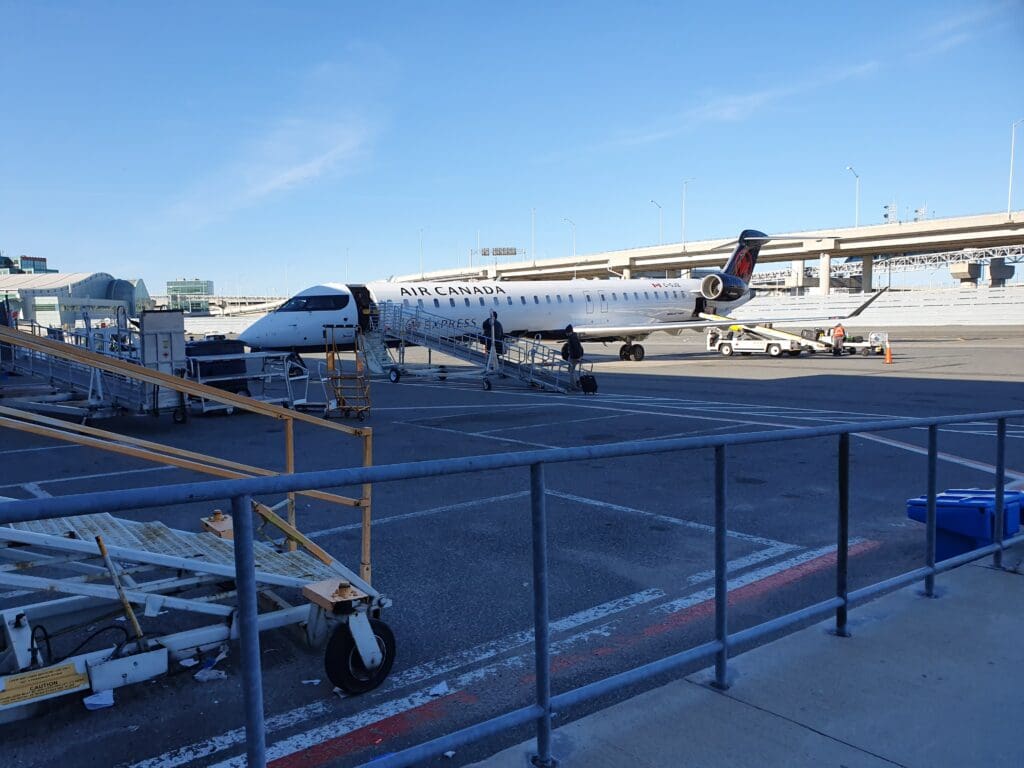
Indicating the imminent commencement of boarding, at 1555 an announcement was made reminding passengers that masks must be worn at all times other than when requested to remove these during the identity check. Looking outside, Bombardier CRJ-900LR C-GJIZ could be seen waiting at Stand 107 with a ramp being manoeuvred up to the regional jet’s main cabin door by a small team of ground crew. Assembled at Bombardier’s Montréal Mirabel plant in 2020, this aircraft first took to the skies in late May that year. Bearing the serial number 15487, unless Mitsubishi opts to resume production of the type, this particular aircraft is the thirteenth final CRJ to have been produced. In late June 2020, this aircraft was shuttled to Toronto Pearson where it entered service with Jazz Aviation, operating services on behalf of Air Canada Express. Since then, the aircraft has been deployed across Air Canada Express’ North American route network, flying both short hops as well as longer slogs, occasionally over four hours! In the week before my flight, the aircraft had travelled across Canada multiple times and made a trip down to the US, visiting Atlanta, Fredericton, Regina, Saskatoon, Thunder Bay, Toronto Pearson and Vancouver, covering at least 23,900 miles throughout 27 sectors.
At 1600, as had been the case on all Air Canada flights I had taken during my trip to Canada, a pre-recorded announcement rang out advising passengers that boarding would commence shortly and be undertaken as per the zones printed on passengers’ boarding passes. As soon as this came to an end, the gate agent then invited those in Zone 1 and Zone 2 to make their way forward for boarding. No more than three minutes later, those in Zone 3 were invited to board and I soon joined a short queue before being greeted by the amiable gate agent. After scanning my boarding pass and showing my passport, I made my way outside into the pleasantly warm 20-degree air – the last of the warm weather before Canada plunged into winter.
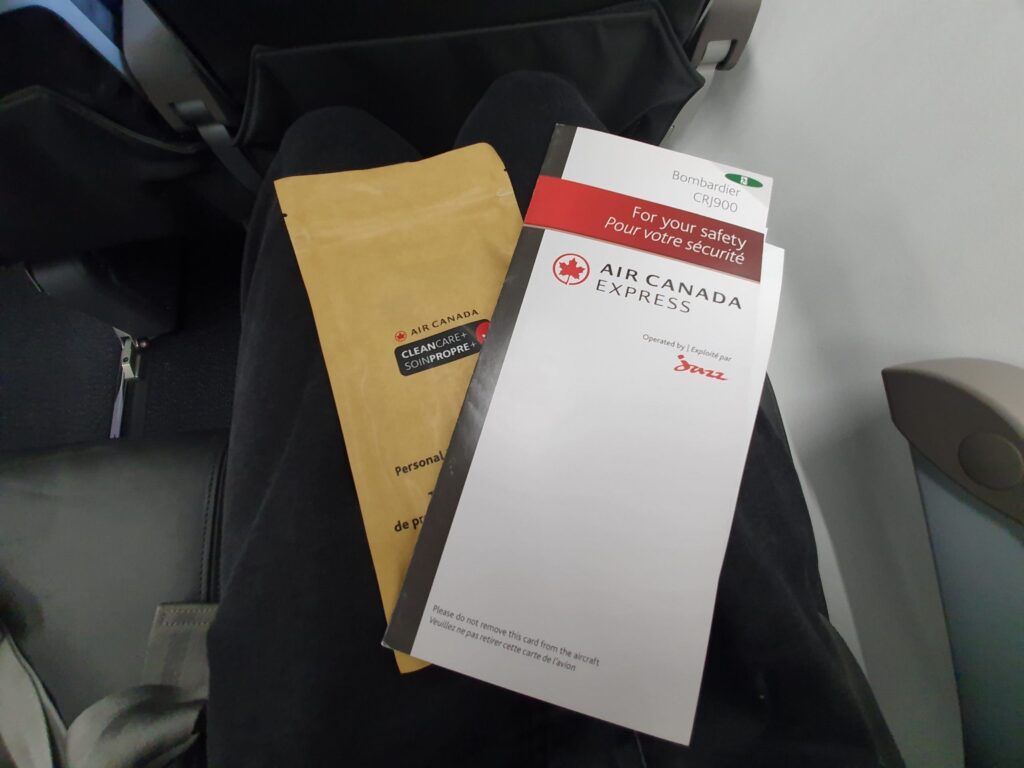
Following a very short walk, I arrived at the ramp and made my way up the gentle incline towards the main cabin door of the waiting CRJ-900. After ducking down slightly to avoid banging my head, I arrived in the surprisingly spacious forward galley area of the jet where I received a somewhat disinterested welcome from one of the two flight attendants working the flight that afternoon. A third crew member was also present in the cabin, however, they appeared to be assessing the Cabin Director and not assisting with other duties. After being handed one of Air Canada’s Cleancare+ kits, I made my way into the passenger cabin.
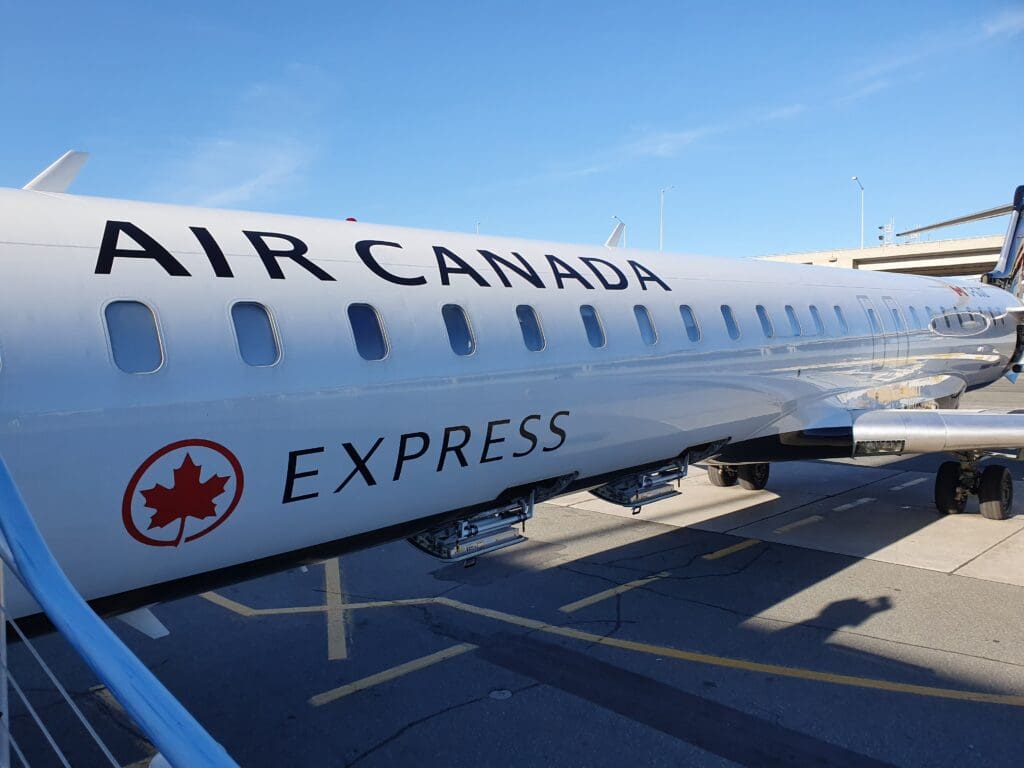
Unlike their Bombardier CRJ-200 and Dash 8 fleet, often operating relatively long flights, Jazz Aviation’s Bombardier CRJ-900s and Embraer 175s are complete with a small Business cabin at the front of each aircraft. Onboard their CRJ-900 fleet, this consists of four rows of comfortable-looking recliner seats arranged in a 1-2 configuration, each of which was covered in a dark (faux?) grey leather covering. After a quick trip through the small cabin at the front of the aircraft, I then entered the Economy cabin, home to 64 seats which were also covered in dark grey (faux?) leather covering, arranged in the usual 2-2 configuration. As I understand it, Jazz Aviation’s older Bombardier CRJ-900s feature personal television screens, however, being a relatively recent addition, no such luxury could be had onboard this regional jet. Instead, nothing could be seen on the seat backs other than the usual tray table and pocket, the latter containing a safety card and a sick bag.
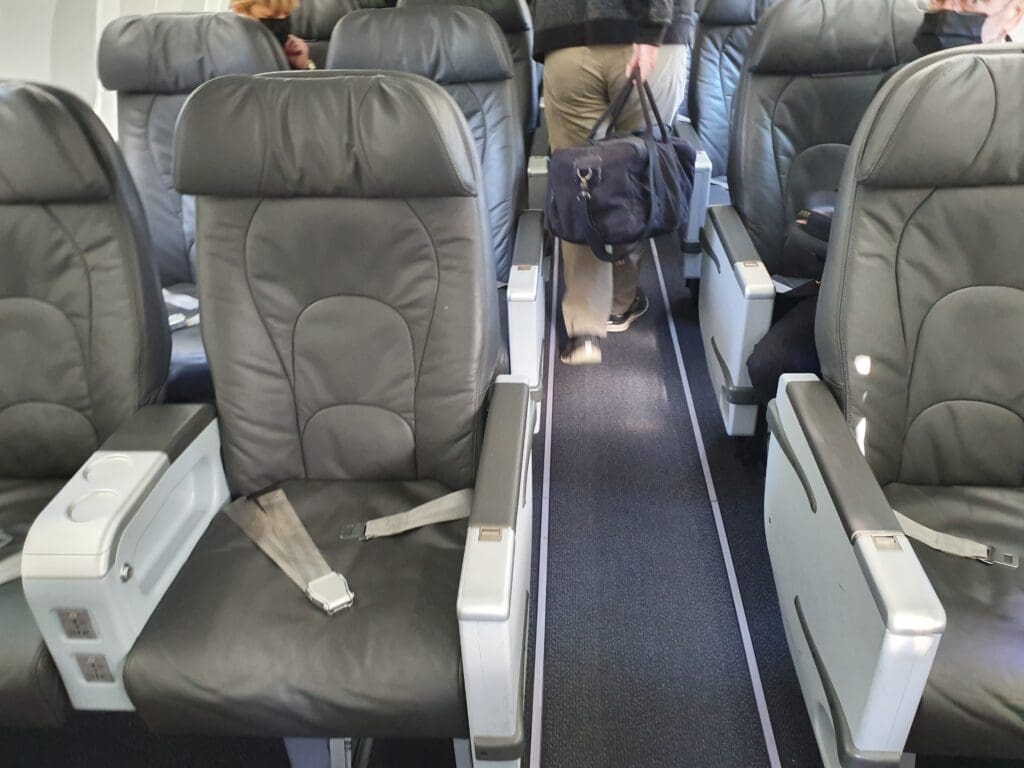
As I neared my row near the rear of the cabin, I said hello to the second flight attendant who was standing just in front of the door to the lavatory at the rear of the aircraft. However, I received absolutely nothing from them in response, leaving me with not the most fantastic of first impressions. After I had successfully shoved my bag into the overhead lockers, I settled down and strapped myself in for the flight ahead. In terms of comfort, the seat left me with few complaints, being fairly well-padded and offering a decent amount of legroom for a regional jet. Importantly, yet ultimately unsurprisingly given the aircraft’s age, the cabin appeared to be in tip-top condition, with few marks and scratches visible in the area around my seat.
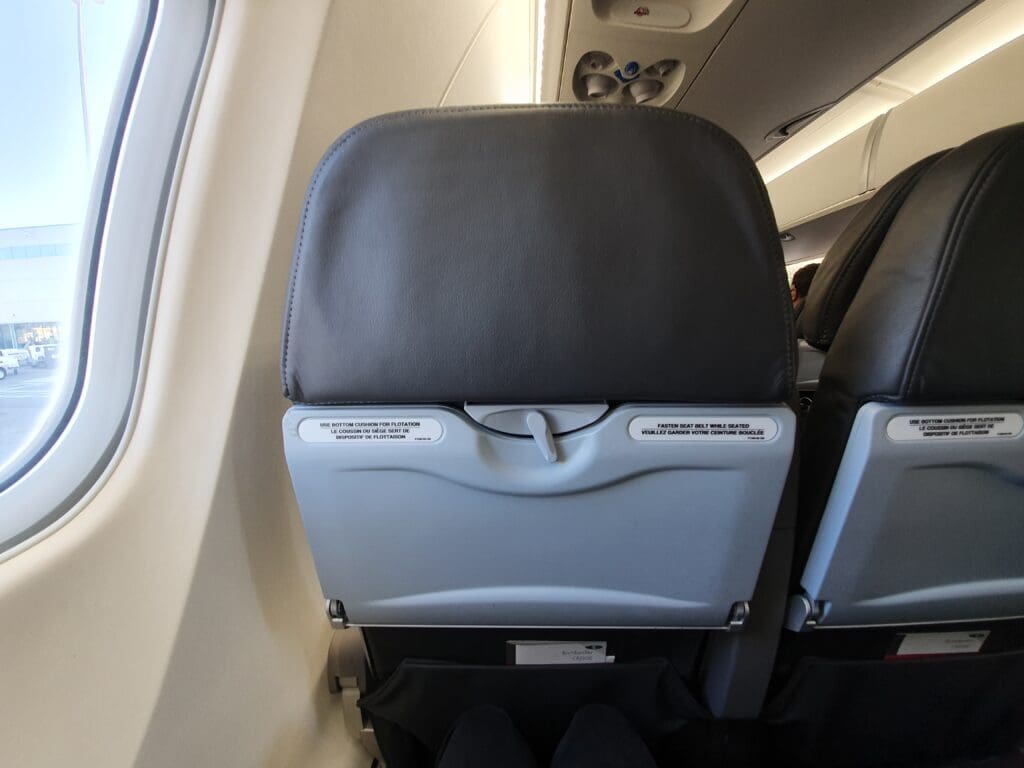
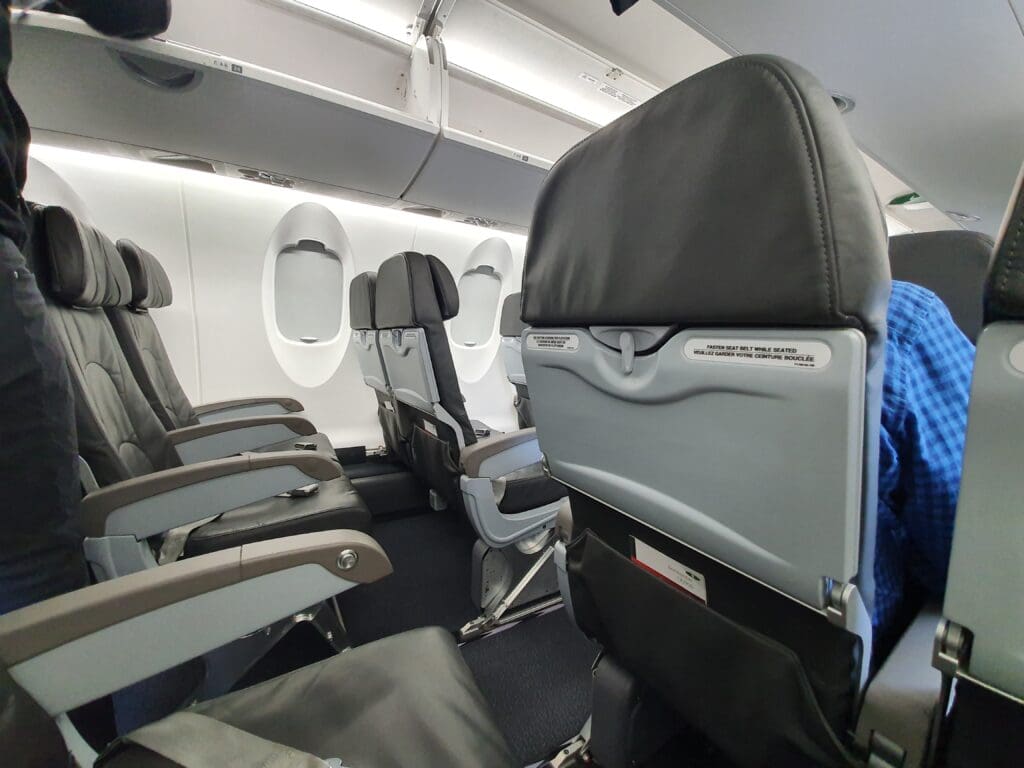
Once I had sat down, passengers continued to trickle onto the aircraft for a few more minutes before boarding reached its conclusion. As it happened, much to my delight, once again I would have an empty neighbouring seat and that afternoon, the flight did not seem to be more than 70% full. Judging by the conversations of those around me, a good number of those onboard appeared to either take the form of Thunder Bay locals – with a fair mixture of students returning to the city, or workers heading to sites in Northern Ontario. Meanwhile, a few deadheading Air Canada crew could also be spotted onboard the aircraft.
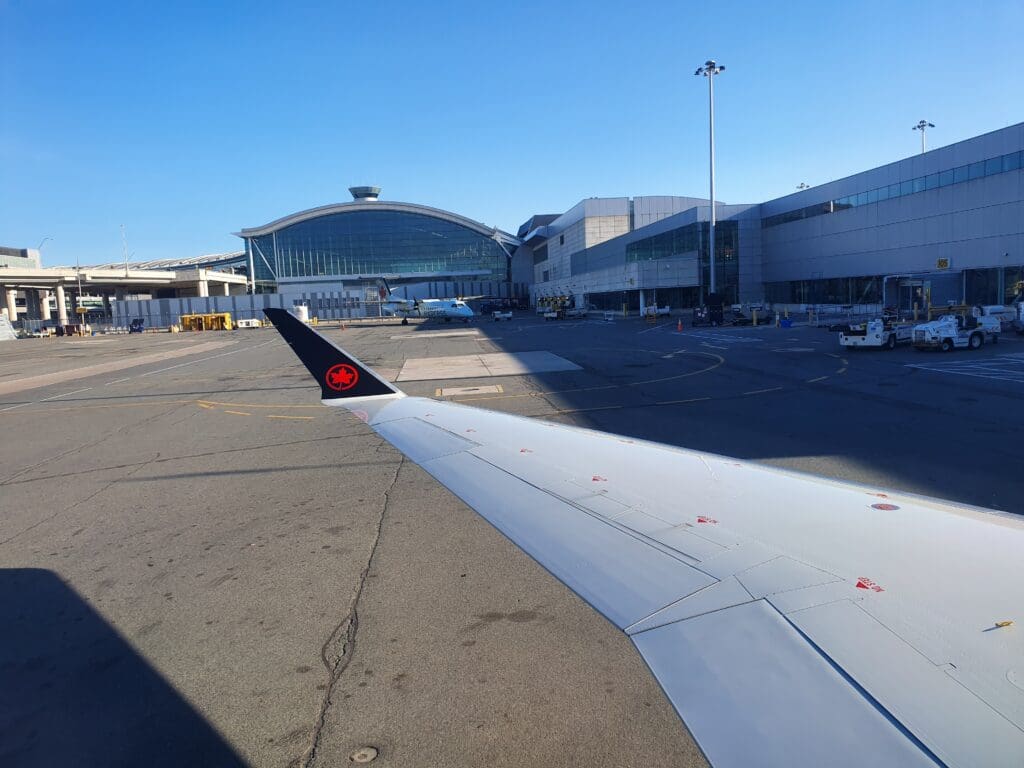
Once all were onboard, the cabin door was shut and the Cabin Director performed a welcome announcement in English and French. This was then followed by a safety demonstration during which the aircraft commenced its pushback away from the terminal as the two General Electric CF34-8C5 engines could be heard quietly spooling up into life at the rear of the aircraft. As the aircraft came to a halt, the two flight attendants passed through the cabin ensuring all was in place for departure and several minutes later, the Bombardier commenced its taxi to the runway. Once the flight attendants had taken their seats, the cabin lights were dimmed before being replaced by pink mood lighting
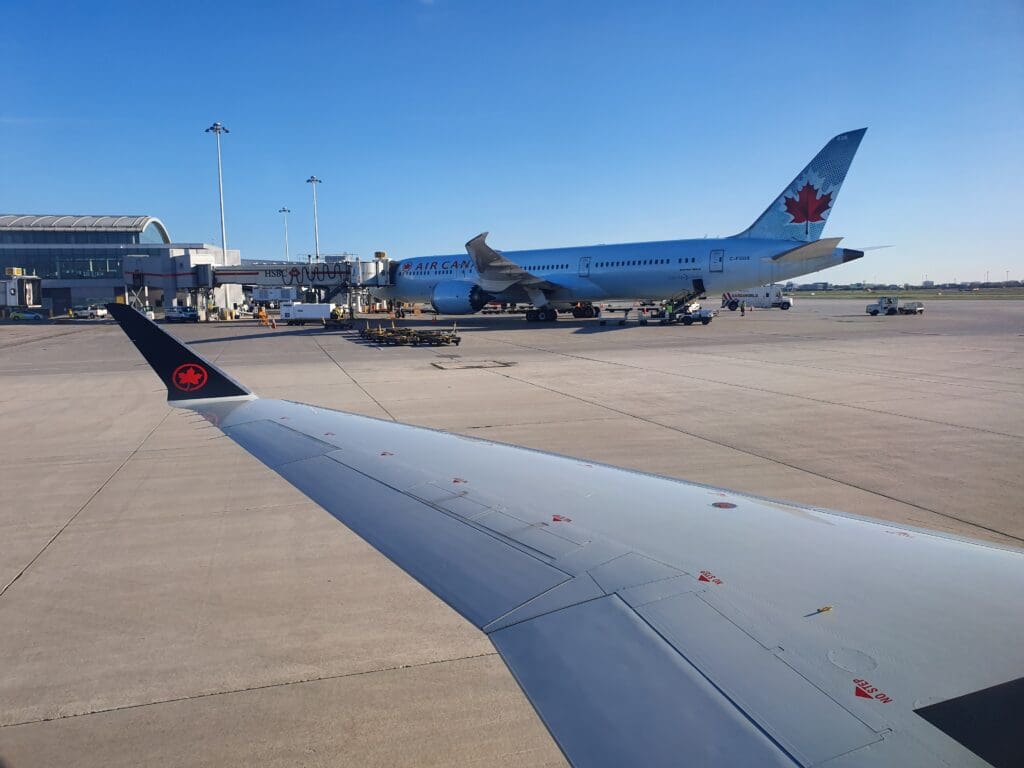
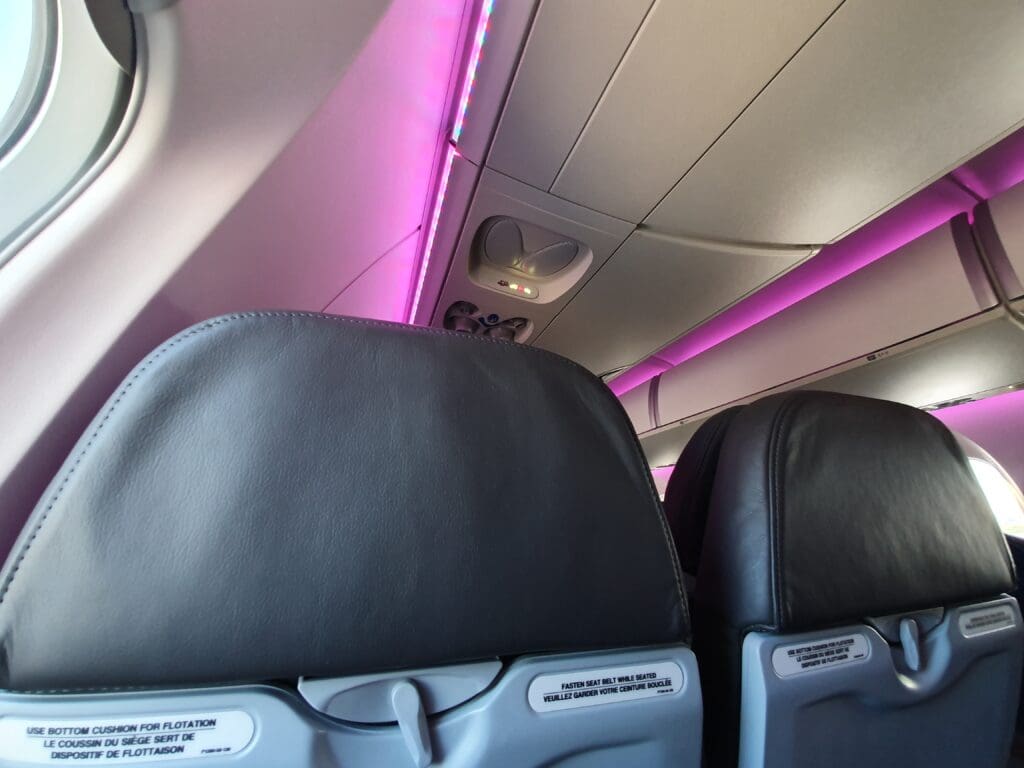
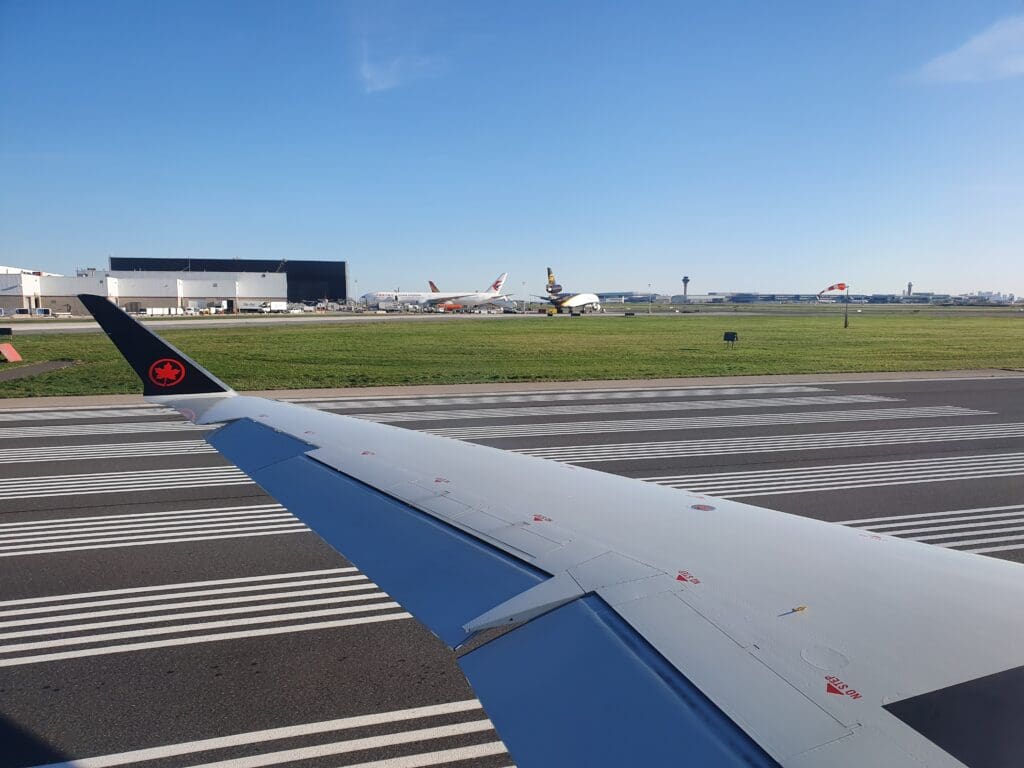
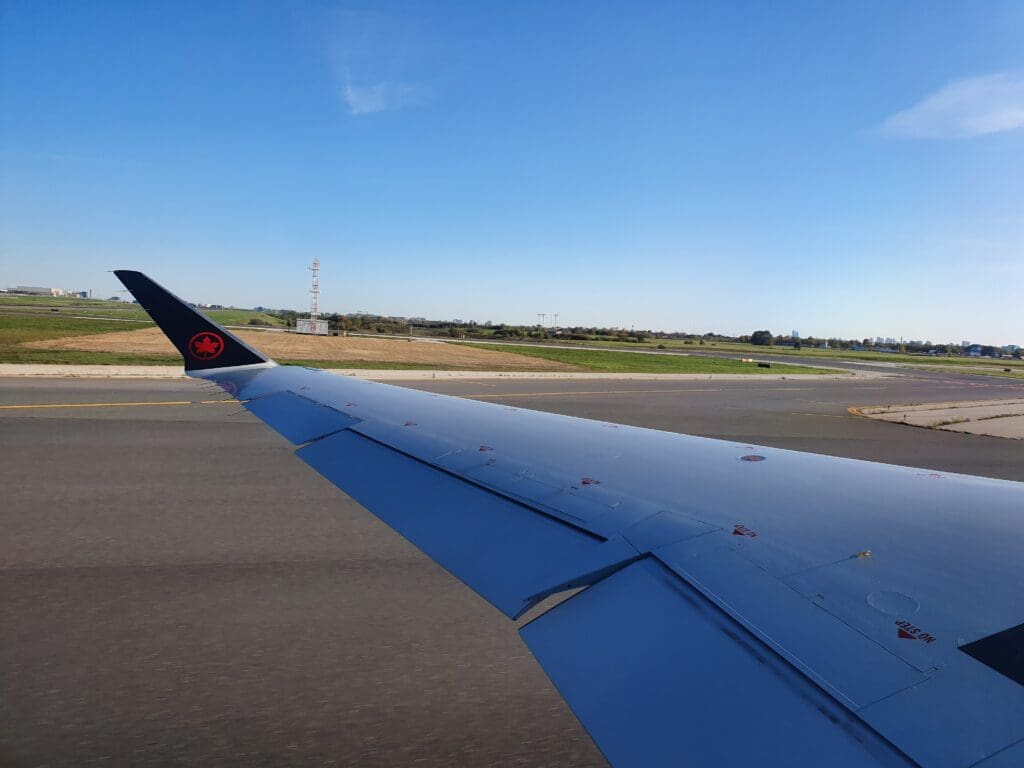
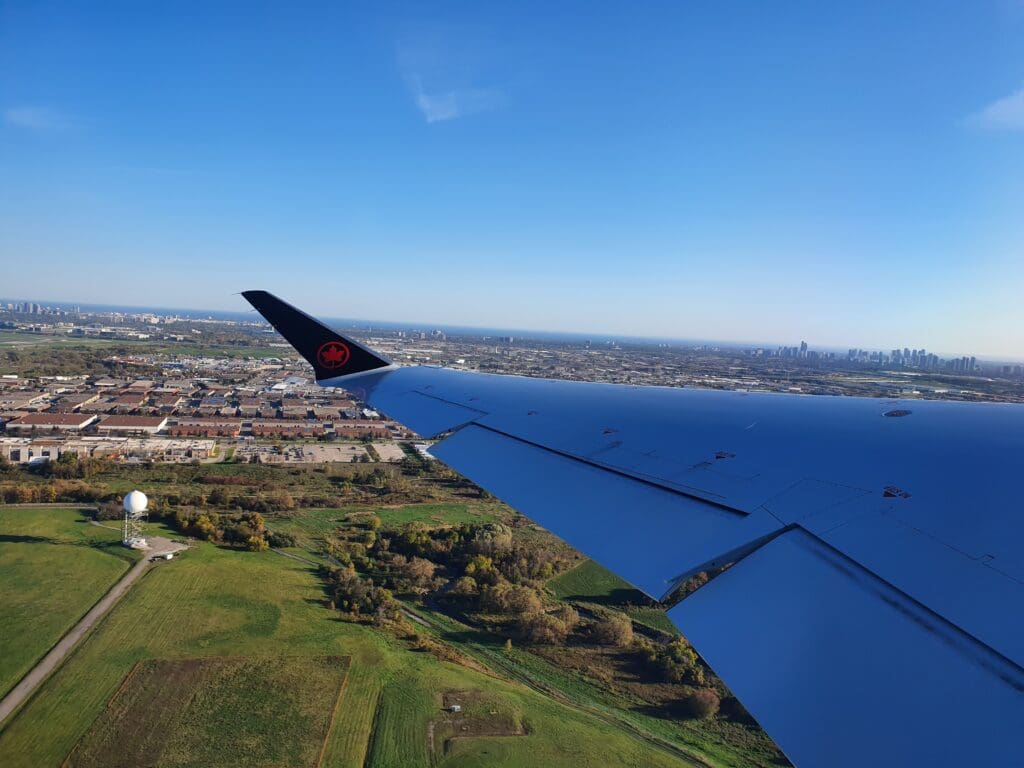
As with most flights that afternoon, the aircraft would depart from Runway 23. After leaving Terminal 1 and its fleet of Air Canada aircraft behind, the Bombardier skirted around Terminal 3’s two piers and satellite before passing one of the cargo areas where a China Eastern Boeing 777-300ER and a UPS McDonnell Douglas MD-11F could be seen waiting for their next missions. Despite Toronto Pearson’s size and overall busyness, the aircraft made it to the end of the runway without any queuing and taxied straight onto this at 1624. Following a very short pause, the two General Electric engines powered up and the aircraft performed a gentle take-off roll down the runway before taking off into the sunny Ontarian skies. During the initial climb out of Toronto, the tall buildings of Mississauga could be seen in the distance before the residential and industrial areas below transformed into fields as the aircraft journeyed northwestwards towards Lake Huron.
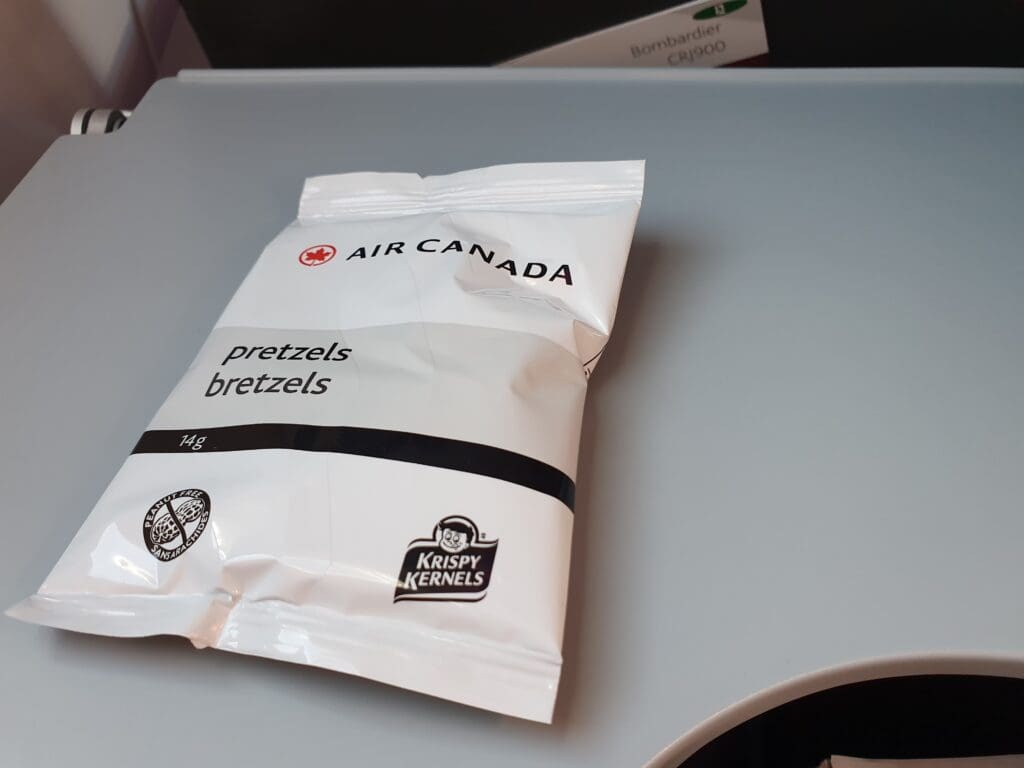
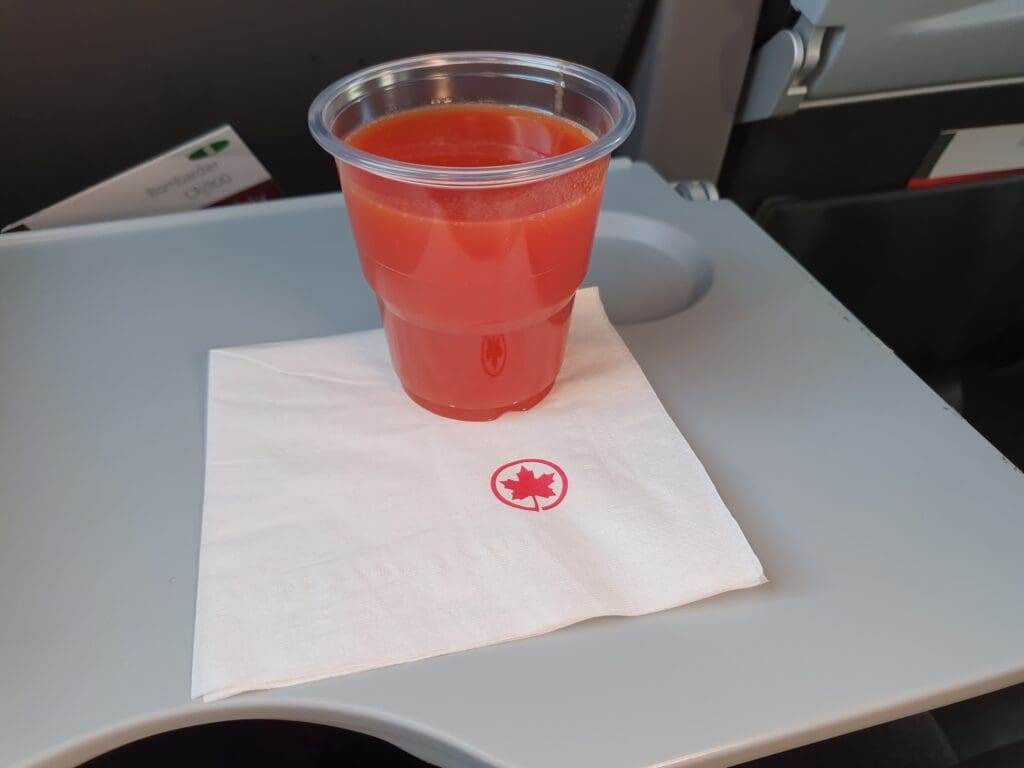
Given the calm conditions that afternoon, the seatbelt signs were switched off a short time after departure at which point the Cabin Director performed their usual warning regarding seatbelts in English and French. Meanwhile, at this time, the flight attendant responsible for the Economy portion of the cabin passed through this distributing small Air Canada branded bags of Krispy Kernel salted pretzels. Once this was done, the flight attendant then brought a drinks trolley to the front of the cabin before making their way rearwards at a slow pace. However, aware that this trolley was only being manned by one crew member and not in any desperate need of a drink, I could not complain about the speed at which the service was conducted. Around thirty minutes after this service had commenced, the flight attendant reached my row and in a rather cold manner I was asked for my choice of drink. Opting for tomato juice, this was passed to me in a plastic cup along with a serviette.
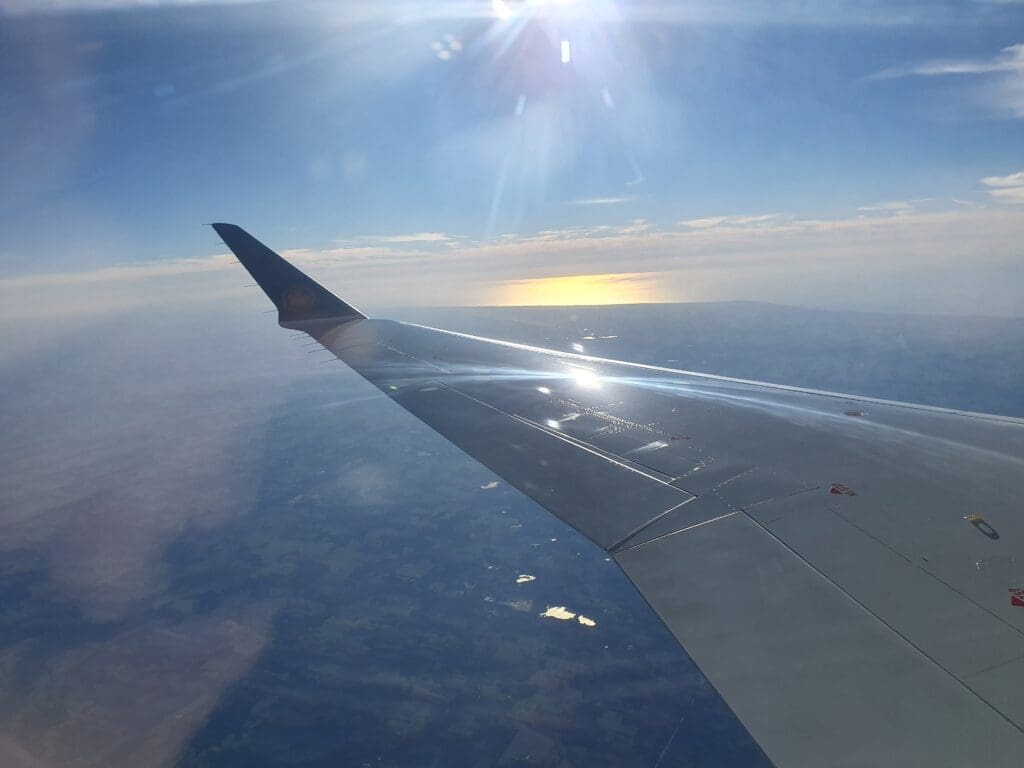
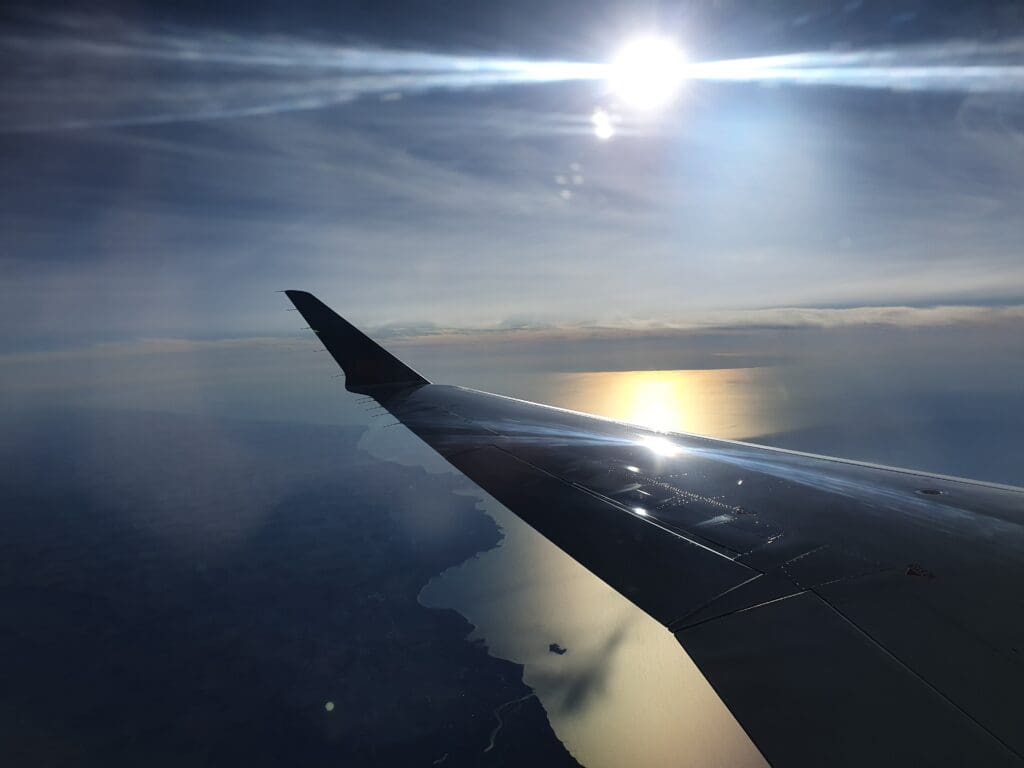
Around twenty minutes into the flight, the Bombardier reached its cruising altitude of 36,000 feet and passed over Sauble Beach on the Canadian shores of Lake Huron. From there, sitting on the left-hand side of the aircraft and with clouds covering the American side of the lake, little could be seen for some time as the jet continued northwestwards. With little to see outside, I decided to visit the sole lavatory onboard the aircraft for those travelling in Economy, with this located at the very rear of the cabin. Upon entering this, I was pleased to find this to be in a reasonable condition, serving its purpose and stocked with all the basics a passenger may expect to find inside an aircraft lavatory.
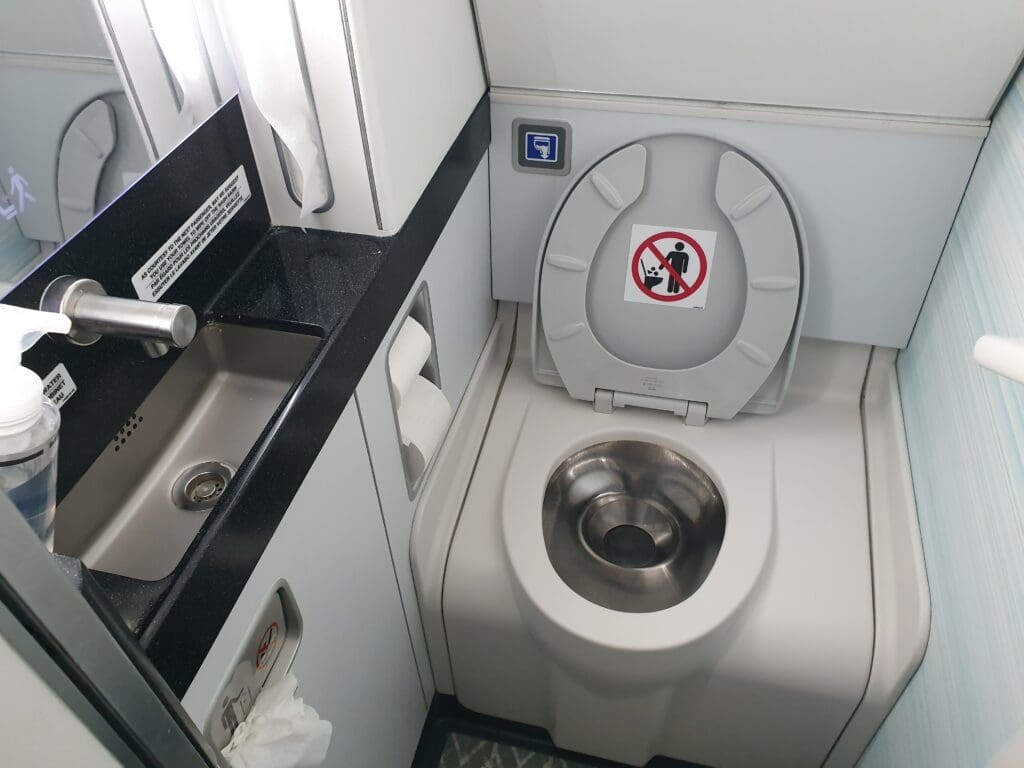
After a twenty-minute crossing of Lake Huron, the aircraft cut across Cockburn Island before crossing the border for the first of six times during the flight and passing over Drummond Island. The aircraft then passed over Canada’s St Joseph Island before crossing Lake Nicolet and passing over the Michigan portion of Sault Ste. Marie before flying out over Lake Superior. Unfortunately, clouds below meant none of the scenery of the Upper Peninsula was visible so I passed the time by doing some work and soaking up the atmosphere of the CRJ-900. As the aircraft crossed Lake Superior, the clouds parted below revealing the lake’s chilly waters and a small portion of the Michigan coastline in the distance. At this time, indicating that the flight was nearing its end, both flight attendants passed through the cabin collecting rubbish.
At 1740, the aircraft could be felt leaving its cruising attitude and an announcement was soon performed by the Cabin Director with all the usual pre-arrival warnings. A short time later, both crew members passed through the cabin ensuring all was in place for the flight’s arrival into Thunder Bay. Six minutes later, the remote and uninhabited Isle Royale appeared – famous for its moose and wolf population. A short time later, the aircraft crossed over the shoreline of the mainland between Pie Island and Cloud Bay where little could be seen other than hills and forests.
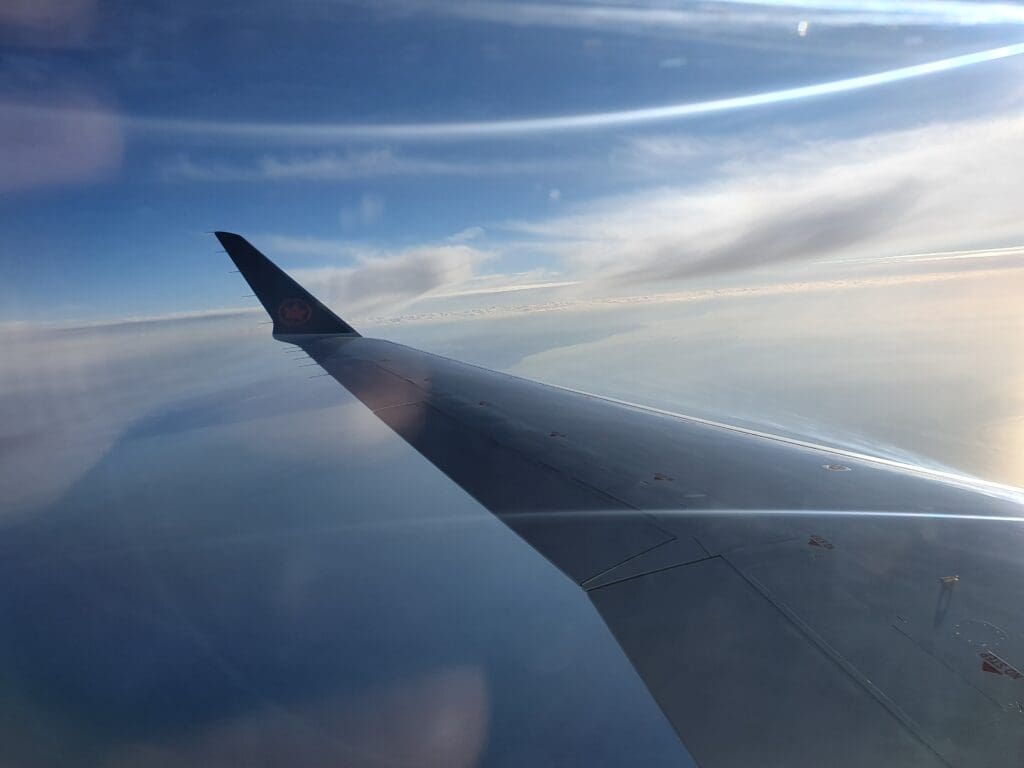
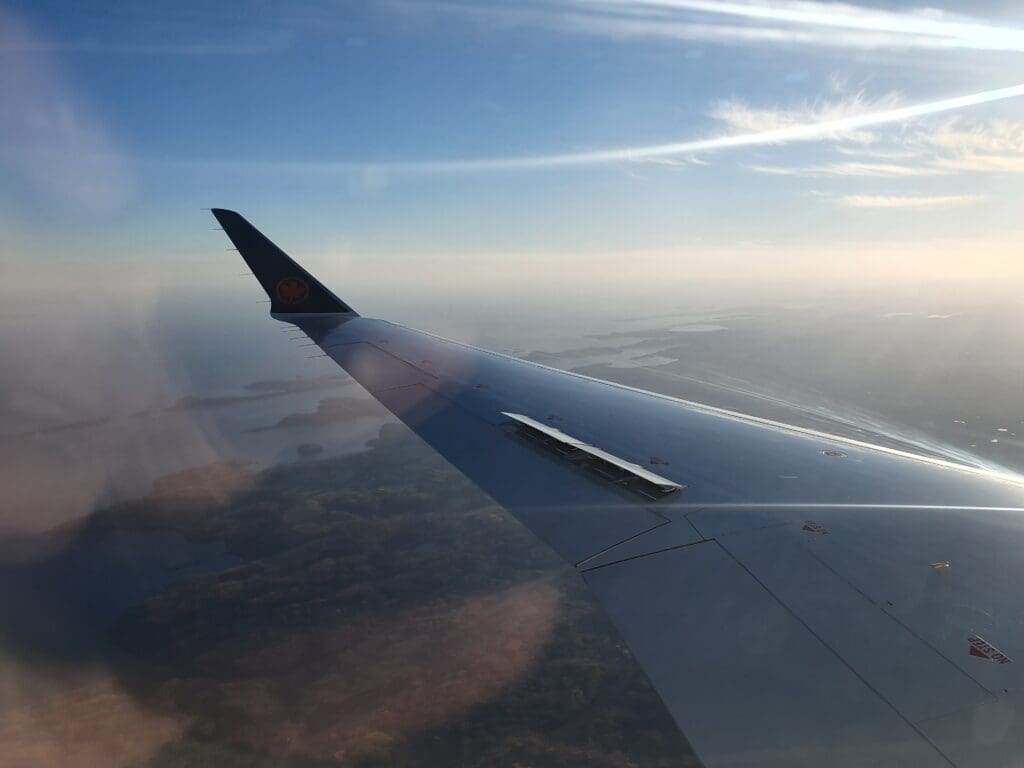
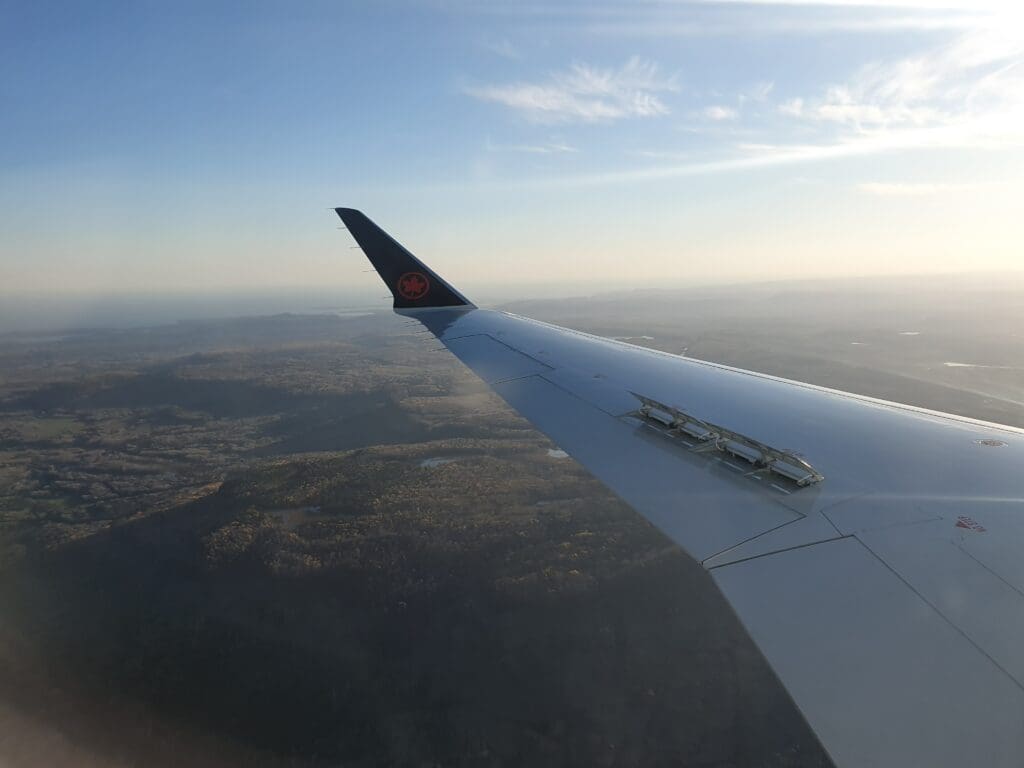
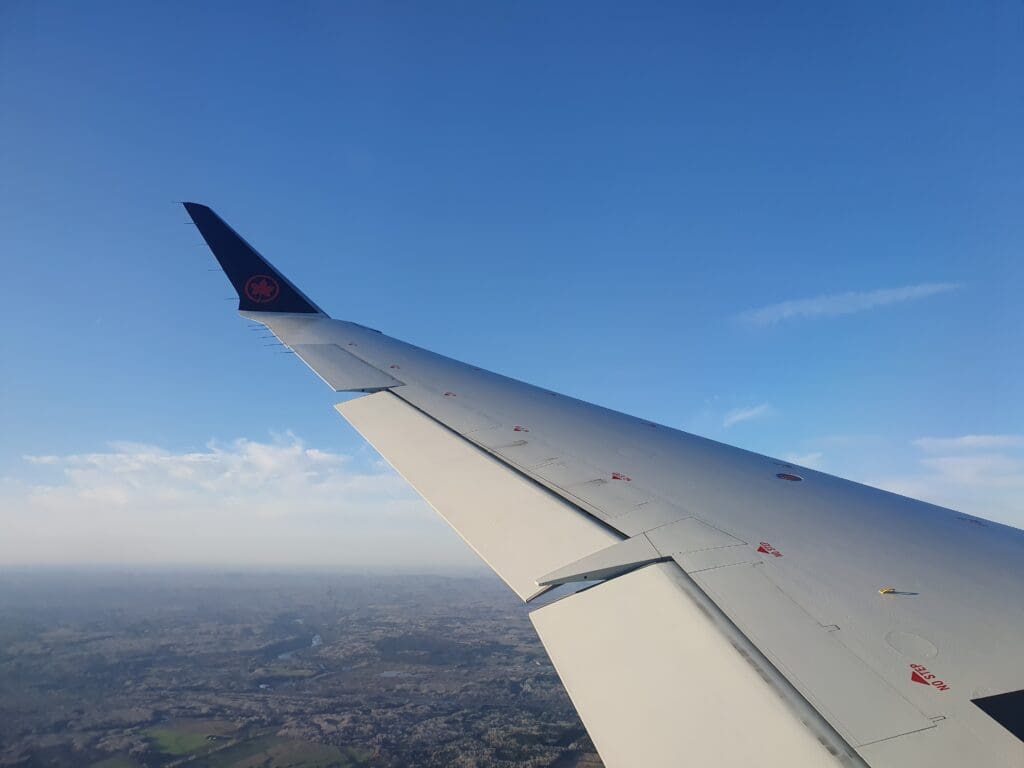
After slowing down with the aid of the speedbrakes, the flaps were partially extended as the first signs of human life appeared below in the form of several small villages and farms. That afternoon, the aircraft would be landing on Runway 07, the slightly longer of Thunder Bay Airport’s two runways and after lining up for an approach to this, the Kaministiquia River appeared below. As was to be expected, as the aircraft neared the airport, signs of life increased further with several residential areas whizzing by below around Rosslyn and Twin City. As the airport neared, the jet flew over a railway line and the airport’s other runway appeared. Moments later, the Bombardier returned to earth with a firm bump at 1800.
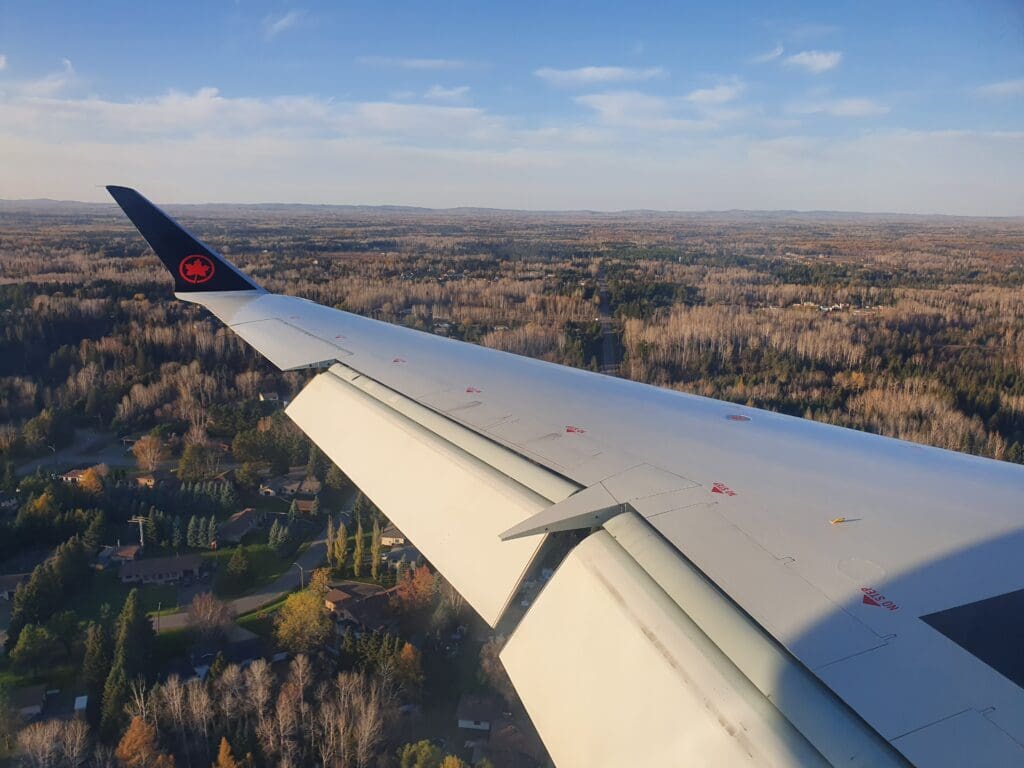
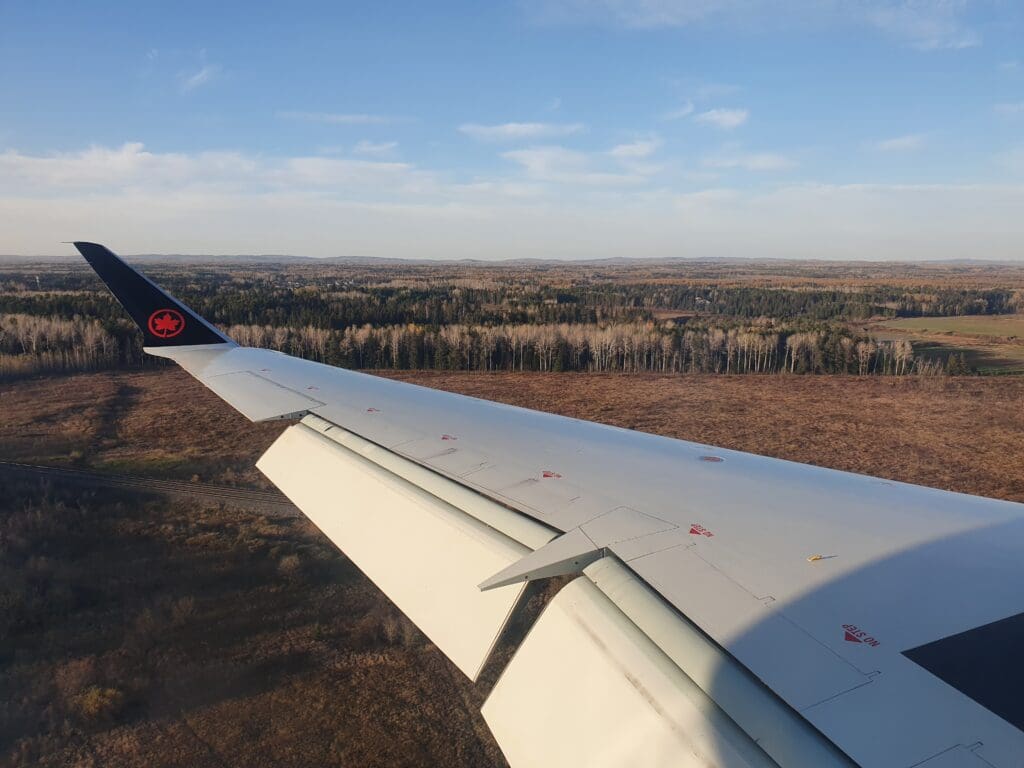
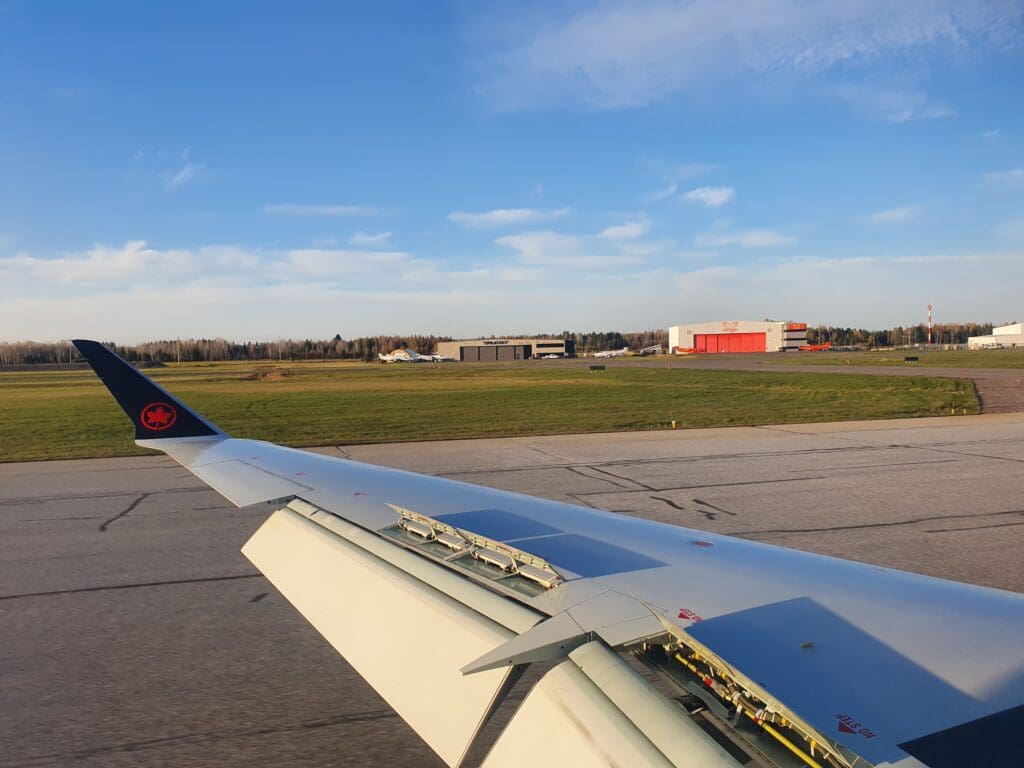
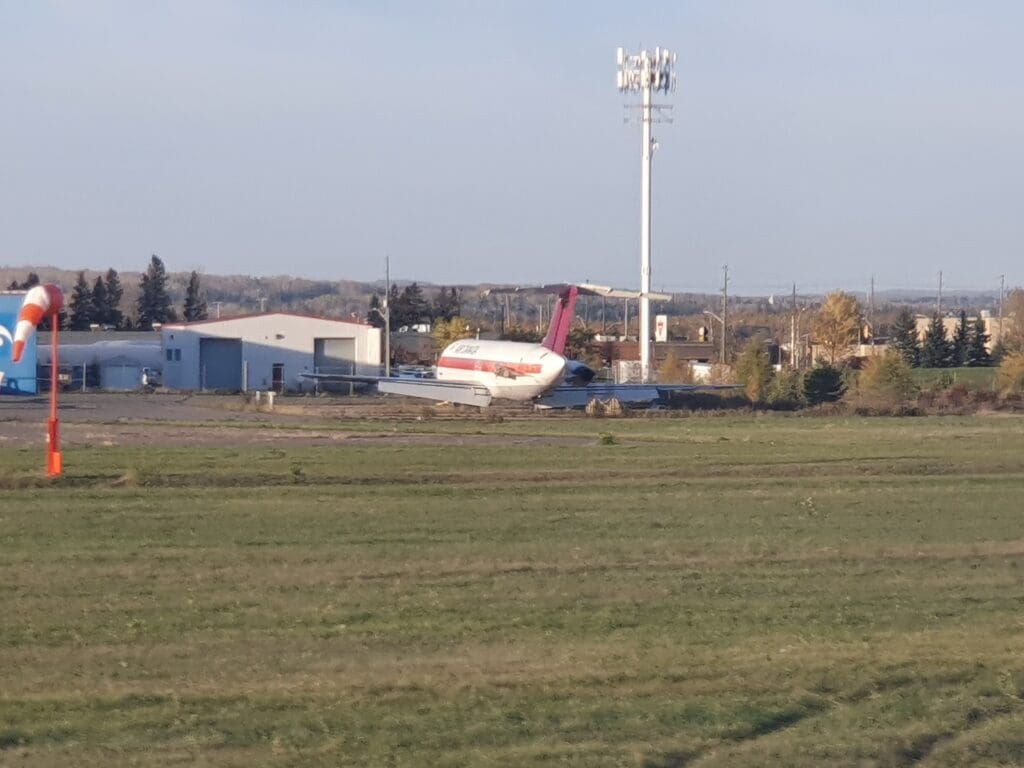
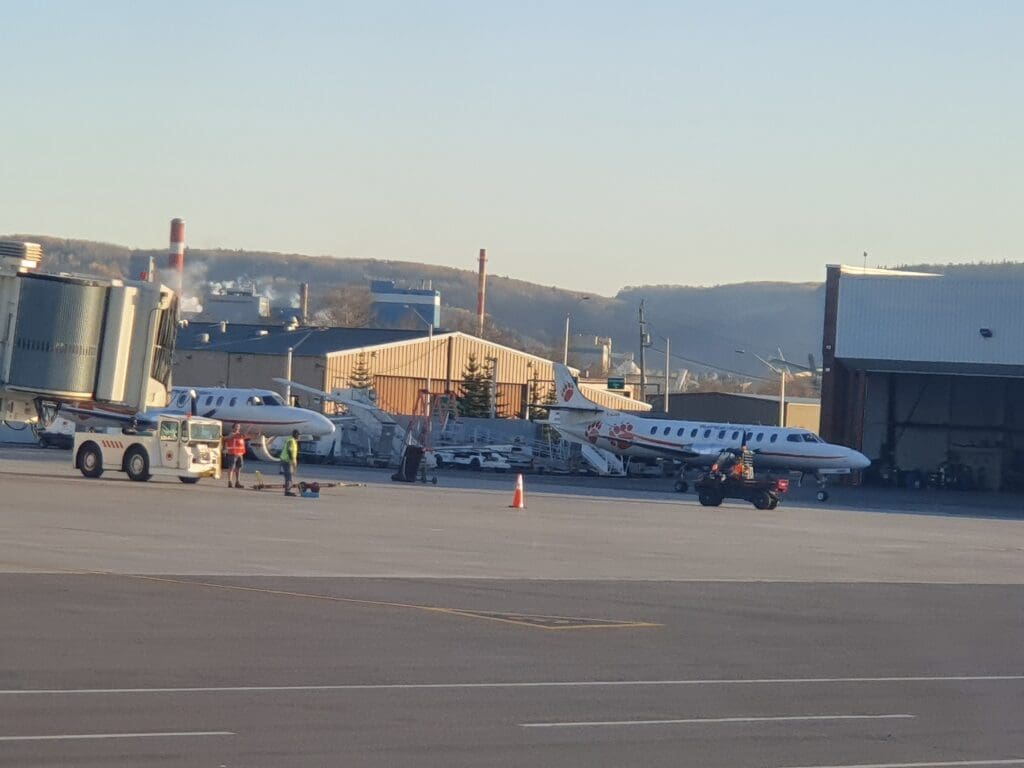
As the Bombardier slowed, a host of Pilatus PC-12 aircraft in varying states could be seen outside the Levaero Aviation and Ornge hangers to the north of the runway, as well as a fleet of light aircraft parked outside the Confederation College’s Aviation Centre of Excellence. Amongst these stood C-FTLT, an old and long-retired Air Canada DC-9-32 that has served as a maintenance trainer for the college since 2002. Having rolled to almost the end of the runway, only a minuscule taxi was required to reach the terminal during which the local landmark, Mount McKay could be seen. Soon enough, the Bombardier jet arrived on the apron outside the terminal. As one may expect, Thunder Bay Airport’s box-like terminal is not the largest in Canada, offering a total of three jetways – none of which were occupied at the time of the flight’s arrival. However, our flight was soon followed by a WestJet Encore Dash 8 Q400 that had also journeyed across from Toronto. A few moments after entering the apron, the CRJ took a left and cautiously edged into Gate 3. After coming to a halt, the engines spooled down and the seatbelt signs dinged off although few appeared to be in much of a hurry to exit the aircraft.
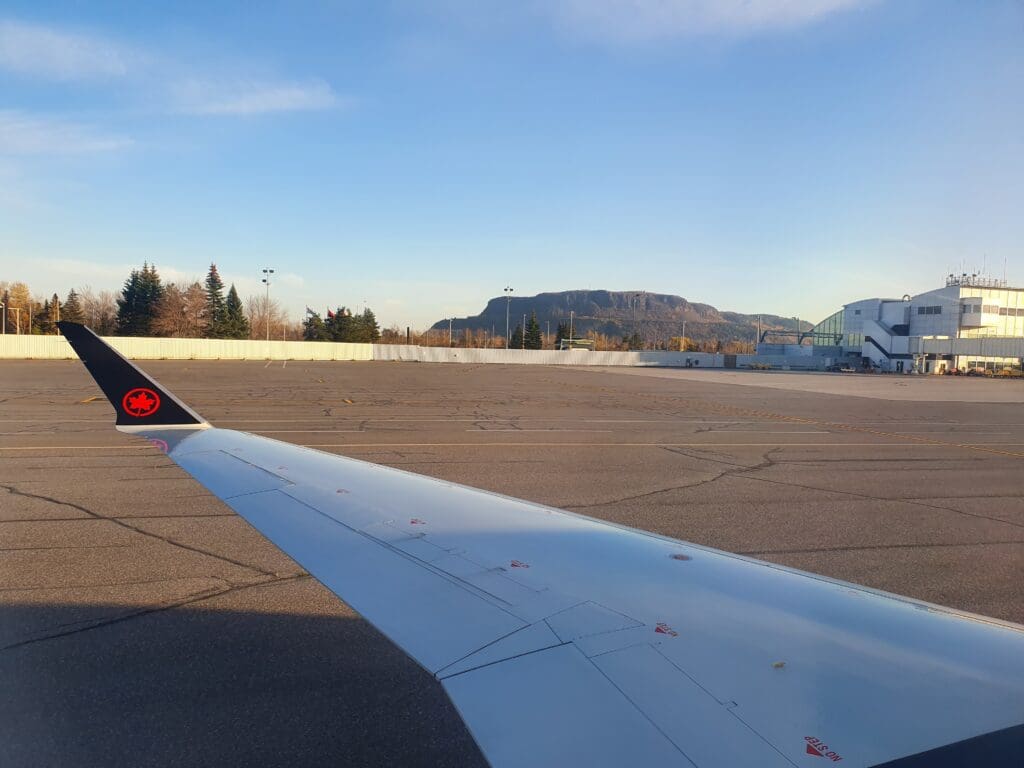
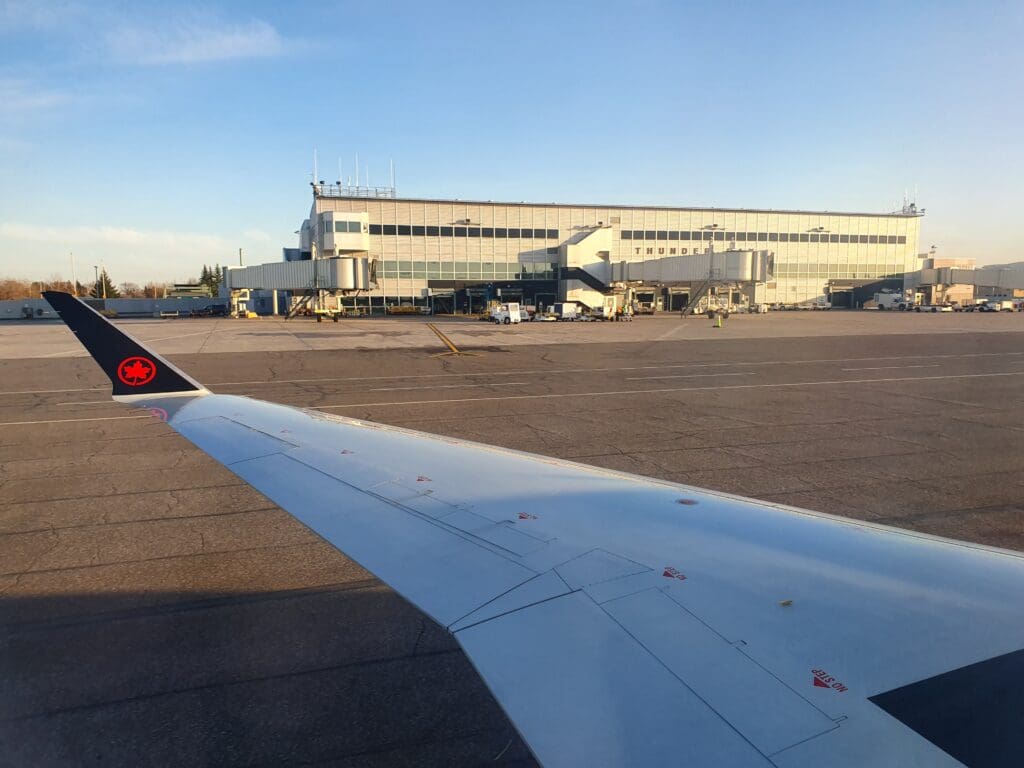
Around three minutes after coming to a halt, the jetway was connected and the cabin door was opened. A short time later, I made my way to the front of the cabin and thanked the Cabin Director before heading up the jetway into the terminal’s modern airside departure lounge. After heading up the jetway, I arrived in the terminal’s modern airside departure lounge. Thanks to the compact nature of the terminal, from there I followed signs for the exit and within a minute I found myself standing in the landside portion of the terminal. With no bags to collect, from there I headed outside into the pleasant if not very slightly chilly evening air and walked the short distance over to the terminal’s bus stop. Not wanting to splurge out on a taxi, and seeing as I had booked a room in a motel just off the city’s main road, I opted to make the short journey into town by bus. Thankfully, the bus pulled up as scheduled and I soon got on and paid my small fare before this made its way into the city.