Victoria to Vancouver by Helicopter: A Ride on a HeliJet Sikorsky S-76
Background
As an aviation enthusiast visiting Vancouver, given the lack of any scheduled helicopter services near me in the UK and the fairly reasonable prices of trips between Vancouver, Nanaimo and Victoria, I couldn’t resist the opportunity to sample the delights of scheduled chopper operator HeliJet, opting to enlist their services to get me back from Victoria. I combined this with Harbour Air and ended up flying over on one of their Turbo Otters.
Booking
After heading over to HeliJet’s website, lacking the funds to charter my own private helicopter to take me across to Vancouver, and hopefully not requiring air medical transport, I clicked on the ‘Scheduled Airline’ tab before heading over to the carrier’s booking page. Powered by the Blue Sky Booking Airline Reservation System, without any issues I was soon presented with that Saturday’s two flights, each of which had two fare options. These being an off-peak fare of $260 or a cheaper sale fare of $219. Seeing as both allowed for cancellation and fee-free rebooking until the day before the flight, the distinguishing factor between these was the fact that the cheaper fare did not qualify for the airline’s Kids Fly Free scheme. Once I agreed to the fare conditions, I entered my details and denoted that I wished to opt for the airline’s complimentary taxi service. Once this had been done, I entered my payment details and almost instantly received a booking confirmation although no money was taken from my account. At this point, I realised that whilst card details are required to reserve a flight, no money is taken until check-in. All in all, booking with HeliJet was a quick and easy process and so I was left with zero complaints.
The Journey
Unlike Harbour Air’s terminal, which is appropriately located in Victoria Harbour, HeliJet’s facility is located near Ogden Point, a short walk away from the centre of British Columbia’s capital. Ending up with around three hours between arriving on a Harbour Air Turbine Otter and heading off with HeliJet, I had just enough time to explore the sights and delights of Downtown Victoria. Walking around, I soaked up some of the atmosphere and admired the British Columbia Parliament Buildings before heading along the coastline and stopping at a nice coffee shop near Fisherman’s Wharf. Around an hour later I continued my journey along Victoria’s pleasant tree-lined streets towards Ogden Point. Arriving there with plenty of time to go until my flight, I wandered along this, heading out to sea along the breakwater before being beaten back by the wind. By this time, only a little over an hour until my flight remained and so I decided to head over to HeliJet’s terminal.
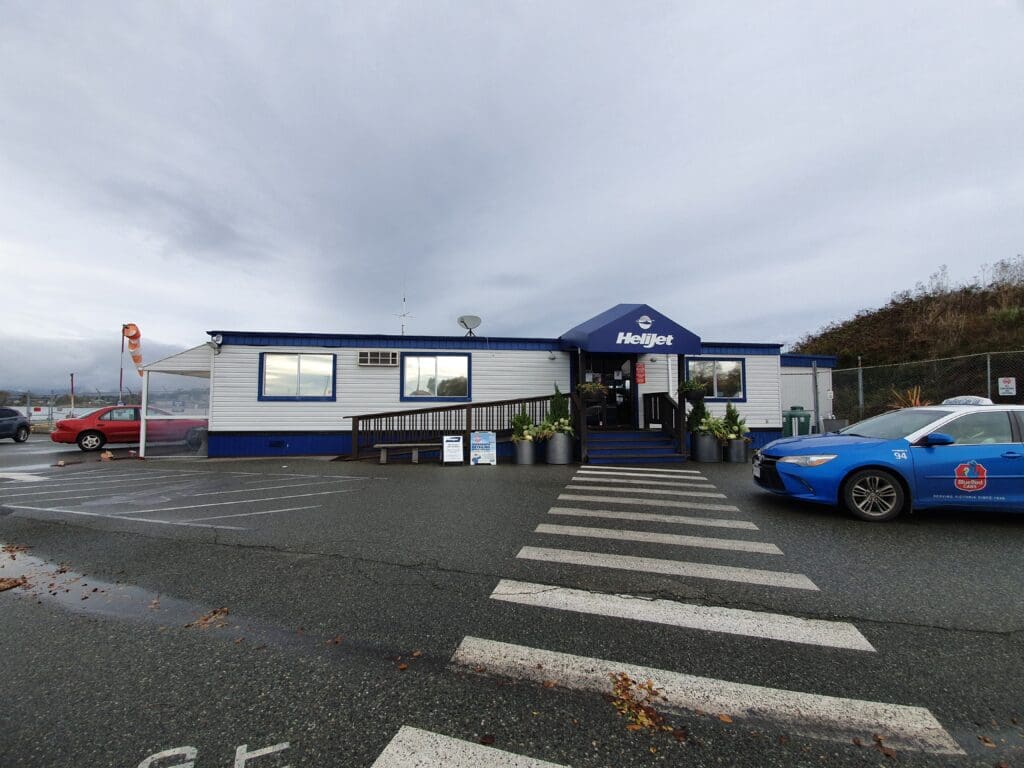
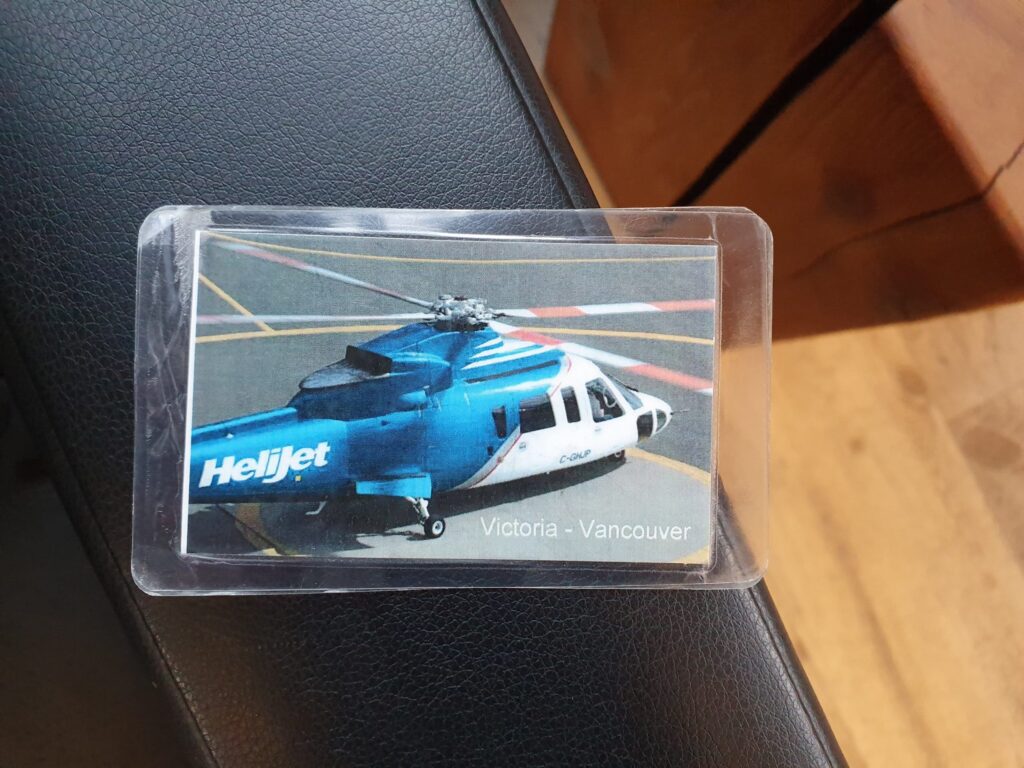
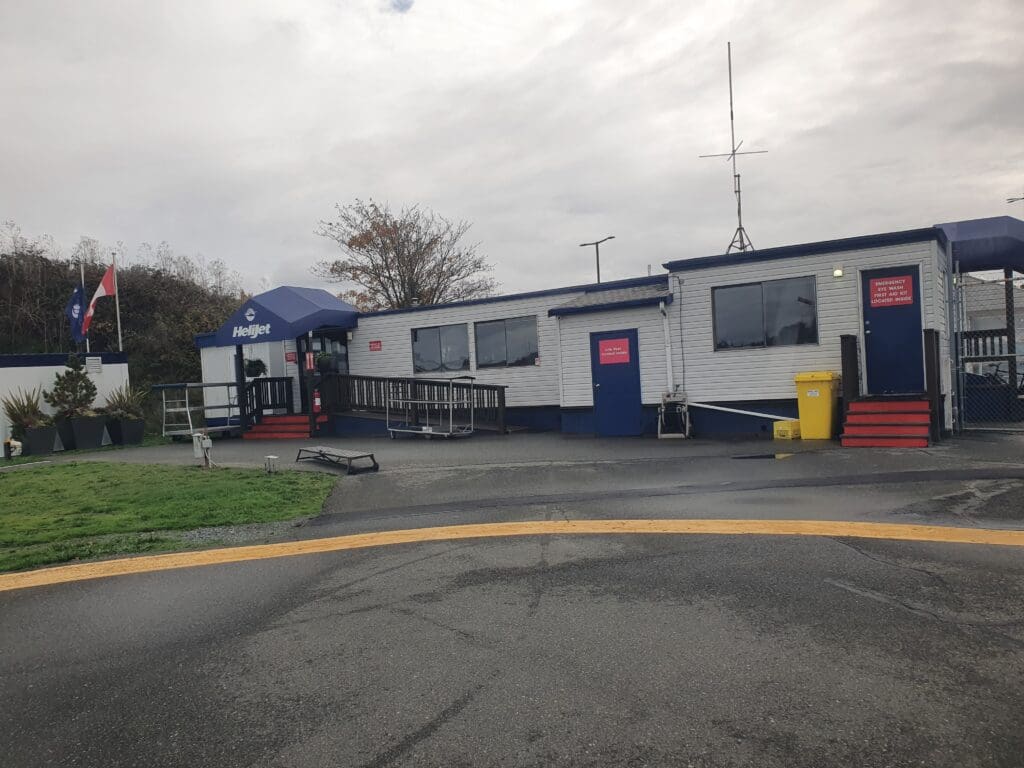
From the outside, HeliJet’s terminal is a rather unassuming building that takes the form of a single-story and slightly temporary-looking structure although easily recognisable thanks to the fact that it sports HeliJet’s blue and white colours as well as the carrier’s logo. At the time of my arrival, only two other passengers could be seen waiting inside, both of whom were heading off on the airline’s 1200 departure to Vancouver. Upon entering the terminal, I was immediately greeted by one of the two staff members standing at the desk on the other side of the lounge and wandered over to this where I was asked for proof of identity and a few questions on whether I had any Coronavirus symptoms. Once these formalities had been completed, I was handed a small business card sized boarding pass complete with my flight number and surname and asked whether I would like a demonstration on how to use the coffee machine!
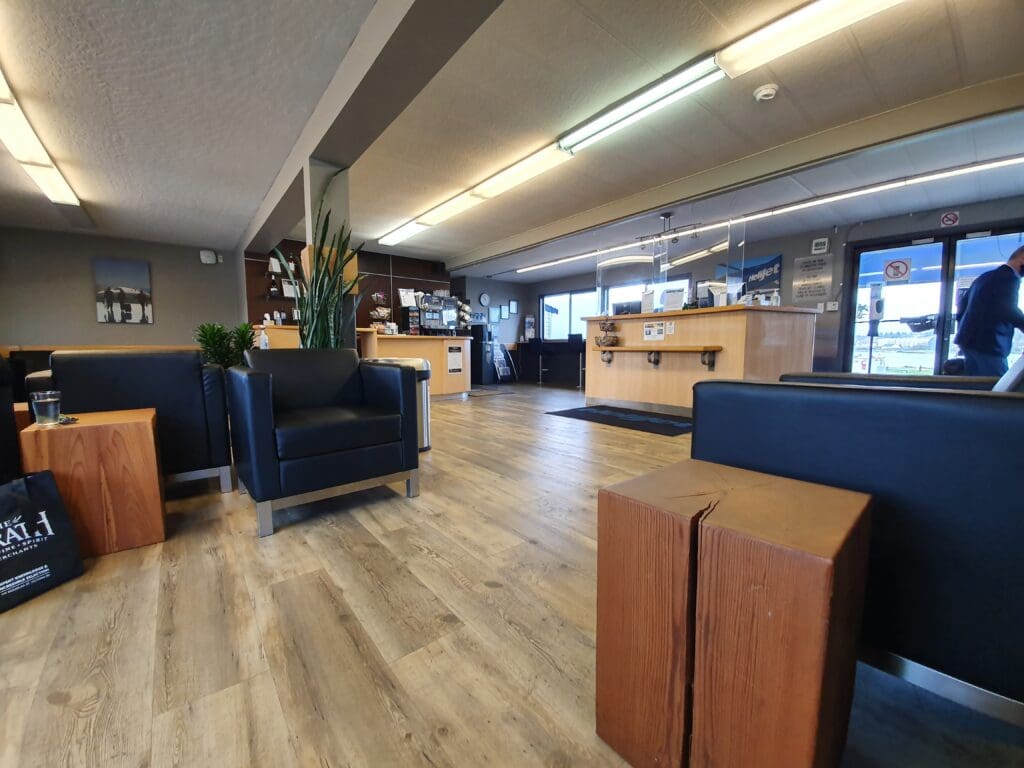
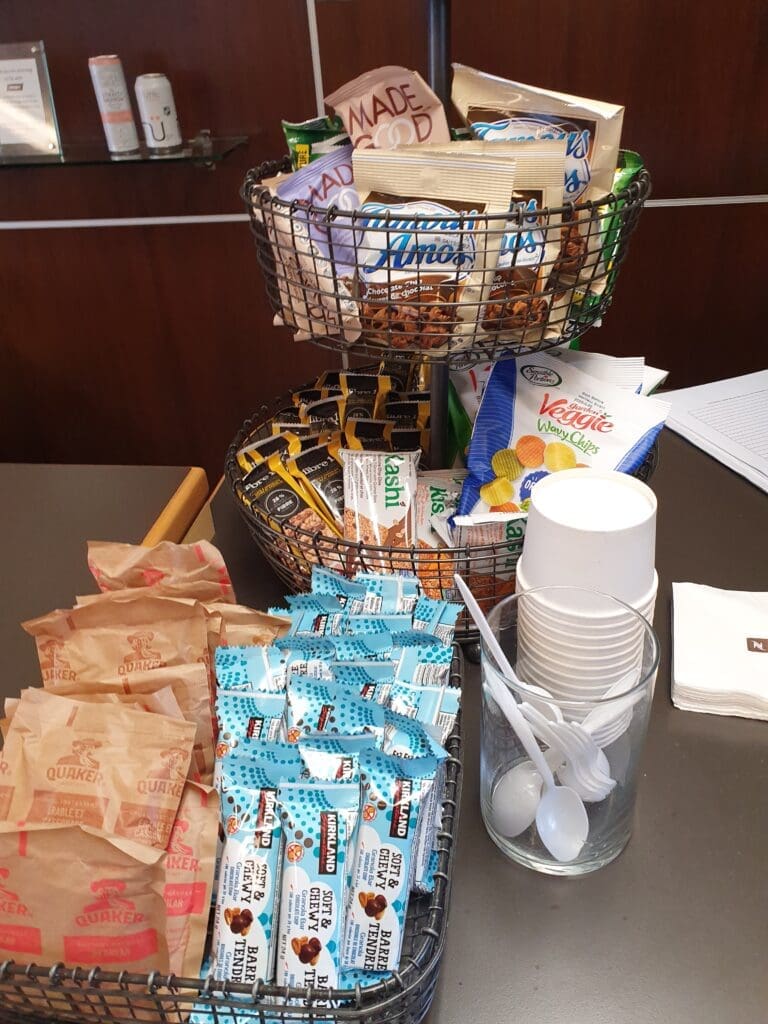
Whilst the exterior of the HeliJet terminal may not be seen to be anything special, inside, this has a very corporate atmosphere akin to a small private terminal at an airport. As such, this features comfortable seats, fast complimentary wifi, plenty of spaces to work and relax, and a wide selection of reading material. For those needing refreshments, a fine selection of snacks as well as alcoholic and non-alcoholic drinks was offered. Meanwhile, as one would hope, the interior of the terminal appeared to be in a spotless state. Enthusiasts will be pleased to hear that large windows on one side of the waiting lounge offer a good view out onto the helipad and the heliport’s two stands whilst the entrance to Victoria Harbour can also be seen in the distance.
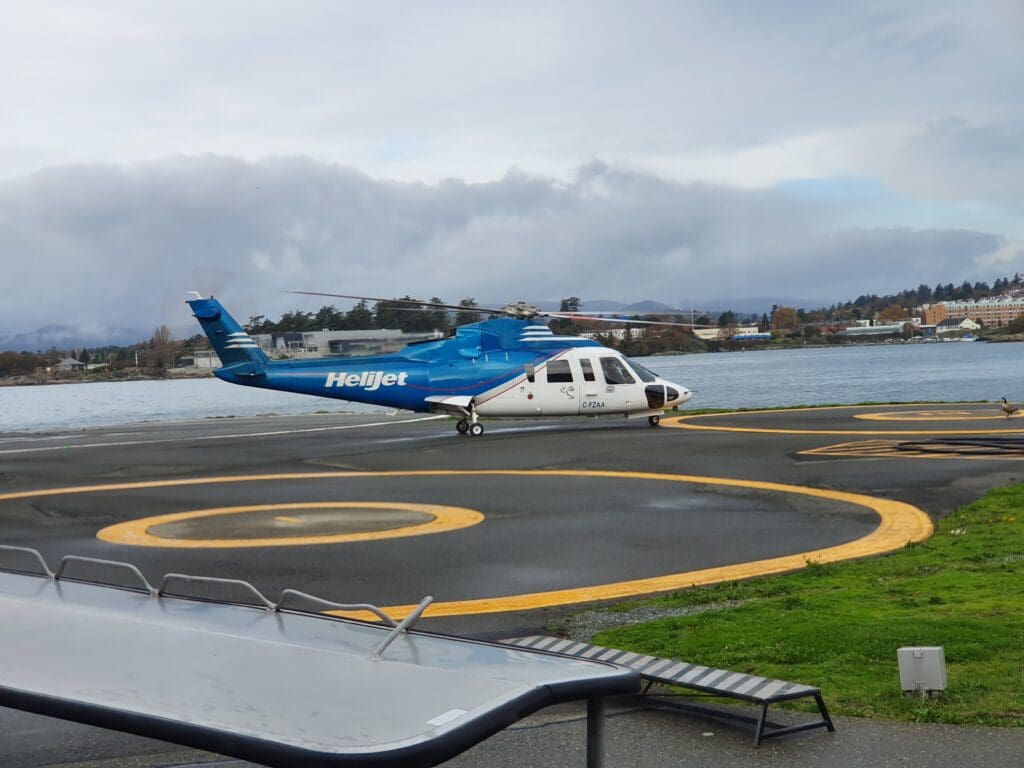
Indicating that something exciting was about to happen, a short time after I had taken my seat near one of the lounge’s windows, the small team of three ramp workers could be seen getting into position outside. A minute later, the terminal was temporarily filled with noise as Sikorsky S-76A C-FZAA appeared and came to a hover just above the helipad before settling down and making a very short taxi over to Stand 2. Whilst I had initially assumed this Sikorsky to be operating the 1200 departure to Vancouver, this would actually have an hour-long stop in Victoria before heading off on a charter service to Vancouver. As time passed, more passengers appeared for the 1200 flight and in the end, a grand total of six passengers would be making the trip across the Strait of Georgia that lunchtime. Of these, I was only one of two passengers not sporting business attire, with the majority of those taking the flight appearing to be Victoria residents heading across to Vancouver for afternoon meetings. Indeed, each of these passengers appeared to be a HeliJet regular, with the two staff members inside the terminal greeting these passengers by name and making light-hearted conversation.
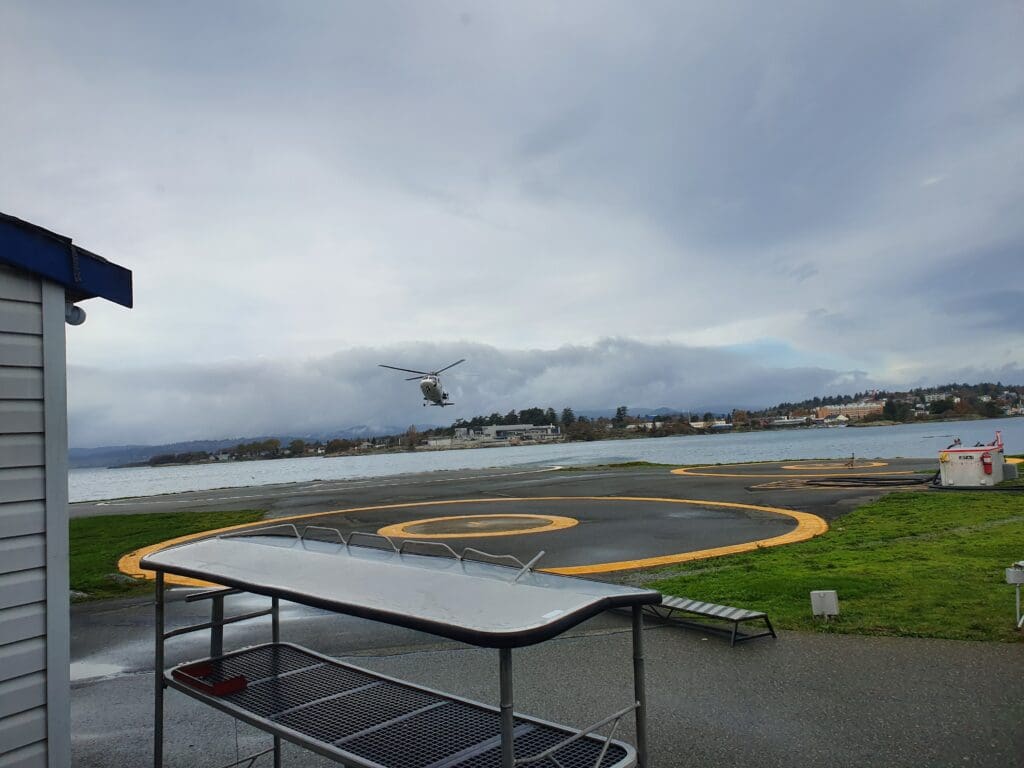
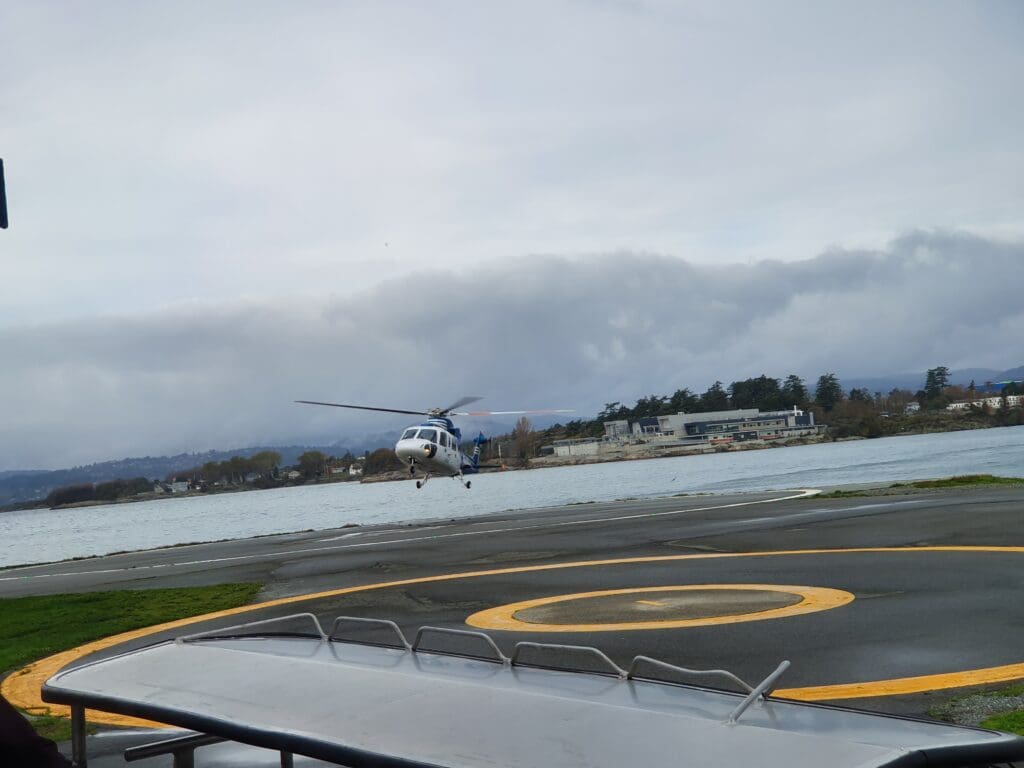
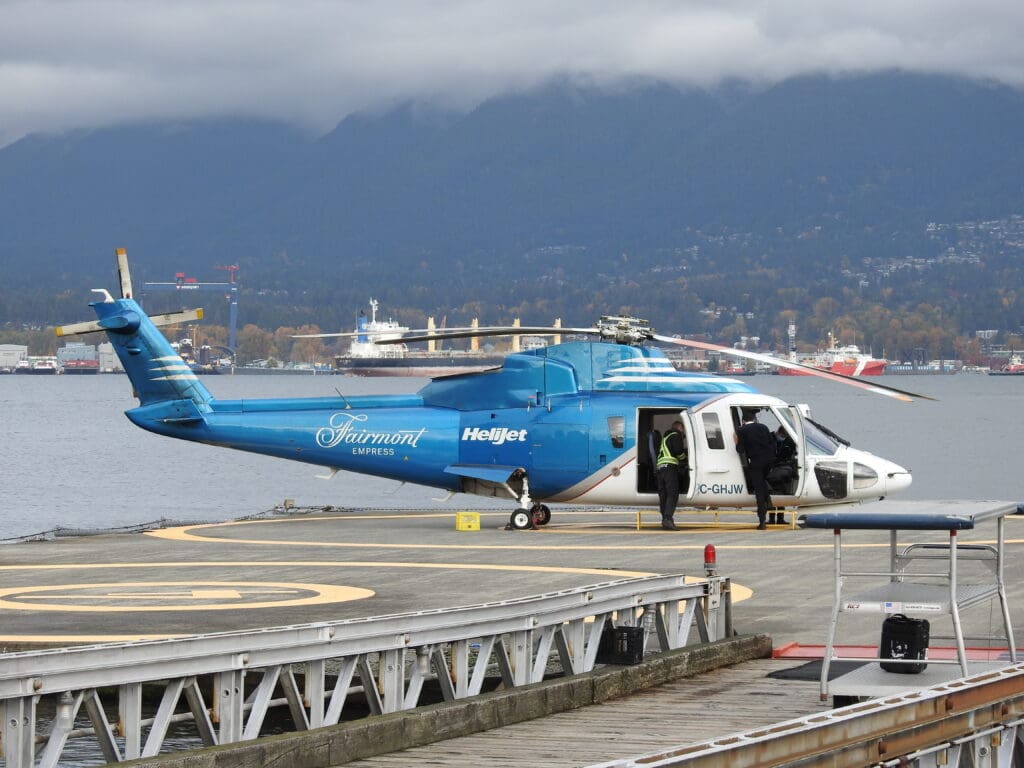
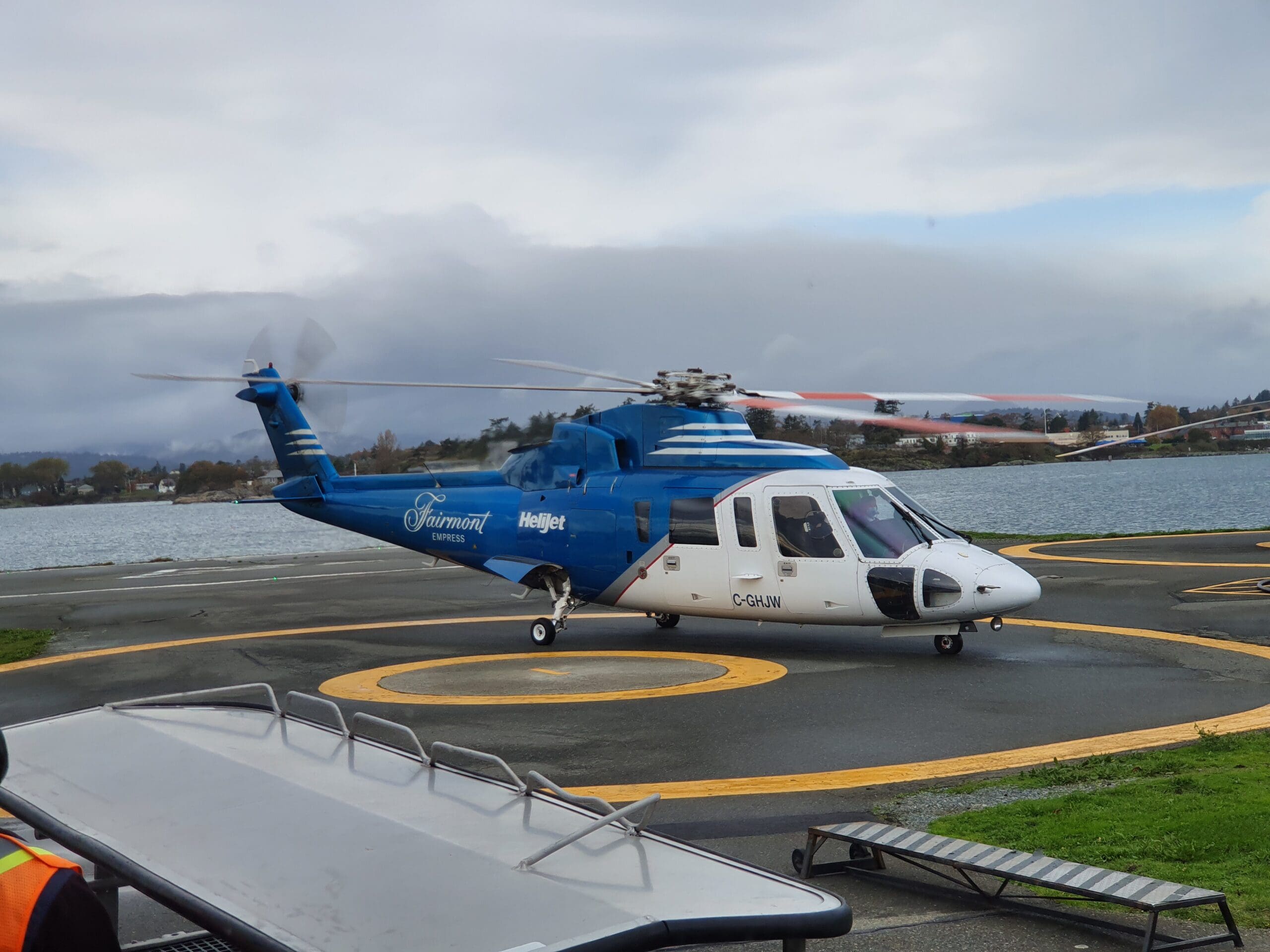
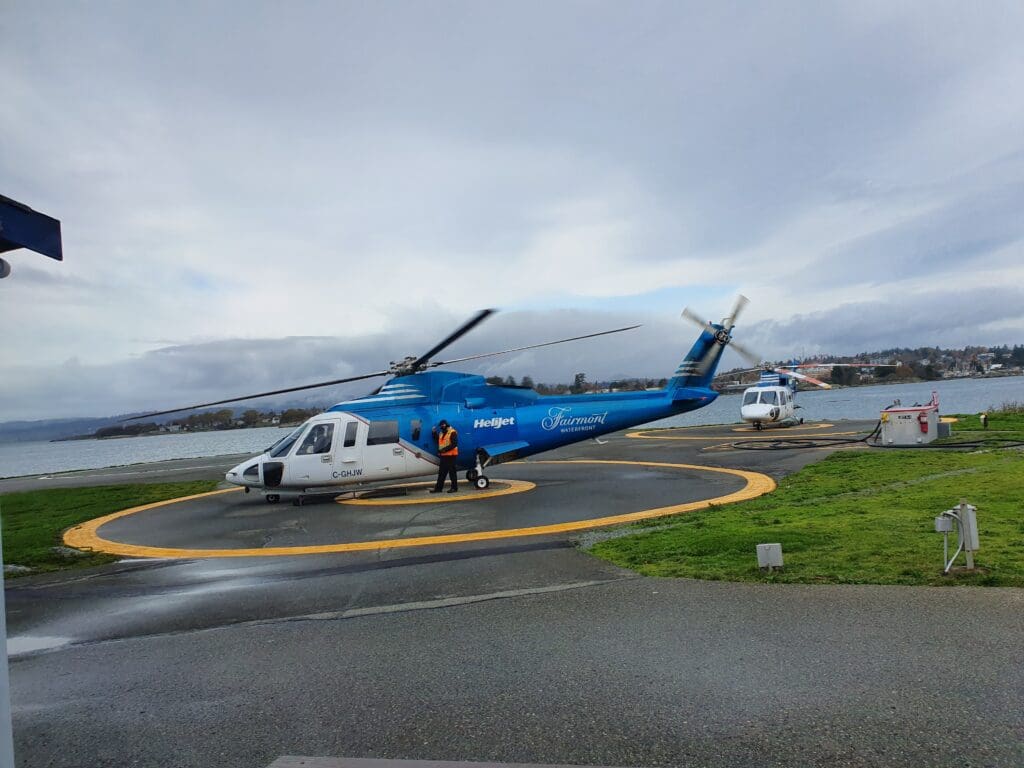
At 1136, the three strong ground crew mustered outside once again and a couple of minutes later Sikorsky S-76A C-GHJW noisily appeared and slowly crept down towards the helipad. After gently settling down on this, the helicopter taxied over to Stand 1 where the engines spooled down and the ground crew promptly got to work unloading the inbound passengers’ luggage from the hold at the rear of the aircraft. Once the rotors came to a halt, two passengers emerged and made their way into the terminal before the interior of the helicopter was cleaned in preparation for its flight back to Vancouver.
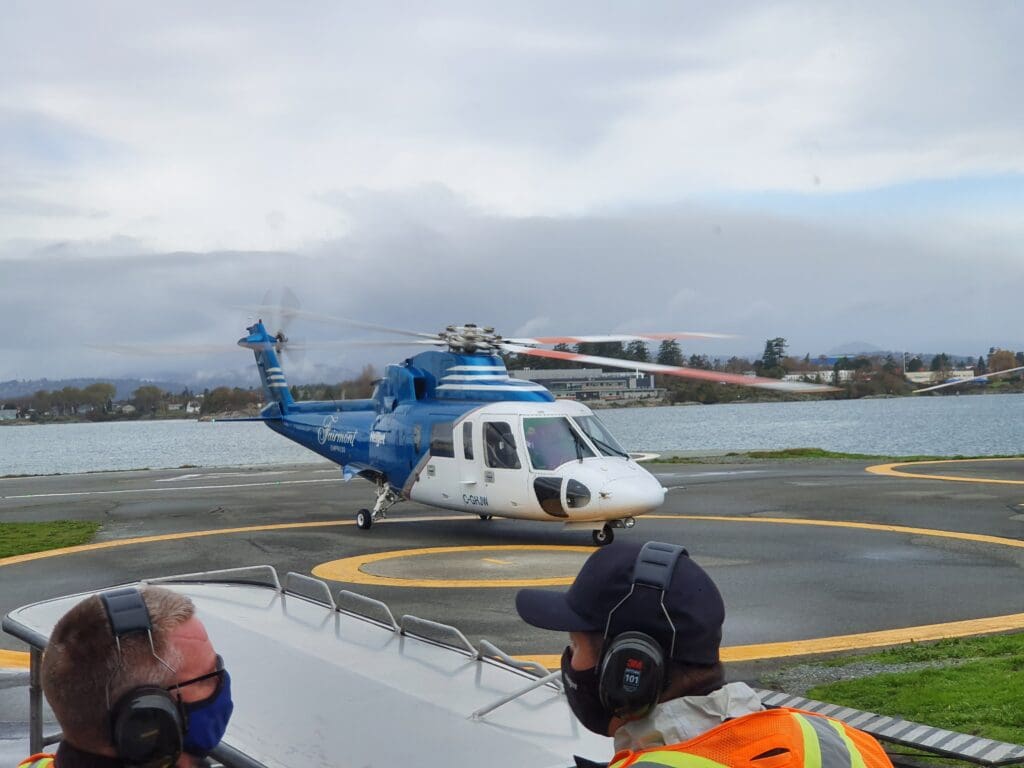
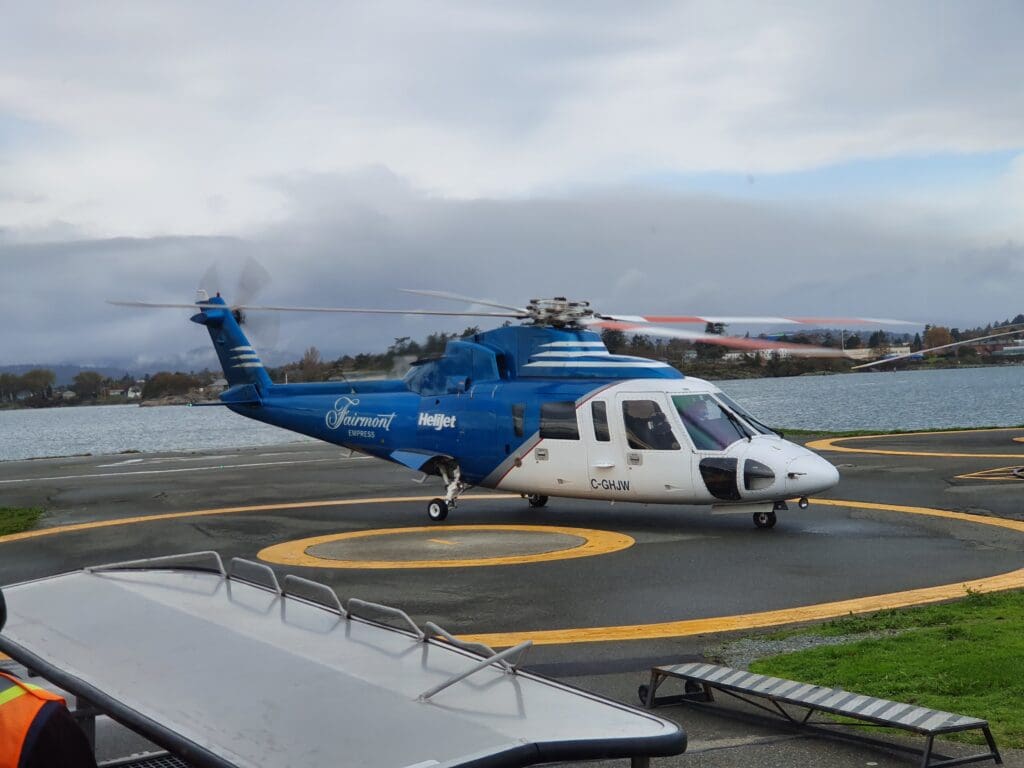
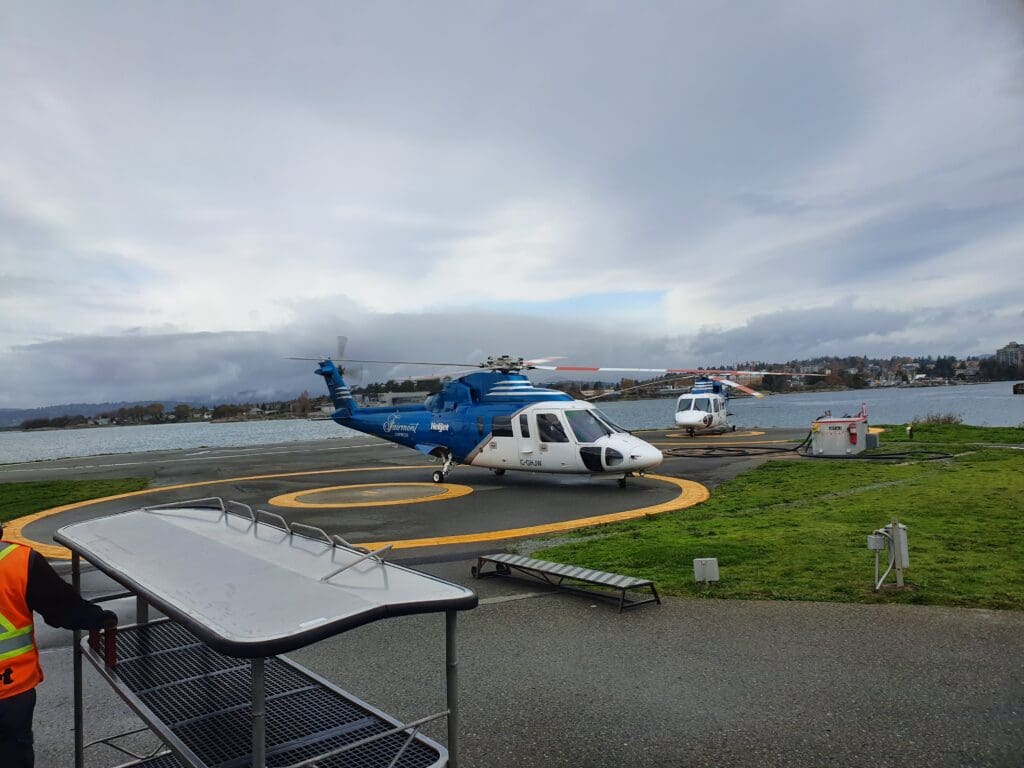
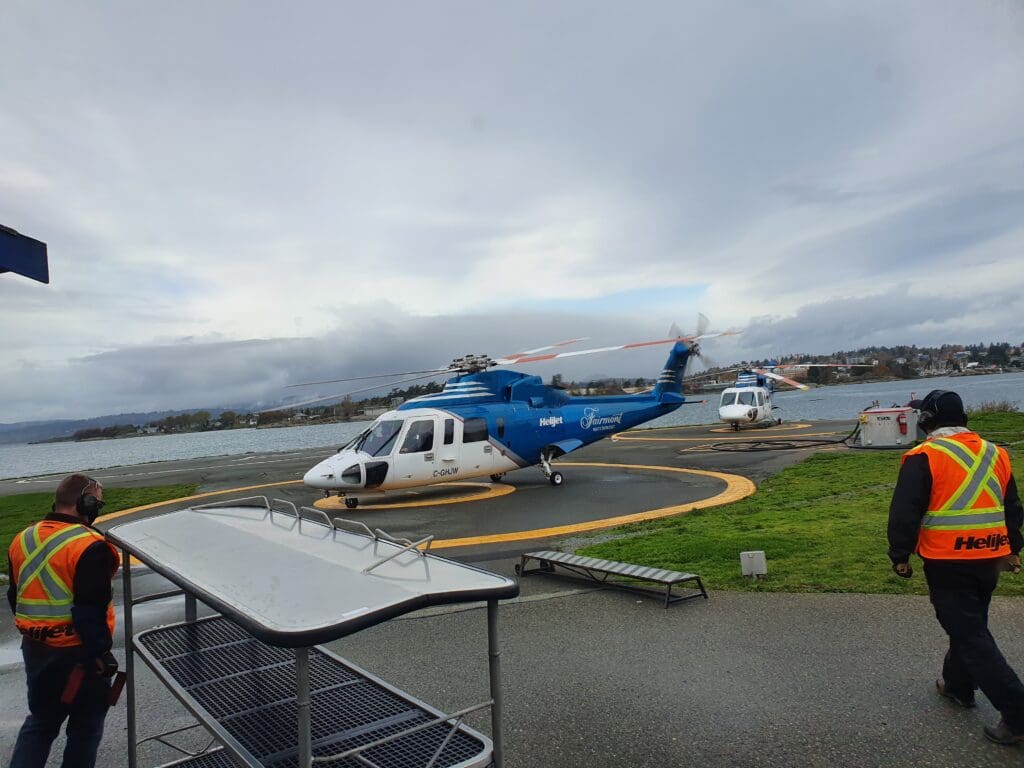
With the construction number 760074, this particular helicopter was manufactured at Sikorsky’s main plant in Stratford, Connecticut in 1980. First sporting the test registration N1547F, this was then delivered to an American owner and given the registration N586C. Whilst details of the helicopter’s early years are sparse, this does appear to have been involved in an accident on the ground in Manhattan in March 1989 when the rotors of N586C intermeshed with those of another Sikorsky S-76. In December 1989, the aircraft was exported to Canada where it was given its current registration and commenced its life in British Columbia with Helijet. Since then, the aircraft has sported a variety of liveries, including promotional colours for the 2010 Winter Olympics.
Once the two inbound passengers had disembarked, the two pilots made their way into the terminal for a quick comfort break before one returned to their helicopter, and the other remained in the terminal. At 1152, an announcement was made requesting those heading off on the 1200 flight to make their way forward for boarding. Ending up second in the queue, I soon handed over my boarding pass to the first officer and picked up a packet of earbuds before walking the short distance through the open air to the waiting aircraft. Given the small size of the cabin, passengers are only allowed to retain small items of luggage with them during Helijet’s flights and so upon approaching the helicopter, I passed my backpack to one of the ramp staff who placed this in the rear hold.

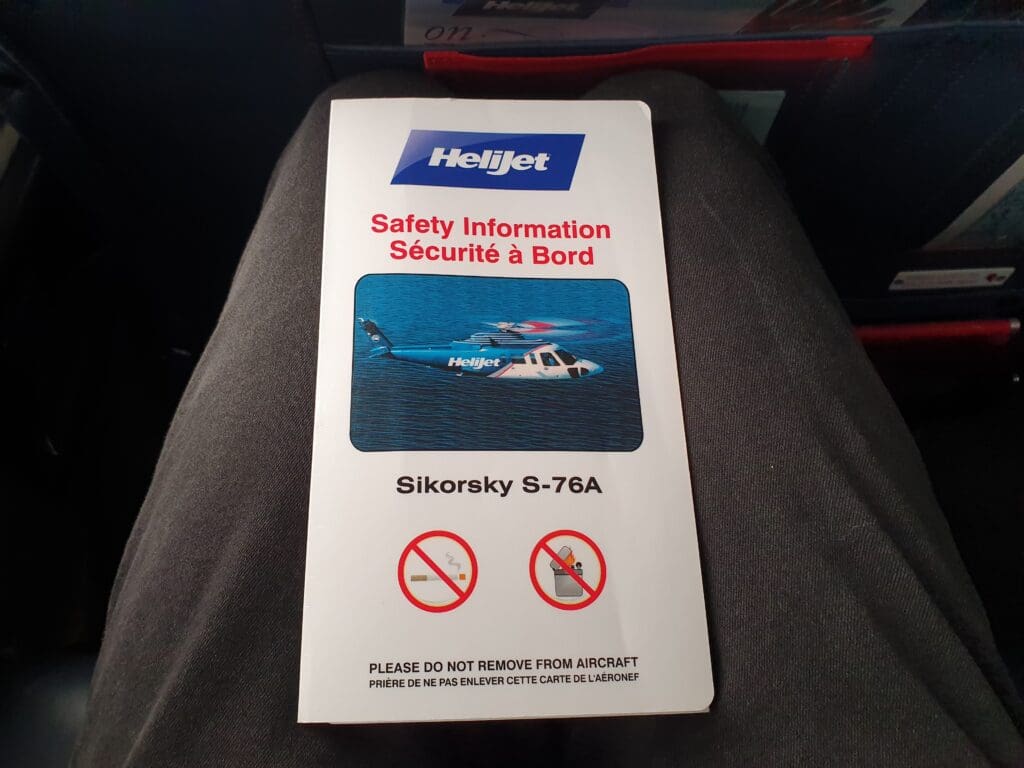
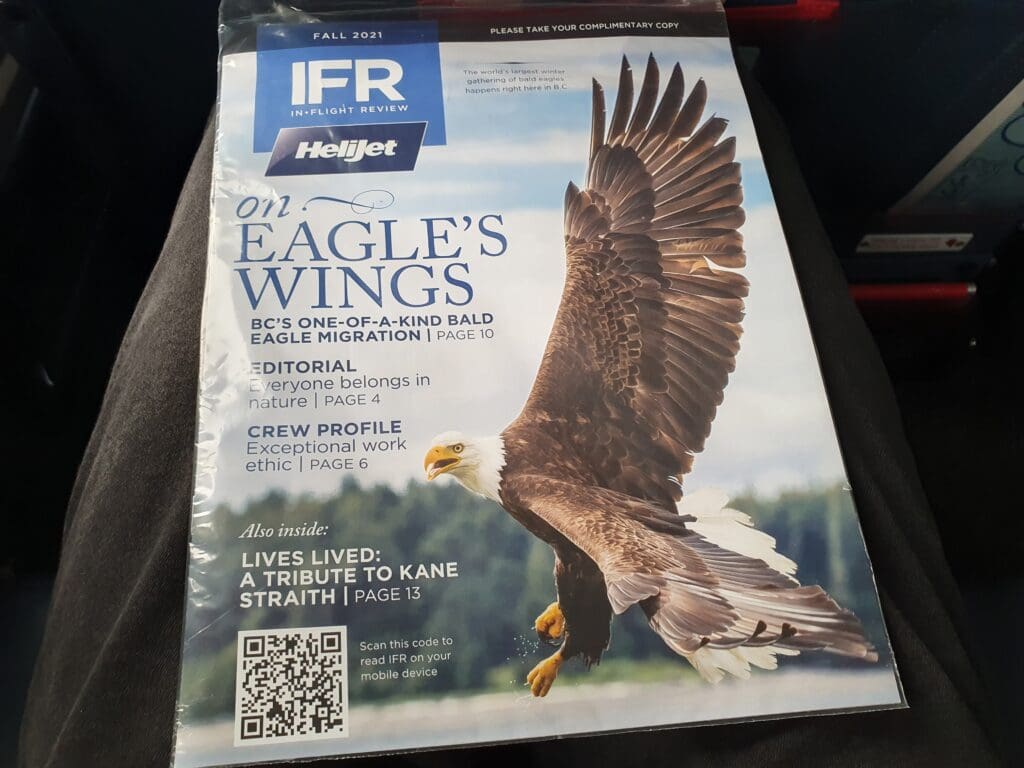
After being separated from my bag, I was advised to take the window seat in the rear row. Capable of carrying a total of twelve passengers, inside, three rows of four conjoined seats can be found, each of which is covered in a light blue (faux?) leather covering on which Helijet’s logo is embroidered. As can be found on more conventional airliners, both individual air vents and reading lights are located above each seat whilst a safety card, a copy of Helijet’s inflight magazine entitled IFR (In-Flight Review) and a sick bag could be found in each seatback pocket.
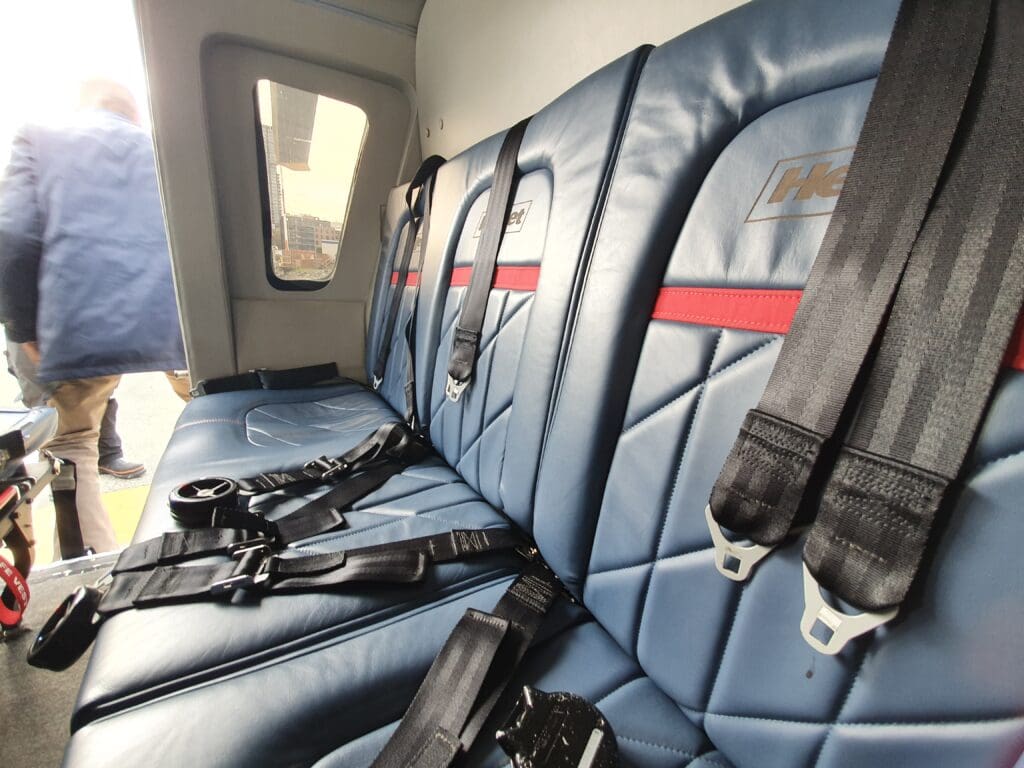
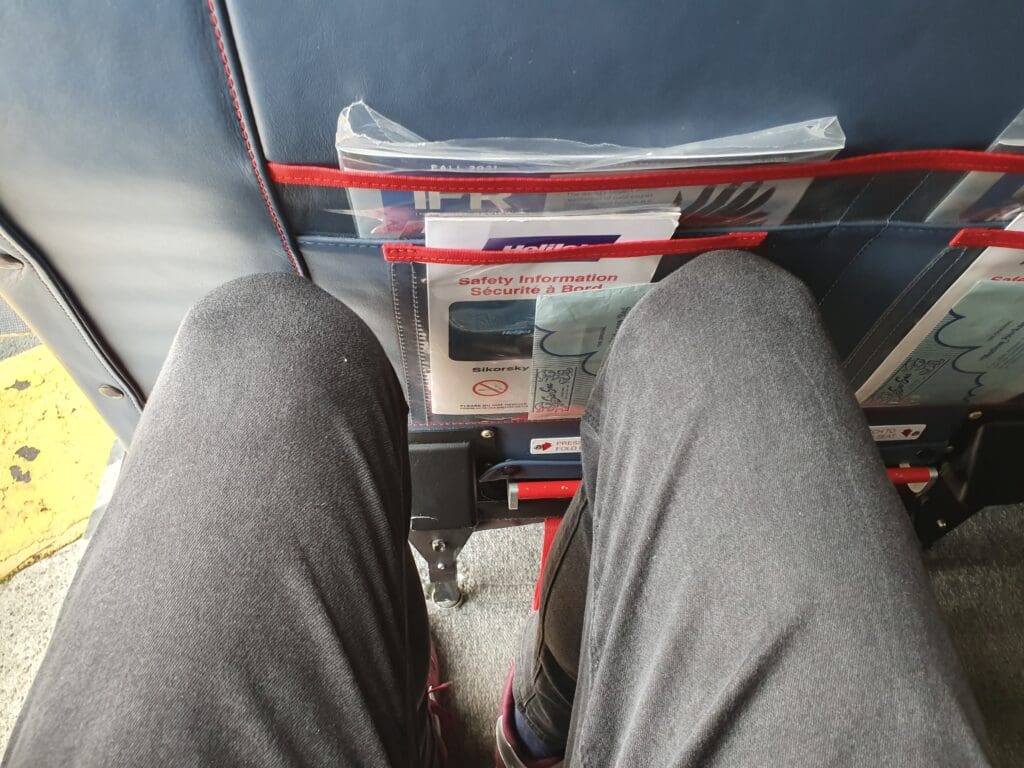
Unsurprisingly seeing as the aircraft had just been cleaned, and considering the light load on the outbound service to Victoria, the area around my seat appeared to be in a spotless condition. Furthermore, aside from the heavily scratched window, the cabin was in a fair state given the aircraft’s age of 41 years old. After clambering in, the row of seats in front was folded back to allow those in the middle row to take their seats. At this point, it became evident that the amount of legroom offered onboard was not particularly fantastic. Coupled with the rather firm seat, the aircraft was not the most comfortable that I have ever flown, yet given the short duration of Helijet’s scheduled services, this was not particularly complaint-worthy.
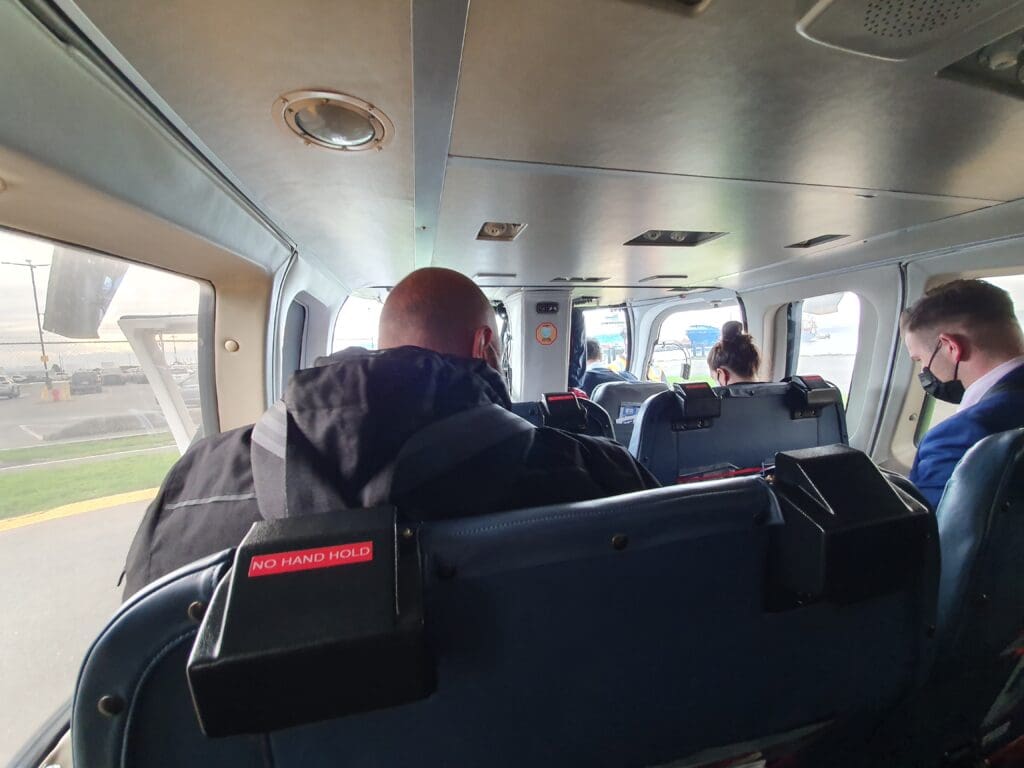
Given the light load, it did not take long at all for all six passengers to board the helicopter and I soon strapped myself in with the four-point harness more typically seen onboard light aircraft. Meanwhile, the passenger directly in front of me was given a short briefing by the First Officer on how to open the cabin door in the event of an emergency, whilst myself and the other passenger in the back row were instructed on how to hold the seats forward in the event that we would have to make a quick exit. Afterwards, the cabin door was slammed shut and the First Officer made their way to the cockpit before turning around and giving a short pre-flight speech, advising us of the 30-minute flight time and the location of the lifejackets. To be completely honest, with no safety video shown, no instructions on how to use the non-typical seatbelts and only a few sentences offered regarding safety and emergency procedures, whilst acknowledging most onboard were regulars, I was still a little surprised that a more comprehensive briefing was not offered.
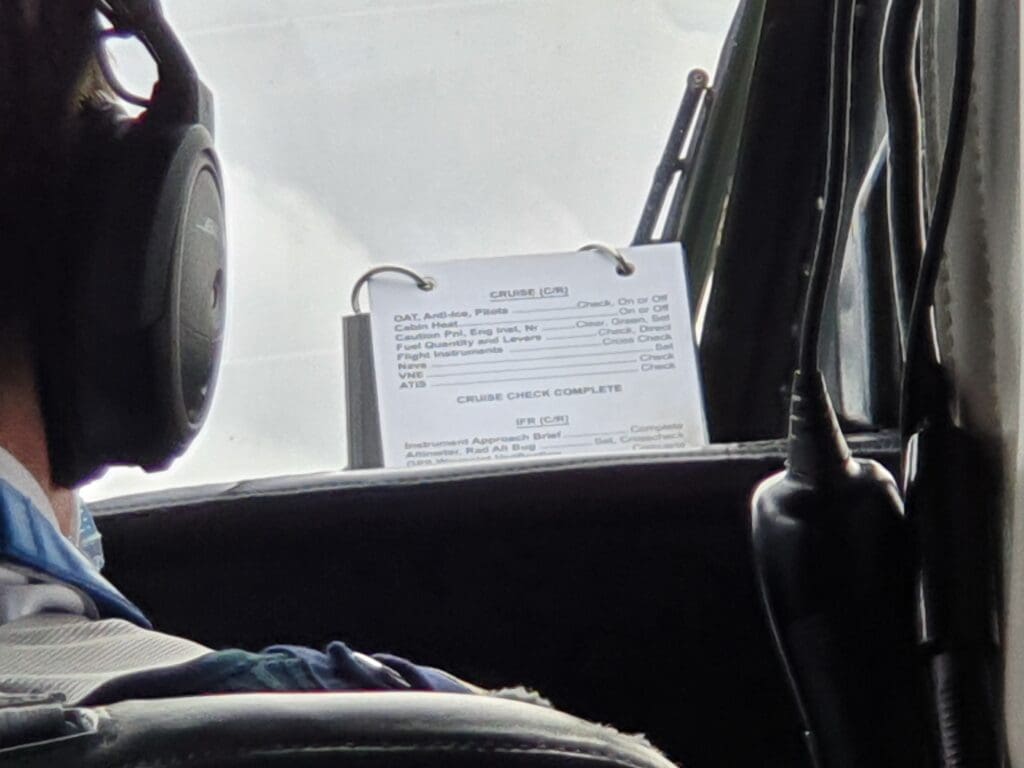
At 1156, the Sikorsky’s two Allison 250-C30S turboshaft engines whined and fired up into life, causing an incredible racket inside the cabin. At this point, in order to protect my hearing, I decided it would be a good idea to put my earbuds in! Above the cabin, the rotors whirled into life as the pilots could be seen running through their pre-departure checks ahead. On a side note, aviation enthusiasts may wish to request to sit in either 1A or 1D, with both seats offering a good view of the action up ahead as well as outside through the side windows.
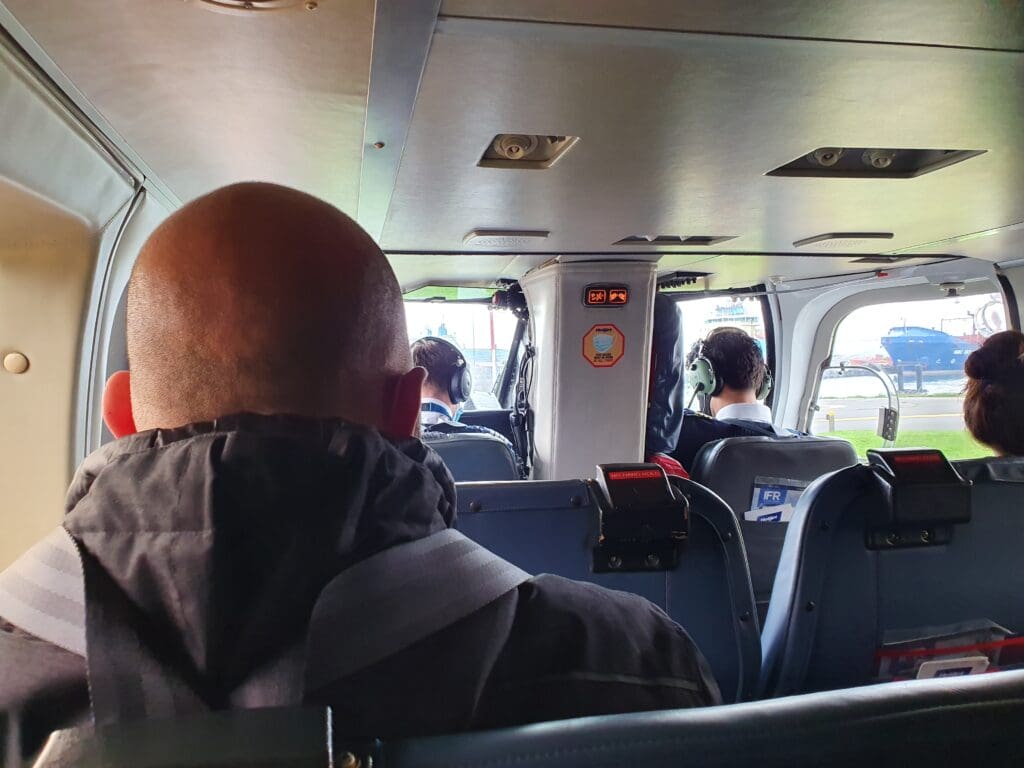
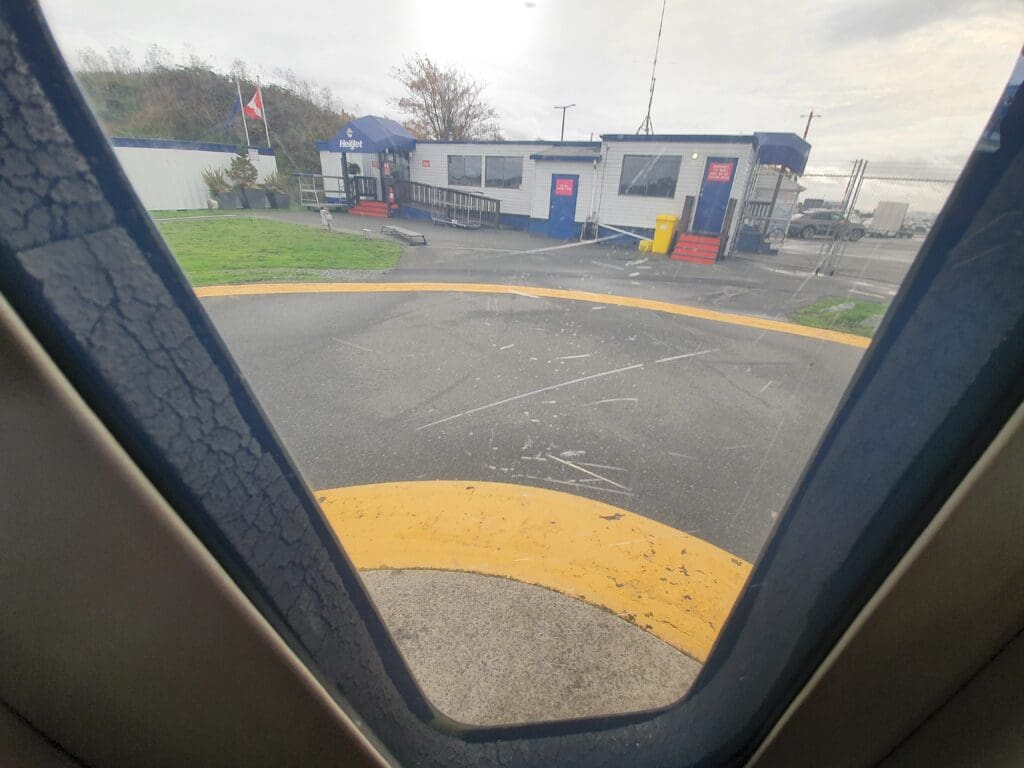
Right on time, at 1200 the aircraft made a short taxi over to the helipad and came to a temporary pause before lifting up into the sky resulting in an incredible amount of noise and a level of vibration that may be rather unnerving to a helicopter novice. After coming to a hover for several moments just above the ground, the Sikorsky’s nose dipped before the helicopter picked up speed and altitude, whizzing past the BBC Dolphin, a general cargo ship that had recently arrived from Everett in Washington state as well as the neighbouring Maersk Trader. Skirting past the breakwater, the helicopter then headed out to sea, soon passing through low-lying clouds during which some relatively gentle turbulence could be felt.
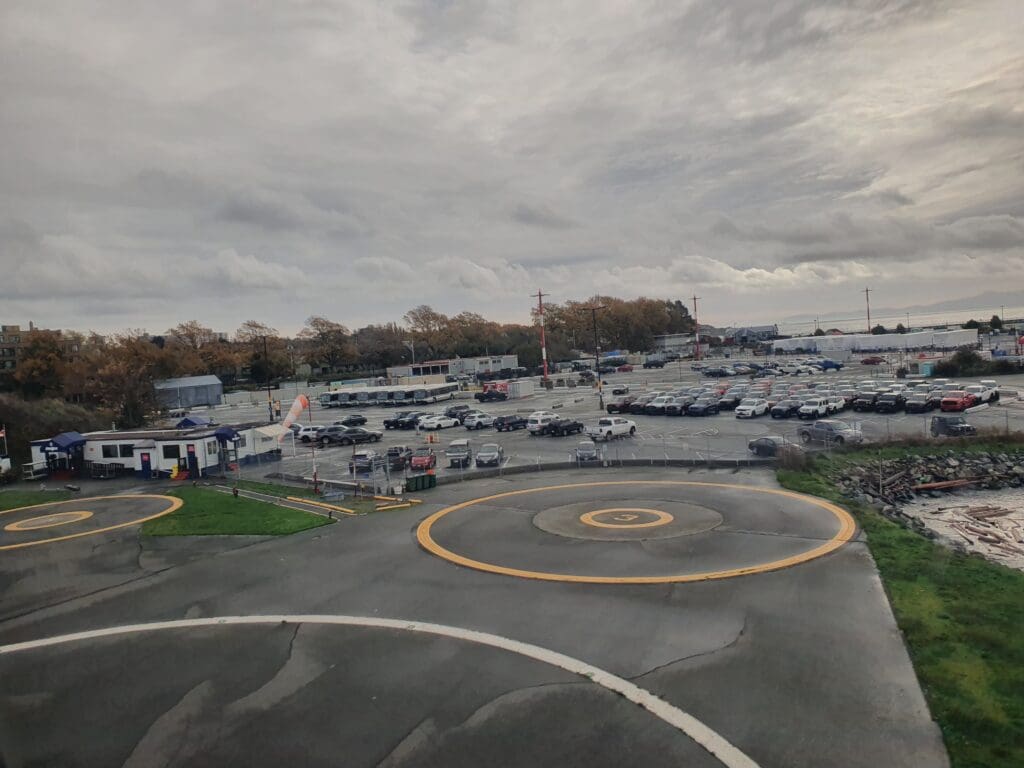
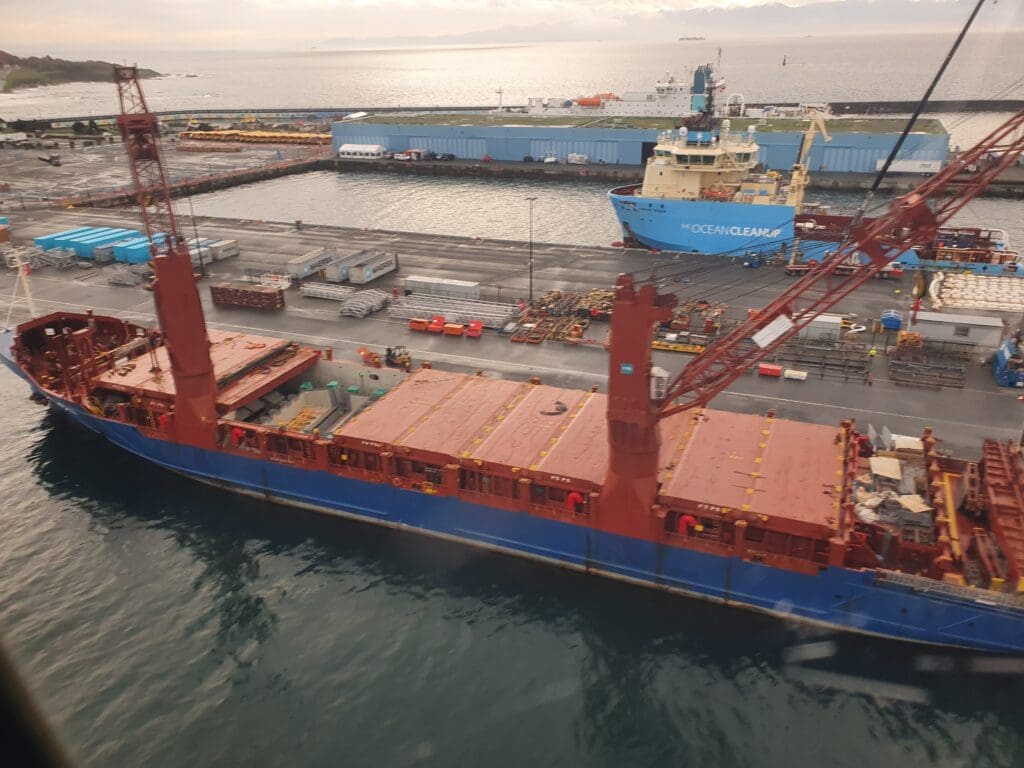
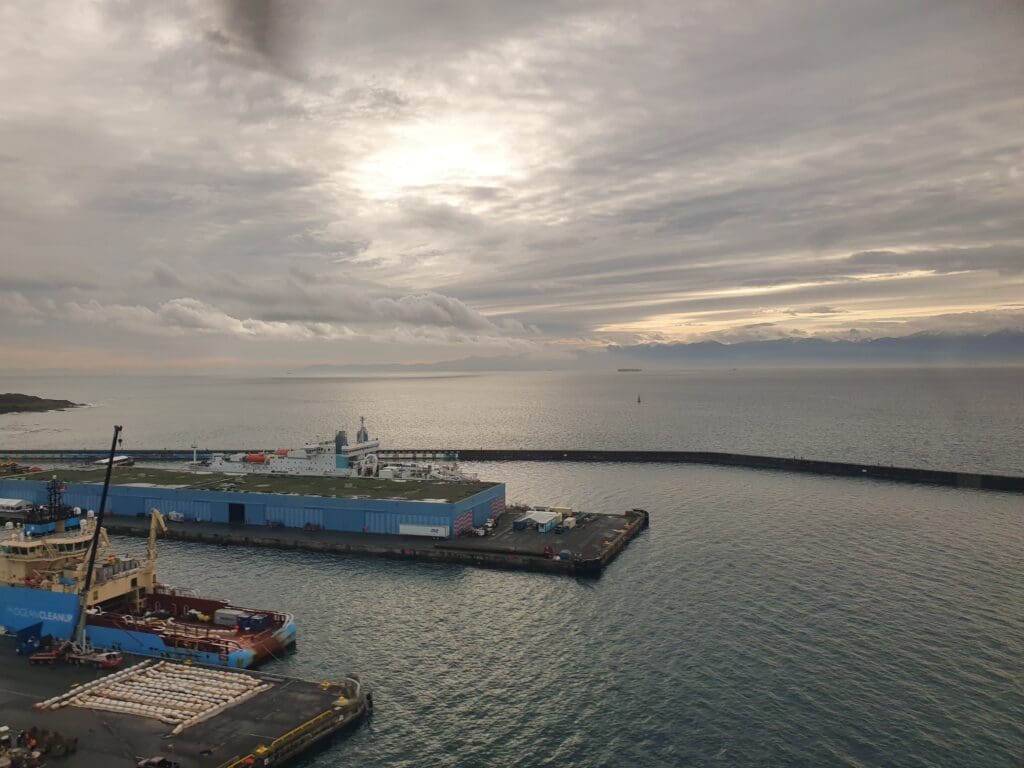
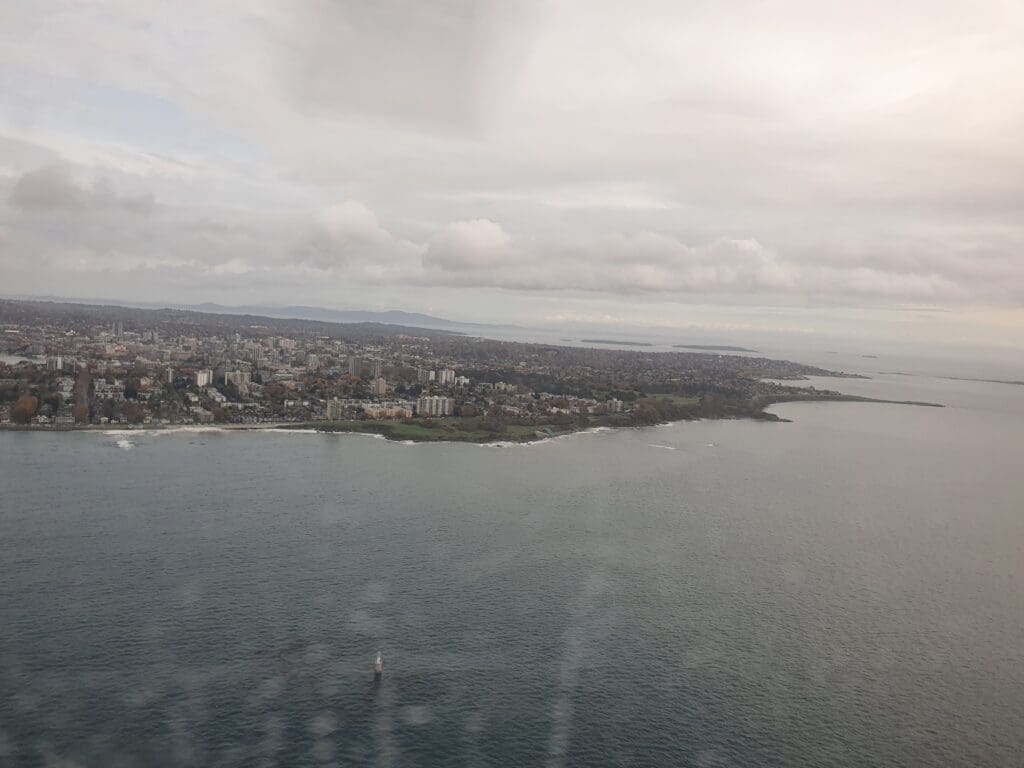

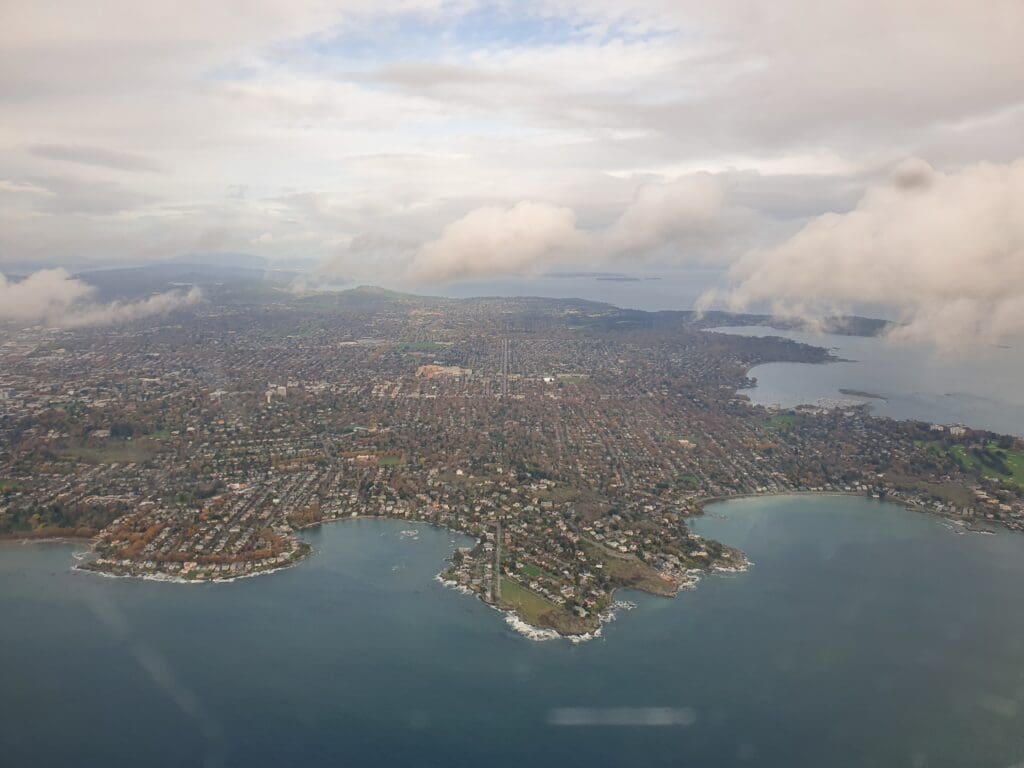
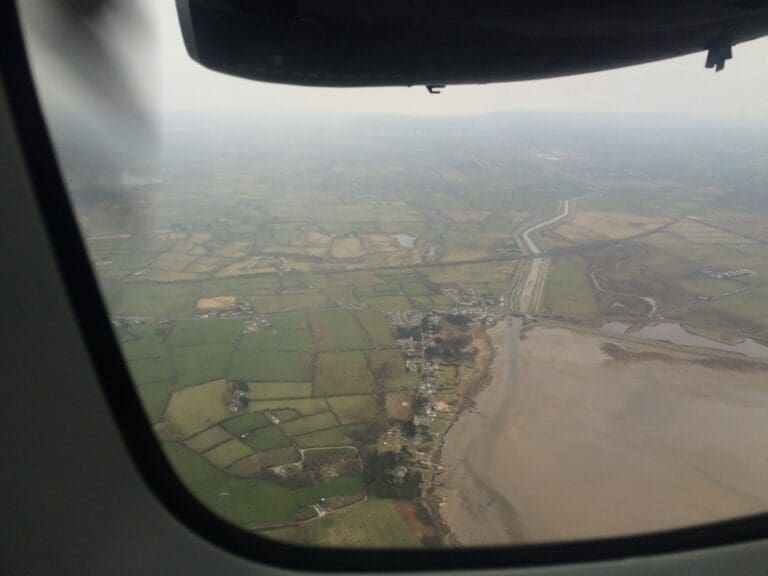
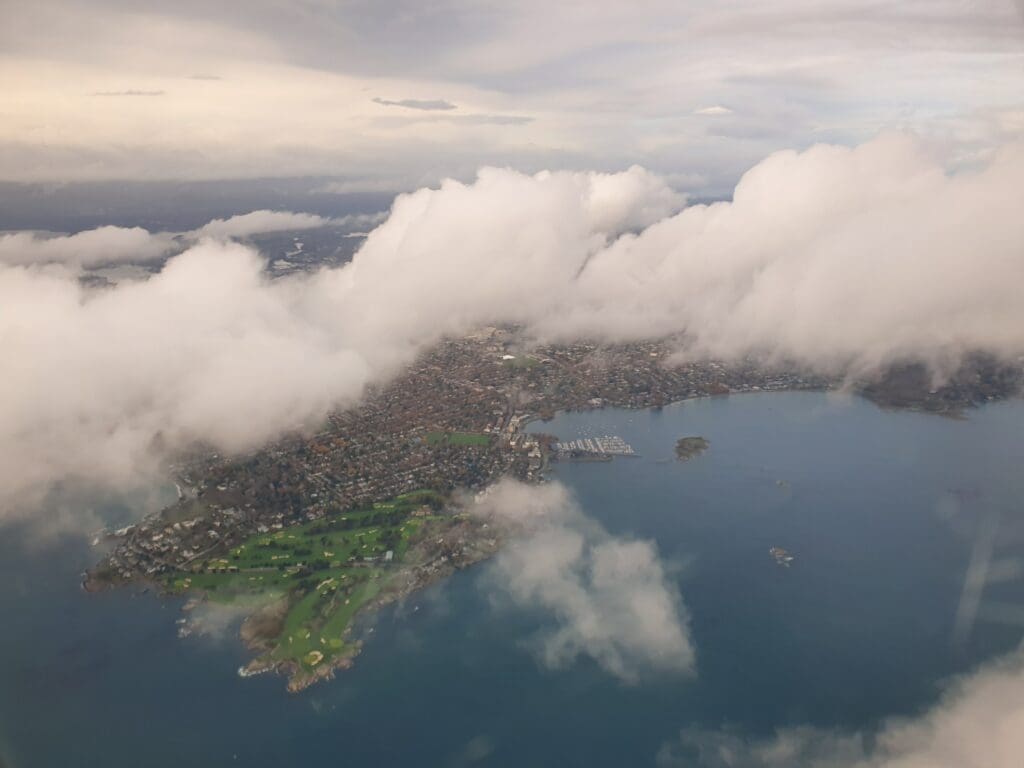
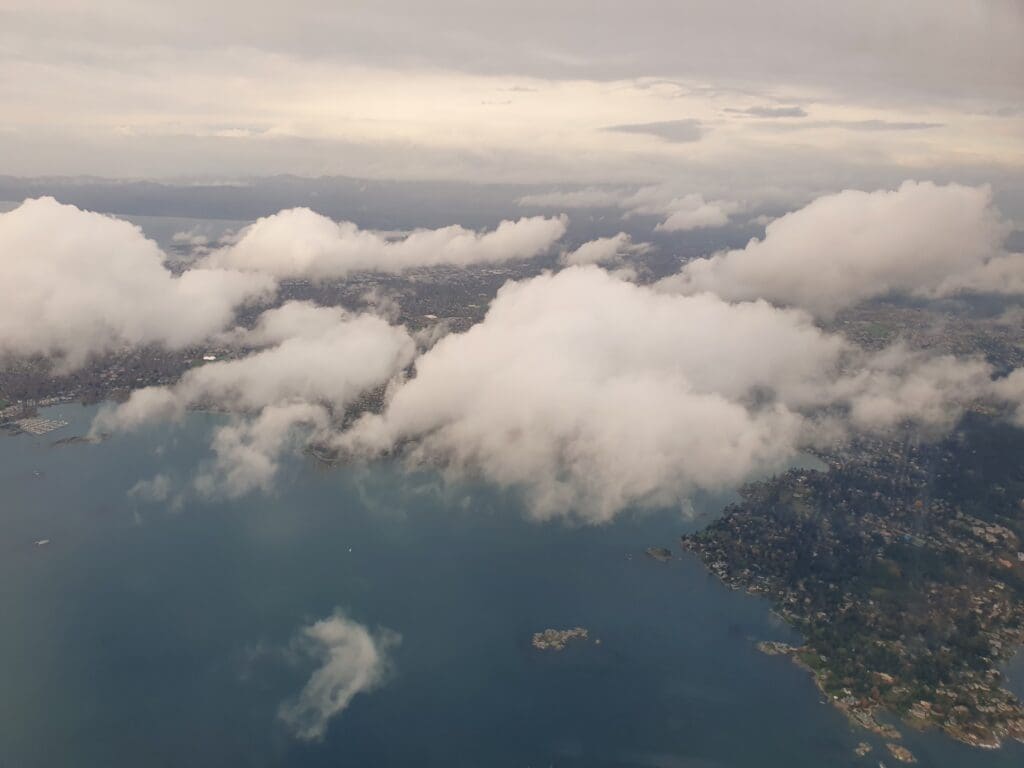
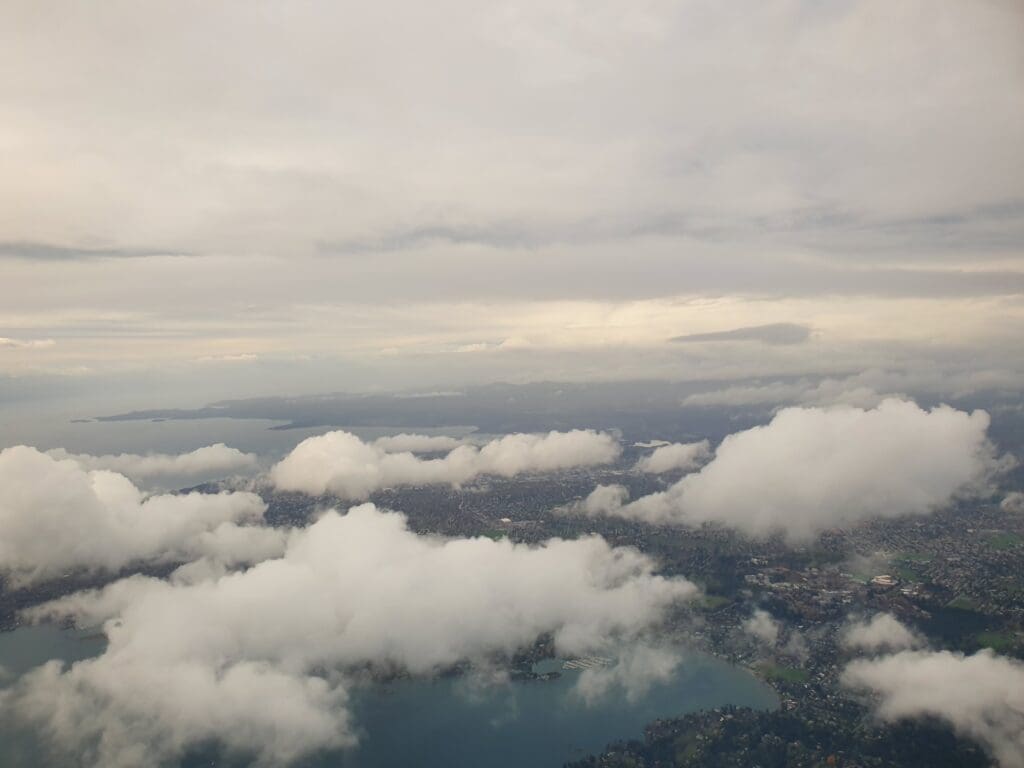
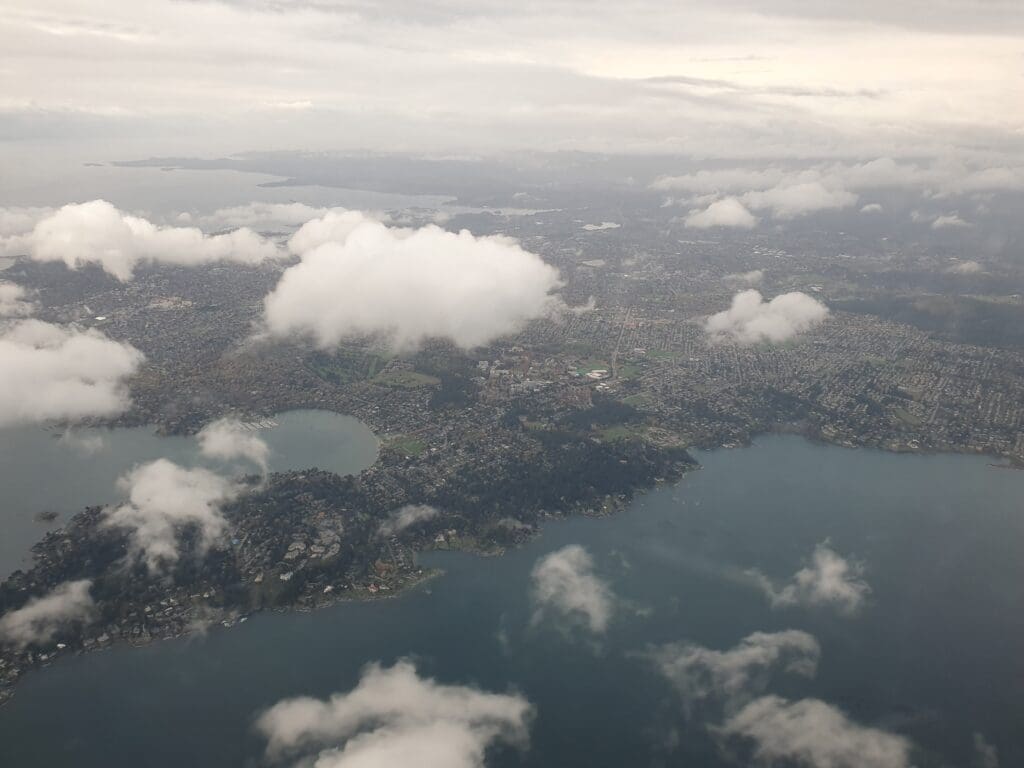
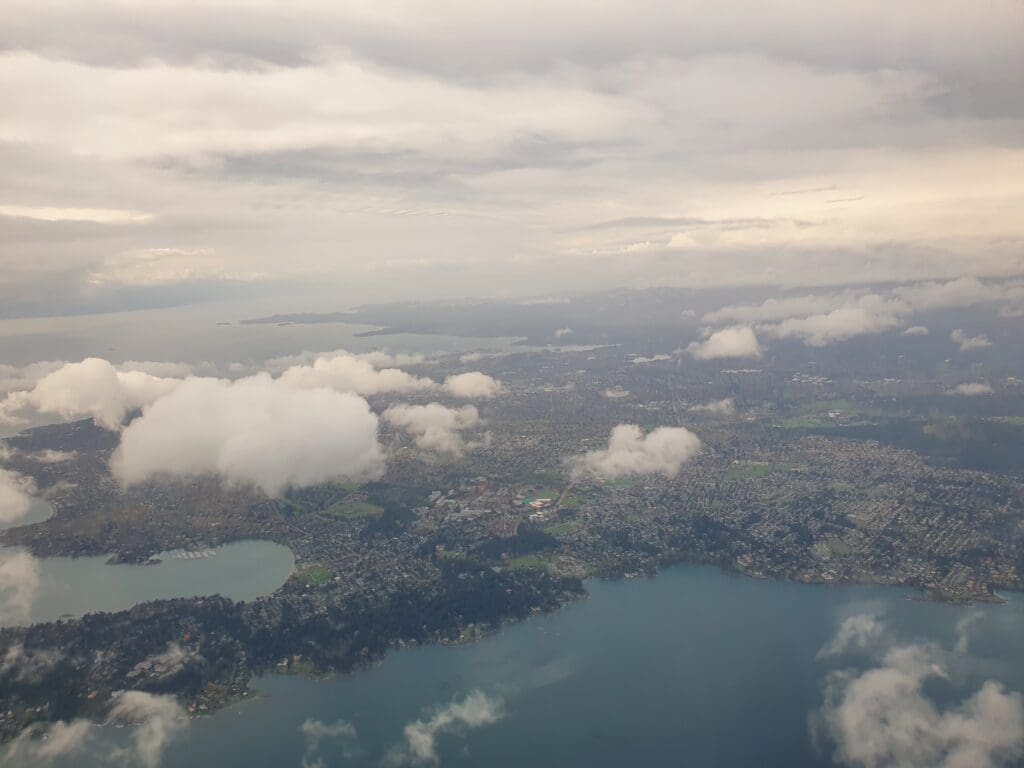
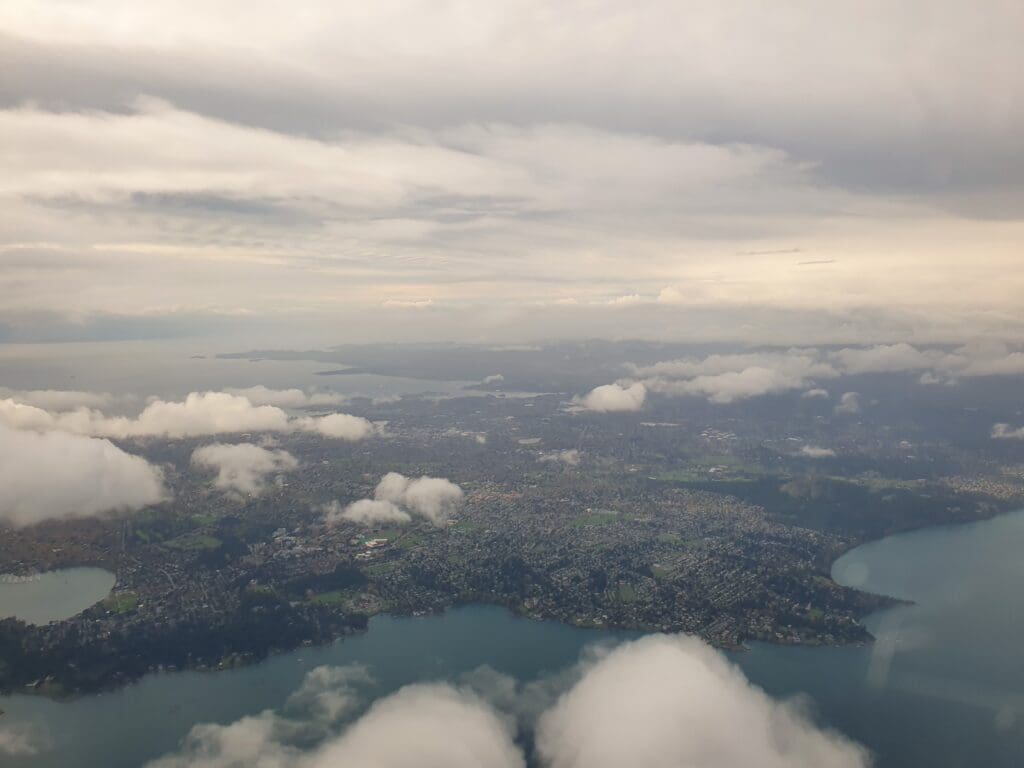
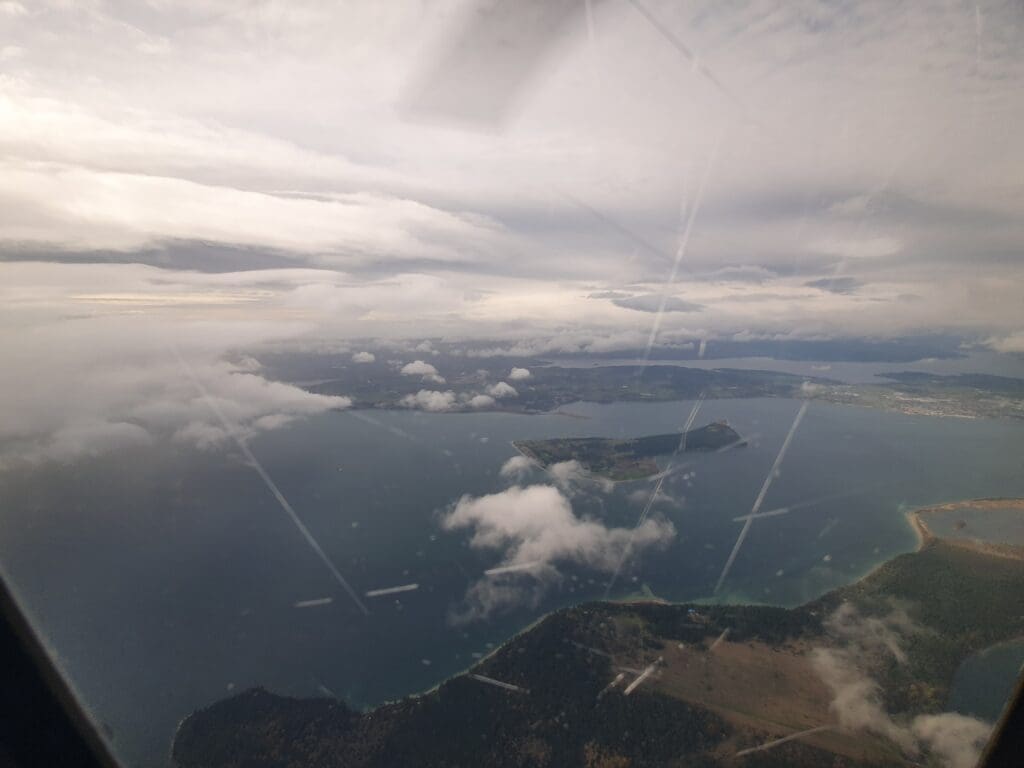
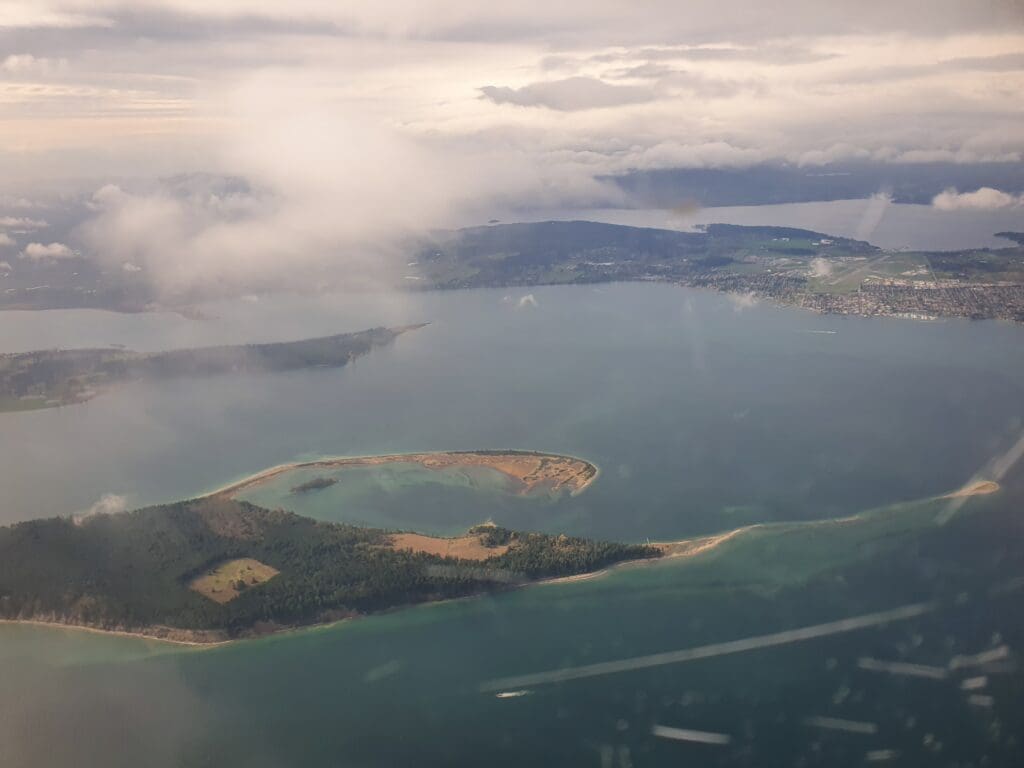
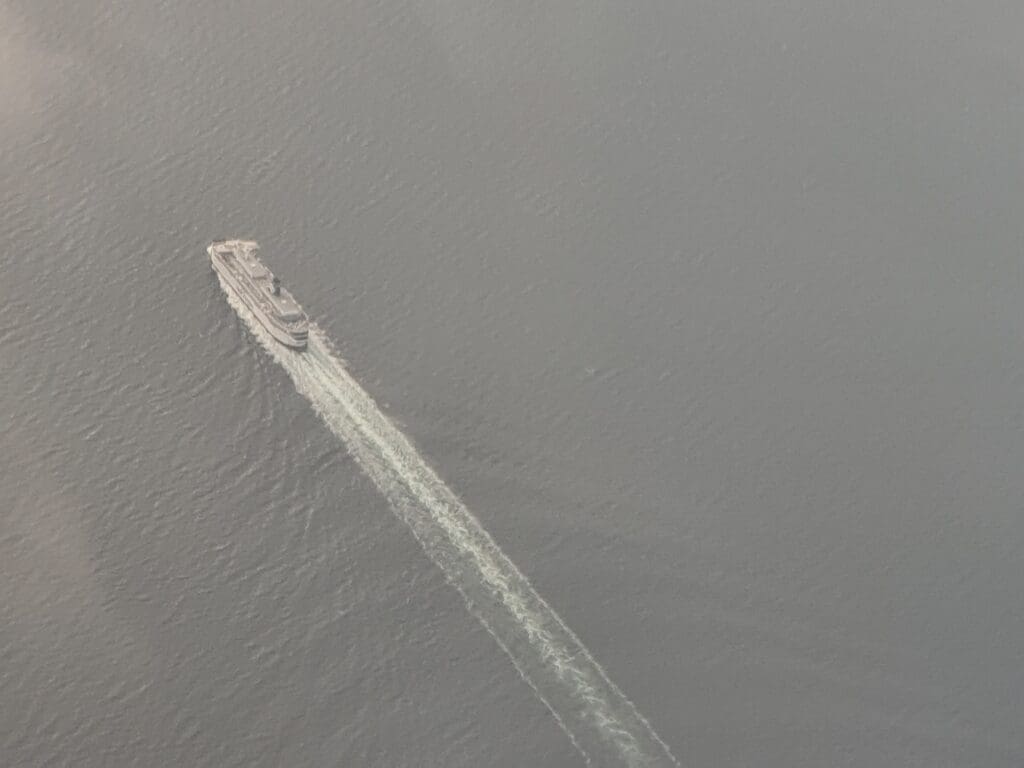
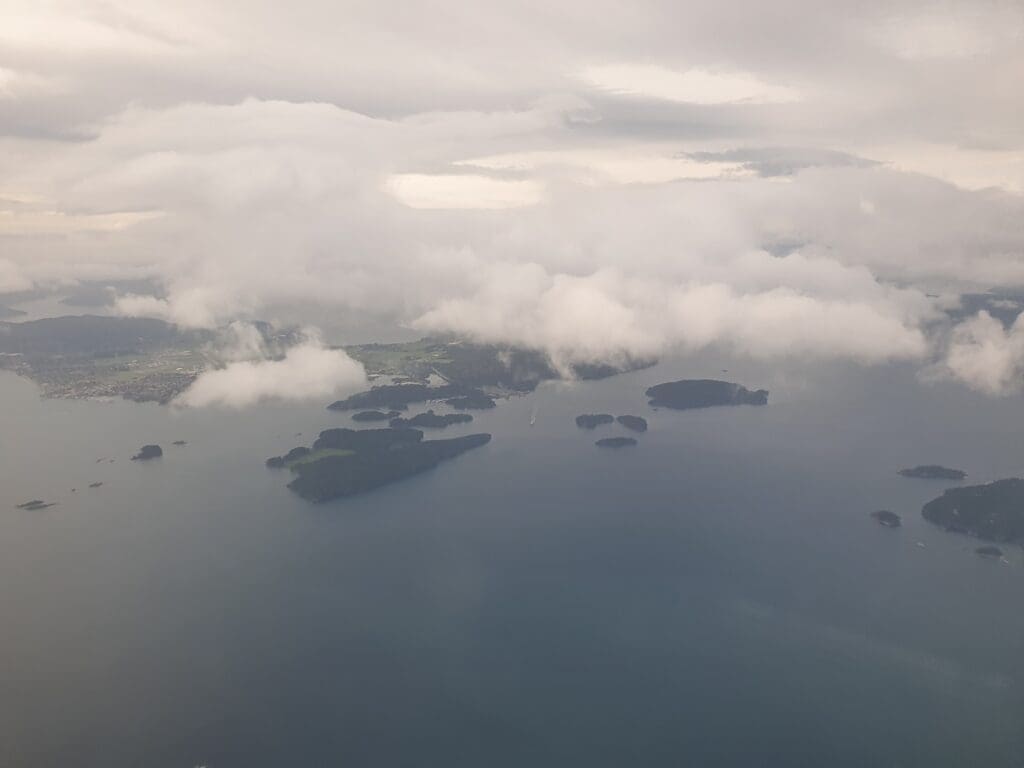
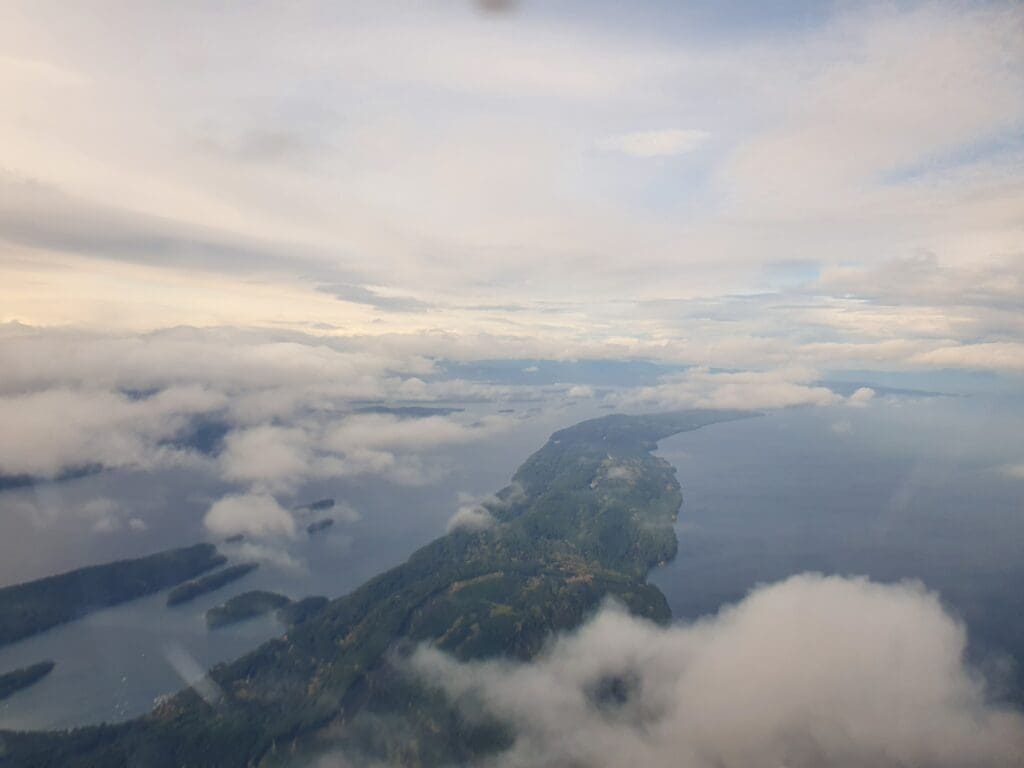
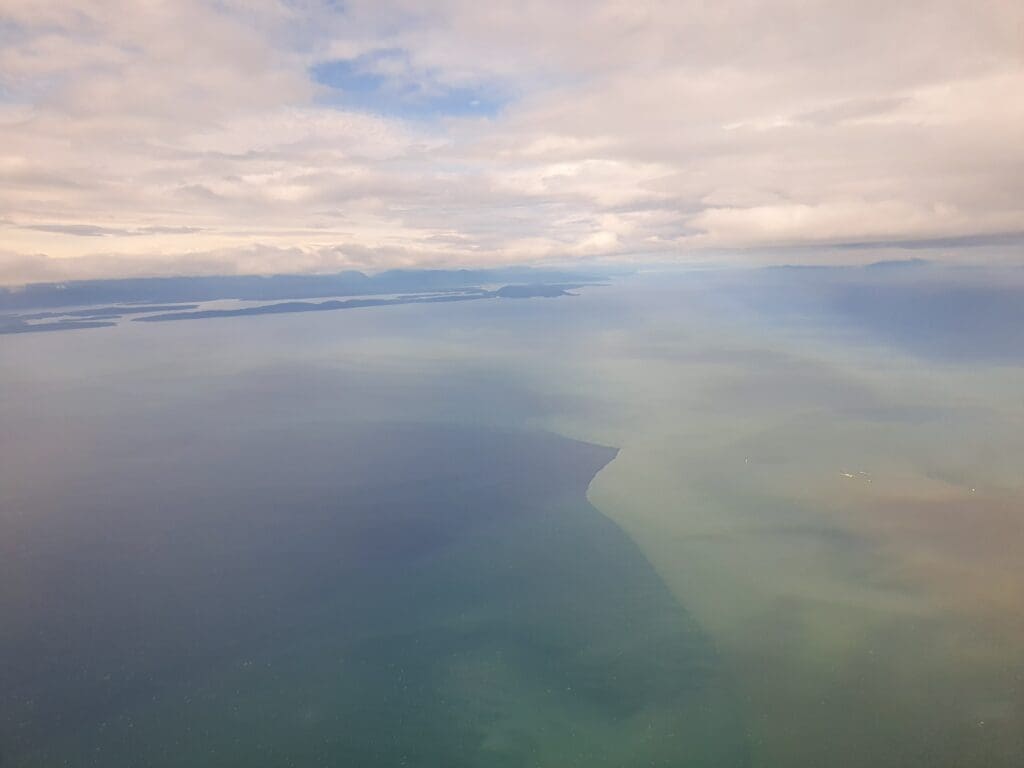
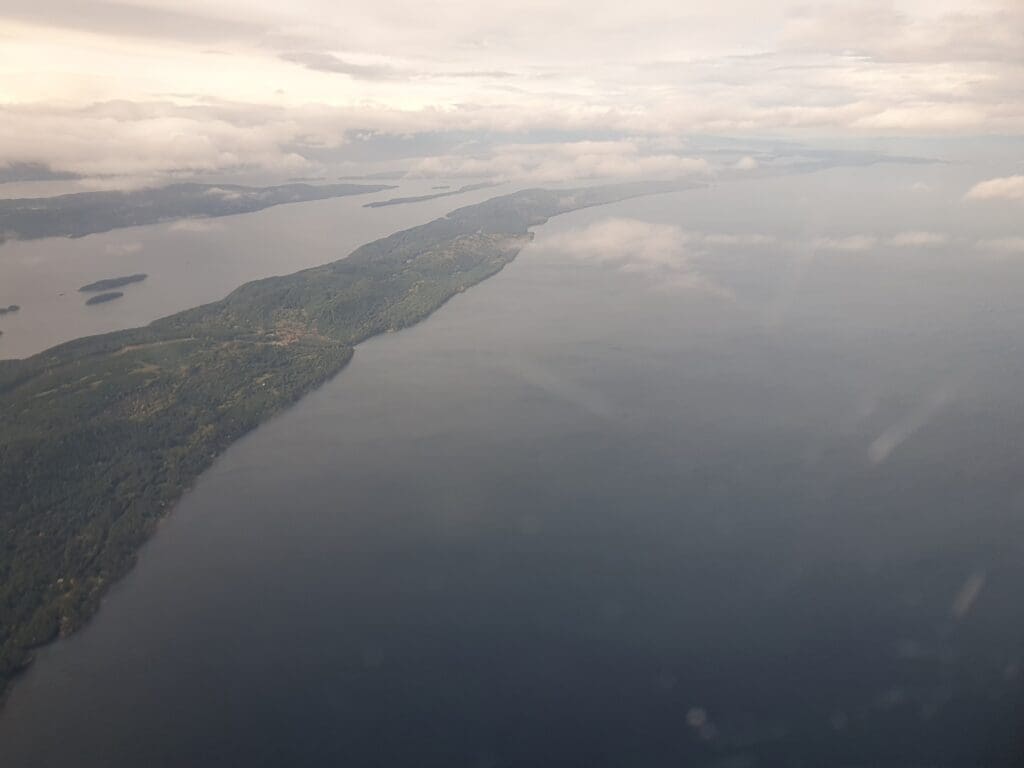
As the helicopter trundled away from Victoria, I was offered good views of the city’s southern coastline including Clover Point and Finlayson Point as well as Gonzales Bay, McNeill Bay and Rose Bay before the city became partially obscured by low-lying clouds. After skirting around the southern shoreline, the helicopter turned northwards and flew along the city’s western coast, with the entirety of Ten Mile Point visible. The aircraft then passed over Sidney Island with its distinctive spit, whilst Victoria Airport also appeared before soon disappearing behind a low-lying cloud. After leaving Victoria, things got a little cloudy below, however, I was still treated to sporadic views of the scenic islands that litter the Strait of Georgia, with a clear view offered as the helicopter cruised over Galiano Island before heading out over the sea and making a beeline for the mainland.

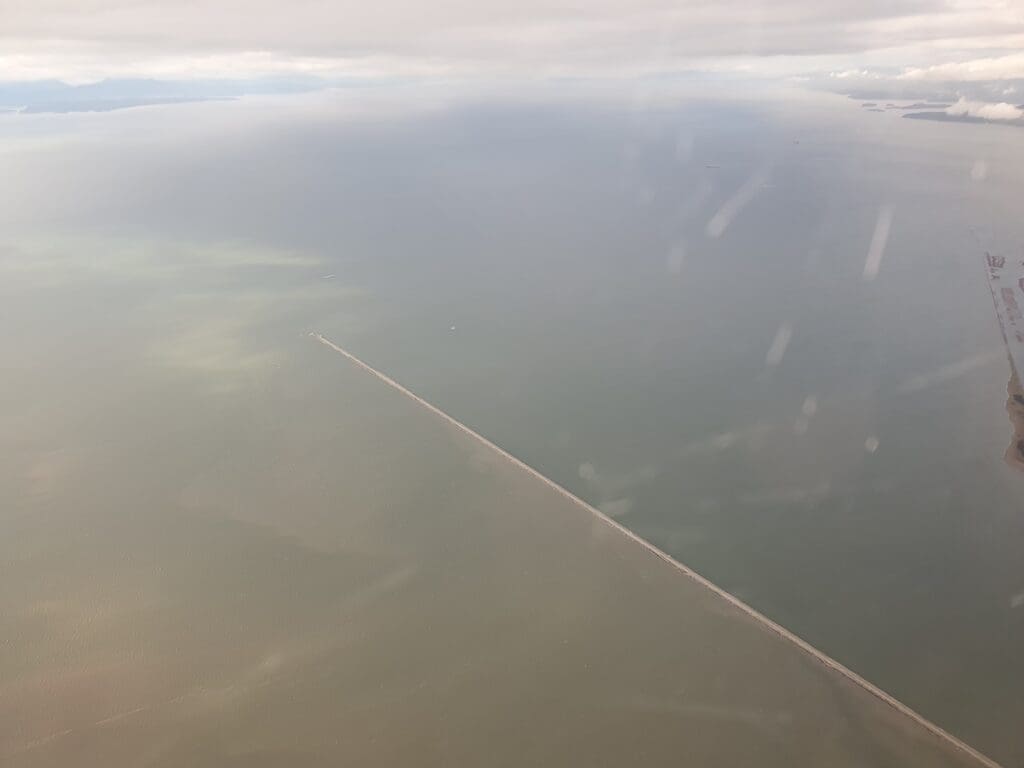
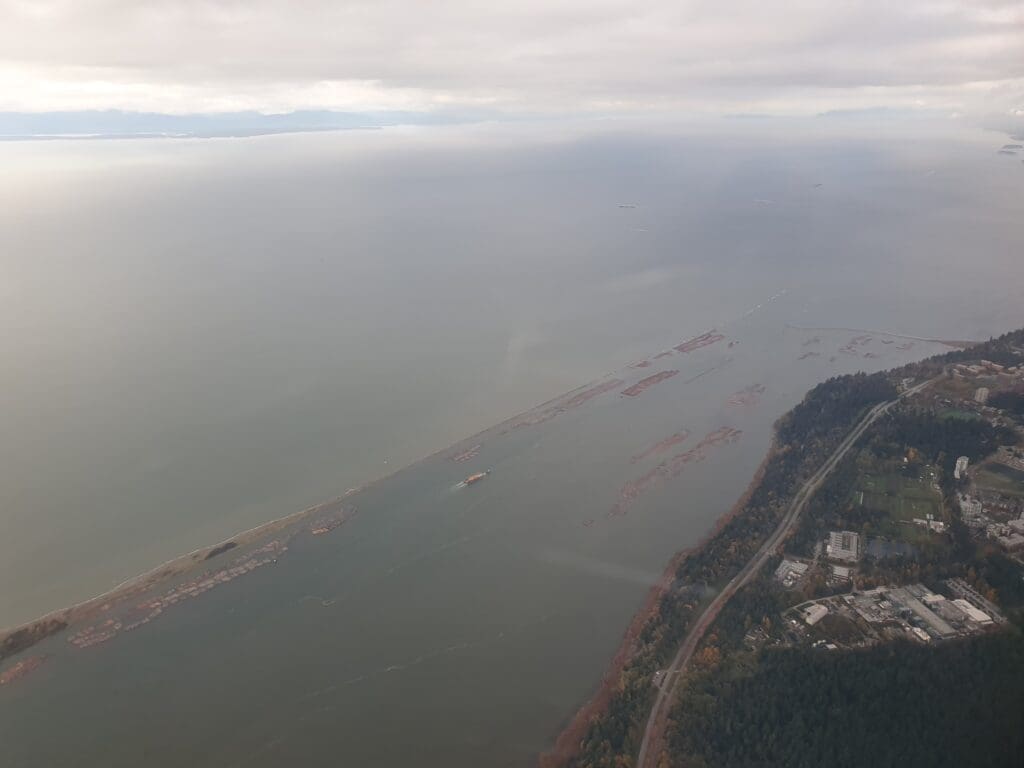
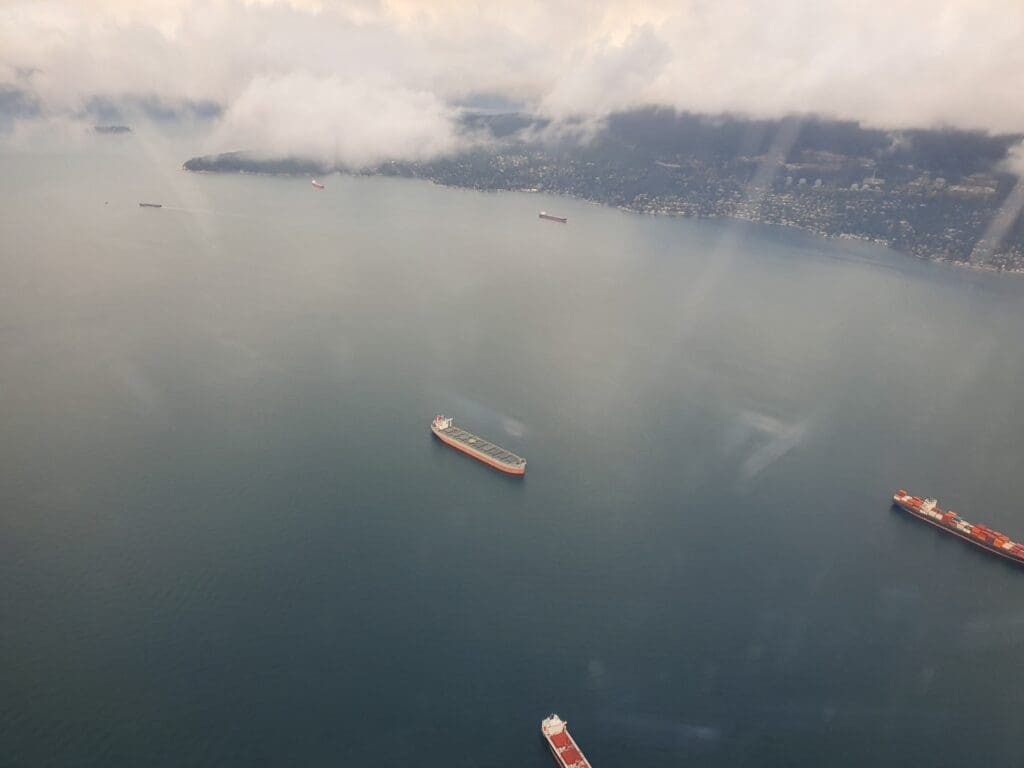
Sitting on the left-hand side of the aircraft, unfortunately, I was on the wrong side to be treated to any decent views of Richmond and Vancouver as we approached our destination. Instead, the Iona Terminus jutting out into the sea and the sight of an Air Canada jet climbing upwards beneath the helicopter indicated that the flight was reaching its end. A short time later, the helicopter made landfall near the southern end of the University of British Columbia’s campus before heading out over the Burrard Inlet where a flotilla of cargo ships could be seen waiting to dock as the aircraft crossed over Stanley Park.
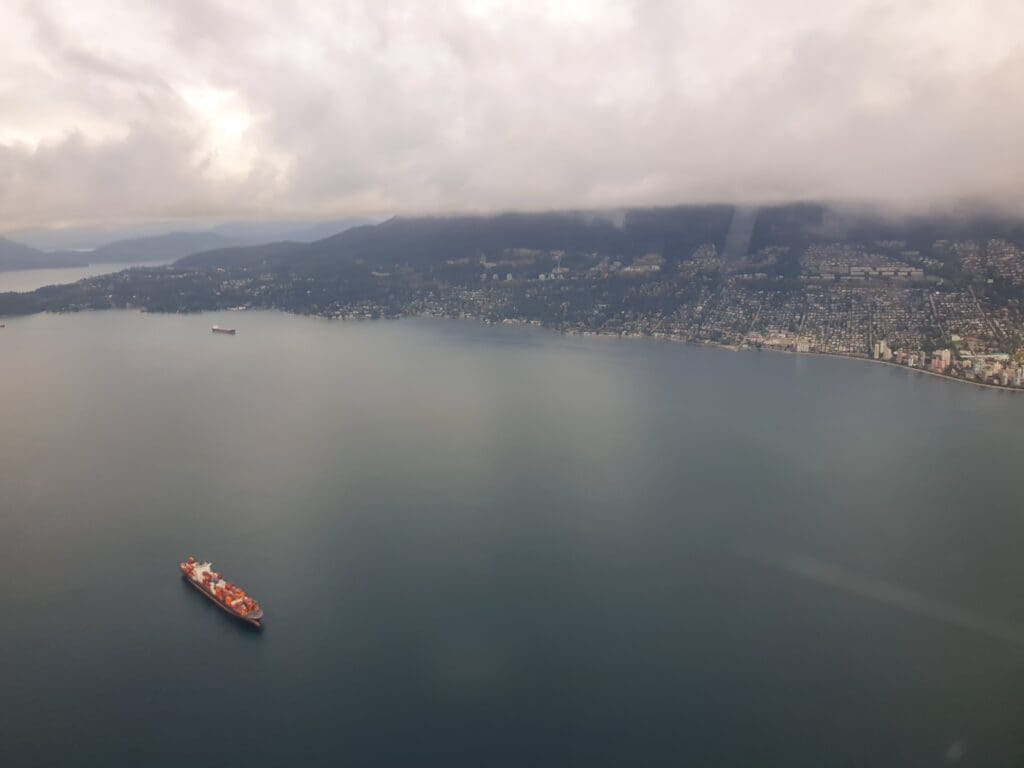
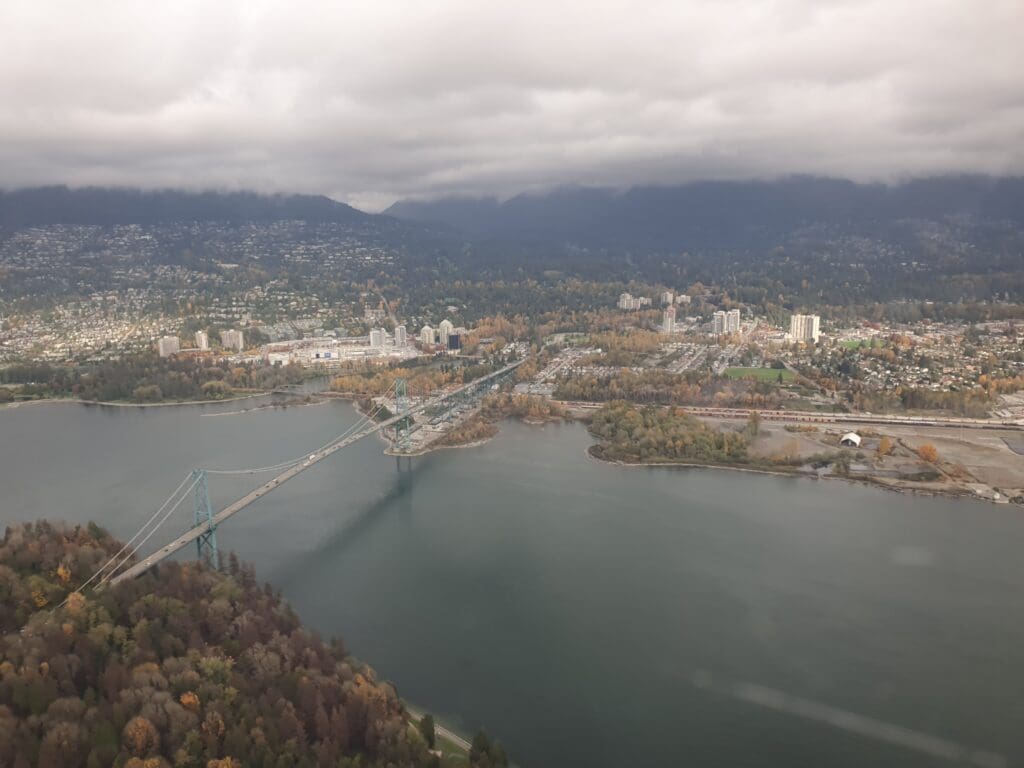
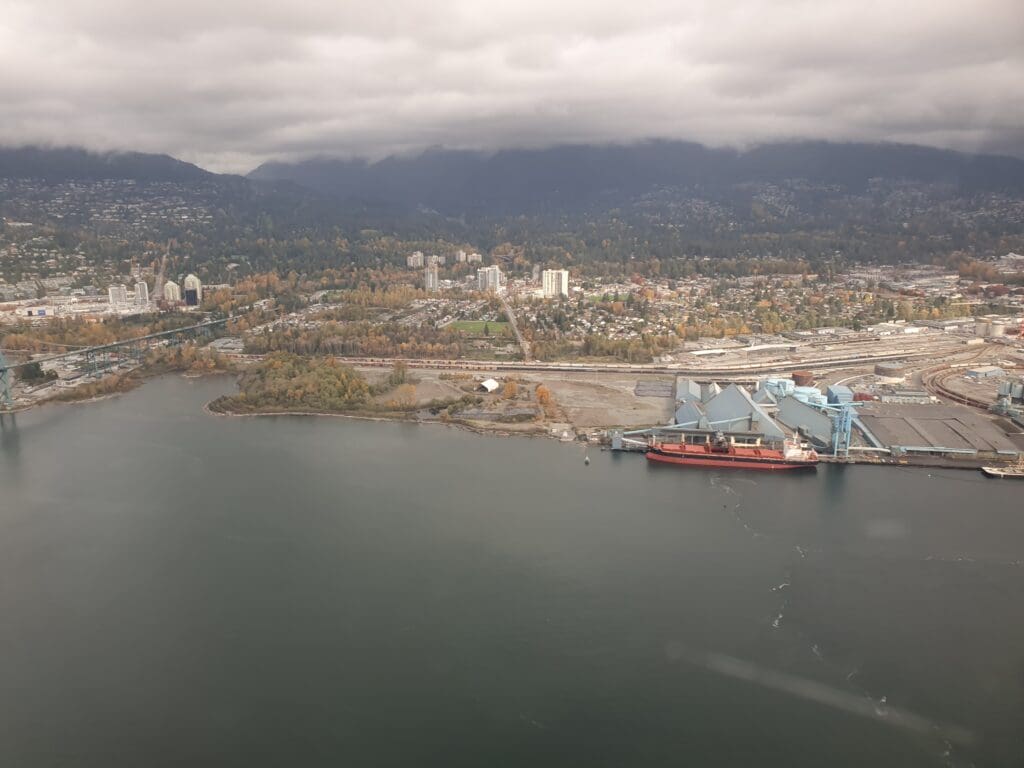
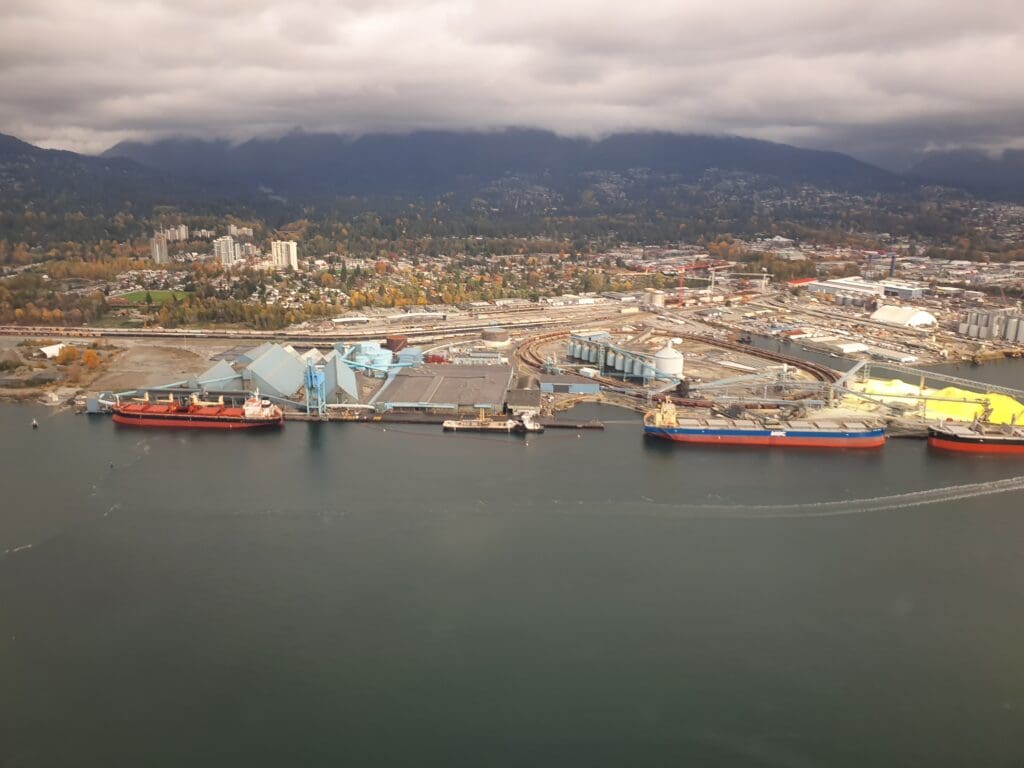
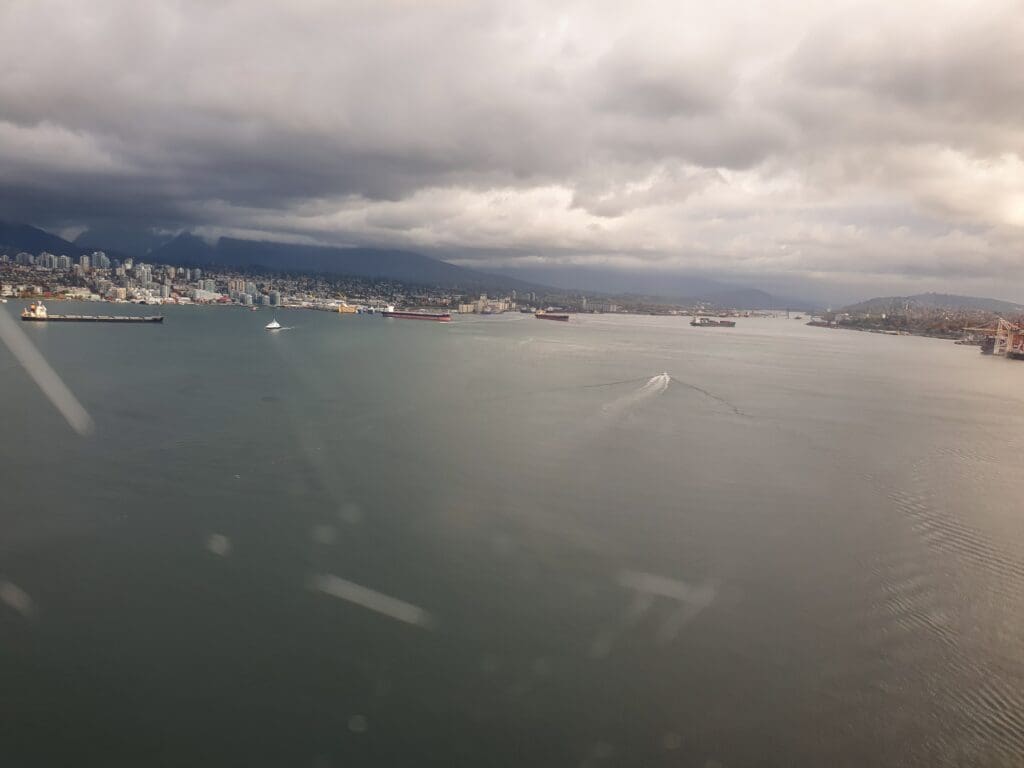
After crossing over Lions Gate Bridge, the Sikorsky turned towards the shoreline and descended in preparation for its arrival into Coal Harbour Heliport. Meanwhile, below the gear could be felt extending with a slight bump, however, any noise produced by this action was drowned out by the helicopter’s noisy engines. Gently floating down over Vancouver Harbour, as the nose pitched up and the helicopter slowed, plenty of vibrations could be felt once again before the aircraft came to a hover just over the helipad before settling down with a barely noticeable bump. Once on the groun,d the helicopter taxied over to stand 3 where a team of ground crew could be seen raring to service the aircraft. As the engines spooled down, the ground crew took out passengers’ bags from the rear hold and once the rotors stopped turning, disembarkation commenced.
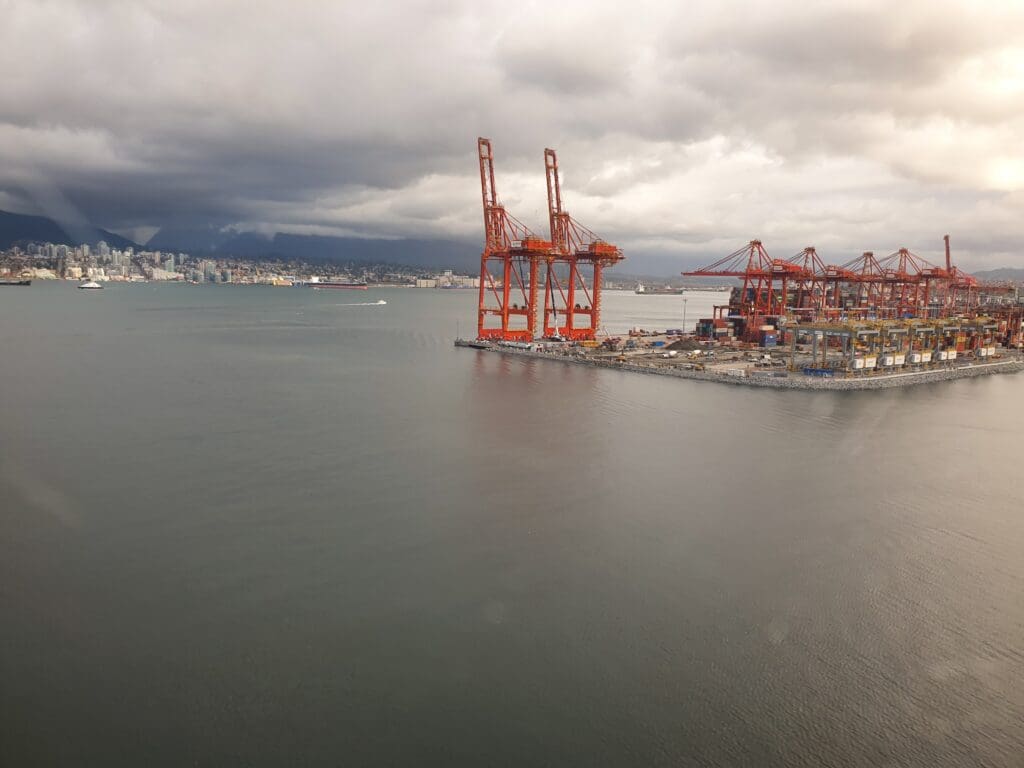
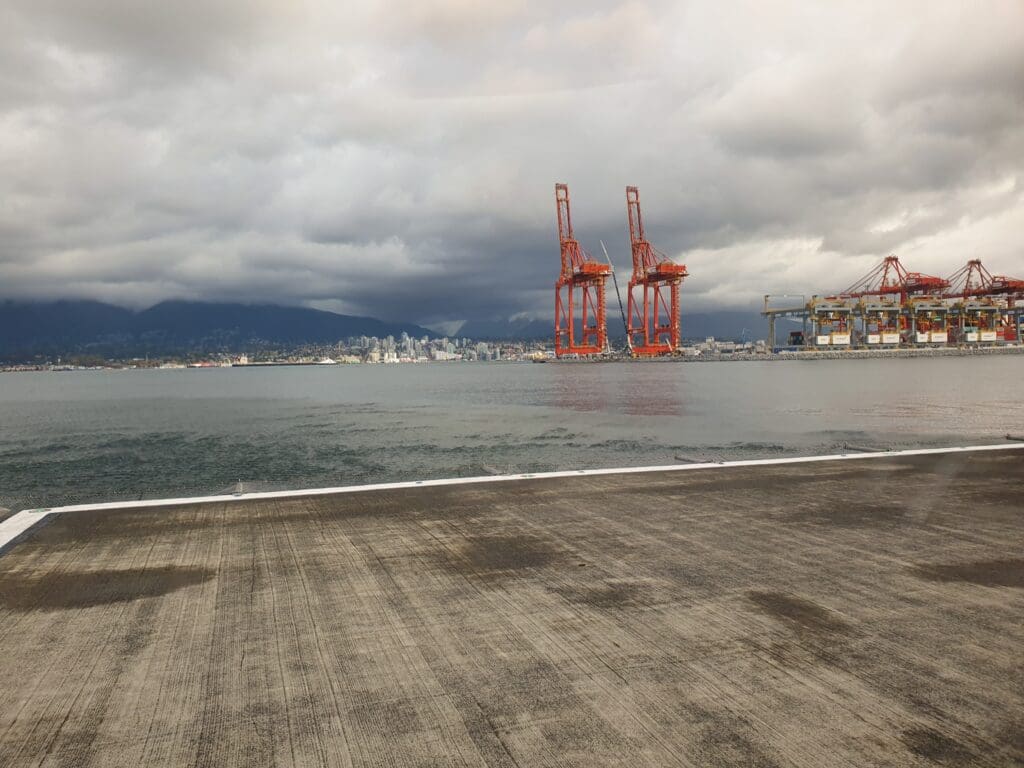
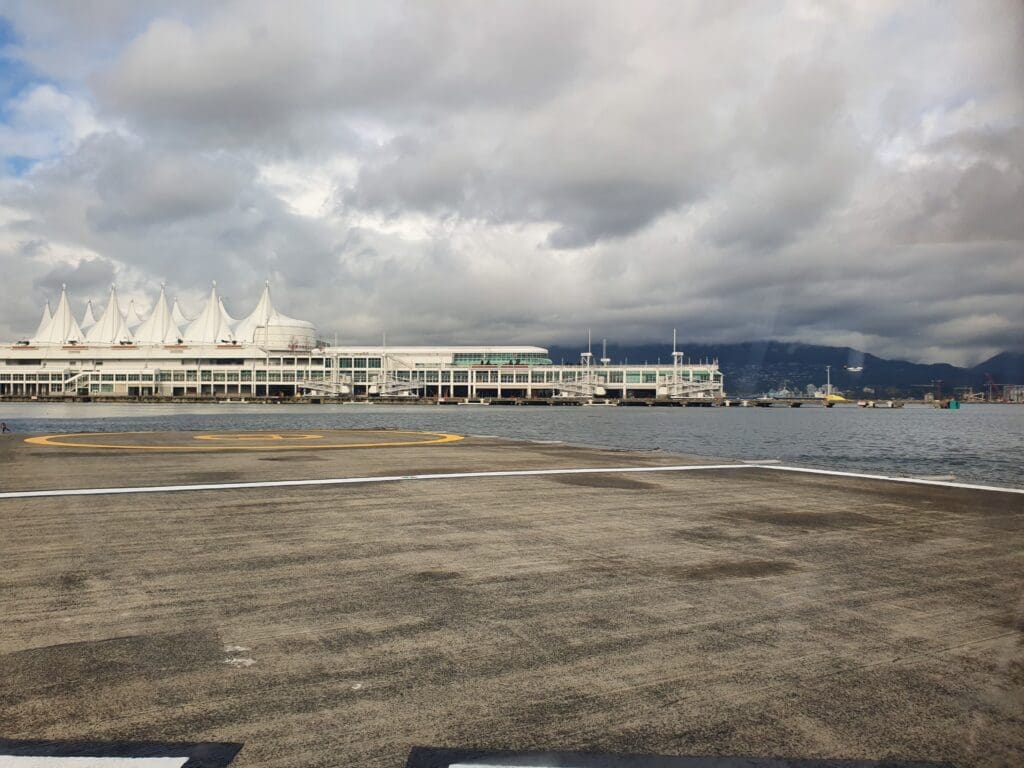
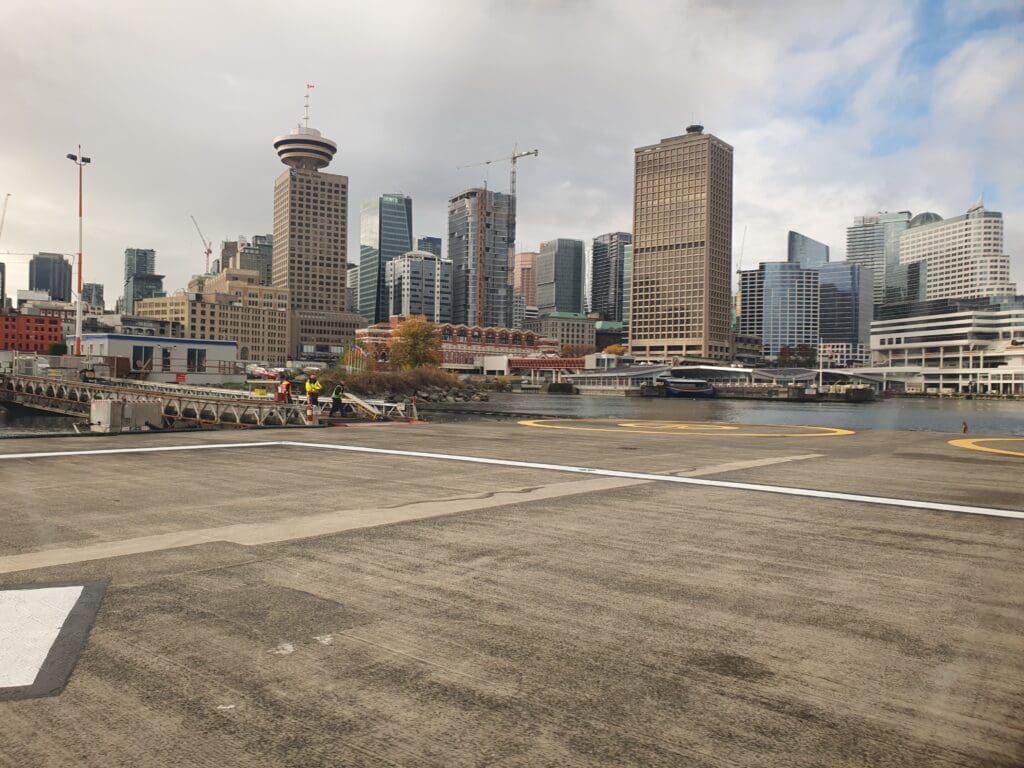
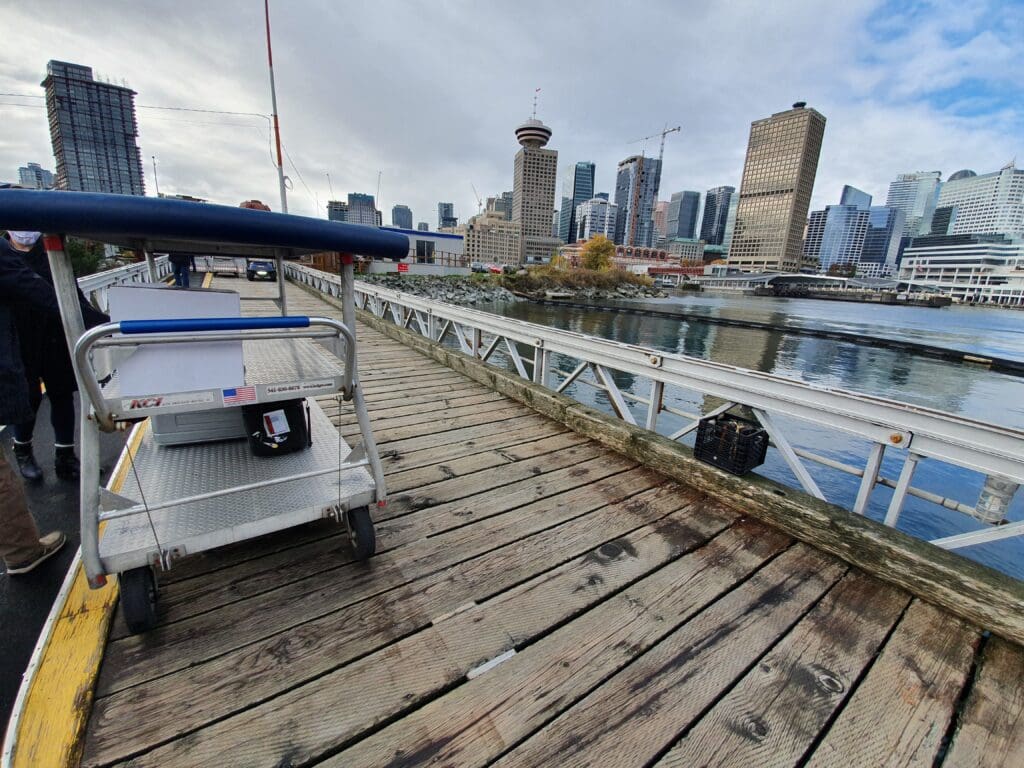
From the helicopter, I followed the line of passengers and within a few moments, I found myself standing outside Helijet’s small terminal building in the landside portion of the facility. For those arriving on Helijet’s services, the company offers a complimentary bus shuttle across Downtown Vancouver. Taking what seems to be a fluid circuit, passengers are able to let the driver know their destination and the driver then drops them off either there, or near their destination. Opting to take this back to my hotel, after informing the driver of my hotel, we agreed on a suitable drop-off point and around fifteen minutes later, I arrived back at my hotel.