The Middle East’s Hidden Gem? Flying from Frankfurt to Bahrain Onboard Gulf Air’s Retro Liveried A321neo
Background
As a UK-based aviation enthusiast, Gulf Air is a carrier that has been a constant feature of my enthusiast career to date. Upon making my first spotting trips to Heathrow with my father, I recall seeing their Airbus A340s and Boeing 767-300s, whilst later seeing their Airbus A320s, A321s and A330s, and being particularly surprised at the fact that the latter two types are deployed on long routes over to Europe (pre-Neo days!). Since my sister moved to Dubai in 2016, I have had multiple opportunities to sample the delights of Bahrain’s national carrier, however, for one reason or another, I had not done so. Indeed, my sister had flown them during the first months of her life in the city and reported flying on old battered aircraft and transiting through a retro and cigarette smoke-filled terminal in Manama. However, since then, things have changed with the carrier rebranding and taking on a fleet of new Airbus A320 and A321neos alongside several Boeing 787-9 Dreamliners. Visiting Dubai for the airshow in November 2021, upon searching for round trip tickets between London Heathrow and Dubai, Gulf Air’s services via Bahrain proved to be the cheapest option by some way and so I set my sights on finally sampling the delights of the airline.
Booking
Whilst Gulf Air’s services between London and Dubai were around £100 cheaper if booked via an online travel agency website, with COVID adding an element of uncertainty and having first-hand experience of the arduous process of attempting to reschedule flights through a third-party agent, I decided it sensible to book directly with Gulf Air. Upon touching down on Gulf Air’s sleek and modern homepage, I was met with a scrolling banner advertising the carrier’s Falcon Gold business class, flights to the Maldives as well as the then soon-to-commence service to Tel Aviv. With the flight search engine located conveniently beneath these advertisements, I wasted no time in searching for flights between London Heathrow and Dubai. Once done, I was presented with a list of five options – two involving Gulf Air’s 0930 departure from London, and the remainder involving the carrier’s overnight flight departing Heathrow at 2130. Given my work schedule, I had no other option other than to take the evening Dreamliner flight. This involved a 2H30 layover in Bahrain that would see me touchdown in Dubai on a Gulf Air Airbus A321 at 1210 the following day.
After selecting this option, I then had to select a Light, Smart or Flex fare. Priced at £244.27, I went for a Light fare before selecting my return flights. This would involve a 0750 departure from Dubai onboard an Airbus A320neo, which would see me land back in London at 1445 onboard a Boeing 787-9. Once selected I sped ahead and was presented with a message encouraging me to upgrade to Economy Smart. Rejecting this offer, I filled out my details before being presented with the seat maps for my flight which revealed that the cheapest window seats on the longest sectors would set me back £19.40. Meanwhile, on the shorter sectors these were priced at a much more reasonable £1.90 – with this considered I opted to select Seat 23F and Seat 20A for the flights to and from Dubai. Beneath this, additional luggage could be selected for £88.20 per 23kg bag although it is worth noting that the Economy Light fare would allow me to take one bag of no more than 23kg for no additional cost. From there, I reached the final page where I was presented with a summary of my booking beneath which the payment section could be found. Once I had entered my details, rather annoyingly I was presented with an error message which took me back to the homepage. Following several minutes of going through itineraries and seat maps, I reached the payment page again. Fortunately, this time this worked and after parting with a reasonable £291.27, I received a booking confirmation message, receiving an email a short time later.
However, this was not to be the end of my booking journey. In the weeks that followed, I was offered a new job in London and decided to take a little over a month off between positions. Seeking to streamline travel plans and booked on one of British Airways’ Airbus A380 operated services between Heathrow and Frankfurt, I enquired with Gulf Air as to whether it would be possible to adjust my outbound flight so I could depart from Frankfurt. Much to my delight, I received a prompt positive response and before I knew it, my outbound itinerary had been changed for no extra fee!
Check-In
In the run-up to my flight, I received multiple emails from Gulf Air encouraging me to bid for an upgrade. With the minimum bids for the shorter flights to and from Dubai starting at 926 AED, and 2095 AED and 3030 AED for the Frankfurt to Bahrain and Bahrain to London legs respectively, I declined these. Passengers travelling on most of Gulf Air’s services can check-in online 24 hours before departure. The evening before my flight, I loaded up Gulf Air’s app and entered my reservation code and surname before agreeing not to transport any prohibited materials before entering my passport information. Once done, I was then taken to the seat selection page where I found out that I had been automatically assigned Seat 22F in the middle of the aircraft. Whilst I had believed that I would be free to change this, this could not be done without paying a fee of €39.02 and so I accepted this, happy that I had been assigned a window seat. Once done, I skipped past the option to add additional luggage and received a message informing me that I had been checked in, although I would have to collect my boarding pass at the airport.
The Journey
Located a grand total of twelve kilometres from the centre of Frankfurt, unsurprisingly given its proximity to the city and status as a major air transportation hub, travelling between Frankfurt and its airport is most certainly far from a challenging task. Having spent my one-night stay in Frankfurt at the cheap yet pleasant Memphis Hotel located a stone’s throw away from Frankfurt Hauptbahnhof, it made little sense for me to reach the airport by anything other than the S Bahn, with both the S8 and S9 lines running between the main railway station and the airport. With my flight scheduled to depart at 1045, not wanting to cut things too fine I decided that I would aim to reach the airport for check-in’s opening time, three hours before departure. Waking up bright and early at 0615, following a quick shower, coffee and a final check to ensure I had everything with me, I made my way down to reception and handed in my key before heading out into the very chilly morning streets of Frankfurt. With the temperature hovering around zero degrees, I wasted no time and made a brisk and bracing walk through the near-empty streets before arriving at the station no more than five minutes after leaving the hotel.
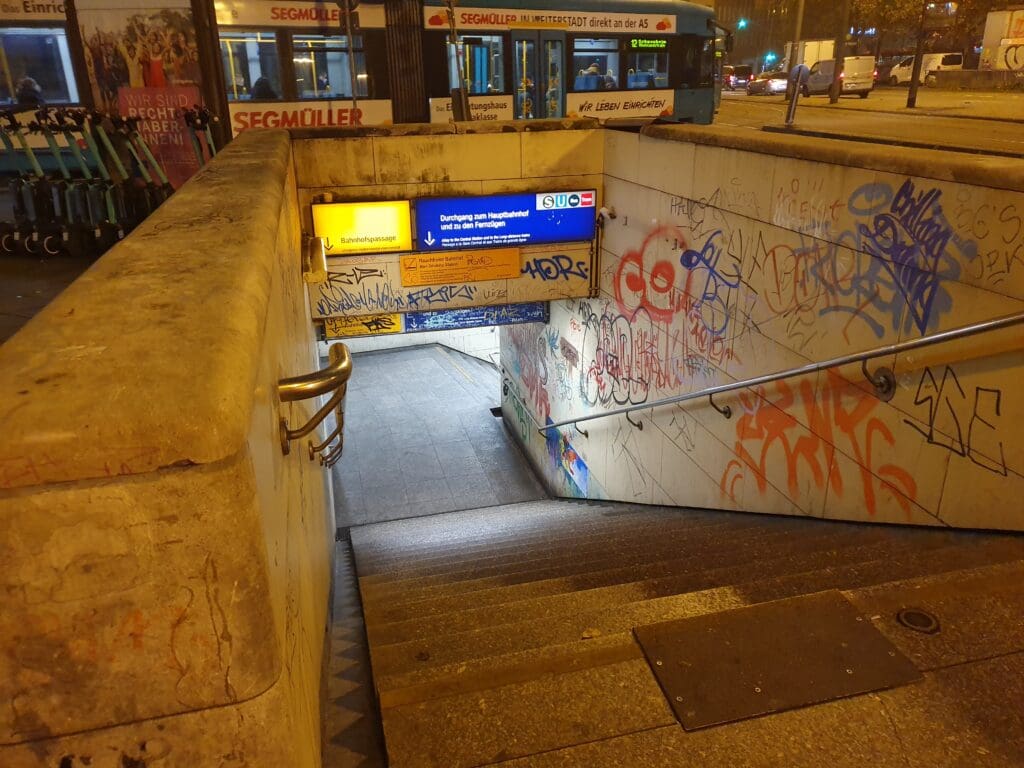
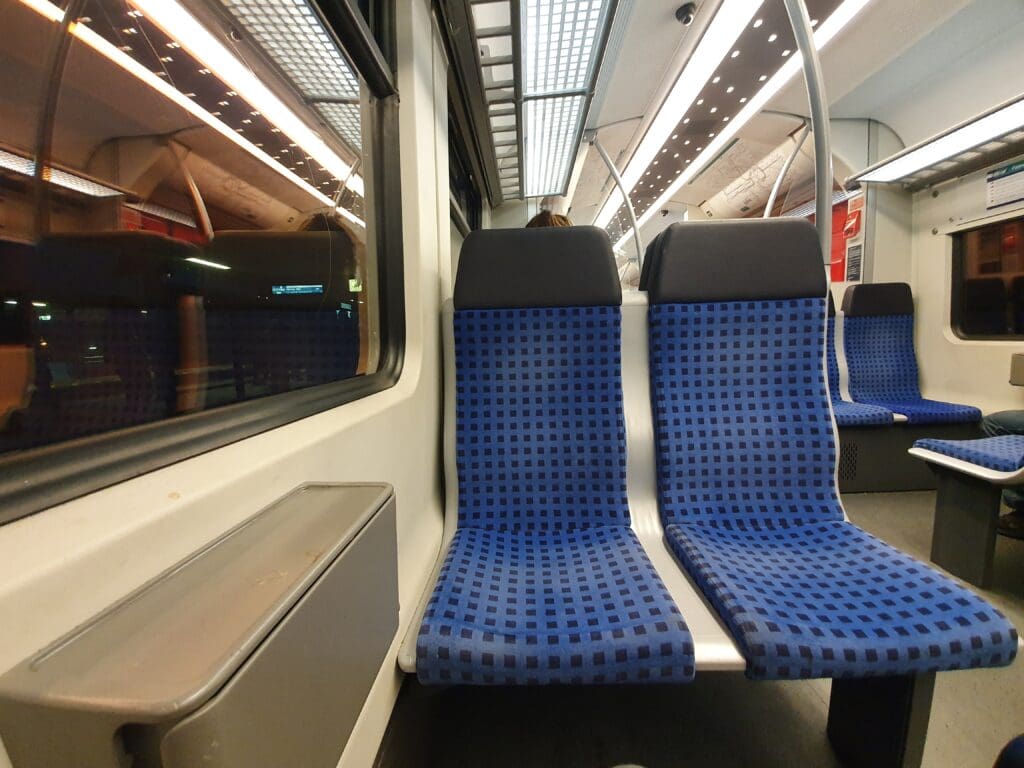
Once at the station, I made my way down to the underground portion of this from where S Bahn and U Bahn trains depart, paying a visit to an RMV ticket machine where I parted with €5.10 in exchange for a one-way ticket to the airport. With this in hand, I continued my journey towards the platforms, inadvertently having timed things just right, upon stepping off the escalators I was greeted by the sight of a bright red S8 S Bahn train pulling into the platform. As may be expected given my early morning departure time, the train proved to be busy with a mixture of both commuters and luggage-wielding passengers making their way to the airport. After pulling away from Frankfurt Hauptbahnhof, the train made quick stops at Niederrad, Stadion and Gateway Gardens, the train pulled into Frankfurt Airport’s subterranean station, a total of thirteen minutes later. For those departing from Terminal 1, the S Bahn station is very conveniently located with just a short walk required to reach this terminal’s check-in hall. However, seeing as Gulf Air utilises Terminal 2 at Frankfurt, I was required to make the final segment of the journey by complimentary shuttle bus. Whilst the automated SkyLine train also runs between the two terminals, with this temporarily out of service due to scheduled engineering work at the time of my flight, I had little option but to make the journey by bus seeing as I did not fancy the twenty-minute walk. Heading up the escalators, I made my way outside and boarded the waiting bus which soon pulled away and trundled over to Terminal 2, depositing passengers near one of the entrances to the check-in hall where I arrived just before 0745.
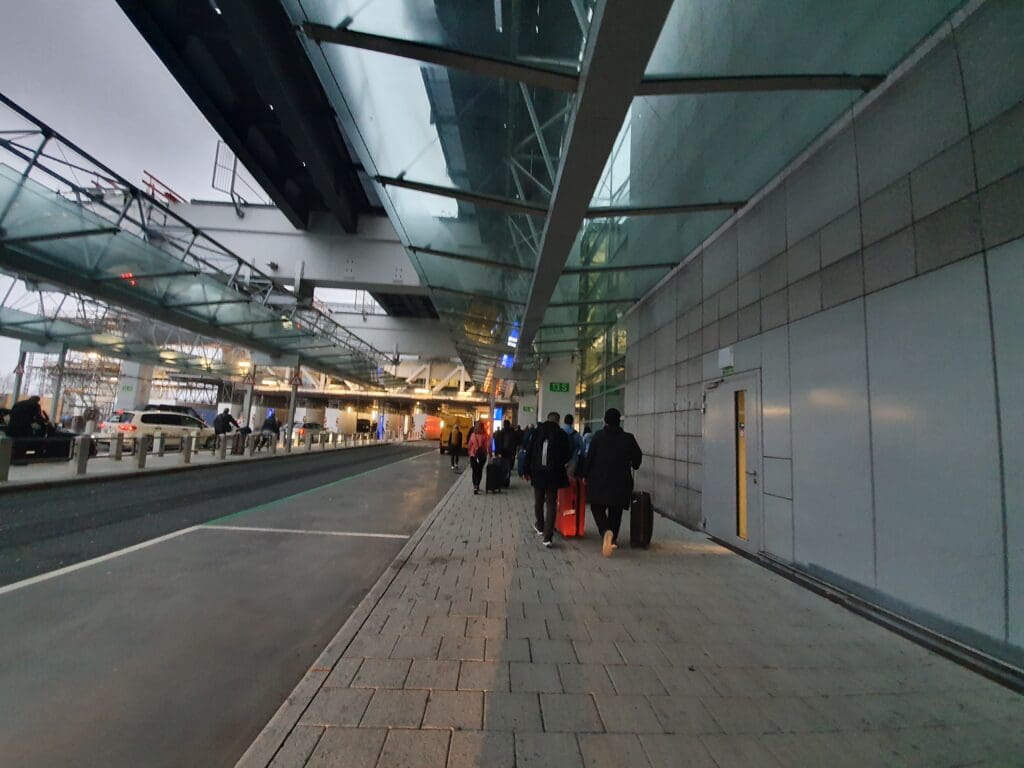
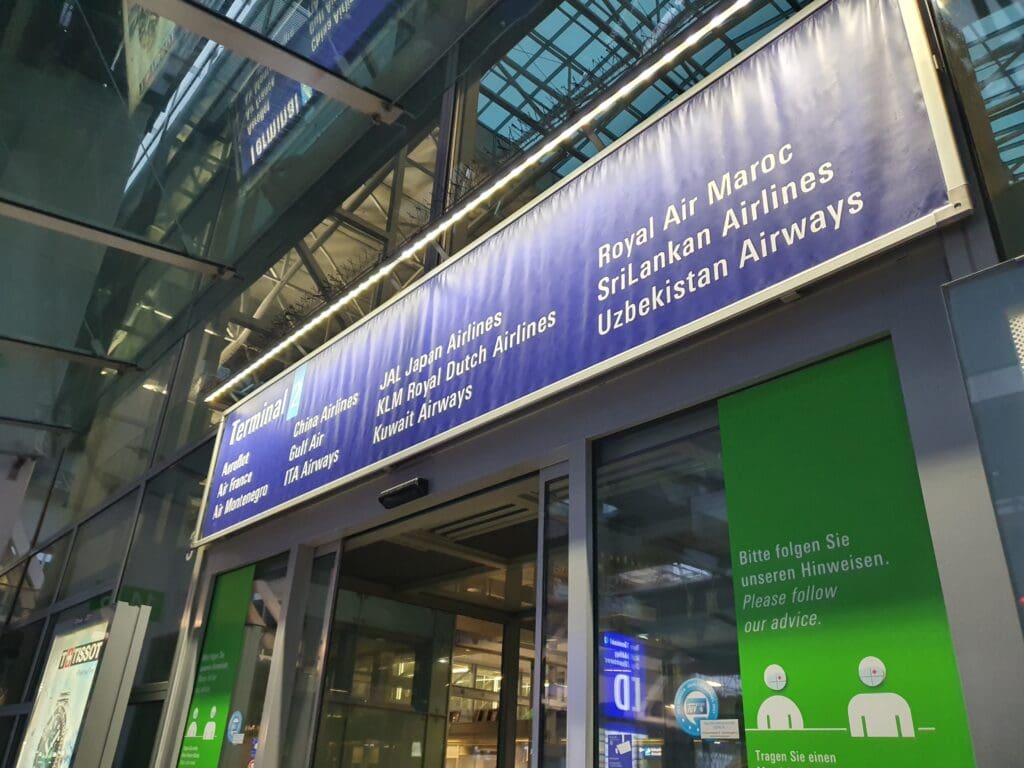
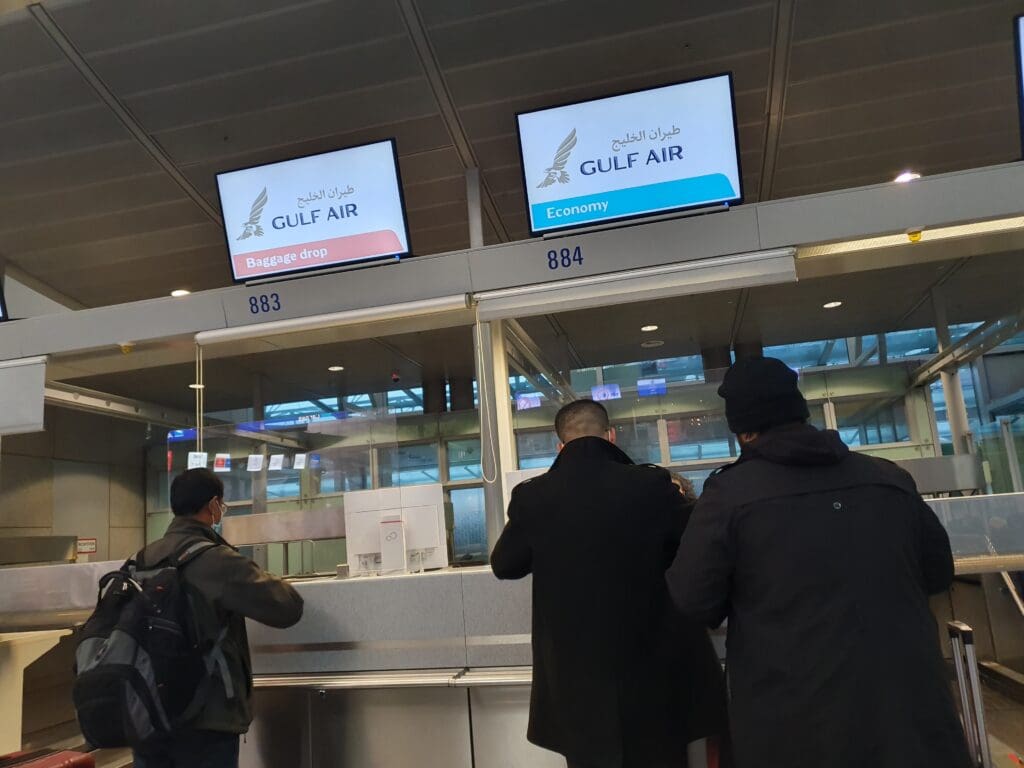
Inside, Terminal 2’s check-in hall serves to be large, modern and spacious, offering a decent number of cafés, shops and restaurants including a food court on the top floor that offers views of the action outside. At that time in the morning, whilst various queues could be spotted at many check-in desks throughout the terminal, overall the terminal did not appear to be particularly busy. As it happened, I entered the terminal via the entrance for the D check-in area where check-in for Gulf Air’s flight to Bahrain would be undertaken, with the carrier’s check-in desks located immediately next to the entrance doors. At the time of my arrival, with five minutes to go before check-in opened, I decided to join the short queue of three passengers. That morning, a total of three desks were open – a baggage drop-off desk, as well as one desk each for those travelling in Economy and Falcon Gold. Once check-in opened, I soon found myself handing over my passport, PCR test certificate and proof of vaccination to a very polite check-in agent who referred to me by name for the entire interaction. After no more than a couple of minutes, my small suitcase was tagged and sent on its way and I was handed my boarding passes for my two flights that day before being advised to head up the escalators and head to the airside area.
Following the check-in agent’s advice and seeing no point remaining in the landside area, with my flight departing from Gate E6, I made my way up the escalators and arrived at the immigration checkpoint. With a total of just one other passenger there at the time but most desks appearing to be staffed, leaving Germany was a painless process and after answering a few basic questions about my short trip, my passport was stamped and returned before I was free to make my way into the airside area which is home to gates D1-20, D50-59 and E2-13. As I have only seen at a small number of airports, security checks are undertaken before a passenger enters their gate’s waiting area with the terminal’s main shopping and waiting area located before the security check.
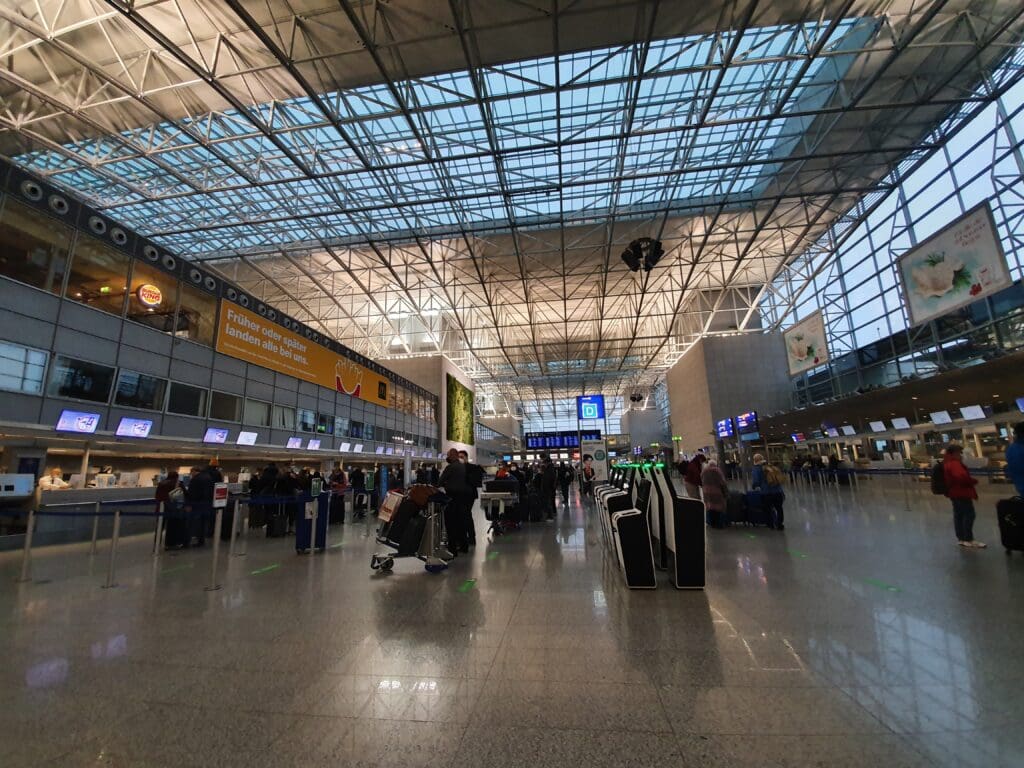
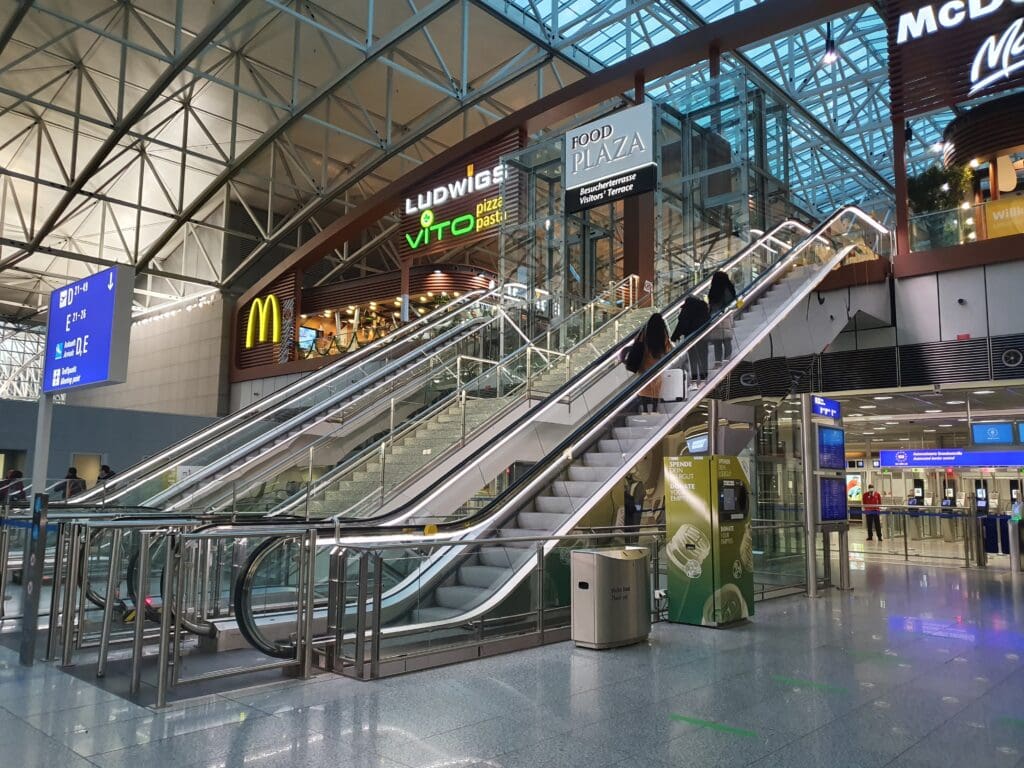
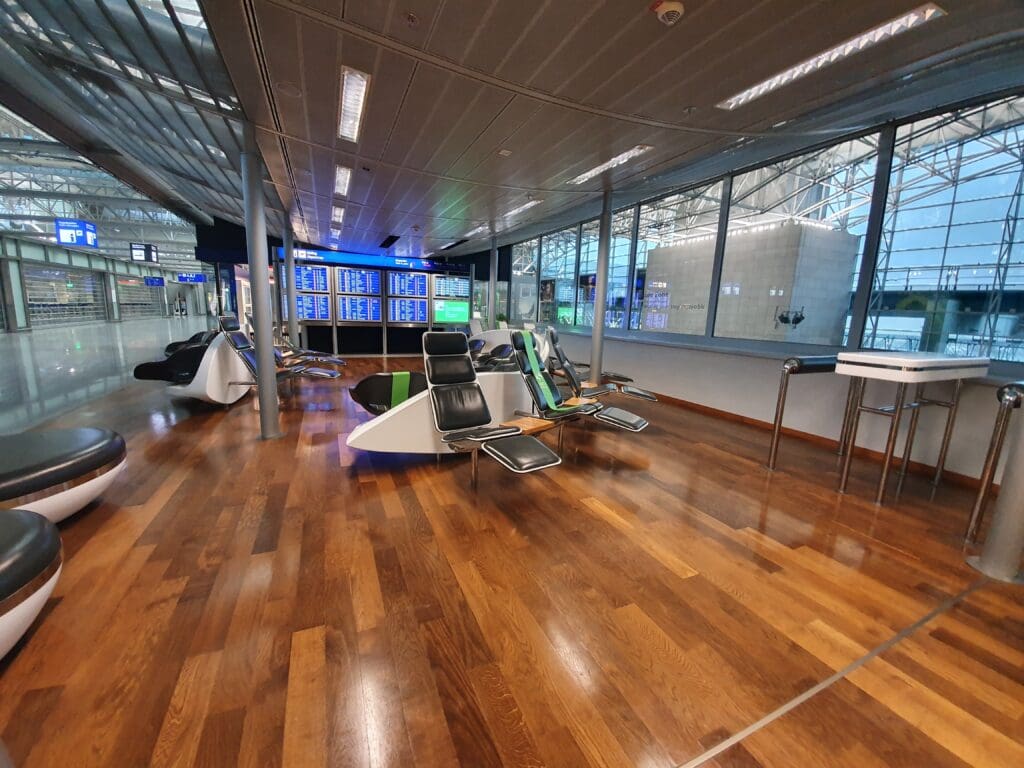
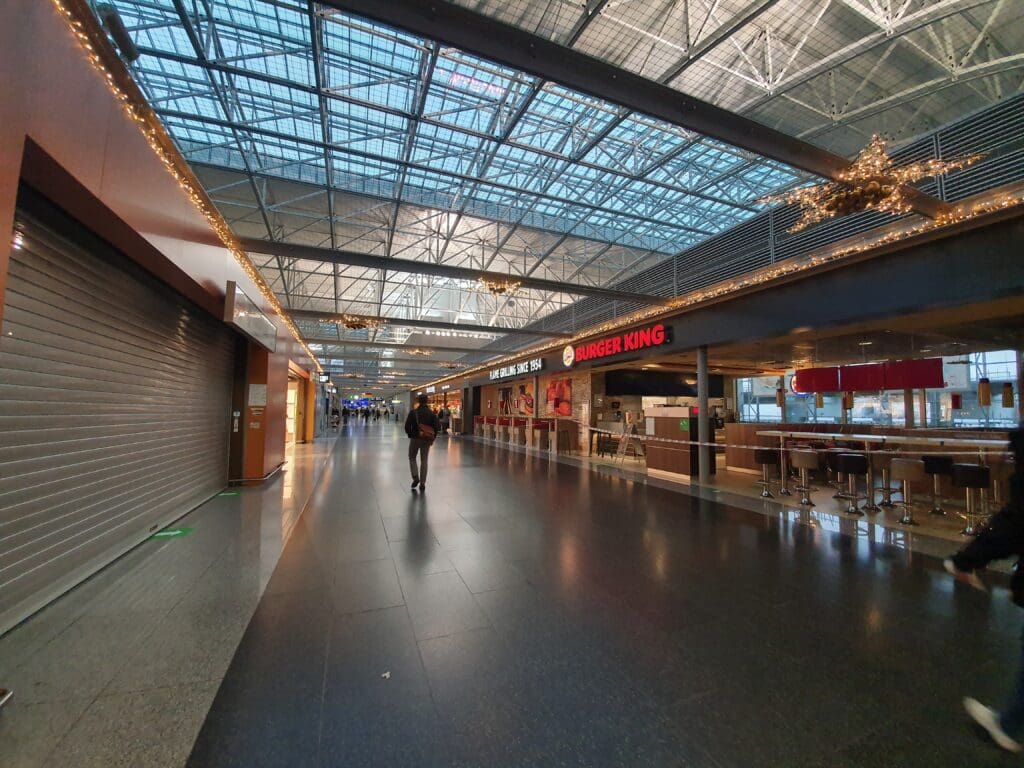
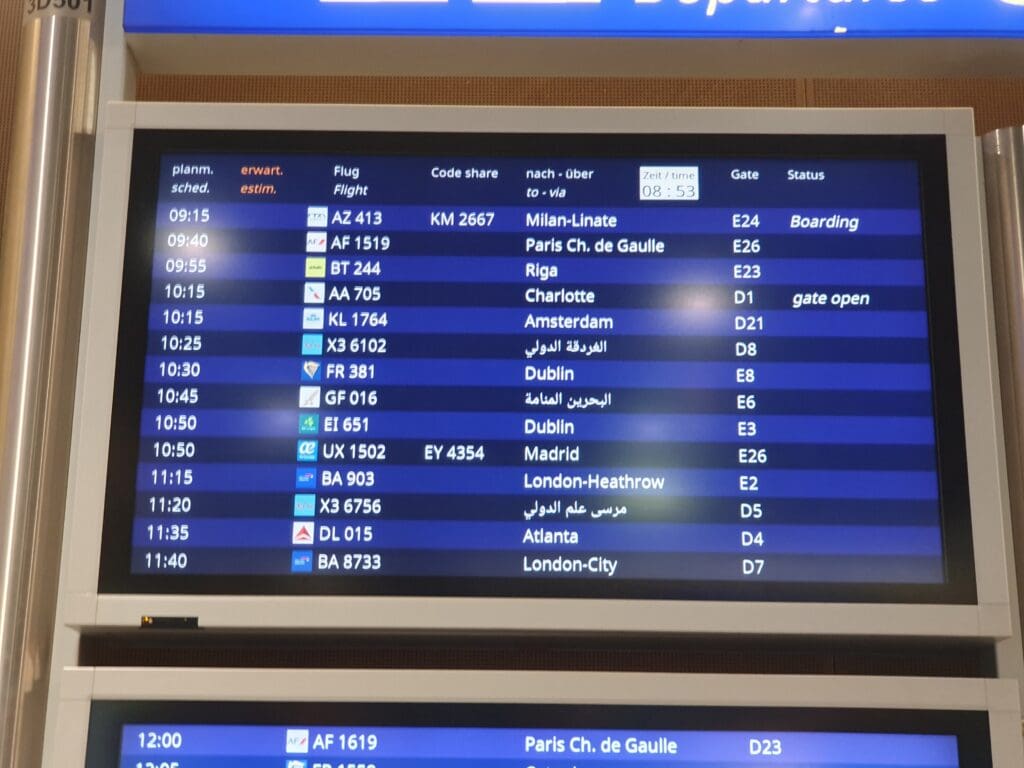
As with the landside area, I found the airside portion of the terminal to be bright, modern, clean and spacious. Upon arriving there, this was almost entirely deserted with only a few passengers wandering about as they passed the time before their flights. In terms of facilities, the airside portion of the terminal is home to a total of three restaurants, one café (a Starbucks), a Relay convenience store and a collection of duty free and luxury goods shops. However, at the time of my arrival, only the Starbucks and one of the restaurants were open, although as time passed the terminal came into life with more shops opening up. Aside from these, two ‘Leisure Zones’ are offered which consist of a selection of comfortable seats with built-in plug sockets and USB ports, as well as a yoga room. As passengers likely expect in 2021, complimentary wifi is offered throughout the terminal and is provided by T-Mobile. That morning this worked without any issue, allowing me to browse the web at speed before my flight to the Middle East. My only real complaint about the terminal was that this appeared to lack any views of the exciting action outside on the apron. Whilst airside views can be had from the individual gates, seeing as the security checkpoint at gate E6 was closed for the first hour or so of my stay in the terminal, I was left with no option other than to wait in the airside view-less portion of the terminal. That morning, before my flight to Bahrain a total of seven other departures could be seen on the D and E gate departure boards – these heading off to Amsterdam, Charlotte, Dublin, Hurghada, Milan, Paris CDG and Riga, operated by Air Baltic, American Airlines, ITA Airways, KLM, Ryanair and TUI fly Deutschland.
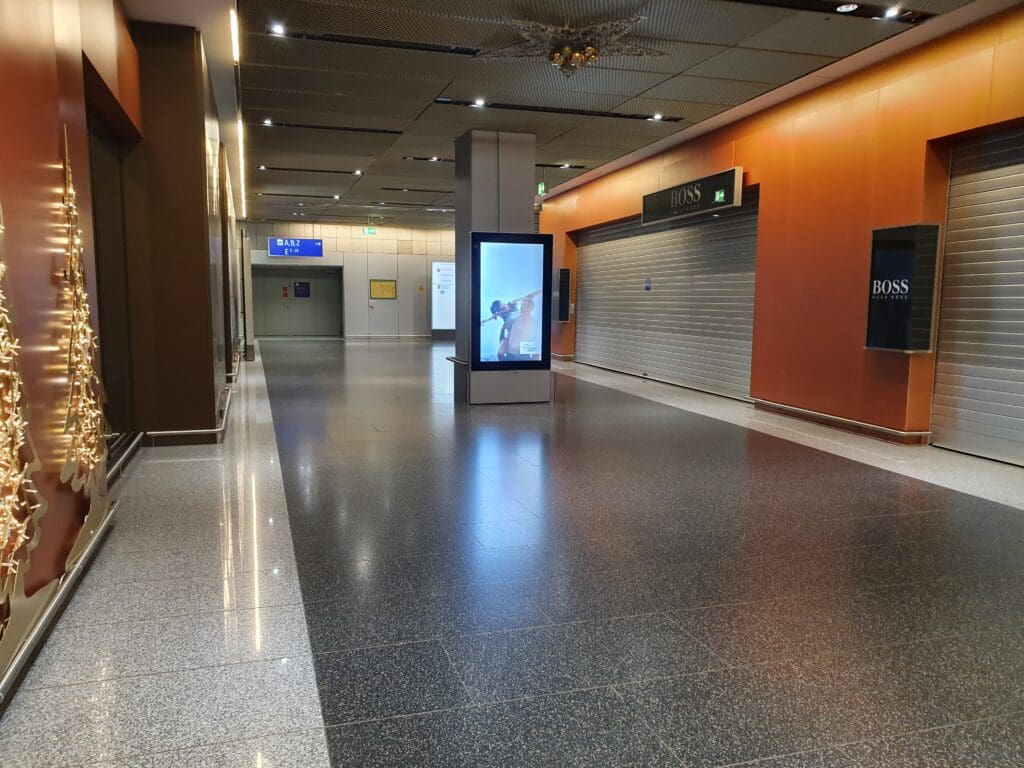
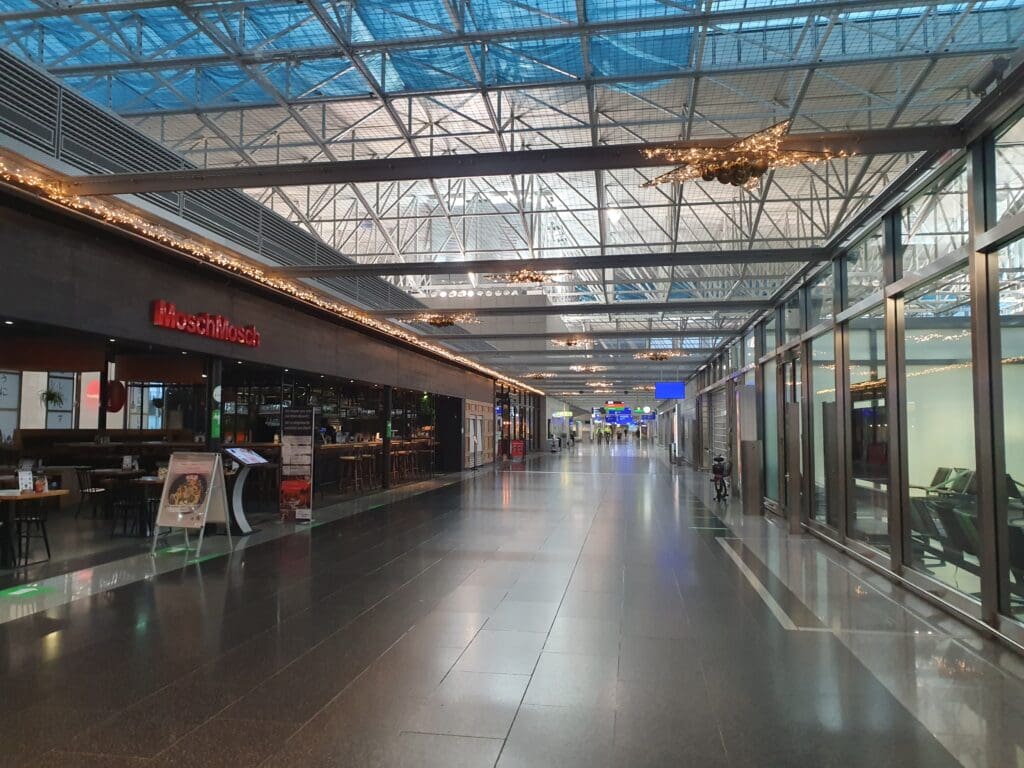
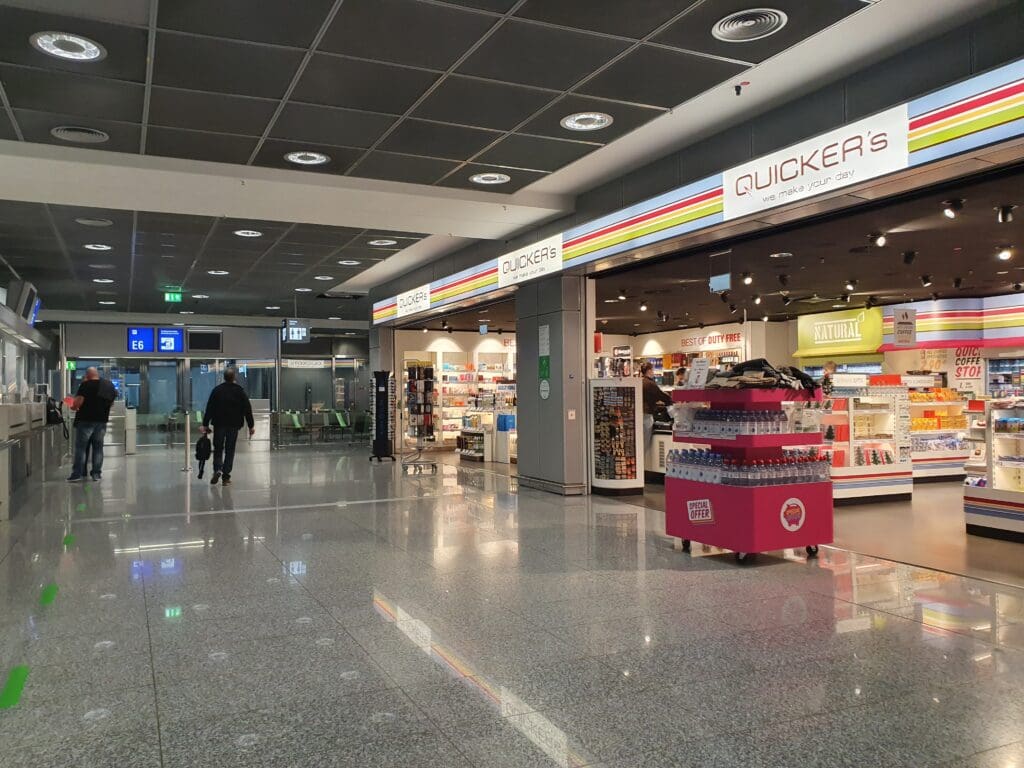
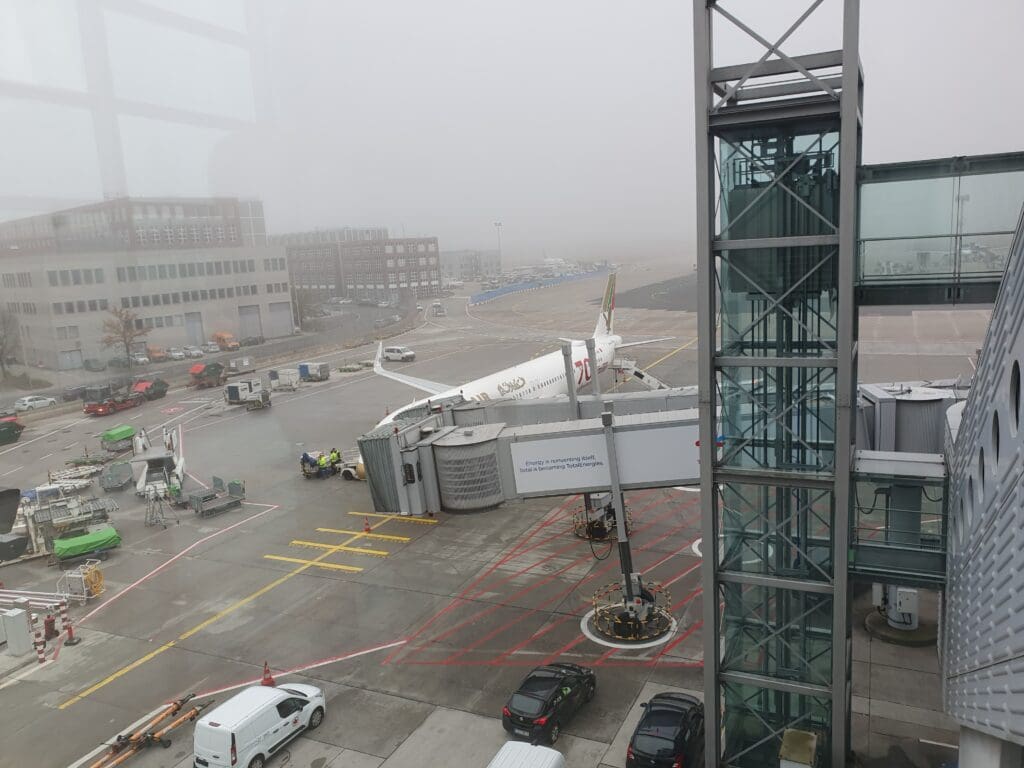
Having exhausted all the attractions of the terminal, at 0900 I wandered over to the security check for gates E6 to E9. Still with a fair amount of time before departure, upon arriving there no other passengers could be seen so I was able to walk straight up to one of the two checkpoints. As soon as I arrived, I was greeted by a friendlier than usual security agent who assisted me with decanting my electrical items into a tray before I had a full body scan. Passing through the checkpoint quickly and without an issue, I arrived in the small waiting area, which as expected had a lack of facilities – this being home to a single multipurpose Quicker store. However, this could be forgiven since the gate area provided views of the outside world. Unfortunately, thanks to the fog that morning, little could be seen other than those aircraft directly outside the terminal.
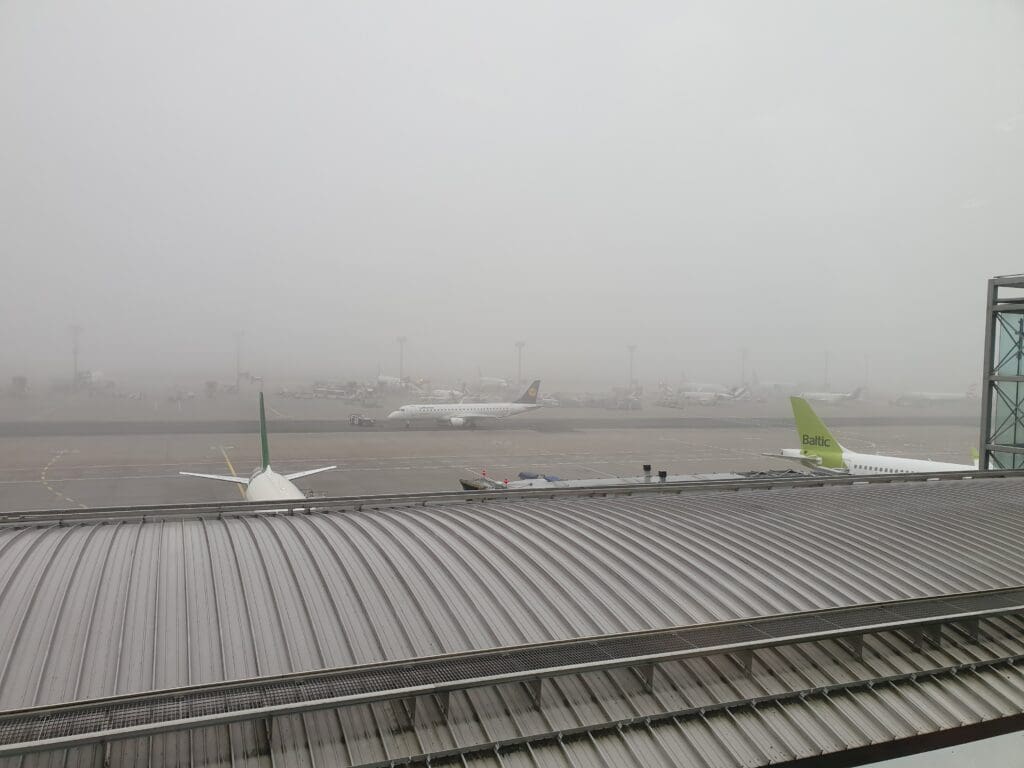
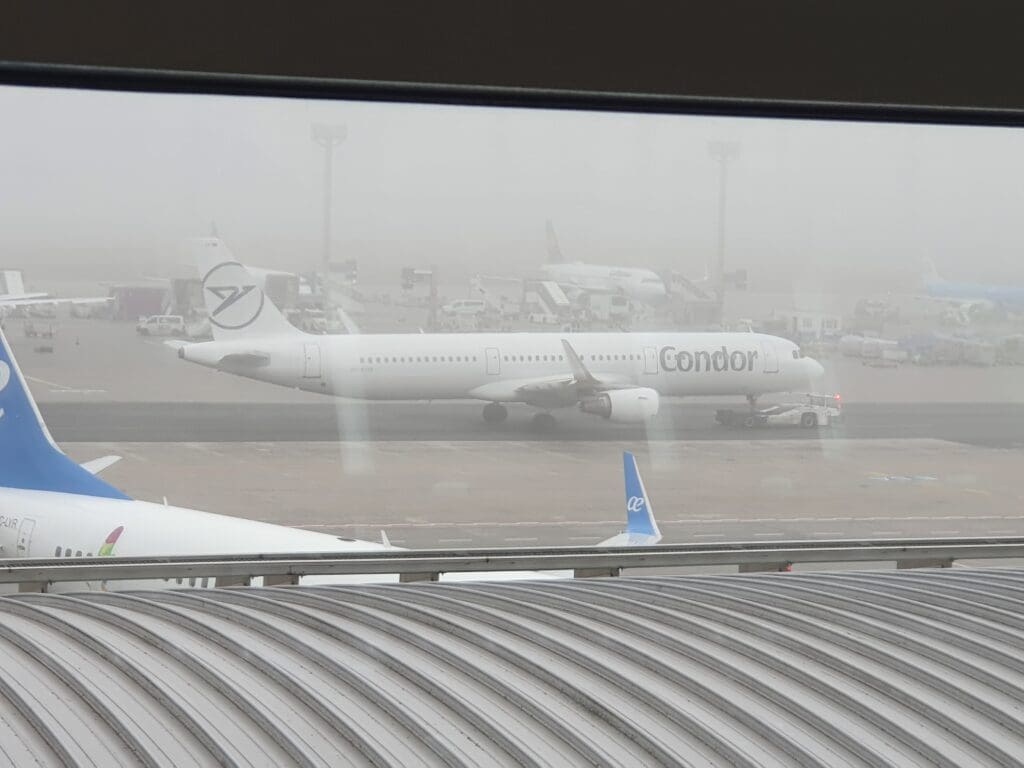
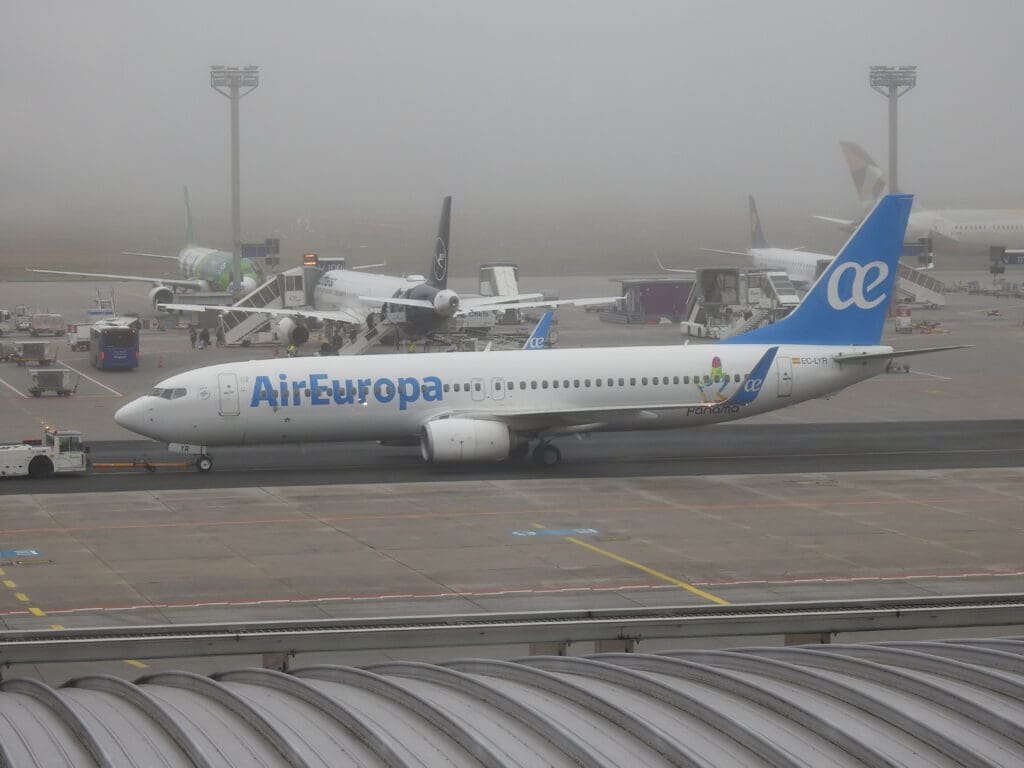
As time passed the waiting area became a little busier with passengers heading off to both Bahrain and Dublin. According to my boarding pass, boarding for the flight that morning would commence at 0945, exactly one hour before departure. However, given the fact that the aircraft was not scheduled to touch down from Paris CDG until 0950, I was a little sceptical that boarding would indeed commence at that time. As I waited, at 0940 I decided to check Flightradar24 which showed that the Airbus A321neo operating the flight to Bahrain was still on the ground in Paris CDG, making its way to the runway an hour behind its scheduled departure time. Whilst this did not bode well for a punctual departure from Frankfurt, despite my short connection in Bahrain, confident that Gulf Air would look after me if I missed my flight to Dubai, I was not particularly worried. At 0945, a gate agent walked through the waiting area and advised passengers that there had been a gate change and that the flight would now depart from E9. Fortunately, located in the same cluster of gates this would not mean that I would have to pass through security once again. Joining the short queue for a boarding pass and passport check at the entrance to the gate, once these had been looked at I entered the gate and took a seat near one of the windows. As I waited, I checked my email inbox where I found that I had received an email from Gulf Air advising me that the new departure time from Frankfurt would be 1130, with an arrival time of 1930 leaving me with a 50-minute connection.
Shortly after taking a seat, the waiting area filled up although this remained far from full with no more than around forty people waiting at the gate. However, with the service commencing in Paris, it was impossible to decipher just how full the flight over to Bahrain would be until I was onboard. Aside from those travelling to Bahrain, a fair few passengers appeared to be heading onwards to Dubai, as well as to Dhaka, Malé, Manila and Mumbai – with many concerned passengers enquiring with the gate staff regarding their onward connections. Keeping passengers informed, at 1020, an announcement was made in German and English advising passengers that the aircraft would arrive in 20 minutes and that boarding would commence as soon as they had received permission from the crew to do so.
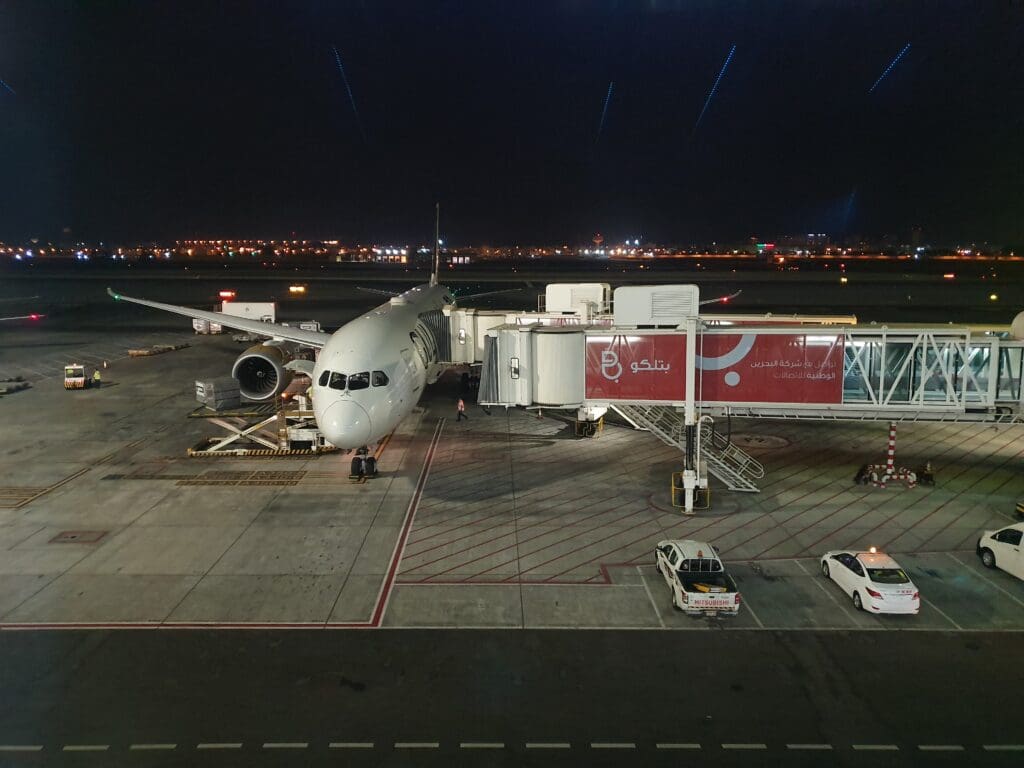
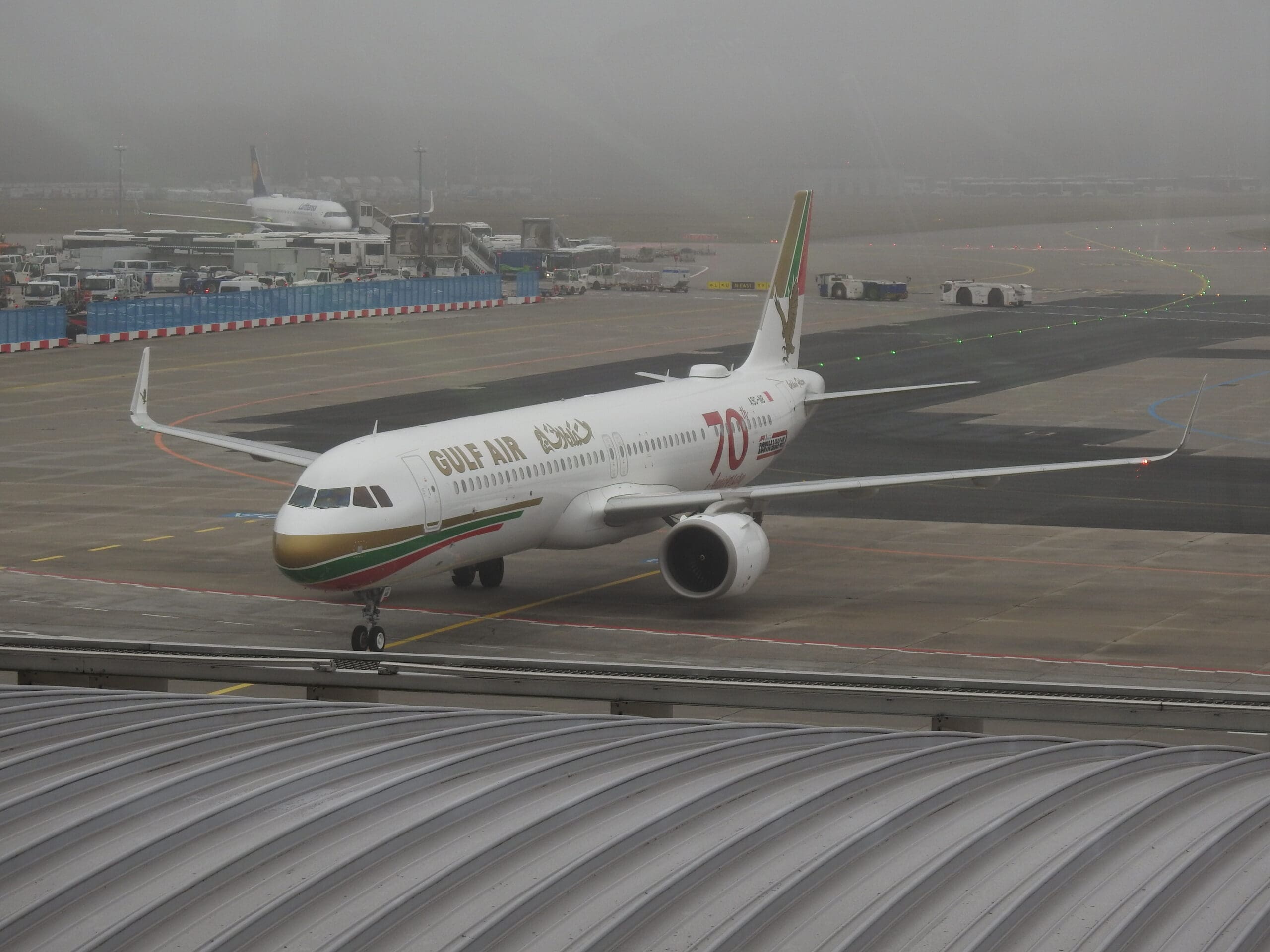
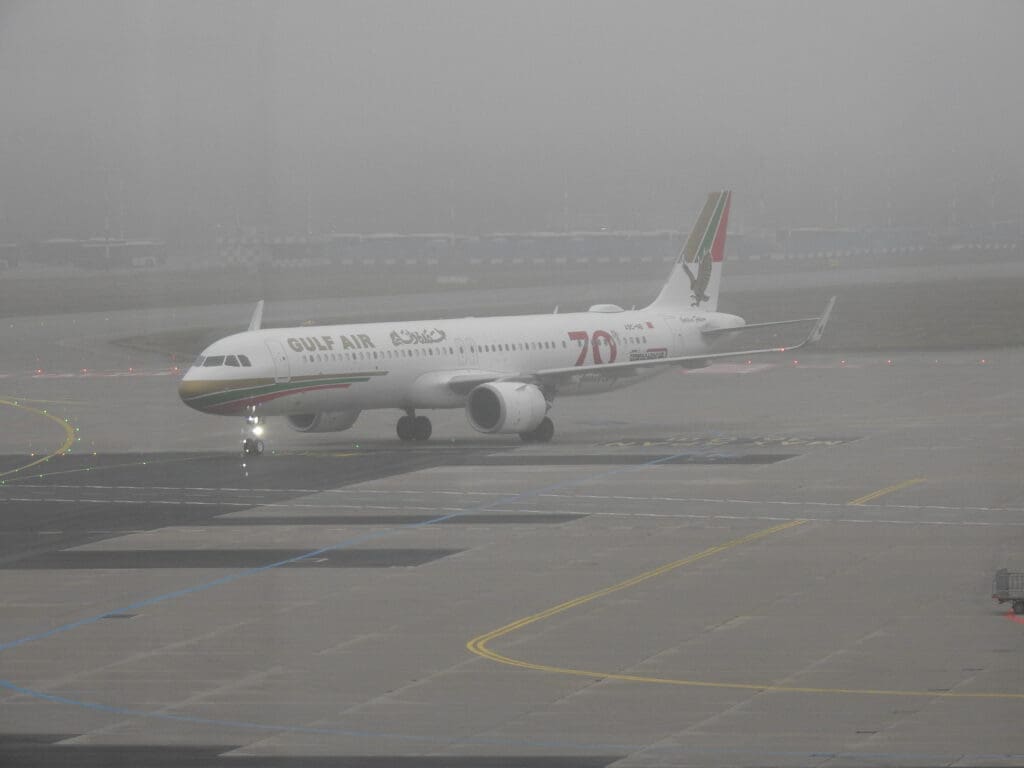
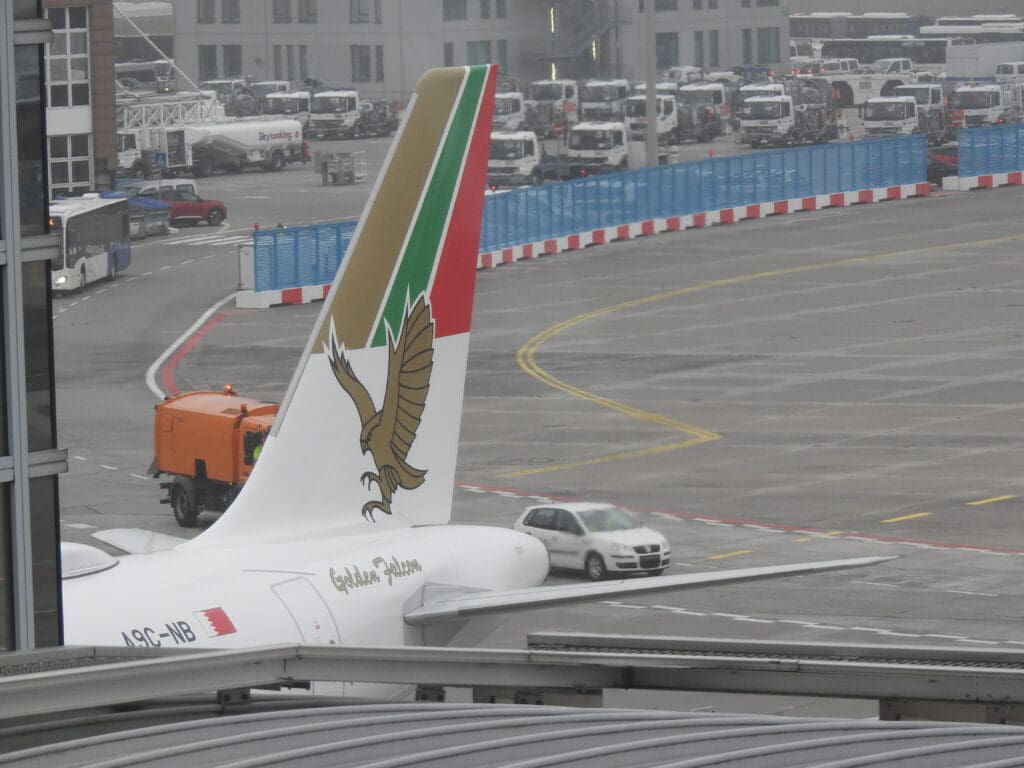
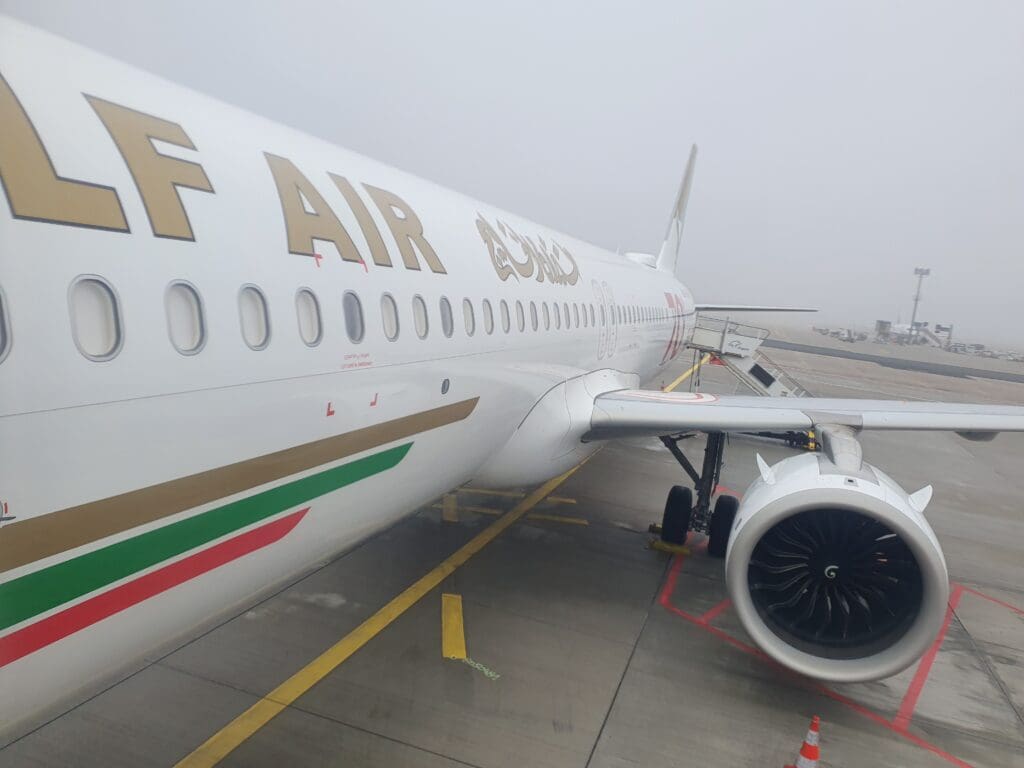
At 1044 the inbound aircraft touched down on Frankfurt’s Runway 25L following its short 58-minute hop over from Paris CDG. Several minutes later, I watched as the jet slowly pulled into Stand E8, confusingly corresponding to Gate E9 inside the terminal. At this time, an announcement was made informing passengers that those in Falcon Gold and priority passengers would be permitted to board first, followed by those travelling in Economy. That day, I was pleased to see that the flight to Bahrain would be operated by Airbus A321-253NX A9C-NB, with this jet being one of two to sport Gulf Air’s retro 1976 livery. This also wears decals promoting the Bahrain Grand Prix and commemorating Gulf Air’s 70th anniversary. Manufactured at Airbus’ Hamburg Finkenwerder plant, this jet first took to the skies in mid-January 2021 with the test registration D-AZAM, almost exactly ten months before my flight. Following five test flights, in early February 2021, the aircraft was flown to Bahrain and soon entered commercial service with Gulf Air. Since then, the aircraft has spent its career connecting Bahrain with destinations across Europe, the Middle East and South Asia. In the week before my flight, the aircraft had flown a total of 27 flights, covering at least 38,500 miles, visiting Colombo, Frankfurt, Istanbul, Malé, Paris and Riyadh.
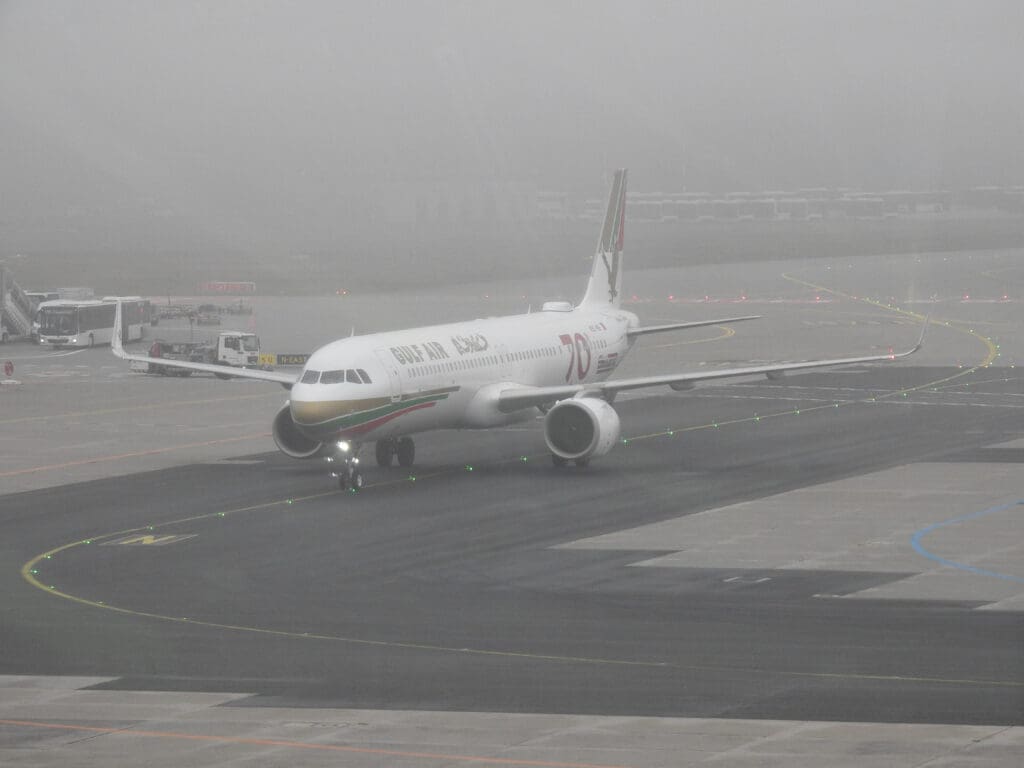
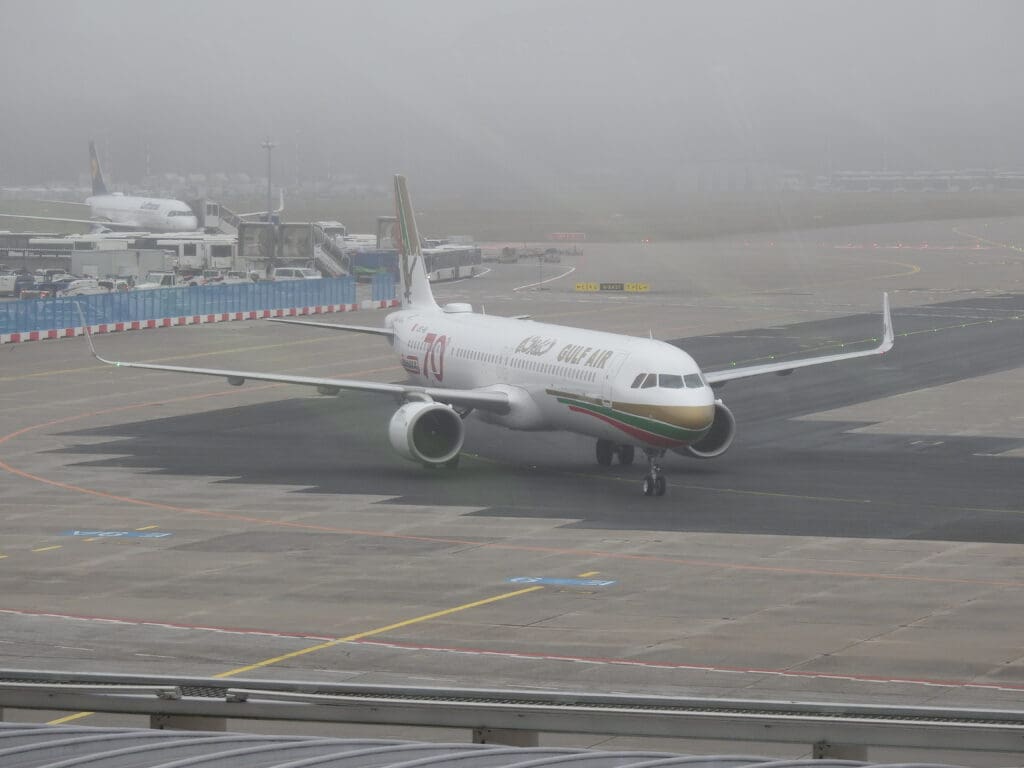
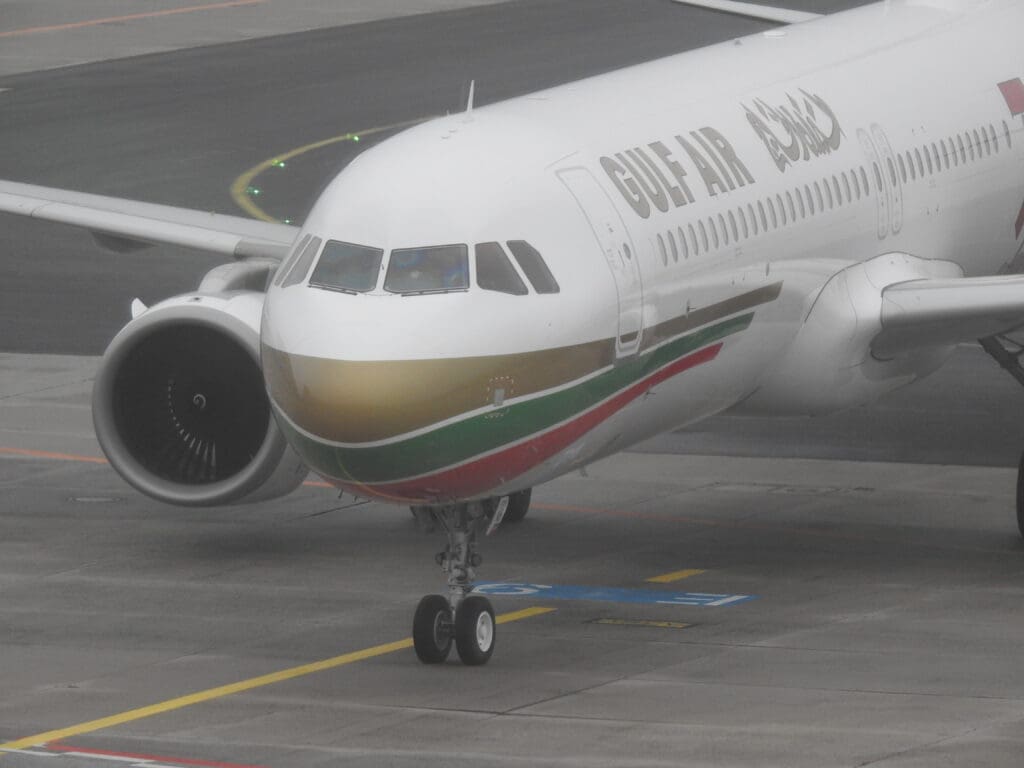
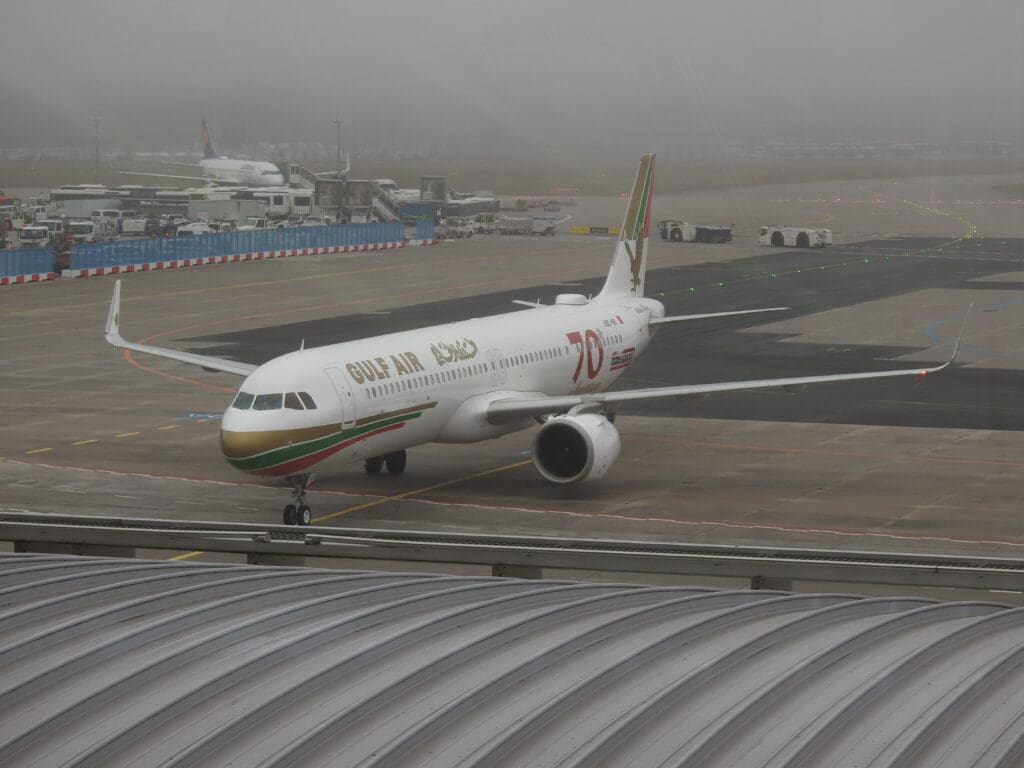
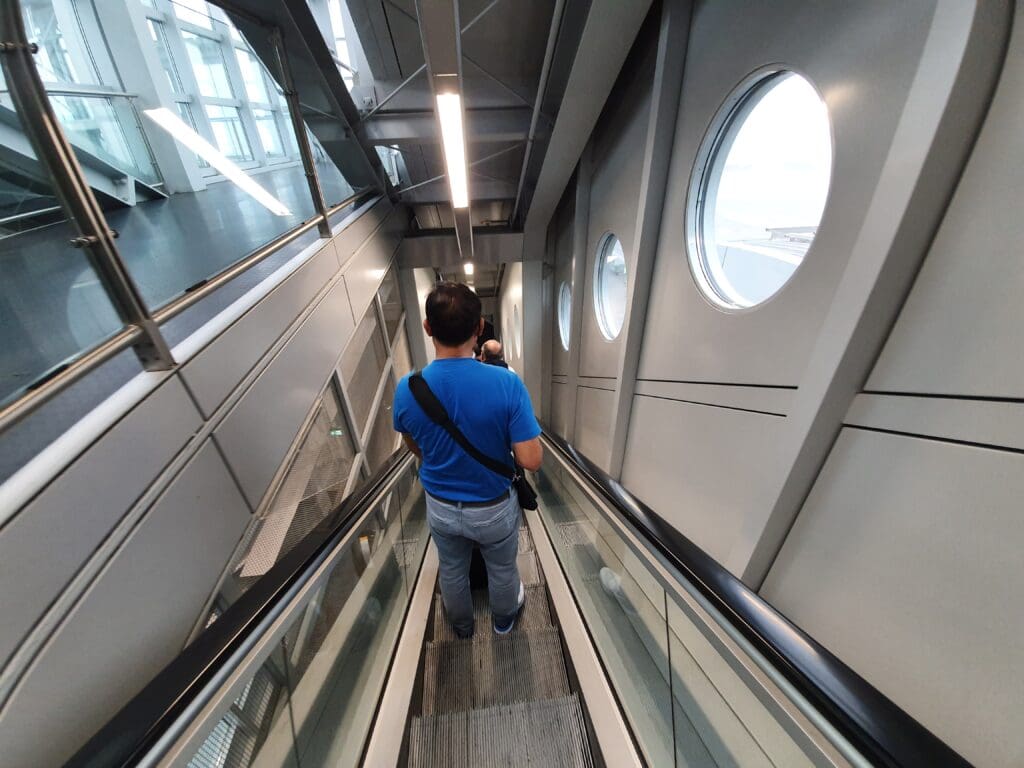
At 1100, an automated announcement rang out through the terminal in German, English and Arabic requesting those in First and Business class, as well as those seated in rows 27 and above to proceed forward for boarding. This was followed a couple of minutes later by another announcement requesting those in rows 18 and above to board the aircraft. Seated in Row 22, as soon as I heard this announcement I made my way over to the gate podium and following a short queue my boarding pass was torn before I headed down the escalators towards the chilly and dimly lit jetway.
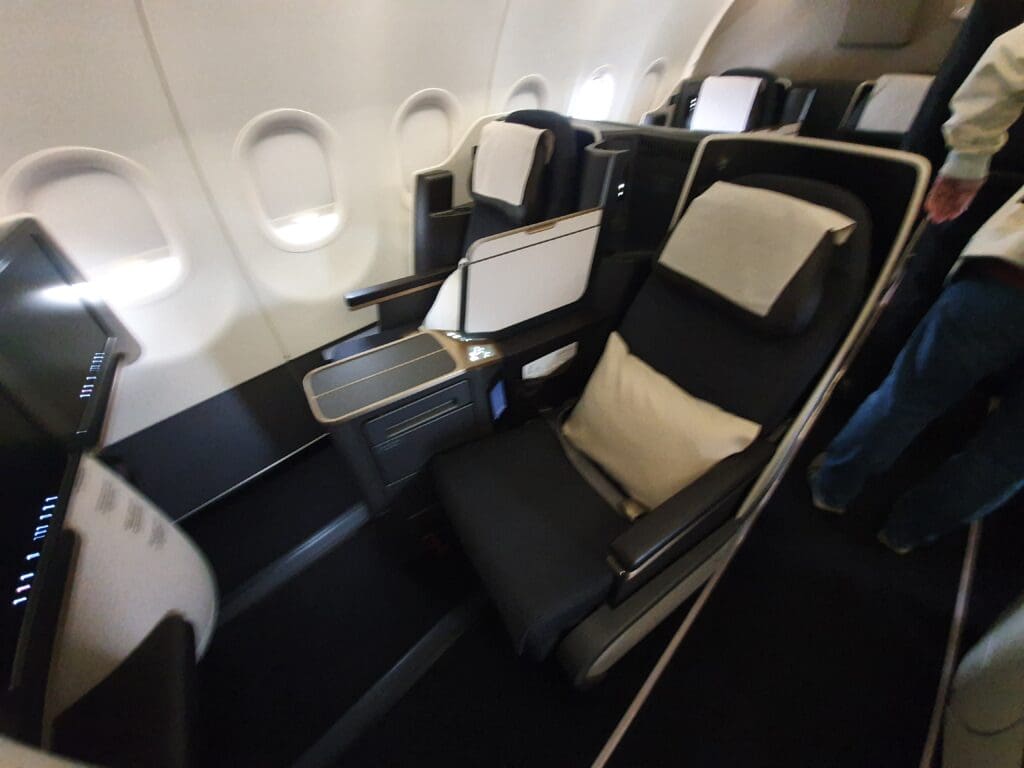
Upon entering the aircraft via the L1 door, I received a friendly greeting from the purser, or Cabin Services Manager as they are known at Gulf Air, and had one final check of my boarding pass before I turned right and entered the Airbus’ small Falcon Gold cabin. This consists of four rows of lie-flat seats in a 2-2 configuration, each of which is covered in a dark fabric. Whilst these do not offer the same level of privacy as the Apex suits onboard Gulf Air’s Boeing 787-9 Dreamliners, I most certainly would not have complained about sitting in one of these for the flight to Bahrain that day! At that time, this was around half-full and I noticed that two of the seats in this cabin were taken by uniformed Gulf Air pilots. Meanwhile, several flight attendants could be seen seated in Economy indicating that the crews operating the outbound portion of the service to Europe do not spend the night in either Paris or Frankfurt.
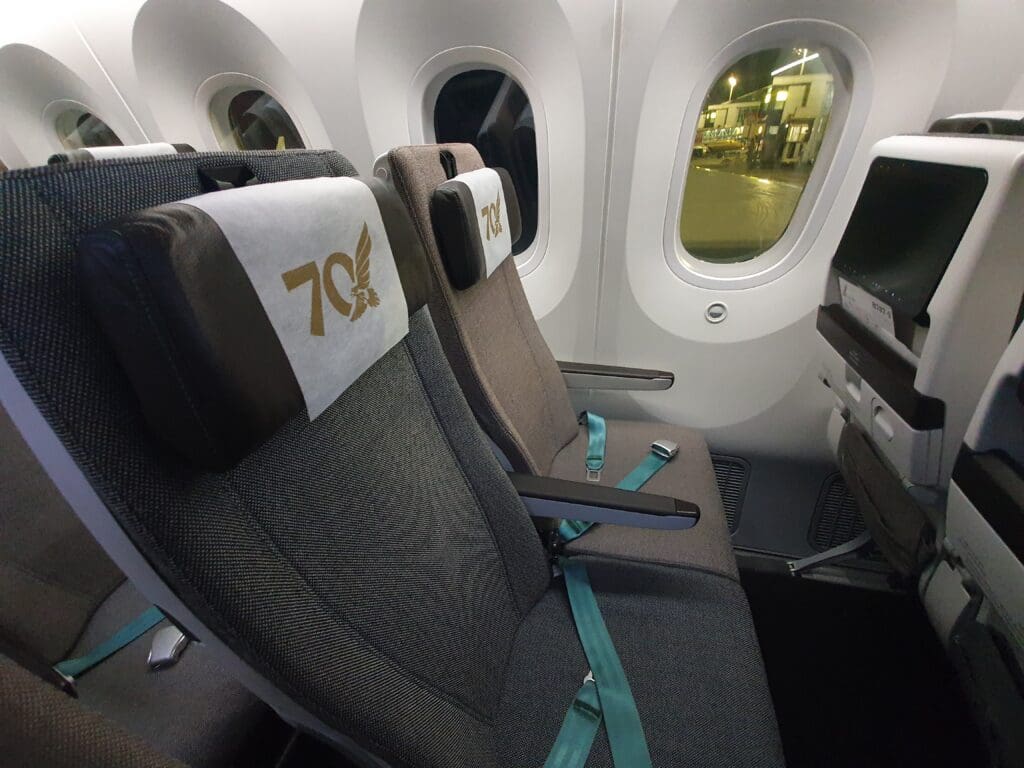
Without stopping, I entered the Economy cabin which features 150 modern and slim Recaro CL3710 seats in the standard 3-3 configuration. Each of these is covered in either a grey or brown fabric and features an adjustable (faux?) leather headrest on which a disposable fabric antimacassar advertising the airline’s 70th anniversary could be seen. Alongside the usual tray table, seatback pocket, literature compartment and cup holder, each seat features a large and high-quality 10-inch wide personal television screen, powered by Thales’ AVANT inflight entertainment system. Meanwhile, in addition to personal USB-A ports, plug sockets could be seen under the seats, with the usual arrangement of two of these provided for each bank of three seats in Economy. Finally, whilst no blankets, pillows or headphones had been placed on the aircraft’s seats before departure, small amenity kits could be seen on around half of the seats, implying that the flight over to Bahrain would not be full.
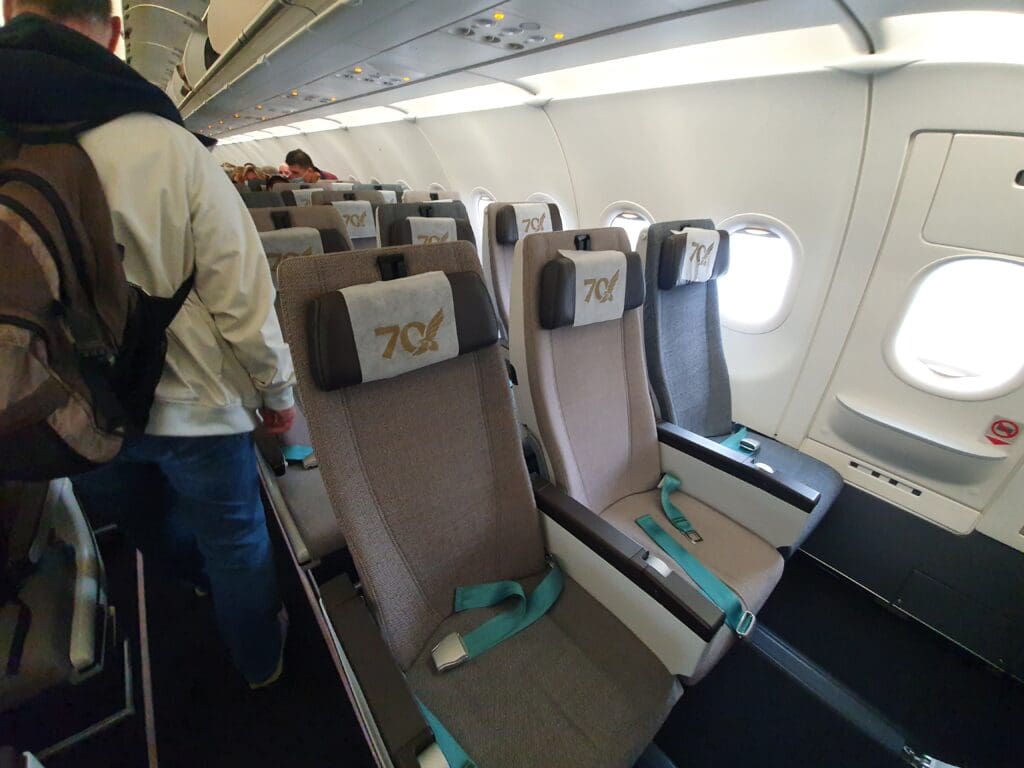
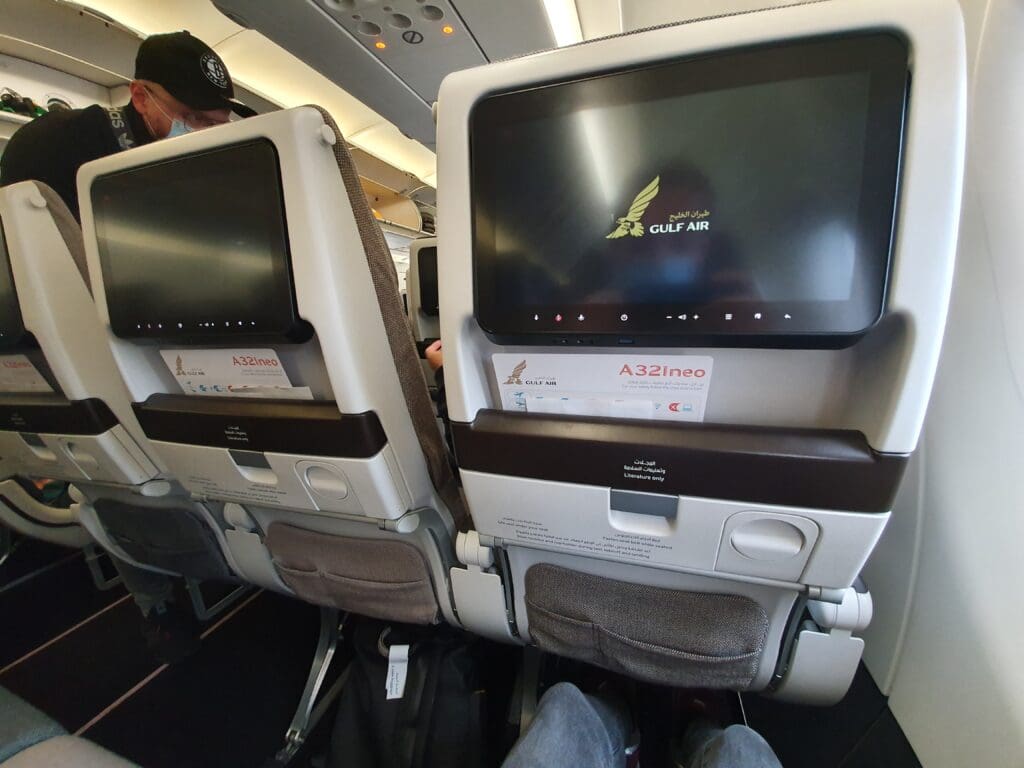
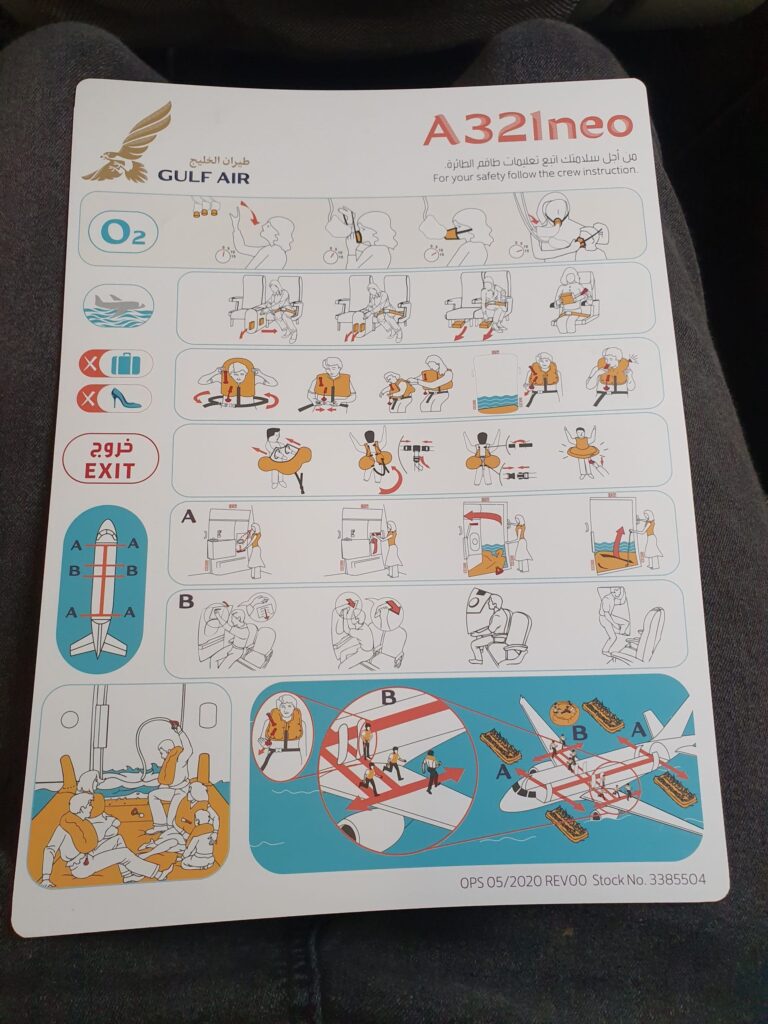
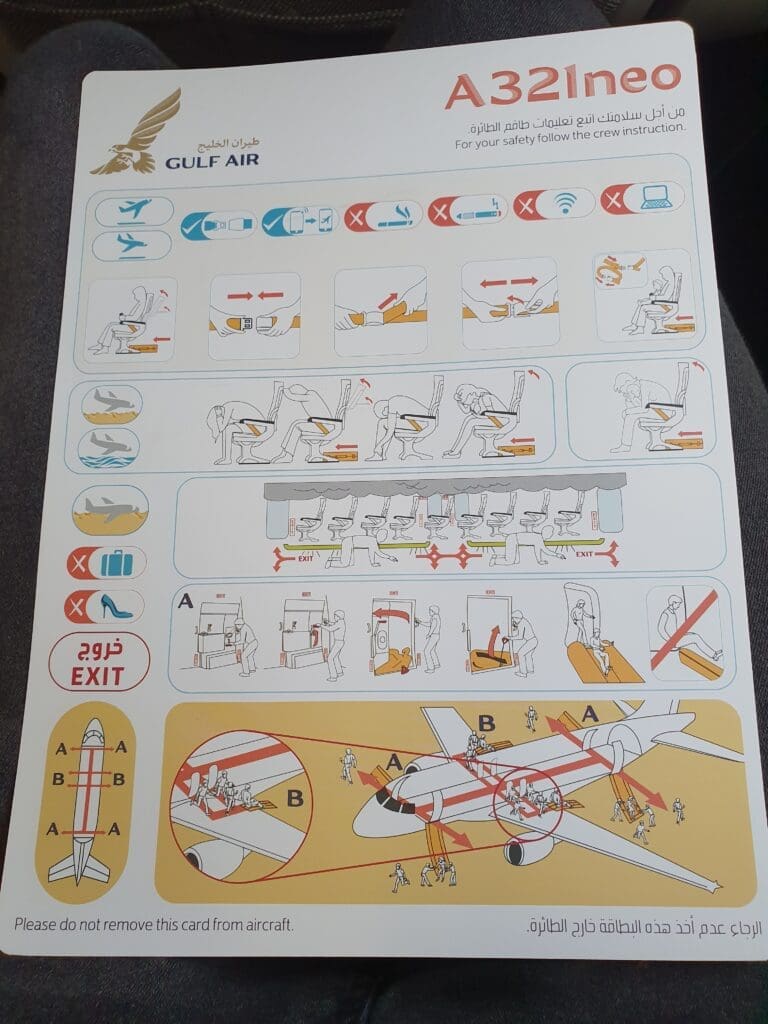
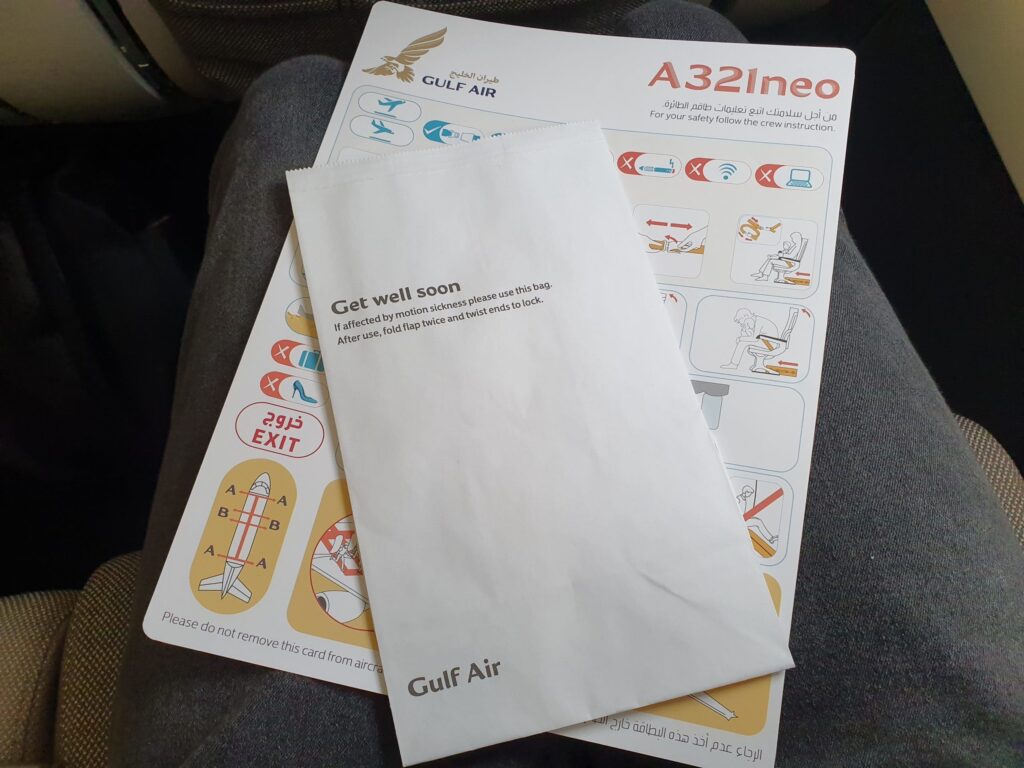
Upon boarding, the cabin was relatively empty and I soon made it to Row 22 located just beyond the centre of the Economy Cabin within a minute or so, receiving a further greeting from a crew member standing at the exit row. Delighted to see that I was yet to be joined by any neighbours, I slid into Seat 22F with ease and settled in for my flight to the Middle East. In terms of comfort, I was pleased to find that the seat was well-padded and offered a good amount of legroom. Meanwhile, seeing as Gulf Air does not sell tickets for the hop between France and Germany, the seat had remained vacant during its hop over from Paris and was thus in a clean, tidy and presentable condition. Unsurprisingly given the aircraft’s age, I failed to spot any noticeable signs of wear and tear in the area around my seat. Turning to the seatback pocket, this contained a safety card as well as a Gulf Air branded sickbag, with the airline’s Gulf Life magazine having migrated to the digital world during the pandemic. All-in-all, my first experience with both the crew and aircraft was highly positive, leaving me looking forward to the flight ahead.
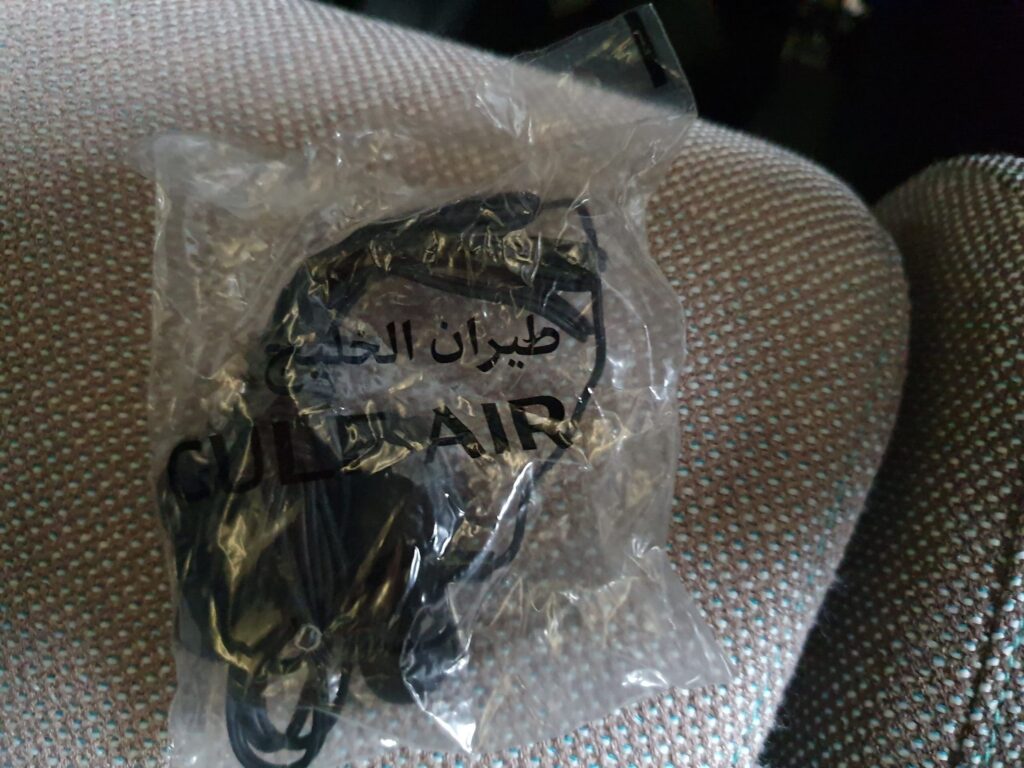
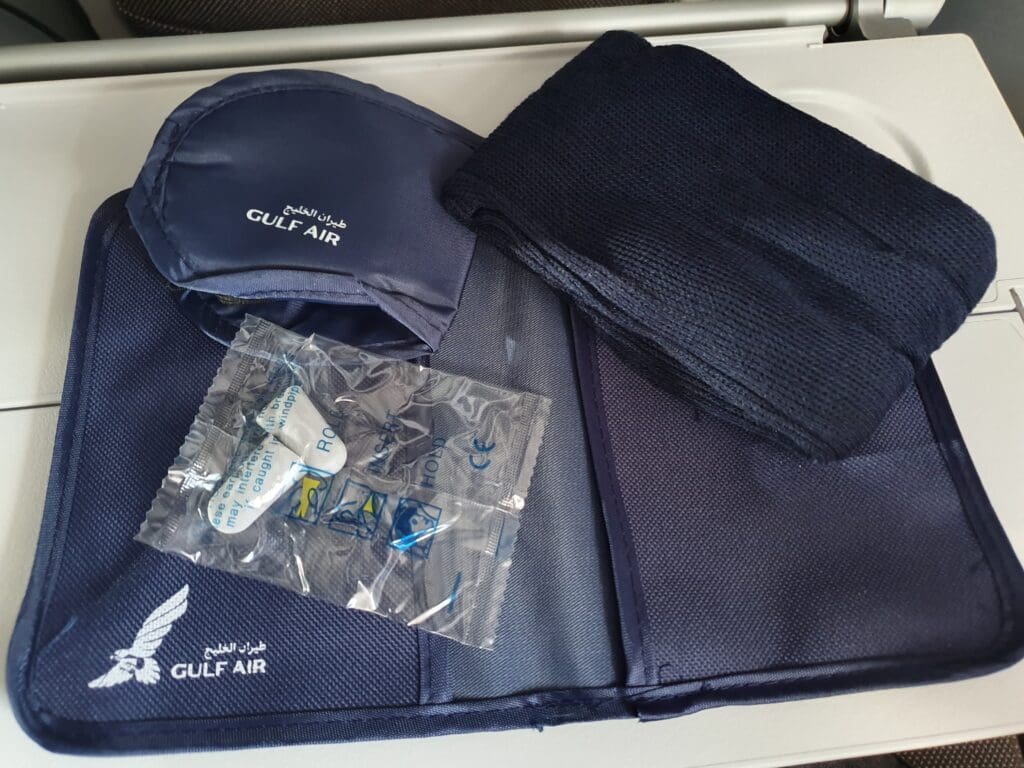
Within just eight minutes of the commencement of boarding, all those who had commenced their journey in Frankfurt had made it onto the jet and the ‘boarding completed’ announcement rang out over the cabin’s speakers. Much to my delight, the aircraft remained relatively empty and I was left with the luxury of a pair of vacant neighbouring seats. During a later walk through the cabin, I estimated the load in Economy to be no more than around 45%. A short time later, the purser, or Cabin Services Manager as they are called at Gulf Air, performed a welcome announcement in Arabic and then English. During this, they thanked all onboard for flying with Gulf Air, advised of the COVID protocols onboard and informed passengers that we could expect a 5H45 flight to Bahrain. Once this announcement reached its end, classical music rang out through the cabin, with this interrupted twice by pre-recorded announcements requesting passengers to keep their seatbelts unfastened due to the ongoing refuelling. As we waited to depart, one of the flight attendants passed through the Airbus handing out decent-quality packaged blankets followed by typical economy-quality headphones. At this time I decided to open up the amenity kit – this consisted of a blue pouch containing inflight socks, an eye mask and a packet of earplugs. Whilst basic, with amenity kits becoming increasingly rare, especially on a daytime flight of less than six hours, this was a very nice and surprising addition to the flight.
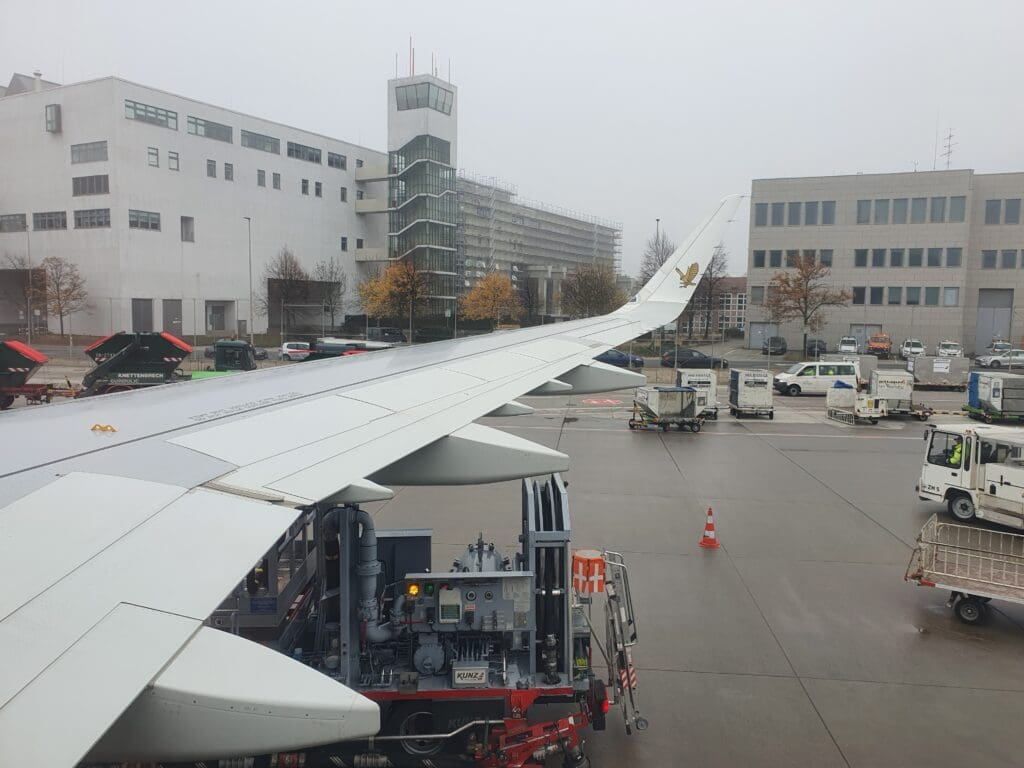
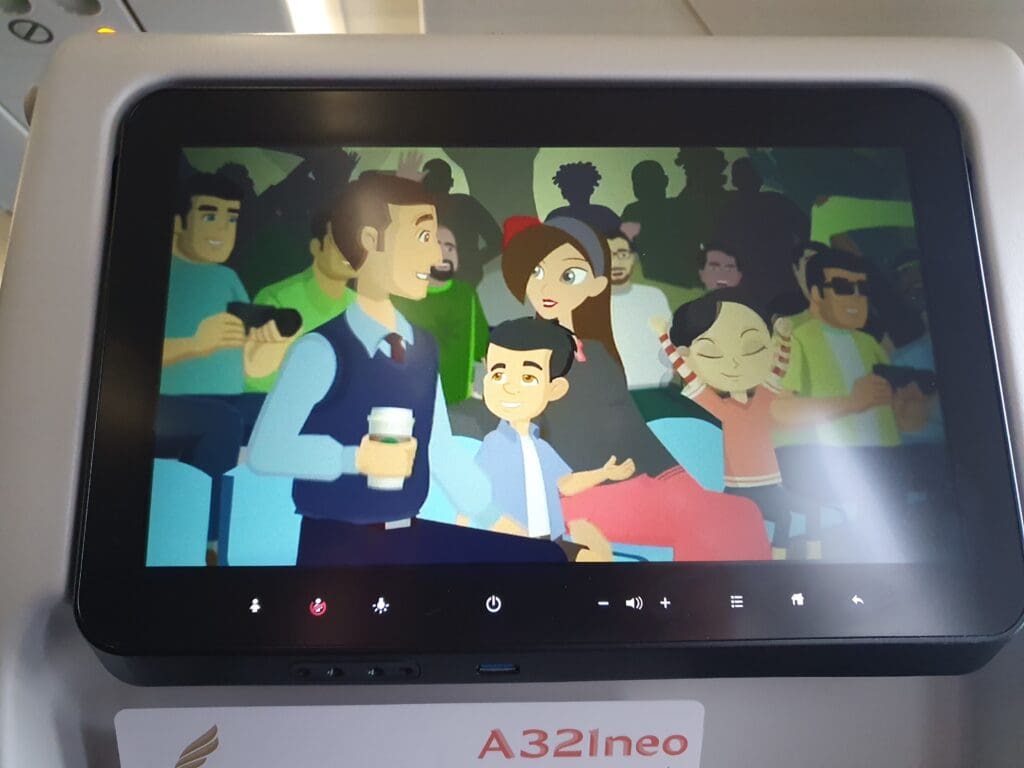
From my location just beyond the wing, outside I could see several ground crew members refuelling the Airbus in preparation for its relatively long flight over to the Middle East. Unfortunately, the service’s new scheduled departure time of 1130 came and went with no sign that this was nearing its completion. Several minutes later, at 1135, the refuelling hose could be seen being disconnected and wound back up into the truck at which point the Australian accented Captain performed a short welcome announcement in English during which they thanked passengers for flying with Gulf Air and advised that we would be pushing back in several minutes. True to their word, at 1142 the Airbus jolted backwards and began a long pushback during which a prayer rang out through the cabin and appeared on the aircraft’s inflight entertainment screens. Following this, Gulf Air’s long and partially Formula 1-themed animated safety video was played first in Arabic and then again in English. Whilst departing from Frankfurt, there was neither a German version of this, nor were German subtitles displayed.
As the aircraft pushed back, the Airbus A321neo’s two large CFMI LEAP-1A33 engines quietly whirred up into life and the scent of aviation fuel temporarily filled the cabin. Once the engines had powered up and the tug had been disconnected, at 1148, the aircraft commenced its long taxi over to Runway 18. During the initial stages of this, the crew passed through the cabin ensuring all was in place for our departure before retreating to their seats for takeoff. From the flight’s departure gate at the end of Terminal 2, the Airbus turned left and travelled the length of Terminal 2 where an Airbus A330-300 along with three Boeing 737-800s and a Boeing 777-200ER could be seen docked at the terminal’s gates. After trundling past this selection of aircraft, the Airbus then made its way past Terminal 1 where a more diverse collection of both locally based Condor and Lufthansa aircraft alongside visitors from across the world could be spotted being readied for their flights that day. After making it past Frankfurt’s two terminals, Lufthansa Technik’s large and distinctive hangar came into view although few aircraft could be seen parked up outside this and there was relatively little to see until the aircraft reached the runway.
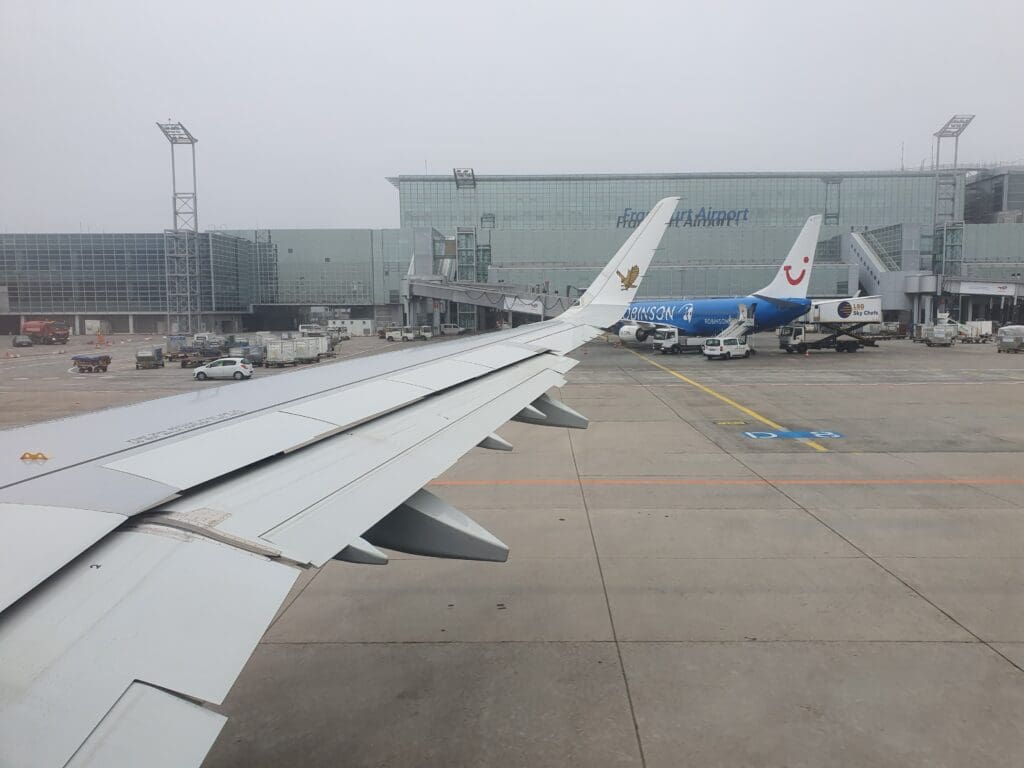
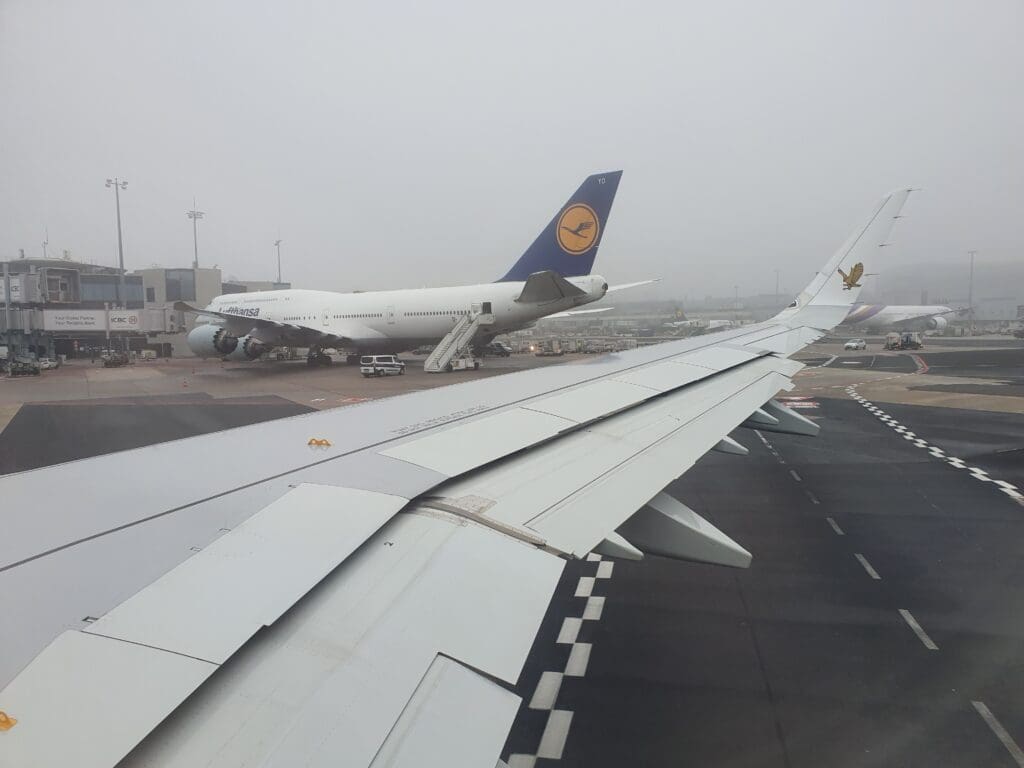
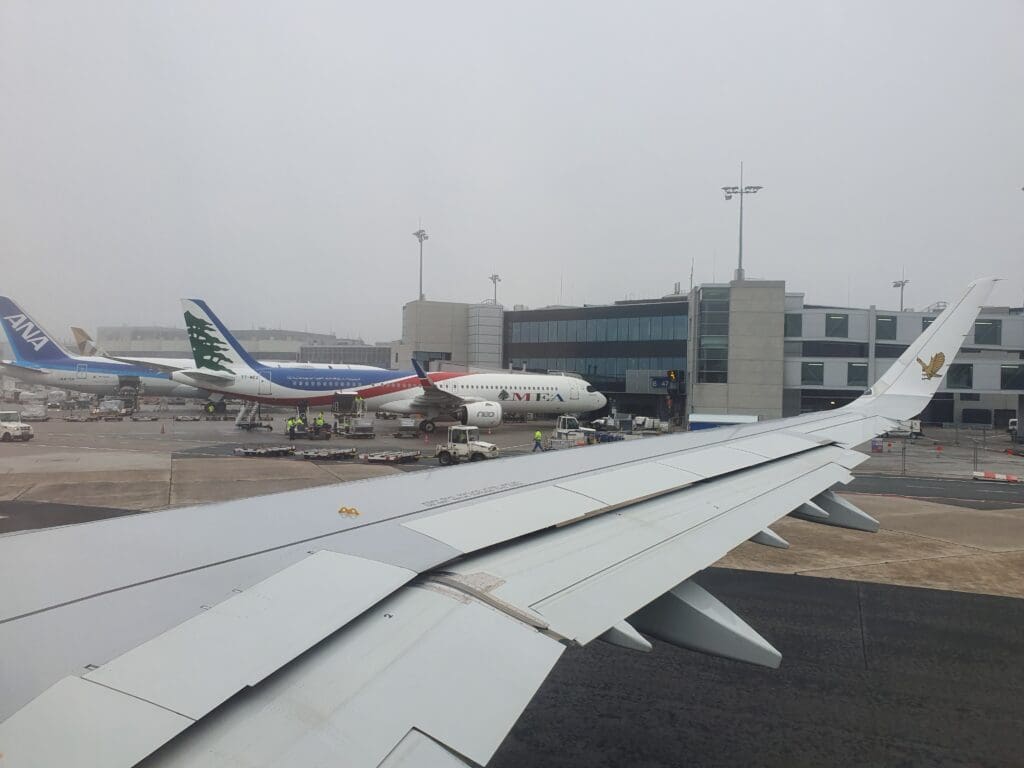
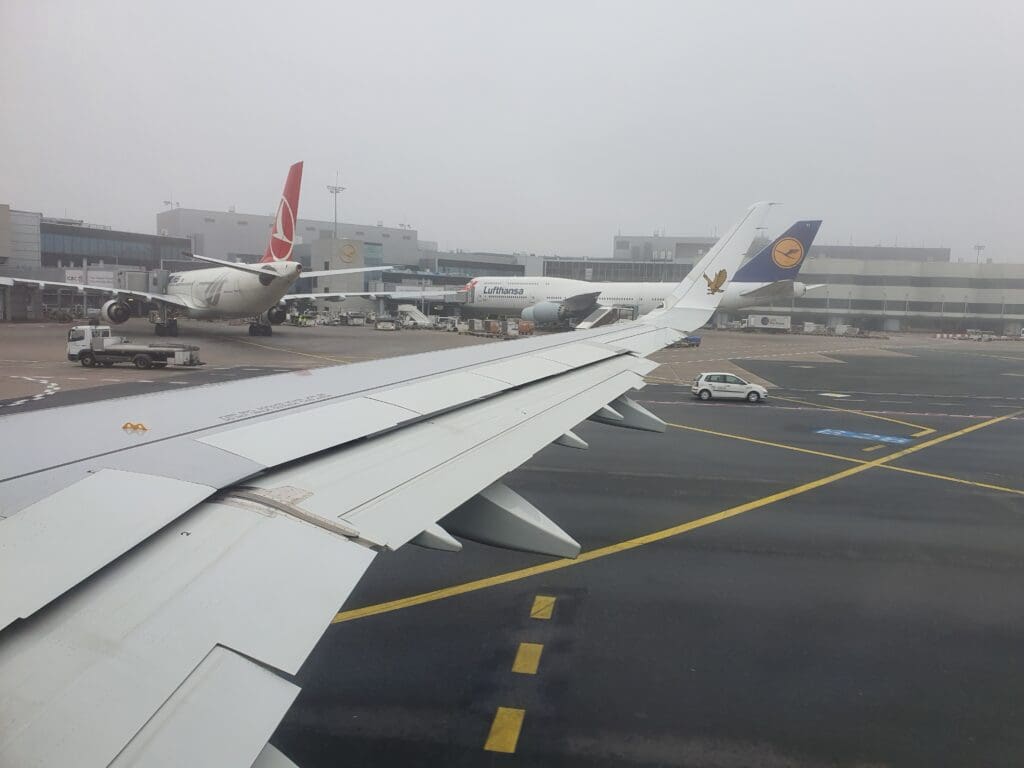
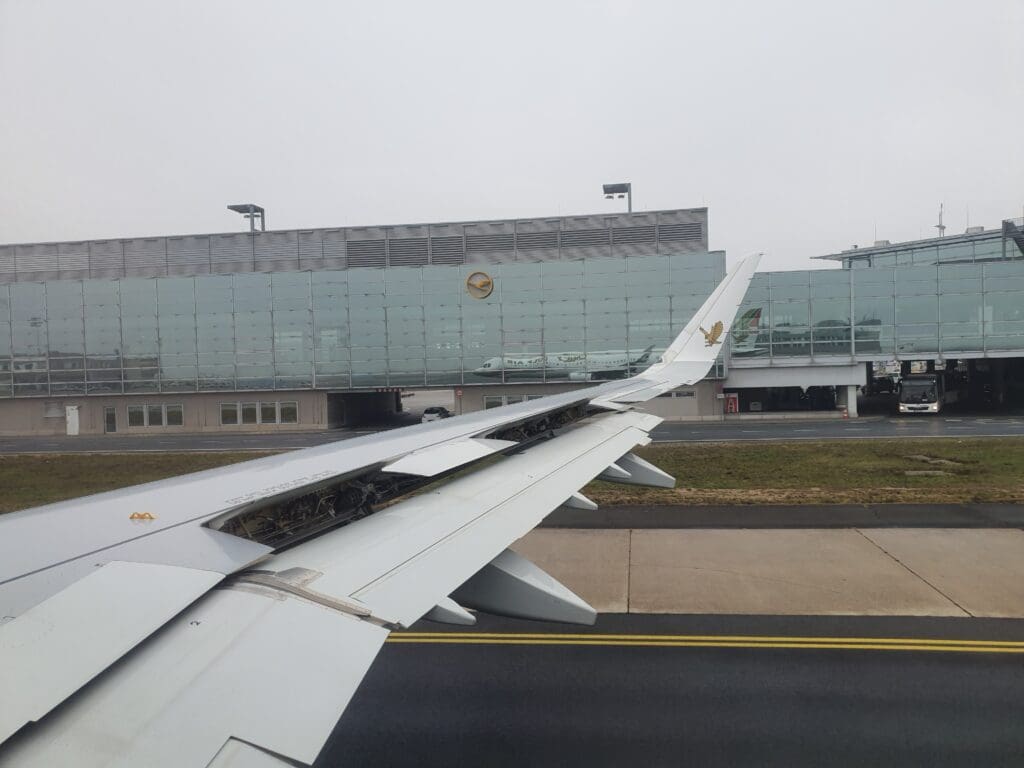
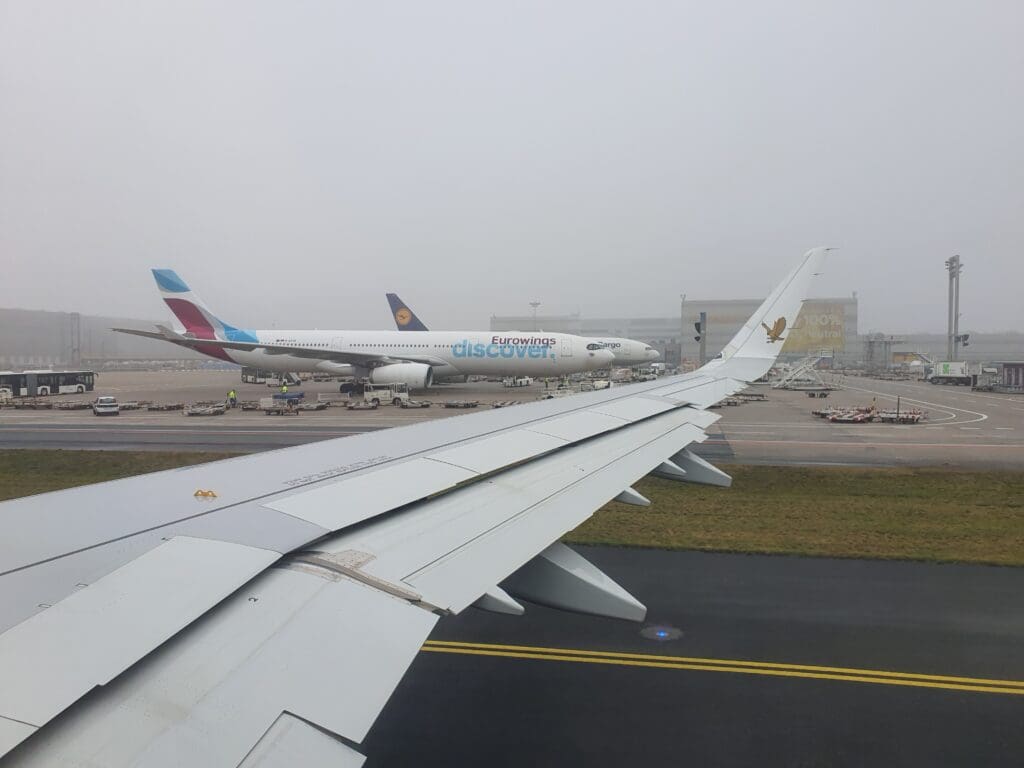
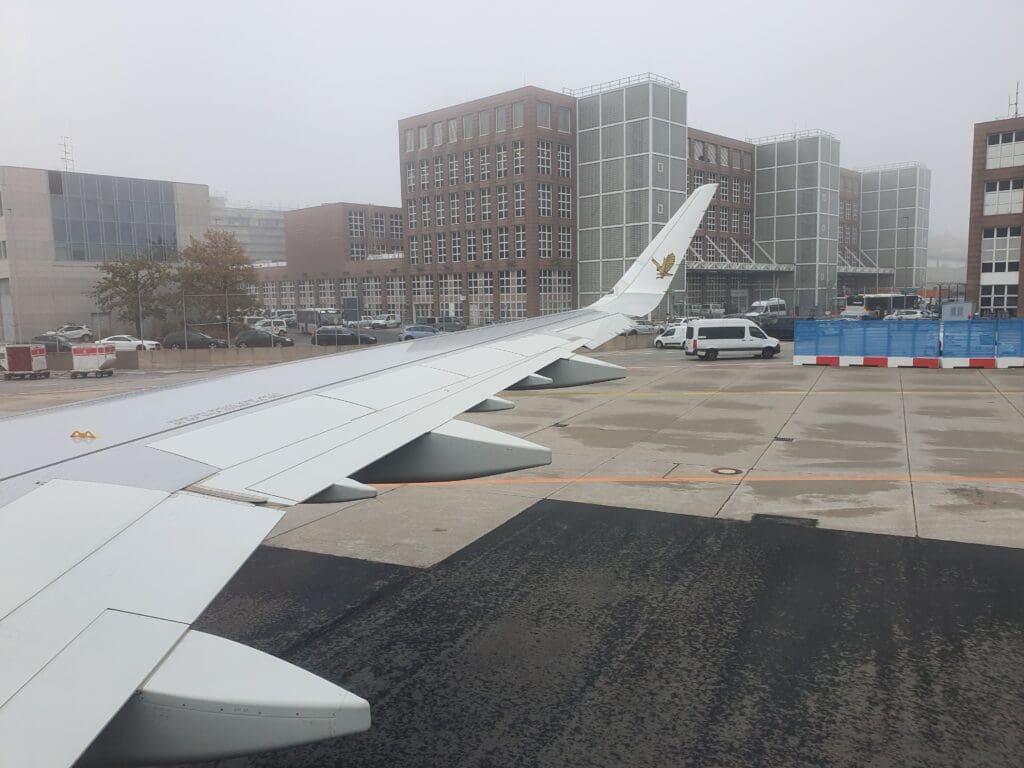
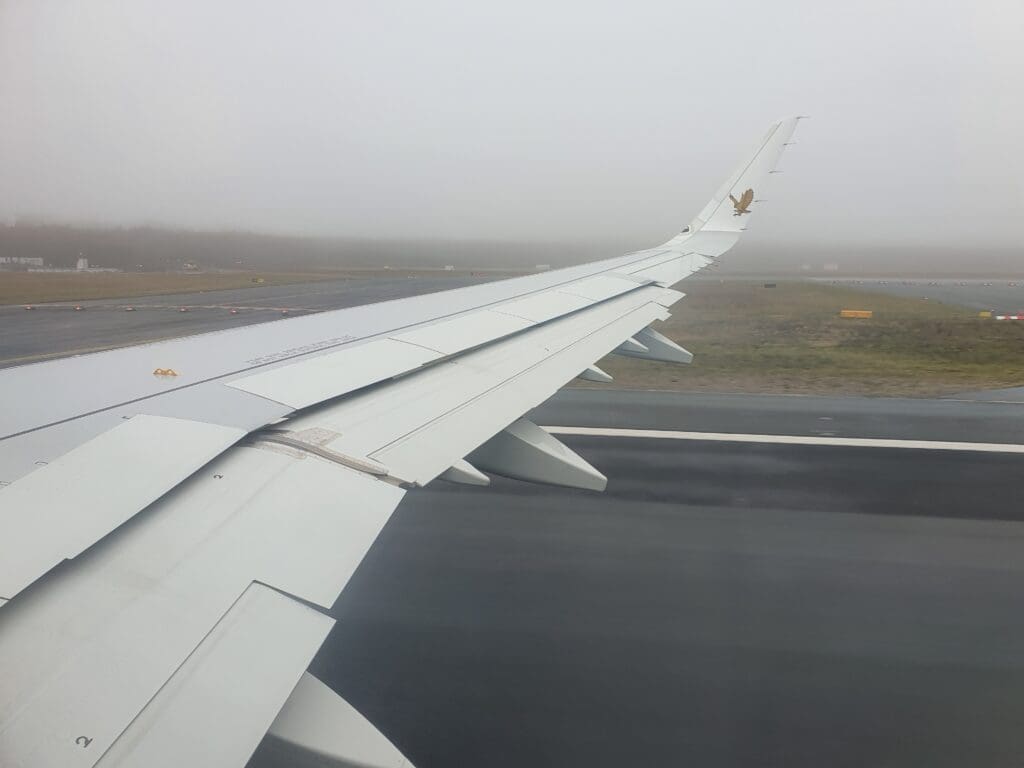
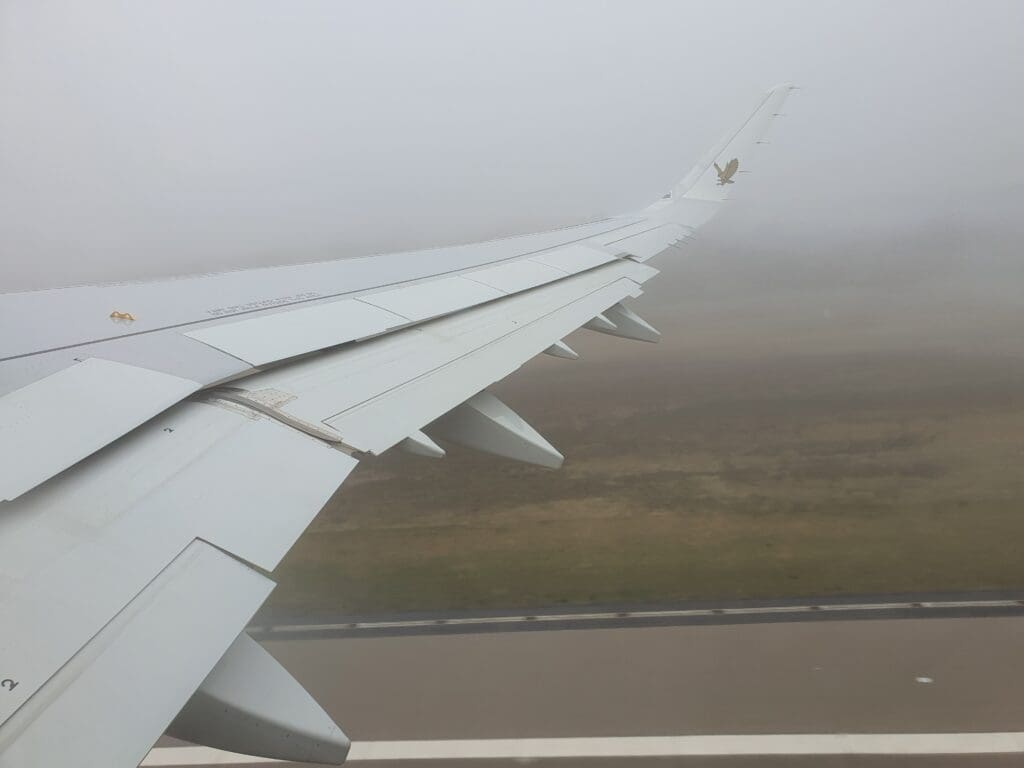
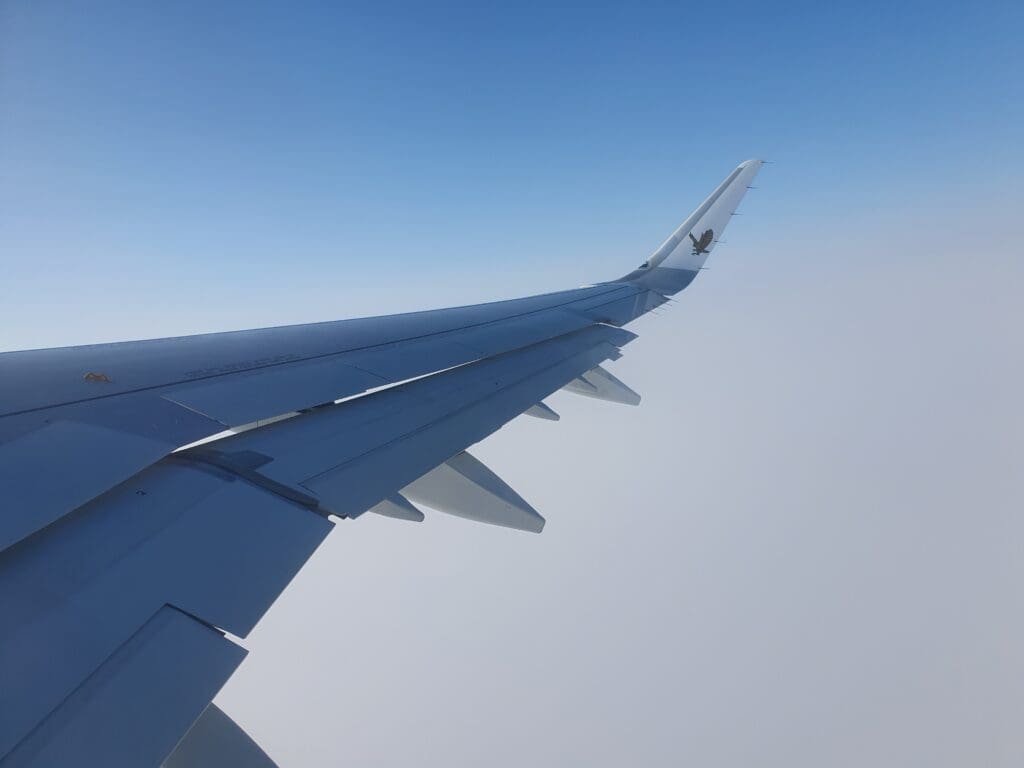
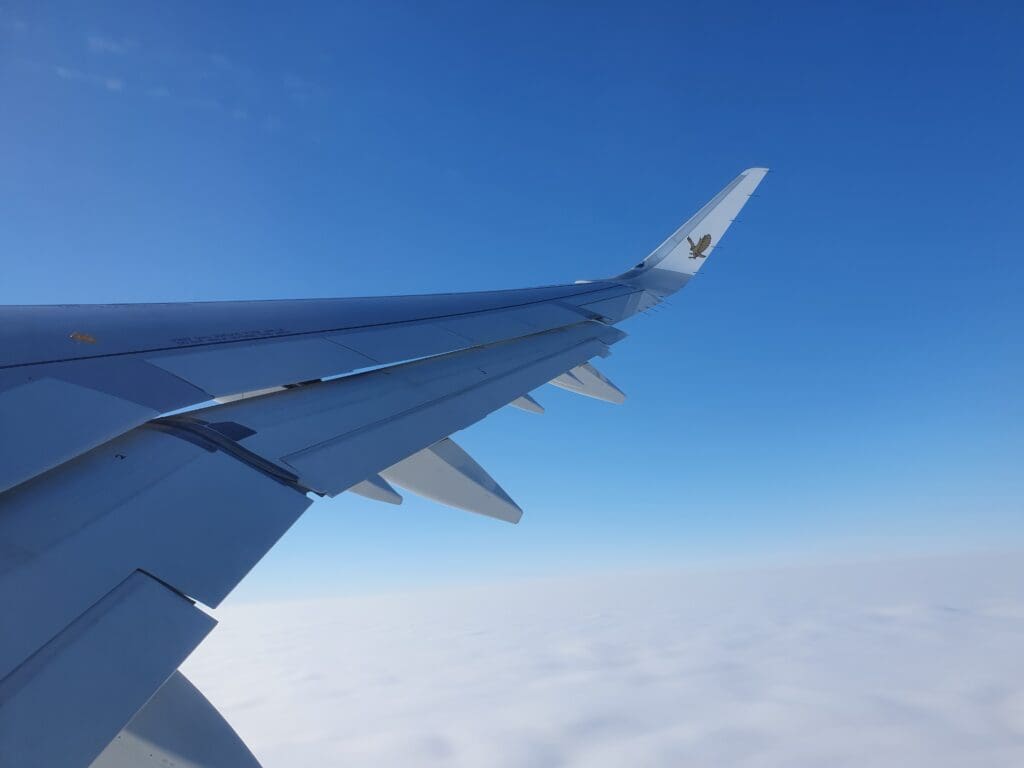
Following a fairly long taxi through the fog, the Airbus neared the end of Runway 18 at which point the roar of a departing aircraft filled the cabin before the aircraft slowly made its way onto the runway. After a short pause, at exactly 1200 the engines powered into life as the jet commenced a relatively quiet, gentle and long takeoff roll before making its way up into the foggy German skies. Within a minute or so of taking off, blue skies appeared above the jet and the Airbus turned onto a southeasterly heading before turning east several minutes later, flying a route that would take us towards the border with Czechia.
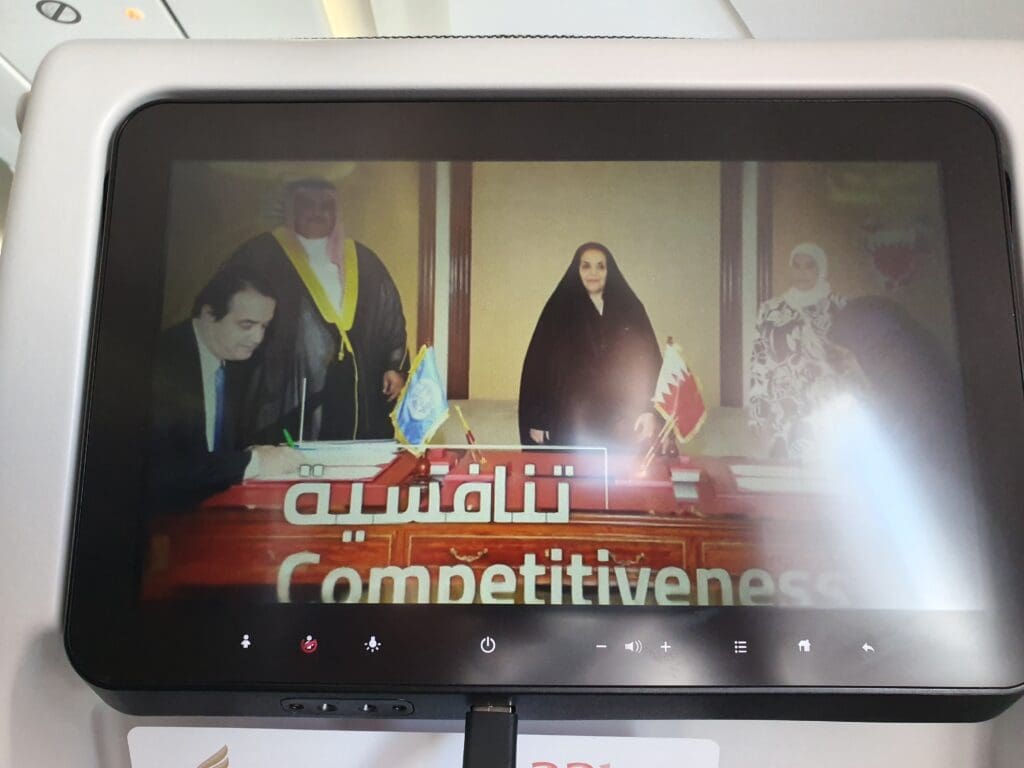
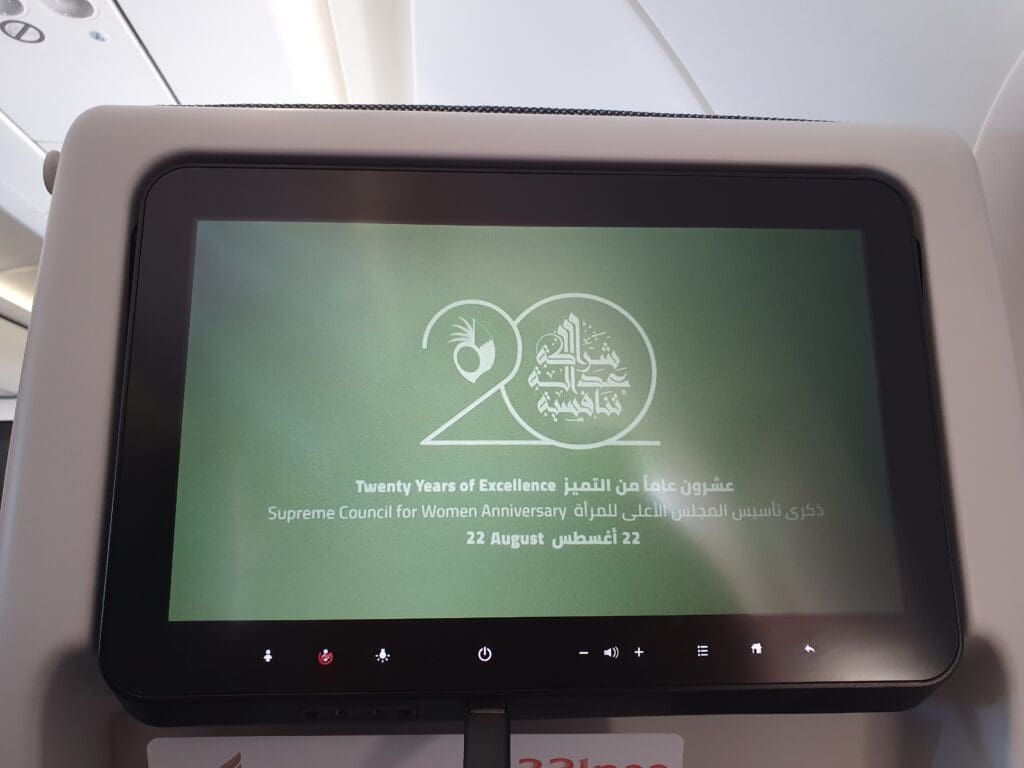
Several minutes into the flight, the Cabin Services Manager performed their second welcome announcement of the flight in Arabic and English, thanking all onboard for flying with Gulf Air once again before introducing himself and the three other crew members onboard by name. That day, the international crew working in the Economy cabin hailed from France, Korea and Poland. After this, a COVID-related health and safety video was displayed on all screens followed by a government-sponsored video celebrating the twentieth anniversary of the Supreme Council for Women. With the initial portion of the flight proving to be a smooth ride, the pilots turned off the seatbelt signs as the Airbus climbed through 10,000 feet. At this stage, an automated announcement rang out which featured the usual warnings regarding keeping these fastened whilst seated.
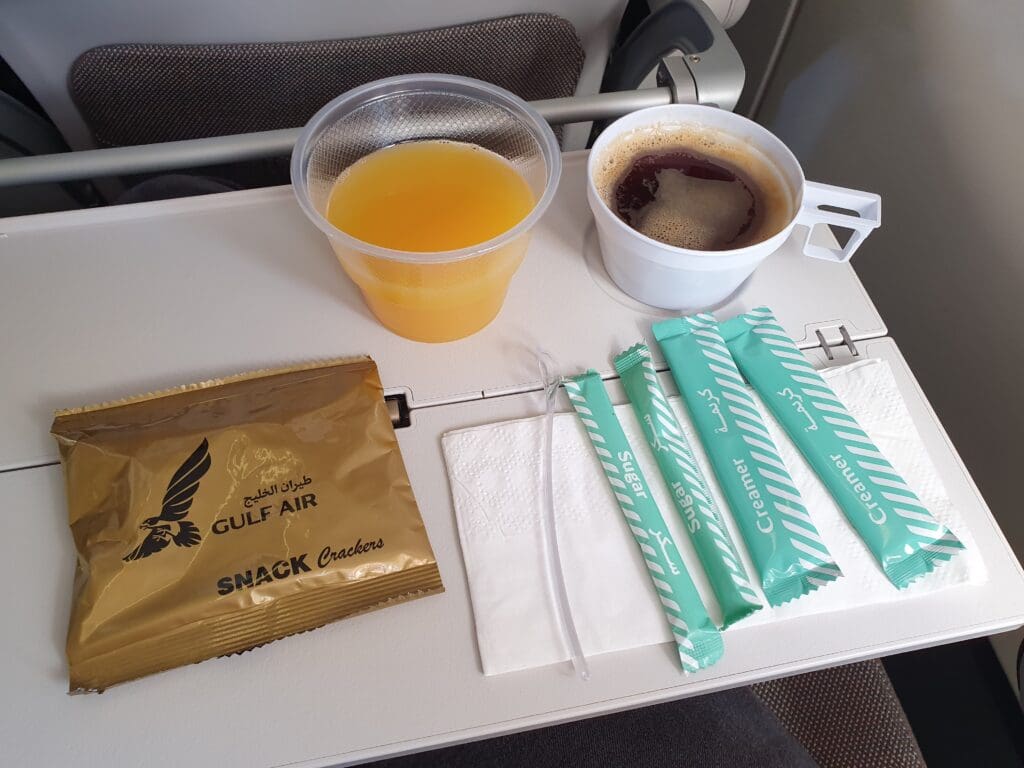
No more than thirteen minutes after the aircraft had rotated up into the skies, a trolley was rolled to the front of the Economy cabin and the first service of the flight to Bahrain commenced. Thanks to the light load, it did not take long for the crew to work their way rearwards and soon enough two friendly flight attendants greeted me before asking for my choice of drink. Opting for a coffee and an orange juice, both of these were passed to me on a tray along with a small packet of Gulf Air branded salted crackers, a serviette and several packets of creamer and sugar. By the time I received these, the Airbus had left German airspace having cruised over Wurzburg, passed to the north of Nuremberg and crossed Bayreuth and was now flying across the southern portion of Czechia. Flying southeast across the country, the Airbus passed over the city of Pilsen, well known for its beer and cruised south of Prague before reaching the country’s second-largest city, Brno.
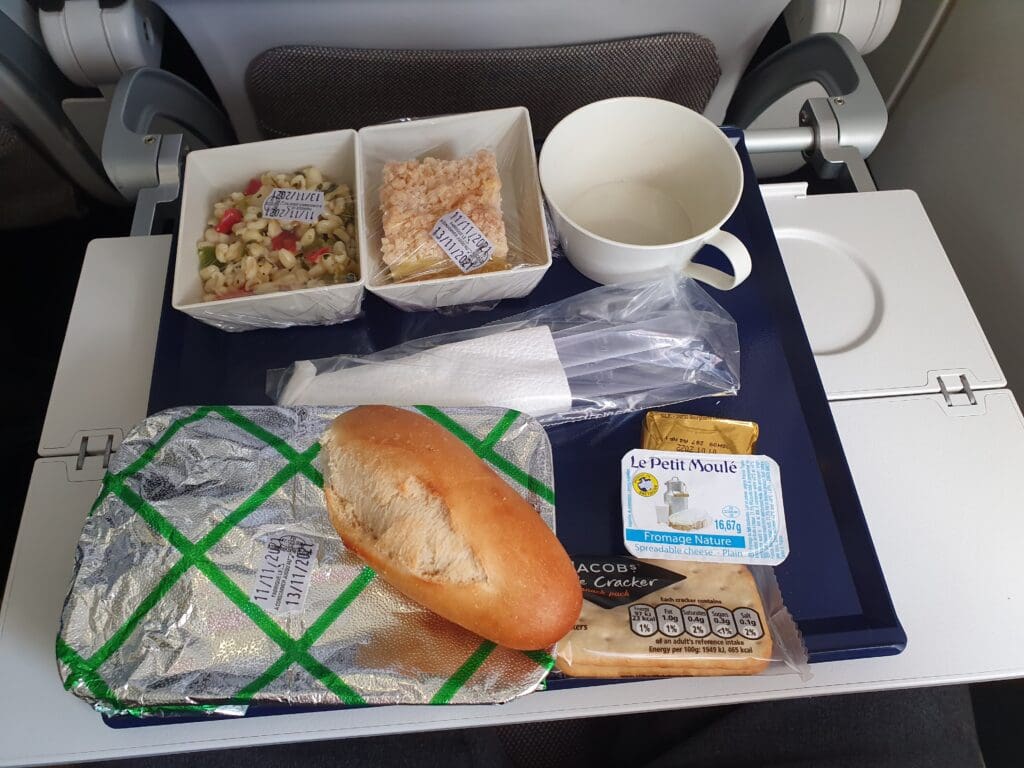
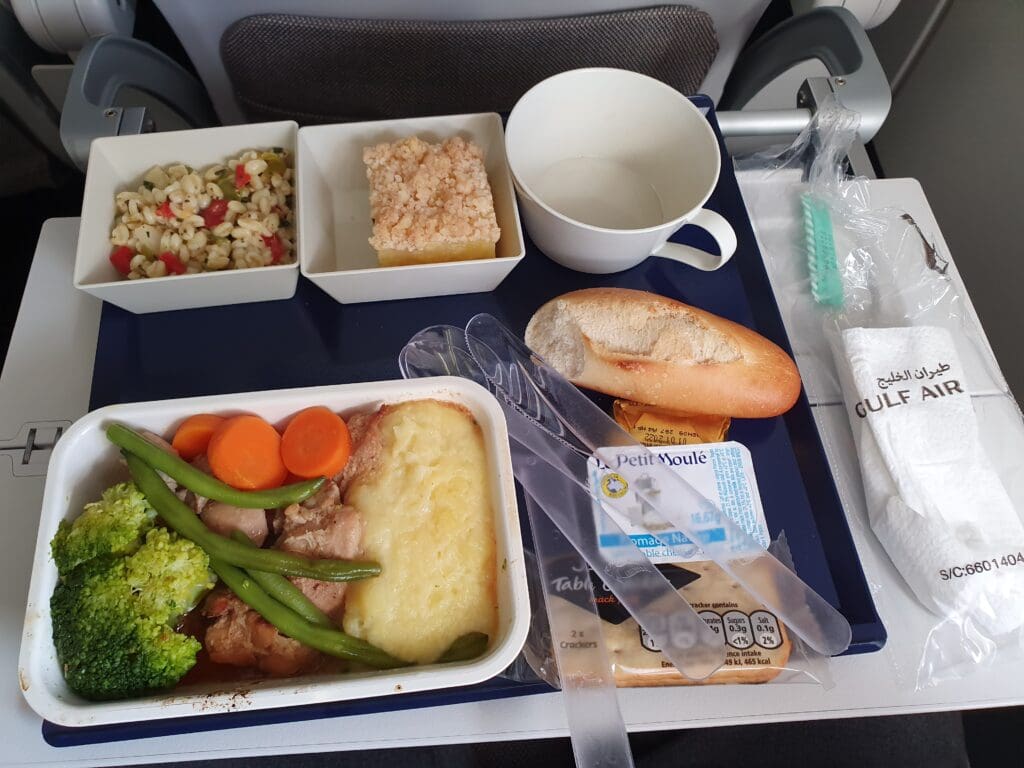
Almost as soon as I had polished off the first round of service, all three crew members in Economy got to work distributing the lunch offering, with two flight attendants rolling out a trolley to the front of the cabin, whilst the other worked their way forward from the rear of the aircraft. Within a couple of minutes, the latter flight attendant reached my row and went through the two options in plenty of detail. That lunchtime, the meat option consisted of roast chicken with green beans, mashed potatoes and broccoli, whilst the vegetarian option consisted of vegetables and rice. Opting for the former, this was handed to me on a tray along with a grain salad, a small square of apple cake, a packet of Jacobs’ crackers and a nice warm bread roll. Condiments came in the form of the usual salt and pepper sachets, as well as small packets of President butter and Le Petit Moule cream cheese, and high-quality plastic cutlery featuring Gulf Air’s falcon motif was also offered. With this meal having been loaded onto the aircraft in Paris, I had high expectations. Fortunately, I was not disappointed at all. Whilst inflight chicken can often seem a little bland, this dish proved to be delicious, well-cooked and highly flavoursome. Meanwhile, both the side dish and dessert left me with little to complain about and I finished the meal feeling satisfied and rather full. Once all three crew members had distributed the meals, two crew members made another drinks round during which I opted for a cup of water.
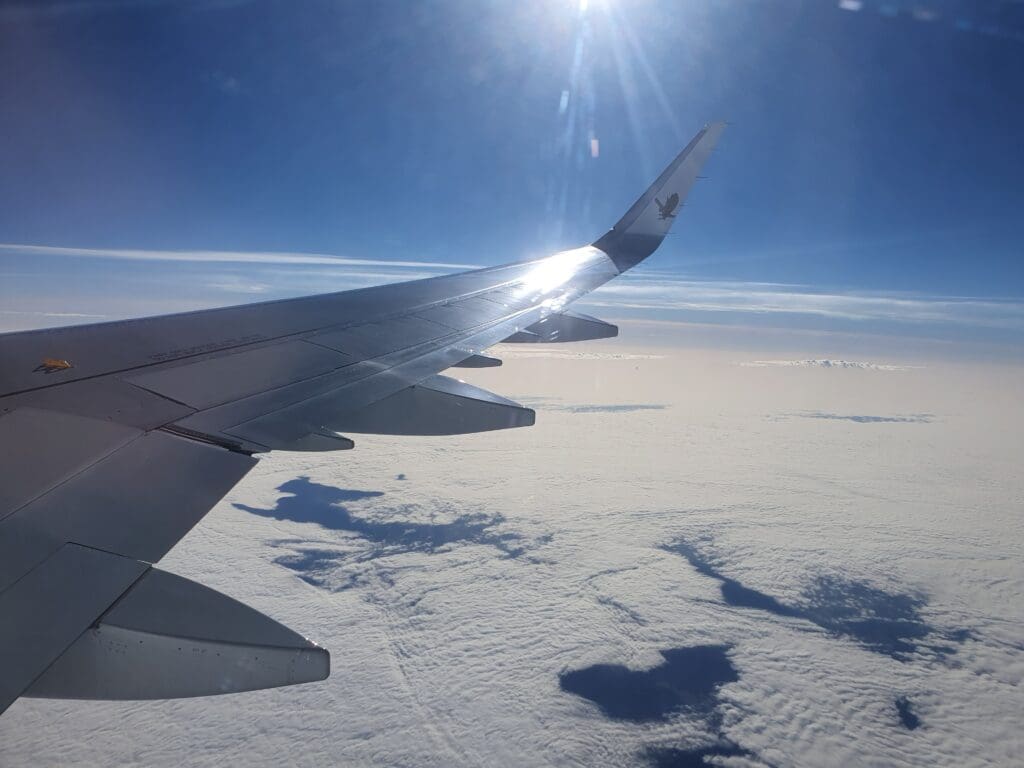
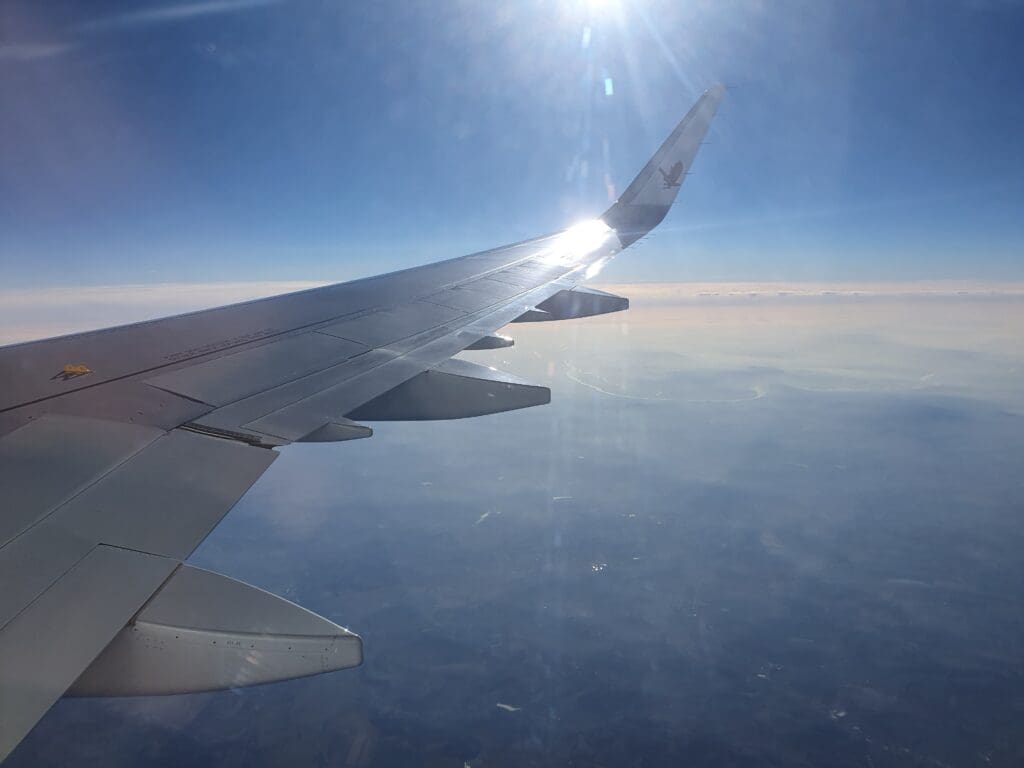
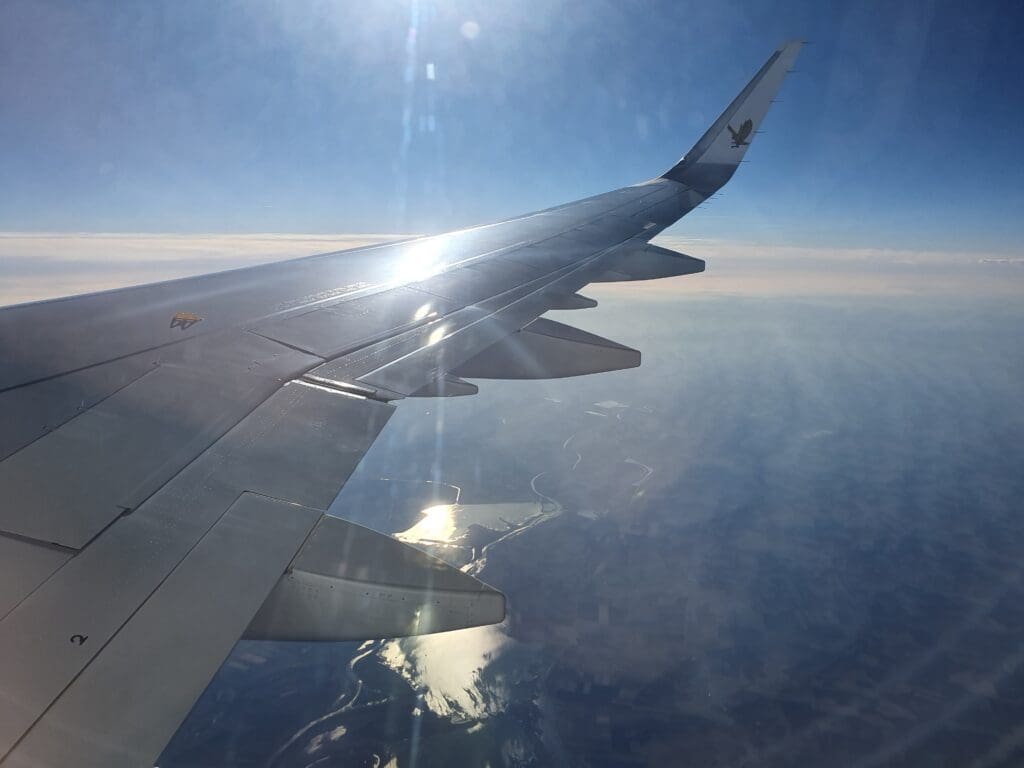
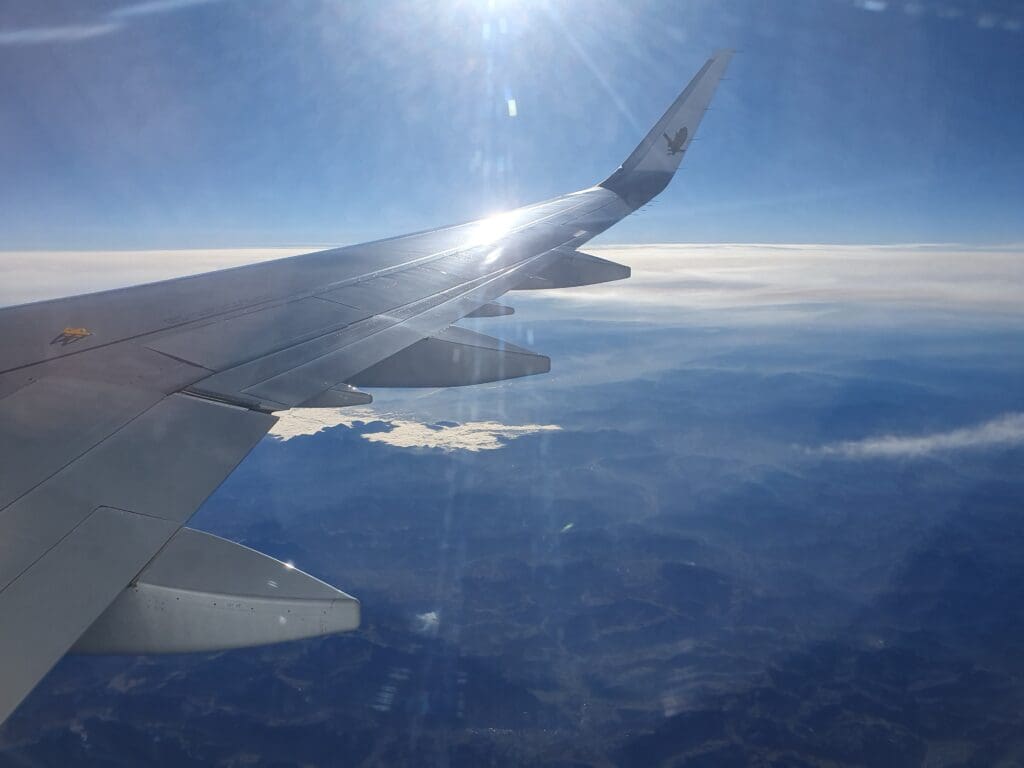
Having made a short crossing of Slovakia, as I ate lunch the clouds parted revealing the countryside and gentle hills of northeastern Hungary, where the winding River Tisza could be seen. Following no more than fifteen minutes in Hungarian airspace, the jet then crossed into the skies of Romania near the city of Oradea before cutting diagonally across the centre of the country. During this, the aircraft crossed over Sibiu before reaching the country’s capital Bucharest. From there, the aircraft flew over a very small portion of Bulgaria before leaving Europe behind near Varna and commencing its crossing of the Black Sea.
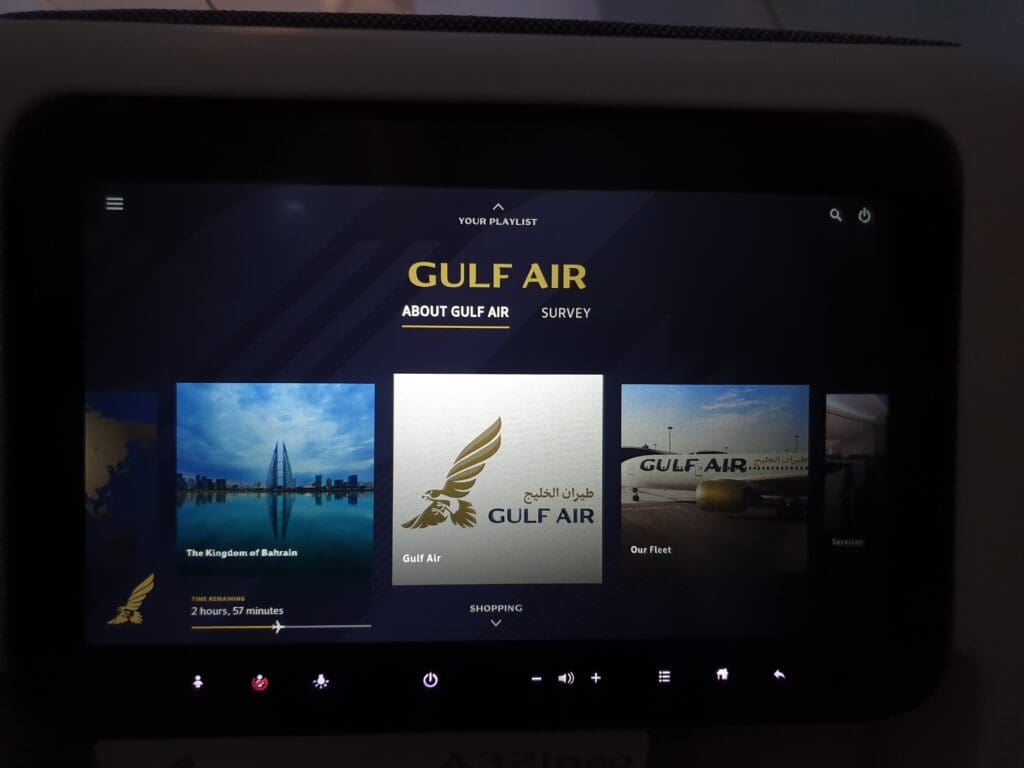
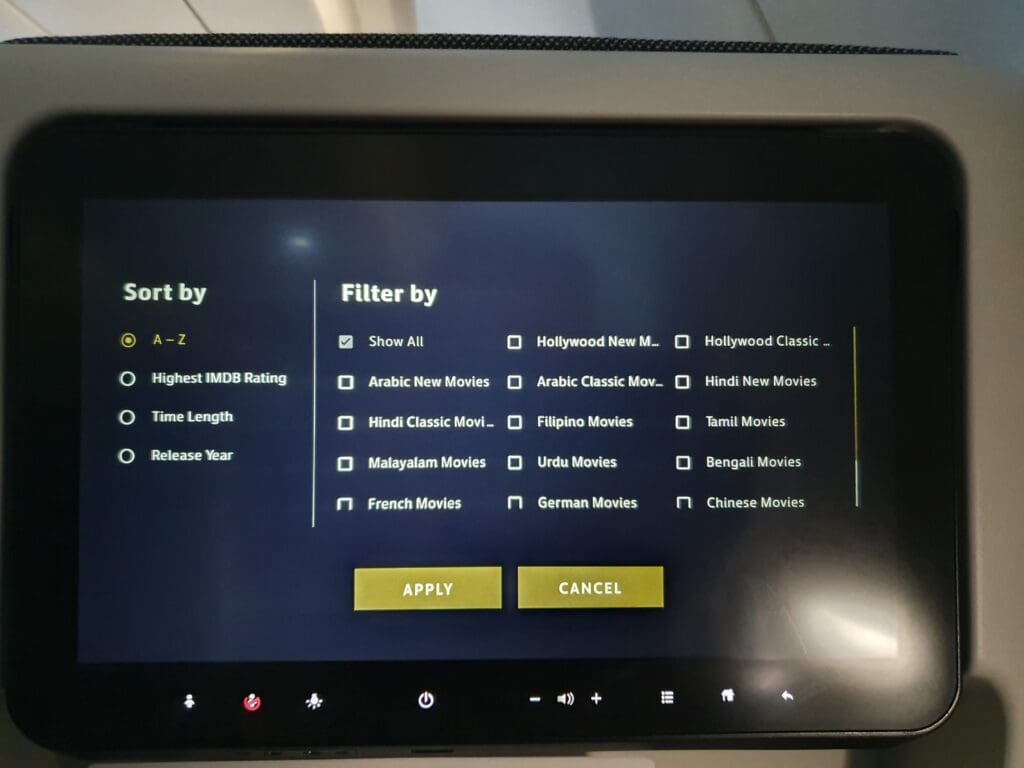
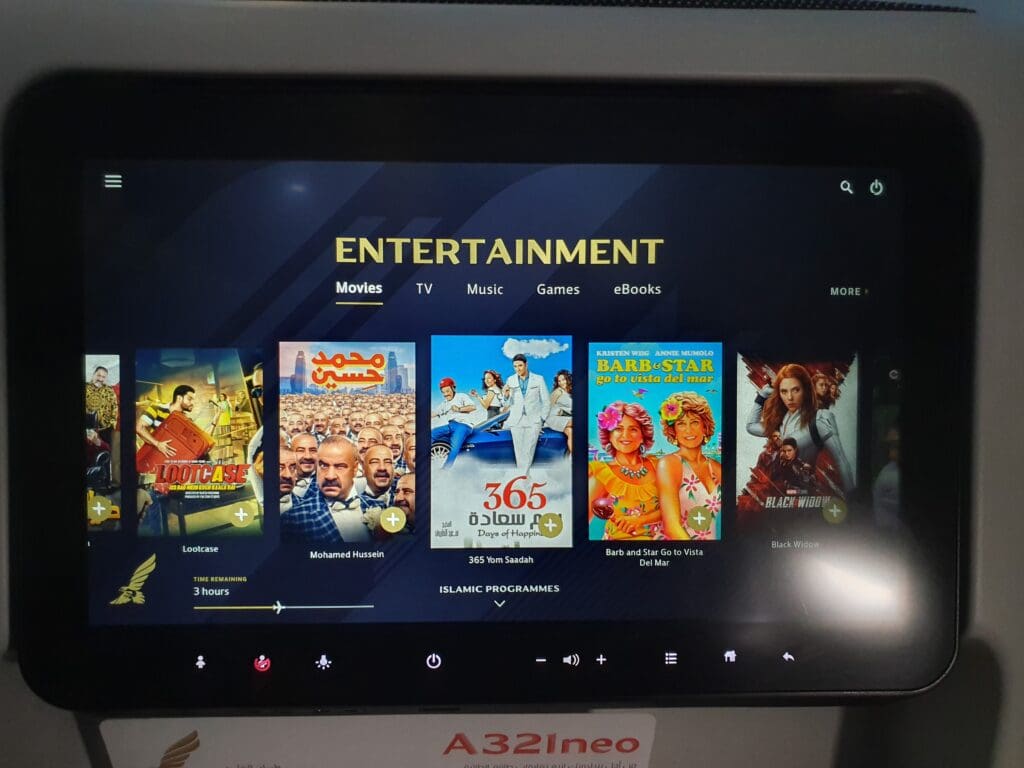
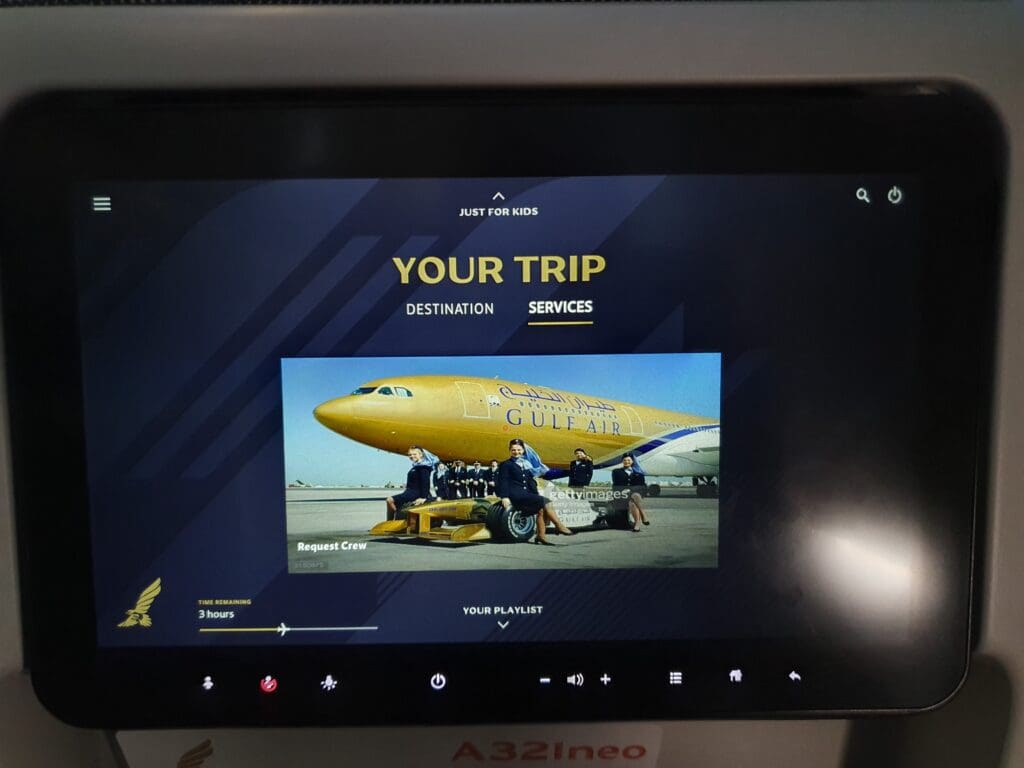
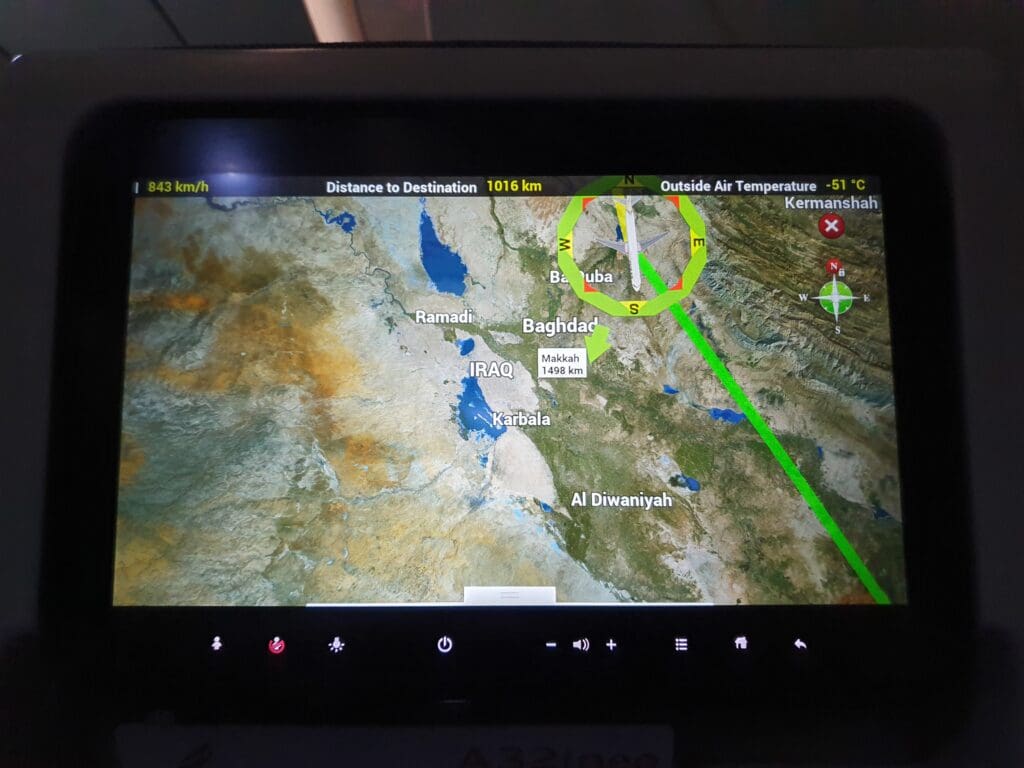
With little to see outside as the aircraft crossed over the sea, I decided to explore Gulf Air’s inflight entertainment system. At the time of my flight, Gulf Air served destinations in 29 countries across Africa, Asia and Europe however despite this, the inflight entertainment system is available in a total of just four languages – Arabic, English, French and German. Despite this complaint, I found the system to be sleek, modern, quick to load and very easy to navigate. In terms of content, this was loaded with a respectable total of 156 films which included the latest releases. Just under half of these films, specifically 72, took the form of Hollywood films, with 21 Arabic films also available alongside productions from Bangladesh, China, France, India, Pakistan, the Philippines, Sri Lanka, Thailand and Turkey. Aside from the usual duration, language and release year, passengers can filter these by their IMDB rating. In addition to this, 75 television programmes could also be watched, with most of these appearing to be either from the Arabic-speaking world or the US. As is often the case, both films and television programmes commenced with an advertisement, this taking the form of a short non-skippable Gulf Air commercial promoting Bahrain. Meanwhile, 177 music albums and playlists could also be found on the system. For those who are more interested in tracking the progress of the flight, the system features Thales GeoFusion 3DMaps which allows passengers to see all sorts of different options and pieces of information regarding their flight, and is in my opinion the best moving map out there. Finally, Falcon Wifi is also offered, however, I was unable to connect to this for the duration of the flight.
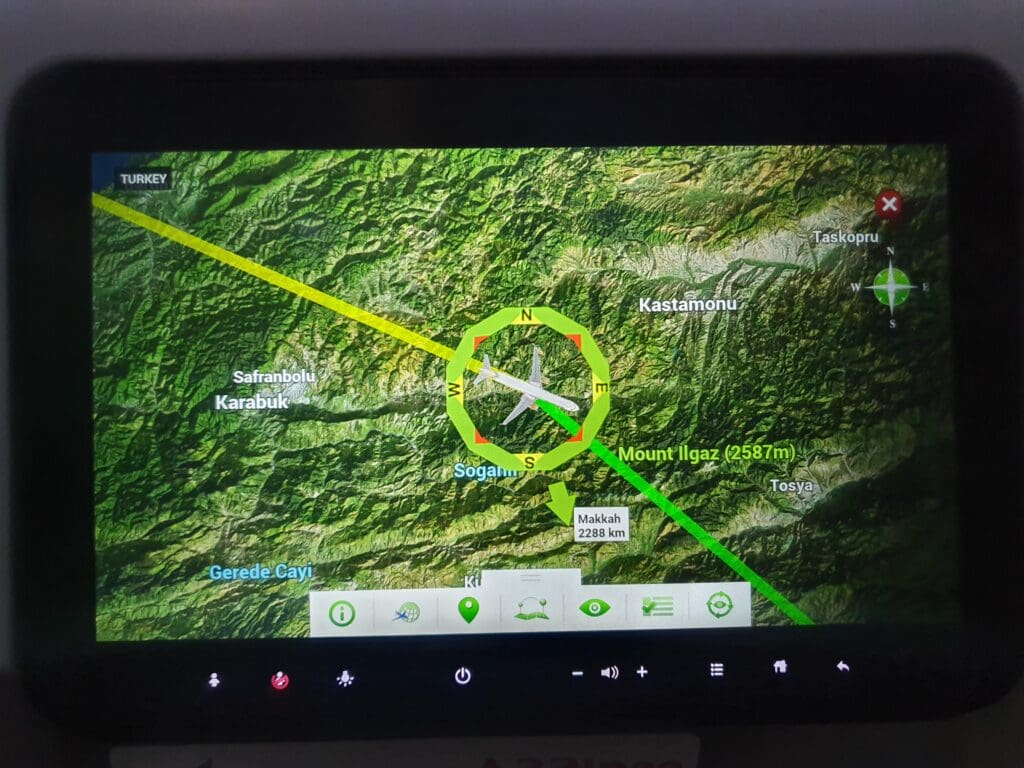
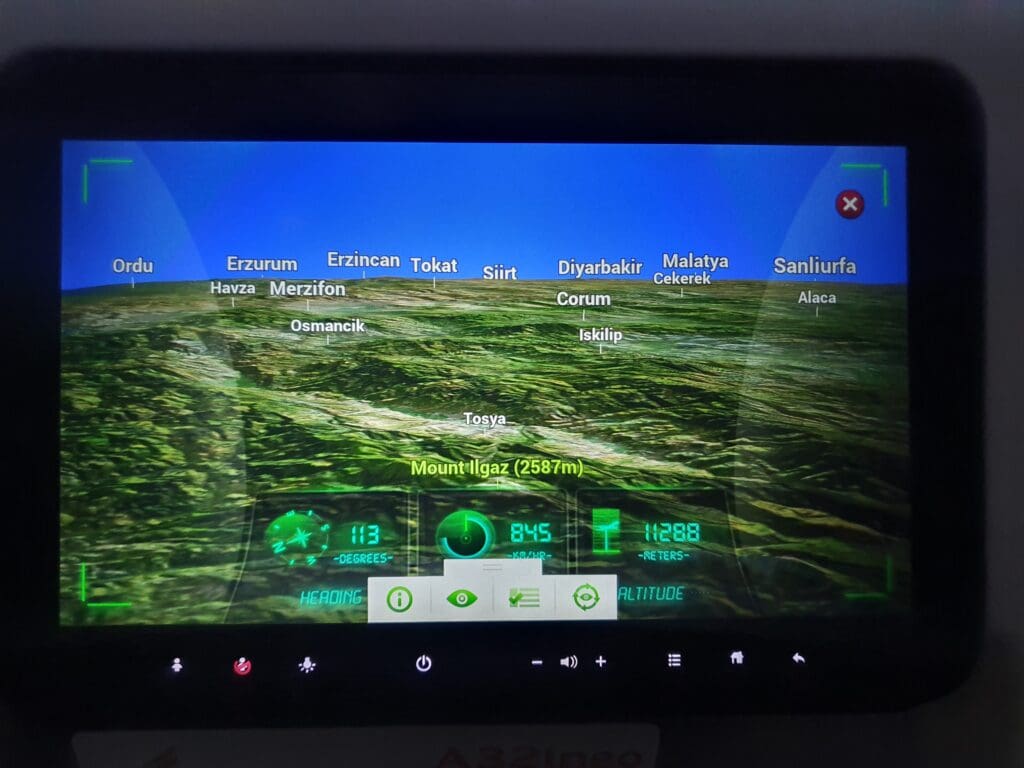
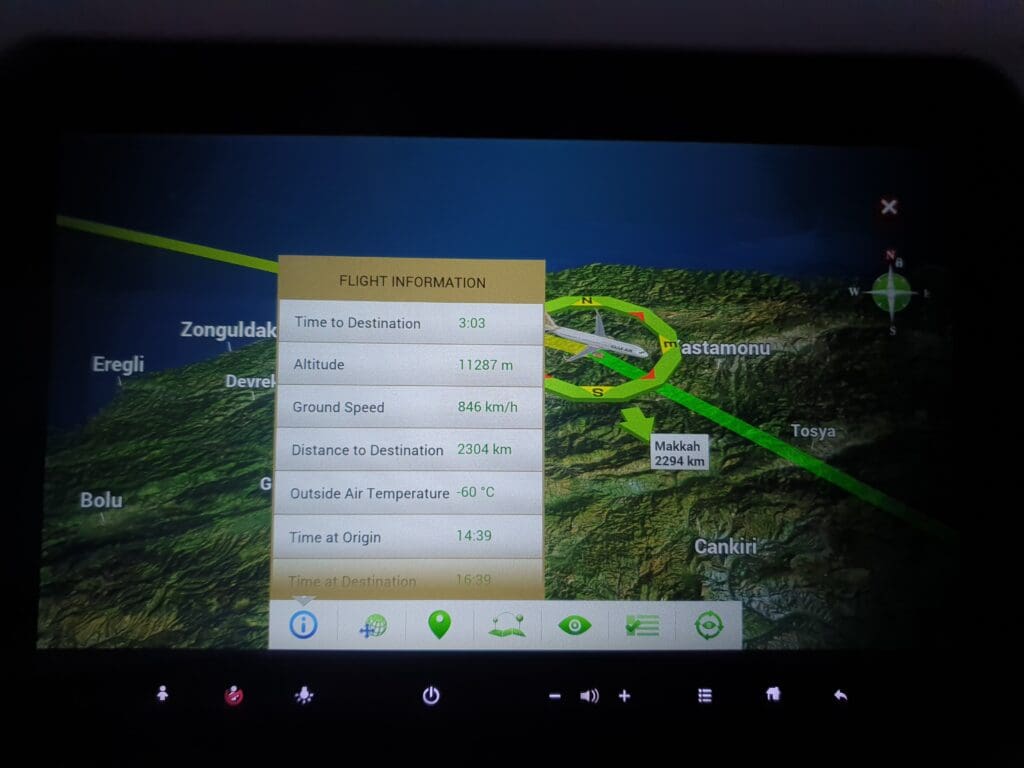
Around two hours and a half into the flight, the hilly northern Turkish coastline appeared and the aircraft soon made landfall to the west of the town of Amasra. At this time, the cabin crew passed through the cabin distributing plastic cups of water. As the aircraft made its way inland and journeyed southeastwards across the country, the scenery below temporarily transformed into mountains with a few clusters of snow-capped peaks appearing.
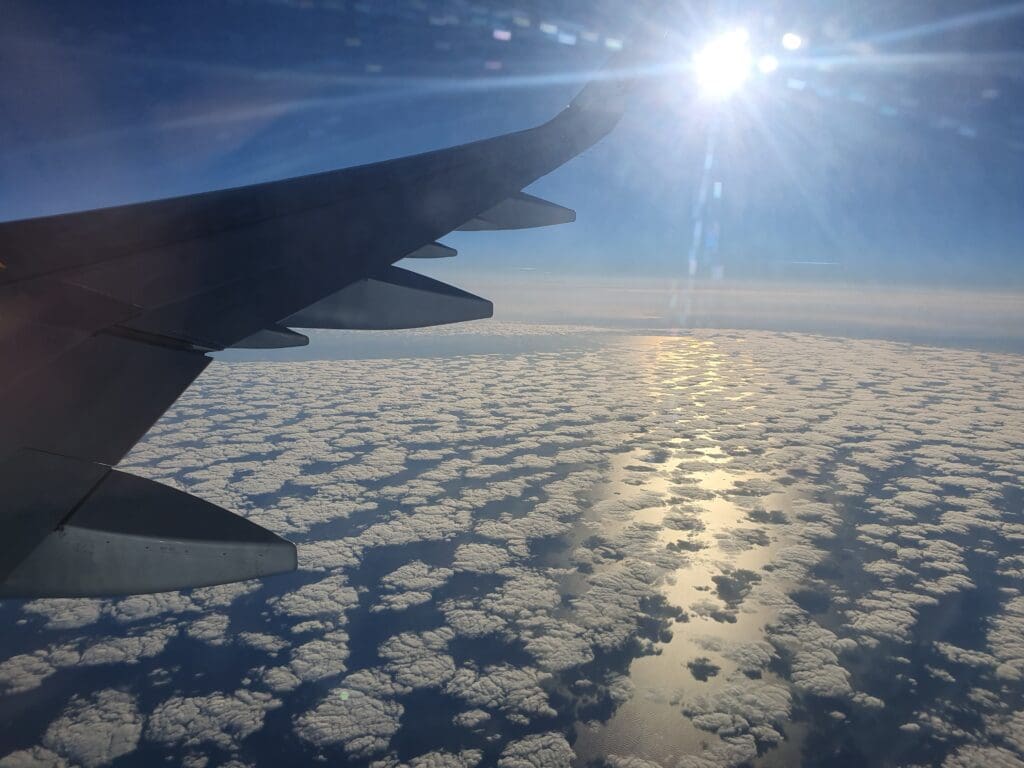
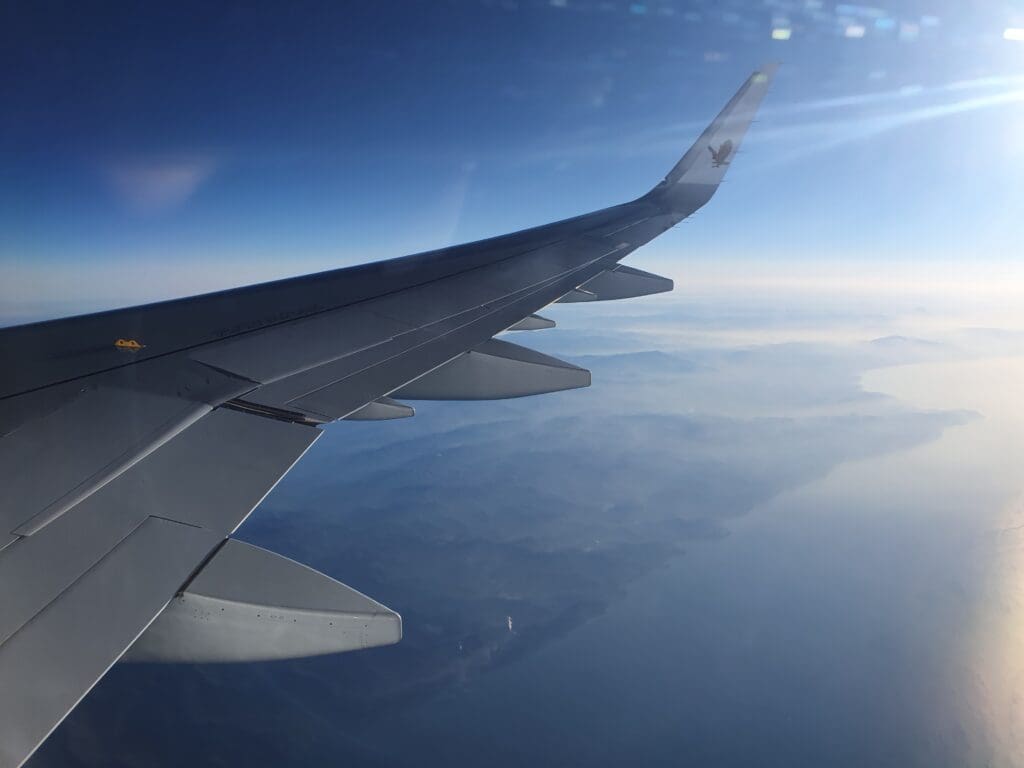
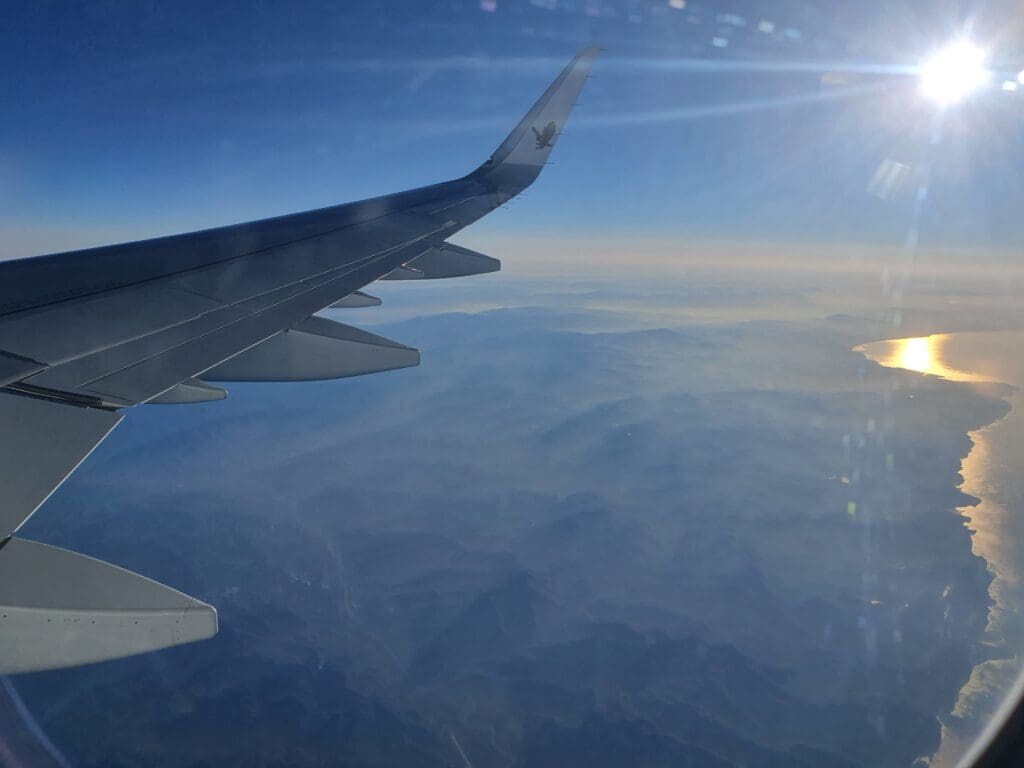
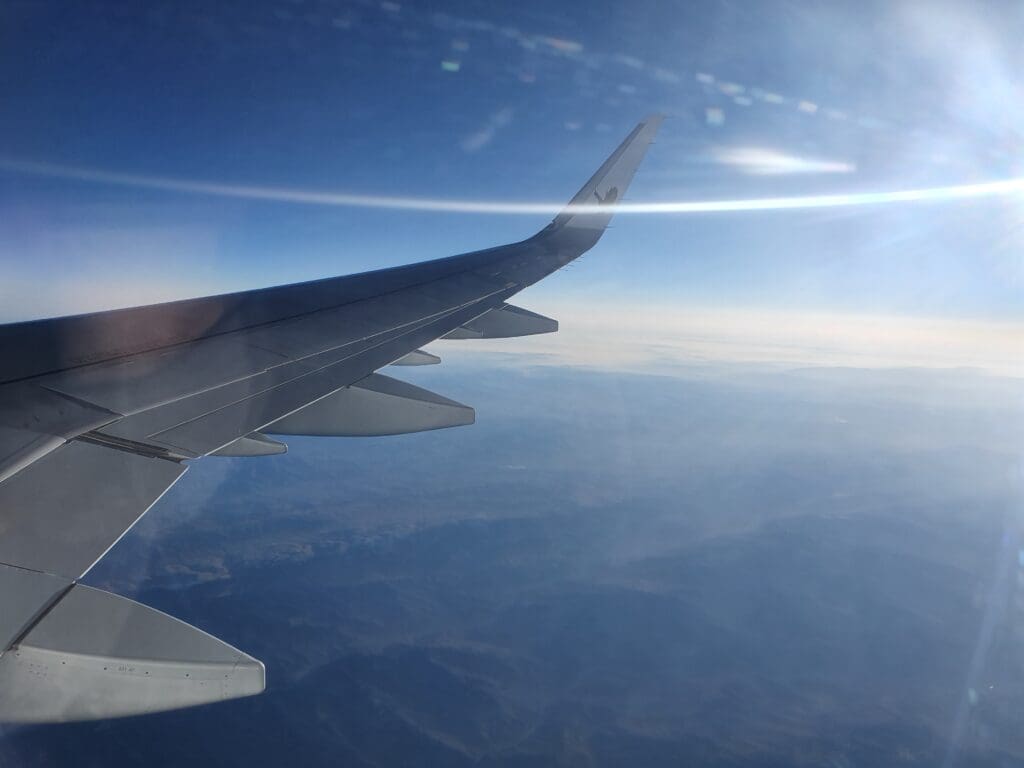
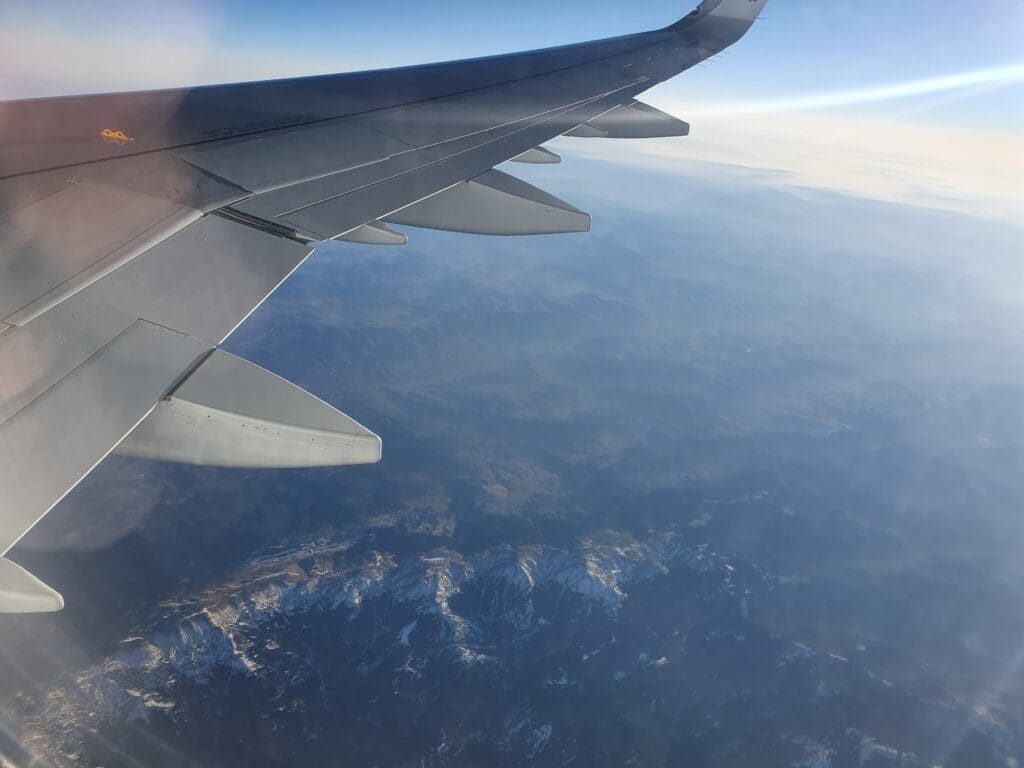
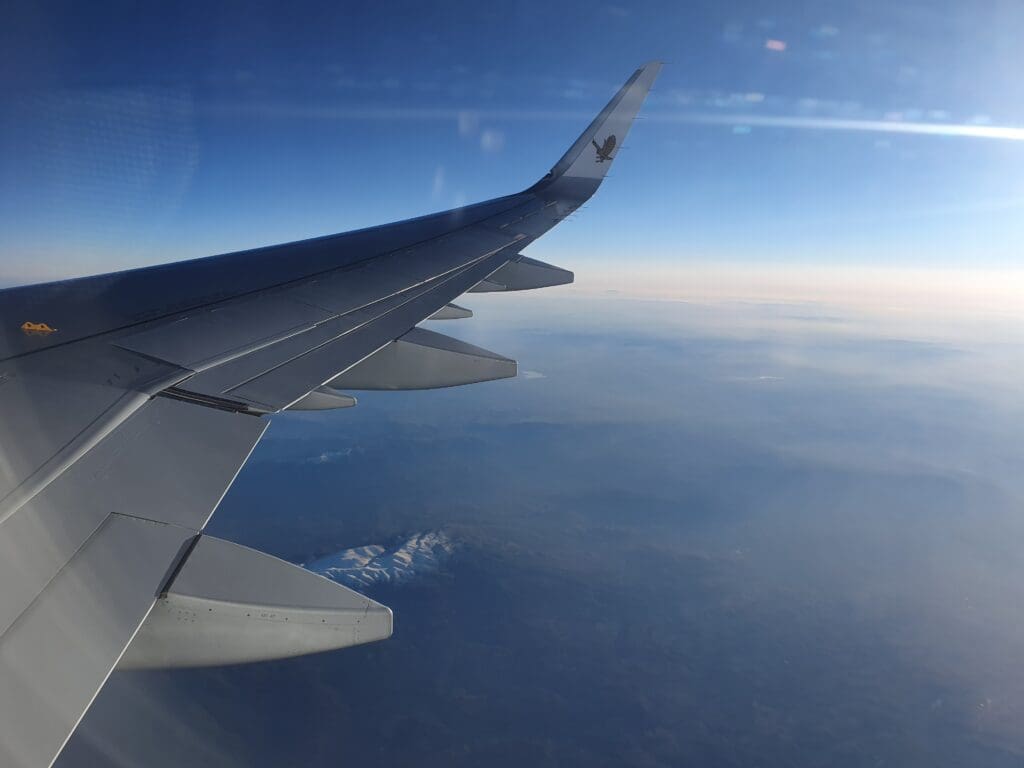
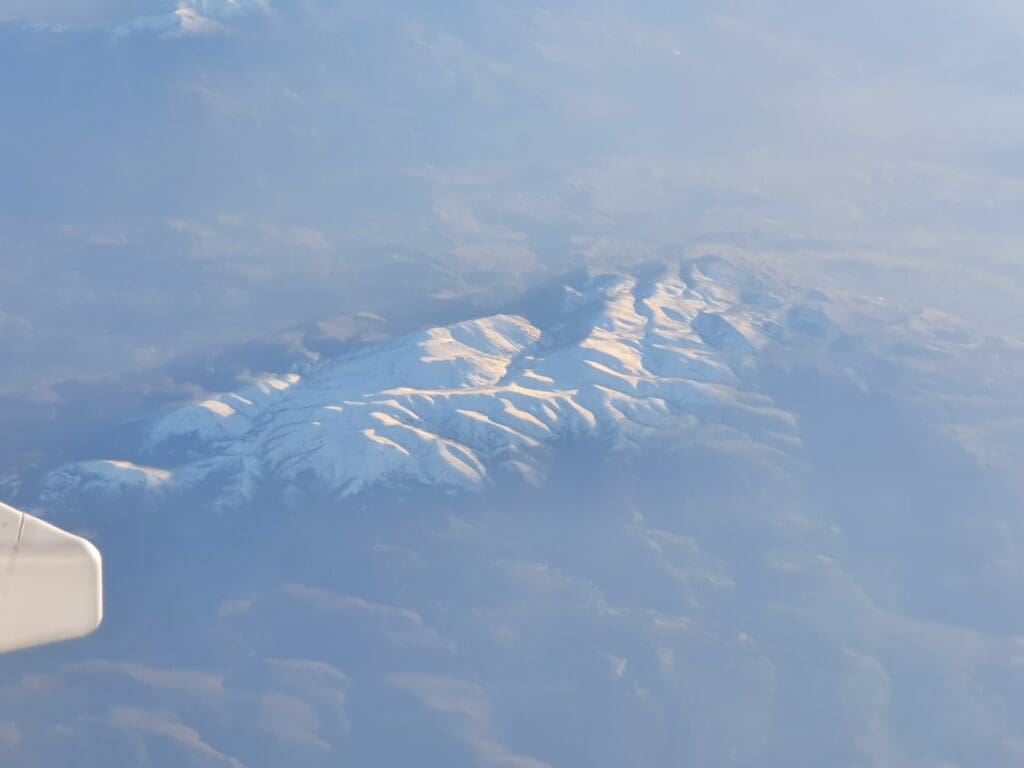
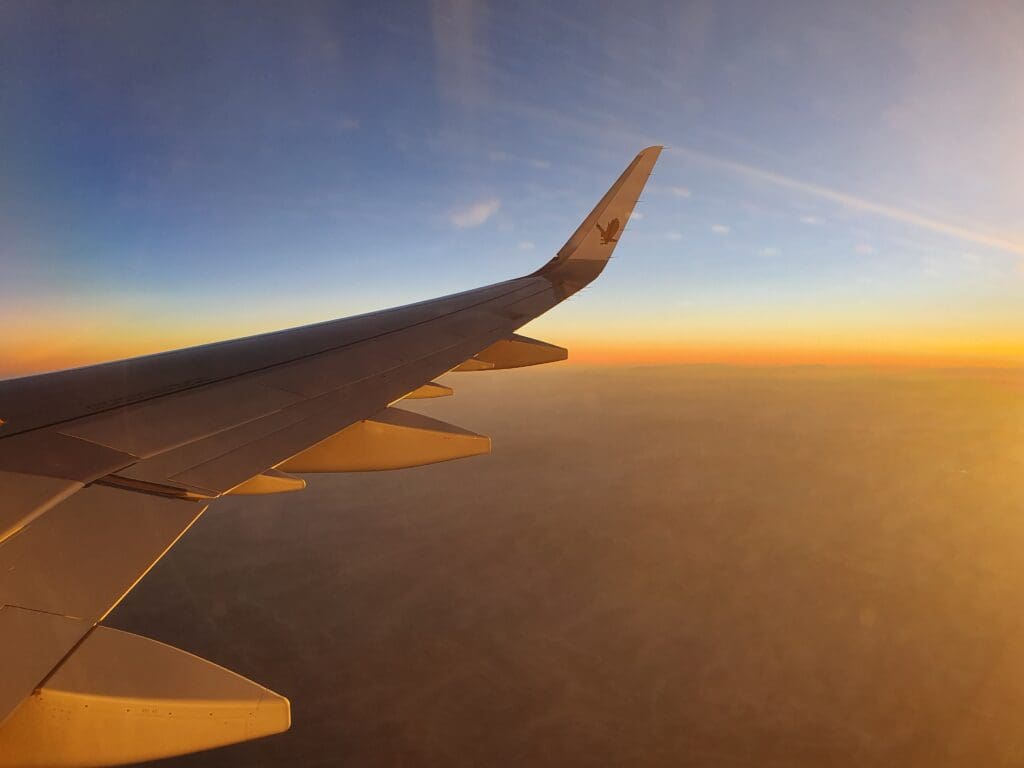
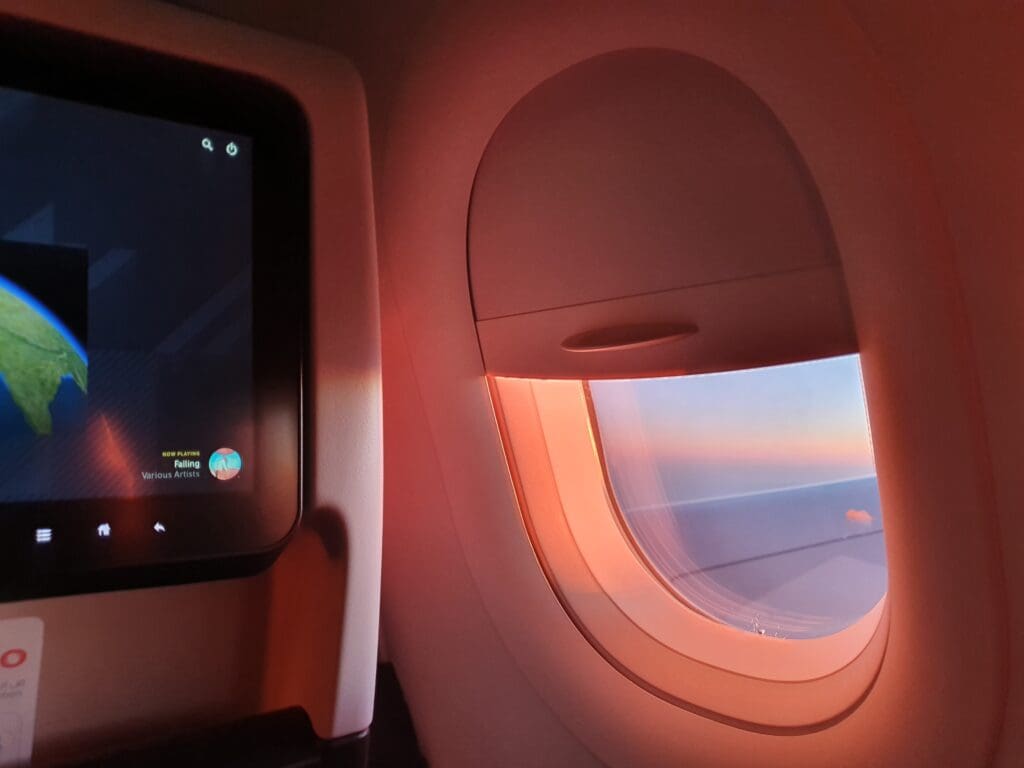
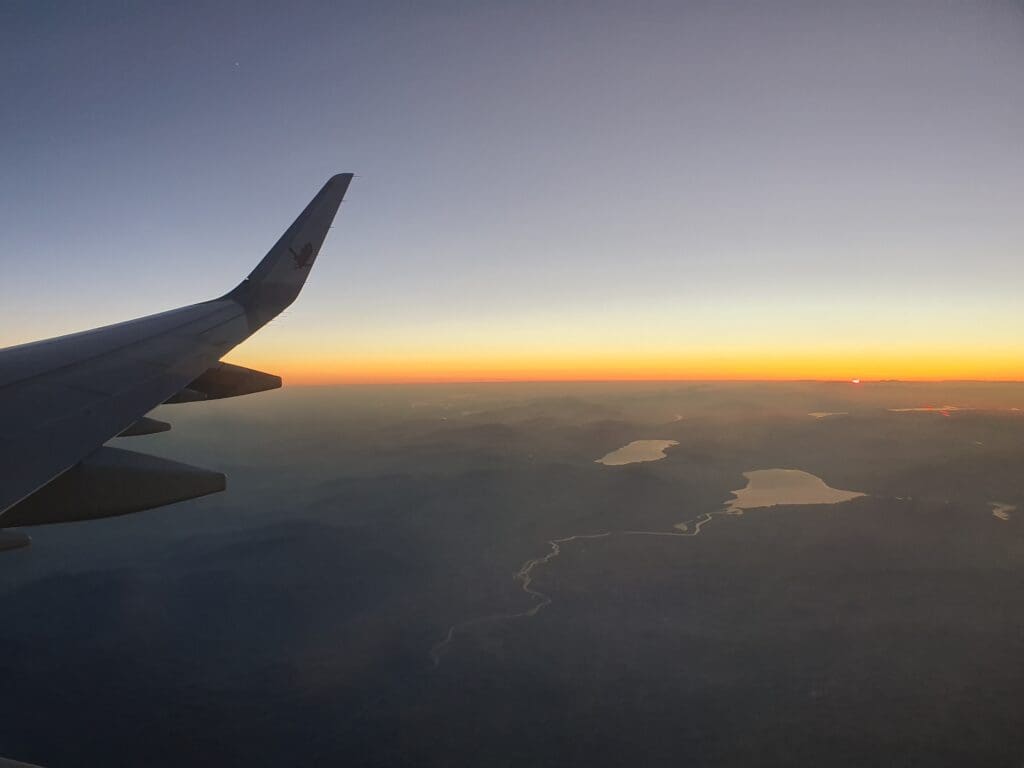
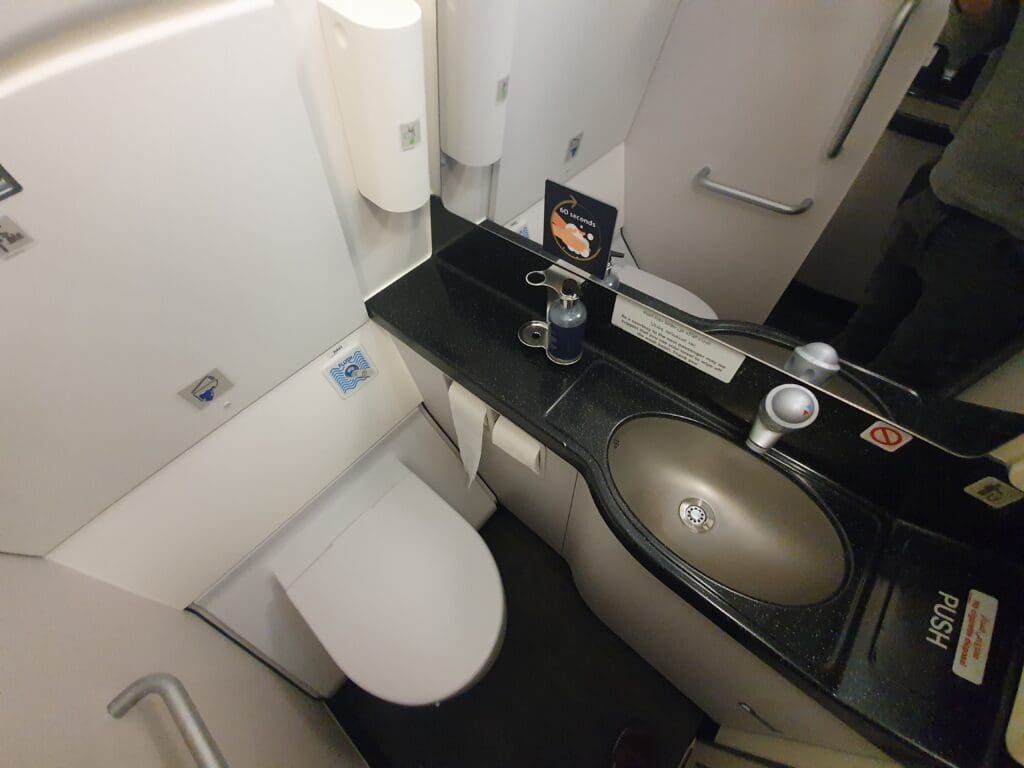
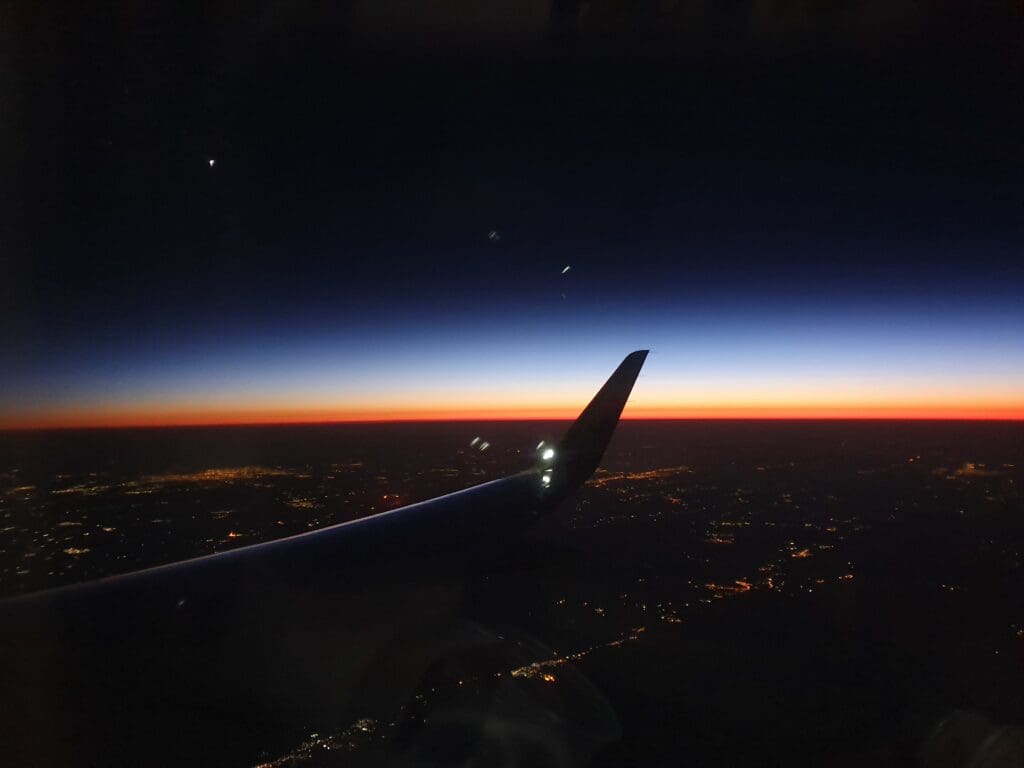
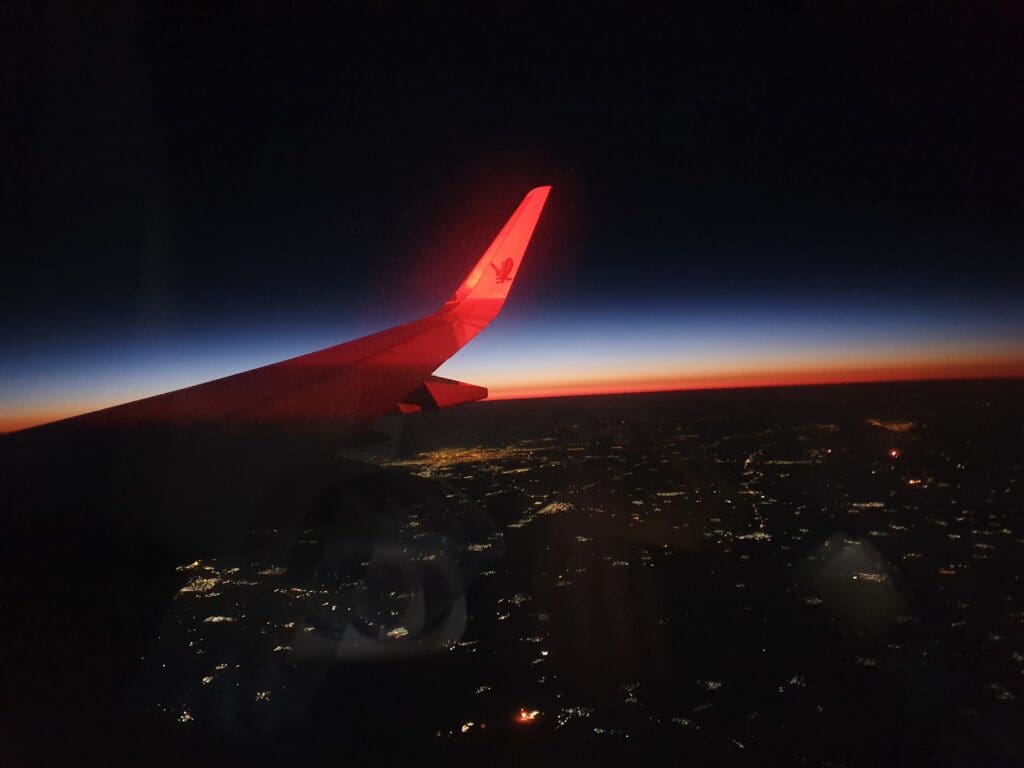
As evening arrived, I was treated to a picturesque sunset before the skies darkened leaving little to be seen as we passed over remote rural Turkey heading towards Iraq. As the aircraft cruised high above Turkey, I decided to pay a visit to one of the aircraft’s lavatories. Those travelling in Economy onboard one of Gulf Air’s Airbus A321neo aircraft are provided with the choice of three lavatories located at the rear of the cabin. Heading into one of these, I was pleased to find this to be in a very clean condition and stocked with all the basics that passengers may need during their flight.
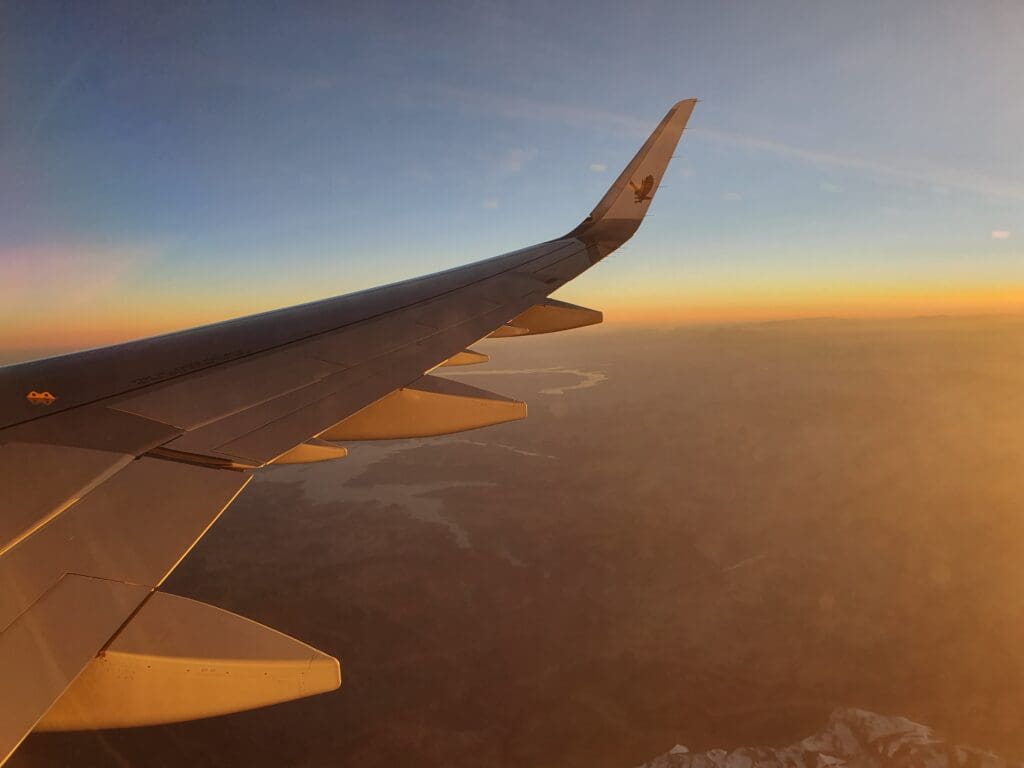
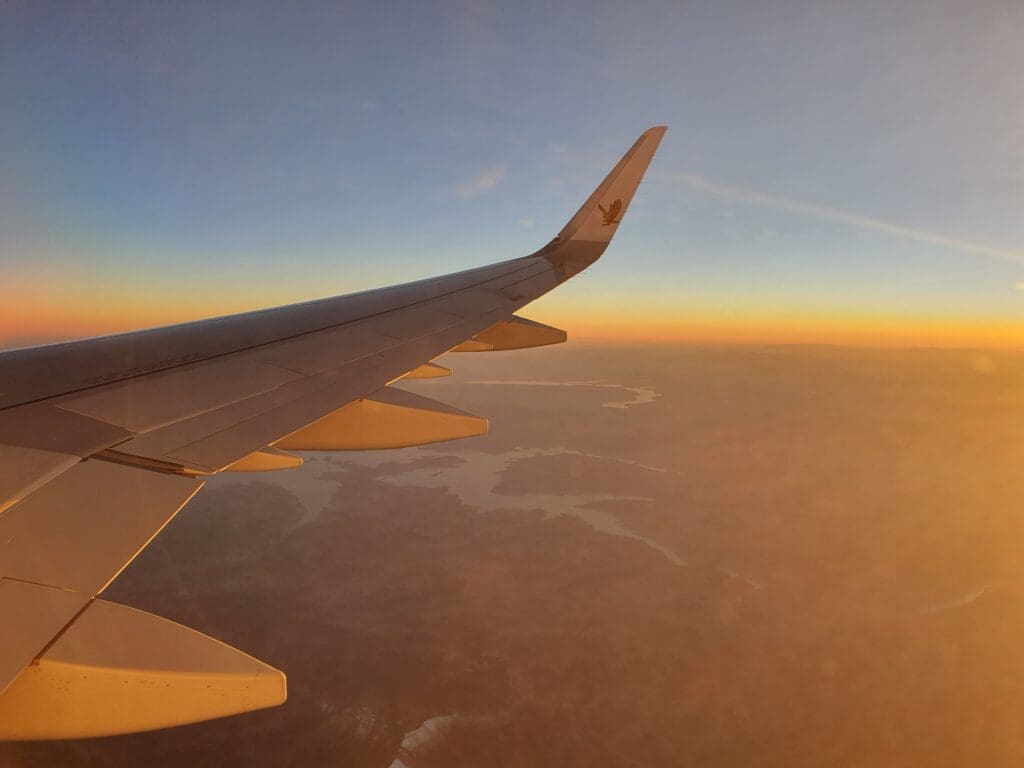
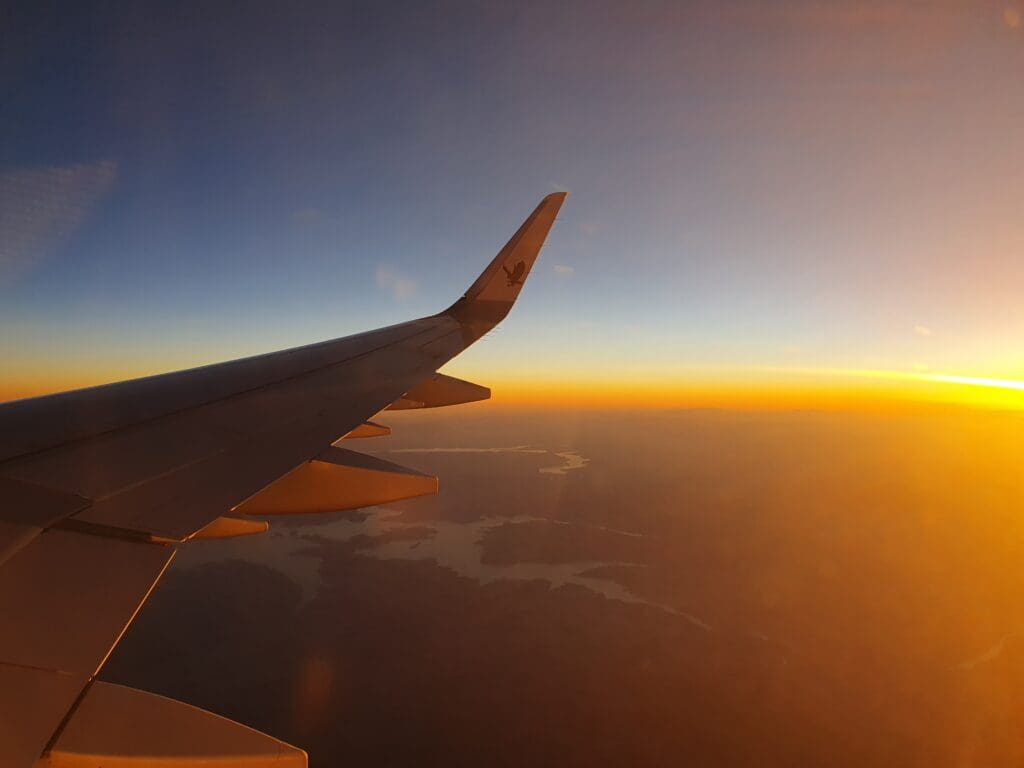
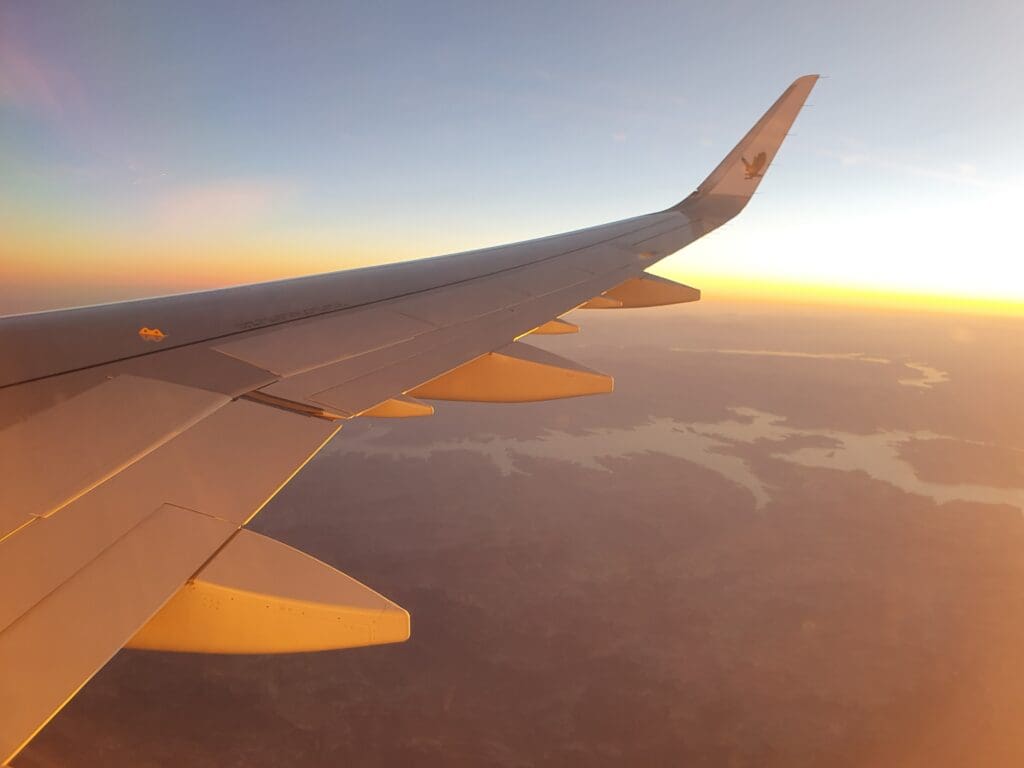
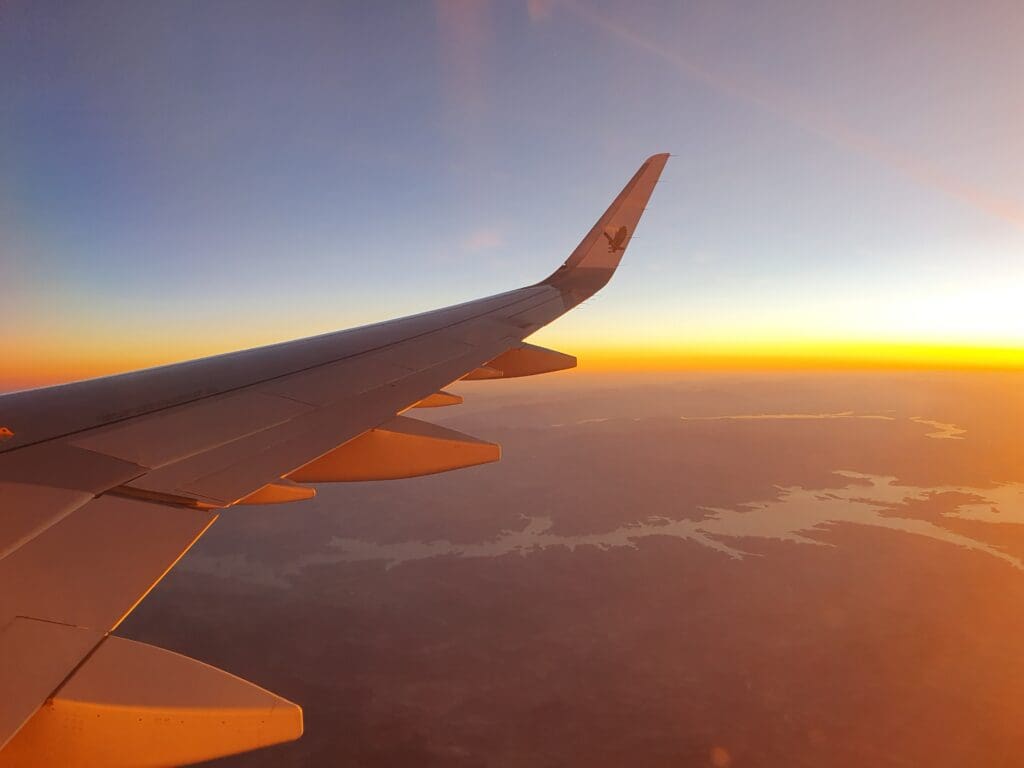
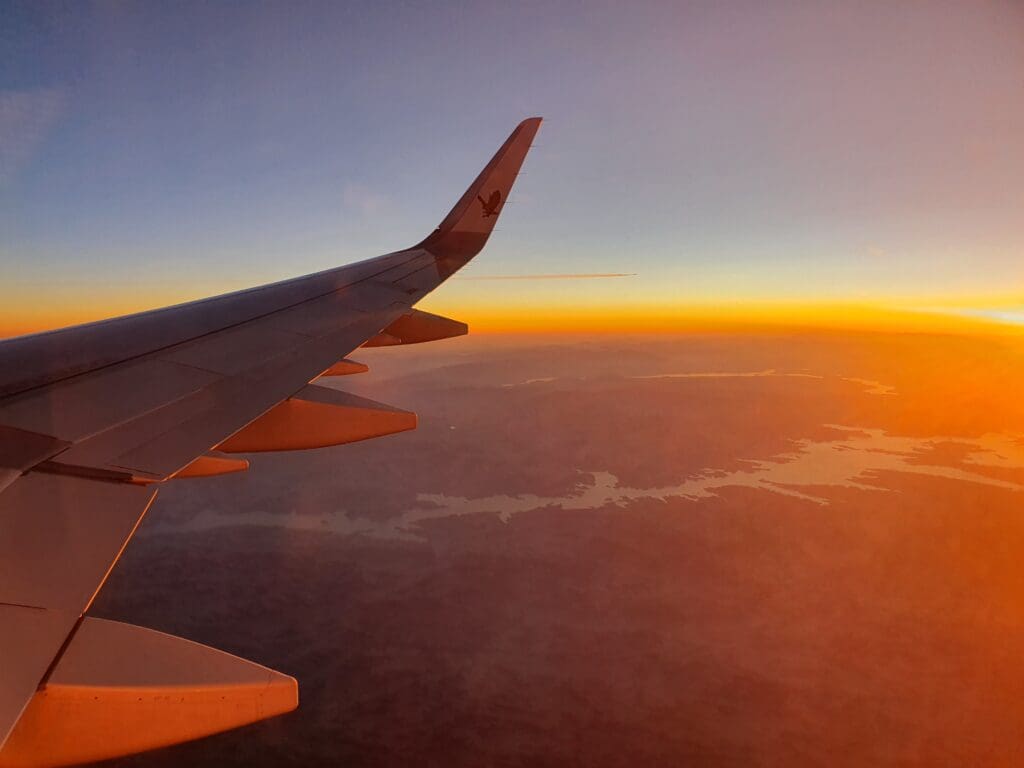
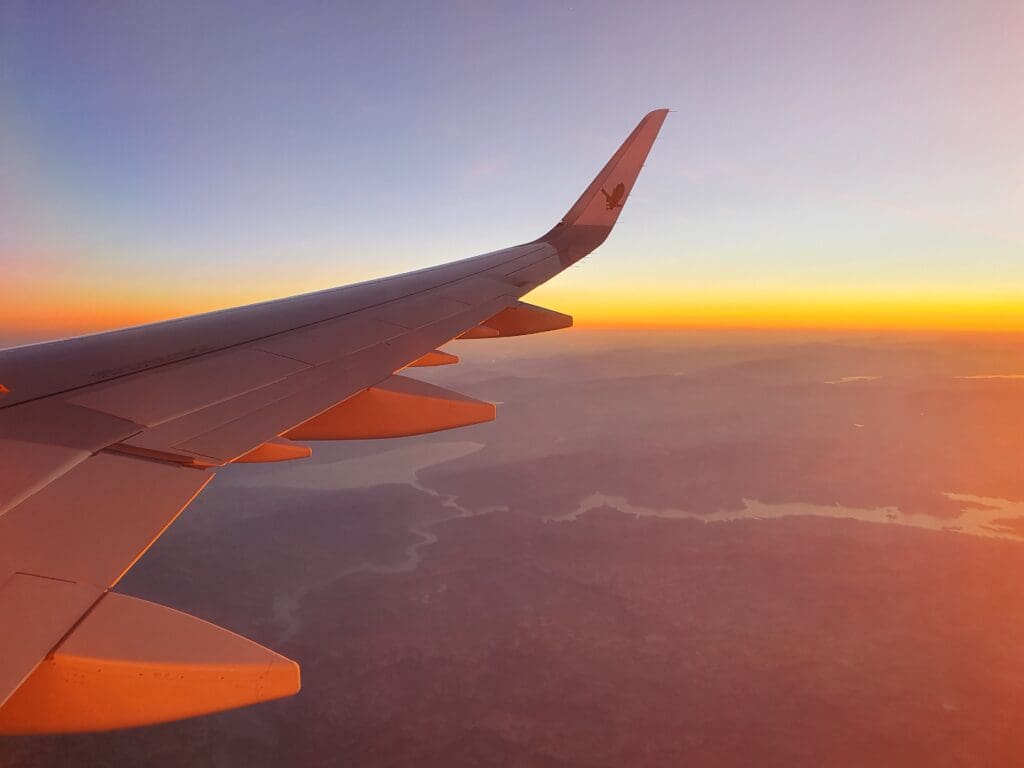
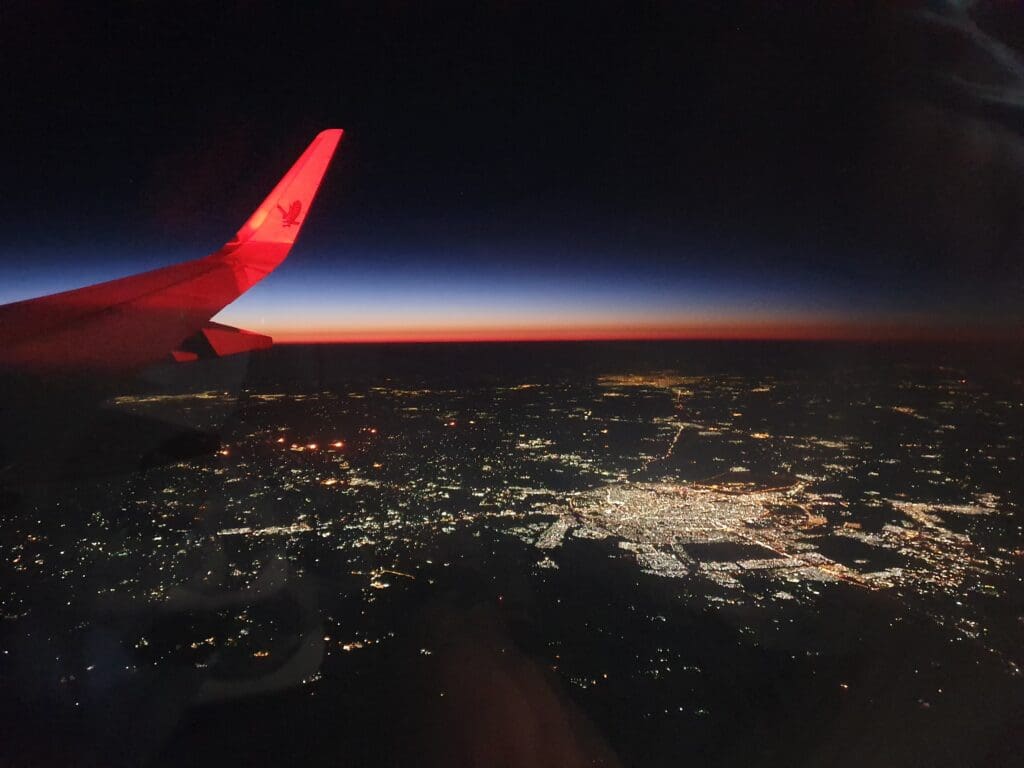
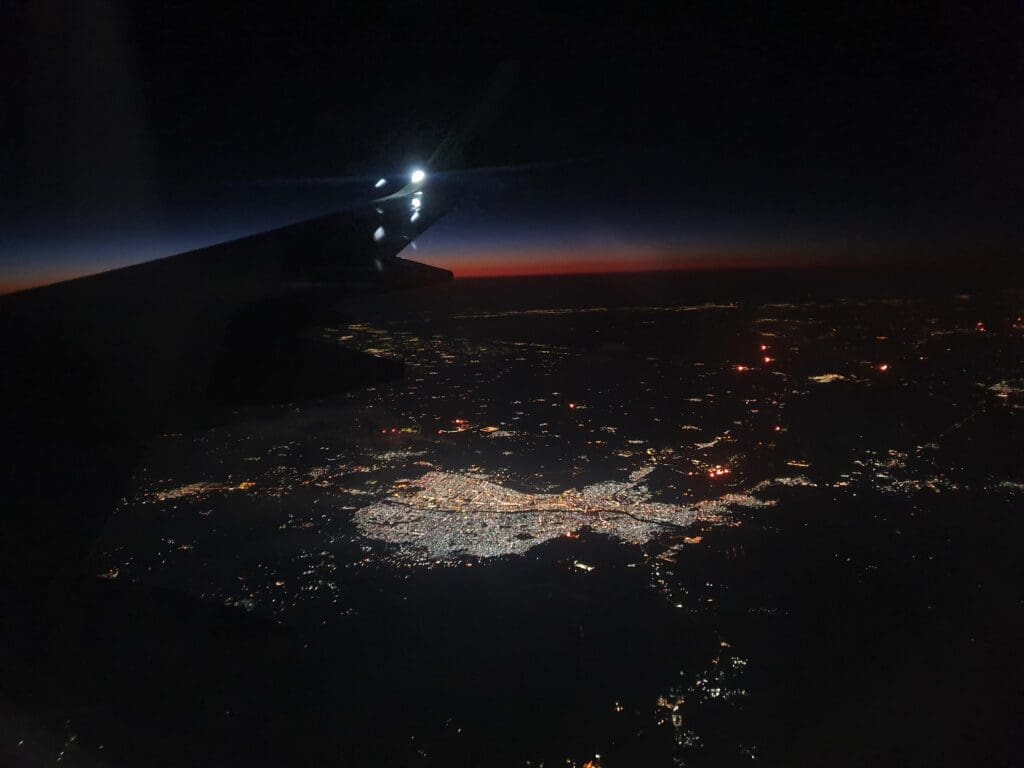
After almost an hour and a half in Turkish airspace, the aircraft crossed into the evening skies of Iraq. Heading southeast through the country, it was not long before the bright glow of oil and gas flares could be spotted along with the orange and yellow lights of passing cities. Of these, the first that I managed to spot was Erbil, followed a short time later by Kirkuk. As the flight trundled south over Iraq, another drinks round was performed during which I opted for a cup of water. Whilst a light snack would have been appreciated, this was handed over to me with nothing else. Many airlines operating between Western Europe and the Gulf offer passengers a full meal and a snack such as a sandwich or wrap, however, Gulf Air only offers passengers a single meal on these routes. As the aircraft journeyed southwards, the bright lights of Baghdad’s massive urban sprawl appeared before all signs of life bar the occasional town disappeared as the aircraft trundled southeastwards over Iraq. As the aircraft neared Basra, the regular bright glow of the flares of oil and gas wells could be seen surrounding the city before the Airbus made its way out over the Arabian Sea.
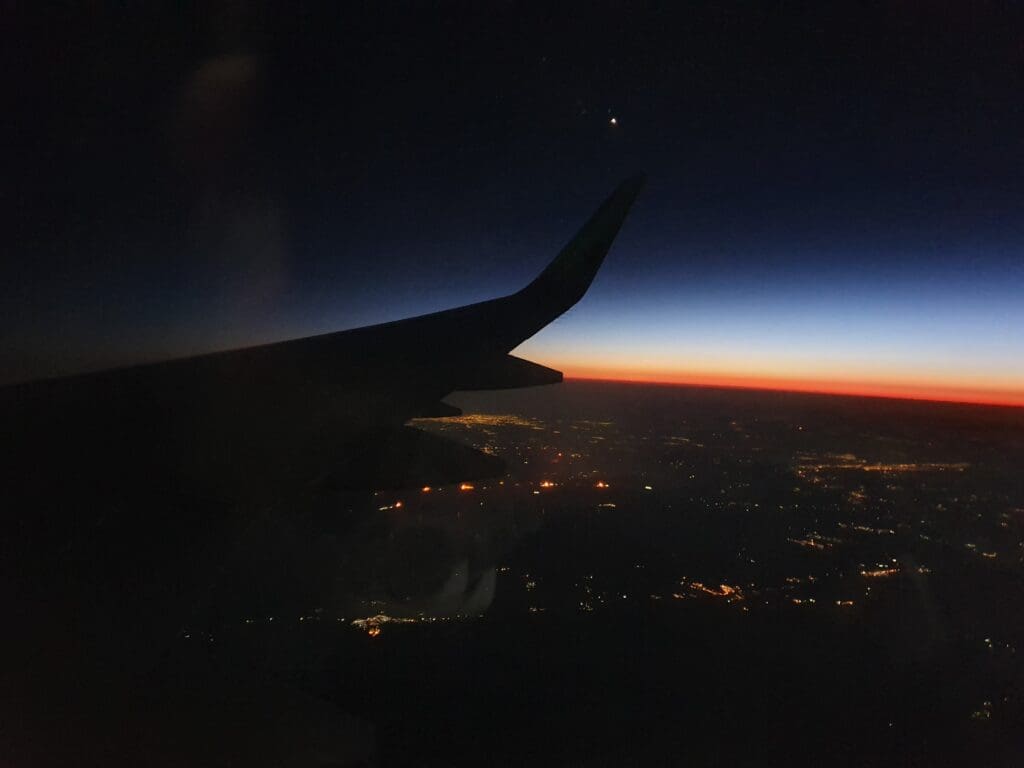
At 1911 Gulf Standard Time, the engine pitch changed slightly and the Airbus could be felt commencing its descent towards Bahrain. Moments later, the Captain performed their second announcement of the flight during which they thanked all passengers for flying with Gulf Air, provided an overview of our approach path and apologised for the service’s delay, explaining this to be down to the low visibility in both Paris and Frankfurt. Upon hearing this, I decided to visit one of the three lavatories at the rear of the cabin which appeared to have been regularly checked during the flight, and I found this to be in a good and clean state. That evening, the seatbelt signs were switched back on very shortly after leaving our cruising altitude at which point the cabin lights were turned back on and the crew passed through the cabin, undertaking their pre-arrival duties in good time for our arrival into Bahrain. Meanwhile, at this time Gulf Air’s Covid health and safety video took over the aircraft’s inflight entertainment screens for a second time, after which these became usable again for the remainder of the flight.
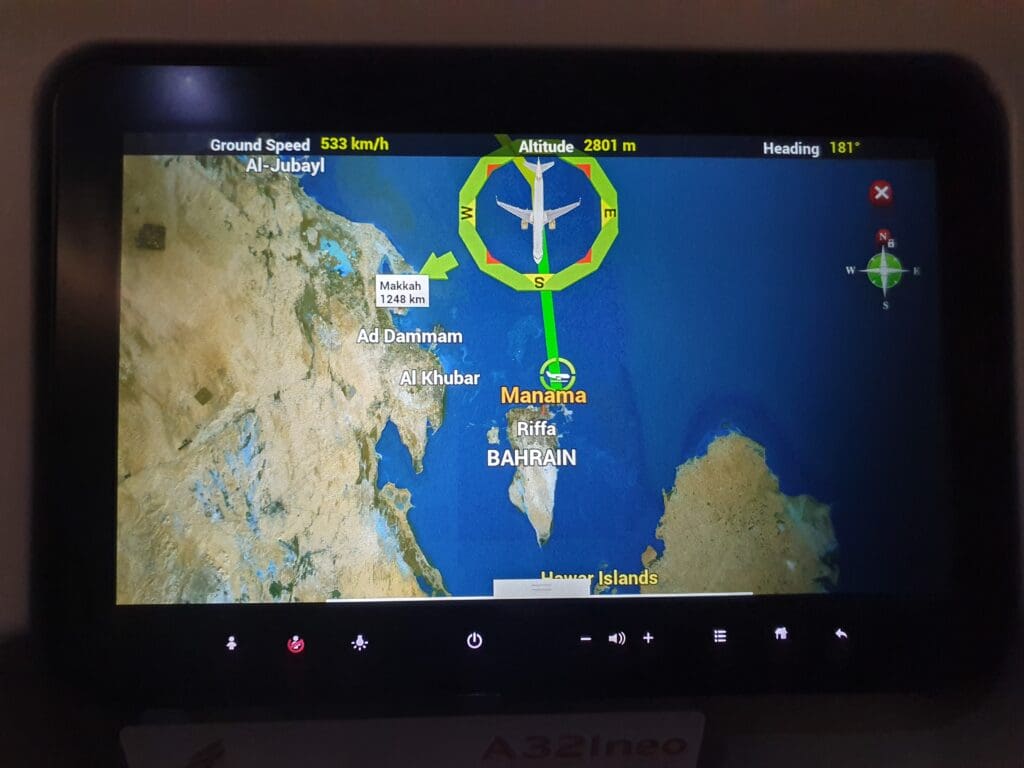
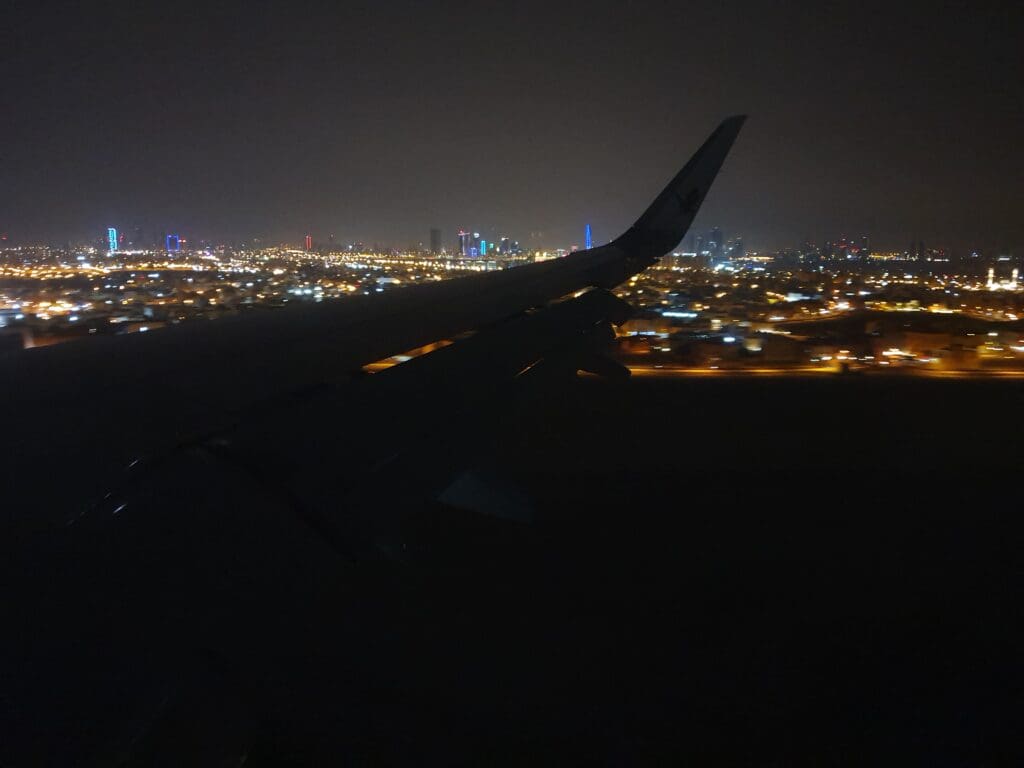
As soon as the cabin crew had finished ensuring that all was in place for our arrival, the cabin lights were switched back off allowing for the lights of Saudi Arabia’s coastline to be seen before the aircraft turned almost directly southwards towards Bahrain. At this time, the flaps were partially extended before the aircraft banked onto finals for Bahrain Airport’s Runway 12L before the gear fell into position below. As the Airbus neared the airport, the bright lights of Manama appeared and following a pleasant 5 hours and 37 minutes in the air, the Airbus floated over the perimeter fence, allowing for views of Bahrain Airport’s cargo and military stands before making a barely noticeable touchdown on Runway 12L at 1937. Once on the runway, the aircraft gently decelerated and an automated announcement rang out in Arabic and English with the usual information regarding keeping seatbelts fastened until the seatbelt signs had been switched off. As the aircraft vacated the runway, the Cabin Services Manager welcomed all to Bahrain before mentioning that disembarkation would be undertaken in rows and asked passengers to remain seated once at the gate.
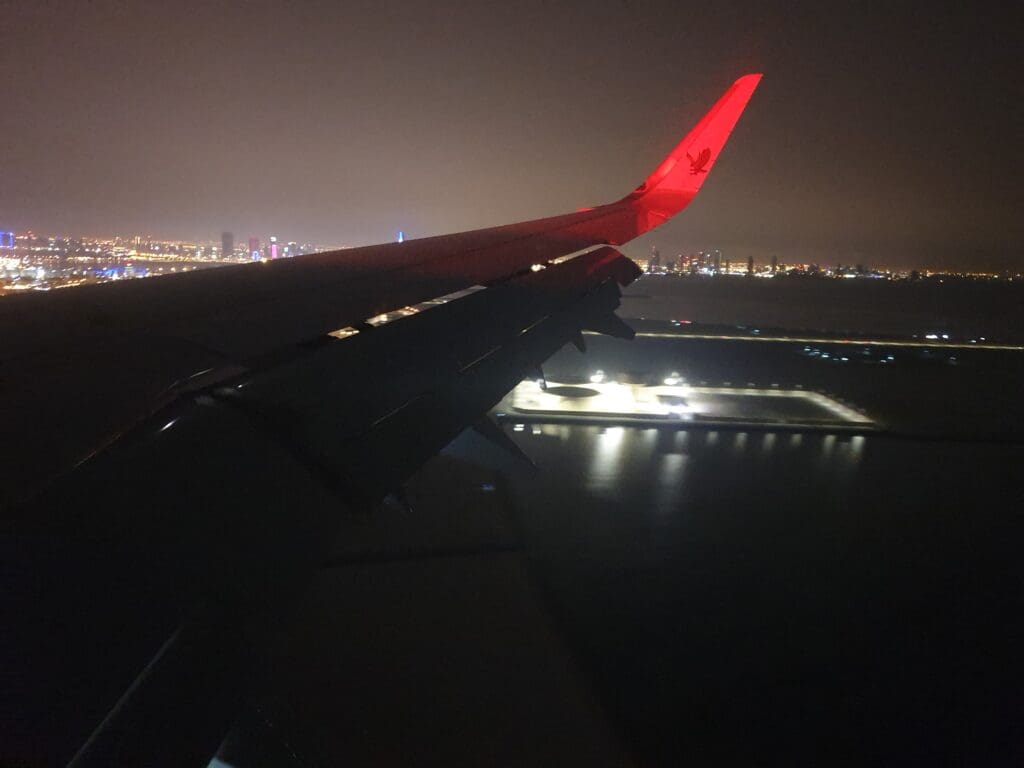
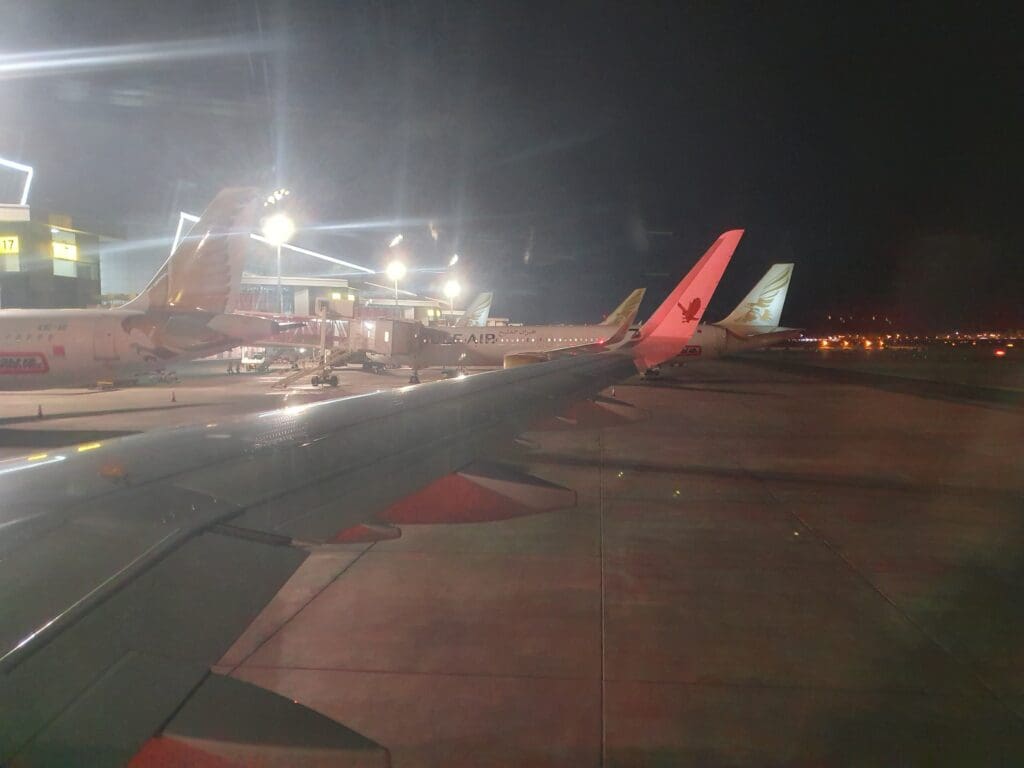
With Bahrain Airport’s terminal running parallel to its runway, after vacating this the taxi over to the terminal was short and the aircraft cautiously made its way into Stand 18B just as the Cabin Services Manager finished their final announcement. Three minutes after touching down, the Airbus came to a gentle halt, the engines spooled down and the seat belt signs were switched off. Ignoring the Cabin Service Manager’s advice, but unsurprisingly since many had short connections, most in the cabin appeared to stand up as soon as the aircraft came to a halt and little was done to stop those urgent to leave the aircraft. Disembarkation commenced five minutes later at 1945, five minutes after boarding for my next flight to Dubai had been scheduled to commence.
Not needing to collect anything from the overhead lockers, I soon exited the aircraft and commenced my quick transit through Bahrain Airport. Once in the terminal, I followed signs for connecting flights and headed up the escalators where I caught sight of a reasonably long security queue. With all transit passengers in Bahrain required to pass through a security checkpoint, this was a little worrying however fortunately this moved along reasonably quickly and I made it through to the airside departures area of the airport within about fifteen minutes of entering the terminal. After rushing through the terminal, I arrived at the gate for the full flight to Dubai just as boarding was about to commence.
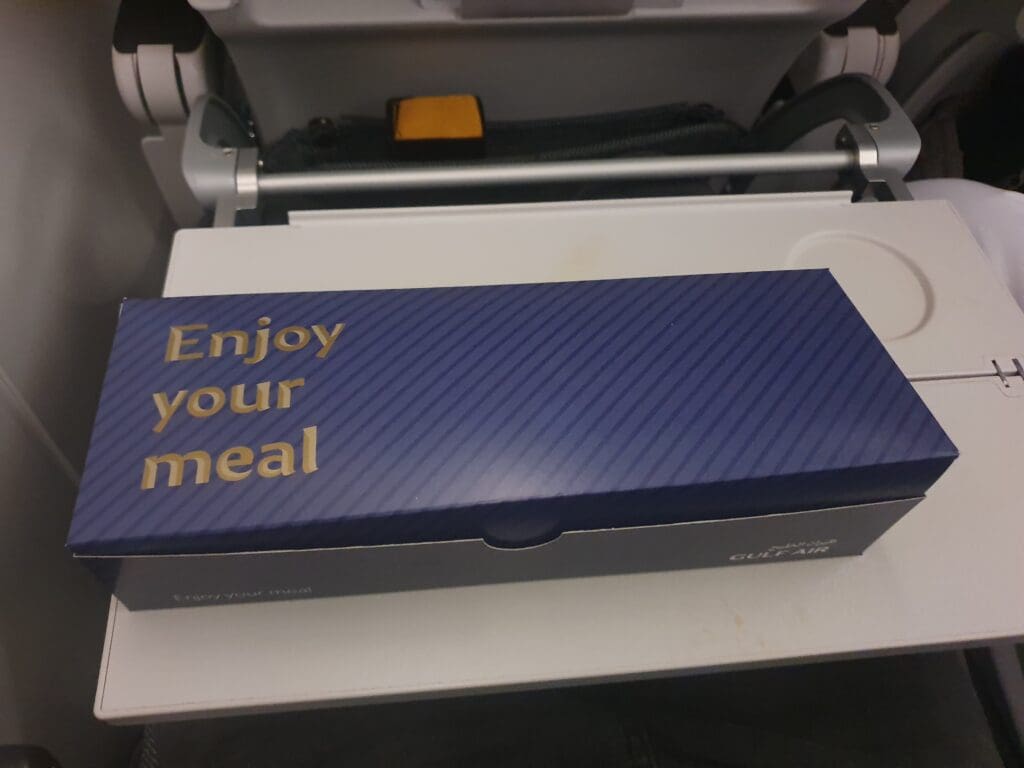
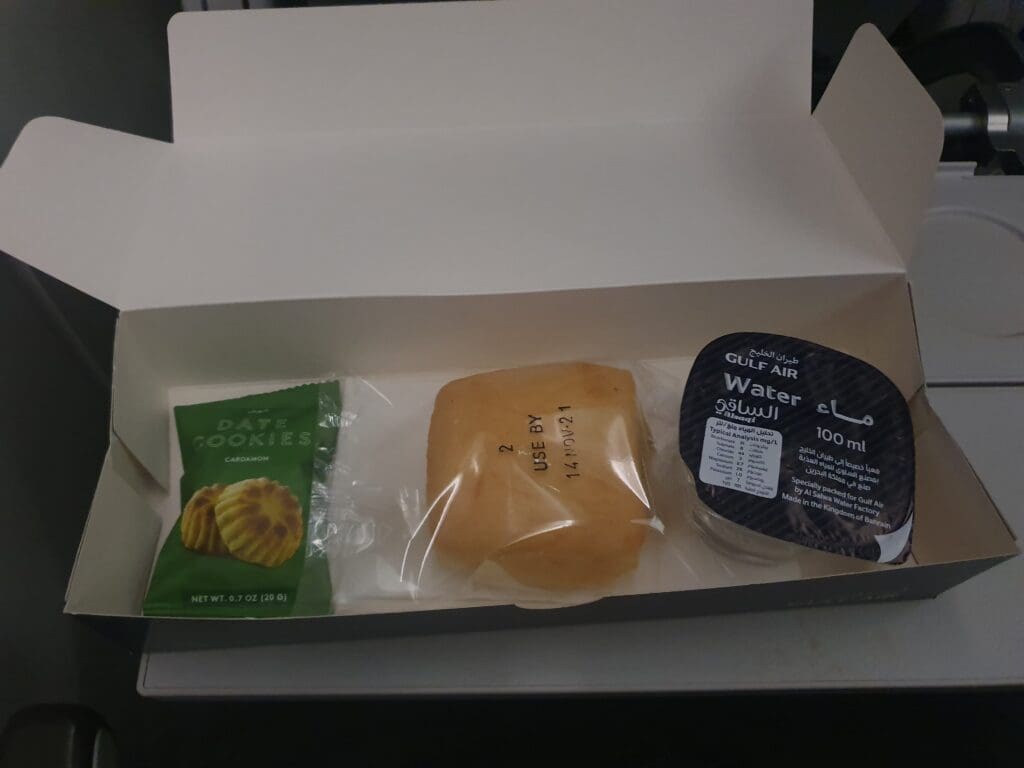
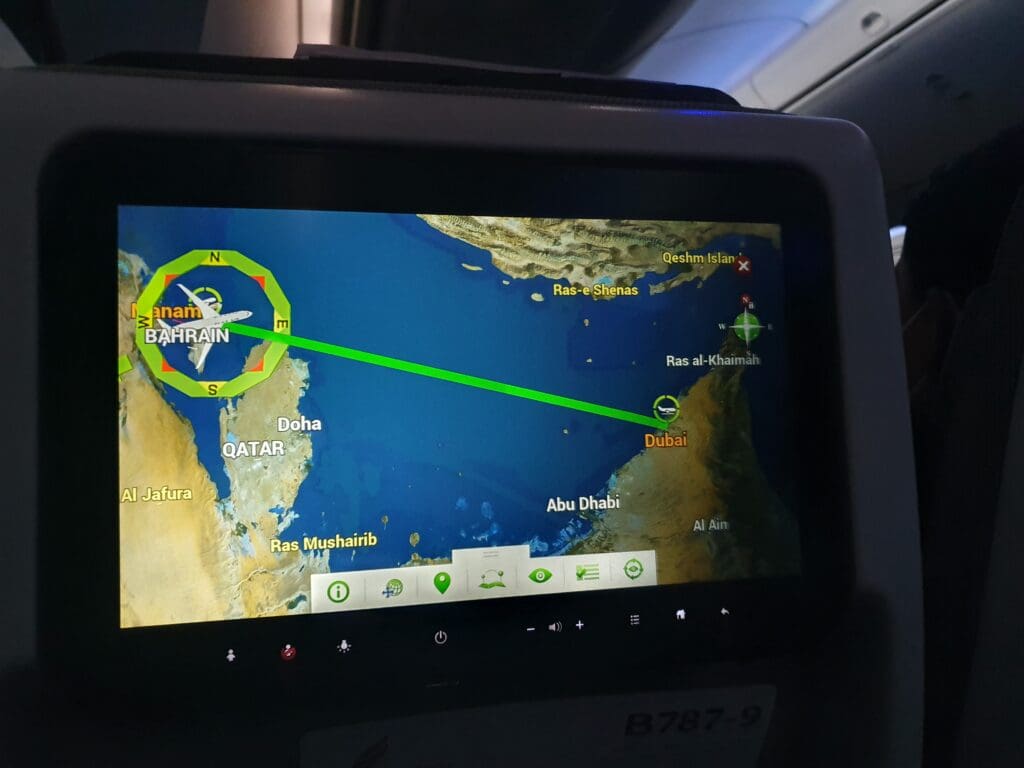
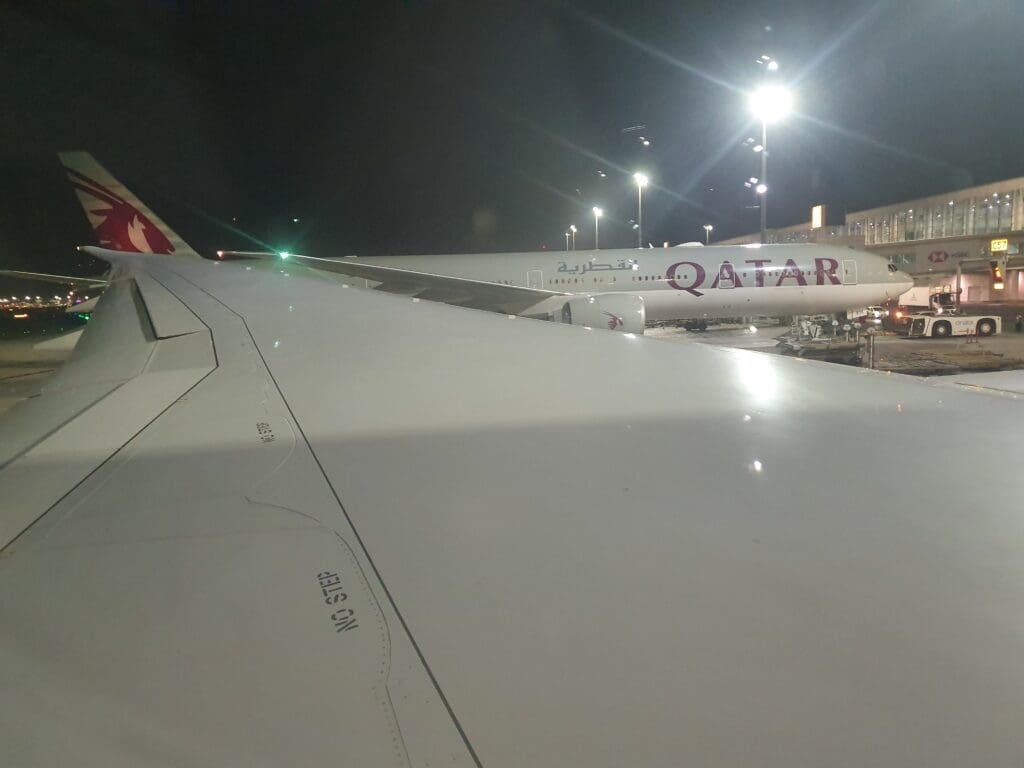
To end, here are some photos from the short Dreamliner-operated service to Dubai: