Not Quite Ryanair: Stansted to Zagreb on a Lauda A320
Background
Having finally gotten around to booking Trade Air’s Croatian island hopper service, I needed a way to get from London to Croatia. With a weekend plus Monday off work, and wishing to maximise my time in the country seeing as this would be my first visit to Croatia, I decided to search for the cheapest and most direct option – with this ideally leaving on Saturday morning or late on Friday night. Following my usual course of action, I made my way over to Skyscanner and soon stumbled across a suitable flight. This took the form of an early morning flight from Stansted to Zagreb priced at an incredible £12.99. Having initially assumed that this would be operated by Ryanair, this came with the bonus of being operated by perhaps their most unique subsidiary, Lauda Europe. This carrier is unique from Ryanair’s other subsidiaries since it operates a fleet of Airbus aircraft – 29 Airbus A320s to be precise. Whilst I would still have to get down to Split, given the price, this option was a no-brainer and so I soon made my way over to Ryanair’s app to book this flight. In the process of this, I decided to part with an additional £4 to reserve Seat 22F.
Check-In
For those that haven’t booked a particular seat, check-in for Ryanair’s services, including those operated by Buzz, Lauda Europe and Malta Air, opens 24 hours before departure. Those failing to do this and ending up checking in at the airport are slammed with Ryanair’s controversial £/€55 check-in fee. However, seeing as I had booked a seat, I could do this up to thirty days before my flight to Split. In reality, I didn’t get around to doing this until a little over two days before departure. For me, the easiest way to check in would be to do so via Ryanair’s app. After agreeing to Ryanair’s conditions of carriage, I was presented with the first optional extra of the process – the opportunity to add travel insurance for £22.99. Holding both an EHIC card and travel insurance, I skipped past this with no hesitation, entered my passport details and uploaded my vaccination certificate. After doing this, I was presented with the next optional extra of the process. This allowed me to add a 10kg check-in bag for £26.99, or a bundle of priority boarding and two carry-on bags for £20. I was then presented with a final optional extras page where I could pre-reserve food onboard, book security fast track, insurance, a National Express coach to Stansted, parking and sports equipment. Not wanting to add any of these additional extras, I was finally presented with my mobile boarding pass and all set for the trip ahead.
The Journey
Sitting over forty miles to the northeast of Central London, it is fair to say that Stansted Airport does not have the best reputation when it comes to accessibility. However, assuming that your flight is not departing in the early hours, convenient, fast and direct (albeit often expensive) train services connect the airport with London Liverpool Street station. Unfortunately, with my flight down to Croatia departing in the middle of Stansted’s early morning rush, I was not left with too many options when it came to reaching the airport from the West London suburb of Ealing. Opting to take a National Express coach from Marble Arch, I ended up spending £13 on a one-way ticket for a service departing at 0441, scheduled to arrive at 0602.
Following a busy Friday that had seen me spend most of the day in Glasgow before returning to London on a sleek BA CityFlyer Embraer 190, once I had packed my bag I drifted off to sleep ready for another busy day at around midnight. Despite setting my alarm for 0240, for one reason or another, this failed to wake me up and I found myself sleeping for almost another two hours, finally waking up in a panic at 0430 – ten minutes before my bus’ departure time from Marble Arch. Following a few moments of panic, I got ready as fast as possible before devising a new plan to reach Stansted in time for my 0830 flight to Zagreb. This would involve taking the first Stansted Express service from London Liverpool Street at 0540, which would see me arrive at Stansted with two hours to go until departure. Meanwhile, with the ongoing Central Line Night Tube strikes, the only option I had to get me across London in time for this train would be to catch a taxi. Once ready, I downloaded the Uber app and ordered a taxi, with a standard Toyota Prius pulling up outside my home no more than four minutes later.
From my home in the West London neighbourhood of West Acton, the Toyota proceeded cautiously through the dark and quiet residential streets before arriving at the A40 main road that would carry us into Central London. Not wanting to fumble around at the station, as we sped towards the city centre I purchased a Stansted Express ticket which set me back a moderate £13.65 (including a third off thanks to my 16-25 Railcard). After trundling through the centre, the Uber pulled up right outside the entrance to Liverpool Street Station, setting me back a total of £15.67 (including a 25% discount). In total, my failure to wake up in time had cost me almost twice the cost of my flight to Zagreb, nevertheless, I was thankful for the fact that unless some disaster were to occur on the final stretch, I would still make it to Stansted in time to catch my flight.
Making it into Liverpool Street Station’s main waiting area with twenty minutes to go until departure, at this time this appeared to be populated by a mixture of suitcase-wielding early morning flyers and late night drunkards eagerly waiting for the first train of the day home to take them to bed after an evening out on the town. At this time, rather than heading straight to the train, I opted to make a quick pitstop for an overpriced coffee at the local branch of Delice de France. With this in hand, I then scanned my ticket on the barrier’s QR code reader before boarding the modern Stadler Class 745 train that would carry me northwards to Essex.
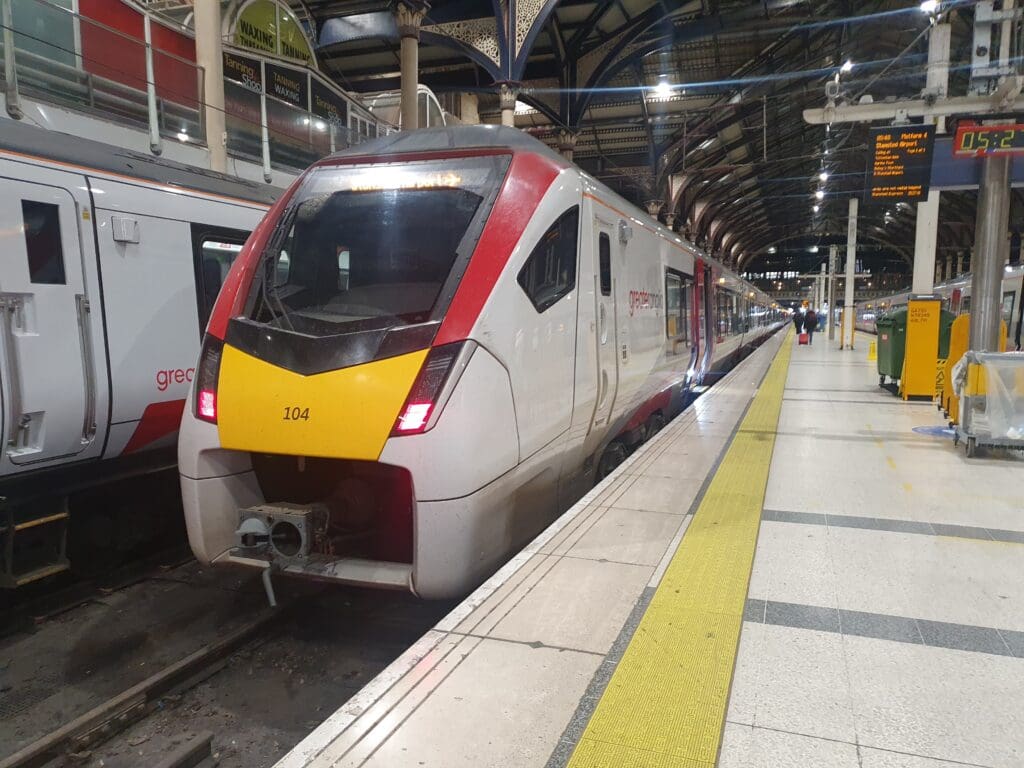
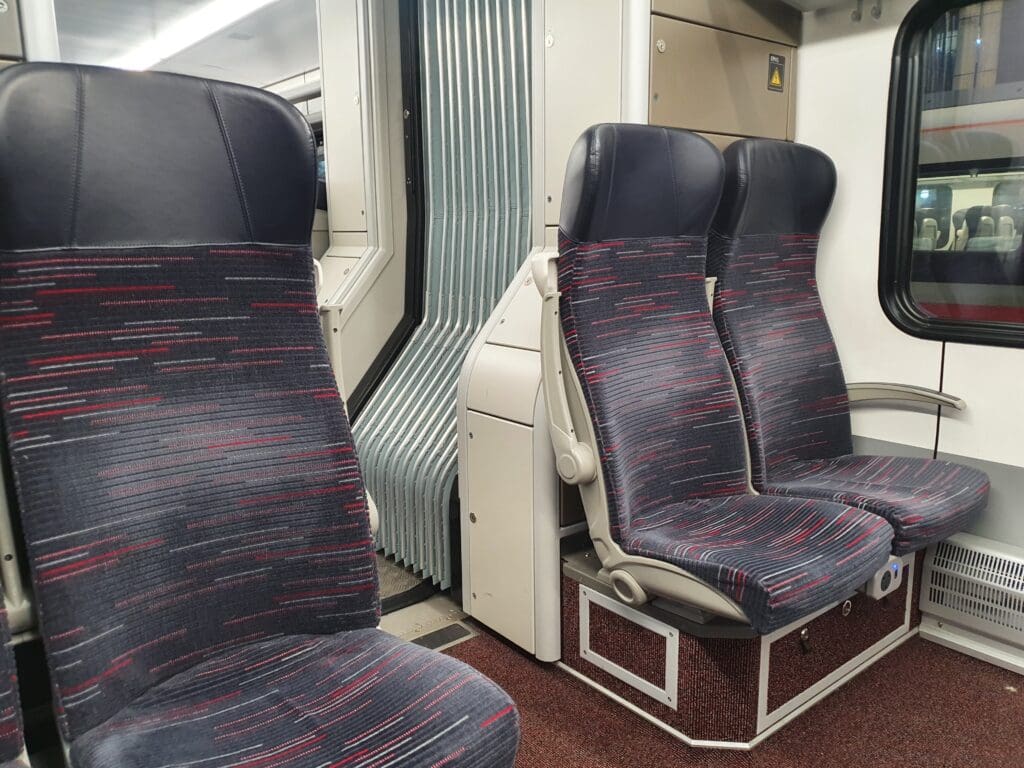
Aware that the front end of the train would be both the quietest and also the most convenient once at Stansted, I made my way to the first carriage and plonked myself down on one of the train’s firm seats. At 0540, the doors beeped closed and the train pulled away from Liverpool Street Station before accelerating through the neighbourhoods of northeast London. A little under ten minutes after the journey had commenced, the train made a quick stop at Tottenham Hale before speeding out of London as the skies began to brighten. Following further stops at Harlow Town, Bishop’s Stortford and Stansted Mountfitchet, the train headed underground and passed below Stansted’s runway before emerging, with the airport’s tall control tower and a Cargolux Boeing 747-400F appearing before the train came to a halt at its terminus at 0627.
As airport train stations go, that of Stansted Airport is conveniently located just beneath the entrance to the terminal and involves a short walk up a couple of ramps before being deposited in Stansted’s large check-in hall. Within a couple of minutes of disembarkation I found myself standing in the terminal’s incredibly busy and rather chaotic check-in hall. Following a quick stop at a disgustingly filthy block of toilets, with nothing to check in I made a beeline for security. Other than its distance from London, one of the main reasons for Stansted’s poor image amongst passengers is its infamously long security queues. As expected, given the many passengers in the check-in hall, once I had scanned my boarding pass on the automated gates, I was greeted by the sight of a long and snaking queue and was soon barked at by a shouty security staff member who directed me towards the end of the hall. Whilst most, if not all airlines flying from the UK had a mask mandate at the time of my flight, around half of those standing in the queue did not seem to be wearing a mask and worryingly there was plenty of coughing and spluttering going on. As I shuffled along, I connected to the airport’s complimentary wifi network which I found to work well for the duration of my stay in the airport. After almost half an hour of queuing, I reached one of the open checkpoints and after some more shouting on the part of the security staff, I passed through this and was free to explore the delights of Stansted Airport’s airside area.
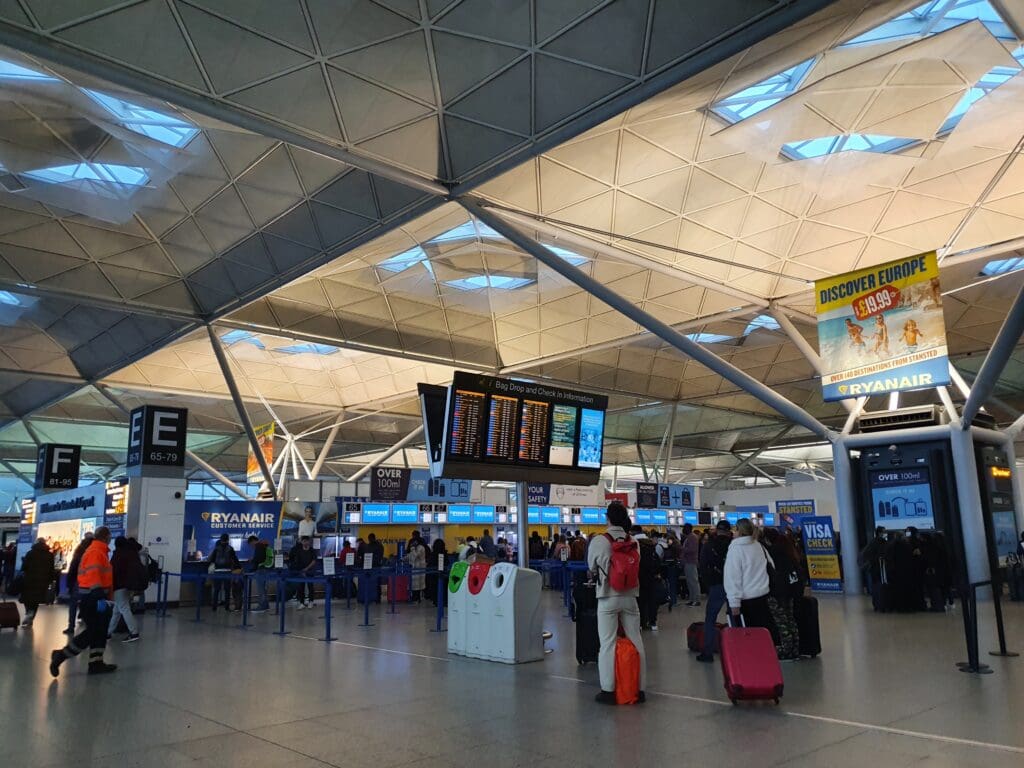
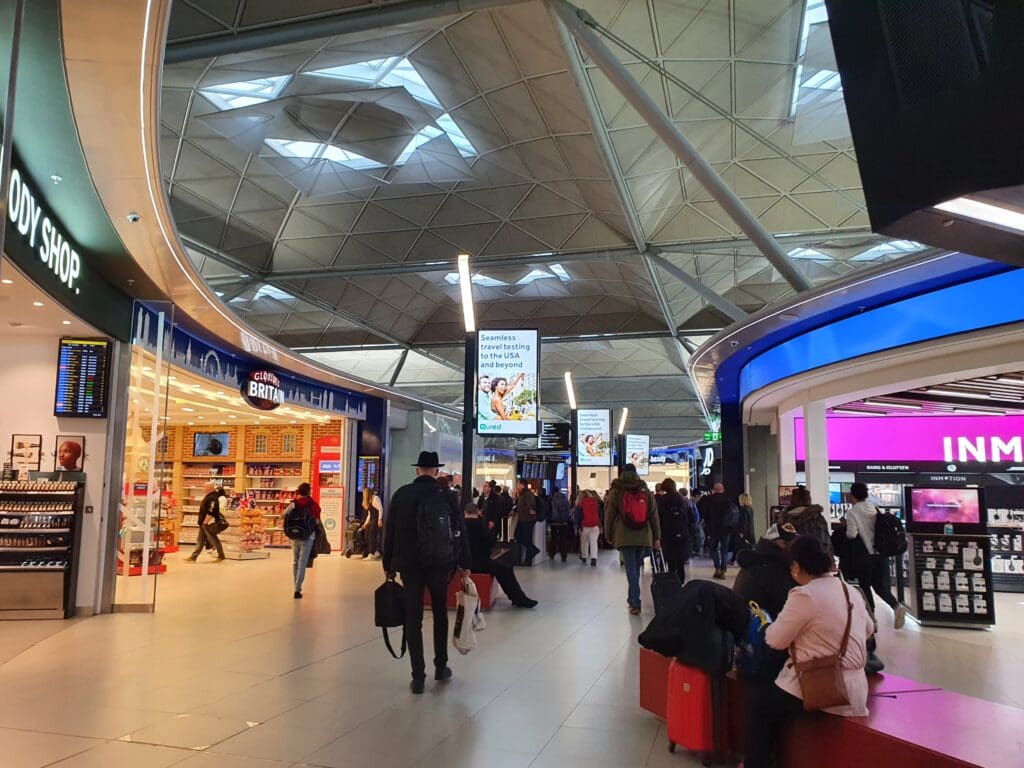
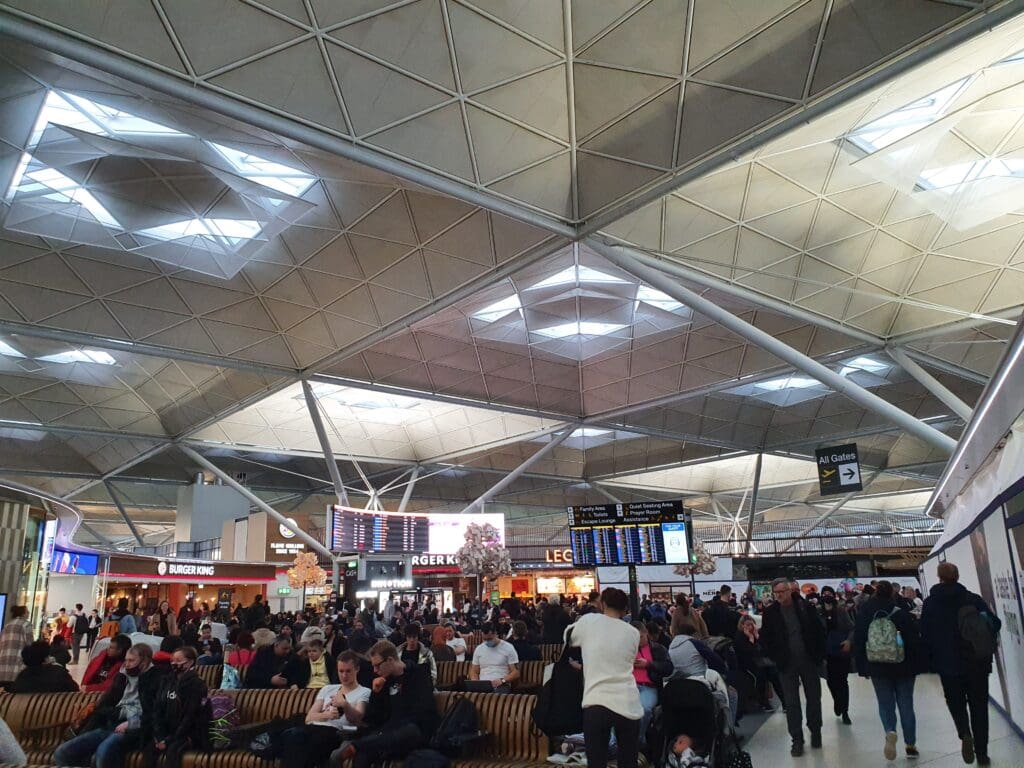
As with most British airports, Stansted is very retail focused and immediately after exiting the security area, the local branch of World Duty Free must be passed through to reach the main departures area of the terminal. Upon making it through this, a reasonable selection of cafes, restaurants, shops and bars can be found alongside the terminal’s main waiting area. Whilst this was to be my first flight from Stansted Airport since June 2019, little appeared to have changed since the happy pre-pandemic days, with the main waiting area being both chaotic and packed. For aviation enthusiasts, it is worth noting that this area fails to offer much in terms of airside views and as with many British airports, flights’ departure gates are not revealed until a relatively short time before the commencement of boarding. Fortunately, I had already received a notification informing me that the flight would depart from Gate 37 and thus I found no reason to remain in the busy and viewless part of the terminal.
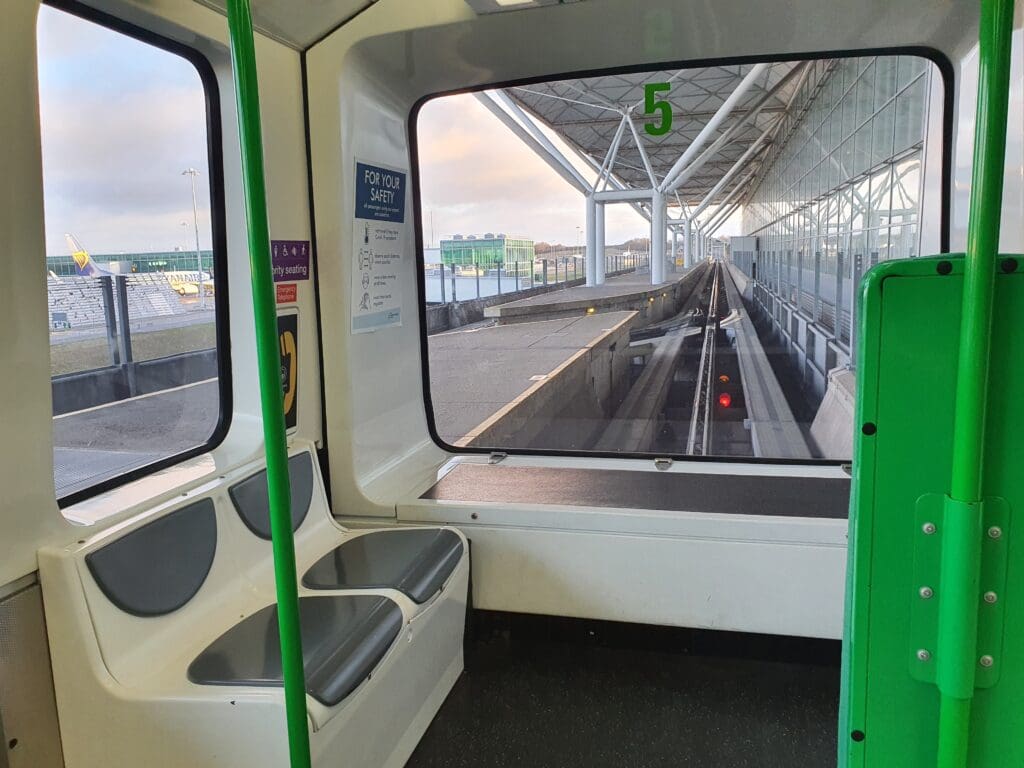
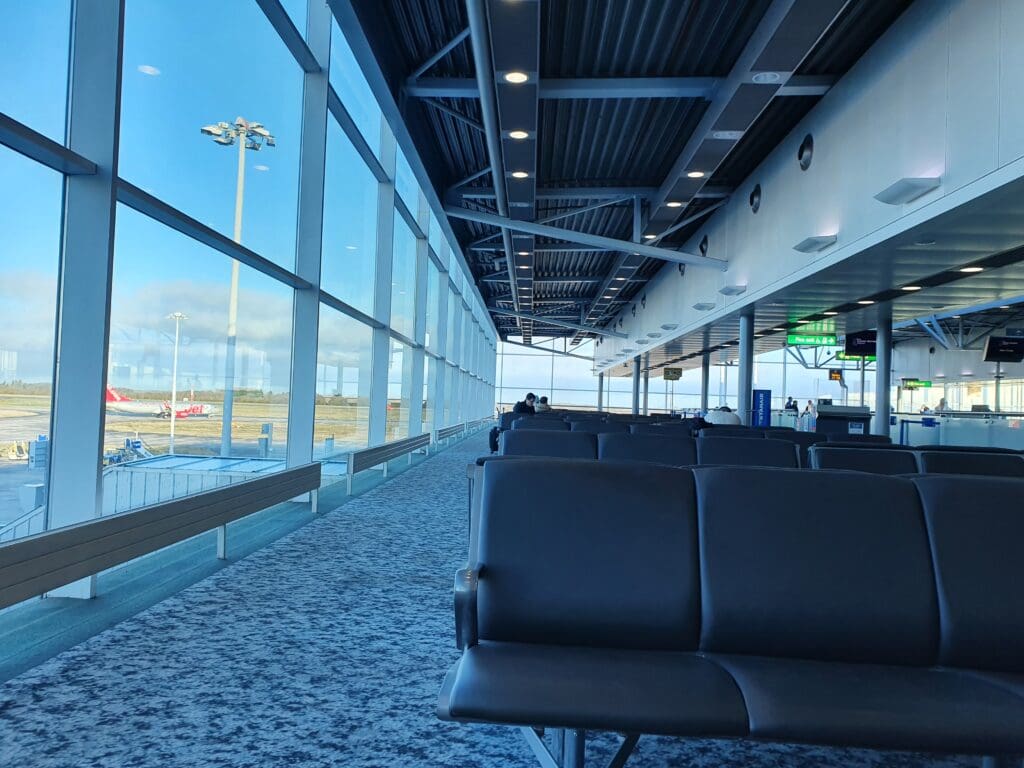
From the main waiting area, I boarded the people mover and was soon whisked along to Stansted Airport’s satellite piers. Following a quick mid-journey stop at the first pier, I reached the second and disembarked the train before heading up the escalators. Inside, I found this pier to appear incredibly dated, seeming to have gone through little upgrades since it opened in the 1990s whilst this also had an inherent lack of plug sockets that ensured charging any devices proved particularly difficult. In terms of facilities, whilst home to a Wetherspoons, this appeared to have been closed for quite some time and thus the only refreshments on offer were those provided by several vending machines. However, on the plus side, this did appear to be relatively clean, offering good views of the action outside, and with only three other flights heading off before mine (these bound for Lisbon, Lourdes and Malaga), the pier was relatively quiet for most of my stay.
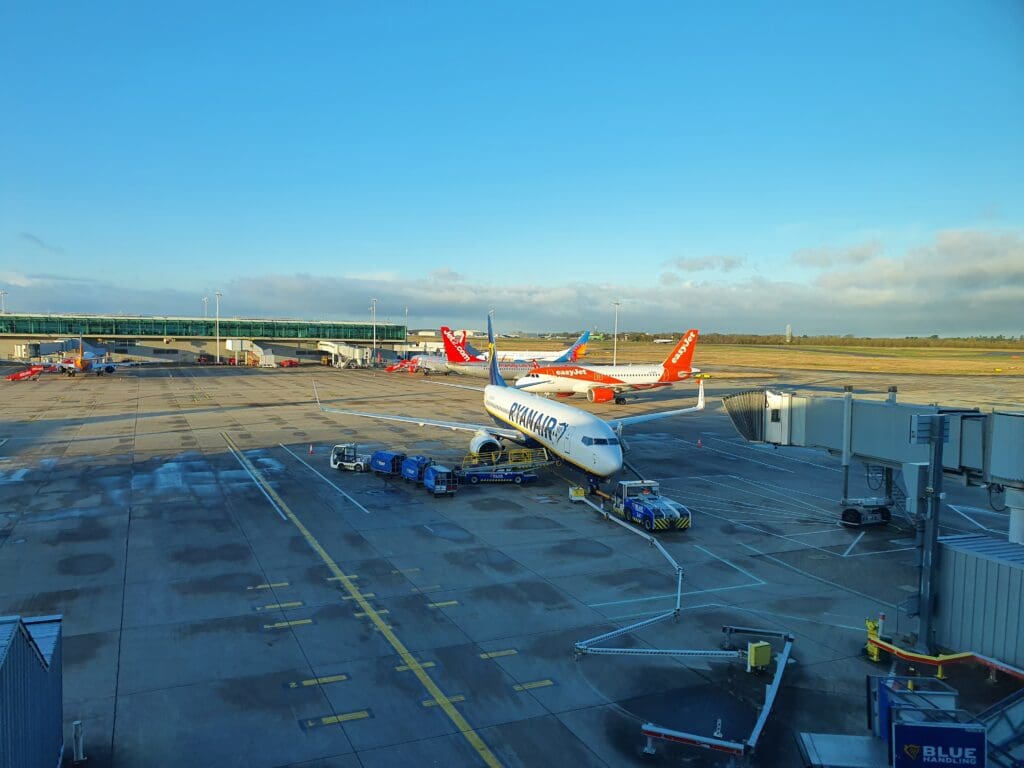
Turning my attention outside, a near constant stream of Ryanair jets as well as those of subsidiaries Lauda Europe and Malta Air could be seen arriving and departing alongside a reasonable number of locally based Jet2 Boeing 737-800s. However, the real gems to be seen sat on the opposite side of the airfield. In the distance a whale-like grey Qatar Emiri Air Force Boeing C-17 Globemaster III could be spotted alongside the Dubai Air Wing Boeing 747-400F, multiple Boeing Business Jets alongside the usual selection of luxury Bombardier, Embraer and Gulfstream business jets.
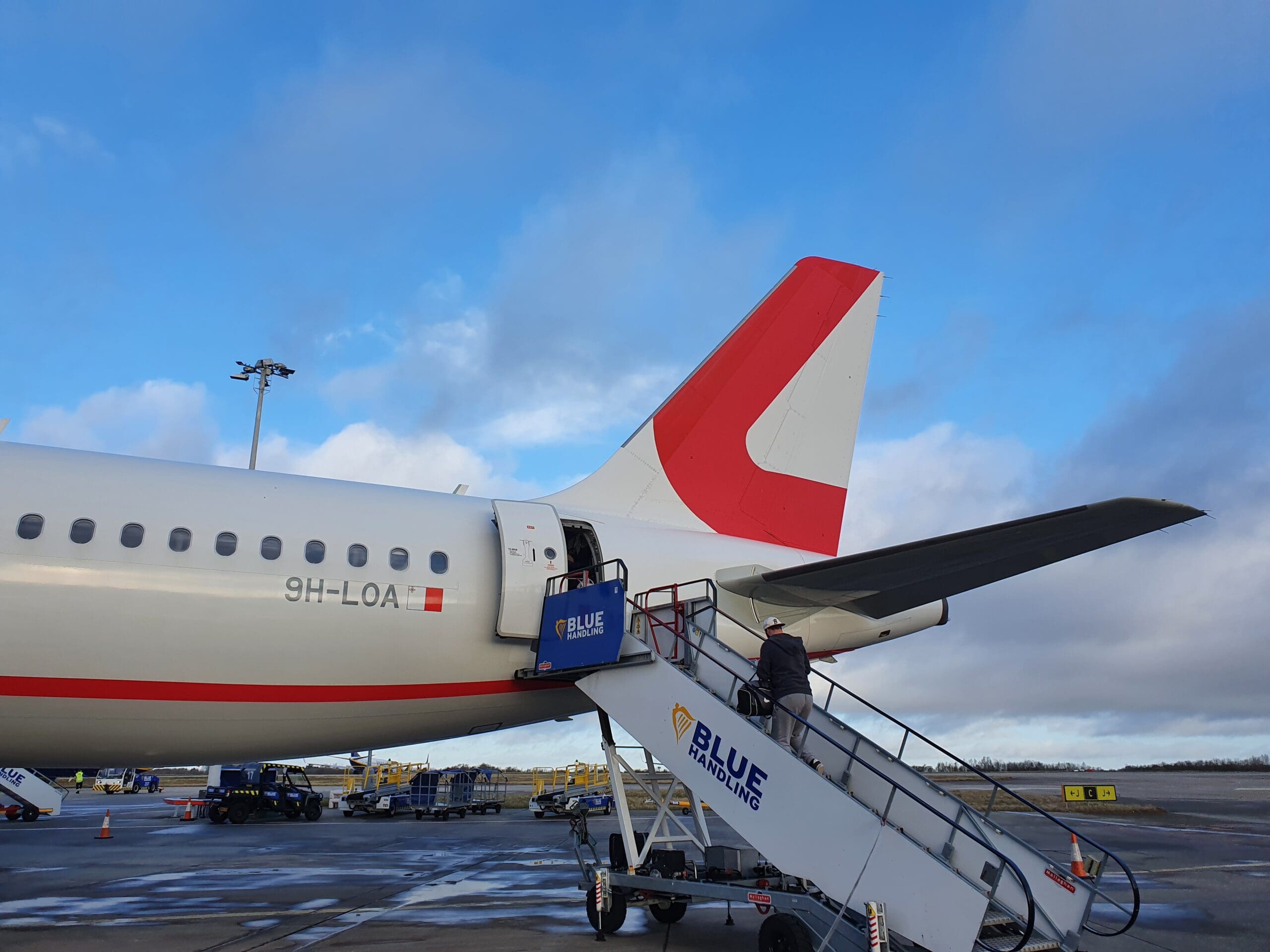
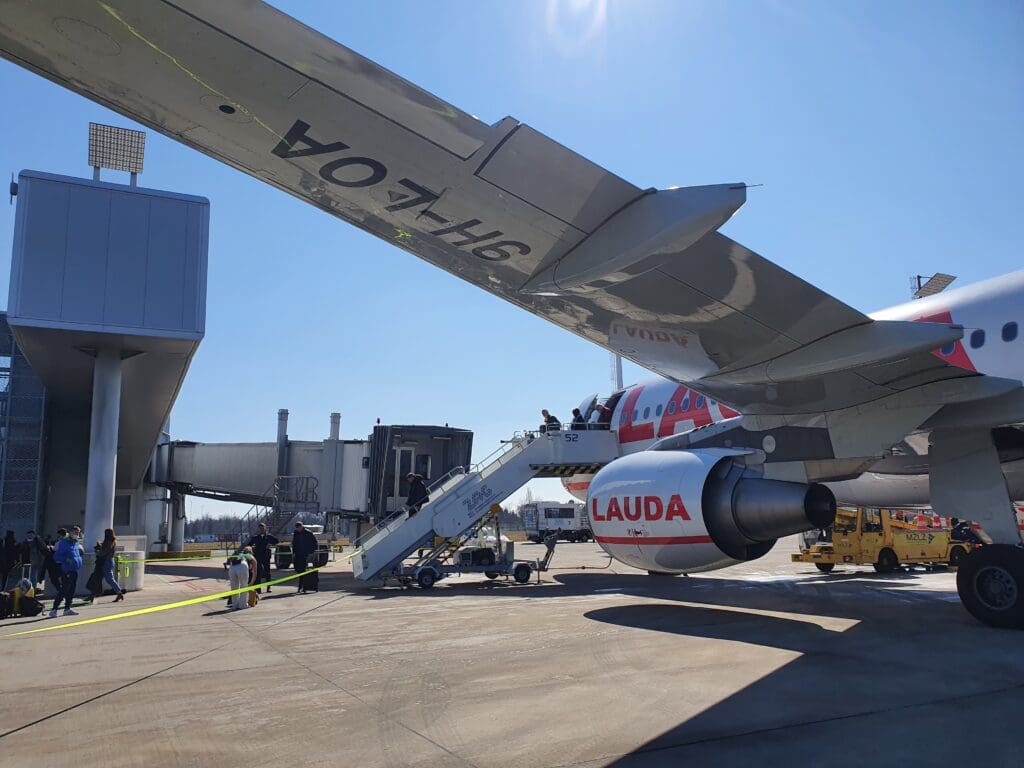
At 0730, Airbus A320-214 9H-LOA could be seen making a gentle touchdown at the end of its two-hour early morning flight over from the Croatian capital. Several minutes later, this pulled into Stand 44R where an army of ground crew could be seen springing into action like a Formula 1 pit stop crew. Assembled at Airbus’ factory in Toulouse Blagnac, this particular aircraft took to the skies for the first ever time in May 2007 with the test registration F-WWBQ and was thus getting on for fifteen years old at the time of my flight. In June 2007, the aircraft received the registration JA206A and was ferried across Eurasia to Japan where it primarily flew domestic routes for All Nippon Airways. However, the aircraft’s Japanese career was to last just five years and in June 2012 the Airbus was ferried down to Indonesia where it received the registration PK-GLH before being pressed into service with local low cost carrier Citilink. Spending over six years shuttling passengers around Southeast Asia, the aircraft returned to Europe where it was delivered to Laudamotion as OE-LOA before being transferred to the Maltese register in November 2020 as Laudamotion transitioned into Lauda Europe. In the week before my flight, the aircraft had completed a total of 35 sectors, covering over 29,000 miles. For much of this week, the jet had been based in Vienna where it connected the Austrian capital with Amman, Bari, Brussels Charleroi, Catania, London Stansted, Madrid, Naples, Nis, Palma de Mallorca, Paris Beauvais, Tenerife South, Thessaloniki and Valencia. However, the day before my flight, the aircraft had shifted to Zagreb and had since connected this with Brussels Charleroi, London Stansted, Naples and Rome Fiumicino.
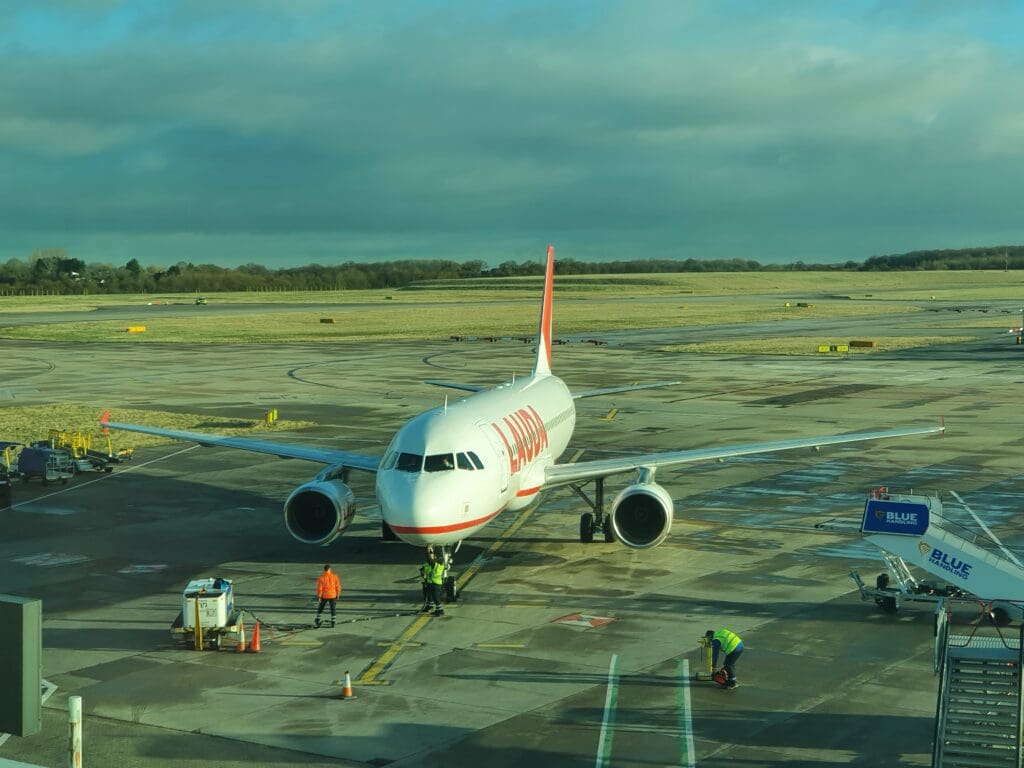
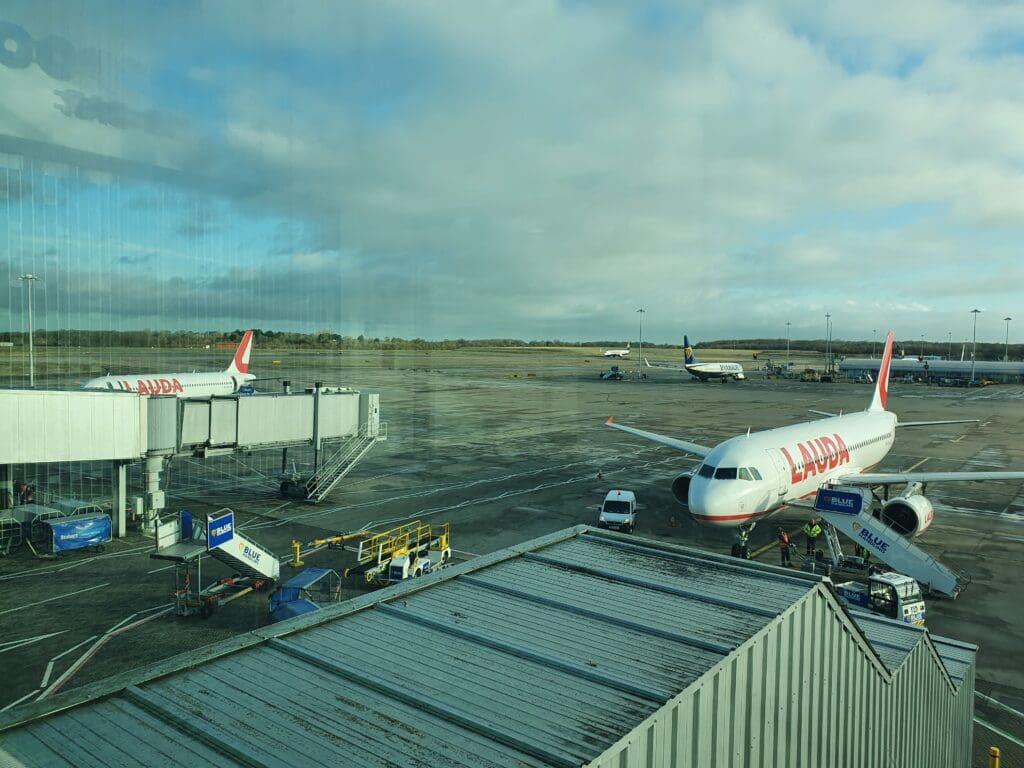
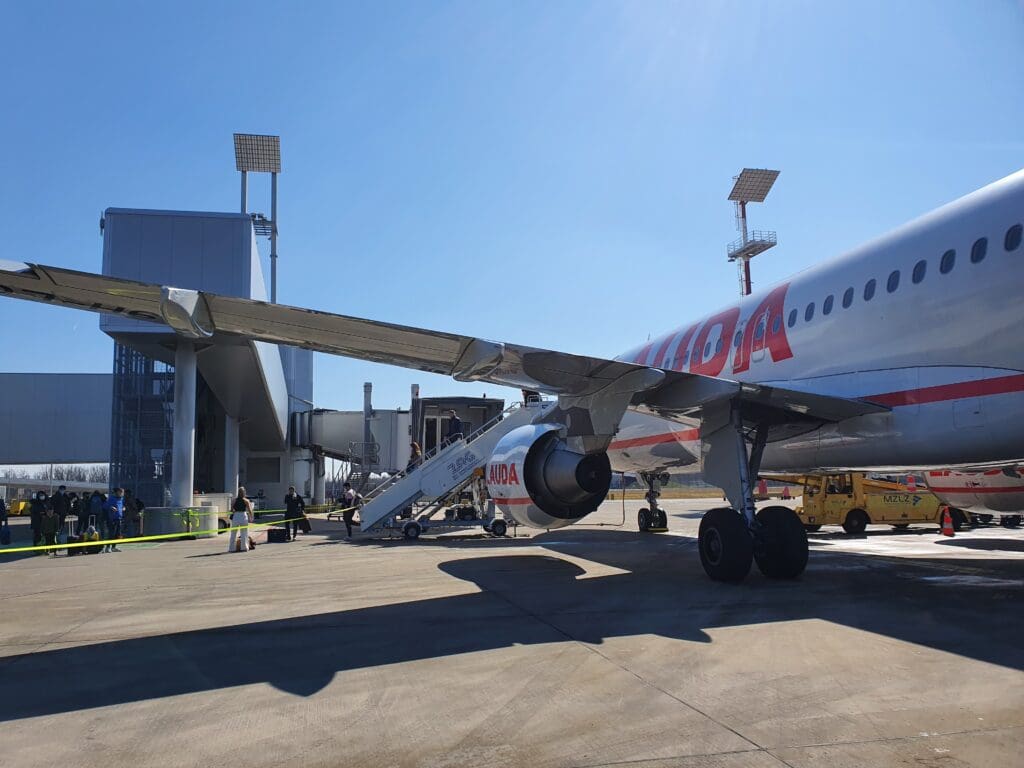
As tends to be the norm with those services operated by Ryanair and their subsidiaries, and at Stansted in general, once the Airbus came to a halt, no jetbridge would be connected up to the aircraft. Instead, two pairs of airstairs were wheeled up to the Airbus’ front and rear doors, with disembarkation commencing a short time later. At 0750, an announcement was made by the gate agent inviting those passengers with Priority Boarding to make their way to the gate at which time a very short tquBorðoyeue of passengers formed. With few appearing to have Priority Boarding that morning, boarding for the masses commenced no more than a couple of minutes later at which point I joined the queue leading up to the gate podium. As I waited, unusually I noticed two armed police officers diligently watching over the boarding process – perhaps in search of a wanted passenger attempting to make a break for it, or potentially simply undertaking a random check on the flight that morning on the lookout for anything out of the ordinary. A short time after joining the back of the queue, I reached the gate podium where two Ryanair agents could be seen scanning passengers’ boarding passes and checking their passports. After receiving a lukewarm greeting from one of these agents, my boarding pass was scanned and passport checked before I was free to head down the stairs to ground floor level. Unsurprisingly given the fact that the Airbus had only pulled into the stand a few minutes later, the actual commencement of boarding was yet to begin, with passengers required to wait for several more minutes whilst the aircraft was cleaned in preparation for its next flight.
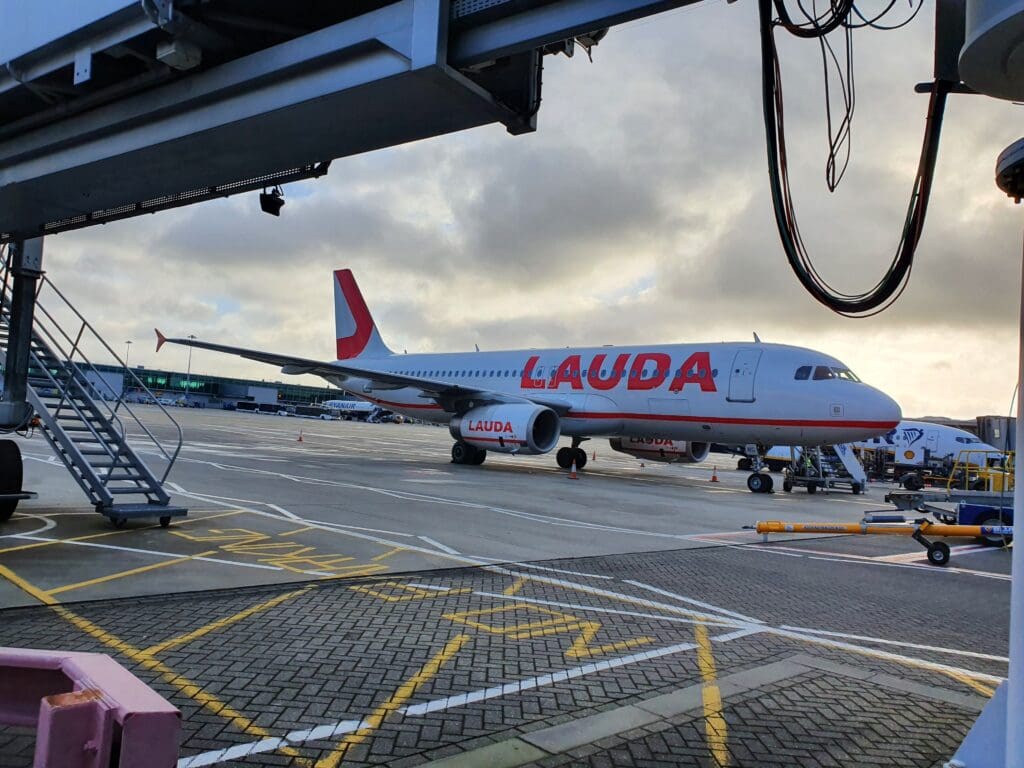
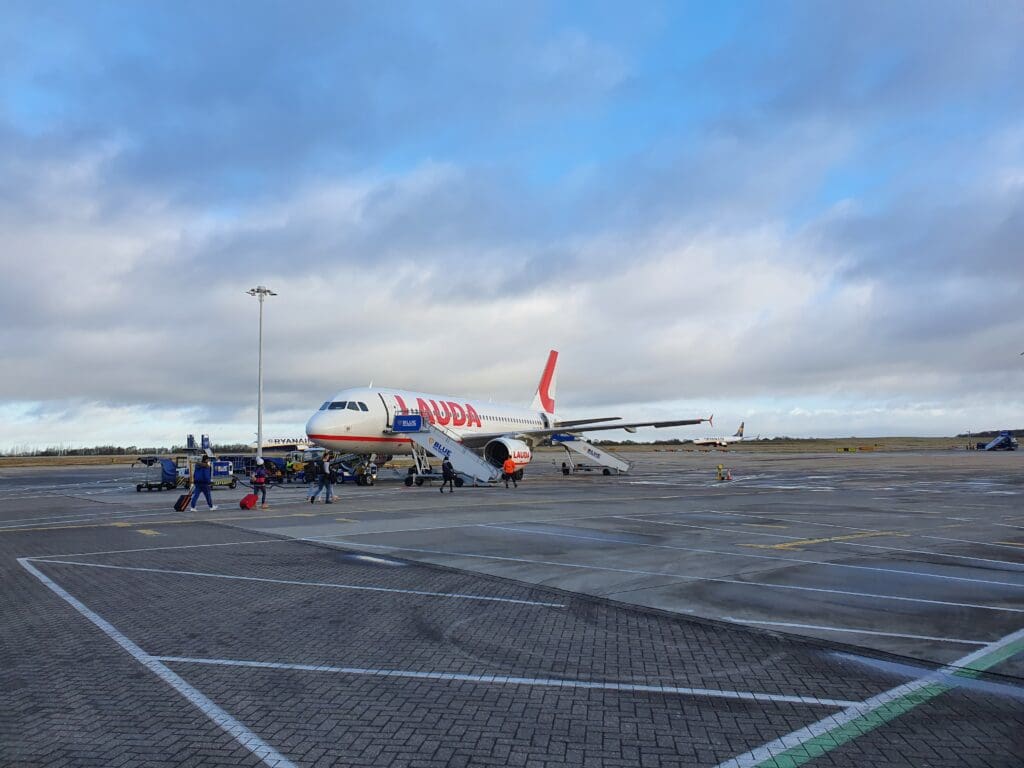
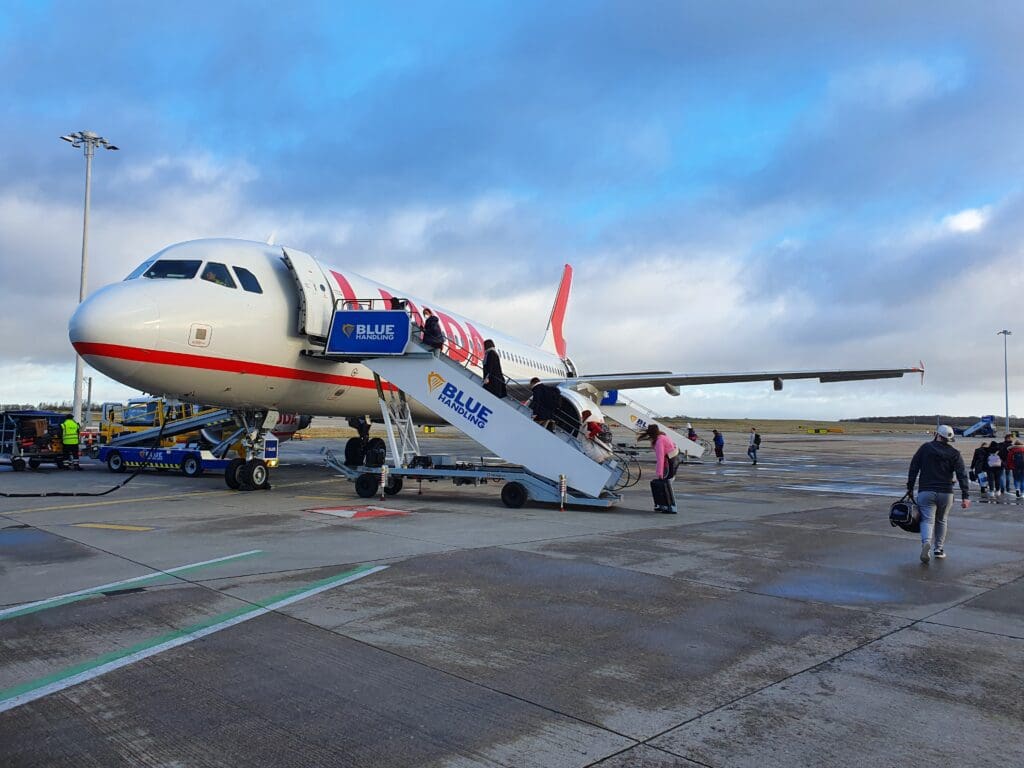
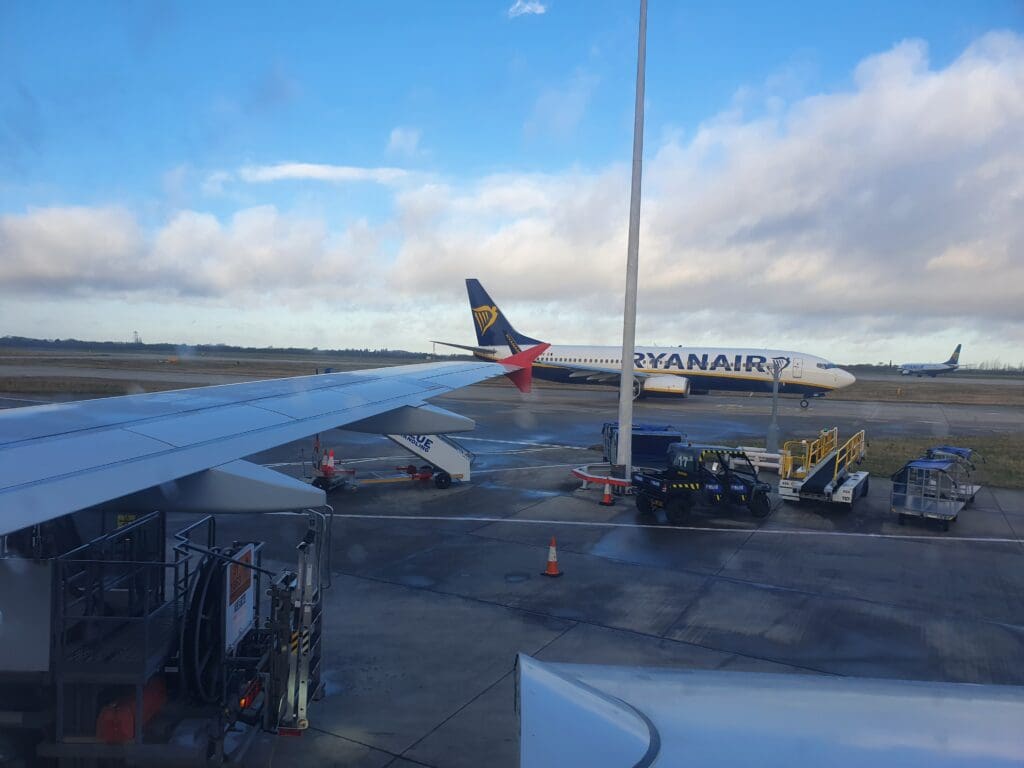
Following a few minutes spent waiting on the steps leading to the ground floor, the doors to the apron were opened and a Ryanair Blue handling agent pointed passengers in the direction of the waiting red and white Airbus. With sunshine beaming down on Essex that morning I was in no particular rush to make it to the Airbus so I snapped a few photos of the jet before heading to the stairs at the rear of the aircraft. Once I had made my way around the port wingtip, I climbed up the stairs and joined a short queue before I was greeted by a flight attendant donned in Lauda Europe’s distinctive bright red uniform. Once onboard, I turned left and journeyed into the Airbus’ boiling cabin.
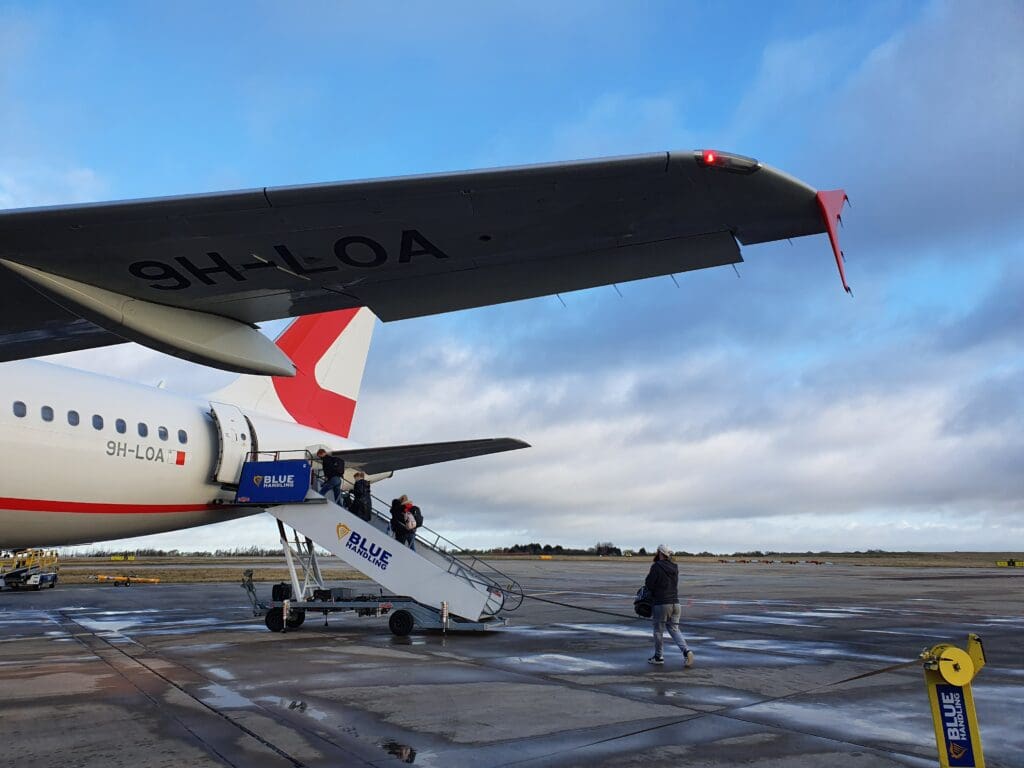
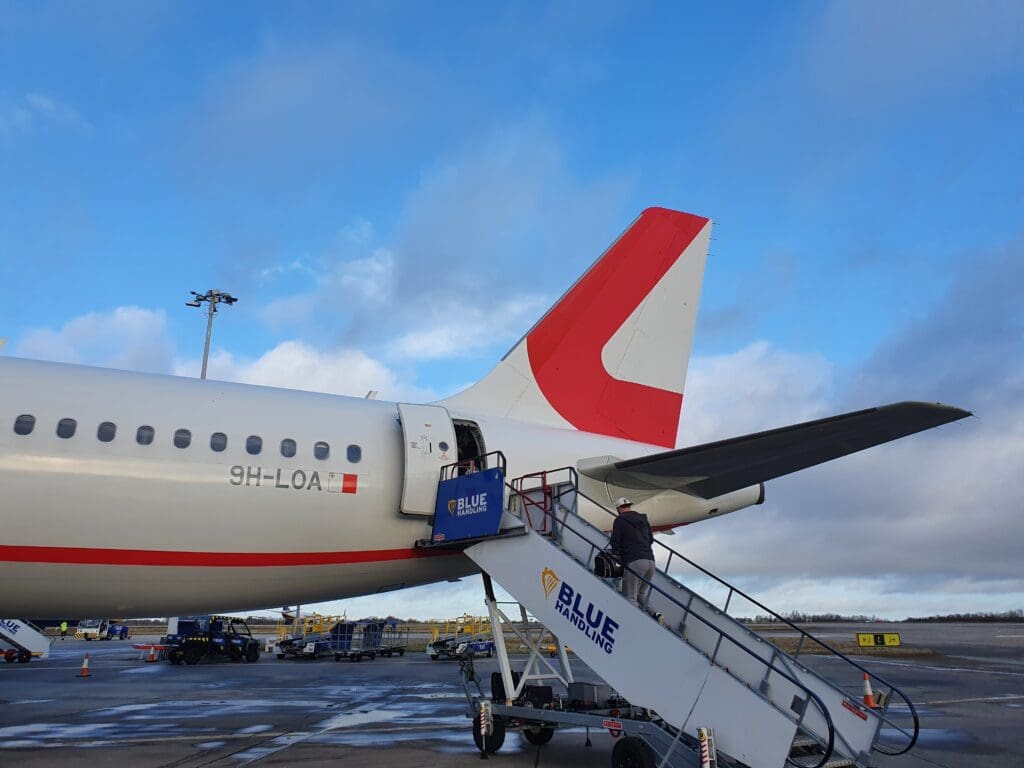
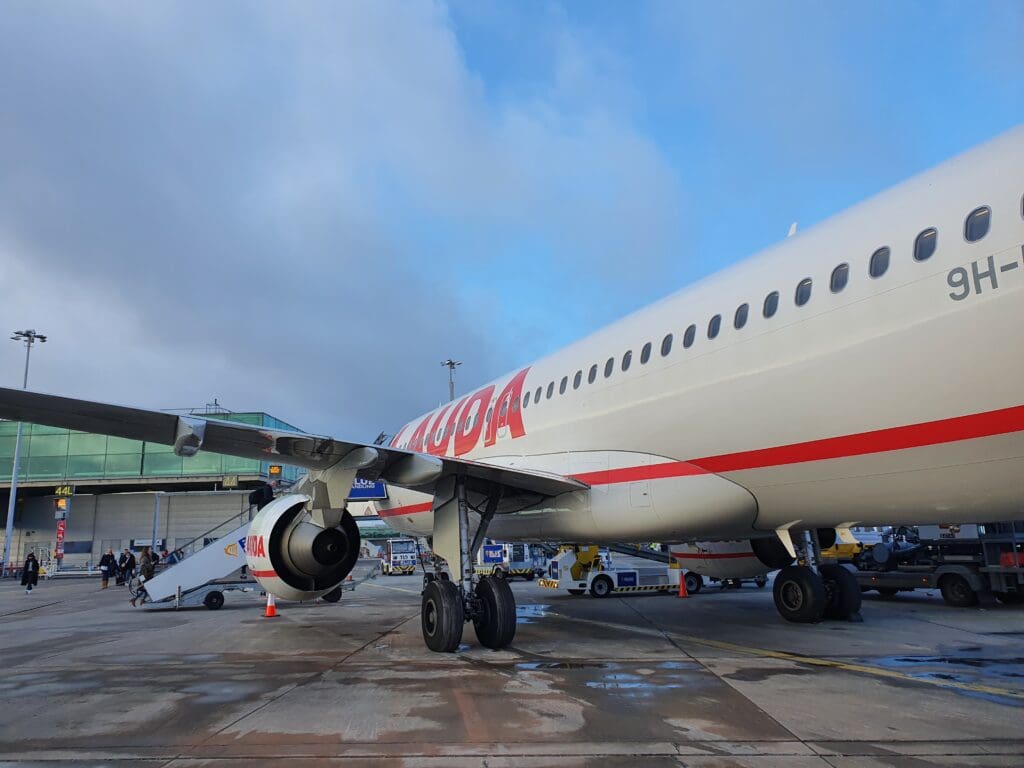
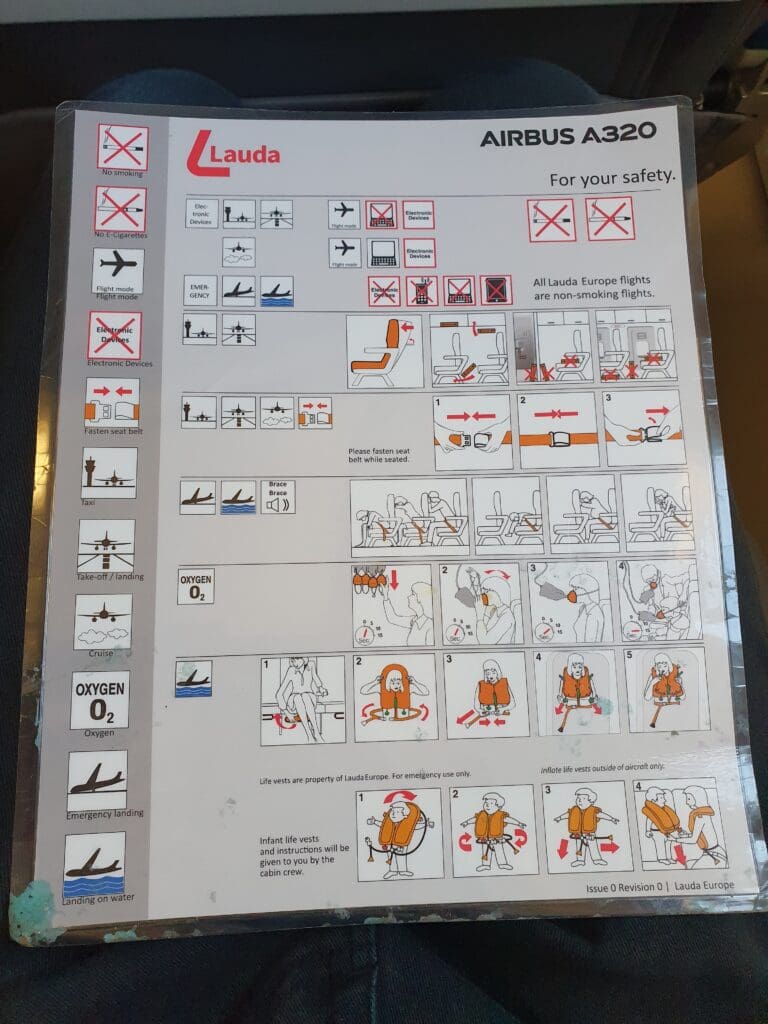
Inside, Lauda Europe’s Airbus A320s feature a typically low cost all-economy configuration capable of seating up to 180 passengers. As I journeyed the short distance to my seat, I overheard several of my fellow passengers noting their surprise not to be greeted by the sight of the brash yellow and blue tones that fill the cabins of Ryanair’s more well-known Boeing 737s. Instead, Lauda Europe’s Airbus A320s sport more subdued and mature tones, with each seat covered in a faux grey leather cover, whilst no advertisements could be seen stuck to the seat backs or overhead lockers and the safety card rested in the seatback pocket as opposed to being stuck onto seat backs to prevent their disappearance. Given the age of this particular Airbus A320, this featured the older cabin panelling and passenger service units which, despite the relatively new seats, made the interior appear to be slightly dated. One advantage of Ryanair’s restrictive luggage policy is that unlike on other carriers, there was not too much jostling for space in overhead lockers, nor long queues in the aisle whilst passengers played overhead locker Tetris as they attempted to squeeze their large bags into spaces that they will not fit. With this considered, I made it to Seat 22F in almost no time and squeezed into my seat. Fortunately, at that time I was yet to be joined by a seatmate so sliding into my seat was a quick and easy process.
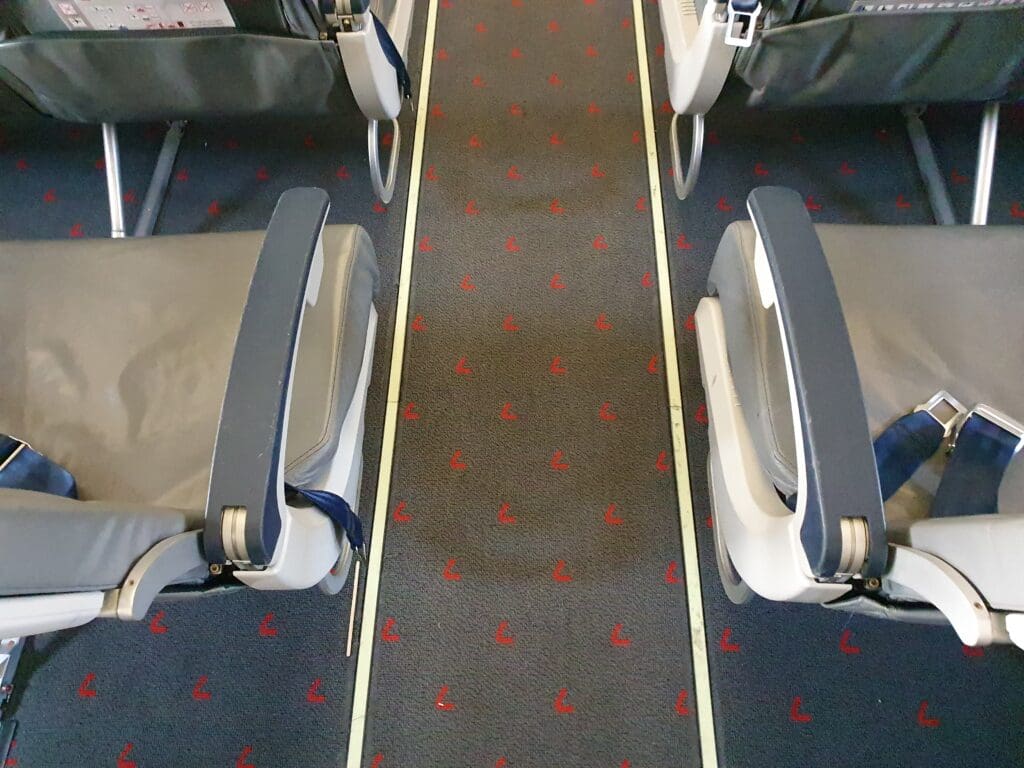
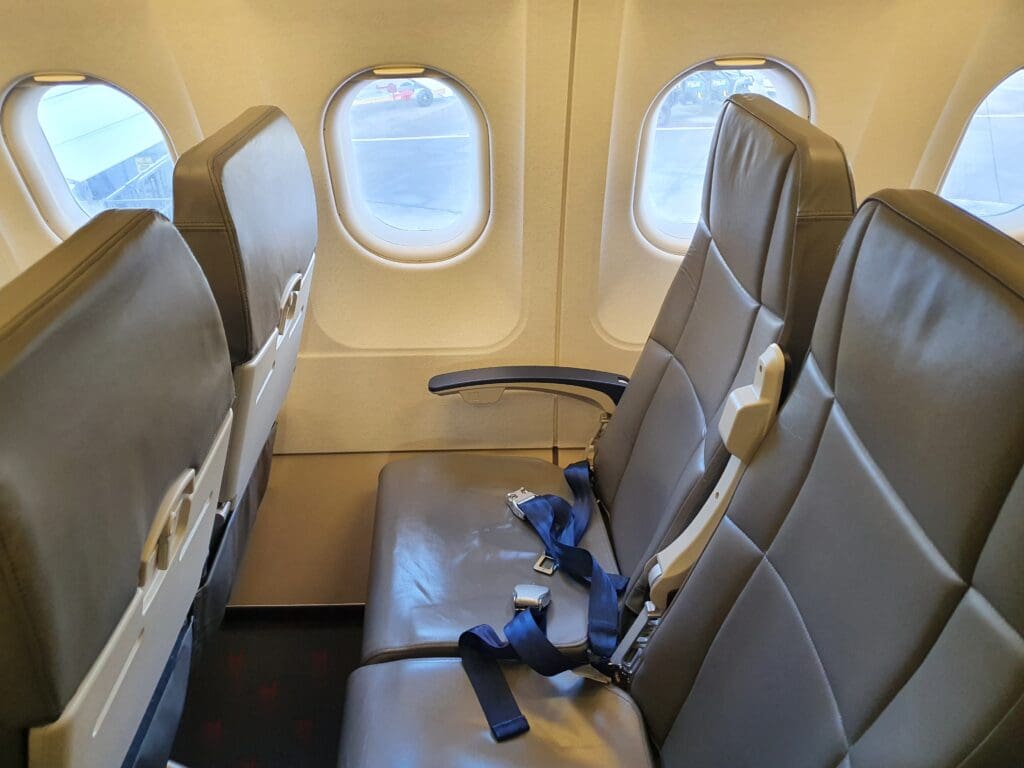
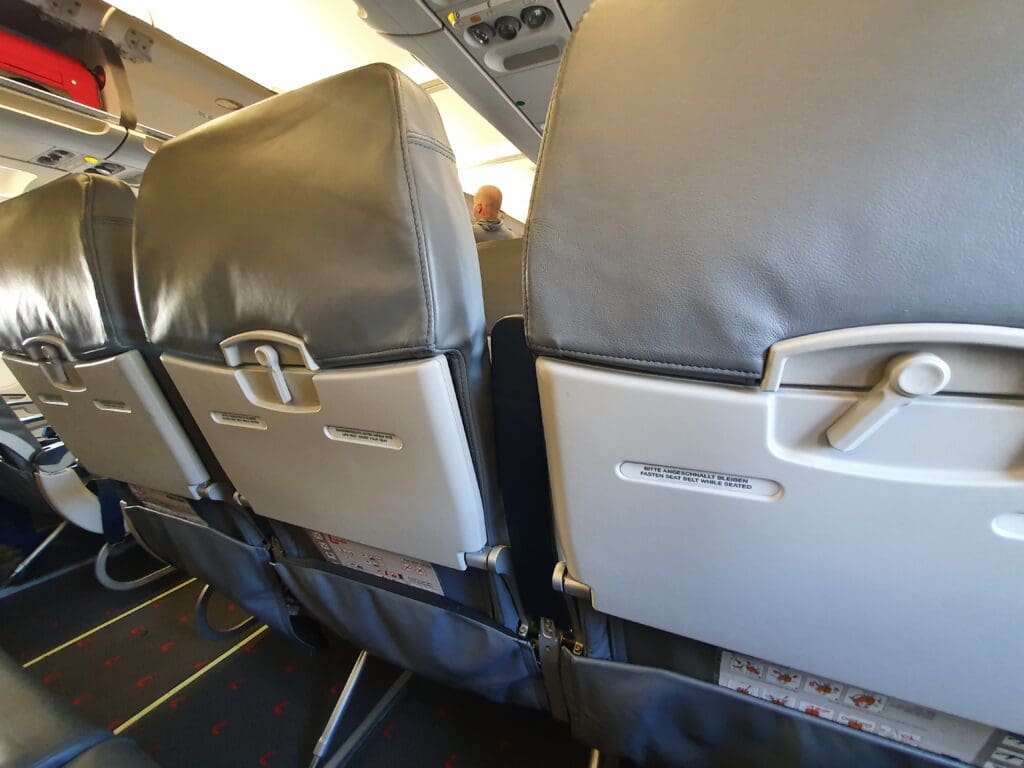
With each seat being noticeably thin in appearance, it did not come of much of a surprise to find that once seated these proved to be relatively firm whilst the legroom was rather dire. Moreover, the seat cushion appeared not to be properly fixed to the seat and kept sliding about for the duration of my flight. In addition, the area around my seat sported a fair few marks and scratches, including pen scribblings. The only positive I had to report on at this stage of the flight was that the area around my seat appeared to be clean and tidy with no sign of any leftover rubbish. Being one of the first few passengers to board the aircraft, after taking my seat passengers continued to stream on and I was soon joined by two seat neighbours. As on mainline Ryanair, upbeat music accompanied the boarding process which I assume is in place in an attempt to speed passengers up as they make their way to their seats. This was interrupted several times by an announcement from a flight attendant requesting passengers to get to their seats as quickly as possible, sit in their assigned seats and wear a face covering at all times whilst onboard.
At 0816, the Captain performed a brief welcome announcement during which they thanked all passengers for flying with Lauda Europe and Ryanair, informing us that we could expect good weather for the duration of the flight and would be greeted by sunny skies and a temperature of zero degrees upon arrival in Zagreb. Whilst all passengers had made it to the aircraft in good time, the Captain ended this by mentioning that we would not be able to push back until our scheduled departure time of 0830. At 0822, the words ‘boarding complete’ rang out through the cabin and as expected, the flight appeared to be almost full. That morning, most passengers seemed to be Croatian, with plenty of families travelling presumably to visit relatives. A short time later, the Purser performed a welcome announcement which featured the usual welcomes and warnings, during which a dispatcher could be seen leaving the cockpit and making their way out of the aircraft before the cabin door was closed.
Outside, once the ground crew had cleared the area around the aircraft, at 0832 the aircraft was pushed back away from the stand and its two CFM56-5B4 engines quietly powered up into life accompanied by the famous Airbus squeaking sound. Meanwhile, inside the cabin, the safety demonstration was performed with three crew members undertaking a demonstration in the aisle whilst the Purser announced the safety instructions. Unlike Ryanair, all announcements throughout the flight were performed manually. On this note, all announcements throughout the flight were performed in English only and judging by their accents, it appeared as if two crew members hailed from Spain, and the other from perhaps Austria or Germany.
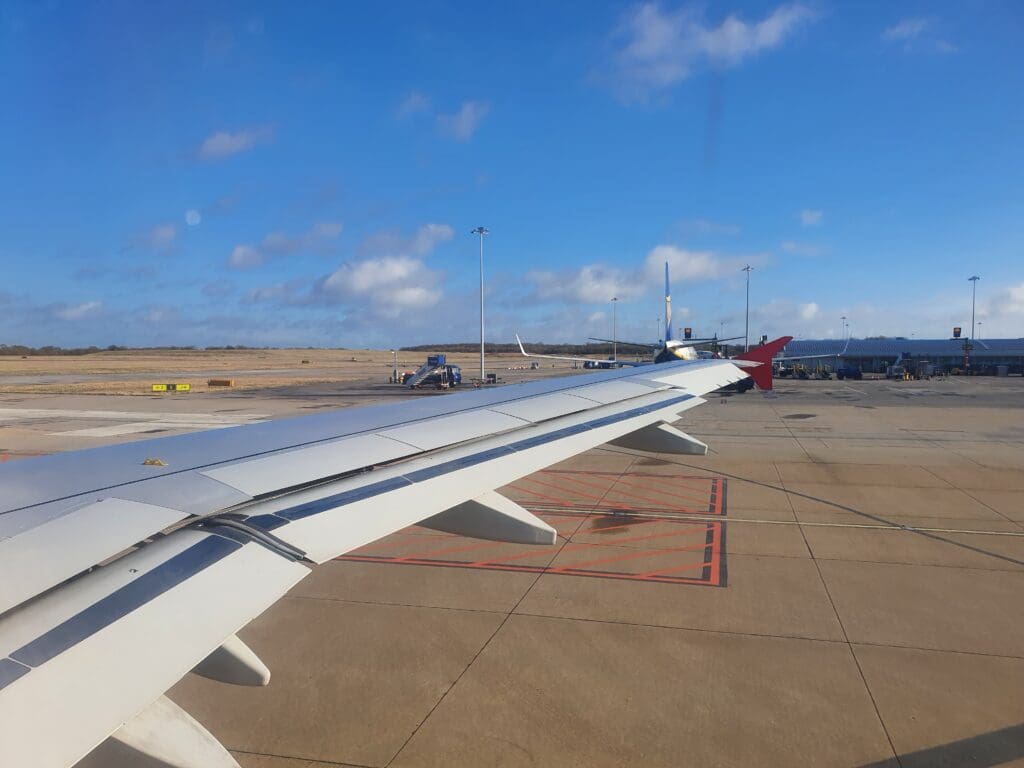
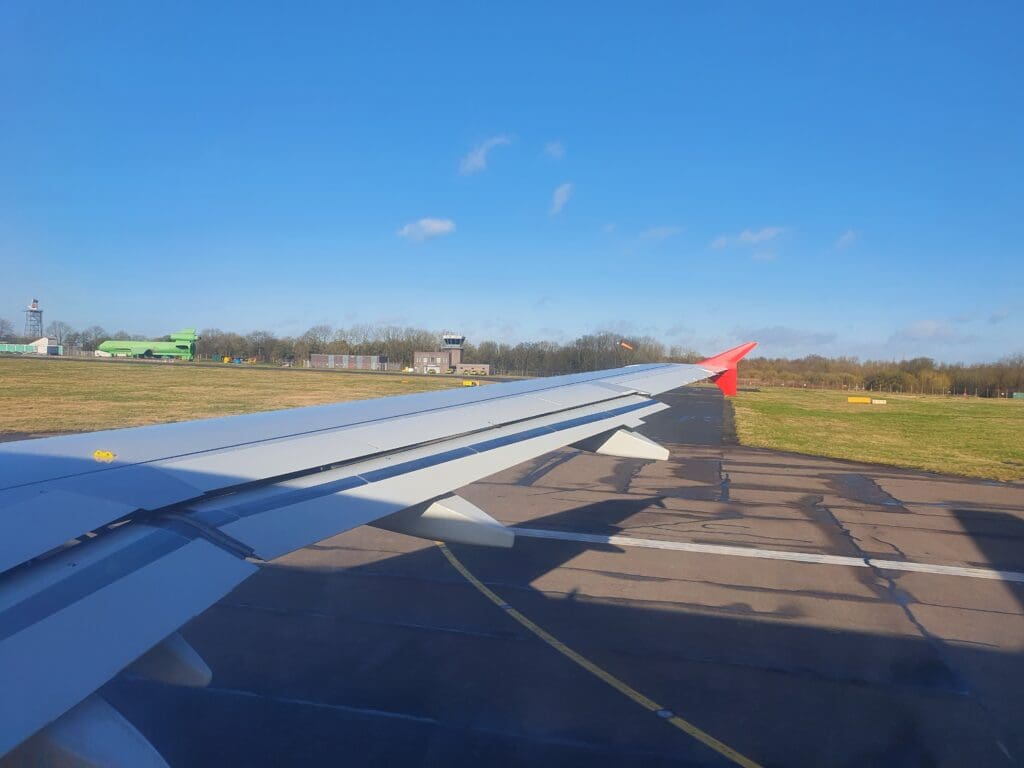
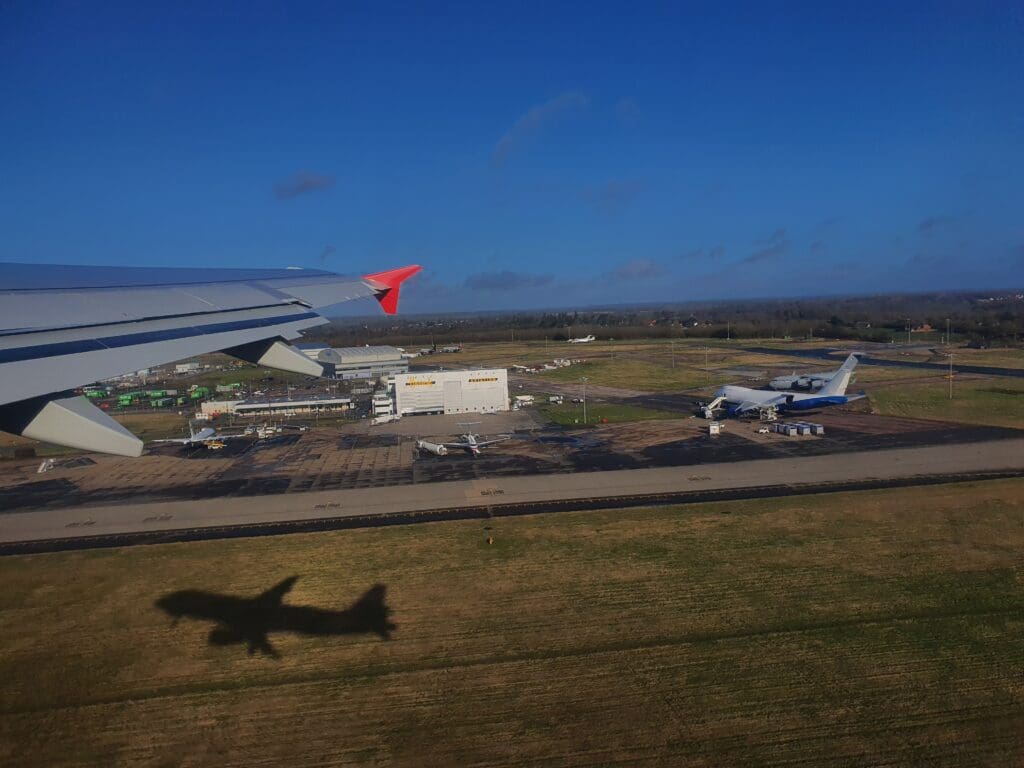
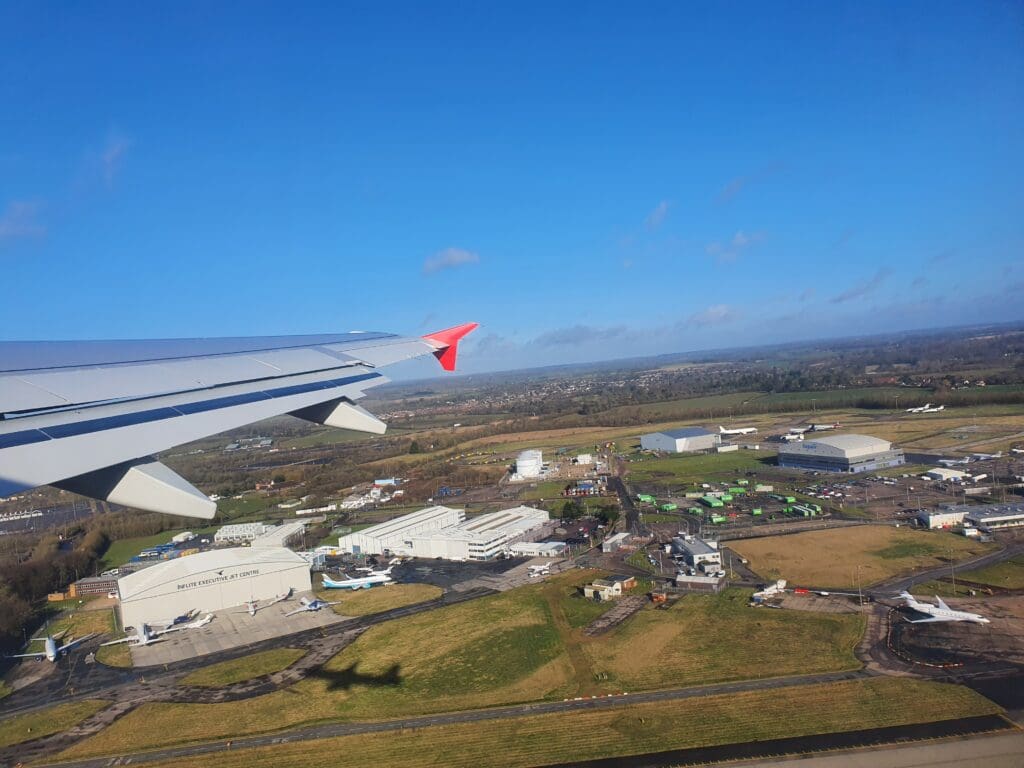
At 0835, the Airbus taxied away from the apron under its own power whilst the cabin crew passed through the aircraft ensuring that all was secure for our departure. From the satellite terminal, the aircraft did not have to trundle very far to reach the end of Runway 22. After no more than a couple of minutes of slowly taxying the Airbus came to a halt at Holding Point S1. Following several minutes of holding, at 0840 the aircraft taxied left onto the runway and commenced a relatively gentle rolling take-off. Taking to the skies roughly parallel with Stansted Airport’s MD-11-esque fire trainer, this allowed for a superb view of the collection of interesting aircraft sitting to the north of the runway. Almost immediately after the landing gear had been retracted, the Purser performed their post-departure announcement which contained the usual information regarding seat belts and face coverings, as well as a mention of the soon-to-commence onboard service.
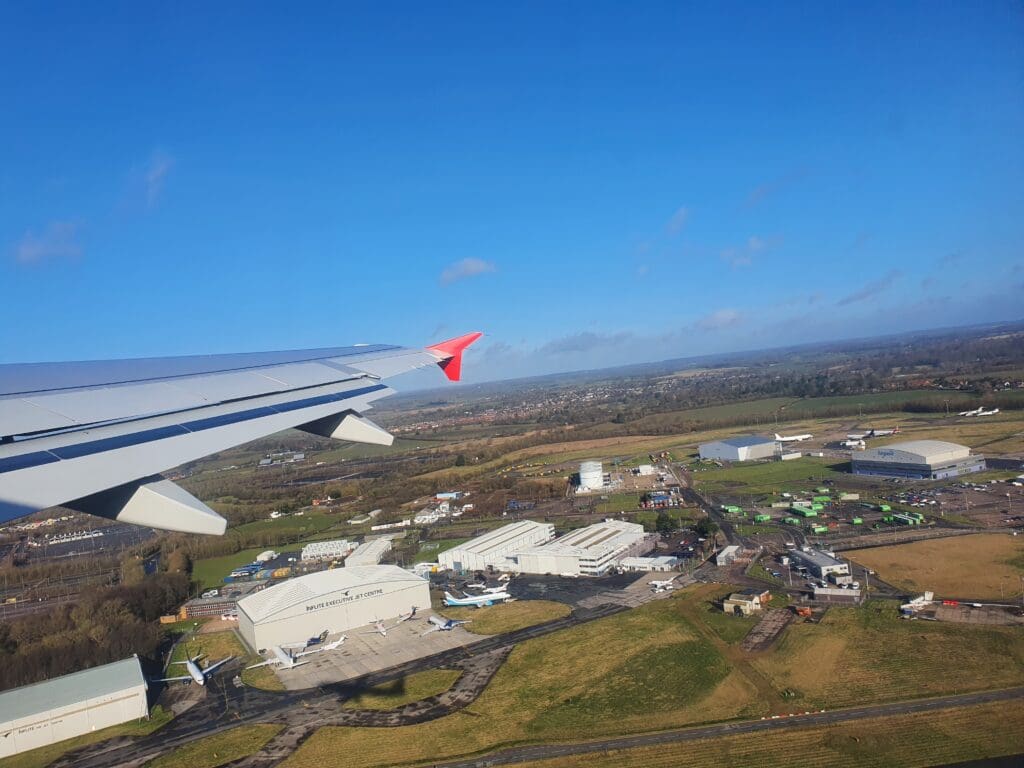
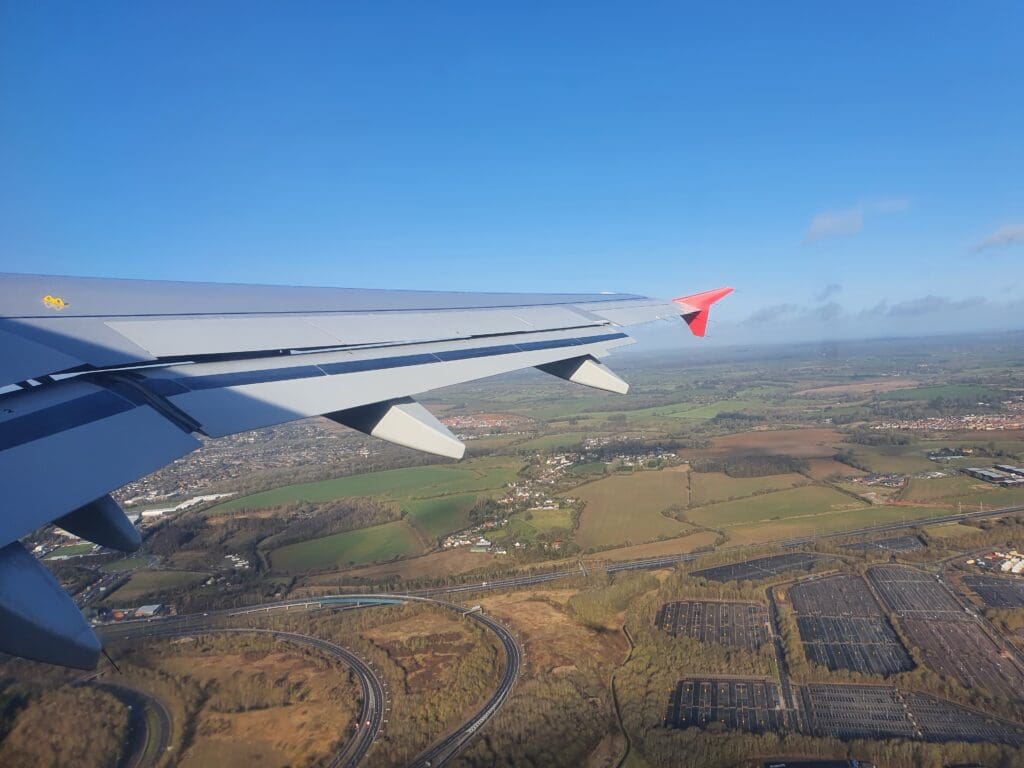
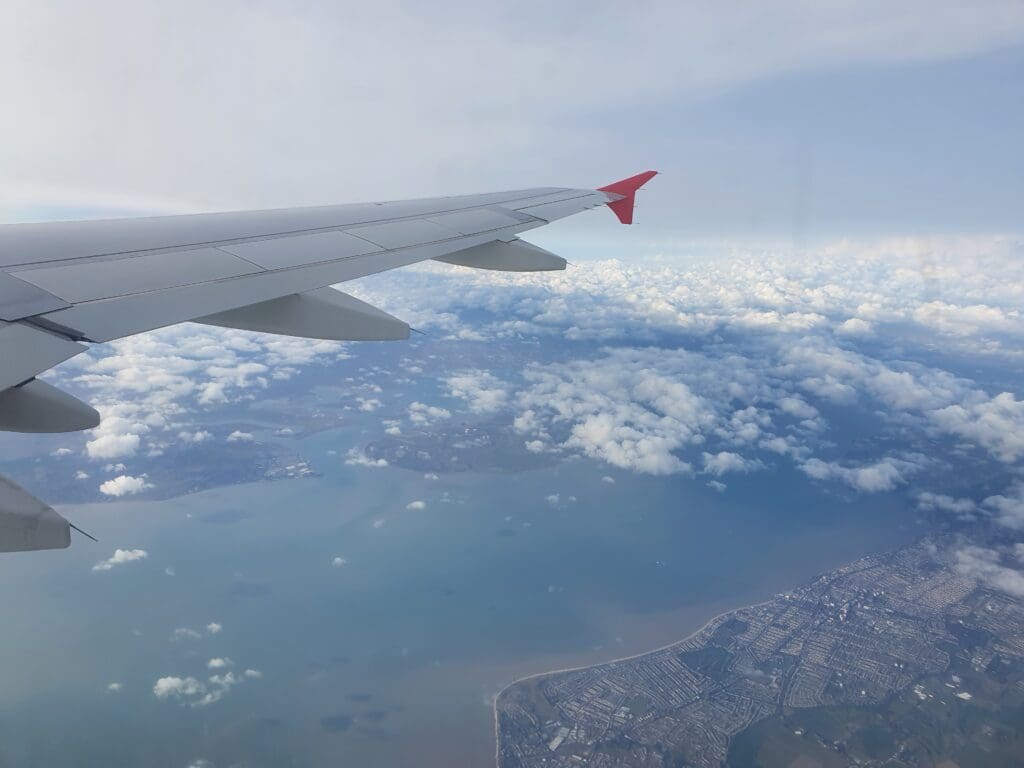
Turning my attention outside, once Stansted Airport slipped out of view, the town of Bishop’s Stortford appeared before the aircraft banked left and sliced through a thin layer of clouds before journeying southeast over Essex. Whilst little of the county could be seen, the clouds partially parted as the aircraft neared Essex’s coastline providing vistas of Basildon followed by Southend-on-Sea. From there, the aircraft sped towards Kent and made landfall near the town of Herne Bay. Following a very short crossing of Kent at one of its narrowest points, the Airbus then headed out to sea once more after passing over the town of Ramsgate. As the aircraft climbed, an announcement was made advertising the more substantial options of the buy-on-board service including ham and cheese sandwiches and filled croissants, as well as promoting the pricey meal deal which would allow these items to be paired with a soft drink and snack for €10. Once this had been done, two crew members rolled an Air Berlin-branded trolley to the front of the cabin and then worked their rearward. With most passengers either asleep or simply uninterested in making any purchases, the cabin crew passed through the cabin rather quickly.
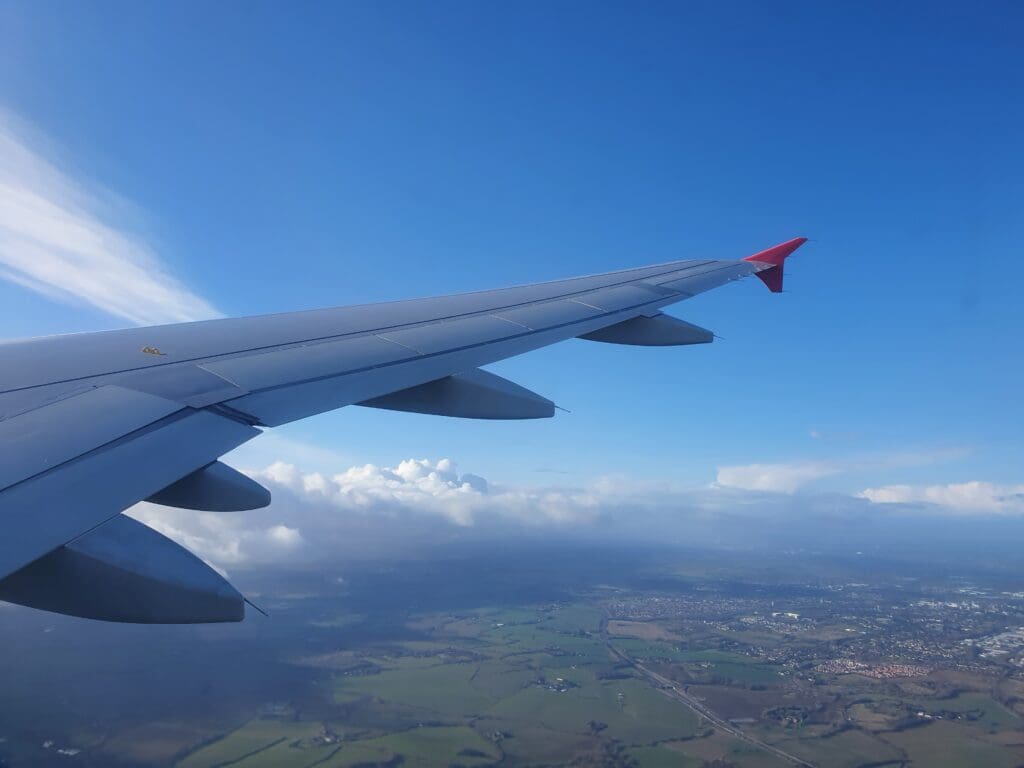
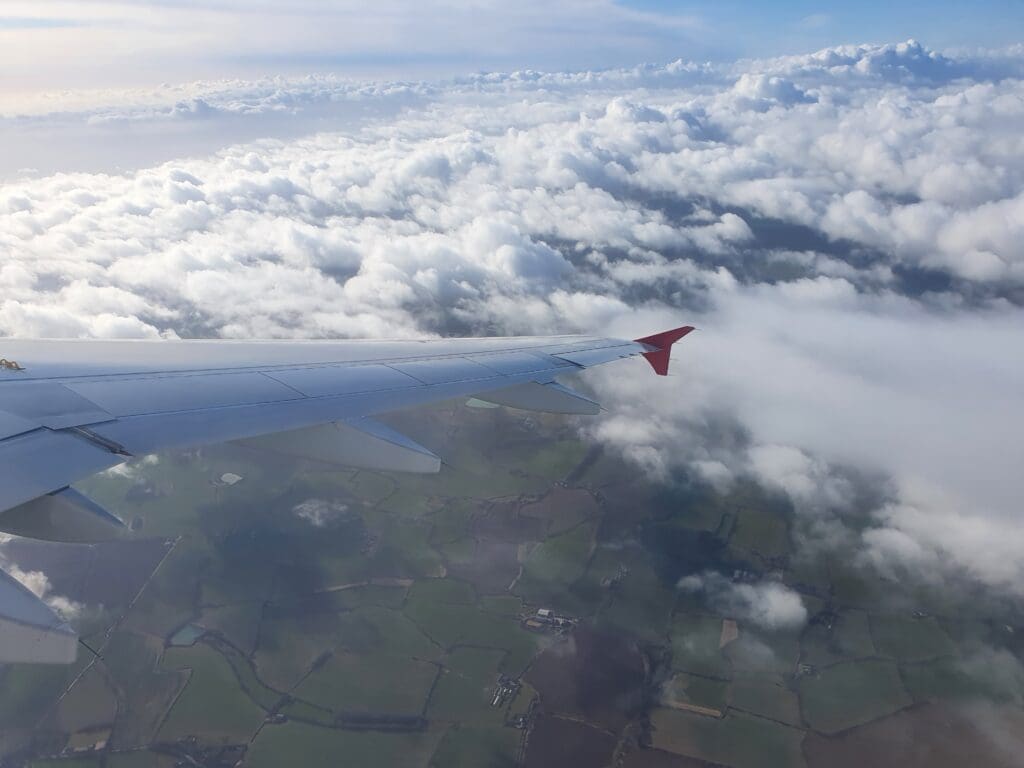

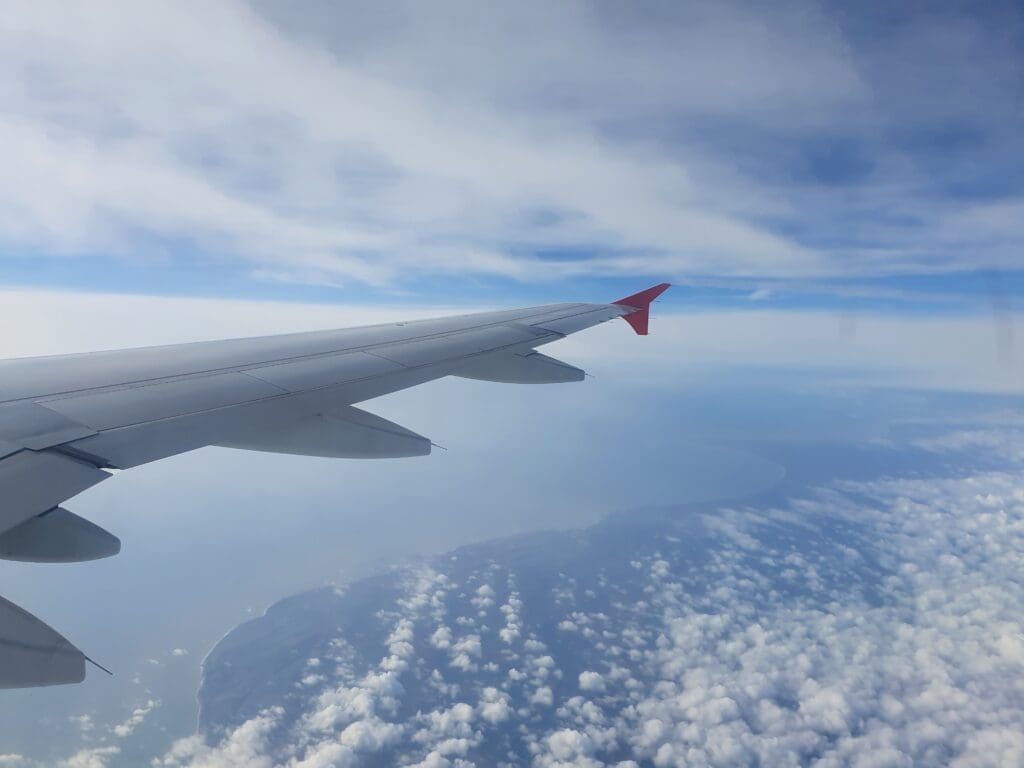
Following a five-minute crossing of the Channel, the Airbus passed over the sandy beaches between Calais and Dunkirk before crossing over into Belgian airspace. As the aircraft headed inland, the jet reached its cruising altitude of 37,000 feet to the north of Lille, although by this time clouds had rolled in below and prevented any views of southern Belgium or northern France. Even though the aircraft had levelled off, the Captain’s mention of good weather for the entire journey, and that there had been virtually no turbulence thus far in the journey, even at cruising altitude the seatbelt signs remained firmly illuminated. Furthermore, during the initial stages of the cruise, the crew seemed to be proactive in ensuring passengers remained seated, with those needing the toilet requested to press the call button and presumably be escorted to either the front or the rear of the cabin.
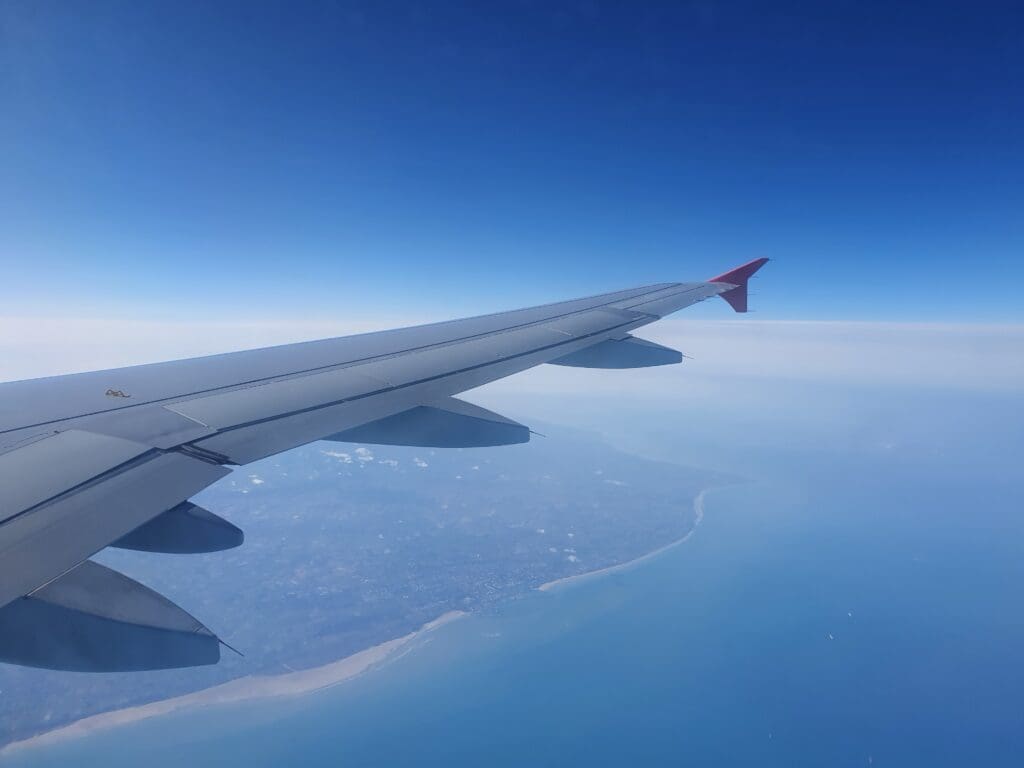
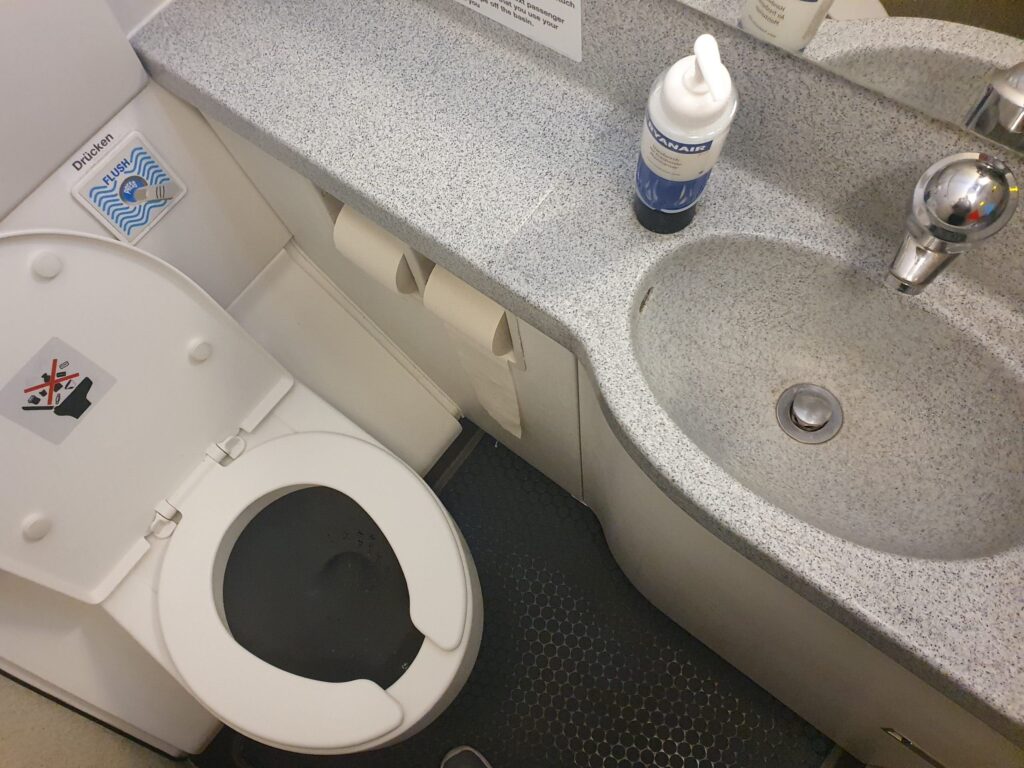
Returning to the onboard service, around ten minutes after the bar and snack service had reached the rear of the aircraft, an announcement was made regarding the flight’s duty free service; however, as with the food and beverage options, few passengers appeared to buy anything. From Belgium, the aircraft entered German airspace just to the north of Luxembourg’s northernmost tip and flew southeast first over Rhineland-Palatinate, followed by Hesse, Baden-Wurttemberg and then Bavaria. Below, the faint outline of the winding Neckar River could be seen just to the north of Stuttgart as the aircraft journeyed towards Munich. Passing just to the south of one of Germany’s largest cities, nothing of this could be seen from my seat on the right-hand side of the aircraft although I did spot two large lakes, Ammersee and Starnberger See. Meanwhile, back inside the cabin, with the crew no longer policing toilet visits I decided to head to the rear lavatory which I was pleased to find in a good and clean state.
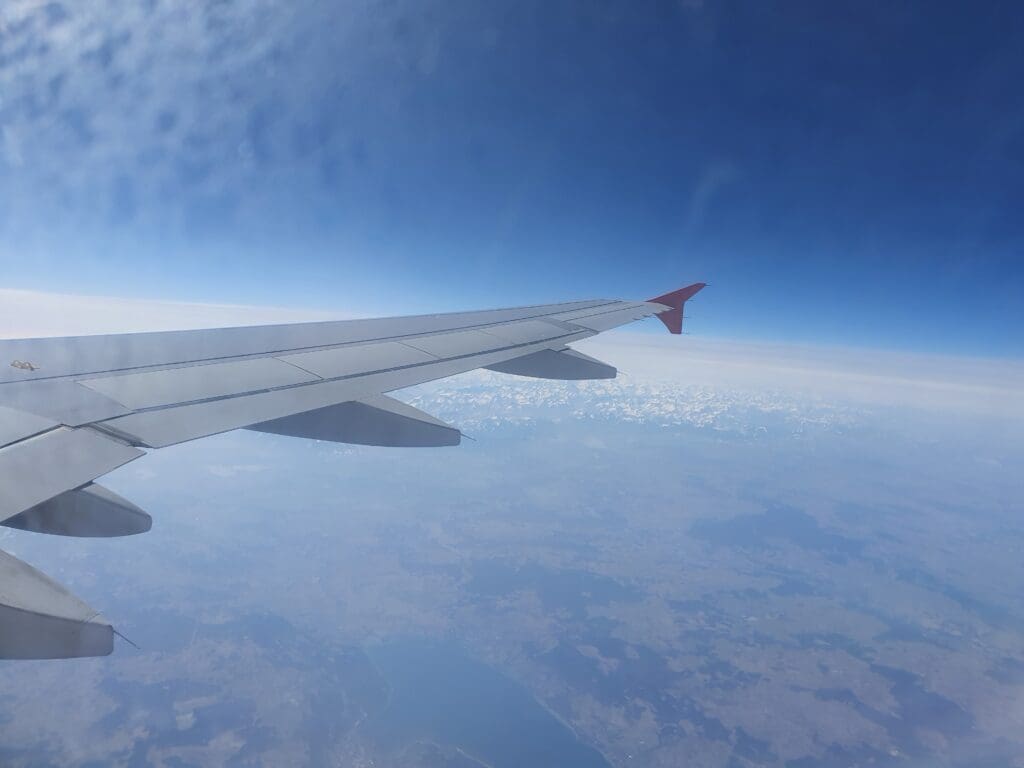
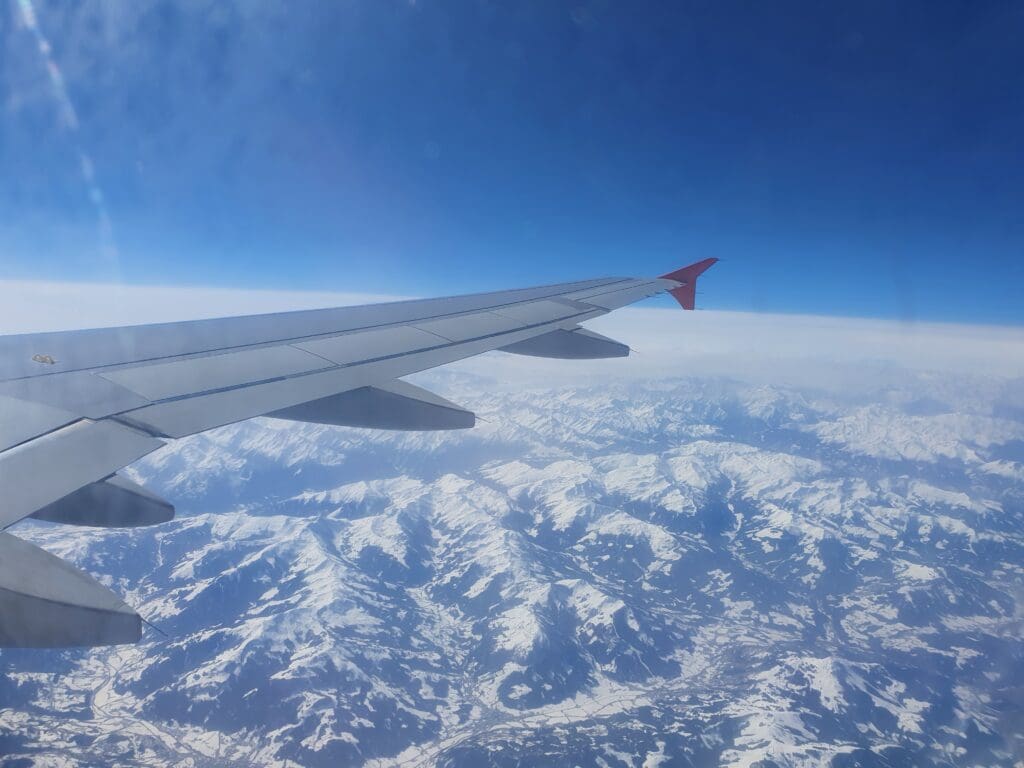
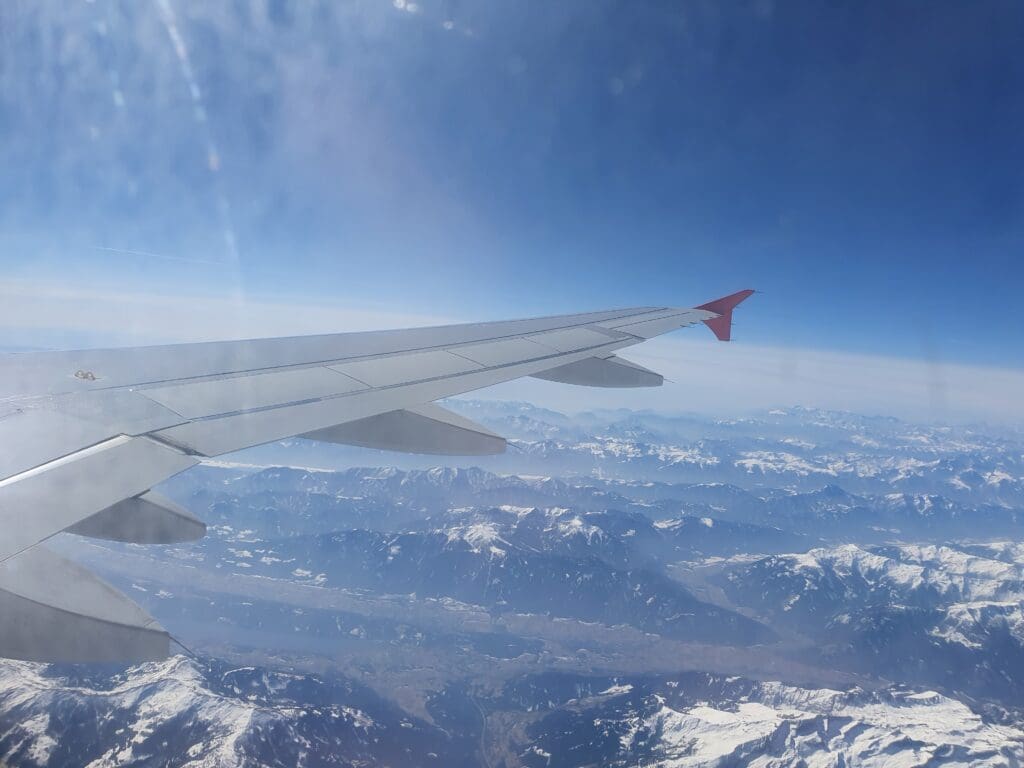
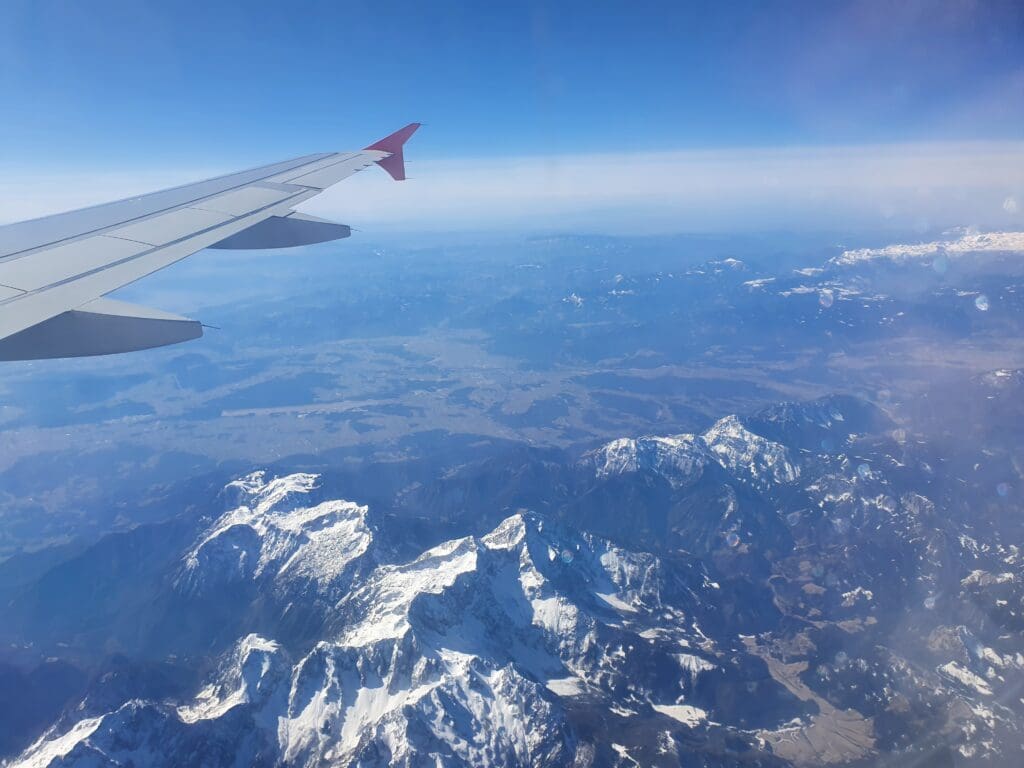
As the aircraft travelled southeastwards over Bavaria, the snow-capped Alps appeared in the distance and edged closer and closer as the aircraft neared the Austrian border. Soon enough the aircraft travelled right across the Alps, crossing into Austrian airspace allowing for a spectacular view of the rocky and jagged peaks below. In between these peaks, I managed to spot Kitzbuhel and Zell am See whilst plenty of smaller villages could be seen nestled deep in mountain valleys. Back inside the cabin, another bar service was undertaken followed by an attempt to sell scratchcards, although there appeared to be few takers for either.
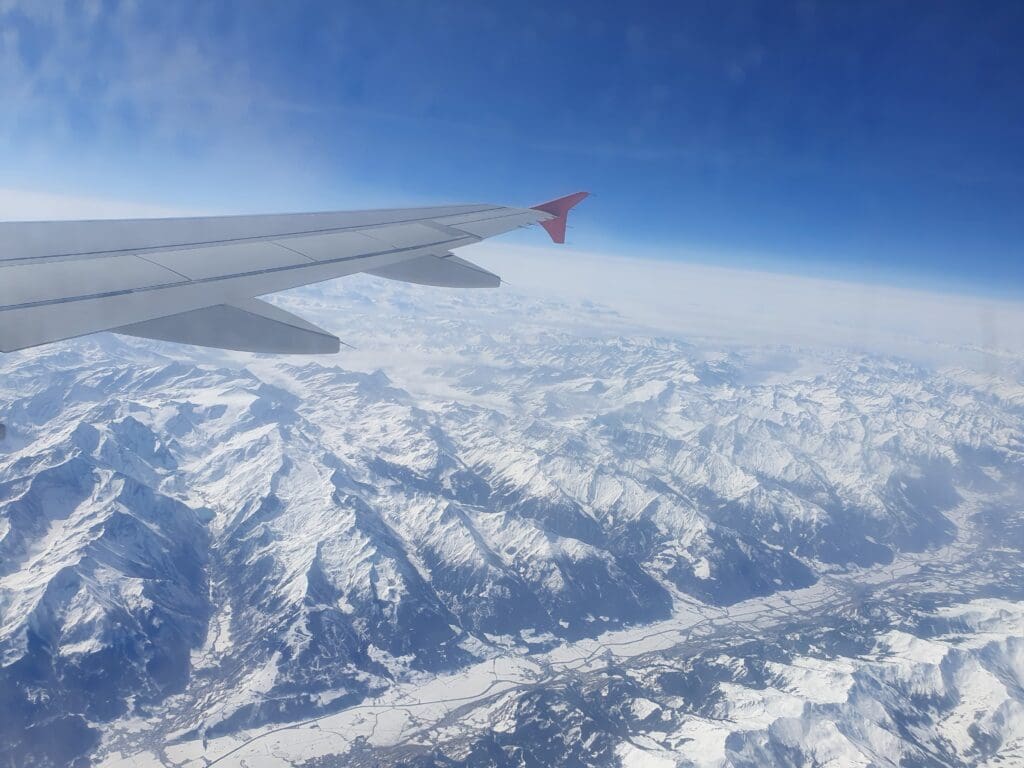
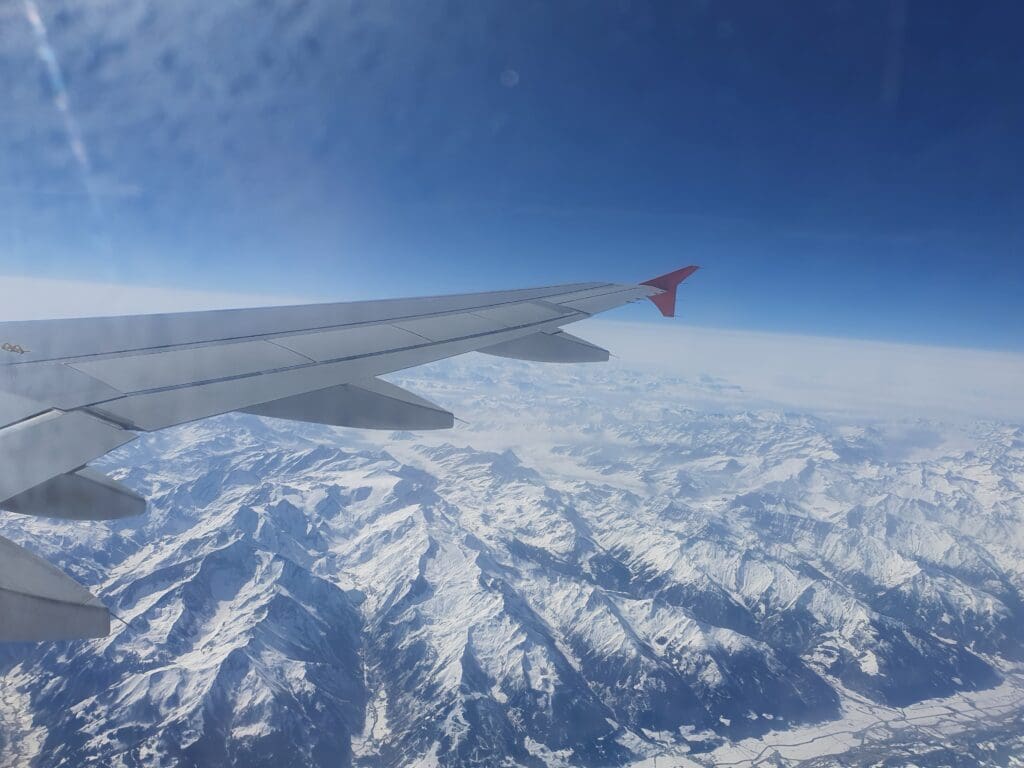
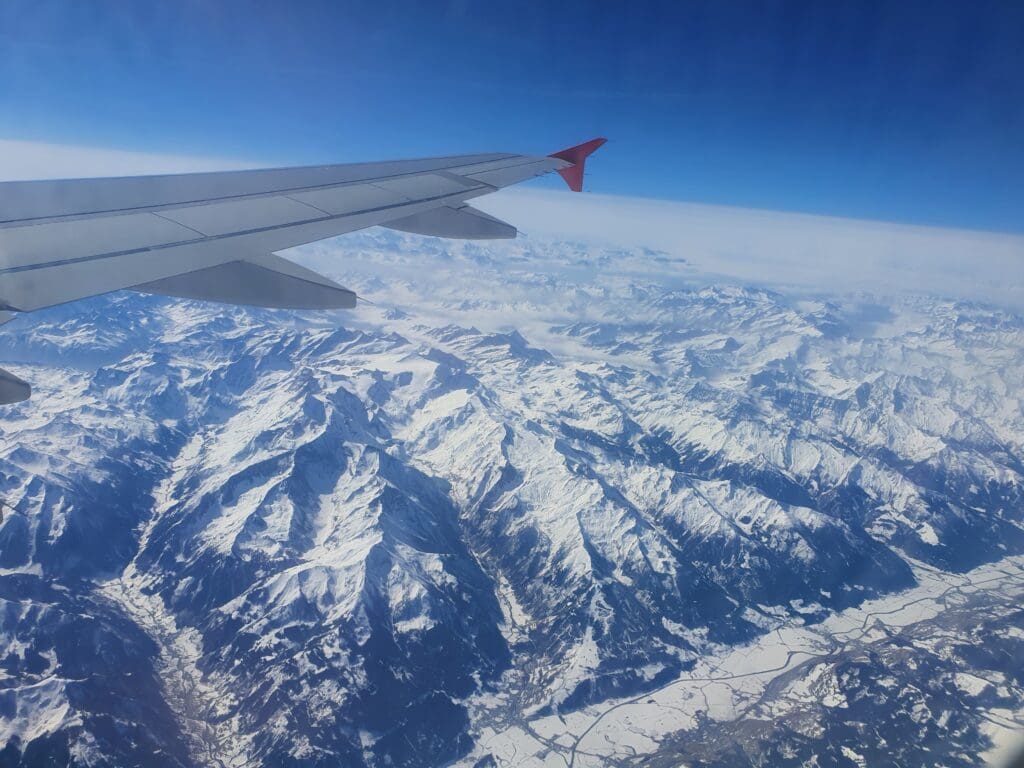
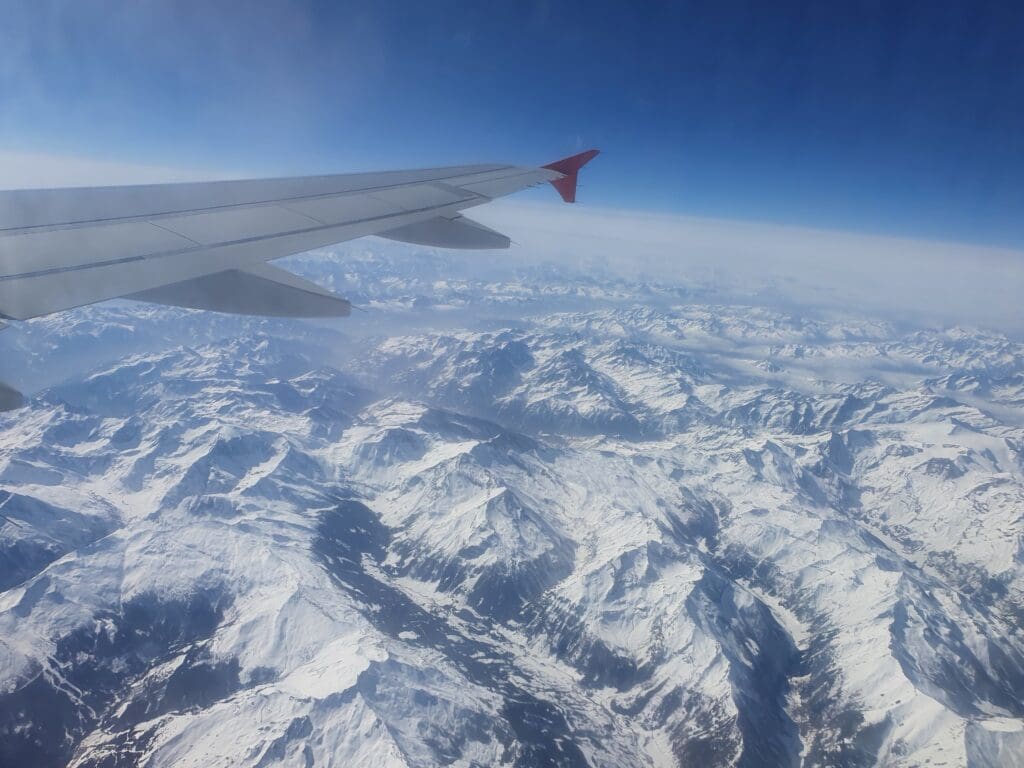
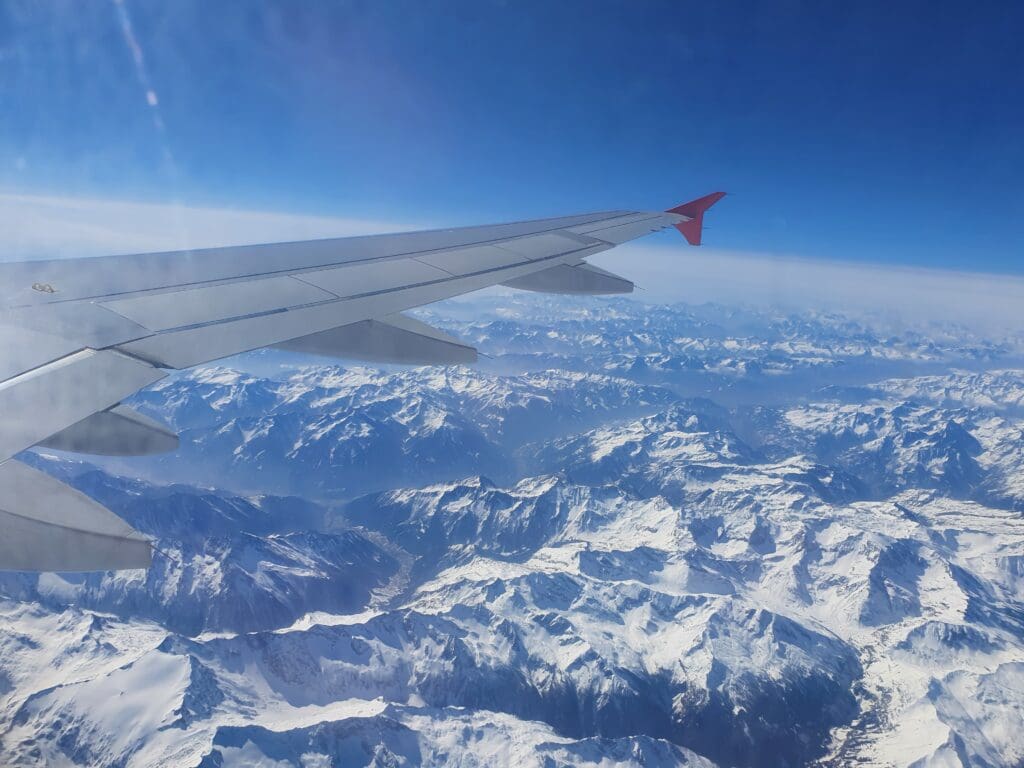
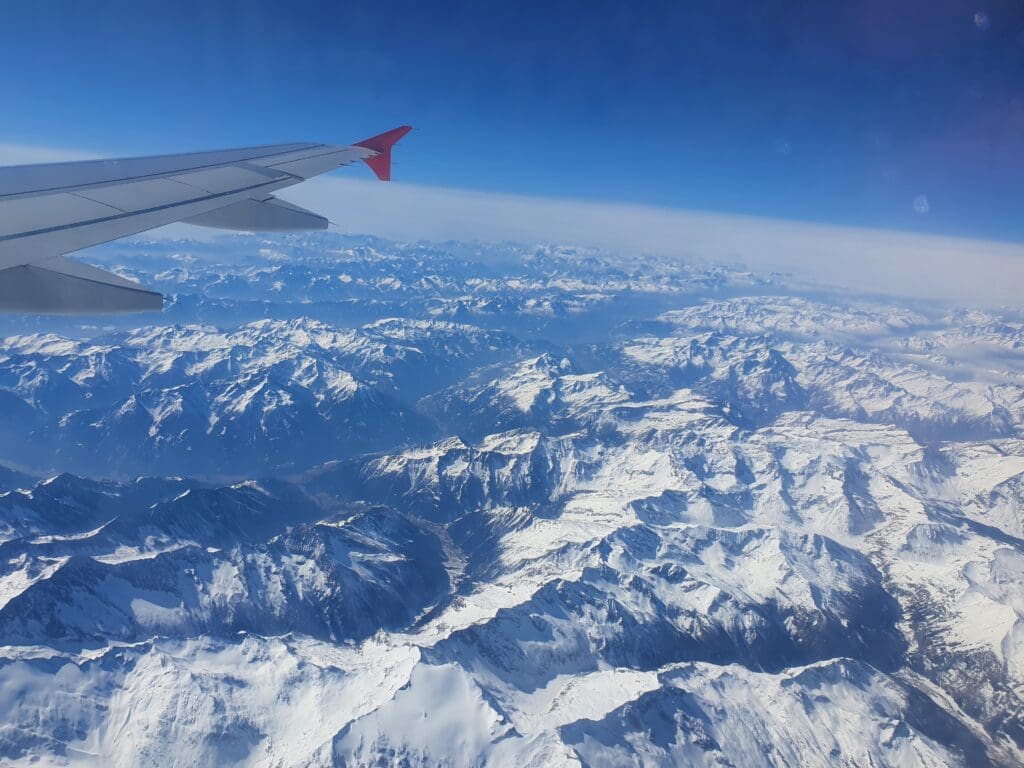
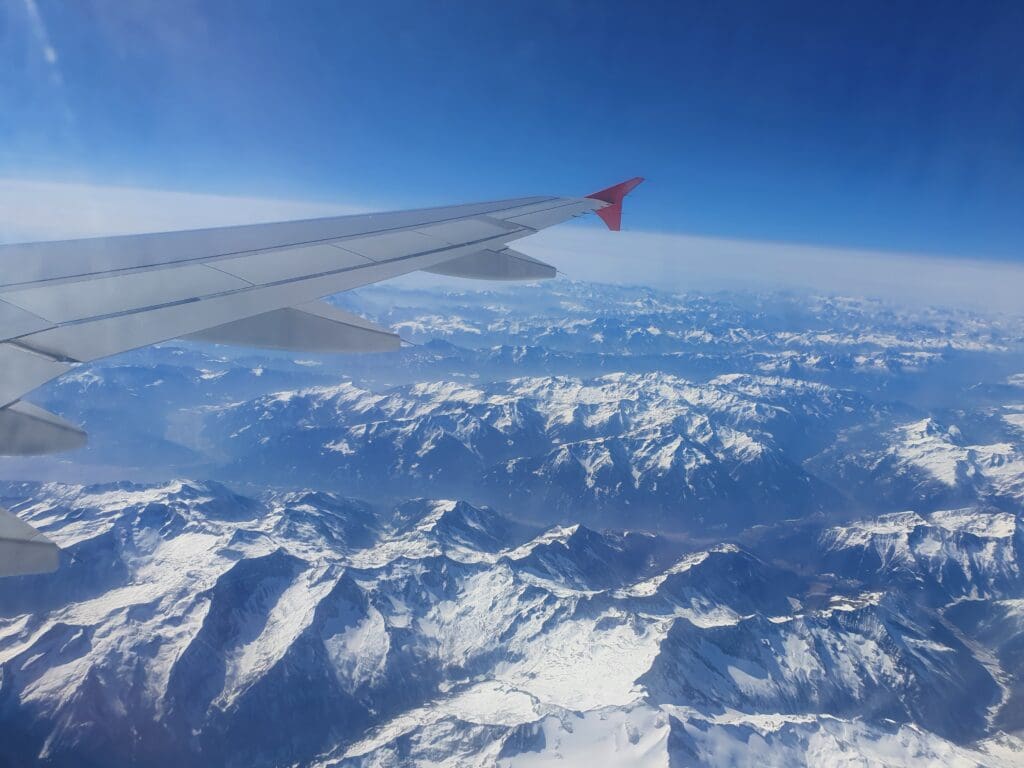
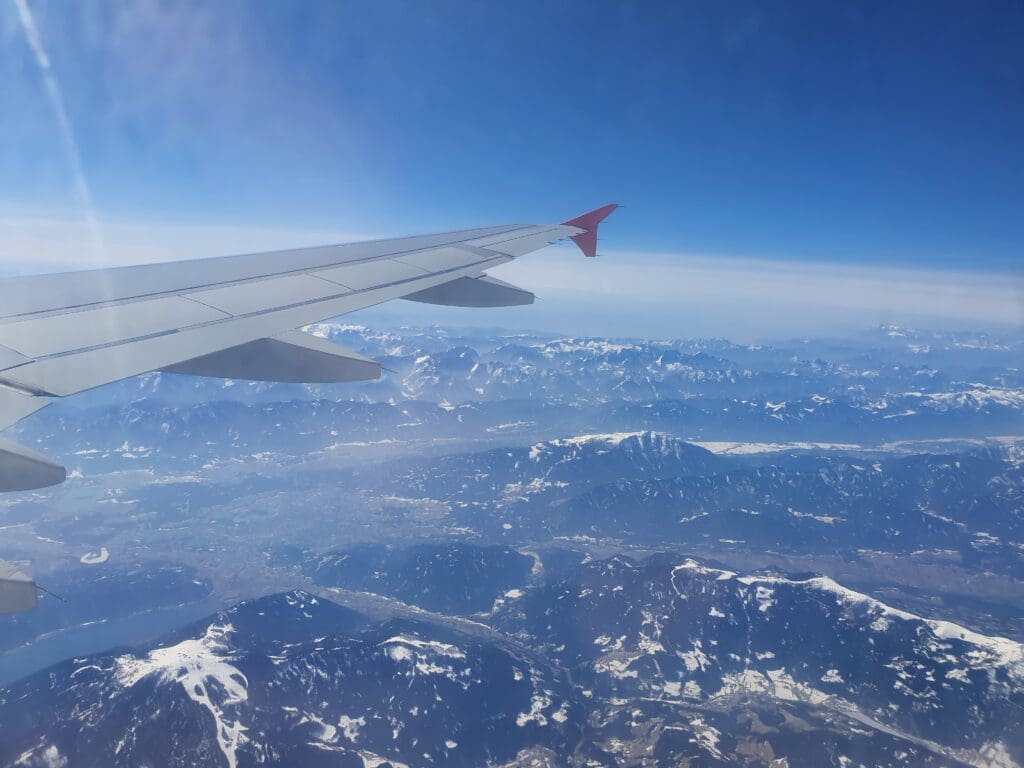
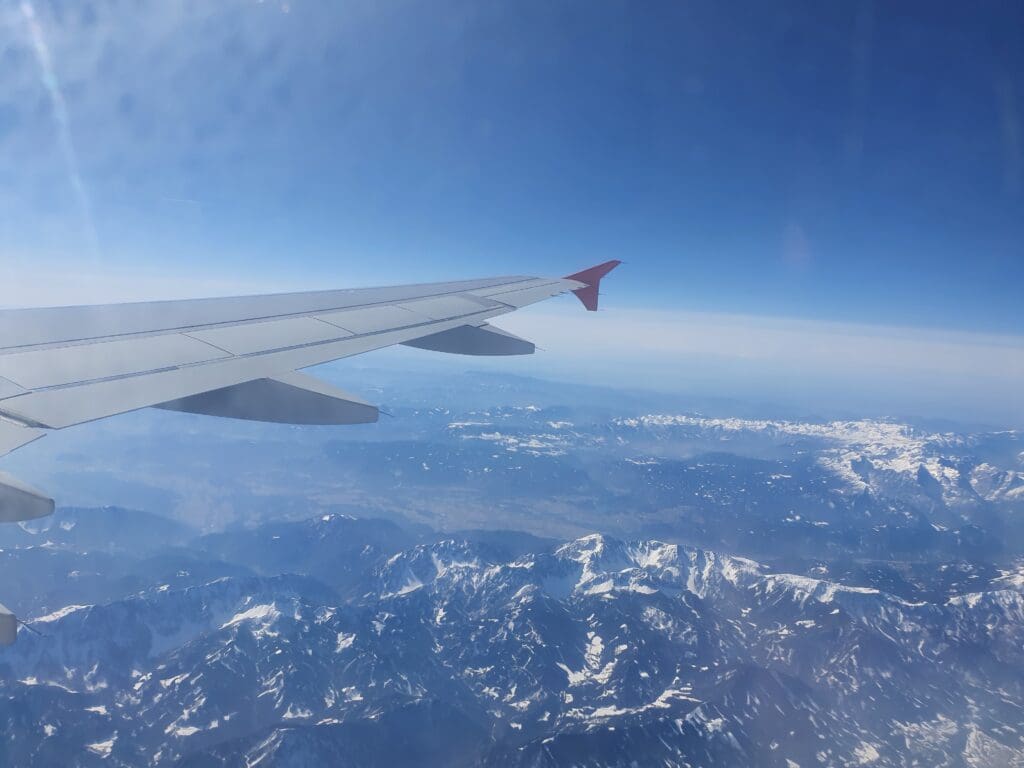
Meanwhile, as we crossed the Alps, the jet could be felt descending to 29,000 feet, settling at this altitude for a while. After around fifteen minutes of fantastic scenery, things flattened out a little after passing Klagenfurt as the jet crossed southwards into Slovenia. At 1115 local time, the aircraft could be felt descending in earnest, at which point the Purser immediately made an announcement regarding seat belts, tray tables, masks and window shades whilst all crew members soon got to work ensuring the cabin was secure in preparation for the flight’s arrival. After ten minutes, the Captain performed the ‘ten minutes to landing announcement’ and the aircraft entered Croatian airspace. At this point, the forest-covered Žumberak Mountains appeared which I was offered a good view of as the aircraft banked to place it on the downwind leg for our arrival into Zagreb.
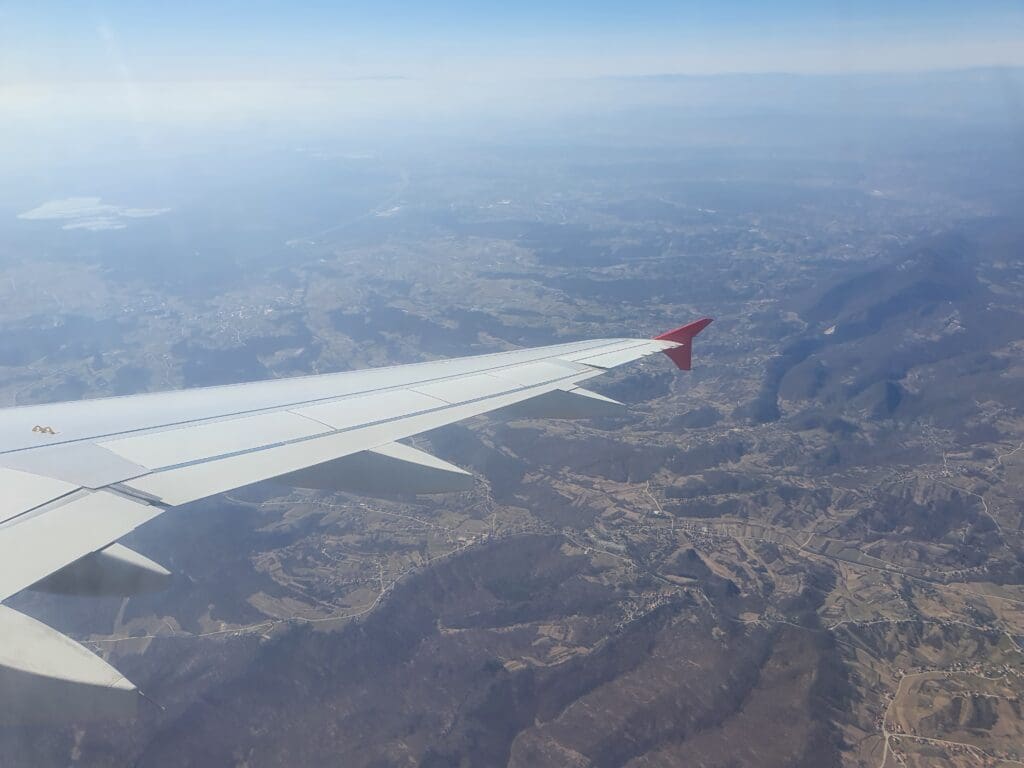
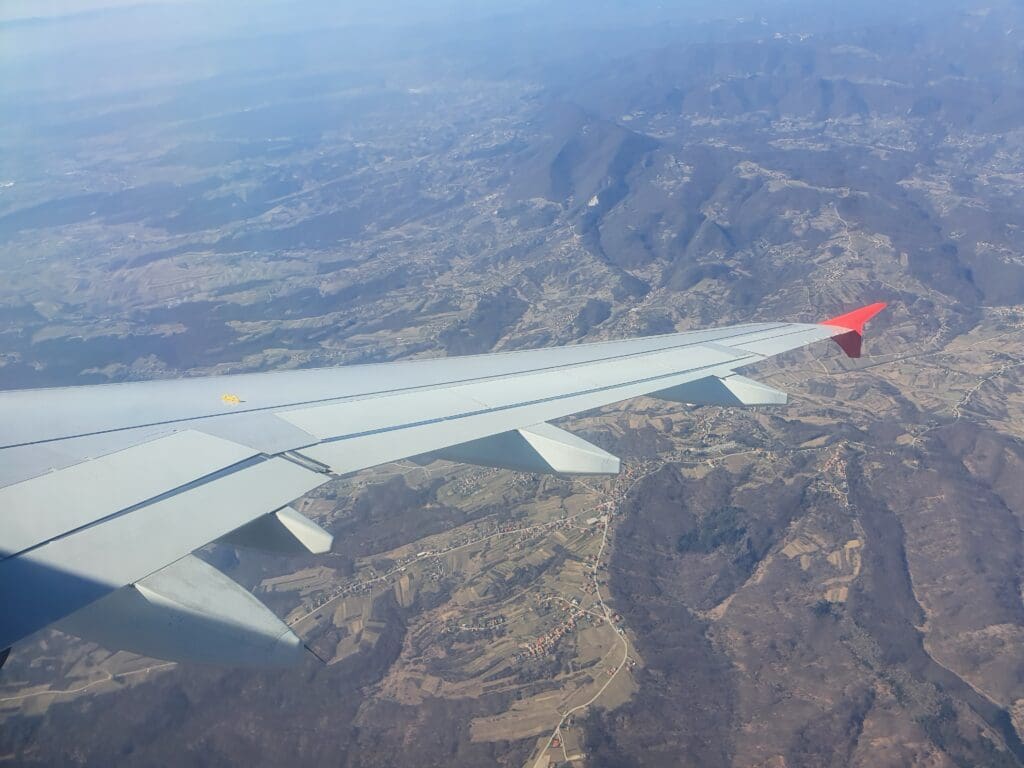
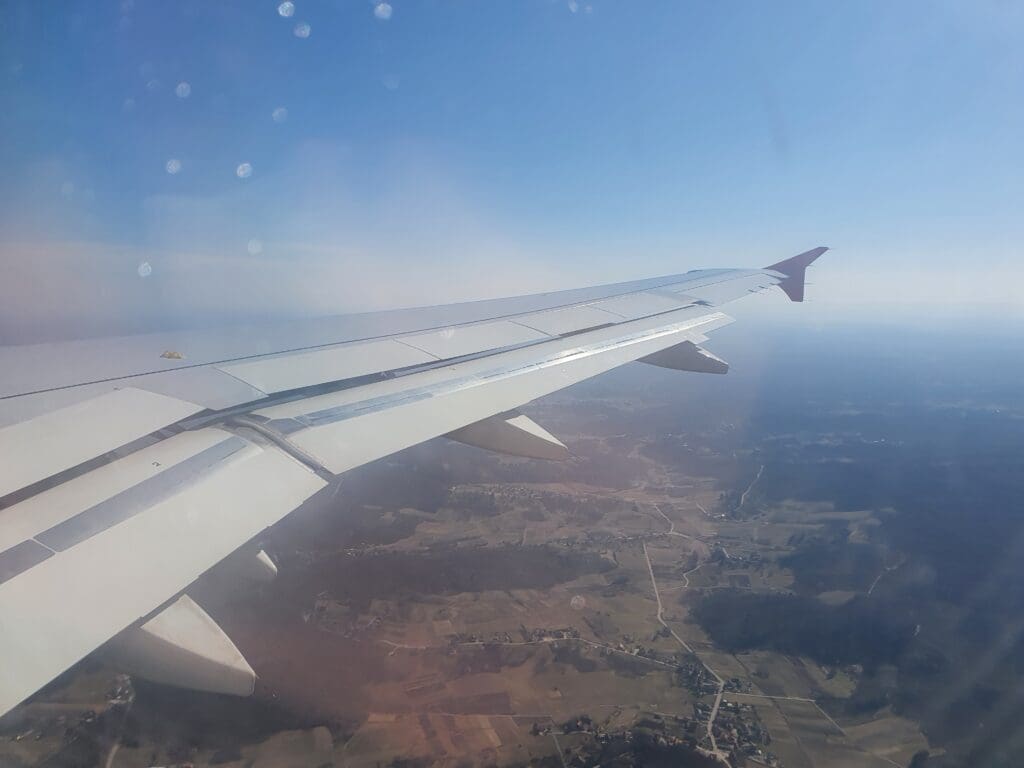
Once the flaps were extended, the aircraft could be felt sinking over the mostly flat and rural areas that sit to the south of Croatia’s capital city. At this stage of the flight, the aircraft was pushed about a little, with our approach ending up being rather bouncy. Whilst those on the opposite side of the aircraft may have been treated to views of Zagreb approaching in the distance, as the aircraft sank lower, the town of Velika Gorica appeared. Soon enough, the Airbus crossed over the airport’s perimeter fence where a selection of aircraft appeared. These included two Gulfstreams – one sporting the Las Vegas Sands livery, as well as an Austrian-registered Cessna Citation, two Let L-410s, a Trade Air Fokker 100 and an Airbus A320 before the aircraft made a gentle touchdown on Runway 04.
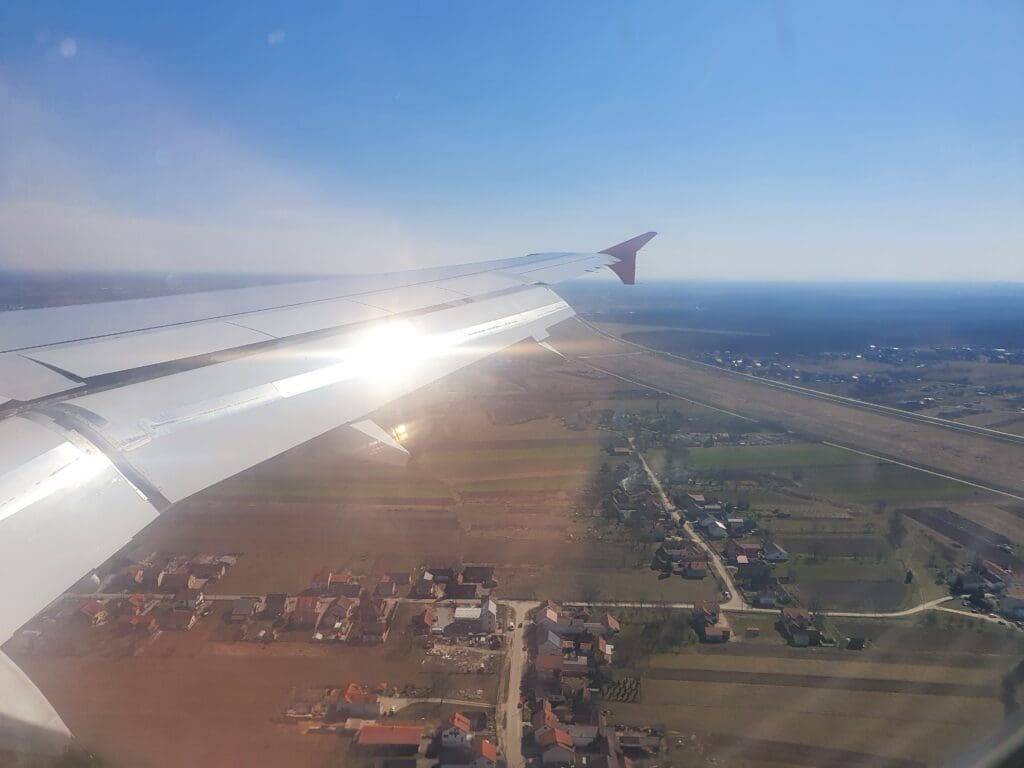
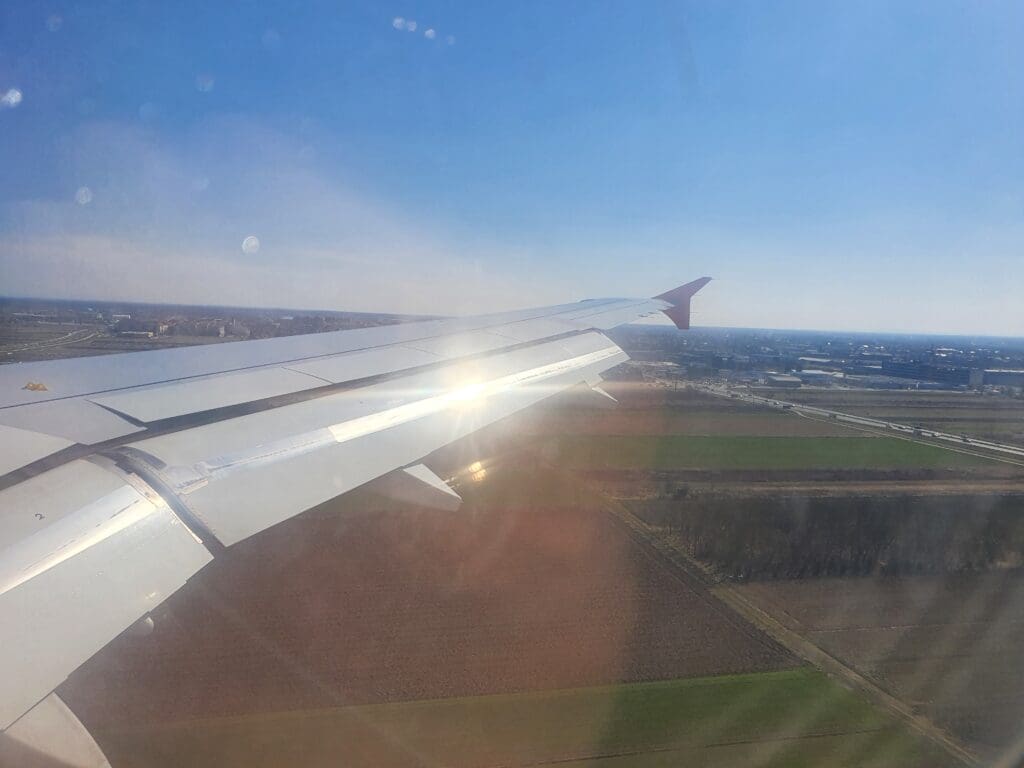
As the aircraft decelerated, Croatia Airlines’ maintenance centre appeared where several of the carrier’s Dash 8s and Airbuses could be seen along with an Ellinair Airbus. Meanwhile, I briefly caught sight of two Antonov An-32 turboprops. Soon enough, Zagreb Airport’s modern terminal appeared where just three other aircraft could be seen – a fellow Lauda Europe Airbus A320 that had just arrived from Malta, as well as two Croatia Airlines Dash 8 Q400s. After vacating the runway, the Purser welcomed all to Zagreb and a short time later the aircraft came to a halt at stand E8L. That morning, a good number of passengers seemed to be in a rush to exit and fortunately for those already standing up, disembarkation commenced through both the front and rear doors around three minutes after coming to a stop.
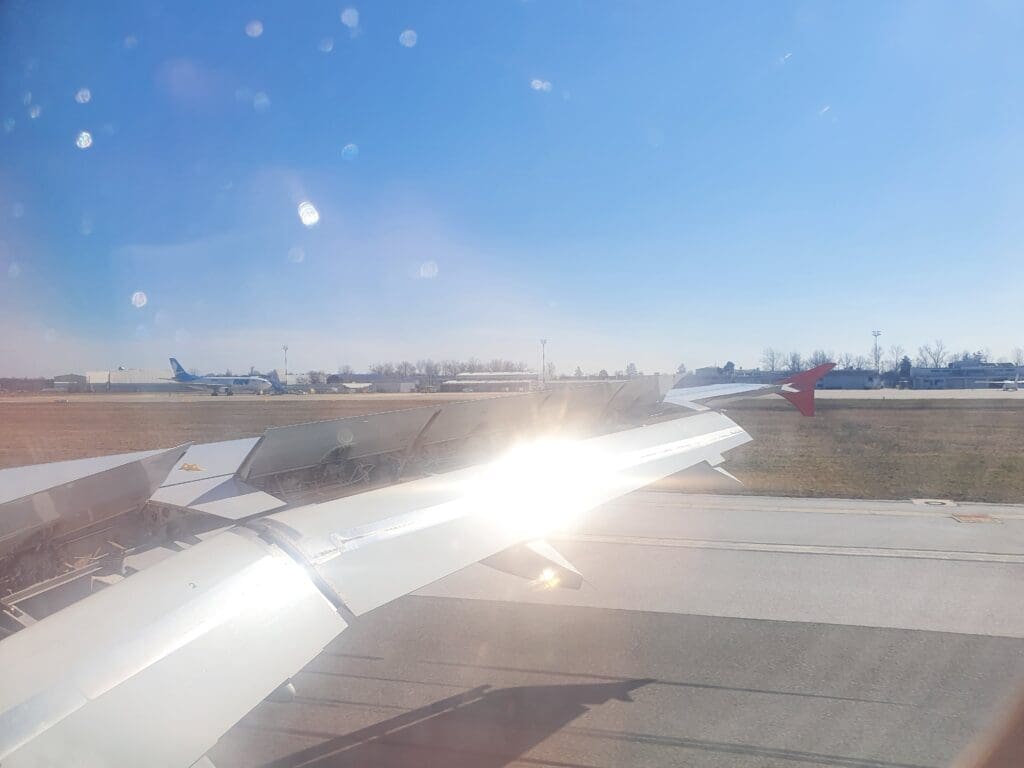
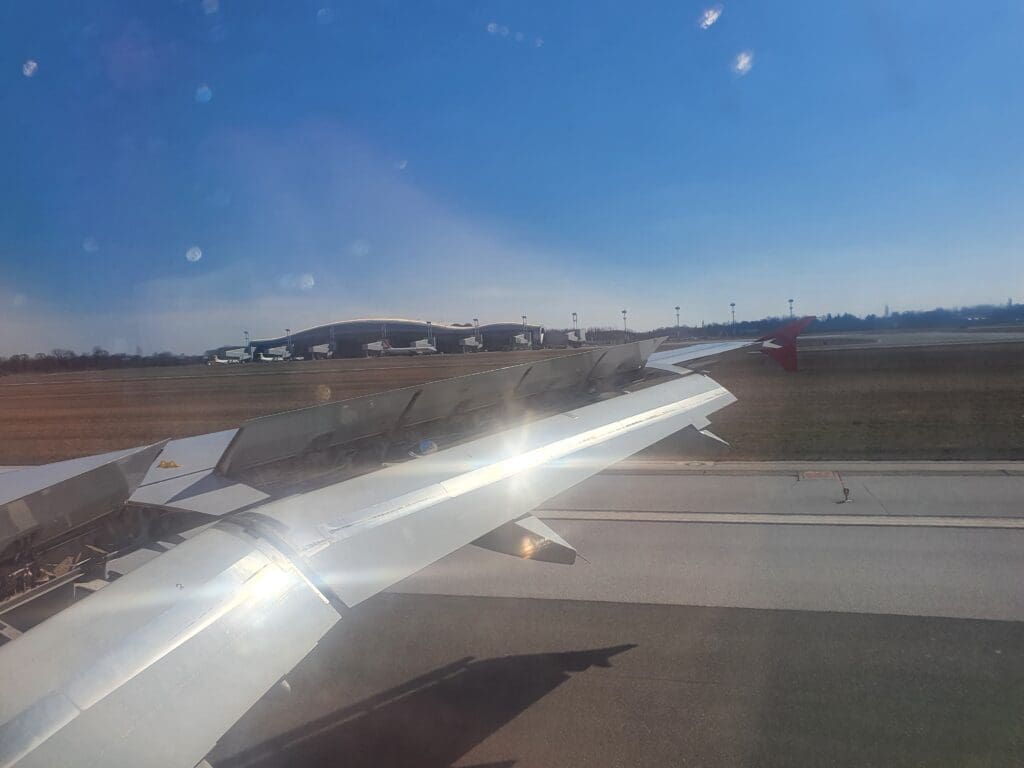
In no rush, eventually, I stood up and made my way to the rear of the aircraft where I thanked two crew members before heading down the covered airstairs and walking around the port wing until I reached the terminal. Once there, I headed up the stairs and commenced a short walk to immigration where I joined the non-EU passport queue. With this being shorter than the EU queue and with three booths open, things moved along quickly and after around ten minutes of waiting, I had my passport stamped and headed down to the baggage claim hall before exiting into the landside area.
Summary
Personally, I found Lauda Europe’s seat to be rather uncomfortable, even for a two-hour hop and I would most certainly not want to sit in this for one of their longer services to say the Canary Islands. Furthermore, the cabin did appear to be in a rather battered state. Turning to the crew, having not opted to purchase anything during the flight, my interactions with these passengers had been limited and the contact that I did have was unmemorable – nothing special, yet nothing bad either. However, turning to the positives, the airline did take me to Croatia on time where I arrived in one piece, and I paid less for the flight to Zagreb than I had paid for the train up to Stansted. Therefore, I can’t complain and I ultimately got what I paid for. That said, I would perhaps be hesitant to pay much for another ride on Lauda Europe.