Flying on the Rare Jetstream 32: Stockholm to Torsby via Hagfors with AIS Airlines
Background
Unless you are either an England football fan or a British Aerospace Jetstream enthusiast, home to fewer than five thousand residents, you would be forgiven for never having heard of the small town of Torsby. Located a short distance away from the Norwegian border in Sweden’s mostly rural Varmland County, the town serves both as the birthplace of famed England manager Sven Goren-Erikkson, and one end of one of Europe’s very few remaining Jetstream 31/32 operated routes (as of March 2022). Focusing on the latter fact, Torsby has long been served by the rare Jetstream which connects the town to Stockholm via the larger Värmland town of Hagfors. Initially operated by Direktflyg, since 2015 Dutch airline AIS Airlines has provided the aircraft and crew for this service which is today operated on behalf of Swedish regional carrier Amapola Flyg. Amapola is the carrier that Direktflyg was merged into in 2019. Today, AIS Airlines operates two round trips between Torsby and Stockholm with a quick mid-journey stop in Hagfors. With the entire flight booked at an hour and twenty minutes, this is notably quicker than the rail journey between the two which takes around five hours and requires a change of trains in the city of Karlstad.
Growing up in the Jetstream’s homeland, whilst not as common as the ATR or Dash 8, the Jetstream 31/32 had been a semi-regular sight on trips to local airports. In the period between 2006 and 2014, I recall seeing examples operated by Eastern Airways, Highland Airways and the short-lived Doncaster-based carrier, Links Air. However, unfortunately, I had failed to catch a ride aboard one of these rare miniature turboprops and before I knew it, none remained in scheduled service in the UK. In October 2017, I had come close to sampling a ride onboard an AIS Airlines Jetstream 32, operating between Newcastle and the Isle of Man via Belfast City on behalf of Eastern Airways. However, this was substituted by another rare type, an Adria Airways Switzerland Saab 2000 at the last minute. Seeing as I would be spending several days in Sweden in March 2022, I finally decided to sample the miniature Jetstream and take a ride from Stockholm Arlanda to Torsby with AIS Airlines.
Booking
Having previously flown with Amapola on their Fokker 50-operated PSO route in Ireland, and having booked tickets for this directly through the airline, I had a good idea of what to expect when purchasing tickets via Amapola’s website. Upon arriving at the carrier’s homepage I was presented with a scrolling background of scenic photographs of urban and rural Sweden, highlighting Amapola’s destinations across the country. At the time of my booking, operating domestic flights across Sweden, one flight in Finland from Helsinki to Joensuu and in the final weeks of flying between Dublin and Donegal, the website was available in English, Finnish and of course Swedish.
Scrolling down, I arrived at the WorldTicket-powered bilingual search engine and entered the relevant details into this before being presented with a morning and evening flight from Stockholm Arlanda to Torsby via Hagdors. These departing at 0915 and 1815. Both of these were complete with Amapola’s three fare options – Full (1600 kr), Mid (1166 kr) and Kampanj (695 kr). Not intending on bringing any hold luggage along, and hoping that I would not have to rebook or cancel, I decided to go for the cheapest fare and entered my details. Once I had entered all the required details, I was then presented with a booking summary in Swedish before being taken to the payment page. Amapola uses the simple yet rather dated-looking Nets payment system, which, as is often the case with smaller airlines, only accepts Mastercard and Visa. That day, this served its purpose and I made payment promptly, soon receiving an email confirmation.
The Journey
Having arrived in Sweden on British Airways’ service from Heathrow at 2300 the previous evening, I had pondered camping out in Arlanda Airport’s terminal until my flight’s scheduled departure time of 0915. However, after some deliberation, I decided against this and booked the cheapest room in the vicinity of the airport. This took the form of a small windowless room with a shared bathroom at the Forenom Arlanda Aparthotel, situated a short free bus ride away from the terminal building. Having checked Amapola’s website before my trip, according to this, check-in for their service to Hagfors and Torsby would not open until just an hour before departure. This meant that I would not have to arrive at the airport until 0815. However, not wanting to rush I woke up bright and early before undertaking the final preparations for my trip.
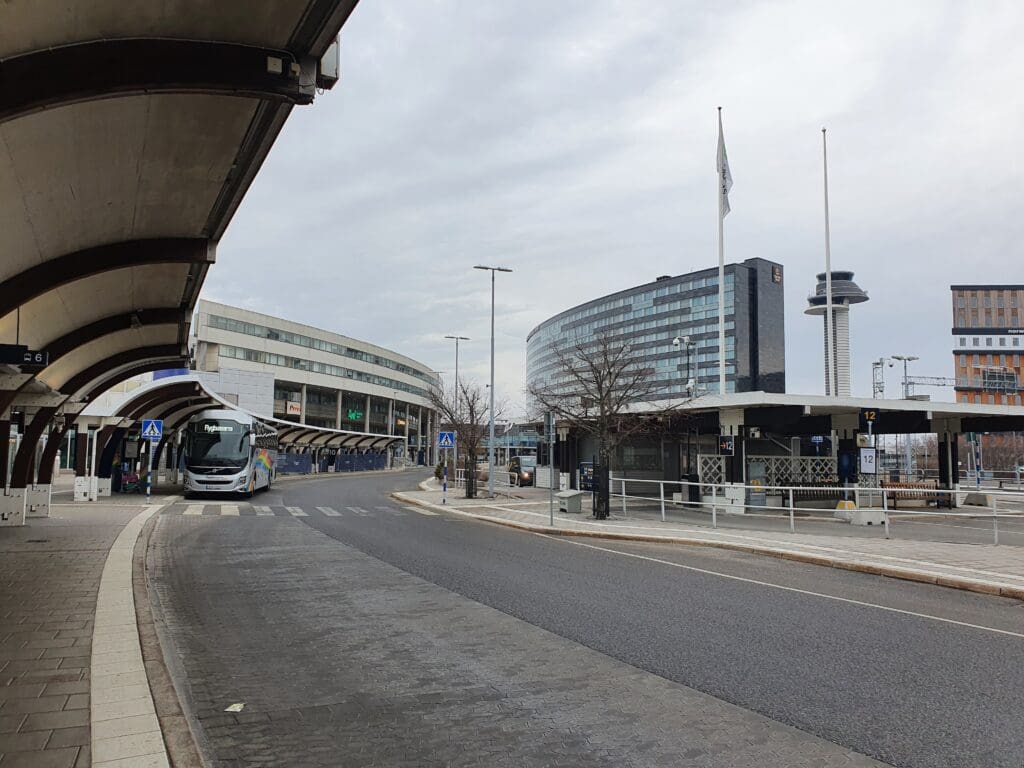
At 0630, I made my way out of the hotel and into the pleasant and cool morning air, navigating my way down to the main road and over to the nearby bus stop. Having inadvertently timed things just right, it did not take long for the yellow articulated P2 bus to appear and I soon boarded this along with a selection of other airport-bound passengers. Within a few minutes, the bus arrived outside Arlanda Airport’s rather drab-looking terminal building. With Amapola utilising Terminal 5 in Stockholm, enlisting the help of Google Maps I made my way over to this. On a side note, given the fact that Arlanda Airport’s terminals are connected via an indoor walkway, ending up in the wrong terminal is no great disaster, whilst those arriving on a flight at another terminal and needing to connect are unlikely to face any great difficulties.
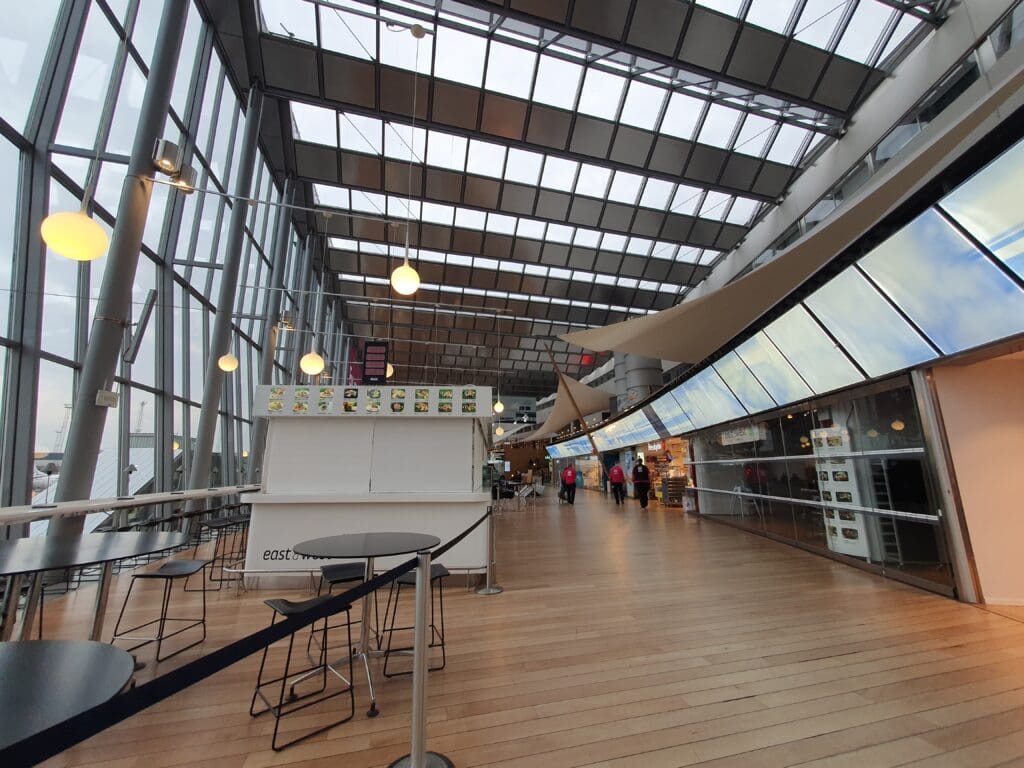
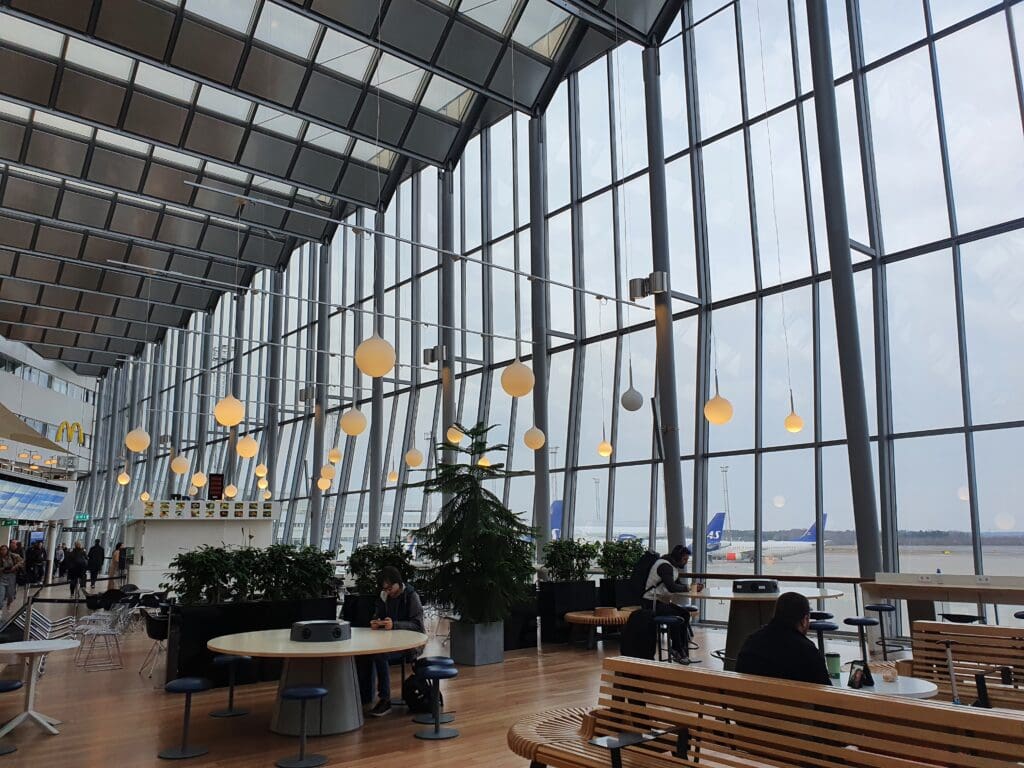
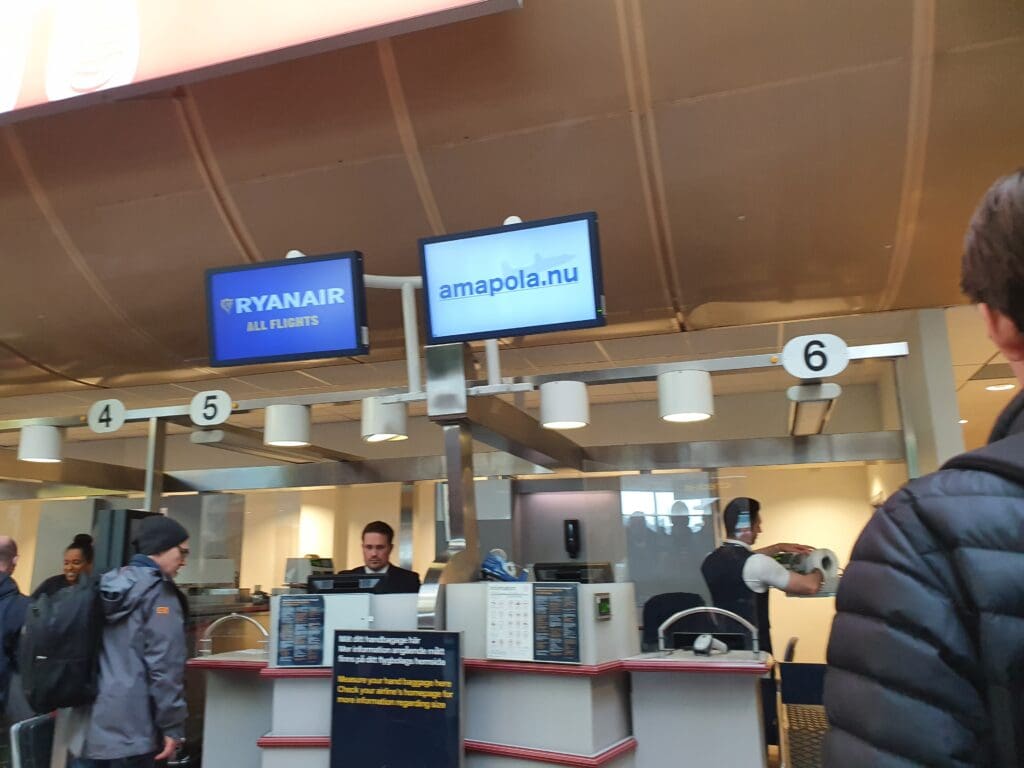
Upon arriving at the terminal, I checked the departure boards which informed me that a single desk had been assigned to check passengers in for Amapola’s morning flight to Hagfors and Torsby. Strolling through Terminal 5, with plenty of early morning flights, this was awash with activity and long queues could be seen at many of the terminal’s check-in desks. However, unsurprisingly at that time, the check-in desk for the Amapola flight was devoid of any signs of life I made my way over to the local branch of 7-Eleven for a light breakfast consisting of a kanelbullar (cinnamon bun) and a cappuccino. Once I had polished my breakfast off, I journeyed over to Sky City – a spacious, modern and pleasant complex of cafes, restaurants and shops that sits in between the terminals and provides a nice quiet place to sit and wait. Importantly for enthusiasts, this seemed to be one of the few places in the landside terminal that offered views of the action outside. Nevertheless, the dirty windows would have made photography there a little difficult. Taking a seat near one of the terminal’s large windows, I watched as a selection of airliners came and went, with examples provided by ASL Airlines, British Airways, Jonair, LOT and Scandinavian Airlines.
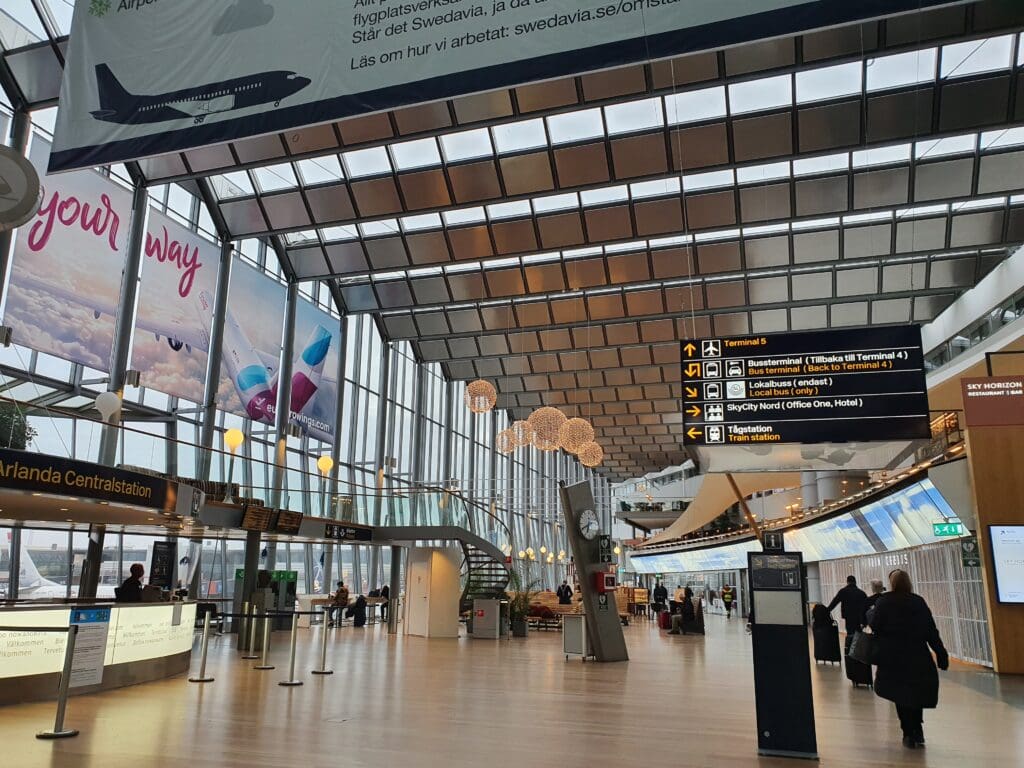
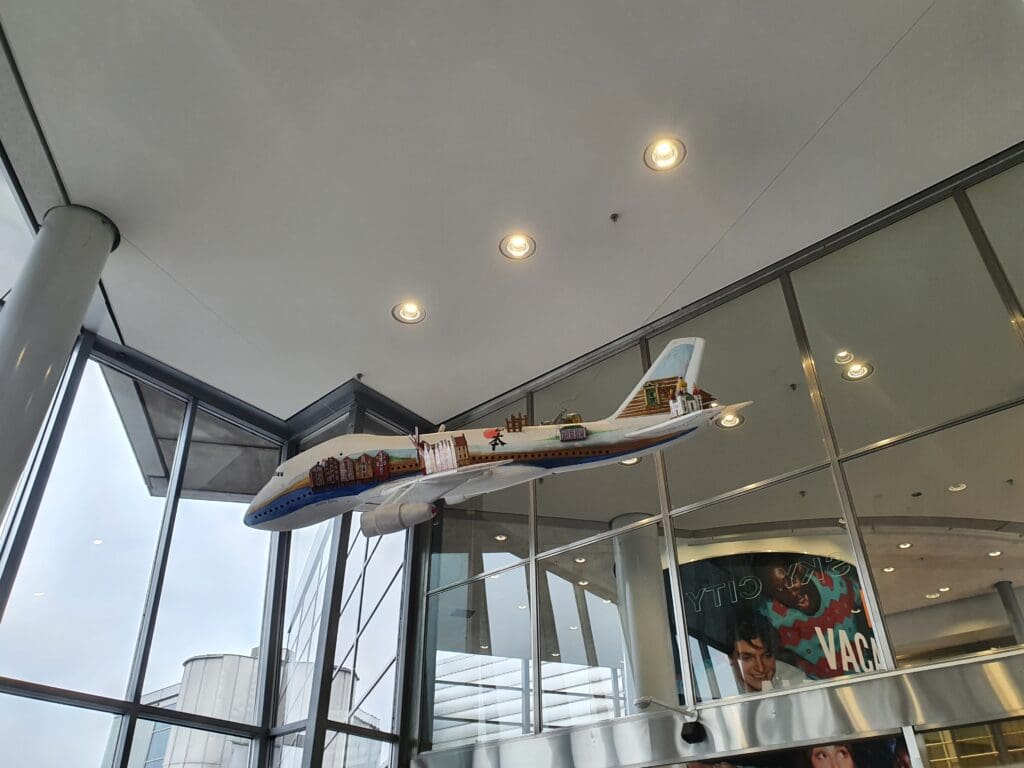
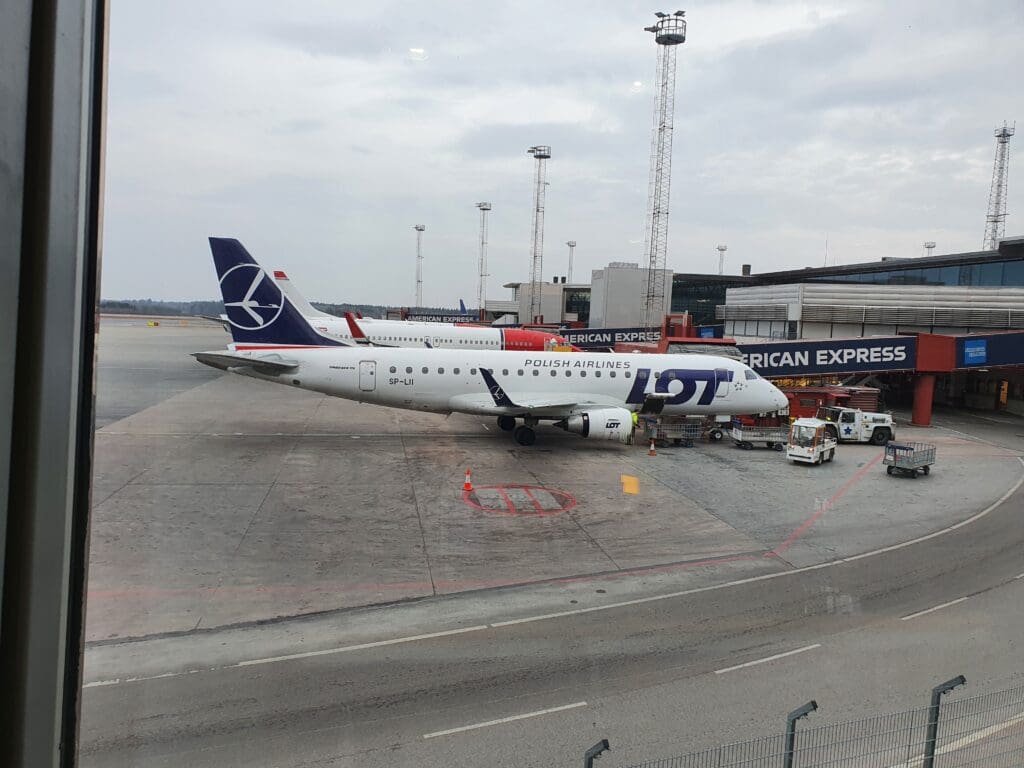
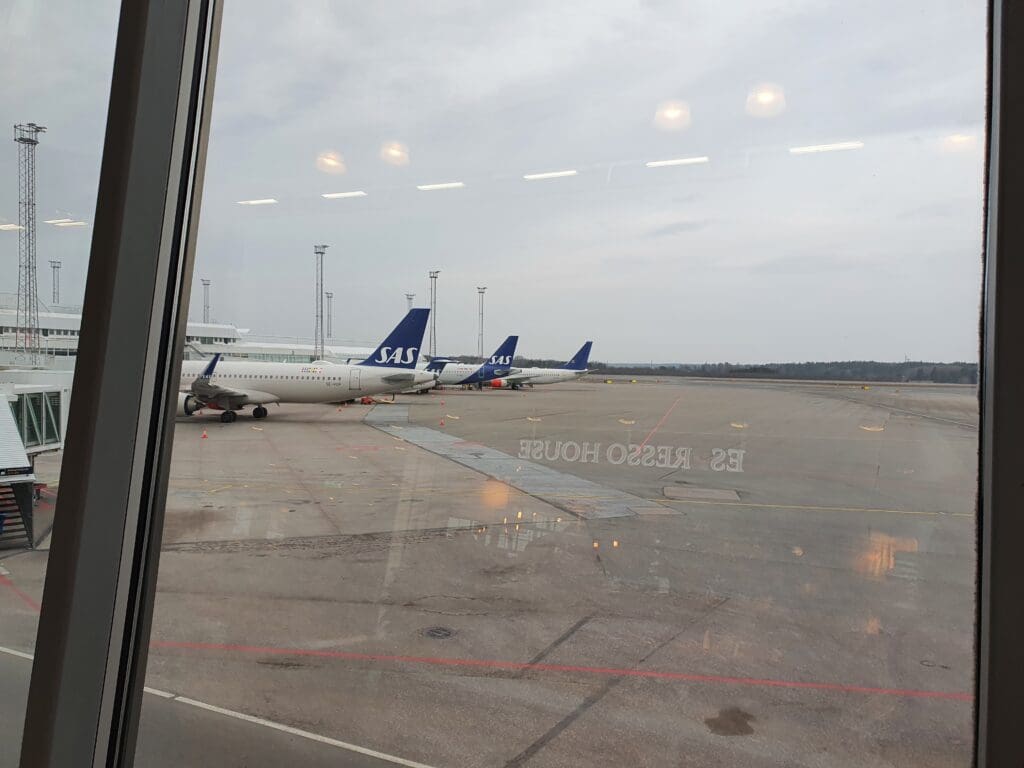
Following a pleasant stay in Sky City, at 0750 I decided to wander back through the terminal and over to Terminal 5’s check-in hall which appeared to be no less busy than it had been when I walked through it earlier that morning. Worryingly, long queues could be seen at both of the terminal’s two security checkpoints. By this time, a long queue of passengers had formed at Amapola’s single check-in desk and as it happened the service to Hagfors and Torsby would not be the airline’s only departure at 0915, with a Fokker 50 service to Hemavan also heading off at this time and utilising the same check-in desk. With an hour and fifteen minutes to go until departure, at 0800 a single agent appeared and began to check passengers in for the two flights. That morning, judging by their piles of ski equipment, it appeared that most in the queue were bound for the town of Hemavan, a winter sports hub in the northeast of the country. With that considered, the queue moved along rather slowly and it took around 25 minutes to reach the check-in counter. Once there, the friendly agent quickly checked me in and advised me that there would be free seating onboard the aircraft and that I was one of just three passengers on the service that morning. I was also advised that as Gate F34 was at the far end of the terminal, I should head there straight after passing through security.
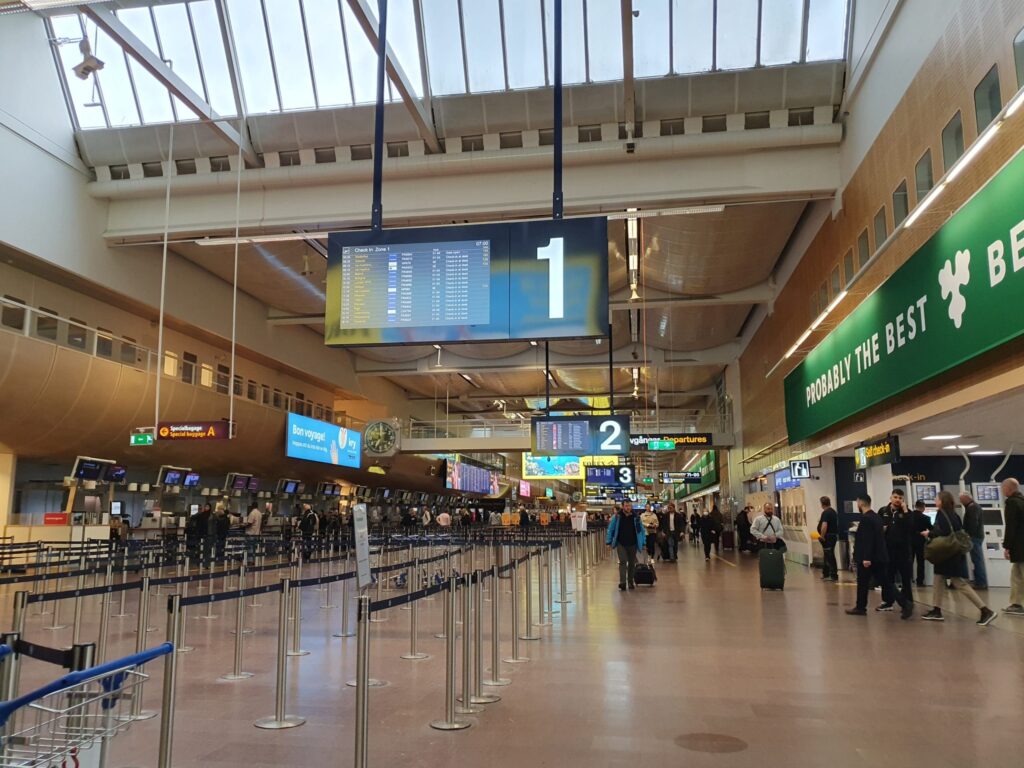
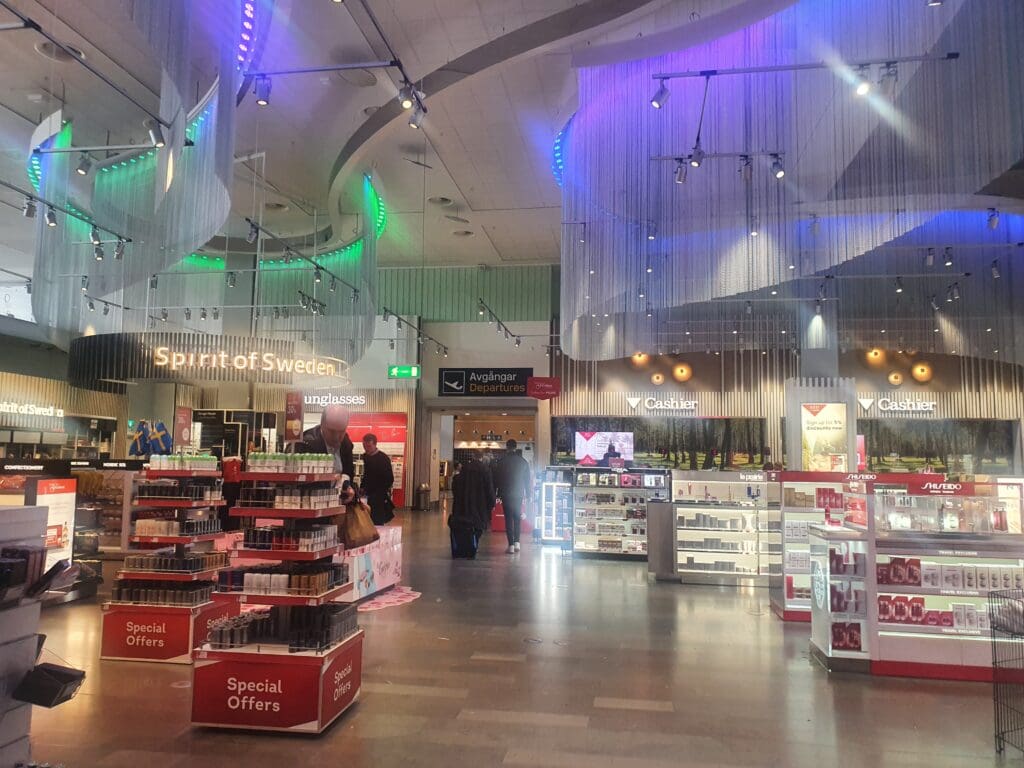
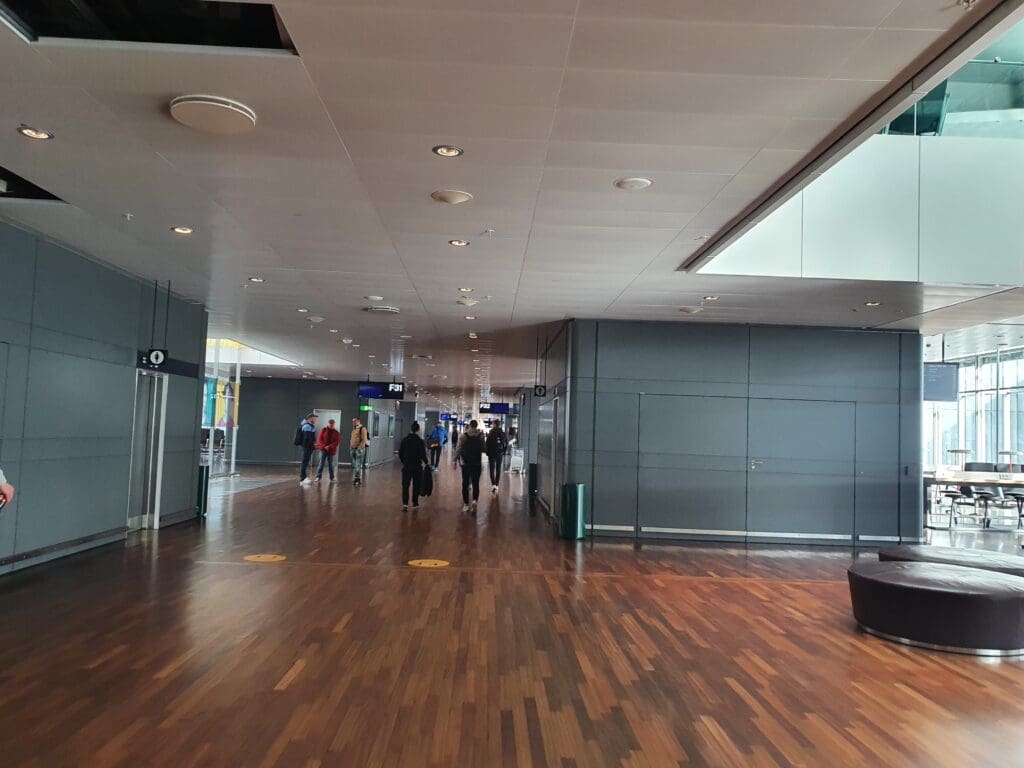
With my boarding pass in hand, I began the walk through the check-in hall to one of the terminal’s two security checkpoints. Unfortunately with both of these proving to be incredibly busy, it took me around twenty minutes to reach the front of this and pass through security – on the plus side, I found the two security staff members that I interacted with to be friendly, polite and efficient. By the time I had made it through security, the scheduled boarding time of 0830 had long passed, and, following the check-in agent’s advice, I steamed through the modern terminal without pausing and made a beeline for Gate F34. As the gate appeared on the horizon, I was surprised and a little embarrassed to hear the same staff member who had checked me in announcing my name over the PA system. Unfortunately, by this time they were not as friendly as they had been during check-in and said something along the lines of ‘where were you? Everyone and the pilots are waiting on the bus for you’. After explaining I had been waiting at security, my boarding pass was scanned and I was advised to make my way down the steps to the waiting bus. It is fair to say I was not particularly impressed with Amapola’s arrangements in Arlanda that morning. With two flights departing at the same time, you would think that they would have either opened check-in earlier or made more than one desk available for those departing on the airline’s two 0915 flights.
Feeling a little flustered, I hurriedly made my way downstairs and onto the waiting bus where my two fellow passengers and two pilots could be seen. The latter consisted of a Swedish Captain, and a familiar-looking Dutch First officer. Indeed it turned out that the First Officer was one-half of the popular Instagram account @thepilottwins. As the account name would suggest, this account documents the exploits of two AIS Airlines pilots who also happen to be twins. Seeing as the captain and first officer had operated the early morning service over from Torsby and Hagfors, as was to be expected, they had not stayed with their aircraft during its long two-hour turnaround in Stockholm. As soon as I had made it onto the bus, at 0855 the doors slid closed and we began our journey around the terminal to a remote stand in the far south of Arlanda Airport.
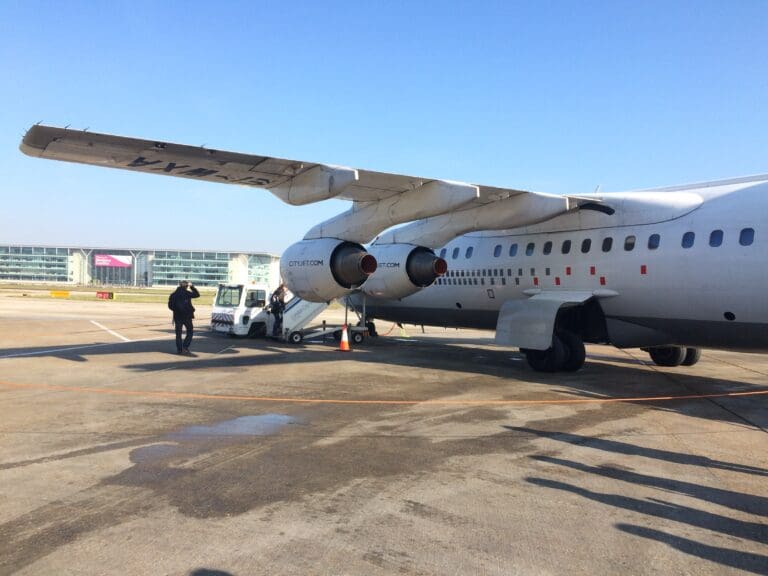
Upon leaving Terminal 5 behind, the Cobus trundled down the flight line which allowed for a good view of the smorgasbord of airliners parked up at Arlanda Airport’s stands. As was to be expected, most of these came in the form of jets from Norwegian Air Shuttle (and its Swedish arm) and Scandinavian Airlines. From there, the bus journeyed away from the terminals and headed out towards an area of mostly vacant remote stands before the short and stubby Jetstream appeared adorned in AIS Airlines’ basic blue and white livery, complete with the Dutch carrier’s circular motif on its tail sitting at Stand S78. Given the fact that AIS Airlines only has a single Jetstream based in Sweden at any one time, having observed the service during the preceding week on FlightRadar24, it was not difficult to predict which aircraft would operate the flight over to Varmland. This example took the form of BAe Jetstream 32EP, PH-DCI, which was manufactured in November 1990, the aircraft was comparatively vintage, aged over 31 years old at the time of my flight!
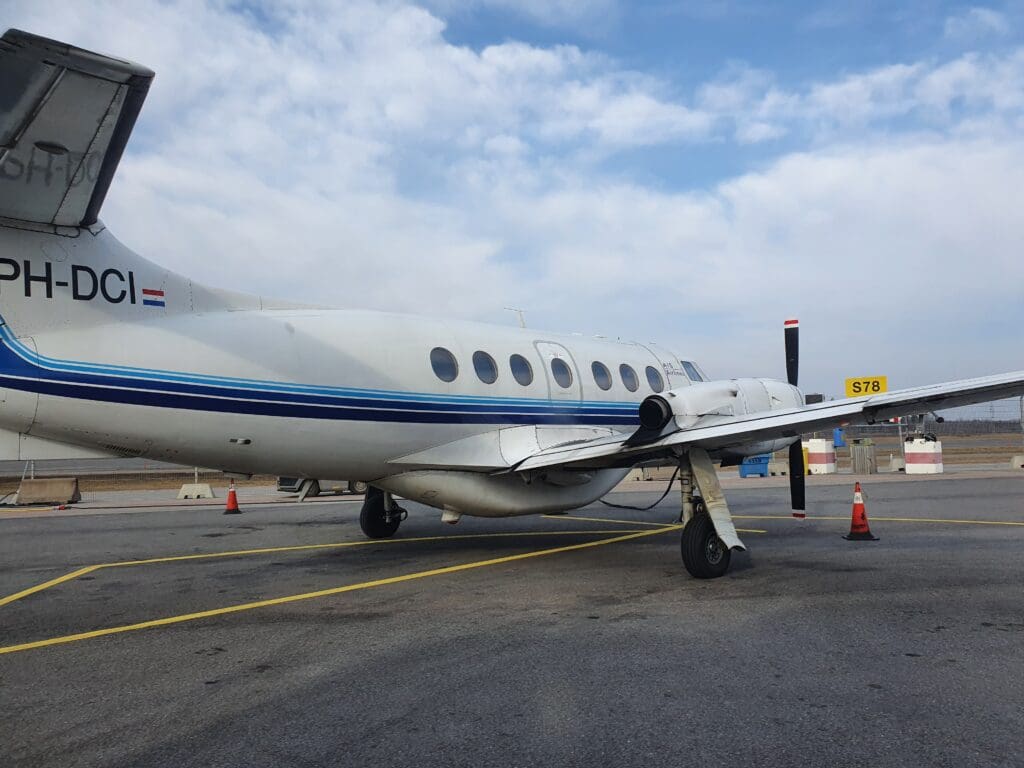
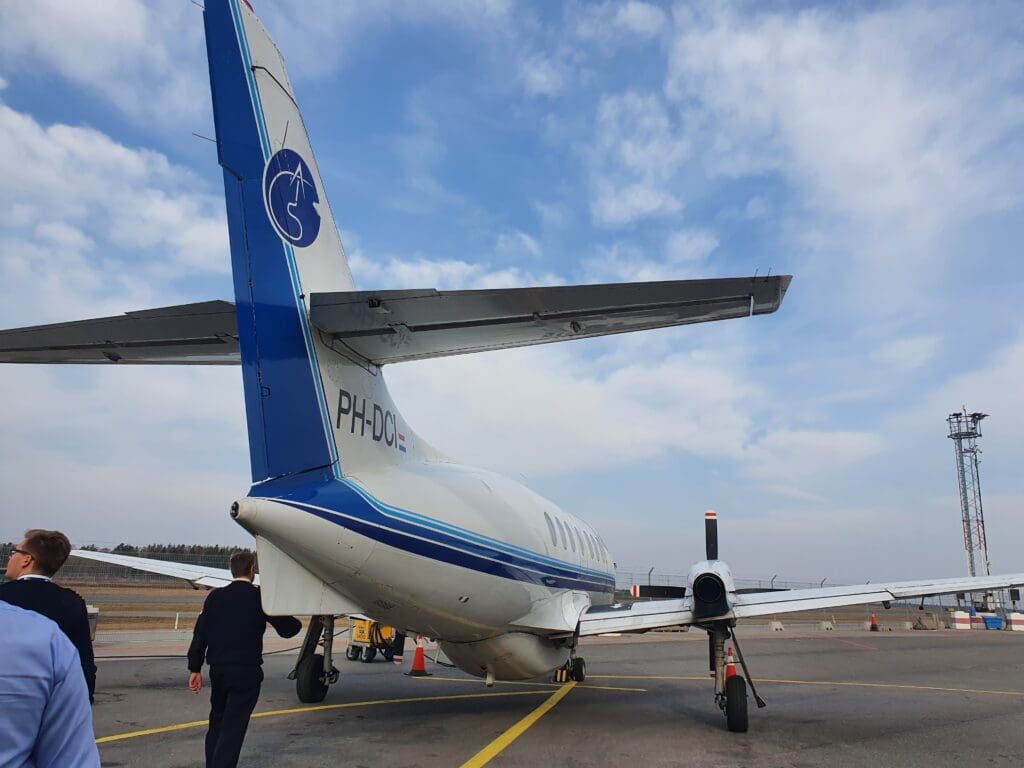
Following extensive testing, the aircraft was flown from its birthplace in the UK over to the United States where it commenced its commercial life flying for American Eagle with the registration N916AE in January 1991. Remaining in this role for seven years, the Jetstream was then shuttled down to Mexico where it flew for the long-defunct Mérida based carrier, Aerocaribe. Eventually, the aircraft returned to the US and entered long-term storage in an all-white livery in Arizona before commencing the next chapter of its life in 2006. Retaining its nondescript white livery, the Jetstream was given the Israeli registration of 4X-CIJ and began the long journey to Tel Aviv’s now-closed Sde Dov Airport. There the aircraft operated for Tamir Airways where it spent much of its time flying short hops between Tel Aviv and Rosh Pina. In August 2010, the aircraft was ferried over to Europe where it commenced its longest stint with an airline to date. Delivered to Dutch carrier AIS Airlines, the Jetstream received the registration of PH-DCI, this having been previously held by a KLM Douglas DC-8. Since then, the Jetstream has flown across Europe, flying services both for AIS Airlines in Denmark, Germany and the Netherlands, as well as for a host of other carriers including Airlink Finland, Manx2 and of course Amapola.
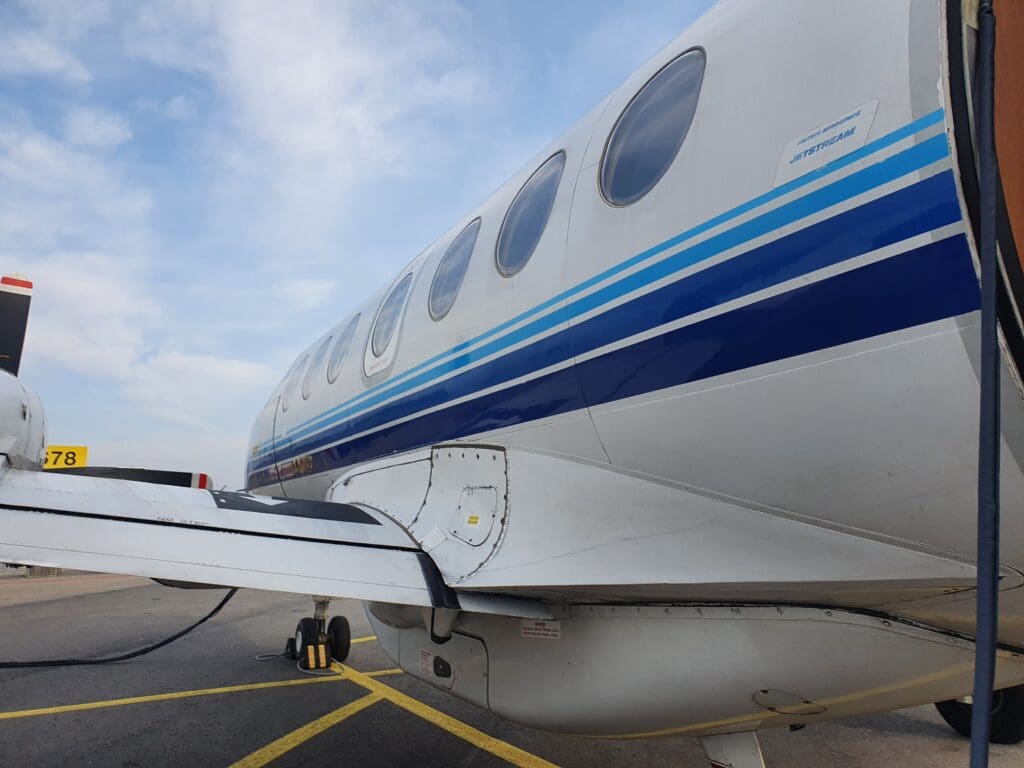
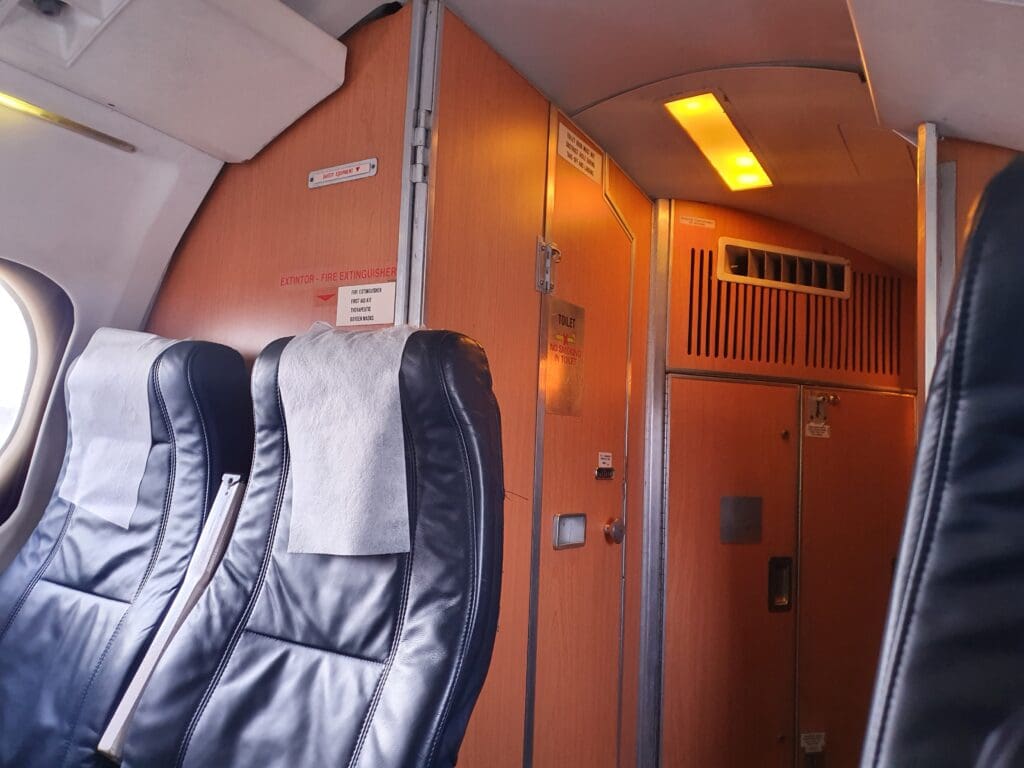
Even though the gate agent had instilled panic and a great sense of urgency, the bus arrived at the rear of the Jetstream almost fifteen minutes ahead of the flight’s scheduled departure time, and, given the light load, I was confident that it could not possibly take that long for all of the aircraft’s five occupants to board. Without delay, once the bus came to a halt its doors slid open and all disembarked. Led by the two pilots, after the Captain opened the cabin door, the First Officer climbed into the aircraft followed by the three passengers whilst the Captain remained outside presumably undertaking their pre-flight inspection of the Jetstream. From ground level, I cautiously made my way up the five steps built into the inner side of the cabin door before entering the vintage turboprop airliner. As I reached the small storage galley and toilet area at the rear of the aircraft, I was greeted by the distinctive and very retro sight of faux wooden panelling. Whilst such a design may strike fear into the hearts of interior designers, I found this to be quite a novelty and most definitely not something that can be seen on many airliners today!
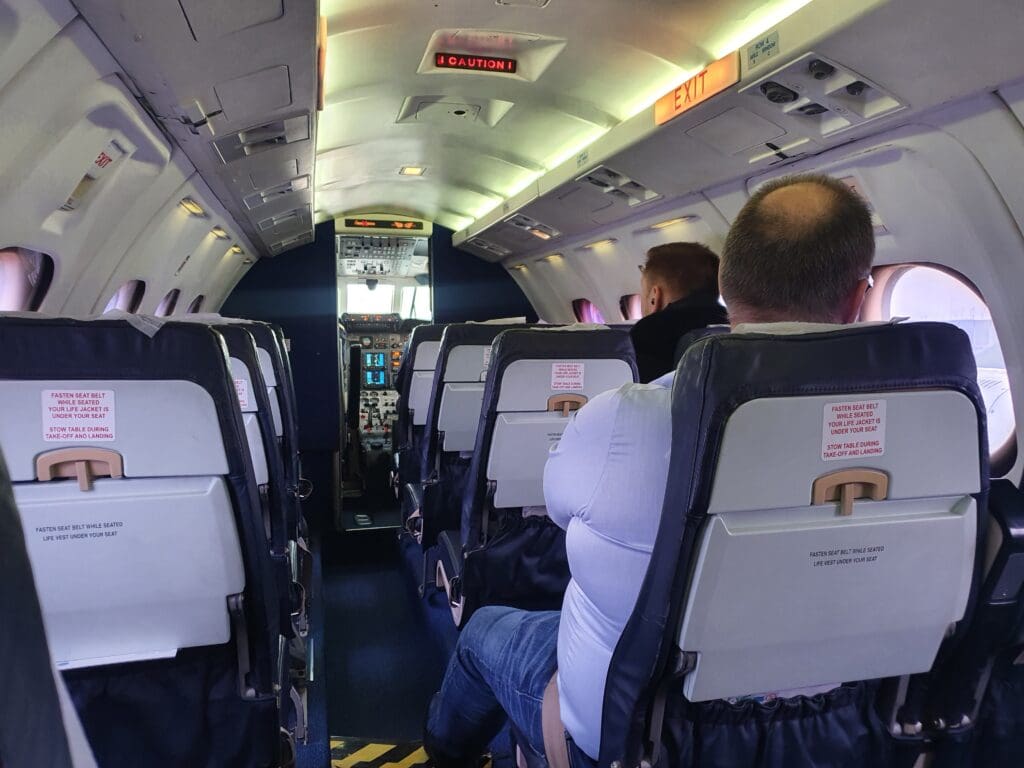
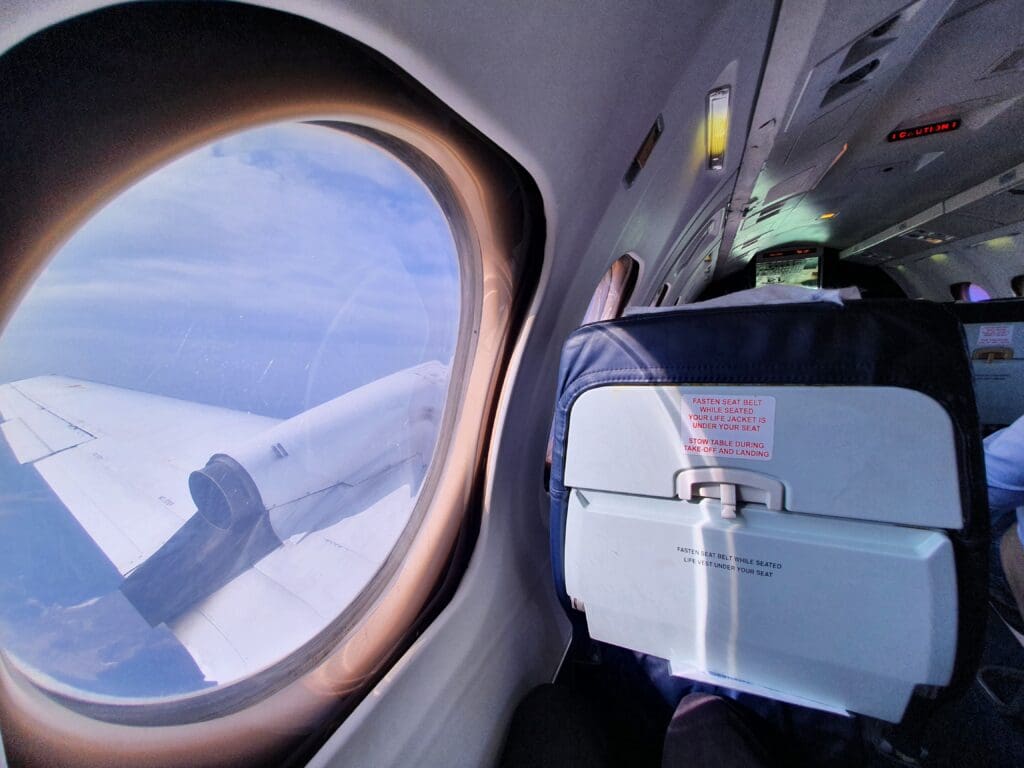
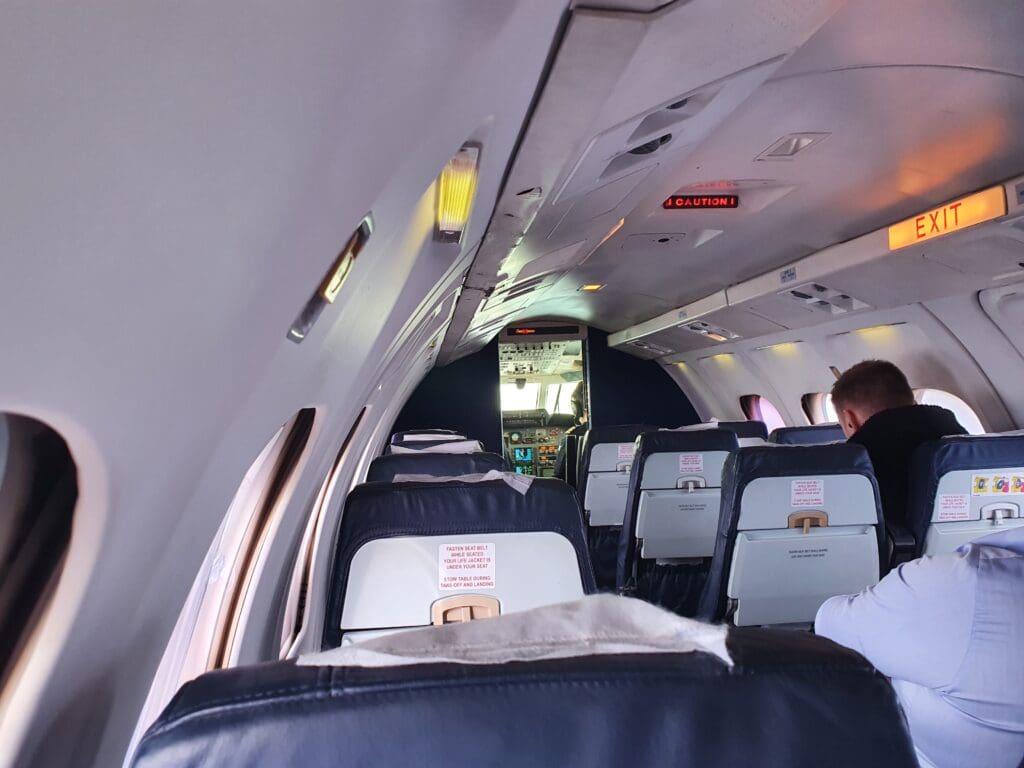
Once I had placed my backpack into the rear baggage compartment, I turned left and entered the Jetstream 32’s nineteen-seat passenger cabin. Despite the aircraft’s lack of mood lighting, a blue hue filled the cabin thanks to the blue tinge applied to the aircraft’s large circular windows. As on several small turboprop airlines, the Jetstream’s seats are located on raised platforms on either side of the aisle and are in a 1-2 configuration with six full aisles and then a single seat in row 7. It is worth noting that whilst most window seats offer a view outside, those seats in rows 1 and 7 only feature about a third of a window. Whilst the cabin height of 1.6 metres meant that I had to bend my head whilst inside, perhaps owing to the lack of fellow passengers or the cabin’s reasonable 1.9-metre width, the aircraft did not seem to be particularly cramped.
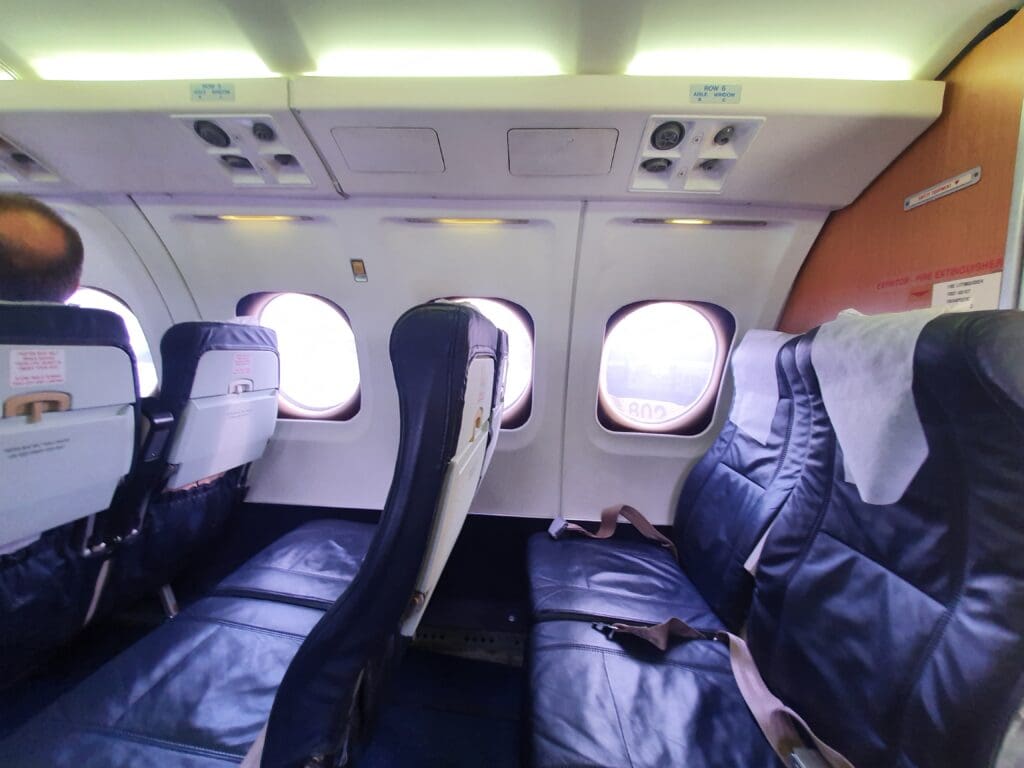
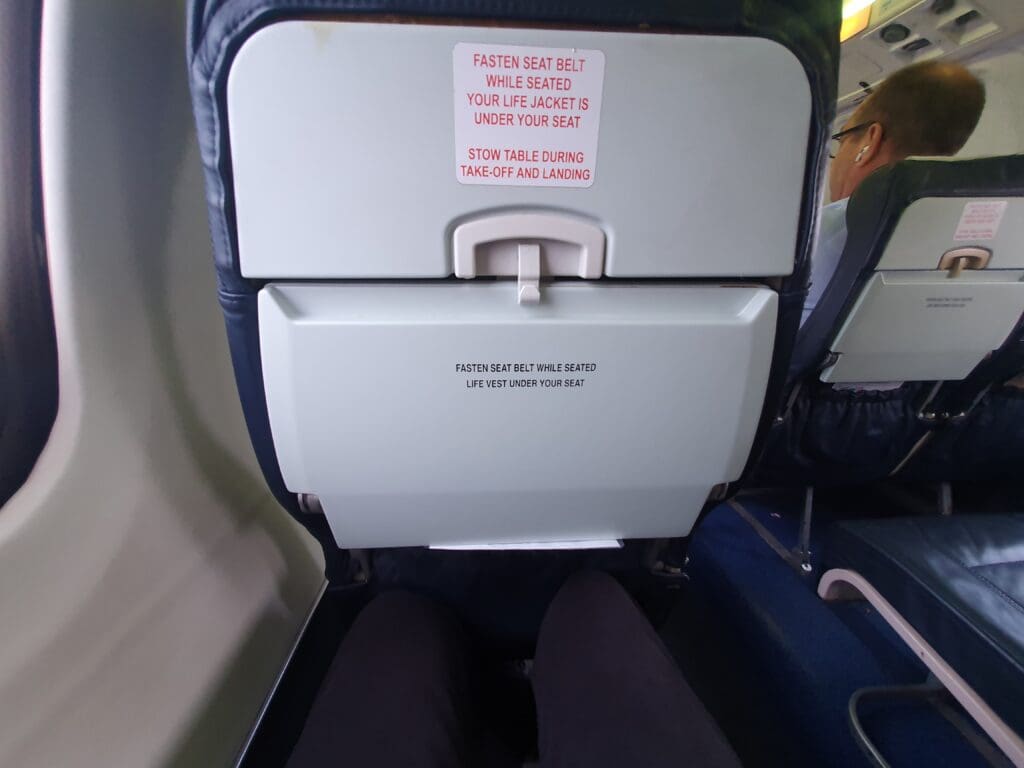
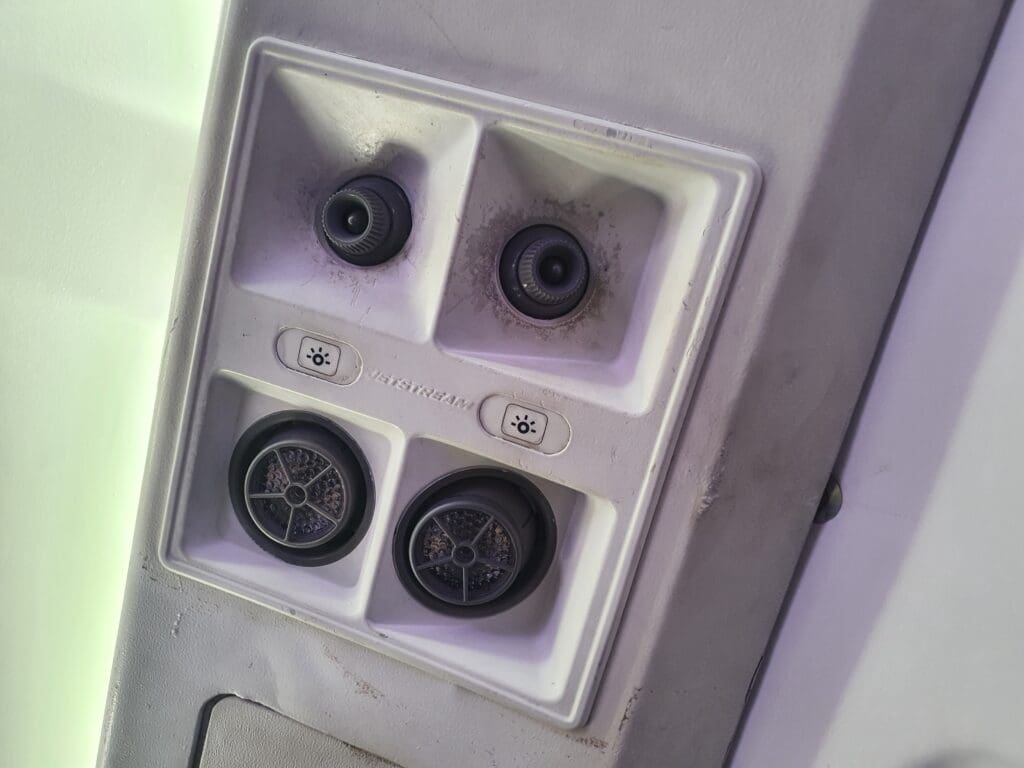
Providing a good view of both the engine and the world outside, I decided to sit in Seat 6A for the first flight to Hagfors. Inside, each of the aircraft’s seats was covered in dark blue leather, or perhaps faux leather, and sported a plain white disposable fabric antimacassar. As I took my seat, I found this to be well-padded, however the amount of legroom offered by this was far from fantastic. Although given the short flights typically undertaken by the Jetstream 32, this may well not prove to be an issue for most passengers. Having spent over two hours on the ground in Stockholm, the aircraft was in a clean and tidy state, with no signs of rubbish anywhere other than a newspaper in one of the seatback pockets. However, marks and scratches appeared to be omnipresent across the seats, the floor and cabin panelling, with these playing a role in alluding to the Jetstream’s comparatively old age. Nevertheless, despite any gripes, I was simply very happy to finally be sitting in a rare Jetstream 32 and ready to head off on my flight across Sweden! As on larger aircraft, each seat comes with its own air vent and reading light and I was pleased to find that both of these worked. Finally, turning to the seatback pocket, this contained a slightly battered safety card that was unique to PH-DCI, in addition to a plain unbranded sickbag.
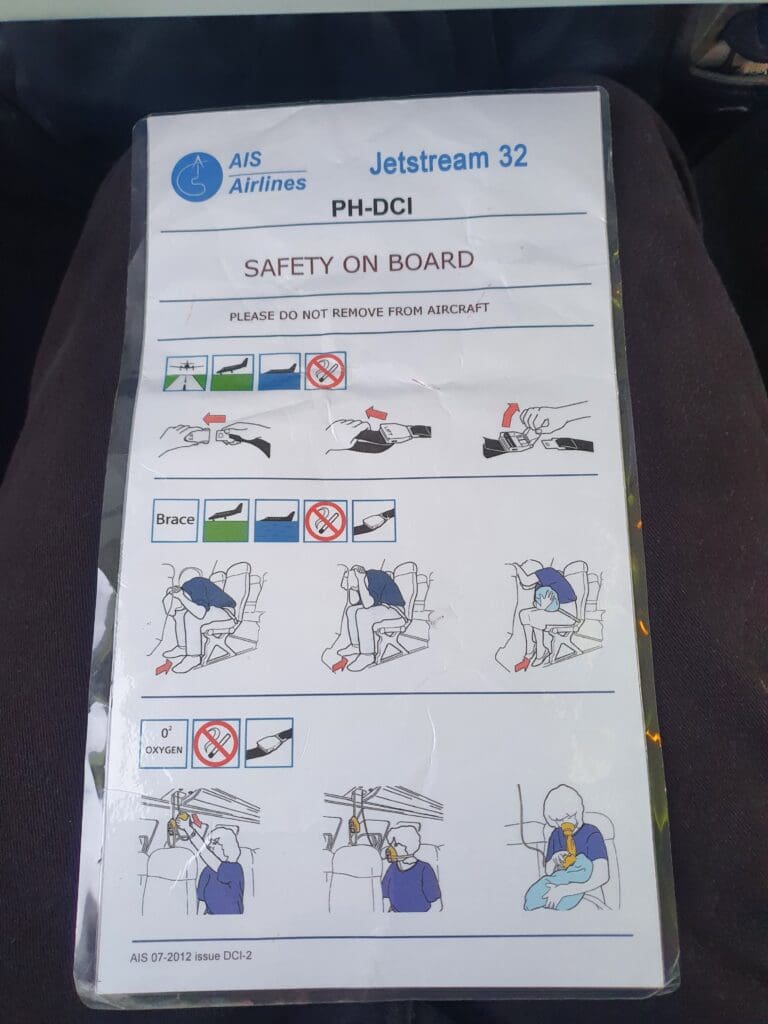
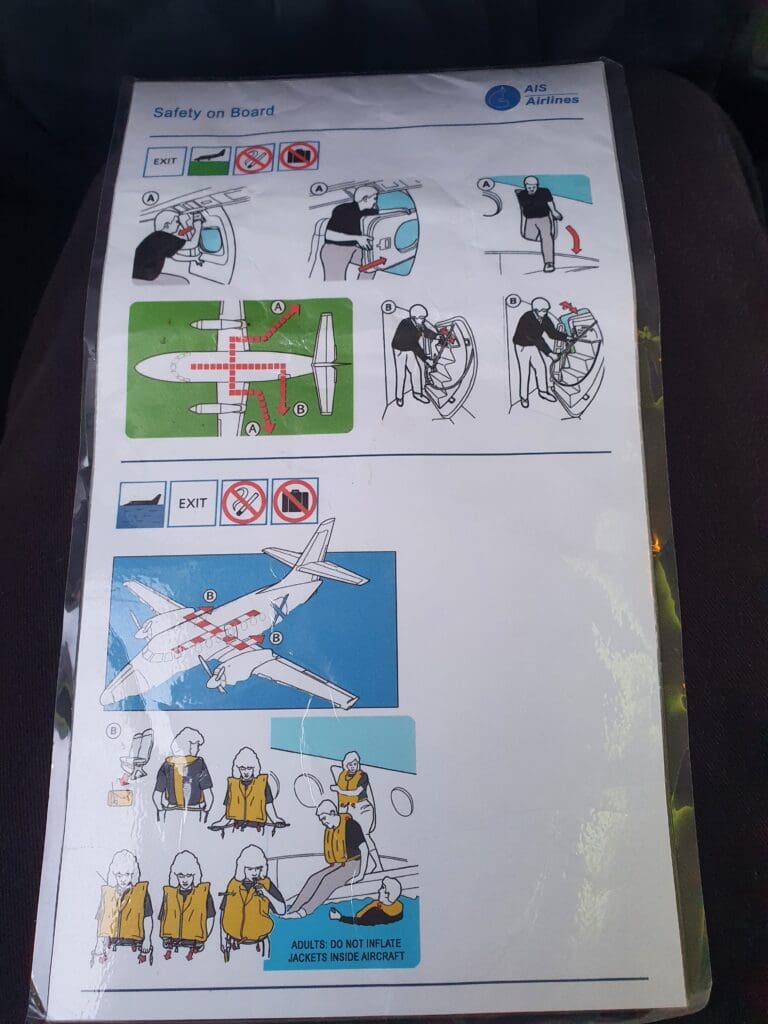
As soon as all three passengers had taken their seats, the Captain closed the door with a thud before making their way to the front of the aircraft. From there, they commenced a welcome speech in Swedish, however soon realising that I was a foreigner, the Captain then reverted to English and asked the other passengers whether this would be okay. Judging by the aircraft’s previous flights, whilst I lack any official confirmation, it does appear that when lacking Hagfors-bound passengers, the flight simply skips this stop. However that morning I was pleased to find that one-third of the flight’s load would be ending their journey in Hagfors, allowing me to have two sectors onboard the rare Jetstream 32. That morning, the Captain informed all that the flight time to Hagfors would be forty minutes, with a further ten minutes in the air for the short hop over to Torsby. After this, the captain then briefly detailed the safety procedures and requested a show of hands as to who had taken the service before – as expected, it appeared that the two other passengers were regulars, and I was the only flyer that morning not au fait with the Jetstream 32. The Captain then ended their speech by asking all to have a read of the safety card, jokingly noting that three questions on this would be asked in Hagfors.
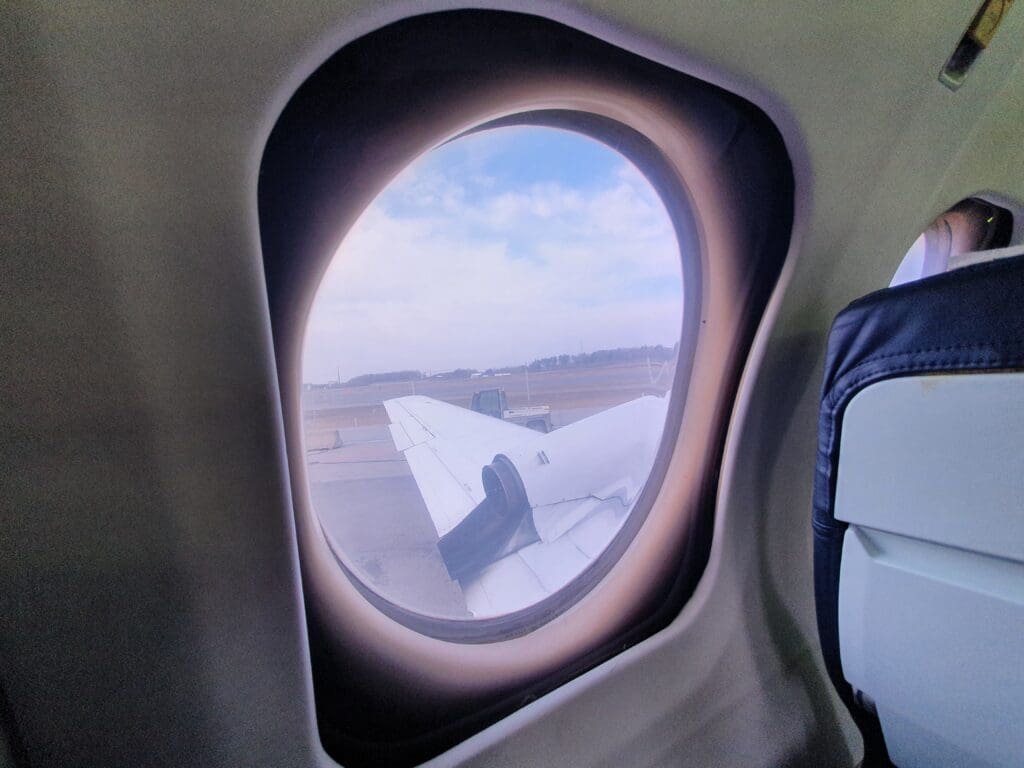
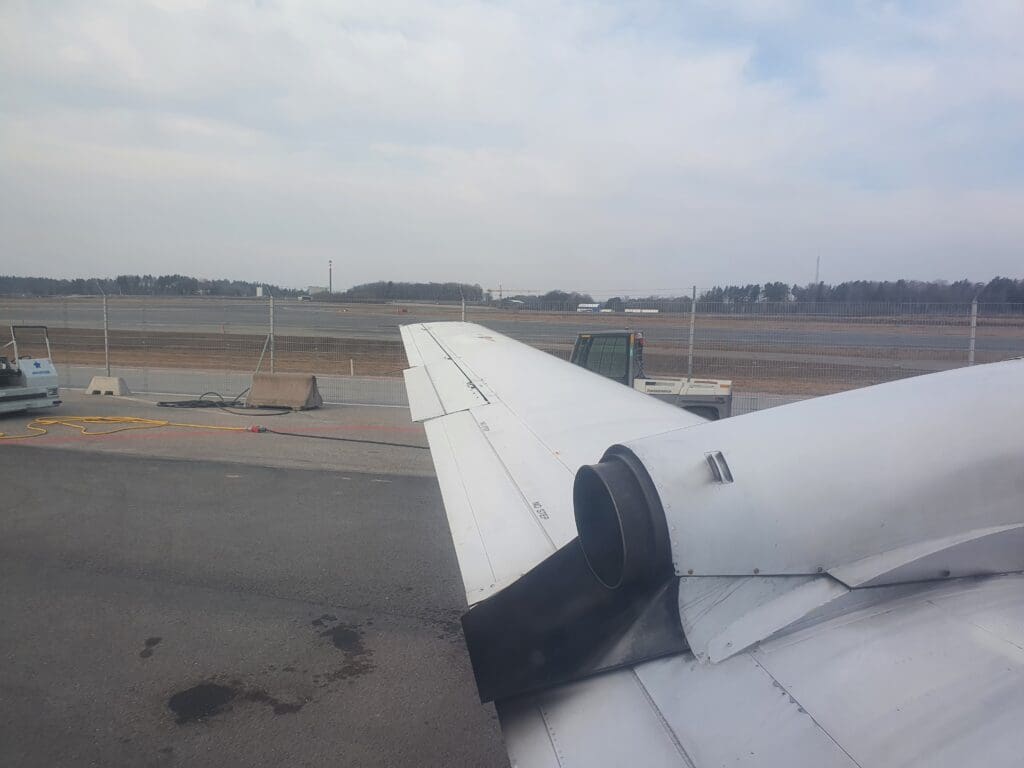
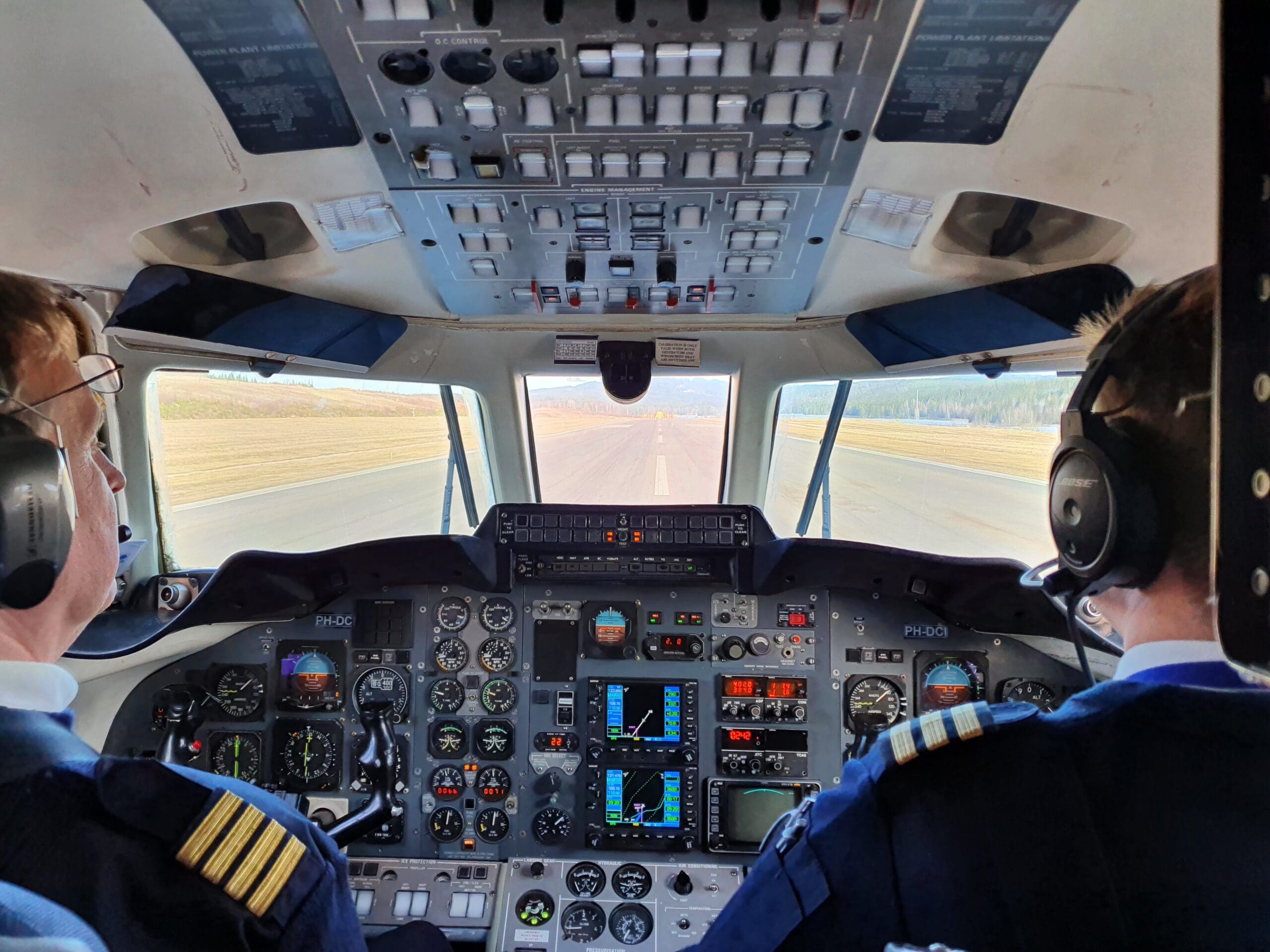
Once their speech had come to an end, the Captain contorted themselves into the Jetstream’s small cockpit before the two pilots could be seen running through their before start-up checks. Following much switch clicking and dial checking, a humming noise could be heard before the number two Garrett TPE331-10HR engine powered into life as the ground crew removed some pieces of equipment from around the port side of the aircraft. With both engines now ready to propel us all across Central Sweden, following some last-minute checks the aircraft jolted forward out of its stand and began its taxi to the end of Runway 19R.
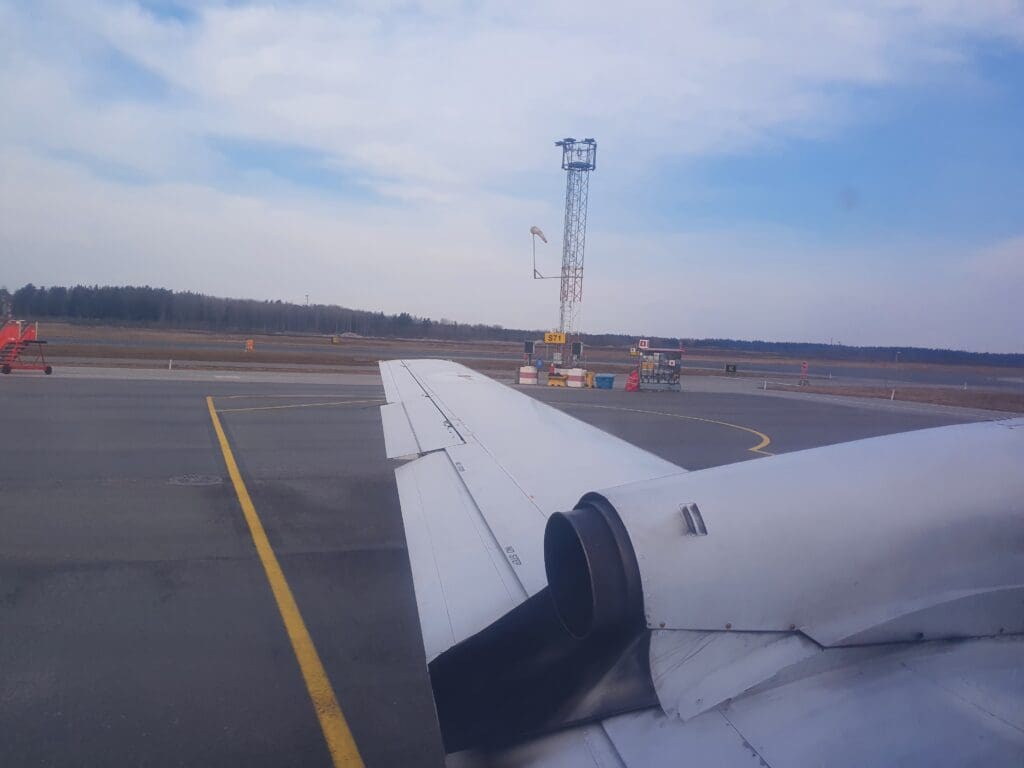
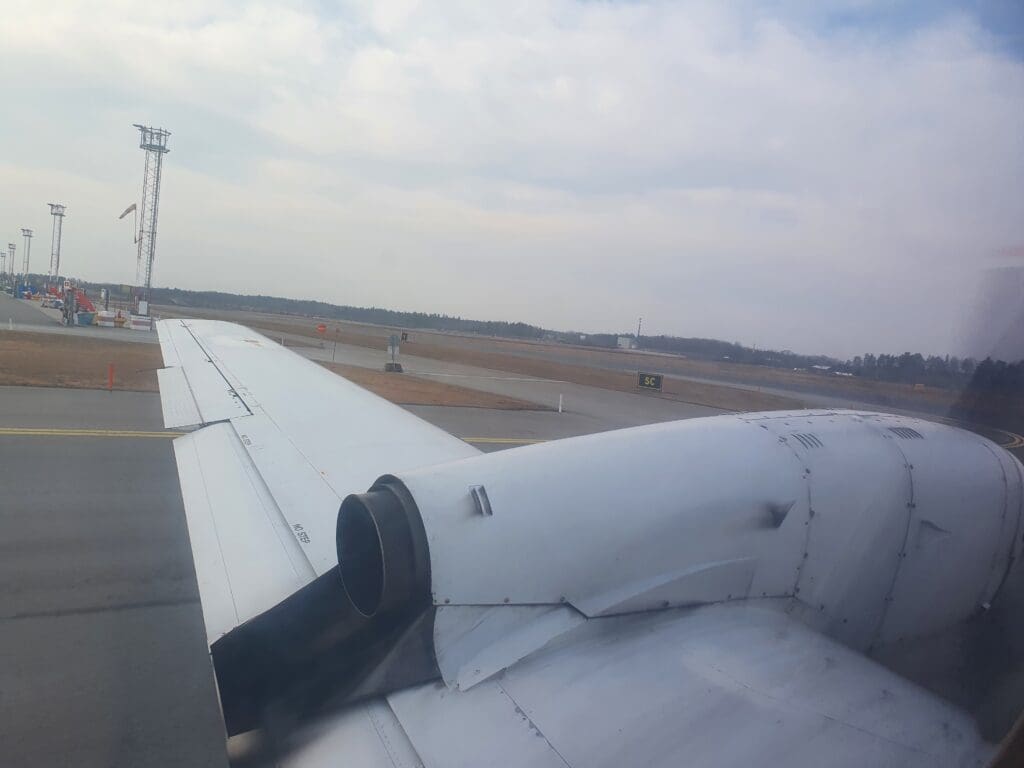
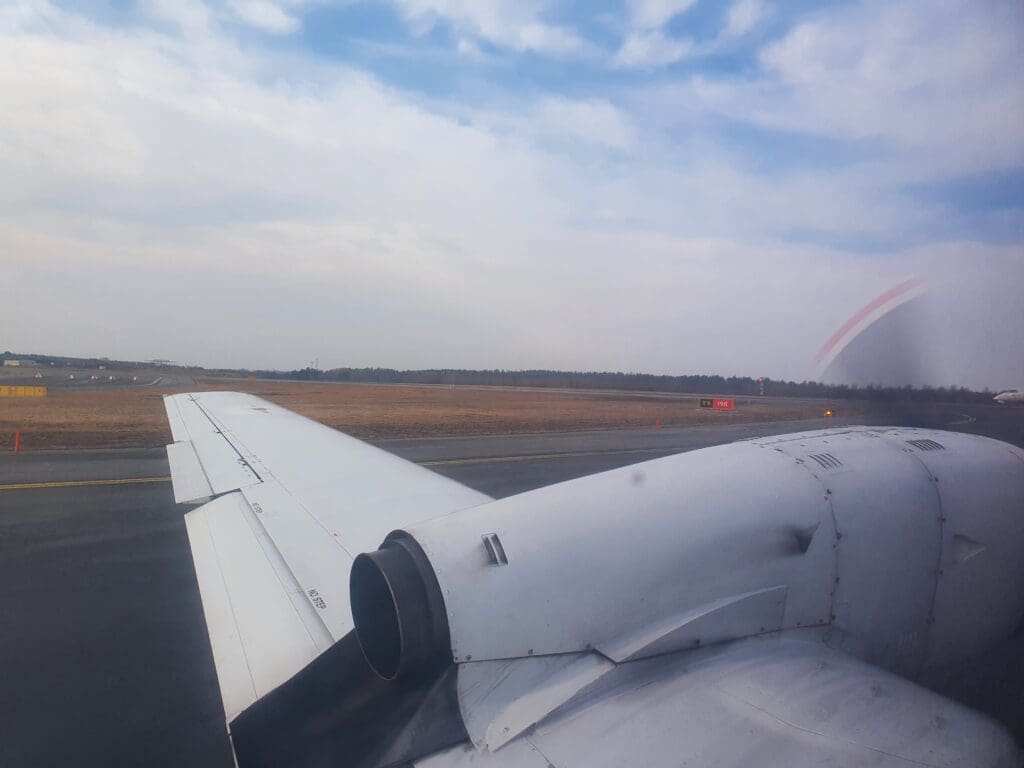
Even though our taxi that morning would see us travel almost the entire length of the runway, this did not seem to take too long. During this, the cabin shook and bumped along rather significantly, indicating that either Arlanda featured a rather battered taxiway, or that the Jetstream 32’s landing gear suspension was not as good as on other aircraft types. Within a few short minutes, the Jetstream reached the end of the runway just as a Scandinavian Airlines Bombardier CRJ-900 was beginning its takeoff roll at the start of its journey down to Berlin. As this aircraft made its way down the runway, the Jetstream entered this and came to a halt. At 0915 on the dot, the Jetstream’s two Garrett engines roared into life and the aircraft commenced a powerful takeoff roll. Given the light load, the turboprop took to the skies in a matter of seconds, allowing me a good view of much of the airport as the Jetstream rocketed up into the Swedish skies.
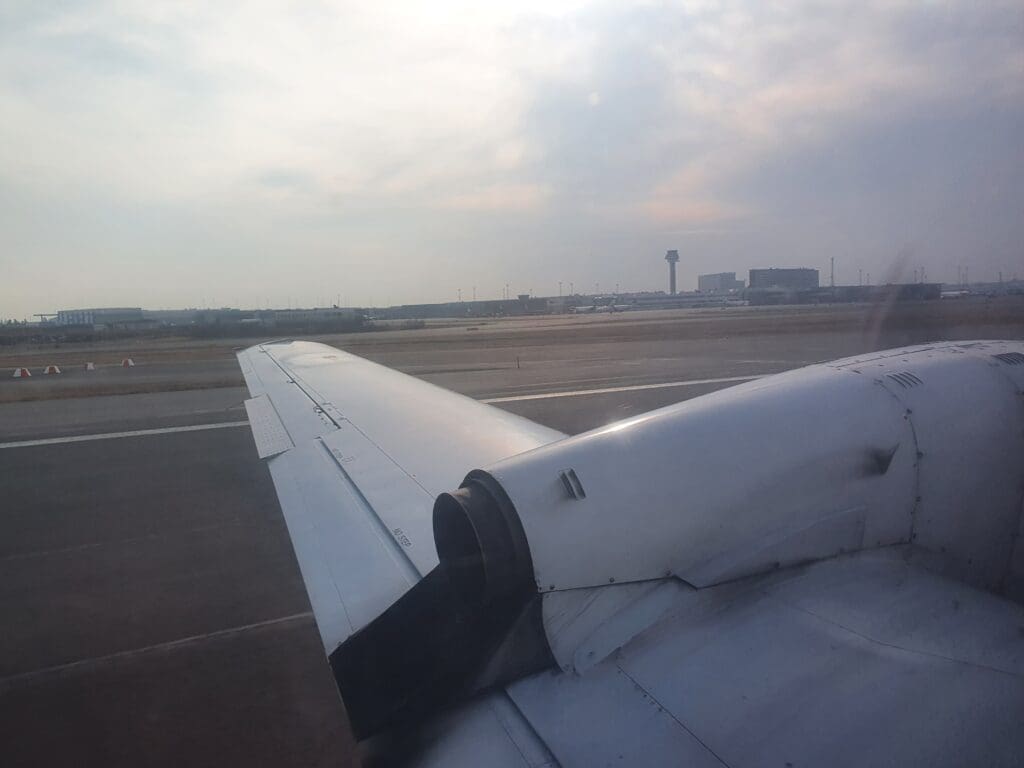
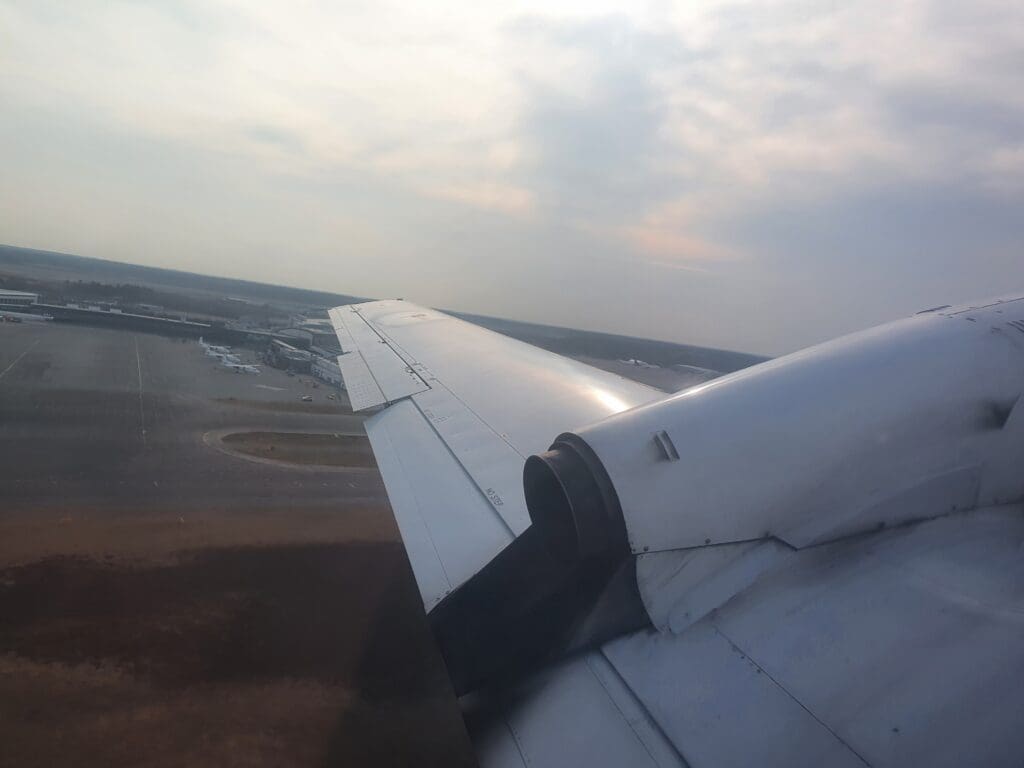
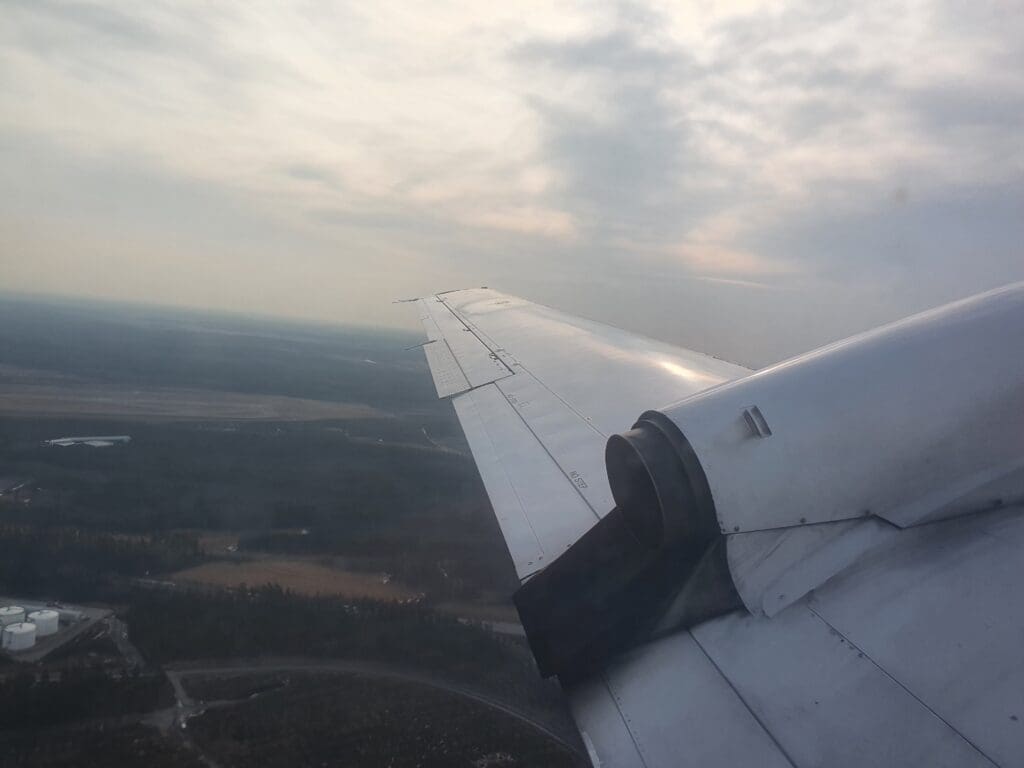
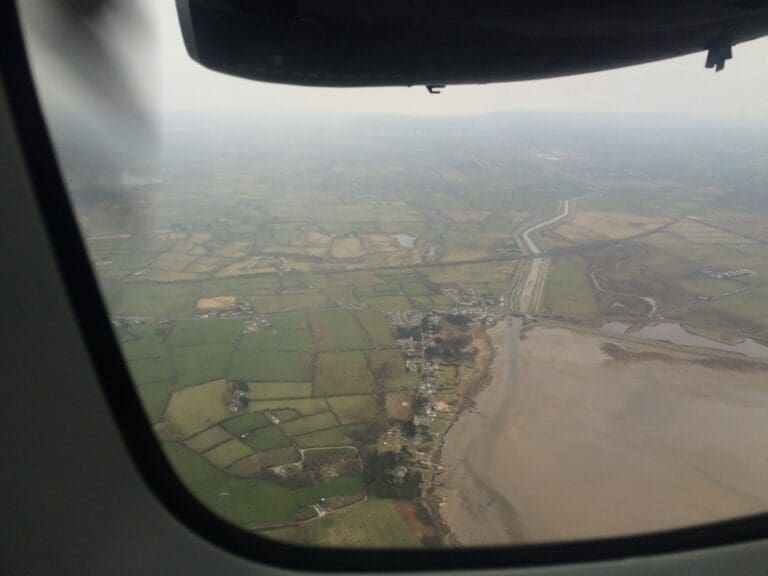
In no more than a minute, the aircraft left Sweden’s largest airport behind and soon banked to the right before rolling out on a westerly heading that would take us directly to Hagfors with only minimal turning. At this time, a selection of towns could be seen on the right-hand side of the aircraft – namely Marsta, Steninge and Sigtuna. Whilst I caught glimpses of these as I peered across the cabin, from my seat on the opposite side of the aircraft I could see little other than the occasional passing village, forest and the melting ice of Lake Malaren.

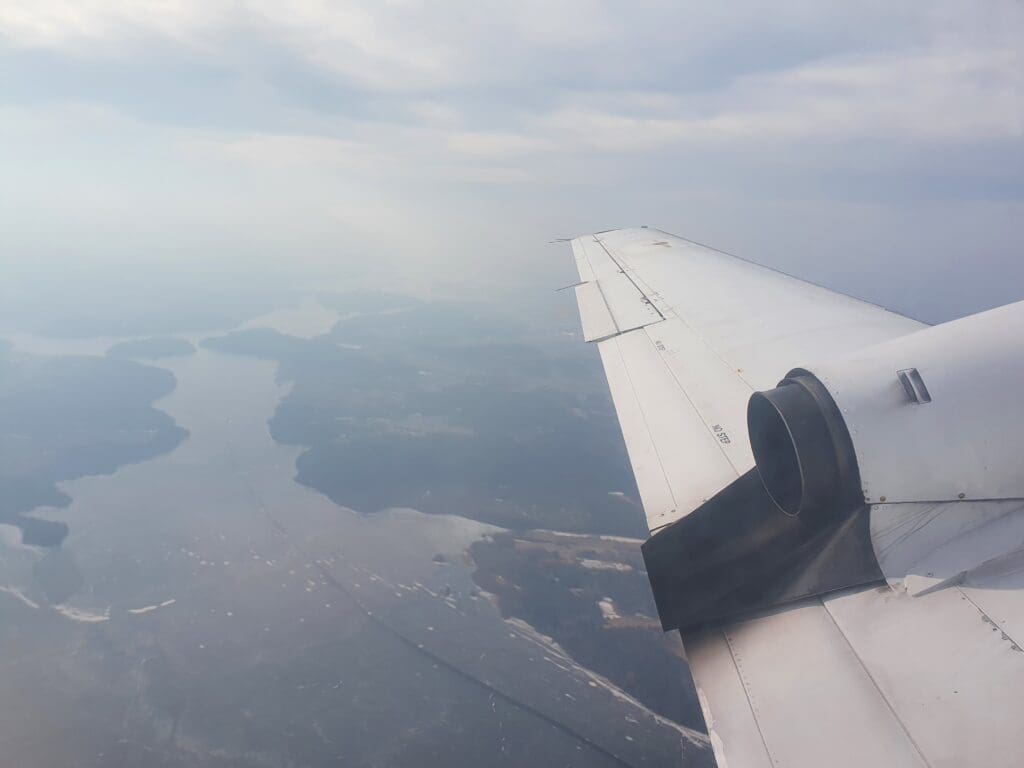
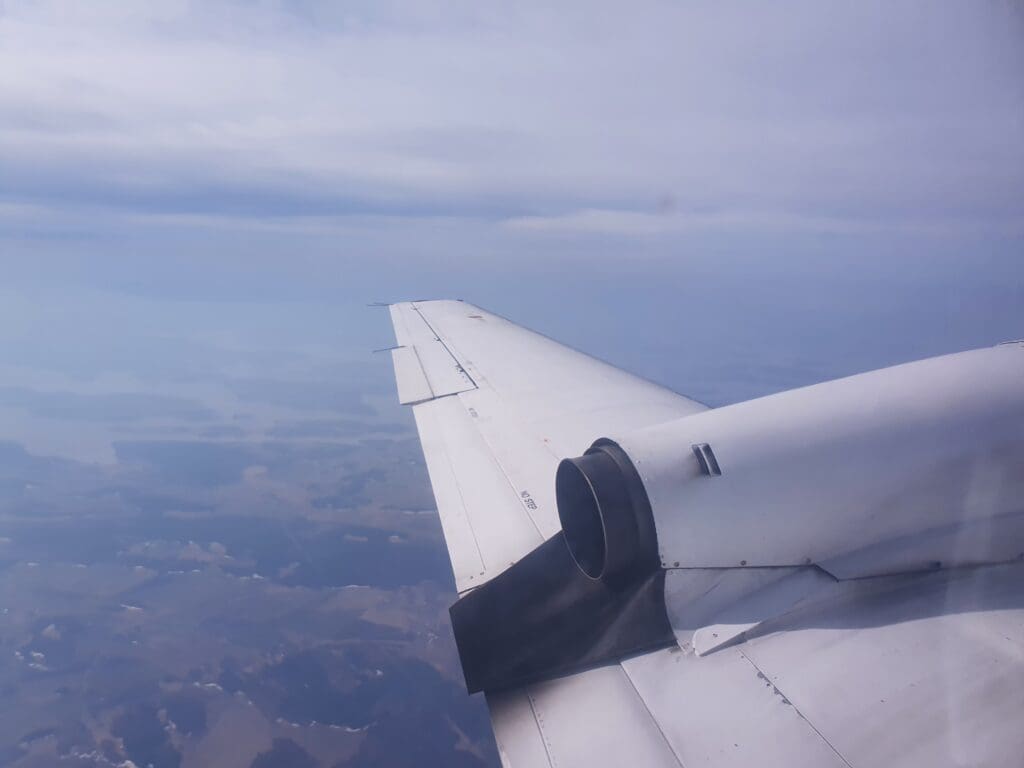
As the aircraft climbed, the Jetstream ended up being subject to the occasional bout of turbulence, although each time this lasted for no more than a few seconds and was not particularly rough. That morning, the aircraft reached its low cruising altitude of 10,000 feet within around six minutes of departure and upon doing so, a loud ding rang out through the cabin as the seatbelt signs were extinguished. Whilst the Jetstream was decisively more noisy than your typical airliner and conversations may have been difficult to sustain, I found the noise levels to be bearable and I have most definitely flown on noisier turboprops. Nevertheless, as soon as the seatbelt signs were extinguished the first officer stood up and offered passengers disposable earplugs. In addition, I found the levels of vibration to be less than those on my recent Dash 8 Q400 flight in Croatia, although I have no quantitative data to prove this.
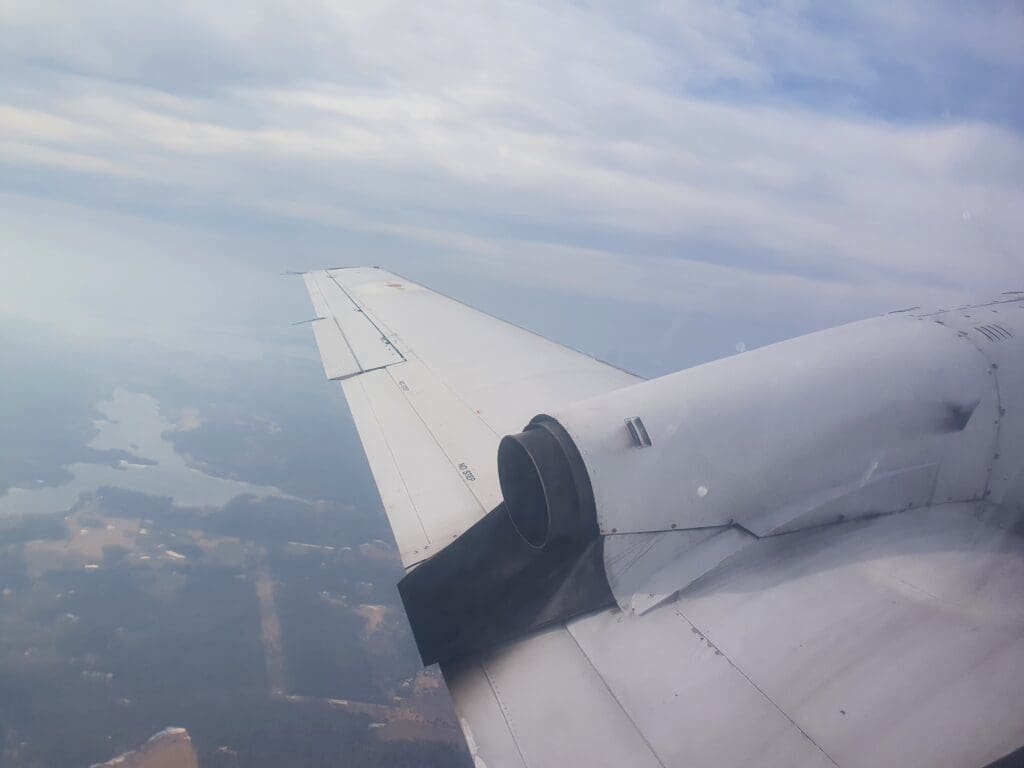
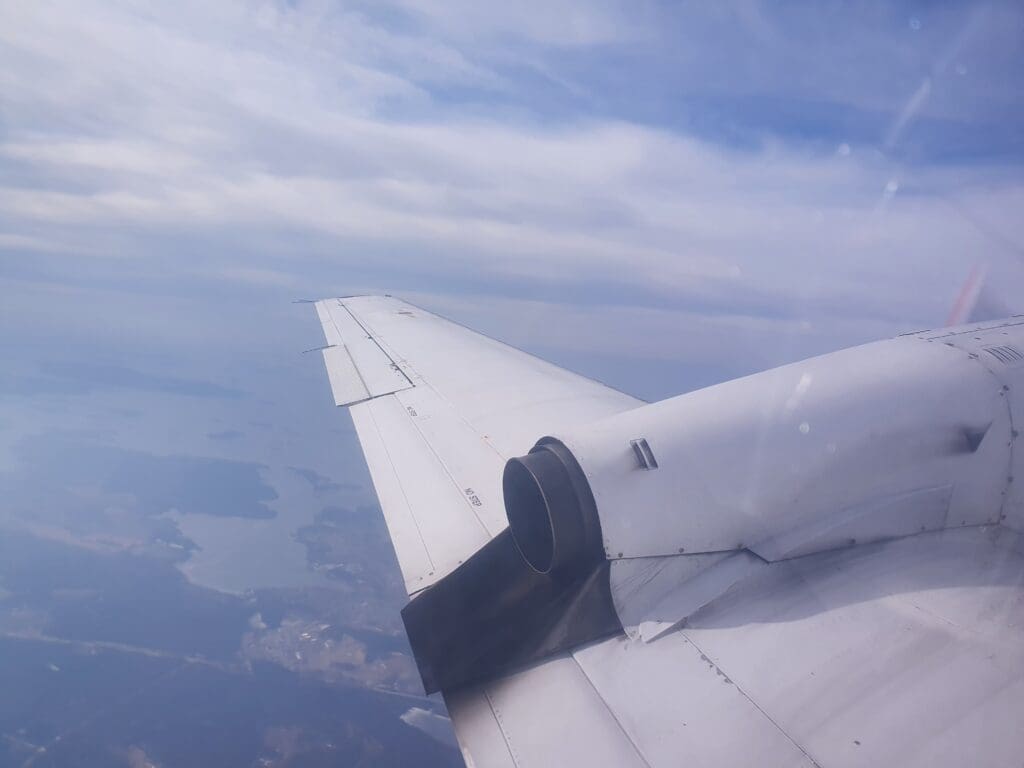
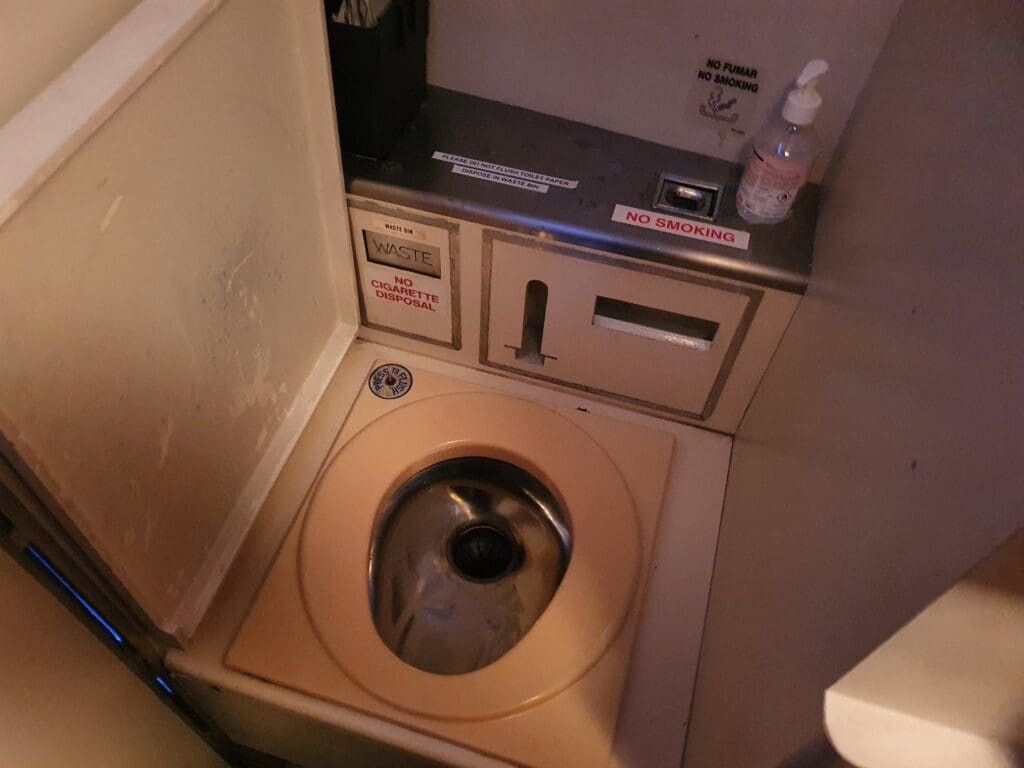
With little to see outside at this stage of the flight other than the mostly flat frozen rural scenery, and having rushed through the airport, seeing as the turbulence had calmed down I opted to make a trip to the lavatory at the rear of the aircraft. As I had first discovered on the Jetstream 41, British Aerospace’s designers designed the lavatories onboard their turboprops in a rather ingenious and space-efficient way that pre-dates Marie Kondo. Specifically, the toilet is located in a cupboard, which, when opened, seals off the entirety of the area around this – i.e. the rear of the aircraft. Nevertheless, this is far from spacious and I did have to bend over to squeeze myself into the small space. Furthermore, I was unable to get the toilet door to close properly, and even when this was closed, significant gaps allowed me to peer into the cabin. Turning to the toilet itself, this was rather utilitarian – unable to take toilet roll, whilst antibacterial wipes and gel were offered in place of a sink. However, unlikely to see much use on such short hops other than by overcurious enthusiasts, this was clean and served its purpose.
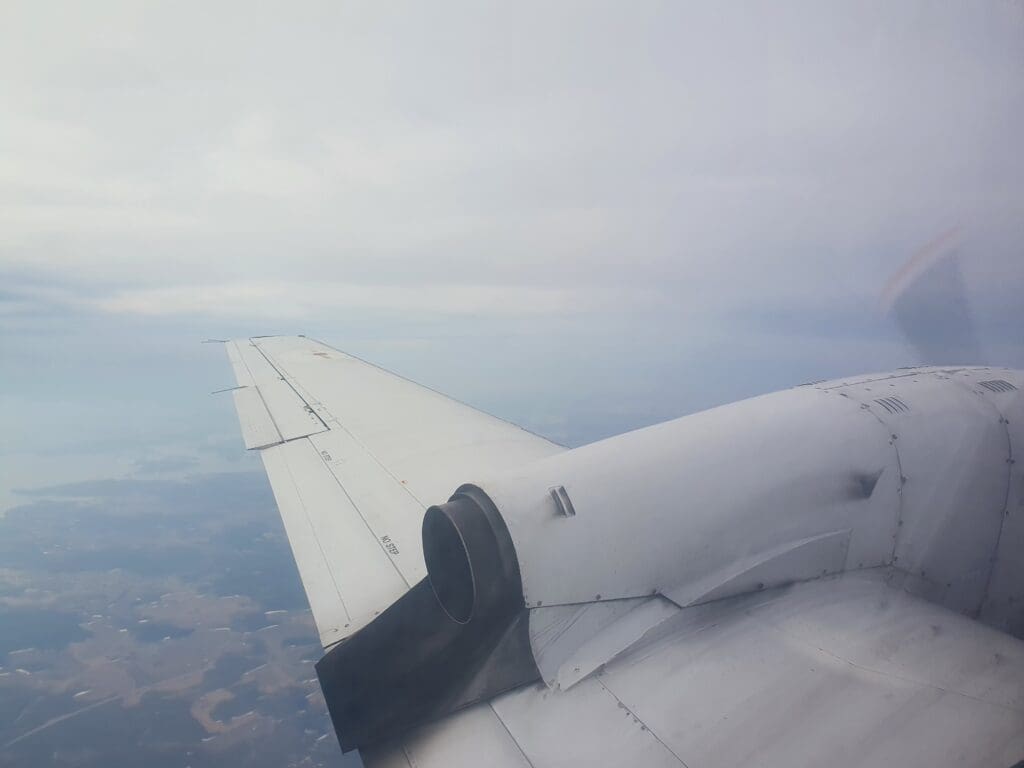
Upon returning to my seat, the flat landscape had changed little as the aircraft had crossed over from Uppland to Vastmanland. However, fifteen minutes after departure, Sweden’s sixth largest city, Vasteras appeared off the port wingtip. To aviation enthusiasts outside of Sweden, the city is perhaps best known for its airport, which is served by Ryanair and marketed as a Stockholm airport despite being located over one hundred kilometres away from the Swedish capital! This could also be seen briefly as the aircraft cruised westwards at an airspeed of around 210 knots. Continuing over Västmanland, little could be seen outside other than the rural frosty landscapes and the occasional passing town. These included Surahammar, Skinnskatteberg and Koppaberg, internationally famous for its local cider company of the same name.
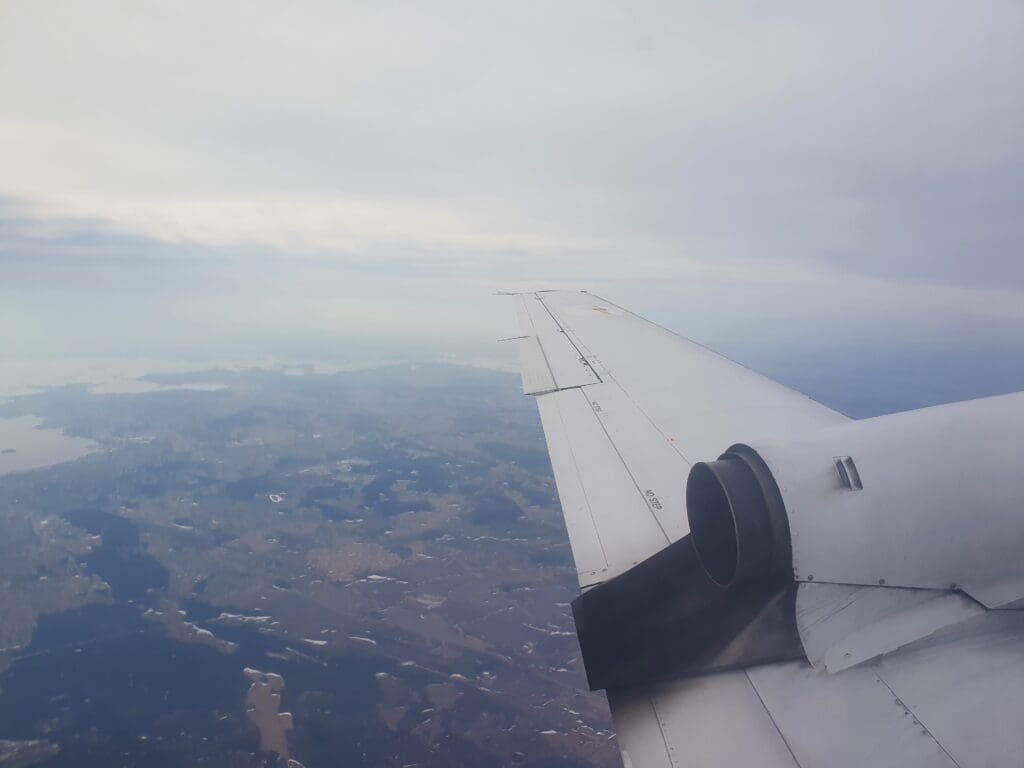
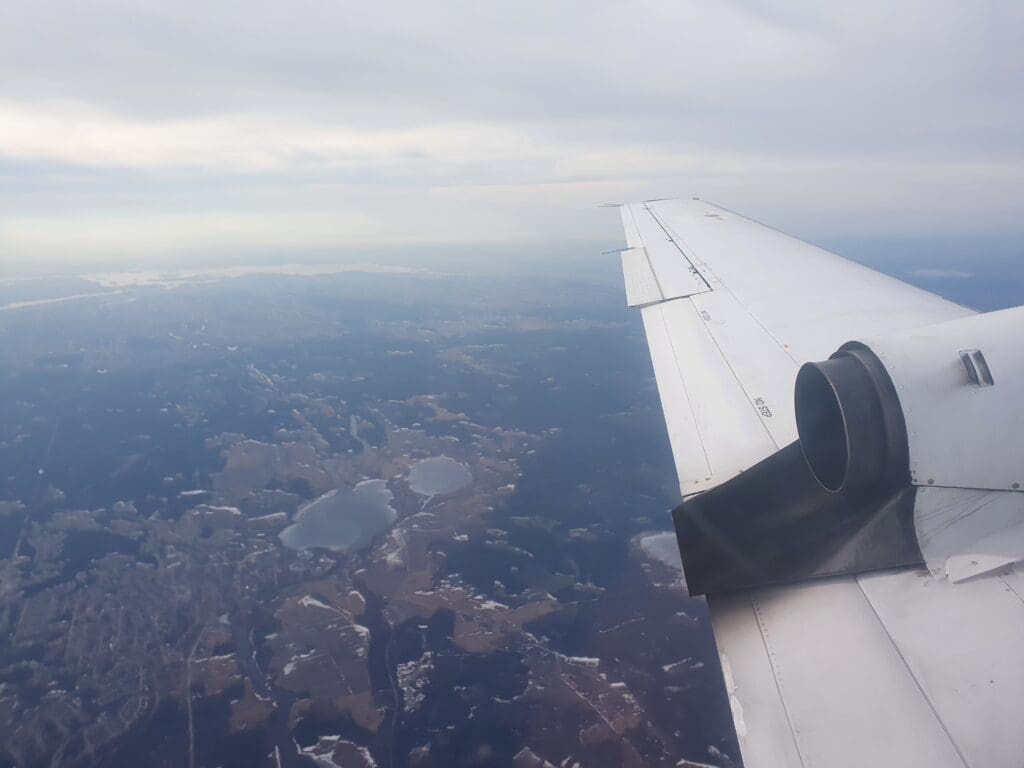
As the aircraft neared the border between Västmanland and the province of Värmland, the aircraft hit a significant patch of turbulence which resulted in plenty of bouncing and swaying. Whilst this was not the most severe turbulence that I have ever experienced, it was probably in my top five most bumpy inflight moments and at one point I spotted both of my two fellow passengers grabbing onto the seats in front of them. Fortunately, thanks to the Jetstream’s lack of a cockpit door, I was able to see that reassuringly the two pilots up ahead did not appear to be particularly phased by this and continued chatting before the commencement of the aircraft’s descent.
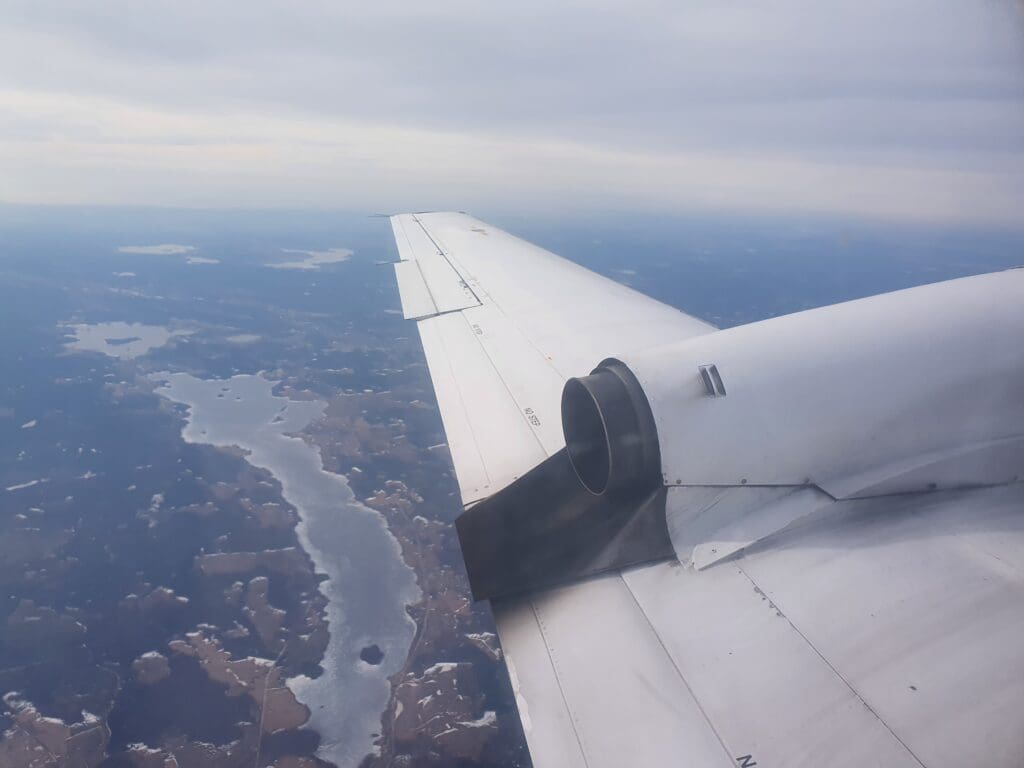
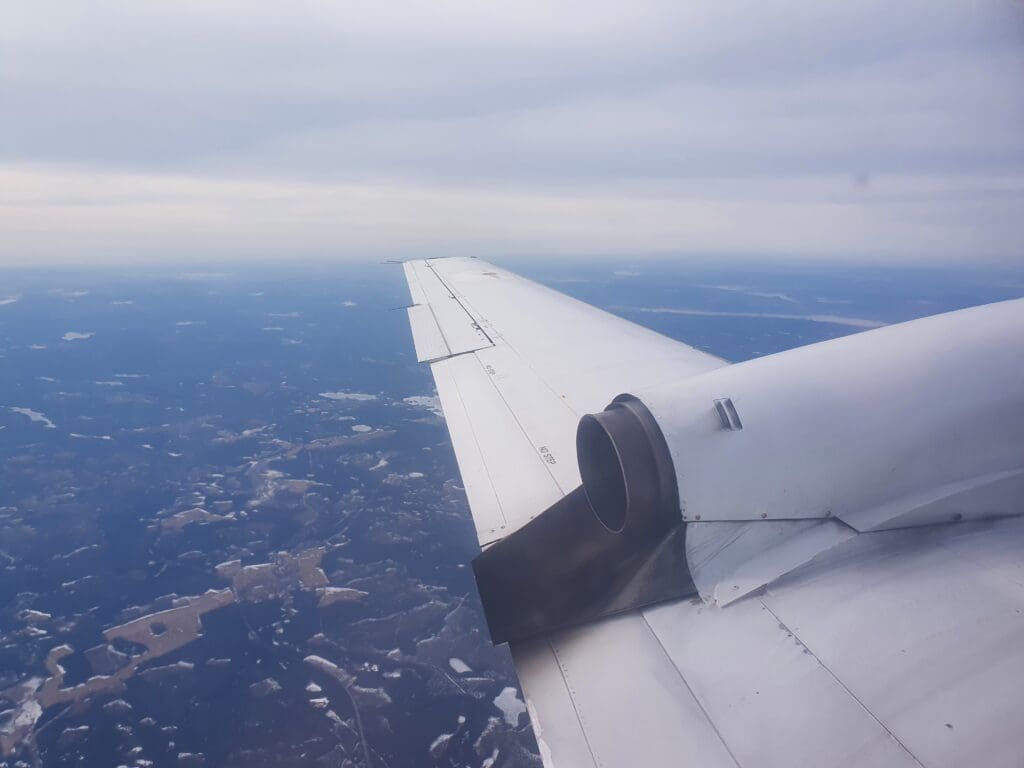
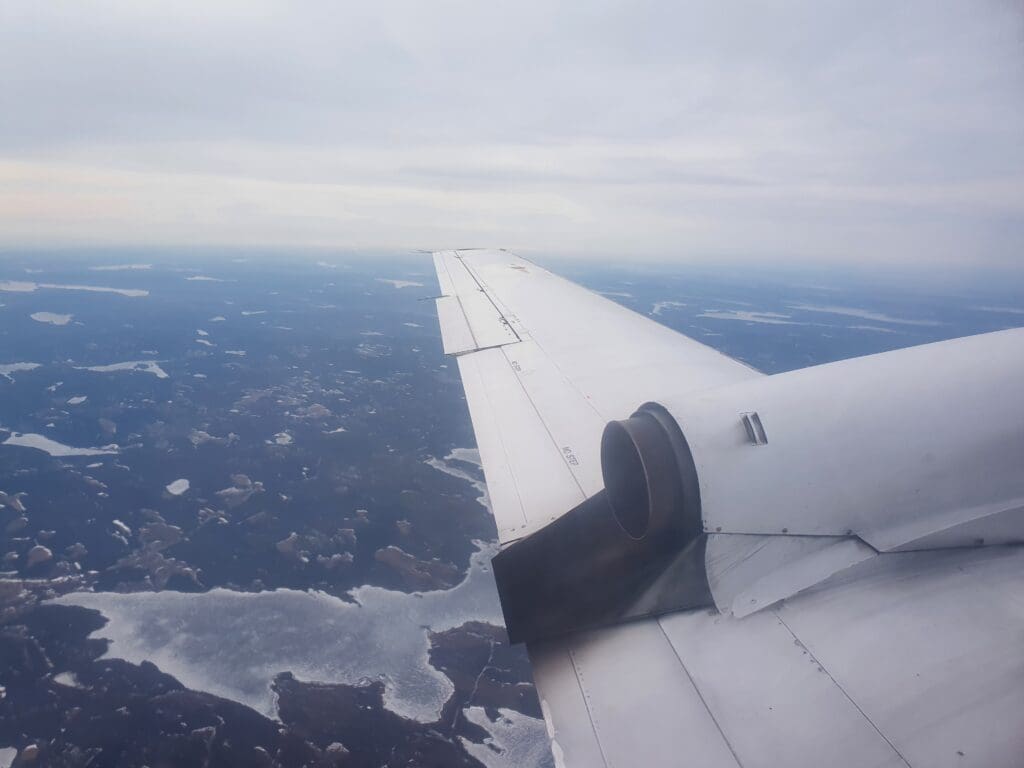
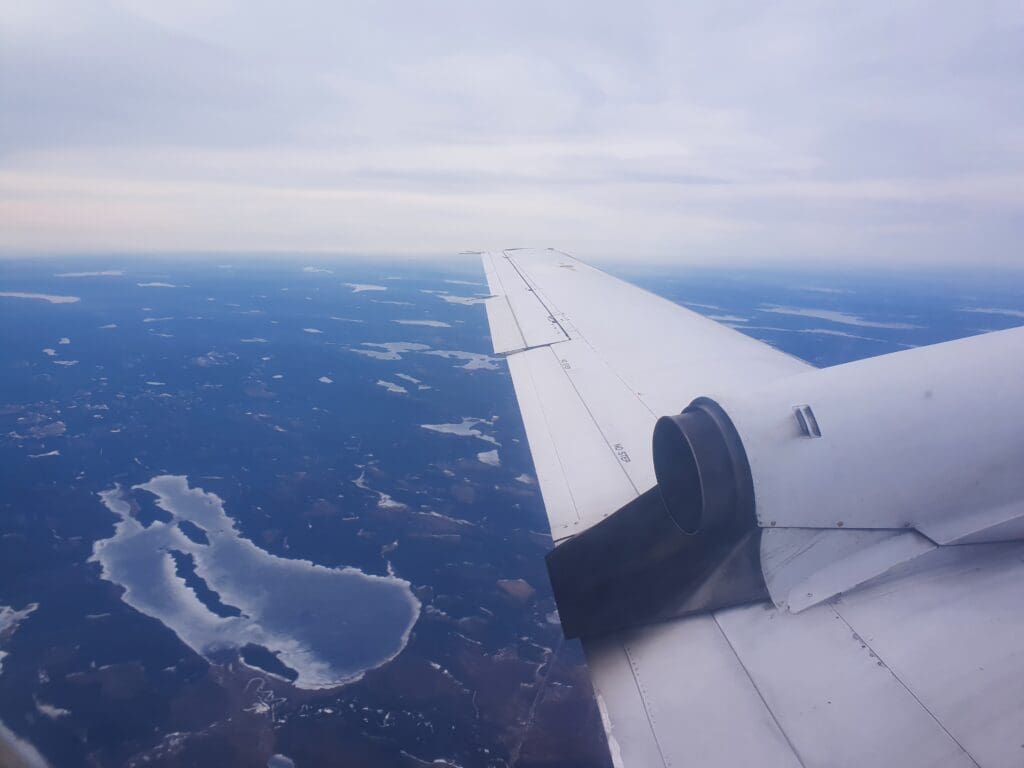
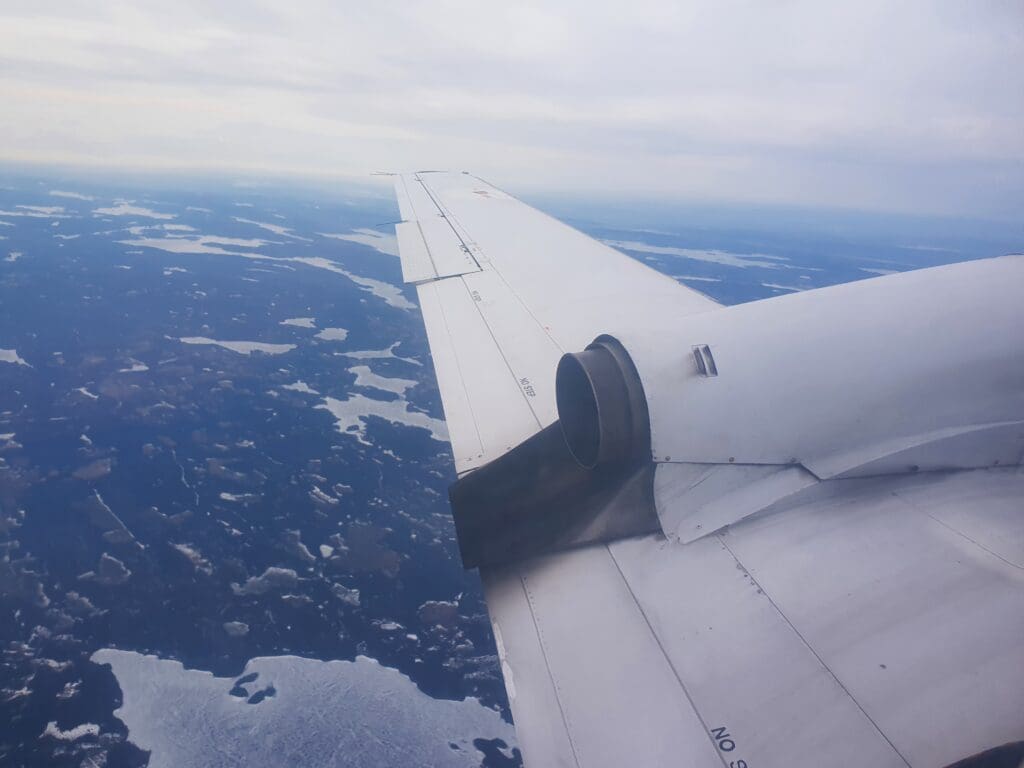
A few minutes later, the Captain could be seen selecting 3,400 feet on the autopilot after which the aircraft could be felt gently sinking. Despite all the turbulence towards the end of the flight, it was only at this point that the seatbelt signs were reilluminated, after which one of the pilots made a completely inaudible announcement over the cabin speakers which I assume was related to our approach into Hagfors. Thanks to our low cruising altitude, it did not take long at all for the Jetstream to make it down from this and soon enough, the aircraft was passing low above the wooded hillsides and frozen lakes that sit to the south of Hagfors.
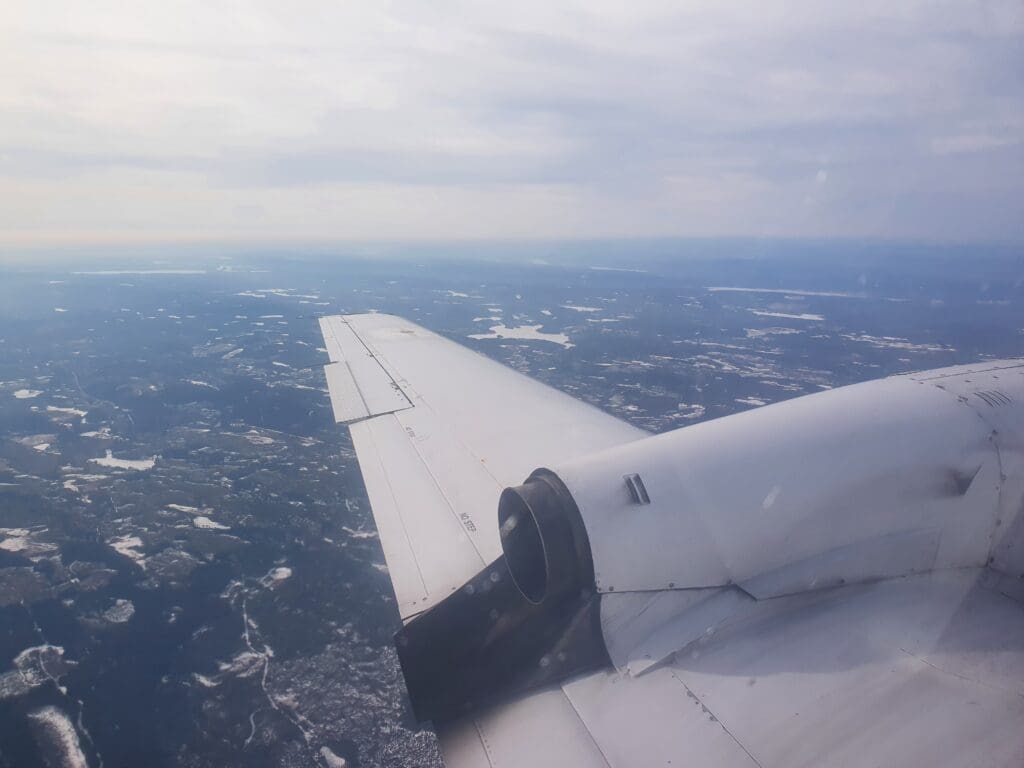
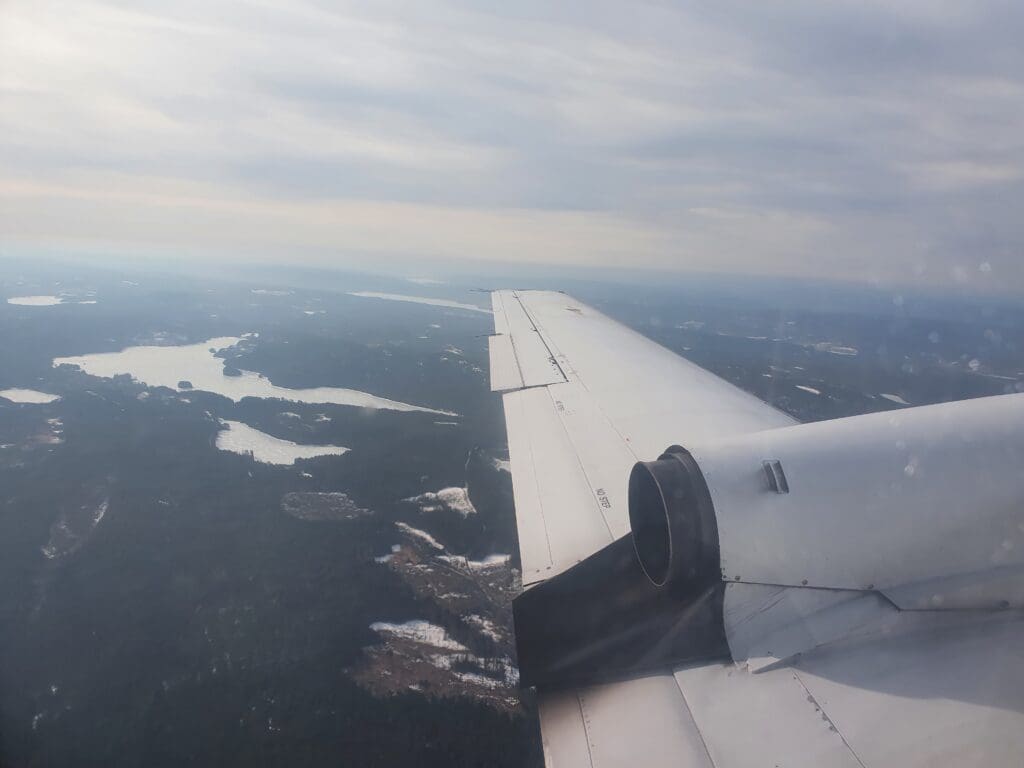
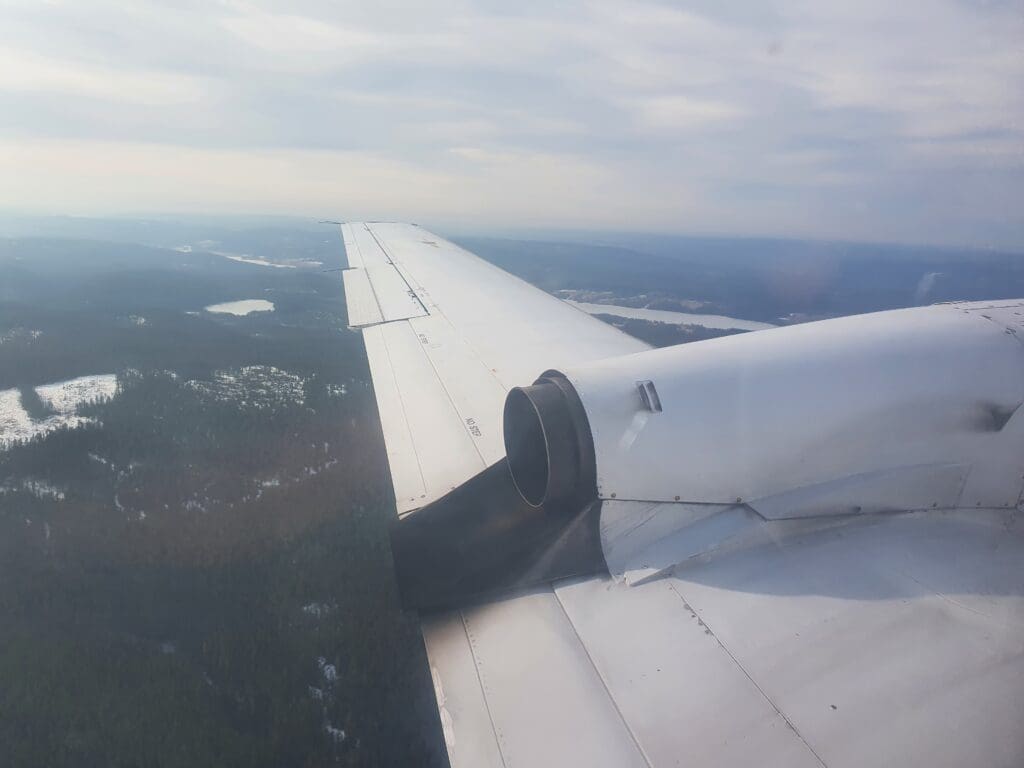
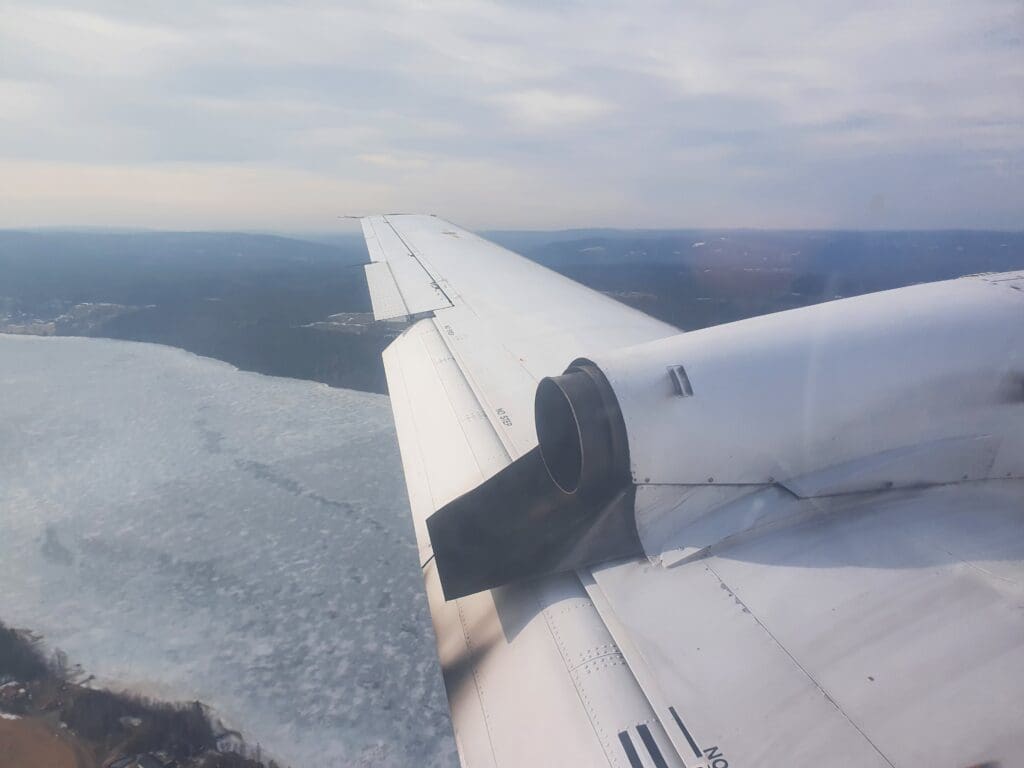
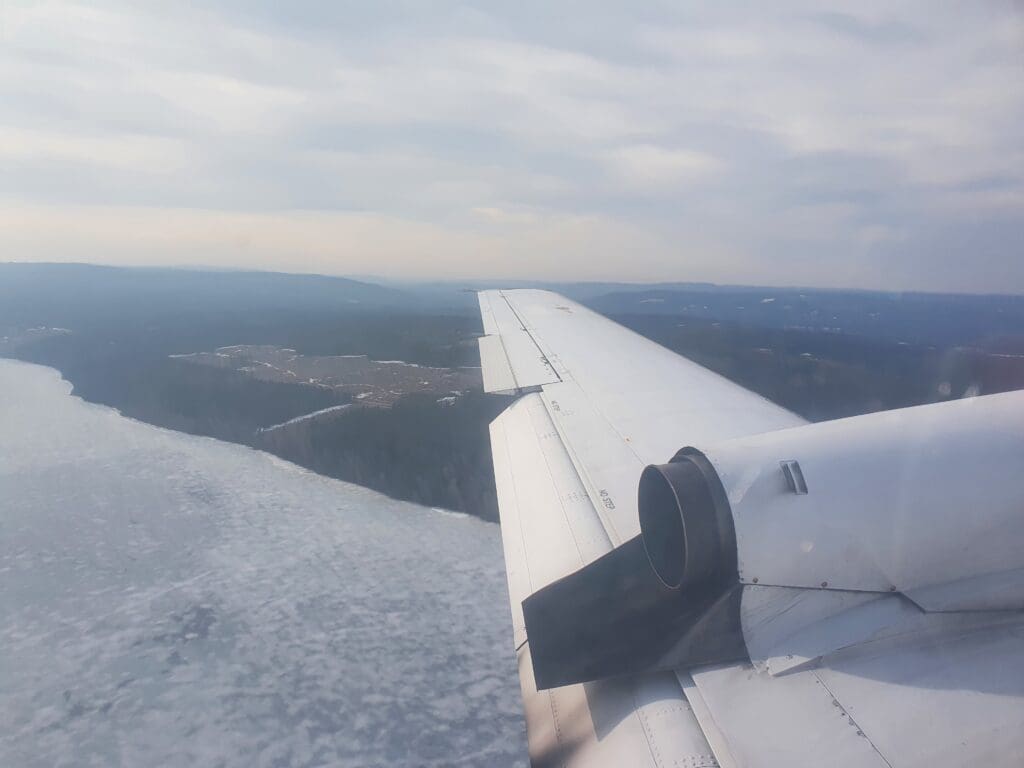
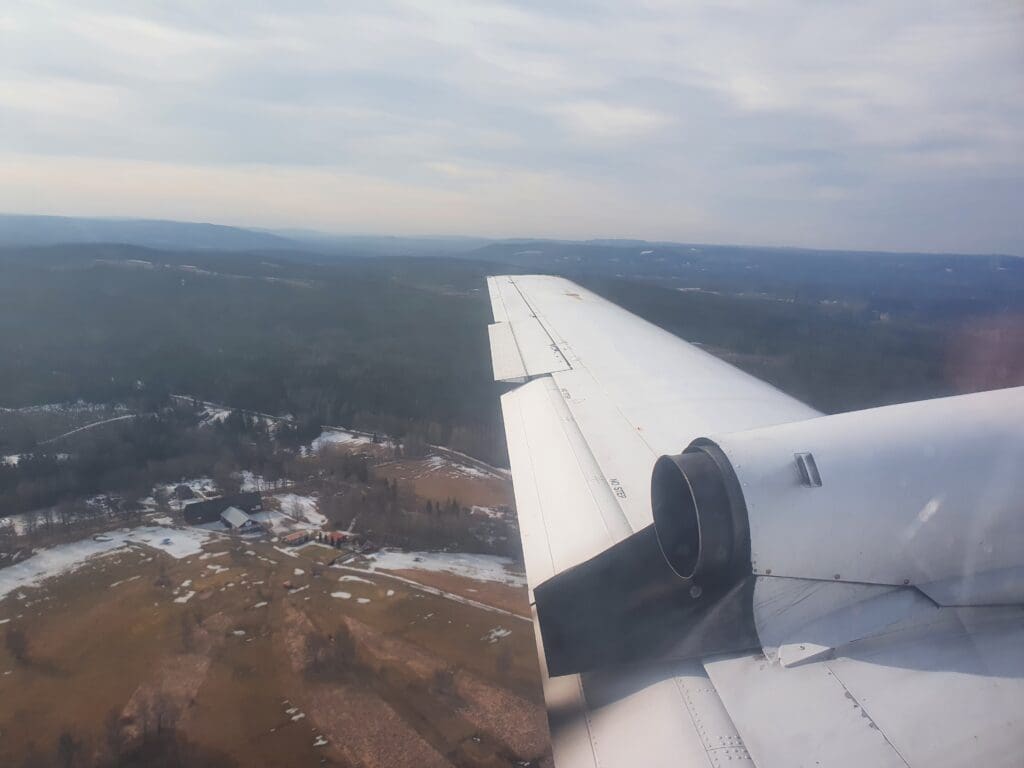
As the Jetstream neared Hagfors Airport, the landing gear was lowered and the flaps fell into position with an unusual and somewhat loud mechanical squeaking sound before the aircraft made what seemed to be a fairly late turn onto finals for Runway 36. Once again, it seemed like those on the opposite side of the cabin were afforded the best views, with the turboprop darting over colourful wooden lakeside houses. Meanwhile little could be seen on the left-hand side of the aircraft other than expansive forests atypical of this part of the world and the frozen Klaralven River.
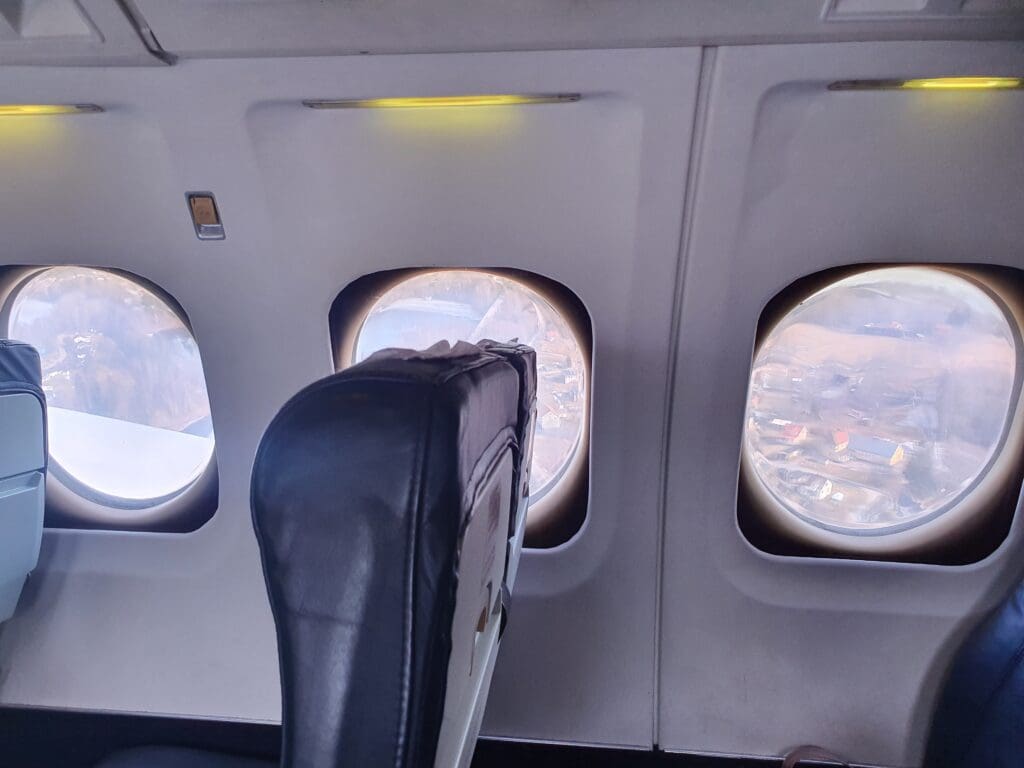
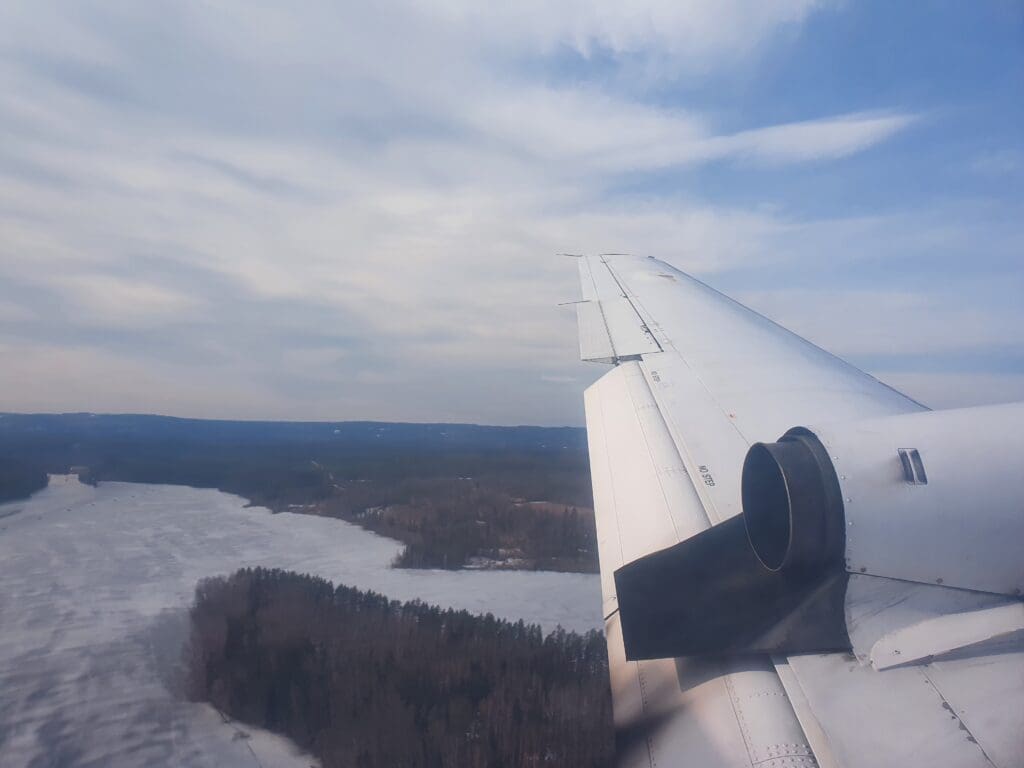
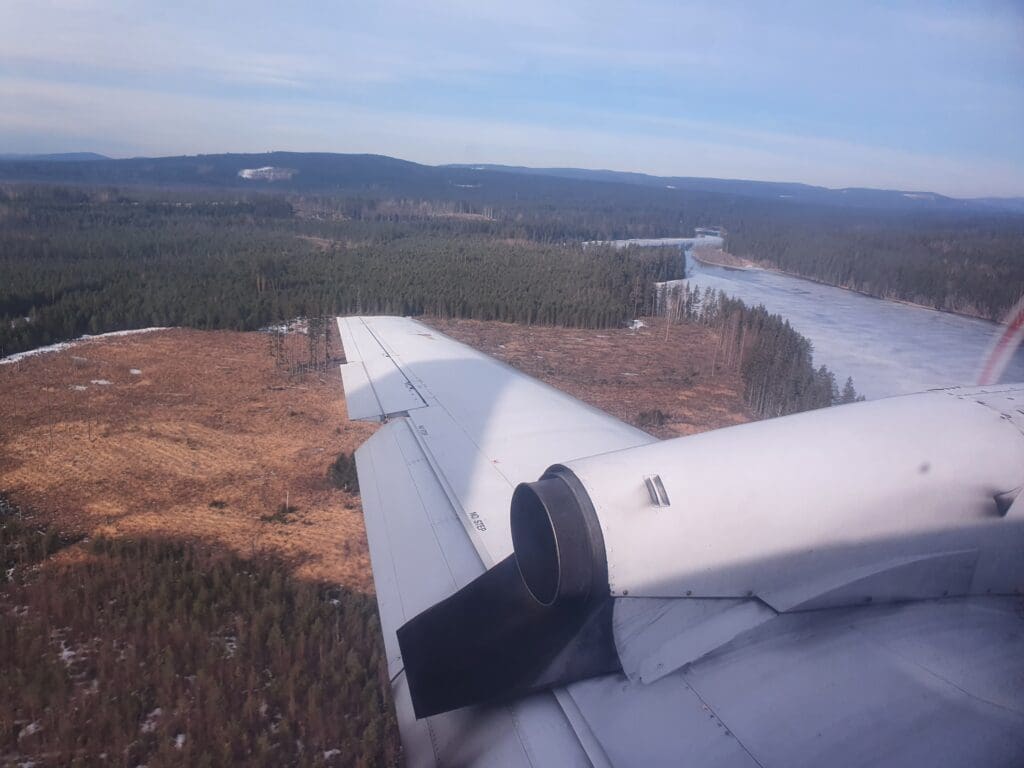
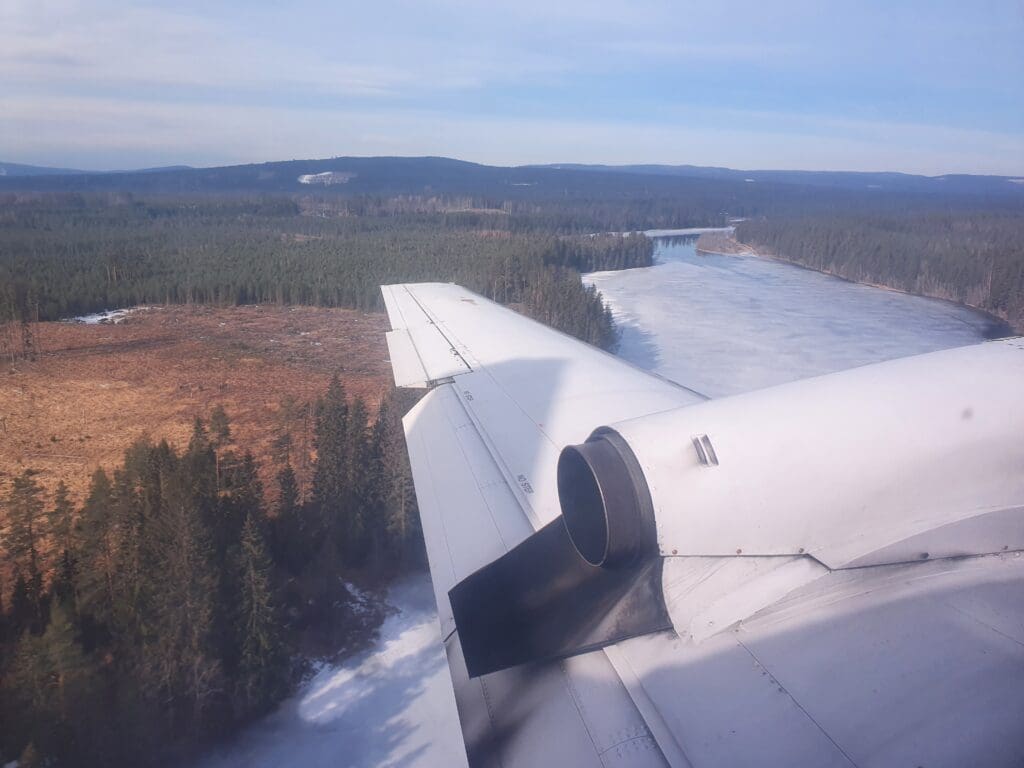
After whizzing over the banks of the river, the Jetstream crossed the perimeter fence and made a firm touchdown on Hagfors Airport’s sole runway, 41 minutes after departing Stockholm Arlanda. Sitting at 1,510 metres long, this runway does not pose much of a challenge for the Jetstream 32, especially in good weather conditions. In addition, with the airport’s only taxiway located at the opposite end of this, there was no need for any harsh braking. As the Jetstream vacated the runway, the only other aircraft that could be seen on the ground in Hagfors that morning appeared. This took the form of a battered Cessna missing several vital components and resting on its tail. As with Torsby, Hagfors is only served by Amapola’s route between Torsby and Stockholm which provides the airports with two arrivals and departures each weekday. Unsurprisingly, the terminal appeared to be small, consisting of a homely-looking small grey hut complete with an adjoining control tower. Other than this, the only other buildings I could spot at the airport were a couple of small neighbouring hangars which I assumed to be home to the local flying club who operate a couple of Cessna 172s and a Eurostar EV97.
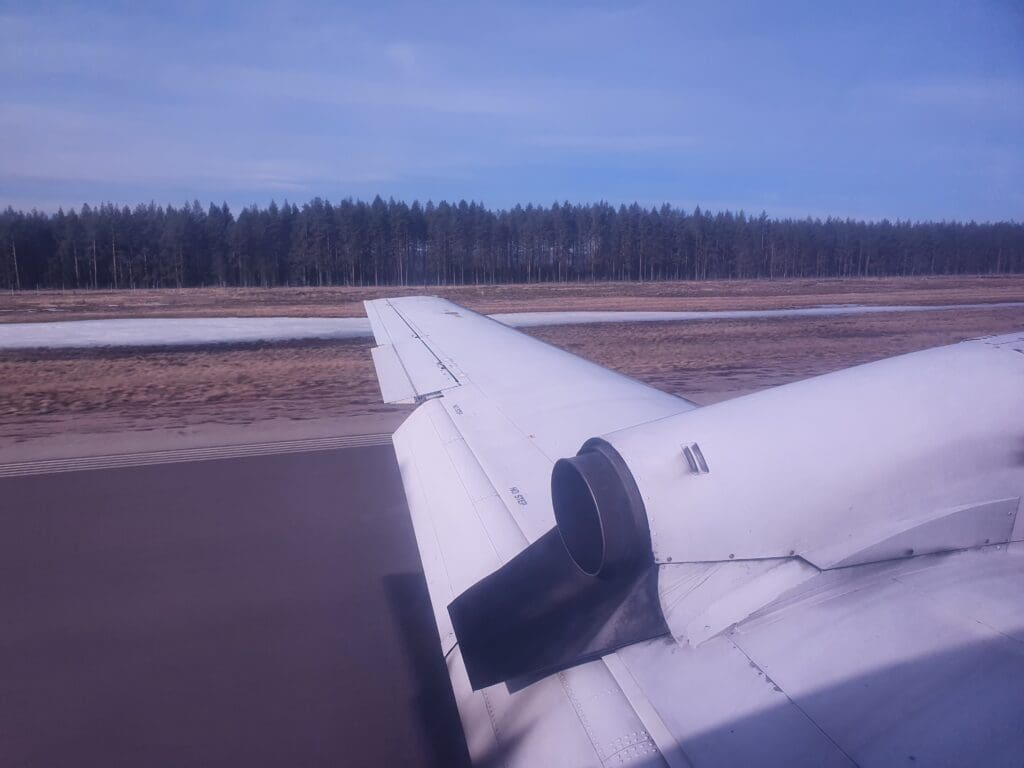
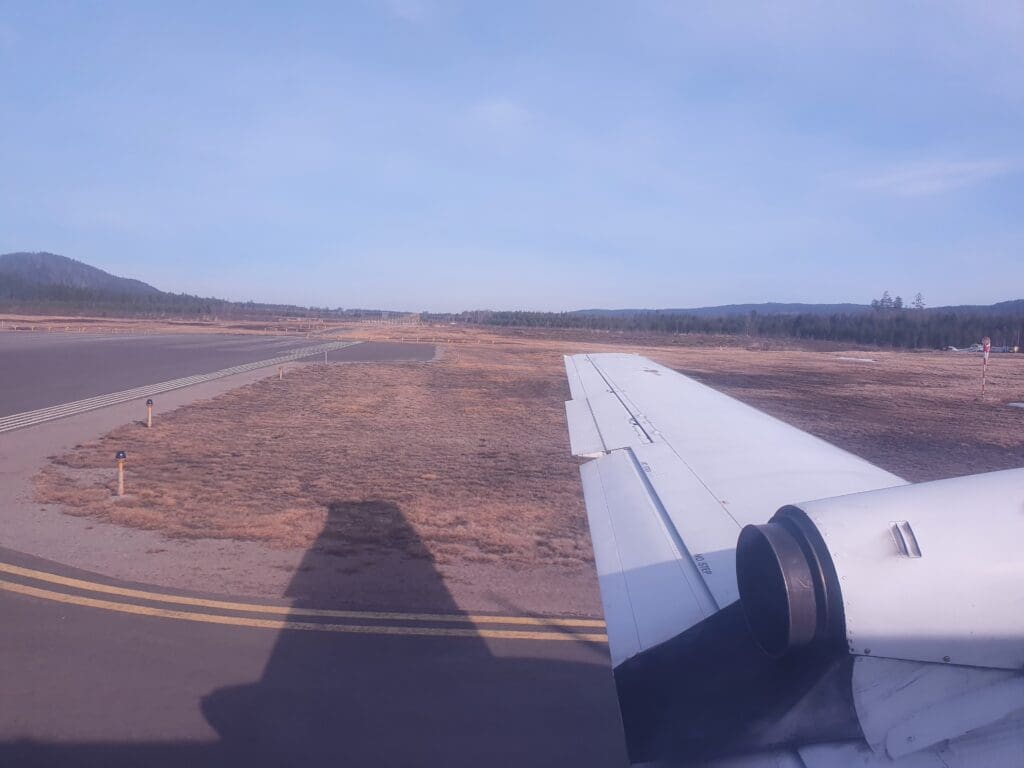
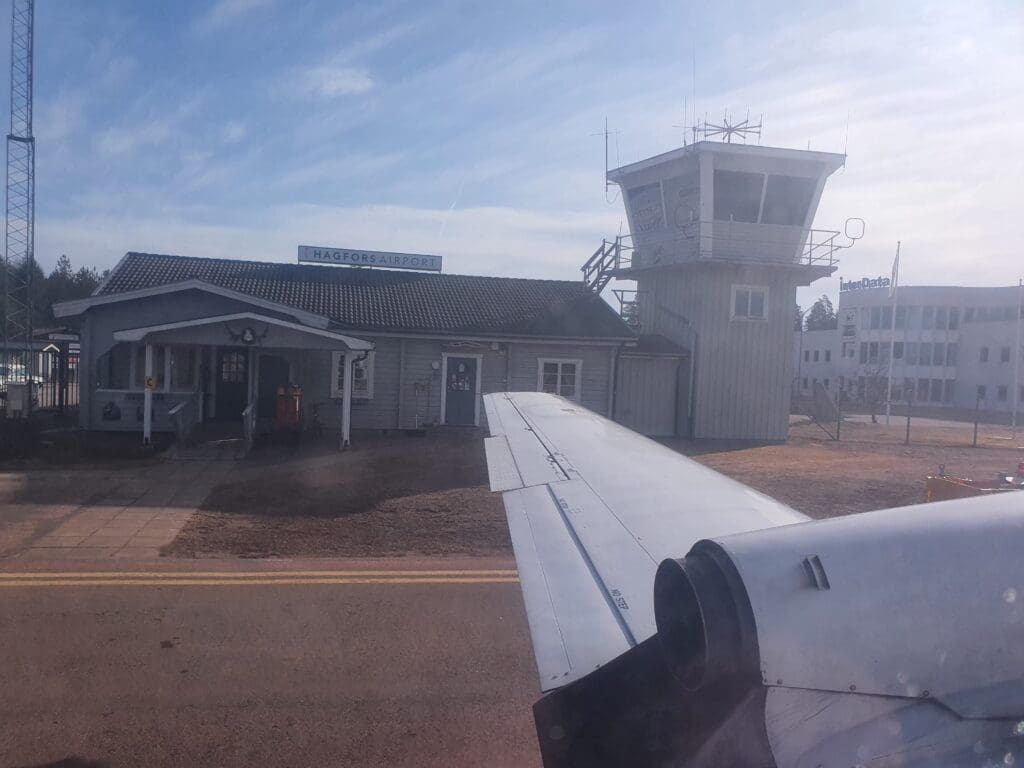
A short time after vacating the runway, the Jetstream came to a stop right outside the terminal building after which the two engines spooled down and the cabin fell silent. Around a minute later, the captain stood up and welcomed all three passengers to Hagfors before heading to the rear of the aircraft to open the cabin door. Once this had been opened, the single Hagfors bound passenger disembarked before the captain made their way out to do a quick inspection of the aircraft. Separated by just 22 miles as the crow flies, Amapola does not sell tickets for the short hop between Hagfors and Torsby in either direction. Seeing as the Hagfors bound passenger appeared to lack hold luggage, and with nothing needing to be added to the aircraft, there was relatively little that the small team of ground crew needed to do to ready the aircraft for its next flight. Indeed, following their inspection of the aircraft, the Captain appeared to stop and have a quick friendly chat with the ground crew before heading back inside the aircraft.
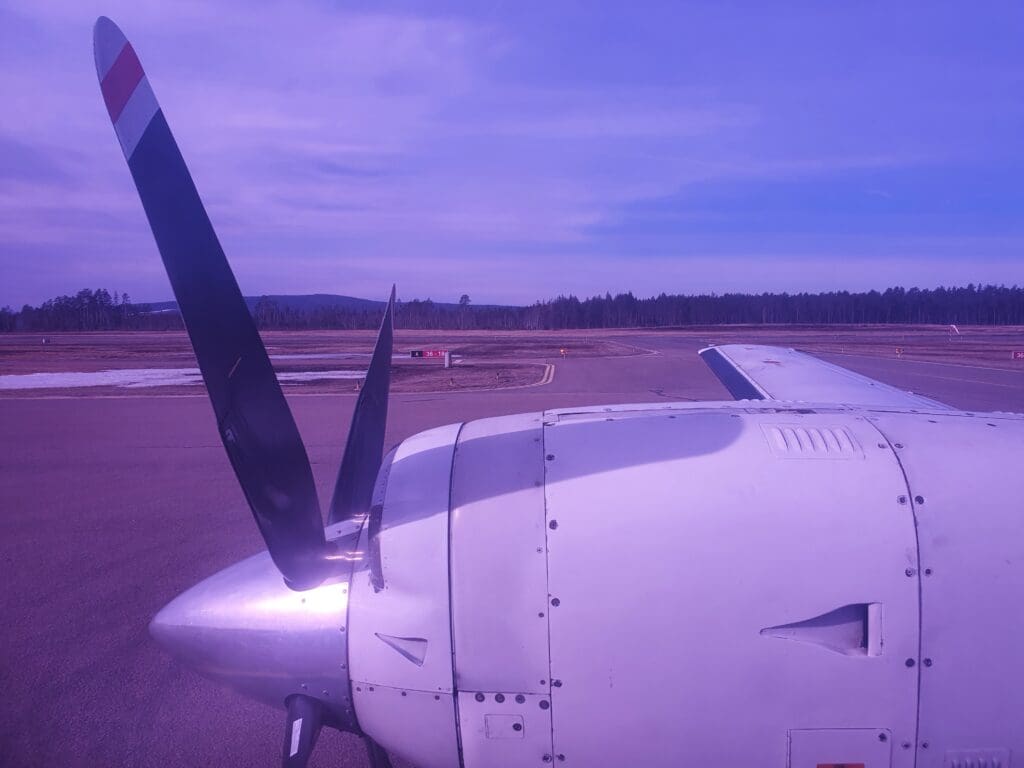
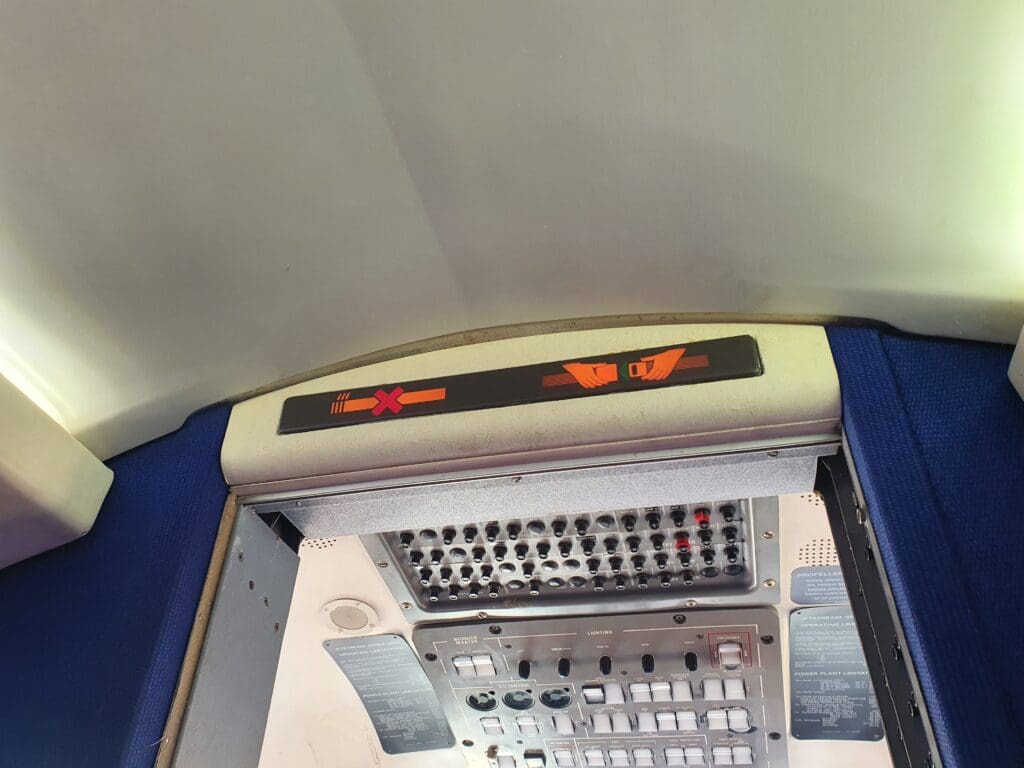
After the captain closed the cabin door, I informed the captain that I was a Jetstream enthusiast and asked whether it would be possible to sit in the first row. Much to my delight, they replied that this would be possible and we had a quick chat about the Jetstream as they cleared Seat 1B which had been covered in various bits of equipment, this seat serving as the Jetstream 32’s informal jumpseat. Once the captain had squeezed up into the cockpit, I continued my Jetstream chat for around a minute with the equally friendly First Officer before the two crew put on their headsets and commenced preparations for departure. After running through a few checklists, all conversations became inaudible as once again the two Garrett engines commenced their whirring and humming as they fired into life.
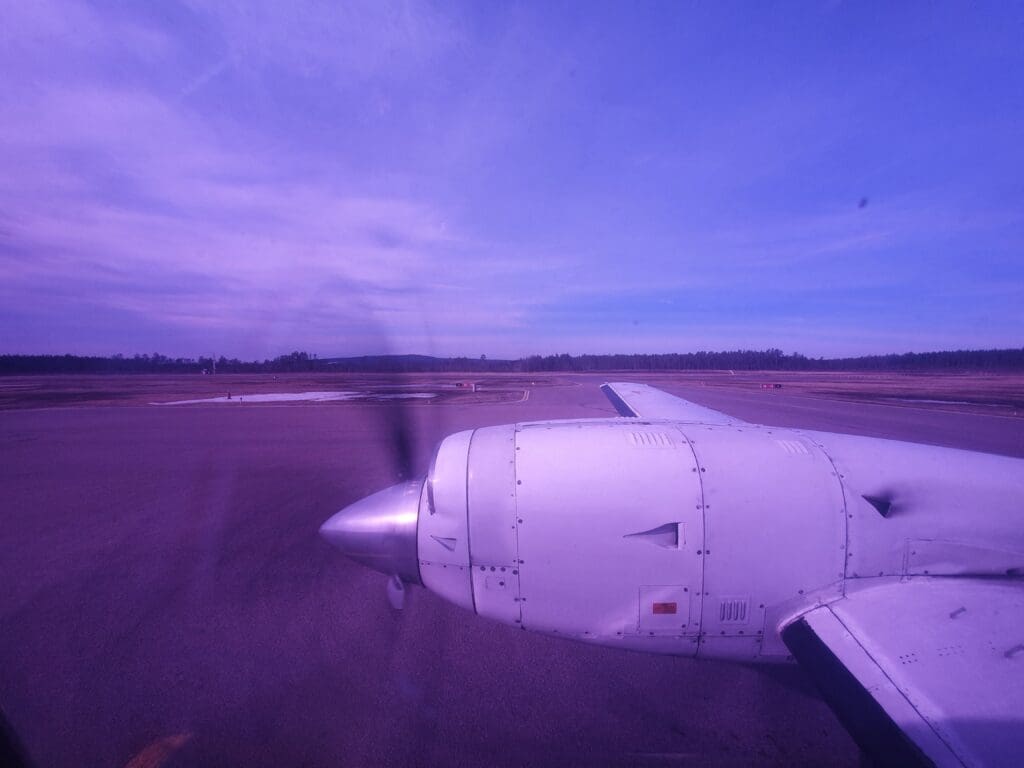
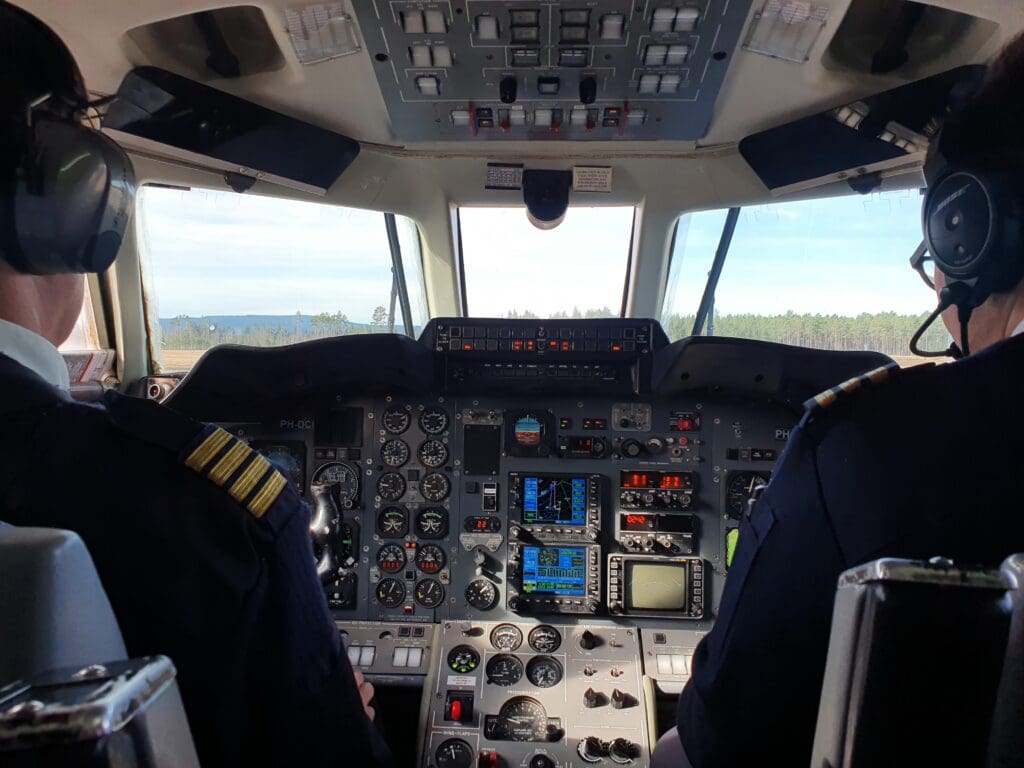
Once both of these had powered up and stabilised, and after the pilots had run through a few more checklists, the parking brake was released and the aircraft powered forward out of its stand. Thanks to the fact that only a light breeze was blowing that morning, the aircraft was permitted to depart in the opposite direction to which it had landed, thereby avoiding a backtrack down the entire length of the runway. After only twelve minutes on the ground in Torsby, at 0909 the Jetstream trundled onto the runway and came to a brief halt. A few moments later, the aircraft’s two thrust levers were pushed forward and the aircraft performed yet another powerful and short takeoff roll before shooting upwards into the skies.
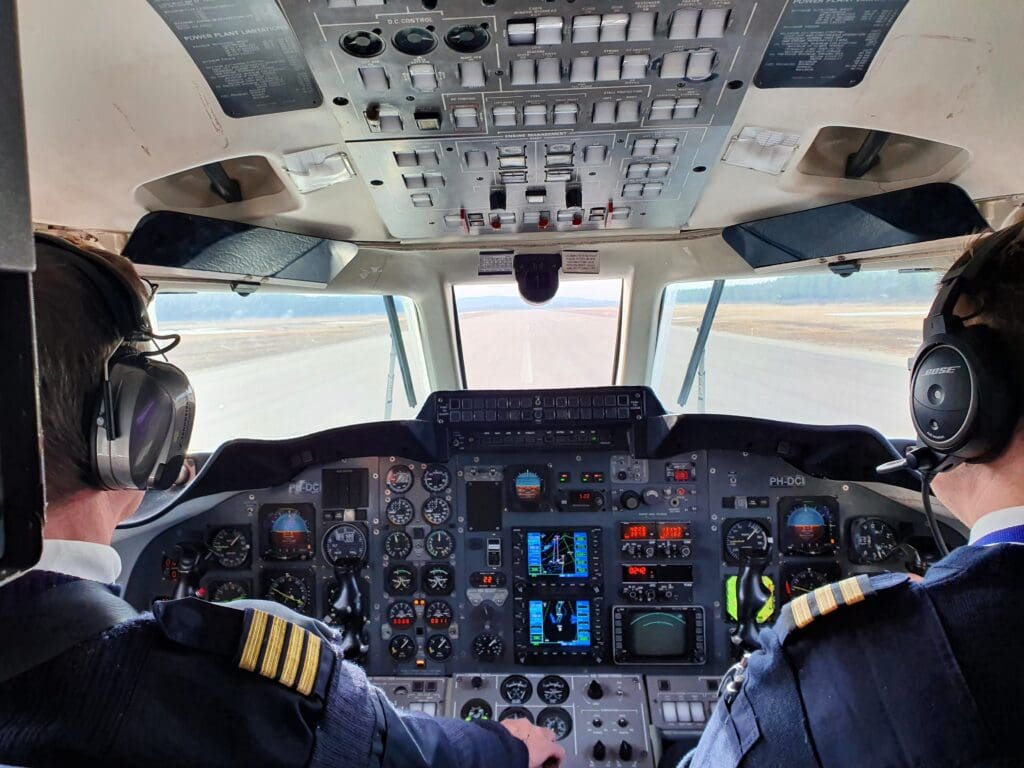
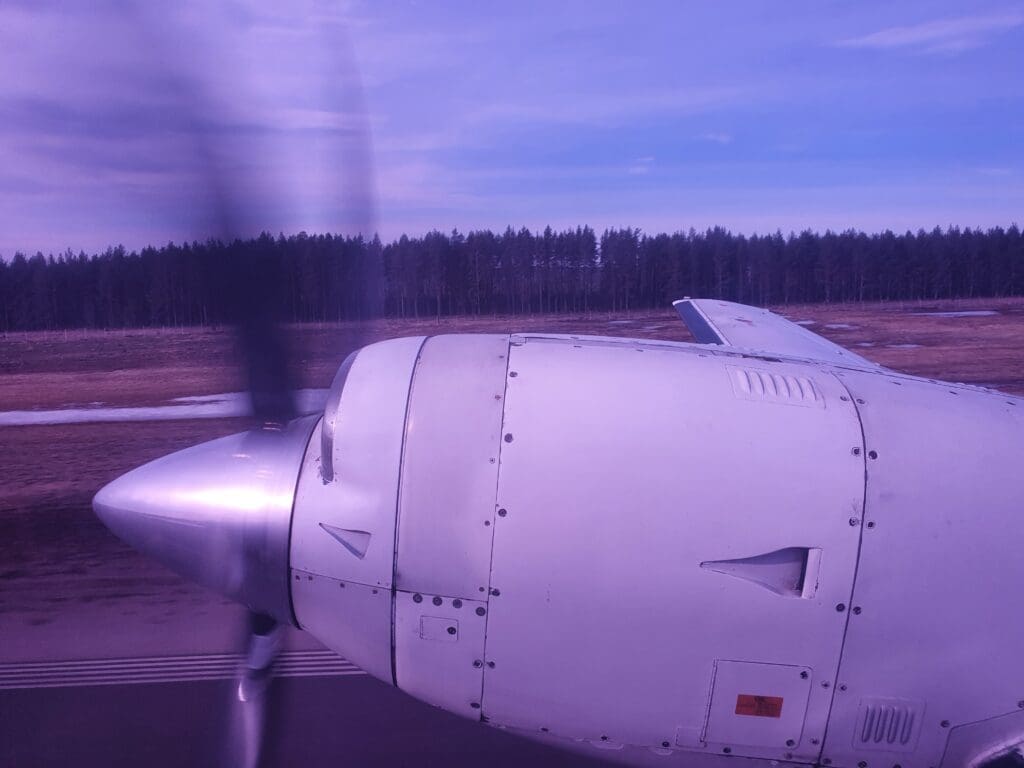
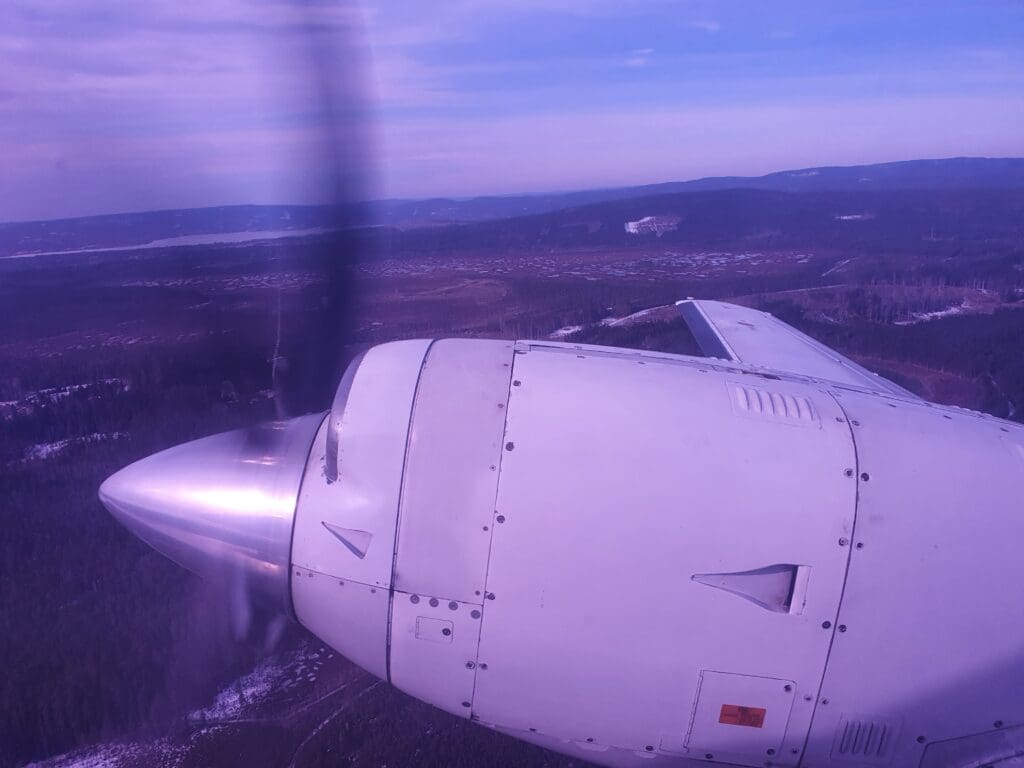
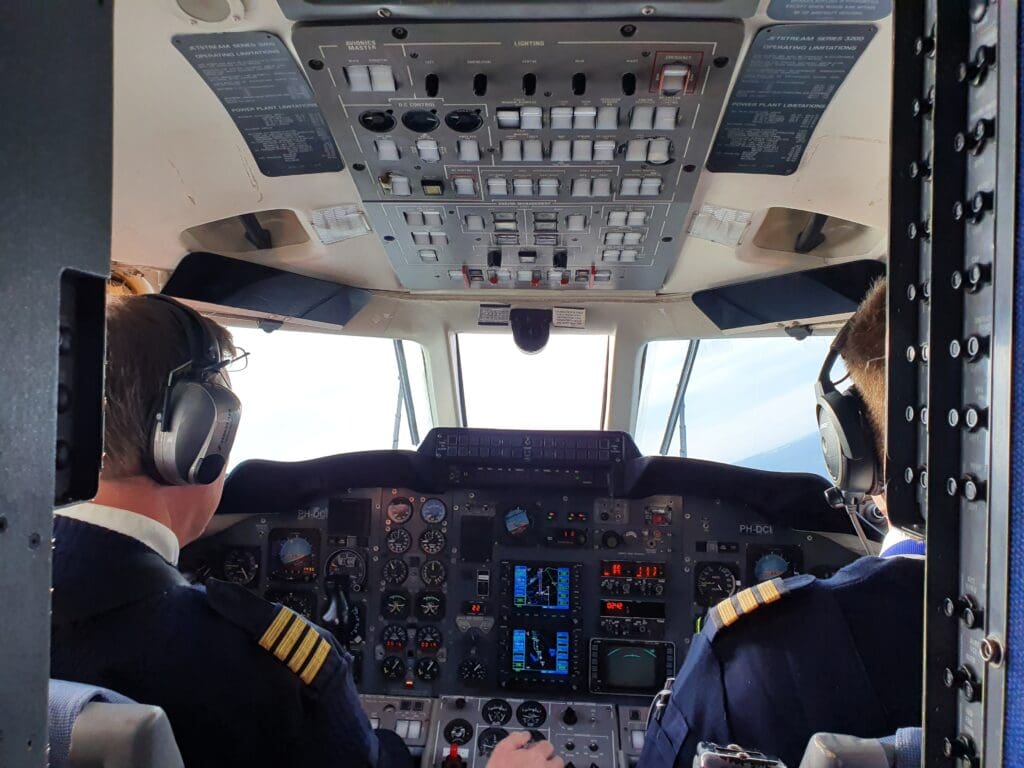
After leaving Hagfors Airport behind, the aircraft banked to the right before turning onto a northeasterly course that would take the aircraft to Torsby. Glancing through the heavily blue-tinted window to my right, outside it appeared that the landscape of forests, fields and lakes had not changed much, with these views omnipresent as the aircraft made the short hop up to its destination. Turning my attention to the action up ahead, as far as I noticed, the aircraft did not exceed 3,000 feet in altitude on this sector and appeared to be hand flown by the first officer for the entire journey. On a side note, the weather conditions were a little better on this sector, with the ride being much smoother than the first flight over from Stockholm.
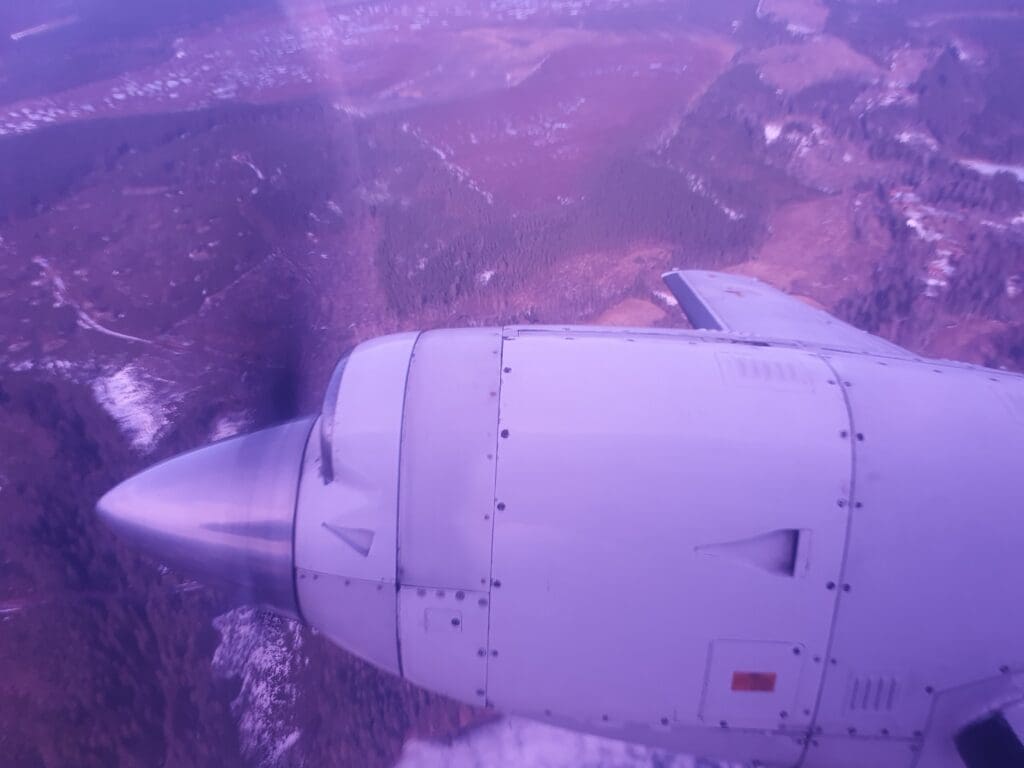
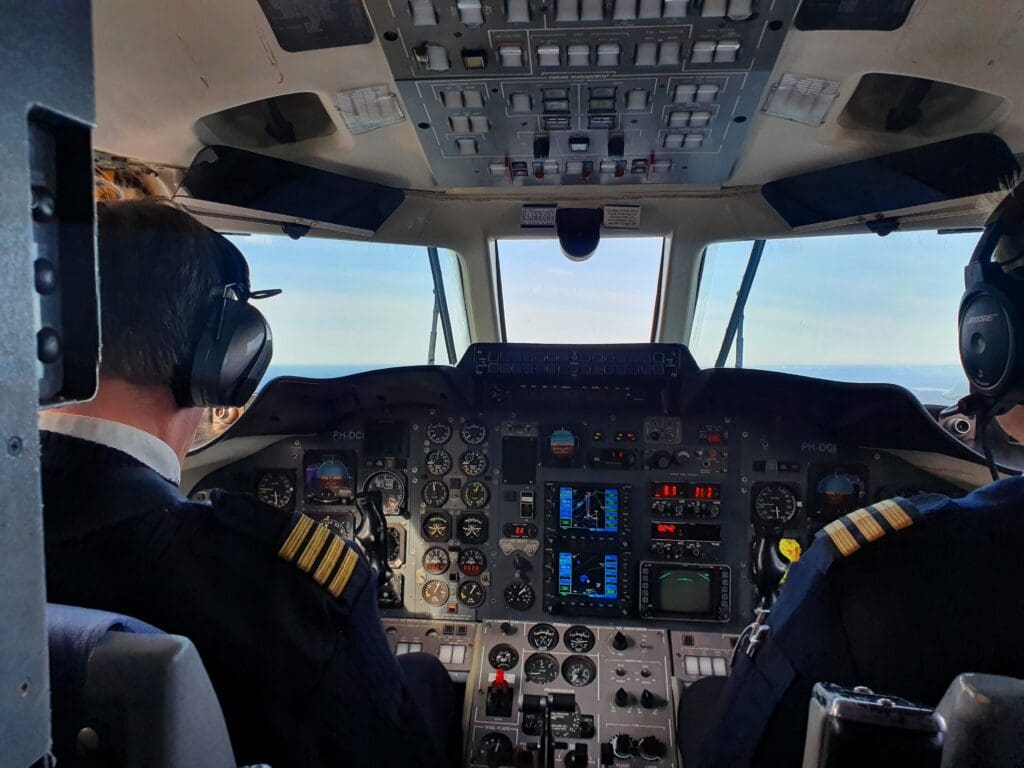
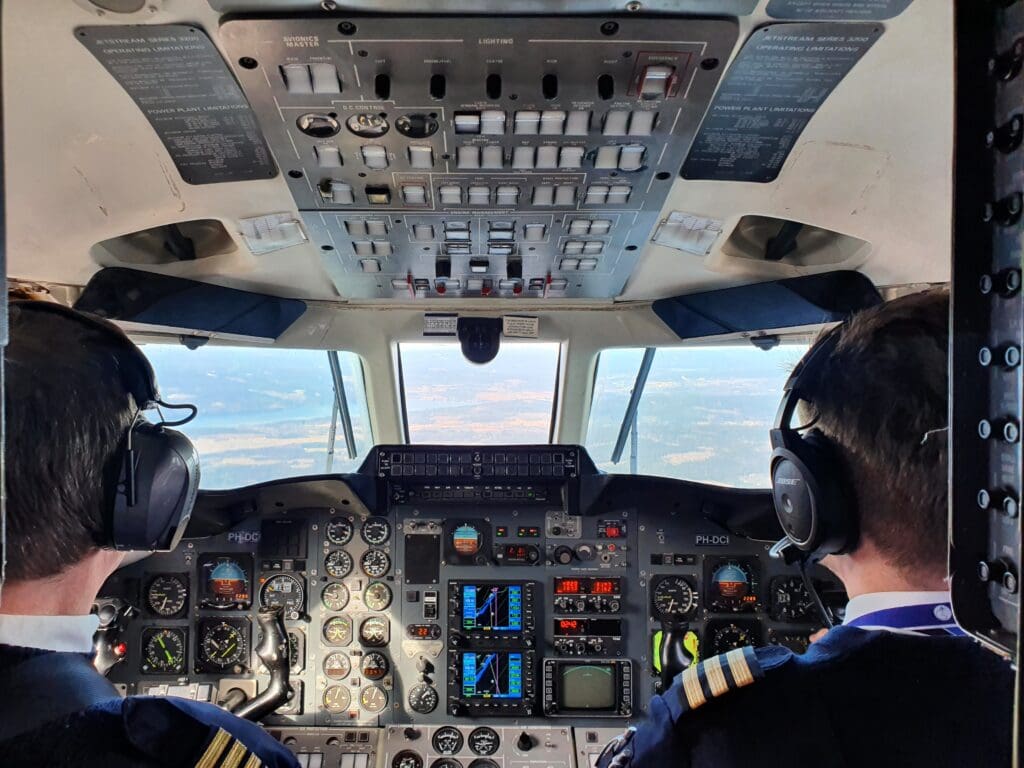
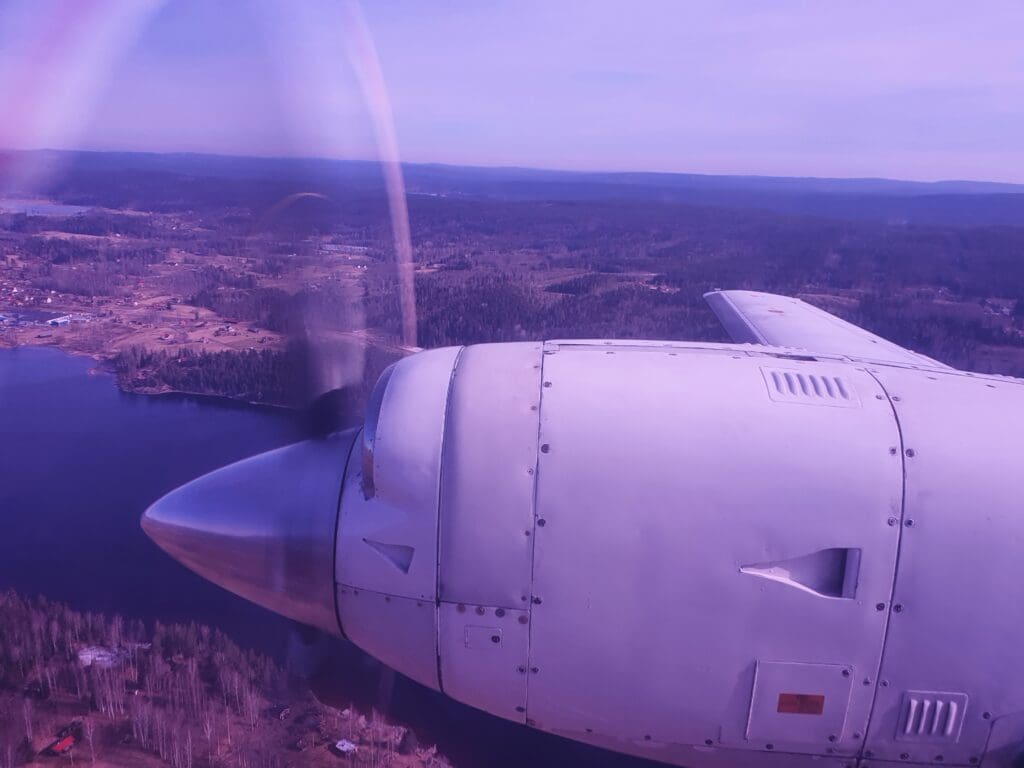
After around five minutes in the air, the Captain turned around and pointed out the airport up ahead sitting beneath snowy ski slopes. A few moments later, the aircraft could be felt commencing its descent down to Torsby Airport whilst once again another inaudible announcement was made which presumably regarded our impending arrival. After this, the mechanical squeaking sound could be heard once again as the flaps were lowered into position and before I knew it, Torsby Airport’s runway appeared up ahead.
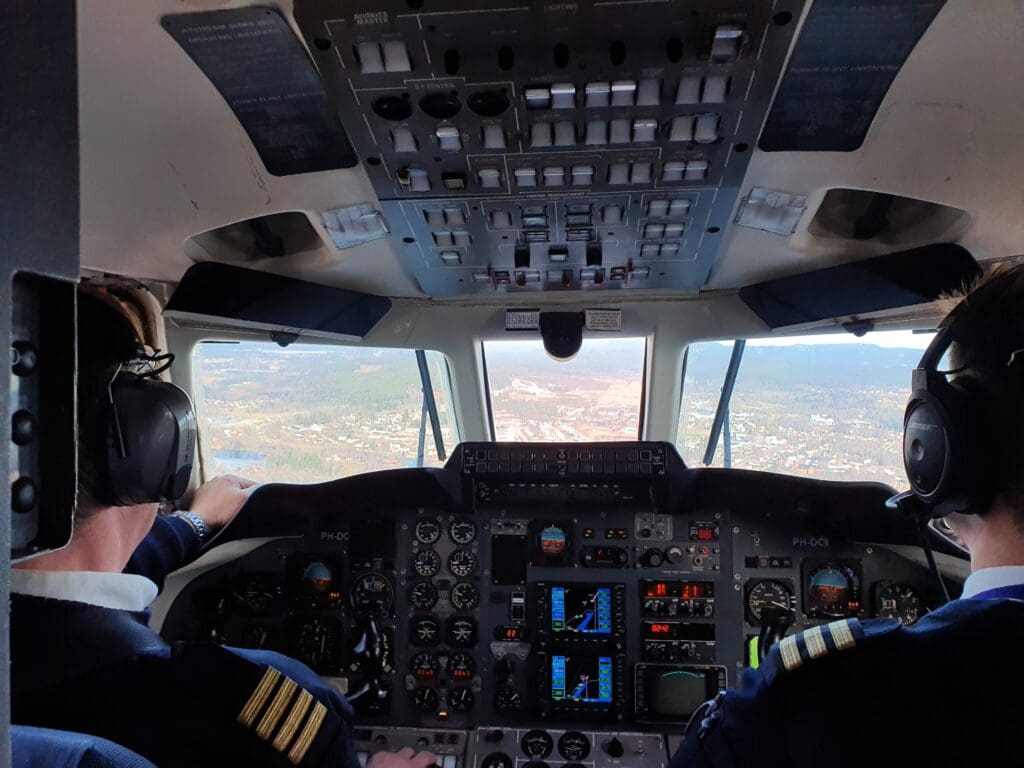
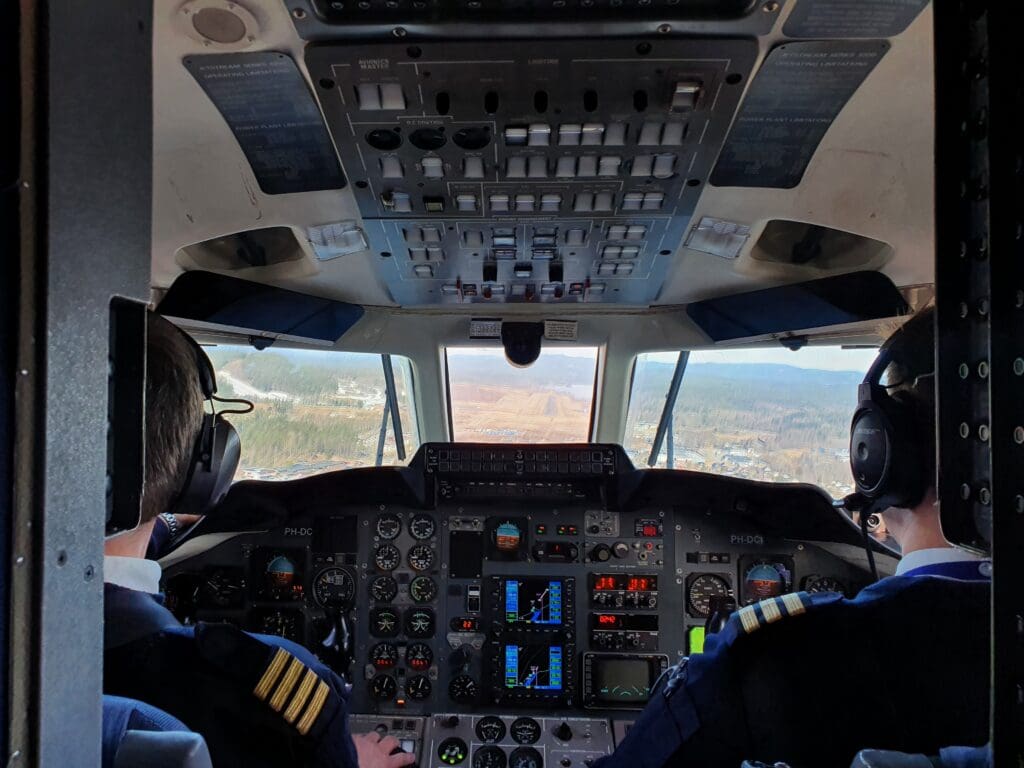
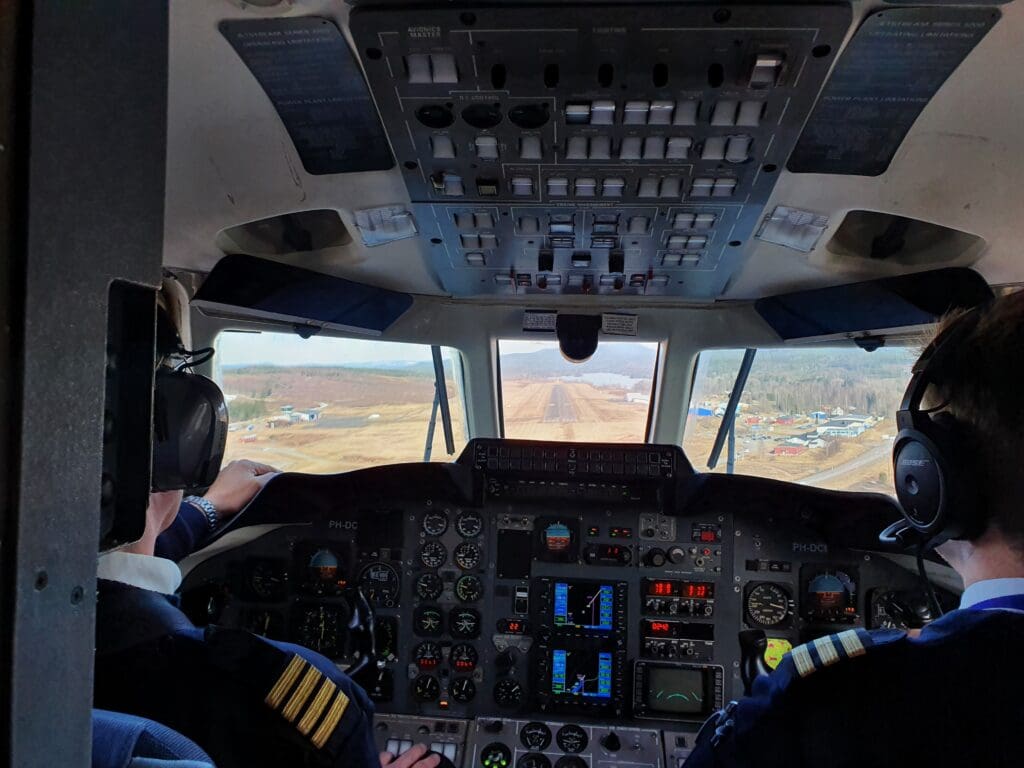
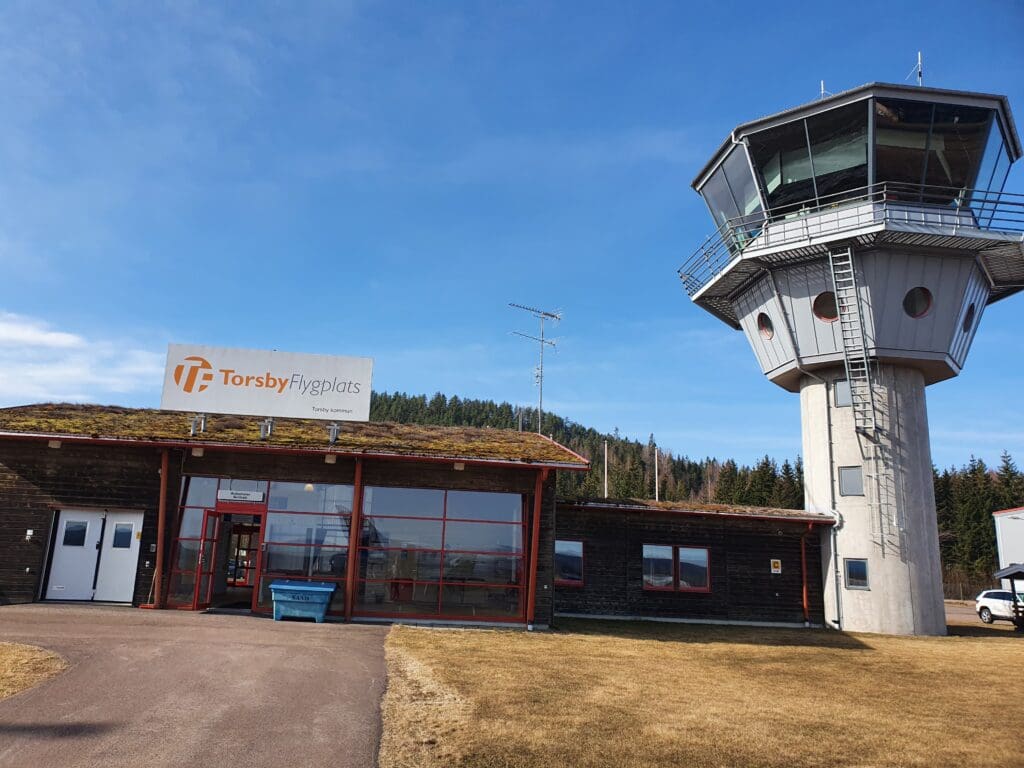
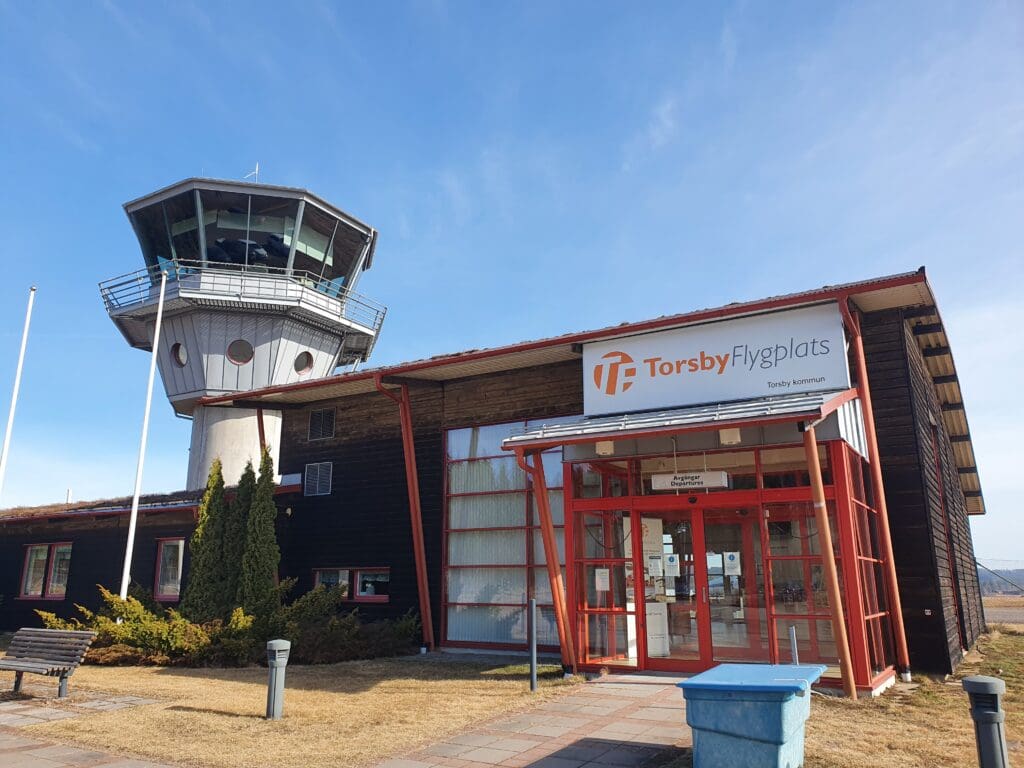
After sinking over the forests of Torsby, the turboprop crossed the perimeter fence and floated over the runway for several moments before the Jetstream gently returned to earth with a barely noticeable bump. Once again the two pilots appeared to be in no rush to exit the runway with the Jetstream decelerating gently before performing a u-turn and backtracking almost the entire length of the runway. Whilst Torsby may only be around half the size of Hagfors, its airport is slightly larger and has a little more happening. On the eastern side of the runway, a cluster of hangars could be seen, with these home to local Twin Commander operator Wermlandsflyg as well as the local flying club who operate a mixture of fixed-wing aircraft and gliders. However, that afternoon only a single Twin Commander could be seen waiting to depart off on its next sortie. On the other side of the airport in the southwestern corner, the compact terminal and adjacent control tower could be found. The former consists of a relatively small and modern structure with wooden panelling and large windows.
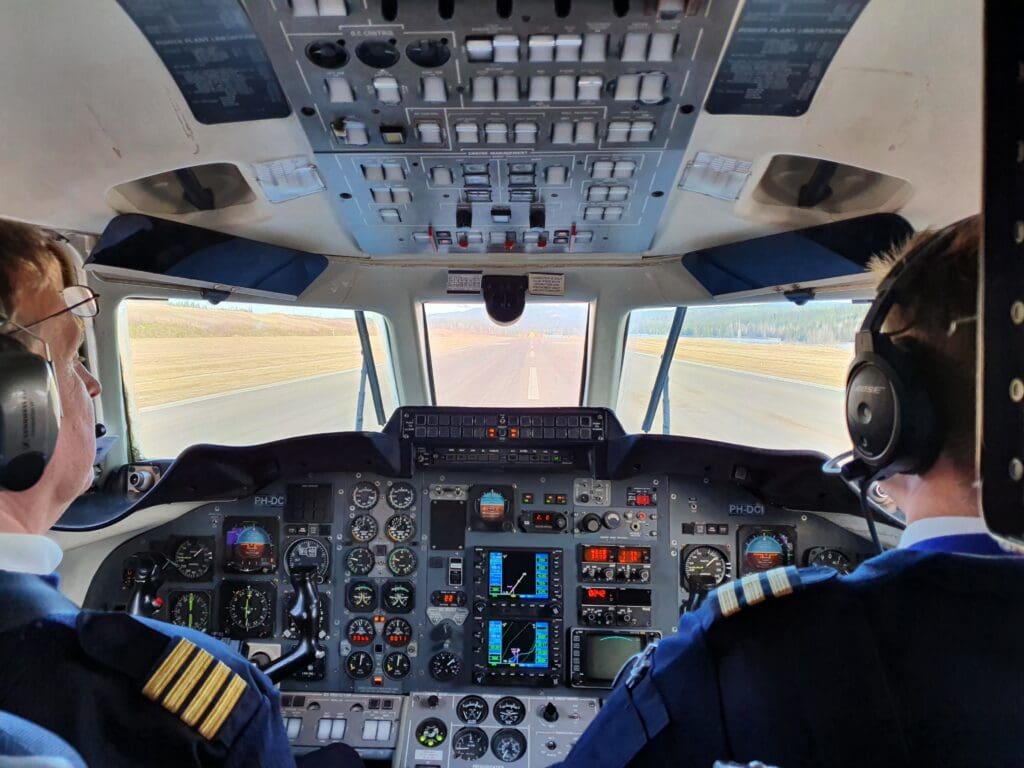
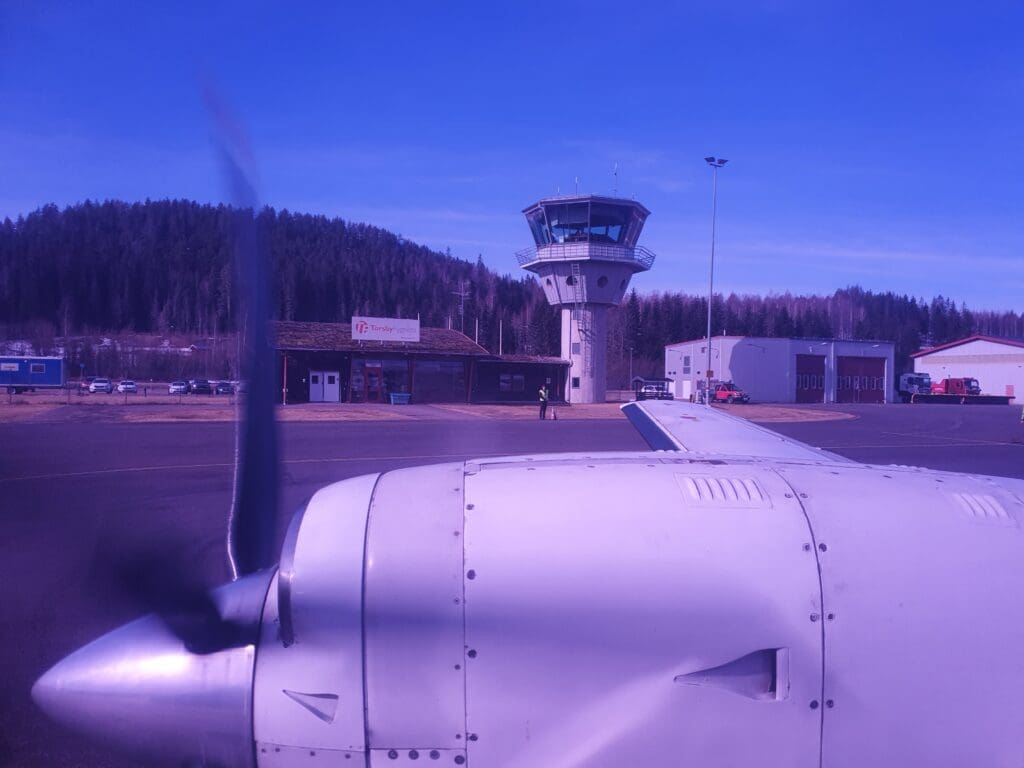
After vacating the runway to the right, the aircraft soon came to a stop outside the small terminal where a small team of ground crew met the aircraft. As with the first flight, the engines spooled down straight away and after the propellers stopped whirling around, the captain emerged from the cockpit and welcomed the flight’s two passengers to Torsby. A few moments later, the cabin door was opened and disembarkation commenced. Whilst the other passenger made a quick escape, I took things at a slightly more leisurely pace and following another conversation with the First Officer I made my way to the rear of the aircraft, picked up my coat and then my backpack from the rear baggage compartment before disembarking the aircraft.
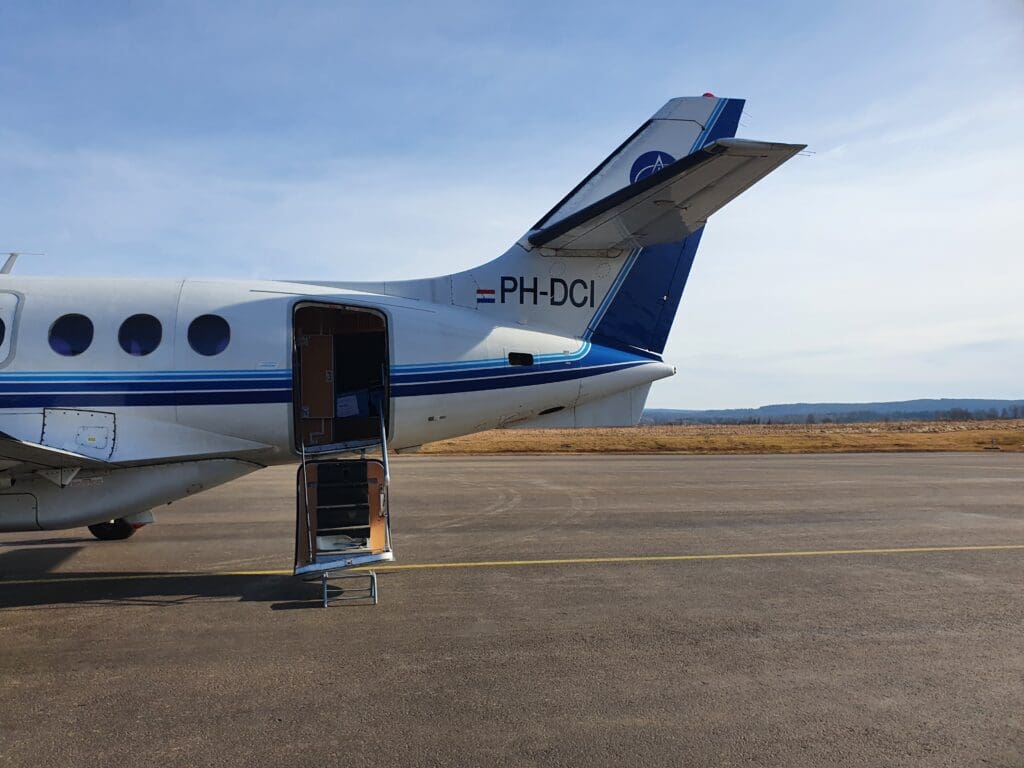
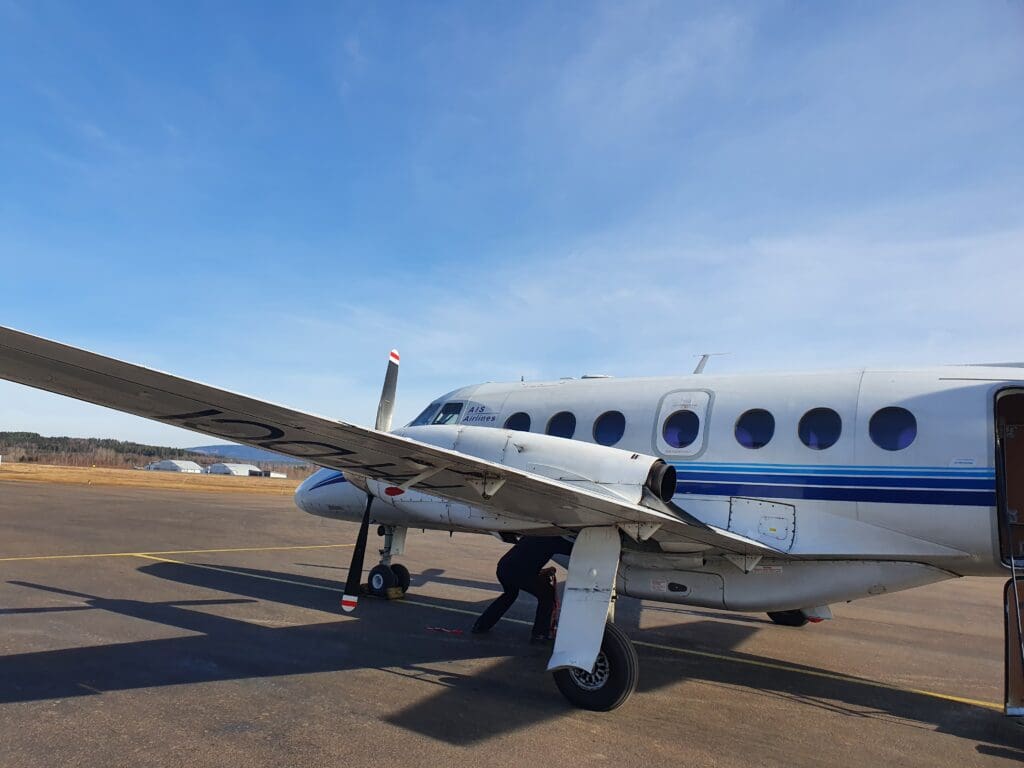
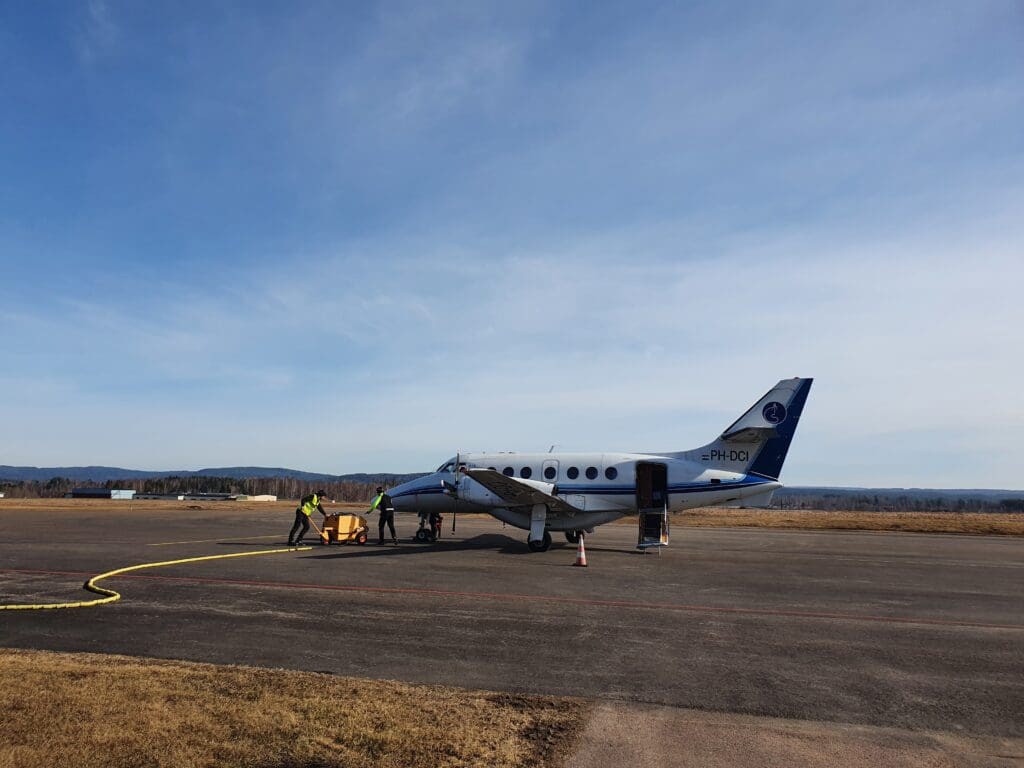
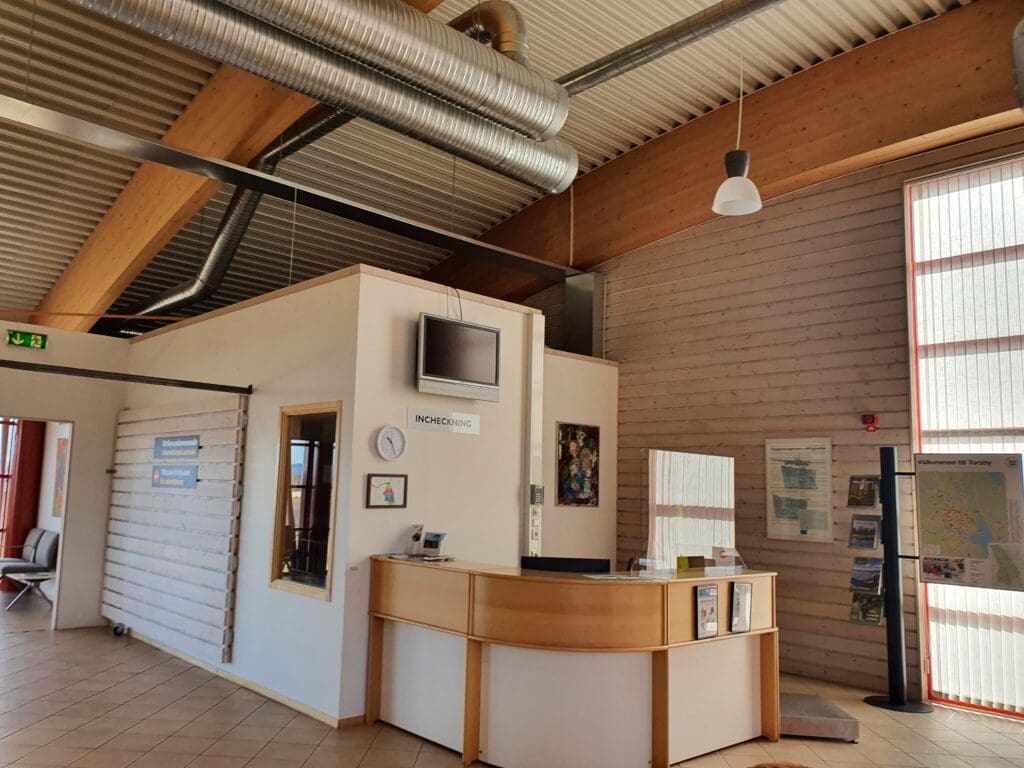
As I cautiously made my way down the Jetstream’s built-in steps, I thanked the captain before walking the short distance through the pleasant morning air over to the terminal. Upon entering this, this was devoid of both staff and passengers, although I was happy to find this to be modern and clean. The real highlight of this however came in the form of a complimentary hot drink machine. I therefore decided to end my first-ever Jetstream 32 experience with a free coffee which I sipped as I commenced my walk into Torsby’s town centre.
Summary
Were I to take the form of a ‘normal’ passenger, I would likely complain about the dire experience in Arlanda Airport, the rather rude gate agent, the poor legroom onboard and the Jetstream 32’s battered and worn cabin. However, I am most certainly not a ‘normal’ passenger, instead despite these grievances, I had a great experience flying in an aircraft that I had wanted to sample for years. In addition to this, the two pilots were incredibly welcoming and friendly and added to the experience.