Are They Really That Good? My First Ride with Singapore Airlines: Copenhagen to Rome on an A350
Background
Singapore Airlines is a master of fifth freedom routes, with passengers having long been able to sample the delights of one of the world’s most reputable airlines without stepping foot in Singapore. Whilst their fifth freedom network has become a little more compact since 2020, today Singapore Airlines continues to operate six routes that do not touch Singapore. These include two transatlantic services (an Airbus A380 service between Frankfurt and New York JFK, and an Airbus A350 service between Manchester and Houston), two intra-Europe Airbus A350 flights (one between Barcelona and Madrid, and the other between Copenhagen and Rome Fiumicino), and then finally two transpacific flights which connect Taipei and Tokyo Narita with Los Angeles.
Well known for their high levels of service, I had wanted to fly with Singapore Airlines for some time. Whilst I had come close to flying with the Singaporean carrier during my time living in Korea when I had considered taking them between Seoul Incheon and Dubai, I ended up flying with China Southern (a decision I came to regret!). As the world slowly emerged from lockdowns and travel began to thaw, likely unable to visit Singapore any time in the near future, I began to plan a weekend trip that would enable me to ride onboard their two European fifth freedom services. In the end, a combination of schedules, price and the fact that it was the longer of the two intra-European services, I decided to opt for Singapore Airlines’ service between Copenhagen and Rome.
Booking
A quick search for tickets on Skyscanner revealed that there was only a minimal price difference between tickets sold on Singapore Airlines’ website and those sold by a myriad of online booking sites. With this considered, I decided to book directly with the airline and soon downloaded the carrier’s app. Once this was installed, I selected my region and language and did a quick search, soon being presented with Singapore Airlines’ 0835 departure, scheduled to arrive in Rome two hours and a half later at 1105. Upon selecting this, I was then presented with six different Economy fare options, ranging from 585kr (around £67) for an Economy Lite ticket, up to a whopping 2,265kr (around £265) for an Economy Flexi ticket. Travelling on a budget and confident that I would not have to make any changes to my booking, I went for the cheapest fare and was taken to enter my details and agree to Singapore Airlines’ privacy policy.
Once these formalities were complete, I was then taken to the seat selection page. Seeing as I would be travelling on the cheapest ticket, this could only be done by paying an additional fee, with three options provided – Extra Legroom for 163kr, a seat in the Forward Zone for 98kr, or a Standard Seat for 53kr. After some deliberation, I decided to pre-reserve Seat 50A which brought my fare up to a total of 638kr. Whilst I was utilising Singapore Airlines’ UK regional site, for some reason there was no option to convert the fare into pounds so I went ahead and paid in Danish Krone. Other than this slight annoyance, I paid without any issue and soon received my booking confirmation by email.
My Night at Copenhagen Airport
Having touched down from Aalborg onboard a modern DAT ATR 72 turboprop at 1834, I was left with almost exactly fourteen hours until the scheduled departure time of my flight down to Italy. Whilst many would have opted to spend the night in a local hotel, Airbnb or similar, with all accommodation both around the airport and indeed a little further away in the city proving to be incredibly expensive, I had decided to save money and spend the night savouring the delights of Copenhagen Airport. Following a quick walk around in the chilly yet pleasant air and a gourmet meal which involved sampling the local specialities of the Danish McDonalds menu, I made my way back to the airport with around twelve hours to go until departure.
At that time in the evening, the landside portion of Terminal 2 seemed to be fairly quiet and whilst it was pleasant enough, I saw little reason to linger around in this viewless area of the airport when I could instead enjoy vistas of the smorgasbord of aircraft visiting the Danish capital. After a brief walk around, I made my way over to the security area and soon tapped my mobile boarding pass on one of the many automated gates. Given the many hours that separated me from my flight to Italy, I was pleased to find that this allowed me to pass through and I soon made my way up to one of the five open security checkpoints. With a total of 26 flights departing between my arrival there and the end of the day, I wasn’t too sure how busy security would be however to my delight this featured nothing more than a short and fast-moving queue and I was thus able to pass through the checkpoint and make my way into the airside area within no more than four minutes.
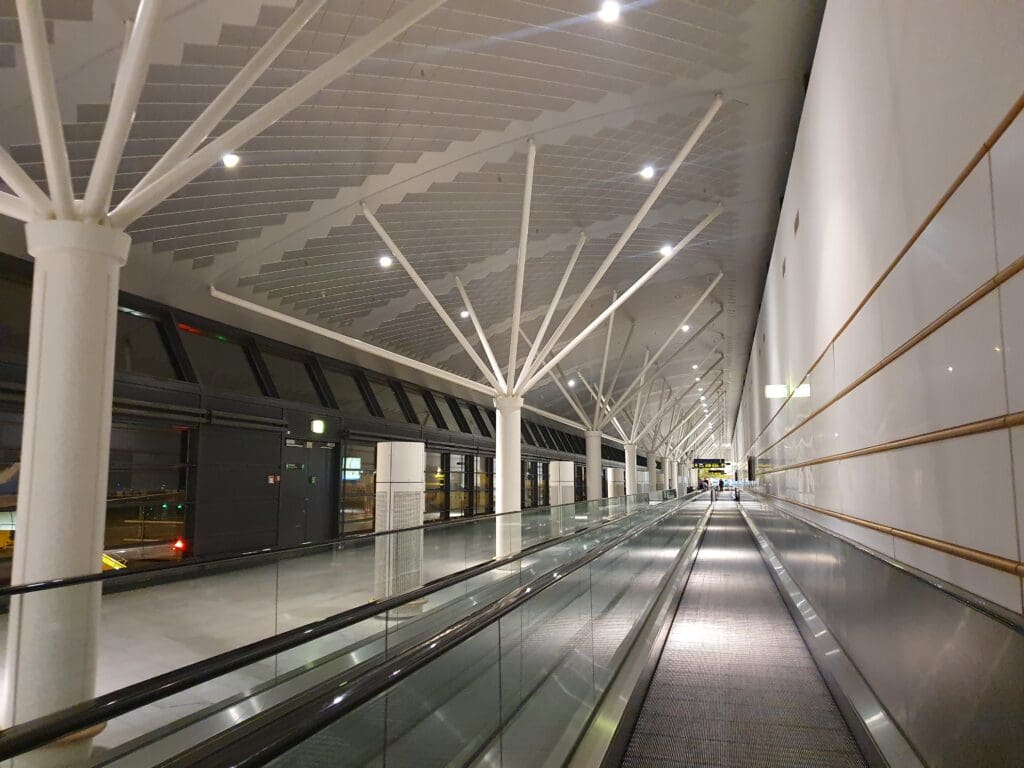
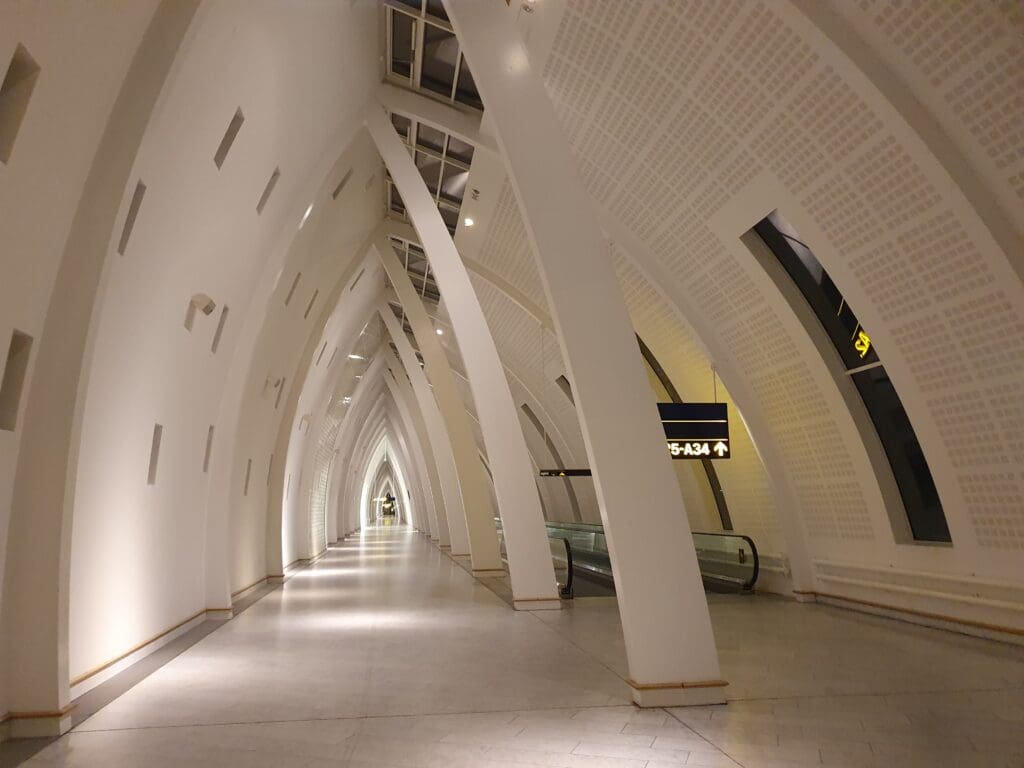
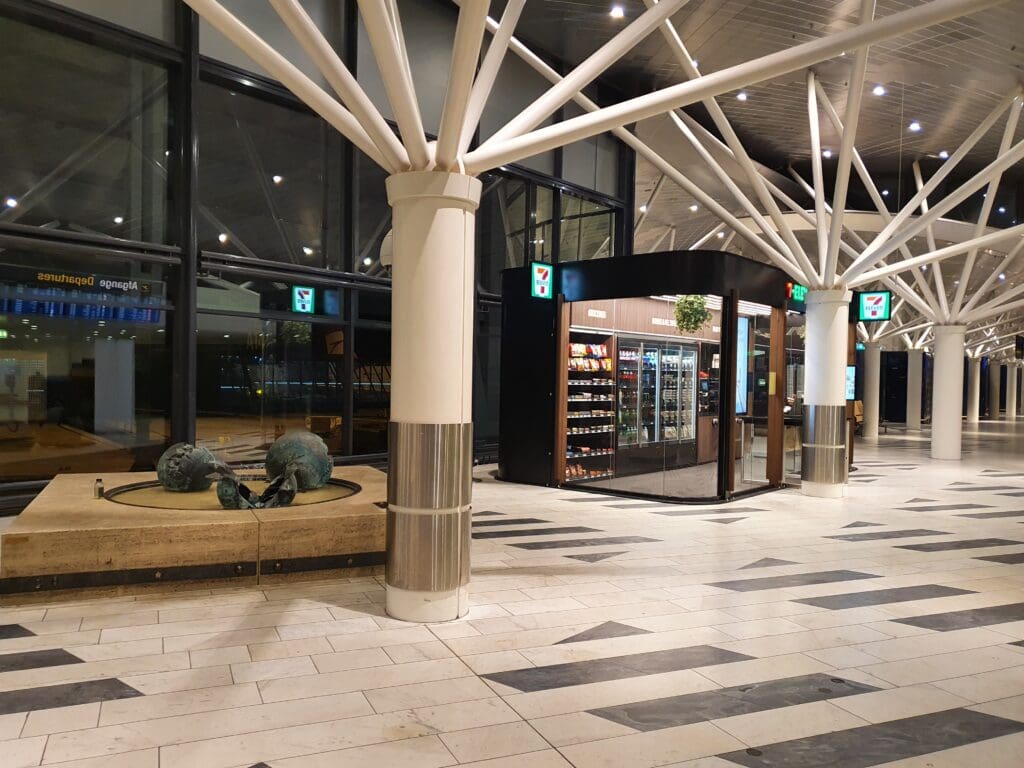
Predicting that I would lack the energy to do so the following morning and that most of the terminal’s facilities would be locked up overnight, upon arriving in the airside portion of the terminal I decided to have a good walk around. This would enable me to see what’s what in the terminal, and also scout some suitable locations where I could spend the night. Inside, Copenhagen Airport features five different piers and with each of these appearing to have been constructed at a different time, inside, each of these has notable changes in their style and design. However, whilst some may complain about the non-uniformity, I thought this made the airport a little more interesting. Inside, each pier seemed to be modern and stylish in design and importantly appeared to be clean and tidy. In terms of facilities, I found the airside portion of Copenhagen Airport to be home to a good number of shops, restaurants, cafes and bars, with plenty on offer to keep those with cash to splash entertained and fed. However, options for those on a budget, as they are in many international hubs across the world, were highly limited – convenience stores were limited to 7-Eleven and WHSmiths, however, even these were far from cheap. With no 7-Elevens to visit in the UK, I decided to pay a visit to the local branch. Interestingly, this appeared to be a newly opened pilot store without staff, whereby you magically tap your contactless card upon entry, pick up your items and then walk out of the store. As you exit this, the system magically works out those items that you have picked up, totals these up and then charges your card. Turning to cafés, some passengers may be disappointed to find that the terminal is devoid of even a single branch of a ‘real’ branch of Starbucks, although plenty of unmanned Starbucks vending machines could be seen throughout the terminal. However in true Danish style, the airport appeared to have perhaps the highest concentration of Ole and Steen outlets anywhere in the world, and it appeared that wherever I roamed within the terminals, I was never more than about two seconds away from one of these!
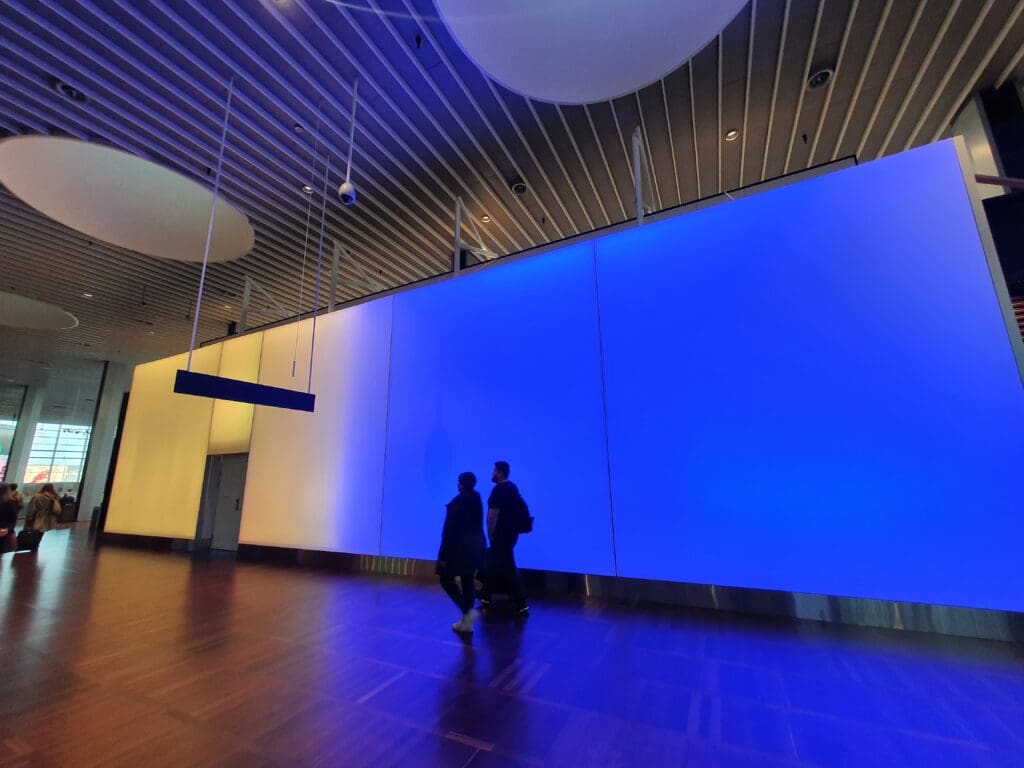
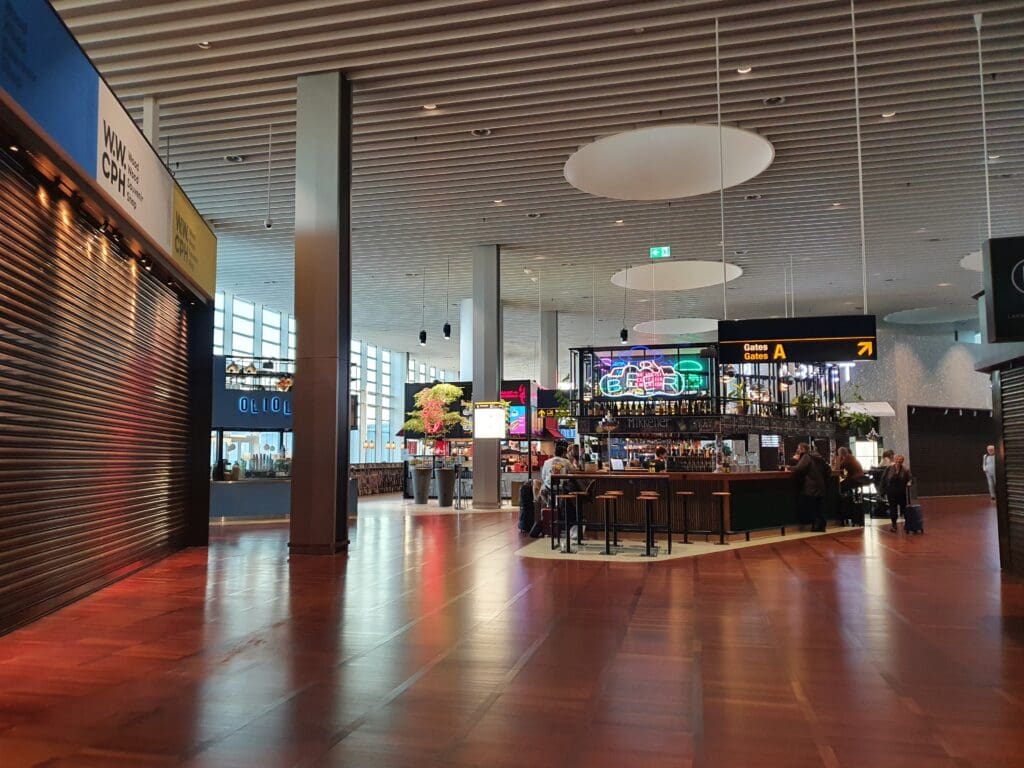
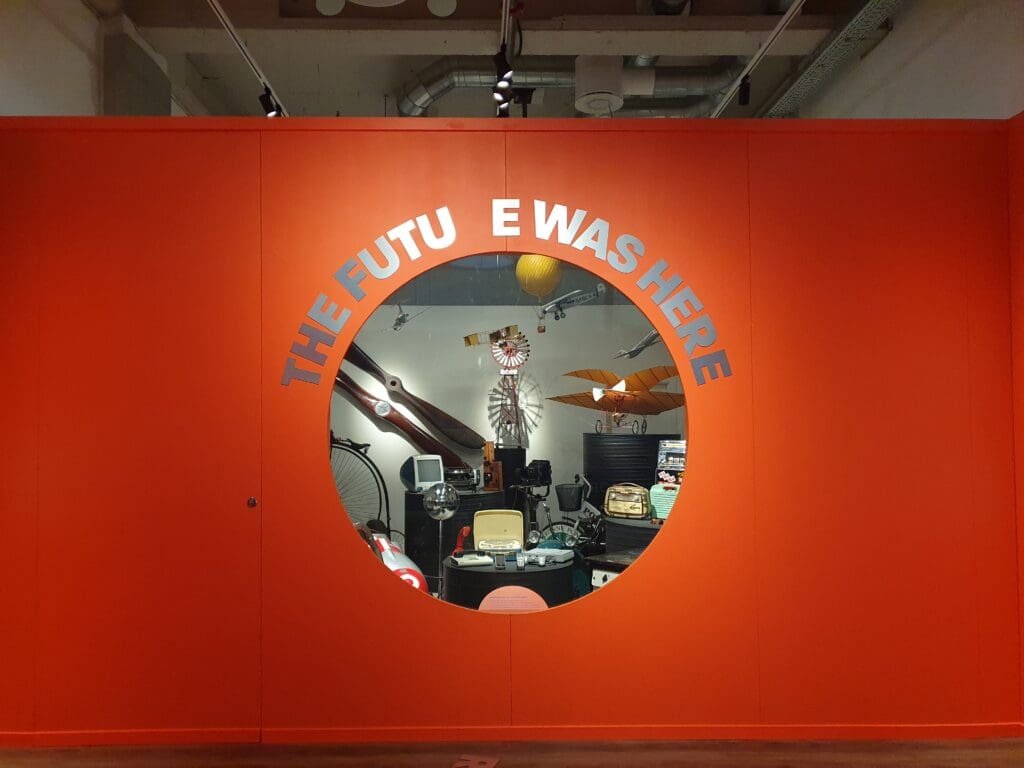
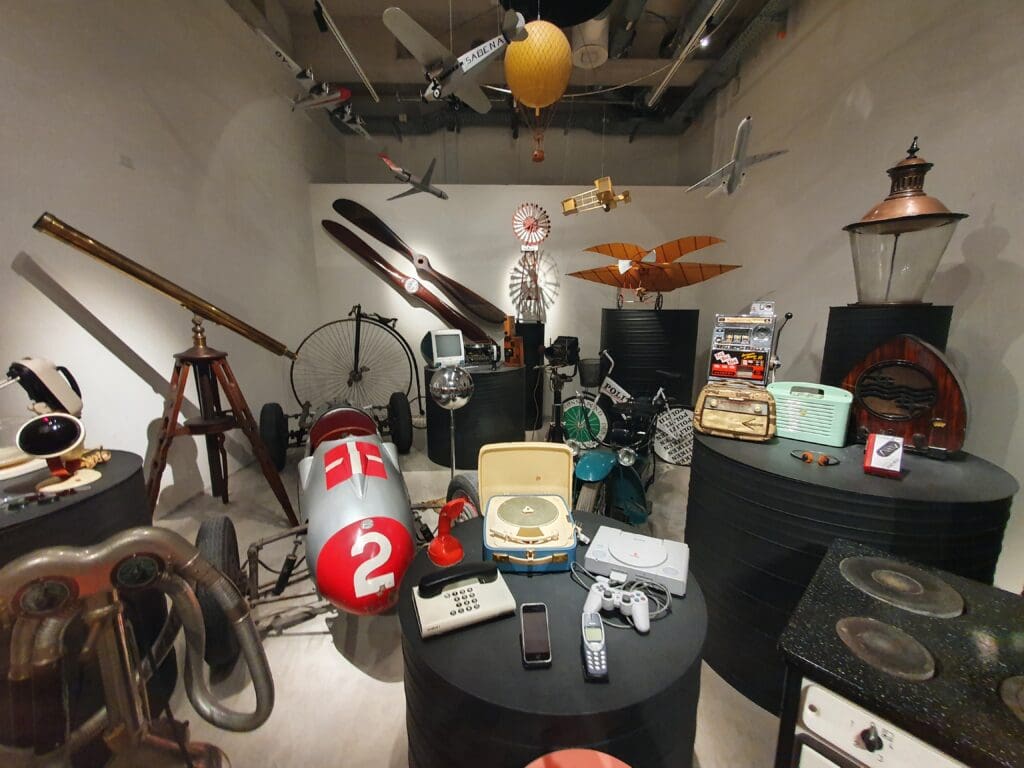
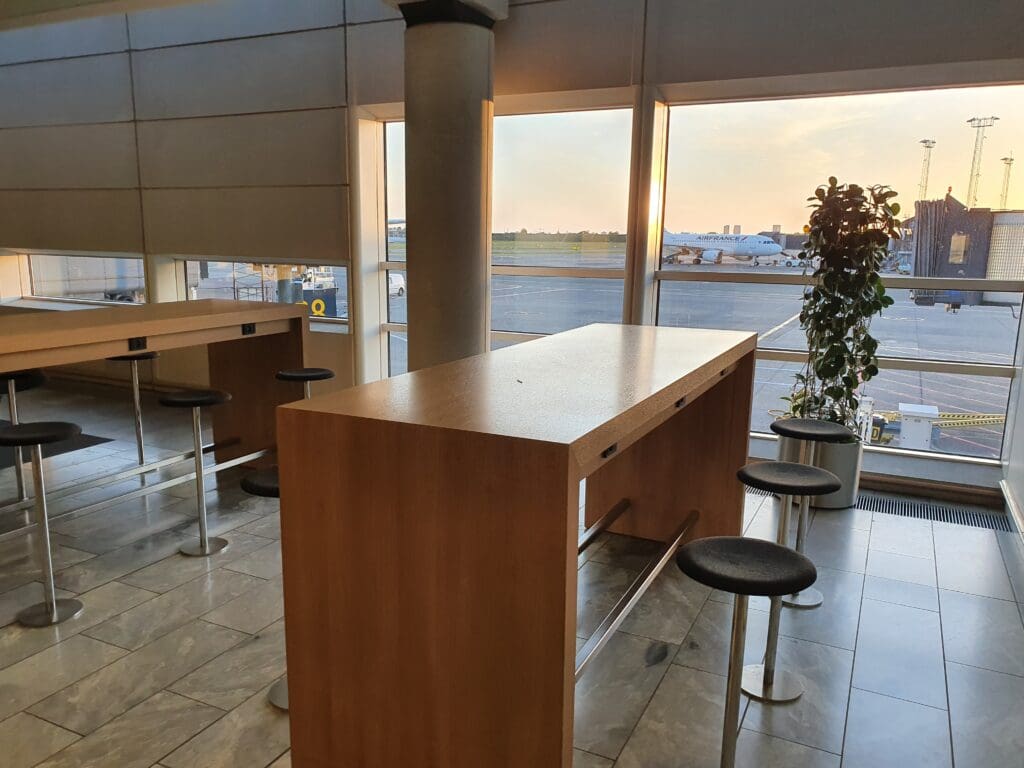
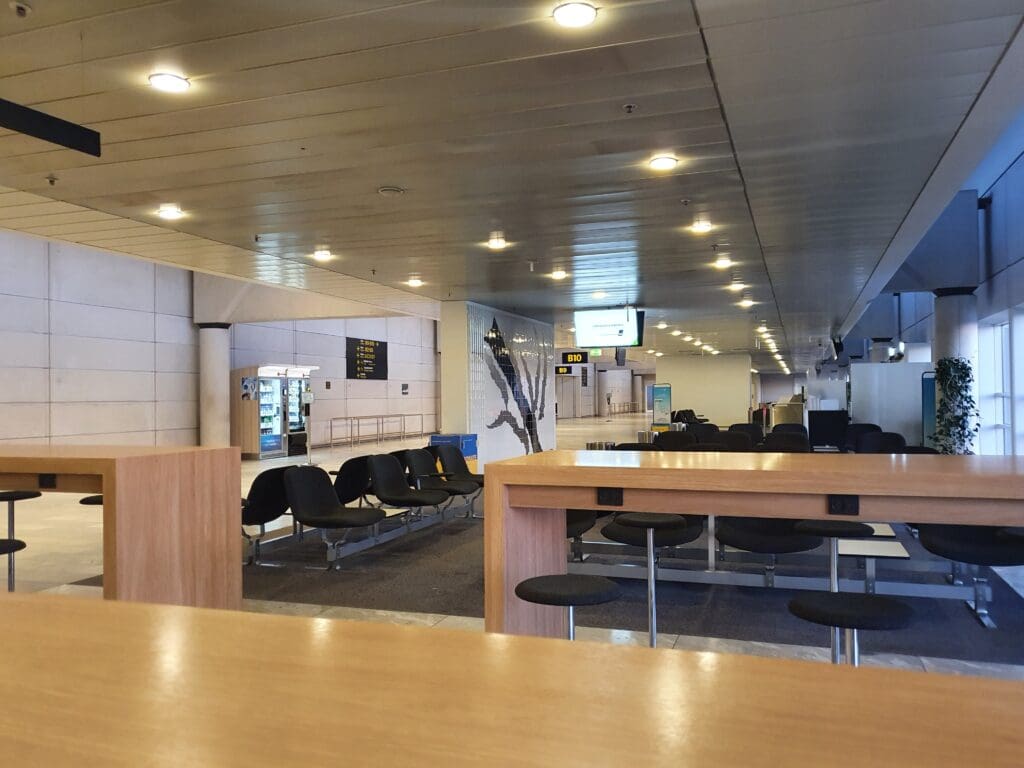
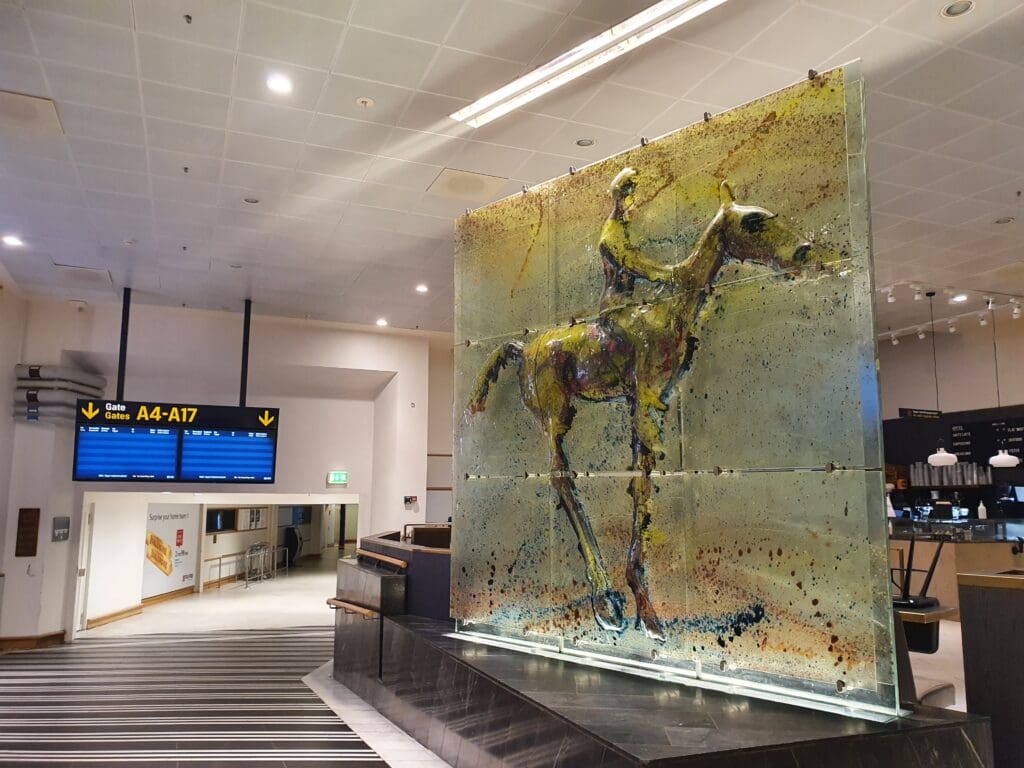
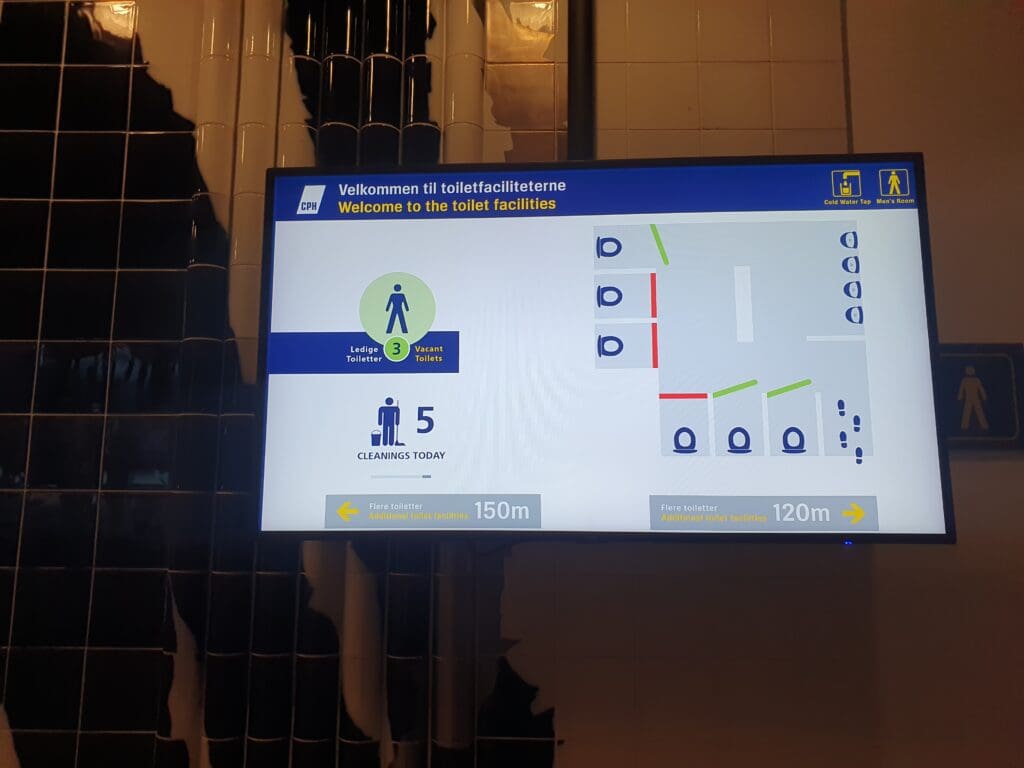
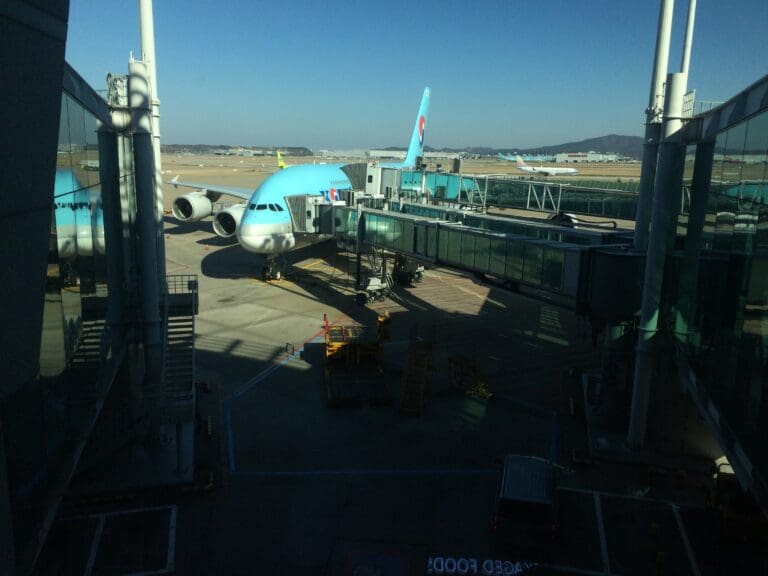
Thankfully, I found Copenhagen Airport to be aviation enthusiast-friendly, with large glass windows offering generally good views out onto the terminal’s stands below. However, as is often the case, a good number of these seemed to feature plenty of smudges and thus require a clean. Turning to the movements outside, for those enthusiasts based in Europe, most of the aircraft types and their operators that frequent Copenhagen may not seem to be particularly rare or unusual. Other than the masses of Norwegian and Scandinavian Airlines aircraft, most movements seen during my stay took the form of narrowbody aircraft belonging to carriers from across Europe. Of all aircraft seen during my stay, as a British enthusiast the rarest of these undoubtedly took the form of Air Greenland’s sole Airbus A330-300 which arrived from Kangerlussuaq before being towed off to spend the night at a remote stand before heading back to Greenland the next morning.
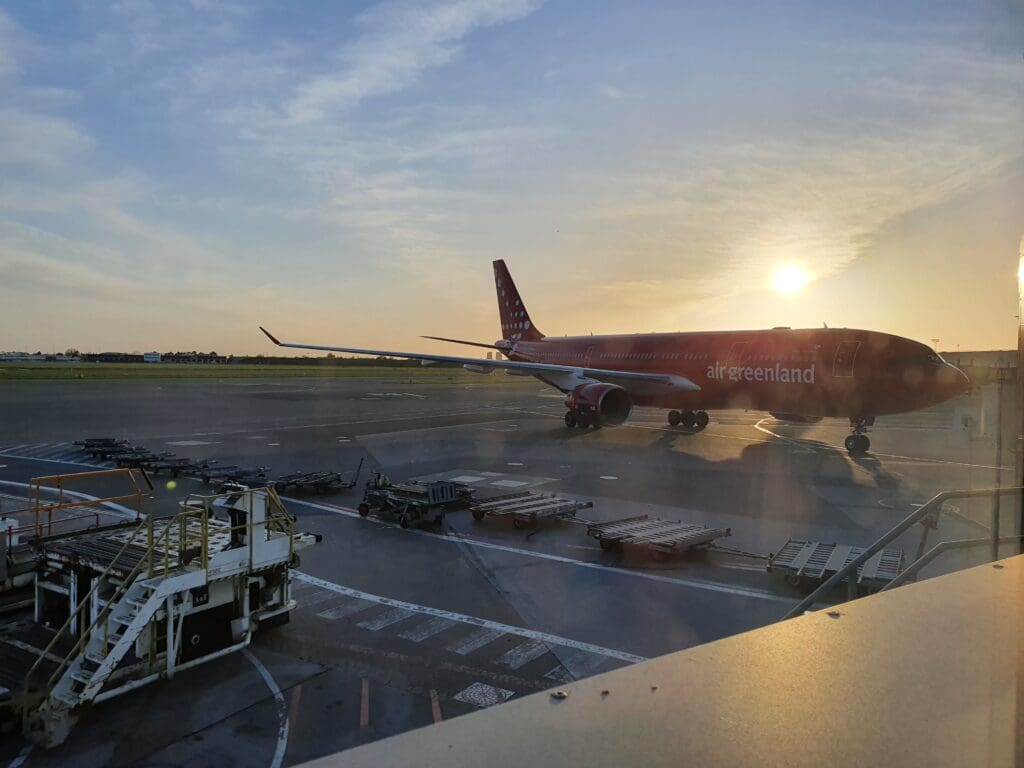
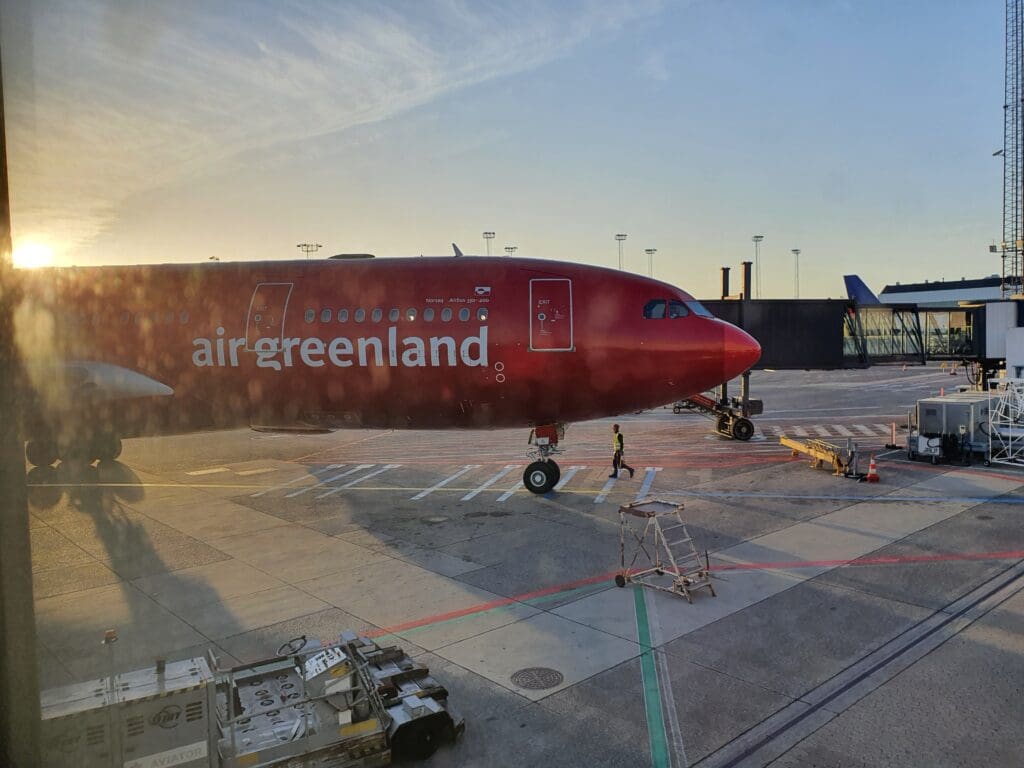
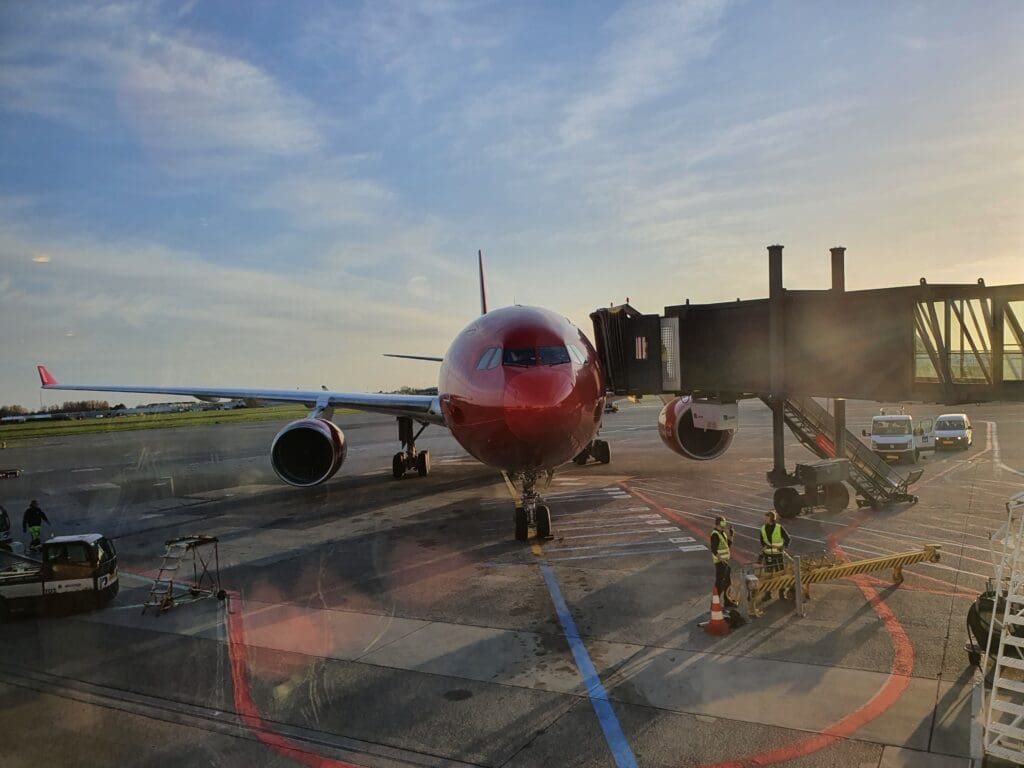
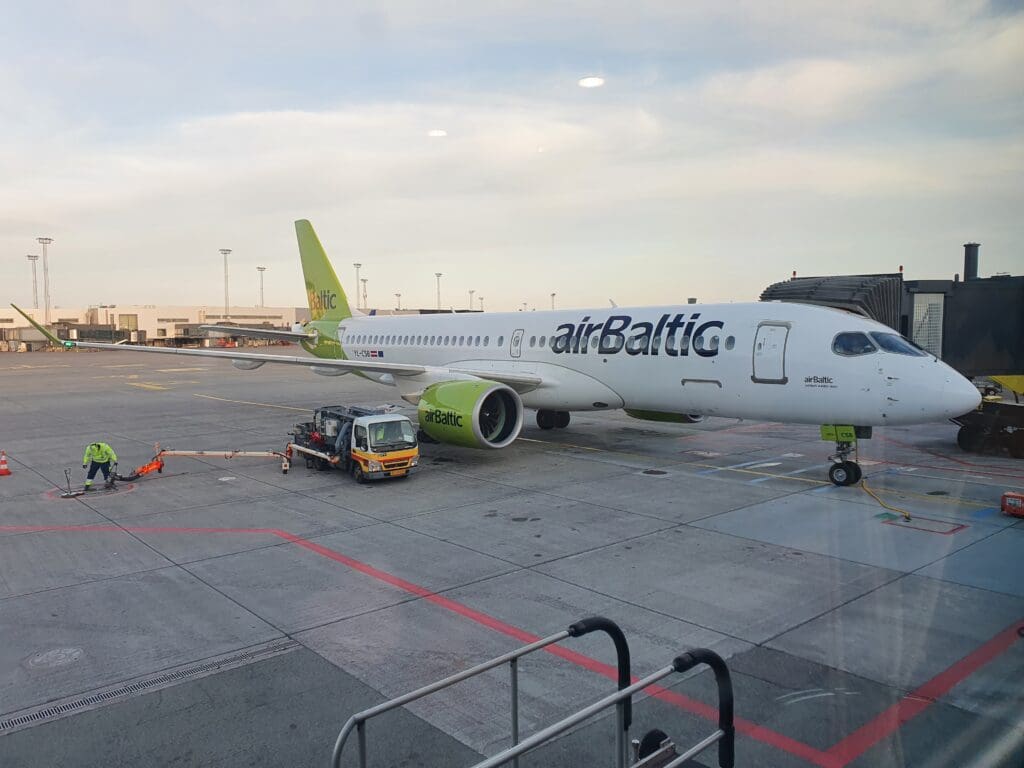
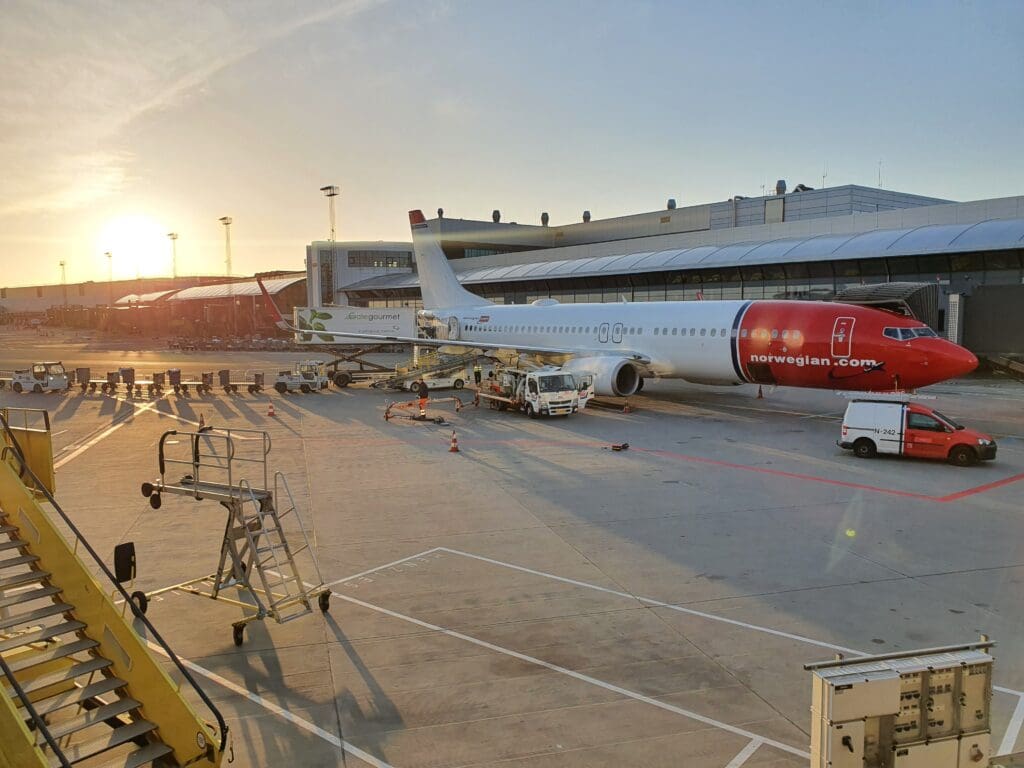
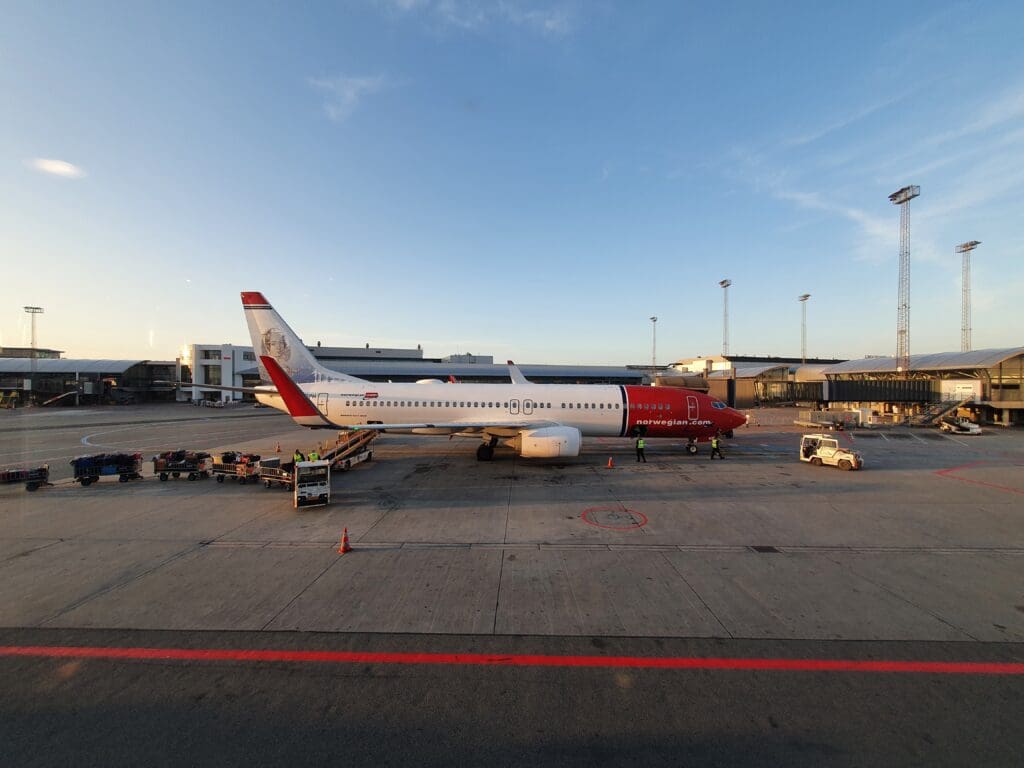
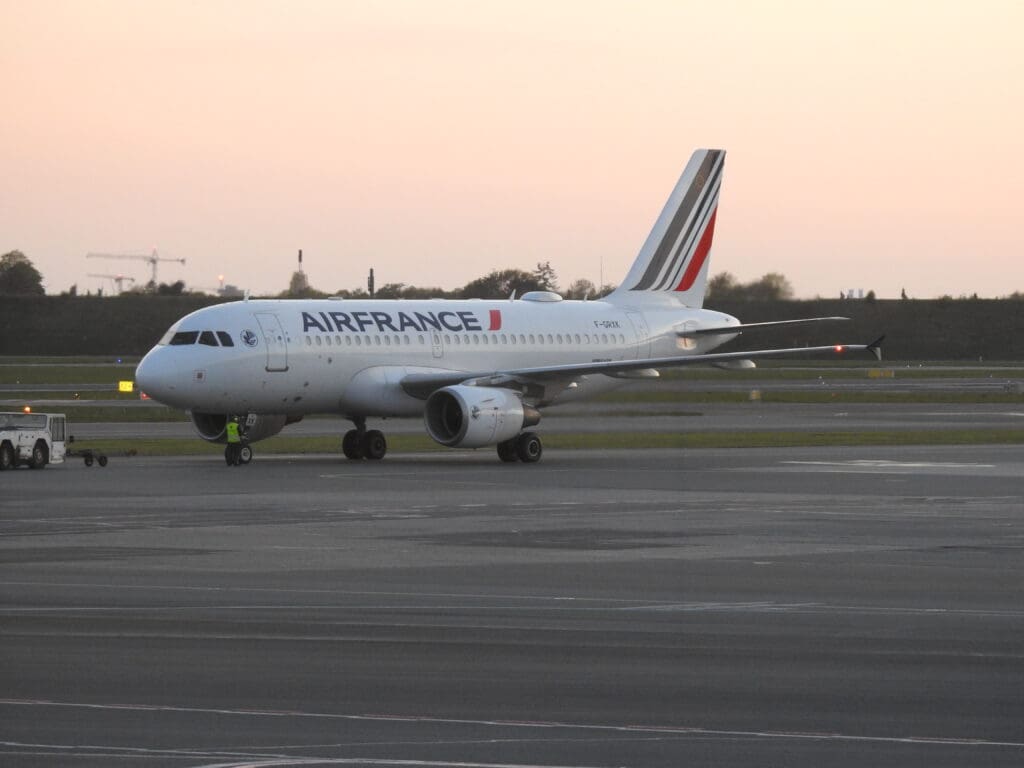
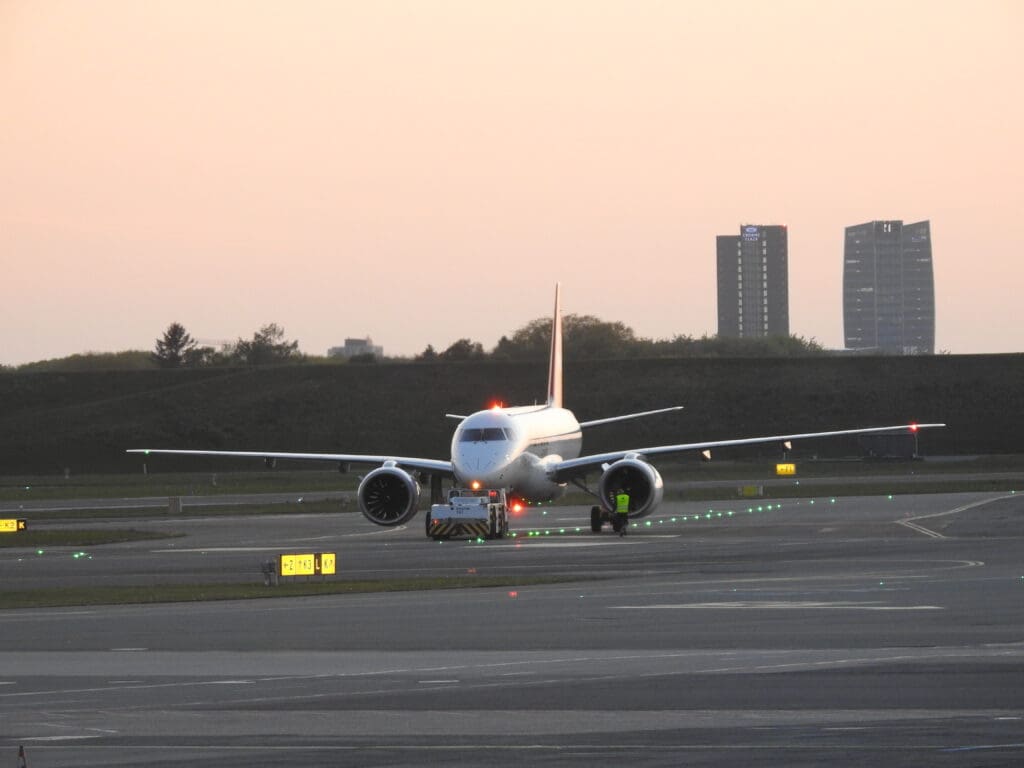
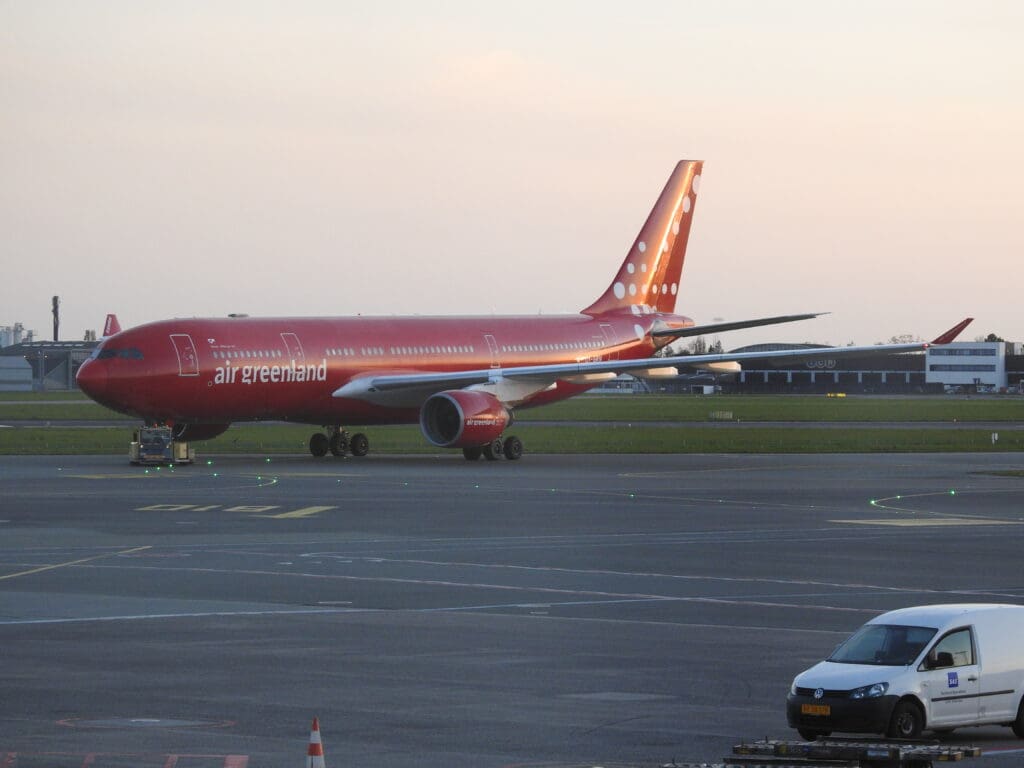
As the day gradually transitioned to night, I watched as narrowbody aircraft departed and arrived from destinations across Europe, whilst the clear May skies offered a picturesque backdrop of yellow, orange and pink before the sun finally sank below the horizon. As was to be expected, as the list of departures for that day on the departure boards shrank, the terminal quietened down and eventually ended up almost completely deserted. To my surprise, perhaps attributable to a good network of all-night transportation options running to the airport, comparatively few passengers appeared to be camping out in the terminal that evening with this being an absolute ghost town for a few hours. As I had expected, as far as I could tell all stores closed for the night and left just the terminal’s comprehensive network of vending machines on offer for those wanting something to eat or drink.
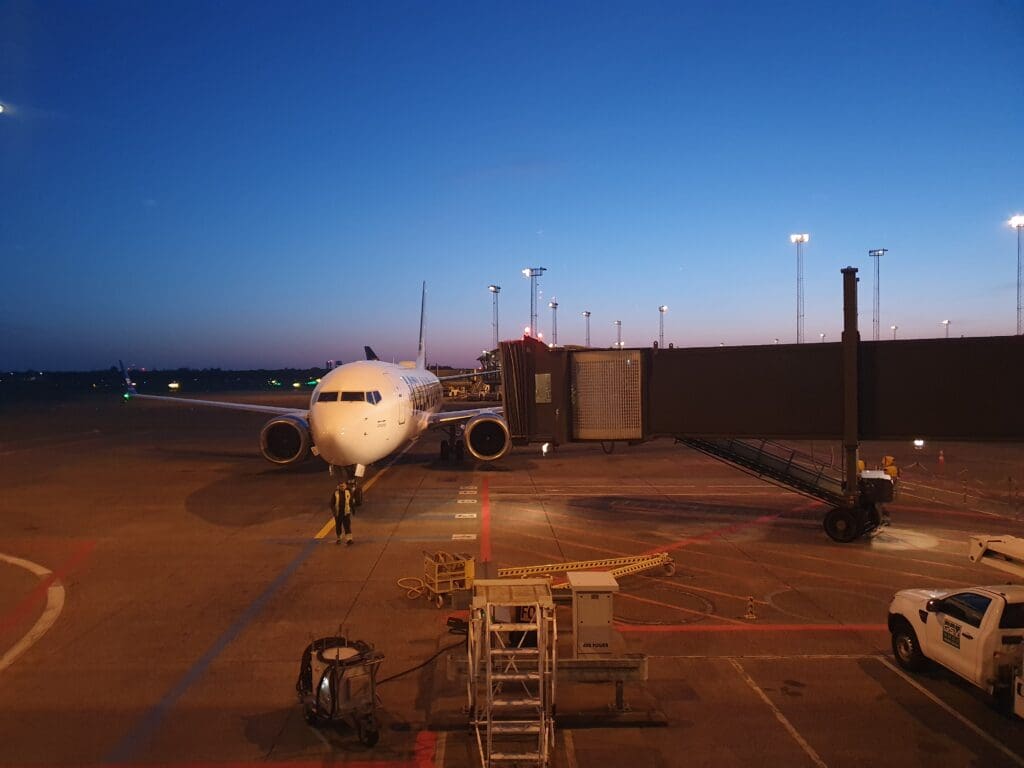
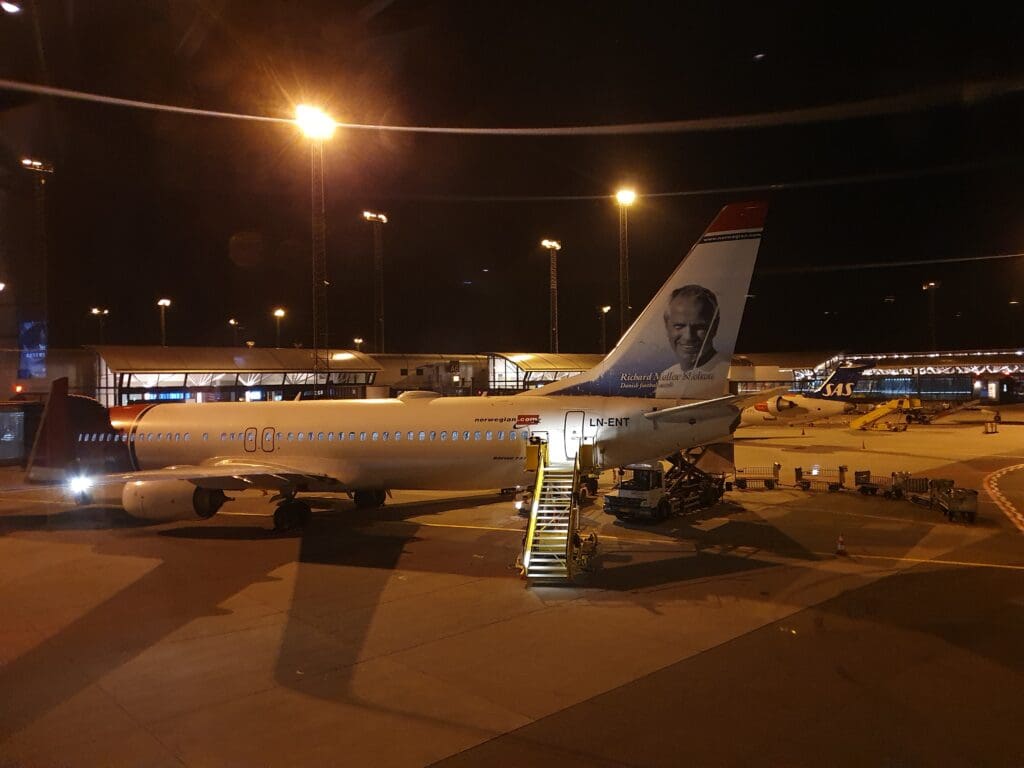
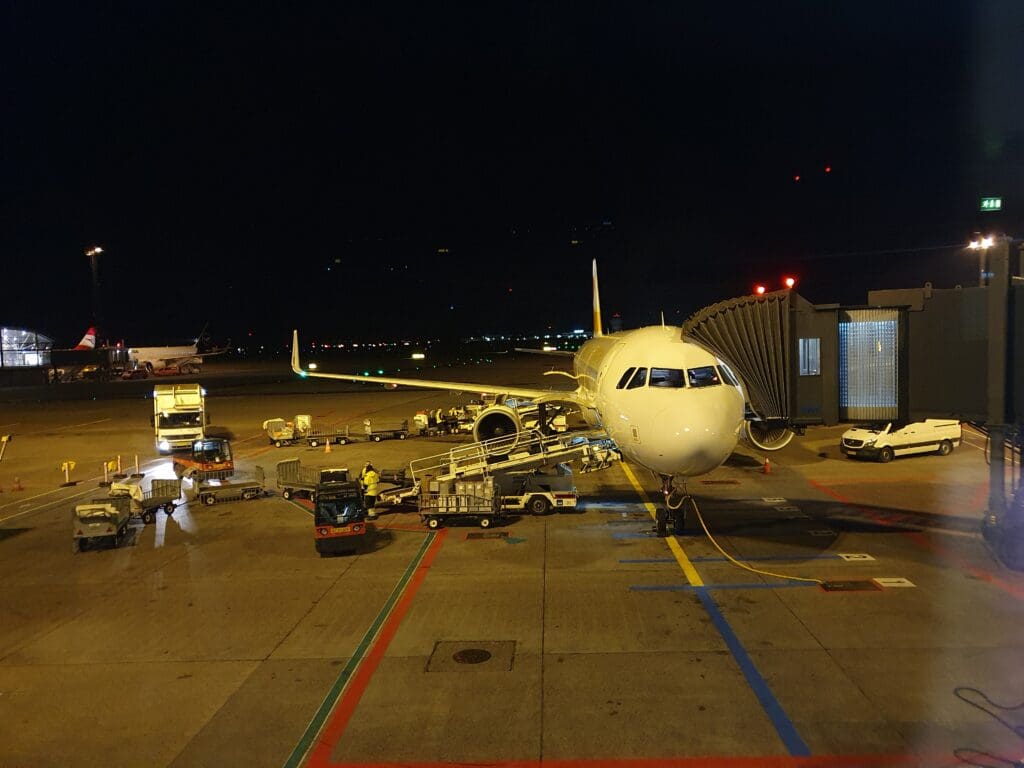
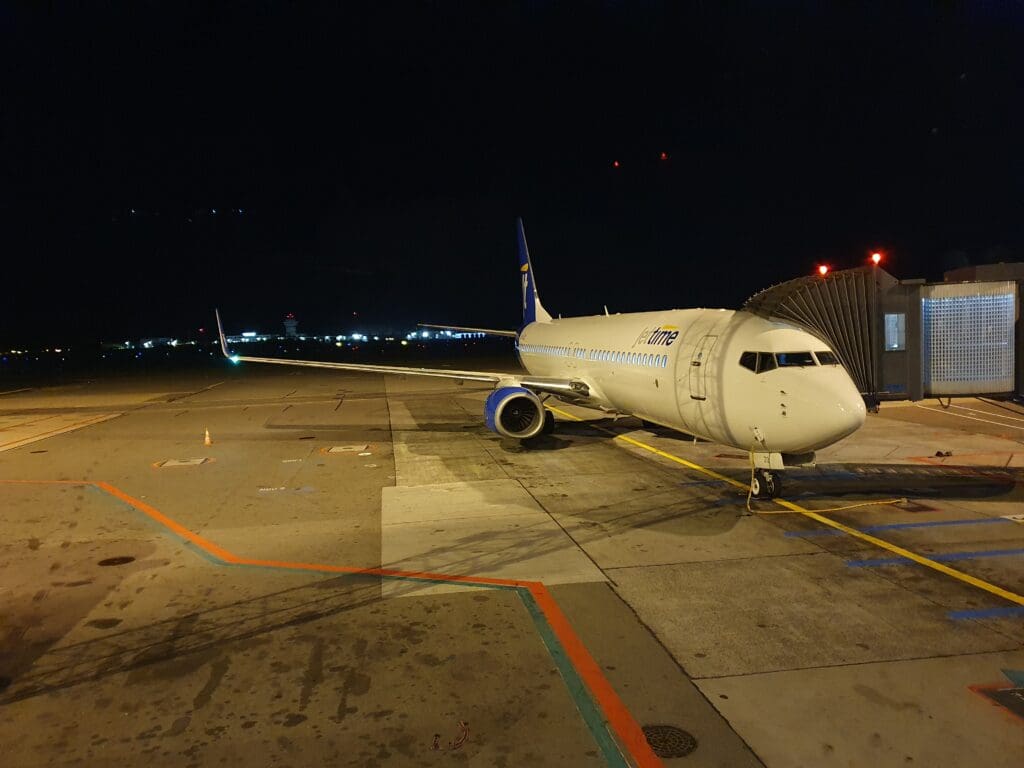
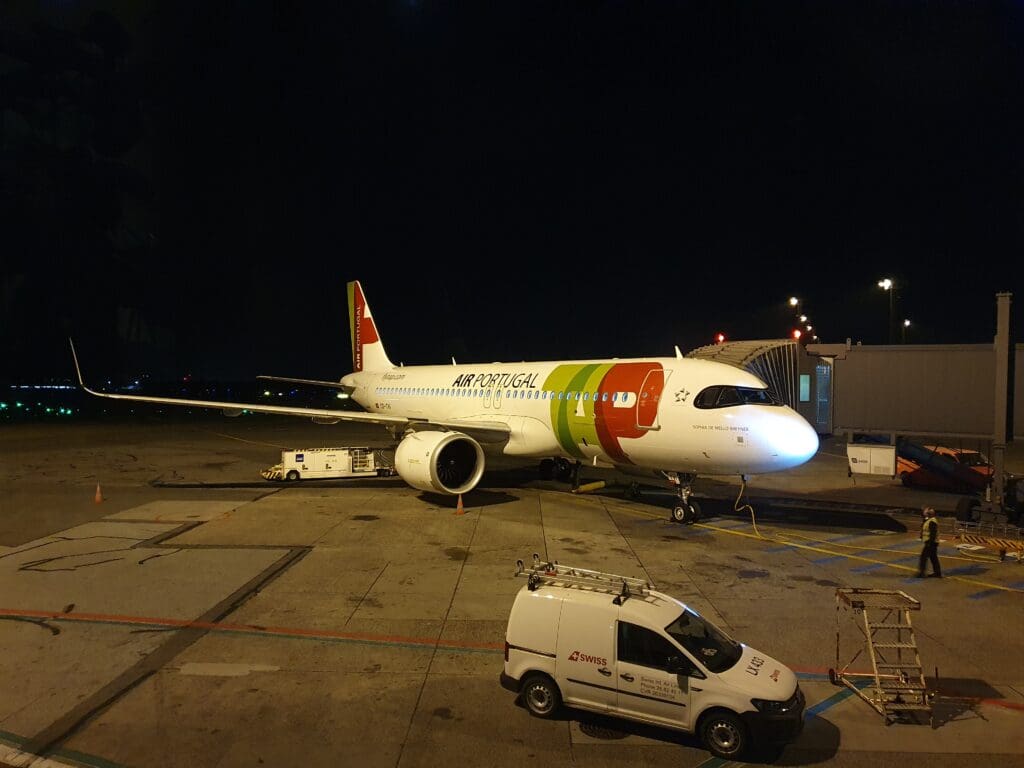
Whilst plenty of different seating options are available across the airport’s two terminals, none of these proved to be particularly comfortable and being a light sleeper I had accepted the fact that I would be unlikely to get much sleep that night. Initially setting up camp in a quiet corner of the A gates, after two very brief bouts of sleep lasting around ten minutes each, at around 0330 I trekked across to the B pier to charge my phone. Being early May, it wasn’t too long until the skies began to slowly lighten outside and by 0430 the first passengers of the day could be seen filtering through from security and into the airside portion of the terminal. With plenty of holiday flights heading off to warmer climes, many of those arriving seemed to be dressed for the sunshine rather than the still chilly Danish temperatures. Passing the time, I went for another walk and had a quick nap before settling down by a window and watching as teams of ground crew sprung into action readying the jets that had been parked up overnight.
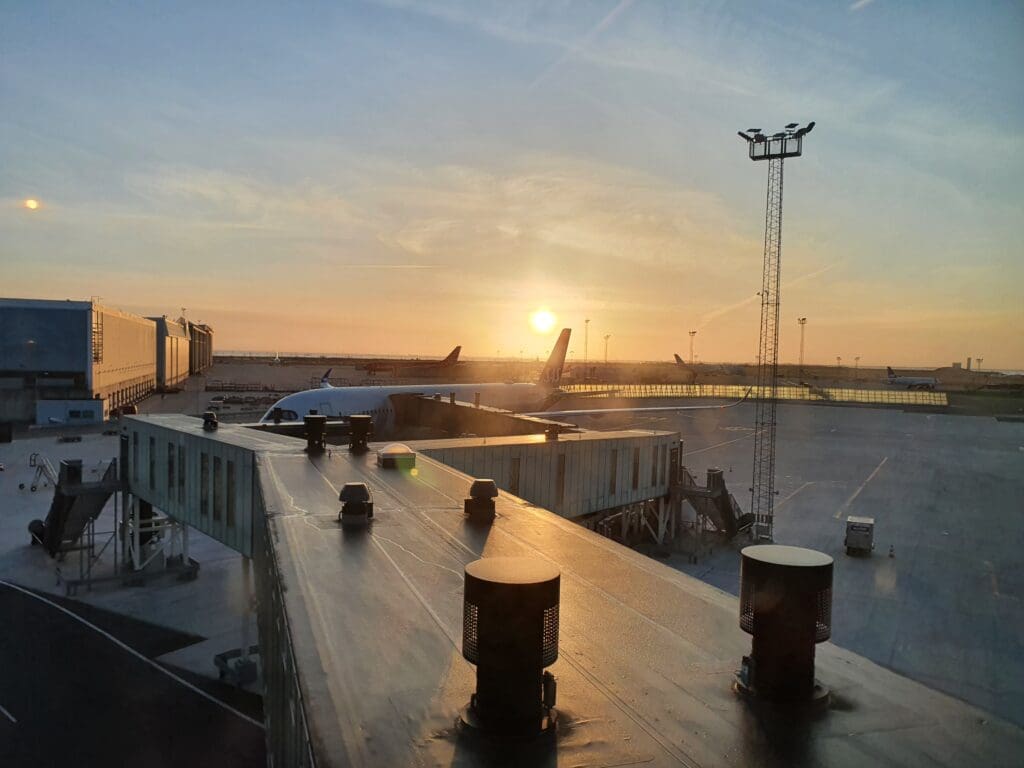
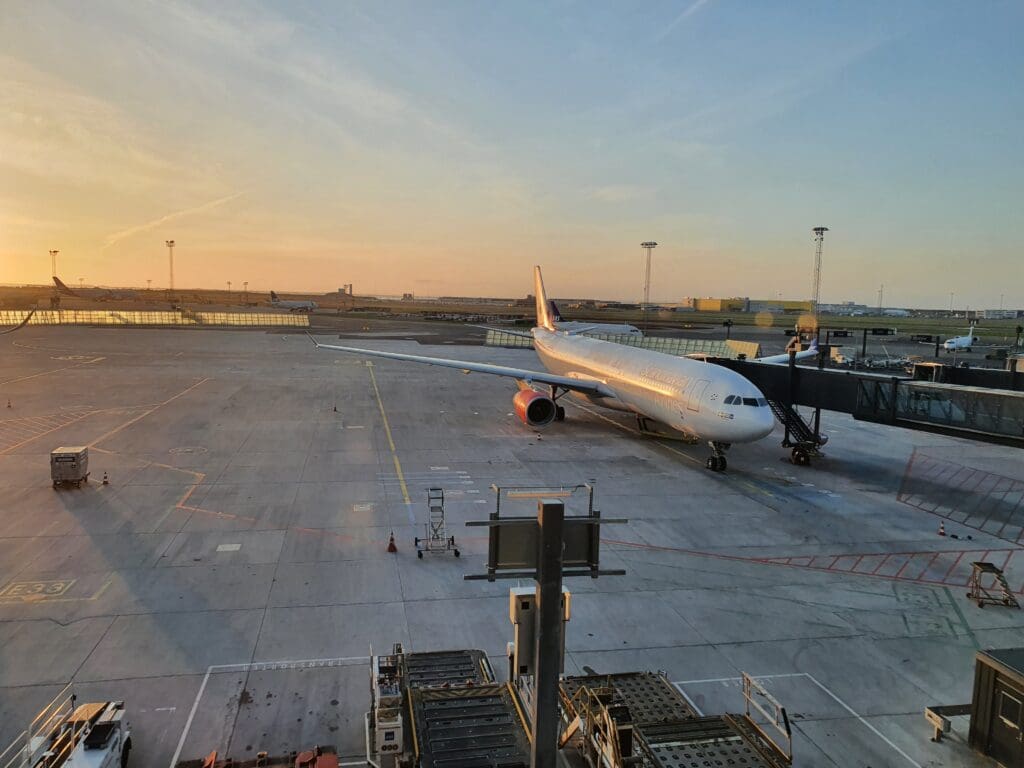
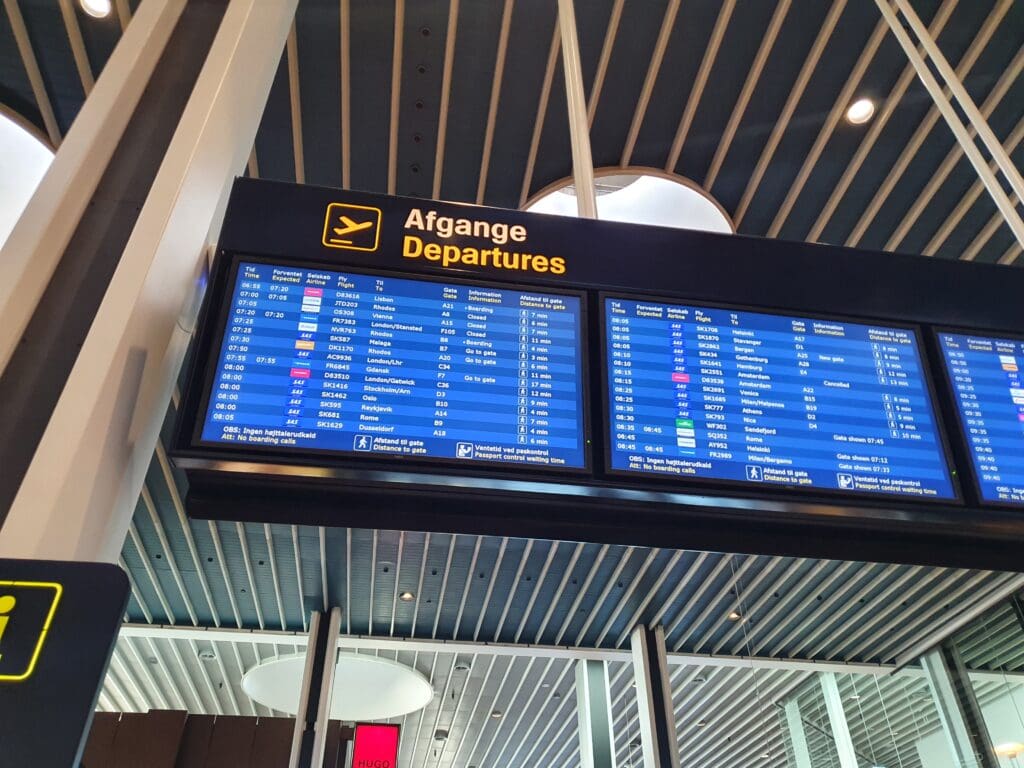
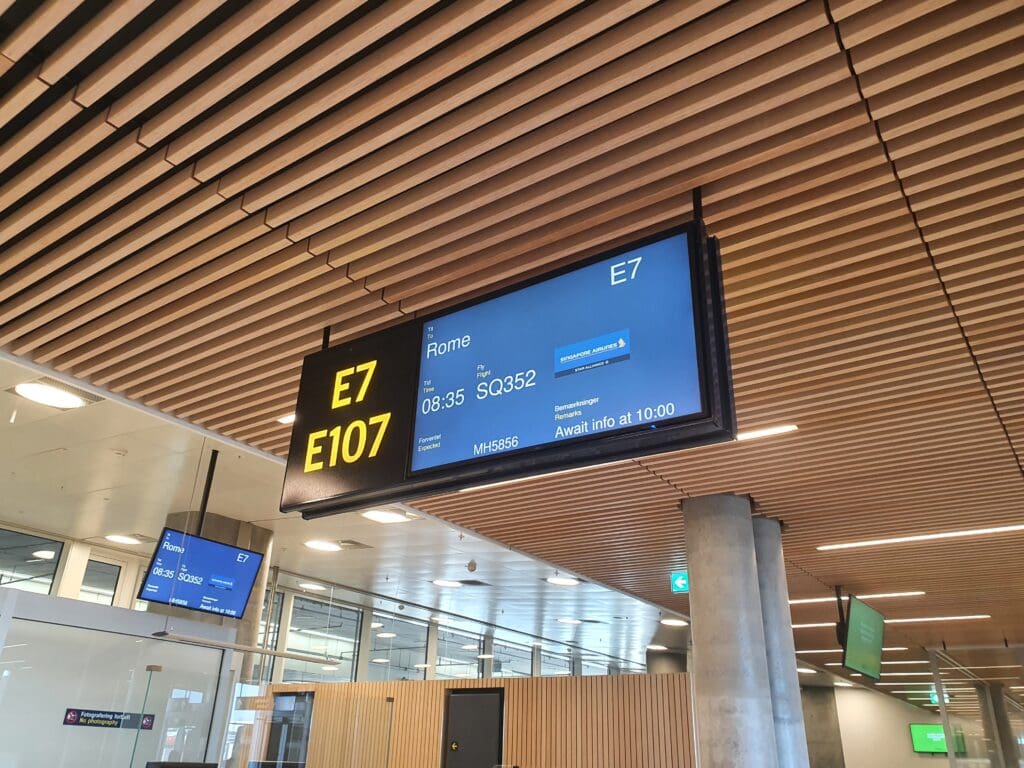
Feeling slightly peckish, once the terminal’s eateries began to open up I joined a long queue at one of the local branches of Ole and Steen. Eventually reaching the front of this, I purchased a delicious cheese, ham and mustard toasted sandwich and a small cappuccino which set me back an eye-watering total of 75kr (£8.62). At 0710 the departed updated and showed that Singapore Airlines’ 0835 service to Rome Fiumicino would depart ten minutes behind schedule with passengers requested to rendezvous at gate E7. With my boarding pass informing me that boarding would commence at 0735, whilst sceptical that this would indeed be the case, I nevertheless made the long walk from the main portion of the terminal to the E gates at this time. Upon arriving there, I found these gates to all be bus boarding gates located in a modern and tastefully designed part of the terminal. Whilst Copenhagen Airport has no shortage of jet bridges, with the flight commencing in Singapore, and given the fact that Singapore Airlines sells tickets on the leg between Denmark and Italy (both located within the European Union’s Common Travel Area), the flight from Singapore typically utilises a gate at the terminal’s non-Schengen C pier. Those heading onwards to Italy must therefore disembark, pass through immigration and then head through the terminal to a Schengen gate, from where passengers are bussed back to the aircraft.
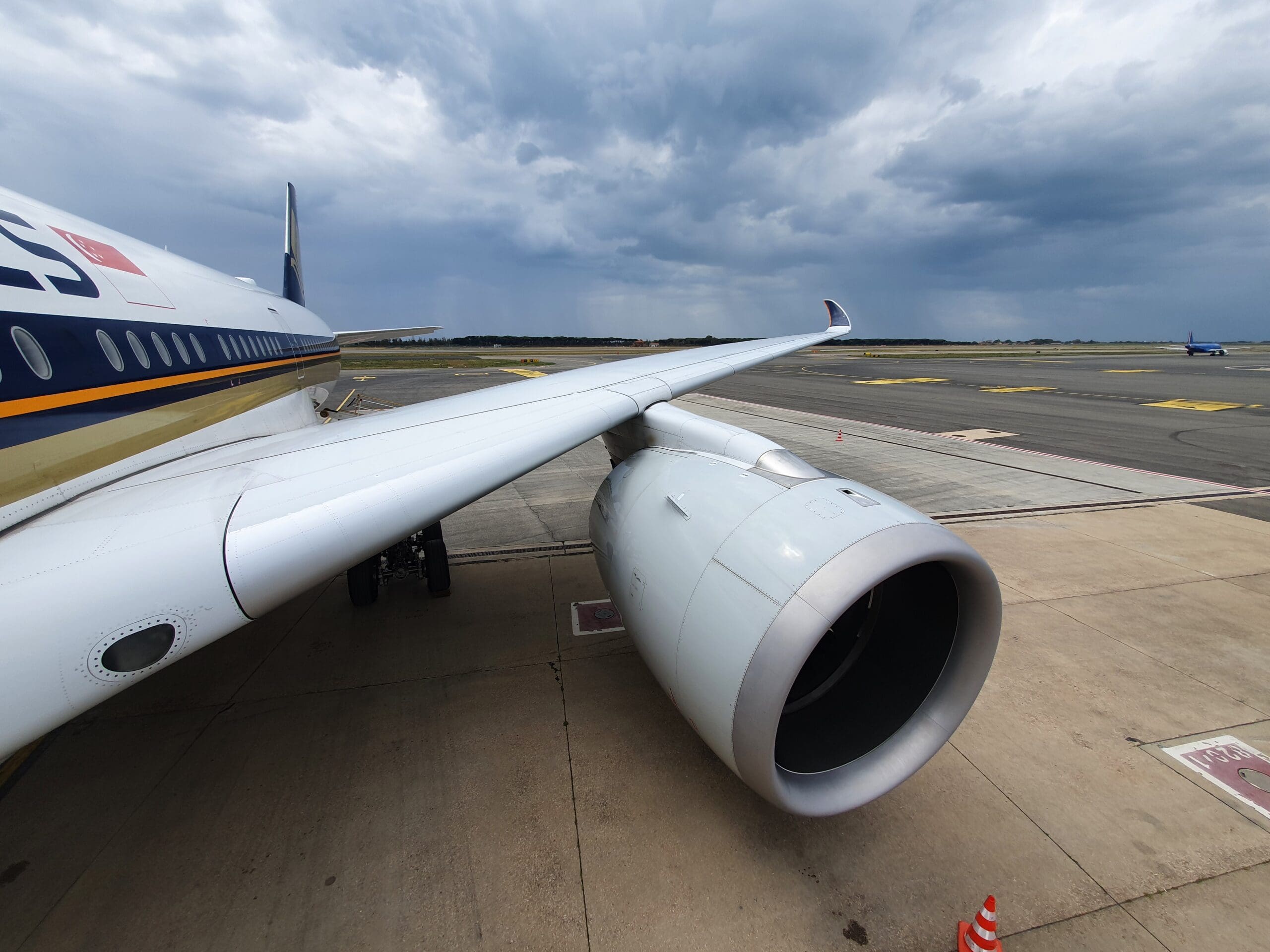
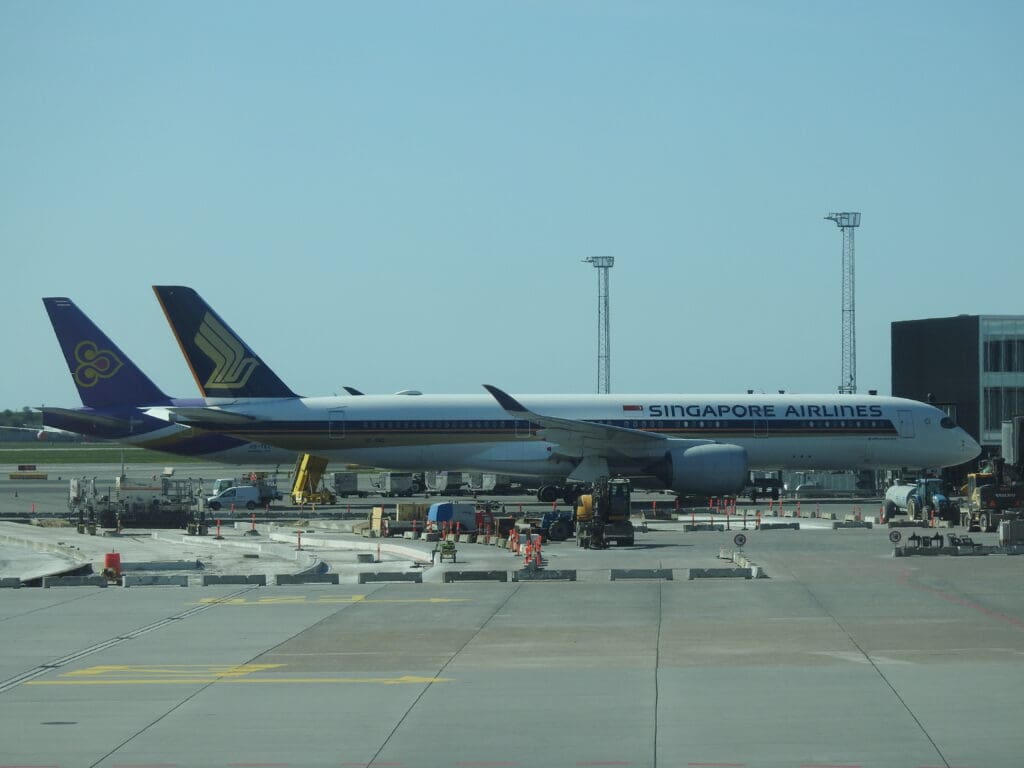
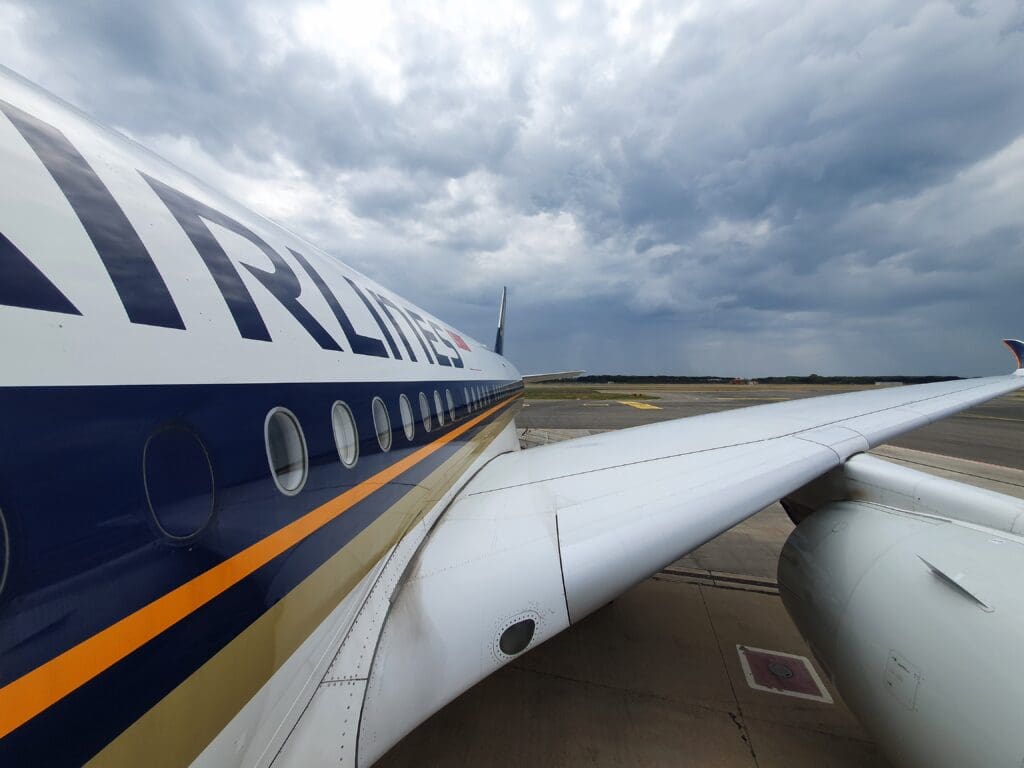
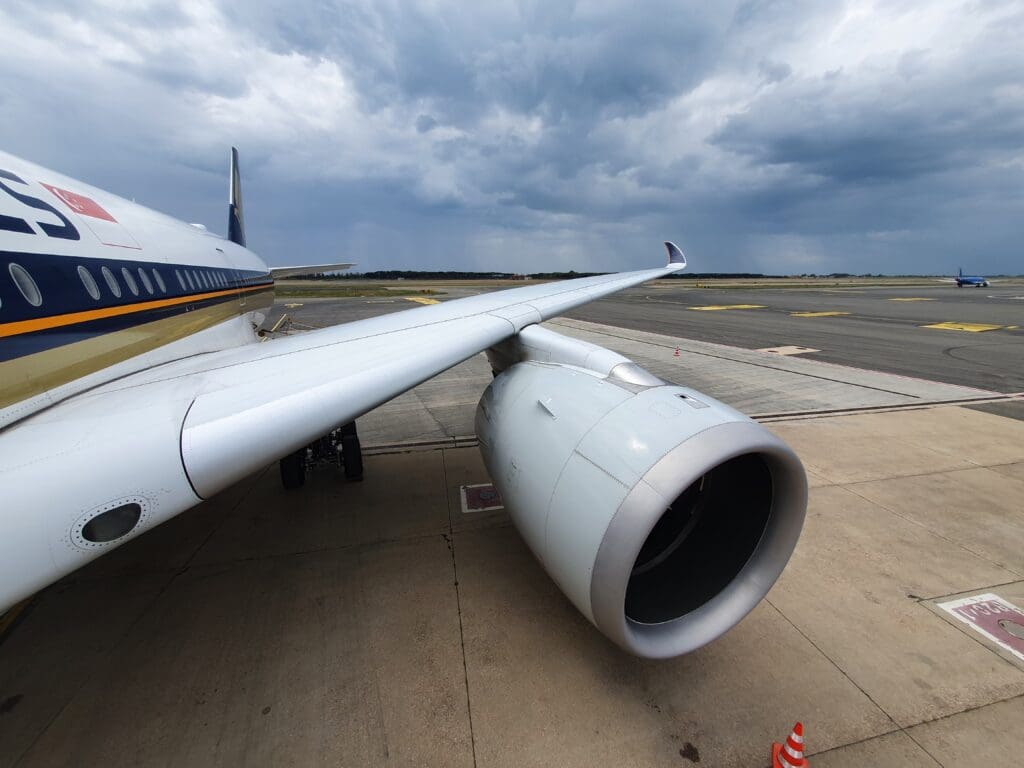
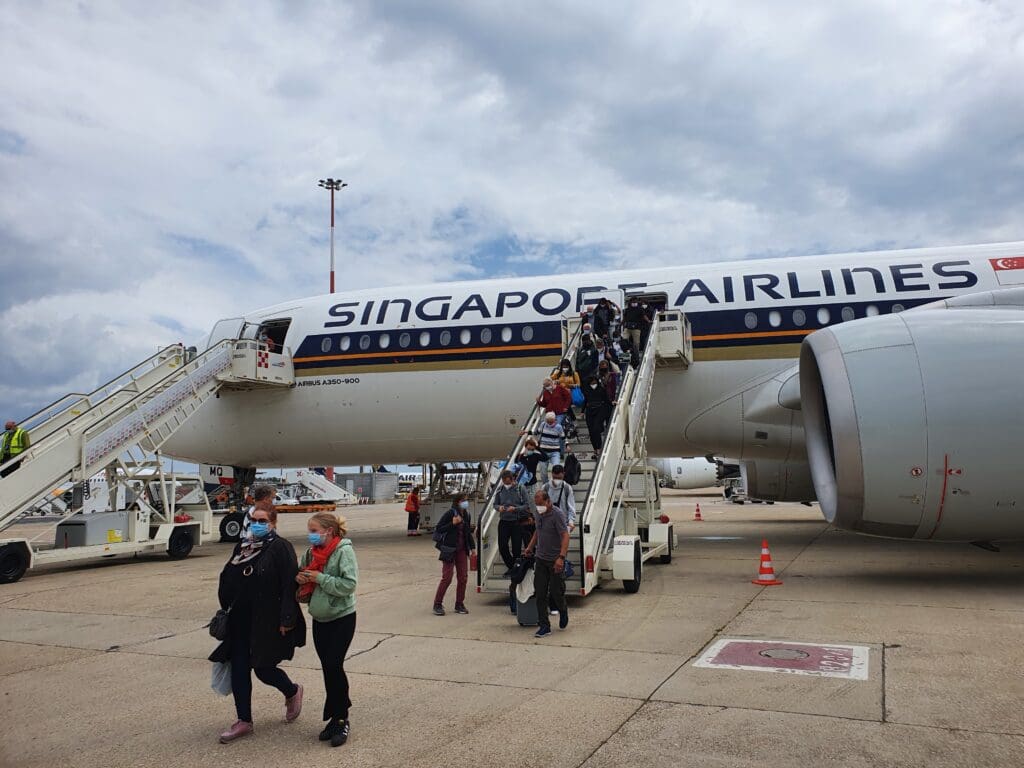
Running slightly behind schedule, at 0738 the Singaporean Airbus A350-941 touched down after its almost thirteen-hour overnight slog from Southeast Asia. That morning, this aircraft took the form of 9V-SMQ. Assembled at Airbus’ famous Toulouse Blagnac plant, this jet first took to the skies with the test registration F-WZGO in July 2017, making the aircraft almost five years old at the time of my flight. Following testing, the aircraft was formally handed over to Singapore Airlines in September of that year and settled in at its new home, Singapore Changi. Since then the aircraft appears to have had a mostly uneventful life shuttling passengers around the world. In the week before my flight the aircraft undertook a total of sixteen sectors, travelling over 44,000 miles, and visiting Cape Town, Copenhagen, Durban, Houston, Jakarta, Johannesburg, Kuala Lumpur and Manchester.
Taking into account the late arrival of the inbound aircraft, once the scheduled boarding time arrived, I was not particularly surprised to see that there was no sign that this was to commence any time soon. At that time, two Scandinavian Airlines agents could be seen chatting and typing away at the gate whilst just fifteen passengers could be seen waiting to head down to the Italian capital. At about 0805, the first of those who had journeyed over from Singapore began to arrive at the gate and this became a little busier, with many looking rather flustered as if they had rushed through the airport to make the next leg of their long journey. Given the slight complication involved in ensuring that all inbound passengers heading to Rome pass through immigration and then travel through the airport to the gate, it is hardly surprising that Singapore Airlines’ service often departs around an hour behind schedule and that morning it appeared that a similar delay was in store. Indeed at 0830, one of the two Scandinavian Airlines agents standing at the gate podium performed an announcement advising that boarding would be delayed as we were waiting for cleaning to be completed. By the flight’s scheduled departure time of 0835, it appeared as if all passengers had made it to the gate, however slightly worryingly, the two Scandinavian Airlines agents manning this disappeared.
Inside, whilst the departure boards still showed that the flight was scheduled to depart at 0845, at this time a quick check of Copenhagen Airport’s website revealed that this was now set to depart at 1000. However, with not a single member of ground staff on hand to confirm or deny this, it was rather tricky to decipher just how accurate this piece of information was. After around twenty more minutes of waiting, the screen at the gate updated to show that more information would be provided to passengers at 1000. With no staff on hand to provide any sort of information about the delay, this was far from the start that I had hoped for from Singapore Airlines. However, with my flight back to London with ITA Airways not set to depart Rome until 1720, at this point I had not started to panic.
As the minutes passed, I went for another wander around the terminal before returning just before 1000. Once this time arrived, the screen updated once more and advised passengers that further information would be provided at 1100. By this time, many passengers seemed to be becoming rather disgruntled at the delay and the total lack of information, stopping any and every staff member sporting a reflective jacket in the vicinity of the gate. However, it appeared that nobody had any idea as to why the flight was delayed and when this would take to the skies. At 1100, things began to look up slightly when the screen updated and showed that the flight to Rome Fiumicino would depart at 1130. Indicating that this would indeed be the case, a few minutes later the two Scandinavian Airlines ground agents reappeared and resumed typing on the computers at the gate podium.
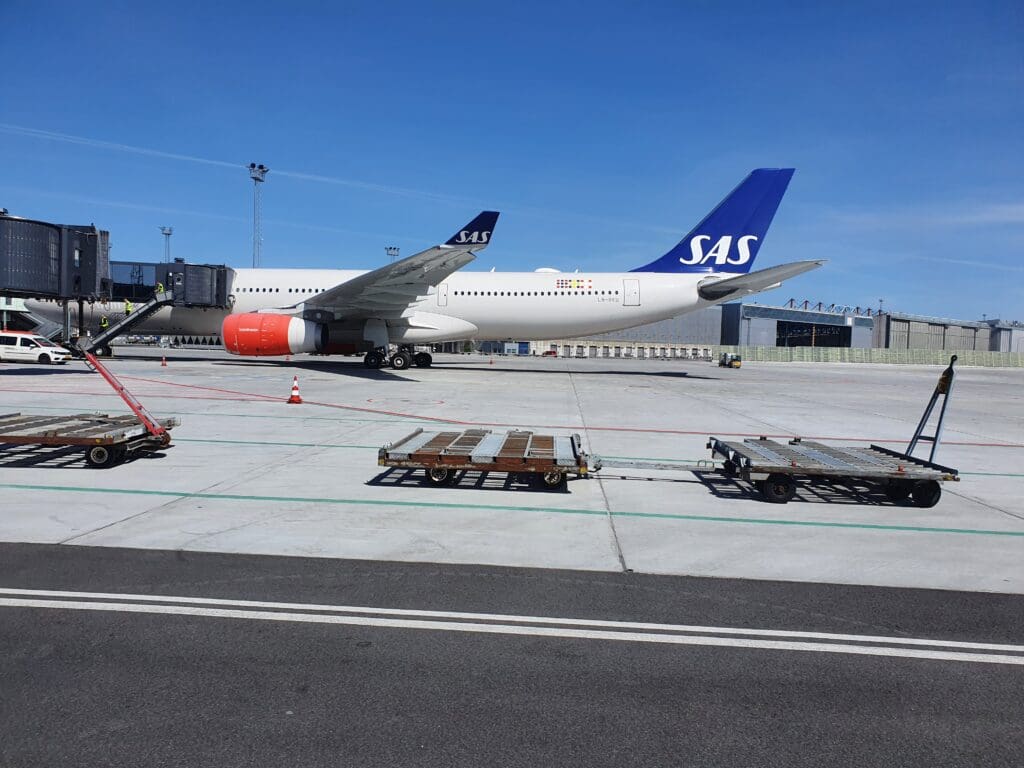
At 1110, an announcement was made in Danish and English inviting all those bound for Rome to head forward for boarding at which point a crowd of disgruntled and weary-looking passengers formed. Conveniently yet inadvertently ending up near the front of this crowd, it didn’t take long before I scanned my boarding pass and made my way out to the first of two waiting buses that would shuttle passengers out to the Airbus A350. Once comfortably full, at 1116 the bus doors slid closed and the Cobus pulled away, commencing its short journey over to the aircraft. This took us past a Scandinavian Airlines Airbus A330-300 being readied for its flight to Newark before voyaging across the apron towards that morning’s two visitors from Southeast Asia – the Singaporean Airbus at Stand C37 and a colourful Thai Airways Boeing 777-300ER at the neighbouring gate.
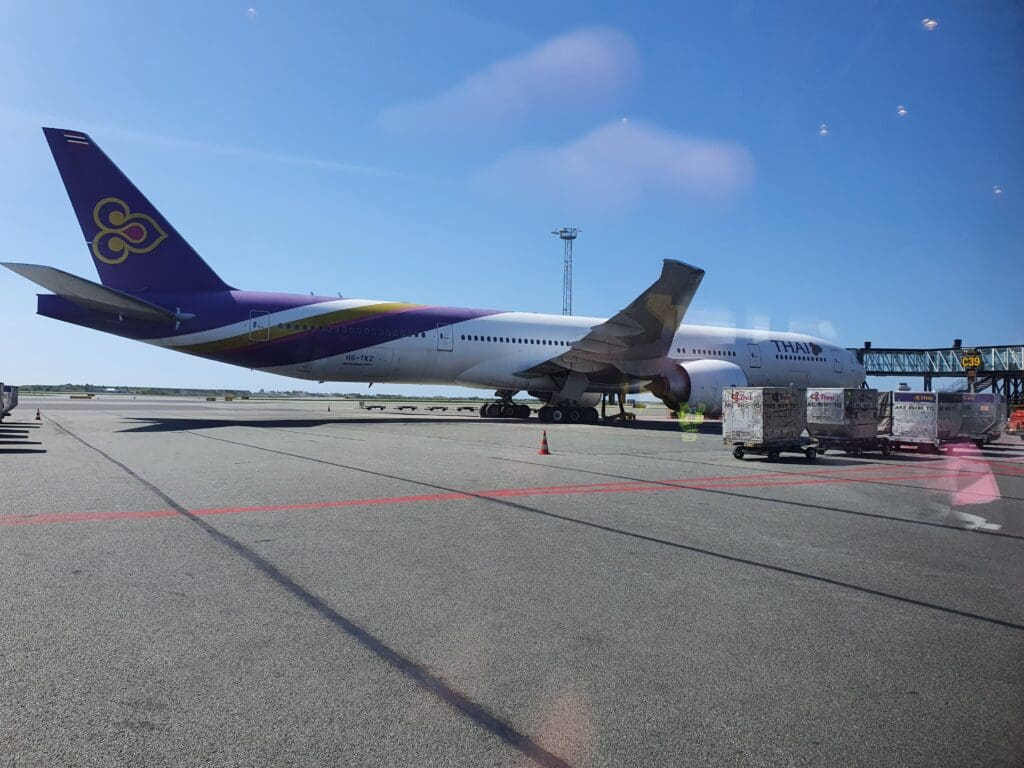
Moments after coming to a halt, the bus doors slid open and passengers spilt out onto the apron. Whilst a jet bridge was connected to the aircraft and enabled passengers to disembark into the non-Schengen portion of the terminal, this was not used for boarding. Instead, all passengers were required to board the aircraft via a long set of airstairs positioned up the Airbus’ rear door. After admiring the large widebody jet standing in front of me, I made my way towards the stairs and queued on these for a couple of minutes or so before eventually reaching the door at the rear of the aircraft.
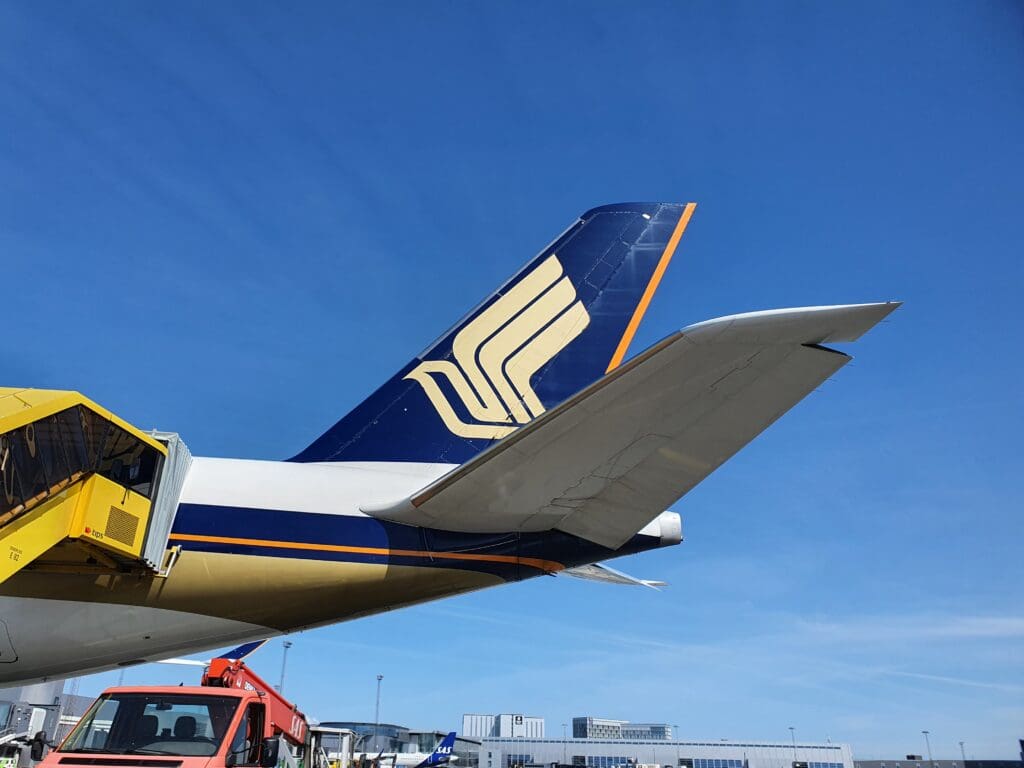
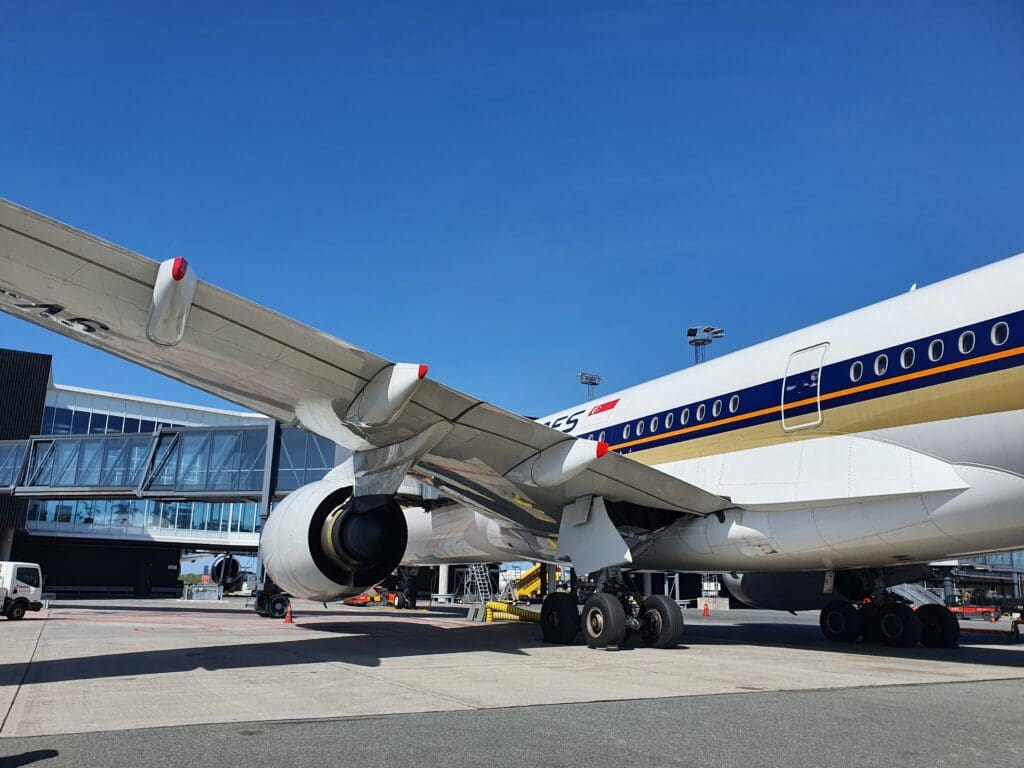
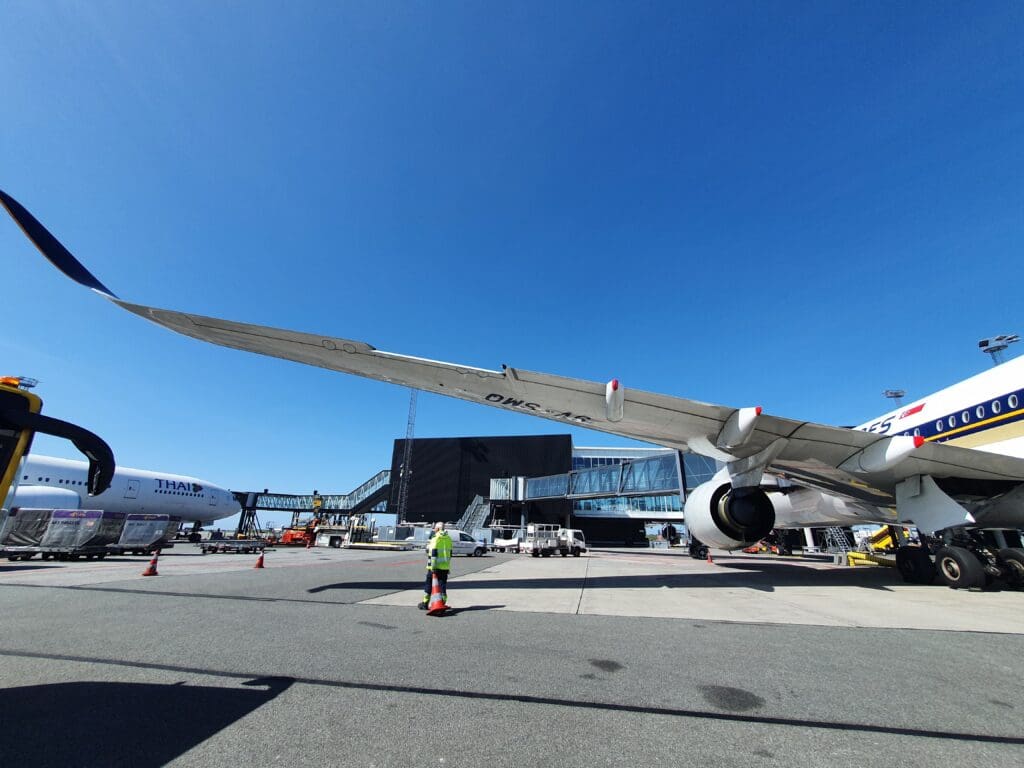
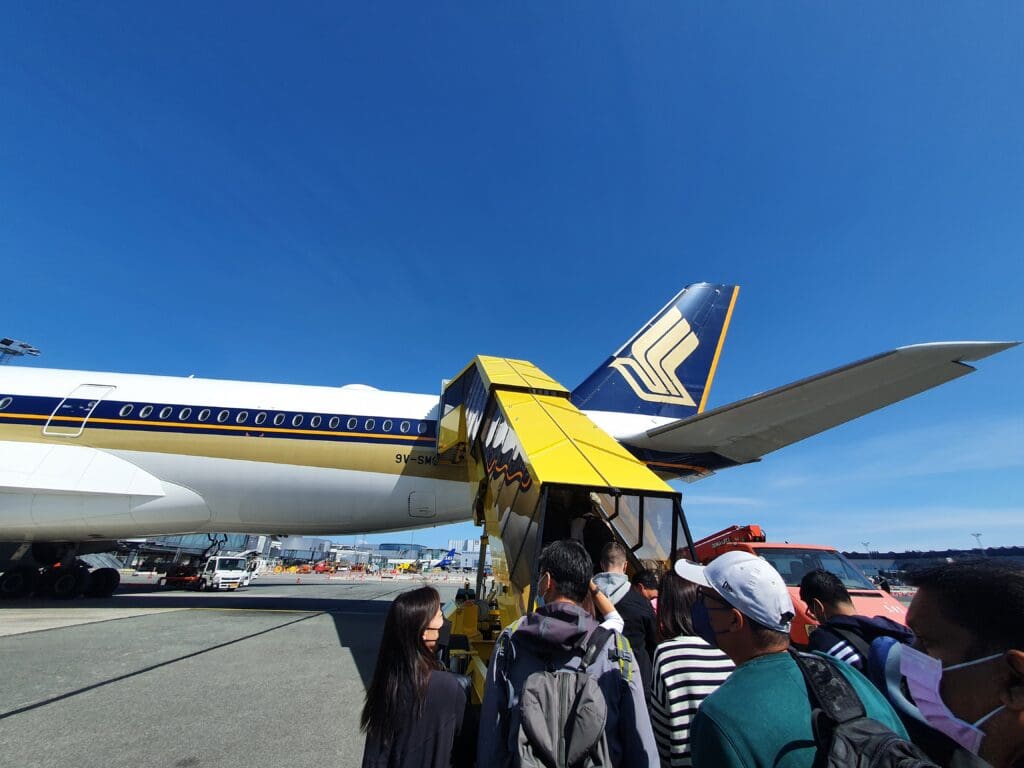
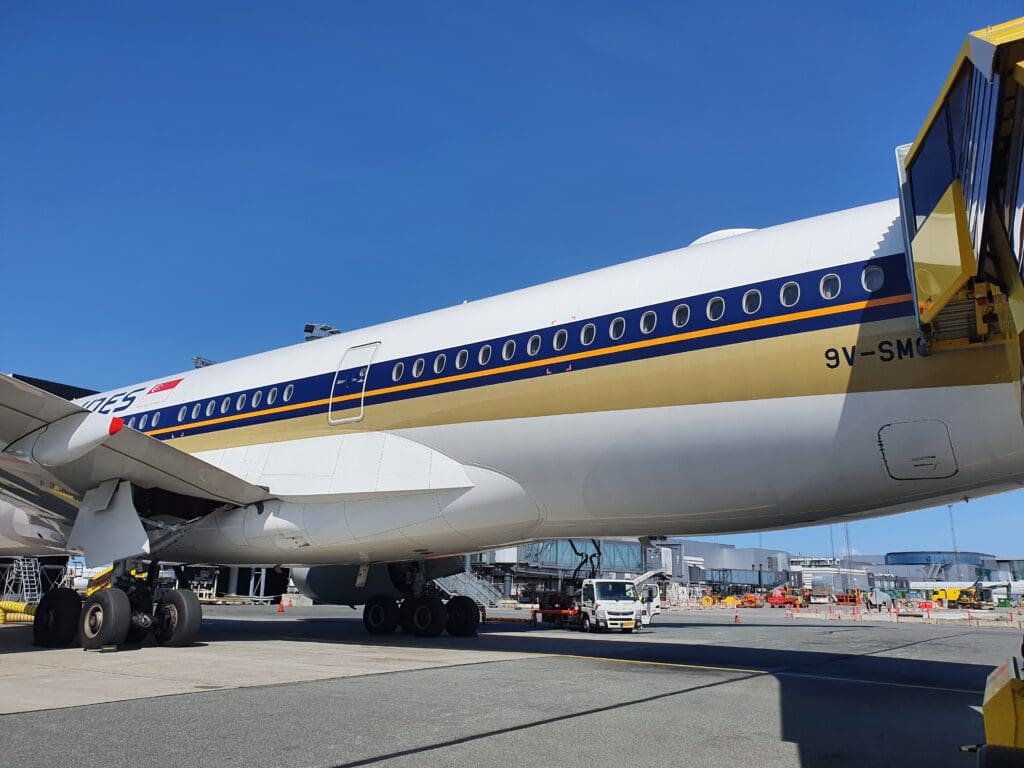
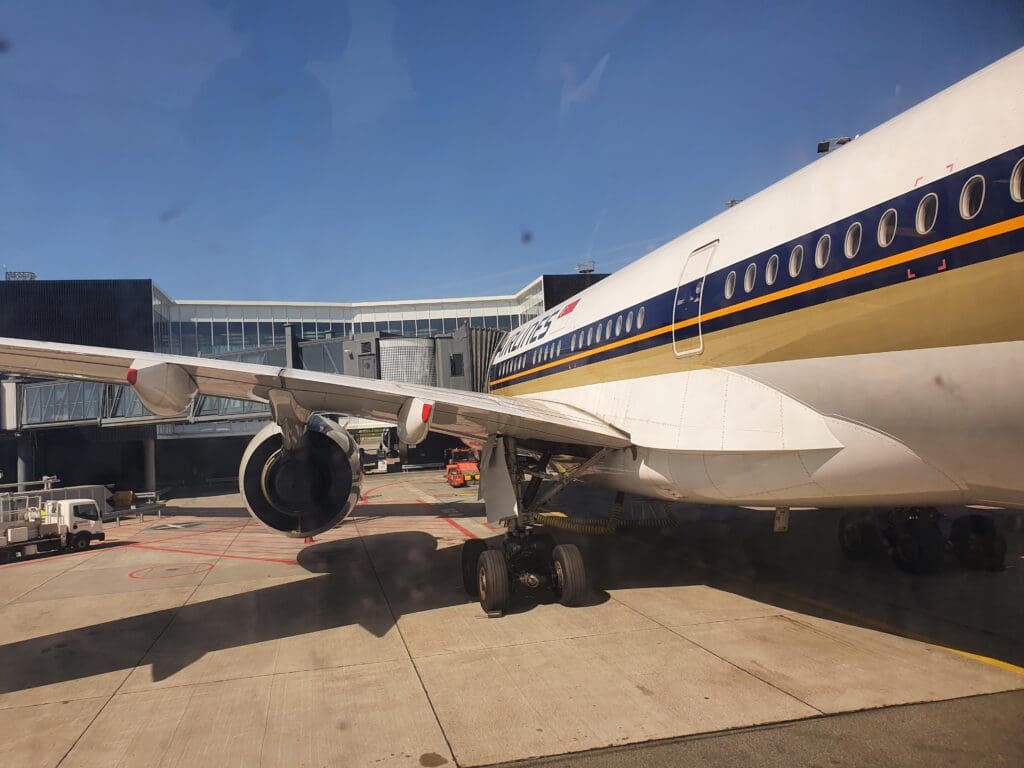
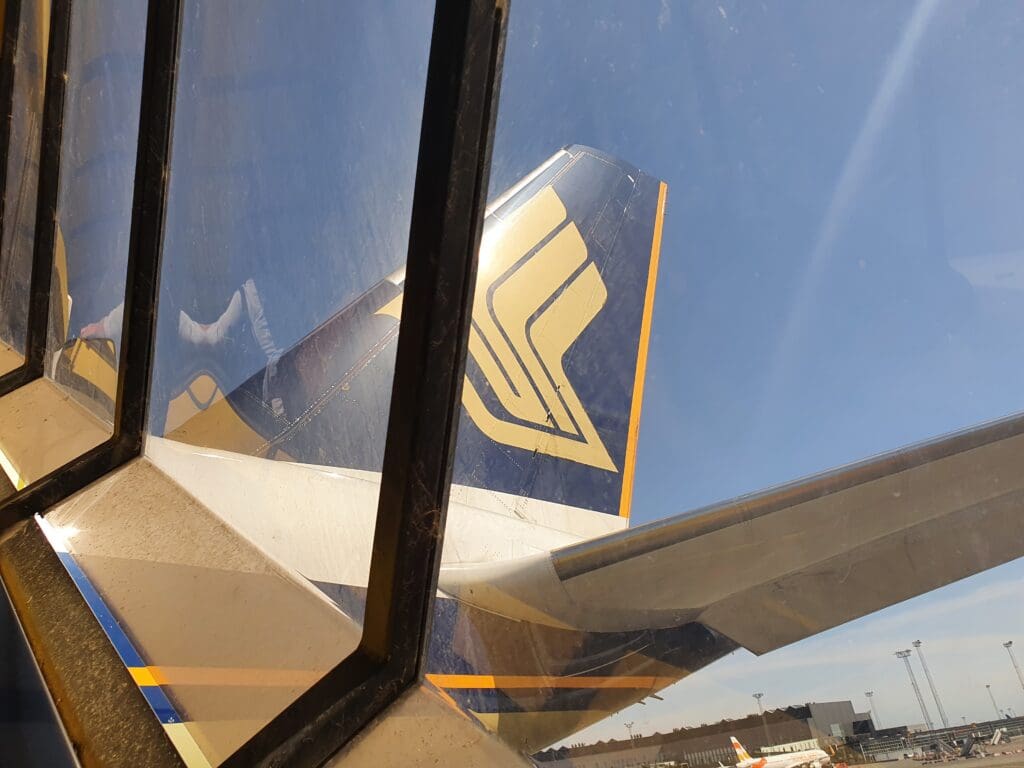
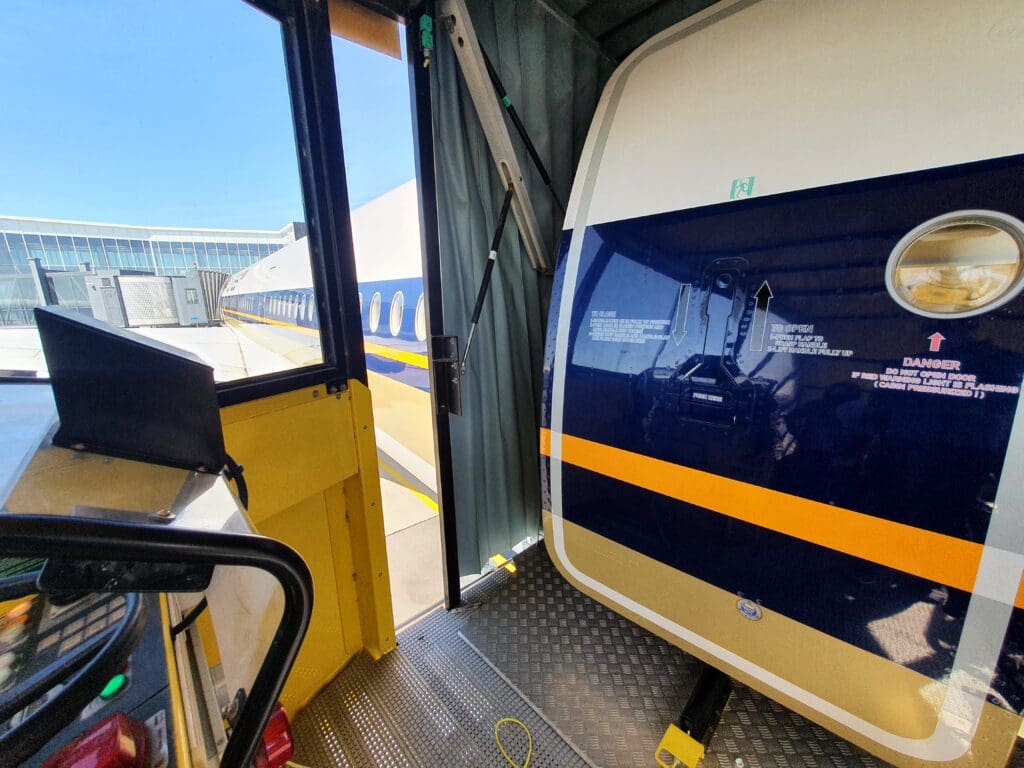
As soon as I stepped into the large galley at the rear of the aircraft, two flight attendants sporting Singapore Airlines’ famous colourful kebayas rushed to give me a friendly welcome, with one checking my boarding pass and advising me on how to reach my seat before the other handed me a packet containing earphones. As I crossed the galley and turned left, I received yet another warm and friendly greeting just before entering the larger of the aircraft’s two Economy cabins. Singapore Airlines operates three different variants of their Airbus A350-900s – their premium ultra-long haul variant used on their services between New York and Singapore, a regional variant that operates short and medium-haul services and lacks a Premium Economy cabin, and the standard long haul variant which is complete with three different cabins – Business, Premium Economy and Economy. Flying on the lattermost variant, the aircraft featured a total of 187 Recaro CL3710 seats in Economy, with these spread across two cabins, equating to around 74% of the seats onboard. Whilst not as pronounced as onboard MIAT Mongolian’s Boeing 767-300ER, those seats in the two Economy cabins are slightly different in their aesthetic design, with those in the forward cabin covered in either blue or grey fabric, whilst those in the rear cabin are covered in either beige or brown. However, all of these featured the same subtle repeating pattern and were topped with a comfortable (faux?) leather adjustable headrest, covered by a dark grey disposable fabric antimacassar on which the airline’s iconic Kris motif could be seen.
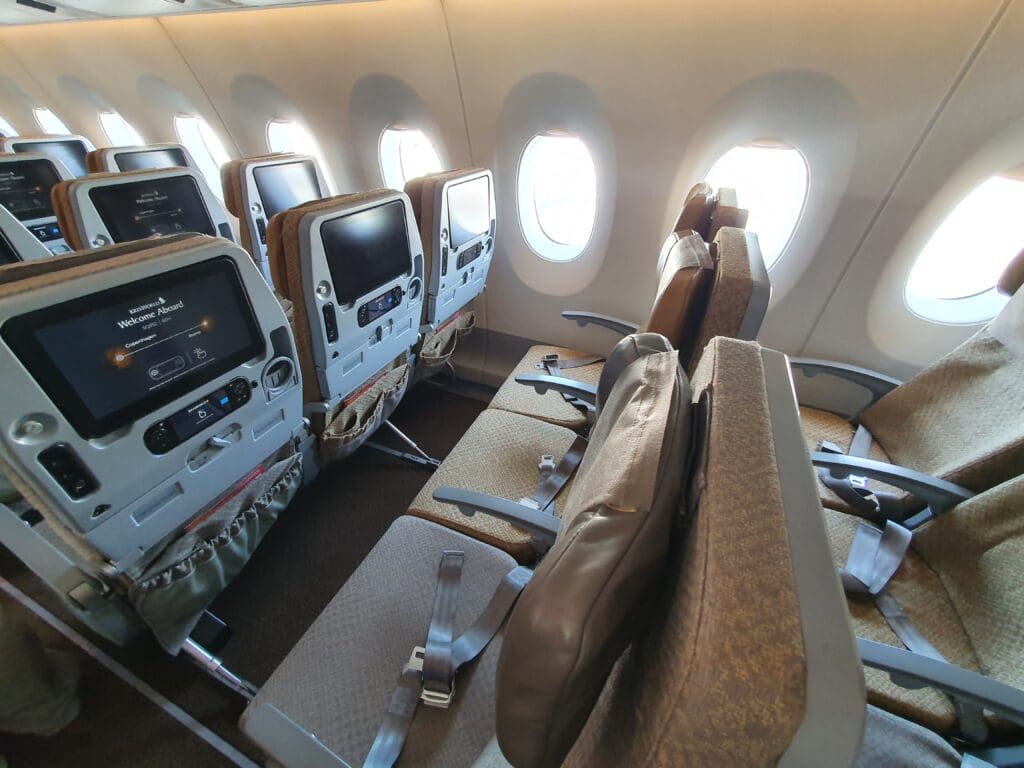
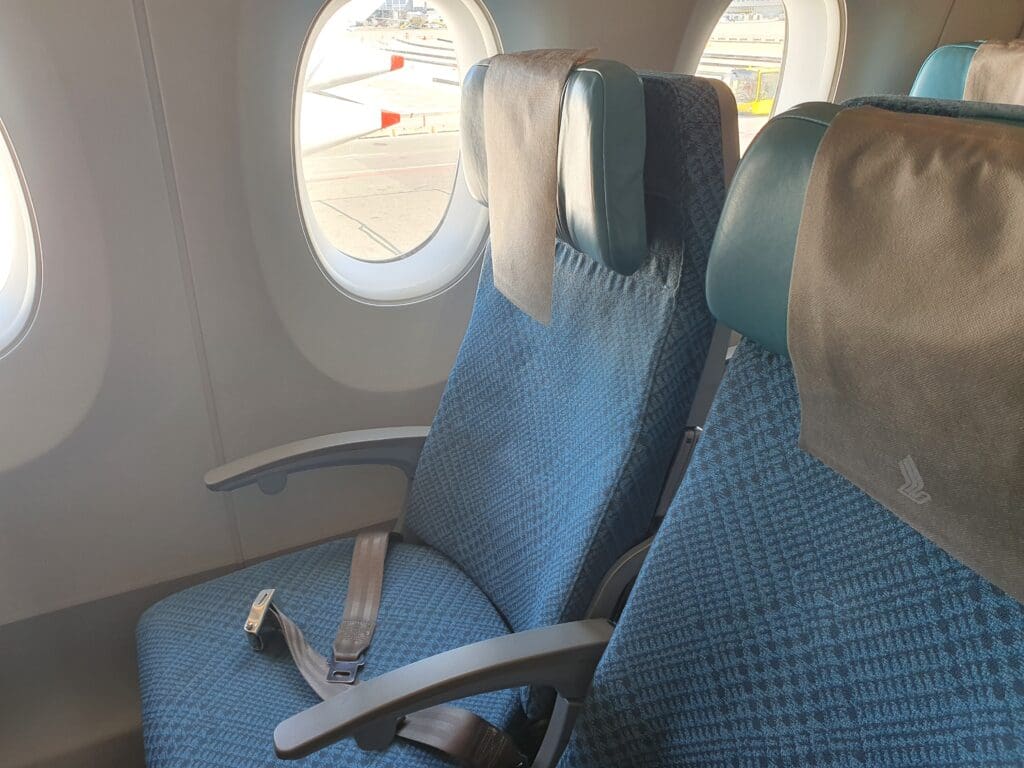
As I journeyed up the cabin to my seat, faintly pink and orange mood lighting illuminated the cabin whilst plenty of light poured in through the Airbus A350’s relatively large windows. Accompanying the boarding process, a soundtrack which included calming piano renditions of popular songs rang out, appropriately including Oasis’ ‘Don’t Look Back in Anger’ given the number of irate passengers that I had seen whilst waiting for the flight. Perhaps looking lost, as I neared the front of the rear Economy cabin, a flight attendant asked me for my seat number before taking the time to escort me to this. Whilst I will not be able to forget the information-less delay in Copenhagen Airport for some time, I cannot deny that the very warm welcome I received onboard did assist in taking the edge off the negative ground experience.
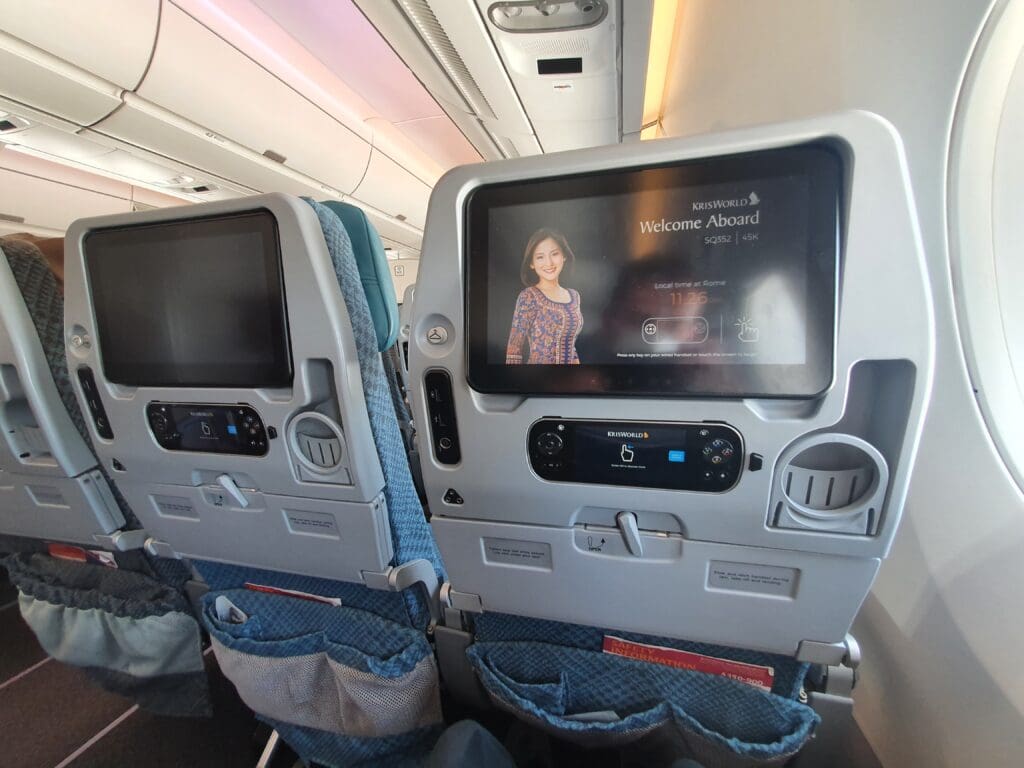
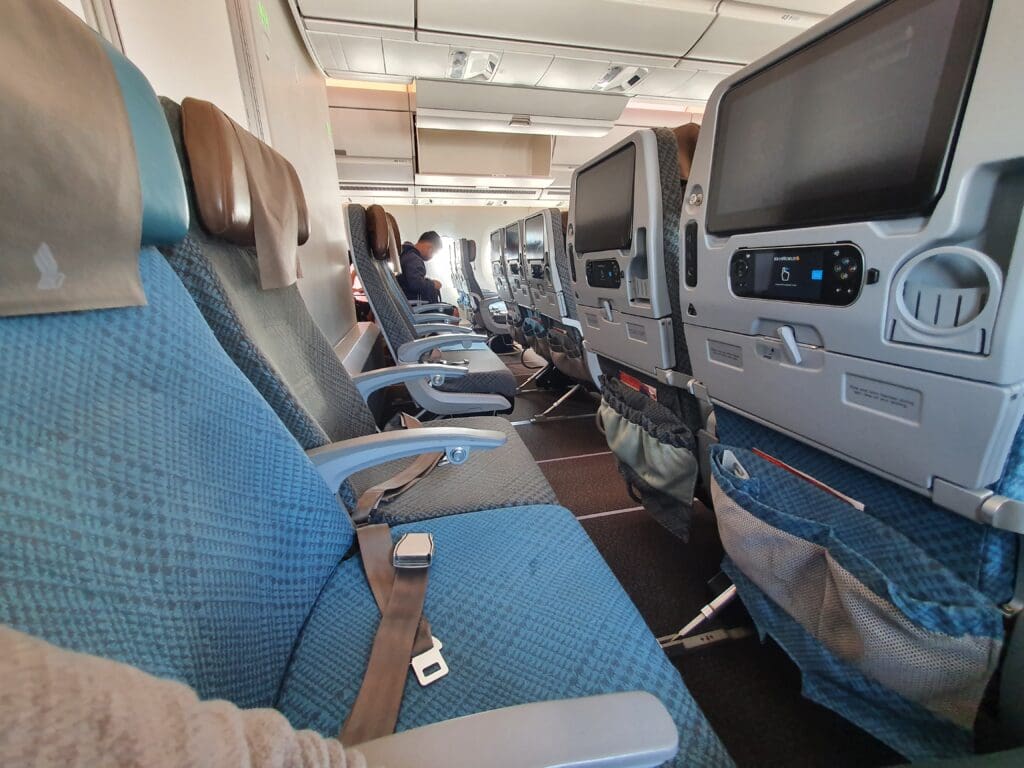
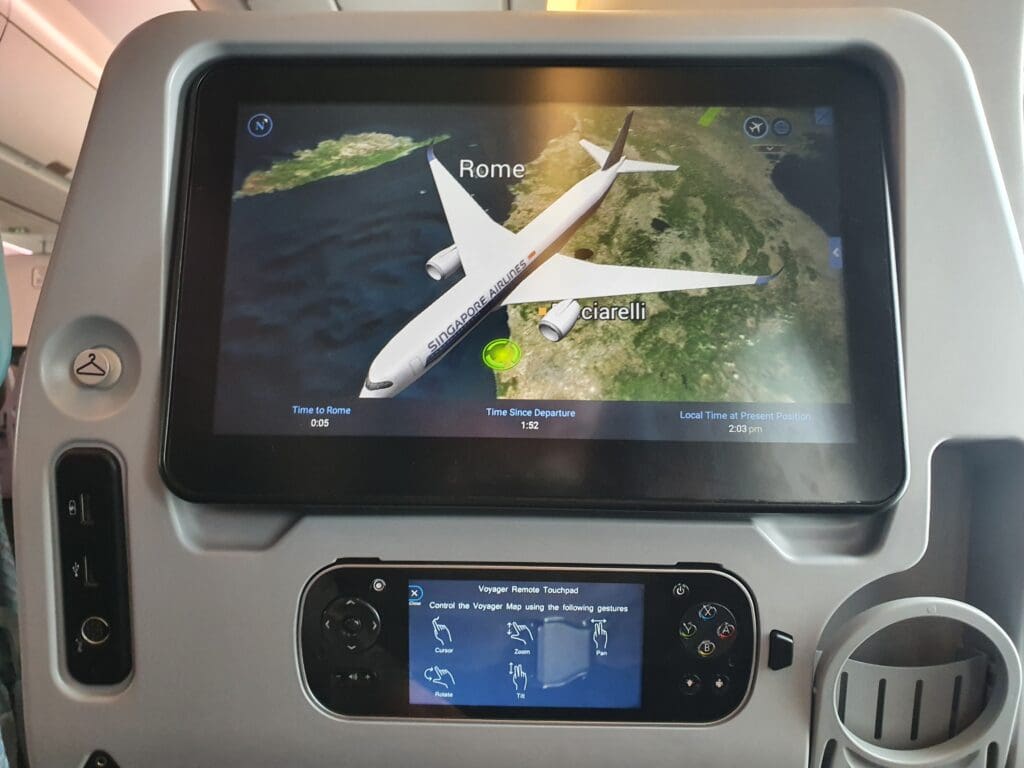
Given Singapore Airlines’ stellar reputation, I had high expectations from the seat, and upon sitting down I was most certainly not disappointed. As one would hope, this was well padded and provided plenty of legroom – likely to prove comfortable enough on even the longest of Singapore Airlines’ services. In front of me sat a large and high-quality 11.1-inch wide personal screen powered by Thales’ AVANT inflight entertainment system. This was accompanied by a high-tech personal controller positioned just beneath the screen, whilst two USB ports and another mystery port named ‘iPod’ could be seen on the seatback whilst a plug socket could be found just beneath the seat – although unfortunately, I found this not to work during the flight. Finally, each Economy seat also featured a cup holder as well as a mirror located in the tray table. Meanwhile, two seatback pockets could be found, one of which contained the all-important safety card and a sickbag.
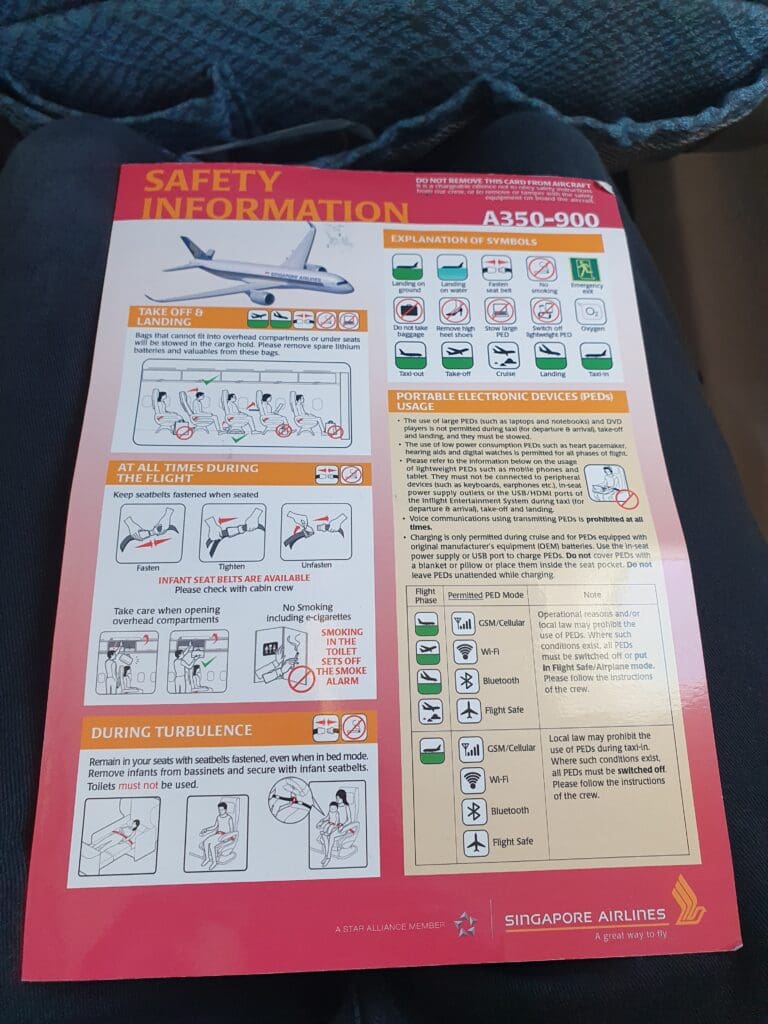
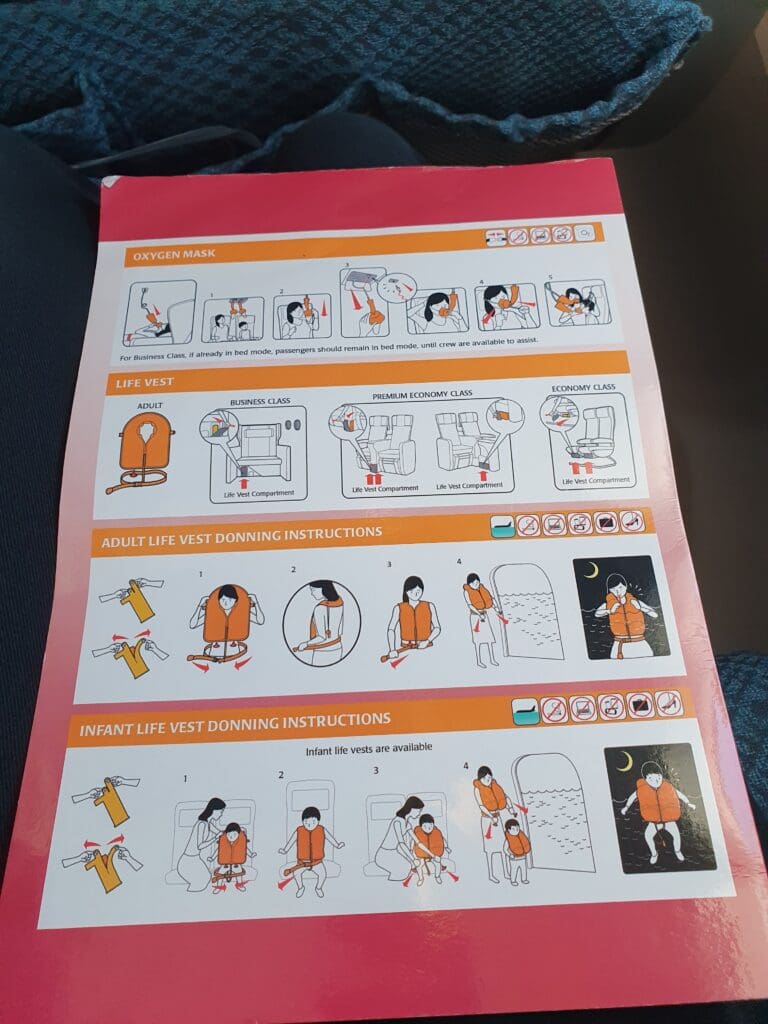
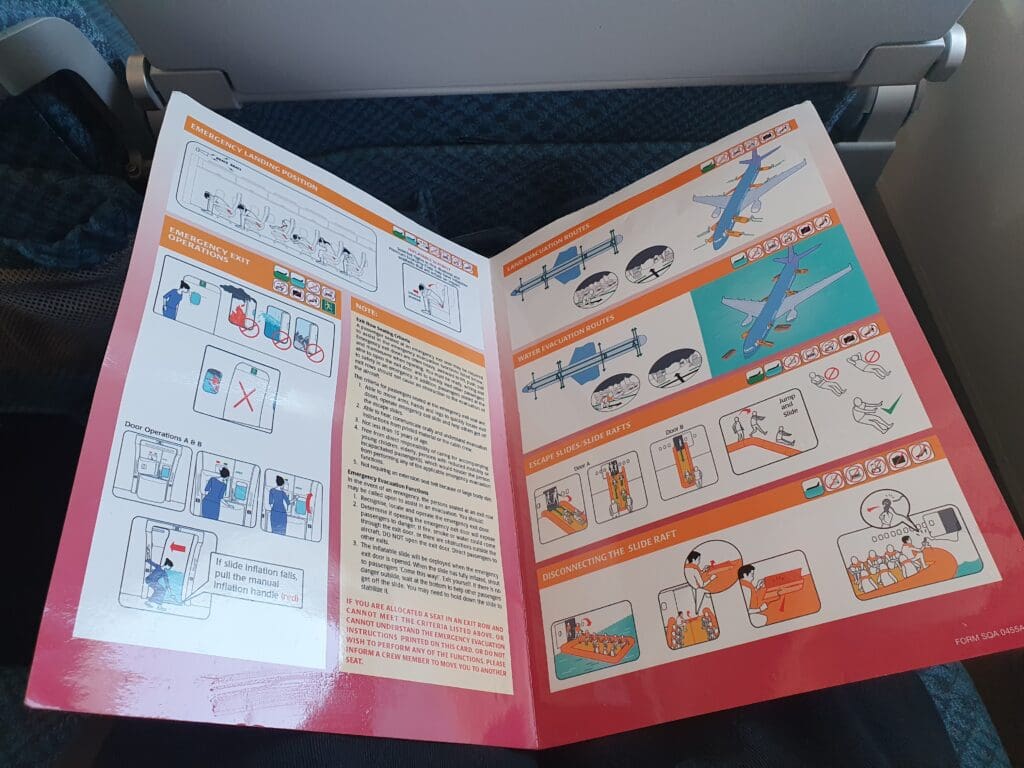
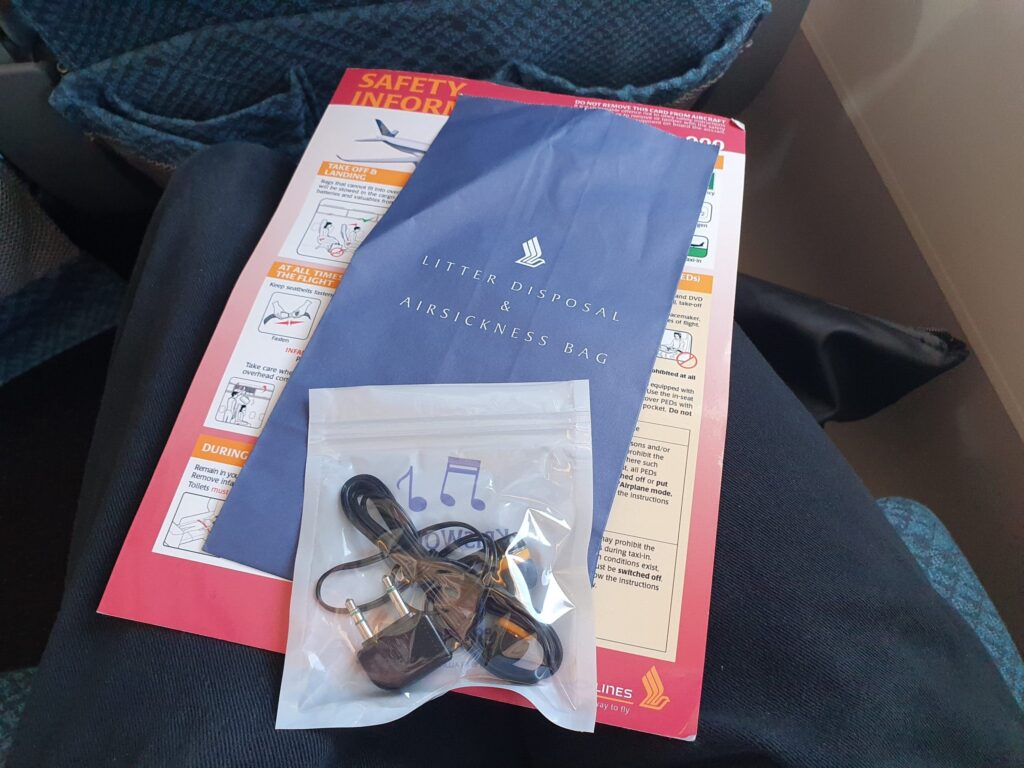
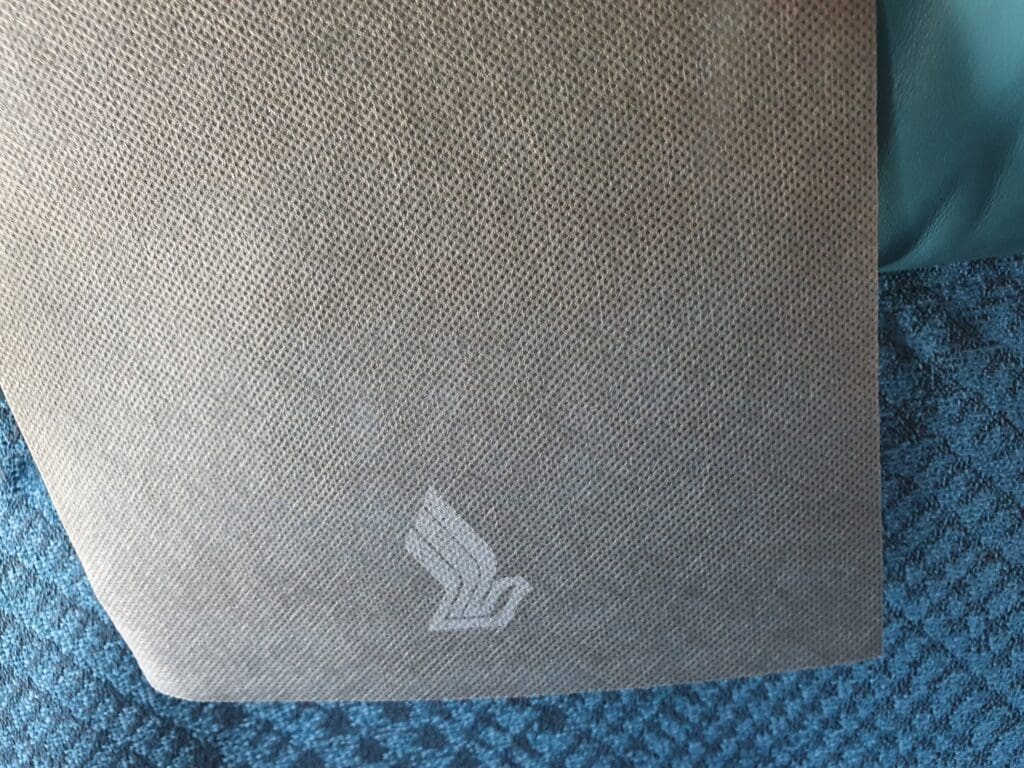
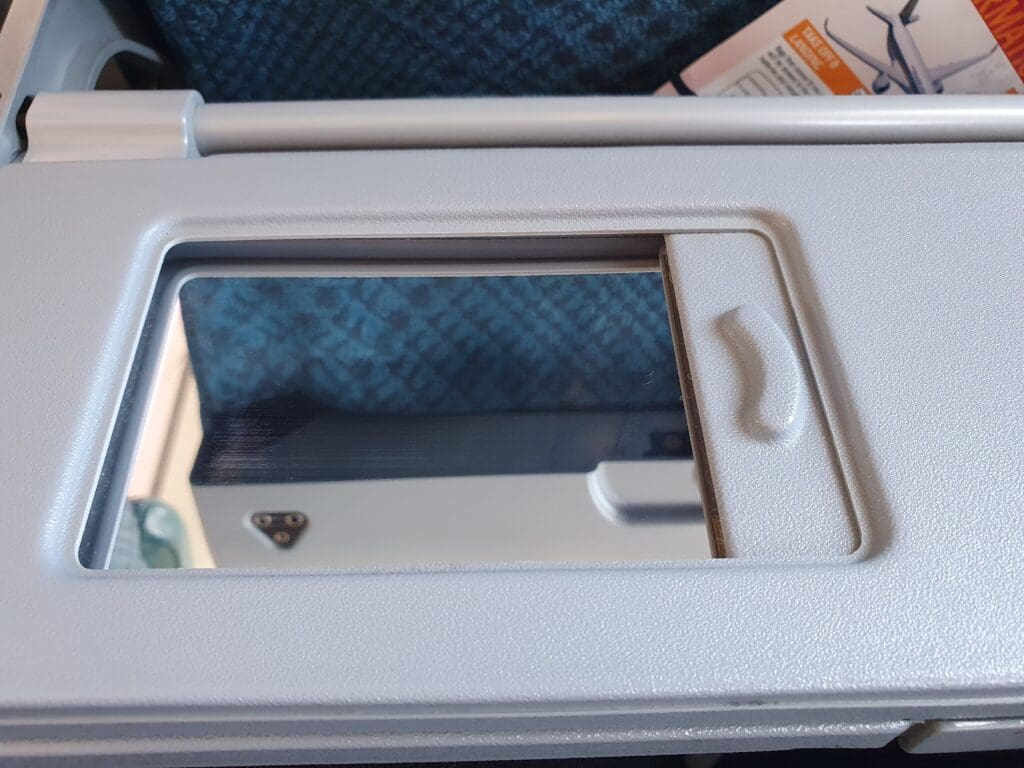
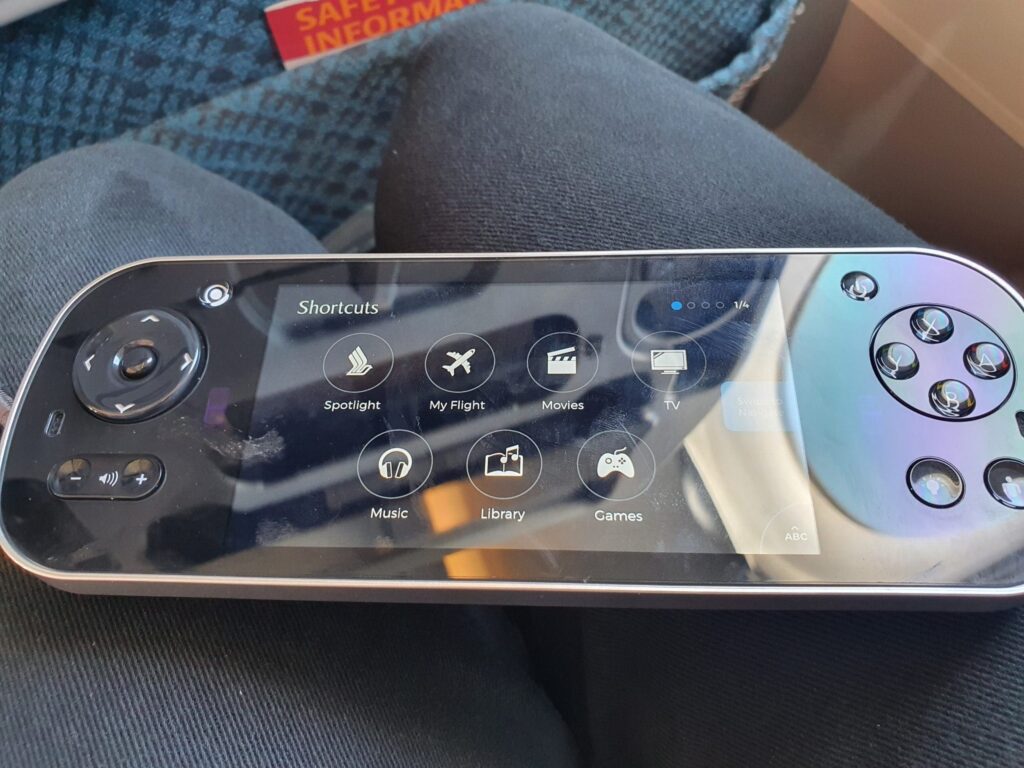
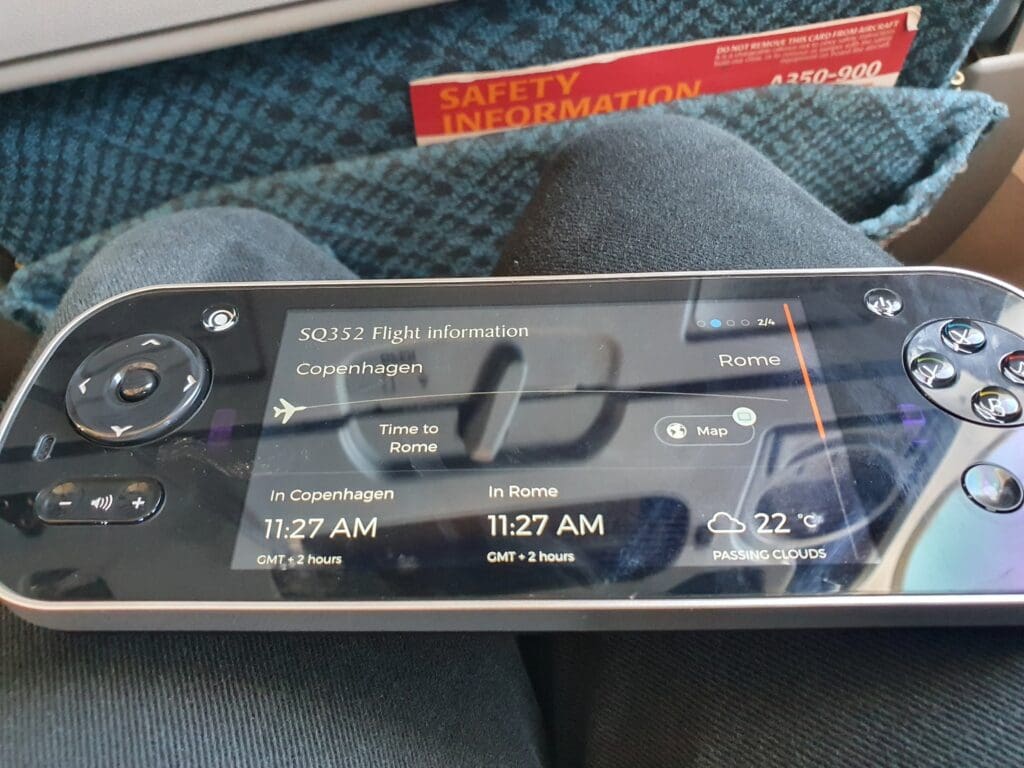
Once I and those around me had taken their seats, there was a temporary lull as we all waited for the second and final bus load of passengers to arrive at the aircraft. With both neighbouring seats remaining vacant, I hoped that this would remain the case once the second busload of passengers had boarded the aircraft. Following a tense wait, the second bus appeared and a handful of passengers filtered through to the forward Economy cabin. Much to my delight, at 1135 the ‘all doors are closed’ announcement rang out through the cabin officially confirming that I would be making the journey to Rome with the luxury of three seats to myself. As I had suspected whilst waiting in the terminal, that morning the load seemed to be rather light, with no more than 30% of the seats in Economy being filled for the leg down to Italy. Onboard, tired and groggy looking, many of my fellow passengers appeared to have flown in from Singapore, with a fair number of young homeward-bound Italian tourists travelling from Bali as well as a significant number of passengers hailing from the Philippines.
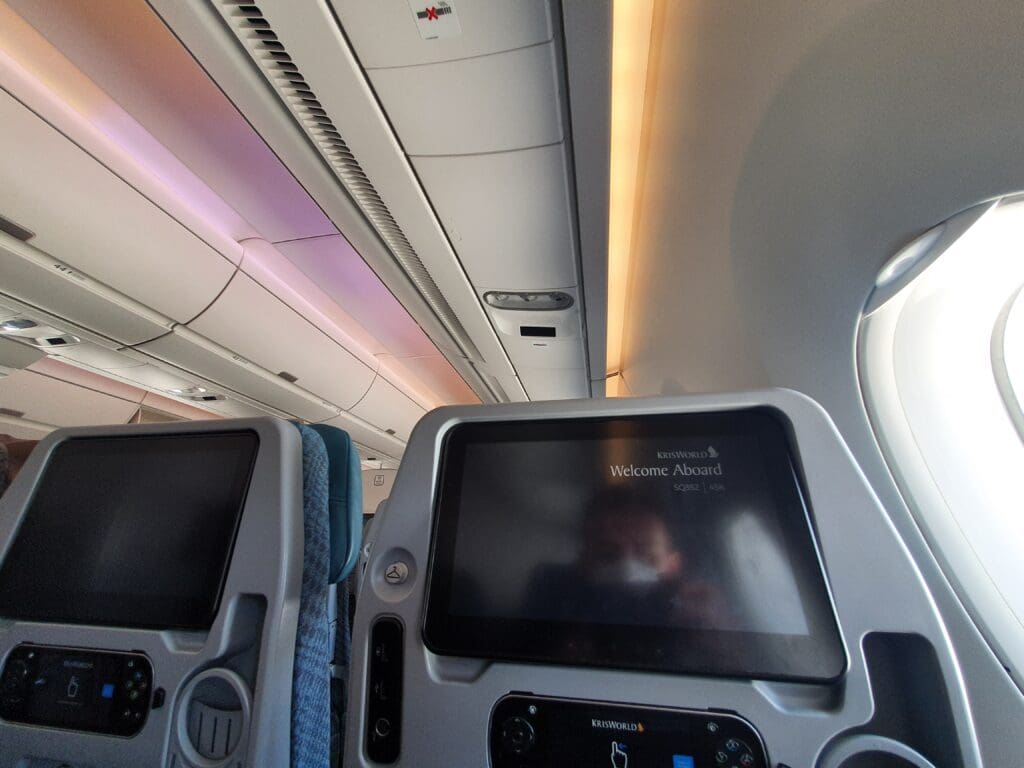
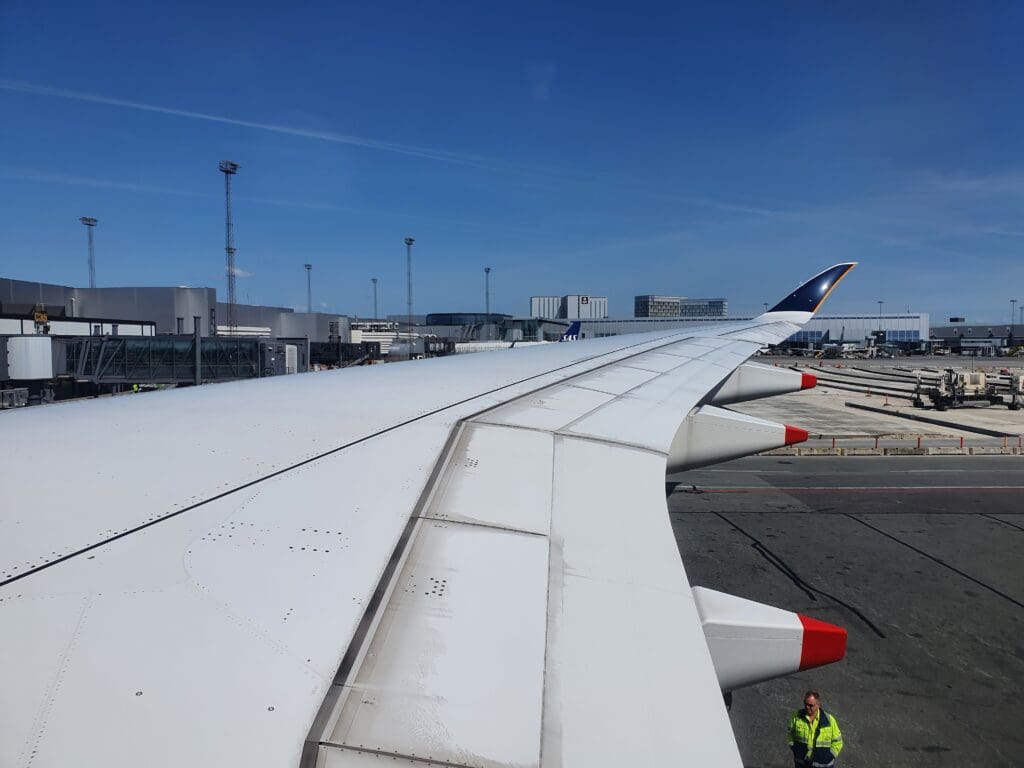
Once the doors had been closed, Captain Sebastian’s reassuringly calm tones filled the cabin as they commenced their long welcome announcement. This started with an apology for the long delay in Copenhagen, and for the fact that passengers had been provided with absolutely no information regarding this during their wait in the terminal – promising that this would be investigated. The Captain then went on to explain that this delay had been caused by a technical problem with the Airbus’ flight control system which needed to be looked at whilst on the ground. Fortunately, whatever this issue had been, this did not prove serious enough to warrant grounding the aircraft, and having faith in the technical abilities of the local Airbus A350 specialists, I was not too concerned by this. Following this apology and explanation for the delay, the Captain went over the usual details – briefing us on the weather both during the flight and on the ground in Rome, noting our flight time of 2H05 and informing passengers that we could follow the flight’s progress on the inflight entertainment system. Once the Captain’s announcement came to an end, there was a brief pause before the Purser performed a slightly robotic announcement with the usual welcomes and warnings, as well as some brief safety instructions which was then followed up in more detail by Singapore Airlines’ long safety video. Introduced in 2017, Singapore Airlines’ safety video takes passengers on a journey through some of Singapore’s most famous sites, and on that particular flight was accompanied by English and Italian subtitles. Keeping us as up-to-date as possible, as the safety video neared its end this was momentarily interrupted when the Captain performed a quick announcement informing us that we could expect to receive permission to leave our stand in the next ten minutes.
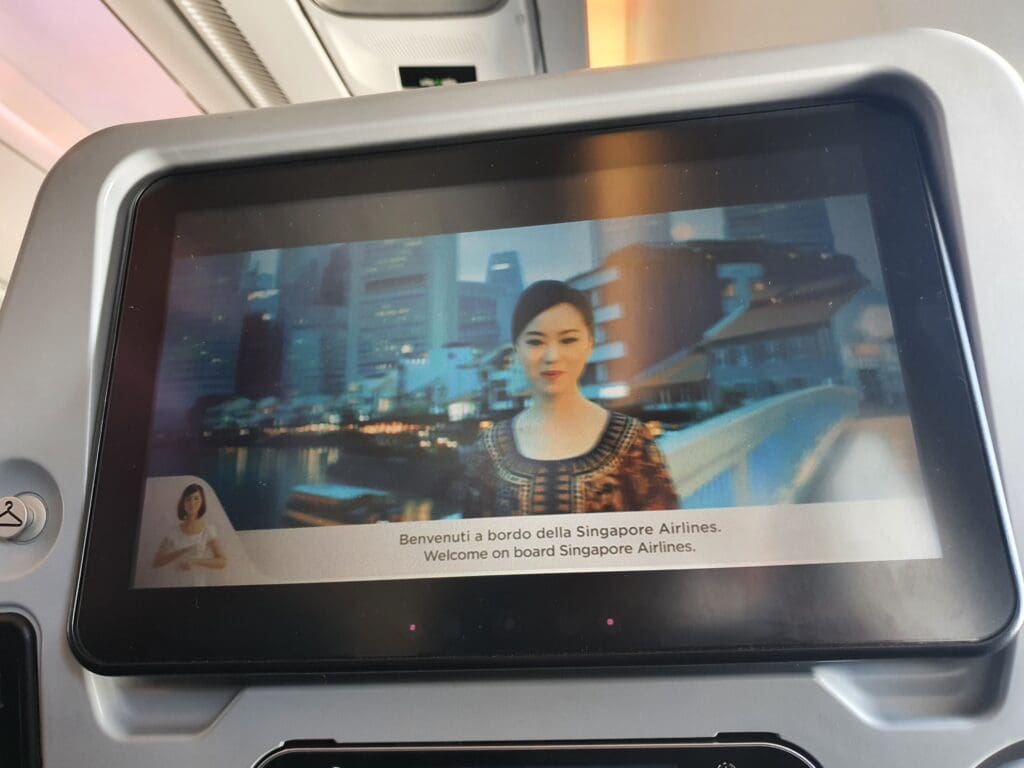
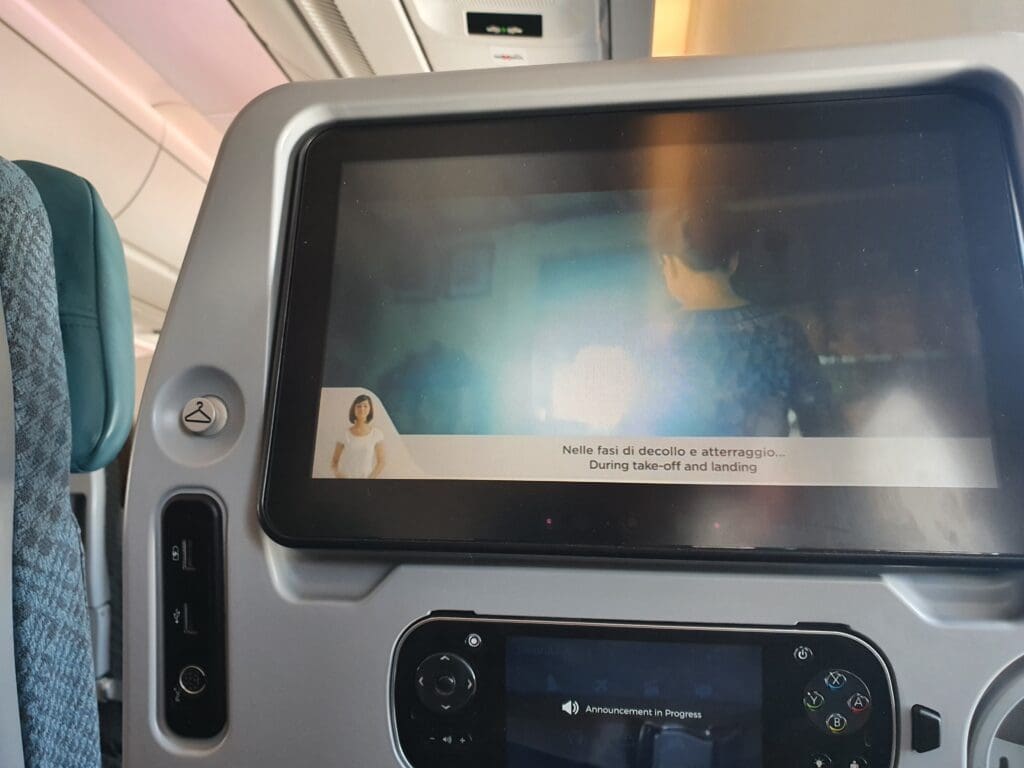
Once the safety video and demonstration had come to an end, the cabin crew then passed through the cabin ensuring that everything was secure and in place for our departure. During this, I noticed that rather than haphazardly rushing through the cabin as is sometimes the case, the flight attendants took their time to ensure that absolutely nothing had been missed and it seemed that everything was double and then triple-checked by other flight attendants. A short time later, the Airbus was gently pushed back from its stand, travelling quite some distance before coming to a halt near the end of Copenhagen Airport’s F pier. Whilst by this time most passengers perhaps wanted to get away as soon as possible, after the Airbus came to a halt the Captain performed another announcement informing all passengers that there would be a five-minute wait until we could start up our engines and that we could expect to be in the skies by 1210. Whilst some passengers, particularly those deeply engrossed in the inflight entertainment system may have been slightly annoyed at the Captain’s very regular announcements, I was left rather impressed as it seemed that the Captain clearly recognised the failings in passengers’ experience on the ground in Copenhagen and wished to be open and honest with passengers, keeping them as up-to-date and informed as possible. As we waited, a loud whining motor noise and several clunks could be heard coming from below – with this being the first time that I have ever heard such sounds onboard an Airbus A350!
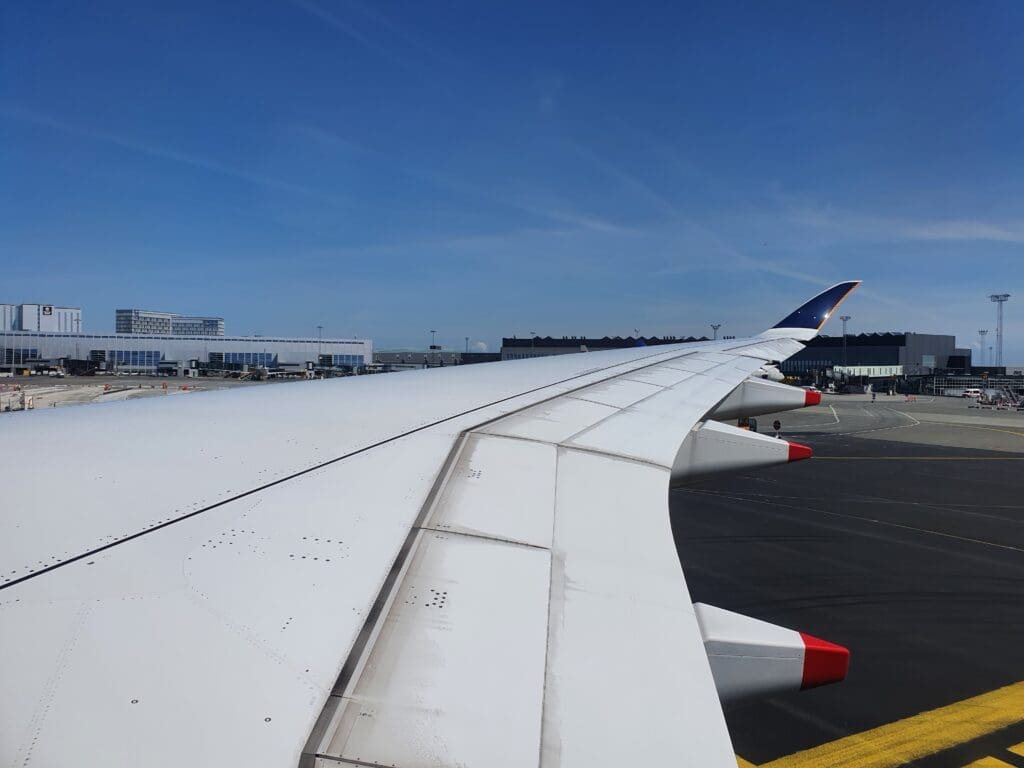
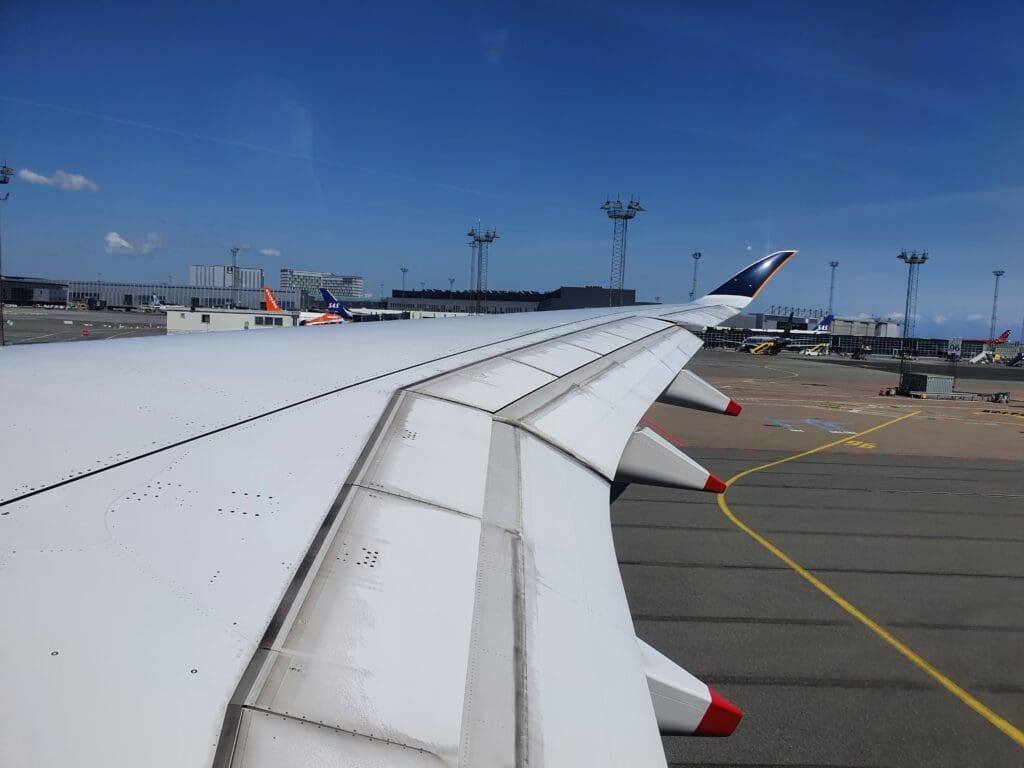
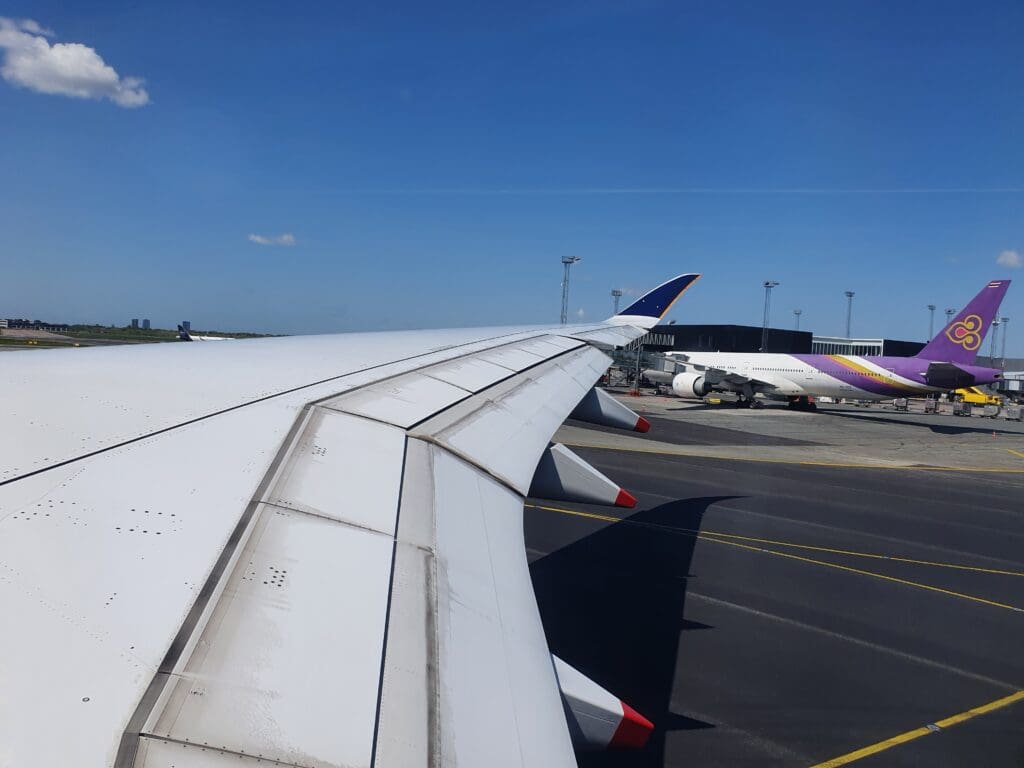
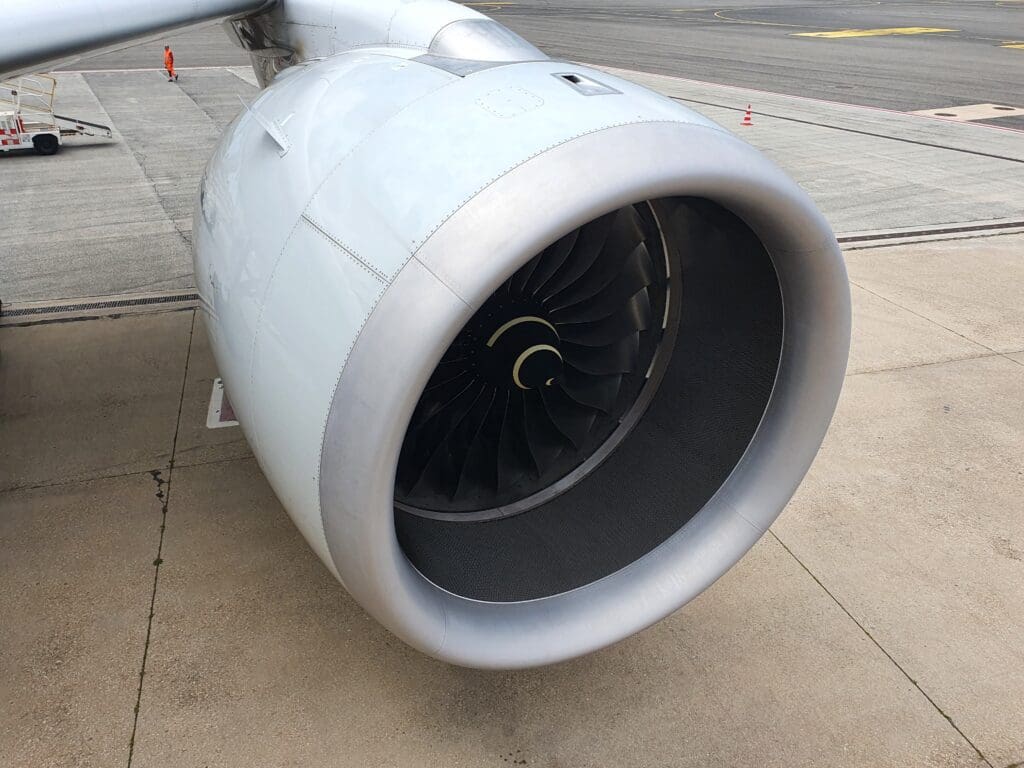
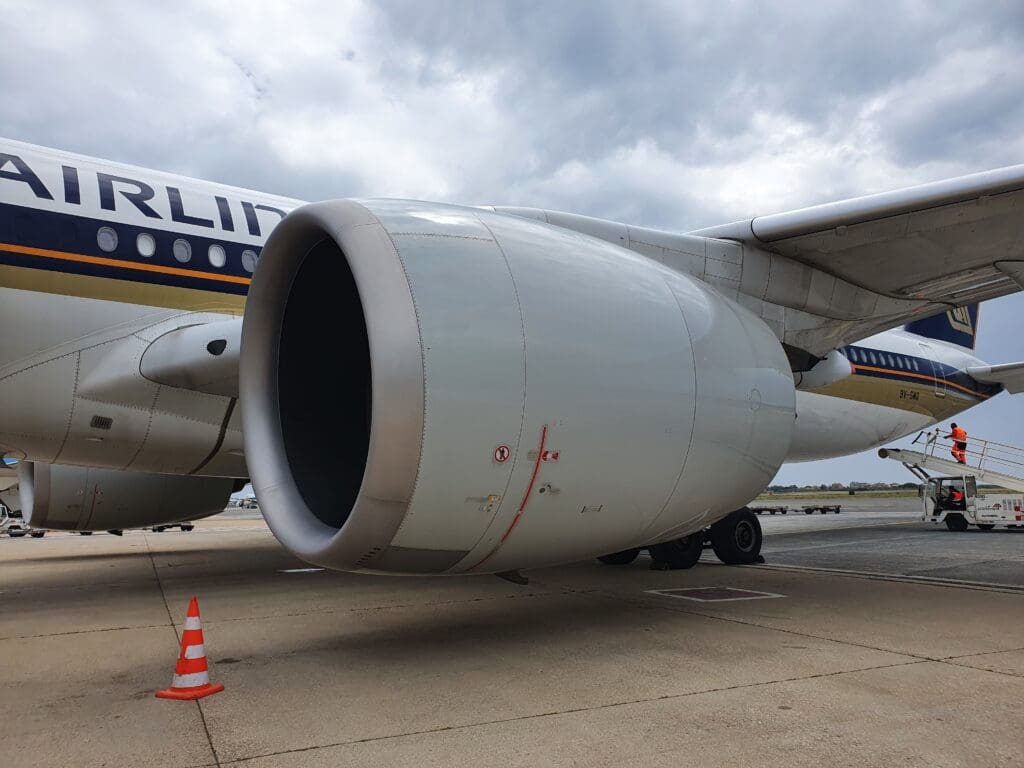
At 1157, the usual crescendo of humming and whirring could be heard, accompanied by a fair amount of vibration as the Airbus’ two massive Rolls-Royce Trent XWB engines quietly powered up into life. Three minutes later, the Airbus taxied away from the apron under its own steam and commenced its journey towards the end of Runway 04R. At 1206, the Airbus arrived at the end of the runway and waited for a while before the cabin crew were requested to take their takeoff stations at 1209 just before the Airbus powered onto the runway. Without coming to a halt, once on the runway and lined up with the centreline, the two engines powered up and the Airbus commenced a powerful takeoff roll, rocketing down the runway and soon rotating upwards into the sunny Danish skies just before reaching Copenhagen Airport’s tall control tower. Within a second of taking to the skies, the waters of the Øresund appeared, whilst a cluster of hangars and airport-related buildings could be seen below, in the middle of which stood a lone Embraer 195 that once flew for the short-lived Danish carrier, Great Dane Airlines.
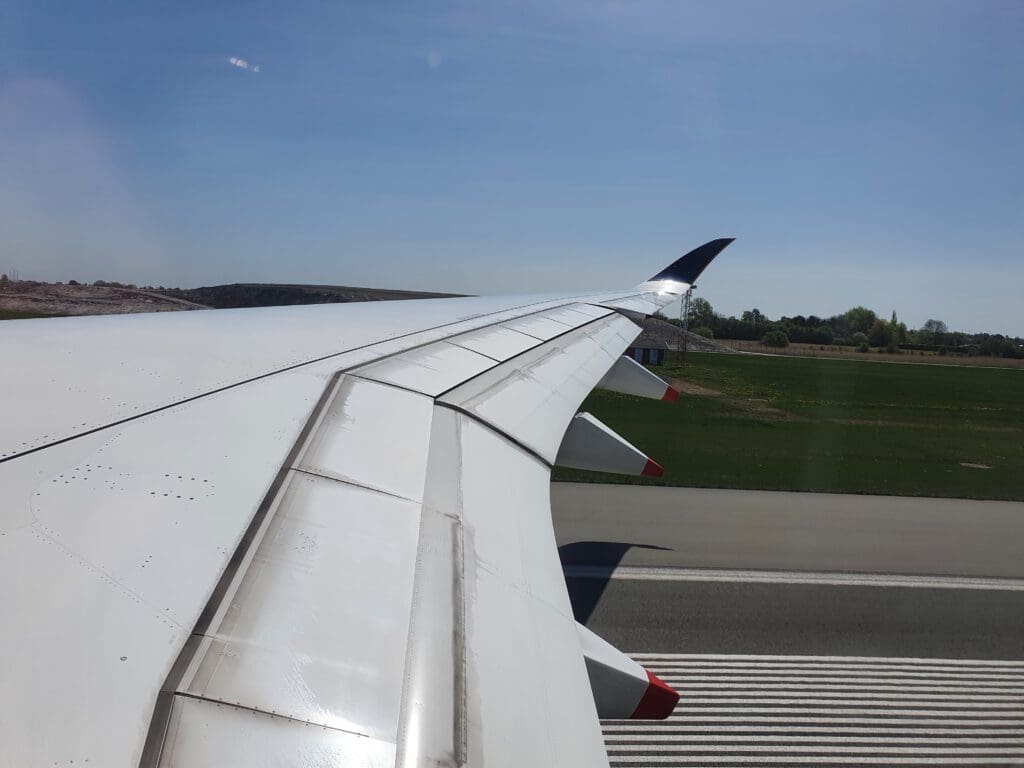
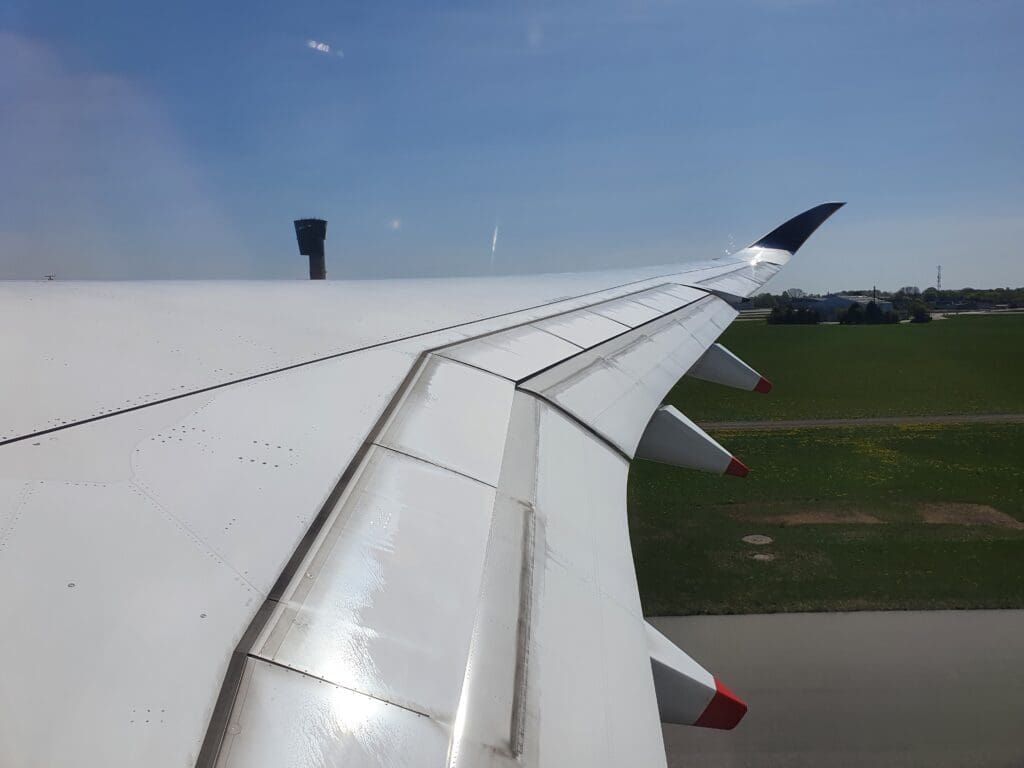
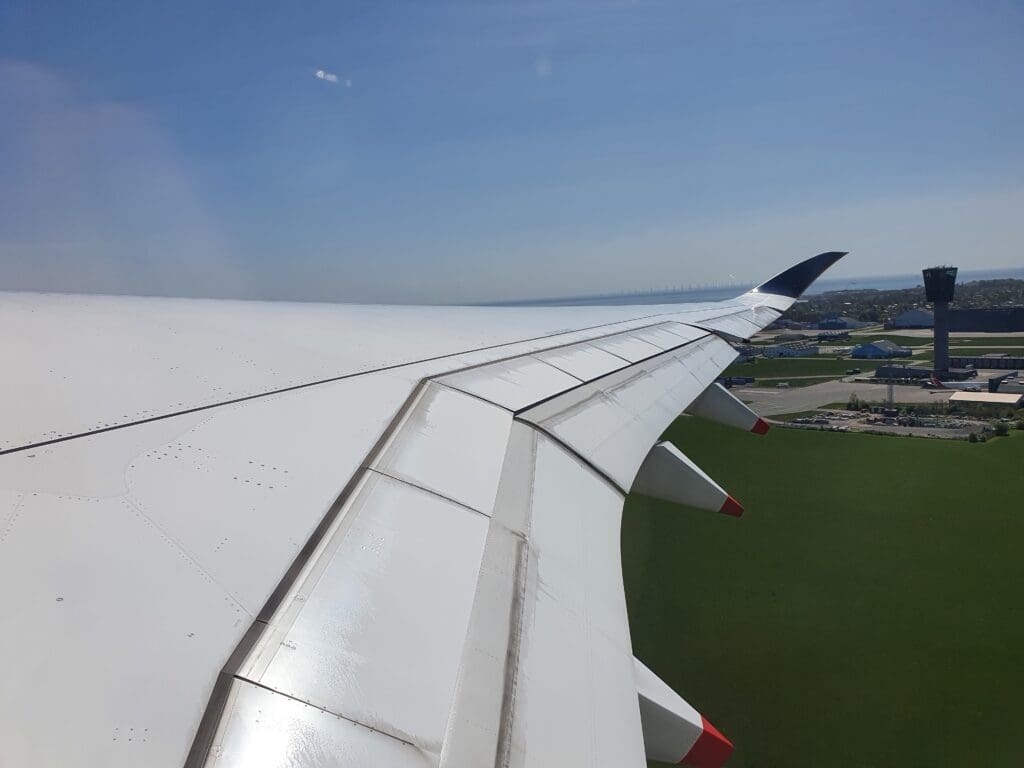
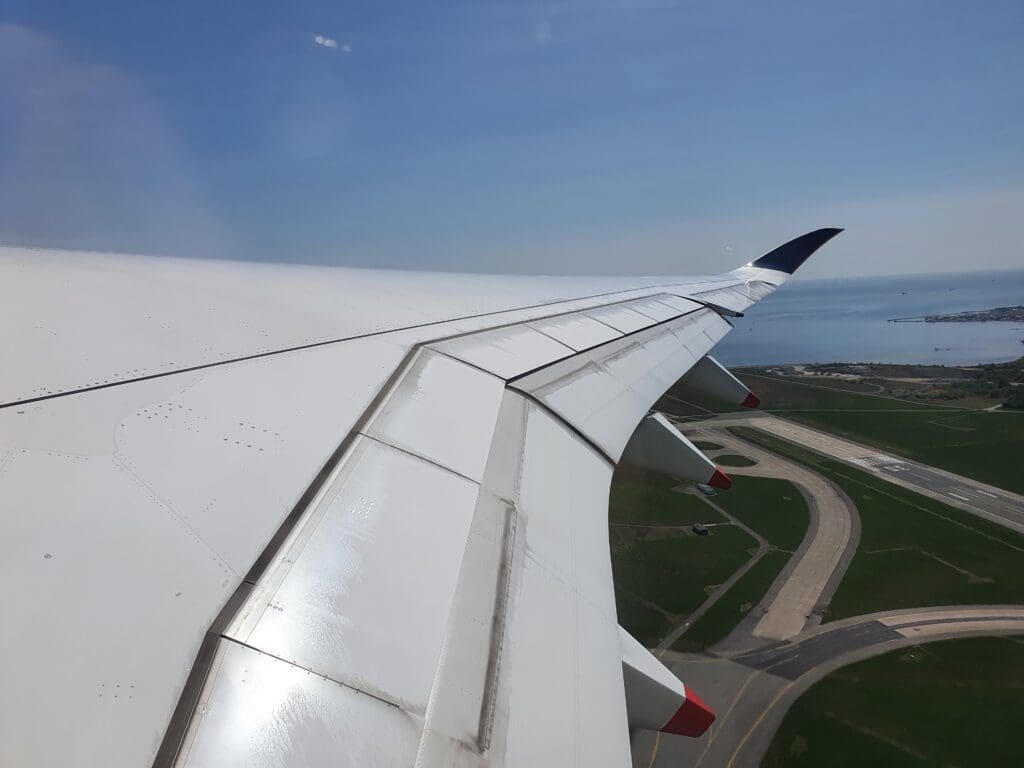
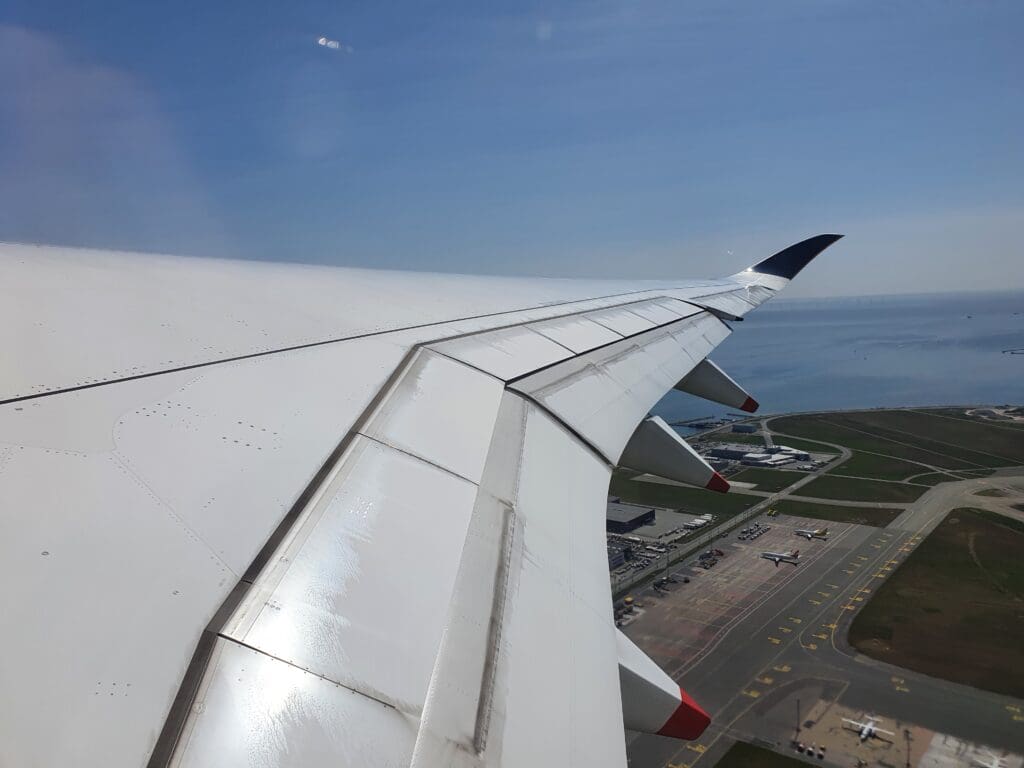
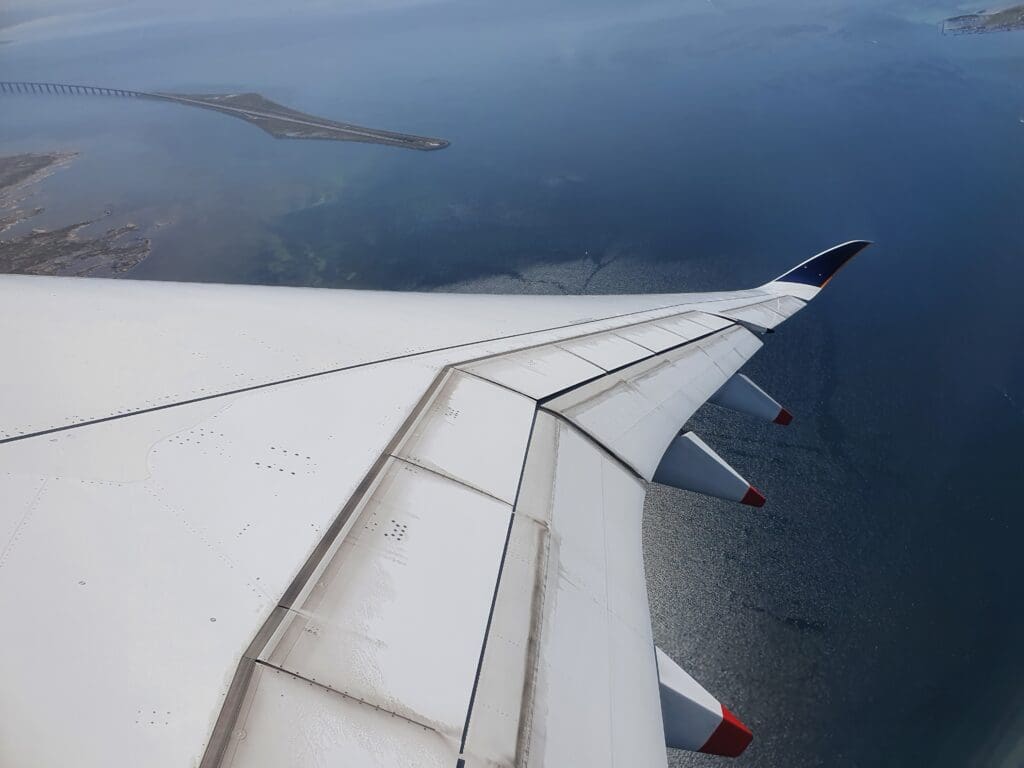
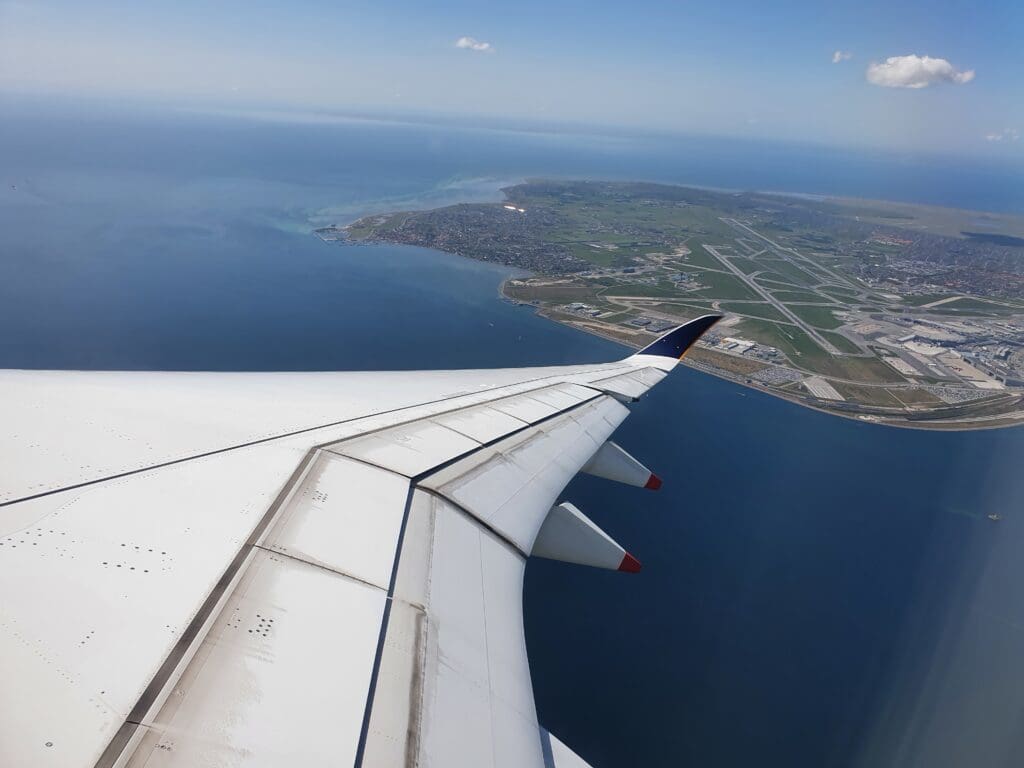
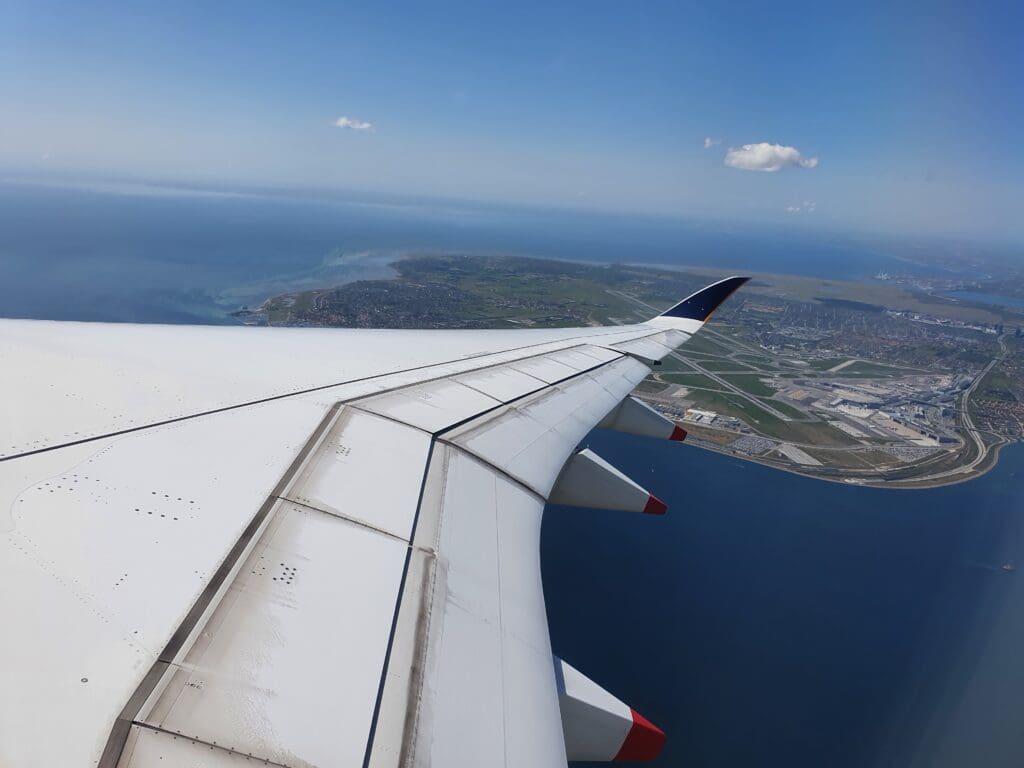
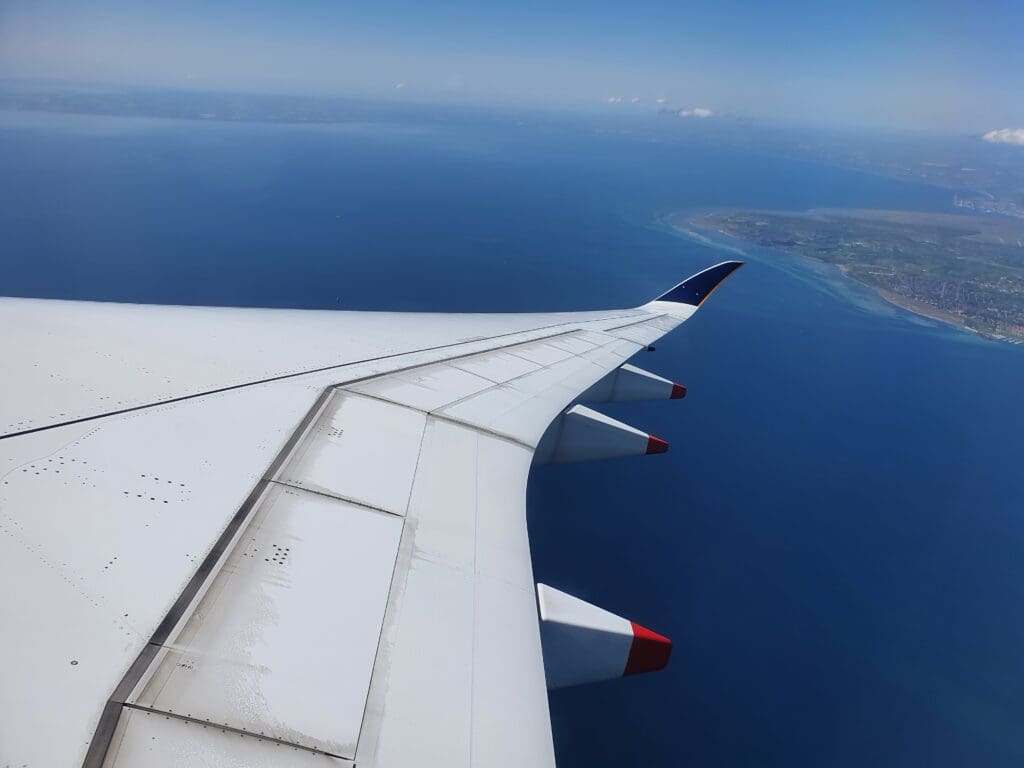
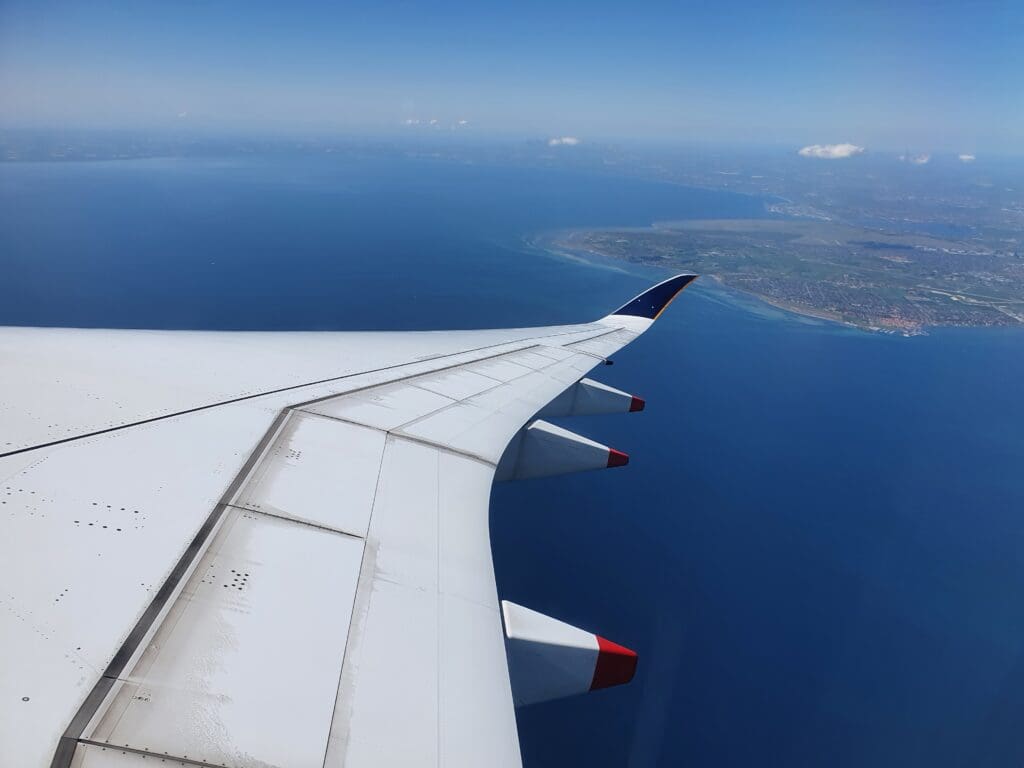
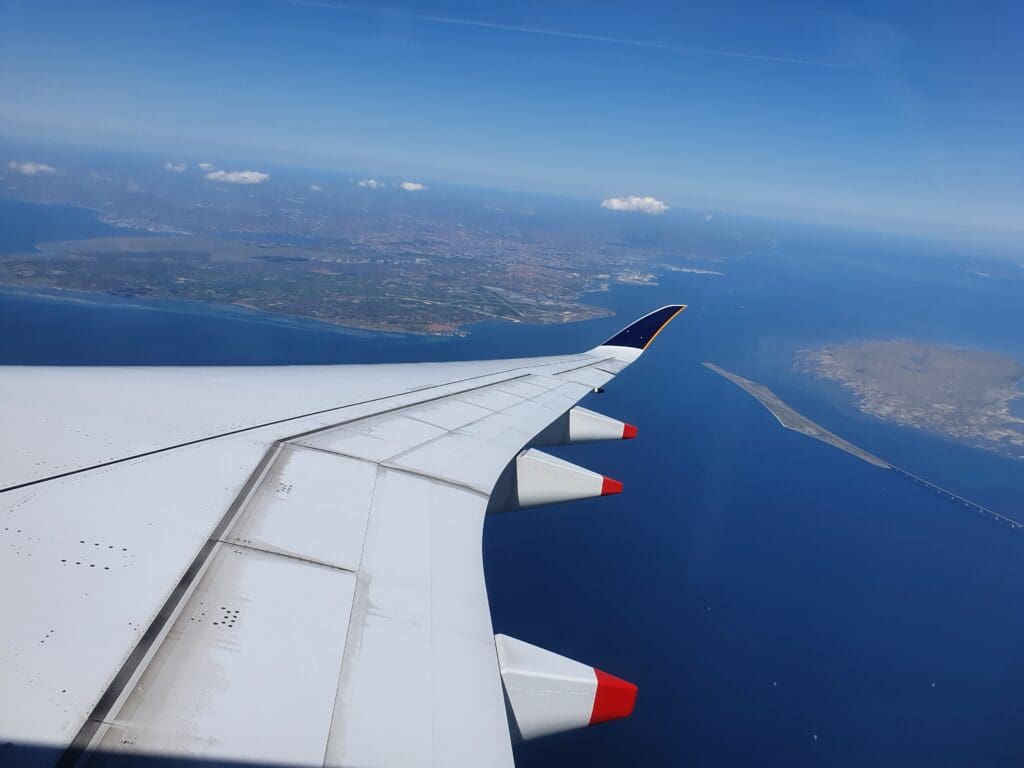
Seconds after taking to the skies, the Airbus left Copenhagen Airport behind and immediately crossed over the shores of the island of Amager before heading out over the Øresund. As the jet climbed over the blue waters, the Airbus gently banked to the right, allowing those on the right-hand side of the aircraft good views of the small and almost uninhabited island of Saltholm, as well as the famous Øresund Bridge which connects Copenhagen with Malmo. Following a turbulence-free turn, the aircraft rolled out on a southwesterly heading that would take us towards Italy. A short time later, the Airbus reached Danish shores once again, making landfall over southern Zealand before climbing over the Danish islands of Falster and Lolland. As the Captain had mentioned, our departure and initial climb out that lunchtime proved to be a smooth affair and so as soon as we reached 10,000 feet six minutes after departure, the seatbelt signs were extinguished. This was immediately followed by another slightly robotic announcement from the Purser with the usual warning regarding keeping seatbelts fastened whilst seated.
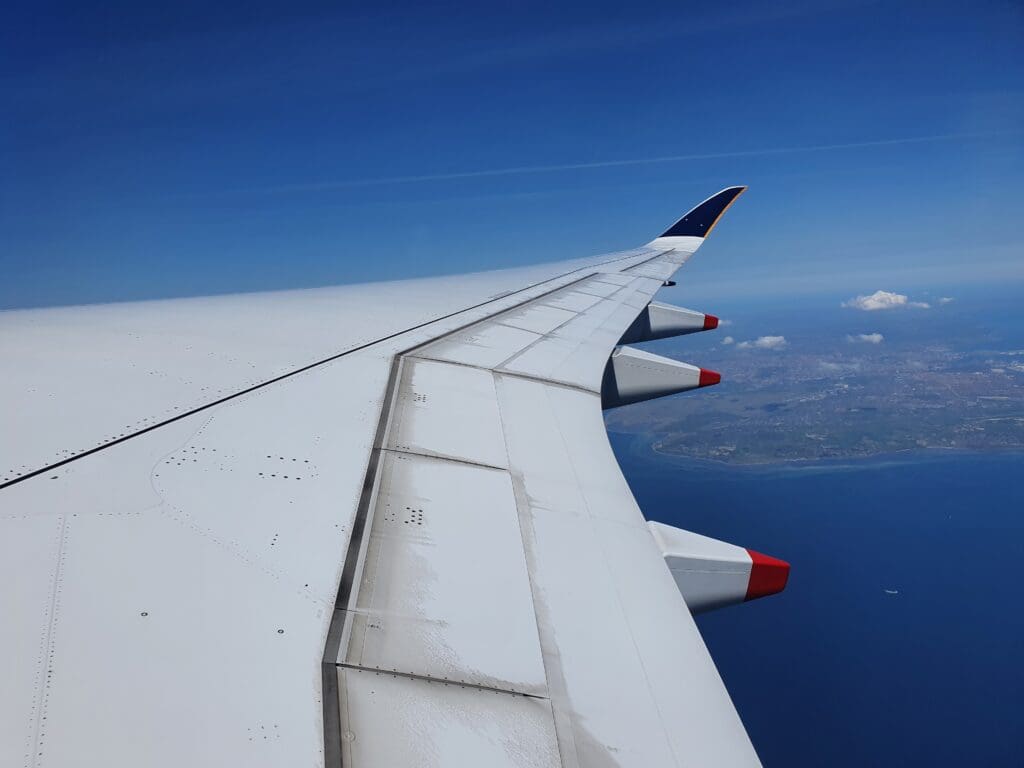
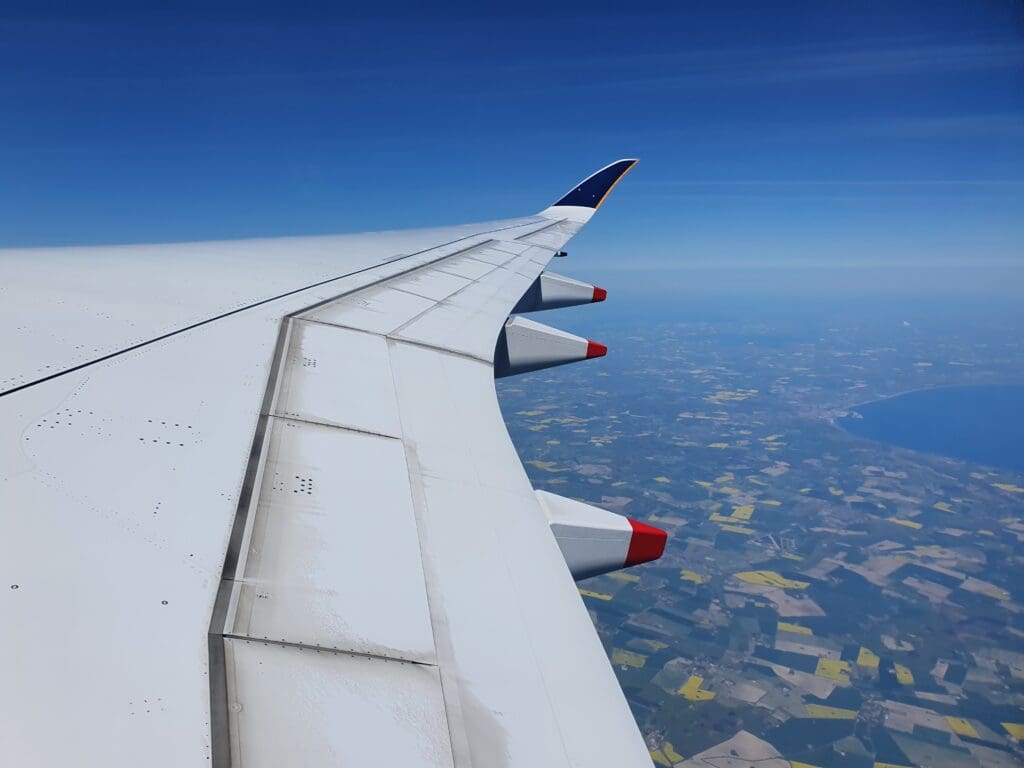
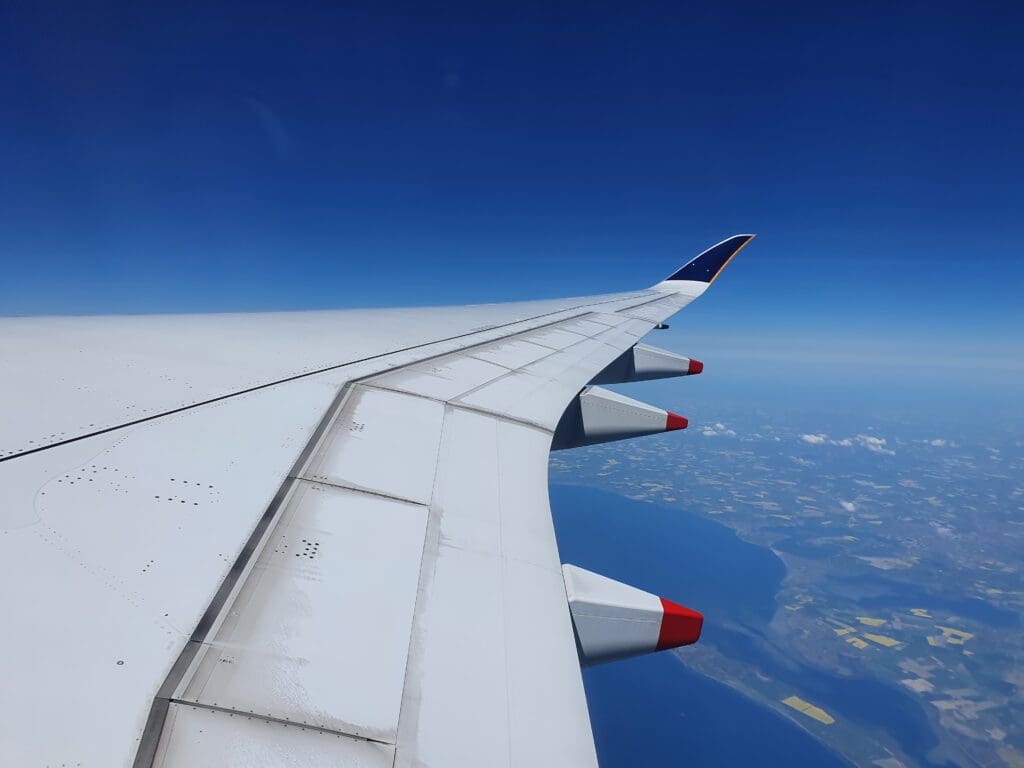
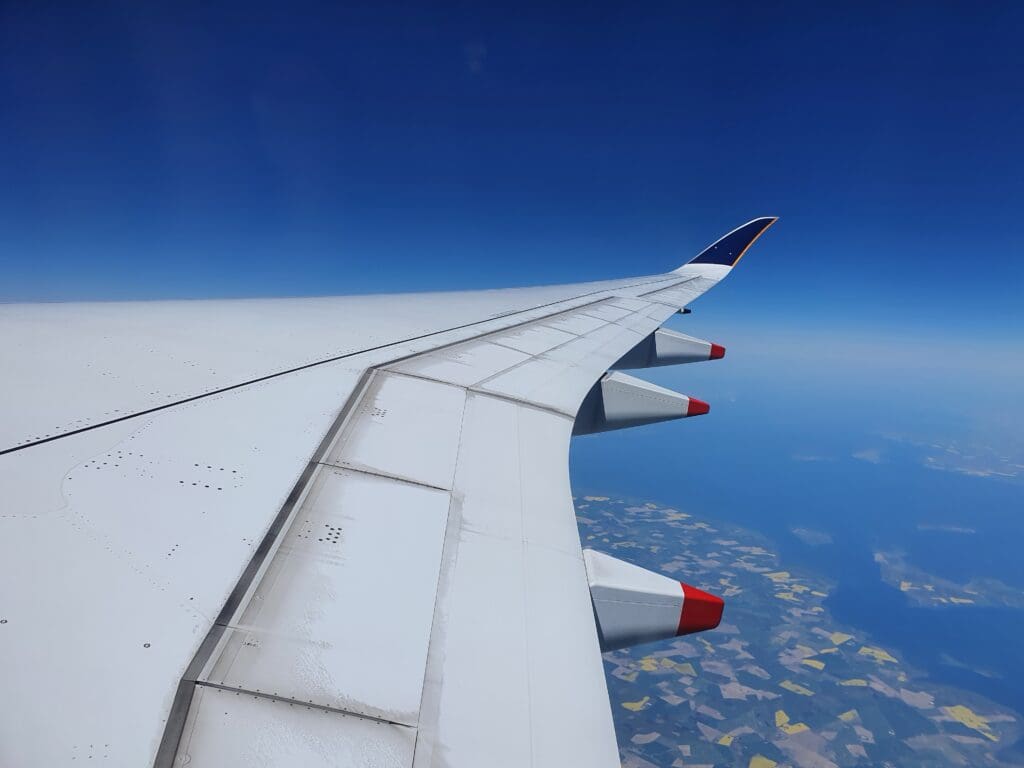
As the Airbus smoothly climbed over the islands of Southern Denmark, the clear skies ensured that fantastic views of the green rural landscapes could be had along with the occasional passing small town and village. A total of fifteen minutes after taking to the skies, the Airbus crossed over the Fehmarn Belt and left Danish airspace behind, soon reaching the German Island of Fehmarn From there, the aircraft made its way on towards the German mainland and passed over the Baltic coastline around halfway between the cities of Lübeck and Wismar. Once over the German mainland, the Airbus turned to fly almost directly southwards and trundled over Germany’s Mecklenburg-Vorpommern state however unfortunately it wasn’t long before clouds rolled in below ensuring that views of this were all but non-existent as we levelled off at our high cruising altitude of 41,000 feet.
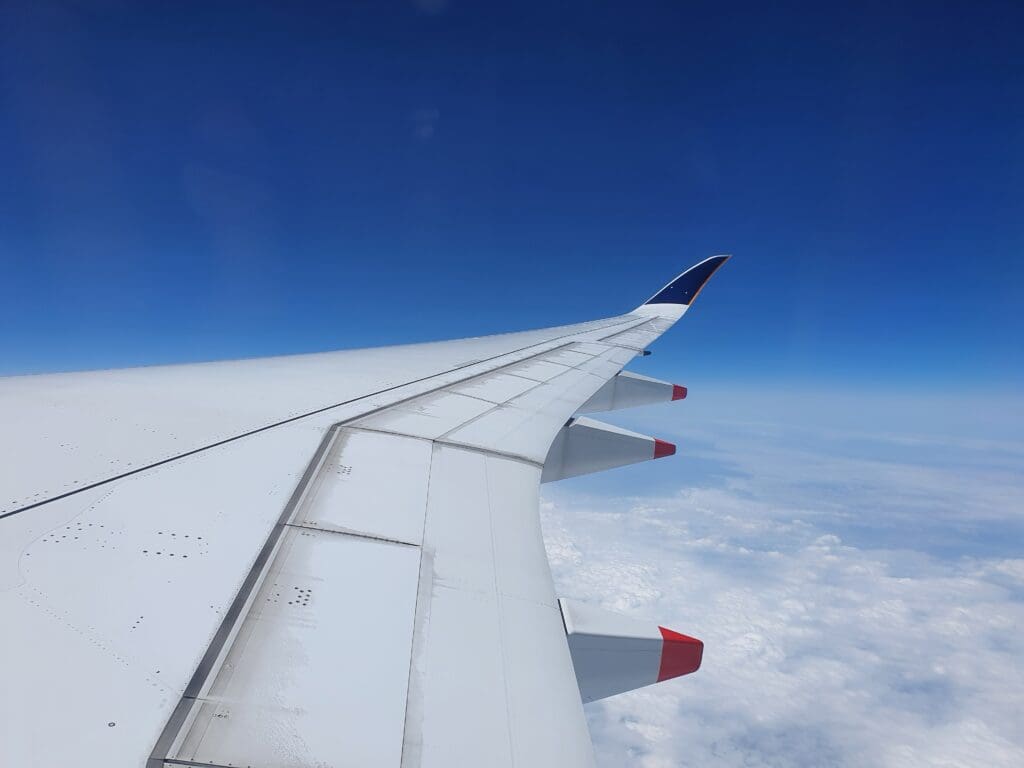
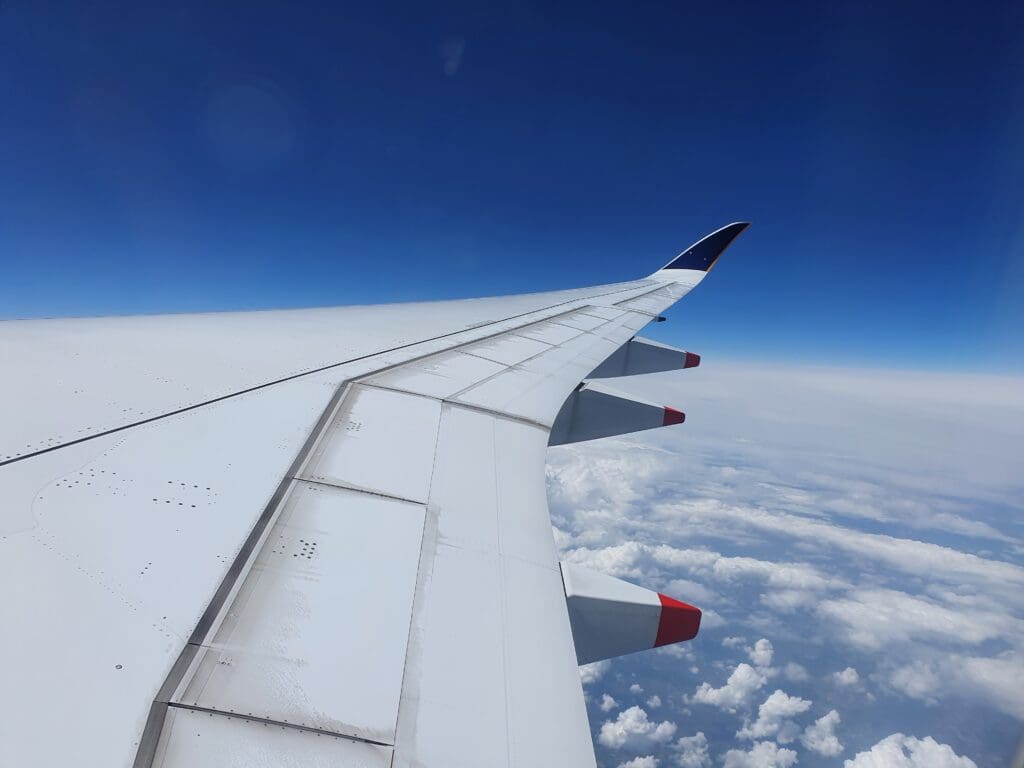
Having read a selection of reports on Singapore Airlines’ fifth freedom service between Denmark and Italy, during this flight, I had initially expected to be served a cold light breakfast consisting of a croissant or sandwich, accompanied by perhaps a yoghurt, chocolate bar or some fruit. Those eager to sample the famed culinary delights of Singapore Airlines, or perhaps those indecisive passengers requiring extra time to browse the menu will be glad to hear that the carrier publishes the inflight menus for their flights a week before their departure. Falling into both categories, I had browsed the inflight menu before departure and upon reading this I was delighted to find that we would be offered a hot breakfast on the comparatively short flight to Italy – with this being the second hot breakfast of the day for those who had commenced their journey in Singapore! According to the airline’s website, passengers could opt for either a cream cheese omelette or stir-fried noodles.
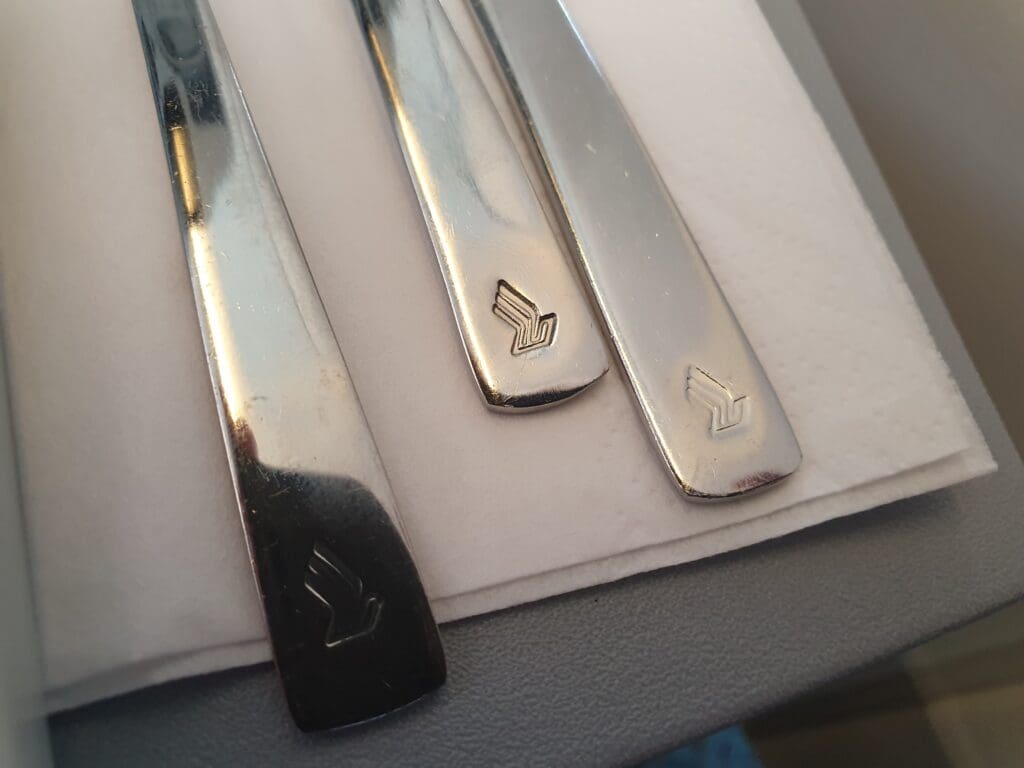
Reaffirming the presence of hot food options onboard, as the aircraft climbed the familiar scent of warming airline food seemed to fill the cabin, with this service commencing just after the aircraft had levelled off at its cruising altitude. Given the light load in the forward Economy cabin, it wasn’t long before one of the two crew members manning the trolley working down my aisle approached me. Following a friendly welcome, one of the crew members then provided me with a very comprehensive overview of the two expected meal options. Having already decided well in advance of the flight that I would opt for the noodles, after requesting this dish, I was then asked if I would like tea or coffee to accompany this. Opting for the latter, a few moments later the flight attendant cautiously placed a tray on my tray table – this complete with the main dish, a cold packaged bread roll, a packet of butter, a fruit yoghurt and a sachet containing real metal cutlery and a serviette! This was then followed by the coffee, which, having little room remaining on my tray table, was then placed on the tray table of the neighbouring seat. Last but not least, I was offered a cup of orange juice, which I gladly accepted and soon joined the coffee on the tray table of the neighbouring seat. Interestingly, whilst Singapore Airlines introduced sustainable packaging for those in Economy on the carrier’s flights under three and a half hours in late 2021, these were not used on the flight that morning and instead a more traditional spread was provided.
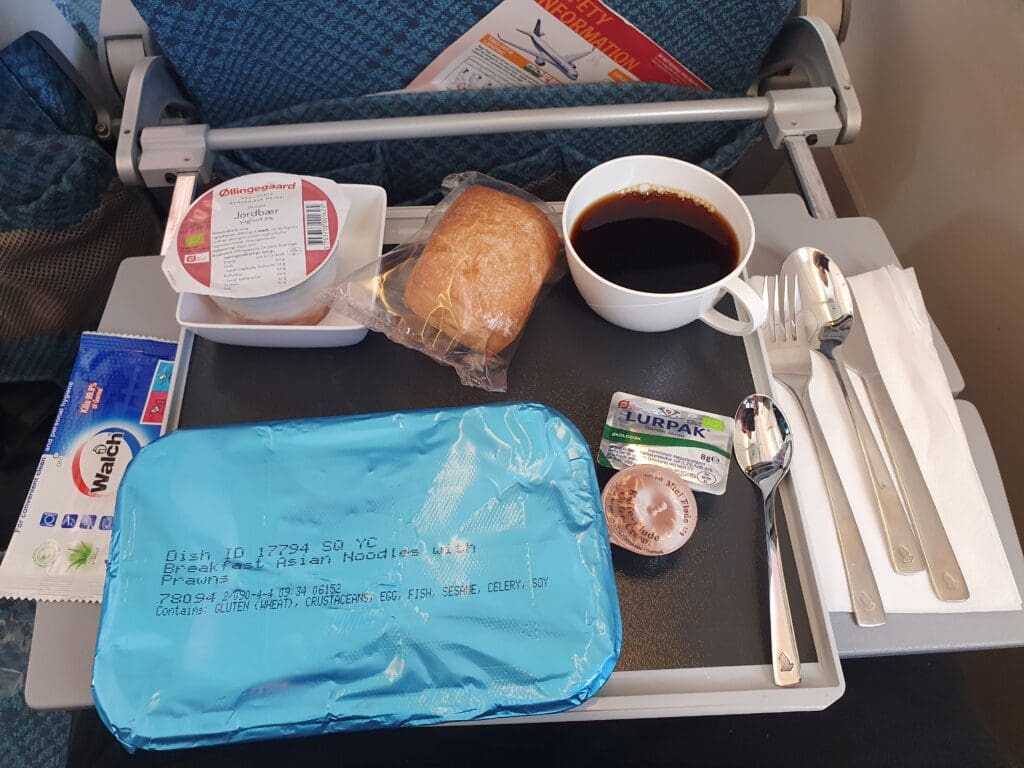
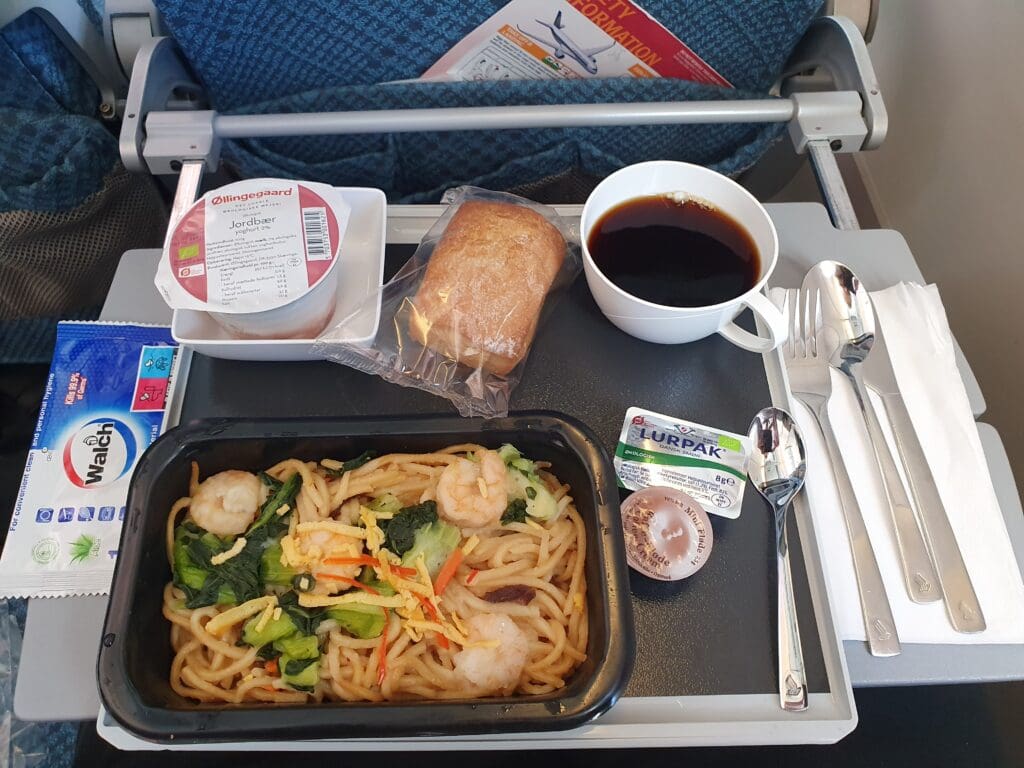
Upon lifting the lid of the main dish, I found this to be well presented and featured a decent number of prawns as well as a good selection of vegetables resting on a bed of noodles. Tucking into this without delay, I found this to taste as good as it looked and thus left me with no complaints at all. Soon polishing this hearty breakfast off, around twenty minutes after this had been handed to me, my empty tray was collected and I was offered a drink – with both alcoholic and non-alcoholic options available to passengers. Not fancying anything too strong, I opted for a still water plain and simple which was handed over to me in a Singapore Airlines branded plastic cup. Given the fact that complimentary hot meals in Economy are quite a rarity on short flights within Europe, I was left highly impressed by Singapore Airlines’ filling and delicious breakfast offering. This undoubtedly beats the buy-on-board offerings of the two other carriers that plough the route Copenhagen and Rome, Norwegian and Scandinavian Airlines.
Returning to the route, that afternoon the Airbus made its way down the eastern side of Germany, flying from north to south over the states of Lower Saxony, Saxony-Anhalt and Thuringia before reaching one of Germany’s most well-known states, Bavaria, with the aircraft flying over Erfurt, Bayreuth, Ingolstadt and Munich. However, unfortunately, as the aircraft cruised southwards, the clouds below refused to budge and thus nothing could be seen of Germany’s countryside, towns and cities, and I thus turned to explore Singapore Airlines’ inflight entertainment system.
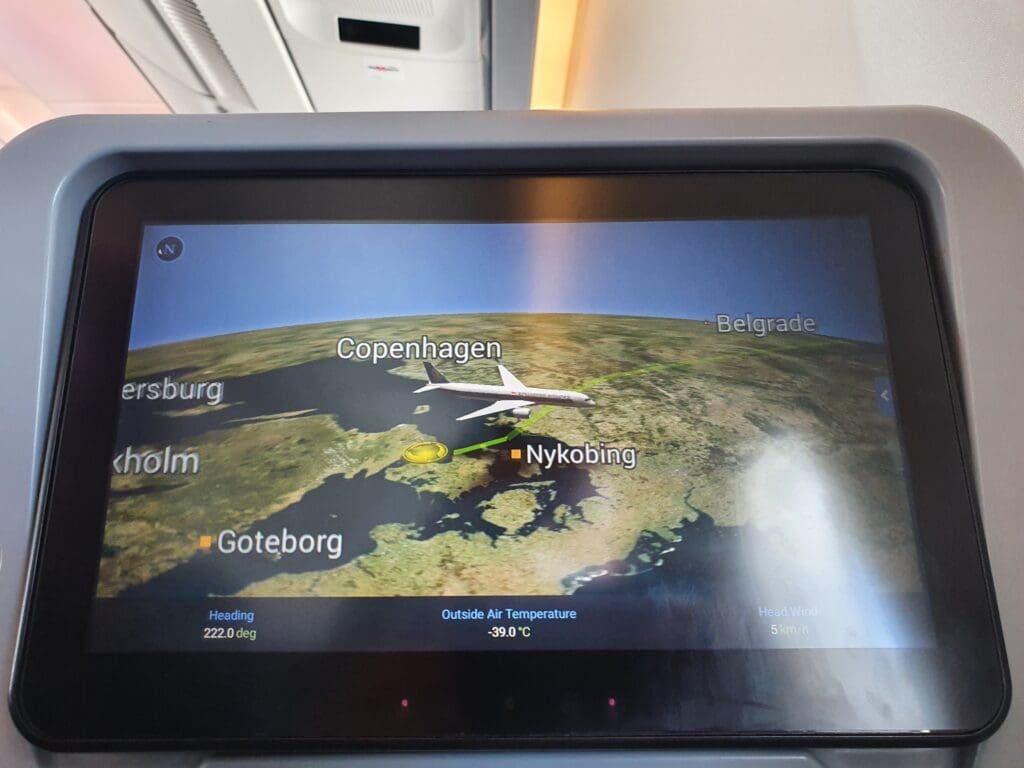
Considering Singapore Airlines’ stellar reputation and global route network which encompasses some of the world’s longest flights, many may not be surprised to hear that the carrier’s KrisWorld entertainment system is often heralded as being one of the best in the world. Whilst I would require little entertainment on the flight to Rome, I was nevertheless highly impressed by the breadth of content that the system offered. Those flying with Singapore Airlines can pass the time by watching hundreds of films and television programmes, and by listening to music albums from across the world. In addition, four live television channels are provided which allow passengers to keep up-to-date with the happenings in the world below – these being BBC World News, CNBC, CNNi and Sport 24. Aside from its fantastic array of content, I found the KrisWorld system to be well laid out, easy to use and available in ten different languages from across Singapore Airlines’ route network. In addition, many readers will likely be glad to hear that this system features an interactive Voyager 3D moving map which provides plenty of different options and settings for passengers to track the progress of their flight.
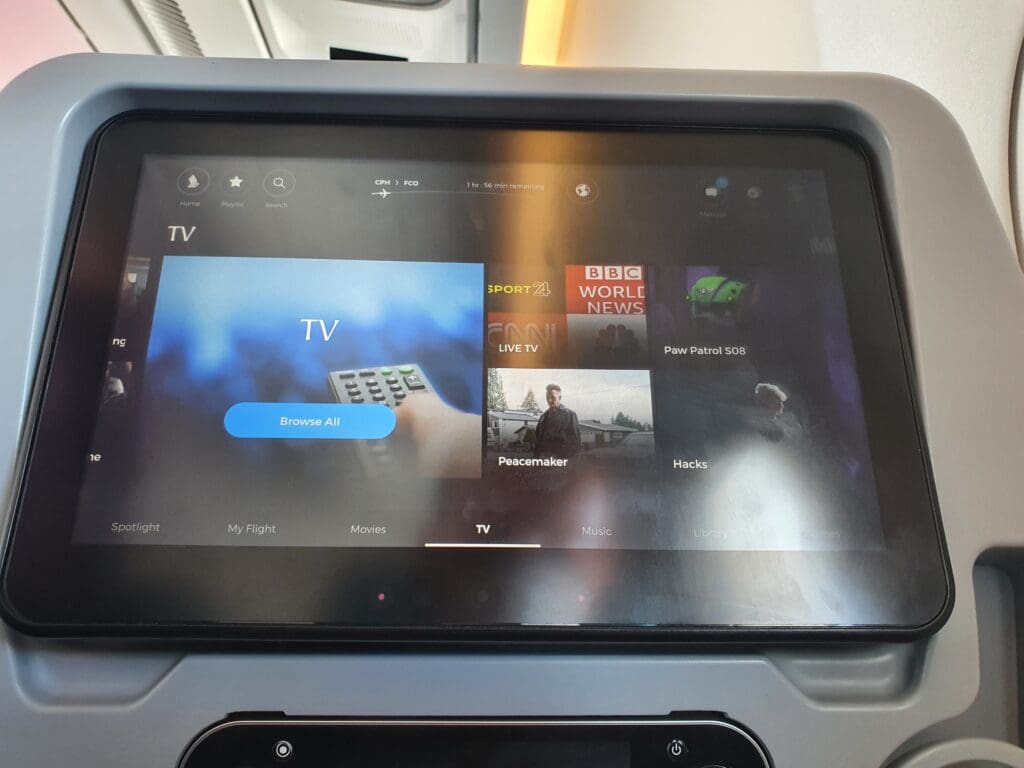
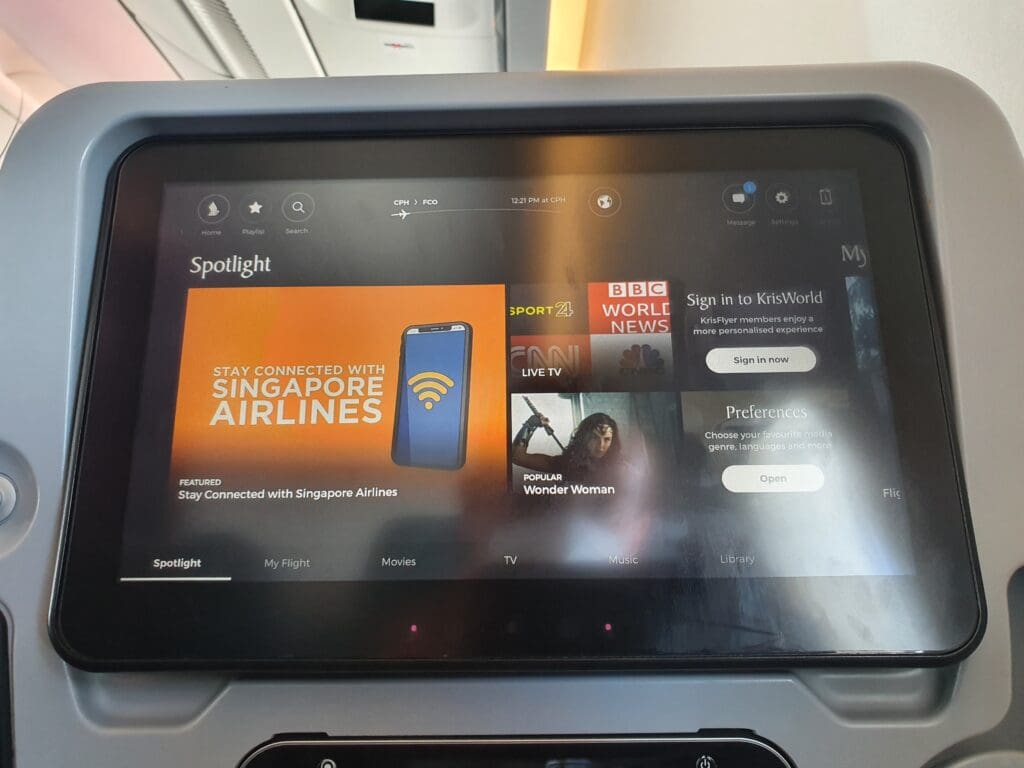
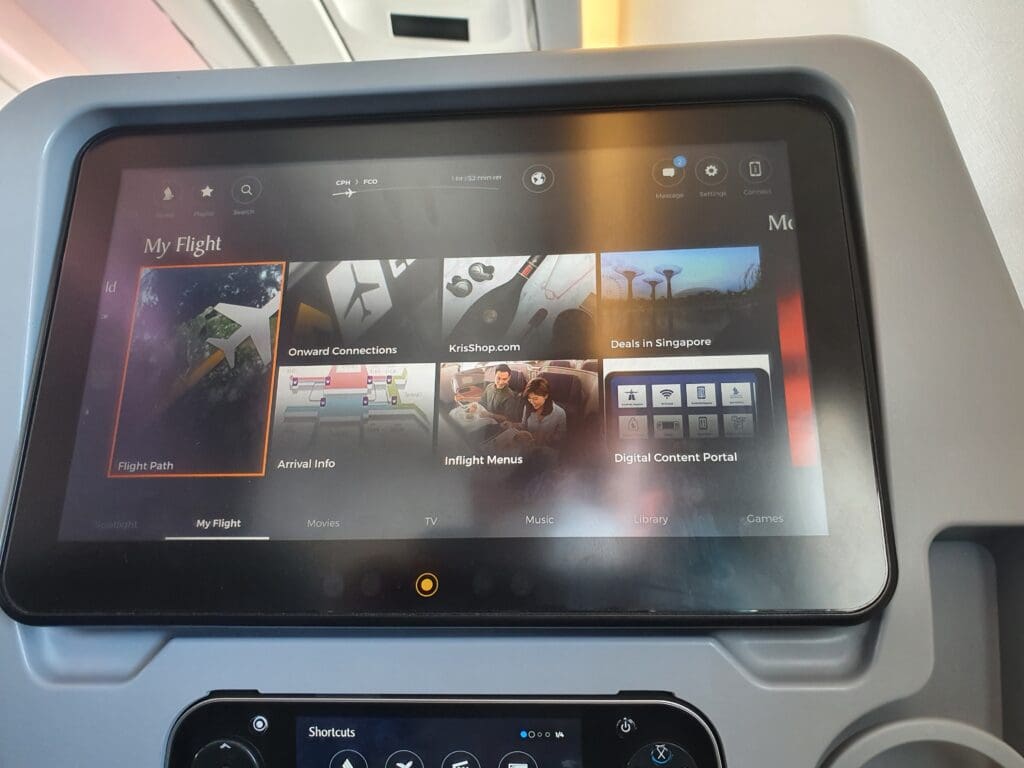
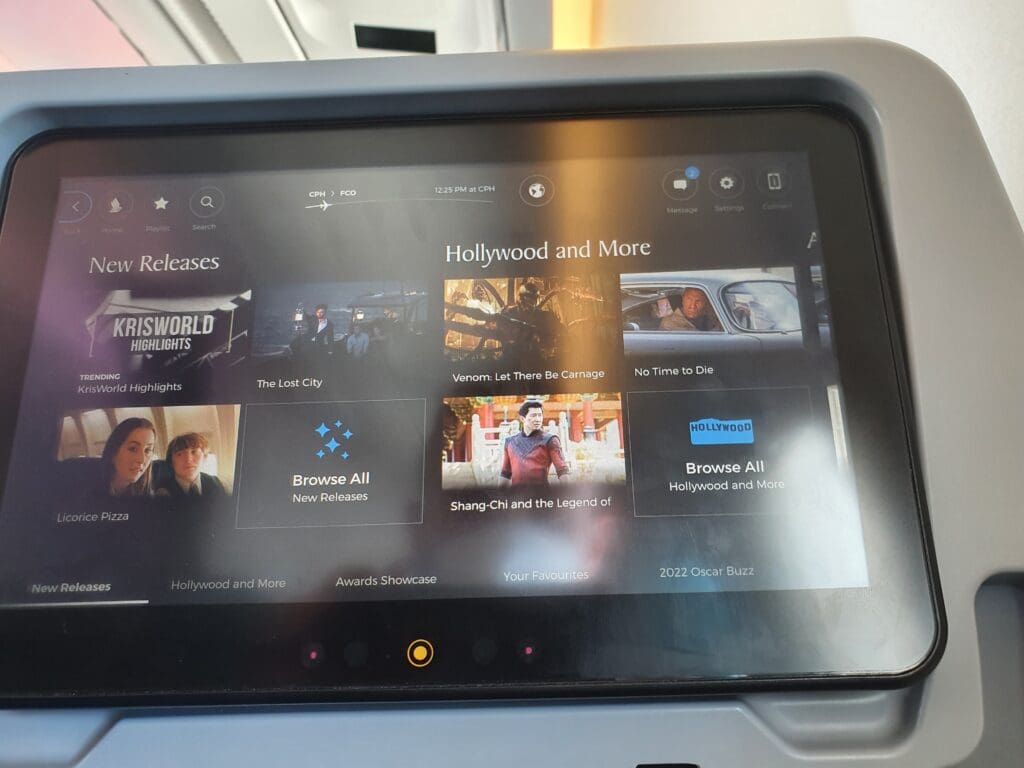
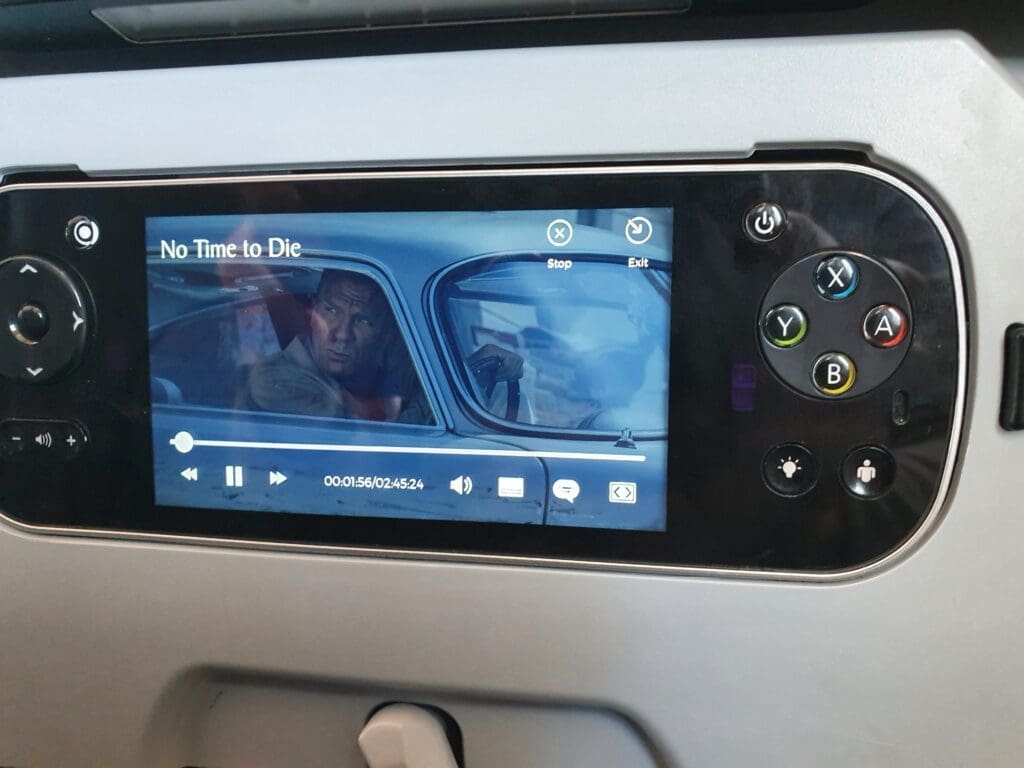
In addition to the inflight entertainment, as many passengers may expect in 2022, onboard wifi is offered for a fee, although all passengers can connect to this and browse Singapore Airlines’ KrisWorld and Digital Content magazines, information on Singapore’s arrival procedures, the inflight menu, several games and the KrisFlyer content form without spending a penny. However, that morning I seemed to be unable to connect to the onboard wifi network via my phone and laptop so I cannot verify or comment on this. Whilst I had no real intention of watching anything, I did experiment with the system and found that all visual content commenced with four skippable advertisements – these being for Singapore Airlines’ Kris+ card, KrisShop, One Holland Village – a residential development in Singapore, and the Shanghai Trust. Turning back to the happenings inside the cabin, as the aircraft cruised southwards, whilst no further rounds of service were made, several flight attendants could be seen patrolling the aisles during the flight, ready to respond to passengers’ queries and requests. After around fifty minutes of trundling southwards through the skies of Germany, a short time after passing Munich the aircraft left Germany behind and made its way into Austrian airspace. Whilst good weather would have likely allowed for spectacular views of the Alps, the clouds below meant that only a very brief glimpse of the country’s snow-capped mountains could be had as we made our way south. Seeing as we crossed Austria at one of its narrowest points, around five minutes after entering the country’s airspace, we left this again and made our way into the skies above Italy’s northernmost province, South Tyrol.
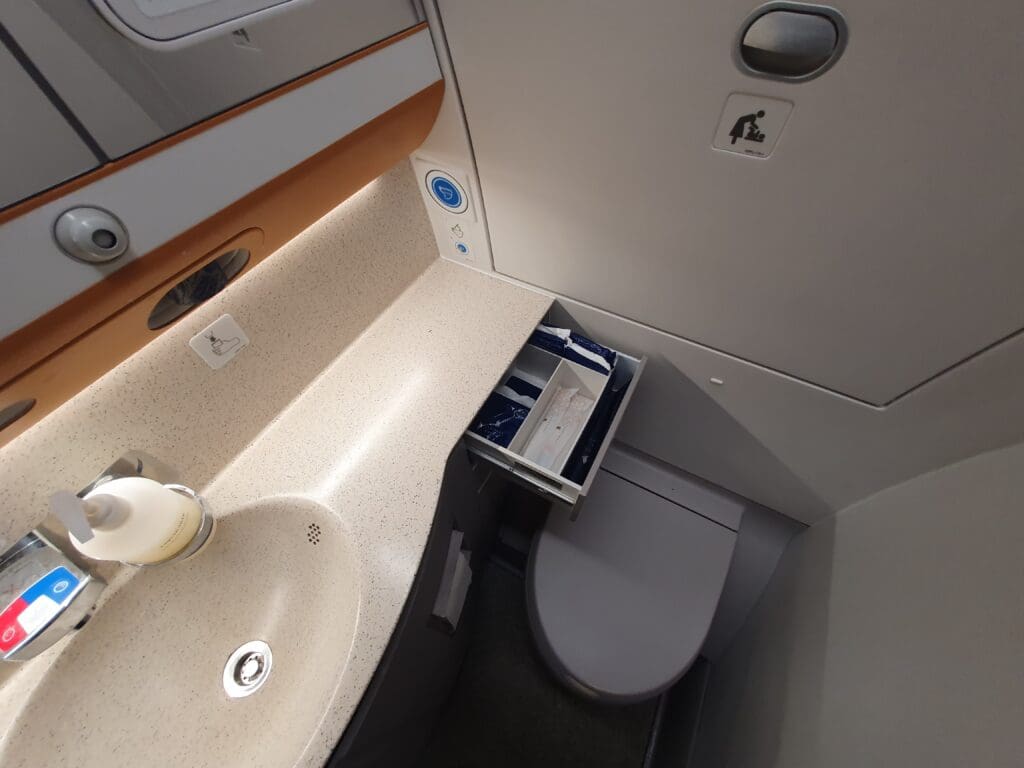
Recognising that there was not a great deal of the flight remaining, once in Italian airspace I decided to pay a trip to one of the lavatories located in between the forward and rear Economy cabins. Even though this appeared to have seen almost non-stop usage from the moment the seatbelt signs had been extinguished, I was delighted to see that this remained in a clean and pleasant state. However, I had noticed that flight attendants had checked this multiple times throughout the journey. Alongside the usual soap and tissues, a range of other items could be seen including paper cups, hand moisturising cream as well as packaged toothbrushes and sanitary kits located in a slide-out drawer. Left somewhat impressed by this offering, I returned to my seat and settled in for the final stages of the flight. By the time I had strapped myself in, the aircraft had crossed over into Italy’s Vicenza province and the first officer’s voice filled the cabin as they advised passengers that we were 250 miles to the north of Rome and that we would shortly commence our descent.
Once across the border from Vincenza to Forlì-Cesena, the Airbus could be felt commencing its long descent back to the ground. After passing through a thin layer of lingering high clouds, the Airbus’ speed brakes were partially extended and at 1355 the seatbelt signs were reilluminated just before we experienced some shaking and swaying as we passed through another layer of clouds. This was immediately followed by a pre-arrival announcement from the Purser before the army of cabin crew took to the aisles collecting any remaining rubbish and ensuring all was in position for our arrival. Unfortunately, as we descended, nothing of Italy could be seen below although dramatic storm clouds of varying shades of grey could be seen as we bumped around. Several minutes later, the Captain made an announcement advising passengers that we were on final approach and deviating around the weather to avoid the worst of the turbulence.
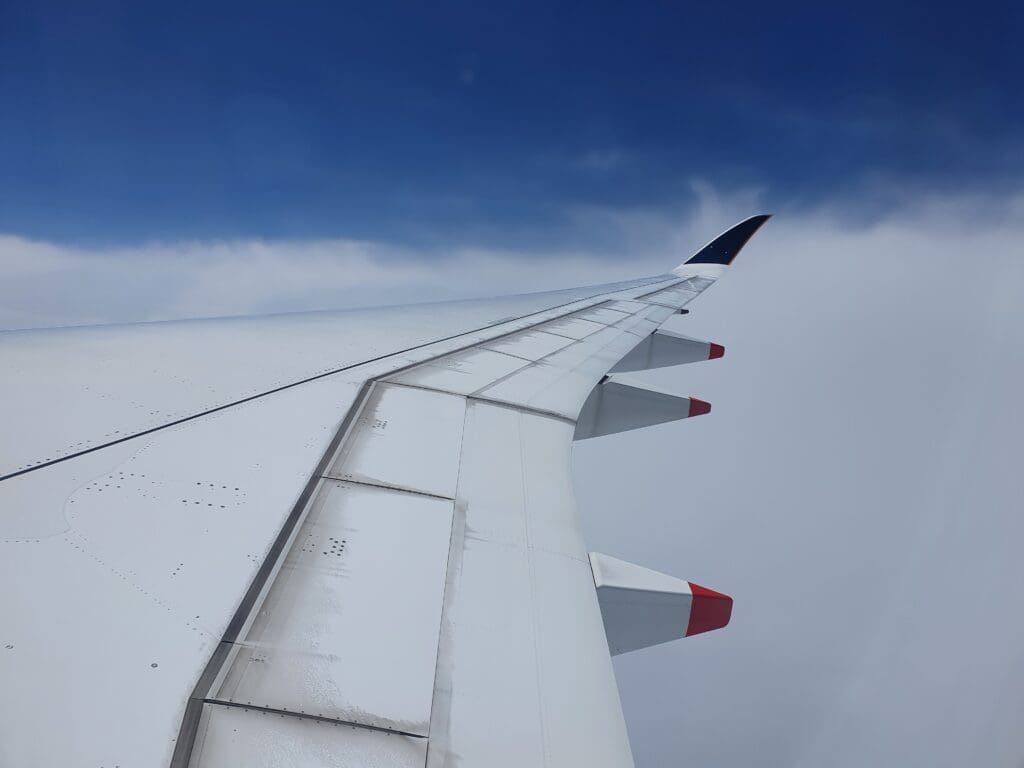
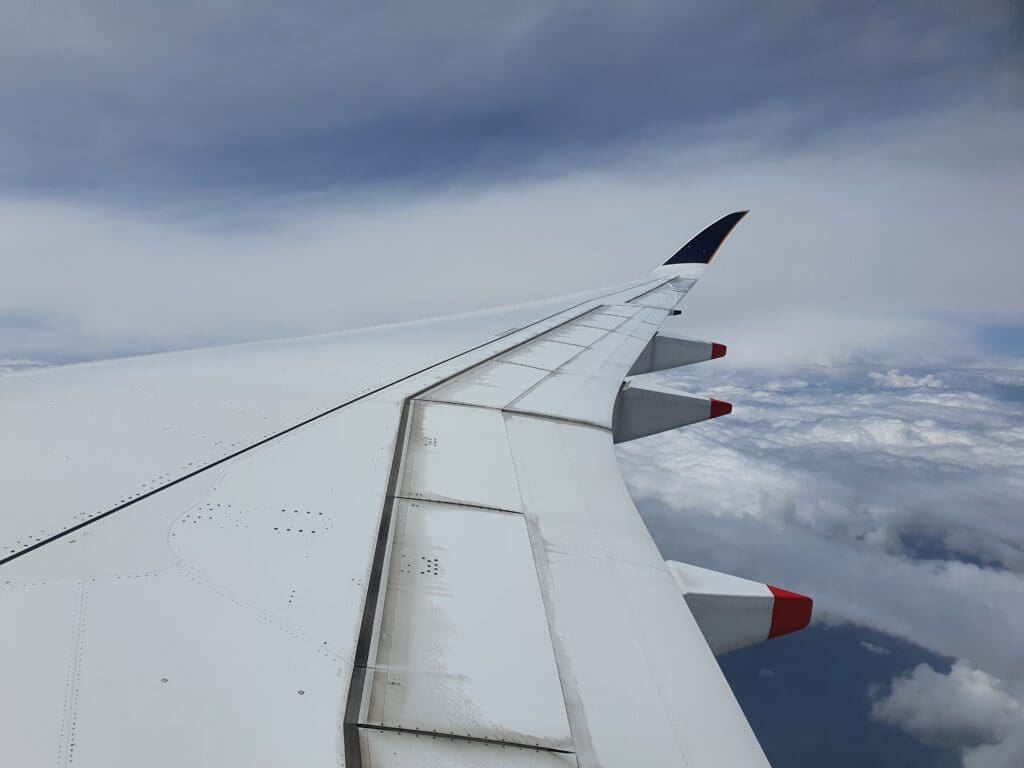
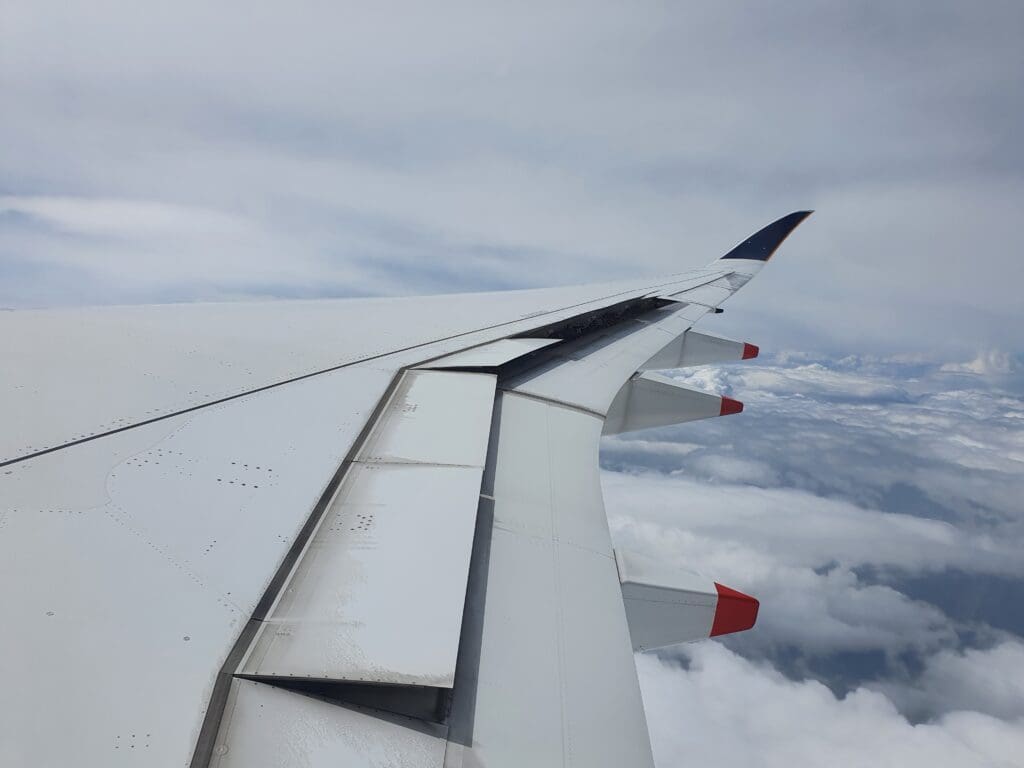
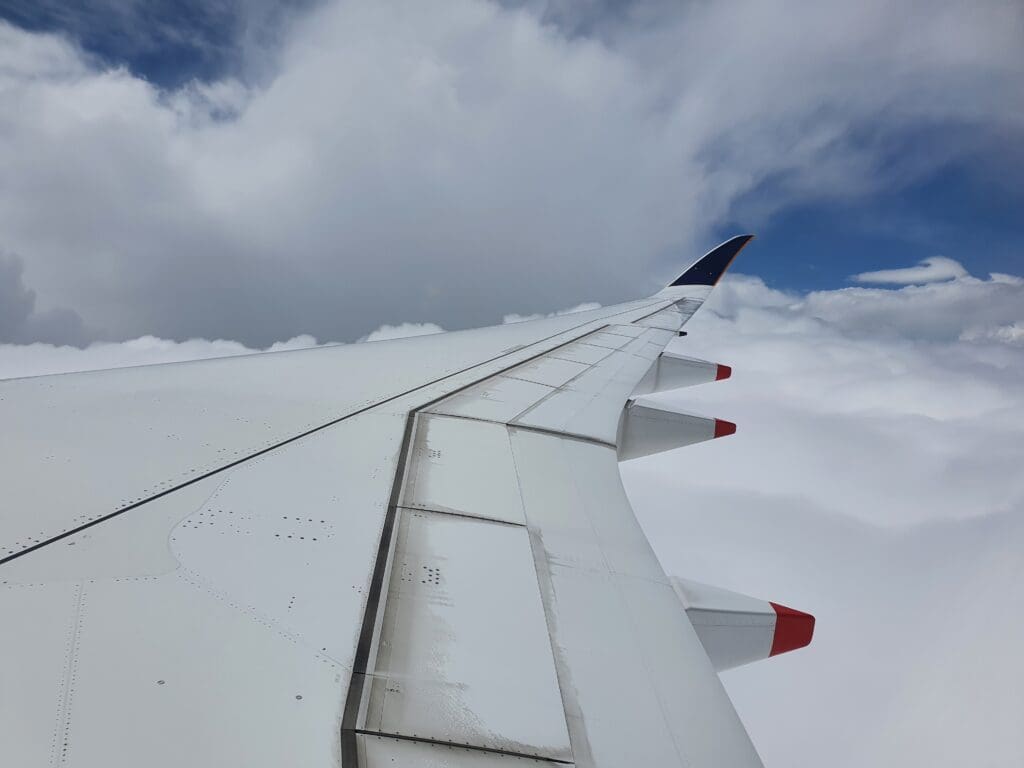
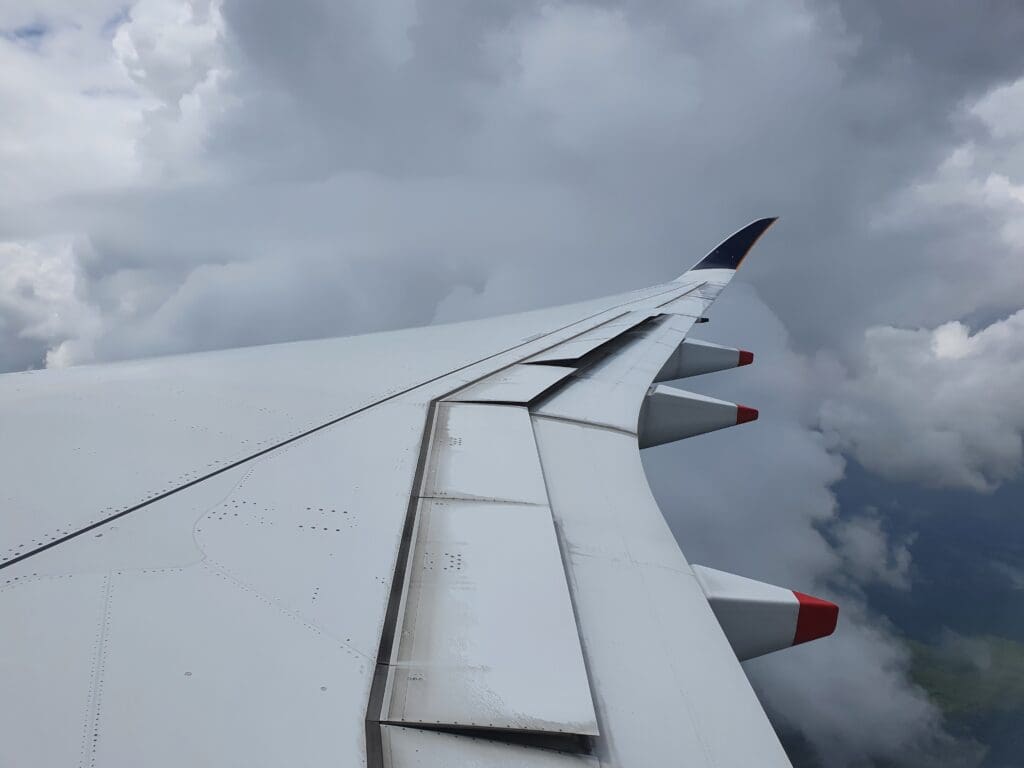
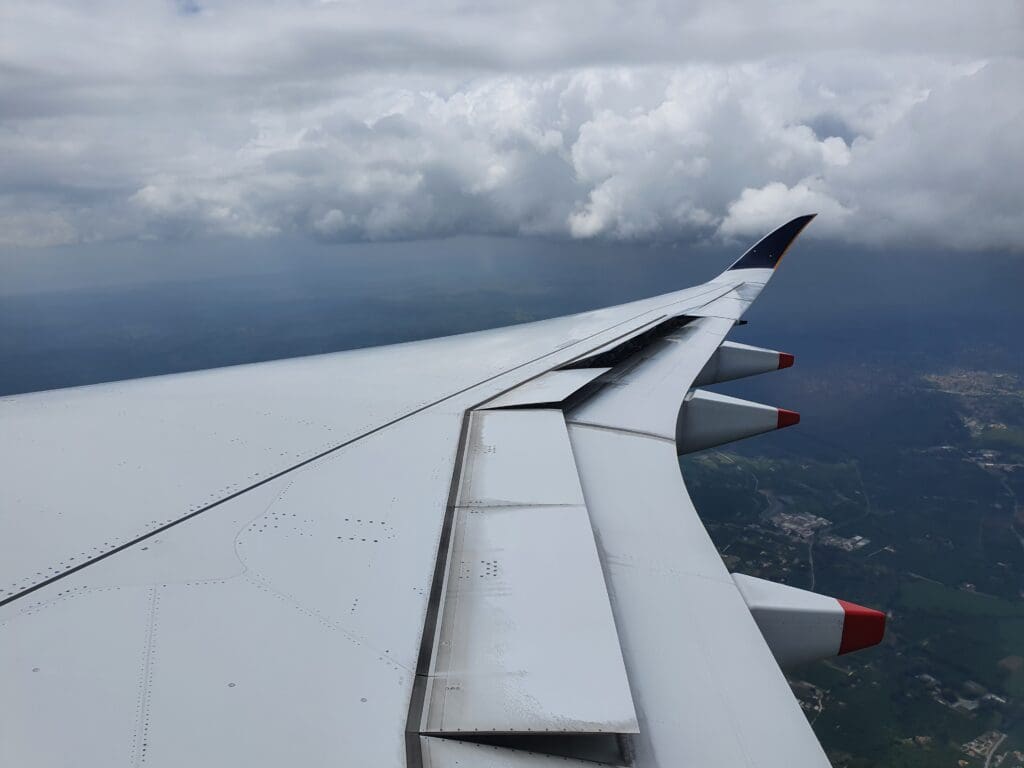
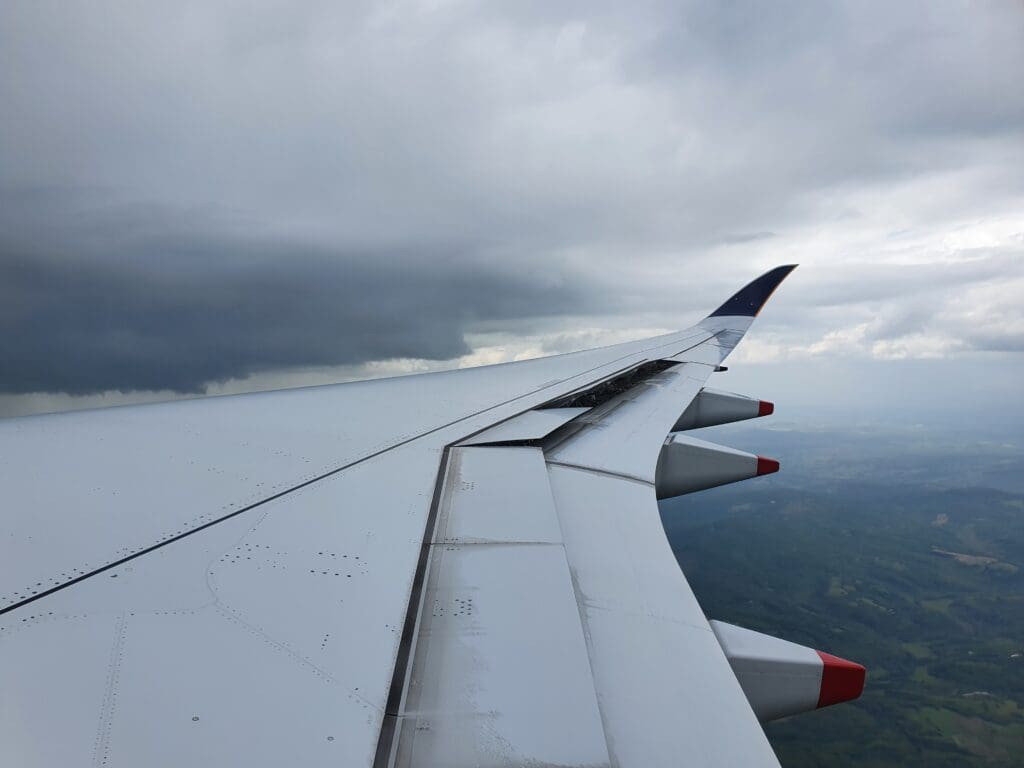
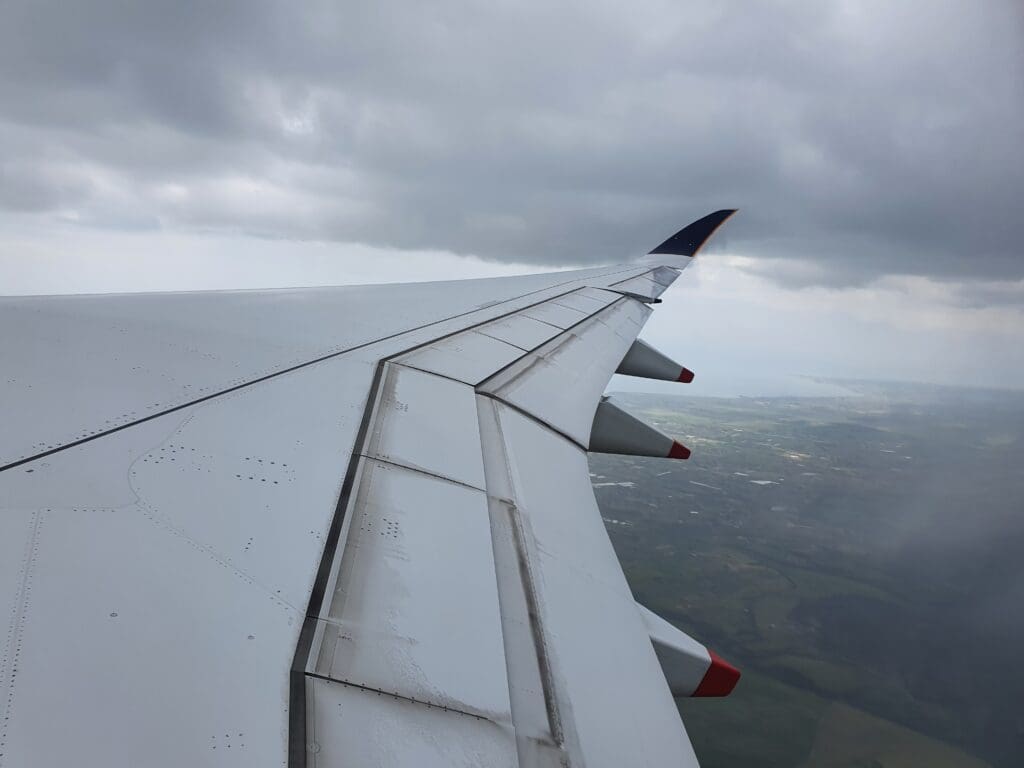

Several minutes of bumping later, the Airbus broke through the clouds at which point Lazio’s Mediterranean coastline came into view, with a mixture of forests and the villas and apartment blocks of the various towns that sit along this stretch of coastline whizzing past below. At 1406 the landing gear was extended below, resulting in plenty of noise and a few clunks before the aircraft passed over the seaside town of Fregenae. After darting over the airport’s perimeter fence, those sleeping would have likely been woken up as the aircraft touched down on Rome Fiumicino’s Runway 16R with a very firm bump at 1409, just under two hours after we departed from Copenhagen. Once safely back on the ground, likely seeking to minimise taxi time, the aircraft decelerated rapidly and soon vacated the runway to the left at which point the Purser welcomed all to Rome and apologised for the delay to our arrival.
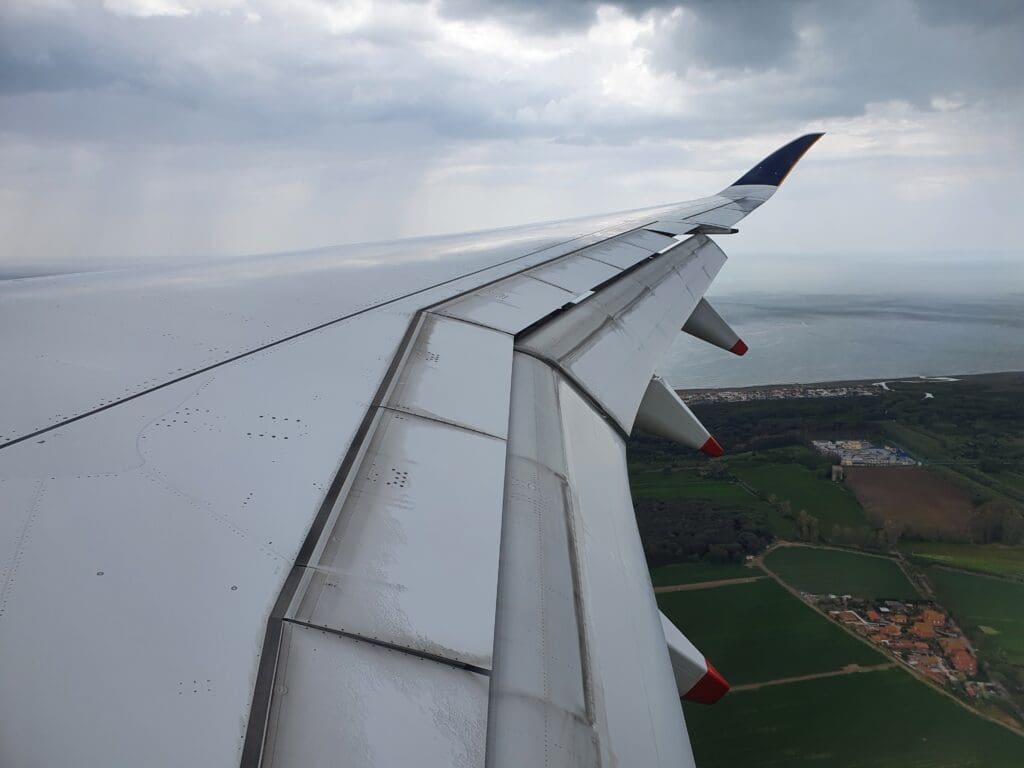
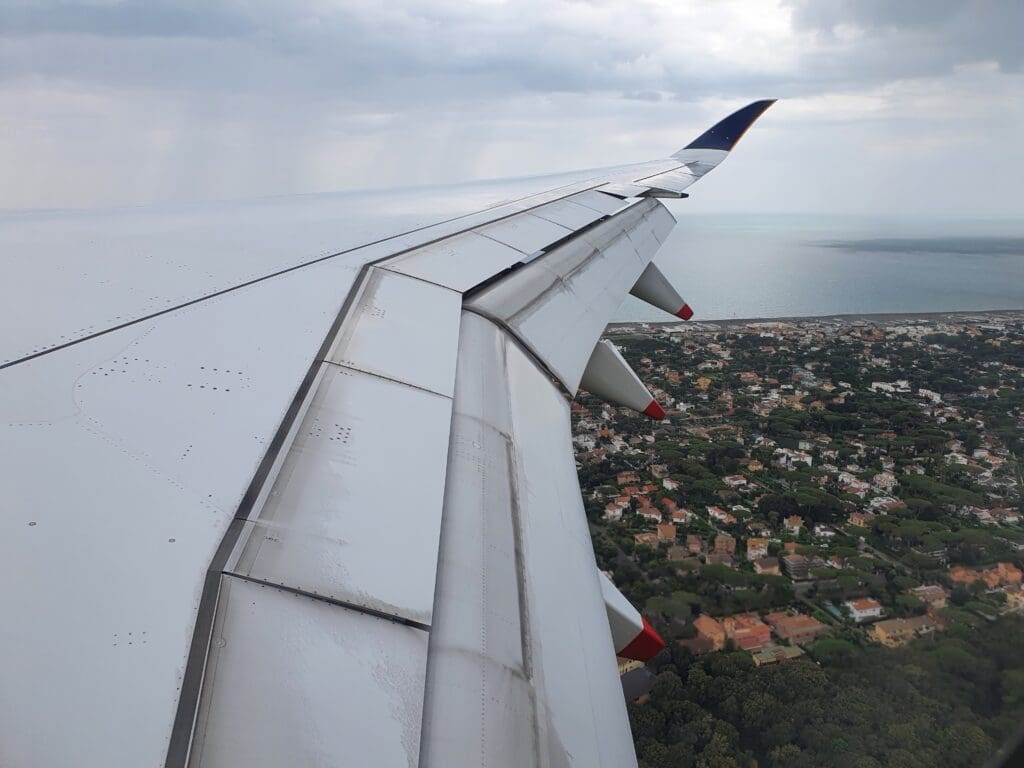
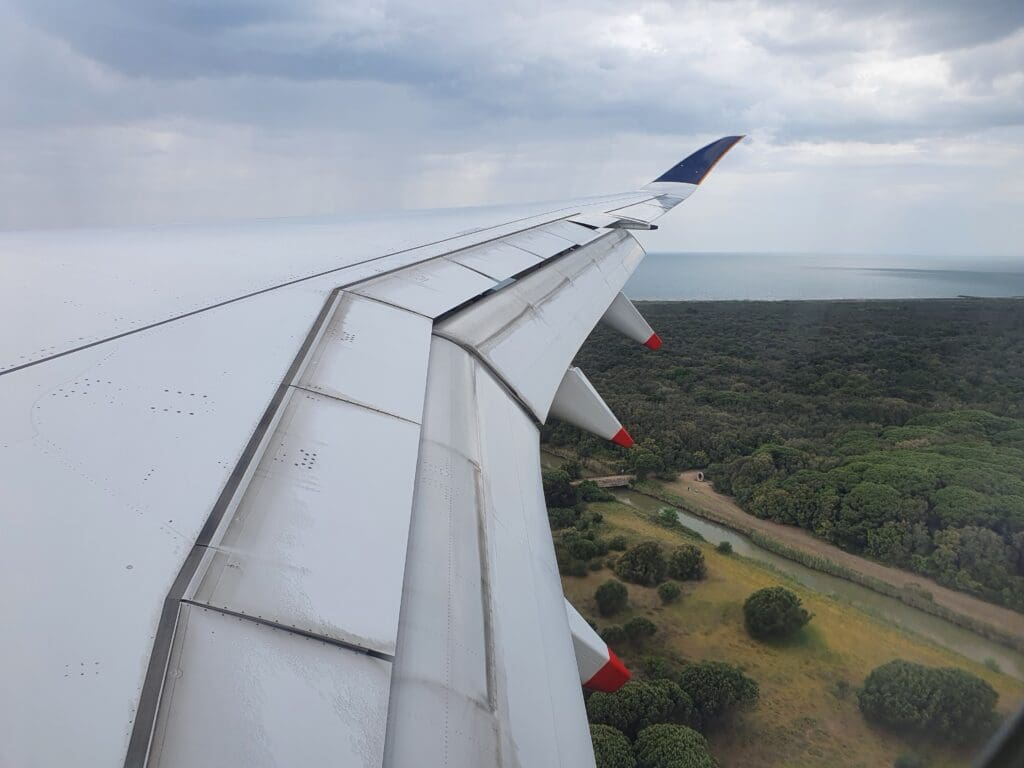
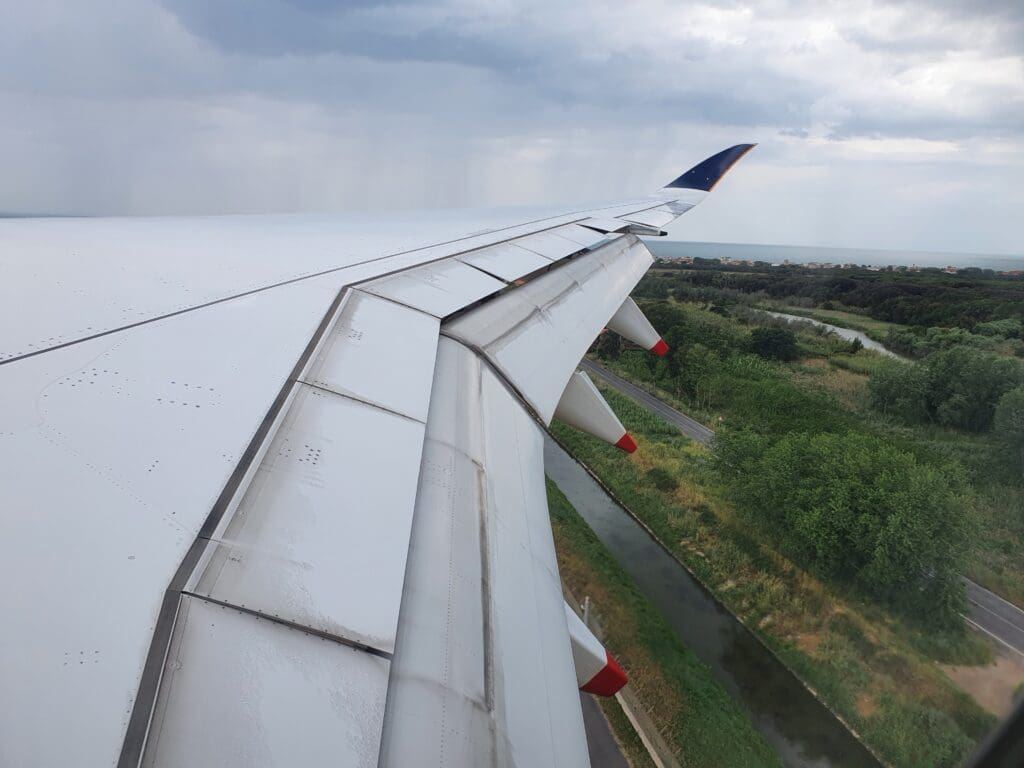
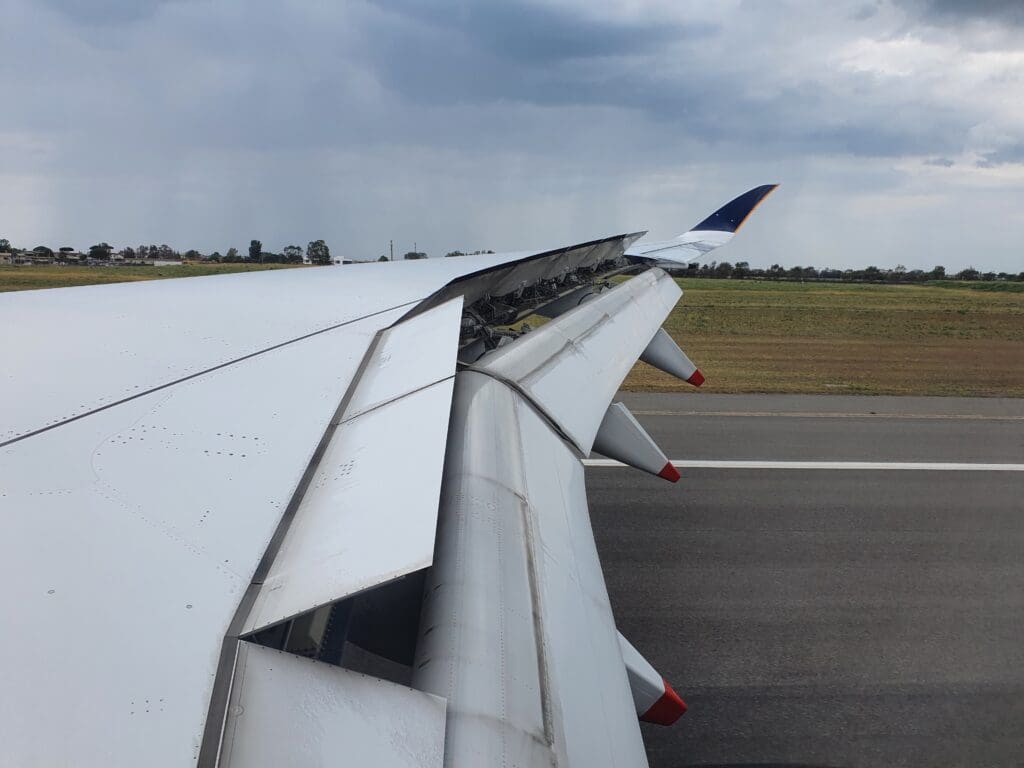
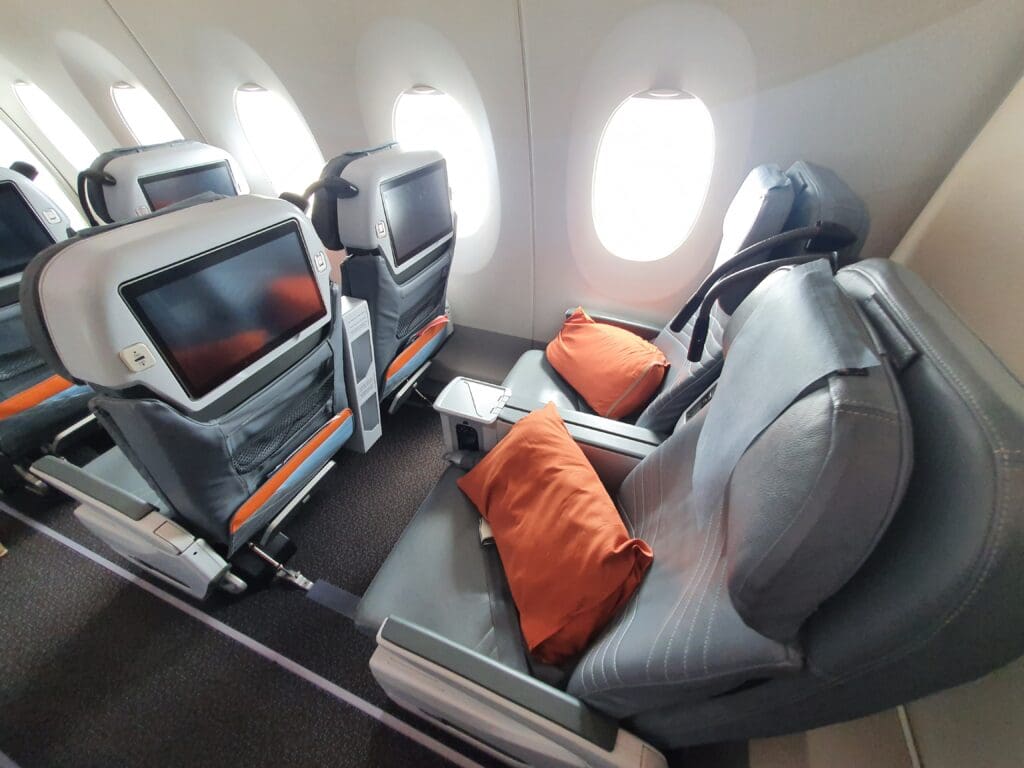
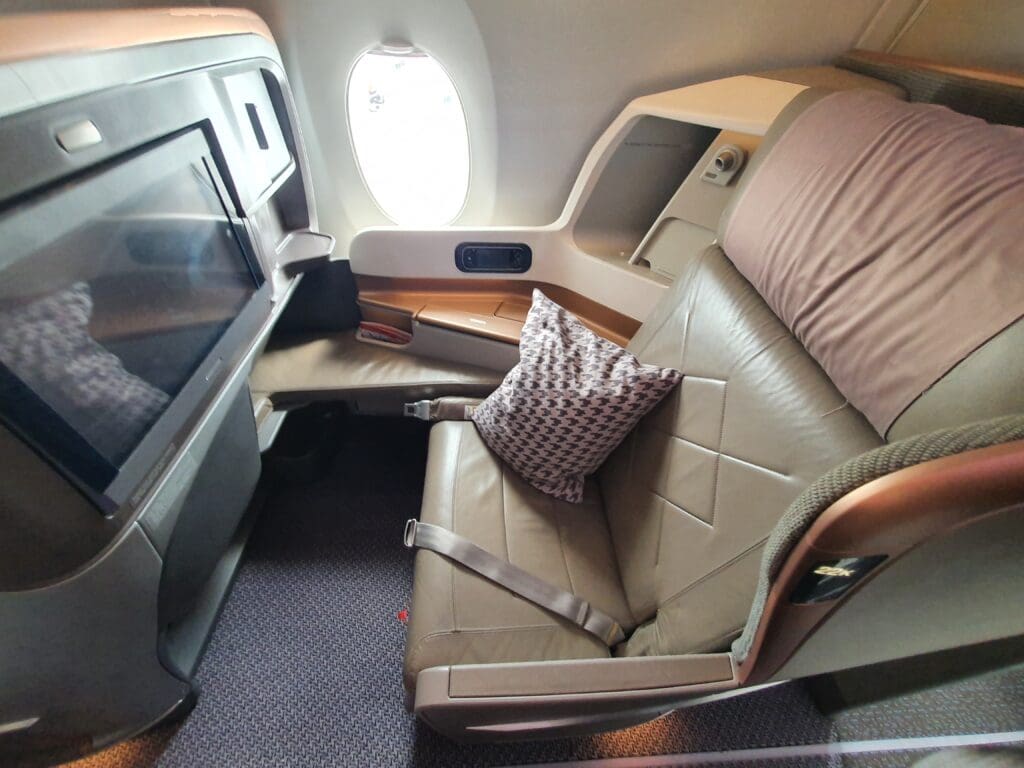
From the runway, a very short taxi was in store over to our remote stand where we pulled up to a bright blue Boeing 787-9 Dreamliner operated by local leisure carrier, Neos. Once the aircraft came to a halt, the engines spooled down and perhaps unsurprisingly given the fact that many had perhaps been travelling for a very long time, many passengers jumped up and appeared to be in a desperate rush to exit the aircraft. However, unfortunately for those passengers, upon our arrival, no buses could be seen and it took around ten minutes for buses to turn up and for disembarkation to commence. Eventually, the cabin door was opened and the jam in the aisle began to move at which point I picked up my small backpack and journeyed forward through the Economy cabin. As I headed through the aircraft on my way to the 2L door, after leaving Economy I first passed through the small three-row Premium Economy cabin which is home to recliner seats covered in a (faux?) dark grey leather arranged in a 2-4-2 configuration. In terms of design, these appeared to be fairly similar to what narrowbody Business class passengers may expect on flights outside of Europe. Next up was the smaller of the two Business Class cabins onboard, with this being home to sixteen comfortable-looking lie-flat seats arranged in a spacious 1-2-1 configuration, allowing all passengers to have direct aisle access. Some of these seats sported an elephant grey (faux?) leather covering, whilst others were covered in beige.
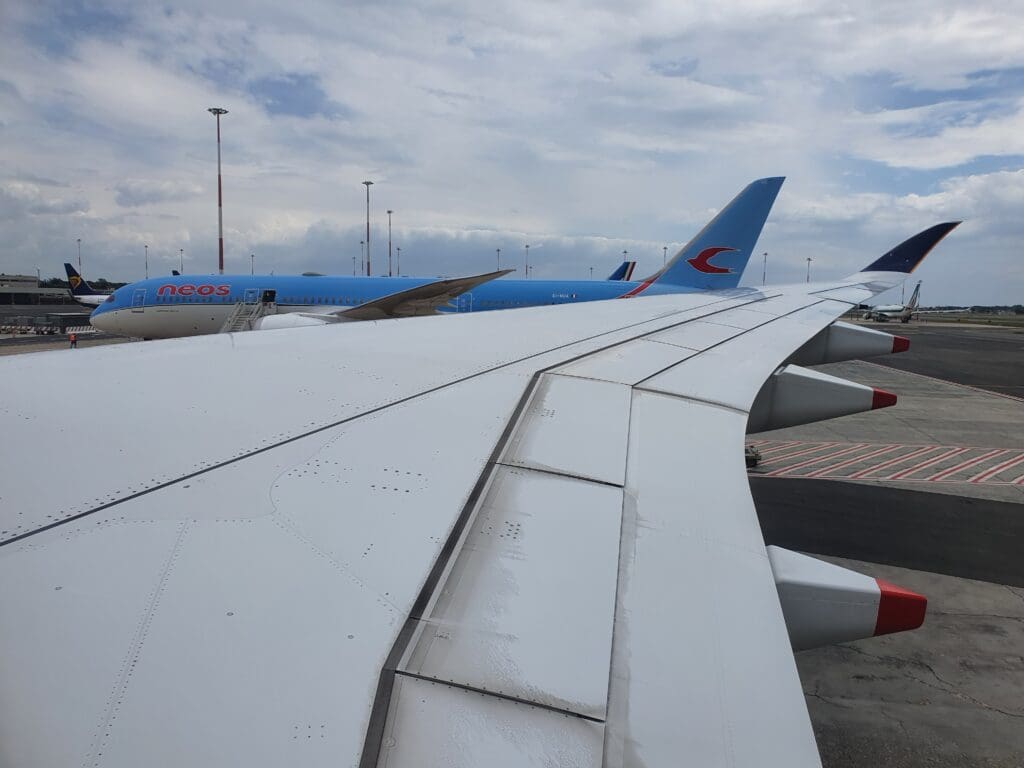
Without too much stopping, I reached the exit and was thanked by no fewer than three flight attendants before I made my way down the long set of airstairs and headed onto a rather battered-looking Cobus 3000 bus. A few minutes later, with this packed with as many passengers as possible, the bus journeyed over to the main terminal. During this short ride, the bus travelled past a selection of mostly narrowbody Airbuses belonging to local carrier ITA Airways and a host of other European carriers before arriving at the entrance to the Schengen arrivals hall, where I began my Rome transit experience.
Summary
All-in-all, I was left with mixed feelings about Singapore Airlines. Onboard I had a fantastic experience, with this flight undoubtedly being one of the best flights that I have taken within Europe. Once inside the aircraft, there was absolutely nothing I could fault Singapore Airlines on – the crew were welcoming and friendly, the food was delicious and plentiful, their entertainment system was packed with options and their Airbus A350 Economy class proved to be highly comfortable and I would have no issues with flying onboard the aircraft on a long slog across to Singapore.
However, my whole experience with Singapore Airlines was soured by the long and information-less delay at the start of the journey. Touching down in Rome over three hours behind schedule and given the fact that the flight took place within the European Union, I soon attempted to apply for compensation in accordance with the EU’s Flight Compensation Regulations which would see me receive a healthy €250. Having successfully and easily applied for compensation from British Airways, Olympic Air and Ryanair in 2022, I had expected an easy ride with Singapore Airlines. However, almost a couple of weeks after applying for this, I received this response:
“Thank you very much for your patience, while our legal team has investigated the delay of flight SQ352 from Singapore to Copenhagen to Rome on 08May2022
Upon arrival into Copenhagen from Singapore, our ground engineer was alerted by the operating captain, of a rudder defect that needed to be inspected. Our ground engineer started inspection, before departure to Rome.
While the inspection was ongoing, we understand there was a lack of communication form Singapore Airlines ground staff to our waiting passengers at gate E7, we deeply apologies for this. Our airport team has been informed of this and new guidelines has been implemented.
Our legal team in Singapore, together with our local team has investigated this delay in relation to EC261 regulation, they have reached a verdict, that despite experiencing defect, the majority of the delay was caused by the longer flying time from Singapore to Copenhagen, as a result of the extensive no-fly zone as a result of the was between Ukraine and Russia. Also contributing to the longer flight is the avoidance of Afghan and Russian air spaces. The air space restrictions result in air traffic restrictions along the route. Those factors are beyond our control, and therefore has been classified under extraordinary circumstances under EC261 regulation.
Therefore would we unfortunately not be able to meet you request for delay compensation under EC261.
We apologies for the inconvenience the delay of flight SQ352 caused your travel plans.”
Thus I didn’t receive anything by means of compensation!