Fifth Freedom on Singaporean Scoot: Berlin to Athens on a Dreamliner
Background
When it comes to fifth freedom routes operated by Singaporean carriers, most will think of Singapore Airlines who operate a number of these across the globe – enabling customers to sample the luxury of one of the world’s best airlines without stepping foot in their homeland. However, in recent years this practice has extended to the Singaporean national carrier’s low-cost subsidiary, with their Dreamliners operating between Singapore and Berlin with a stop in Athens in both directions from summer 2021. With limited opportunities to fly the Dreamliner on intra-European services, and drawn in by the allure of a fifth freedom flight, Scoot’s service had been one that I had sought to fly for a while. Holidaying in Greece in late May 2022, I decided that I would make a slight detour on the outbound journey, flying via Berlin to sample Scoot. Admittedly, this wouldn’t be my first ride on Scoot, so I had a rough idea of what to expect, having had a pleasant enough experience with the carrier on an early morning flight from Hong Kong to Singapore back in August 2016.
Booking
With no major price difference between tickets sold directly via the airline and online booking sites, I decided that I would purchase my ticket from Scoot and opted to do so via the airline’s app. Once this had been downloaded and installed, I opened this up and was greeted by the unusually provocative (for an airline) welcome message of ‘Hi Gorgeous’. Once opened, I wasted no time in searching for my flight and was soon presented with a single option which took the form of Scoot’s 1150 departure from Berlin, scheduled to arrive in Athens three hours later at 1550. Upon selecting this, I was presented with four different fare options, the Fly base fare for a very reasonable €36.15, and the more costly self-explanatory options of FlyBag, FlyBagEat and Scoot Plus for an additional €39, €50 and €355 respectively. Whilst seeking to reserve a seat and an onboard meal, having done the maths I deciphered that Fly would still be the best option and after selecting this I was taken to enter my details. Whilst I would be unlikely to receive many miles for my short and cheap European hop, with Scoot serving as Singapore Airlines’ low cost subsidiary, those who are members of the airline’s KrisFlyer programme can earn mileage on Scoot’s services.
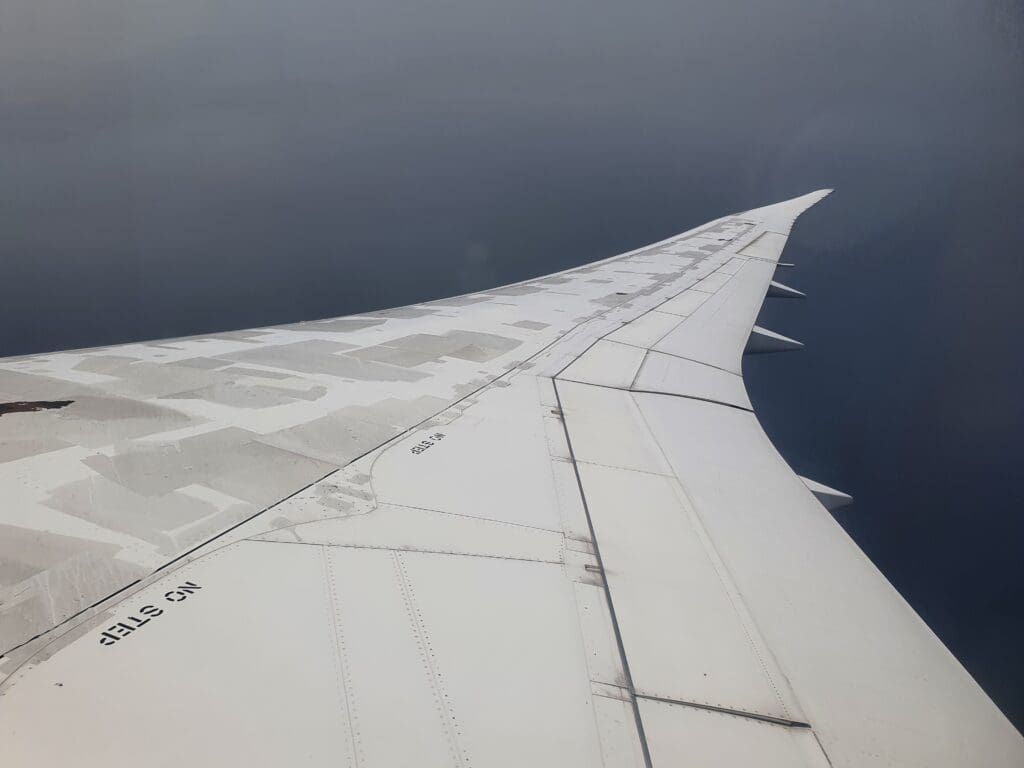
After entering my details, I was then taken to the optional add-on page where a cornucopia of additional extras were offered. These included hold luggage, with the lowest addable amount being 20kg for €27, wifi priced at €5 for 20MB up to €29 for 200MB, or a Snooze Kit for €12. Moving to the seat selection page, three different categories of seats were offered – extra legroom seats, named Stretch for €25, Scoot in Silence seats at the front of the cabin for €15 and Standard seats for €7. With a mostly vacant seat map, I decided to splurge on €7 for seat 25K which I hoped would offer a decent view of both the wing and world below. Finally, I reached the inflight food page where four full meals could be selected, each costing €11. These included chicken biryani, dahl curry and rice, Mum’s Fried Rice and oriental braised beef, whilst a mystery snack pack could be purchased for €10. Once I had opted for the fried rice option, I was then presented with a summary of my booking and went ahead and paid the €54.15 quickly and without any issue. Whilst my extras had added €18 to the booking, I thought that this price was still fairly reasonable given the flight’s distance.
The Journey
Seeing as I would be spending just one night in the German capital, I opted to stay in one of the cheapest possible hotels that I could find that would allow me the privacy of my own room. Having parted with €40, I ended up in a rather shabby and dated room without its own toilet, that appeared to have undergone little renovation since the days that Berlin was divided. However, this was comfortable enough and well positioned within the hip and pleasant neighbourhood of Charlottenburg. Thankfully, the hotel’s location meant that I would not face any major issues in reaching Berlin Brandenburg Airport in good time for my late morning flight. To reach the airport, I would journey a few stops east on the S-Bahn to Berlin Hauptbahnhof where I would transfer onto a Flughafen-Express (FEX) train which runs directly between Berlin’s main station and the airport every half hour with a couple of intermediate stops. Furthermore, all of this journey would be covered by my €10 24-hour travel ticket purchased upon my arrival in Berlin the previous day.
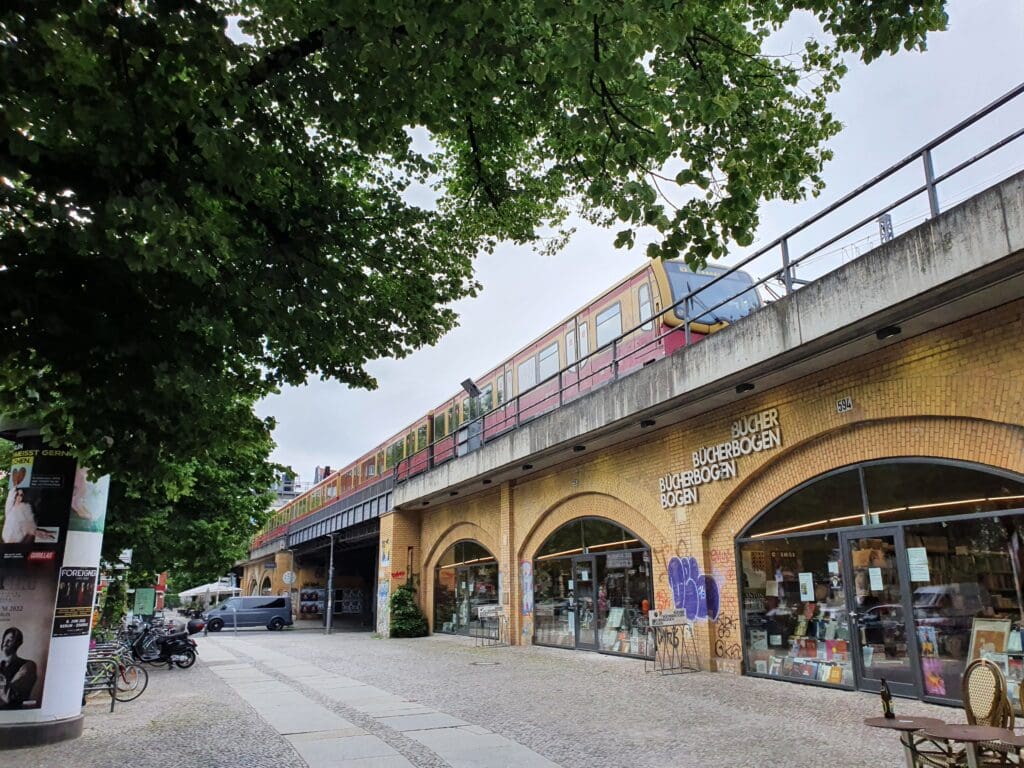
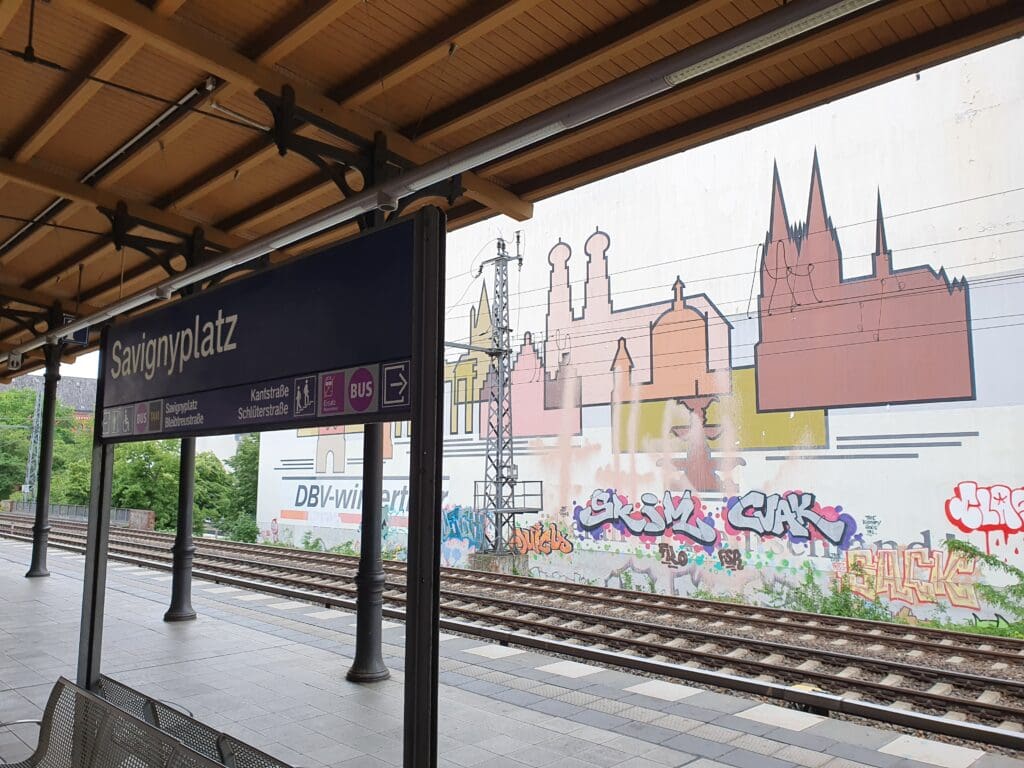
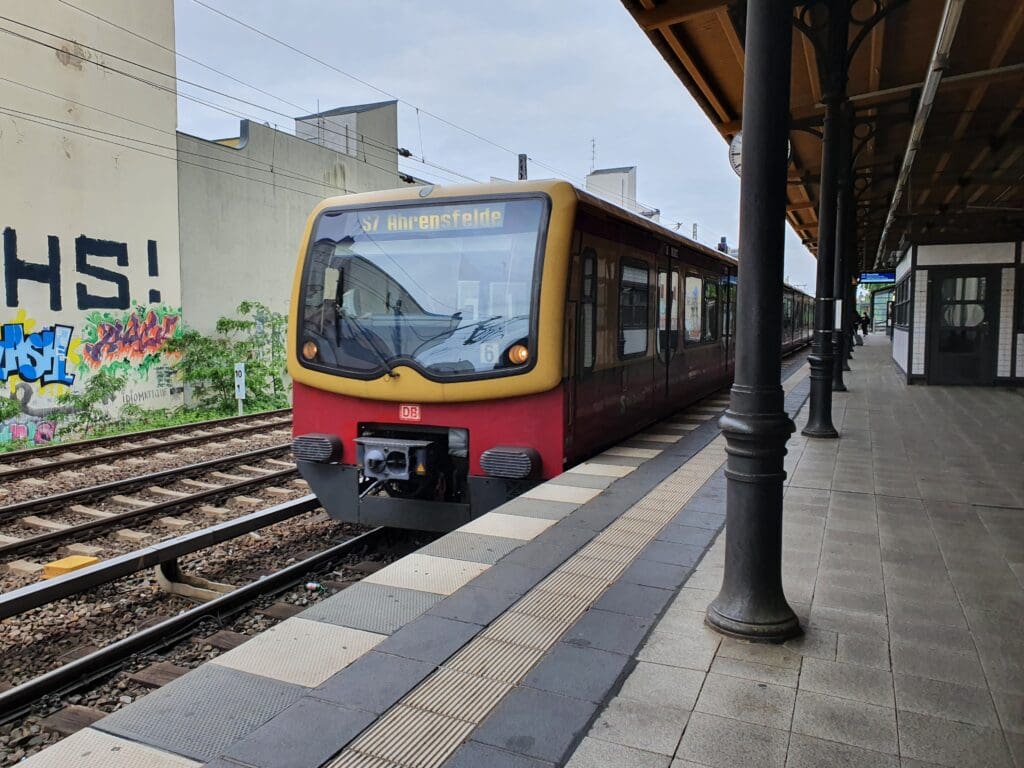
With my flight departing Berlin at 1110, I aimed to arrive at the airport by 0810 which would hopefully allow me plenty of time to check in, explore Berlin’s new airport and relax before my flight to Greece. Once I had handed in my key, I made my way onto the quiet morning streets and commenced the short walk over to the local S-Bahn station, Savignyplatz. Whilst almost June, that morning the weather seemed to be unseasonably cold, with a very chilly breeze that ensured I rushed over to the station in an attempt to warm up. After I arrived at the station, I journeyed up to the island platform, and in true German style, with the network operating on a trust-based system, no tapping in was needed and I simply waited for the next eastbound S-Bahn train to arrive. Following a few minutes of waiting, a Class 481 unit wearing the distinctive red and cream Berlin S-Bahn livery zoomed into the station and I soon boarded this and began the short four-stop journey towards Berlin’s main station. Upon arriving at the maze that is Berlin Hauptbahnhof, having the departure platform of the next FEX service to hand, I journeyed down several long flights of escalators before arriving at the platform with a few minutes to spare until the next departure.
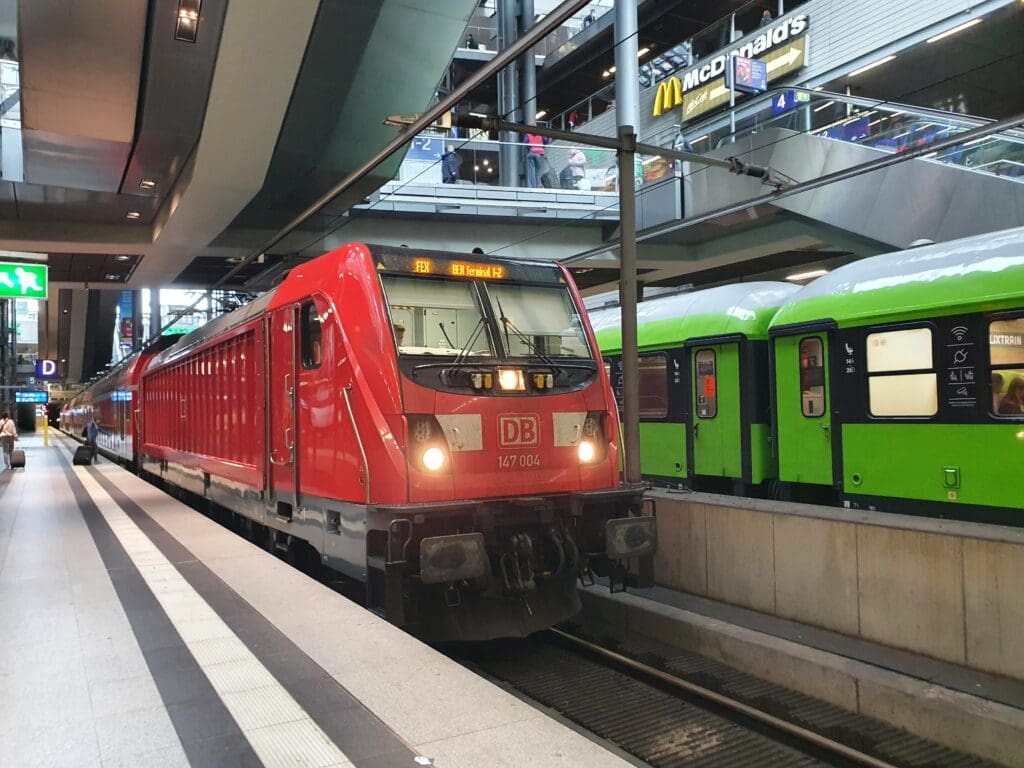
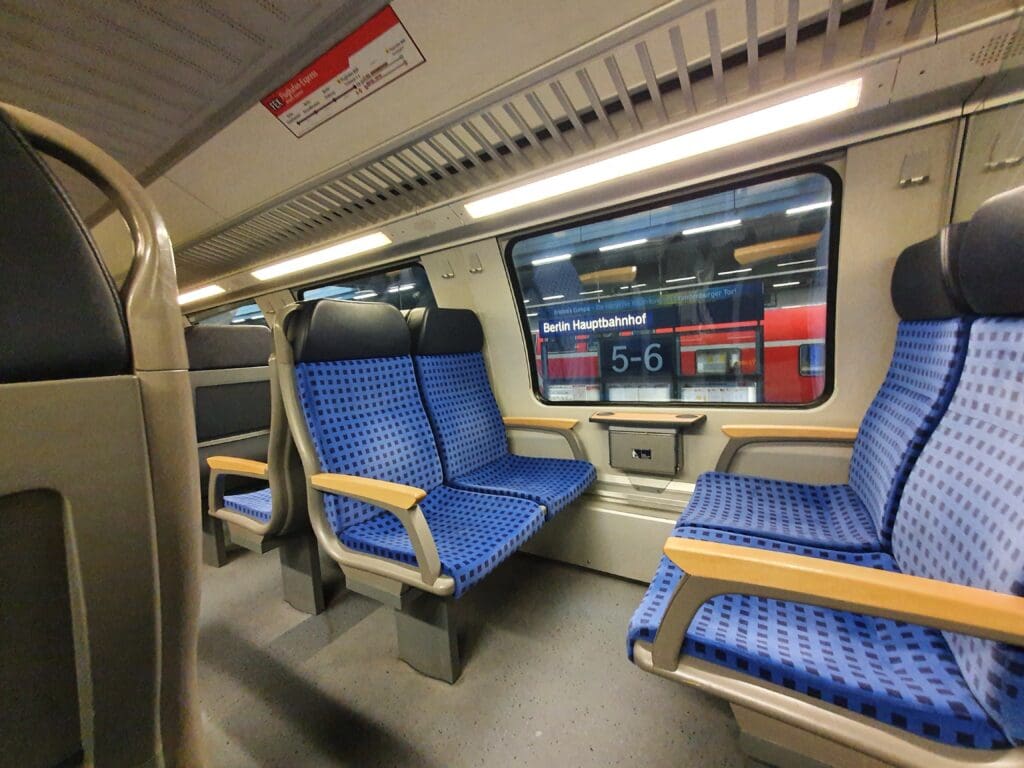
Berlin’s FEX services are made up of a rake of double-decker carriages, hauled by a modern Bombardier TRAXX AC3 electric locomotive. Inside, I found this to be clean, modern and virtually identical in style and design to many of Deutsche Bahn’s commuter trains across Germany. After pulling away from the station right on time, the train skirted around Berlin’s central core, making stops at Gesundbrunnen and Ostkreuz before speeding southwards through the city’s suburbs towards the airport. Around thirty minutes after leaving Berlin Hauptbahnhof, the train made its way underground before coming to a halt at the airport’s station, located conveniently underneath Terminal 1’s check-in hall.
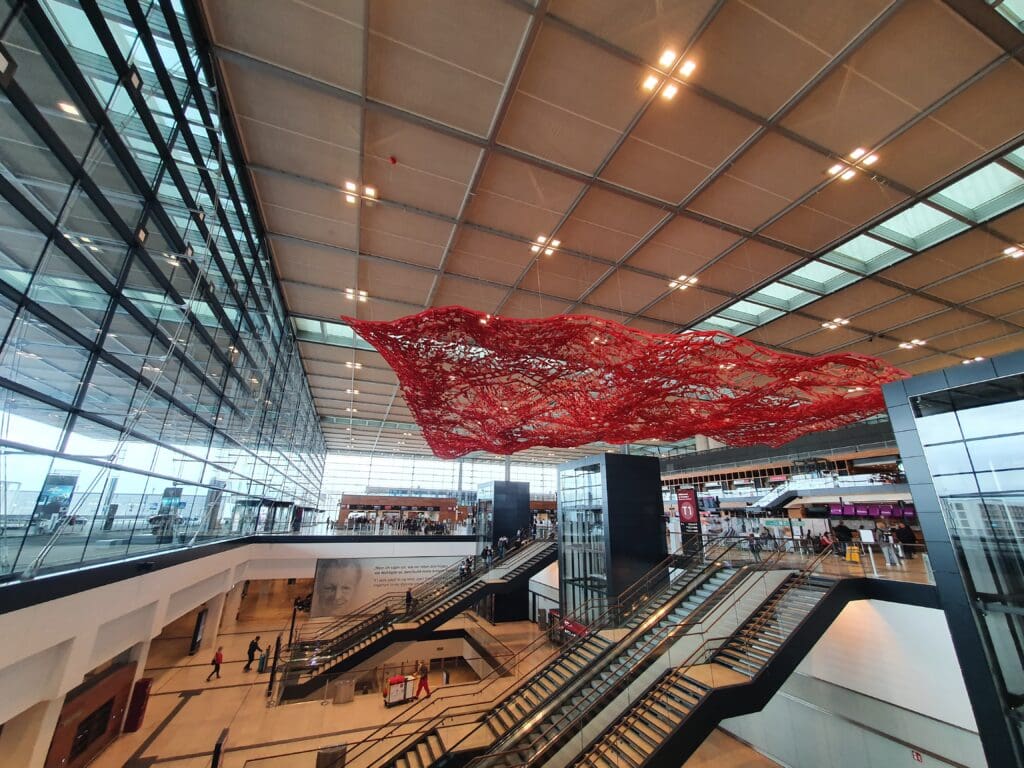
Once off the train, I made my way upstairs to the main station area before heading up again and emerging in Terminal 1’s check-in hall, arriving there no more than three minutes after disembarking the train. At the time of my flight in May 2022, Berlin’s new airport featured two terminals in regular passenger operation – Terminal 1, and the low-cost terminal, Terminal 2. In addition, a third terminal, curiously named Terminal 5, is set to open at some point in the future with this located in the former terminal of Schönefeld Airport on the other side of the airfield. Returning to Terminal 1, as with many German airports both large and small, I found the landside portion of this to be home to a good number of facilities including shops, cafes, restaurants, travel agency offices, and importantly for aviation enthusiasts – an observation deck! However, when compared to many other capital city airports, the terminal did seem to be rather small and compact, although this is to be expected given the roles of Frankfurt and Munich in serving as Germany’s main air hubs. With plenty of morning departures, unsurprisingly upon arriving at the terminal, I found this to be rather busy, with hordes of holidaymakers raring to jet off to the sun. Whilst I would have liked to head straight off to security, seeing as I had been unable to check in online, I was left with no choice other than to seek out Scoot’s check-in counters. After checking the departure boards, I made my way over to check-in island 1, located in a corner of the terminal.
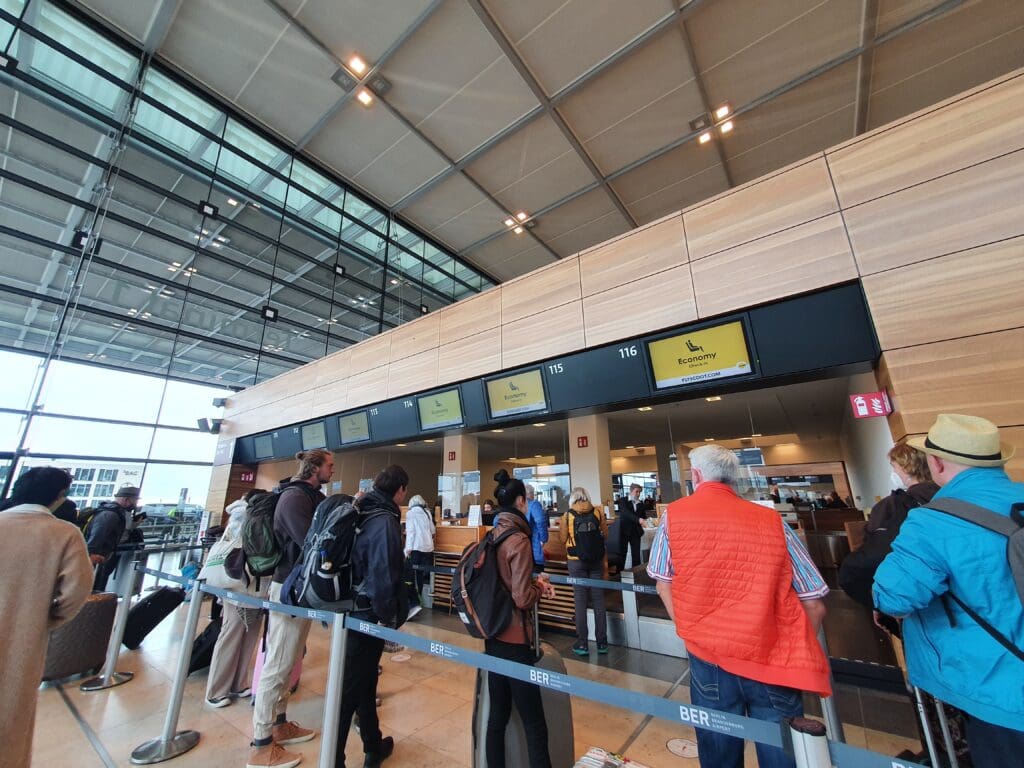
Seeing as there were still three hours left to go until departure, I wasn’t too sure whether Scoot’s check-in desks would be open however much to my delight, these were. That morning, four desks were provided for those travelling in Economy, in addition to one for those in ScootPlus and another for passengers who had been able to check-in online and were hoping to drop off their luggage. After arriving, I joined the short queue and waited in line for around ten minutes before reaching one of the four check-in counters for those in Economy. Overhearing interactions between the check-in agents and several fellow passengers, it seemed as if most of those waiting were heading off to far-flung destinations in Southeast Asia and beyond, with several backpackers heading home on long journeys all the way to Australia. Upon reaching the counter, I was greeted in German by a friendly agent and then once again in English after I handed over my British passport. Once the agent had inspected my hand luggage, a yellow tag was placed on this after which my boarding pass was printed out. I was then advised that a further check (which I assumed to mean a passport check), was required after security and I was informed that I should go through this right away or risk missing my flight.
Admittedly, having recently flown on Singapore Airlines’ fifth freedom service between Copenhagen and Rome, this was a little surprising and I expected a similar immigration arrangement. Namely, seeing as both Germany and Greece are located within the European Union’s Schengen zone, I was expecting the first portion of the flight to be treated as an intra-Schengen hop as with other flights between Berlin and Athens. With those heading onwards to Singapore required to pass through a passport check whilst in transit in Athens. However as it turned out, the first leg of the journey would be treated the same as any other international flight and thus I was to have to re-enter the European Union upon arrival in Greece. Having hoped to make a quick exit upon arrival in Athens, this was a little disappointing, although there was little I could do about this.
Once I had checked in, I decided to head straight to one of the terminal’s security checkpoints where another short queue could be seen. After scanning my boarding pass on one of the barriers, this let me through and as with check-in, I stood in line for around ten minutes before reaching the checkpoint itself. Passing through security without an issue, as is the case at many airports throughout Europe, all passengers are then required to walk through a large duty free store before reaching the main airside portion of the terminal. Not needing to buy anything, I sped through the duty free store and soon arrived in the main airside hall where a range of shops could be found, as could a small food hall on the first floor of this. Focusing on the latter, this contained a bar as well as three eateries specialising in Asian-inspired cuisine, currywurst and fish and chips. Given the young age of the terminal, unsurprisingly I found this to be modern, bright and spacious, although upon closer inspection I couldn’t help but notice a fair few signs of wear and tear, such as scratches, worn paint and screws that were coming loose implying that low-quality materials and fixtures had been used in the terminal’s furnishings.
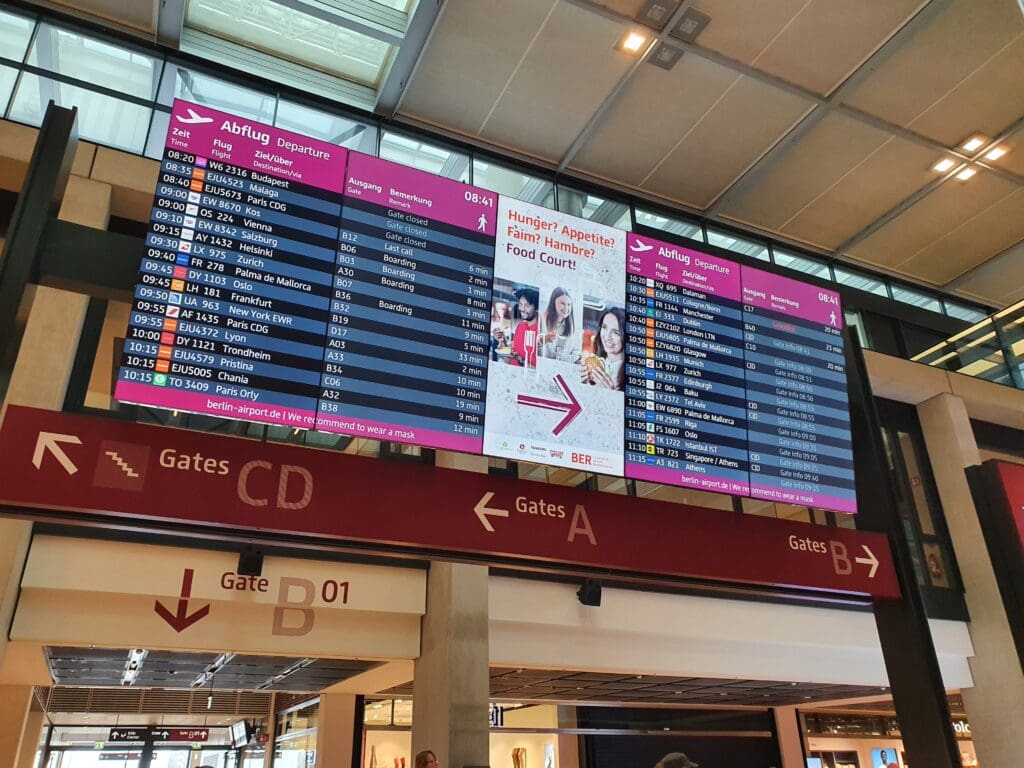
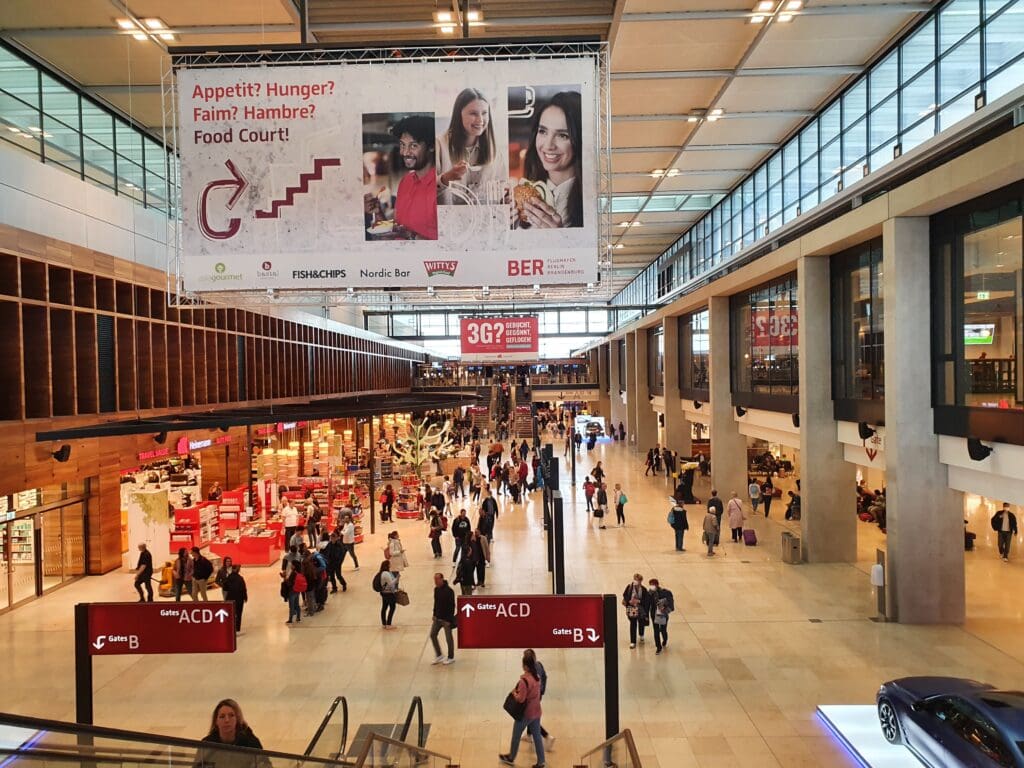
Having been cautioned by the check-in agent’s warning, after a brief walk around I decided to head up to passport control, located on the first floor of the main hall at the opposite end of this to the food court. Fortunately, at that time, most booths were staffed and no queues could be seen, enabling me to enjoy the rare luxury of heading straight up to one of these where I handed over my passport. Following the usual suspicious glances, this was returned to me and I continued my journey onwards to Terminal 1’s non-Schengen gates. In terms of layout, these gates are located on a long and thin strip that runs the length of the terminal and sits above the Schengen gates – something which conveniently allows both Schengen and non-Schengen flights to utilise the same gates. Whilst I found this portion of the terminal to contain a reasonable number of shops, that morning many of these appeared to be closed with just a small handful of cafes and shops open for passengers to peruse before their flights.
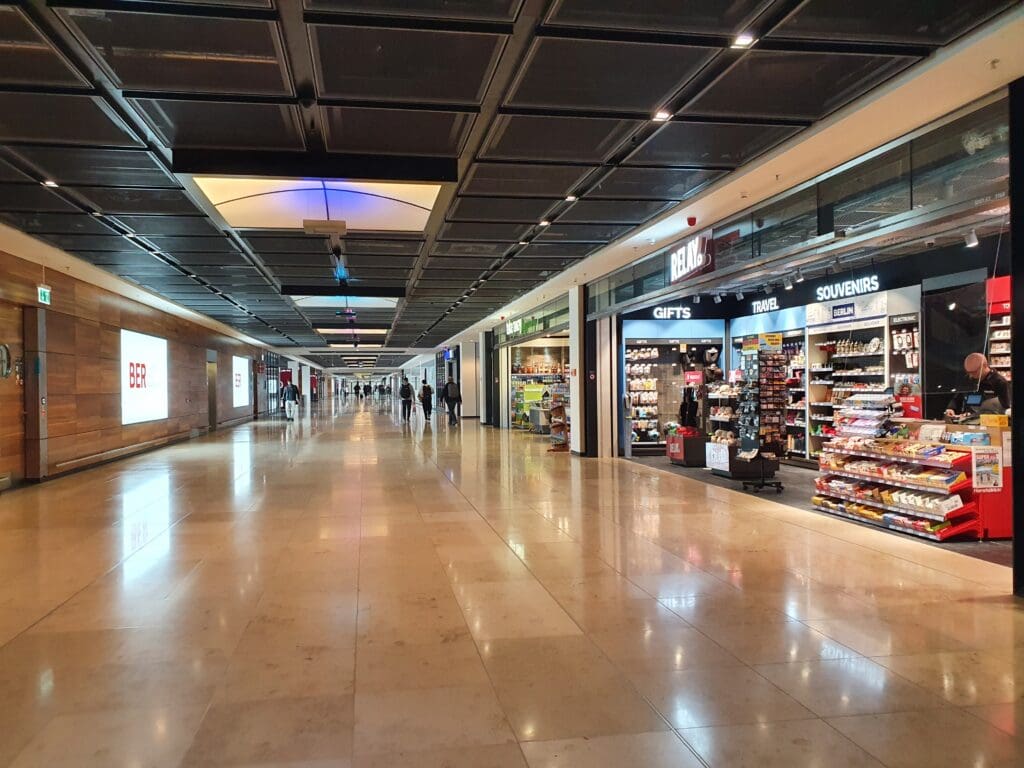
Focusing on the positives, as with the main portion of Terminal 1, the non-Schengen area appeared to be modern, bright and clean, with large windows on one side of the terminal allowing for good views of aircraft waiting at the stands directly outside. Meanwhile, as many passengers expect, complimentary wifi was provided which I found to work well for the duration of my stay. The only real complaint I had regarding this area was that plug sockets were incredibly limited, with these found at just a few charging points dotted throughout the terminal. After walking around, I took a seat at a quiet gate and watched the comings and goings of aircraft outside. Admittedly, based in the UK, I failed to spot any aircraft during my stay that I would not have been able to see at airports back home.
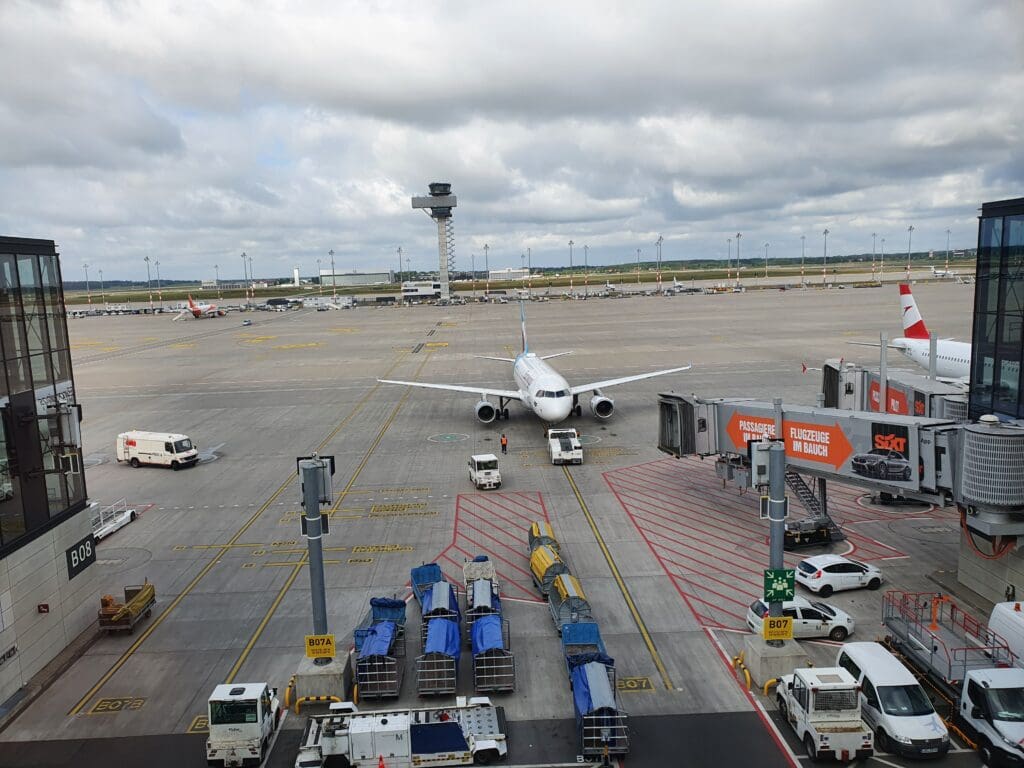
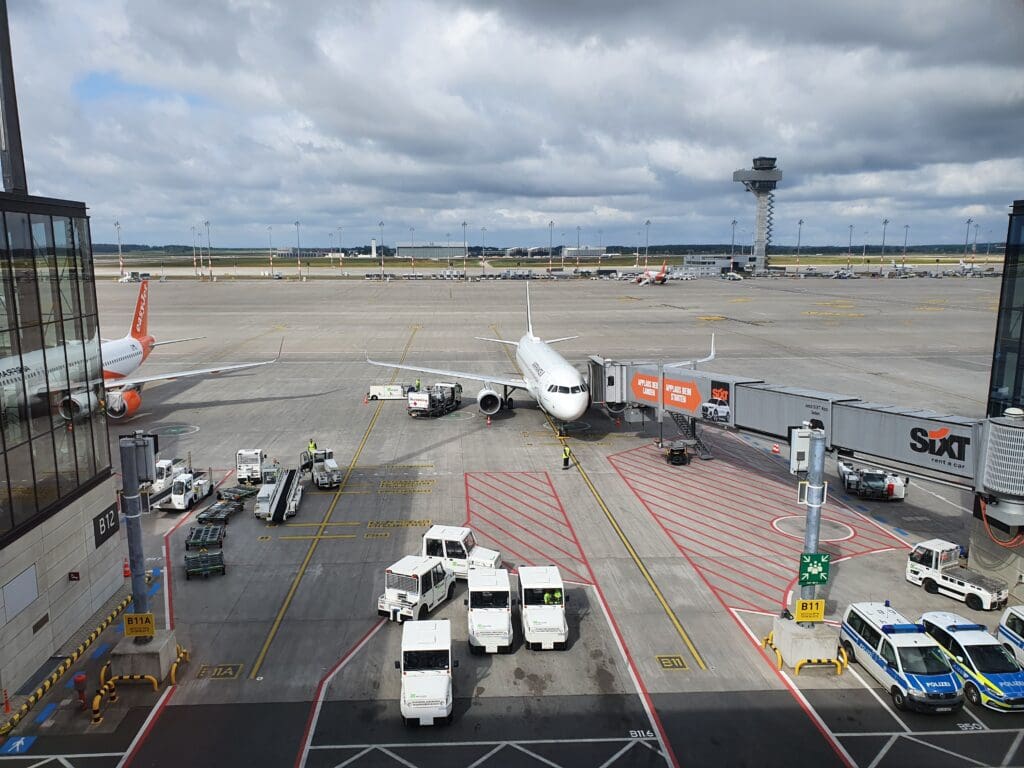
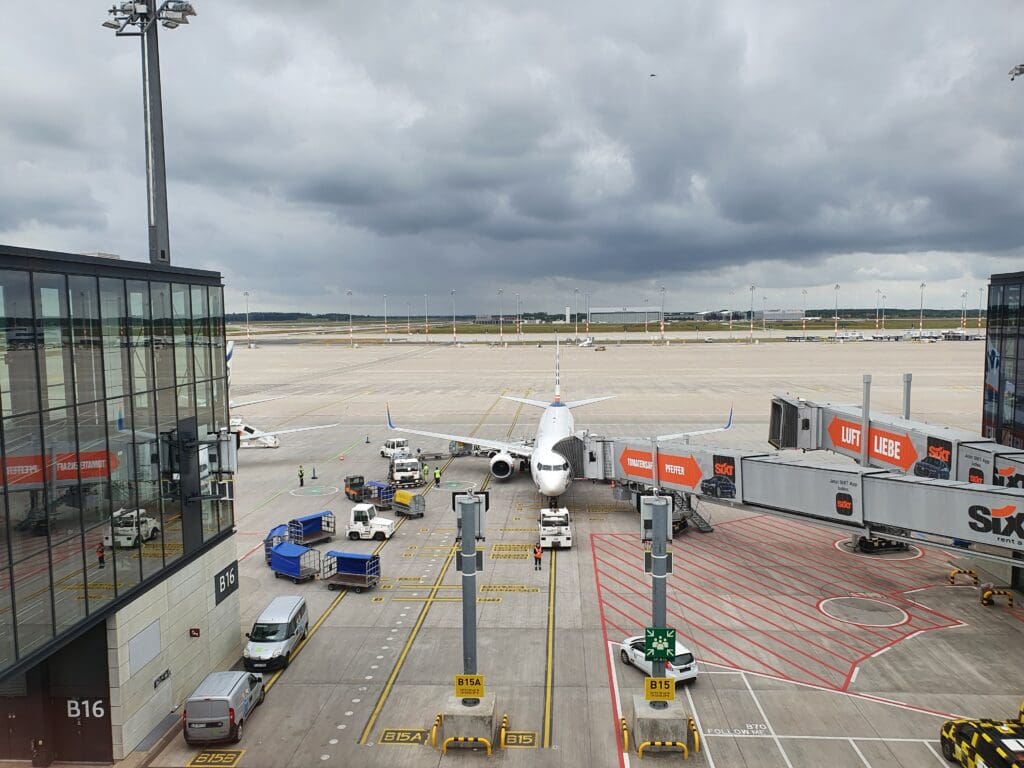
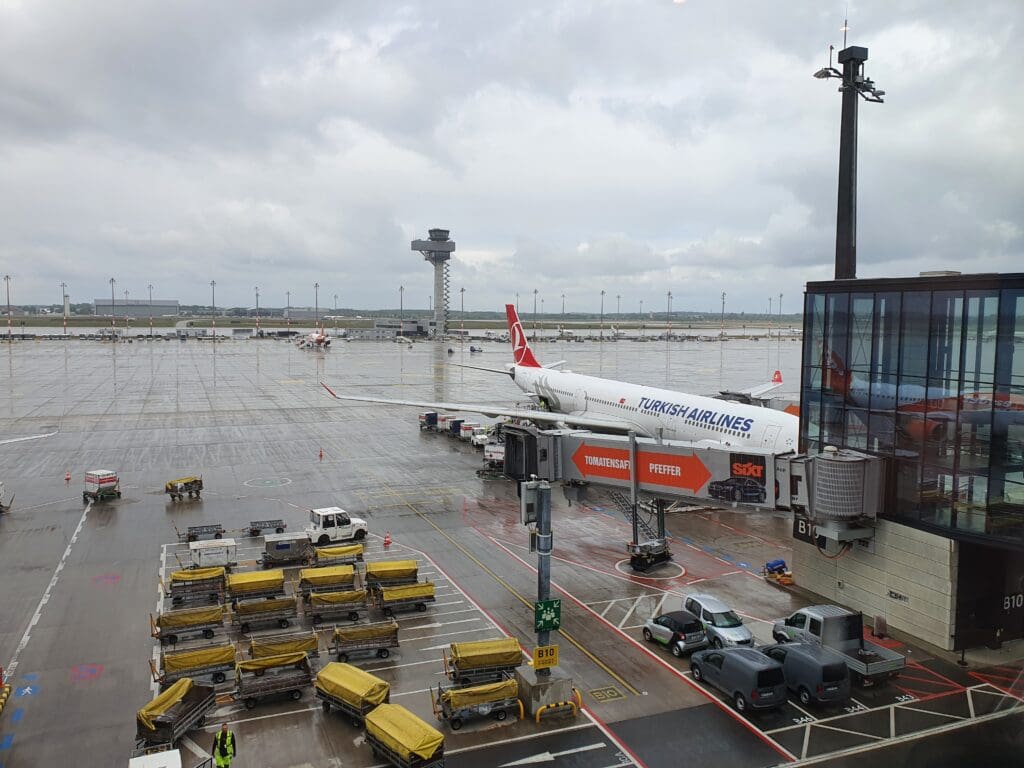
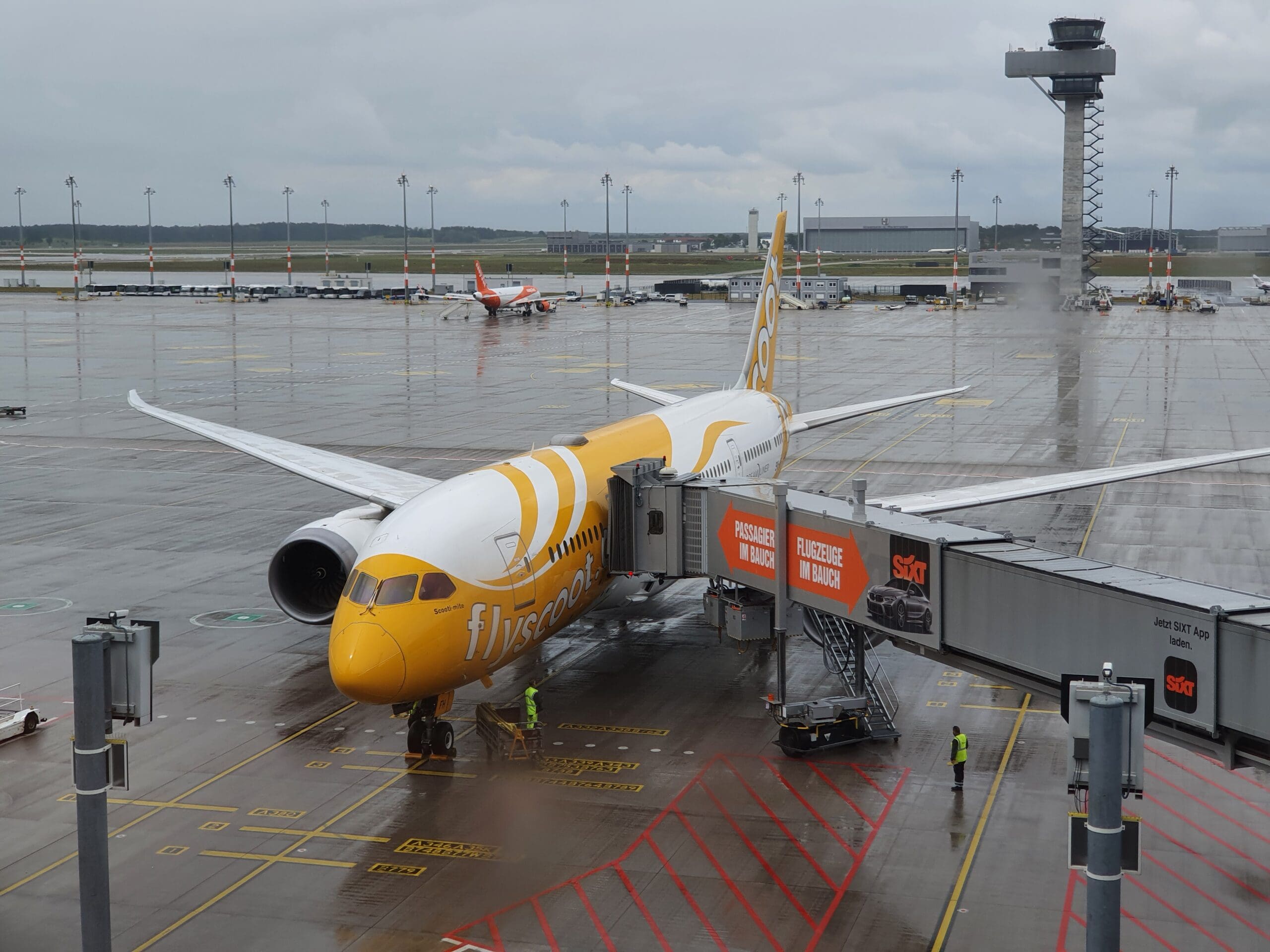
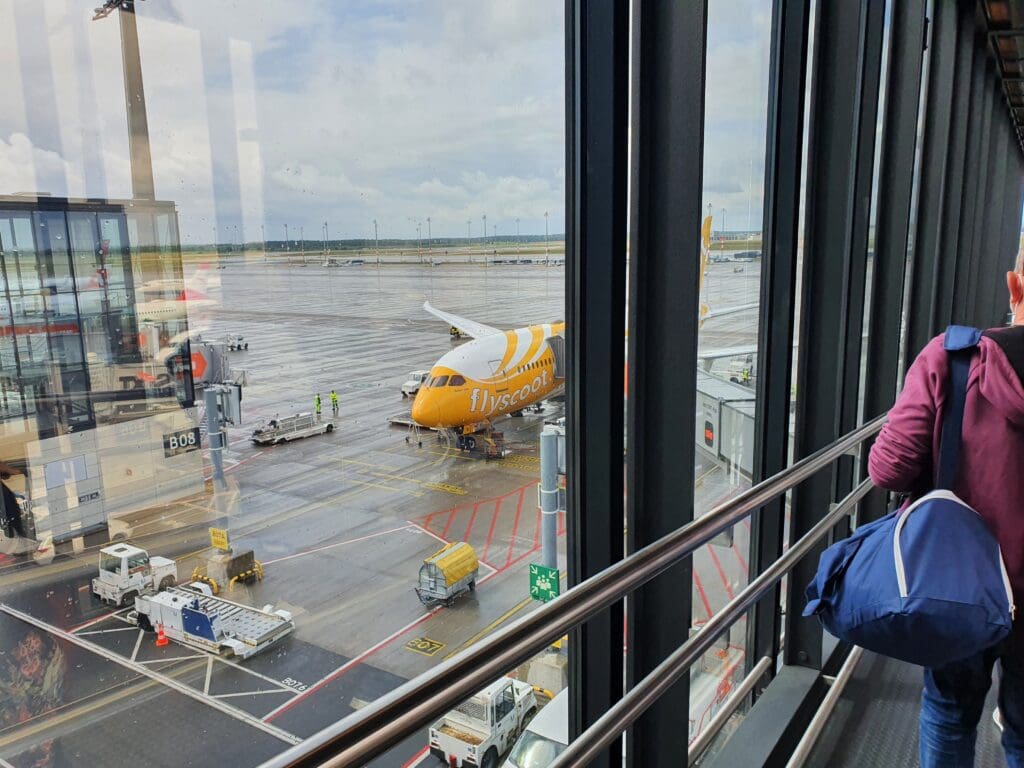
That morning, the flight across from Singapore and Athens was set to touch down in the German capital at 1010. However, a late departure from Greece meant that this pulled into stand B08 almost thirty minutes behind schedule at 1038. Thus, considering all the turnaround formalities, I was rather sceptical that the flight would be able to depart on time at 1110. Whilst the later our arrival in Athens, the less time I would have to explore the city seeing as I would head off to Rhodes the following morning, I was still not overly disgruntled by the likely tardy departure of the flight. That day, the flight to Athens would be operated by Boeing 787-8 Dreamliner 9V-OFH, named Scooti-mite, in what I assume to be some sort of tribute to the carrier’s Australian routes. Bearing line number 552, this Dreamliner was manufactured at Boeing’s Everett facility and first took to the skies in early April 2017 before being delivered to Scoot later that month. Since then, the aircraft has flown a mixture of short, medium and long haul routes from its base in Singapore, although in the week before my flight, the aircraft had only been flying long-haul services. During this week, the aircraft visited Athens, Berlin and Jeddah, flying a total of ten sectors, covering at least 41,700 miles.
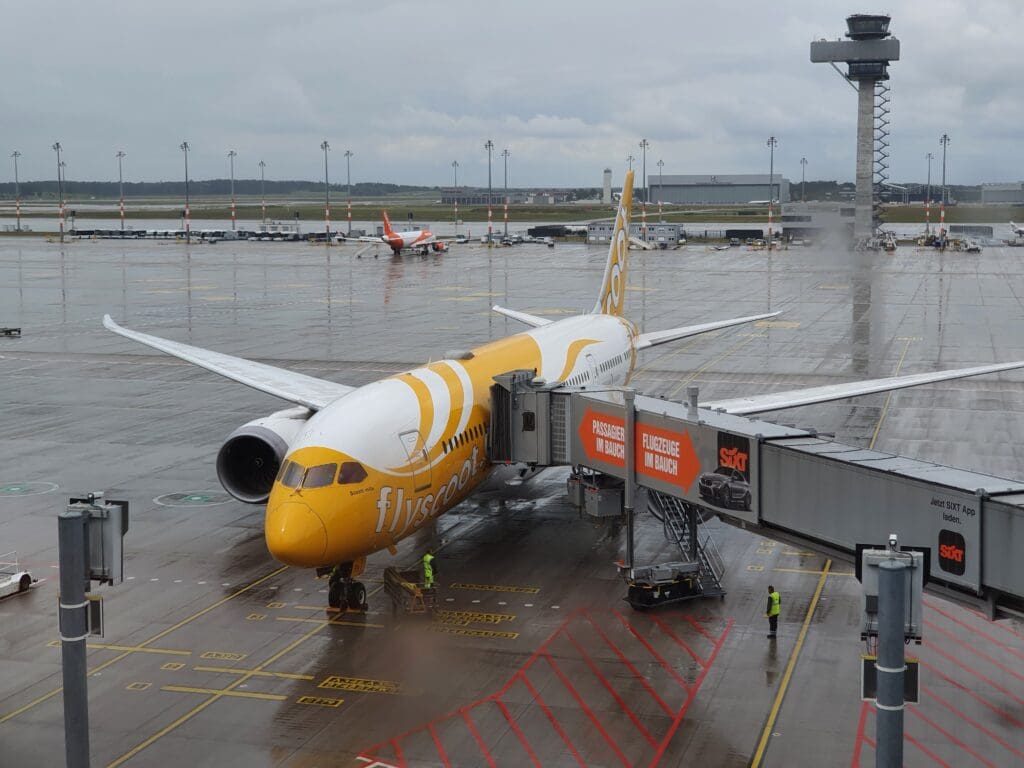
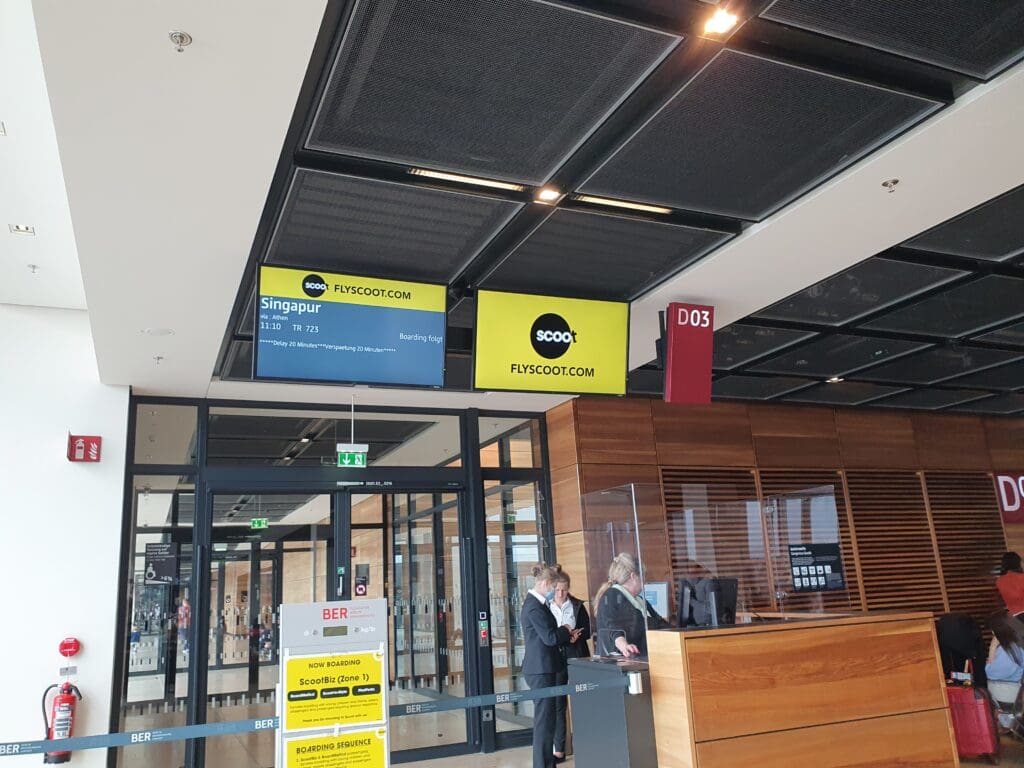
With nothing on the departure boards indicating a delayed departure, by the time the distinctive yellow and white liveried Dreamliner pulled up outside the terminal, the area around Gate D03 was absolutely packed. Whilst this would be my first time flying between Berlin and Athens, providing Berlin’s only (sort of) direct route to East Asia and taking into account Scoot’s onward route network from Singapore, I had expected the flight to be rather full and thus the busy gate area did not come as much of a surprise. What was surprising, however, was the fact that those in ScootPlus and those travelling with children were invited to make their way forward for boarding at 1058, only twenty minutes after the inbound aircraft had pulled into the stand. At this point, a disorganised and chaotic gaggle of passengers soon formed and a few minutes later all passengers were requested to make their way to the aircraft for boarding. Joining the crowds, I soon had my boarding pass scanned before I journeyed down several ramps towards the jetbridge. However, as I approached this, it became clear that boarding was yet to commence as the aircraft’s cabin was still being prepared for the flight ahead. Following a few more minutes of waiting, boarding commenced and soon enough I journeyed down the dark jetbridge before arriving at the aircraft’s 2L door.
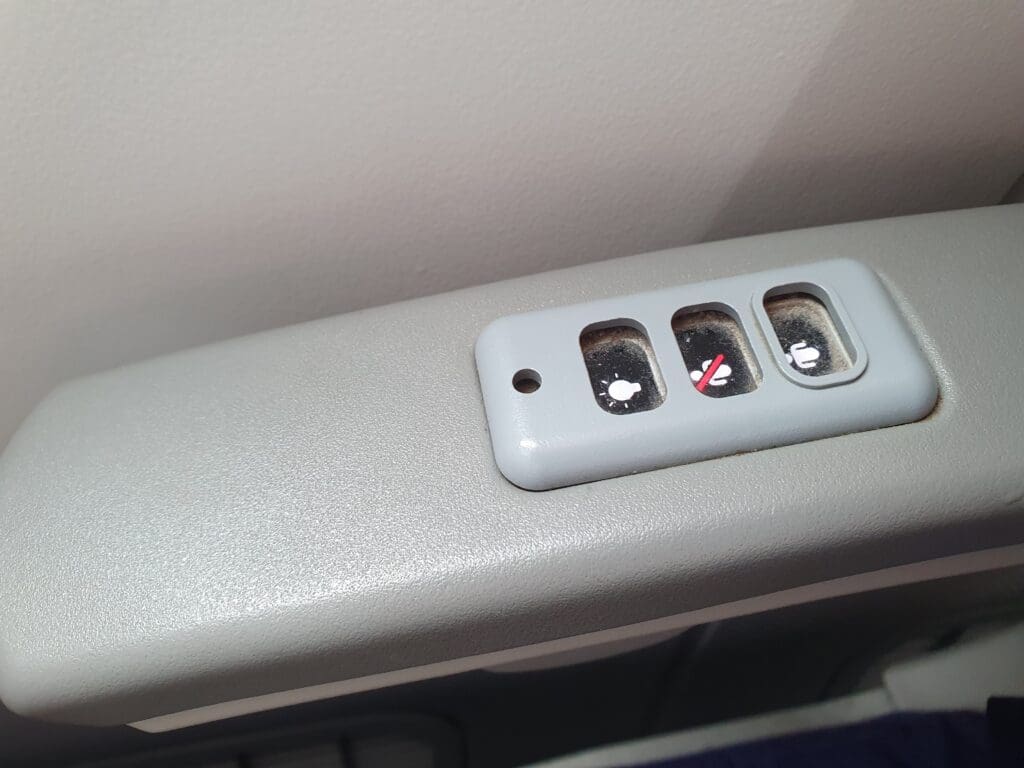
Being a low-cost carrier, to squeeze in as many seats as possible, Scoot’s Dreamliners feature one less galley than can be found onboard most Boeing 787s across the world. Thus, upon stepping into the aircraft, slightly unusually for a Dreamliner, I found myself directly entering the passenger cabin rather than a galley. As I entered the aircraft, I received a friendly greeting from two cabin crew members, one of whom checked my boarding pass before advising me to turn right down the second aisle. After turning right, I made my way through the aircraft’s small ‘Super’ seat section of the aircraft, where seats have an increased amount of legroom and feature an adjustable headrest. Given Scoot’s status as a low-cost carrier, I was slightly surprised to find that the airline arranges their Economy seats in a 3-3-3 rather than a 3-4-3 configuration. Focusing on their design, manufactured by Safran, these sit in a plastic shell and their fronts are covered in a blue fabric that features a repeating pattern of dark blue waves. Meanwhile, these were topped with disposal fabric antimacassars that advertised Scoot’s cloud-based inflight portal, ScootHub. As you would expect from a low-cost carrier, these are rather spartan in their design and lack the same array of amenities that can be found on a ‘typical’ widebody aircraft seat such as plug sockets, USB-A ports and inflight entertainment screens. Whilst the lack of these would not prove to be an issue on the flight down to Athens, those travelling onwards to Singapore and lacking their own entertainment may have ended up a little disappointed. Finally, buttons for the overhead reading light and to call a flight attendant could be found planted in the seemingly thin armrests between seats – this perhaps resulting in their easy misactivation.
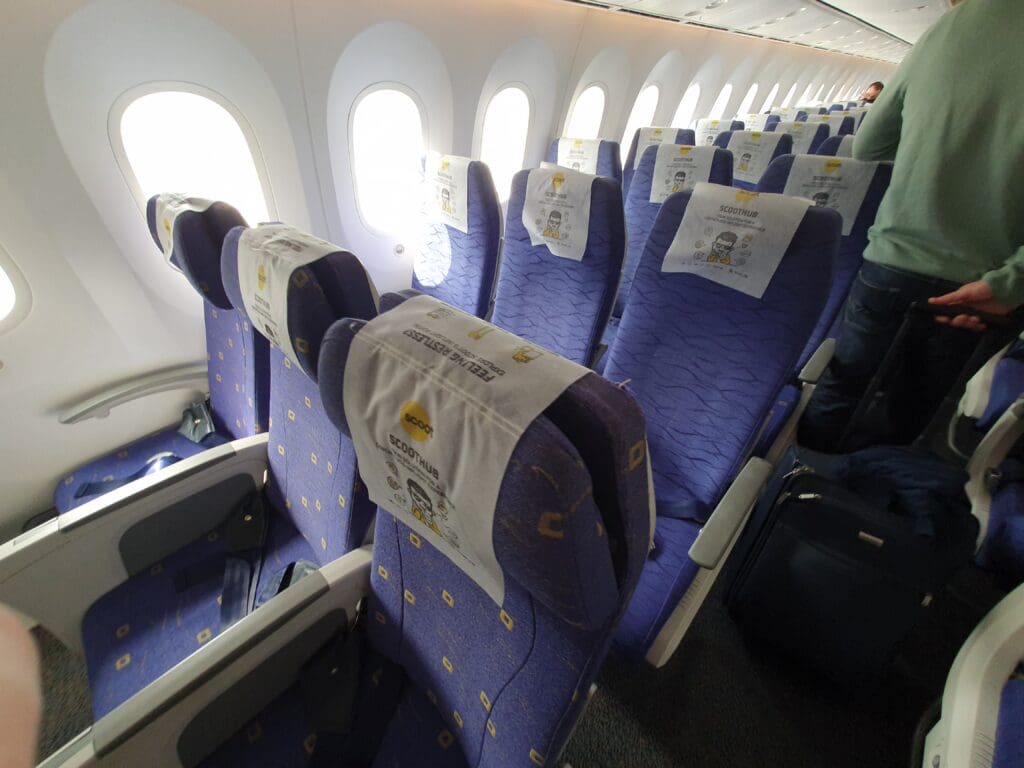
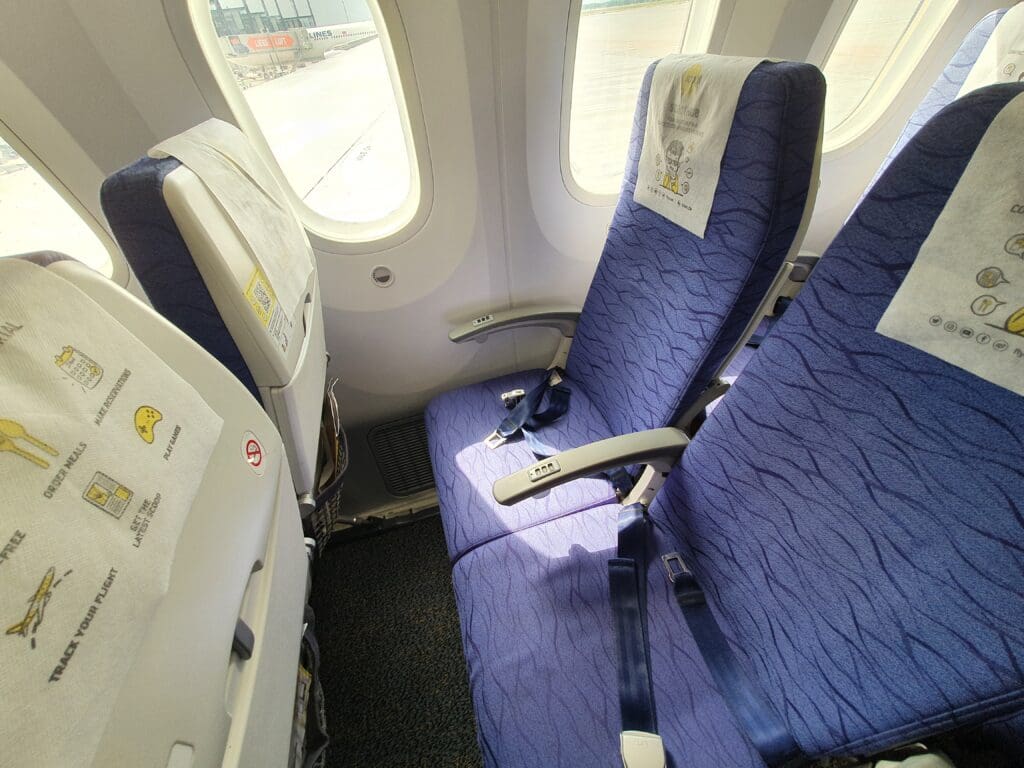
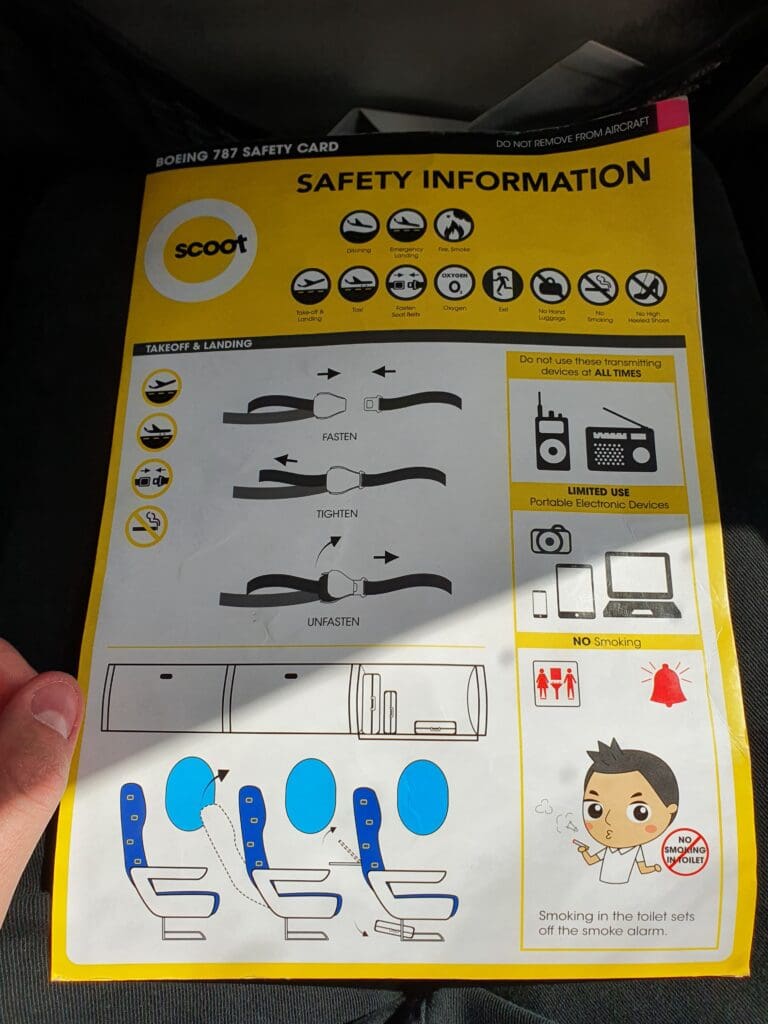
Seated near the rear of the forward Economy cabin and being amongst the first cohort of passengers to board, I managed to trundle down the aisle without too much stopping and received several friendly greetings from various crew members as I did so. Upon taking my seat, I found this to be softer and more comfortable than those of many other low cost carriers, although the slightly restrictive legroom still ensured this to be below par when compared to the seats of many other widebody aircraft, reaffirming the fact that I was on a budget airline. Turning to the seatback pocket, this contained a dogeared safety card and a sick bag. My greatest gripe with the seat was that despite the aircraft’s relatively young age of a little over five years old, this did not appear to be in fantastic condition with plenty of marks and scratches visible around this. Meanwhile, only very minimal cleaning appeared to have taken place on the ground in Berlin with a fair amount of rubbish and crumbs visible on the floor around the cabin.
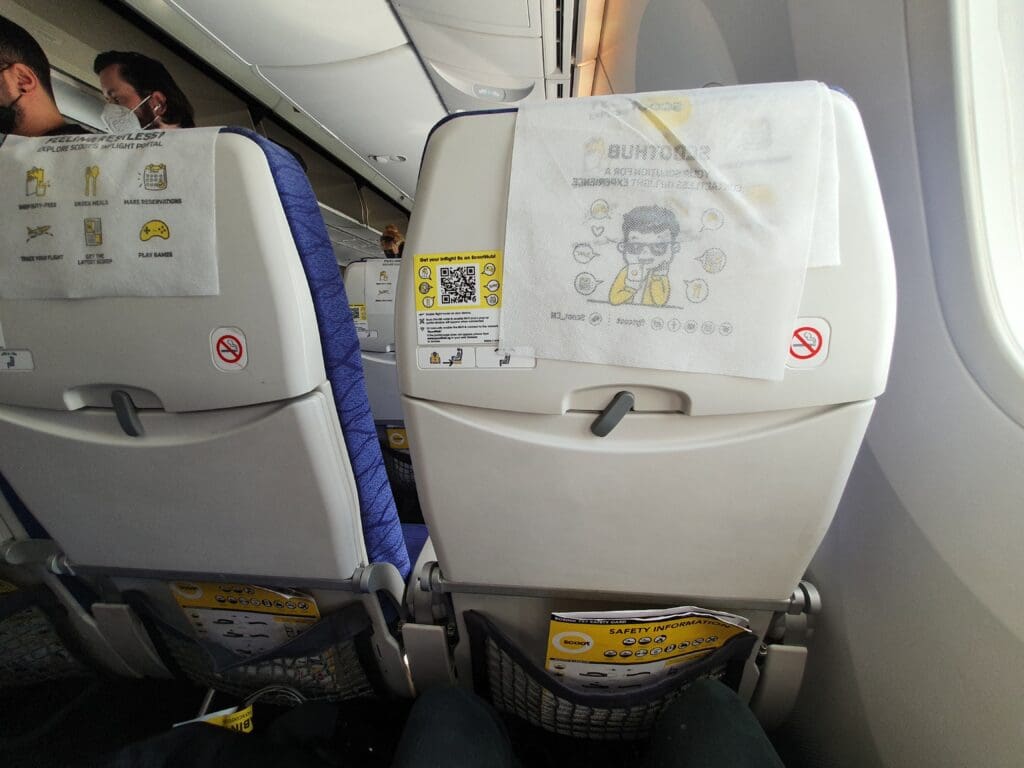
After settling in, passengers continued to stream onto the aircraft as upbeat high-tempo pop songs filled the cabin for the duration of boarding. Once seated, it wasn’t long before I was joined by a couple of neighbours. Indicating that almost all passengers were onboard, at 1122 the Captain performed their welcome announcement during which they introduced themselves and the flight’s First Officer and Purser, before noting that we could expect to be in the air for two hours and a half and detailing the weather both en route and in Athens. This ended with a mention that we were waiting for the final cargo pallets to be loaded and for the dispatch documents to be delivered after which we would be on the move. Two minutes after this announcement, boarding was announced as complete with the aircraft appearing to be full that morning. At 1129, the music that had accompanied boarding came to an end before the Purser performed an upbeat announcement during which they welcomed all passengers and thanked us for flying with Scoot, cheesily introducing the crew as ‘Scootees’. This announcement then transitioned into the safety instructions which were read out by the Purser whilst several cabin crew members took to the aisles where they performed a demonstration. Despite the aircraft’s origin and destination, I was slightly surprised to find that there were no pre-recorded safety instructions played in either German or Greek. Once the demonstration came to an end, the crew members then passed through the cabin ensuring all was set for our departure.
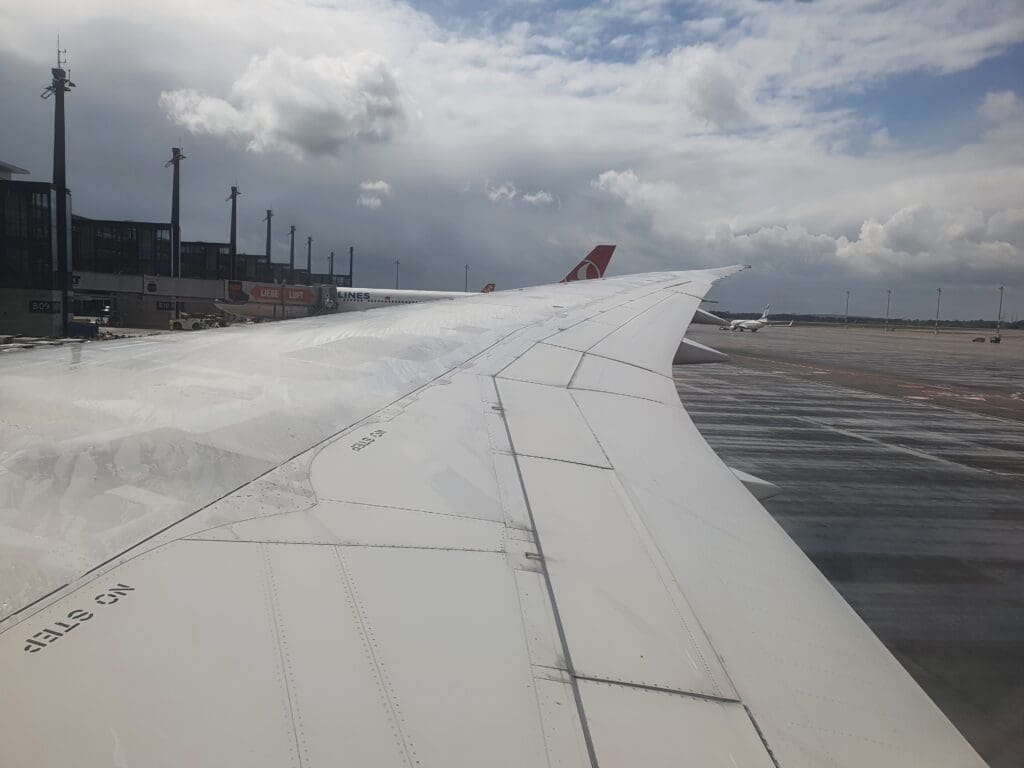
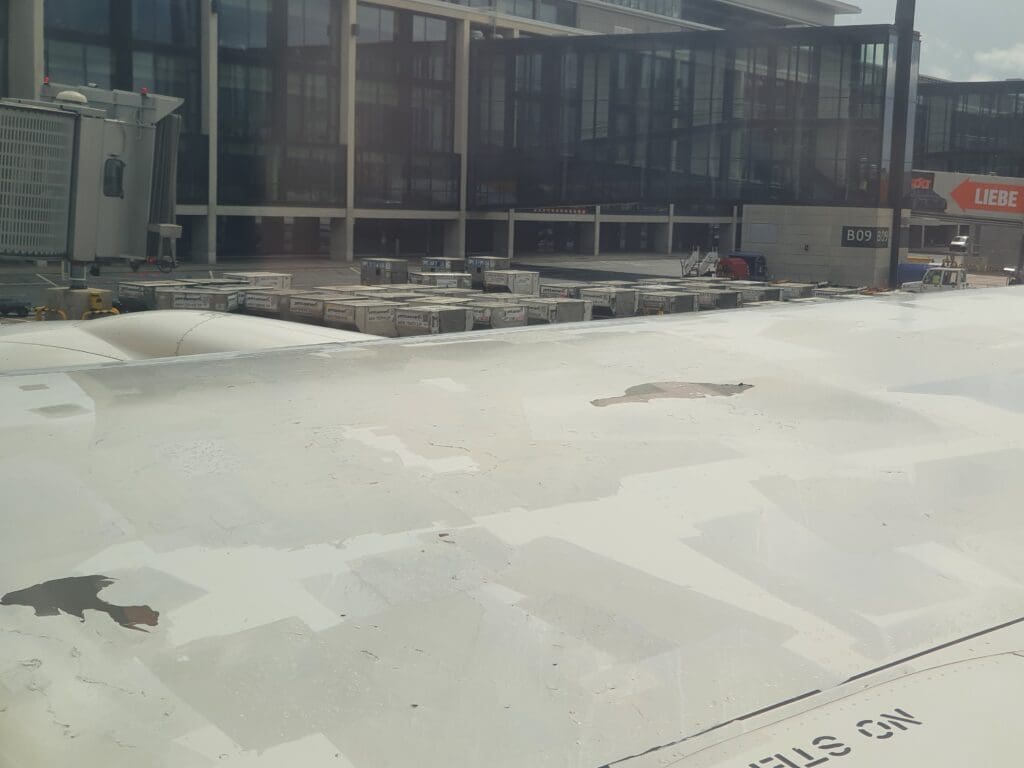
A little over 25 minutes behind the flight’s scheduled departure time, at 1136 the Dreamliner was pushed back away from the stand and a series of whining and humming could be heard as the aircraft’s two large Rolls-Royce Trent 1000 engines powered up into life after which the flaps were extended with a loud whining sound. At 1140, the aircraft commenced its journey to the end of Runway 25, arriving there four minutes later where it taxied onto this without any holding and commenced its powerful rolling takeoff. After speeding past Terminal 1, the Boeing rotated upwards into the grey moody skies that surrounded Germany’s capital that morning and bumped around a little as it made its way upward towards the clouds.
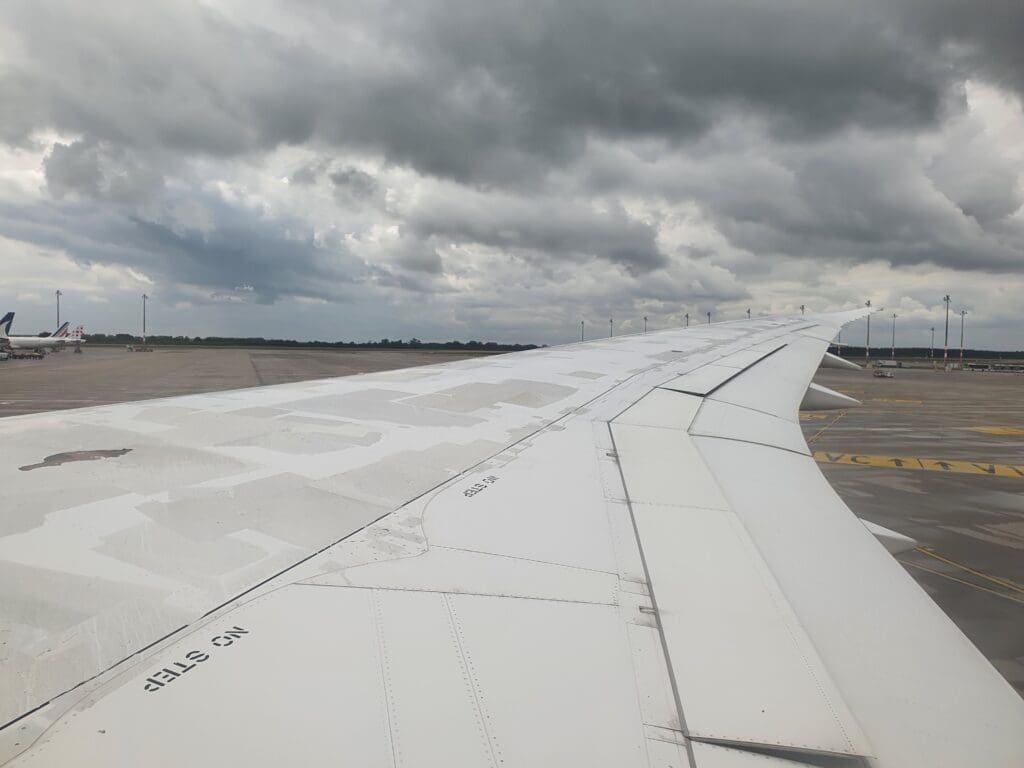
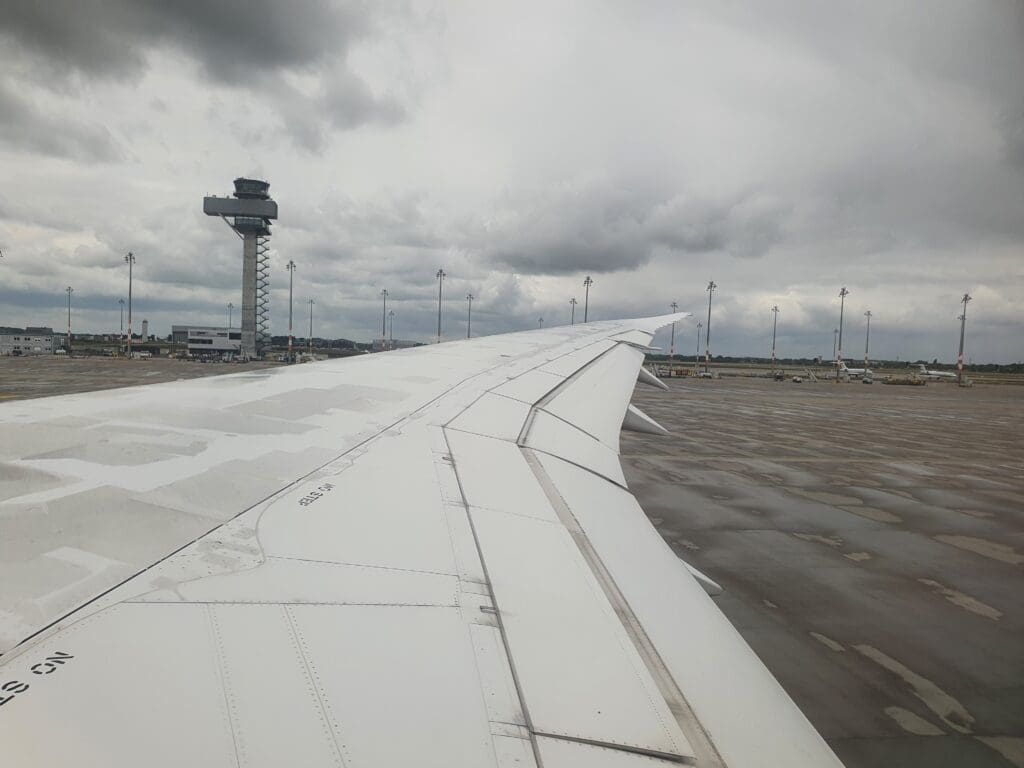
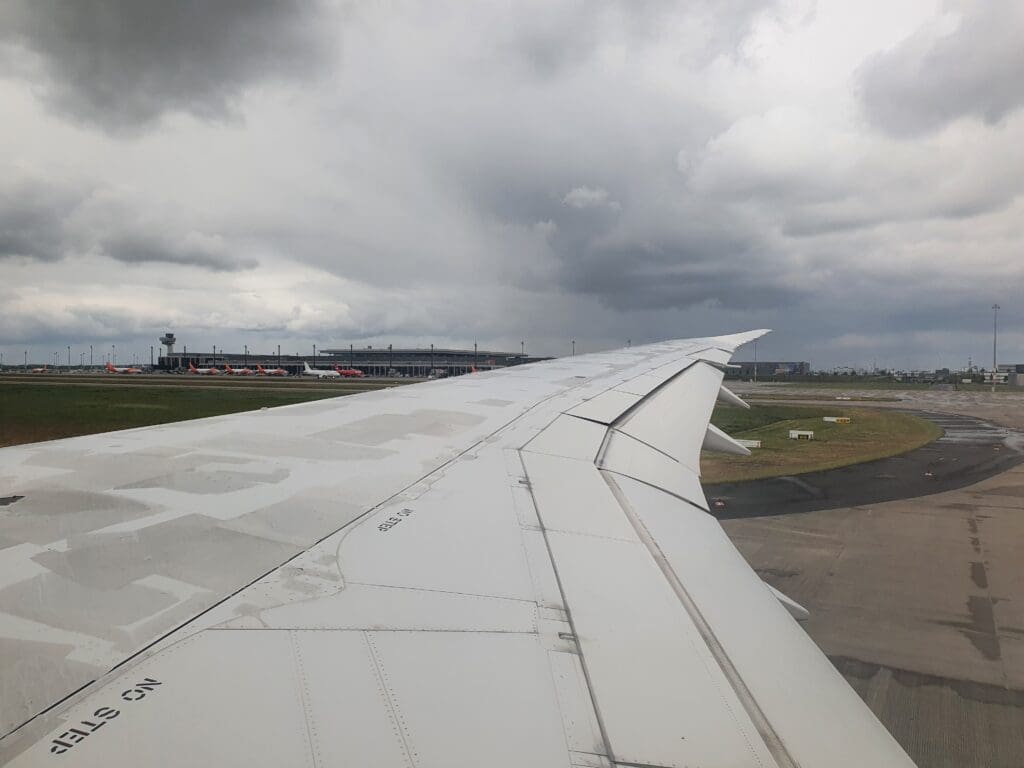
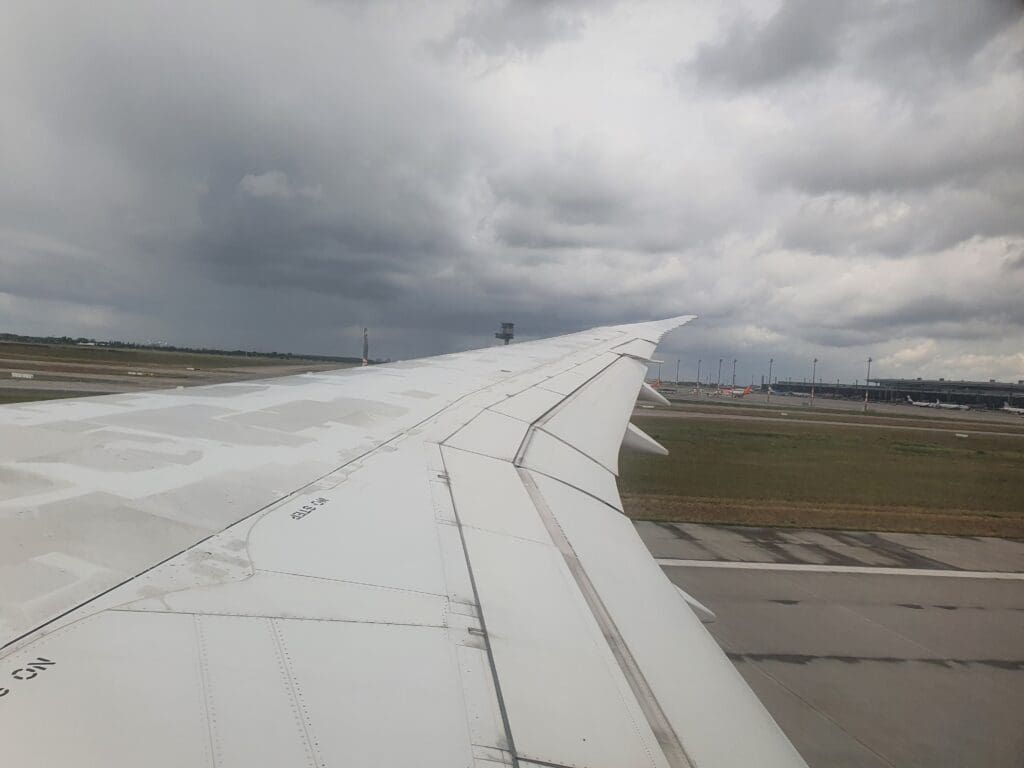
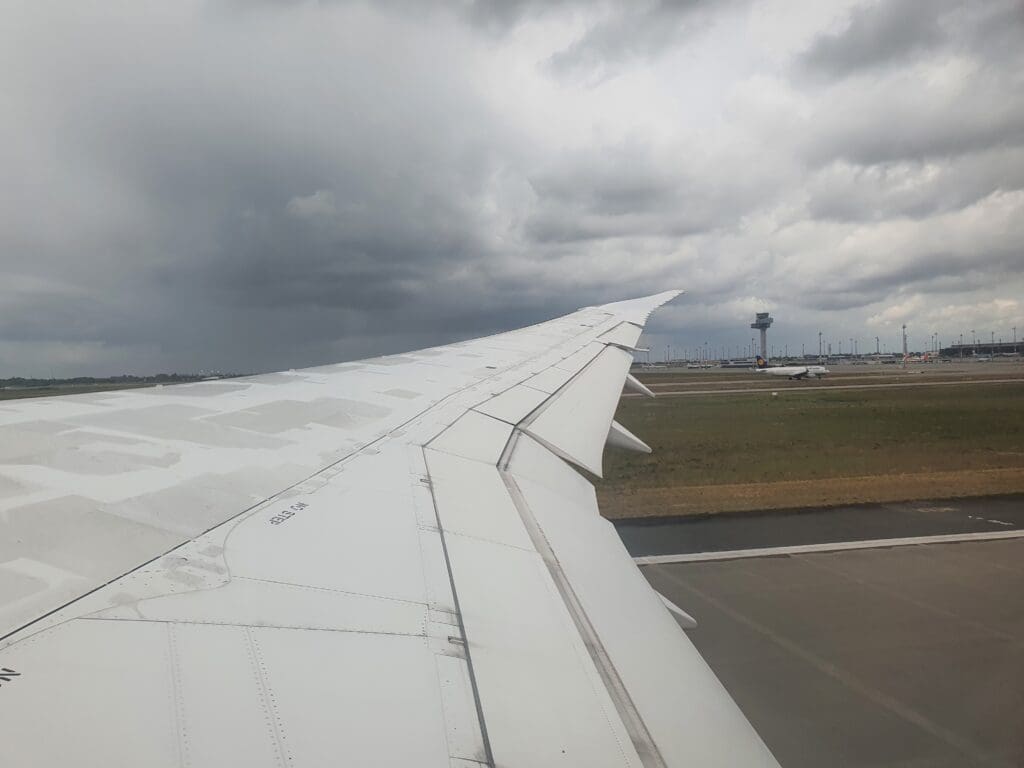
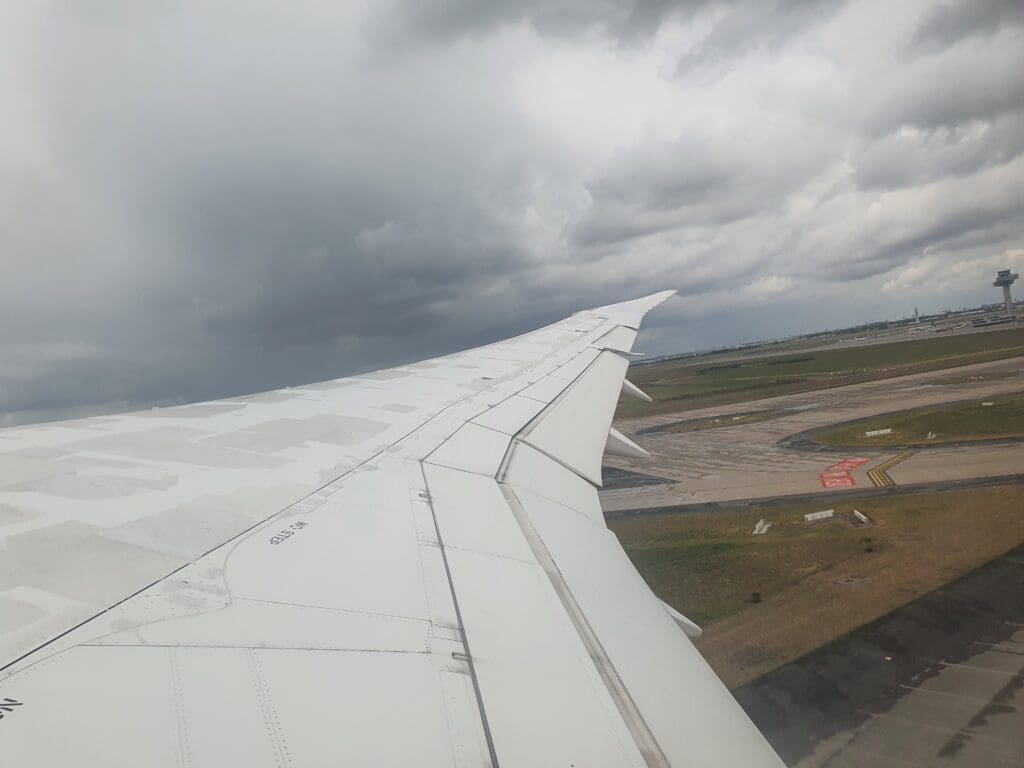
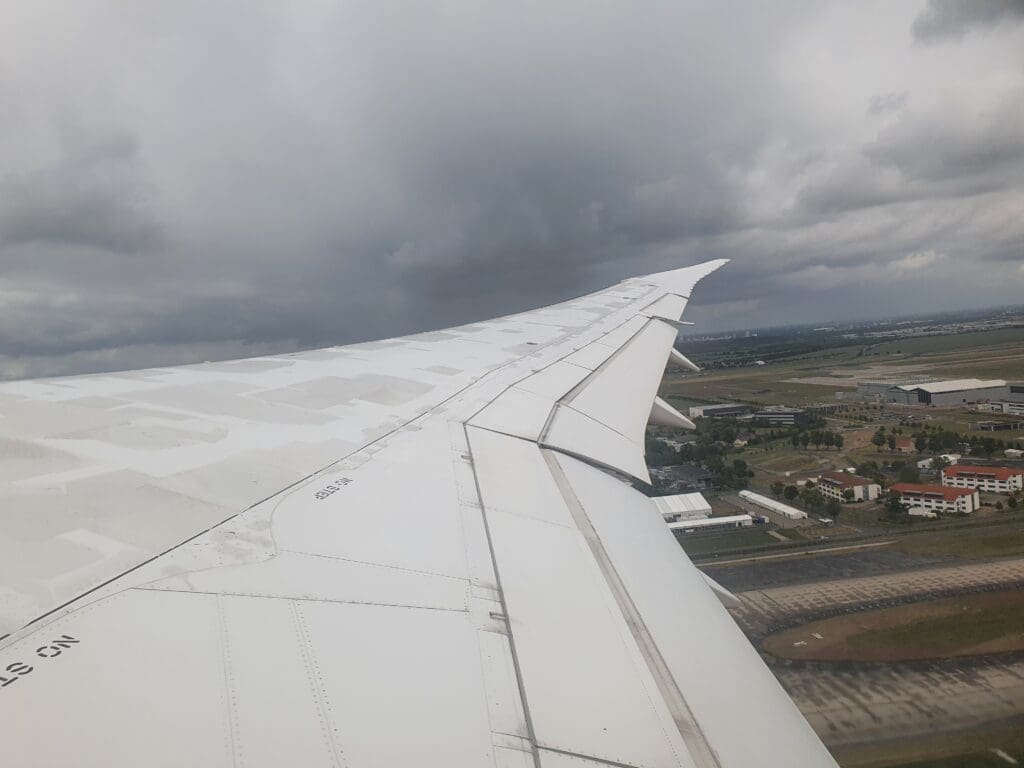
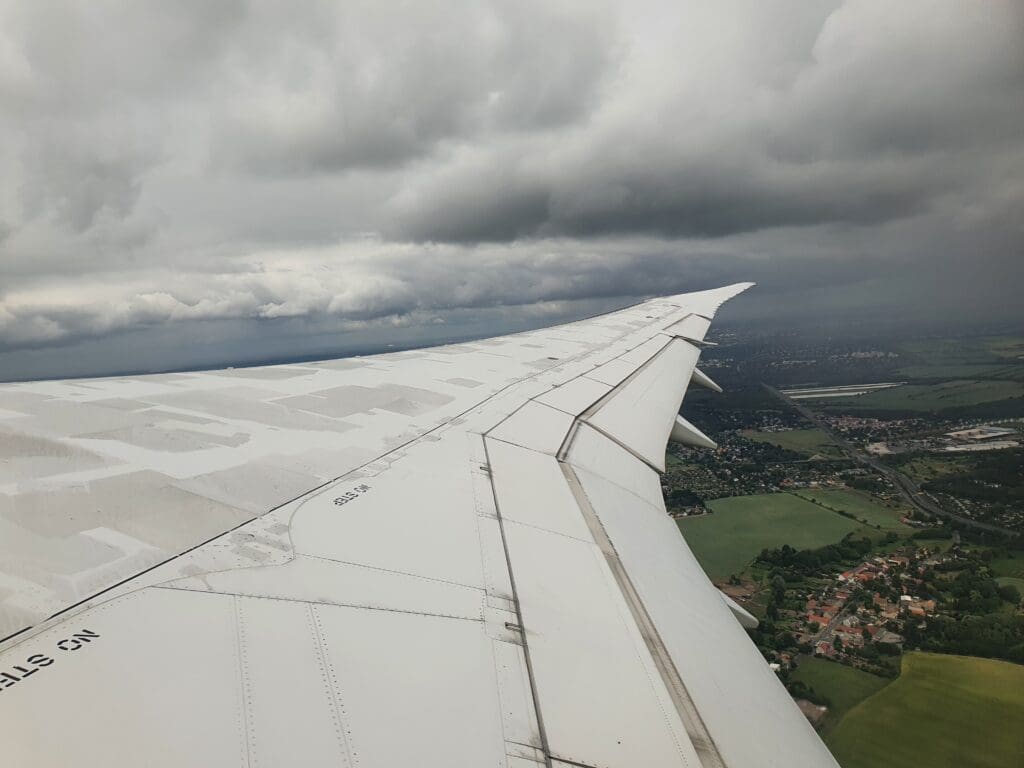
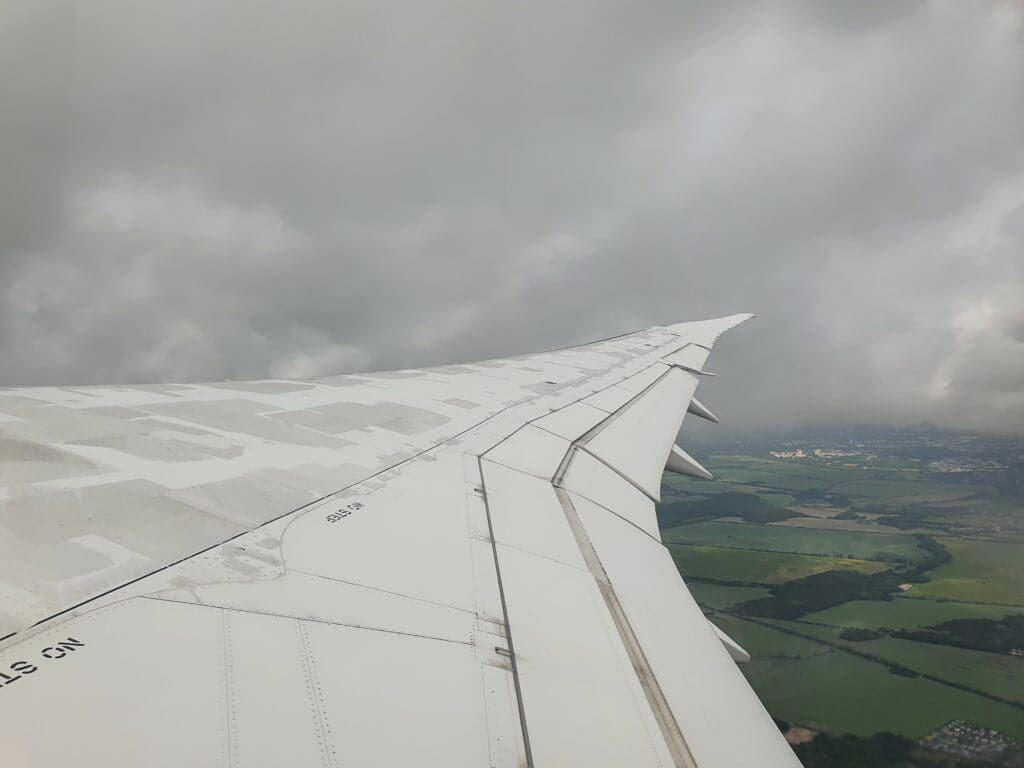
After leaving Berlin Brandenburg Airport behind, the Dreamliner climbed over the small towns of Blankenfelde, Dahlewitz and Mahlow before rising into the clouds as the aircraft banked onto an easterly heading that would take us to the Polish border. Upon passing through the clouds, the seatbelt signs were switched off and the usual post-departure announcement regarding keeping seatbelts fastened whilst seated was performed. Fourteen minutes after taking off from Berlin, the Dreamliner crossed into the skies of Poland and soon banked onto a southeasterly heading. A short time after crossing into Polish skies, the Purser performed an announcement regarding the Scoot Café buy-on-board service with the distribution of pre-booked meals following a short time later.
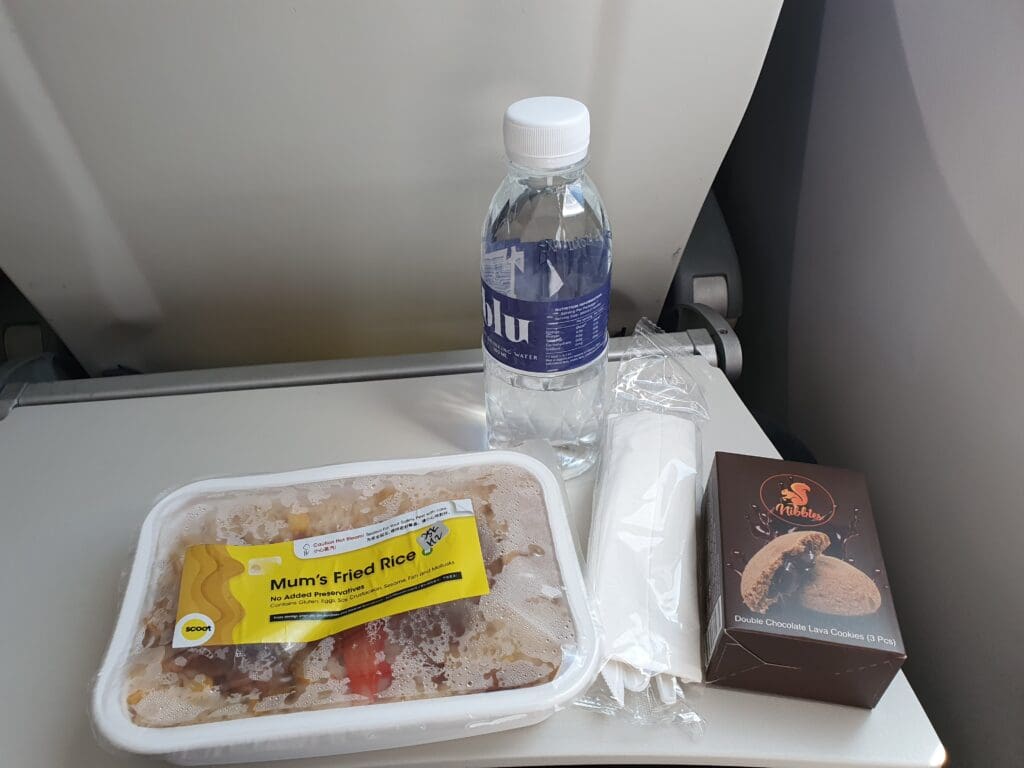
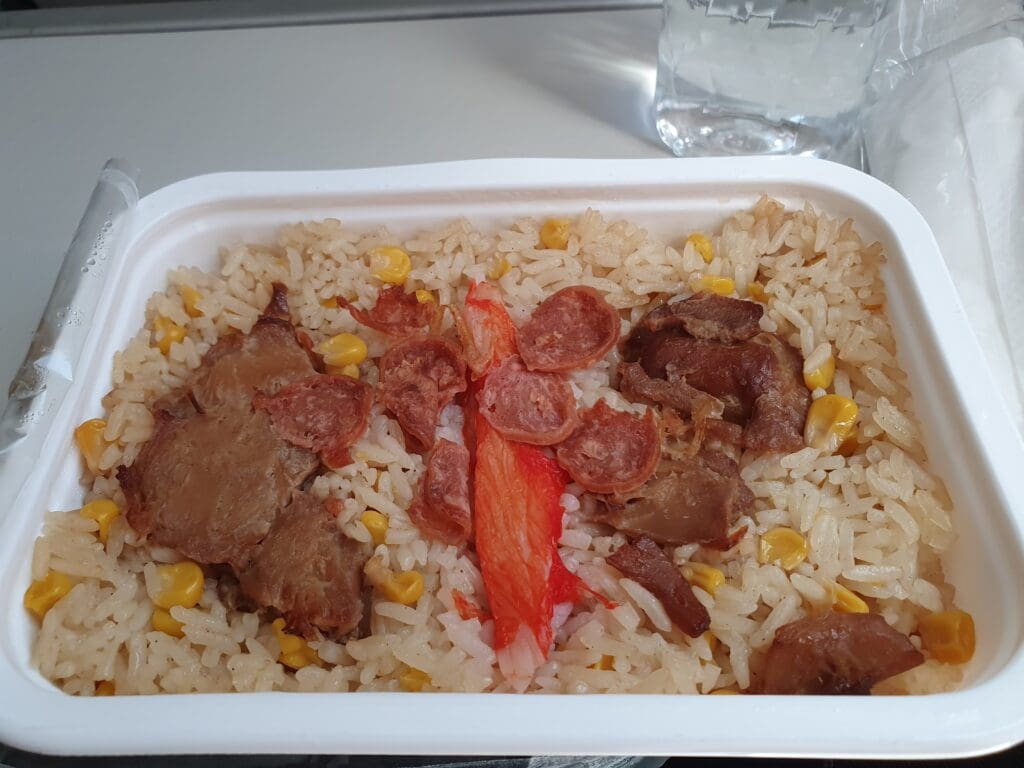
A few minutes after the distribution of meals commenced, a friendly flight attendant reached my row and after showing my boarding pass, four items were passed over to me. These consisted of a sachet containing plastic cutlery and a serviette, a 300ml bottle of Malaysian still water, a box containing three chocolate biscuits and the main dish, Mum’s Fried Rice. I cannot help but think that the crew would have been able to conduct this service at a quicker pace had passengers been handed items on trays or perhaps in boxes, although I assume that for whatever reason Scoot considered and discredited this option. Upon tucking into this, I found the main dish to be a little bland and dry, and whilst the meal filled a gap, I did not consider this to be good value for the €11 that I had paid for this. Once passengers’ pre-booked items had been distributed, the main buy-on-board service commenced, which offered passengers a range of drinks and snacks alongside a limited selection of hot meals. During this service, noticing that I had already polished off my meal, a crew member collected the empty packaging – their proactiveness added to the relatively positive impression that the crew had given me thus far in the flight.
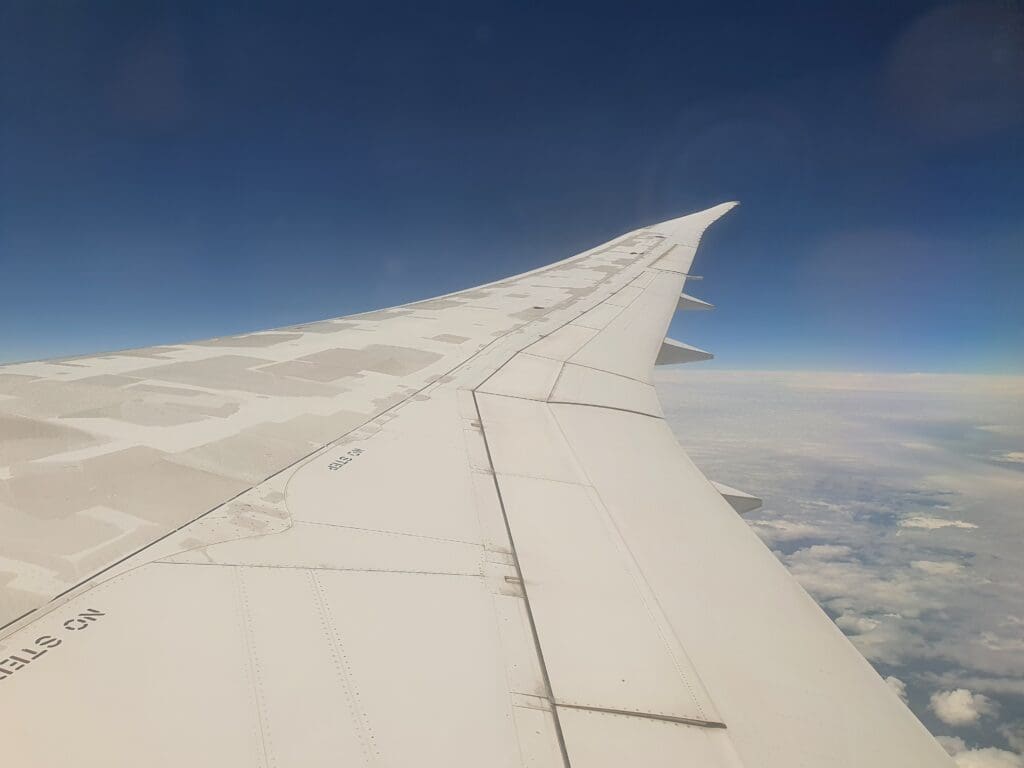
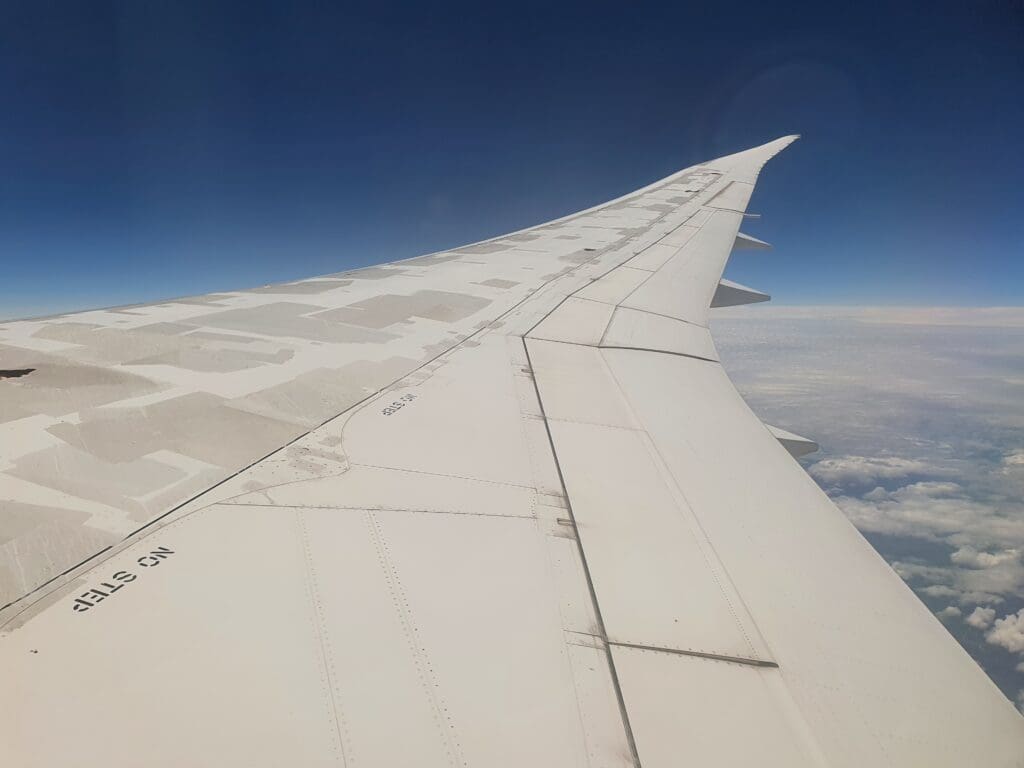
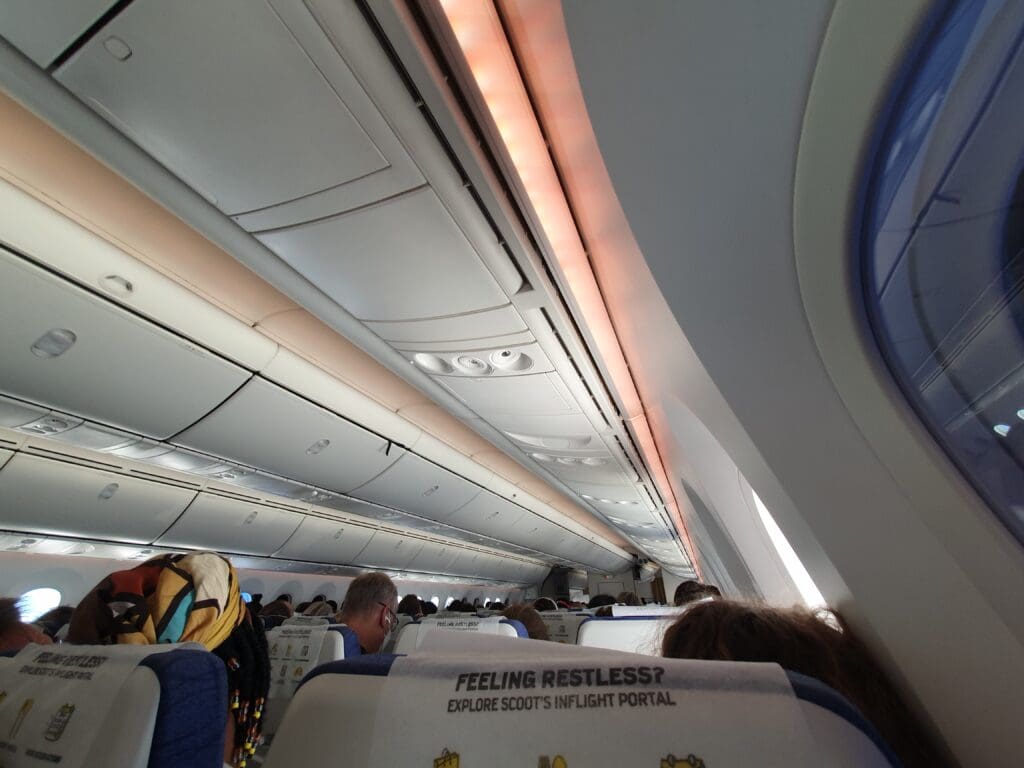
Returning to the flight’s route, whilst over Poland, the Dreamliner crossed over the voivodeships of Lubusz, Lower Silesia and Opole, passing almost directly over the city of Wroclaw. At this time, the aircraft levelled off at its high cruising altitude of 41,000 feet. Inside the cabin, whilst Scoot’s aircraft may lack inflight entertainment screens, a cloud-based platform, ScootHub is provided for those passengers looking to make the time scoot along a bit quicker. This allows passengers to browse destination guides, study the Scoot Café menu and duty free catalogue, read about Scoot and see how long is left until arrival – although there is no moving map feature and thus passengers are left in the dark as to their flight’s exact progress and the places that they are flying over. Those wishing to pay can access a range of audio-visual content through ScooTV and keep in touch with the world through wifi, although neither seemed to work on the flight that day. Not needing any entertainment on the flight down to Greece, this was not a major issue, although I can imagine that some passengers may have been left with a few complaints on the leg to Singapore, assuming this continued to remain unavailable.
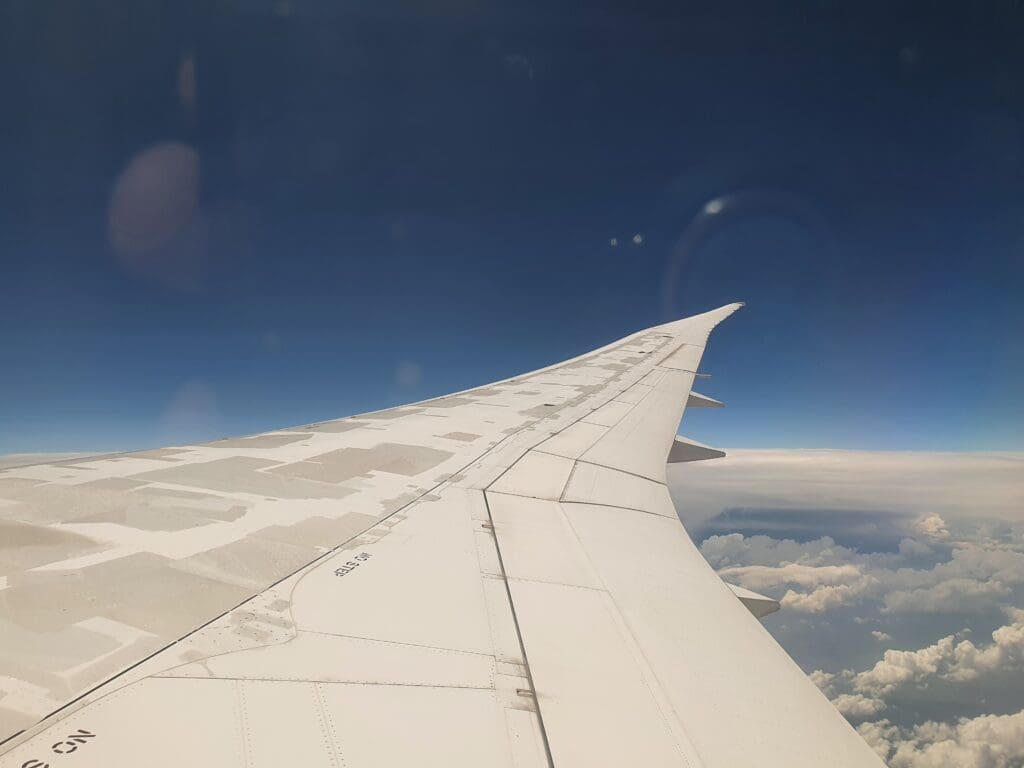
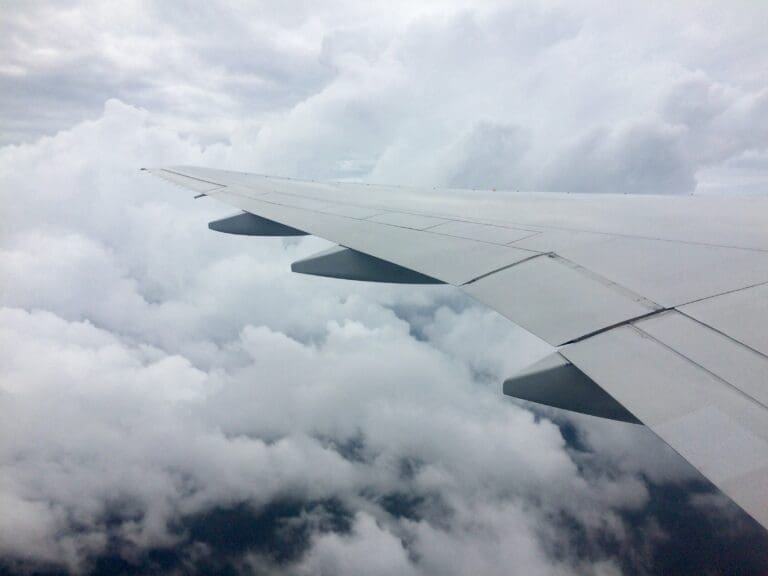
With no entertainment, after polishing off my lunch I had little to do to pass the time other than to write this report and look at the passing clouds below, with much of Europe shrouded in cloud that morning. Following around 25 minutes in the skies of Western Poland, the aircraft left Polish airspace and crossed over into Czechia, flying across a very minuscule portion of the far eastern end of the country near Ostrava, before crossing into Slovakian airspace five minutes later. Once in the skies of Slovakia, the aircraft headed almost directly southwards across the centre of the country, flying over the regions of Žilina and Banská Bystrica. Next up on the tour of Central European skies was Hungary, with the aircraft making its way over the border just to the northeast of Budapest following around ten minutes spent in Slovakian skies. This was then followed by Serbia, with the Dreamliner flying virtually the entire length of the country from north to south, with this taking around thirty minutes, after which the aircraft passed over North Macedonia, the final country before reaching Greece.
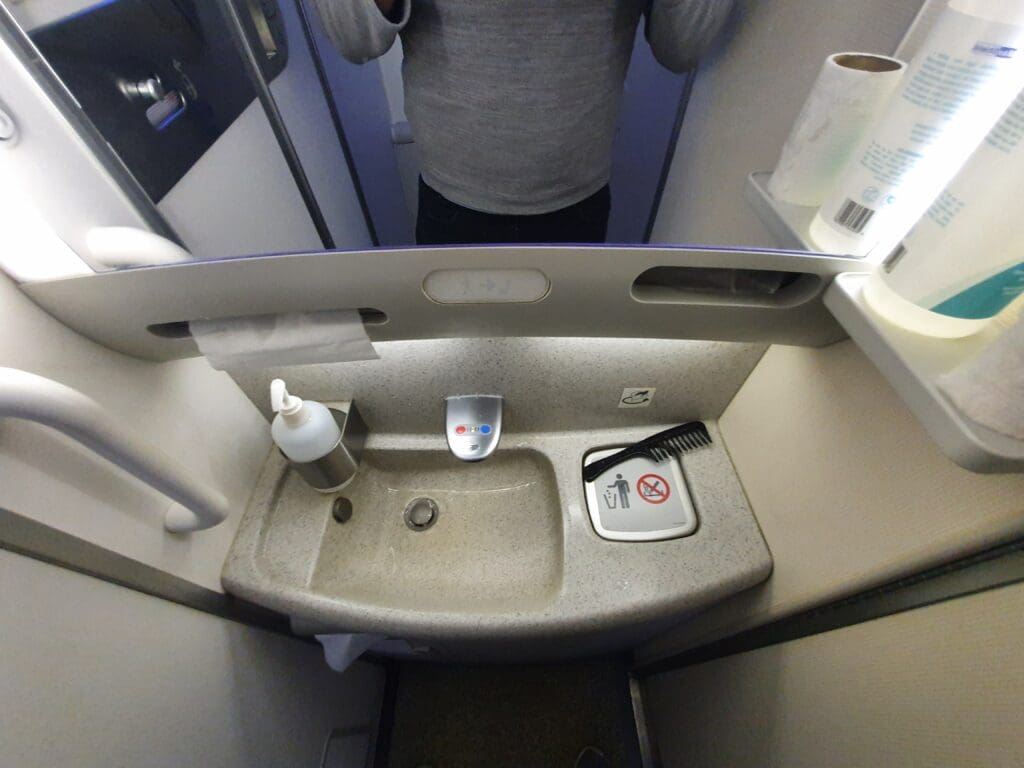
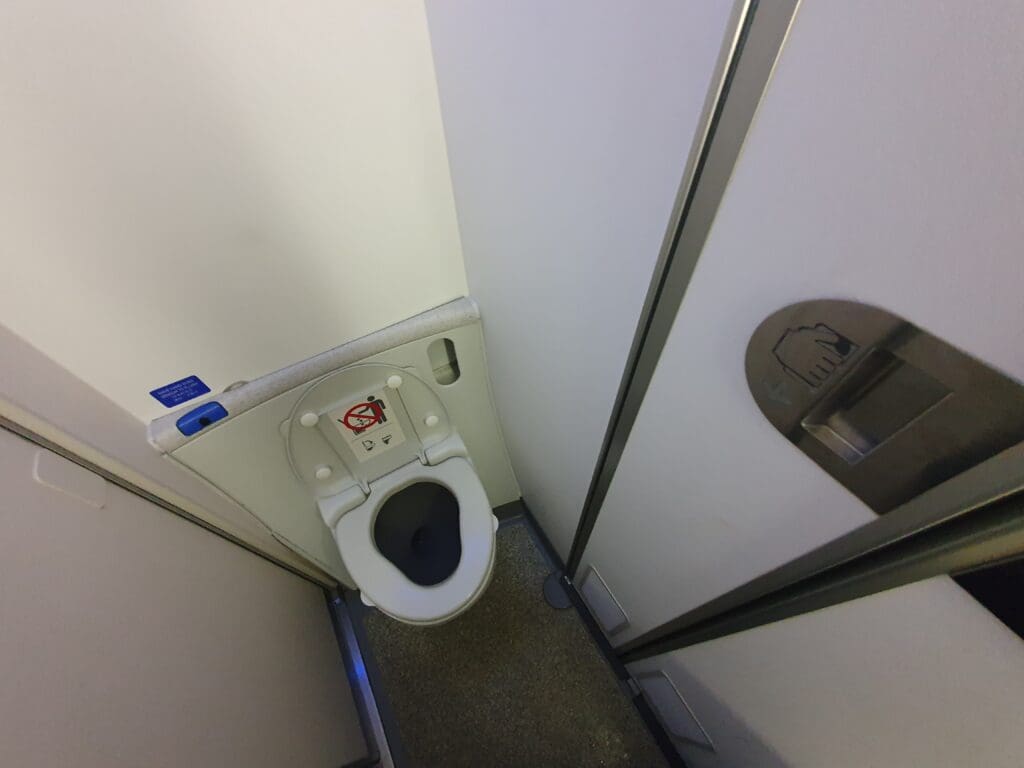
With ScootHub informing me that there were 45 minutes to go until the flight’s arrival into Athens, at this time I decided to be a pain for my two seatmates and made a trip to one of the two lavatories that sit in between the forward and rear Economy cabins. Upon opening the door to this, I found this to be clean and in good condition, stocked with all the basics and thus leaving me with nothing to complain about. By the time I returned to my seat, the aircraft was just entering Greek airspace to the north of Thessaloniki and after passing the city, the aircraft made its way out over the Aegean Sea and trundled down Greece’s eastern coastline. At 1440 Greek time, the Captain’s voice filled the cabin once more as they informed passengers that we could expect to land in Athens in thirty minutes before giving an overview of the weather in the Greek capital and local mask regulations, ending this with a word of thanks for flying with Scoot. This was followed by an announcement from the Purser with the usual pre-arrival messages plus a message for those connecting onto Aegean Airlines operated services.
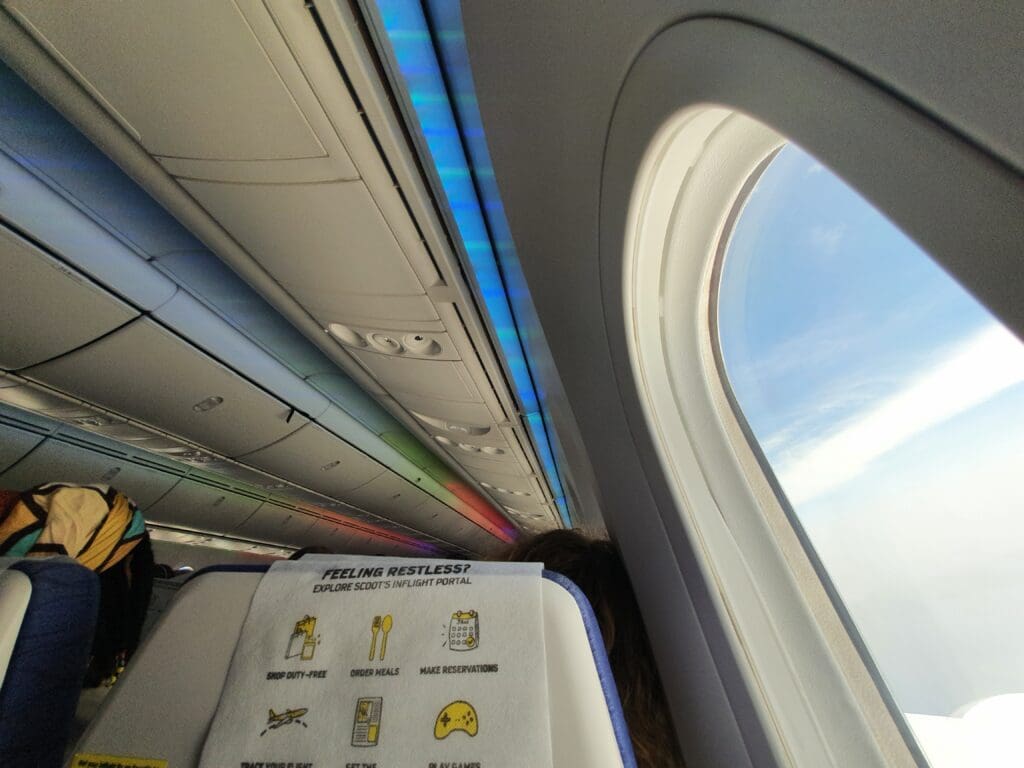
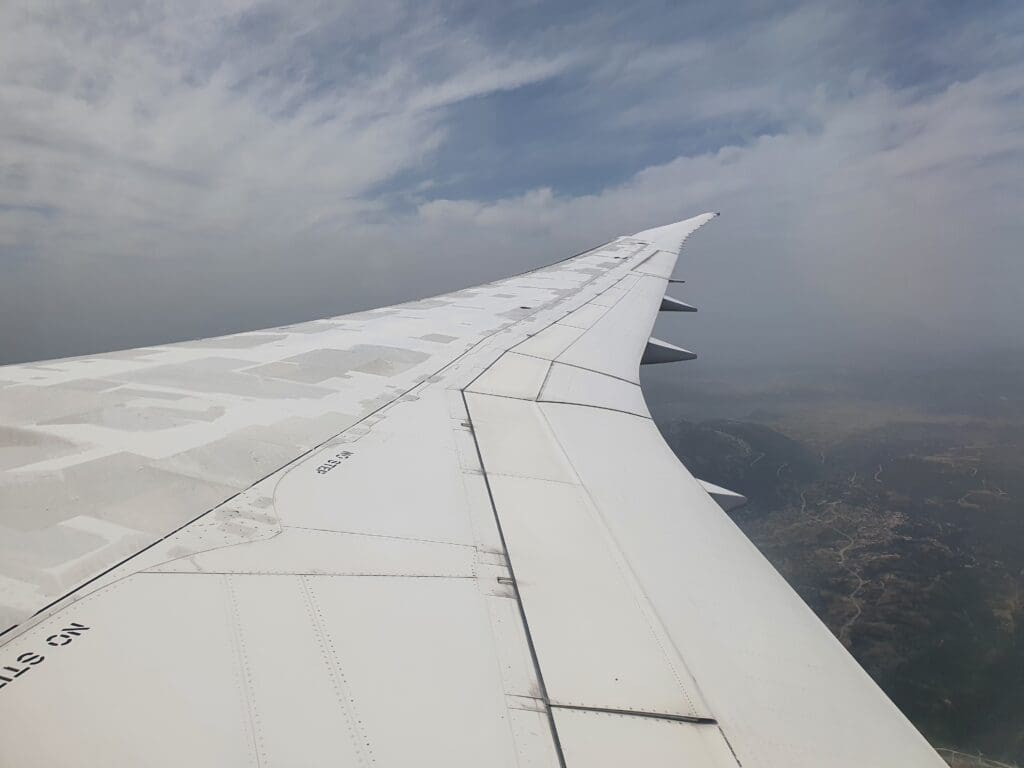
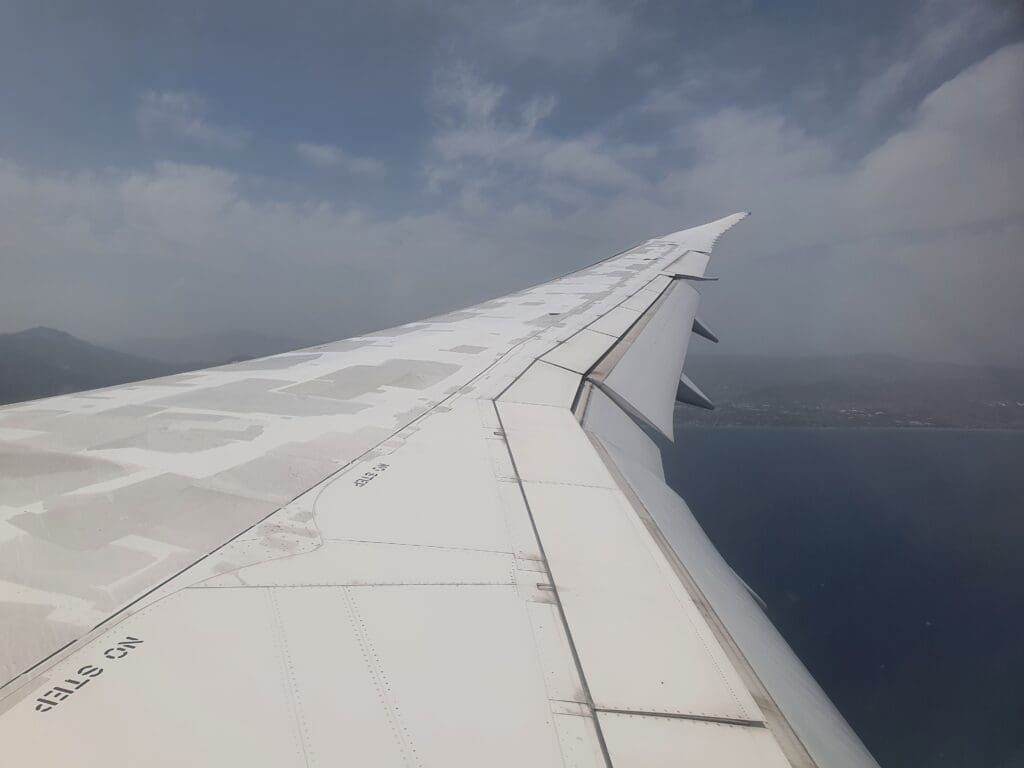
At 1447, the Dreamliner commenced its descent into Athens and soon sank into the clouds, passing through these with a few lumps and bumps before the blue waters of the Aegean came into view alongside the islands of Skiathos and Skopelos, both of which were faintly visible through the summer afternoon haze. Continuing down the coastline, as the aircraft sank downwards, this became increasingly visible with much of the island of Euboea seen as the aircraft made its way towards Athens. Meanwhile, inside the cabin, at this stage of the flight, the crew passed through completing their final checks before this was filled with rainbow mood lighting.
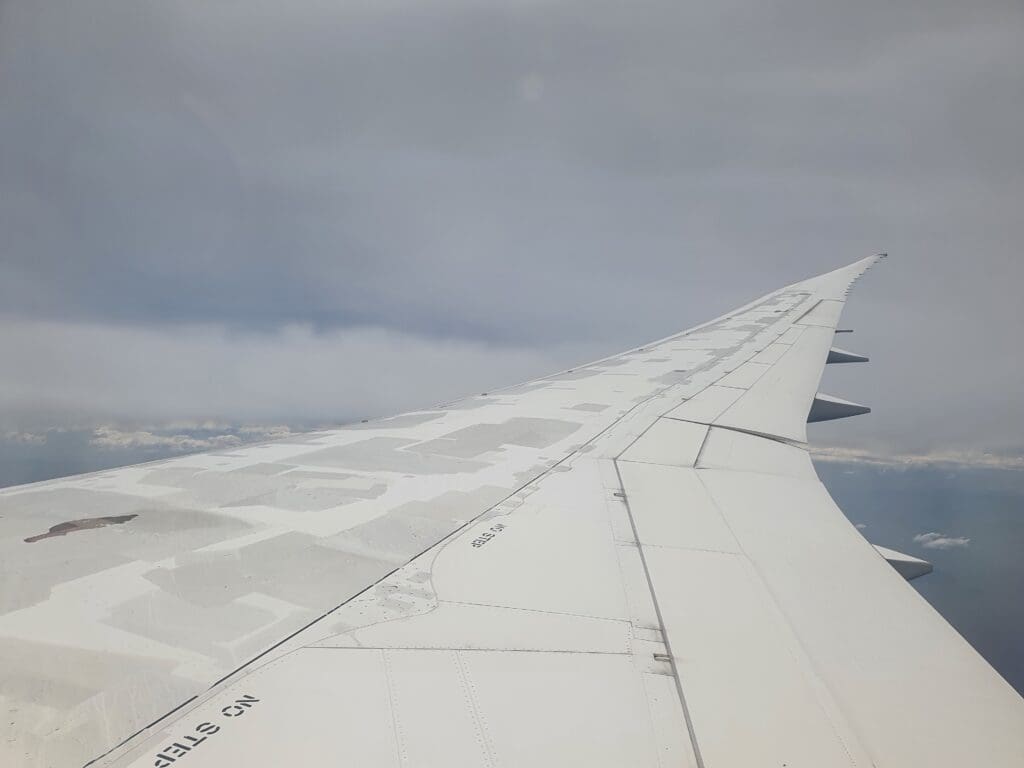
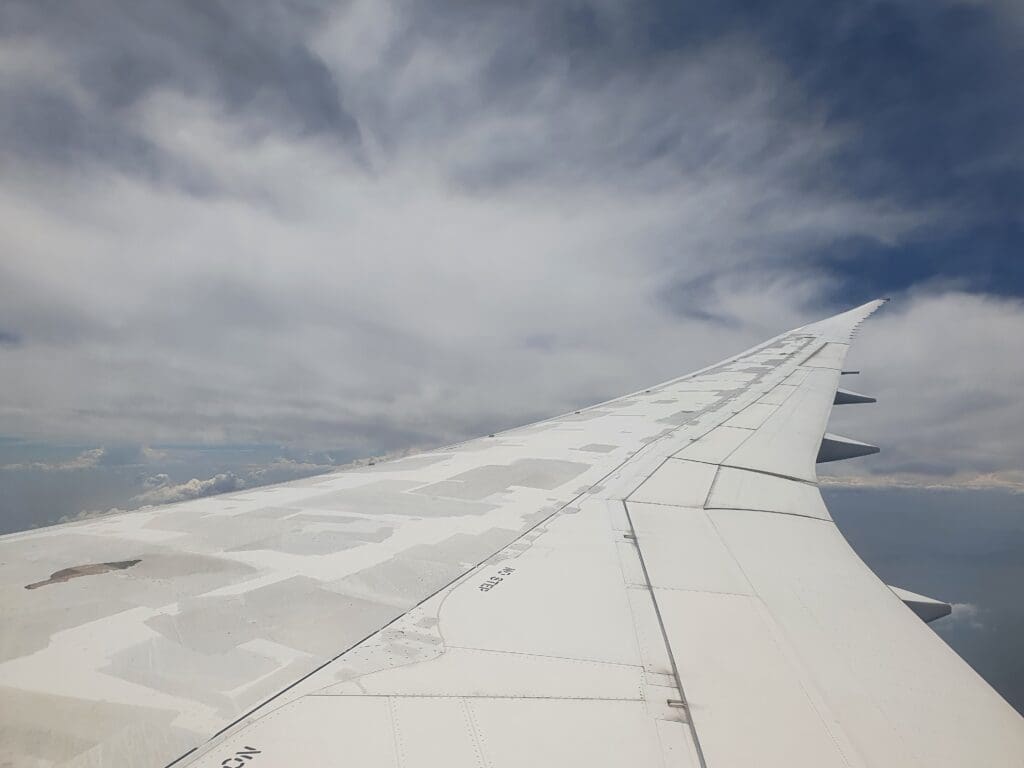
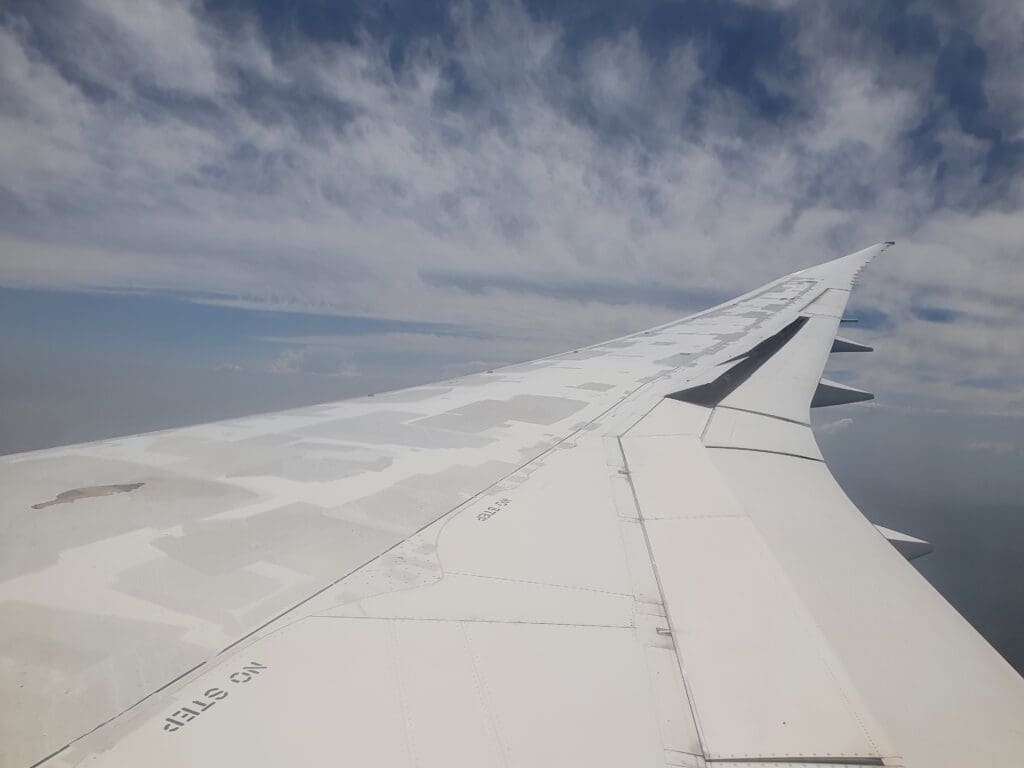
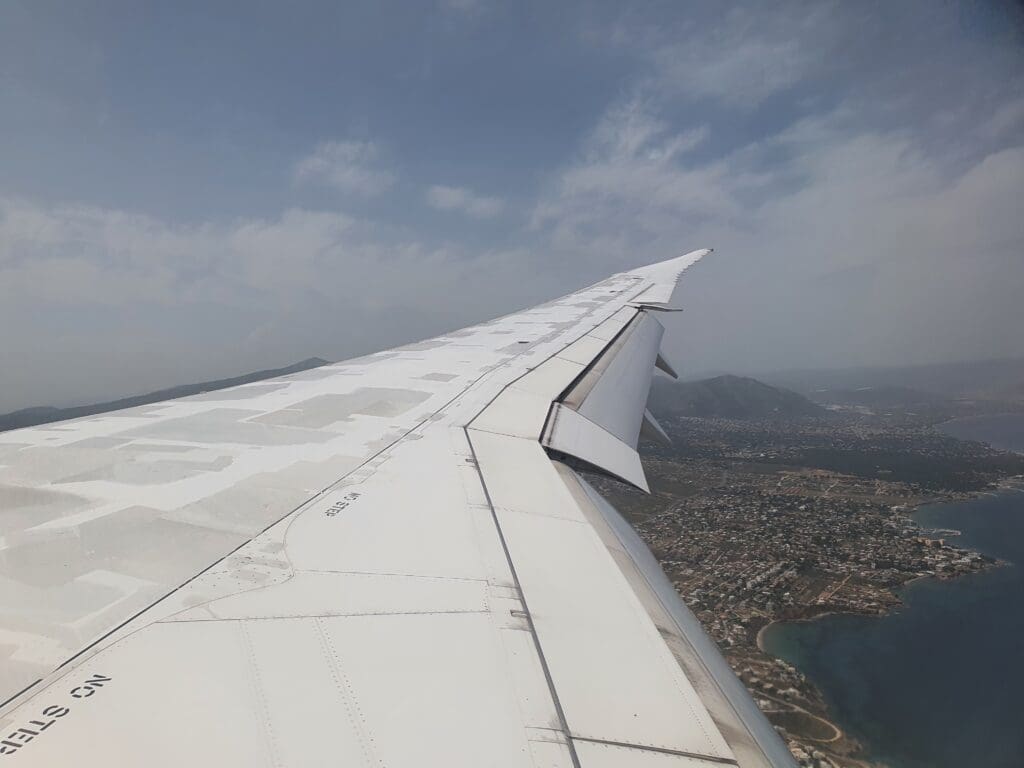
After turning right onto a heading that would take the aircraft towards Athens, the aircraft crossed over Euboea at one of its narrowest points before making its way across the Petalloi Gulf and crossing over the coastline of the mainland near the town of Rafina at which point the landing gear and flaps were extended in preparation for our arrival. Meanwhile below, as the aircraft sped towards the airport, a mixture of residential areas and slightly sandy-coloured fields filled the landscape below as the Dreamliner approached Athens Airport from the east and at 1511 the aircraft performed a gentle touchdown on Athens Airport’s Runway 21R before gently decelerating and vacating this to the left. As the aircraft left the runway, the Purser performed a welcome announcement and thanked passengers for flying with Scoot, meanwhile outside a former Olympic Airways Boeing 737-200 now used for training could be seen.
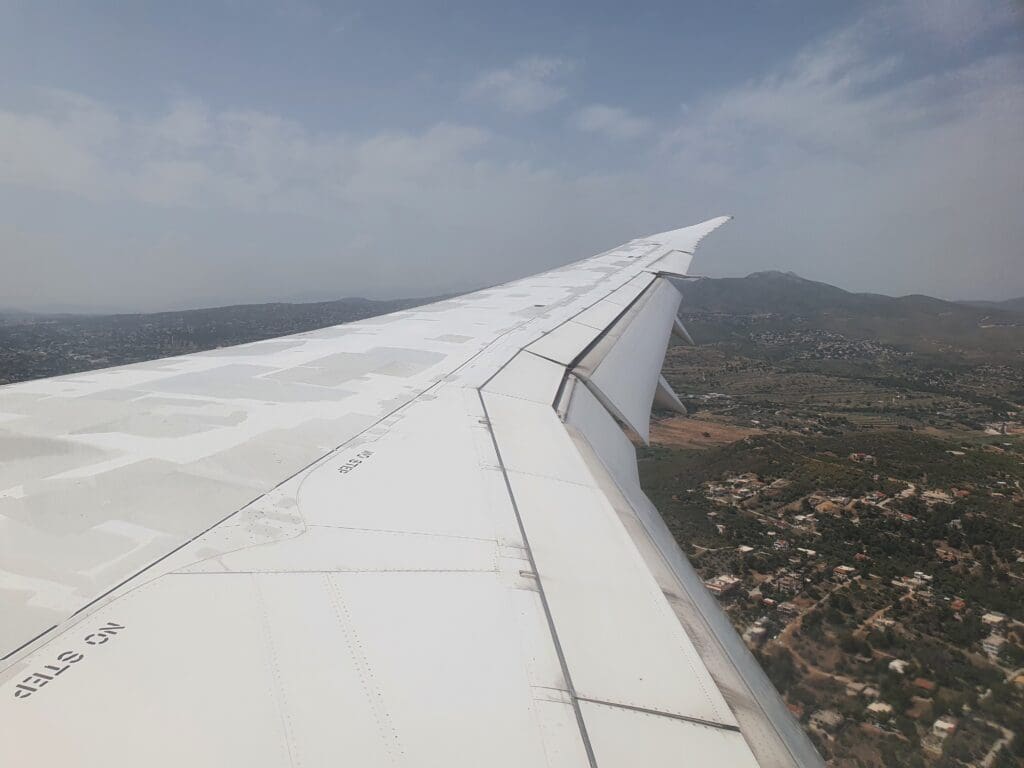
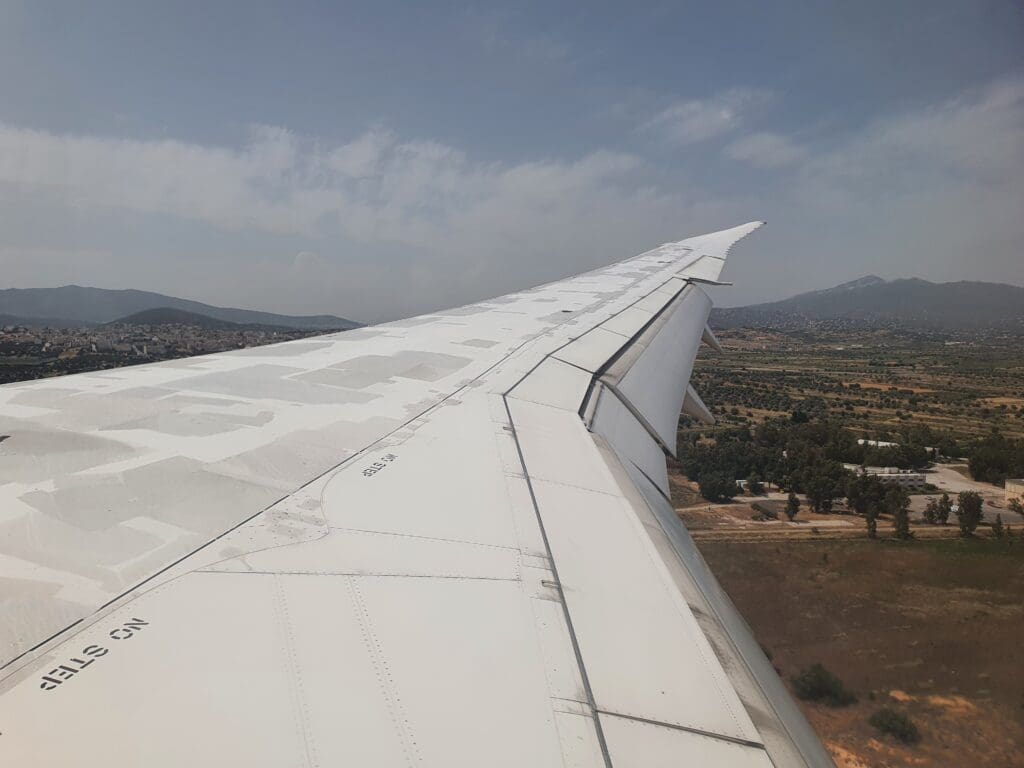
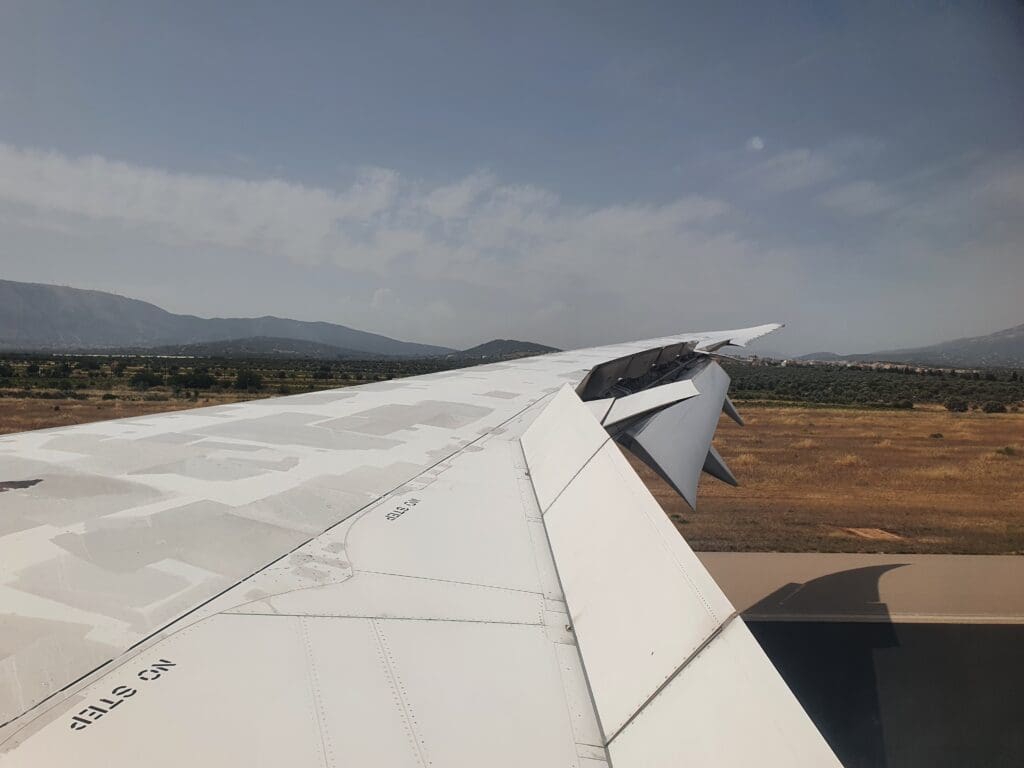
A short time after leaving the runway, the aircraft came to a halt at which point the Captain’s voice filled the cabin once more as they advised us that the stand that had been allocated to the flight was occupied and promised to come back to us once they had more information. Following a further five minutes, the Captain made another announcement advising that they expected this to be free in ten minutes at which point a collective sigh could almost be heard throughout the cabin. Fifteen minutes after touching down in Athens, the Dreamliner continued on its journey to the gate, passing over the main road that leads to the airport before slowly pulling into Stand A31 a few minutes later. Once the aircraft came to a halt, many passengers jumped up, however, there was not going to be any movement for a while, and a few minutes later the Purser announced that we were still waiting for ground crew to arrive and connect the jetbridge to the aircraft.
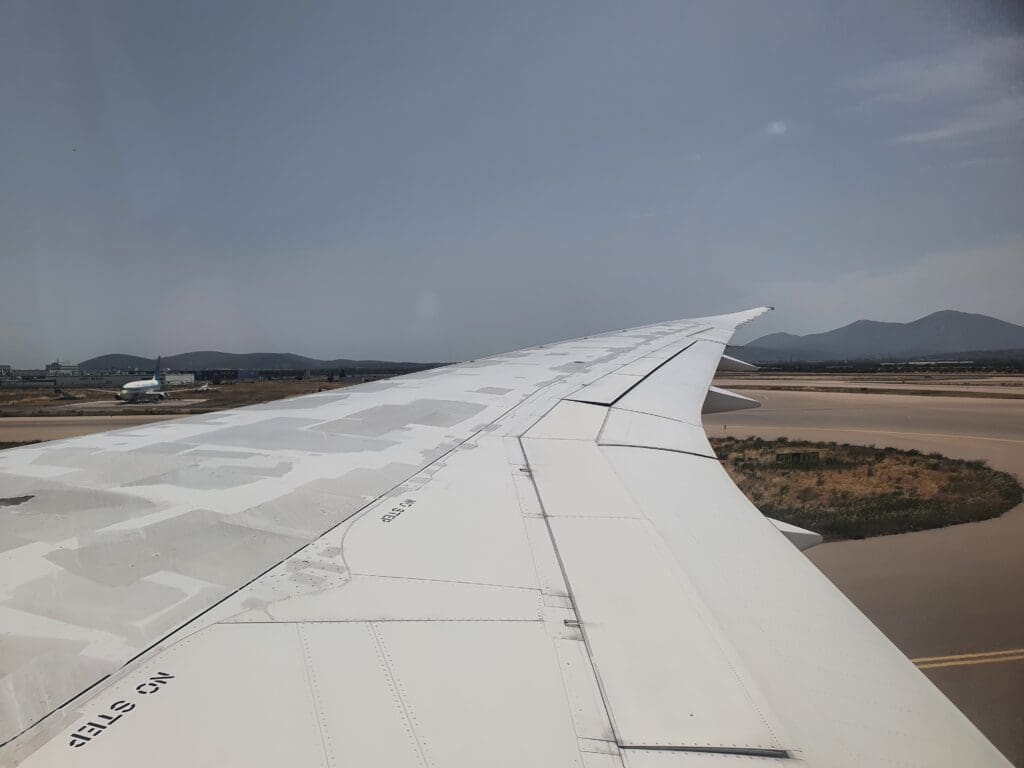
Fortunately, the jetbridge was connected just before a riot kicked off and eventually, I stood up and made my way through the aircraft, thanking the multiple crew members that I passed before heading out of the aircraft at which point the pleasant warm Greek air hit me, reminding me that I was on holiday! Upon reaching the terminal, a member of ground staff could be seen directing Athens-bound passengers to the left and Singapore-bound passengers to the right where presumably they would be let into the airside portion of the terminal. Heading left, I made my way down a set of escalators before reaching a gigantic crowd of passengers from various flights waiting at immigration. With just three counters open for all inbound passengers arriving from non-Schengen destinations (and Germany!), it took around fifty minutes from the moment I joined the queue until I reached a counter, during which I overheard several mumbles from my fellow Berlin originating passengers about how this problem would have been avoided had they flown with Aegean Airlines! Indeed, that was rather true and perhaps something to consider if you are hoping to connect in Athens to a domestic flight and are seeking a hassle-free experience. Fortunately, once at a counter, my experience with Greece’s immigration officials was brief and painless and I re-entered the EU without any questions or issues. From there, I made the long walk under the apron to the main terminal and upon arriving there, I walked straight through the baggage collection hall and out towards the metro station, ending my experience with Scoot and commencing my short stay in Athens.
Overview
During my experience, I found the best thing about Scoot to be their crew, with all members that I interacted with seeming to be pleasant and friendly. However, my experience was tainted somewhat by the delay to our arrival, the battered state of the aircraft, the rather mediocre catering and the massive crowd at immigration in Athens – although of course Scoot cannot be blamed for the latter! Whilst Scoot will likely not feature in my list of top ten carriers any time soon, I would not hesitate to fly them on short-haul routes in the future, however, if given a choice, I would not fly them long haul.