Sampling Greece’s National Carrier: Athens to Rhodes on an Aegean A320
Whilst few may describe the Athens Metro as being the most glamorous form of transport, this does provide Athenians and visitors alike with a convenient means of getting between the airport and central Athens. For much of the day, Hyundai Rotem trains plough the route between Dimotiko Theatro station in the neighbouring port city of Piraeus and Athens Airport. Running at intervals of every thirty minutes, this cuts across the heart of the Greek capital, with the journey between the city centre and the airport taking around forty minutes. Having made the journey into Athens by metro the previous afternoon, this would have been my preferred method of heading back to the airport. However, with my flight set to depart at 0805 and hoping to get to the airport with a couple of hours to spare, that day, I would have to leave the city before the first metro of the day and so this proved not to be an option. Having spent the night in the neighbourhood of Metaxourgio, I had initially intended to catch one of the all-night bus services to the airport. However, upon realising that my accommodation was a short walk away from Athens’ main railway station and that this was served by a TrainOSE-operated commuter service that runs between Piraeus and Athens Airport, with the first departure of the day scheduled to leave Athens at 0505, this seemed to be the best option.
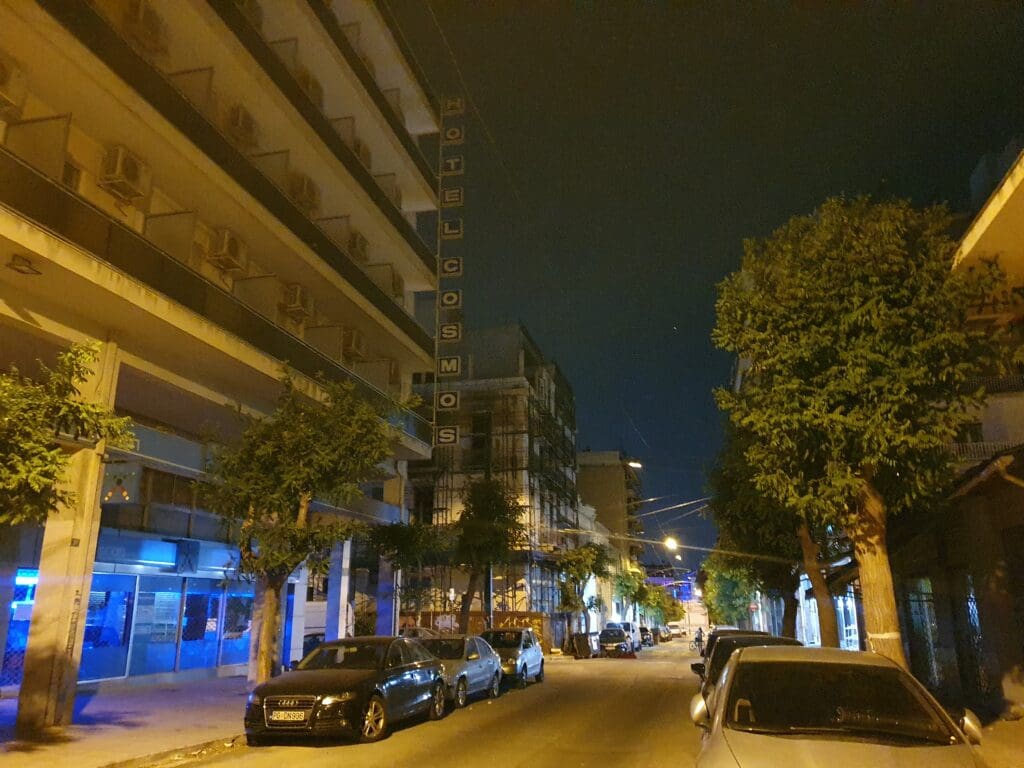
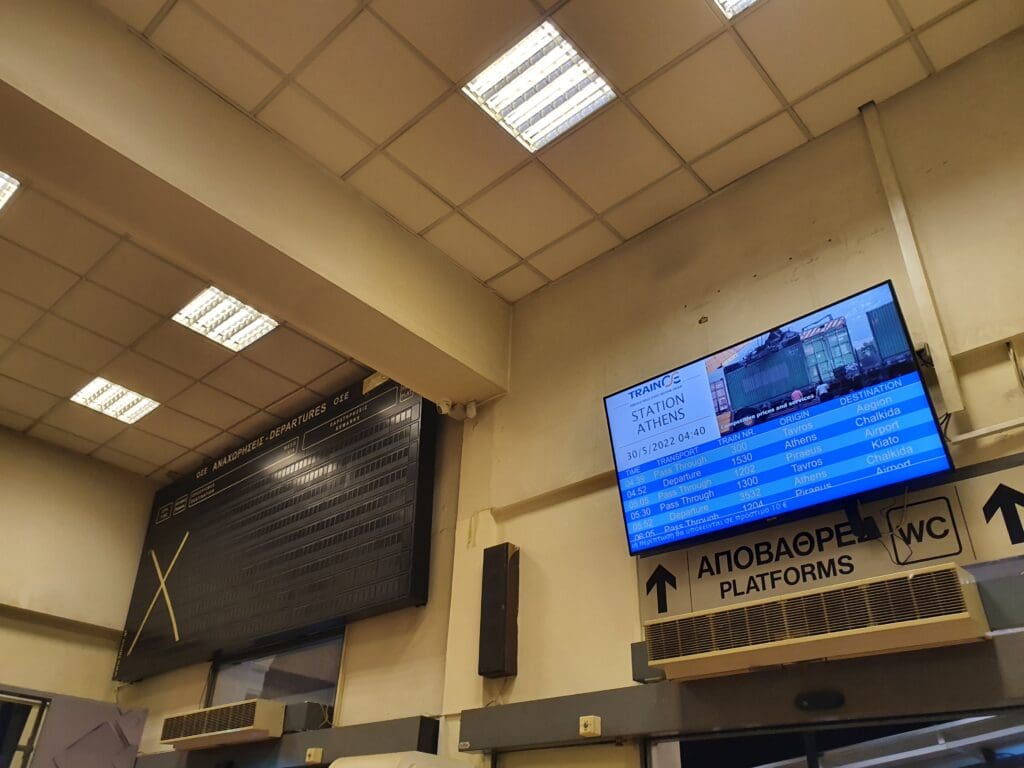
Not too keen on frantically searching for alternative options were I to miss the train, on the morning of my flight I woke up well before sunrise at the early hour of 0400. Following a quick shower, I packed the last of my things before journeying out onto Athens’ dark and deserted backstreets thirty minutes after waking up. Thanks to Google Maps, I managed to navigate to Athens Station without getting lost and arrived there around fifteen minutes after leaving my accommodation. Whilst the station serves as Athens’ main railway hub, this is modest in size and subdued in its design compared to many of Europe’s capital city stations, with this consisting of little other than a small ticket hall and several platforms. Once inside the station building, at this time this was almost entirely devoid of staff with just a single security guard seen on duty, protecting this from troublemakers and fare dodgers. Seeing as the station’s ticket counter was yet to open and with the single ticket machine serving to be out-of-service that morning, I was left with no other option other than to purchase my ticket online. Whilst this had the potential to throw a spanner in the works, thankfully this was not a difficult process and within a minute I successfully parted with €9 in exchange for a one-way ticket to the airport. Once I had shown my ticket to the security guard, I voyaged back outside to Platform 7 and waited for the early morning commuter train to arrive from Piraeus. As I lingered about, several suitcase-wielding passengers filtered through to the platform, reassuring me that I was in the right place for the airport-bound service.
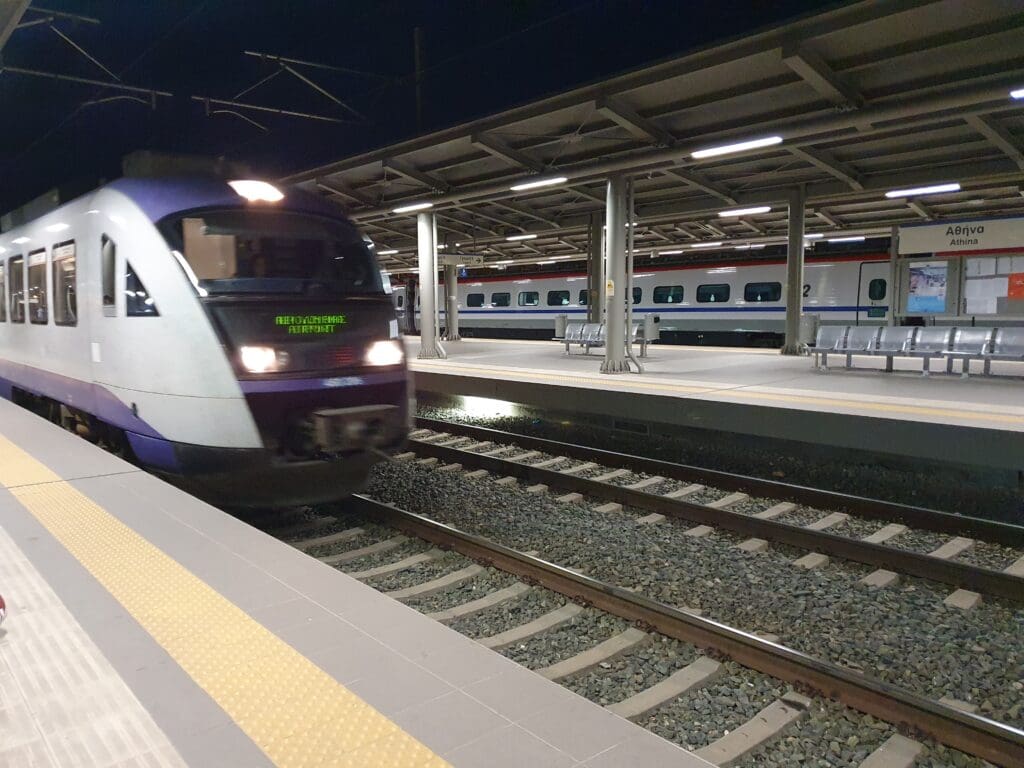
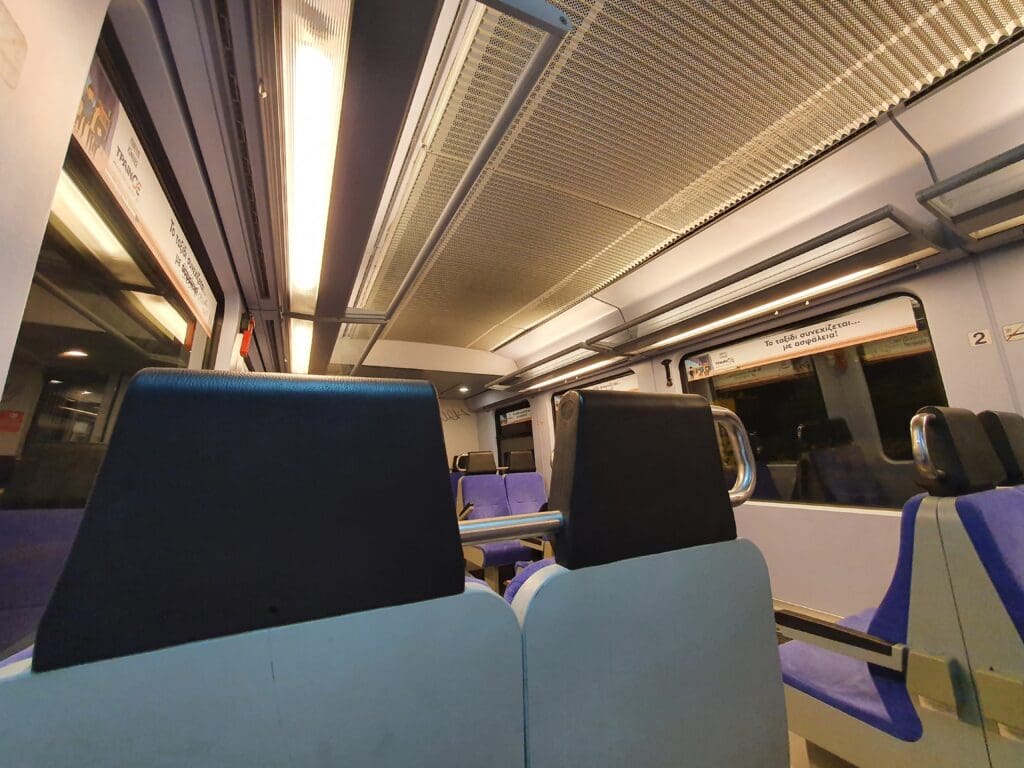
Five minutes after the train’s scheduled departure time, at 0510, the airport-bound OSE Class 460 train rattled into the platform before coming to a squeaky halt. Boarding this without delay, I took a seat in one of the mostly empty carriages before we soon pulled away. Onboard, ignoring the multiple graffiti scribbles I found the train’s interior to be modern, clean and presentable, with this serving to be comfortable enough for the relatively short journey through Athens. After leaving the station, the train trundled eastwards through Athens’ suburbs where it made frequent stops as the skies began to slowly brighten in preparation for a new day. As I had expected, at each stop, passengers piled on and the train soon became busy with a mixture of weary-eyed passengers and airport workers, with almost all seats in my carriage ending up filled by the time the train left the capital. Once away from the city, eventually, the sprawl of Athens Airport appeared and I caught sight of an overpowered European Air Transport Boeing 757 rocketing upwards into the clear skies at the start of its journey up to the German city of Leipzig. A short time later, following a painless 40-minute journey the train pulled into the airport station just after 0550.
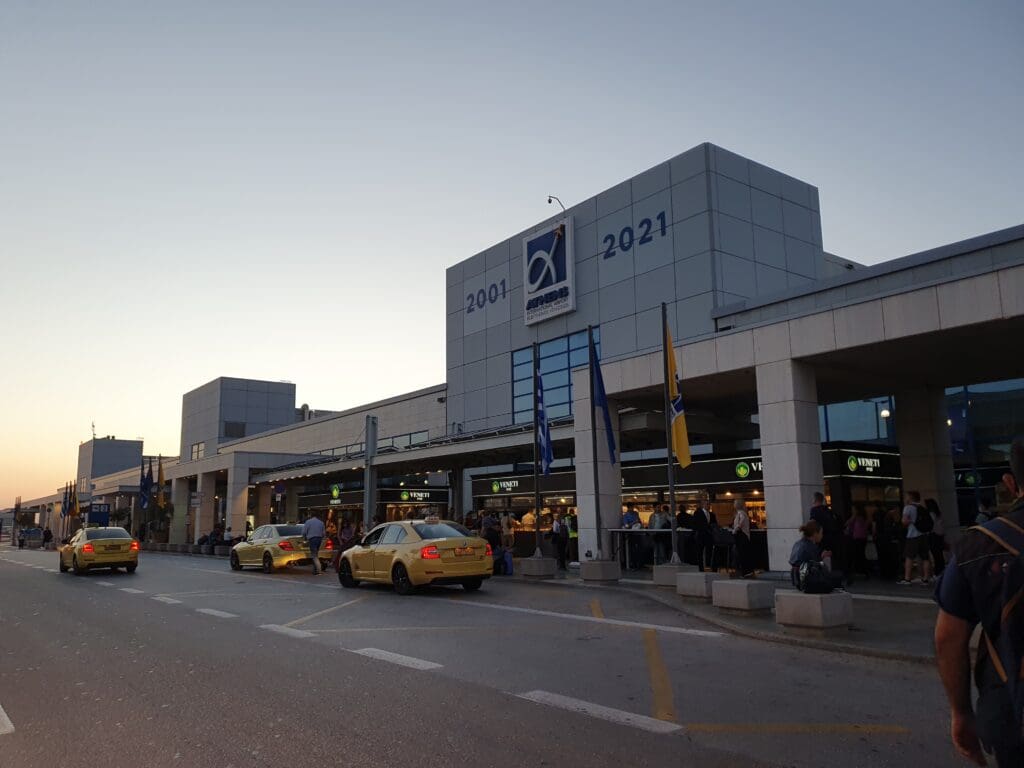
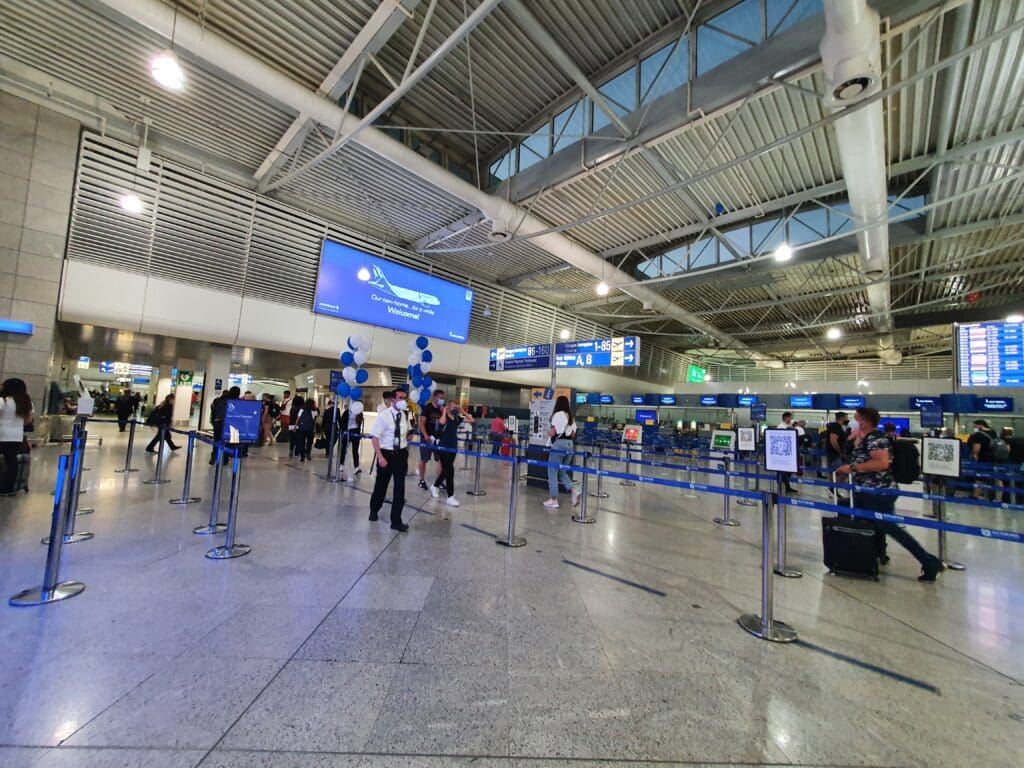
After stepping down from the train, I followed the crowds up the escalators and into the station concourse. Unlike some airport train stations, that of Athens Airport is conveniently located just across from the terminal building, with a covered walkway running almost all the way from the station to the terminal’s entrance. After heading along this, I cautiously made my way across the busy roadway where, despite the early hour, plenty of taxi drivers could be seen and heard angrily tooting their horns. Once safely across the road, I made my way into the terminal’s large and modern check-in hall. Whilst I had checked-in online and lacked any hold luggage that I needed to deposit, that morning I inadvertently entered via the doors to what appeared to be Aegean Airlines’ dedicated check-in area, with this portion of the terminal filled with plenty of branding promoting the Greek flag carrier. With a good number of early morning Aegean Airlines operated services jetting off to destinations across Europe, unsurprisingly the terminal appeared to be rather busy with long queues at a number of the check-in desks and passengers hurriedly scurrying about here, there and everywhere.
Once I had gotten my bearings, my first stop was the departure boards which informed me that my flight to Rhodes would depart from the terminal’s ‘B’ gates, located in the main portion of the terminal. Indeed, were this not to have been my first departure from Athens Airport, I would have likely already known this as these gates serve flights to destinations both within Greece and the European Union’s Schengen area. In need of my first coffee of the day and still with plenty of time until departure, I decided to stop by at a café before heading through security. With multiple cafés to choose from, I decided to head to the one with the shortest queue and soon parted with a pricey €4 for a small and quite frankly mediocre cappuccino. Upon polishing this off, I made a beeline for security and soon tapped my mobile boarding pass on one of the many automated gates before heading over to the checkpoints. Given the busyness inside the terminal that morning, I had been a little concerned that these would feature long snaking queues. However, much to my delight, and reminding me that I was no longer in the UK, most checkpoints were open that morning and I was able to walk straight up to one of these without any waiting whatsoever!
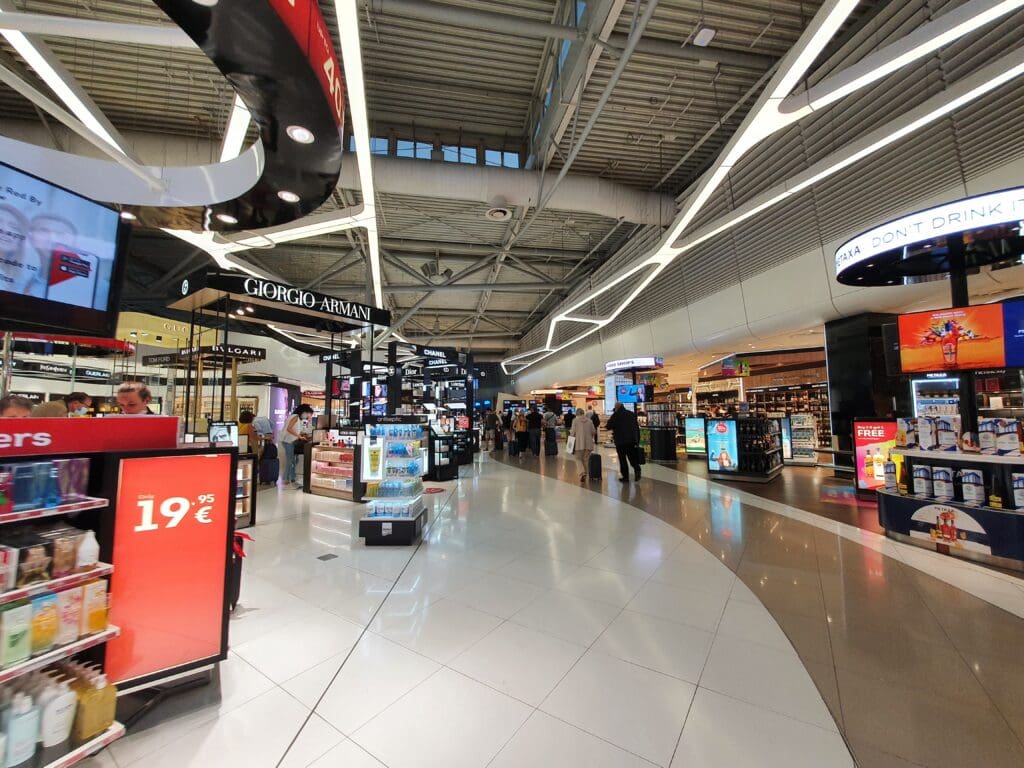
Following a quick and easy security check, I arrived in the terminal’s busy airside portion. As with many airports across Europe, once through security, all passengers must pass through a large duty free store, however as is usually the case, not wanting to purchase anything I sailed through this and soon arrived at the terminal’s main shopping area. This part of the terminal seemed to contain plenty of fashion stores selling a variety of upmarket and expensive goods, with these outlets being firmly closed at that time or in the process of being opened up for a new day’s trade. Continuing onwards without stopping, I soon arrived at the main airside waiting area. Examining the terminal’s design, the ‘B’ portion of the terminal appeared to be rectangular in shape and home to both jet bridges on the first floor, and bus boarding gates on the ground floor. In terms of its design, this was neither the most modern nor did it seem dated in its aesthetic. Ignoring the dire state of some of the toilets and the fact that a fair amount of rubbish could be seen in parts, overall I wasn’t left with too much to complain about. Importantly, plenty of seating, a reasonable number of charging points and fast complimentary wifi were provided. For aviation enthusiasts as well as those who happen to be fans of natural light, large windows provided a good view of one of the airport’s two runways as well as those aircraft waiting at the gates below. Meanwhile, for those not so interested in the happenings outside, plenty of shops and cafés, as well as a few outlets providing a range of more substantial dining options could be found throughout the terminal. Finally, for the duration of my stay, speakers across the terminal blurted out a megamix of upbeat English language songs perhaps in an effort to ensure passengers end up in a good mood for their flights and thus less likely to cause problems!
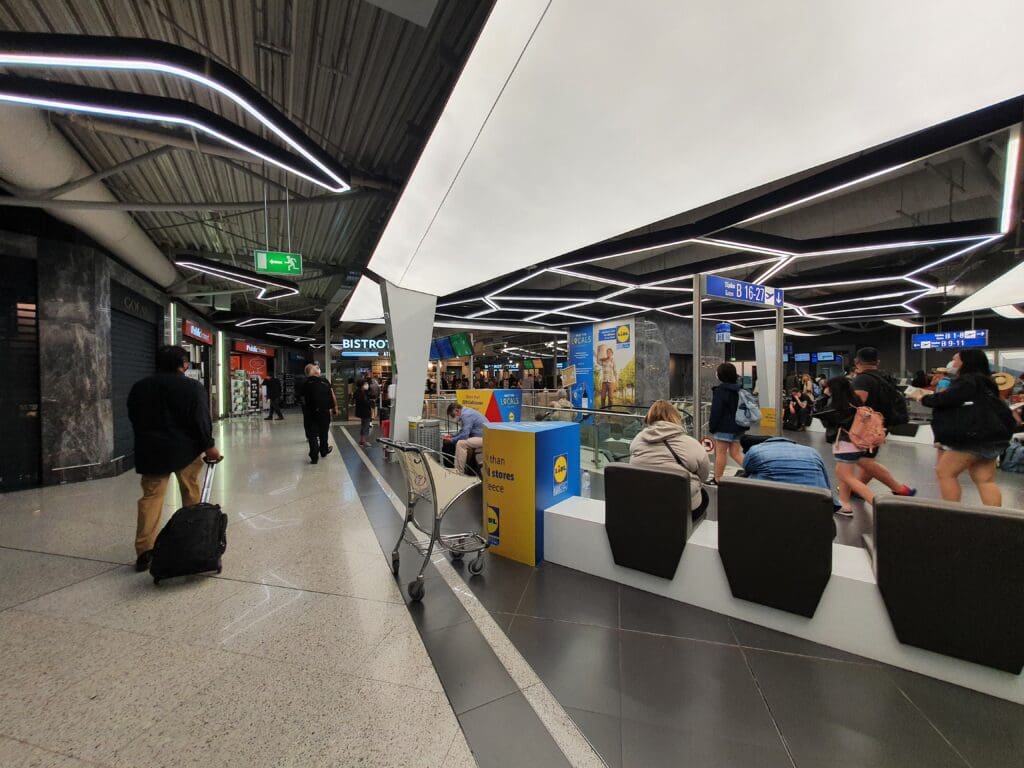
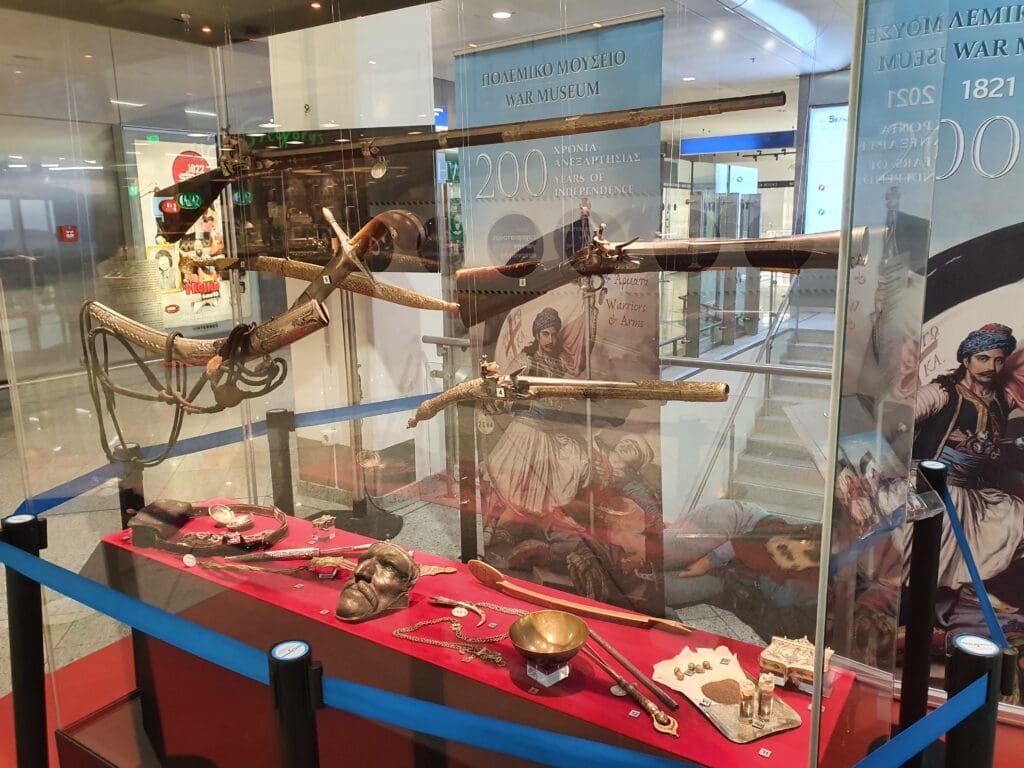
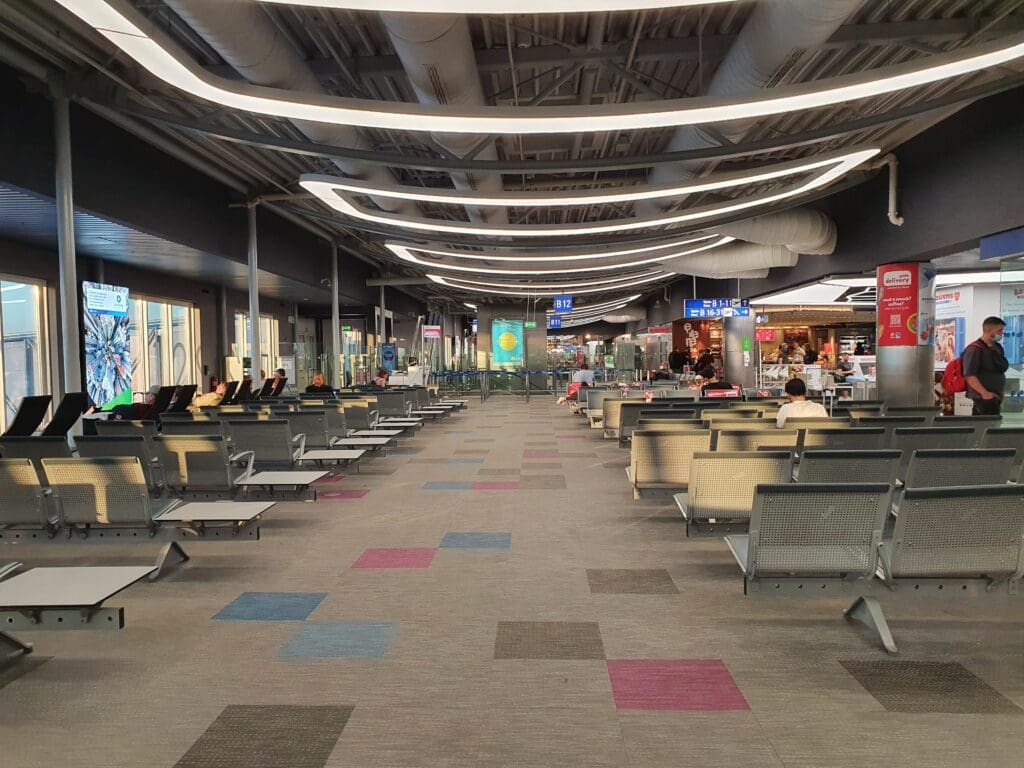
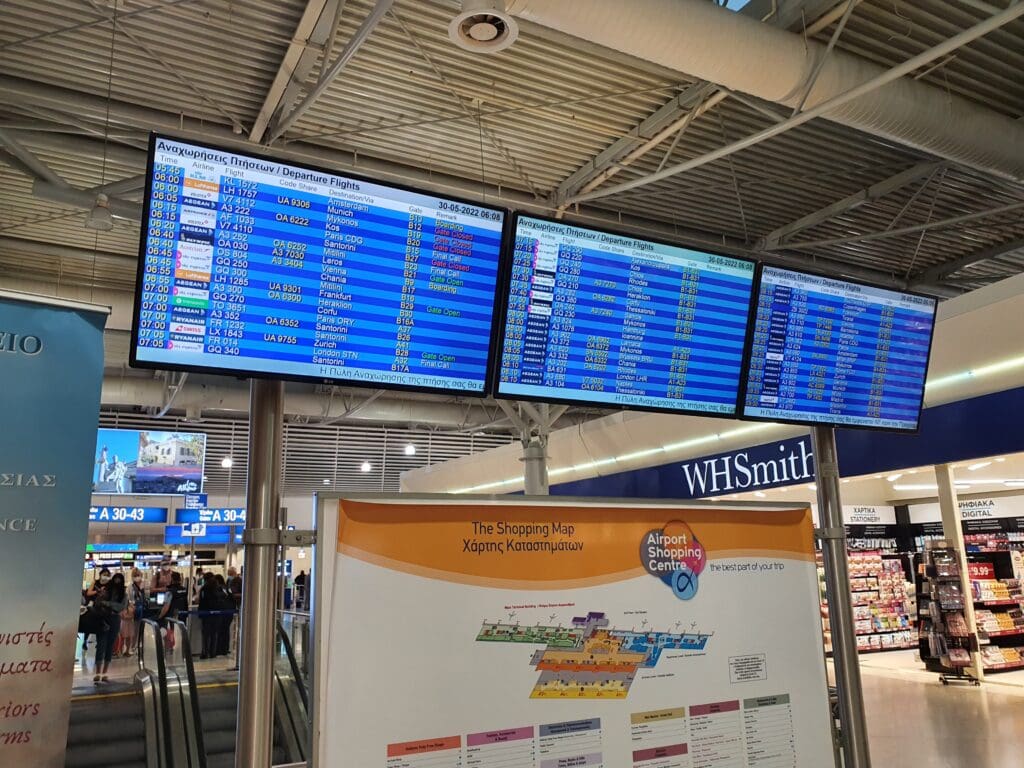
For much of my stay in the terminal, the departure boards did not feature my flight’s departure gate, with these only being updated a fairly short time before departure. However, as I waited, I received a notification from the Aegean Airlines app advising me that the first of the carrier’s Rhodes bound services of the date would depart from bus boarding Gate B25 on the ground floor of the terminal. After some time spent charging my phone, at 0715 I headed downstairs to the busy bus boarding gates. That morning, the majority of flights departing from these appeared to be either Sky Express services, or those operated by Aegean Airlines’ regional subsidiary, Olympic Air – with most of these heading off to destinations across Greece.
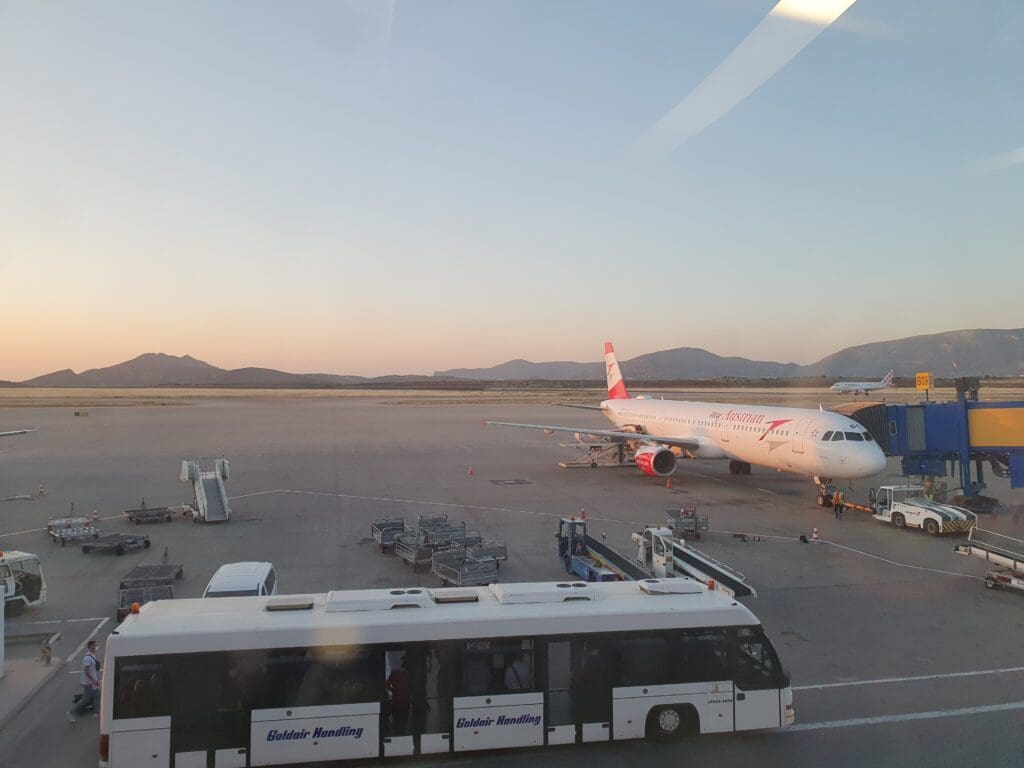
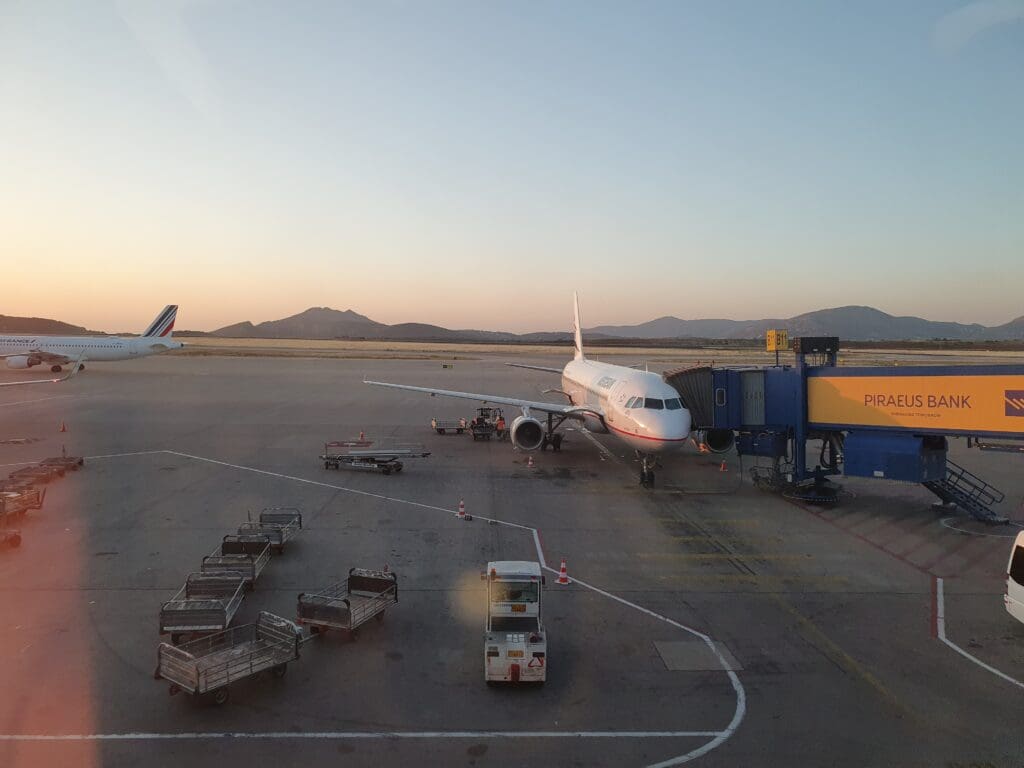
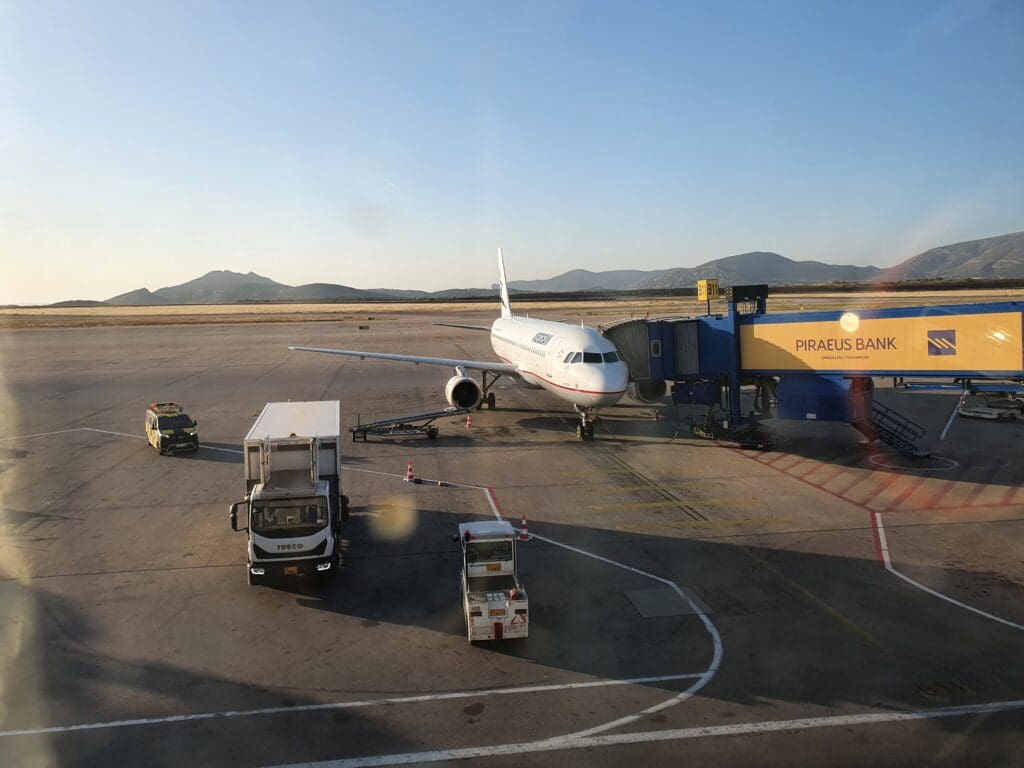
According to my boarding pass, that morning boarding for the flight to Rhodes would commence at 0725. However, in reality, the first announcement inviting passengers to proceed forward for boarding was not made until 0728. By this time, an unorganised scrum of eager Rhodes-bound passengers could be seen ready to pounce on the gate podium and head outside onto the waiting bus. Joining the rear of this, after a few minutes I had my boarding pass scanned and my passport checked before I headed onto the Hertz-branded Cobus 3000. Being one of the final passengers to board this, once comfortably full the bus doors slid closed and at 0735 this pulled away from the terminal and began its journey down the flight line. At that time, this was lined with Aegean Airlines Airbuses – around half of which were painted in the airline’s new livery, introduced in early 2020, whilst the other half adorned the carrier’s older colours. After leaving the main terminal, the bus journeyed past the satellite terminal where just a single aircraft could be seen – a British Airways Airbus A320 being readied for its early morning flight back to London Heathrow.
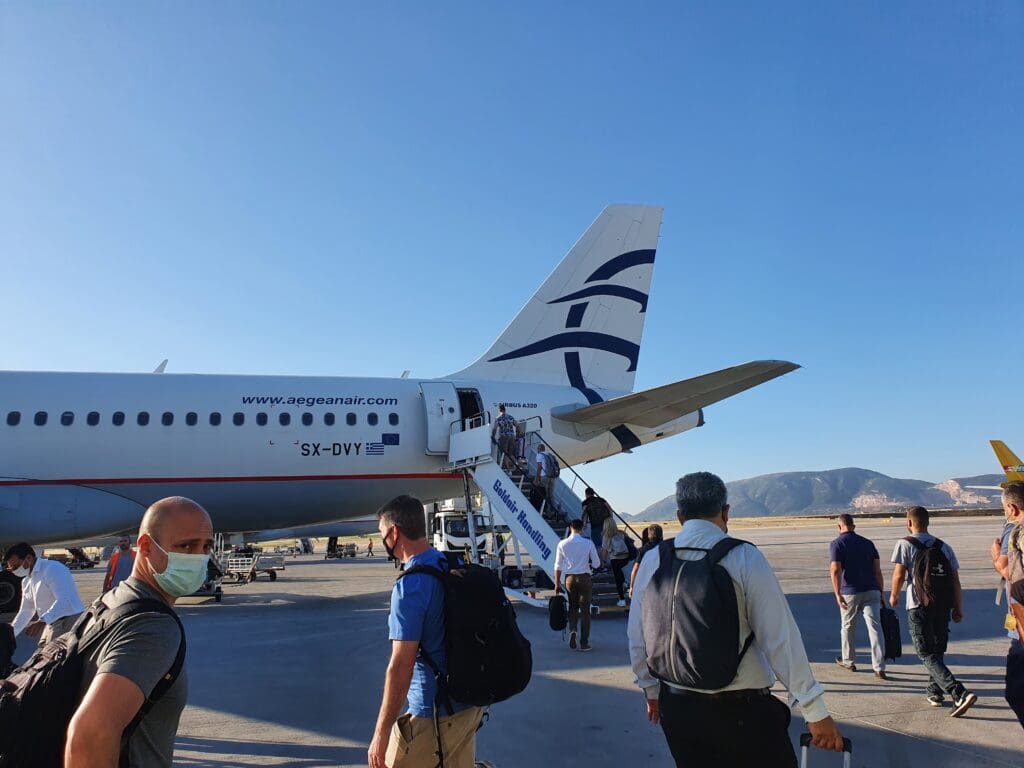
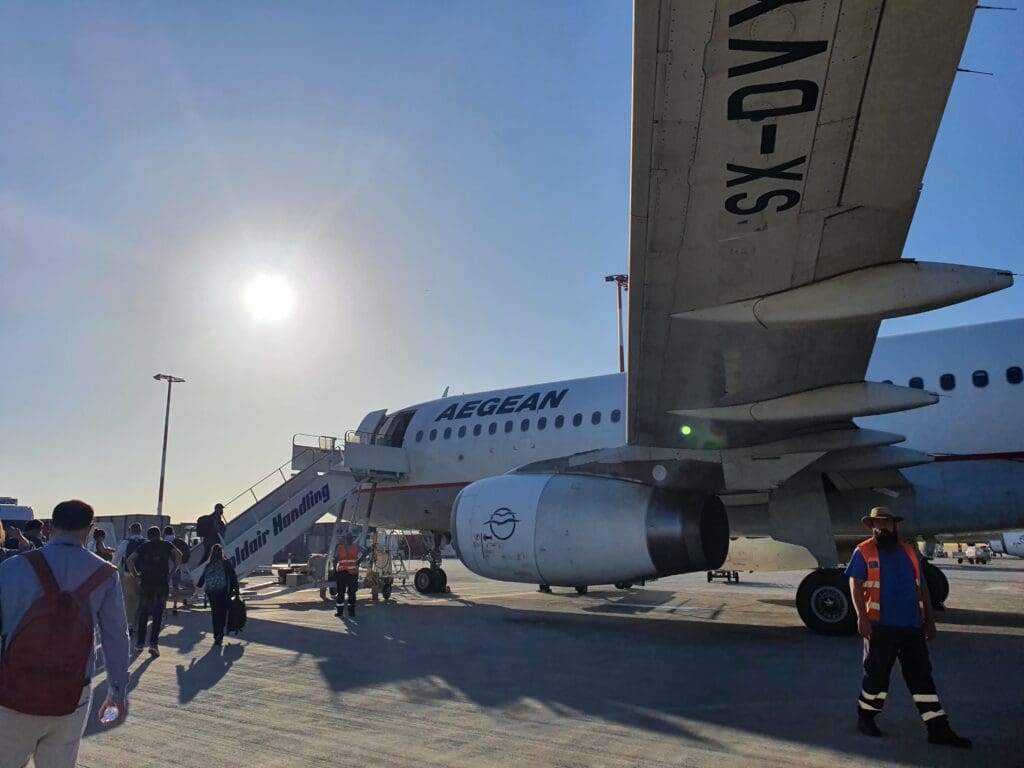
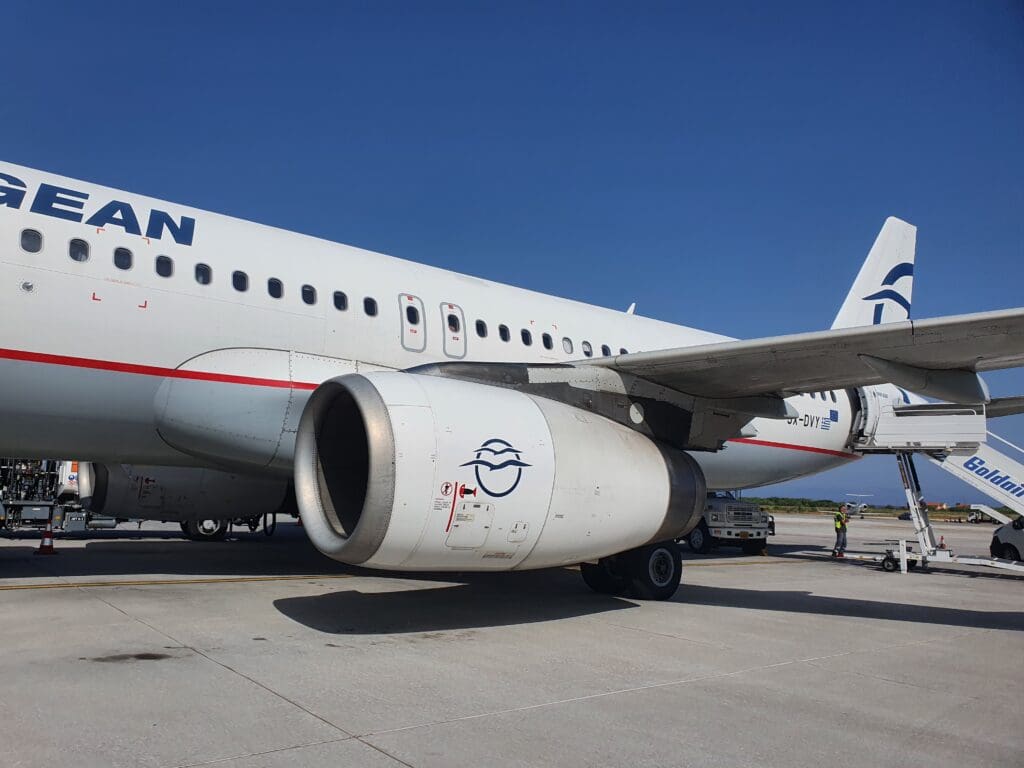
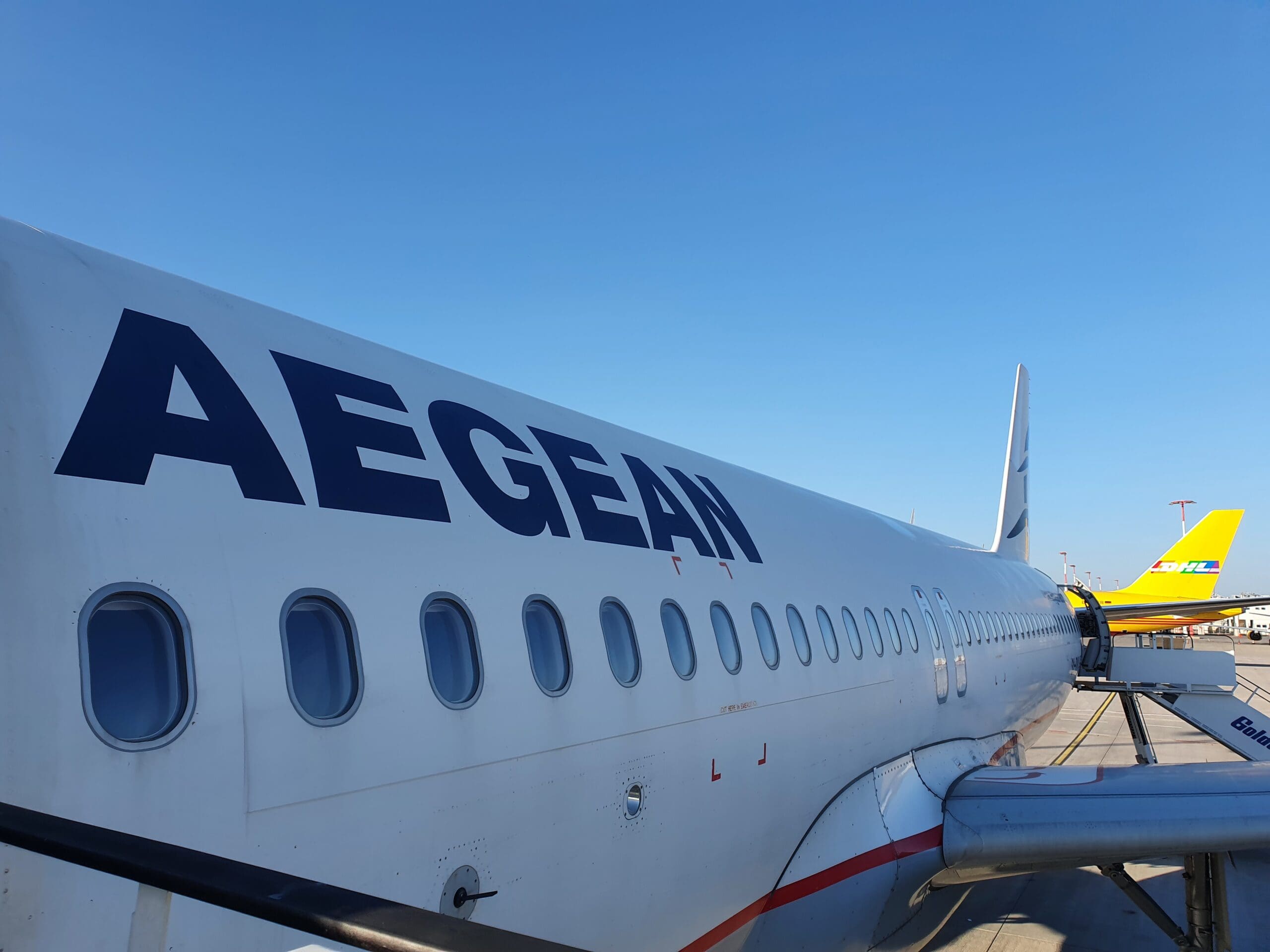
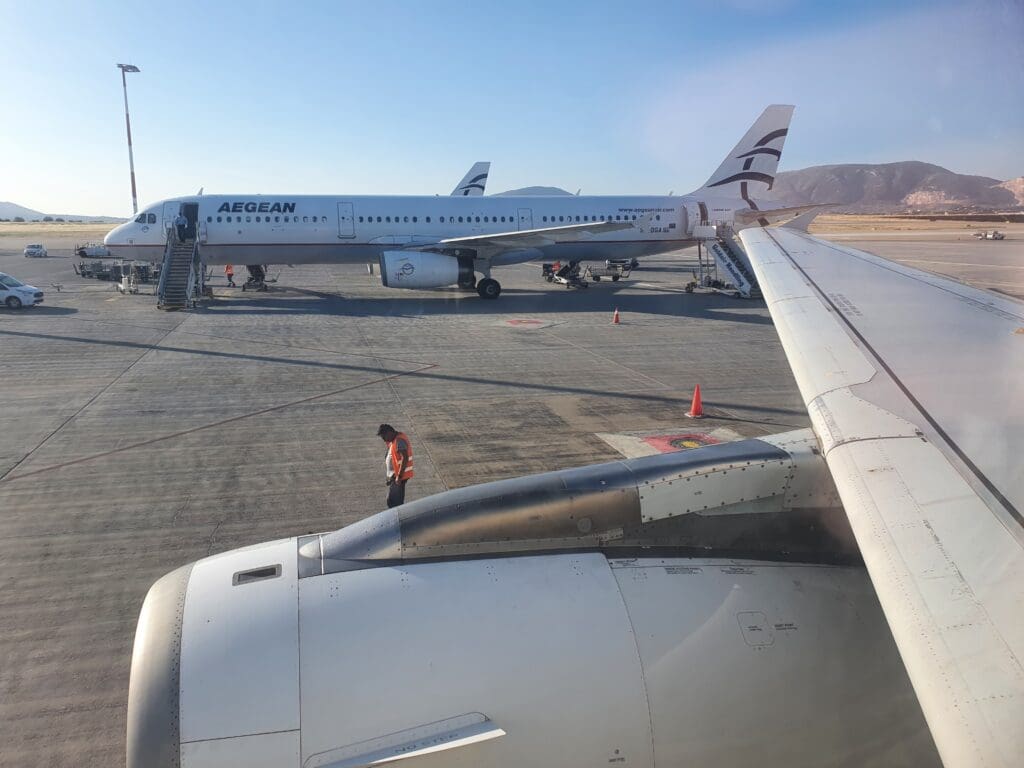
Several short minutes after leaving the terminal, the Cobus arrived at Stand 145 where an old-liveried Aegean Airlines Airbus A320-232 could be seen basking in the warm morning sunshine. Registered as SX-DVY, this particular aircraft was assembled at Airbus’ ‘home’ factory at Toulouse Blagnac Airport and first took to the skies in March 2009 with the test registration of F-WWDG. This made the Airbus a little over thirteen years old at the time of my flight in May 2022, and thus neither the oldest nor youngest Airbus A320 that I have ever flown on. In the month following its first flight, the aircraft received its current registration and was ferried to its new home in Greece where it has operated for Aegean Airlines ever since. Fortunately, the aircraft appears to have had a rather uneventful life, and I failed to find any incidents involving this particular aircraft on the AvHerald.
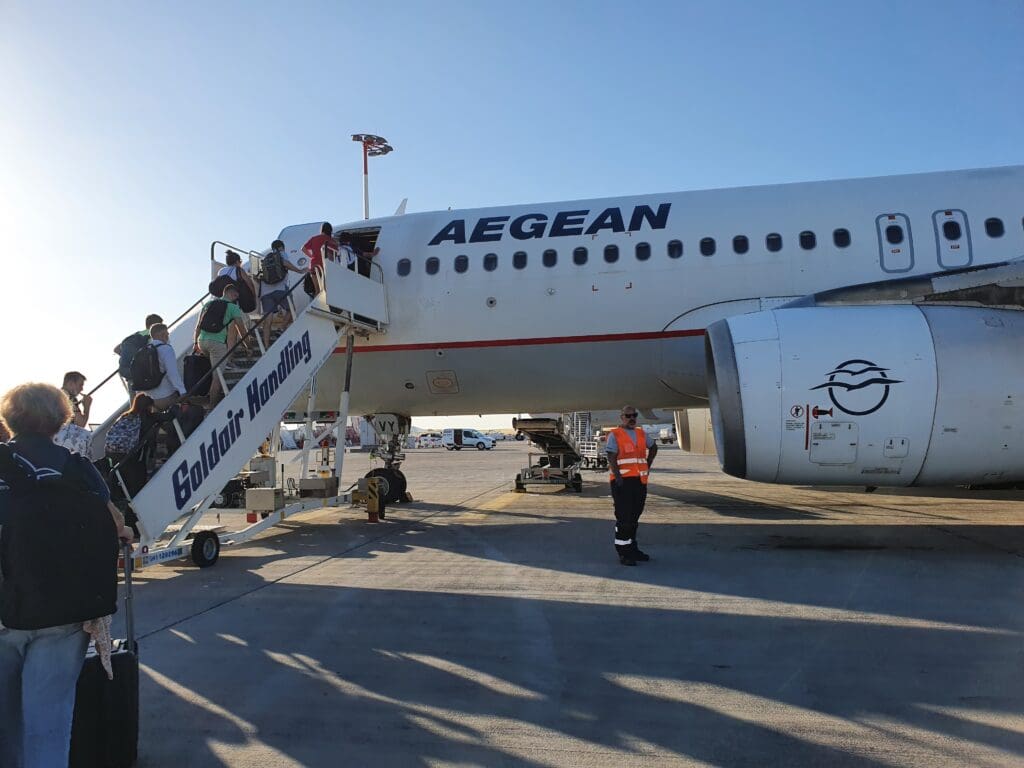
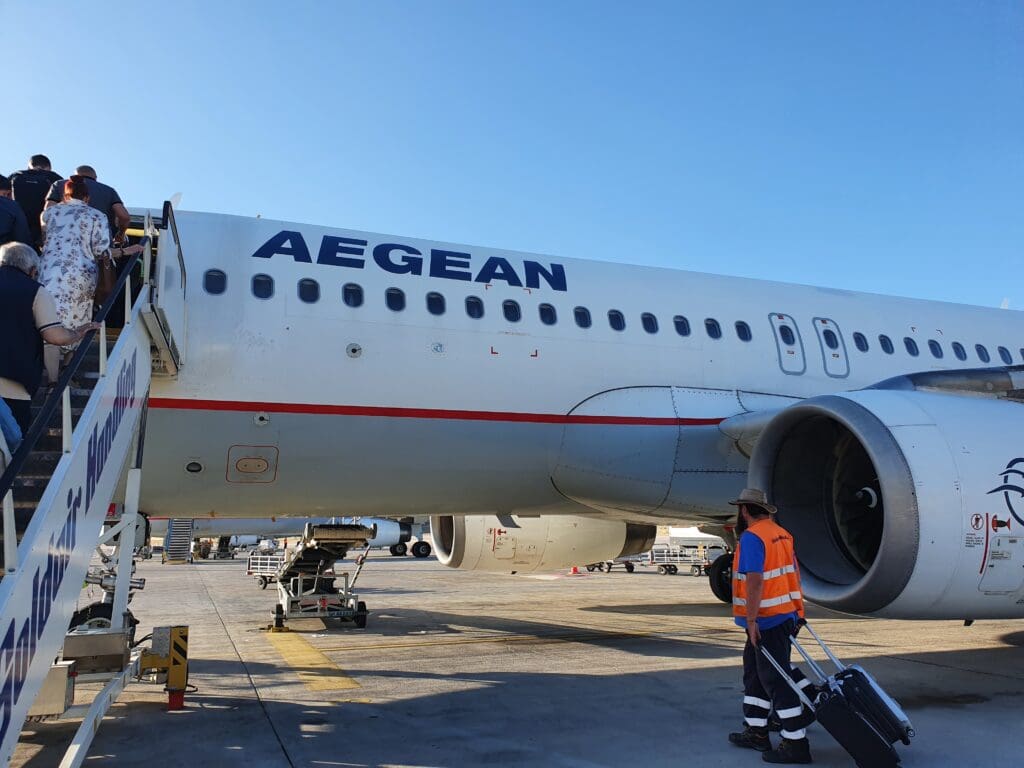
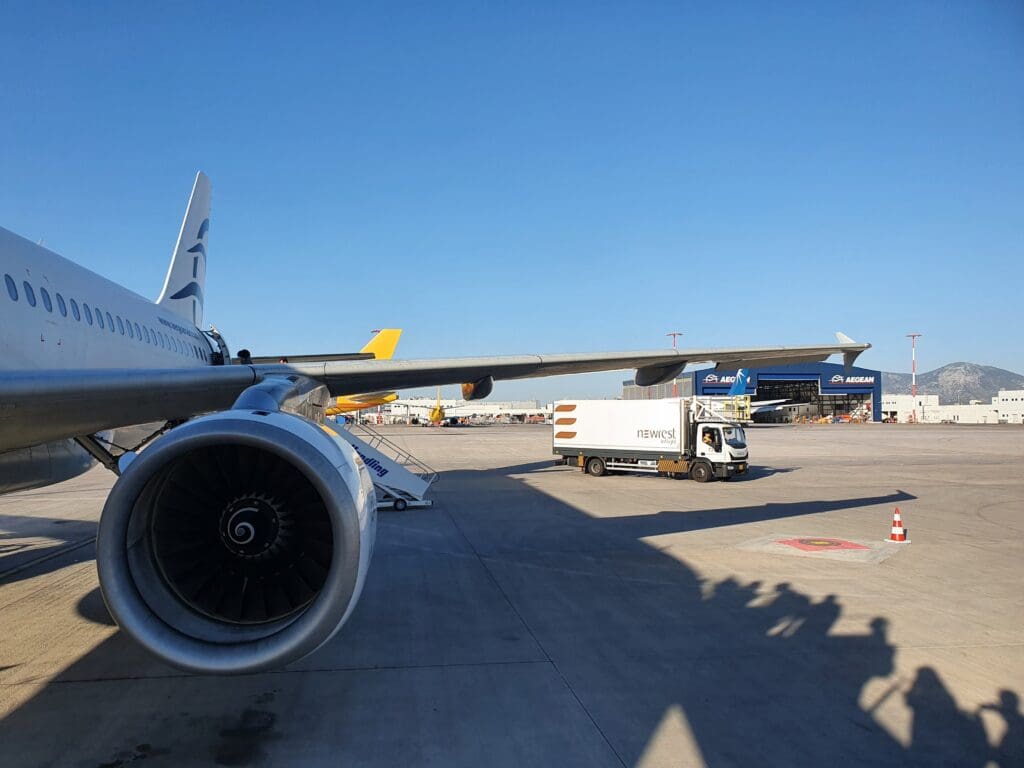
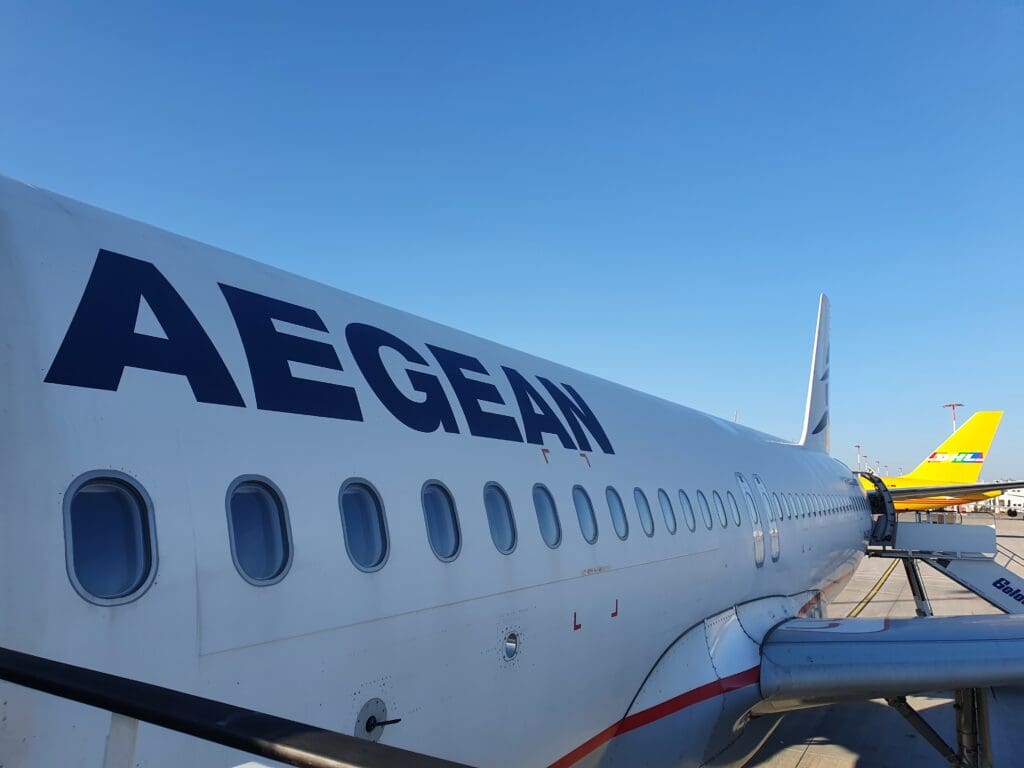
Almost as soon as the bus came to a halt, the doors slid open and passengers spilt out into the warm kerosene-scented air. That morning, airstairs could be seen positioned up to the front and rear doors of the jet, however, it seemed as if most passengers headed to the former stairs. Seated in Row 8, I made my way to the more popular airstairs at the front of the aircraft and joined the fairly fast-moving queue up to the aircraft’s forward cabin door. After a minute or so waiting in the pleasant sunshine, I stepped into the Airbus’ forward galley and was immediately given a warm and friendly greeting by the leader of the flight’s five-strong cabin crew team. Following this welcome, they then requested to see my boarding pass before handing me an antibacterial wipe in an Aegean Airlines branded blue and white packet. Upon receipt of this, I turned right and entered the Airbus’ cabin. Whilst just a domestic flight, that morning there was to be a Business class cabin onboard, although as with many carriers across Europe, Aegean Airlines adopts a ‘Eurobiz’ cabin onboard its exclusively Airbus narrowbody fleet. Namely, those seats in Business are identical to those in Economy albeit with a blocked middle seat and with these adjusted to allow for premium passengers to enjoy the luxury of slightly more legroom.
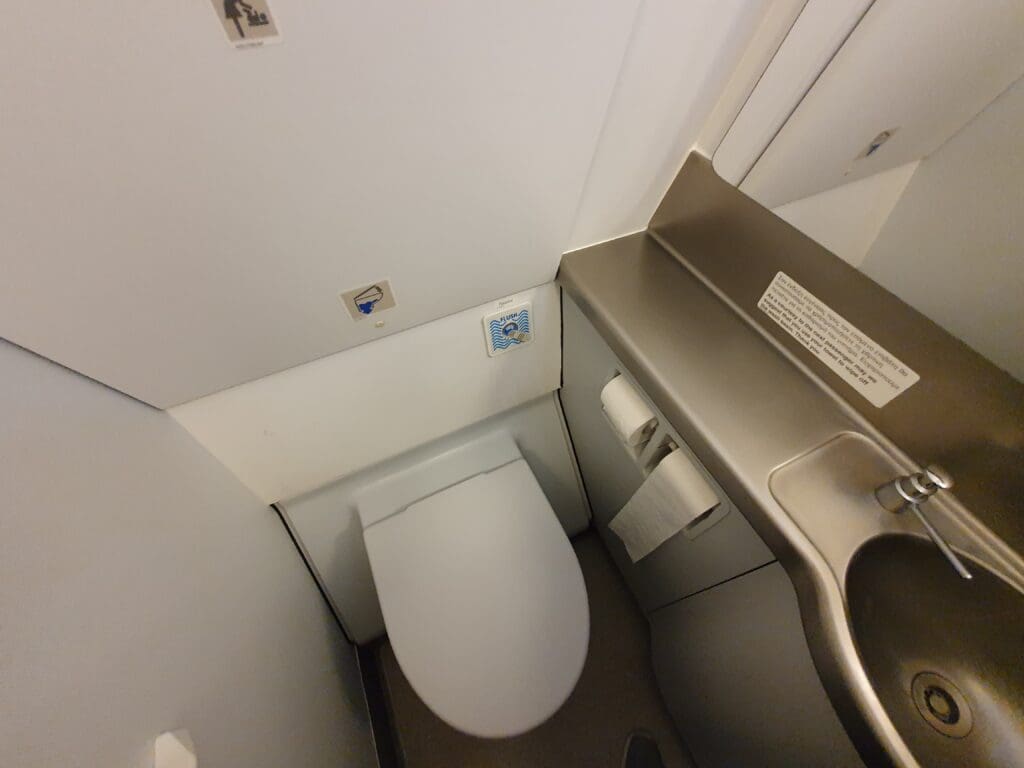
On that morning’s short flight to Rhodes, Business Class did not seem to be particularly popular with just the front two rows of the aircraft dedicated to this. As I made my way into the Economy section of the aircraft, I received another friendly greeting before arriving at row 8 a few moments later. Despite being one of the last passengers from the first bus to board the aircraft, both neighbouring seats remained vacant at this time and I thus decided to make a quick trip to one of the two lavatories at the rear of the cabin. As I journeyed down the Airbus, I was happy to find myself on the receiving end of another two friendly welcomes before I headed into the bathroom. Inside, I found the bathroom to be clean, tidy and stocked with everything you would hope to find in an aircraft lavatory.
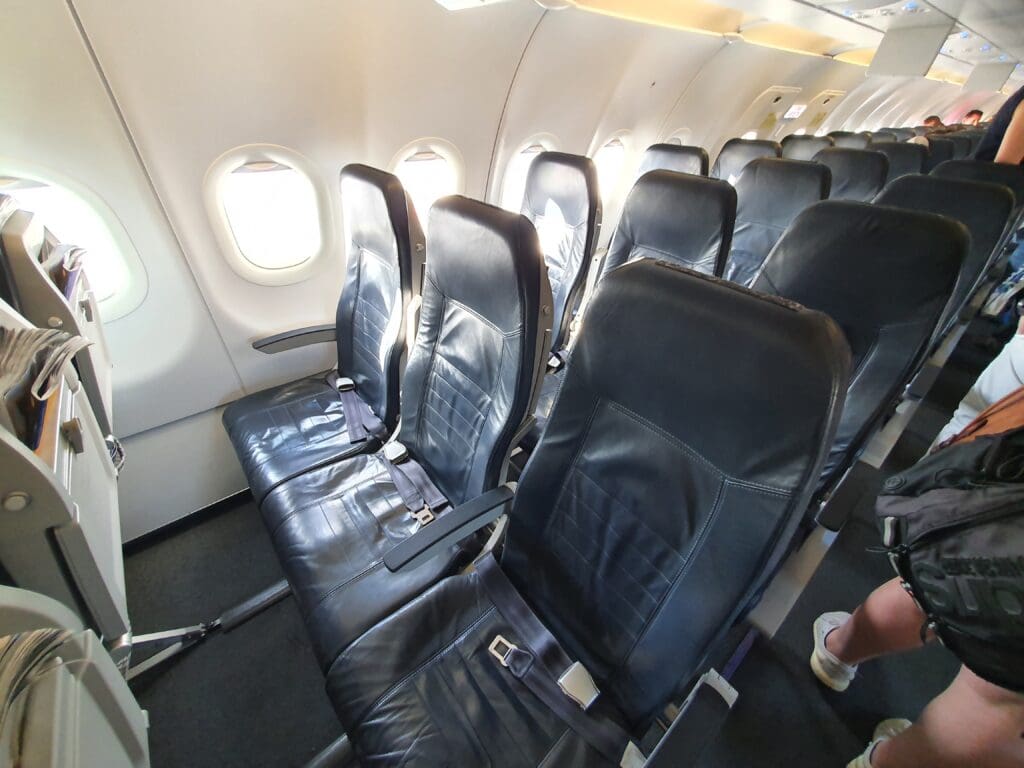
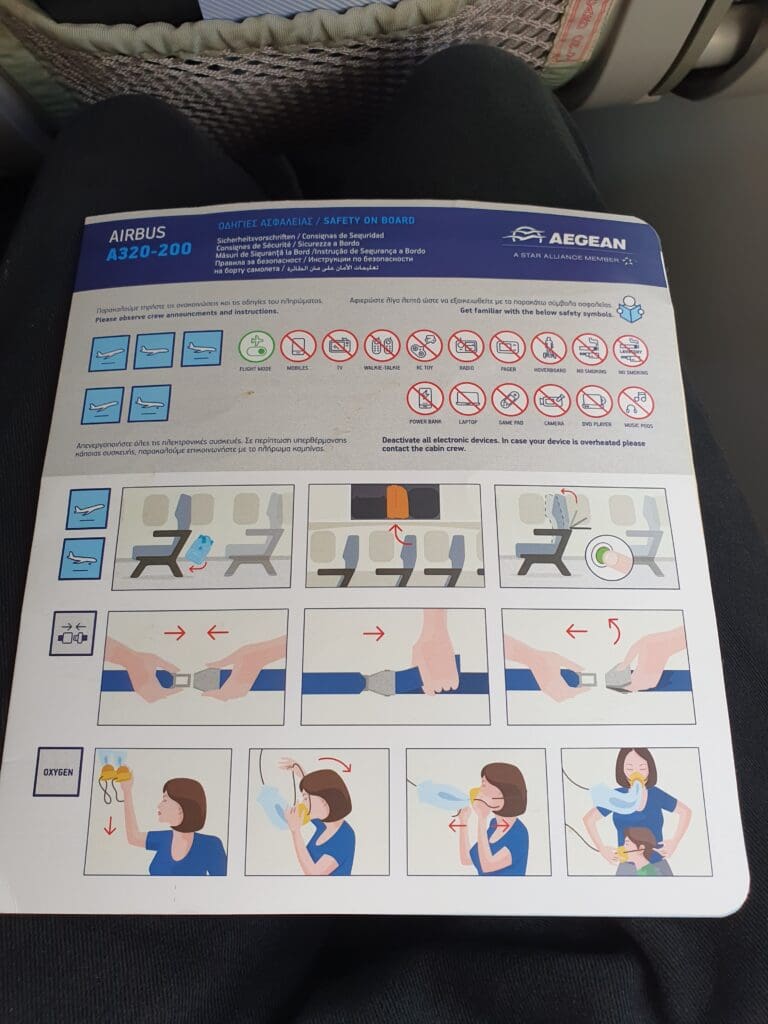
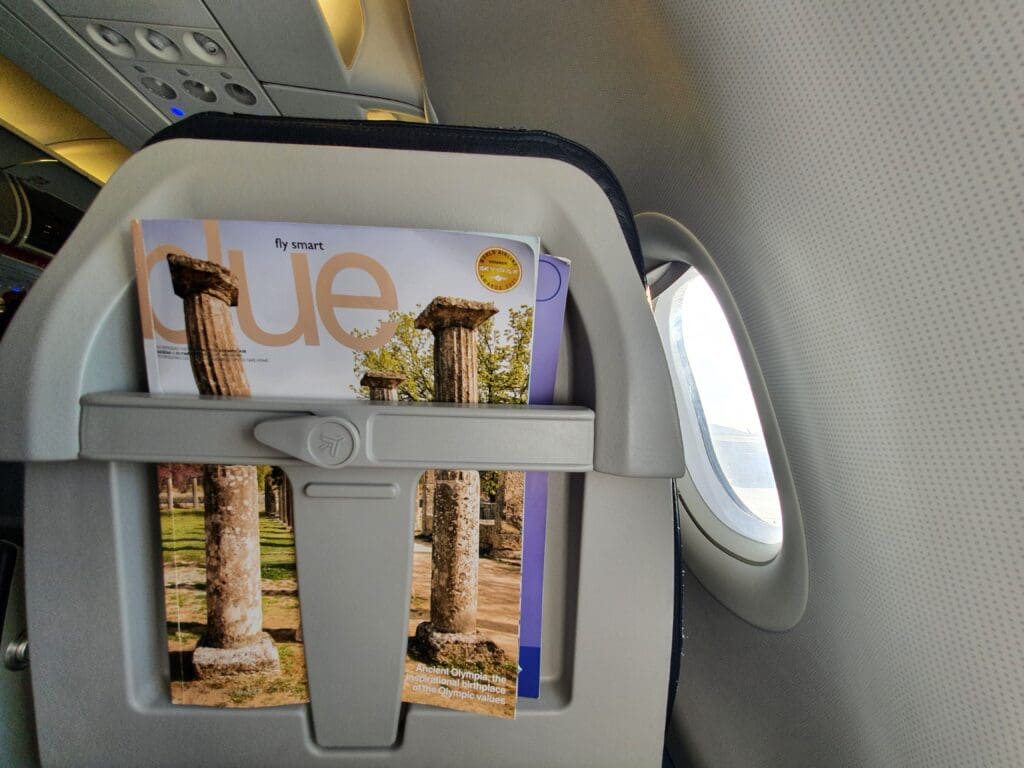
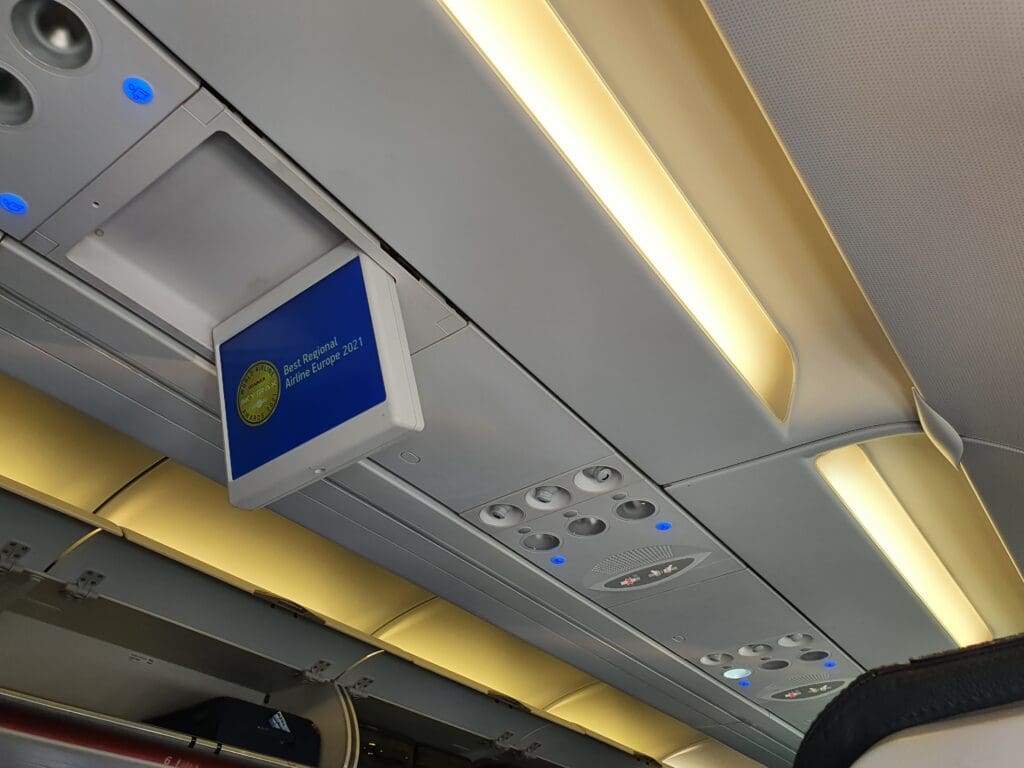
Making my way back through the aircraft, I soon returned to my row and made myself at home for that morning’s flight across the Aegean. Onboard that particular aircraft, each of 174 seats was covered in a dark (faux?) leather covering and featured both a literature compartment and a seatback pocket. That morning, the latter contained a rather stylishly designed sickbag as well as a safety card. Meanwhile the former contained two welcome yet unexpected rarities (in 2022) – a paper copy of the latest edition of Aegean Airlines’ Blue inflight magazine as well as the Shop on Board catalogue. Upon first visual inspection, each seat appeared to be thin, however after sitting down I was very pleased to find these to be soft and comfortable, complete with a very reasonable amount of legroom. Needless to say, I wouldn’t have had an issue flying onboard the aircraft to one of Aegean Airlines’ ‘far flung’ destinations in Western Europe or the Gulf. Furthermore, whilst this particular aircraft was most certainly not Aegean Airlines’ latest delivery nor did it feature their newer type of seat, I was happy to see that the area around my seat seemed to be in tip-top condition with no notable signs of wear and tear, and had been well-cleaned during its time on the ground in Athens. However, I should also add that, unlike the airline’s newer deliveries, the seat lacked any power sockets, USB ports or similar. Meanwhile, entertainment was provided in the form of overhead screens positioned above the middle seat at intervals of every few rows. Setting high expectations, upon boarding these featured a screen promoting Aegean Airlines’ status of ‘Best European Regional Carrier – 2021’ before moving to a moving map following our departure.
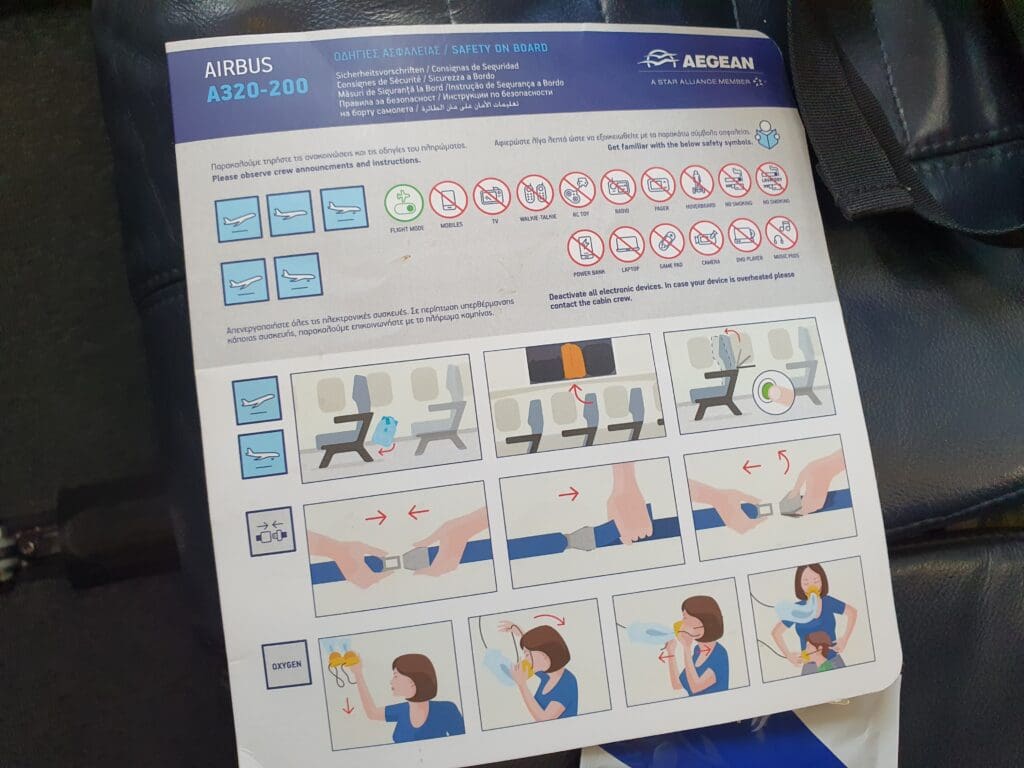
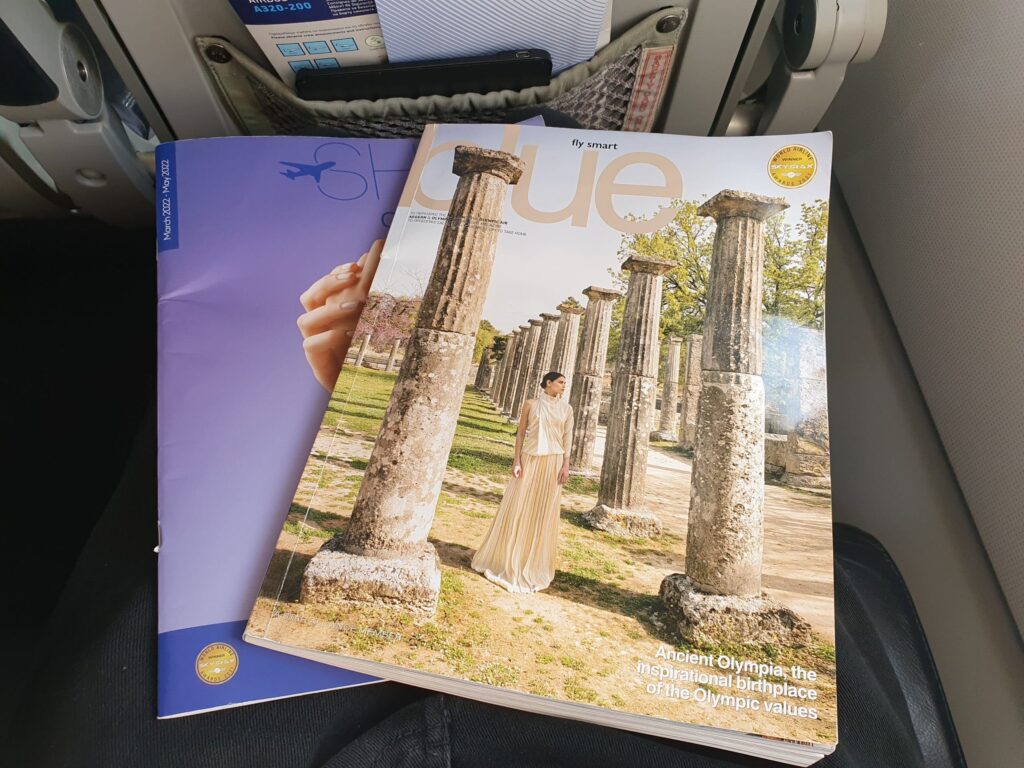
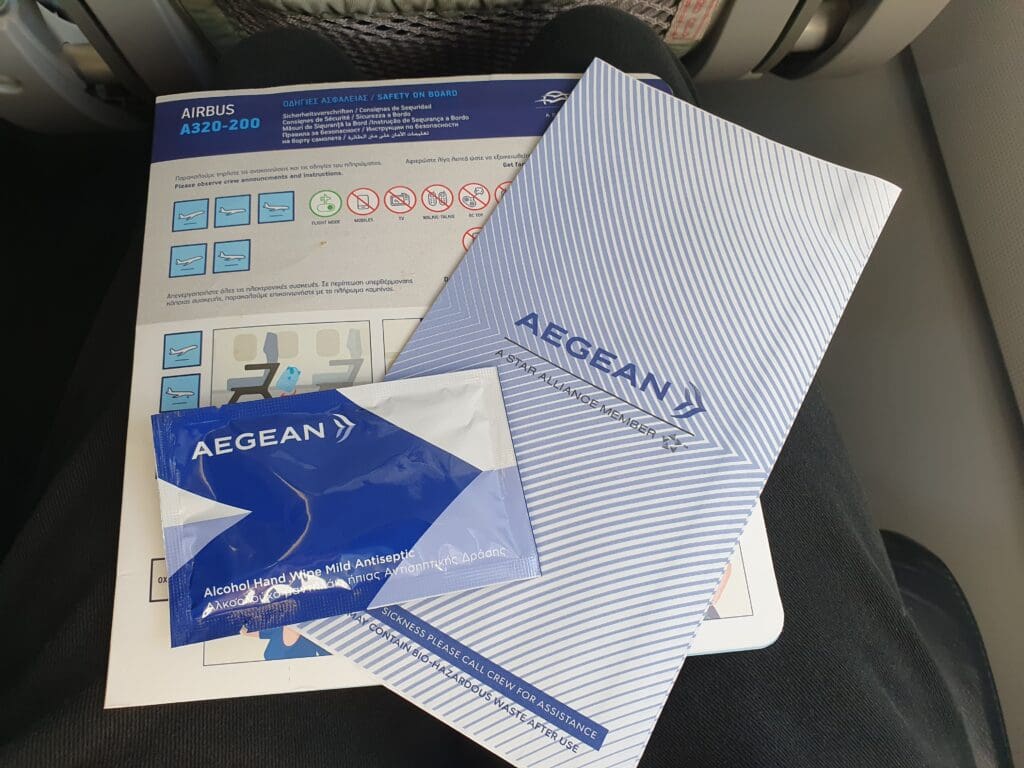
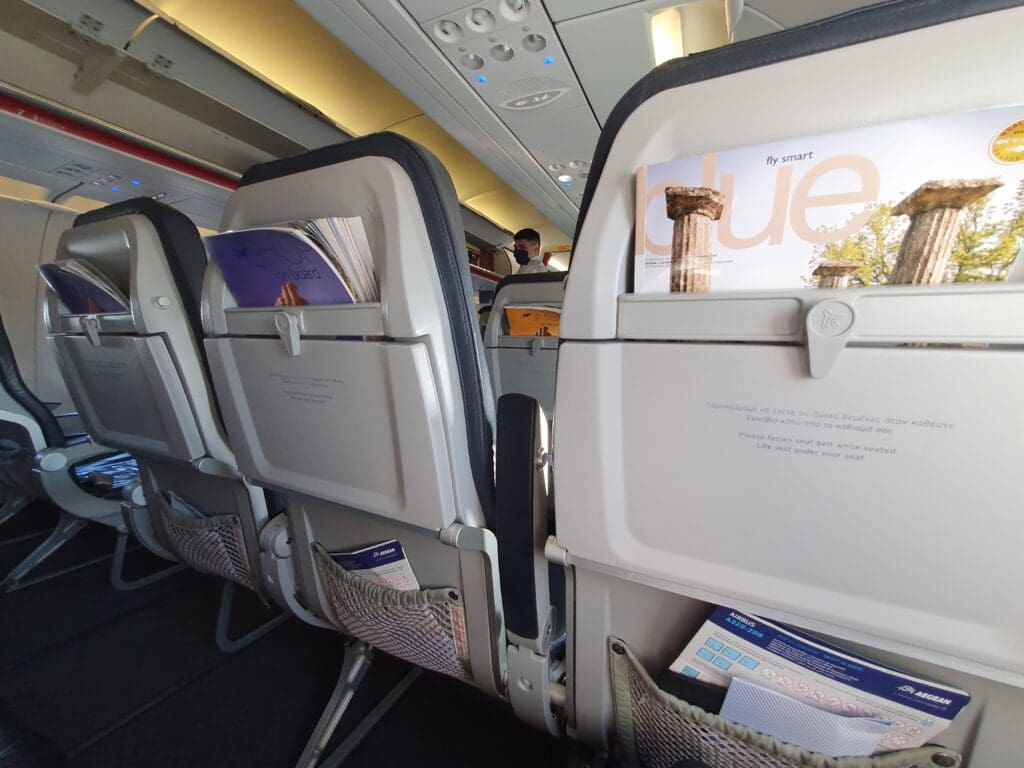
A short time after I had strapped myself in for the flight ahead, at 0750 the second bus load of passengers arrived at which point I was joined by fellow travellers in the middle and aisle seats before the final stragglers arrived at the aircraft fifteen minutes later at 0805. At 0808 boarding was announced as complete at which point it appeared that virtually all seats onboard were filled – focusing on the demographics of the flight, most of my fellow passengers seemed to be Greek, with this perhaps being expected given the fact that I was on a Greek domestic flight just outside of the main summer holiday season. Furthermore, the cornucopia of direct holiday flights offered between Rhodes and airports all over Europe as well as the flight’s connection-unfriendly early morning departure time perhaps meant that this service was not ideal for sunseeking tourists arriving from abroad.
Once the last passenger had made it onto the aircraft, outside the ground crew could be seen removing their equipment from around the aircraft whilst inside the Captain made their welcome announcement in Greek and English. After introducing themselves and the first officer, they thanked passengers for choosing to fly with Aegean and gave an overview of the calm flying conditions and weather in Rhodes, ending this with a request for passengers to keep their facemasks on for the duration of the flight. This speech was almost immediately followed by a welcome announcement from the Purser which reiterated the Captain’s thanks and mask warning, before going over a few basic safety points. After this, the crew took to the aisles whilst Aegean Airlines’ safety video was broadcast on the overhead television screens. Released in 2019, this focuses on Greek basketball player Giannis Antetokounmpo who goes through the safety instructions whilst travelling through a plethora of Greek scenes. Once this came to an end, the screens were retracted and the cabin crew passed through the cabin ensuring that all was in place and secure for our departure. A total of thirteen minutes after the flight’s scheduled departure time, at 0818, the Airbus commenced its pushback during which the two IAE V2527-A5 hairdryer engines began to quietly hum into life ready to propel us across the Aegean.
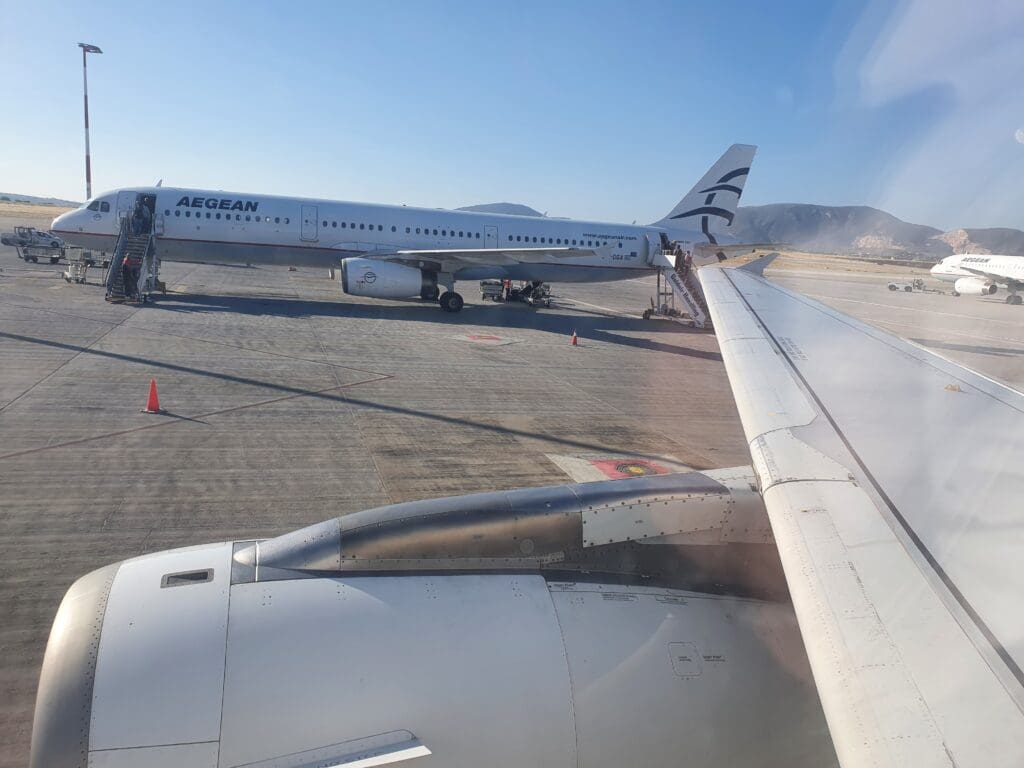
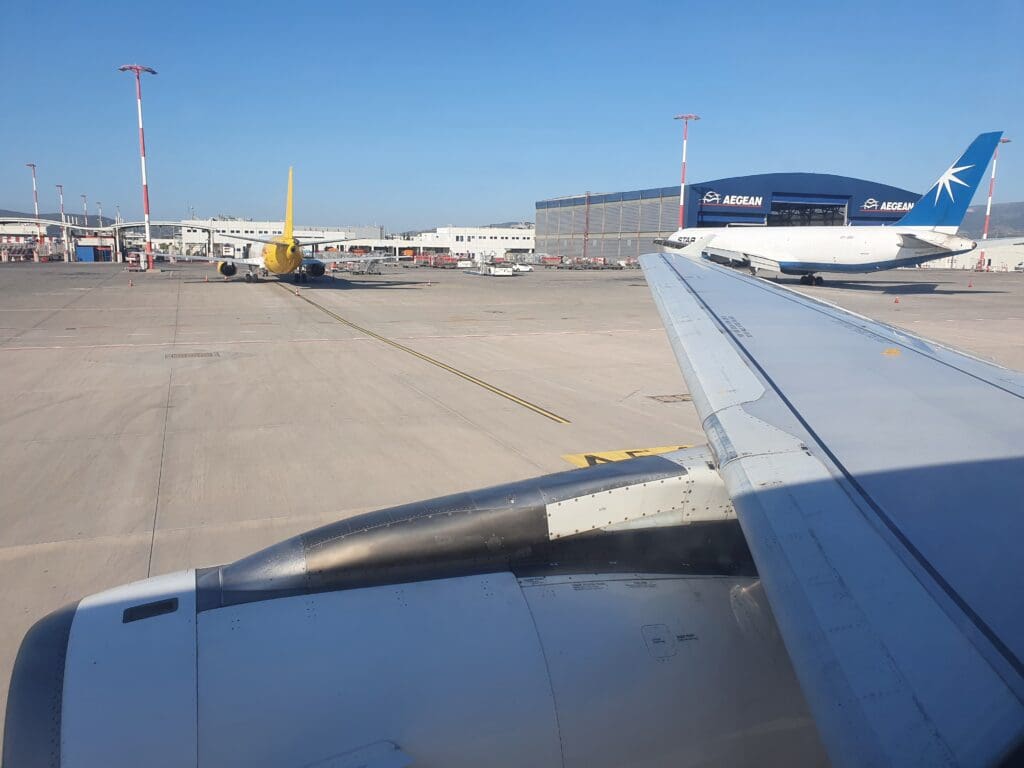
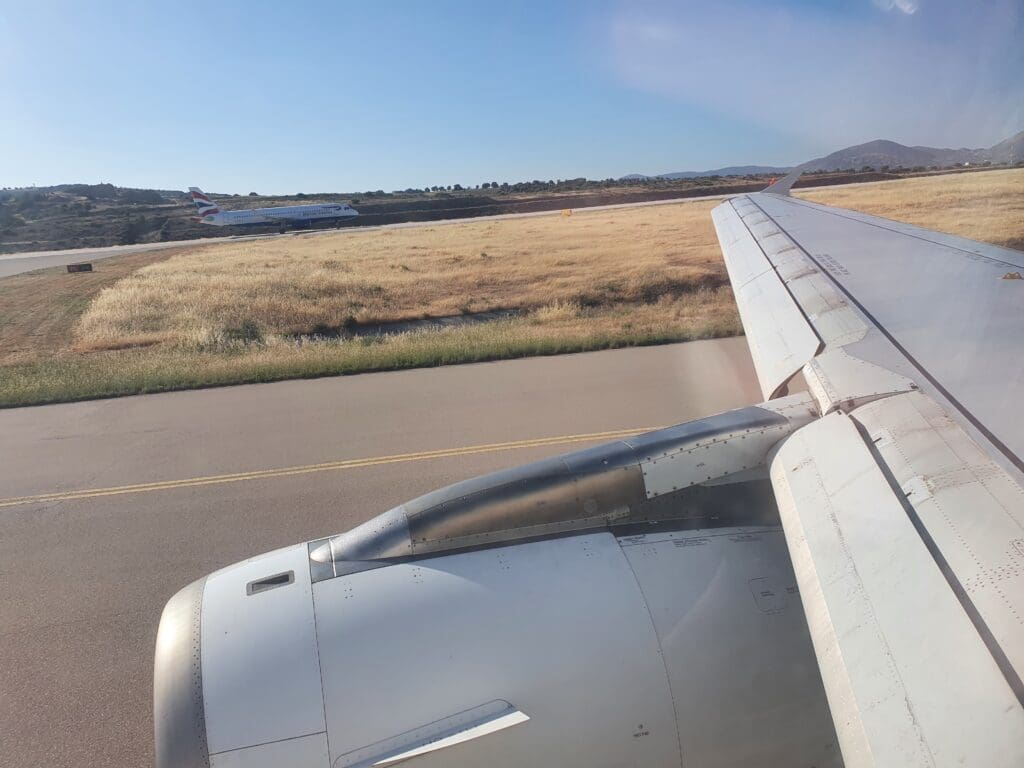
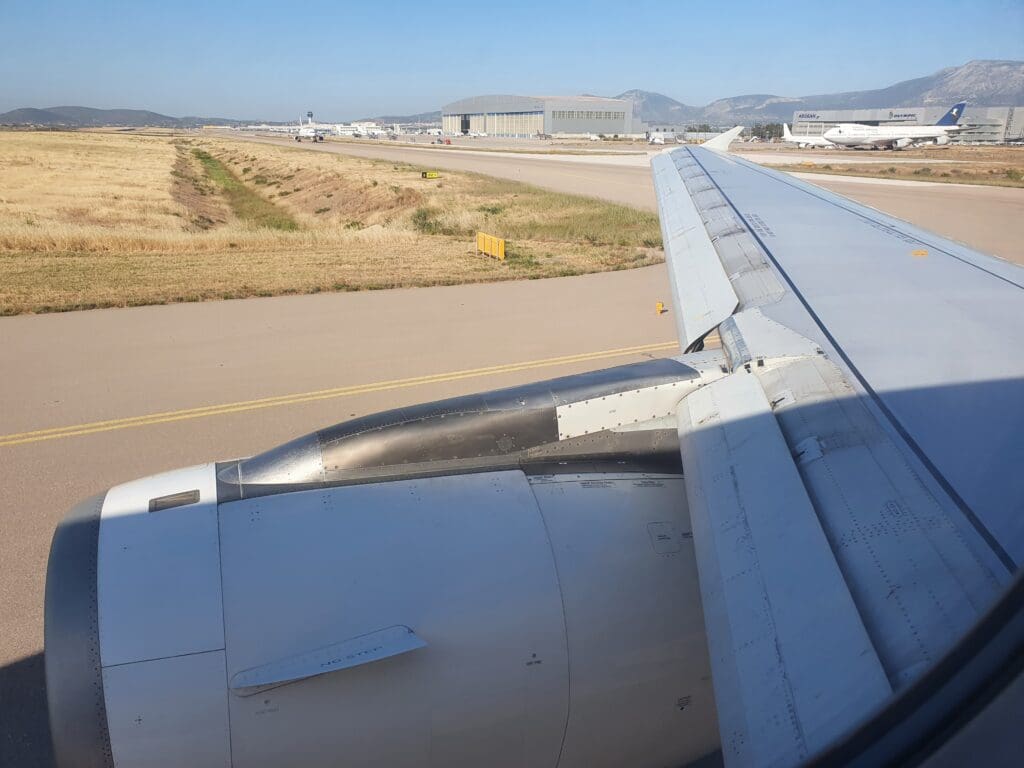
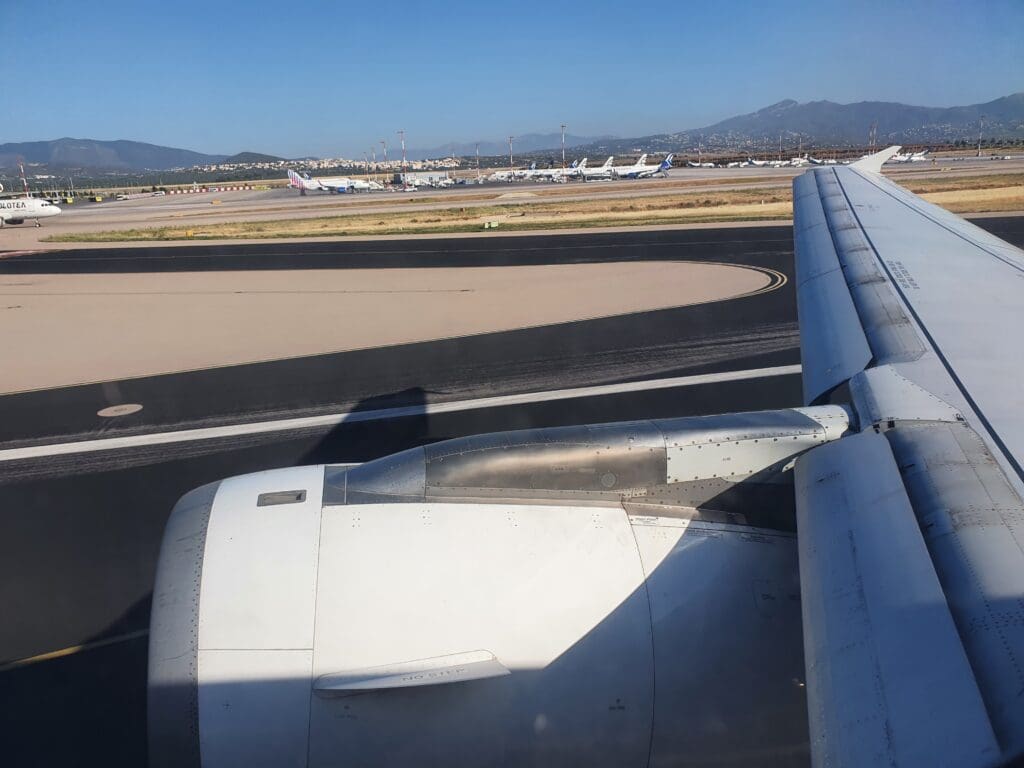
Following the usual formalities, at 0822 the Airbus began its taxi to the end of Runway 21L – with this in use for all departing aircraft that morning whilst arrivals made their way in on the parallel runway. Whilst those on the opposite side of the aircraft would have been treated to a good view of the terminal, as well as the interesting selection of aircraft sitting around at the general aviation apron, maintenance area and boneyard, as we journeyed over to the runway little could be seen other than a four Airbus A320s as they rocketed upwards into the sunny morning skies. Upon reaching the end of the runway, the Airbus came to a halt to allow for the aforementioned British Airways jet to head off to London before continuing onto the runway at 0828. Following a short pause, the two engines spooled up and the aircraft commenced what seemed to be a powerful takeoff roll. As the aircraft rolled down the runway, I was treated to views of the entirety of Athens Airport as the diverse smorgasbord of aircraft on the ground that morning whizzed past.
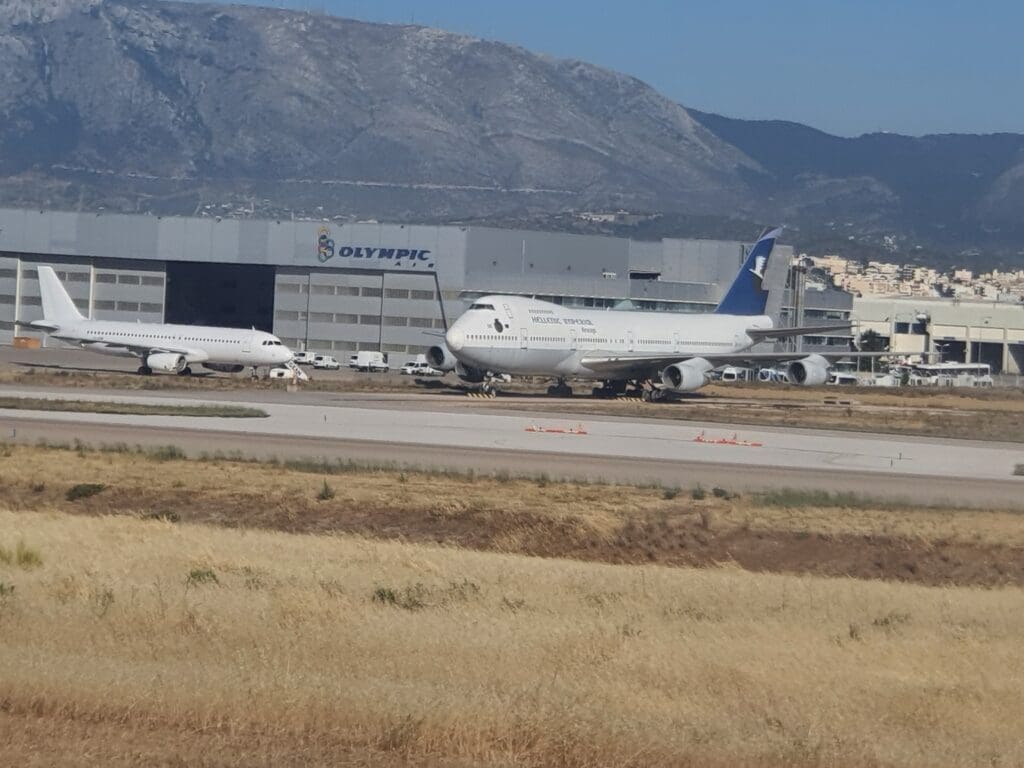
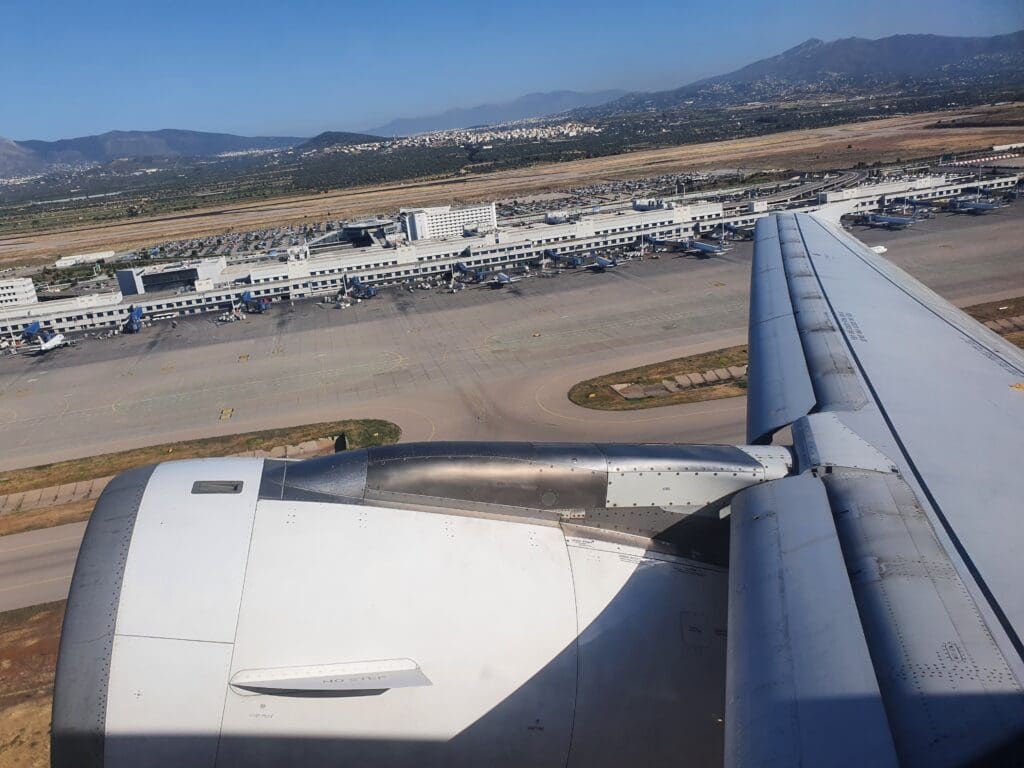
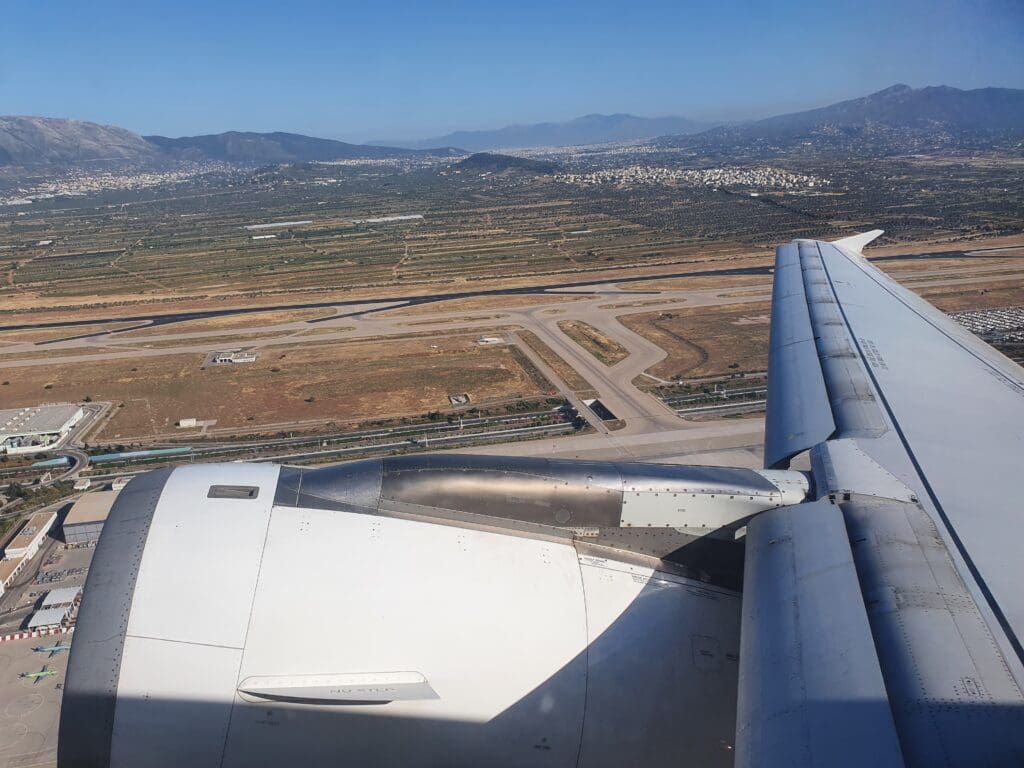
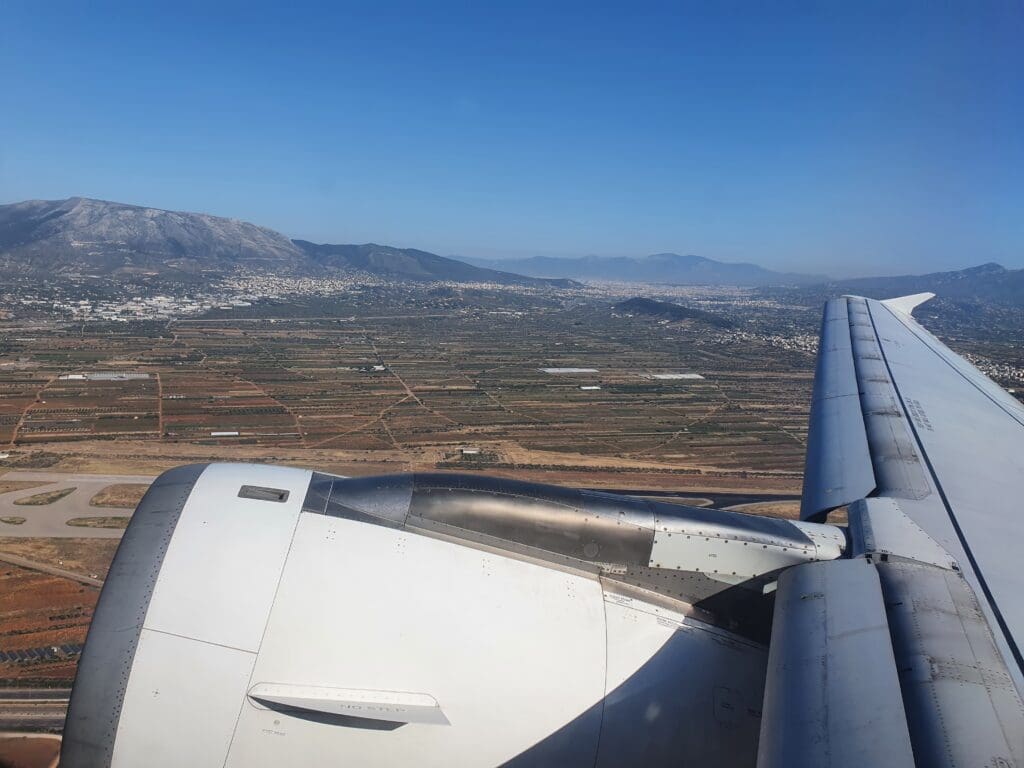
Just before reaching the terminal, the Airbus rotated upwards into the sunny skies allowing for a fantastic bird’s eye view of much of the airport before leaving this behind. Thanks to the cloudless weather, during the first few minutes of the flights, several towns on Athens’ southern fringes could be seen followed by the city’s suburbs as we neared the coastline. A short time after departure, the Airbus made its way out over the blue waters of the Saronic Gulf and left the Greek mainland. Inside the cabin, at this time the Purser performed their post-departure announcement with the usual warnings before advising that the inflight service would commence shortly.
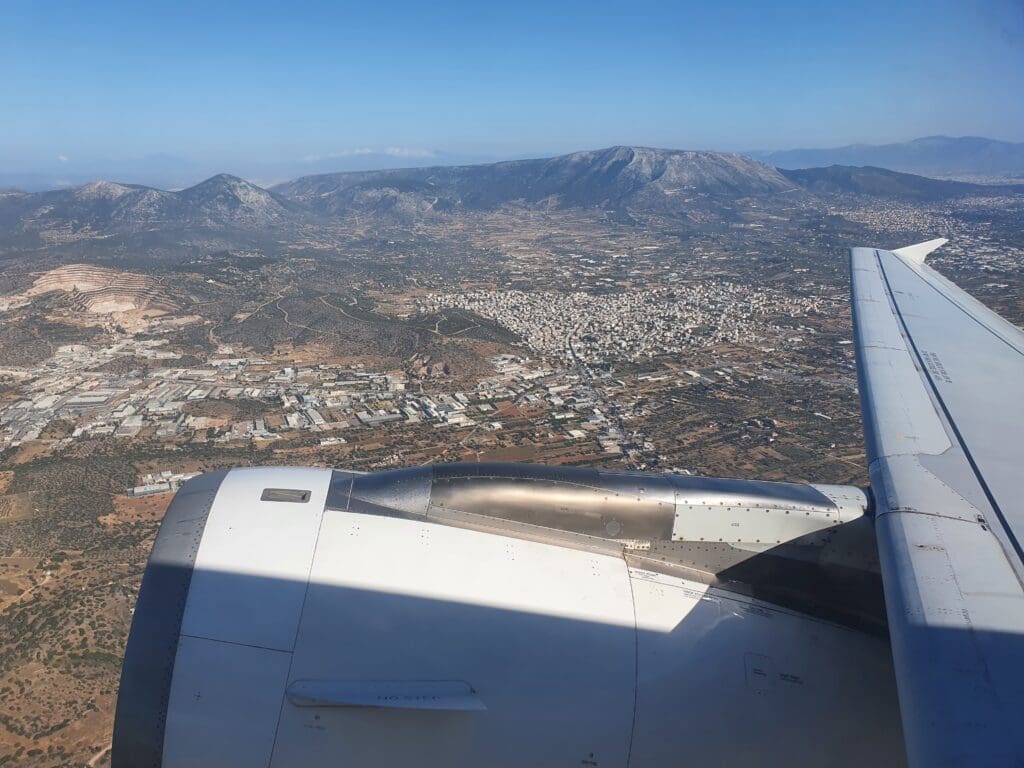
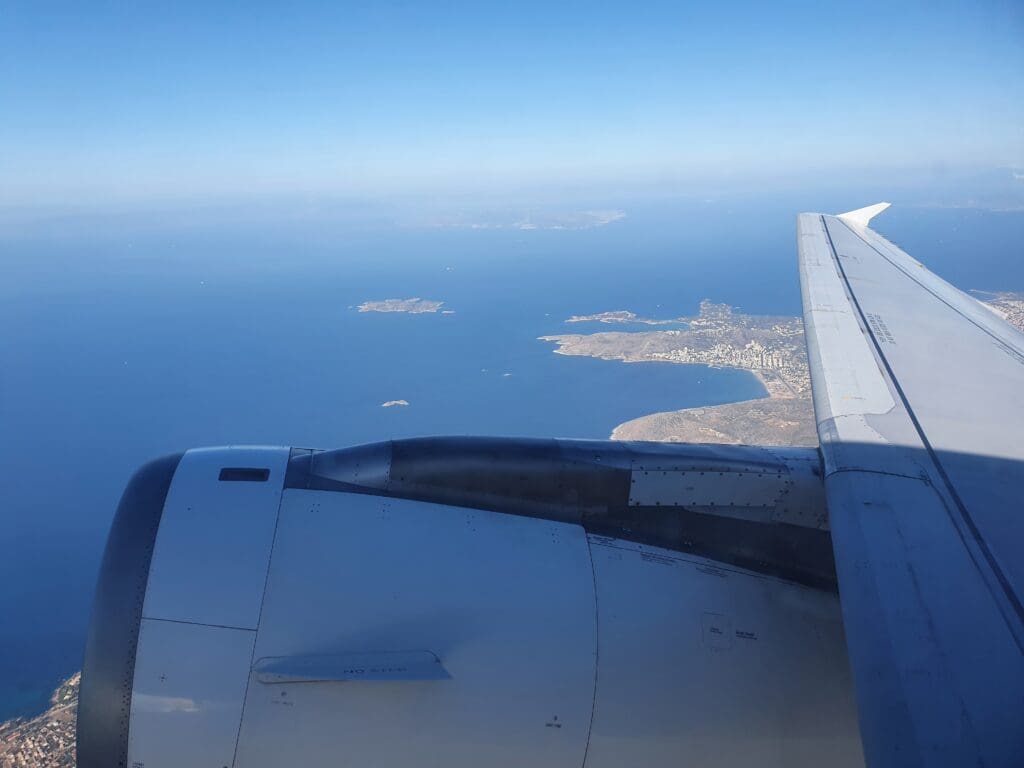
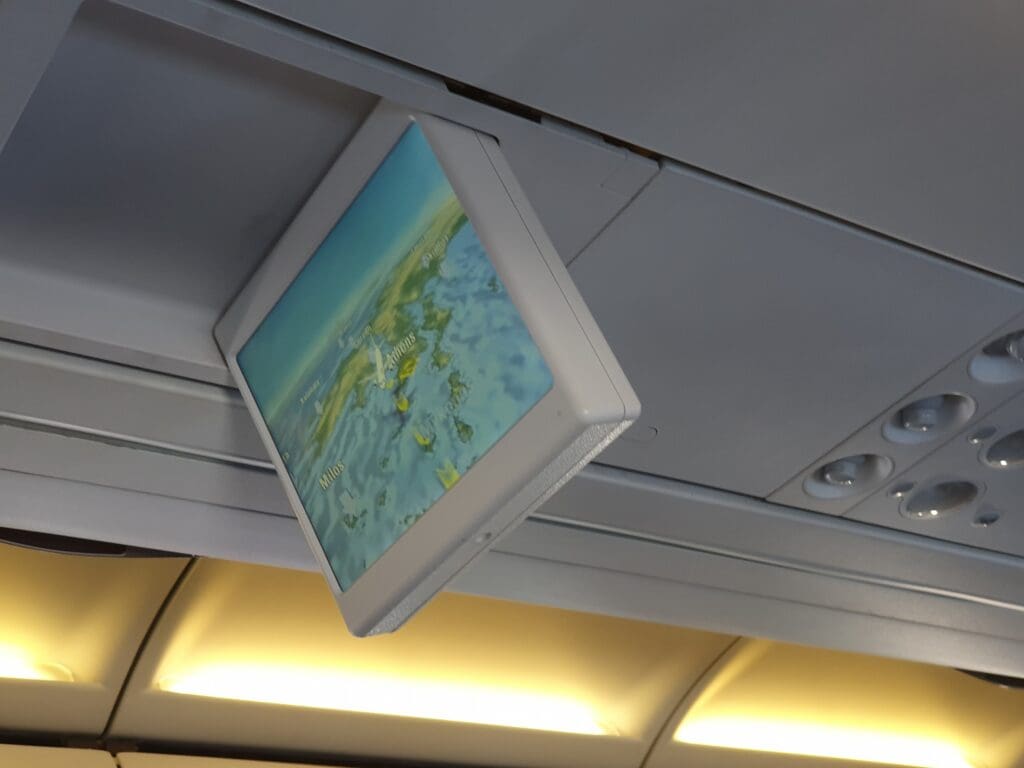
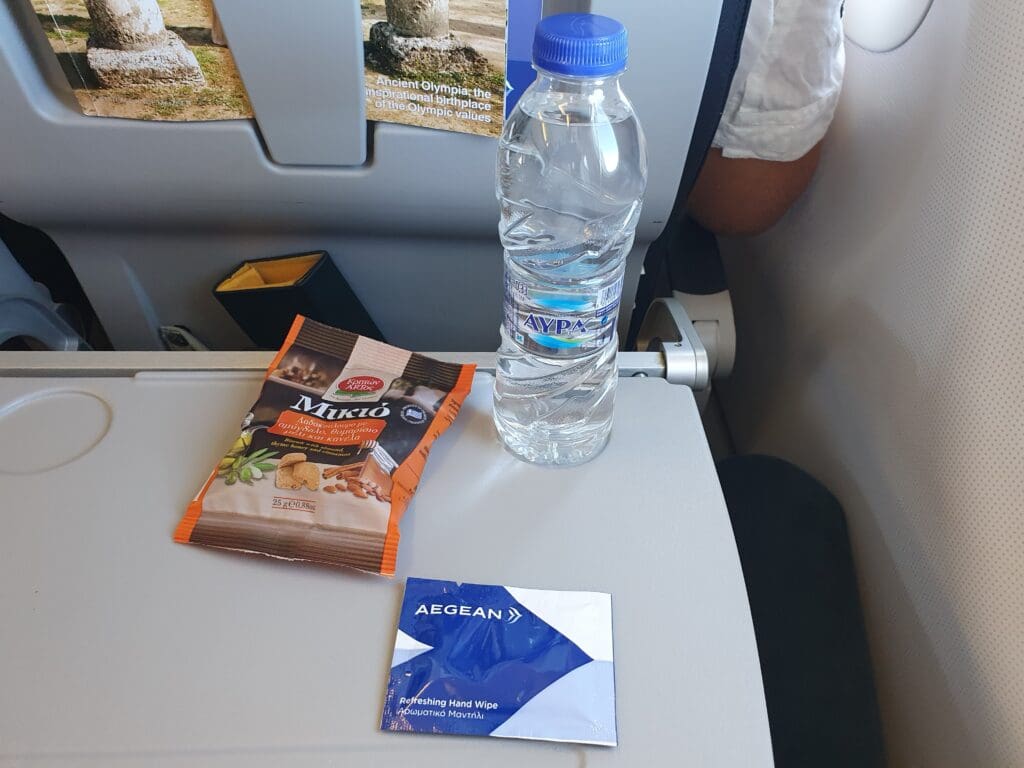
Following the Purser’s post-departure announcement, the seatbelt signs were extinguished and the overhead screens were extended before broadcasting the moving map. Perhaps either having forgotten to mention it during their post-departure announcement or having caught a badly behaved passenger, a couple of minutes after their first announcement the Purser informed all passengers that smoking and vaping were strictly prohibited onboard the aircraft. Given the short flight time and virtually full flight, almost immediately after the seatbelt signs were extinguished, the crew sprung into action and commenced the inflight service. Working quickly and efficiently, around a minute after the inflight service began, a friendly flight attendant handed me a 330ml bottle of still water, a small bag of delicious honey, cinnamon and almond biscuits and another antibacterial wipe. Whilst just a light offering, this was a very welcome addition to the onboard service, especially given the fact that other carriers may opt to omit this on such a short service.
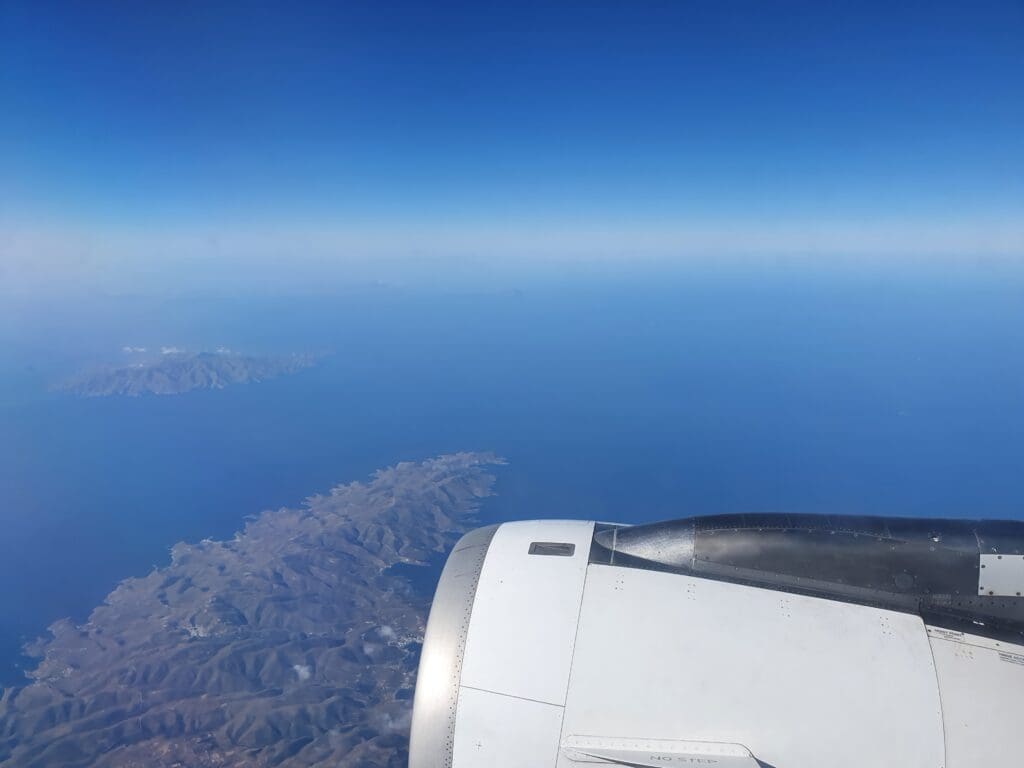
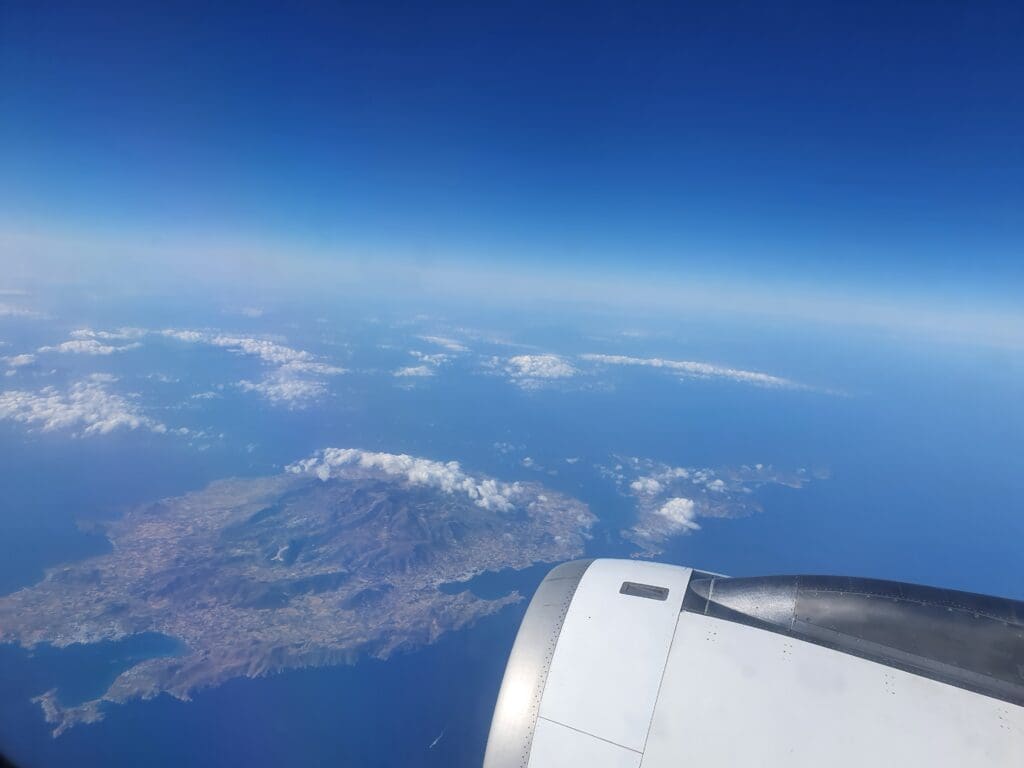
Turning to examine our route to Rhodes, once away from the Greek capital the aircraft made its way east-southeastwards over the Aegean Sea. A short time after leaving the mainland behind, the Airbus arrived at the western shores of the island of Kea. Home to around 2,500 residents, this island lacks its own airport and is thus primarily accessed by ferry, with the voyage from Lavrio Port on the mainland taking around an hour. Those with an interest in maritime history may know Kea as being the resting place of one of the Titanic’s sister ships, the HMHS Britannic. Requisitioned from the White Star Line for use as a hospital ship during the First World War, this sank off Kea’s coastline after hitting a mine in 1916. As the aircraft cut straight across Kea, just a very small portion of this was visible as we passed directly overhead, although the entirety of the smaller Western Cyclades islands of Kythnos and Serifos could be seen to the south of our flight route. Around four minutes after leaving Kea’s eastern coastline, the Airbus arrived at the significantly larger island of Syros which is home to over 20,000 residents. At this time, the islands of Antiparos and Paros came into view to the south of our route, before we passed just to the north of the island of Naxos’ northernmost tip.
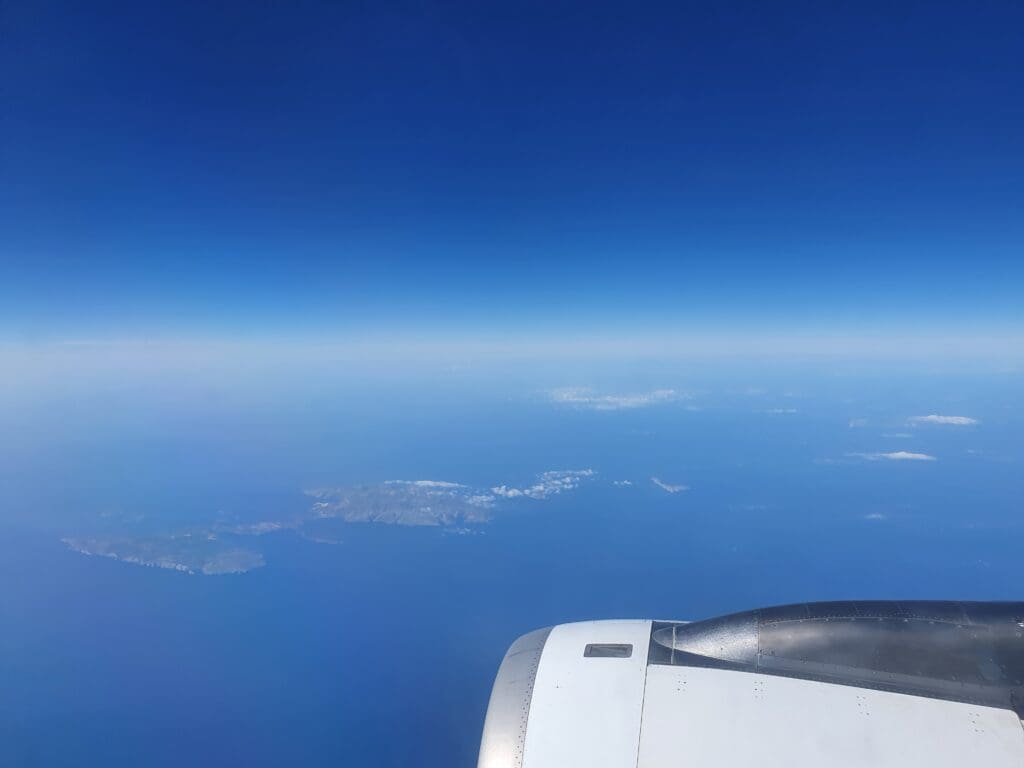
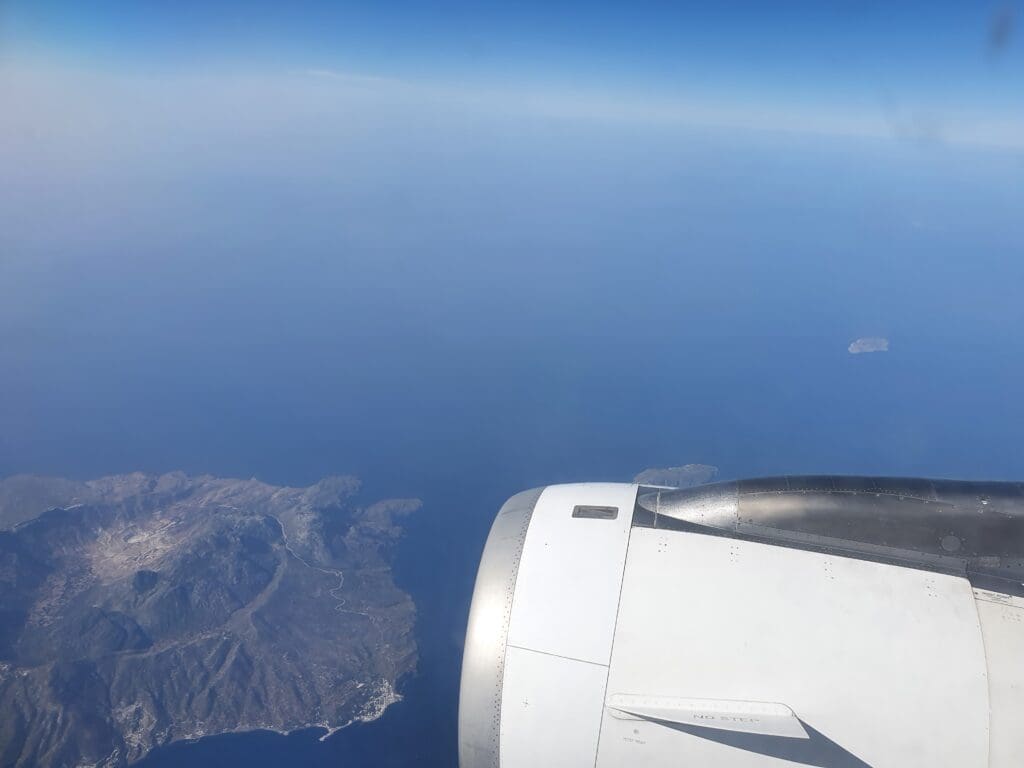
Before I knew it the short cruise had come to an end, with the noise produced by the Airbus’ two IAE engines decreasing slightly at 0852 as the aircraft could be felt commencing its descent to the ground. Just before reaching the island of Kos, the Captain provided us with an update on our position and the weather in Rhodes, before informing passengers that we could expect to touchdown on the island in around twenty minutes, ending the announcement by wishing us a pleasant stay on Rhodes. Passing over the southern tip of the popular island of Kos, nothing of this could be seen on my side of the aircraft although moments after leaving this behind, a good view of the islands of Gyali and Nisyros was offered.
At 0858, the seatbelt signs were switched back on at which point the Purser performed their pre-arrival announcement which came complete with the usual pre-landing warnings regarding seatbelts, tray tables, seatbacks and window shades. Sensibly, yet perhaps also rather worryingly for any nervous flyers, the Purser also advised passengers to review the safety card before our arrival. Once the seatbelt signs had been reilluminated, the flight attendants then passed through the cabin ensuring all was in place for our arrival into Rhodes and collecting any remaining rubbish that had not been picked up during the earlier collection round. Meanwhile, as the aircraft sank, the Purser performed another announcement requesting passengers to fill out the survey on their experience with Aegean Airlines that would be sent to them by email or text message following the flight.
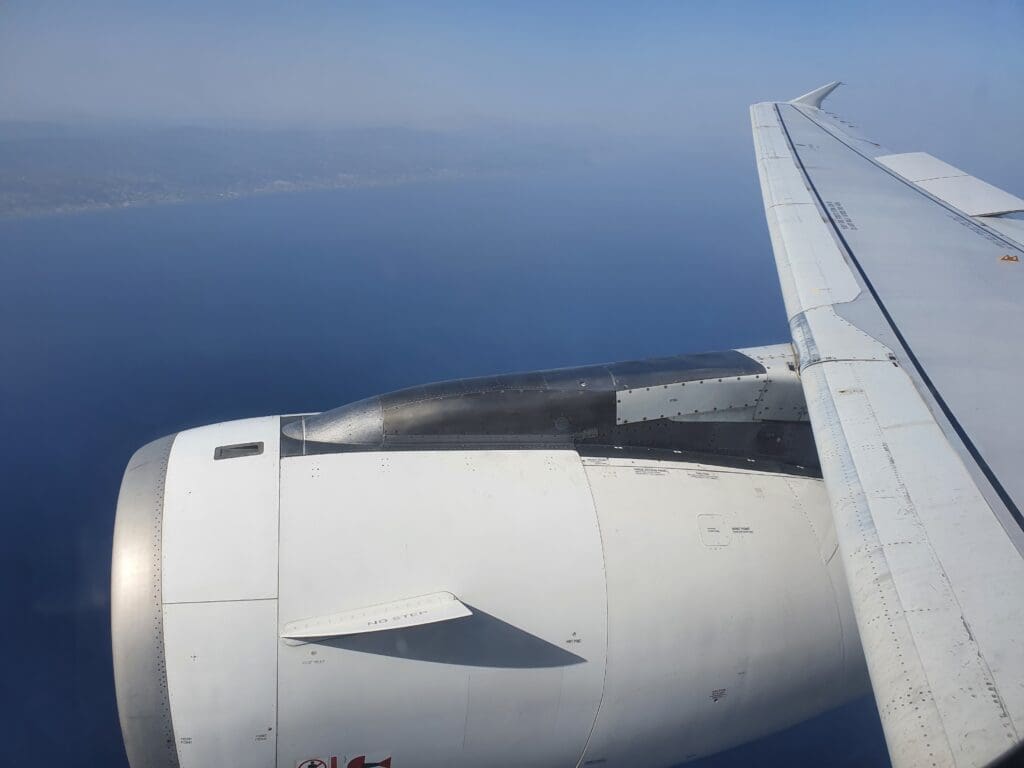
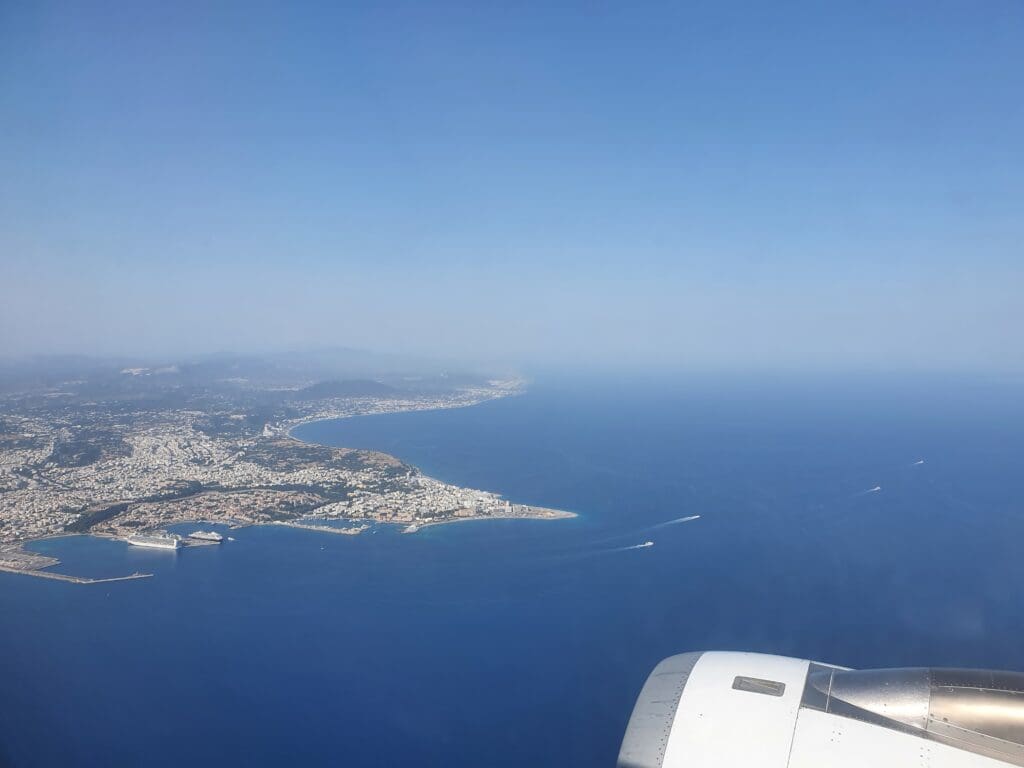
Sinking over the waters of the Aegean, it wasn’t long before Rhodes’ coastline popped into view as the aircraft made its way towards the city’s harbour where two gigantic cruise ships as well as plenty of smaller boats could be seen bobbing about. As we approached this, the speed brakes were partially extended resulting in some slight shuddering as the aircraft decelerated in preparation for our arrival. As the aircraft crossed over the harbour and a portion of the city’s old town, the flaps and landing gear fell into position with the familiar whining sound before the jet headed along the coastline towards Rhodes Airport.
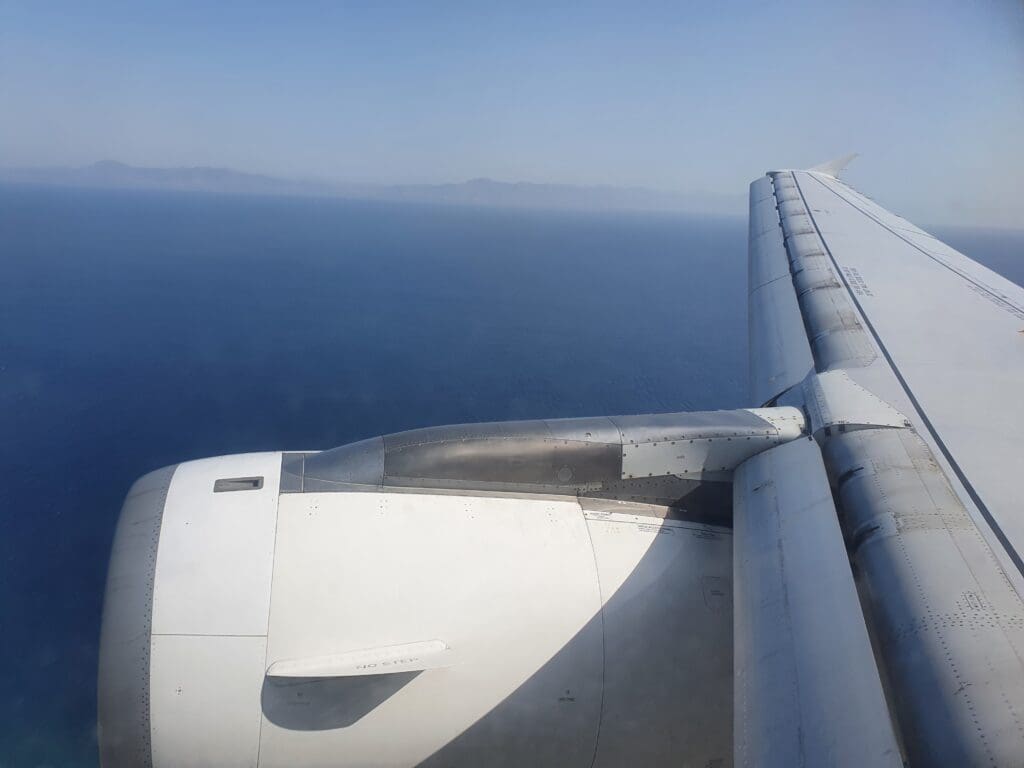
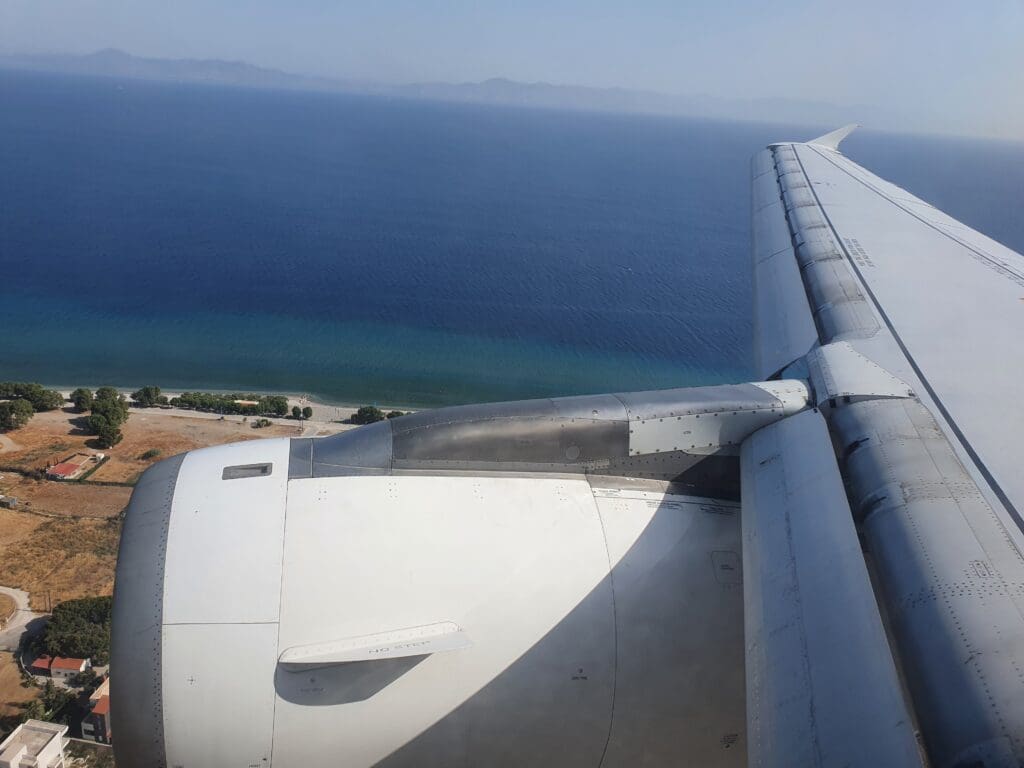
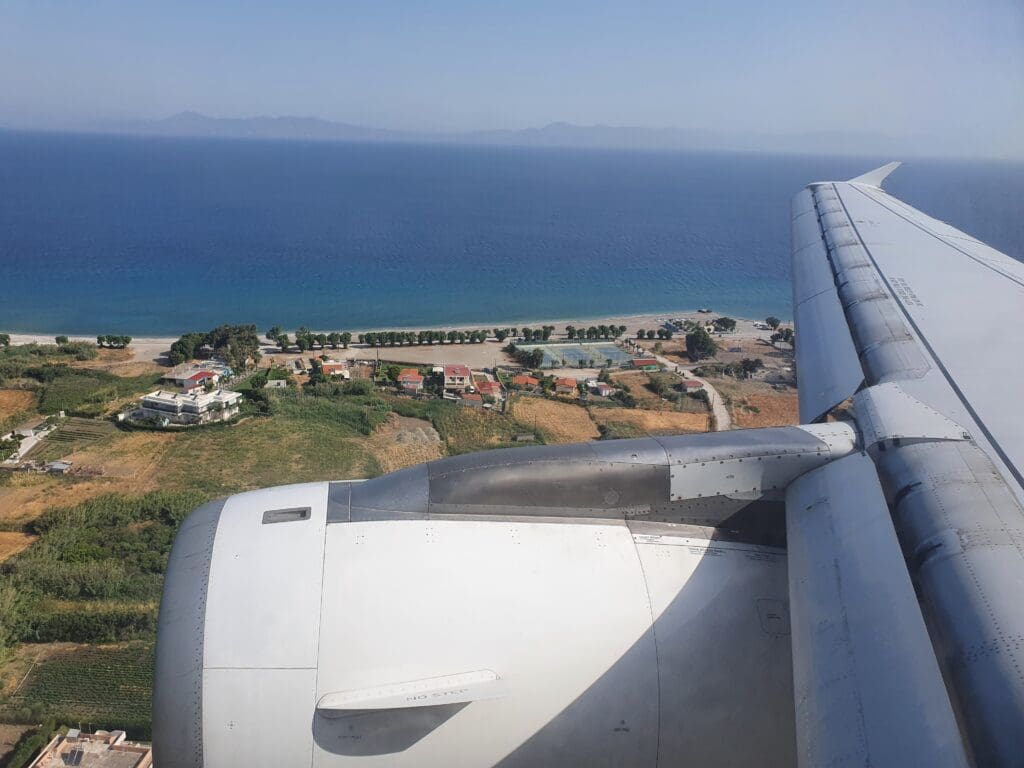
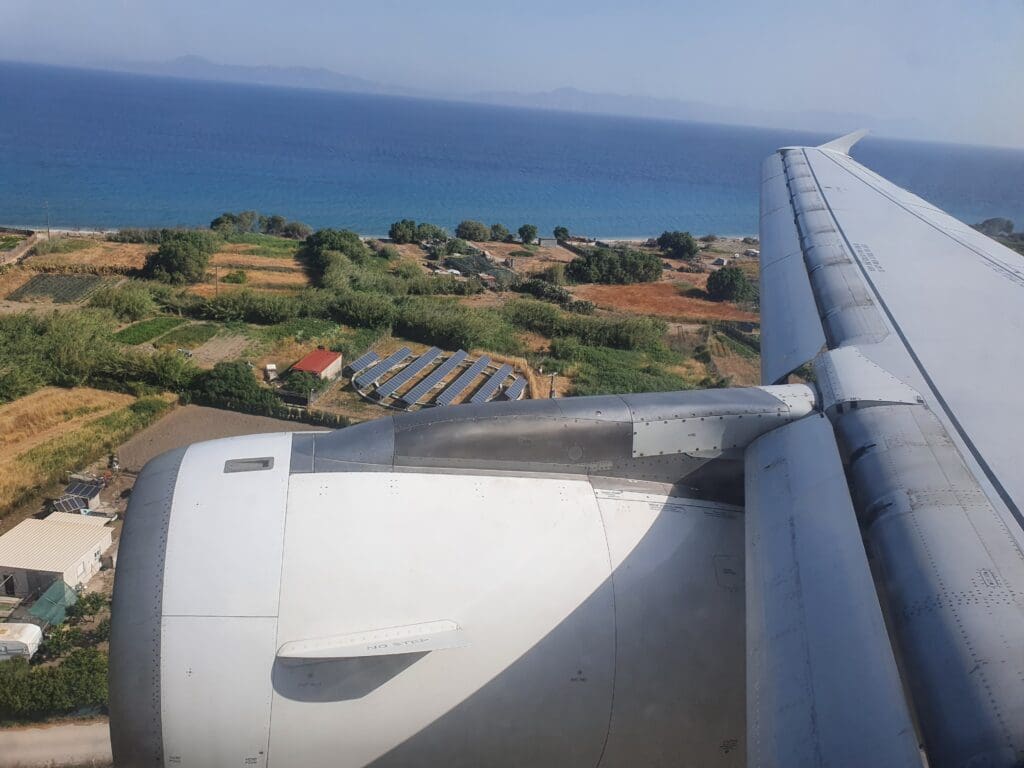
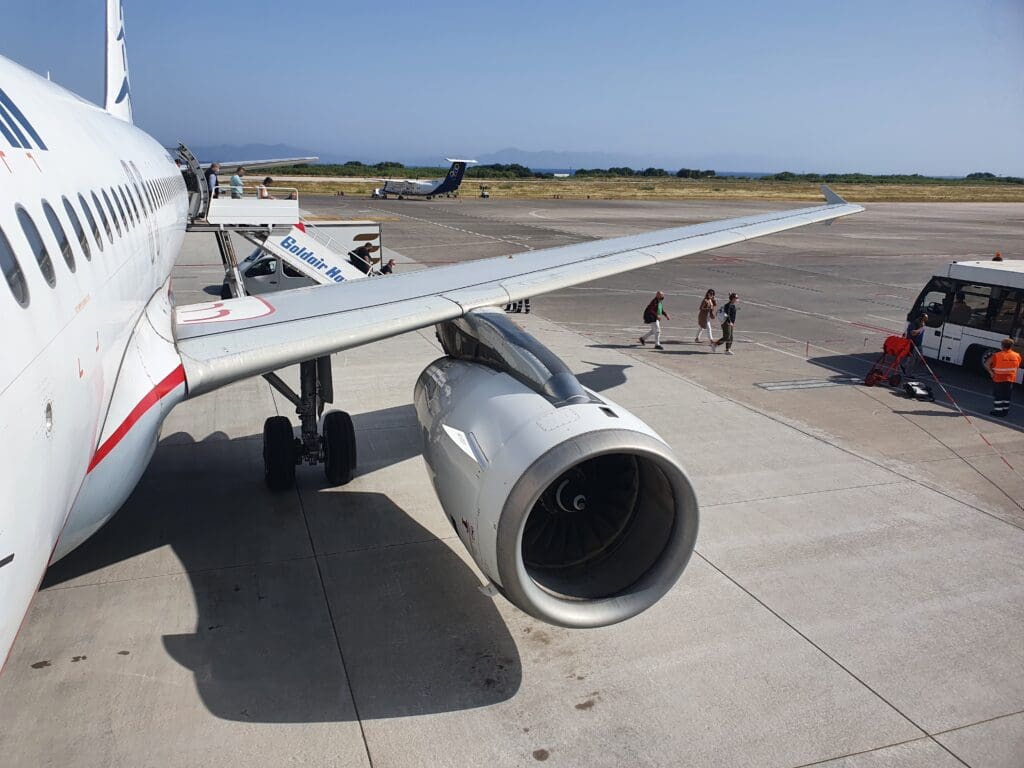
Sitting on the right-hand side of the aircraft and thus on the wrong side for any views of the island as we flew down Rhodes’ coastline and towards the airport, at this time I was instead provided vistas of the increasingly clear waters of the Aegean whilst the Turkish coastline could also be seen in the distance to the north. Several moments after crossing Rhodes’ coastline once more, the aircraft sank down over fields and several clusters of villas and holiday accommodation before touching down on Rhodes Airport’s Runway 24 with a thud at 0911, ending a very pleasant 43 minutes in the Greek skies. Once on the ground, the aircraft decelerated quickly before vacating the runway to the left at which point the Purser made an announcement welcoming all to Rhodes and thanking passengers for flying with Aegean Airlines. By the time the English version of this came to an end, the aircraft was turning into Stand 7, pulling up next to one of two Corendon Airlines Boeing 737-800s on the ground at the time. Other than this, just two other aircraft could be seen in Rhodes that morning – the Olympic Air Dash 8 100 which I presume would take me over to Kastellorizo and a Polish-registered Learjet 60 operated by Warsaw Modlin-based AMC Aviation.
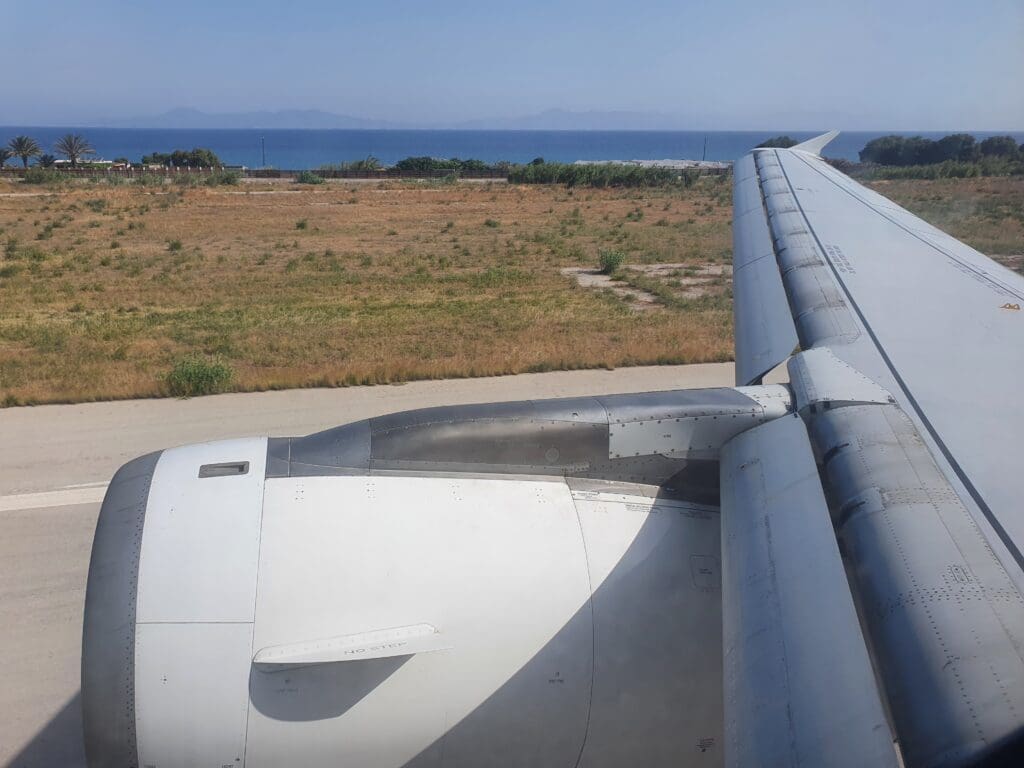
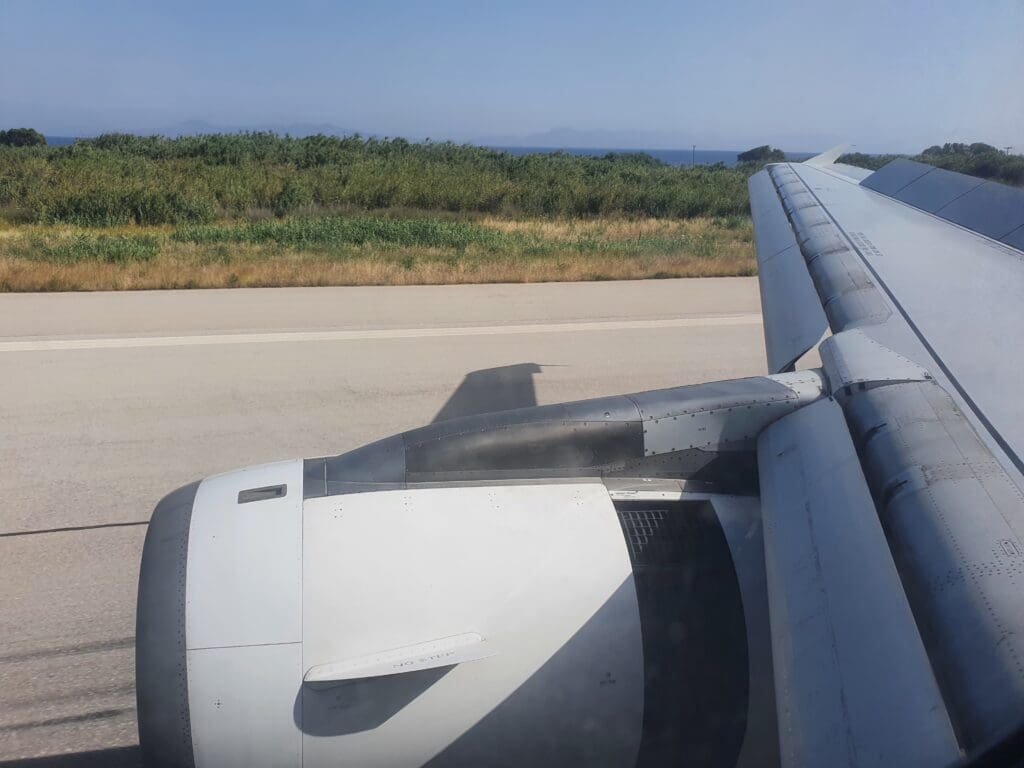
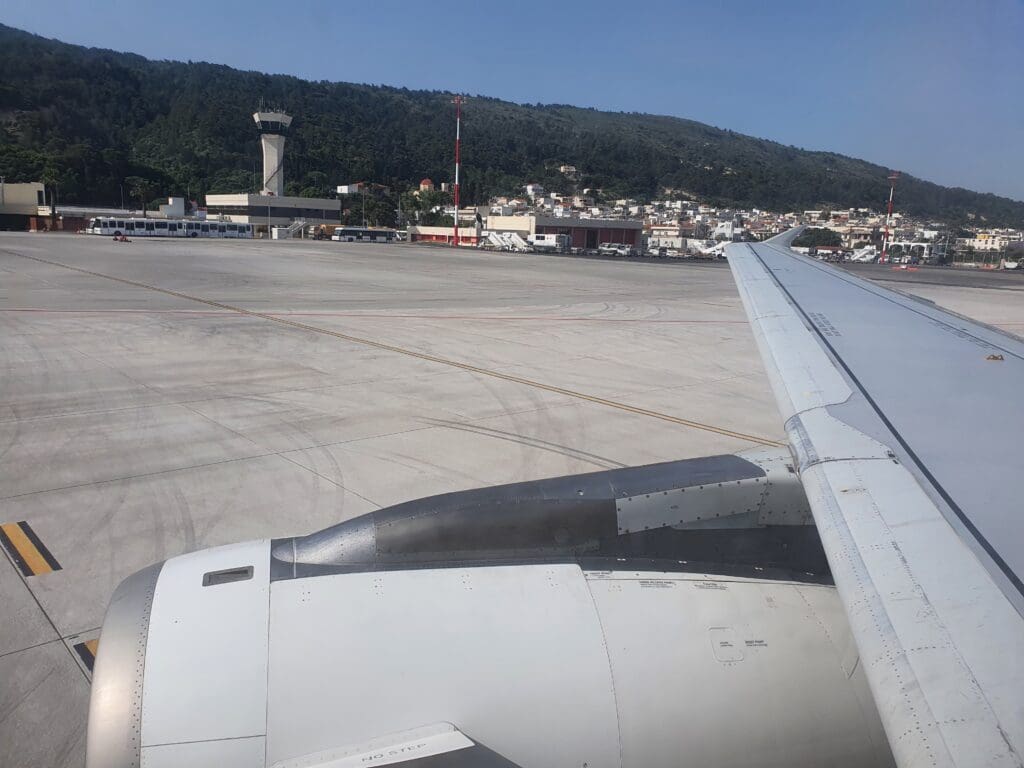
Once the aircraft came to a halt, the engines powered down and the cabin was filled with classical music. As is often the case, many onboard appeared to be in a frantic rush to exit the aircraft, however perhaps to their disappointment, disembarkation took a fair while to commence. As with most, if not all gates at Rhodes Airport, passengers would be bussed the short distance over to the terminal, and once several buses had arrived, passengers were permitted to exit the Airbus. After thanking the two crew members standing in the forward galley, I made my way out of the Airbus and journeyed down the airstairs before darting onto one of the waiting Cobuses. Being one of the final passengers to board this, moments later the doors closed and this pulled away and commenced its short journey over to the terminal building. Arriving as a domestic passenger and not needing to wait for any luggage, following my arrival I was able to speed through the terminal however connecting onwards to Kastellorizo, I was slightly surprised to see there to be no obvious means of making an airside transfer. After approaching a locally based Aegean Airlines staff member, they confirmed that I would have to head landside before heading up to security.