Flying from Greece’s Most Challenging Airport on the Mini Dash 8-100: Kastellorizo to Rhodes with Olympic Air
Background
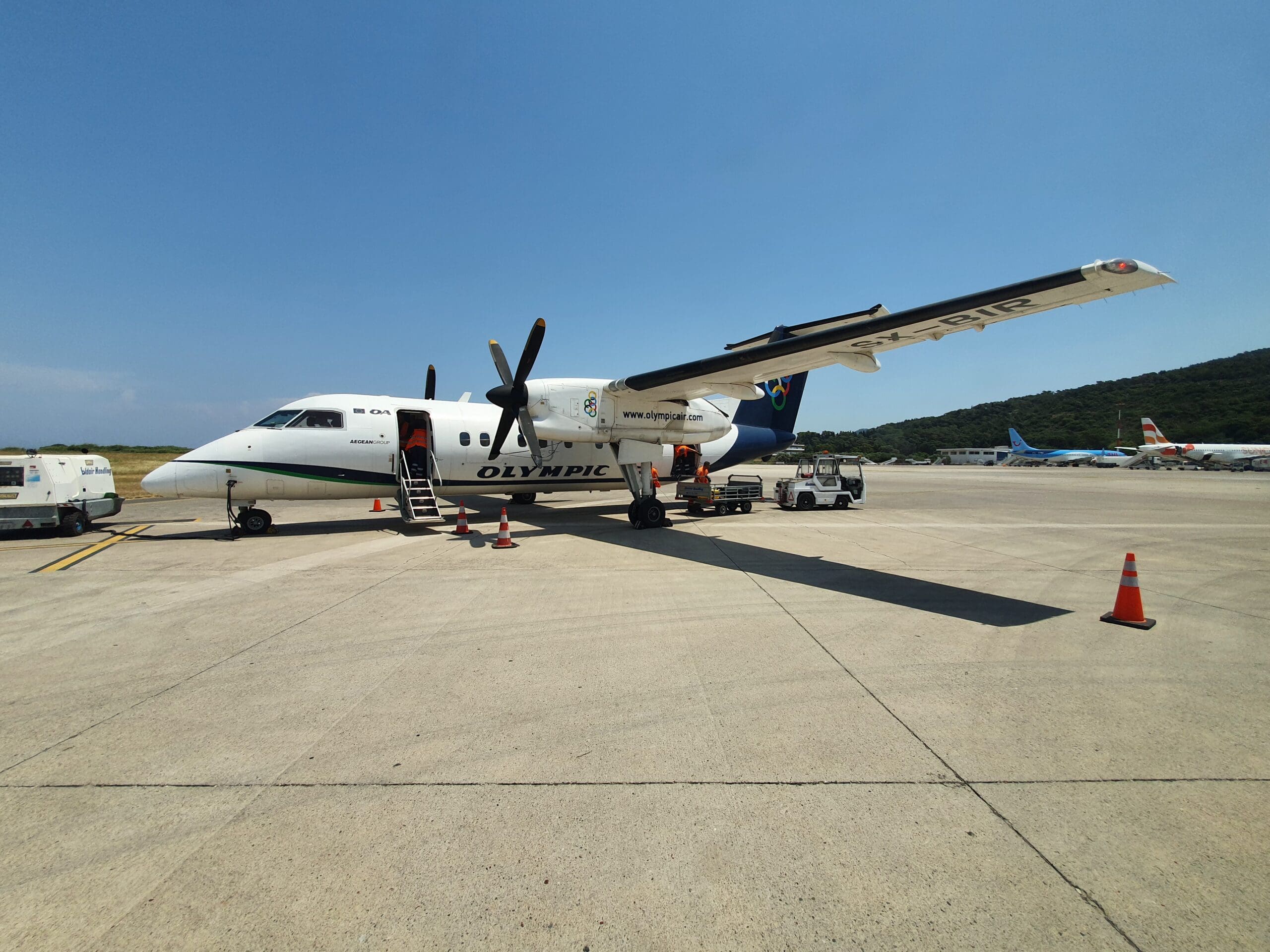
Across much of the world, the Dash 8 is most certainly not a rare aircraft. Since the first example rocketed upwards into the Ontarian skies in 1983, the aircraft has enjoyed notable levels of success with a grand total of over 1250 examples having been manufactured to date. Thus today, the Dash 8 can be commonly seen at airports across the globe and is undoubtedly one of the world’s most successful regional turboprop airliners. Indeed, within living memory, I had made a couple of trips on the Dash 8-300 (once with the long-defunct British regional carrier Air Southwest and more recently in 2021 with Canada’s PAL Airlines) and ten flights onboard the Q400 (flying with Air Canada Express, Croatia Airlines, Flybe, LGW Aviation, Porter and WestJet Encore). However, one variant of Dash 8 that I am less familiar with is its ‘original’ variant, the Series 100. Famously short and stubby in its appearance, this model stands at a little over 22 metres in length and is capable of carrying up to 37 passengers – less than half of the Q400.
Despite their perceived rarity, the 100 Series enjoyed a long production run lasting from 1983 until 2005, with a total of 299 Dash 8-100s (including the ‘original’ variants and Q100s) manufactured during this time. This, in terms of numbers produced, makes the 100 Series the second most common Dash 8 variant after the Q400. However, many of these aircraft have since been withdrawn from use, and today around seventy 100 Series aircraft remain in commercial operation across seven countries. Within Europe, just two carriers currently operate the 100 Series. Up in Norway, regional airline Widerøe serves to be the world’s largest operator of the type, deploying these on vital routes to small and often remote airports across the country. Meanwhile, down in Greece, Aegean Airlines’ regional carrier, Olympic Air operates a total of two Dash 8-100s. Perhaps seen as the odd ones out in Olympic Air’s fleet of mostly ATRs, these Dash 8s play an important role in operating to airports whose short runways make these off limits to the ATRs. Specifically, these aircraft are currently dedicated to the Public Service Obligation route between Rhodes and the small island of Kastellorizo whose airport is famous for its short 800-metre-long runway. Spending a weeklong early summer holiday in Greece in May 2022, being an aviation enthusiast I soon began planning a way to catch a ride onboard one of these rare Dash 8s!
Booking
Seeing the benefit of booking directly with Aegean Airlines in the event that something were to go wrong, I decided to do so via the carrier’s app. After downloading and installing this, I experimented with various options before discovering that the cheapest way to fly on the Dash 8-100 involved booking the outbound and inbound trips separately. Starting with my first booking, upon searching for flights between Athens and Kastellorizo, I was presented with a single option. This would see me jet off on a Rhodes-bound Aegean Airlines Airbus A320, leaving the Greek capital at 0805 on a Monday morning and touching down in Rhodes an hour later. Once on the ground, I would have a couple of hours before heading off on a short forty minute flight over to Kastellorizo. After selecting this itinerary, interestingly, I noticed that only ComfortFlex tickets appeared to be sold for this, with these coming in at €105.68 and coming with the benefits of unlimited rebooking, complimentary seat selection (other than the two exit rows which could be selected for an additional €9) and a hold luggage allowance of 23kg. After selecting this, I provided my details and selected seat 9A from the almost totally empty seat map, before being given the option to add another 10kg to my luggage for €11.36. Other than this, paid extras included security fast track, sports equipment, pet transportation, insurance, parking at Athens Airport and a donation to the charity SOS Children’s Villages. Once done, I then paid without any glitches and received my e-ticket almost instantly. Next up was the return flight to Rhodes two days later. As with the first two flights, booking tickets for this proved to be a quick and easy process and only ComfortFlex tickets were on offer, these being priced at €62.30 for the forty-minute hop. Soon enough, my Dash 8-100 adventure was booked and all that separated me from the trip was four months of waiting!
The Outbound Leg
Having started the day on a quiet and dark Athenian backstreet, I had managed to arrive on the island of Rhodes without too much drama and my first experience with Aegean Airlines on the short hop over the Aegean had left me with nothing to complain about. Despite landing slightly behind schedule, I was able to sail through the arrivals portion of Rhodes Airport and make my way through security and into the airside departures area quickly and with no issues. By mid-morning I found myself relaxing in the terminal, sipping a coffee and looking out over Rhodes Airport’s apron at the miniature Dash 8 that I hoped would take me over to Kastellorizo. However, things took a slightly unexpected turn, when, with an hour to go until my flight to the island, I received a text informing me that the flight had been cancelled. A quick check of the departure boards confirmed this and so I soon approached a member of ground staff who handed me over to a couple of Aegean Airlines agents. After being escorted in the opposite direction through security and back to the landside area, I was taken to a small office where one of the agents advised me that I was in luck as I could take a ferry at 1410 that afternoon before informing me that I should purchase this myself from the website of the ferry operator, Dodekanisos Seaways. Of course, I would be able to claim back the cost of the €38.70 fare for this back from Olympic Air and would be entitled to €250 in compensation as per European Union regulations. Last but not least, as a goodwill gesture, I would also be provided with a one-way taxes-only ticket onboard any Aegean Airlines or Olympic Air flight within Greece and received a text about this offering a short time later.
Whilst the cancellation was slightly disappointing and the experience would have been slightly better had the airline’s staff purchased a ferry ticket for me, overall I can’t complain about my experience in dealing with Olympic Air’s staff in Rhodes. However, I should note that it did take well over two months to receive any sort of compensation from the airline. Following a longer-than-expected transit in Rhodes, and a pleasant two-and-a-half-hour ferry journey onboard the high-speed HSC Dodekanisos Pride, I arrived on the island of Kastellorizo.
The Journey
Whilst my choice to visit Kastellorizo was entirely guided by the fact that it provided me with a surefire means of riding onboard the rare Dash 8-100, the peace of the island provided me with the perfect respite from the hustle and bustle of fast-paced and stressful London life. Home to fewer than five hundred residents, the sun-soaked island has a small and tight-knit community where it seemed that everyone said hello to everyone, sparing the time to interact with one another in a calm and relaxed environment. However, after two nights on the island, the time had come for me to leave the island and head back to the bright lights of Rhodes. Seeking to have one final stroll around the town, on the morning of my flight I woke up bright and early at 0730 and soon headed down through the narrow streets to the port. Whilst early, with bright sunshine already beaming down and heating up the island, the temperature seemed to be comparable to an unusually warm summer’s day back in London, although thankfully a refreshing gentle breeze blew in from the sea providing some sort of natural air conditioning as I wandered through the narrow streets and along the harbourfront. After stopping by at the local bakery for a breakfast pastry, I returned to the quaint guesthouse and began to pack up my things in preparation for my departure.
Covered in rocky hills, the topography of Kastellorizo is most definitely not conducive to the construction of an airport and it is perhaps a miracle that engineers could find enough flat land on the island to build one in the first place! However, this lack of flat land does not mean that the island lacks an aviation history, with Kastellorizo once serving as an important seaplane hub, welcoming aircraft from across Europe as they trundled to and from the Middle East. Flanked on either side by hills and with cliffs at both ends of the runway, since opening in its current form in 1986, Kastellorizo Airport has become famous amongst pilots for its challenging approach and is perhaps as close as a Greek airline pilot may get to landing on an aircraft carrier. Sitting around two and a half kilometres to the southwest of the town, given the morning heat and the fact that the airport is located on the other side of a large hill, I decided against making the journey to the airport on foot. Fortunately, the island’s only taxi driver runs an ad hoc minibus service between the town and the airport to shuttle passengers to and from flights. The driver, a late middle-aged gent, appeared to be somewhat of a well-known figure on the island. Having been met at the port by the owner of the guesthouse, during the walk to the accommodation the owner had pointed the driver out and questioned them as to why the flight to Kastellorizo that day had been cancelled and how many passengers had been scheduled to be on this. The response was that this was due to a technical issue and that I had been one of nine passengers booked on this flight. Appearing to spend much of their day sat on a wooden chair next to their taxi in the town’s main square, fortunately, they were not difficult to find and so the afternoon before my flight I consulted him on the bus to the airport and was advised that this would leave the square at 1030 and cost a grand total of €5.
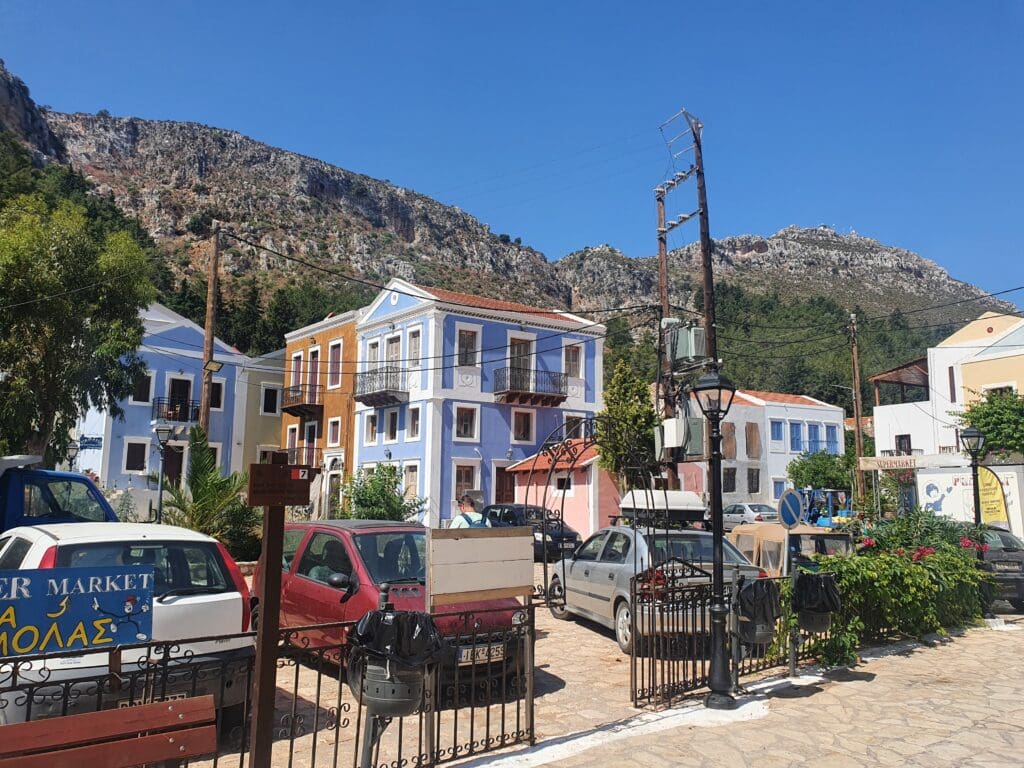
Not wanting to miss the bus, I decided to leave the guesthouse at 1010 and began the two-minute walk down to the town’s main square. Whilst neither the driver nor their battered Ford Transit minibus could be seen, the presence of seven suitcase-wielding passengers reassured me that I was waiting in the right place. At 1032, the white minibus reversed into the small car park at which point the Rhodes-bound passengers swarmed around, eager to head off to the airport. With the minibus containing just eight passenger seats, and taking into account the Dash 8-100’s ability to carry a total of up to 37 passengers, it turned out that if required (as it usually is), the driver makes multiple round trips between the town and airport, ensuring that no passenger gets left behind. Fortunately, I ended up taking the last free passenger seat, which, positioned next to the driver, would allow for some good views during the journey. Once all were firmly in their seats, the minibus whizzed off up the narrow and winding uphill road, the driver appearing to be Kastellorizo’s answer to Lewis Hamilton. As we headed up the hill, my position at the front of the bus afforded me a good view of the blue Aegean waters as well as of the Turkish coastline a short distance away.
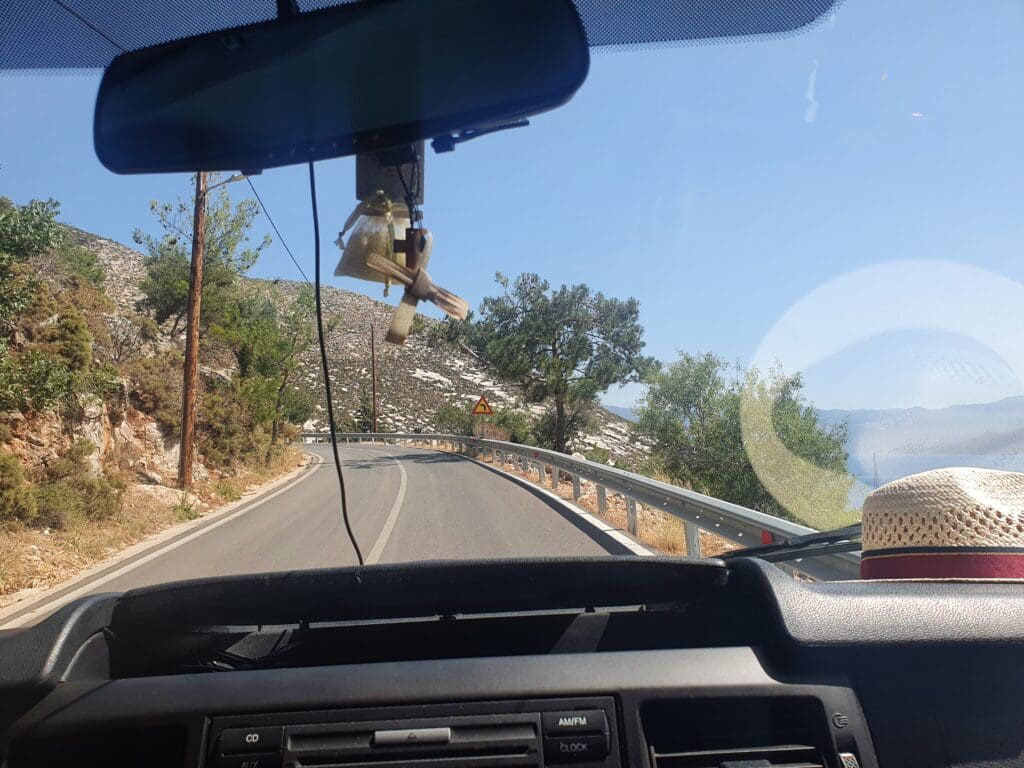
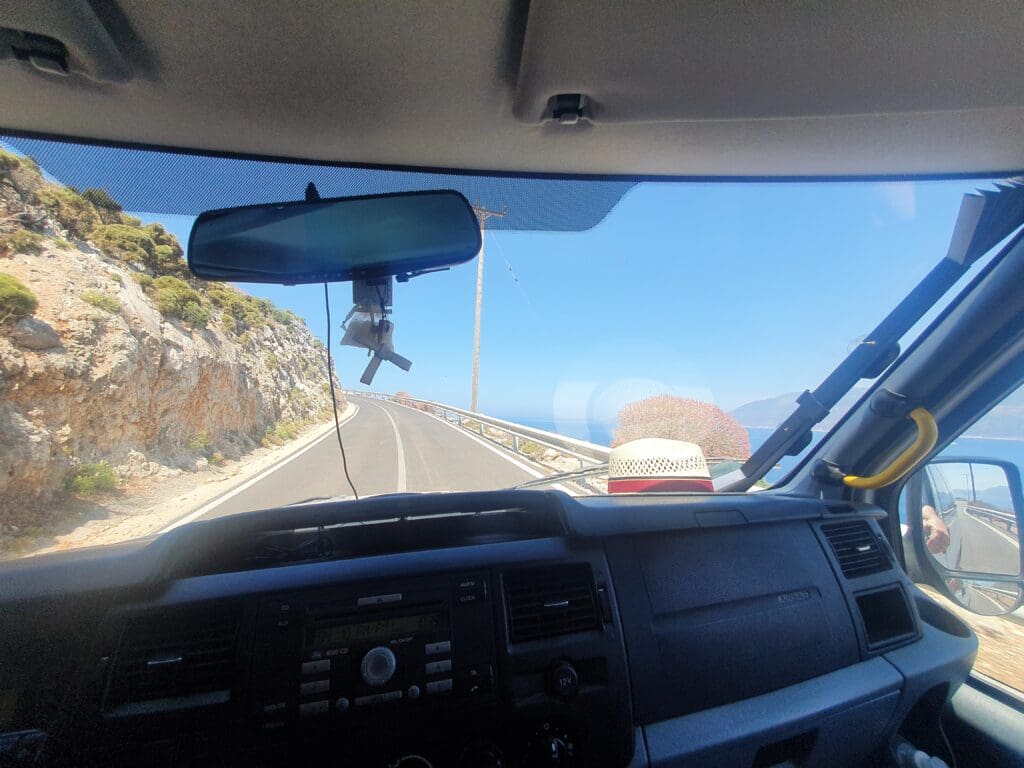
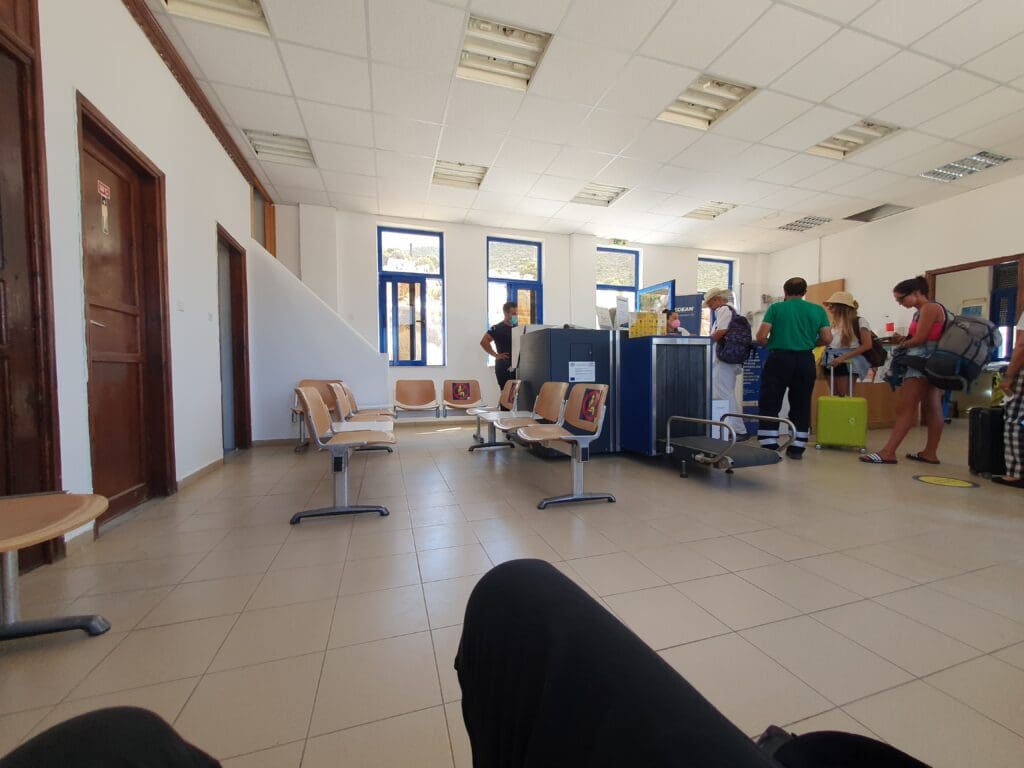
No more than four minutes after leaving the town centre, the end of Kastellorizo Airport’s short and narrow runway appeared and we soon pulled up outside the simple white stone building that serves as the airport’s terminal. In terms of its layout, Kastellorizo Airport is rather compact, featuring a 800 metre (2,624 feet) long runway with a single taxiway leading off this which connects it to the small square-shaped apron. Other than the terminal building, I counted three other buildings dotted about – one of which houses the security checkpoint that all passengers must pass through before boarding. Once off the bus, I thanked the driver and handed over a €5 note before following the crowds into the terminal building. Inside, the terminal’s interior was expectedly spartan – with this containing a single counter, a few benches and an X-ray machine to scan hold luggage which was guarded by a stern-looking police officer. Branching off this, three office rooms could be found as well as some rather rudimentary seat-less toilets. In keeping with the terminal’s slightly dated aesthetic, this appeared to lack any public wifi network and I failed to spot any plug sockets available for passengers to charge their devices. Needless to say, whilst those expecting Singapore Changi levels of luxury would have undoubtedly been rather disappointed, I found the terminal building to be clean and functional, leaving me with no major complaints. Furthermore, the airport seemed to be one of the very few that I have passed through where there was absolutely nothing to buy!
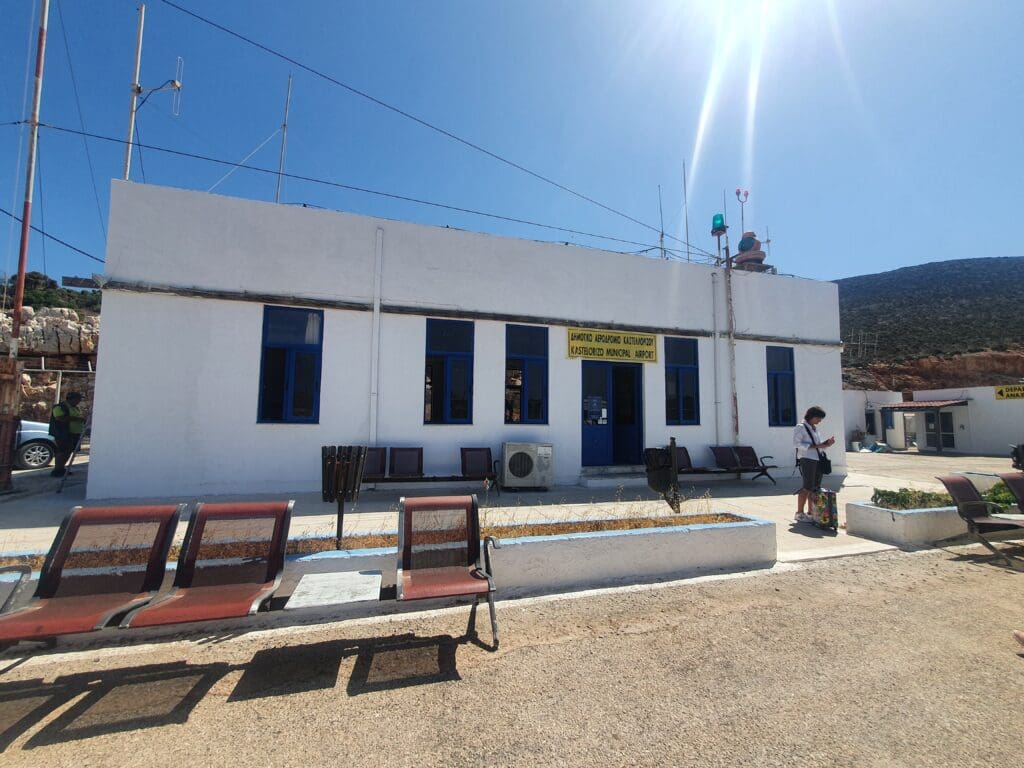
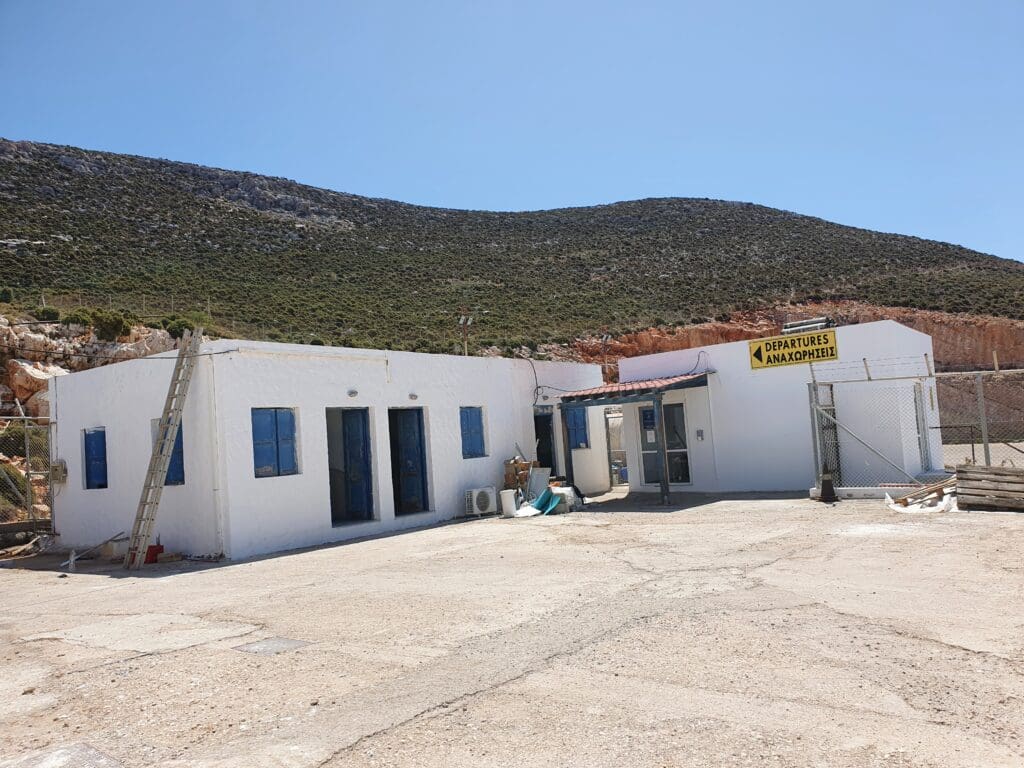
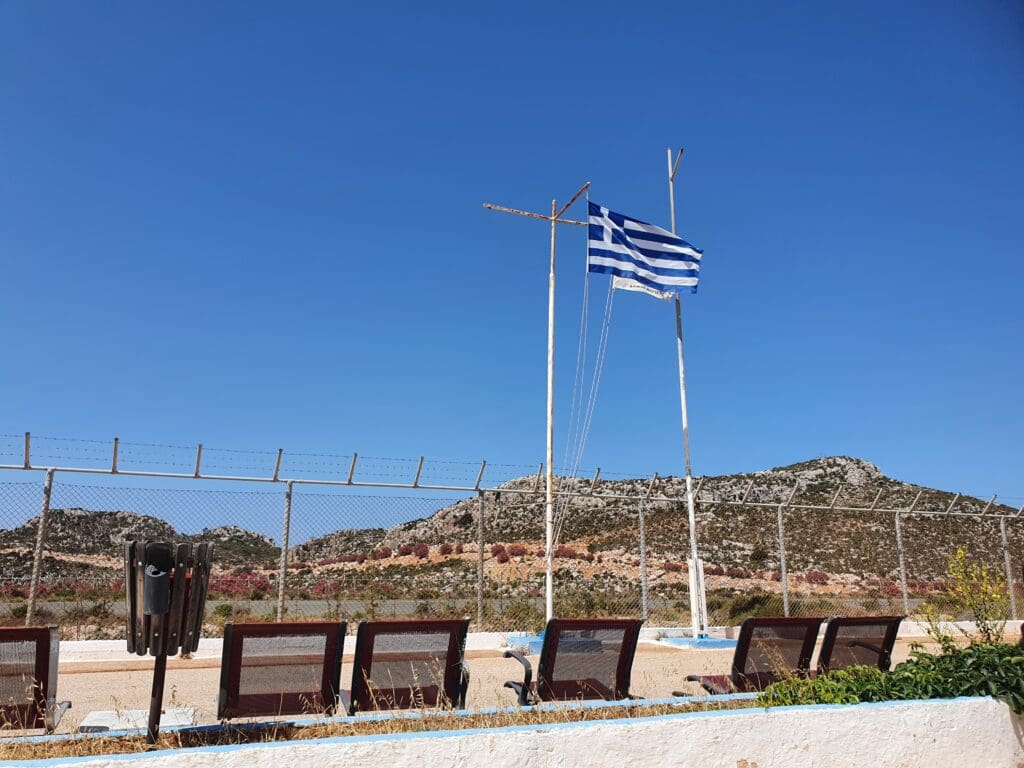
Having checked in online and lacking any baggage to send off into the hold, seeking a paper boarding pass I decided to make my way over to the counter and was soon greeted in Greek by the sole Skyserv ground agent. Finding them to undertake their duties in a polite, efficient and friendly manner, I was soon handed a boarding pass before a label was attached to my cabin bag. Once I had this in hand, I had little to do other than wait for my flight. Given the sunny weather, rather than sit inside the small and dingy waiting area, as with most passengers I instead opted to wait on the metal benches positioned outside of the main terminal building. Far from being Greece’s busiest airport, as I waited, there was little to see on the runway or apron, with the highlight being a convoy of camouflaged military vehicles appearing ready to collect military personnel arriving on the inbound flight from Rhodes.
Seeing as Olympic Air’s two-strong Dash 8-100 fleet do not appear on flight tracking apps, as I waited I had no way of checking up on the progress of the inbound flight as it hopped over from Rhodes. I did however know that this was set to land on the small island at 1145 and a short turnaround time of just twenty minutes had been pencilled in by Olympic Air’s schedulers. Ten minutes ahead of its scheduled arrival time, the noise of the Dash 8’s two turboprop engines pierced the late morning air before the short and stubby Dash 8 appeared, darting past the nearby hilltop before touching down on Kastellorizo Airport’s Runway 13. Whizzing past just a very short distance away from the terminal, the noise produced by the Dash 8’s two engines was rather deafening, both during landing and a couple of minutes later when this came to a halt on the stand. After coming to a halt, the Dash 8’s piercingly loud engines soon spooled down at which point peace was temporarily restored. That was until the ramp agents began shouting at one another as they readied themselves to unload the baggage from the inbound flight. With no bus required to shuttle passengers to the terminal, nor a jet bridge to be connected, the cabin door was opened a very short time after the two engines spooled down. Soon enough, passengers began to emerge from the cabin of the miniature Dash 8 and made their way over to the terminal building. That morning, the flight to the island appeared to have been relatively full, with a particularly high number of camouflaged military personnel failing to blend in!
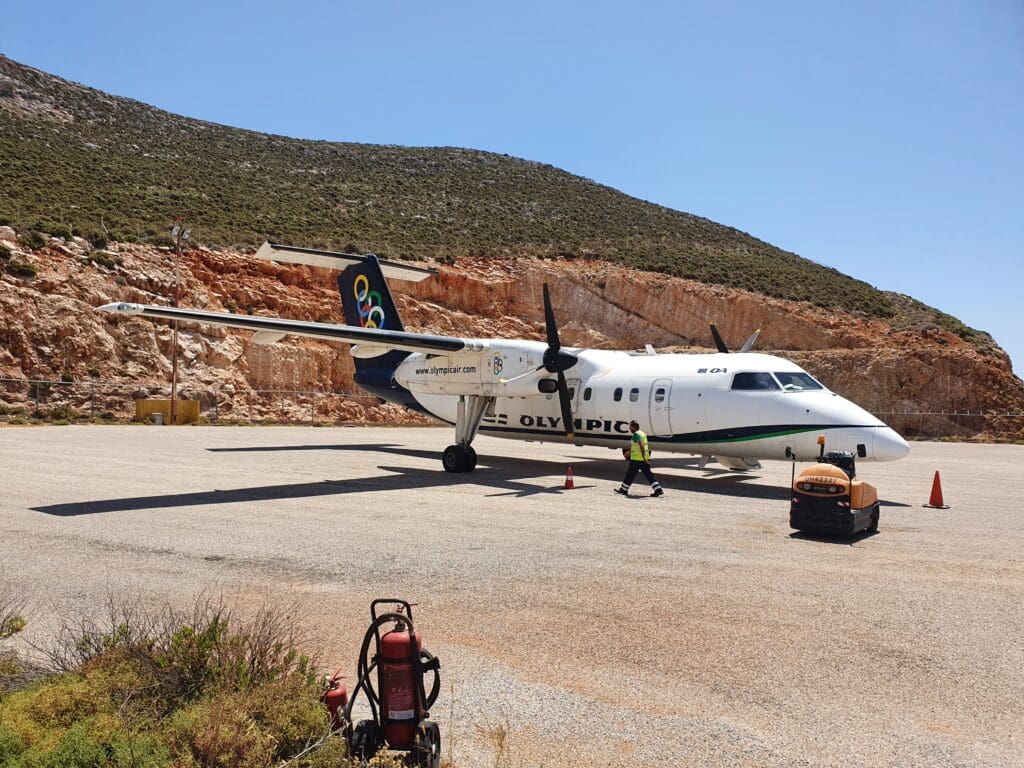
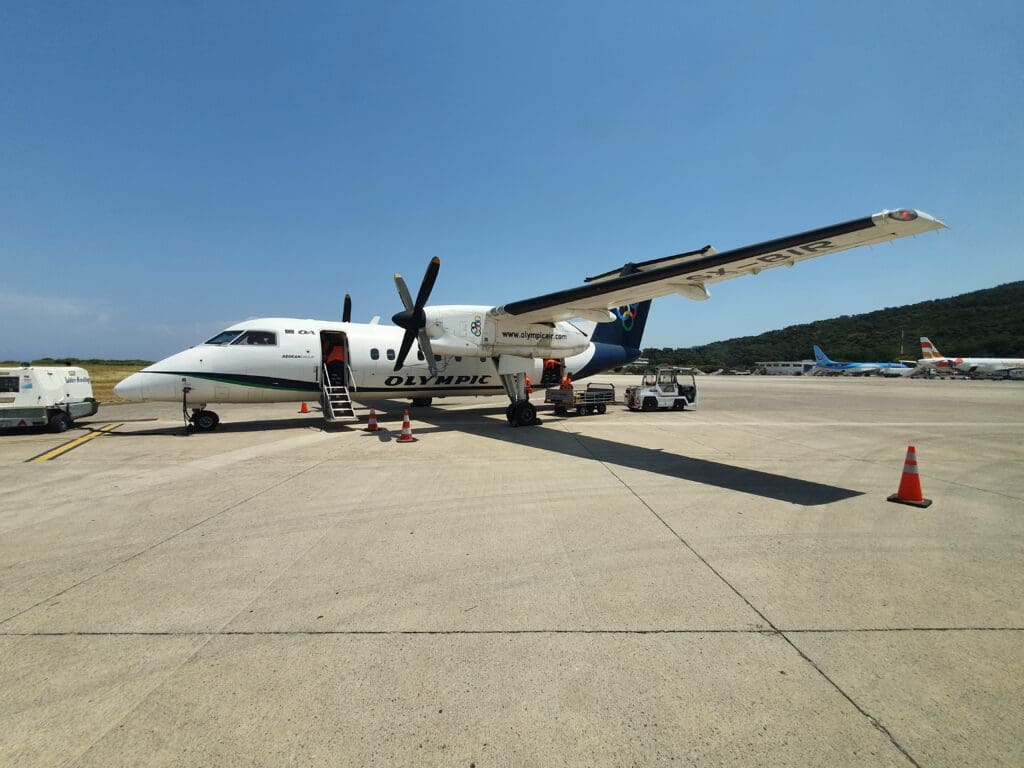
That day, Bombardier Dash 8-102A SX-BIR had been assigned to operate the rotation between Kastellorizo and Rhodes, whilst Olympic Air’s other miniature Dash 8 operated the service between Athens and Naxos. Having been manufactured at Bombardier’s Toronto Downsview plant, this particular Dash 8 first took to the skies with the test registration of C-GFQL in 1993, making it around 29 years old at the time of my flight. Adorned in the red and grey colour scheme of Northwest Airlines’ regional subsidiary Northwest Airlink, the aircraft commenced its life in the US in August 1993 where it flew with Mesaba Airlines as N865MA. Almost exactly five years later, in August 1998 the aircraft moved on and headed southwards to South America where it settled in the Argentinian capital, Buenos Aires. There, the Dash 8 spent another five-year stint flying for Southern Wind Airlines as LV-ZGB before returning north in the summer of 2003 for a temporary stay in Calgary. There, the Dash 8 received the mostly white colour scheme of Olympic Air’s predecessor Olympic Aviation before beginning the long journey to its new home in Greece where it has remained ever since.
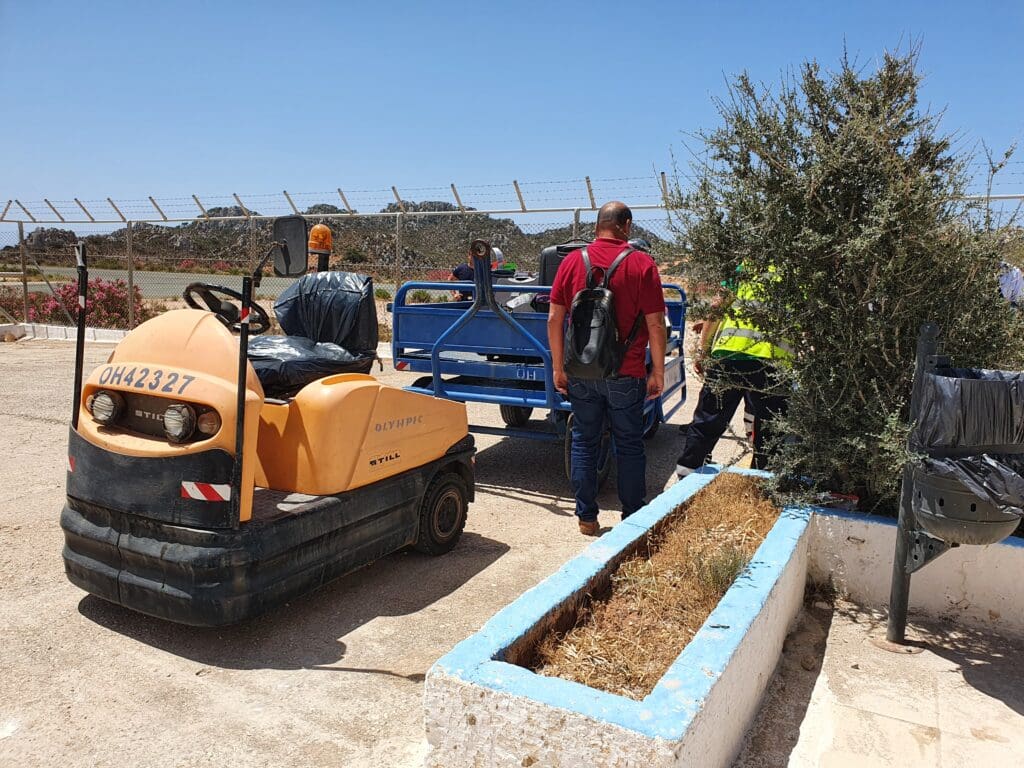
Once all those lucky passengers bound for Kastellorizo had disembarked the aircraft and made their way to the terminal’s car park. The check-in agent could be seen boarding the aircraft and began the task of ensuring that the cabin was in a tidy and presentable state for the return leg to Rhodes. Meanwhile, at this time the Captain emerged and made their way over to the terminal building. A short time later, inbound passengers’ bags as well as several Hellenic Post sacks were transported to the makeshift arrivals area in the car park in a cart and passengers were free to collect their luggage directly from this. After all of these bags and mail sacks had been taken, outbound passengers’ bags were then transported out to the aircraft on the cart.
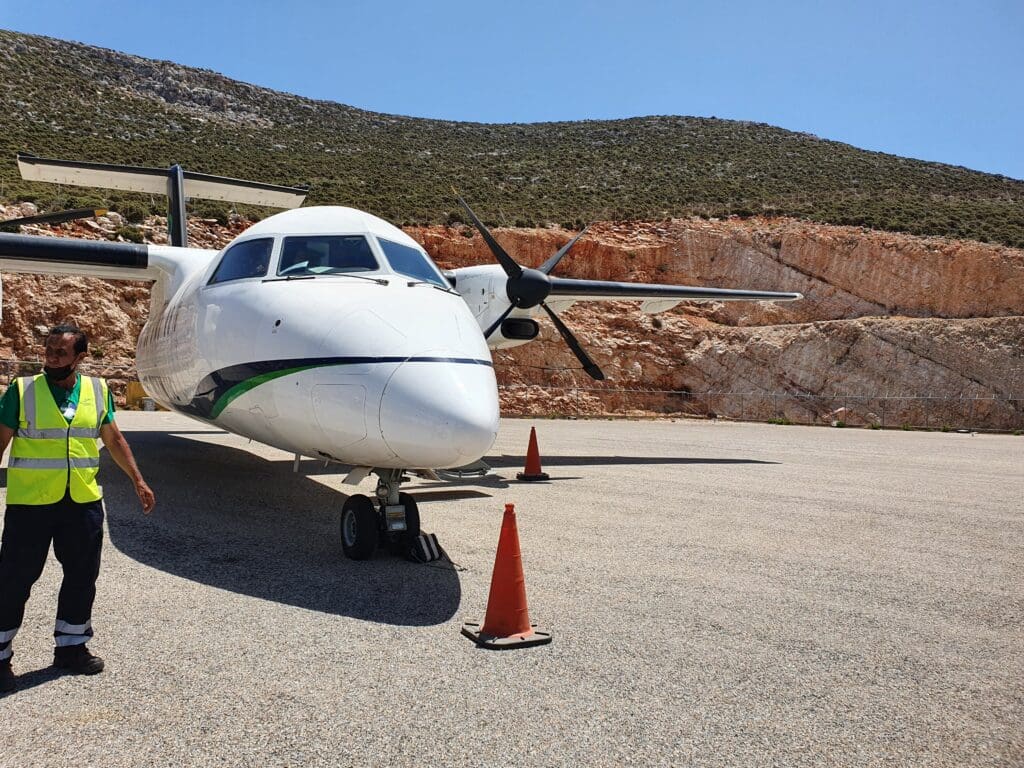
At 1150 passengers were invited to head to the security hut where all were required to send their bags through an x-ray machine and walk through a metal detector, with the stern-looking police officer responsible for this process. Once through this check, another short wait was required out in the open air before the check-in agent permitted passengers to head over to the waiting aircraft. After walking around the front of the aircraft and the Dash 8’s nose, I climbed up the steps built into the inner side of the aircraft’s door before darting into the aircraft. As soon as I entered the small forward galley I was greeted in Greek and handed an Olympic Air branded packaged wet wipe. Not wanting to head to the cockpit or miniscule lavatory to my left, once onboard I turned left and voyaged into the Dash 8’s small nine-row cabin.
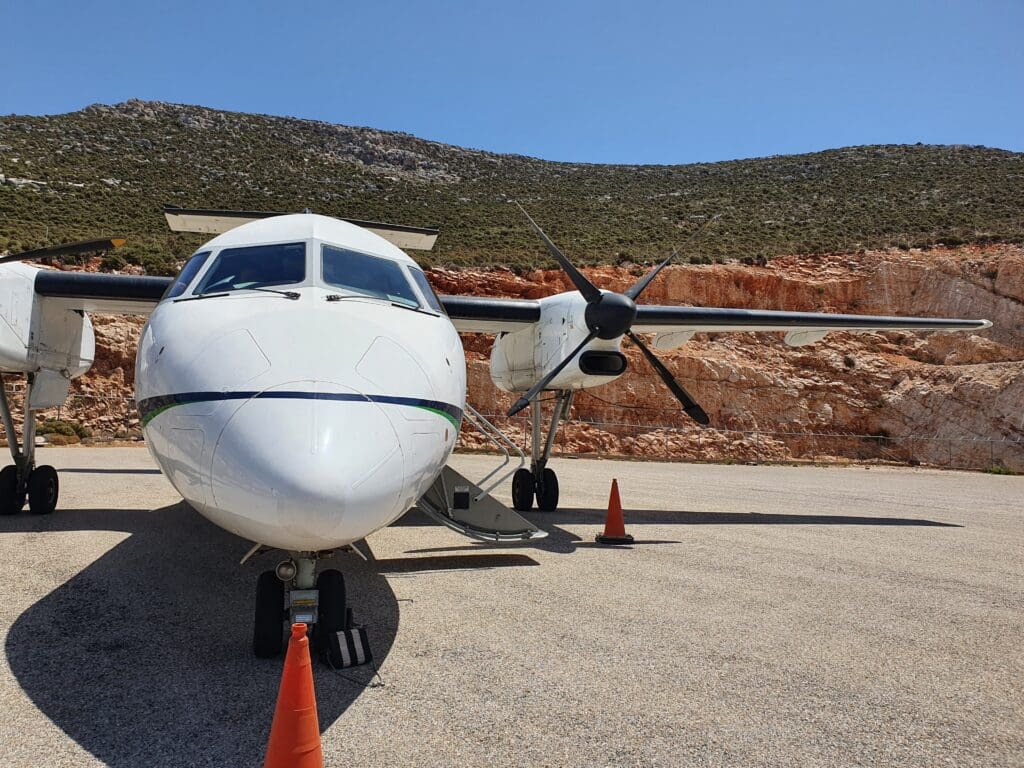
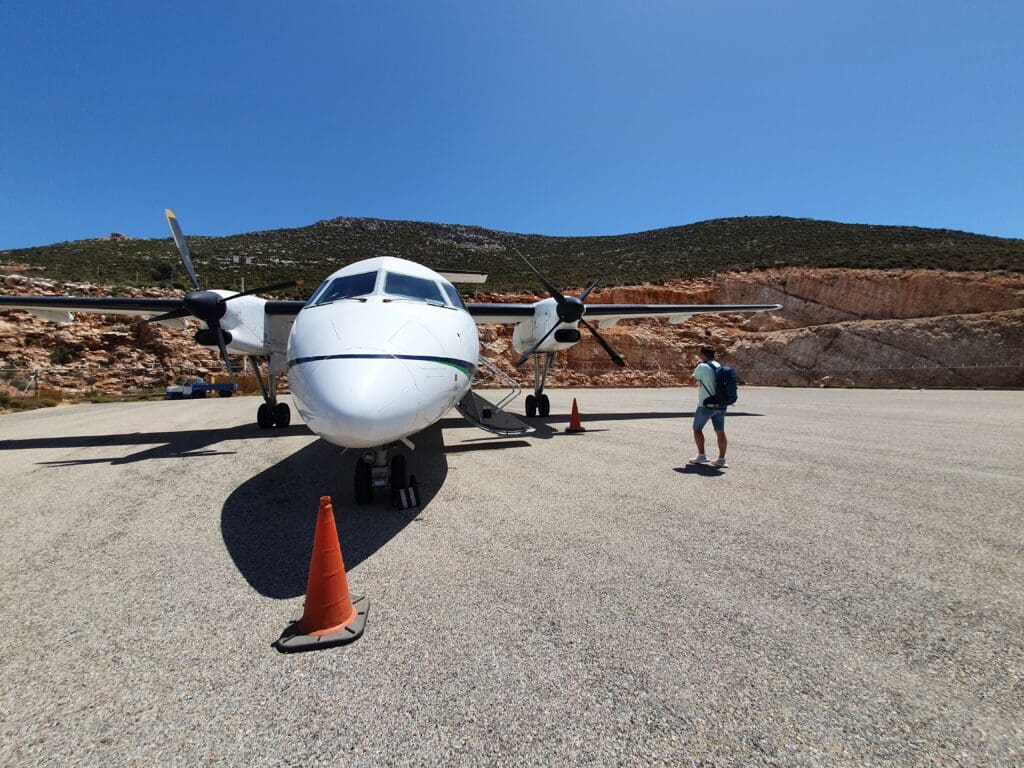
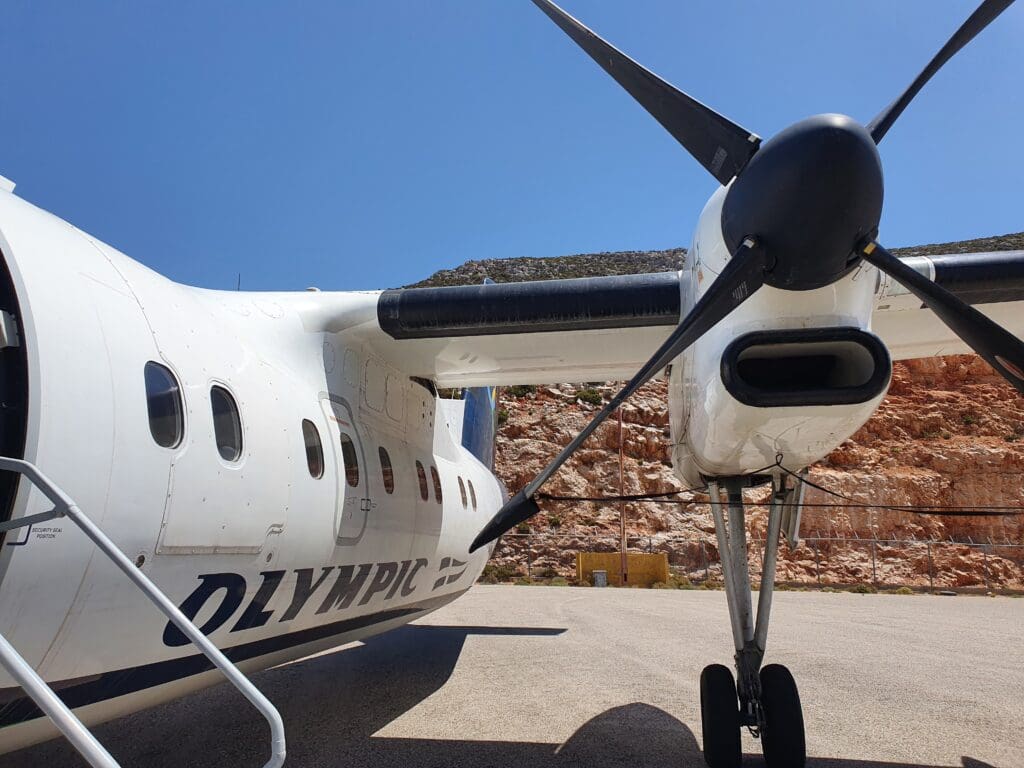
Onboard, I found each of the 37 seats to be covered in a dark (faux?) leather covering and featured slightly old-style chunky armrests complete with ashtrays. Arranged in a 2-2 configuration, each seat was typically Dash 8 in its design and thus had the magic characteristic of appearing to be both chunky and thin at the same time! Upon making it to my row, I stored my backpack in the small overhead compartment and then slid into Seat 8F. One point to note is that with the Dash 8-100 featuring only limited windows on either side of the cabin, many of the rows in the aircraft seemed to poorly align with the aircraft’s windows. Upon taking my seat, I found this to be soft and well-padded and provide a decent amount of legroom that would have proven to be sufficient on a flight of much longer duration than the short hop over to Rhodes. Meanwhile, despite the cabin’s rather vintage aesthetic, this appeared to be in good shape – both appearing to be spotlessly clean and lacking any major signs of wear and tear.
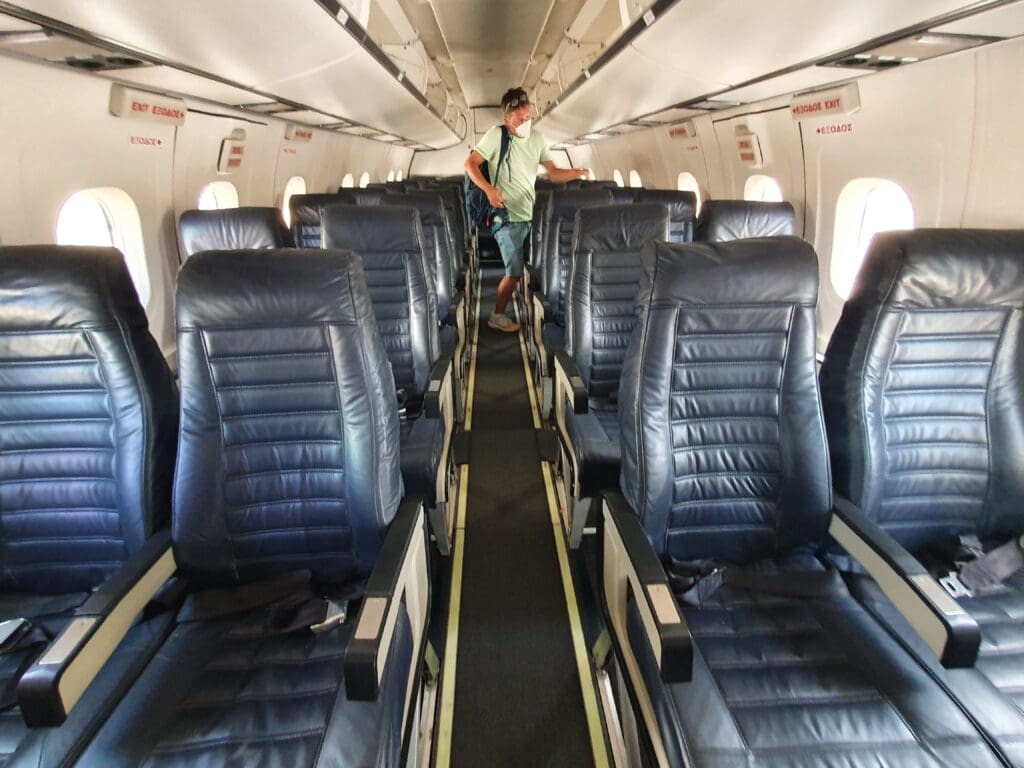

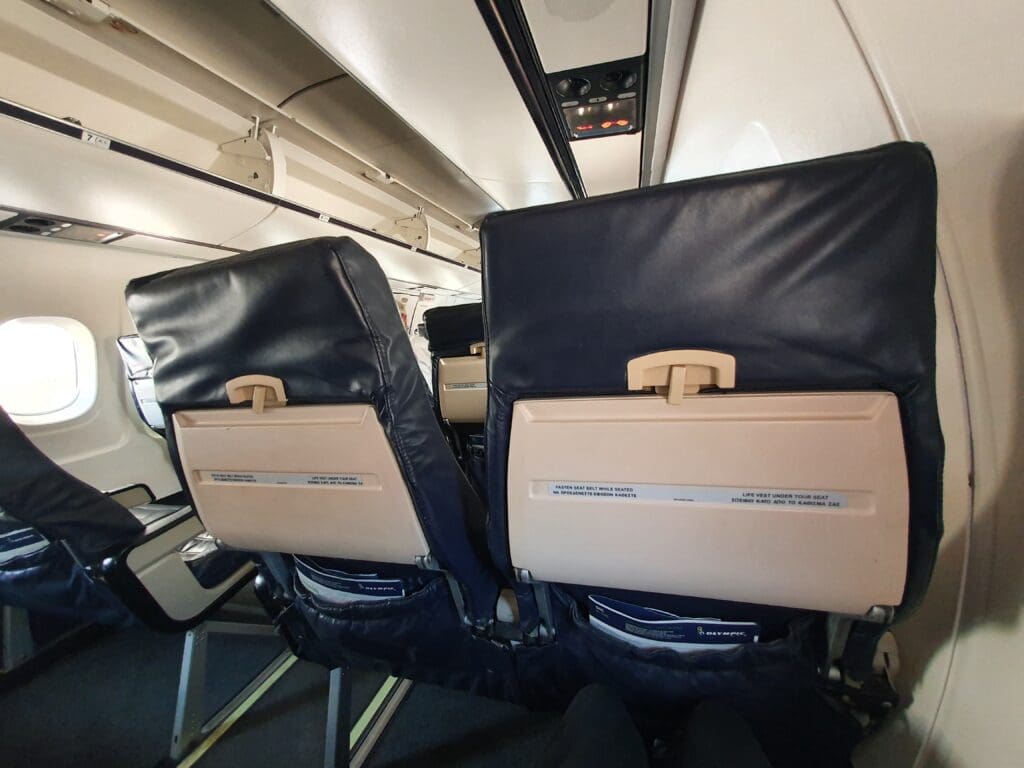
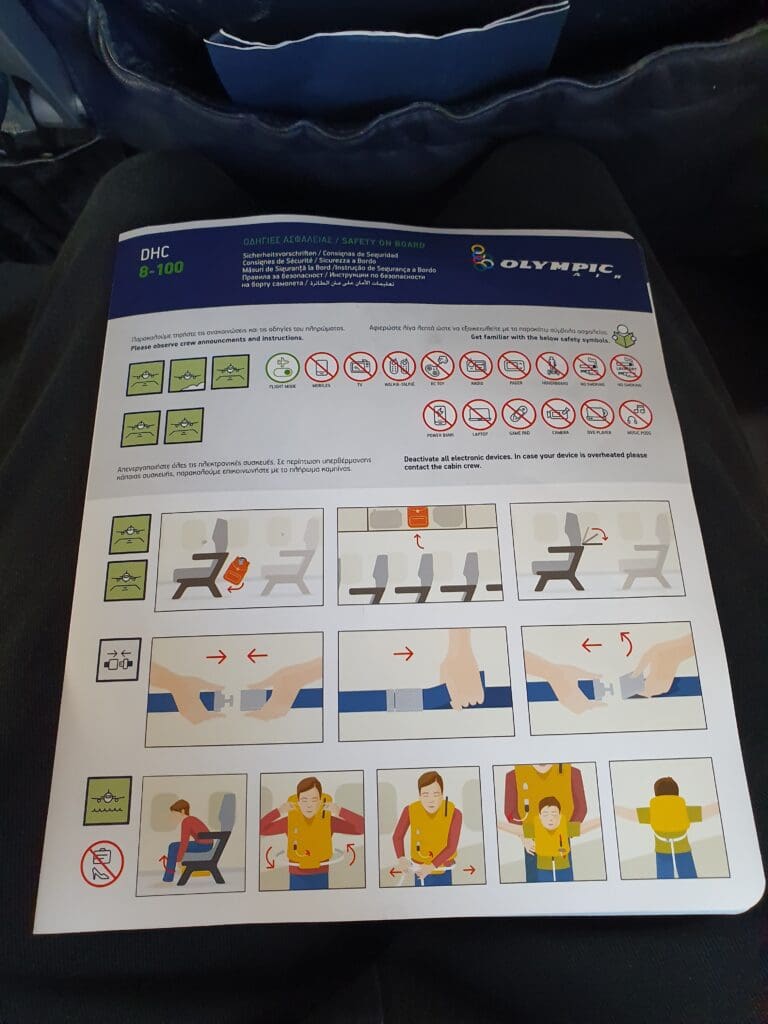
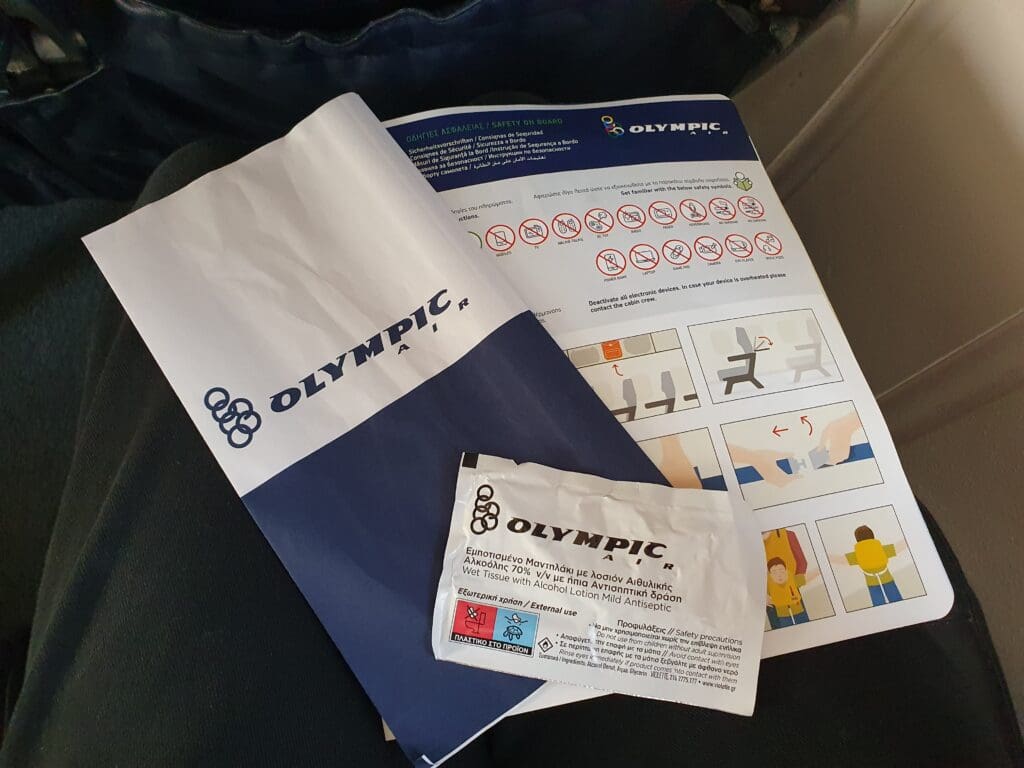
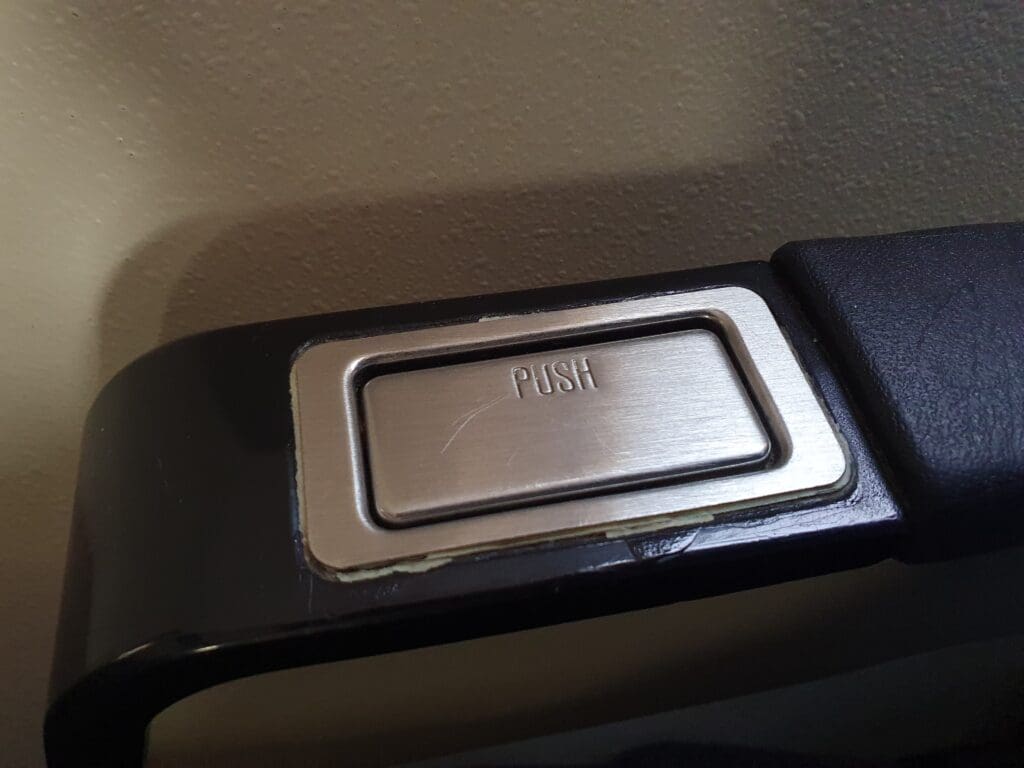
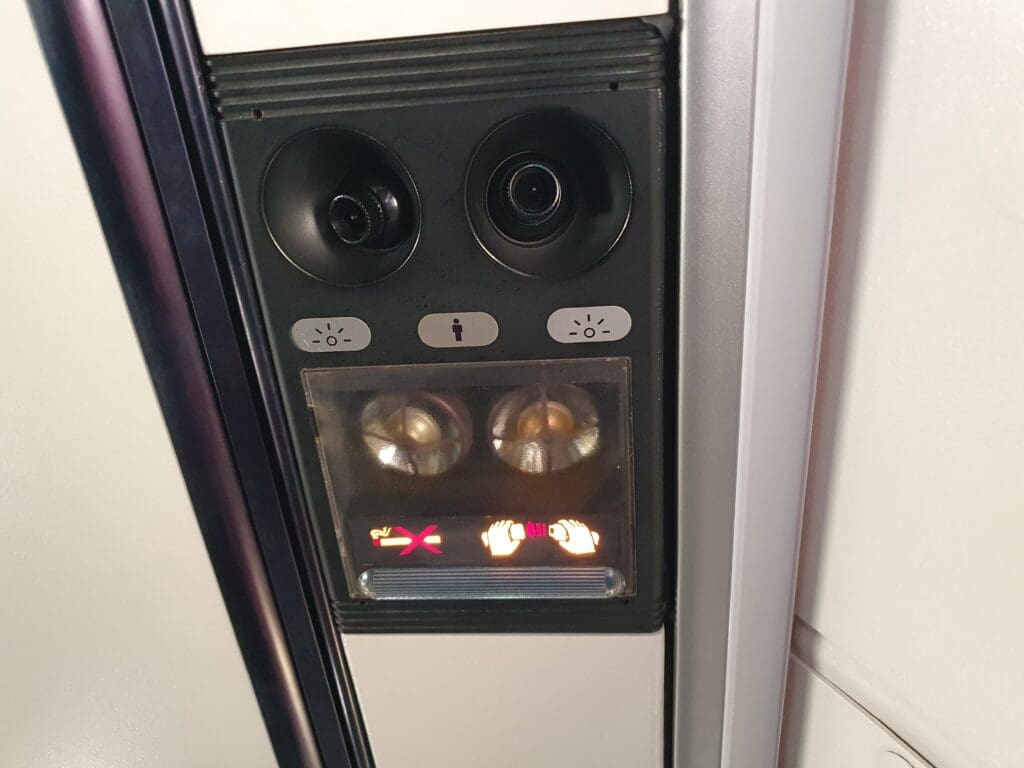
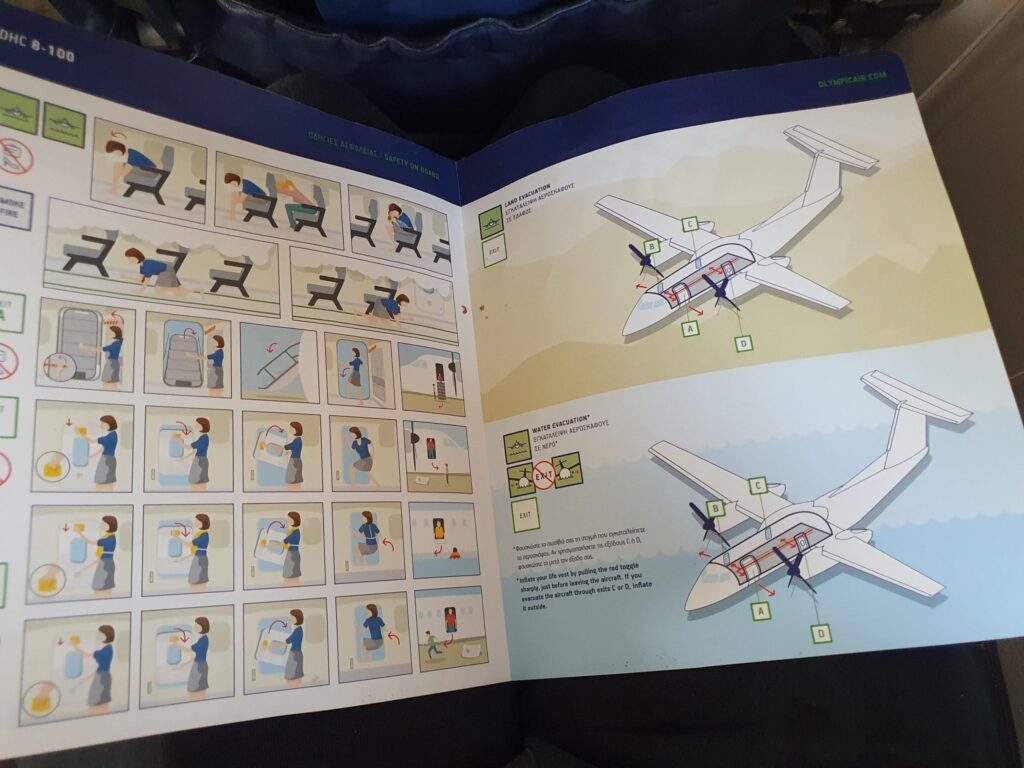
That morning, with no stragglers, boarding was completed a whole eleven minutes ahead of our scheduled departure time. Onboard, a total of thirteen passengers (equating to a load of 35%) could be seen – most of whom were heading onwards on Aegean Airlines services to Athens and Thessaloniki. Indeed, unless you happen to be an aviation enthusiast seeking out a ride on a rare Dash 8, flying point-to-point, centre-to-centre between Kastellorizo and Rhodes is likely to prove slower than taking the fast ferry between the two islands. As soon as the last passenger to board had taken their seat, the flight attendant performed a quick welcome and safety announcement in Greek and English from their station at the front of the cabin. As they went through the safety instructions, the Dash 8’s two Pratt & Whitney Canada PW120A engines spooled up into life resulting in plenty of vibration and some slight swaying from side to side.

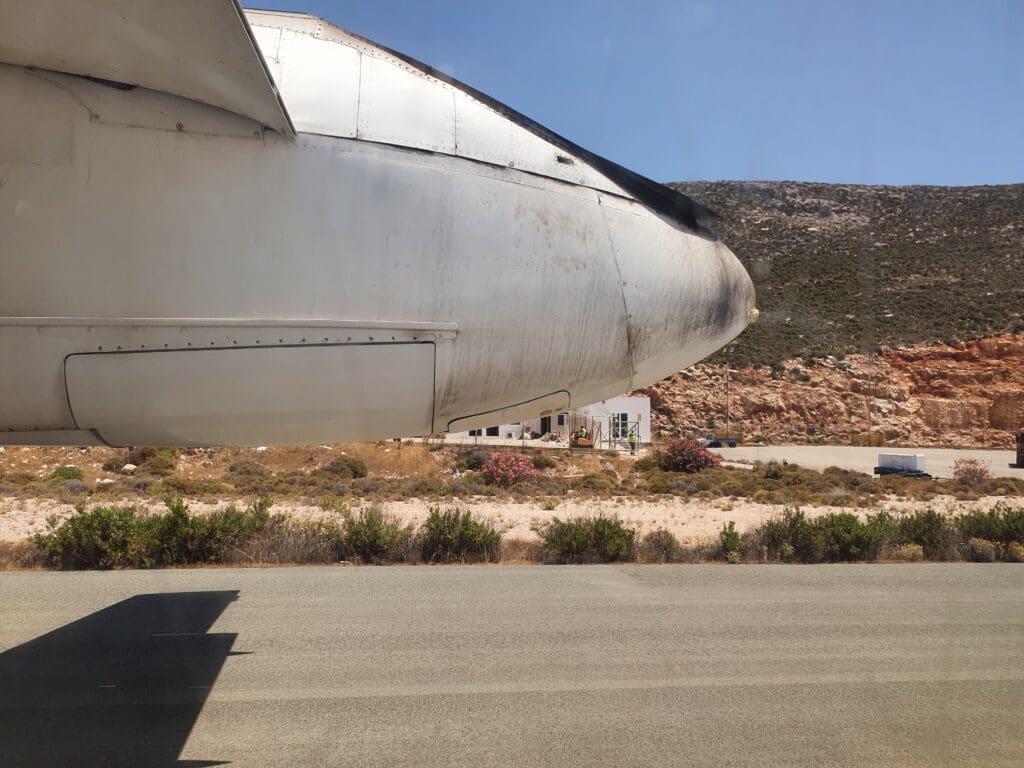

At 1208 the aircraft powered forward out of its stand and began the short journey to the end of Runway 13. Once away from the apron, the Dash 8 taxied along the taxiway before turning right and backtracking to the end of the runway. During this journey, the flight attendant passed through the cabin and ensured that all was in place for our departure before strapping themselves into the jumpseat at the front of the aircraft. Upon arriving at the end of the runway, the aircraft turned around and came to a halt, remaining there for a short time. At 1210, with the brakes held, the two engines spooled up creating a fair racket in the cabin, and several seconds later, the brakes were released causing the aircraft to rocket down the runway and rotate upwards into the sunny Greek skies.


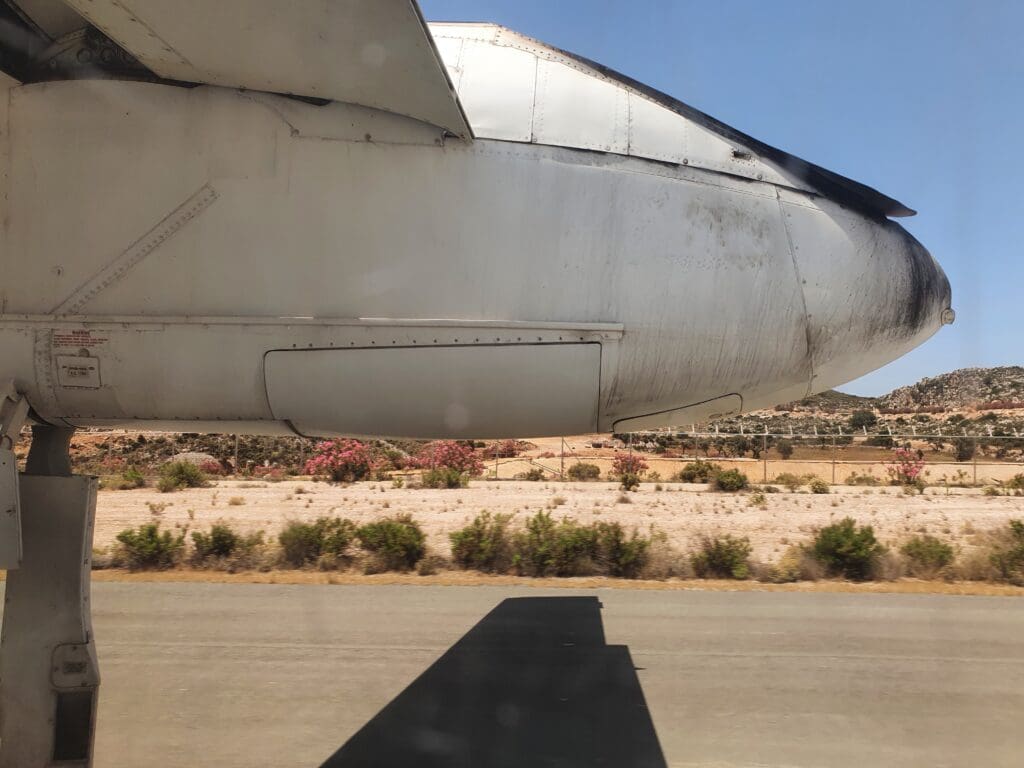
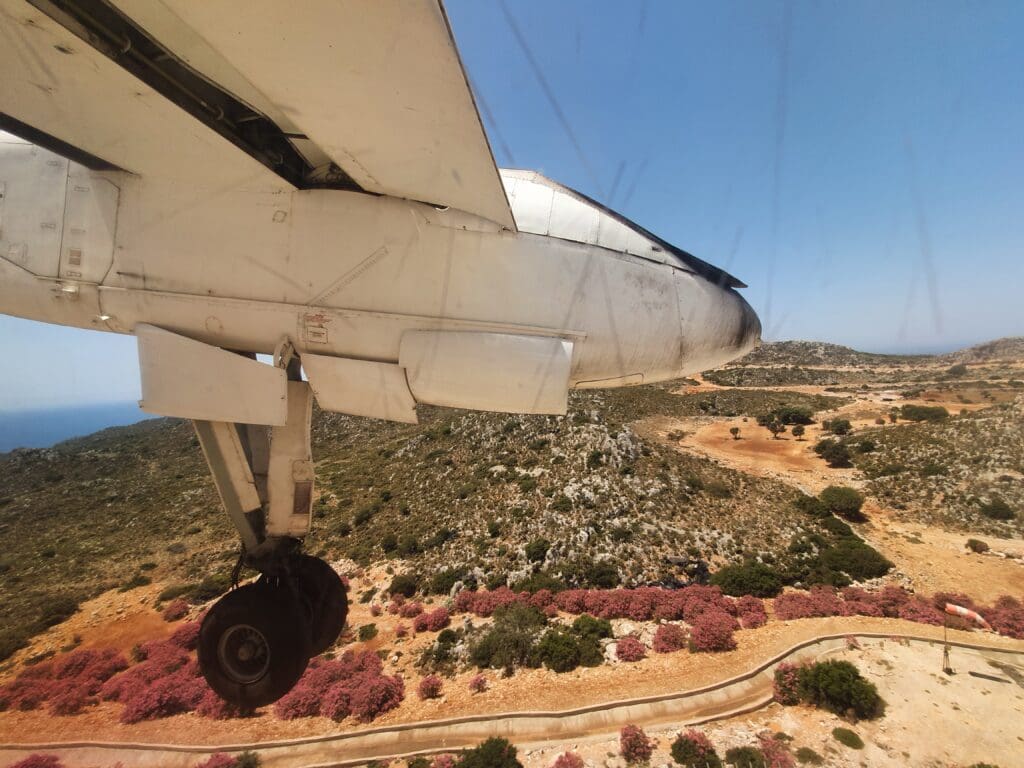
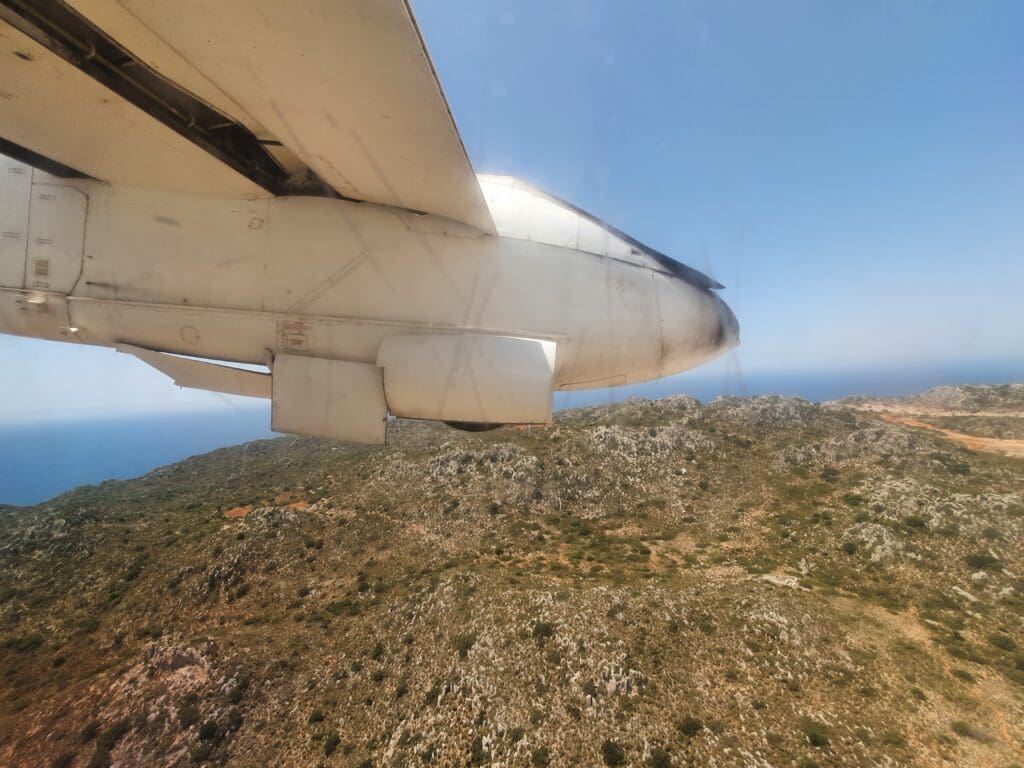
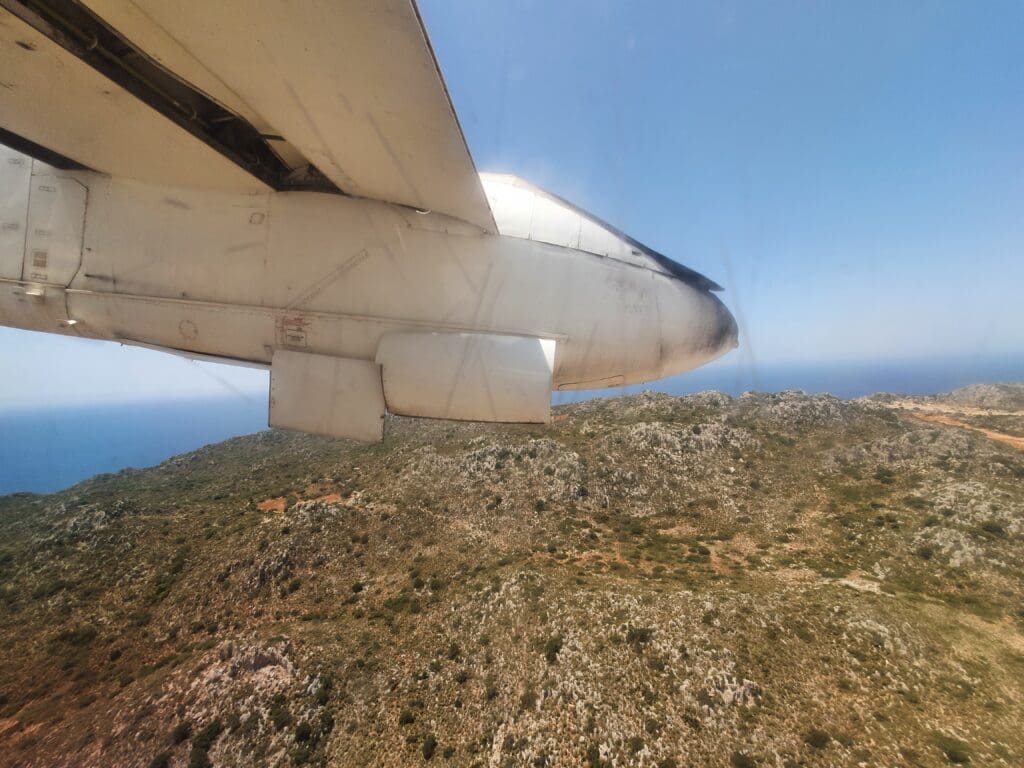
Upon taking to the skies, the Dash 8 rocketed out over Kastellorizo’s rocky landscapes as the gear was retracted into its housing just beneath the engine. Seconds after departure, the Dash 8 crossed the coastline and made its way out over the invitingly blue waters of the Aegean Sea. A short time later, the aircraft banked to the right, allowing for one final parting view of the entire island of Kastellorizo. Meanwhile, the nearby uninhabited island of Rho as well as the Turkish coastline could also be seen as we made our way up to our low cruising altitude.
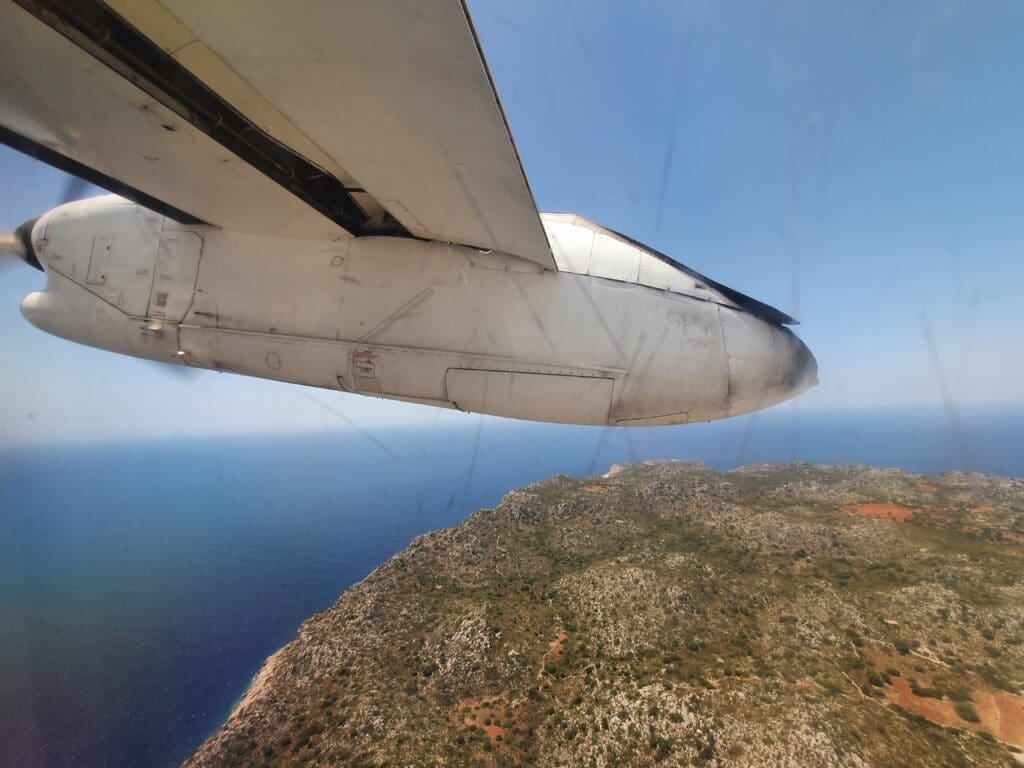

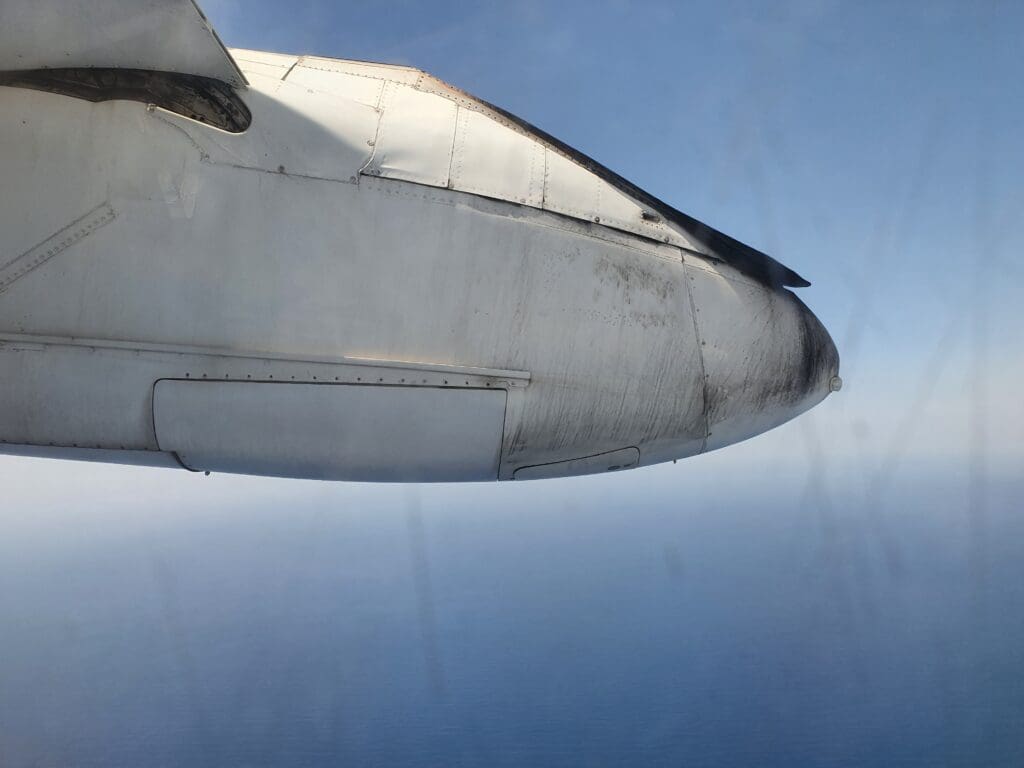

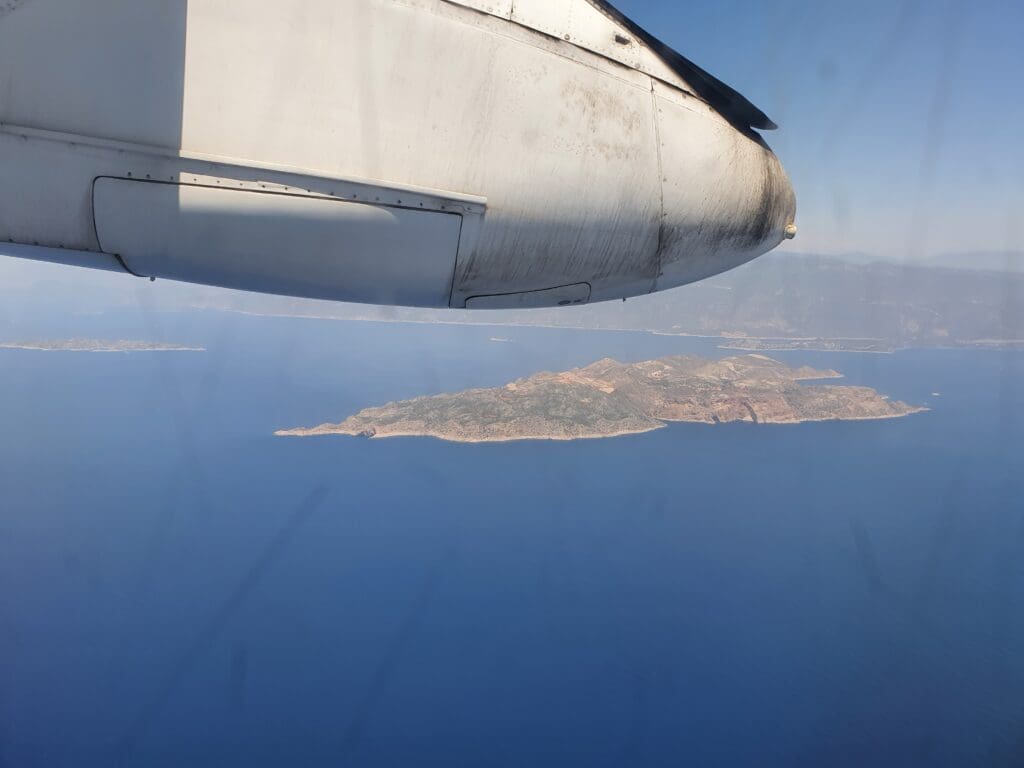
At 1215, the seatbelt signs were switched off at which point the flight attendant promptly stood up and closed the curtain at the front of the aircraft. Around a couple of minutes later, the flight attendant emerged with a small trolley and commenced the inflight service. Whilst many passengers may well not expect to receive anything on such a short flight, that lunchtime all onboard were offered a packet containing two chocolate biscuits, a 330ml bottle of still water and another Olympic Air branded wet wipe. This was handed out in a polite and friendly manner, with the flight attendant taking the time to have some dialogue with each of the passengers onboard. However, I can’t help but think that in the event of a full flight such personalised service may well prove to be impossible given the short flight time.
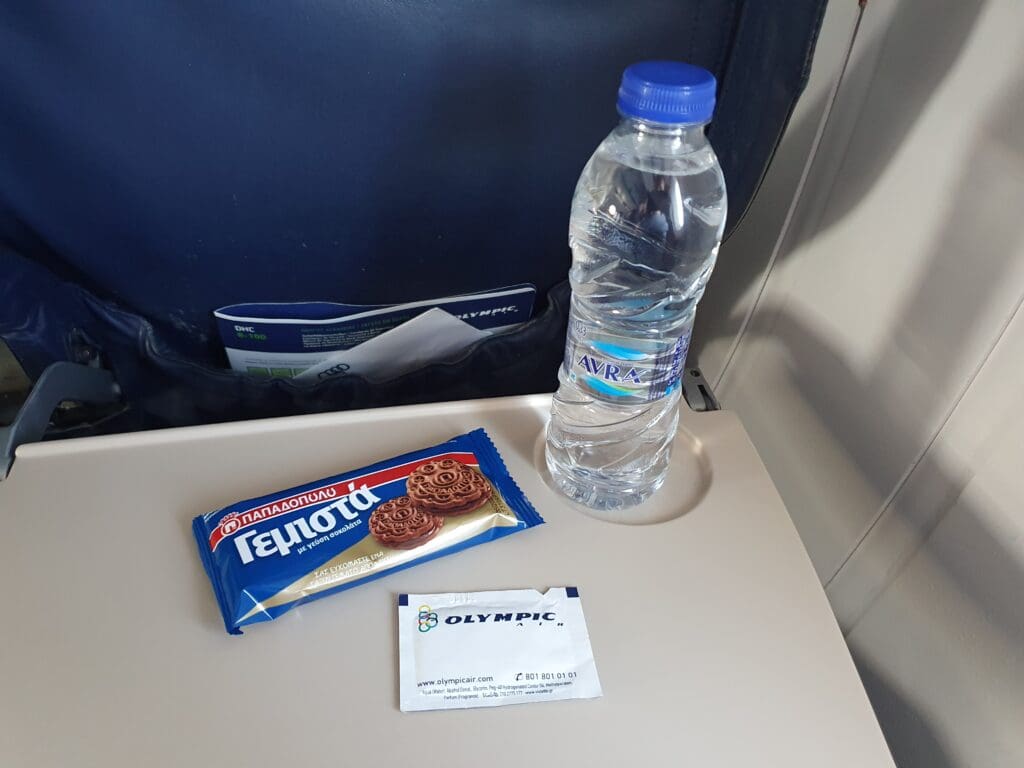
Whilst the onboard snack was hardly the pinnacle of luxury cuisine, this was appreciated and as I ate this I watched as the Turkish coastline trundled by in the distance. Back inside the cabin, almost as soon as they had finished handing out snacks and stowed their trolley, the flight attendant returned to collect passengers’ rubbish. At 1225, the first officer performed an announcement in Greek and English, during which they went over the remainder of the route to Rhodes and advised that we would be landing in just ten minutes. As they performed this, the seatbelt sign was reilluminated and once the pilot had finished their announcement, the flight attendant performed a speech with the usual pre-arrival warnings regarding seatbacks, tray tables, window shades and seat belts.
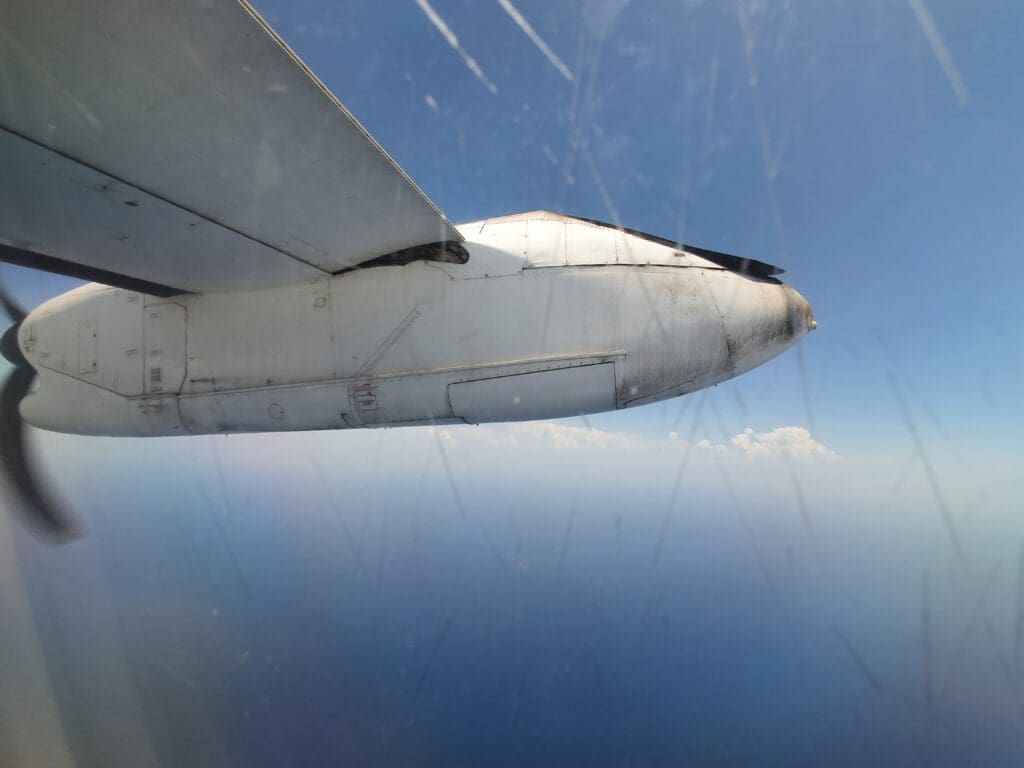

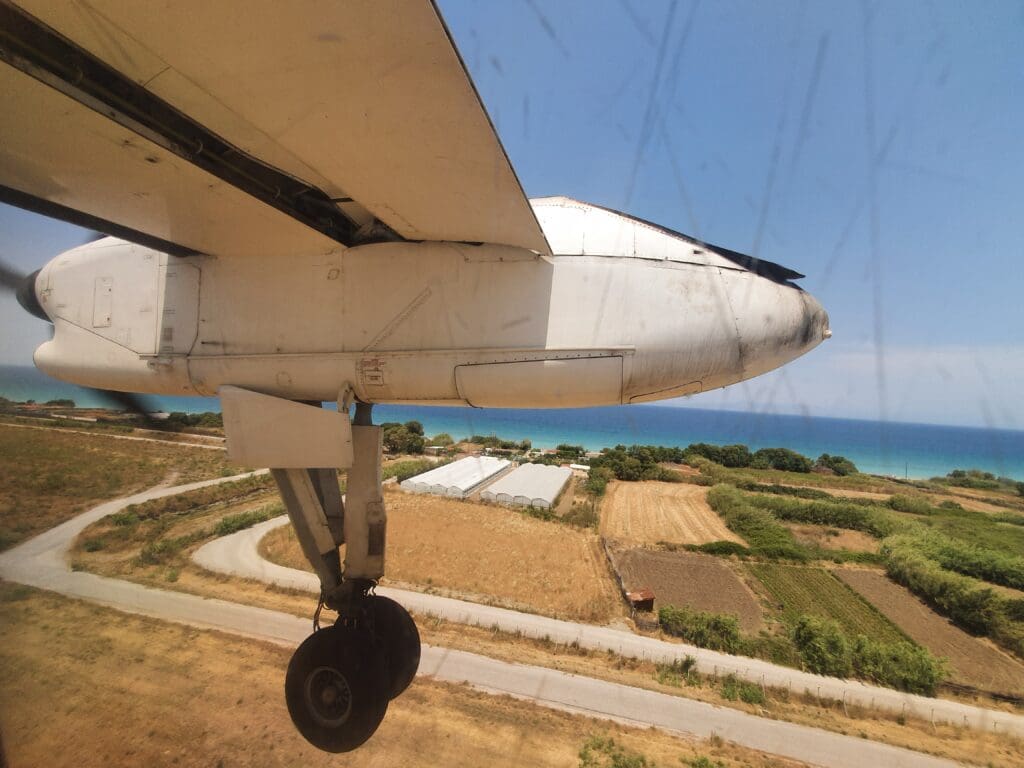
Descending over the blue waters of the Aegean, following the first officer’s announcement it wasn’t long before the island of Rhodes appeared. Soon, the entirety of Rhodes’ famous old town could be seen along with the city’s port and its cluster of boats ranging from small pleasure craft to luxury yachts and ferries. As we crossed over the city centre, the Dash 8’s flaps and landing gear fell into position before the aircraft banked and flew southwest along Rhodes’ northern coastline towards the airport. At this stage of the flight, those sitting on the opposite side of the aircraft would have been treated to the myriad of beachside resorts just to the south of Rhodes followed by clusters of villas as we neared the airport. However, sitting on the right-hand side of the aircraft, at this stage of the flight little could be seen other than the waters of the Aegean until we crossed the coastline seconds before touching down.
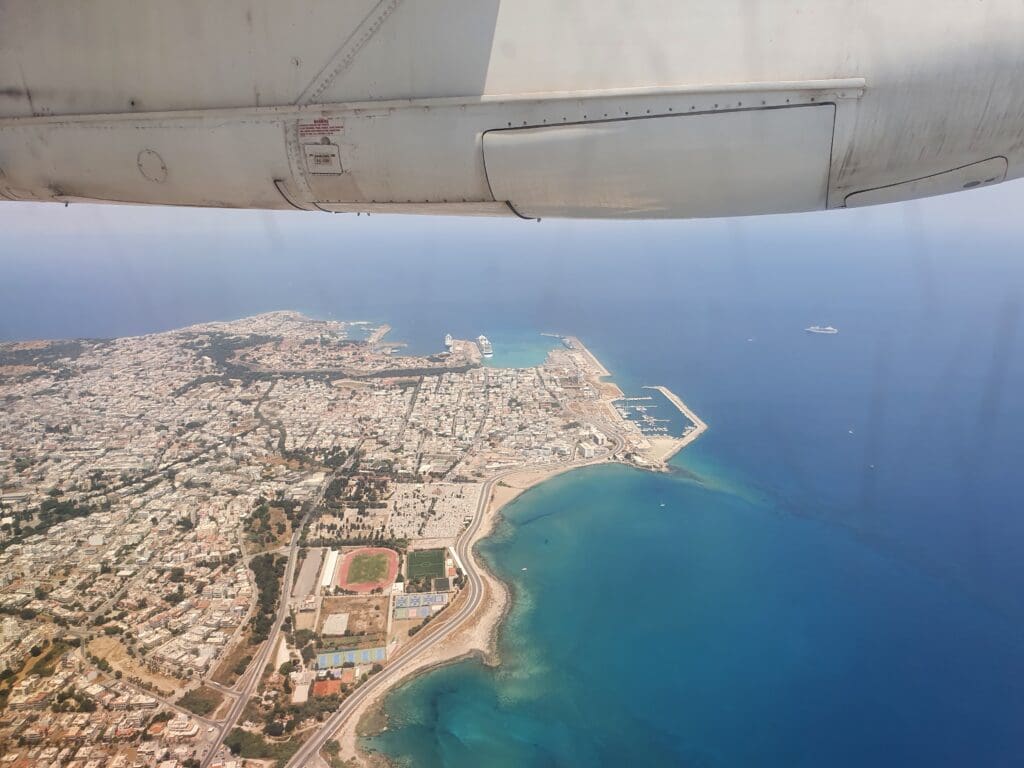
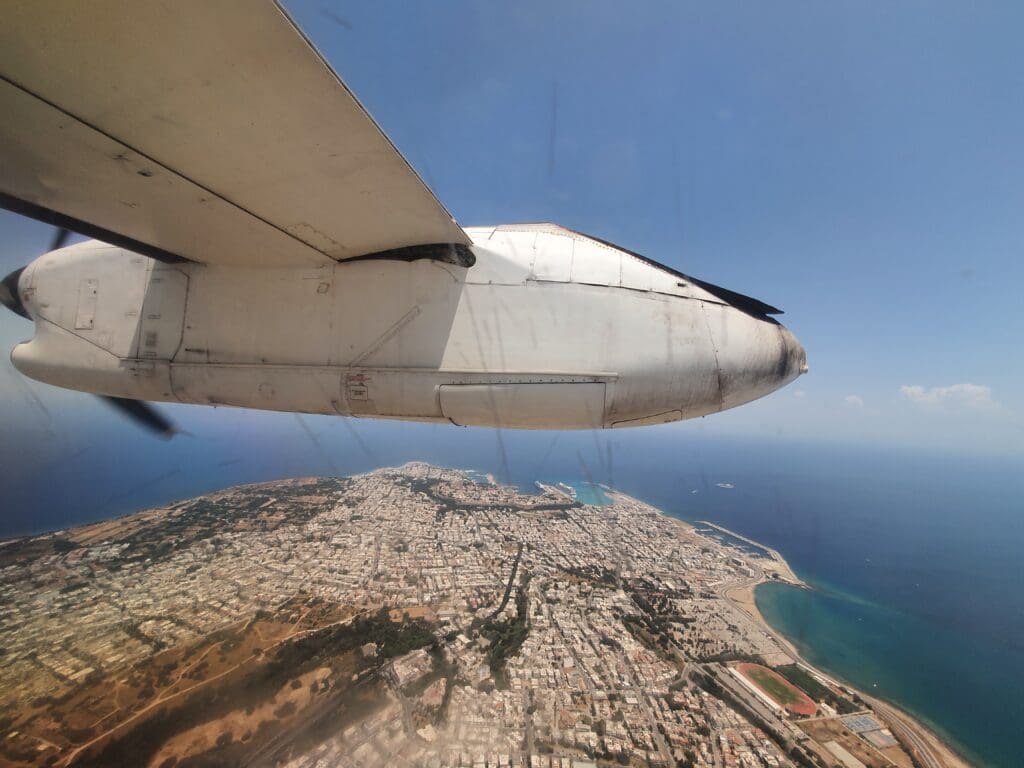
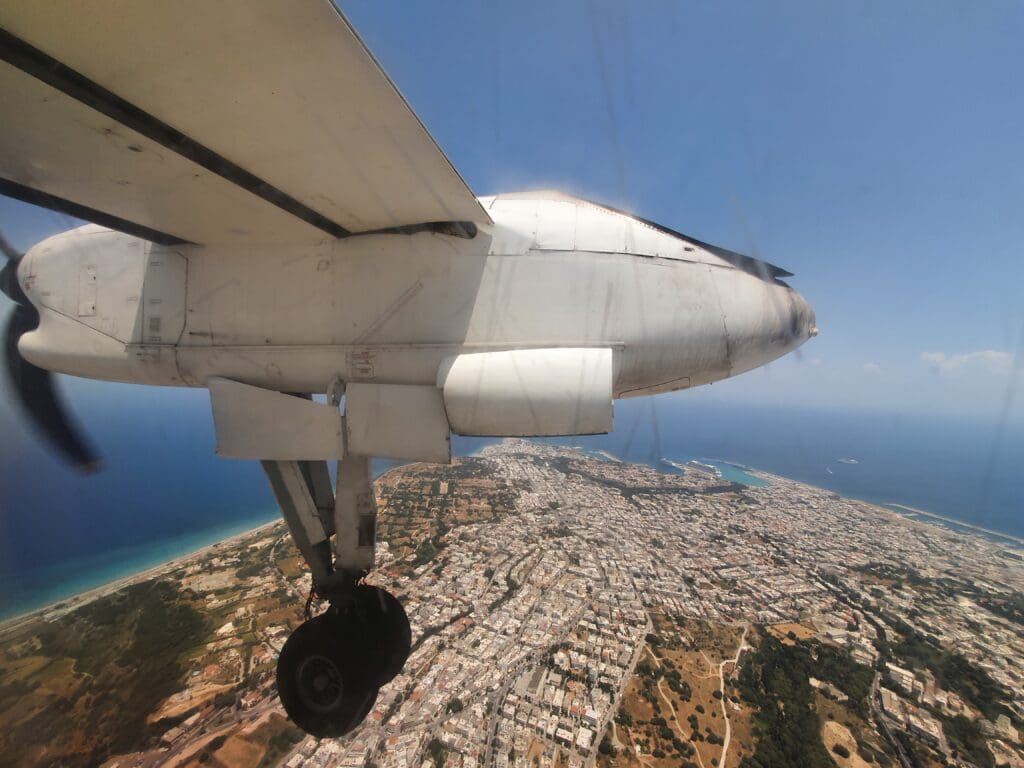
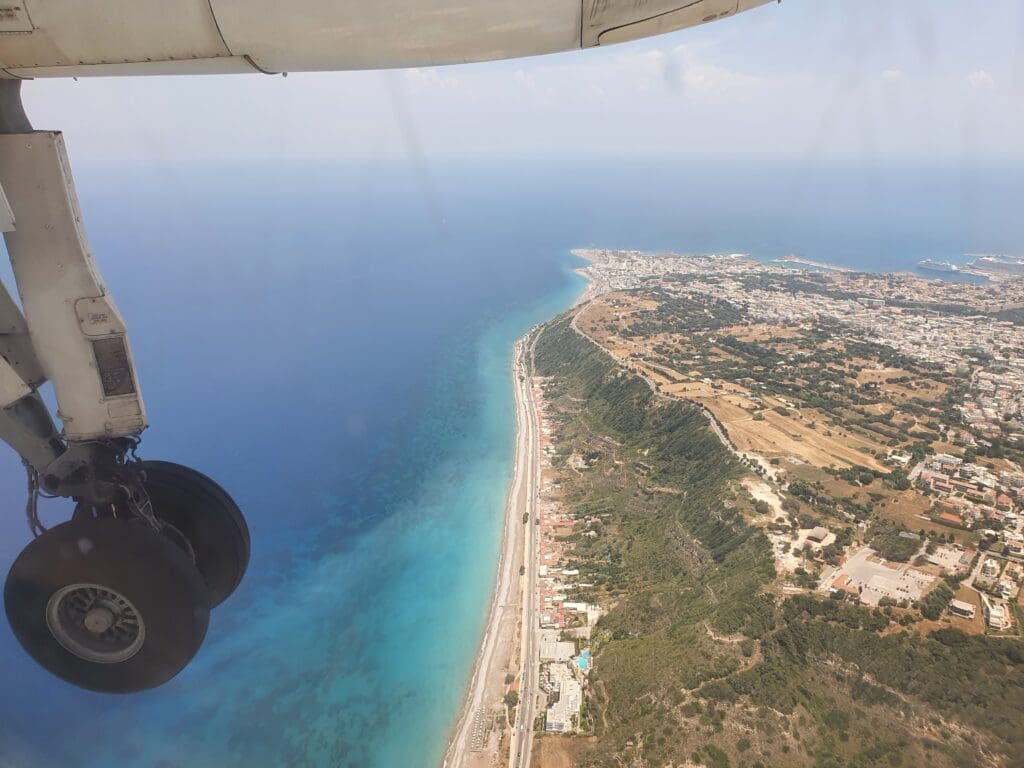
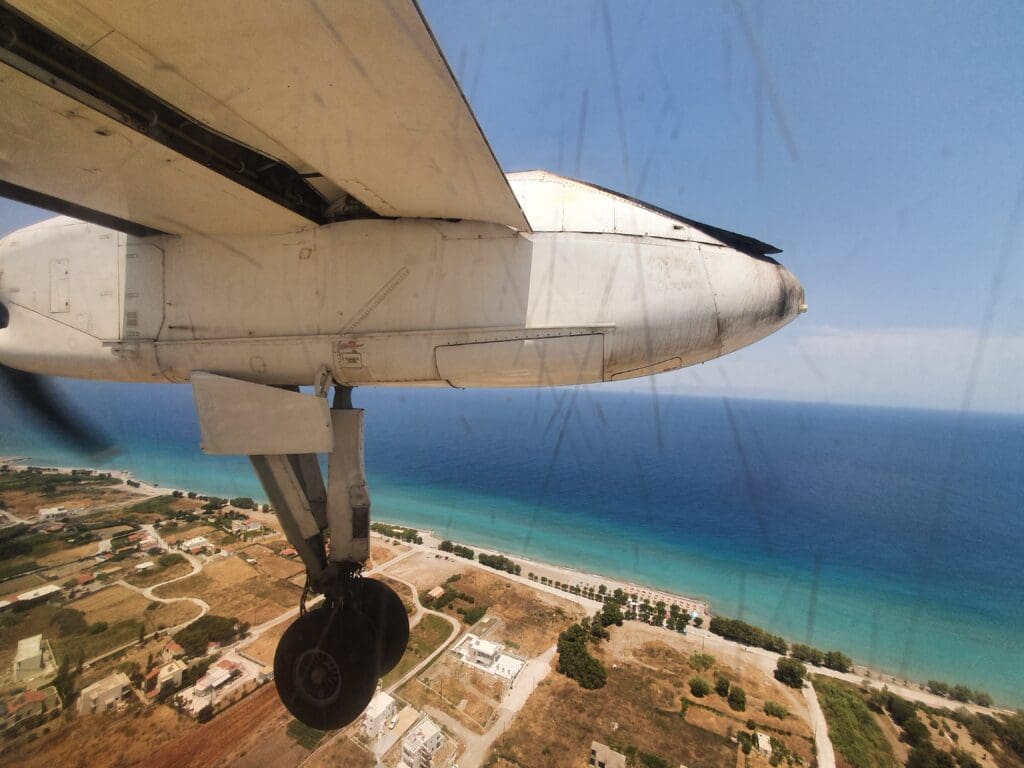
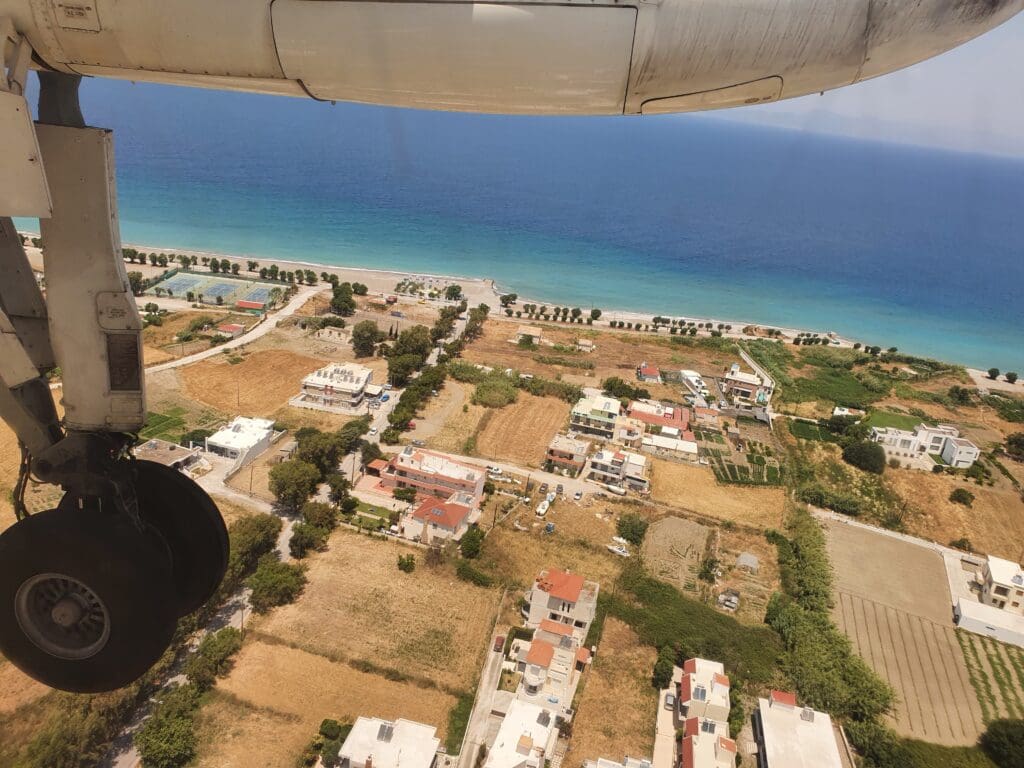
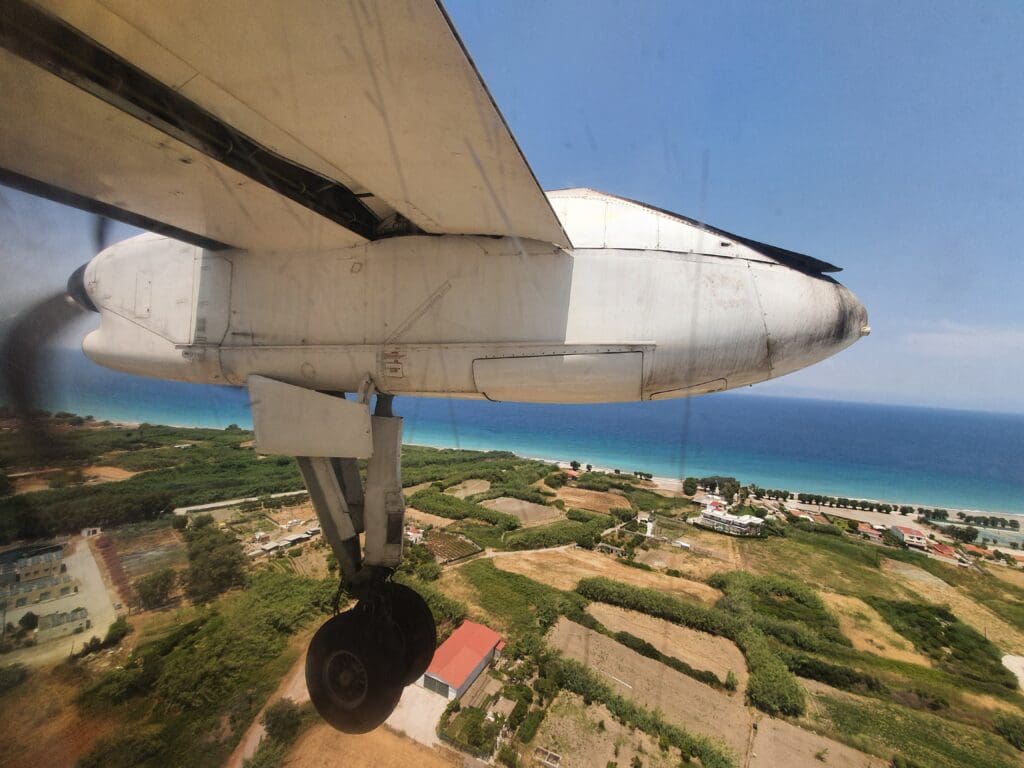
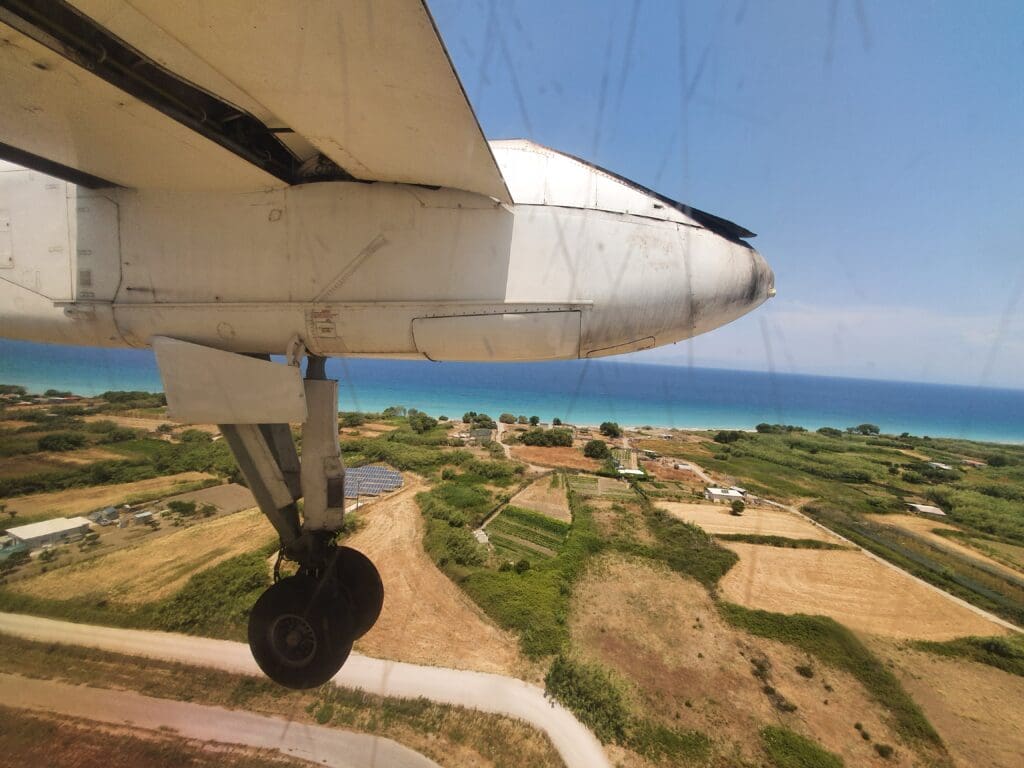
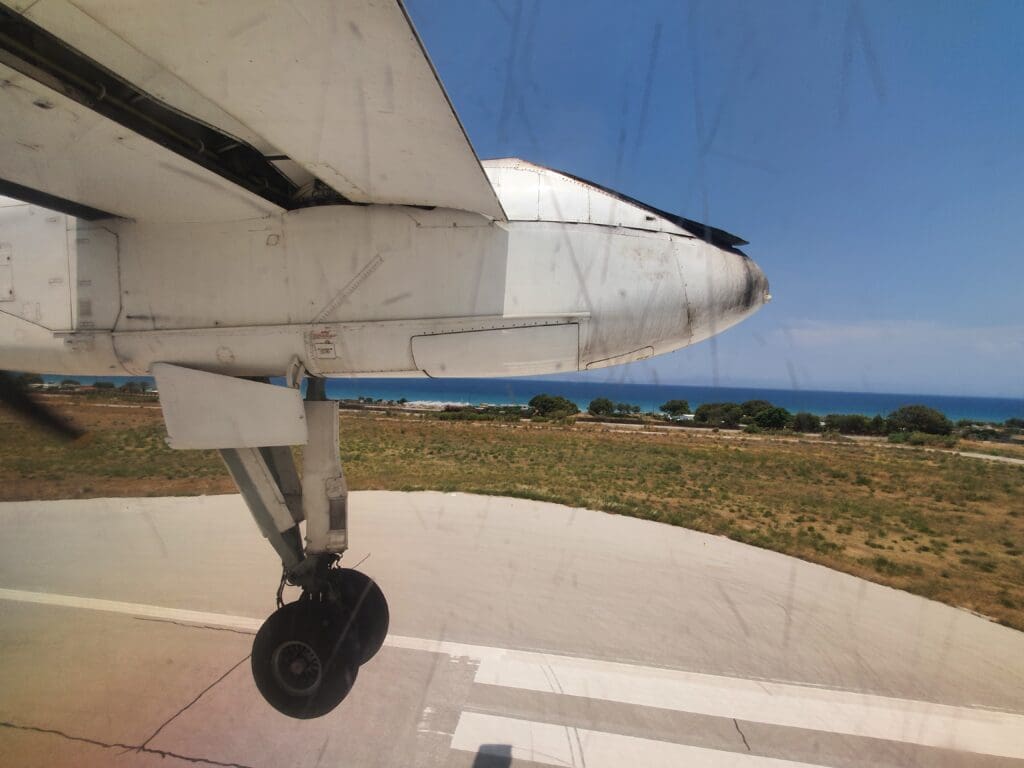
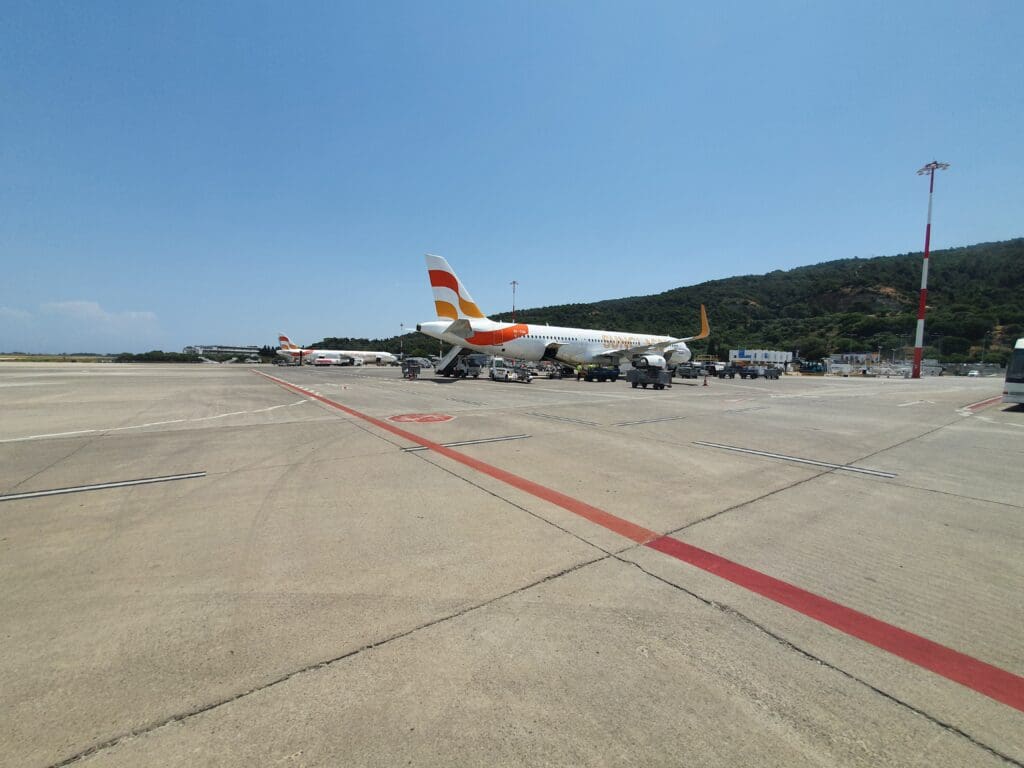
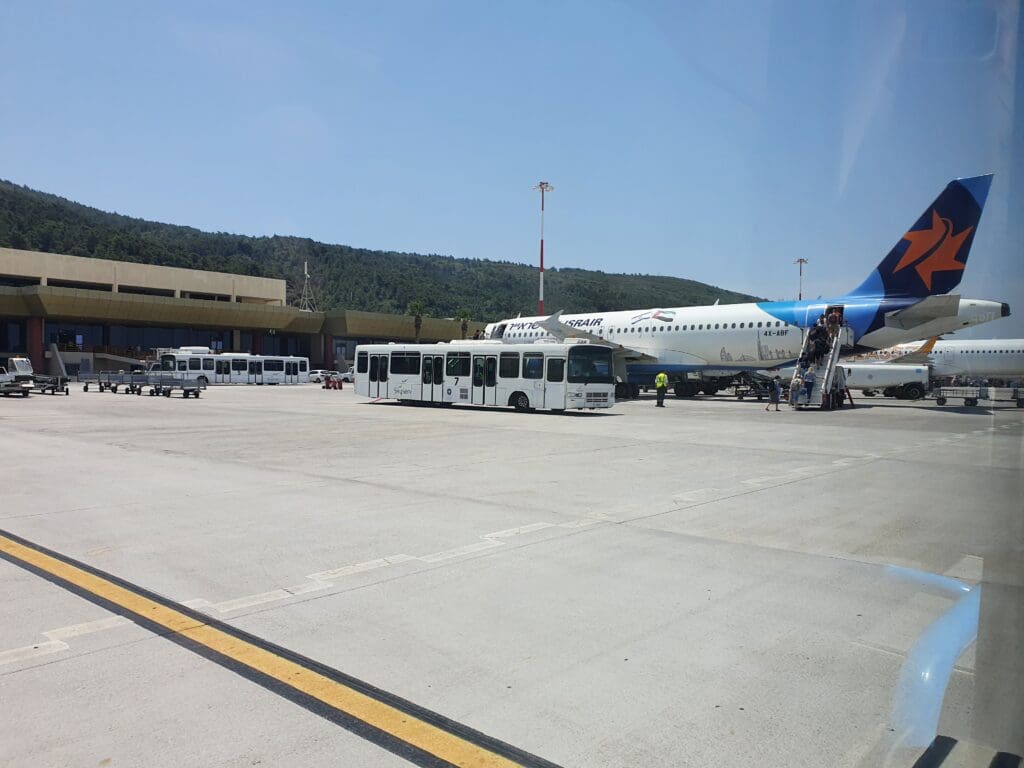
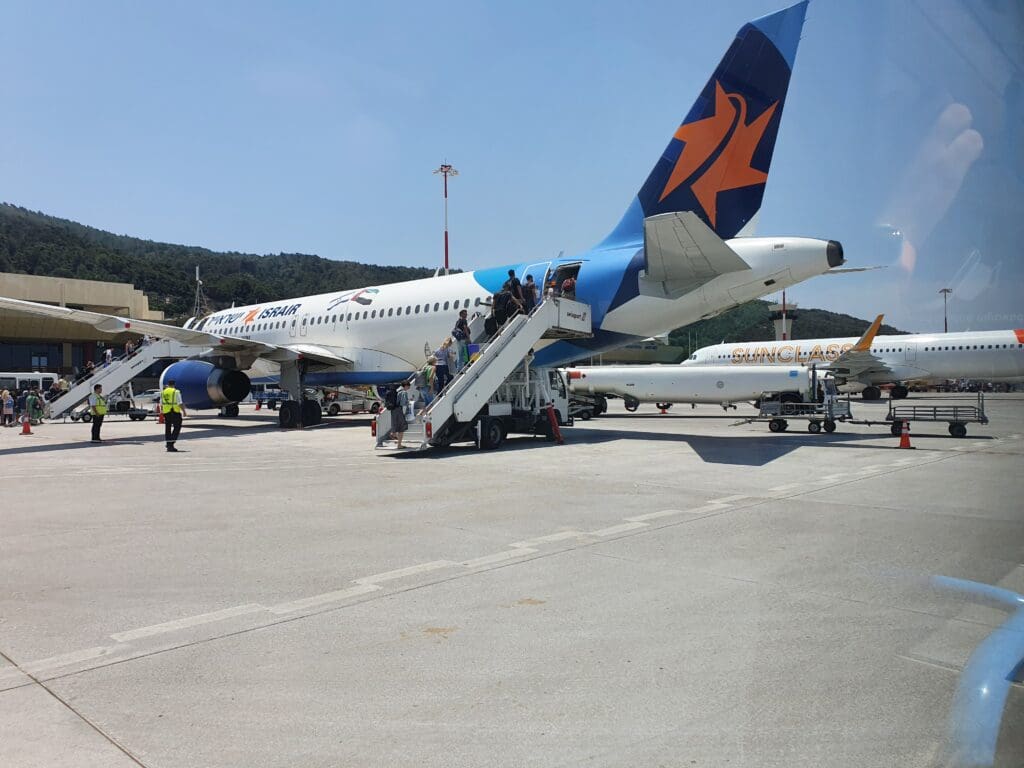
Following a smooth and pleasant 25-minute flight, my first-ever flight on the smallest variant of Dash 8 was brought to an end and at 1235 the aircraft returned to earth with a firm thud as it touched down on Rhodes Airport’s Runway 24. Once on the ground, the Dash 8 decelerated quickly before vacating the runway to the left at which point the flight attendant welcomed all passengers to Rhodes and thanked them for flying with Olympic Air. At that time, the lunchtime holiday rush appeared to be in full swing, with a line of six Airbus narrowbodies seen resting in between flights – these taking the form of three Sunclass Airlines aircraft as well as one Airbus each from EasyJet, Israir Airlines and Novair. After passing this selection, the Airbus turned left and came to a gentle halt at remote stand 13 where the engines immediately spooled down causing the cabin to temporarily fall into silence.

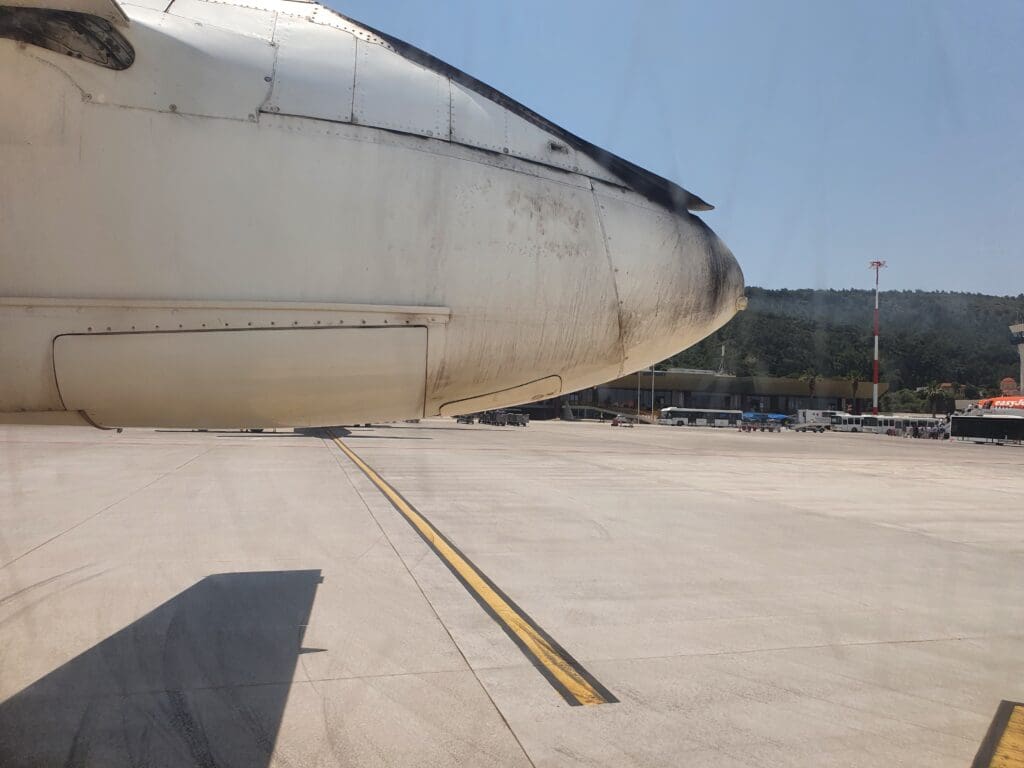
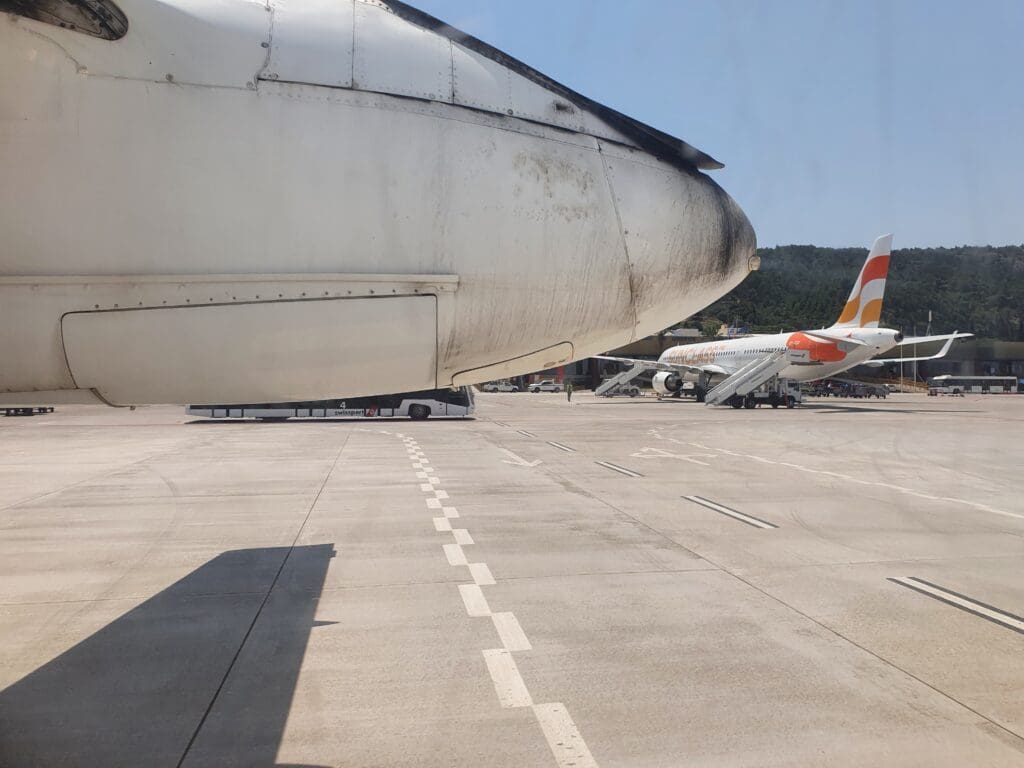

Fortunately, for those in a rush to leave the turboprop, with a bus already waiting at the stand to greet the aircraft, the cabin door was soon opened and disembarkation promptly commenced. Given the light load, despite being located almost at the rear of the aircraft, it did not take long for me to make my way to the front of the cabin. Once there, I thanked the friendly flight attendant before turning left and cautiously making my way down the aircraft’s built-in steps and onto the waiting Cobus. Once inside, the bus soon pulled away and commenced a short journey over to the doors to the domestic and Schengen arrival portion of the terminal. Not needing to collect any luggage, I was able to make a quick exit and found myself standing in the landside portion of the terminal no more than ten minutes after touching down in Rhodes.
Summary
Despite the very short flight time, all-in-all I had a very pleasant experience with Olympic Air and would not hesitate to fly with the carrier again in the future. Whilst far from being the youngest aircraft in their fleet, the Dash 8 that I sampled appeared to be in tip-top condition whilst the flight attendant was polite and friendly for the entire journey. Furthermore, the presence of a round of inflight service on such a short flight was also very much appreciated.