The World’s Shortest Flight (Plus a Few Others): Loganair’s Orkney Islander Service
Background
Sitting just above the Scottish mainland is a cluster of over seventy small islands poking out of the choppy waters of the North Atlantic. Known as the Orkneys, twenty of these islands are inhabited with their populations ranging from the single digits up to around 17,000. Unsurprisingly the islands’ main airport can be found just outside its largest settlement, Kirkwall, with this being served by flights from airports across Scotland. Whilst a fairly comprehensive network of ferry services operates across the islands, Orkney is somewhat famous for its network of ‘domestic’ flights operated by a pair of Loganair Britten-Norman Islanders, with these serving the small islands of Eday, North Ronaldsay, Papa Westray, Sanday, Stronsay and Westray. Famously, the very short hop between the islands of Papa Westray and Westray is the world’s shortest commercial flight. As a UK-based aviation enthusiast, perhaps unsurprisingly, the flight between the two was one that I had sought to fly for quite some time and in June 2022, I finally decided to make the trip up to Orkney to do this.
Booking
Whilst once in the not-too-distant past, Orkney’s inter-island services could only be booked either over the phone or in person, today these can also be booked via Loganair’s website. Seeking to catch as many sectors as possible on the rare Britten-Norman Islander yet unfortunately lacking the time to explore one of Orkney, I decided on an itinerary that would involve two back-to-back rotations from Kirkwall. My first flight would depart Orkney at 1600 and see me head off to Papa Westray and Westray before returning to the Orcadian capital at 1646. I would then have a ‘long’ connection of 44 minutes before heading back north to North Ronaldsay before returning to Kirkwall via Sanday and Stronsay. This itinerary would see me fly at least 122 miles in the noisy and cramped comfort of a Britten-Norman Islander, allowing me to visit every airport in the Orkney Islands except Eday. However, as Loganair’s booking system does not allow for any connections less than forty minutes, I was unable to book the trip all in one go as a multi-leg itinerary. I thus booked this as three single legs: Kirkwall to Papa Westray, Papa Westray to North Ronaldsay and North Ronaldsay to Kirkwall. With these coming to a reasonable £18, £17 and £18 respectively. Interestingly, Loganair’s Orkney Inter-Island services feature their own fare classes – Excursion, Island Saver and Economy. All of which come with a complimentary 15kg luggage allowance. However, I found that for the first and last flights of my itinerary, only the Economy fare was offered. Meanwhile, for the Papa Westray to North Ronaldsay leg, the Island Saver fare was offered however this appeared to not be bookable online.
Seeing as I already had Loganair’s app downloaded and ready to go on my phone from my previous trips with the carrier, once I had decided on an itinerary I opened this up and began the process of booking each of the three legs. Whilst Loganair’s app is neither the most stylish nor modern of airline apps, this served its purpose and enabled me to book tickets for each sector without any issue. However, I should note that there was no option to save either passenger or payment details and so I did have to re-enter these with each purchase. Furthermore, at the time of my booking, Loganair only accepted Mastercard or Visa payments.
The Journey
Having opted to head up to Orkney in late June in the hope that this would provide the greatest possibility of good weather conditions for my stay, once again the Scottish weather had proven itself to be as reliable as ever. On the day of my flight, the weather forecast threatened gusts of up to 40 miles per hour and thus as I crossed the rough swells of the North Sea on the ferry journey up from Aberdeen I was rather concerned that the key highlight of my trip would end up being cancelled. On the night following my arrival, the wind rattled the grey stone Orcadian house where I had been staying and I awoke the next morning to strong and bitterly cold winds, drizzle and sporadic low visibility. These weather conditions failed to foster any confidence that my flight would end up going ahead as scheduled that afternoon. However, giving me some hope, much to my surprise Loganair’s morning service to North Ronaldsay and Westray departed and returned as scheduled.
As the morning progressed and afternoon arrived, there was no let-up in the inclement weather conditions so I decided to call Loganair’s Orkney office to confirm whether or not my flight would be going ahead. Upon doing so, I was delighted to hear that this would operate that afternoon although I was informed that it would likely be a bumpy ride. Still happy to go ahead, I then began to plan my journey over to Kirkwall Airport. Sitting just under three miles from the centre of Kirkwall, according to Google Maps the journey can be completed within a little over an hour on foot. However, given the chilly temperatures and high winds, I decided to make use of the fairly regular bus service that operates between the town and the airport. Whilst Loganair advises those travelling on their Orkney Inter-Island services to arrive at the airport at least twenty minutes before departure, I decided to give myself a little more time to explore the sights and delights of Kirkwall Airport. I thus opted to take the 1415 departure from Kirkwall’s bus station, known as the Travel Centre. Not wanting to cut things too fine, I left the bed and breakfast at 1345 and began the short walk down the hill into the town centre. Having left London less than 48 hours earlier amid a 34-degree heatwave, the weather that day in Orkney proved to be an incredibly sharp contrast to the balmy heat down south. That day the temperature in Kirkwall failed to exceed 12 degrees, yet the strong bitter winds made this feel truly winterly and I was thus comprehensively chilled by the time I arrived in the town centre.
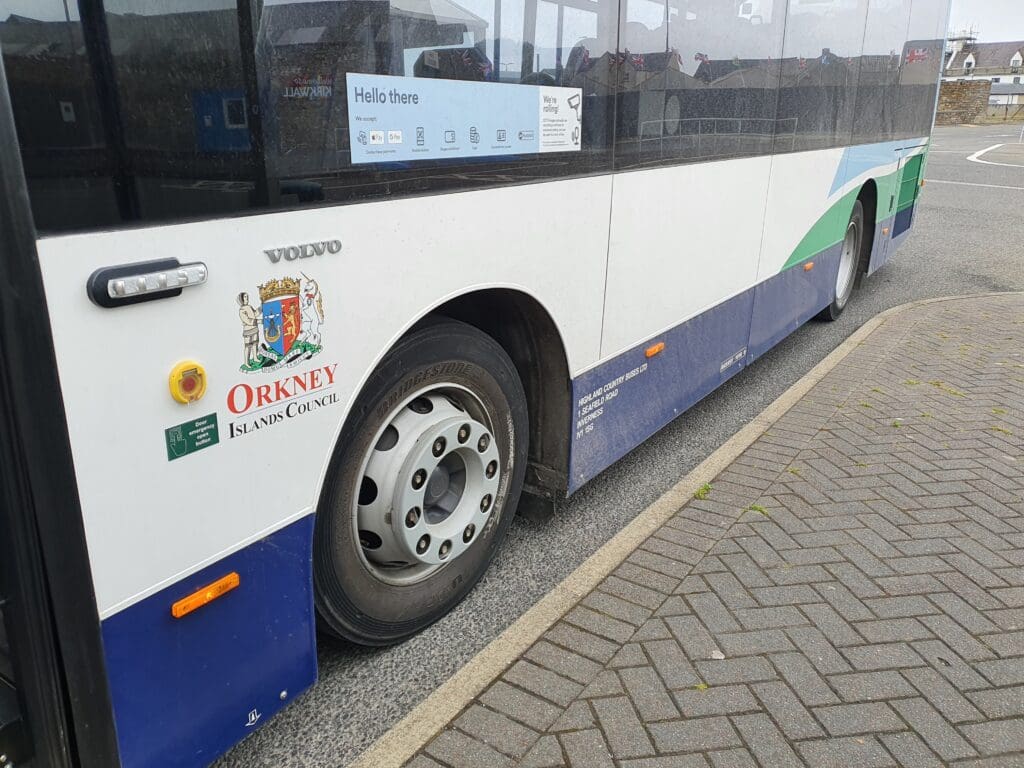
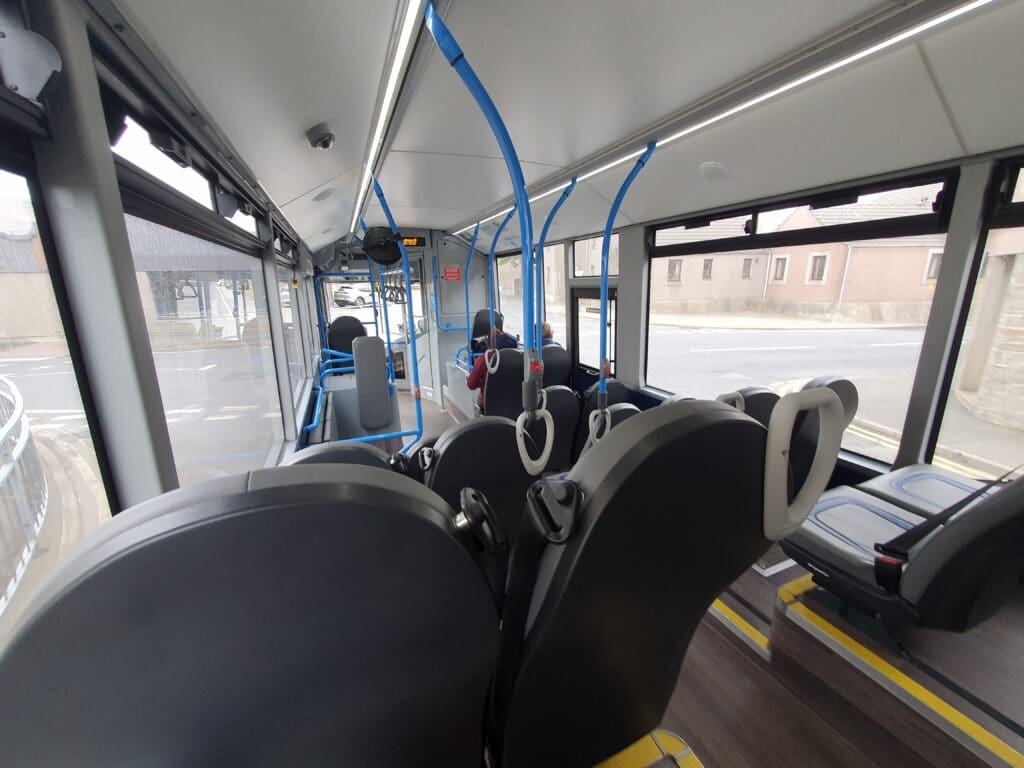
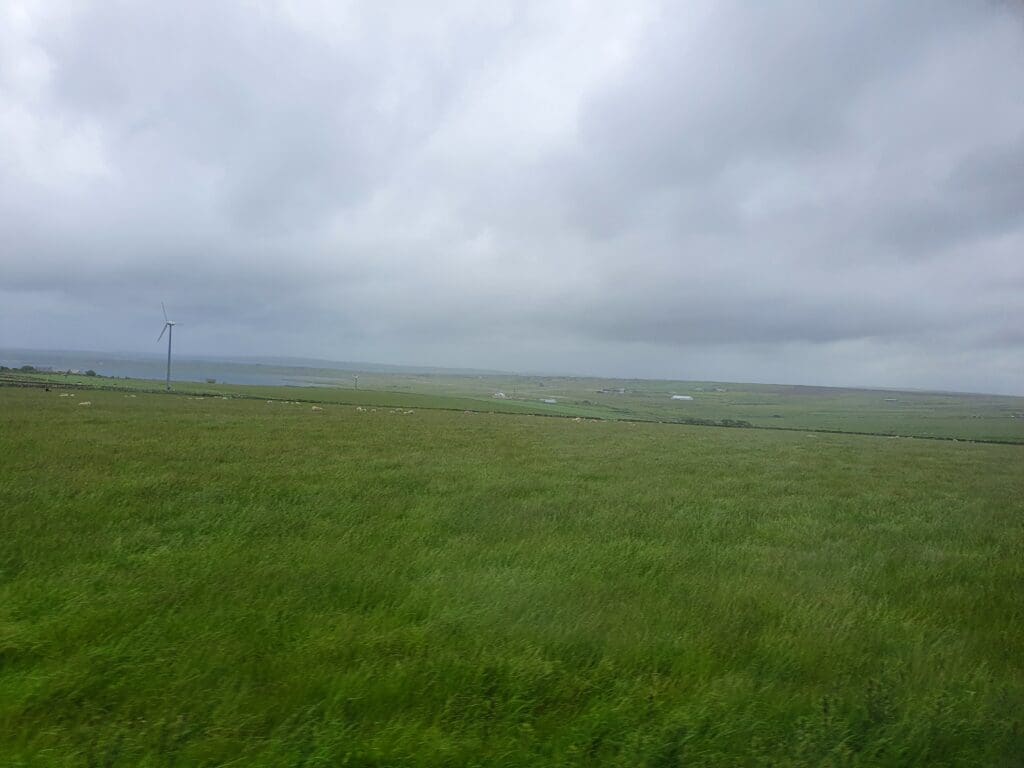
Acting as the land transportation hub of the Orkney Mainland, upon arriving there, I was pleased to find that the Travel Centre was complete with a comfortable and warm waiting room, as well as a set of relatively clean toilets. After warming up, I made my way over to one of the bus shelters outside with a few minutes to go until the Number 4 service’s scheduled departure time and a short time later a modern Stagecoach-operated bus pulled into the stand. As I stepped aboard, I was welcomed by a very friendly driver and soon tapped my bank card on the reader, parting with a reasonable sum of £3.10 for a day return to the airport. Once I had collected my ticket, I took a seat on the clean and comfortable bus, which pulled away from the bus stop right on time and trundled along the harbour front before travelling out through the town’s suburbs. After passing Balfour Hospital, Orkney’s main medical centre, the bus ascended a hill and upon descending the other side of this the airport appeared alongside Inganess Bay which sits just behind this. No more than thirteen minutes after leaving the town centre, the bus completed its journey and came to a gentle halt at the bus stop outside the terminal building.
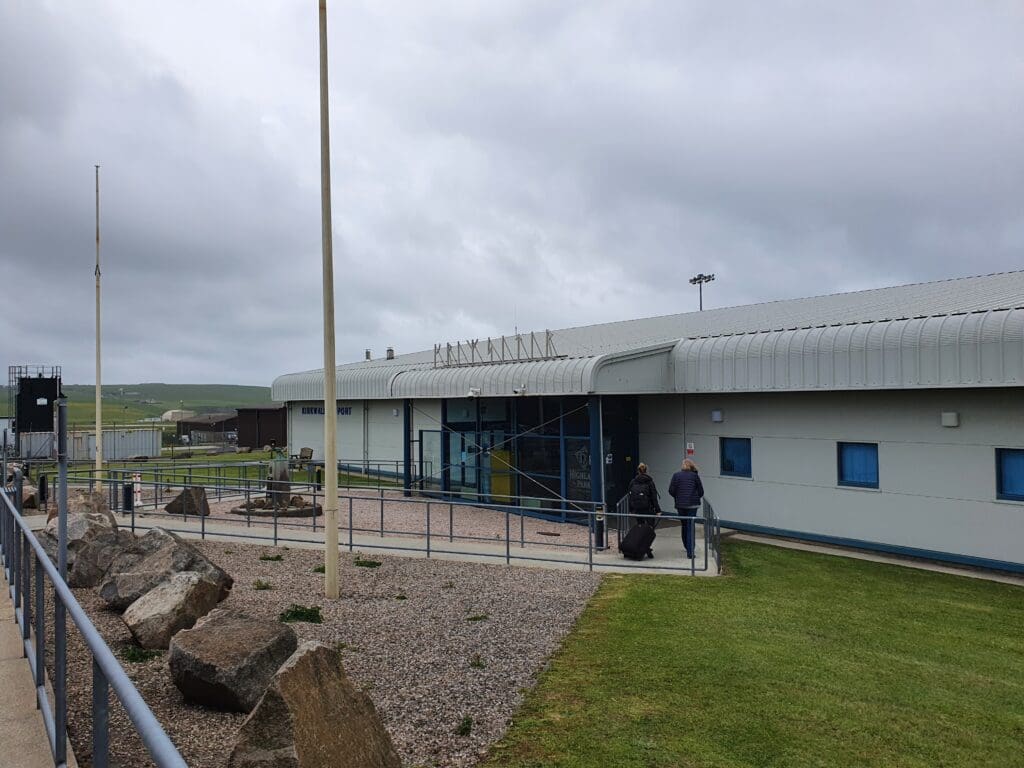
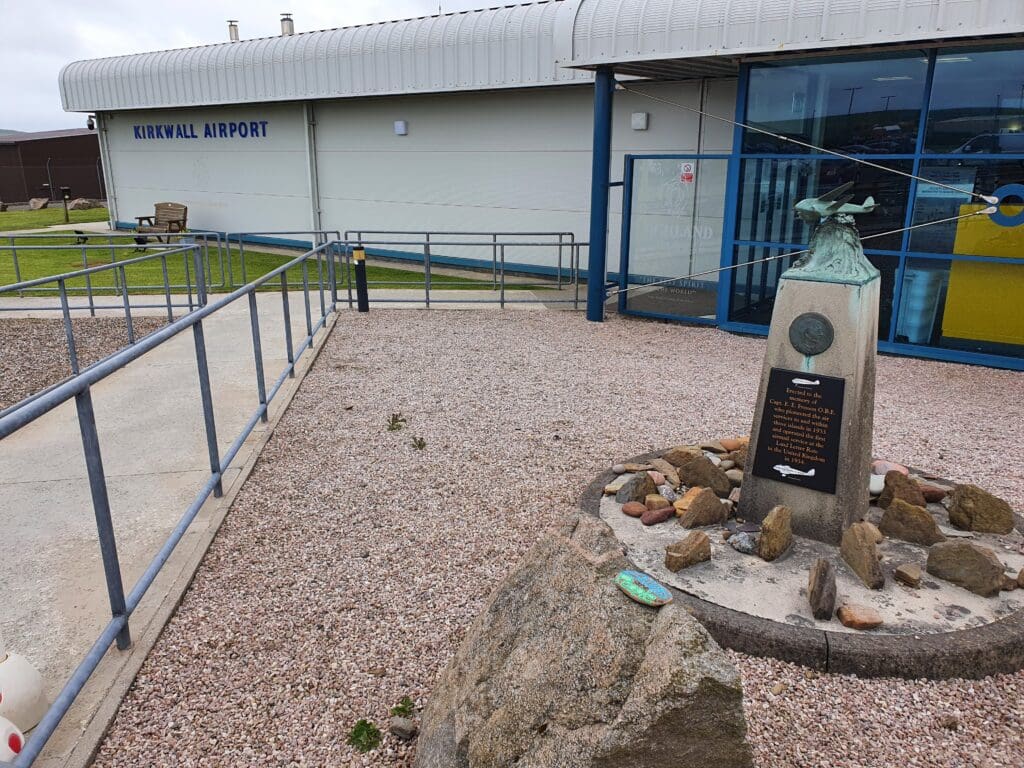
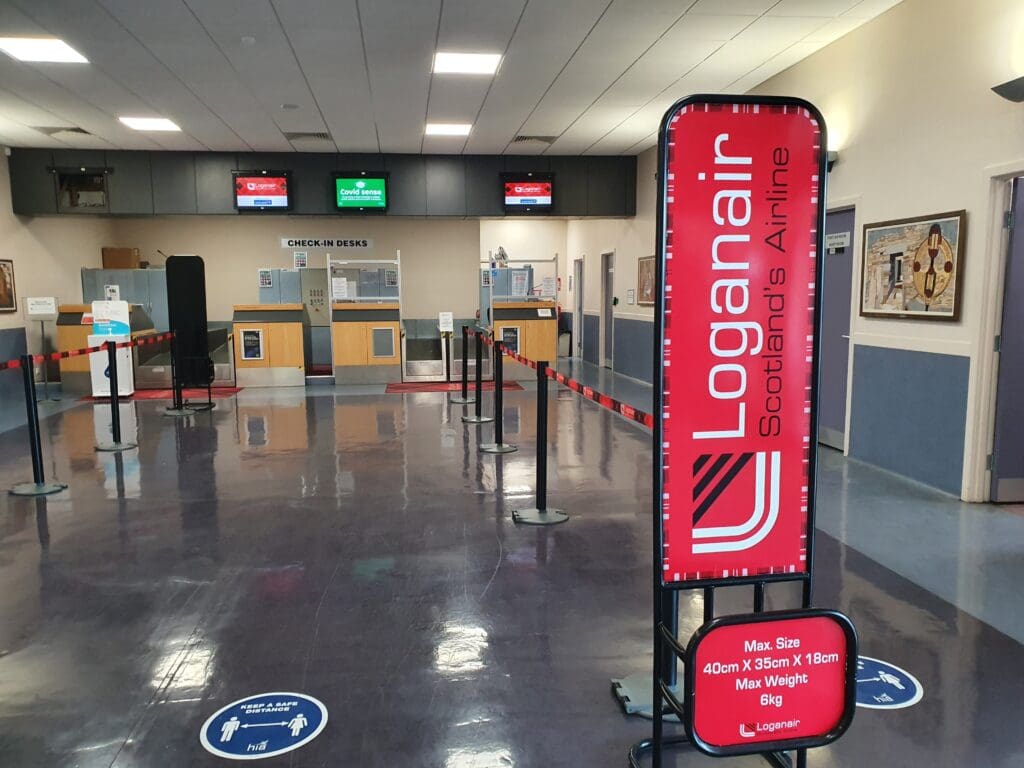
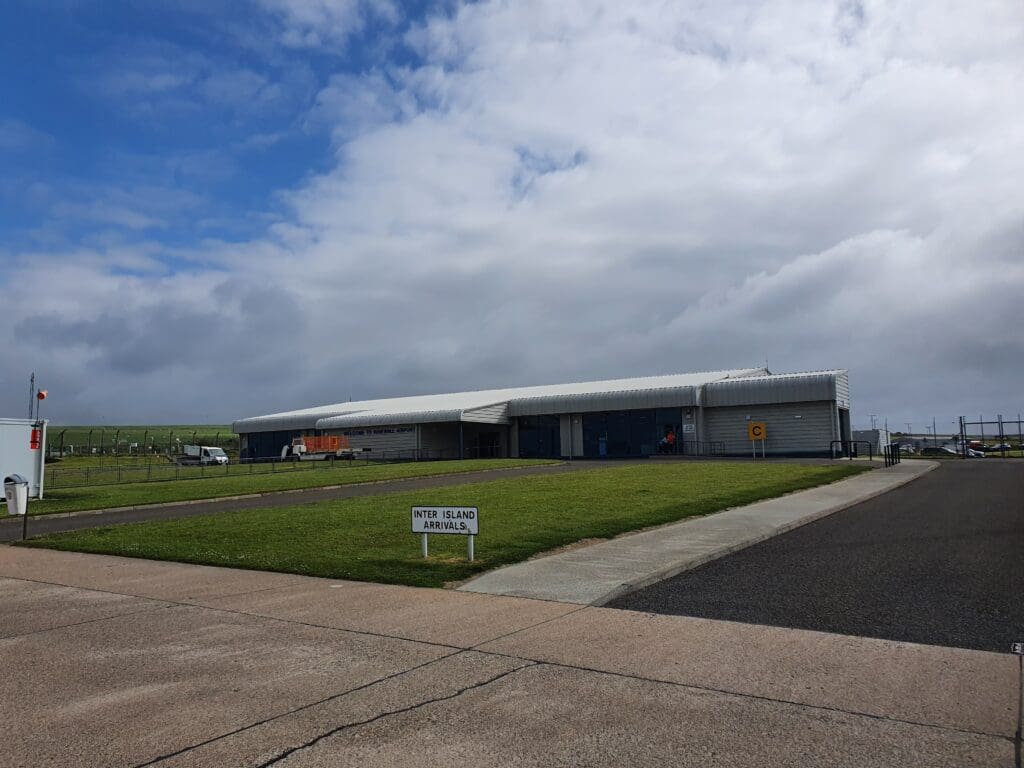
Kirkwall Airport’s terminal building consists of a small single-story structure, which appeared from the outside to be very similar, if not almost identical to that of Stornoway Airport. Indeed, with both airports run by the Highlands and Islands Airports Limited (HIAL) and the two terminals having opened in 2002, this should not have been particularly surprising. Even inside, the two terminals appeared to bear a strong resemblance to one another in aesthetics, layout and design. After quickly admiring a small metal sculpture of a de Havilland Dragon Rapide which commemorates a pilot who pioneered air services to Orkney during the 1930s, I made my way into the terminal building. As I passed through the automatic sliding doors, I was immediately greeted by the welcoming scent of home cooking wafting across from the Island Cafe, whilst to my right three empty check-in desks could be seen. With Loganair enjoying a total monopoly on all scheduled routes from Kirkwall, unsurprisingly these were well-branded and made it clear who rules the roost in Orkney.
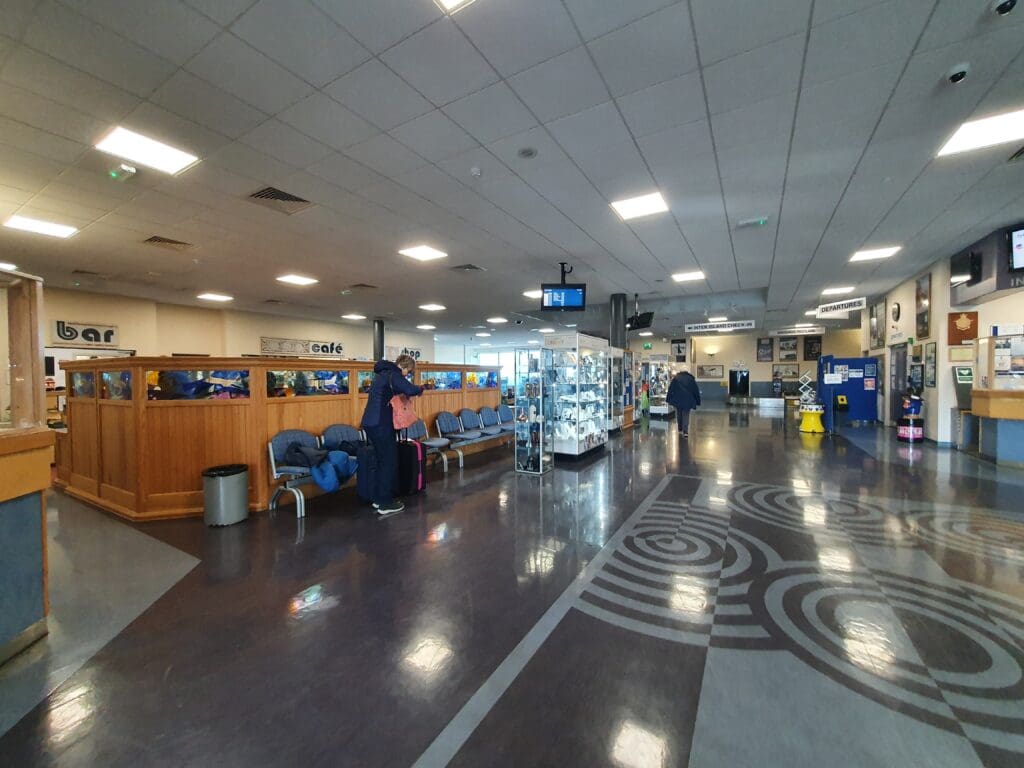
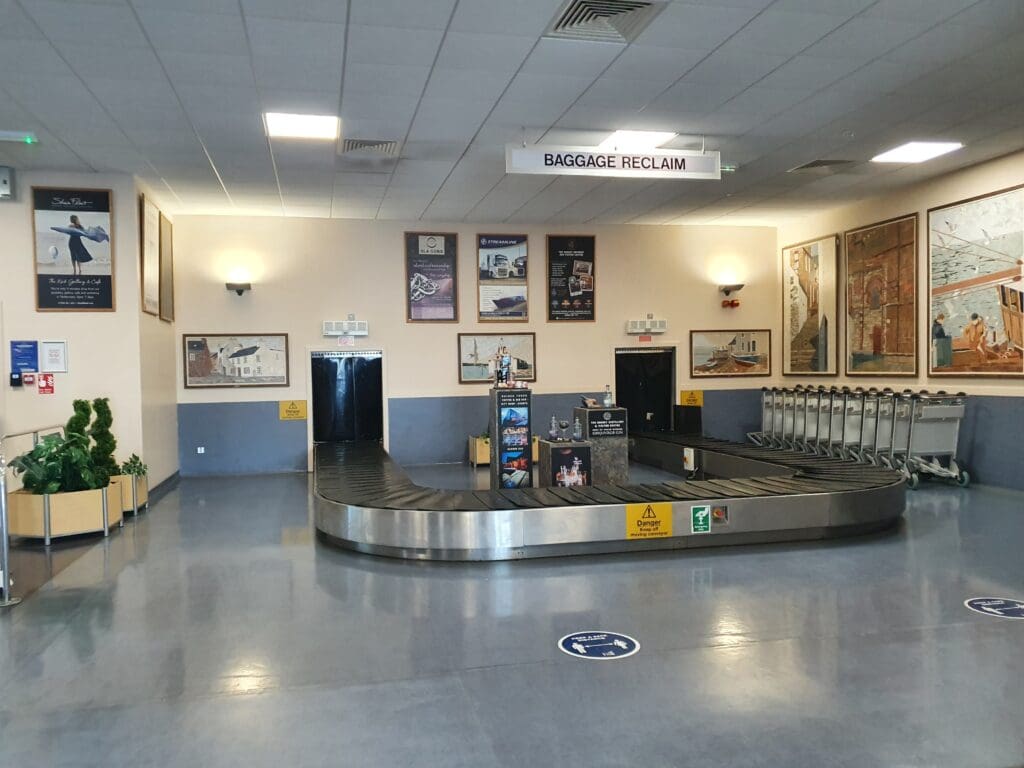
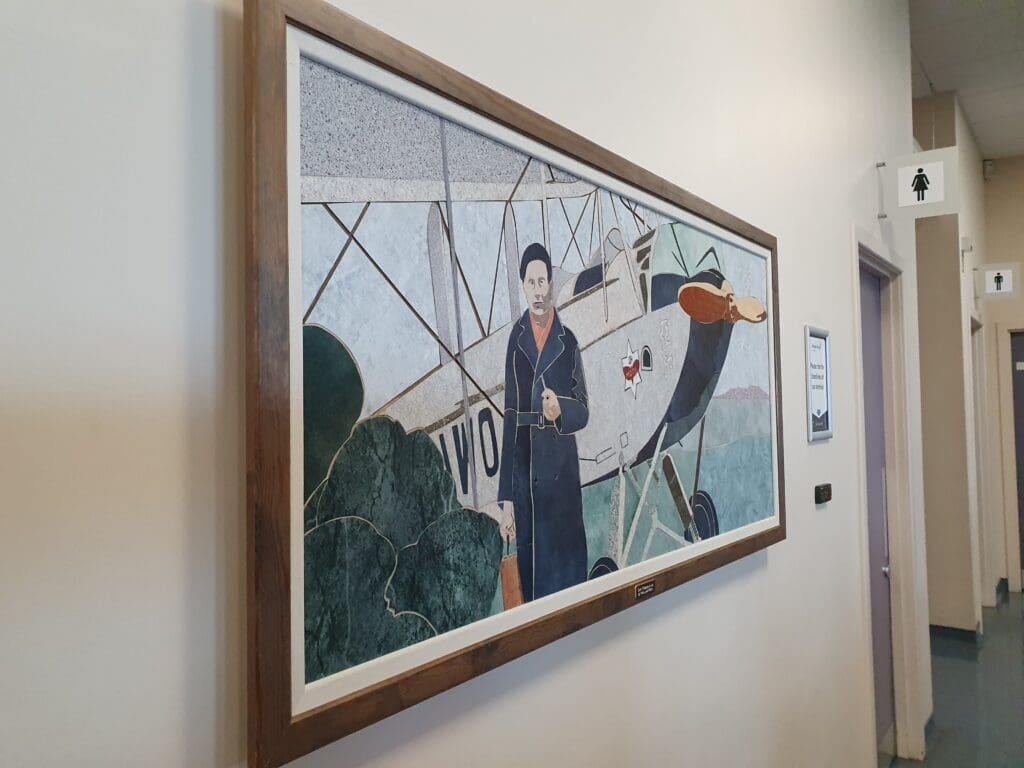
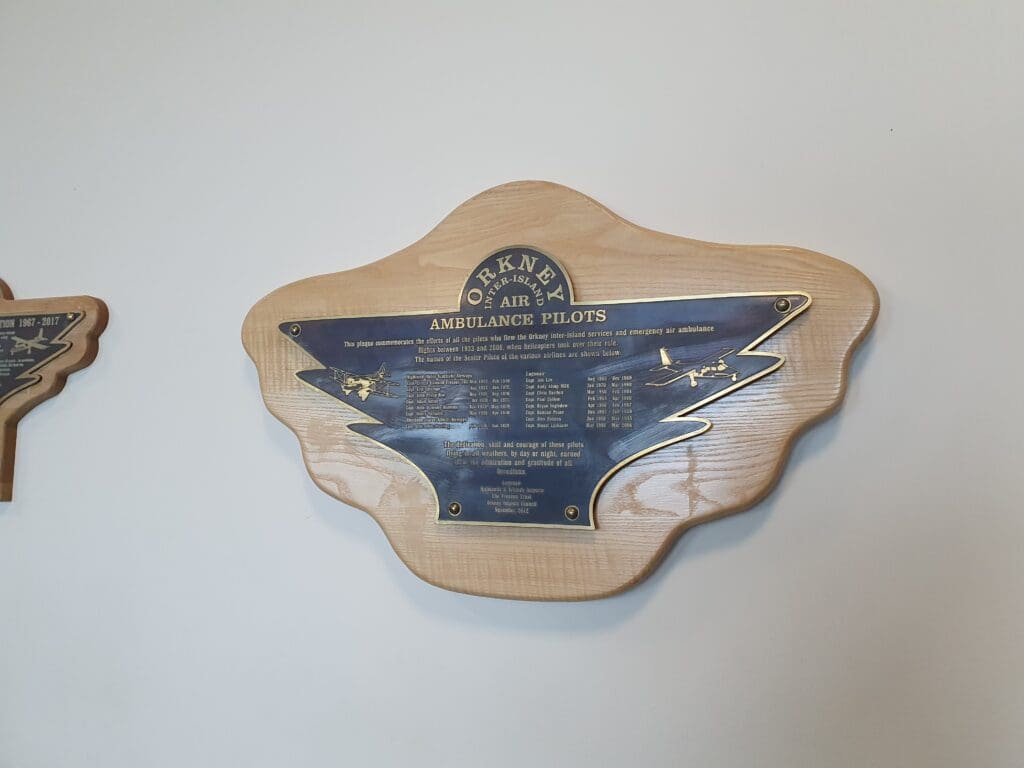
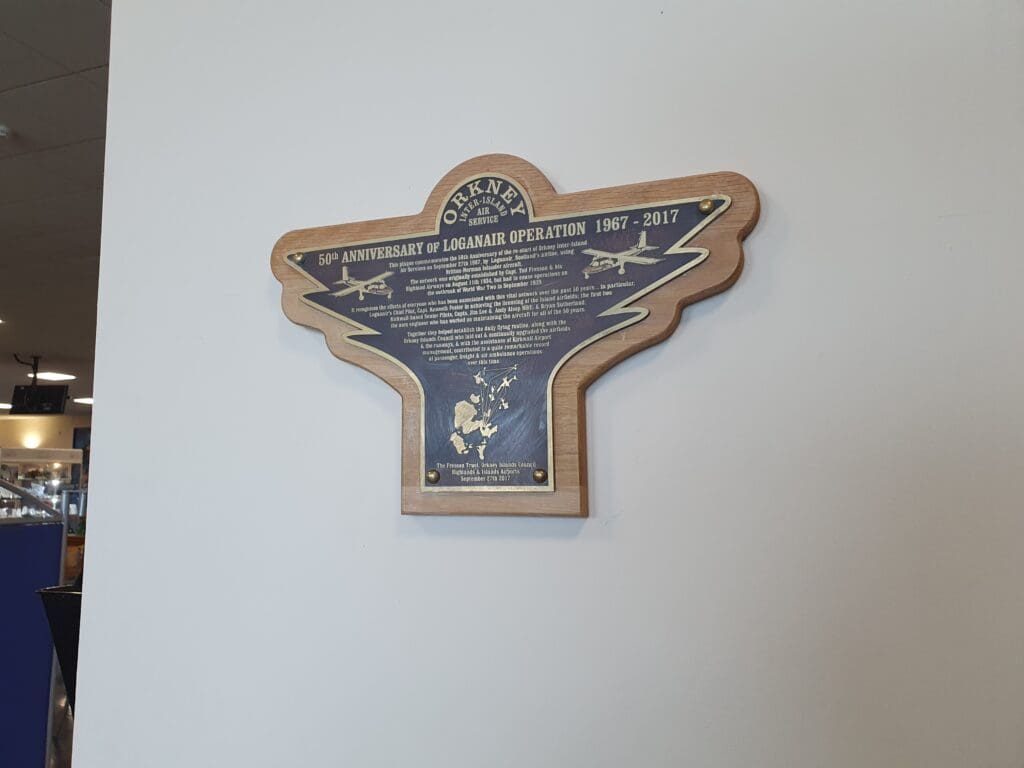
Whilst the terminal is far from large, this features a decent number of facilities. Other than the cafe, passengers can part with their money at the terminal’s bar and shop, with the latter selling plenty of local souvenirs and hand-crafted items. Meanwhile, a couple of vending machines could also be found for those looking for a quick snack or drink. In terms of aesthetics, unless you happen to be a fan of plastic lino flooring it is unlikely that you will find the terminal to be the most stylish in the world. However, this does have plenty of character and charm, with local artwork lining the walls and a range of interesting displays on offer, many of which are linked to Orkney’s rich aviation heritage. Furthermore, the landside portion of the terminal features a row of floor-to-ceiling windows offering a view of the ramp and runway as well as the bay that sits behind them. That afternoon, the terminal left me with nothing to complain about. This is compact and has a straightforward layout, and I found this to be clean and tidy for the duration of my stay. Finally, complimentary wifi was offered which worked well for the duration of my stay, and plenty of seating was on offer. My only slight qualm about the terminal was the lack of plug sockets.
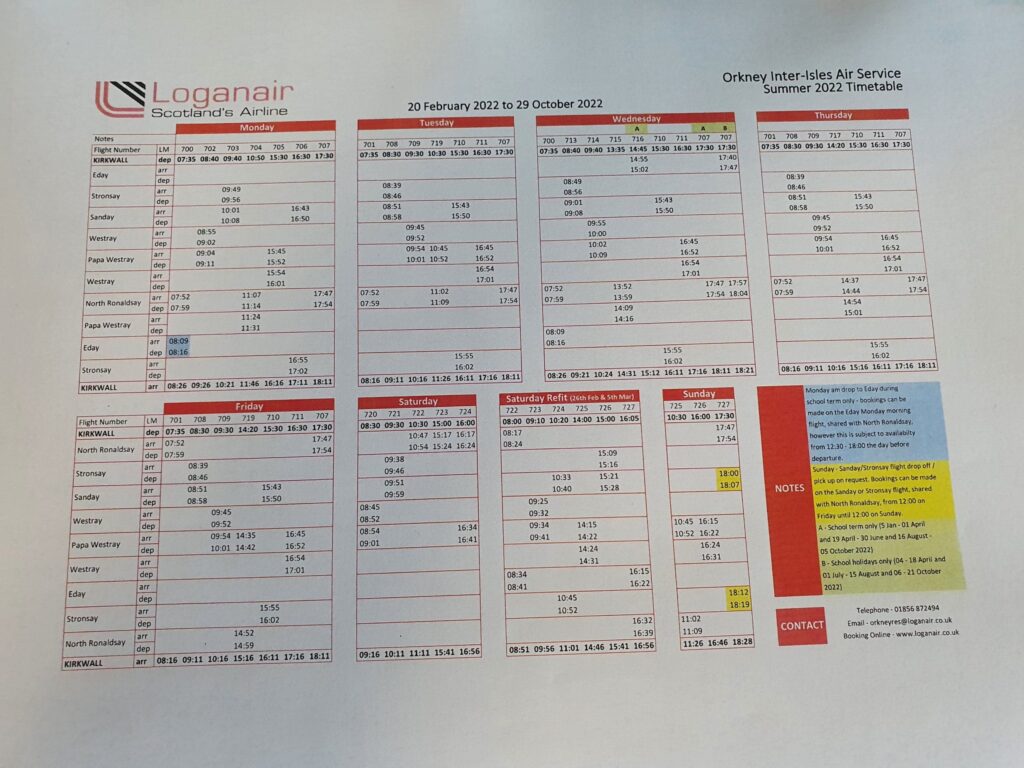
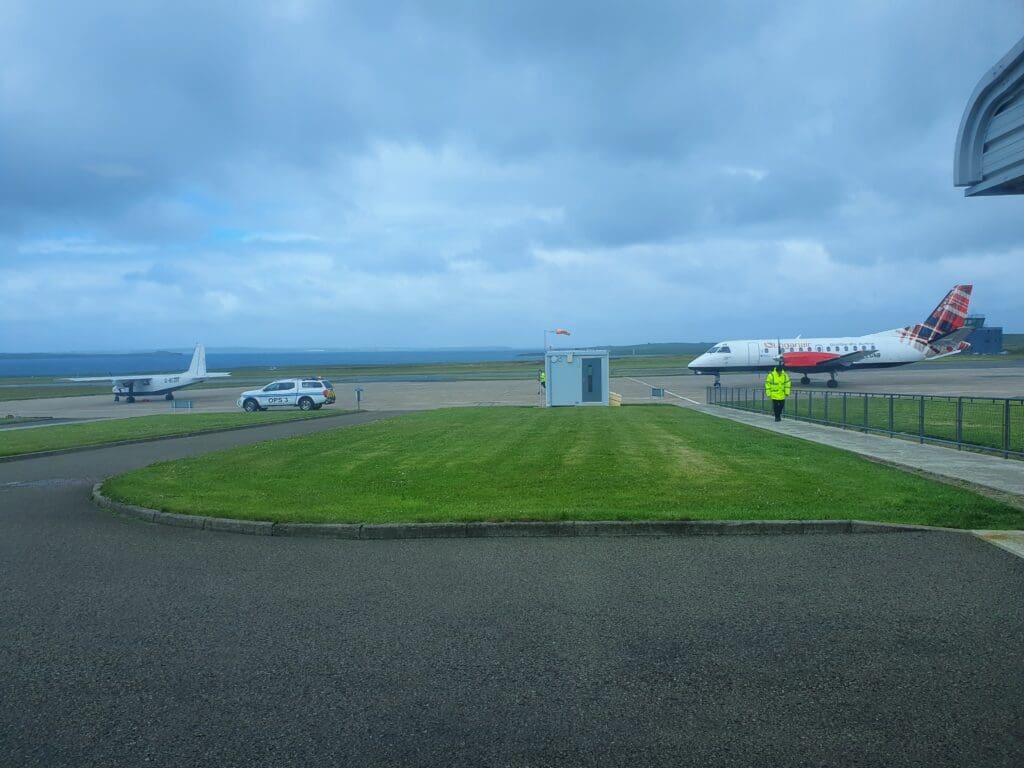
Whilst the Inter-Island services are of course operated by Loganair, those heading off on these are afforded the luxury of their own inter-island check-in desk, located at the opposite end of the terminal to Loganair’s other desks. However, upon arriving there this was devoid of any staff, with the single Loganair worker responsible for the smooth operation of this service who I had called earlier in the day seen in the ticket office just behind this. Taking a seat, as I waited I looked out at the ramp where the windsock could be seen hovering at a worrying angle of around 90 degrees. Meanwhile inside, with two Loganair Saab 340s scheduled to depart at 1605 – one heading south to Aberdeen and the other north to Sumburgh, as time passed the terminal became increasingly busy with both passengers and Orcadians waiting to meet people arriving on the inbound flights. Fortunately, plenty of seating remained available although the Island Café did prove to be a popular attraction.
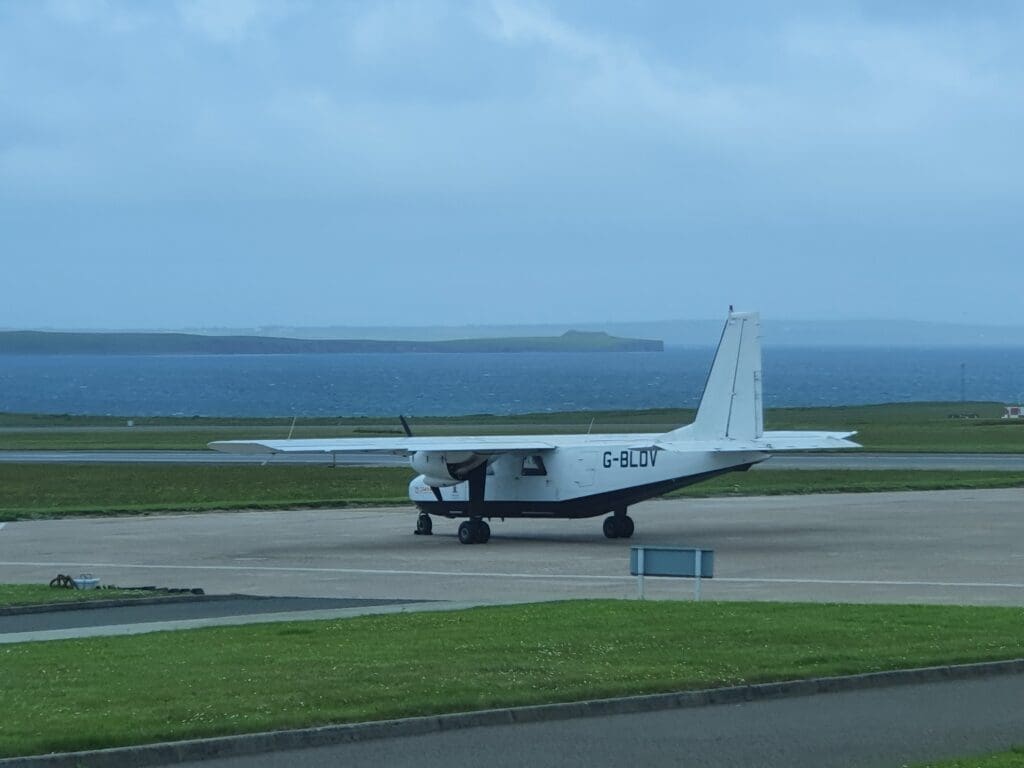
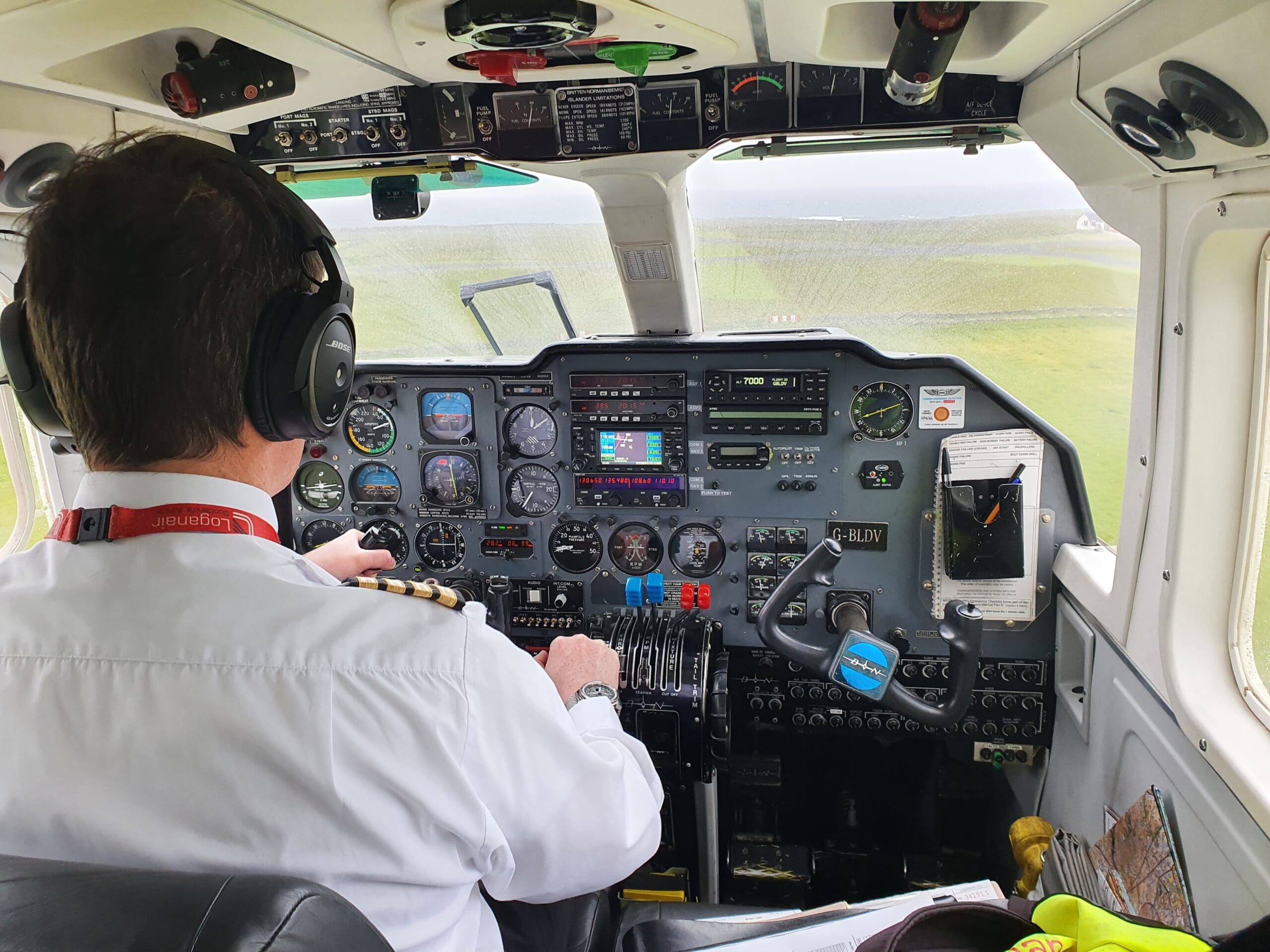
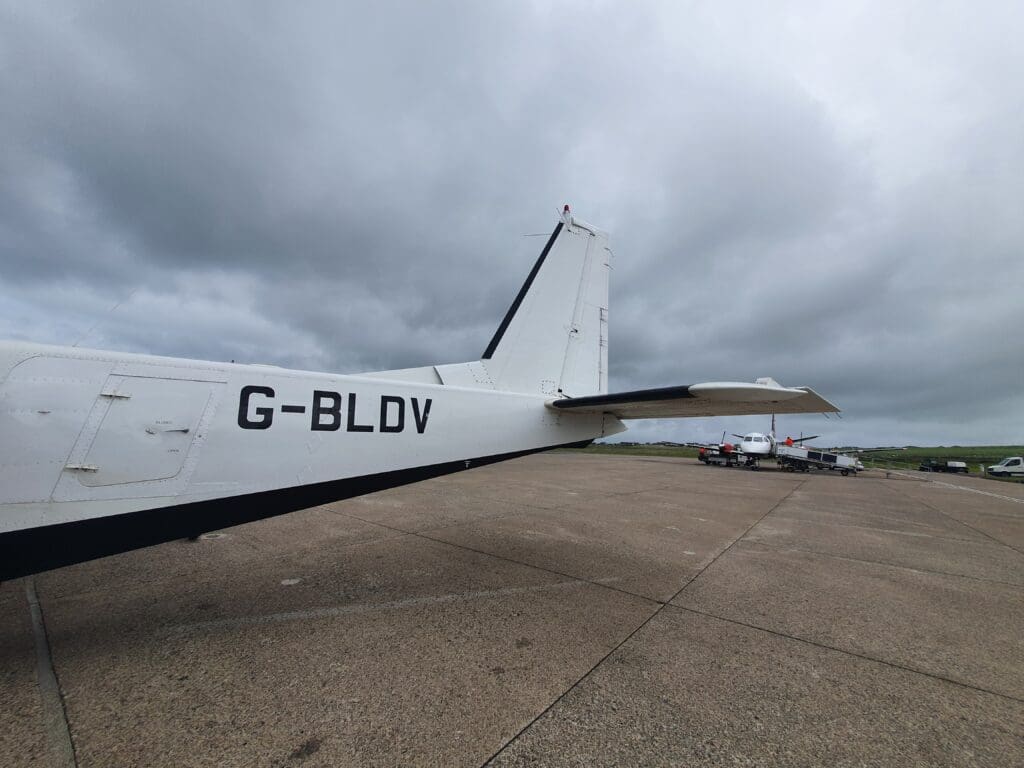
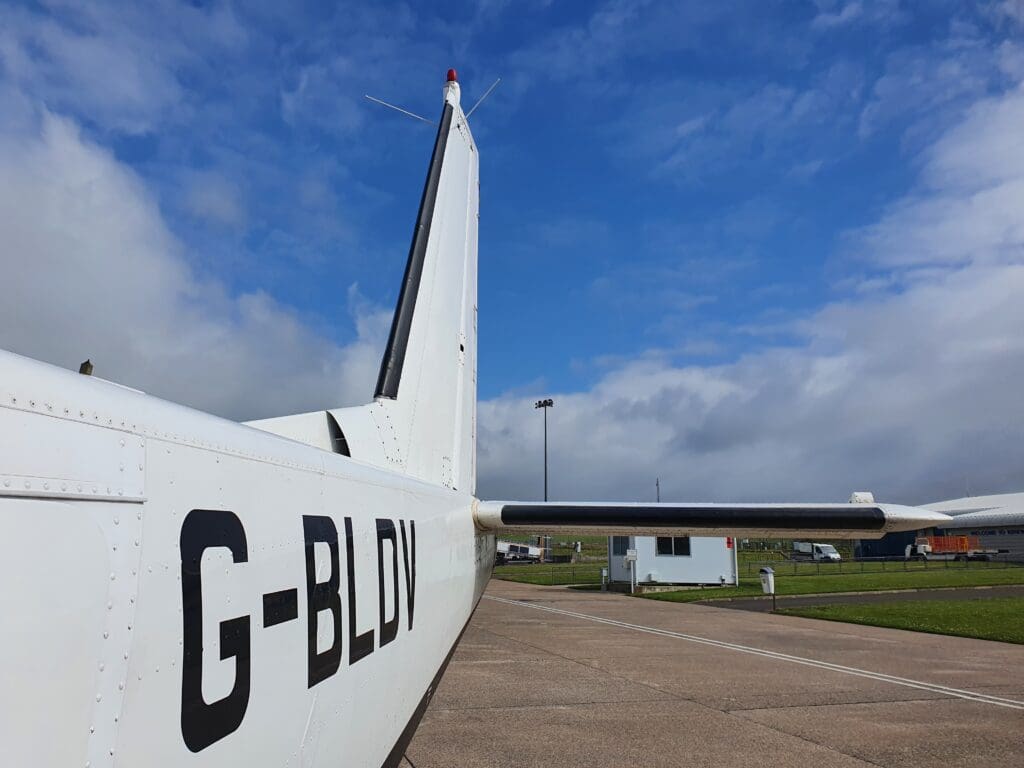
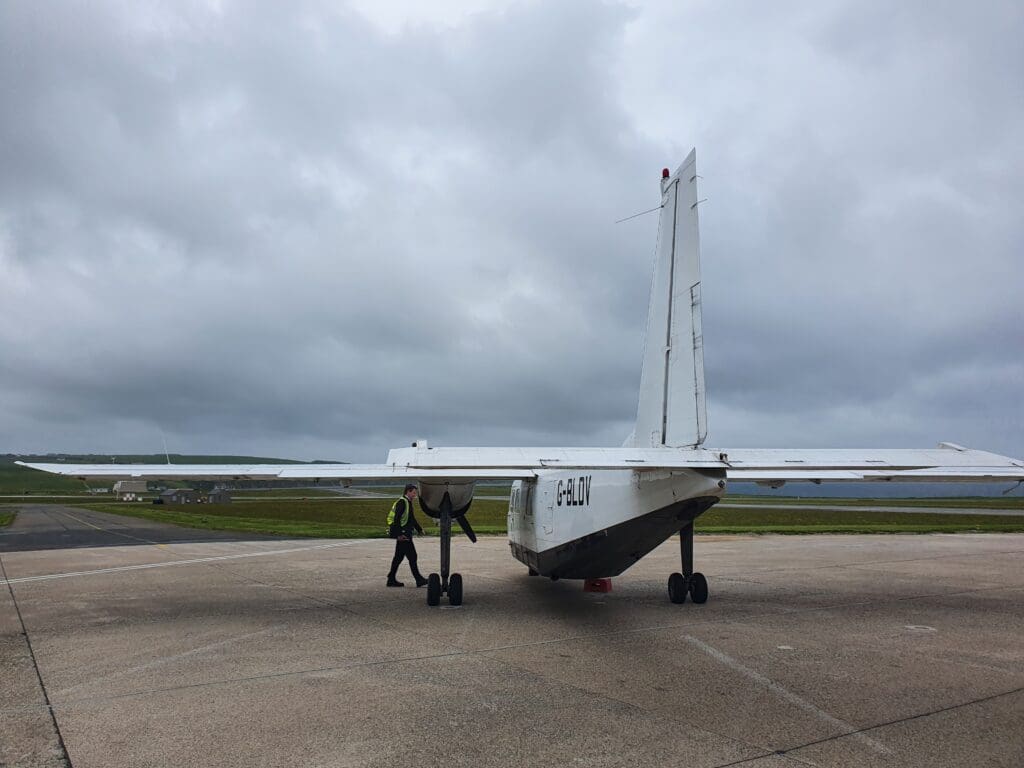
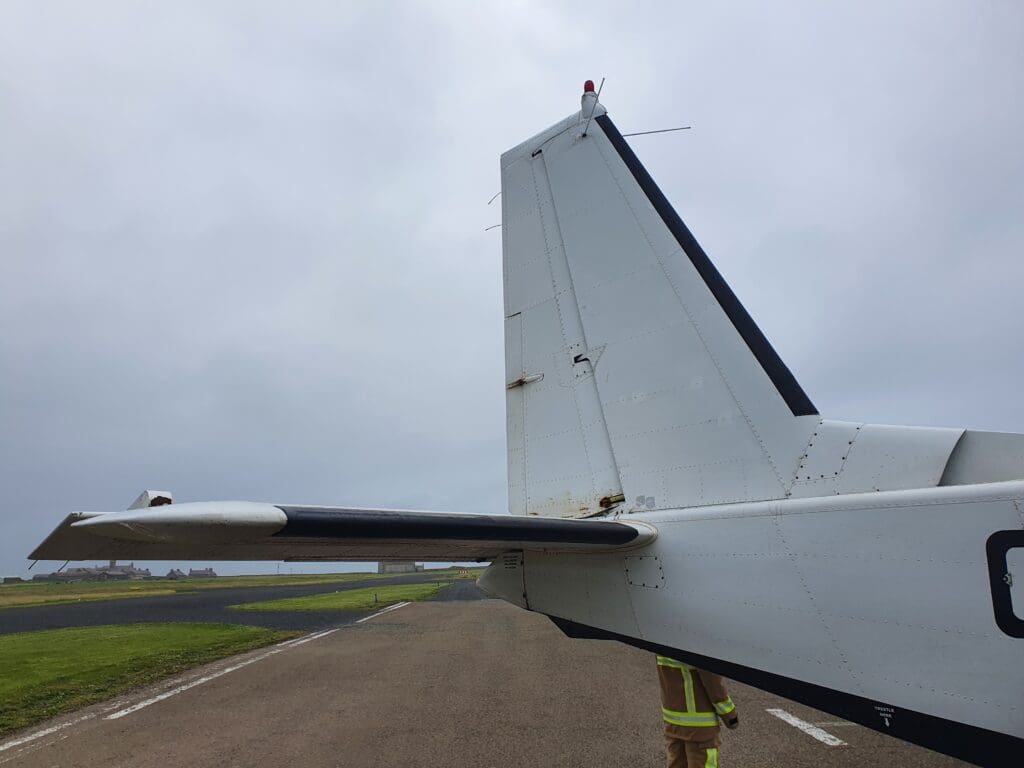
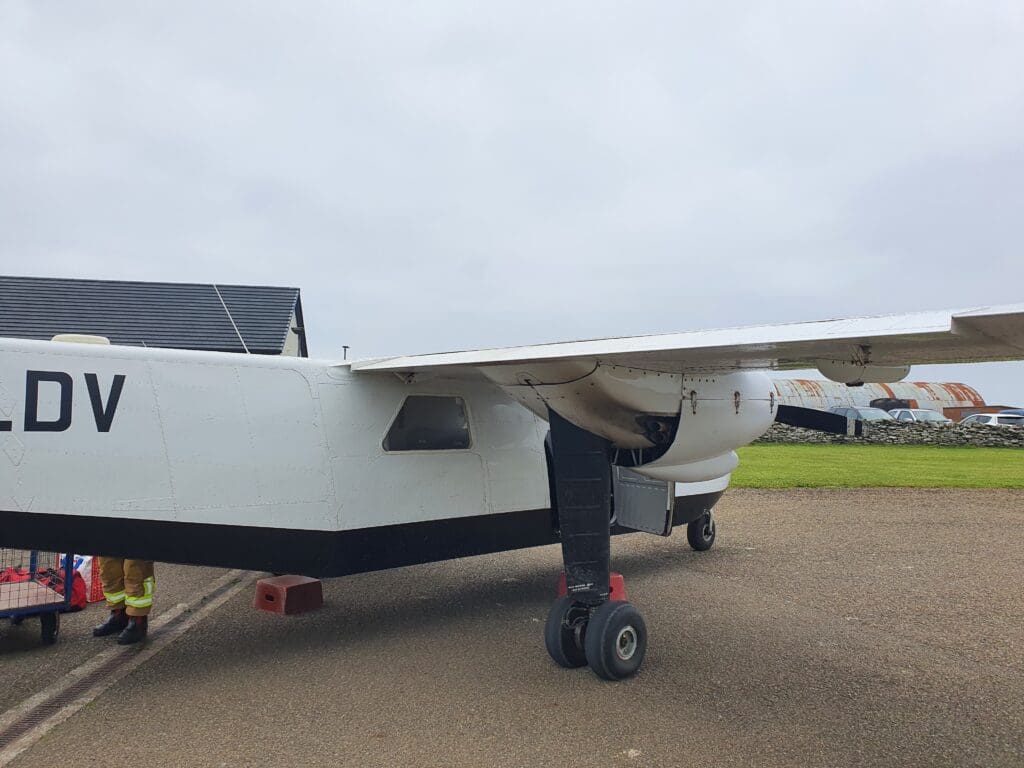
With forty minutes to go until the Inter-Island flight’s scheduled departure time, at 1520 the Britten-Norman BN-2B-26 Islander that would be operating this service taxied over to the ramp, having spent its time between flights out of the wind and rain in Loganair’s small hangar. After parking up in a corner of the ramp, the pilot emerged and made their way to the Loganair ticket office inside the terminal. That afternoon, the slightly older of Loganair’s two Islanders would be operating the Inter-Island services, this coming in the form of G-BLDV. Manufactured way back in 1984, at the time of my flight, this aircraft was over 38 years old, making it one of the oldest aircraft remaining in scheduled passenger service in the UK! Commencing its commercial career in 1986, this was shuttled across from the Isle of Wight to Germany as D-INEY and flew with the still existent Islander operator FLN Frisia Luftverkehr, shuttling passengers and cargo between Norddeich on the German mainland and the East Frisian Islands in the North Sea. Remaining in Germany for a decade, in 1996 the aircraft was shuttled back to the Isle of Wight, and re-received its current registration before eventually being delivered to Loganair. Initially wearing a hybrid mix of British Airways’ current livery albeit with a Landor tail, the tail of the aircraft was soon repainted in an appropriate Tartan pattern before receiving Loganair’s colours in 2003 or 2004. In 2006, the aircraft was repainted into a mostly black livery which promoted Orkney’s Highland Park Whisky and finally received its current mostly white colour scheme in 2014.
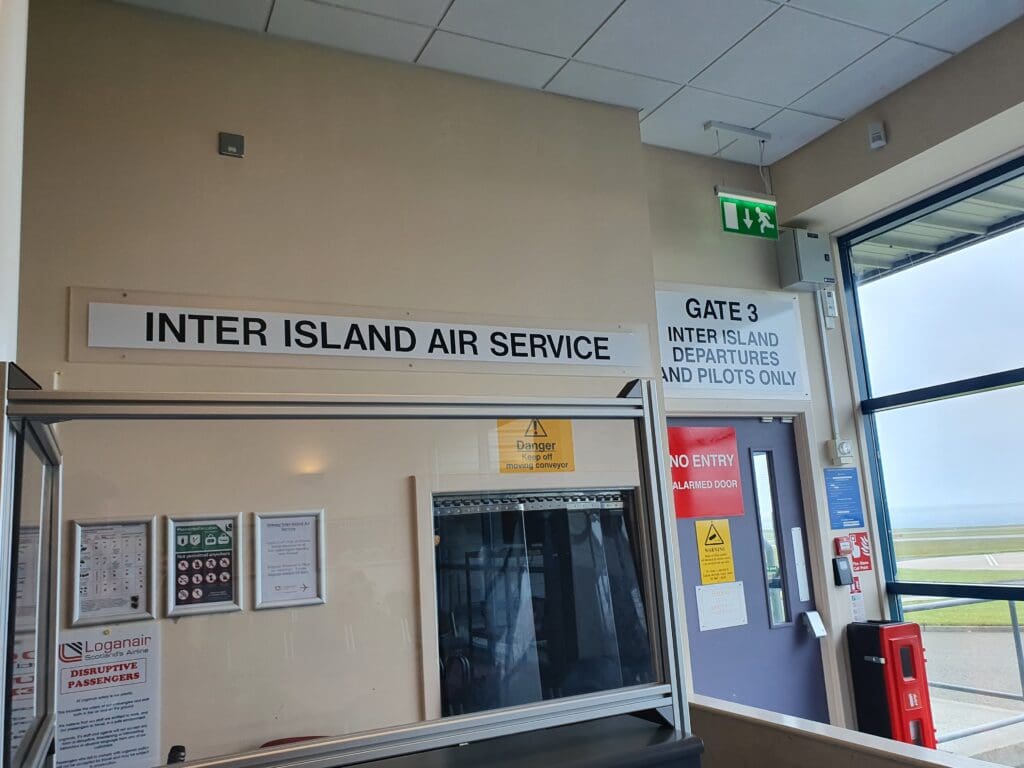
With check-in scheduled to open twenty minutes before departure, at 1540 the Loganair agent made their way from the ticket office to the Inter-Island flight check-in counter. Seeing as I had checked in online the previous afternoon and not wishing to make use of the generous complimentary 15kg hold luggage allowance, I decided not to head up to the counter. However a short time later, for the second time in my life, my name was announced over the tannoy and I was requested to head up to the counter. Upon reaching the desk, the friendly agent asked if I had any luggage to check-in. After informing them that I didn’t, not wishing to end up stranded on a remote Orcadian island, I then awkwardly explained my unusual schedule to check that this would not prove an issue. Fortunately, they reassured me that there would be no problem and I could wait on the aircraft at the intermediate stops on my journey.
Having gathered all passengers’ checked-in luggage, at 1545 the Loganair agent donned a reflective jacket and made their way outside with a trolley carrying a small collection of bags before loading these into the cargo hold at the rear of the Islander. As they did this, the Shetland-bound Saab 340 touched down on Orkney following its short flight from Inverness and made its way over to the apron. Whilst there are few commercial airliners that the small Saab can dwarf, the Islander is one of them, with the presence of this on the apron making the Saab appear to be comparatively large! Once all bags had been loaded onto the aircraft, the agent returned to the terminal and at 1550 made an announcement requesting all of those bound for Westray to proceed forward for boarding.
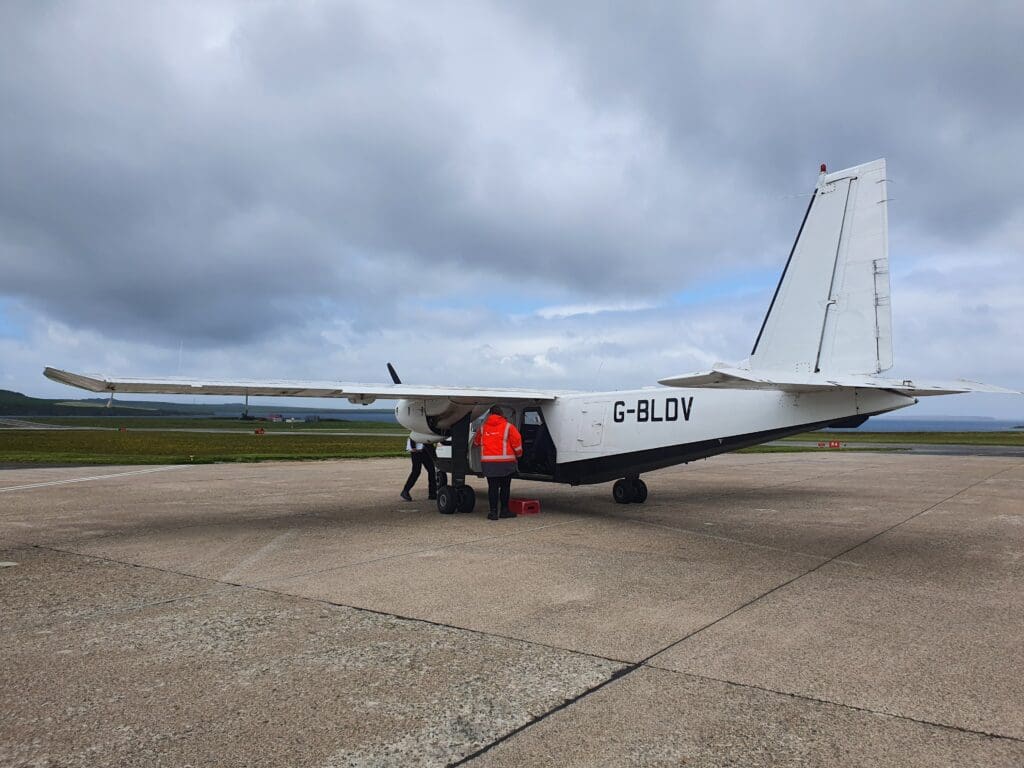
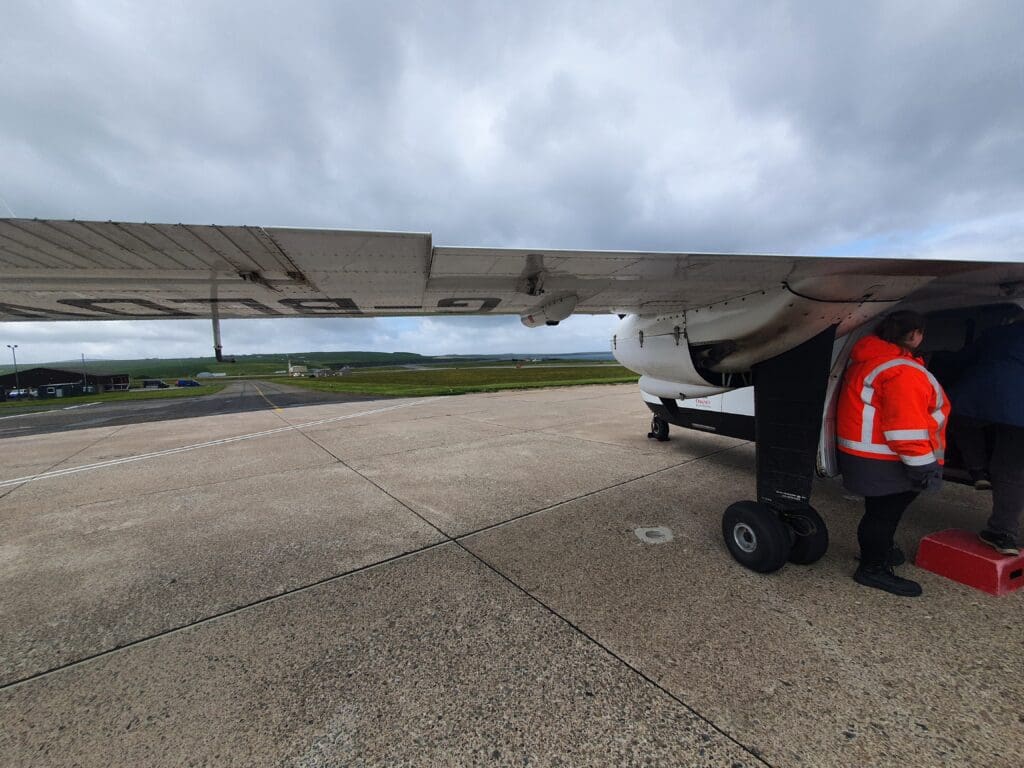
Meeting both the pilot and agent at the door to the apron, much to my surprise there was no identity, security or boarding pass checks and instead, we were led straight out onto the apron and over to the waiting Islander. That evening, there would just be two passengers on the first flight up to Papa Westray – myself, and an elderly passenger, who, judging by their accent, like me, appeared to be from south of the border. Exchanging a few words, I soon found out that this was their first flight onboard such a small aircraft and they were a little nervous about the whole experience. Turning to the Islander’s door layout, the aircraft is rather interestingly and ingeniously designed with each side of the fuselage featuring a single passenger door, with the one on the left-hand side serving the rear two rows and the one of the right-hand side positioned further forward and serving the forwardmost two rows. That afternoon, both myself and the fellow passenger were requested to sit in the rear two rows of the aircraft for weight and balance reasons and were thus led out to the rear door on the left-hand side of the aircraft. With my fellow passengers having beaten me in the race out to the aircraft, they boarded first and slid into Seat 4B. Once they had strapped themselves in, row 3 was unfolded and I squeezed into the aircraft before sliding into Seat 3A before the agent closed the door behind me. Having flown on a collection of light aircraft, getting myself into the Islander was not too awkward however I can imagine that this must take some getting used to for those less au fait with flying onboard such small aircraft.
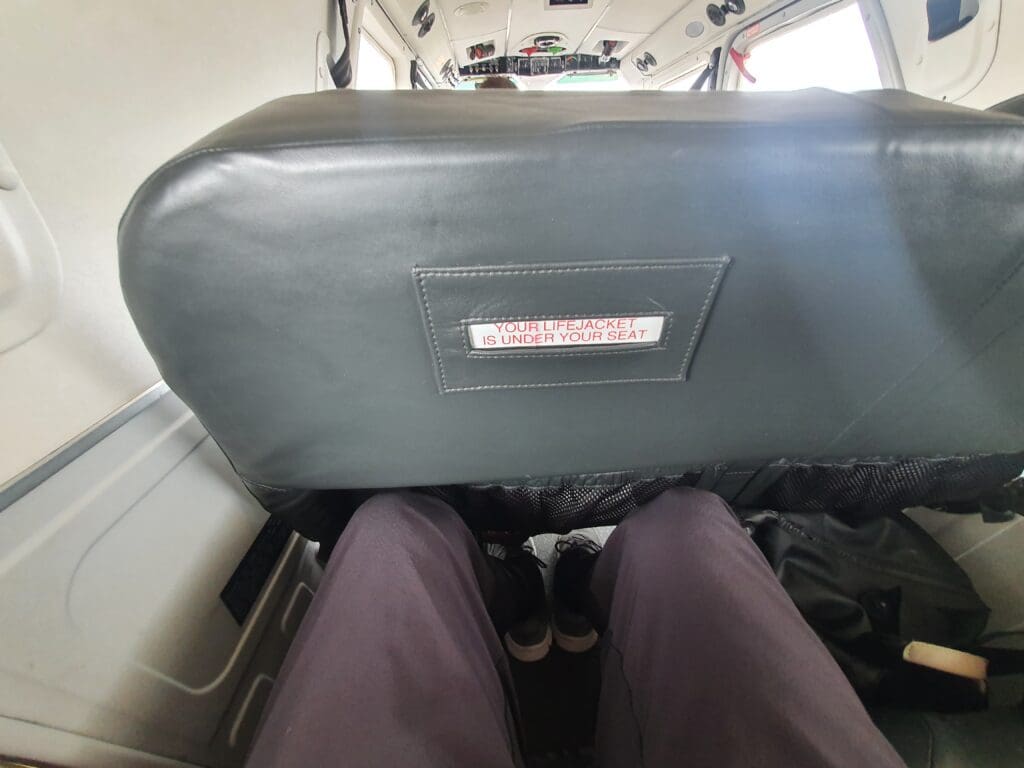
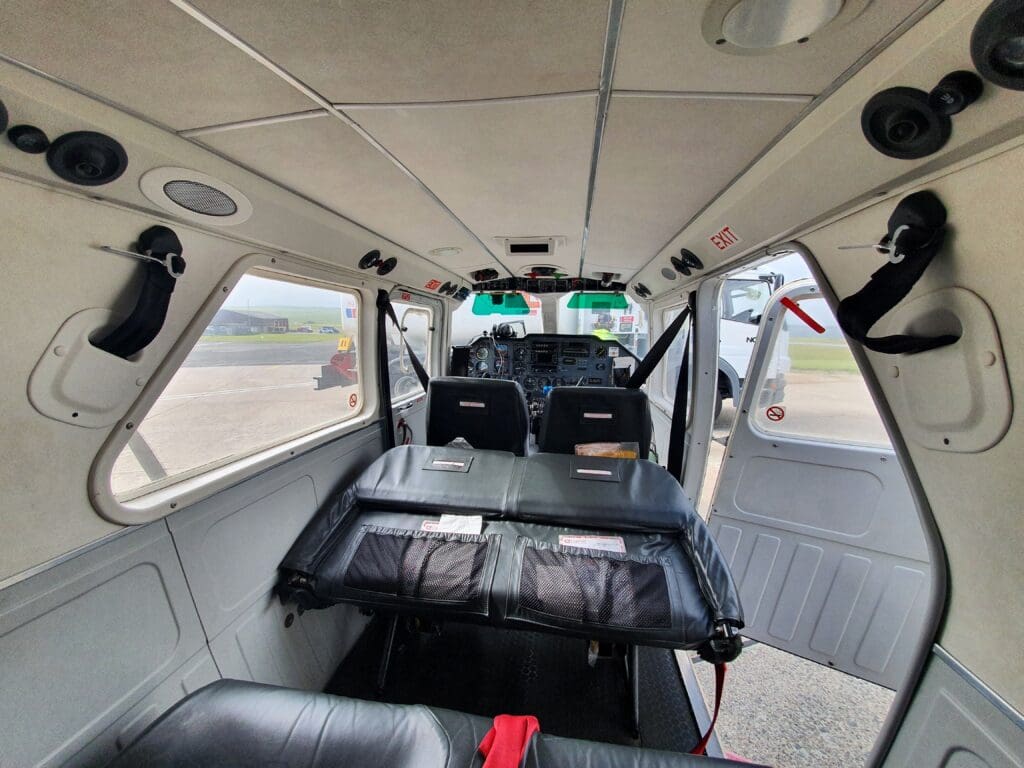
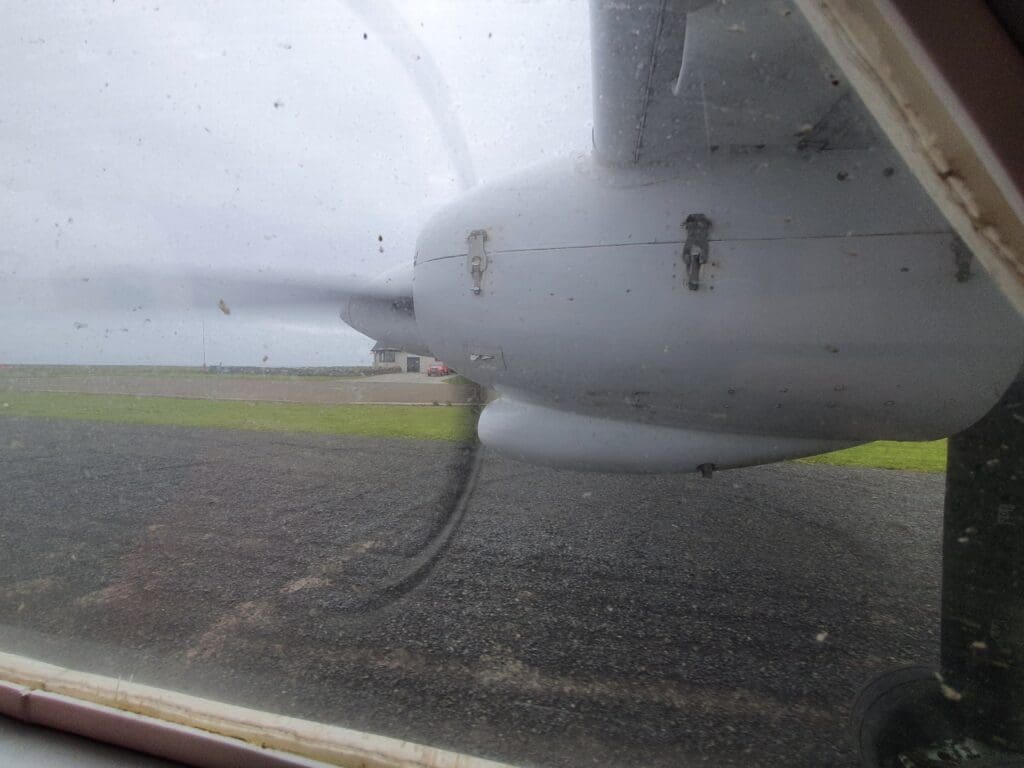
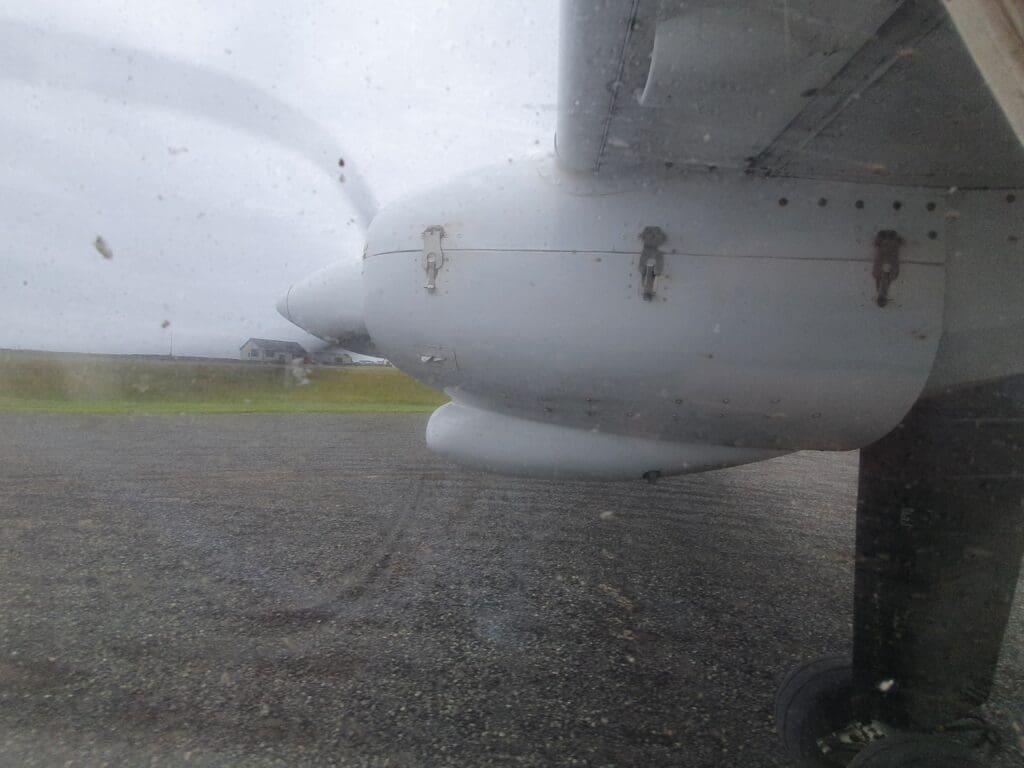
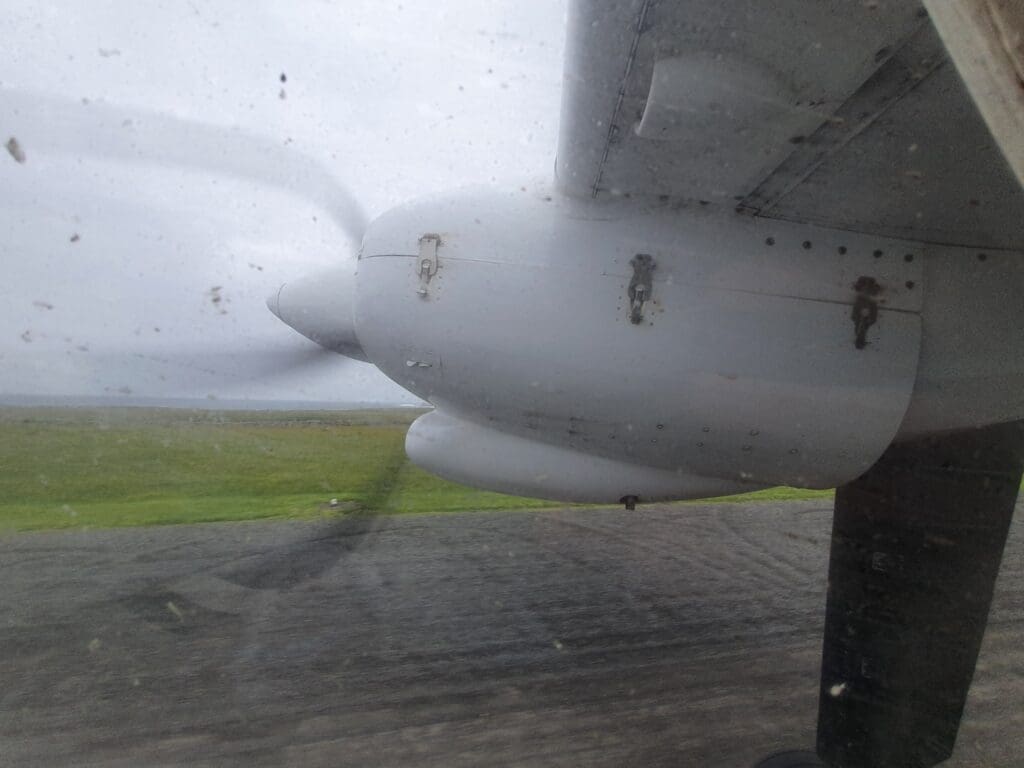
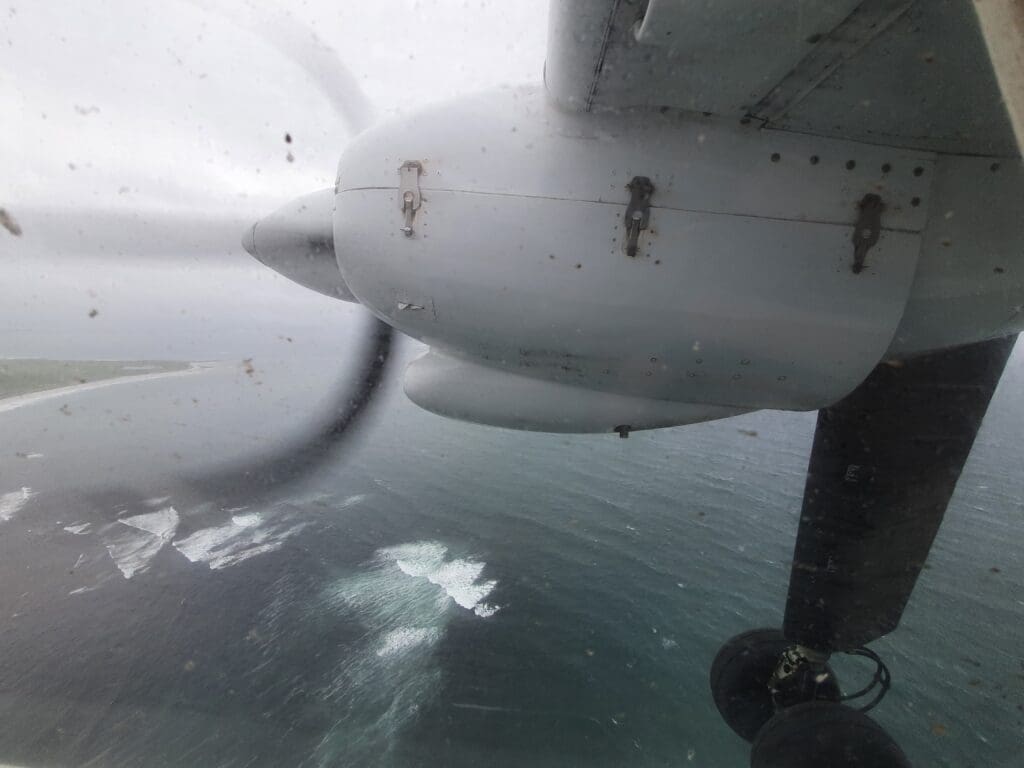
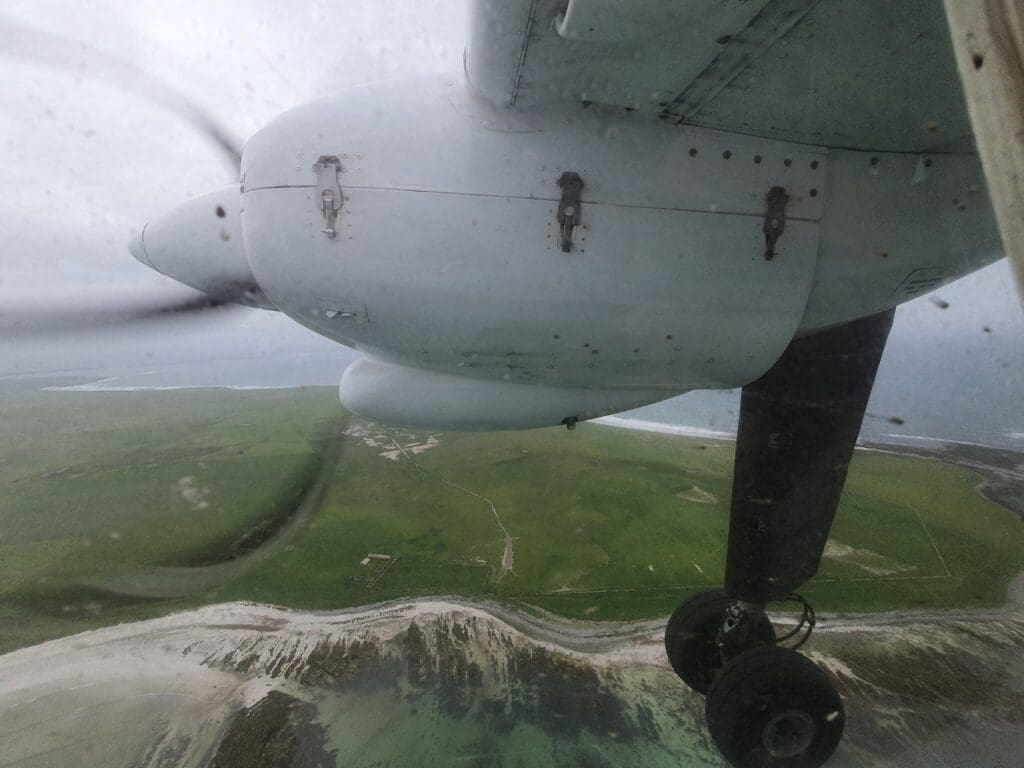
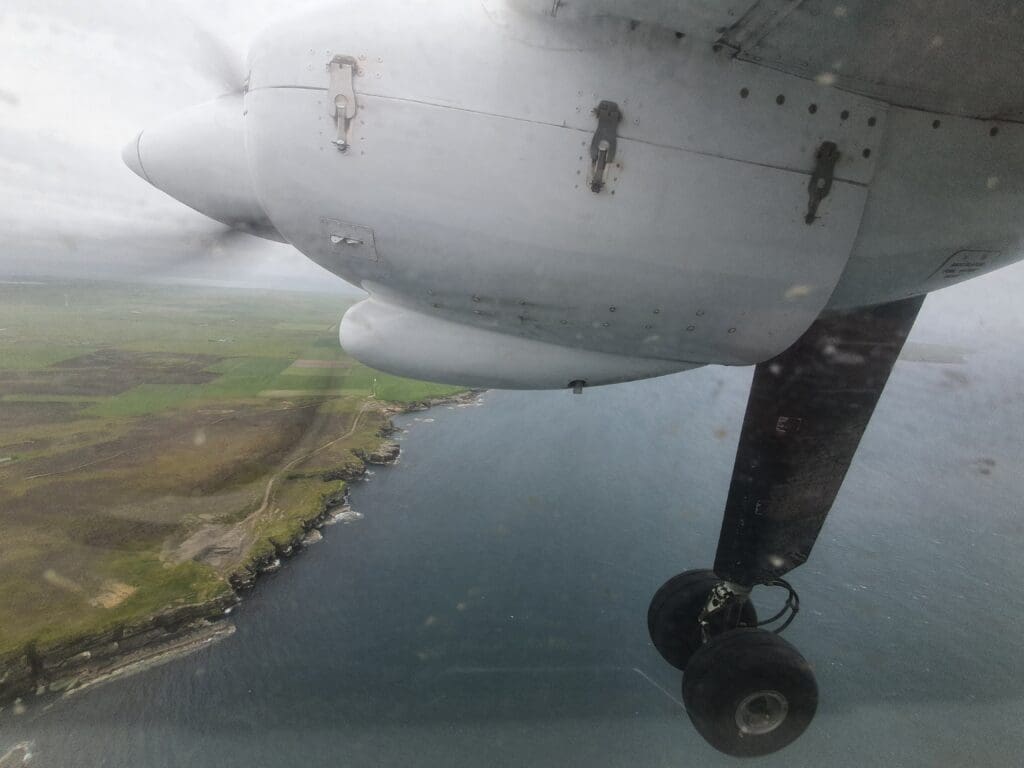
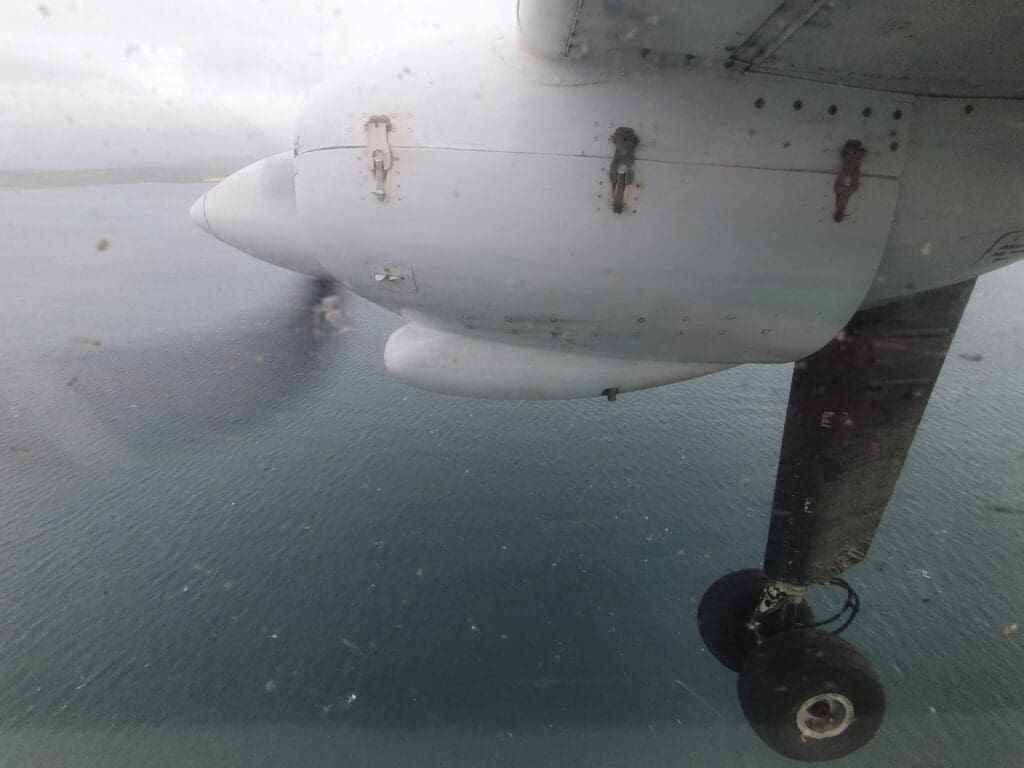
Inside, I found the cabin to consist of four rows of conjoined seats and onboard that particular Islander, these appeared to be in relatively good condition, perhaps having recently been reupholstered. Each row was covered in a (faux?) grey leather covering and came complete with bright red seat belt straps in keeping with the colours of the Loganair brand. In terms of comfort, these seemed far better padded than many airline seats and the amount of legroom offered was fairly reasonable for such a small aircraft. Meanwhile, as on a much larger aircraft, each passenger can also enjoy the luxury of their own reading light and air vent, although admittedly I did not test these to see if they worked. Furthermore, I found the cabin to be clean and in good condition given the aircraft’s long career, with only a few marks and scratches on the cabin’s plastic panelling. Unfortunately the same could not be said for the windows which were filled with smudges, marks and scratches which made any decent photography through these near impossible. Turning to the seat back pocket, I found this to contain a double-sided safety card as well as a plain white sickbag, although unlike on my ride on a Hebridean Air Services Islander the previous year, no disposable ear defenders could be found in these.
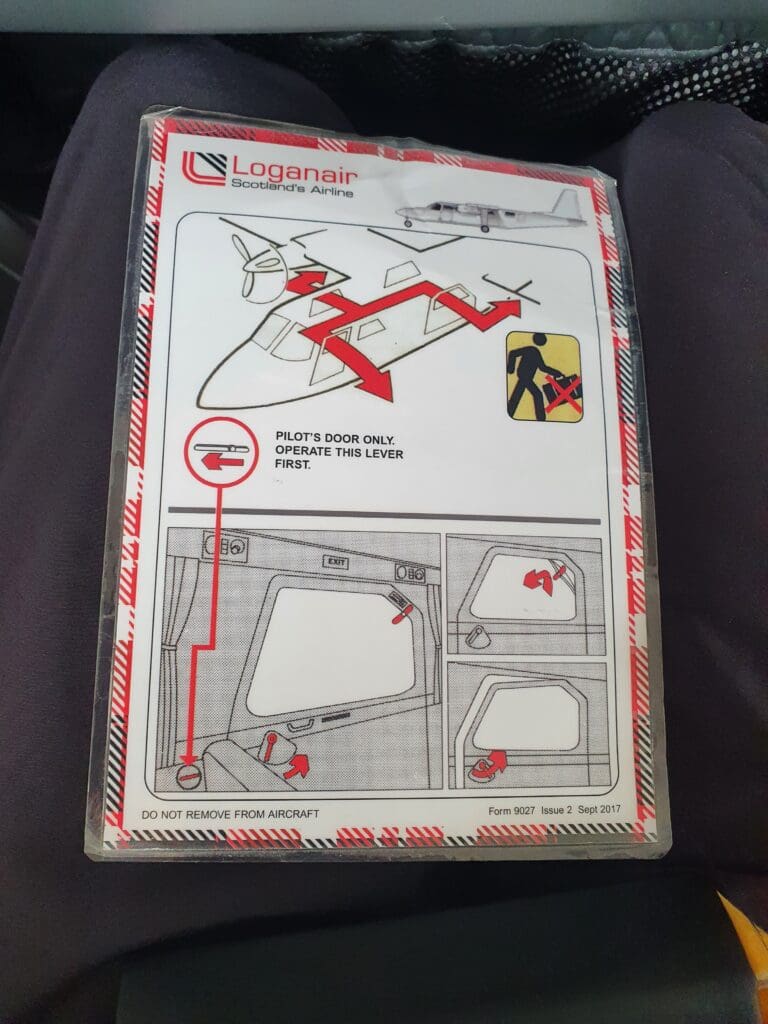
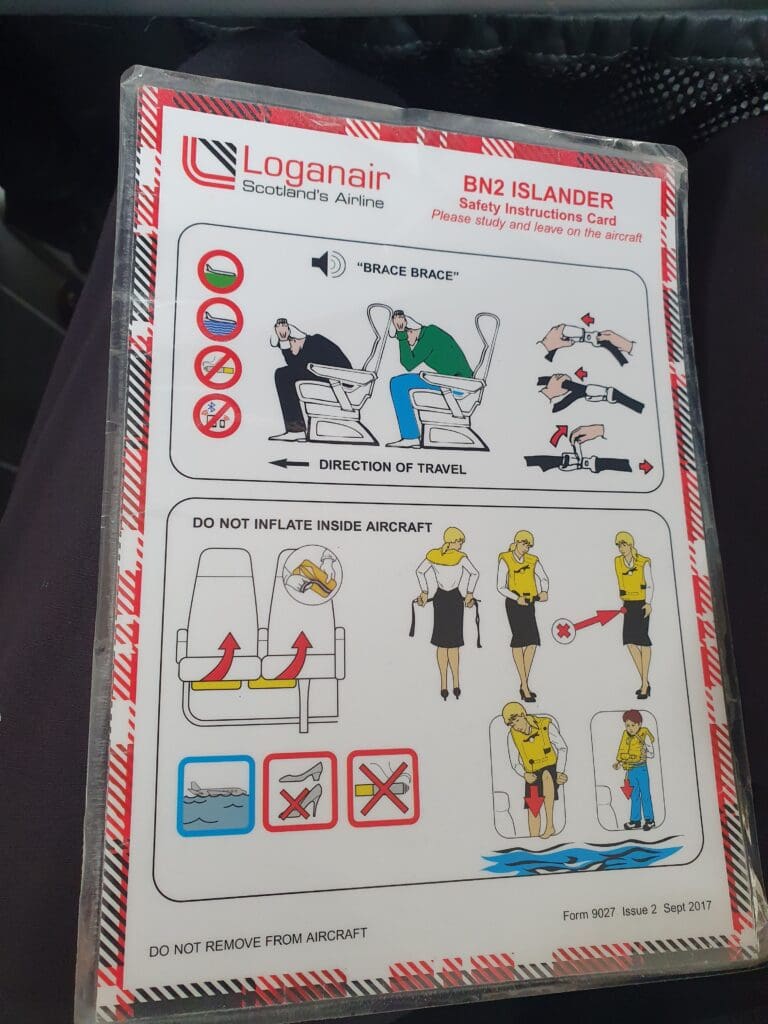
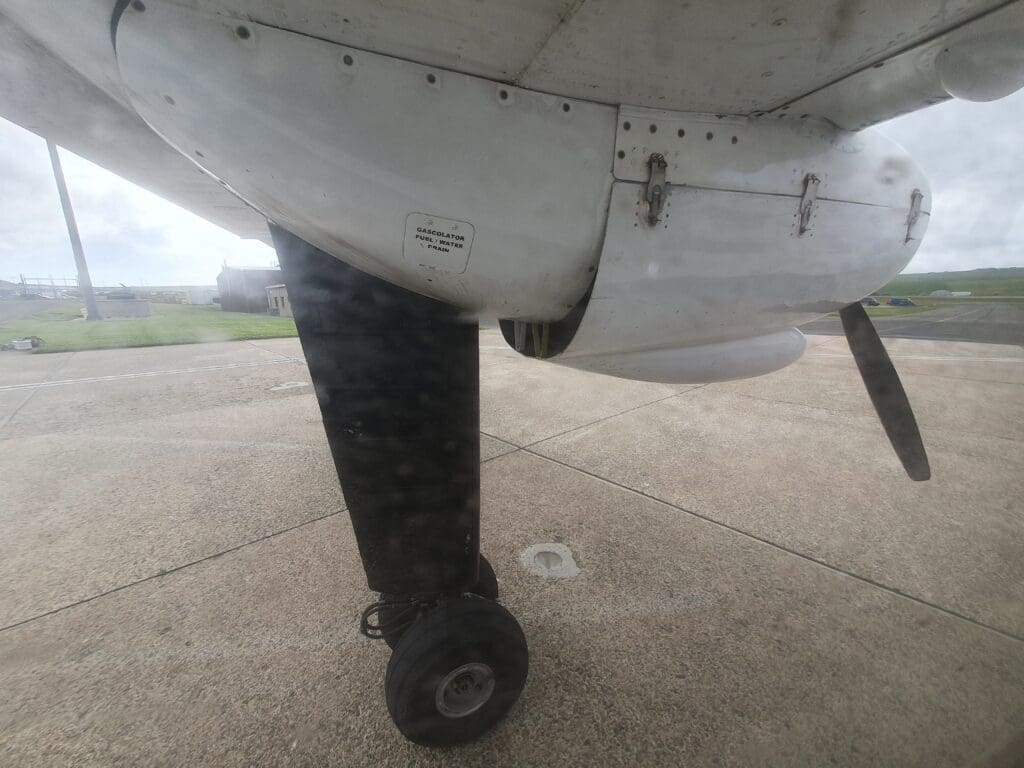
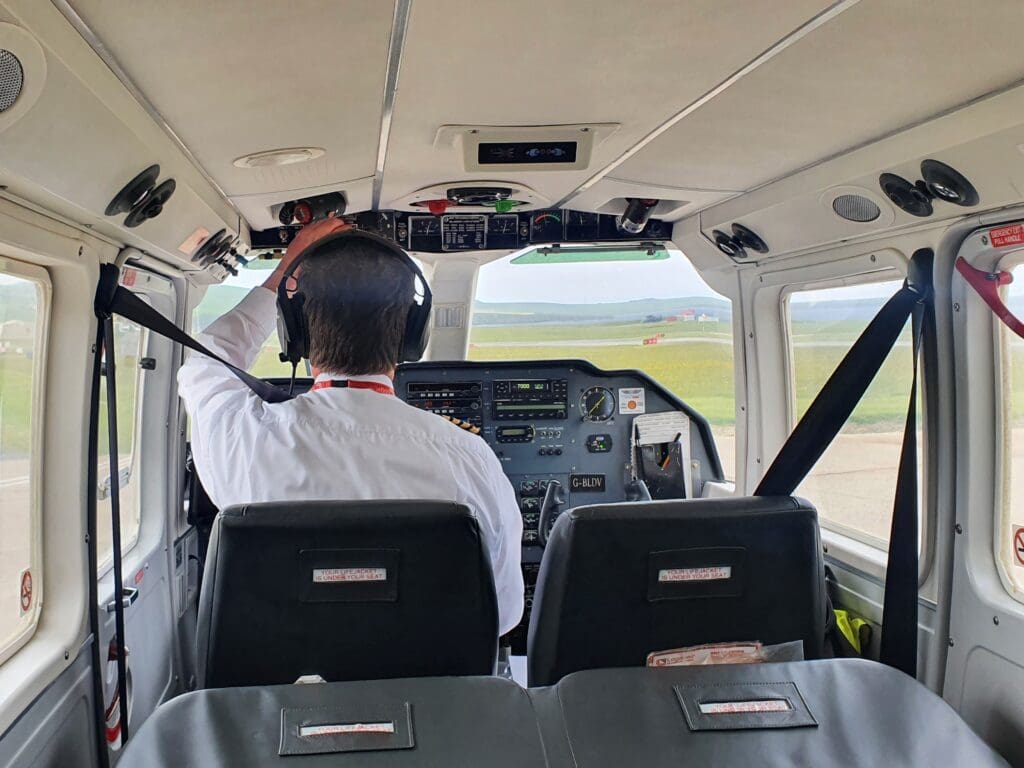
Once the doors had been shut and the pilot had taken their seat up front, they turned around and commenced a very short welcome and safety speech, the latter consisting of a brief mention of the safety card and a check that we had fastened our seatbelts. Once this had been done, the two Lycoming O-540-E4C5 piston engines very quickly spluttered into life in preparation for the flight ahead. A very short time later, the Islander powered forward out of its stand and commenced a quick taxi over to runway 27. Upon reaching the holding point, the Islander paused for a minute to allow for a Loganair Saab 340 to touch down following its flight up from Aberdeen. Once the Saab had whizzed past, the Islander made its way onto the runway and came to a halt whilst the Saab made its way off the runway and over to the ramp. At 1559 the two engines spooled up producing a deafening racket as the aircraft commenced a gentle take-off roll, which as expected, lacked the sensation of being pushed back into your seat. Given the light load as well as the Islander’s short take-off capabilities, I was not surprised to find that the aircraft lifted off from the runway in a matter of seconds, and soon enough we found ourselves being pummelled from side to side with some vigour thanks to that day’s gusty wind.
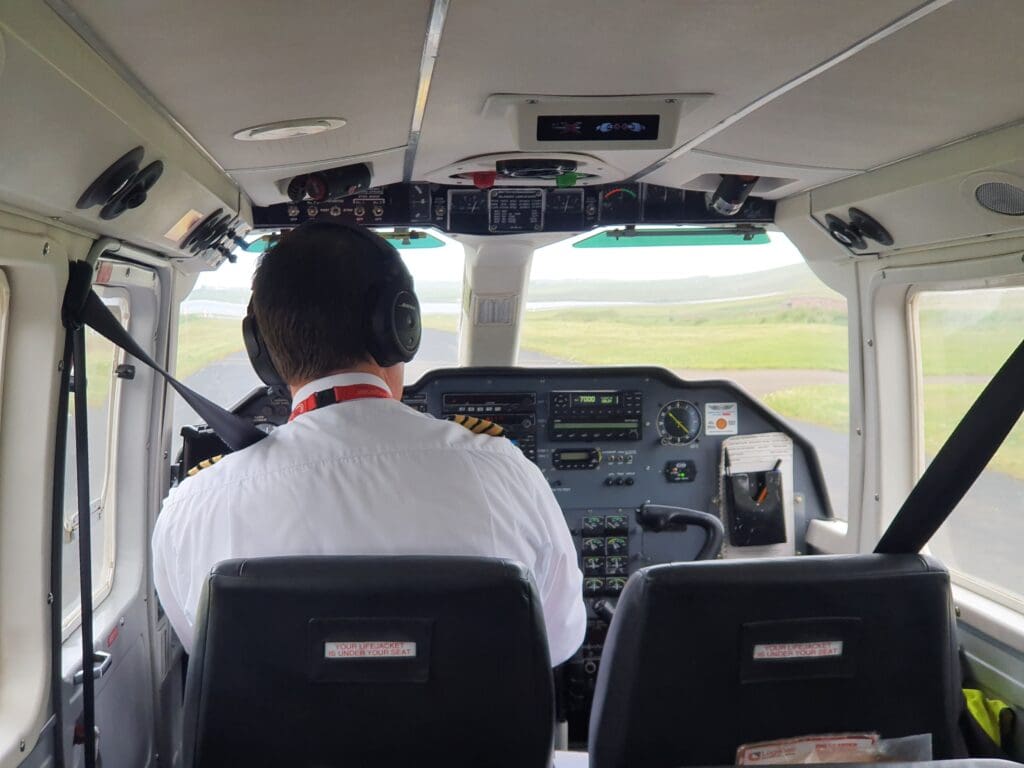
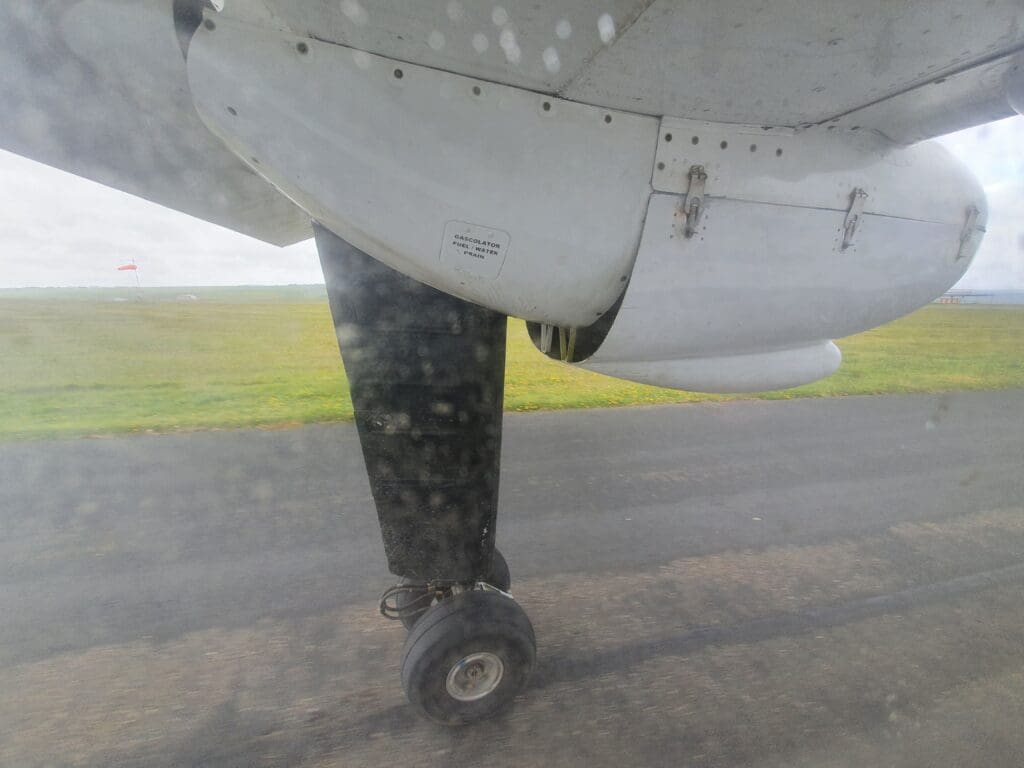
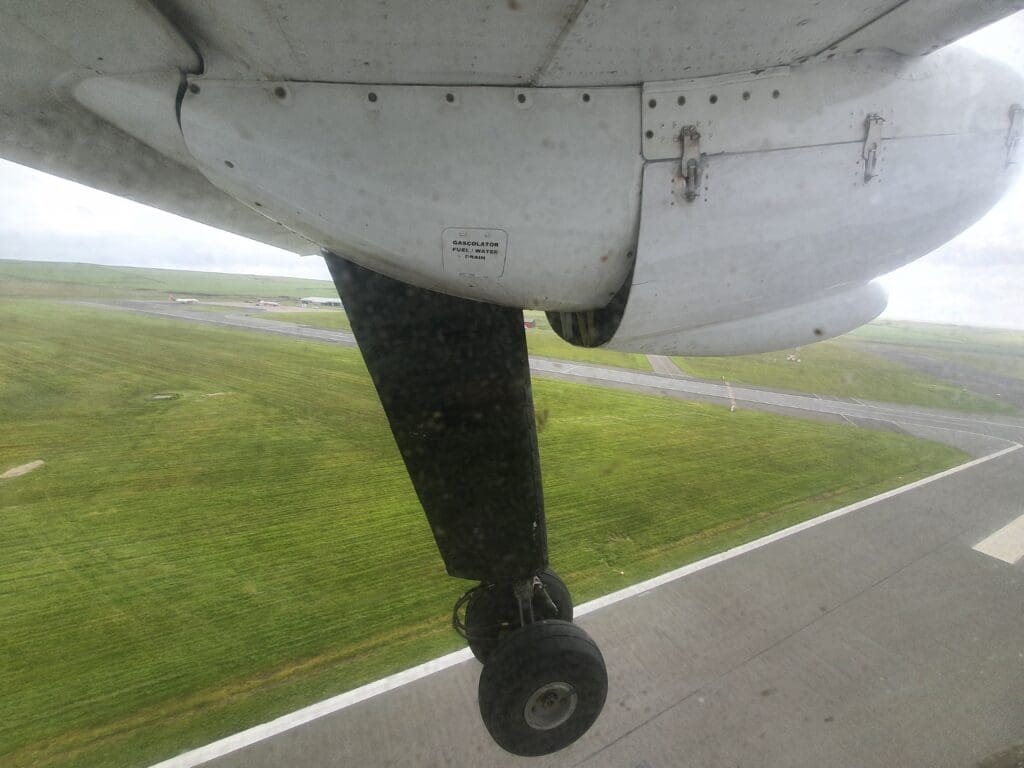
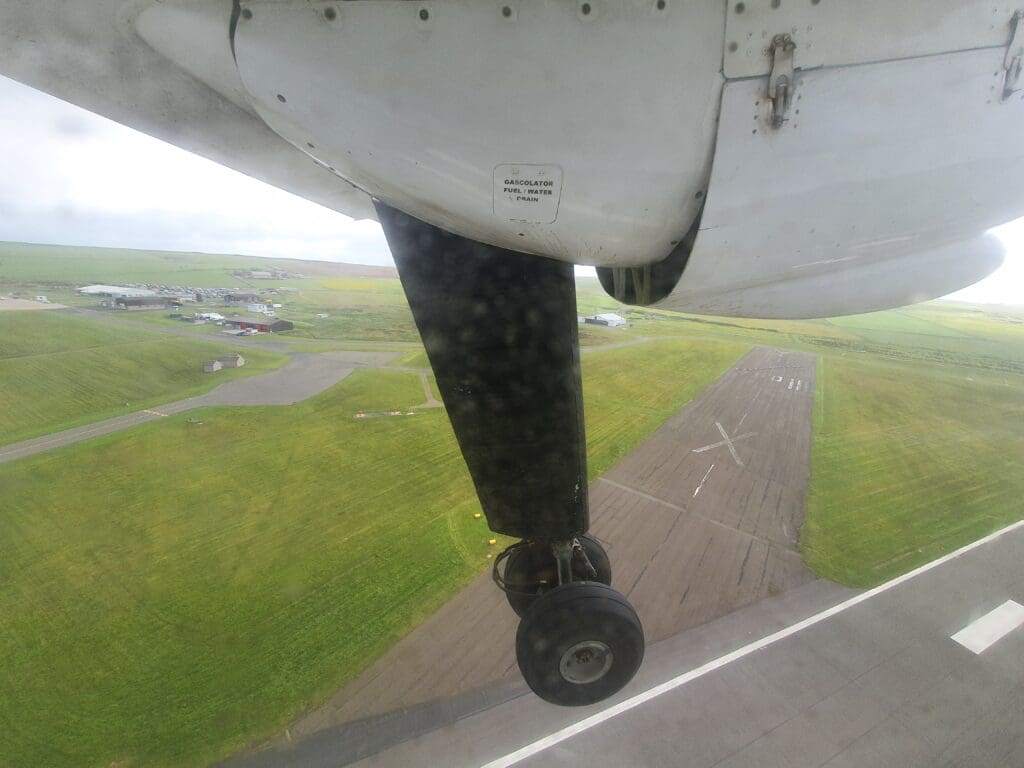
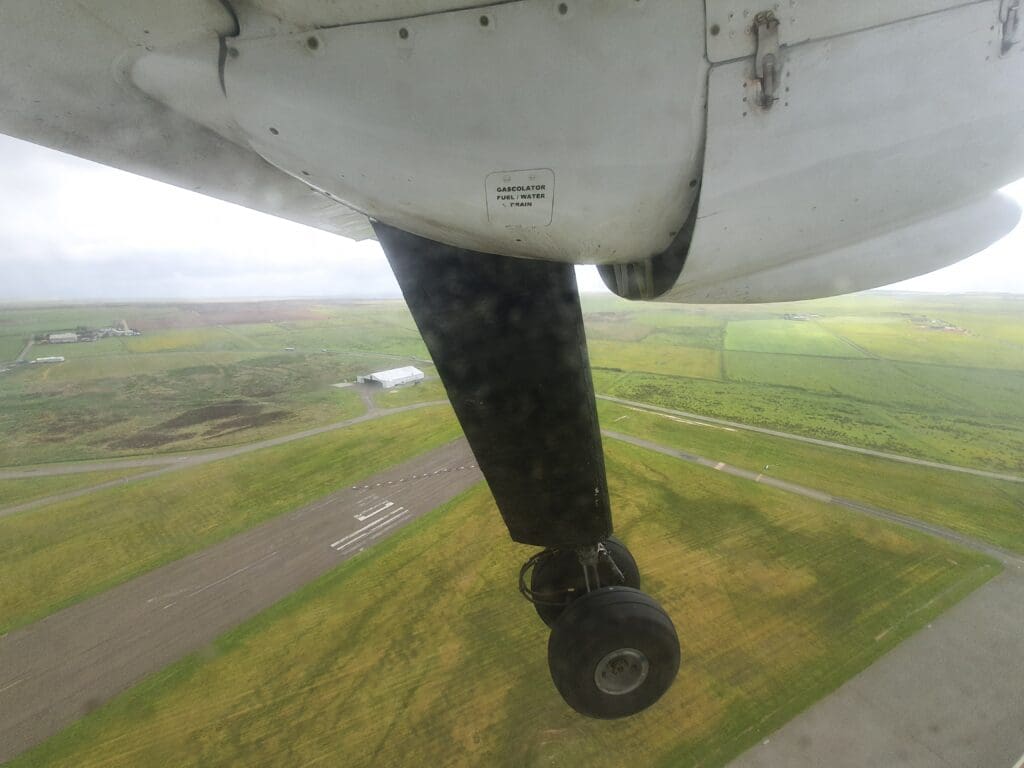
Once safely in the skies and away from the airport, the flaps were retracted and the aircraft banked to the right before rolling out on a northerly heading, soon levelling off at its low cruising altitude of 1000 feet. Heading away from the airport, from my seat on the left-hand side of the Islander I managed to get a good view of Kirkwall which was soon replaced by the green fields of the Orkney Mainland where the occasional herd of cows could be seen as we trundled towards the island’s coastline. From the airport, we passed over the small villages of Berstane and Work before the Islander left the mainland behind and crossed over the Shapinsay Sound – the short stretch of water that separates the ‘mainland’ from Shapinsay, an island of around 300 people. Soon reaching Shapinsay itself, once there a good view of the nineteenth-century Balfour Castle, now operating as a hotel, could be had for several moments as we noisily trundled past. Meanwhile, at the nearby harbour, a small ferry could be seen being readied for its short voyage across the sound back to Kirkwall.
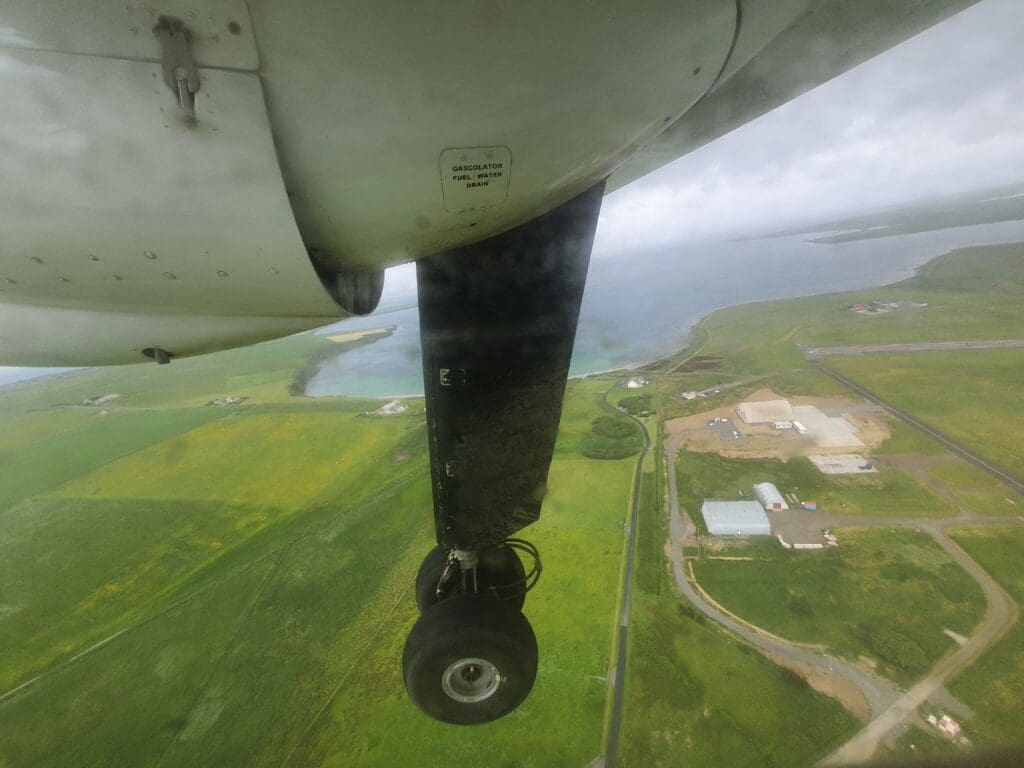
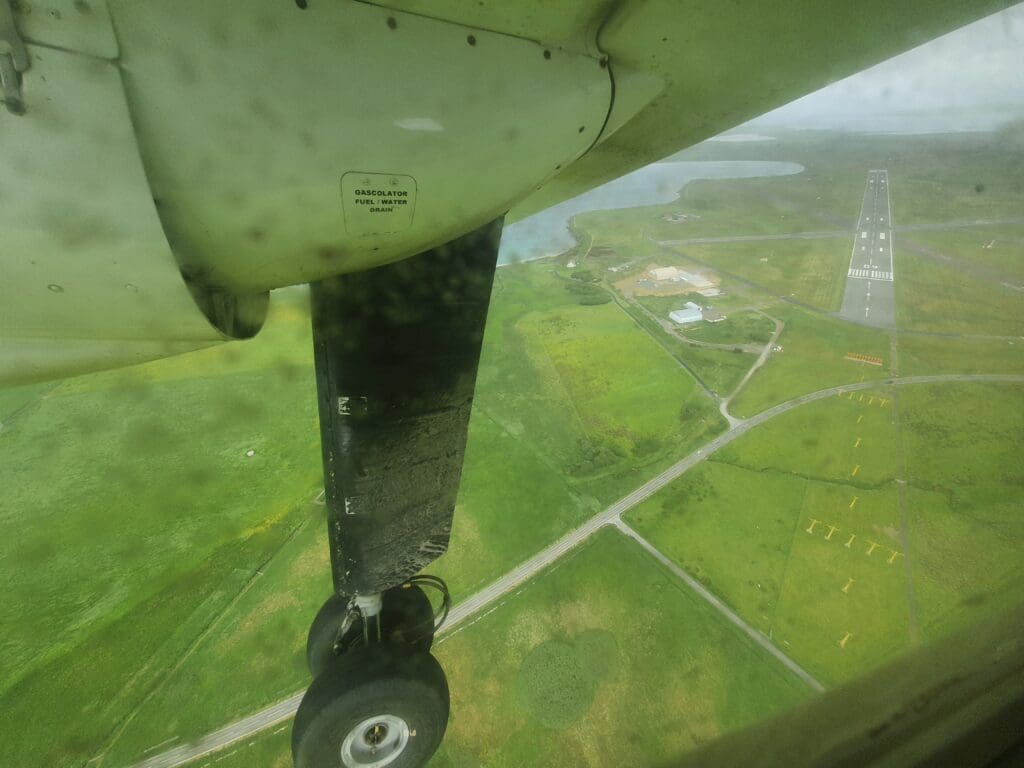
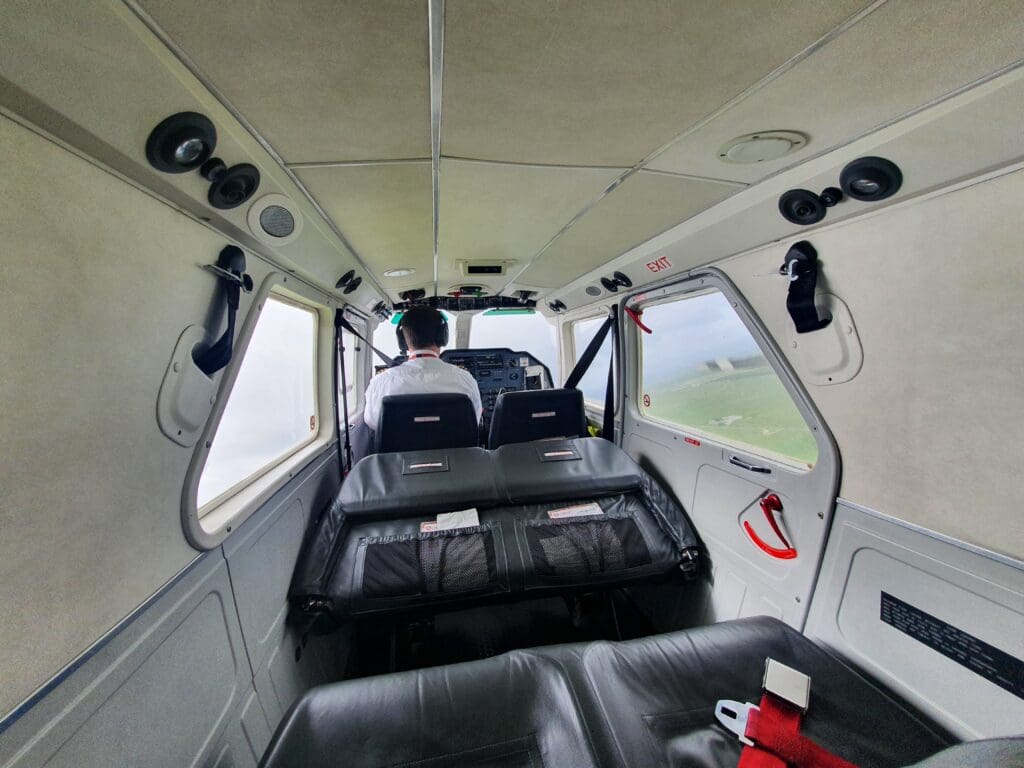
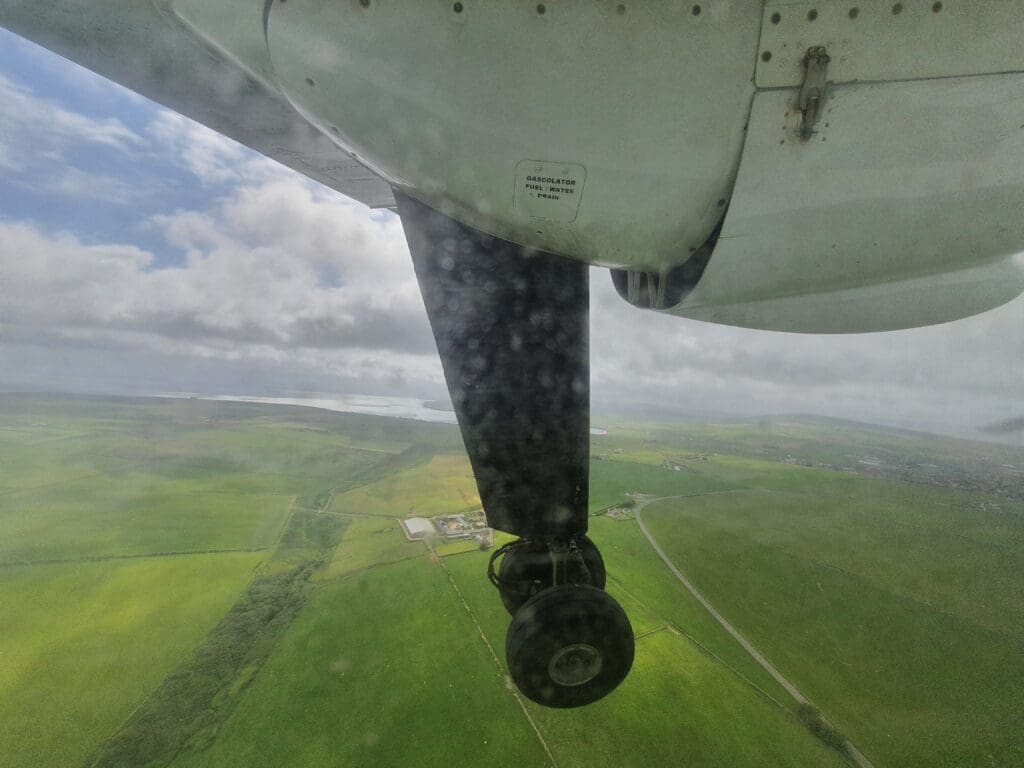
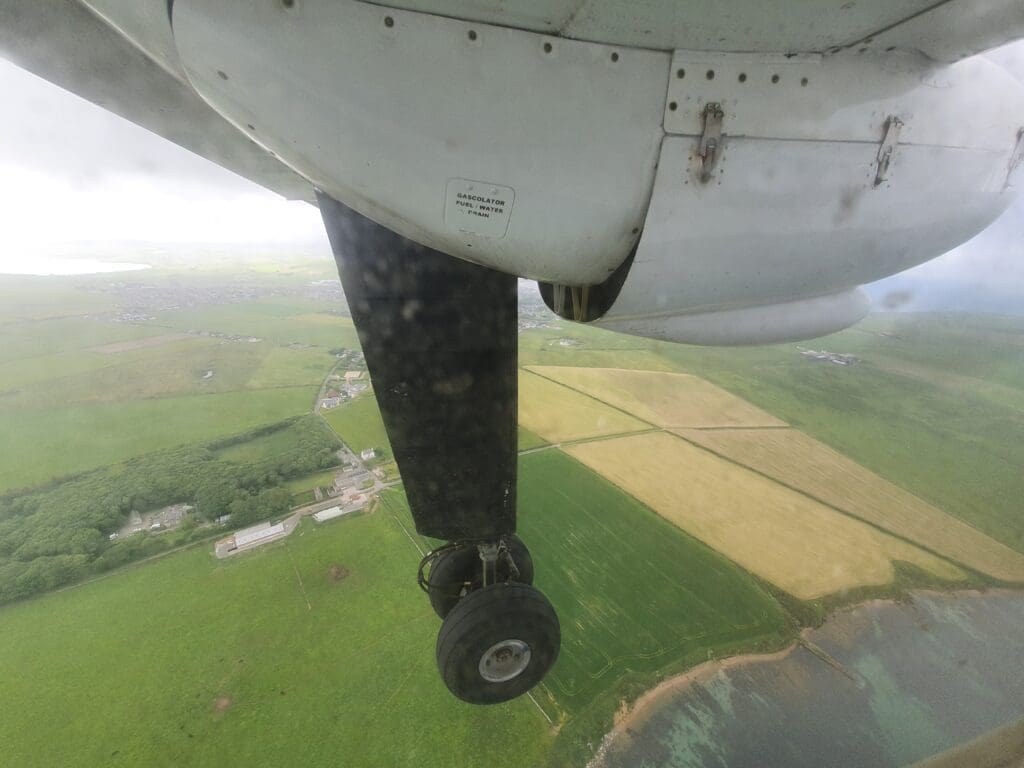

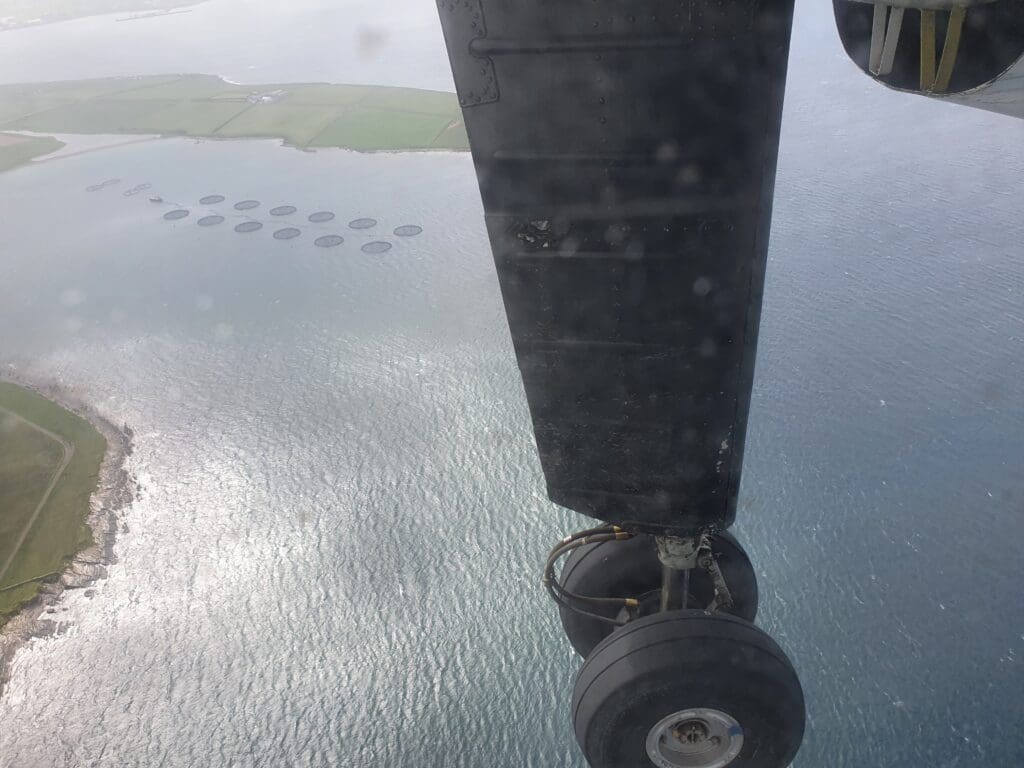
Once away from Balfour, the Islander continued north over Western Shapinsay where little could be seen other than green fields, herds of sheep, plenty of drystone walls and the occasional barn. However, looking out of the right-hand side, I managed to spot the local volunteer fire station and the island’s only Indian takeaway, Shapinsay Spice. After a couple of minutes, the Islander left Shapinsay behind and continued north over the Stronsay Firth passing in between the islands of Egilsay and Eday. Unfortunately, that afternoon’s low visibility meant that neither of these could be seen, with the views at this stage of the flight consisting of nothing other than the choppy waters of the Atlantic a short distance below.
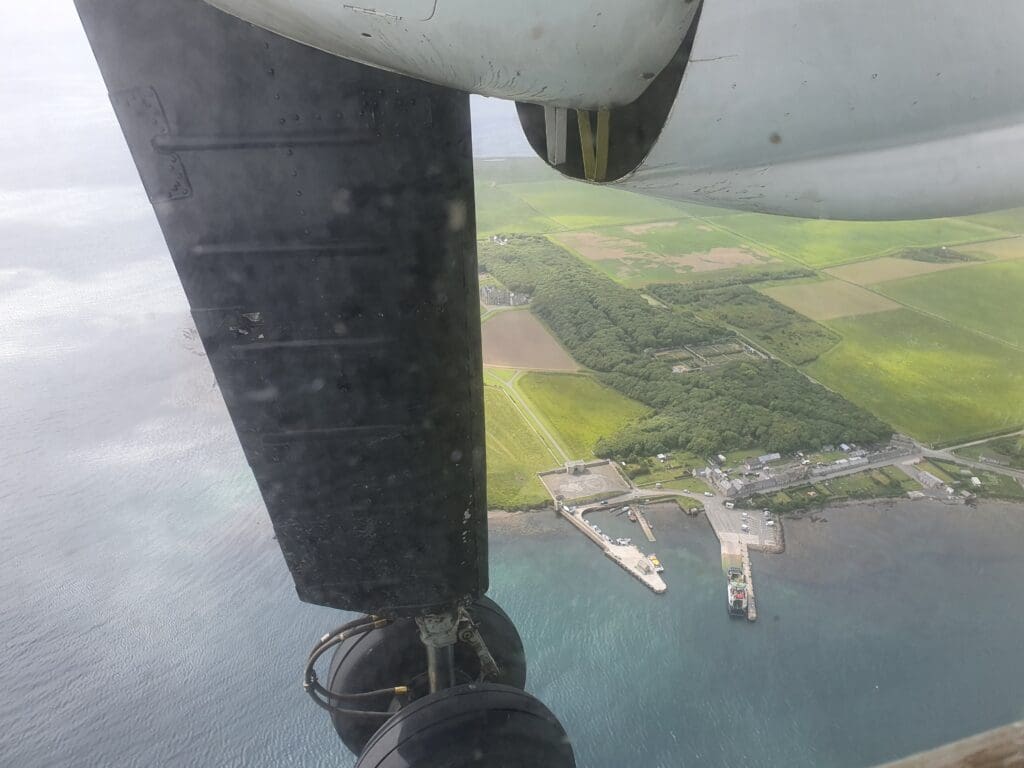
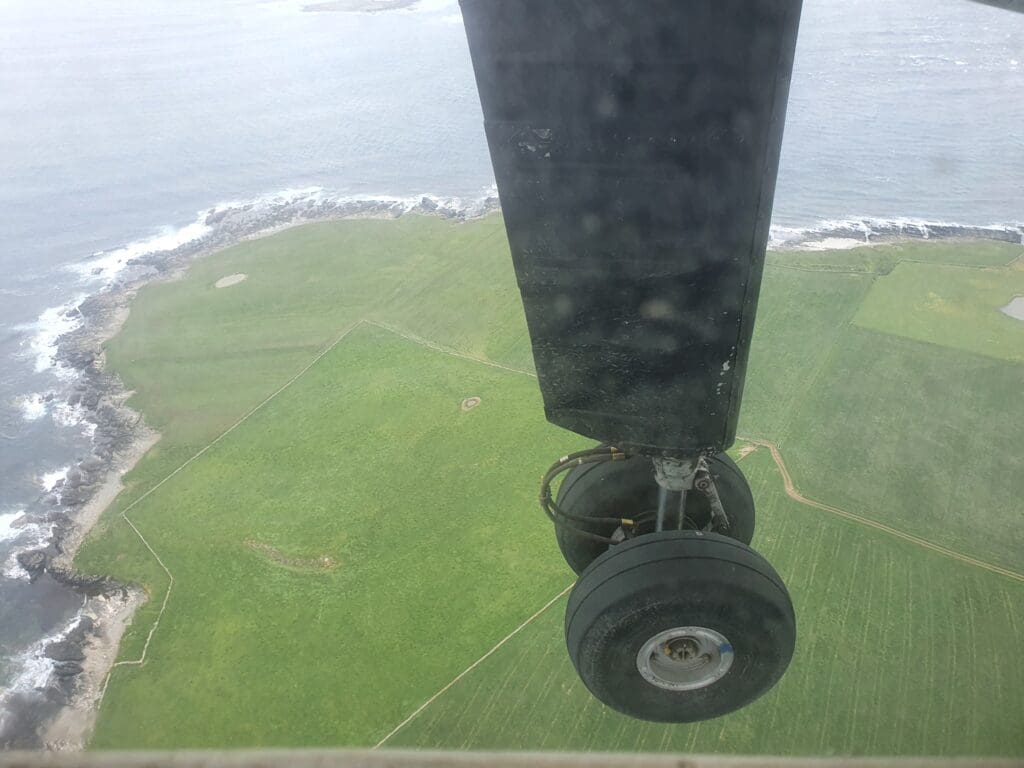
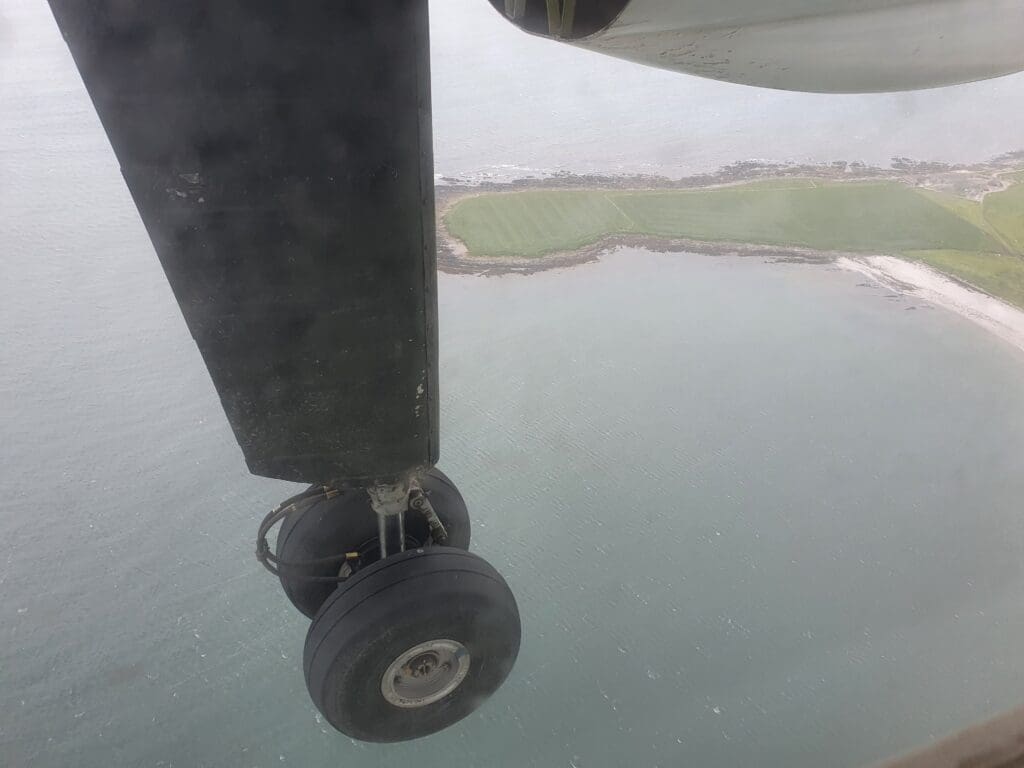
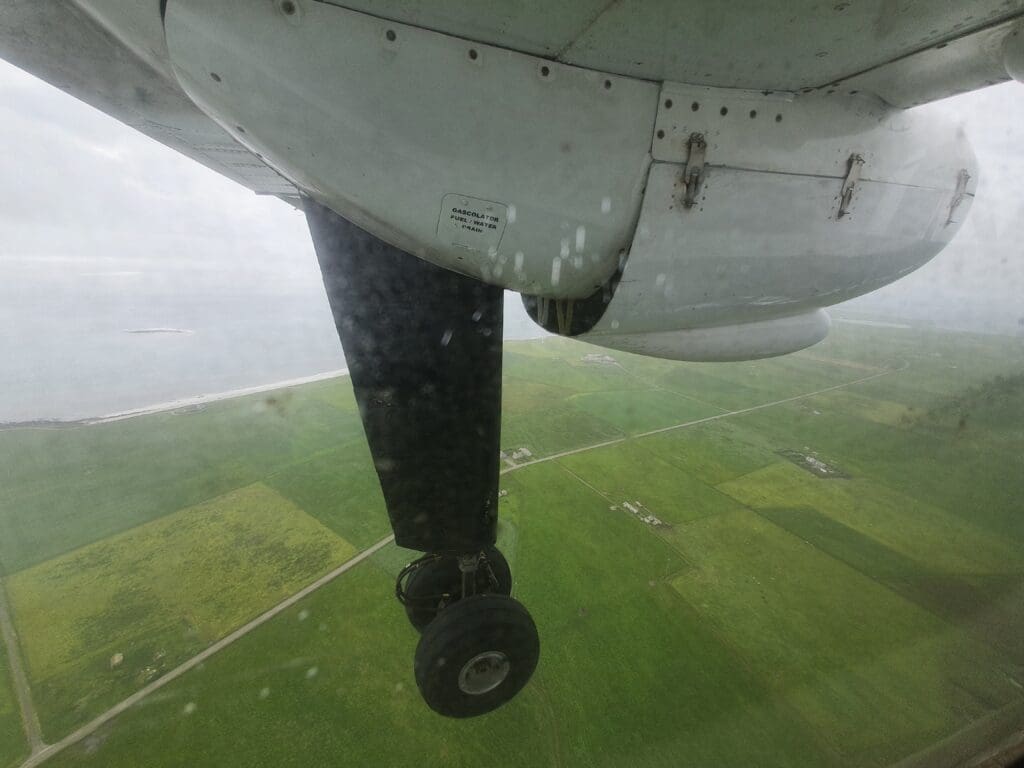
Tootling along at an airspeed of around 130 knots, it wasn’t long before our six-minute crossing of the Stronsay Firth followed by the Westray Firth came to an end and the southernmost tip of Westray appeared. Making a quick crossing across the south of the island, the Islander soon headed out over the North Sound with the green fields of Papa Westray appearing a short time later up ahead. Indicating that the end of our 27-mile hop was near, the Island crossed over the Bay of Mocklett in the south of the island before crossing the shoreline near Papa Westray’s small ferry terminal. Moments after crossing over the coastline, the engine noise decreased slightly and the Islander could be felt commencing its short descent as it approached the airport.
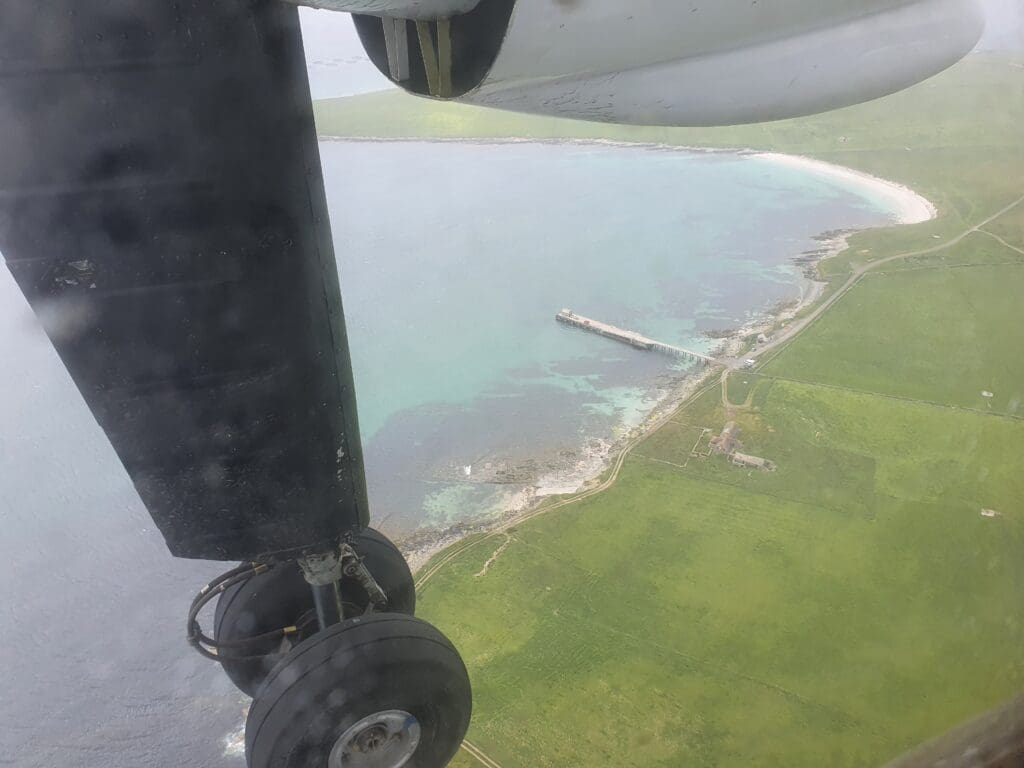
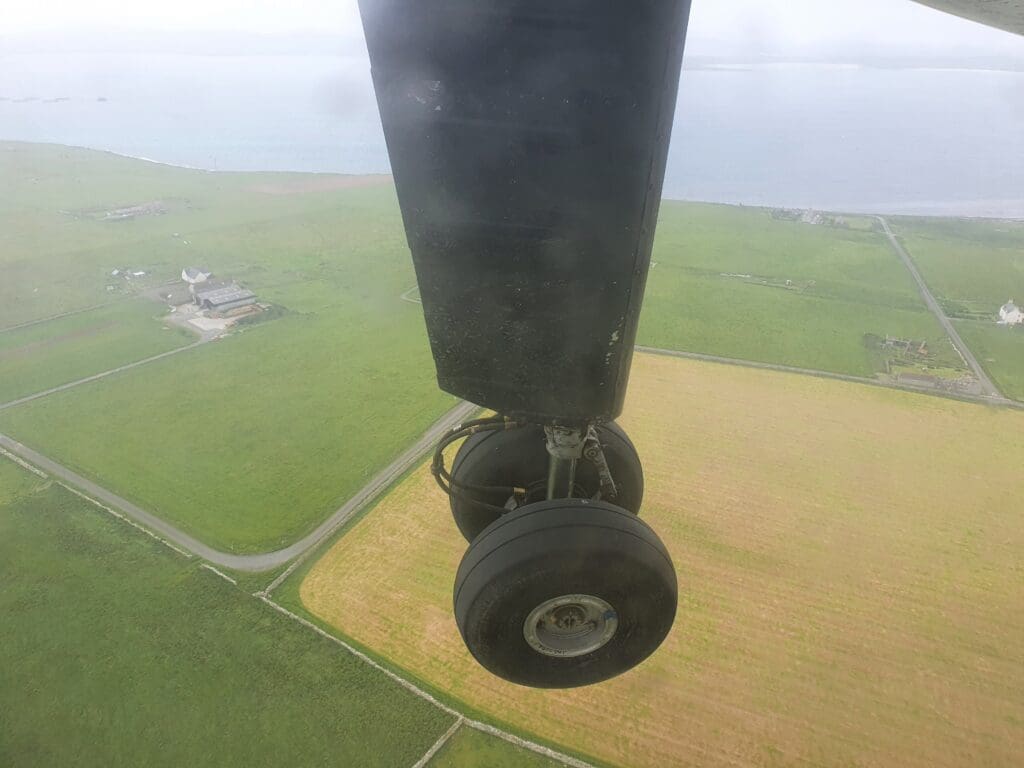
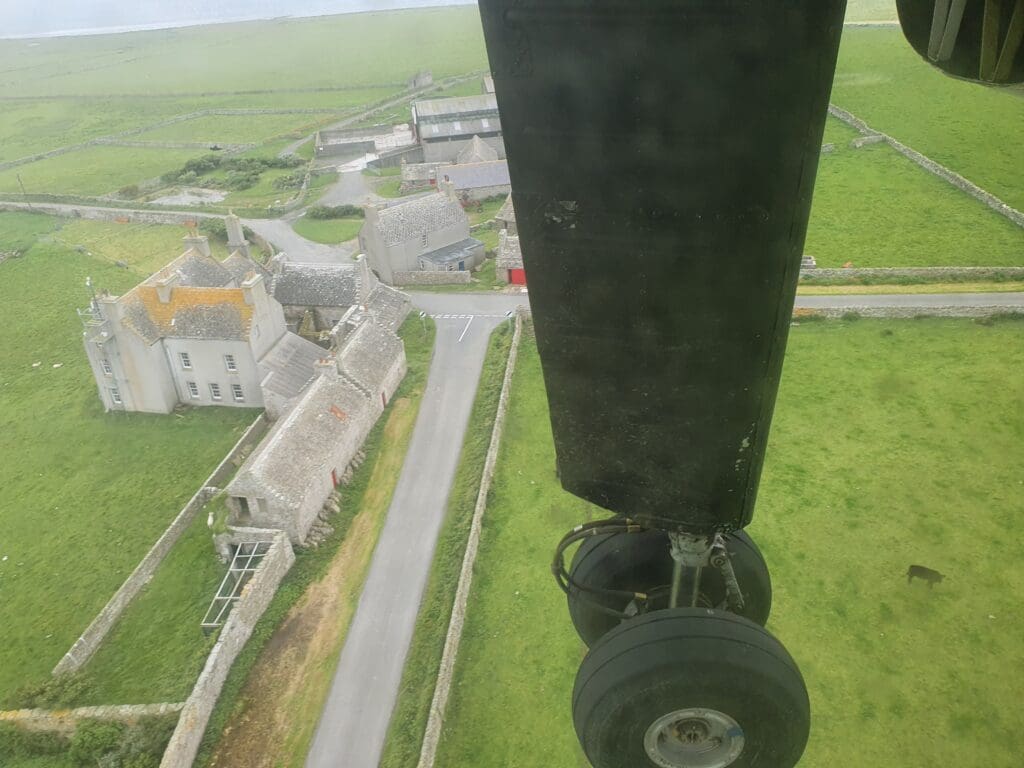
Sinking over the island’s fields with a few bumps, these grew increasingly clearer and soon it seemed as if we were skimming right over the tops of these, with the clusters of cows below hurriedly scattering as the Islander whizzed over and broke the island’s usual peace and calm. Soon enough, the Islander crossed over the cluster of grey stone buildings that make up Papa Westray’s largest settlement, Holland whilst a roadside memorial to those islanders who fought and died in the two World Wars could also be seen. In perhaps true Orcadian island fashion, the airport’s perimeter fence consisted of a dry stone wall and after passing over this, the Islander made a soft touchdown on the grass surface of Papa Westray’s 343 metre-long Runway 36.
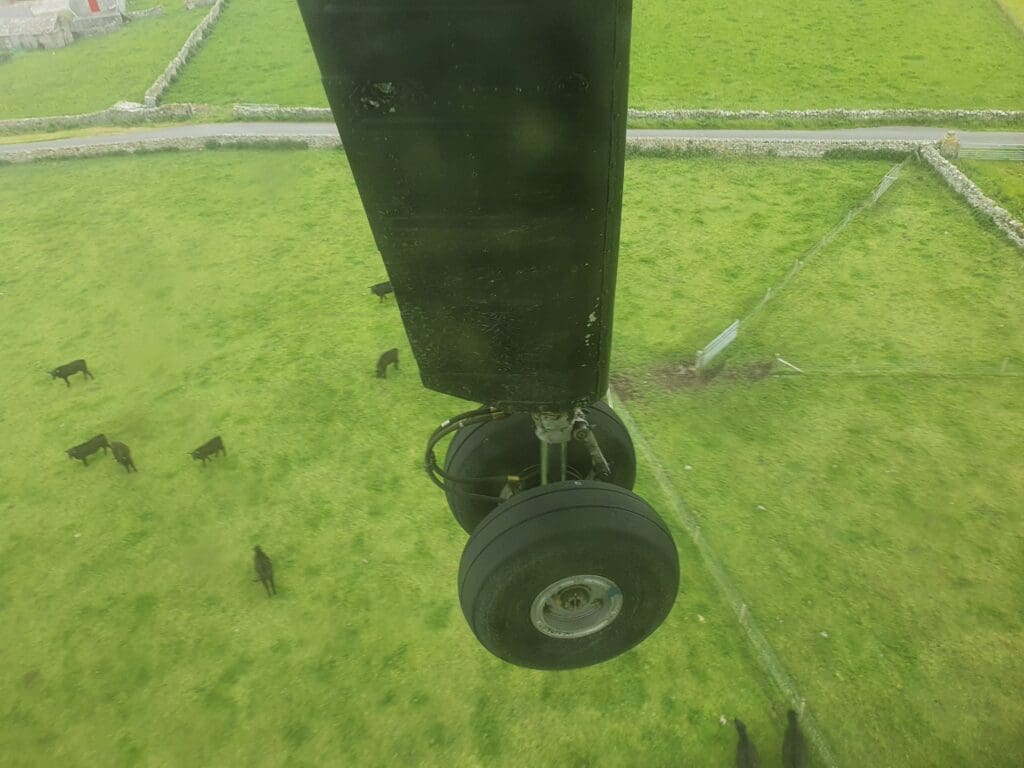
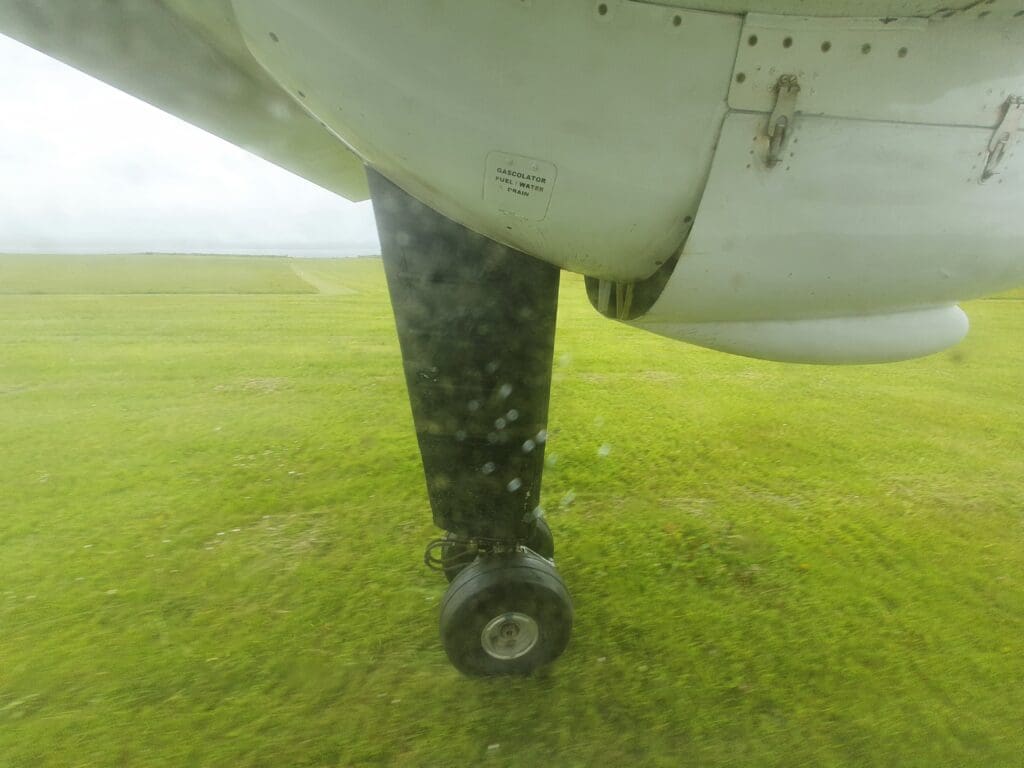
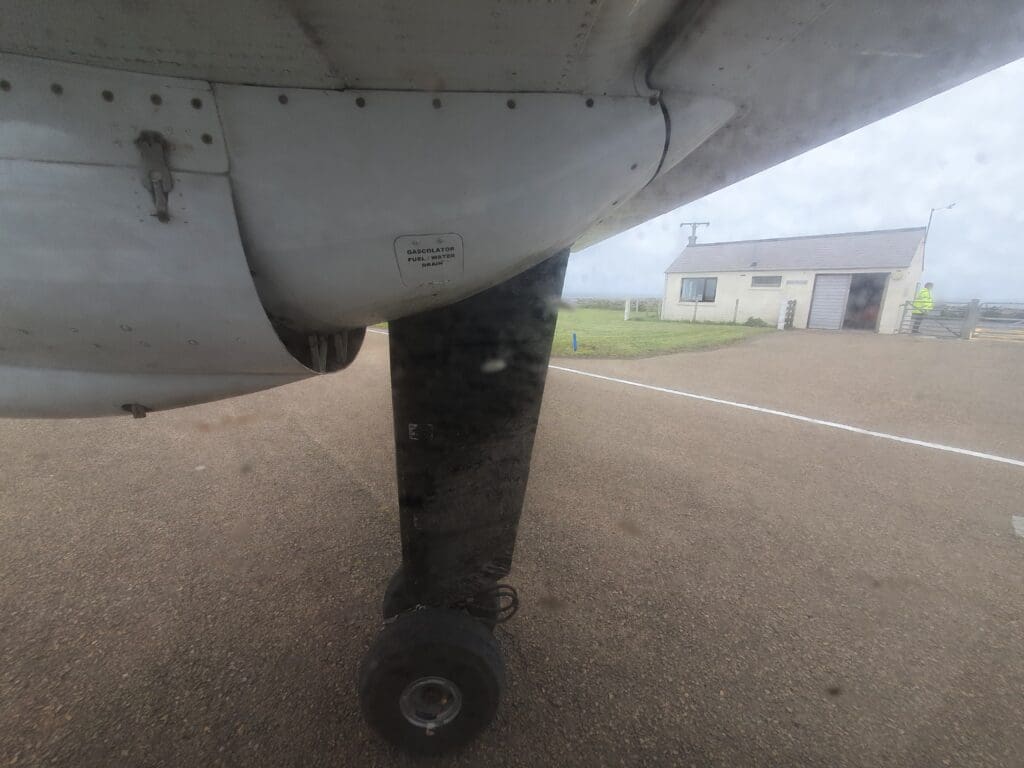
Soon slowing down, the Islander then vacated the grass runway and travelled along the airport’s gravel runway over to the small white hut that serves as Papa Westray’s terminal building. Before coming to a halt, the two piston engines were powered down as the Islander coasted to a stop at which point two airport staff members dressed in firefighter’s uniforms appeared. Fortunately, there was no issue with the trusty Islander and instead at Orkney’s remote island airports, the airport firefighters also serve as check-in and ramp staff. With the outbound passengers already waiting and raring to go, the rear cabin door was soon opened and all six vacant passenger seats inside the Islander were soon taken. That afternoon, my fellow passengers joining in Papa Westray appeared to be a party of birdwatchers complete with rather professional-looking binoculars. Sliding across to seat 3B, once joined by a neighbour, the aircraft went from feeling relatively spacious for its size to rather cramped.
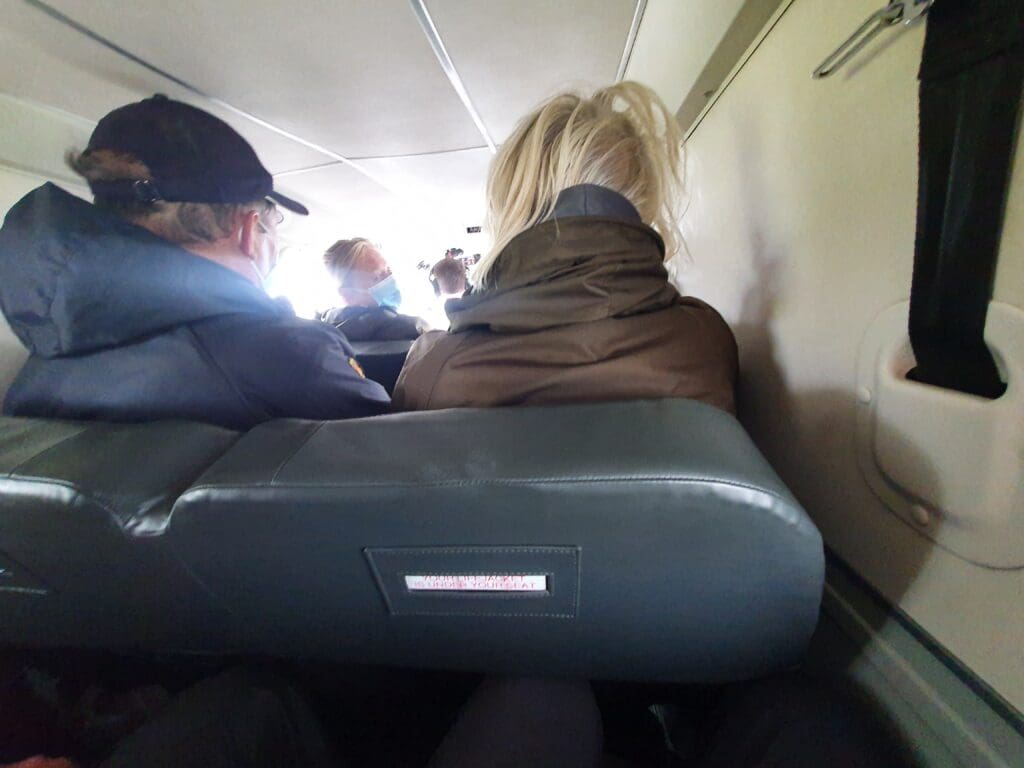
Once all had squeezed themselves into the aircraft, the firefighters shut the two cabin doors at which point the pilot turned around and made another brief welcome and safety speech before putting on their Bose headset and firing up the two piston engines. With no other traffic either on the ground or in the skies around the airport, after running through their checklists the Islander taxied off to the end of the airport’s gravel runway, reaching this in what seemed to be no time at all. Just six minutes after touching down on Papa Westray, at 1623 the Islander’s two engines spooled up and once again produced a deafening roar as the aircraft began its takeoff roll down Runway 04. Unsurprisingly given the greater load onboard this sector, the Islander seemed to take slightly longer to make its way up into the Orcadian skies, although thankfully this rocketed upwards well before the end of the runway.
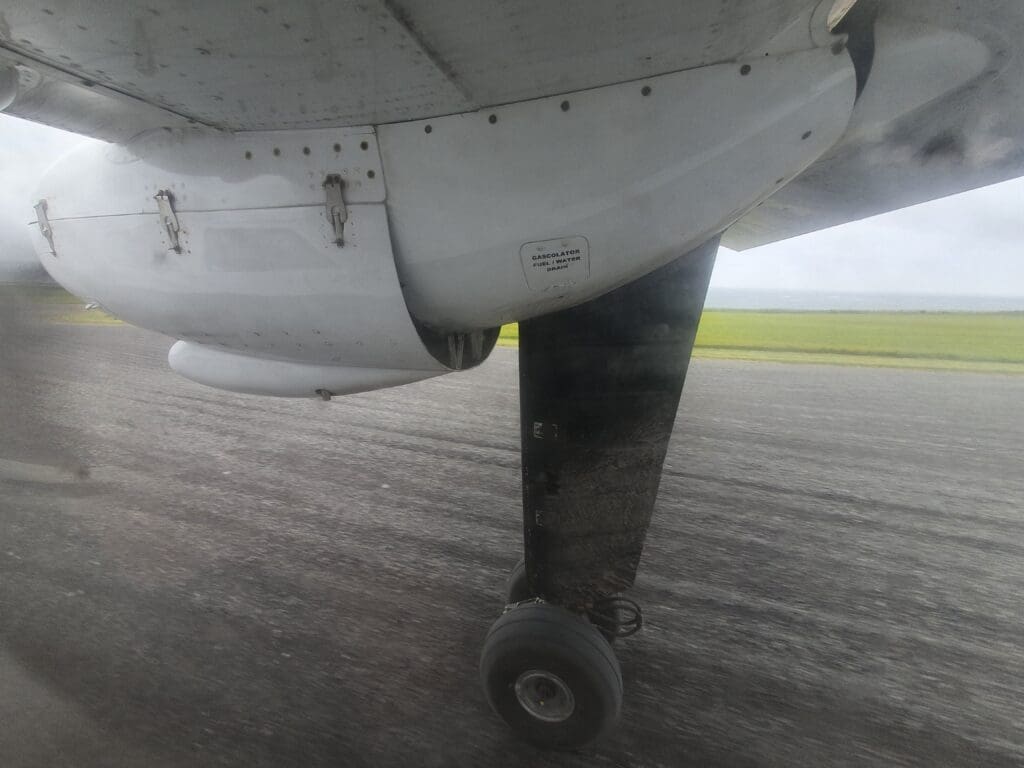
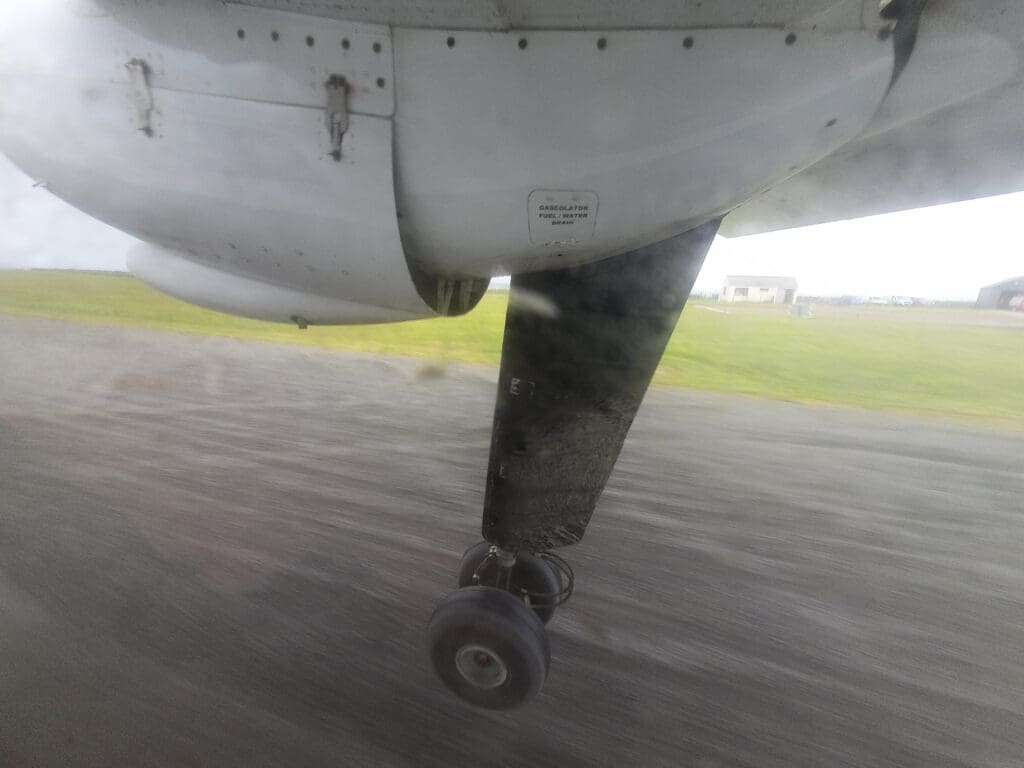
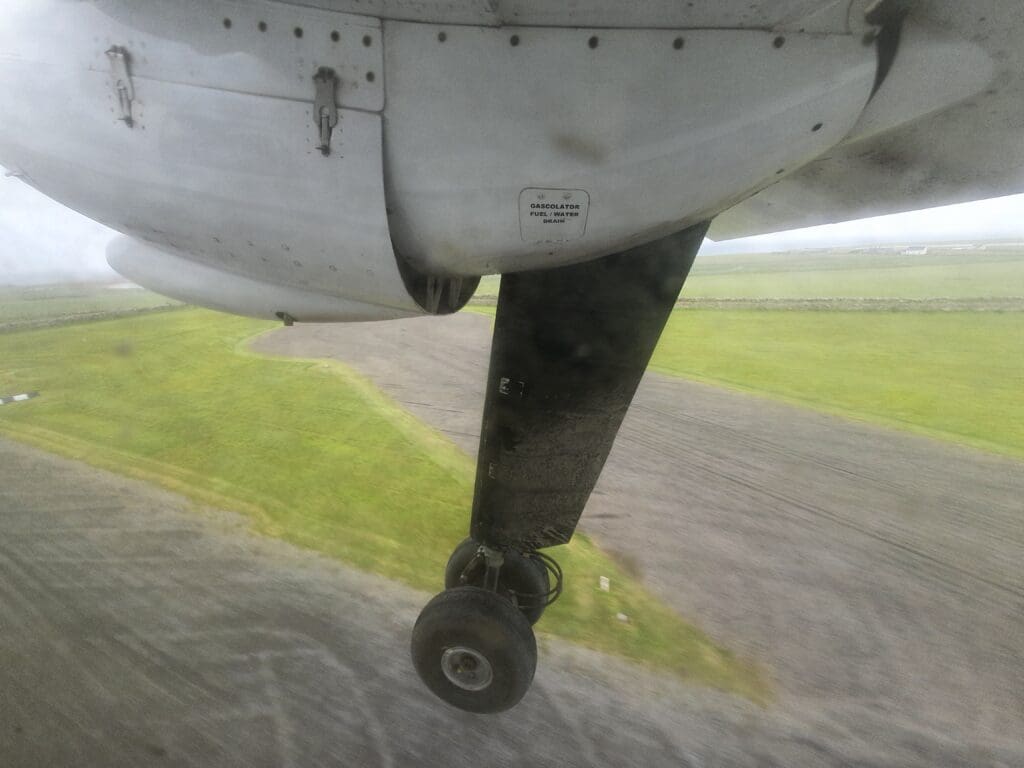
Upon making it up into the air, the Islander banked to the left almost immediately and passed over Papa Westray’s twelfth-century St Boniface’s Church before heading out over the rocky coastline and crossing the choppy waters. Levelling off at a grand cruising altitude of around 250 feet, upon reaching this altitude the Islander could almost immediately be felt making its way back down towards the choppy waters below. Fortunately peering ahead, I could see Westray’s coastline and its airport rapidly approaching and soon enough, the aircraft skimmed Westray’s rocky coastline before making a soft touchdown on the gravel of Runway 27. Once again, the aircraft decelerated rather rapidly before turning left and soon coming to a halt outside the terminal hut which appeared to be identical to that of Papa Westray Airport just 1.7 miles away.
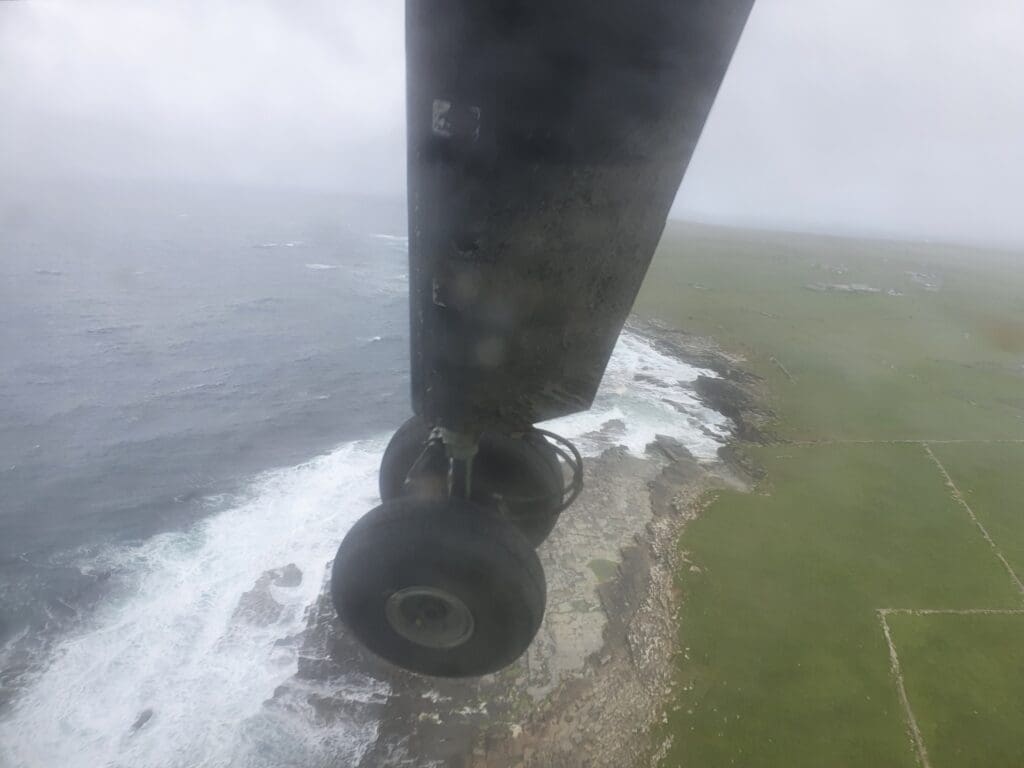
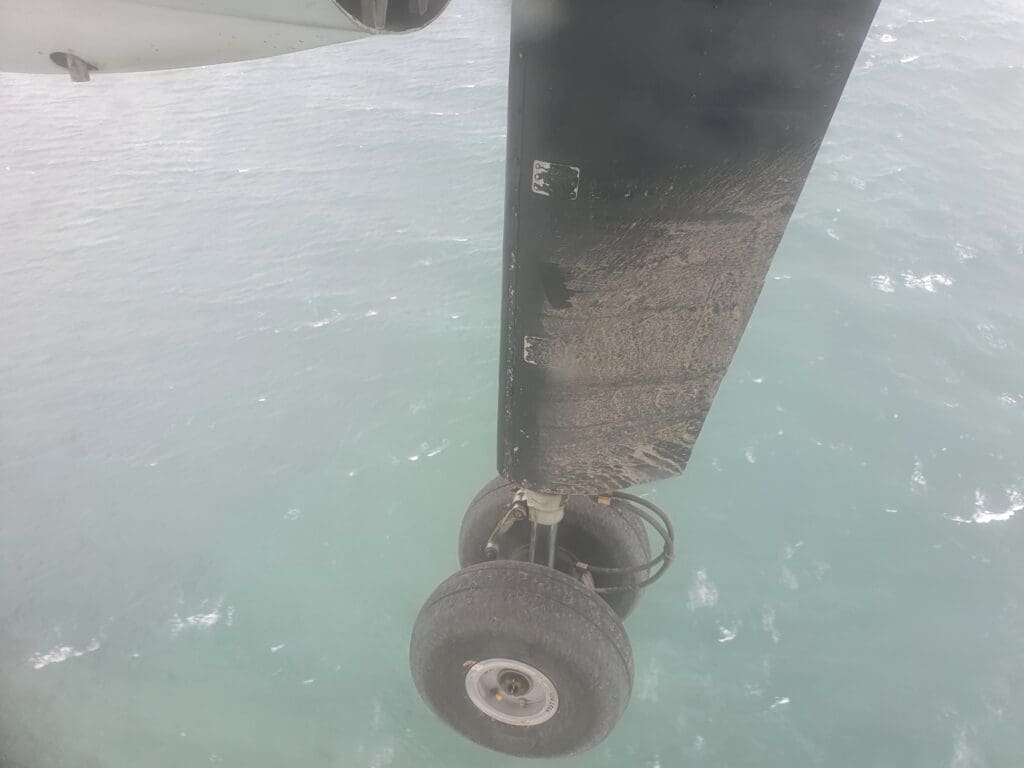
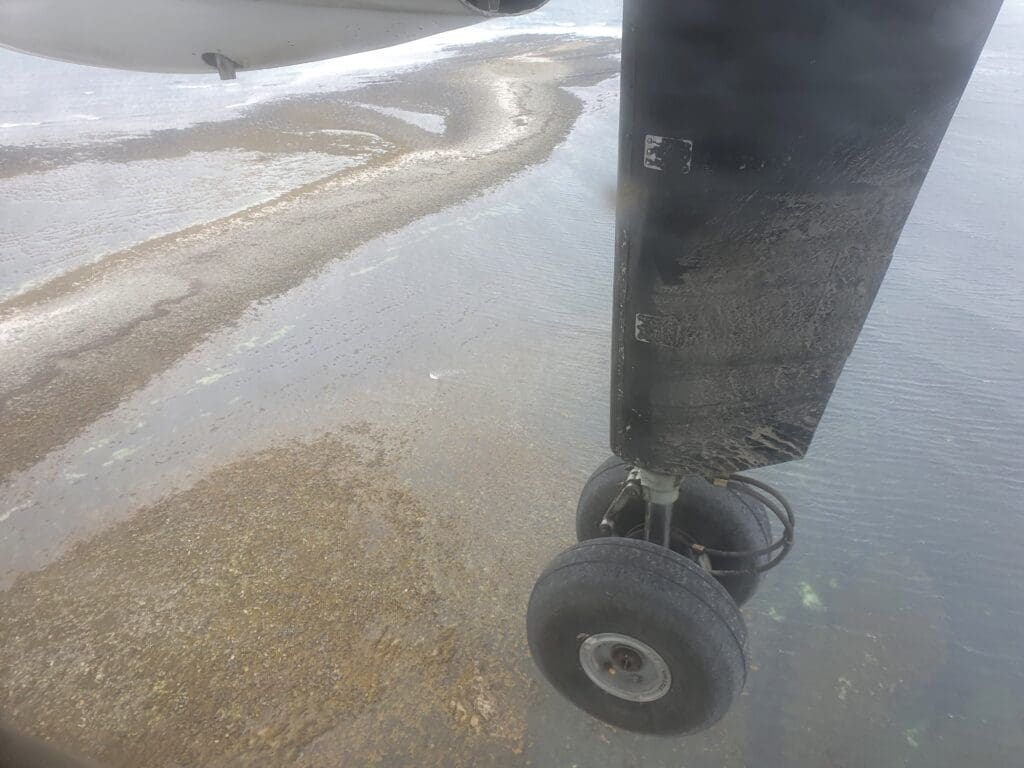
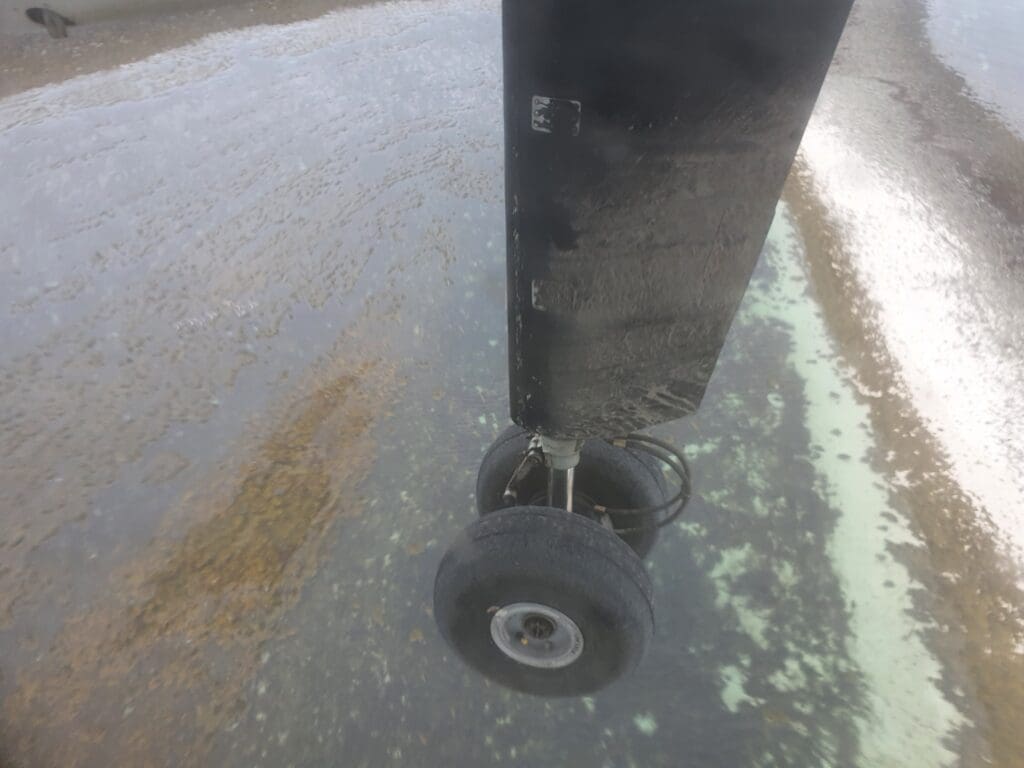
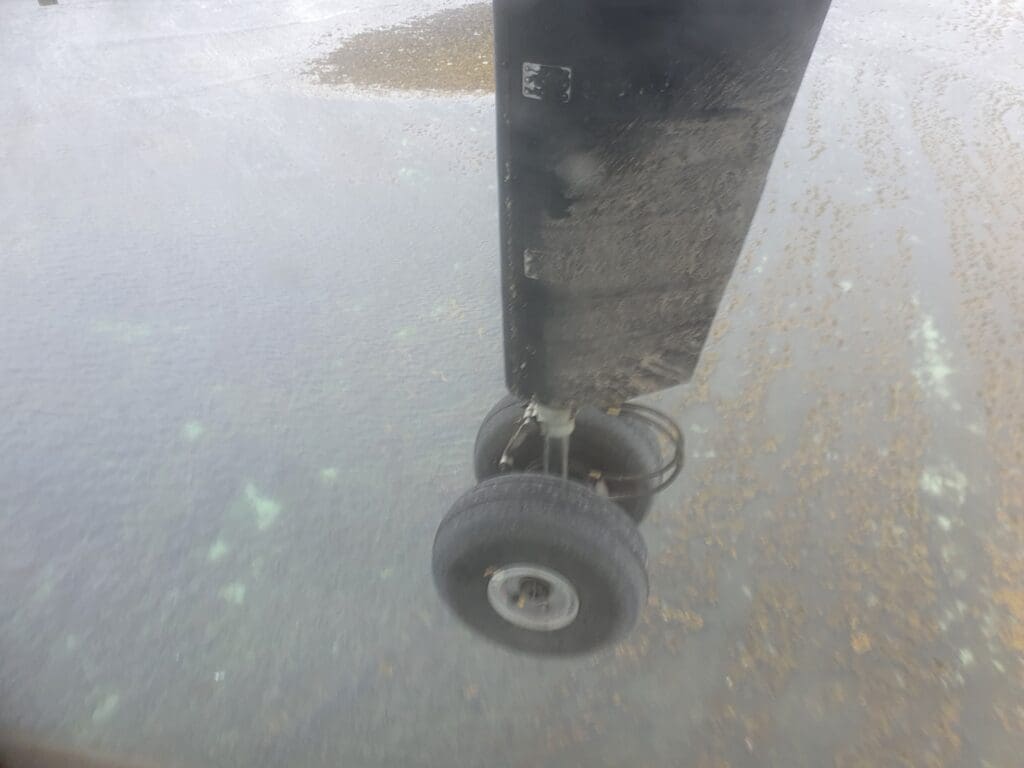
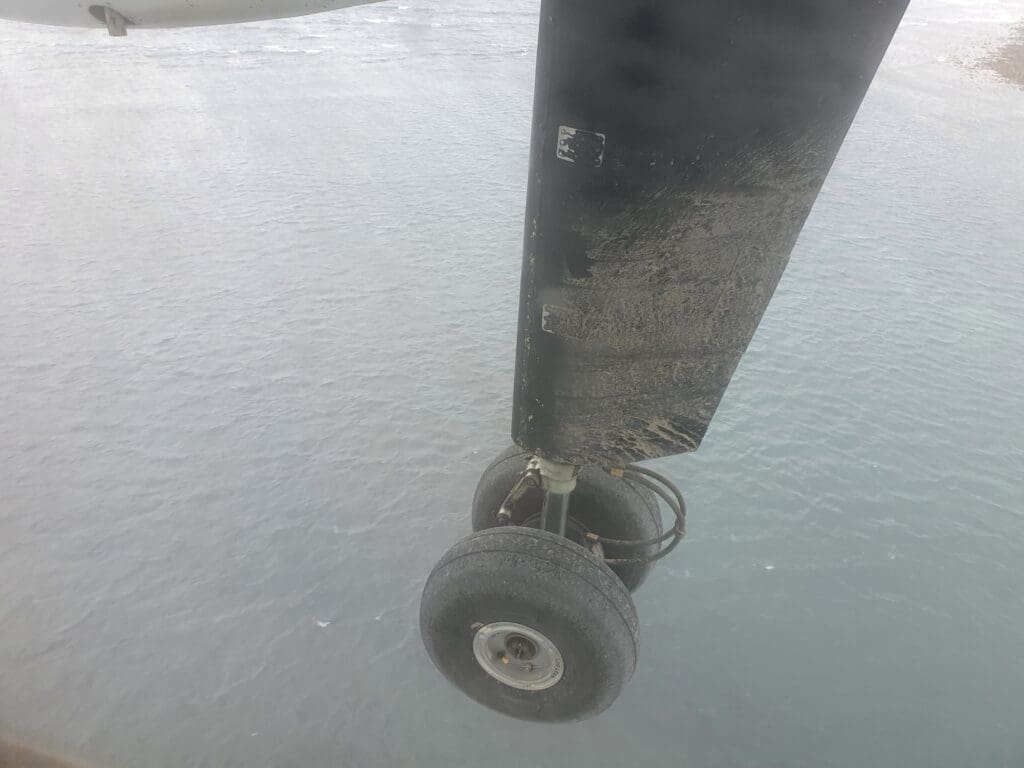
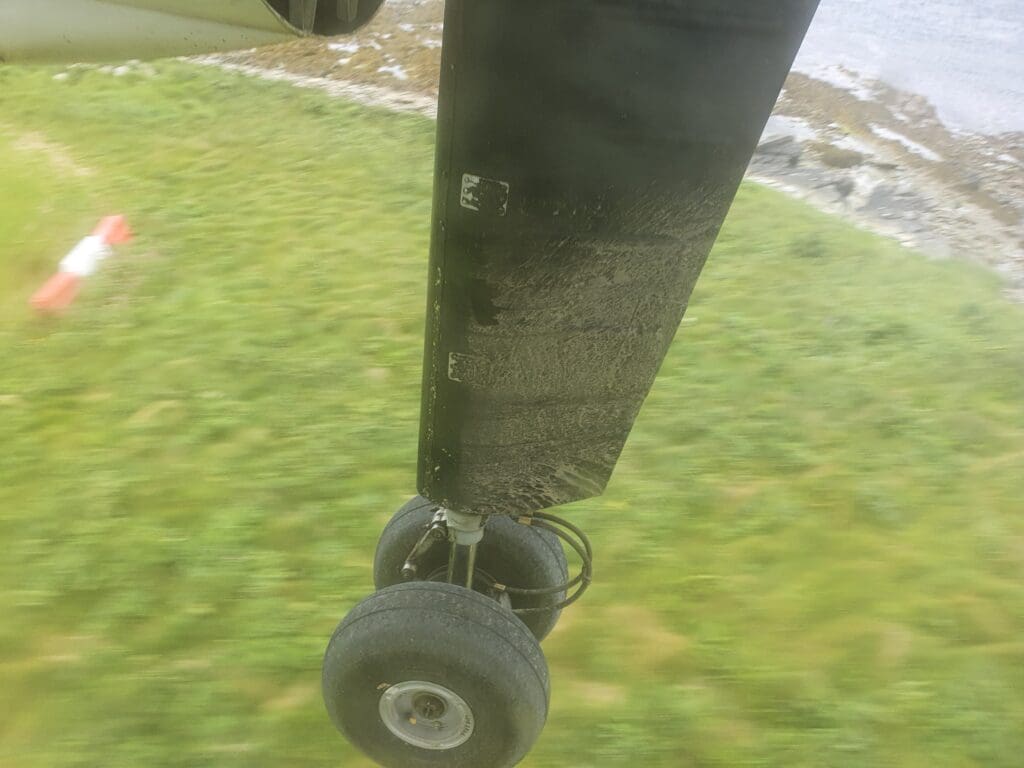
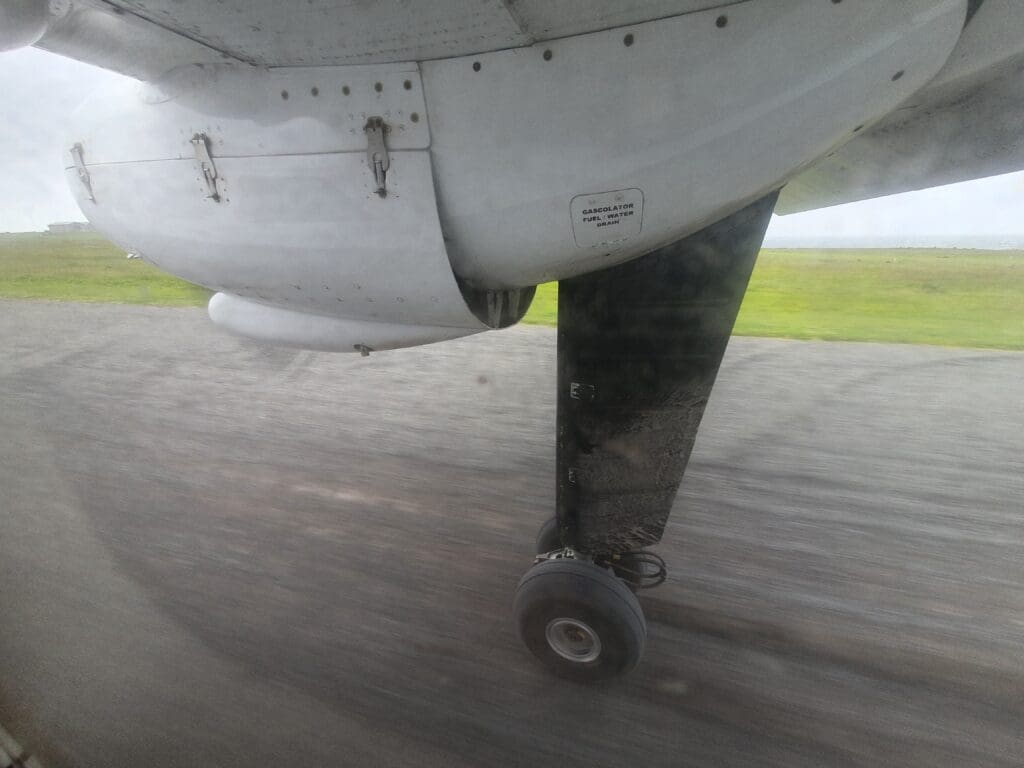
Once the two engines spooled down and their two-blade propellers stopped spinning, as in Papa Westray, two firefighters made their way out to the aircraft and opened the rear passenger door. As was to be expected, the passenger who had boarded the Islander along with me in Kirkwall disembarked. There, they were replaced by another elderly flyer who was assisted into the rearmost and helped with their seatbelt before the firefighter closed the cabin door. Once again, once the cabin door had been closed, the pilot then performed a short speech requesting passengers to fasten their seatbelts and review the safety card before almost immediately firing up the two-piston engines. After powering up into life, the Islander then began a speedy taxi to the end of Runway 27 and at 1631, the two engines roared and powered us down the runway before we gently lifted into the overcast Orcadian skies following another quick six-minute stay on the ground.
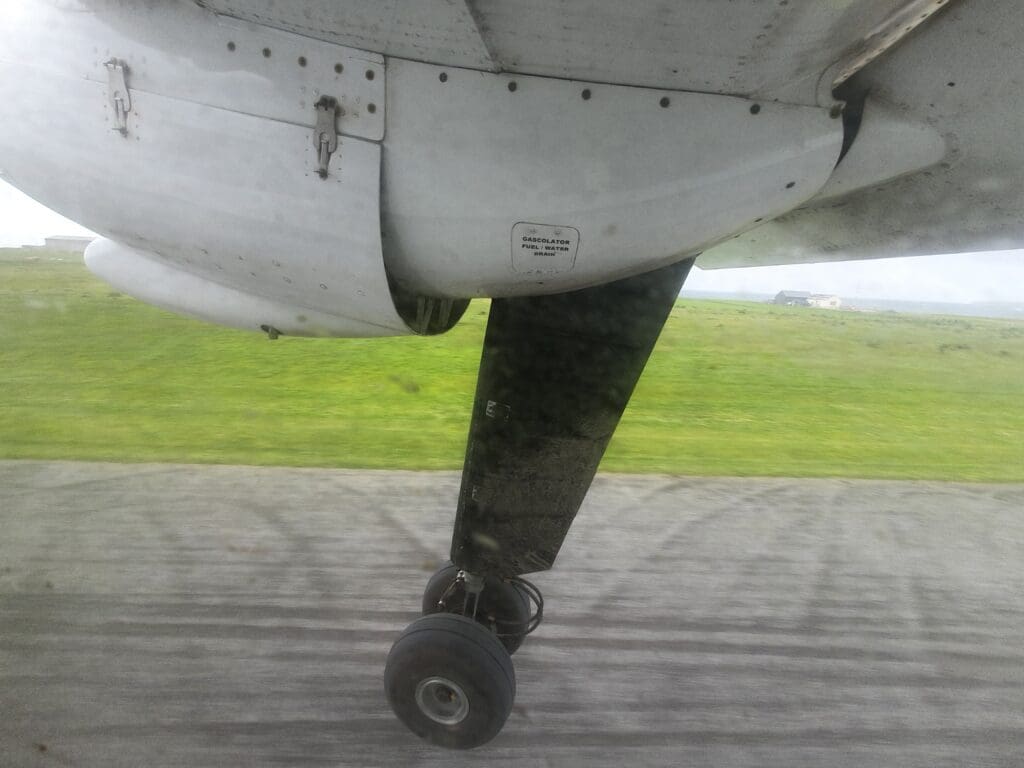
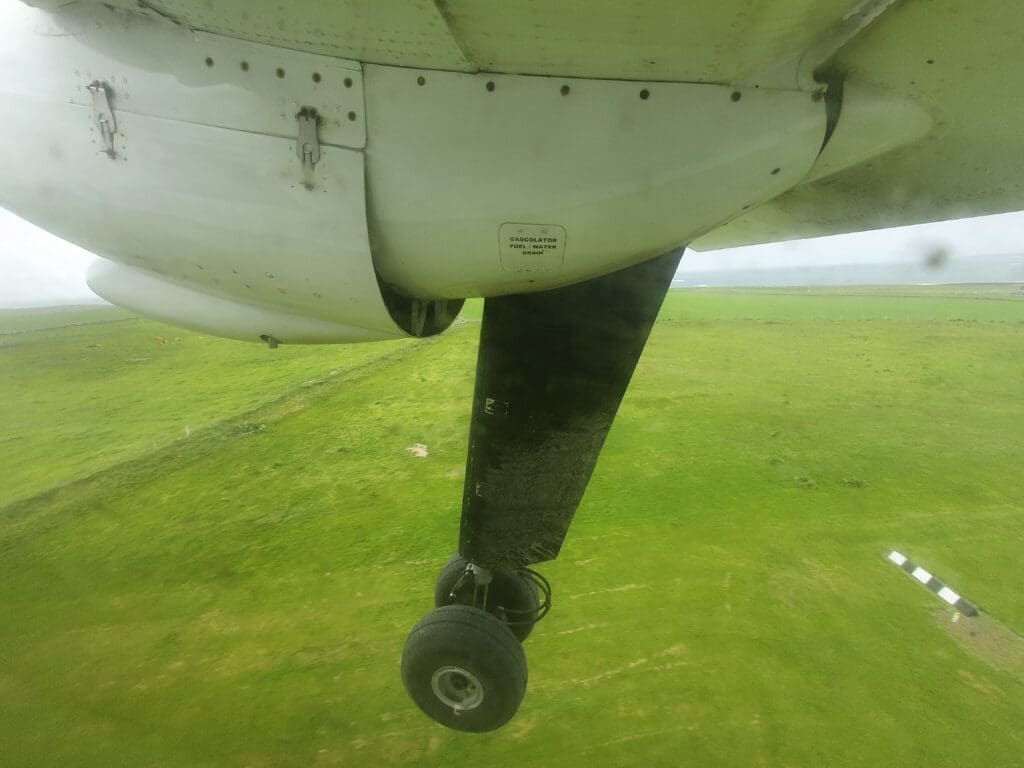
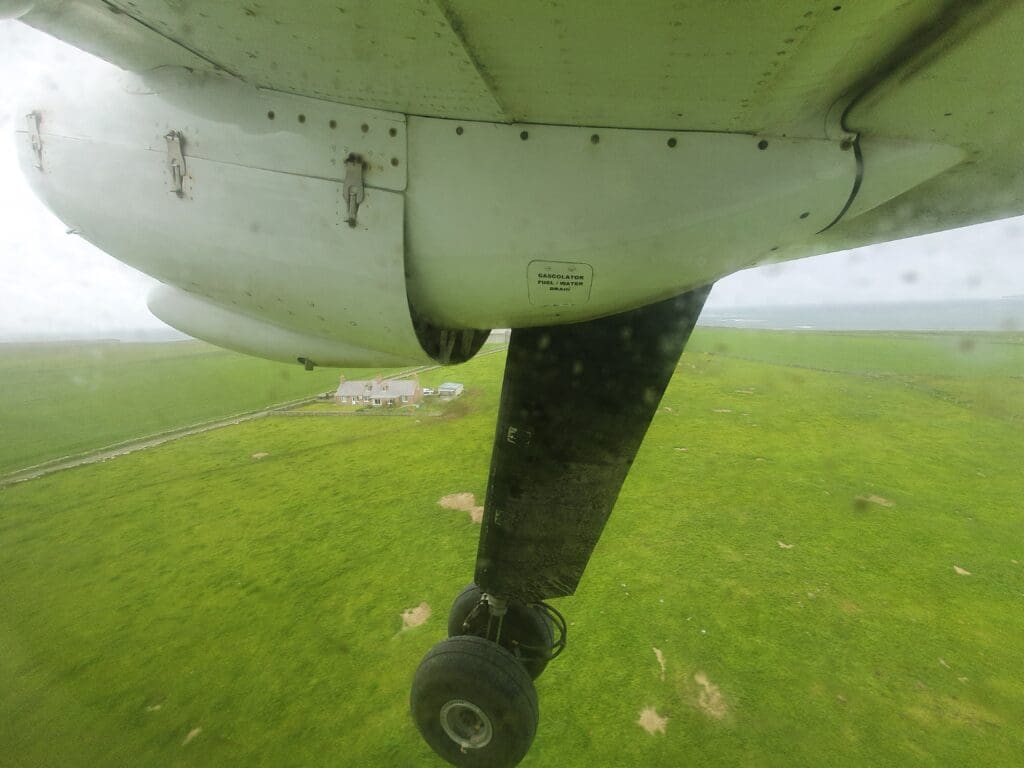
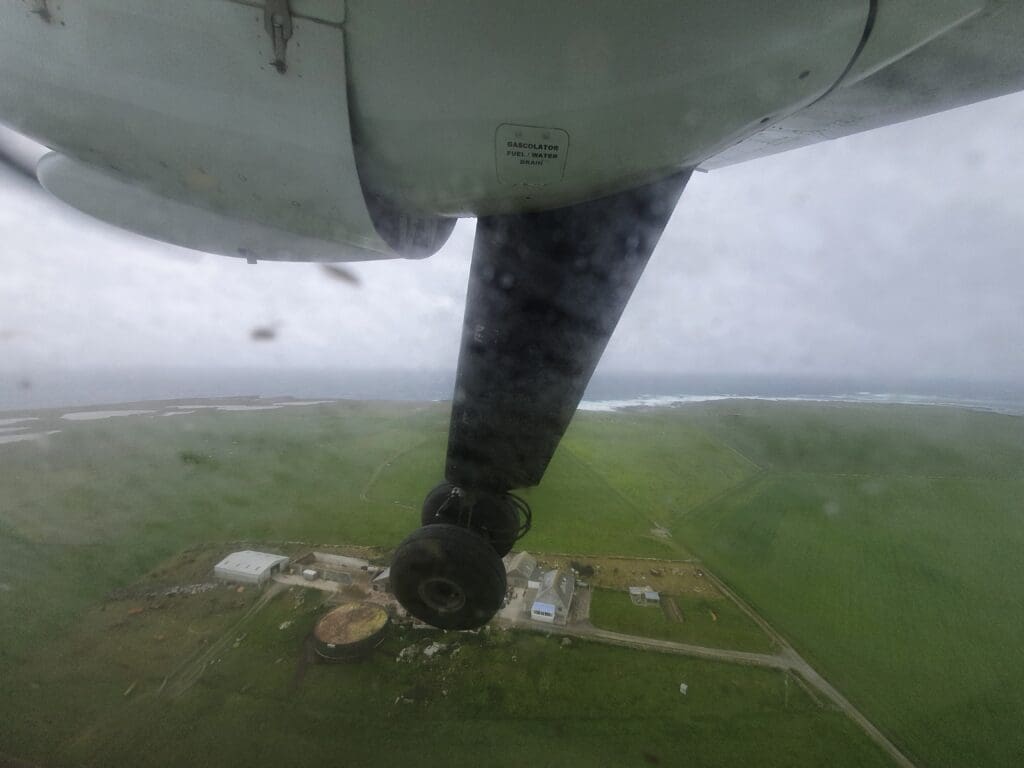
As the aircraft climbed up to its low cruising altitude of 1,000 feet, the Islander was thrown about a little and with the wind now behind us, the flight seemed to pass by much quicker than on the northbound leg up to Papa Westray. Once away from Westray Airport, the aircraft banked to the left and soon rolled out on a southerly heading that would take us directly to Kirkwall with minimal further course adjustments. A very short time after departure, vistas of Westray’s green fields were temporarily interrupted by views of Pierowall, the island’s largest village, visible as we crossed southwards over Pierowall Bay. Afterwards, the aircraft then passed over another thin strip of the island just to the west of the village of Skelwick before heading out over the choppy waves of the Westray Firth.
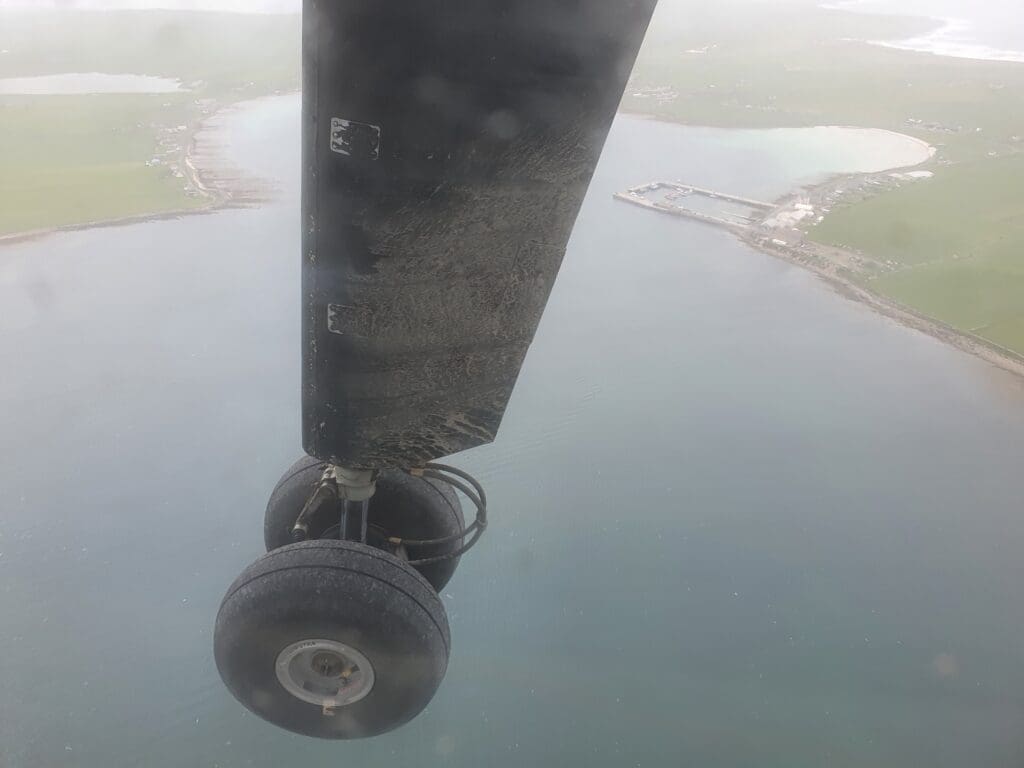
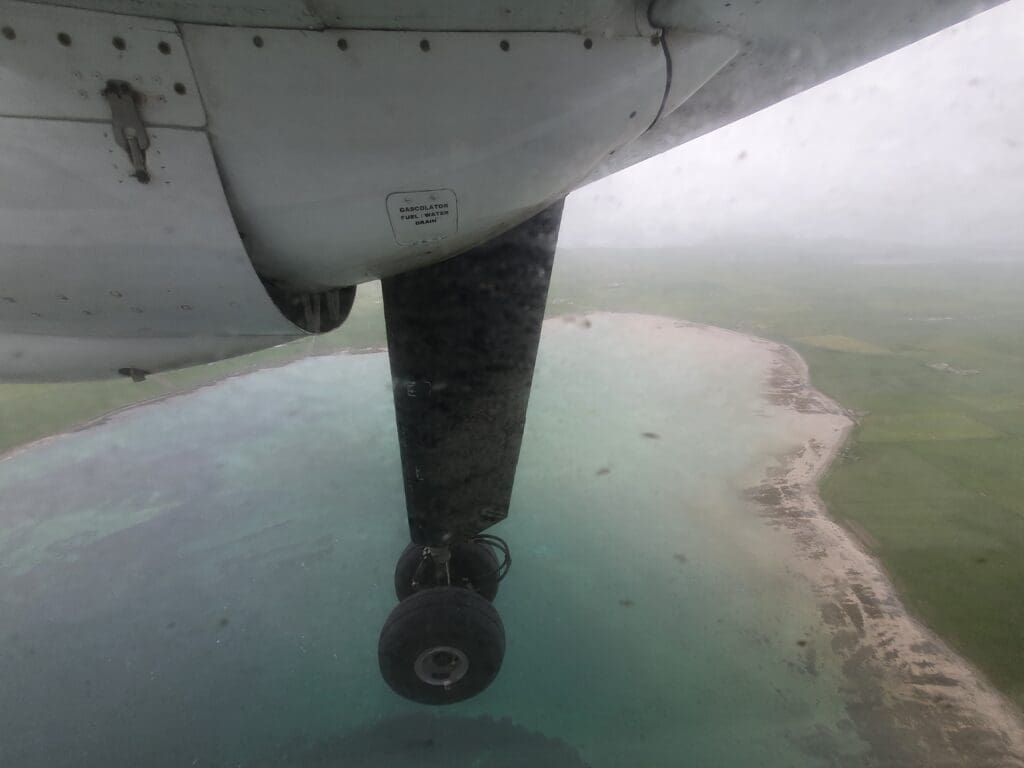
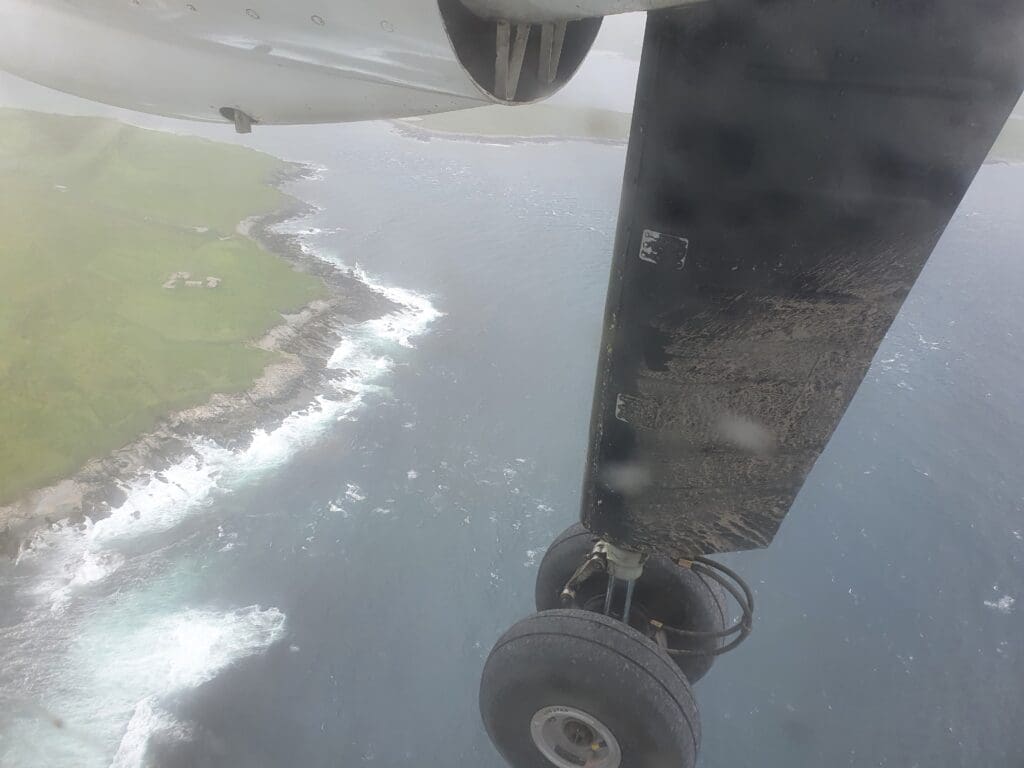
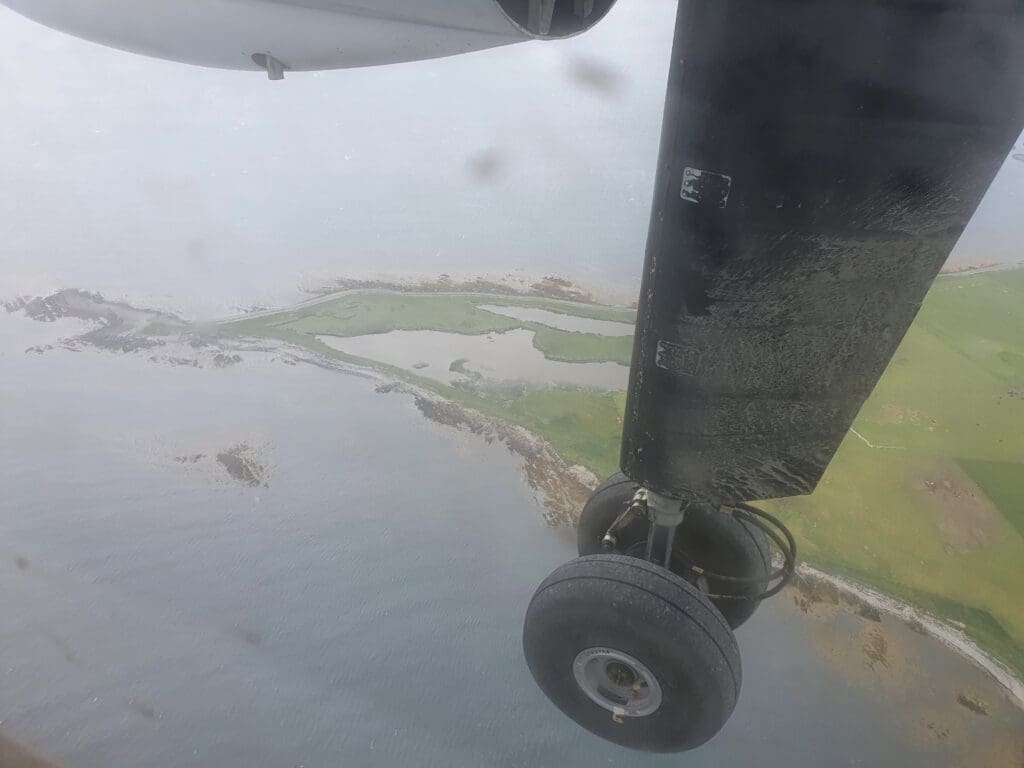
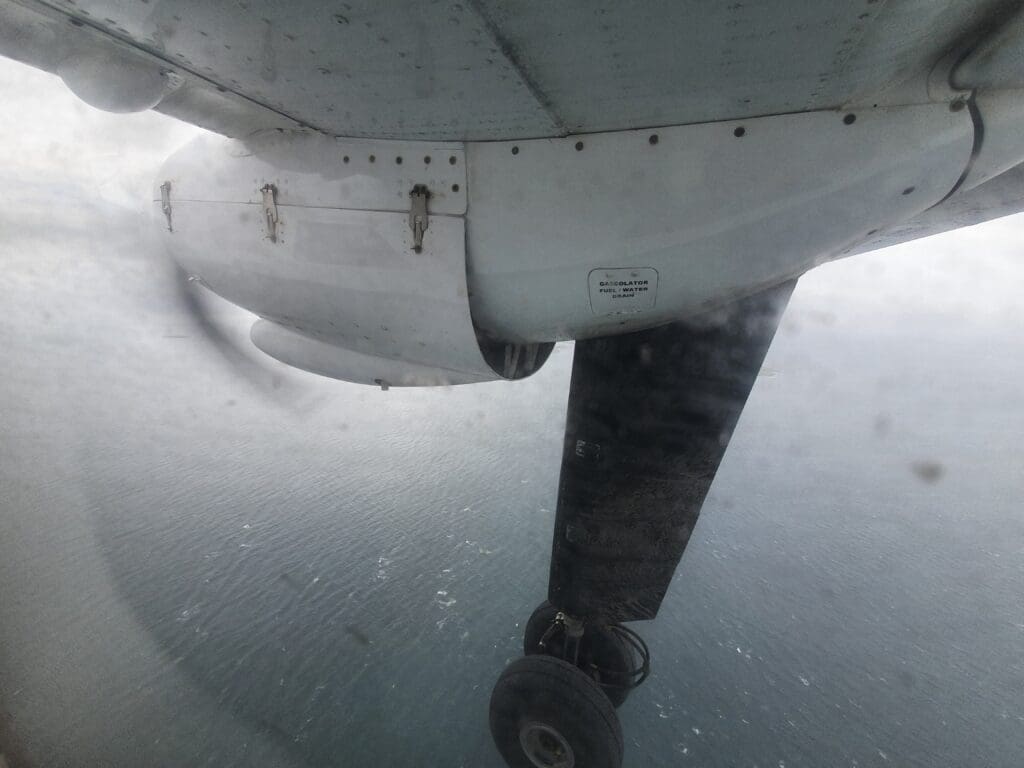
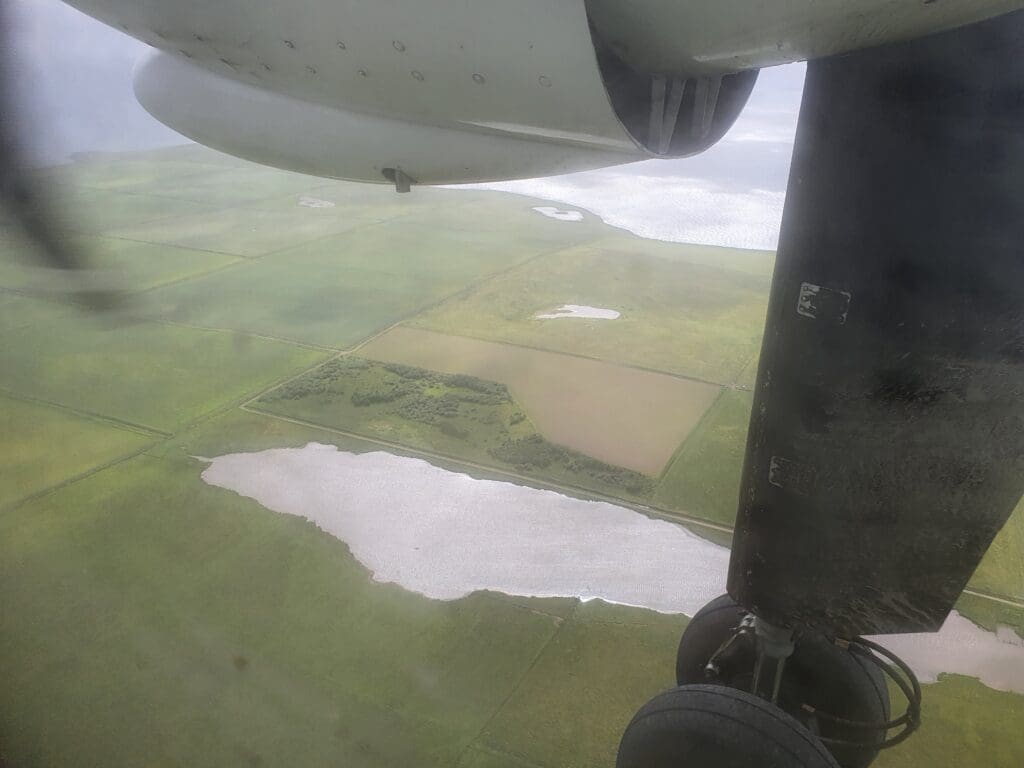
With little to see outside other than the sea for several minutes, I turned to examine the levels of comfort onboard. Whilst the seats were soft and well-padded, once eight fully grown adults were onboard I found the cabin to be rather cosy. Meanwhile, the intense noise levels produced by the two Lycoming engines strapped to our wings ensured that any conversation between passengers was almost impossible and ended up involving plenty of hand gestures. Finally, with the Islander not being a pressurised aircraft the cabin seemed to be very draughty, and as I ran my hand around the plastic panelling, it seemed that cold air was leaking and thus resulted in a very chilly cabin.
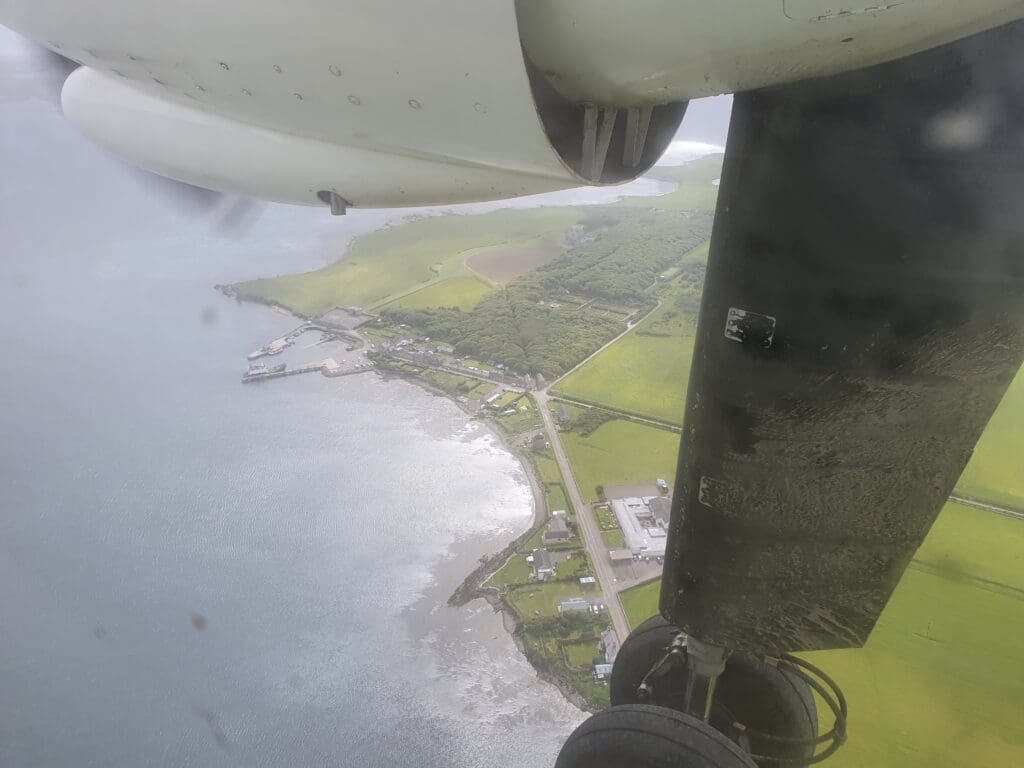
Returning to the route, following our three-minute crossing of the water below, the northeastern tip of the island of Rousay appeared outside the battered window. Whilst home to only around thirty residents, famous for its important archaeological sites, according to Wikipedia Rousay is also known as ‘Egypt of the North’. A few moments later, the Islander passed over the uninhabited small tidal island of Kili Holm, linked to the larger island of Egilsay to the south. Heading down Egilsay’s eastern coastline, a good view of the island could be had, which at the time of the latest census in 2011 was home to fewer than 26 residents. After leaving the southern tip of Egilsay behind, the aircraft then made a two-minute crossing of the Stronsay First and arrived back over Shapinsay, once again crossing over the westernmost portion of the island. Soon leaving the island behind, the aircraft crossed over the minuscule island of Helliar Holm where the distinctive Saeva Ness Lighthouse could be seen before the villages of Work and Berstane appeared as the aircraft journeyed southwards over Inganess Bay.
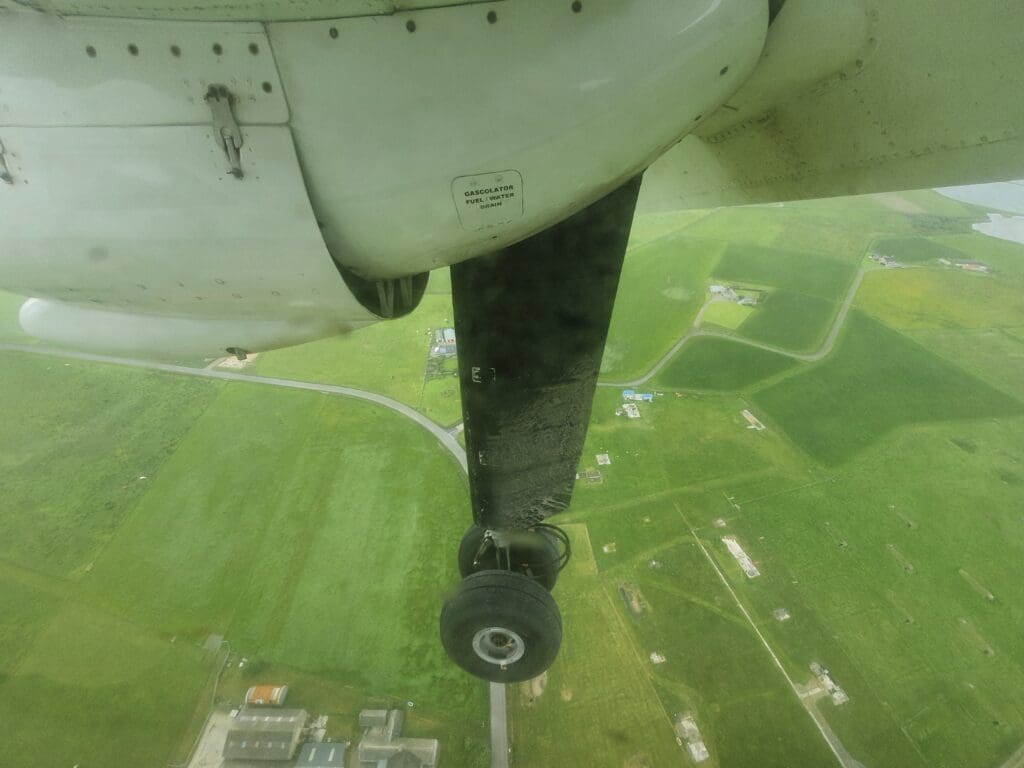
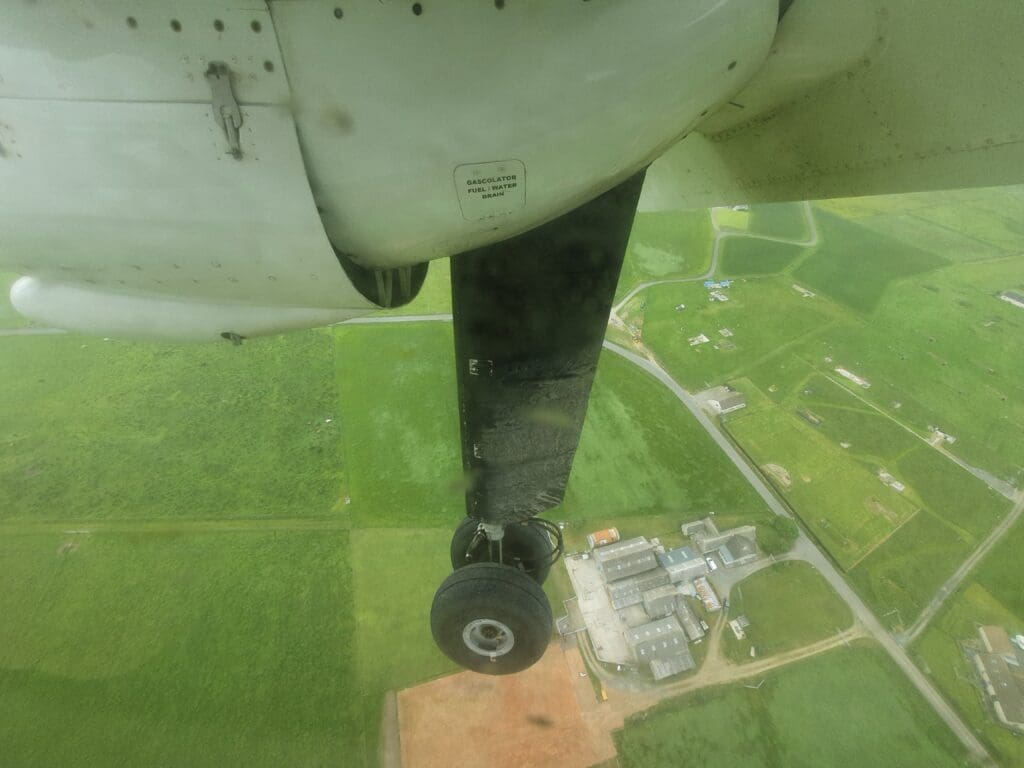
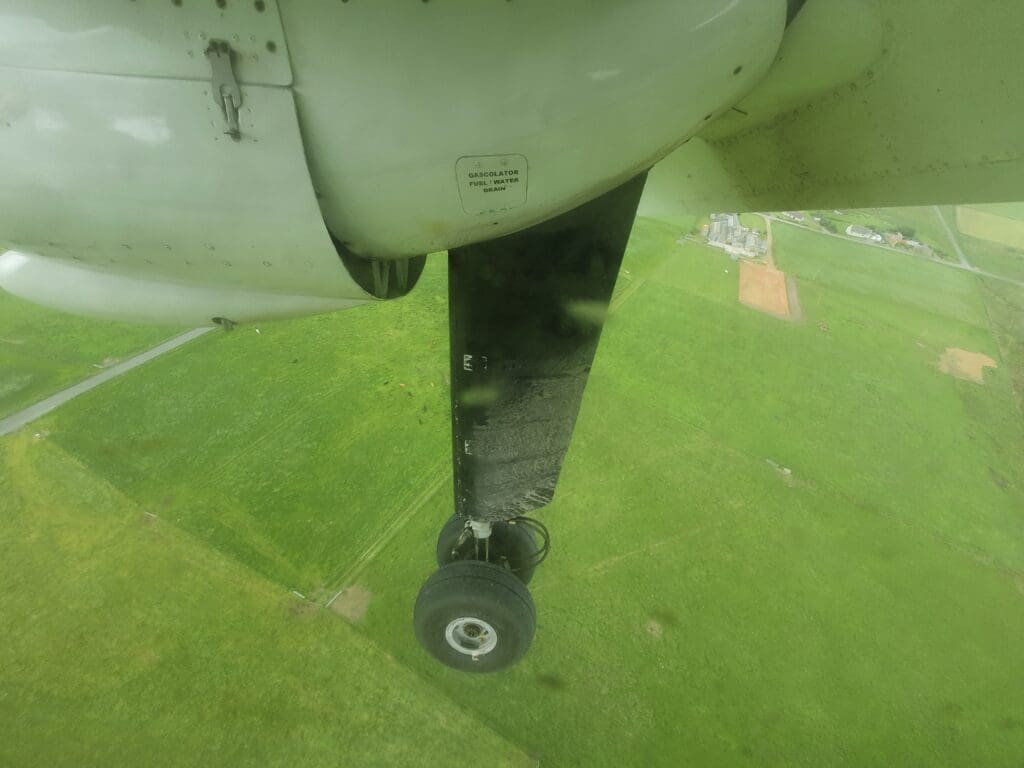
Crossing over the coastline of the mainland just to the northeast of Kirkwall Airport, at that point the aircraft could be felt sinking rather steeply downwards back towards the ground and the flaps dropped into position indicating our imminent arrival into Kirkwall. A few moments later, the aircraft made a sharp bank to the right as it turned onto finals for the airport’s Runway 27 at which point the bright lights of this appeared up ahead through the cockpit window. After sinking over some more green Orcadian fields, the Islander sank over the airport’s perimeter fence and made a soft touchdown one wheel at a time at 1642, a total of just eleven minutes after taking off from Westray’s gravel runway. Once firmly back off the ground, the aircraft swerved left and vacated the active runway, making a short taxi back to the stand that I had left a little under fifty minutes earlier.
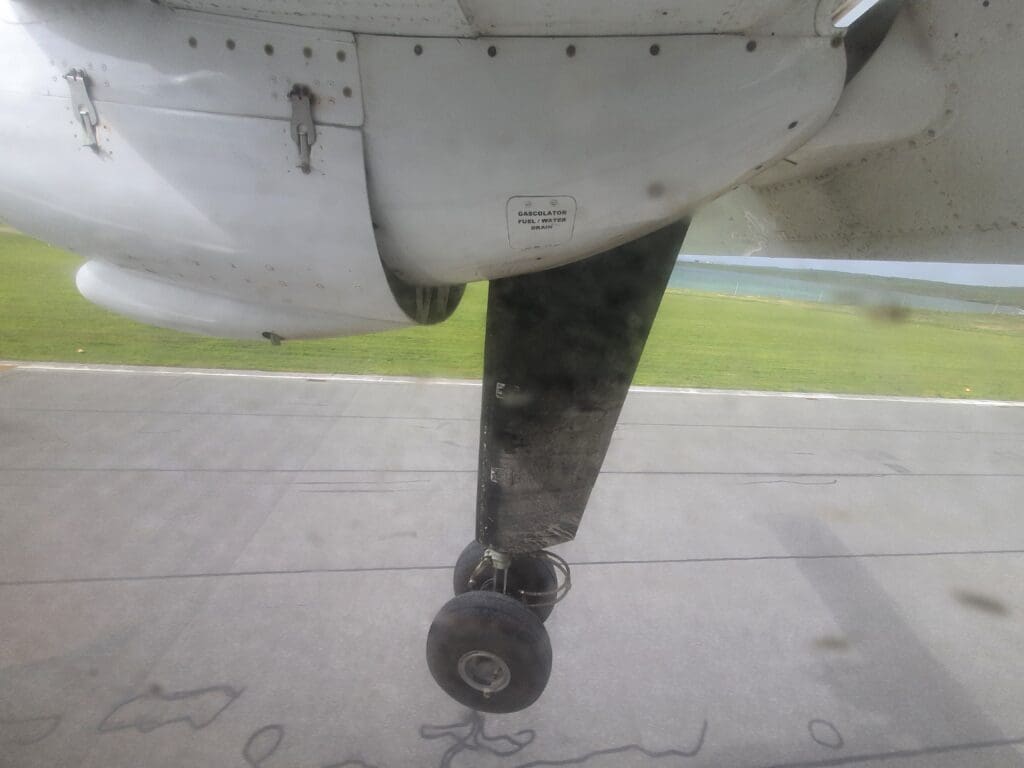
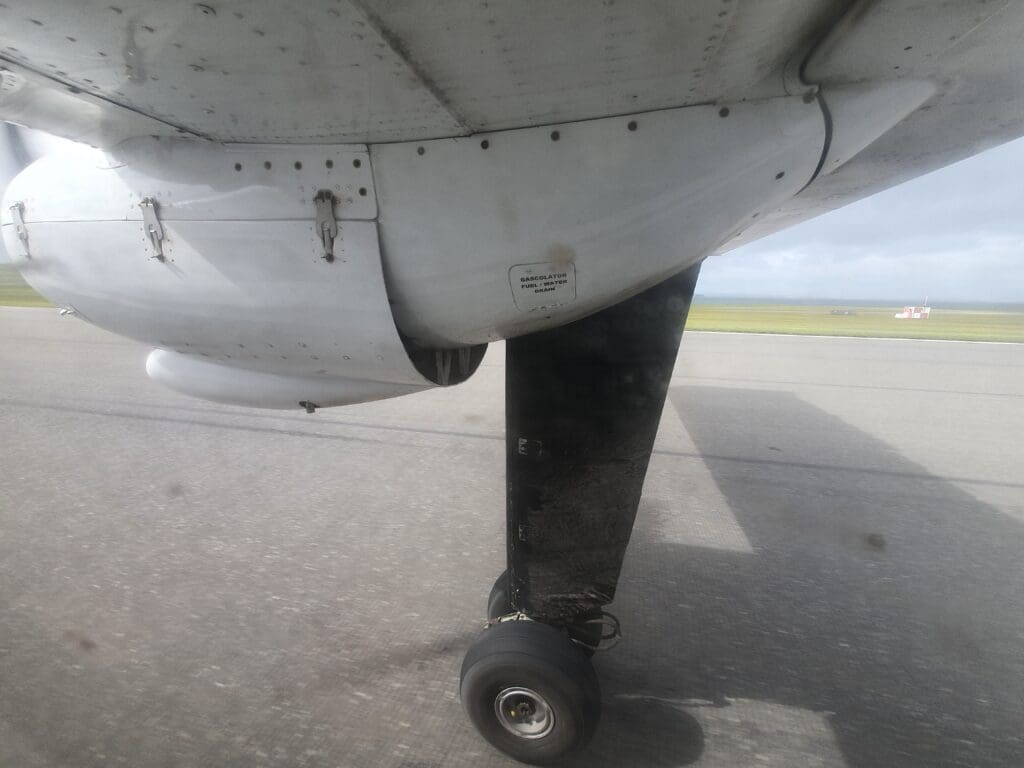
Upon coming to a halt, the engines powered down and we were met by the Loganair agent responsible for the Orkney services that day. At this time, a fuel tanker appeared and a worker soon pulled out the hose in preparation to refuel the aircraft once all of the inbound passengers had disembarked. With no jet bridge nor airstairs needed to be connected up to the Islander, disembarkation commenced as soon as the two cabin doors were opened. After waiting for a while whilst those in the Islander’s rearmost row and the occupier of 3A exited the aircraft, I ungracefully squeezed out of the small cabin and made my way through the chilly afternoon air and back into the terminal building.

Upon re-entering the terminal, with the flights to Aberdeen and Sumburgh having long departed, I found this to be much quieter than when I had left. Having taken plenty of photographs during my three Islander flights, I made my way over to one of the terminal’s few plug sockets and charged this as I waited for boarding for the next flight to commence. As time passed, once again more passengers began to filter through into the terminal, although these were set to head off on Loganair’s flight down to Edinburgh rather than North Ronaldsay. Before I knew it, the departure time for my flight neared so I thought it best to make a quick stop at the terminal’s clean toilets. Once again, the boarding time for my flight was listed as being twenty minutes before the departure time, however in reality this was the check-in time for the flight – with the Islander spending well under twenty minutes on the ground at most of its island stops!
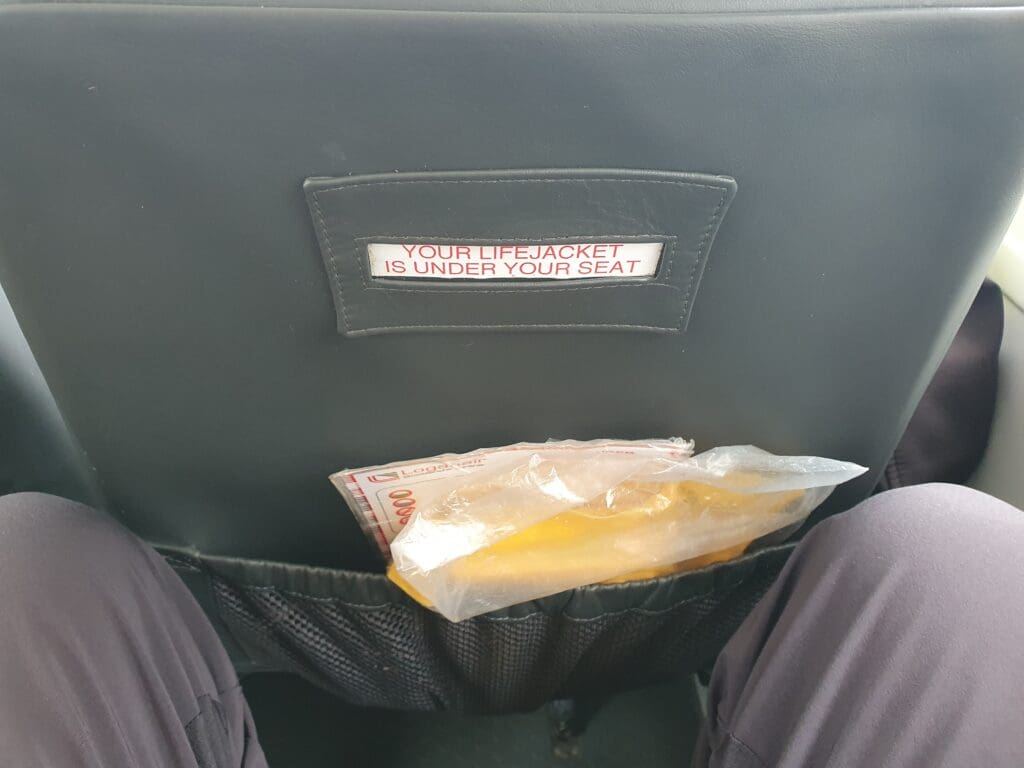
With eighteen minutes to go until departure, the Loganair agent pushed the small collection of North Ronaldsay bound bags out to the aircraft on a cart before placing these in the Islander’s rear hold. Upon their return and following some more conversation with the pilot in the ticket office, at 1725 all those bound for North Ronaldsay were requested to proceed forward for boarding. By coincidence, as with my flight from Kirkwall to Papa Westray, that evening I would only be joined by just one other passenger on the service out of Kirkwall. Following the agent and pilot, we both soon arrived at the aircraft and much to my delight, boarding was undertaken via the door on the right-hand side of the aircraft. Being second in the queue meant I had the luxury of sitting in Seat 1B, directly behind the vacant first officer’s seat. Once the fellow flyer had positioned themselves into 2A, I cautiously squeezed into the aircraft and strapped myself in for the flight ahead. Once again, the area around my seat appeared to be in good shape, although the legroom was very slightly reduced owing to a protruding lifejacket in the seatback pocket.
Once the cabin door had been closed, the pilot then turned around and performed another welcome and safety speech before entering the ICAO code for North Ronaldsay, EGEN, into the Garmin GPS and donning their Bose headset for the Islander’s third and final rotation for the day. After the pilot had made a quick call to the control tower, they flicked a few switches and pushed a few levers before the engines quickly shuddered and spluttered into life. Once the pilot had glanced over the instruments and flicked a few more switches, the aircraft powered forward and made a very quick taxi over to the end of Runway 32, the shorter and narrower of Kirkwall Airport’s two runways.
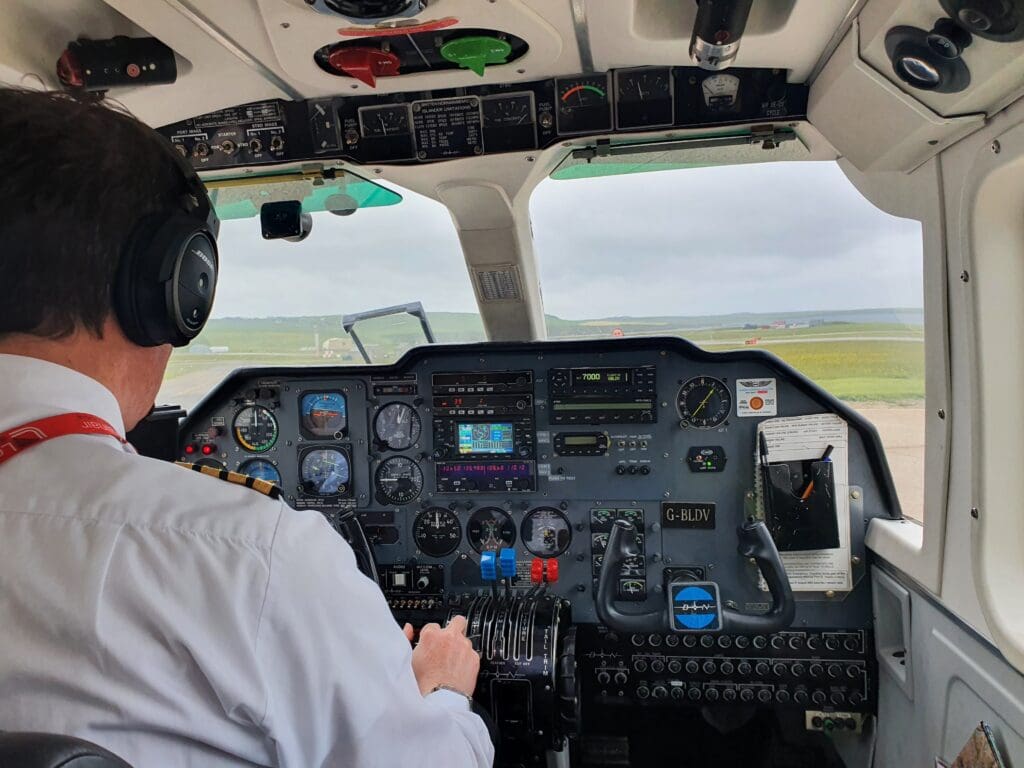
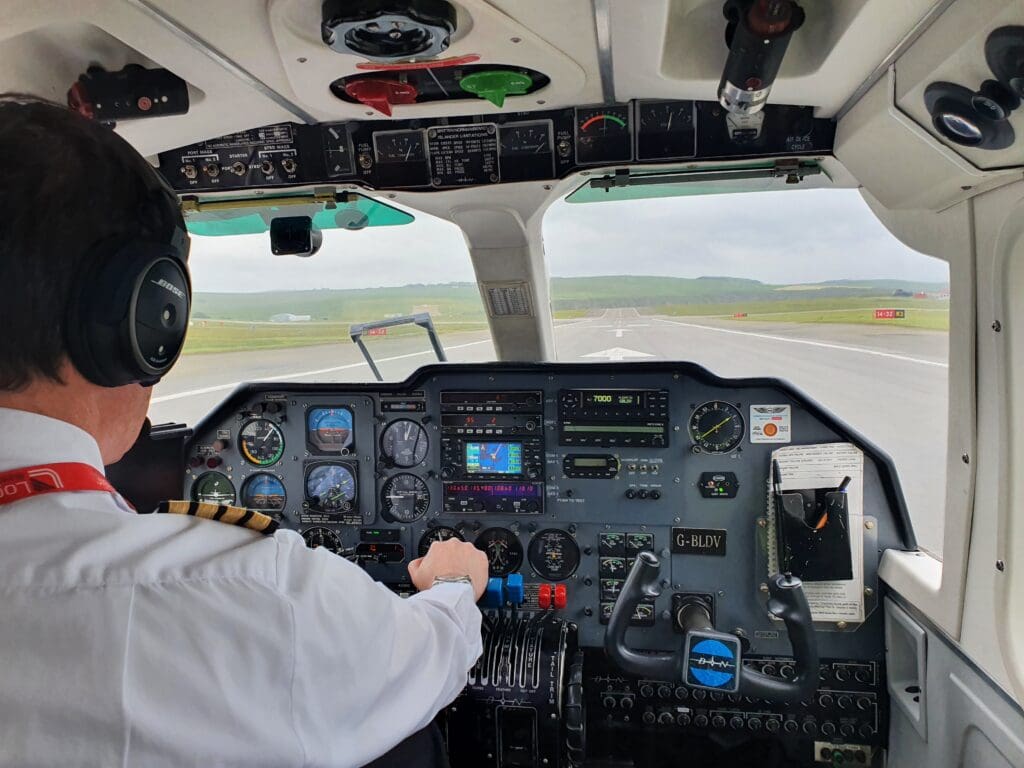
After turning onto the runway, a short pause was in store before the Islander’s two piston engines spooled up as the aircraft commenced its incredibly noisy take-off roll. Once again, as was to be expected given the light load, the Islander rocketed off into the cloudy skies within a matter of seconds as we bounced around and turned to fly on a northward heading of 310 degrees. As soon as the Islander left the vast expanse of Kirkwall Airport behind, the aircraft crossed over Inganess Beach and made its way over the waters of the bay.
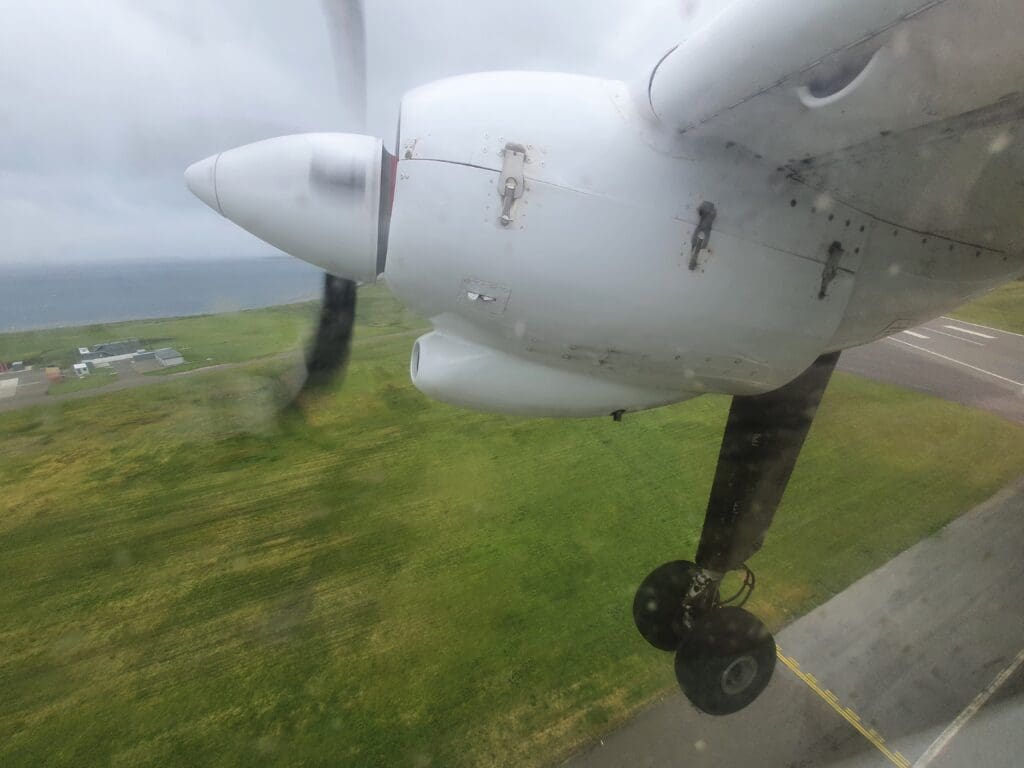
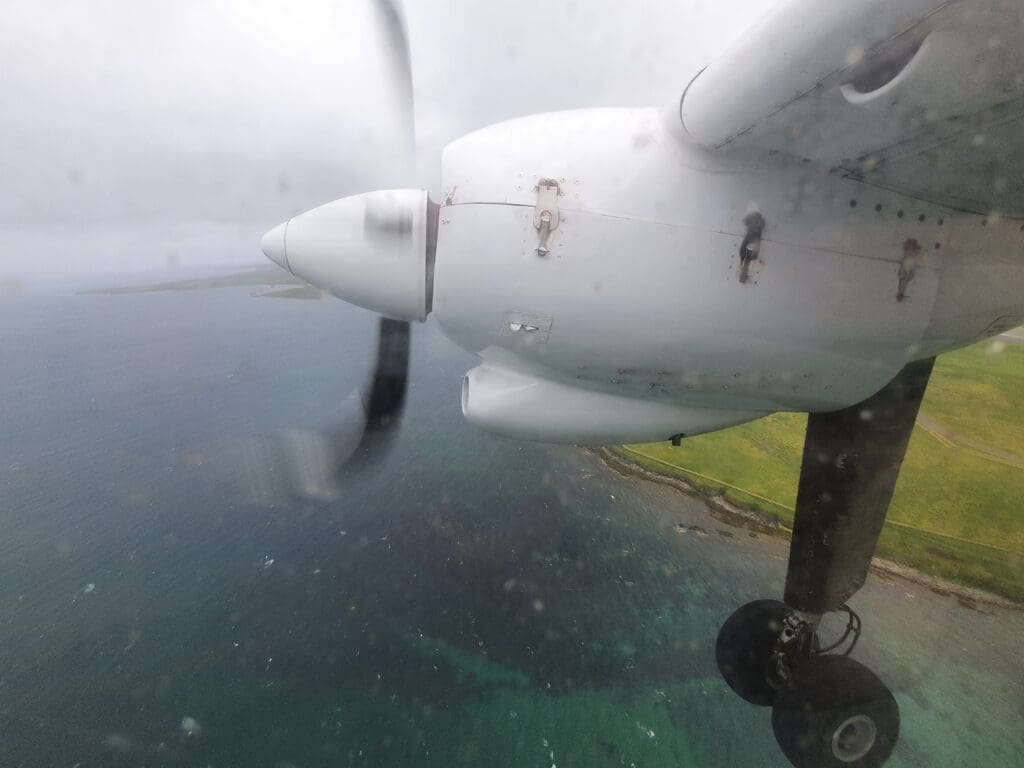
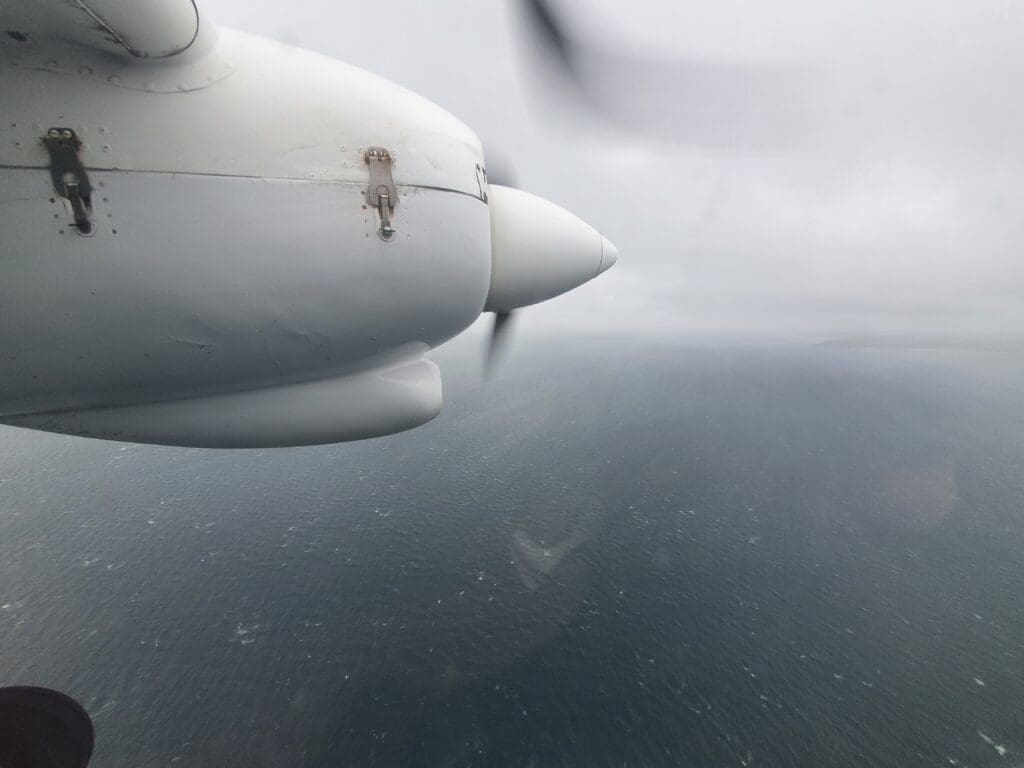
As you would expect given the fact that North Ronaldsay is located in the same general direction as Papa Westray, the initial stages of the flight took the Islander on a similar route to the earlier flight. Once away from the Orkney Mainland, the Islander first crossed the Shapinsay Sound before heading over the green fields of Shapinsay once more. Although this time the aircraft passed over a small portion of the southeast of the island, making landfall near Sandgarth Bay before heading back out over the sea around a minute later. After leaving Shapinsay behind, the aircraft continued over the dark swells of the Stronsay Firth. As the aircraft crossed over the water, the visibility dropped rather significantly and for a couple of minutes or so, nothing could be seen other than the rough seas below. At this stage of the flight, the aircraft temporarily sank to 600 feet to keep out of a rainshower at which point the proximity of the seas below made it feel as if I were riding in a search and rescue or maritime surveillance aircraft. Whilst the meteorological conditions remained far from clear, the visibility improved a little as we continued northeast allowing for a view of the small uninhabited island of Linga Holm, followed by the far north of the island of Stronsay and then the Holm of Huip.
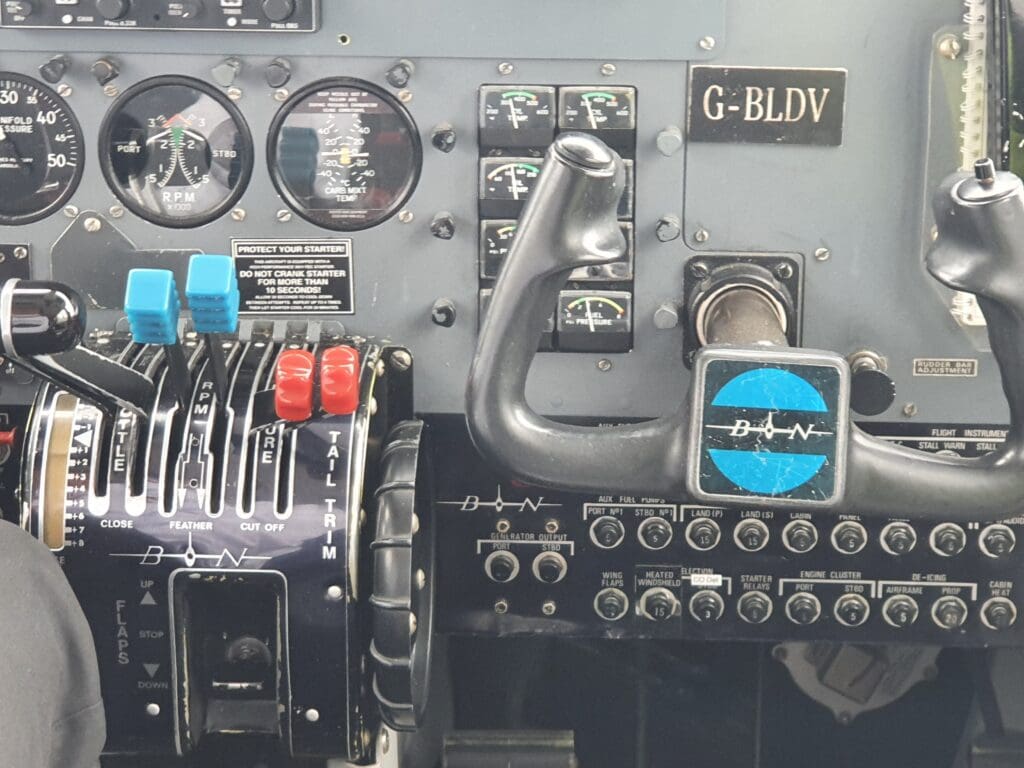
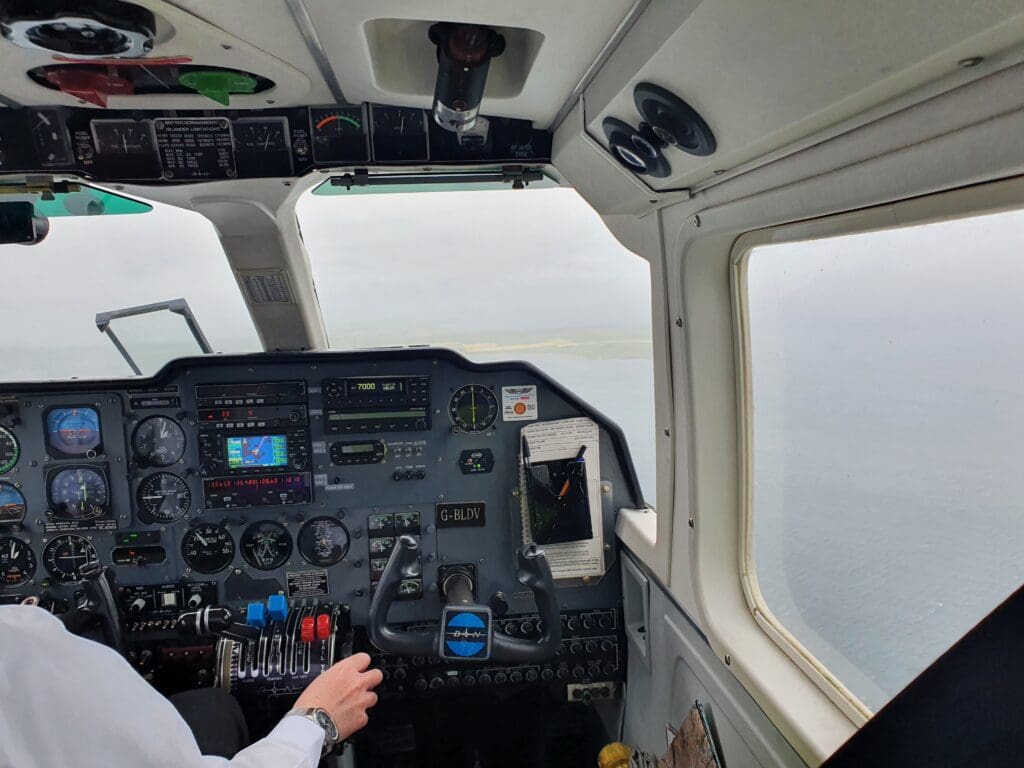
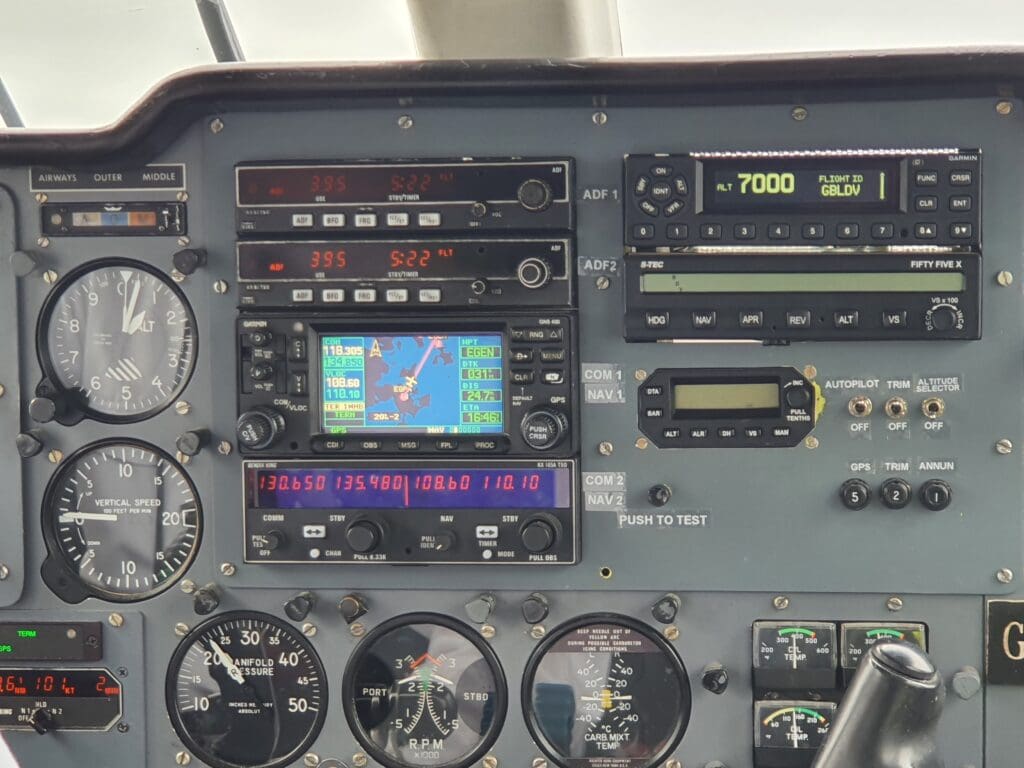
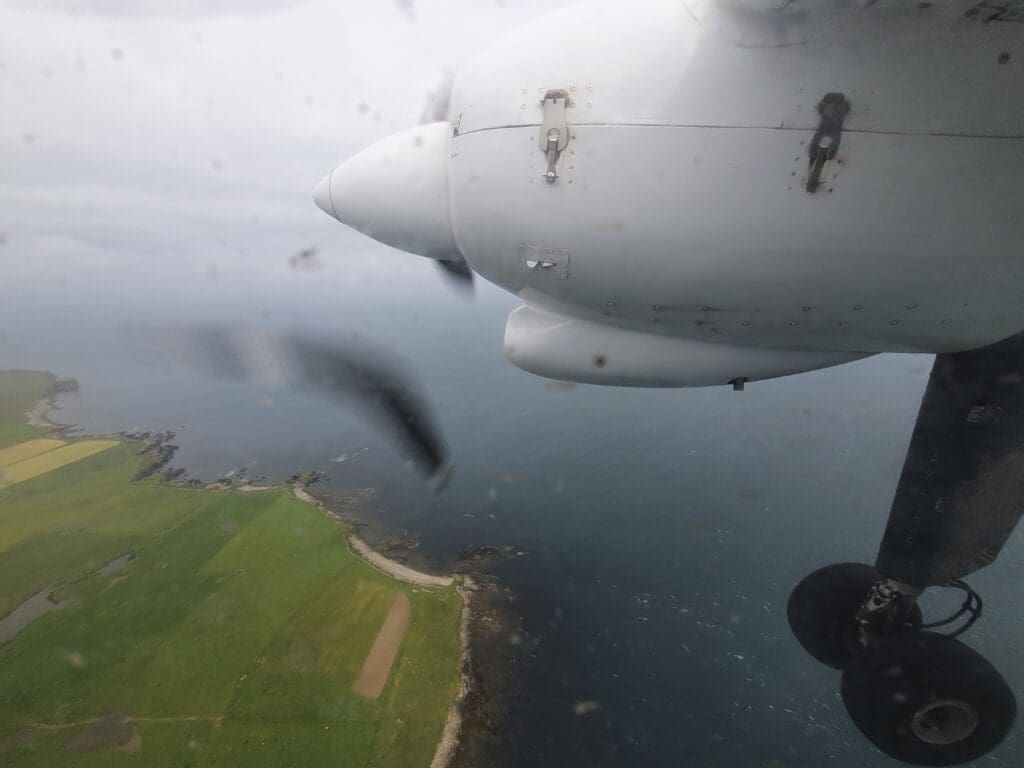
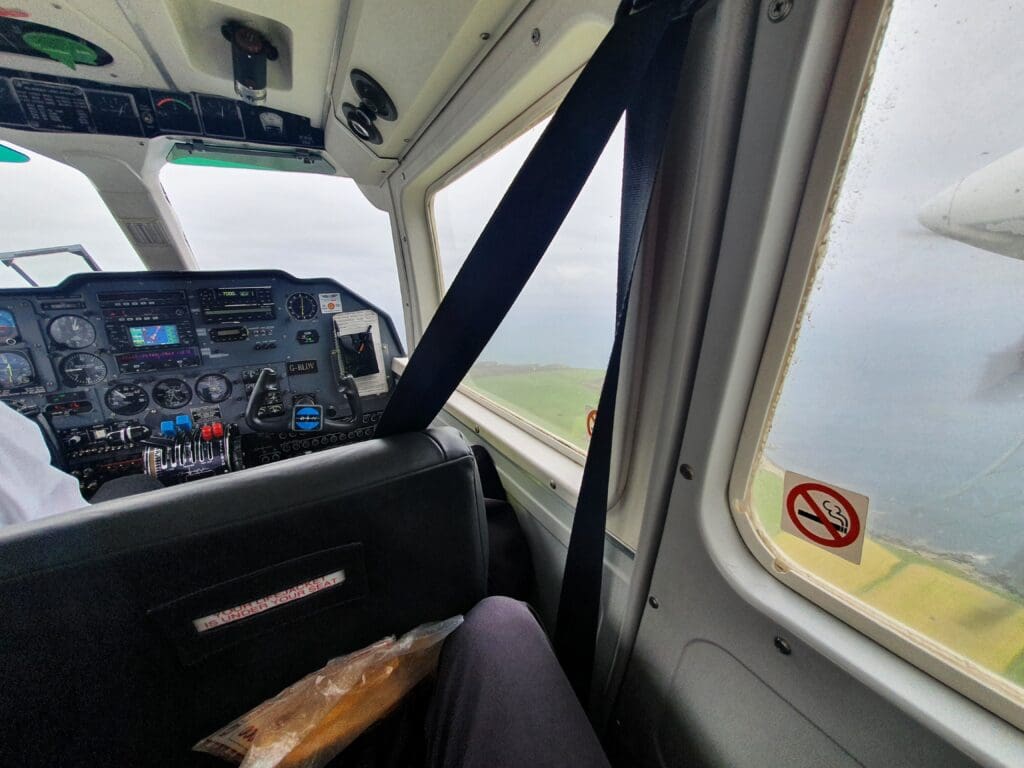
Once Stronsay had faded into the mist, the Islander headed over the Sanday Sound before reaching, you guessed it, the island of Sanday. Heading over a small portion of the centre of Orkney’s third largest island, the aircraft crossed Sanday’s coastline near one of its most famous sites, the Quoyness Chambered Cairn – a Neolithic burial monument. Meanwhile, on the left-hand side of the aircraft, a short time after crossing the coastline, Sanday Airport could be seen passing by, whilst the island’s main village could be seen on the right. From there, the Islander made its way back out over the sea although continuing to fly parallel to Sanday’s northern coastline, the island could be seen for a minute or so before fading into the mist.
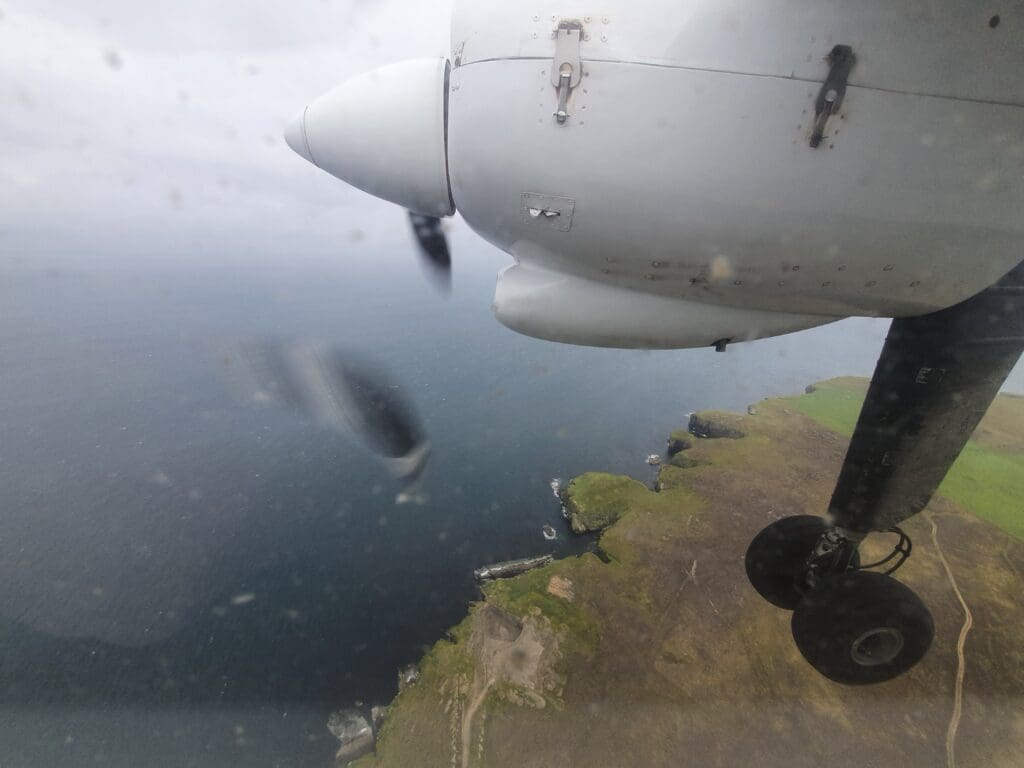

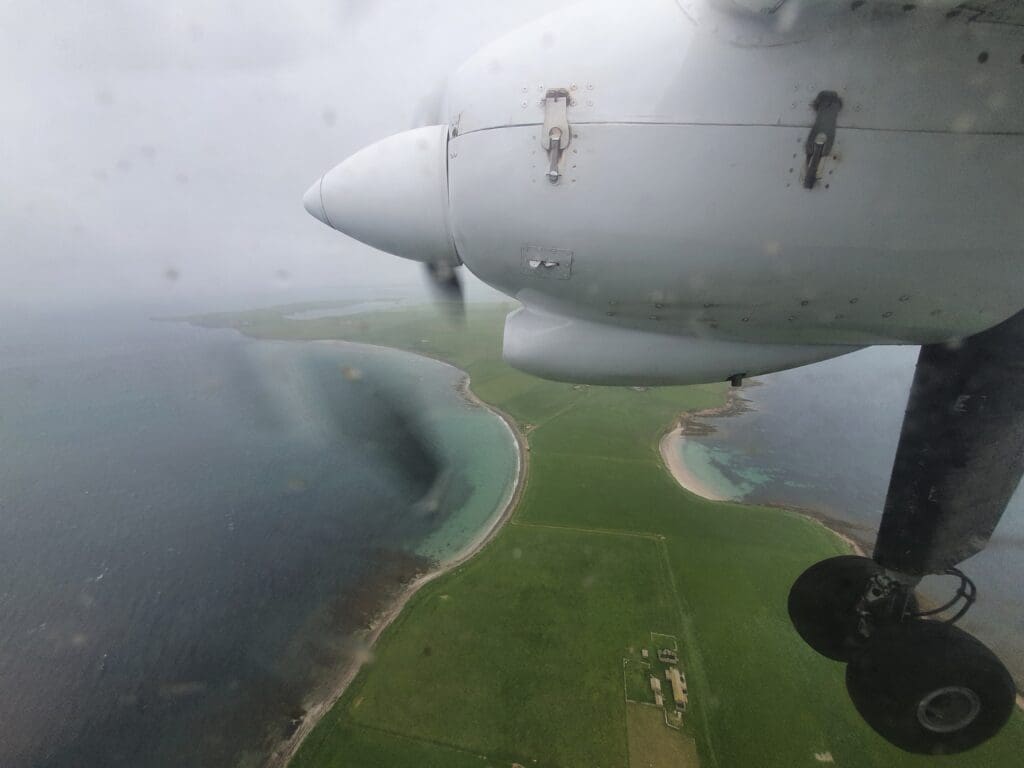
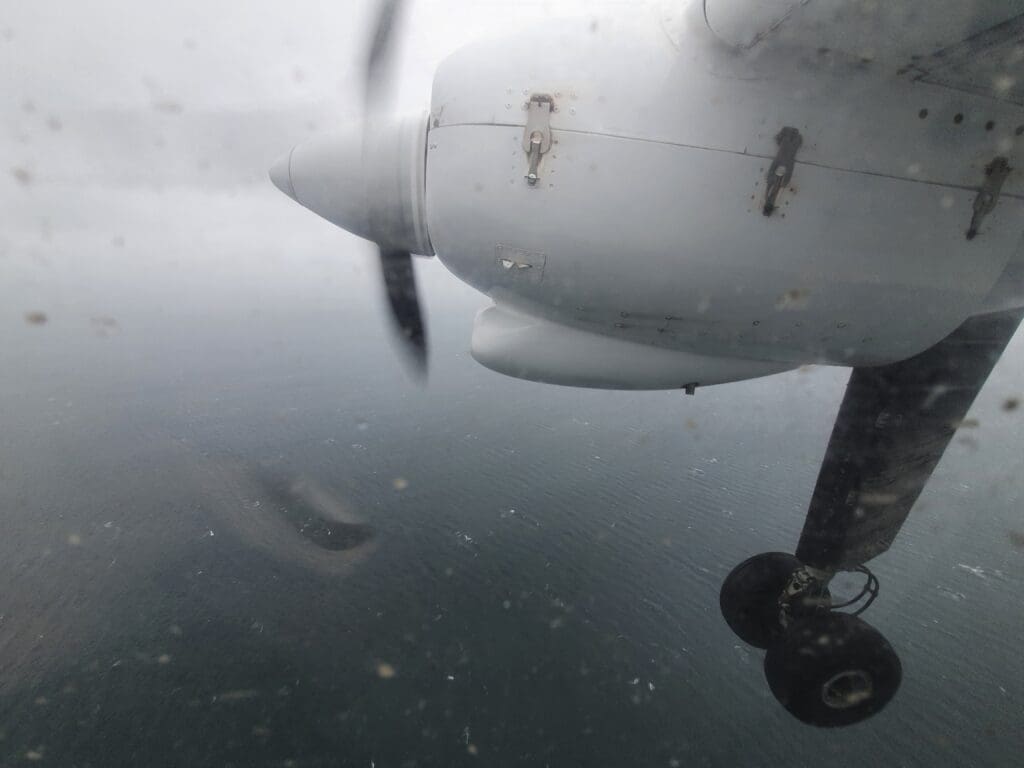
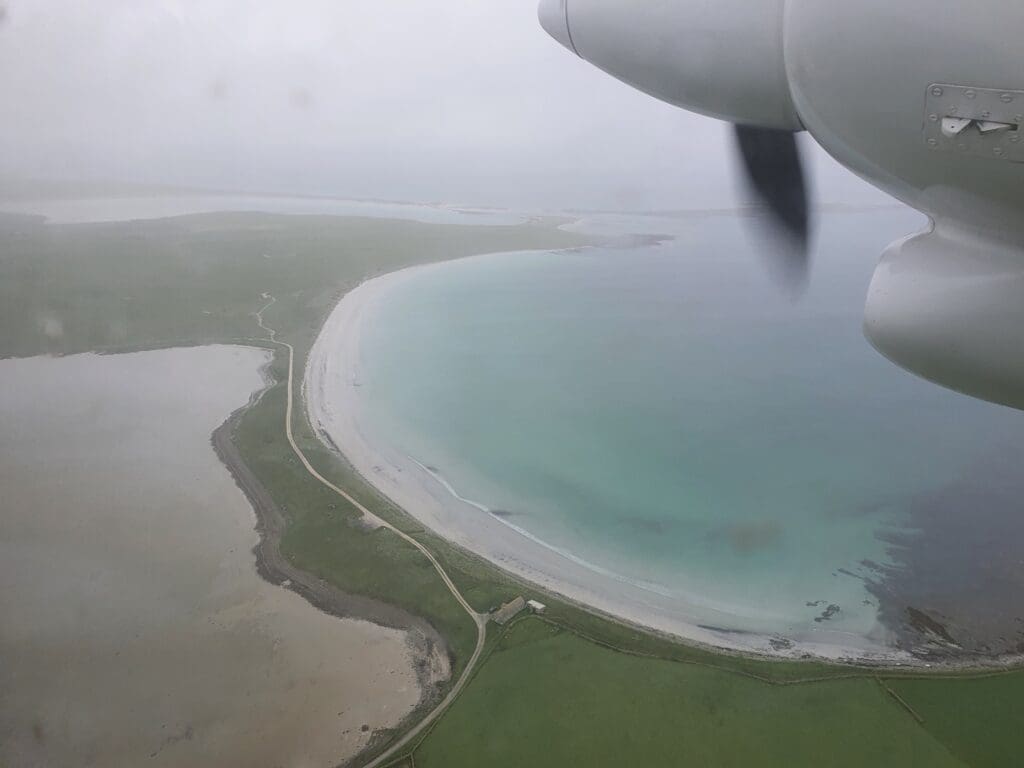
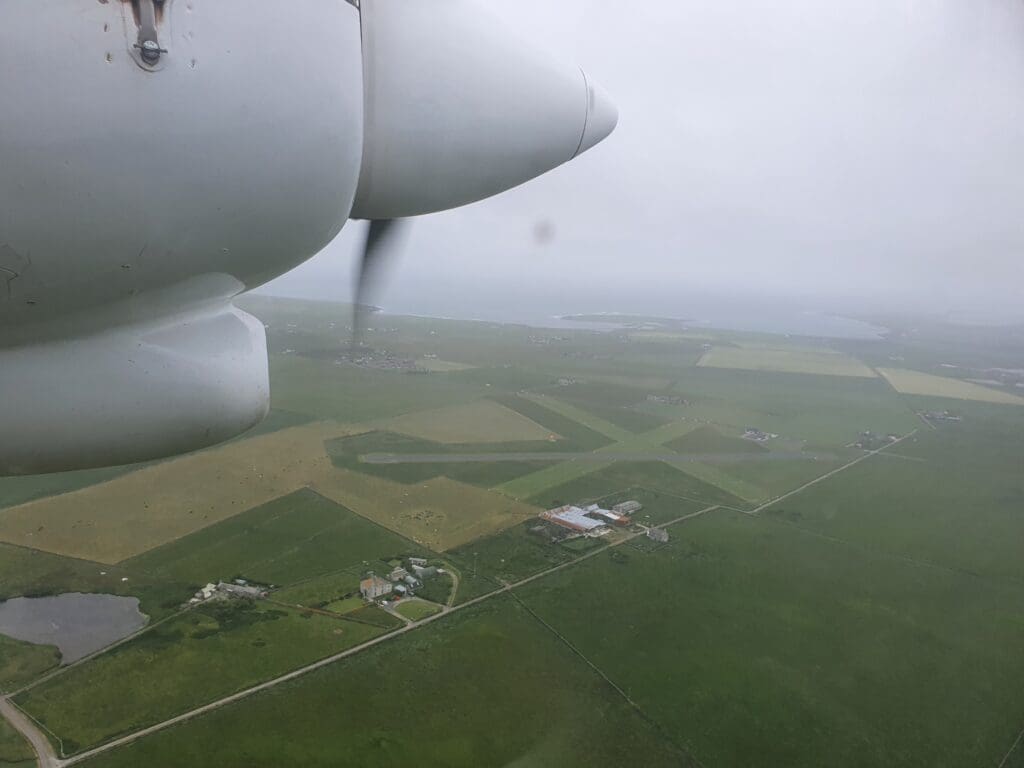
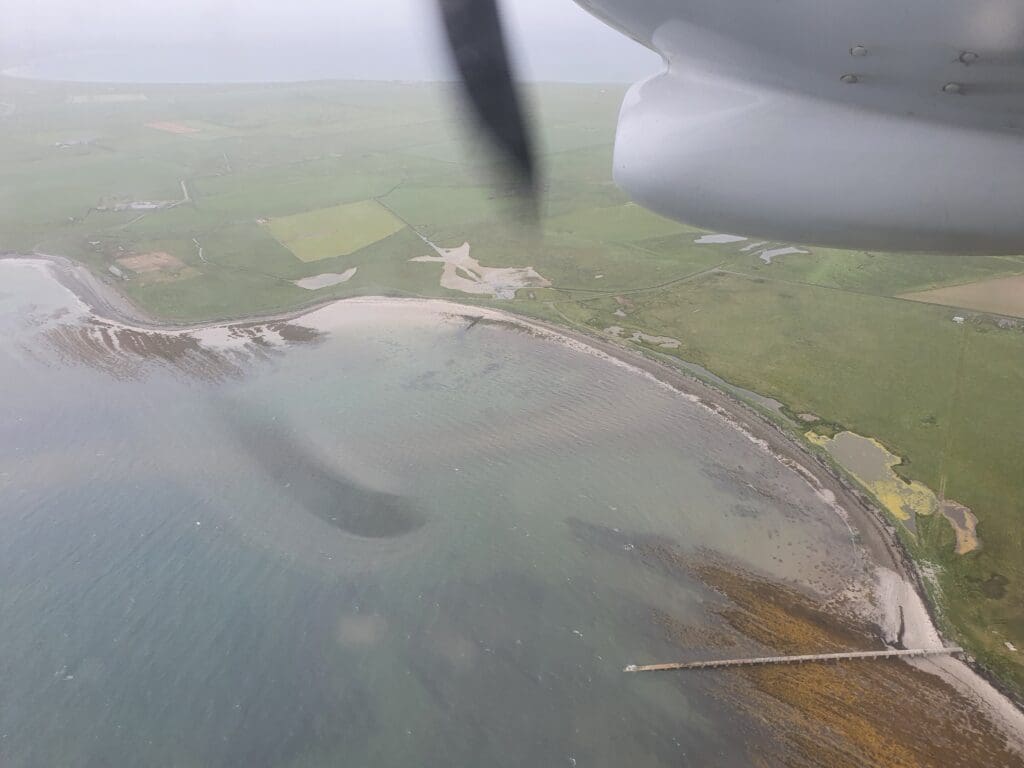
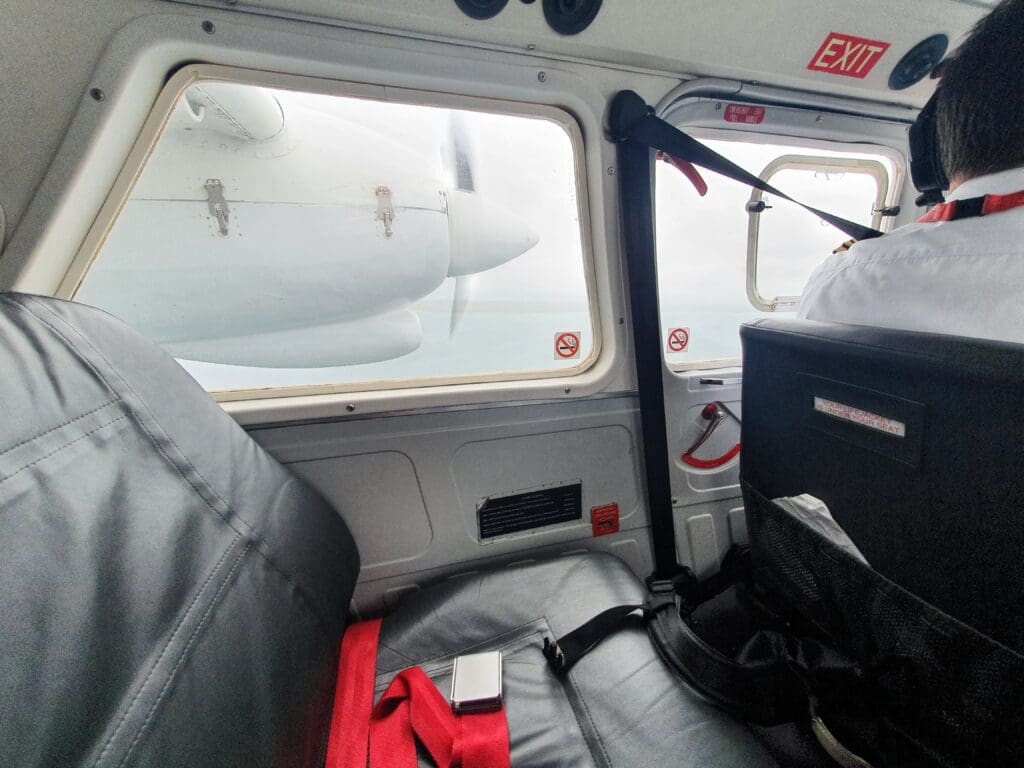
After leaving Sanday behind, the aircraft crossed over the short stretch of choppy water that separates the island from North Ronaldsay. A short time later, the southern tip of Orkney’s northernmost island, the Point of Burrian, came into view and soon enough the Islander could be felt commencing its quick descent and the flaps were extended. Outside of the left-hand side of the aircraft, the island’s white sandy beaches of North Ronaldsay’s South Bay could be seen and a short time later North Ronaldsay Airport appeared up ahead. After crossing over the island’s main settlement, Hollandstoun, the aircraft soon passed over the airport’s perimeter dry stone wall and made a soft touchdown on the airport’s grass runway, runway 32. With the seashore visible at the other end of this, unsurprisingly the aircraft slowed rather quickly before vacating the runway and making its way over to the terminal building.
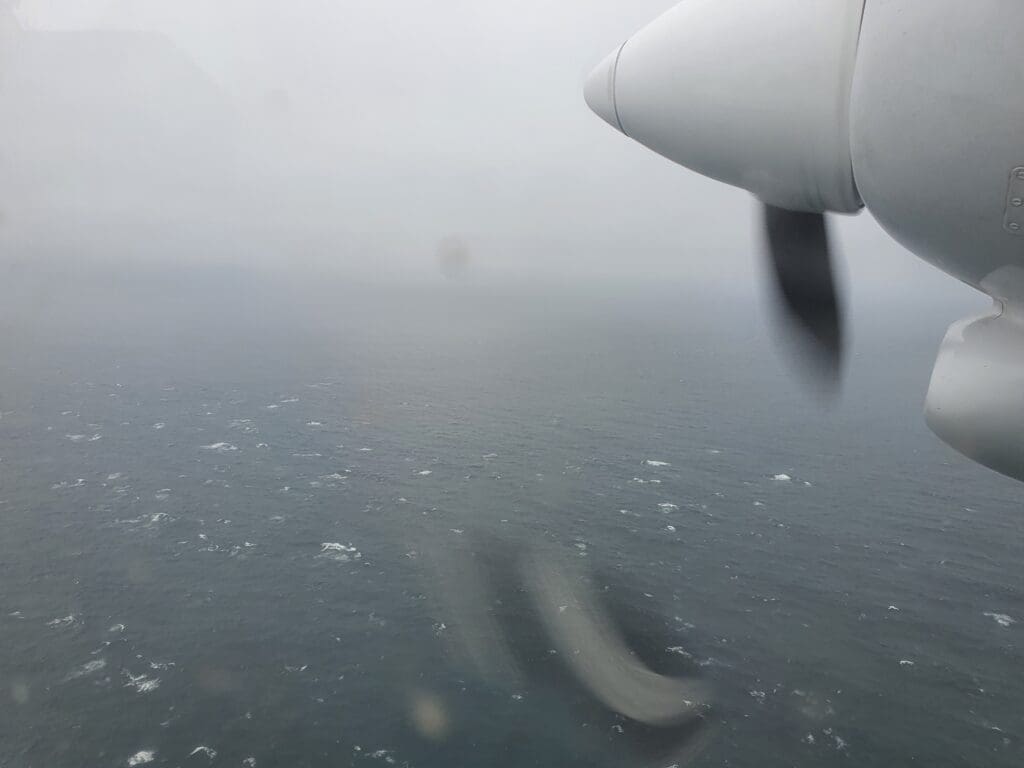
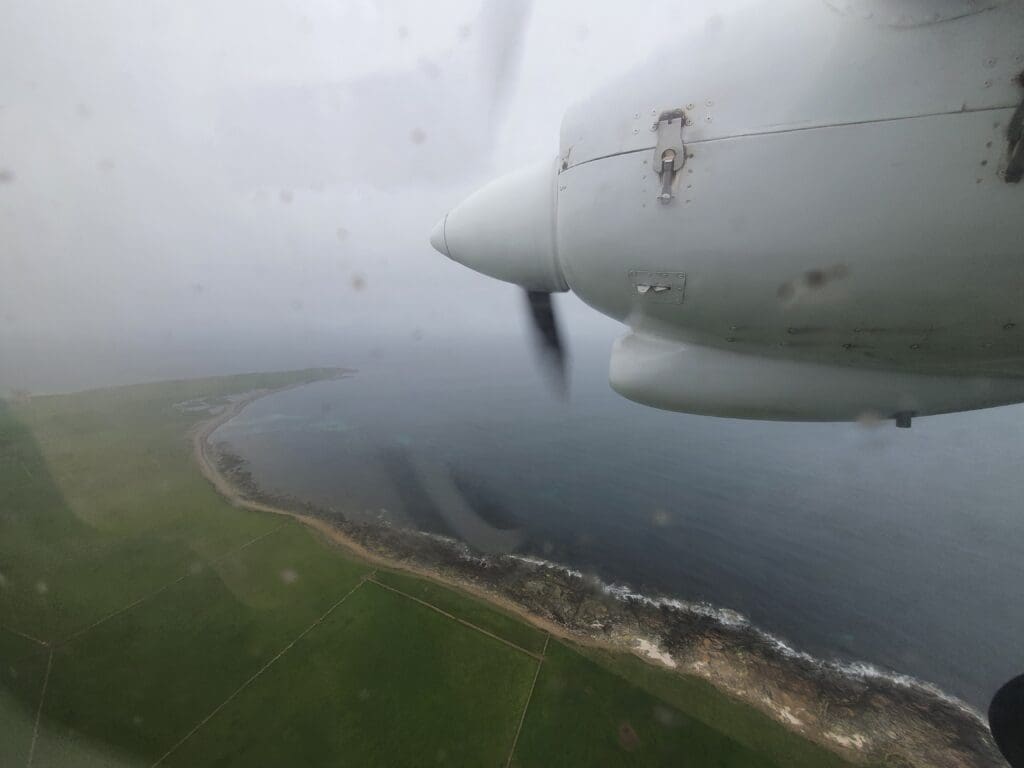
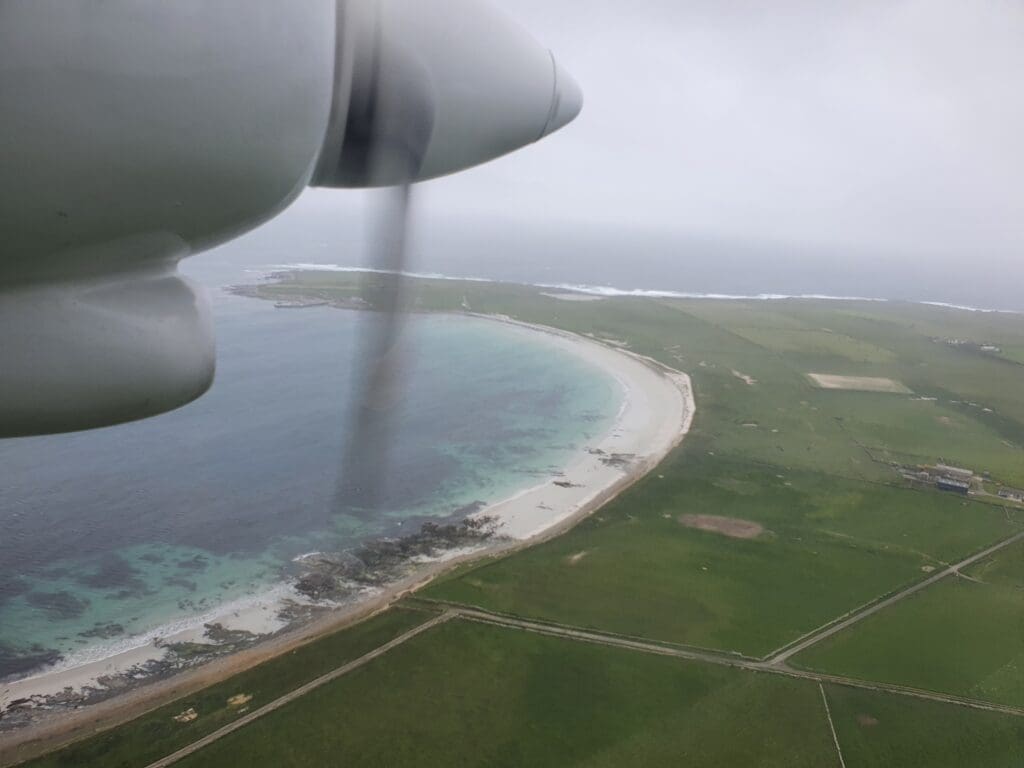
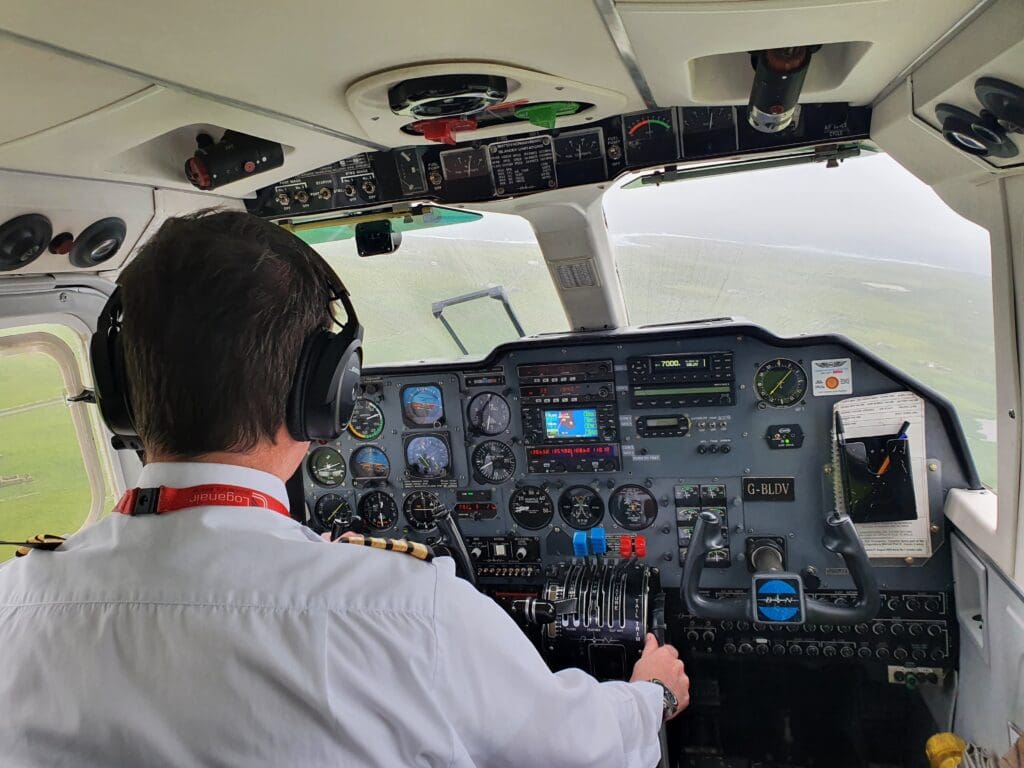
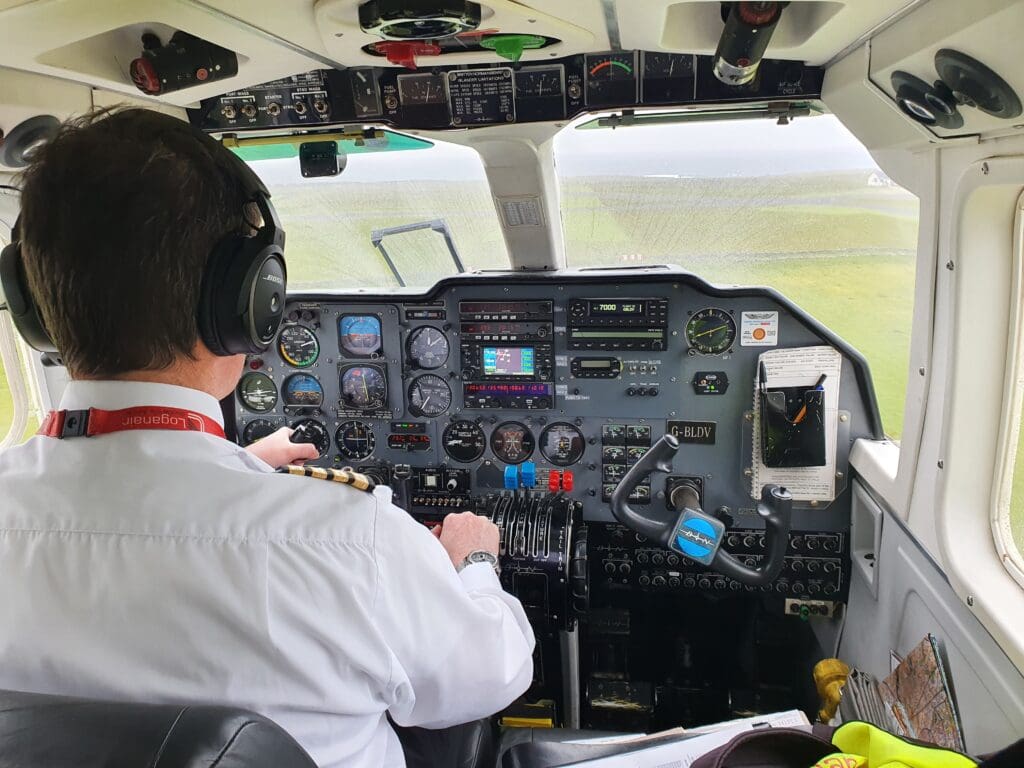
Having opened in 2016, North Ronaldsay Airport’s terminal appeared to be slightly grander than the huts of the previous stops and from the outside appeared to be similar in design to a local house. Coasting to a gentle halt outside of this, one of the airport firefighters soon appeared and opened the cabin door. Needing to let the passenger in the row behind exit the aircraft, I temporarily disembarked and stretched my legs after the long eighteen-minute flight up from Kirkwall. Whilst the friendly pilot had advised me to wait and be the last back onto the Islander so I could take my seat behind the cockpit, seeing as one of the passengers starting their journey in North Ronaldsay wished to sit in the first row and was travelling as part of a pair, I decided to sit in the second row. Aviation enthusiasts should be aware that this row is not the most fantastic as much of the view from this consists of plastic panelling. That evening, a total of seven passengers joined the aircraft in North Ronaldsay, meaning that it would be a full flight back down to the Orkney Mainland. Whilst this Sunday evening service can call in at Sanday and Stronsay upon request, that afternoon all passengers were bound for Kirkwall and so a quick trip directly back to the ‘mainland’ was in store.
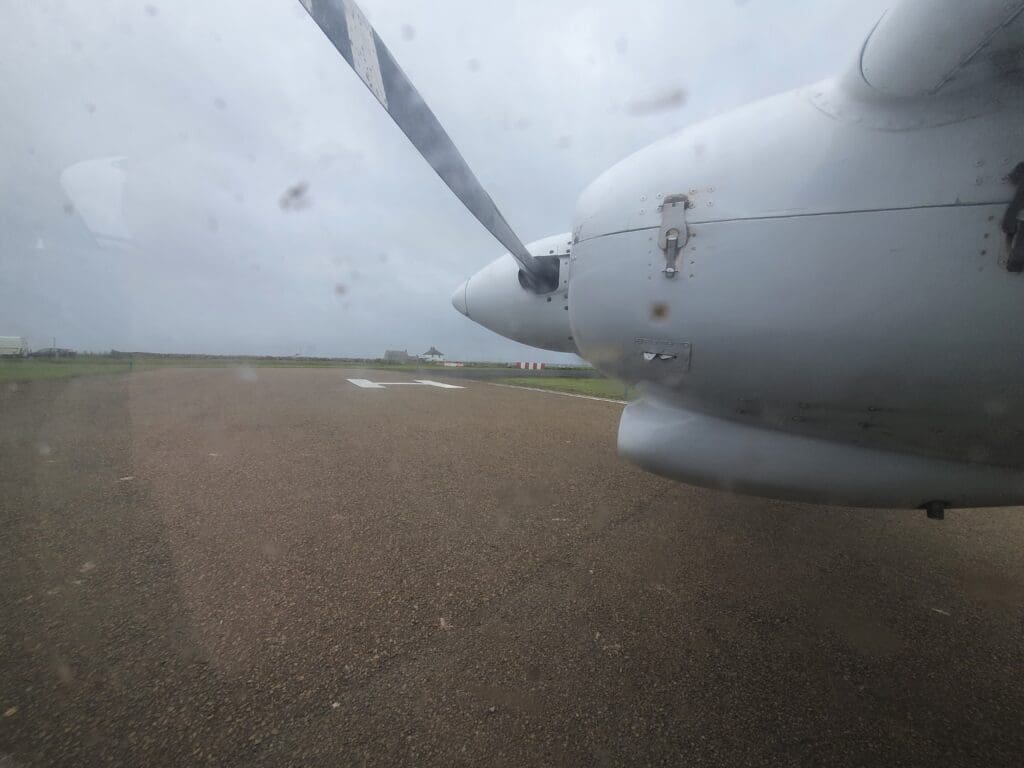
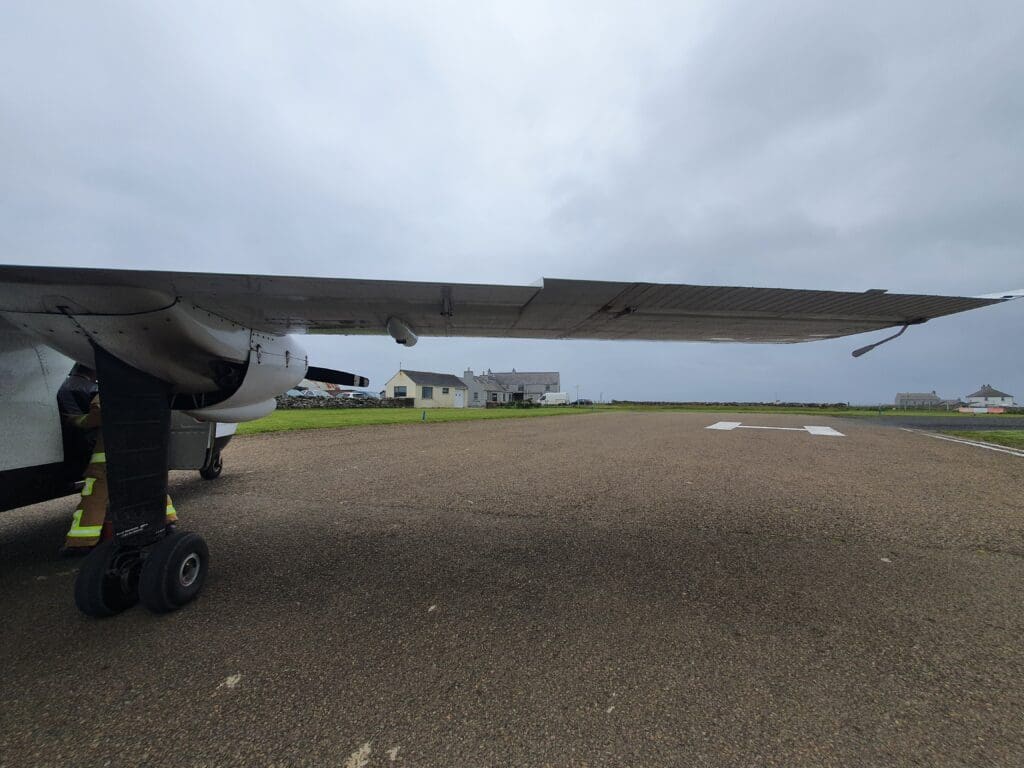
Once all were strapped in, the friendly firefighter wished all onboard the aircraft a nice flight before closing the cabin door at the rear of the aircraft. For the last time on my trip, the pilot then turned around and made a quick speech before the two Lycoming engines fired into life once more. Moments later, the Islander made the short taxi over to the end of Runway 28 and without pausing commenced a gentle takeoff roll down the gravel runway, ending my seven-minute stay on Orkney’s northernmost island. Seconds after floating into the skies, the aircraft crossed over the coastline before banking left and flying on a southerly heading back towards the Orkney Mainland.
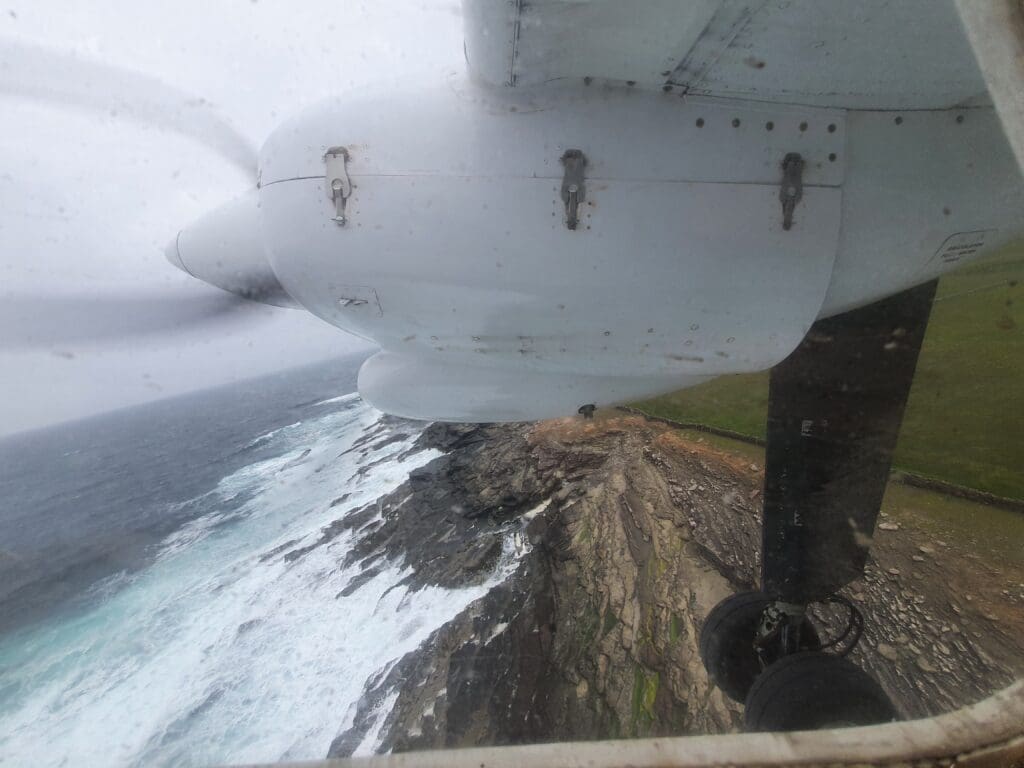
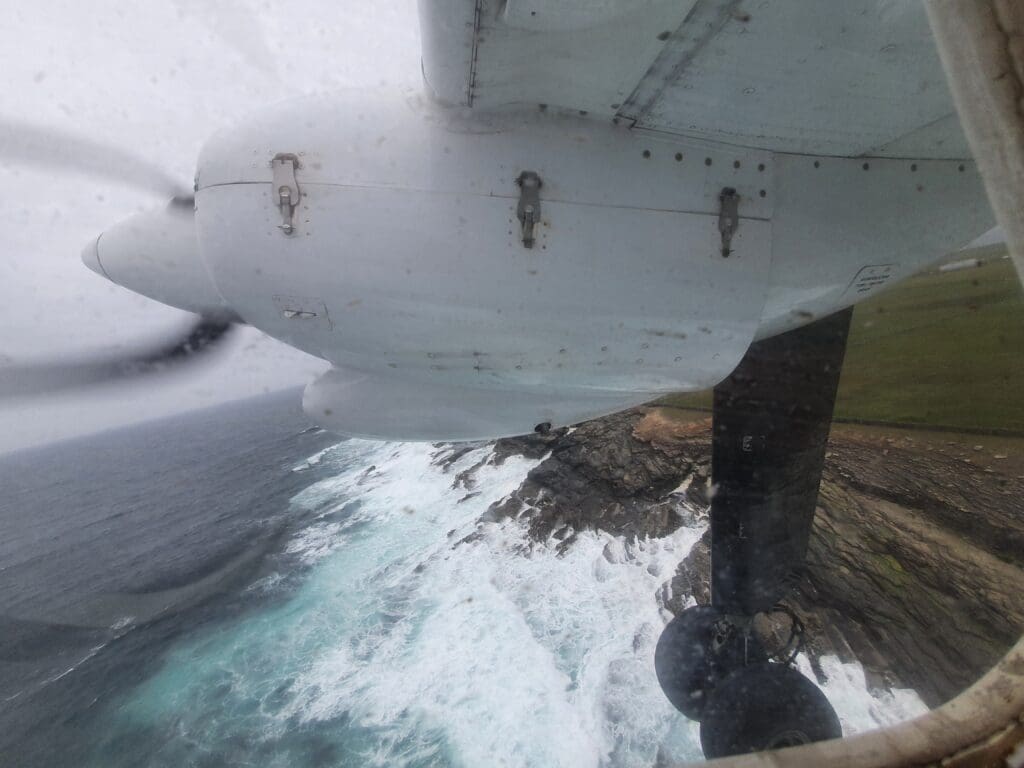
After around three minutes in the air, the rocky coastline of Sanday around Skelwick Bay appeared and the Islander flew south over the bay of Otters Wick. A short time later, the Islander crossed Sanday’s coastline just to the north of the island’s airport before flying directly over this and continuing towards the coastal village of Kettletoft before heading out over the choppy waters of the Sanday Sound. Outside the right-hand side of the aircraft, Sanday remained visible for a few short minutes before the southernmost tip of the island, Spur Ness, faded out of view. As the aircraft cruised southwards at 1,000 feet, soon three uninhabited miniscule islands sitting in between Sanday and Stronsay appeared as could the southern tip of Eday. Following several minutes spent crossing over the seas, I had my final glimpses of Shapinsay as we crossed this once again, indicating that we were nearing our final destination of Kirkwall. After admiring the now familiar sight of Shapinsay’s flat green fields, the Islander passed the village of Sandgarth and left the island behind. As we crossed the final stretch of water on our flight to the Orkney Mainland, the Islander made a relatively steep bank to the right and flew in a circle whilst the pilot’s eyes were peeled to something outside – I suspect that this was almost certainly done in order to keep our distance from the arriving Loganair Saab 340.
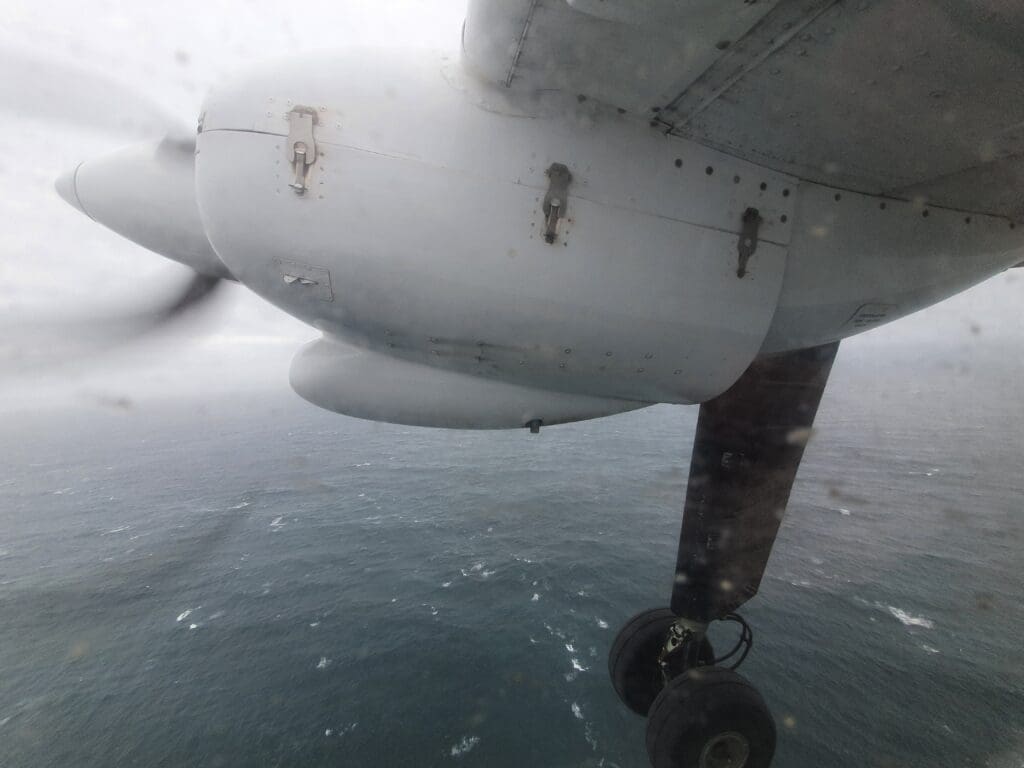


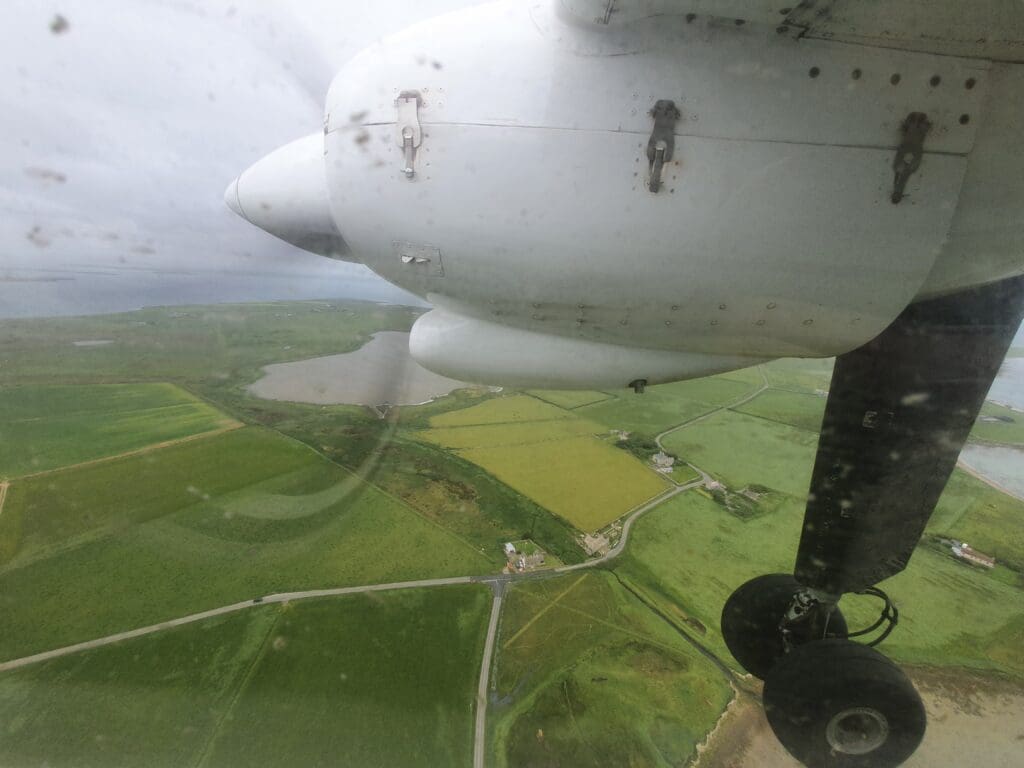
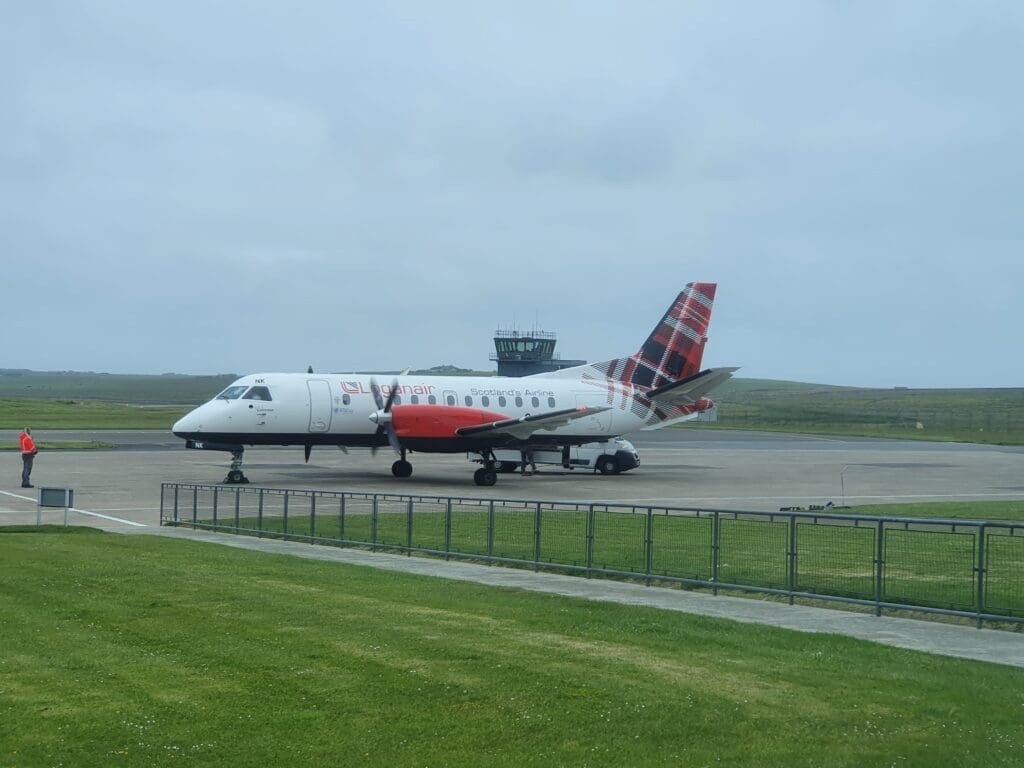
After flying in a circle, the aircraft then made landfall just to the north of the village of Linksness before heading onto the village of Tankerness where the aircraft turned onto final for an approach to Runway 27. Once the flaps fell into position, the aircraft made a steep descent towards Kirkwall Airport’s longest runway and following a pleasant sixteen-minute ride, the Islander crossed over the perimeter fence and made a soft touchdown. After decelerating gently, the Islander then took a left and made a quick taxi over to the apron via the airport’s other runway before arriving back at its parking position near the terminal building. At this time, the only other aircraft to be seen on the ground took the form of the aforementioned Saab 340 which could be seen being readied for its return flight to Glasgow.
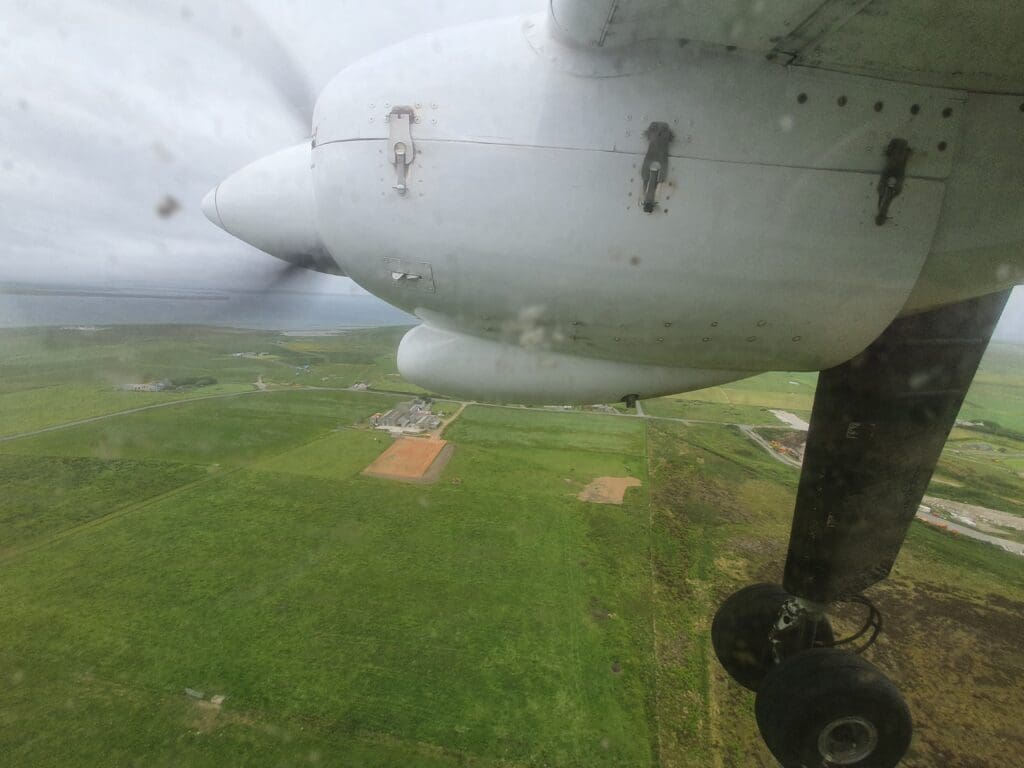
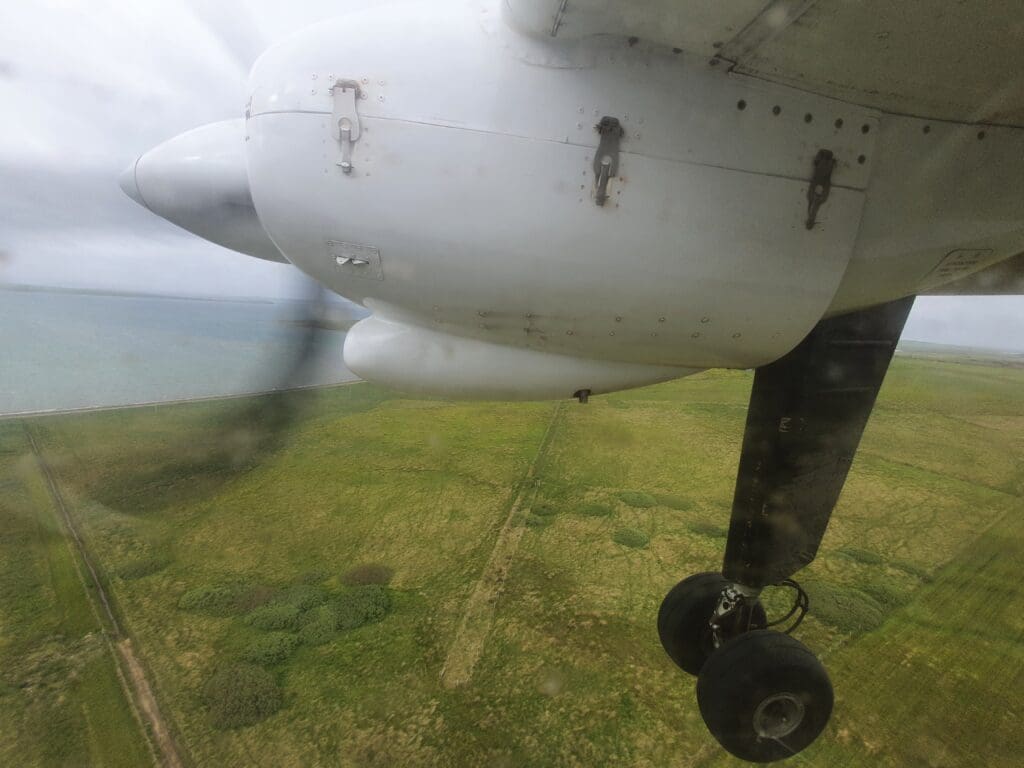
As with all the other legs that afternoon, once the engines spooled down, the ground agent and pilot wasted no time in assisting passengers out of the Islander’s small cabin. Soon enough, the pilot opened the cabin door on the right-hand side of the fuselage and assisted passengers as they squeezed through the Islander’s narrow entryway. Once those in the row in front had disembarked, the first row was folded over and I performed my last act of contortionism for the day as I exited the aircraft. After thanking the friendly pilot, I walked around the rear of the aircraft, snapping some photos before heading up towards Kirkwall Airport’s small terminal. With the skipped stops ensuring an early arrival into Kirkwall, once there I was left with no other option other than to wait fifty minutes for the next bus to the town centre and so, I took a seat and watched as passengers began to arrive for the evening flight down to Glasgow and charged by phone. Before I knew it, the bus was nearing the airport so I made my way outside back to the bus stop and soon entered the bus where once again I was greeted by a typically friendly Orcadian driver.
Summary
Whilst I had not ended up making the trip around Orkney in the most fantastic of weather, being a diehard aviation enthusiast despite the lack of the best possible views of the islands, I nevertheless had a great afternoon and would of course recommend any aviation enthusiast to make the pilgrimage up to Orkney to sample the delights of the world’s shortest commercial flight.