Crossing the Aegean with Aegean: Thessaloniki to Rhodes on an Airbus A320
Following a pleasant three-night stay in the seaside village of Vourvourou on Chalkidiki’s Sithonia Peninsula, it was time for me to head onwards to my next stop, Rhodes. With Thessaloniki Airport located over 100 kilometres away to the east by road, and not having access to a car, I was hoping to rely on public transport having caught a public bus to the village from Thessaloniki Airport at the start of my stay. However, with no bus service operating that day, I was forced to find an alternative means of reaching the airport with the cheapest option proving to be a Sun Transfers shared shuttle service departing at 0840 and setting me back a little over €50. Whilst this would see me arrive at the airport with plenty of time to spare until my 1405 flight, I had little choice other than to accept this, unless I wanted to spend over double this on a private taxi.
On the morning of my flight, I packed up my possessions and headed out onto the quiet narrow streets of Vourvourou, slightly sad to leave although happy that I was not journeying back to the cold and wet UK quite just yet! From Be Happy Apartments where I had spent my stay in the village, I trundled down the country-style dirt lane to the main road before wending my way back uphill to the hotel where I was to rendezvous with the shuttle. Upon arriving there, the friendly driver could be seen waiting and we soon sped off down Sithonia’s roads heading down the peninsula towards the mainland. Following a quick stop where we picked up a Manchester-bound couple, around an hour and twenty minutes after leaving Vourvourou, the sprawl of Greece’s third largest airport came into view along with a cluster of cargo and passenger jets waiting at its stands.
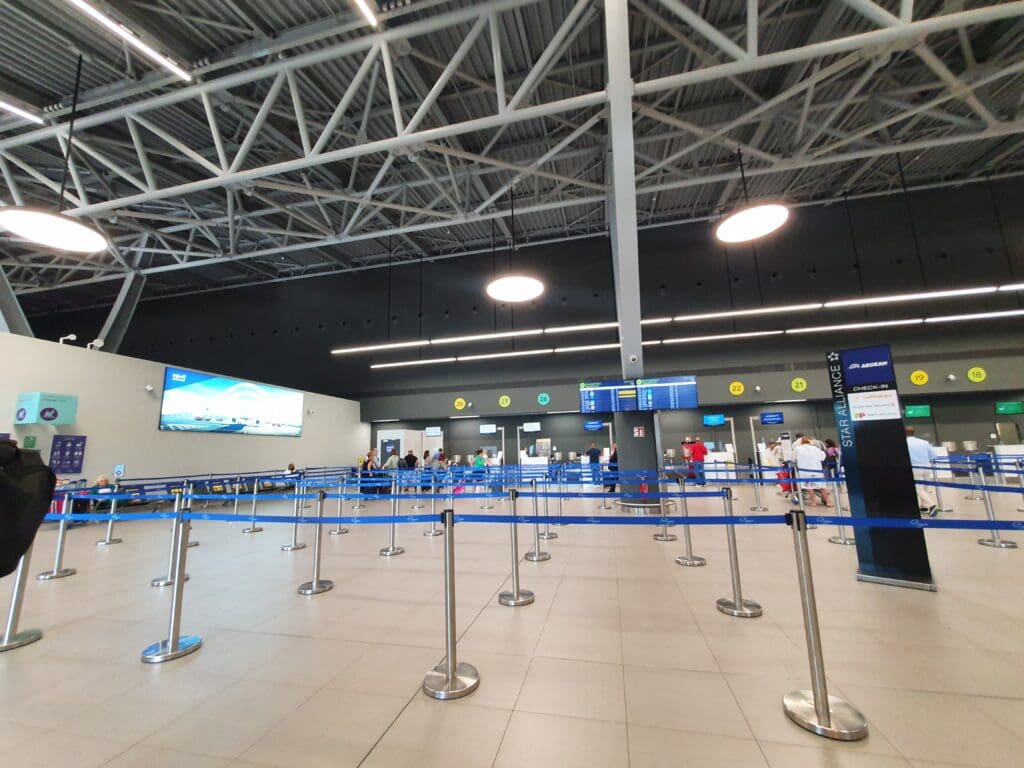
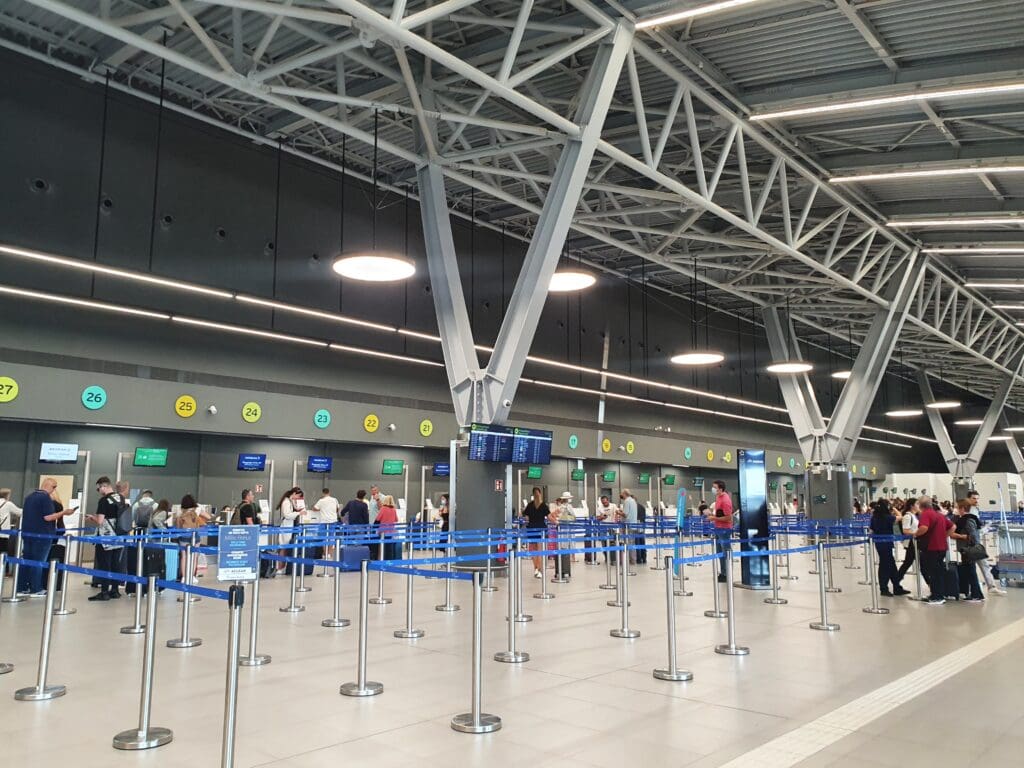
A few minutes later, the car came to a halt outside the airport’s original (although seemingly recently renovated) Terminal 1. Once I had thanked the friendly driver, I parted ways with my fellow passengers and made my way into the terminal building where I was immediately greeted by the sight of a long queue of gloomy tourists heading back to the UK on EasyJet’s lunchtime services to Gatwick and Manchester. With all those flights bound for destinations in the European Union’s Schengen area departing from the conjoined Terminal 2, I walked a short distance over to this, passing a cluster of shops and the terminal’s security area before reaching this terminal’s large and at that time, fairly busy, cavernous check-in hall. Briefly examining the landside portion of the terminal, that morning I found this to be pleasant, modern and clean, with a decent number of shops and cafés on offer. As with many regional airports in Greece, the airport is owned and operated by the Greek arm of Fraport, and the company’s familiar logo could be seen dotted about throughout the terminal.
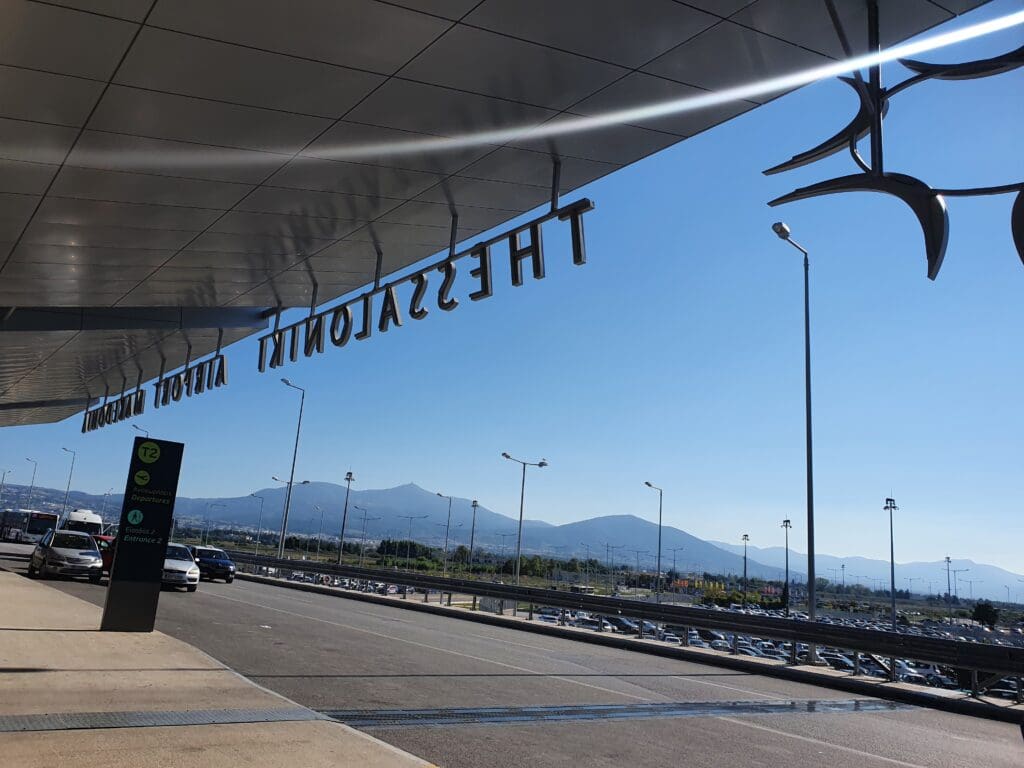
Having been assigned Seat 24C when attempting to check-in online, with no Ryanair-esque check-in charge, I decided to check in at the airport in the hope that I would be able to select a seat for no extra fee. Thus, following a quick look around, I joined the short queue leading up to Aegean Airlines’ counters in one corner of Terminal 2’s check-in hall. With Aegean Airlines operating services from Thessaloniki to destinations across Europe (alongside a few domestic flights operated by their regional arm, Olympic Air), unsurprisingly this part of the check-in hall was well-branded with plenty of Aegean Airlines logos and advertisements. After no more than five minutes of waiting in line, it was my turn to approach one of the counters and upon doing so I was given a rather cool greeting by the check-in agent. After handing over my passport and requesting a window seat, the check-in agent typed away before weighing my hand luggage. During this process, they warned me that I would have to squeeze my backpack into my small suitcase at the gate or risk paying a fee as my ticket only allowed for one cabin bag. Whilst I take responsibility for not fully reading Aegean Airlines baggage rules, I was a little surprised about this given the fact that most full-service European carriers offer passengers the option to take one small backpack as a personal item alongside a second slightly larger cabin bag. Nevertheless, this was not a particularly major issue as I would be unlikely to have any issue in fitting my backpack into my small suitcase. A few moments after this warning, I was handed a paper boarding pass complete with Olympic Air’s logo which revealed that I had been shifted into Seat 24A.
After thanking the check-in agent, I commenced my journey back to the airport’s security area. Whilst check-in takes place in two separate check-in halls, as far as I could tell only one security check area is provided for passengers with many of the airside facilities accessible to all passengers regardless of destination. That morning, whilst a fair number of passengers could be seen waiting to pass through security and enter the airside area, with plenty of checkpoints open, once I had my boarding pass scanned, I did not have to wait too long in the fast-moving queue before arriving at one of the open checkpoints. Once there, my bag was scanned and I passed through a metal detector before a fairly friendly staff member confiscated a bottle that I had forgotten to throw away before I was free to head to the airside portion of the terminal.
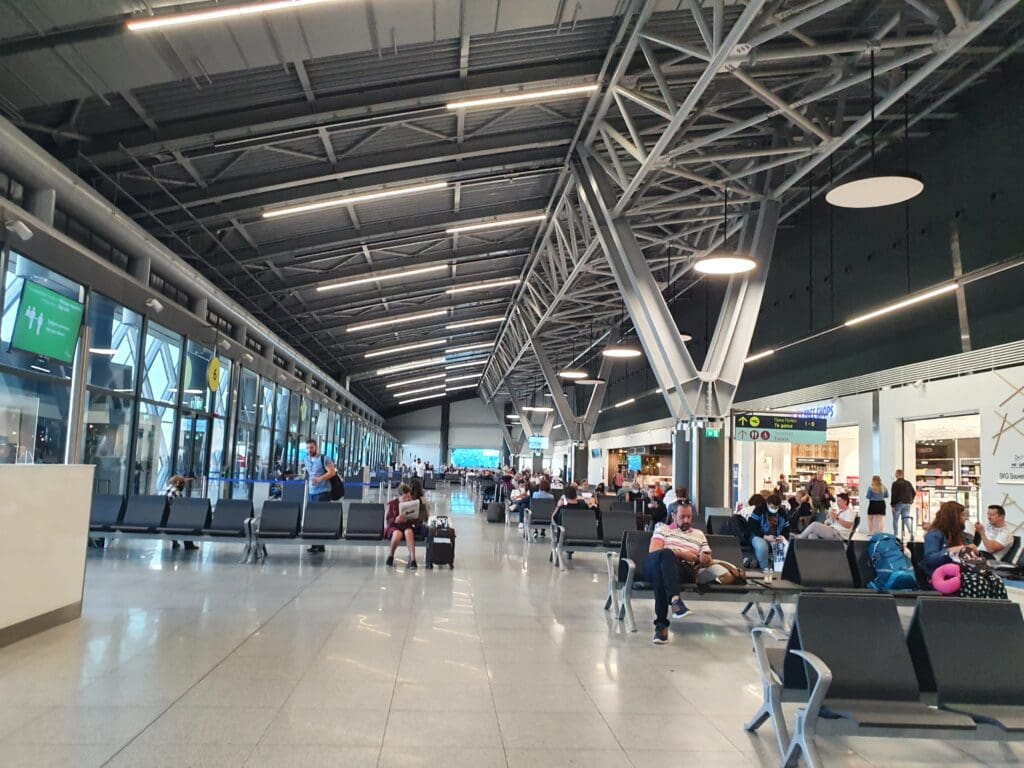
Thanks to my early shuttle, I made it to the airside portion of the terminal with about four hours to go until my flight’s scheduled departure time – plenty of time to explore the delights of Thessaloniki Airport. As with the landside area, given the fact that the terminal only opened in 2021, the interior appeared to be bright and modern, and, whilst not particularly spectacularly designed, this was functional and provided a decent place for me to wait until my flight. Once through security, as with many airports across Europe I was required to walk through the terminal’s main shopping area where a wide array of items, including local produce and souvenirs, alongside the usual sweets, spirits and perfume could be seen waiting to be purchased.
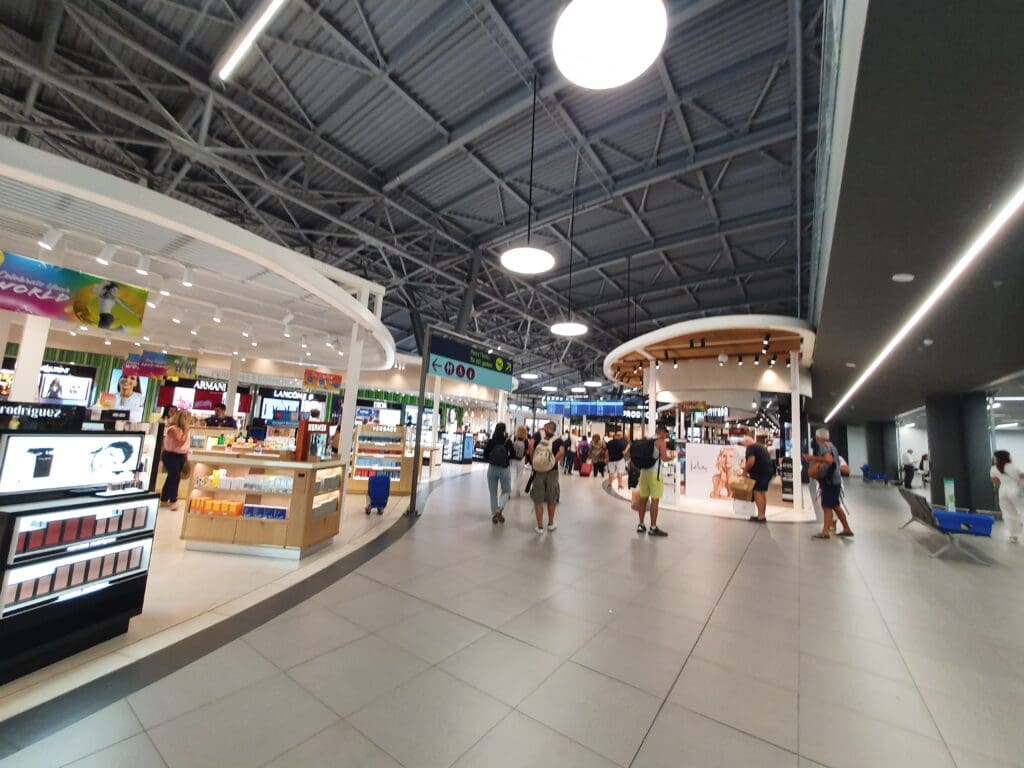
Once through the large duty free store, passengers have the option of heading one of two ways, those heading off to non-Schengen destinations are required to turn left and head to Terminal 1’s gates, whilst those bound for destinations inside the Schengen area are required to turn right and journey a short way to Terminal 2’s gates. However, nothing is stopping those heading off from Terminal 1 from stopping by Terminal 2’s facilities before their flight. Inside, a decent number of shops and eateries could be seen, and after walking along Terminal 2, I set up camp in a café near the end of this where I purchased a pricey cappuccino for almost €5 before settling down to do some work. Those at the airport can make use of the airport’s complimentary wifi, although this only works for three hours and so as I neared the end of my stay I was ejected from this and unable to reconnect. That morning, my only real complaint about the terminal was that plug sockets were very much at a premium, with just a few of these provided at a very small number of charging points throughout the terminal.
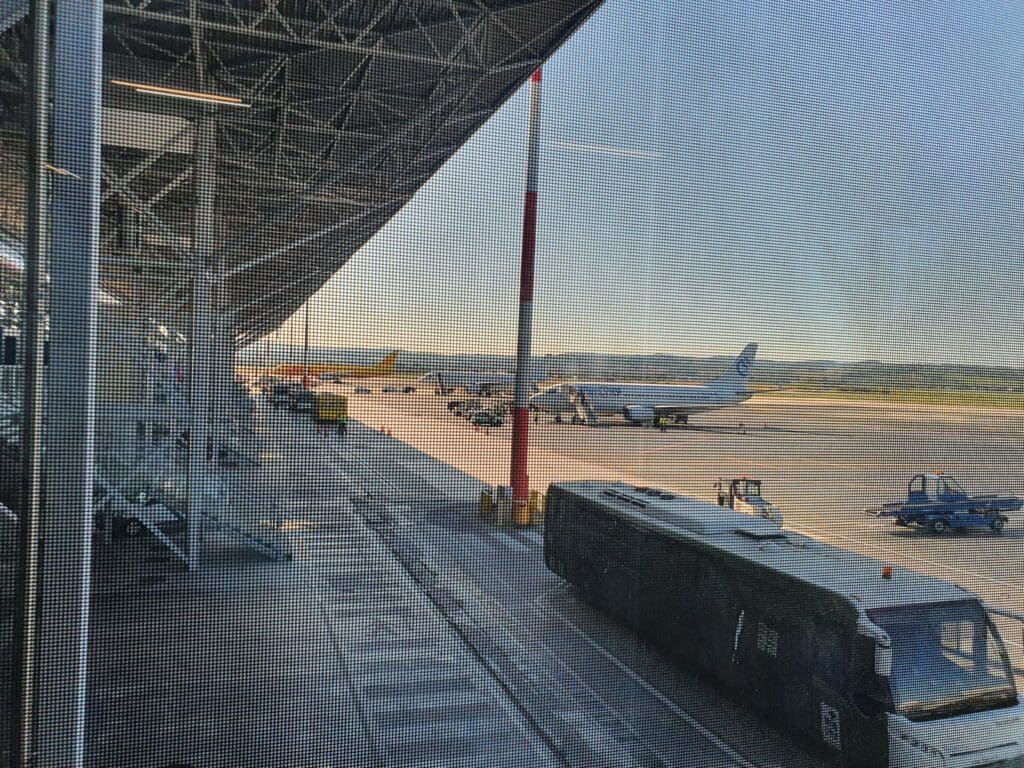
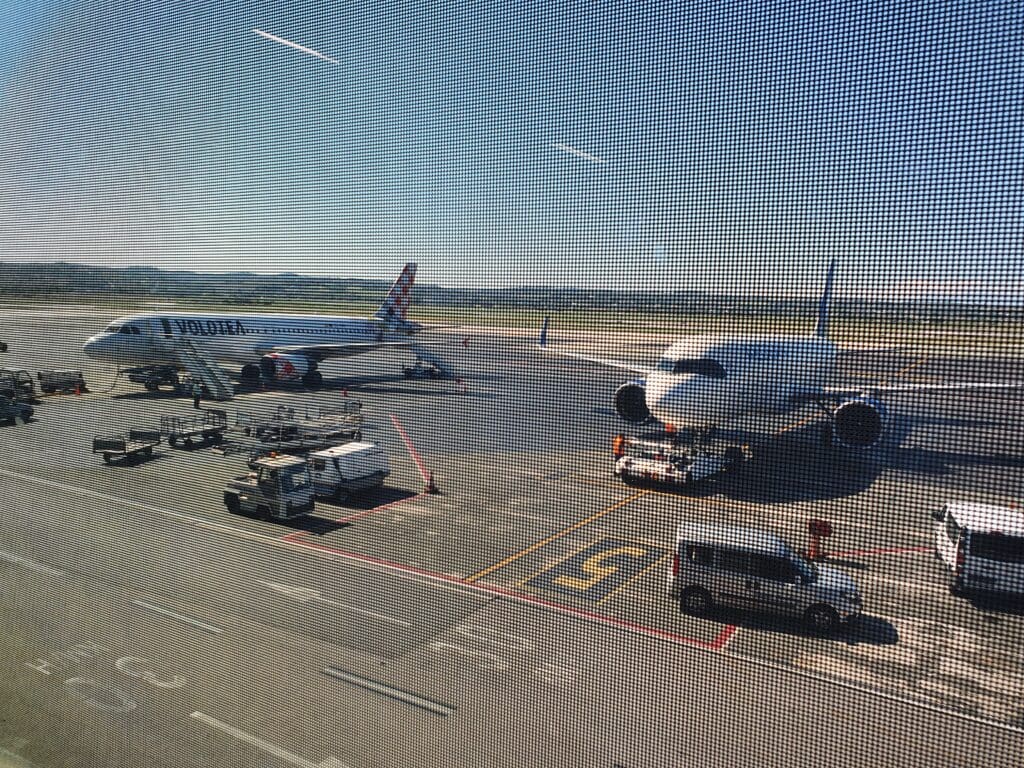
For those more interested in the movements outside rather than the selection of shops inside the terminal, large windows are provided throughout that offer views of the airport’s runways and apron. Whilst these are acceptable for those simply looking to look at the aircraft outside, most of these are covered in small dots which makes any decent photography through these nye on impossible. Furthermore, with Greece not known to be Europe’s most spotter-friendly country, I made the mistake of taking a photograph of several aircraft near two airport police officers. Whilst nothing came of this, they did look at me rather suspiciously and for a few moments I was a little concerned that I was about to receive a talking to which would result in me having to delete the photographs!
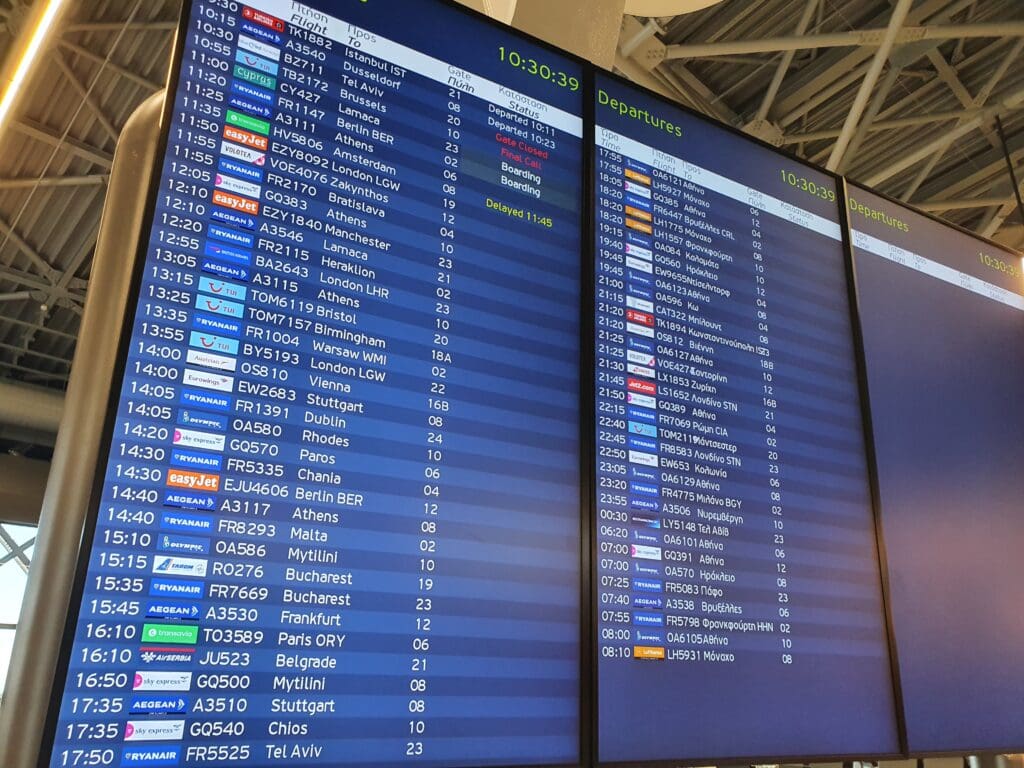
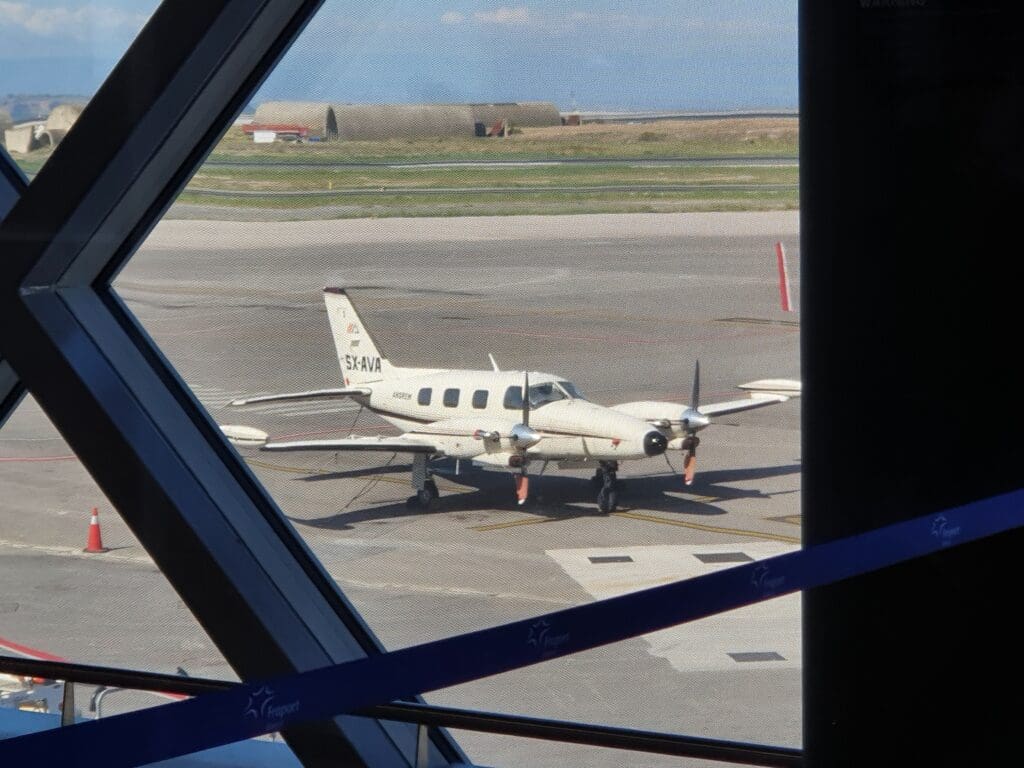
Travelling in September, Chalkidki’s tourist season was slowly winding down although, despite this, a fair number of holiday and low-cost flights to the cooler climes of Western Europe could be seen, although unfortunately there was relatively little that passed through that day that I would not have been able to see back in the UK. Between the moment that I arrived in the airside area and my flight’s scheduled departure time at 1405, a grand total of 22 flights could be seen on the departure boards, with these heading off to destinations in Belgium, Cyprus, Germany, Greece, Israel, the Netherlands, Poland, Slovakia and the UK. These were operated by Aegean Airlines, Austrian Airlines, Bluebird Airways, British Airways, Cyprus Airways, EasyJet, Eurowings, Ryanair (including Buzz and Malta Air), Sky Express, Transavia, TUI and Volotea. Of these, given the type’s rarity, the highlight movement for me took the form of a Bluebird Airways Boeing 737 Classic which would head off to Tel Aviv, followed perhaps by the SwiftAir Hellas Metroliner which arrived during my stay. Other than the selection of airliners, as I walked through the terminal I also spotted three locally based Piper PA-31T Cheyennes parked near the terminal.
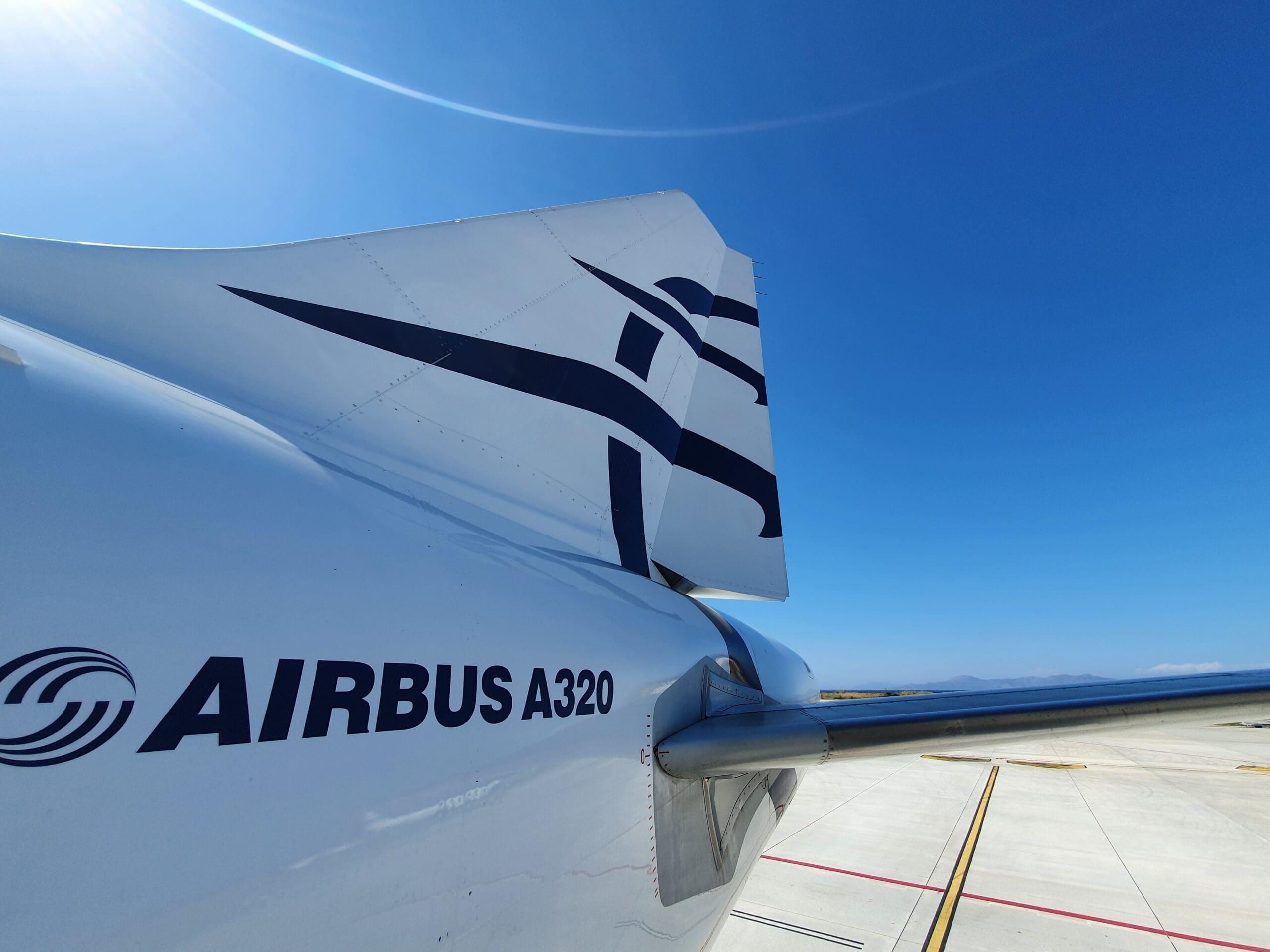
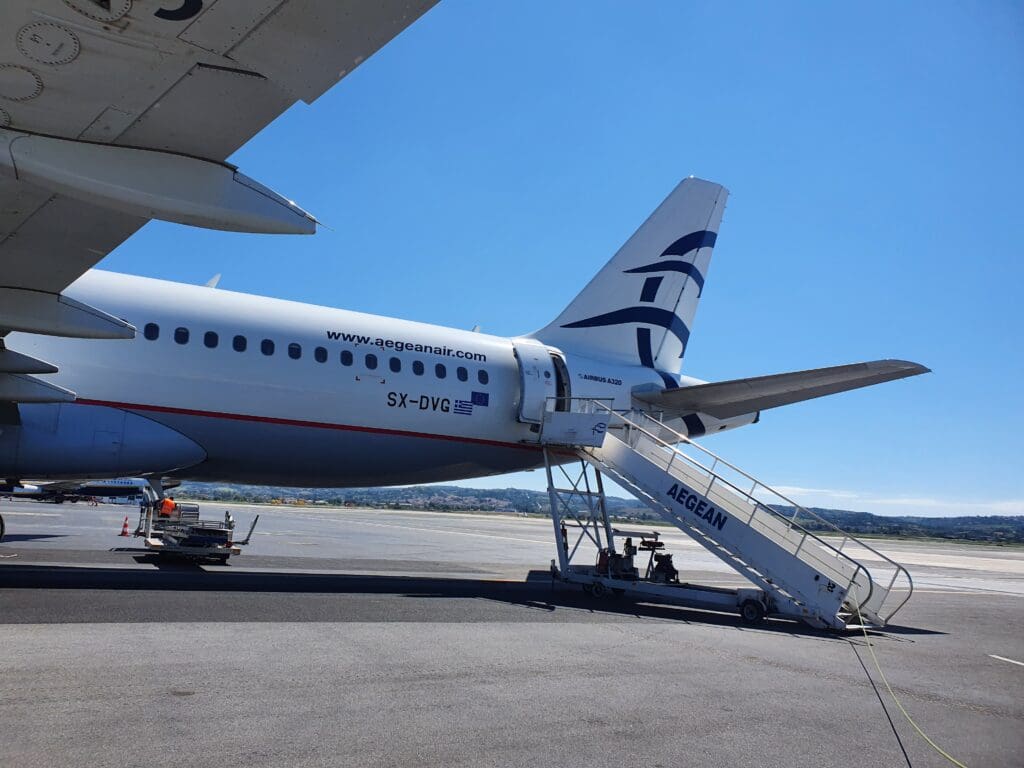
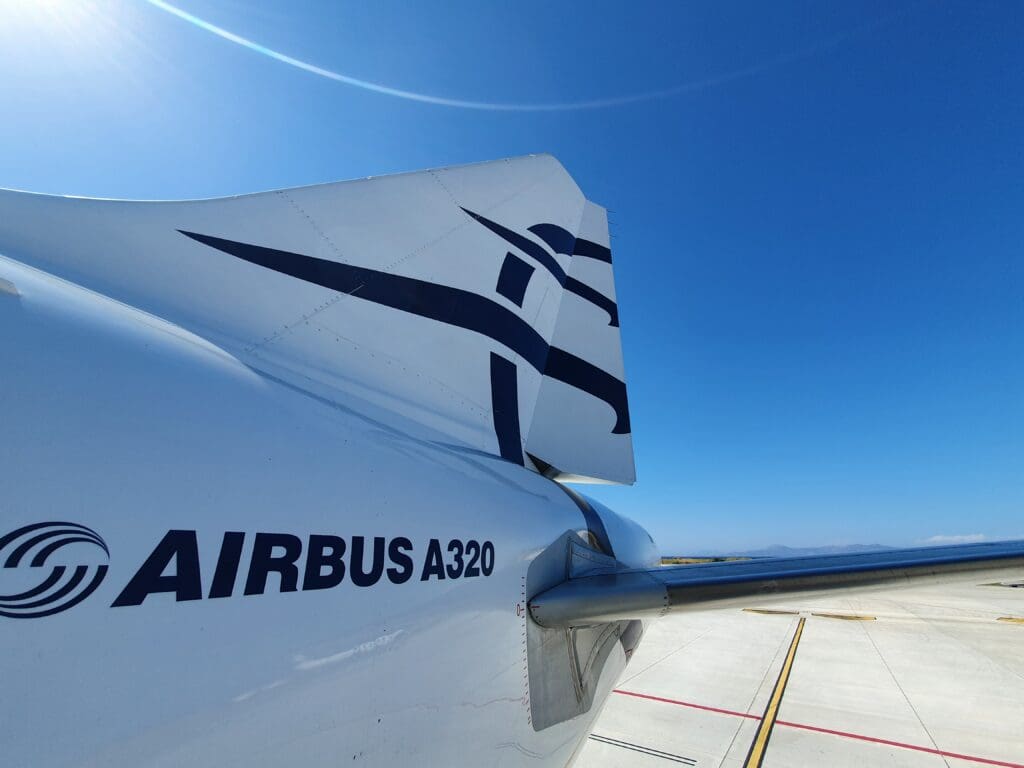
That afternoon, my flight down to Rhodes would be operated by one of Aegean Airlines’ Airbus A320-232 aircraft, specifically SX-DVG, which touched down from Munich at 1314. Assembled at Airbus’ Toulouse Blagnac plant, this aircraft first took to the skies in January 2007 with the test registration F-WWBX, making it around fifteen and a half years old at the time of my flight. Christened with the name Ethos, the Airbus was flown across to Greece in February of that year and has operated for Aegean Airlines ever since. In the week before my flight, the aircraft had connected Athens with Alexandroupolis, Bologna, Dusseldorf, Mykonos and Santorini, and Thessaloniki with Hannover, Heraklion, Larnaca, Milan Malpensa, Munich, Mykonos, Rome Fiumicino, Stuttgart and Tel Aviv. During this week, the aircraft had flown a total of 47 sectors, covering an impressive total of over 27,000 miles – equivalent to 2.8 times the distance between Thessaloniki and Sydney!
That afternoon, boarding for the flight was set to take place through Gate 10. Seeing as Thessaloniki Airport lacks any jet bridges, I wasn’t particularly surprised to find that this was a bus boarding gate and thus a short ride would be in store before my flight. According to my boarding pass, boarding for the flight to Rhodes was scheduled to commence at 1325 and so a little before this time I strolled from the cafe where I had set up camp over to the gate. With my flight being the only service between Greece’s second largest city and Rhodes that day, and with alternative options consisting of a long ferry journey or a one-stop flight via Athens, upon arriving there I was not particularly surprised to see that plenty of passengers could be seen already waiting indicating that my flight would likely be rather full.
Following a very short wait, at 1330 those bound for Rhodes were invited to make their way forward for boarding, with this being done in the usual order of those needing assistance and those travelling in Business and/or Gold members of Aegean Airlines’ Miles and Bonus frequent flyer programme being invited to board first. By this time, a gaggle of passengers that vaguely resembled a queue had formed and slowly began to shift forward. That afternoon, the gate agents were strict in their enforcement of Aegean Airlines’ baggage policy with most being pulled aside just before the gate podium to see if their bags would fit. This caused some commotion, with several passengers ending up rather disgruntled about the levying of additional fees – fortunately having already squeezed my backpack into my small suitcase, I did not have a problem and after proving that I could fit this into the container, I was free to head up to the gate podium. Once there, my boarding pass was scanned and my passport checked after which I headed down to ground level and out to the waiting Cobus.
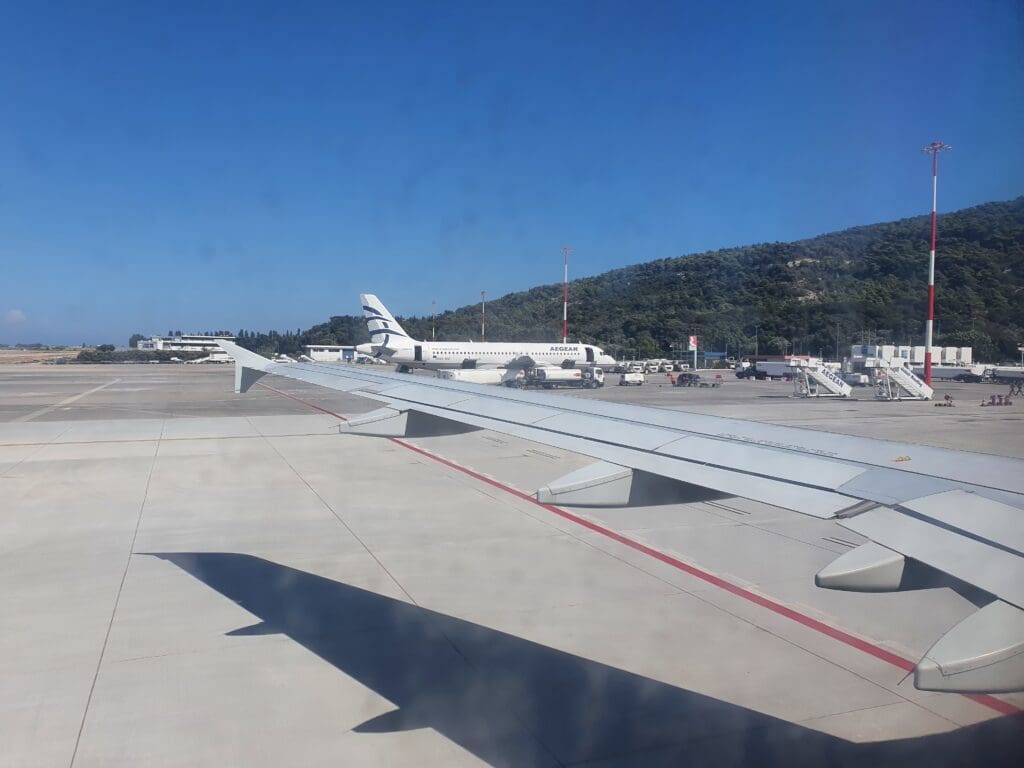
After boarding the bus, this waited for a couple of minutes and once comfortably full, the doors closed and thus commenced its short journey to the aircraft. With the trip to stand 3 lasting no more than a minute, the bus soon came to a halt near the Airbus’ port wingtip fence at which point the doors opened and passengers spilled out onto the apron. With airstairs positioned up to the front and rear doors, passengers divided themselves into two (not literally), and, wishing to take some photos of the engine, I opted to head to the front of the aircraft.
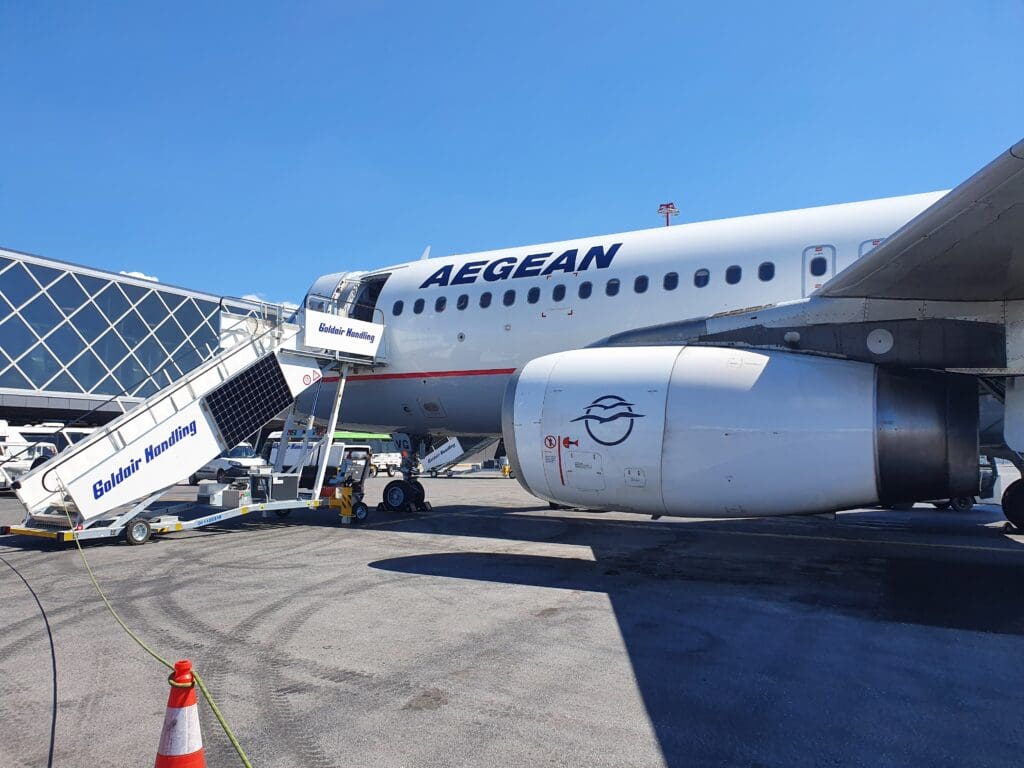
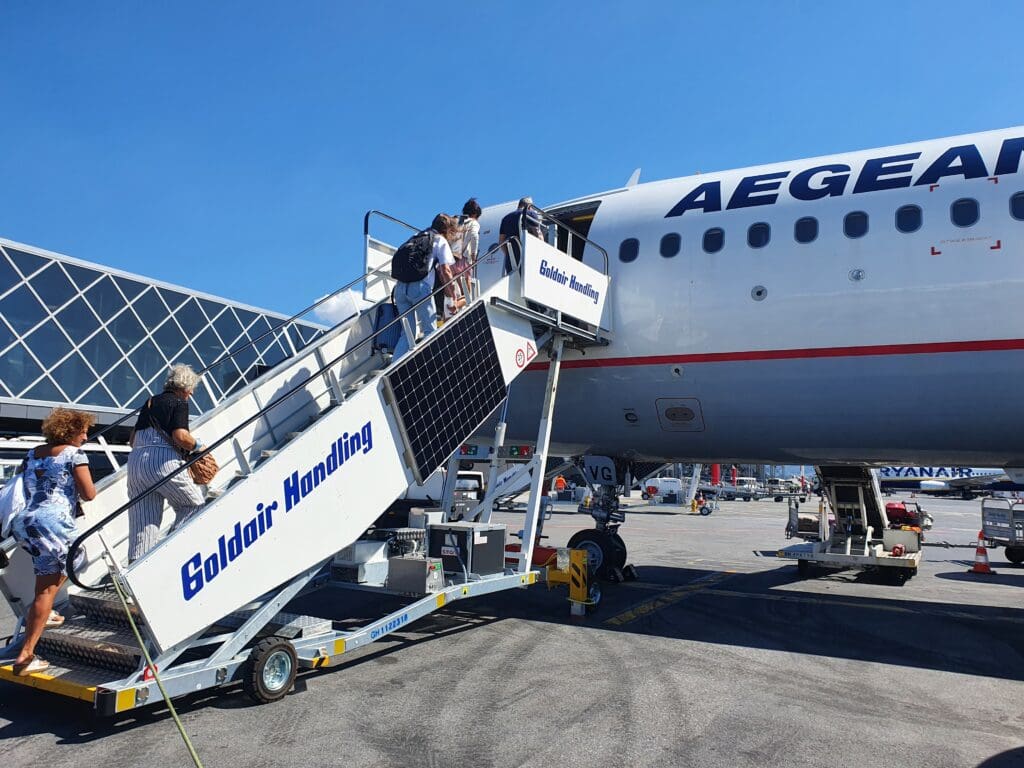
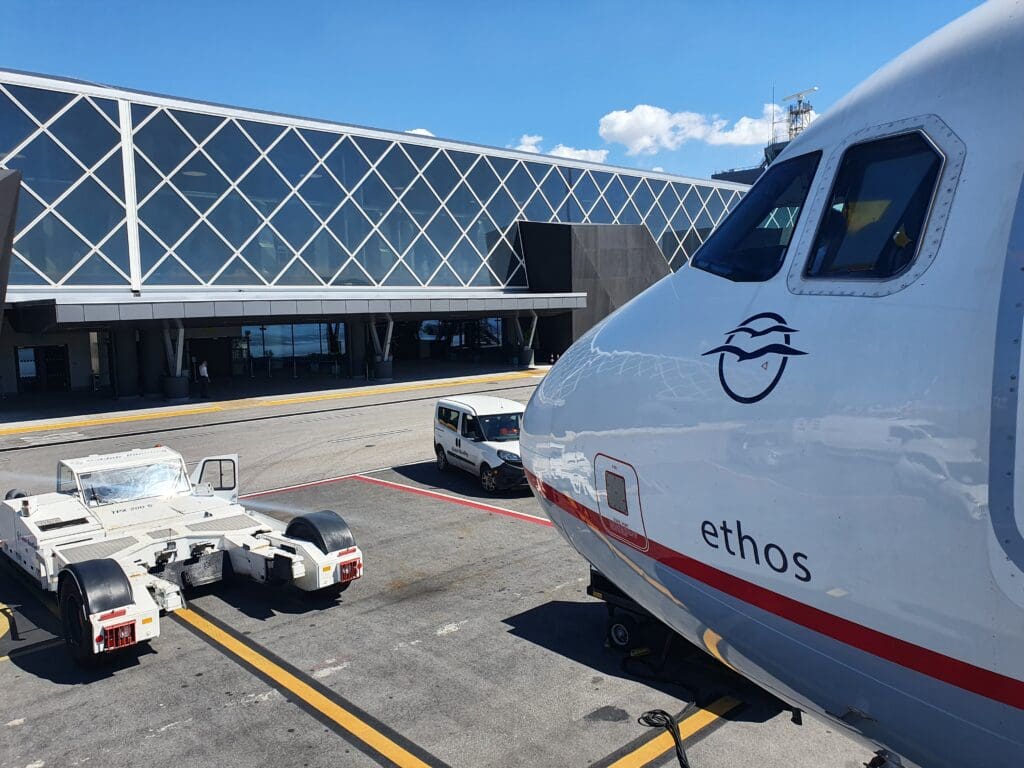
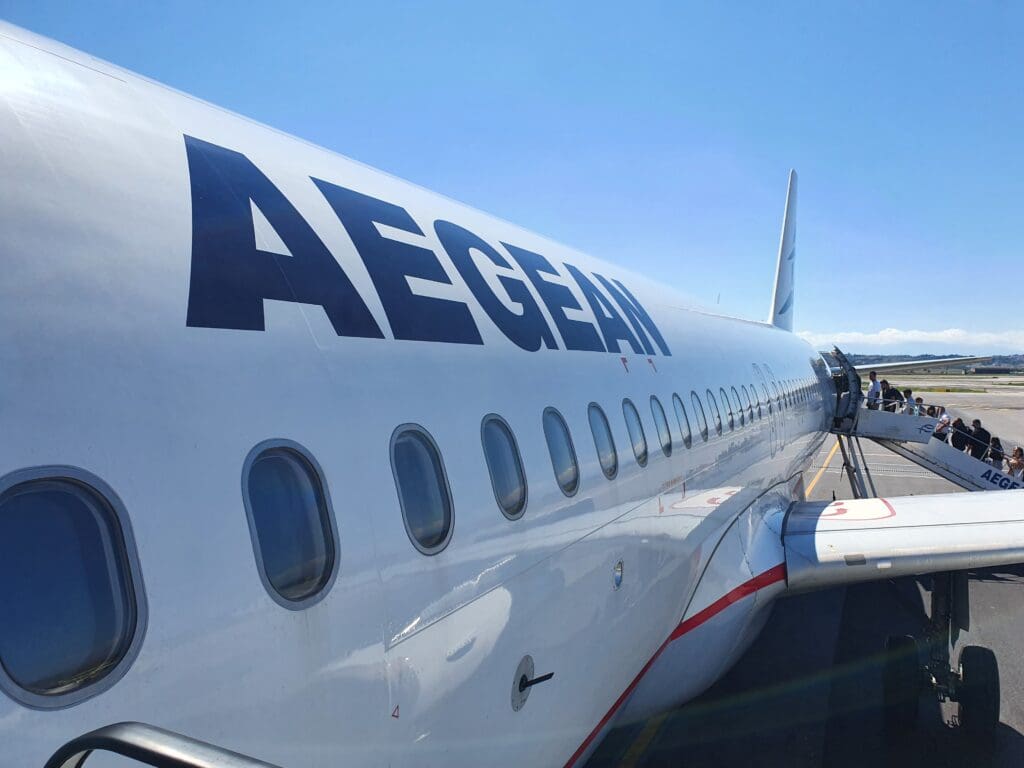
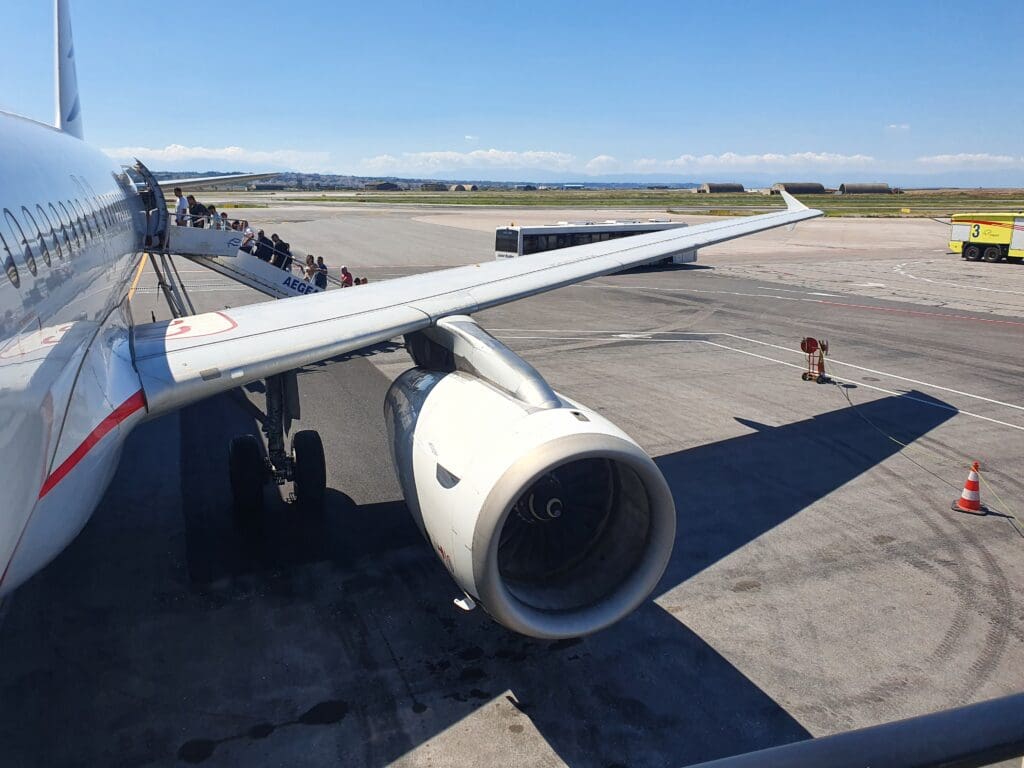
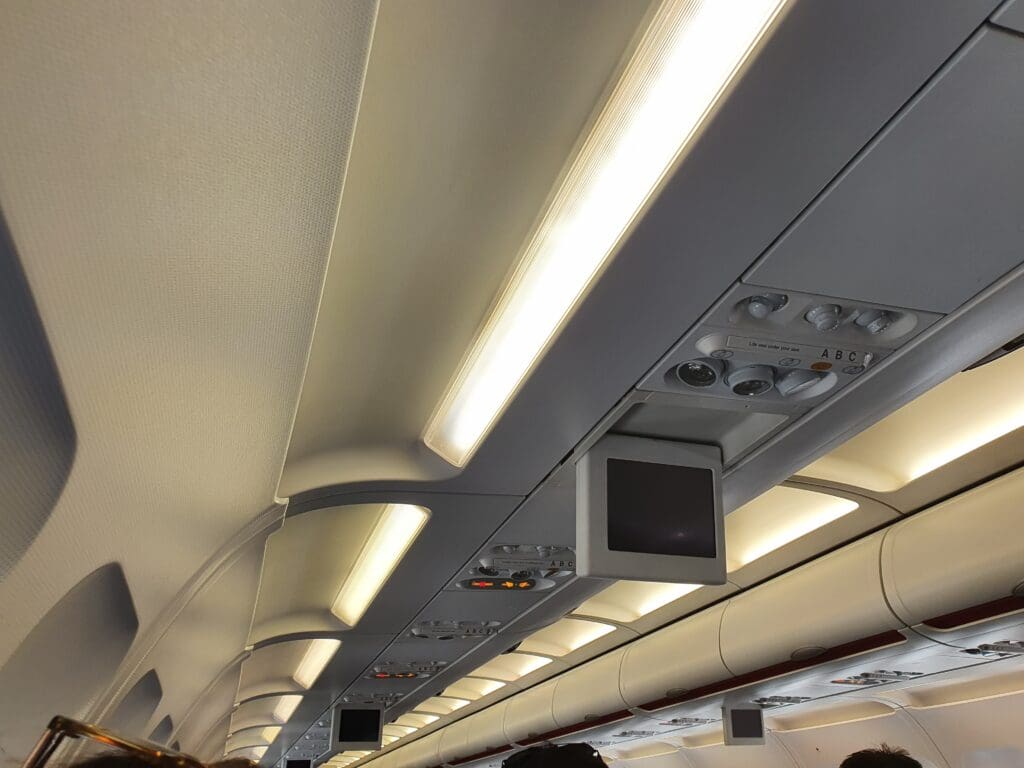
Following a short wait in the warm sunshine, I stepped into the Airbus’ forward galley where I caught a glimpse of the two pilots running through their pre-flight checks, ready to fly the Aegean jet across the Aegean to Rhodes. Upon boarding, with the Purser appearing to be engrossed in deep conversation with the mechanic, I failed to receive any sort of welcome although I did pick up an Aegean Airlines branded wet wipe from the basket that they were holding. Once inside, I turned right and entered the Airbus’ 174-seat cabin – a configuration which is a fairly standard number for a European ‘full-service’ carrier. This being slightly more than Lufthansa carries in their Airbus A320s, slightly less than British Airways and the same as most Air France Airbus A320 jets. As with these airlines and indeed most European carriers, whilst Aegean Airlines offers a Business class cabin on their Airbuses, this features identical seats to those in Economy albeit with a slightly better amount of legroom and a blocked middle seat. That afternoon the first three rows of the Airbus had been dedicated to this, with a curtain separating this cabin from Economy. Onboard, each of the aircraft’s seats is covered in a smart dark (faux?) leather covering and comes complete with both a literature compartment and a seatback pocket. Unlike Aegean Airlines’ newer jets, these lack any sort of power port or plug socket to charge devices, although this would not be needed given the short length of the flight down to Rhodes.
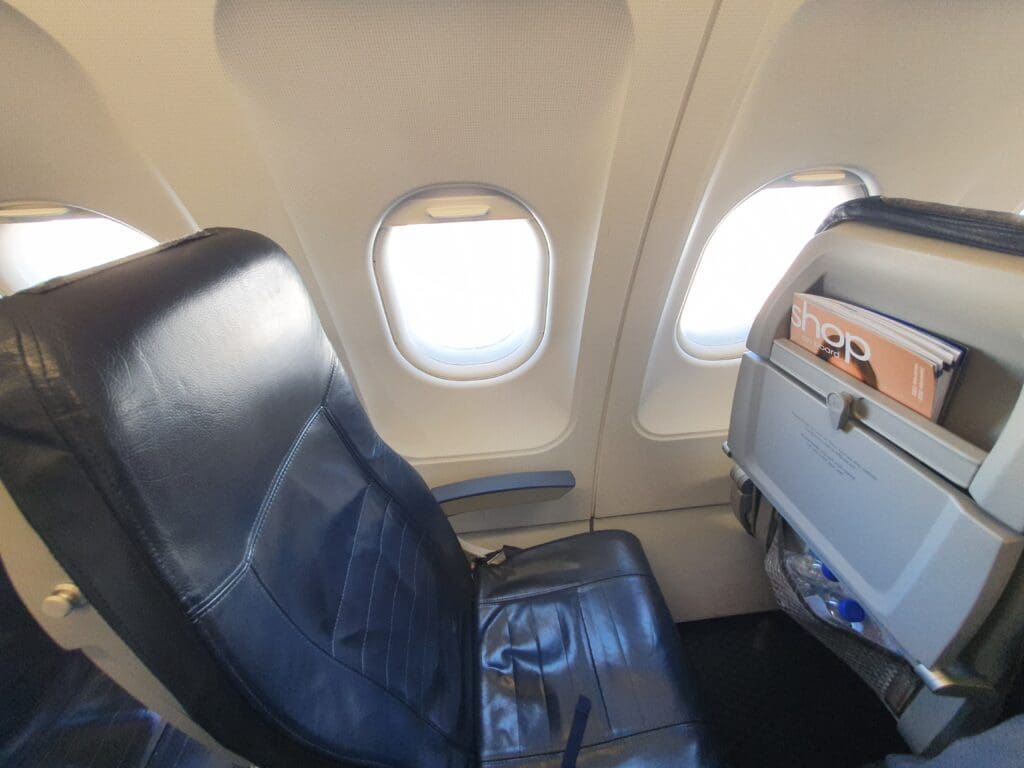
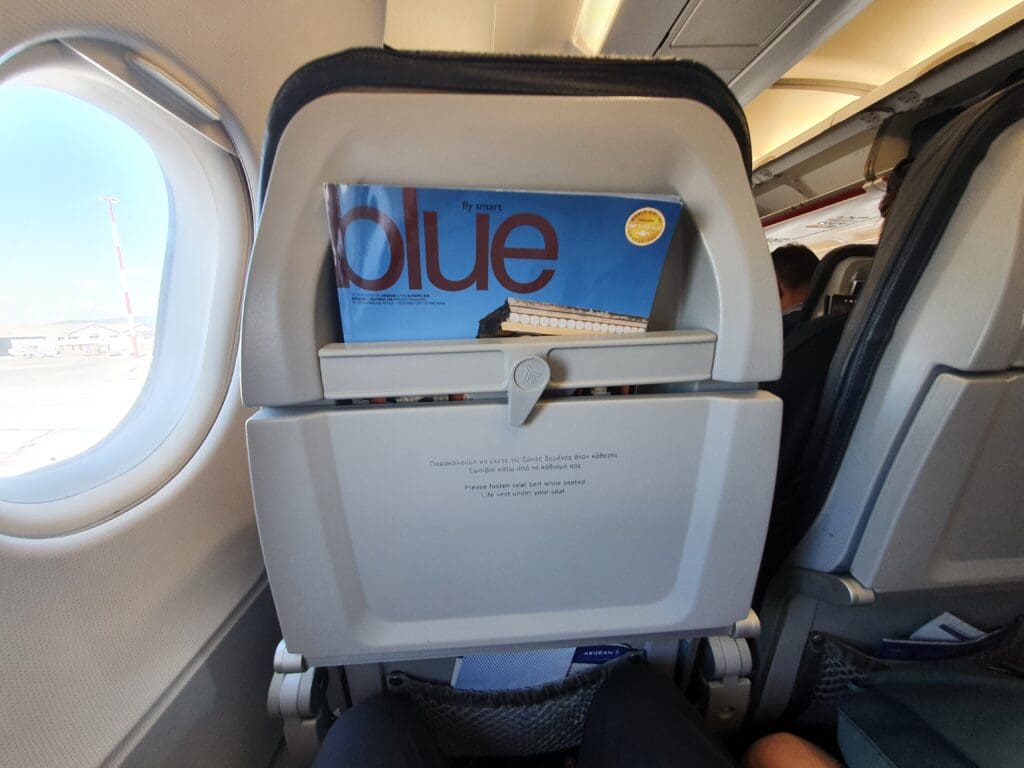
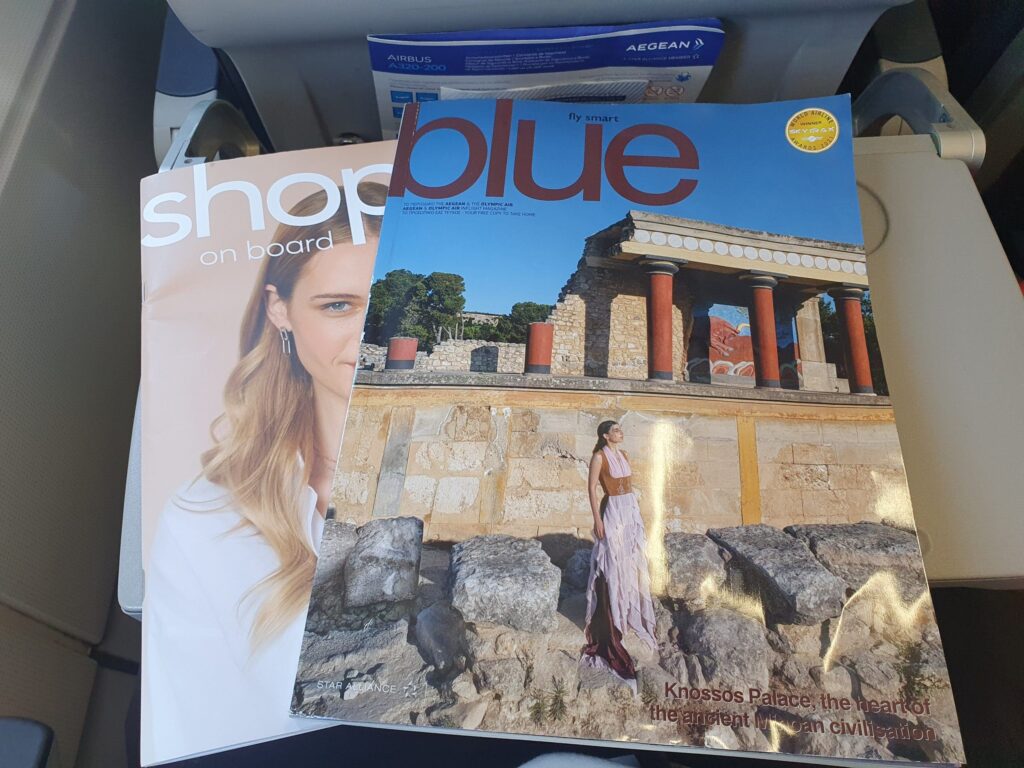
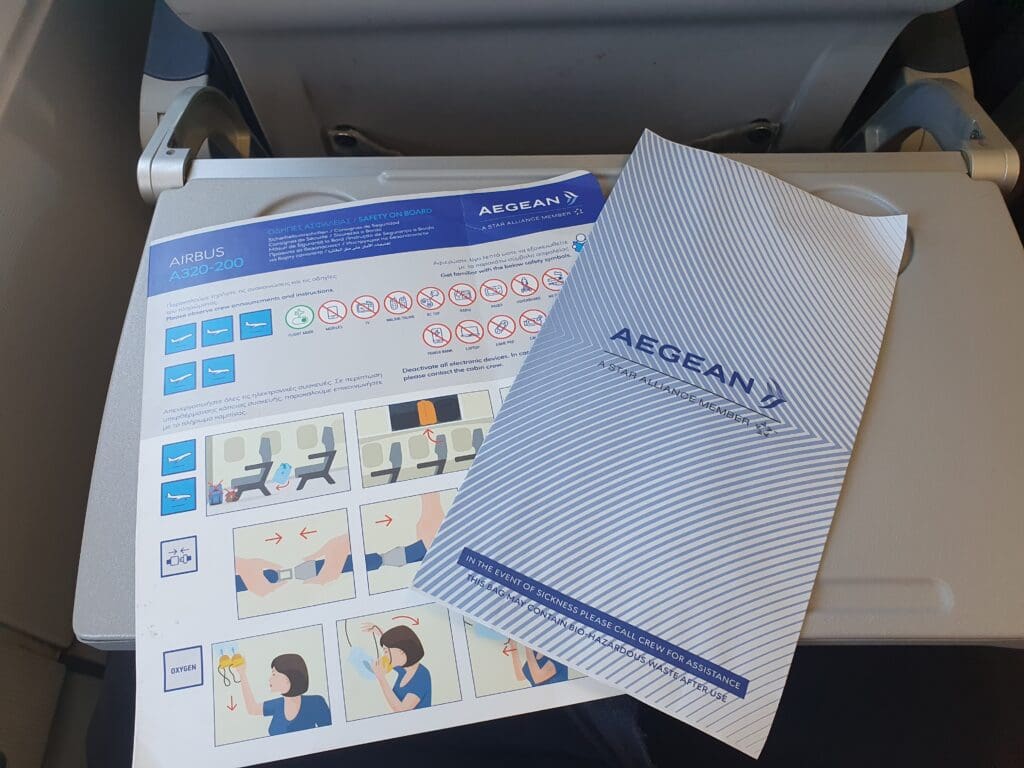
Travelling down the aisle I passed a couple of flight attendants although I failed to receive any sort of greeting in return to my ‘yassas’ as I headed down the cabin. With plenty of passengers ahead of me, it took a few minutes to reach row 24 and by the time I arrived a passenger could already be seen sitting in the aisle seat. Fortunately, they stood up and let me in without any hesitation and so I soon took Seat 24A and settled in for the journey ahead. Whilst the seats appeared to be fairly thin in their appearance, I found these to be soft and comfortable and provide a decent amount of legroom. Even though this particular aircraft was far from the youngest Airbus in Aegean Airlines’ fleet, I was pleased with the condition of the area around my seat, with this being largely devoid of any marks and scratches other than a few pen marks. However, the aircraft appeared to have been hurriedly cleaned during its short turnaround in Thessaloniki and I found a used wet wipe and its packet in the seatback pocket. Turning to the more welcome contents of this, this contained a sick bag and a safety card, whilst the literature compartment contained the airline’s Shop on Board catalogue as well as something that is somewhat of a rarity in 2022 – a copy of Aegean Airlines’ bimonthly Blue inflight magazine.
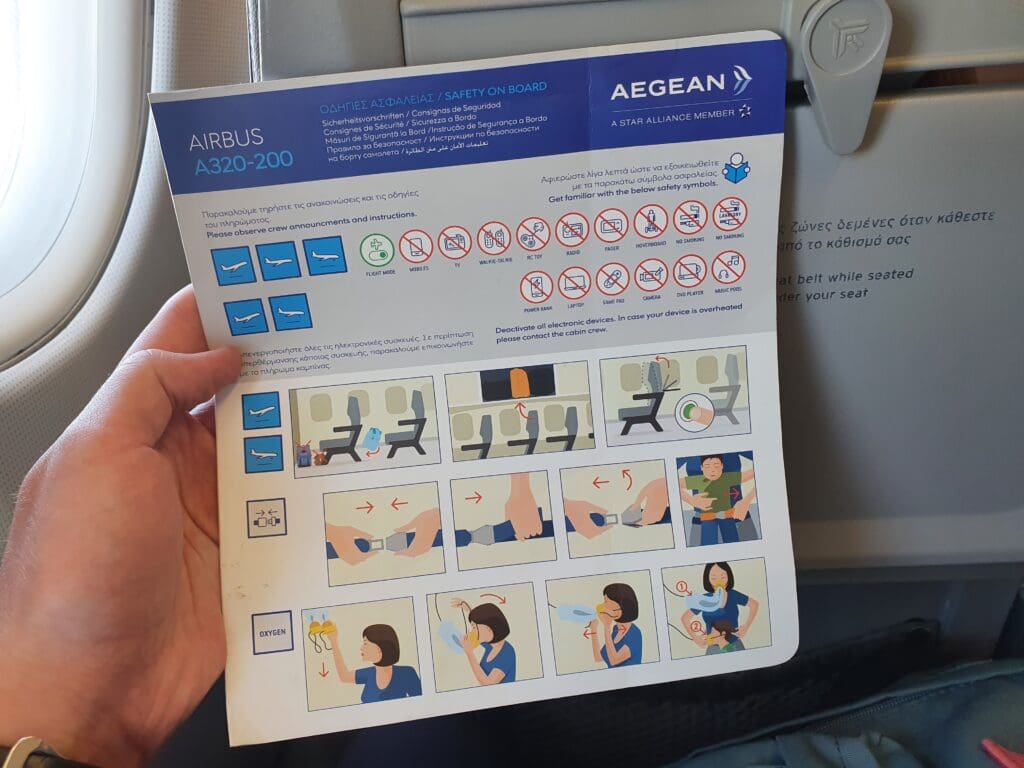
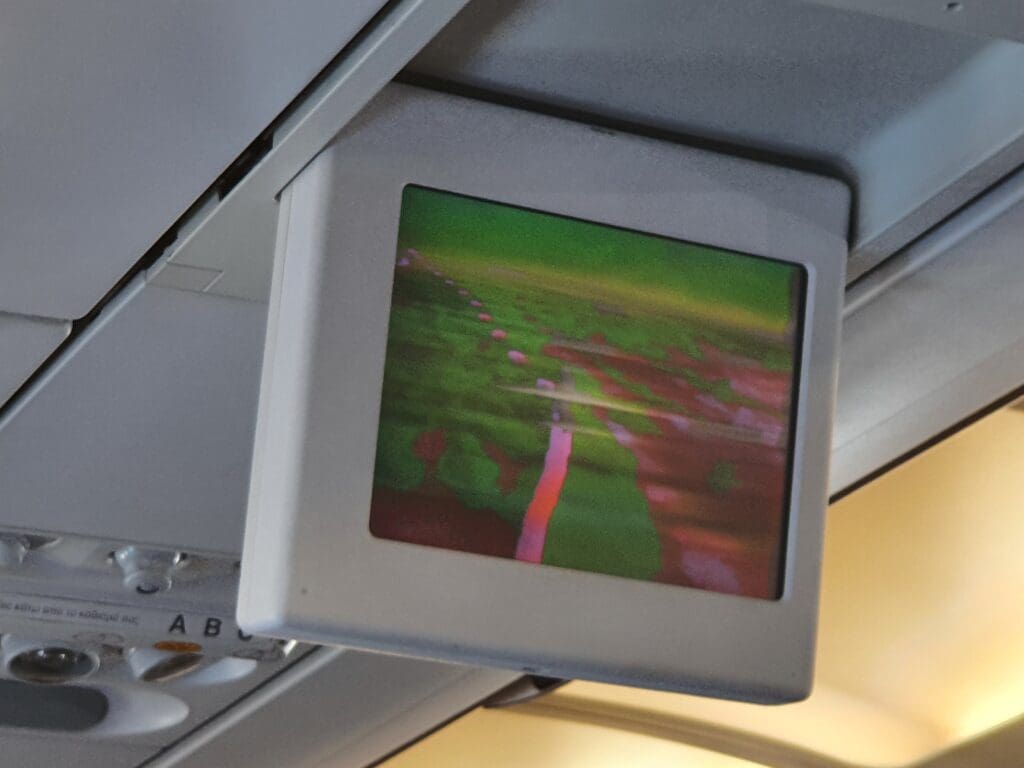
Having travelled to the aircraft in the second of three buses, by the time I had settled into my seat the final passengers were boarding and at 1355, the Purser announced ‘boarding complete’. This was followed by the Captain’s announcement in Greek and English during which they gave a brief welcome before mentioning our 1H05 flight time and informing us that they would perform another announcement as we neared Rhodes. At this point, the two cabin doors were closed and the Purser began their bilingual welcome announcement. A few moments after this reached its end, the overhead television screens fell down and began to broadcast Aegean Airlines’ safety video. Released in 2019, this centres on one of Greece’s most famous athletes, NBA player Giannis Antetokounmpo, who plays the part of a passenger in various Greek locales. As this played out, at 1400 the aircraft was pushed back away from its stand and the Airbus’ two IAE V2527-A5 ‘hairdryer’ engines quietly hummed into life with some temporary vibration.
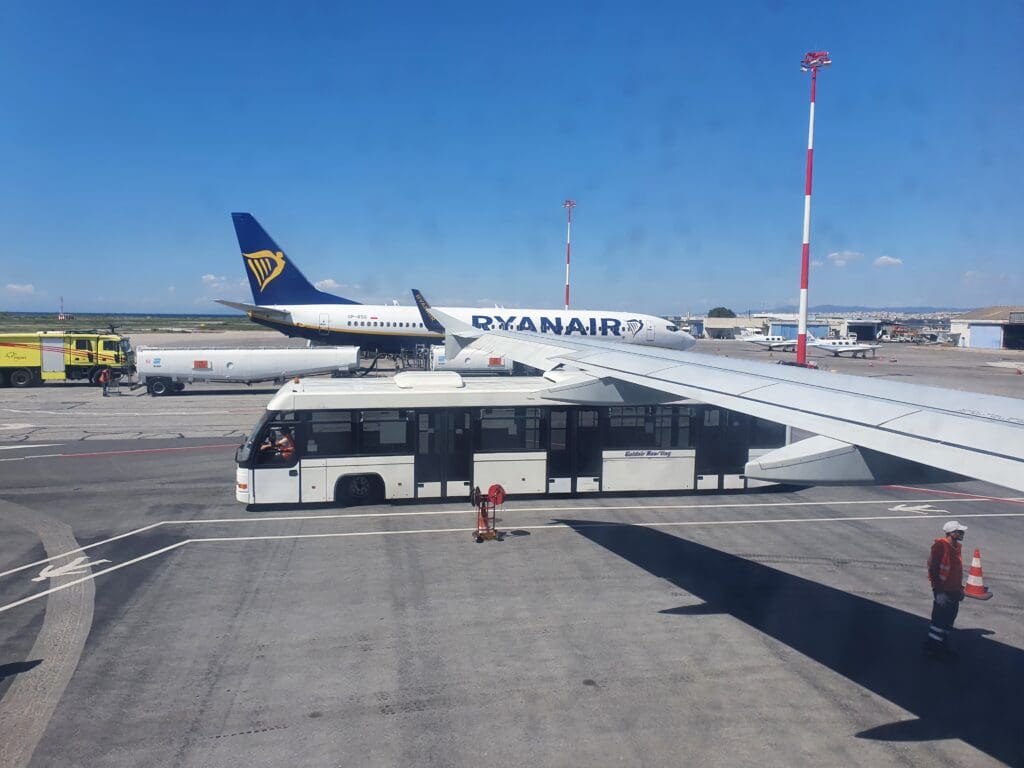
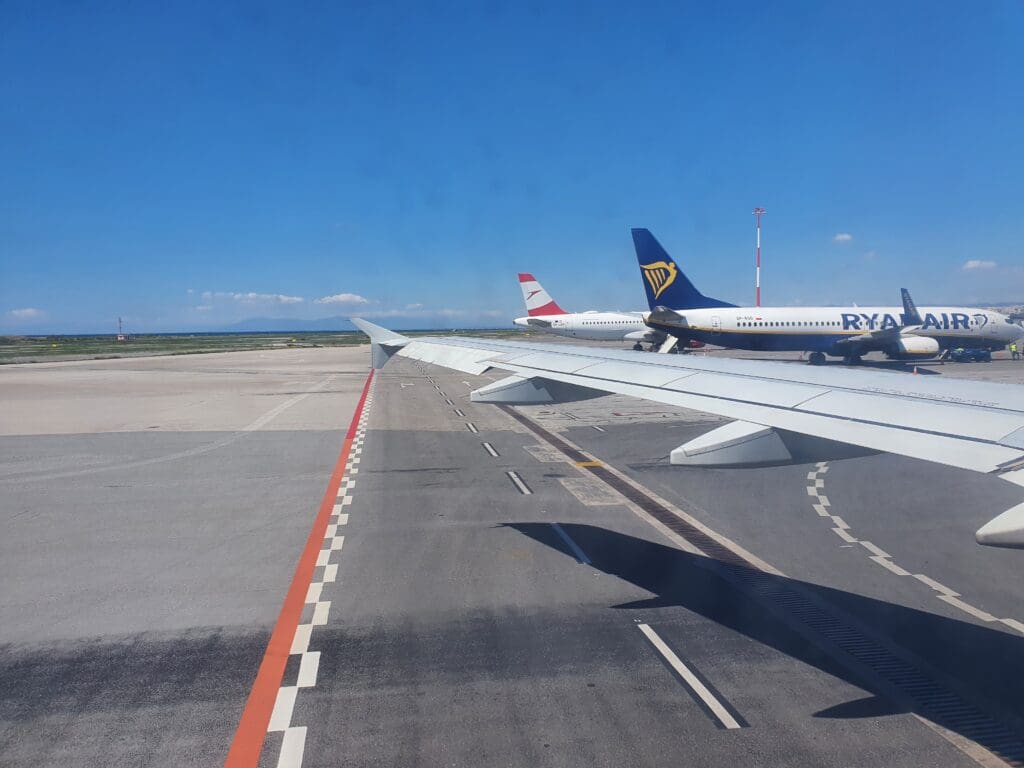
Keeping to schedule, a minute before the service’s scheduled departure time, at 1404 the Airbus gently powered forward under its own steam and commenced its journey over to Runway 28 whilst inside the crew passed through the cabin ensuring that all was in place for our departure. Sitting on the left hand side of the aircraft, during our taxi to the runway I was offered views of the selection of narrowbody jets from Aegean Airlines, Avion Express and Ryanair at the terminal waiting to head off to destinations across Europe. Next up was Thessaloniki Airport’s cargo stands, where a DHL Air Austria and SwiftAir Hellas Embraer 120 could be seen parked, followed by one of the company’s rare Swearingen Metroliners. Contrasting with this old utilitarian turboprop, nearby sat a shiny, modern and luxurious Bombardier Challenger 350 operated by VistaJet. Before I knew it, the aircraft was nearing the end of the runway and soon overtook a Stuttgart-bound Eurowings Airbus A319 as it lined up on the runway without any holding whatsoever.
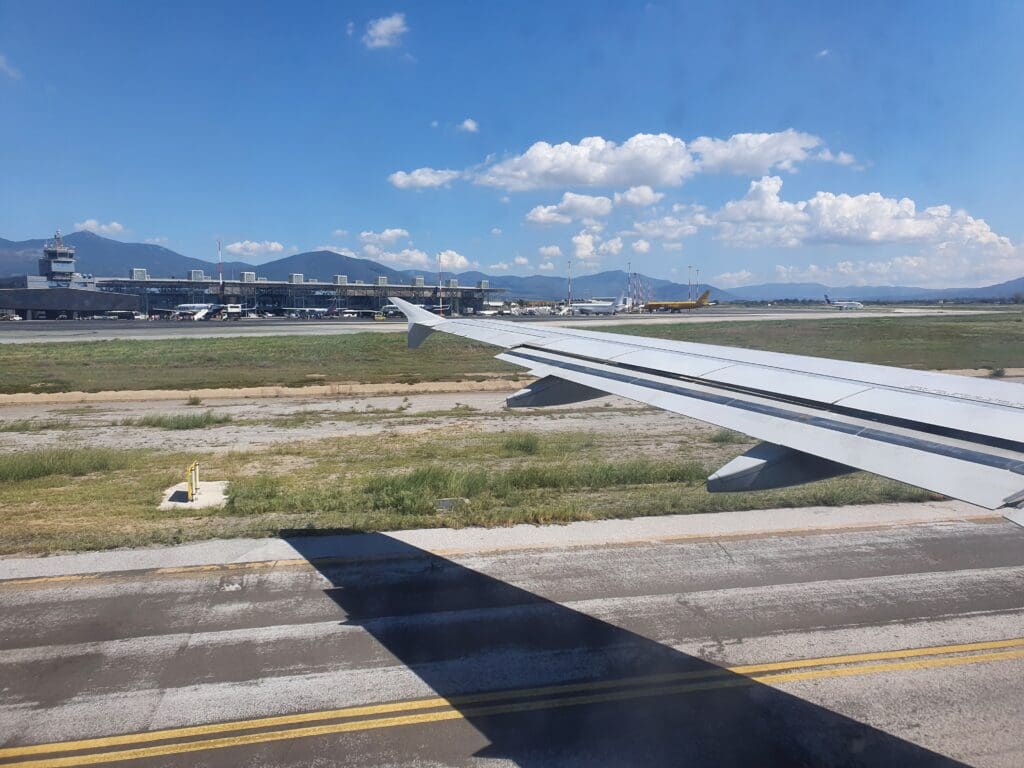
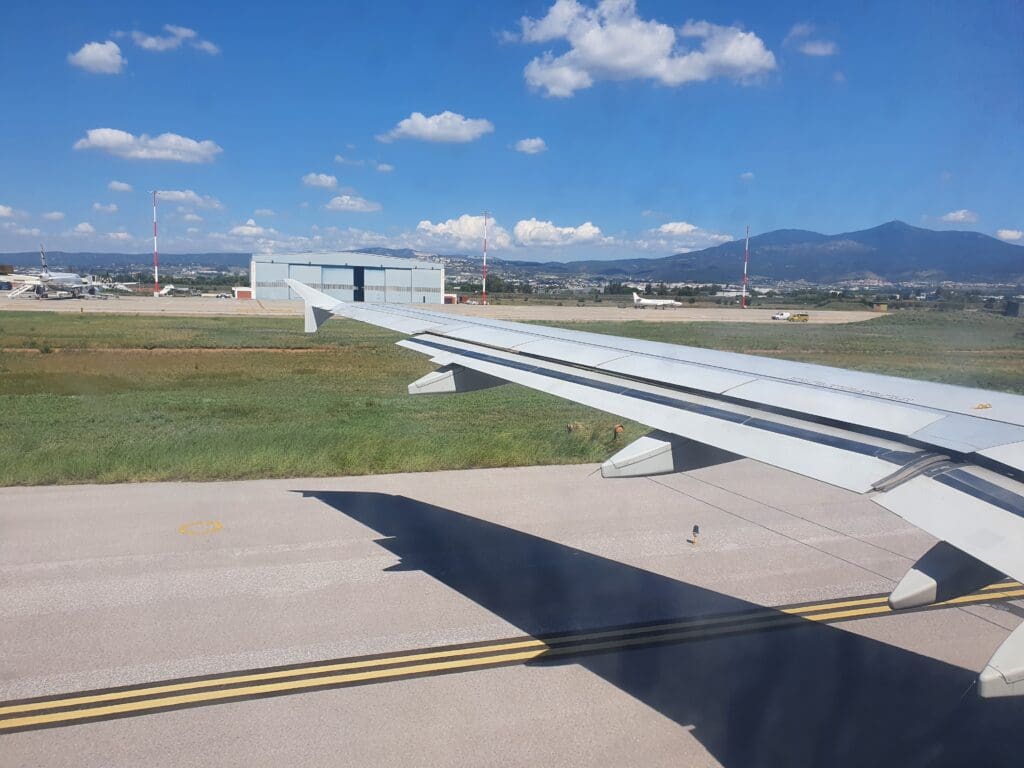
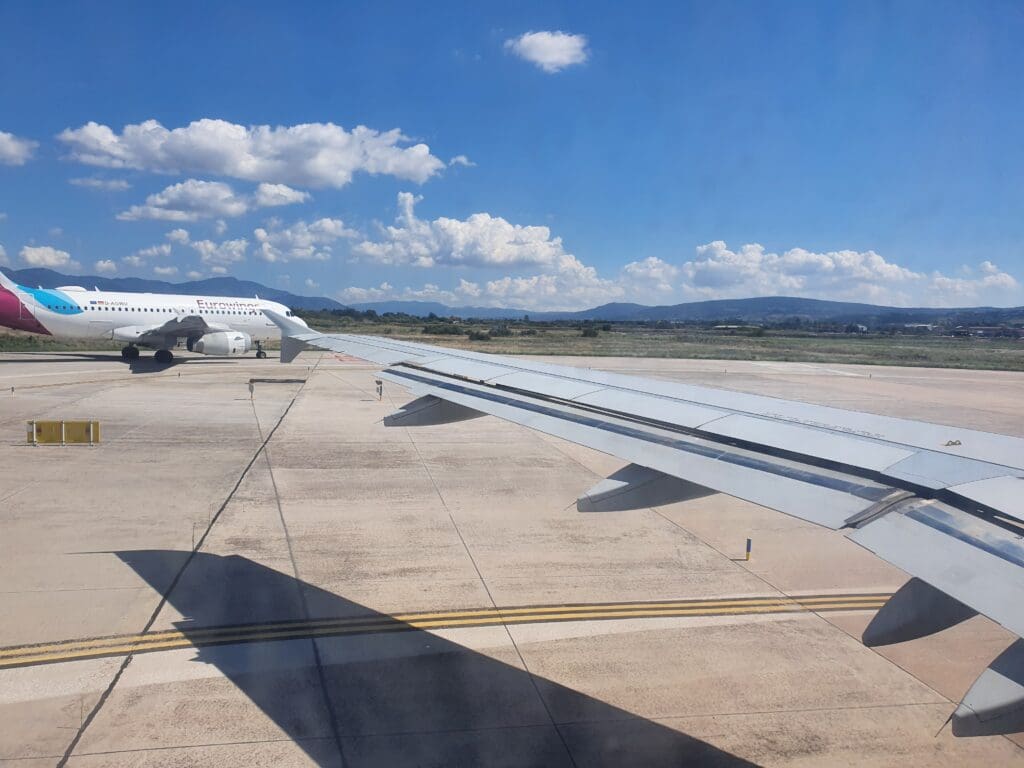
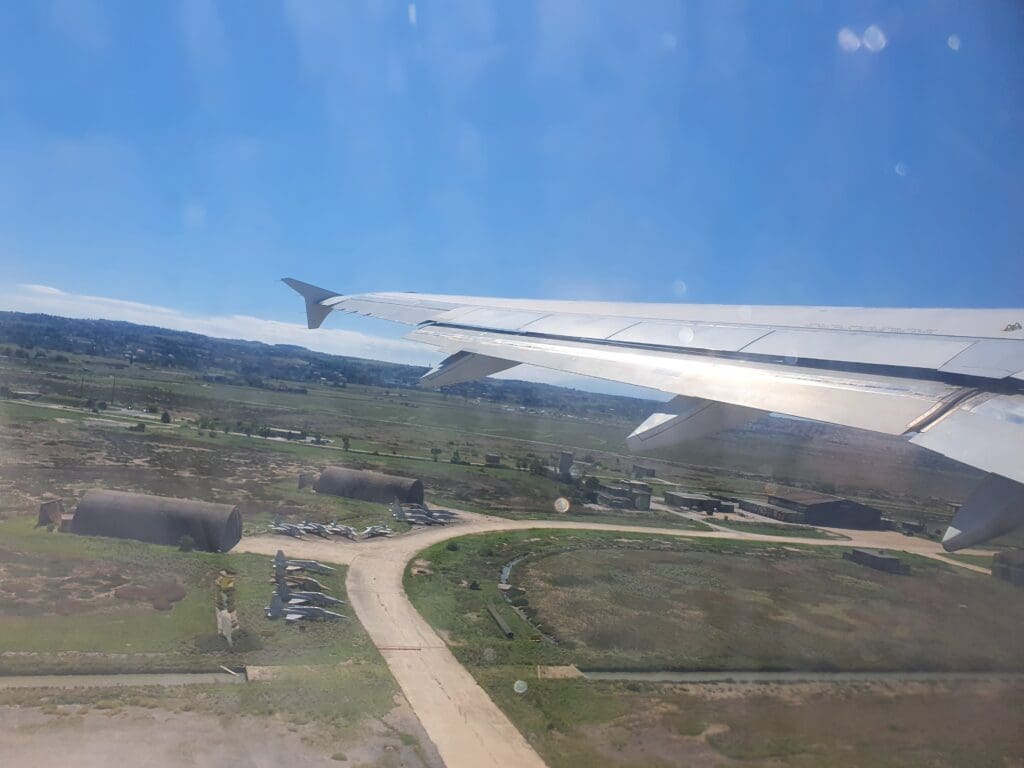
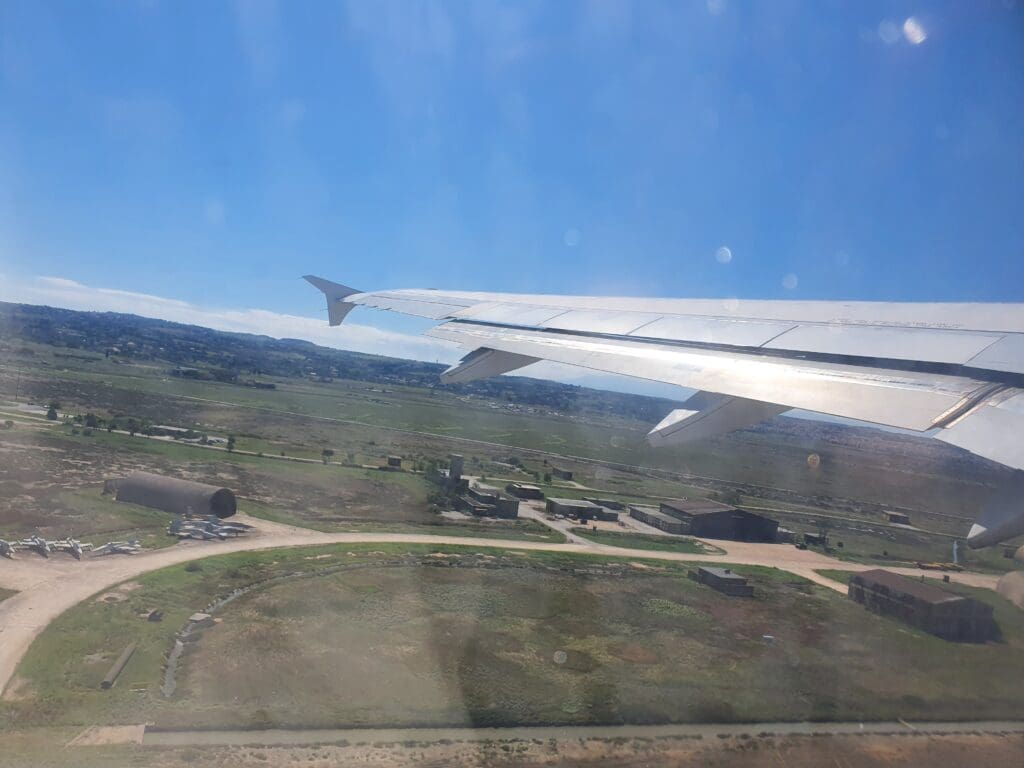
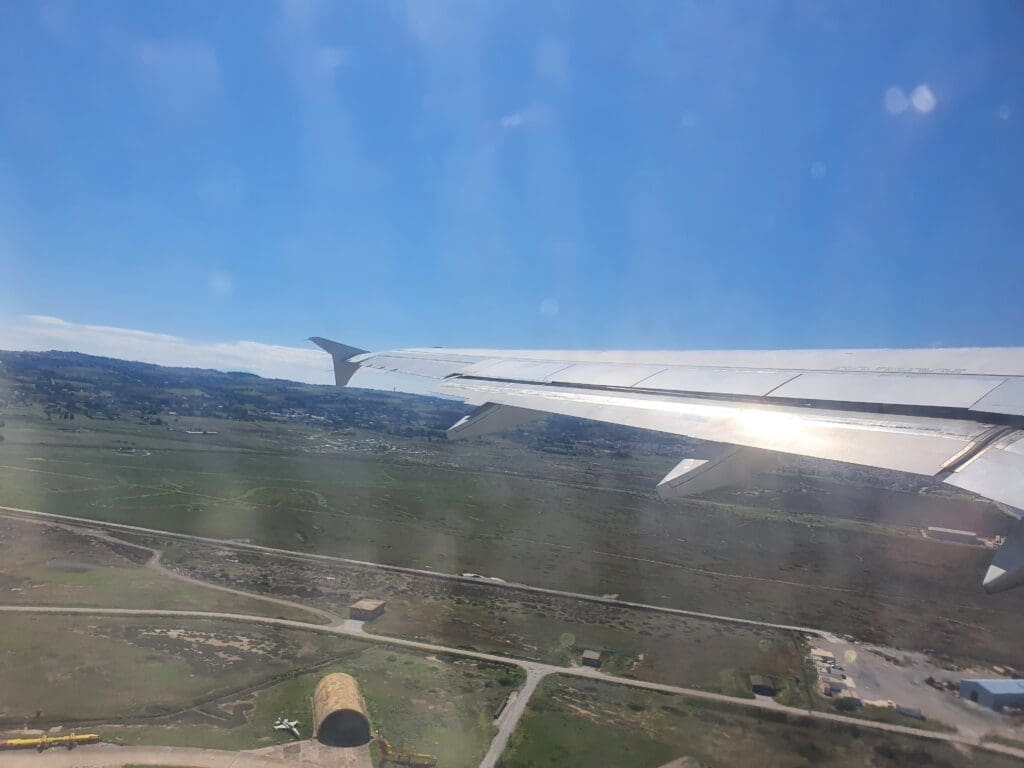
Once in position on the runway the aircraft paused for several moments and at 1408, the Airbus’ two IAE hairdryer engines spooled up and we began our powerful takeoff roll. Seconds into this, a cluster of interesting aircraft could be seen at the airport’s firefighting aircraft ramp. These included two amphibious Greek Air Force Canadair CL-415s and three helicopters – a Bell 414, a Moldovan Mil Mi-8 and a Sikorsky S-64 Skycrane. This was the very first time that I had seen the unusual latter aircraft. Soon rotating up into the skies, the aircraft’s landing gear was retracted as the Airbus soared over a squadron of abandoned Northrop F-5 Tigers at the military portion of the airport. From there, the aircraft left the airport behind and immediately crossed over the coastline, rising upwards over the blue waters of the Thermaic Gulf.
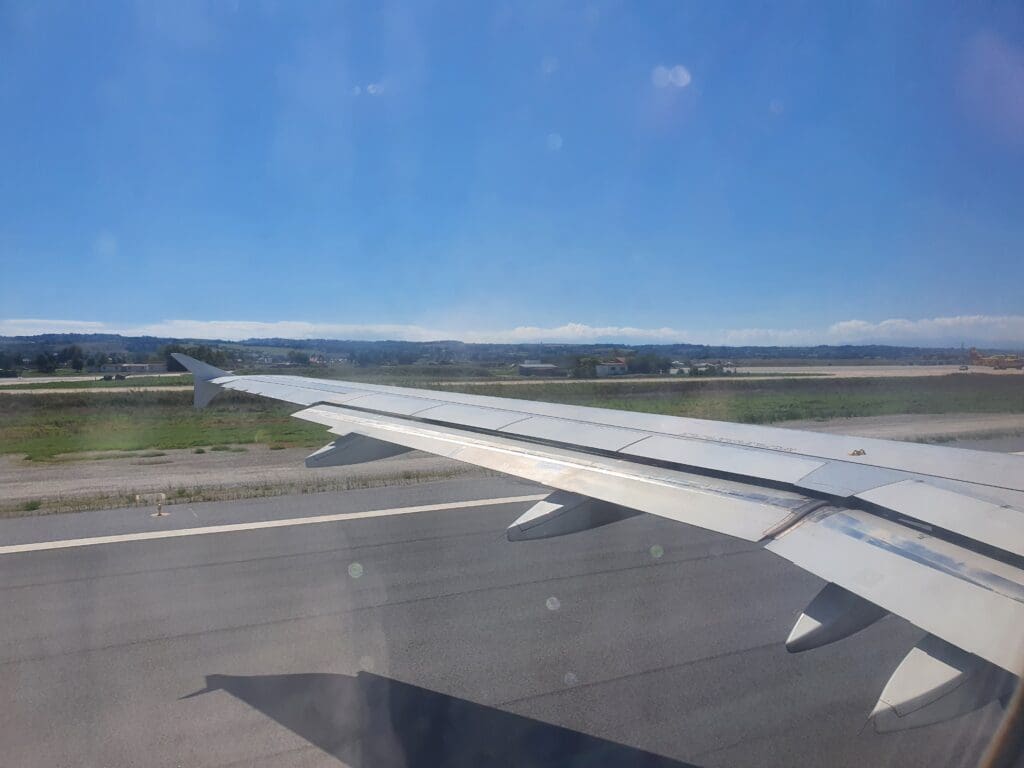

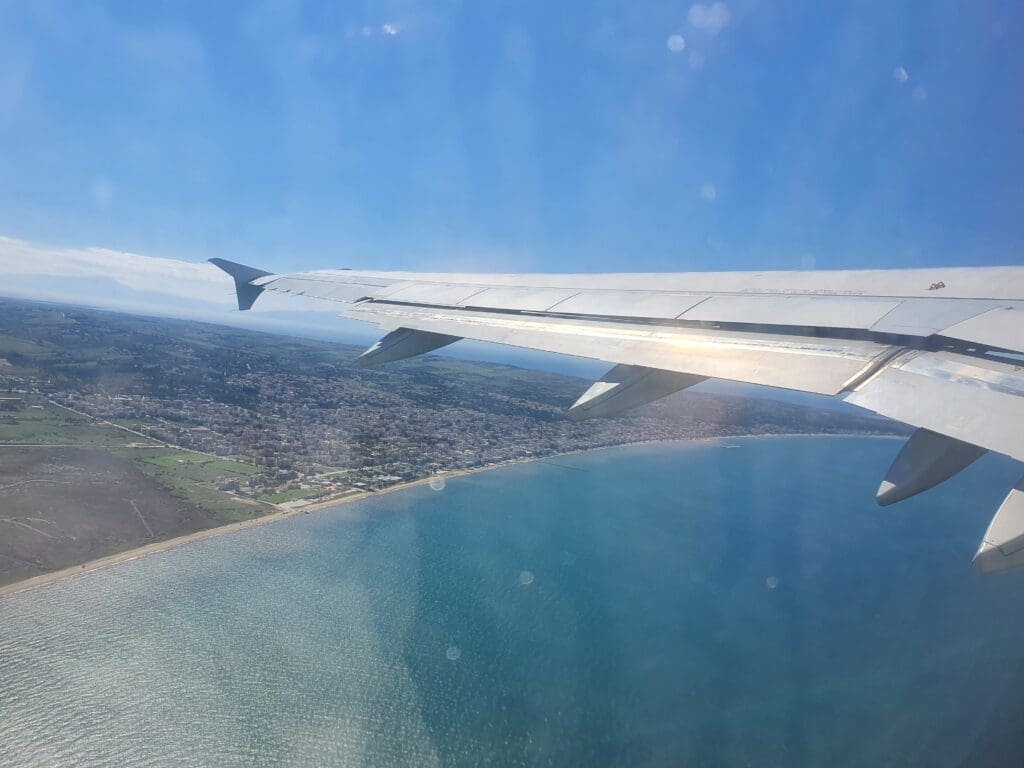
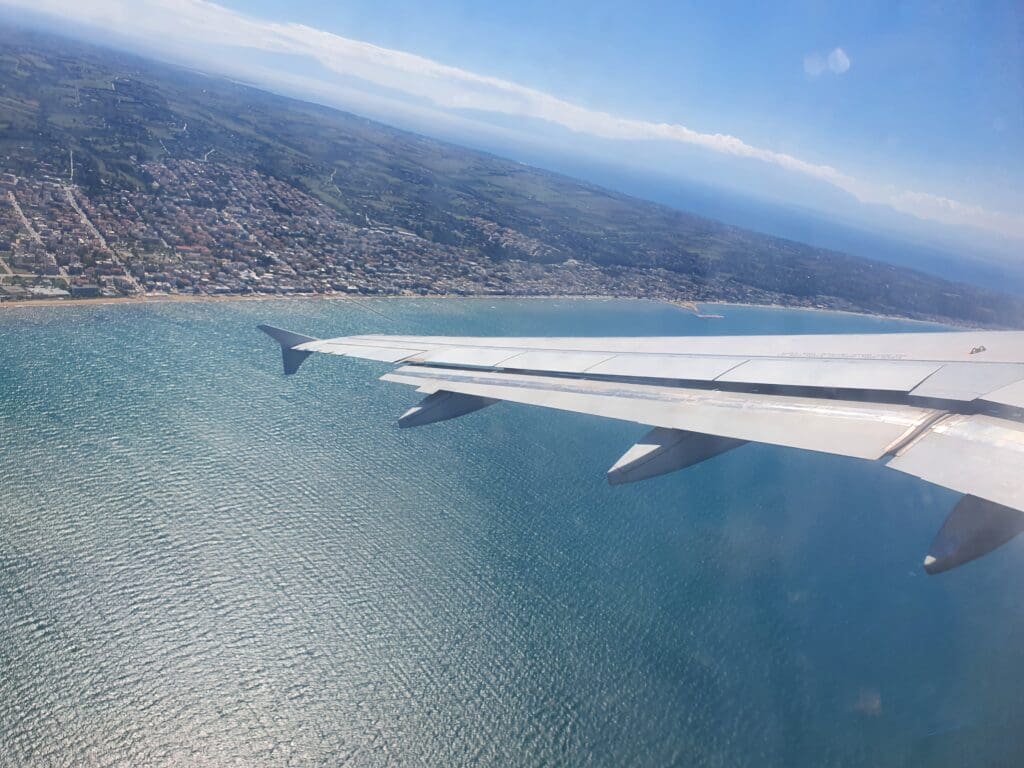
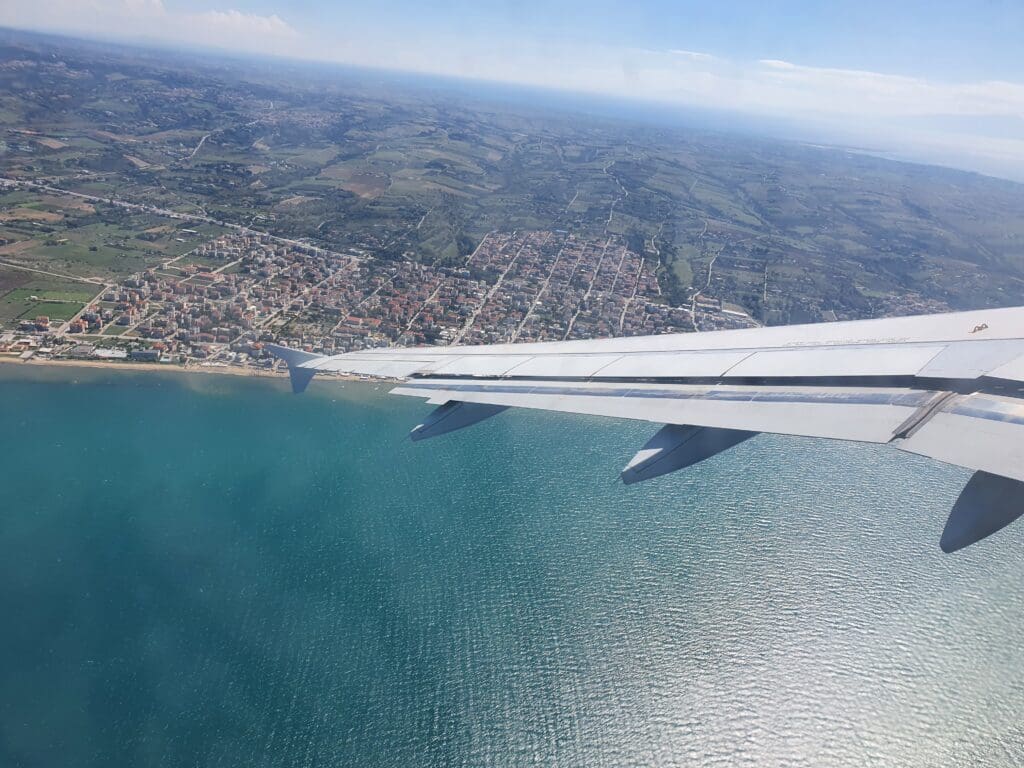
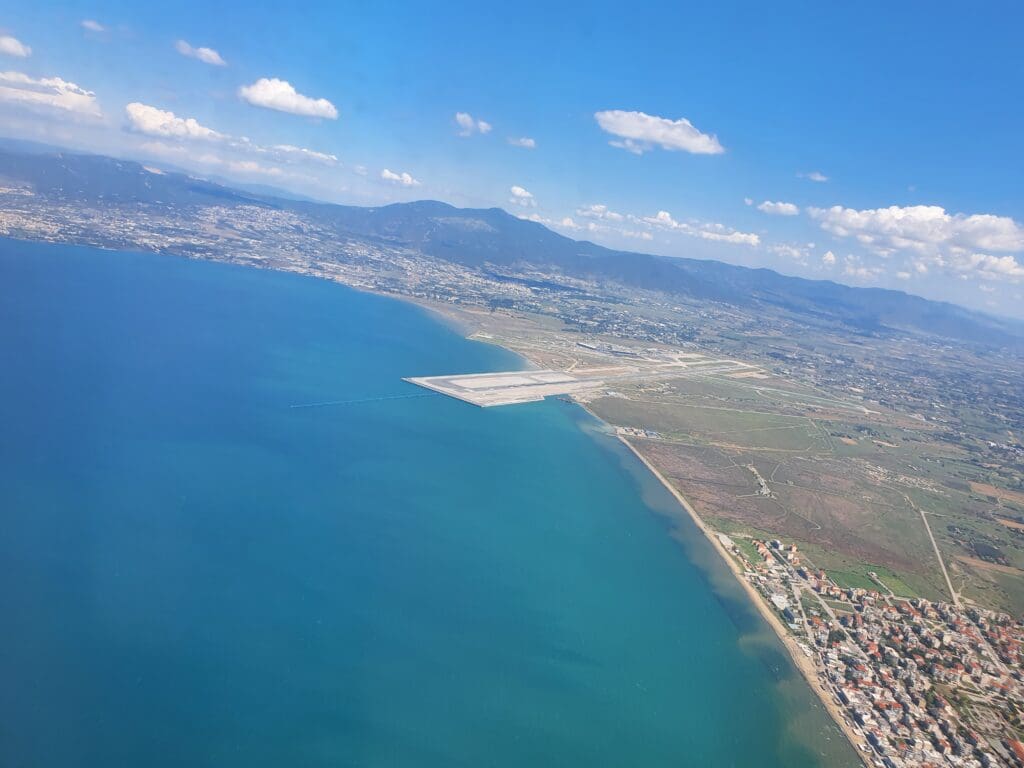
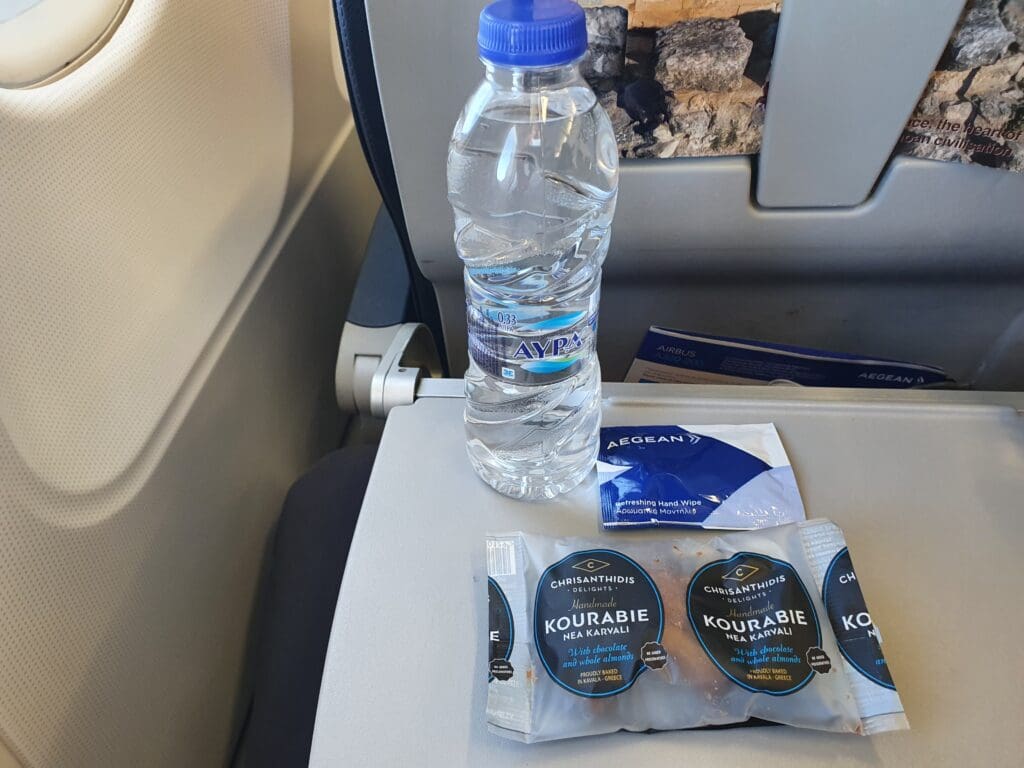
As the aircraft climbed I caught a good view of the beaches and towns that sit to the southwest of the airport and around a minute into the flight, the Airbus turned to fly back towards the coastline and crossed this near the town of Peraia. From there, the aircraft crossed over the Thessalonian municipality of Thermaikos before leaving this behind and heading southwards over the Aegean Sea. As we climbed, inside the cabin the Purser performed their usual post-departure warning advising passengers to keep their seatbelts fastened whilst seated. A short time later, a single trolley staffed by two flight attendants was rolled out from the rear galley indicating the commencement of the inflight service. That afternoon, given the short length of the flight, the two flight attendants worked quickly and it wasn’t long before the trolley reached my row. Once this did, without a word I was handed a 330ml bottle of Avra still water, another Aegean Airlines branded wet wipe, and the centrepiece, a small chocolate and almond flavoured Kourabie biscuit. This proved to be a welcome offering that could have easily been omitted given the short length of the flight down to Rhodes, and thus this left me with nothing to complain about.
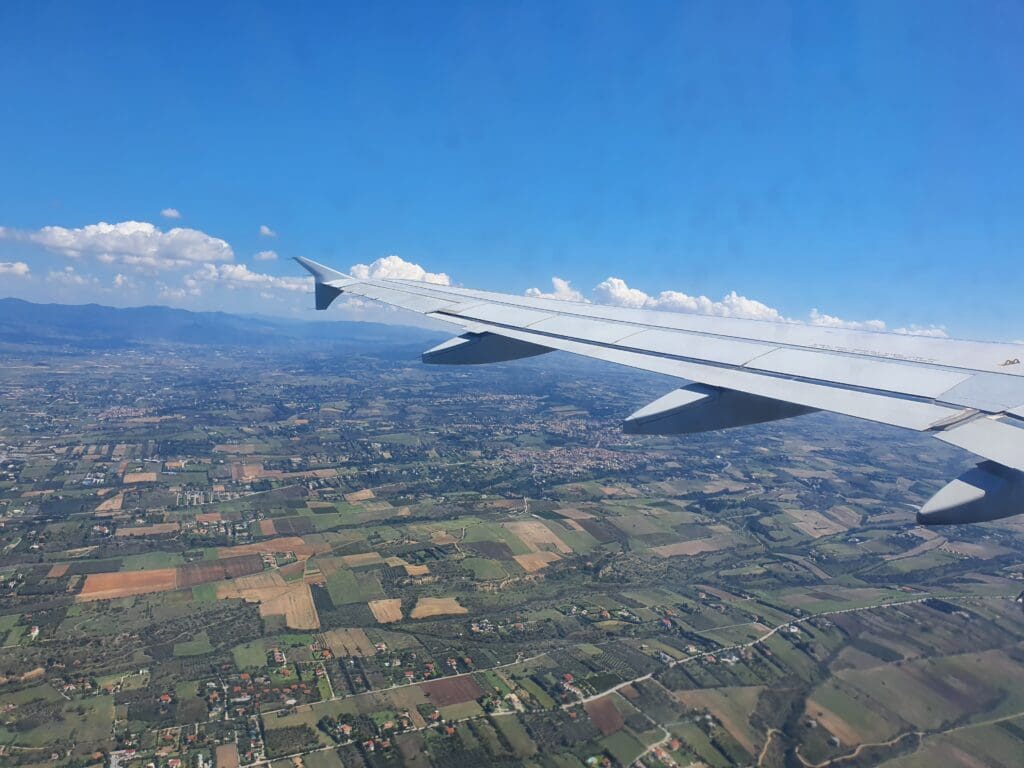
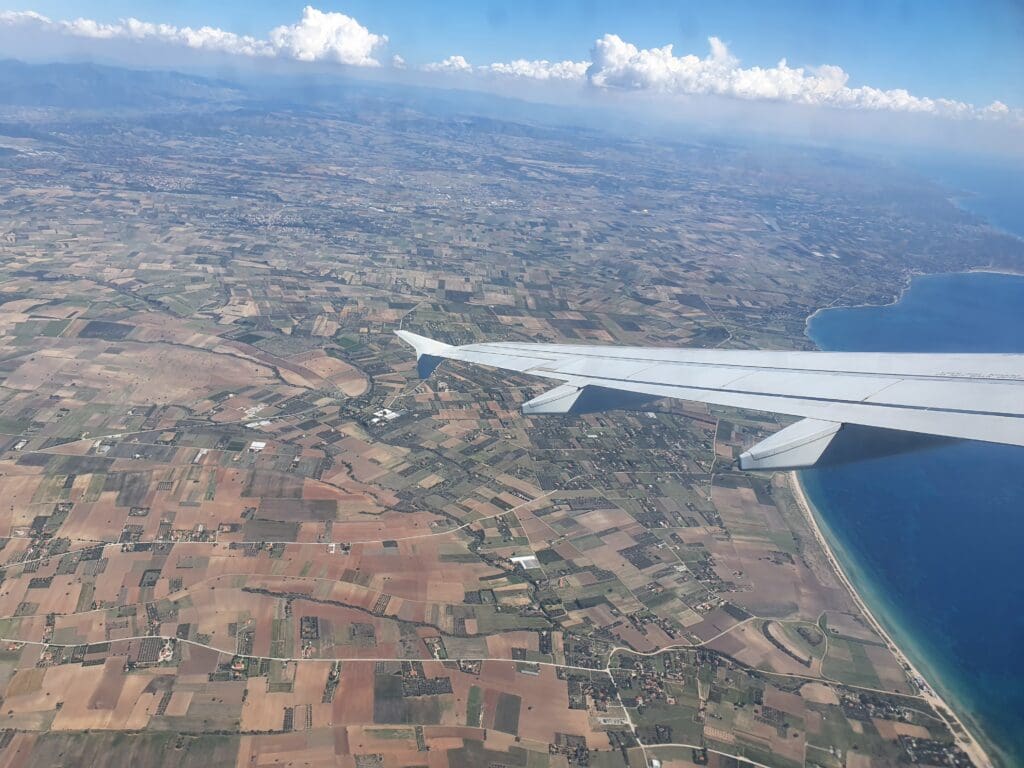
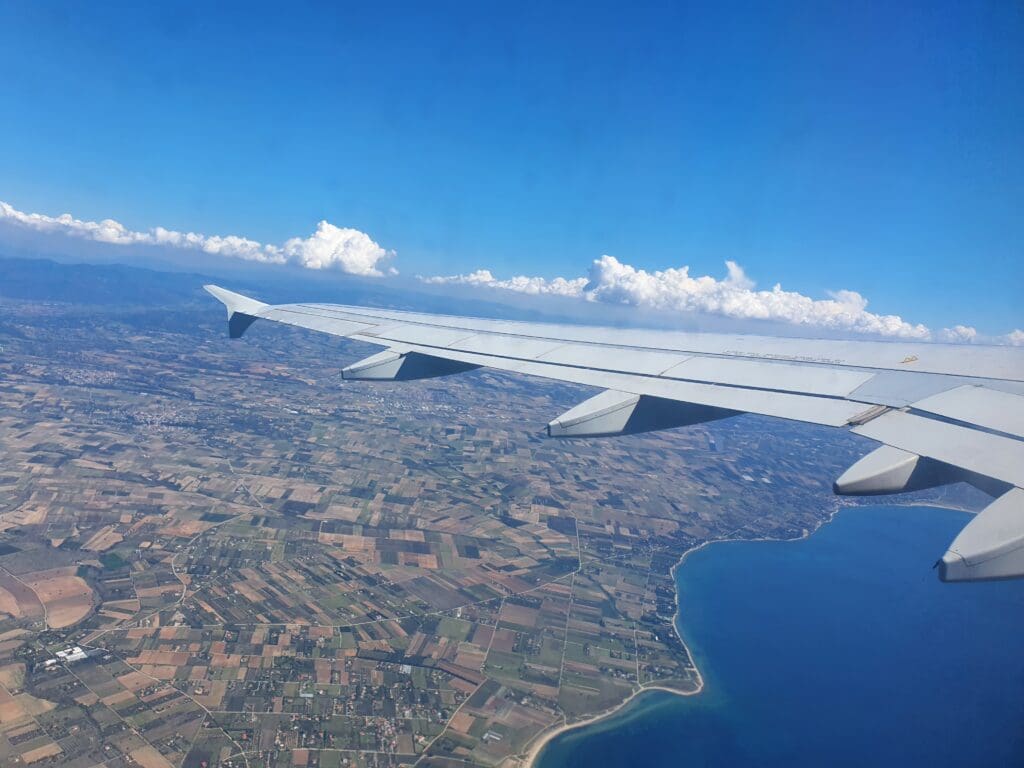
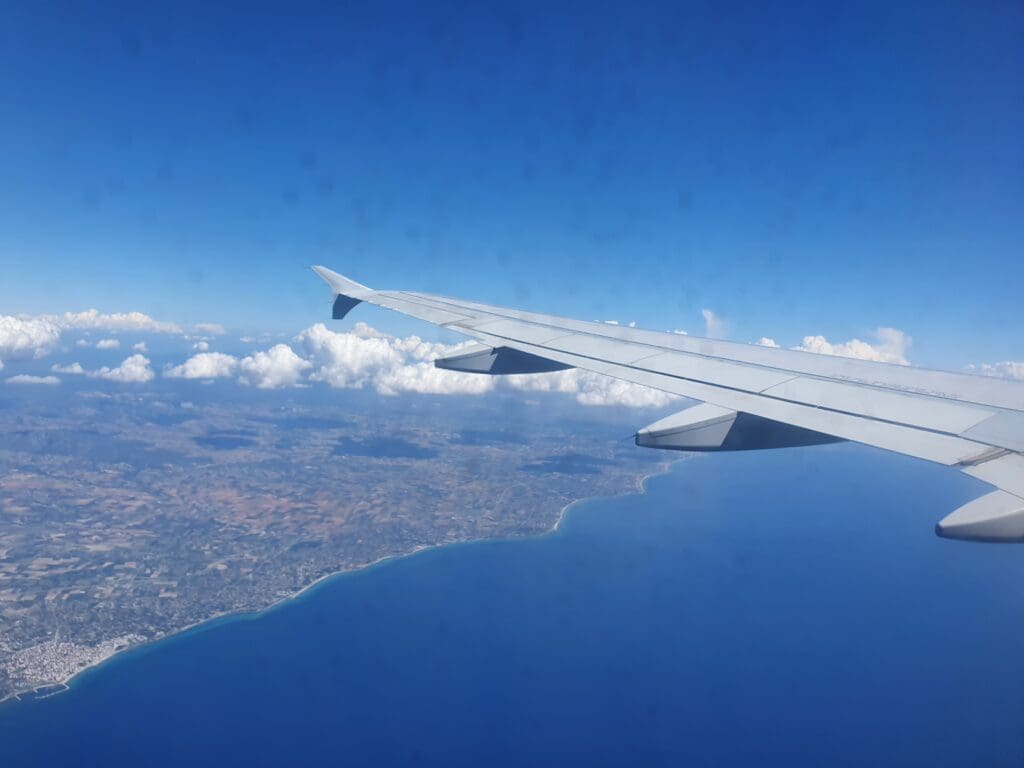
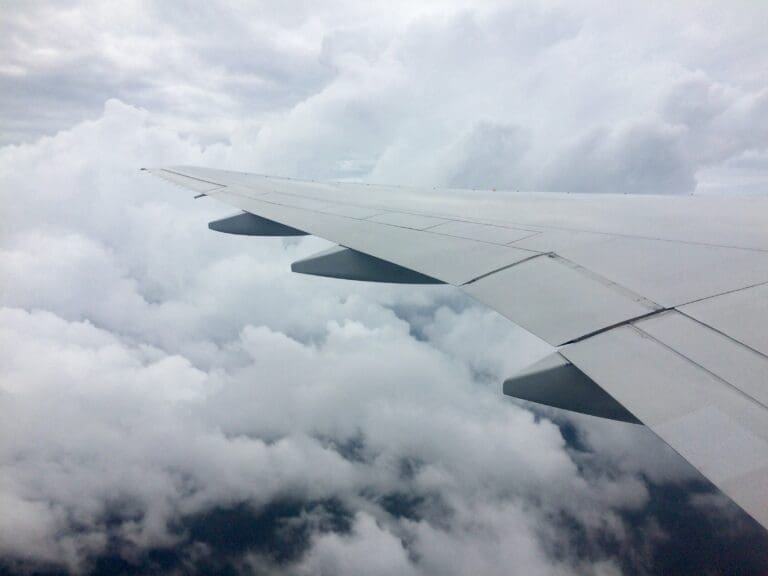
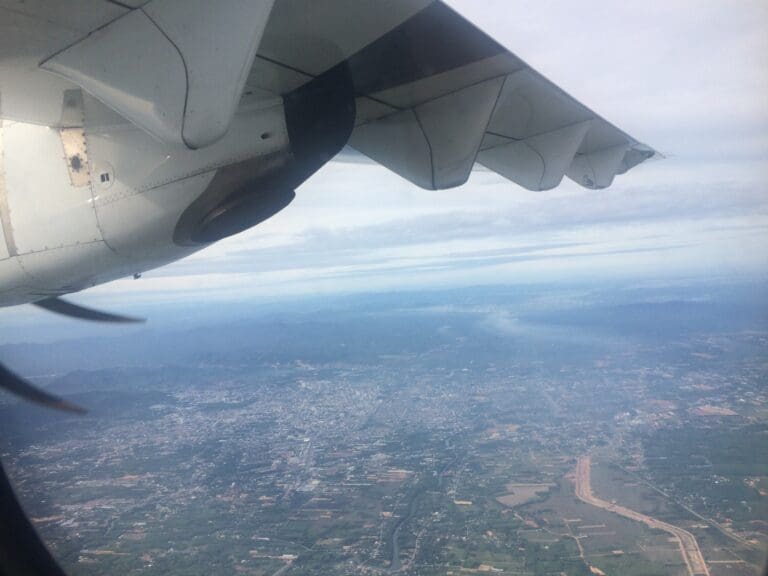
Returning to the route, after leaving the mainland behind, the Airbus continued to climb as it passed just to the south of Kassandra, the southernmost of Chalkidki’s three peninsulas. Travelling southwards, the Airbus soon levelled off at its cruising altitude of 35,000 feet and passed over the Northern Sporades islands, crossing directly over Skopelos. However, thanks to clouds lingering a long way below, nothing of these islands could be seen. Fortunately, these parted a short time later allowing for good views of many of Greece’s islands as we crossed over the Aegean Sea. The first of these was the southernmost Sporades island, the fairly large island of Skyros. Home to just under three thousand residents, its location in the middle of the Aegean allows it to be of significant strategic importance and is home to a Greek Air Force base.
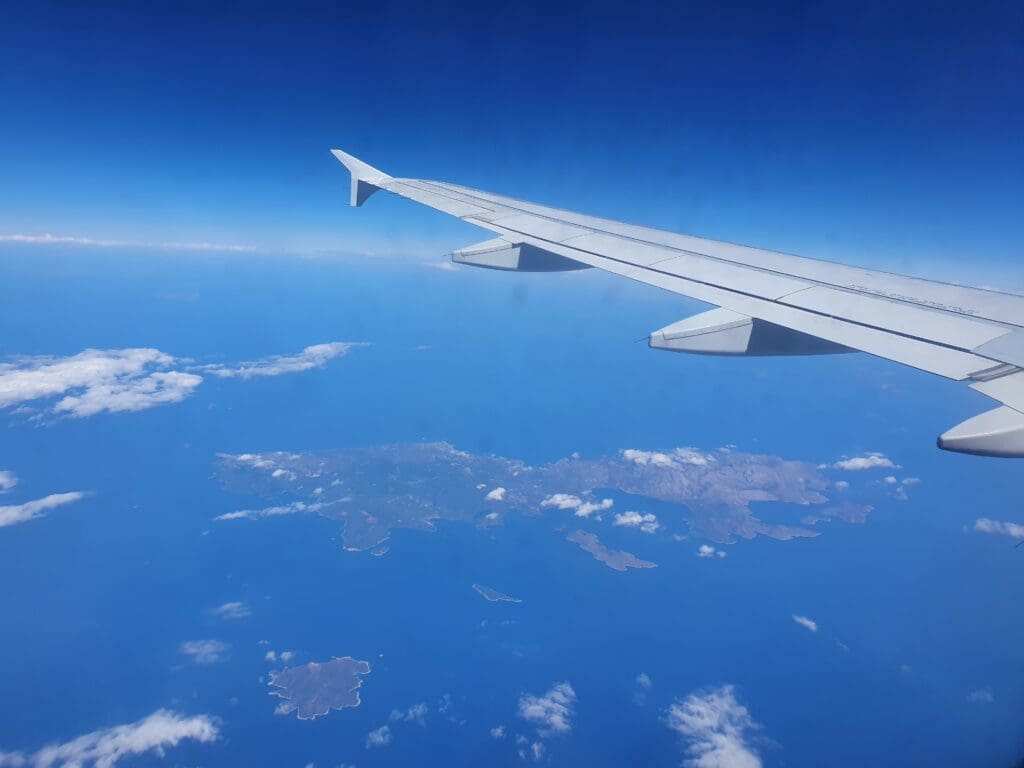
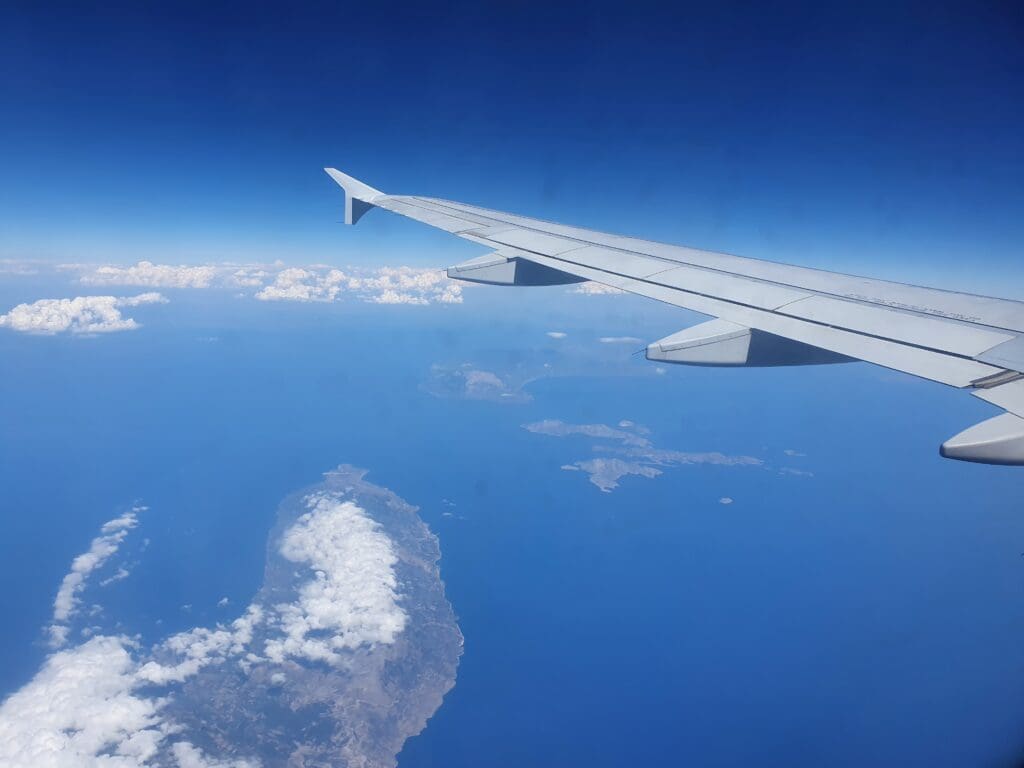
Continuing southwards, after leaving Skyros behind nothing could be seen below other than the blue waters of the Aegean as well as the odd ship trundling along, whilst the coastline of Turkey could be seen someway in the distance. At this time, I briefly turned to examine the inflight entertainment options available onboard the Airbus A320. Whilst I had seen plenty of posters up in Thessaloniki Airport advertising Aegean Airlines’ onboard wifi network, this was not present on this particular old Airbus A320 and thus only two forms of airline-provided entertainment were offered. These took the form of the overhead screens which broadcast the moving map, and the Blue inflight magazine. Focusing first on the former, with no headphone jacks in sight, it appears that the overhead monitors onboard Aegean Airlines’ aircraft are used only to broadcast the carrier’s safety video and moving map. However, this is by no means a complaint as I would much rather watch a moving map rather than Just for Laughs or a similar programme!
As they had promised during their pre-flight announcement, at 1441 the Captain’s voice filled the cabin once more as they performed their pre-arrival speech in Greek and English. At this time, they informed passengers that we were flying at 35,000 feet and crossing over the island of Ikaria. Indeed at this time, most of the island could be seen through the porthole to my left, including its airport positioned at the far northern tip of this, served by both Olympic Air and Sky Express’ ATR turboprops. The Captain then moved on to brief passengers on the weather on the ground before advising that we could expect to land in 25 minutes, ending this by wishing all onboard a pleasant stay in Rhodes. As soon as this announcement reached its end, the Airbus could be felt commencing its descent and soon the small island of Patmos, the home of the New Testament’s Book of Revelation, came into view.
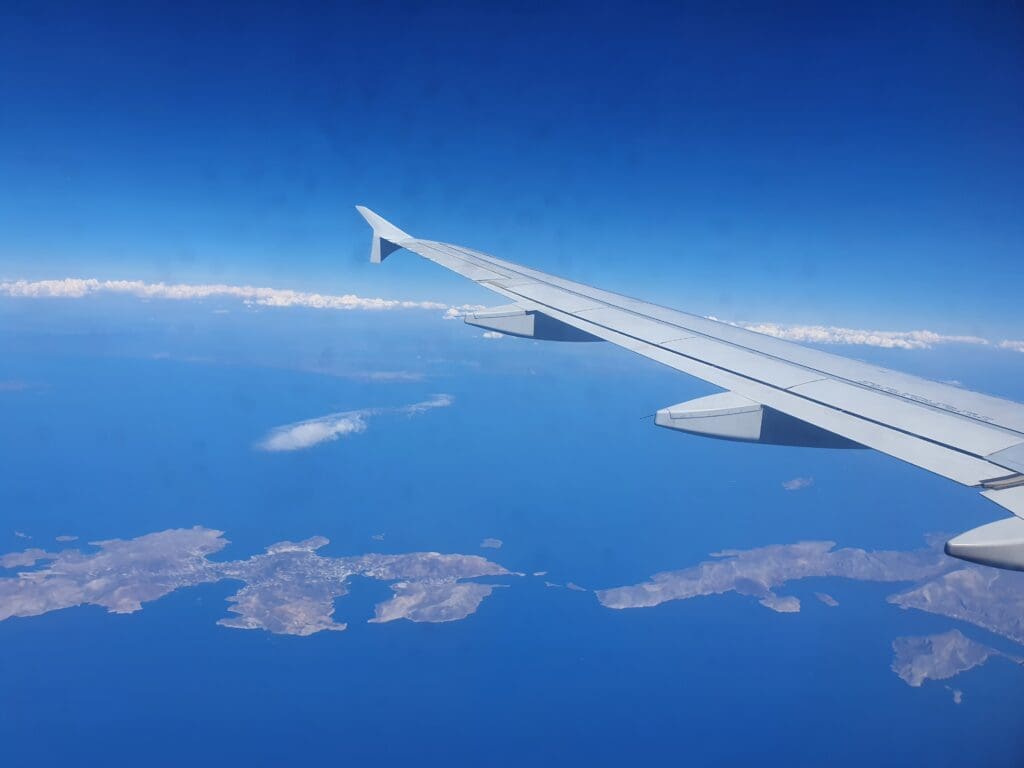
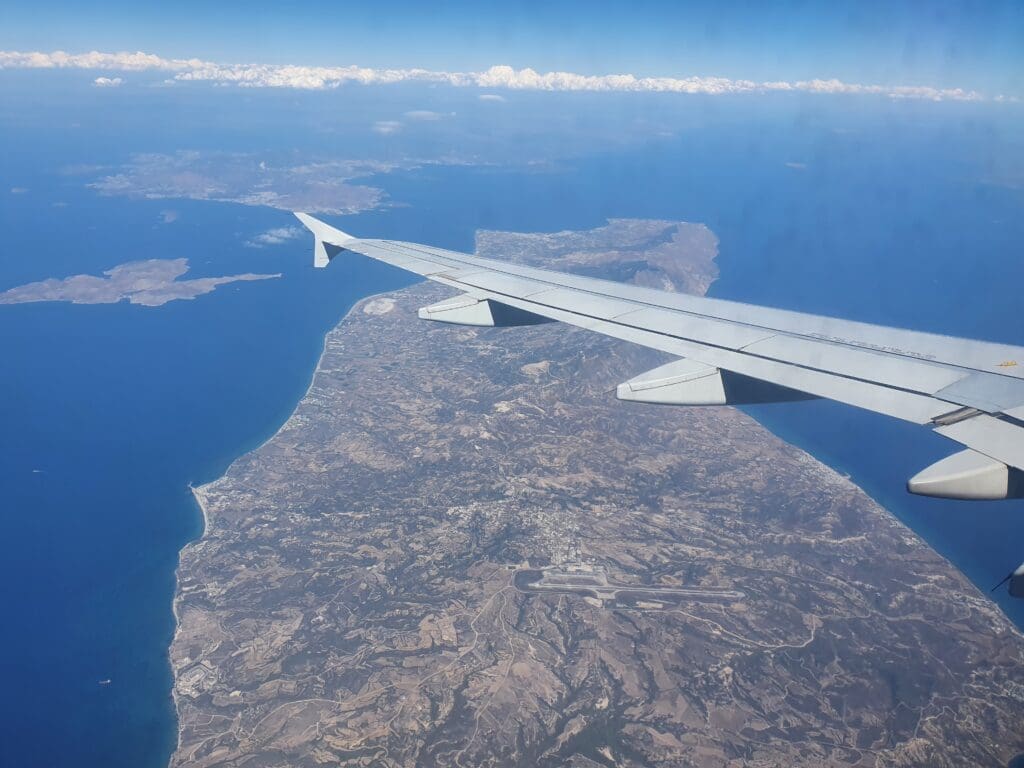
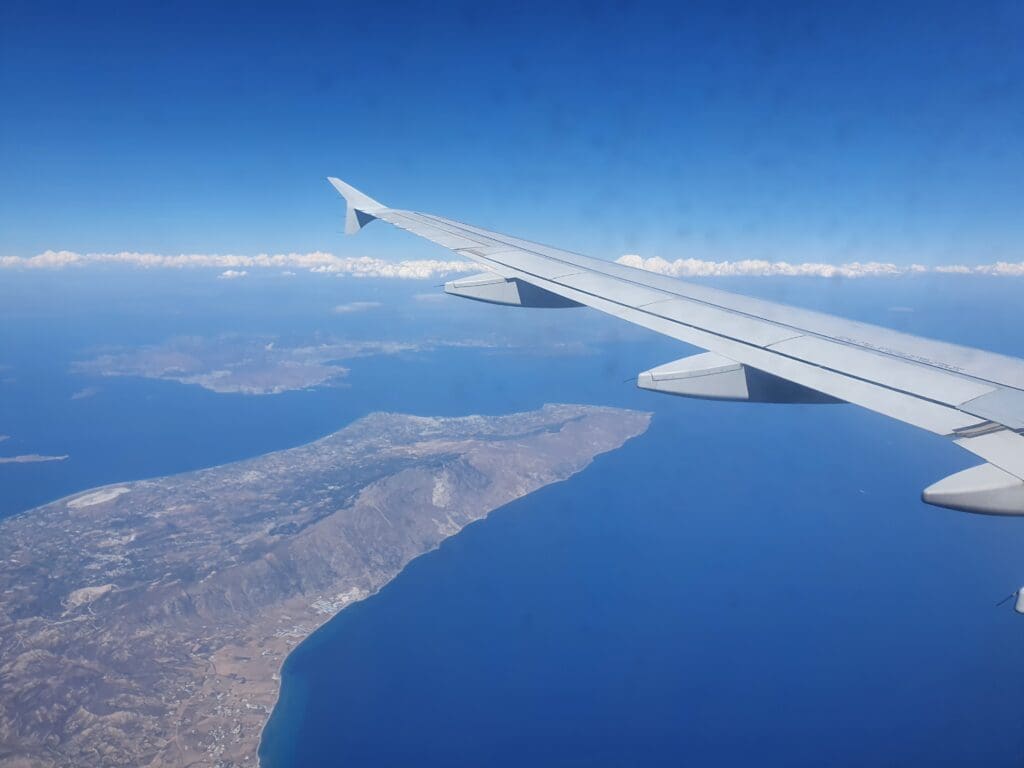
After leaving Patmos behind, the two small and picturesque islands of Leros and Kalymnos came into view – both of which I had briefly visited on my Sky Express ATR 42 island-hopping service several months earlier. This was then followed by the larger and more popular holiday island of Kos, which I easily recognised thanks to the airport in the middle of this. Crossing the island at an altitude of around 18,000 feet, I could spot a Wizz Air Airbus A321 and the airport’s terminal, as well as two business jets on the south side of the airfield. Later research revealed one of these to be a rare Australian Dassault Falcon 900C based thousands of miles away in the Gold Coast. As we crossed Kos, the seatbelt signs were reilluminated and the Purser performed an announcement advising passengers of our imminent arrival into Rhodes before going through the usual instructions regarding seat belts, seatbacks, tray tables and window shades. Once this had been completed, the crew wasted no time in passing through the cabin collecting rubbish and ensuring that all was in place for our arrival.
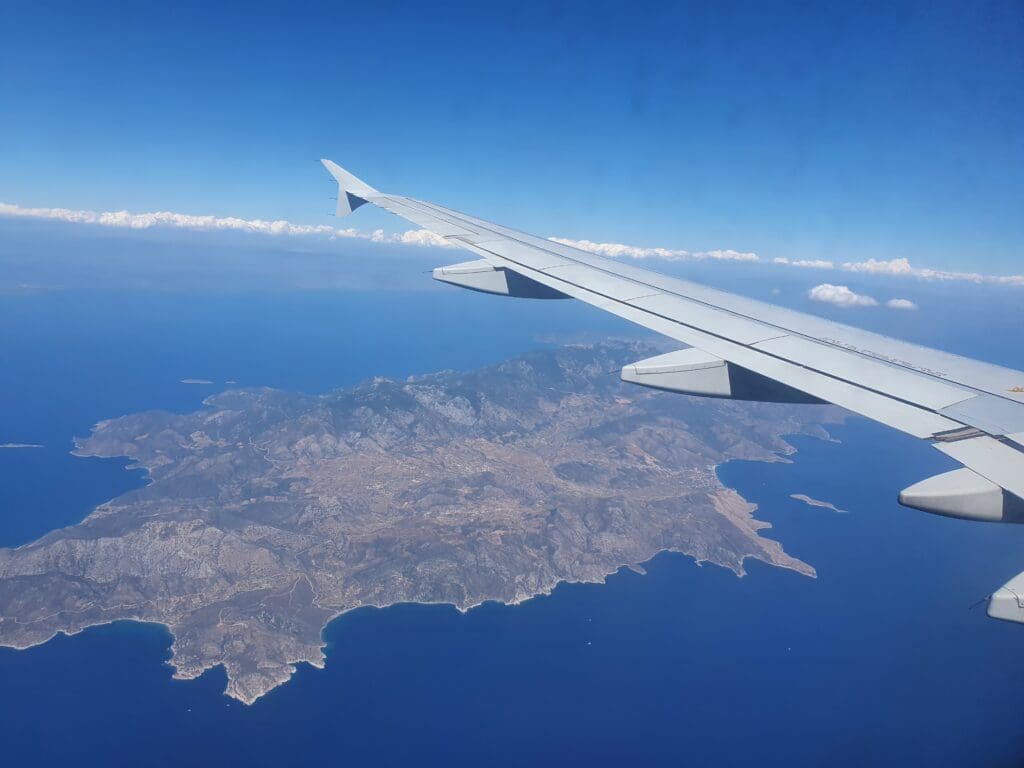
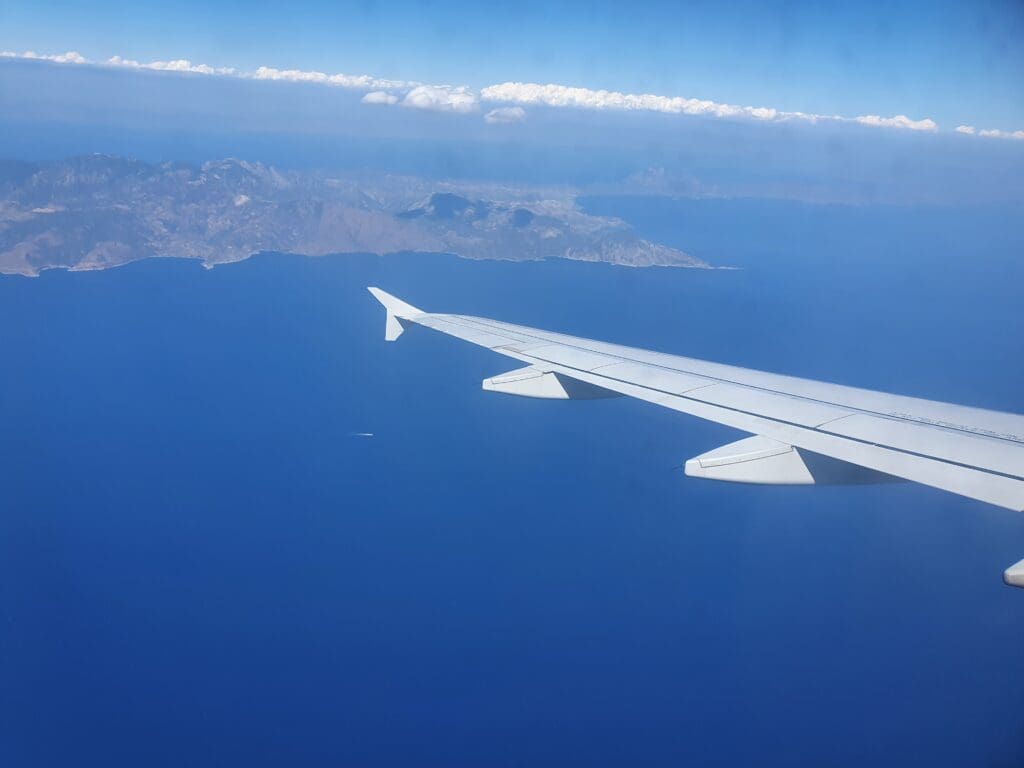
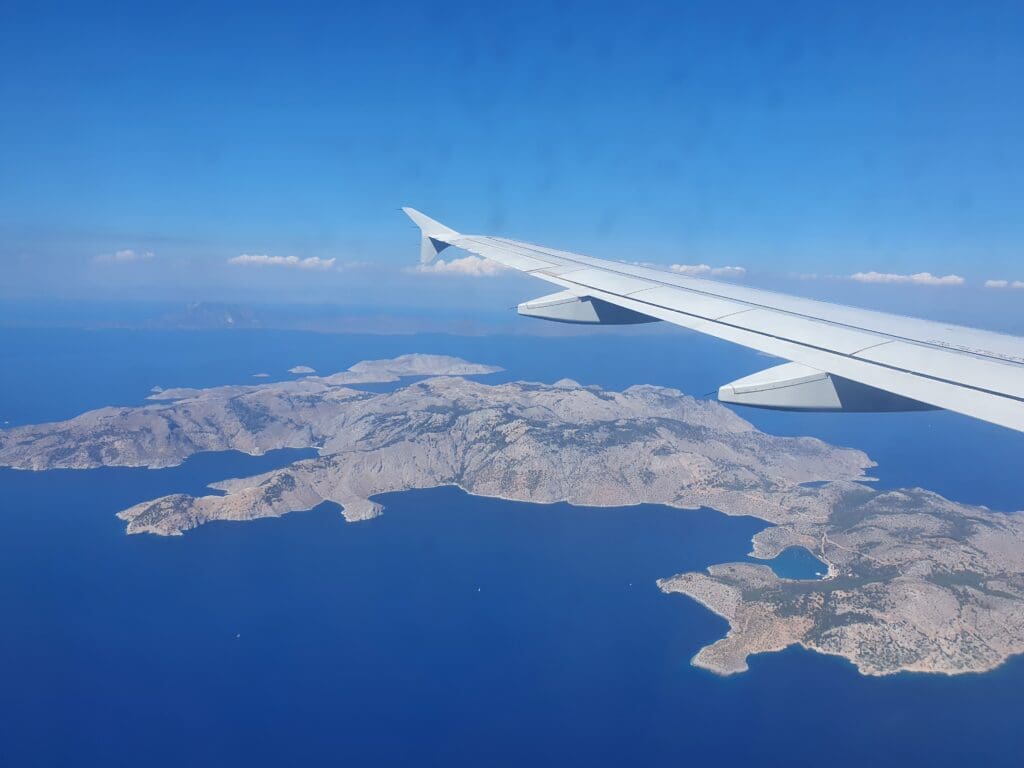
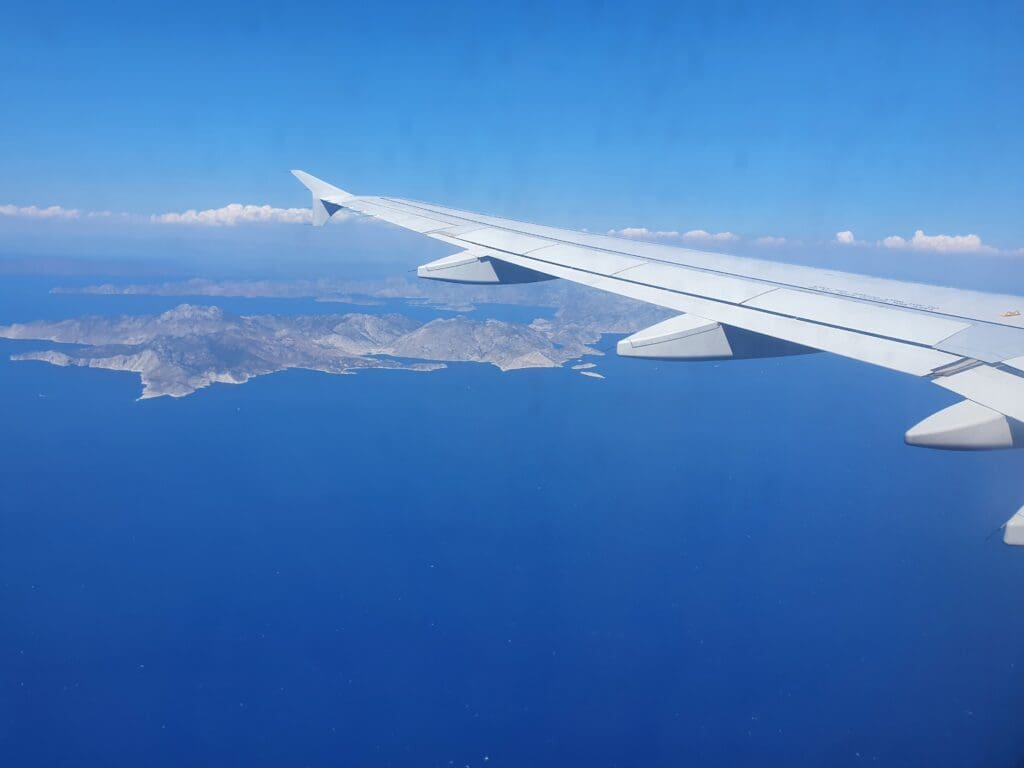
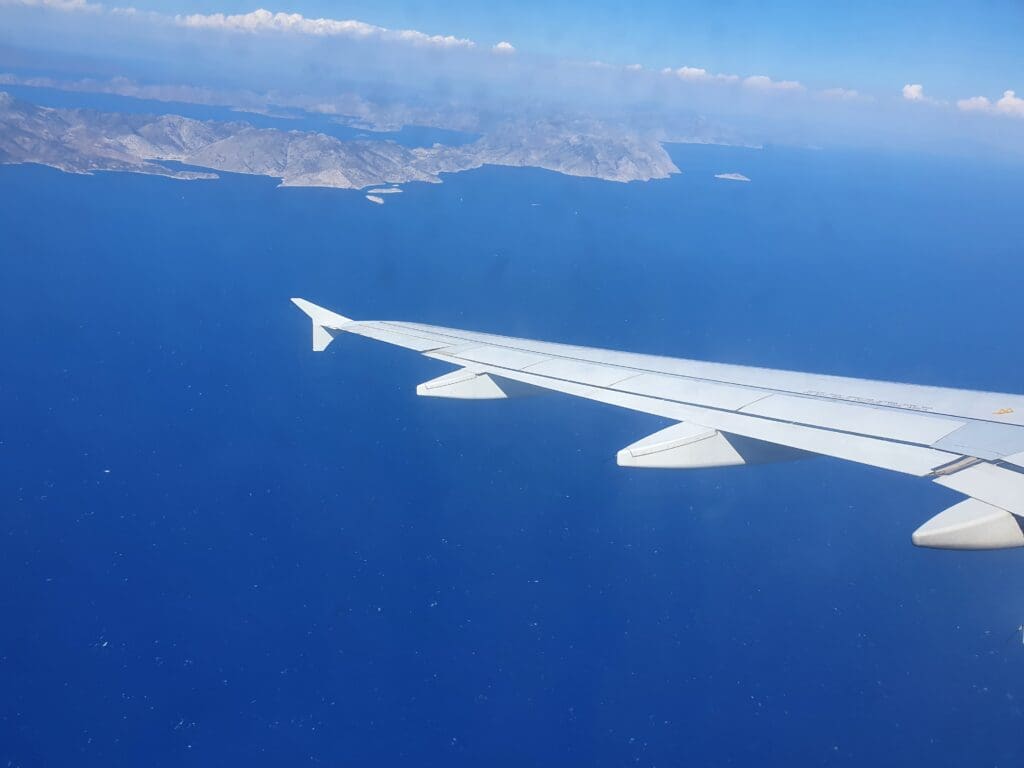
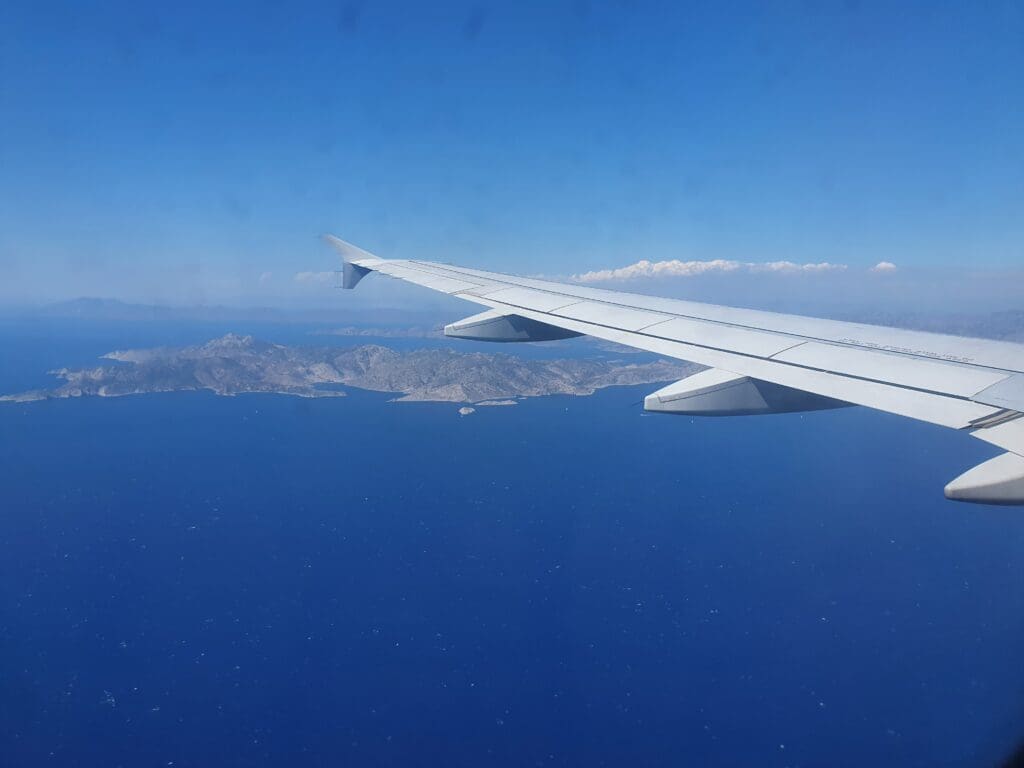
After leaving Kos behind, Turkey’s long and thin Datca Peninsula could be seen just to the north, and a short time later by the Greek island of Symi, a popular tourist destination and famous for its small pan-fried shrimp popped into view. From there, Turkey came into view once again and a good view was offered of the southern portion of the country’s Bozburun Peninsula before the aircraft banked and headed towards the centre of Rhodes. A short time later, the aircraft rolled out as it lined up for an approach to Rhodes’ Runway 24 as the gear and flaps fell into position below. At this time, a fantastic view was offered of the city centre, as well as the city’s port where two large ferries from rival companies Blue Star Ferries and Hellenic Seaways could be seen waiting to voyage across the waters of the Aegean.
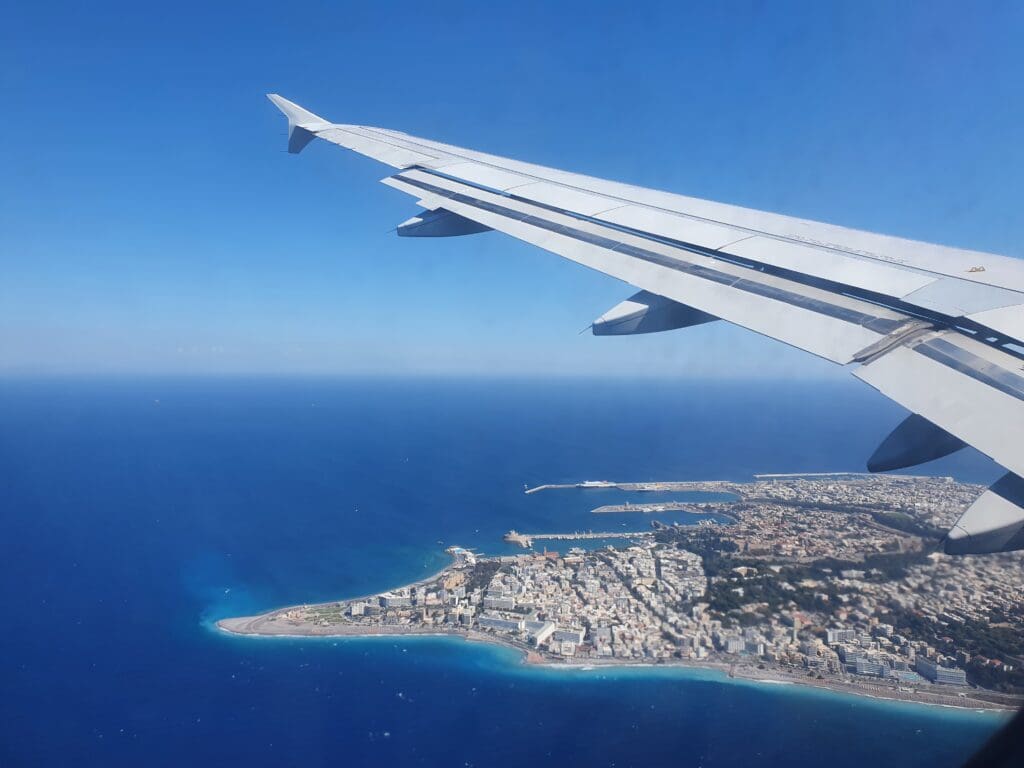
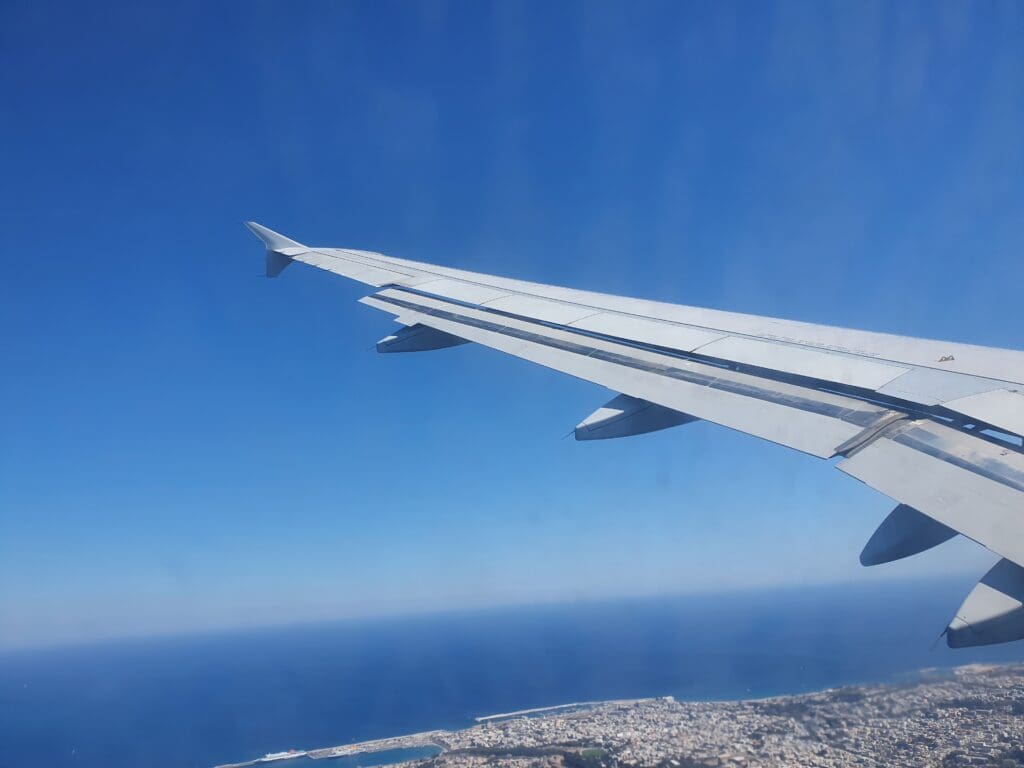
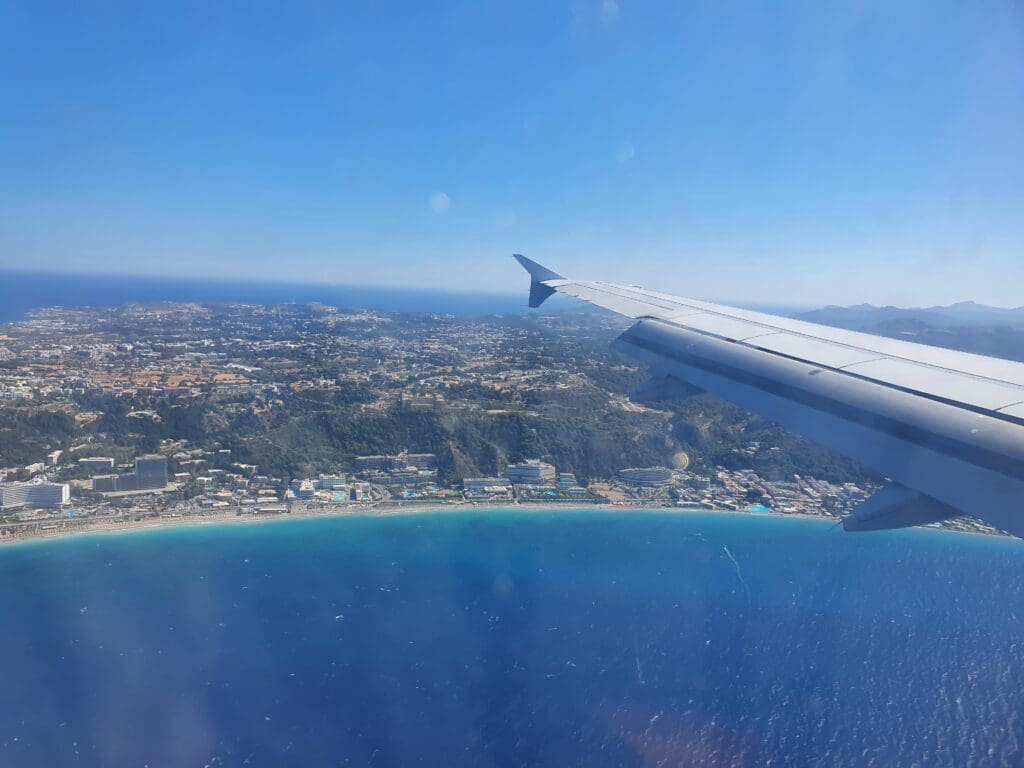
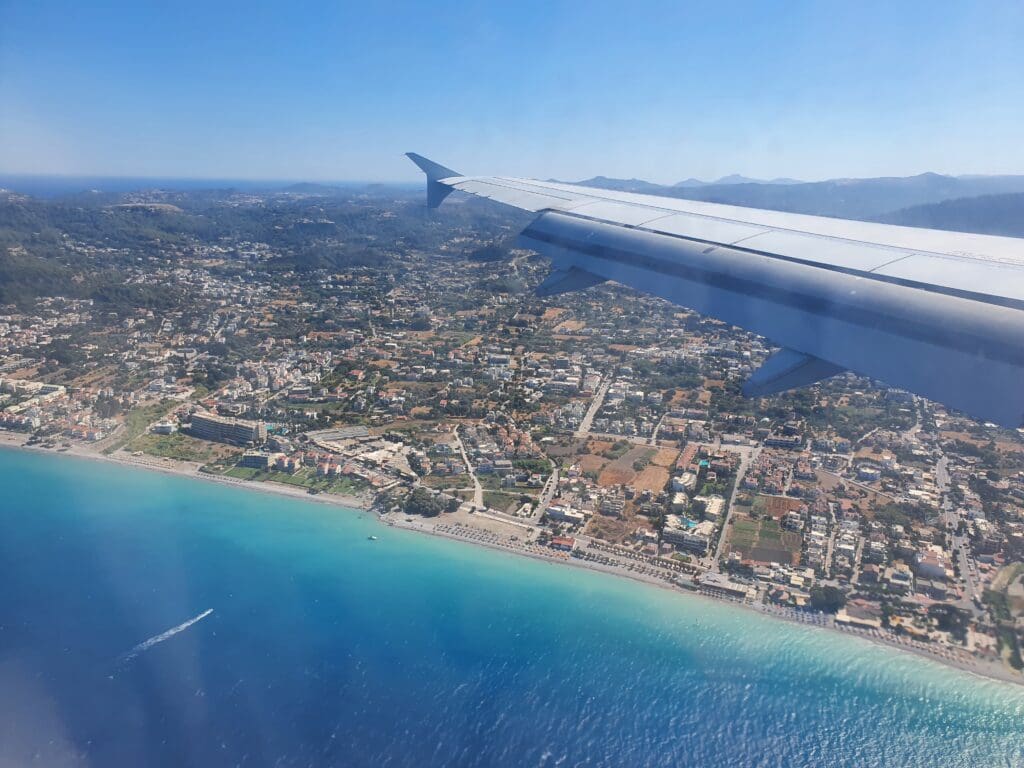
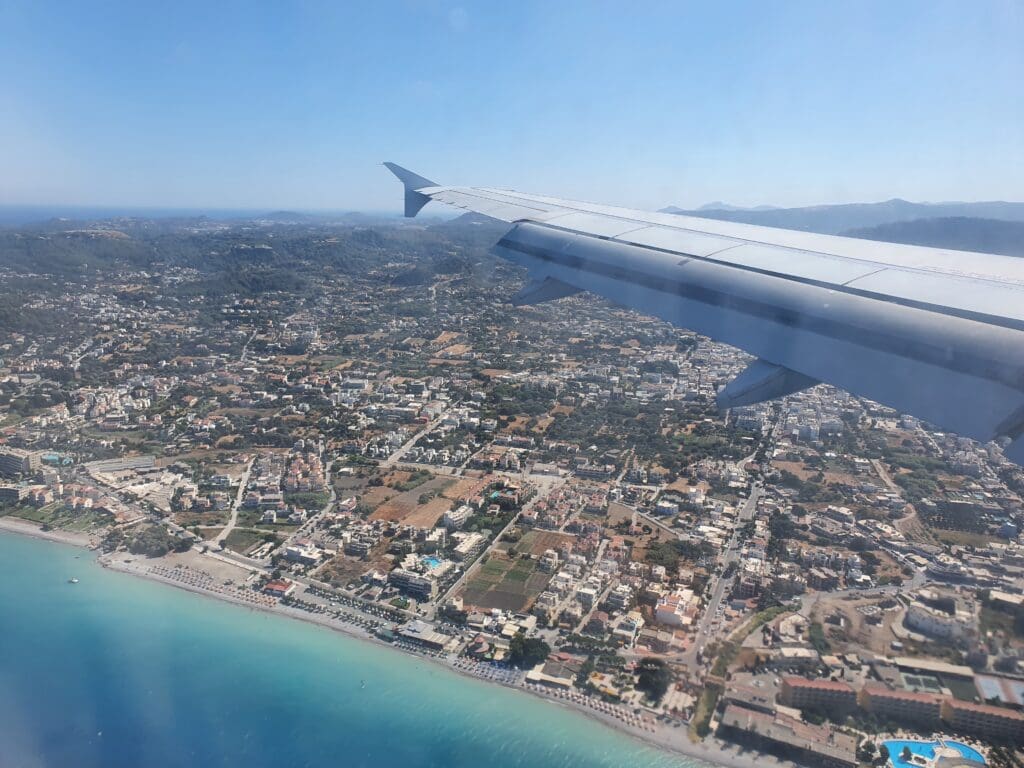
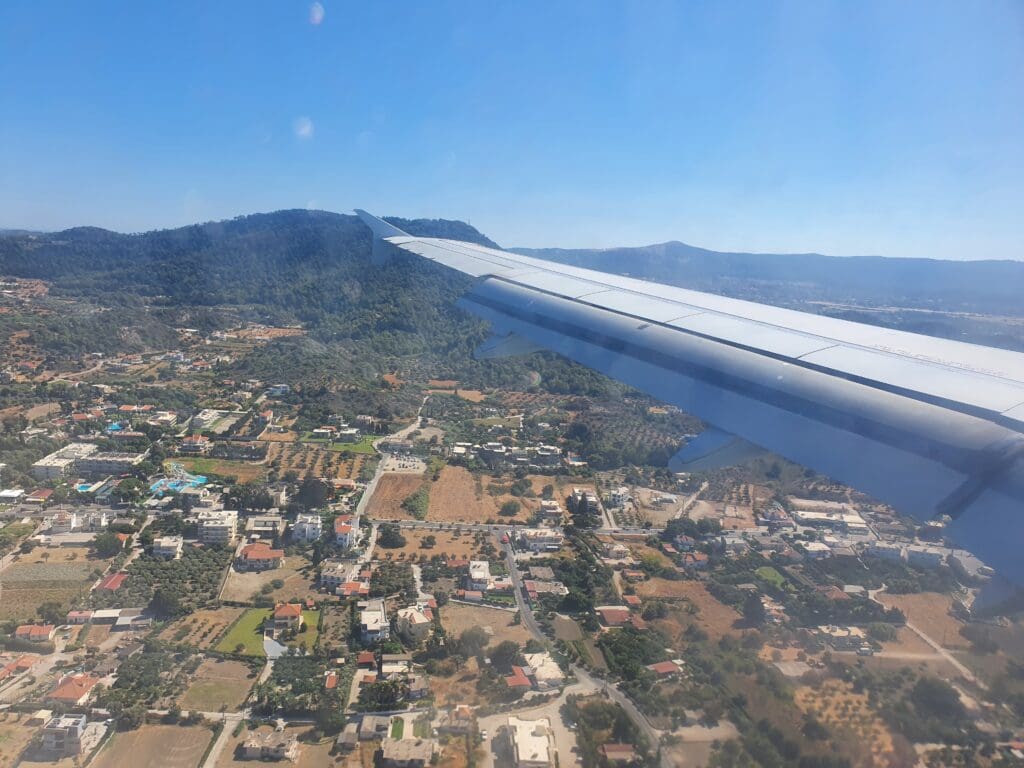
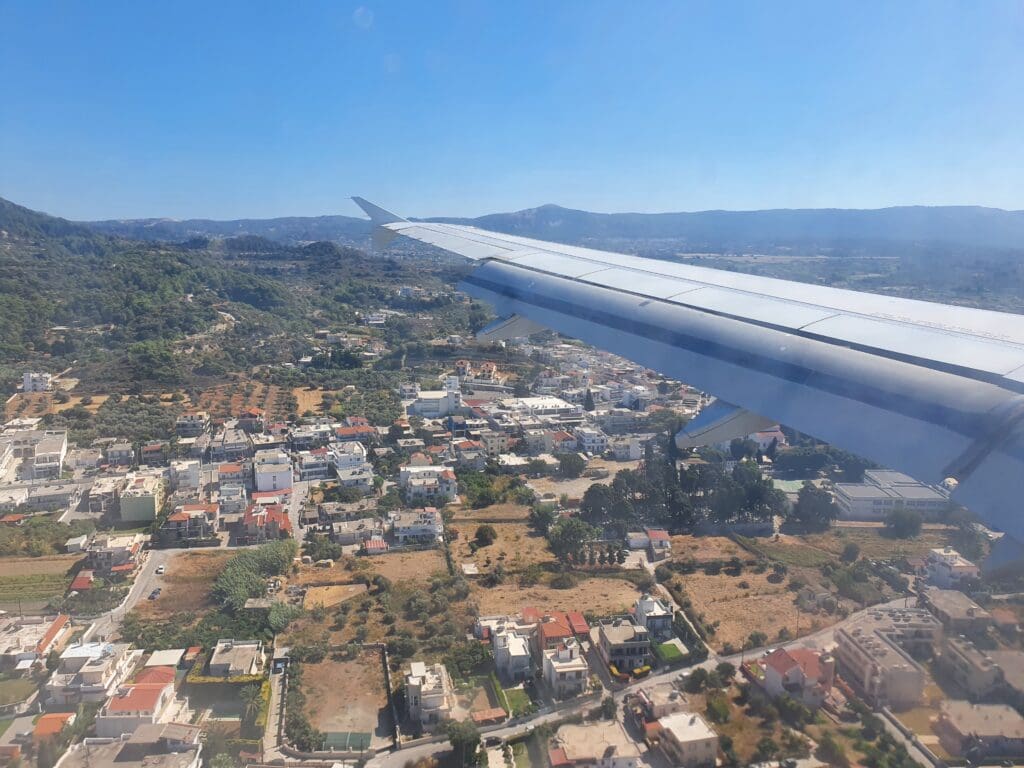
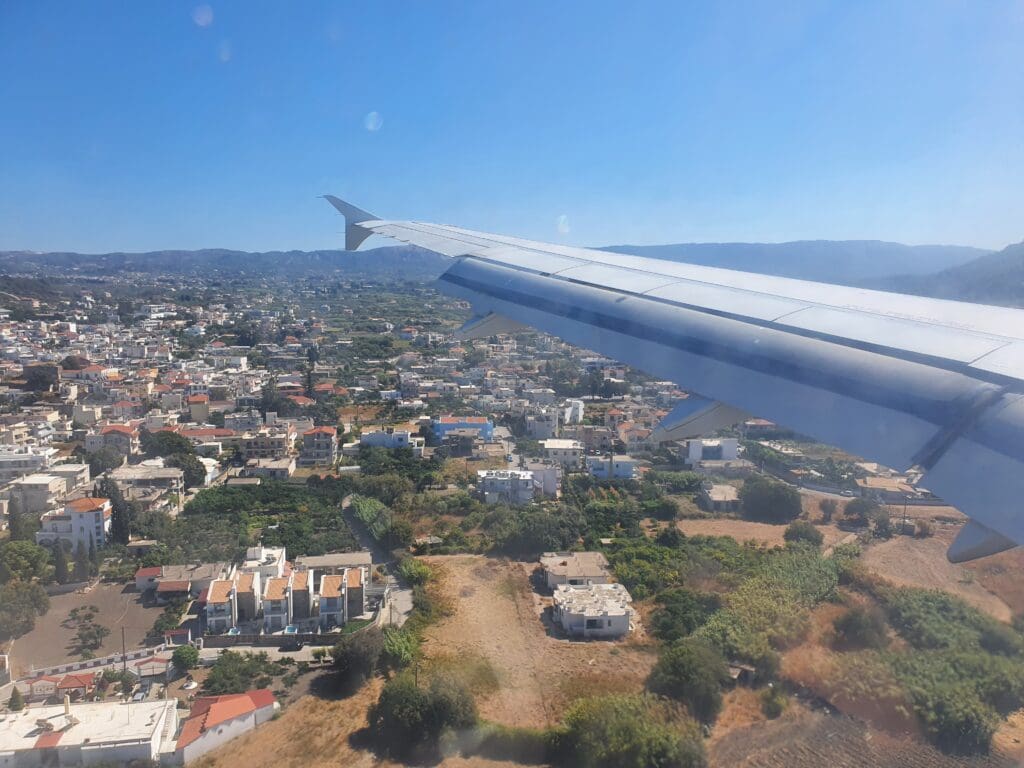
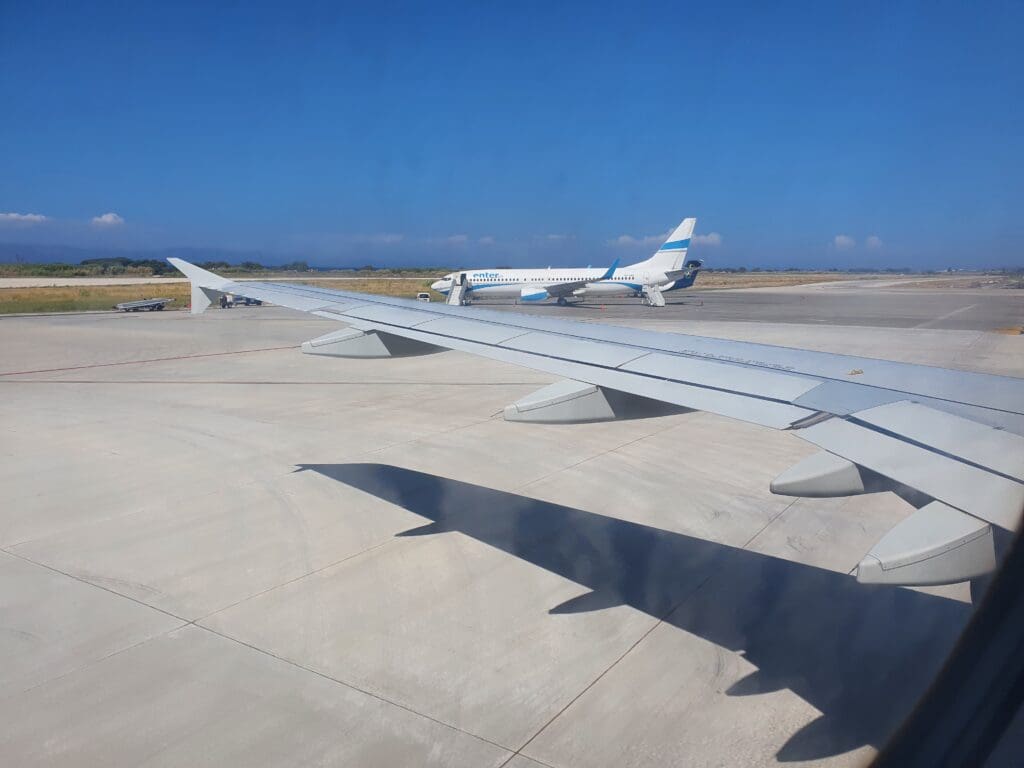
Once lined up for our approach, the Airbus flew along the islands’ resort-lined coastline, passing the neighbourhoods of Kritika, Ixia, Ialysos and Kremasti. After crossing the coastline, the Airbus descended over the low-rise villas and holiday apartment blocks near the coastline before crossing over the airport’s perimeter fence and touching down in Rhodes with a moderate bump after 56 minutes in the Greek skies. After returning to earth, the Airbus decelerated rather rapidly, perhaps in an attempt to minimise taxi time. As the aircraft slowed, the small collection of aircraft on Rhodes Airport’s apron came into view. These consisted of an Aegean Airlines Airbus A320 that had arrived an hour earlier from Munich, an Enter Air Boeing 737-800 that had flown in from Billund and a locally based Olympic Air Dash 8 100 dedicated to operating the service to the small nearby island of Kastellorizo (read my report on this route here!).
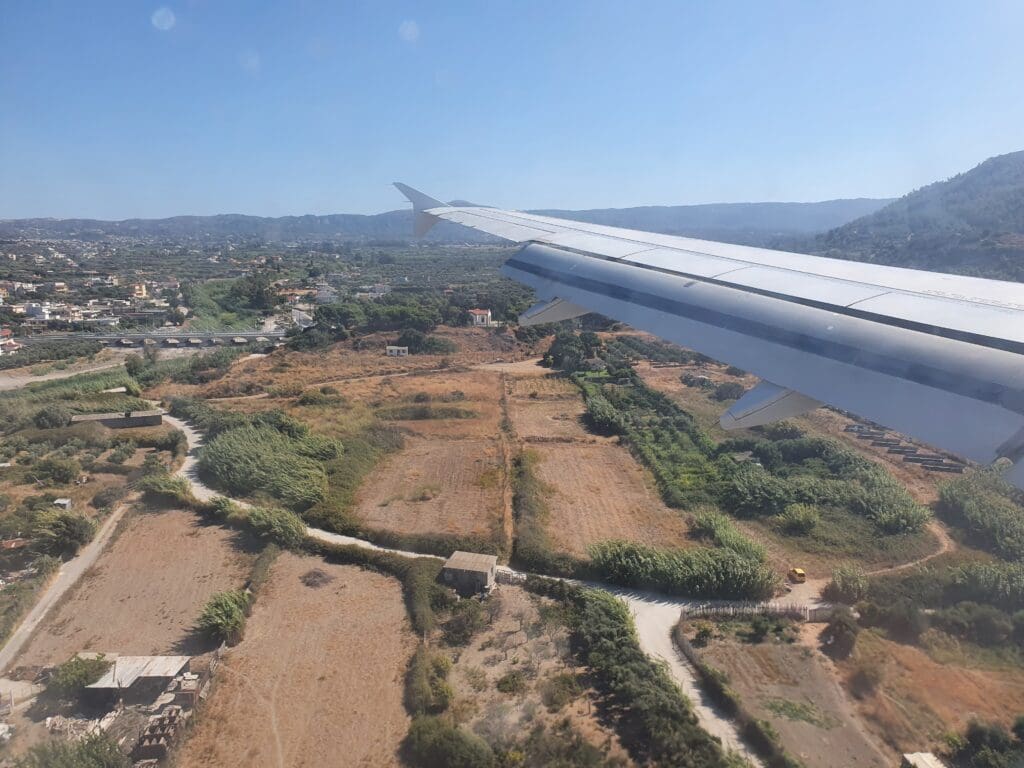
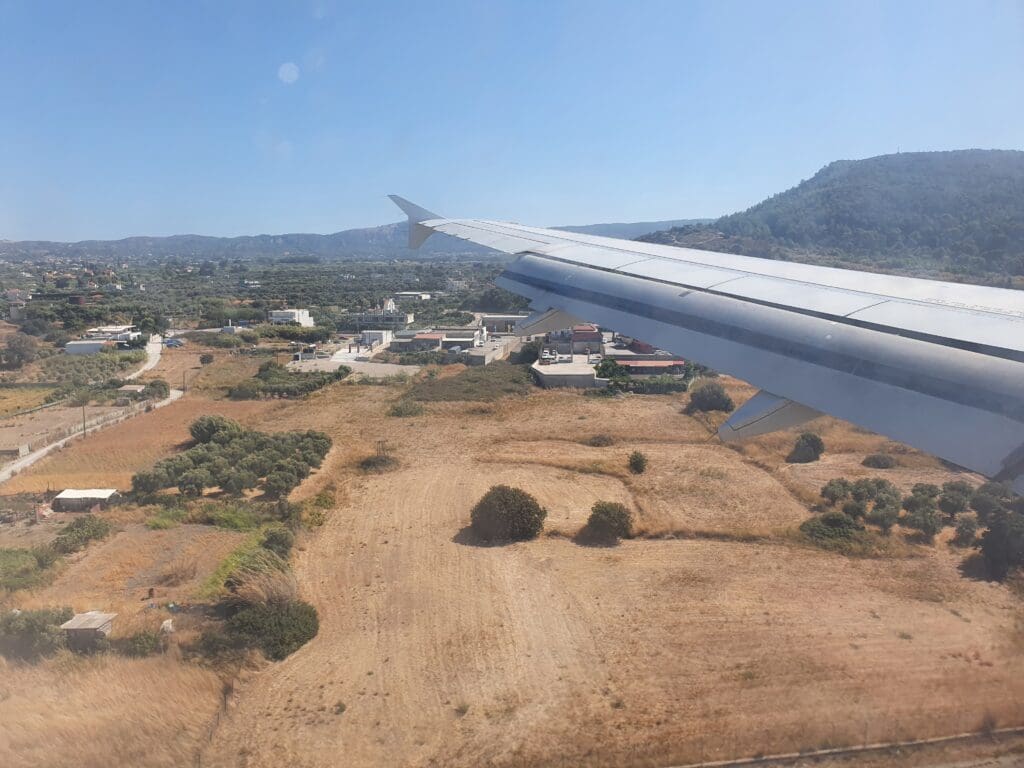
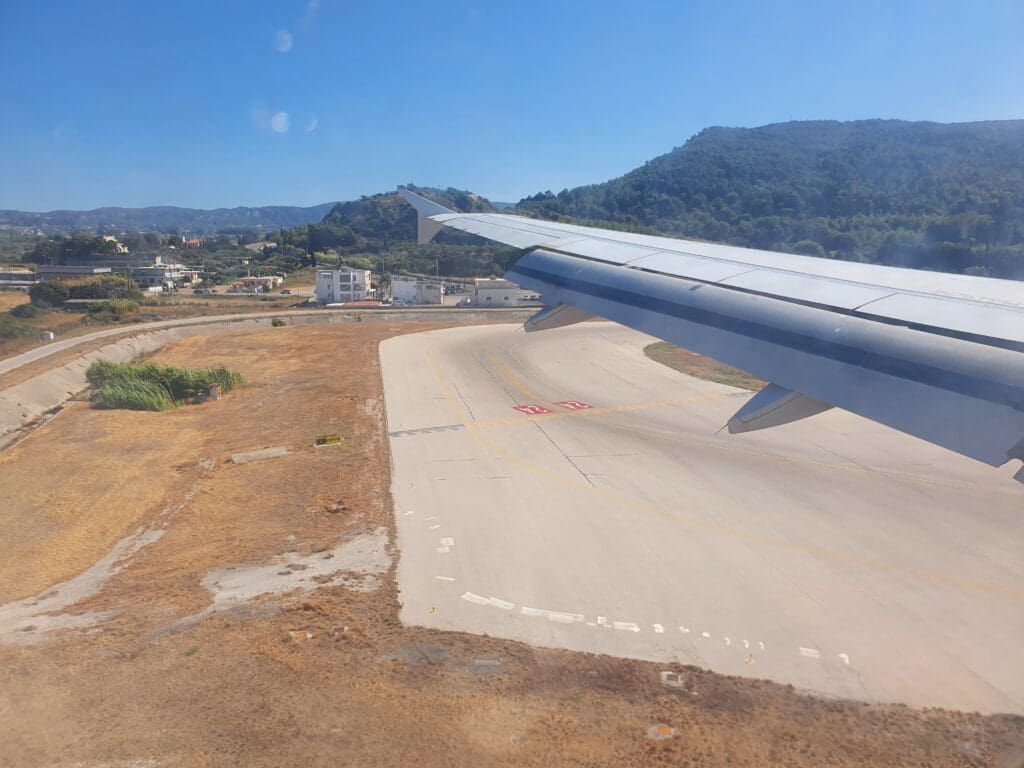
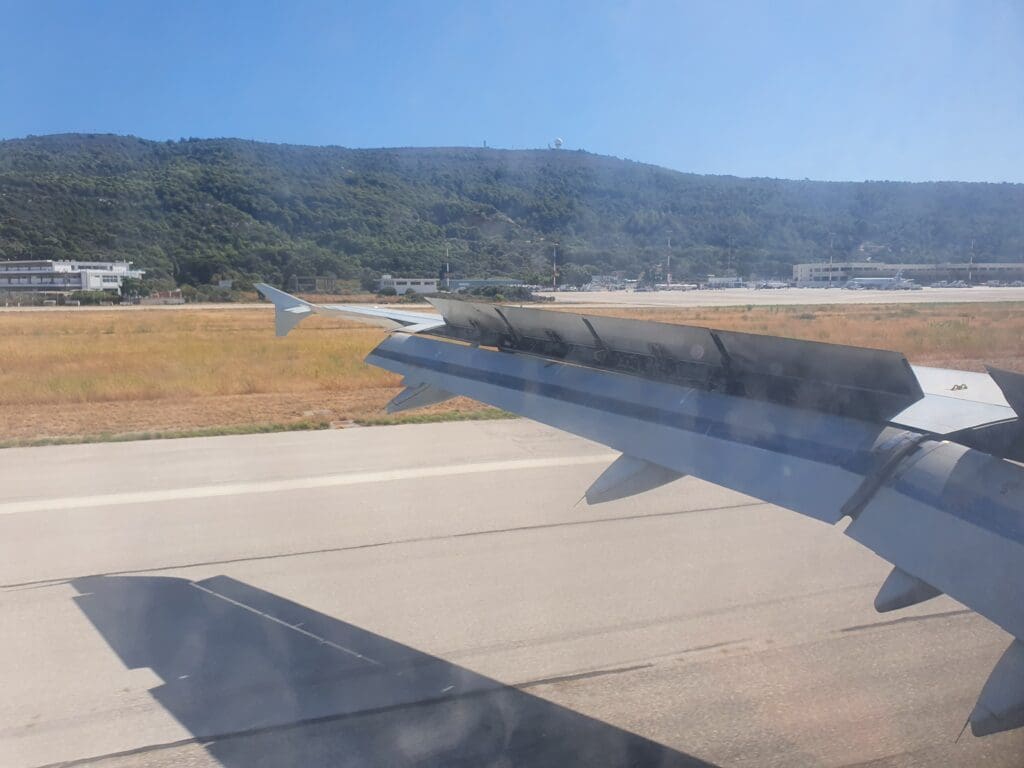
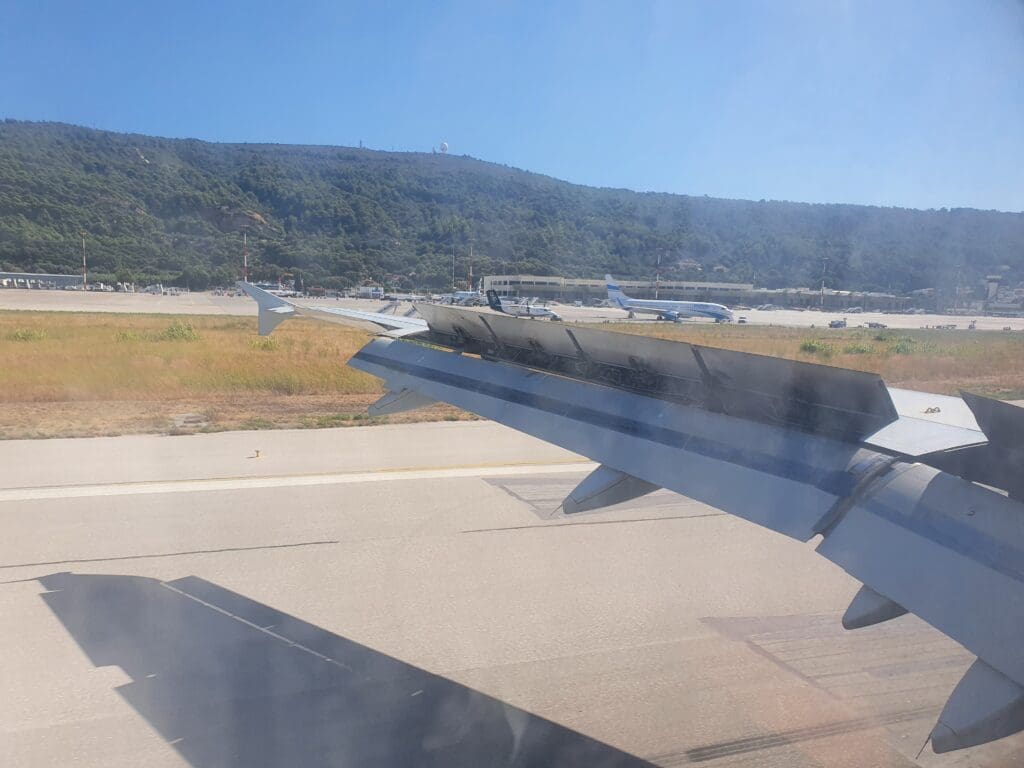
Given the relatively small size of Rhodes Airport, it did not take too long before the Airbus turned into Stand 3 and came to a halt near the corner of the terminal building. Once the engines spooled down, as is often the case across the world, many of those onboard seemed to be in a desperate rush to escape the aircraft and soon the aisle became flooded with passengers. Unlike most, I was in no particular rush to leave the jet and after several minutes of waiting, I stood up and journeyed to the rear galley where I was thanked in Greek by two crew members before I headed out into the afternoon heat. After trundling down the airstairs and taking a few photos, I boarded a Cobus and was soon whisked off on the short journey to the Common Travel Area arrivals area. With no bags to collect, I headed straight to the landside arrivals area with minimal fuss and walked the short distance to the bus stop to catch a ride into Rhodes, ending my second-ever flight with Aegean Airlines.
Summary
Having had a great flight with Aegean Airlines from Athens to Rhodes several months earlier, I had high hopes for this trip with the airline. However, from the outset I was a little dismayed by the chaotic boarding process, the cold crew and the slightly dirty cabin. Yet on the flip side, once more I found the seat to be comfortable, the snack service was appreciated and the aircraft landed in Rhodes on time. Thus, whilst this trip with Aegean Airlines may not have been as fantastic as my first one, this was still fairly good and I would not hesitate to fly with the carrier again.