A DAT Dart on an ATR 72: Sampling the Aalborg to Copenhagen Shuttle
Background
If you happen to be a Europe-based aviation enthusiast, you will have probably heard of Danish Air Transport, now known simply as DAT. Established well over thirty years ago in 1989, the carrier has been around for some time and started its life specialising in cargo charters. With an eclectic fleet that included at least one curious-looking Shorts Skyvan, a King Air and several Beechcraft 1900s, in 1994 Danish Air Transport expanded into passenger operations. With their aircraft painted in a distinctive multicoloured livery, these became an occasional sight at airports across Europe – with the airline operating a mixture of charter and scheduled passenger and cargo services. In the early 2000s, the airline expanded by incorporating a host of ATR 42 and ATR 72 turboprop airliners into their fleet, with such aircraft continuing to play an important role in Danish Air Transport’s operations today. In addition, in 2003, Danish Air Transport established a Lithuanian subsidiary, DAT LT (now DOT LT) which operates a single ATR 42 that at the time of writing is deployed on the airline’s German route network consisting of flights from Saarbrucken to Berlin and Hamburg.
In 2009, DAT invested in its first jet airliner, which much to the delight of enthusiasts, came in the form of the venerable McDonnell Douglas MD-80. This enabled the airline to undertake both charter and scheduled flights to holiday destinations across the Mediterranean and beyond. And it was arguable these aircraft and their rarity that catalysed the well known status of DAT in enthusiast circles. However, following only a relatively short career with the Danish carrier, these were replaced by a fleet of Airbus A320s and A321s and in 2021 DAT’s last remaining MD-83 bowed out of service – undertaking a sightseeing flight across Denmark. At the time of my flight in May 2022, DAT’s scheduled route network consisted of a variety of domestic services across five European countries – Denmark, Finland, Germany, Italy and Norway, with these operated by the airline’s ATR turboprops. Meanwhile, the carrier’s modest Airbus narrowbody fleet is typically deployed on charter services and can often be seen carrying tourists from Denmark to airports across the Mediterranean.
Having wanted to sample Singapore Airlines for some time, in Spring 2022 I finally got around to booking a seat on their Airbus A350-operated fifth freedom flight from Copenhagen to Rome Fiumicino. Living in London, I would have no issues reaching Denmark, with a plethora of flight options running between the two European capitals. However, with some time on my hands, I decided to shake things up a little by flying from Stansted to Aalborg on a Ryanair ticket that cost next to nothing. However, this left me with the conundrum of getting from Denmark’s fourth-largest city to the capital – with the two separated by 139 miles. Thankfully, there is no shortage of transportation options between the two cities, including by air, with DAT, Norwegian and Scandinavian Airlines all operating flights between Aalborg and Copenhagen. In the end, I settled for one of DAT’s very regular flights, and booked this via MyTrip for a bargain total of just £18.35!
Check-in
As with many airlines, DAT offers its passengers the opportunity to check-in online before their flight. This opens up for most passengers 22 hours before departure, the exception to this being those departing from Billund who are unable to check-in until 12 hours before the scheduled departure time of their flight. With 21 hours to go until I departed for Copenhagen, I made my way over to DAT’s website and after selecting my departure airport I was taken to enter my booking reference. Fortunately, despite booking through MyTrip, my booking loaded up without issue and I was soon presented with a summary of this. Upon clicking continue, I received confirmation that I had been checked in and was given the option of downloading my boarding pass or having this sent to me by email or text. Much to my surprise, the lack of a seat selection page was explained by the fact that the airline operates an open seating policy – something that left me with no reason to complain.
The Journey
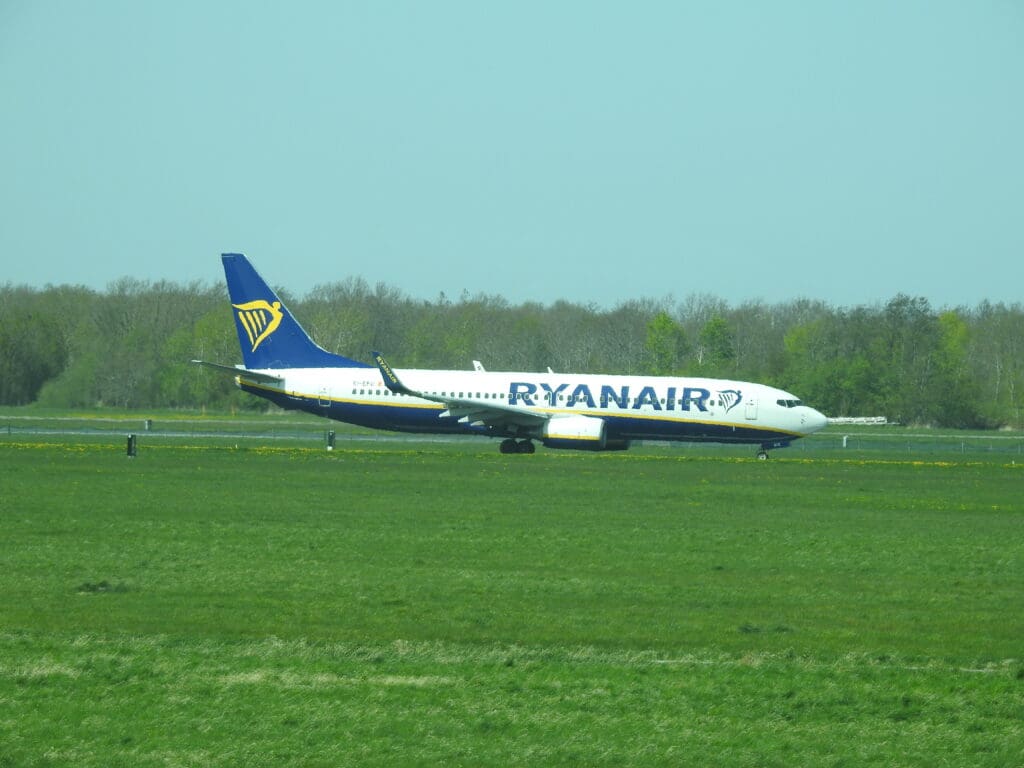
On the morning of my flight, I enjoyed a quick ride up from London Stansted onboard a pleasantly empty Ryanair Boeing 737-800 and touched down in Denmark with a little under four hours to go until my flight to Copenhagen. Not seeing a vast amount of traffic from destinations outside of the Common Travel Area, I found Aalborg Airport to feature just two immigration booths and no e-gates. Nevertheless, having been one of the first to exit the Ryanair jet, I sailed through to the landside area without too much waiting and thus ended up with plenty of time on my hands before my hop over to the Danish capital. Whilst Aalborg Airport sits just six kilometres away from the centre of Aalborg, this equates to an eleven-minute train ride, I decided against voyaging out to see the sights. However, not wanting to spend the entirety of my stay cooked up in the terminal, after touching down I decided to head outside for a short walk around the airport in the chilly morning air.
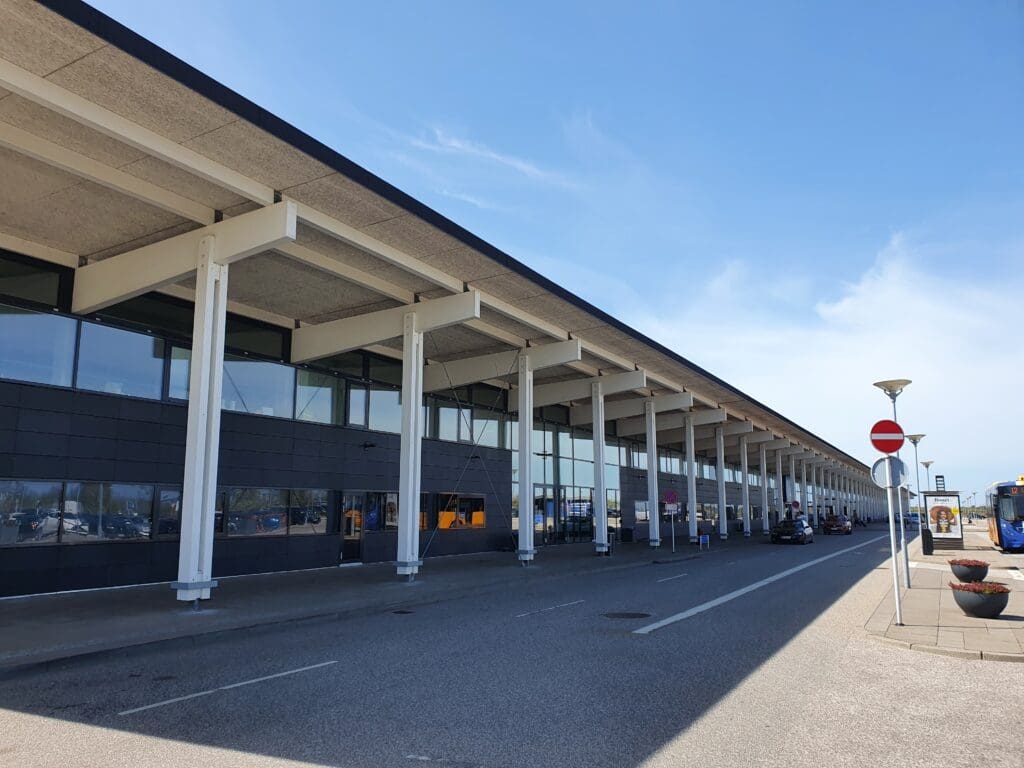
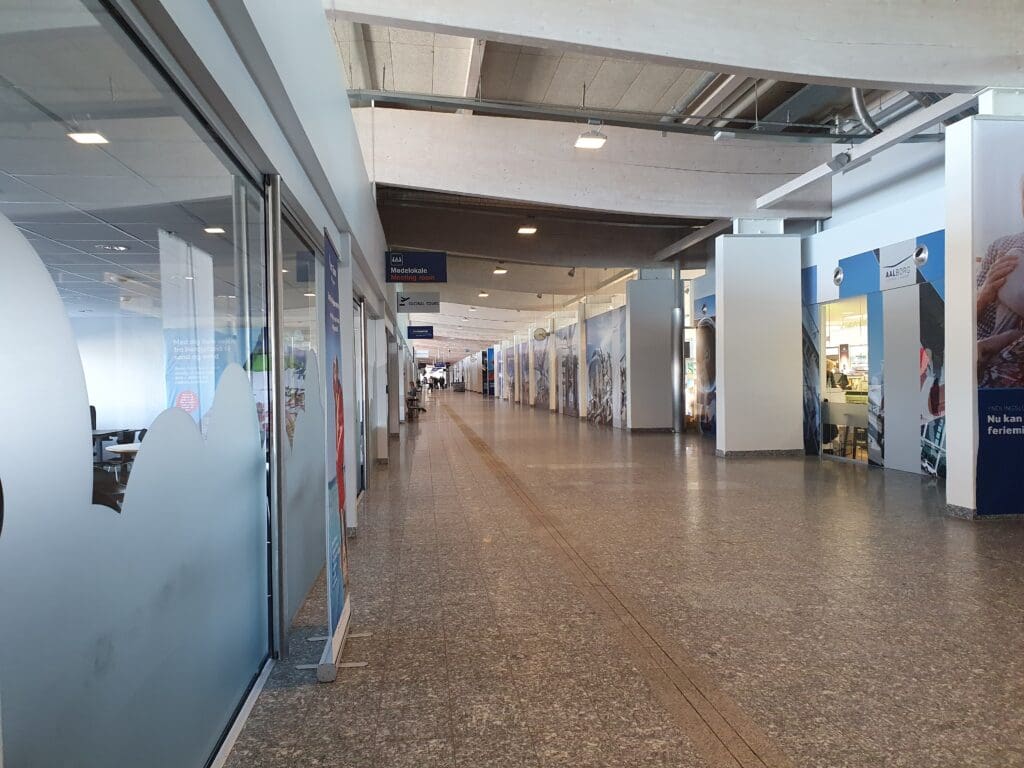
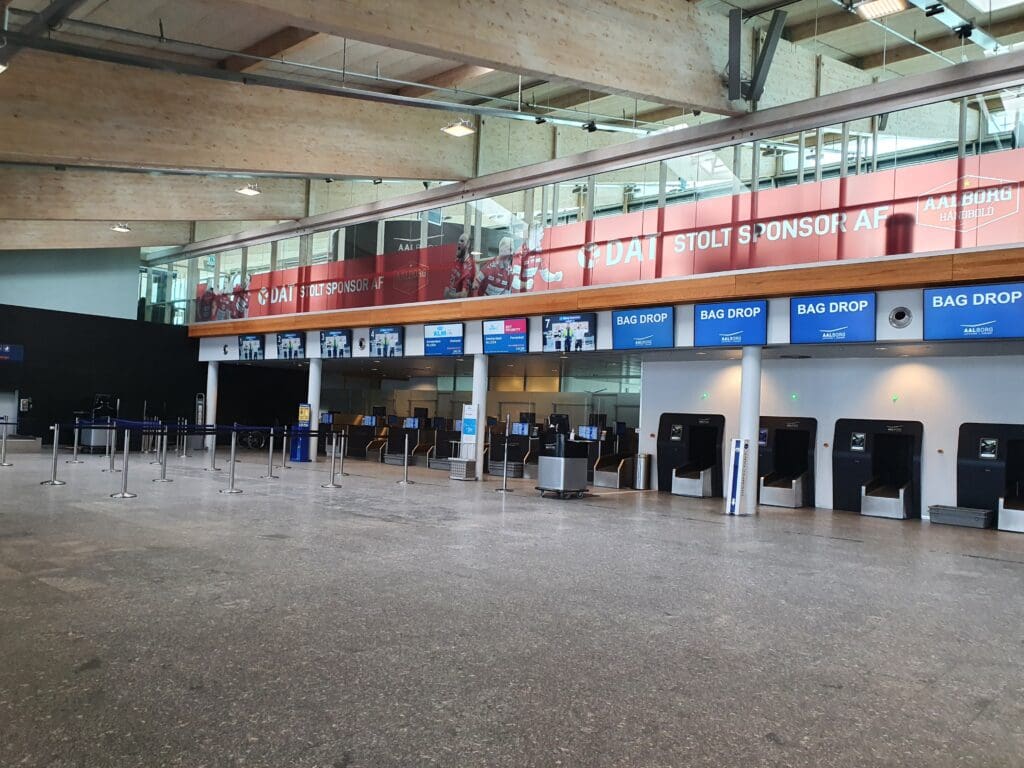
As far as airport terminals go, Aalborg Airport is still relatively new, with this having opened its doors back in 2001 before being expanded six years later. Today, this comes in the form of a long, rectangular-shaped low-rise building with plenty of glass on the outside and plenty of wood on the inside. Wandering around, that afternoon the landside portion of the terminal seemed to be almost entirely deserted with no more than a smattering of passengers lingering around waiting for check-in for their flights to open, and perhaps an equal number of local families visiting the airport for an afternoon jolly. Considering the lack of passengers, I was pleased yet not overly surprised to find this part of the terminal to be in a clean condition. Meanwhile, as many expect in 2022, this featured complimentary wifi which I found to work well throughout the terminal for the duration of my stay.
Whilst impressed by Aalborg Airport’s apparent cleanliness and its stylishly Scandinavian design, I was left with two things to make a slight grumble about. Firstly, as far as I could tell, the landside portion of the terminal lacked any sort of café, restaurant or shop, with just a small number of vending machines provided for those looking to purchase drinks and/or light snacks. Furthermore, plug sockets seemed to be incredibly hard to come by and I only managed to spot two available for public use in the landside area. However, any negatives can be easily forgiven thanks to the fact that the terminal is complete with a landside viewing area that provides views of much of the airport’s civilian apron. On a side note, given the relatively small size of Aalborg Airport, I was surprised to find that it publishes its own magazine, ‘Freedom’ which I found to be packed with a mixture of travel articles and advertisements.
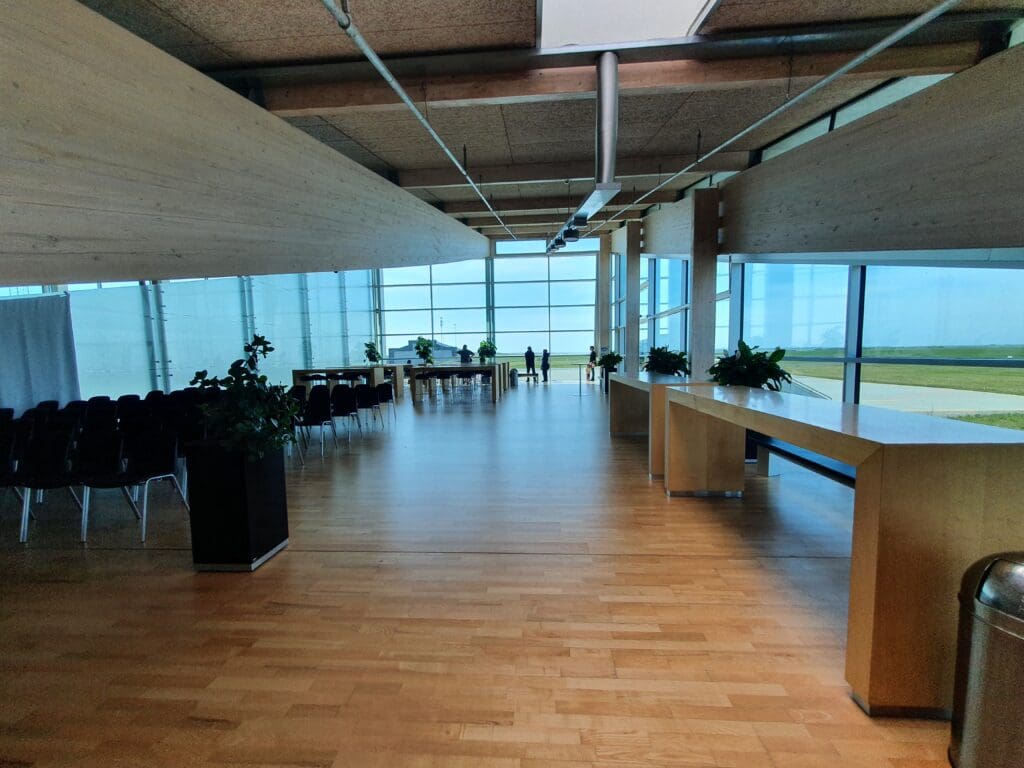
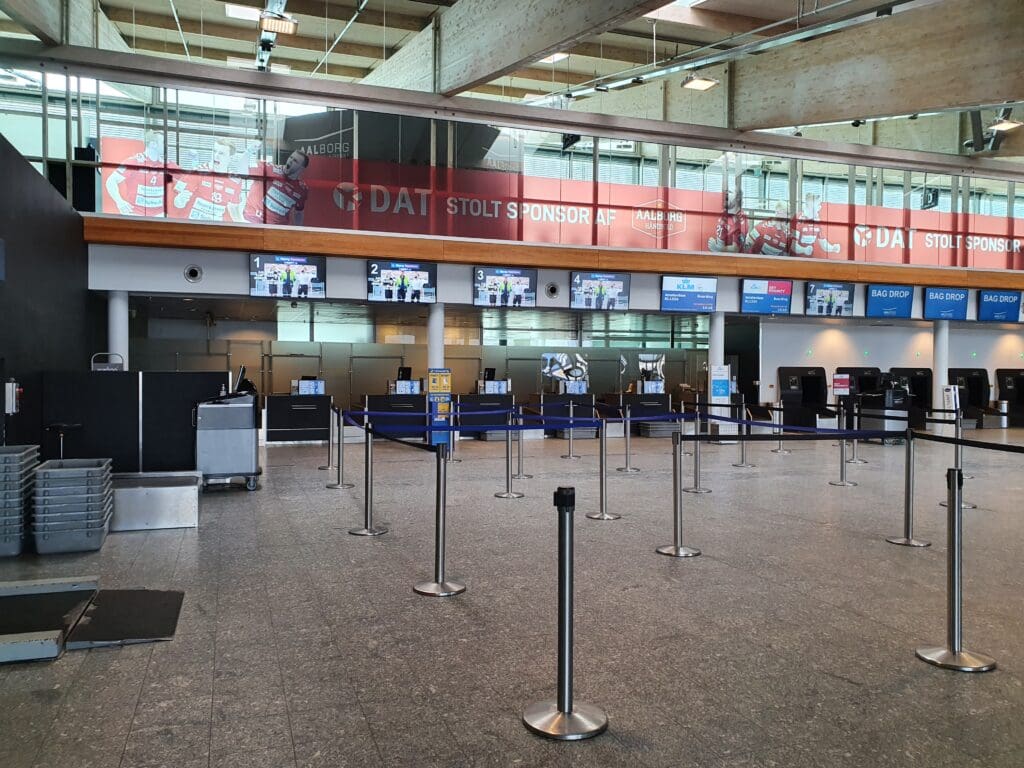
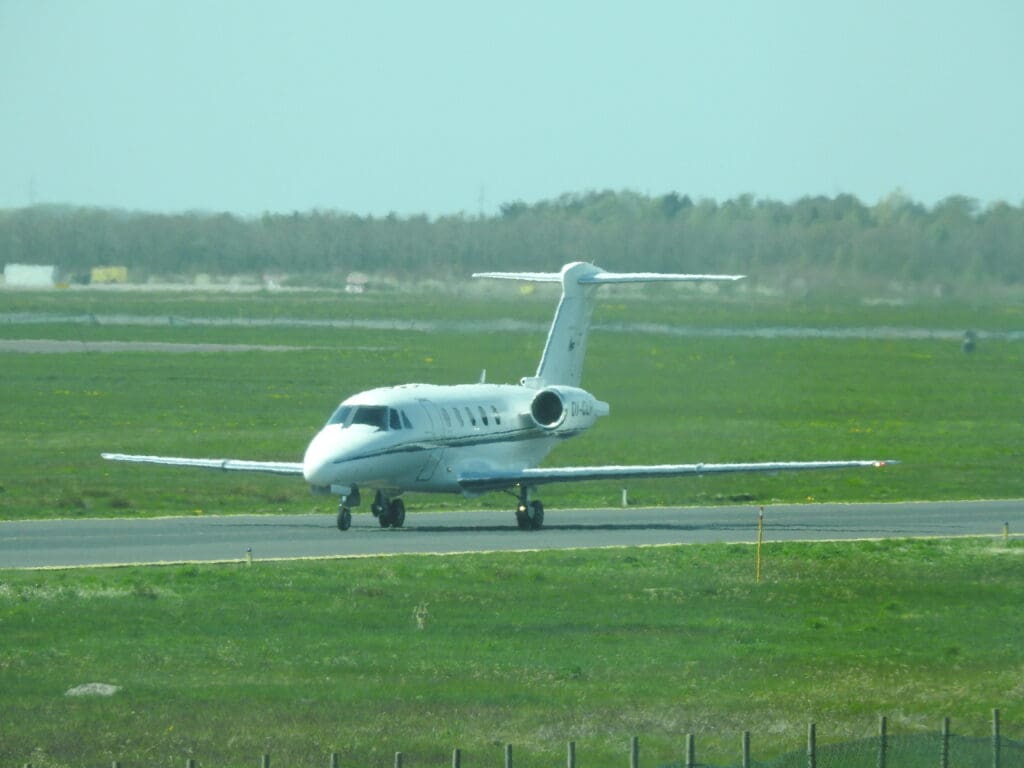
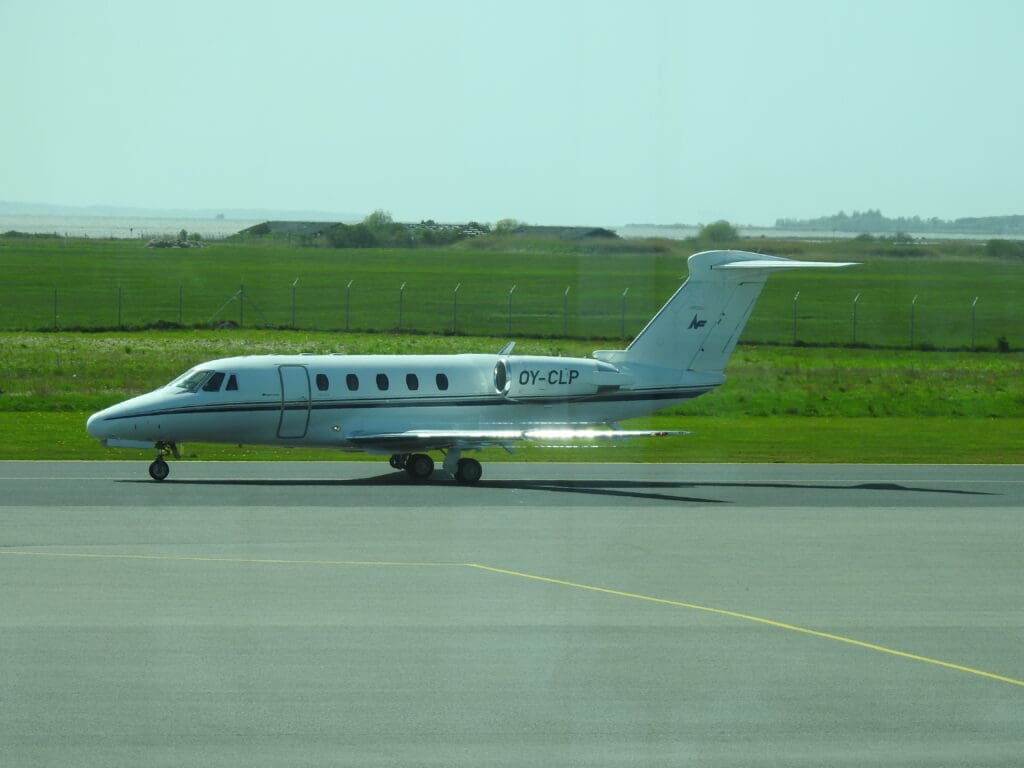
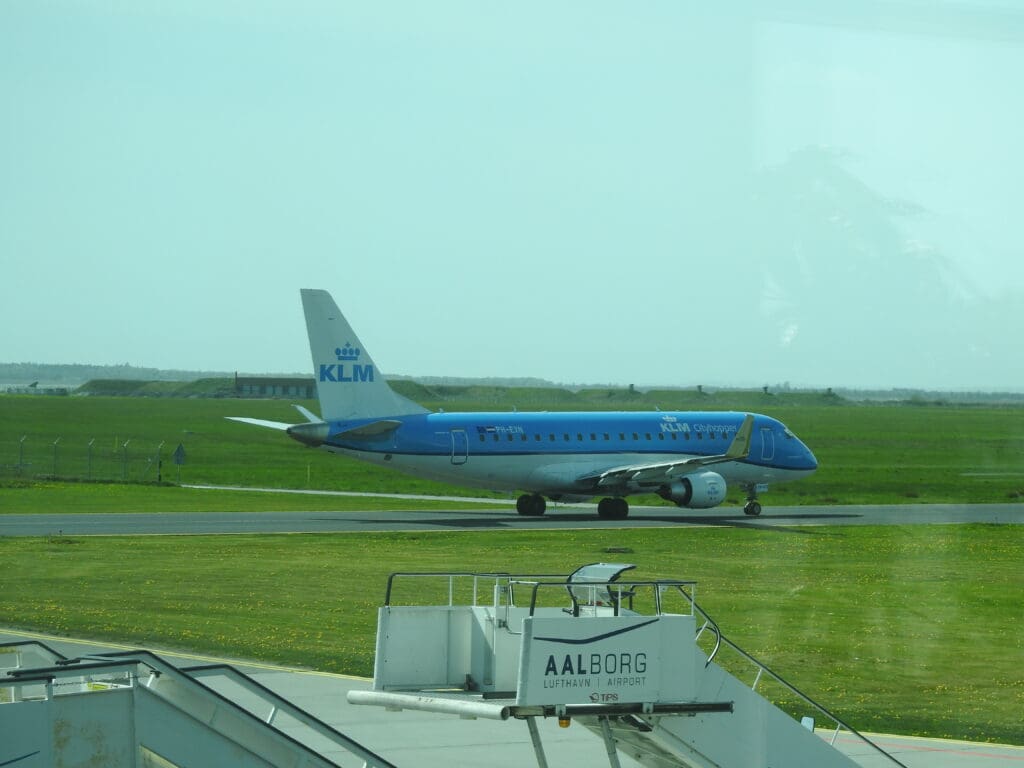
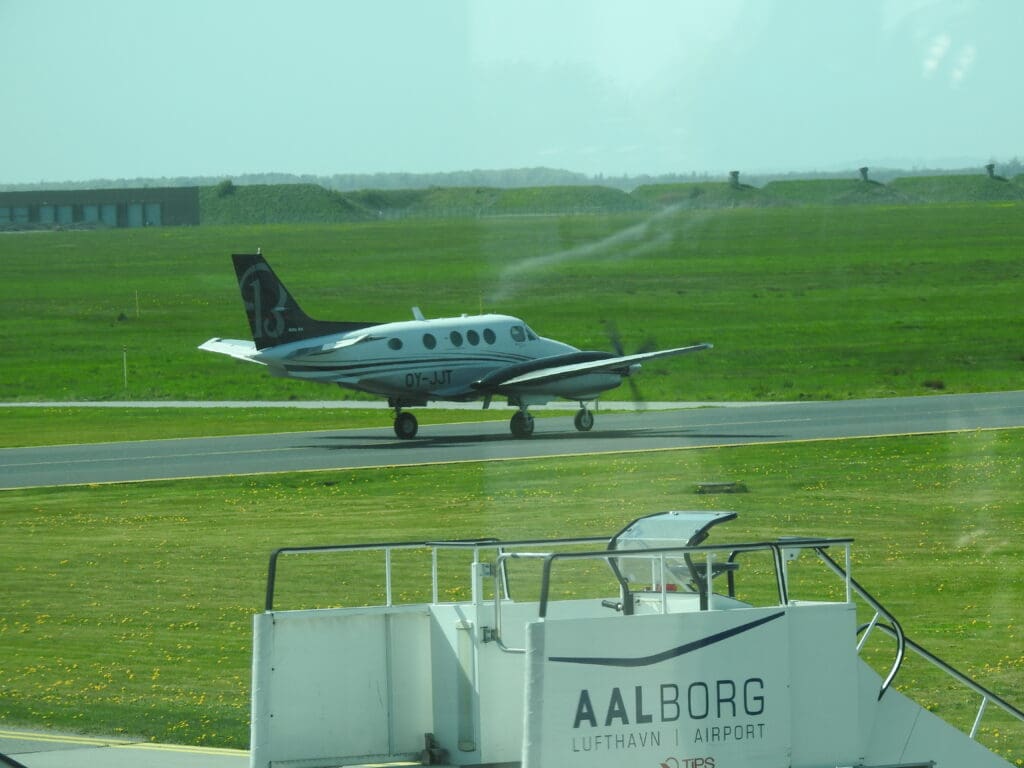
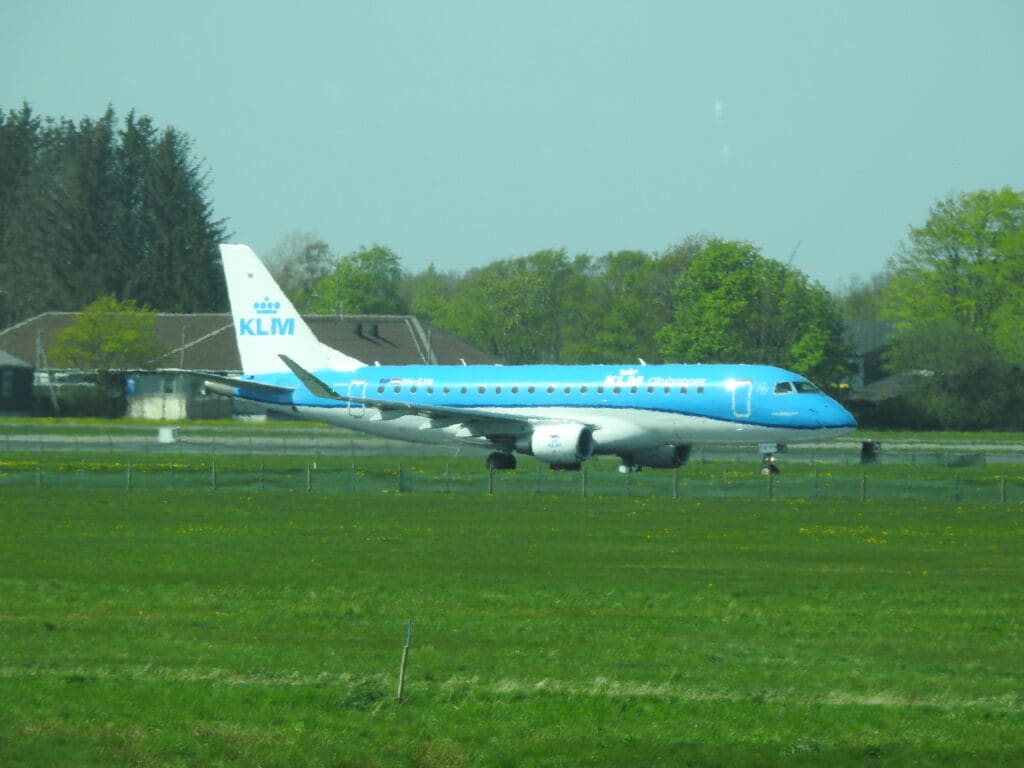
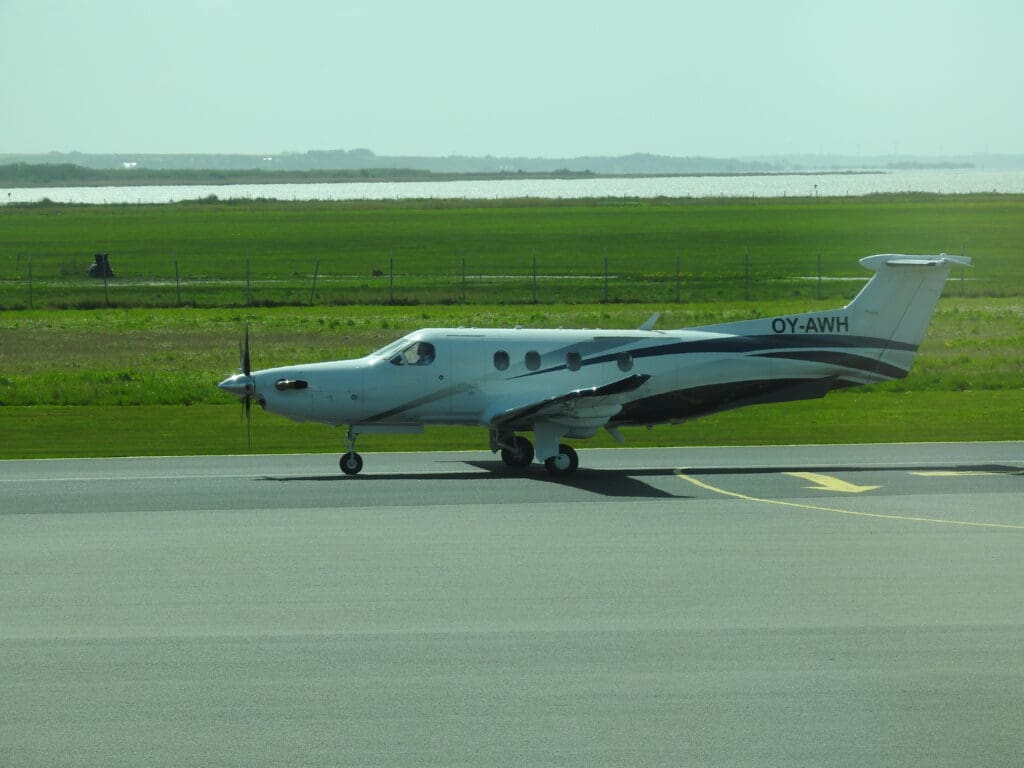
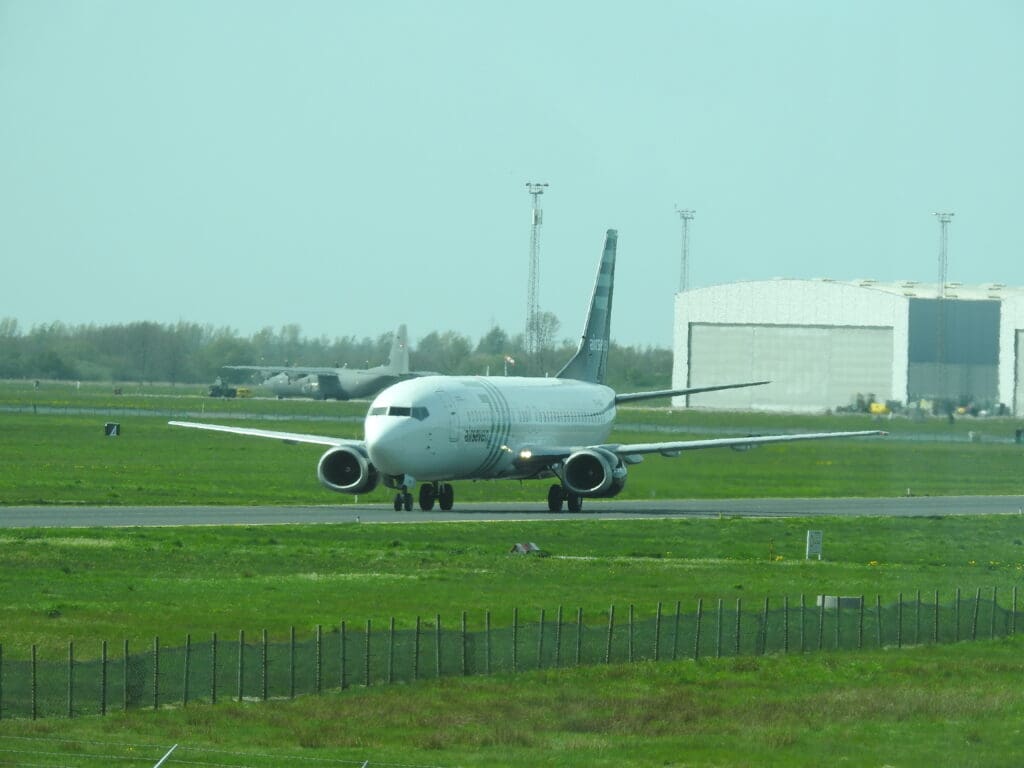
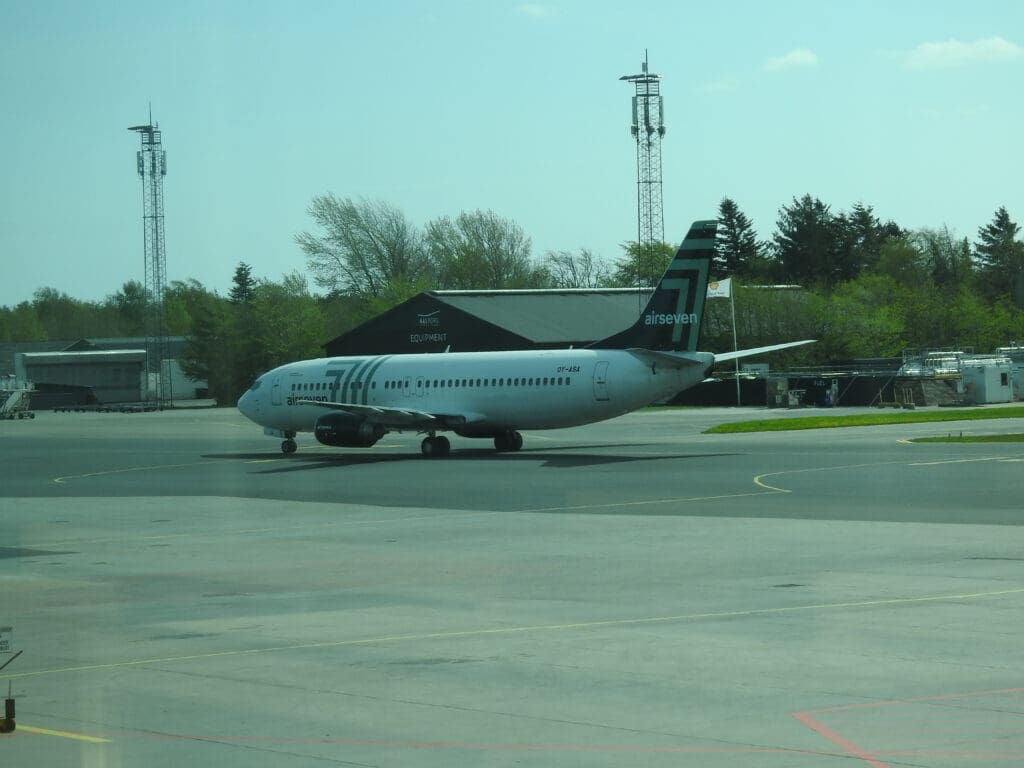
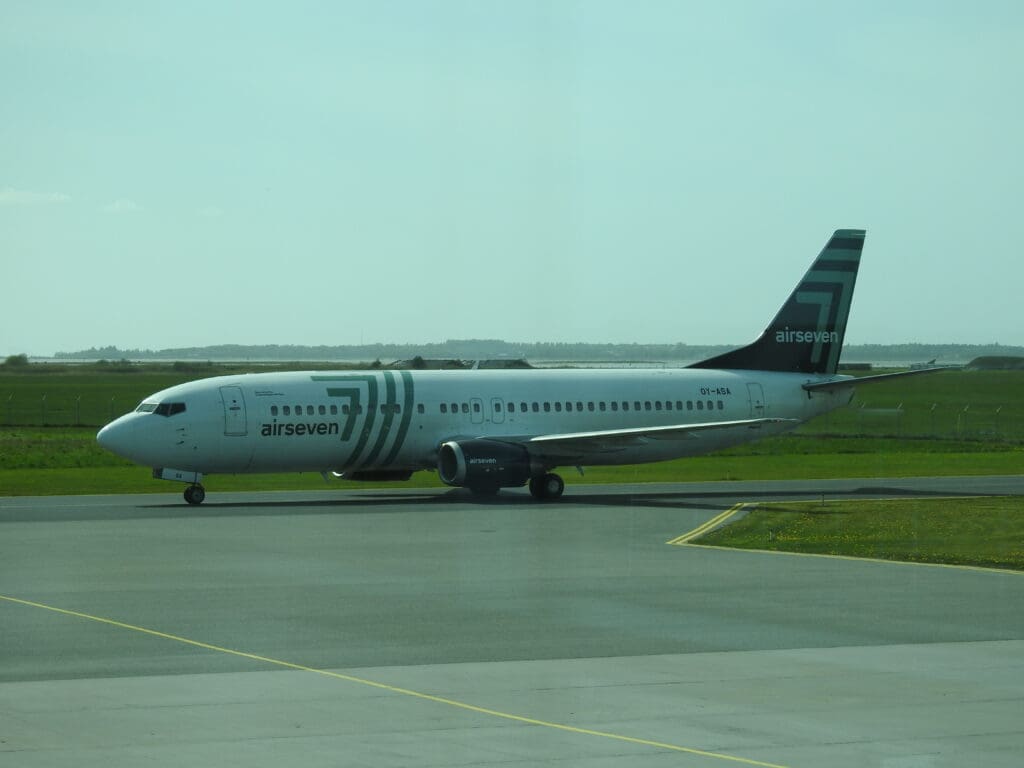
Given my status as an aviation enthusiast and with plenty of time on my hands, it was only natural that I passed the time at the terminal’s viewing gallery. Whilst Aalborg may be home to Denmark’s third busiest airport, during my four-hour stay a total of five airliners could be seen. These were provided by Airseven, Danish Air Transport, KLM Cityhopper, Ryanair and Scandinavian Airlines. Meanwhile, other aircraft came in the form of a locally based North Flying A/S Cessna 650 Citation VII which spent some time undertaking circuits, a couple of COWI Aerial Survey King Airs, and a sleek-looking Danish Pilatus PC-12NG that touched down at the end of a two-hour flight from Prestwick. Whilst all movements seen during my stay took the form of civilian aircraft, the majority of the airfield is occupied by the Royal Danish Air Force who operate the Bombardier CL-604, Lockheed C-130J-30, EH101 helicopter and Saab T-17 from Aalborg. Thus upon looking out over the airfield, plenty of hardened shelters, green camouflaged hangars and other buildings could be seen all around, although just a single Hercules could be seen sitting on the far side of the airfield.
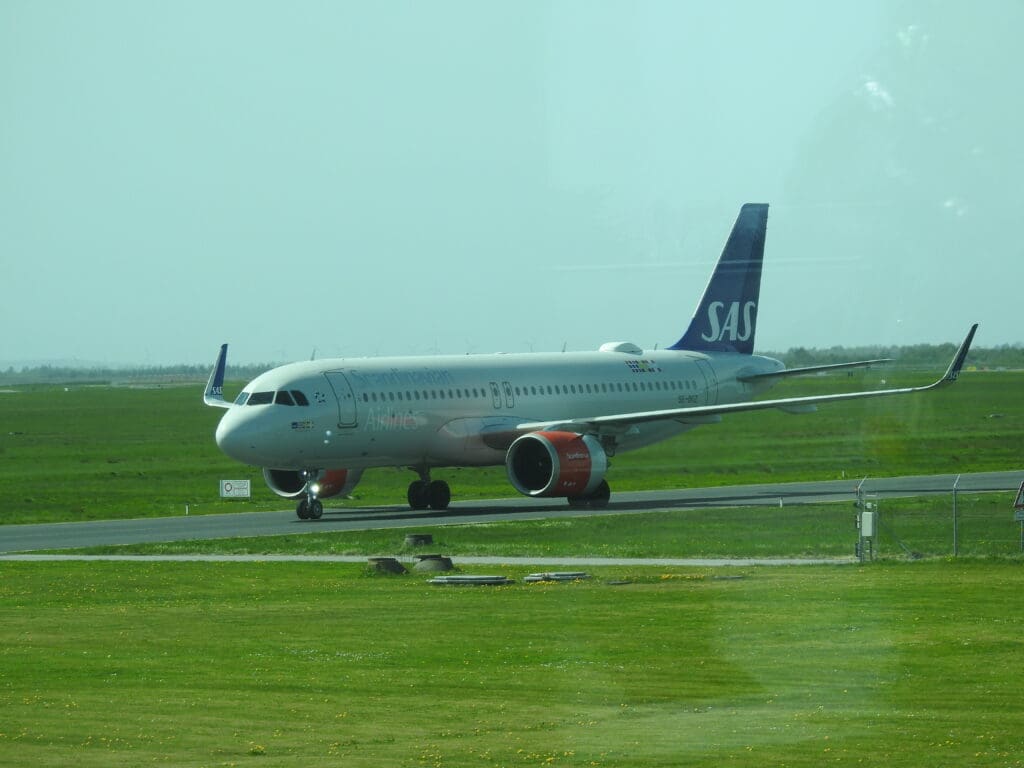
Whilst the viewing gallery had initially been busy, following a rush of movements in the mid-afternoon, this emptied and I ended up being the only person to remain there. After watching a Scandinavian Airlines Airbus A320neo fire up its two large engines before taxying away for its short flight to Copenhagen, I decided to head back downstairs and begin my journey to the airside portion of the terminal. No more than a couple of minutes later I arrived at the terminal’s single security checkpoint. Whilst I imagine that this may end up being rather busy during peak times at the airport, that afternoon this was empty and thus I was able to walk straight up to this before going through the usual checks. That afternoon, this was a quick and easy process, and I found the security staff to all be very friendly.
Once through security, I was free to explore the nooks and crannies of Aalborg Airport’s airside area. As with the landside portion of the terminal, I was very impressed with the stylish nature of the terminal, this seemed to be clean and modern, with plenty of natural light flooding in and giving this a bright and airy feel. Spanning across two levels, this part of the terminal provided passengers with plenty of space to sit and wait for their flights to depart, whilst a good view of the apron could be had from the upper floor. Fortunately for those fancying something to eat or drink, unlike in the landside area, various options were available. These included a local gastropub, ingeniously named ‘Gastro Pub’, whilst those looking for a hot drink could stop by the Penny Lane coffee shop, which, despite its name, did not appear to be Liverpool-themed. Finally, a fancy-looking hybrid convenience store-café named D.E.L.I. was also on offer. Unfortunately, Scandinavia is not exactly known for its cheap prices, and with airport inflation thrown into the mix, the prices of many items at all of these eateries seemed to be somewhat eye-watering. For example, a cappuccino at Penny Lane would have set me back 45kr (around £5.10). Finally, for those looking to do some shopping before departure, a shop was on hand with the usual selection of cosmetics, perfumes, drinks and souvenirs.
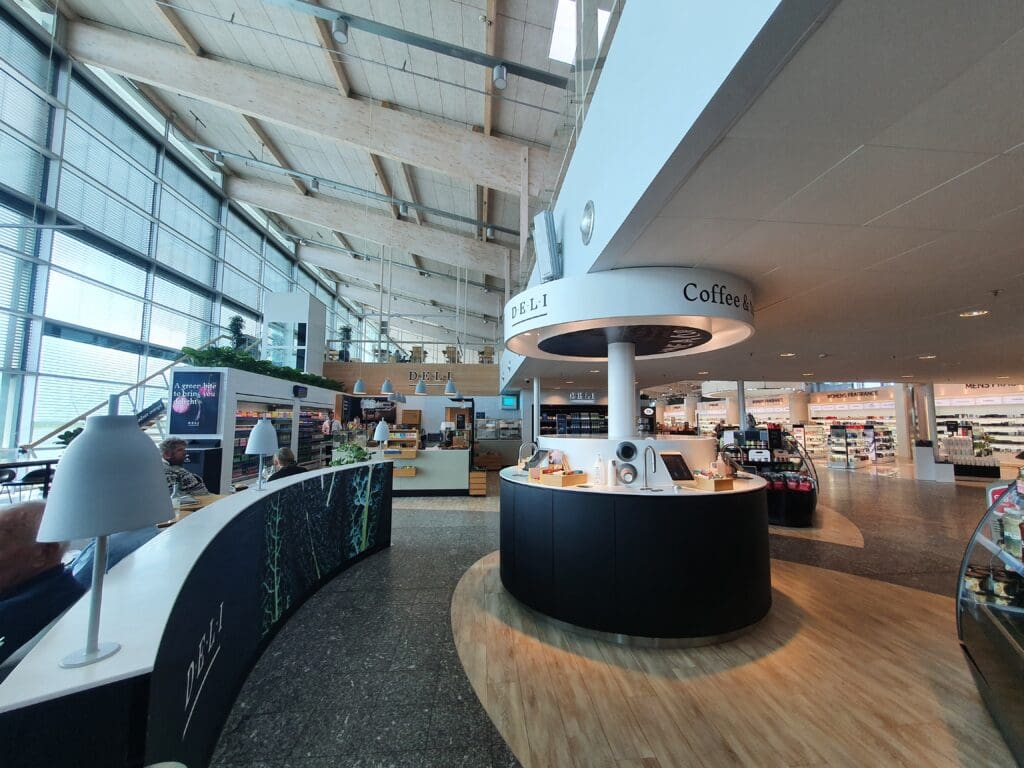
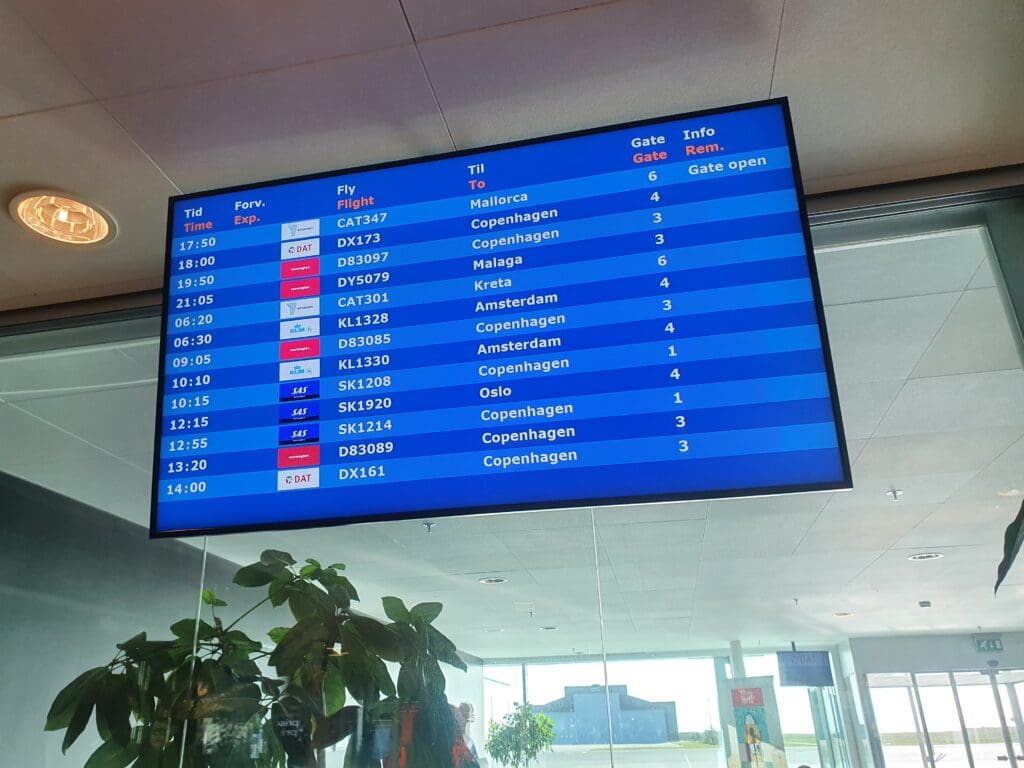
As time passed, the terminal began to fill up a little although this never became particularly full, with buckets of space remaining available for passengers to sit and wait. Focusing on my fellow passengers, many of those inside the terminal appeared to be either late middle-aged and elderly flyers or families with young children – the majority of whom were heading off to Palma de Mallorca on Airseven’s Boeing 737 Classic operated service. As I waited, the first movement in a couple of hours could be seen taxiing in, with this coming in the form of a green and white COWI Aerial Survey Beechcraft King Air 200. This was soon followed by a modern and sleek-looking Bombardier Challenger 350 operated by NetJet’s European arm, with this having arrived from Oxford.
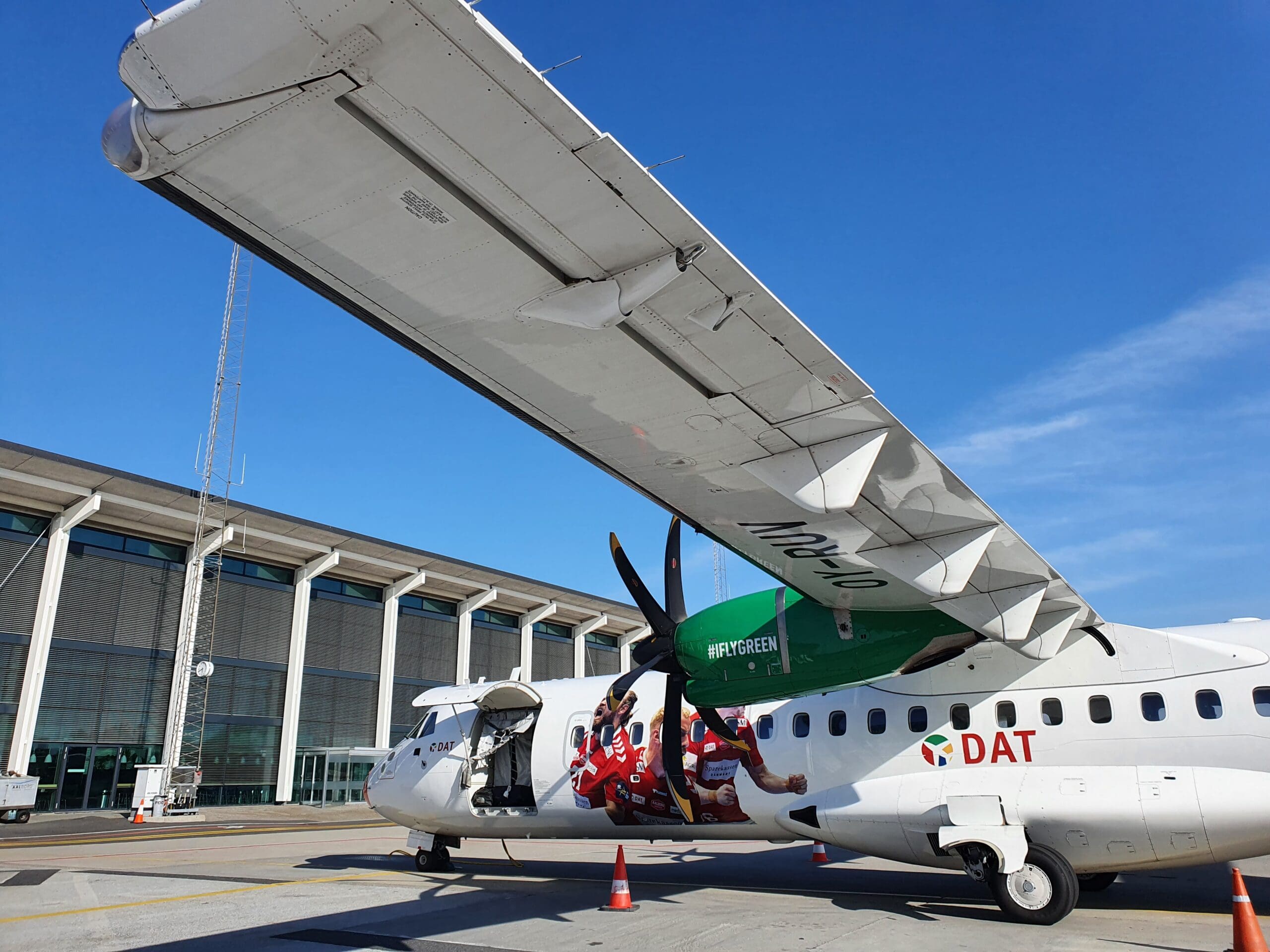
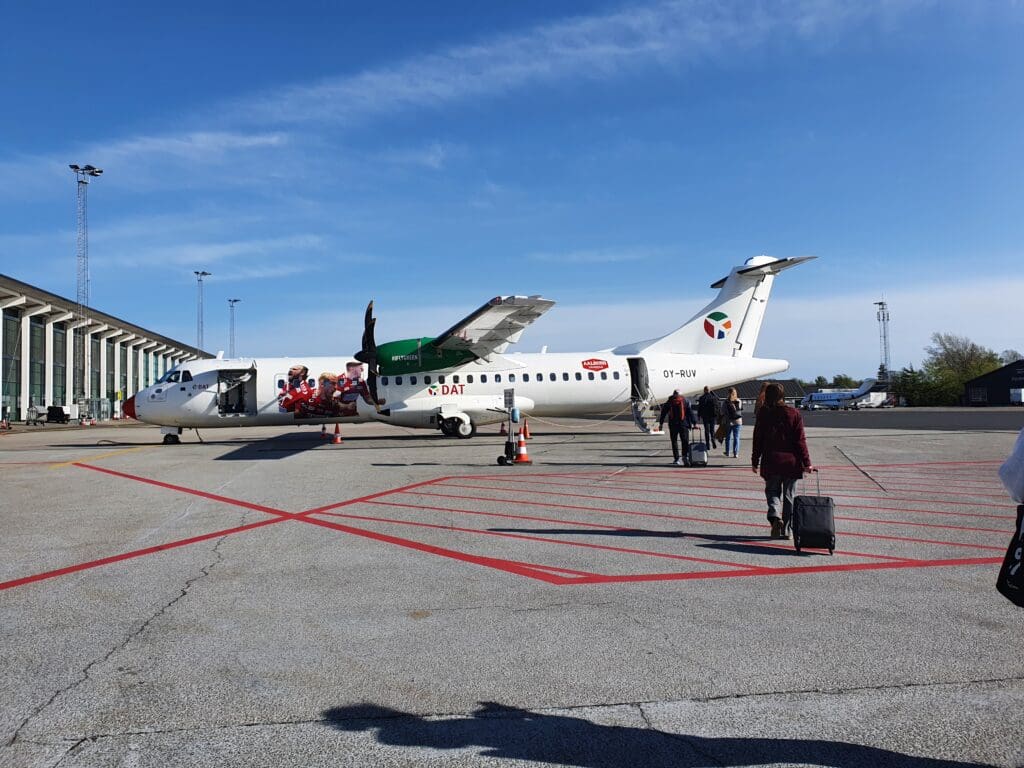
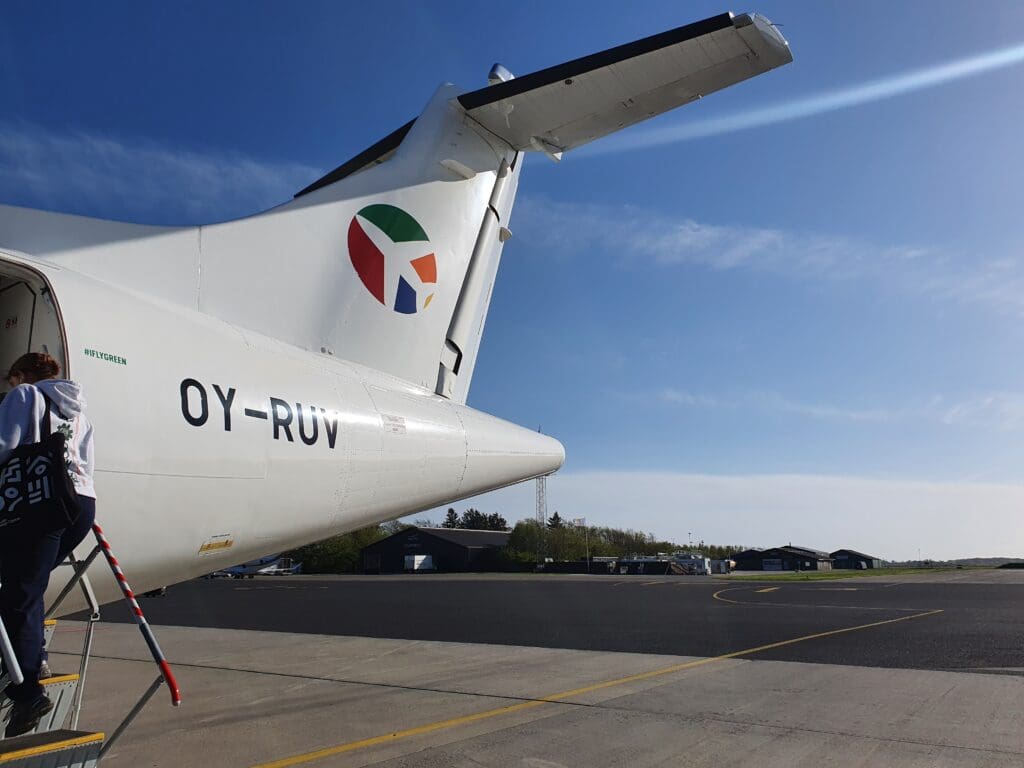
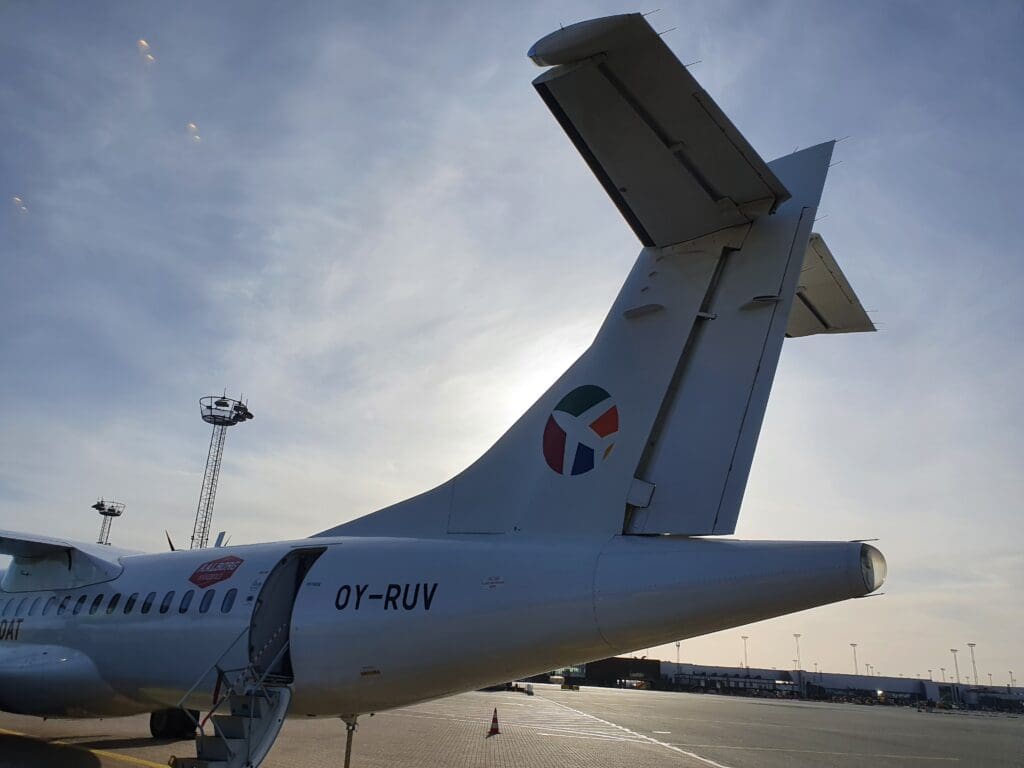
In the week before my flight, DAT had deployed one of the oldest ATR 72s still flying passengers anywhere in the world on the route between Aalborg and Copenhagen. Being an enthusiast, I had hoped to end up on this vintage 32-year-old turboprop. However, on the day of my flight, I was very slightly disappointed to see that a much newer example had stepped in to take its place on the route. This came in the form of ATR 72-600, OY-RUV. Manufactured in Toulouse, this aircraft first took to the French skies in October 2018 with the test registration F-WWEG, making the aircraft around three and a half years old at the time of my flight. Sporting a red nose to add a flair of excitement to DAT’s mostly white livery, in November 2018 the aircraft was ferried up to Denmark and soon entered commercial service with the carrier and has since received decals promotion Aalborg’s local handball team. In the week before my flight, the aircraft had operated a modest total of 24 scheduled and charter services across Scandinavia, visiting the Danish airports of Aalborg, Billund, Copenhagen and Ronne, as well as making trips to Karlstad and Luleå in Sweden.
Following its short flight over from the Danish capital, at 1823 the ATR pulled into Stand 4 with one engine running. Upon coming to a halt, the engine spooled down and a small team of ground crew sprang into action before a very small number of Aalborg passengers emerged. By this time, most of those bound for Copenhagen appeared to have already gathered inside the terminal at Gate 4 and after arriving there I took a seat and waited for boarding to commence. A very short time later, two smartly dressed DAT ground staff members appeared and at the flight’s scheduled boarding time of 1740 an announcement was made in Danish and English requesting all passengers to proceed forward for boarding. Being a domestic flight, just as in the UK, no identity check was undertaken with passengers simply advised to scan their boarding passes on the scanner before heading outside. No more than a minute after the boarding announcement had been made, I scanned my boarding pass before being wished a nice flight. Without delay, I then journeyed out into the chilly early evening air and over to the waiting turboprop.
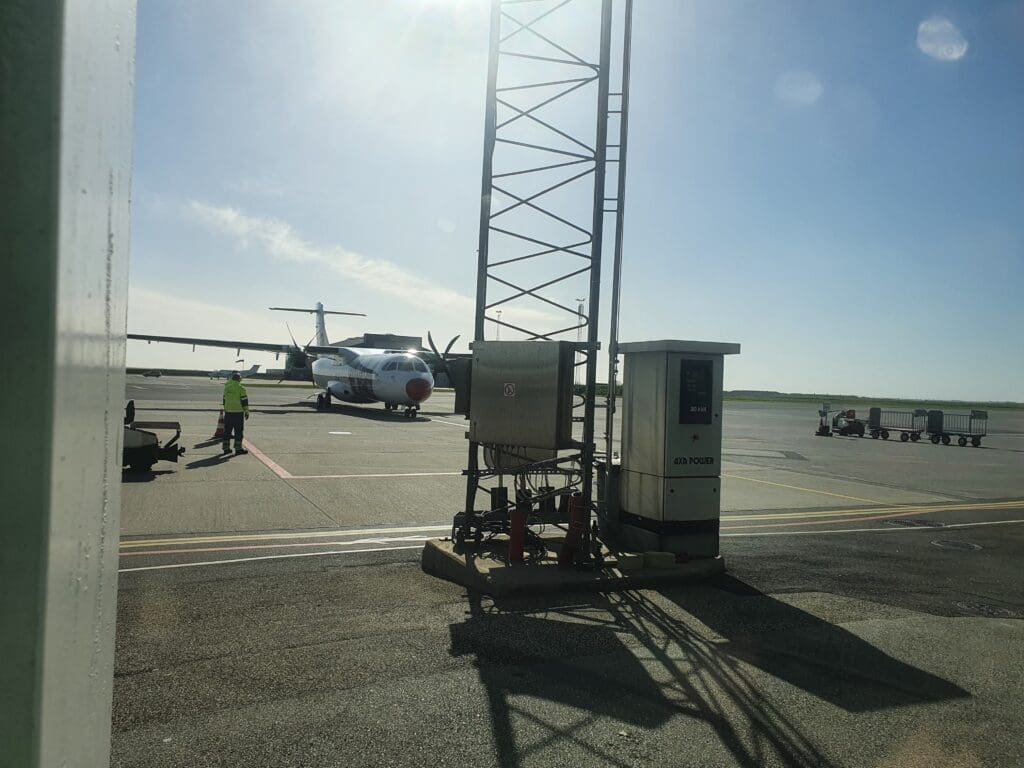
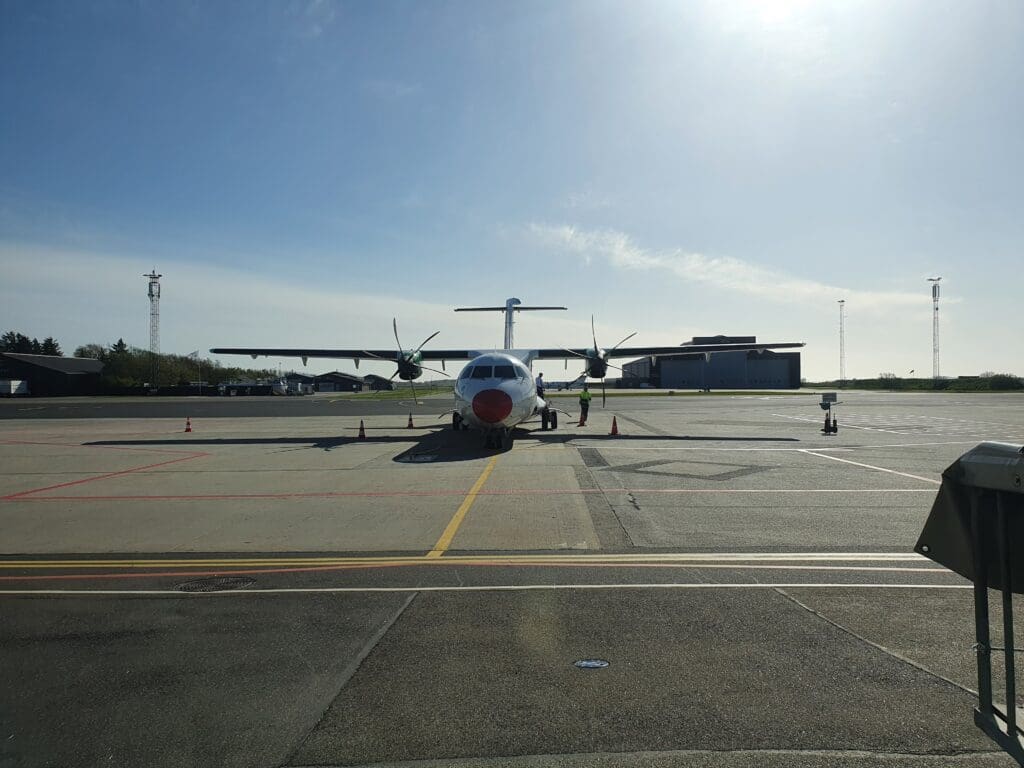
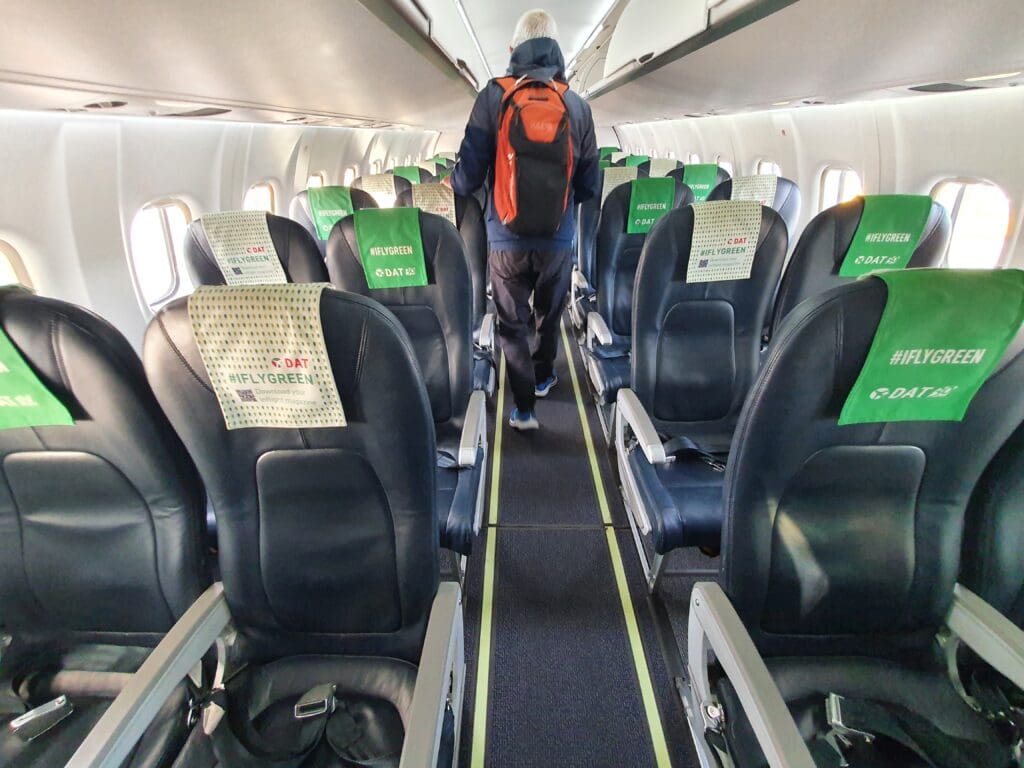
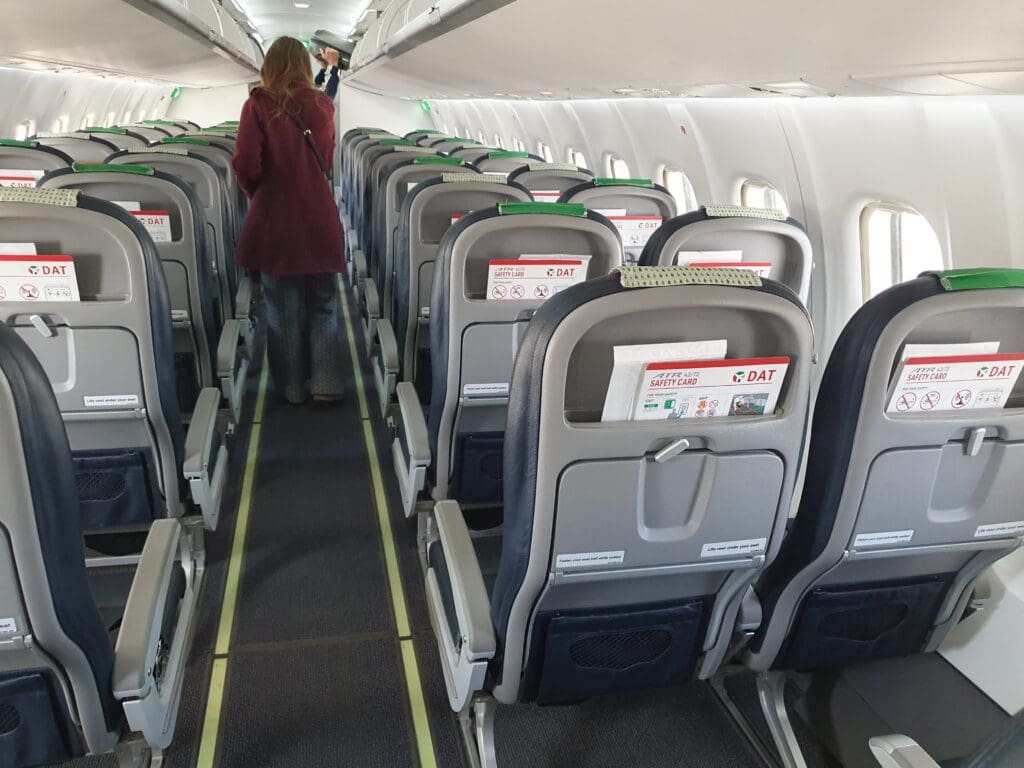
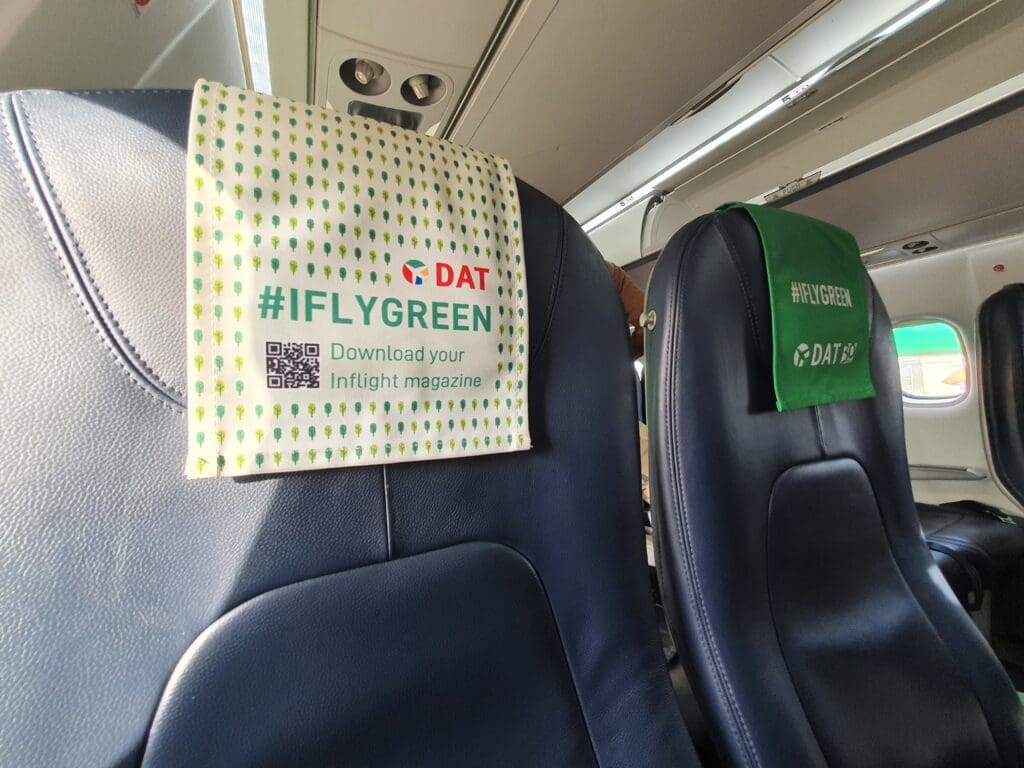
After snapping a few photos of the shining ATR 72 that would power us through the sunny Danish skies, I made my way up the aircraft’s built-in steps before entering the small galley at the rear of the aircraft. As soon as I entered the aircraft I received a warm and friendly greeting in Danish, after which I turned left and made my way into the passenger cabin. Inside, DAT’s ATR 72s feature a standard configuration for the aircraft, with these coming complete with 72 thin and modern seats arranged in a 2-2 configuration. On this aircraft, I found each of these to be covered in a dark blue (faux?) leather and topped with disposable antimacassars promoting DAT’s thirtieth anniversary and commitments to sustainability, with some of these ingeniously featuring a QR code that linked to the airline’s inflight magazine. Having ended up being one of the first passengers to board the aircraft, most seats remained available as I trundled through the cabin and I ended up picking Seat 4F which allowed for a good view of both the world below and the six-blade propellers of the ATR 72’s starboard engine.
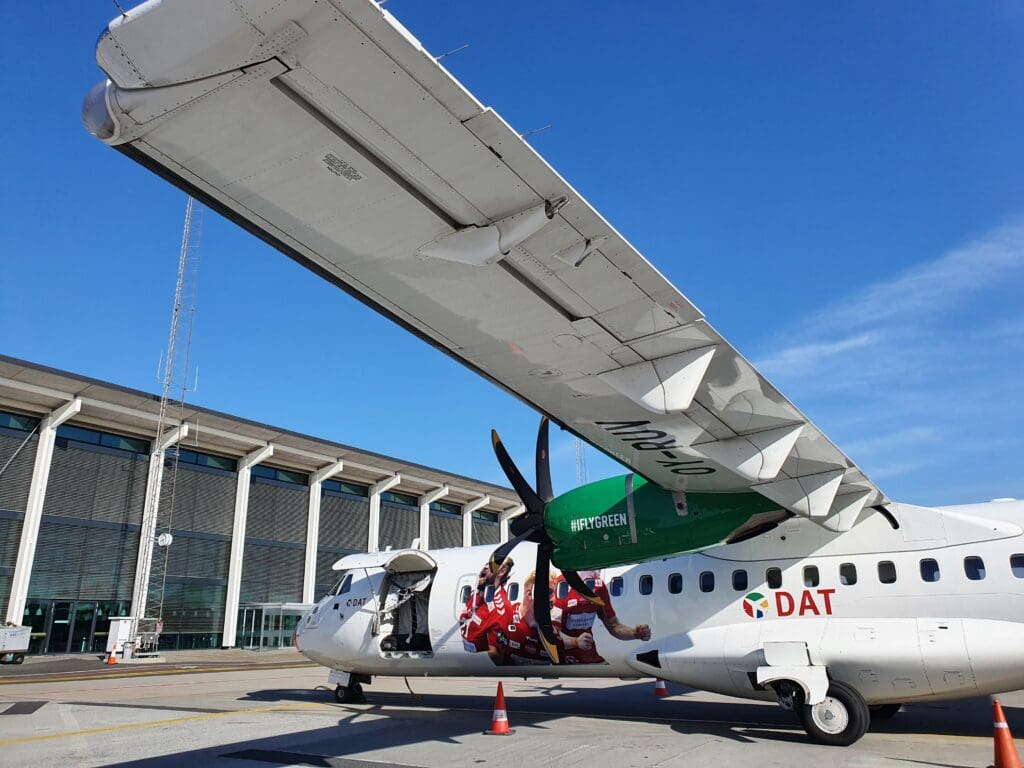
Upon taking my seat, I found this to be pleasantly soft, however, this did not seem to provide a fantastic amount of legroom. Nevertheless, given the flight’s short duration, this did not prove to be a massive issue. Meanwhile, other than a few coffee stains and scratches, the area around my seat appeared to be clean and in relatively good condition. Onboard, each seat features both a literature compartment which contained a laminated safety card and a large sickbag, as well as an empty seatback pocket. Finally, a coat hook could be found on the side of each seat.
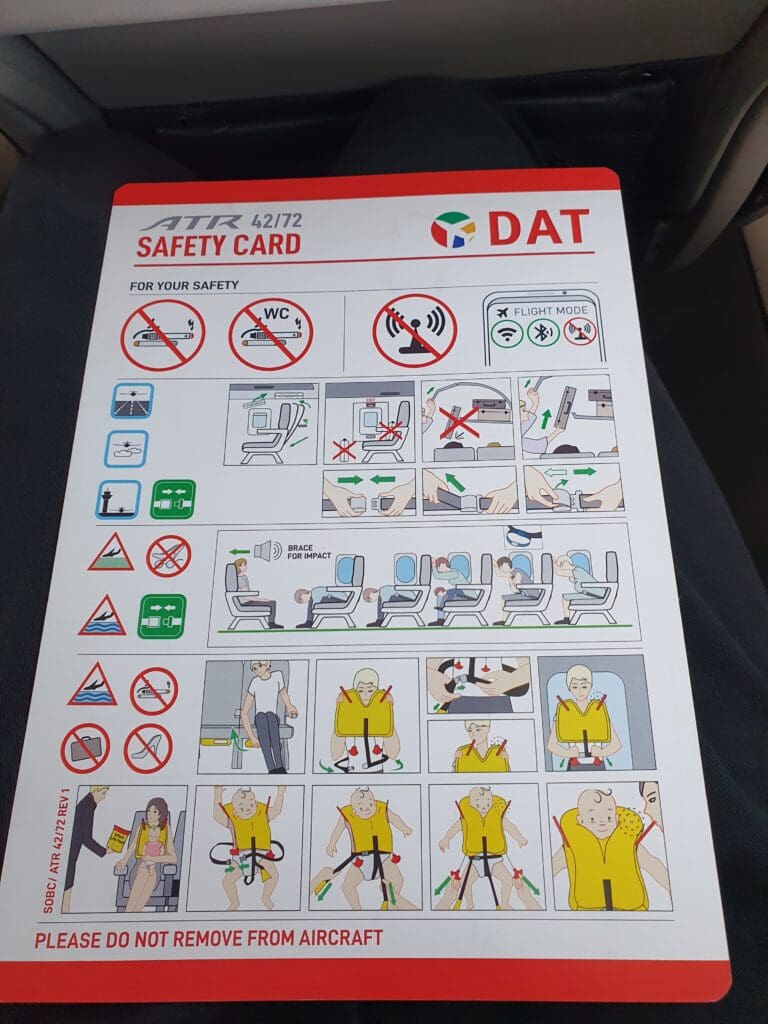
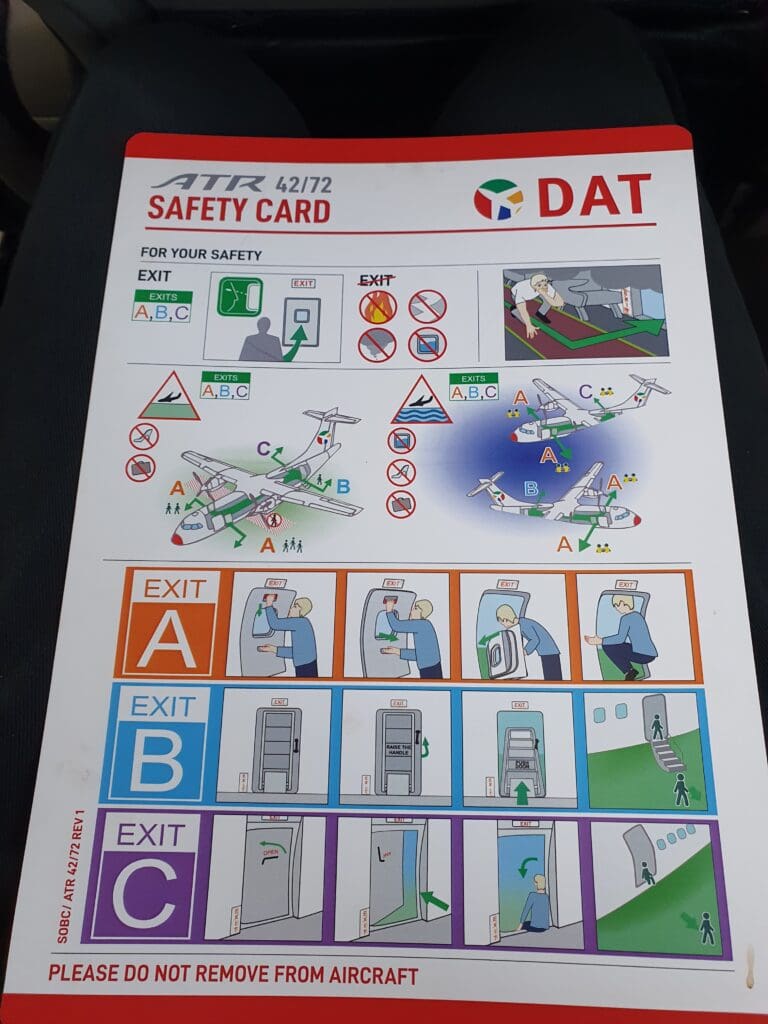
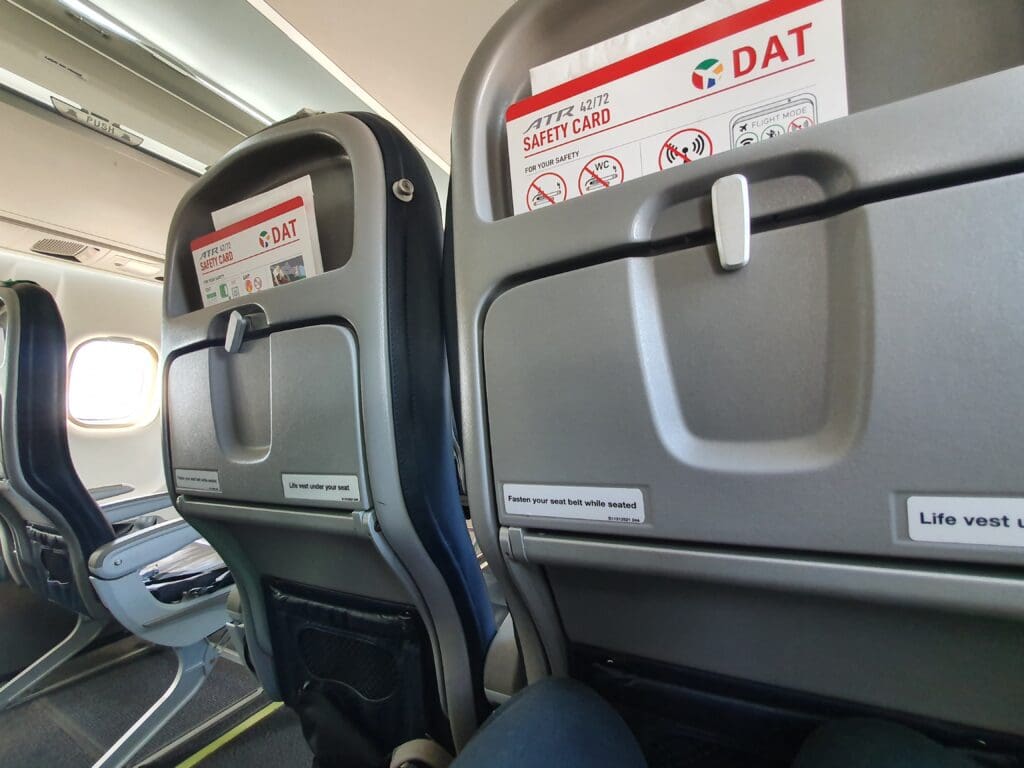
That evening, the load for the ride over to Copenhagen was to be very light, with no more than twenty passengers onboard. Thus, the ‘boarding complete’ announcement was made a very short time after boarding commenced. At 1745, the Captain performed a quick welcome speech in Danish and English which featured the usual thanks, a mention of our 35-minute flight time and a warning that we could expect some turbulence immediately following our departure although the rest of the flight would be smooth. During this, the flight attendant stationed at the front of the aircraft passed through the cabin ensuring all was in place for departure before taking their position in the aisle and undertaking a safety demonstration as a pre-recorded announcement rang out. These instructions were given first in Danish, followed by Australian-accented English. As this demonstration was underway, the two Pratt & Whitney Canada PW127M engines commenced their seemingly quiet start-up procedure before the propellers whirled into life.
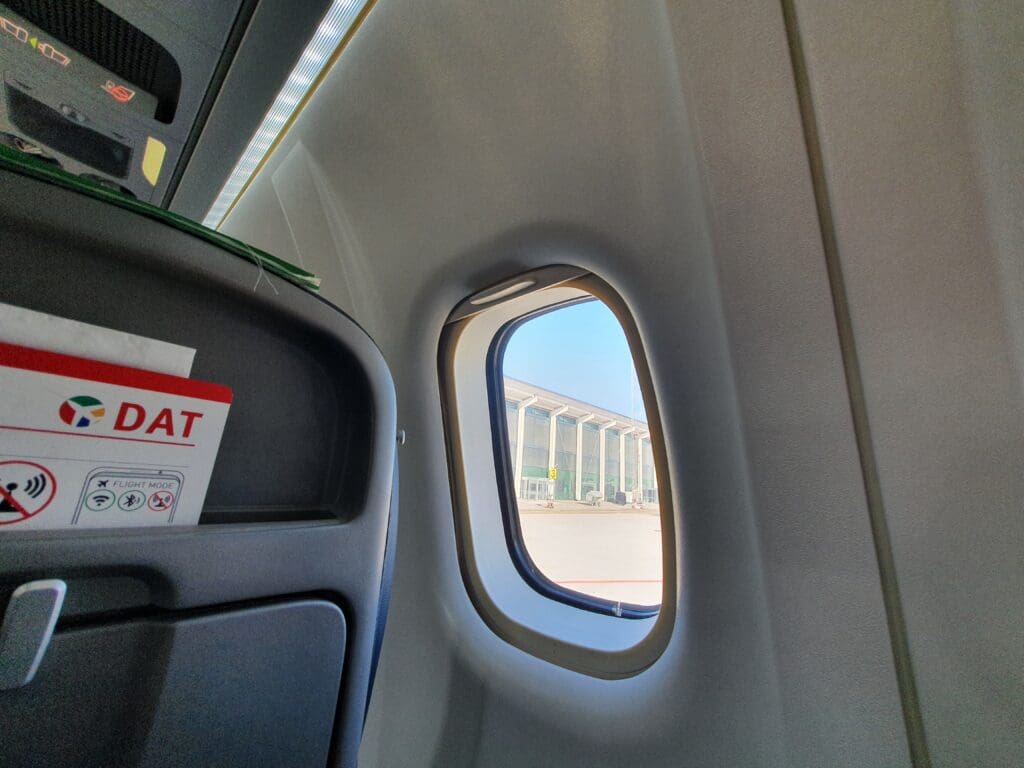
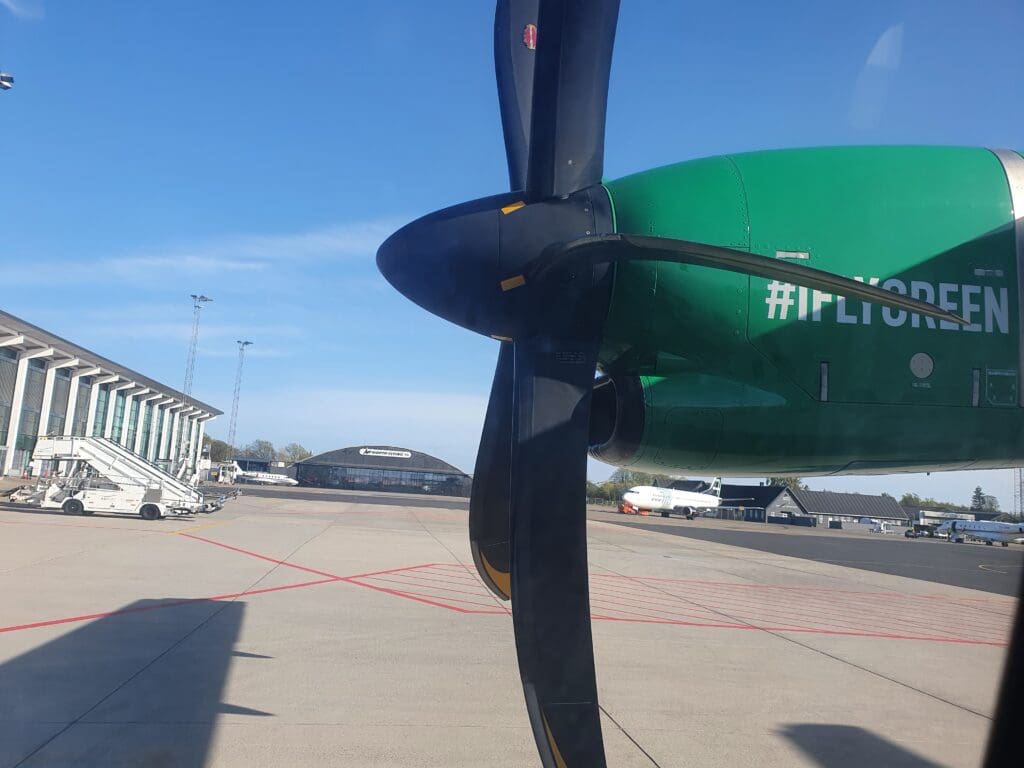
As the English version of the safety instructions neared its end, at 1753 the aircraft cautiously powered forward out of its stand and wheeled around to the right, following the Mallorca-bound Airseven Boeing 737 Classic to the runway. After leaving the apron, the aircraft trundled along past a selection of military hangars and reinforced aircraft shelters before turning right and taxiing down Runway 08R. With one minute still to go until the flight’s scheduled departure time, at 1759 the ATR 72 taxied onto Runway 26R before the engines spooled up, filling the cabin with plenty of noise and vibration as the airliner began its short take-off roll. Perhaps unsurprisingly given the ATR’s light load, the aircraft rocketed upwards into the skies within a matter of seconds, allowing for a good view of the military side of the airfield as well as the single Hercules seen waiting outside in the open air for its next mission.
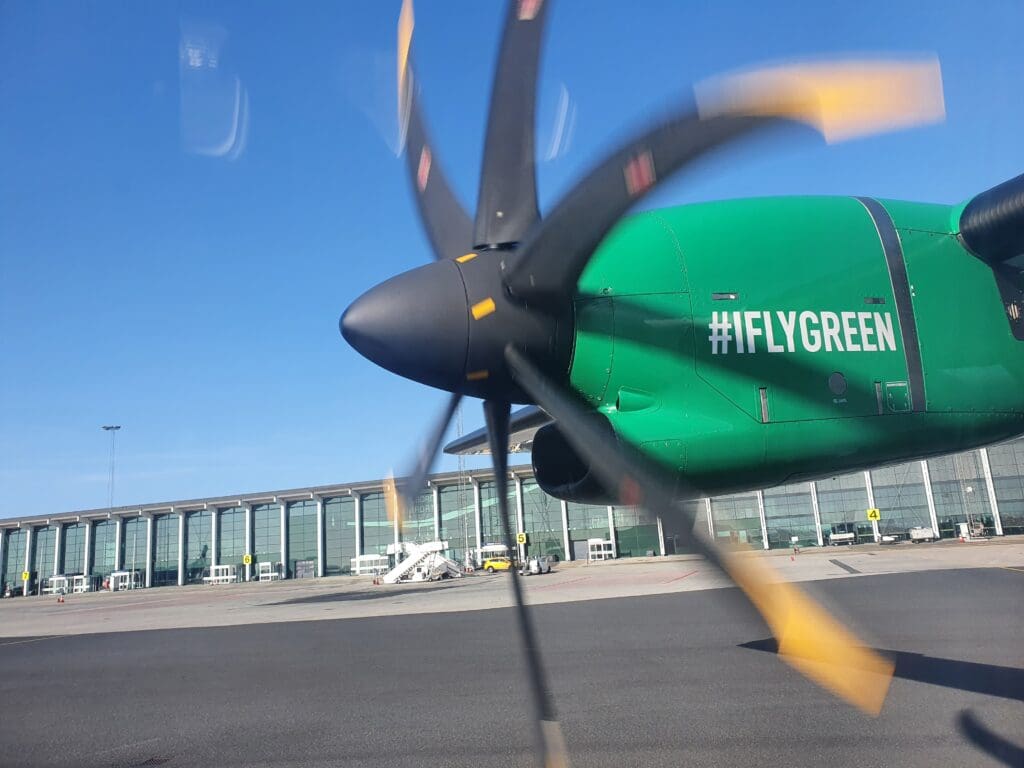
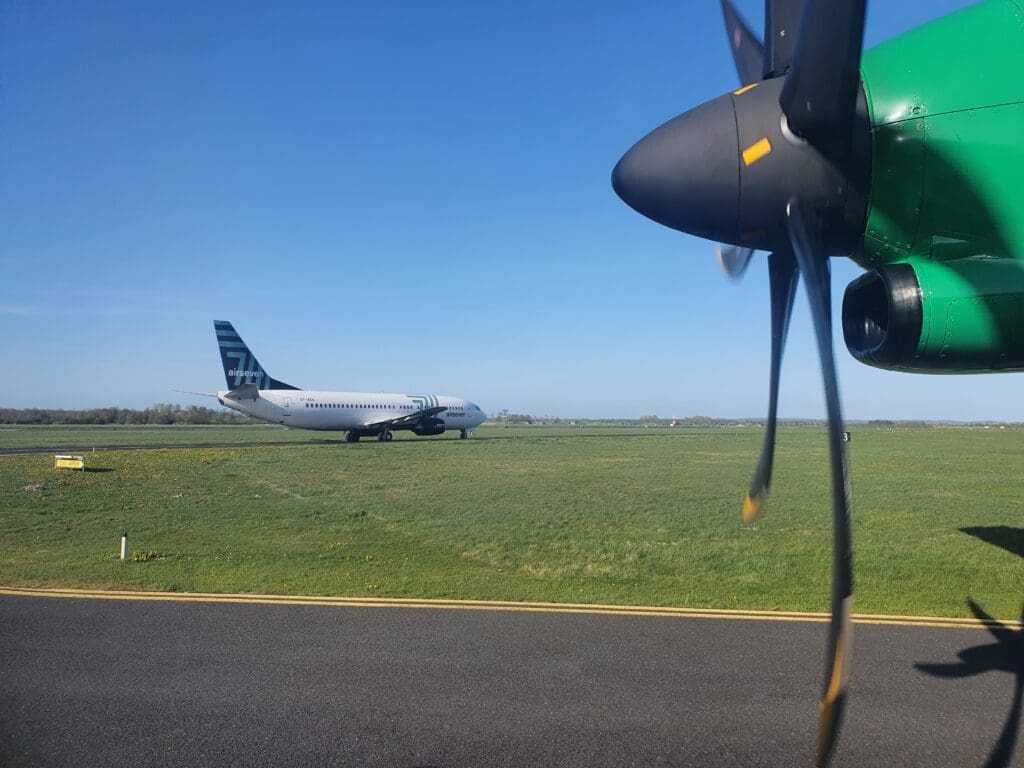
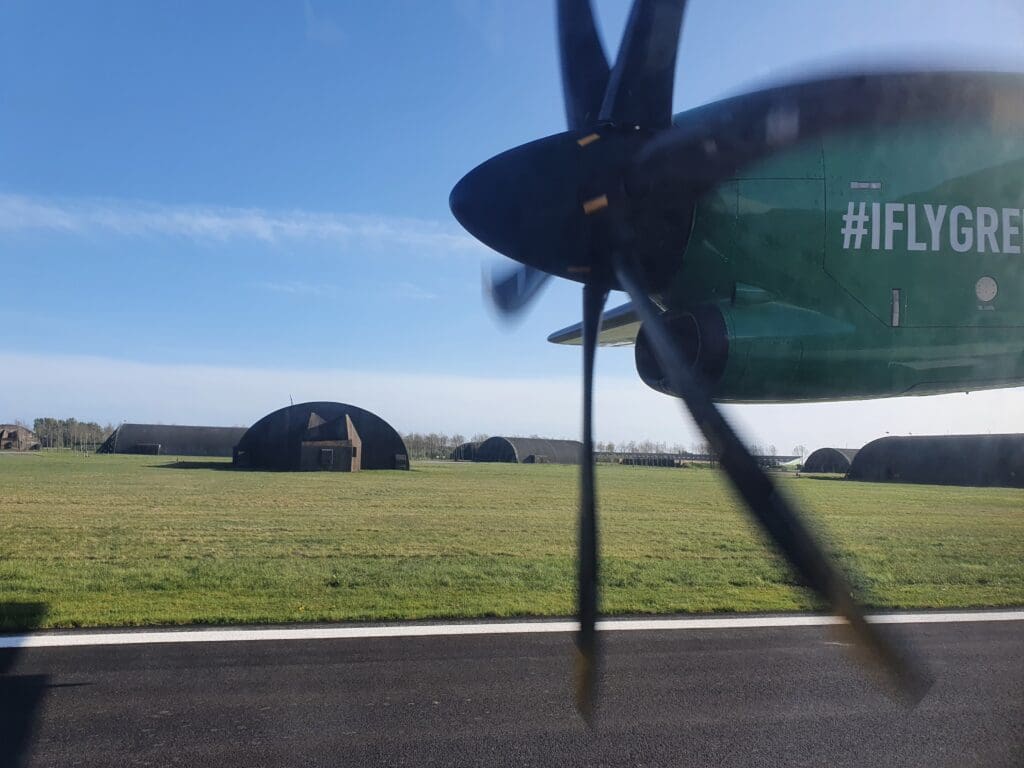
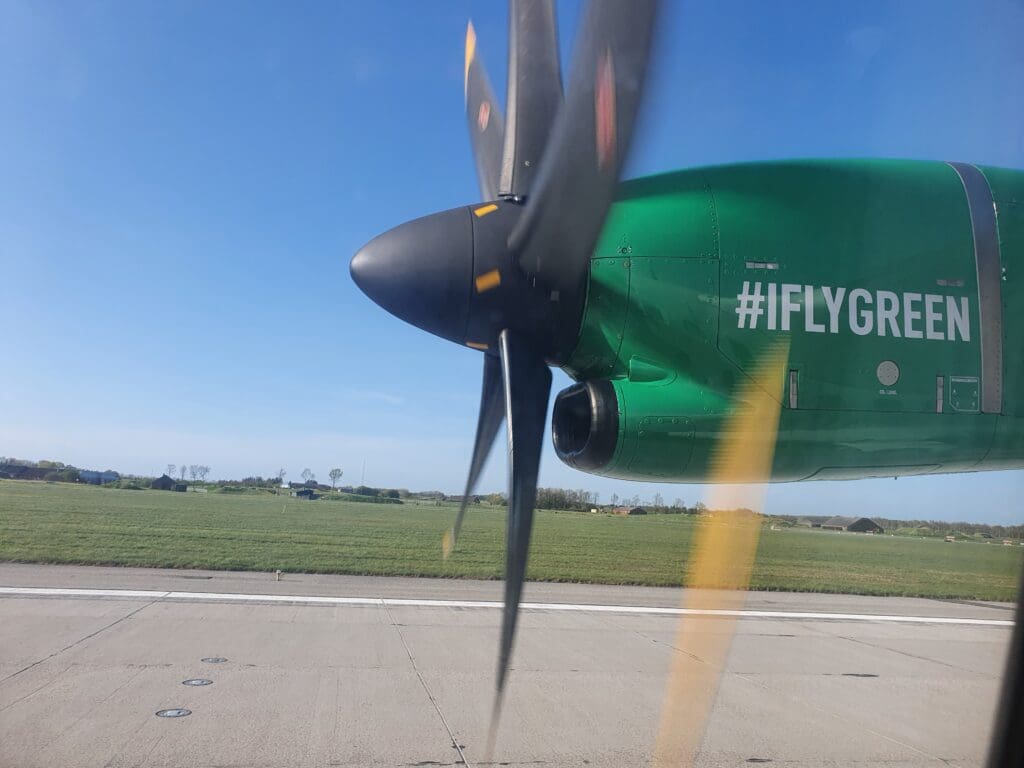
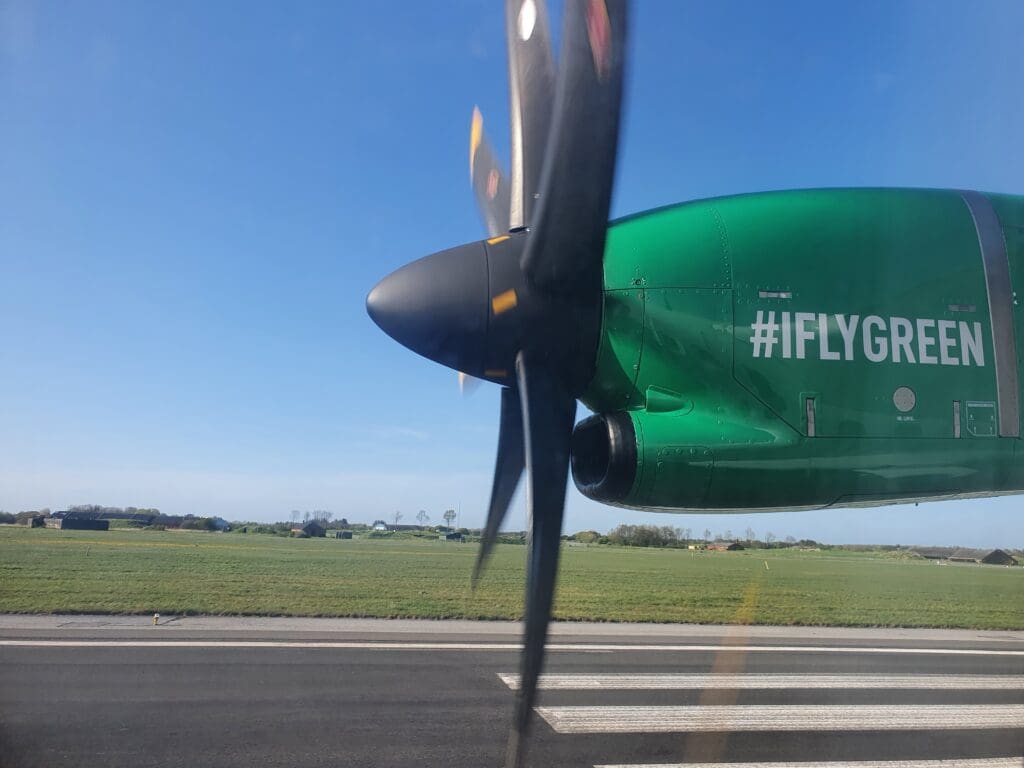
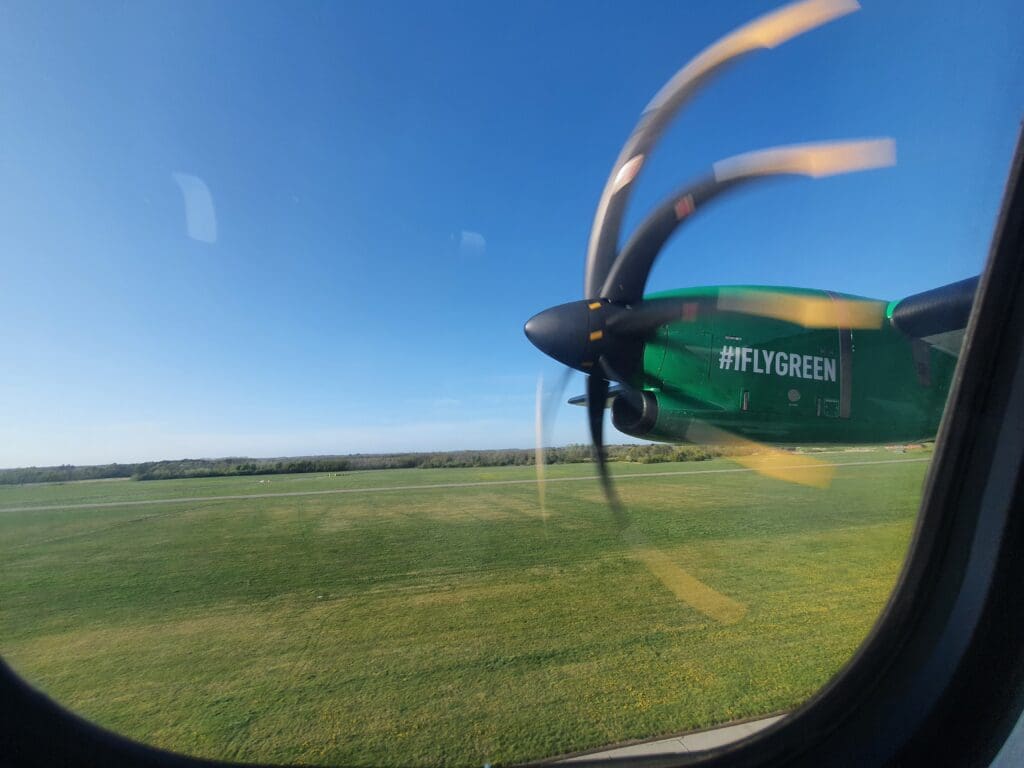
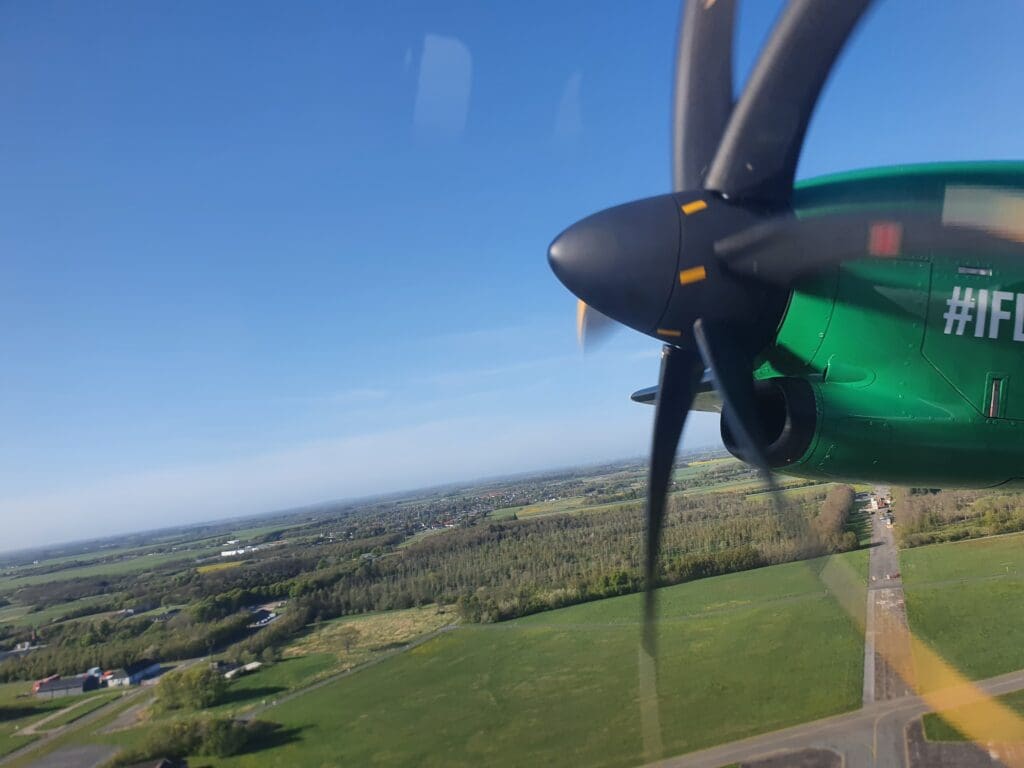
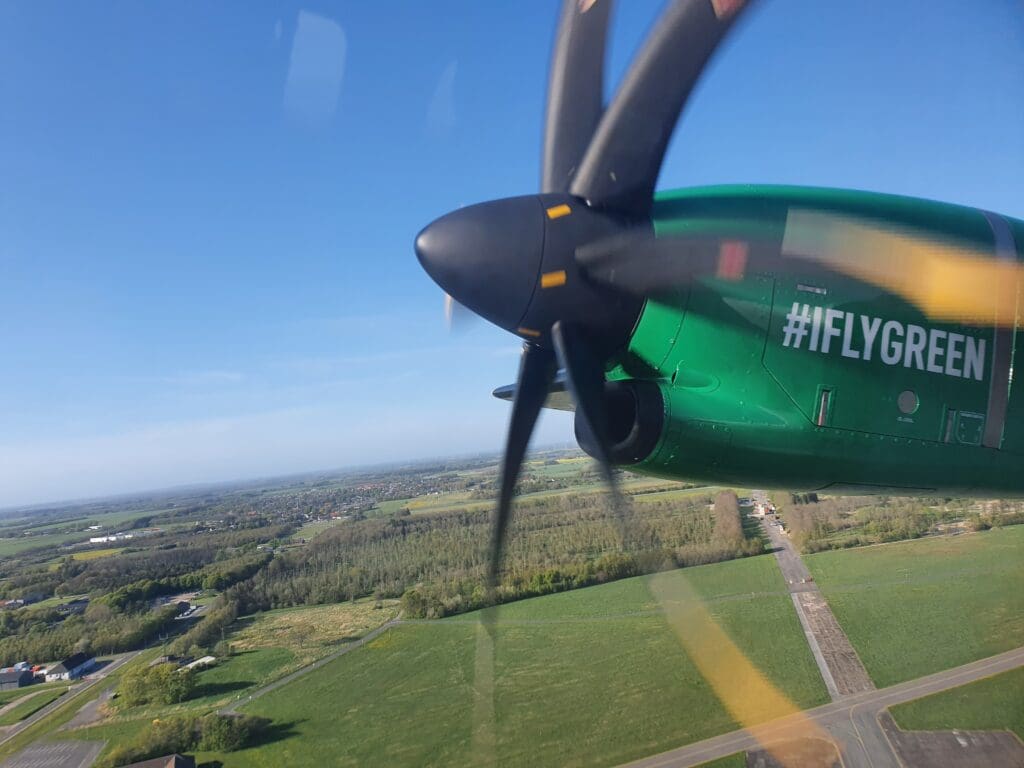
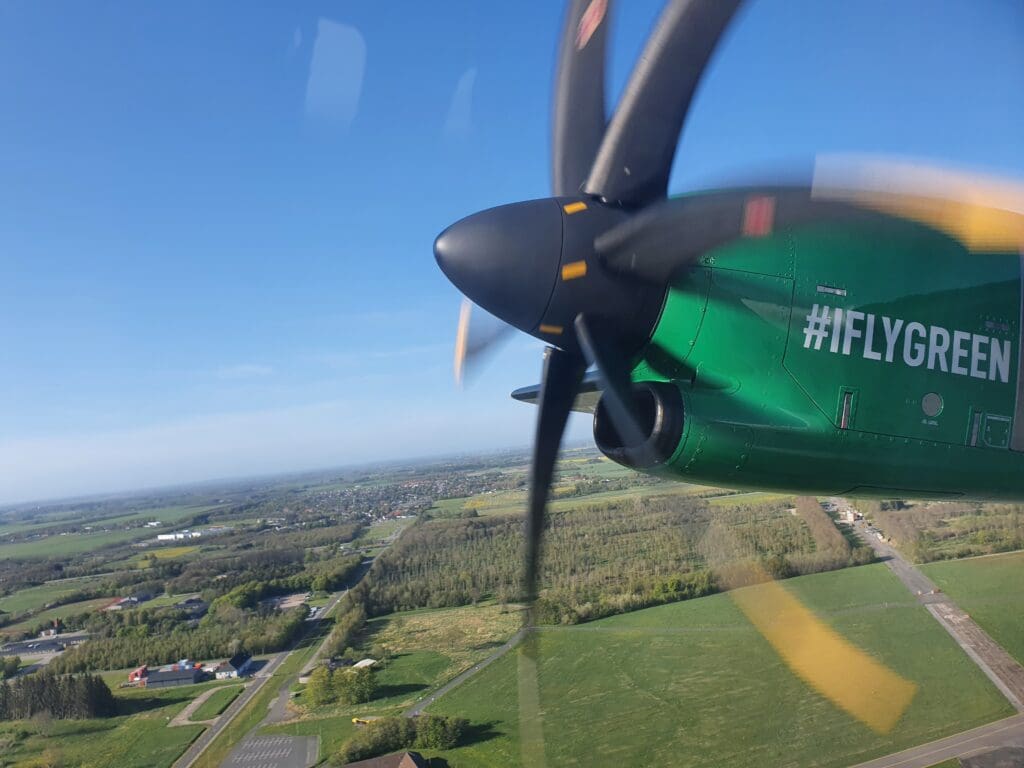
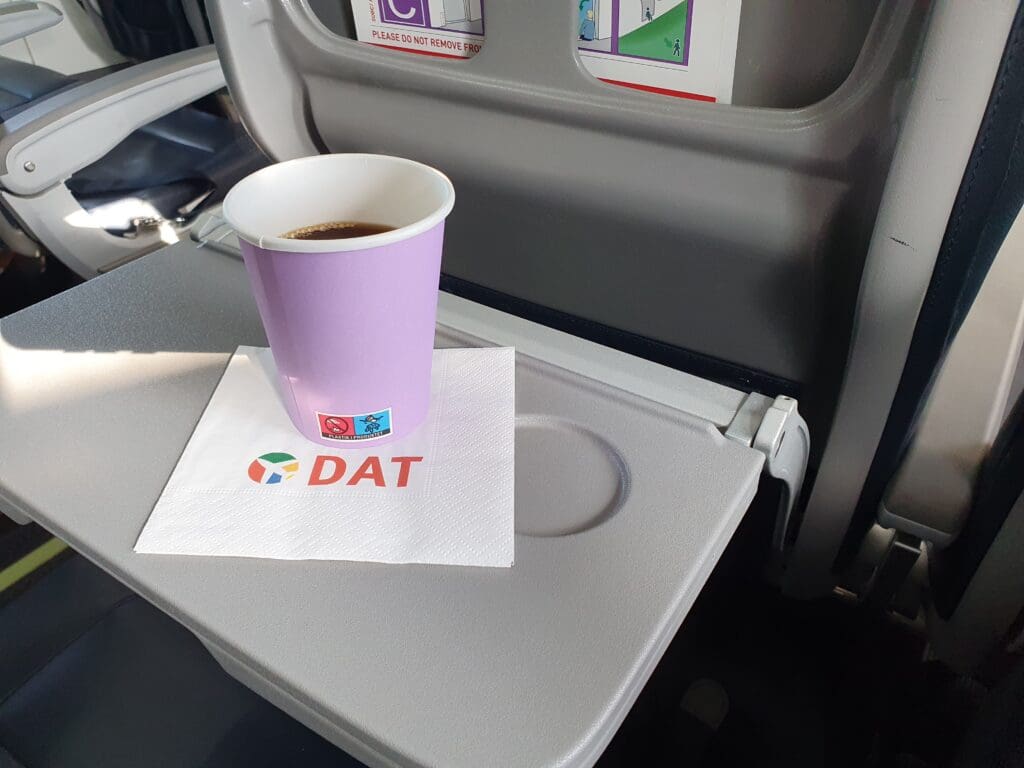
After leaving the vast expanse of Aalborg Airport behind, the aircraft climbed out over the flat green fields that surround this, almost immediately banking to the left before rolling out on a southeasterly heading that would take the turboprop to Copenhagen. Contrary to the Captain’s warning, the promise of turbulence never materialised and around three minutes after taking to the skies the seatbelts were extinguished at which point the usual announcement regarding keeping these fastened whilst seated was undertaken. This ended with a quick mention of the inflight service which included a complimentary hot beverage of either tea or coffee. At this point, seeing as nobody was sitting behind me, I opted to recline my seat which made the poor legroom slightly more tolerable. A short time later, one of the flight attendants politely asked me in Danish whether I would like tea or coffee, followed by milk and sugar. A minute or so later, the flight attendant lowered the tray table of the aisle seat and placed a DAT-branded serviette down upon this, returning a short time later with a cup of coffee.
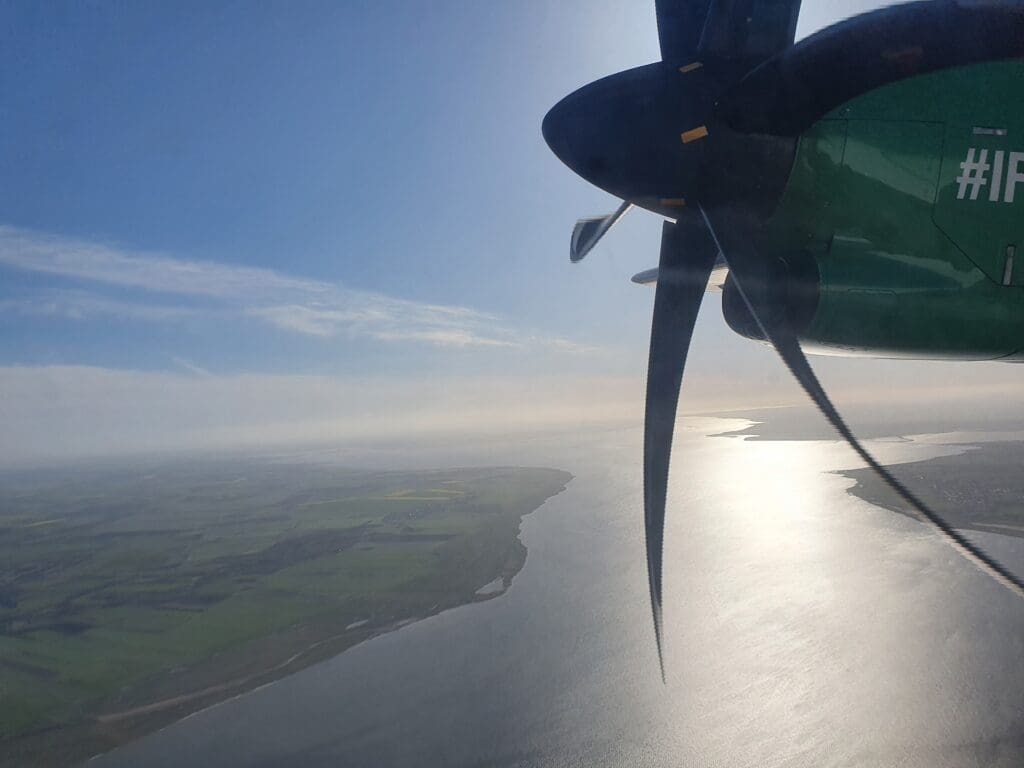
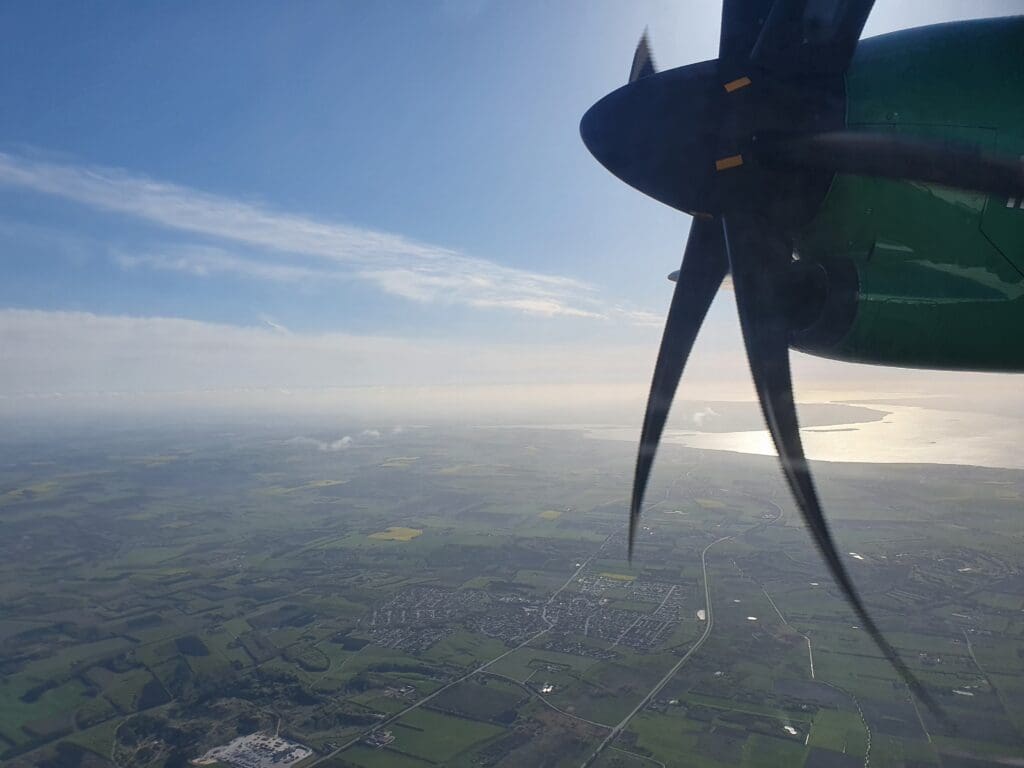
Turning to examine our route to Copenhagen, after leaving Aalborg behind the aircraft climbed up over the flat and picturesque countryside of North Jutland before soon levelling off at its cruising altitude of just 11,000 feet. Thanks to our low cruising altitude and the good weather that evening, as we plodded towards the capital I was offered a good selection of views of Denmark. After passing over the Ajstrup Bugt, the aircraft left North Jutland behind and made its way out over the Treå Møllebugt before passing over the northeastern corner of Central Jutland’s Glesborg Peninsula. After this, the aircraft then made its way out over the Kattegat, the stretch of the Baltic that separates Denmark’s Jutland Peninsula from Sweden.
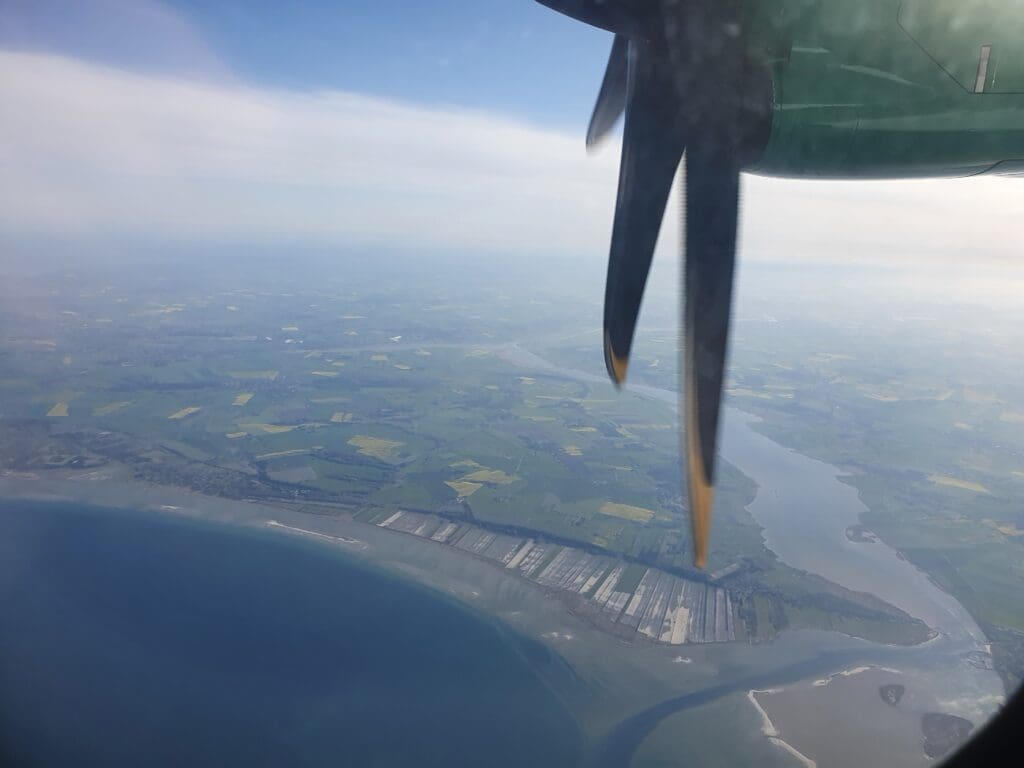
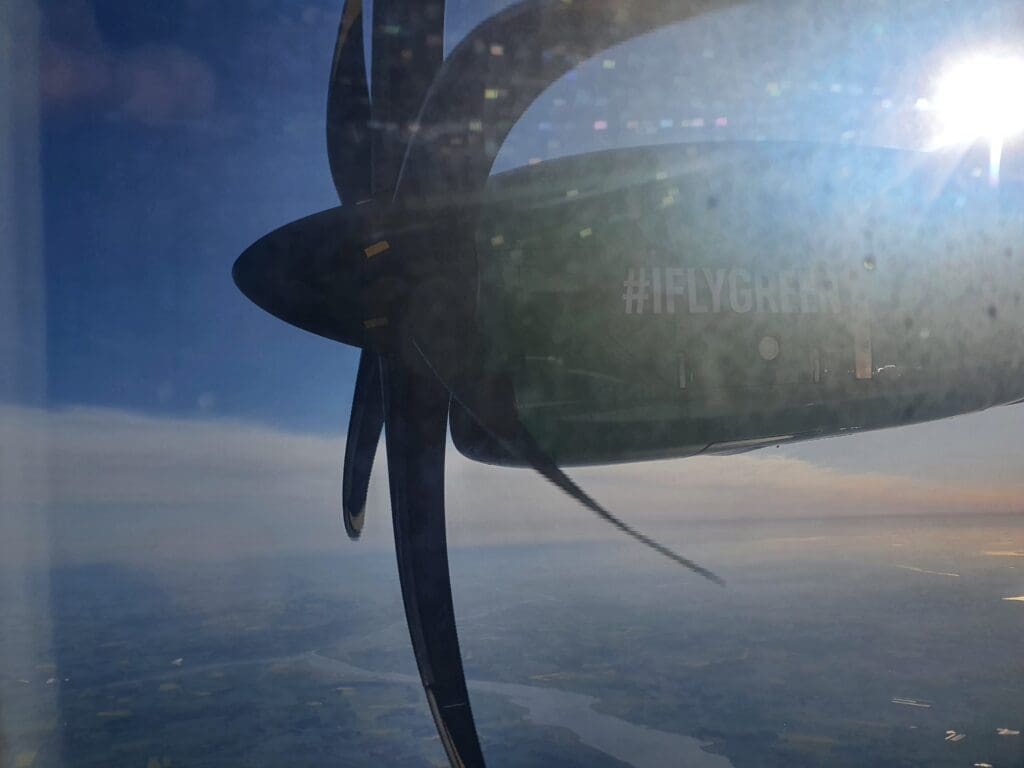
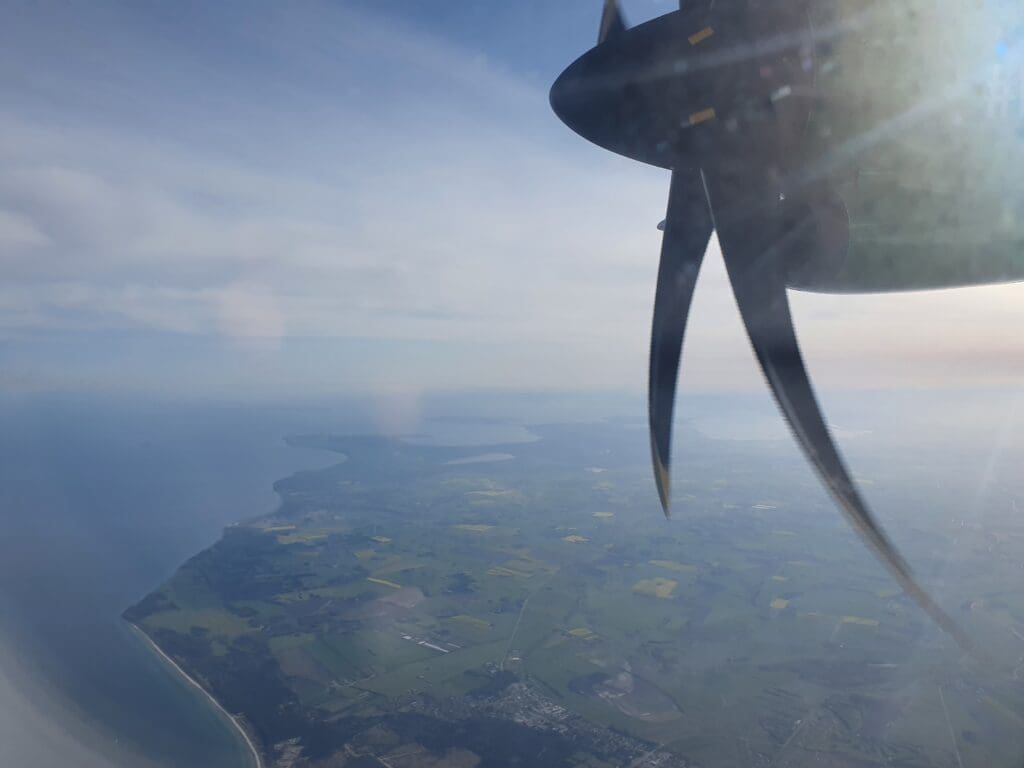
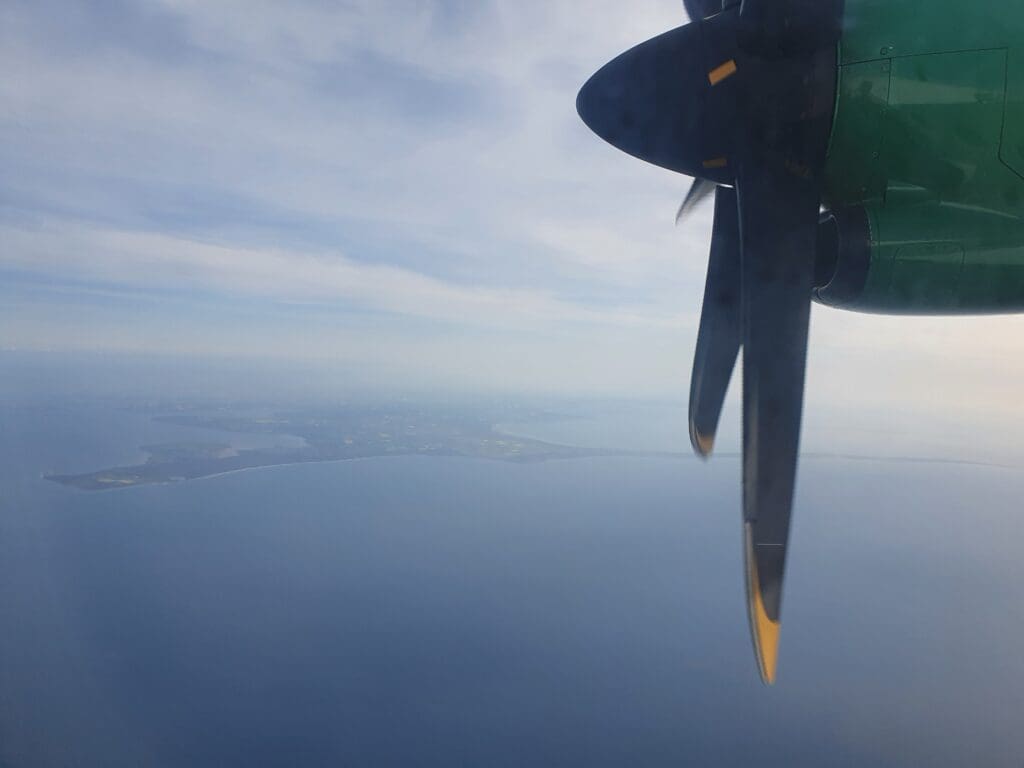
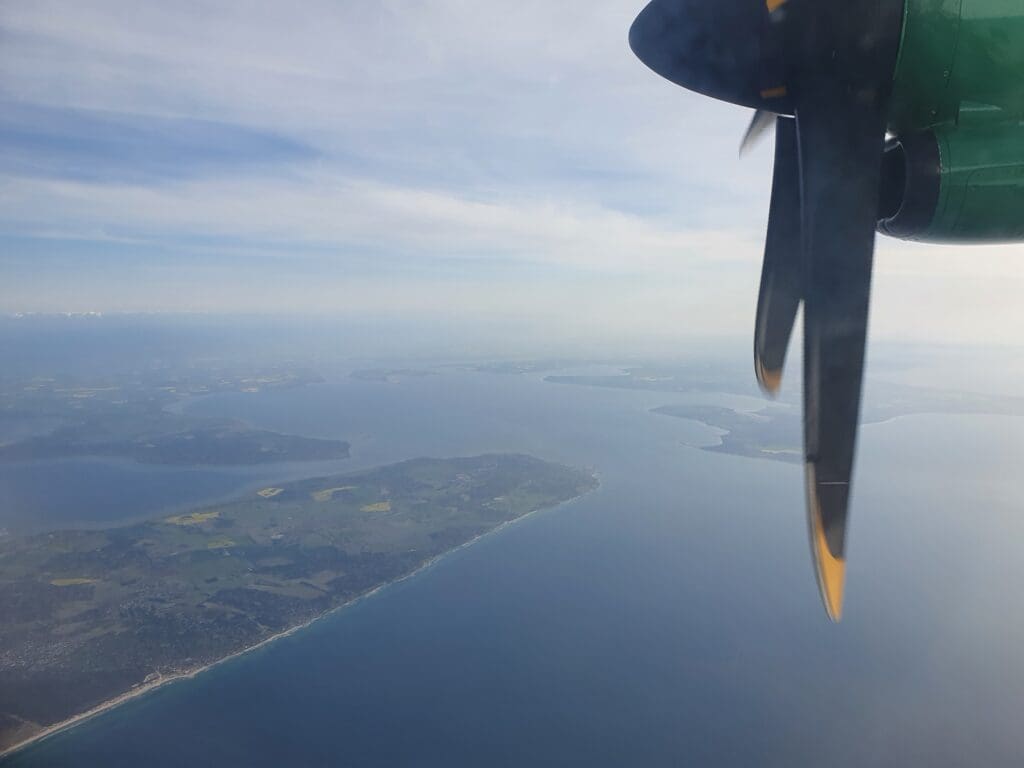
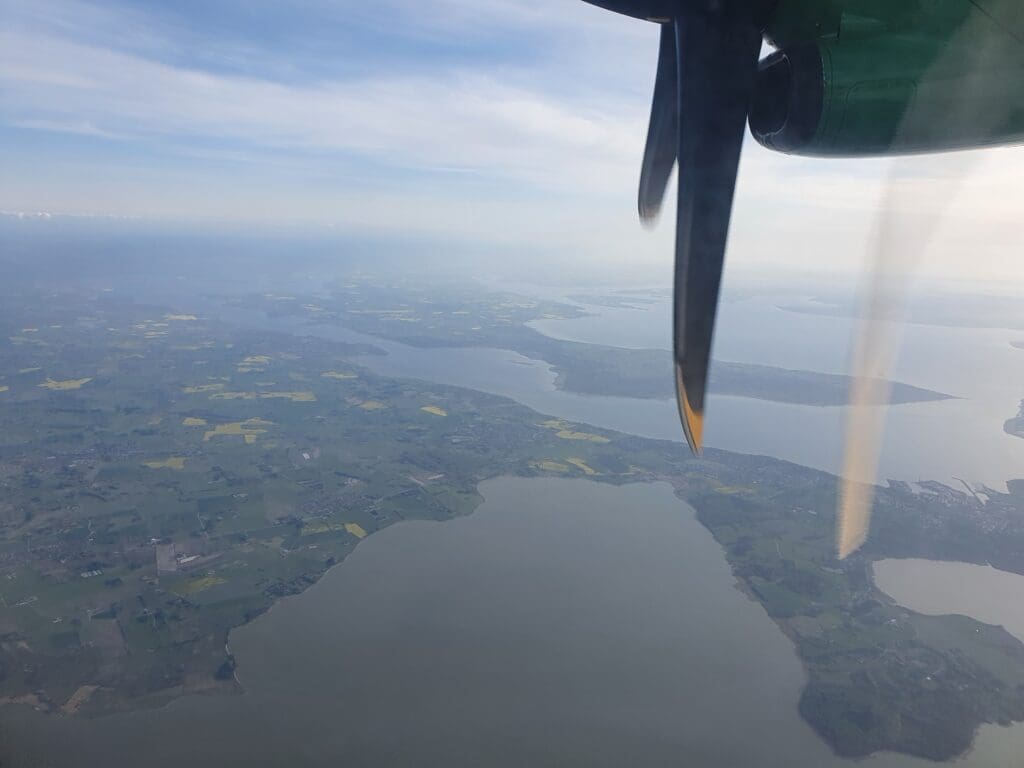
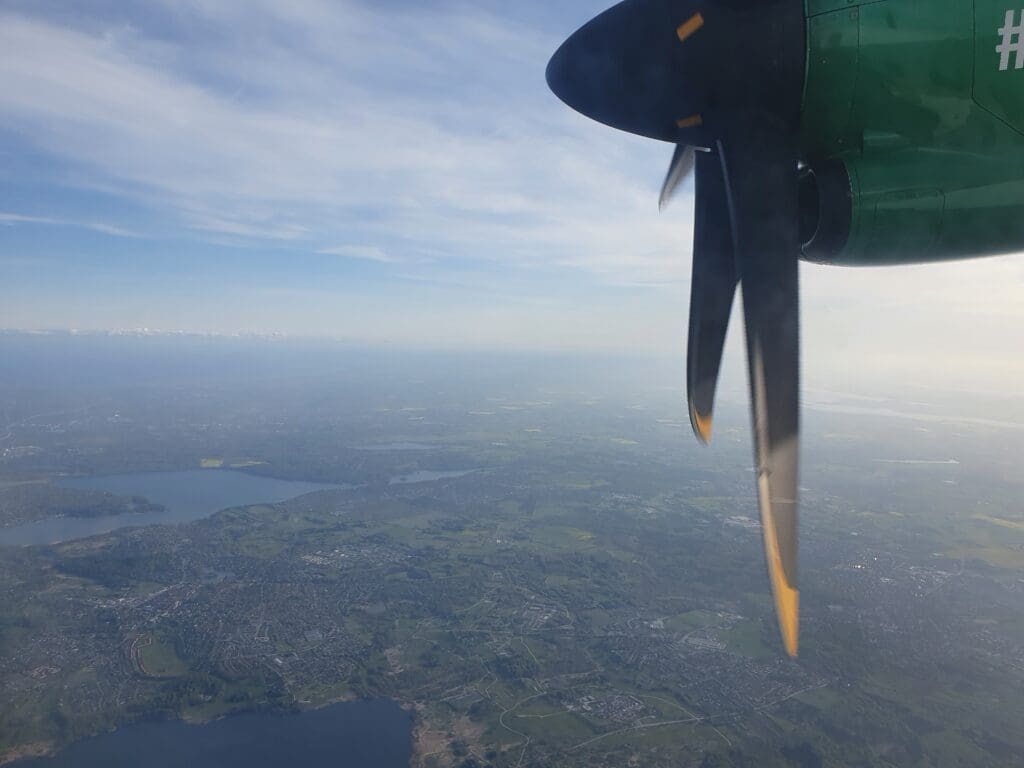
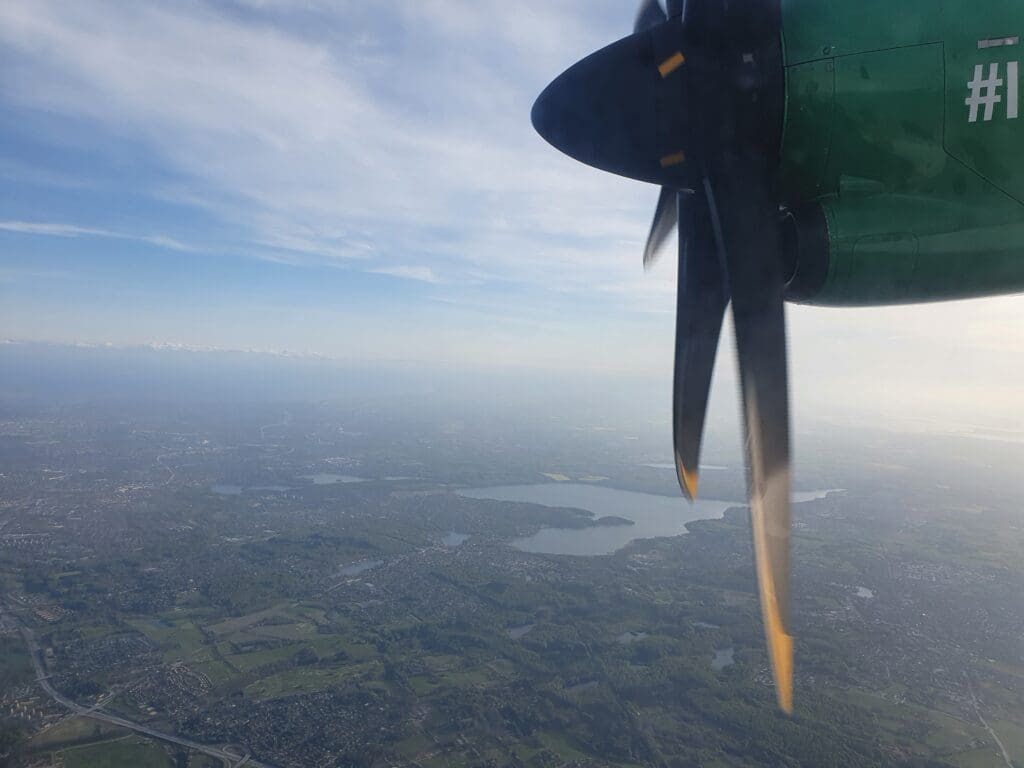
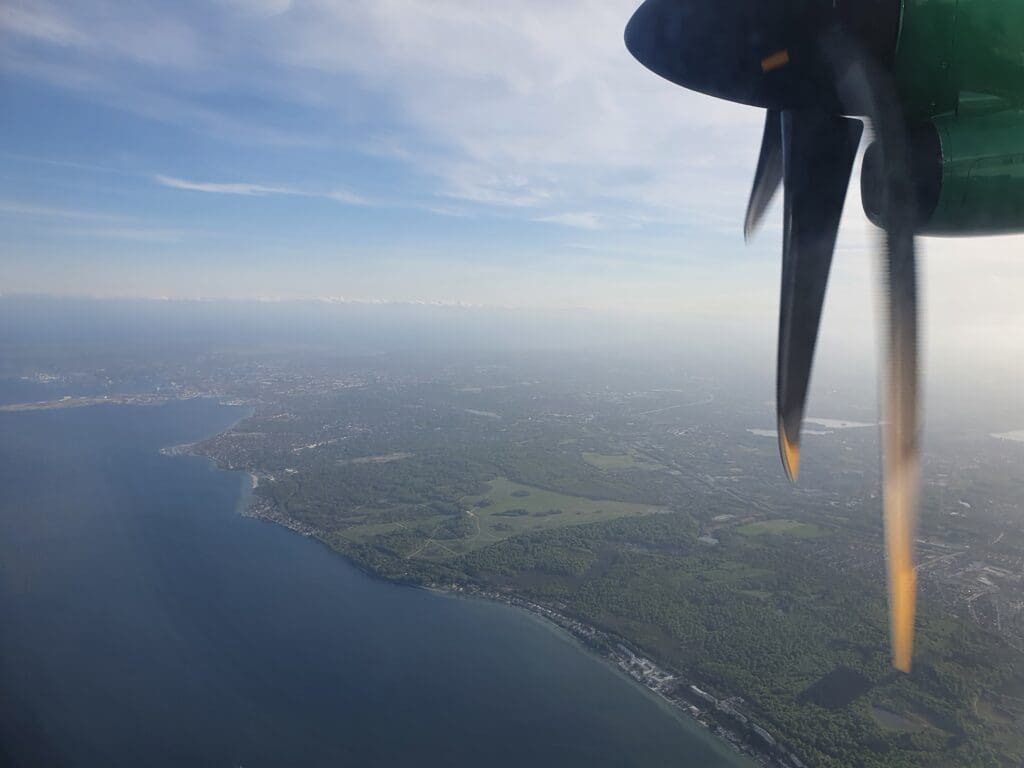
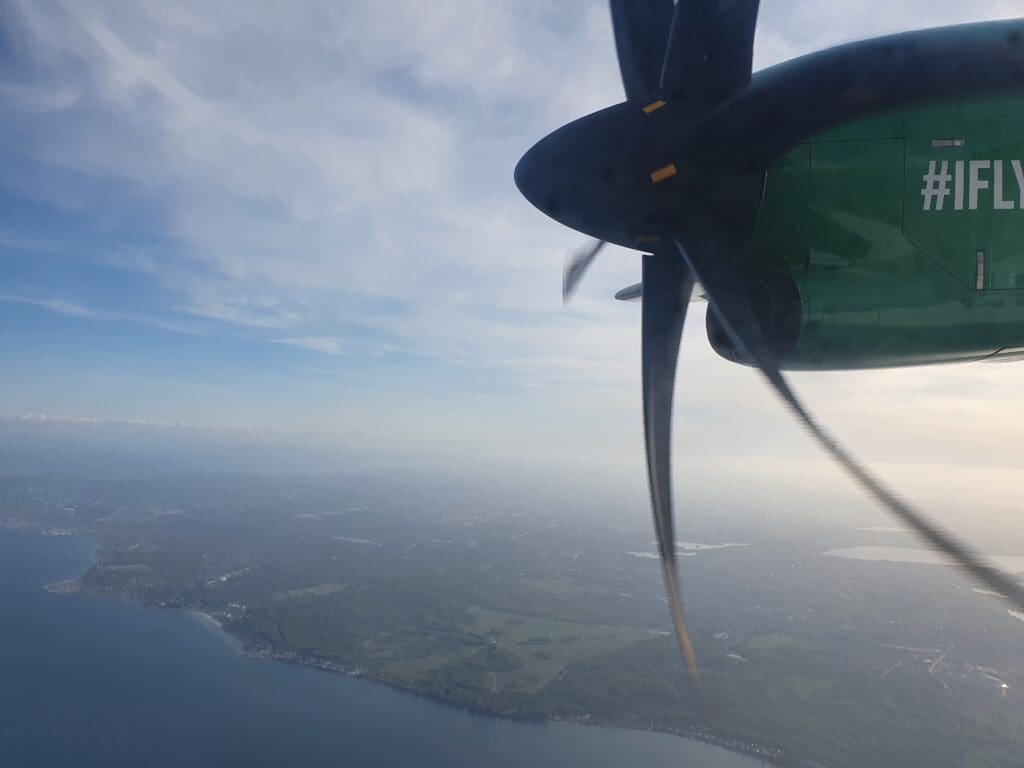
As the ATR made its way over the sandy northwestern coastline of the island of Zealand, at 1822 the aircraft could be felt commencing its descent at which point the Captain informed us that we could expect to be on the ground in ten minutes. In the usual manner, as soon as this announcement came to an end, the seatbelt signs were reilluminated at which point one of the two flight attendants announced the usual pre-landing warnings regarding seatbacks, seatbelts, tray tables and window shades. From Zealand’s coastline, the aircraft crossed over the island’s countryside as well as a host of towns that included Tisvilde, Helsinge, Hillerød and Hørsholm before reaching the island’s eastern coastline and heading out over the Øresund.
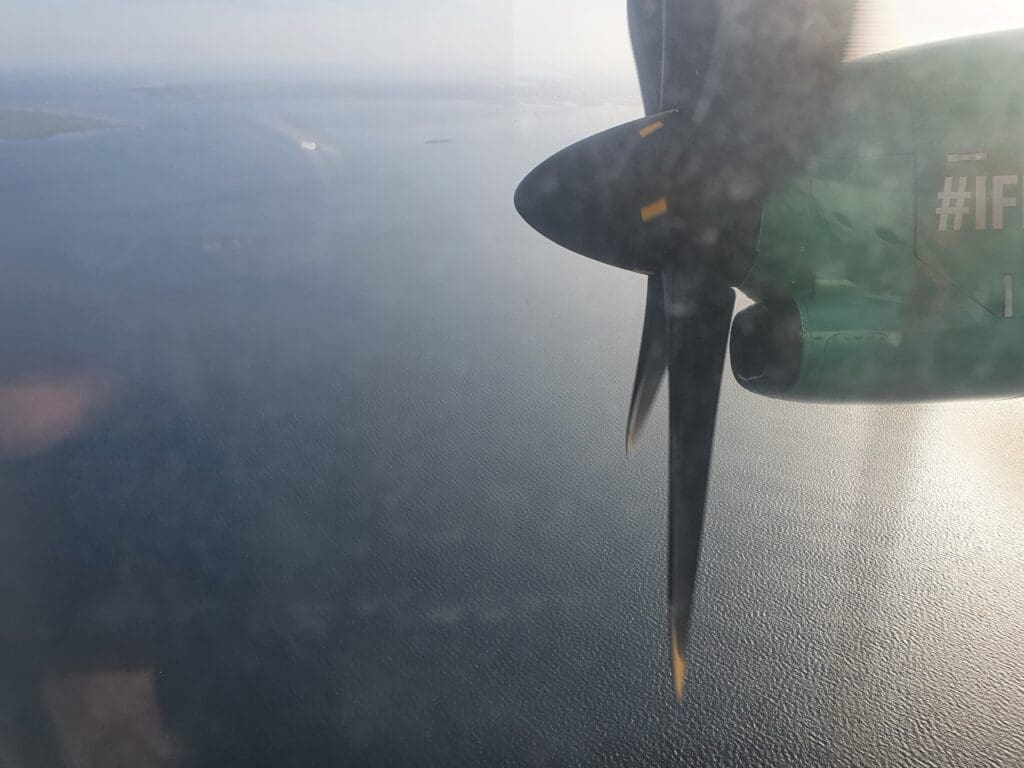
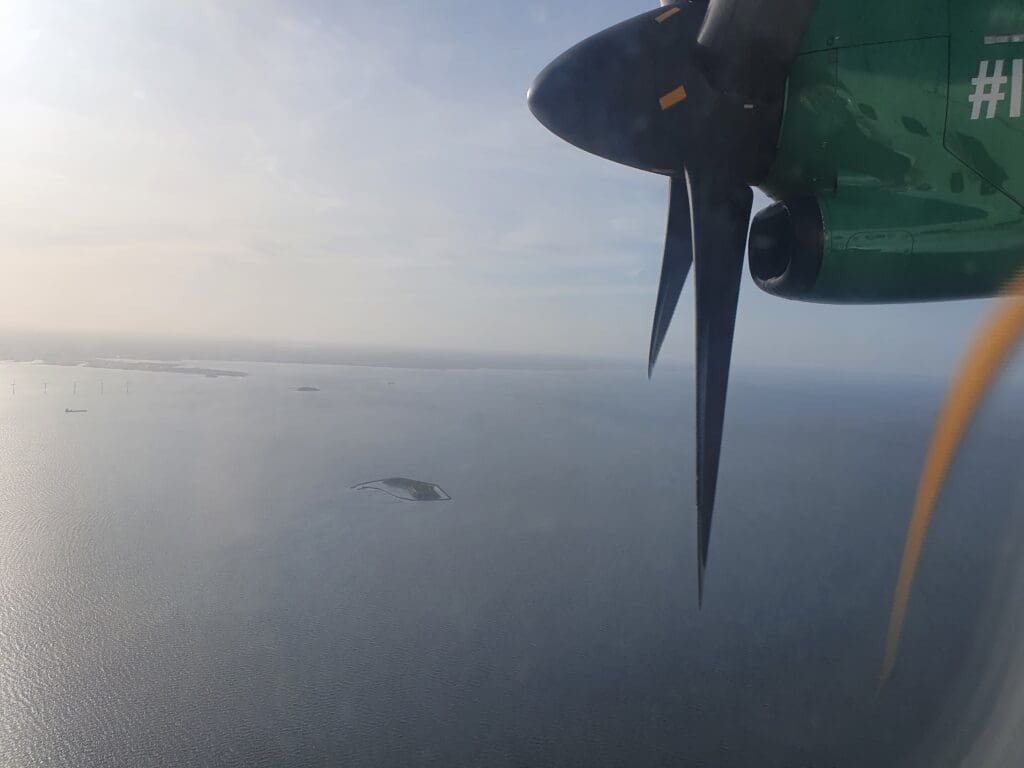
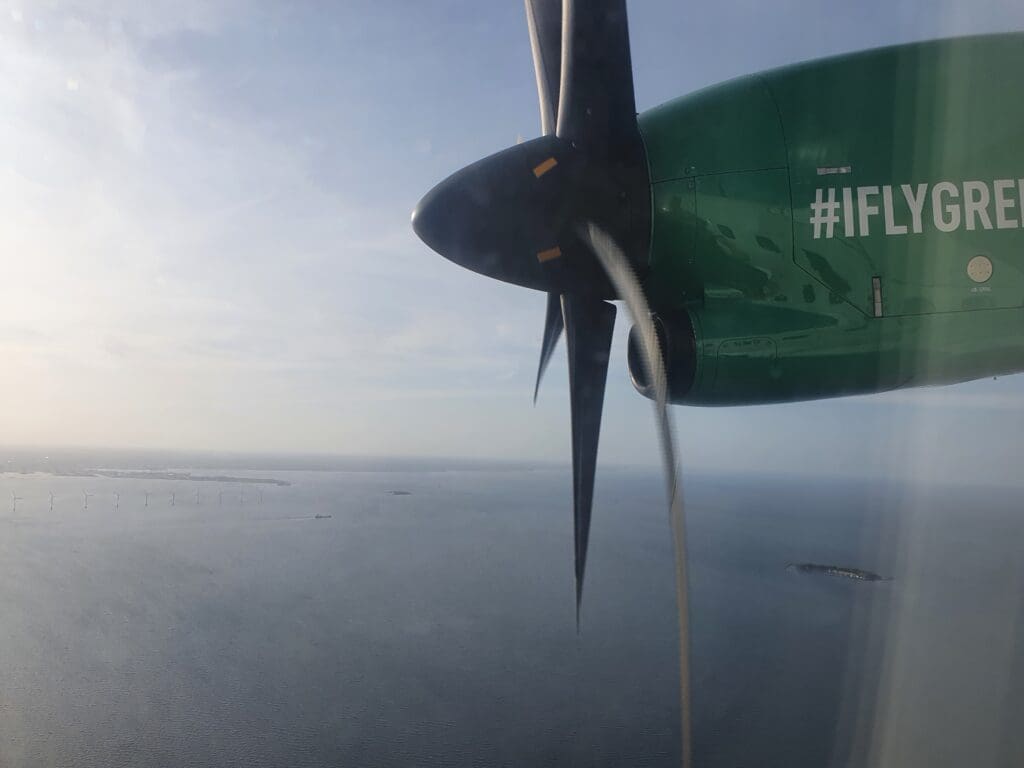
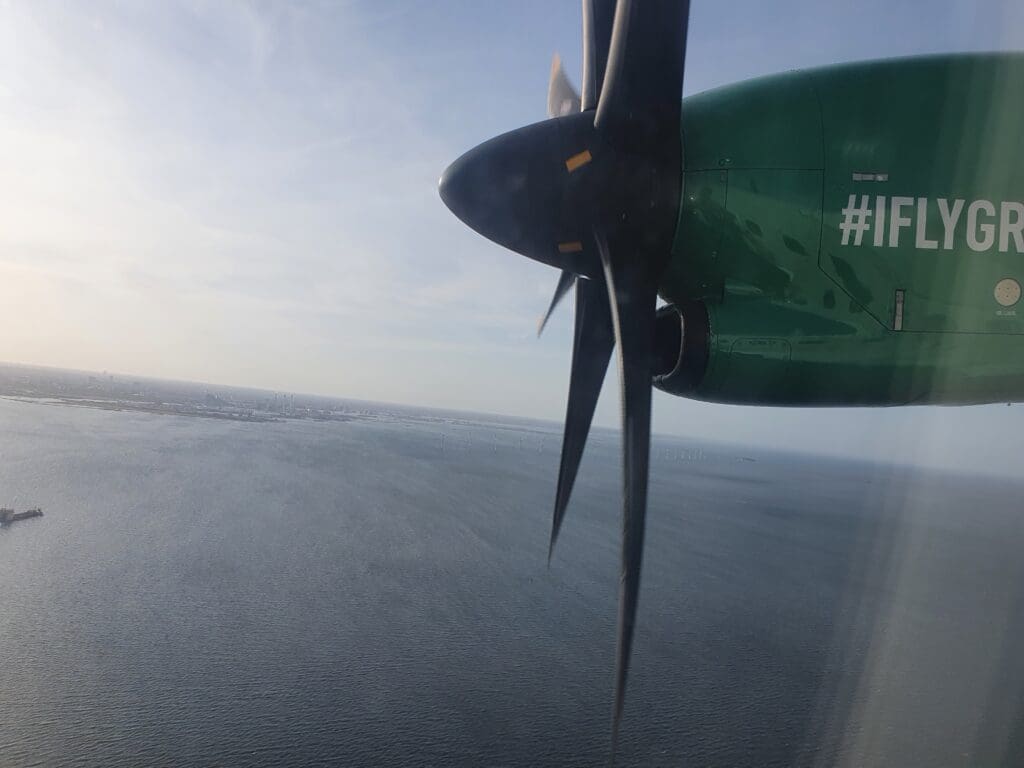
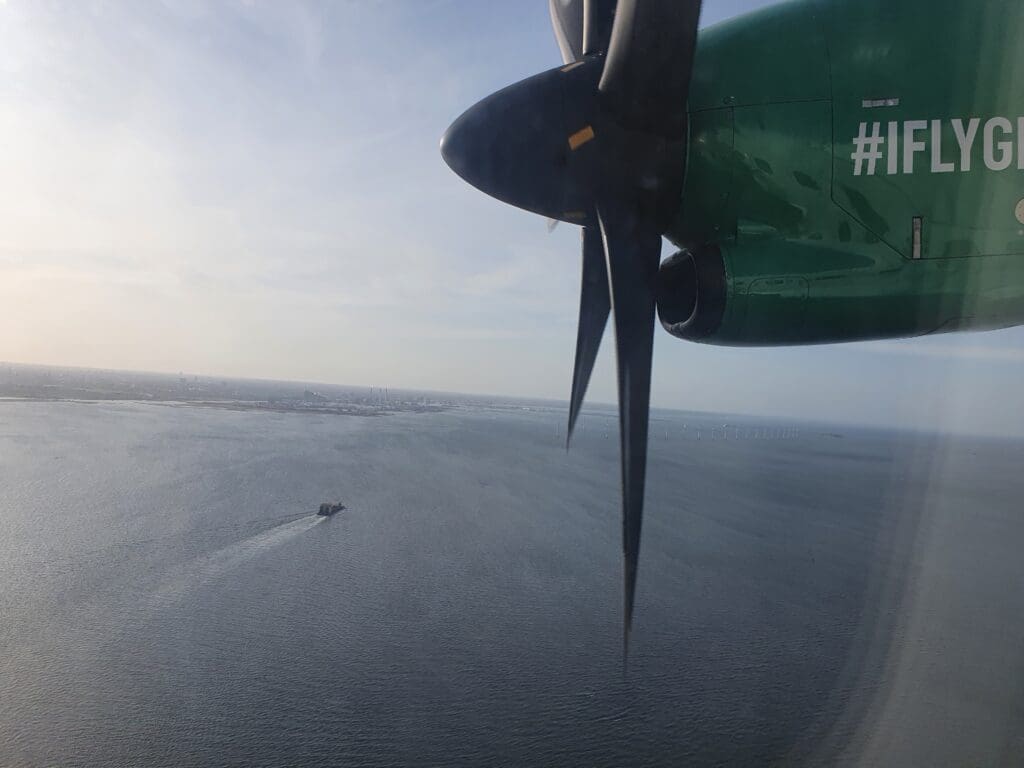
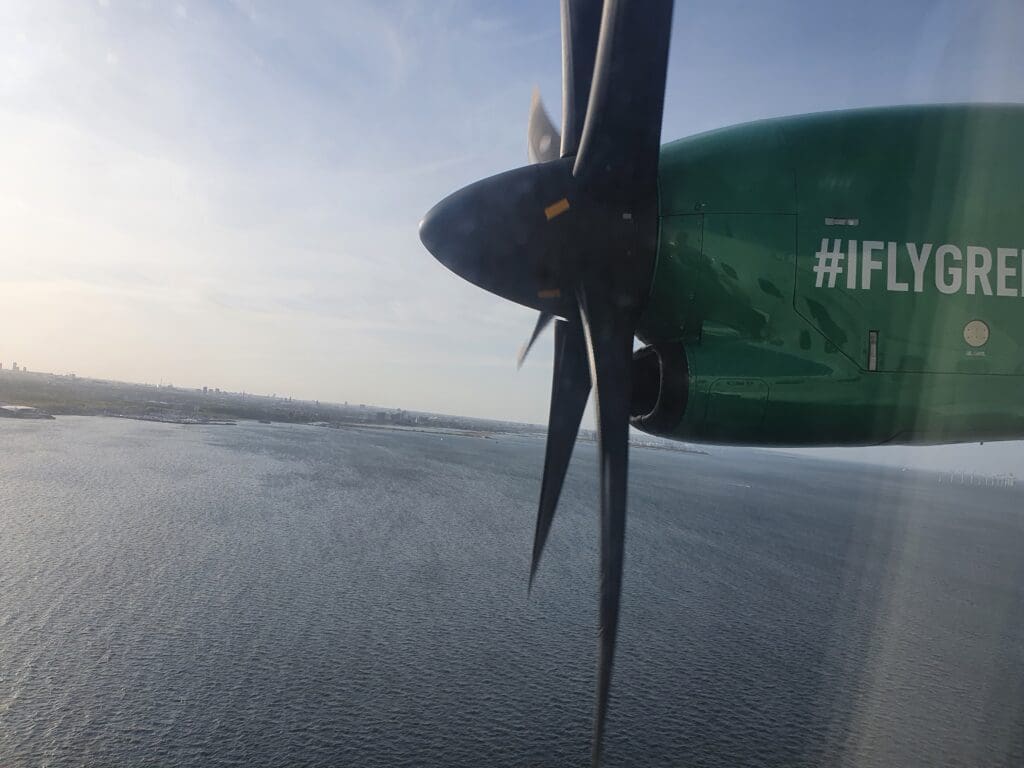
As the aircraft descended over the dark blue waters of the Øresund several gentle lumps and bumps could be felt before the shoreline of Copenhagen could be seen in the distance indicating that the flight was rapidly nearing its end. A short time later, the aircraft turned towards Copenhagen Airport and at 1831 the landing gear could be heard and felt dropping into position below as the pilots readied the ATR 72 for its arrival. Once these were extended into position, the ATR commenced what seemed to be a fairly steep approach, diving downwards as the crests of the waves below became increasingly clearer.
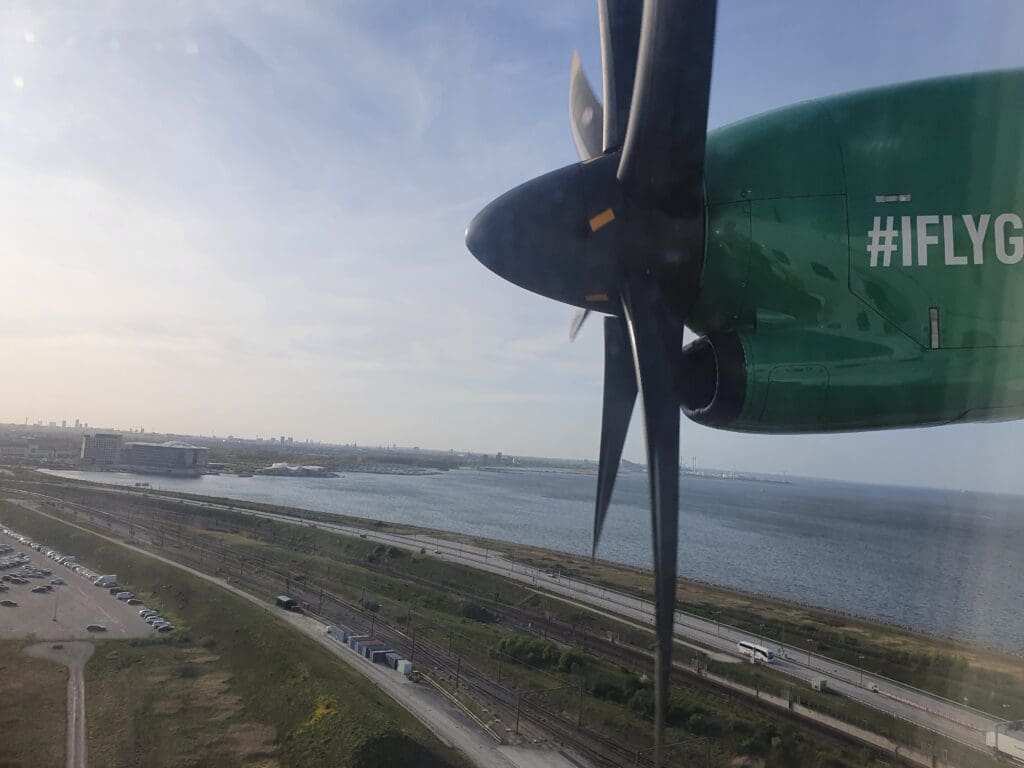
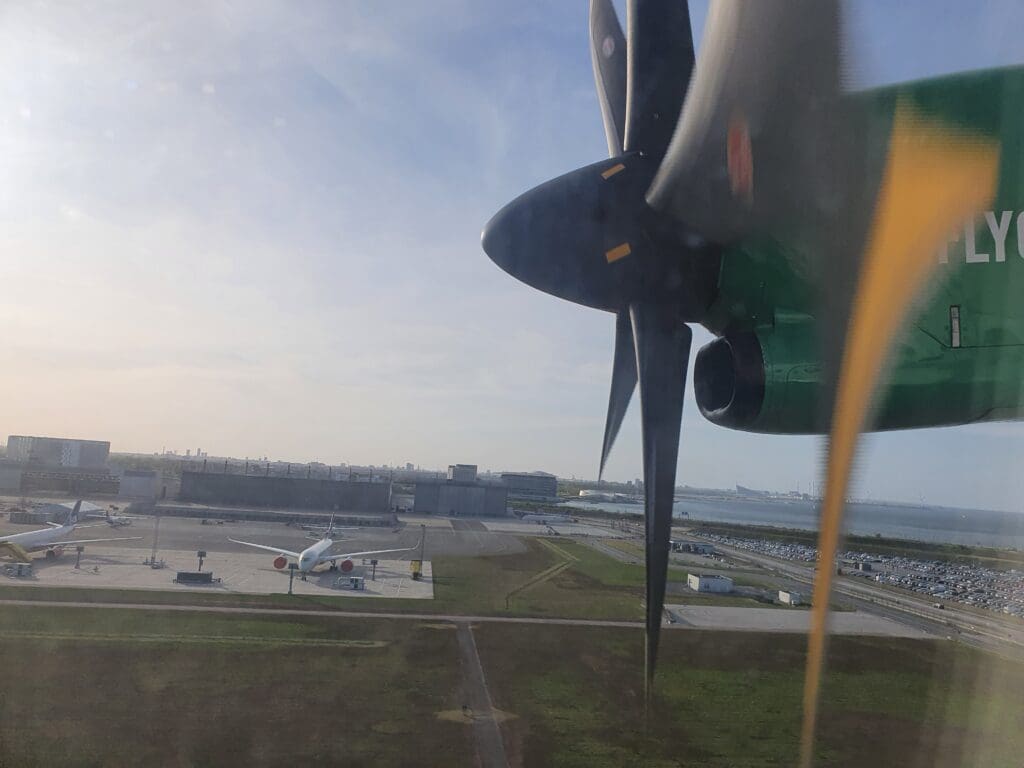
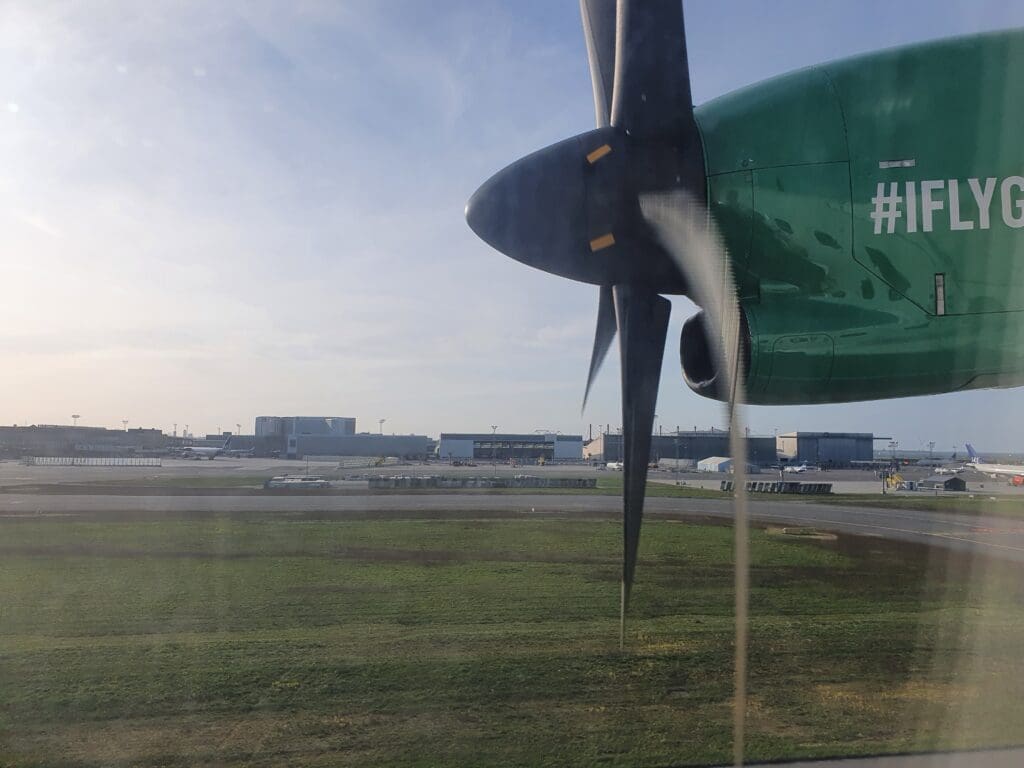
Likely being of some relief to nervous passengers, a short time later the ATR darted down over the coastline before a Scandinavian Airlines Airbus A330 and A350 could be seen parked up at remote stands. As the pilots had promised, that evening the flight time was exactly 35 minutes and at 1834 the ATR 72 touched down on Copenhagen Airport’s Runway 22L with a firm bump. Standing at 3.3 kilometres long, this runway provides more than enough room for a small turboprop to safely come to a halt. Nevertheless, that evening either seeking to minimise our taxi time or vacate to allow another aircraft to land, the pilots appeared to be in a rush to exit this and thus the aircraft decelerated with plenty of vigour.
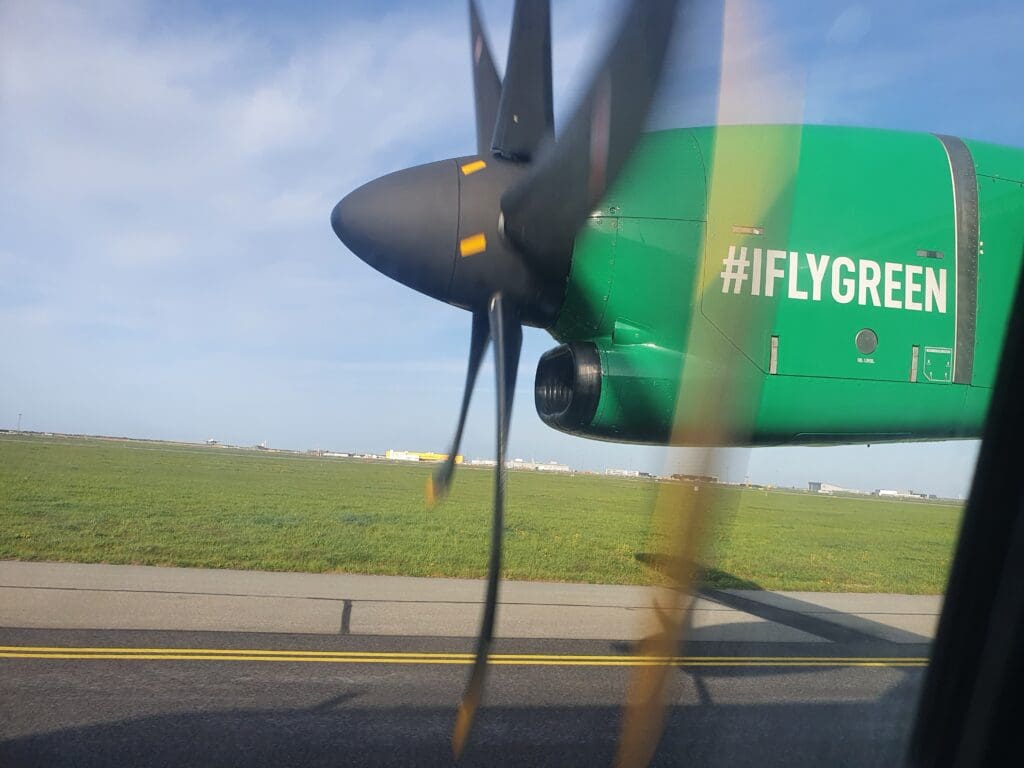
Soon vacating the runway to the right, at this time one of the flight attendants performed an announcement welcoming all to Copenhagen as the ATR made a very short taxi over to a remote stand where it came to a gentle halt at 1837. Arriving there a full thirteen minutes ahead of our scheduled arrival time, at that time no bus could be seen waiting to shuttle passengers to the terminal and thus once the engines had spooled down a short wait was required before disembarkation could commence. Around five minutes after we had come to a halt, a bus arrived and passengers were permitted to make their way off the aircraft. Soon enough, I headed rearwards through the cabin before thanking the flight attendant standing in the rear galley before making my way out into the chilly Danish air.
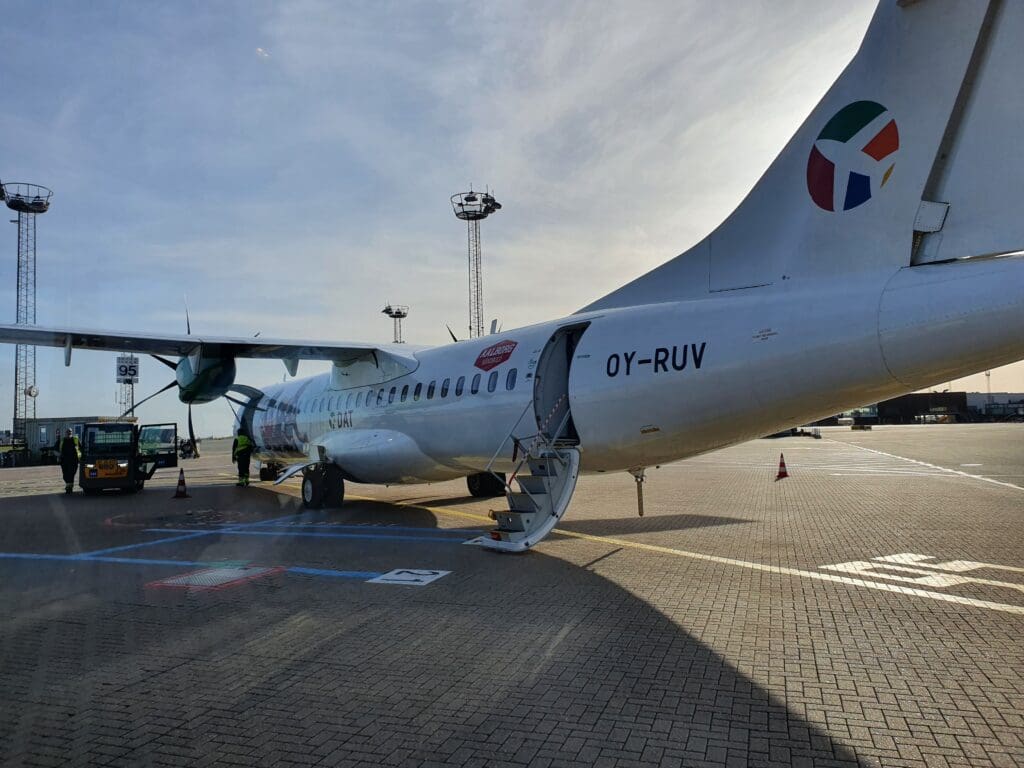
Once outside, I walked a few steps over to the waiting bus and, being one of the last passengers to board this, I did not have to wait too long once inside for the doors of the bus to close after which this pulled away at the start of its short journey over to the terminal. After passing several aircraft, the bus arrived at the doors to the terminal and I made my way upstairs to the main airside area. As in many airports, those on flights arriving from within the Common Travel Area area are deposited straight into the airside portion of the terminal, and so after arriving, I walked through this and soon exited into the arrivals hall, ending my short and pleasant trip with DAT.