A Forgettable Slog Across Canada: WestJet Review – Vancouver to Toronto
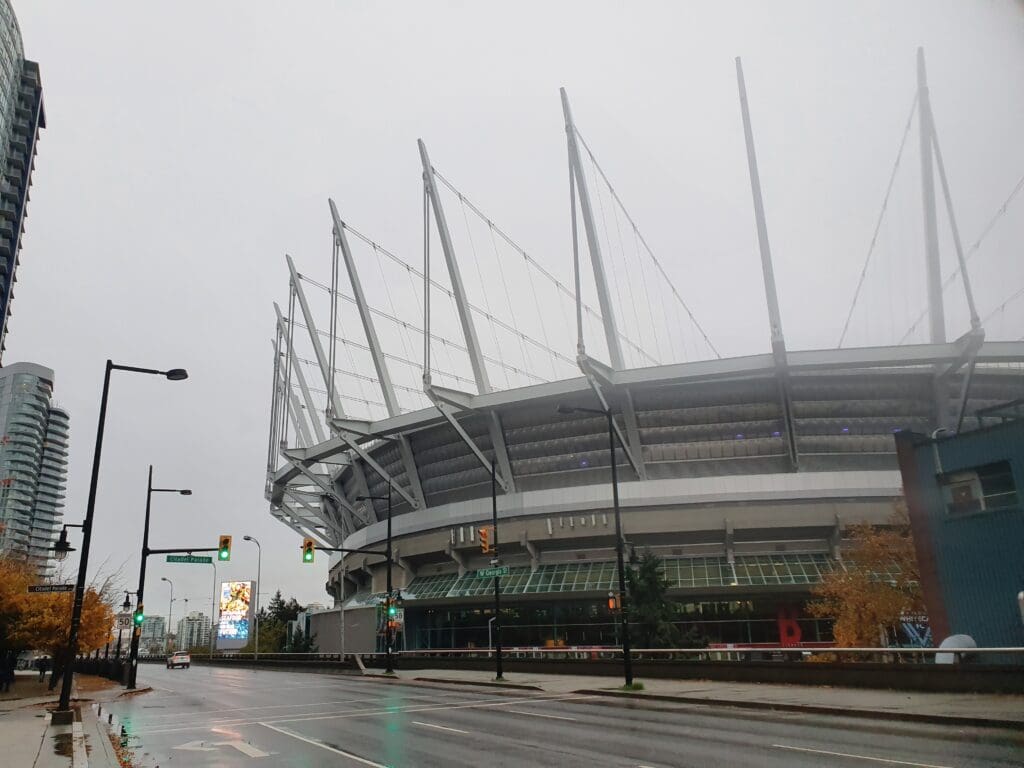
After an enjoyable time, my two-week Canadian holiday had come to an end and it was time to head back across the Atlantic to London with a short mid-journey stop in Toronto. Whilst I was in no hurry to leave, I knew that I would return to Vancouver at some point in the not-too-distant future and hoped that my next visit would not feature the buckets of rain that had been a virtually omnipresent feature of my trip to the province. Staying just up the road from Yaletown-Roundhouse station on Vancouver SkyTrain’s Canada Line which connects Downtown Vancouver with the airport (and Richmond), getting to the airport in time for my flight would not prove to be too much of an issue. Theoretically, I could leave my hotel at 0930 and still arrive at the airport with enough time to spare before my flight. However, not wanting to rush that morning, plus wanting to refund the outstanding credit on my Compass Card, something that can only be done in person at Stadium-Chinatown Station, I decided to leave a little early.
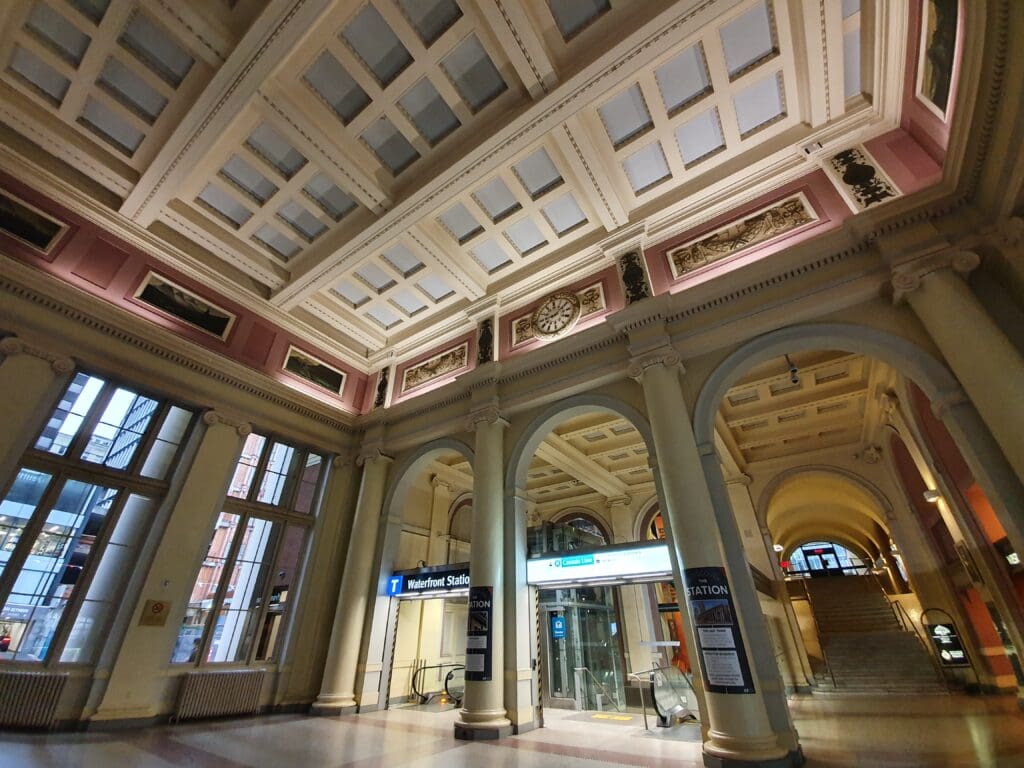
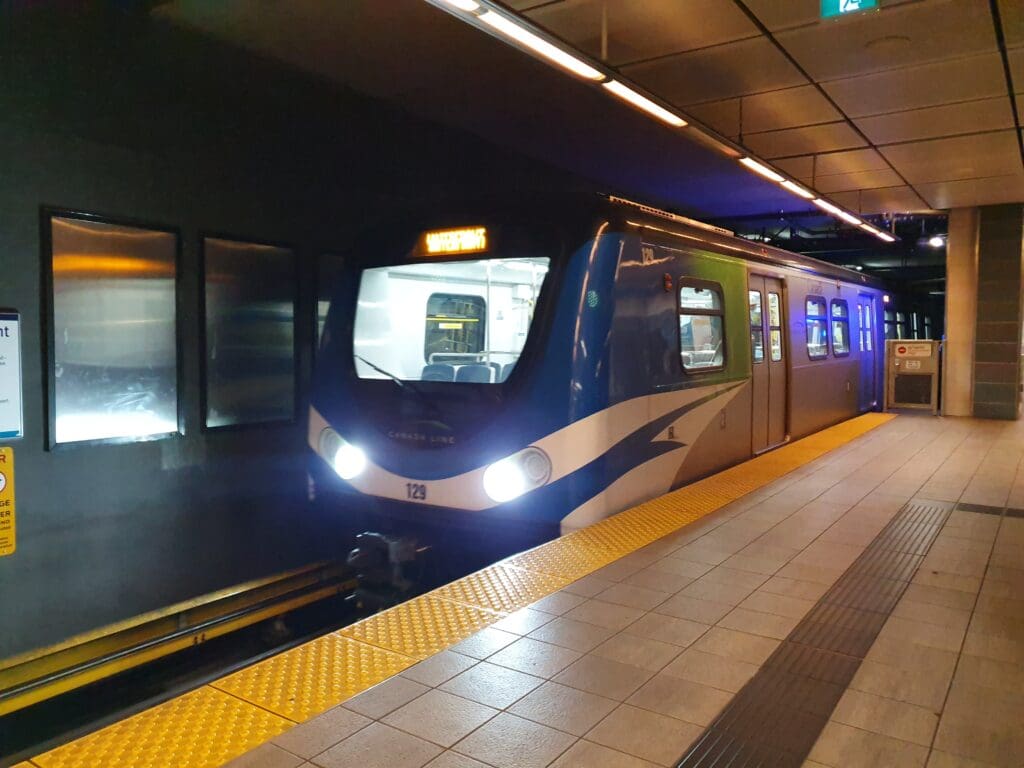
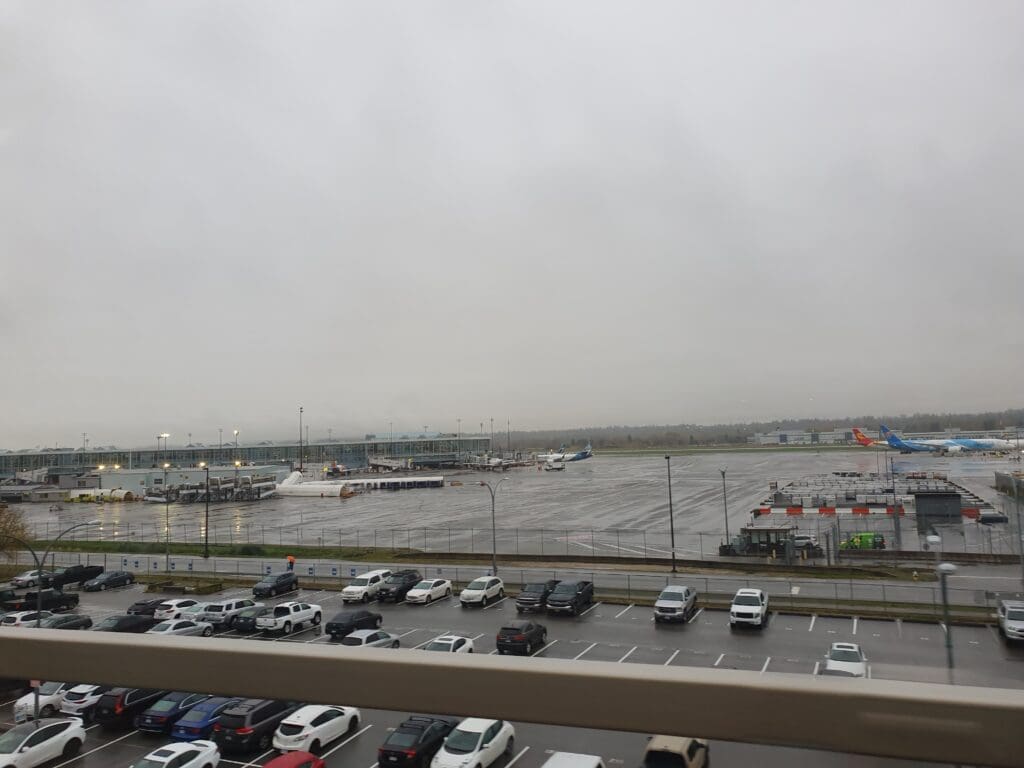
Having packed up most of my things the night before, I did not have too much to do on the morning of my flight and following a quick shower, I made a short excursion out to have my final Tim Hortons of my trip. Following a doughnut and a coffee, I made my way back to my room where I performed my final checks before heading out onto the city’s drizzly streets at 0840. Following a relatively short walk, I arrived at the Compass Card service centre just before this opened up for the day where I handed in my transport card and received a refund for this without any issues. After this, I headed to a ticket machine to purchase a one-way ticket for the airport before heading down to the platform. Following a short wait, a busy Mark II Expo Line train appeared and I soon boarded this for the short ride over to its terminus at Waterfront Station. After disembarking, I journeyed through the station, passing through its rather ornate entry hall before heading down to the Canada Line platform where an airport-bound train appeared within minutes of my arrival. Following an uneventful journey, around thirty minutes later the airport appeared and a cluster of aircraft could be seen waiting in the rain.
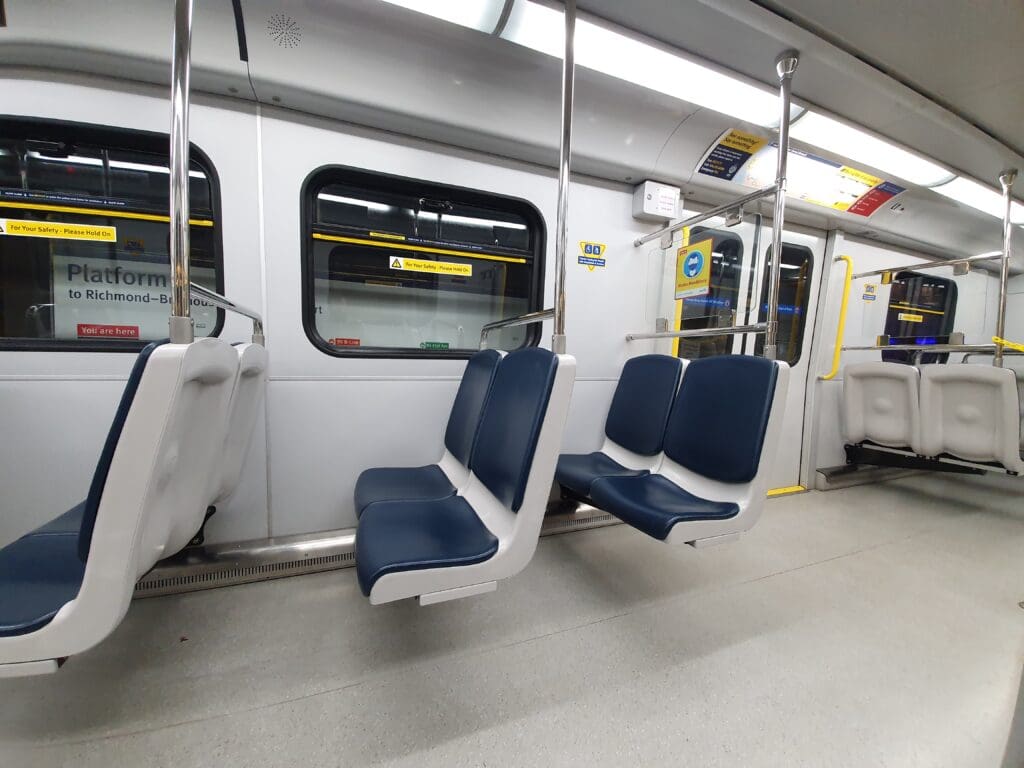
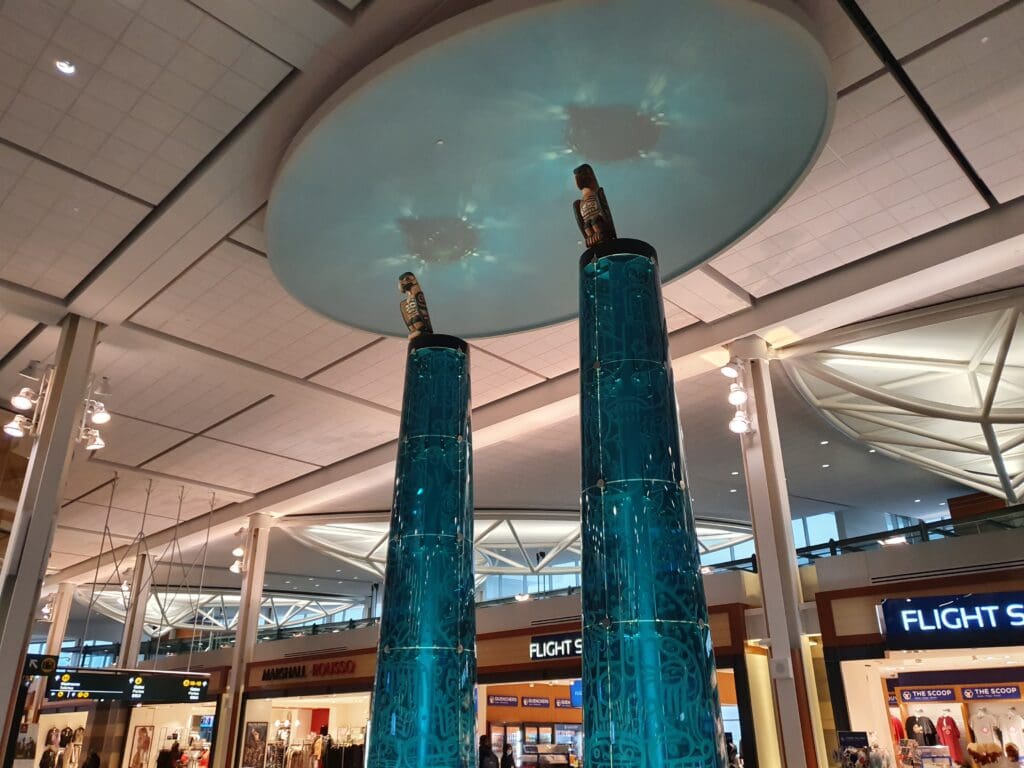
Vancouver Airport’s SkyTrain station is located rather centrally within the airport complex, with both the domestic and international concourses located a short walk away from the station. Heading to the latter, I soon arrived at WestJet’s large and well-branded portion of the check-in hall within about four minutes of disembarking a train – this duration including the dwell time that I spent admiring the displays and artwork during this journey. There, plenty of passengers could be seen milling about and, seeing as I had been unable to receive my boarding pass whilst checking in via WestJet’s app, my first port of call was a check-in desk. After a short queue, I headed over to one of the relatively few staffed desks where I was warmly greeted by a WestJet agent. As expected, there I was required to show my proof of vaccination, as well as my passenger locator form, required to enter the UK. Once this had been done, my boarding passes were printed off and I was pointed in the direction of security.
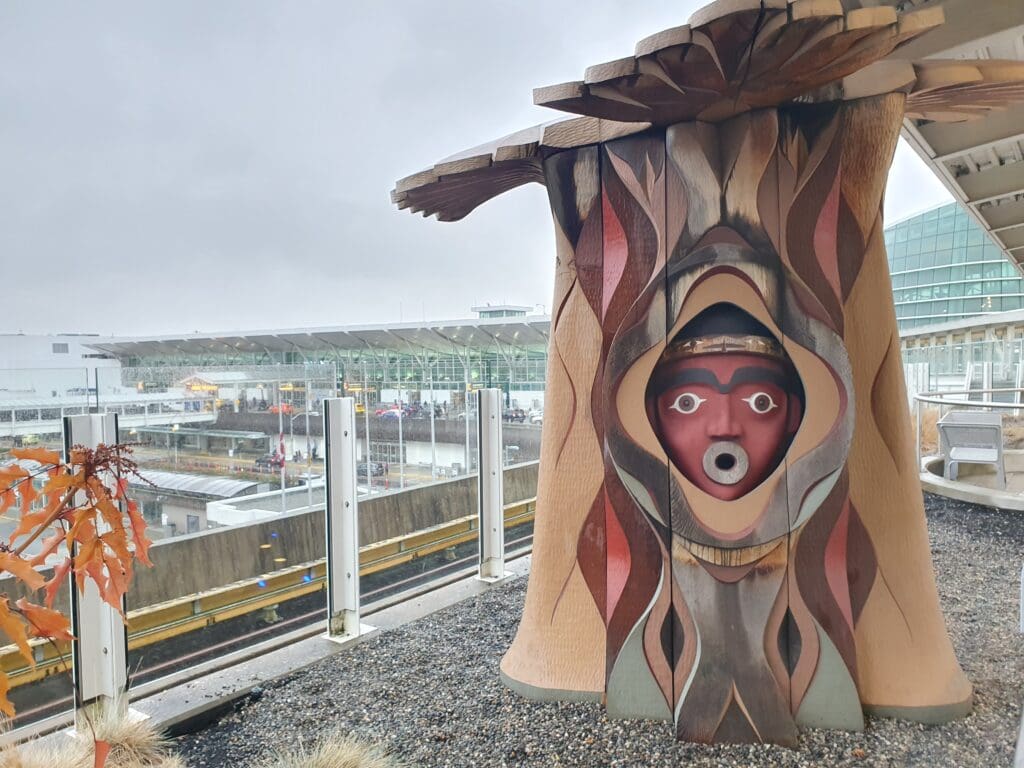
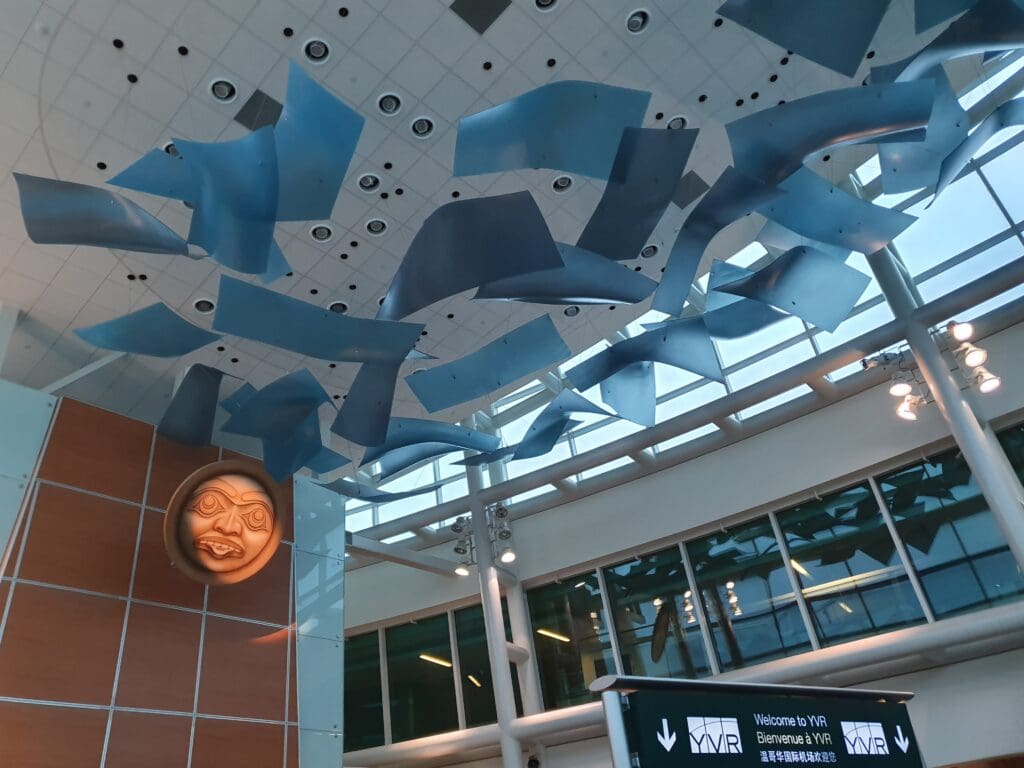
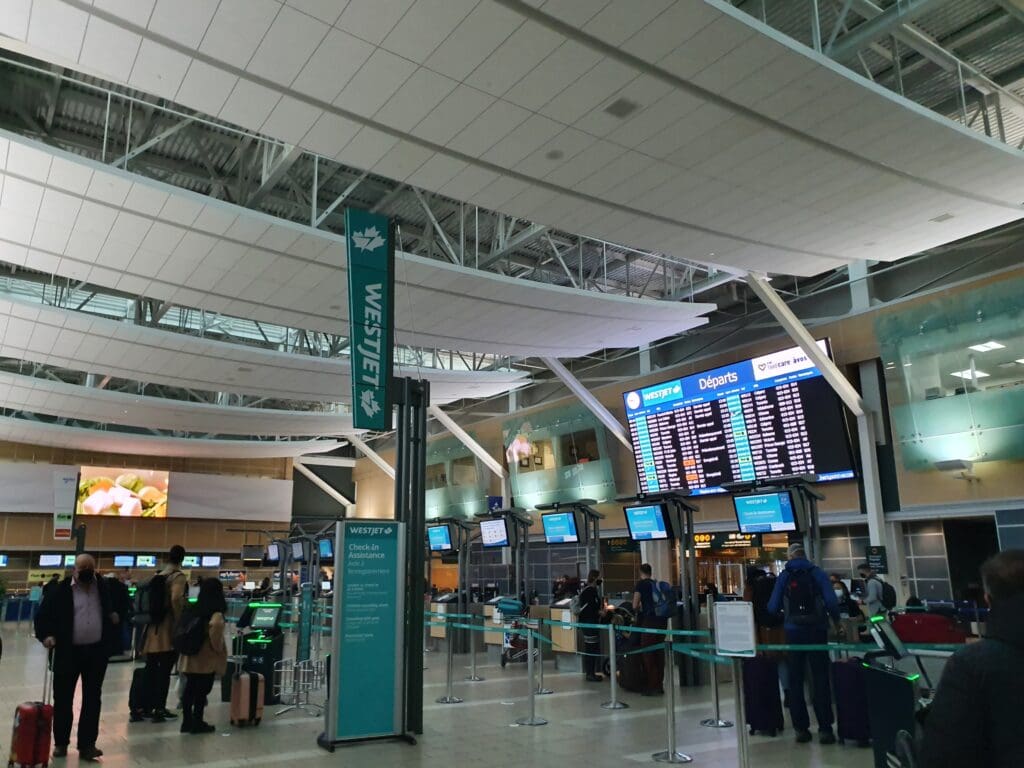
With a little over two hours to go until the scheduled departure time of my flight, whilst I could have lingered a little longer in the landside portion of the terminal, I decided to speed onwards to security. Upon arriving at the somewhat boxlike windowless check-in hall, I was greeted by the sight of a long snaking queue. Around twenty minutes of shuffling forward later, I arrived at one of the checkpoints where I was asked the usual round of questions by a friendly security worker before temporarily parting with my bag. Without any issue, I made it through to the airside area where I was free to explore for a while.
At Vancouver Airport, WestJet utilises piers A and B, which, I believe, are reserved for all domestic flights not operated by Air Canada or its subsidiaries (excluding those regional carriers that utilise the South Terminal). That morning, this was moderately busy with services jetting off to destinations across the country, however, there were still plenty of places to sit down and wait. Inside, I was pleased to find this part of the terminal to be both modern and clean. Aviation enthusiasts will be happy to hear that a good view of the action outside can be had with plenty of windows throughout the terminal, meanwhile, a host of interesting displays can also be seen dotted about. Aside from these, a selection of cafés, restaurants and shops are also provided where passengers can pass the time before their flight; however, being a fairly compact terminal, those arriving with hours to wait prior to their flight and not so interested in watching the stream of aircraft outside may end up slightly bored. Last but not least, complimentary wifi and ample plug sockets are also provided.
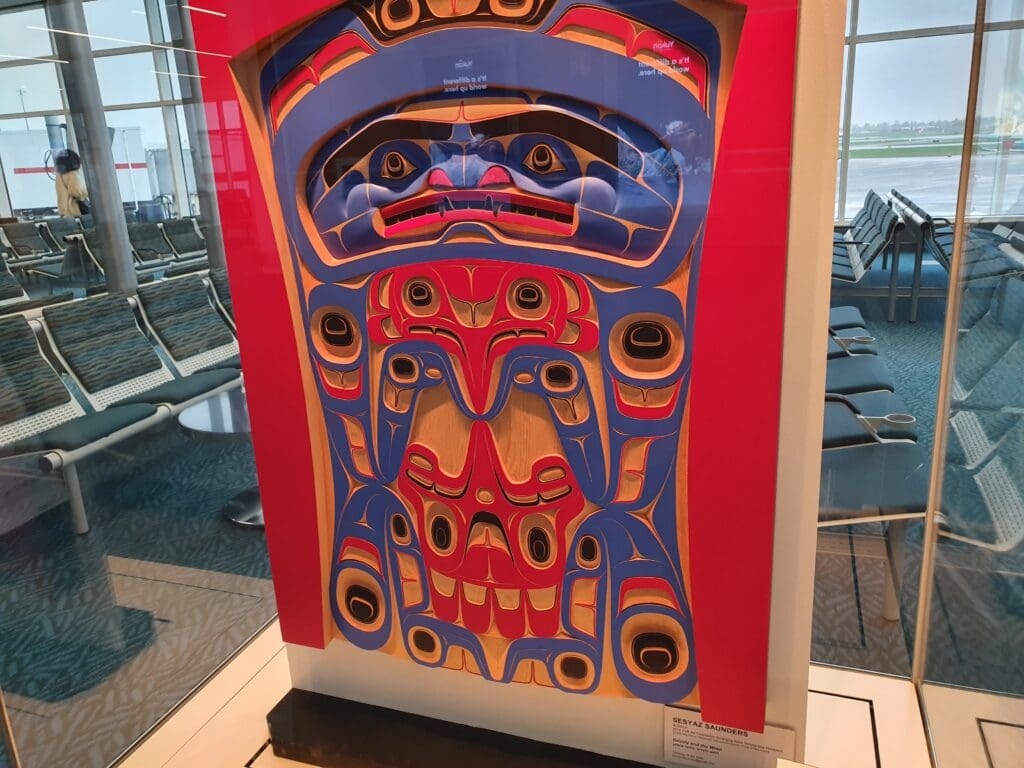

Aware that relatively little by means of sustenance other than light snacks would be provided on the flight across Canada, after walking around I decided to stop by at the local branch of Carl’s Jr. to part with the last of my Canadian Dollars. There I opted for a pricey chicken club sandwich that set me back almost $10 to keep me going for the afternoon. Taking a seat near one of the windows, I watched the near-constant stream of aircraft departing from the rain-soaked Runway 08R. Unsurprisingly the majority of movements that morning took the form of aircraft operated by Air Canada or WestJet and their subsidiaries, plus small Beechcraft 1900 and Saab 340 turboprops departing to destinations across British Columbia. Meanwhile, on the far side of the airport, a luxurious American registered Boeing Business Jet belonging to The Washington Companies could be seen waiting for its next flight.
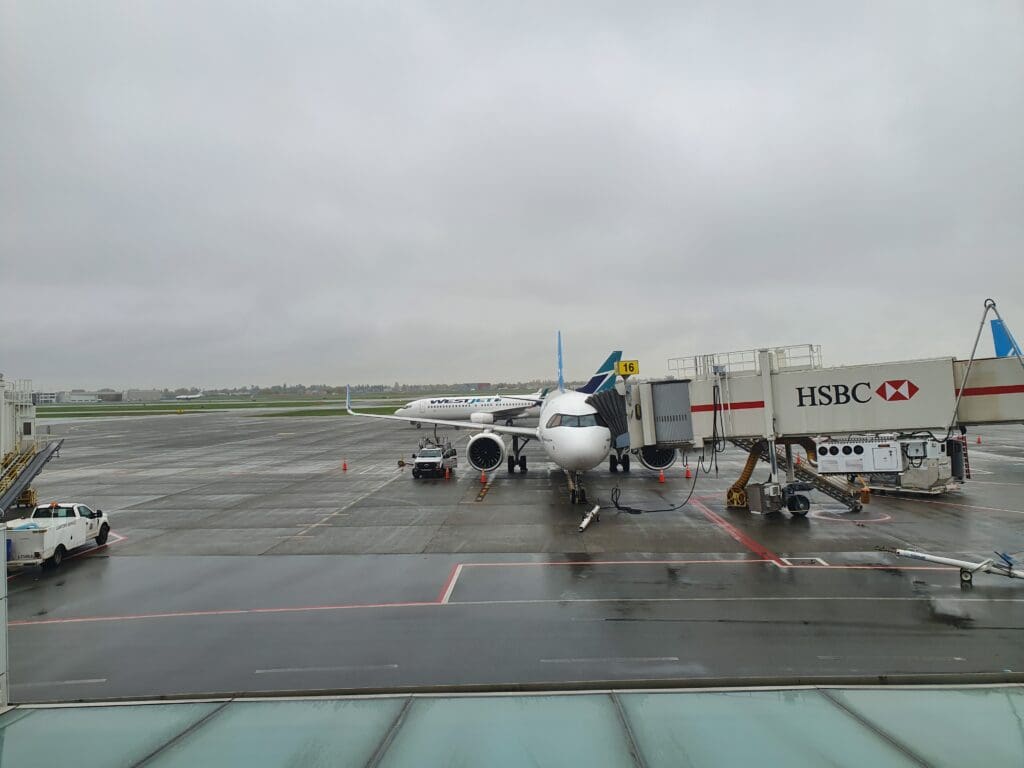
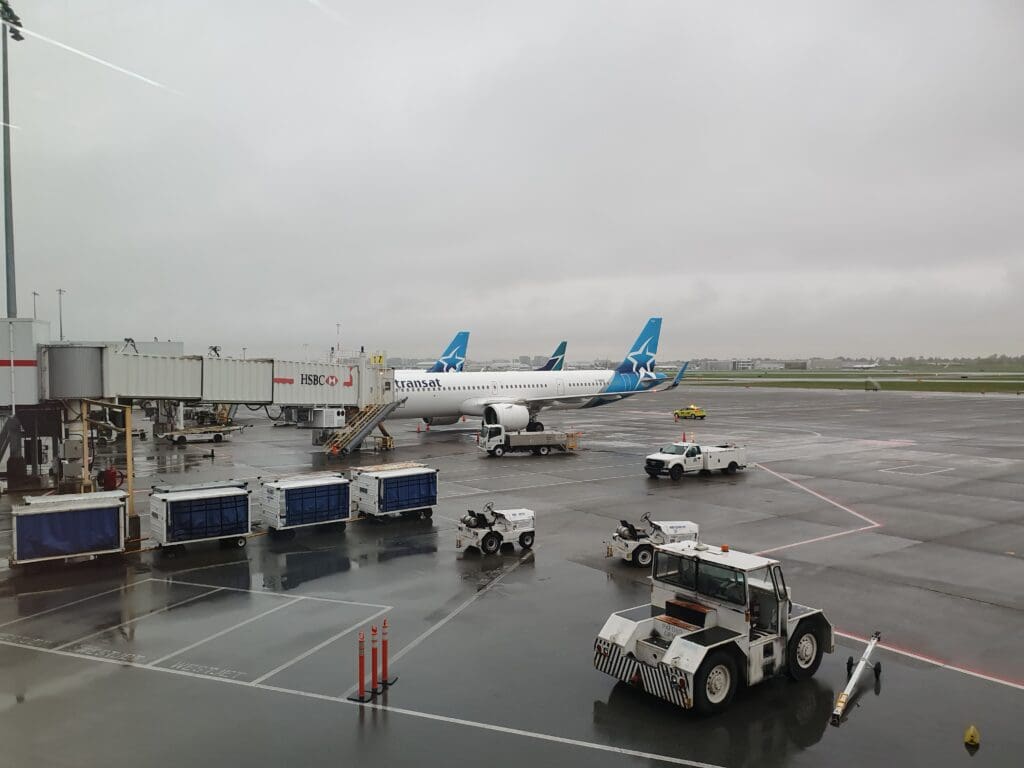
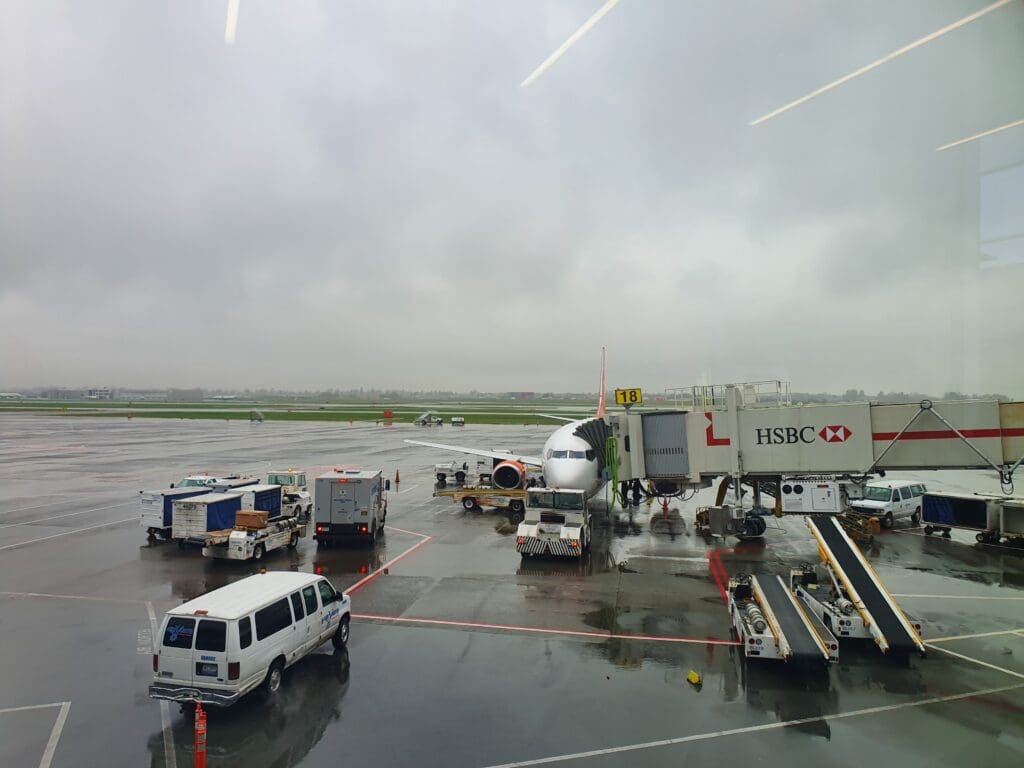
After another walk around the terminal area, I trundled over to Gate B27 where I arrived with around fifty minutes to go until the Toronto service’s scheduled departure time. Standing outside in the rain waiting to fly across Canada that afternoon was Boeing 737-7CT C-FWSK. Manufactured in Renton, this Boeing 737 sports the line number 2671 and first took to the skies of Washington in June 2008. The following month, the aircraft was shuttled up from Boeing Field to Calgary and soon entered commercial service with WestJet. Since then, the aircraft has shuttled passengers across WestJet’s route network including the airline’s early services across the Atlantic to Dublin and Glasgow. During this time, the aircraft suffered one notable incident which occurred in June 2019 whilst flying from Calgary to Toronto. Whilst crossing Manitoba, an unusual odour and accompanying haze could be smelt and seen in the cabin resulting in the flight’s diversion to Winnipeg. This turned out to be caused by a faulty recirculation fan. In the week before my flight, the aircraft had undertaken a total of 22 sectors covering at least 27,100 miles, passing through Calgary, Edmonton, Hamilton, Kelowna, Regina, San Francisco, Toronto, Vancouver and Winnipeg.
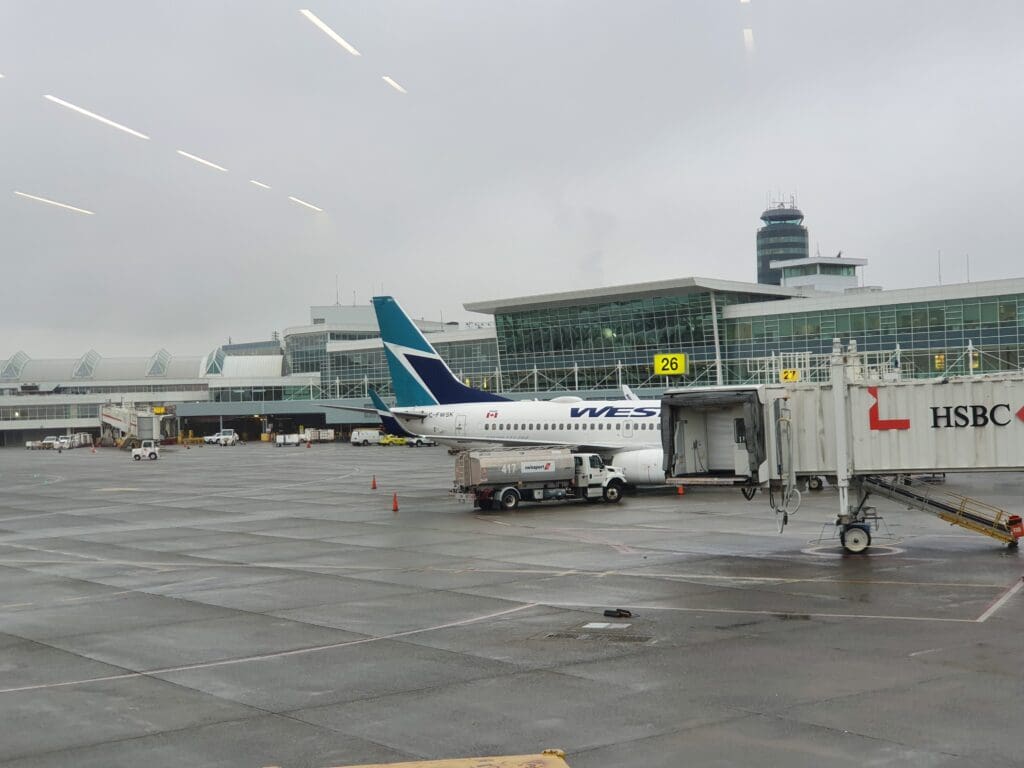
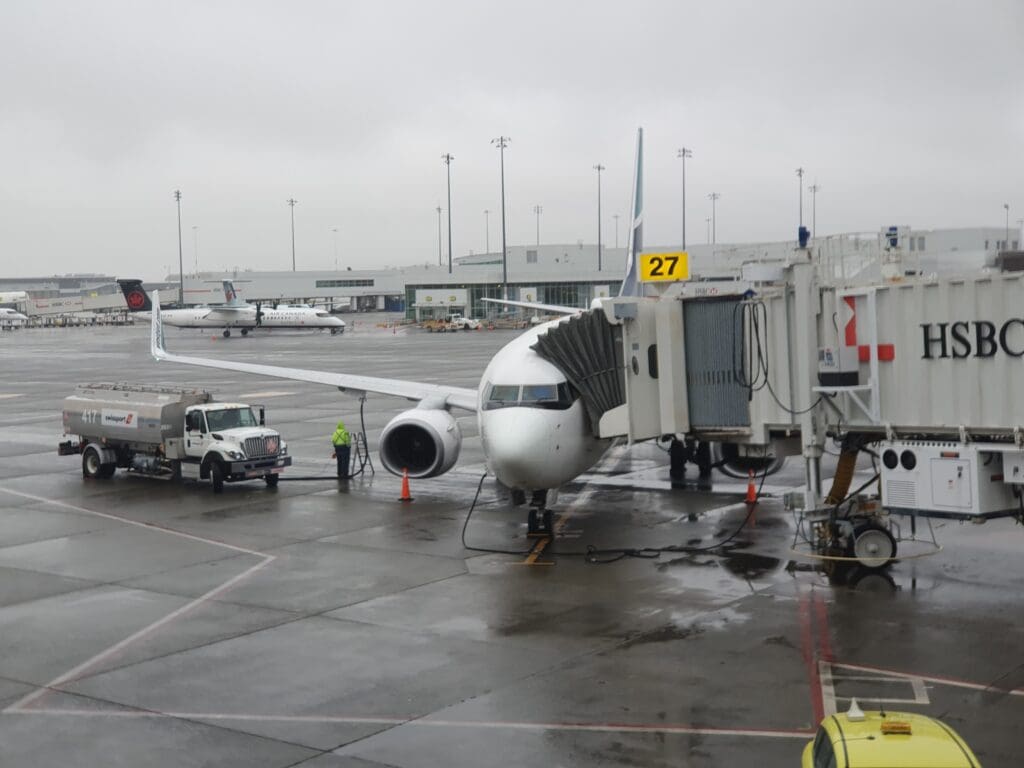
As per the information on my boarding pass, boarding was scheduled to commence at 1120. True to this, at this time the gate agent made an announcement inviting those needing assistance to make their way forward for boarding. This was then followed by an invitation for those Platinum and Gold members of the carrier’s WestJet Rewards programme, followed by those with young children and passengers seated in Zone 1. Within five minutes, all priority passengers who had opted to board early had made their way down the jet bridge and boarding for those in Zone 2 was announced. At this time, I joined the short queue however to my surprise once the passengers in front of me had made their way down to the aircraft, this came to a total halt. After a minute or so of no movement ,whilst one of the gate agents communicated on the phone at the gate podium, it was clear that something was amiss. Indeed several minutes later, an announcement was made informing all passengers that the flight would be delayed and requested passengers to take a seat at the gate.
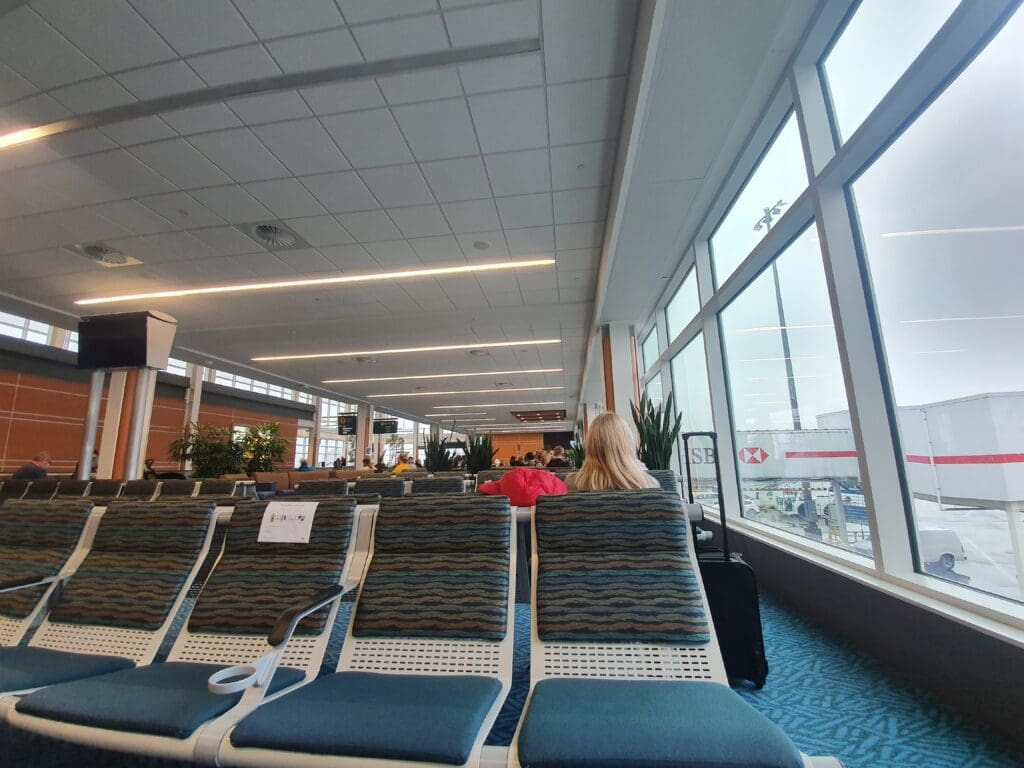
At 1140, another announcement was made by the gate agent informing passengers that the flight would now depart at 1300. Indicating the final destination of a good number of passengers onboard the flight, this was soon followed by an announcement that there would be no issue for those heading on to London Gatwick. Following another quick walk around to admire an Air North Boeing 737-400 at a nearby gate, at 1205 one of the gate agents made an announcement advising passengers that boarding would commence in ten minutes and requested passengers to use the washrooms if they needed to do so. Seated near the gate podium, perhaps indicating the source of the delay, a flustered WestJet pilot could be seen hurrying to the gate before making their way down to the aircraft. At 1217, boarding recommenced with those seated in Zone 2 advised to proceed for boarding. Once again, I joined a short queue and soon handed over my passport to the agent before scanning my boarding pass. Once done, I was then allowed to head down the jetway where I soon reached another queue. Following some more waiting, at 1222 passengers were allowed to head onto the aircraft and within a couple of minutes I stepped into the forward galley where I was given a friendly greeting by the Purser who handed me a wet wipe.
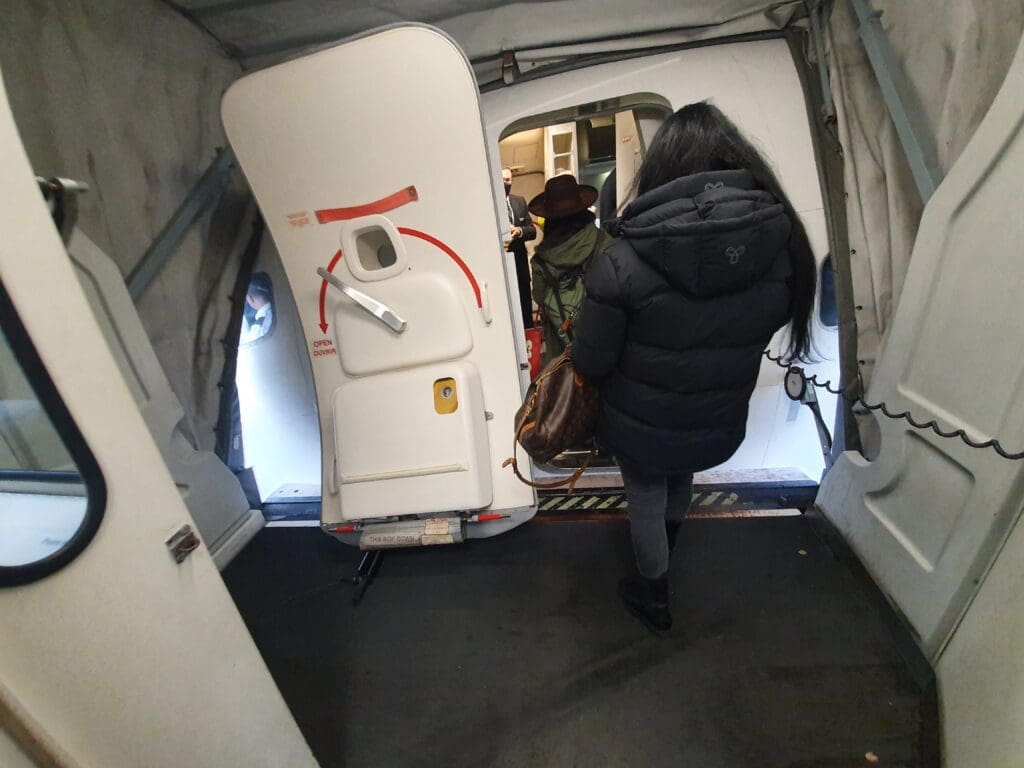
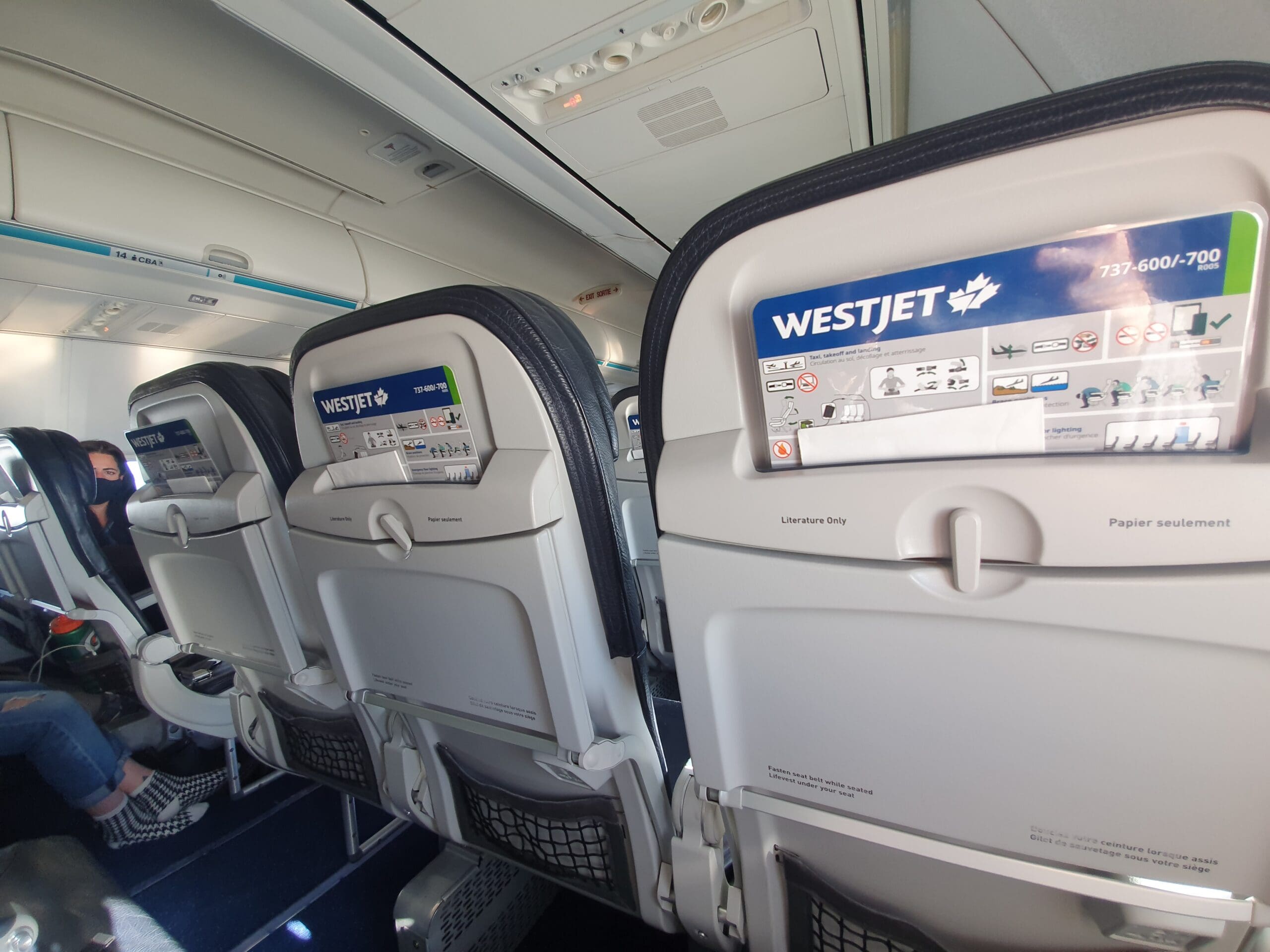
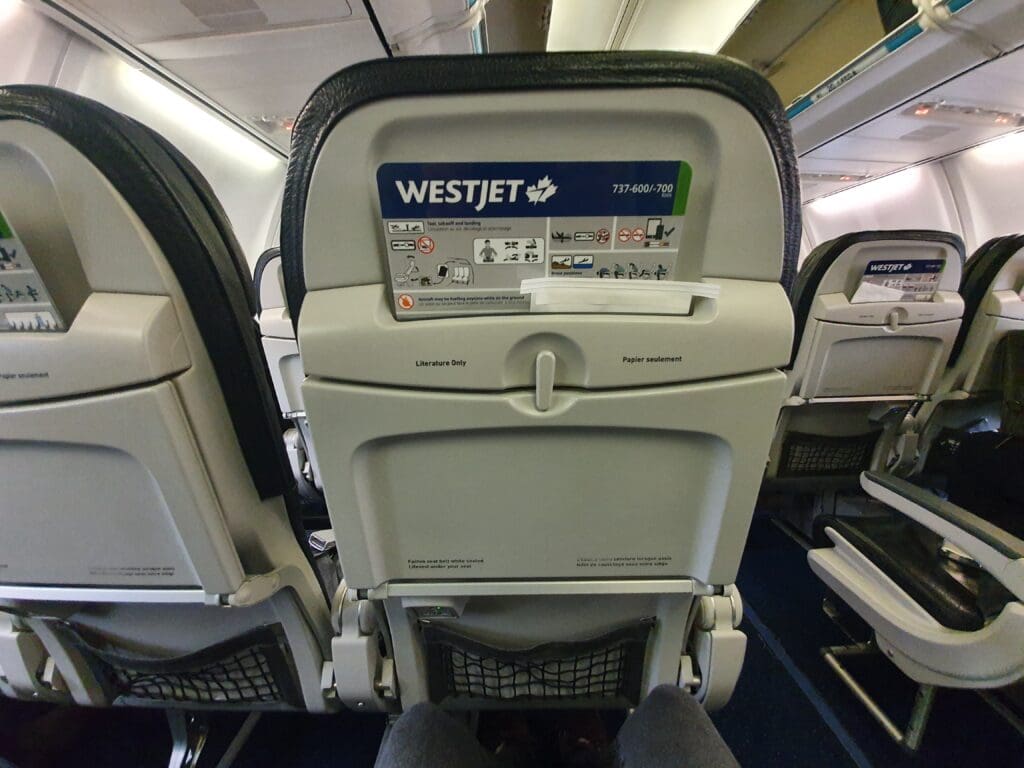
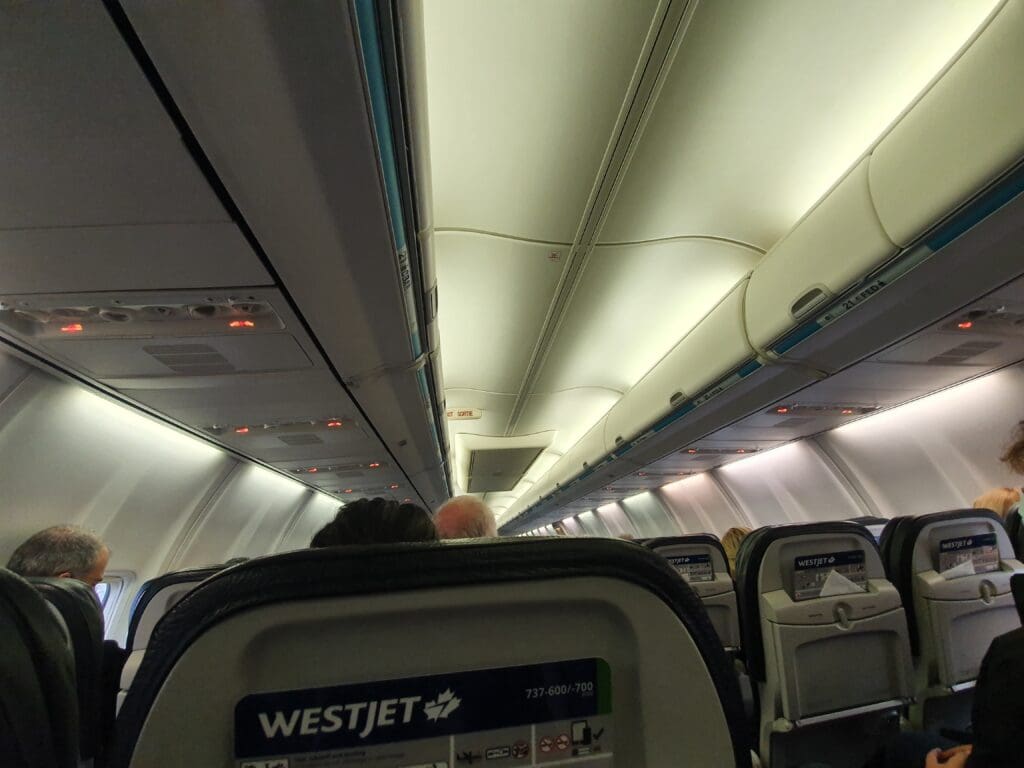
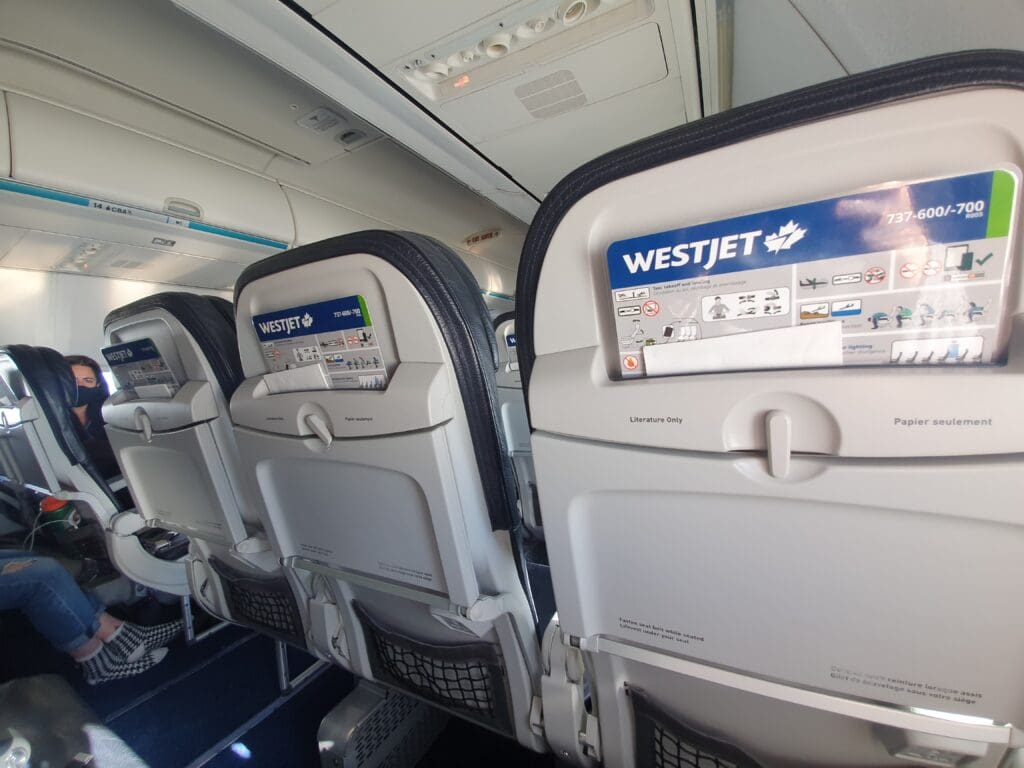
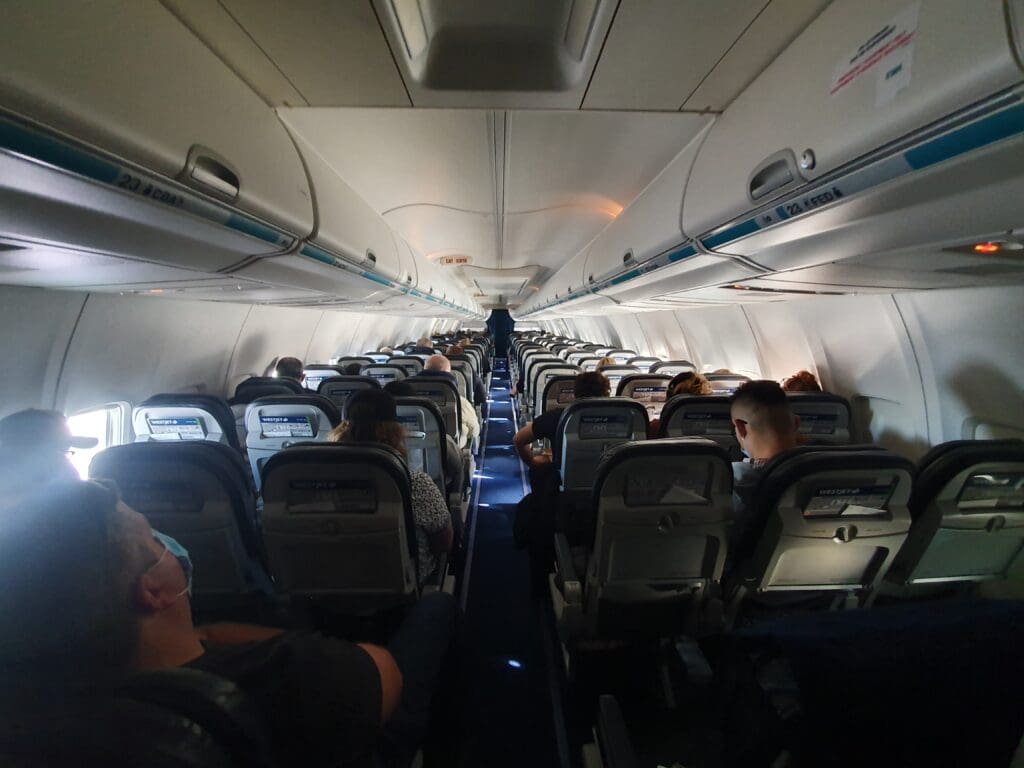
Turning right, I entered the aircraft’s Premium cabin where three rows of Recaro CL4710 recliner seats could be seen, arranged in the typical narrowbody business class configuration of 2-2. Each of these sported a dark (faux?) leather covering with a large beige headrest. As with those in Economy, these seats lacked personal television screens, with all entertainment onboard WestJet’s Boeing 737 fleet having migrated to the cloud. With those seated in the business cabin having been on the aircraft for a fair while, I steamed through this without having to wait for any passengers to stow their luggage and arrived at the 118-seat Economy cabin in a matter of seconds. In this cabin, each seat was covered in a black (faux?) leather covering and topped with an adjustable headrest. On the back of these, each featured a literature compartment and a seatback pocket, with the former containing a large laminated safety card and a logo-less sickbag. Meanwhile, a plug socket and a USB port could be seen beneath the literature compartment.
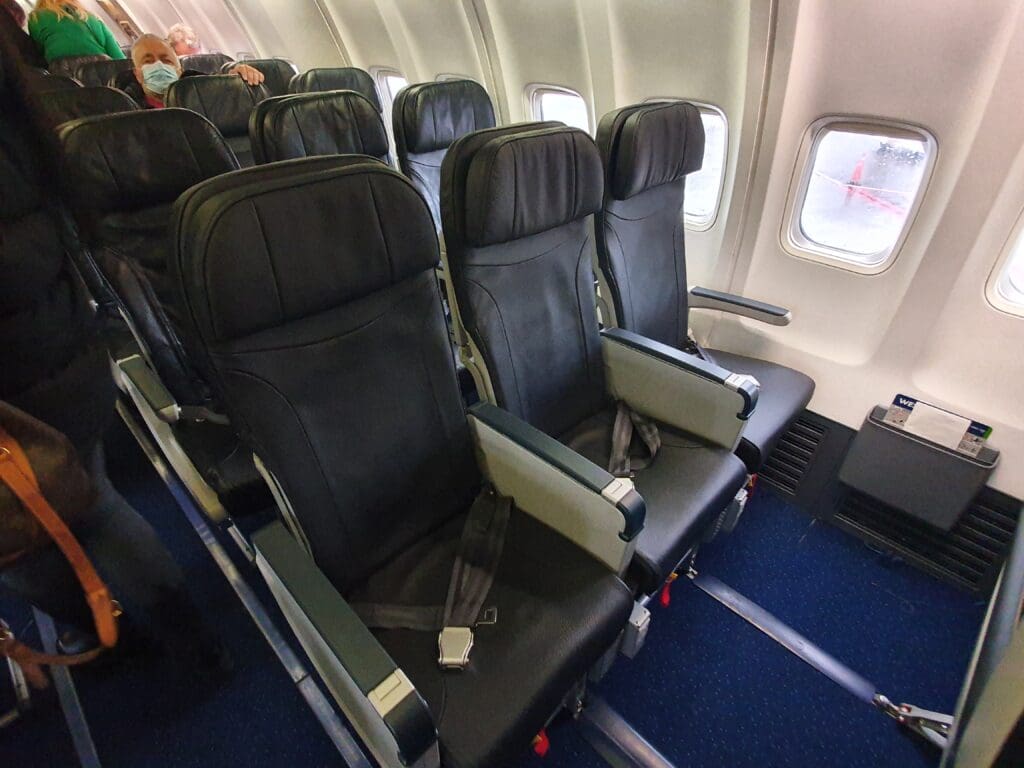
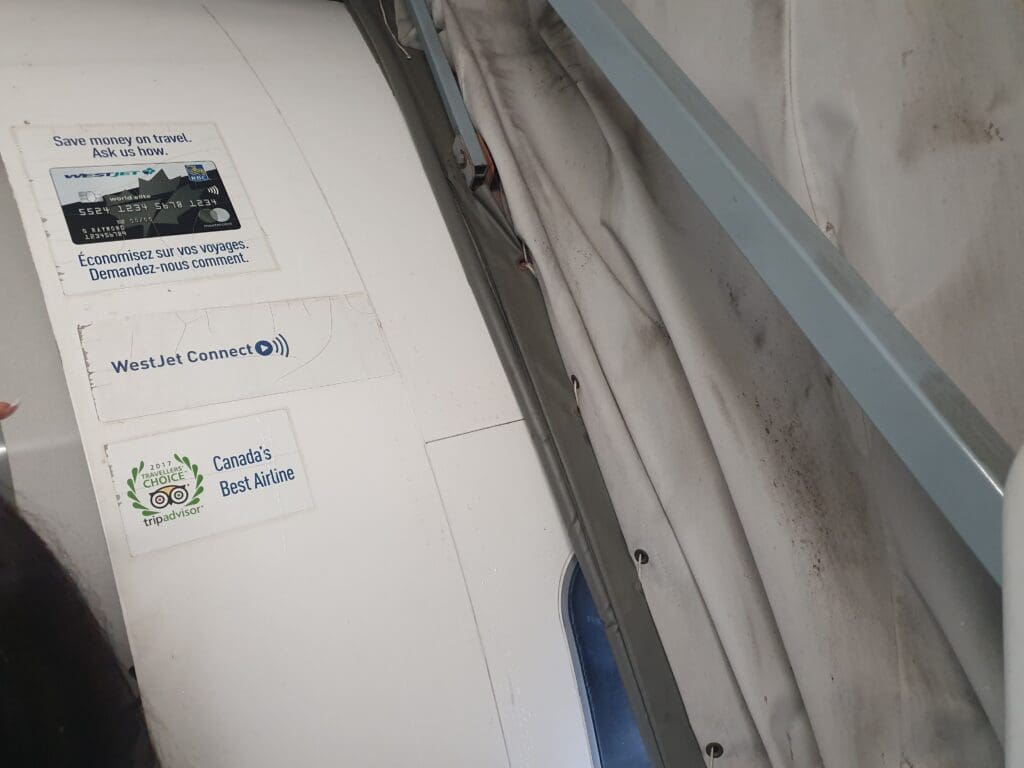
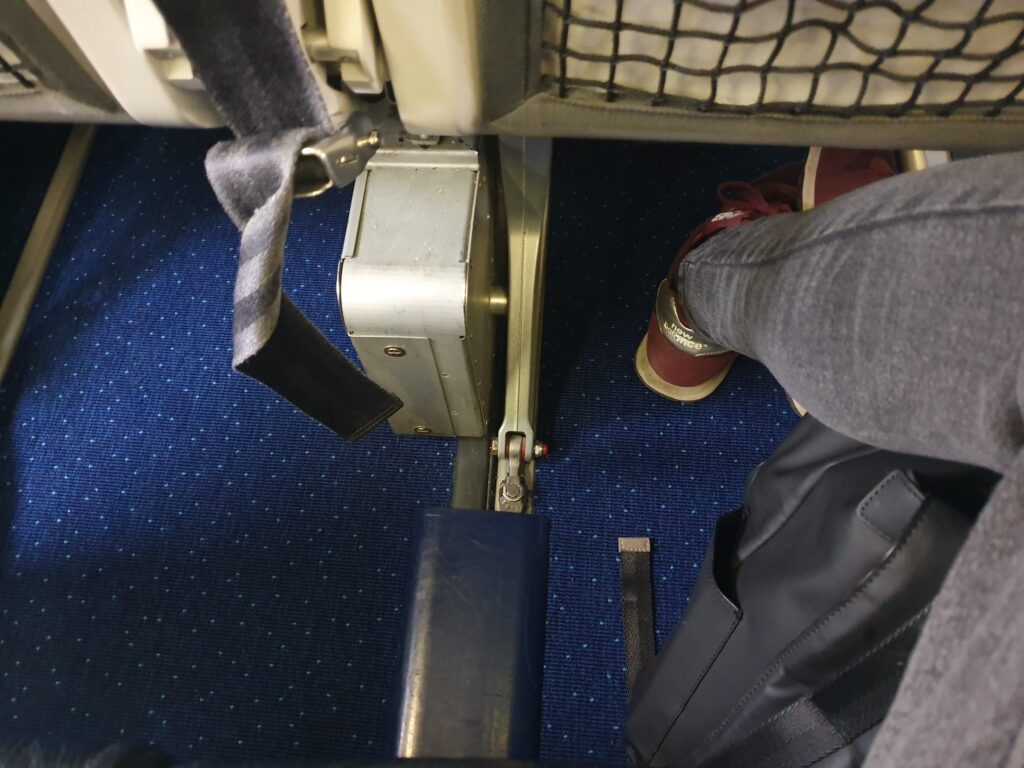
After trundling down the aircraft, I made it to the jet’s penultimate row where a window seat occupier could be seen in Seat 22A. Once I had squeezed my small suitcase into the overhead locker, I eased myself down into Seat 22C as passengers continued to stream onto the aircraft to the faint sound of pop songs being broadcast through the cabin. Whilst I cannot claim that the seat was by any means the most comfortable I have ever ridden in, it was acceptably soft and offered a decent amount of legroom. However, it is worth noting that inflight entertainment appeared to still be present under each middle seat despite the lack of personal television screens. Whilst a criticism that is by no means aimed at WestJet, perhaps being too used to Boeing’s Sky Interior, the cabin of that particular aircraft did appear to be slightly dated. Nevertheless, this was in good condition with few marks and scratches visible in the area around my seat. Slightly disappointing however was the fact that I did spot several crumbs in the area around my seat.
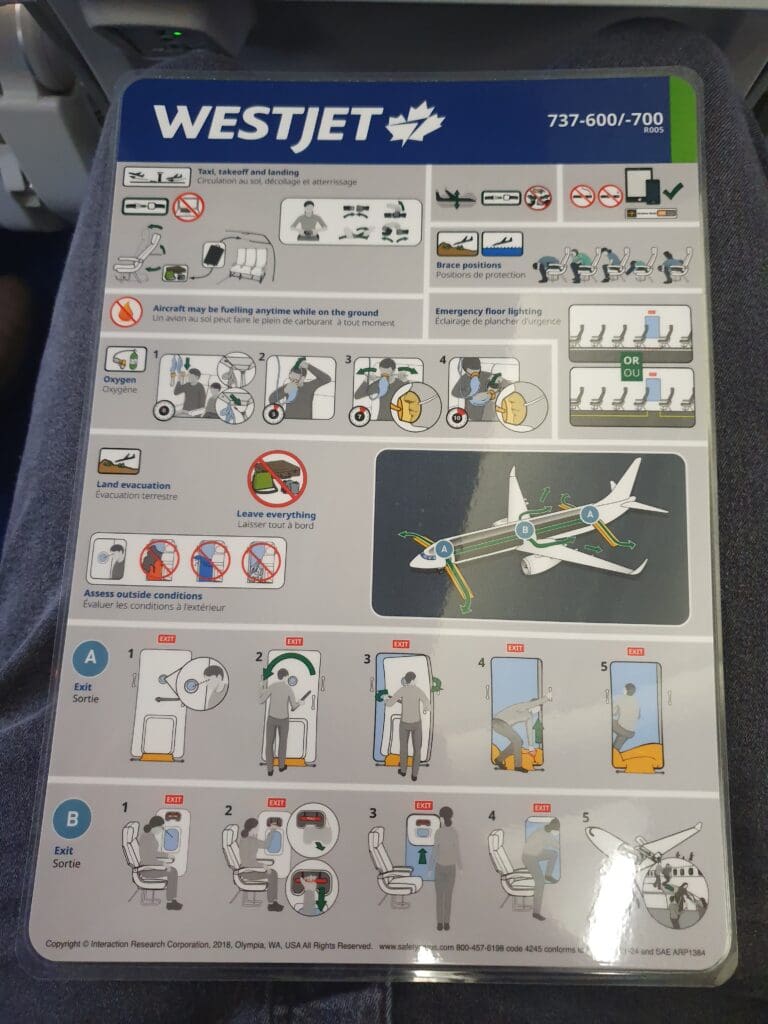

By 1235, all passengers had made it onto the aircraft, with approximately 65% of seats taken for the journey across Canada that afternoon. With several empty rows further forward, I initially intended on moving forward before departure to secure a window seat however after overhearing a conversation between a flight attendant and another passenger, I would have to wait until the seatbelt signs were turned off before making any move. After several minutes of waiting, the purser performed their welcome announcement which commenced with an apology for the delay – although no reason for this was given. This then transitioned into an introduction of the two pilots and two other flight attendants onboard, before moving to the safety announcement, with the two flight attendants performing a demonstration to this in the aisle. This was then followed by a pre-recorded safety announcement in French.
At 1243, the Boeing jolted backwards and the pushback commenced. Inside the cabin, as the aircraft headed backwards, the cabin lights were turned off, whilst humming and whirring could be heard as the Boeing’s two CFM56-7B22 engines powered into life. Following the usual pause whilst the tug was disconnected and engines stabilised, at 1248 the Boeing commenced a quick taxi over to Runway 08R. Without coming to a halt, at 1252 the aircraft taxied onto the runway and performed a gentle rolling takeoff. Given the dreadful weather in Vancouver that day, within seconds of taking to the skies the aircraft headed up into the clouds and remained in these for much of the climb that afternoon. Several minutes after departure, the purser made their post-departure announcement which featured the usual word of warning regarding seatbelts and facemasks, before moving to advertise the WestJet Connect cloud-based inflight entertainment service.
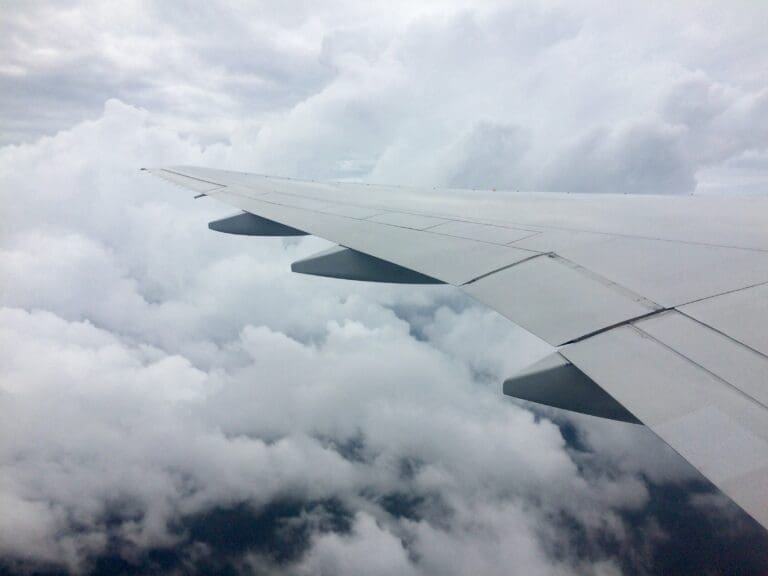
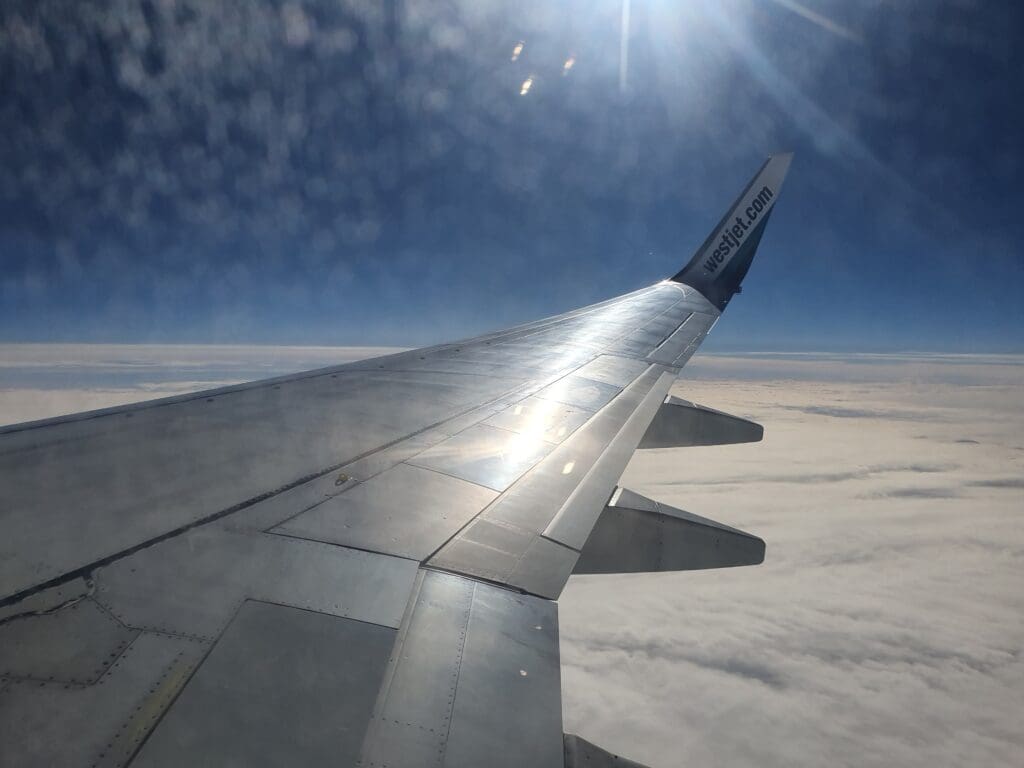
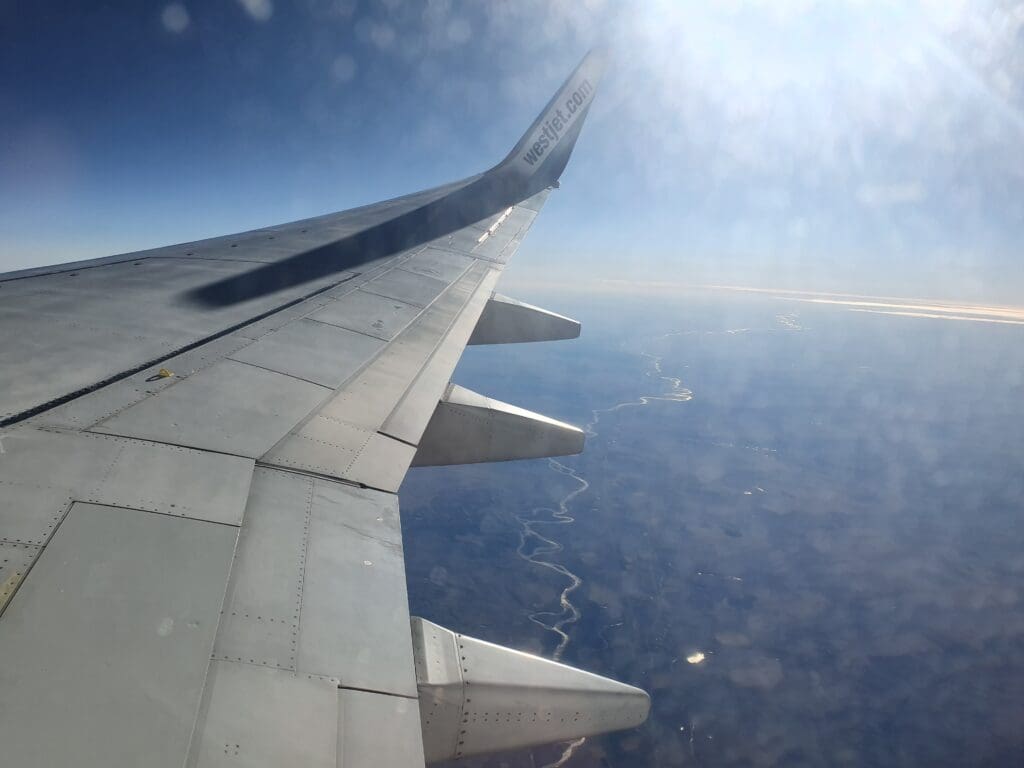
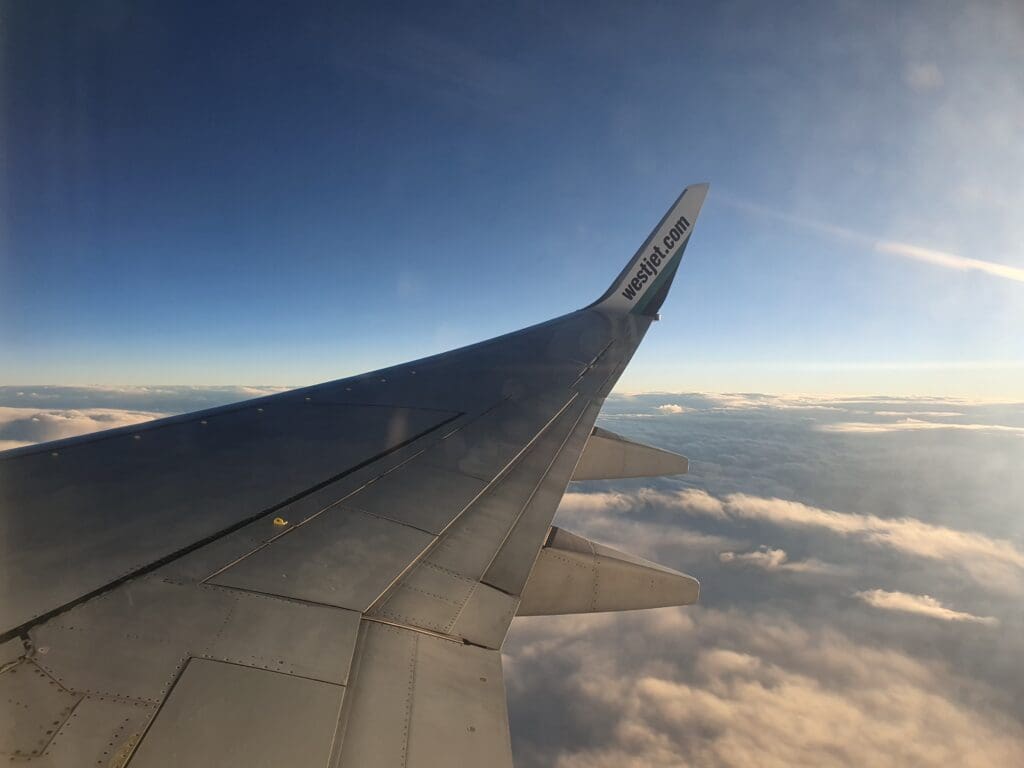
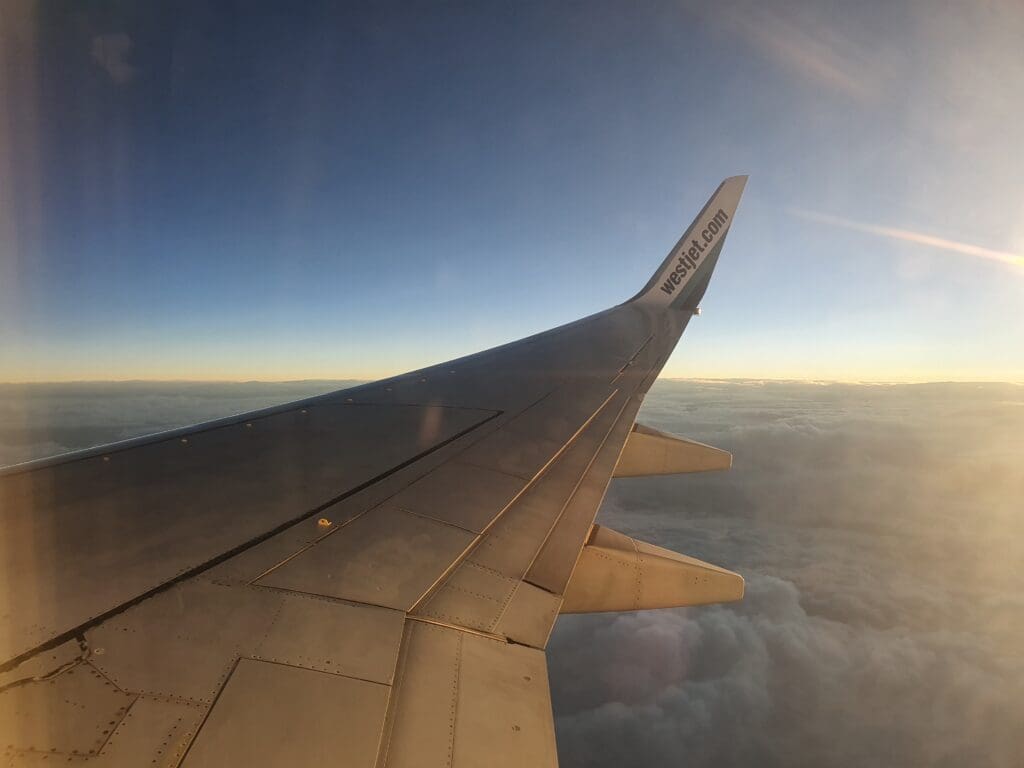
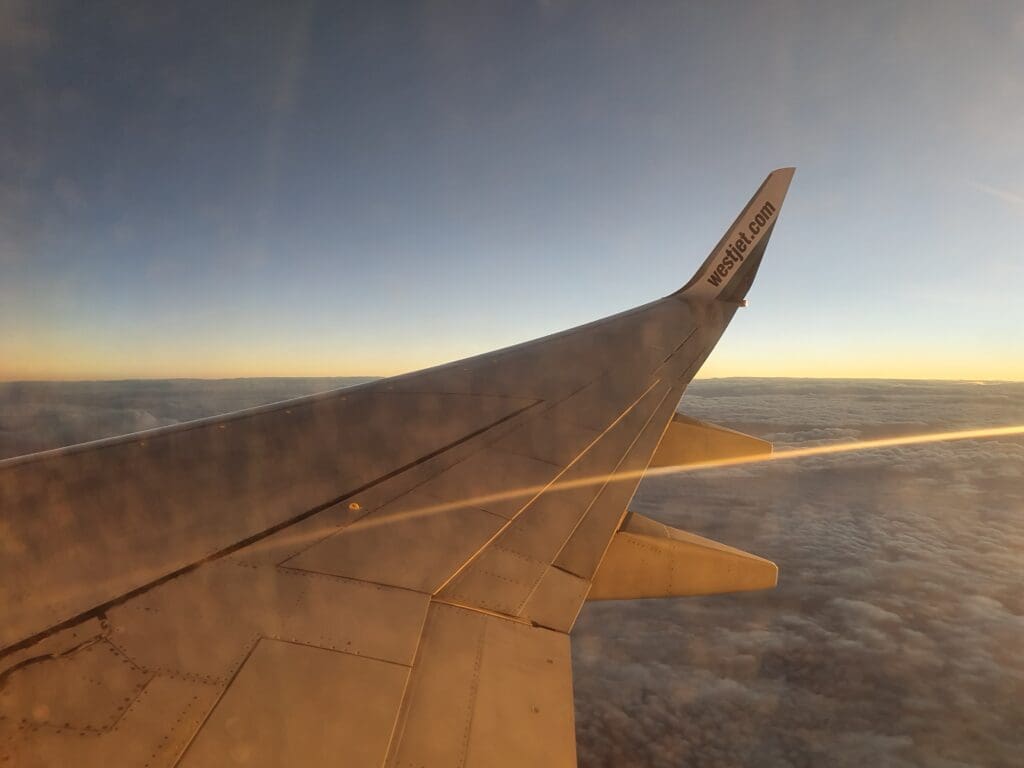
Following plenty of lumps and bumps, at 1310 the Boeing finally emerged in the bright blue skies above the thick layer of clouds. Several minutes later, the aircraft levelled off at its cruising altitude of 39,000 feet at which point the seatbelt signs were switched off. Thankfully, with many passengers having already fallen asleep and likely content with either their aisle or window seats (I spotted few occupied middle seats during the flight), most appeared not to be in any rush to change seats. At this time, I decided to make my way forward and settled in the first vacant window seat I spotted, Seat 15F, this allowing for a good view of the wing albeit through a heavily scratched window. Aside from this, as with the area around my original seat, all appeared to be in order with relatively few signs of wear and tear. In addition, I was delighted to find that the seat’s built-in USB-A port charged my phone much quicker than is often the case onboard aircraft.

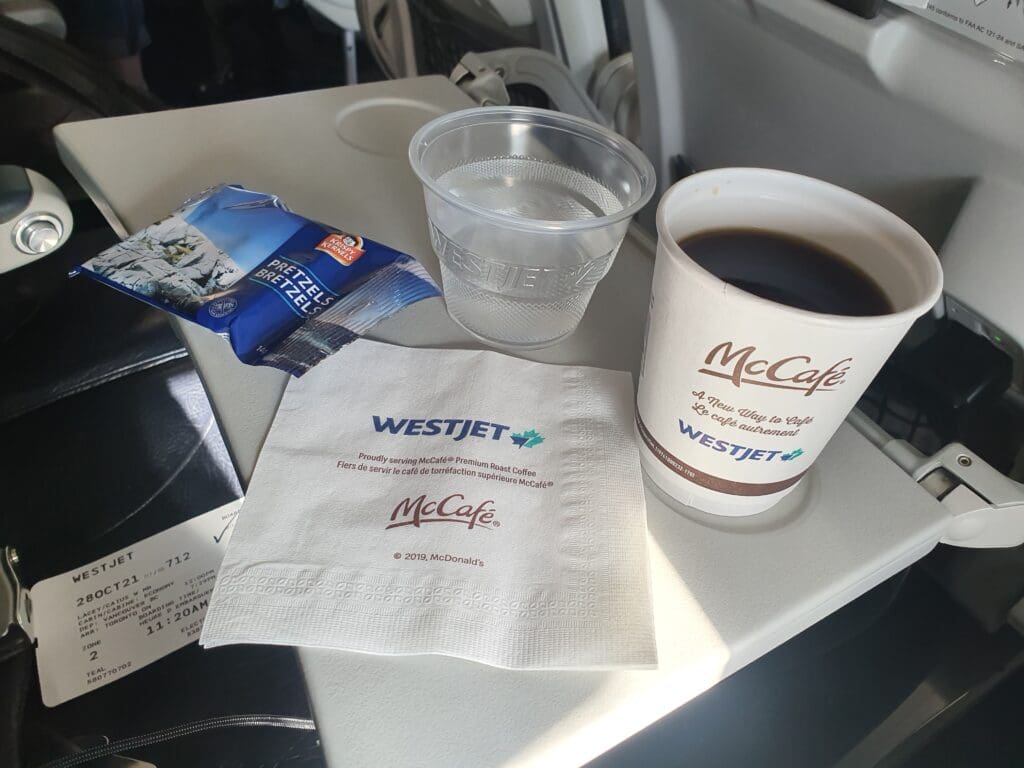
Whilst we were all in for a reasonably long flight that afternoon, the two flight attendants working in the Economy cabin wasted no time in commencing the inflight service, soon rolling out the trolley to the front of the cabin before working backwards. As expected, the complimentary offerings that afternoon were identical to those I had received on the much shorter WestJet Encore flight from Prince George to Vancouver several days earlier. These consisted of a small bag of Krispy Kernel salted pretzels and a non-alcoholic drink. Whilst some may complain about this, hailing from Europe where low cost carriers’ complimentary offerings are in almost all cases non-existent, I could say nothing negative about this snack. Given the light load, the two flight attendants sped through the cabin and upon reaching my row, I requested a black coffee and a cup of water, which was handed to me along with the pretzels and a WestJet branded serviette. Other than these, those fancying something else can opt to purchase alcoholic drinks and a small selection of other snacks (specifically a deli box, hummus and crackers and a KitKat). However, whilst spotting these items on the trolley and noticing several passengers opting to purchase alcoholic beverages, the buy-on-board service was not advertised at all during the flight. In terms of service, in stark contrast to the stellar service I had received on my WestJet Encore flight several days earlier, the crew did not seem particularly friendly when interacting with me or other passengers during this, going about their duties with minimal interaction with passengers.
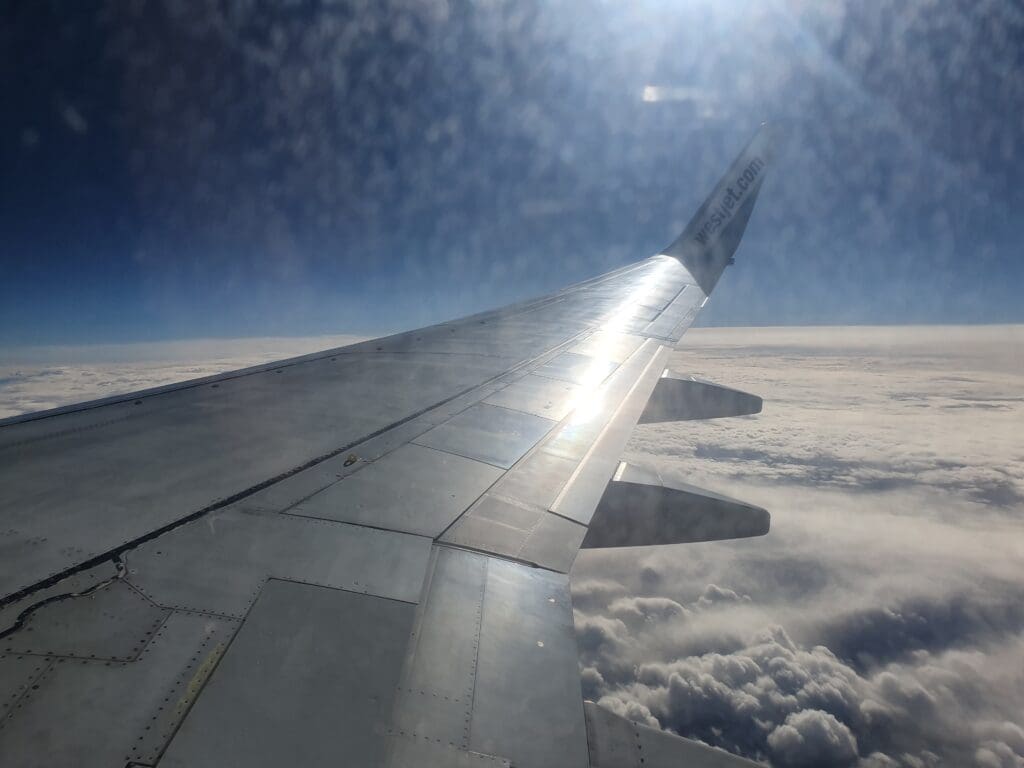
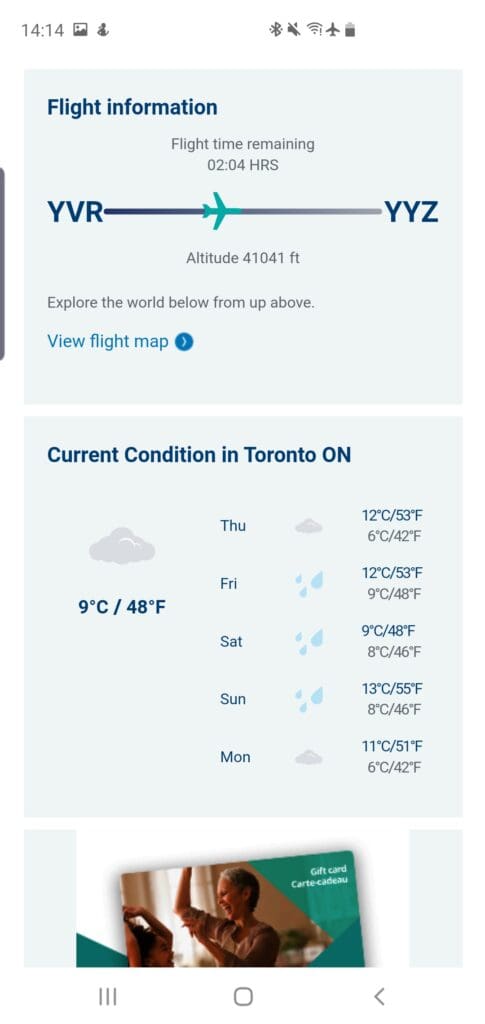
As I sipped on my McCafé coffee, the aircraft could be felt climbing by another 1,000 feet, settling at a cruising altitude of 41,000 feet. Outside, as the aircraft cruised eastwards little could be seen thanks to the near omnipresent cloud cover below during the initial stages of the flight. That afternoon, having departed Vancouver into the east, minimal banking was required to point the aircraft in the general direction of Toronto. During the climb, the aircraft had passed over Abbotsford and Chilliwack before steaming onwards towards the Rockies, initially levelling off to the south of the Okanagan Valley city of Penticton. Around 42 minutes after taking off from Vancouver, the Boeing left British Columbia behind and crossed over a minuscule portion of southwest Alberta. After cruising above the province for all of six minutes, the jet then crossed into American airspace and flew across northern Montana.
Still with little to see below as the aircraft trundled across Montana, I decided to connect to the WestJet Connect network. Doing this with little issue, I soon arrived at the options page whereby I could pay for internet access, with options priced between $2.99 and $21.99, or simply make use of the cloud-based entertainment system. Despite being a traditionalist and preferring personal television screens over cloud-based systems, I cannot deny that this was well laid out and featured the same expansive list of films and television programmes as is available on WestJet’s Boeing 787 fleet. However, as far as I could tell this lacked any music options. Turning to the FlightPath3D moving map, this worked well and allowed for the easy tracking of the progress of the flight with various options and viewpoints.


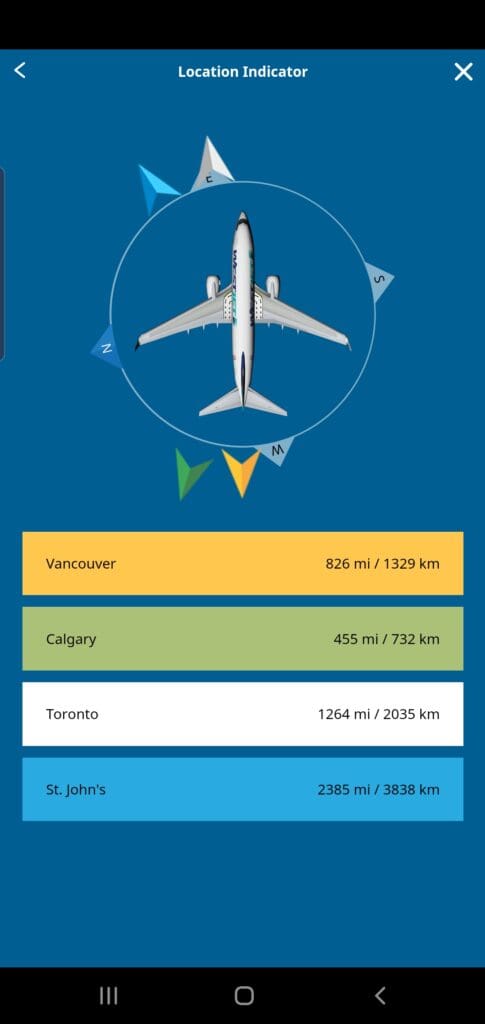
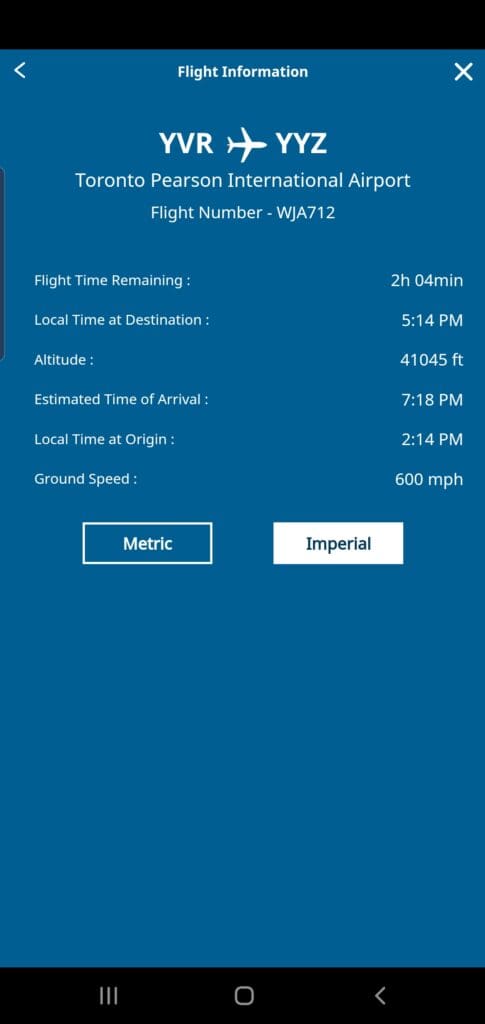
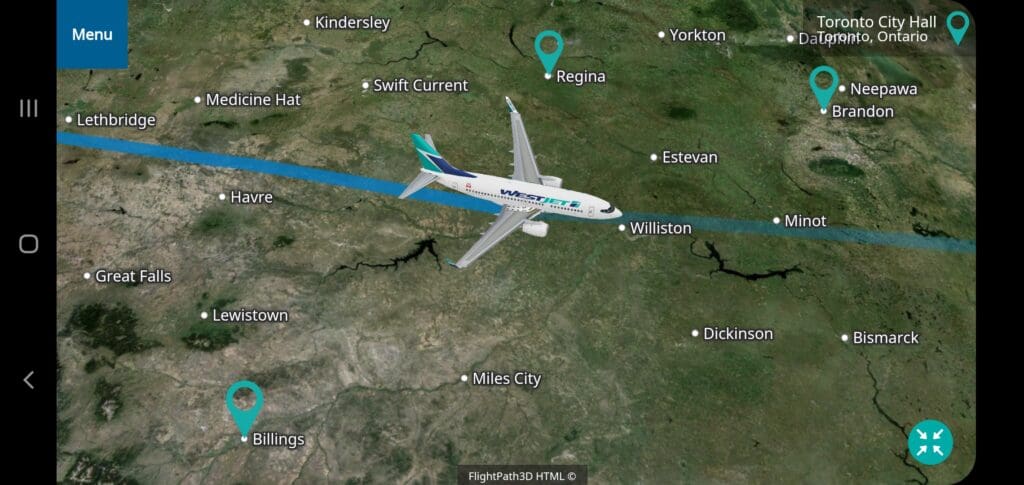
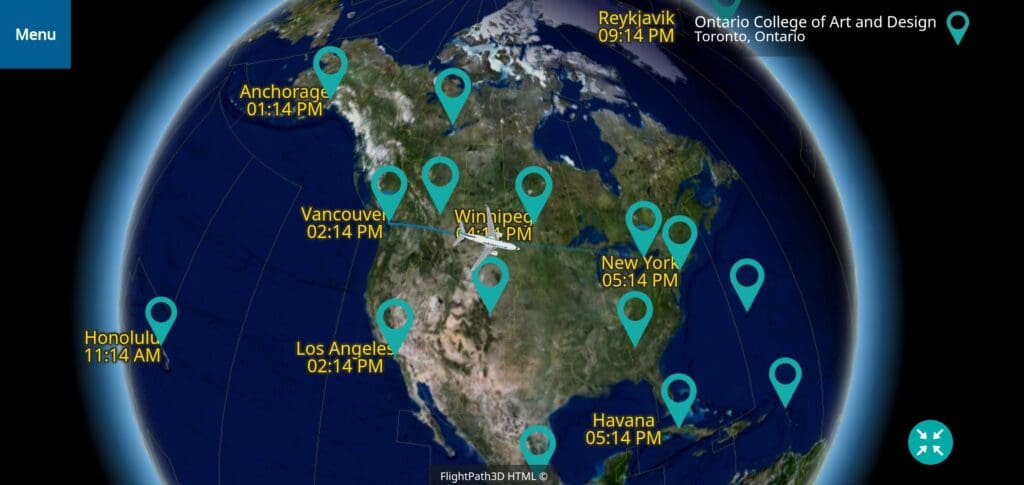
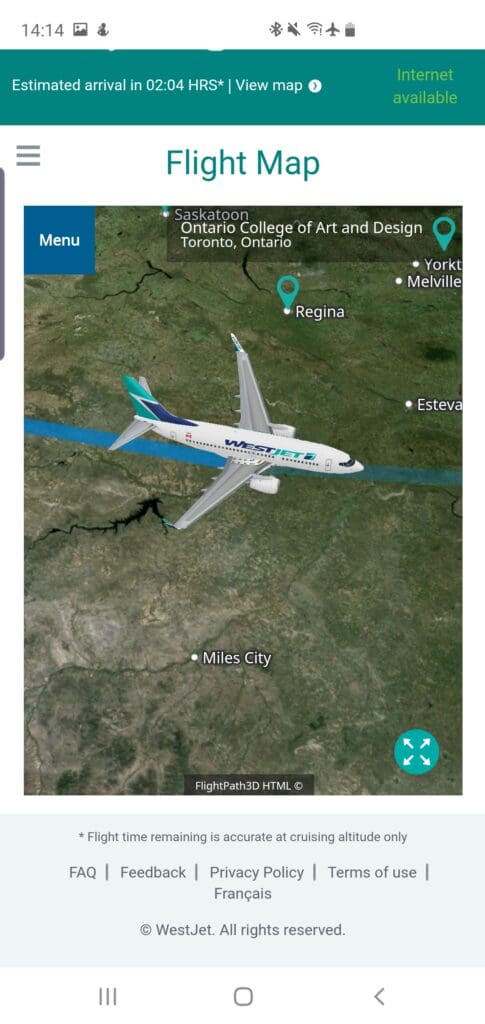
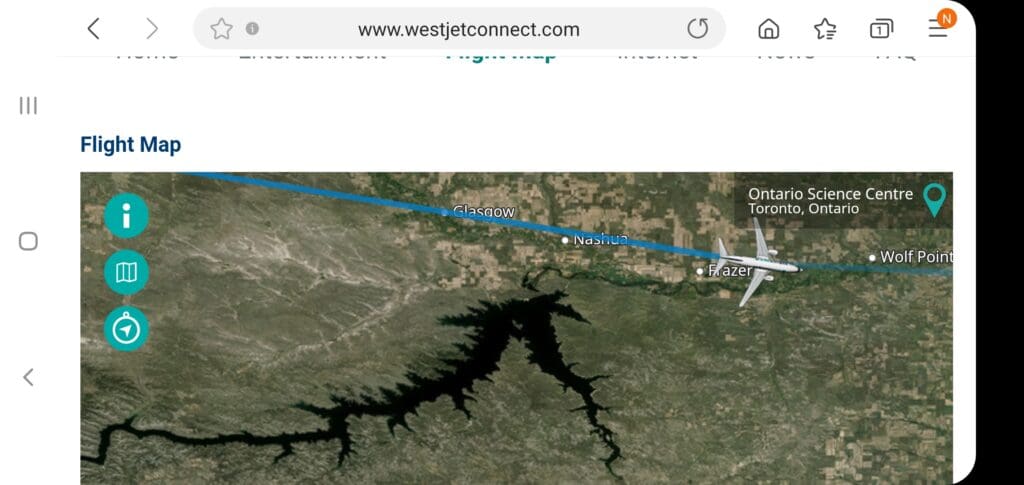
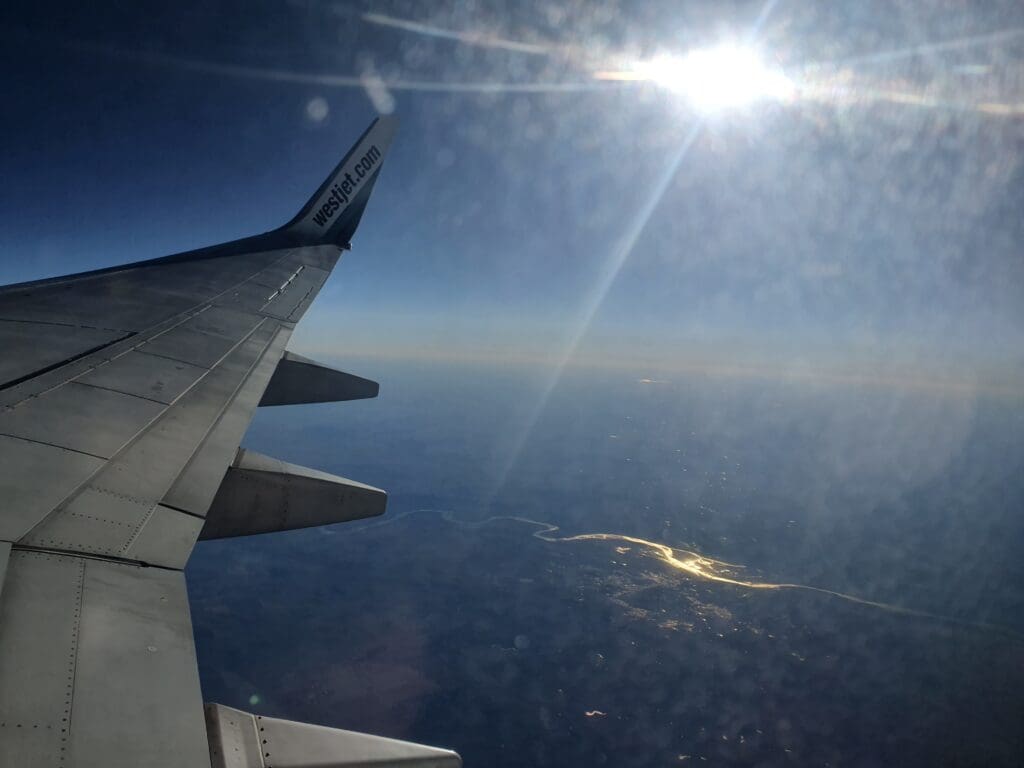
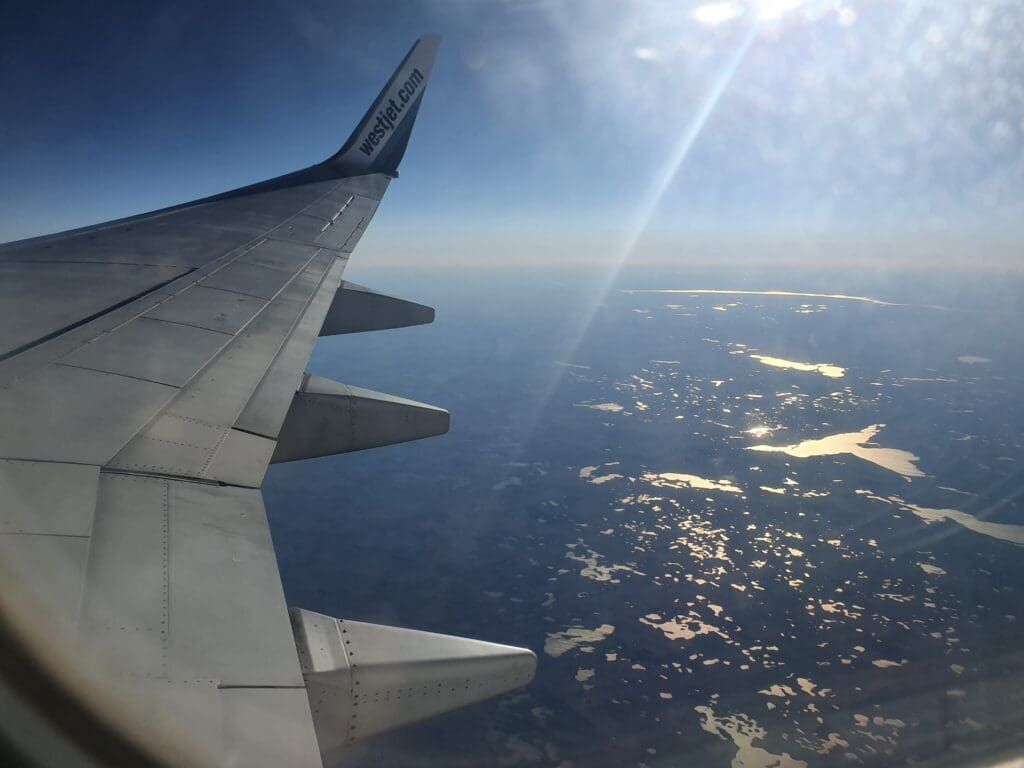
Eventually, the clouds opened up below and revealed the landscapes of Eastern Montana. At this time, I managed to spot the large Y-shaped Fort Peck Lake, the fifth largest artificial lake in the US, as well as its dam. As this faded, the long and winding Yellowstone River came into view, with this being particularly visible thanks to the late afternoon sun reflecting off this. Around forty minutes after entering American airspace, the Boeing then crossed into the skies of North Dakota. Below, relatively little could be spotted in the flat orange-brown autumnal landscapes out of the state except the occasional small town on the state’s Highway 200. Eventually, the state’s capital and second largest city, Bismarck appeared, however home to only a little over seventy thousand residents, this can hardly be referred to as one of North America’s major metropolises.
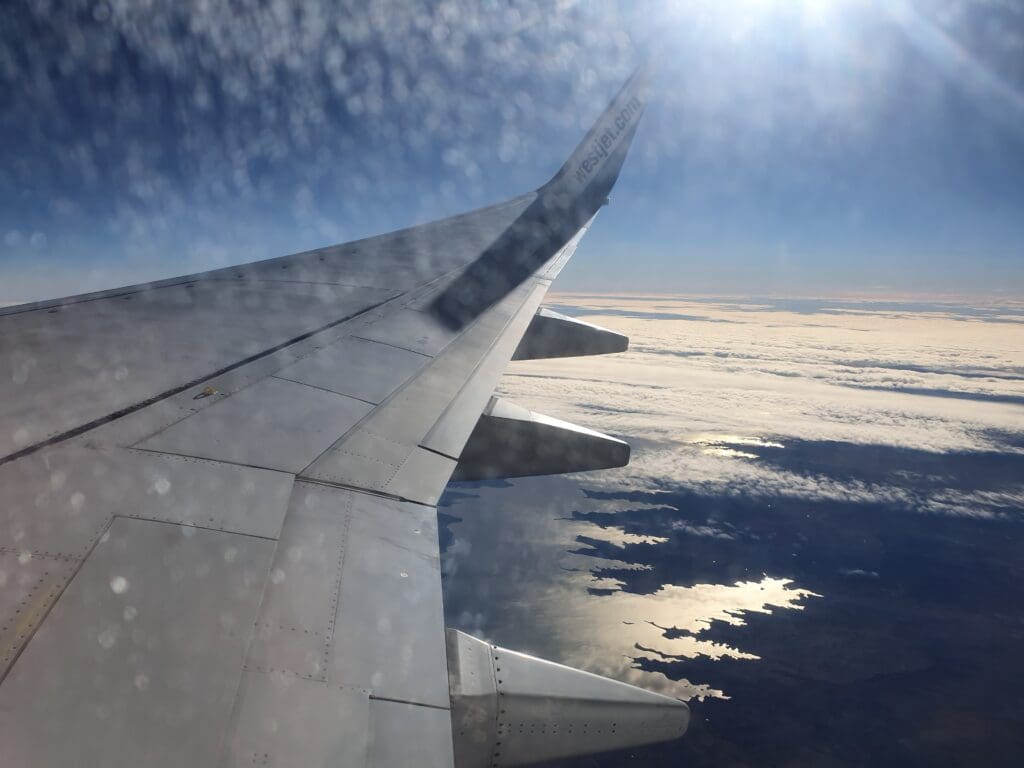
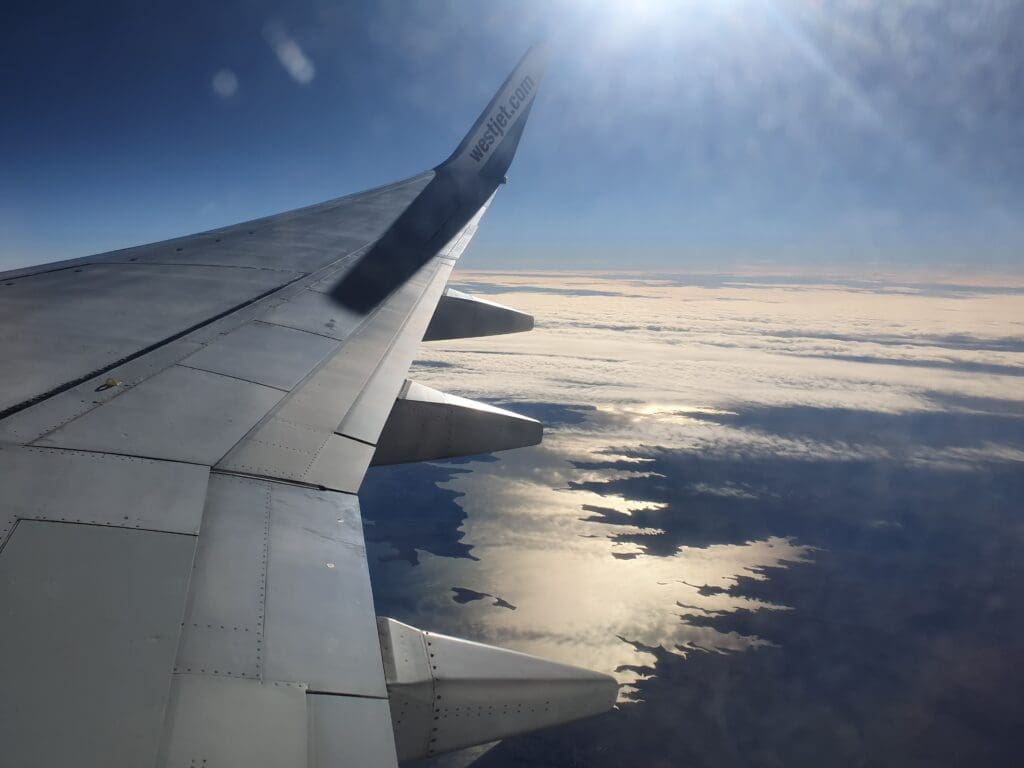
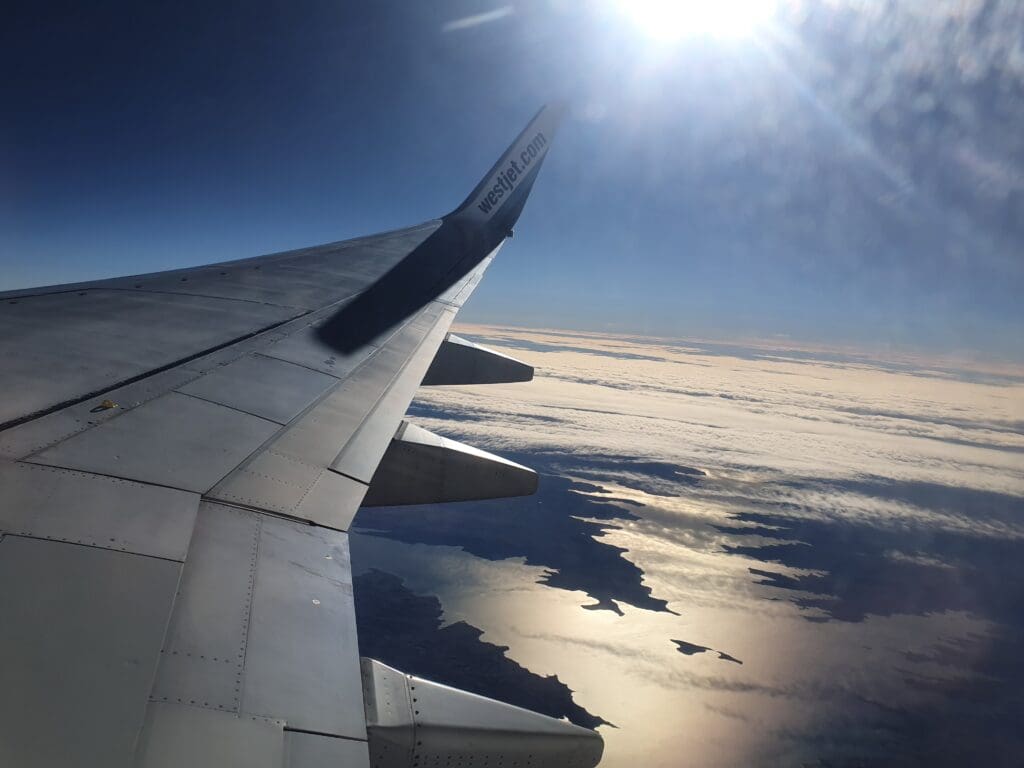
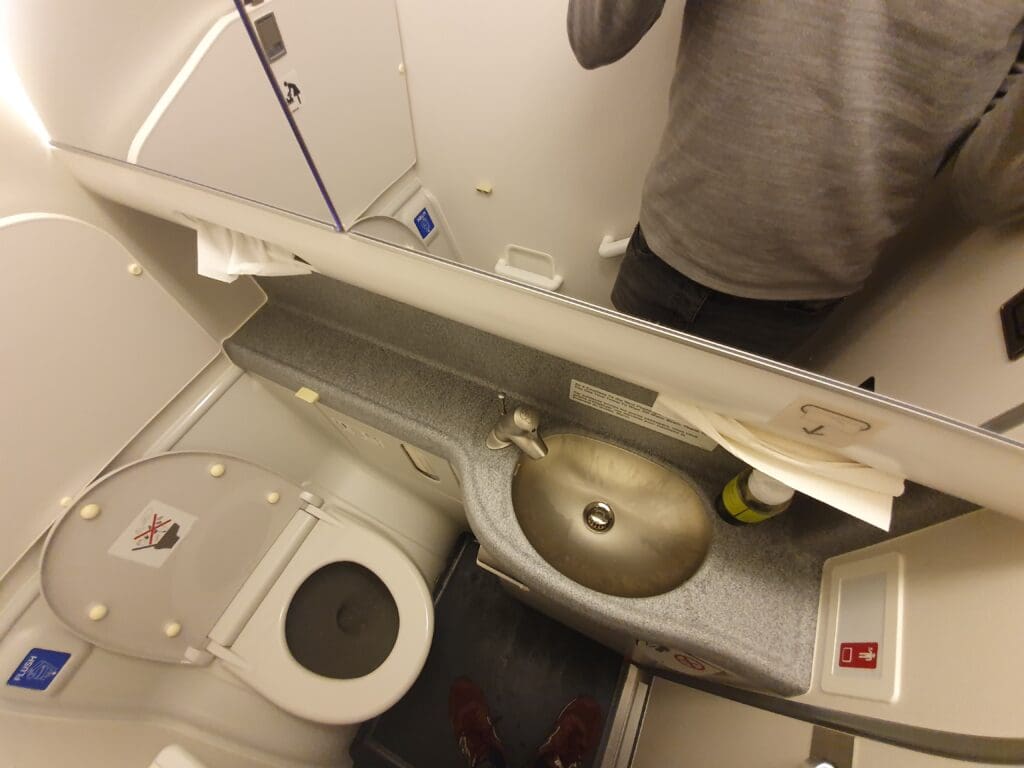
As the aircraft crossed the eastern half of North Dakota, I decided to make a trip to one of the two onboard lavatories at the rear of the aircraft. Upon entering one of these, I was pleased to find this is a clean and presentable state and stocked with all the basics one could hope to find in an aircraft lavatory. Several minutes after I returned to my seat, the aircraft was thrown about slightly resulting in the re-illumination of the seatbelt signs. This was accompanied by a pre-recorded announcement in English and French advising passengers to return to their seats and fasten their seatbelts. Fortunately, this bout of bumpiness did not last too long however the seatbelt signs remained firmly on for around 45 minutes.
From North Dakota, the aircraft crossed into the skies of Minnesota around halfway between Fargo and the small city of Wahpeton. A short time after crossing into the state, the clouds rolled in and completely blocked any view of the state from being had. Crossing Minnesota roughly at its narrowest point, the aircraft’s journey across the state took around twenty minutes before arriving at Wisconsin. At 1520 Pacific Standard Time, or 1820 Eastern Standard Time as I shall use from now on in the report, the trolley was rolled to the front of the cabin and a second round of inflight service commenced. This was identical to the first round, consisting of a complimentary soft drink, a small packet of Krispy Kernel pretzels and a serviette. Opting for still water, this was passed across to me in a small plastic WestJet branded cup with once again, minimal interaction. As the aircraft crossed Wisconsin, Outside, the skies could be seen rapidly darkening as the jet ploughed eastwards into the evening. After crossing the Door Peninsula, at 1850, whilst 41,000 feet above Lake Michigan, the sun set as we neared Michigan’s western coastline.
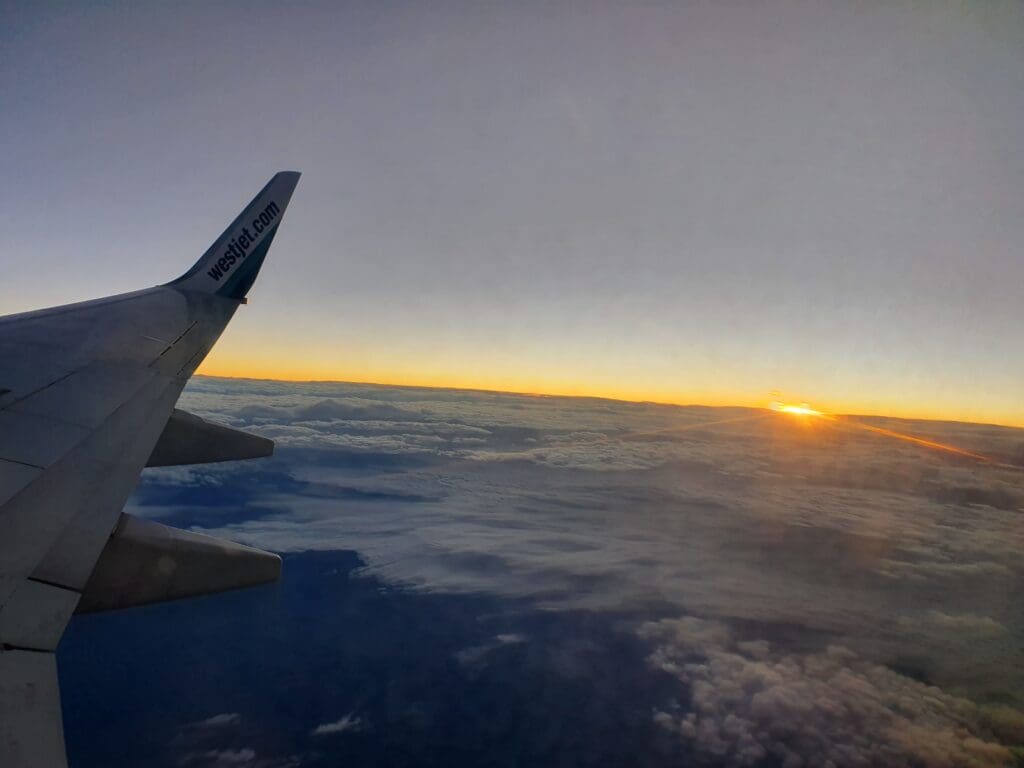
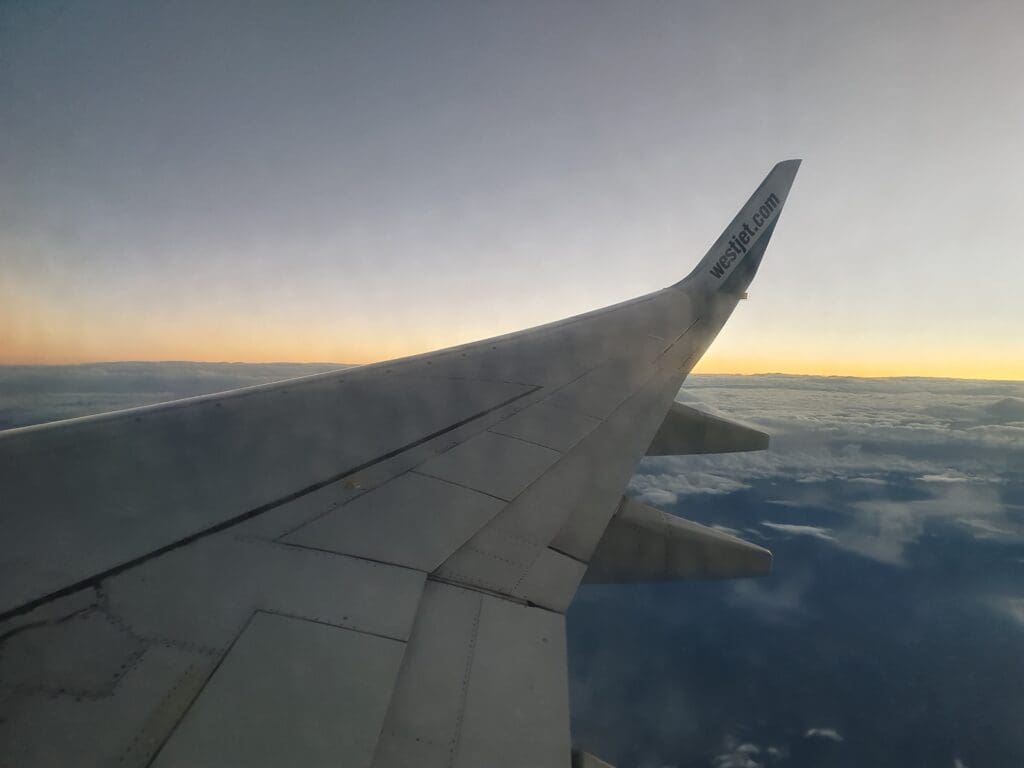
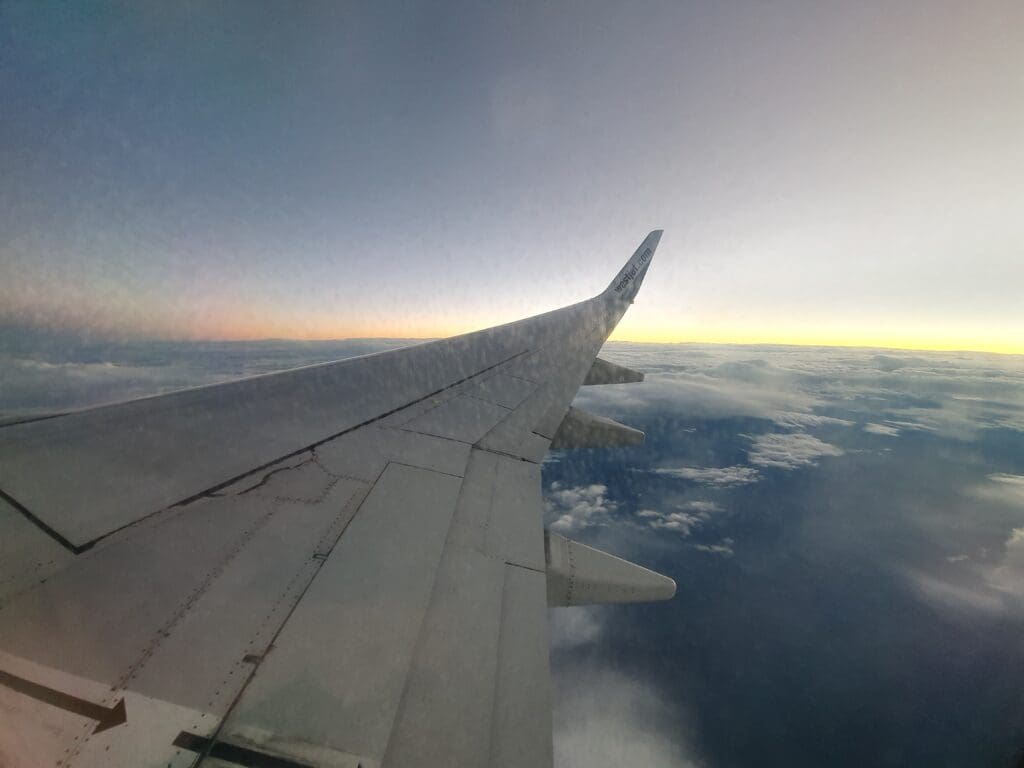
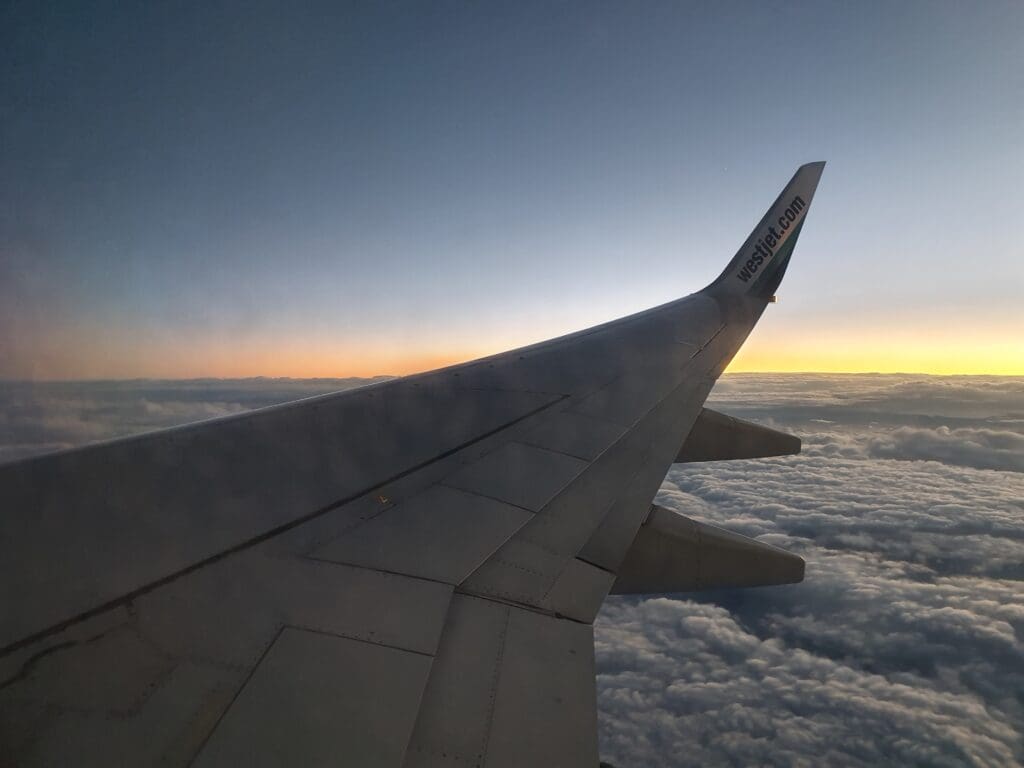
Twenty minutes later at 1910, just before passing over Saginaw Bay, the Boeing could be felt gently leaving its cruising level and commencing its descent back to the ground. Taking this as my cue to make a pre-arrival trip to the lavatory, once again I was pleased to find this in a clean and pleasant state despite being in the final stages of the flight. Several minutes after I returned to my seat, the two flight attendants passed through the cabin collecting rubbish as the purser performed an announcement regarding the commencement of our descent into Toronto. At 1920, the aircraft re-entered Canadian airspace as it crossed Lake Huron before the orange glow of the Ontario towns and cities of Cambridge, Guelph, Kitchener and London could be seen. Ten minutes later, the seatbelts were reilluminated as the aircraft descended through 10,000 feet, with the crew then passing through the cabin ensuring all was in place for the flight’s arrival before the cabin lights were switched off.
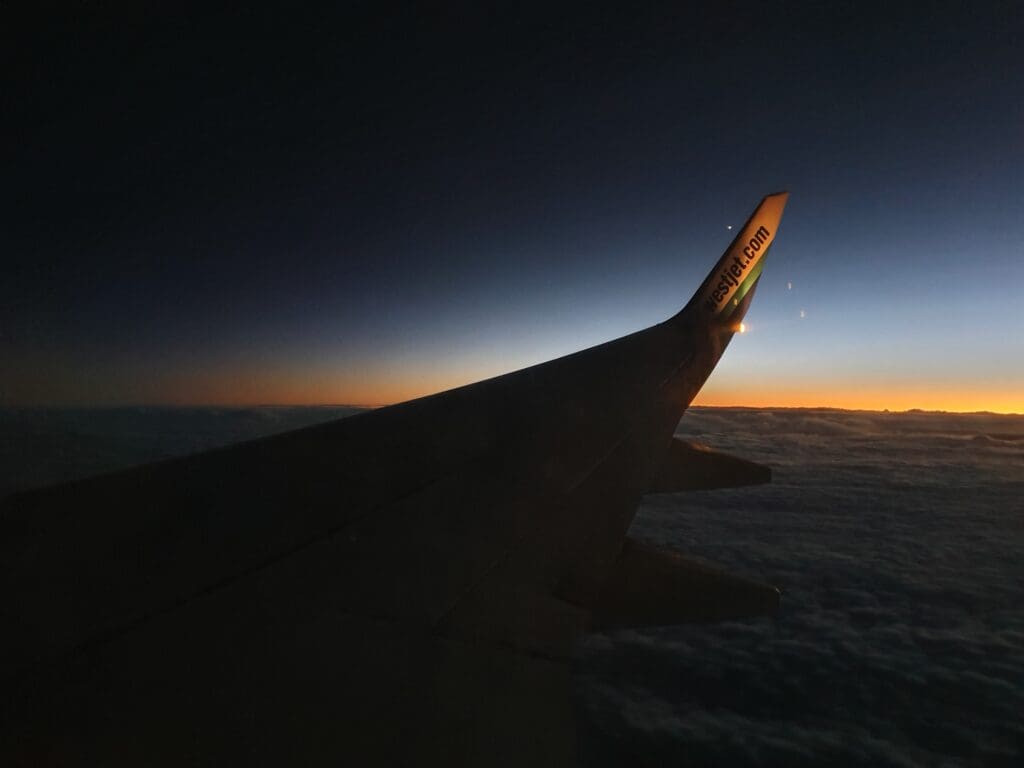
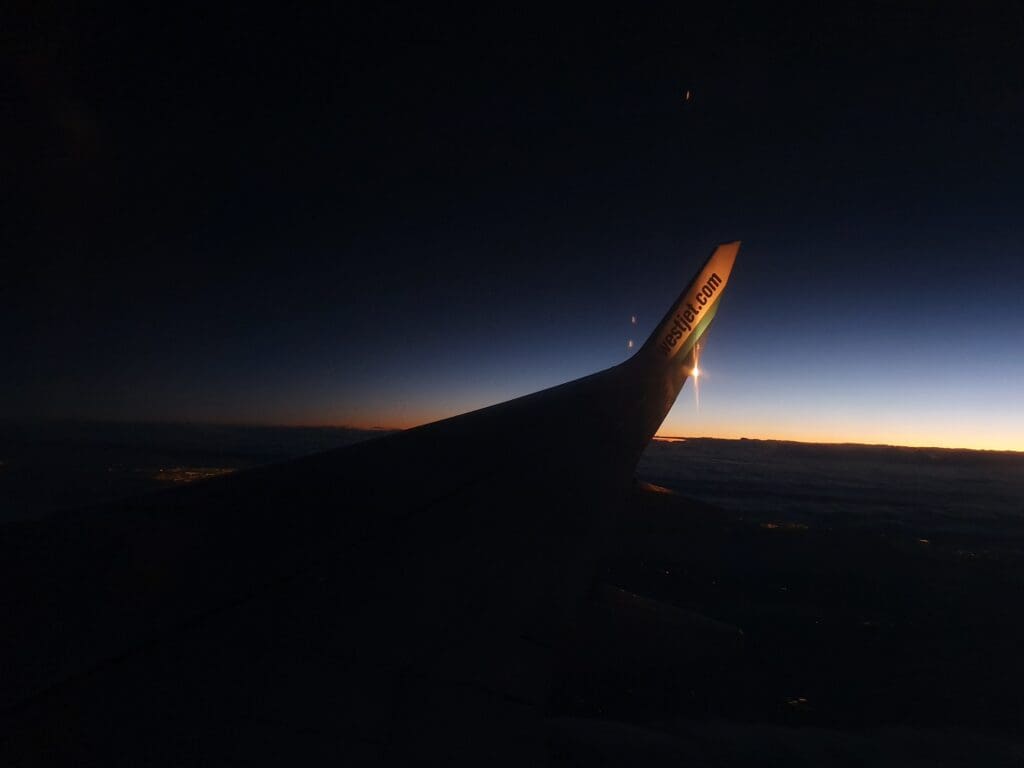
At 1938, the flaps were partially extended and the Boeing sank into the clouds, resulting in plenty of bumping for a short time before the bright lights of Mississauga appeared below. From there, the full flaps and the landing gear were extended and the aircraft continued to shake a little as it descended over the industrial and residential suburbs that sit to the southwest of Pearson Airport. Given the turbulence during the final stages of the flight, I was somewhat expecting a bumpy touchdown, however, at 1941, the Boeing made a barely noticeable return to earth on Toronto Pearson’s Runway 05 before rapidly decelerating and vacating to the right just after crossing Runway 15R/33L. As the aircraft began its journey over to Terminal 3, the purser performed their welcome announcement which was then followed by a generic pre-recorded post-arrival announcement in French.

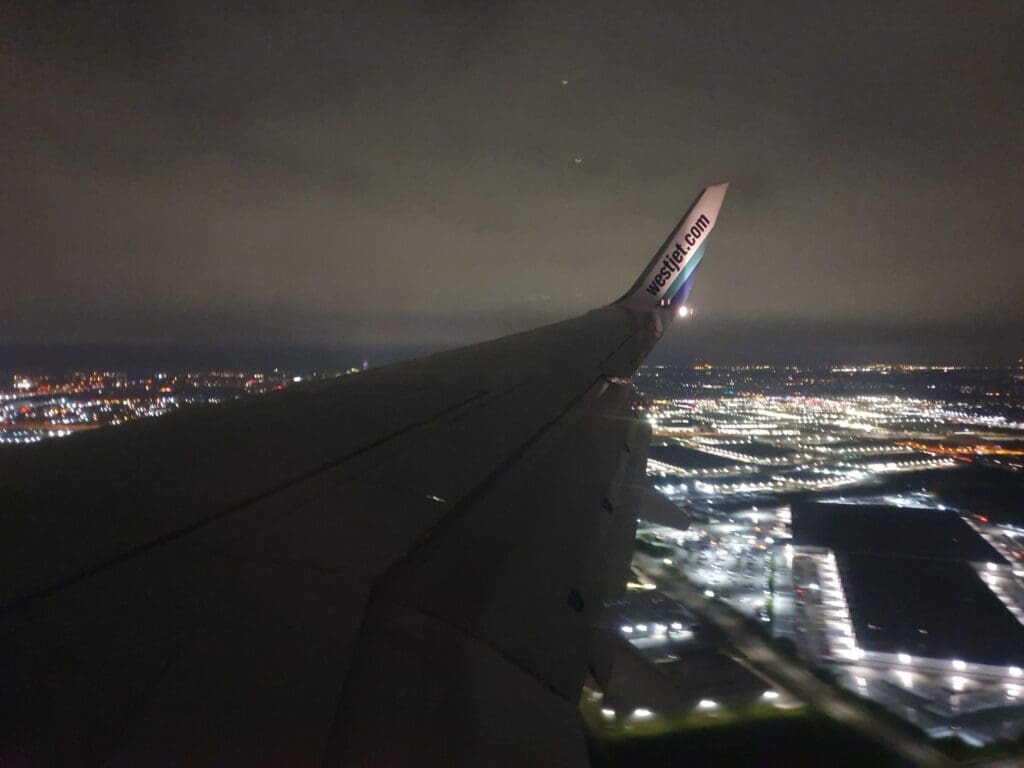
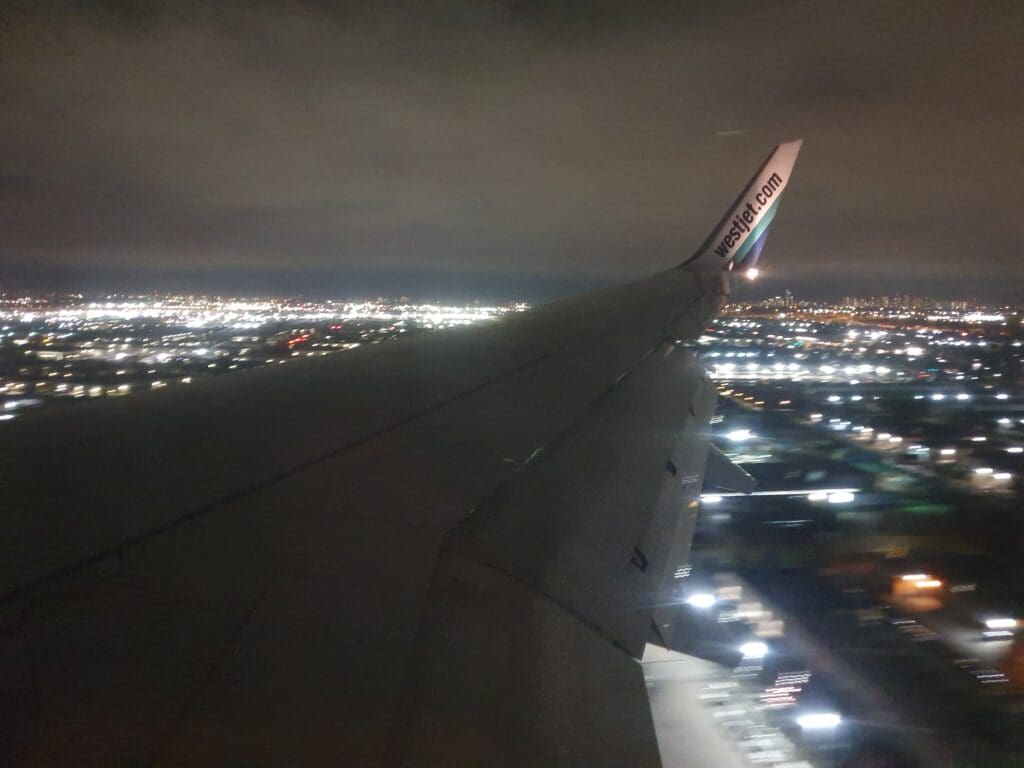

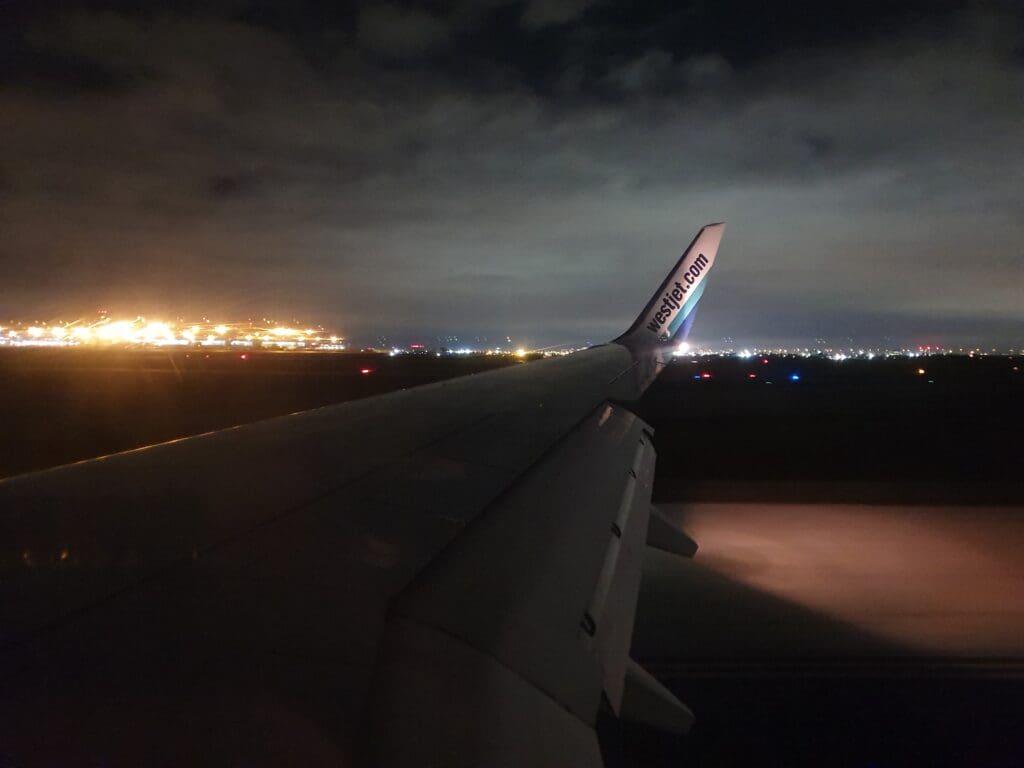
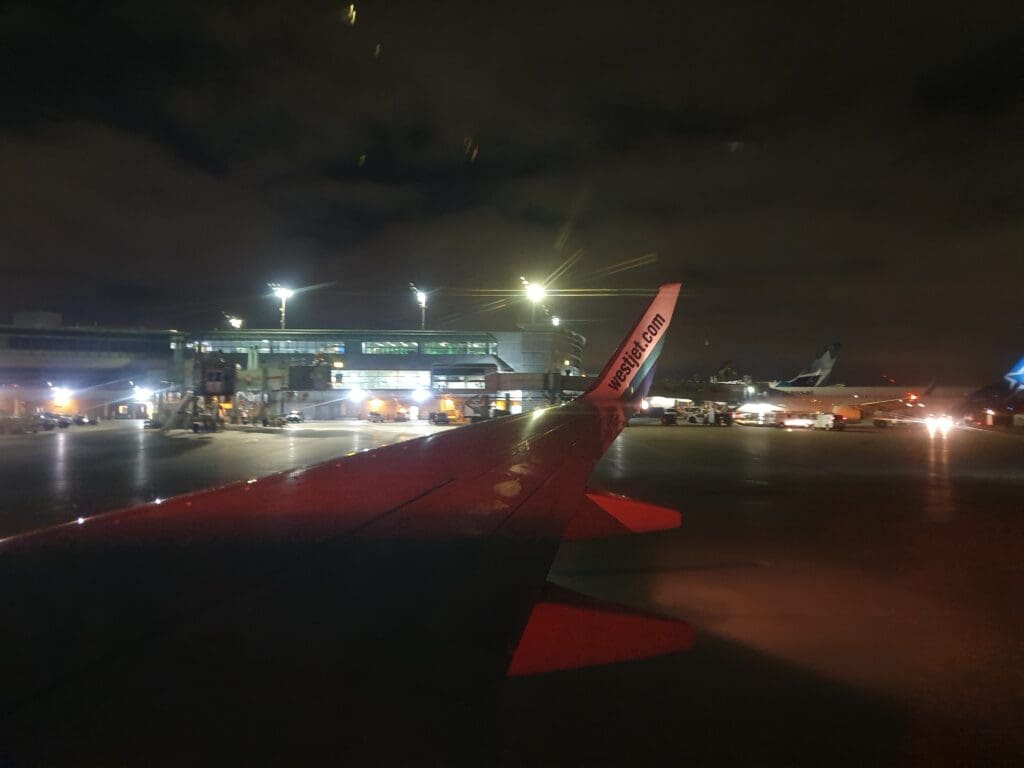
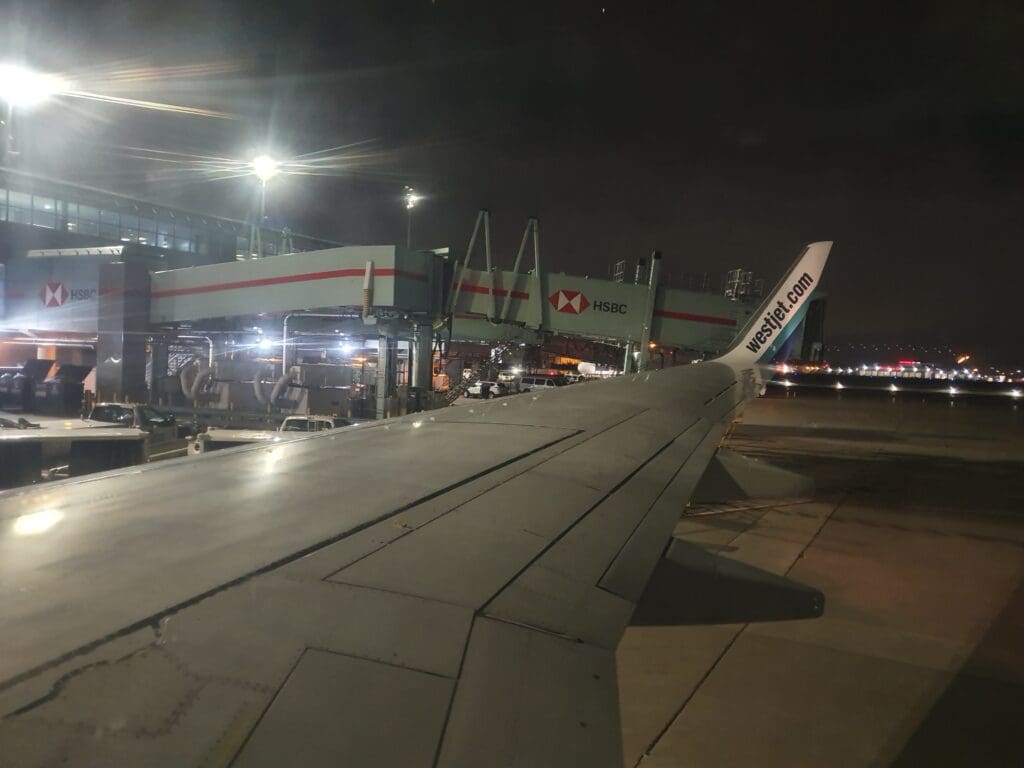
At 1948, the Boeing turned right and slowly pulled in to Stand C29. Upon coming to a halt, many in the cabin stood up and the first officer made their first announcement of the flight, during which they thanked all for flying with WestJet and reassuringly advised those onboard bound for London that the aircraft for this flight was only located three gates away at the end of the pier. Seeing as I did not have too far to walk to make my connection, and with ample time between flights, I was not in any particular rush to leave the aircraft, nevertheless, I was still pleased to see that the cabin door was opened promptly with disembarkation commencing within three minutes of the Boeing coming to a halt. Seated in the middle of the aircraft, whilst it was a slight scramble to exit, I was able to pass through the now messy cabin and reach the front of the aircraft within a couple of minutes or so of disembarkation’s commencement. After thanking the purser, I stepped onto the jet bridge and journeyed up into the terminal, ending the domestic portion of my journey back to the UK with WestJet.
Conclusion
My flight with WestJet Encore several days earlier had been a fantastic experience, and, having had high expectations for the service to Toronto, I ended up feeling slightly let down. Whilst the aircraft was in a reasonable state, proved not to be particularly uncomfortable and featured a good cloud-based entertainment system, the crew were fairly mediocre and ensured that this flight was not particularly memorable. Nevertheless, I did arrive in Toronto in one piece and managed to make my connecting flight onwards to London. Would I fly with WestJet again? Probably, however, I would perhaps have slightly lower expectations before my next ride with the airline.