A Quick Hop on Atlantic Airways: Vágar to Edinburgh
With my flight back to the UK scheduled to depart Vágar at 1430, following a jam-packed few days in the Faroe Islands with consecutive early wake-ups, I had hoped for a relaxing start to what was to be a long day as I journeyed back towards London. With Tórshavn sitting on the island of Streymoy and Vágar Airport positioned on the island of Vágar. The capital and the Faroes’ only airport are located a fair distance away from one another. Aside from Atlantic Airways’ helicopter service, those reliant on public transport can catch the number 300 bus which runs between Tórshavn and Vágar Airport with a few stops on the way. With the daily helicopter service failing to align with my 1430 departure time, that morning I had no choice other than to take a bus. However, upon checking schedules, I found departures that morning to be somewhat infrequent, with no services departing Tórshavn between 0915 and 1245. In spite of the small size of the Faroes’ only airport, I concluded that the latter bus would cut things worryingly fine, and with no alternative means of getting back to the UK without parting with a very large sum of money, I decided to play things safe take the earlier bus, even though it did ruin my plans for a relaxed start to the day.
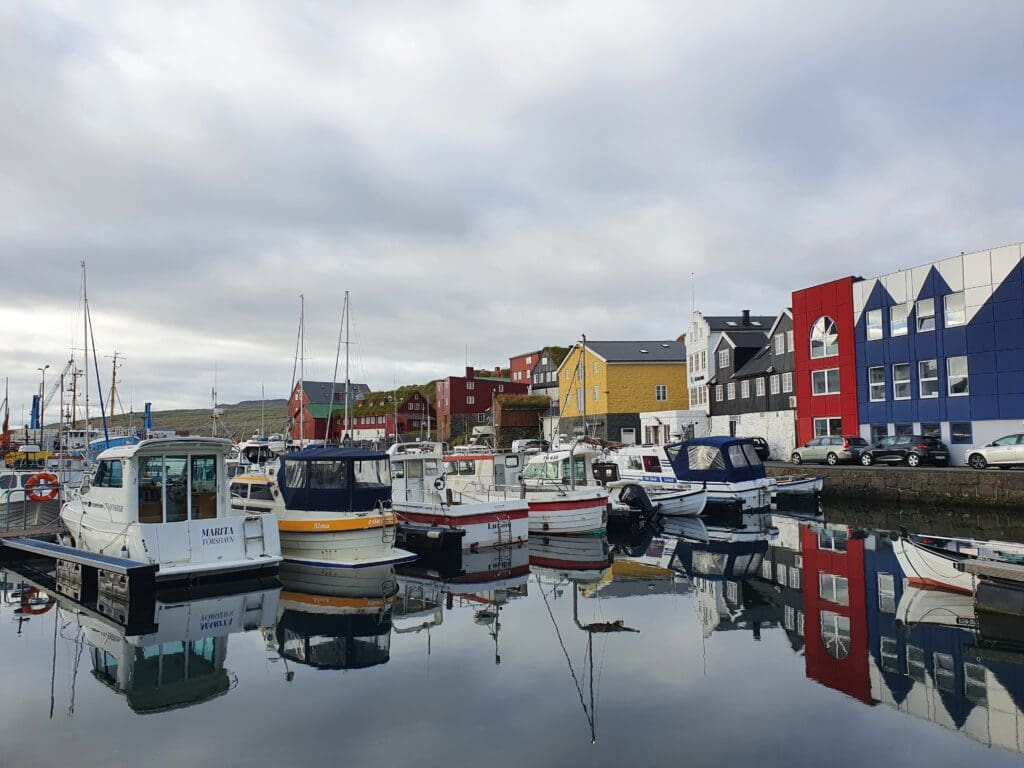
On the day of my flight, I woke up bright and early in the small private guesthouse room that I had called home for my short one-night stay in Tórshavn. Located inside the family home that the owner had grown up in, the accommodation was comfortable and had a rather homely vibe, although its interior was dated and decidedly 1970s-esque in its aesthetics. After packing my things, I had a quick shower before popping out to the local supermarket for a breakfast consisting of a pastry and a cheap machine-made coffee. Still with plenty of time on my hands, I had one final walk around the quaint and colourful buildings of the Faroese capital before returning to the guesthouse to collect my things. Following a quick stop, I vacated the guesthouse for good before trundling down the quiet morning streets, soon arriving at the city’s transportation hub – the joint ferry and bus terminal. At that time in the morning, the behemoth Smyril Line ferry, the MS Norröna could be seen docked, enjoying a brief mid-journey stop on its voyage between Hirtshal in Denmark and Seyðisfjörður in Iceland. That morning, this boat dwarfed all other ships in the harbour, including the neighbouring M/F Ternan – a local ferry that operates the route between Tórshavn and nearby Nólstoy.
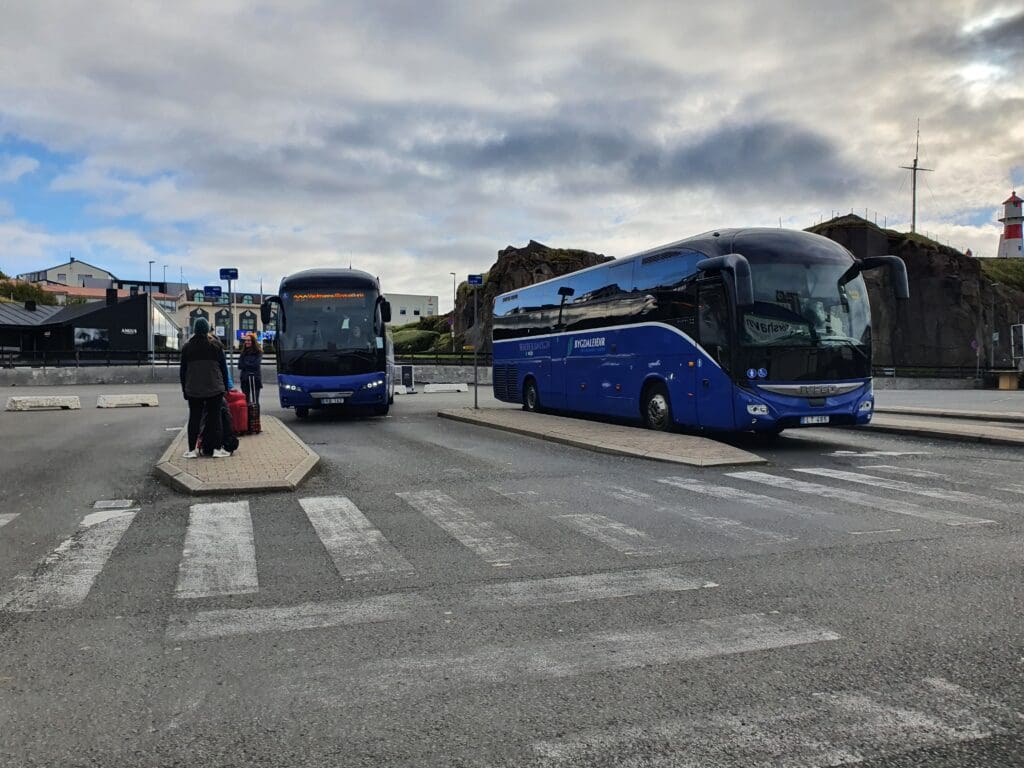
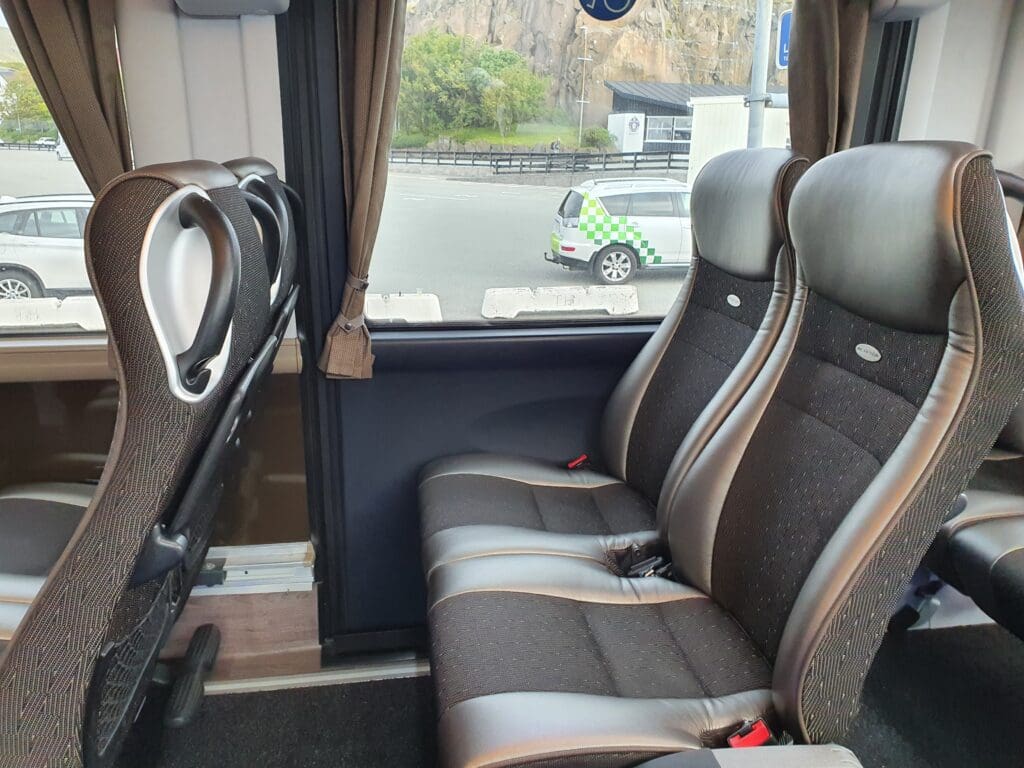
Arriving at the terminal with twenty minutes to go until the bus’ scheduled departure time, unsurprisingly this was yet to arrive although plenty of luggage-wielding passengers could be seen ready and raring to go. Just after 0900 a modern Neoplan Tourliner bus painted in the smart blue colours of the government public transport agency, Strandfaraskip Landsins, pulled into the stand. After coming to a halt, the same driver that had delivered me to Tórshavn the previous evening hopped off for a quick comfort break. After returning to the bus, at 0910 passengers were permitted to board and I soon paid the 90kr, receiving a small receipt-style ticket in return. Taking a seat on the left-hand side of the vehicle in the hope that this would offer good views throughout the journey, I plonked myself down and settled in for the journey across to the island of Vágar. Whilst the coach does not offer the most fantastic legroom, I found the interior of this to be modern and smart, fitted with soft seats that come complete with USB ports allowing passengers to charge their devices mid-journey. By the time the driver had processed the gaggle of airport-bound passengers, the service’s scheduled departure time had come and gone, and finally, at 0920, the doors closed and the bus cautiously pulled away from its stand, commencing its journey to the airport.
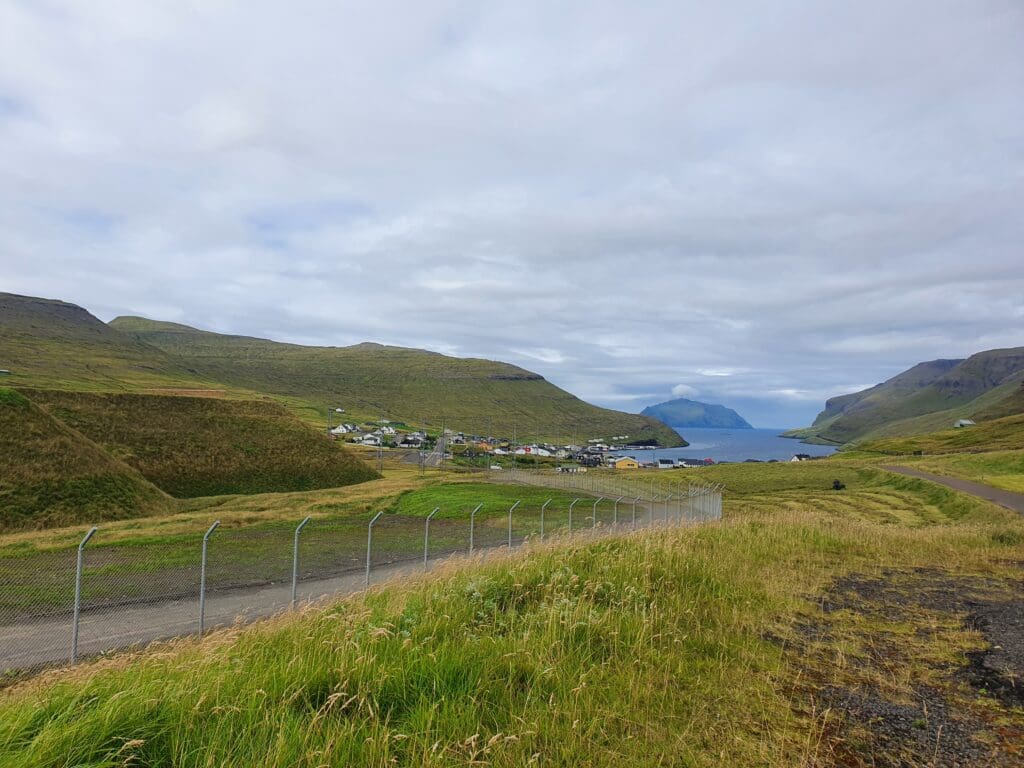
From the city centre, the bus headed up the hills that surround Tórshavn, initially making its way north along the eastern coastline of the island of Streymoy before turning westwards and journeying along the southern shores of Kaldbaksfjørður. Admittedly, at this point, I began to regret sitting on the left-hand side of the bus, with those on the right provided with superb views of the stunning Faroese scenery as we travelled along the fjord, with a clear view of Týggjará Waterfall. After leaving the fjord behind, the bus continued to climb and stopped at a remote bus stop at a petrol station where those heading for Vestmanner disembarked and changed onto another waiting bus. After leaving this remote stop, the bus soon headed into the Faroes’ oldest undersea tunnel, the 4.9 kilometre-long Vágatunnilin which connects the islands of Streymoy and Vágar, emerging from the darkness a few minutes later. After passing through the village of Sandavágur and travelling along the waters of the Sørvágsvatn, the airport came into view and we came to a halt right outside the terminal’s entrance at 1010, fifty minutes after leaving the centre of Tórshavn.
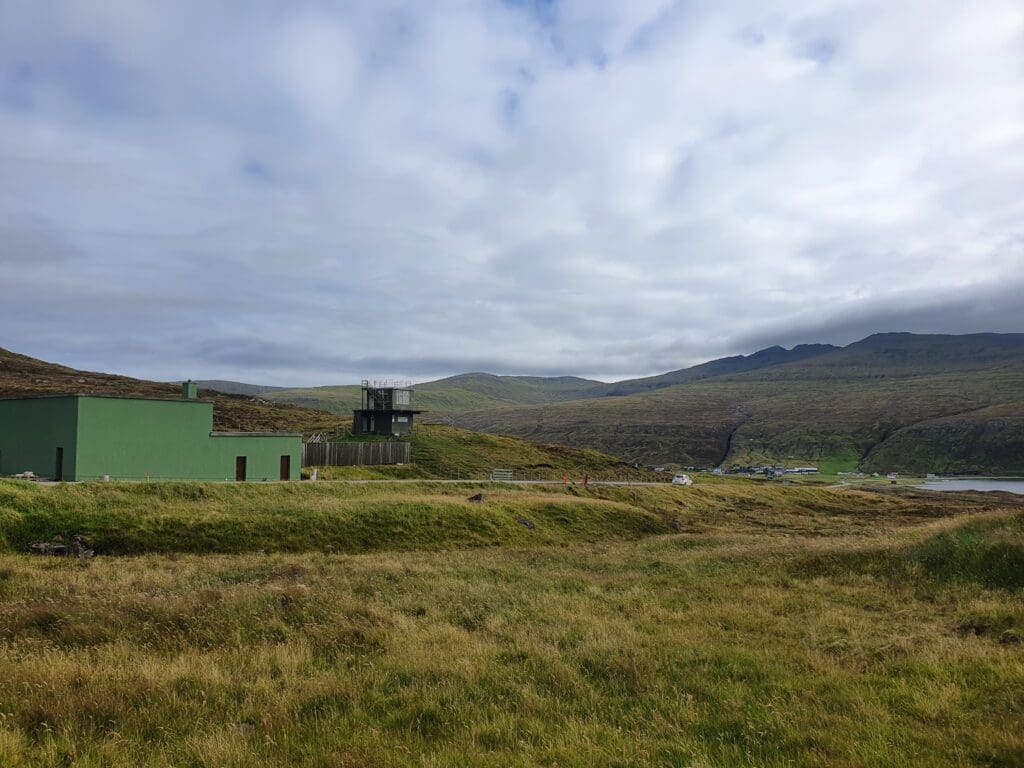
Having opened its doors in June 2014, Vágar Airport’s terminal can be described as being modern, bright and clean, with large windows on one side allowing for passengers and non-passengers alike to have a view of the action outside on the apron and the runway. Those needing to stay connected to the outside world will likely be pleased to hear that this features a reasonable number of plug sockets as well as fast, complimentary wifi. However as one would perhaps expect given the limited scale of operations at Vágar, the terminal is compact and by no means designed for long waits in mind. In terms of facilities, the landside area comes complete with five counters (two for check-in, three for bag drop-off), an Atlantic Airways information desk, a tourist information counter selling a range of souvenirs and a café – although this appeared to have been abandoned for some time. Thus those needing refreshment were left with two options – the small selection of soft drinks for sale at the tourist information counter, or a hot drinks machine that had been installed on the counter of the closed café – with all hot drinks sold for a pricey 30kr.
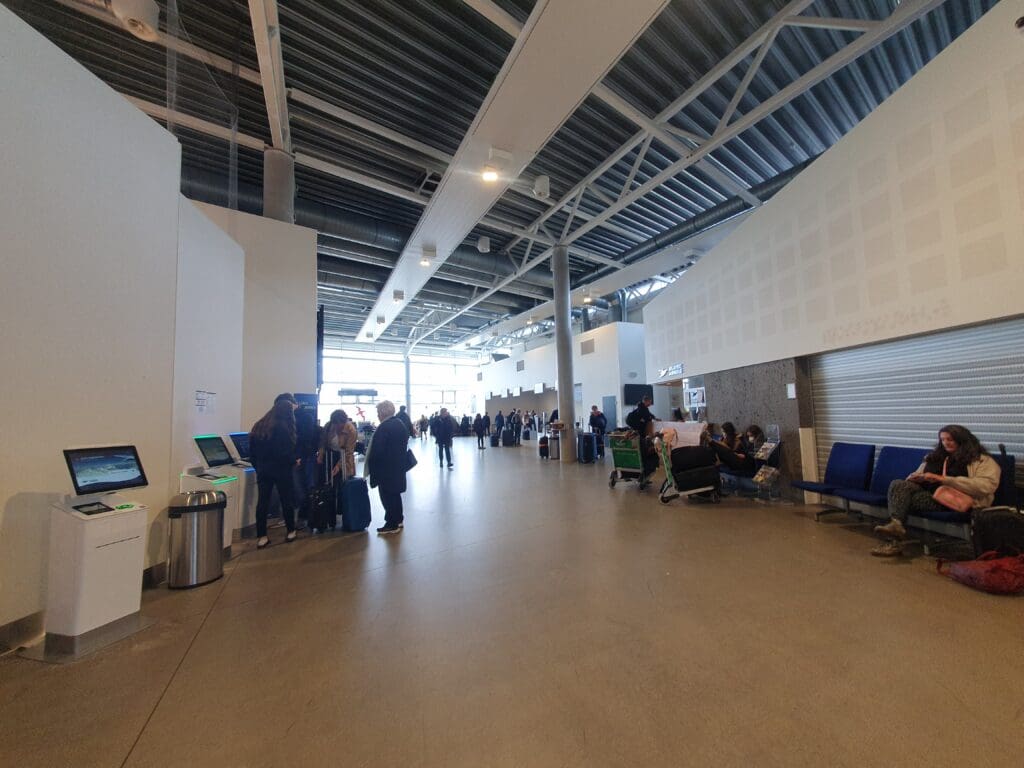
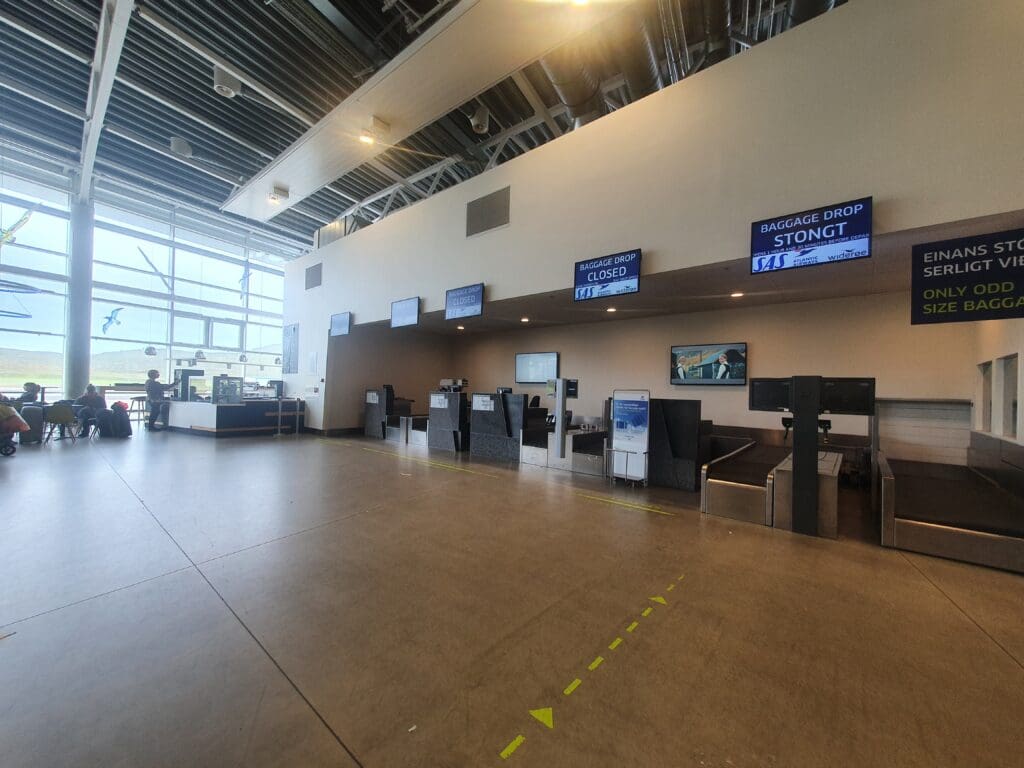
After arriving at the airport, I grabbed a low-quality coffee from the machine and took a seat near one of the large windows. From there, I watched as an Airbus A320neo named after Faroese textile artist Tita Vinther was pushed back before heading off on its journey to Keflavík. That day, there were to be a total of eight fixed-wing flights departing Vágar – with these destined for Bergen, Billund, Copenhagen, Edinburgh, Keflavík and Paris CDG. Of these, all bar two – a Scandinavian Airlines service to Copenhagen and a Wideroe service to Bergen, would be operated by the hometown airline, Atlantic Airways. Once I had polished off the low-quality machine-made coffee, I decided not to hang about in the terminal and instead made my way down the hill to the nearby village of Sørvágur where I had spent my first evening in the Faroe Islands. After having a walk around and grabbing a delicious carrot cake from a local café, I decided to head back towards the airport and positioned myself to photograph the arriving Widerøe Dash 8 Q400 and Scandinavian Airlines A320neo.
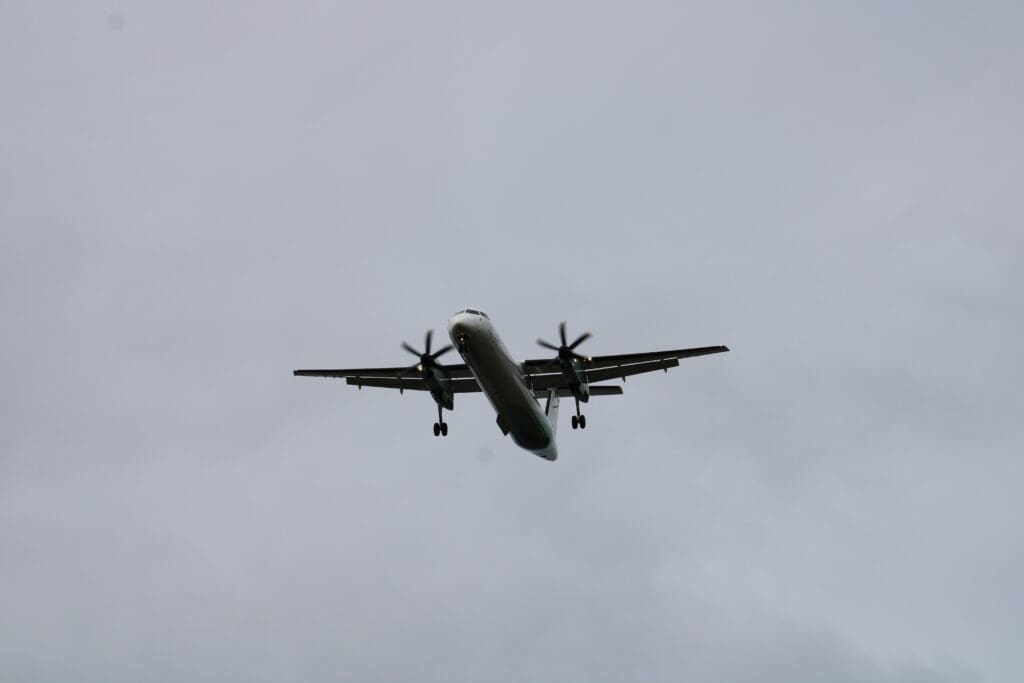
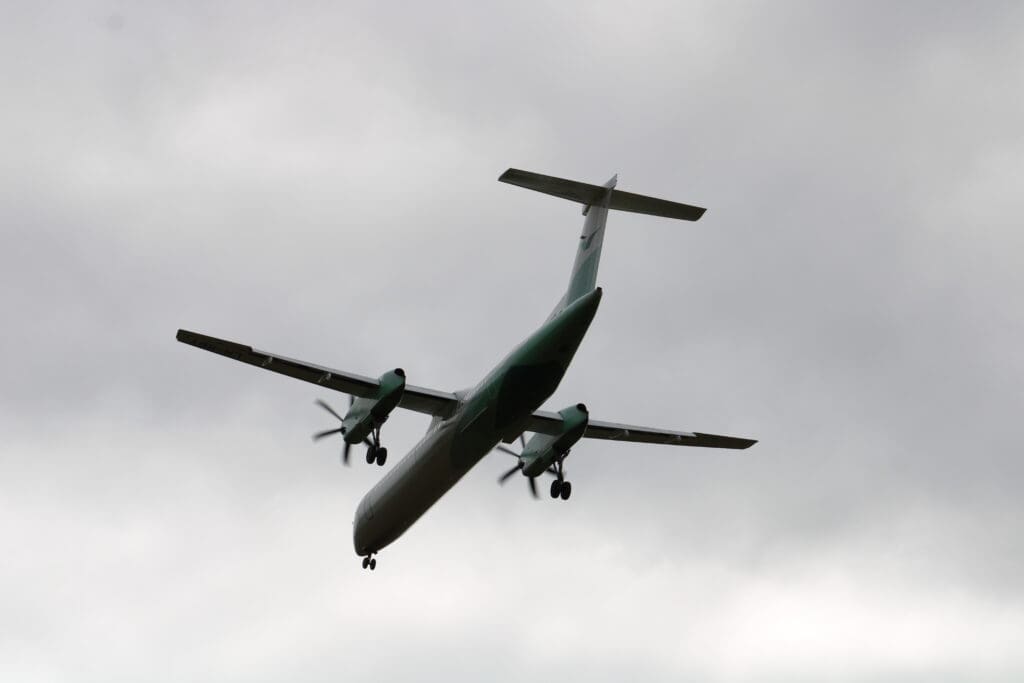
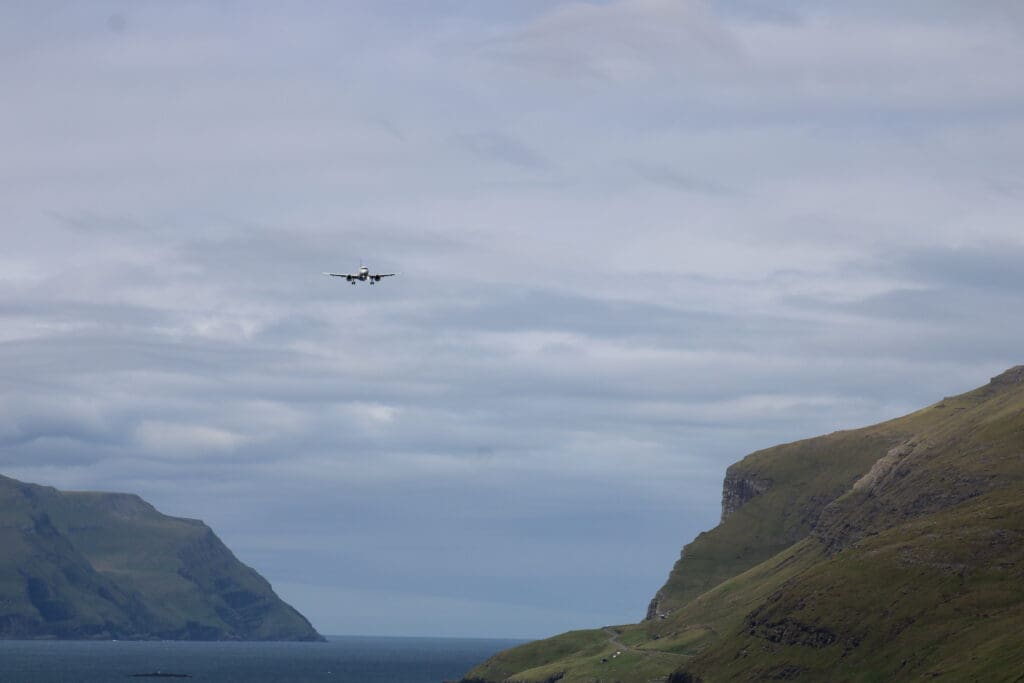
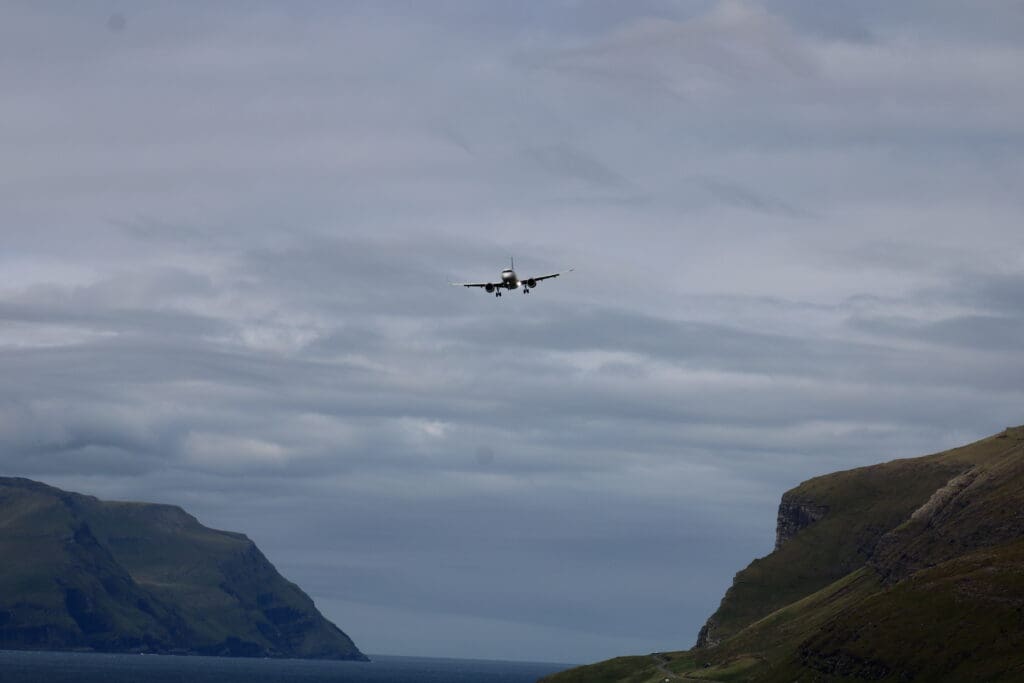
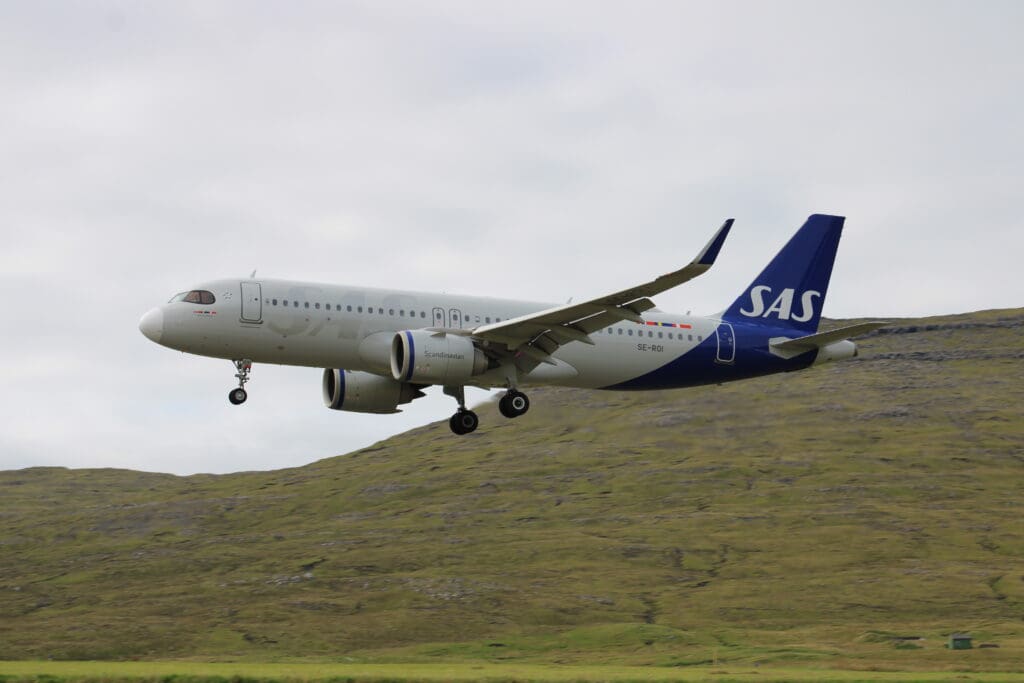
After photographing the two arrivals, suitably chilled I decided to head back over to the small terminal to warm up. Arriving there ten minutes later, by this time the terminal was fairly busy with a mixture of Copenhagen and Edinburgh-bound passengers standing in line for the check-in and bag drop-off counters to open. At this time, seeing as the security checkpoint was open and devoid of any queue, and already in possession of my boarding pass, I decided to make a beeline for security. After scanning my boarding pass on the automated gates, the panel on this asked for my nationality and after pressing the UK these opened and allowed me to pass into the small security checkpoint. With just two scanners located there, it was easy to see how long queues for this often form at busy times. However, thankfully that afternoon, the security check was a painless experience and I made it through to the airside portion of the terminal within around a minute.
Following my quick security check, I arrived at Vágar Airport’s fairly large duty free store and upon strolling through this, I was soon greeted by the sight of the terminal’s incredibly crowded waiting area where almost no free seats could be seen! However a short time after my arrival, this began to empty once those heading off on Scandinavian Airlines’ service were invited to make their way for boarding. Other than the duty free store, a café can also be found in the airside portion of the terminal, selling a decent selection of food and drink, albeit at rather inflated airport prices. In need of some lunch, I decided to go for a delicious smoked salmon sandwich which set me back a total of 69kr. I then settled down in one of the stools by the terminal’s large windows and watched as the last of the Copenhagen-bound passengers hurried out to the aircraft before this was pushed back and departed off to the continent.
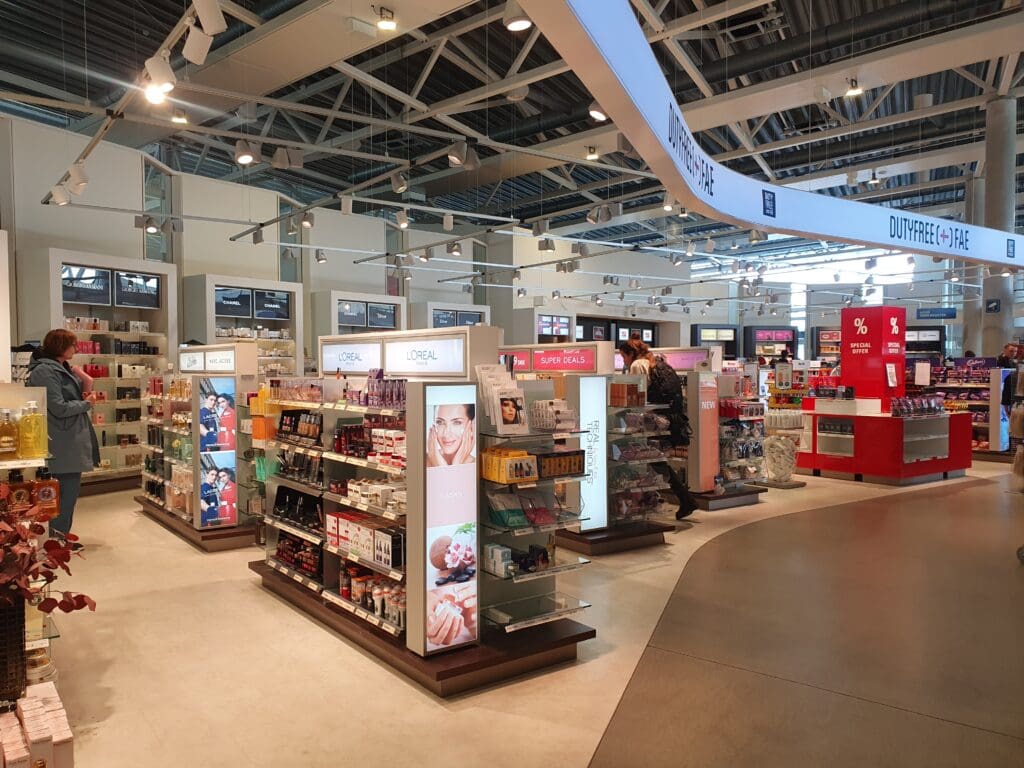
Turning to critique the airside portion of Vágar Airport – whilst, as with the landside area, this was bright, modern and clean, when full, this was undeniably cramped and crowded. With this considered, I would perhaps advise passengers not to spend more time than they have to in this portion of the terminal. However, once boarding for the Copenhagen flight had reached its end, the waiting area remained reasonably quiet for some time, with just a trickle of passengers filtering through from security indicating that the flight to Edinburgh would not be full. However, with a Copenhagen service at 1500, as our departure time neared the terminal became rather busy once more and reasonable queues could be seen forming at the café and duty free store.
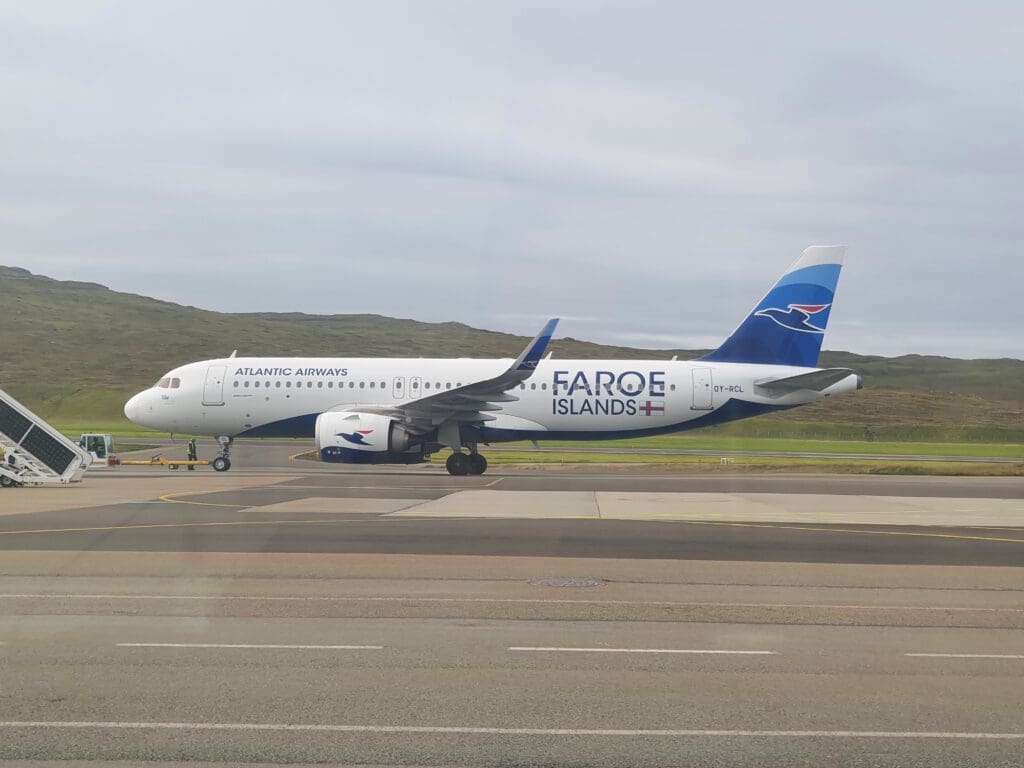
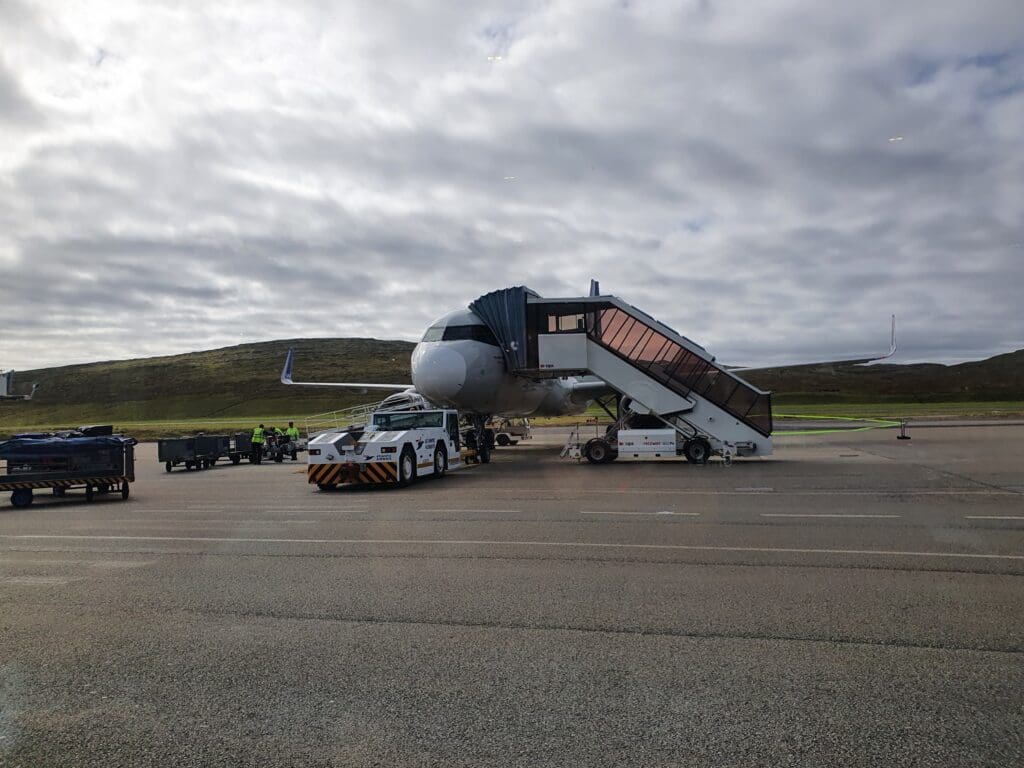
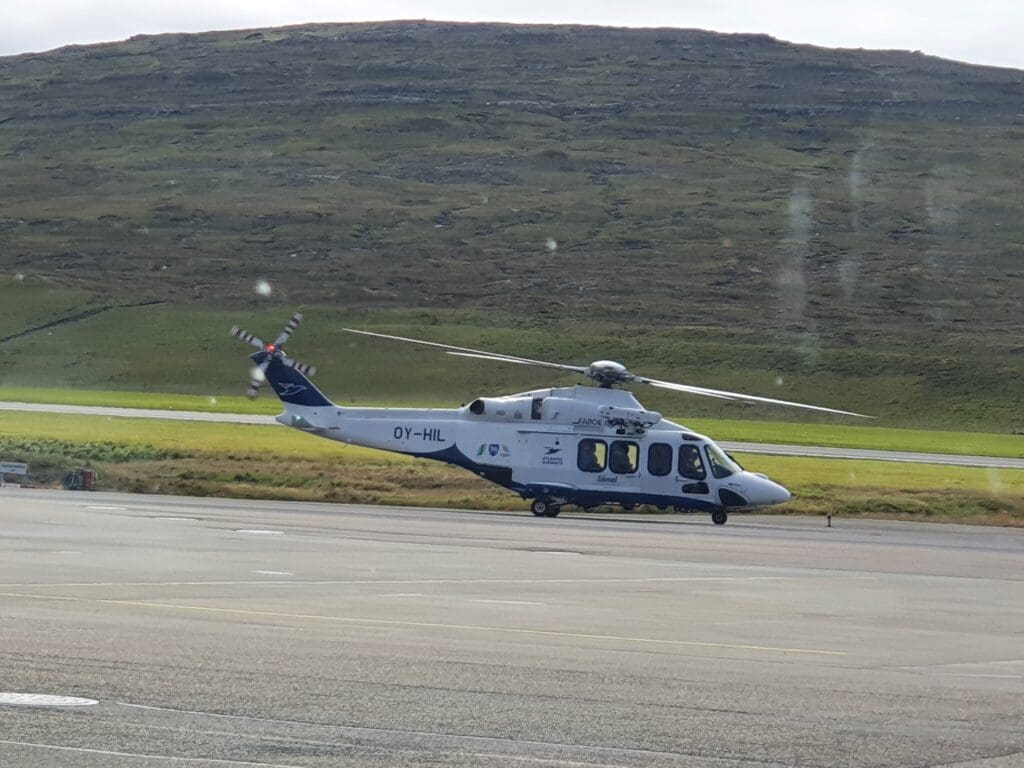
Examining the movements outside, once the Scandinavian Airlines service had departed, one of Atlantic Airways’ helicopters, Sámal, could be seen heading off on a non-scheduled, perhaps air ambulance flight. Following around thirty minutes without any activity, at 1330, the Airbus A320 that would be operating the afternoon service down to Edinburgh touched down on Vágar Airport’s Runway 12 following its flight over from Copenhagen before soon coming to a halt outside Gate 2. Slightly disappointingly, I was not going to get the opportunity to fly on one of Atlantic Airways’ Airbus A320neos. That afternoon the same aircraft that had delivered me from Copenhagen several days earlier was to take me southwards to Scotland. This took the form of Airbus A320-214 OY-RCJ, named William Heinesen in honour of the Faroese author, composer, painter and poet. Since my previous flight from Denmark, this particular Airbus had had an exciting weekend, operating charter flights from Billund to several sunshine holiday destinations including Karpathos, Malta and Samos. With a team of ground crew ready and waiting, almost as soon as the Airbus came to a halt, a pair of airstairs was positioned up to both the forward and rear cabin doors of the Airbus and disembarkation soon commenced. At this point, the terminal became even busier as inbound passengers filtered into the terminal and swarmed the duty free shop for a last-minute bargain before facing the reality of the Faroes’ expensive prices. Once all passengers had disembarked, a van appeared at the foot of the forward steps at which point a cleaning team got to work readying the cabin to welcome a new load of passengers.
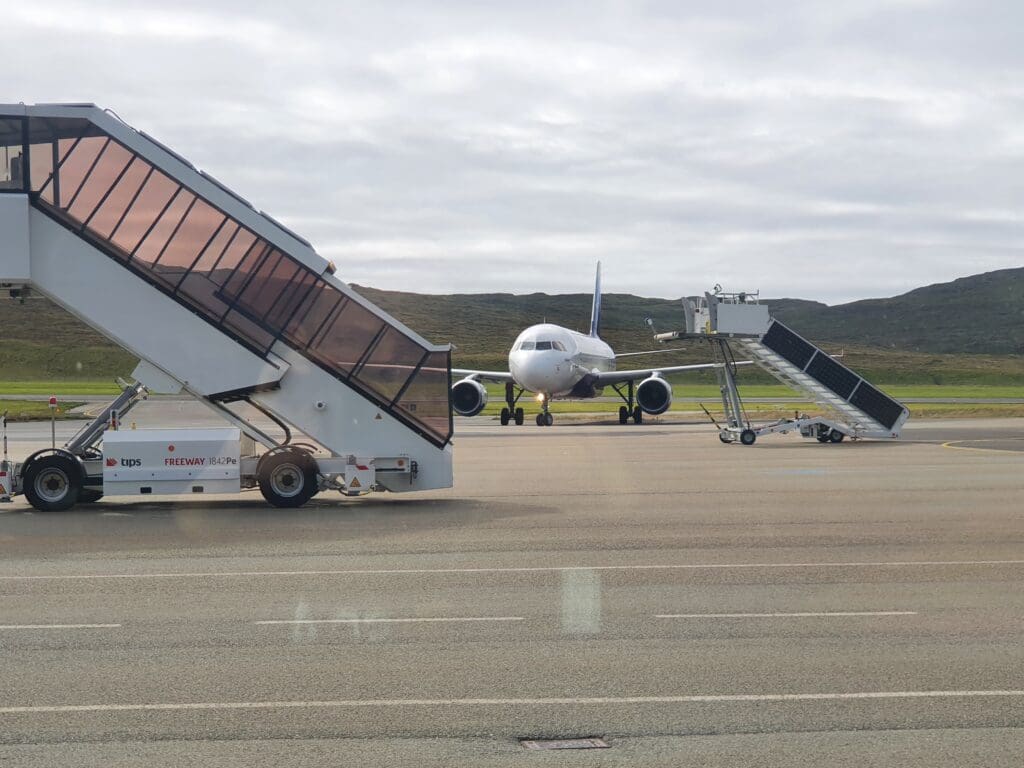
Inside the terminal, an announcement was made just before 1400 in Faroese and English inviting those bound for Edinburgh to make their way to Gate 2 for boarding. Whilst the Faroe Islands are not in the European Union, unlike the UK the islands are in the Schengen area and thus all those heading to Scotland were required to pass through passport control before boarding. This consisted of a small checkpoint manned by two officers, with another, perhaps a supervisor, standing behind them and watching their every move. Joining the queue, I shuffled along for a couple of minutes or so before handing my passport over to an unusually smiley immigration officer. Once my passport had been scanned and stamped, this was returned to me at which point I reached the gate podium. After scanning my mobile boarding pass on the scanner, I was wished a pleasant flight by the Atlantic Airways ground staff member before heading out into the chilly afternoon air and making the short walk over to the waiting Airbus.
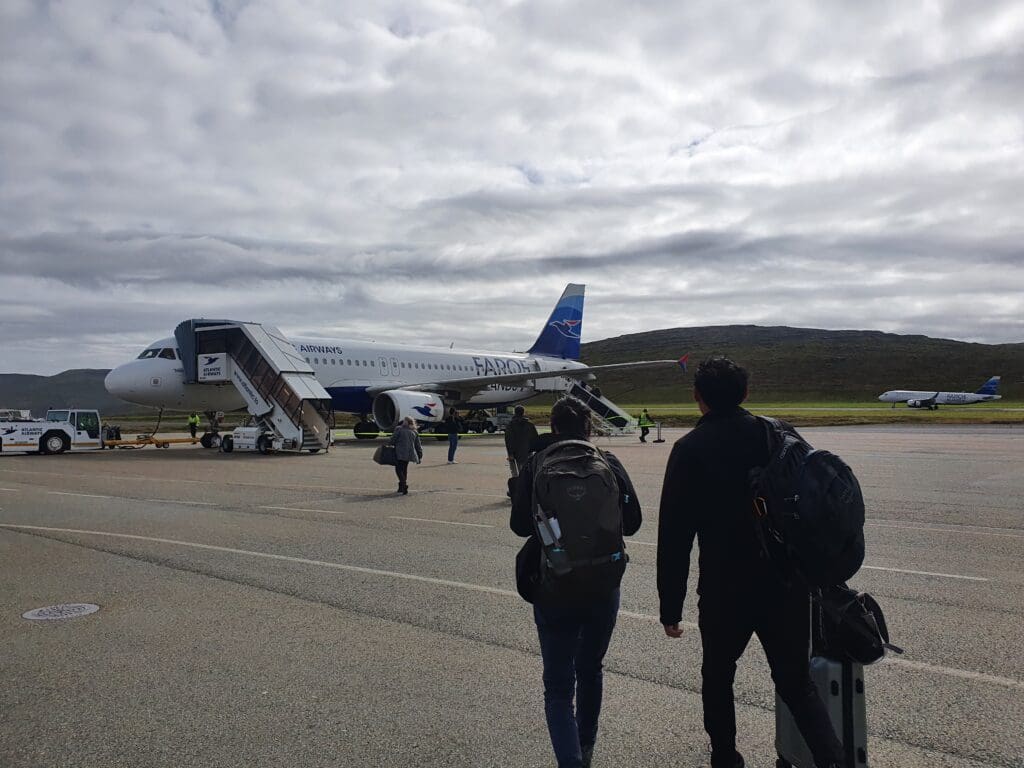
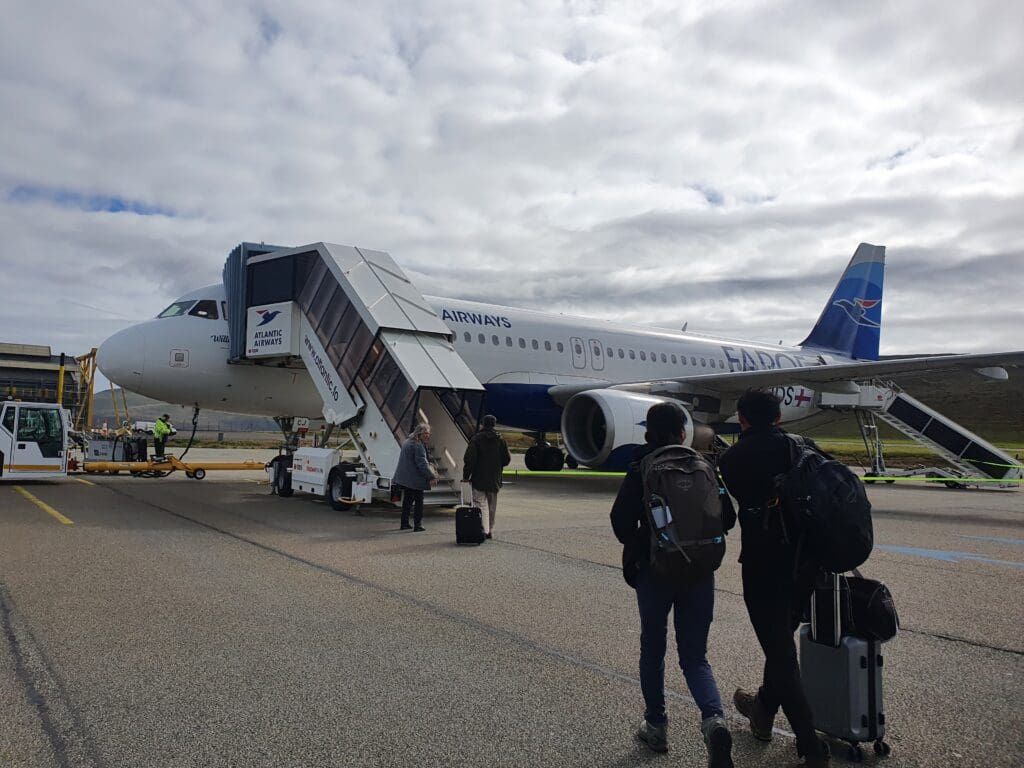
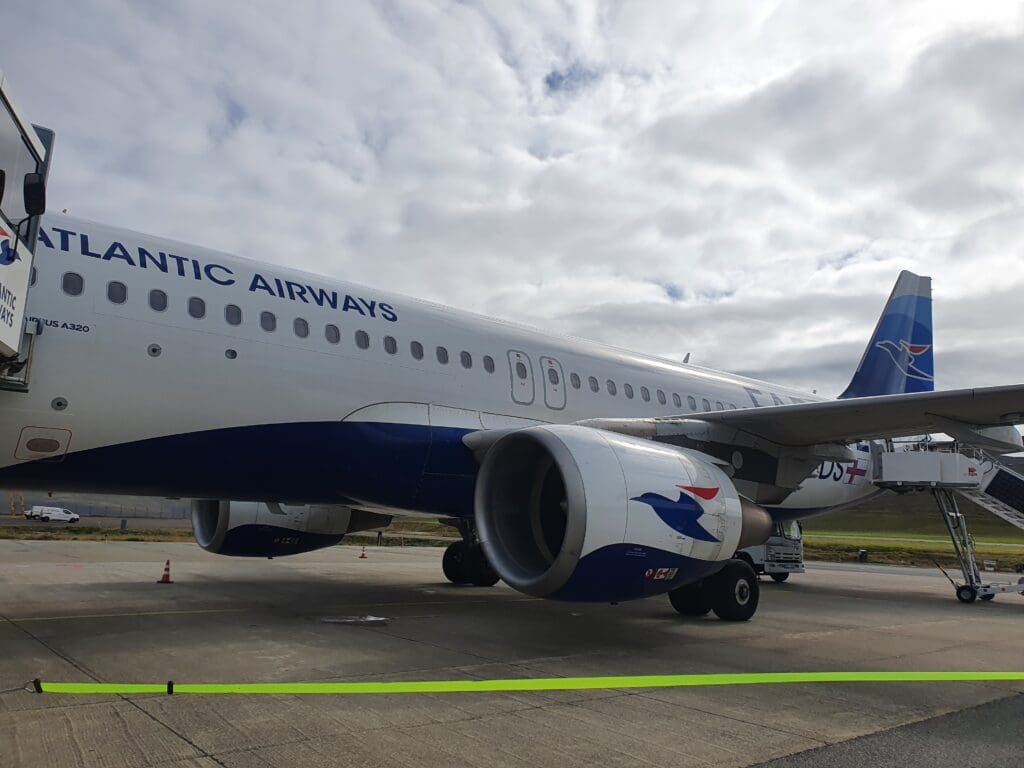
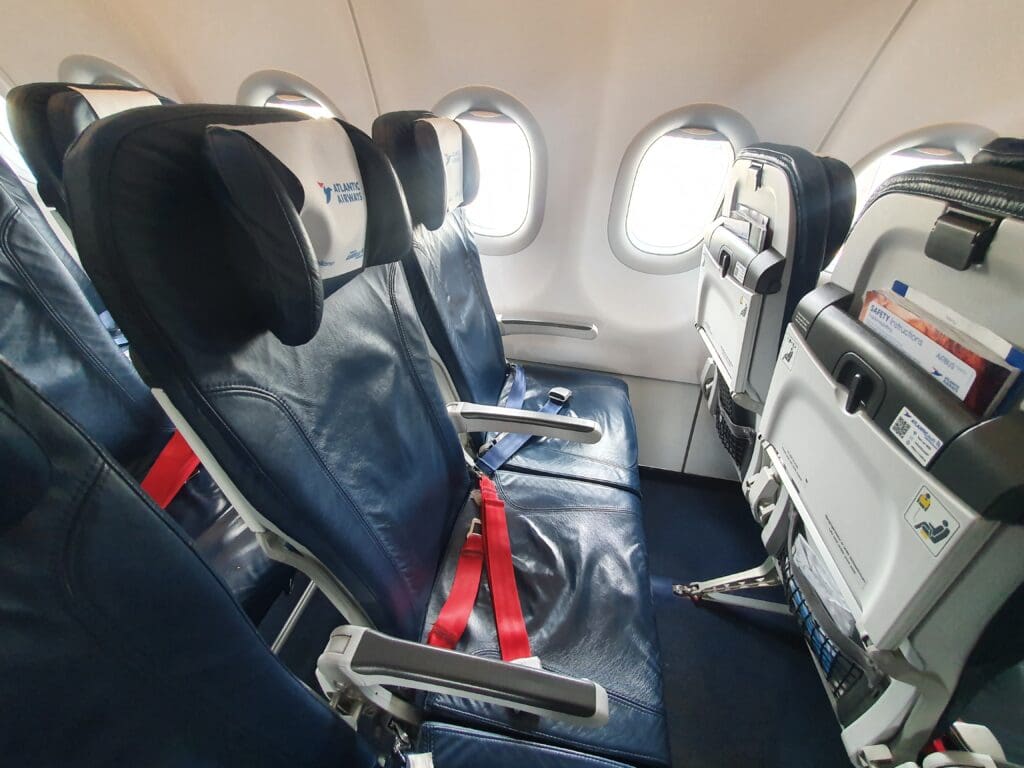
As I trundled across the apron, the Airbus A320neo that I had watched depart to Keflavík that morning could be seen touching down at the end of its Icelandic rotation and I soon reached the forward steps. Making my way up these, with no passengers in front of me, no queuing was required before I stepped into the forward galley where I received a ‘góðan dagin’ from the flight attendant there. Turning right, I then entered the aircraft’s cabin, where 168 modern Recaro seats, each covered in a dark blue (faux?) leather covering and complete with a fabric antimacassar and adjustable headrest could be seen.
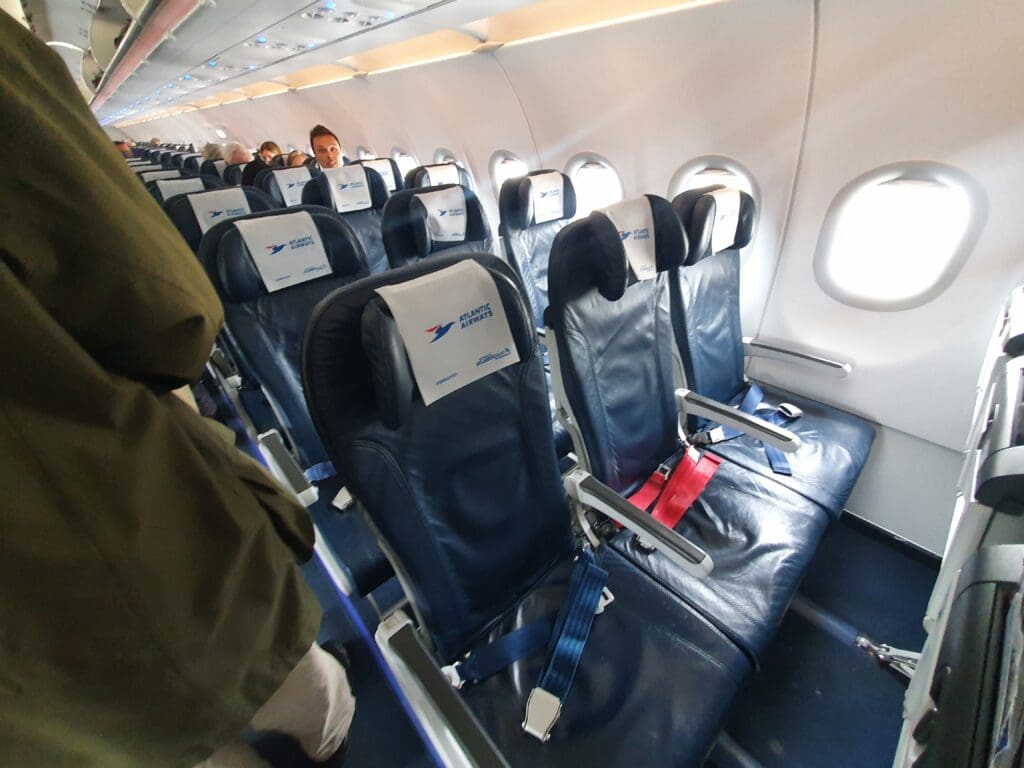
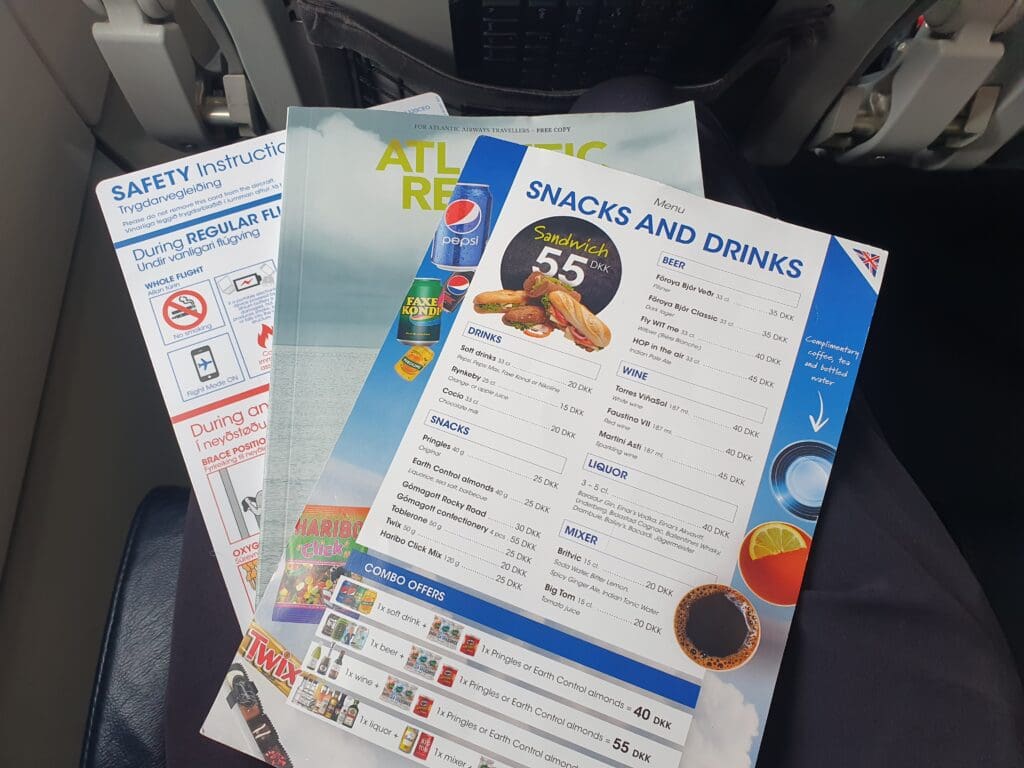
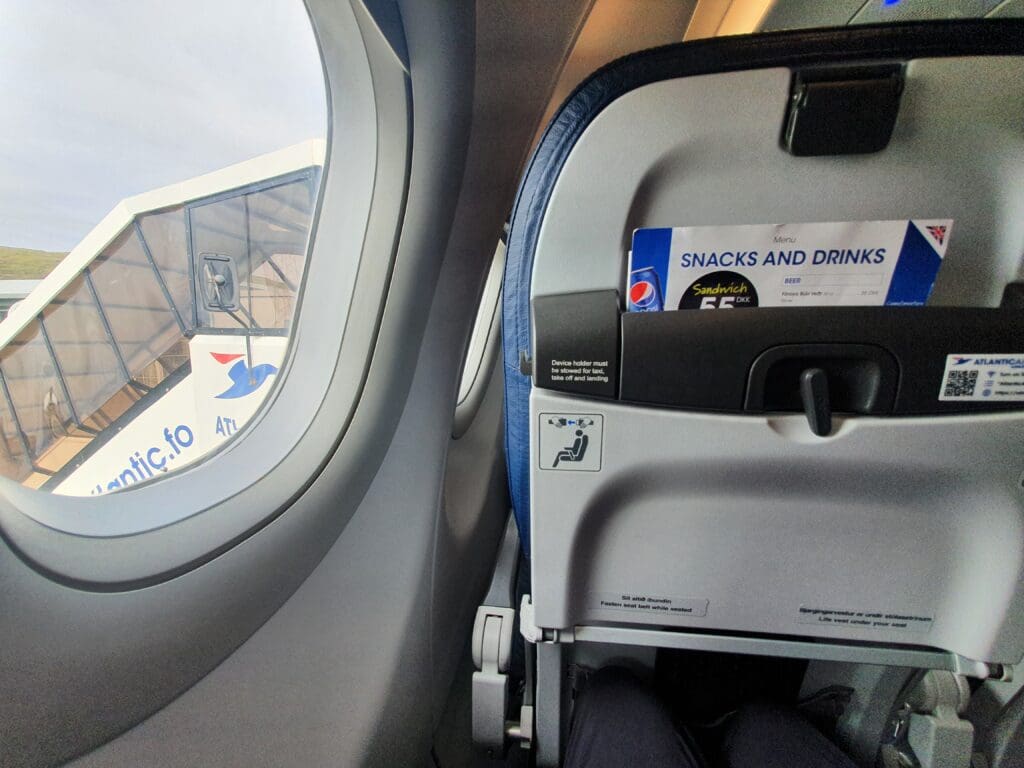
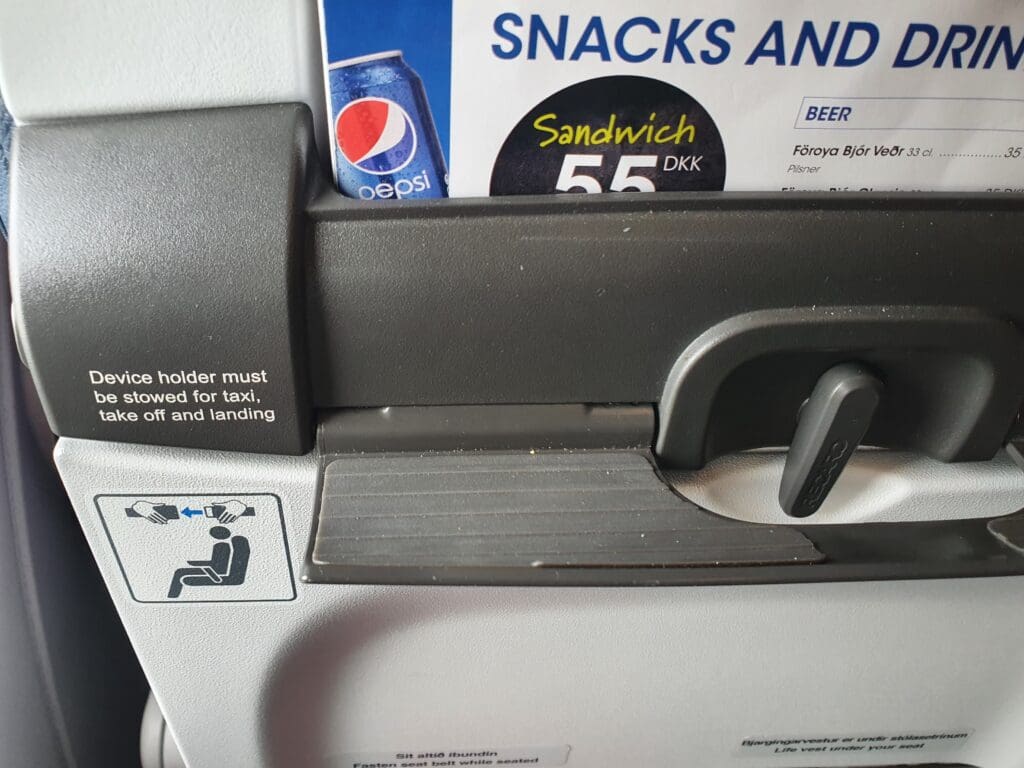
From the front of the aircraft, the journey to my seat in Row 4 took all of about five seconds and yet to be joined by any seatmates, I slid into Seat 4A with ease. Given the fact that I had journeyed over from Denmark on this aircraft several days earlier, I knew what to expect from the seat – this proved to be relatively soft and provided an ample amount of legroom. However, I did notice that there were a few crumbs around this whilst the carpets appeared to be rather worn in places. Unlike their Airbus A320neo aircraft, Atlantic Airways’ older Airbus A320 does not feature USB ports, although it does come complete with a tray table, device holder, seatback pocket and literature compartment, with the latter containing a safety card, a copy of Atlantic Airways’ buy-on-board menu and the latest Atlantic Review magazine.
Once seated, passengers continued to stream onto the aircraft and I was soon joined by two neighbours – a pair of noisy boys from the Faroes travelling as part of a school trip to Edinburgh. That afternoon, the immigration officers appeared to process passengers at a reasonable speed whilst passengers made their way over to the aircraft in a timely manner and boarding was announced as complete at 1418, a whole twelve minutes ahead of our scheduled departure time. Contrary to my initial hopes that it would be a quiet flight to Scotland, that afternoon I would estimate the flight to have been around 80% full with a fair mix of passengers from the Faroes, the UK and other places across the globe – with plenty of my fellow flyers hailing from France and the US. However, slightly surprisingly, I failed to overhear any Scottish voices either at Vágar or on the aircraft.
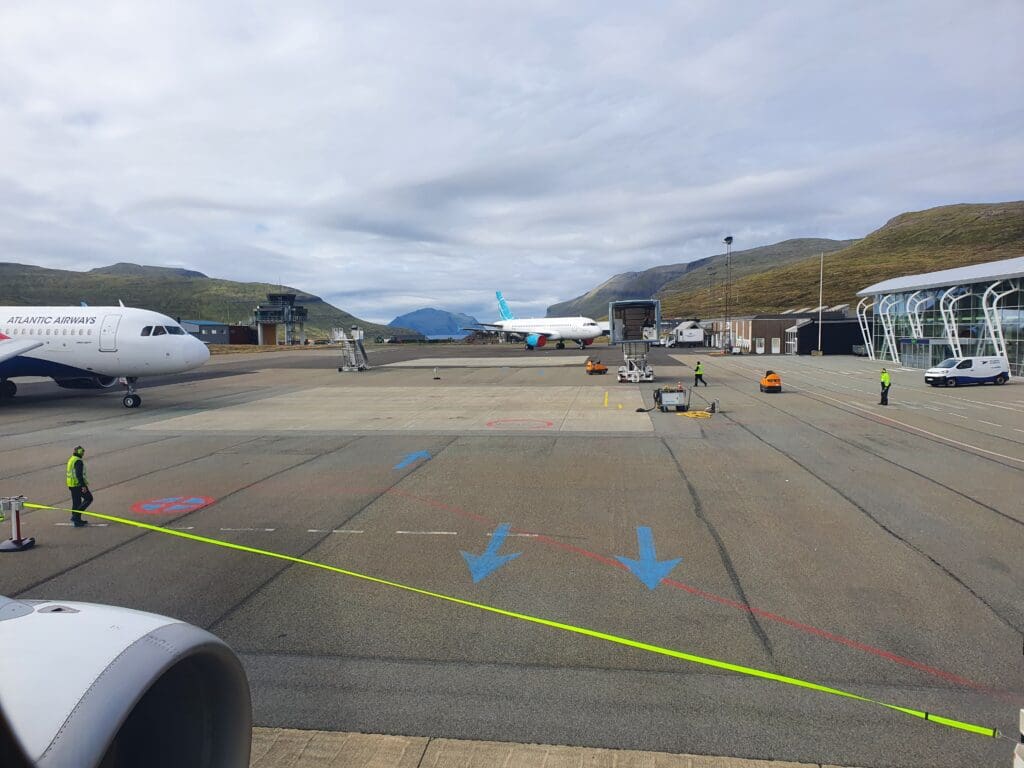
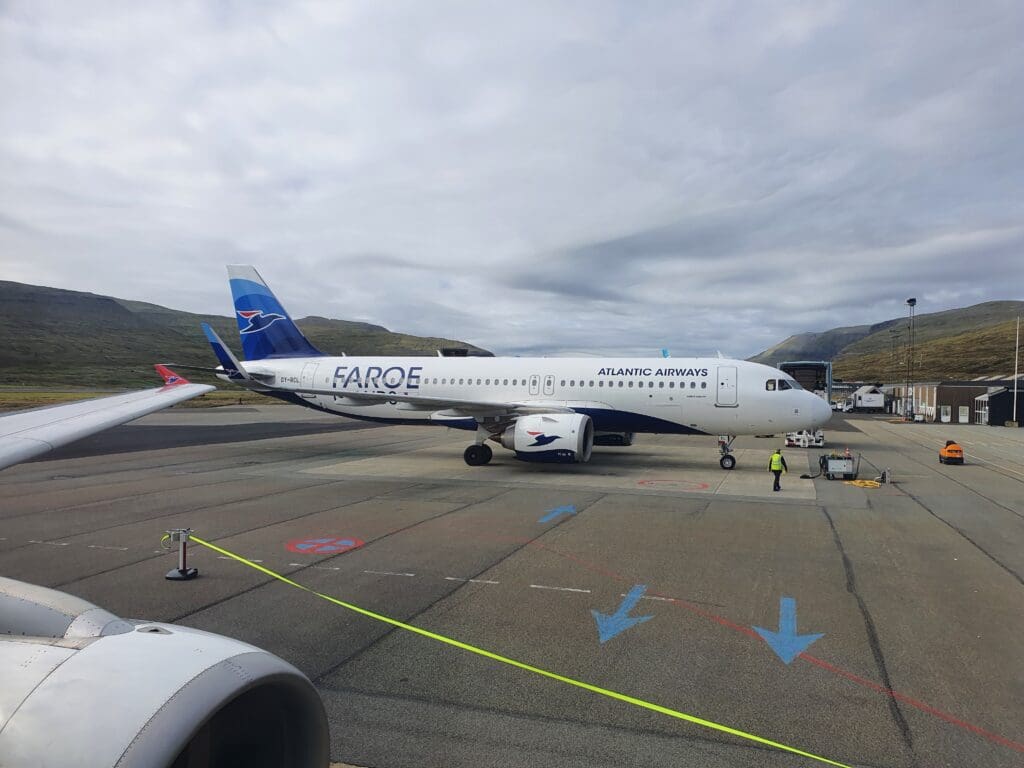
With all passengers onboard, it wasn’t long before the cabin doors were closed and the airstairs were pulled away from the Airbus. At 1419, the Captain’s voice filled the cabin as they performed a welcome announcement first in Faroese and then in English. During this announcement, the Captain informed passengers of the short hour and five minute flight time and the good weather en route. This was immediately followed by the Purser’s announcement with the usual welcomes and warnings which then transitioned into the safety demonstration. Eight minutes ahead of schedule, the aircraft was pushed back away from its stand during which the Airbus’ two CFM56-5B4/P engines quietly hummed into life and the flaps and slats fell into position for take-off.
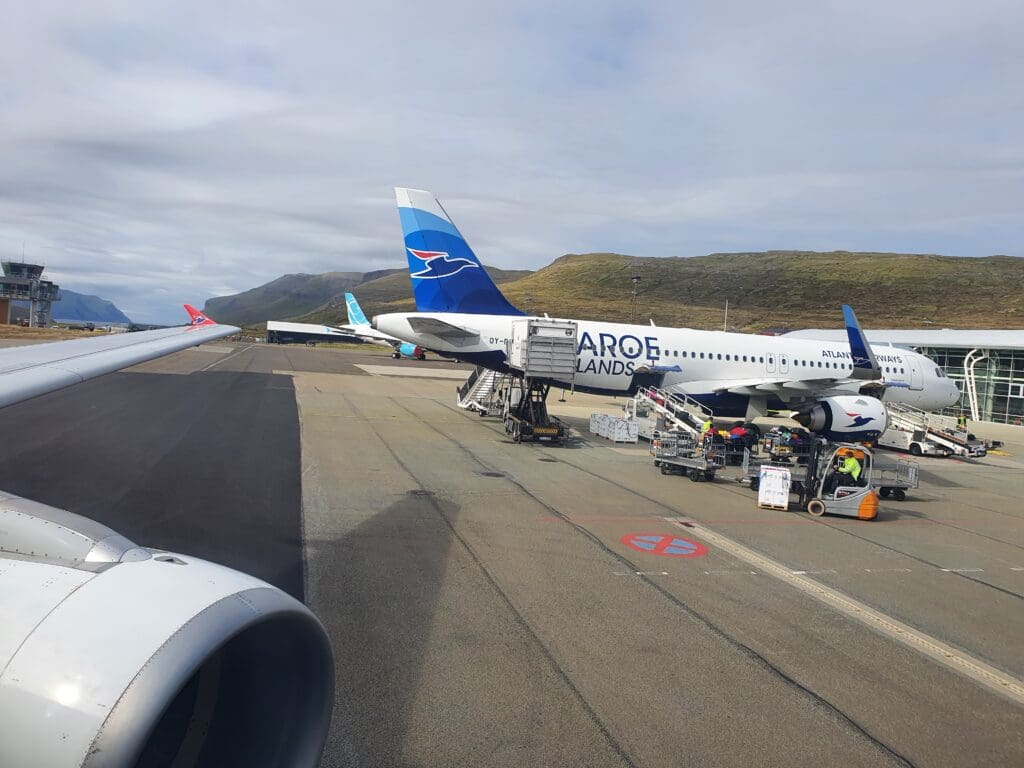
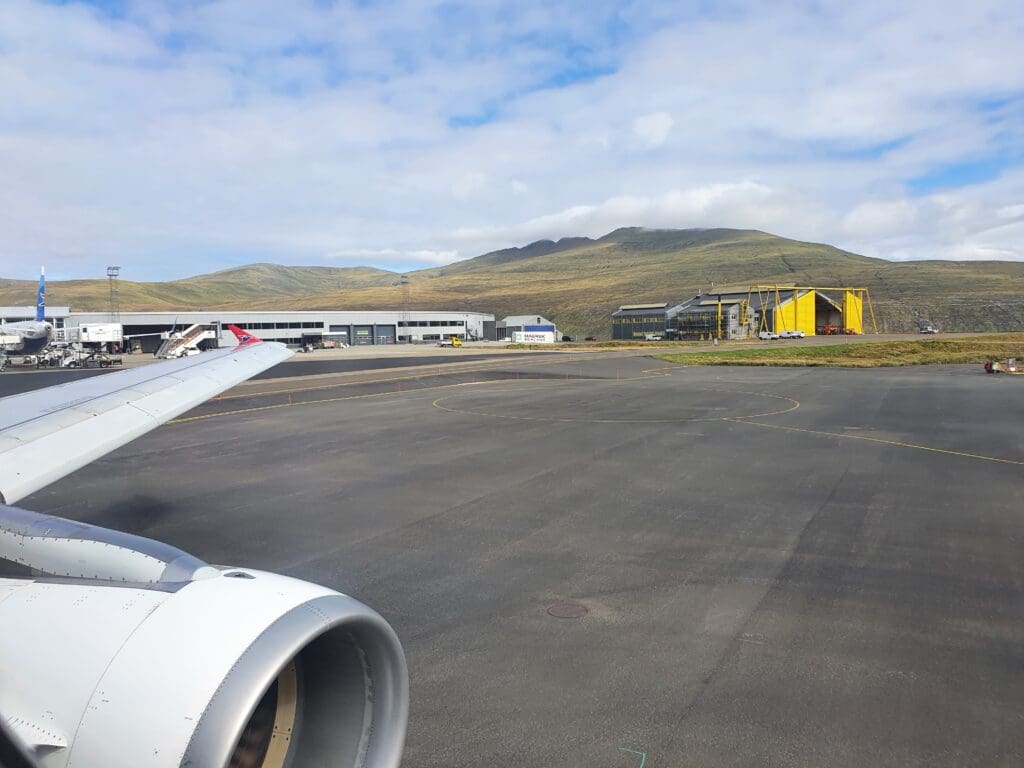
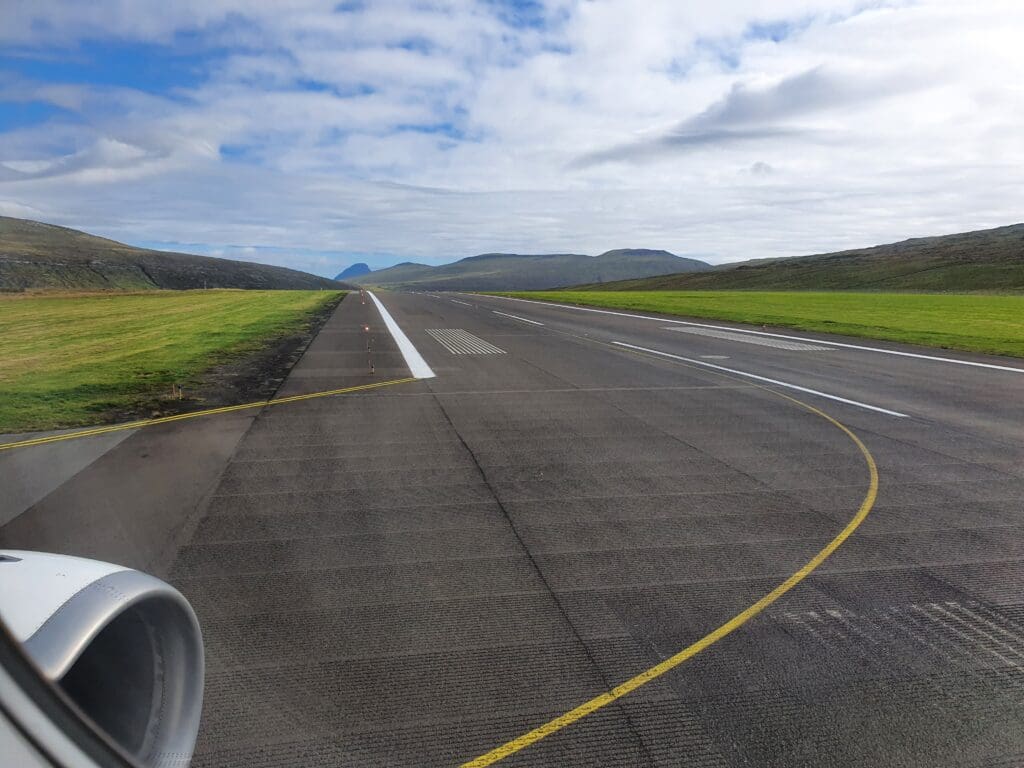
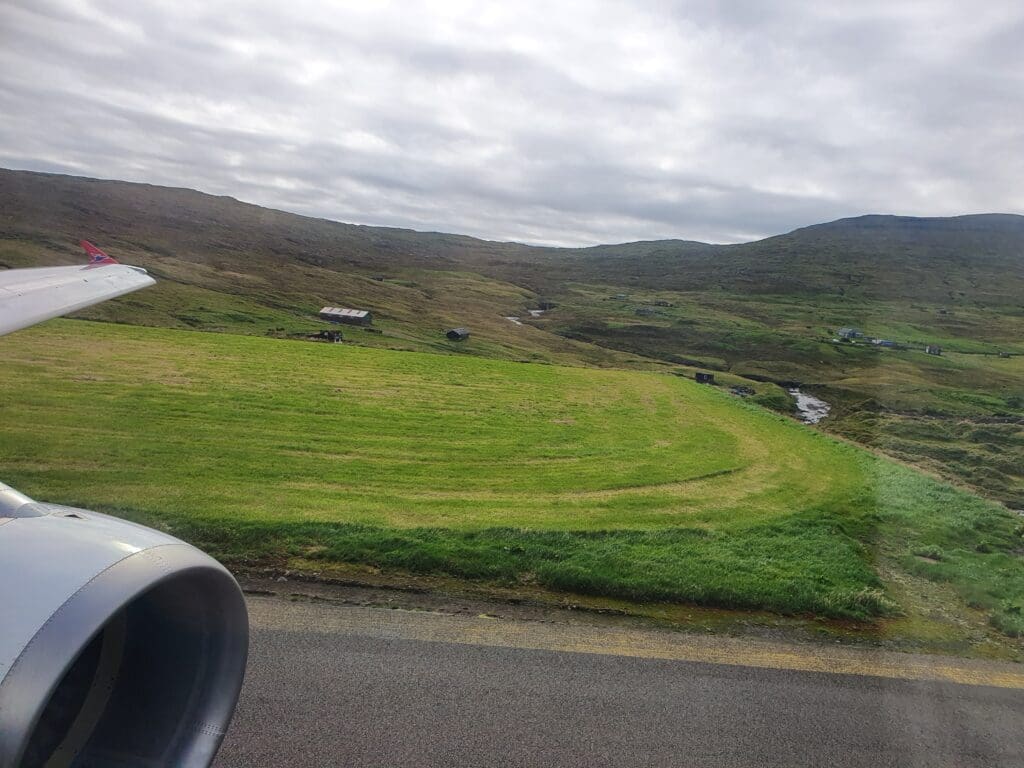
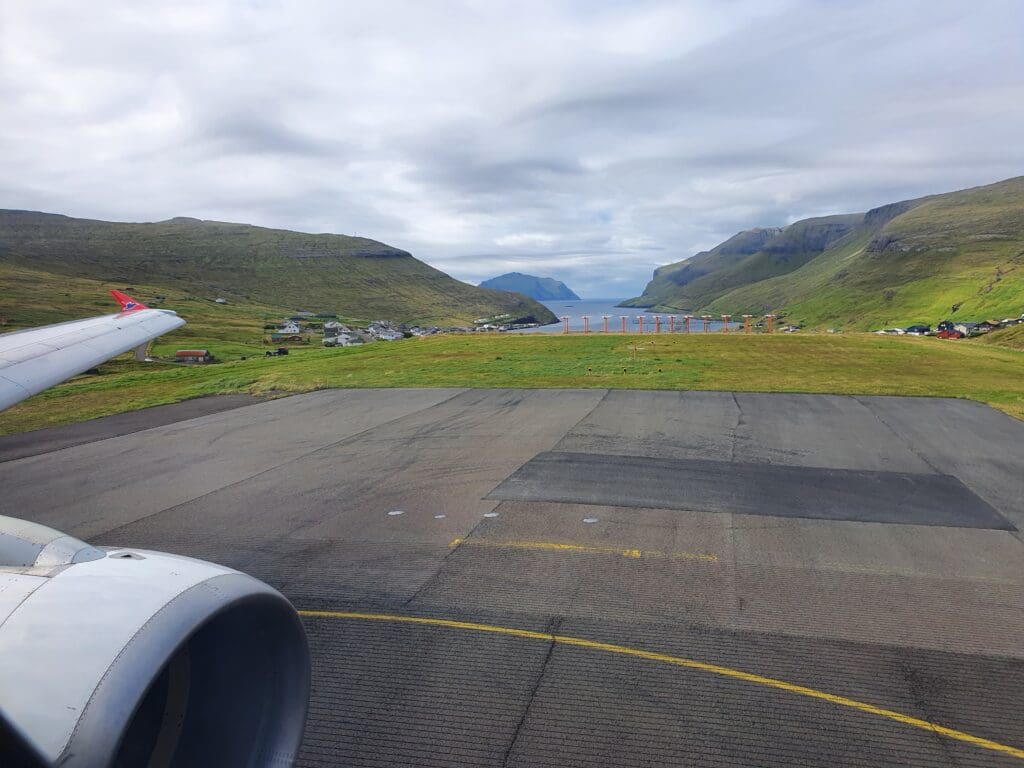
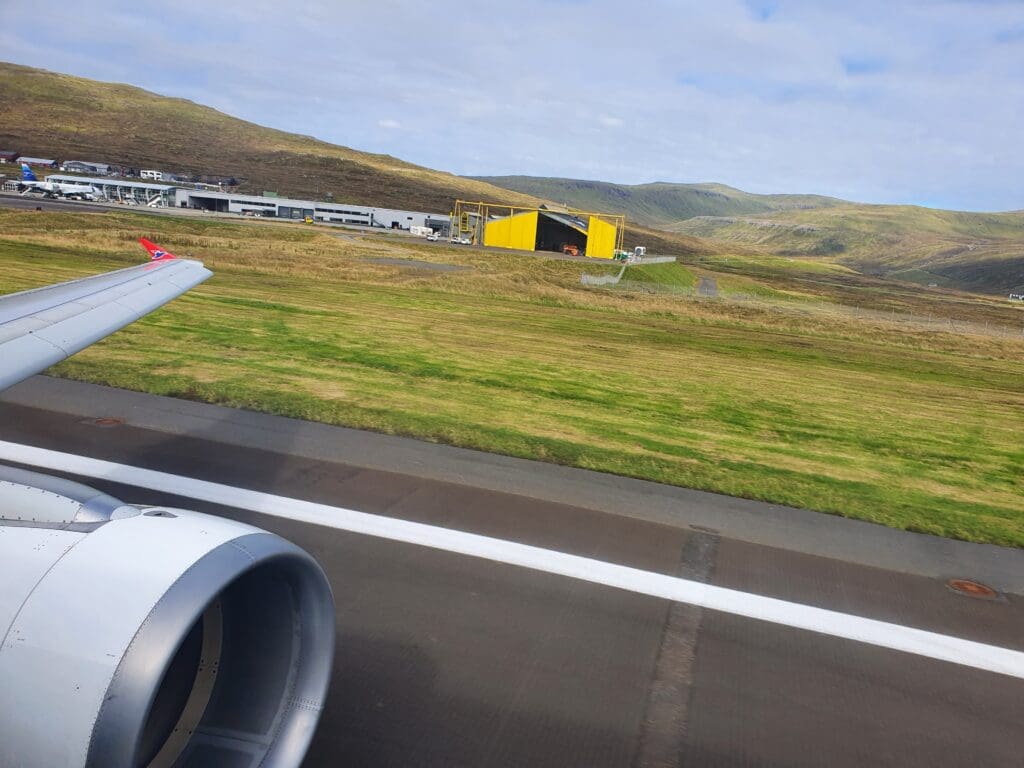
After the cabin crew passed through the cabin ensuring all was in place for our departure, the Airbus commenced a very short taxi, arriving at the runway in a matter of seconds! With no other traffic around, the Airbus lumbered onto the runway without holding and turned right, making its way to the end of Runway 12 before turning around slowly and cautiously so as not to end up on the grass! During this, a good view of the village of Sørvágur and Sørvágsfjørður could be had before the aircraft lined up on the centreline. At 1428, the Airbus’ two engines spooled into life and the aircraft performed a powerful take-off roll, rocketing past the air traffic control tower, terminal and Atlantic Airways’ yellow hangar before rotating upwards into the skies.
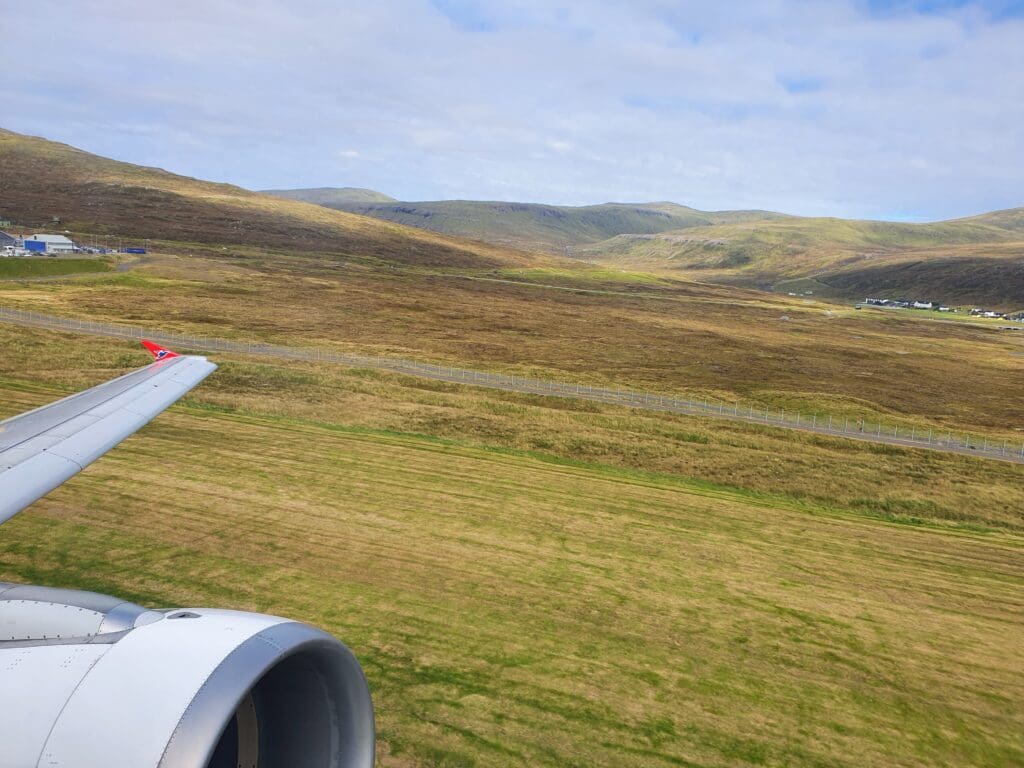
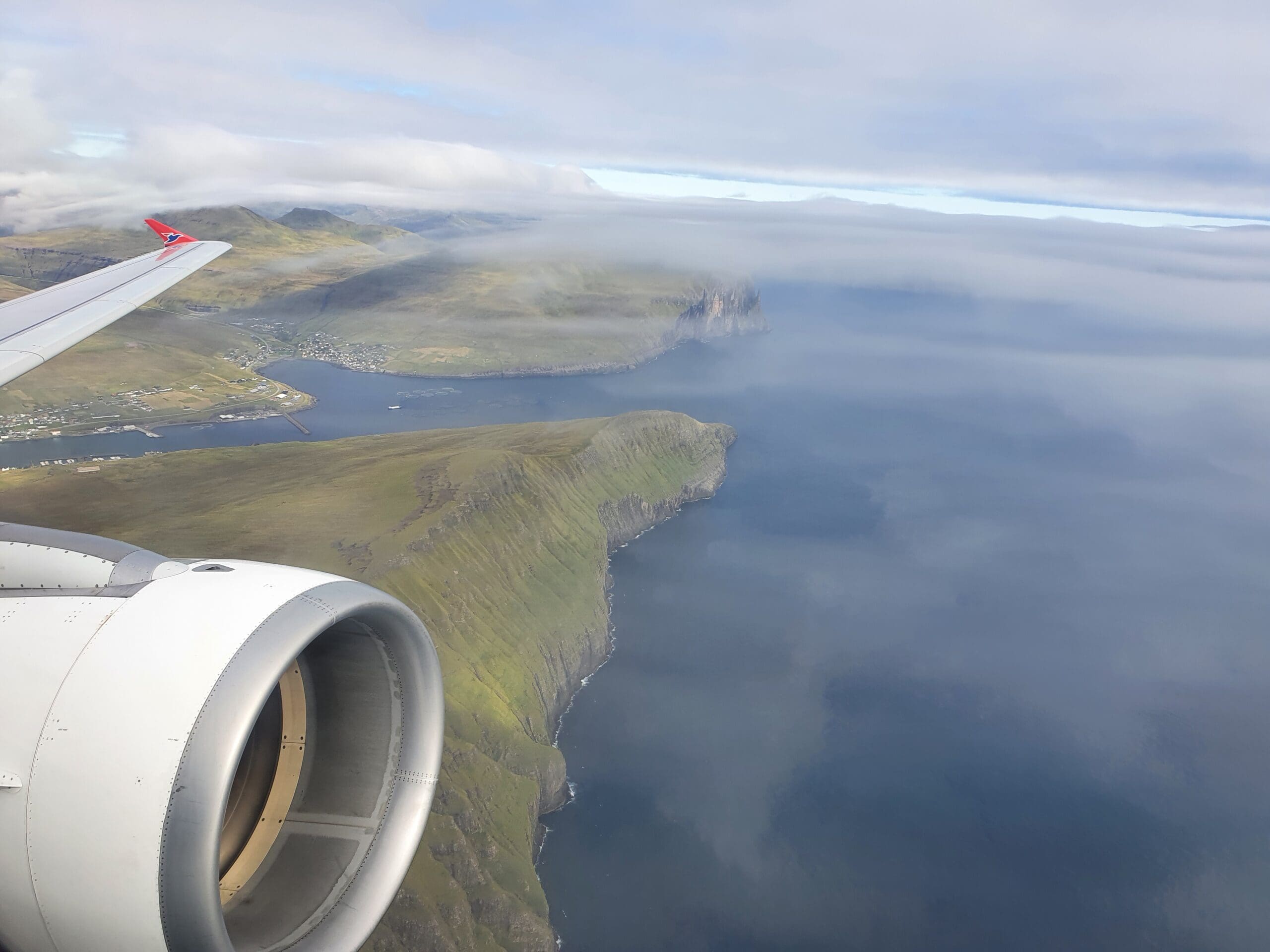
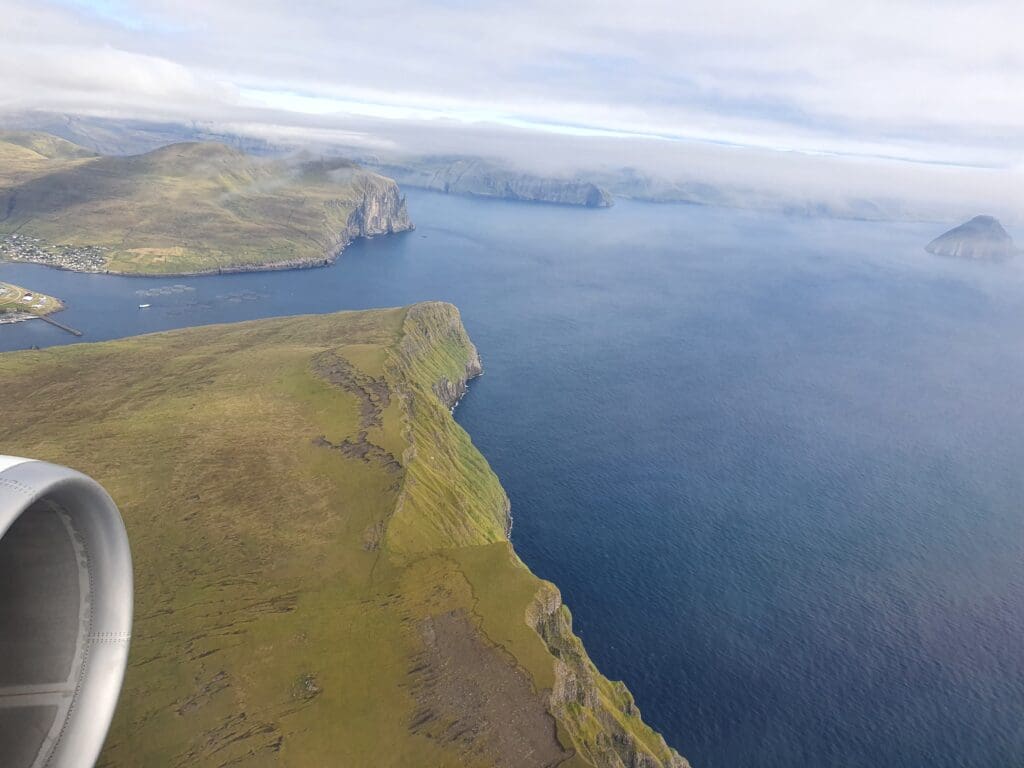
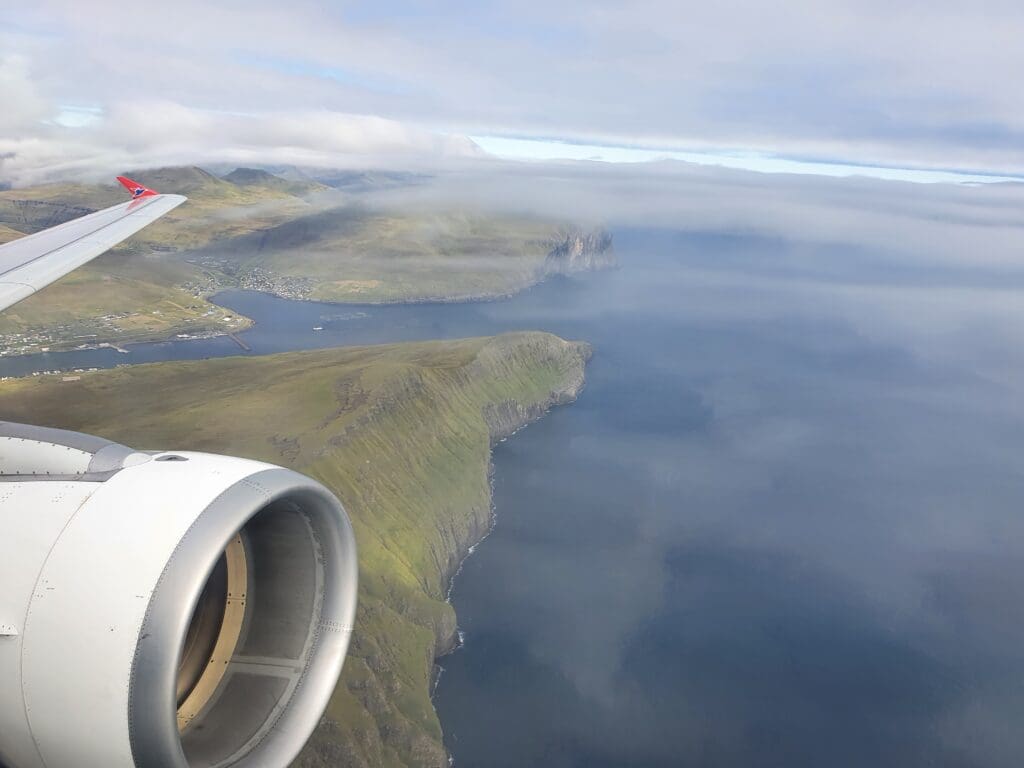
Once up in the air, the Airbus crossed over the Sørvágsvatn before banking to the right and rolling out on a southerly heading at which point the settlements of Miðvágur and Sandavágur appeared. After flying over the green mountains near the southwest of Vágar, the aircraft crossed over the impressive Trælanípa cliffs and journeyed southwards over the blue waters of the Atlantic at which point the Airbus rose above the thin layer of clouds. Heading southwards, a very brief final glimpse of the Faroes could be had through a small gap in the clouds which revealed the cliffs of the islands of Sandoy and Skúvoy. As the aircraft climbed through 10,000 feet the seatbelt signs were extinguished and the Purser performed their post-departure announcement containing the usual warnings regarding keeping these fastened whilst seated before moving on to mention that complimentary tea, coffee and water would soon be handed out and the buy-on-board service would commence – mentioning the sandwich selection to consist of cheese and ham, and chicken and bacon, the same as on my flight over from Copenhagen.
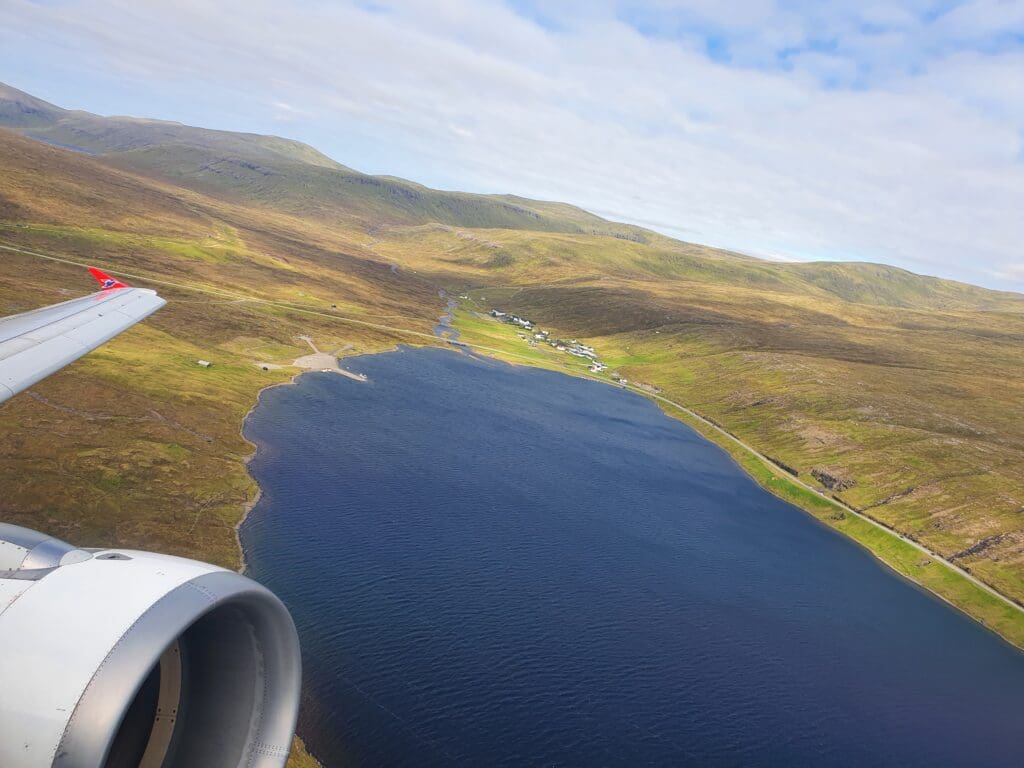
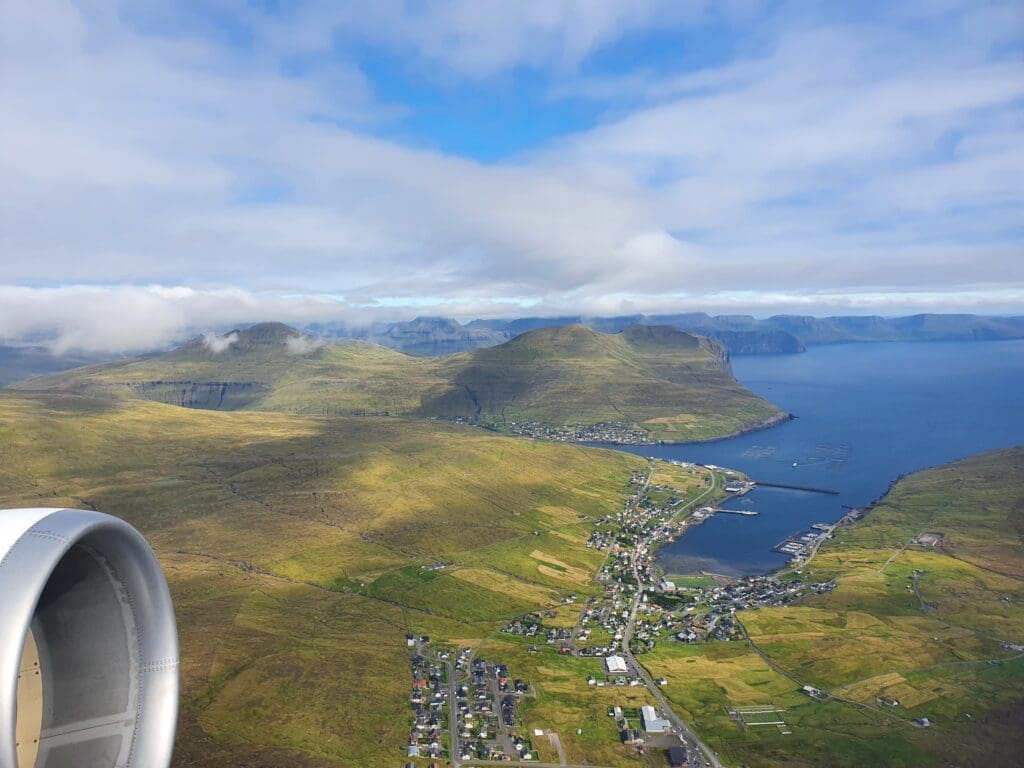
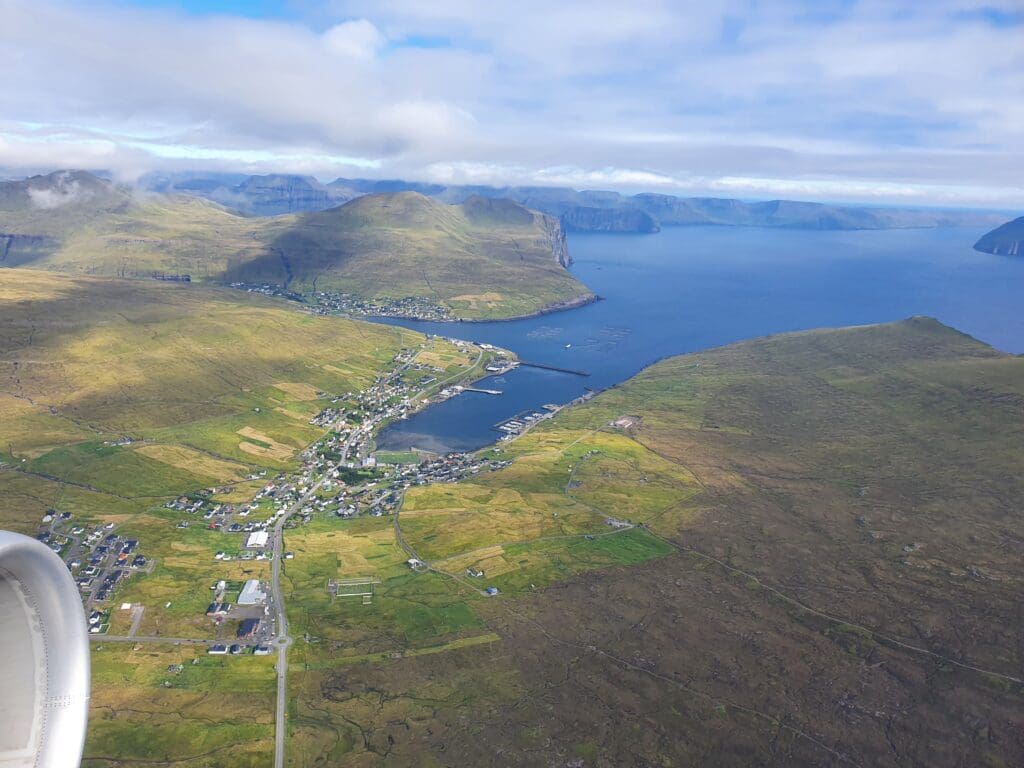
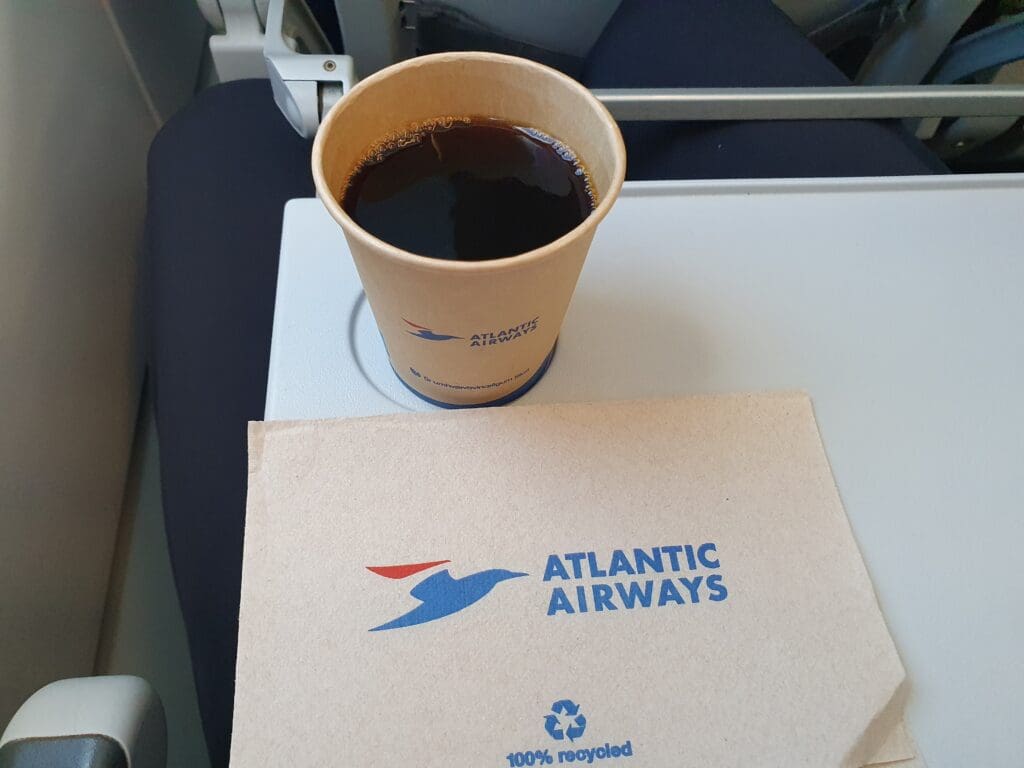
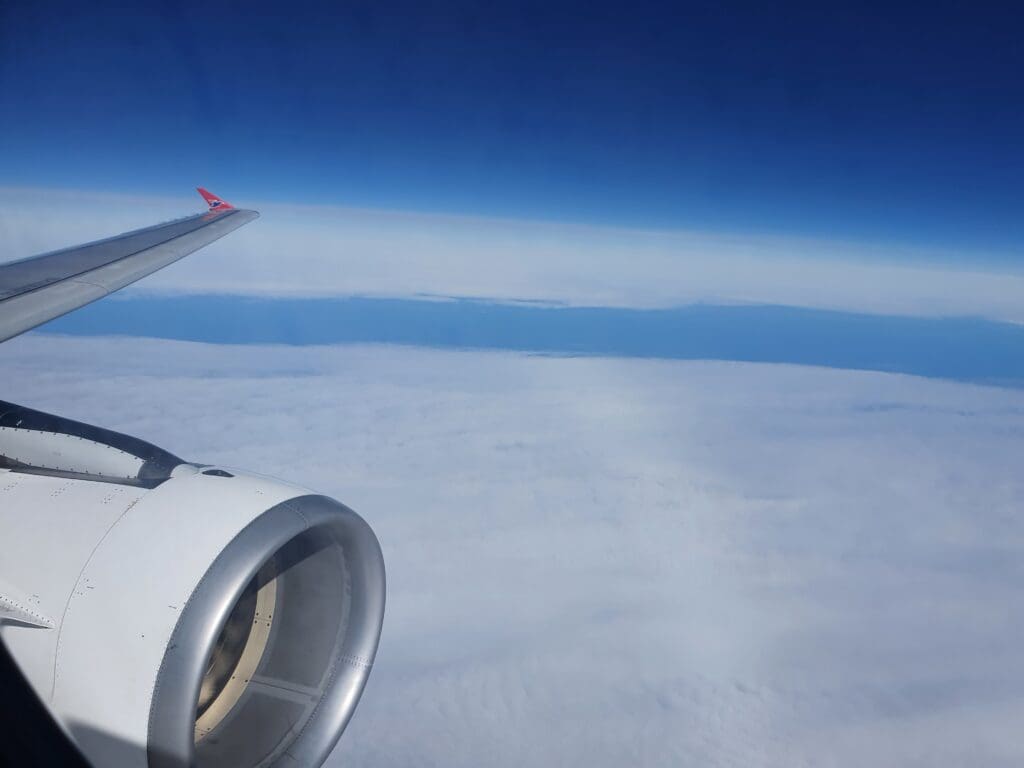
Around ten minutes after departure, the Airbus left the southernmost of the Faroe islands, Suðuroy behind and trundled southwards towards the British Isles, soon levelling off at 39,000 feet. Inside the cabin, a short time after the Purser’s announcement, the onboard service commenced with trolleys rolled out to the front and the rear of the cabin. Soon reaching my row, I requested a black coffee from the friendly attendant who carefully passed this over to me in a paper cup along with an Atlantic Airways branded serviette. Having already had a sandwich for lunch, I opted to skip any of the buy-on-board options, which, other than the sandwiches, consisted of a modest selection of light snacks and drinks (including alcohol). I should mention that these are all fairly reasonably priced and cheaper than similar items sold in the cafe at the Vágar Airport.
Unlike on the flight over from Copenhagen, the overhead screens remained retracted for the duration of the flight although I was able to track the flight’s progress using the moving map function of Atlantic Airways’ Atlantic AirFi streaming service. Whilst I explore this in more detail on my report for the flight to the Faroes, this contains a comprehensive list of programmes, films, games and other interesting features to quell the boredom of even the most restless passengers, and is a fantastic addition given the short length of many of Atlantic Airways’ flights. Heading southwards, the Airbus passed a fair distance to the west of the Shetland Islands, followed by the Orkneys before making landfall over mainland Scotland around thirty minutes into the flight. After passing over the remote coastal village of Bettyhill, situated roughly halfway between Durness and Thurso, the aircraft journeyed inland over the wilds of Northern Scotland. Unfortunately, thanks to the clouds, nothing of the landscape of one of the UK’s most remote regions could be seen.
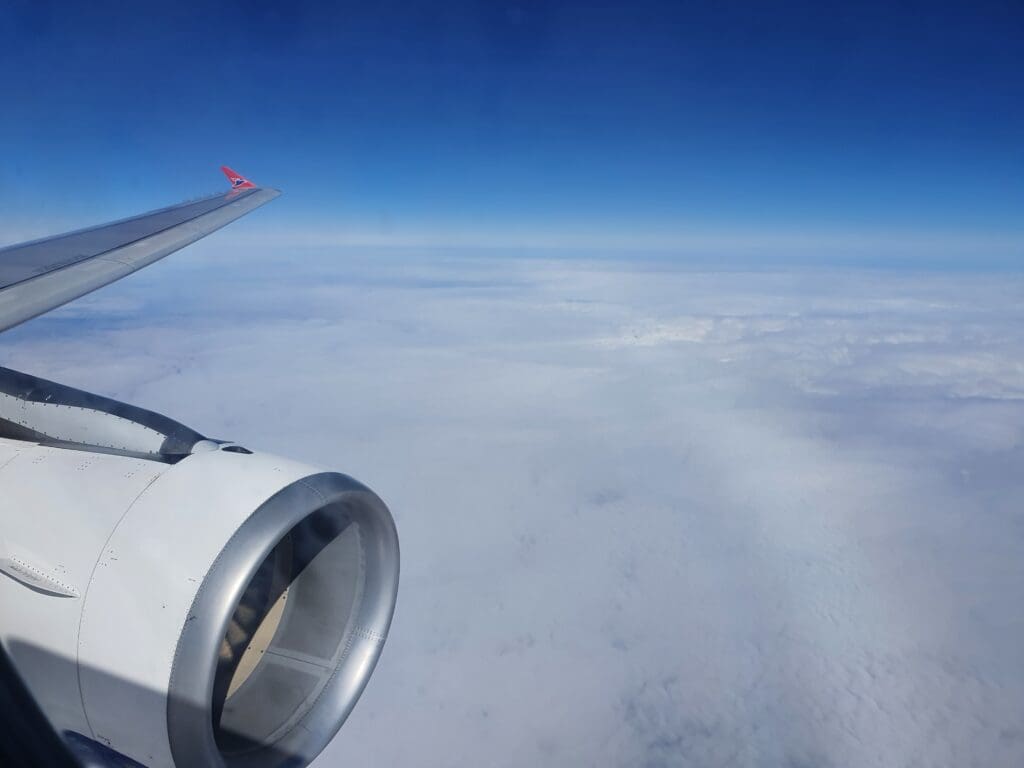
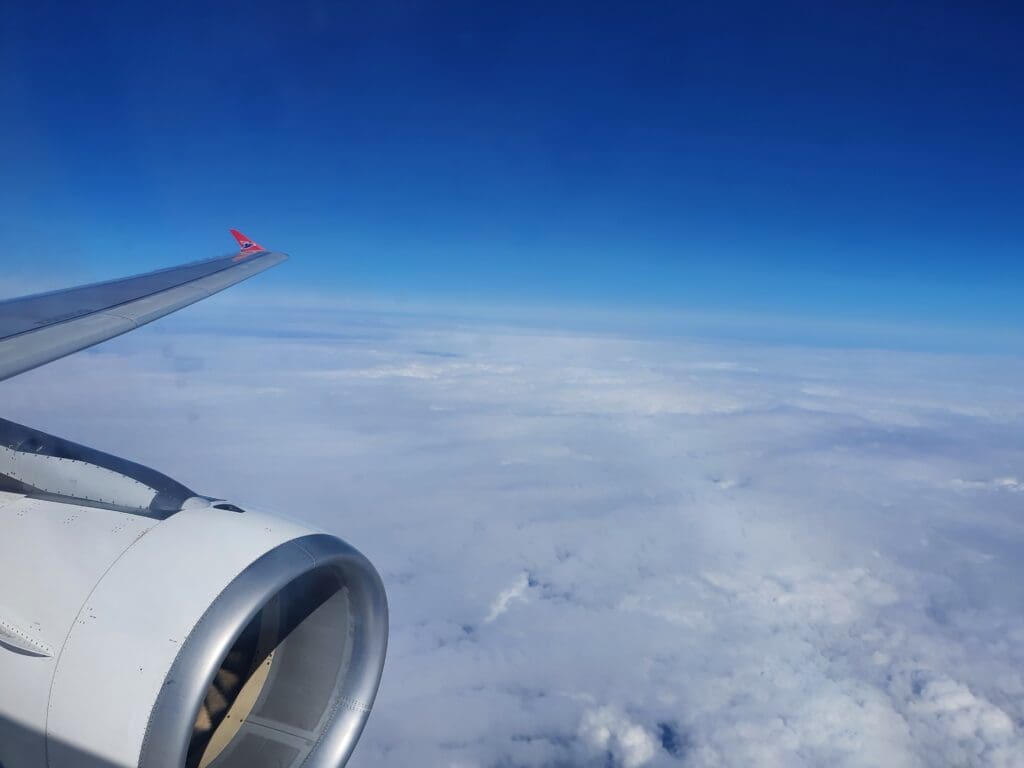
Focusing on our route, the Airbus cruised southwards over Caithness and Sutherland, before reaching the Moray Firth around seven minutes after reaching the Scottish mainland. At this time, a gap in the clouds revealed the sandy coastline of Nairnshire and Moray, whilst I also caught a brief glimpse of the old airbase at Kinloss which now serves as an army barracks. At this stage, the aircraft could be felt commencing its descent as the Airbus journeyed southwards over the Cairngorms National Park. Meanwhile, inside the cabin, two crew members passed through offering passengers another cup of tea or coffee – opting for the latter I placed my empty cup on a tray and this was poured out before being passed back to me. I have to say, multiple hot drink rounds are not something that I have seen on such short flights and so I have to give Atlantic Airways credit for this.
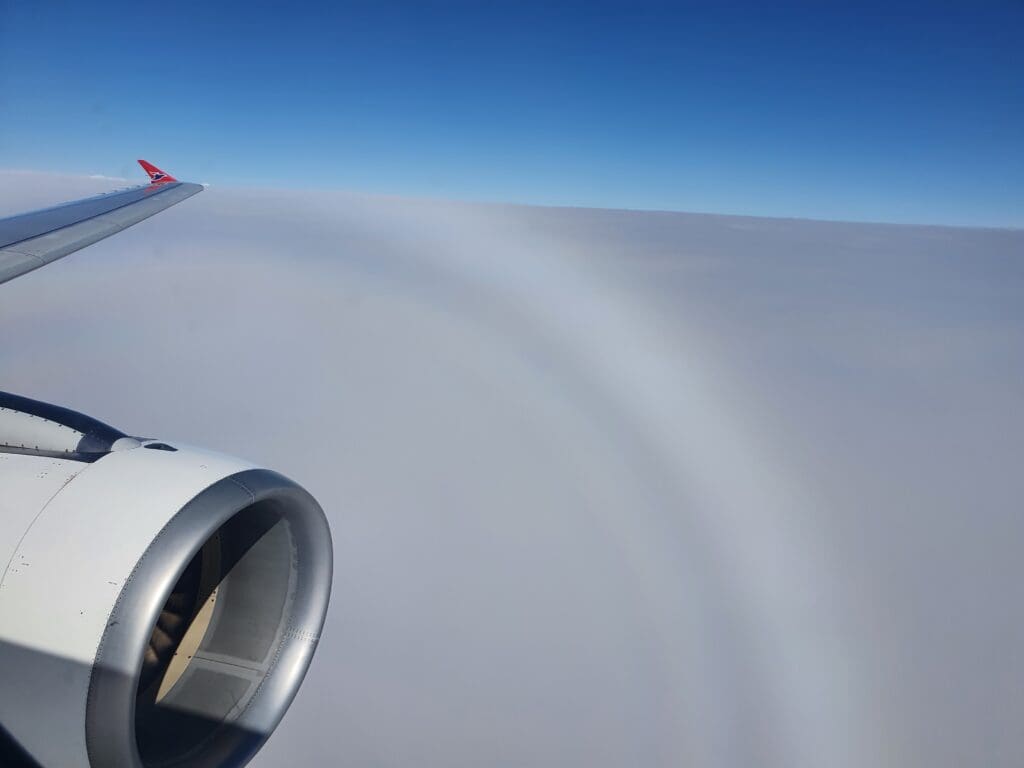

Around fifty minutes into the flight, at 1520 the Captain could be heard once more, providing passengers with an update on the weather in Edinburgh which consisted of light rain and a pleasant temperature of sixteen degrees before thanking passengers for flying with Atlantic Airways – with this feeling almost tropical compared to the cold Faroese weather! Once this came to an end, the seatbelt signs were switched back on and the Purser performed the usual pre-arrival announcement complete with warnings regarding seatbelts, tray tables, seatbacks and window shades.
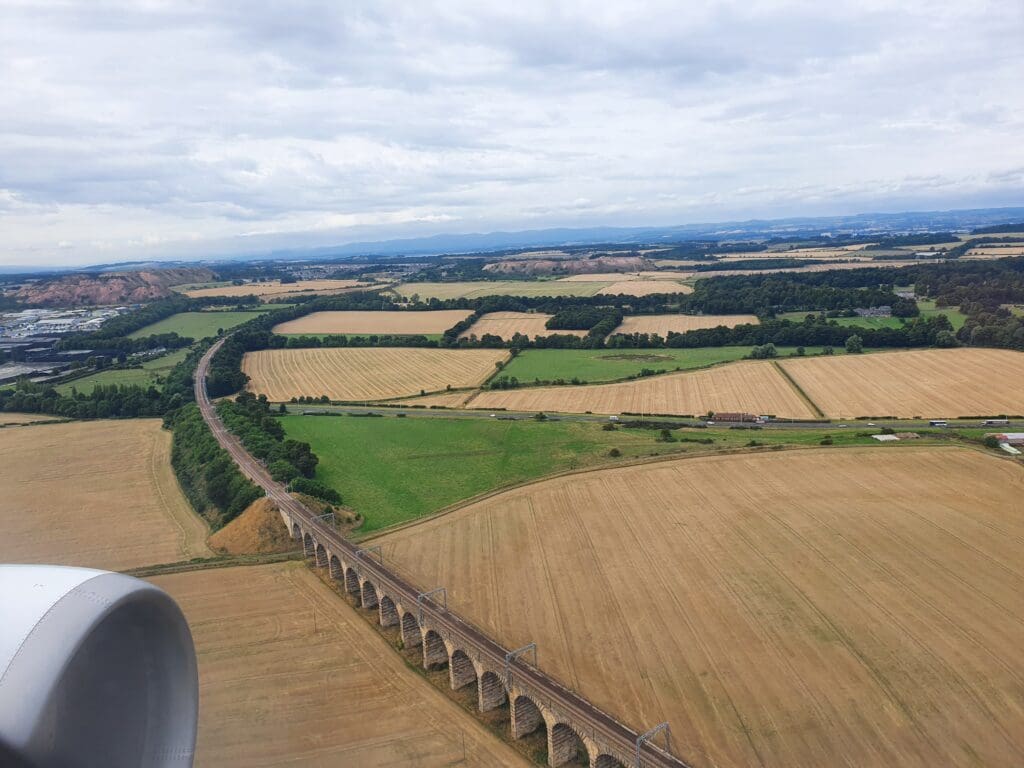
Continuing southwards, the aircraft entered the clouds somewhere around Perth and began to bounce around a little before sinking below these just before reaching the Firth of Forth. With good visibility beneath the clouds, a clear view up the estuary to the sea could be had, with the two famous rail and road bridges spanning across this clearly visible some way to the east. Upon crossing the estuary’s southern shores, the aircraft passed over the town of Grangemouth and continued to fly southwards. Upon reaching the M8 motorway, the Airbus turned towards Edinburgh Airport and lined itself up for an approach to Runway 06, flying roughly parallel to the M8 all the way to the airport. From my seat on the left-hand side of the aircraft, amongst the forests and fields of West Lothian, and the more unusual sight of red spoil heaps – Scotland’s answer to Uhluru could be seen. These came in addition to the towns of Bathgate and Broxburn.

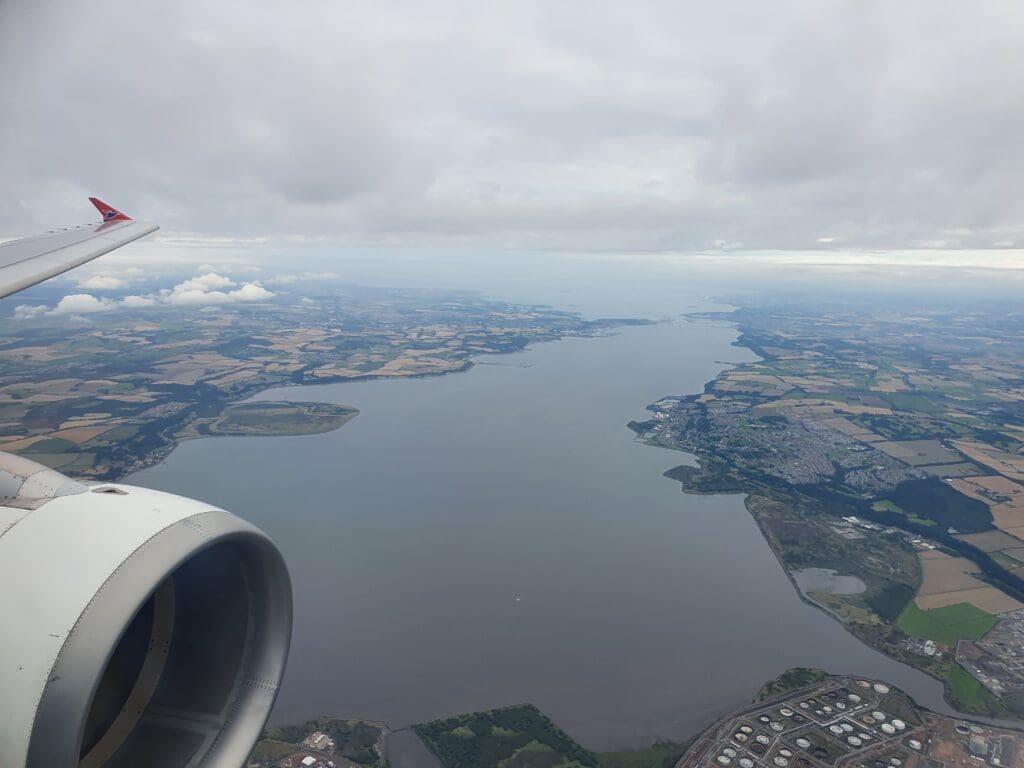
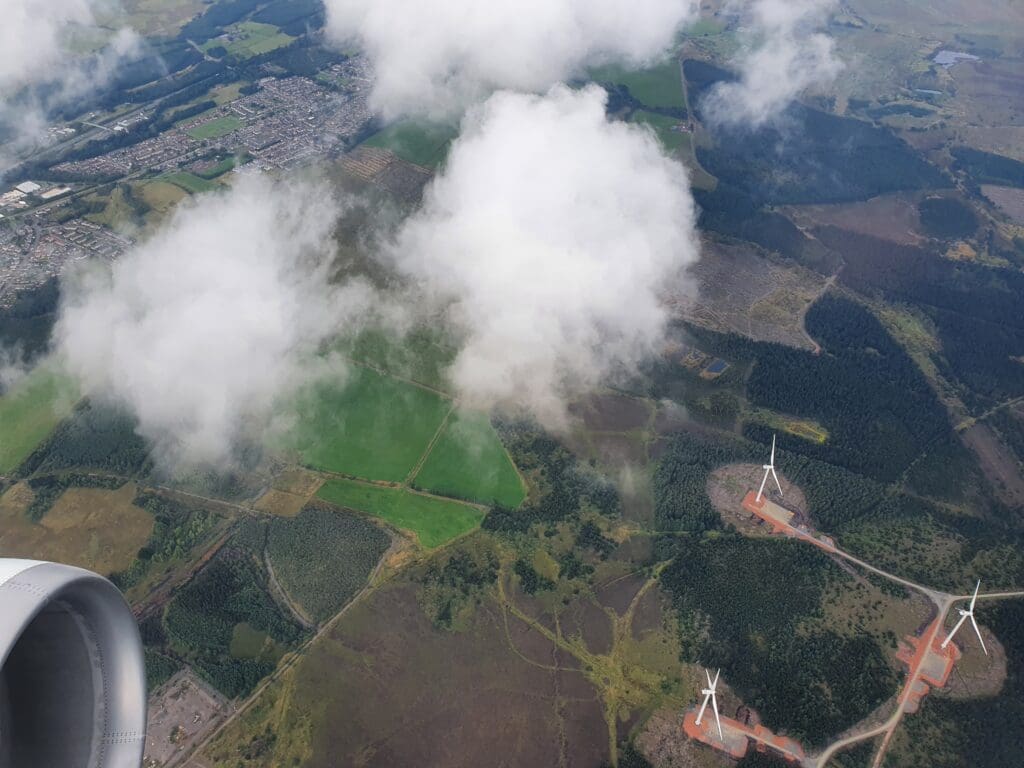
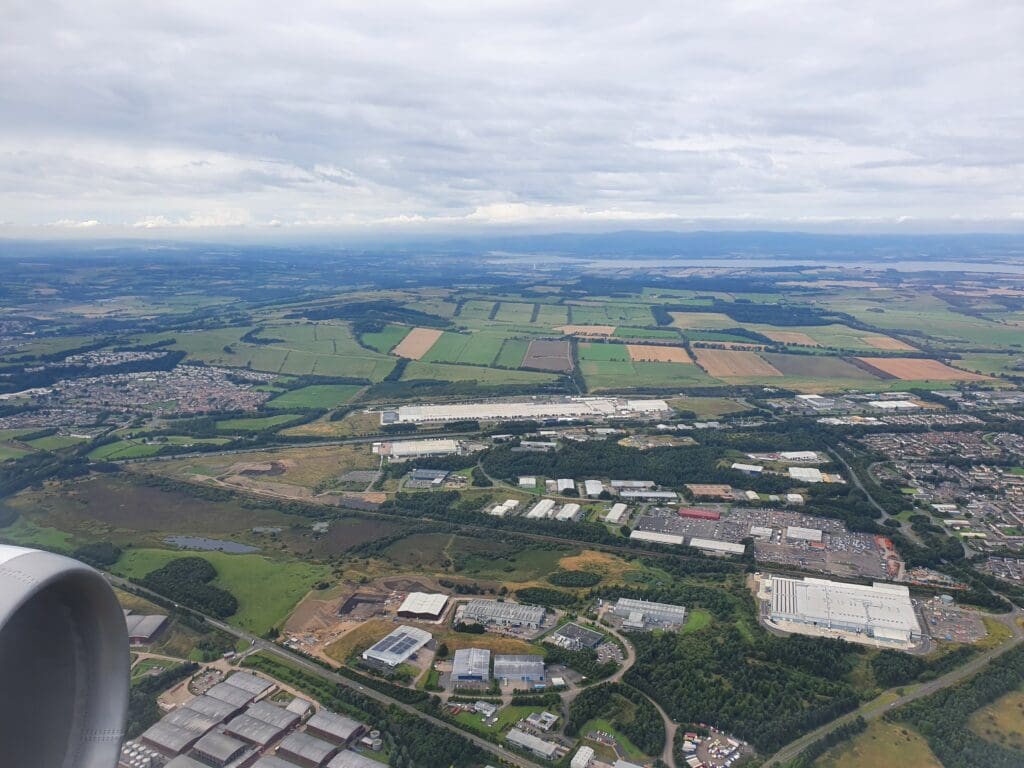
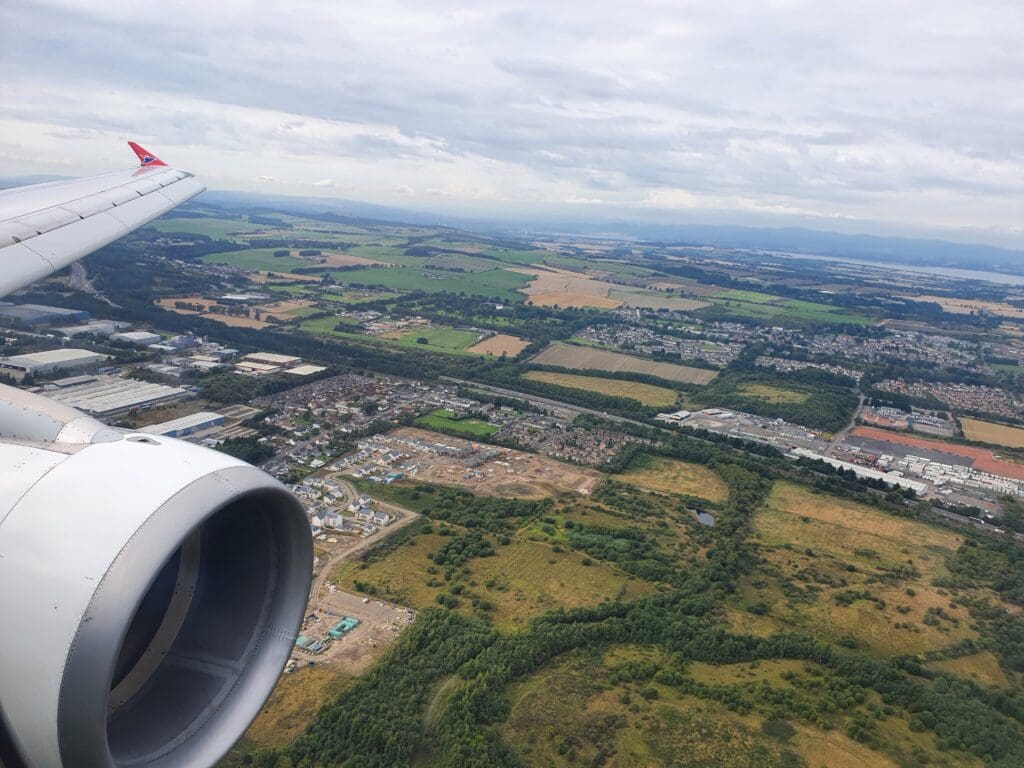
After passing over the Broxburn Viaduct and tasty-sounding River Almond, following a pleasant hour and seven minutes in the air, at 1535 the Airbus crossed over Edinburgh Airport’s perimeter fence and made a soft touchdown on Runway 06. Upon making it back to Terrafirma, some rather harsh braking followed. As the aircraft vacated the runway, the Purser performed their welcome announcement in Faroese and English. During the aircraft’s short taxi over to stand 16A, I caught sight of the various cargo aircraft operating on behalf of Royal Mail – including Boeing 737 Classics from ASL Airlines and West Atlantic, and a Star Air Boeing 767. Whilst no Luton or Stansted, an impressive total of seven sleek-looking business jets could also be seen parked at remote stands.
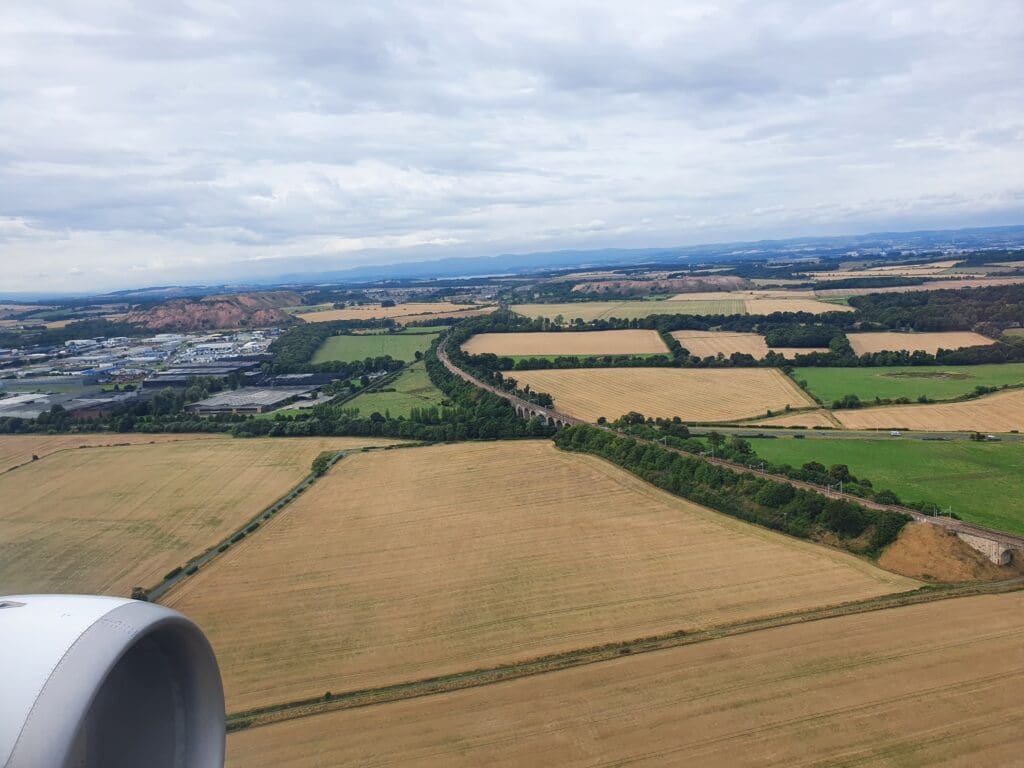

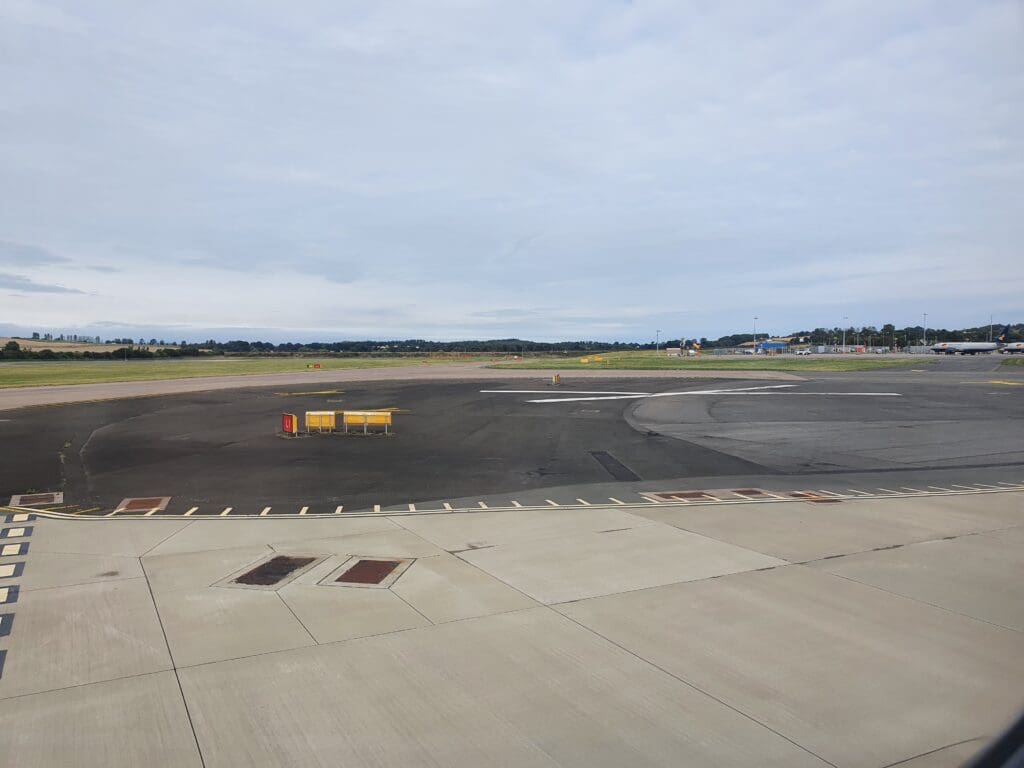
Following a short pause whilst the Swissport ground agents arrived at the gate, the Airbus pulled into Stand 16A and came to a halt at 1540. At that time, many of those around me jumped up as if in a rush to escape the aircraft however, with Edinburgh Airport having suffered from staff shortages, it didn’t come of much of a surprise to find that plenty of waiting was required before disembarkation commenced, especially given the fact that we had arrived on stand fifteen minutes ahead of schedule. Whilst the gate was fitted with a jet bridge, eventually, a set of airstairs was positioned up to the forward cabin door and disembarkation commenced at 1549. Seated near the front of the aircraft, I soon collected my bag and made my way forward. After thanking two crew members standing in the forward galley, I stepped out of the aircraft and into the Scottish air, heading to ground level before entering the terminal and making my way upstairs following signs for international arrivals.
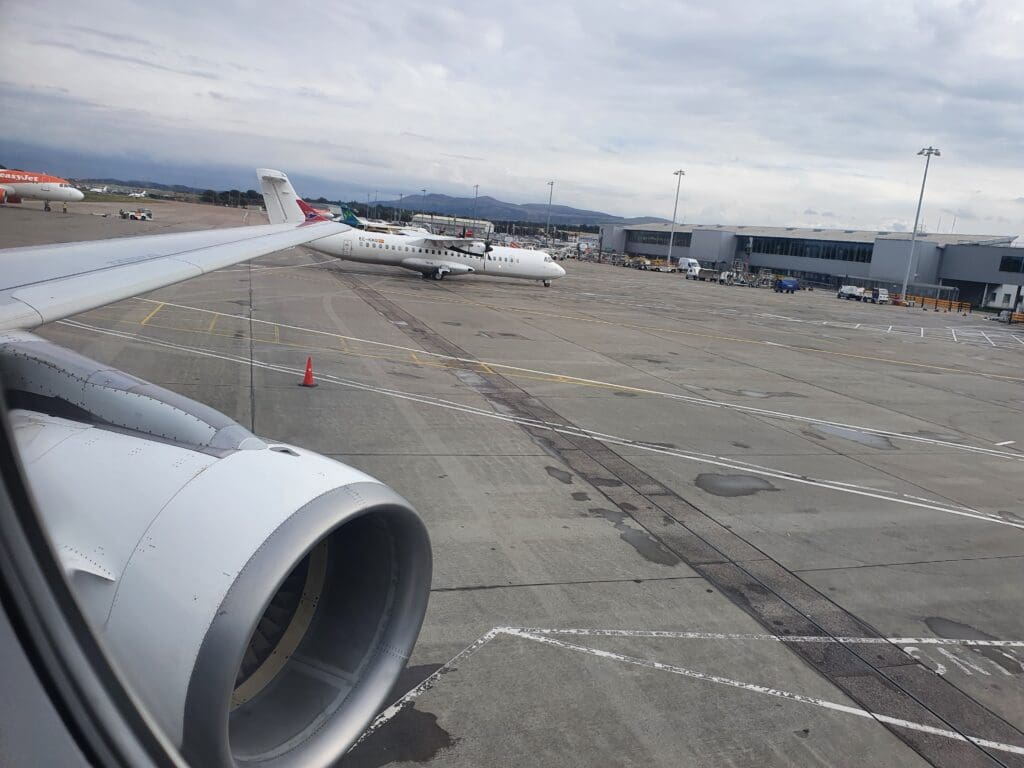
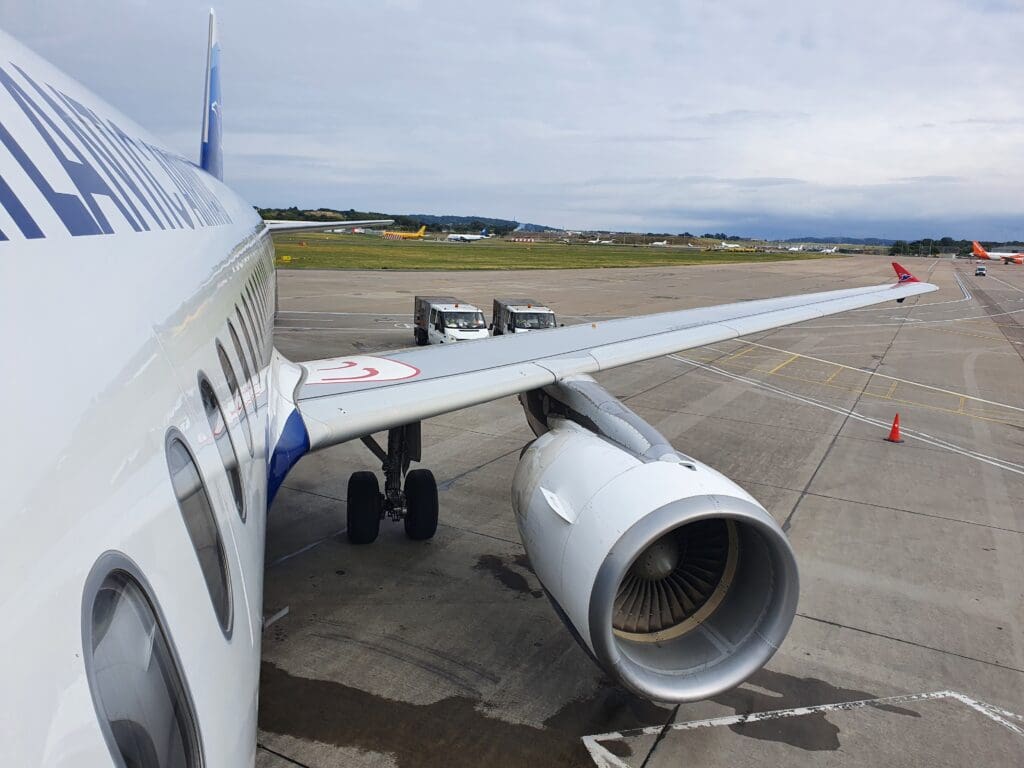
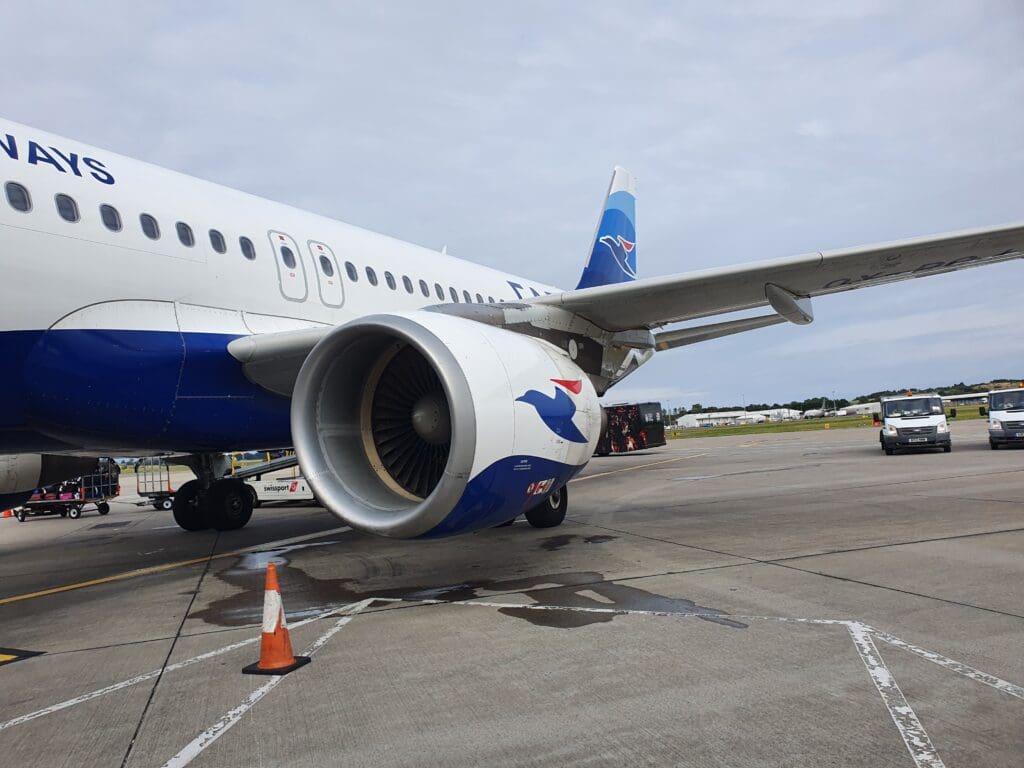
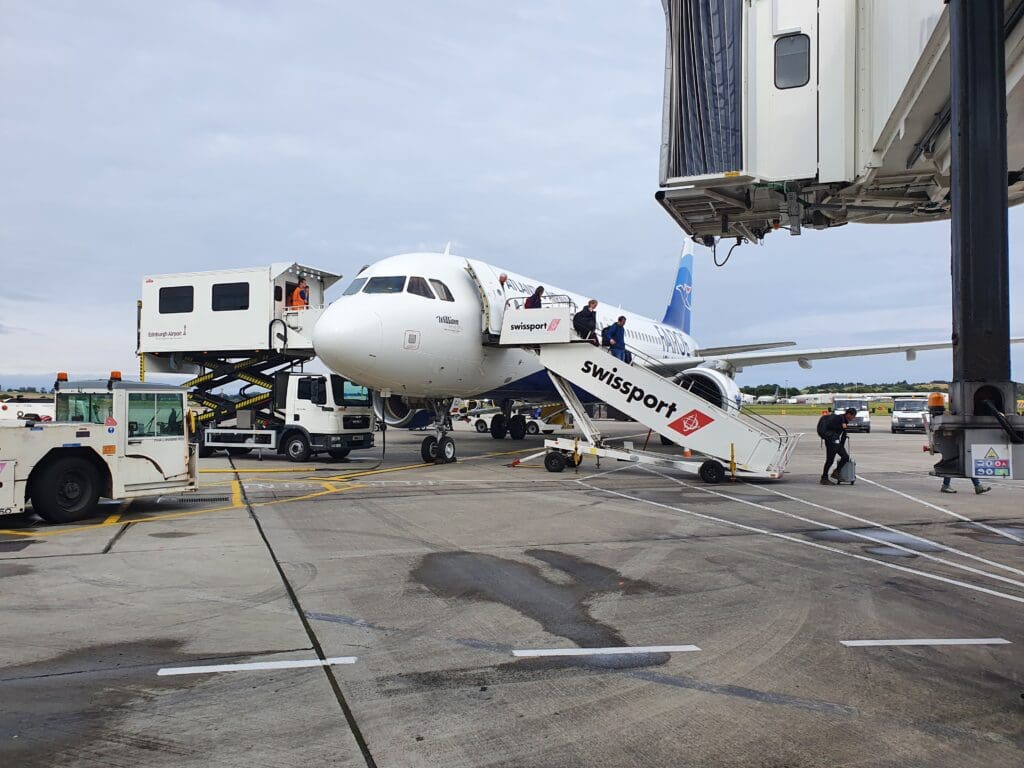
Whilst a fair walk was in store before reaching the immigration hall, with the flight from Vágar being the first international arrival for around an hour, I was greeted by the sight of an immigration hall that was entirely devoid of passengers other than those who had disembarked ahead of me. With most e-gates working, I walked up to one of these without any queuing – letting me through without any issue, I soon arrived in the baggage hall and stormed through this without stopping before walking through customs and heading out into the landside arrivals area no more than about eight minutes after disembarking the aircraft!
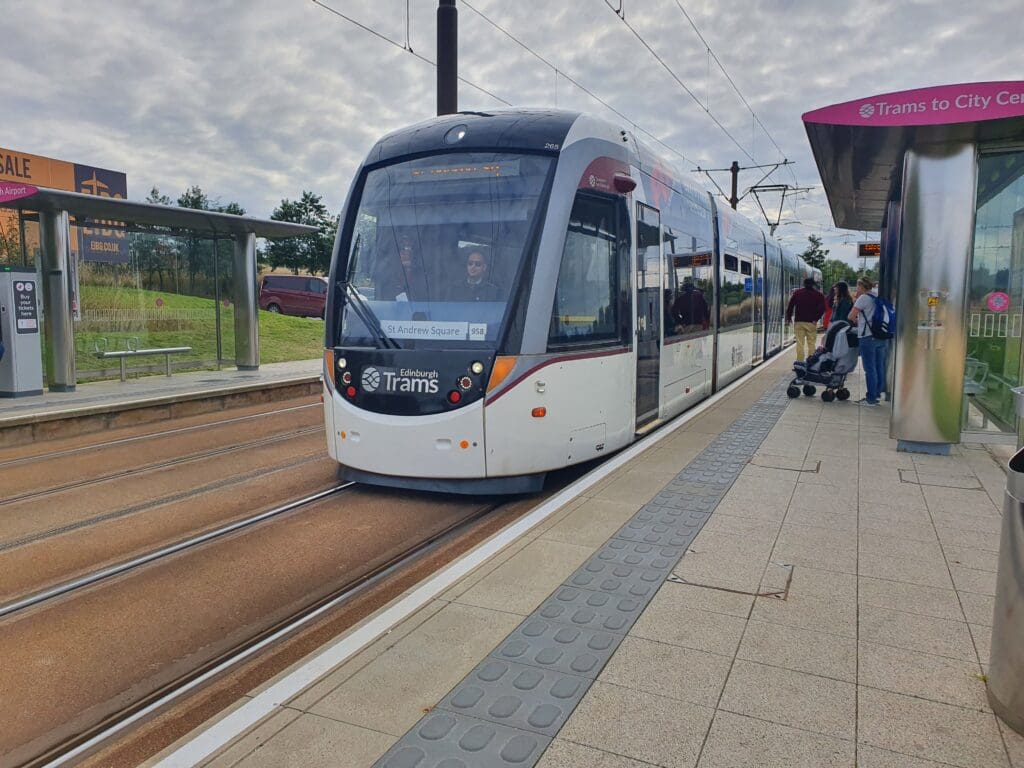
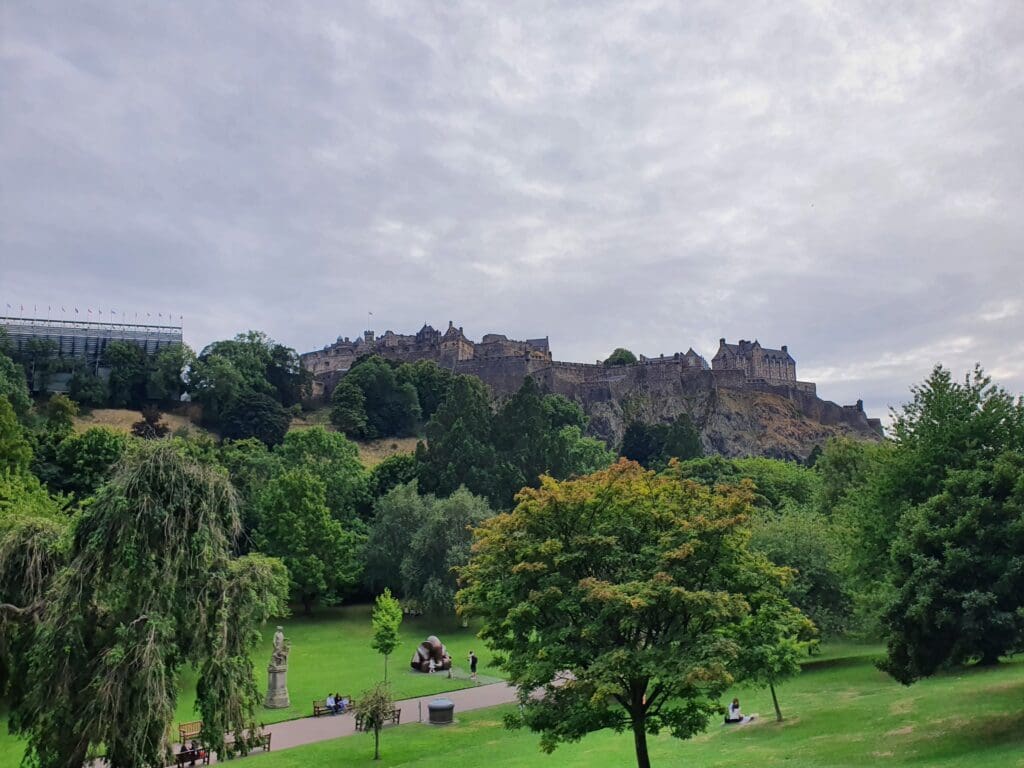
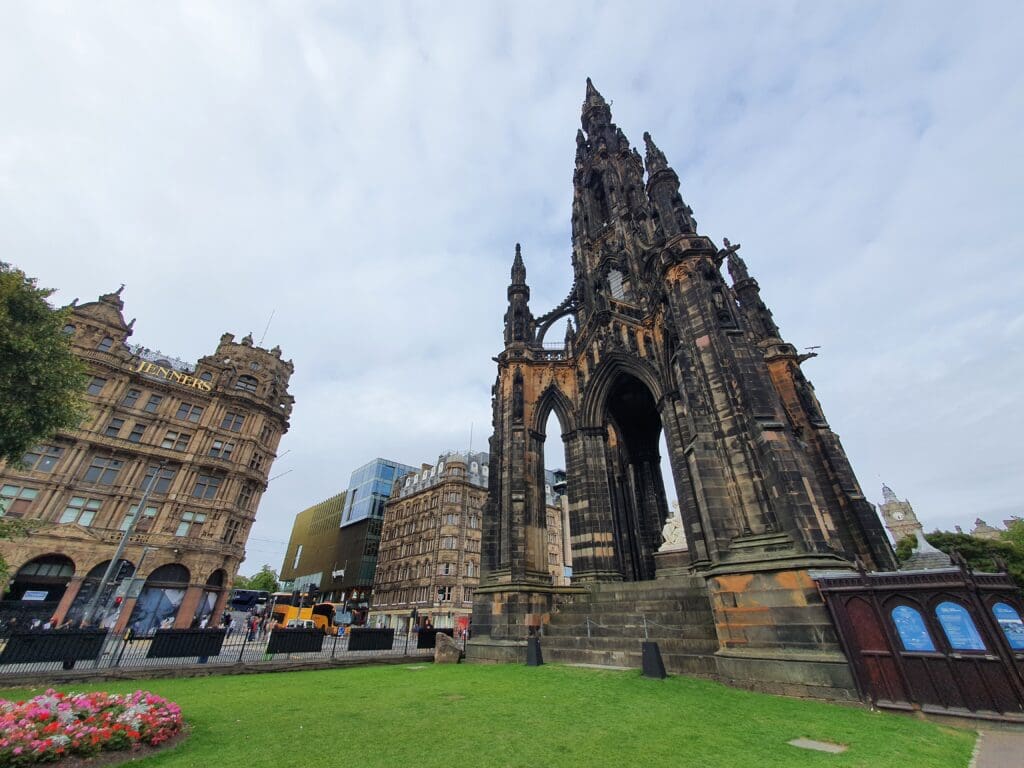
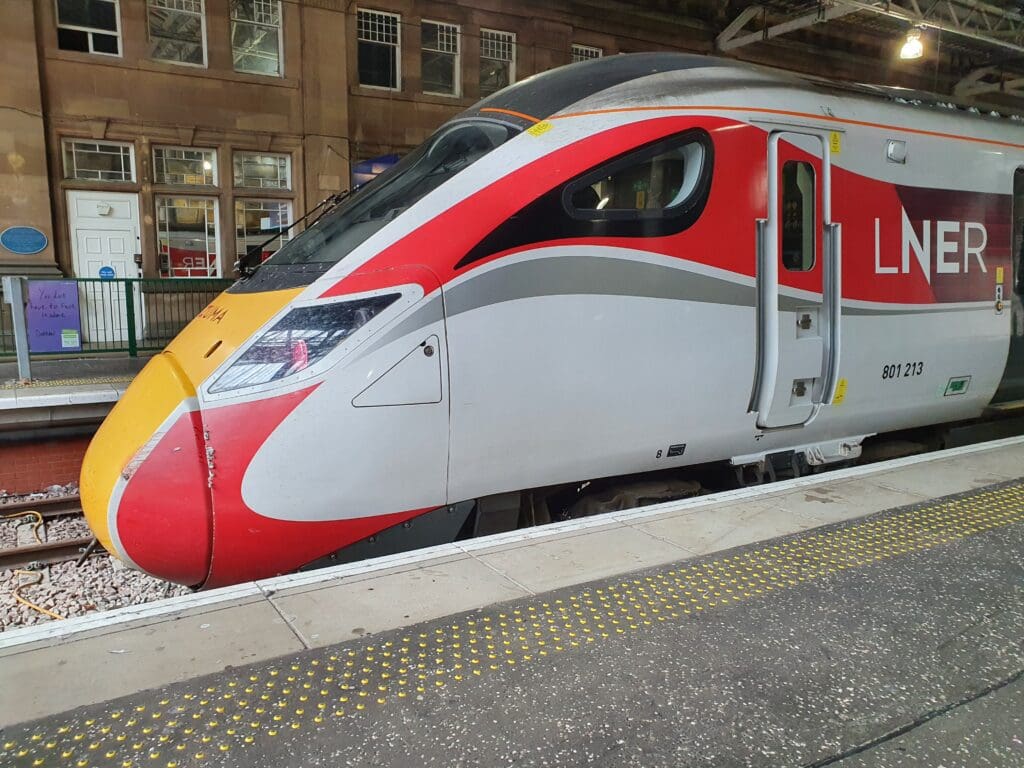
Needing to get to the centre of Edinburgh to catch my 1830 train to London Kings Cross, the most logical way of getting there would be to catch one of Edinburgh’s modern trams However, with an airport surcharge in place, a single ticket from the airport to the centre would have set me pack a pricey £6.50. Having done my research, I knew that were I to catch it from the next stop along, Ingliston Park and Ride, a single ticket would instead cost me just £1.80. With enough time on my hands and with the Scottish rain yet to arrive, I opted to make the 20-minute walk – satisfied that I had made the right decision. Once in Edinburgh, I had enough time to wander around and grab an early tea at Jollibee before continuing on my journey to London.