
A Short Dart Across the Persian Gulf: Dubai to Bahrain on a Gulf Air A320neo
You can read about my fantastic Gulf Air Airbus A321neo-operated flight from Frankfurt to Bahrain on the outbound leg here.
Cutting across the length of Dubai, running above the city’s main artery, the E11 road for much of its route, Dubai Metro’s Red Line usually serves to be a good way of reaching Dubai Airport for those on a budget. However, the one drawback to this is the fact that like many metro transit systems across the world, operations on this line come to a temporary halt for several hours at night. With my flight to Bahrain departing at 0655, I would be unable to take the first metro train of the day and still comfortably catch my flight. However, with the final Friday service departing the nearest stop to my hotel, Sobha Realty station, at 0120, catching this would result in an overnight stay in Dubai Airport’s Terminal 1. The only other viable albeit not so economical option is to catch a taxi to the airport. Having faced a similar dilemma in March 2020 when catching an early morning flight from Dubai to Jeddah, I decided that a long stay in Terminal 1 was not all that bad and opted for the cheaper metro option.
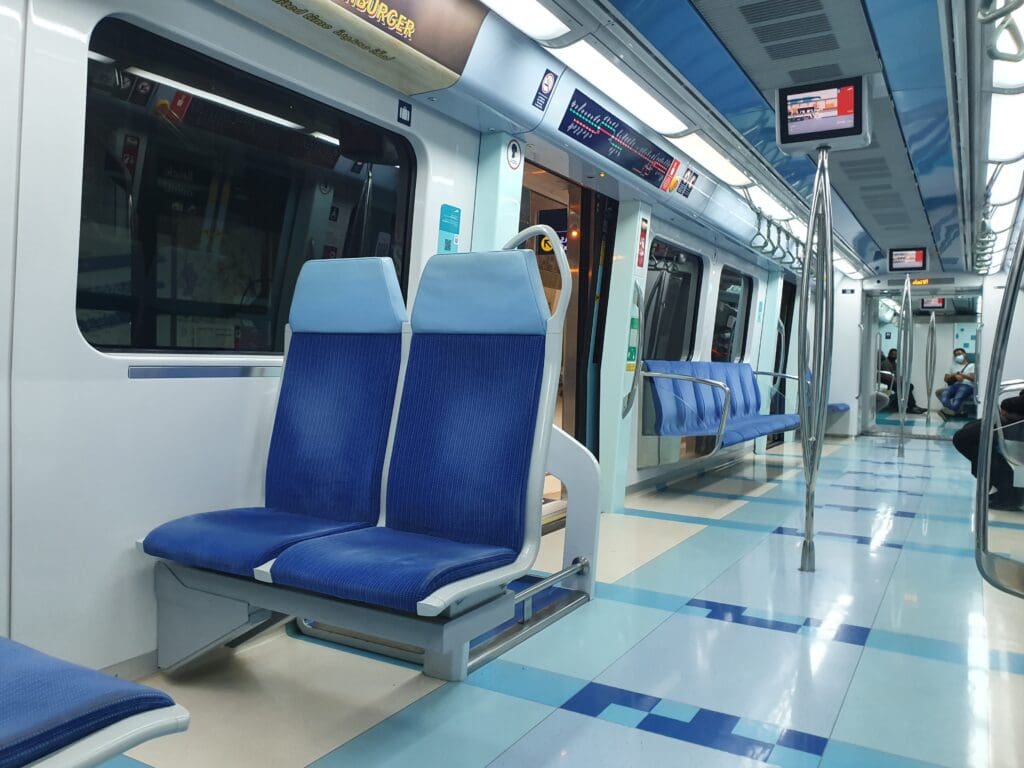
Leaving the Armada Hotel, located in one of Jumeirah Lake Towers’ skyscrapers at 1250, I walked along the shores of one of the lakes, passing plenty of dog walkers, late-night strollers and weekend revellers before arriving at the entrance to Sobha Realty station a little over ten minutes later. After heading up the escalators and walking along the bridge to the station located above the middle of the busy main road, I tapped in and headed upwards once again. Once on the platform, the penultimate service of the day soon appeared and I took a forward-facing seat for the long journey across Dubai. Whilst the Red Line can often be very busy, at that time in the evening, unsurprisingly there was plenty of seating available. Once away from Jumeirah Lakes, the train whisked northwards, travelling roughly parallel to the coastline and making plenty of stops before heading underneath Dubai Creek and back out into the open as the train neared the airport. Twenty stops later, the nearly totally empty train pulled into Terminal 1’s dedicated metro station where I disembarked along with a grand total of one other passenger.

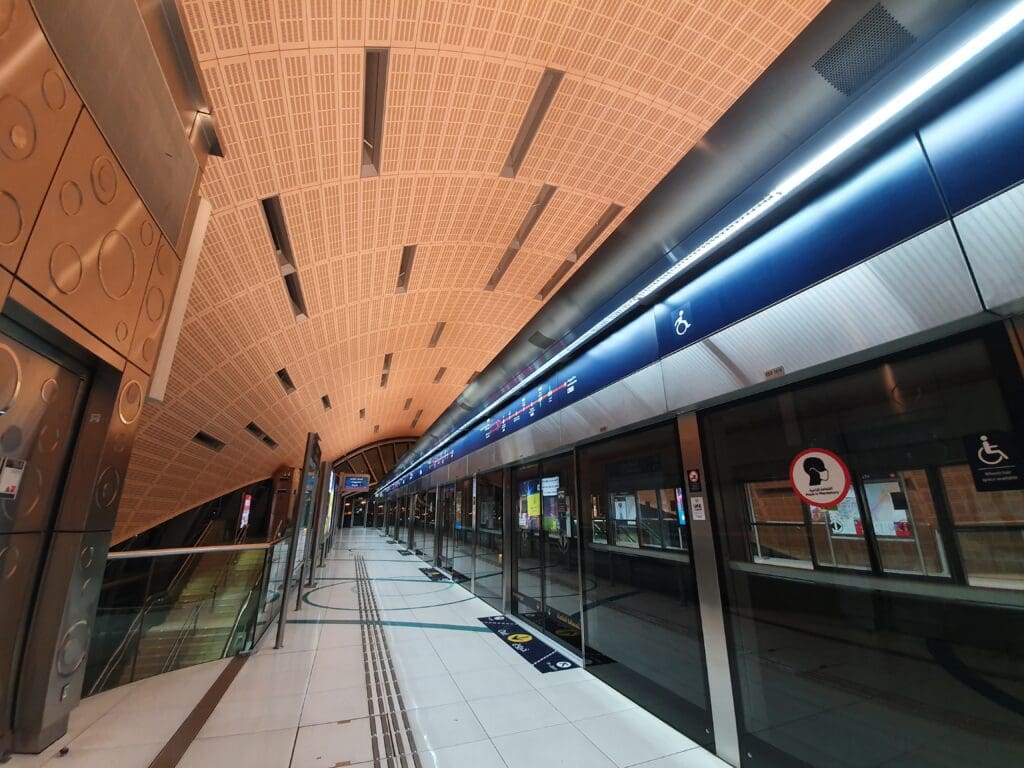
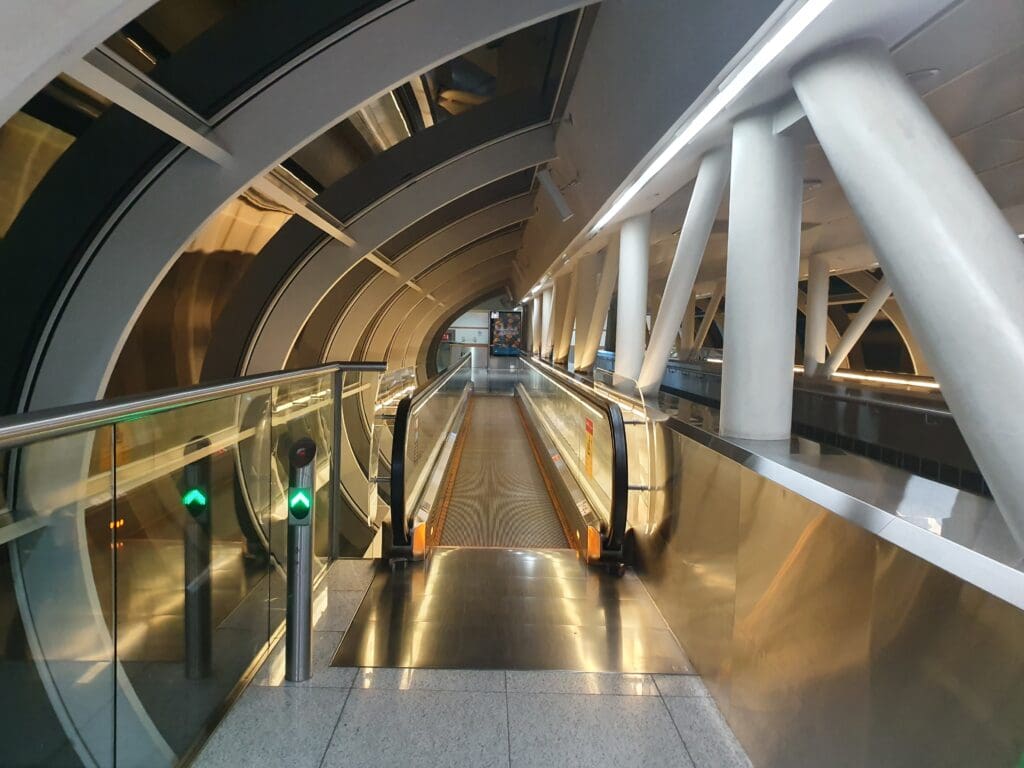
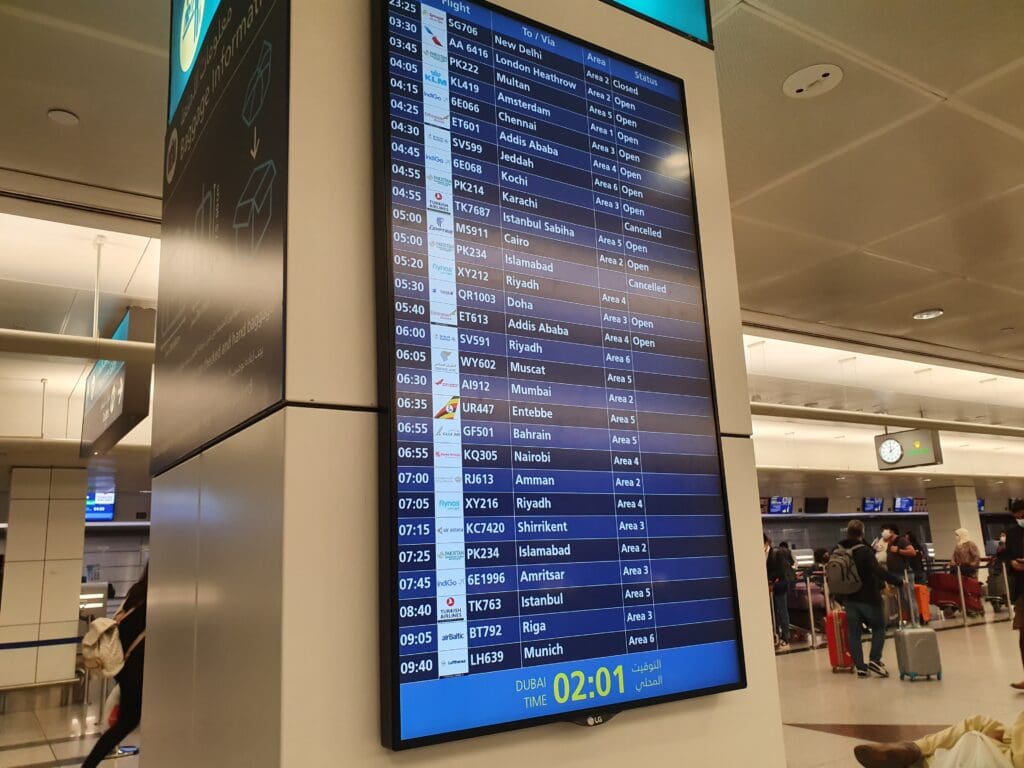
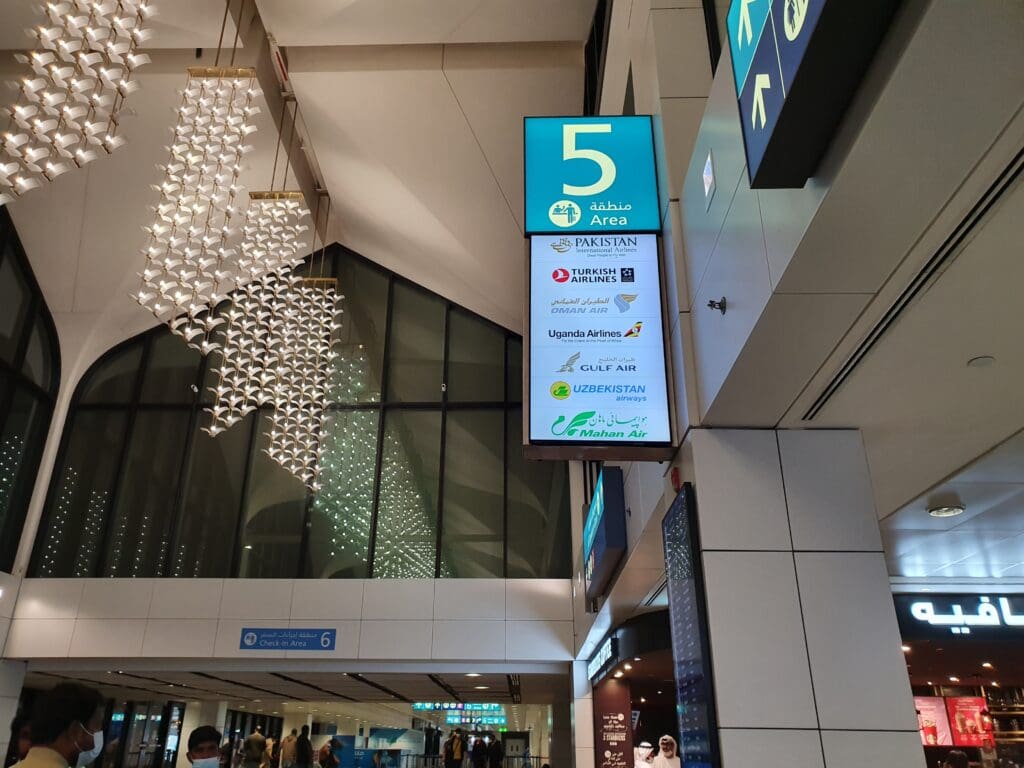
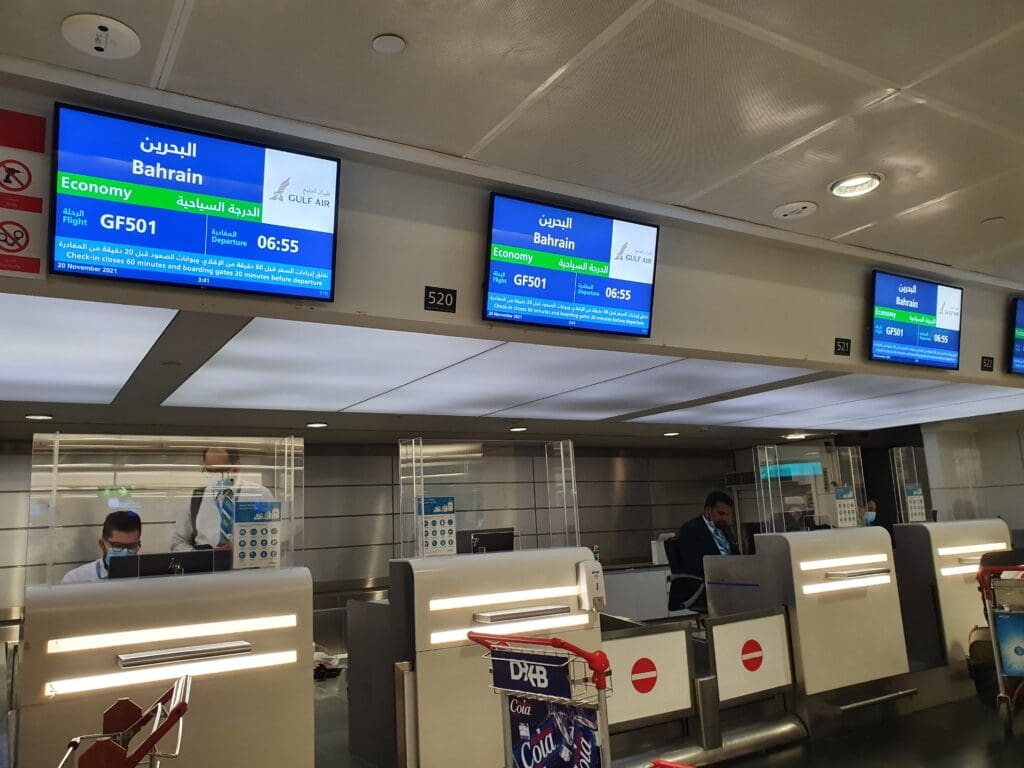
From the platform, I made my way down the escalator and into the main station hall where I tapped out at which point a reasonable fee of 7.50 Dirhams was deducted from my Nol card. Conveniently located right outside Terminal 1, from the station I travelled along a very short moving walkway and down an escalator which deposited me in the terminal’s landside departures area. With flights departing through the night, upon arriving in the terminal I found this to be very busy, with several long snaking queues of passengers with mountains of luggage waiting to check-in. Meanwhile, a good number of passengers heading out on early morning flights appeared to have had the same option as me, with passengers lining the walls of the terminal waiting for check-in to open. A quick check of one of the departure screens revealed that check-in for Gulf Air’s flight to Bahrain would take place at Zone 5 – one of six small check-in halls in the terminal.
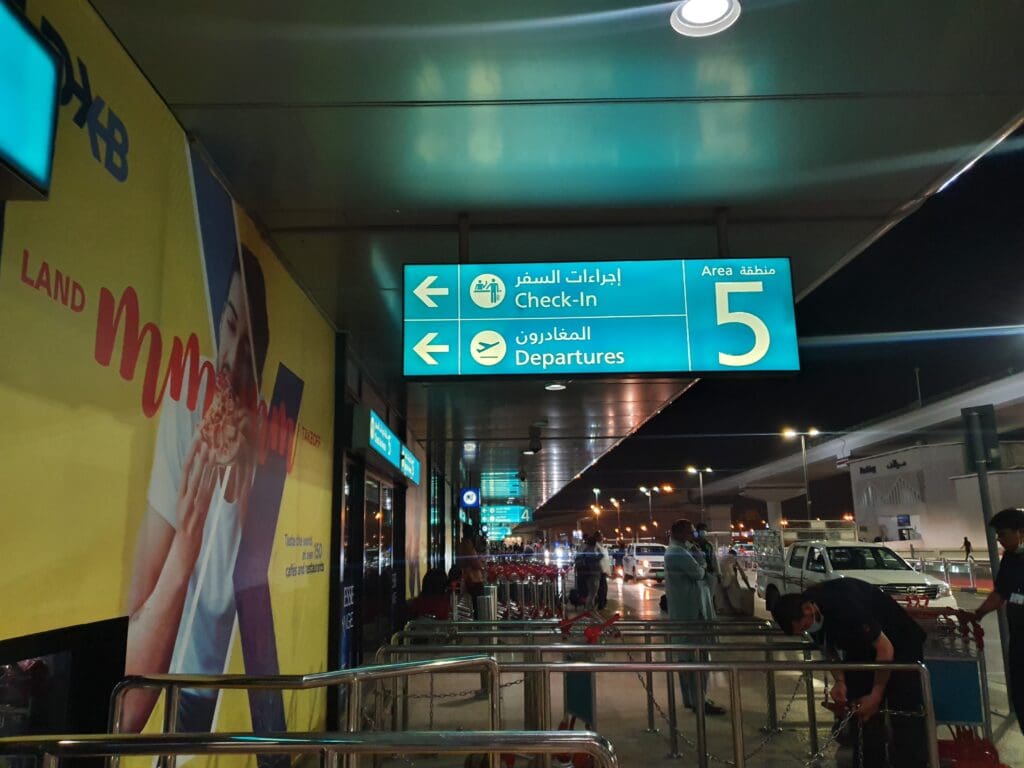
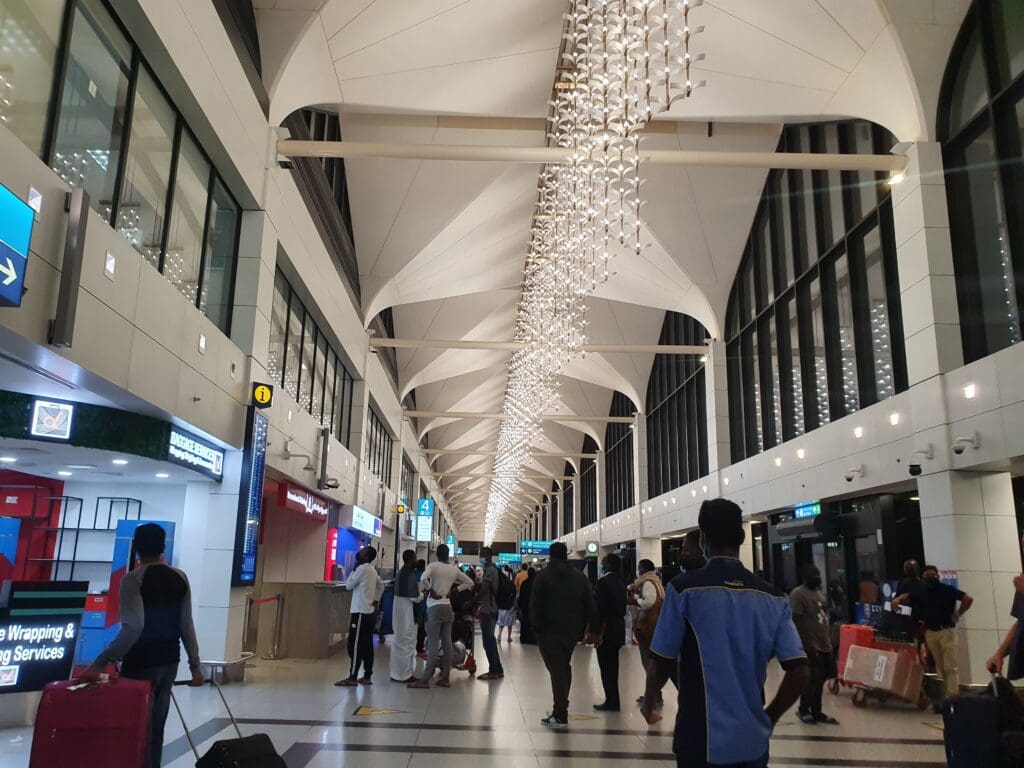
Rather interestingly, Dubai Airport’s Terminal 1 sits across two separate buildings, the newer Concourse D where the terminal’s gates are located, and the original terminal building that is home to the landside area, arrivals hall, immigration and security, with an automated train running between the two. In terms of airlines, Terminal 1 serves the majority of foreign carriers that operate scheduled services to Dubai, although a small handful of foreign airlines utilise Terminal 2 instead. In the landside area, the aesthetics of Terminal 1 do appear to be slightly dated, however, this is home to all the facilities you may expect during a short stay including several currency exchange shops, a convenience store and two cafes (a Costa and a Starbucks). Meanwhile, above the check-in hall a food court complete with (fake?) palm trees, a Baskin and Robins, another Costa Coffee and a bakery-style café, with airside views can be found.
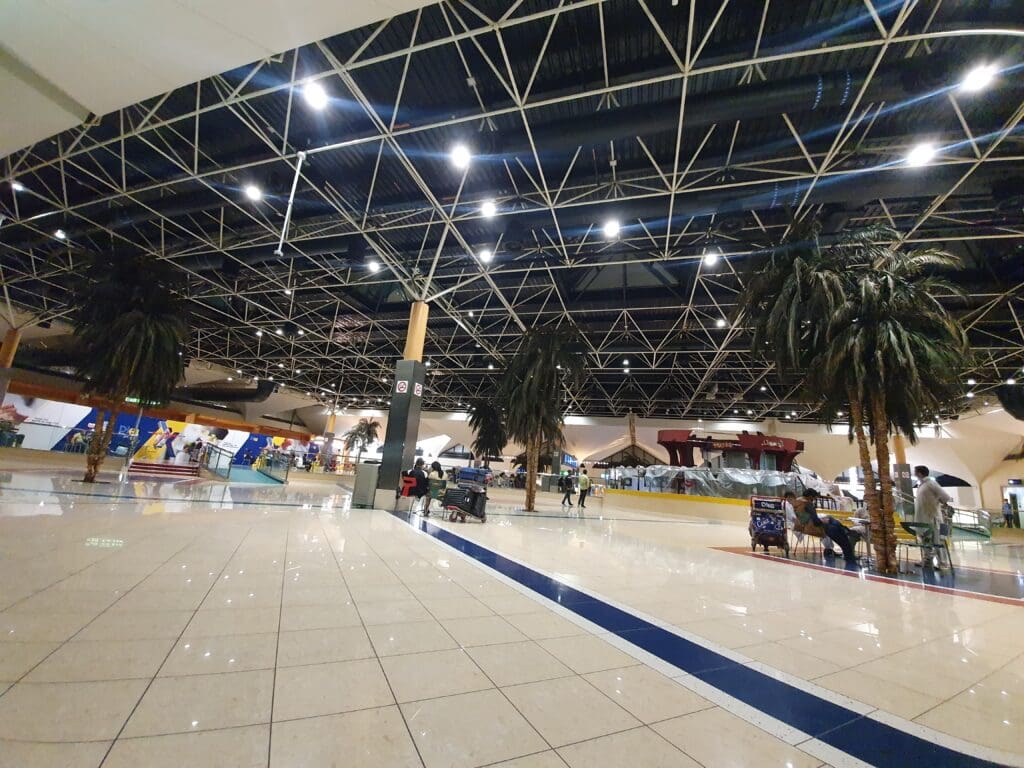
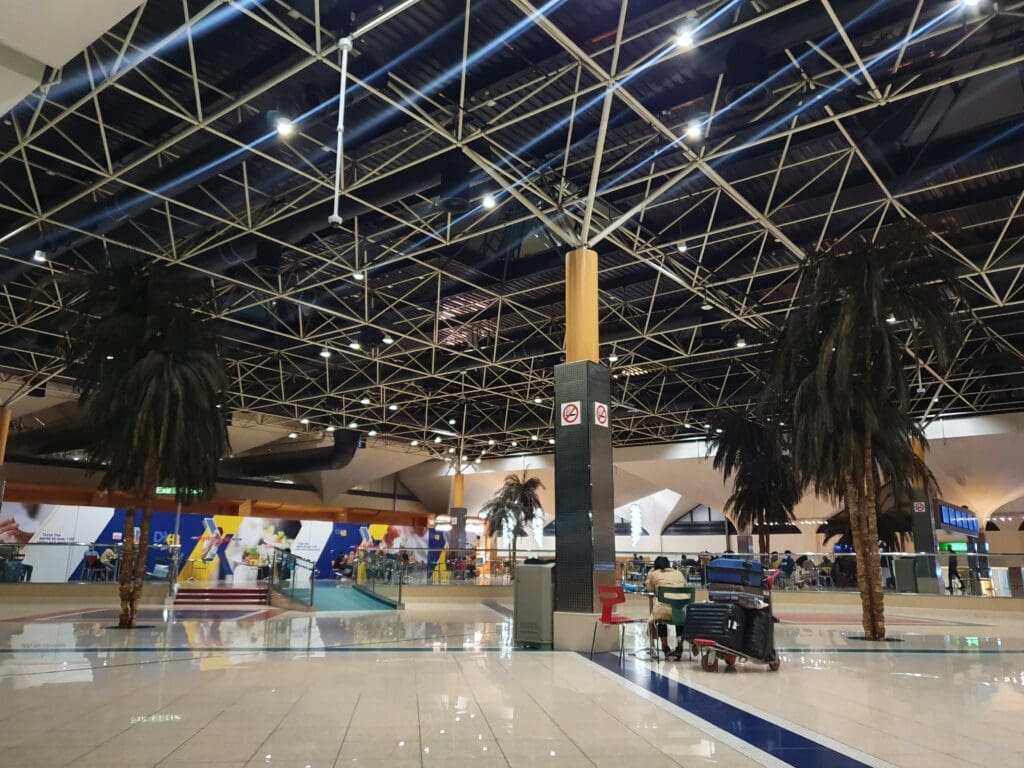
After making a quick stop at the local convenience store for a slightly overpriced can of Pocari Sweat, I headed up to the food court and took the only vacant seat next to one of the large windows. Thanks to the bright lights inside the terminal, decent photography of aircraft outside was virtually impossible, however, I did manage to get a decent view of the line of Emirates Airbus A380s and Boeing 777s waiting outside at Terminal 3, whilst the lights of aircraft arriving on Runway 12L could also be seen.
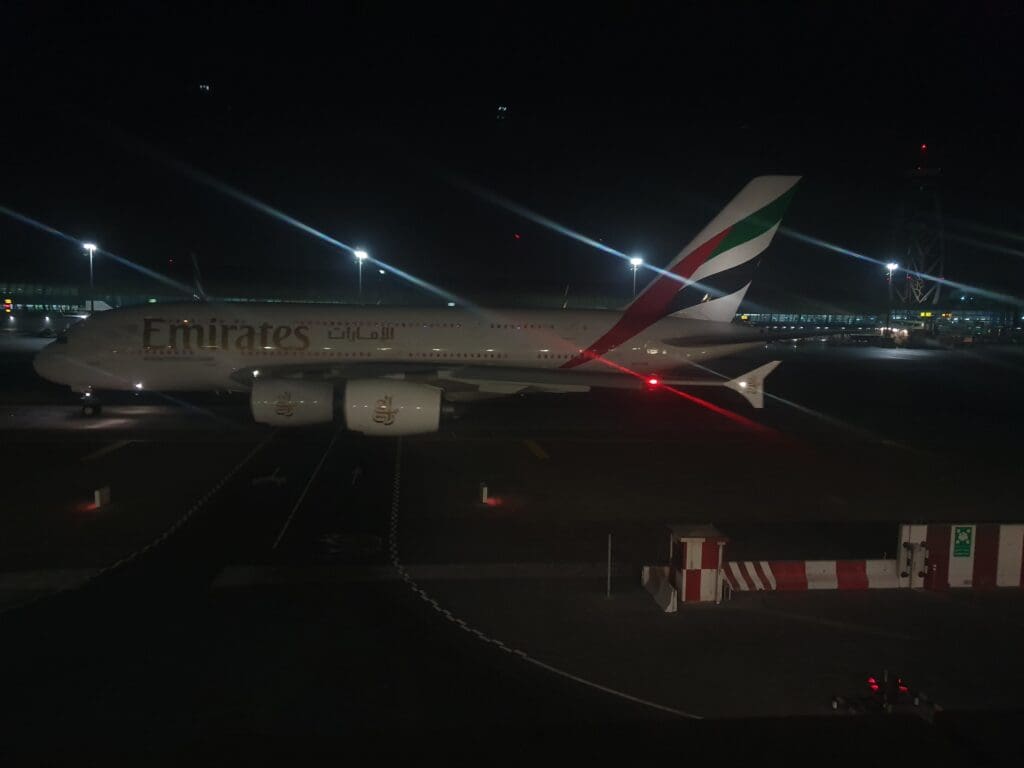
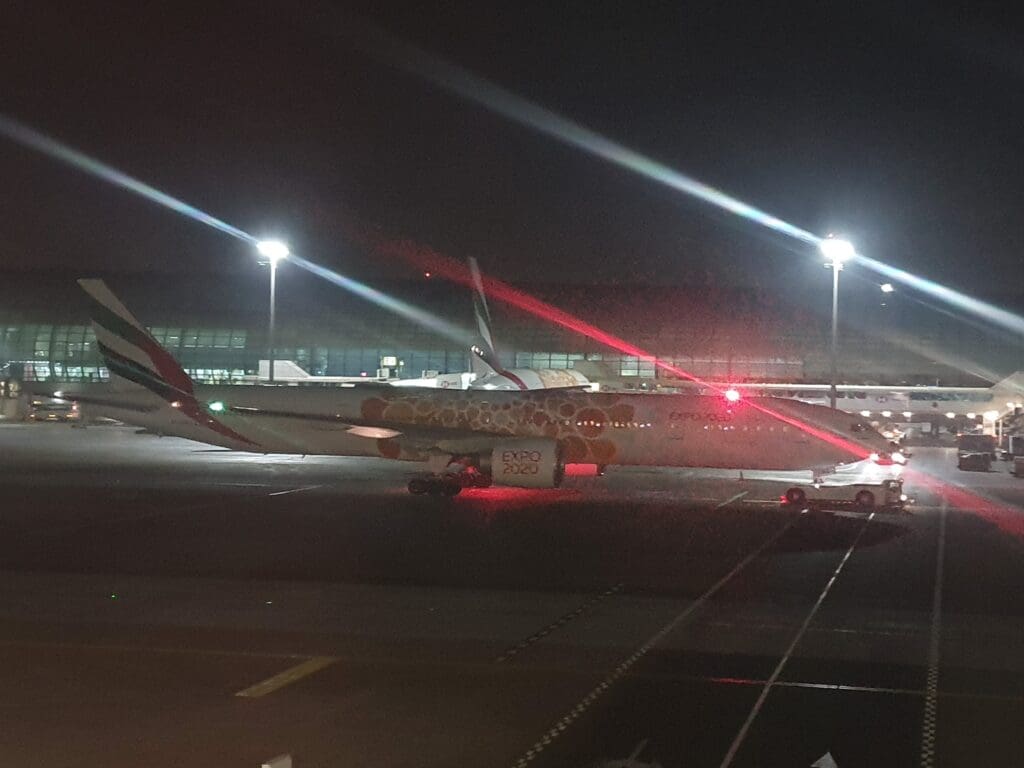
Following some time spent lounging about watching aircraft and doing some work, I made my way back down the escalators to the busy check-in areas. Arriving at Zone 5 with three and a half hours to go until the Bahrain flight’s scheduled departure time, a fairly long queue of passengers could be seen with two Dnata agents already checking passengers in for the flight. Joining this, considering many passengers’ heaps of luggage and the additional Covid-related document checks, the queue moved along at a snail’s pace although as I neared the front of this two additional Dnata agents appeared and began checking passengers in. After a little over thirty minutes of standing about, I approached one of the desks and was greeted with the command ‘passport!’. After being asked to show my proof of vaccination and Passenger Locator Form for my arrival into the UK, my two boarding passes were printed out and my bag was tagged and sent into the airport before I was pointed in the direction of immigration and security.
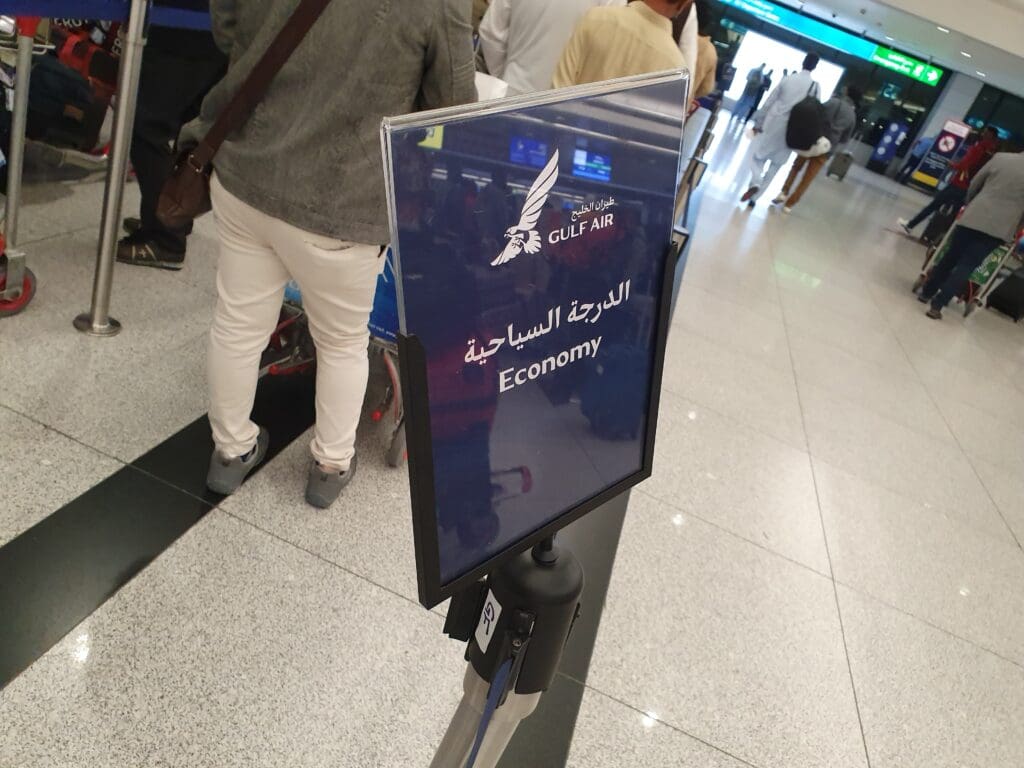
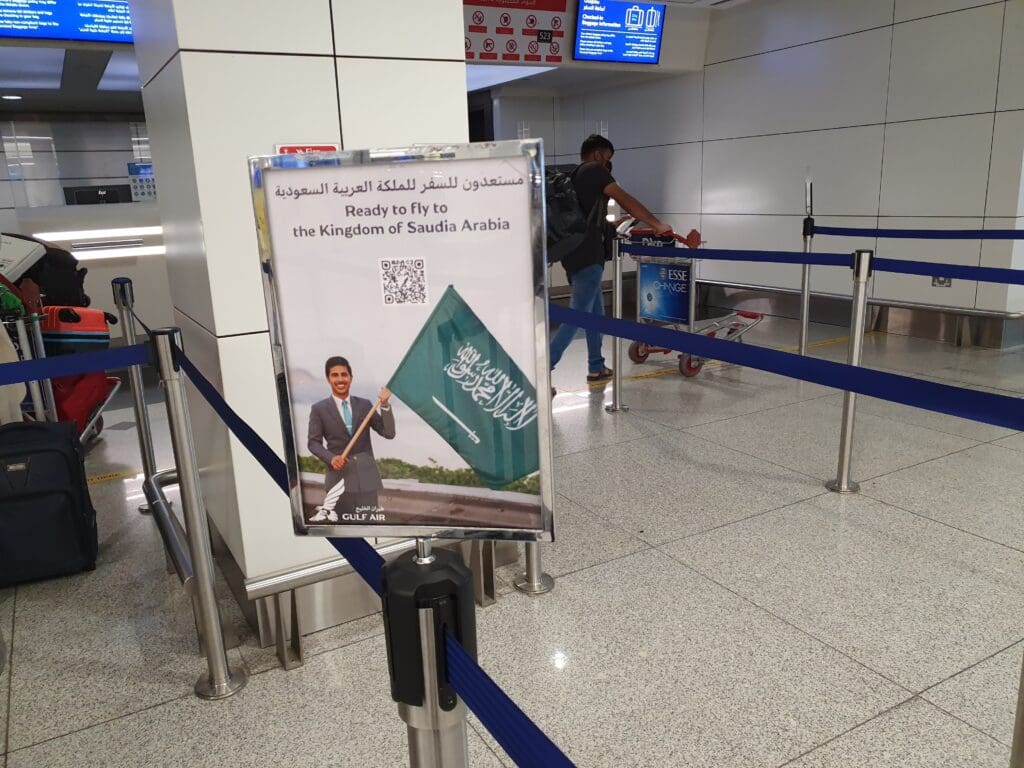
Despite the chaotic busyness of the landside area, with most immigration booths open, only minimal amounts of queuing were needed before I walked up to an immigration officer. After handing over my passport, the usual suspicious glances and furious keyboard tapping ensued before my passport returned and I was free to head onwards to the security check located just beyond this. As with the passport check, this was quick and painless, and once done I made my way up to the people mover station. With a train already there and waiting to whisk passengers off, in no time at all I found myself travelling along the apron towards Concourse D where I arrived around ten minutes after joining the queue for immigration.
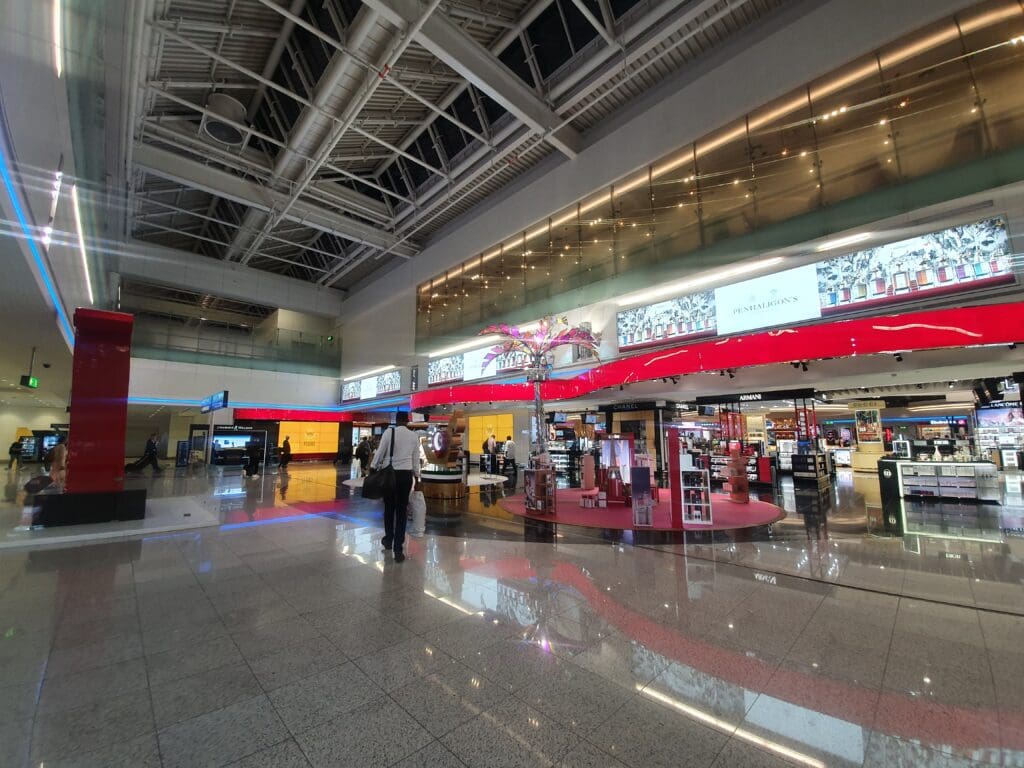
Inside, the airside portion of Terminal 1 appears to be far brighter and more modern than the landside portion of the terminal. Examining the facilities on offer, the terminal is home to a good selection of cafes, restaurants, shops and a bar, whilst seating is plentiful and a reasonable number of power ports are dotted about for those needing to charge their devices. As in the landside area, complimentary wifi is offered which I found to work well throughout the terminal for the duration of my stay. For aviation enthusiasts, large windows are offered throughout the terminal which provide decent views of many of the terminal’s gates, as well as some of the aircraft in the distance. Finally, all appeared to be clean and tidy across much of the terminal, with the unfortunate exception of the toilets which appeared to be in a sorry state – this is an issue that I have noticed on multiple occasions when previously passing through Terminal 1.
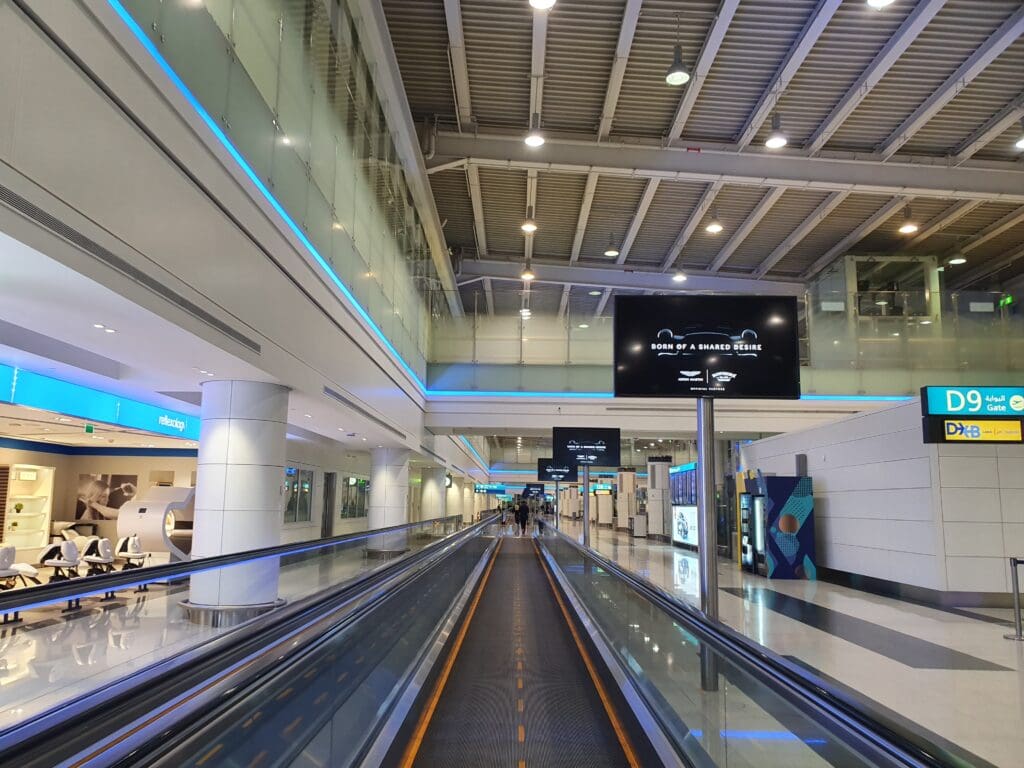
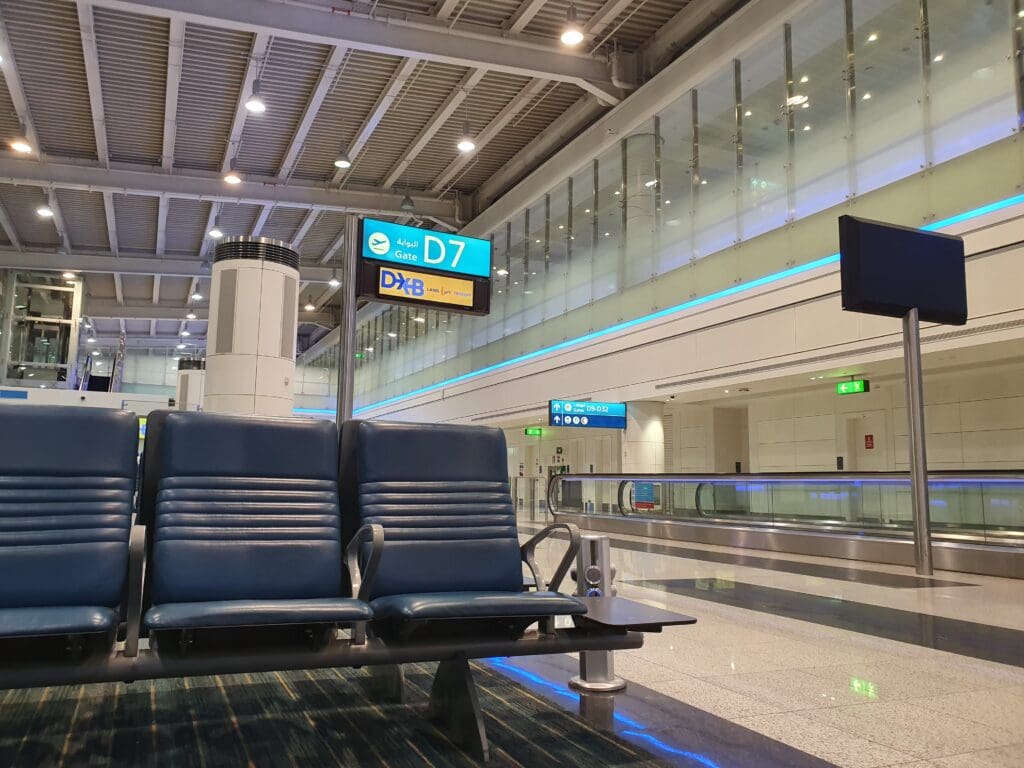
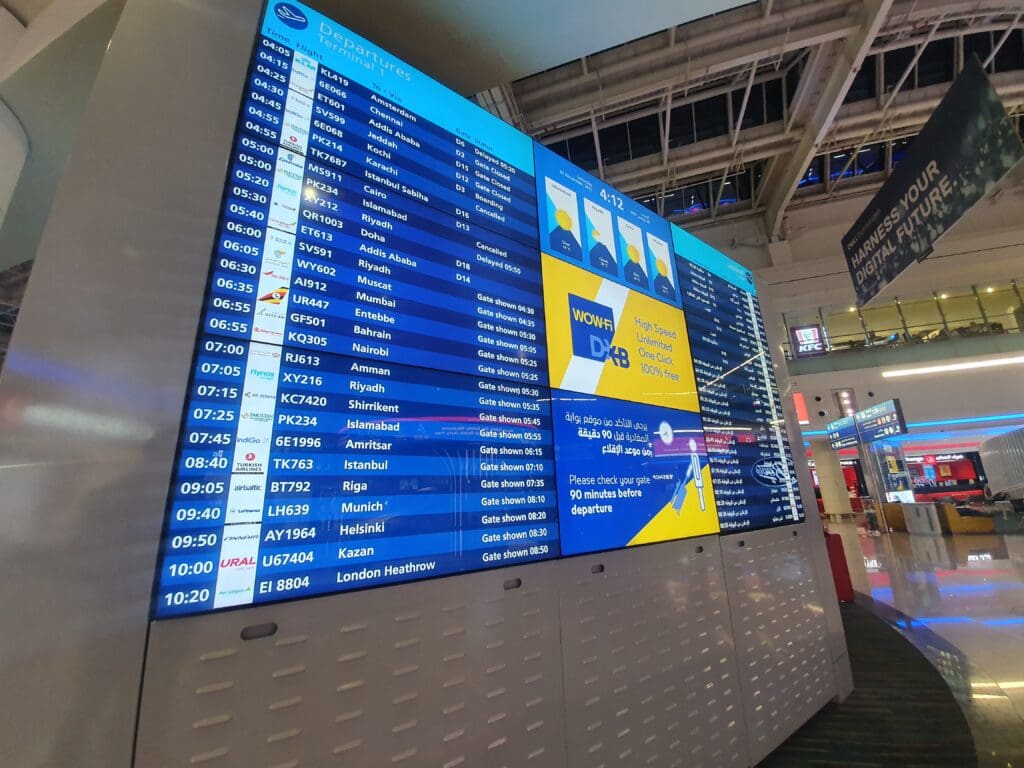
That morning, had I not wished to fly off to Bahrain, flights could be seen on the departure boards heading off to a diverse list of destinations across Africa, Asia and Europe. Outside, aircraft ranging in size from the Embraer 195 to Boeing 777-300ER, operated by Air India, Arkia, EgyptAir, Ethiopian Airlines, FlyArystan, Flynas, Gulf Air, IndiGo, Kenya Airways, KLM, Oman Air, Pakistan International Airlines, Saudia, Turkish Airlines and Uganda Airlines could all be seen.
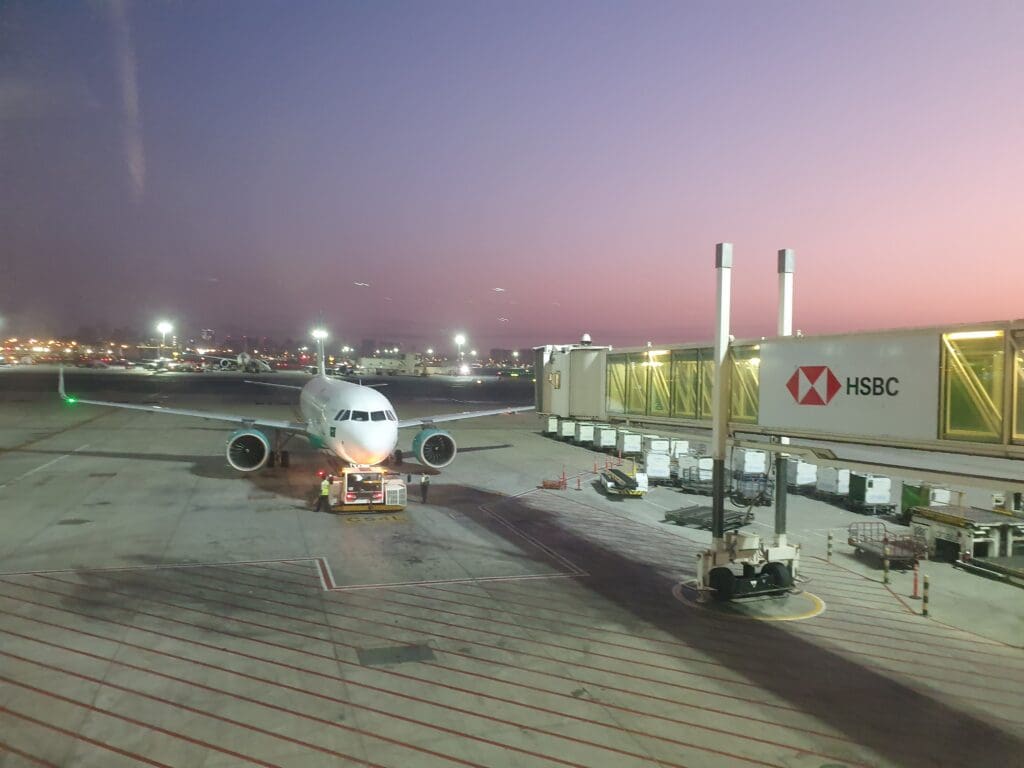
With boarding for the flight to Bahrain scheduled to commence at 0610, 45 minutes before the flight’s scheduled departure time, 10 minutes before this, I made a leisurely stroll over to Gate D9 where plenty of passengers could be seen waiting for the flight. Outside, Airbus A320-251N A9C-TD could be seen being readied for the short flight at Stand C54R, sitting between an Arkia Embraer and Flynas Airbus. Assembled at Airbus’ famous facility at Toulouse Blagnac Airport, this particular Airbus first took to the skies with the test registration F-WWDI in September 2019 making it a little over two years old at the time of my flight. Following two test flights and the customer acceptance flight, the Airbus was given its Bahraini registration and ferried directly to Bahrain, entering commercial service in late September 2019. A very short time later, the aircraft would experience the only notable incident in its life to date, a bird strike which occurred on departure from Karachi and forced the aircraft to reject its takeoff. In the week before my flight, the aircraft had flown a total of 27 flights to destinations across Europe, the Middle East and South Asia, connecting Bahrain with Amman, Athens, Cairo, Dammam, Dubai, Kochi and Moscow Domodedovo, travelling at least 25,500 miles during these.
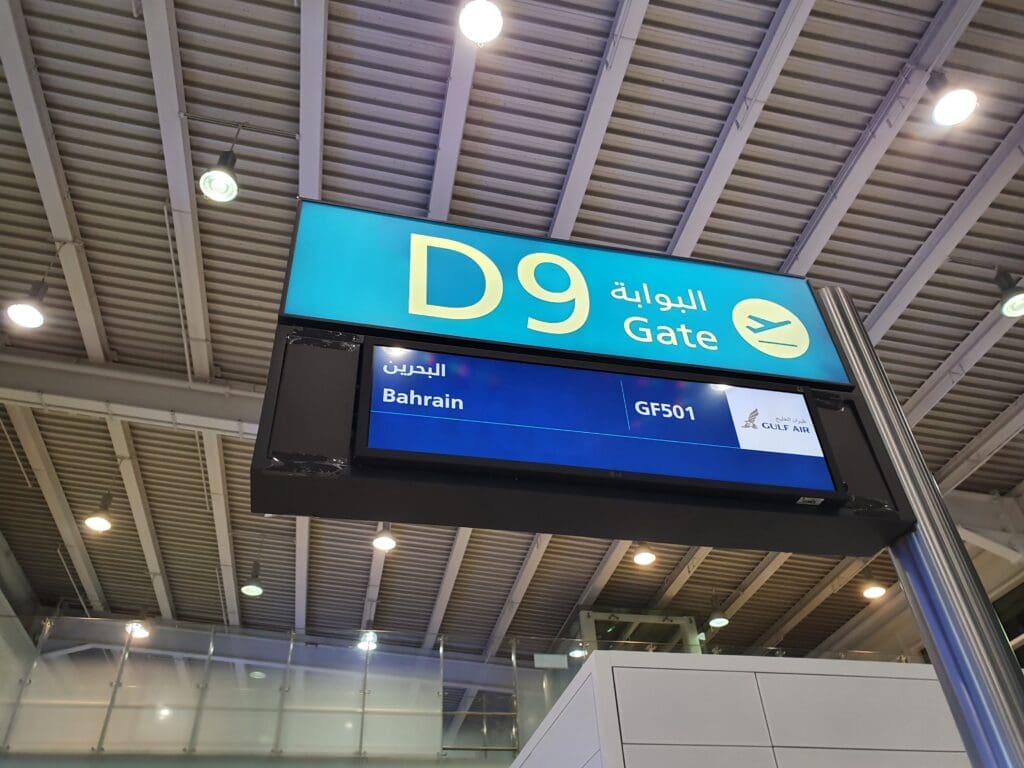
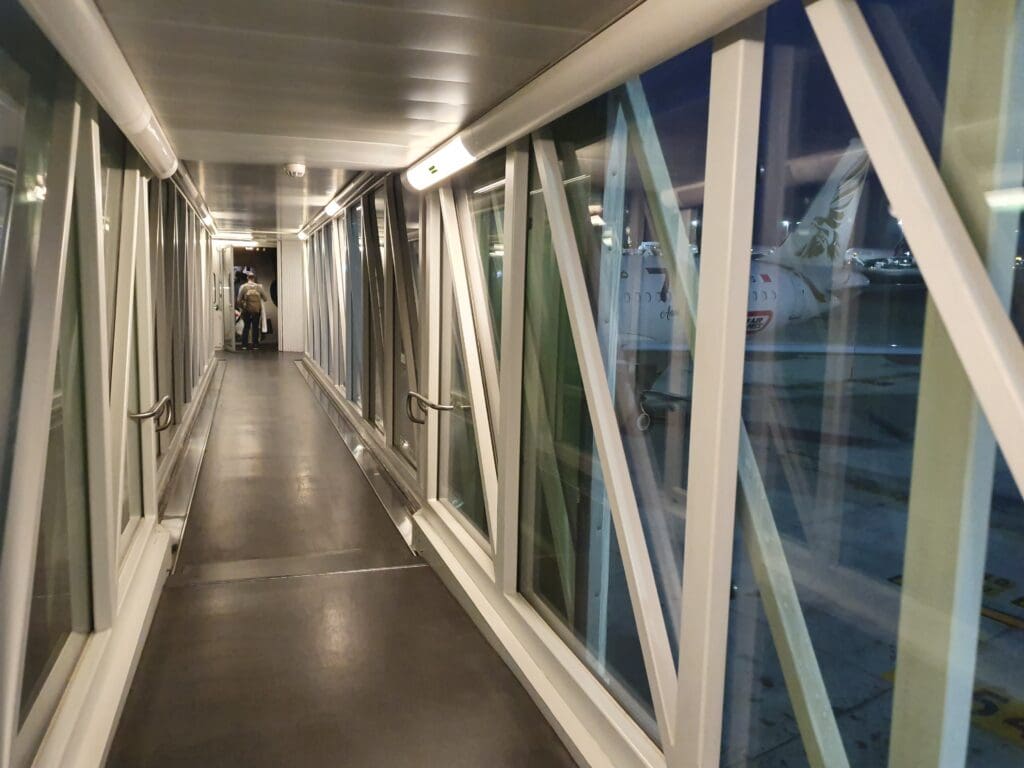
At 0610 on the dot, those with Zone 1 printed on their boarding pass were invited to board the aircraft with boarding other passengers announced several minutes later. Joining a short queue, I soon had my boarding pass scanned by a friendly Dnata agent before I made my way down a long glass jetbridge to the waiting jet. Following another short queue, I stepped into the forward galley where I was warmly greeted by the Cabin Services Manager and another flight attendant before turning right into the Airbus’ Falcon Gold cabin. Whilst I would not have complained about sitting in one of the aircraft’s premium seats for the hop across to Bahrain, those more au fait with flying in business class may complain that Gulf Air’s Airbus A320neo has the most basic Falcon Gold seat of all the airline’s ‘new’ (A320neo, A321neo and Boeing 787) fleet. However these of course beat most European airlines’ blocked middle-seat offerings!
Onboard Gulf Air’s Airbus A320neos, Business Class consists of four rows of comfortable-looking recliner seats in a 2-2 configuration, with each covered in a grey fabric and topped with a large headrest. On the rear of these, large personal television screens can be found – five inches wider than the 12-inch screens in Economy. In Economy, as on their Airbus A321neo and Boeing 787 fleet, all 120 seats come in the form of the modern Recaro CL3710. Each of these is covered in a beige or grey fabric and features a (faux?) leather headrest, with each of these covered by disposable fabric antimacassars commemorating Gulf Air’s 70th anniversary as well as a large personal television screen. Meanwhile, upon boarding pillows had been placed on each seat in Economy – something that I found to be a nice touch given the length of the flight.
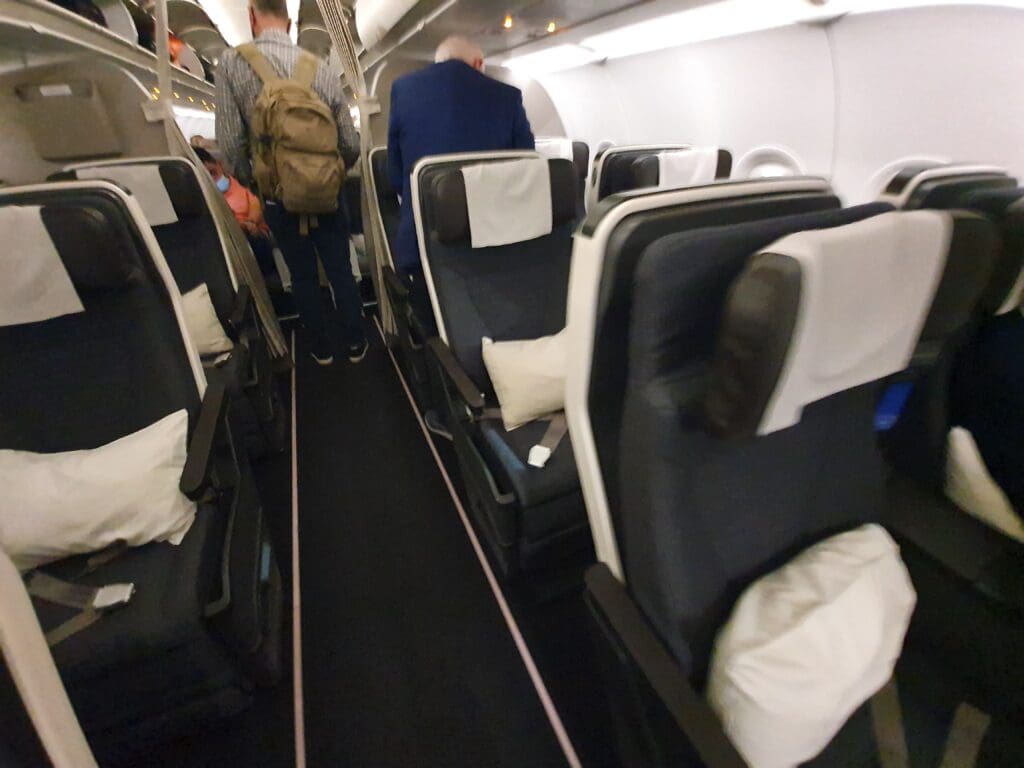
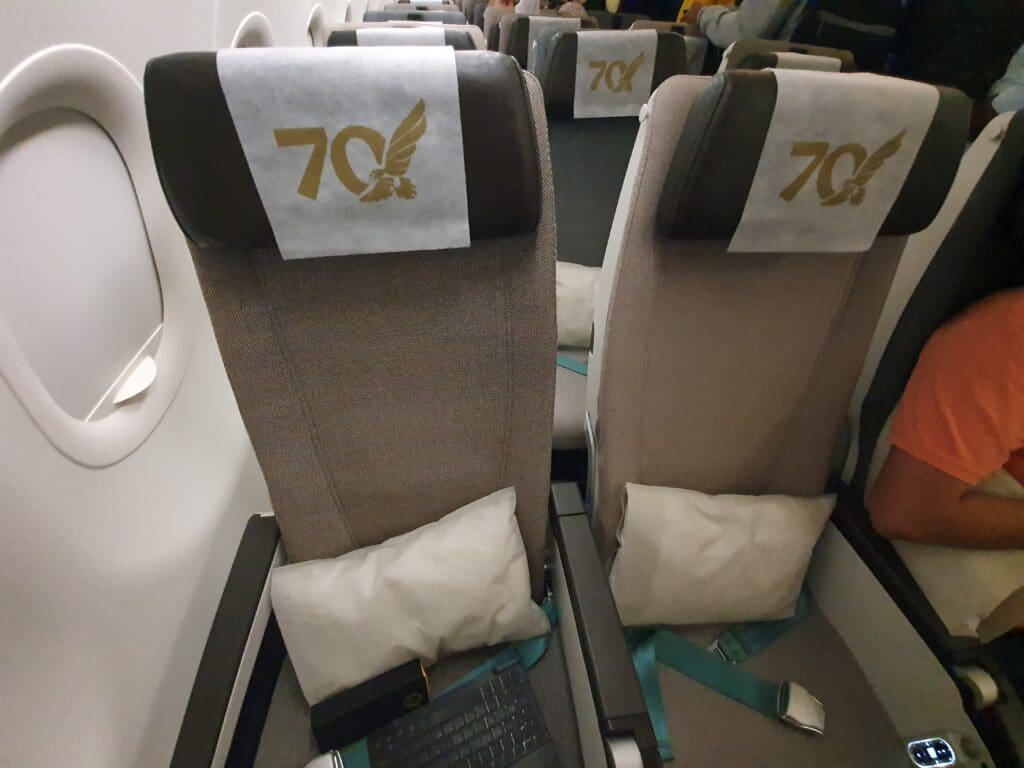
Seated in the first row of seats in the aircraft’s Economy cabin, I reached Seat 8F in a matter of seconds after entering the aircraft and after stepping over the legs of the aisle seat occupier, I slid into my seat. In terms of comfort, I found the seat to be soft and well padded, whilst as expected seeing as I was in a bulkhead row, the amount of legroom was fantastic. It is worth noting that for those in the first row, the personal television screens are located some distance away on the bulkhead and therefore glasses may be needed. I also noticed that no plug sockets could be found under the seats in this row, whilst on other rows a standard arrangement of two plug sockets per three seats could be found. That morning, the cabin appeared to be in a clean and tidy condition and I failed to stop any noticeable signs of wear and tear in the area around my seat.
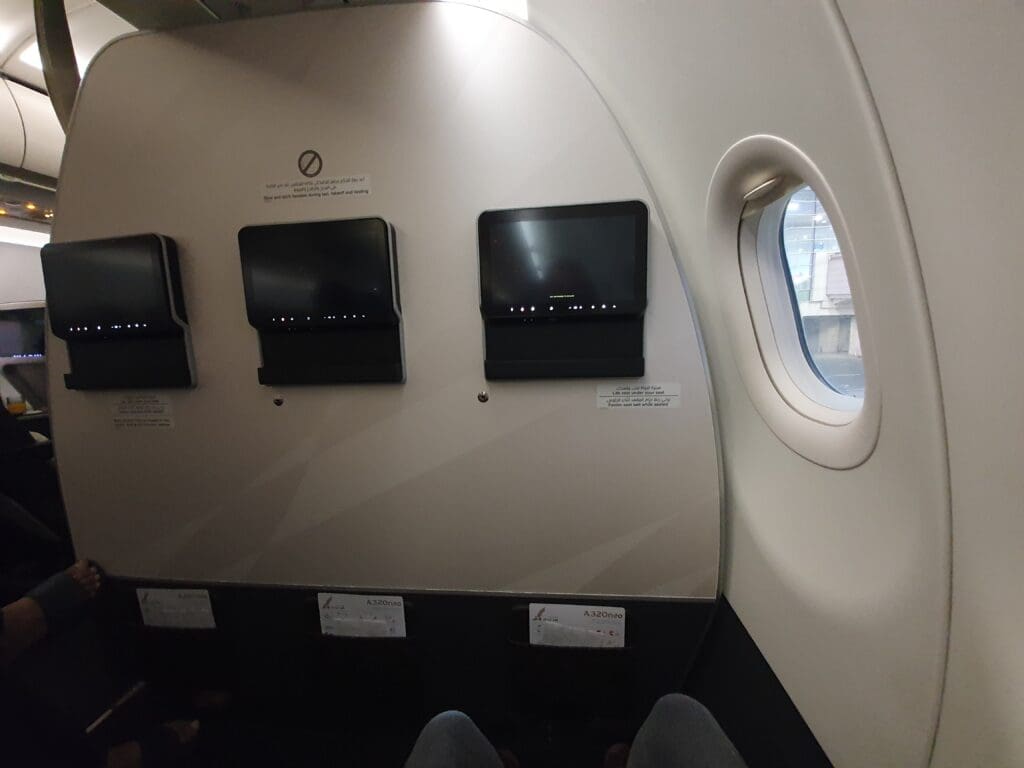
As the sun rose and the skies brightened outside, passengers continued to stream into the aircraft’s uncomfortably hot cabin, with all passengers appearing to make it onto the aircraft by 0630, well ahead of our scheduled departure time. However, after this, it took quite some time for passengers to get settled, with a good number of passengers sitting in their allocated seats for their second flight from Bahrain, with the cabin crew appearing to have a difficult time reseating passengers in their correct seats. As had been the case on the flight from Bahrain to Dubai a week earlier, that morning the flight appeared to be full with no vacant seats as far as the eye could see. That morning, it appeared as if most of those onboard were connecting onto flights heading off to destinations across Pakistan and Saudi Arabia.
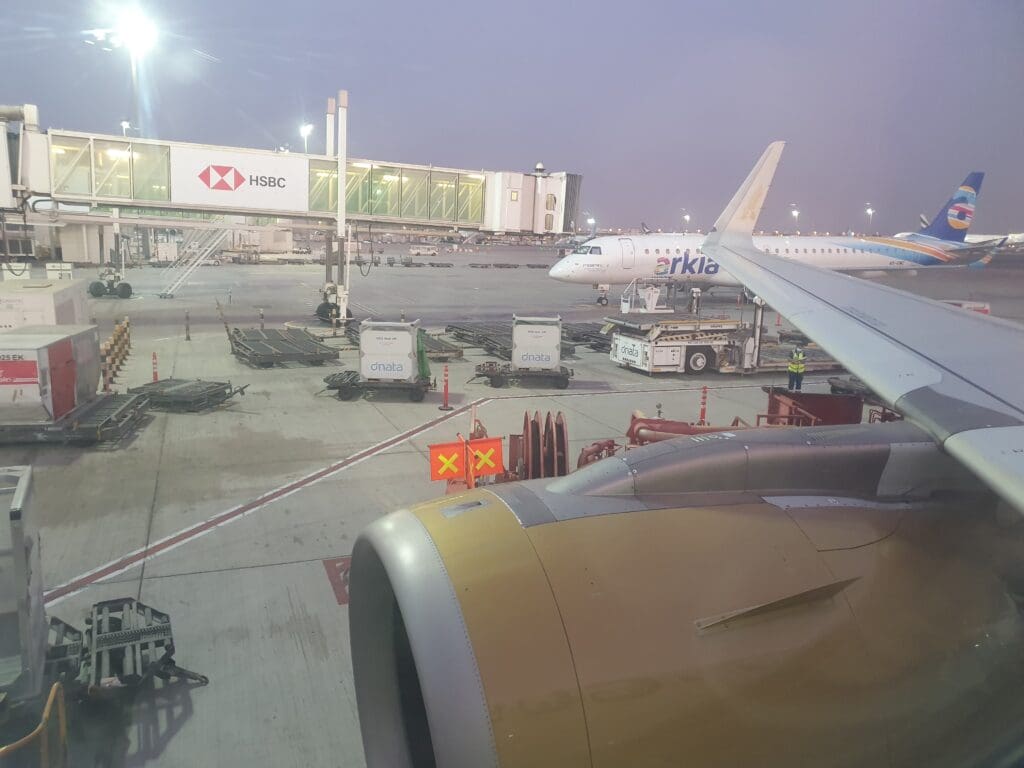
Once all passengers were on board, the Captain performed their welcome announcement in English only. Aside from the usual welcomes and thanks, the Captain briefed passengers on the weather en route and in Bahrain, noted our 26,000 feet cruising altitude and our arrival route into Bahrain. After all were finally seated in the correct seats, the crew passed around ensuring all was in place before our departure as the travel prayer rang out through the cabin before Gulf Air’s long animated safety video played first in Arabic and then again in English. As this played, at 0646 the aircraft was pushed back away from the gate as the Airbus’ two CFM LEAP-1A26 engines hummed, vibrated and powered up ready to power us across the Persian Gulf.
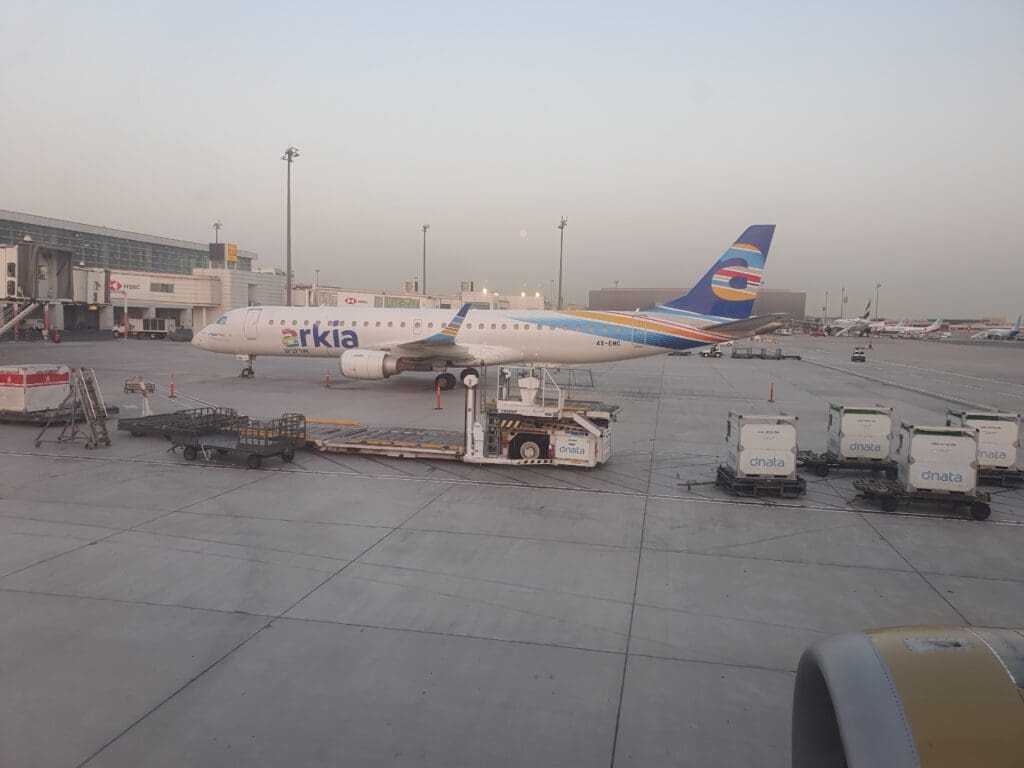
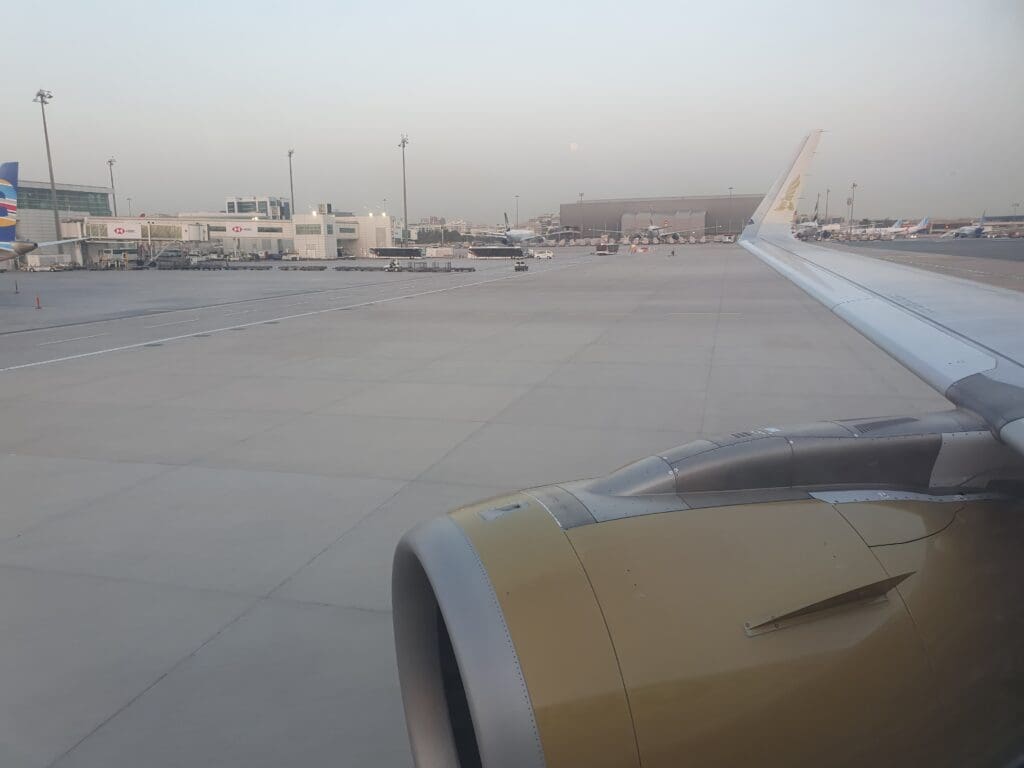
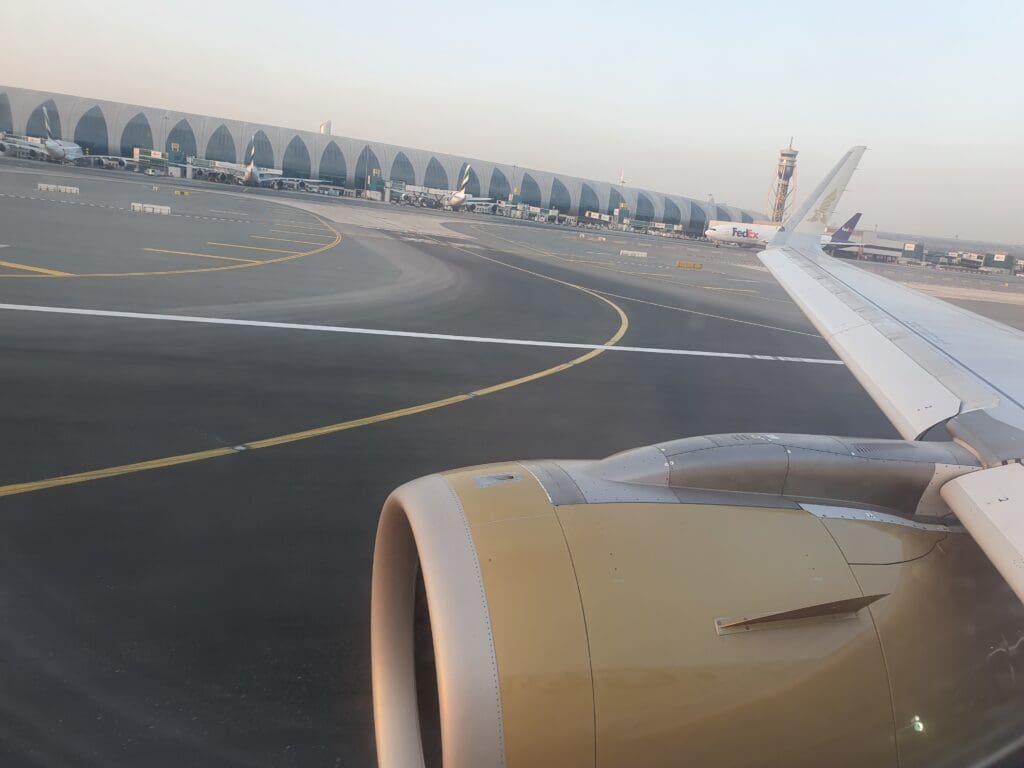
After coming to a short halt whilst the tug was disconnected, at 0652, the aircraft commenced its taxi three minutes ahead of the flight’s scheduled departure time. From the stand, this took the aircraft a short distance along Terminal 1, passing a FlyArystan Airbus A320 that would later head to the Kazakh city of Shymkent, a Flynas Airbus A320neo, Kenya Airways Boeing 737-800, and the largest aircraft at the terminal at the time, a Turkish Airlines Airbus A350-900. From there, the aircraft travelled along a small portion of Terminal 3 where a line of Emirates’ Airbus A380s and Boeing 777s could be seen being readied for their flights across the world before taking a left and heading towards one of Dubai Airport’s two runways.
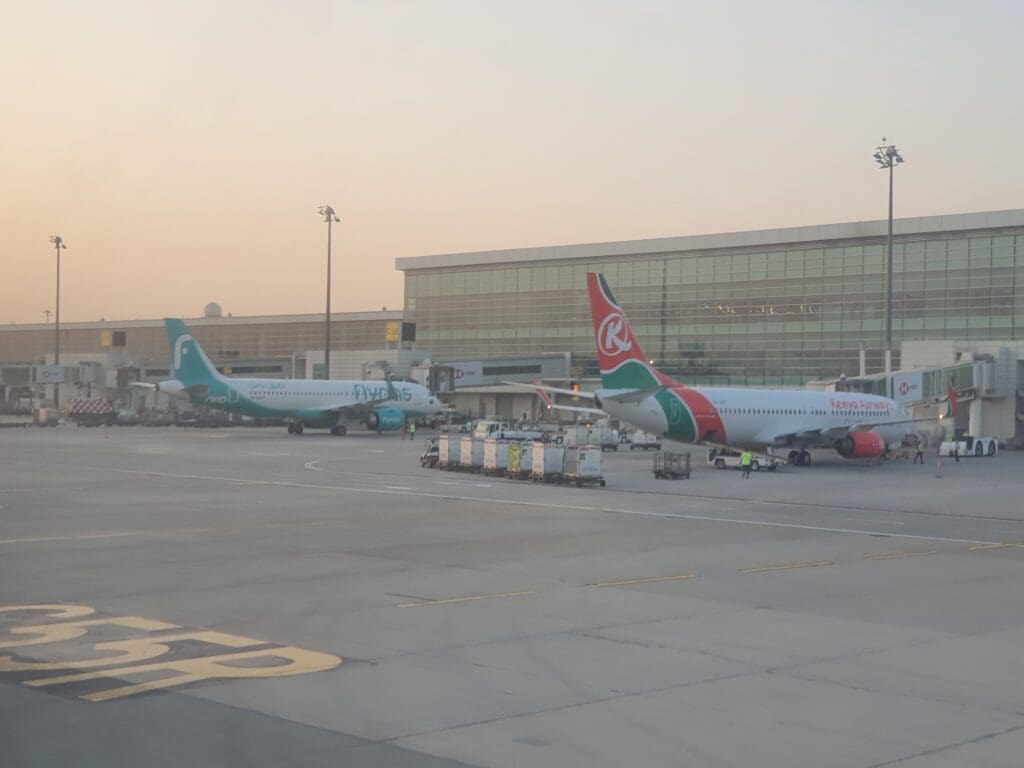
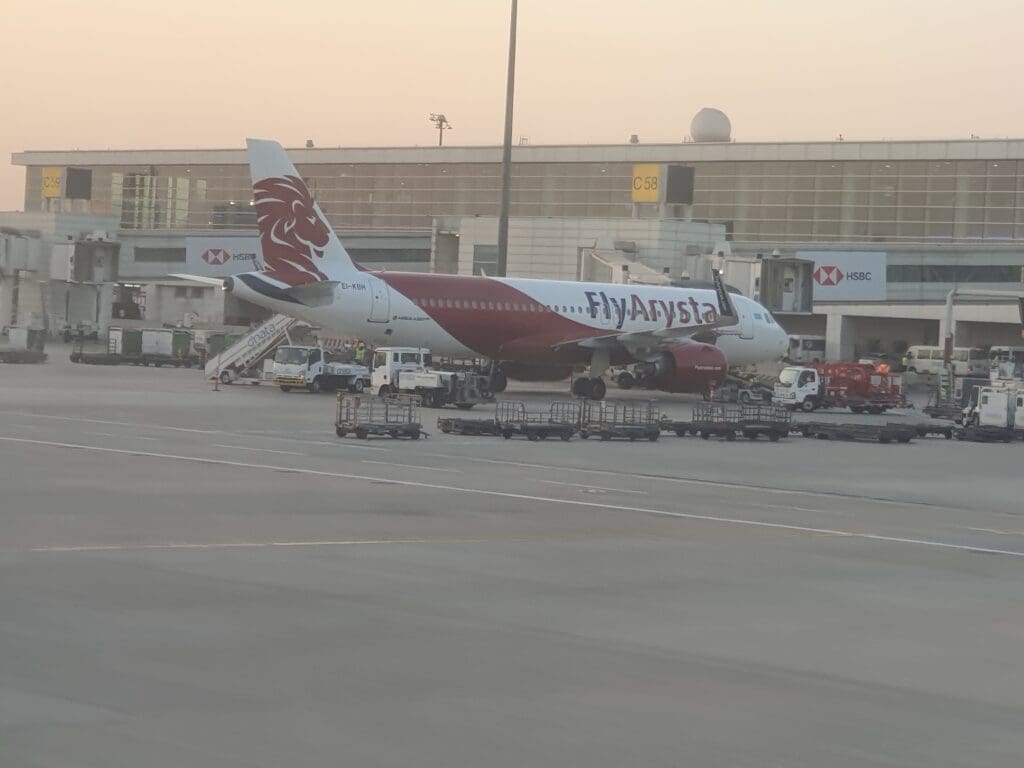
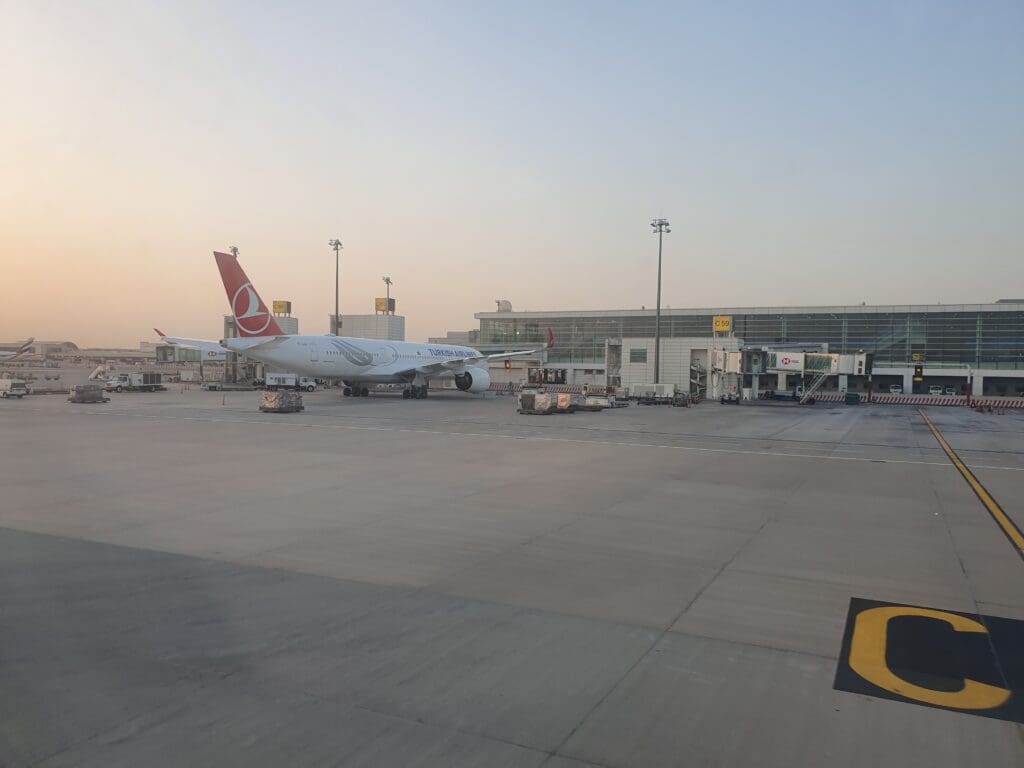
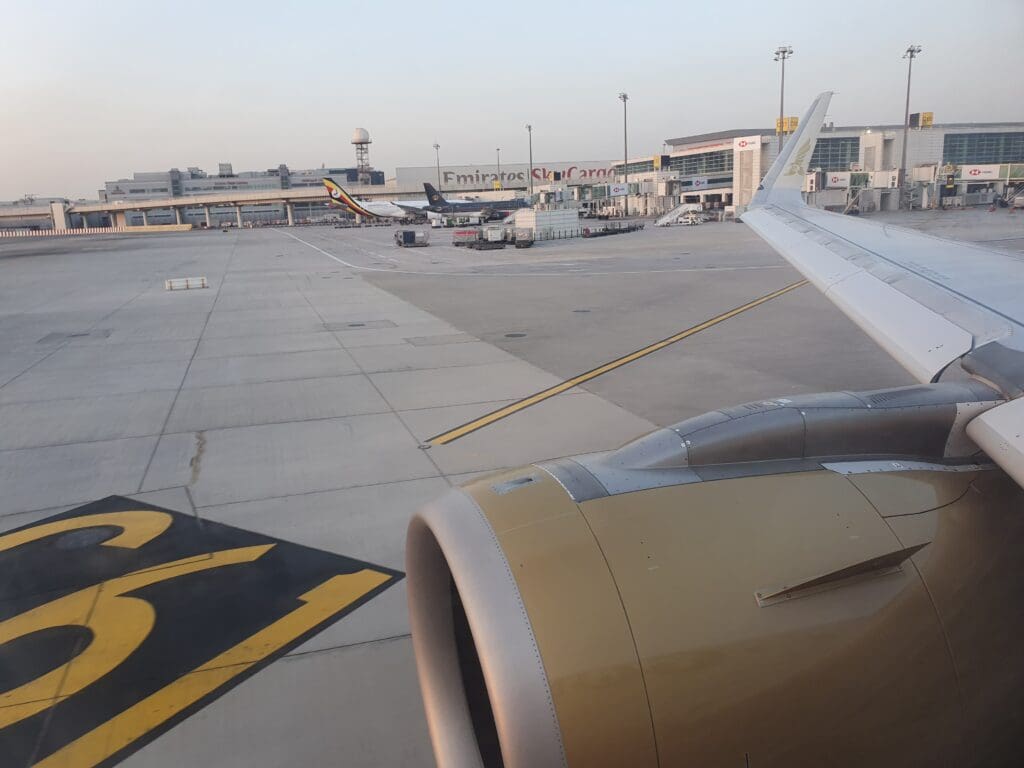
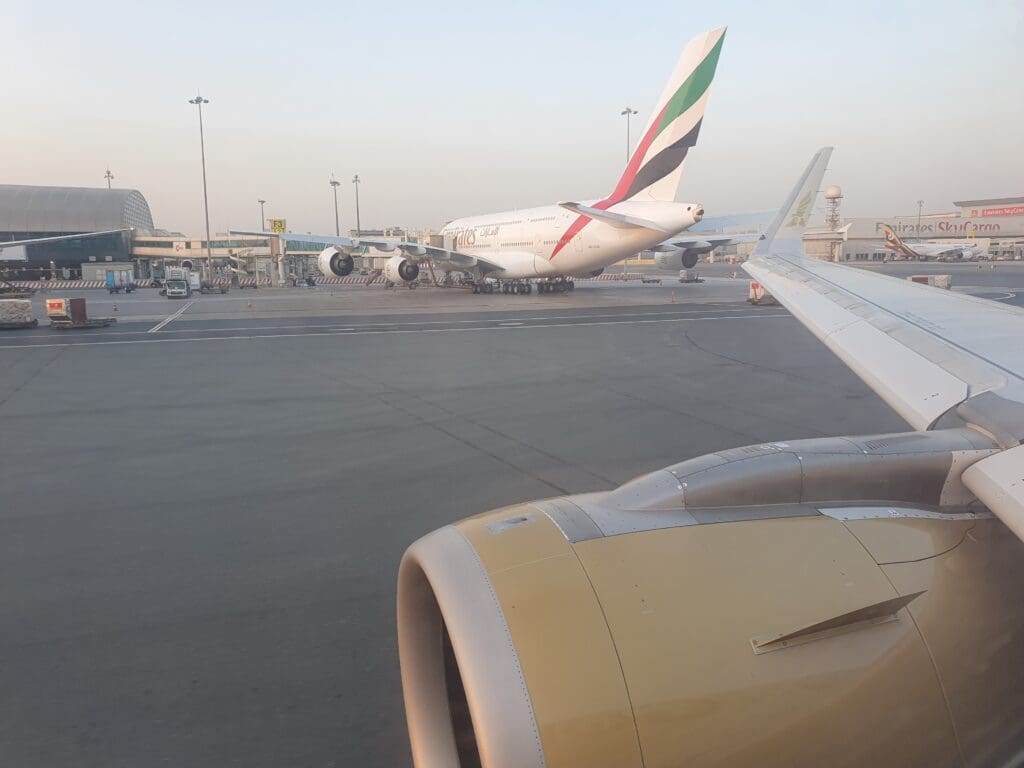
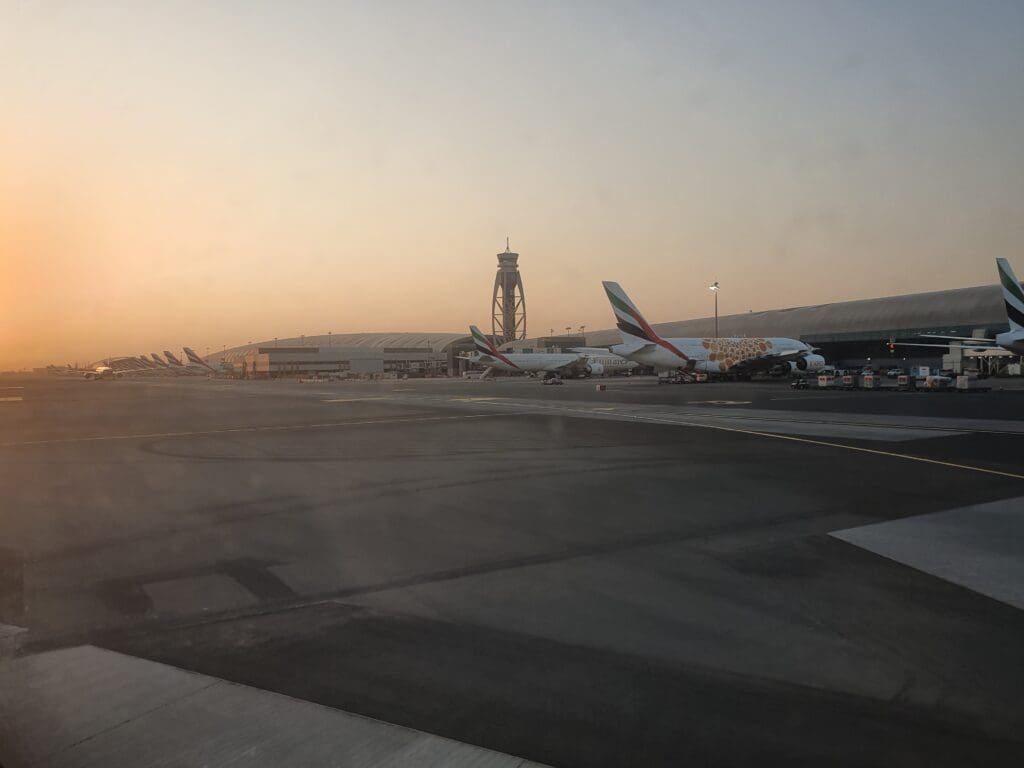
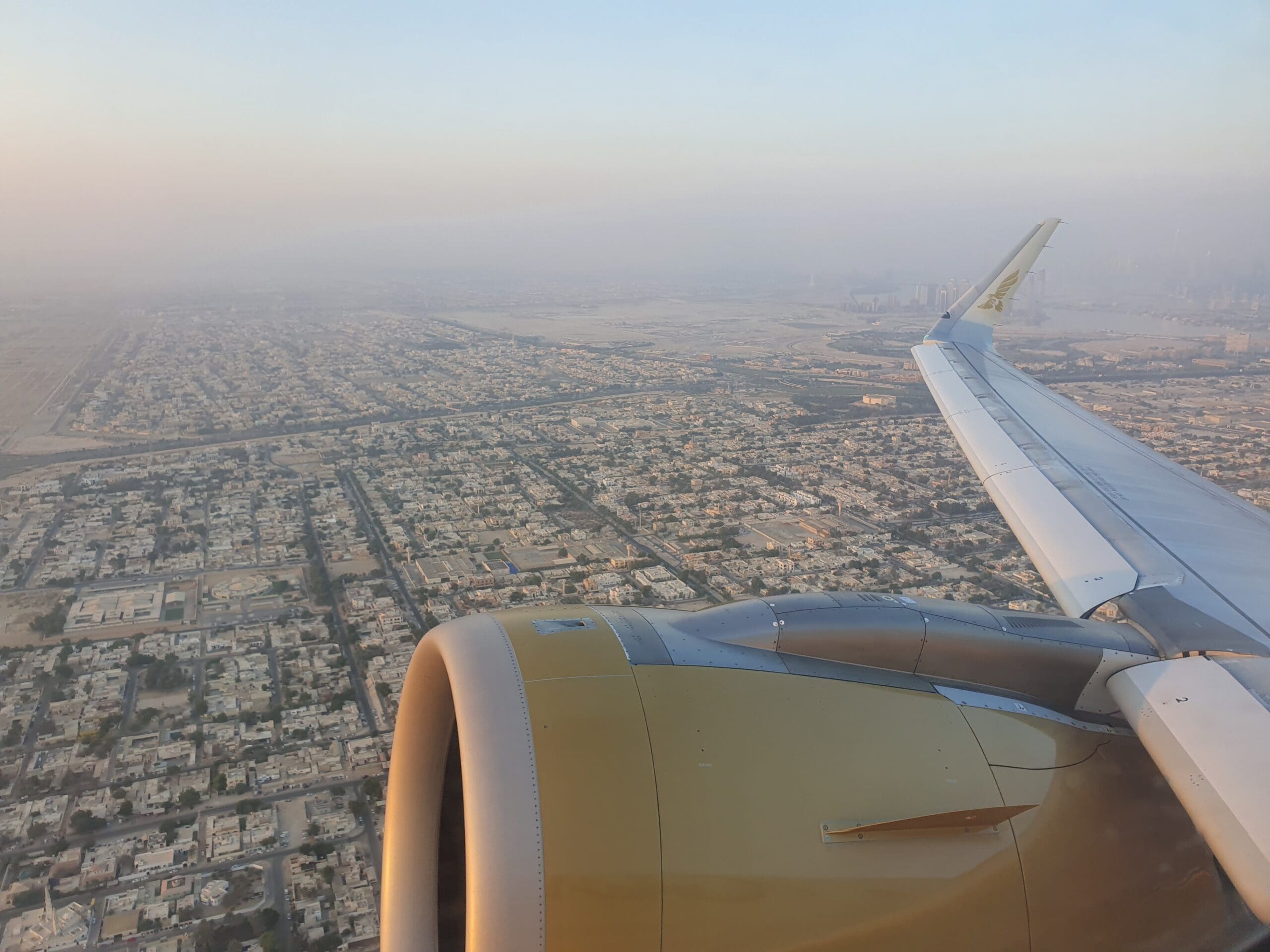
Without coming to a pause, the Airbus taxied onto Runway 12R and at 0659 began a gentle take-off roll before rotating up into the skies. As the gear was retracted, good views of the clusters of Emirates jets could be seen below for several seconds whilst the skyscrapers around Dubai Creek and Business Bay, including the Burj Khalifa, could be seen poking up through the morning haze. Once away from the airport, the aircraft banked before rolling out on a westerly heading – during this time the mostly low-rise residential buildings of Al Warqa and Dubai International City could be seen passing by below the aircraft before the jet made its way towards Dubai’s coastline. As the Airbus approached the shoreline, a good aerial view of the Burj Khalifa and the complex around this could be had before this slipped out of sight and was replaced by views of the Anantara World Islands Resort before and then the blue waters of the Persian Gulf.
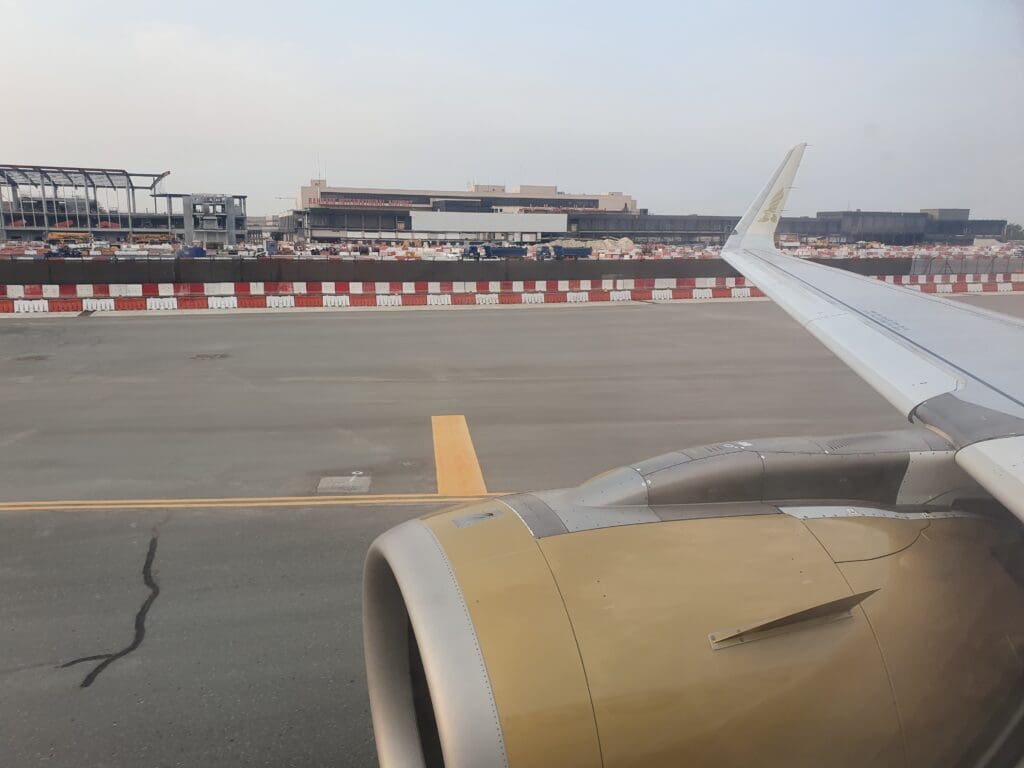
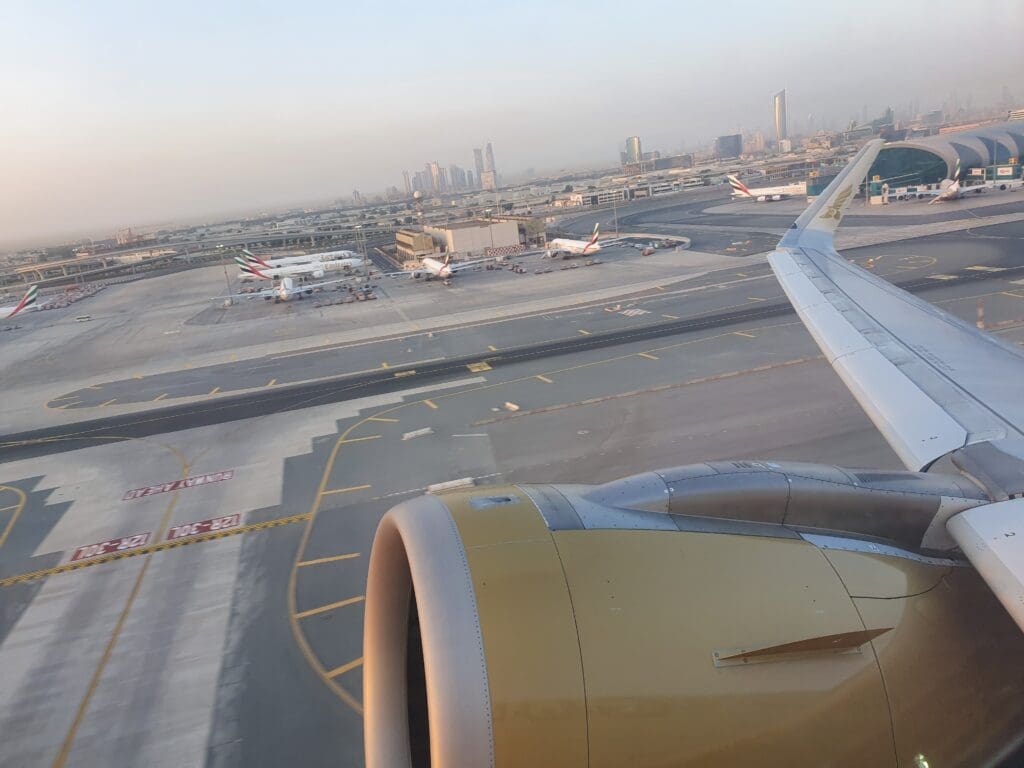
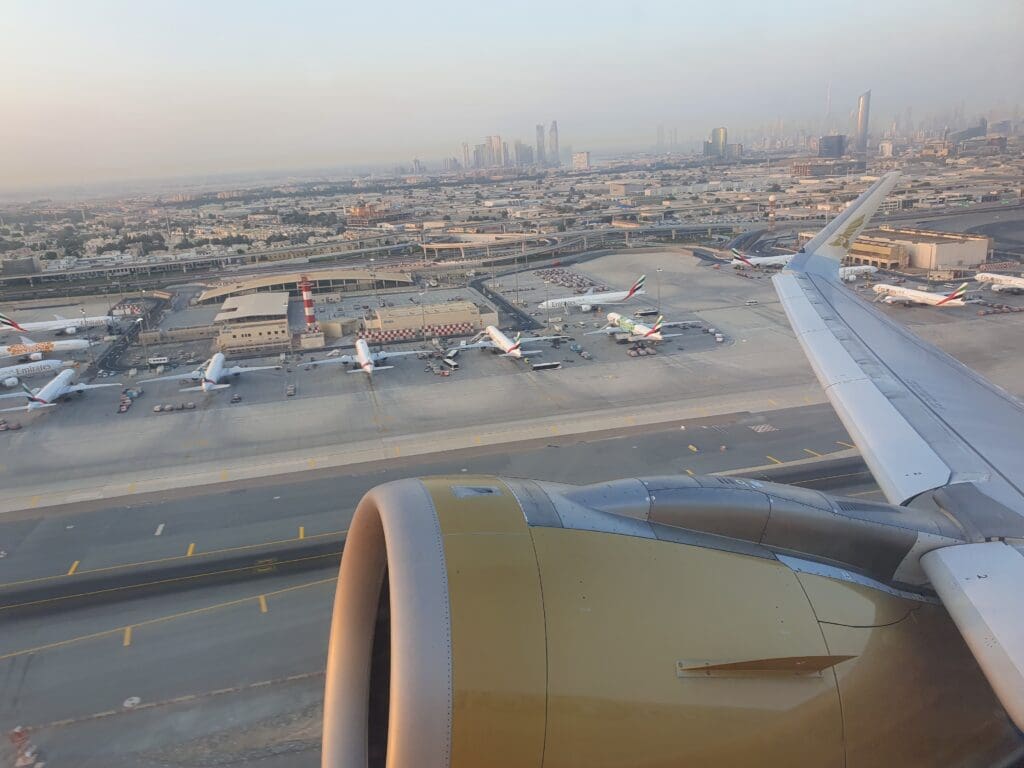
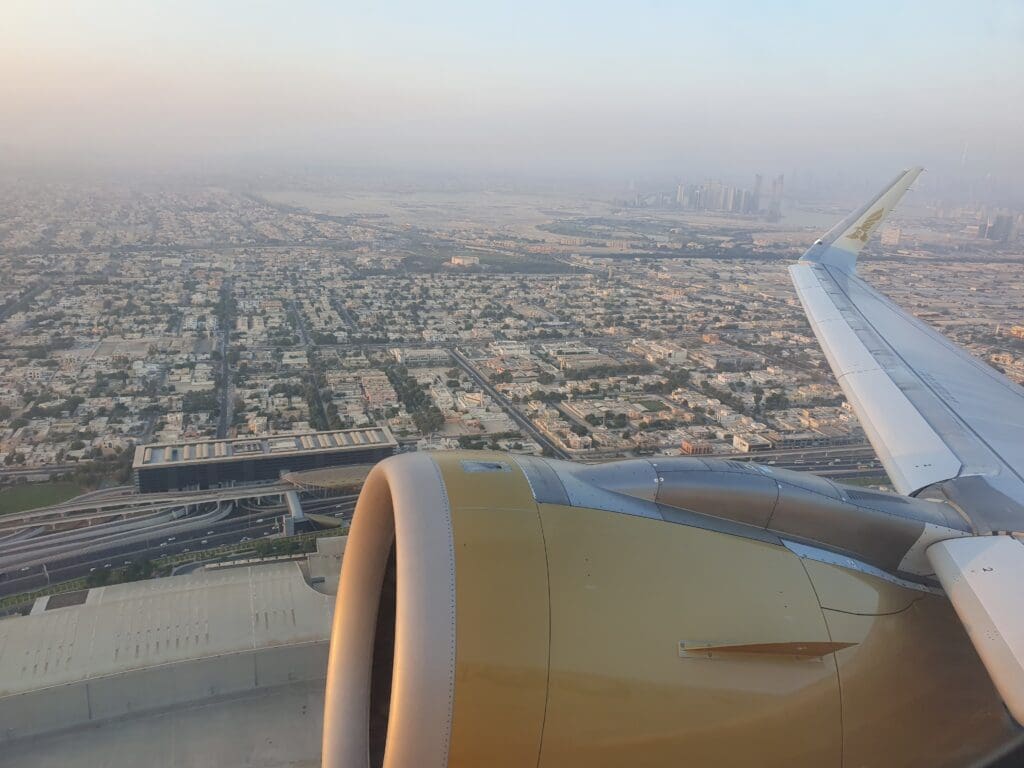
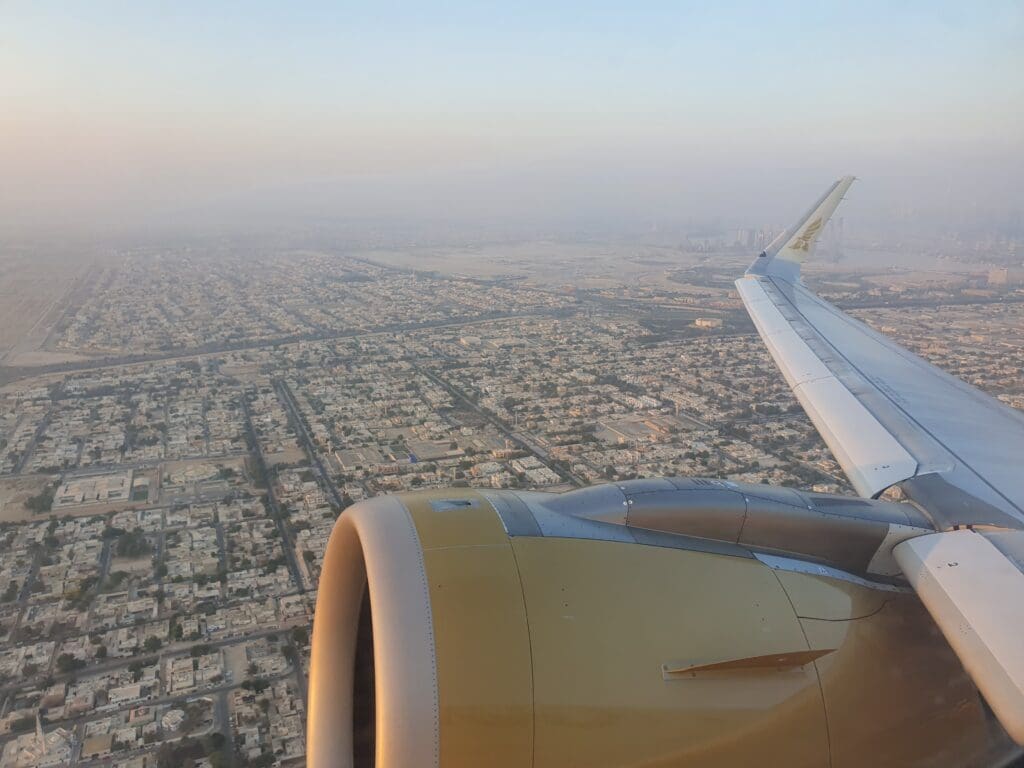
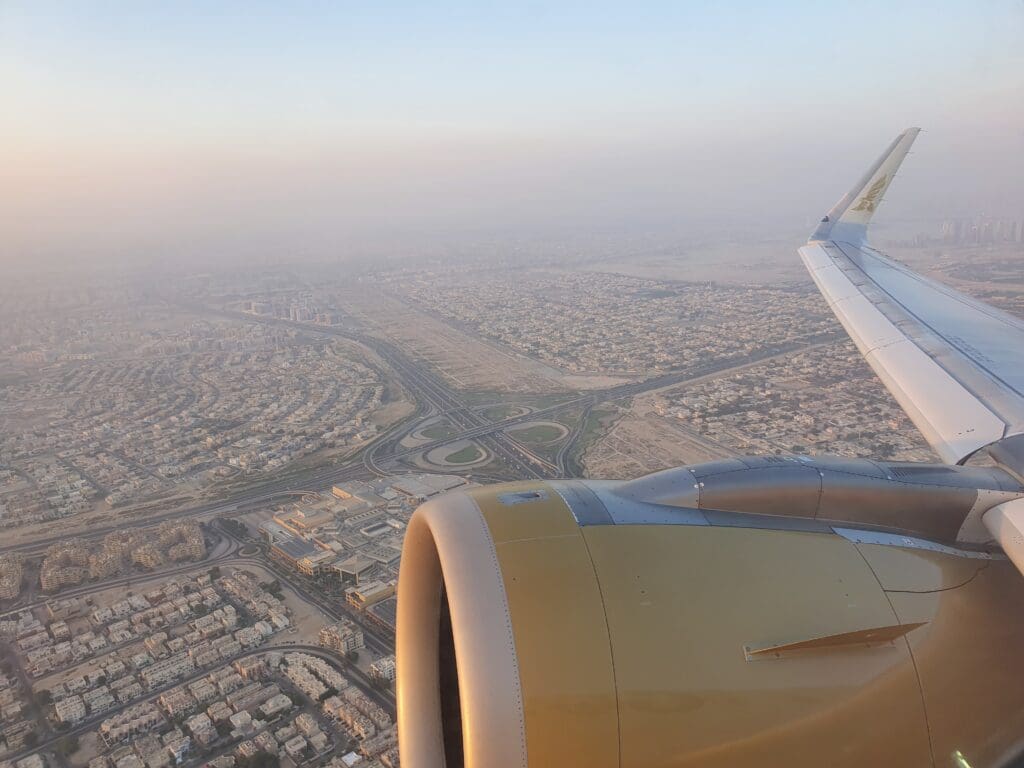
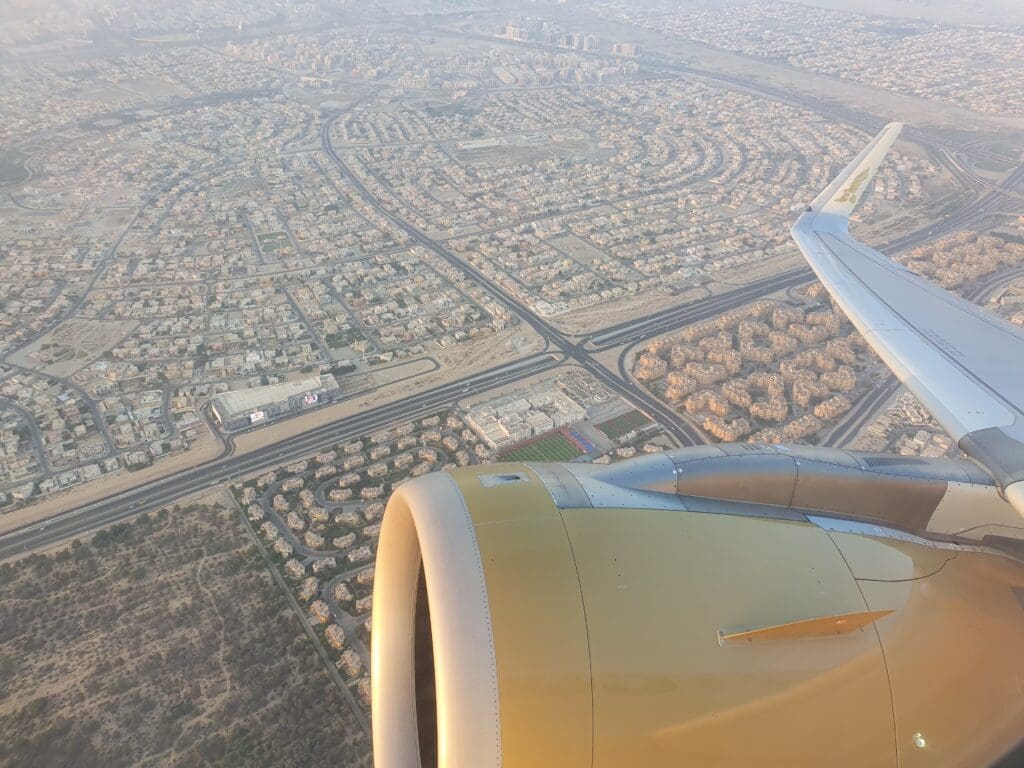
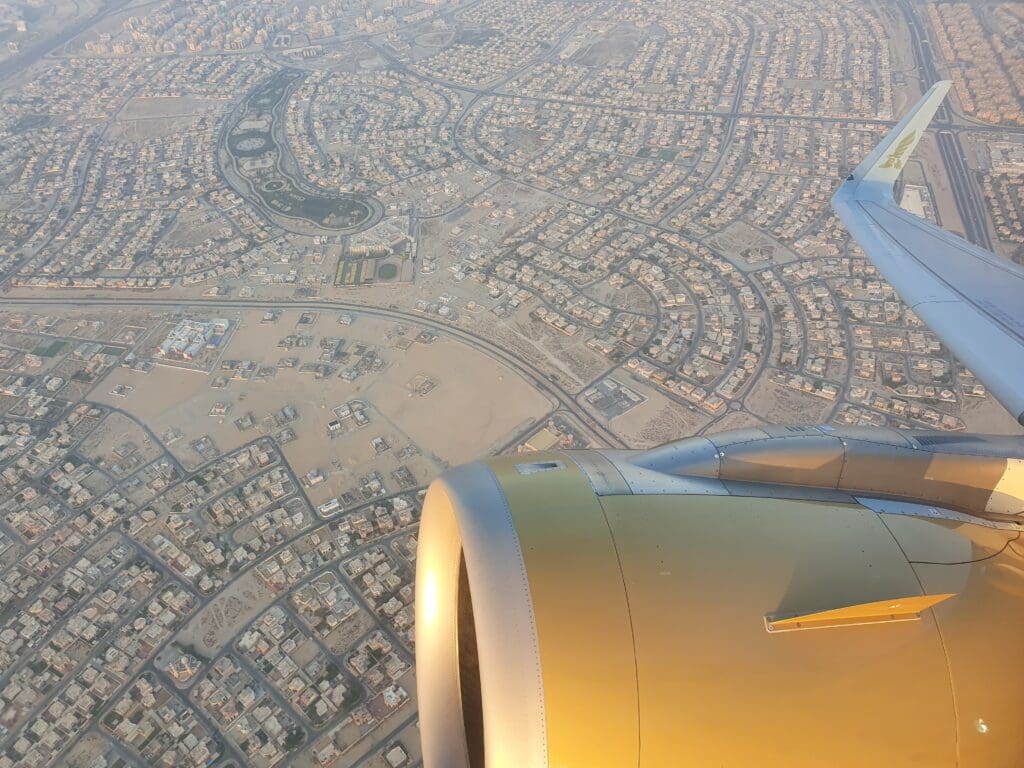
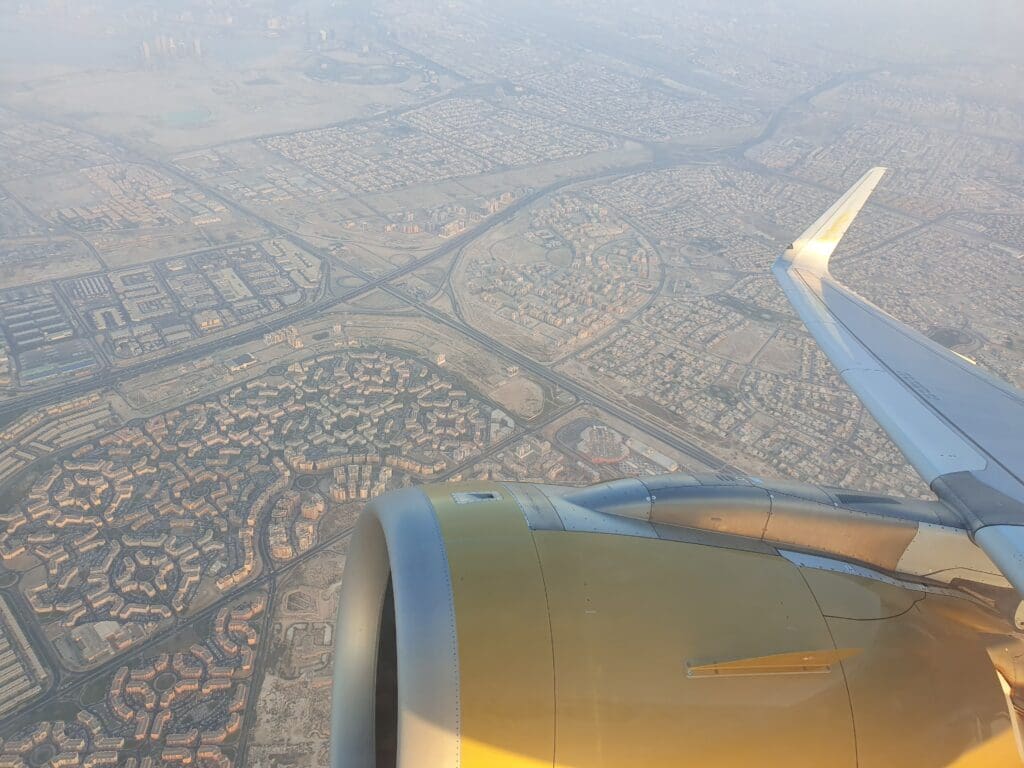
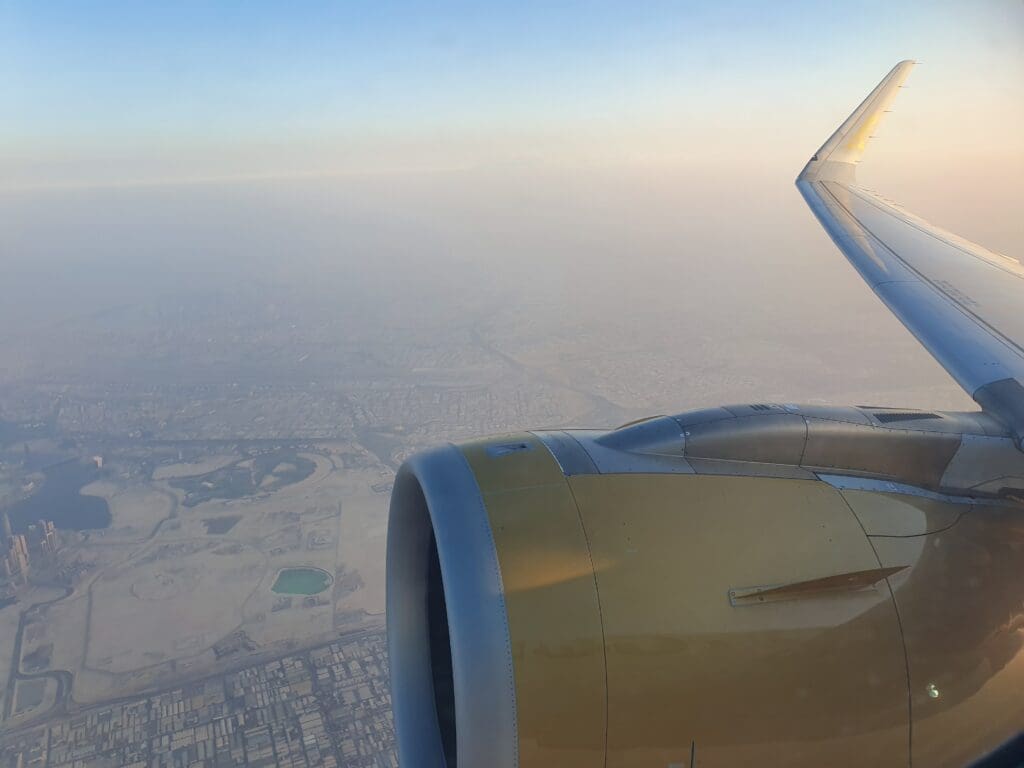
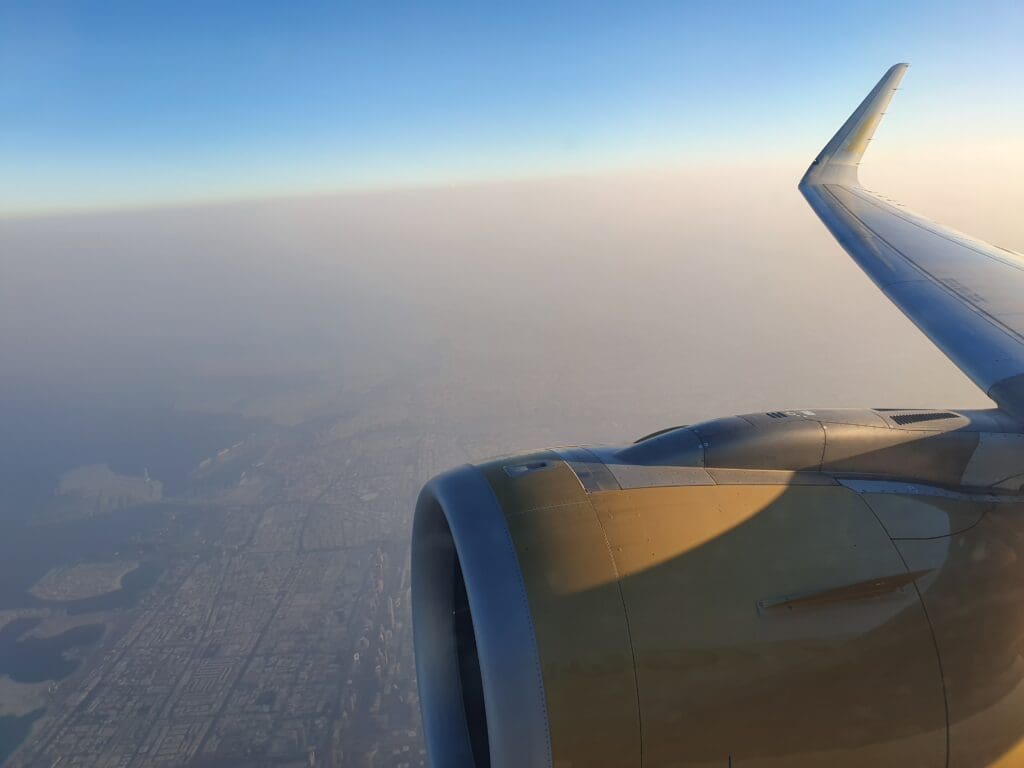
With the flight’s climb out of Dubai proving to be almost entirely bump-free, the seatbelt signs were switched off several minutes after departure whilst still flying over the city. At this time an automated announcement rang out through the cabin before Gulf Air’s Covid-related health and safety video played, followed by a short government promotional video commemorating the twentieth anniversary of Bahrain’s Supreme Council for Women. After this, the inflight entertainment system became usable once again however, given the length of the flight, the fact that headphones were not distributed and my tiredness, I set this to the moving map channel and entertained myself by tracking the flight’s progress as it journeyed across the Gulf.
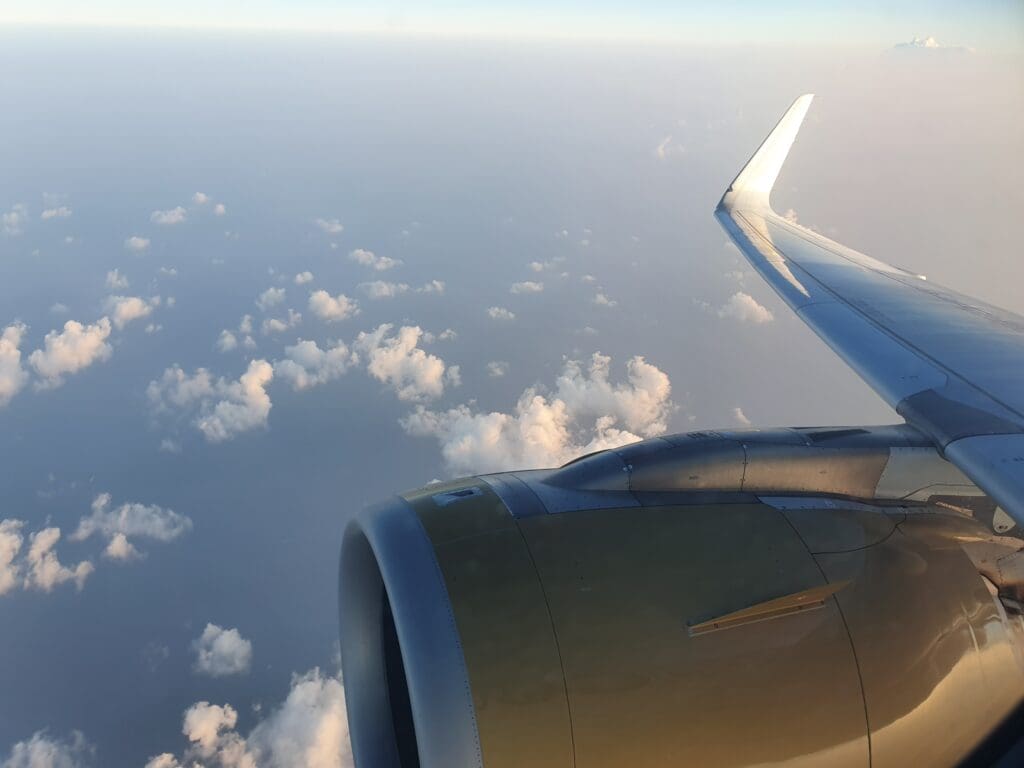
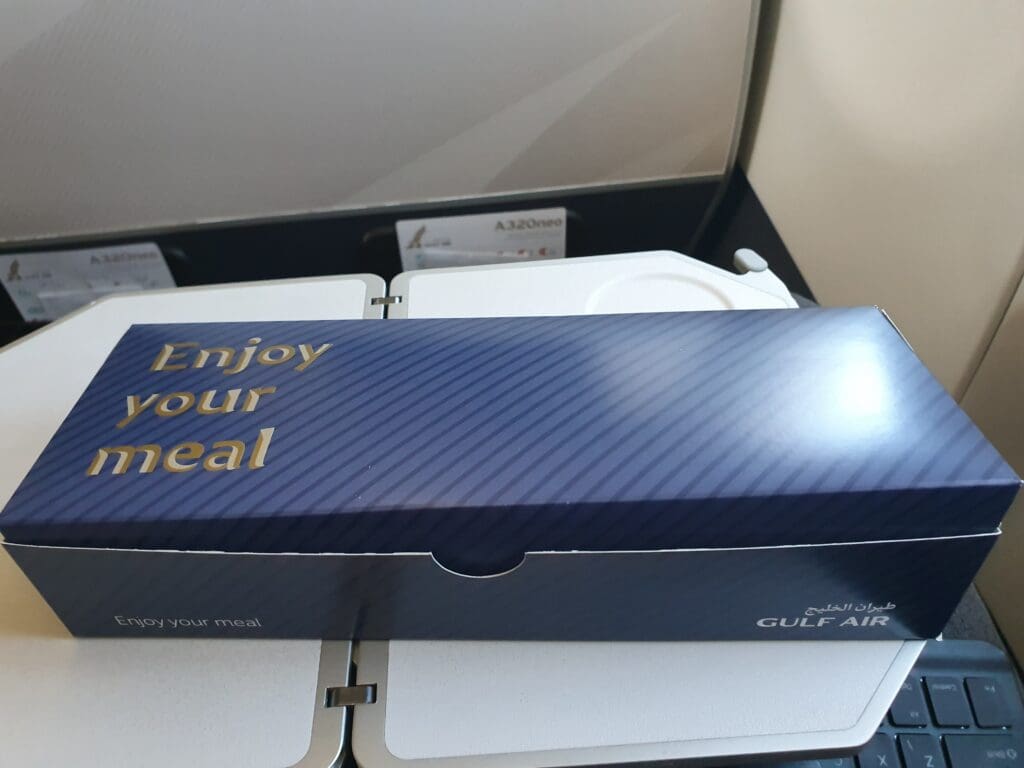
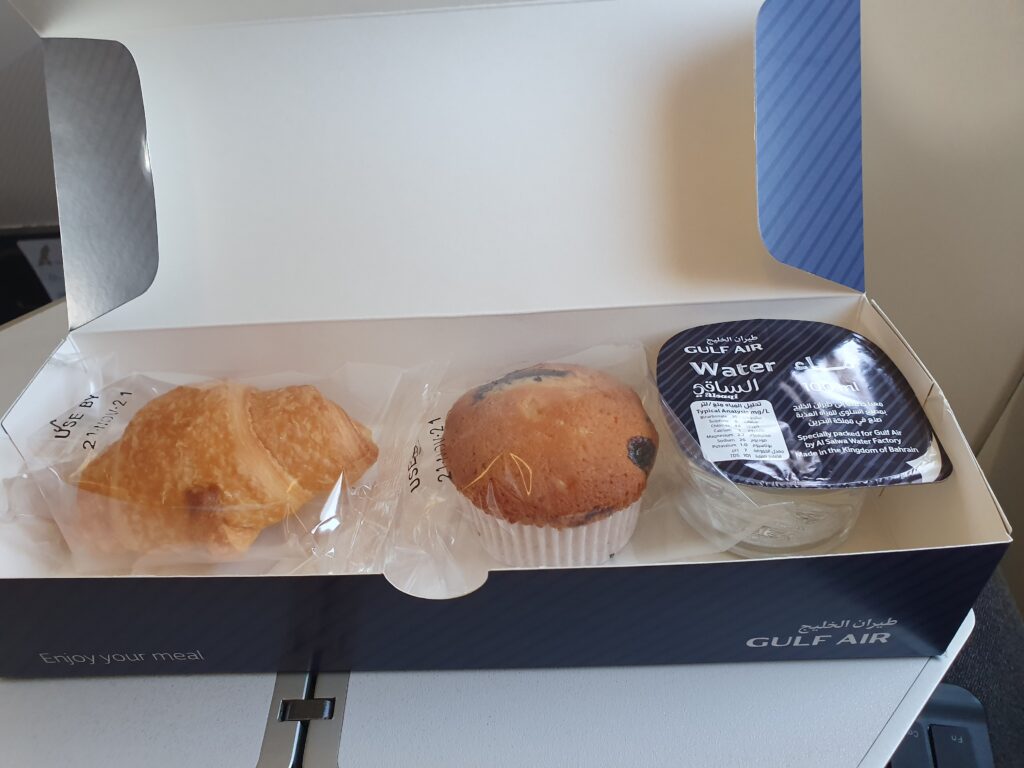
With the straight line distance between Dubai Airport and Bahrain Airport totalling a mere 303 miles and with a full aircraft to serve, unsurprisingly the crew soon sprang into action once released from their seats. A short time after heading out over the sea, without a word a crew member handed me a small rectangular box containing a blueberry muffin, a miniature croissant and a tub of water. Whilst this was by no means the pinnacle of inflight cuisine, it was sufficient enough for the short flight and left me with few complaints. After finishing off the contents of this, I drifted in and out of sleep for much of the remainder of the cruise. With this considered, I am unsure as to whether a drinks service was ever undertaken, however seeing as this was not conducted on the Bahrain to Dubai leg the previous week, I suspect that this was not.
After leaving Dubai behind, the aircraft soon passed just to the north of the small circular island of Sir Abu Nu’ayr, falling under the jurisdiction of the Emirate of Sharjah. From there, the aircraft continued flying over the Persian Gulf, skirting around Qatar and with 100 miles left to run, at 0730 the Captain performed their second announcement of the flight that morning. This commenced with another word of thanks for flying with Gulf Air as well as an update on the weather in Bahrain. Several minutes later, at 0737 the aircraft could be felt commencing its descent and the seatbelt signs were promptly reilluminated in preparation for our arrival. This was followed by both an automated and manual announcement from the Cabin Services Manager regarding our descent before the cabin crew passed through the cabin, collecting the remains of the light breakfast service and ensuring all was in place for our arrival.
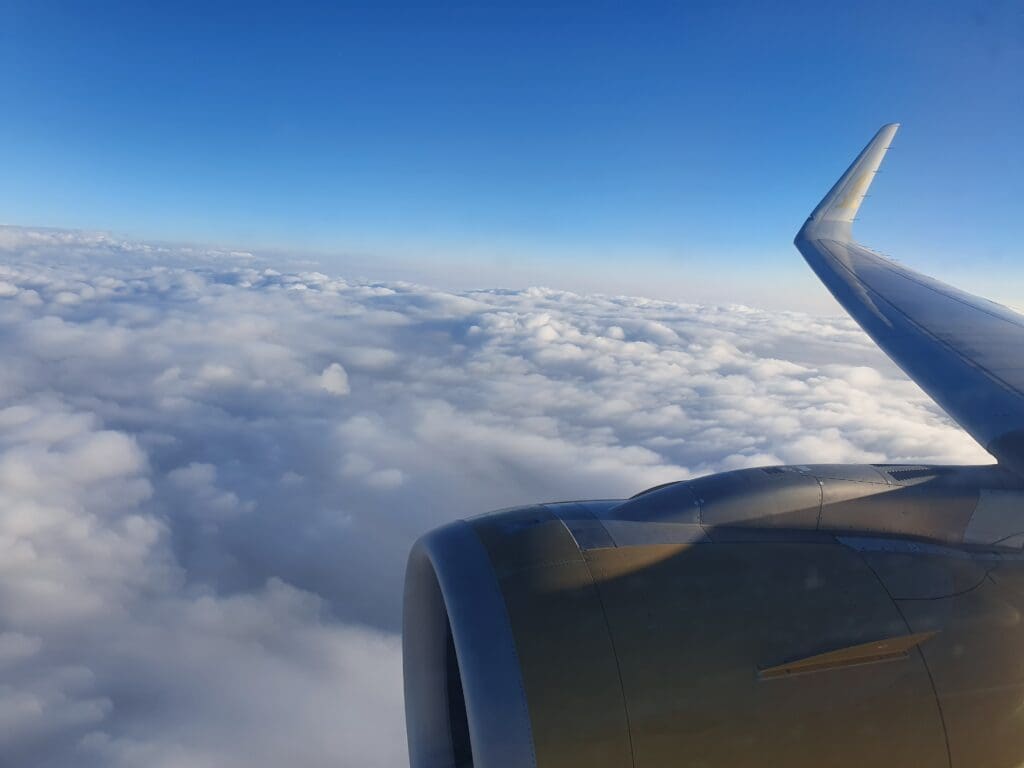
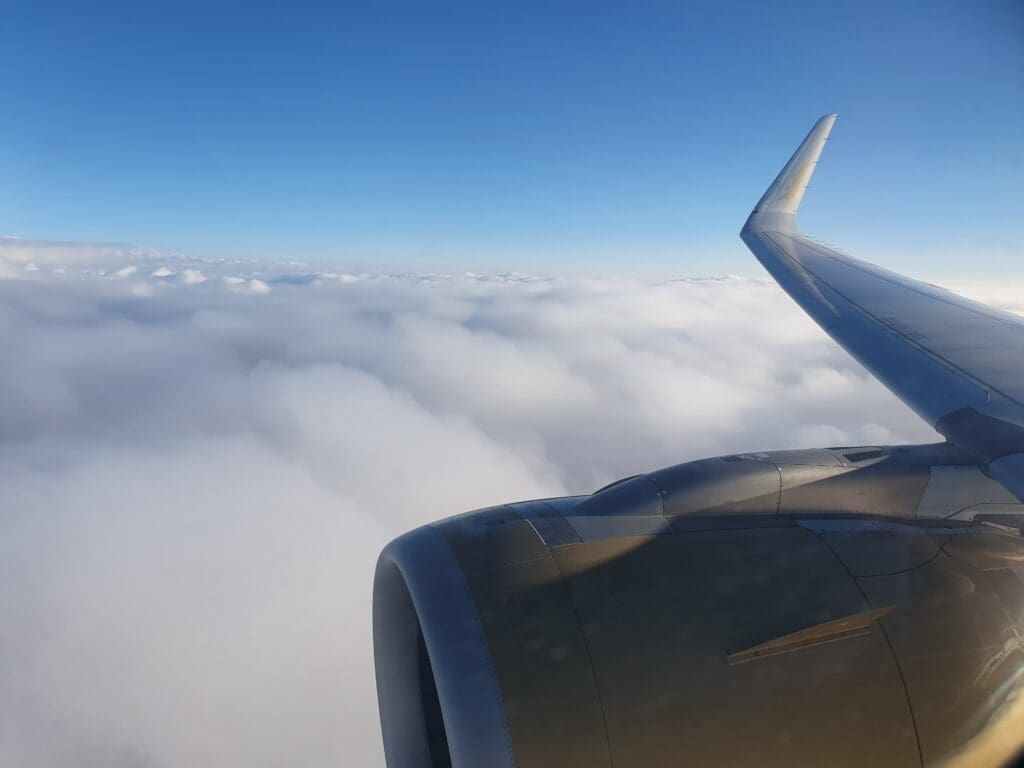
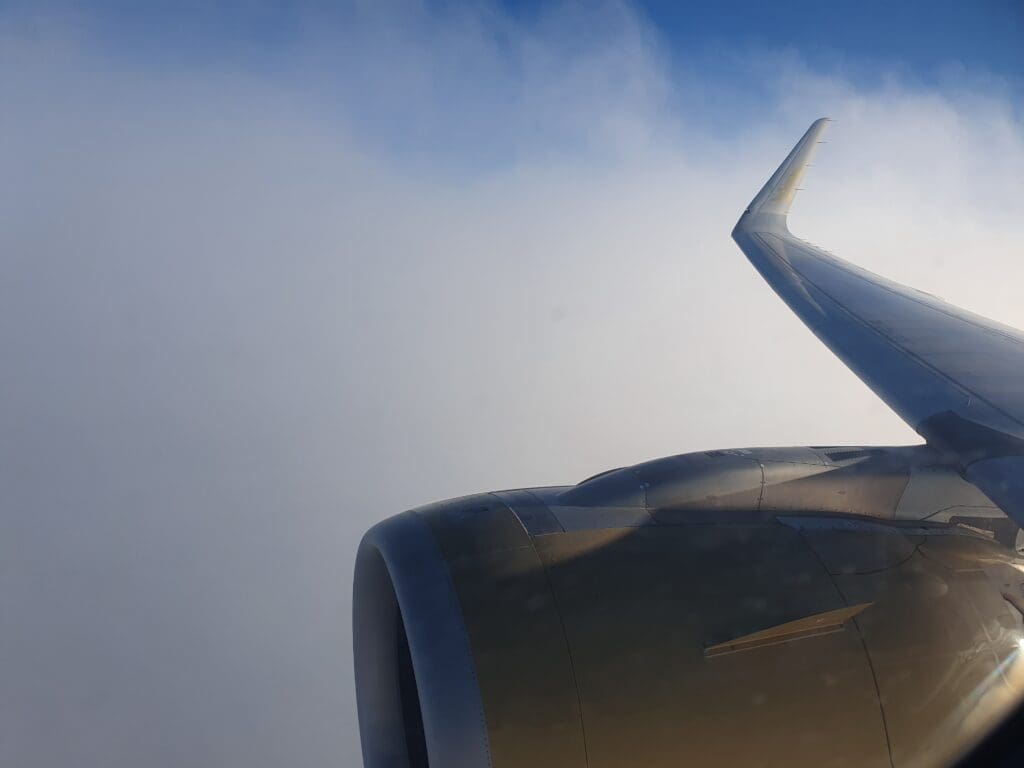
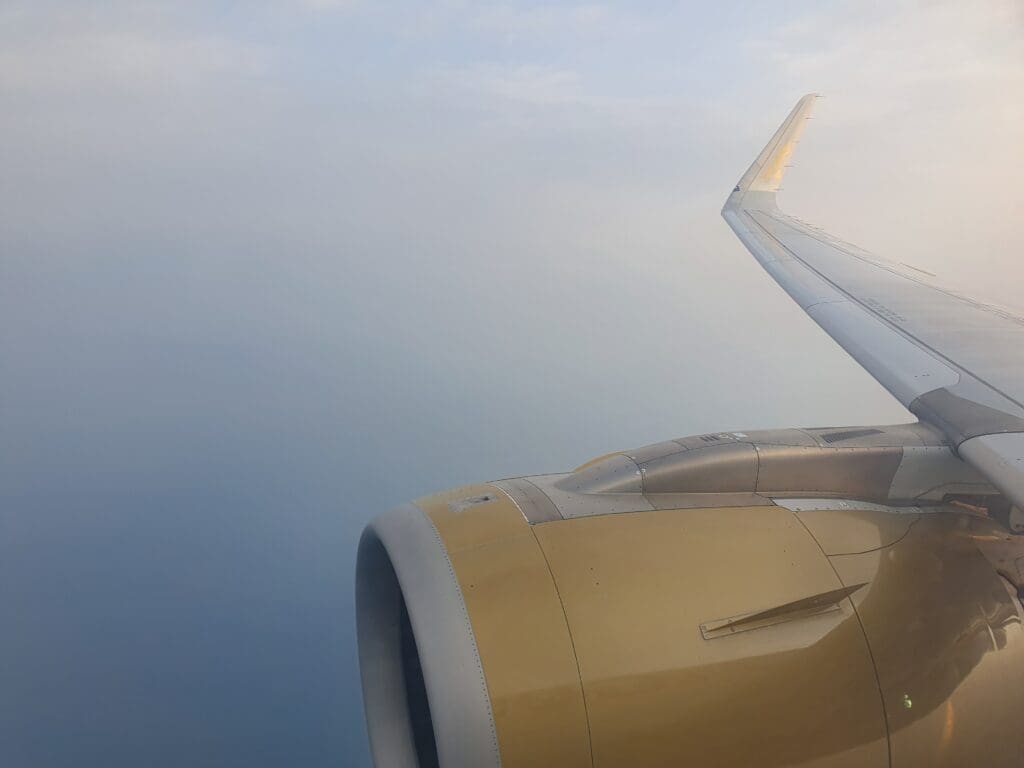
With clouds now in place beneath the aircraft sunk into these a short distance off the northeast coastline of Bahrain as it commenced flying an ‘S’ shape on the approach to Bahrain Airport’s Runway 30R. Following the first bout of noticeable yet brief turbulence during the flight, the Airbus sank beneath the clouds and the blue waters of the Persian Gulf came into view as the flaps were partially extended. After several minutes, the aircraft turned towards Bahrain’s shoreline at which point full flaps were extended along with the landing gear as the aircraft sank gently towards the runway.
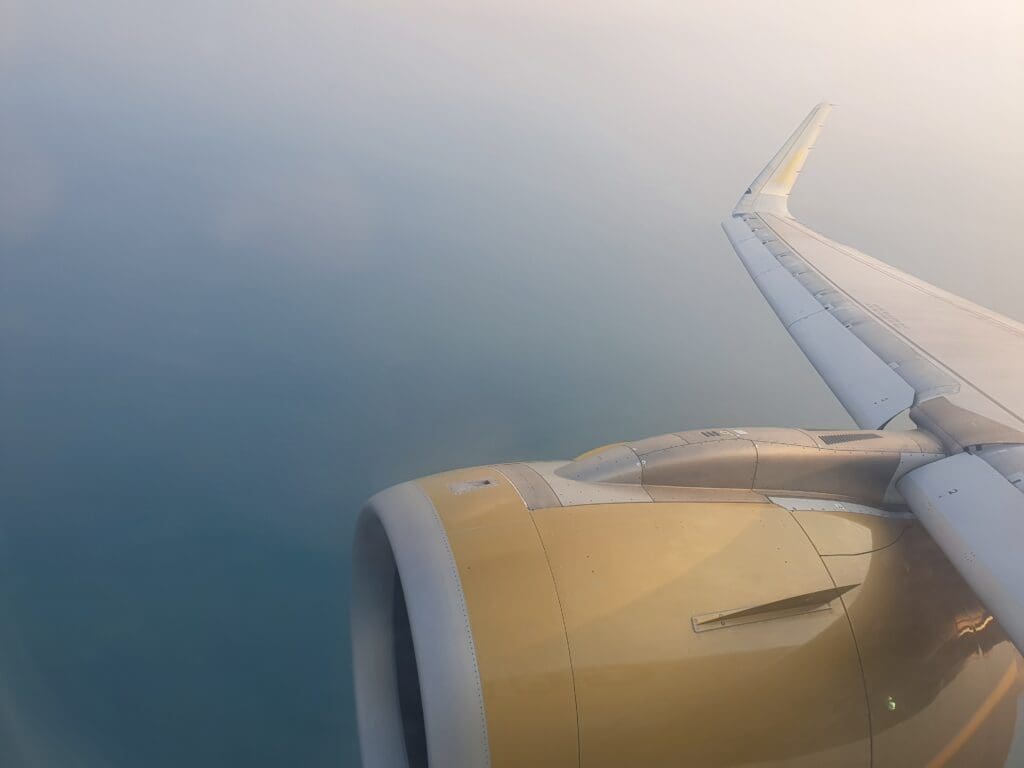
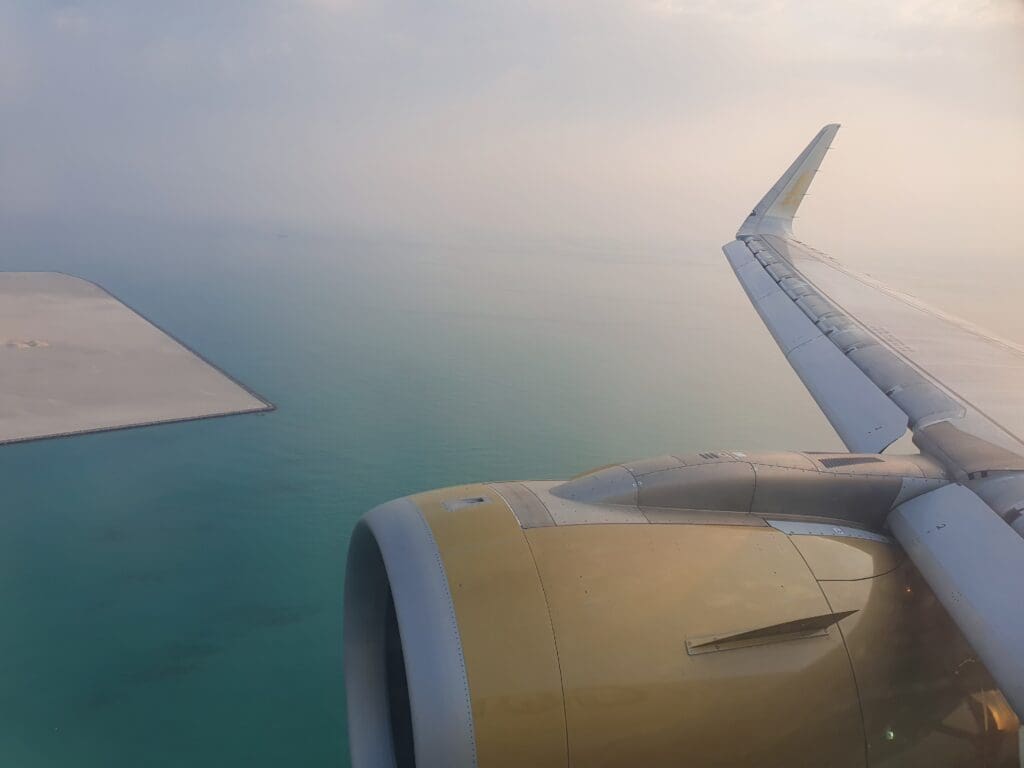
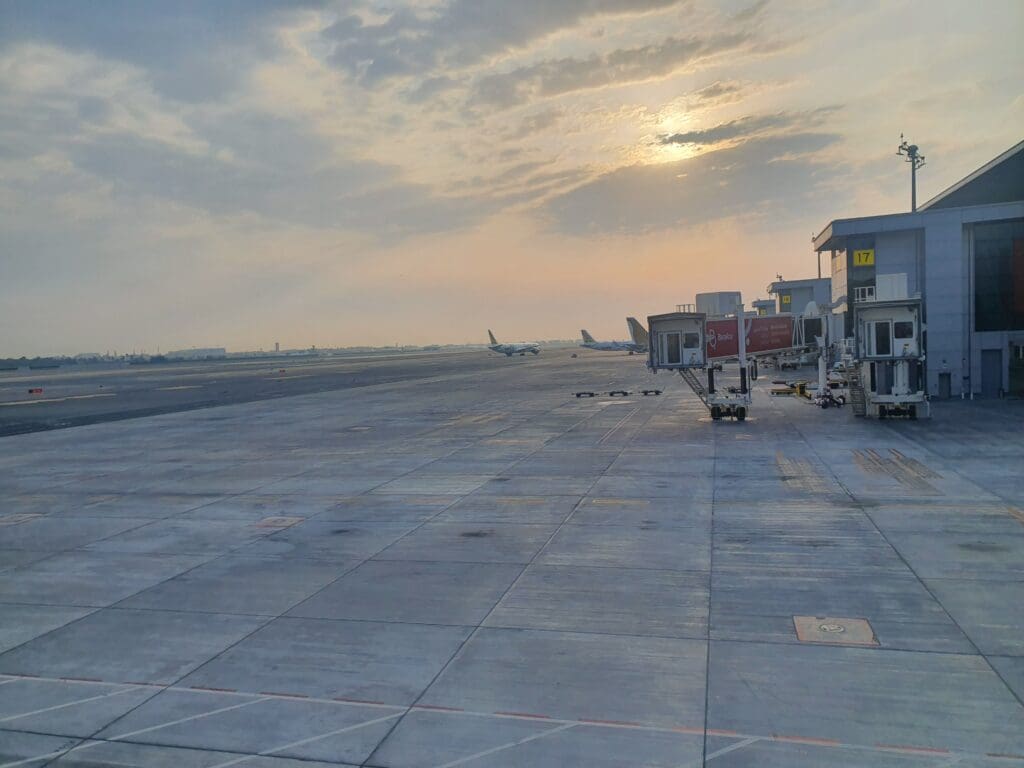
Around a minute before landing, land came into view beneath the aircraft around the area of Galali before the Airbus crossed over the Rayya Highway and over the perimeter fence before making a very gentle touchdown on Runway 30R at 0657 local time. Almost as soon as the aircraft touched down, an automated announcement rang out through the cabin which was followed by a manual announcement from the Cabin Services Manager as the aircraft vacated the runway. After this announcement, a short promotional clip advertising tourism in Bahrain was broadcast over the personal television screens as the aircraft made the very short journey over to gate 16 located in the middle of Bahrain Airport’s modern terminal.
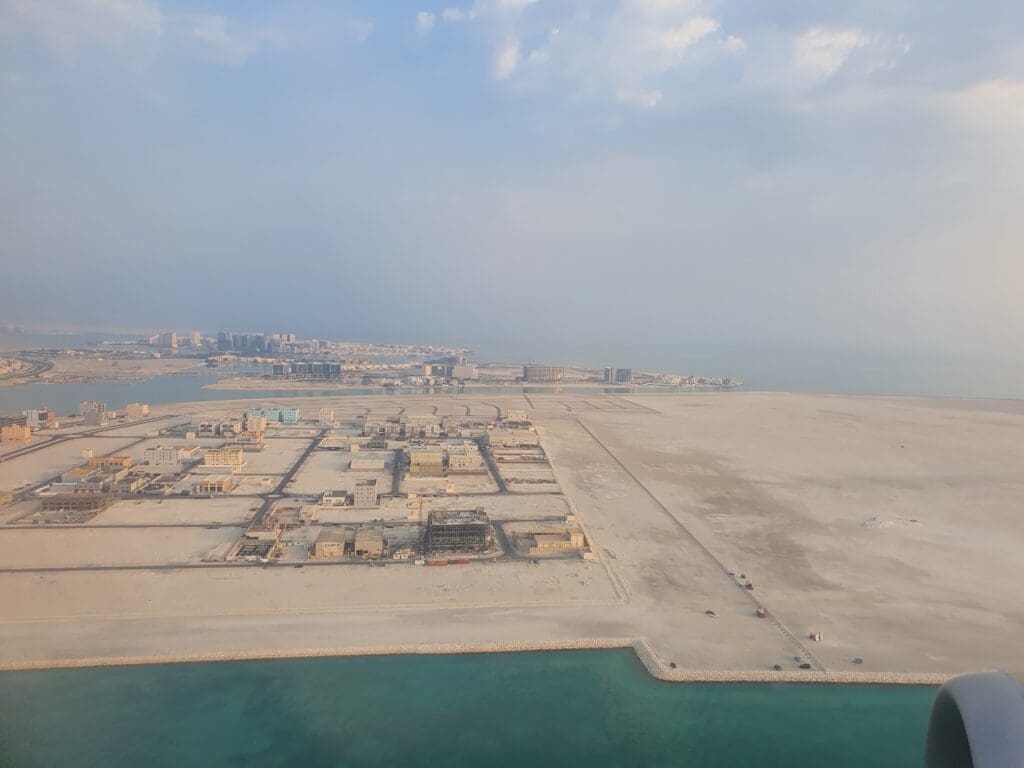
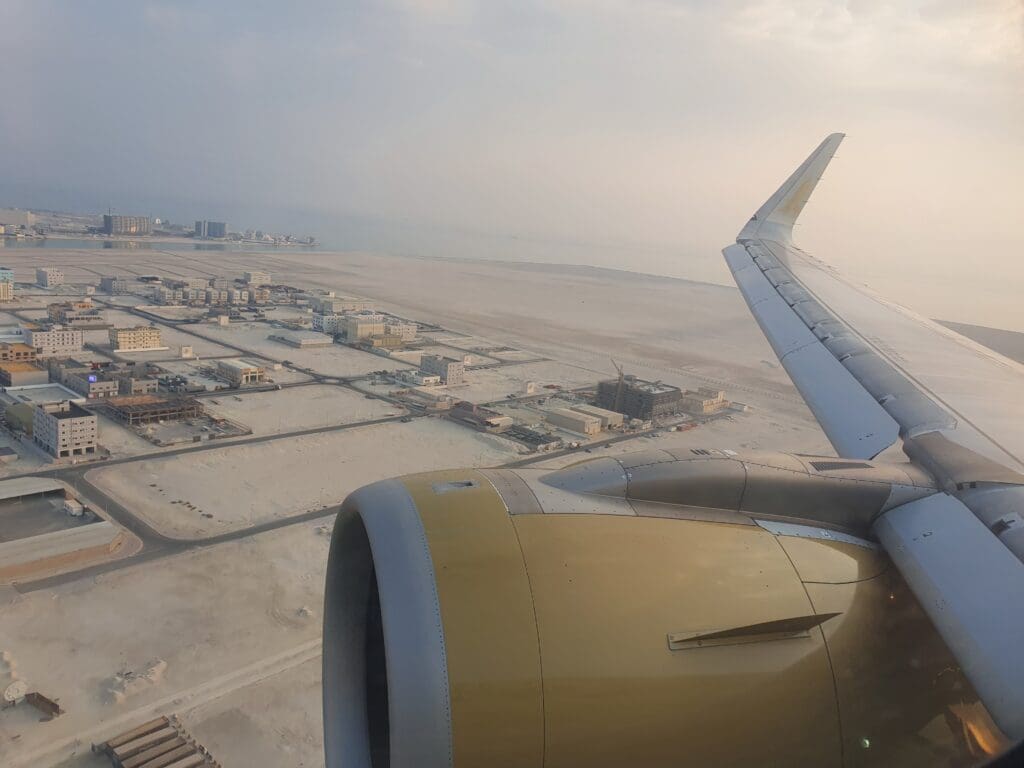
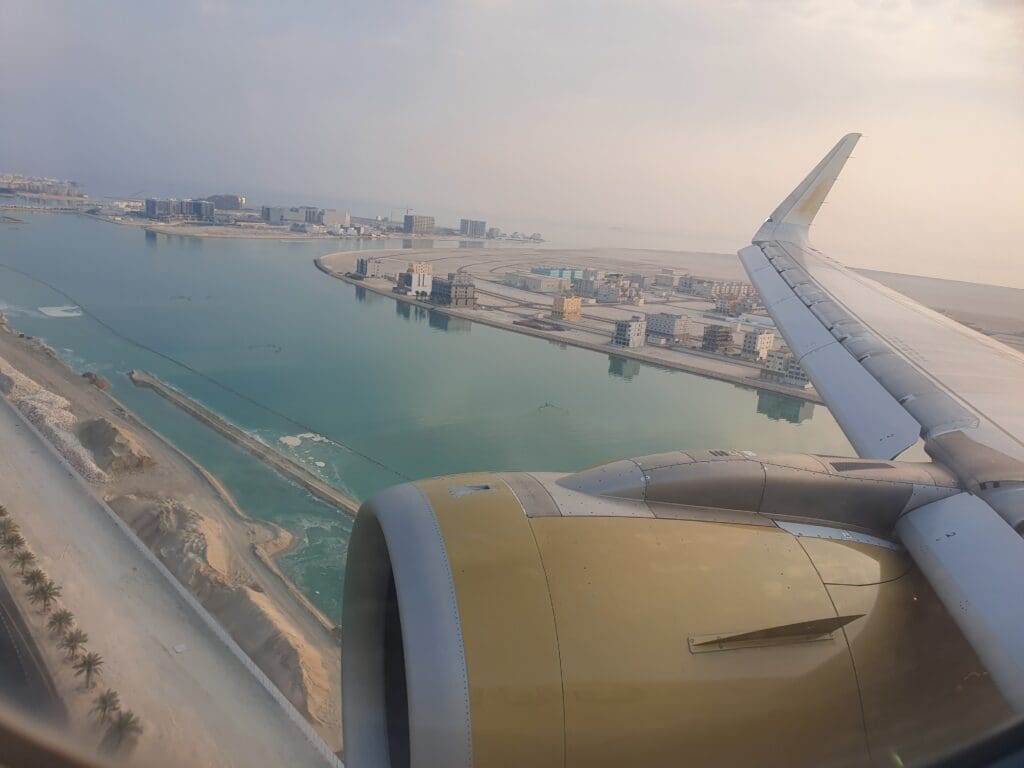
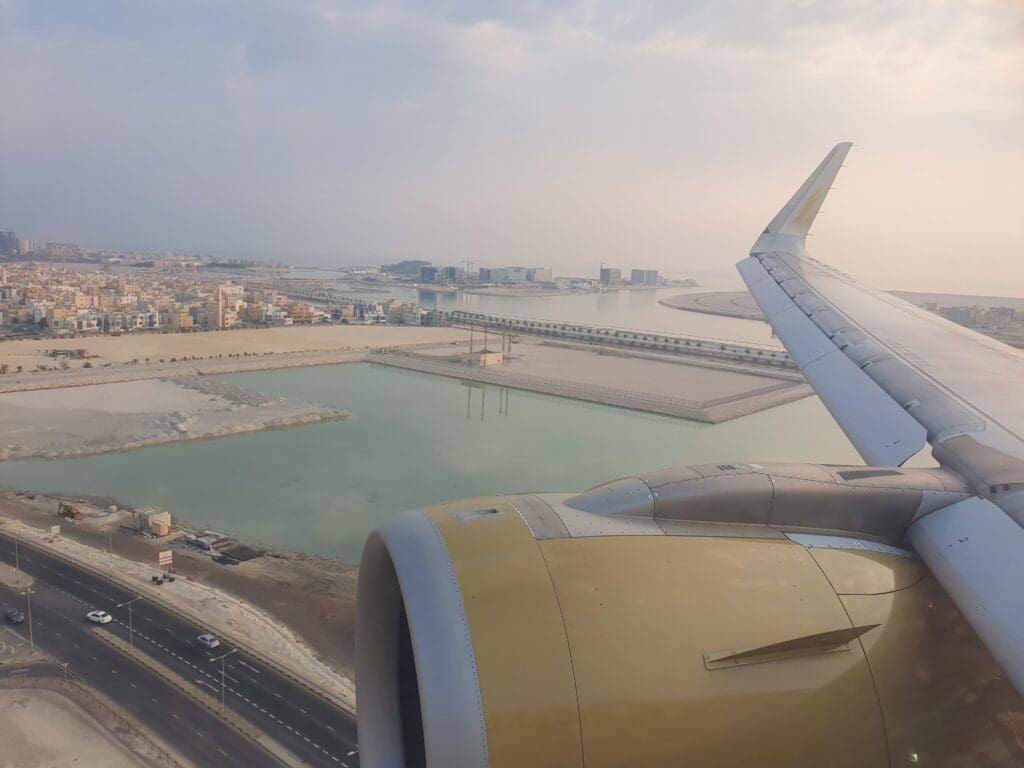
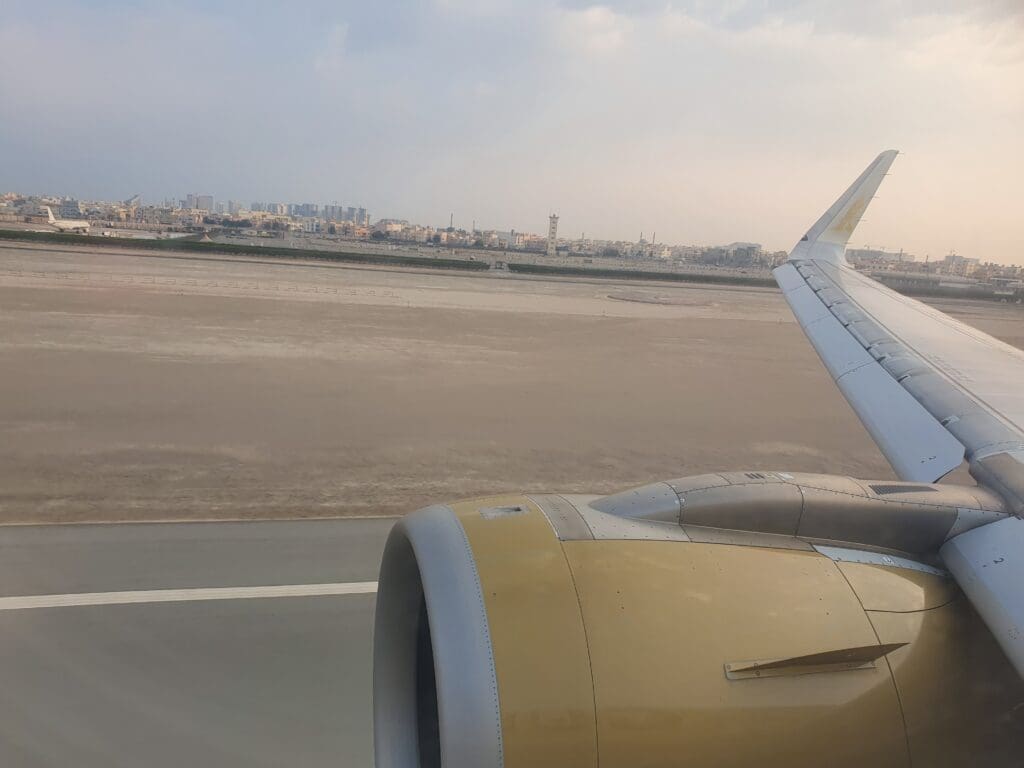
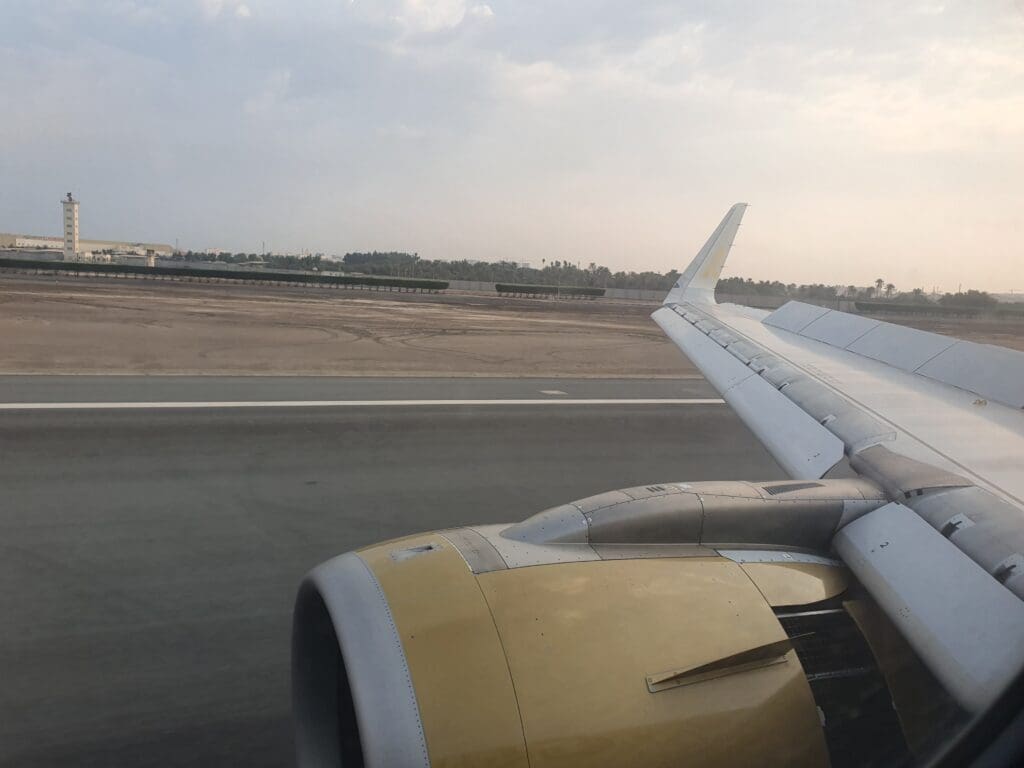
Around three minutes after landing, the aircraft came to a halt outside the terminal and the engines spooled down. Despite passengers being requested to remain seated and to disembark row by row, as soon as the aircraft came to a halt passengers stood up creating a chaotic jam in the aisles. Several minutes after coming to a stop, disembarkation commenced and seated at the front of the aircraft it did not take too long for me to make my way through the Falcon Gold cabin and reach the forward galley. After thanking the Cabin Services Manager as well as another flight attendant I stepped off the jet bridge and commenced my transit experience in Bahrain.
That really paints the scene so well ✈️👏. It’s such a common sight — everyone jumping up the moment the plane stops, even though it just creates chaos in the aisles. Sounds like your disembarkation went pretty smoothly though, and what a nice touch to thank the crew before stepping into the Bahrain transit experience. 🌍✨