A Short Hop on a Rare Dash 8 300 – Montréal to Québec City with PAL Airlines
Background
As a British aviation enthusiast needing to get from Montréal to La Vielle Capitale, or Québec City as it’s more widely known, I was presented with a few interesting options. On the smaller side of things, I could have caught a BAe Jetstream 32 from Montréal Saint-Hubert with Pascan Aviation. However, given the high ticket price and the fact that I would get the opportunity to fly the type several months later in Sweden, I decided to set my sights on another interesting turboprop, the Dash 8 Q100. At the time of my flight, PAL Airlines deployed this aircraft on multistop services from Montréal to small towns and cities in the north of the province, with the first stop on each route between Québec City, around 255 kilometres up the St Lawrence. Much to my delight, the carrier offered some of the cheapest tickets available on this route, so flying with them was a no-brainer.
If you’ve flown much around Asia, then you may associate PAL with the Philippines’ flag carrier, Philippine Airlines. However, Canada’s PAL Airlines has no relation to the Southeast Asian giant and is headquartered on the other side of the world in much chillier climes of Newfoundland and Labrador. Headquartered in St. Johns, today, PAL Airlines primarily operates a fleet of Dash 8-100, 300 and 400 aircraft on scheduled services across the Canadian Maritimes, serving a range of settlements from some of the country’s largest cities to small towns and villages. In addition to this, the carrier maintains a Twin Otter operating subsidiary, Air Borealis, based in Goose Bay, whilst PAL Aerospace undertakes a range of charter and special mission flights with an array of Beechcraft turboprops and modified Dash 8s.
Booking
Upon arriving at PAL Airlines’ website, I was greeted by the sight of the airline’s flight search engine as well as a promotion advertising the carrier’s new services to Val-d’Or. Wasting no time, I went ahead and selected Montréal and Québec City from the long list of the airline’s airports across Eastern Canada and was promptly presented with a list of three departures. These would leave Montréal at 0645, 0850 and 1100 and be operated by varying types of Dash 8. Selecting the cheapest option, the 0850 departure, which also happened to be the flight set to be operated by the most interesting aircraft, a Dash 8 Q100, I was then presented with four fare options – Alpha, Bravo, Charlie and Delta. Seeing as I would be travelling on a budget, I proceeded ahead with the cheapest option, Delta, for $68.99 and entered my details. From there, I was presented with a comprehensive breakdown of my fare before I made a quick payment, after which I received an instant booking confirmation.
Check-In
Unlike many airlines, PAL Airlines does not allow passengers to reserve a specific seat during the booking process. However, those flying on the airline’s scheduled services can select any vacant seat at no cost when checking in online, with online check-in opening up 24 hours before departure. Hoping to select a seat that would offer a good view of both the engine and the world below, around 22 hours before departure I made my way over to PAL Airlines’ website and entered my surname and reservation number. Upon doing so I was presented with a mostly empty 9-row seat map, with this indicating that my flight was still set to be operated by one of PAL Airlines’ Dash 8 100 aircraft. Following a few moments of deliberation, I opted to go for Seat 8E in the penultimate row before making the usual confirmations that I not would attempt to transport any prohibited goods, after which I was provided with my boarding pass.
The Journey
With my flight scheduled to depart at 0850, I intended to arrive at Montréal-Trudeau Airport in good time to explore the terminal and watch the selection of morning movements to and from destinations across North America. Whilst Montréal is home to a three-line metro network that stretches across much of the city, unfortunately, this does not serve the airport. Instead, the aptly named 747 bus route acts as the primary public transport option for those looking to travel between the airport and the city centre. Running at all hours and covered by my three-day Opus card, that morning I did not consider reaching the airport any other way. On a side note, for those lacking an Opus card, passengers can also pay for this bus in coins, with the fare costing $10, a quarter of the official taxi fee for the same trip.
Having analysed the 747 bus’ schedule the evening before departure, I decided to leave La Tour Belvedere at 0440. From there, I made a fifteen-minute dash through Montréal’s cold, drizzly and dark pre-dawn streets to the René-Lévesque bus stop. After a short wait, the bus pulled up right on time just after 0500 and I boarded, scanning my Opus card before taking a seat. Unlike some other airport bus services, whilst running non-stop from the city centre to the airport, the 747 service is operated by a regular city bus with minimal seating and therefore at busy times there is a possibility that passengers may have to stand up. Fortunately, upon boarding, that morning the bus was almost entirely empty, with just three other passengers, although most seats ended up being taken following a brief stop at Lionel-Groulx metro station. Once away from the city centre, the bus sped along the busy Autoroute 20 and around twenty minutes after I had boarded, the modern yet relatively non-descript façade of Montréal-Trudeau Airport’s terminal appeared and the bus soon came to a stop at the ground floor arrivals level of the terminal.

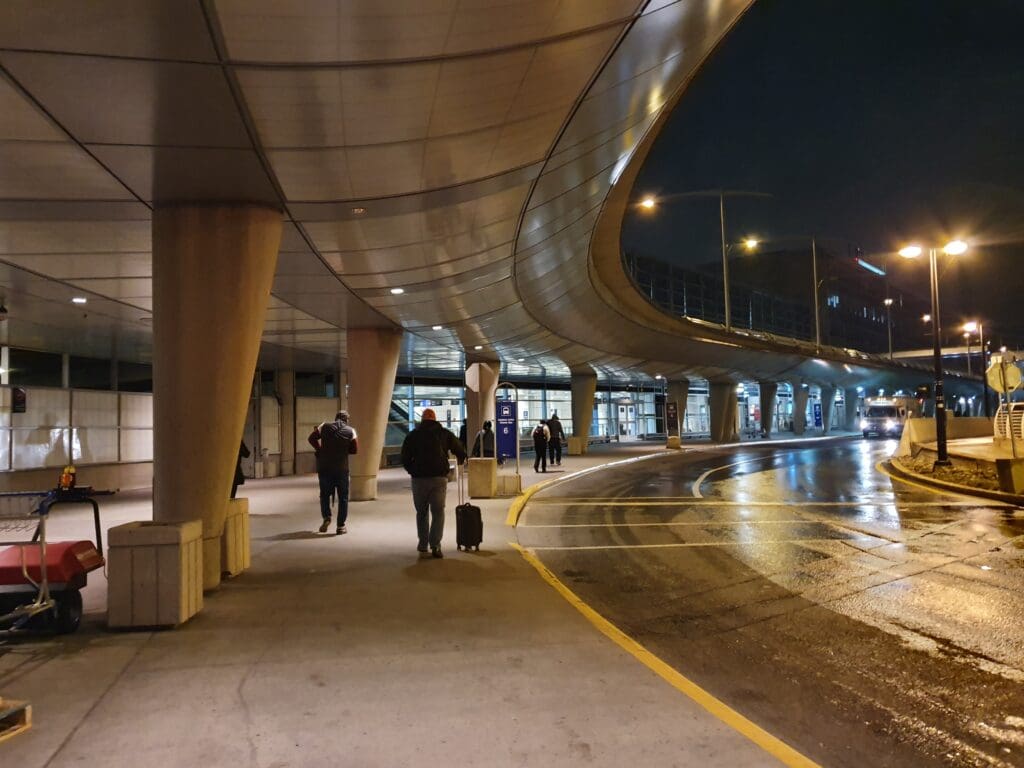
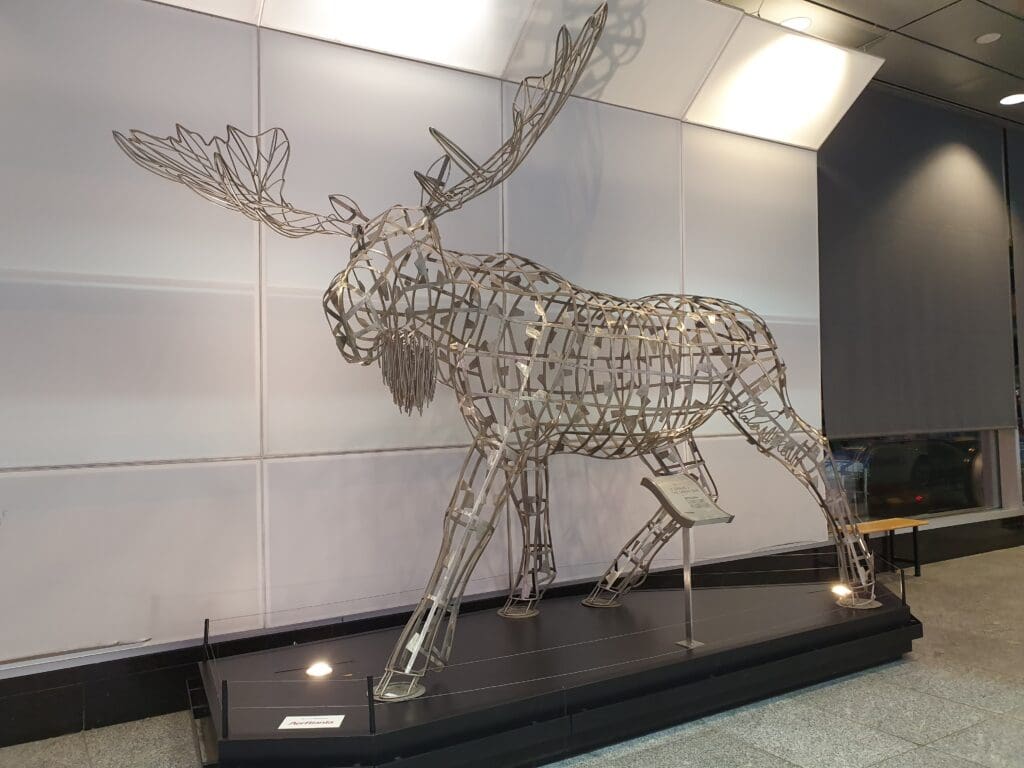
Despite being one of Canada’s busiest airports, Montréal-Trudeau Airport features just a single terminal, which somewhat simplifies things for passengers. Entering this via the arrivals level, I proceeded up the escalators and followed signs for the domestic check-in area. Inside, I found the landside departure area to be modern, spacious, clean and tidy, however, it did appear to lack any features that made this particularly architecturally noteworthy. In terms of facilities, these are slightly limited in the landside area with just a couple of convenience stores, two fast-food outlets and two cafes. Meanwhile, check-in is spread across six different zones – one for flights to the US, another for international services and the remainder for domestic flights. Given the cornucopia of departures that morning, I had suspected that the terminal would be rather busy however I was slightly surprised to find this to be relatively quiet.

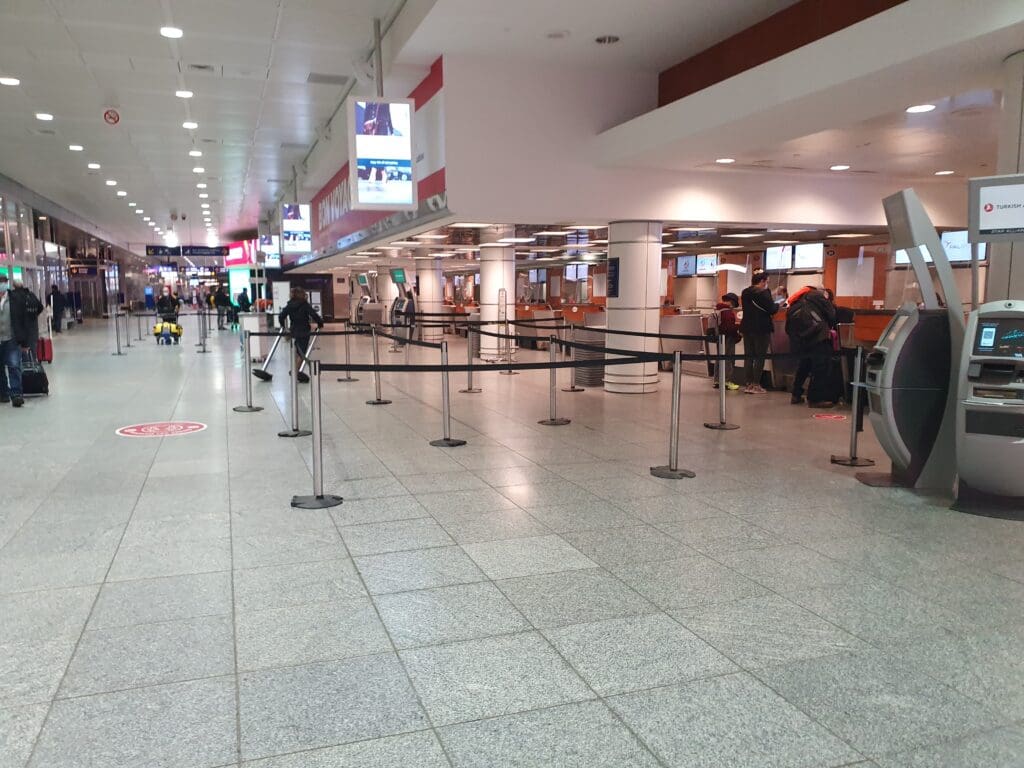
Whilst I had checked in online, carrying a small suitcase and a backpack, I was aware that I would be unable to take both of these into the cabin as per PAL Airlines’ baggage rules. Instead, I would have to check in my small suitcase for an additional fee of $20 and therefore as soon as I arrived at the terminal I made my way over to PAL Airlines’ three check-in counters, all of which were manned. Informing one of the agents regarding my intention to check in my bag, I was offered the opportunity to be moved to the airline’s 0645 departure, however aware that this would be operated by the more common Dash 8 Q400, I passed on this and was advised to return to the desk at 0650.
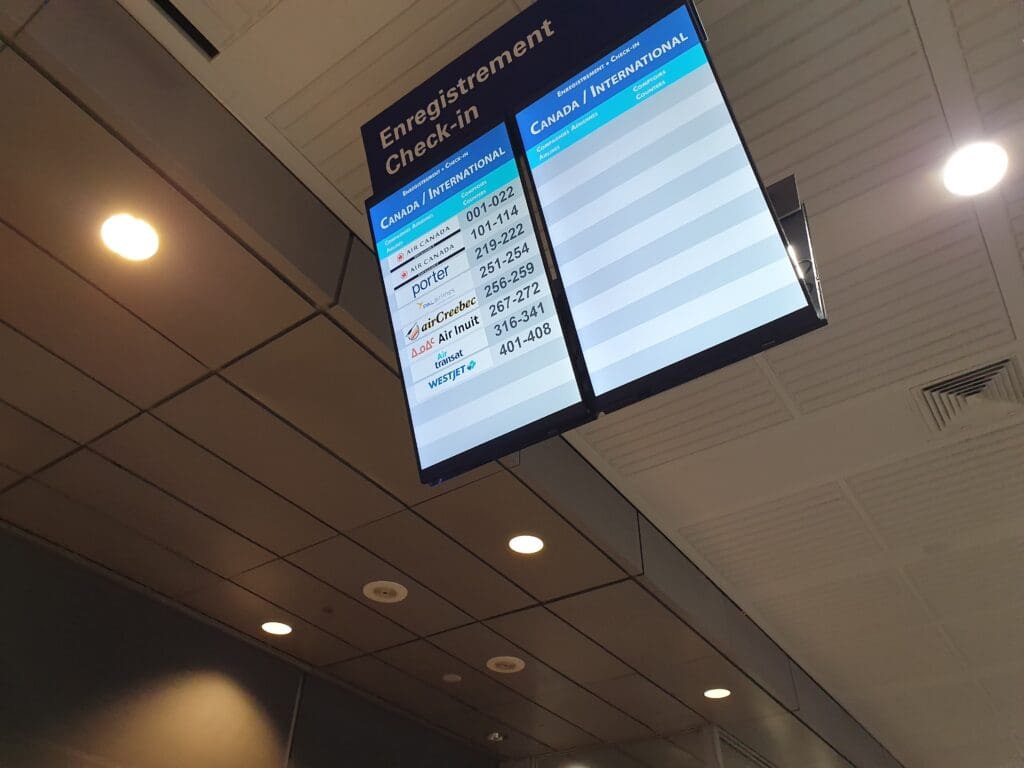
With over an hour to wait before I could check in, I decided to head off on a walk around the landside area before grabbing a coffee at the local branch of Tim Hortons and passing the time on a bench. As the clock struck 0650, I returned to PAL Airlines’ check-in desks where I was greeted by another friendly agent. After handing over my bag, producing my passport and proof of vaccination, my boarding pass was printed off and I was informed that the flight would now be departing an hour behind schedule at 0950. As expected, I also paid a total of $23 to check in my suitcase and I was informed that a receipt for this would be provided at the gate.
By the time I had checked in, the security area for domestic flights which had earlier been rather quiet now featured a long snaking queue. With no other alternative, after having my boarding pass scanned I joined the queue and around twenty minutes later I arrived at one of the multiple open checkpoints. With minimal interaction with the security staff, my possessions were sent through the x-ray machine and I passed through the metal detector before making it through to the airside portion of the terminal with several hours to go before my flight. Unlike the landside area, the airside departures area was as busy as I had expected, with long queues visible at the terminal’s multiple cafes and fast food outlets. Fortunately, having already had a large coffee that morning, I decided to have a walk around and peered out of the terminal’s large windows that allowed for fantastic views of the movements outside. On a side note, complimentary wifi is offered throughout the terminal and a good number of power points are offered throughout. Meanwhile, in terms of design, the airside area of the terminal is fairly standard – this serves to be modern and clean yet fails to offer anything particularly memorable or special to the average passenger.
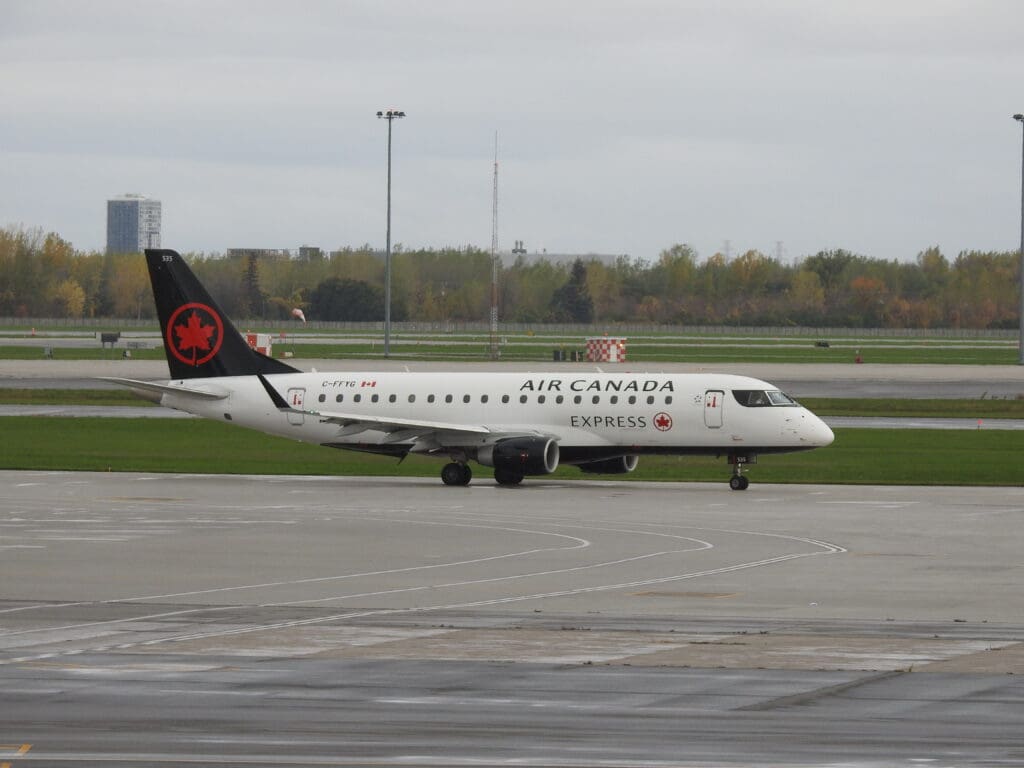
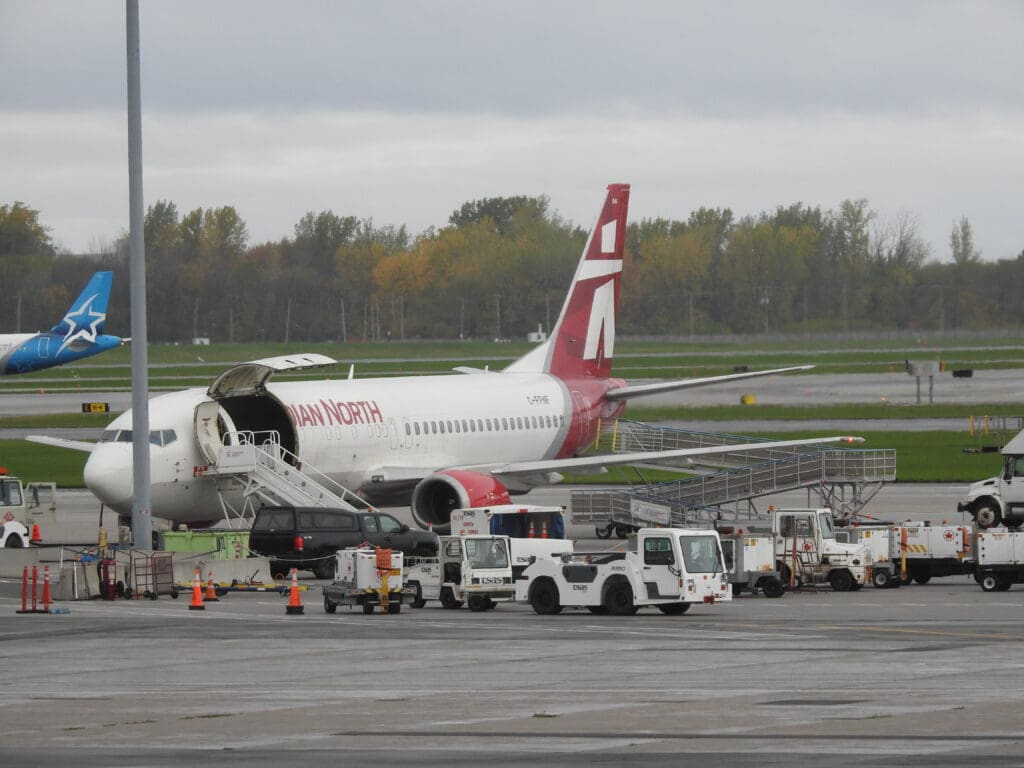
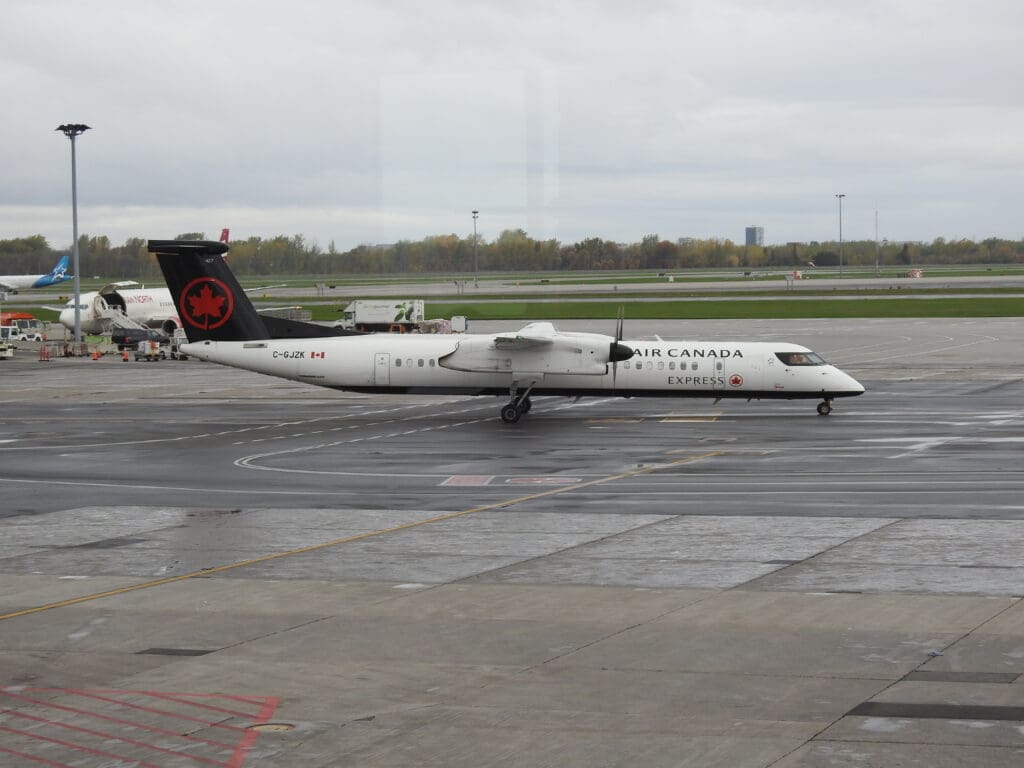
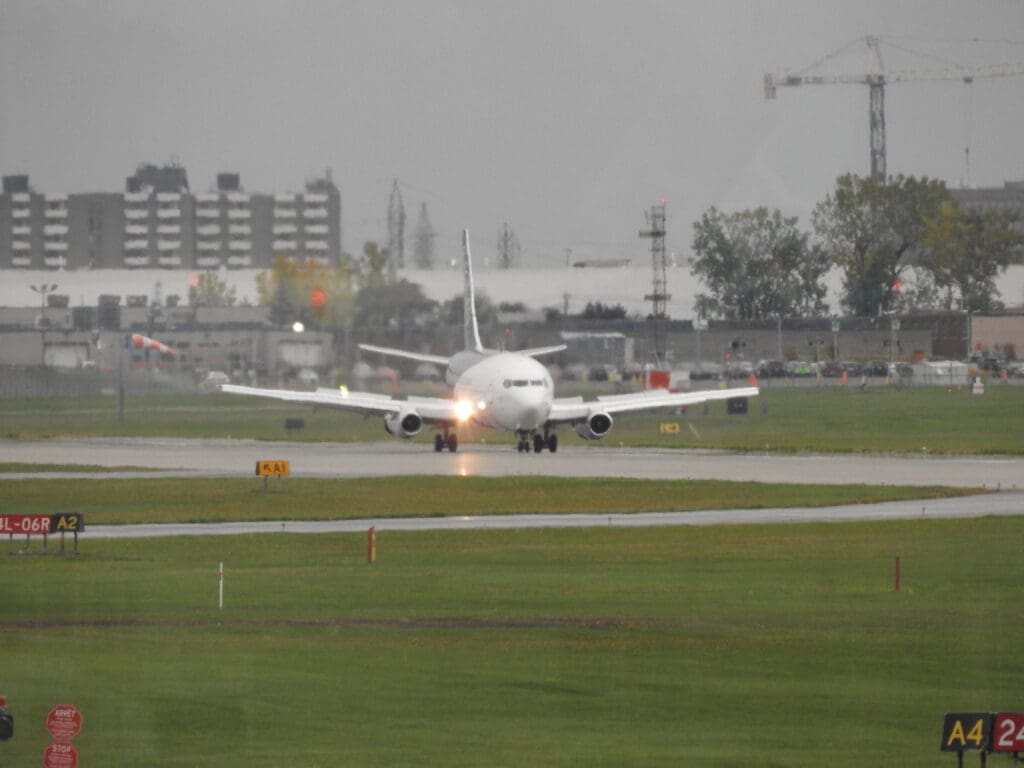
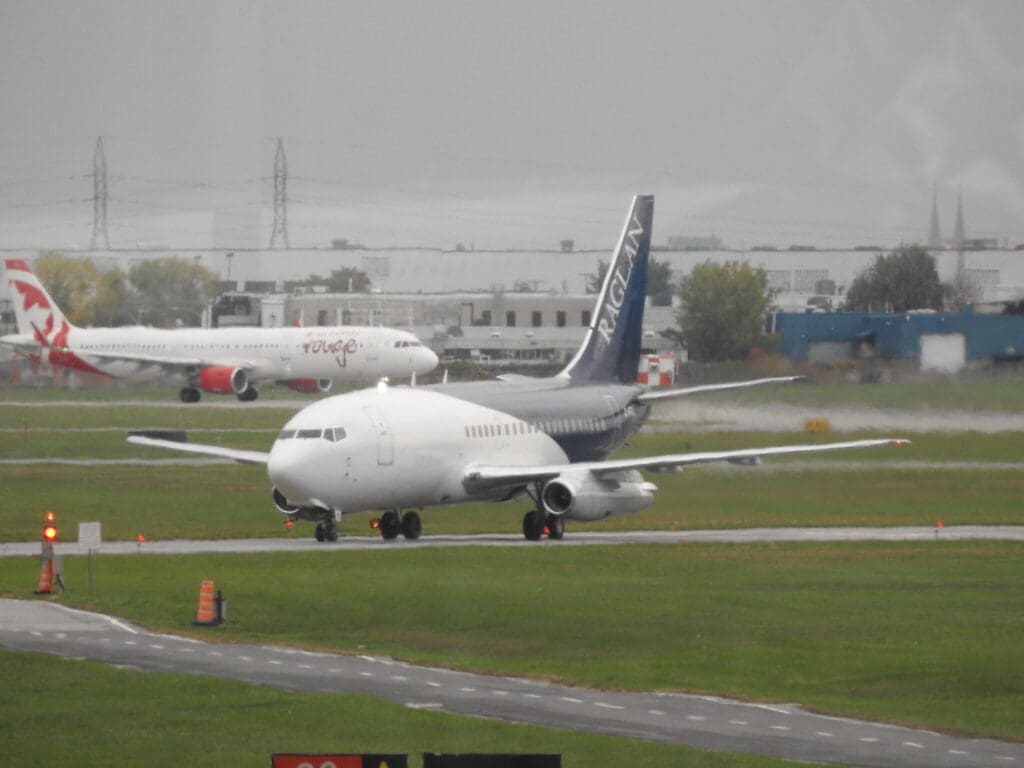
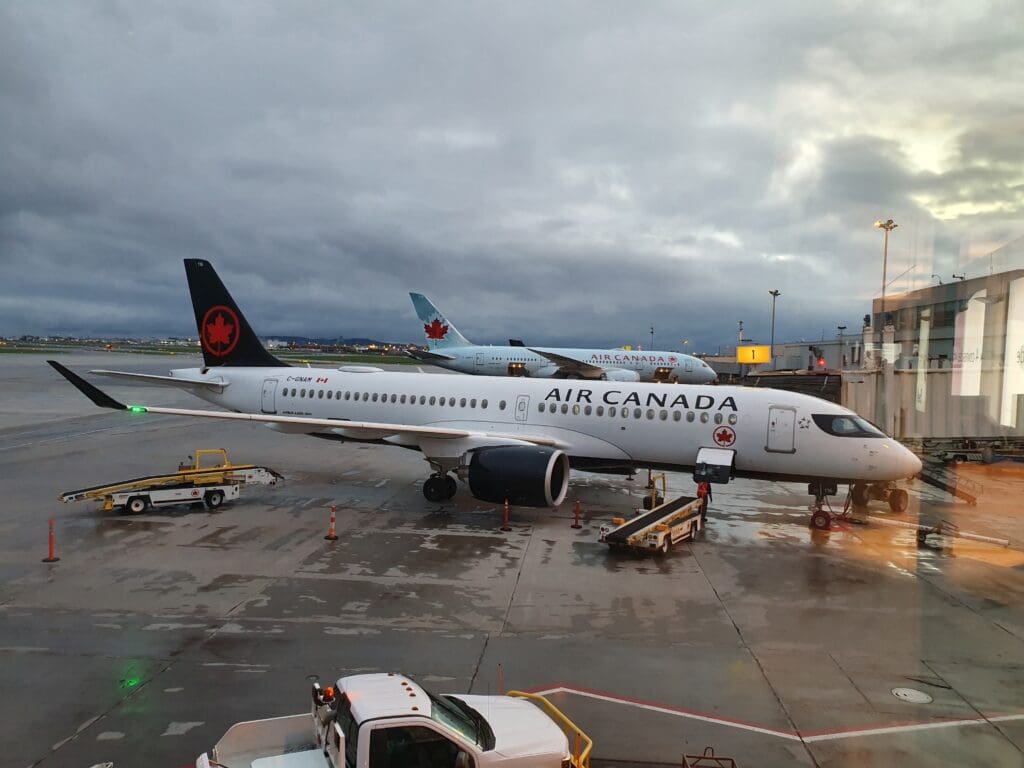
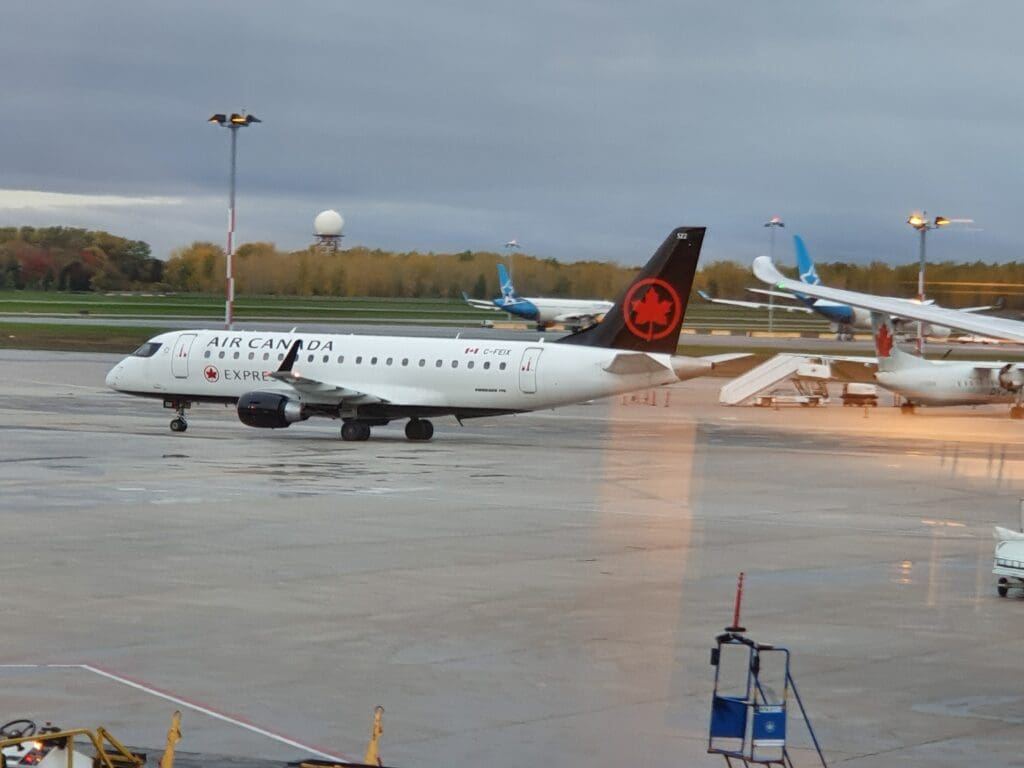
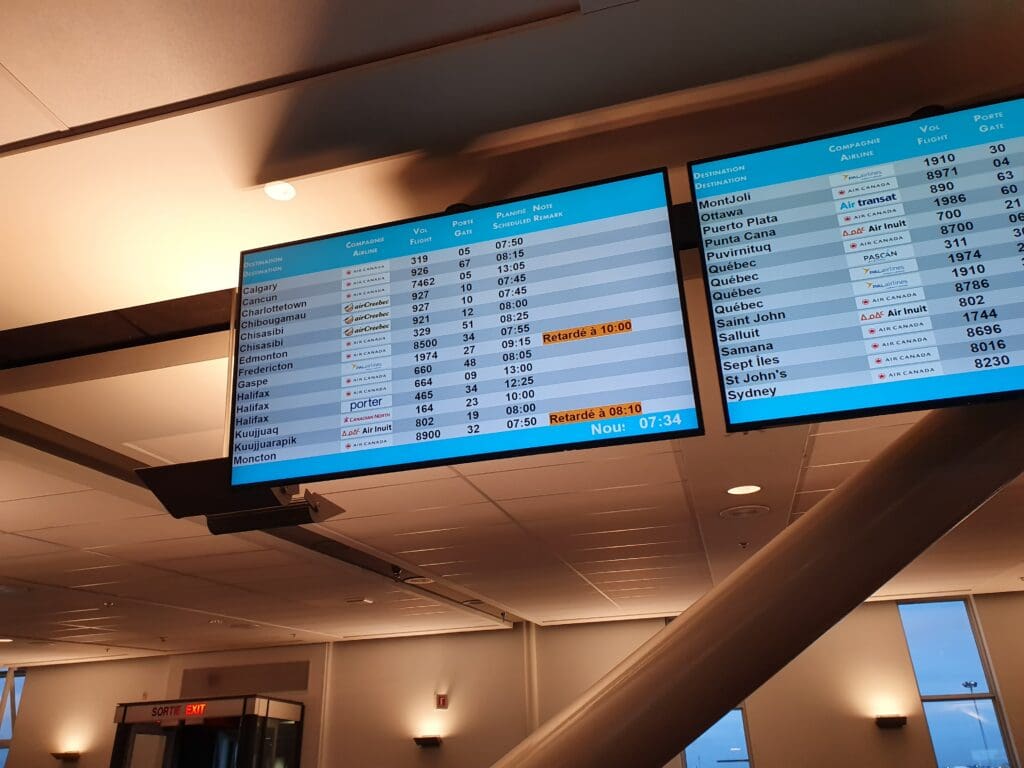
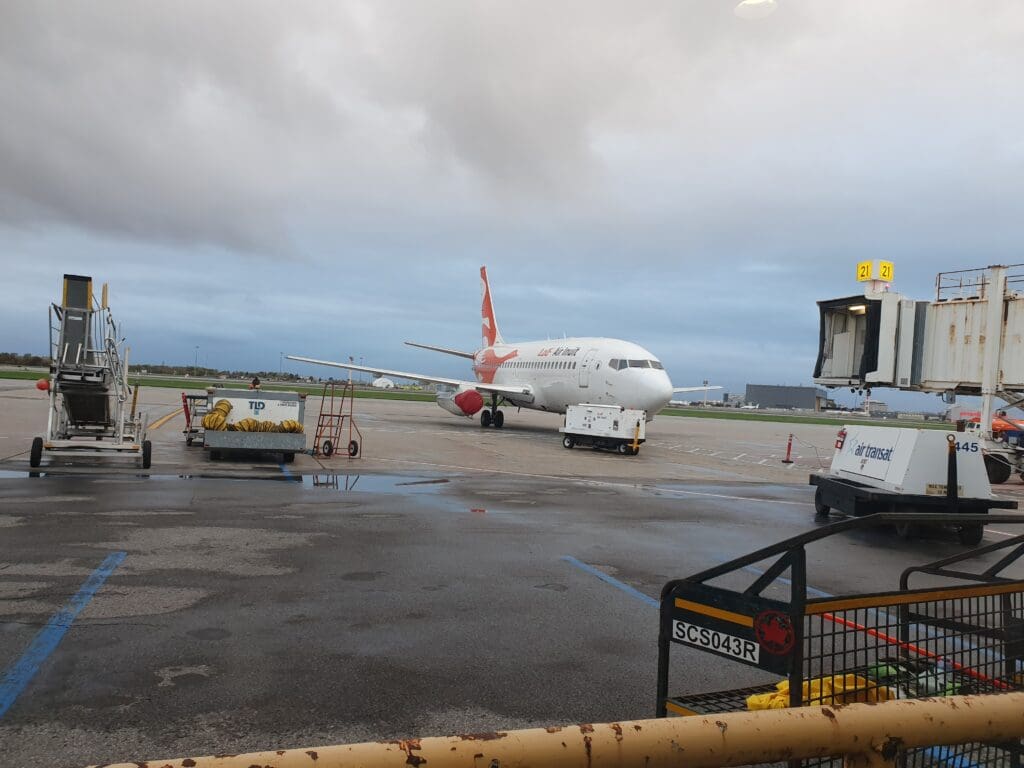
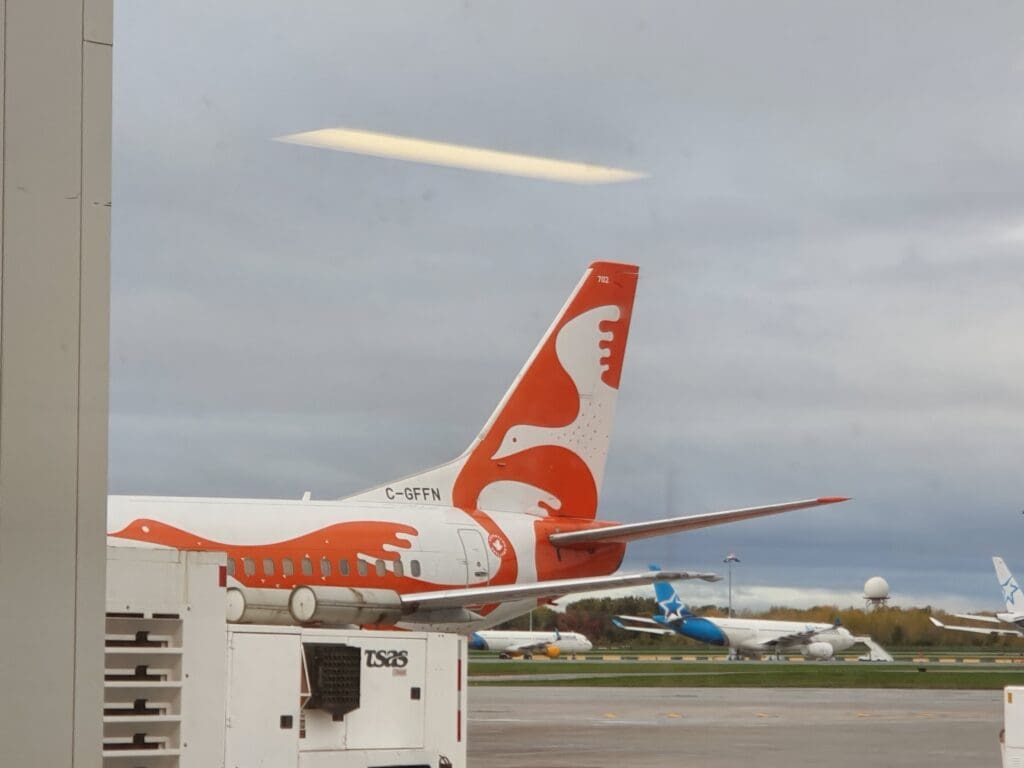
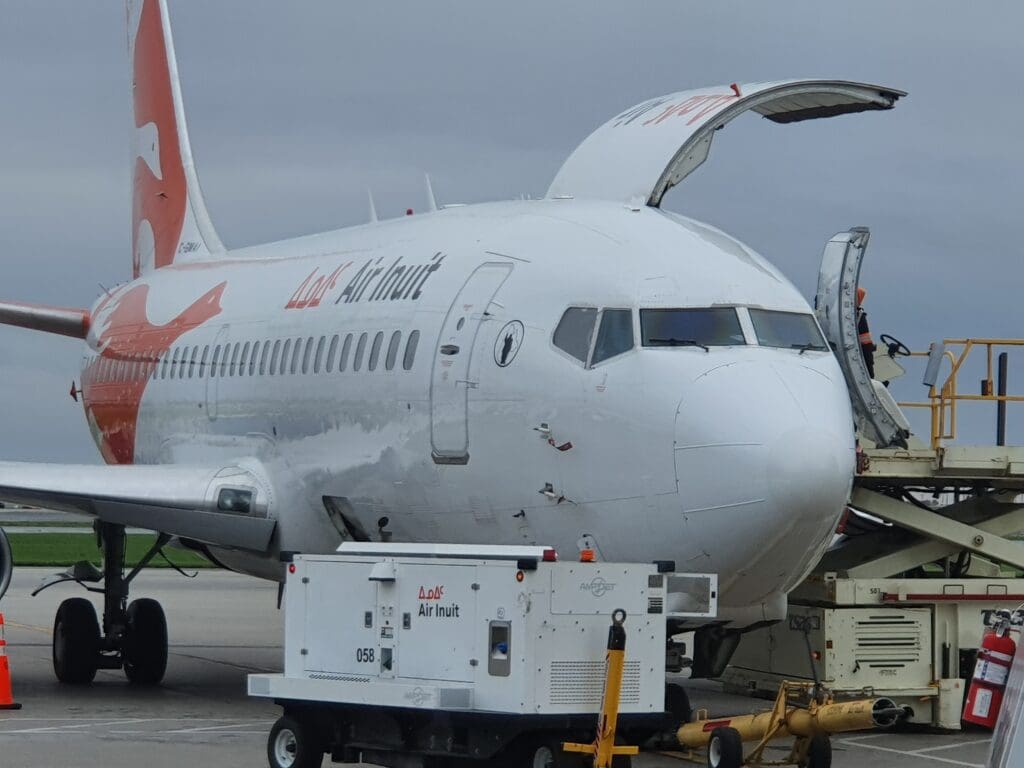
As one of Air Canada’s major hubs and home to the airline’s headquarters, unsurprisingly the bulk of departures were operated by Canada’s largest airline or their regional subsidiary Jazz Aviation (under the Air Canada Express brand). With such flights operated by aircraft ranging in size from the Dash 8 Q300 to the Boeing 787-9, to destinations from St. John’s in the east to Vancouver in the west. Meanwhile, a smaller number of services operated by Flair Airlines, Porter Airlines and WestJet could also be seen. However, as a UK-based aviation enthusiast, the highlight movements of the morning came in the form of Air Creebec’s four Dash 8 departures, three Air Inuit flights heading north – two operated by Dash 8 Q300s and one by the ultra-rate Boeing 737-200, and a single Canadian North flight to Kuujjuaq later that morning operated by a Boeing 737-400 Combi. Another rare movement came with the arrival of Glencore’s Boeing 737-200 Combi on a flight from Toronto to Rouyn via Montréal.
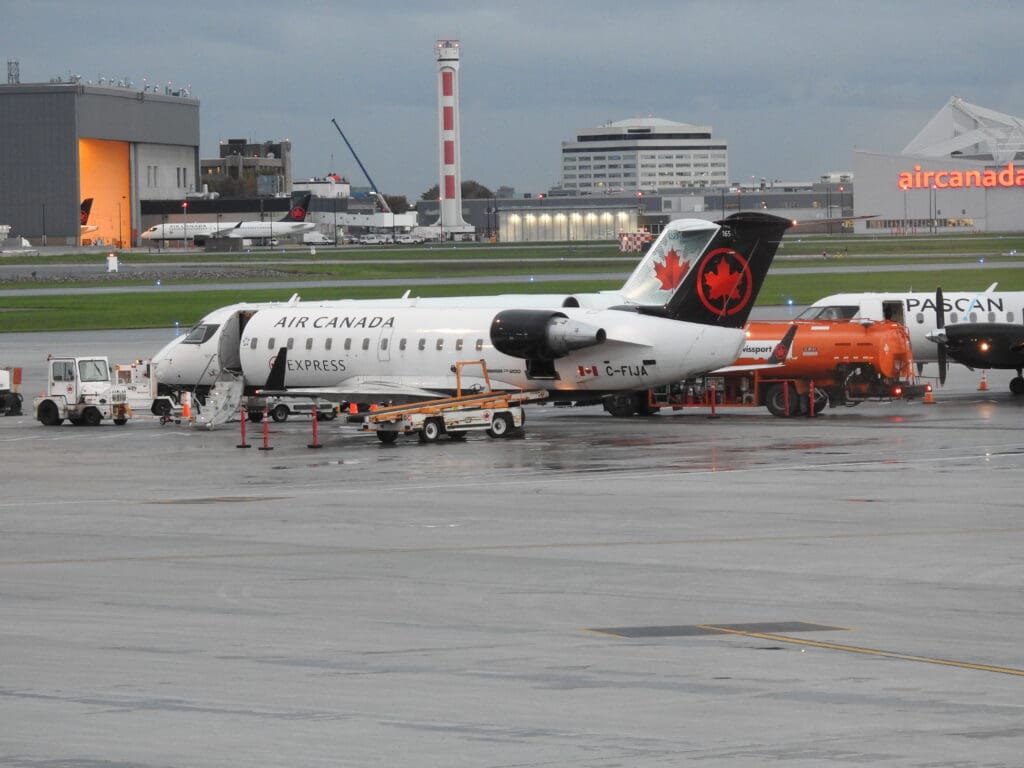
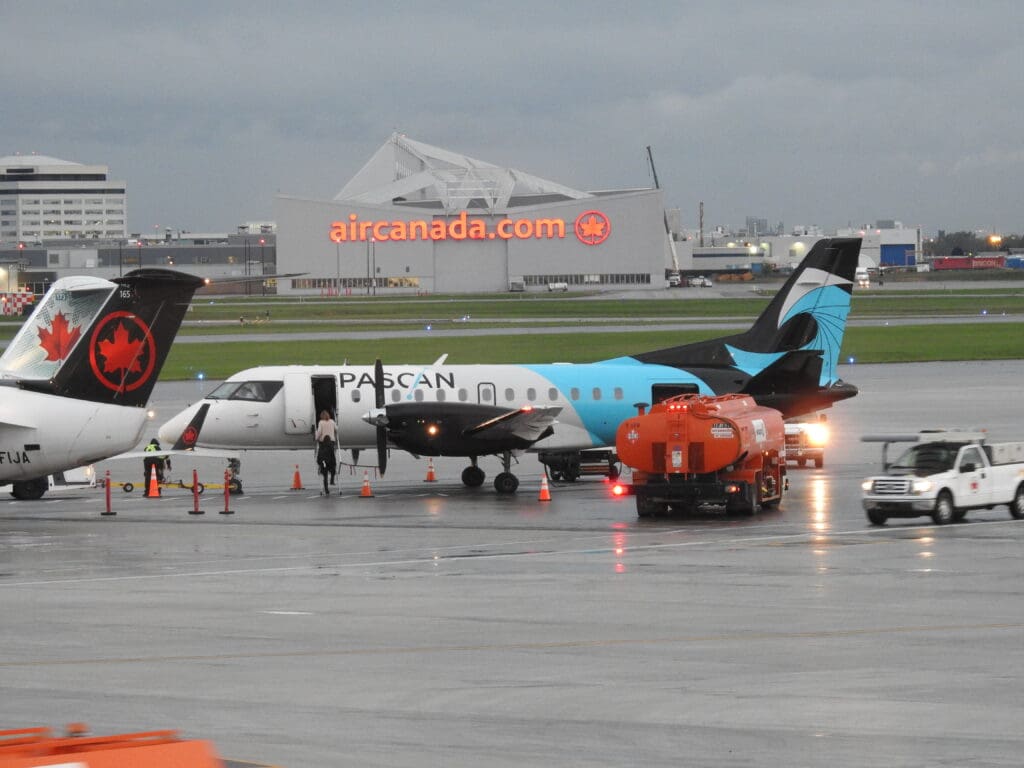
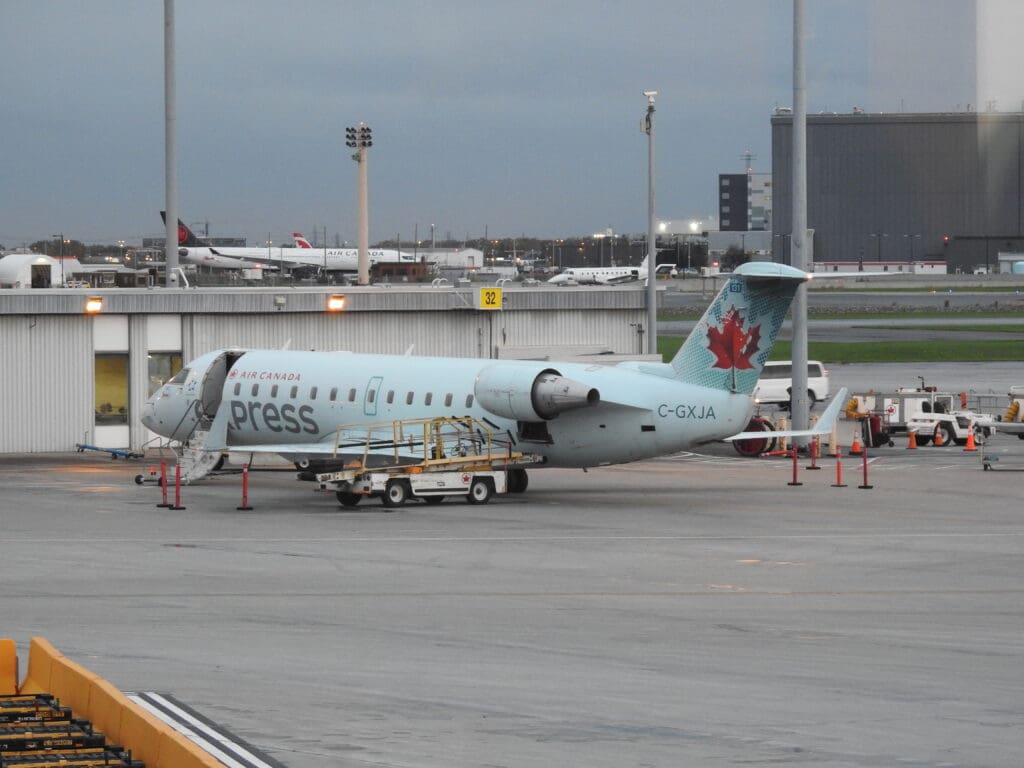
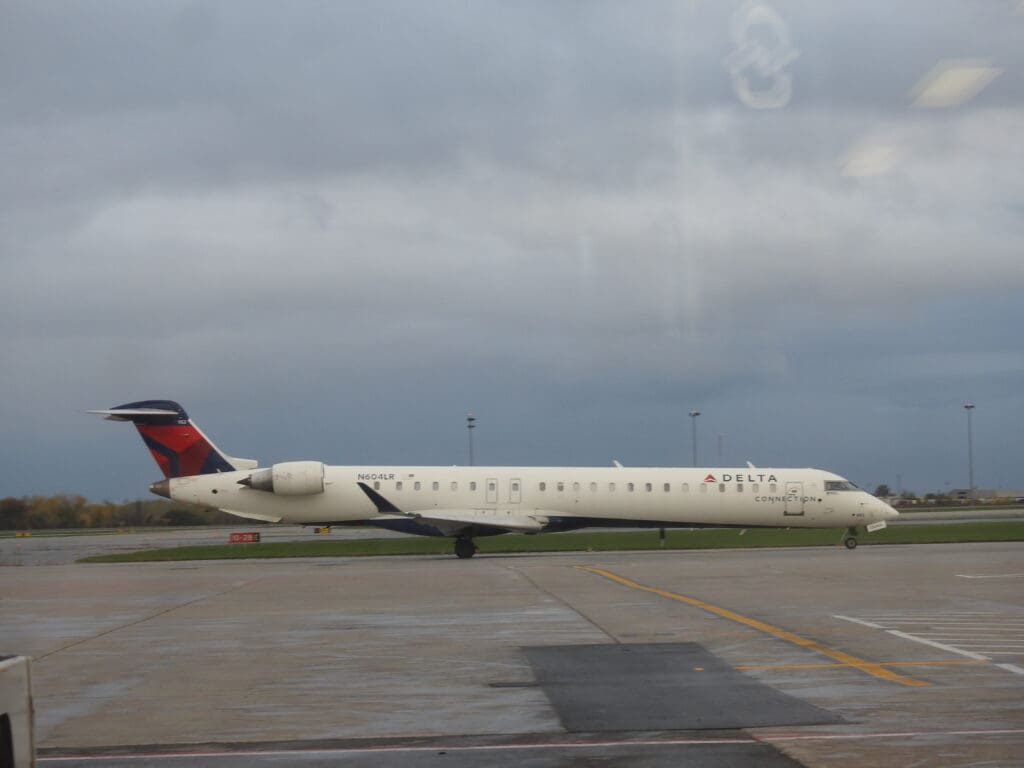
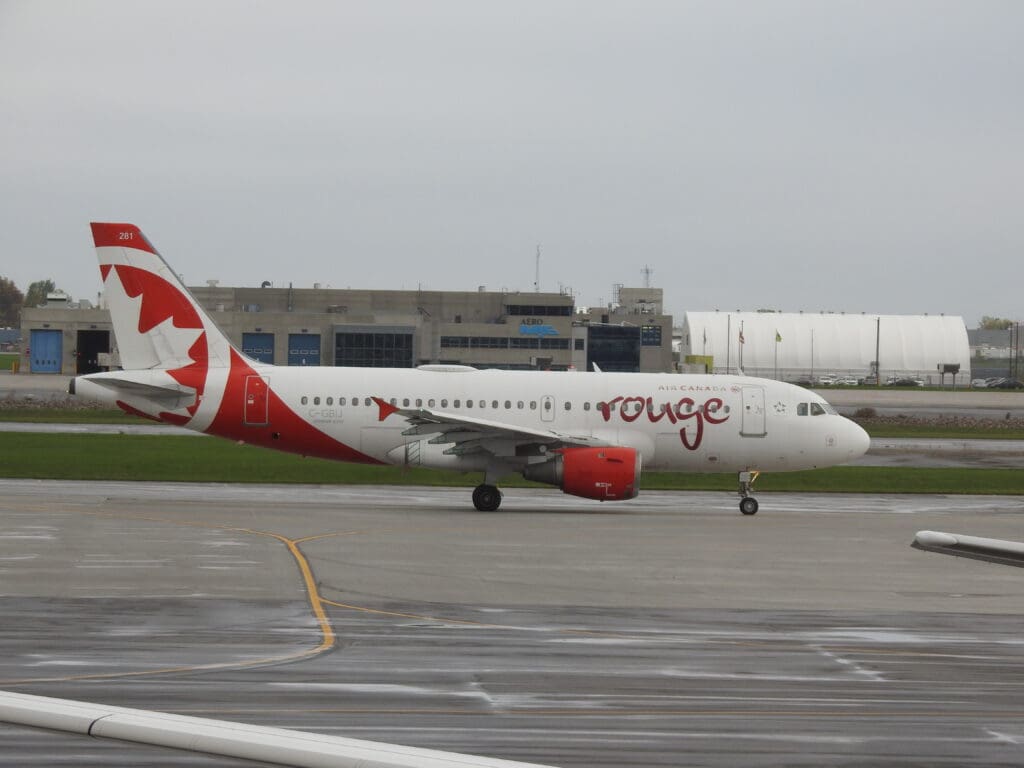
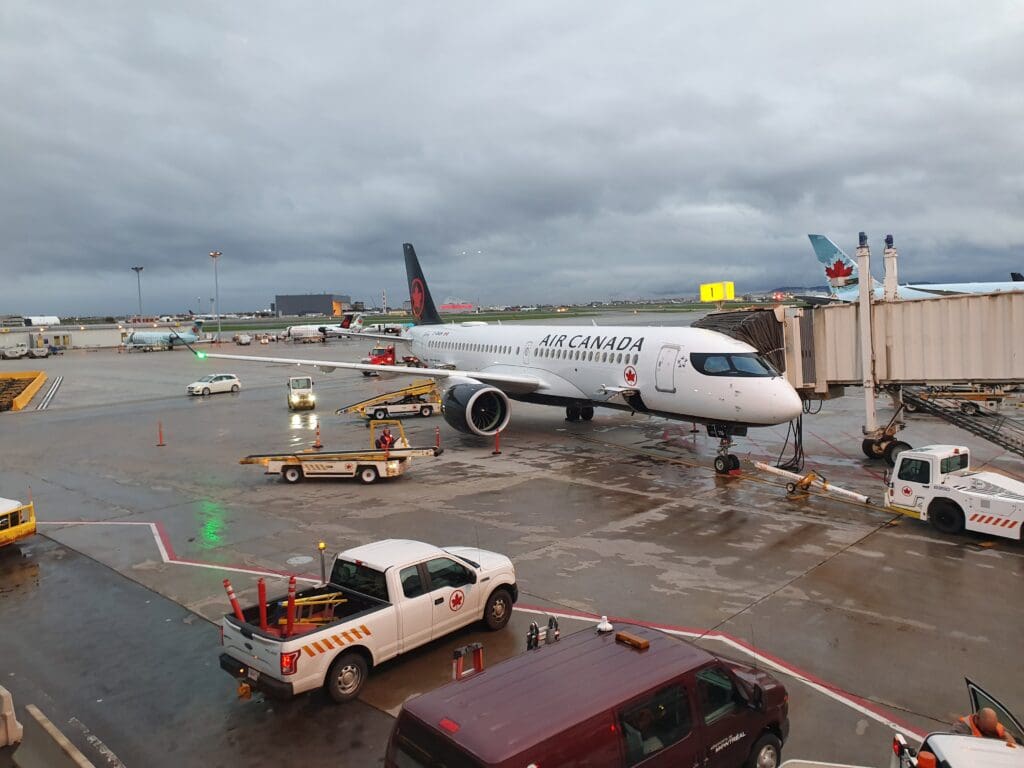
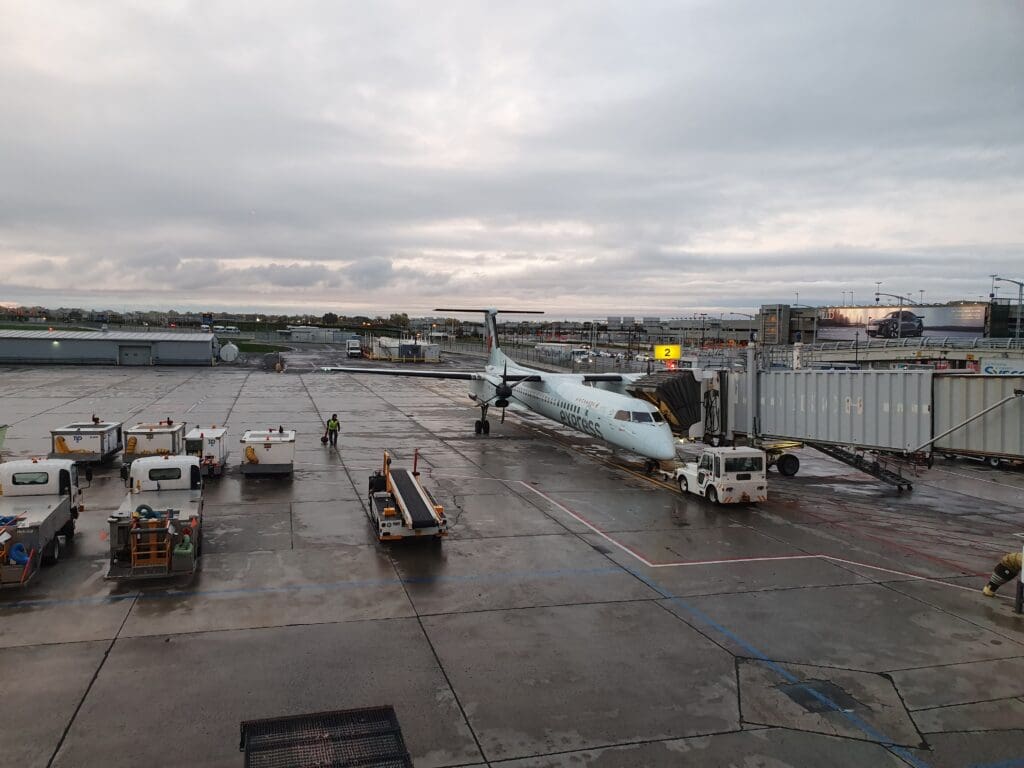
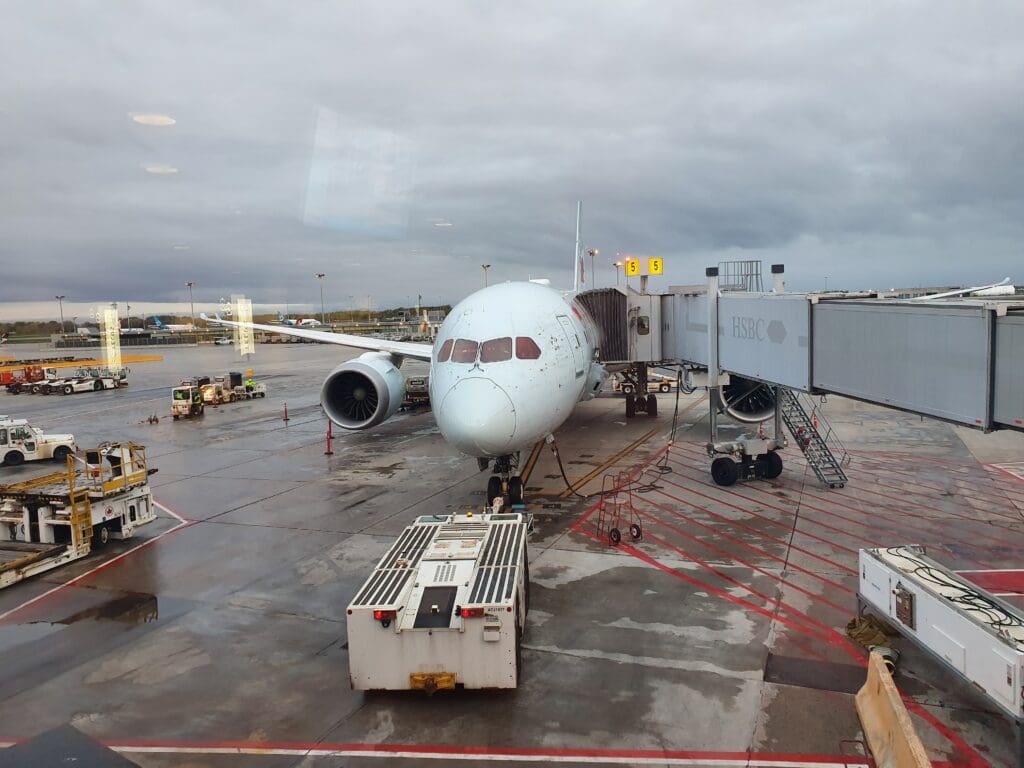
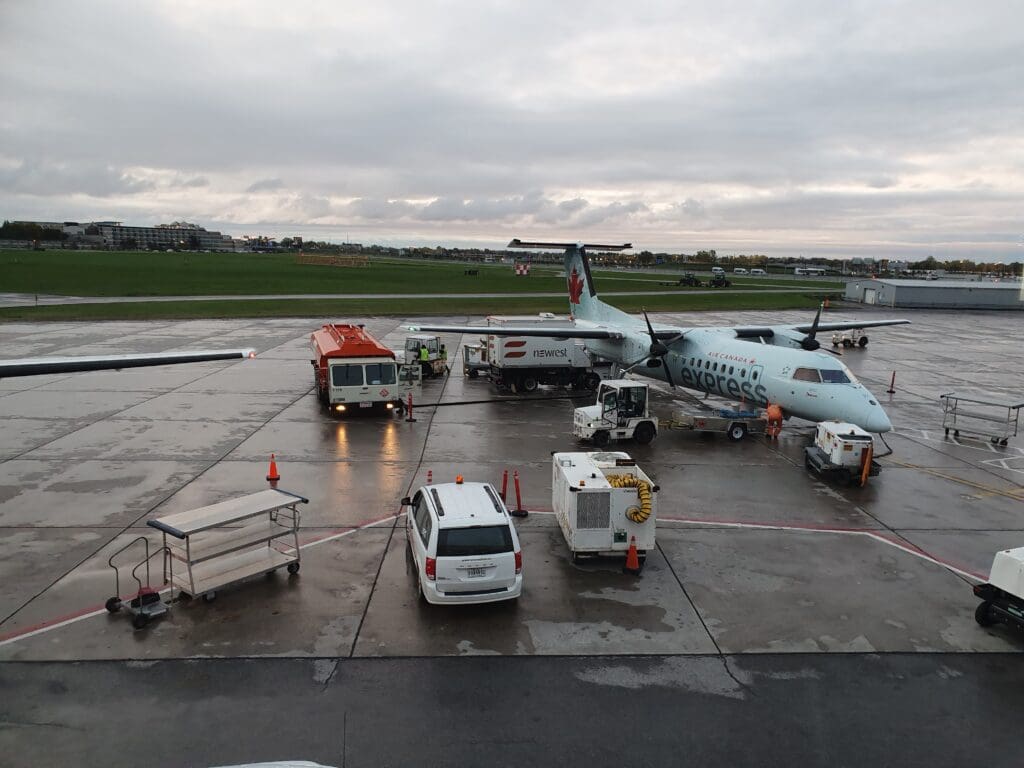
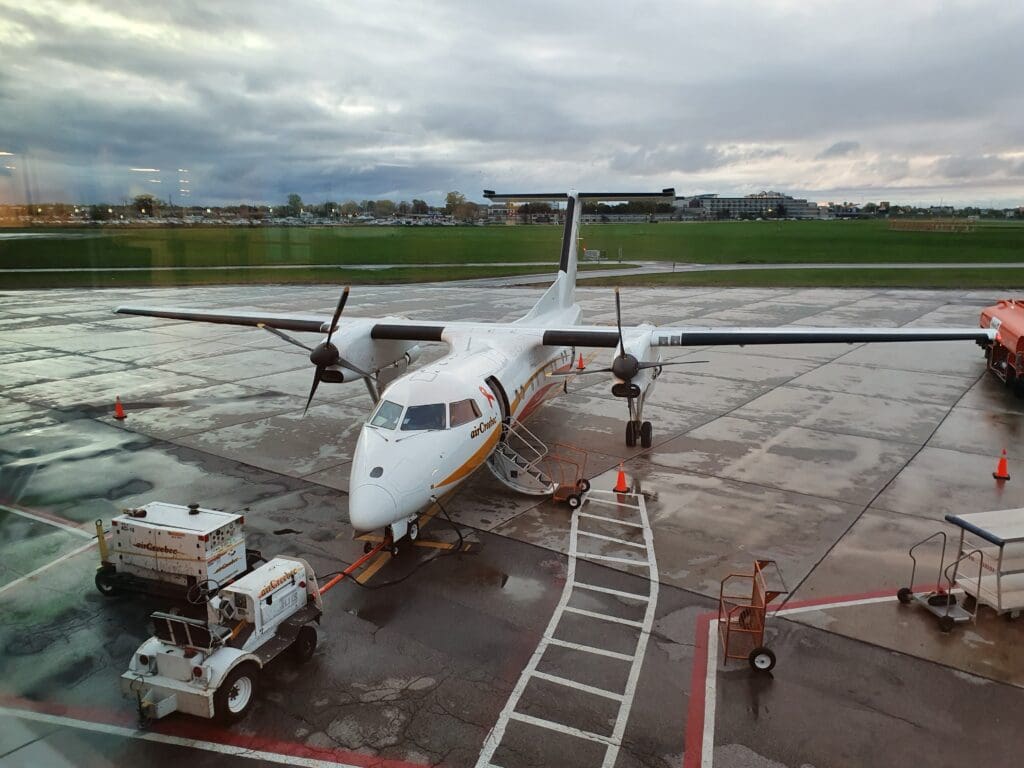
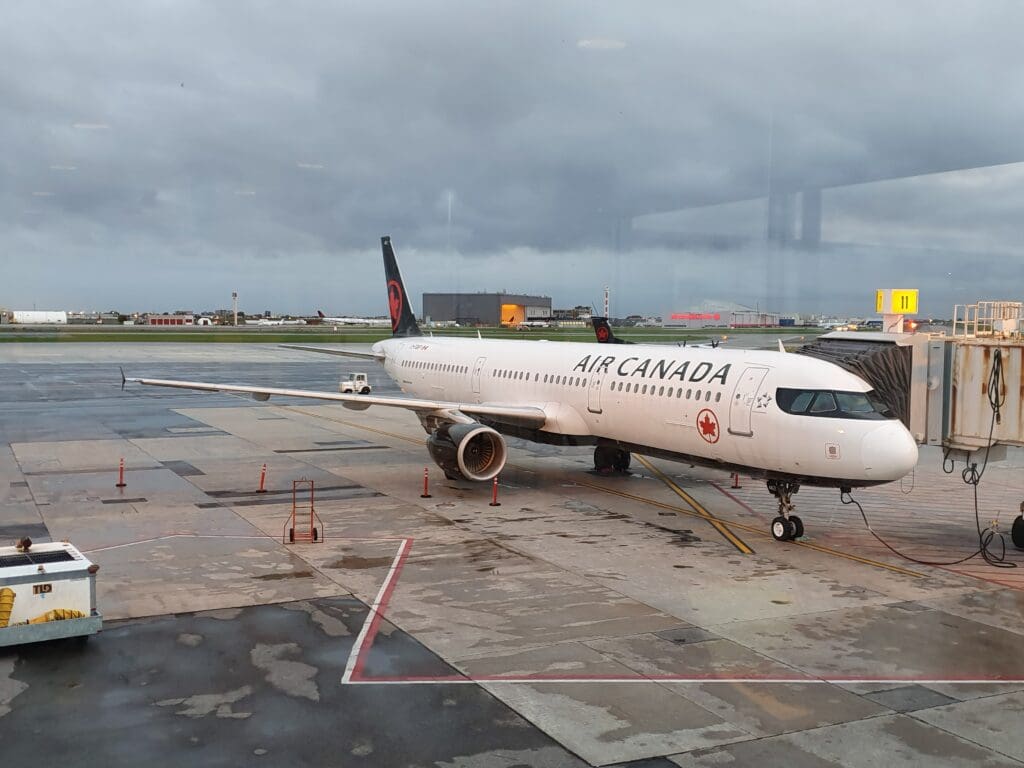
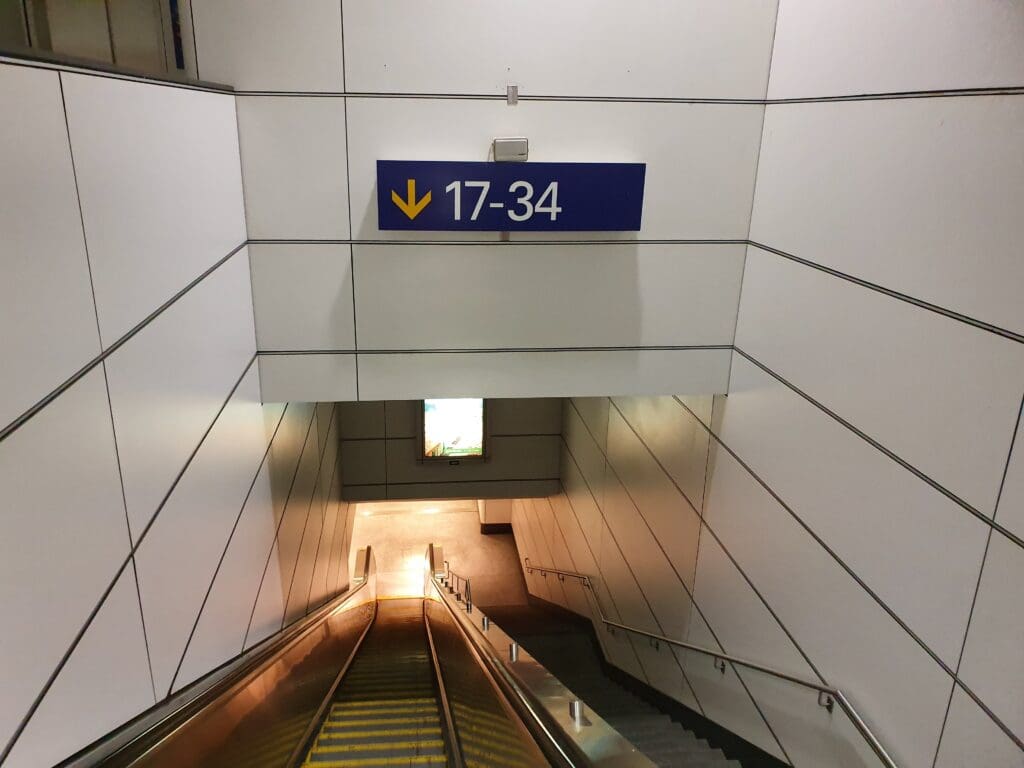
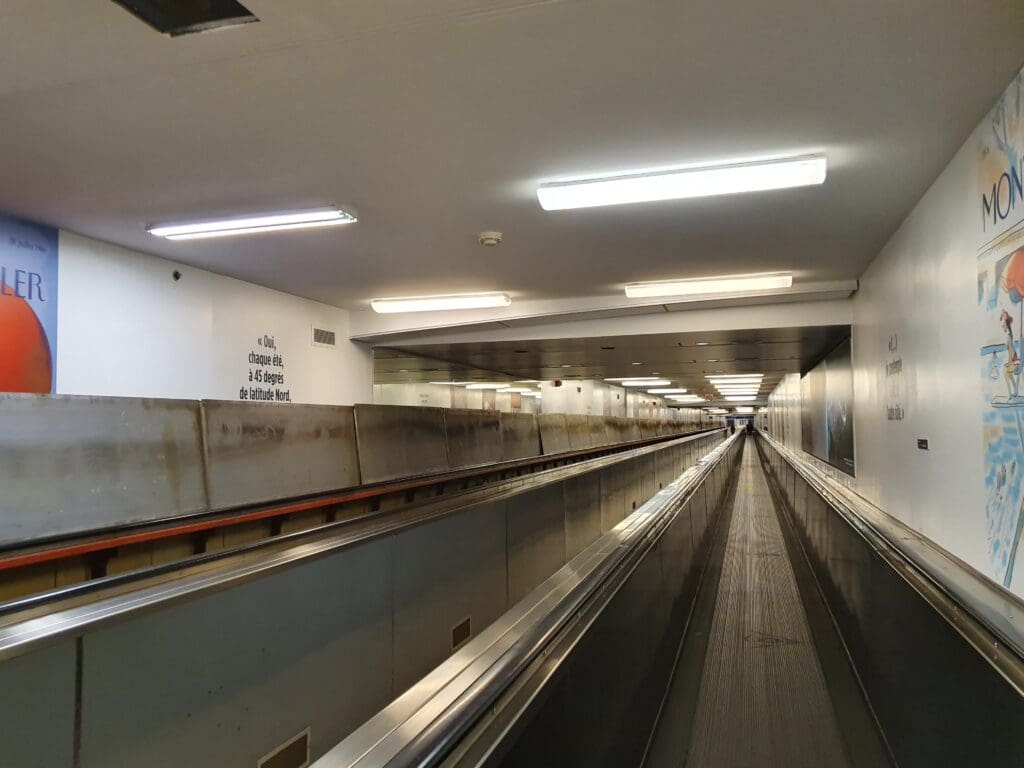
That morning, PAL Airlines’ service to Îles-de-la-Madeleine via Québec City and Gaspé would be departing from Montréal-Trudeau Airport’s satellite pier, with this reached via a long walkway that runs underneath the apron. Following a couple of hours in the main portion of the terminal, I made my way over to the satellite pier which was relatively busy at the time of my arrival with passengers waiting for flights operated by Air Canada Express, Air Inuit, Canadian North and PAL Airlines. As with the main terminal, the satellite pier appeared to be relatively clean although it is notably lacking in facilities, with these limited to a single café-bar and multiple vending machines.
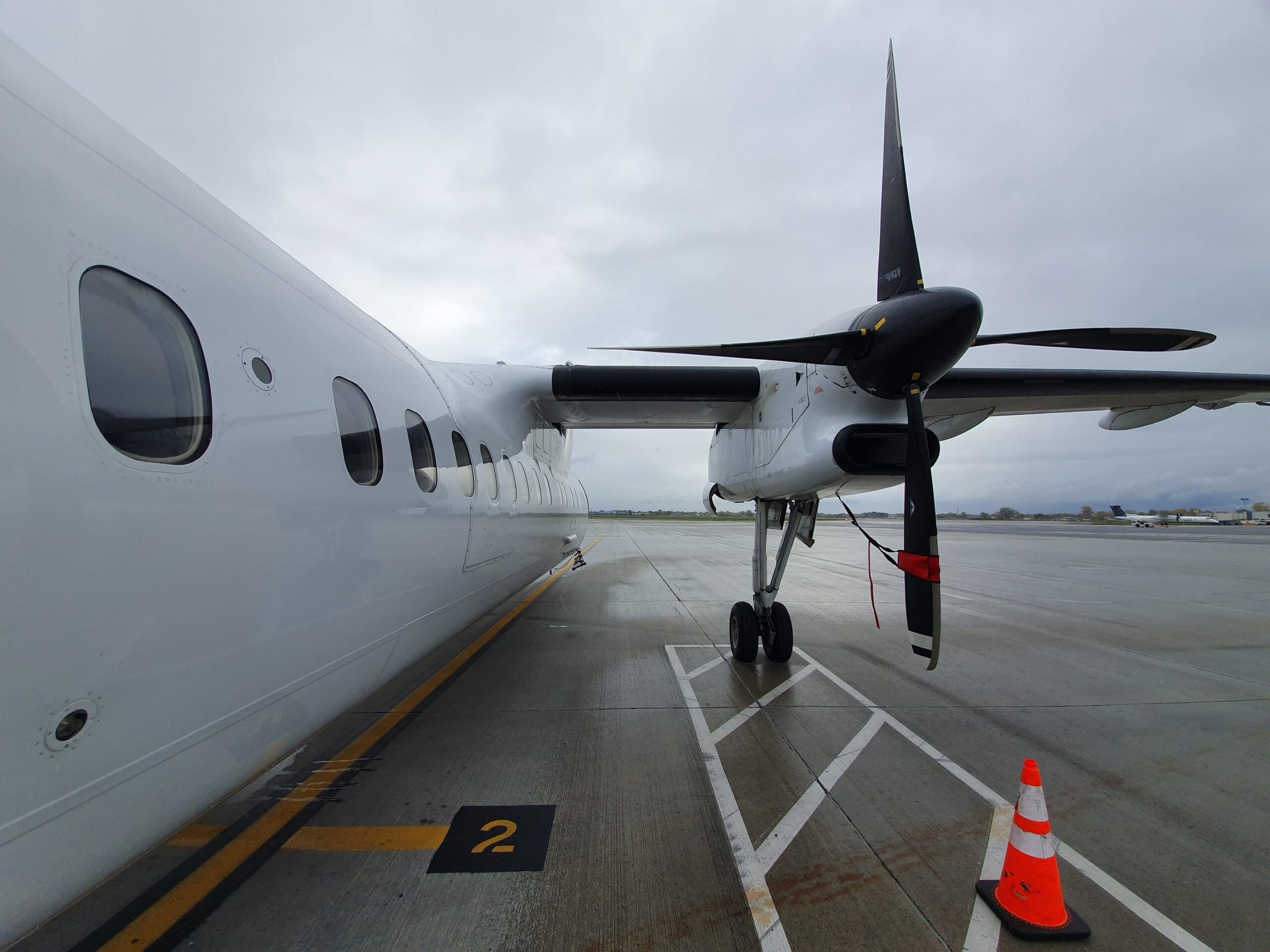
At 0925, an almost all-white Dash 8 pulled up to Stand 27 in one corner of the rectangular pier following a flight down from Val d’Or. Whilst the seat map had suggested otherwise, this aircraft took the form of a Dash 8-311, C-GVPA to be precise. Despite having hoped to sample the rarer 100 Series that morning, the 300 Series is not a particularly common type, especially in Europe where my chances of flying one were slim outside of Norway. This was to be only my second ever Dash 8 300 flight in living memory, with the first having taken the form of a short hop from Manchester to Cardiff on the long-defunct Air Southwest in March 2007.
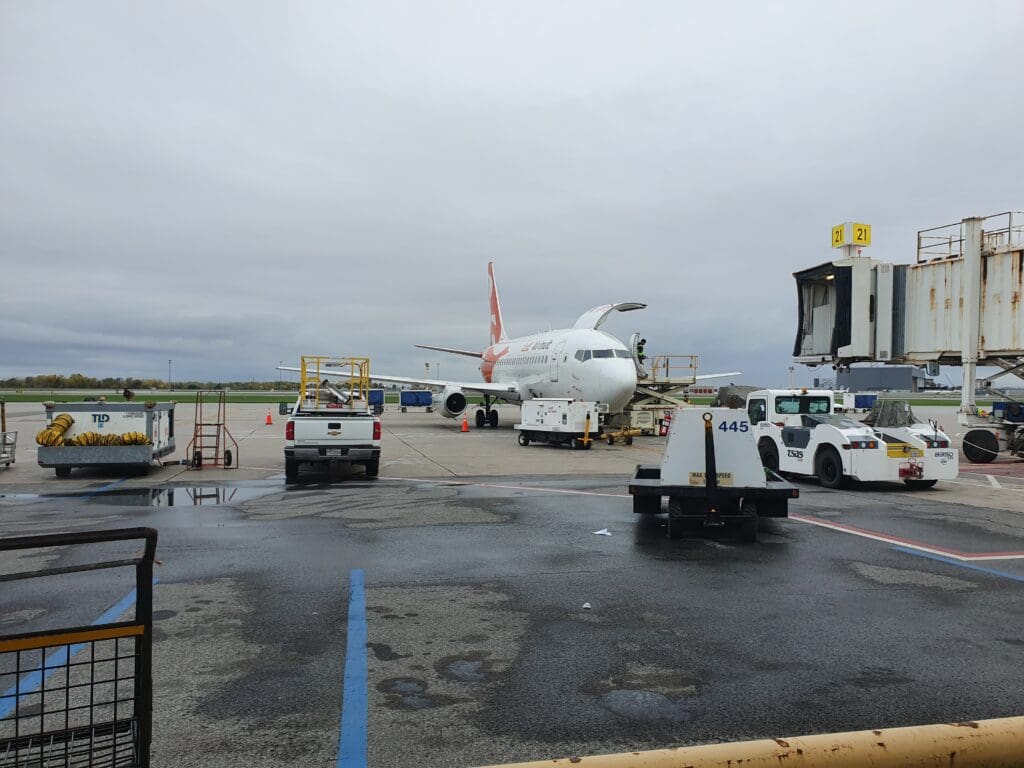
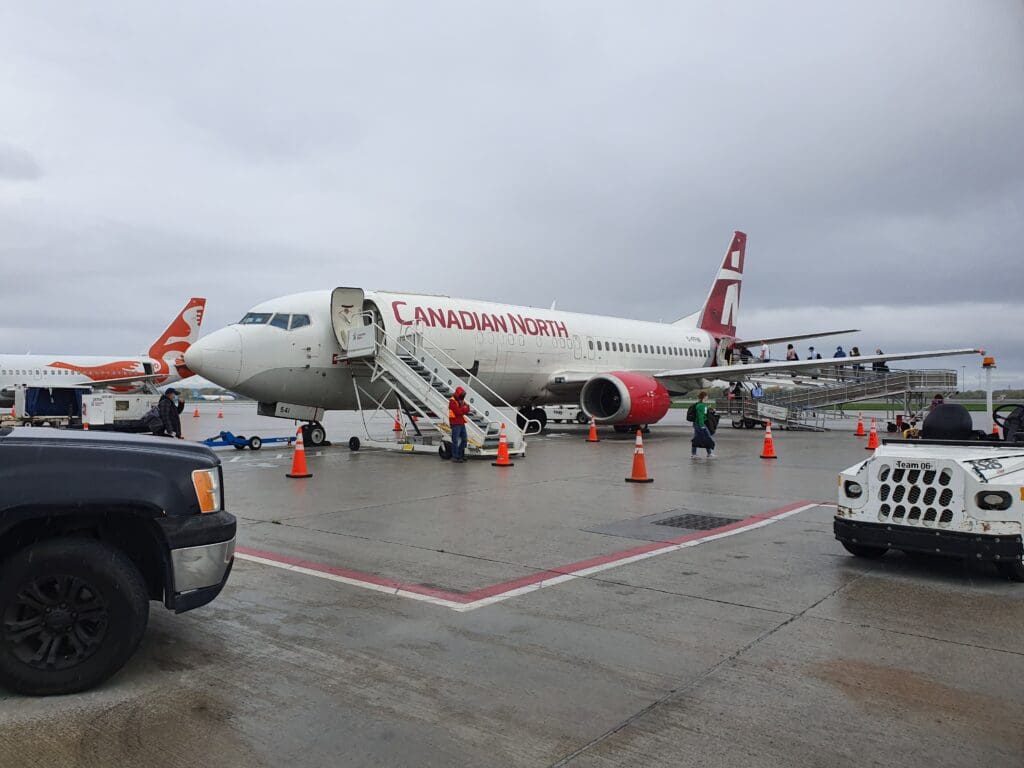
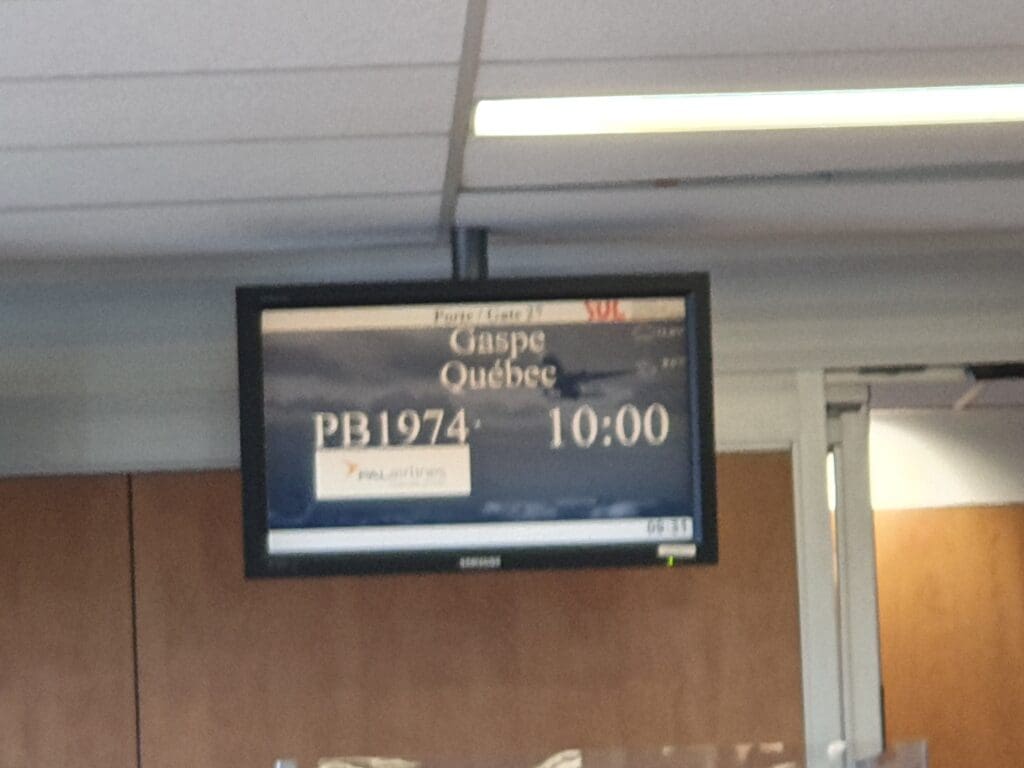
Carrying the serial number 230, this particular Dash 8 rolled out of de Havilland Canada’s factory at Downsview Airport in September 1990 and carries with it a long and interesting service history. Having initially worn the test registration C-GLOT, this was exchanged for the American registration of N679MA when the aircraft commenced service with Alaskan airline, MarkAir, becoming one of only two Dash 8s in the carrier’s fleet. In October 1992, the aircraft was returned to its lessor in GPA Jetprop and a couple of months later was ferried down to Brazil where it operated for Belém based airline Transportes Aéreos da Bacia Amazônica, simply TABA as PT-OKE. Curiously, whilst there, as with TABA’s other Dash 8s the aircraft was given ‘Boeing Dash 8 Series 300 titles’. In December 1994, the aircraft was returned to its lessor once again before commencing a new life in India in February 1995, first as VT-ETP and then as VT-AKB. There, the airline flew with small Delhi-based domestic carrier Archana Airways before being repossessed in March 1996. Ending up in Calgary with the temporary Canadian registration C-FZVU, in February 1997 the Dash 8 was given the registration PJ-DHI and ferried down to Curacao where the aircraft entered service with ALM Antillean Airlines. Whilst the aircraft had hopped about across the world from operator to operator during the first few years of its life, it remained in the Netherlands Antilles for some time, being passed on to Air ALM in 2001 and then Dutch Caribbean Airlines in 2007. In 2009, the aircraft was reregistered as V2-LGN and began flying for Antiguan carrier Leeward Islands Air Transport, more commonly known as LIAT. However following LIAT’s replacement of their Dash 8 fleet with ATR-42s, in February 2016 the Dash 8’s 19 years in the Caribbean warmth came to an end when the aircraft was ferried up to PAL Airlines’ St. John’s base. Following several months on the ground, in August 2016 the aircraft commenced flying with PAL Airlines as C-GVPA. In the week before my flight, this particular Dash 8 had flown a total of 34 sectors across Québec, operating services from Montréal to Îles-de-la-Madeleine via Québec City and Gaspé, Sept-Îles via Québec City, Mont-Joli and Wabush, and Val D’Or, travelling at least 7,400 miles during such services.
Returning to the scene inside the terminal, once the Dash 8 had arrived I decided to make my way over to the gate. At this time, this was fairly busy however with the Canadian North service departing from the neighbouring gate, it was difficult to distinguish those heading to Kuujjuaq, from those on PAL Airlines’ service. That morning, there would be a crew change with the two pilots and sole flight attendant making their way out to the aircraft once all inbound passengers had disembarked. At 0935, an announcement was made in French and English informing all passengers bound for Îles-de-la-Madeleine, Gaspé and Québec City that boarding would commence shortly and indeed a little over five minutes later, all passengers were invited to proceed forward for boarding. After a very short queue, I showed my boarding pass and passport to the gate agent who crossed me off a list before handing me the receipt promised to me at check-in before making my way outside.
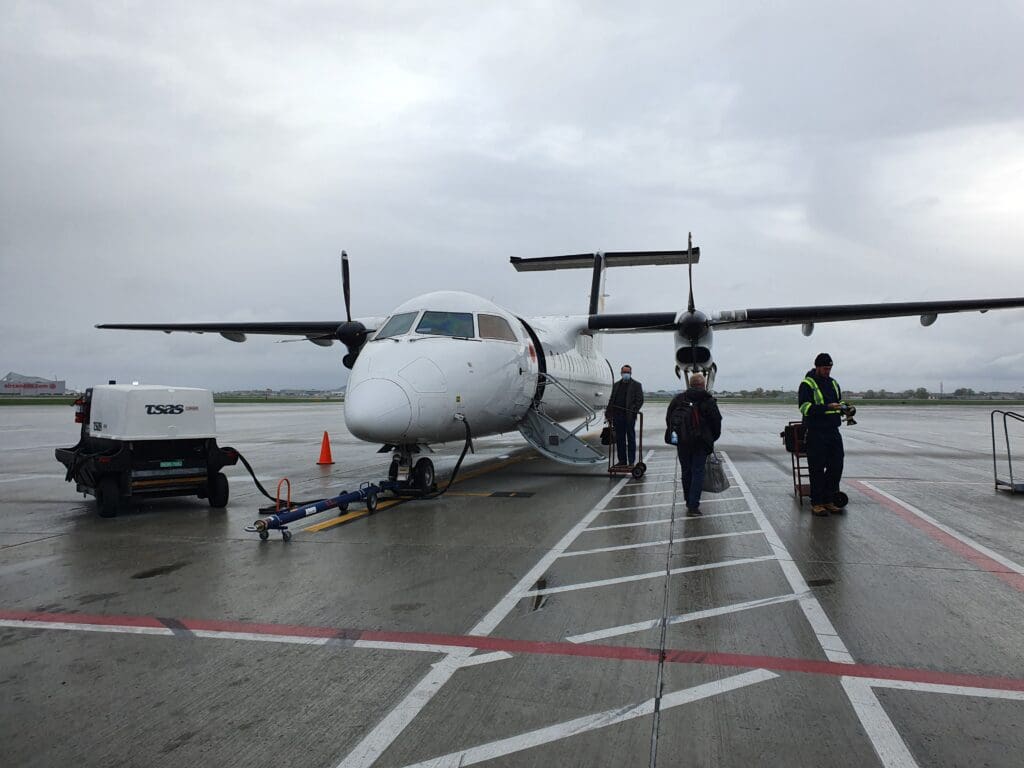
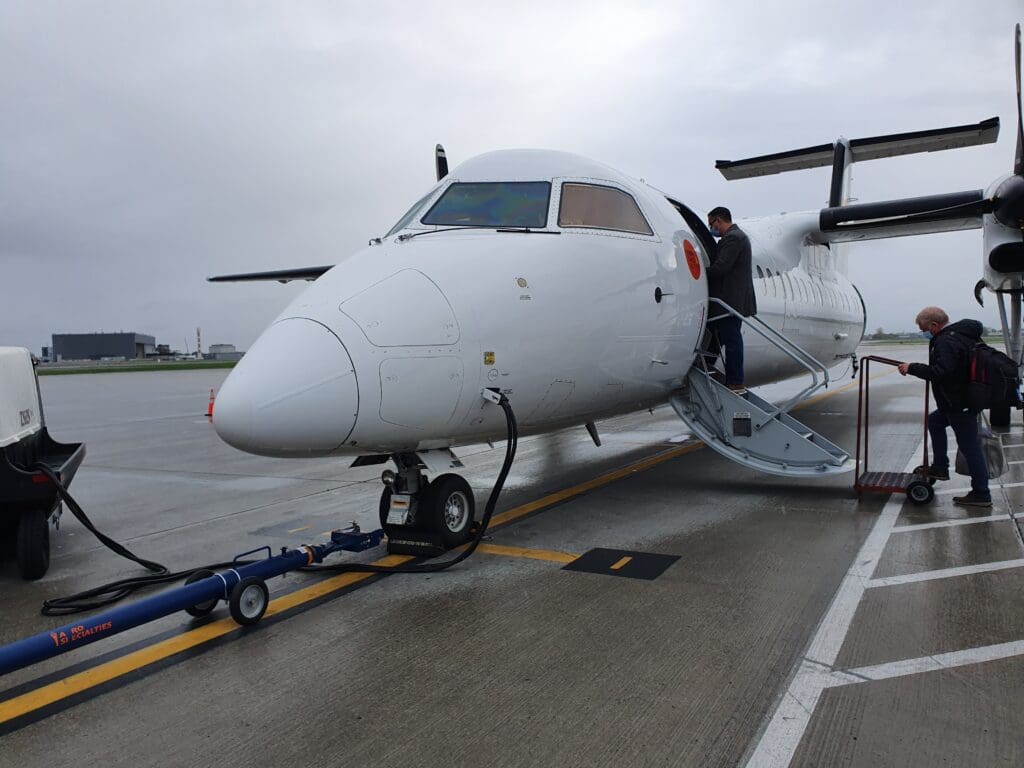
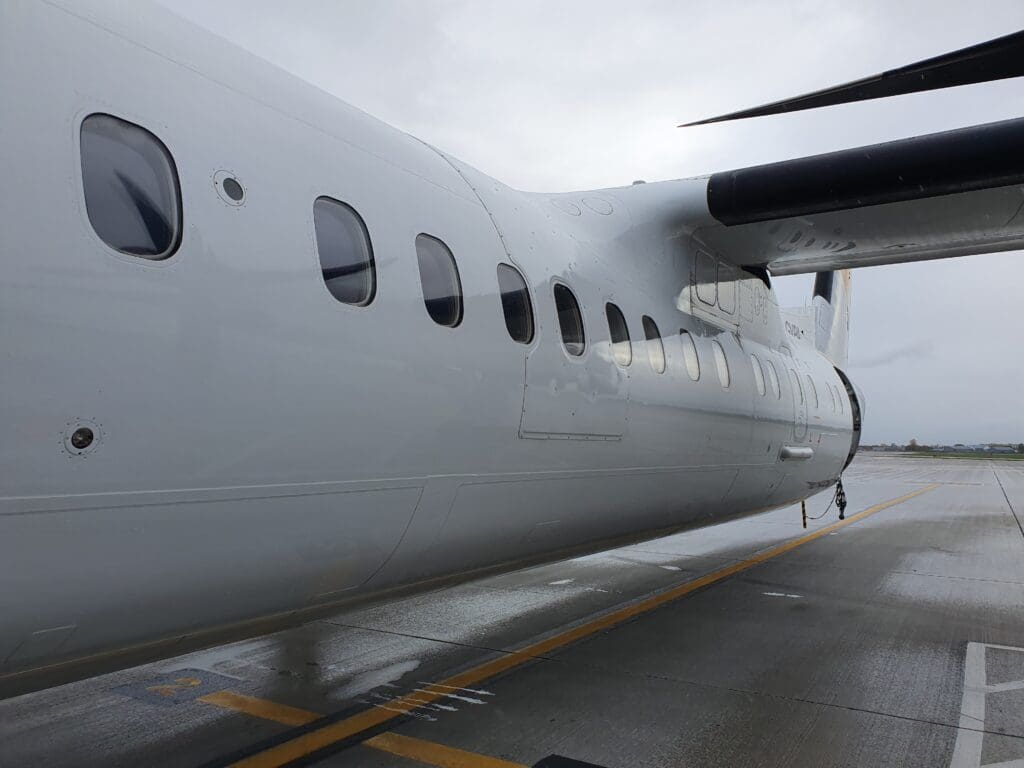
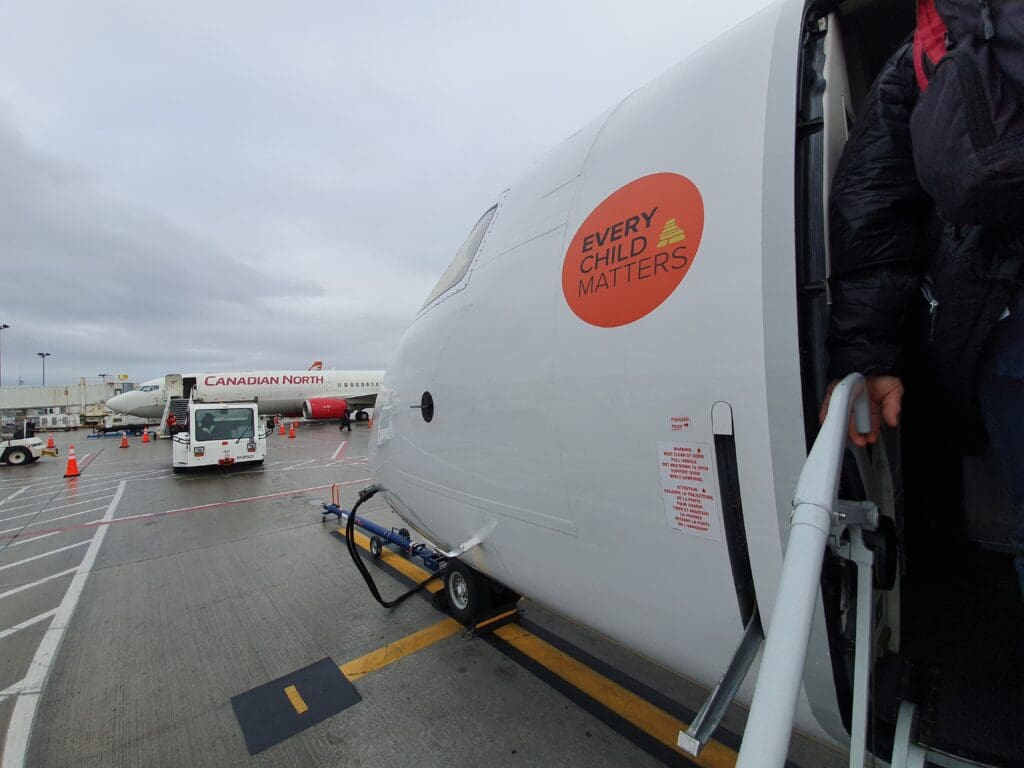
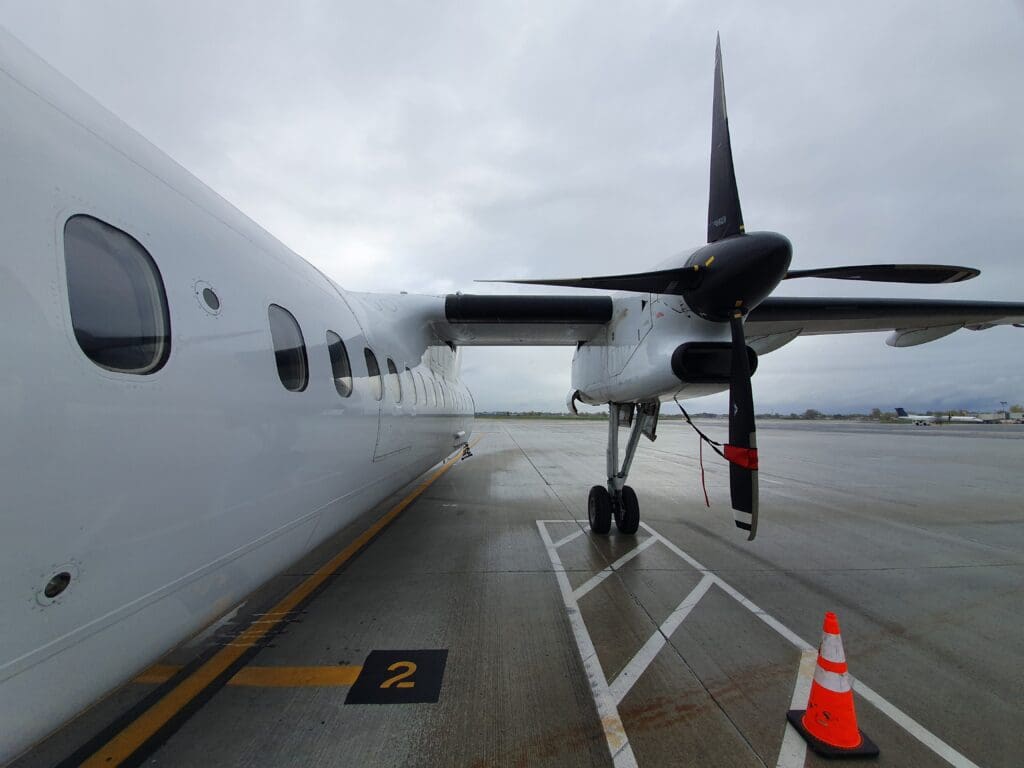
Following a temporary break in the rain, by the time boarding had commenced, this had resumed and so most passengers hurriedly walked the short distance from the terminal to the aircraft without stopping. After taking several photos, I climbed the five steps on the inside of the aircraft’s main cabin door, passing the large four-blade Hope Aero propeller before arriving in the aircraft’s minuscule forward galley where I was greeted in French. Whilst it would have been difficult for me to get lost on my way to my seat, the flight attendant checked all passengers’ boarding passes and upon showing this I was advised to head towards the rear of the cabin. Inside, the aircraft features ten rows of squarish and typically Dash 8 style seats in a 2-2 configuration, each of which is covered in a dark blue (faux?) leather cover. Heading down the plastic lino-covered aisle, being one of the first to board I made it to row 8 without having to stop to allow passengers to stow their bags. After placing my backpack in the small overhead locker, I took my seat and settled in for the short flight up to Québec City that morning.
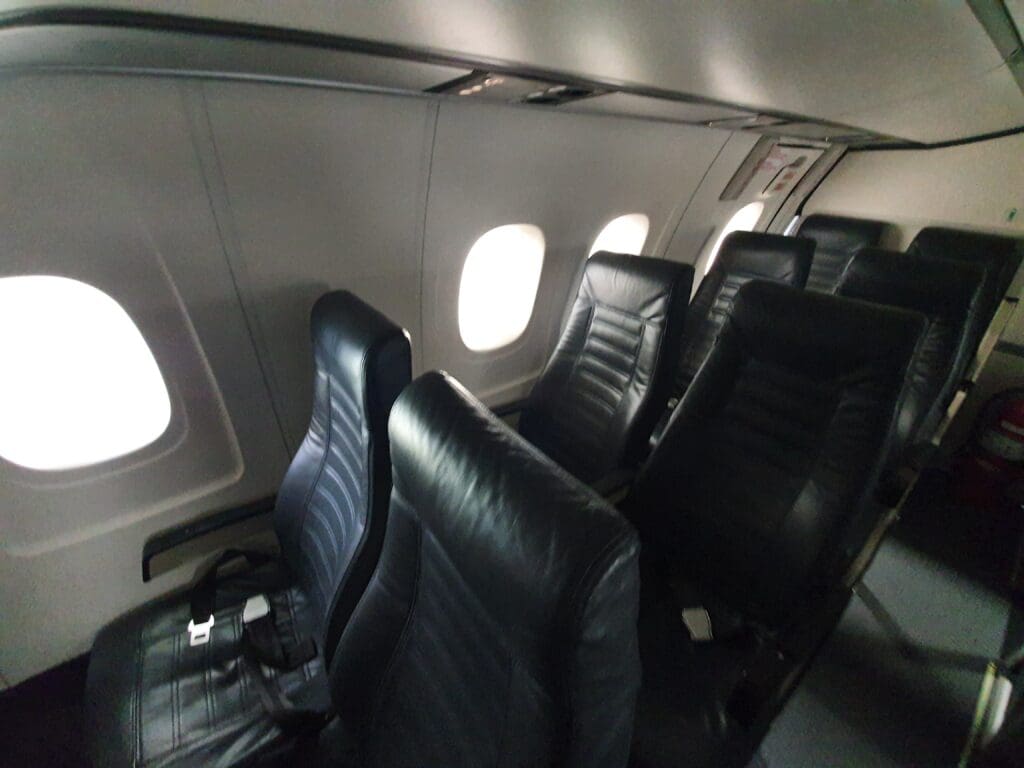
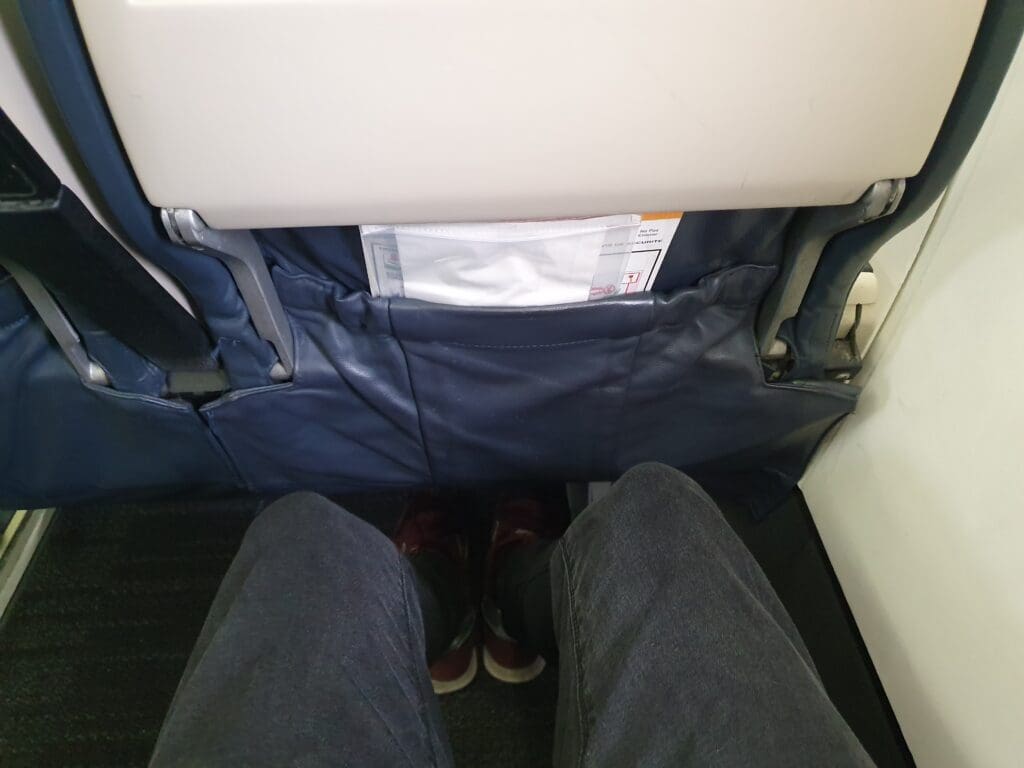
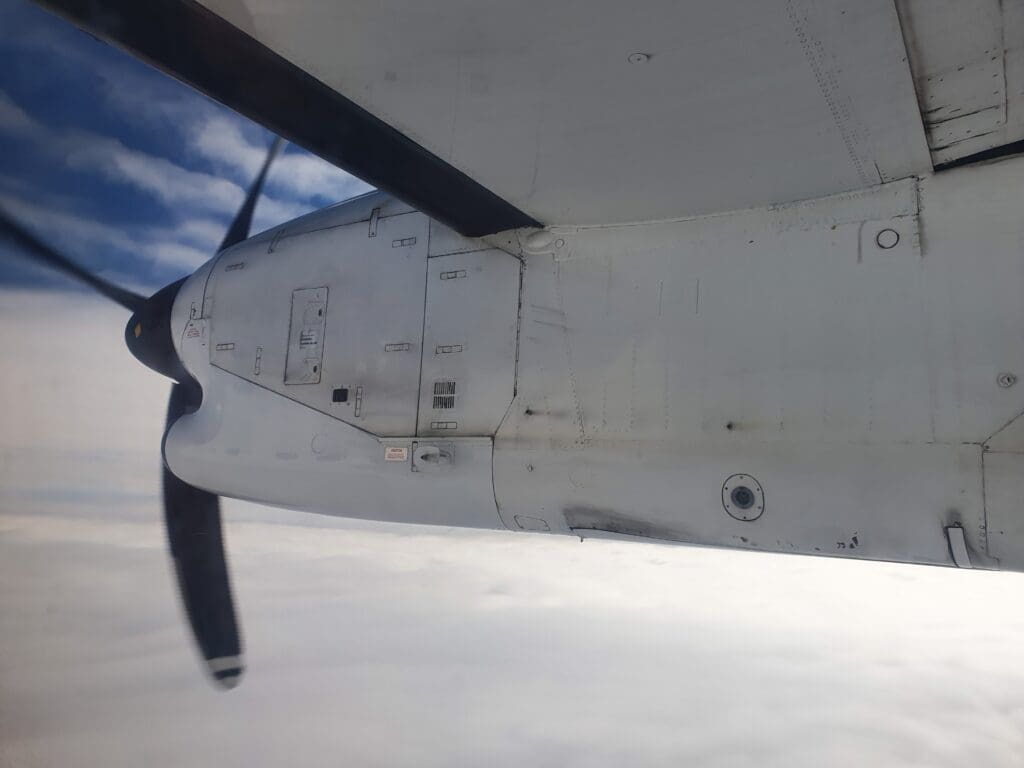
Upon sitting down, whilst the seats were firm, I was pleased and slightly surprised to find that these offered a fantastic amount of legroom. Perhaps unsurprisingly given the aircraft’s age, the cabin did appear to be slightly battered and worn, with a few marks and scratches present, however, it is worth noting that I have travelled on much newer aircraft in a far more tired state. In terms of design, the cabin was dated with old-fashioned PSUs, slightly discoloured panelling and relatively chunky windows. Whilst a fair number of rows appeared to be poorly aligned with the twelve windows on either side of the cabin, I was pleased to find that my seat aligned well with one of the portholes on the starboard side of the turboprop. However, as expected, these provided little view other than of the engine and the apron below. Interestingly, I noted that the aircraft appeared to lack window blinds, although being an enthusiast and enjoying watching the world go by, I am not a major fan of these anyway! Finally, the seatback pocket featured a safety card and a white logoless paper sick bag, located inside a resealable sandwich bag – presumably to allow for greater protection in the event that this was used.
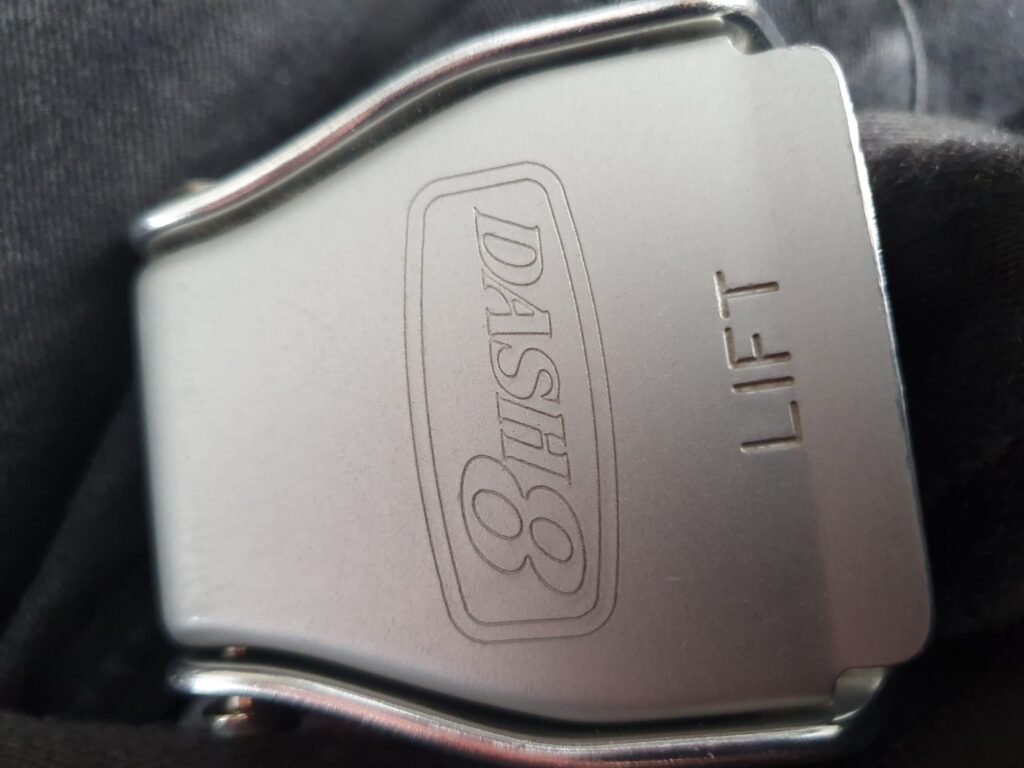
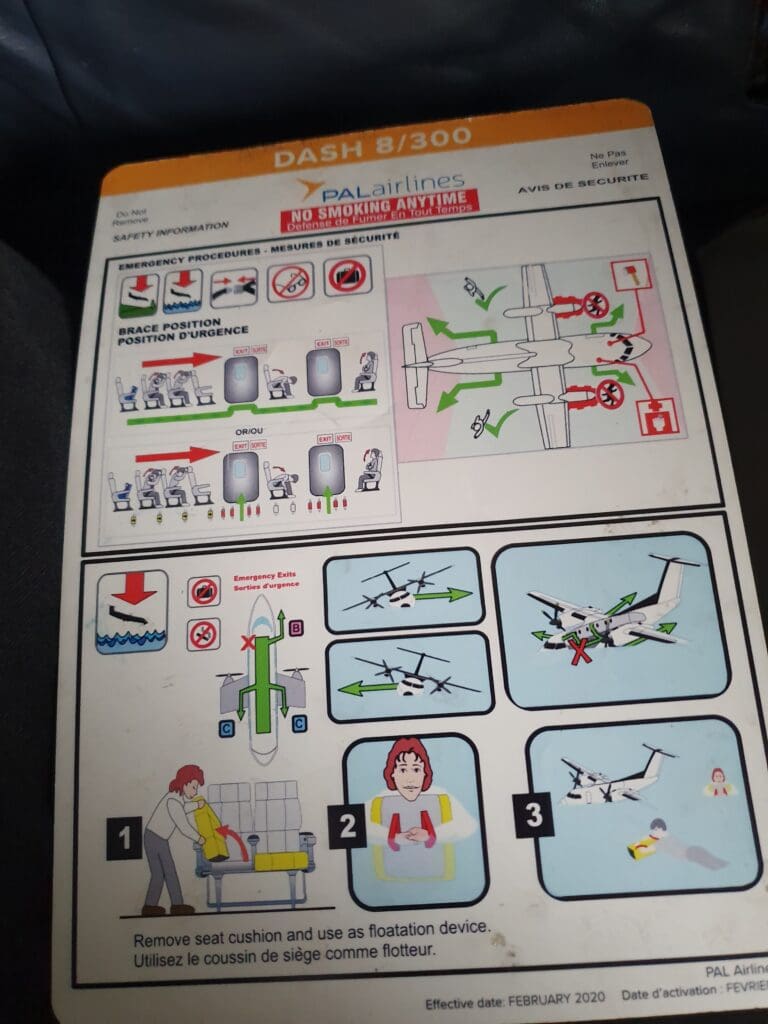
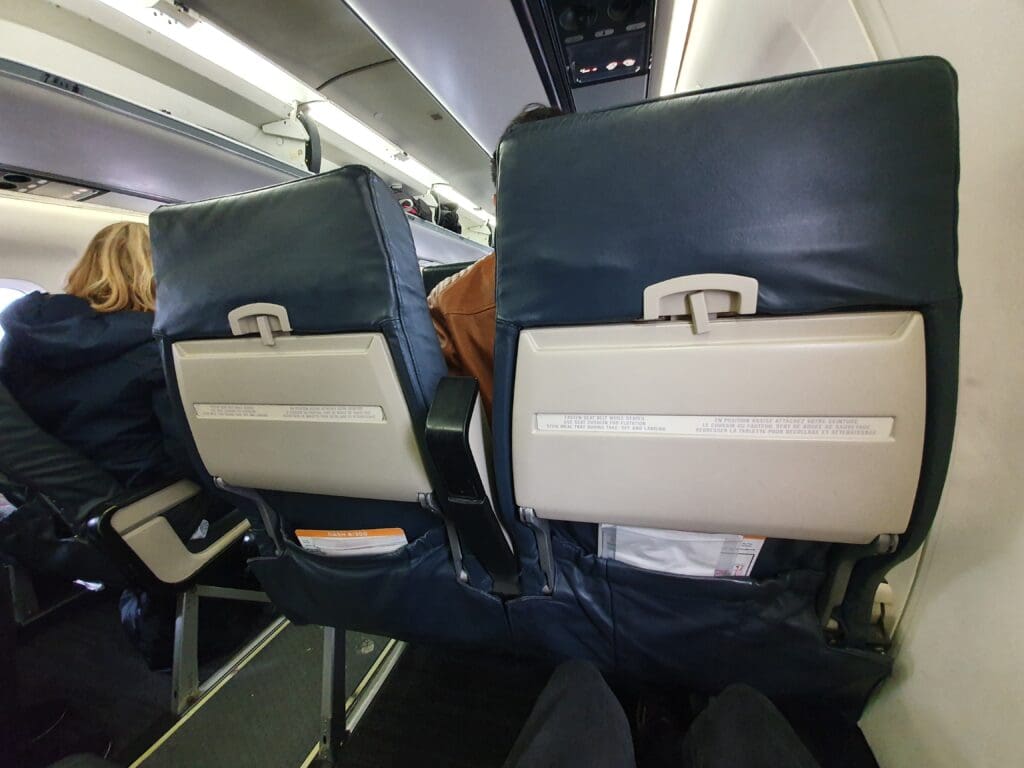
Once seated, I buckled up my Dash 8 branded seatbelt and the cabin lights were soon switched on, at which point a pre-recorded announcement played in French and English regarding the usage of electronic devices. Within a few short minutes, boarding for the flight was complete and at 0949 the flight attendant closed the cabin door. That morning, a total of just 15 passengers were aboard for the first leg of the service and I was pleased to find that the neighbouring seat remained vacant. After the cabin door was closed, the flight attendant performed a brief welcome announcement in French and English, during which they thanked all onboard for choosing to fly with PAL Airlines and informed all of the forty-minute flight time and the cruising altitude of 13,000 feet. Once this speech came to an end, a pre-recorded safety announcement rang out through the cabin which was accompanied by a manual safety demonstration by the flight attendant.
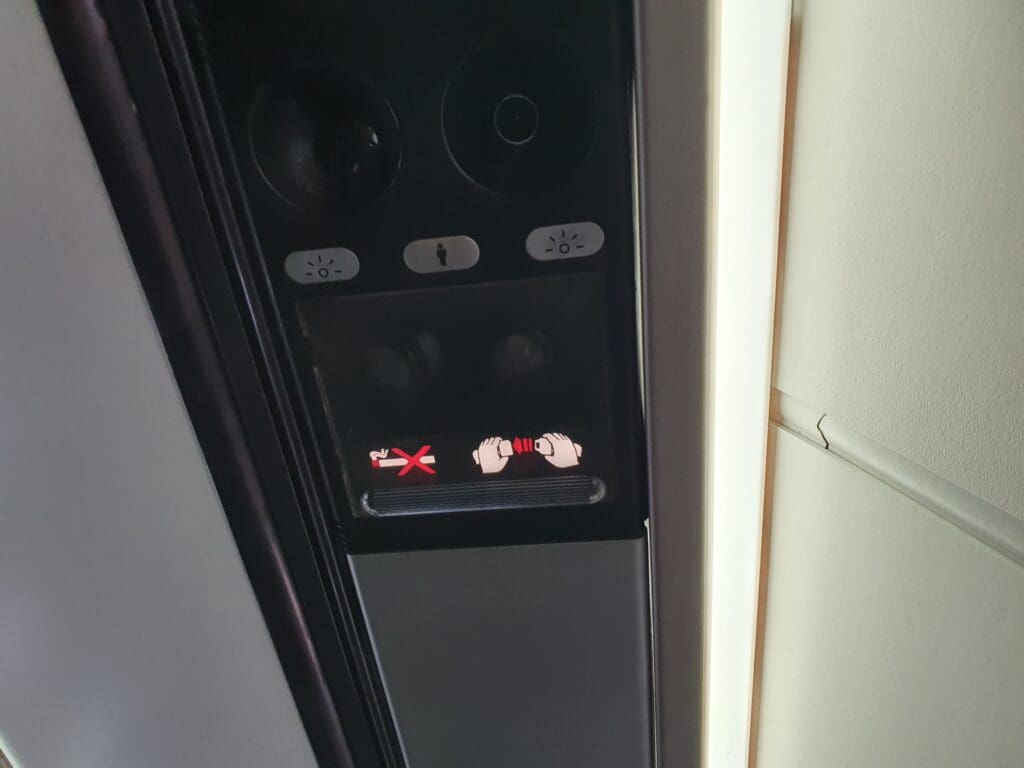
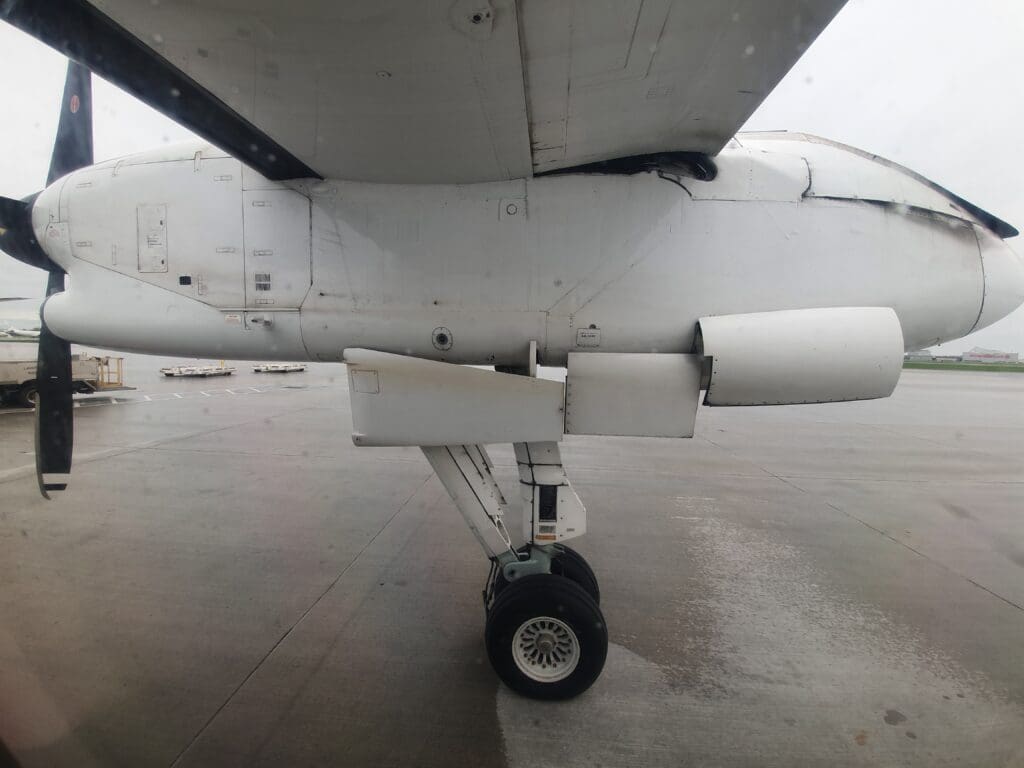
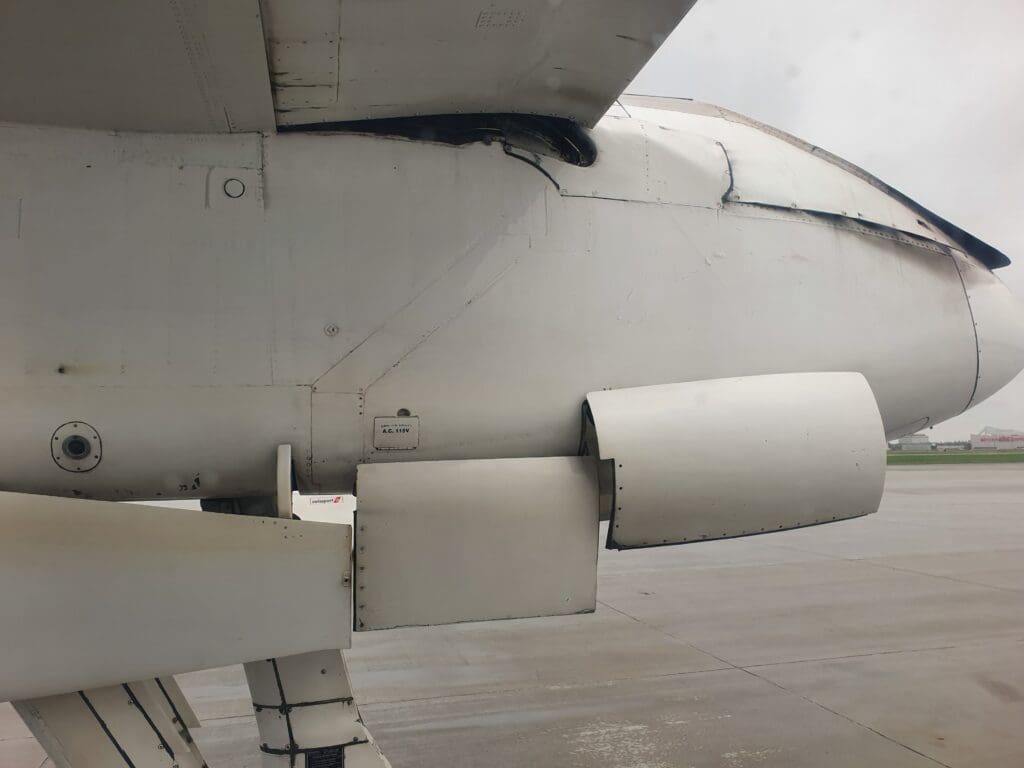
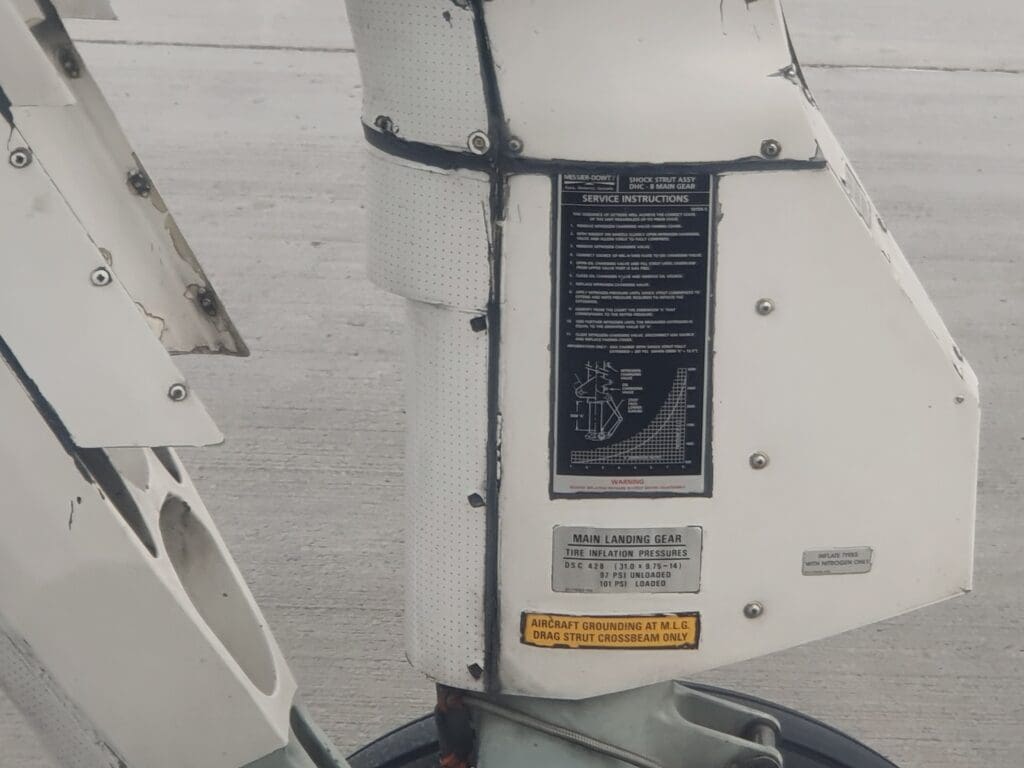
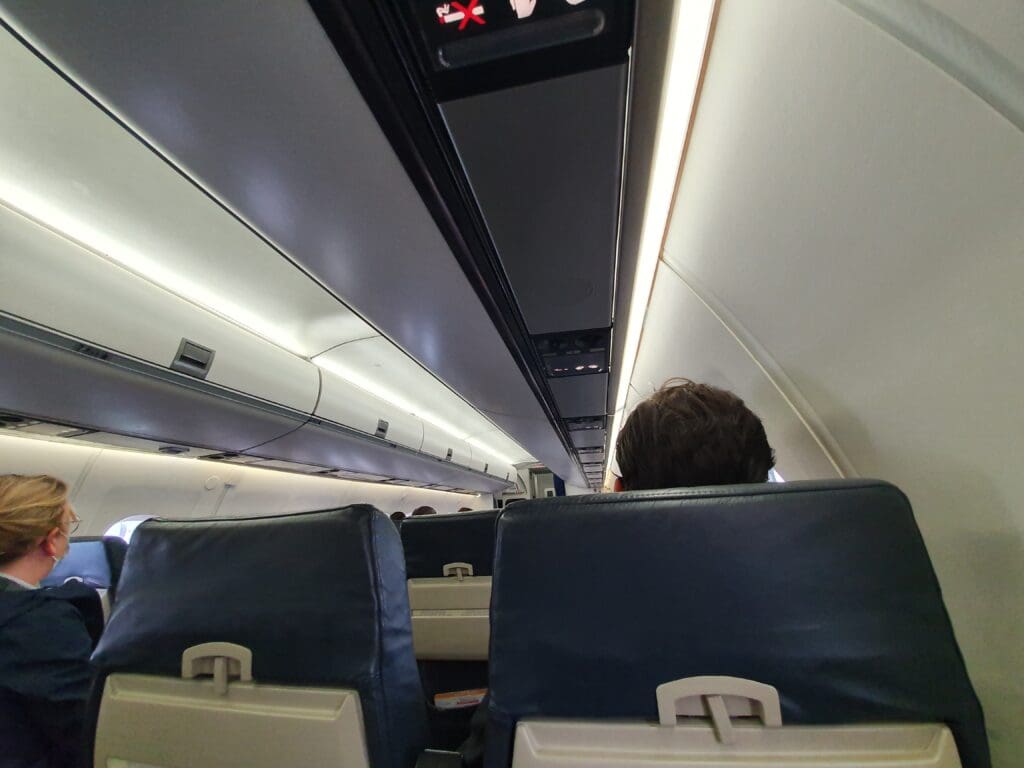
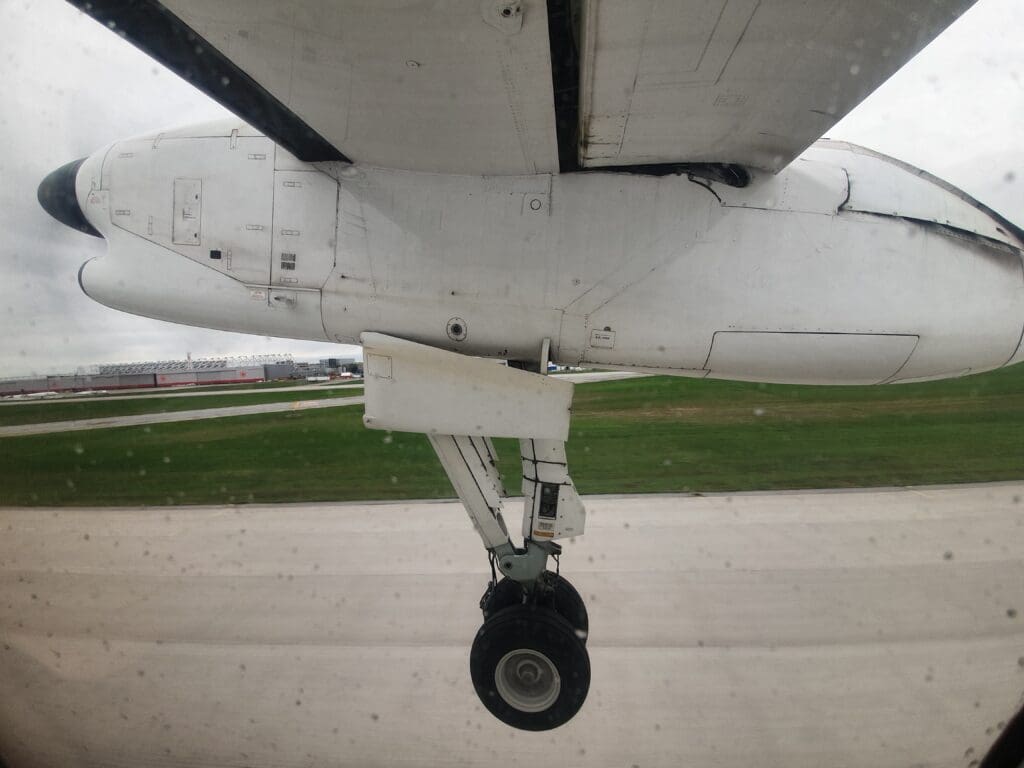
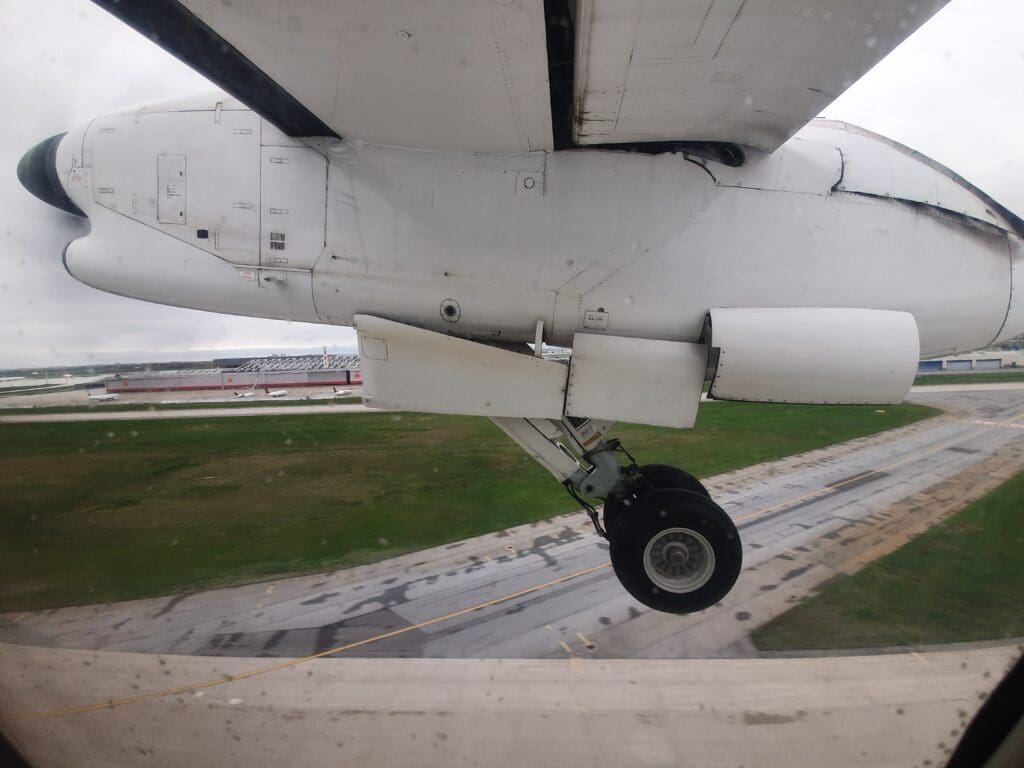
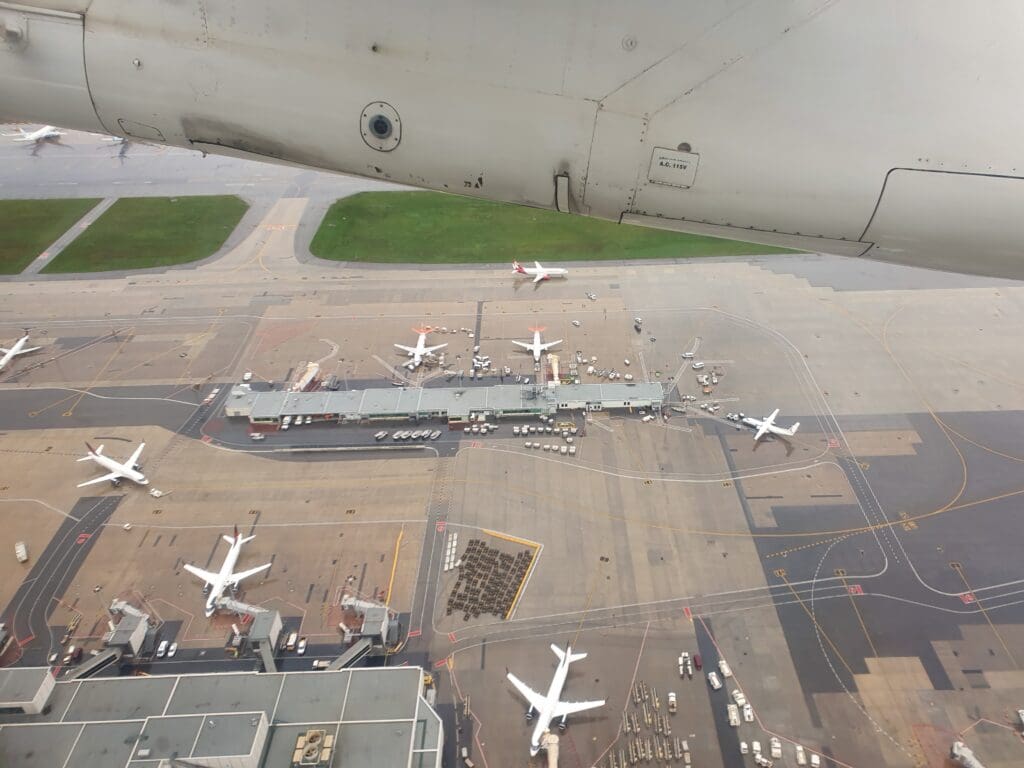
As the safety demonstration was underway, the Dash 8 began a long pushback and the two Pratt & Whitney Canada PW123 engines began to quietly whirl into life. Once the aircraft came to a halt, the cabin lights were turned off again and the flaps partially extended before the engines spooled up further. At 0959, the Dash 8 commenced a bumpy taxi over to the end of runway 24L, passing the Air Canada and Bombardier hangars during this short journey. Seated on the right-hand side of the aircraft, and with the engine obscuring much of my view, unfortunately, little could be seen during the taxi and around five minutes after leaving the stand the aircraft arrived at the end of the runway where it came to a halt.
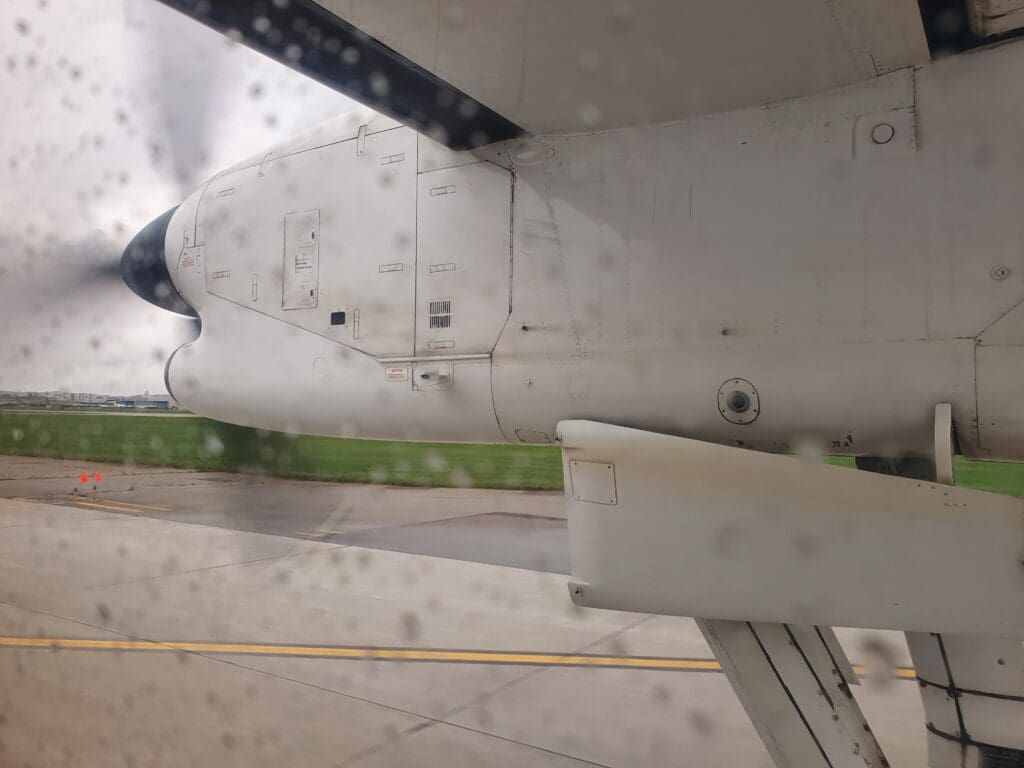
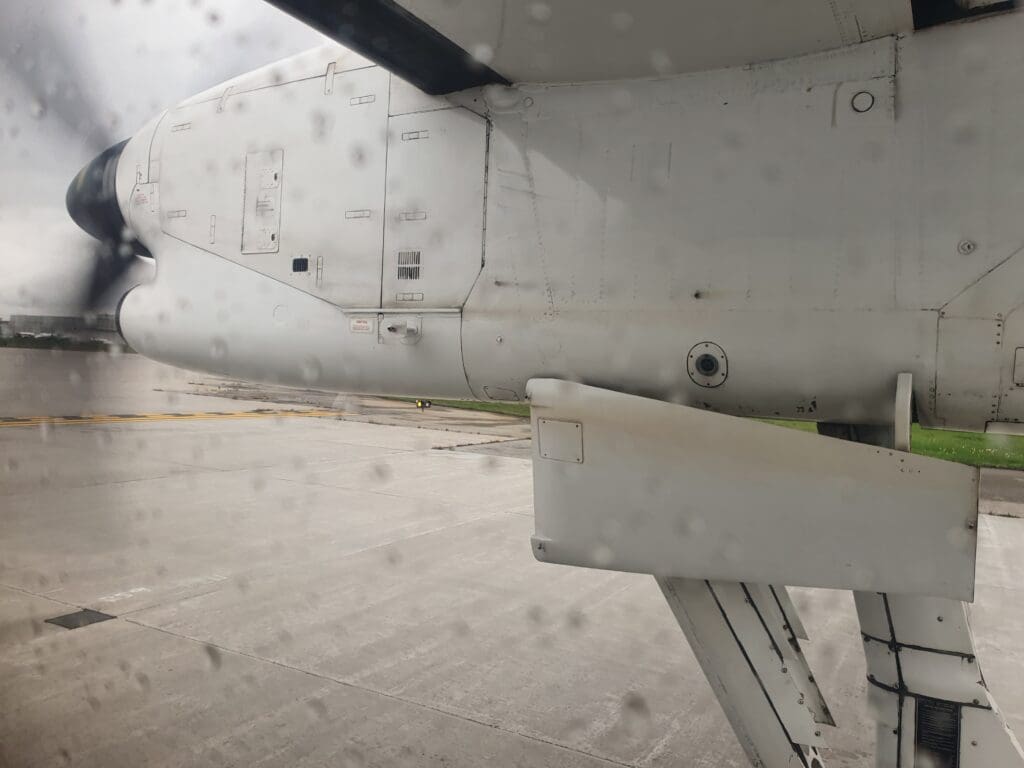
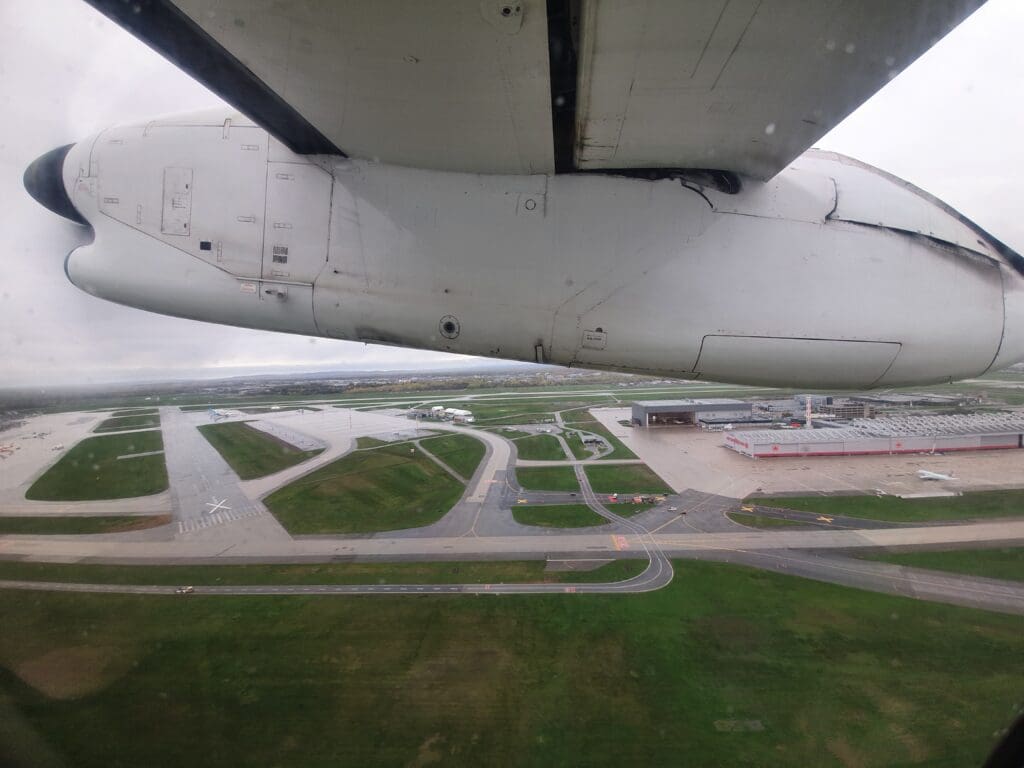
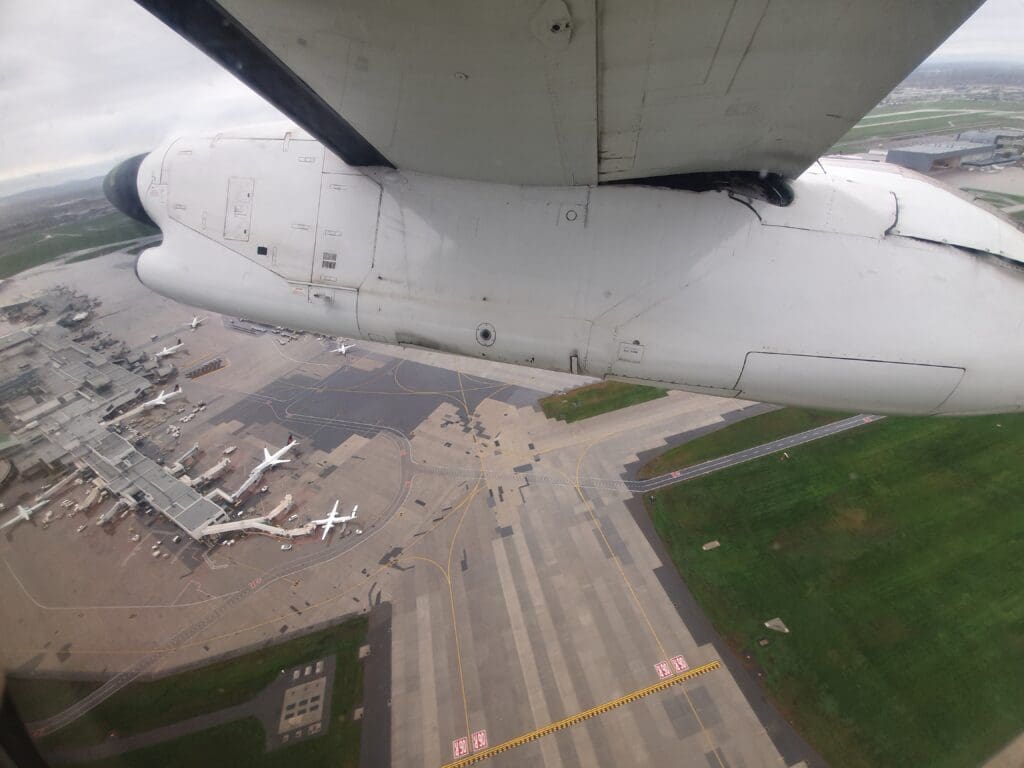
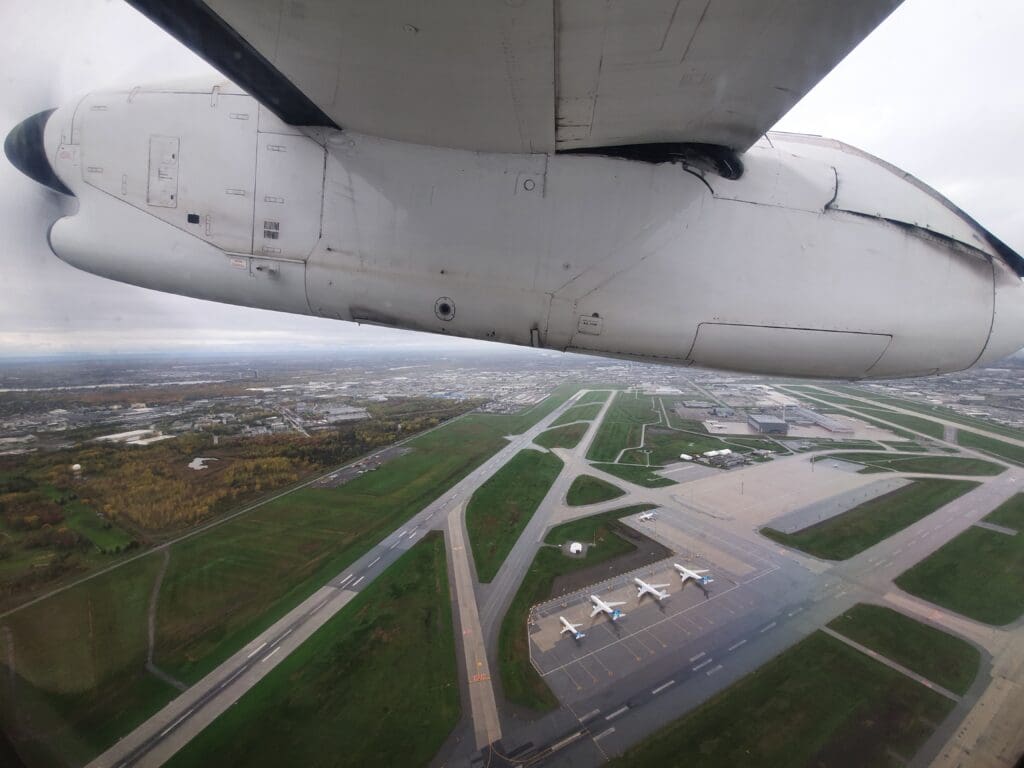
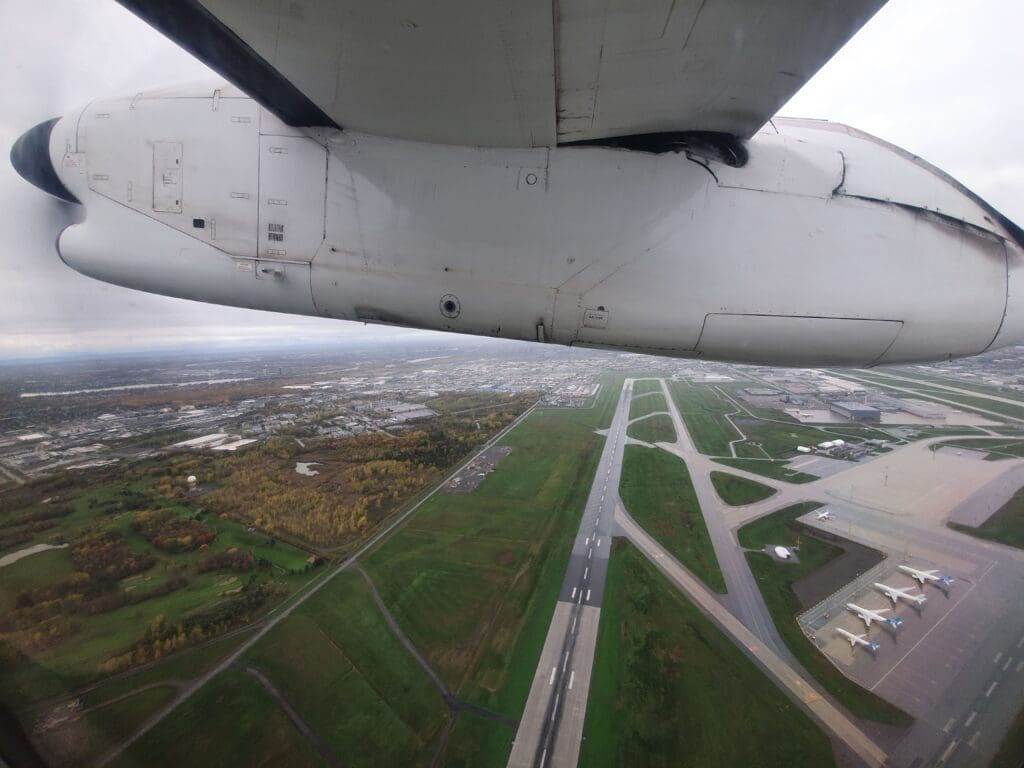
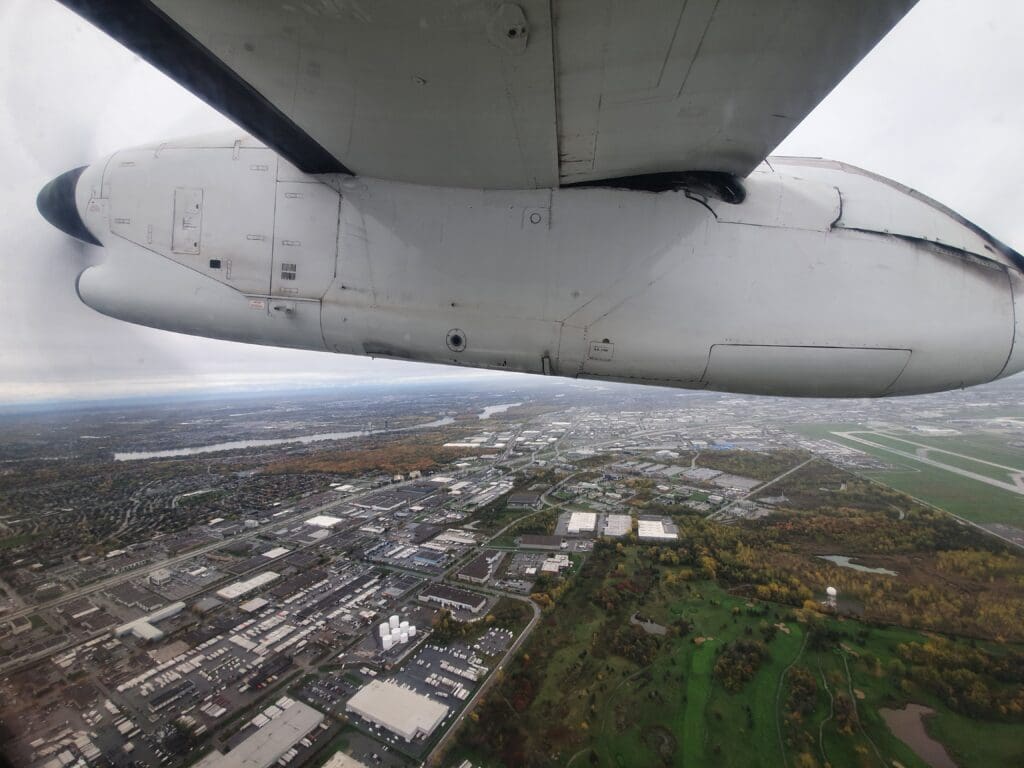
Once an all-black liveried Chrono Aviation Pilatus PC-12 took off bound for the western Québec city of Rouyn-Noranda, inside the cabin two loud dings could be heard as the Dash 8 made its way onto the runway. At 1007, without any pausing the aircraft’s two engines powered up, filling the cabin with plenty of noise and vibration as the aircraft travelled a short way down the runway before quickly taking to the skies. As the Dash 8 soared upwards, I was offered a good overview of almost the entire airport as the aircraft banked right before leaving the airport behind. Within seconds, the sight of the airport below was replaced by the mostly residential neighbourhoods of Saint-Laurent and Roxboro as well as the Prairies River before the aircraft rose up into the low-lying clouds which would prevent any view of the Québec until we neared our destination.


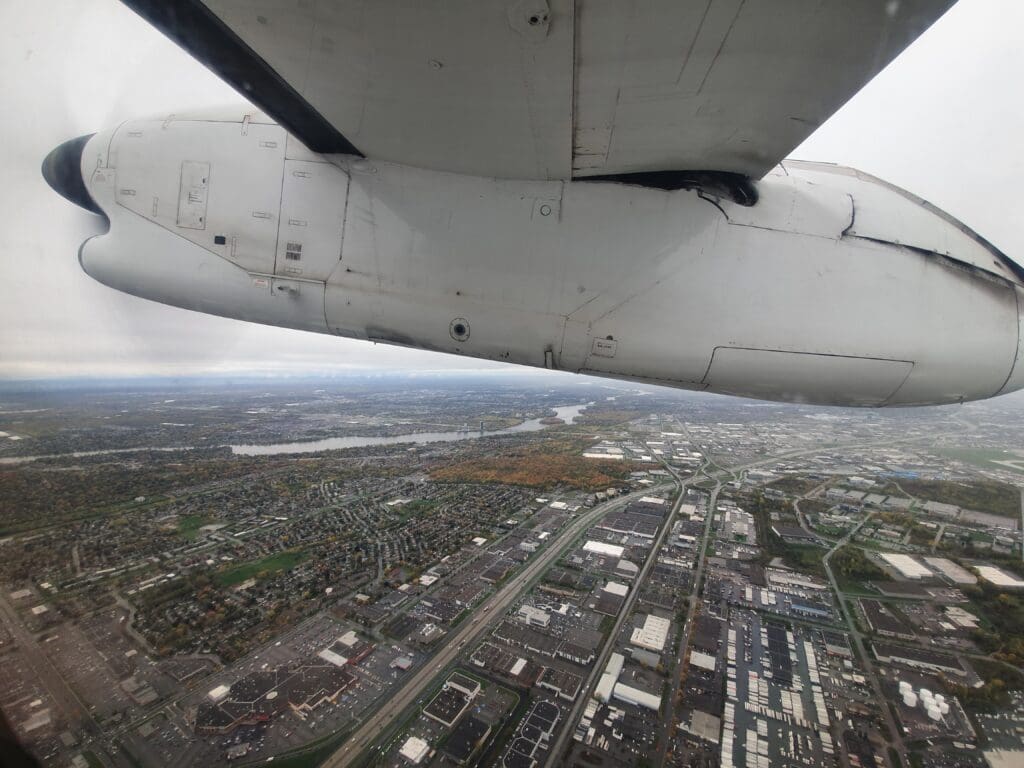
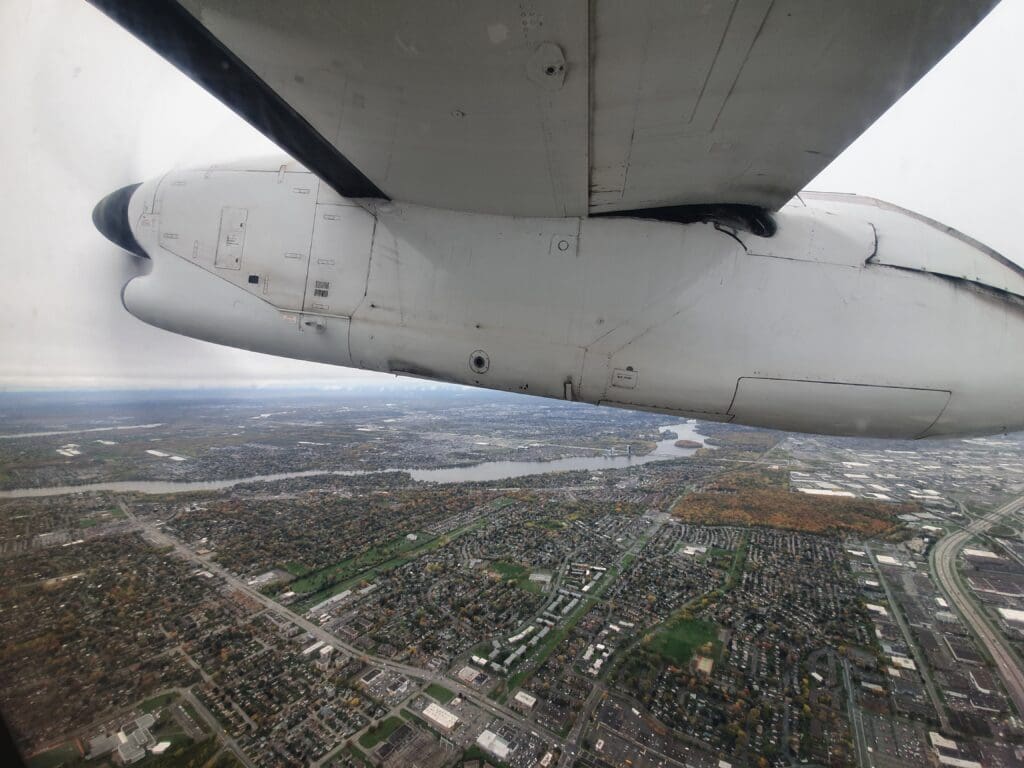
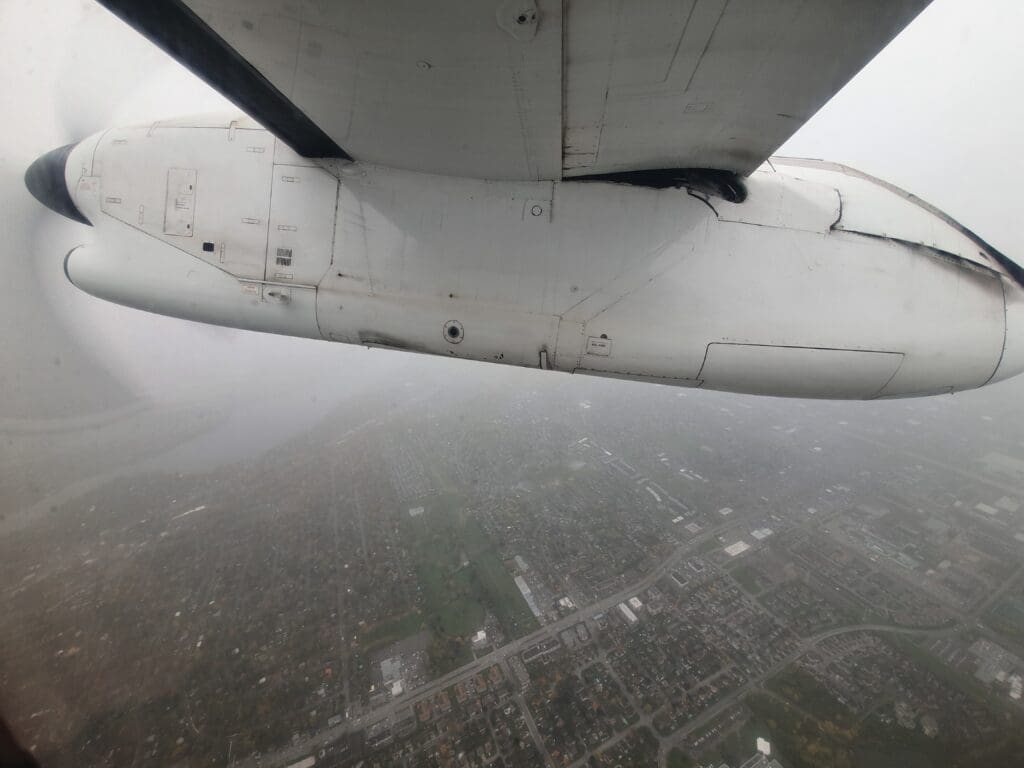
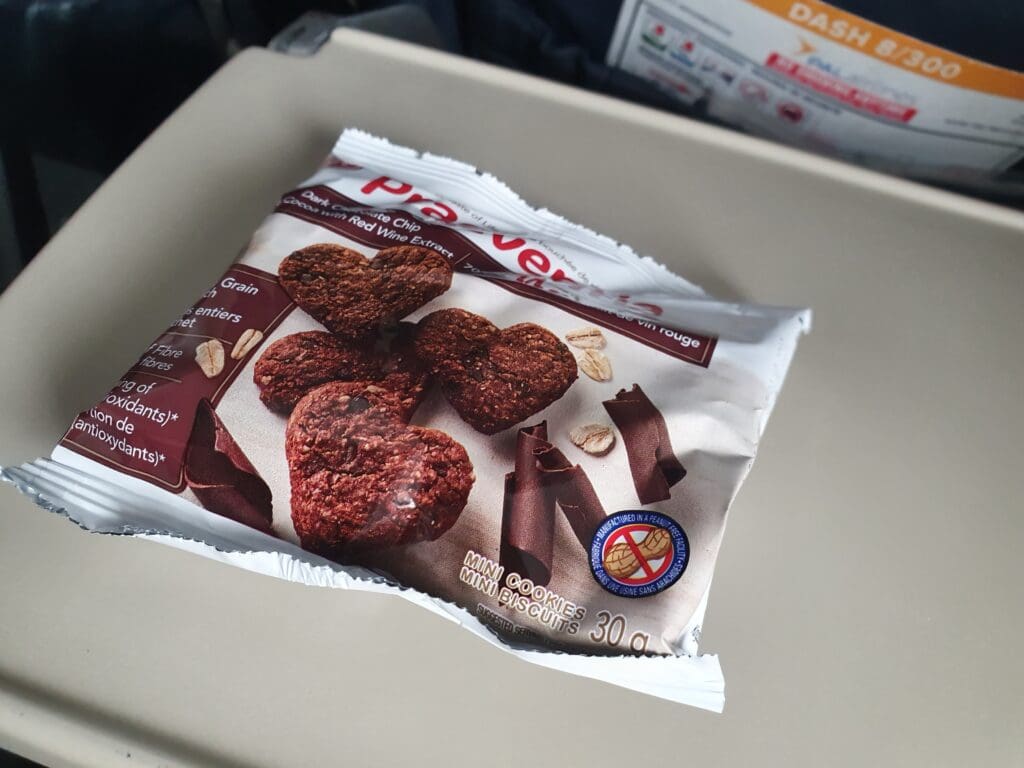
Given the low cruising altitude, it did not take long for the Dash 8 to level off at which point the seatbelt signs were switched off. At this point, the flight attendant made an announcement with the usual warning regarding keeping seatbelts fastened when seated and advised passengers that the inflight service would commence shortly. Having drawn the curtain at the front of the aircraft so as not to reveal what the inflight service would consist of that morning, a few minutes later the flight attendant emerged holding a two-litre bottle of water and a stack of Styrofoam cups. Having believed this to have been the entirety of the service that morning, I was delighted to then see a basket containing cereal bars and packets of chocolate biscuits passing through the cabin – opting for the latter this was handed to me in a polite and friendly manner. Needless to say, I was pleasantly surprised to be offered a complimentary snack on such a short flight during the Covid era! Almost as soon as I had received this, the aircraft hit a particularly rough patch of turbulence and the seat belt signs were switched on, resulting in the aircraft climbing up to 15,000 feet at which point the ride smoothed out and the seat belt signs were extinguished once again.
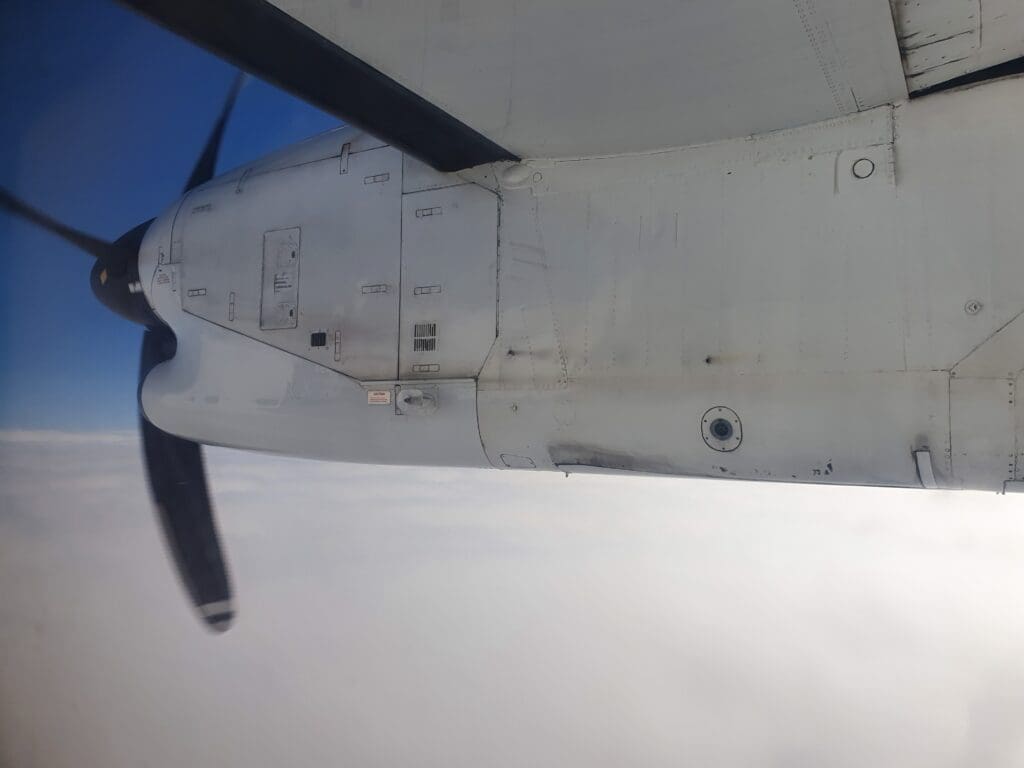

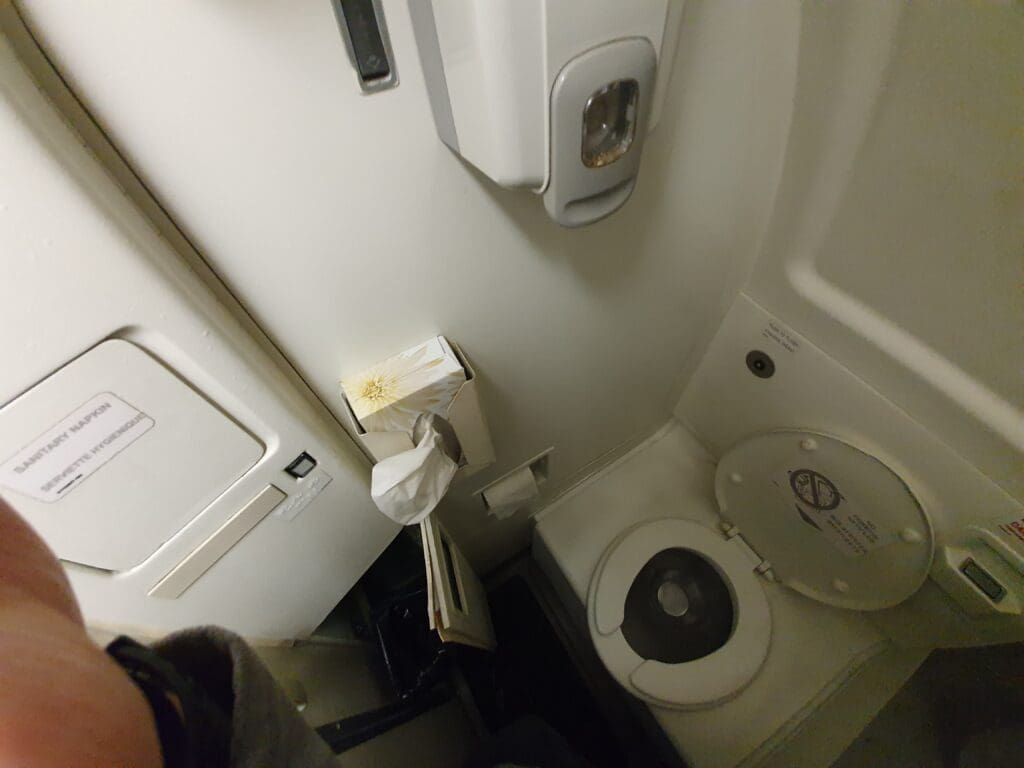
Seeing as I would be unlikely to fly on a Dash 8 300 again in the near future once the seatbelt signs had been switched off, I decided to make a trip to the aircraft’s sole lavatory, located at the very front of the aircraft to the right of the cockpit door. Having previously squeezed into the minuscule Dash 8 Q400 toilet, I was expecting a similar experience and indeed, the toilet onboard the Dash 8 300 was undoubtedly one of the smallest aircraft lavatories I have ever paid a visit to. Inside, this consisted of little other than a toilet, with an antibacterial gel dispenser in place of a sink. Meanwhile, this was significantly more battered and worn than the rest of the cabin, although this appeared to be clean and was stocked with the basics.
Whilst little could be seen during much of the flight, after departing Montréal the Dash 8 had headed northeast, passing over Québec’s third largest city, Laval, and then heading onto Terrebonne, roughly following the course of the St Lawrence River. Having made my visit to the lavatory as the aircraft crossed down the middle of Lake Saint Pierre, by the time I returned to my seat the aircraft was 15,000 feet above the city of Trois-Rivières. Fifteen minutes after the Dash 8 had reached its initial cruising altitude, the aircraft could be felt commenced its descent at which point the flight attendant passed through the cabin collecting passengers’ rubbish.

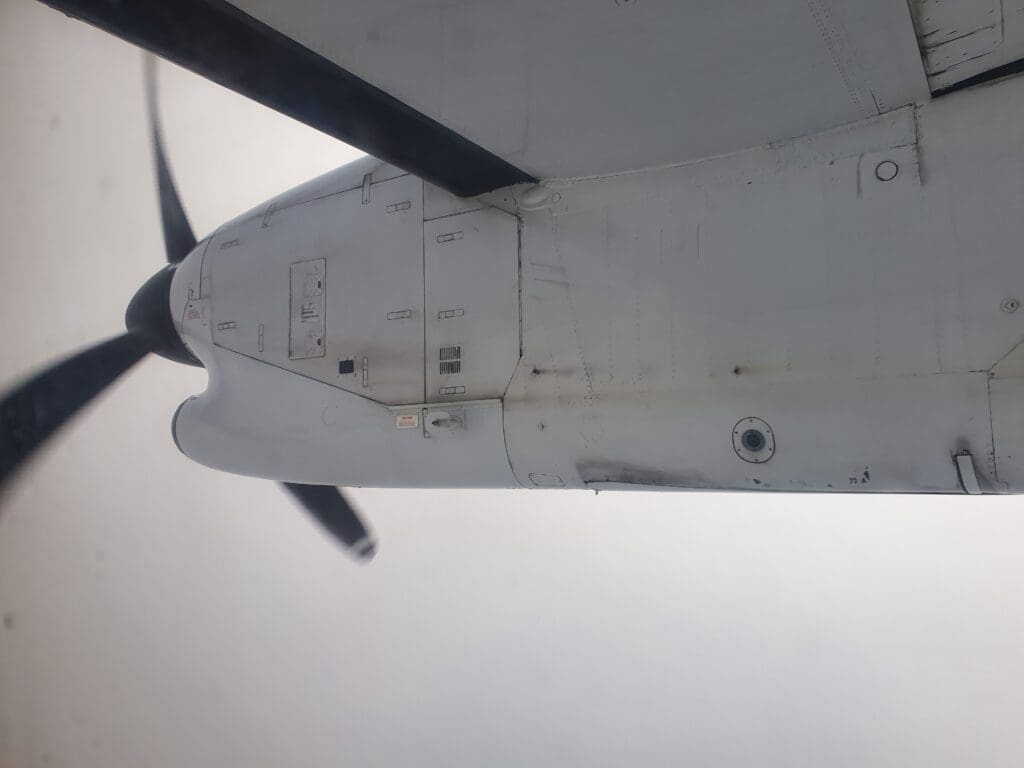
Within a couple of minutes, the Dash 8 skimmed the tops of the clouds at which point the seatbelt sign was reilluminated. This was followed by a short announcement from the flight attendant with the usual pre-arrival warnings regarding seat belts, seatbacks and tray tables before the flight attendant passed through the cabin ensuring all was in place for our arrival. Following the usual lumps and bumps as the turboprop rumbled through the clouds, at 1038 the Dash 8 broke free of these and the wide St Lawrence River appeared somewhere between the Québec industrial town of Donnacona and the village of Neuville.
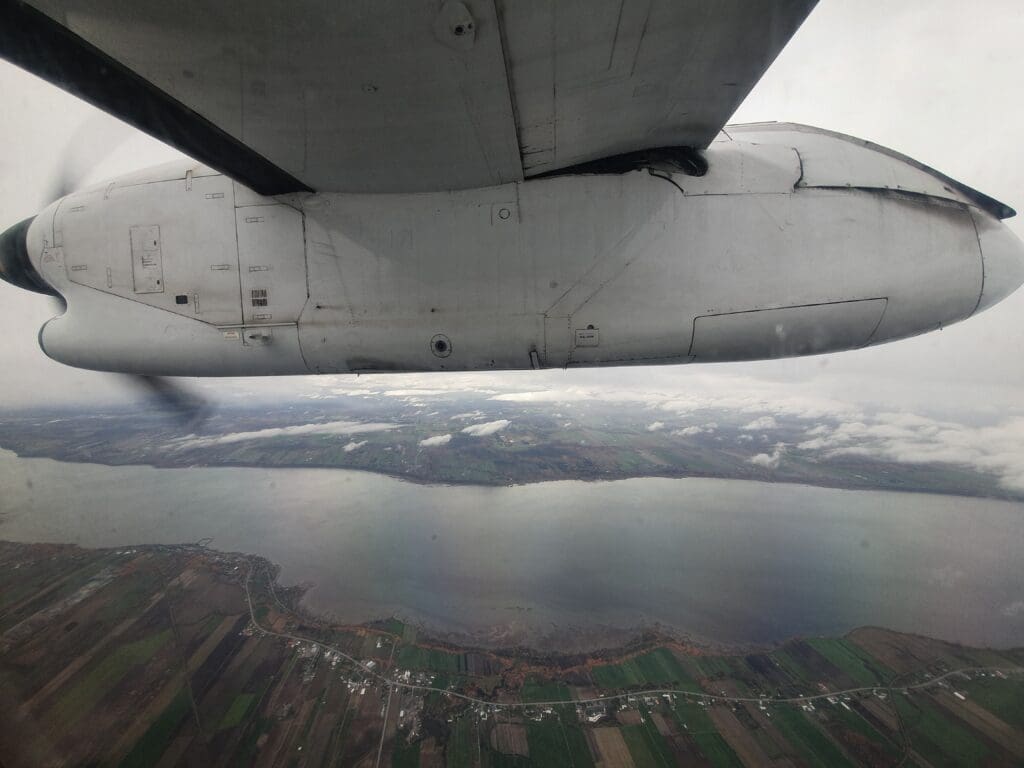
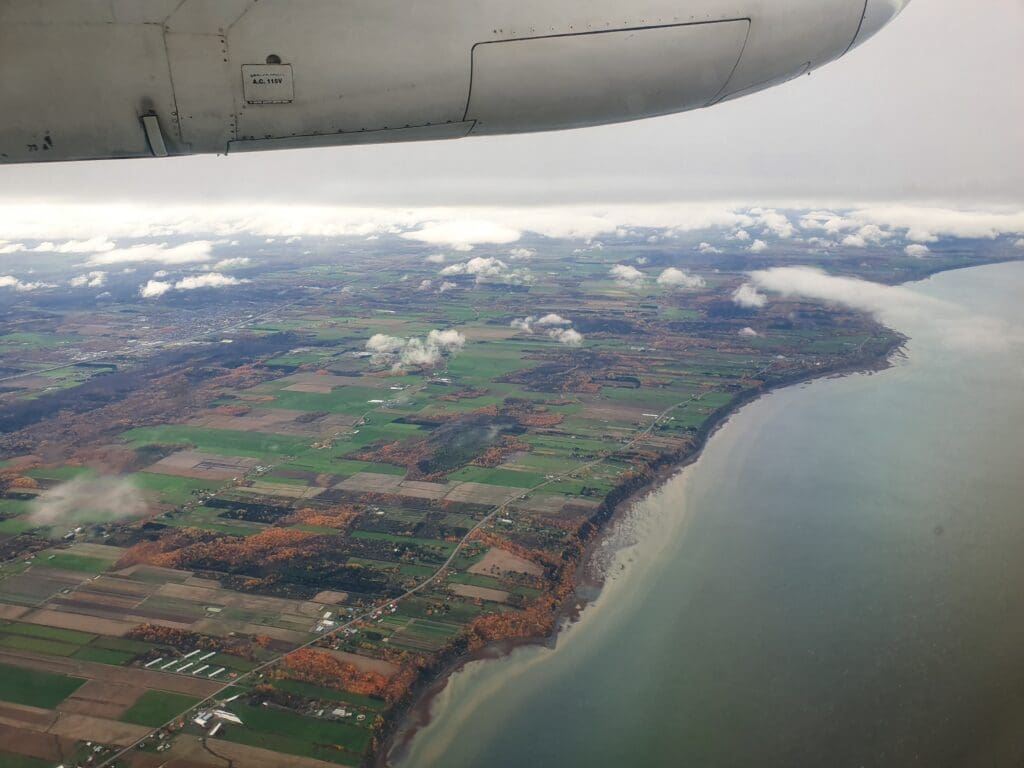
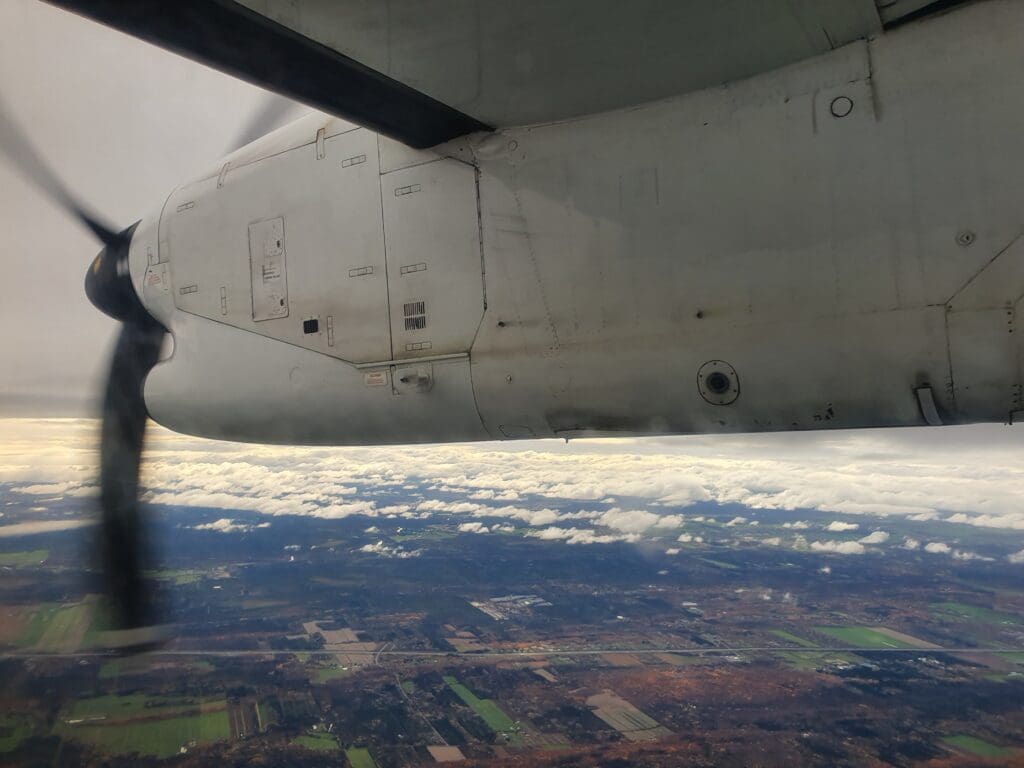
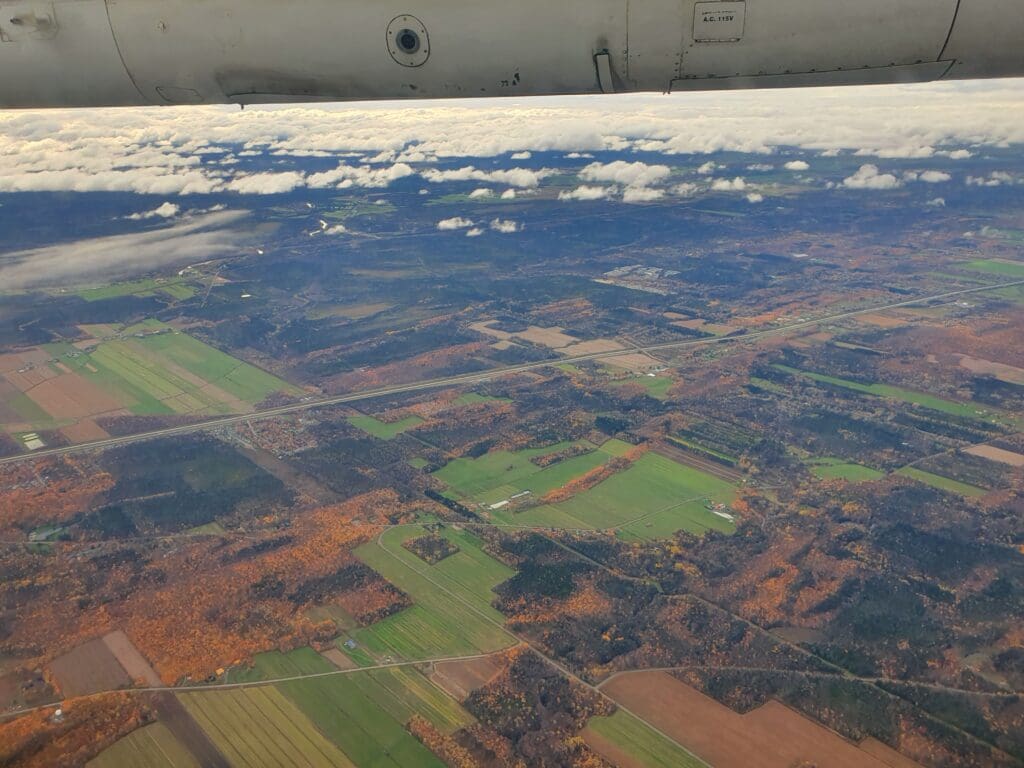
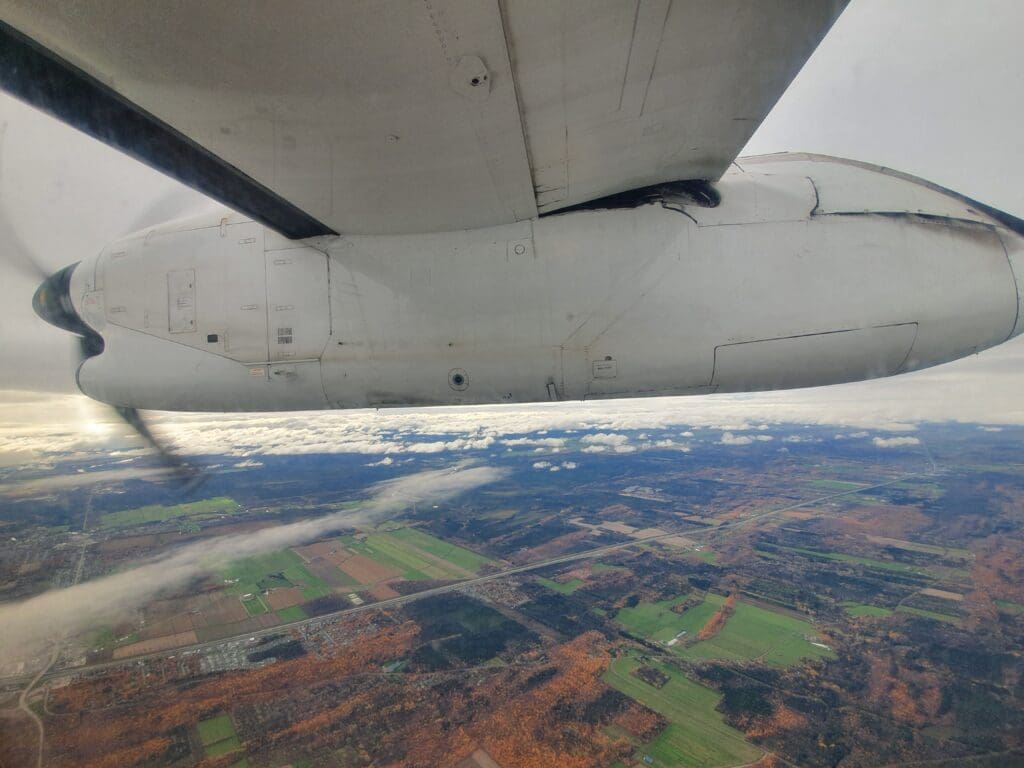
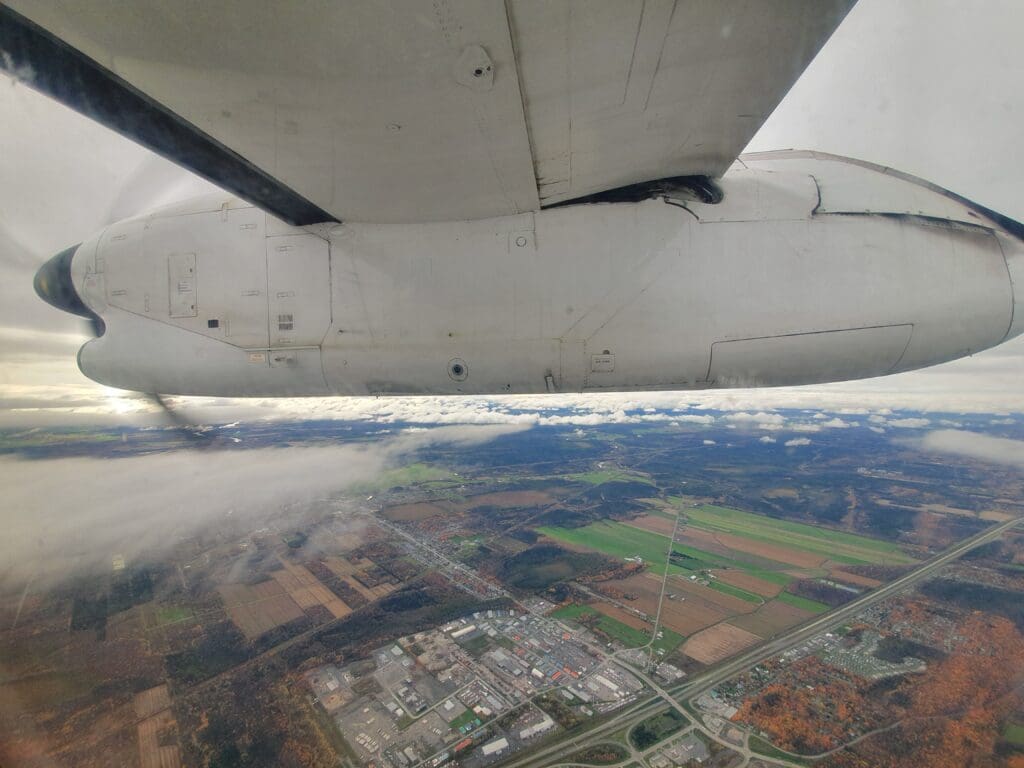
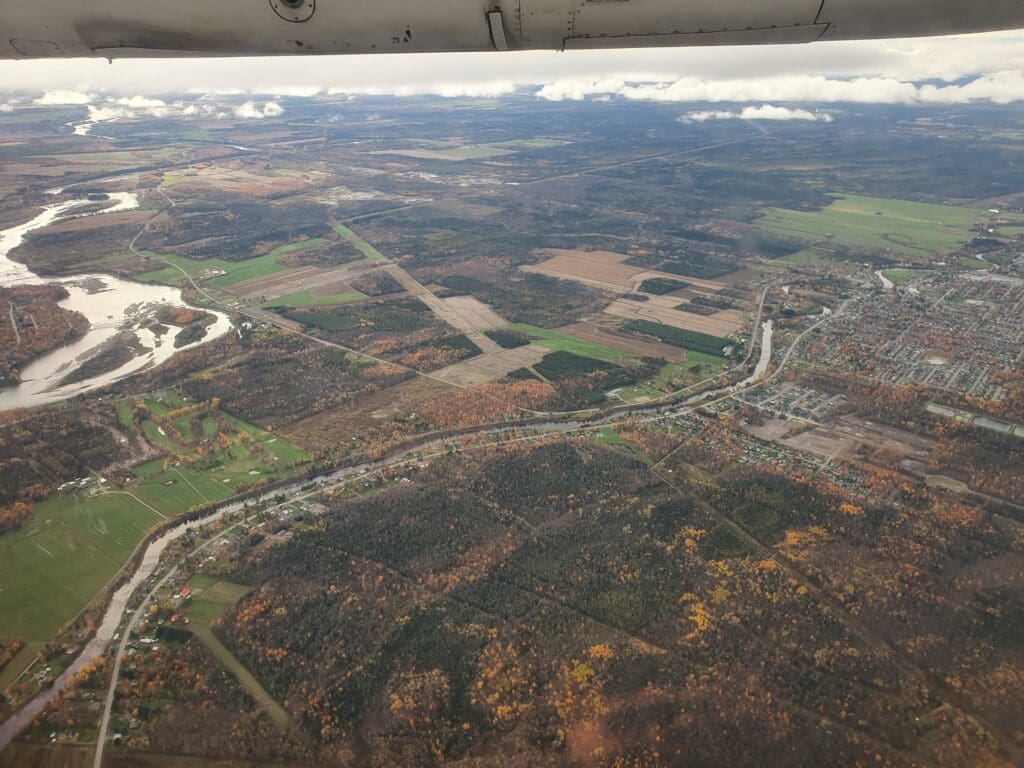
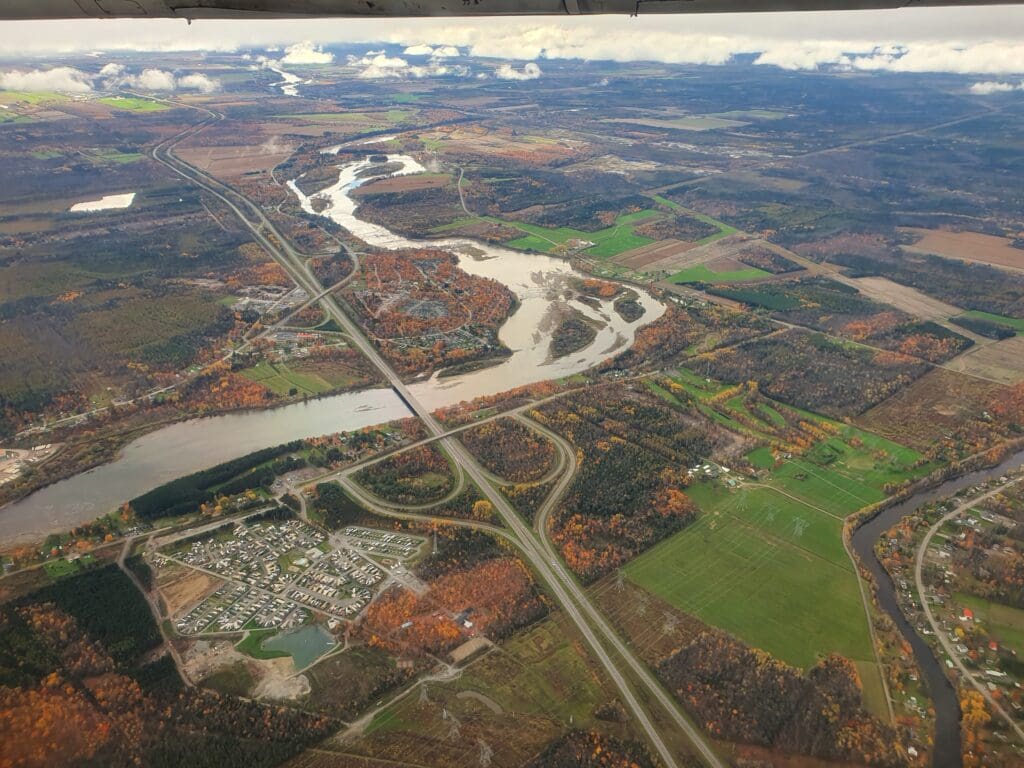

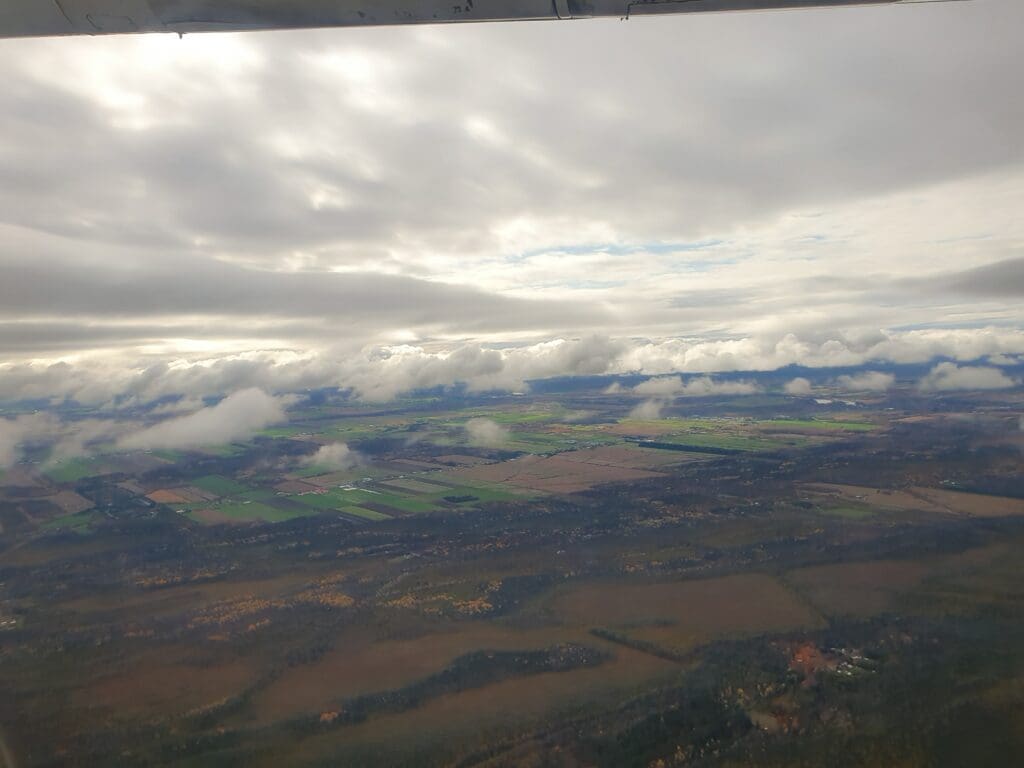
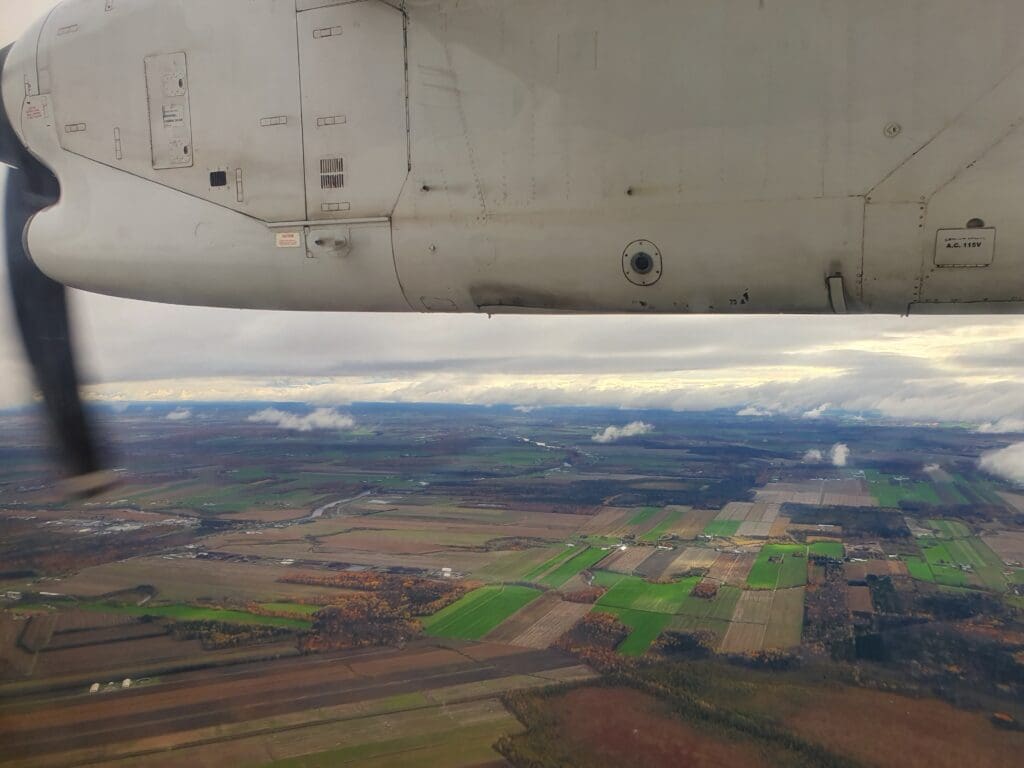
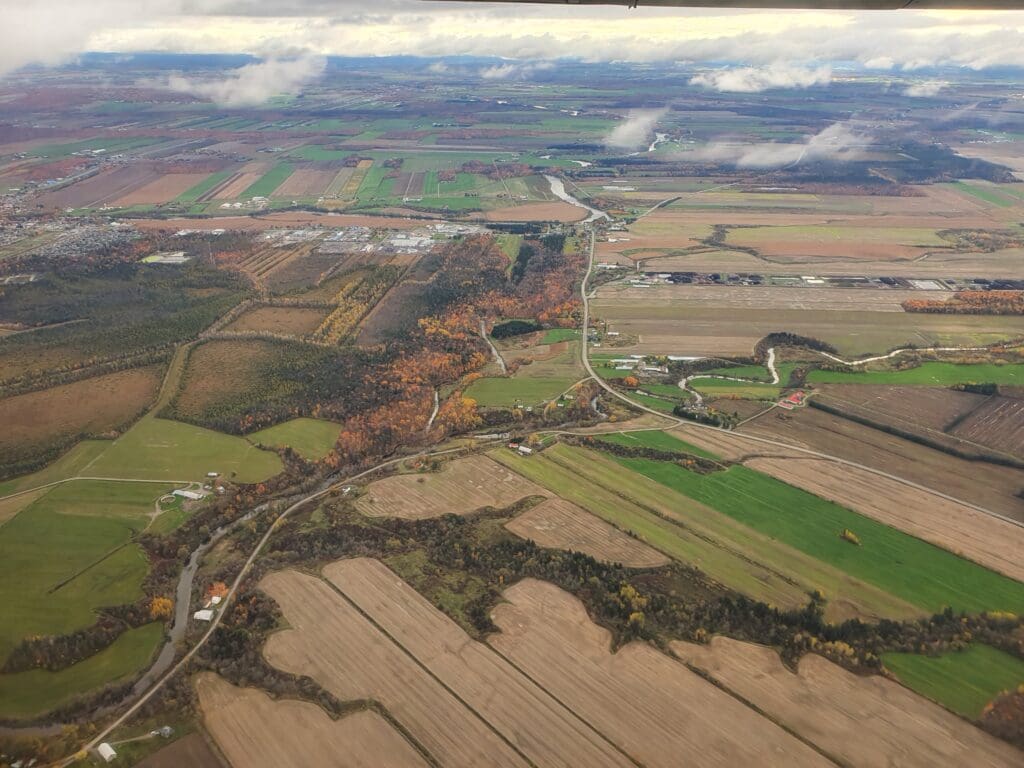
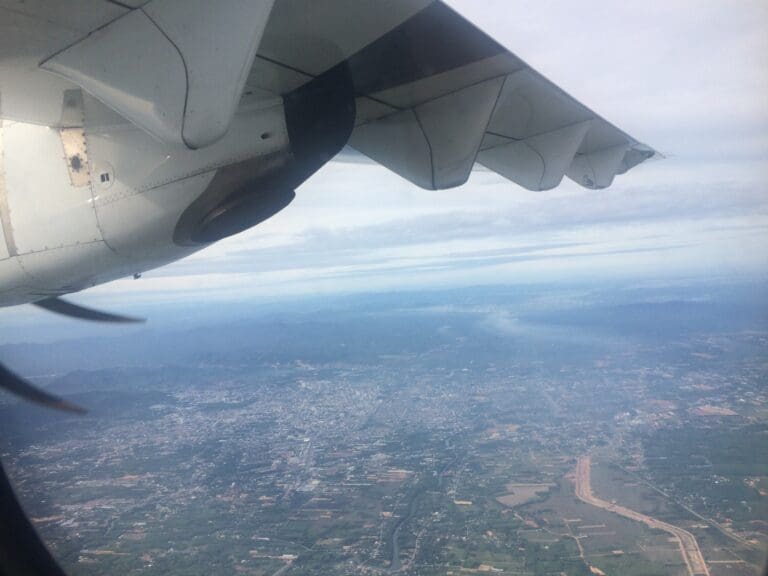
After passing the latter settlement, the Dash 8 made a short crossing of the river and a picturesque mixture of rectangular green fields and orange autumnal foliage could be seen below, somewhere south of the city of Lévis. Flying eastwards and thus in the opposite direction to Québec City, the aircraft eventually gently banked to line itself up for an approach to Runway 29. As we headed westwards towards the city, the landscapes below turned more residential and soon enough the Dash 8 crossed over the St Lawrence River once again at which point the flaps and landing gear were extended.
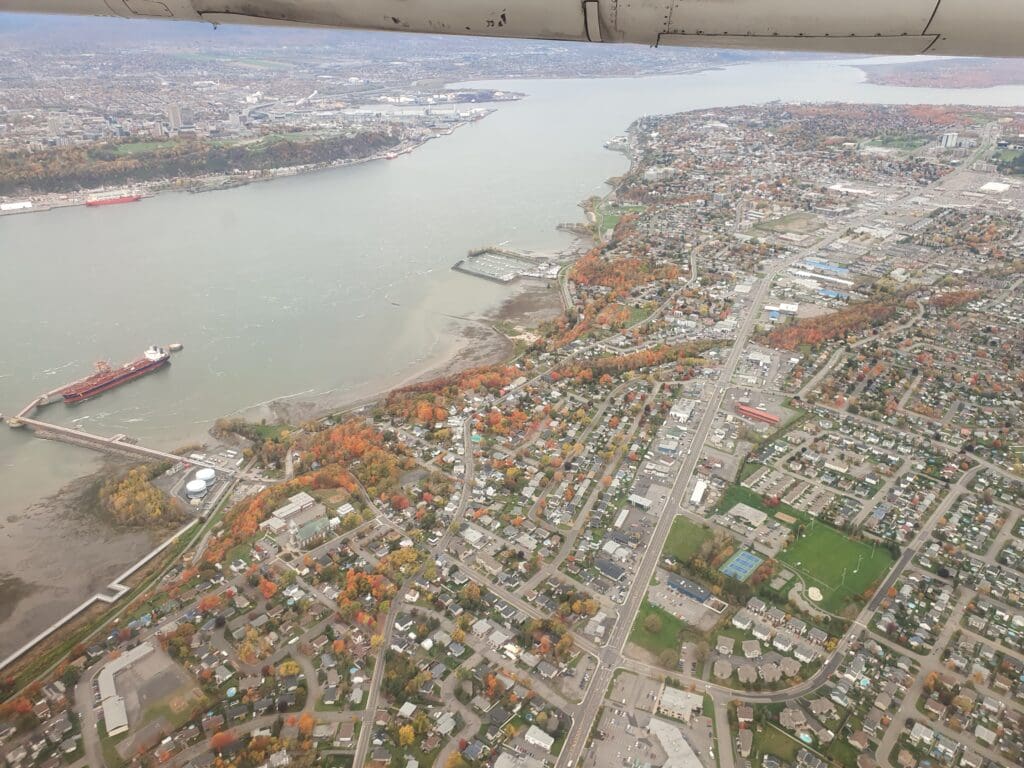
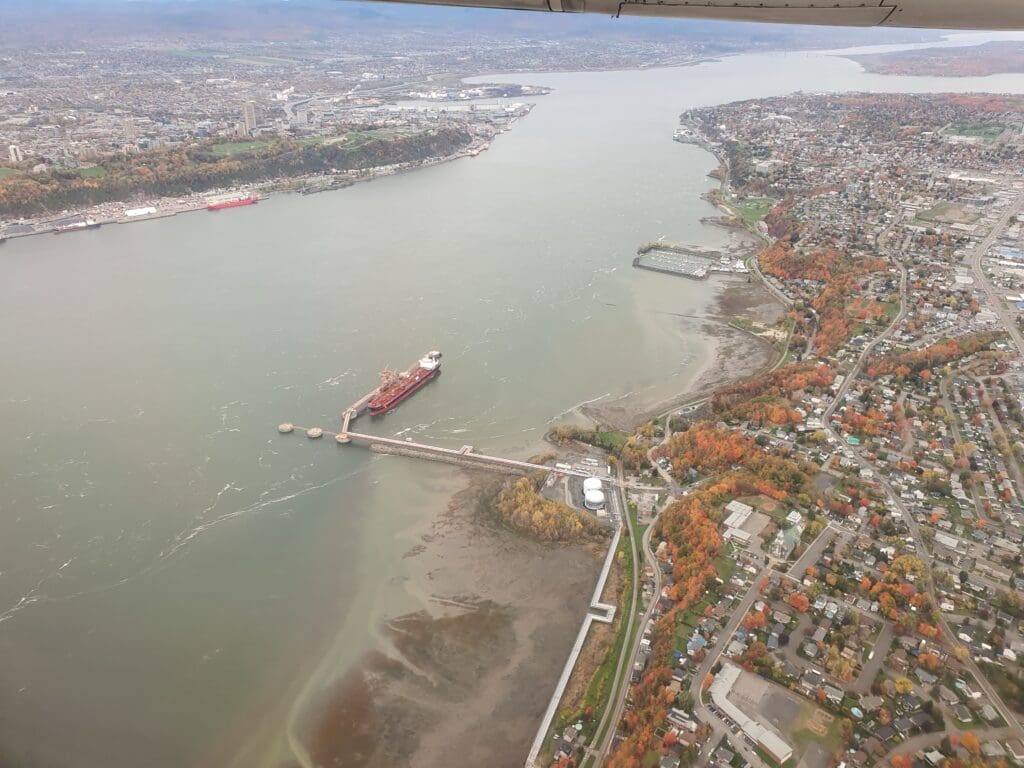
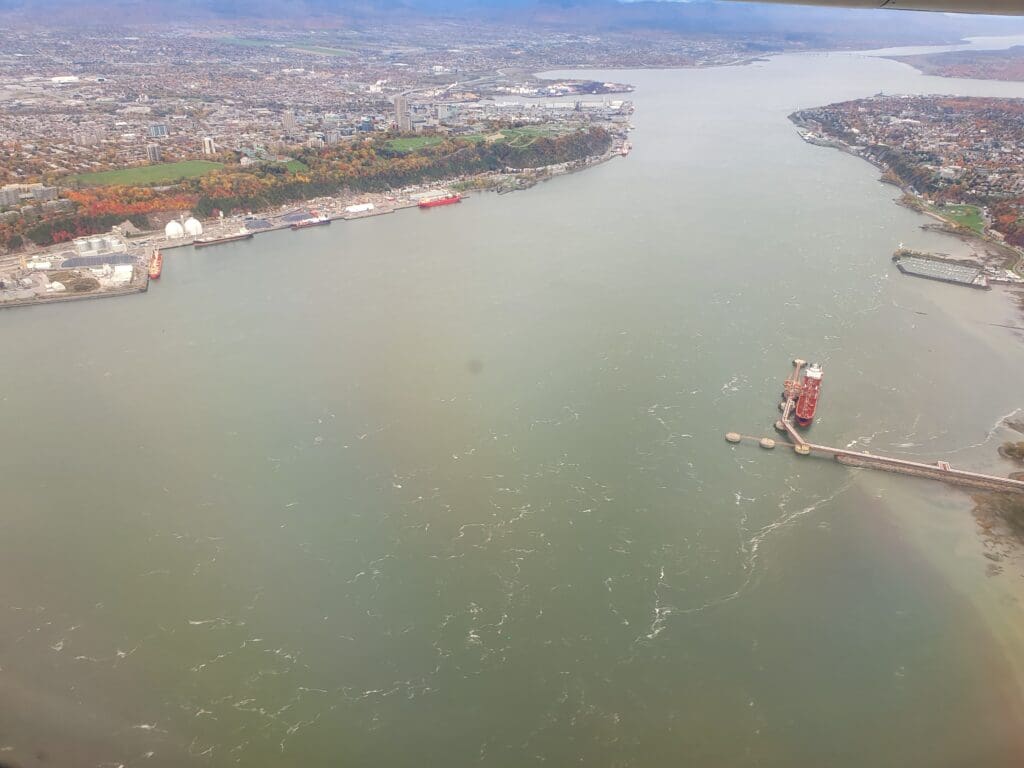

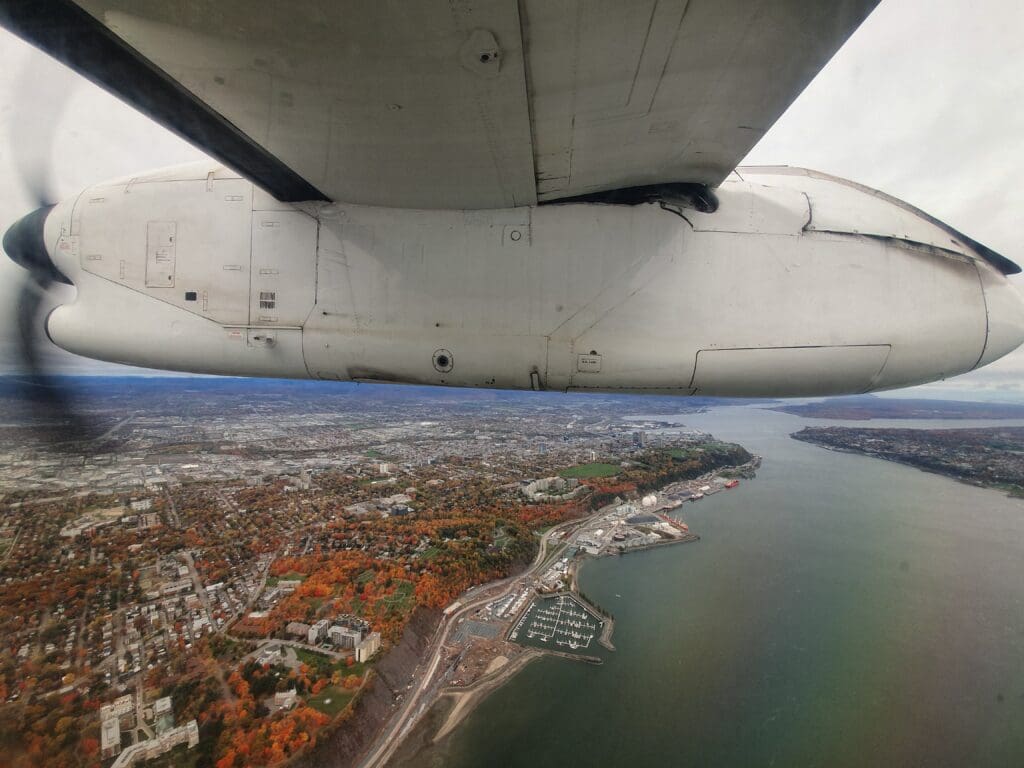
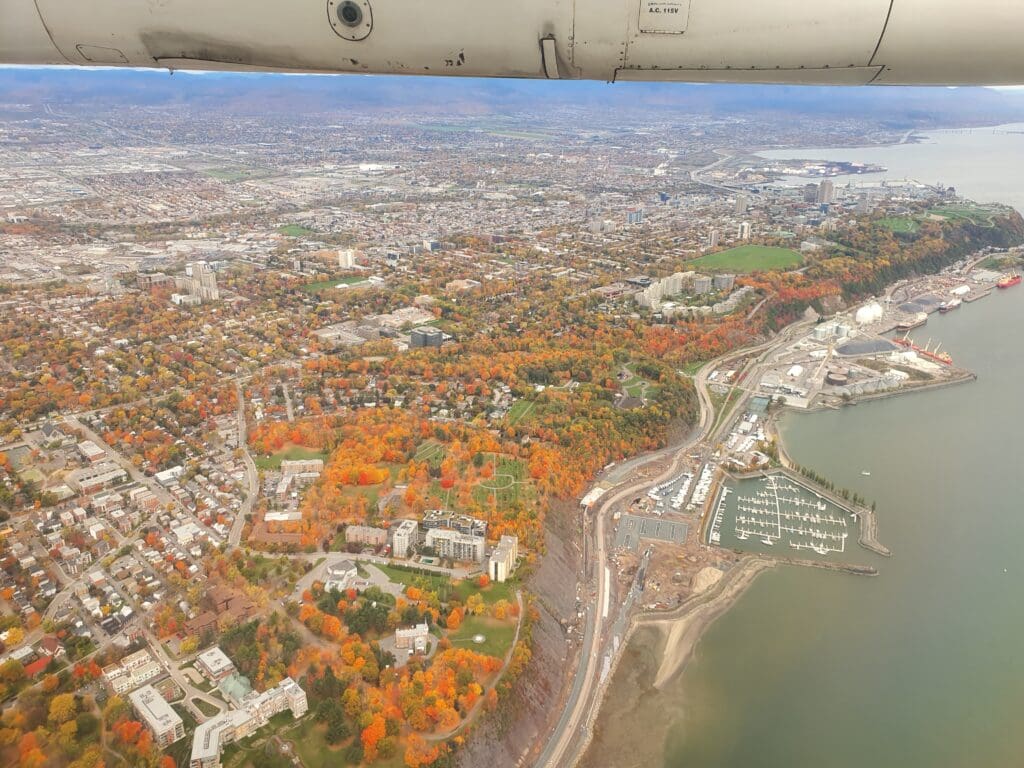
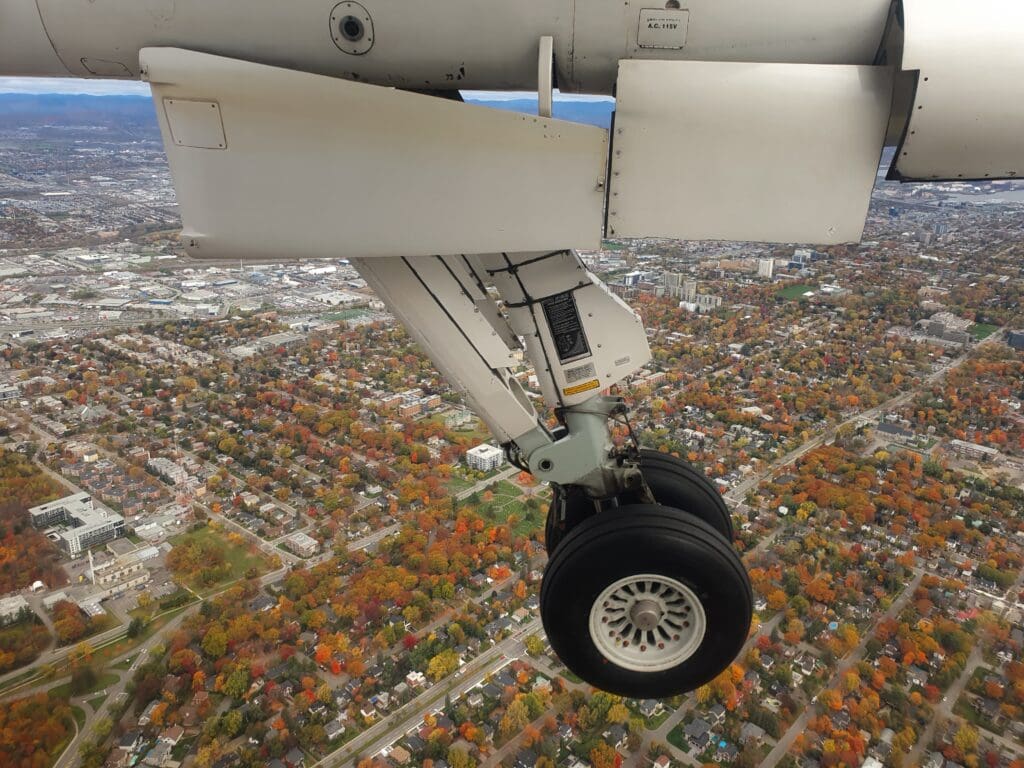
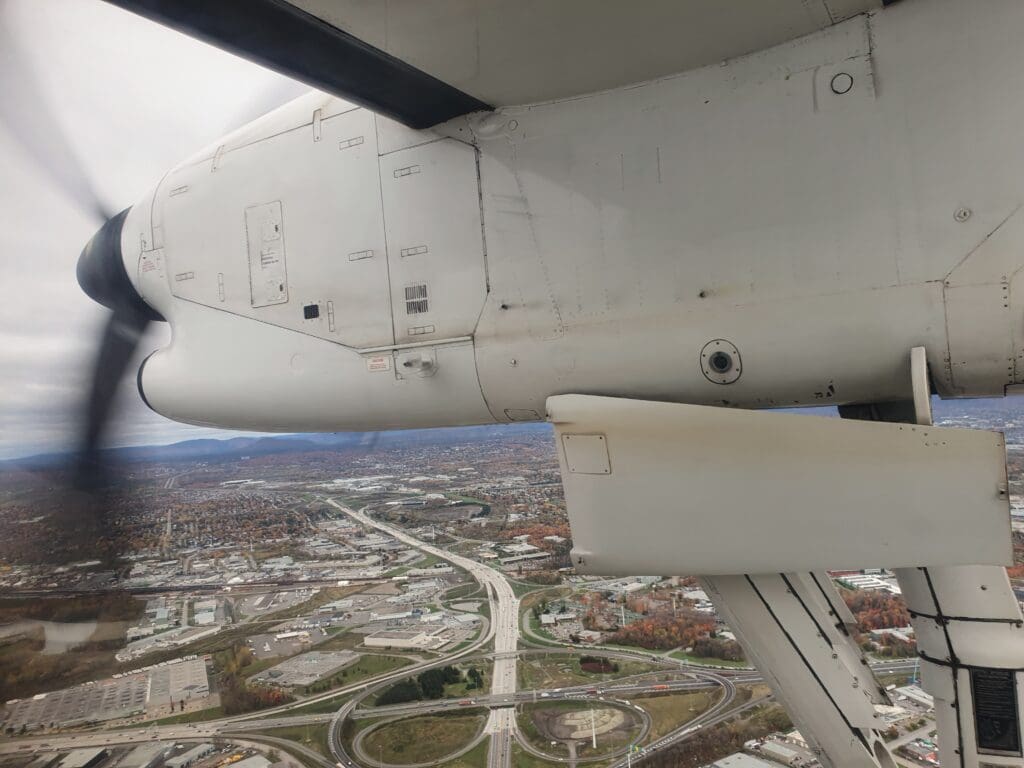
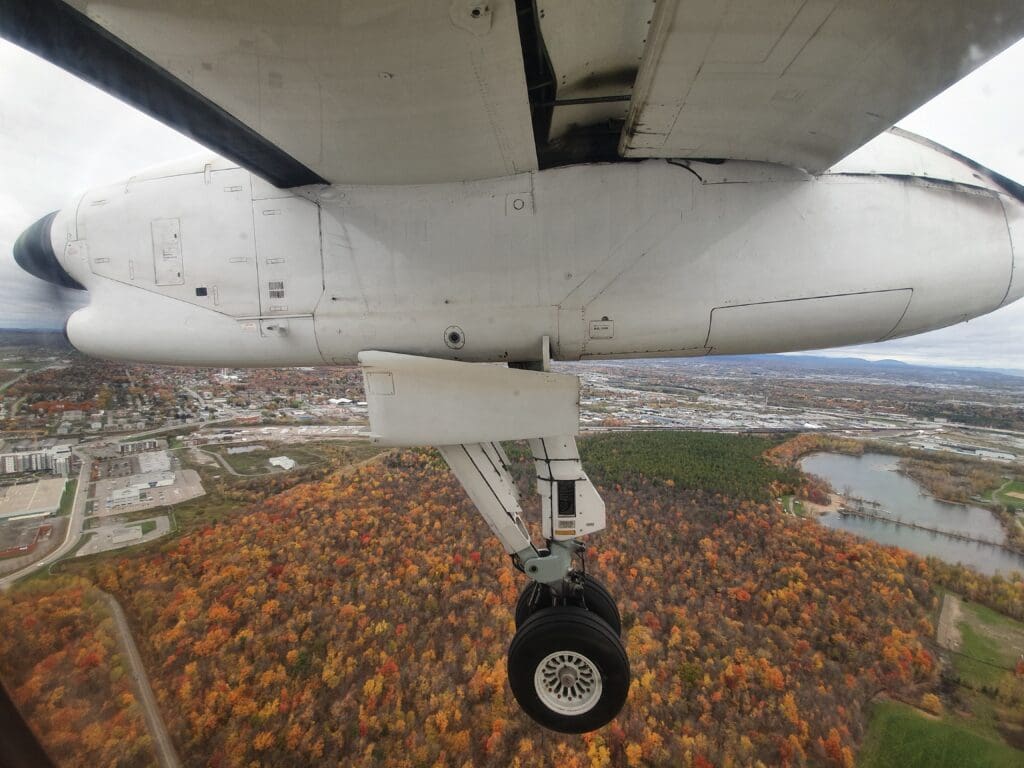
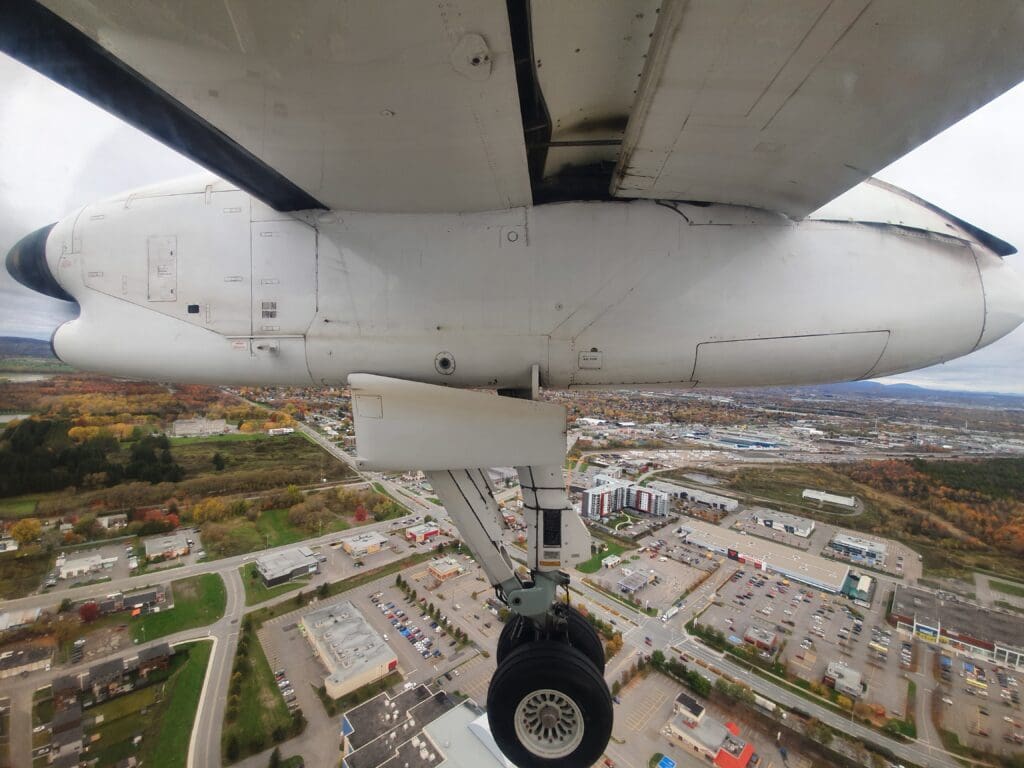
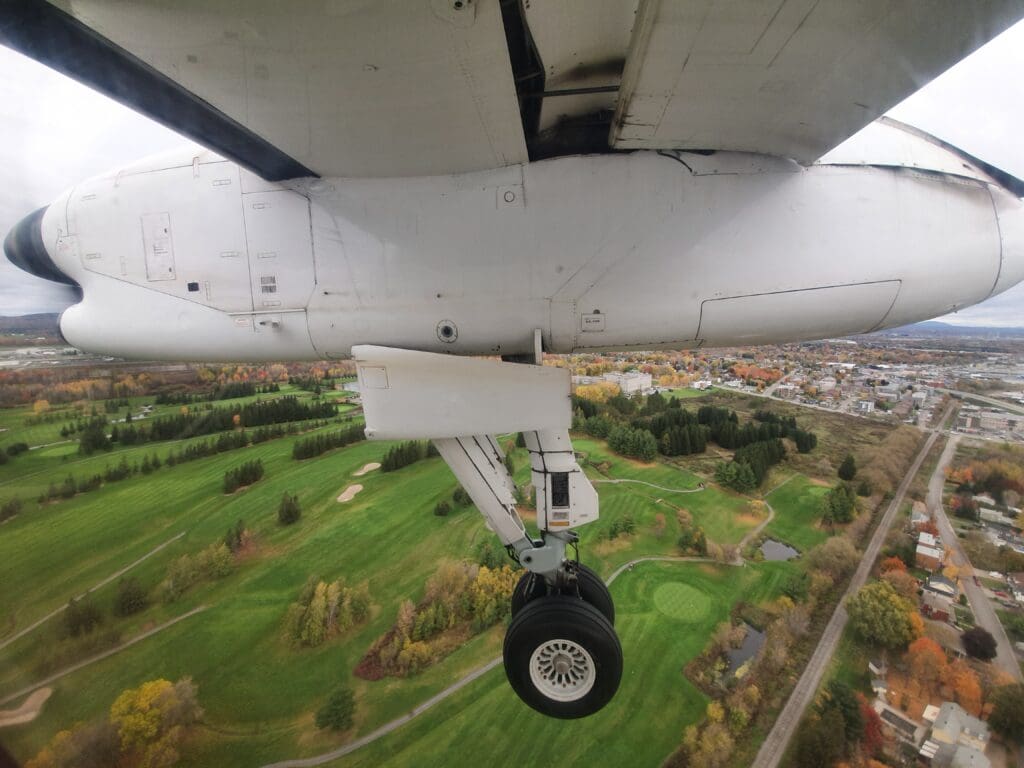
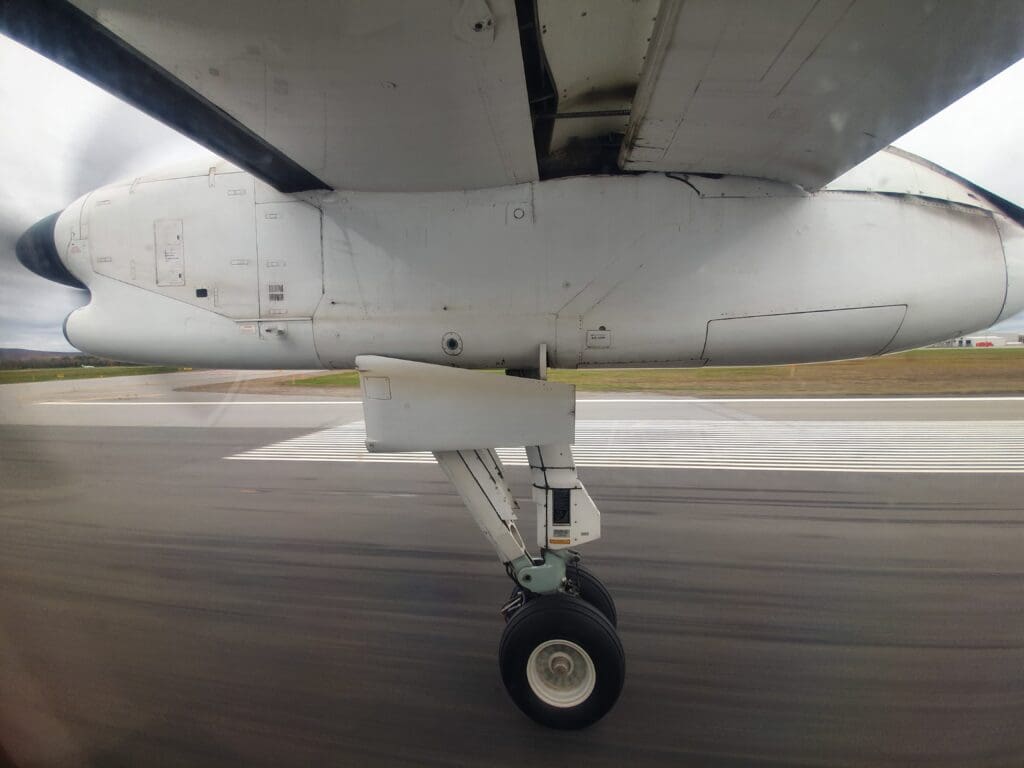
As the Dash 8 sank over the river, the centre of Québec City as well as the Plains of Abraham appeared to the north of the aircraft before the Dash descended over the residential and industrial areas of Sainte-Foy. A short time later, the eclectic mixture of aircraft based at Québec City Airport appeared and at 1051 the Dash 8 made a gentle touchdown on runway 29, ending a pleasant 44 minutes in the skies of Québec. Once on the ground, the aircraft gently decelerated before turning off the runway to the right and making a short taxi to the airport’s modern terminal. As soon as the aircraft exited the runway, the flight attendant performed their welcome announcement during which they advised those heading onwards to Gaspé and Îles-de-la-Madeleine to remain onboard the aircraft.
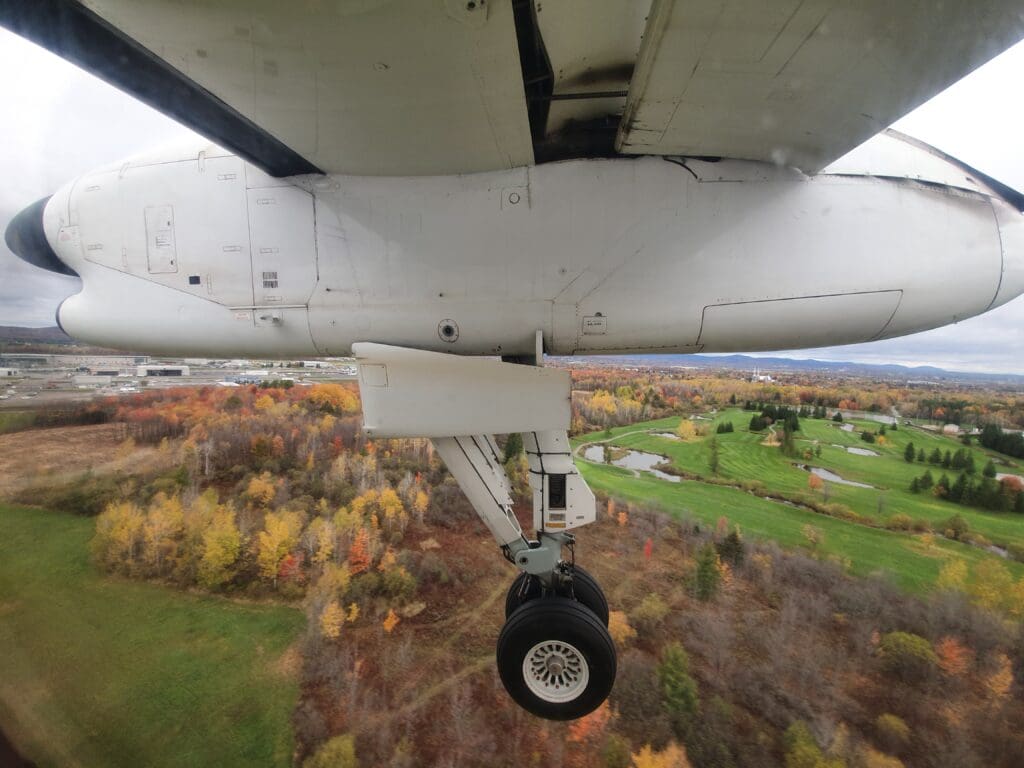
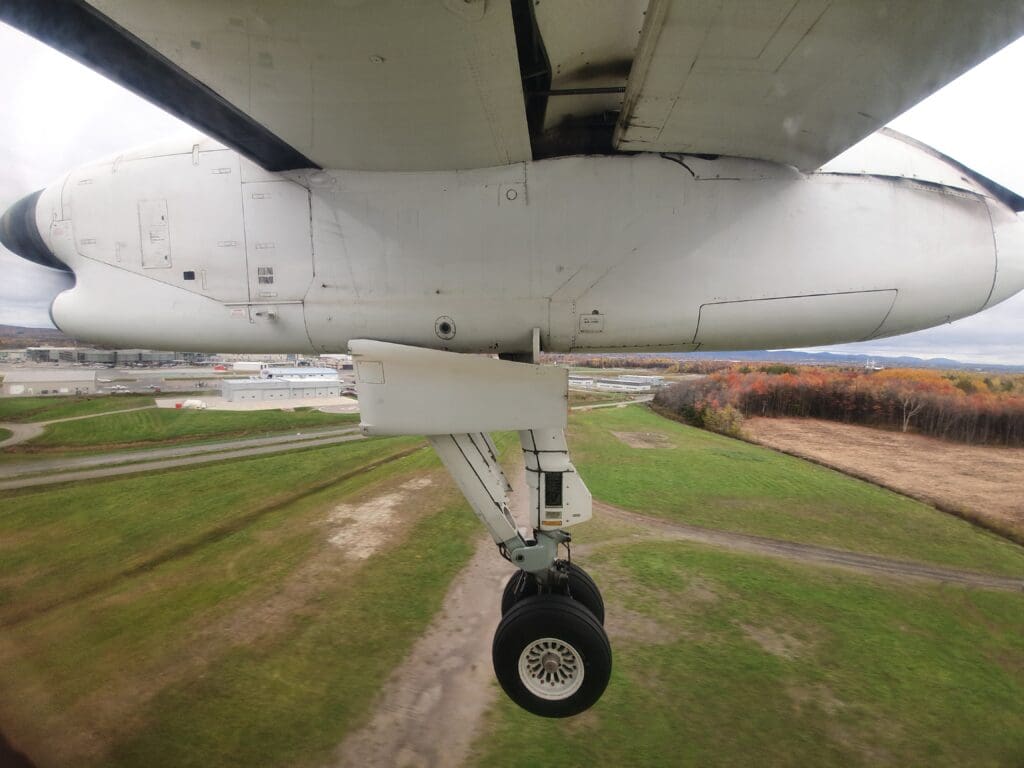
No more than a couple of minutes after touching down, the Dash 8 made its way into Stand 25 where it parked up alongside a newer and larger Air Canada Express Dash 8 Q400 that had also recently arrived from Montréal. After coming to a halt, the engines spooled down, temporarily filling the cabin with vibrations before the cabin was plunged into silence and the flight attendant opened the cabin door. Much to my surprise, I was the only passenger to disembark in Québec City and after thanking the flight attendant I made my way down the aircraft’s built-in steps and was promptly welcomed by a ground agent who pointed me in the direction of the terminal.
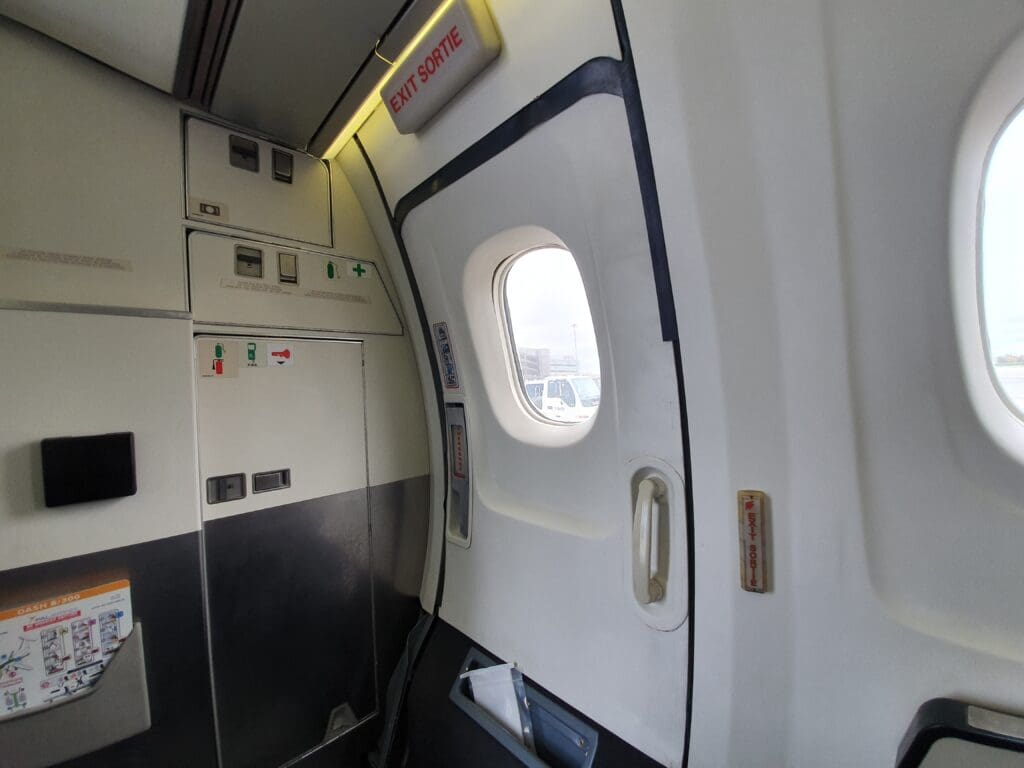
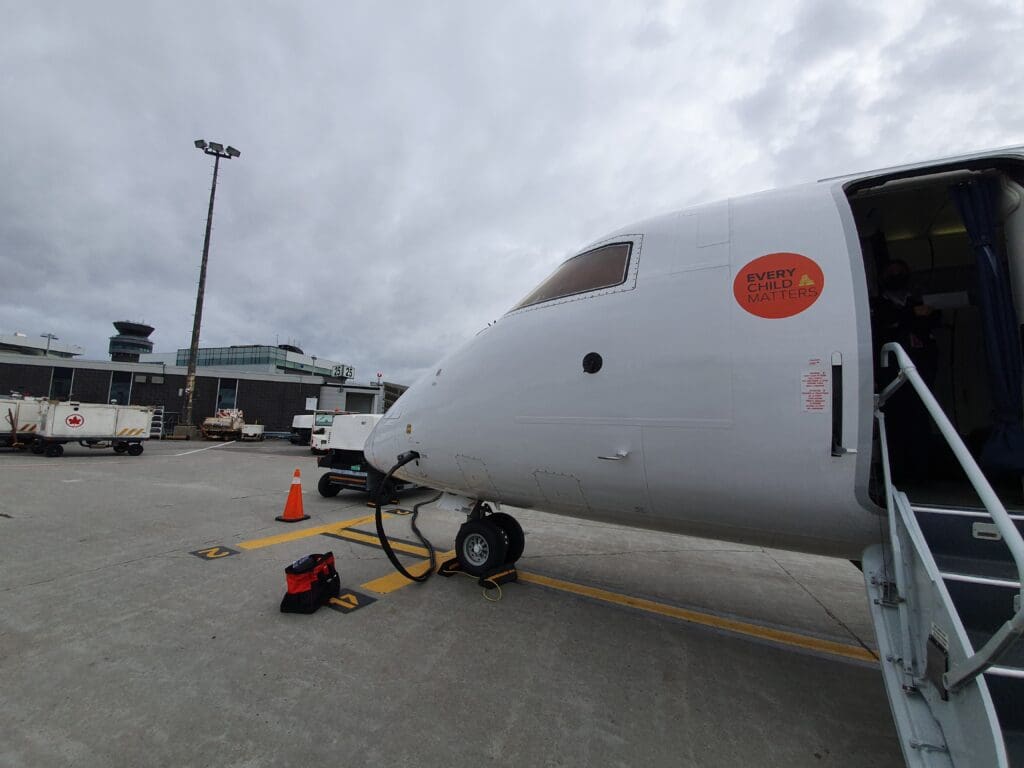
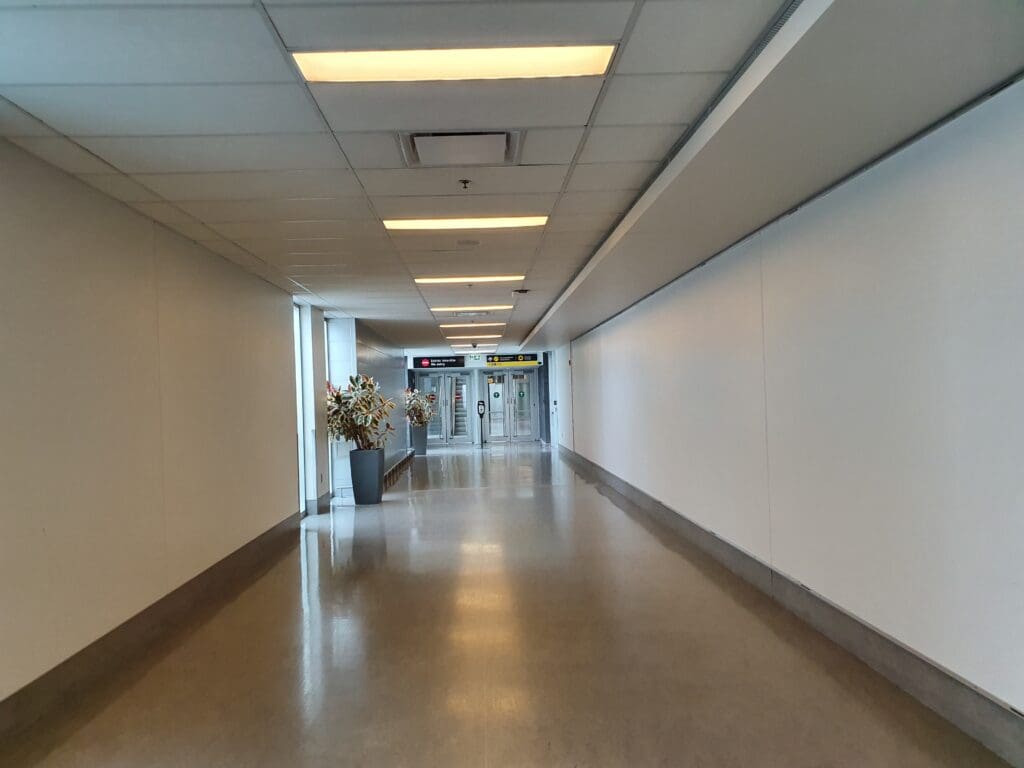
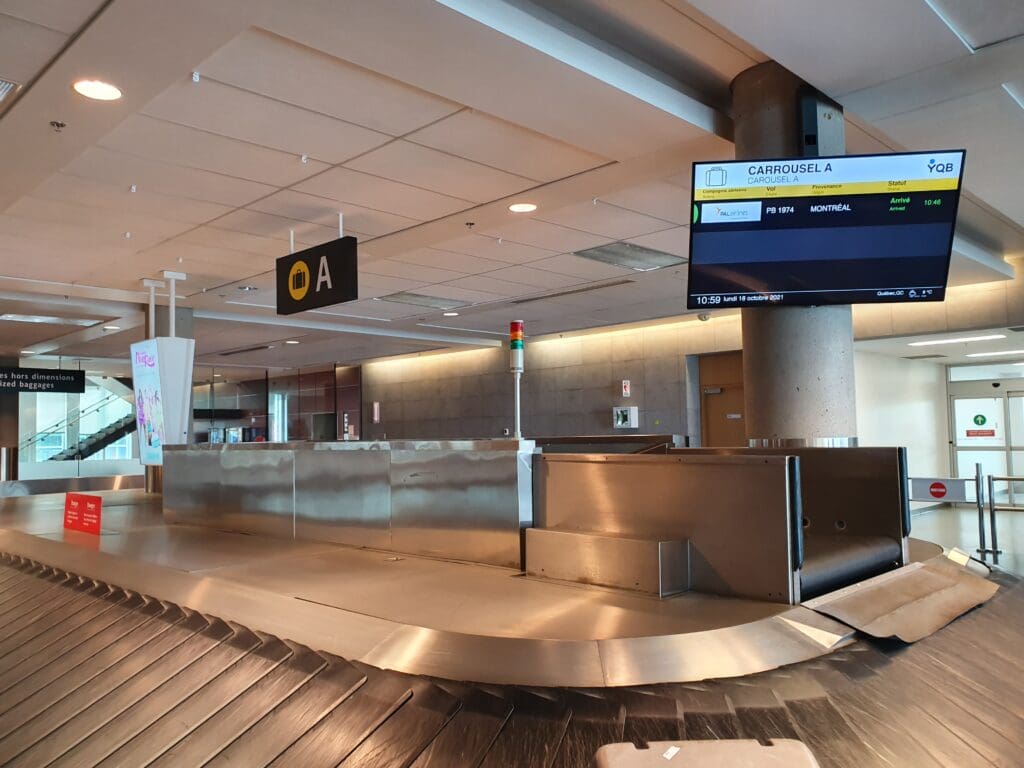
Once inside, I passed a reasonably large group of passengers ready to board the Dash 8 for its journey northwards before quickly arriving at the baggage claim hall. Despite being the only passenger to disembark from the inbound flight, it took a fair while for my bag to appear. I suspect that my bag was brought to the terminal once all the bags of those departing from Québec City had been loaded onto the aircraft. Fortunately, this appeared after around ten minutes of waiting, and after picking this up I made my way to the landside area of the airport, catching a local bus into the city centre.
Summary
Ignoring the delay, my experience with PAL Airlines was short and sweet. Whilst I cannot deny that the 31-year-old Dash 8 did not offer a particularly luxurious passenger experience, the aircraft got me to Québec City in one piece and proved to be a comfortable small turboprop. Onboard, the flight attendant was friendly and welcoming, and I do have to credit the carrier for their complimentary provision of snacks. Thus, to conclude, I would be willing to fly with PAL Airlines again.