A Superb Short Hop with Malaysia Airlines: Kuala Lumpur to Bangkok on the Boeing 737-800
Following a pleasant yet short stay in the Malaysian capital, it was time for me to continue onwards and head northwards to Bangkok. As with virtually all international services from Kuala Lumpur (the exception being Firefly’s service to Singapore-Seletar), my flight to Thailand would depart from Kuala Lumpur International Airport, which sits around sixty kilometres to the south of the city centre. Despite this distance, reaching Malaysia’s main international gateway is usually not a particularly burdensome task, as regular trains run between KL Sentral Station and the airport’s two terminals, KLIA1 and KLIA2. These consist of direct, non-stop KLIA Ekpres services, which take 28 minutes to reach the airport, or the slower stopping KLIA Transit services, which call at Salak Tinggi, Putrajaya, Cyberjaya and Bandar Tasik on their journey to the airport and take 36 minutes. Perhaps surprisingly, given the time differences between the two trains, there is no price difference between them, with a one-way adult fare costing a pricey 55 Ringgit (around £9.30). Those on a budget can also take an express bus from KL Sentral, which costs 10 Ringgit and, conditional on encountering no major traffic jams, takes an hour to make the journey to the airport.

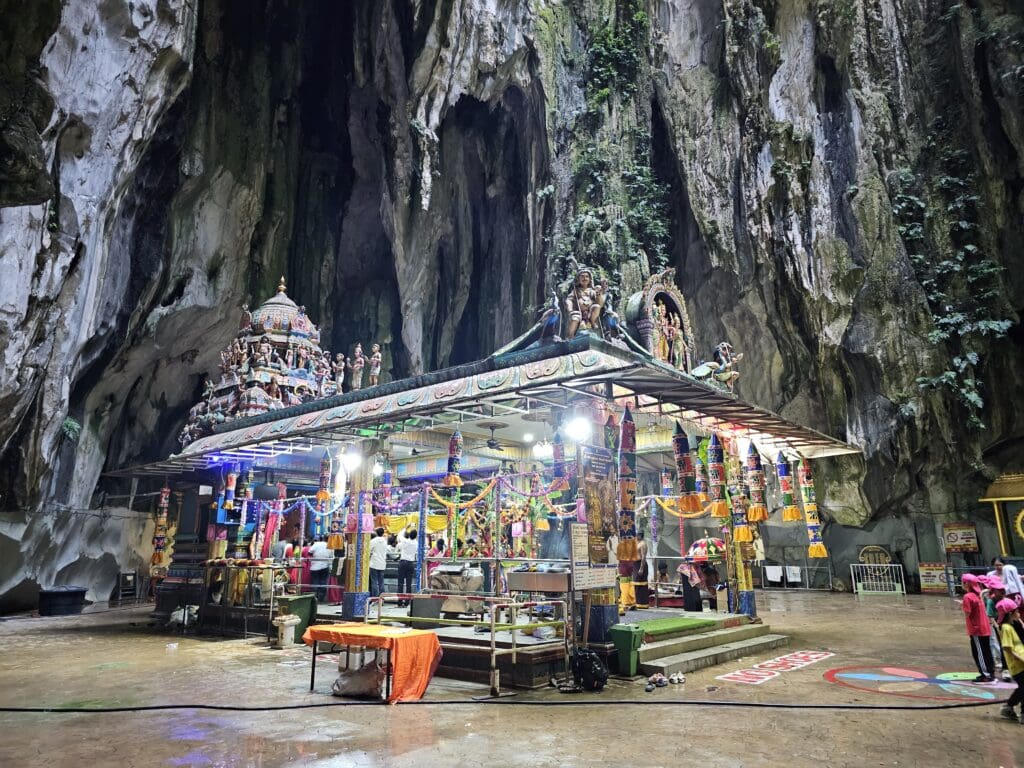
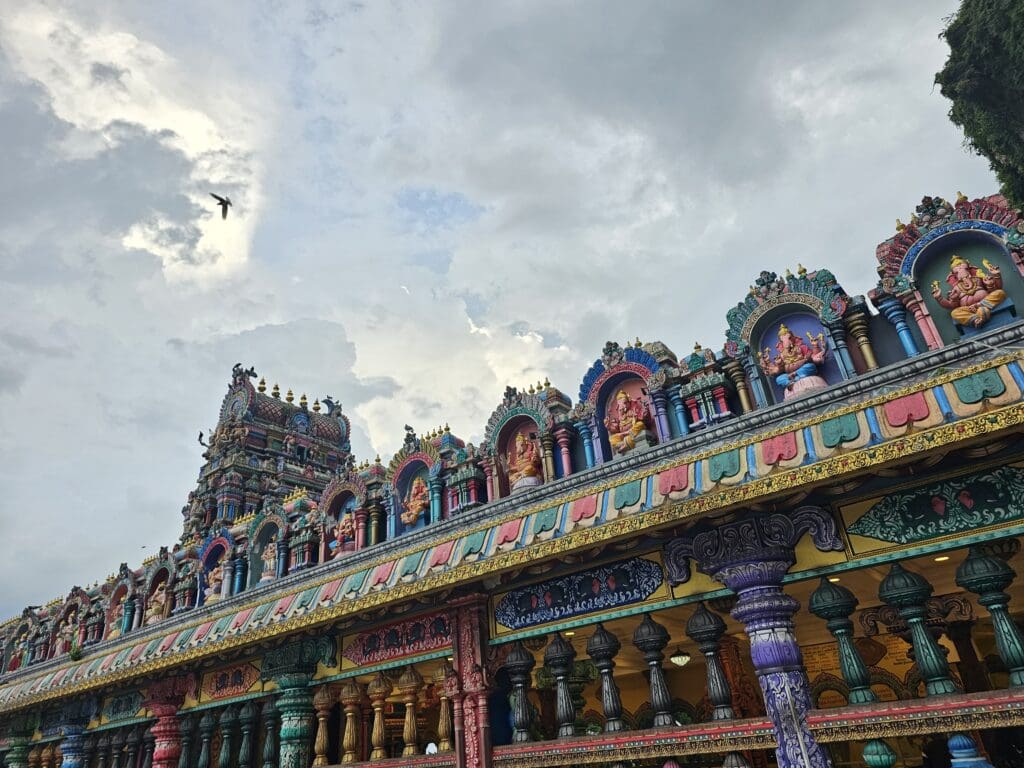
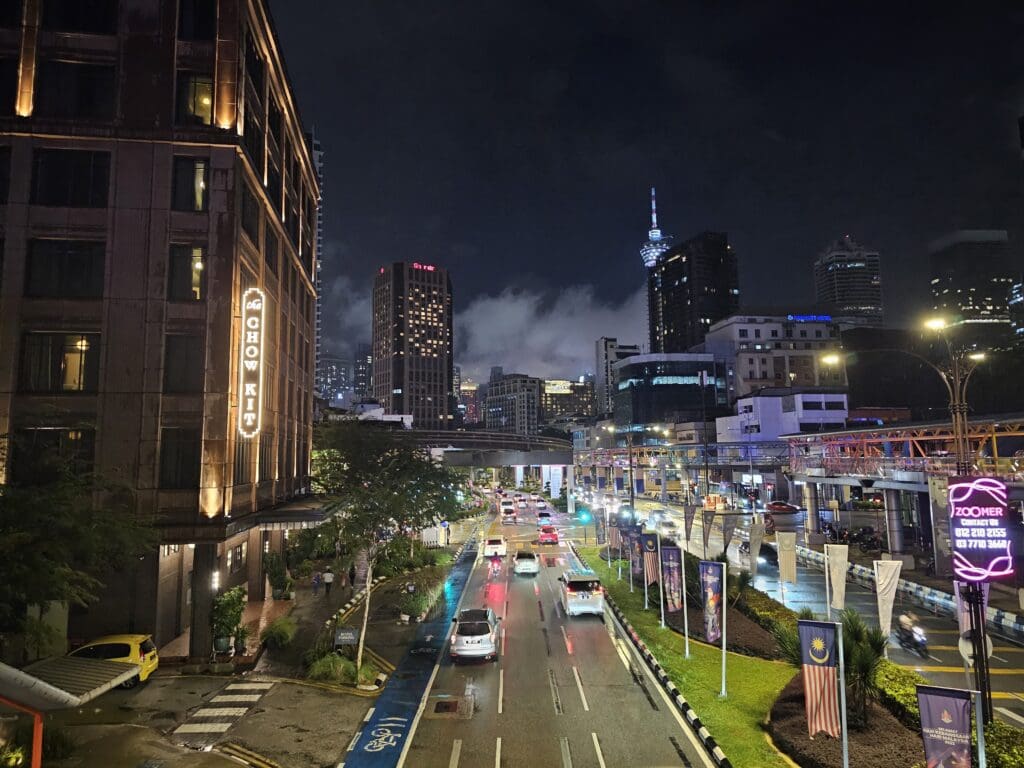
Having purchased a return ticket between the airport and city following my arrival on a TransNusa ARJ21, I had no reason not to return to the airport by KLIA Ekpres. Having spent my two nights in the Malaysian capital at the Hilton Garden Inn in Chow Kit, my first mission was to get to Kuala Lumpur’s main railway station. Seeing as my flight to Bangkok was not scheduled to depart until 1620, any regular passenger would have likely enjoyed a leisurely morning before heading off to the airport. However, being an aviation enthusiast, I could not resist the opportunity to visit Kuala Lumpur International Airport’s observation decks – with an indoor deck located in KLIA1 and an outdoor deck in KLIA2. Thus, I opted to wake up bright and early, and, following a hearty breakfast, I checked out of the hotel at 0740. Not fancying a long walk through the humid morning air alongside some of the city’s busiest streets, I decided to splurge out on a taxi and ordered this via Grab – the main ride-hailing app in Kuala Lumpur. Costing just 9 Ringgit (around £1.50), this was an absolute bargain, and it would have made little sense for me to journey to the station by any other means.
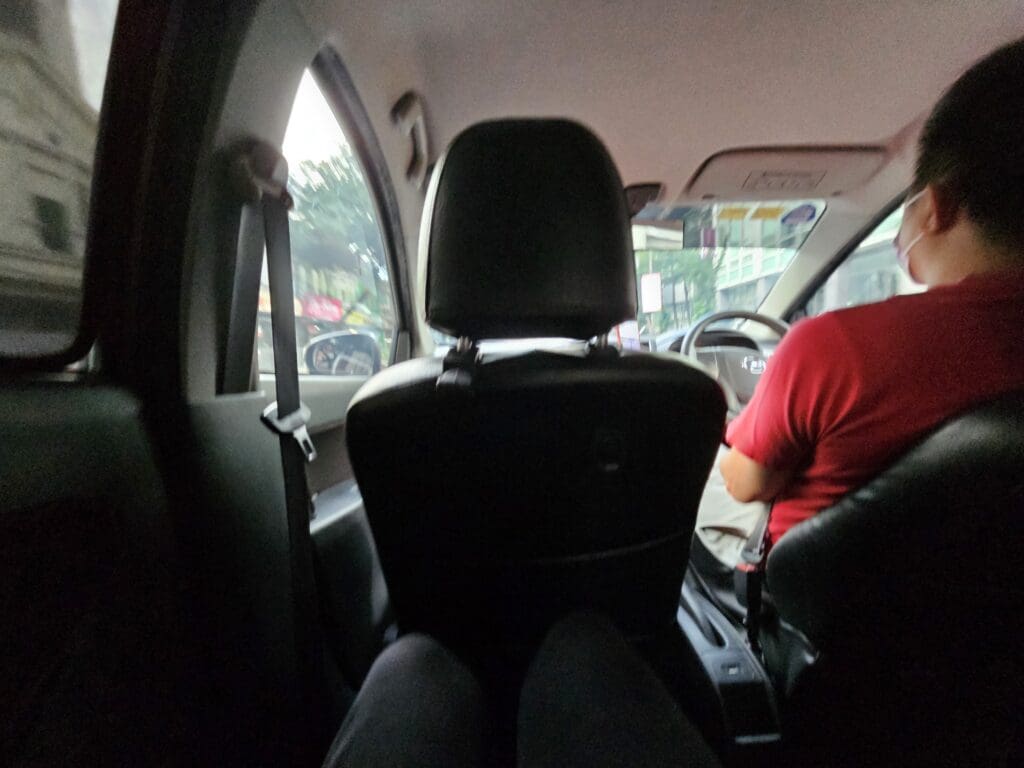
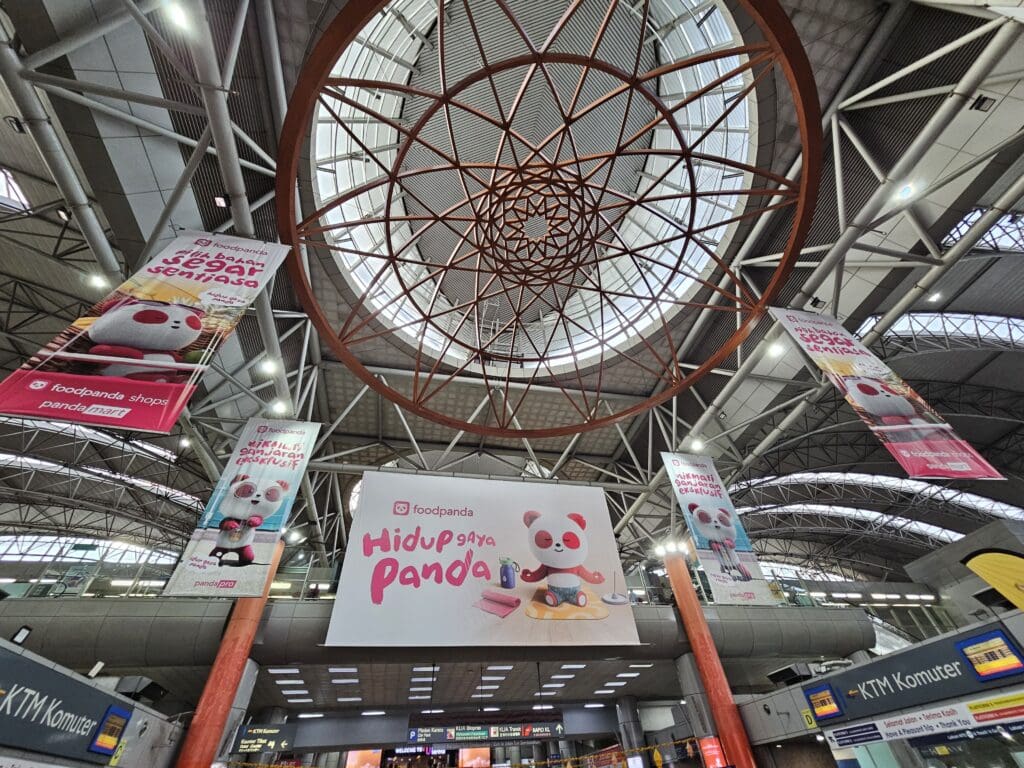
Four minutes after ordering this, a nondescript Proton car pulled up outside the hotel, and I was soon whisked away down Kuala Lumpur’s busy streets. Around fifteen minutes of horn tooting and questionable driving later, the taxi arrived outside the busy facade of KL Sentral, at which point I handed the fare over to the driver before making my way inside. At that time in the morning, trains could be seen departing for all corners of Peninsula Malaysia to destinations both near and far, and, whilst it would have been nice to stay longer in the country and board one of these, I resisted the temptation and instead followed signs for the KLIA Ekpres. From the main station, I was taken down to the basement where I scanned my ticket’s QR code on the barriers, before these let me through, at which point I was able to reach the platform. With trains departing at intervals of every twenty minutes, I did not check the schedules in advance; however, I ended up on the platform with eight minutes to go until the next airport-bound train, so not too much waiting was required.
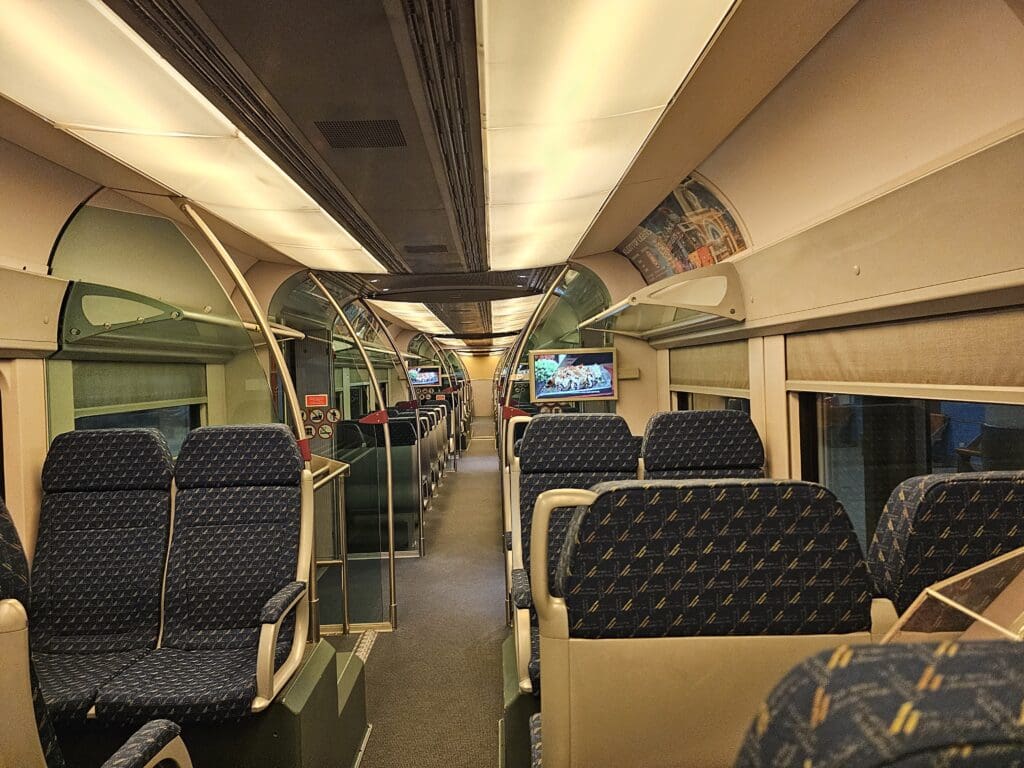
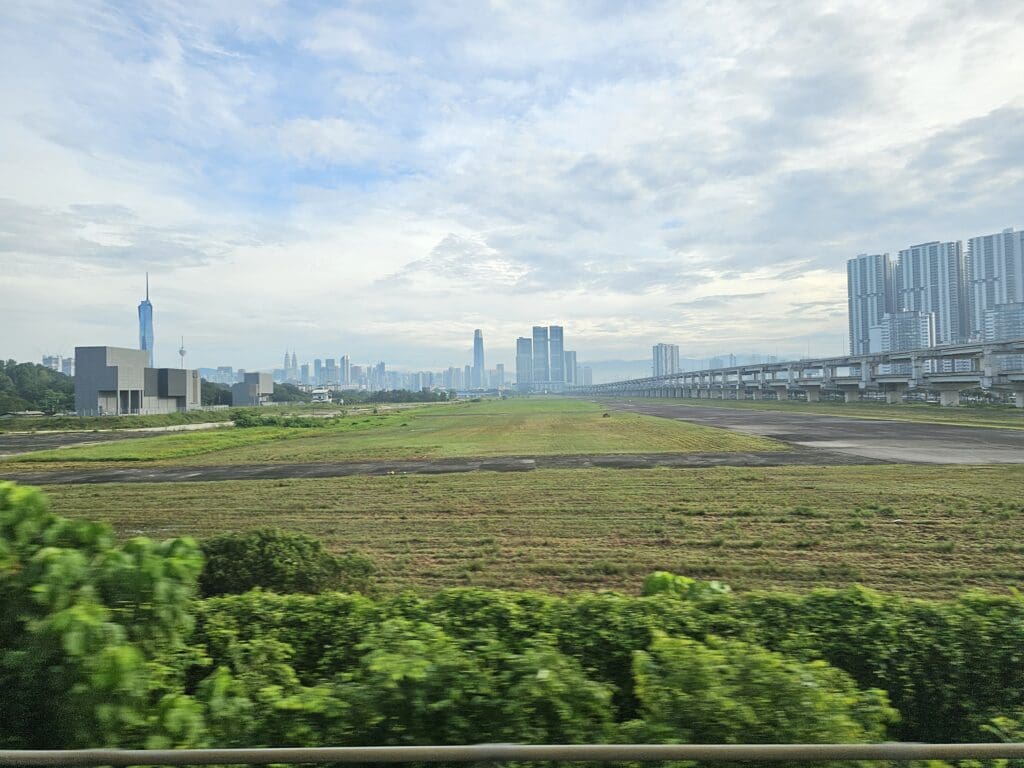
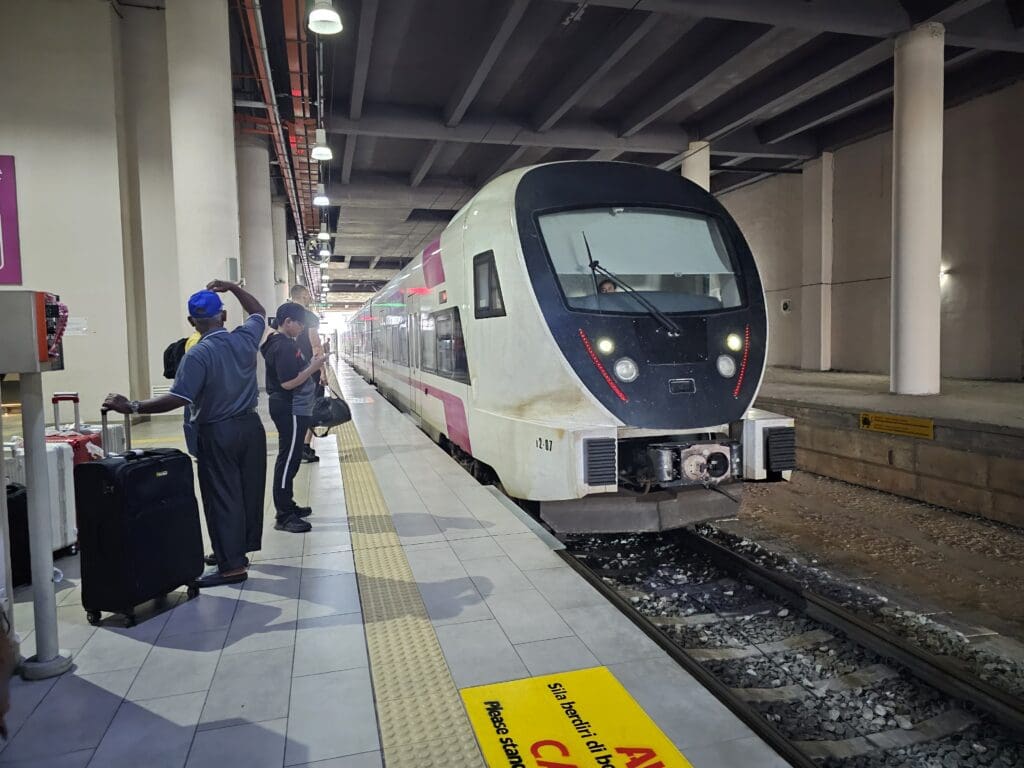
A few minutes later, a Siemens Desiro electric multiple unit ploughed into the station before the screen doors opened, allowing passengers to board. These trains date back to the opening of the line between KL Sentral and the airport in 2002; however, having been refurbished, these are modern, comfortable, clean and tidy, and come with fast, complimentary wifi that worked well for the duration of my ride. Right on time, the doors closed and the almost totally empty train whizzed out of the platform, soon emerging in the bright light of day. As we headed southwards, soon, Kuala Lumpur’s urban sprawl appeared, and I was treated to some final parting views of the city’s iconic Petronas Twin Towers and the KL Tower. Speeding out through the suburbs, all of a sudden, things became greener as we left the city and made our way out to the airport. Before I knew it, the sight of aircraft rocketing upwards could be seen, indicating that our journey was nearing its end.
Today, Kuala Lumpur International Airport features two detached terminals – Terminals 1 and 2, more commonly known as KLIA1 and KLIA2. Today, most airlines utilise KLIA1 whilst KLIA2 is the home of low cost giant AirAsia and serves their overseas subsidiaries as well as a small number of other low cost airlines such as Cebu Pacific, Jetstar Asia and Scoot. Whilst my flight to Bangkok would depart from KLIA1, sticking to my original plan, I resisted the temptation of disembarking at KLIA1 and stayed on the train until it reached its terminus at KLIA2. Around half an hour after leaving KL Sentral, the train came to a gentle halt at KLIA where I made the long journey up to the terminal building.
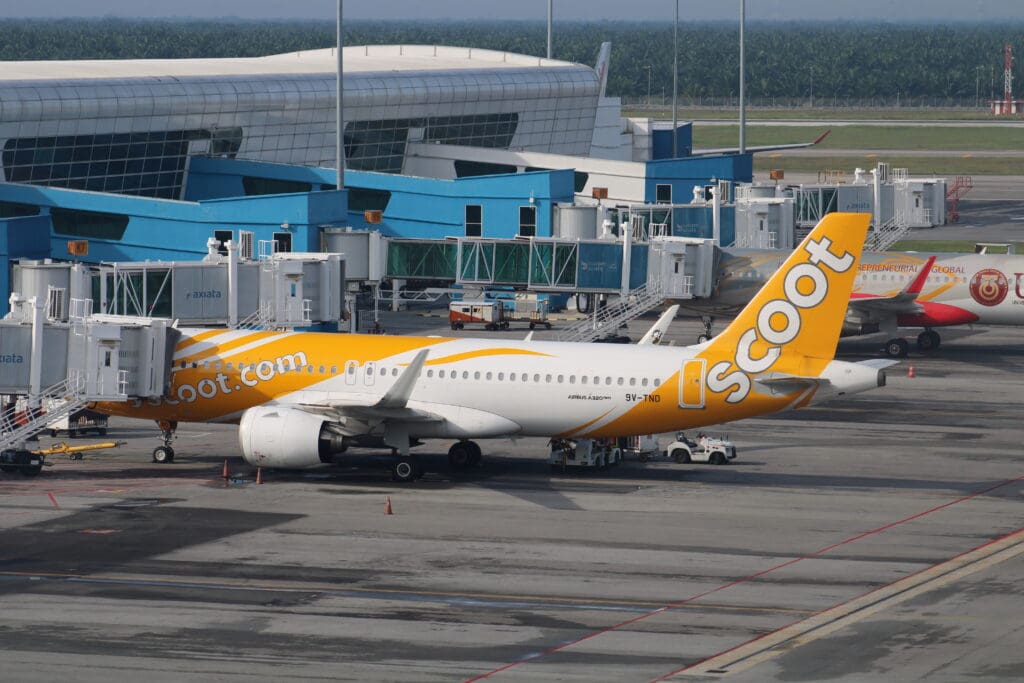
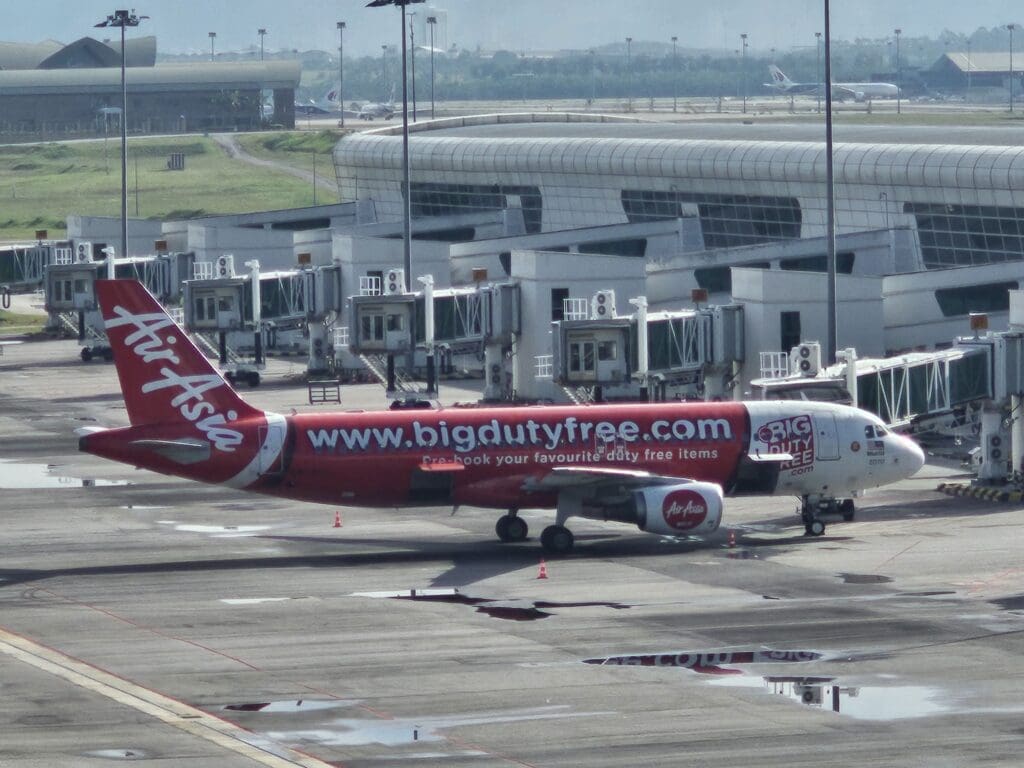
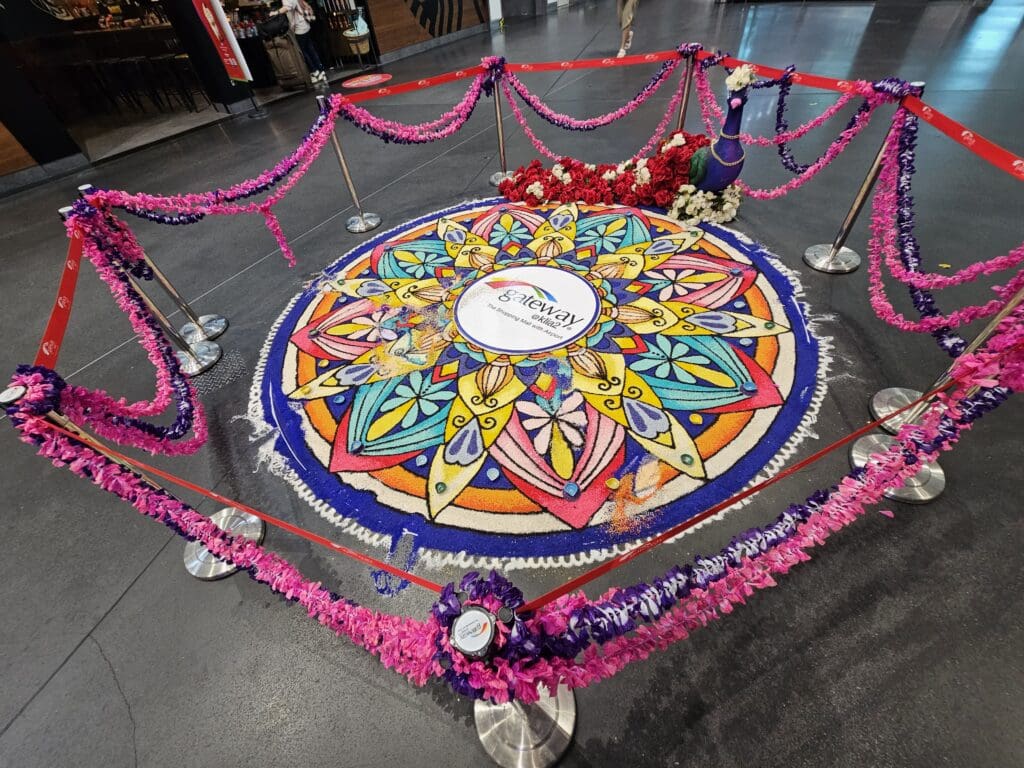
KLIA2’s landside area is a rather interesting place. This consists of the Gateway shopping mall which is attached to the terminal. This makes the terminal a destination in its own right, and is thus fantastic for those needing to stop to shop, eat or drink. Still full from my hotel breakfast and not yet requiring another coffee, I continued heading upwards and followed the signs for the terminal. There, the terminal’s landside observation deck could be found just before reaching the check-in hall and, with this being outdoors, seemed to be a popular spot for smokers. Whilst this did offer airside views, admittedly, this was a little less impressive than I had expected, with limited views of just two small portions of the apron. After admiring the clusters of AirAsia Airbus A320s and a single Scoot Airbus A320neo, not wanting to spend too long in the morning heat, I made my way back inside for a coffee before making the short journey back to KLIA1. Having timed things just right, I arrived at the platforms a minute before the next KLIA Transit service and three minutes later, I disembarked at KLIA1’s underground station.
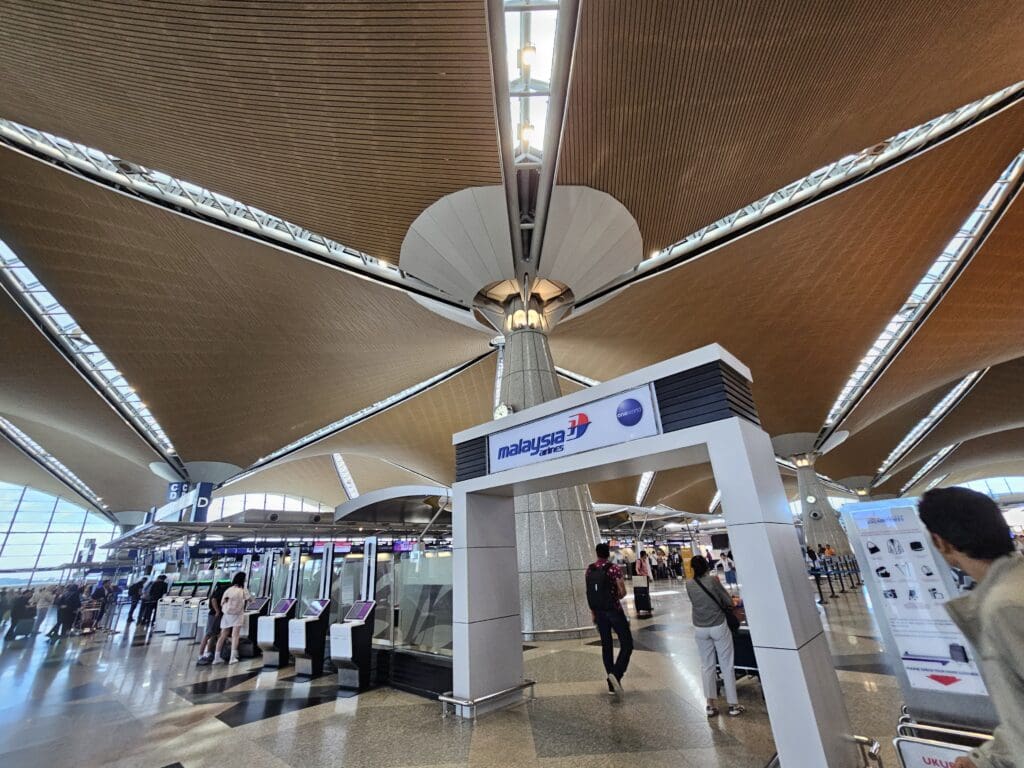
Built as an entirely new airport to relieve Subang Airport of its international duties, construction of Kuala Lumpur International Airport commenced in 1993, with the first stage completed just five years later in June 1998. Initially home to just one single terminal, now KLIA1, this was designed by the late Japanese architect Kisho Kurokawa, whose repertoire includes the terminal at Astana Airport. Like Astana Airport, KLIA1 fuses modern architecture with traditional local styles, resulting in a bright, open and spacious terminal, which draws upon Malay design, most notably through the check-in area’s roof. Inside, the check-in hall covers a large area and is home to six separate check-in islands. Unsurprisingly, given Malaysia Airlines’ status as the hometown airline, plenty of the airline’s signage and advertisements could be seen in both the landside and airside portions of the terminal. For those looking to stop to eat or drink before heading through security, a decent number of cafés and restaurants could be found. Furthermore, if wishing to stay connected, complimentary wifi was offered, which I found to work without issue for the duration of my stay. As all visitors would hope, the landside portion of the terminal seemed to be in a clean and tidy state, and ultimately I was left with nothing to make a complaint about.
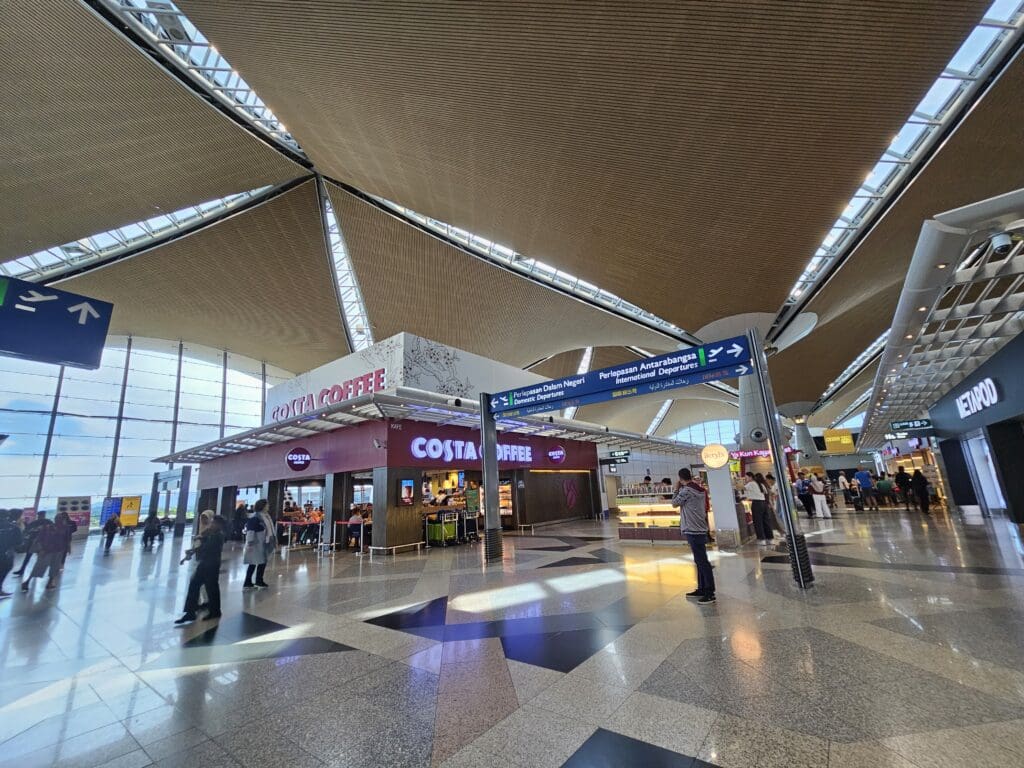
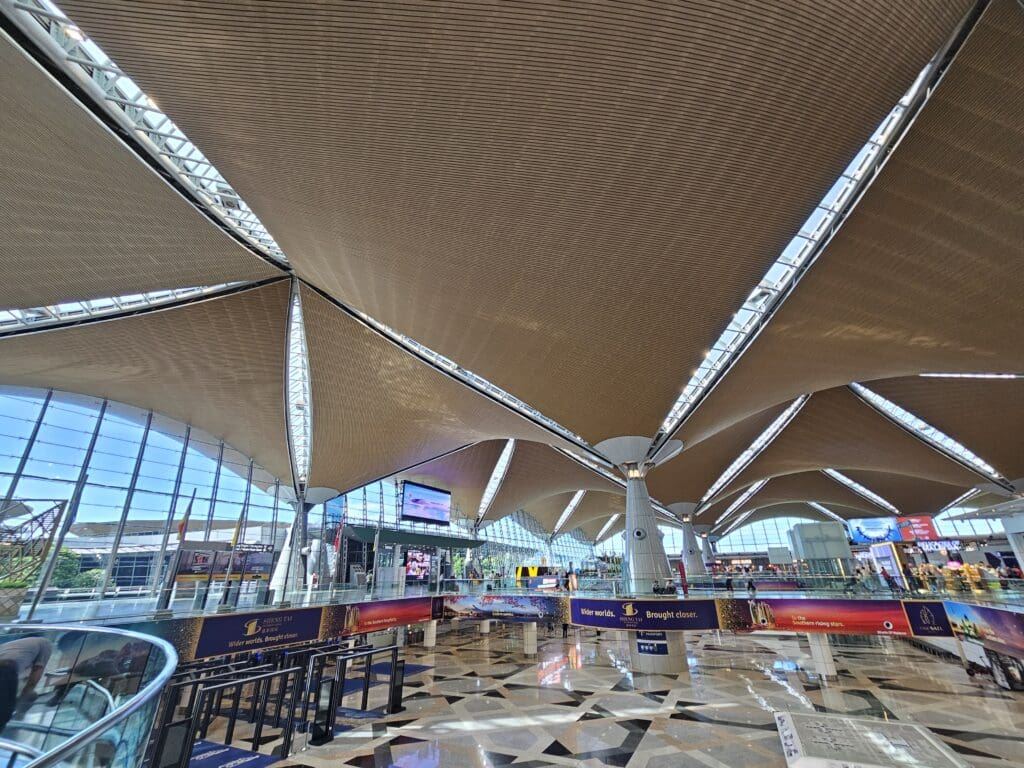
Being an aviation enthusiast, the rear gem of the terminal’s landside area was undoubtedly its observation deck. Following signs for this, I was taken past the entrance to security as well as branches of a KFC and McDonald’s before I arrived there. This featured large and mostly clean windows that provided superb views of many of the terminal’s stands, whilst the satellite terminal could be seen on the other side of several taxiways. For those not so interested in the movements outside, a prayer area, kids’ play area and a hot drinks vending machine could be found. That day, this seemed to be busy with both solo visitors and families, indicating this to be a destination in its own right.
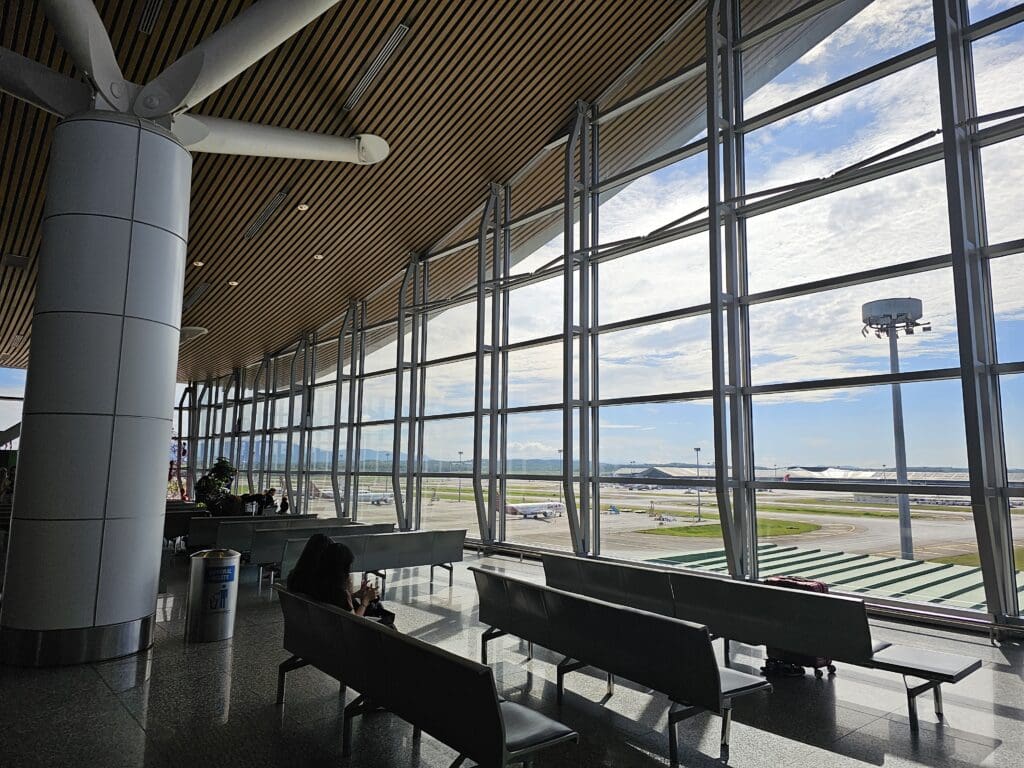
Soon setting up camp, I watched as the regular stream of movements flowed past. Being based in the UK, most aircraft were ones that I could not see back home in Britain and by far the largest cohort came in the form of AirAsia Airbus A320s and Malaysia Airlines Boeing 737-800s, followed by Batik Air Malaysia jets.
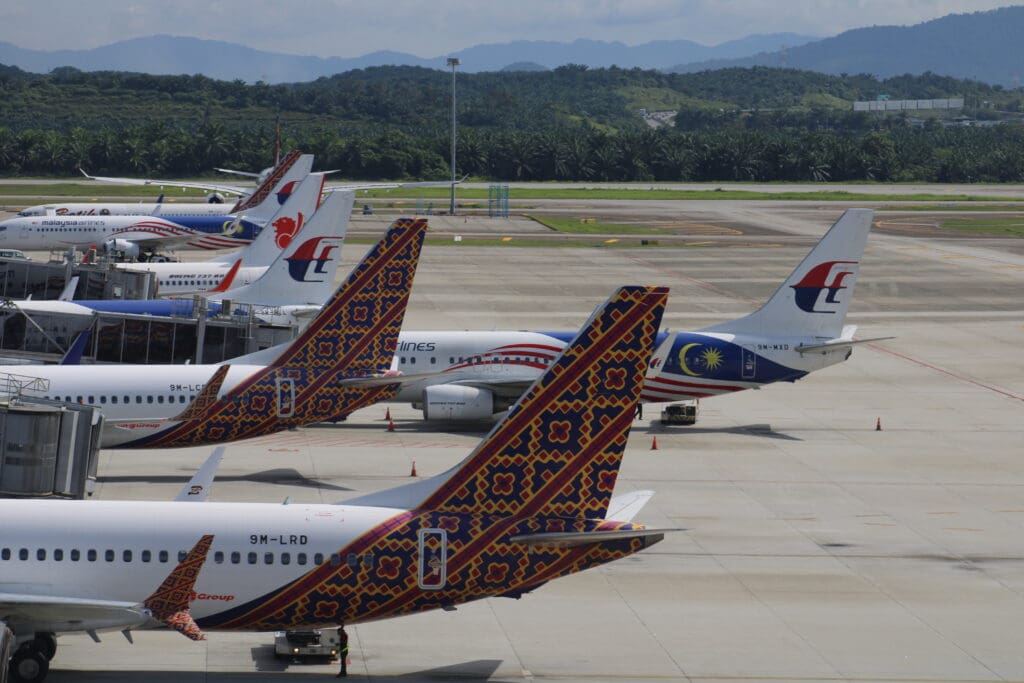
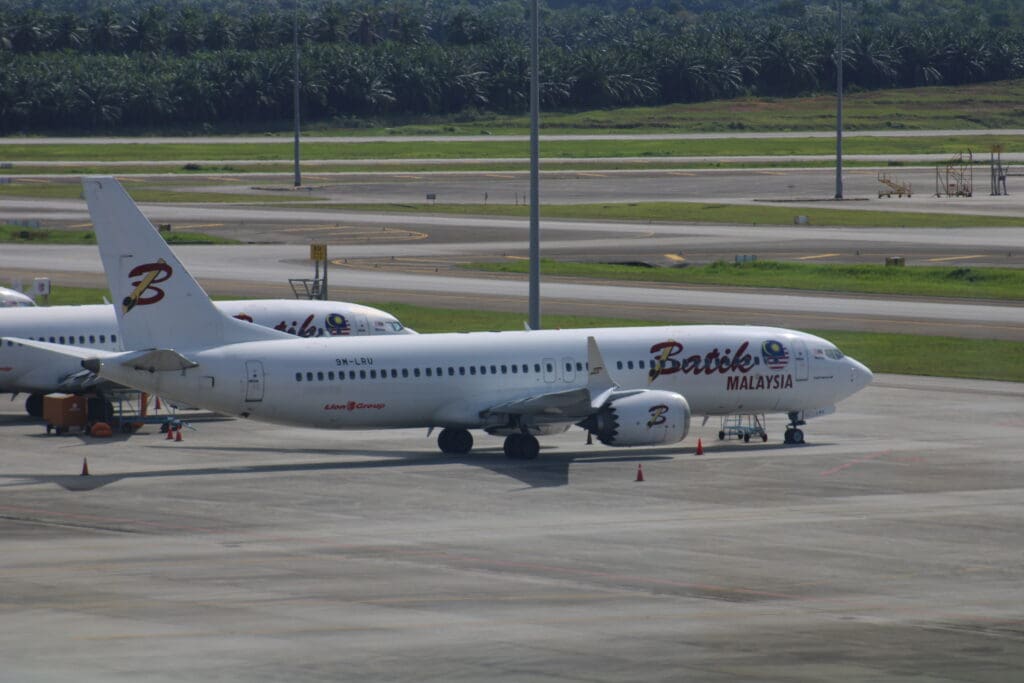
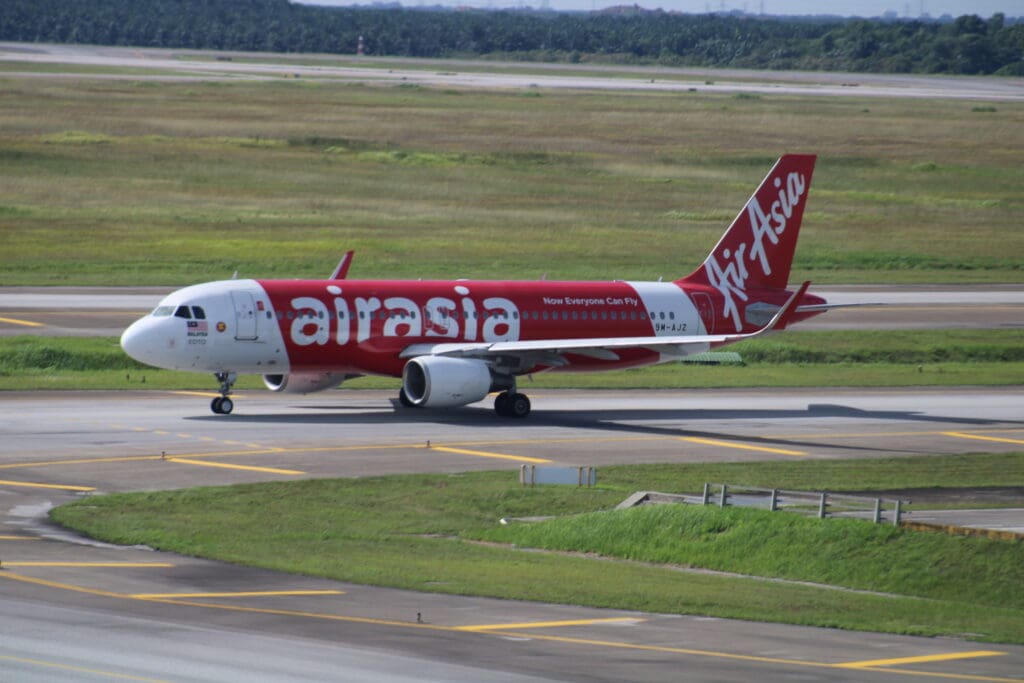
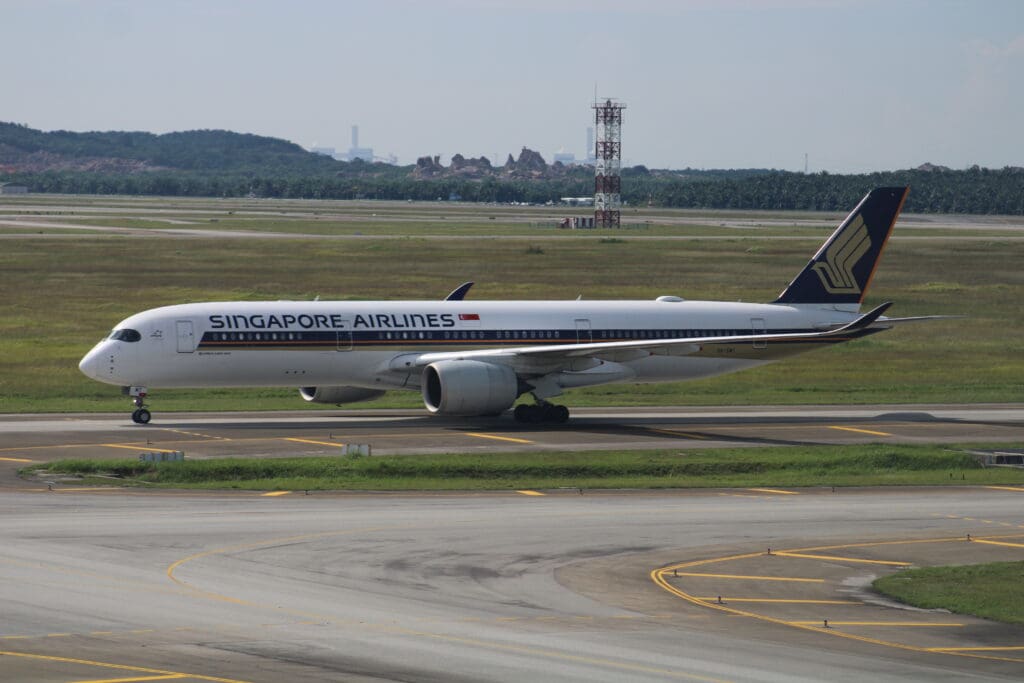
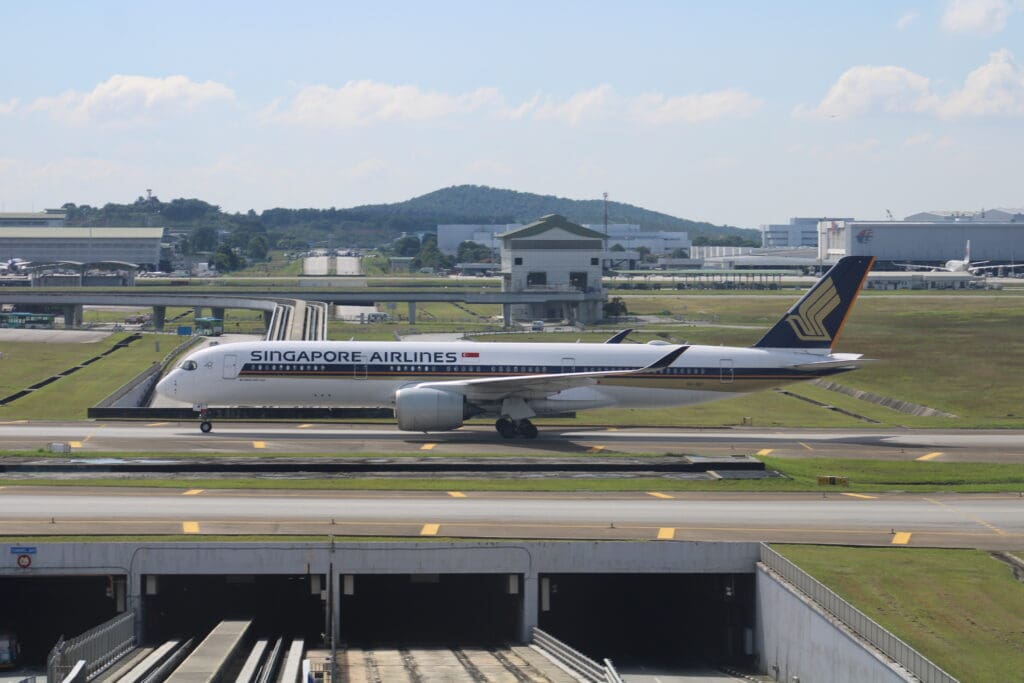
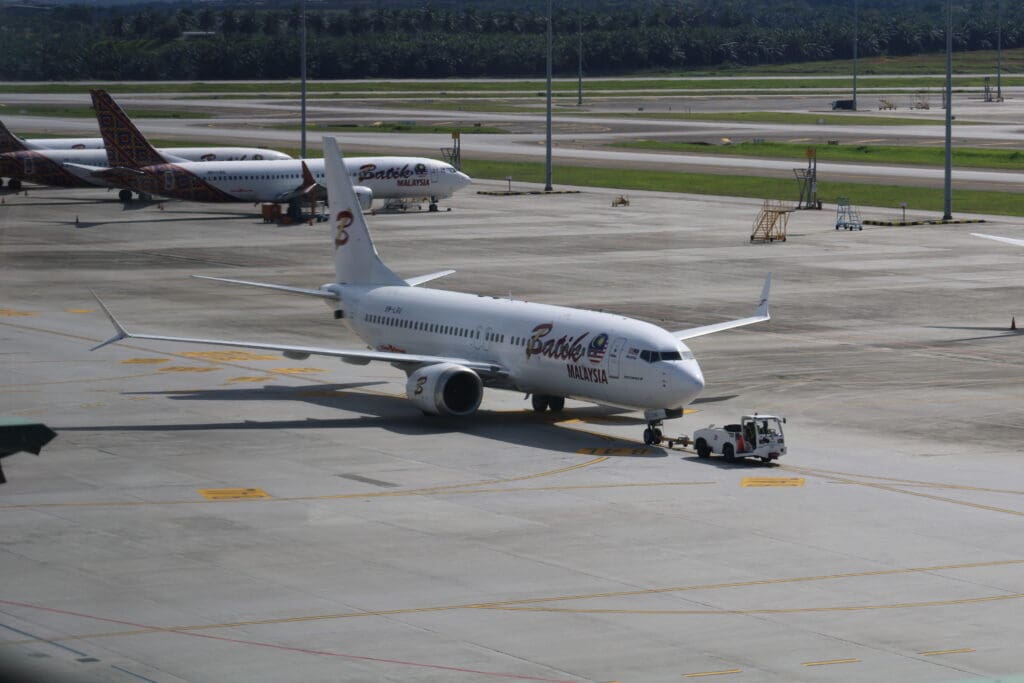
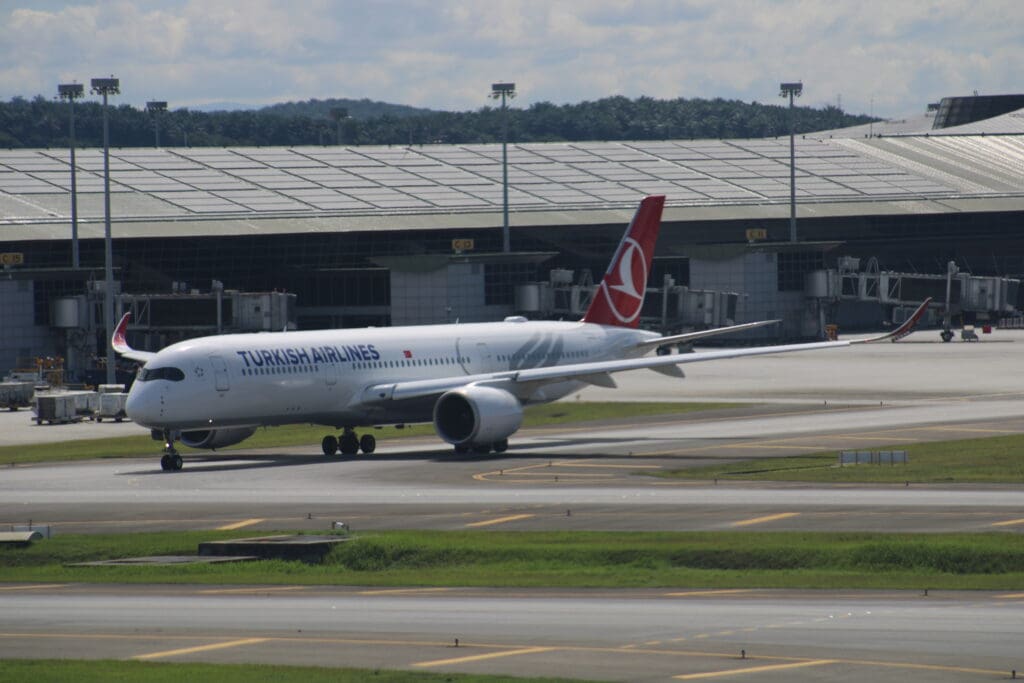
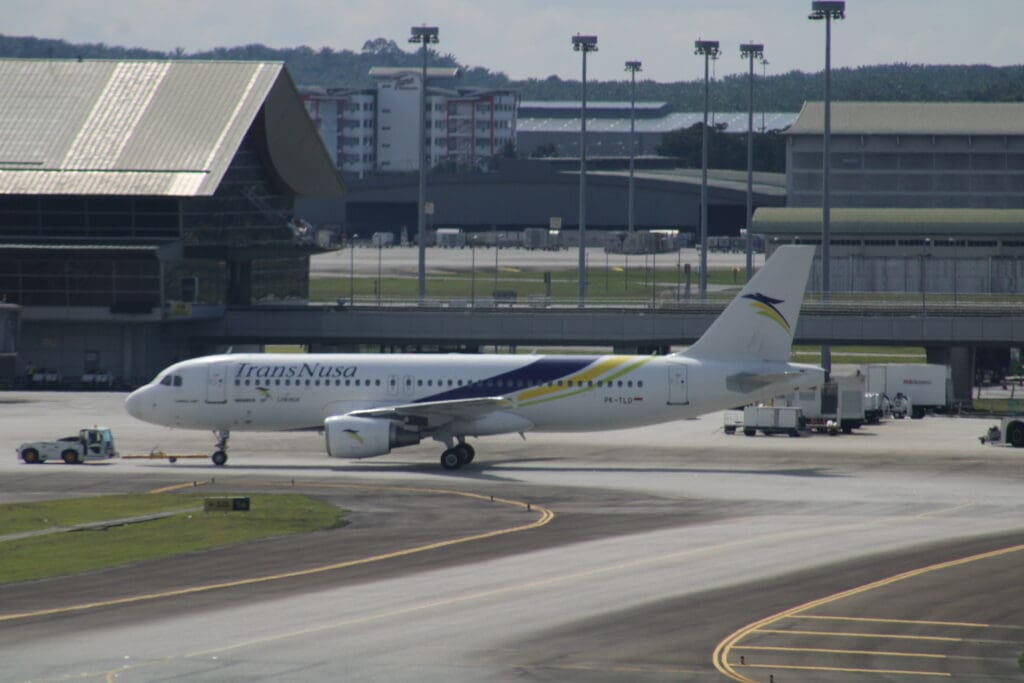
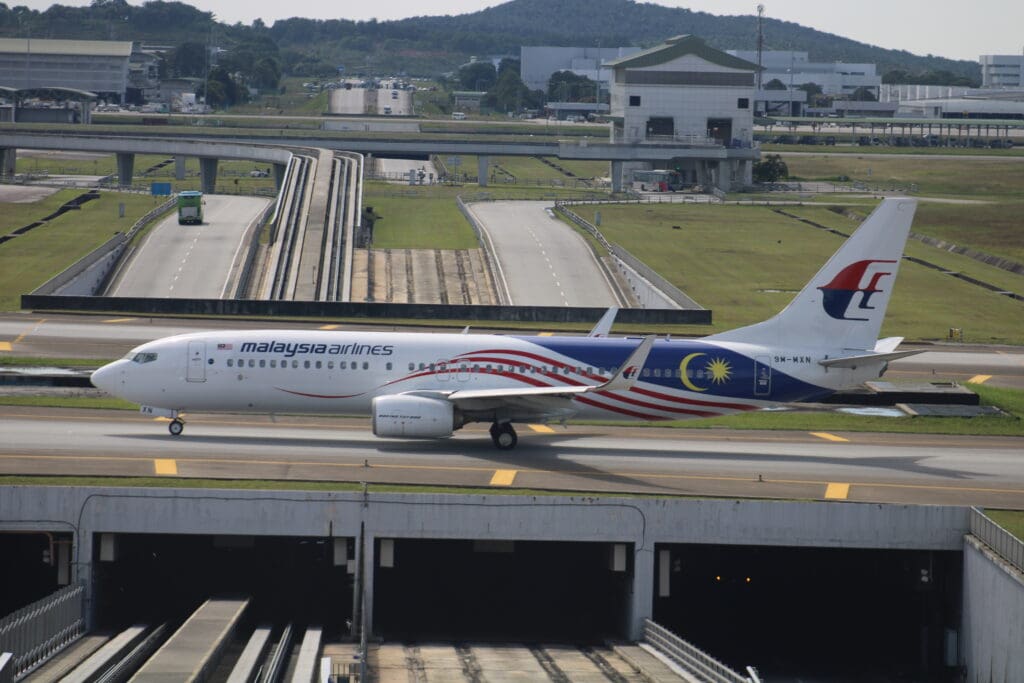
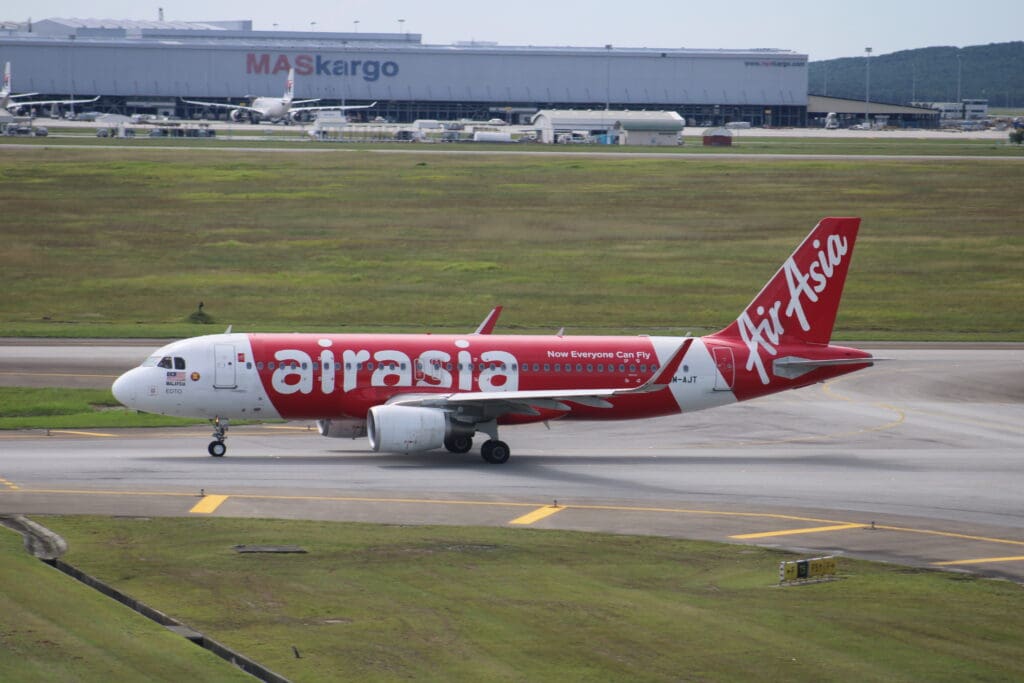
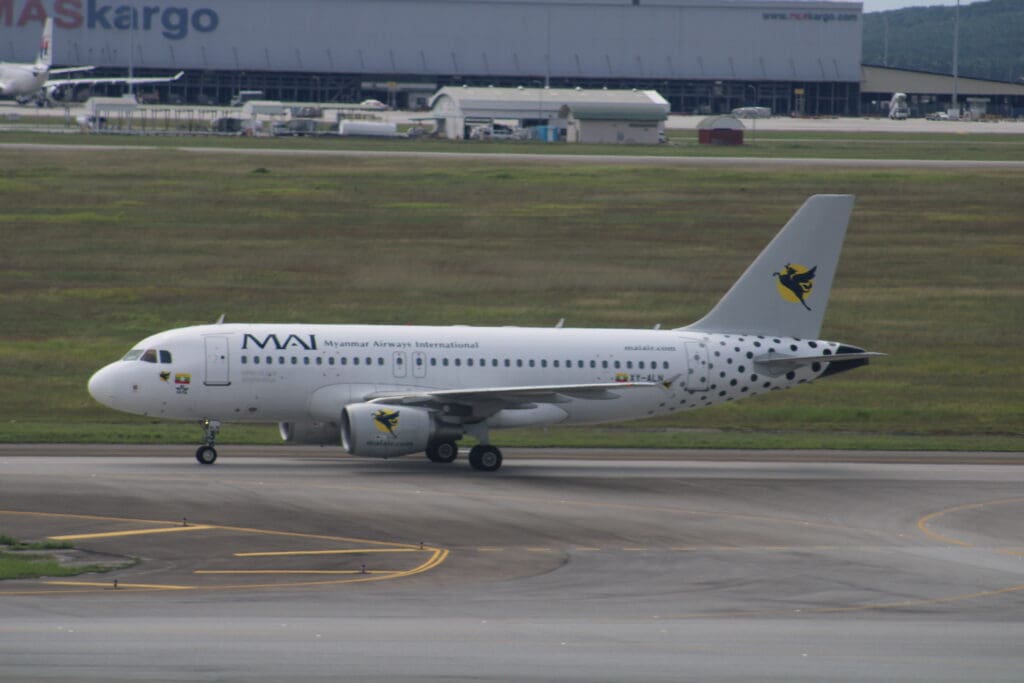
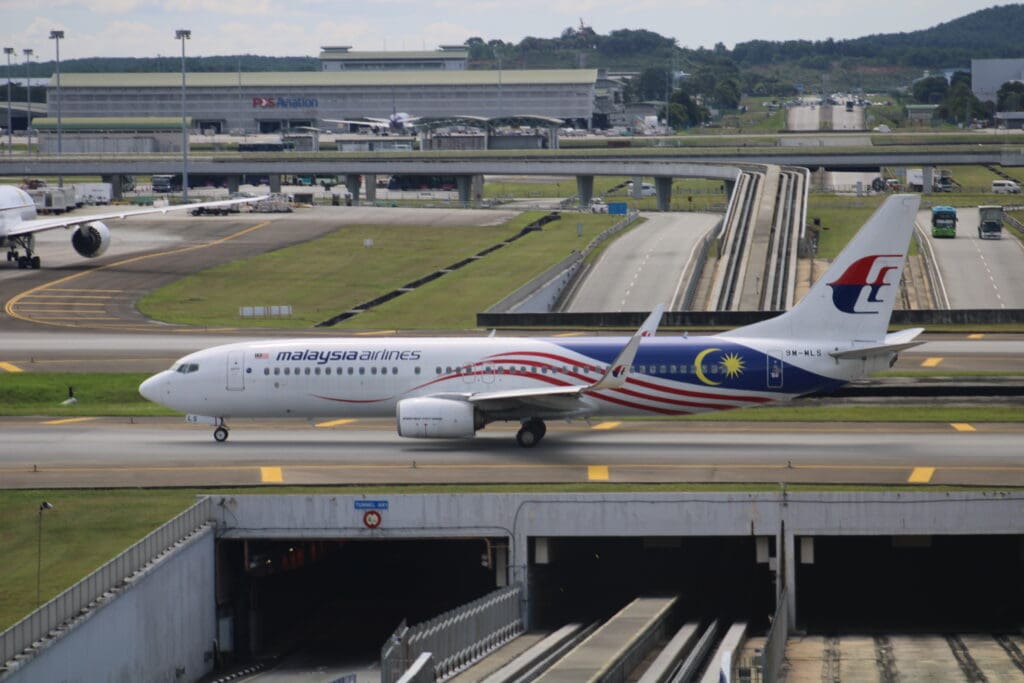
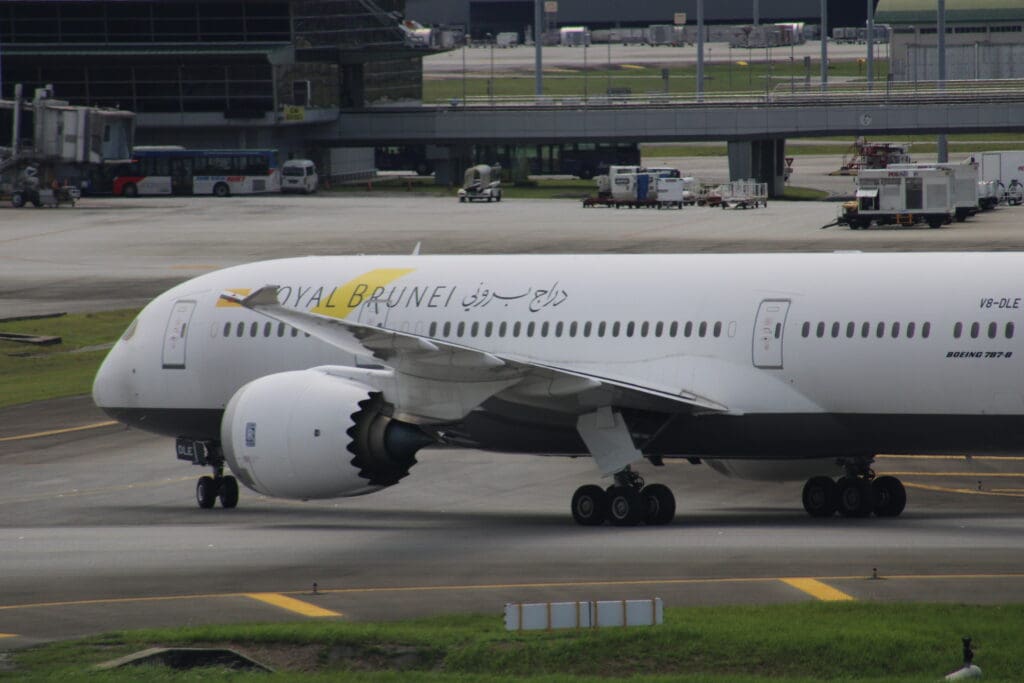
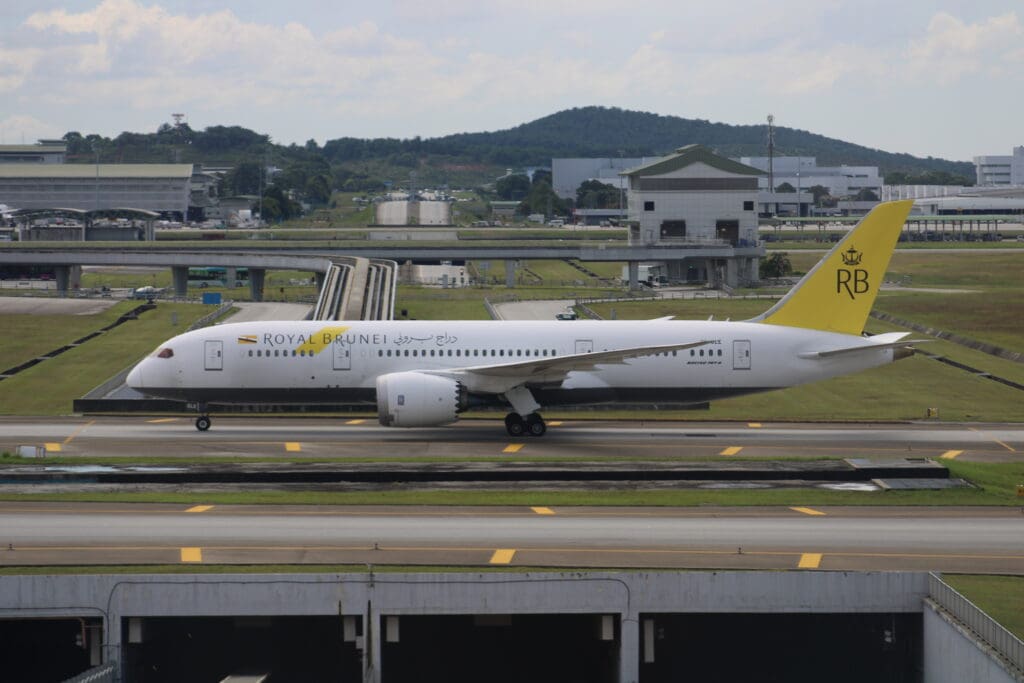
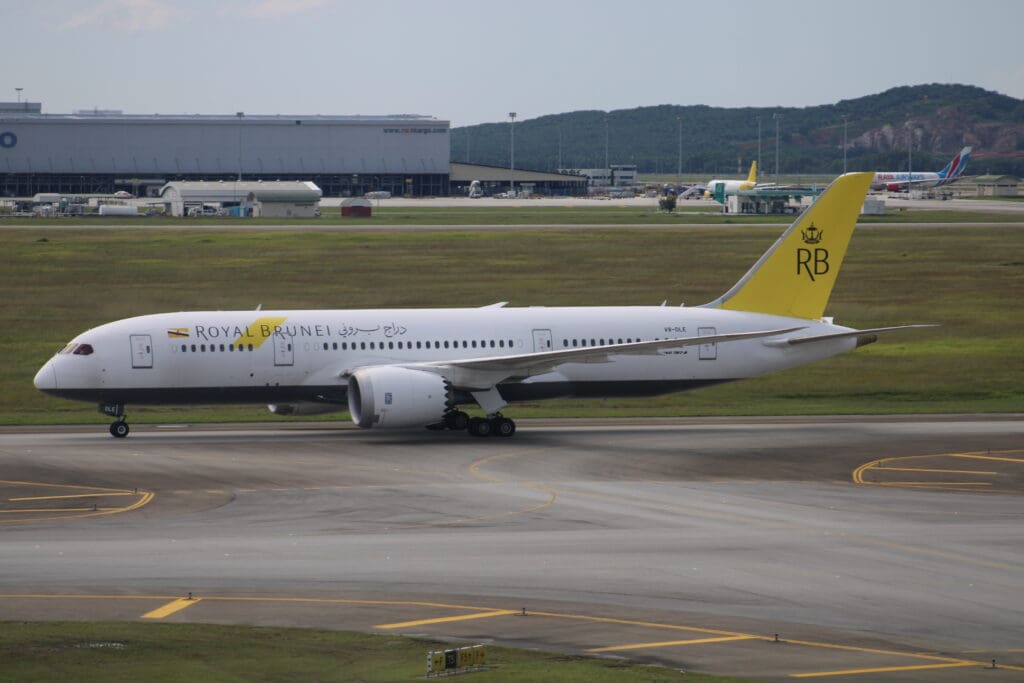
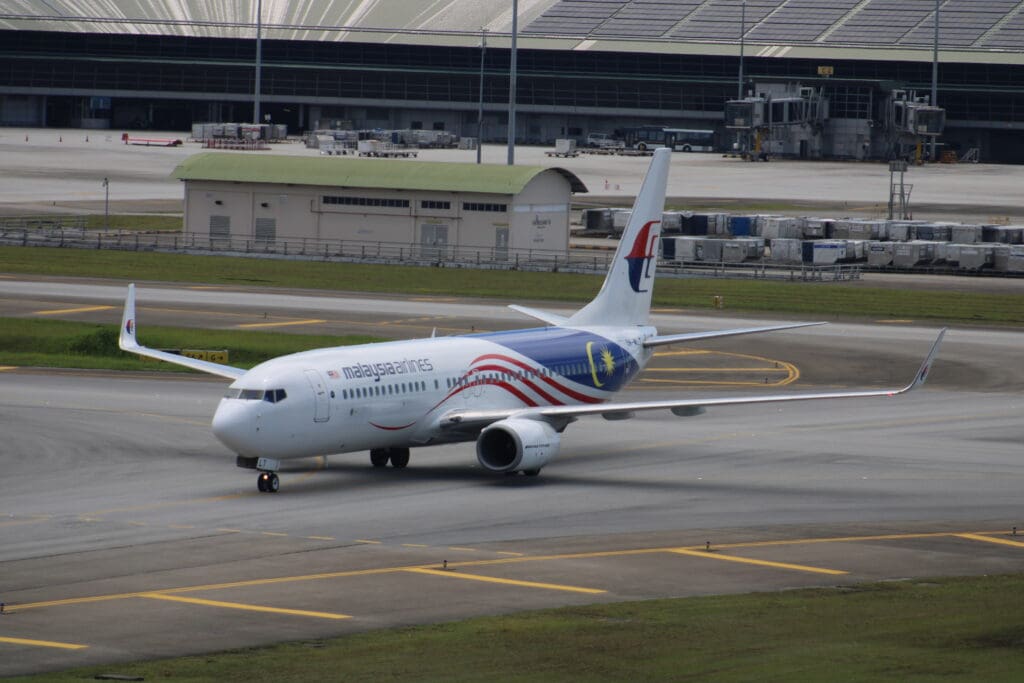
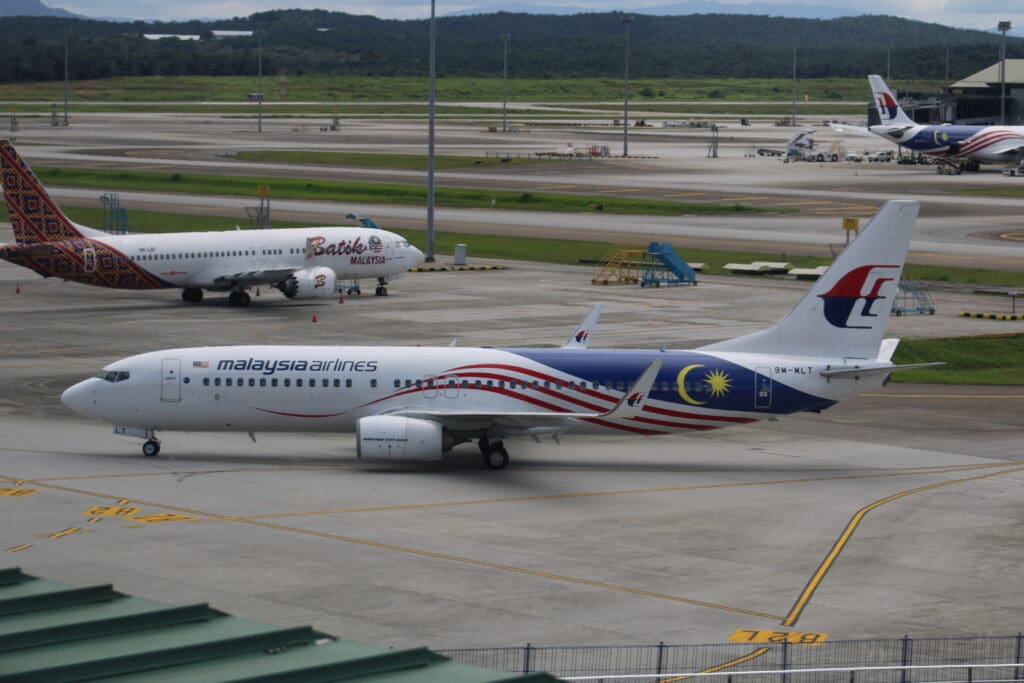
After two joyous hours spent watching the almost non-stop stream of movements outside, seeking some airside spotting opportunities, I decided to continue on my journey and head to immigration. With this located a short walk away from the observation deck, within a couple of minutes of leaving this, I had my boarding pass scanned and passport checked before arriving at the immigration counters. Unlike the slow snaking queue that could be seen upon entering Malaysia, this area was almost completely devoid of passengers that lunchtime, and I was able to walk straight up to a desk. After handing over my passport, I was soon stamped out of Malaysia and was then free to continue on my journey to the airside portion of the terminal. Up next was a customs check, where all passengers had their luggage scanned in search of prohibited items, perhaps also to catch those passengers who had packed durians for pungent inflight snacks. After passing through this quick check, I was then free to explore the delights of the airside area. Wait, what about security? Interestingly, this is done before entering each gate area, with all gates having their own security checkpoint – something that I have only ever previously seen at the now-closed Berlin Tegel Airport.
In terms of its layout, KLIA1 consists of the main terminal as well as a satellite terminal. As far as I could tell, the main terminal was for the exclusive use of Batik Air Malaysia and Malaysia Airlines’ narrowbody services – with the terminal’s design ensuring that most gates in this part of the terminal are usable by both international and domestic flights. That afternoon, my flight to Bangkok would depart from Gate G2 in the main terminal. With this being my first time passing through KLIA1 since June 2017, I was interested to see how the terminal had changed. Whilst I recall this seeming a little worn in places, on this trip, I was delighted to find the main terminal to be modern and bright, and in a clean and tidy state. However, I should also mention that later on, I did spot a couple of cockroaches in one of the bathrooms!
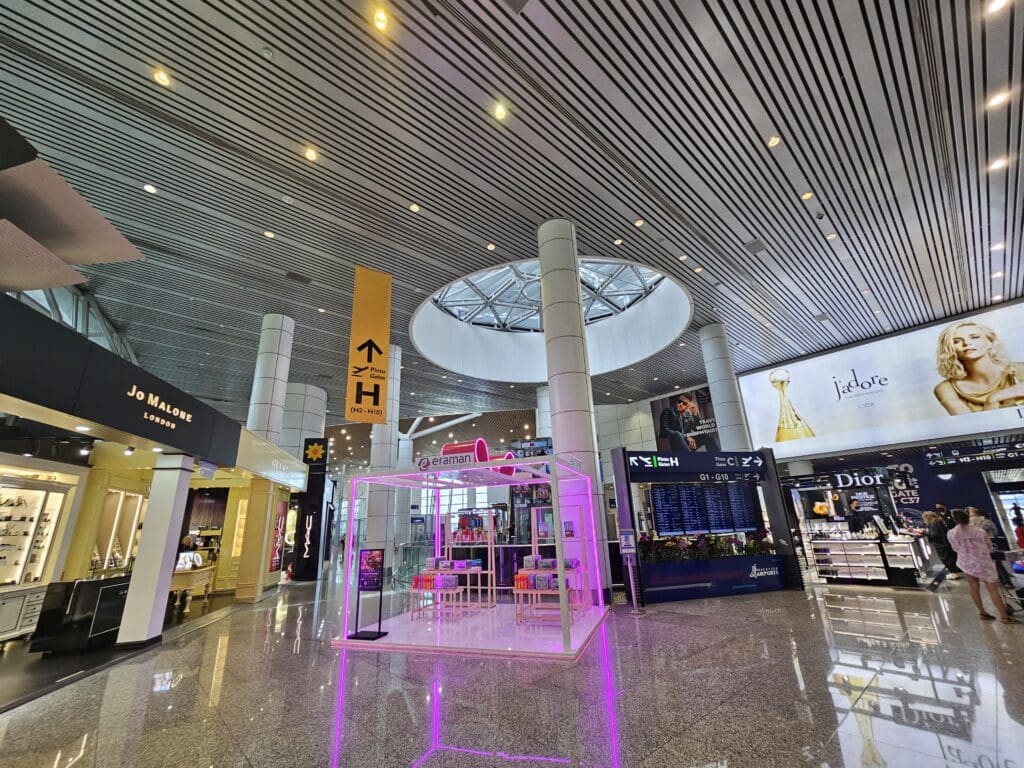
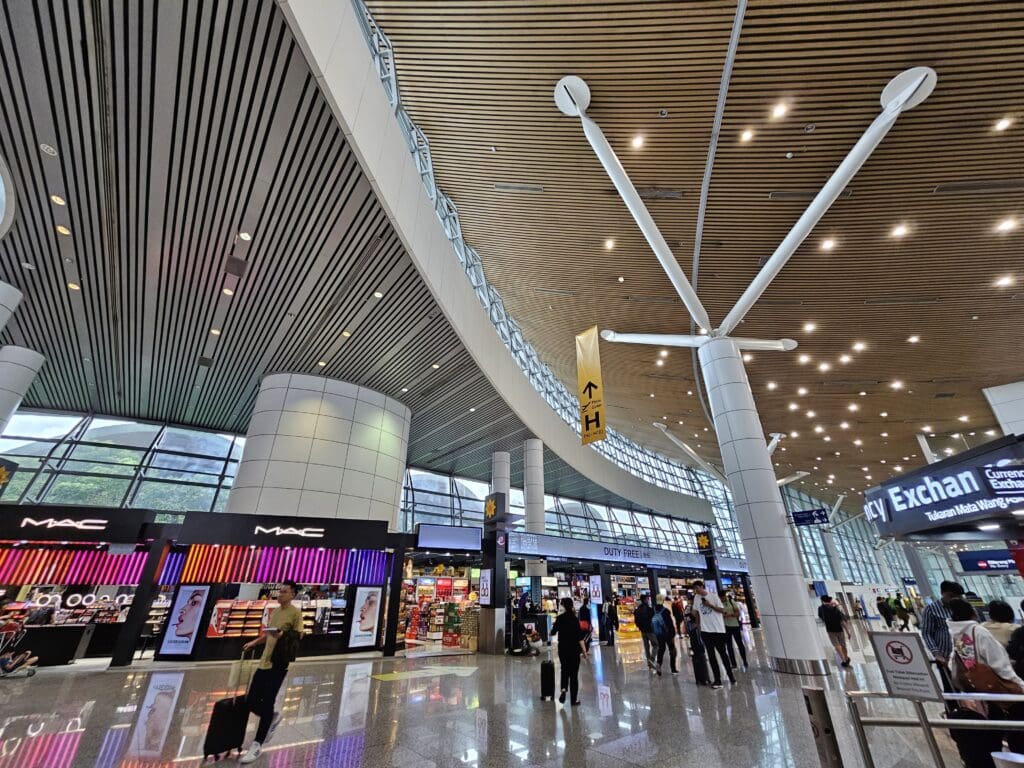
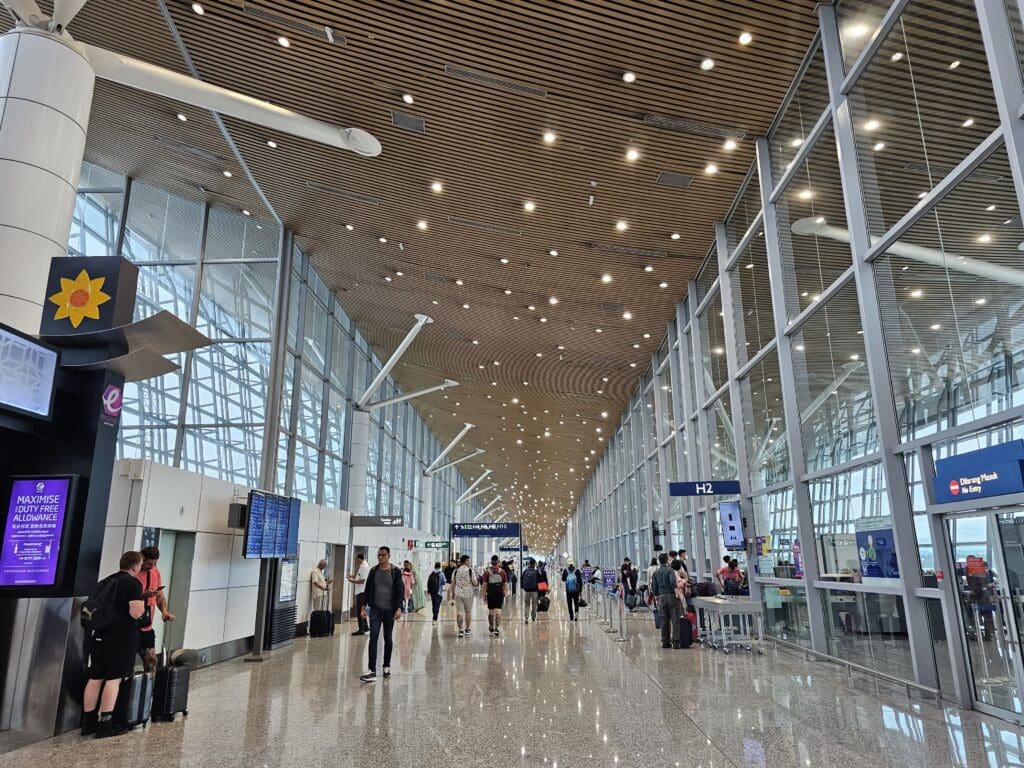
In terms of the main terminal’s layout, this consists of a central hub where the majority of the terminal’s shops, cafés and restaurants can be found, with two long piers splitting off from this. Unlike in Britain, the airside area of KLIA1 is shared by both arriving and departing passengers; however, despite this, the terminal did not appear to be overly busy for the duration of my stay. For those looking to stay connected, I was pleased to find that the airport’s complimentary wifi network continued to work well in the airside portion of the terminal, although charging points were a little hard to come by. Overall, I was very pleased with KLIA1, with my major complaints not starting until I donned my aviation enthusiast hat. Unfortunately, thanks to the layout of the terminal, unobstructed airside views are slightly hard to come by, with these mostly limited to either end of the long piers. After a wander around, I settled down at the northern end of the terminal and continued to watch the stream of movements outside.
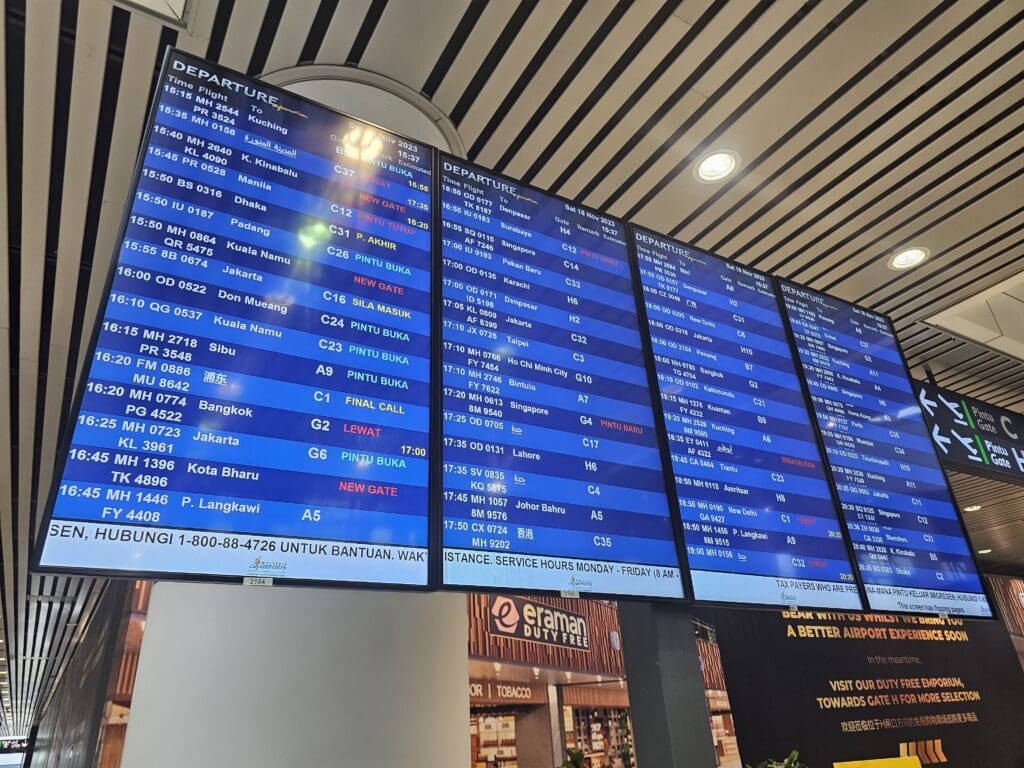
As I waited, I received an email from Malaysia Airlines advising me that the departure time for my flight had been pushed back to 1700. Not needing to be anywhere in Bangkok that evening and with this allowing for some extra time watching the diverse movements outside in Kuala Lumpur, this was not of particular concern for me. According to the departure boards, the gate area would open up an hour before departure at 1600, with this seeming to be the standard gate opening time for all flights at the airport, regardless of the operating type. With fifty minutes to go until our new scheduled departure time, I decided to wander over to the gate. Seeing as both checkpoints were open, no queuing was required, and I soon passed through the pre-flight security check with ease before heading downstairs to the waiting area.
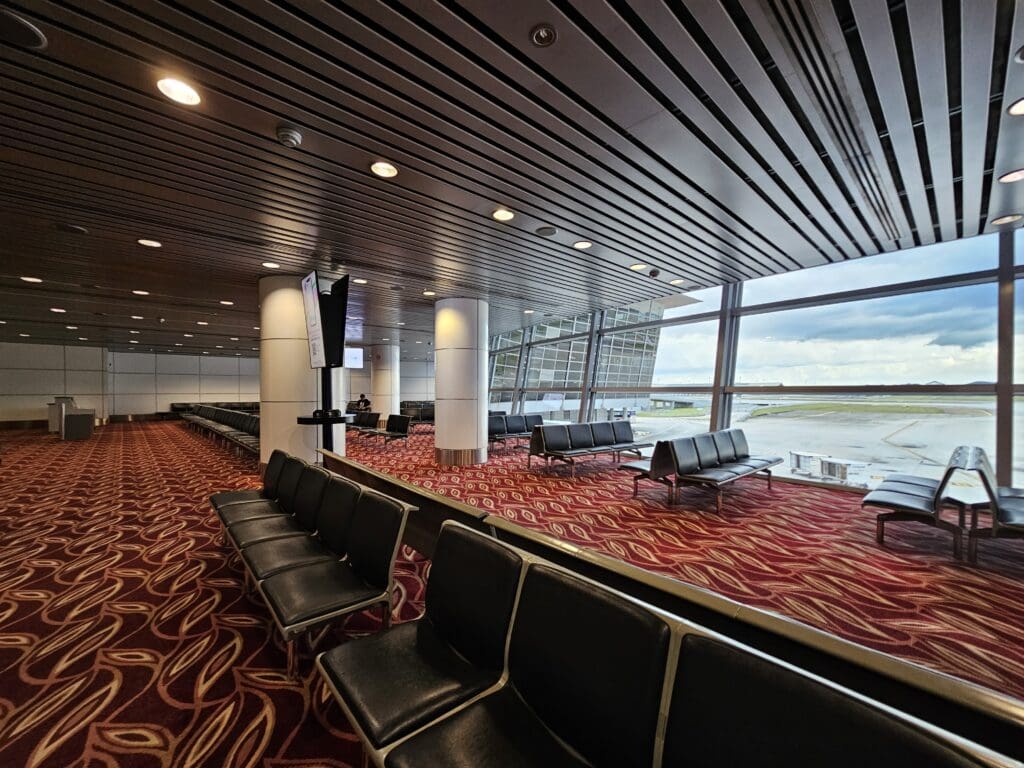
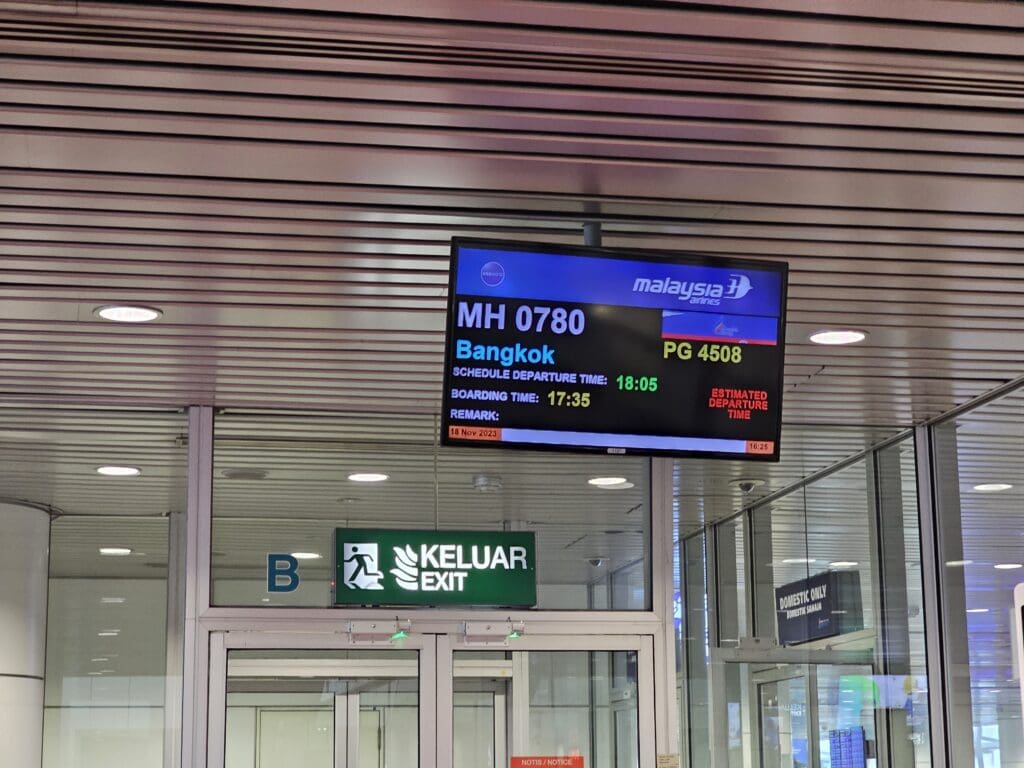
At that time, a fair selection of passengers could be seen, and we were joined a short time later by the flight’s two pilots and the four-strong team of cabin crew, all dressed in Malaysia Airlines’ colourful and distinctive kebayas. As you would expect from a waiting area, plenty of seating was on offer, and I was also pleased to see multiple charging points. Unlike some gate holding areas, this featured a single toilet, although this was in a disgusting state and remained in use despite being blocked and unflushable. Upon arriving at the gate, indicating that a further delay would be in store, no aircraft could be seen at Stand A2 outside, and soon the departure boards updated to show that the flight would depart at 1805 – almost two hours behind schedule. Taking a seat near the window, I watched as the clouds rolled in and several bolts of lightning came down in the distance, although, fortunately, these did not seem to impact operations that afternoon.
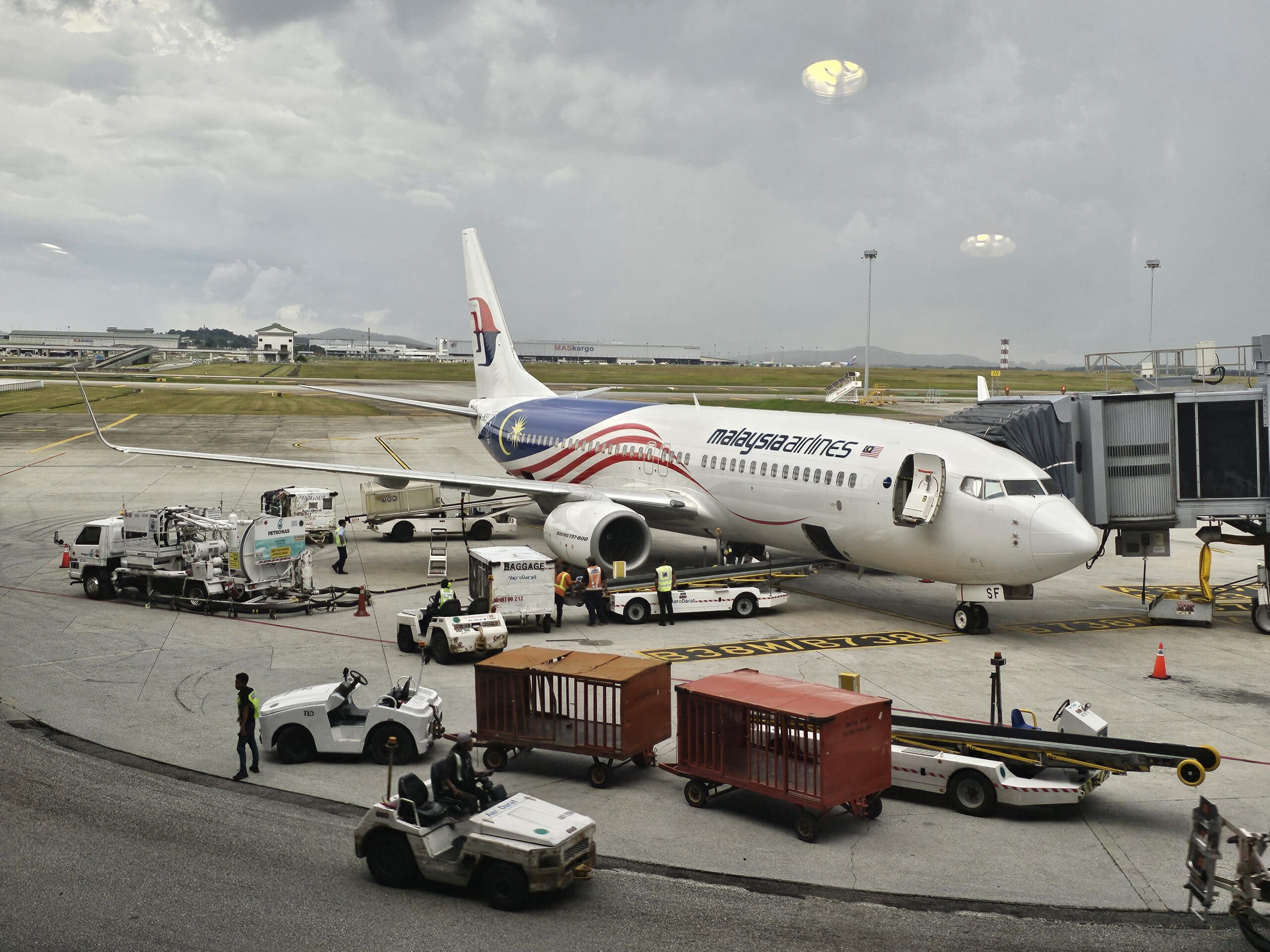
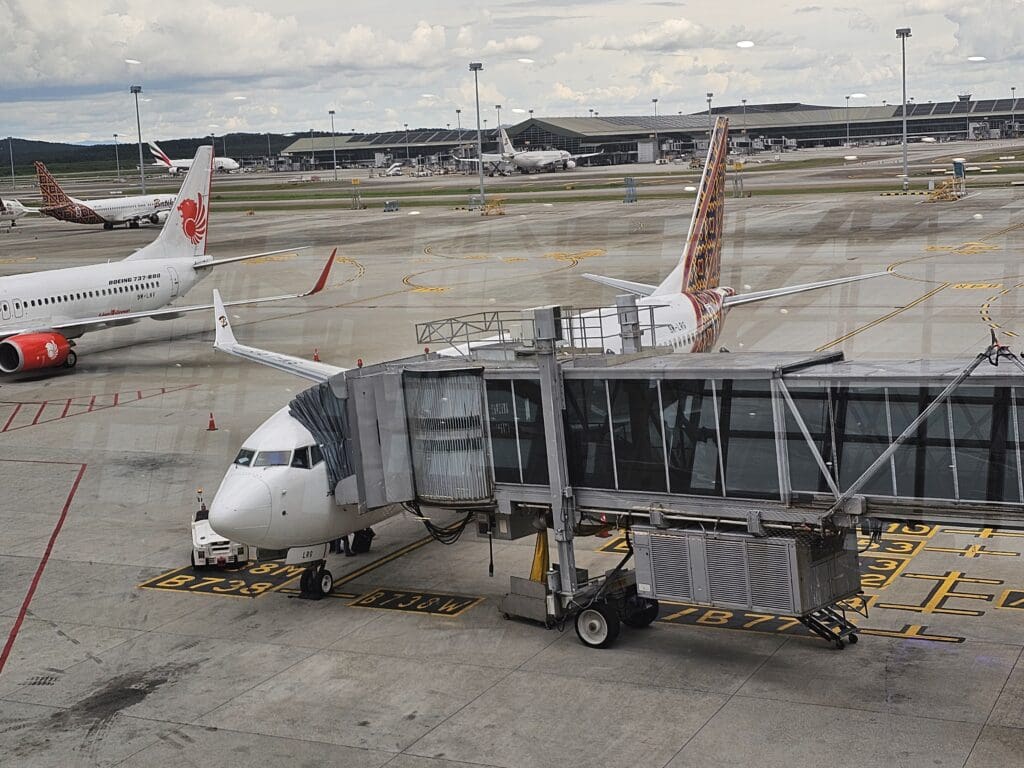
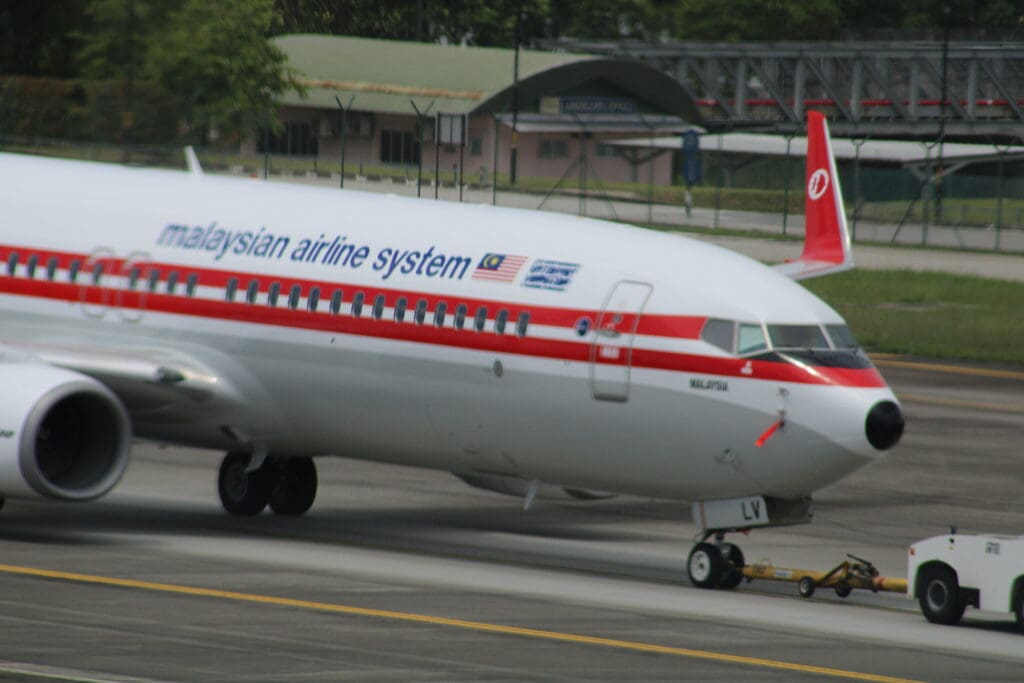
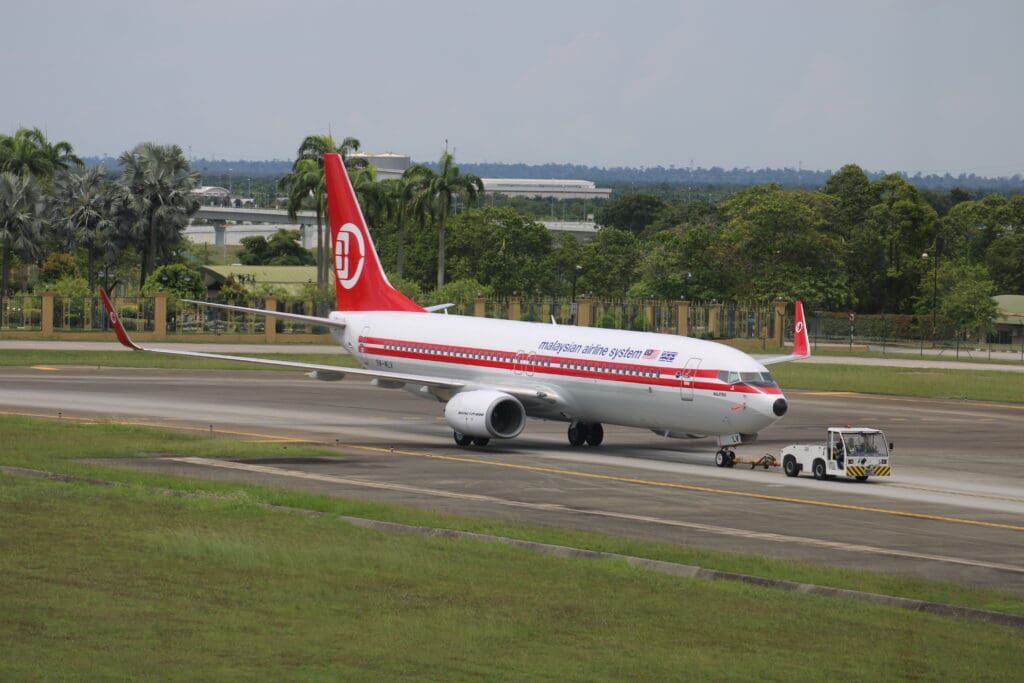
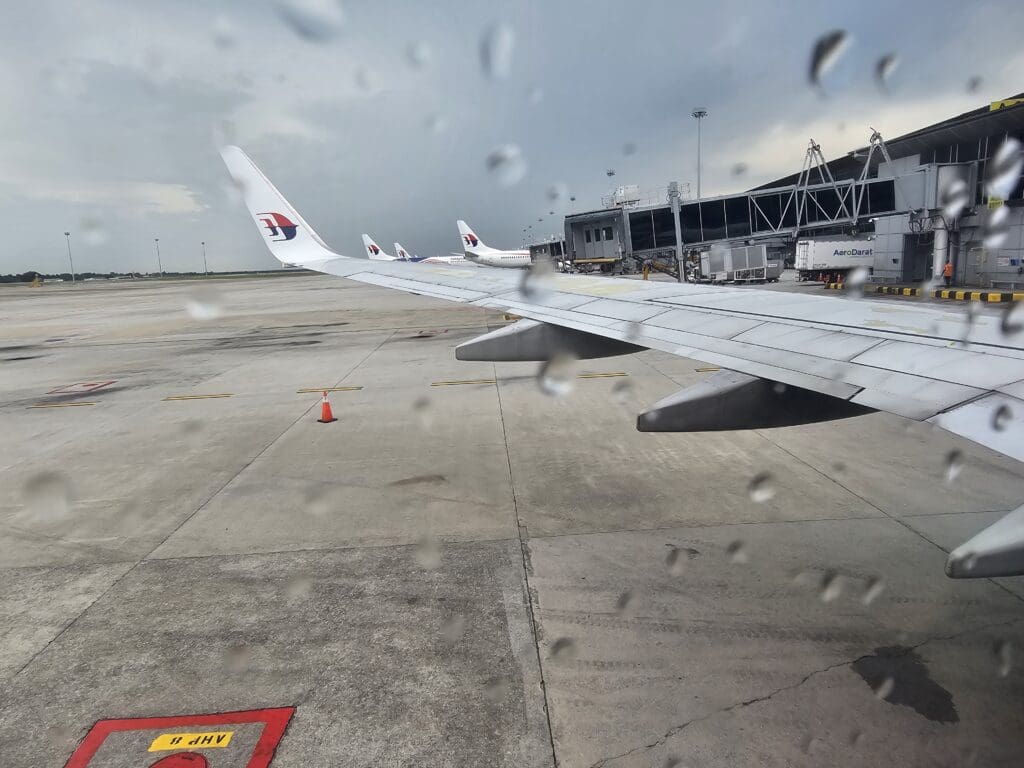
Eventually, at 1647, a Boeing 737-8H6 proudly wearing Malaysia Airlines waving flag Negaraku, or ‘My Country’ livery, pulled into the stand outside. Once this came to a halt, the gate agent announced in Malay and English that the flight would now depart at 1720 and apologised for this delay, explaining that this was due to the aircraft’s late arrival from Denpasar Bali. This particular aircraft came in the form of 9M-MSF, which carries the line number 4512 and made its first flight in June 2013, making it over a decade old at the time of my flight. Following testing, the aircraft was ferried across the Pacific to its new home in Kuala Lumpur in July 2013, making stops in Honolulu, Majuro and Guam. Since then, the aircraft has spent the entirety of its life with Malaysia Airlines, ferrying passengers from the capital city to destinations across East and South Asia. In the week before my flight, the aircraft had operated a total of 34 sectors, covering at least 24,200 miles and visiting Bangkok, Denpasar, Jakarta, Kota Kinabalu, Kuantan, Kuching, Sandakan and Singapore. At the time of my flight, Malaysia Airlines’ Boeing 737s featured a range of interiors; however, this was in the process of being standardised, with new seats being installed on this fleet as part of the refresh program announced in July 2022. A quick search online revealed that I would be experiencing their latest cabin, with this particular Boeing having been updated in October 2022.
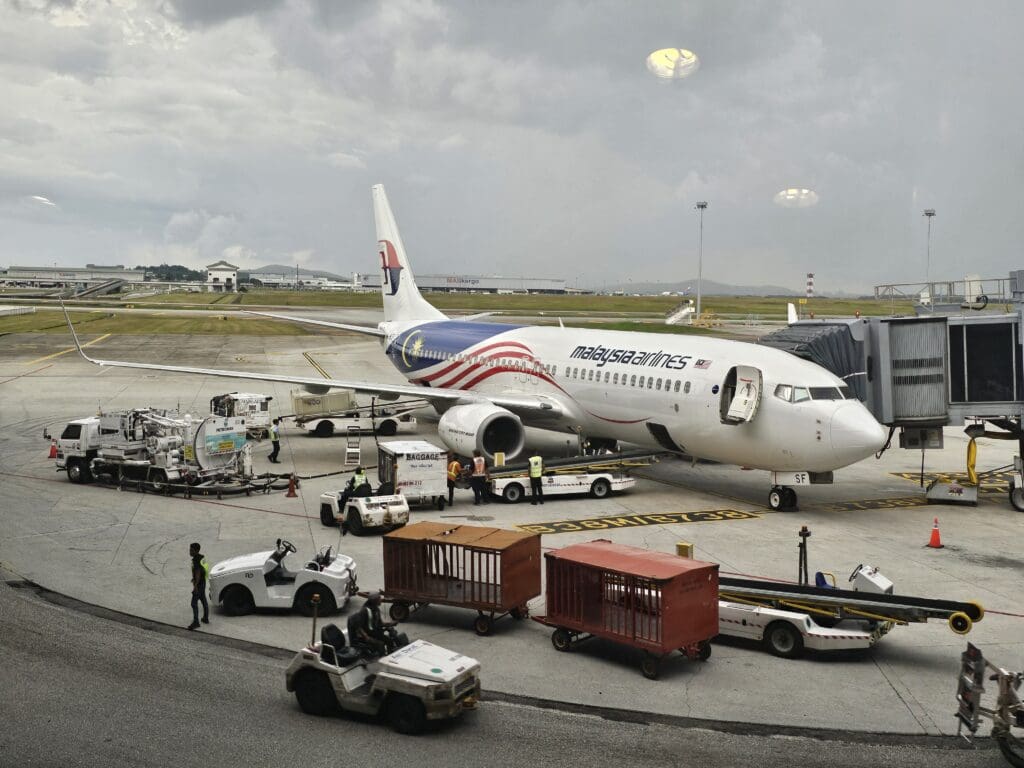
Outside, the jetbridge was soon manoeuvred into position, and an army of ground crew got to work tending to the aircraft following its flight from Bali. With plenty of staff on hand, the turnaround was a quick and efficient process and boarding was announced less than thirty minutes after the aircraft had arrived on stand. At 1715, an announcement was made in Malay and English inviting those in Groups 1, 2 and 3 to board the aircraft, at which point a fairly long line of passengers formed at the gate podium. Once this cohort of passengers had made their way through to the aircraft, all other passengers were invited to board, and soon one of the friendly Malaysia Airlines ground staff scanned my boarding pass, checked my passport and wished me a pleasant flight before I was free to make my way down to the aircraft.
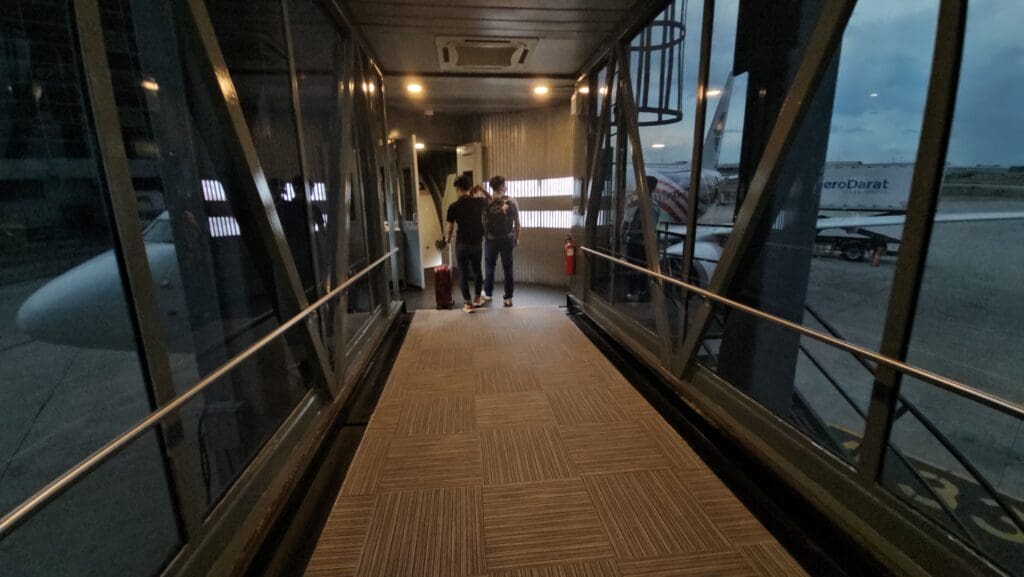
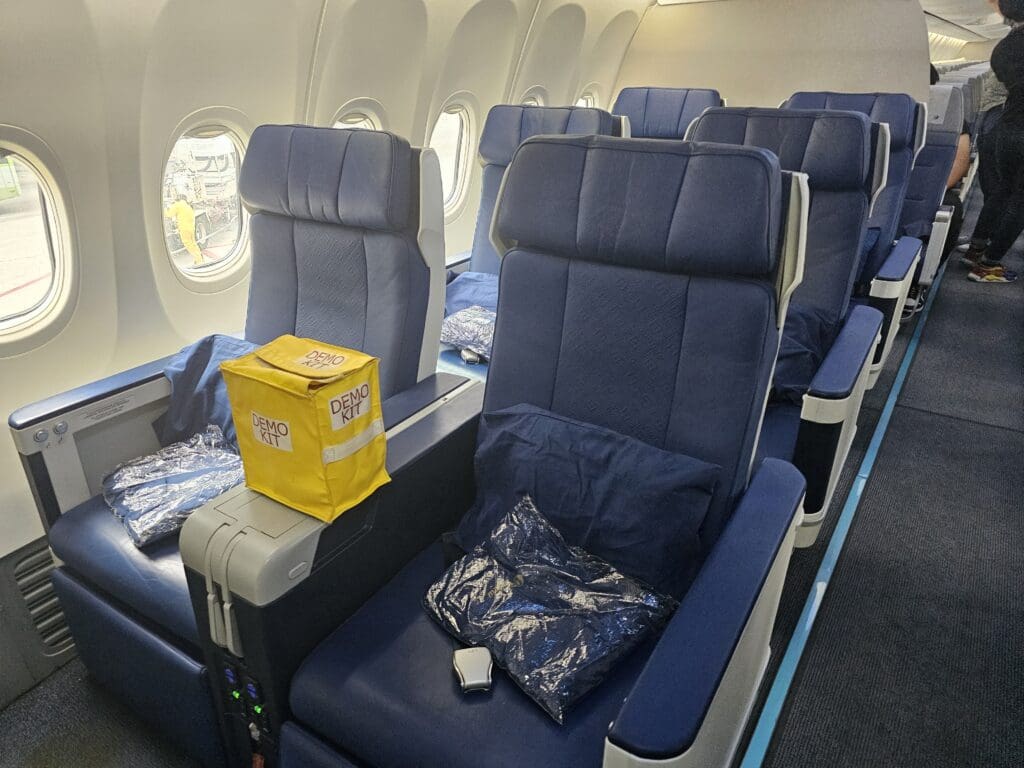
Following a short queue on the jetbridge, I stepped into the familiar surroundings of the Boeing 737’s forward galley, where I received a warm welcome from the flight’s Purser. With no boarding pass check, I turned right and immediately entered the Boeing’s Business Class cabin. As is the norm in this part of the world (and indeed anywhere outside Europe!), real Business Class seats were installed with this cabin comprised of three rows of Safran 600 seats in a 2-2 arrangement. Each of these was covered in a smart blue fabric and topped with an adjustable headrest. Being slightly less substantial than a ‘proper’ chunky recliner seat, these were modern in their design and comparable to a Premium Economy seat on a widebody aircraft.
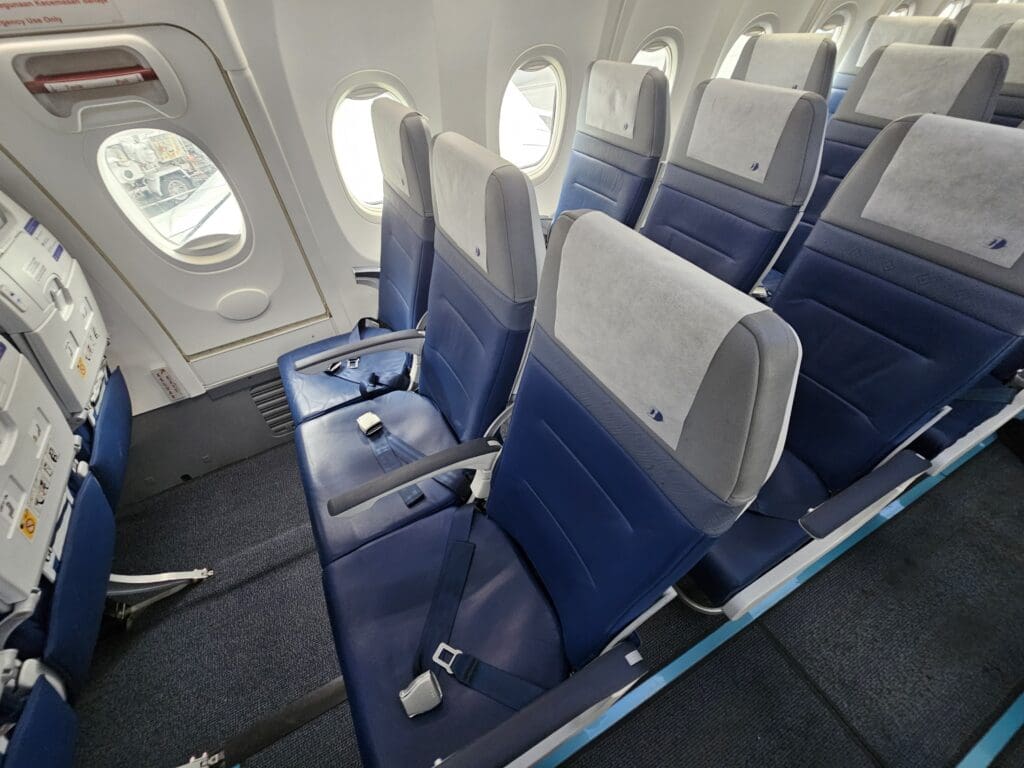
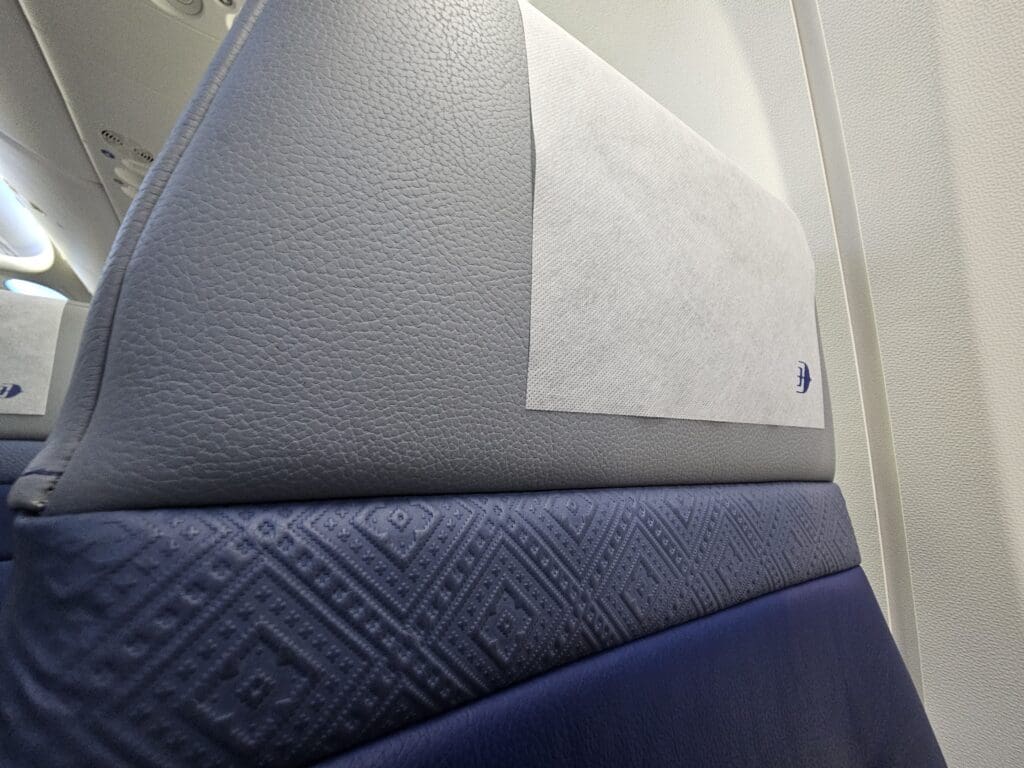
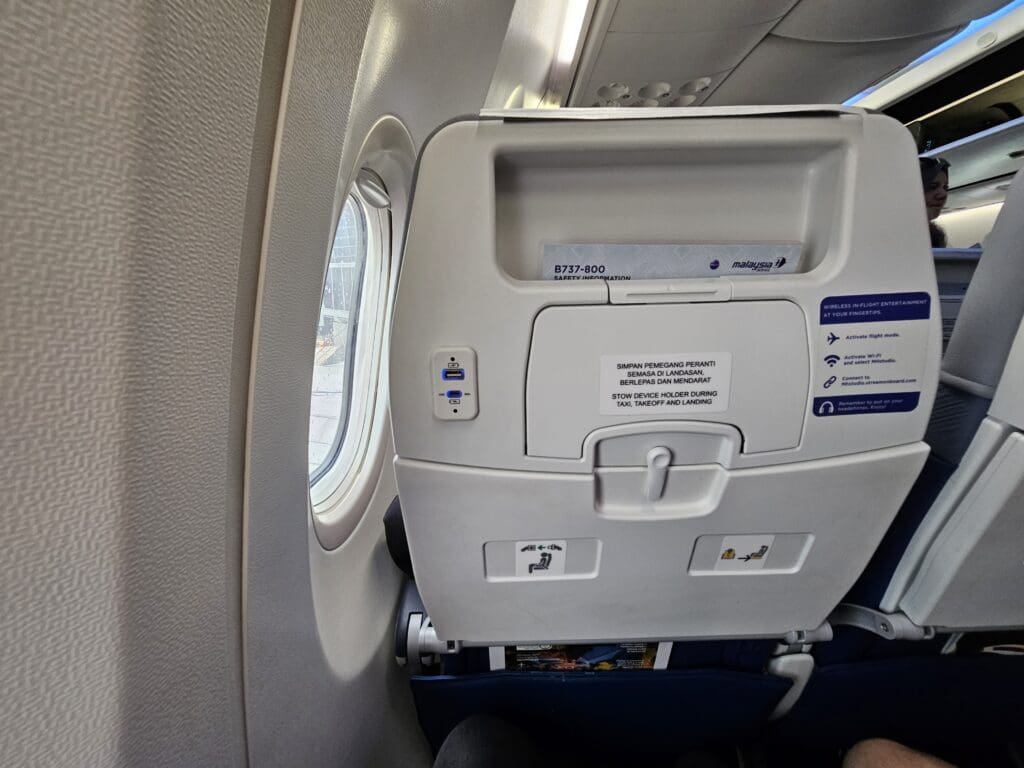
Soon making my way through the Business Class cabin, I received another warm welcome as I entered the Economy cabin. As I had expected, upon arriving there, I was presented with the sight of 144 Safran 110i ironing board modern slimline seats. At first glance, these were not too dissimilar to seats that you would expect to see onboard a low cost carrier and lacked the personal inflight entertainment screens which their predecessor seats featured. Indeed, this new cost-saving cabin has drawn a fair amount of criticism from those who argue it is representative of Malaysia Airlines’ supposed falling levels of service. Regardless, I have to say that Malaysia Airlines has done rather well in the seats’ design, with these being modern, smart and stylish. These feature a pleather cover of blue and grey, with a strip featuring a traditional pattern separating blue and grey portions of the seat, and are topped with a disposable fabric antimacassar which features Malaysia Airlines’ famous motif. Each of these has a USB-A and USB-C port as well as a device holder, seatback pocket and literature compartment.
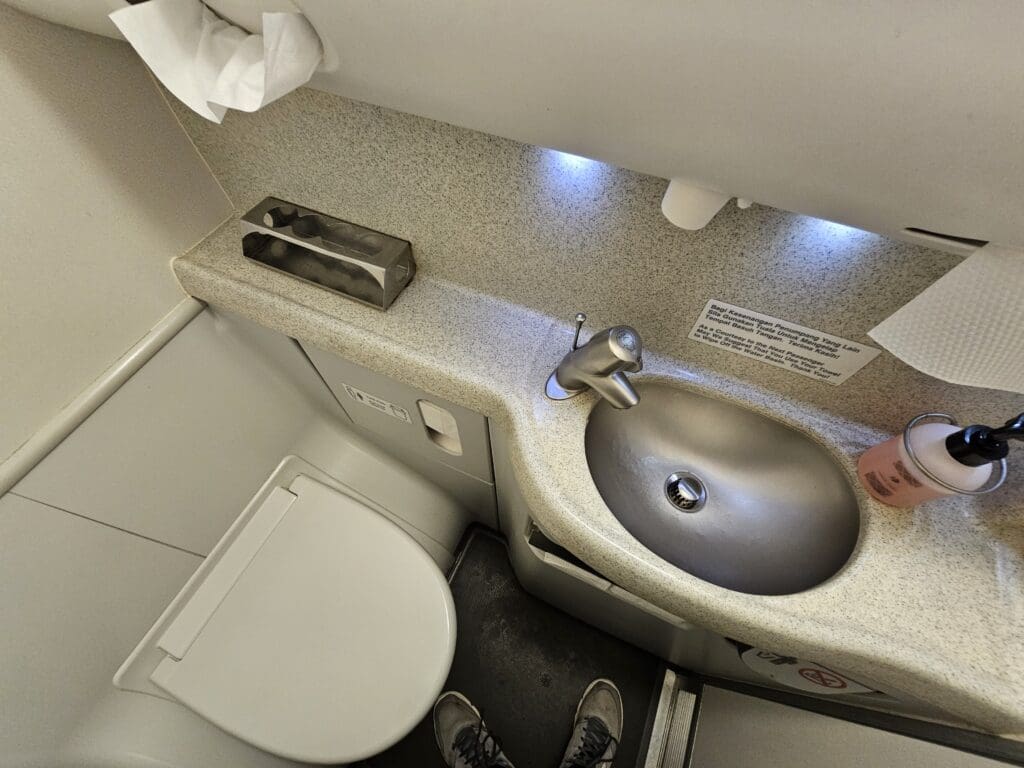
Recognising that I may be trapped in the window seat for the duration of the flight, once I had stored my backpack, I opted to make a trip to one of the two rear lavatories. As I journeyed to this, I received yet another warm and friendly greeting, giving off a superb first impression of the crew that afternoon. Soon, I opened up the lavatory door and was presented with a clean and tidy lavatory, stocked with all the basics and serving its purpose, therefore leaving me with no complaints.
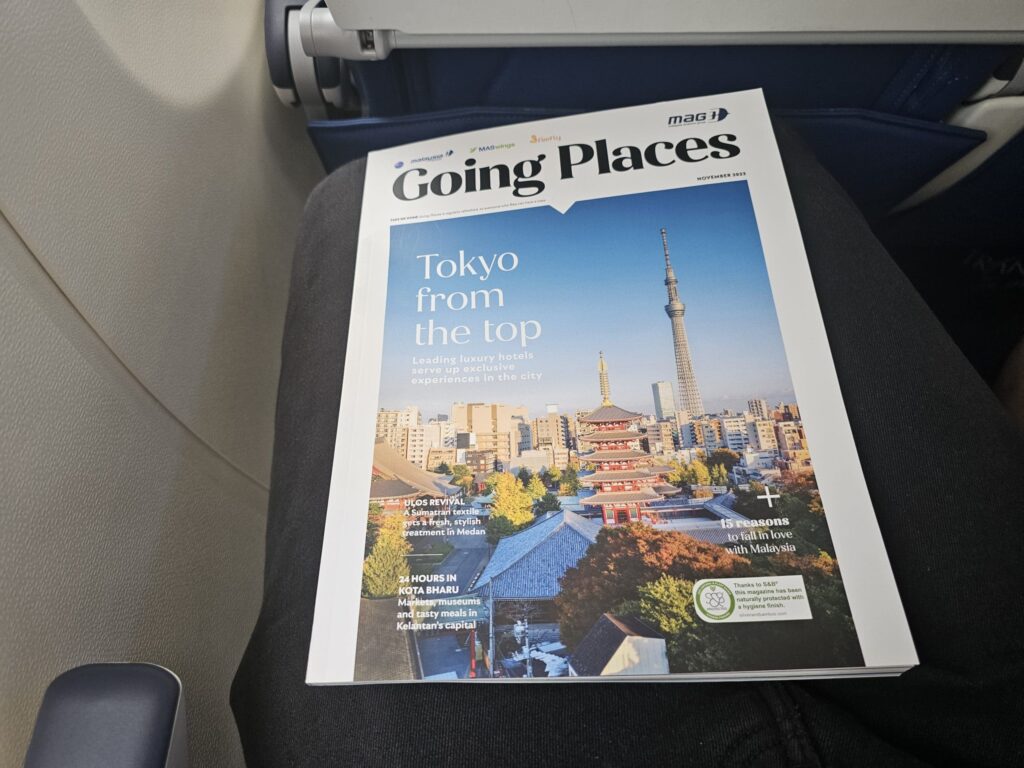
By the time I returned to my seat, I already had two neighbours, with these coming in the form of elderly American tourists spending the autumn and early winter travelling around Southeast Asia. After they had let me in, I squeezed into Seat 24A and settled in for the journey ahead. Despite their thin appearance, I found the seat to be comfortable enough for the relatively short journey up to the Thai capital and offered a good amount of legroom. Importantly, despite the very short turnaround, the area around my seat appeared to be in a spotless condition, with no sign of rubbish or other leftovers from the previous passengers. Meanwhile, this was also devoid of any wear and tear and ultimately, the aircraft could have easily passed off as being one of Malaysia Airlines’ latest deliveries. In terms of literature, the all-important safety card could be found in the literature compartment, whilst the latest copy of Malaysia Airlines’ monthly Going Places magazine was located in the seatback pocket, along with a sick bag.
As passengers filtered onto the aircraft, Malaysia Airlines’ boarding music rang out, and it did not take too long for all passengers to board the Boeing. By 1728, boarding was announced as complete, at which point an announcement was made requesting all ground staff to leave the aircraft. That evening, the flight was to be relatively quiet, with most of the rearmost rows of the aircraft remaining vacant. In terms of demographics, it seemed that the majority of passengers on the flight hailed from Thailand or further afield, with few Malaysian passengers. Meanwhile, all crew members seemed to hail from Malaysia, bar one Korean flight attendant.
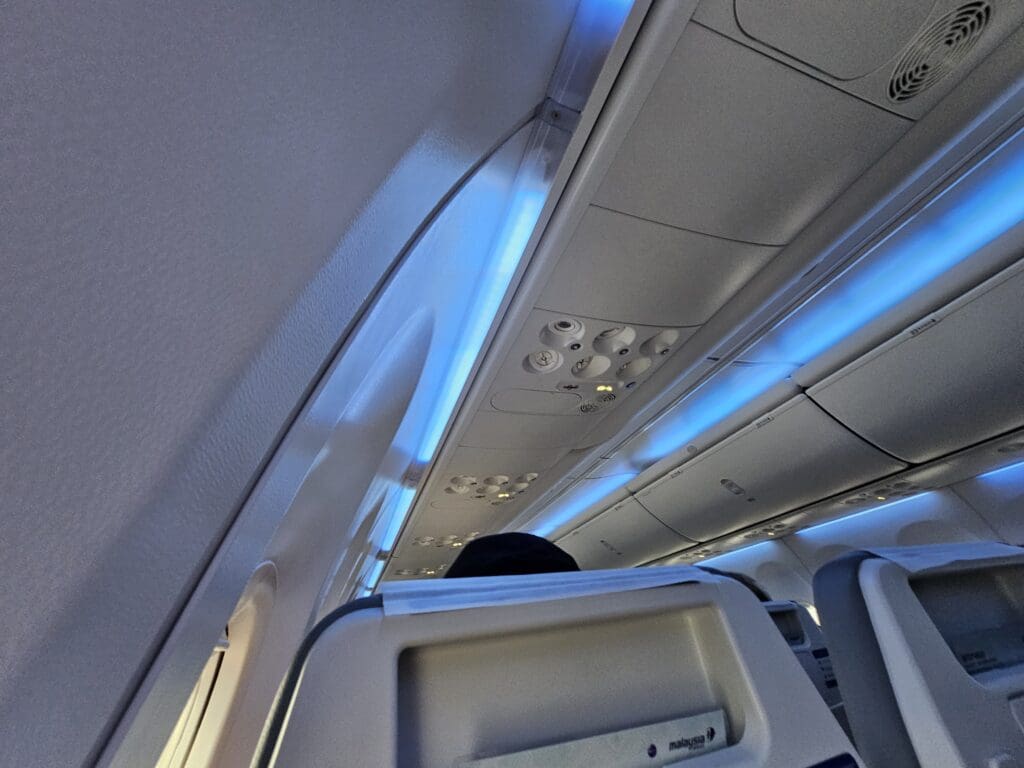
A short time after the last passenger had boarded the aircraft, the Purser performed their welcome announcement in Malay and English. During this, they went through the usual welcomes and thanks, mentioned our 1H50 flight time and introduced the Captain. A total of an hour and twelve minutes after our scheduled departure time, the aircraft was pushed back away from the stand whilst the crew members took to the aisle and performed the safety demonstration along with pre-recorded instructions. Interestingly, this was played in English only, with no Malay or Thai version broadcast. As we neared the final stages of our long pushback, the two CFMI CFM56-7B26 engines began to hum and whirr into life before we came to a halt, and the tug was disconnected. Back inside the cabin, once the crew had passed around ensuring that all was secure and in place for our departure, the cabin lights were transformed to their blue moodlighting setting as we commenced our journey to the end of Runway 32R.
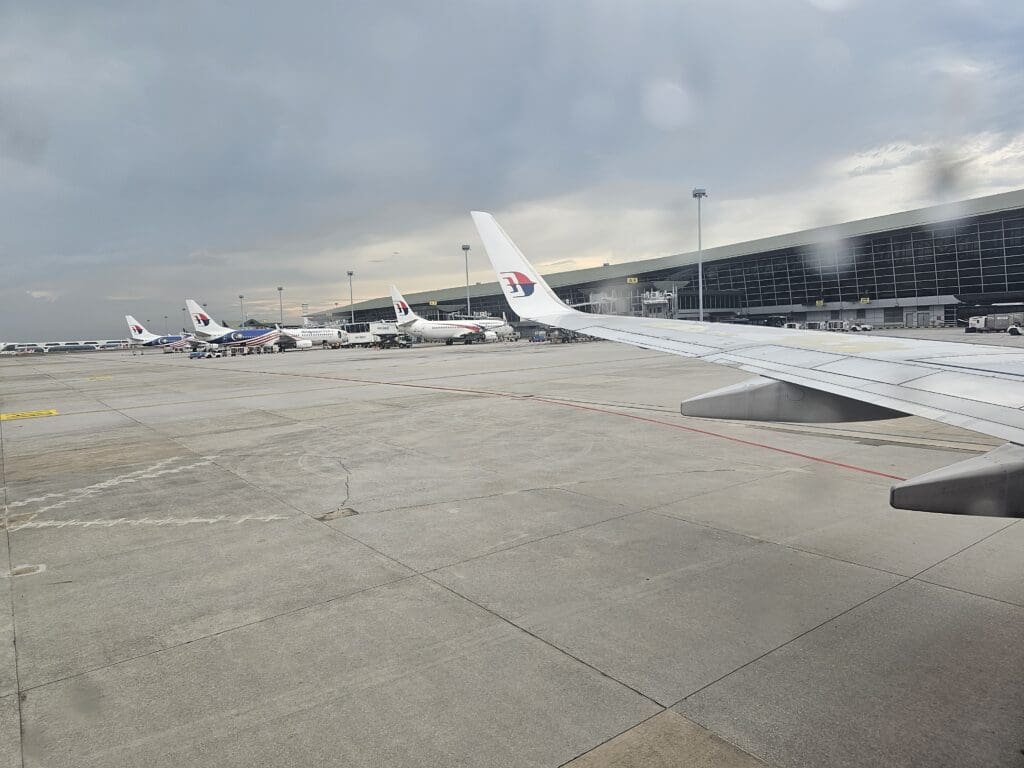
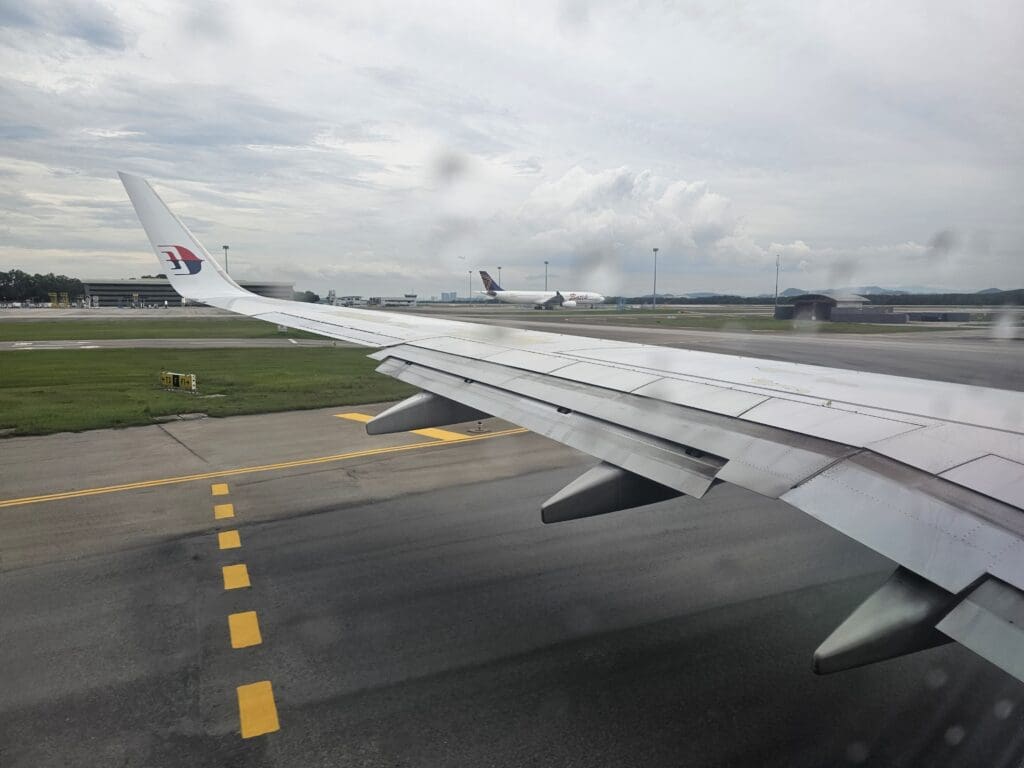
As we voyaged to the runway, sitting on the left-hand side of the aircraft, I was treated to a view of the multiple departing aircraft. Within a few minutes, we came to a halt at the end of this as we allowed for one of Batik Air Malaysia’s two Airbus A330s to head off at the start of its long journey to Jeddah. Following this temporary pause, at 1745 the aircraft made its way onto the runway, at which point the two engines spooled up and we commenced our long and gentle take-off roll. As we made our way down the runway, we whizzed past the satellite terminal, followed by the main terminal, before the Boeing gently rotated upwards into the skies as we were very roughly parallel to the airport’s tall control tower.
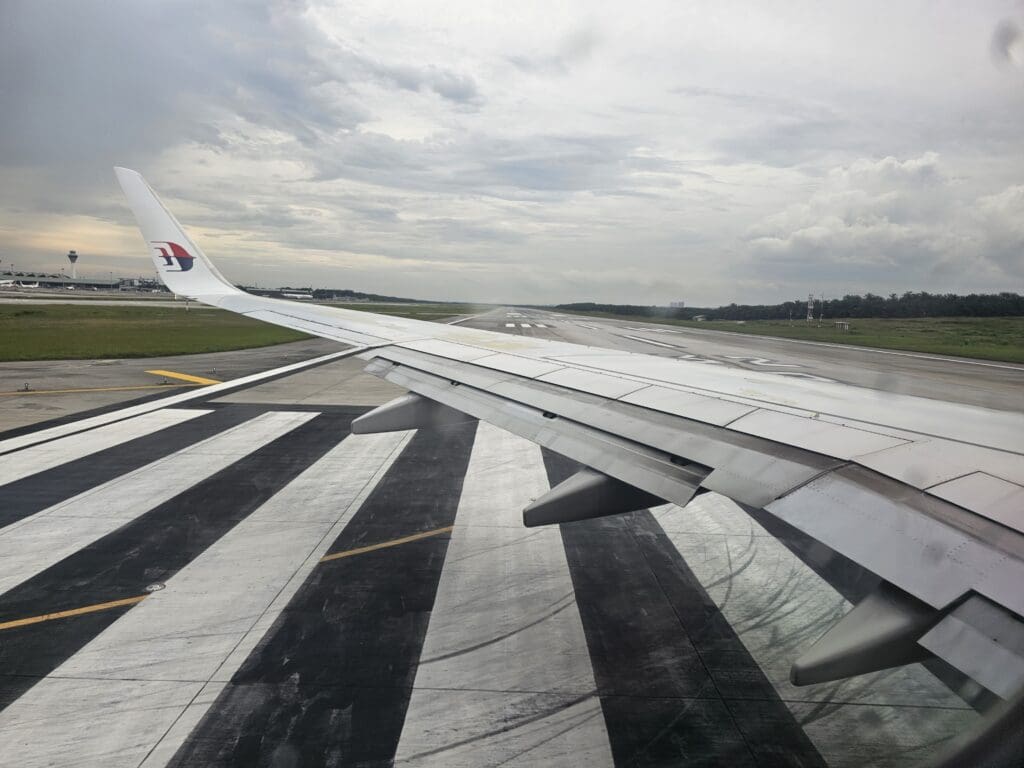
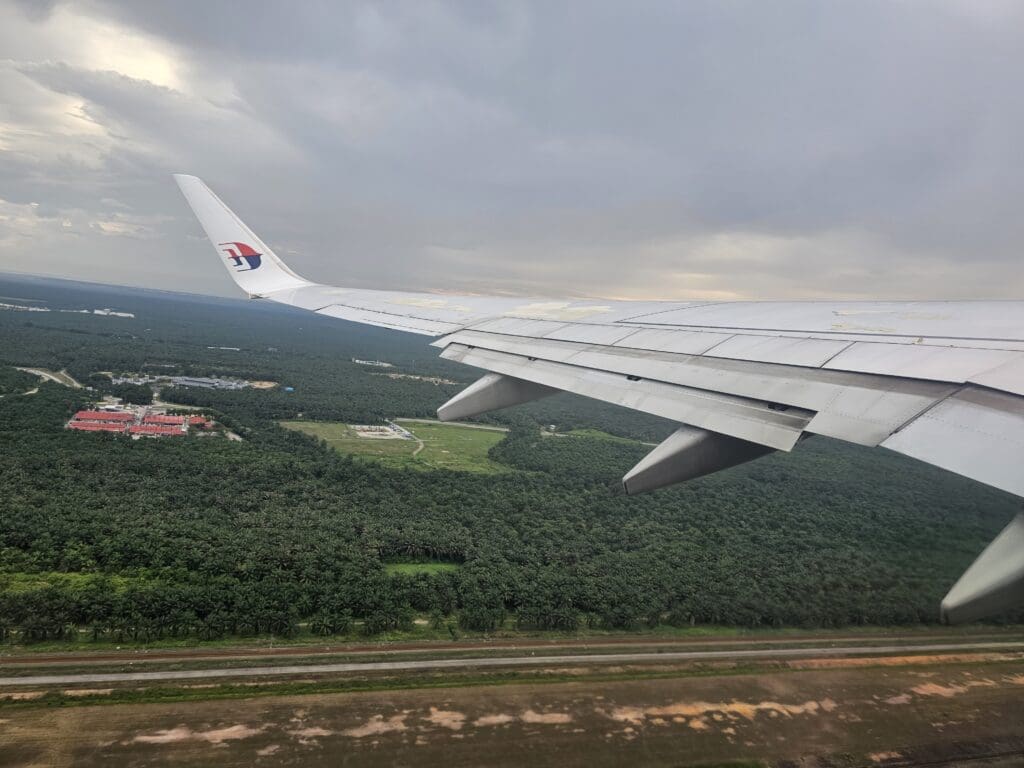
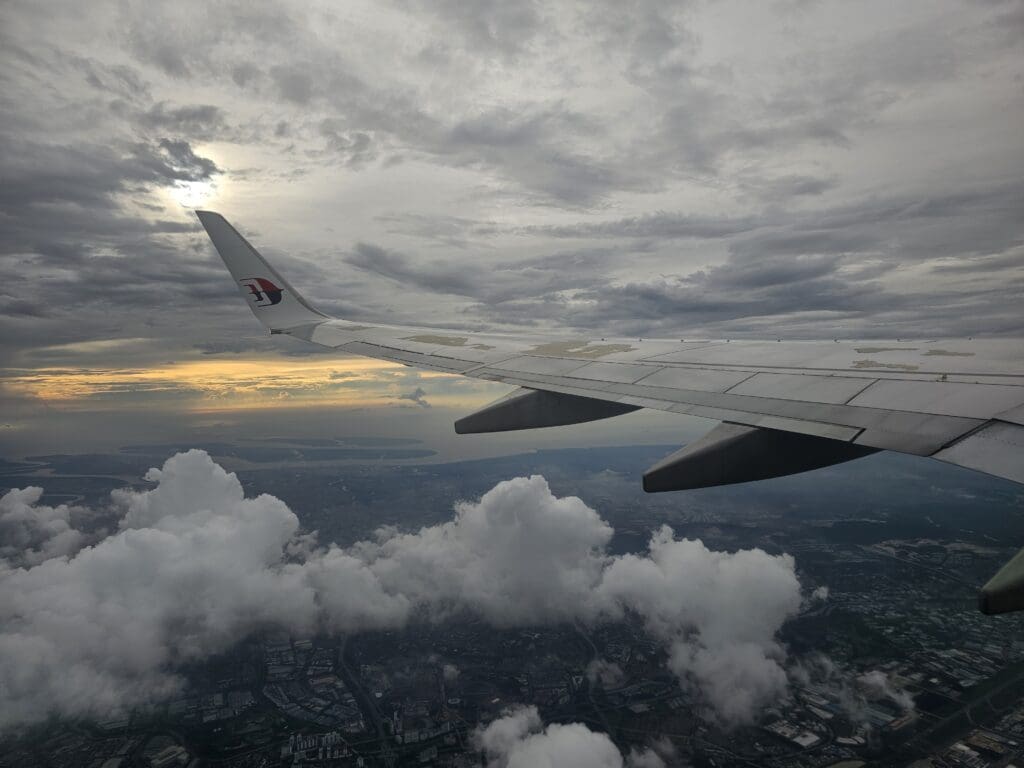
Following departure, the aircraft made a smooth climb over the green forests that sit around the airport before passing the Mitsui Outlet Park and large neighbouring Masjid Sultan Abdul Samad and Movenpick Hotel. As we made a beeline for central Kuala Lumpur, the landscape became increasingly built up as we sped towards the city, crossing over the suburbs of Puchong, Subang Jaya and Petaling Jaya. Whilst those on the opposite side of the aircraft would have been treated to good views of the city centre, sitting on the left-hand side, the main attraction took the form of Subang Airport where plenty of stored aircraft could be seen in addition to the airport’s small terminal and cluster of waiting ATR 72s.
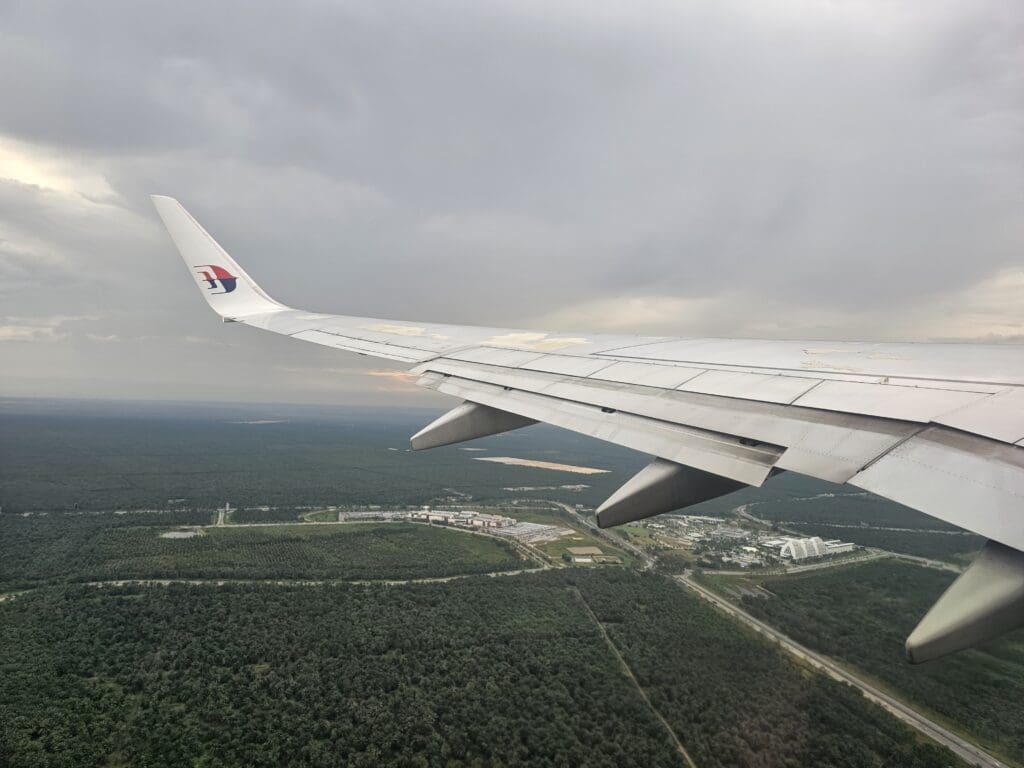
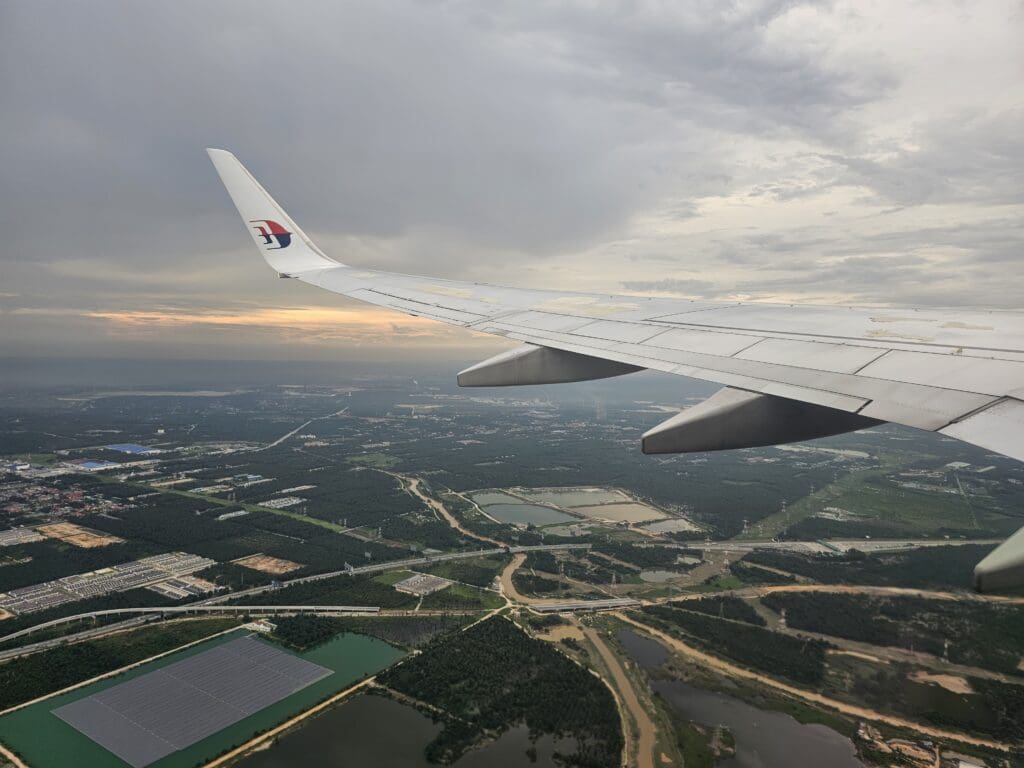
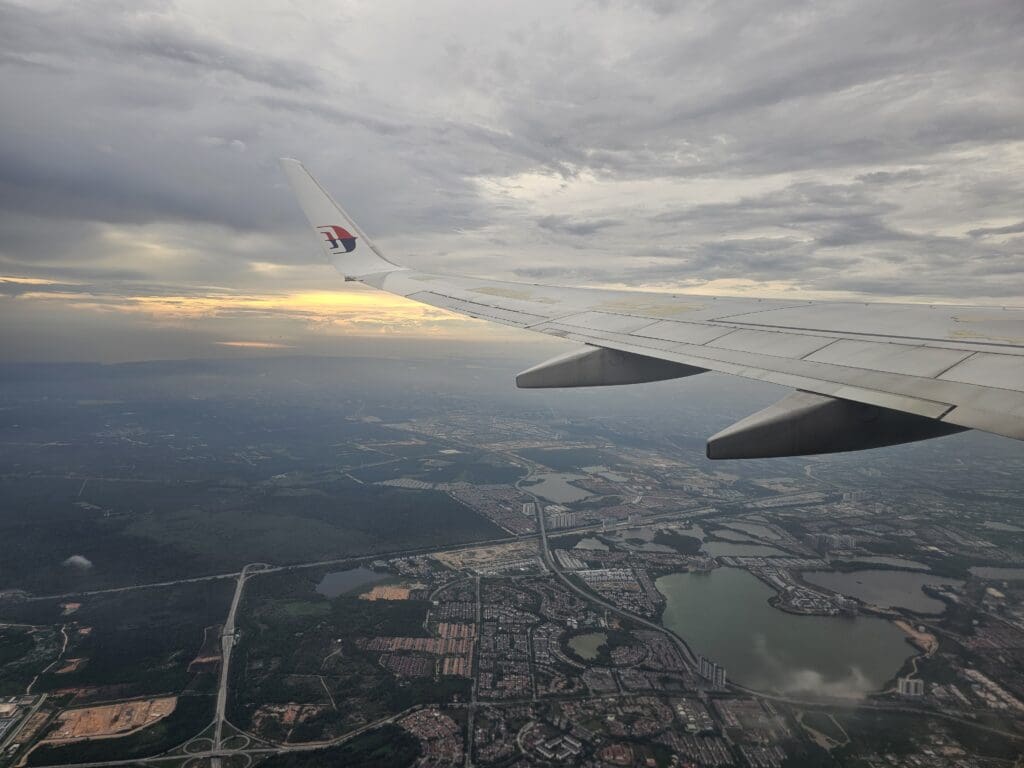
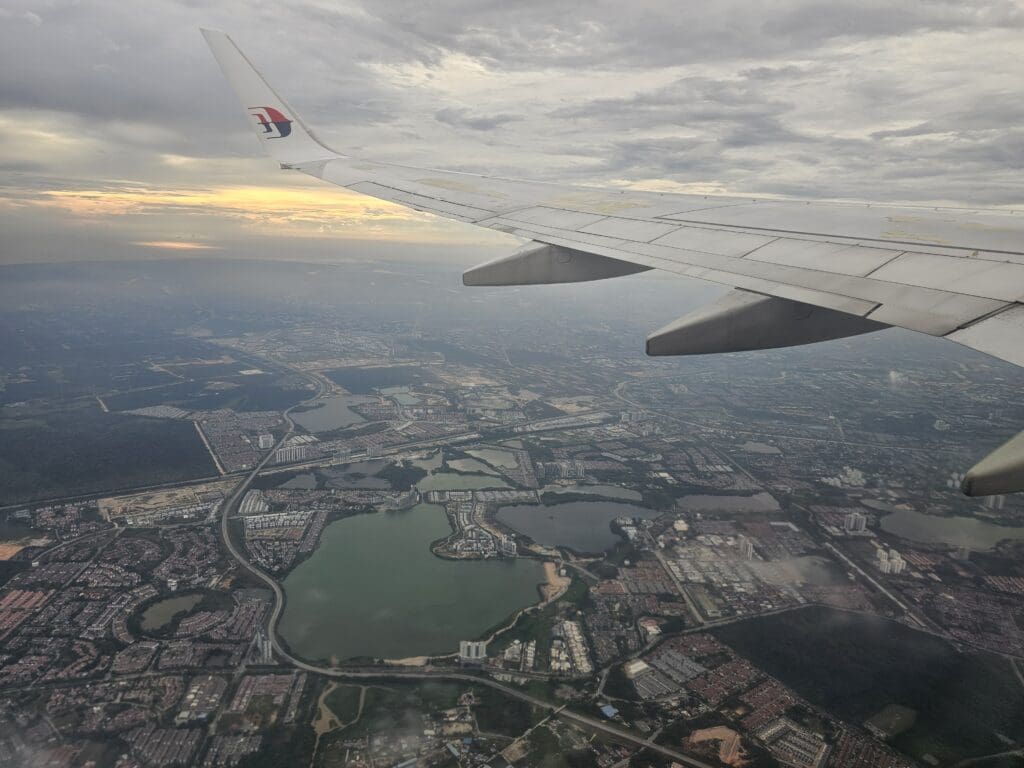
As we passed Subang Airport and ascended through 10,000 feet, around six minutes after take-off the seatbelt signs were extinguished, at which point the Purser performed an announcement with the usual warnings before mentioning that Economy passengers would shortly be served a light meal. At this point, the cabin lights were turned back on, and soon the crew could be seen rolling out service carts into the aisle.
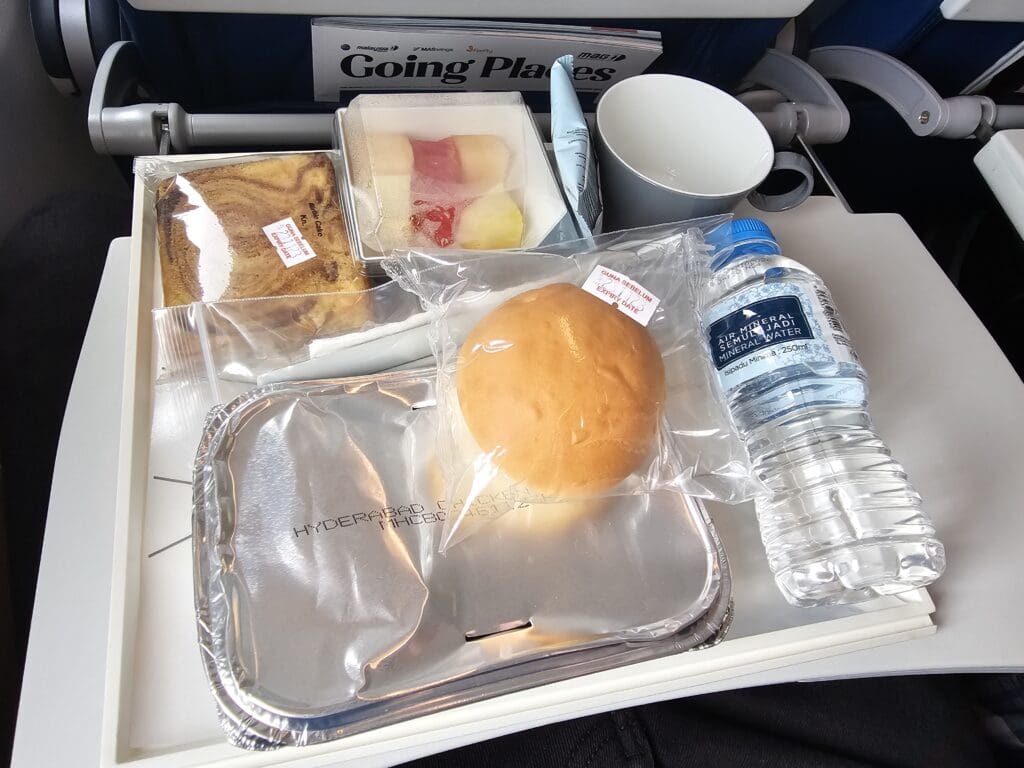
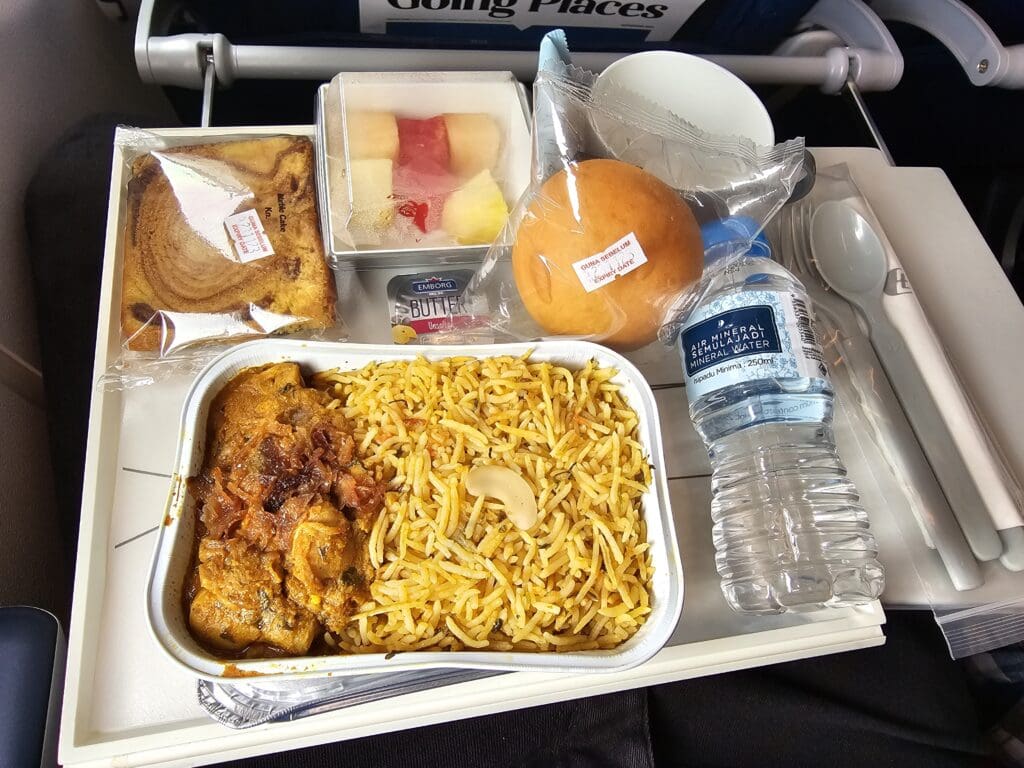
Upon reaching my row, the flight attendant took the time to describe both options, which were either pan-fried fish with rice or Hyderabadi chicken biryani. Opting for the latter, this was soon passed over to me, at which point it seemed that the Purser had been lying when they described this as a light meal! Having been served less food on long haul flights, this tray contained the main dish, a bread roll with butter, a slice of marble cake, a selection of melon chunks, a Malaysia Airlines branded packet of salted peanuts and a 250ml bottle of still water. Meanwhile, fairly sturdy plastic cutlery that featured Malaysia Airlines’ motif was provided along with a serviette and a toothpick. As I chowed down on the main dish, I found this to be delicious and was left with absolutely nothing to make a complaint about, with this being a superb meal for such a short flight.
Around ten minutes later, the trays were collected from those who had finished, and a round of drinks was undertaken. As a dry airline, these consisted of a selection of juices, water, Coca-Cola and Sprite. Meanwhile, hot drinks could not be served at that time as the seatbelt signs had just been eliminated. However, this was undertaken around ten minutes later once these had been switched off, followed by another round just before the top of the descent.
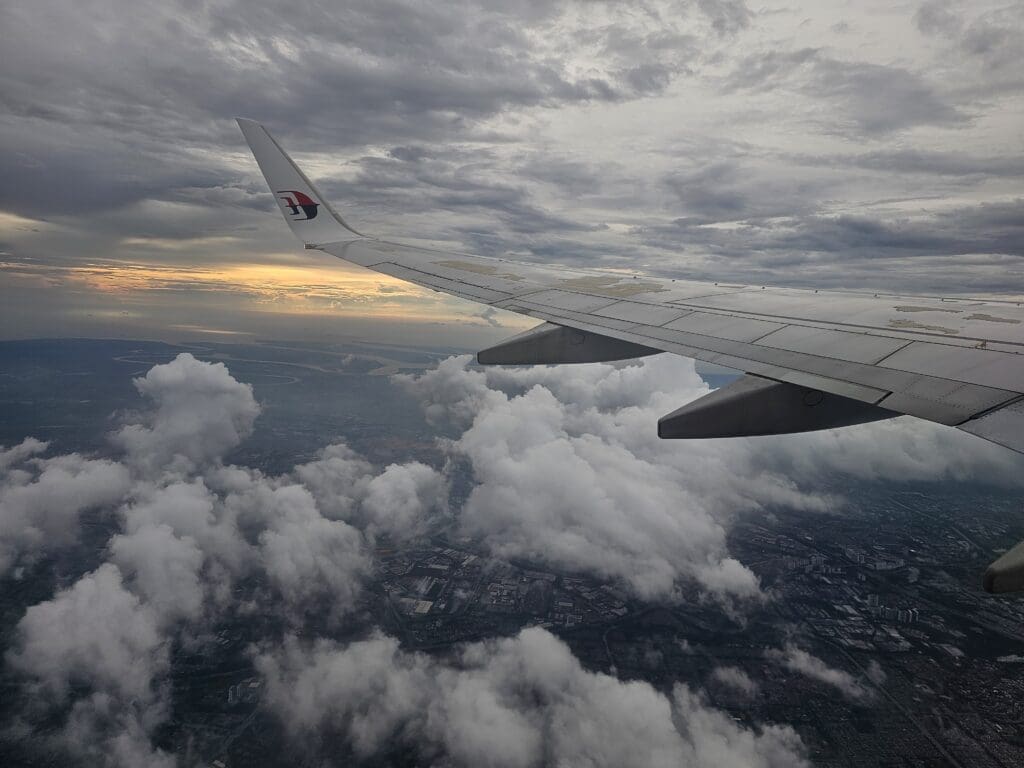
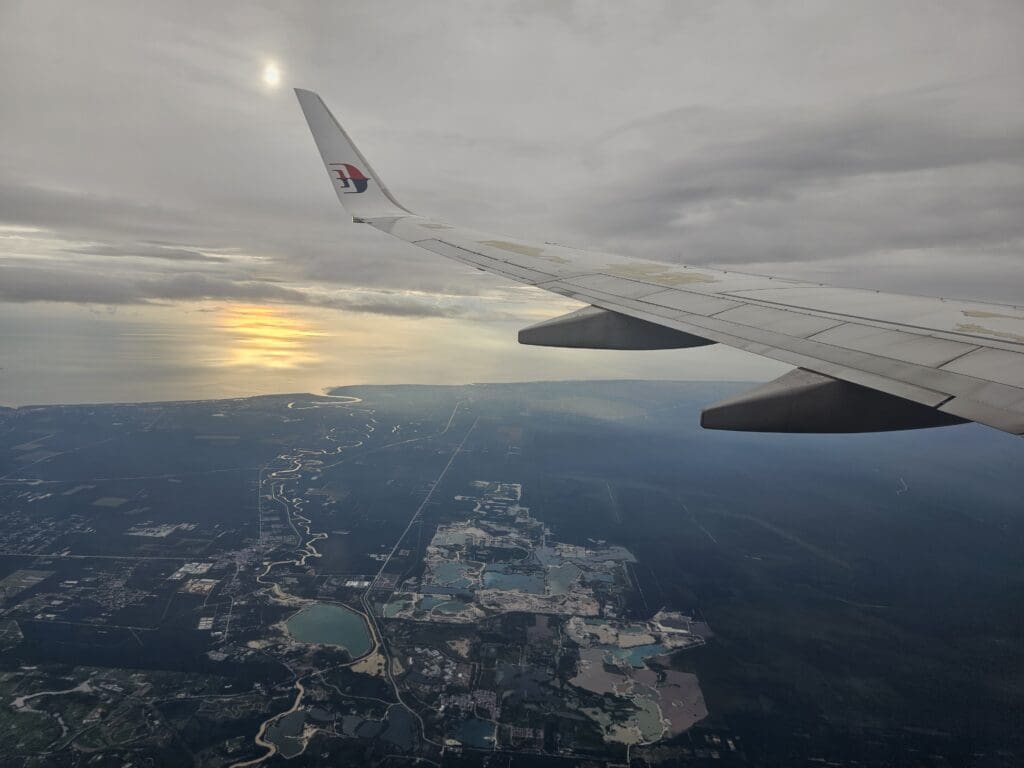
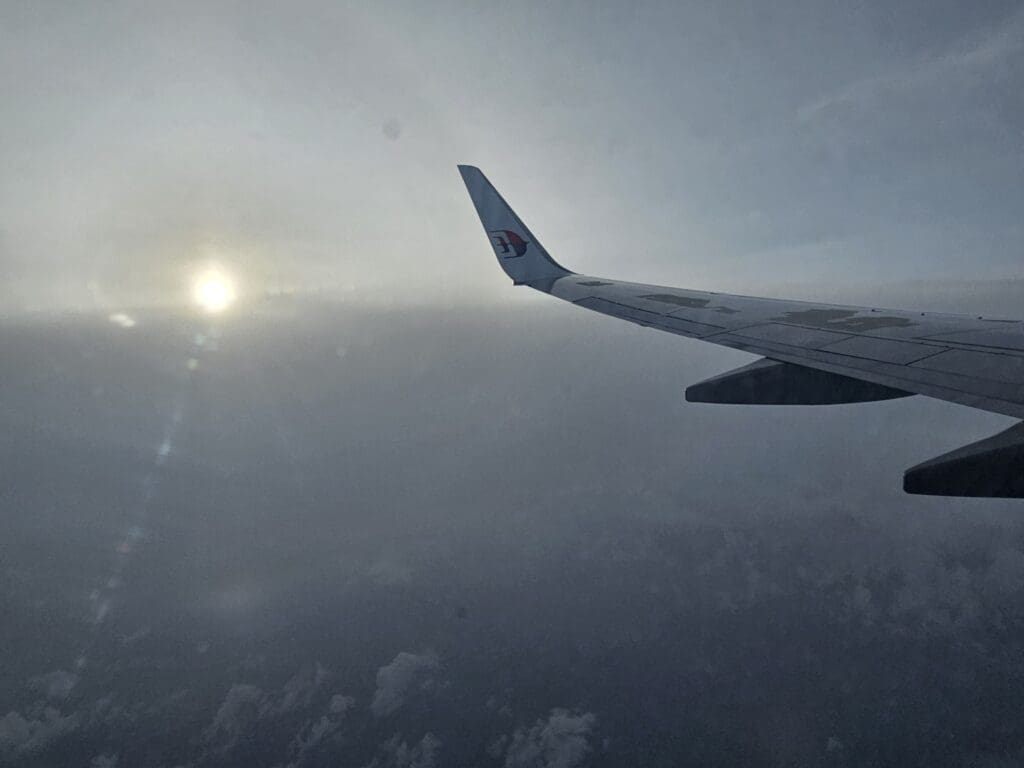
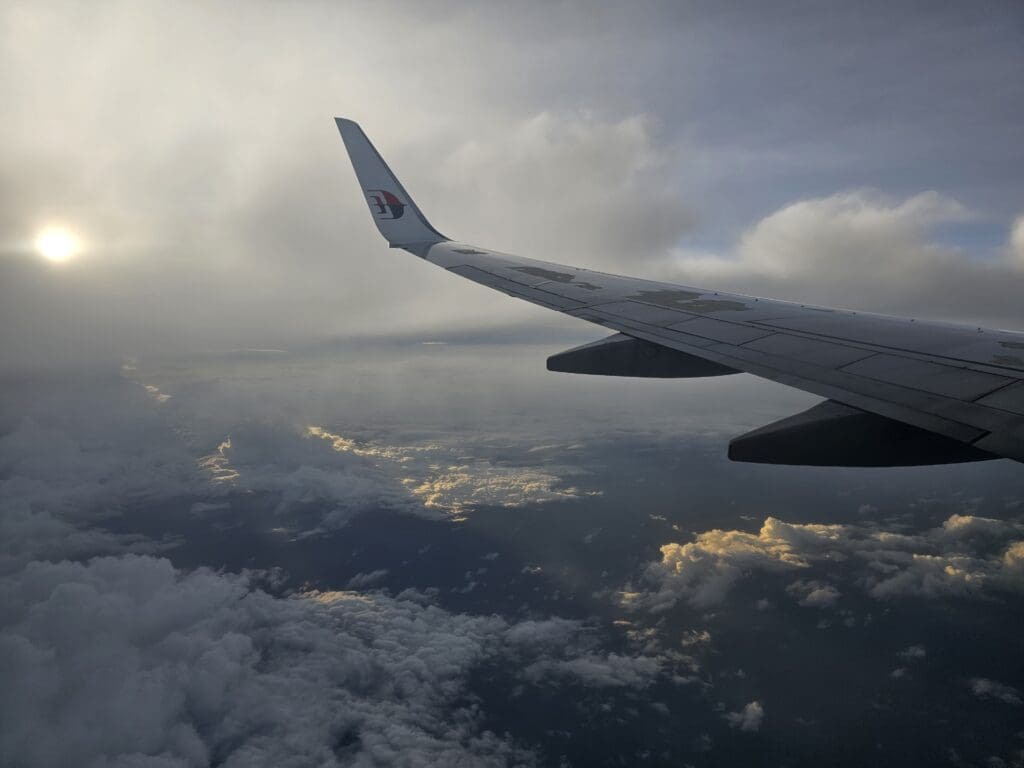
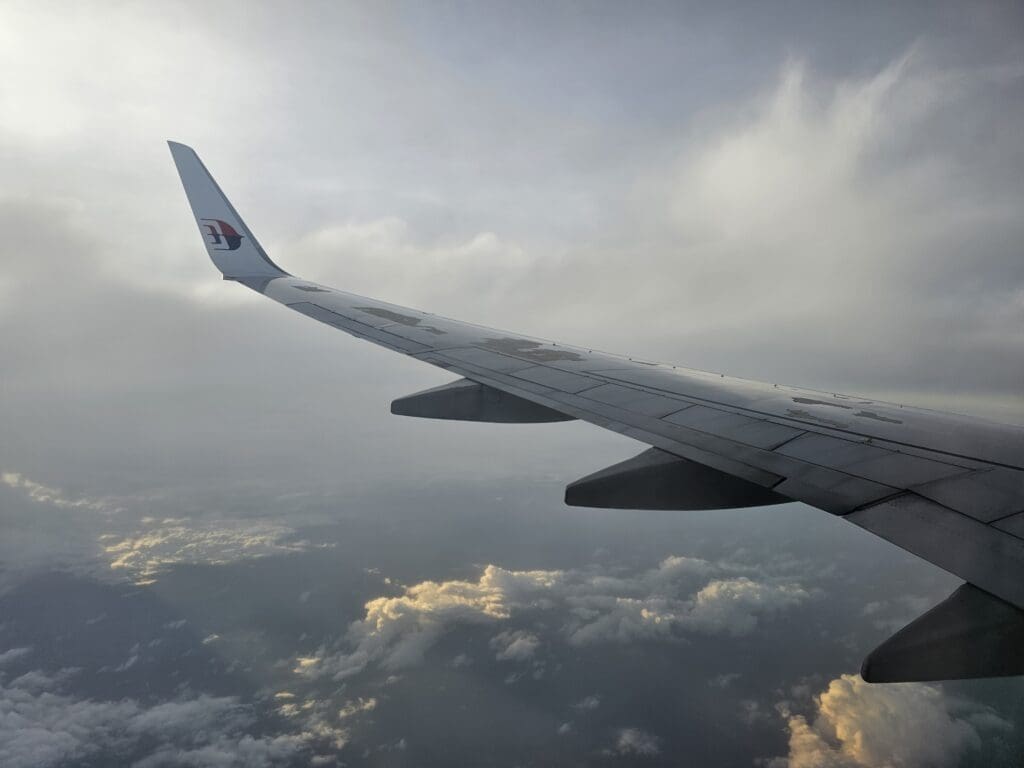
Returning to the route, after leaving Kuala Lumpur, the aircraft continued heading northwards over Selangor, Perak, Kedah and Perlis, passing straight over the city of Ipoh and crossing just to the east of the coastal city of Sungai Petani. Unfortunately, with clouds having rolled in below, little could be seen as we sped towards Malaysia’s border with Thailand. A grand total of 41 minutes after taking to the skies, the Boeing cruised over the border town of Padang Besar at an altitude of 34,000 feet and entered Thai airspace. Just before crossing into the skies of Thailand, the Captain’s calm and reassuring tones filled the cabin as they welcomed all passengers onboard, thanked passengers for flying with Malaysia Airlines, provided an update on the weather in Bangkok and apologised for the delay. They then ended this by wishing all onboard to enjoy the Malaysian hospitality.
With little to see as we cruised northwards, I decided to explore the delights of Malaysia Airlines’ inflight entertainment system. Whilst all inflight entertainment screens have been removed on the carrier’s retrofitted Boeing 737-800s, these do feature a wifi network with wifi-based entertainment streaming. Upon connecting to the onboard wifi network, I navigated over to the MH Studio inflight entertainment page. Starting off, this was modern, easy to navigate and quick to load, and featured an expansive range of films, music and television programmes from across the world. Whilst this was perhaps not quite in the same league as the likes of Cathay Pacific, the ME3 or Singapore Airlines, this was still a fantastic system with plenty of content offered. Whilst I had no intention of watching anything, I found that all visual content commenced with advertisements for the coffee brand Indocafe, Enrich Luxe Retreats, the Malaysia Aviation Group’s Journify app and Malaysia Airlines’ Business Flex fare. Other than the entertainment content, the system also allowed passengers to browse information related to their flight, look through the SkySnack buy-on-board menu (which I assume was for those who wished to purchase snacks in between meals on longer services), as well as the Temptations onboard shopping catalogue and the carrier’s Going Places magazine. Meanwhile, this also featured the usual feedback form. Overall, this was a great system and a good substitute for a real inflight entertainment screen. There were, however, a couple of things I picked up on. Firstly, despite the wide array of destinations served by Malaysian Airlines, the system was only available in Malay and English. Secondly, I found the moving map did not work for the duration of the flight. Turning to the Going Places magazine, this was a fairly professional publication with a wealth of interesting articles – most of which related to things to do, see and eat at the airline’s destinations, and did not seem to feature quite as many advertisements as the inflight magazines of a number of other carriers.
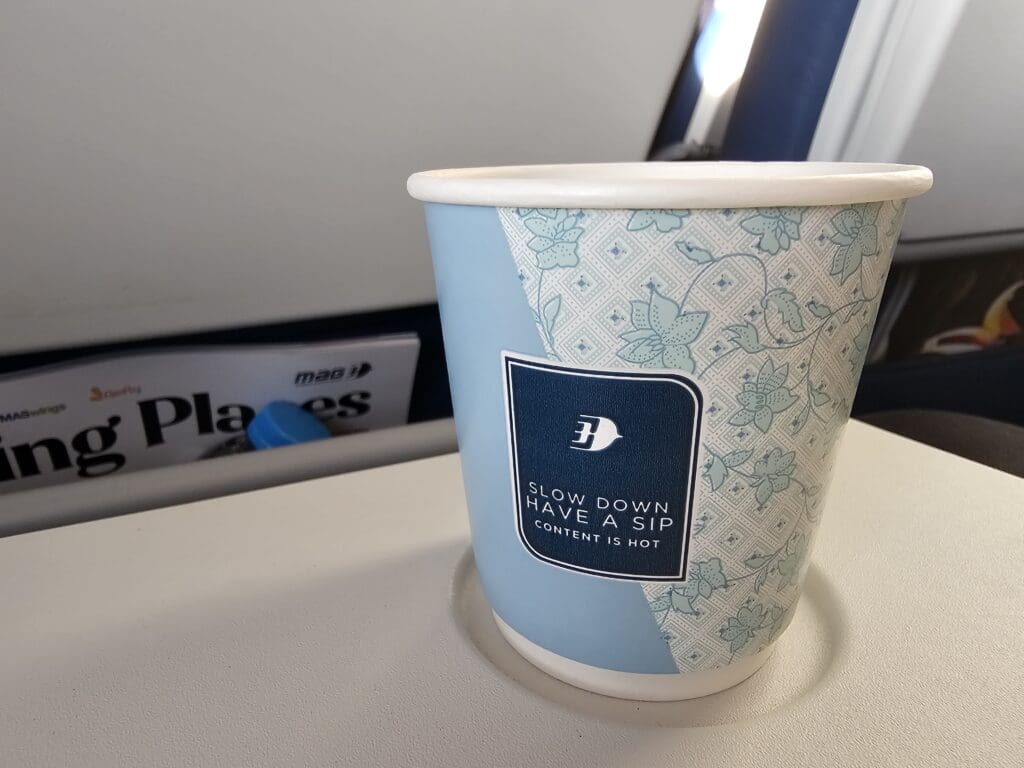
As we cruised over Southern Thailand, the clouds partially parted below, revealing the famous island of Koh Samui and neighbouring Ko Pha Ngan, whilst the coastline of the mainland’s Surat Thani Province could be seen to the west. Inside the cabin, at this time, a round of hot drinks was made, and I opted for a coffee, which was served in a small and nicely designed paper cup. This was followed ten minutes later by another final hot drink round. Given the length of the flight, the crew were in the aisles non-stop, appearing to work incredibly hard whilst also delivering impressively polite and friendly levels of service.
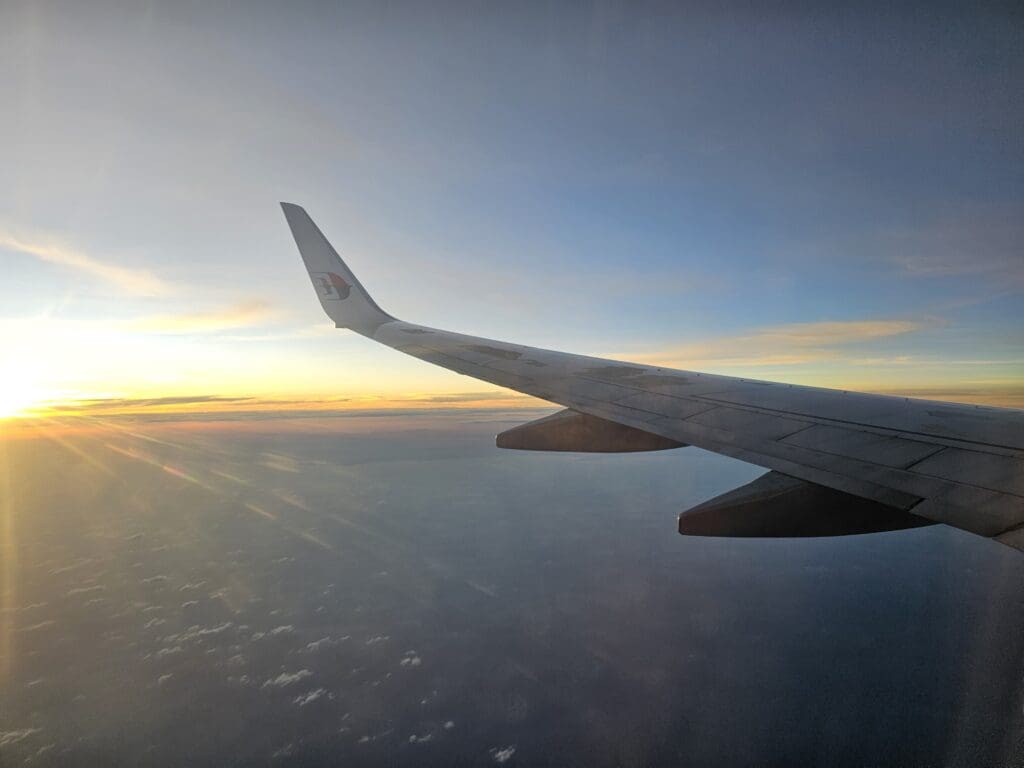
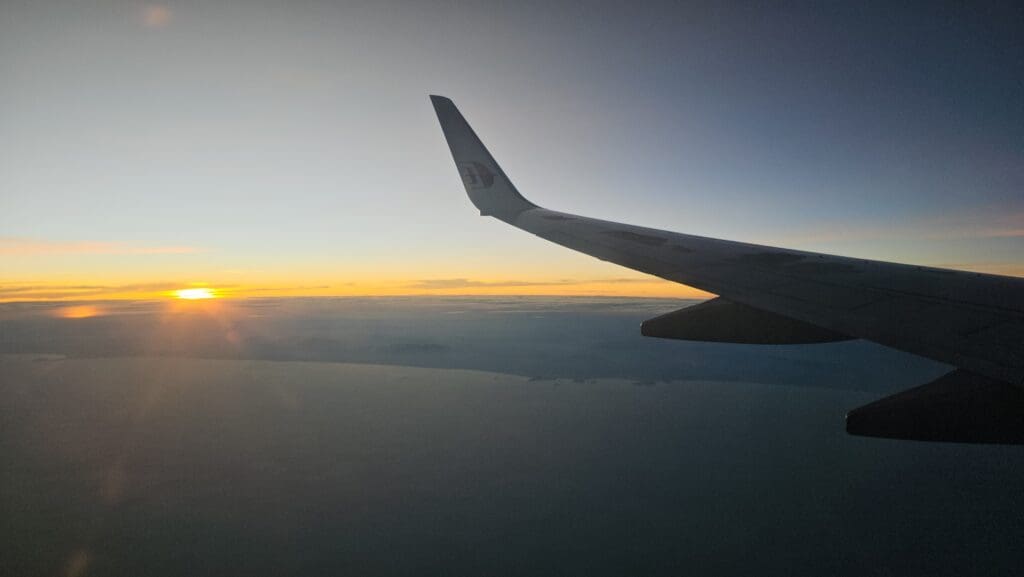
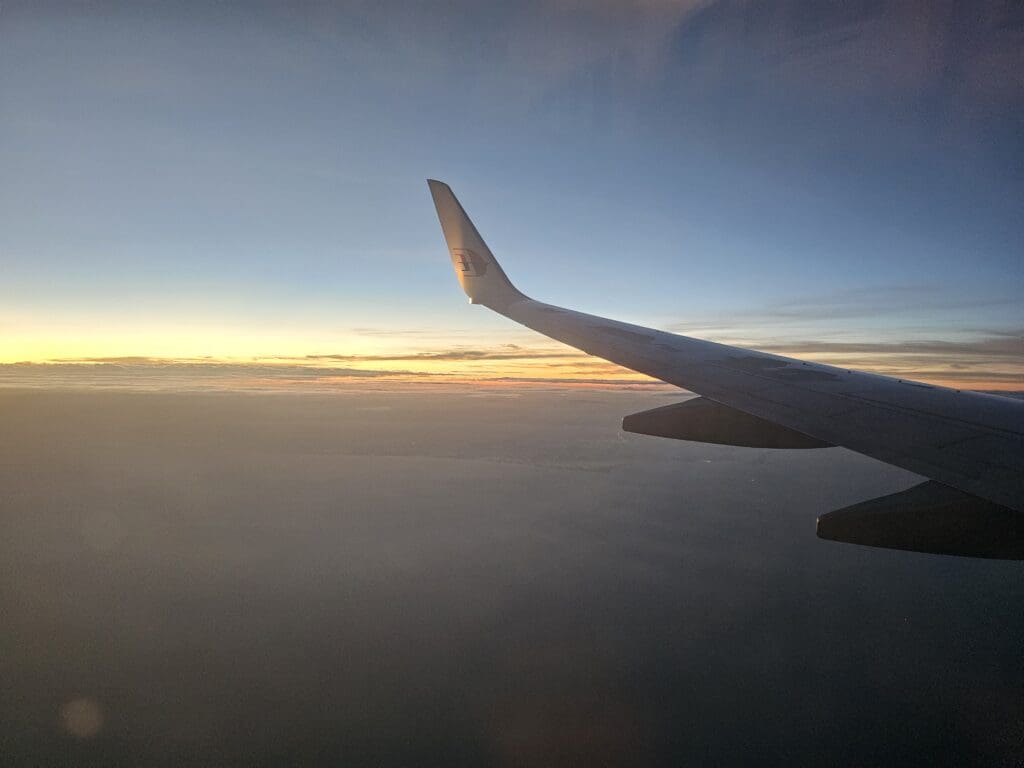
Outside, as we cruised north over the Bay of Thailand, it wasn’t long before the sun set and the skies darkened. As we crossed the dark waters, the aircraft bumped around a little, although this was not severe enough turbulence to warrant the illumination of the seatbelt signs. At 1904, or, 1804 Thai time as I shall use from now on in the report, the aircraft could be felt leaving its cruising altitude and a short time later the Purser performed an announcement advising that as the seatbelt signs would be reilluminated shortly, those that needed to do so were encouraged to visit the lavatories.
Around ten minutes later, the lights of the Thai coastline to the south of Bangkok came into view as we performed a teardrop holding pattern before continuing onwards to the capital city. At 1817 as we descended through 10,000 feet, the seatbelt signs were reilluminated, although seeing as most were already in their seats, the crew faced no difficulties in getting passengers seated and settled for our arrival. Once the crew had strapped themselves in, the cabin lights were dimmed as we lined up for our landing on Bangkok Suvarnabhumi’s Runway 01L.
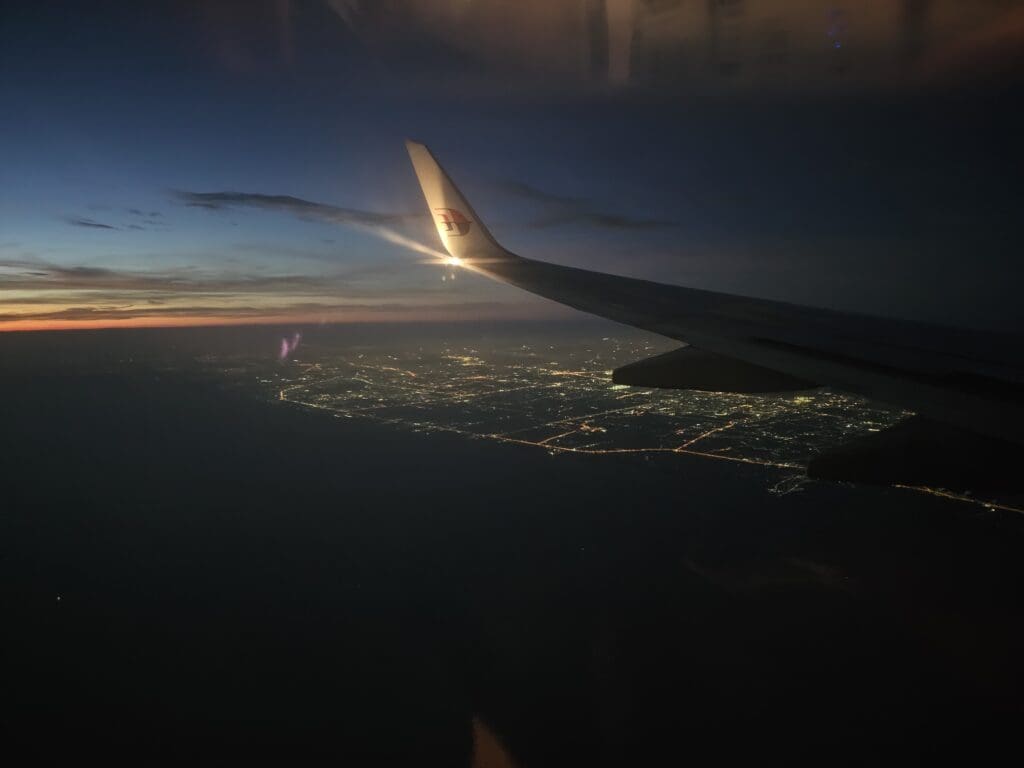
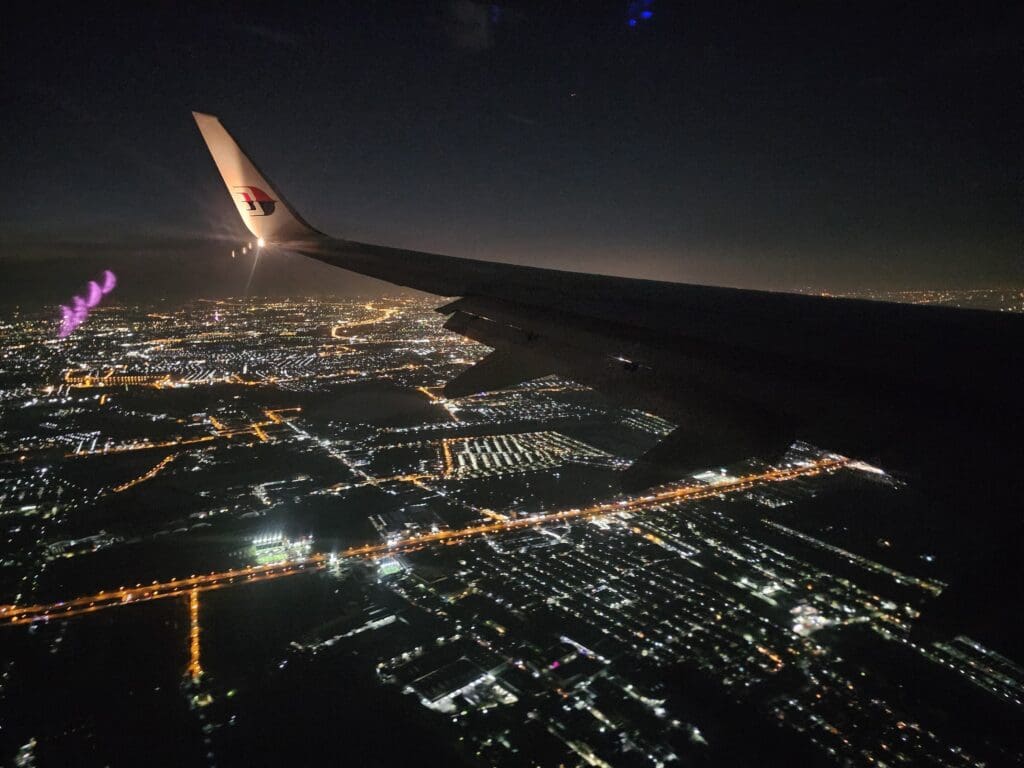
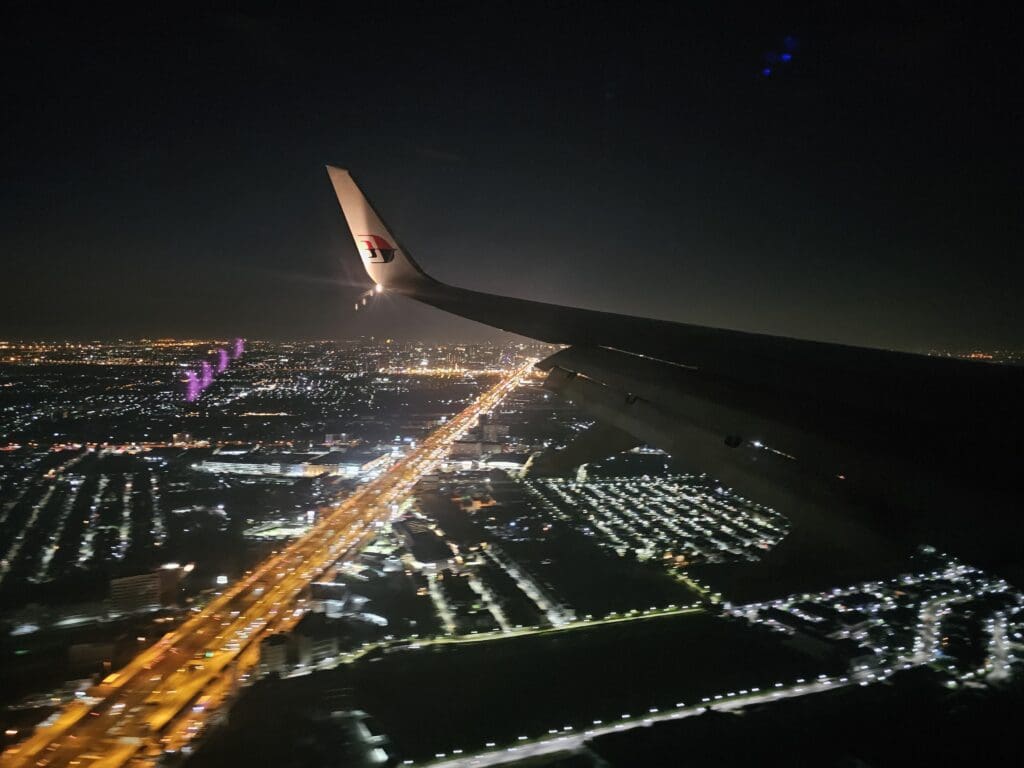
After crossing the coastline, the flaps and landing gear were extended, and we bumped around rather significantly whilst the lights of the towns that sit to the southeast of Bangkok whizzed past below. Following a grand total of 1H49 in the air, the Boeing returned to earth with a very firm thud before we decelerated quickly and vacated the runway to the right. At this time, the usual post-landing announcement was made with the Purser welcoming all passengers to Bangkok and thanking all for flying with Malaysia Airlines.
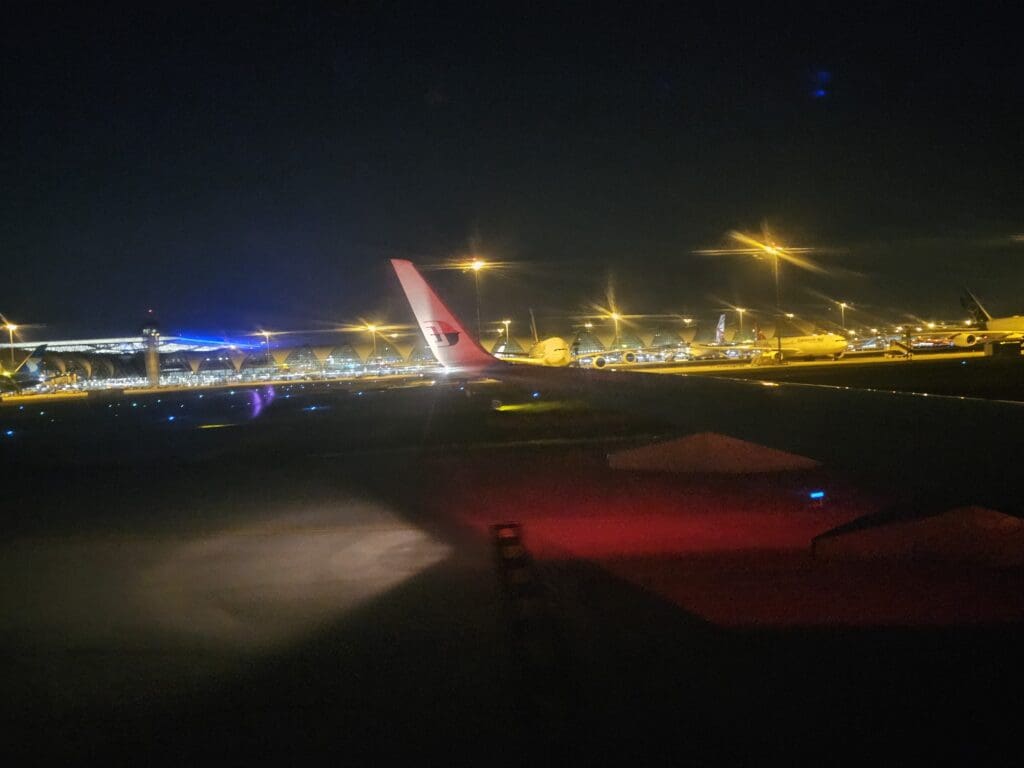
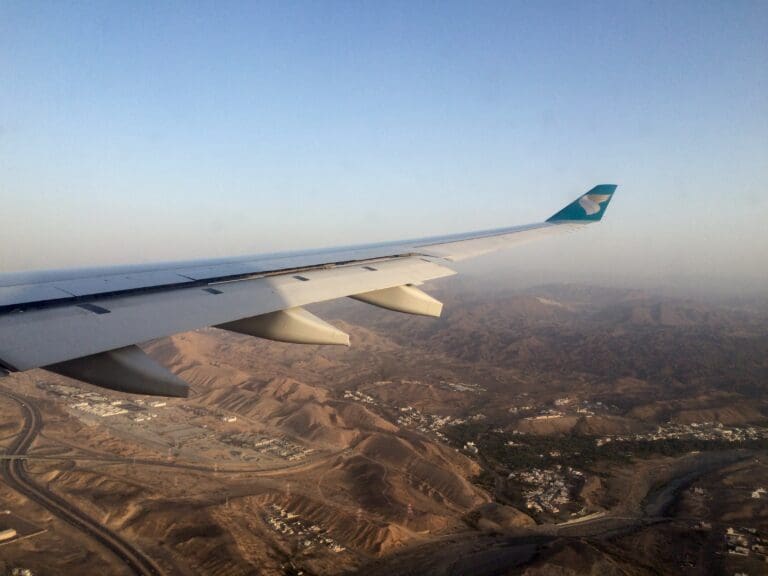
From the runway, we would not have a particularly lengthy taxi to Stand F3. As we trundled around the apron, we passed a cluster of much larger international visitors, including Airbus A380s provided courtesy of Emirates, Lufthansa and Qatar Airways. A total of eight minutes after slamming down on Thai soil, the aircraft cautiously made its way into the stand, parking up next to an Oman Air Boeing 787 Dreamliner that would shortly be heading to Muscat. Soon, the engines spooled down, and many of those around me jumped up. Thankfully, it wasn’t too long before disembarkation commenced and I soon headed forward before thanking the crew members in the forward galley and stepping off the aircraft.
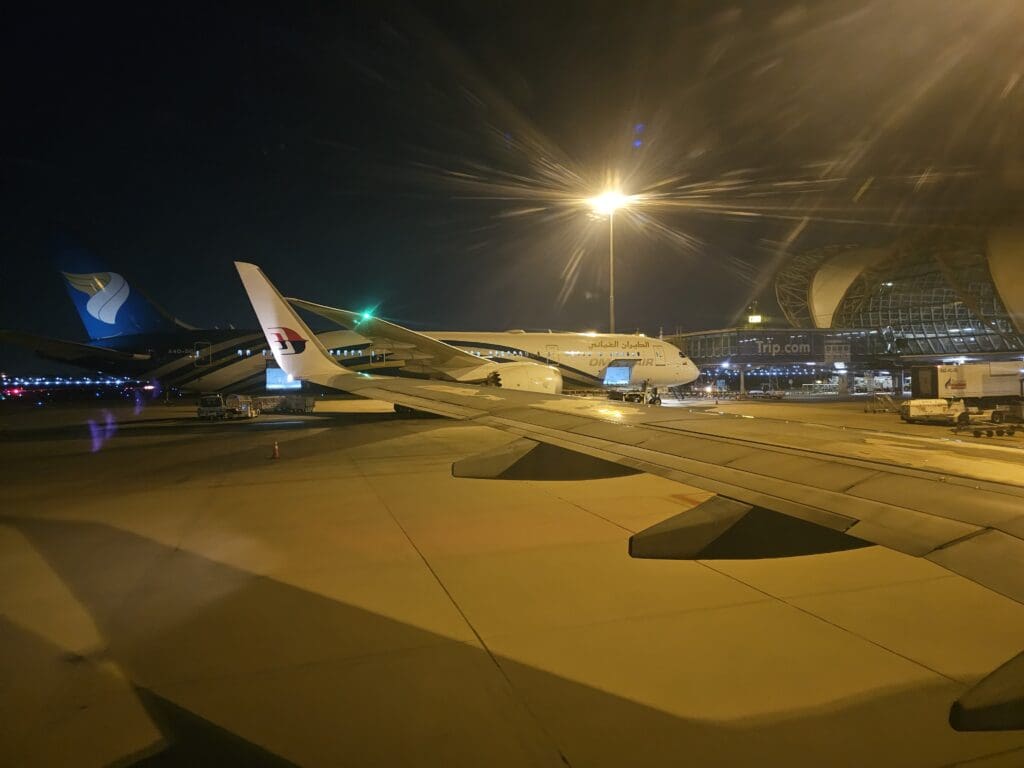
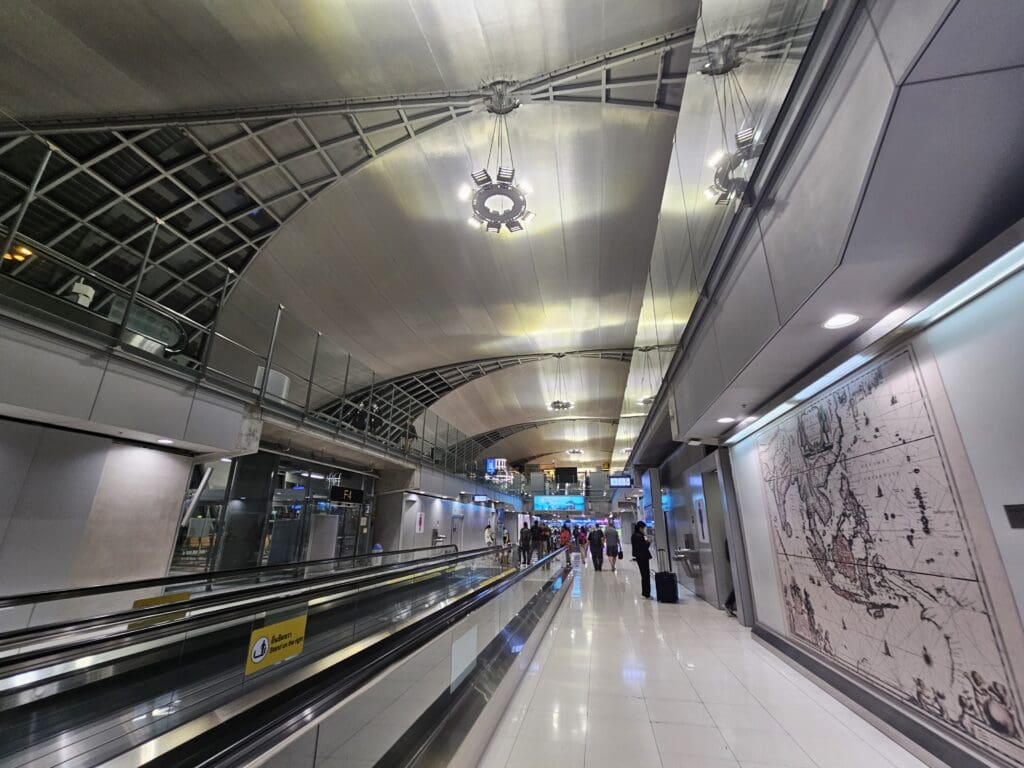
Once I had disembarked, a fair walk was in store until I reached the immigration hall. With plenty of arriving flights from Europe and the Middle East at that time, this was packed, and it took well over half an hour of shuffling forwards before I arrived at one of the immigration desks. Once there, my passport was scanned before I was photographed and fingerprinted. After all the formalities had been completed, I was free to continue onwards and soon entered the busy landside portion of the terminal, bringing my first ever experience with Malaysia Airlines to an end.
Summary
Recently, Malaysia Airlines has received a fair amount of stick for its supposed falling levels of service. However, ignoring the delay, I had a superb first experience with Malaysia Airlines and was left with very little to complain about. The aircraft was reasonably comfortable given the length of the flight and in tip-top condition; the crew were wonderfully friendly, and the onboard service was fantastic. Thus, I can safely say that I would be more than happy to fly with the airline again in the future and hope to sample the delights of one of their widebody aircraft at some point.