A Trio of Flights on the Let L-410 Turbolet: Split to Zagreb via Pula and Osijek
About the Airline
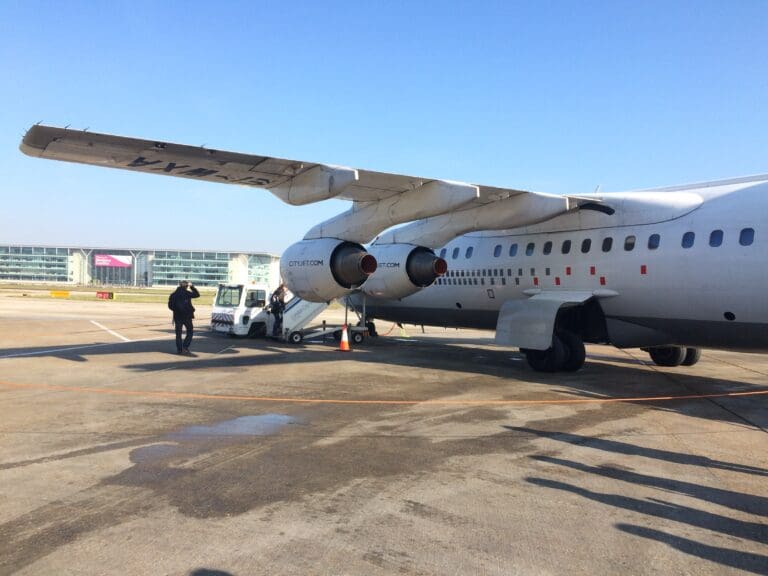
Outside of their home country, Croatia, it may be fair to suggest that Trade Air is not a particularly well-known carrier, especially amongst non-enthusiasts. However having first taken to the skies in May 1995, the airline has been around for quite some time and outlived a number of Croatian airlines. Primarily specialising in charter services, at the time of my flight in March 2020, Trade Air’s fleet consisted of a single Airbus A319, four Airbus A320s and of note amongst enthusiasts, a rare Fokker 100. Alongside their charter operations, Trade Air maintains a network of domestic Public Service Obligation (PSO) flights across Croatia – with these serving Dubrovnik, Osijek, Pula, Rijeka and Split. However, rather than operating their own metal on these routes, Trade Air has long enlisted the help of other carriers including AIS Airlines and Budapest Air Service who deployed a BAe Jetstream 32 and an Embraer 120 respectively. In line with the apparent tradition of operating relatively rare aircraft on their domestic network, today these flights are flown by a Let L-410 Turbolet which is owned and operated by Czech carrier Van Air Europe.
As of 2022, opportunities to fly on a Let L-410 Turbolet in Europe were few and far between. The only other operator of the type being Silver Air with a network of pricey flights from the Italian island of Elba to several destinations on the mainland. Thus, Trade Air’s Let L-410 operated PSO services had been on my to-do list for some time! However, this would not be my first time flying on this rare Czech turboprop and I had previously flown onboard a Van Air Europe example back in March 2016 on Wales’ sole domestic route from Cardiff to RAF Valley. Once a reasonably common sight in the UK, alongside this route the airline operated Lets from the Isle of Man on behalf of both Citywing and Manx2. However, Let L-410 operations in the UK came to a sudden end in February 2017 when the Civil Aviation Authority suspended Van Air Europe’s permission to operate flights within the UK following an incident on a flight from the Isle of Man to Belfast.
Booking
As one would expect, tickets for Trade Air’s PSO services can be booked directly via the airline’s website, as well as via a range of online ticket sites. In addition to this, these can also be purchased through Croatia Airlines and be booked as part of itineraries involving the national carrier’s international services. Unsurprisingly, booking via the latter is not possible for Trade Air’s multi-stop services between Split and Zagreb which is served by direct Croatia Airlines services. A quick search revealed that I would not save any money by booking tickets via a third party, so I decided to book directly via Trade Air’s website.
With the bulk of Trade Air’s operations focusing on providing aircraft for charter, it is clear that much of the carrier’s website is dedicated to attracting charter clients. As such, this offers plenty of information regarding Trade Air’s fleet and its aircraft’s configurations and capabilities, as well as the airline’s history and the relevant certifications it holds, with comparatively little information offered for those travelling off across Croatia on their scheduled flights. As with many other small carriers, Trade Air utilises the WorldTicket booking platform, a system that I was well versed in having used this multiple times to book flights with Amapola Flyg, Jonair, NyxAir and Transaviabaltika in Finland and Sweden.
As per Trade Air’s winter 2022 schedules, flights between Split and Zagreb operated twice per week – on Mondays and Fridays. Meanwhile, services to Dubrovnik were offered on Tuesdays and Thursdays, with no scheduled flights flown on Wednesdays and weekends. Once I had entered my chosen departure date, a Monday, as expected I was presented with a single option. This would depart Split at 1215 and arrive in Zagreb almost four hours later following 30 minute stops in Pula and Osijek. Two fares were offered for this flight, a ‘Promo’ and ‘Economy’ fare for €58.85 and €88.11 respectively. Both of these included 5kg of hand luggage and 13kg of hold luggage, with the more expensive fare also offering flight and name changes for €10 each and refunds for 75% of the ticket cost plus taxes.
Travelling on a budget, I decided to go for the Promo option and was then asked to input my personal details. After doing so, I was then presented with a booking summary before reaching the Merchant Pay-powered payment page. Only Maestro, Mastercard and Visa cards could be used to make payment, however, a message was offered advising prospective passengers to book via Croatia Airlines if they lacked such payment methods. With little issue, I made a quick and easy payment and soon received my ticket and payment receipt by email.
The Journey
As the crow flies, Split Airport sits around 19 kilometres to the west of the city centre. However, separated from this by the waters of Kaštela Bay, the most direct journey to the airport by road is somewhat longer at approximately 24 kilometres. For those without a car and not wanting to splurge on a taxi, the easiest way to get to or from the airport comes in the form of the shuttle bus. This costs 35 Kn and connects Split’s intercity bus terminal on the waterfront with the airport, and takes around forty minutes without making stops between the two. However, a quick search of the timetables revealed that these bus services make their way to the airport at irregular intervals, timed to coincide with most of Croatia Airlines’ arrivals and departures. Unfortunately, upon examining the timetable it was revealed that none of the non-stop departures that morning appeared to be capable of getting me to the airport in good time for my 1215 departure. Thankfully, a slower local bus also ploughs this route, operating up to three departures per hour. With bus timetables for local services available on the website of their operator, Promet Split, I decided to aim for the 0850 departure from Sukoišan Bus Terminal.
Following a pleasant stay in Split, I awoke bright and early on my departure day and decided to have a quick morning walk to grab a burek from a nearby bakery for breakfast. Upon returning to the guesthouse, I quickly packed up my things before heading out onto the bright yet chilly streets of Marjan Hill. From there, it took around fifteen minutes of trundling along a mixture of busy roads and narrow alleyways before arriving at Sukoišan. Upon arriving there, whilst relatively few could be seen waiting at the terminal’s bus shelters, a constant stream of local buses could be seen arriving and departing from the terminal’s stands. It is worth noting that serving local buses only, this terminal is limited in its offering, providing little other than several shelters, although a local branch of SPAR and a café can be found directly opposite this. After quickly glancing at the timetable in one of the shelters, this revealed that the Number 37 bus departs from stands 4 and 5, and so without delay, I made my way over to these stands where two parked yellow and white modern Mercedes articulated buses could be seen. Arriving with a little under ten minutes to go until the service’s scheduled departure time, at that time no driver could be seen although they soon appeared and readied one of these for its journey to the town of Trogir. With a couple of minutes to go until departure, the driver gave the okay for passengers to board, and I made my way onto the bus along with two other passengers.
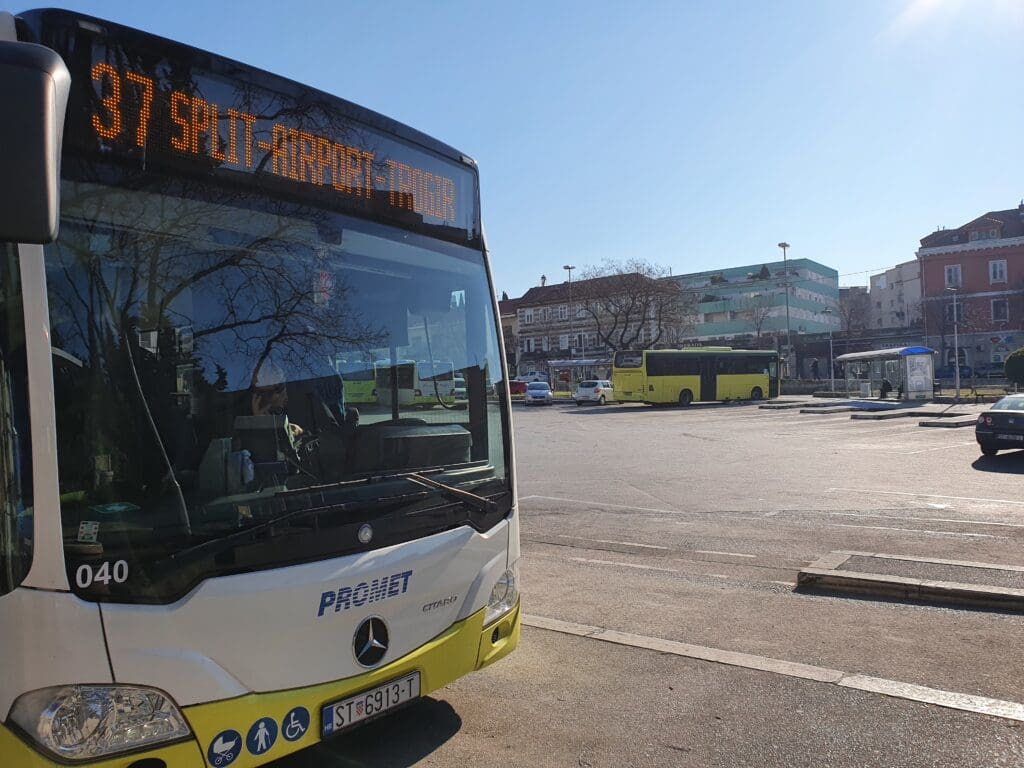
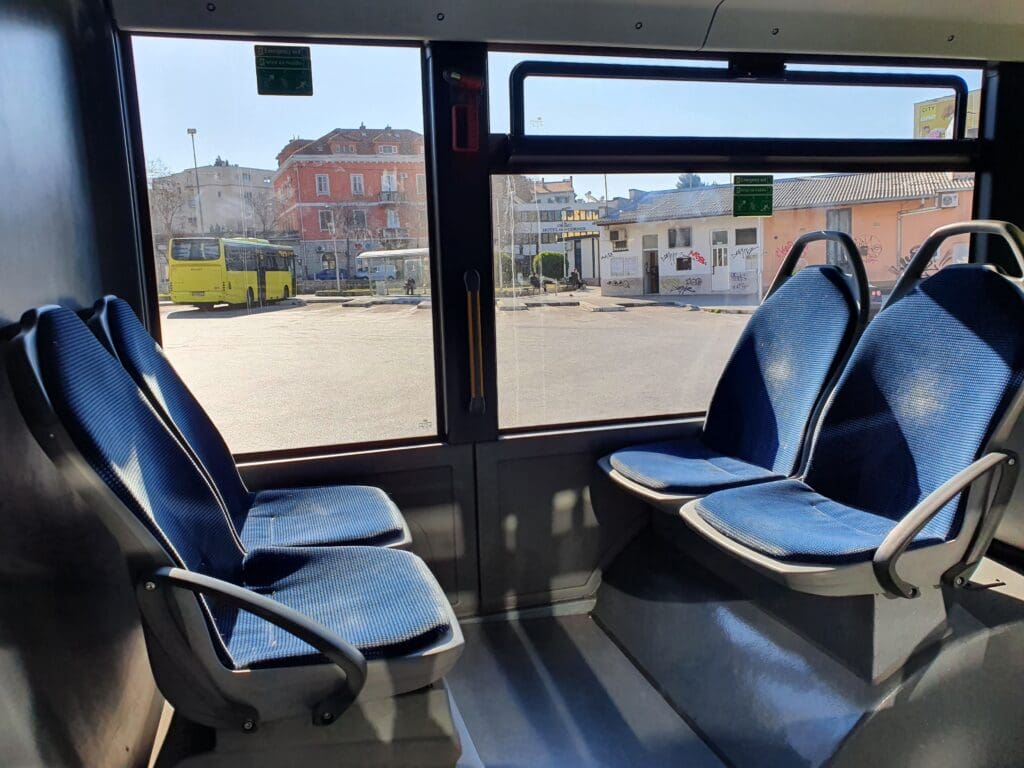
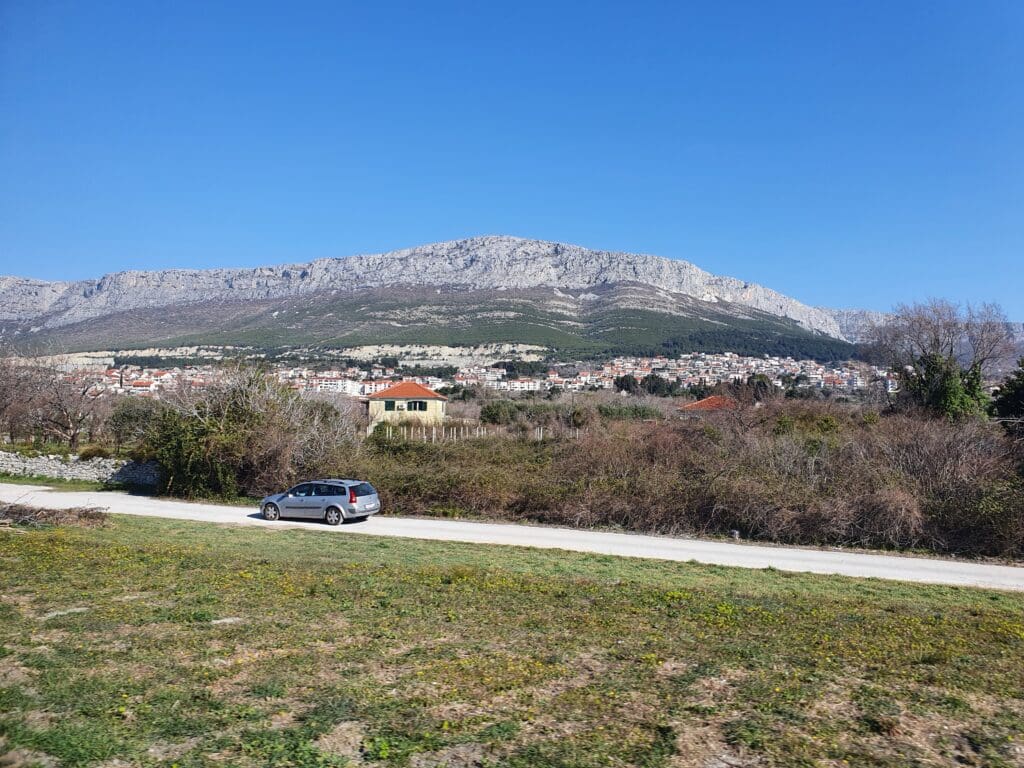
After paying my 17 Kn fare to the driver, I headed down the long bus and settled in for the journey to the airport. As local buses go, this particular bus left me with little to complain about, being modern, clean and even featuring complimentary wifi that worked well for the entirety of the journey. At 0851, the bus cautiously reversed out of its stand and made its way onto the streets of central Split, making regular stops at both red traffic lights and bus stops along its route before speeding up a little after leaving the city and heading over to the other side of Kaštela Bay. Whilst the bus started its journey relatively empty, this soon became busy with many passengers hopping on and off at the various local villages along the route.
Eventually, the bus reached the town of Kaštela, which sits between the airport and the coastline. After passing through this, Split Airport’s modern glass and metal terminal building appeared and the bus came to a halt around an hour and ten minutes after leaving Split. Whilst I still had around two hours to go until my flight’s scheduled departure time, I decided against having a stroll around the town and instead made my way straight into the terminal’s bright and spacious check-in hall.
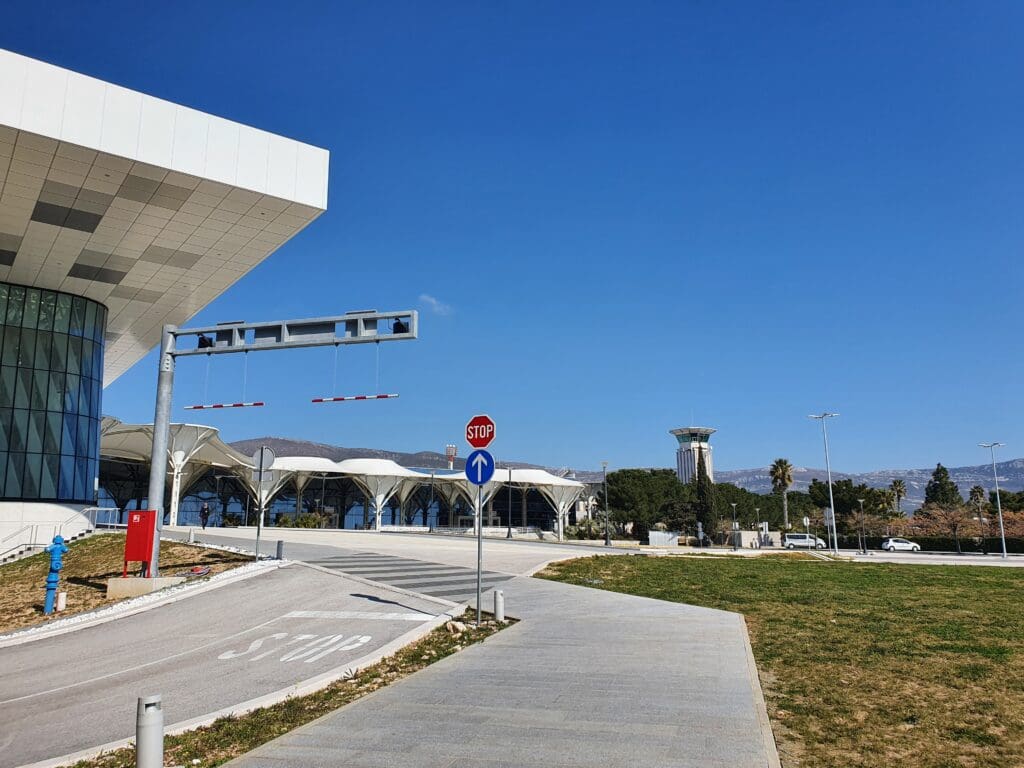
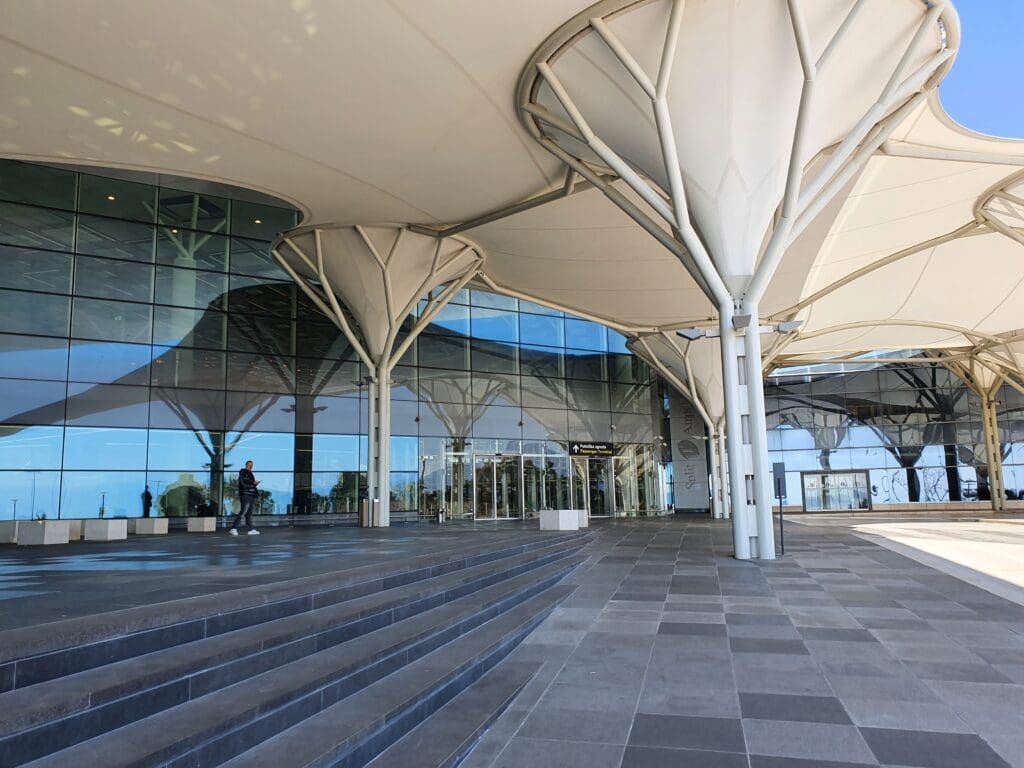
In the year before my flight, 2021, Split Airport served to be Croatia’s busiest with over 1.5 million passengers passing through its doors. However, you would have most certainly not believed this by looking at the departure boards on that mid-March Monday. That day, a total of just eight scheduled passenger flights would depart from Split. Other than Trade Air’s flight to Osijek via Pula, all scheduled flights were operated by Croatia Airlines, with four flights to Zagreb and one each to Frankfurt, Munich and Rome. Indeed, the vast majority of flights serving Split are seasonal, operating in the summer only and carrying sun-seeking passengers from across Europe. With the last flight before I arrived at the airport having departed at 0750, and with the next departure being the Osijek flight at 1215, I found the landside portion of the terminal to be a complete ghost town. At that time, I managed to spot just five members of staff lingering around the check-in hall, in addition to a couple of passengers who were presumably waiting for the security check to open.
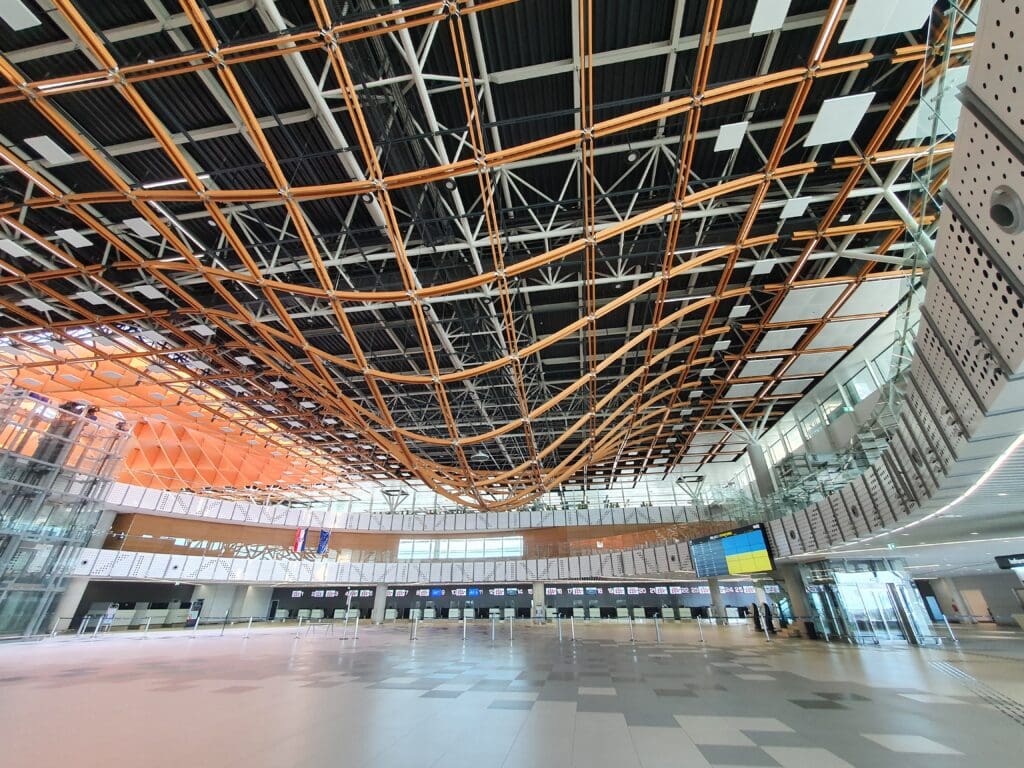
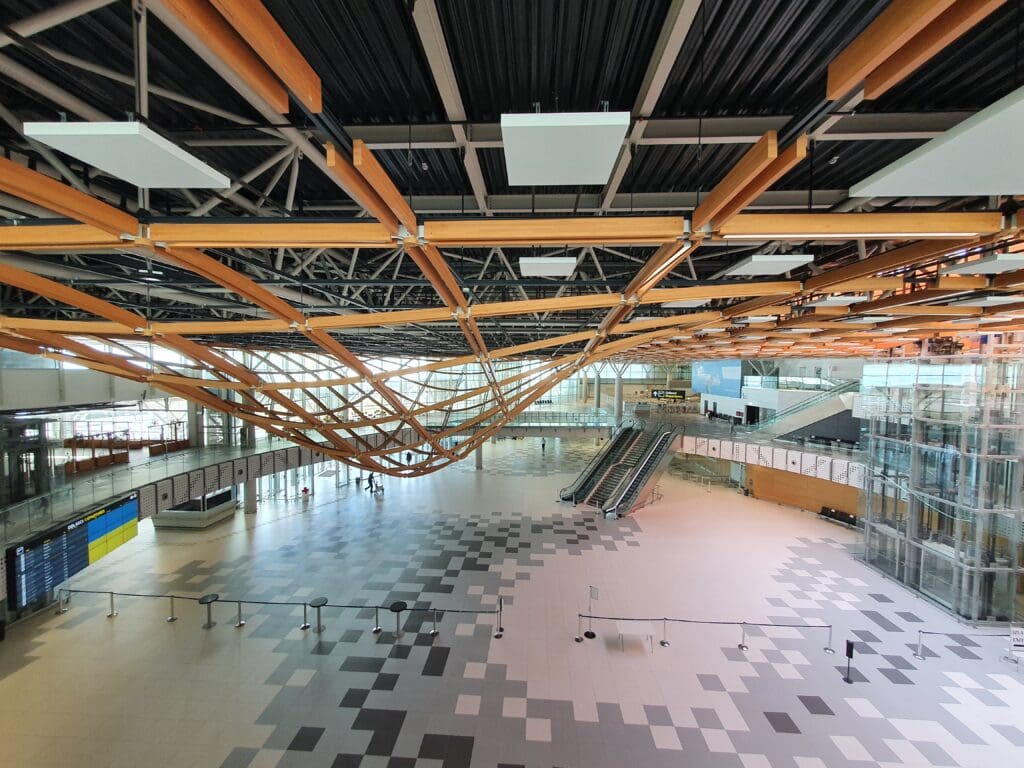
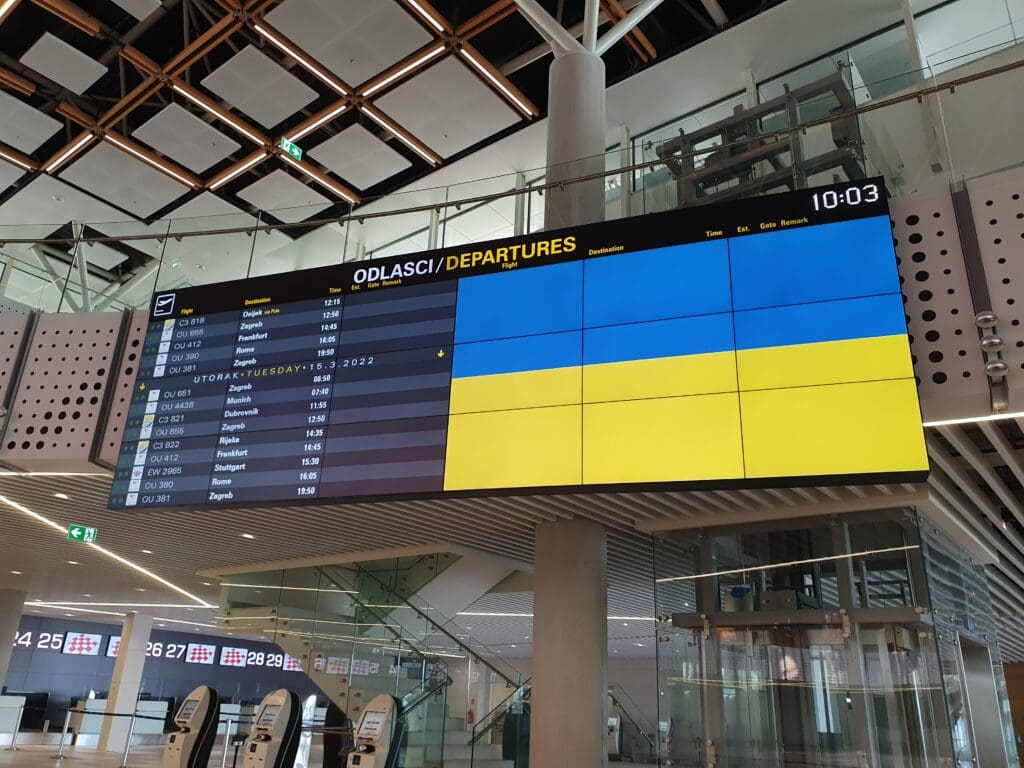
Having recently undergone major expansion, modernisation and upgrade work, I found the landside portion of the terminal to be highly modern and spacious, with plenty of glass allowing for natural light to flood in and create a very pleasant atmosphere. In terms of facilities, during my short explore I stumbled across a café on the top floor, a closed restaurant and a small convenience kiosk in the landside international arrivals area. For those not flying but looking for airside views, these can be had from the top floor café, however, these are obstructed and any decent photos would likely be impossible to take. Following a quick stop at a clean and modern set of toilets, I sauntered over to the only open check-in desk sitting amongst the check-in hall’s 31 counters. Unlike my check-in experience in Zagreb where I had been dealt with by a very friendly Croatia Airlines agent, that morning the staff member in Split worked in almost total silence. Fortunately, my Split Airport branded boarding pass was soon printed off without any issue although I was told that I would have to check-in again in Osijek for the final flight of my trip. Glancing at my boarding pass, as is common on such small aircraft, this revealed that I would be free to sit in any seat onboard the Turbolet that morning.
Once I had checked in, I headed up the escalators to the security check on the terminal’s first floor. However, with this still closed, I took a seat nearby and charged my phone whilst waiting for the checkpoint to open. As I waited, several other passengers could be seen arriving and around fifteen minutes later the security check opened at which point I scanned my boarding pass on one of the automated gates before heading to the only open security checkpoint. Seeing as I ended up second in the queue at this checkpoint, I did not have to wait long before parting with my possessions and walking through the metal detector. Following some nice interaction with two friendly staff members, I made it through to the airside portion of the terminal with no hassle whatsoever leaving me with plenty of time to enjoy the delights of the airside area.
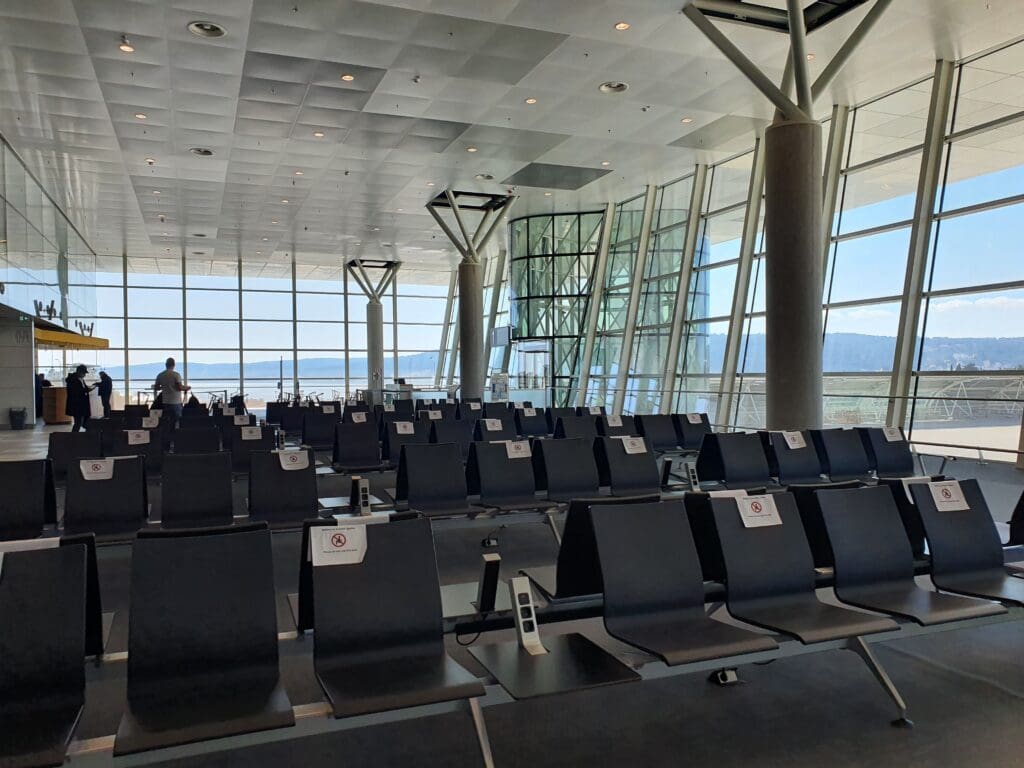
As with the landside area, I found this smaller portion of the terminal to be modern and bright, with large windows offering a view of the apron. However, unfortunately, these were (intentionally) covered in dots making any good photography of aircraft outside virtually impossible. Although that would not matter seeing as nothing was on the apron for much of my stay. With Split Airport serving both domestic and international departures, the airside departures hall is divided into two with immigration counters serving as the boundary between these. Turning to the terminal’s offerings, this featured a closed duty free shop and an open bar-café in one corner of the hall. For those needing to do some work or pass the time on their devices, complimentary wifi was offered which worked well for the duration of my stay and unlike in Zagreb Airport, plug sockets and USB ports were plentiful, located on each row of seats. Crucially, the terminal appeared to be in a spotlessly clean condition and I was ultimately left with a very positive opinion of Split Airport. However, given the terminal’s relatively small size, I cannot help but think that were I to pass through it several months later during the summer peak, I may have been left with a very different impression.
As my flight’s departure time neared, more and more passengers filtered through security although with Croatia Airlines operating a 1250 service to Zagreb and no way to distinguish who was heading straight to the capital, it was difficult to decipher just how full the flight to Pula would be. With fifty minutes to go until the flight’s scheduled departure time, an announcement rang through the terminal inviting passengers bound for Pula and Osijek to make their way over to gate 1. However, seeing as the aircraft was still on approach at that time, I presumed that this announcement was made to encourage any stragglers still in the landside area to make their way through security.
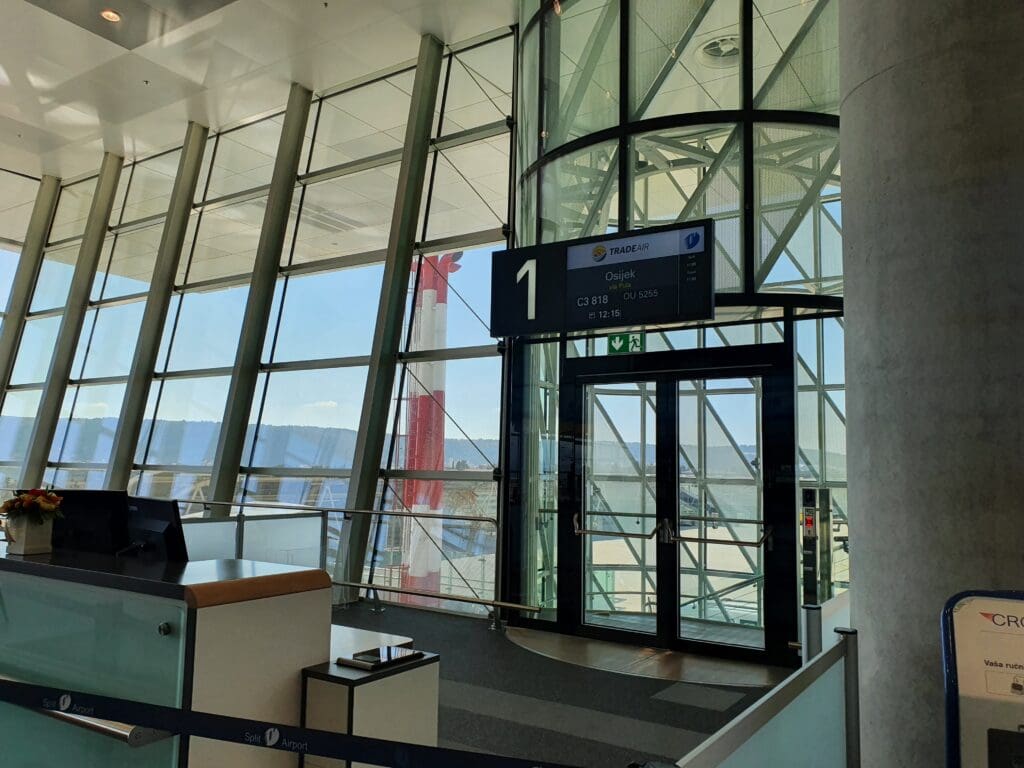
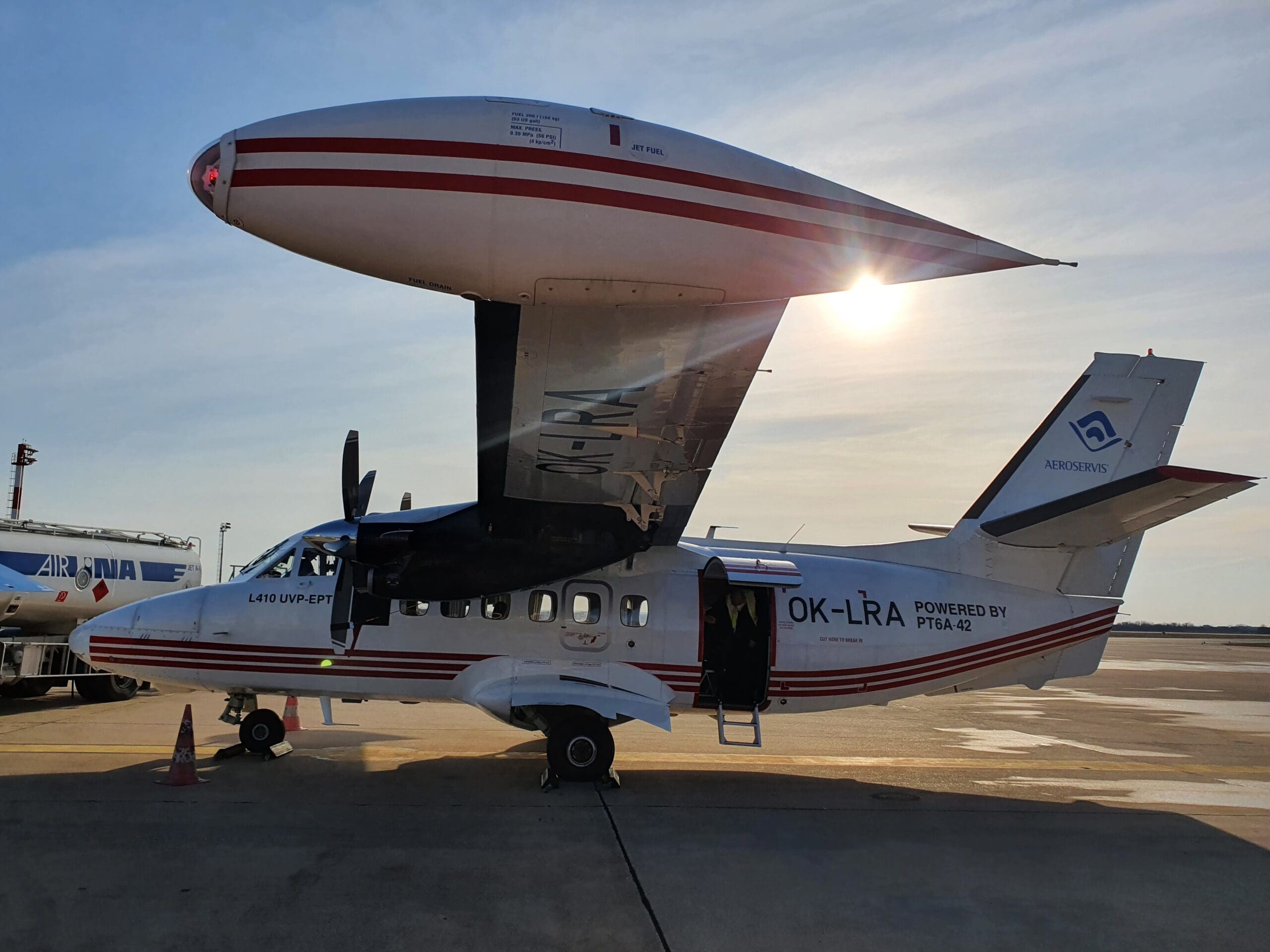
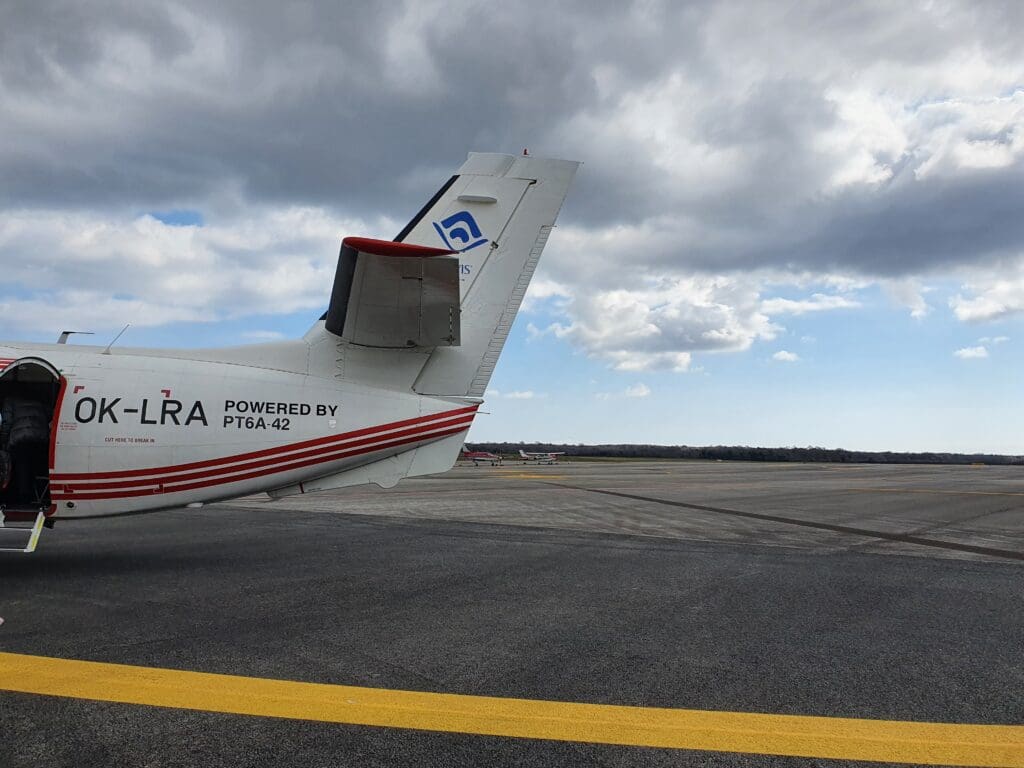
At this time, a team of ground crew could be seen mustering outside in preparation for the arrivals of the inbound flights from Munich and Pula. At 1133, the first of these, a Croatia Airlines Dash 8 Q400 touched down on Runway 05, ending its journey down from Bavaria. This was followed a short time later by the small, distinctive and slightly tank-like Let L-410, arriving ten minutes ahead of schedule. Once on the ground, the aircraft made a quick journey over to stand 10 before coming to a halt. Whilst Trade Air’s winter schedule could be operated by just a single aircraft, at the time of my flight, Osijek served to be the base of two Van Air Europe Let L-410s. These took the form of the mostly white OK-LAZ, and OK-LRA, which sports the basic red and white livery of its former operator, LR Airlines.
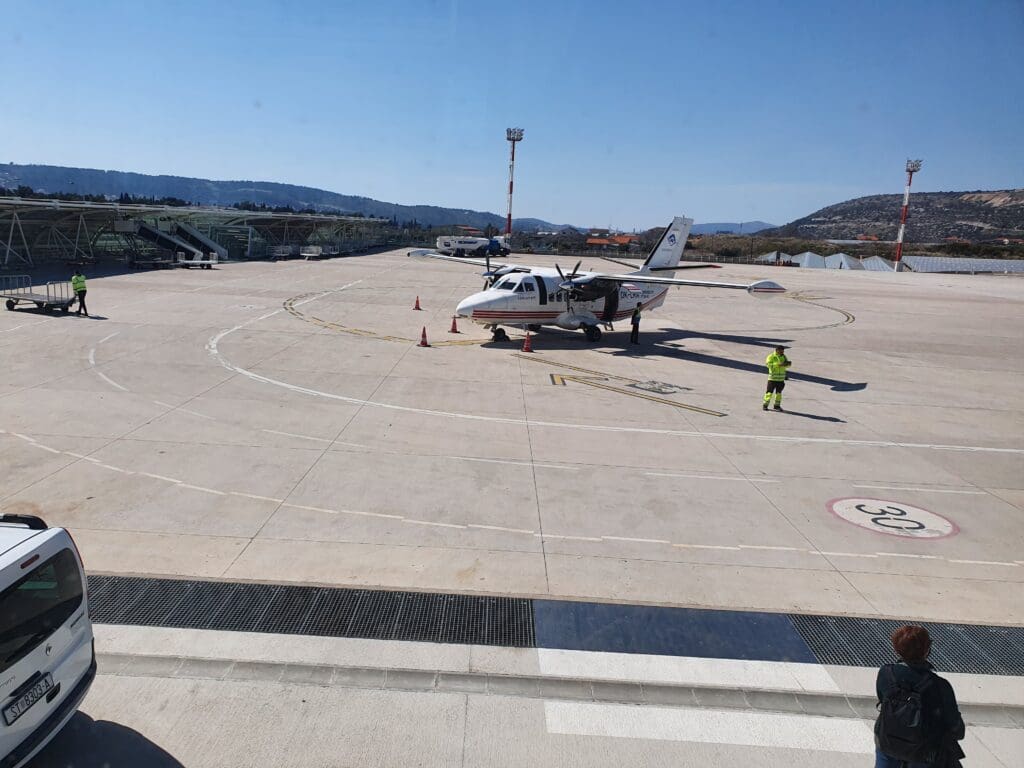
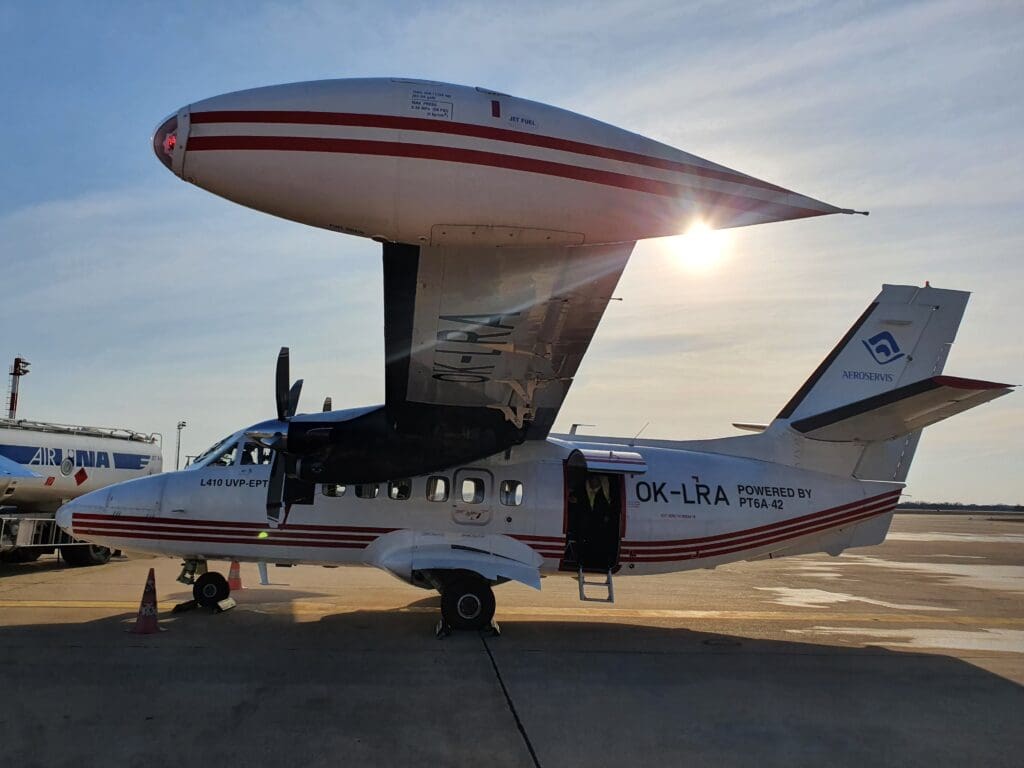
Given its slightly less dull livery, I was pleased to find that OK-LRA would be taking me on my very vaguely Z-shaped route across Croatia. As with almost all Let L-410s, this particular example was manufactured in the Czech aerospace hub of Kunovice. With the construction number of 892216, this made its first flight from Kunovice Airfield in early 1989 and with the Soviet registration of CCCP-67605, the aircraft was flown eastwards where it commenced its life with Aeroflor almost exactly 33 years before my flight. Unfortunately but not surprisingly, very little information exists about the first decade of the aircraft’s life; however given the Let L-410’s capabilities, it was likely that one of Aeroflot’s regional arms utilised this to haul passengers and freight somewhere deep inside the country. Following the collapse of the Soviet Union, the aircraft was not transferred to the new Russian aircraft register and at some point in the 1990s returned to its Czech homeland. In 1999, Ostrava-based charter carrier LR Airlines was established, with their first and for a long time, only aircraft taking the form of the appropriately registered OK-LRA, with this christened as Lady Racine. During its time with LR Airlines, the aircraft was photographed across Europe and an interior photograph from 2008 shows the aircraft’s cabin to be kitted out in a luxurious VIP configuration. Whilst LR Airlines continues to this day, at some point between 2016 and 2018, the aircraft’s LR Airlines titles were removed and the logo of aircraft maintenance company Aeroservis was applied to the tail where it remains; although, today the aircraft is operated by Let L-410 specialist Van Air Europe. In the week before my flight, OK-LRA had operated all of Trade Air’s scheduled flights; this had seen the aircraft visit Dubrovnik, Pula, Rijeka, Split and Zagreb from its base at Osijek, completing 32 sectors and flying over 5200 miles.
Returning to the journey in hand, according to my boarding pass, boarding was to commence thirty minutes before departure at 1145. However, given the size of the nineteen-seat Turbolet, I was highly sceptical that boarding would commence that early. However, not too long later at 1150, those bound for Osijek and Pula were invited to make their way to the aircraft. Upon reaching the gate podium, my boarding pass was scanned and passport checked by a staff member who was much friendlier than the check-in agent that I had interacted with at the start of my journey. Once done, I headed down the stairs and out into the pleasant morning sunshine before walking the short distance over to the Let L-410. Whilst I was likely the only passenger to be flying up to Zagreb simply to ride onboard a Let L-410, several passengers could be seen taking photos of what I assume for them was a novel ride, far from your typical Airbus or Boeing.
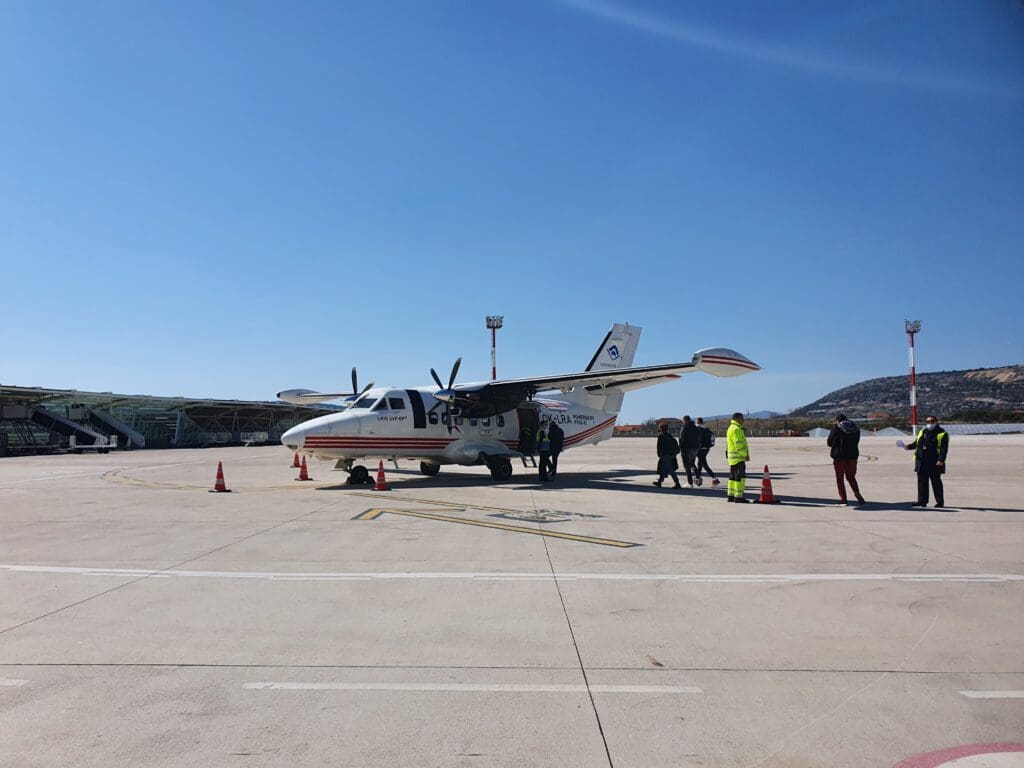
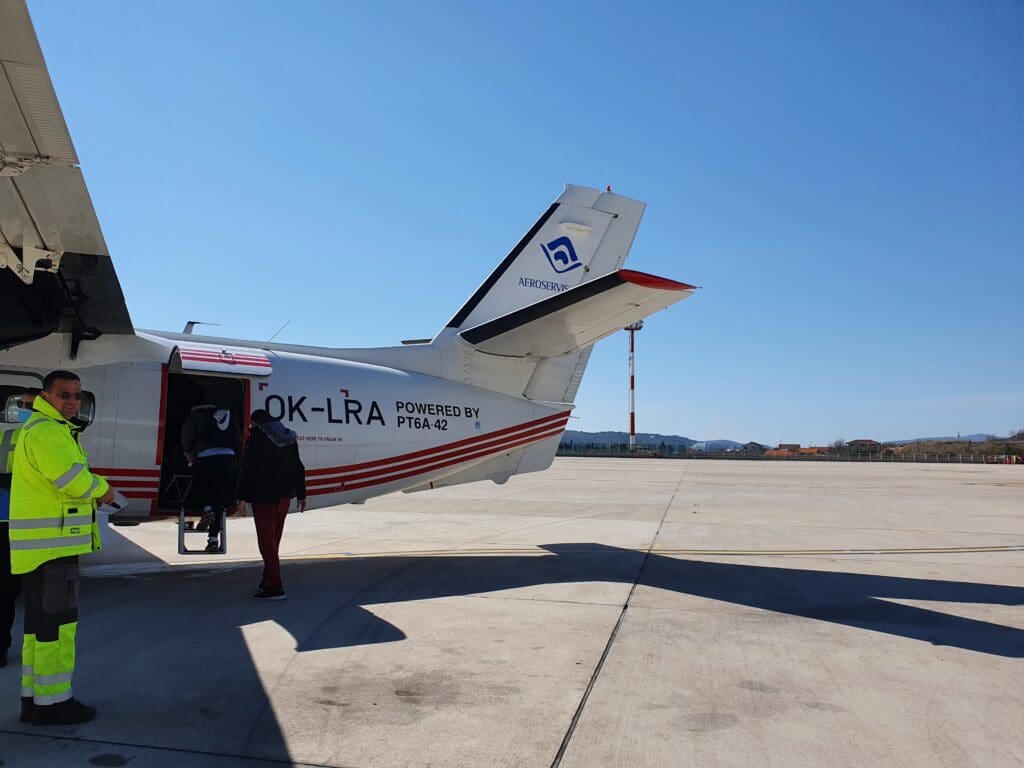
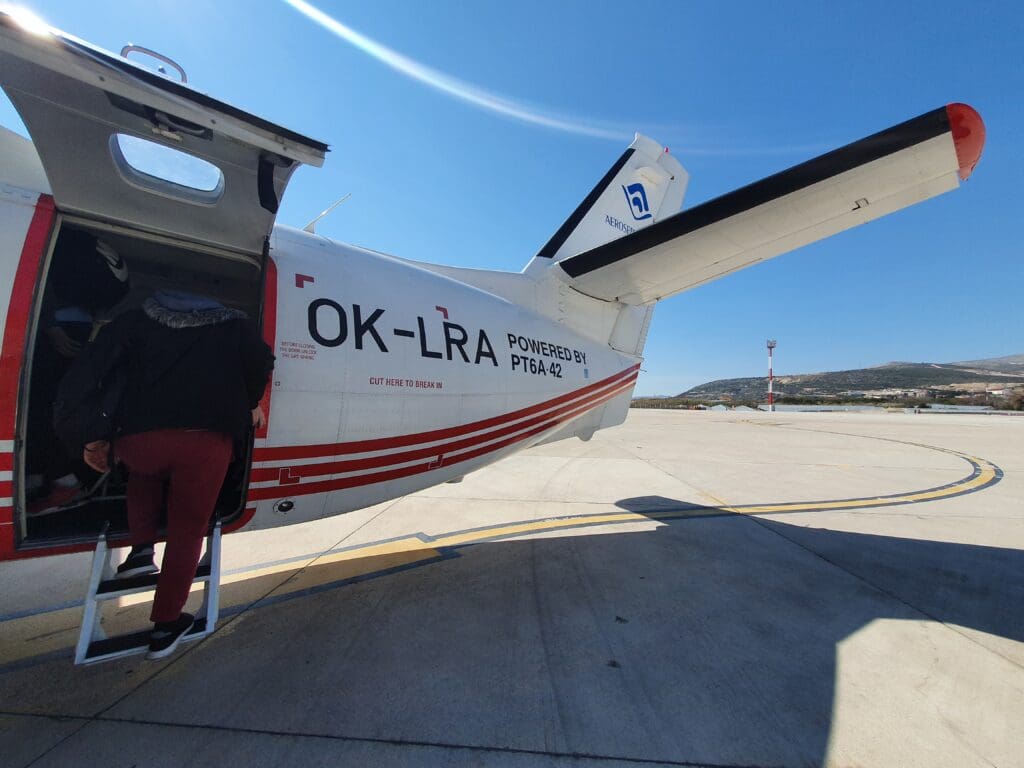
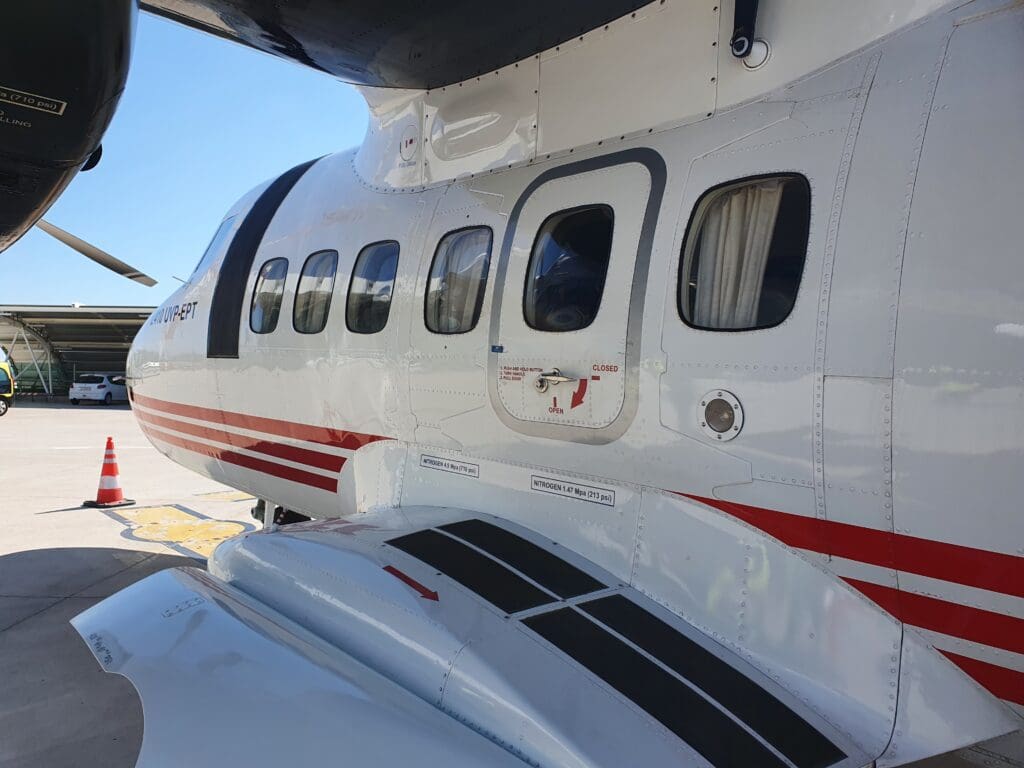
After taking several photographs, I climbed up the Let L-410’s small built-in two-step ladder and entered the small cabin. Having never encountered any cabin crew onboard such a small aircraft, I was slightly surprised to see a Trade Air flight attendant at the rear of the cabin who promptly welcomed me aboard in Croatian once I had safely entered the cabin. Whilst some Let L-410 operators opt to include a miniscule toilet onboard their aircraft, these are absent from the two Turbolets operating for Trade Air. Instead at the very rear of the cabin, a small door leading to the baggage hold could be seen, passing this, I then turned left and entered the heavily oil-scented cabin. Given the size and age of the Turbolet, this aroma had been expected, although I can’t help but think that those passengers more used to flying in ‘typical’ airlines may have been slightly concerned by this scent. Once onboard, I immediately set about selecting a seat for the journey north to Pula. Whilst some aviation enthusiasts may have headed straight to the front row, hoping to get a largely unobstructed view of some of Croatia’s most spectacular scenery, I decided to take Seat 5C.
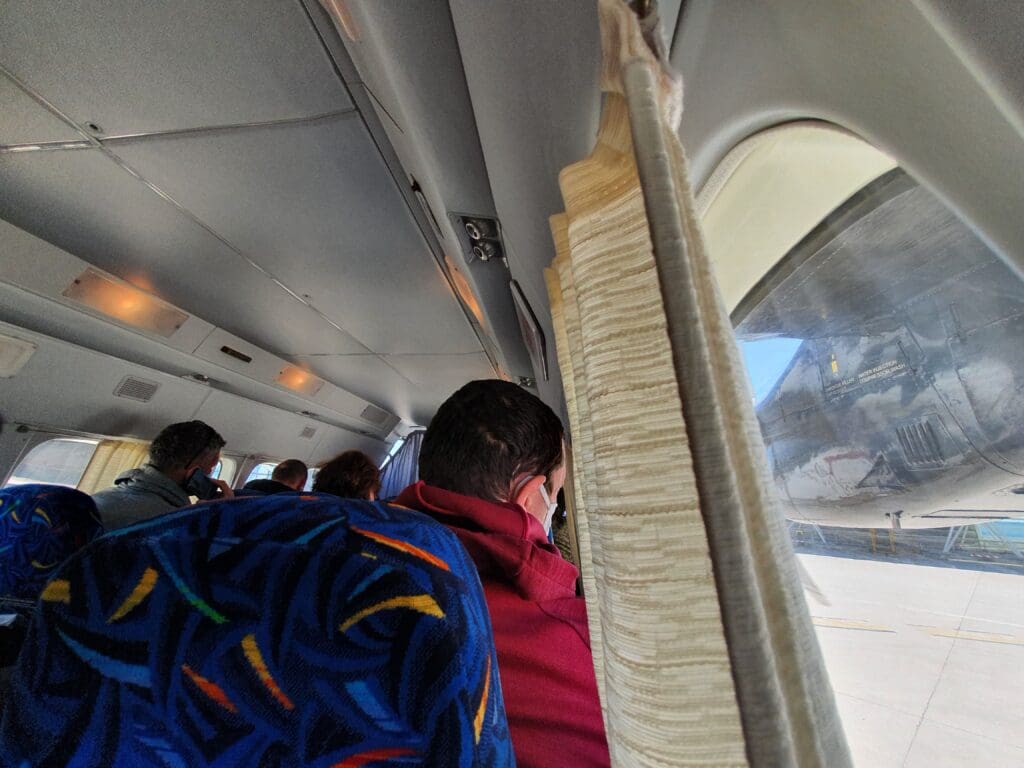
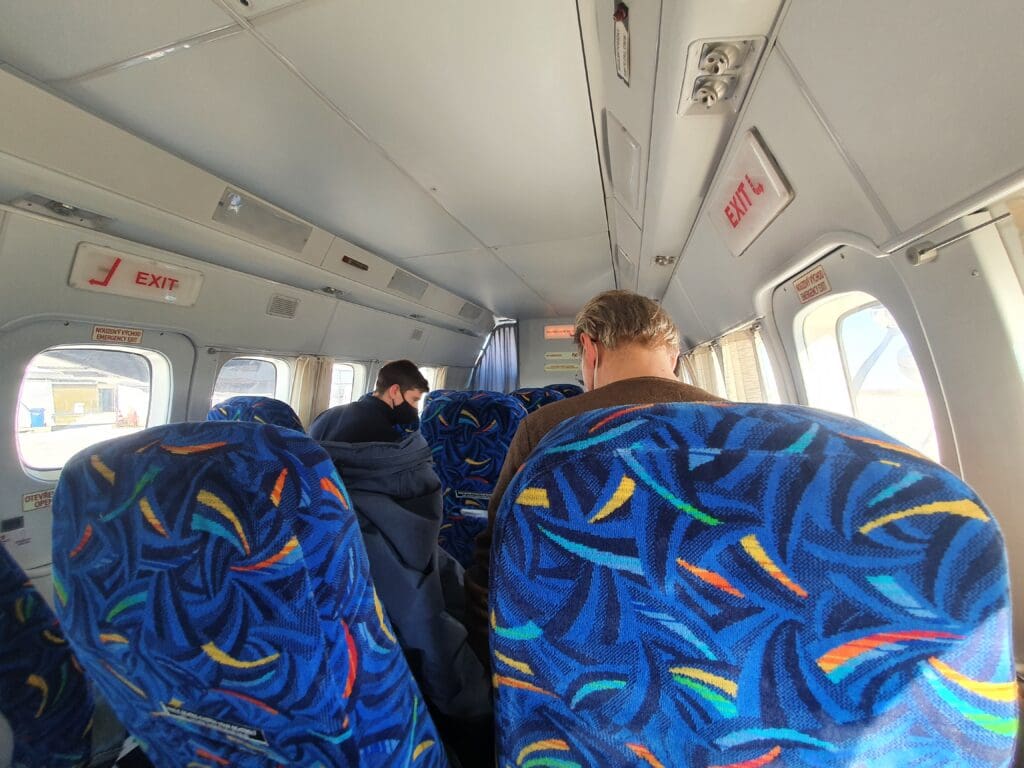
What many STOL-capable airliners may have in their short-field performance capabilities, they often lack in their cabin design – with such aircraft’s interiors often notably more utilitarian than even those provided by the world’s ultra low-cost carriers. Indeed, it may be fair to suggest that those expecting a modern airliner complete with all the trimmings would have ended up disappointed with the cabin of the Turbolet. However, having previously flown onboard the Dornier 228, Turbo Beaver and Twin Otter, I can say that this particular aircraft’s cabin was far more decorated and in better condition than those of these aircraft. Focusing first on the seats, I found these to be comparatively large, well-padded and comfortable, offering a good amount of legroom for such a small aircraft. Each of these sported a blue fabric cover on which a garish pattern of multicoloured swirls and swooshes could be seen which I found to bear a strong resemblance to the designs often seen on bus seats back in the UK.
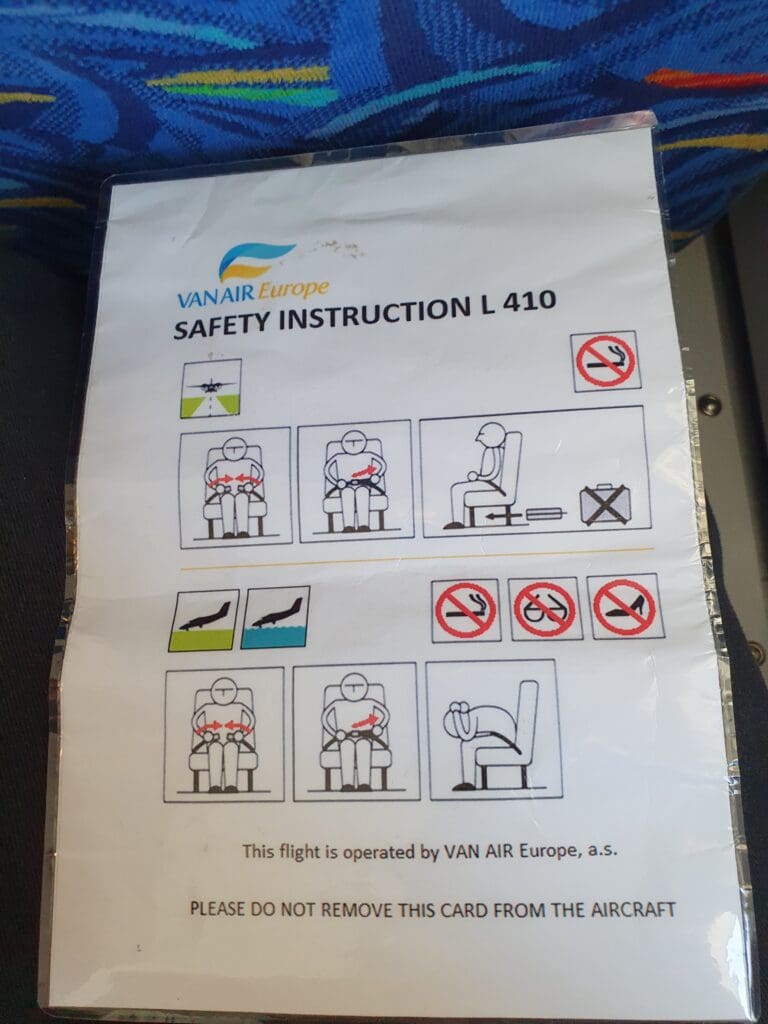
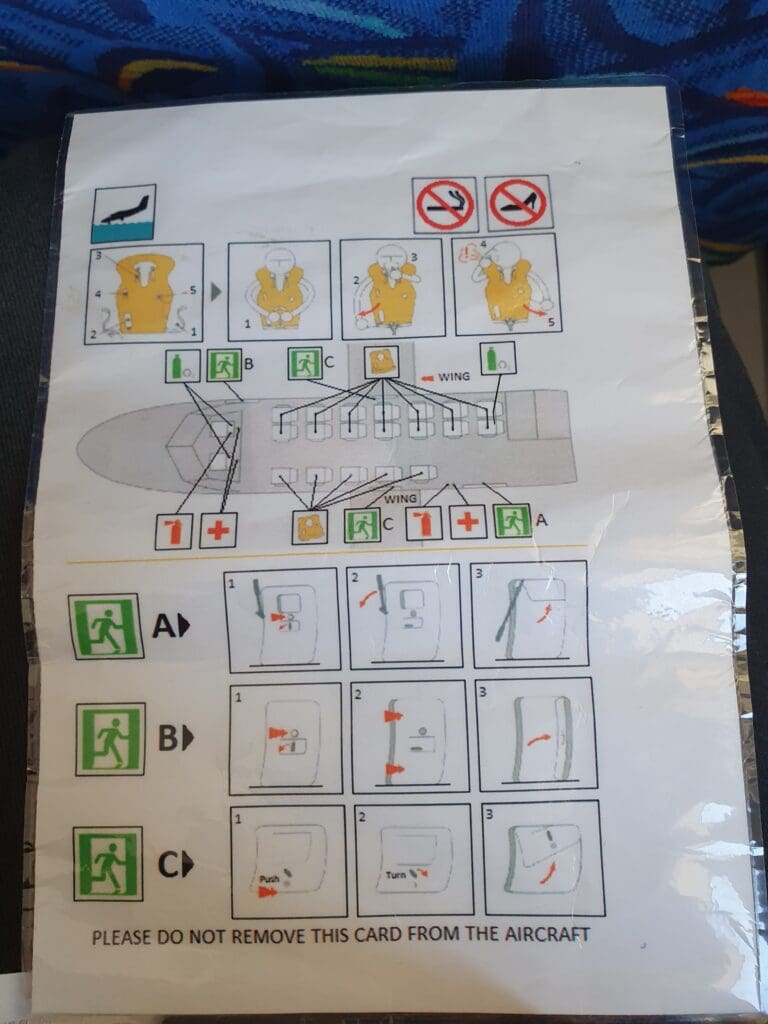
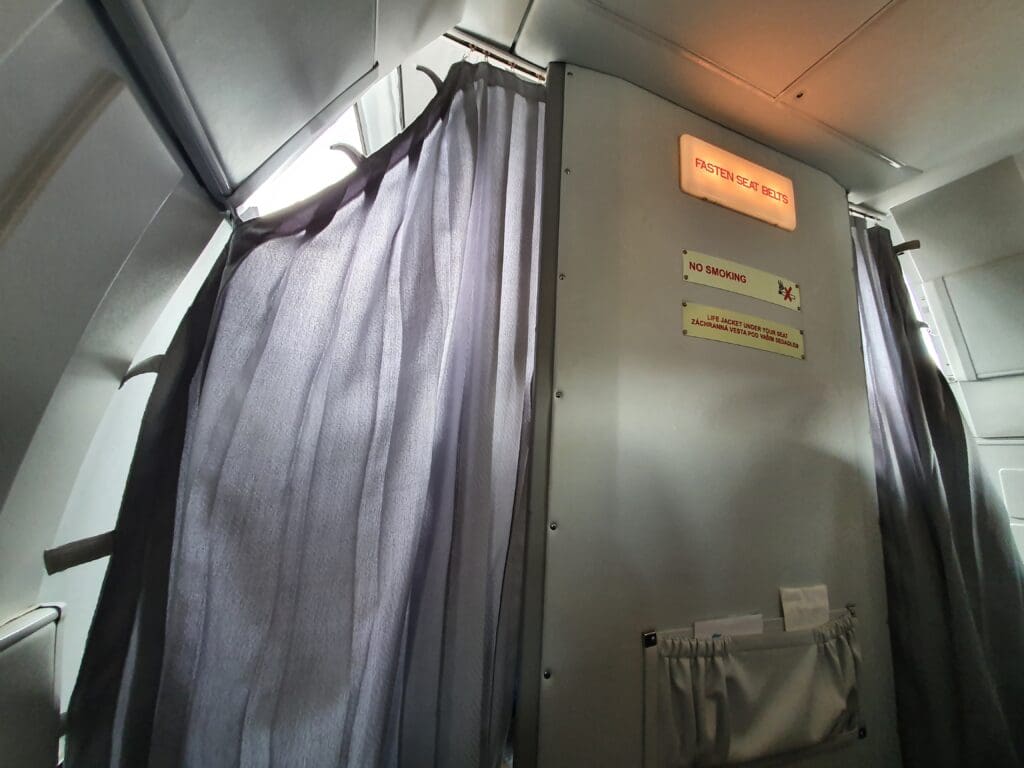
Given the lack of inflight catering, it came as no surprise to find tray tables were absent from the aircraft although a small seatback pocket was offered, with that in front of me containing just a dogeared safety card. Perhaps the most obvious novelty for all passengers, other than the aircraft’s size, was the presence of thin cream-coloured curtains covering the Turbolet’s large bulbous windows. Finally, clunky-looking individual metal air vents could be found above each seat which were a welcome addition given the boiling temperatures inside the aircraft. Whilst the cabin was ultimately a little dated in its appearance, this was clean and surprisingly almost entirely free of any signs of wear and tear. This therefore left me with absolutely nothing to complain about as I settled down and strapped myself in for the voyage across Croatia.
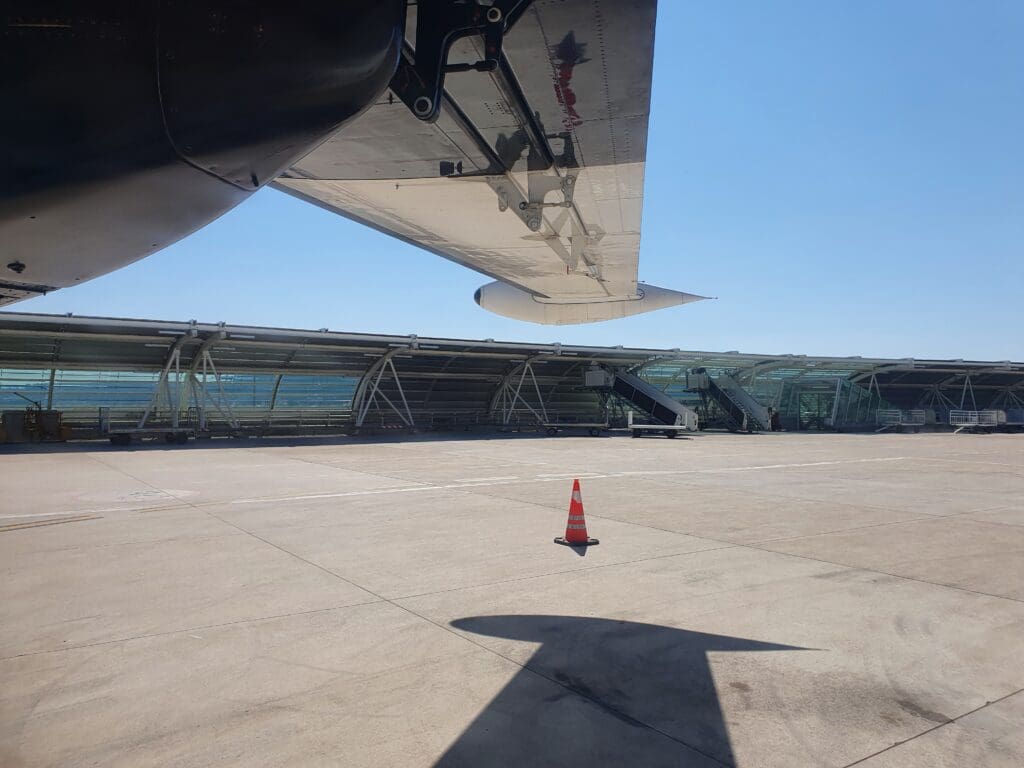
With just nineteen seats inside the passenger cabin and all passengers having made it to the gate on time, boarding was a quick affair lasting no more than around four minutes. That lunchtime, the flight up to Pula ended up being relatively full, with fourteen passengers making the journey north. Given the fact that the flight attendant took a passenger seat in the rear row, this left four vacant seats in the passenger cabin. As soon as all passengers were onboard, the first officer climbed into the cabin and closed the door behind them before squeezing down the narrow aisle and climbing up into the cockpit. Frequently lacking cockpit doors, STOL airliners often allow passengers to glimpse into the cockpit mid-flight. However, this is a little harder onboard the Let L-410 owing to the narrow entryways on either side of the cockpit rather than a central entryway in the middle. Although that day, the curtains up front were closed and therefore nothing could be seen of the Let L-410’s seemingly convoluted jigsaw of switches, dials and gauges.
As soon as the First Officer had disappeared into the cockpit, the flight attendant headed to the front of the cabin, turned around and performed what I assume was a short welcome and safety speech in Croatian only before passing through the cabin where they checked that all had fastened their seatbelts. Despite being seated near the rear of the cabin, the lack of chatting onboard meant that I could faintly hear the two pilots running through their checklists before a long whine filled the cabin. Whilst the aircraft was originally fitted with the Czech-manufactured Walter M601 engine, today most Turbolets utilise the highly popular Pratt and Whitney Canada PT6 engine. This particular example sports two 850 horsepower PT6A-42 turboprop engines, and proudly states this fact at the rear of the fuselage. These engines can also be found on many Beechcraft King Airs as well as several Cessna 208s and Piper Meridians. Whilst STOL aircraft may not be known for their superb soundproofing systems, I was slightly surprised at the quietness of the two engines as they fired into life, during which I was able to hear several dings from the cockpit.
With Split Airport remaining almost devoid of any traffic that lunchtime, once all was ready, there was no need for the aircraft to wait for a departure slot. Thus, at 1202, a whole thirteen minutes ahead of schedule, the aircraft swung right and gently taxied out of its stand. Other than the neighbouring Croatian Dash 8, as the aircraft turned the corner I was surprised to see a Royal Canadian Air Force CC-130J parked at a remote stand. As it happened this was my second sighting of this exact aircraft on my three-day trip to Croatia with the first having occurred in Zagreb two days earlier. Since then, the aircraft had visited the southeastern Polish city of Rzeszow, almost certainly shuttling goods bound for nearby Ukraine.
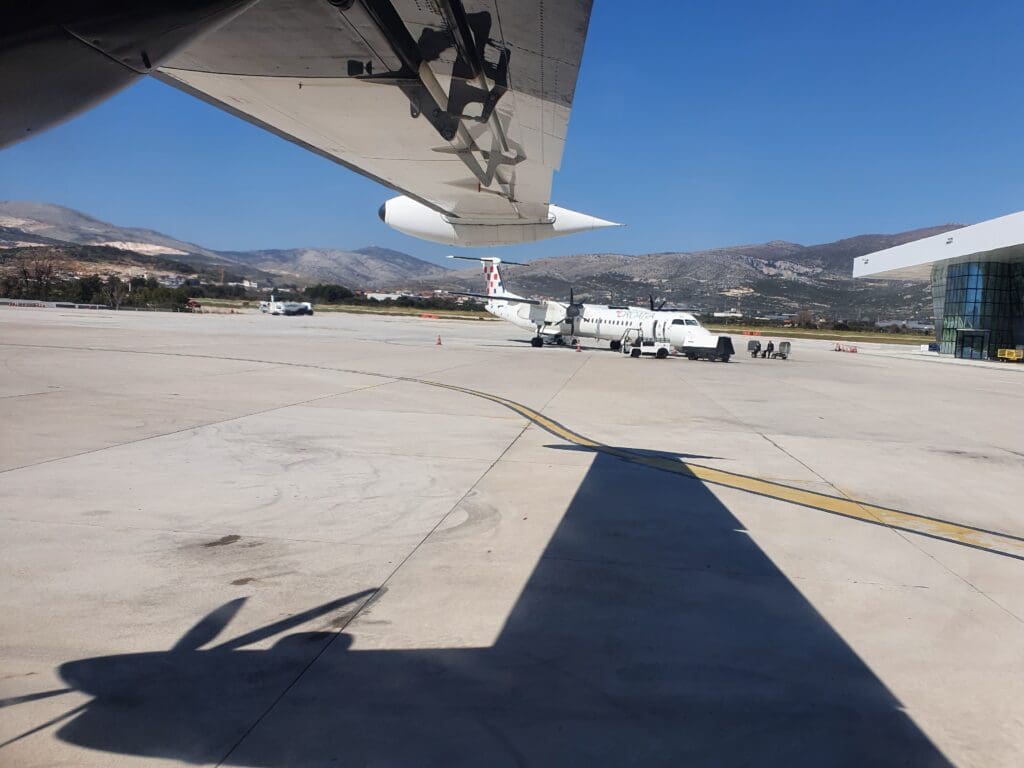
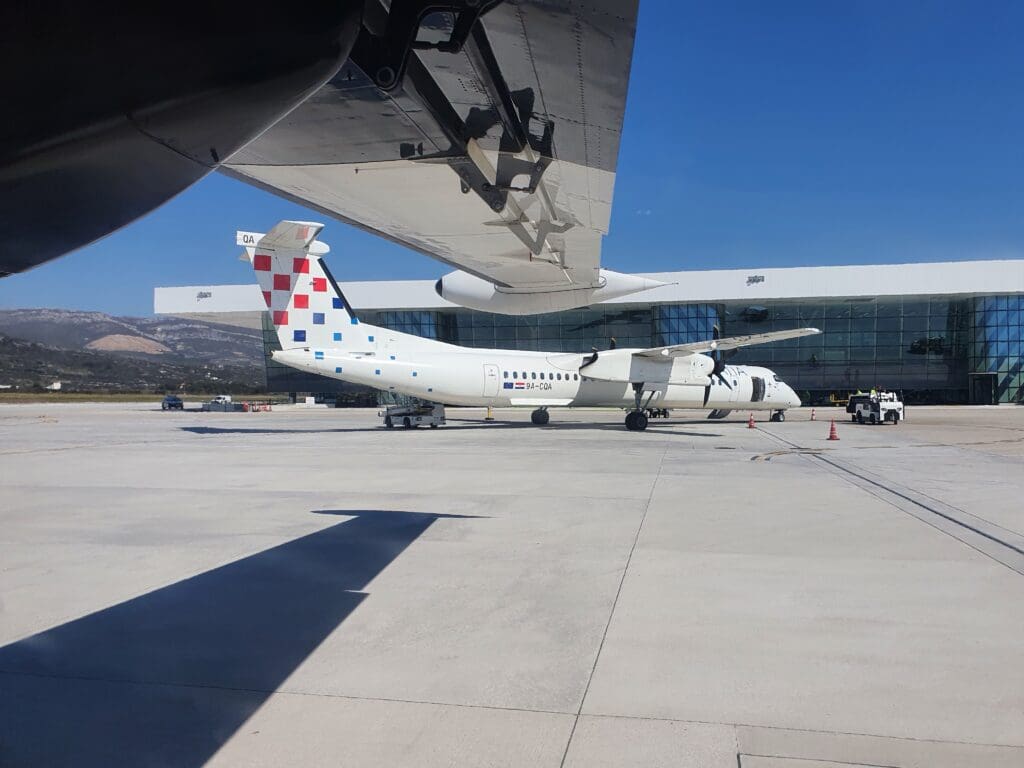
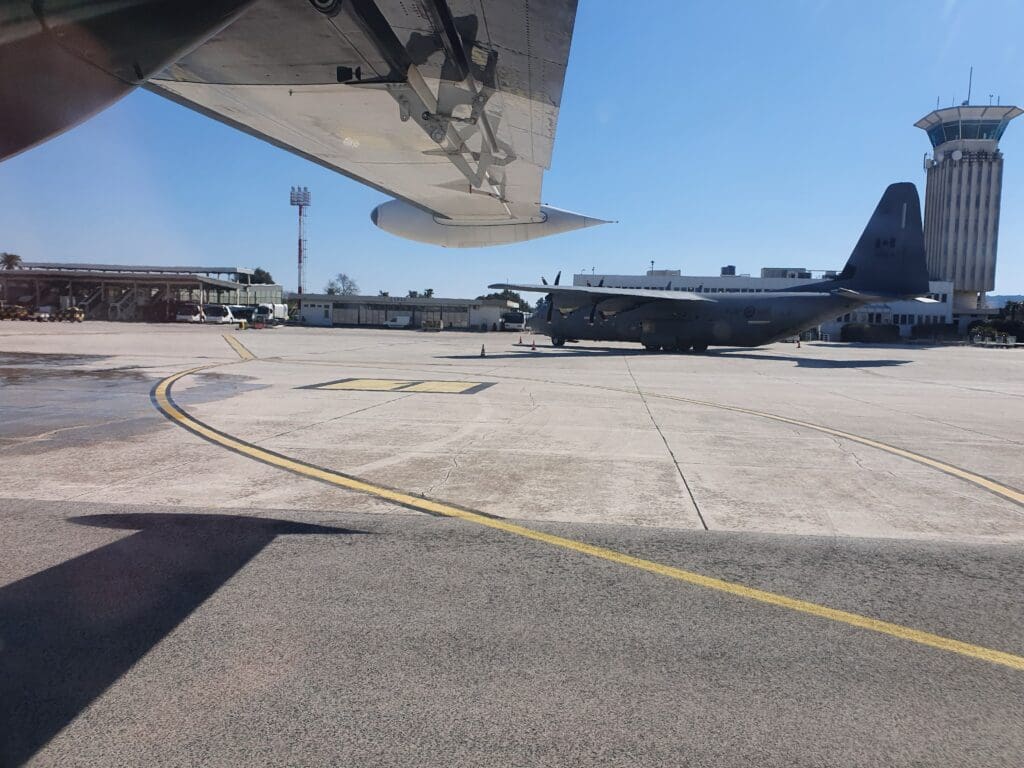
After the aircraft had made its way past the Hercules, the Turbolet turned left and trundled onto the active runway without coming to a halt. From there, the aircraft commenced a quick backtrack before lining up for a departure on Runway 23 and briefly pausing. With the brakes held, the aircraft’s two Pratt and Whitney turboprops roared into life resulting in a moderately high-pitched racket before the brakes were released. At this point, the aircraft made a powerful takeoff roll before quickly rocketing up into the skies ten minutes ahead of schedule at 1205.
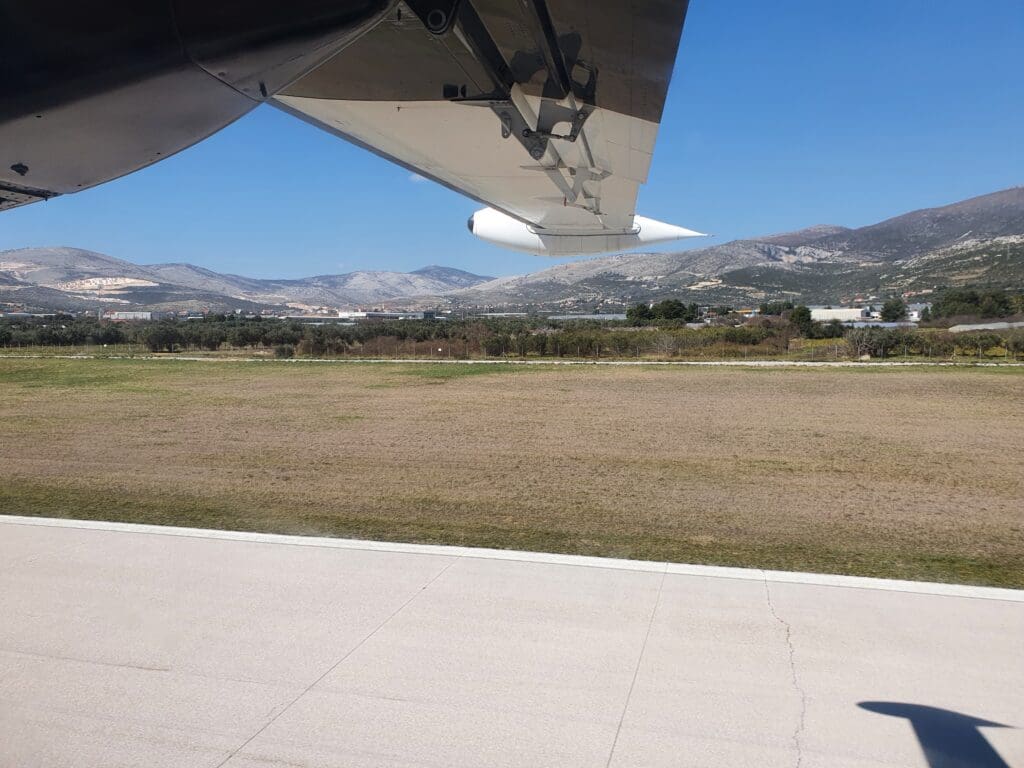
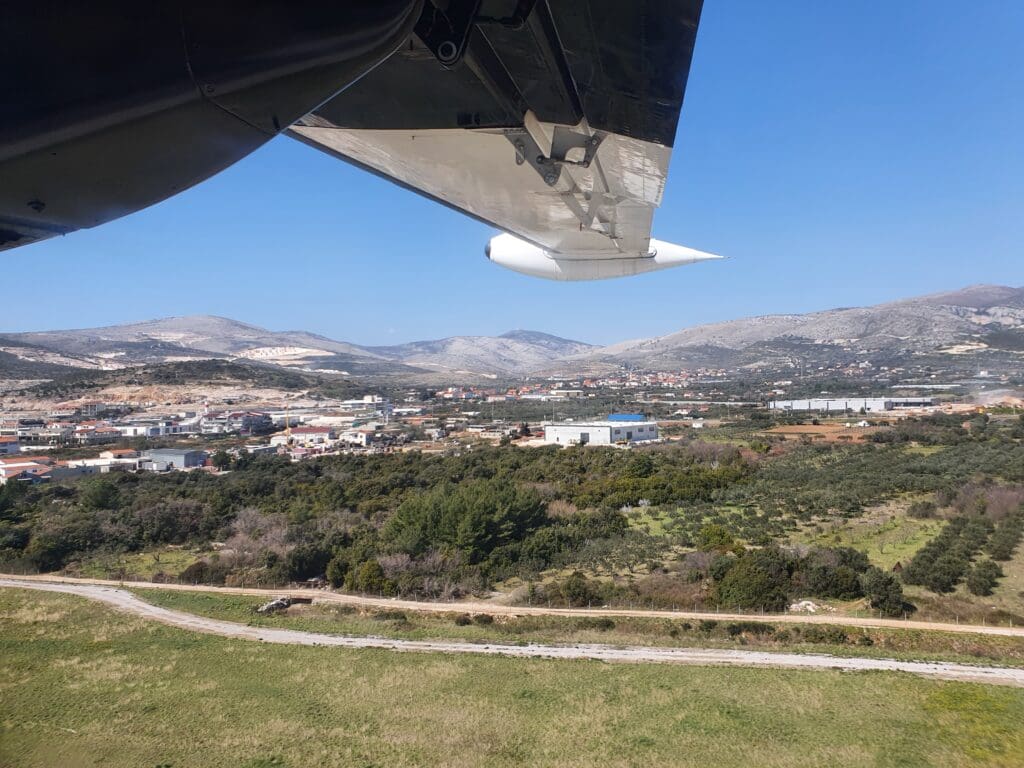
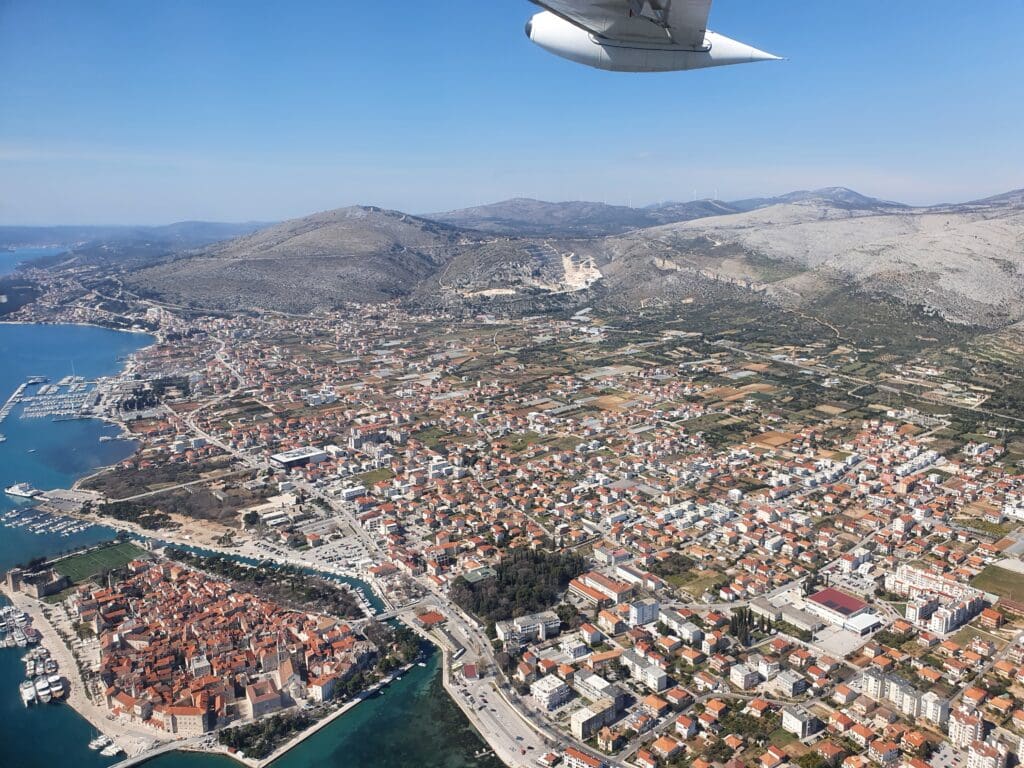
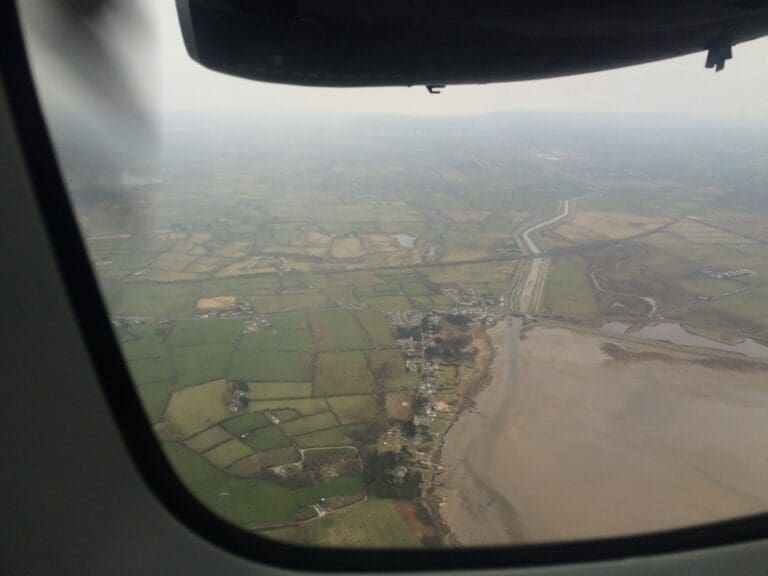
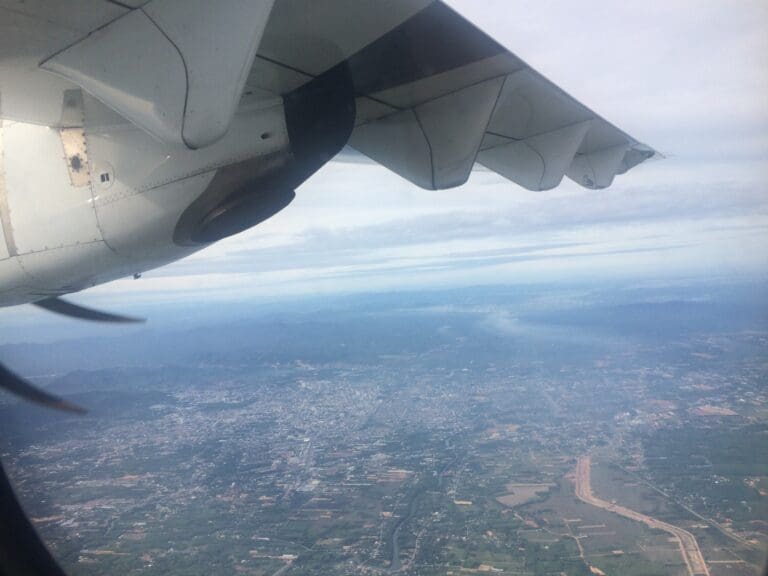
During the first minute or so of the flight, I was treated to views of the grey rocky peaks that sit high above the blue waters of Kaštela Bay and provide Split with its picturesque backdrop. A short time after leaving the airport, the aircraft overflew the terminus of the bus that I had taken several hours earlier, the historic town of Trogir. As the Turbolet climbed over the town’s old stone buildings and red clay roof tiles, a good view of the entire town could be had from my seat on the right-hand side of the aircraft. Amongst the flotilla of yachts in Trogir’s harbour, I managed to spot a small Jadrolinija being readied for its next journey. From there, the aircraft then cut across a very small portion of the island of Čiovo before banking to the right and rolling out on a northwesterly heading.
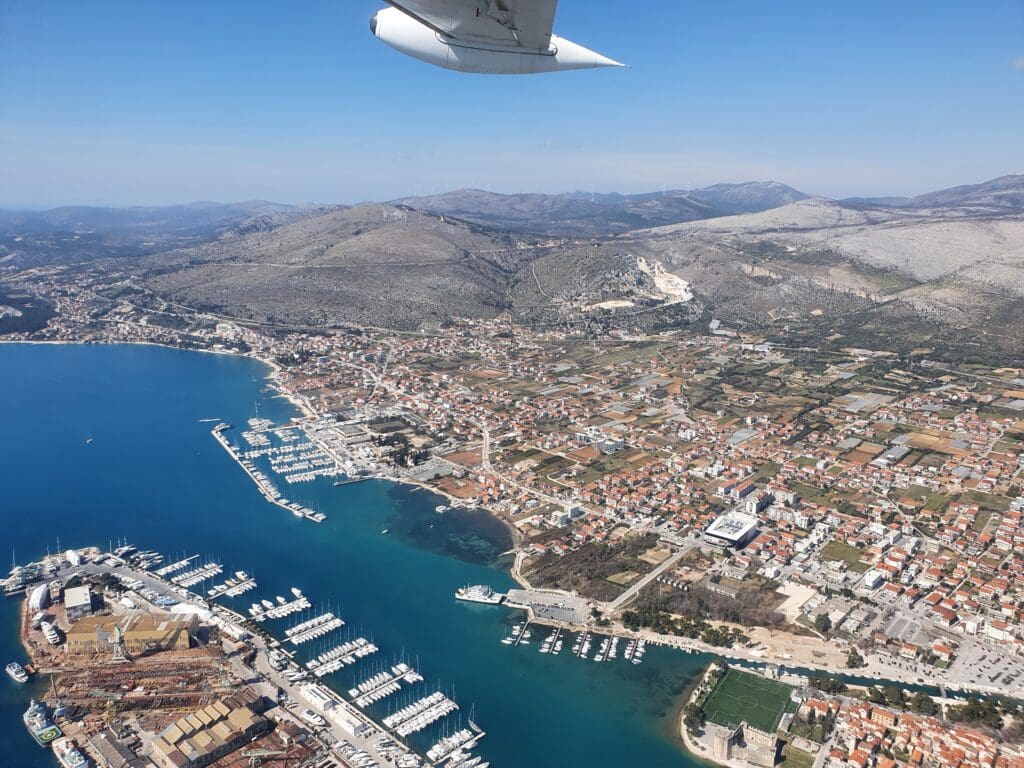
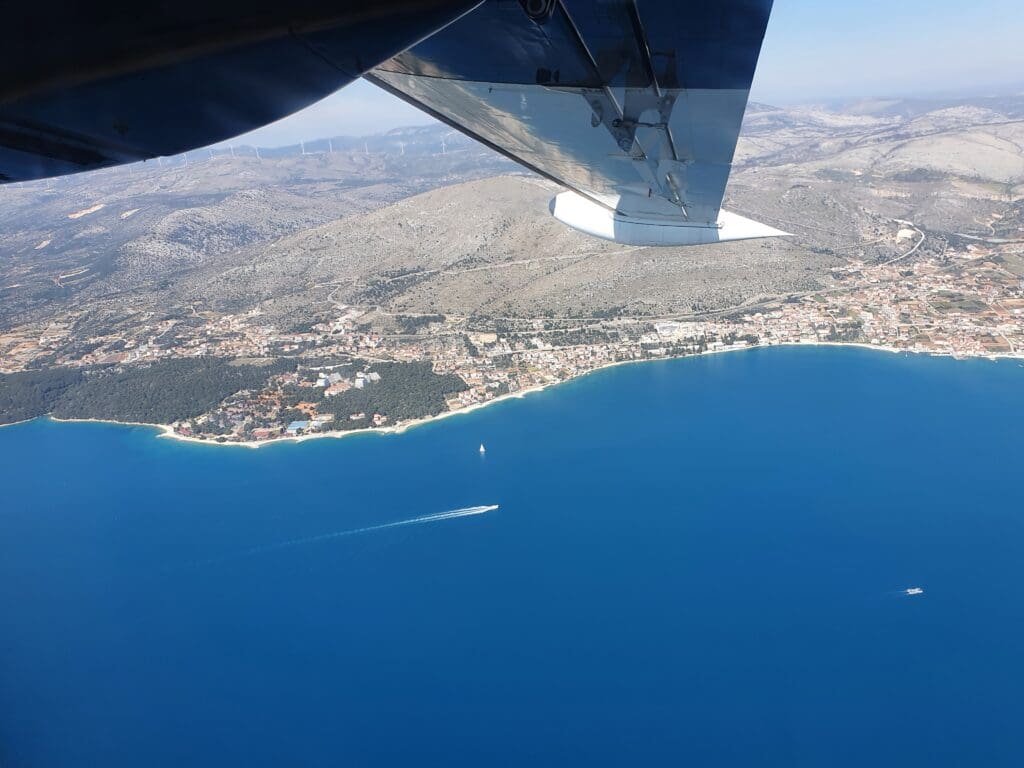
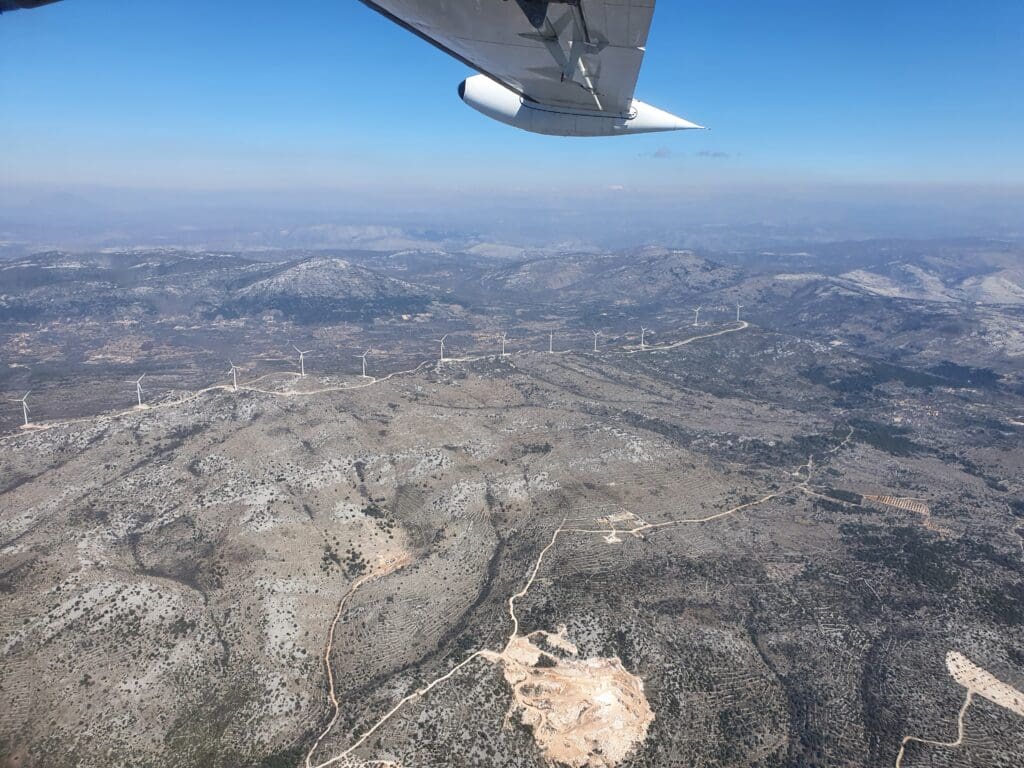
Once the Turbolet had left Trogir behind, this trundled along Dalmatia’s Adriatic coastline with those on the left-hand side of the aircraft provided with views of the sea below and the various islands that sit a short way off the coastline. Not too long after departure, the Turbolet levelled off at its very low cruising altitude of 7,500 feet and trundled along at a leisurely airspeed of around 170 knots. With not a single cloud in sight for the first part of the journey, I was provided with a superb view of the scenic hilly rural landscape below whilst the snow-capped mountain peaks of the Dinaric Alps on the border with Bosnia and Herzegovina could be seen in the distance.
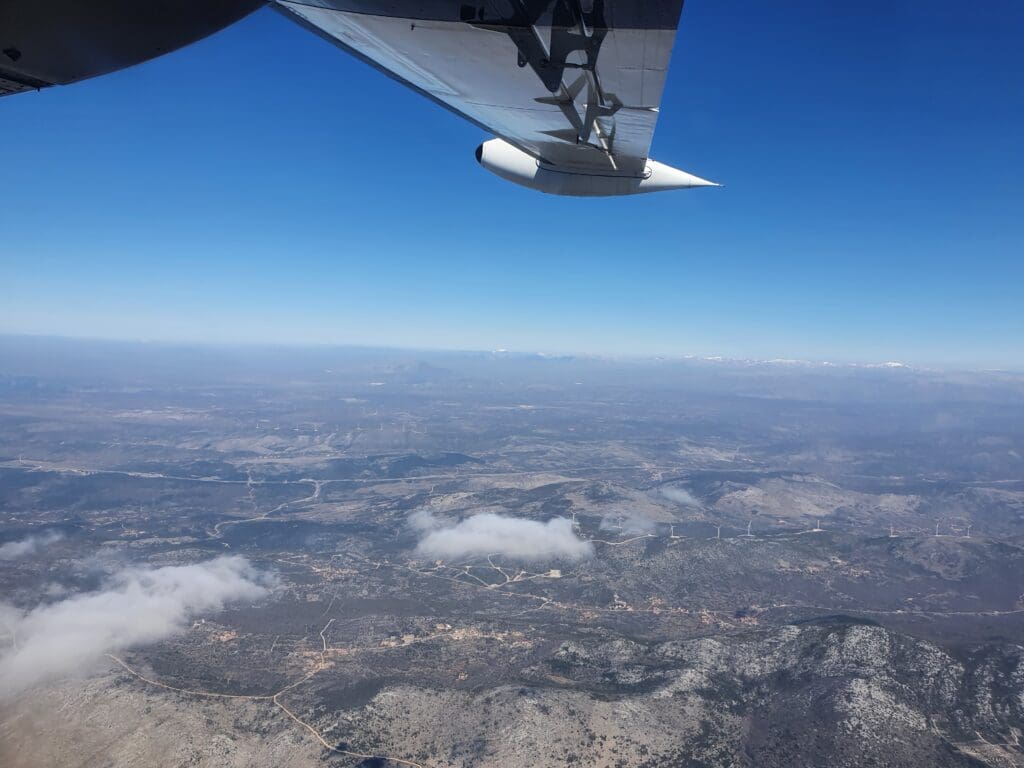
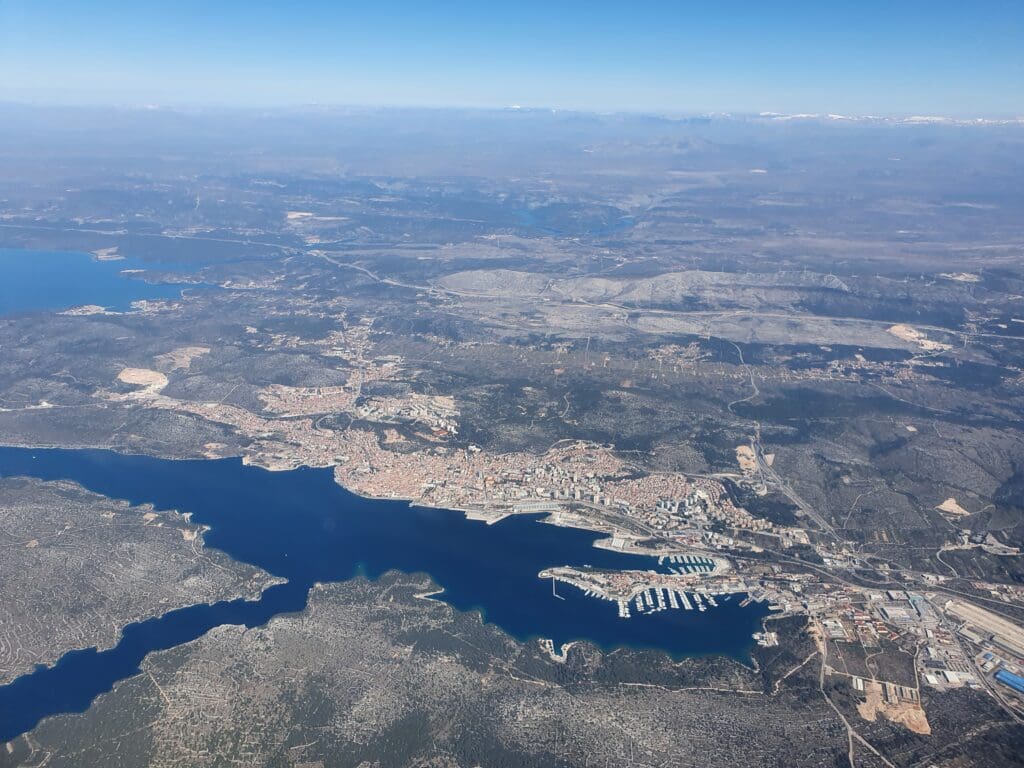
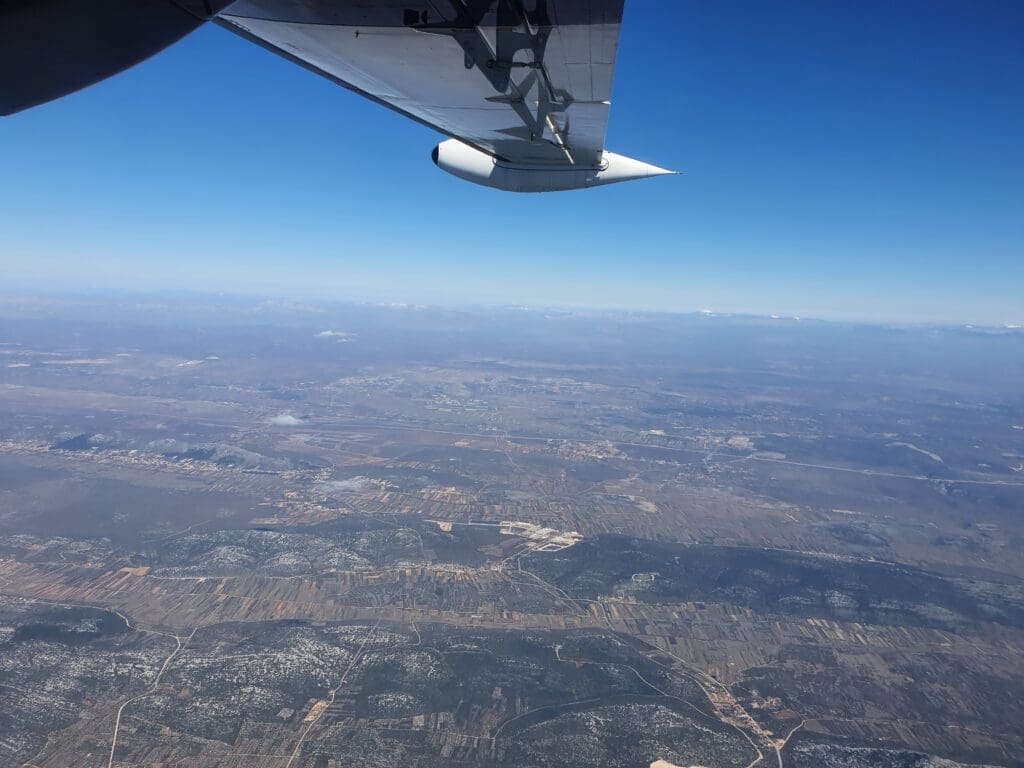
Around ten minutes after leaving Split, the small central Dalmatian city of Šibenik came into view where, as with Trogir, a birds’ eye view of the entire city was offered for a short time before the landscape below flattened out a little. Whilst up until this point of the flight the scenery had been fantastic and I did not for a single moment regret my decision to sit in 5C, any glimpses of obvious aviation sights had been non-existent and I failed to spot any sort of airfield for the first half of the flight. However, this changed around midway through the flight when runways in an unusual L-shaped arrangement popped into view. As I soon deciphered, this was Zadar Airport and I also managed to spot several small aircraft on the ground although these were unidentifiable. This was then followed by good views of Zadar itself, with both the city’s historic centre and the urban sprawl around visible.
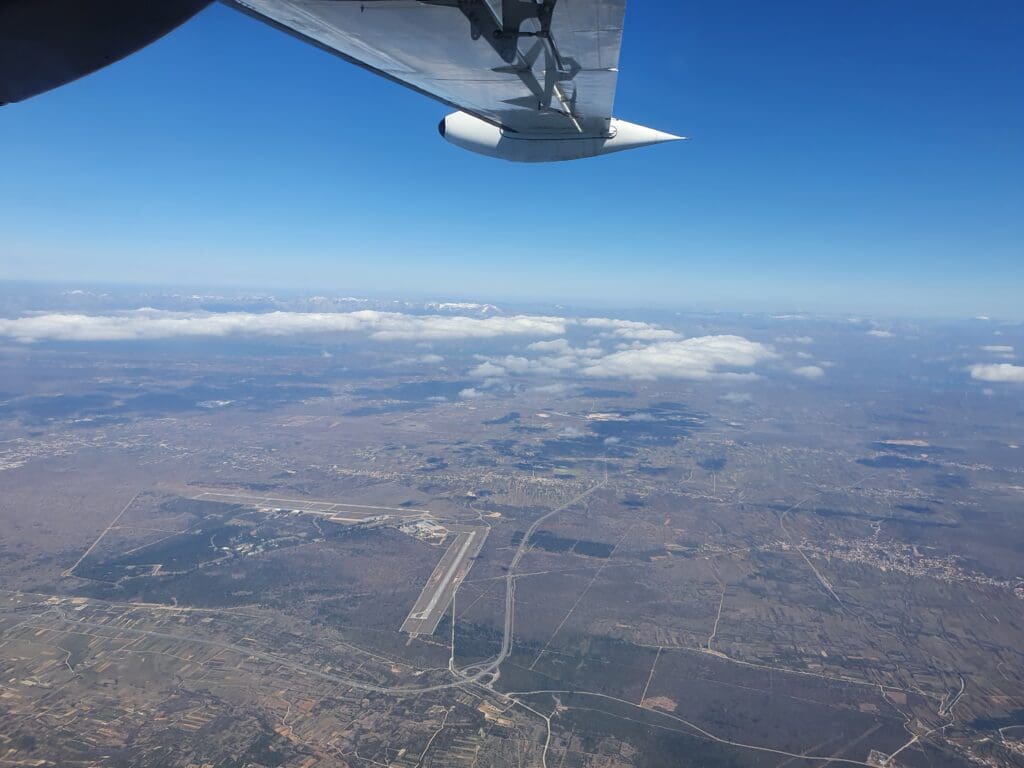
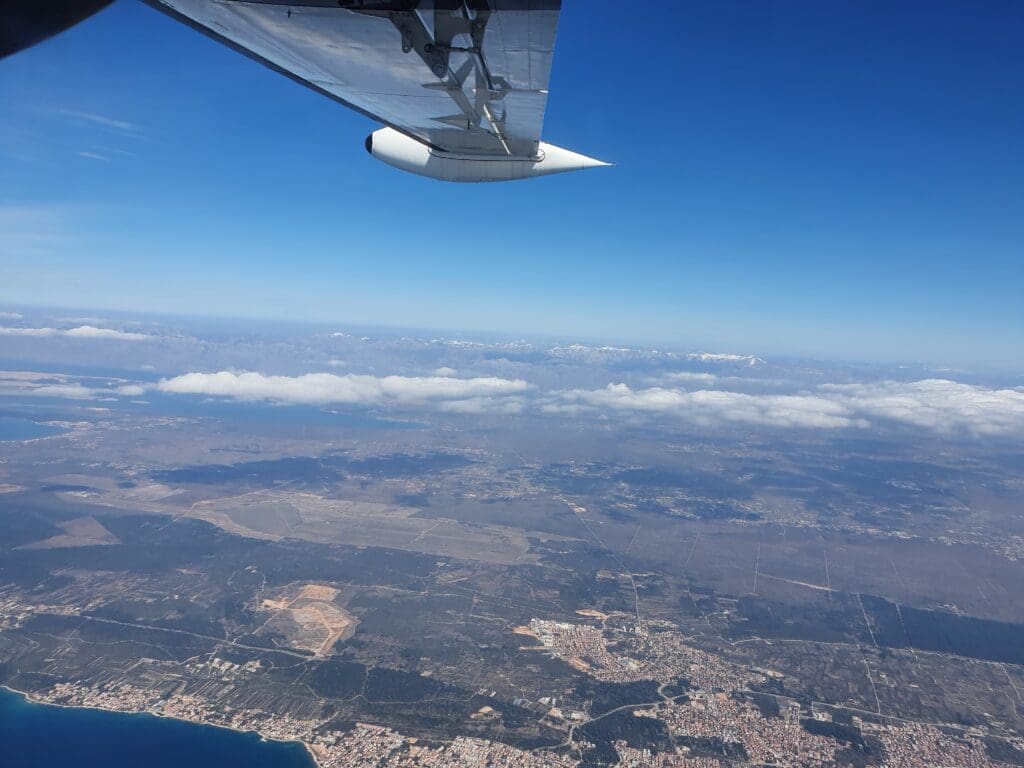
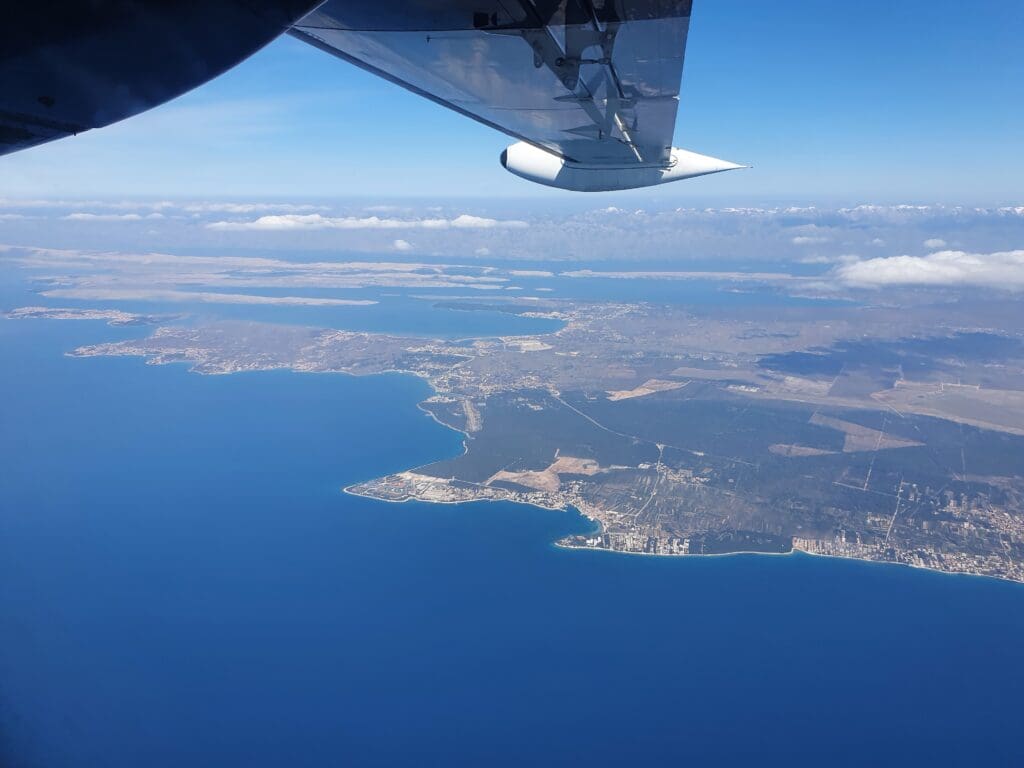
Once the aircraft had made its way past Croatia’s fifth largest city, the mainland retreated and the Turbolet made its way over the blue waters of the Adriatic. At this time, several patches of cloud appeared beneath the aircraft although I still managed to spot several islands as the aircraft journeyed towards Pula. The first of these took the form of the small, uninhabited and slightly Corsica-shaped island of Planik, soon followed by the tree-covered island of Olib and then Silba, the latter home to around three hundred inhabitants.
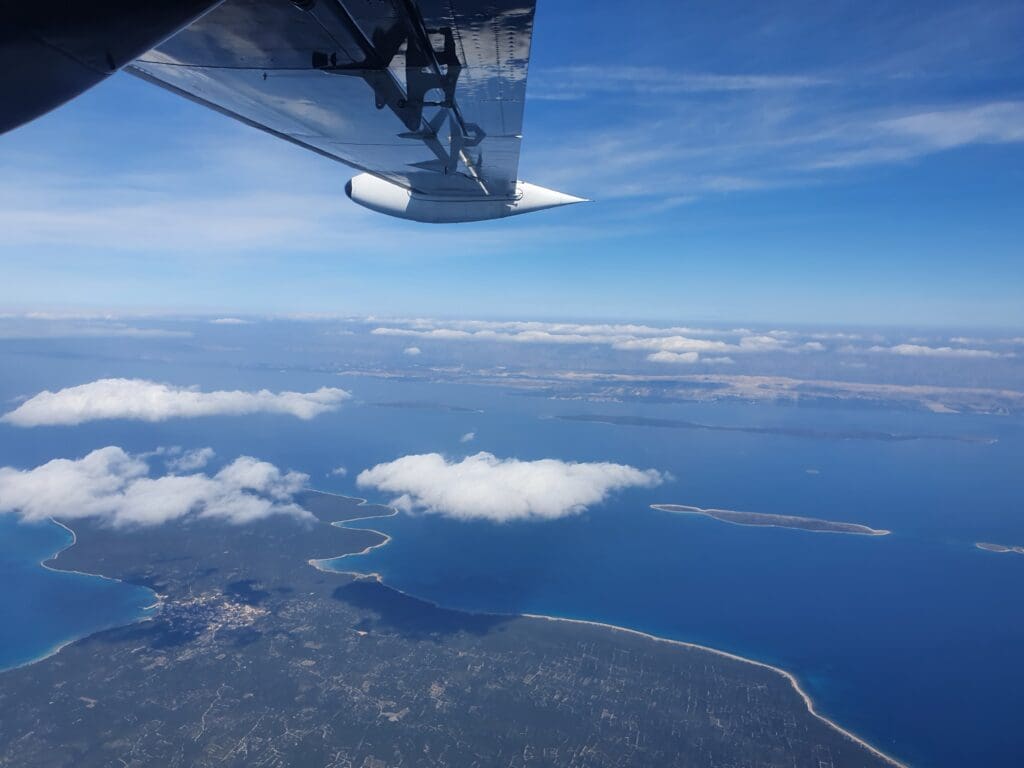
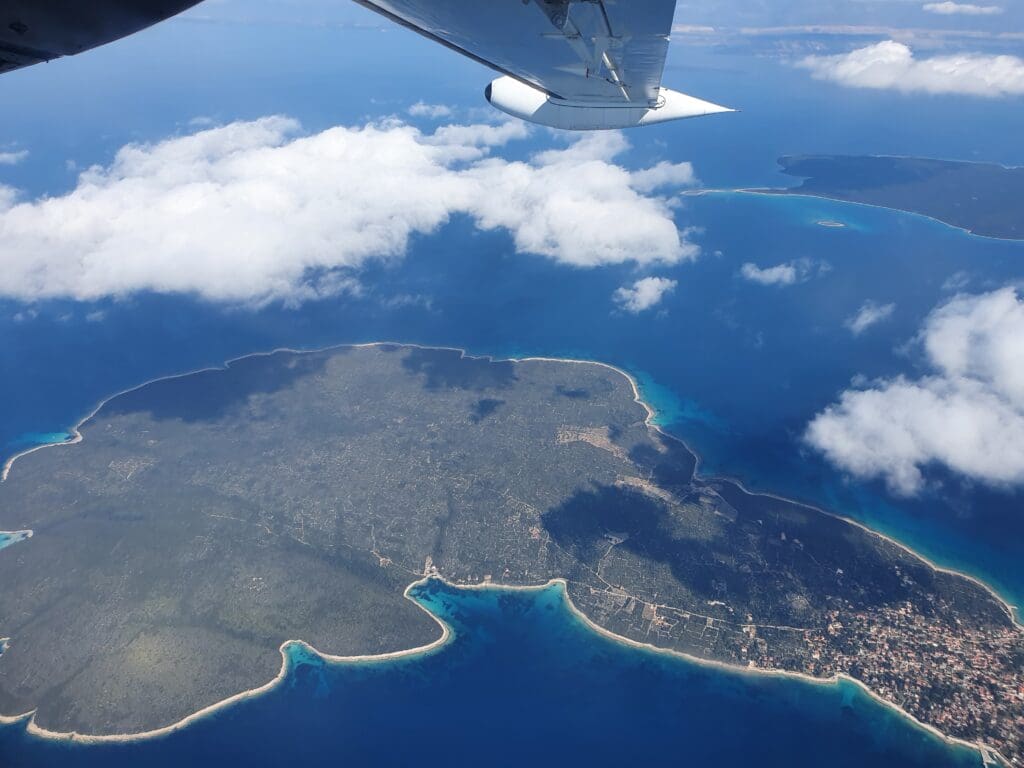
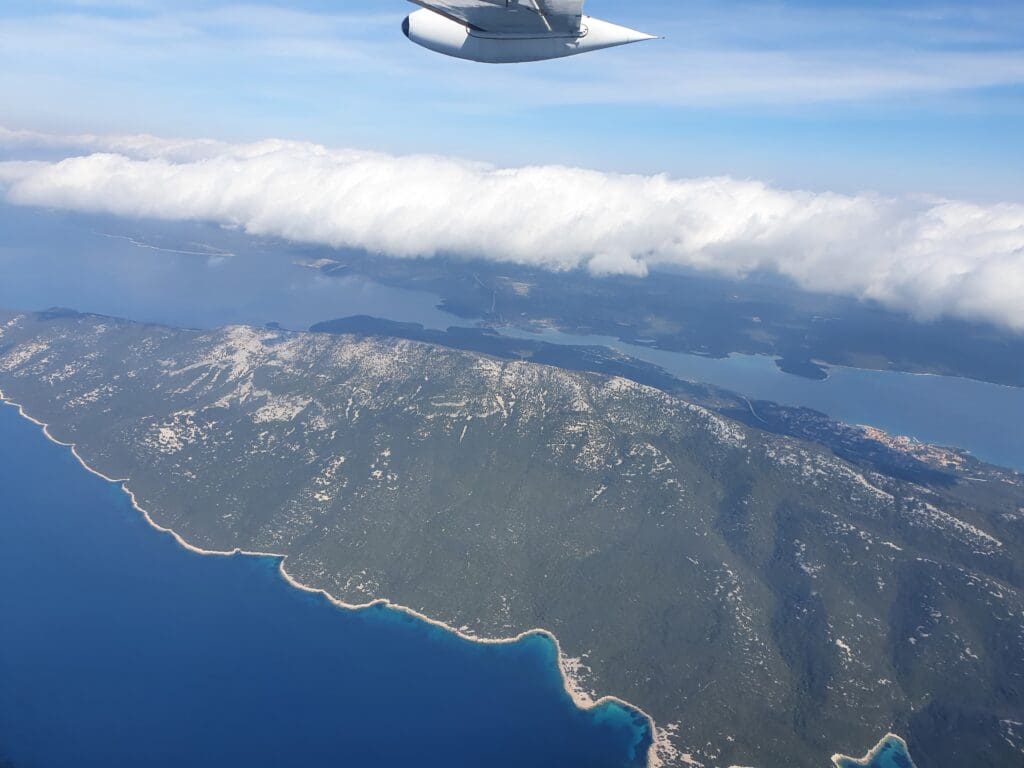
After passing Silba, the aircraft could be felt commencing its very slow and gentle descent towards the clouds. Unfortunately by this time, these had come to fill the space beneath the aircraft although fortunately, gaps in these did reveal the large island of Lošinj as the flight entered its final stages. Inside the cabin, throughout the flight, no announcements were made and I assume that only the pilots could broadcast these over the speakers in the cabin. However, with all pilots interacting with the flight attendant in English, I can only assume that those up front hailed from Czechia. Seeing as all on board other than myself appeared to be Croatian, the pilots may have seen making announcements as being counterintuitive. Thus, as the Turbolet sped towards Pula, there was no mention of our impending arrival, nor did the flight attendant pass through the cabin to ensure all was in place for landing.
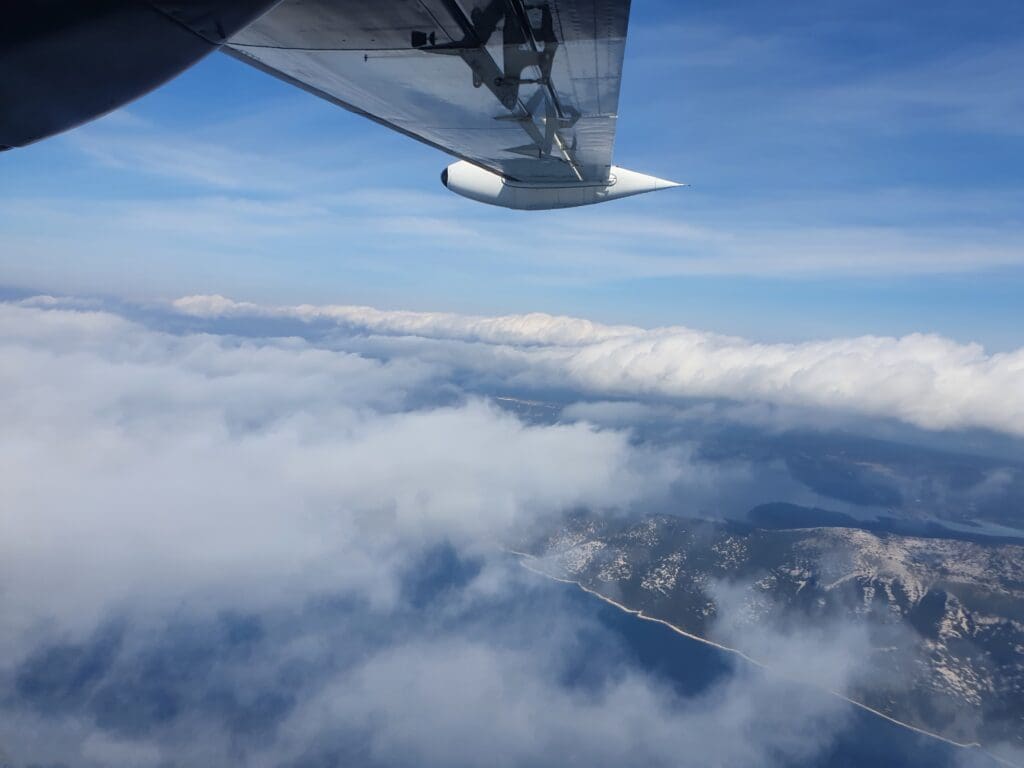
Once the aircraft had left Lošinj behind, the Turbolet floated above the clouds for a minute or so before continuing its descent through these. At this point, the first notable bumps of the flight could be felt as the aircraft cut through the clouds, with some swaying and shaking remaining until the aircraft was back on the ground. Soon enough, the turboprop descended through the clouds and the waters of the Adriatic appeared beneath the aircraft once again.
A short time later, Istria’s eastern coastline came into view at which point the Turbolet could be felt decelerating with a fair amount of vigour. Upon crossing over this, the landing gear was lowered into position and the aircraft banked to the left as it turned onto its final approach for Pula Airport’s Runway 27. Outside, wooded hillsides whizzed by a short distance beneath the aircraft before the hilltop town of Valtura appeared.
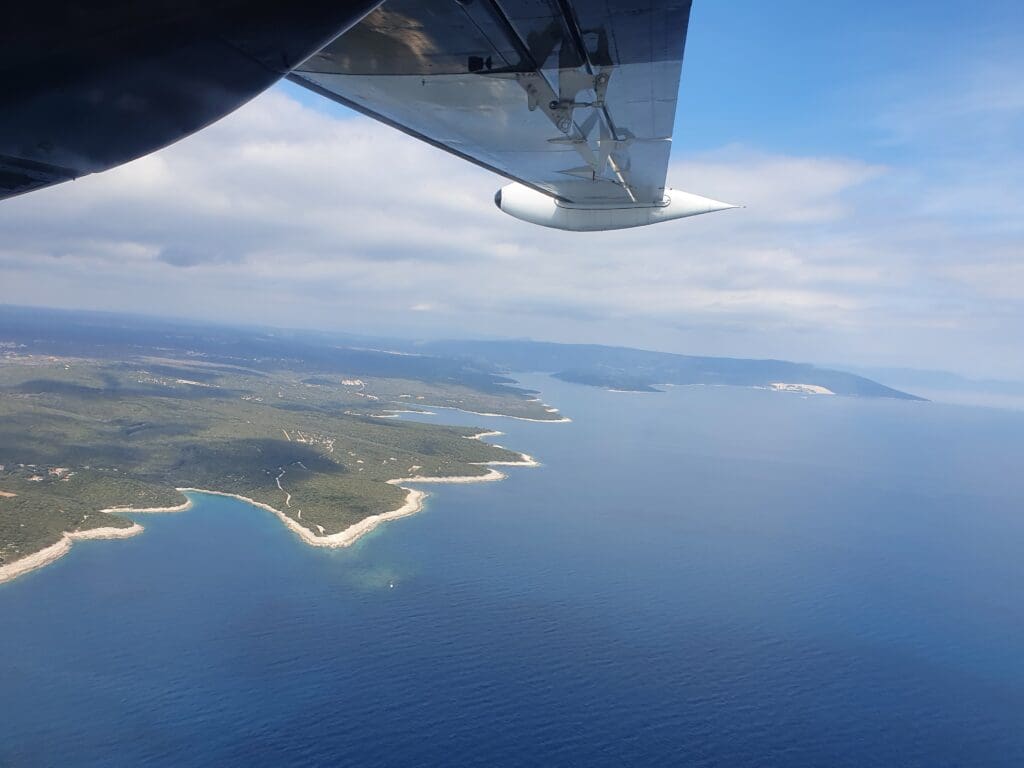
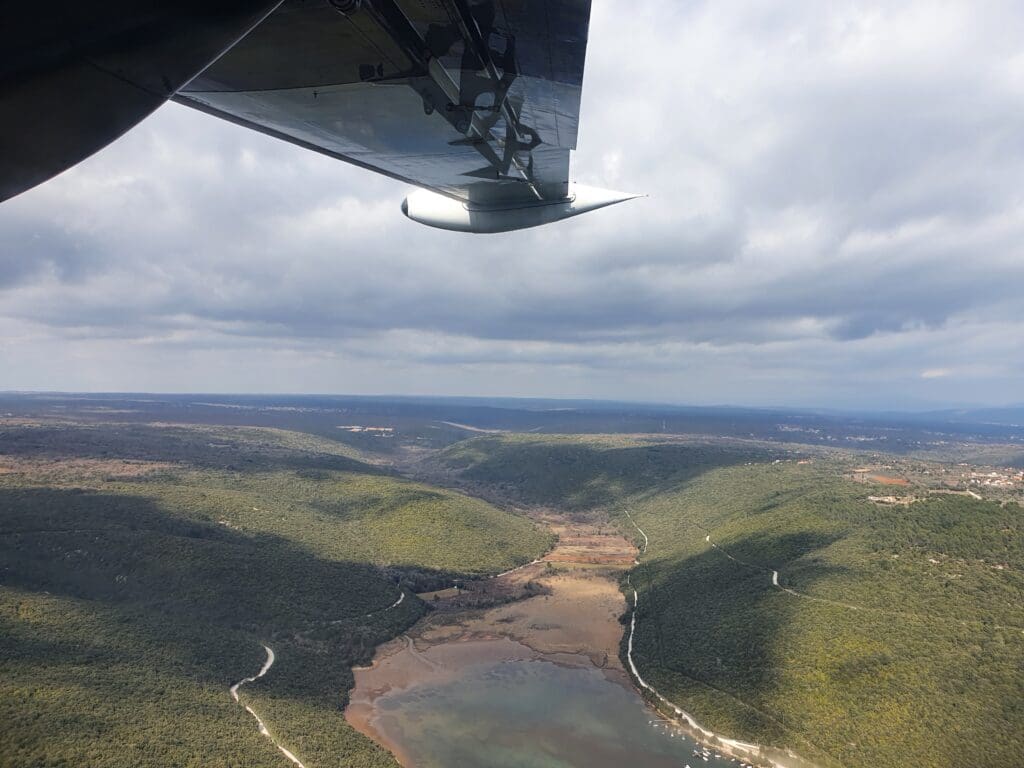
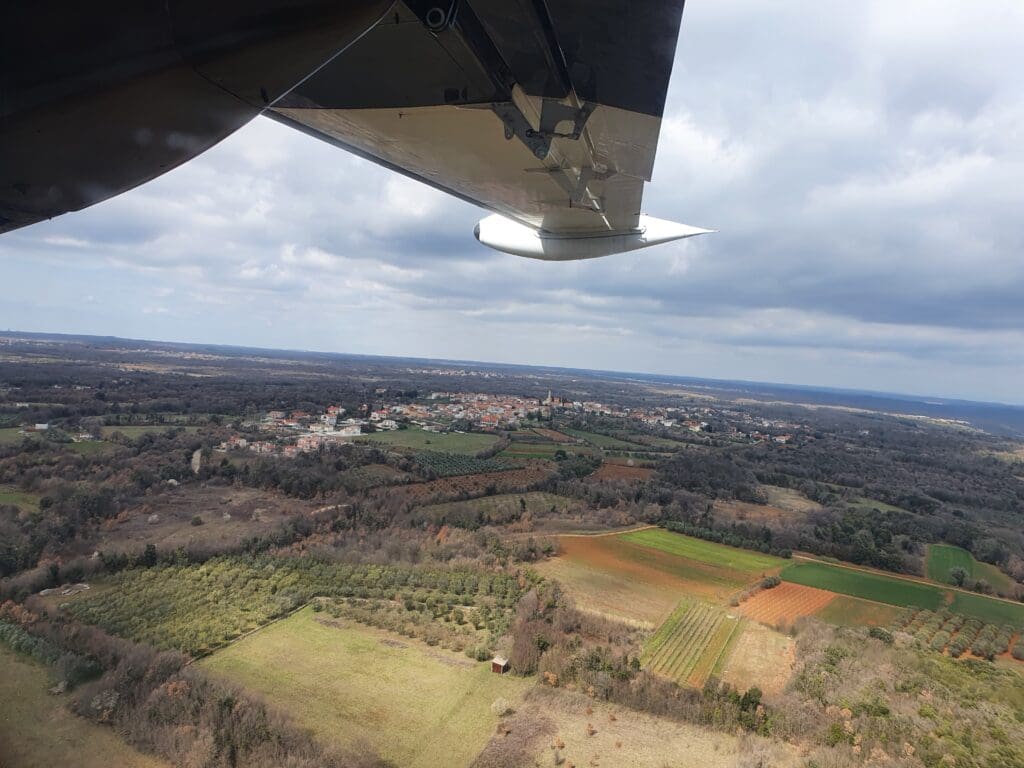
As the aircraft neared the airport, the Turbolet continued to bounce around with a reasonable wind blowing straight across Pula Airport’s sole runway. A total of 49 minutes after taking off from Split, at 1254 the Turbolet crossed over the airport’s eastern perimeter followed by the threshold of the runway before returning to earth with a gentle bump accompanied by a short squeak. Whilst Pula Airport features a decently sized runway that would pose no challenge for the Turbolet, the pilots appeared in a rush to exit to minimise taxi time. Thus, as soon as all three wheels were back on the ground, the cabin was flooded with the noise of the reverse thrust and the aircraft quickly slowed before turning right and beginning its short journey over to the small terminal.
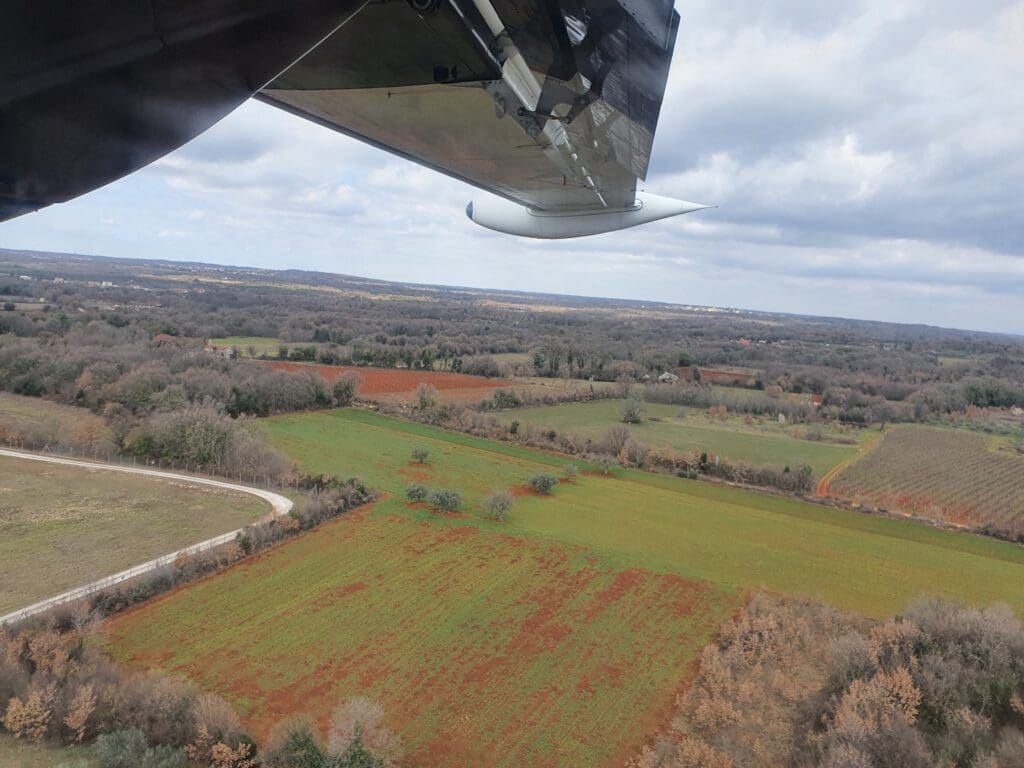
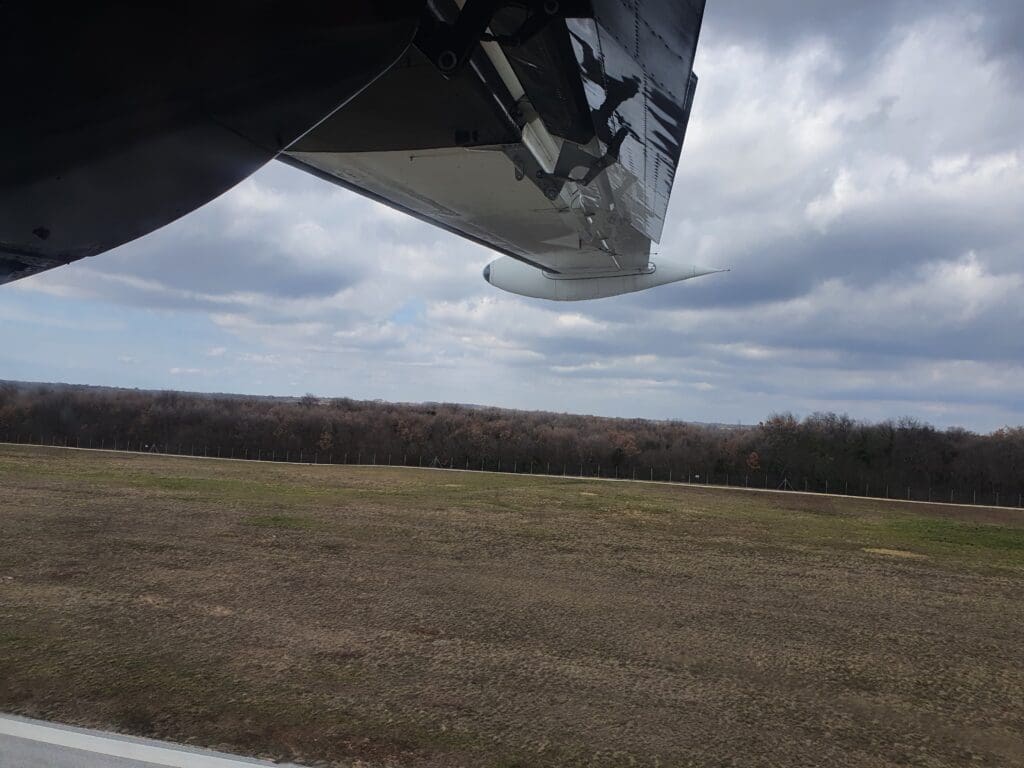
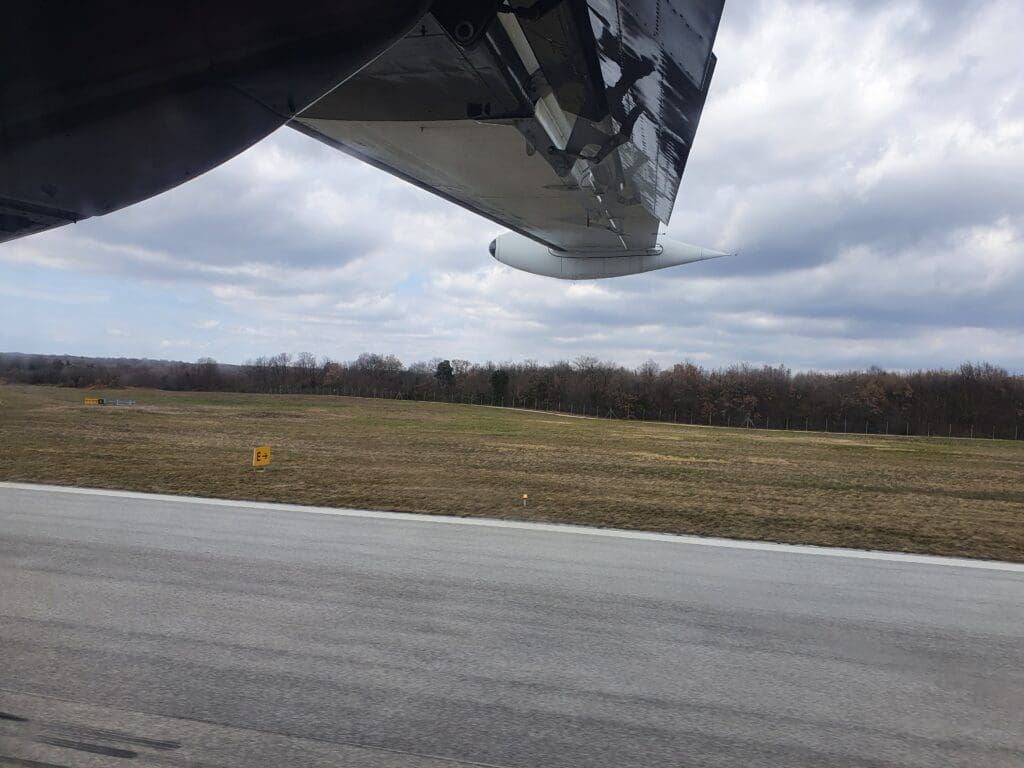
As with Split Airport, during the summer months, Pula becomes flooded with Airbus and Boeing jets operated by holiday and low cost airlines from across Europe. However, that lunchtime just two other aircraft could be seen on the ground – a high-performance Polish-registered Piper Malibu Mirage, and a more conventional German-registered Cessna 182. After passing the two aircraft, the aircraft pulled into Stand 2, located right outside the terminal building at which point the two engines spooled down and the cabin was temporarily filled with silence.
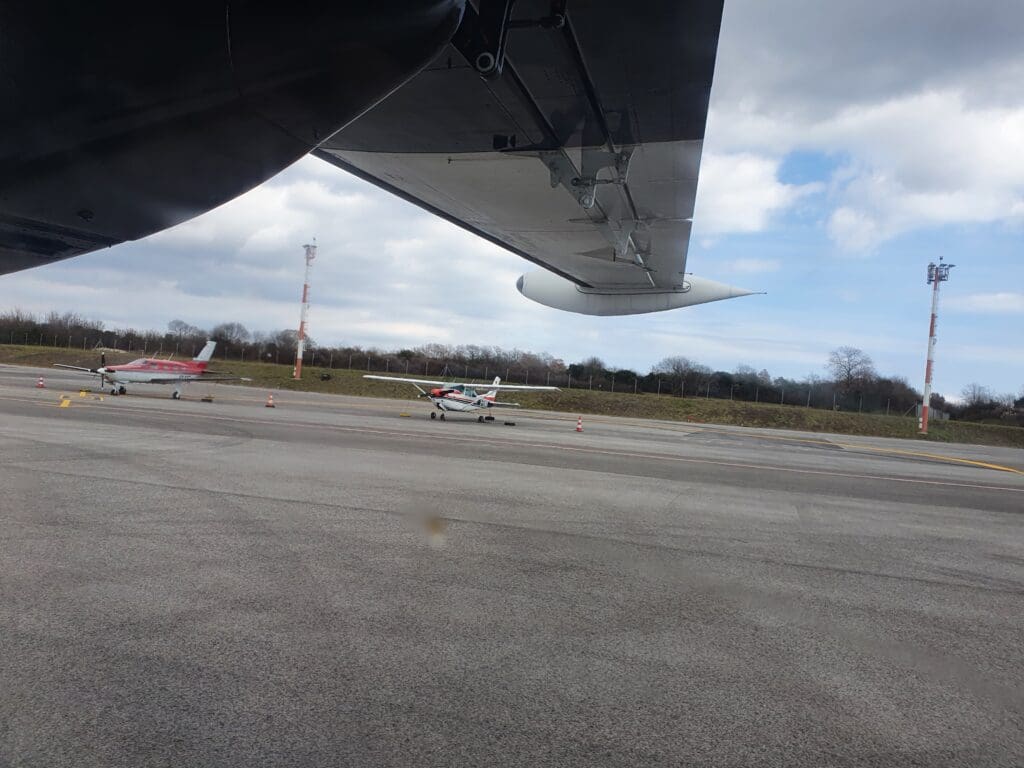
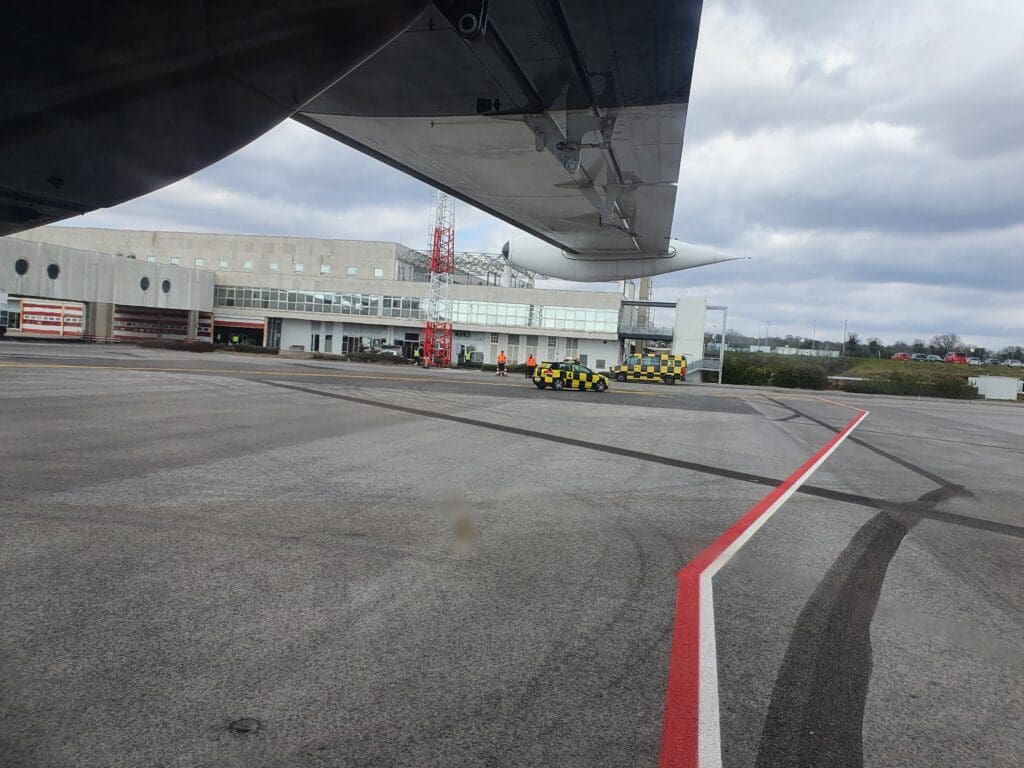
Outside, the ground crew could be seen springing into action whilst the First Officer soon emerged and opened the cabin door. With no jet bridge or bus to wait for, once this door was opened, the flight attendant said a few words in Croatian after which passengers began to disembark the aircraft. Whilst it was never mentioned at check-in or any other stage of the flight, in Pula, those bound for Osijek are required to disembark and wait in the airside departures area of the terminal before boarding is called for the next leg. Whilst some may complain about the hassle of this, being an enthusiast and also fancying a toilet stop and a quick walk around, this was the most ideal type of wait for me.
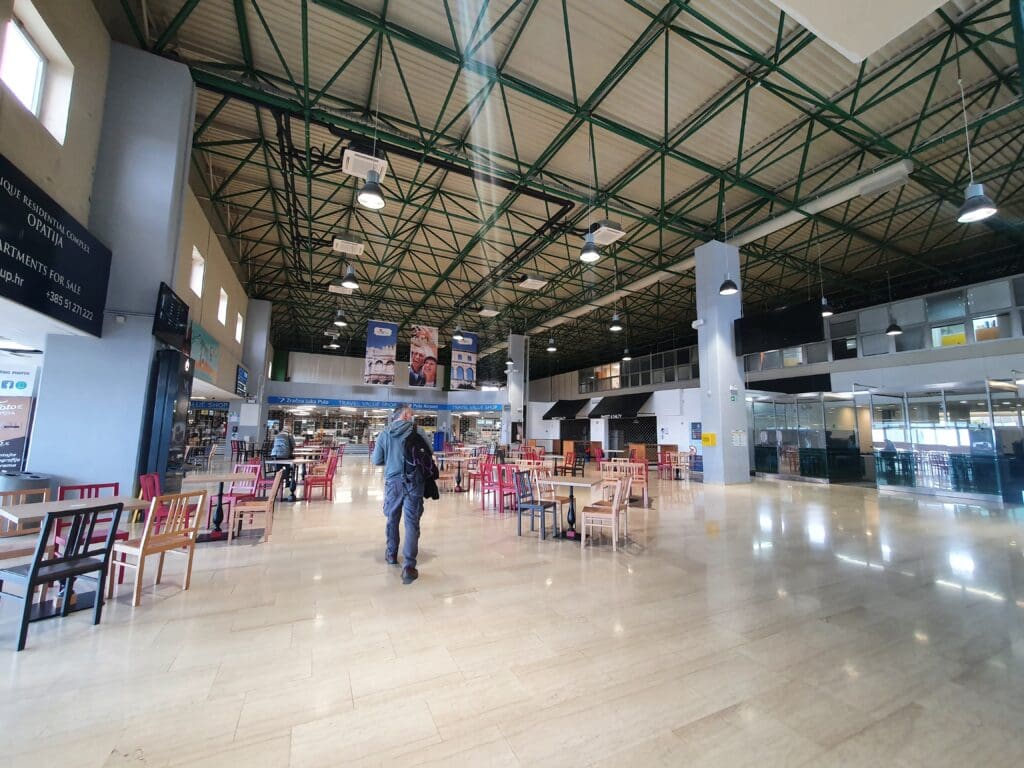
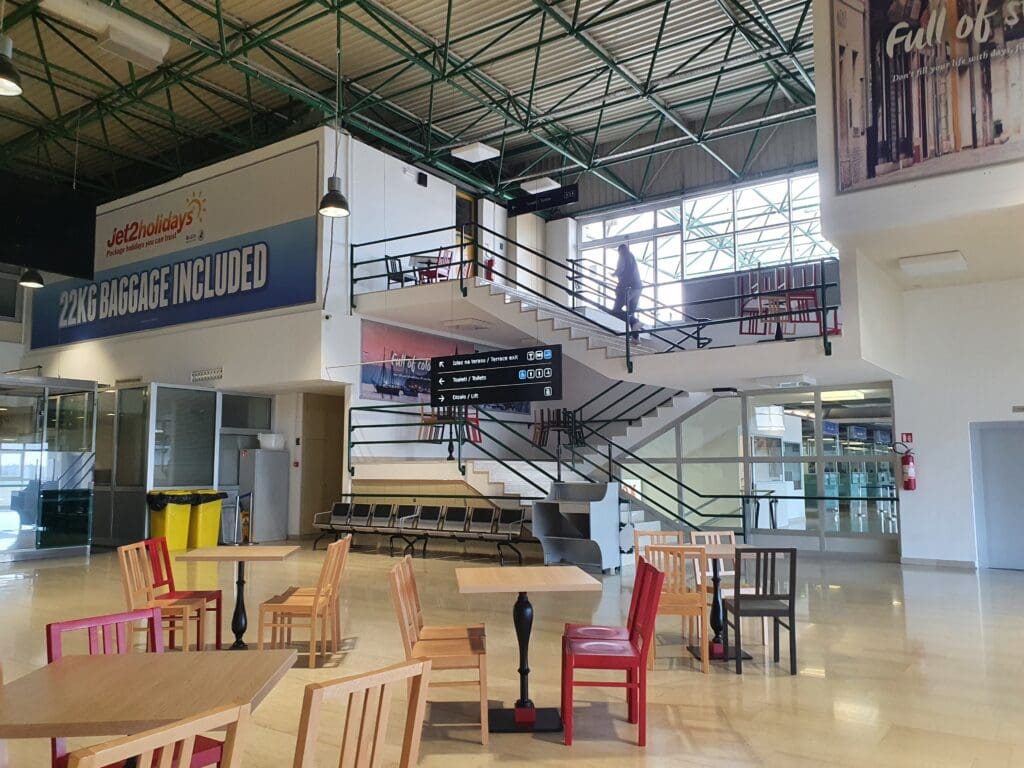
Once outside, all passengers were escorted into the main terminal building and up a set of stairs. Upon reaching the top of these, those passengers continuing to Osijek were given a Split Airport branded transit boarding pass and directed through to the airside departure area of the terminal whilst those ending their journey in Pula were pointed in the direction of arrivals.
Despite Pula’s seasonal popularity, that Monday the airport would see just three departures. These took the form of Croatia Airlines’ afternoon Dash 8 Q400 operated service to Zagreb, and Trade Air’s morning southbound flight to Split and afternoon eastbound service to Osijek. Given the number of flights that Pula Airport serves in the summer months, I was a little surprised at the terminal’s small size. Having opened its doors in 1989, inside, the terminal did not appear to have aged particularly well and was a little dated in its appearance. However, this was clean and pleasant enough whilst complimentary wifi was offered to allow passengers to catch up with the outside world whilst waiting for flights. In terms of facilities, a café and a large shop could be found inside the airside area although both of these appeared to be closed during my stay.
Once inside the airside area, most of my fellow passengers appeared to automatically know which way to go and so I followed the crowd over to gate 1. From there, the Turbolet could be seen being refuelled in preparation for its next leg whilst a small number of suitcases were in the process of being loaded into the hold at the rear of the aircraft. After a quick trip to the clean bathroom, I joined the crowd of waiting passengers whilst two agents could be seen at the gate podium looking out of the window, waiting for a signal from one of the ground crew who would give the okay for boarding to commence. That afternoon, it appeared that around half of those who had travelled up from Split would continue to Osijek. Meanwhile, a fair number also joined the service in Pula. Therefore once again, the aircraft would be almost full as it continued on the next leg of its journey across Croatia.
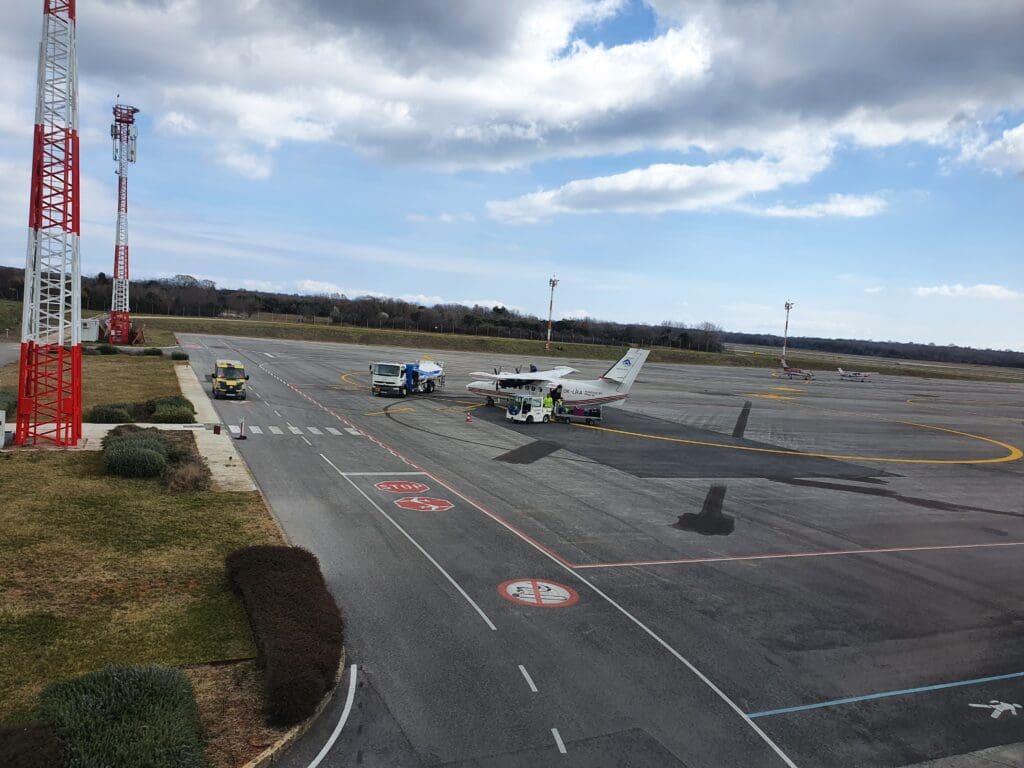
At 1315, the signal was given by one of the ground crew at which point passengers were invited to head to the gate podium for boarding. Upon reaching the podium, I handed over my transit boarding pass before the stub was returned and I made my way down the staircase and out into the chilly air for the short walk over to the aircraft. Once again, after climbing up the two steps, I was given a cold greeting in Croatian as I entered the Let L-410’s cabin. Wishing to shake things up a little, I decided that I would head to the very front row for the next leg of the trip, opting to take seat 1A for the journey to Osijek.
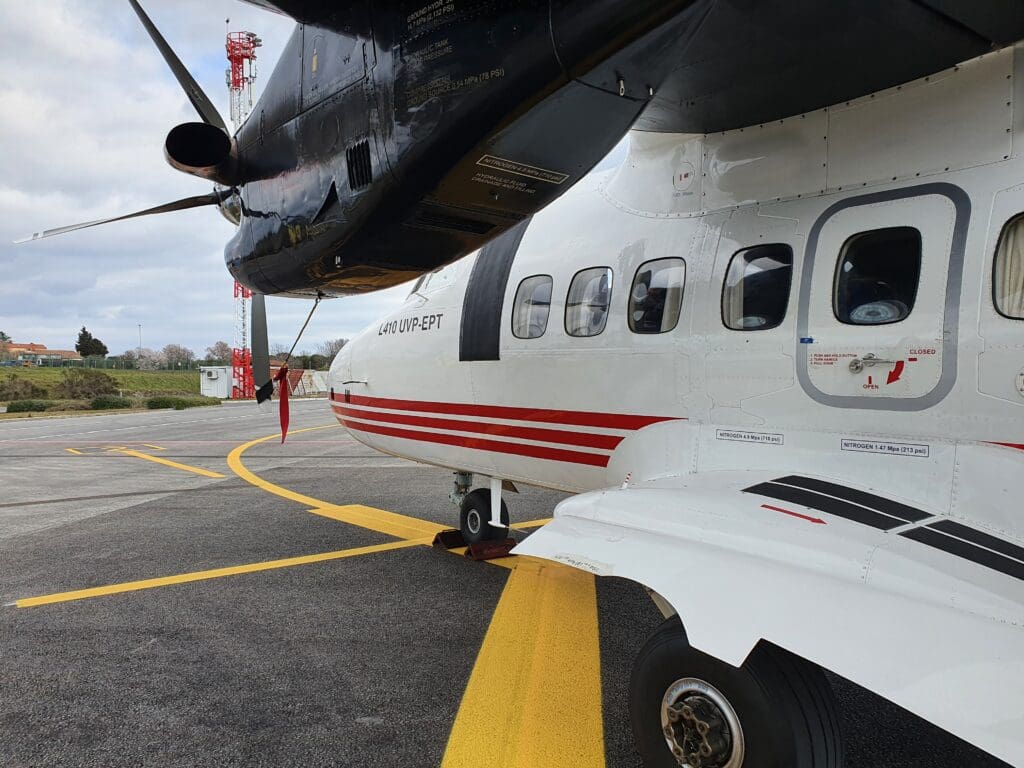
Upon taking my seat directly behind the Captain, I was pleased to find that, as one would expect from a front-row seat onboard a more orthodox airliner, this provided more legroom than the ‘regular’ seat I had sat in on the first sector. The only downside to sitting in the front row is that you only really get about three-quarters of a full window to look out of. As in Split, boarding took hardly any time at all and within a few minutes the First Officer closed the cabin door before retreating up into the cockpit. Once done, the flight attendant made their way to the front of the cabin before moving rearwards presumably checking that all was in place for the flight’s departure. However, nothing by means of a welcome or safety speech was provided on the leg across to Osijek.
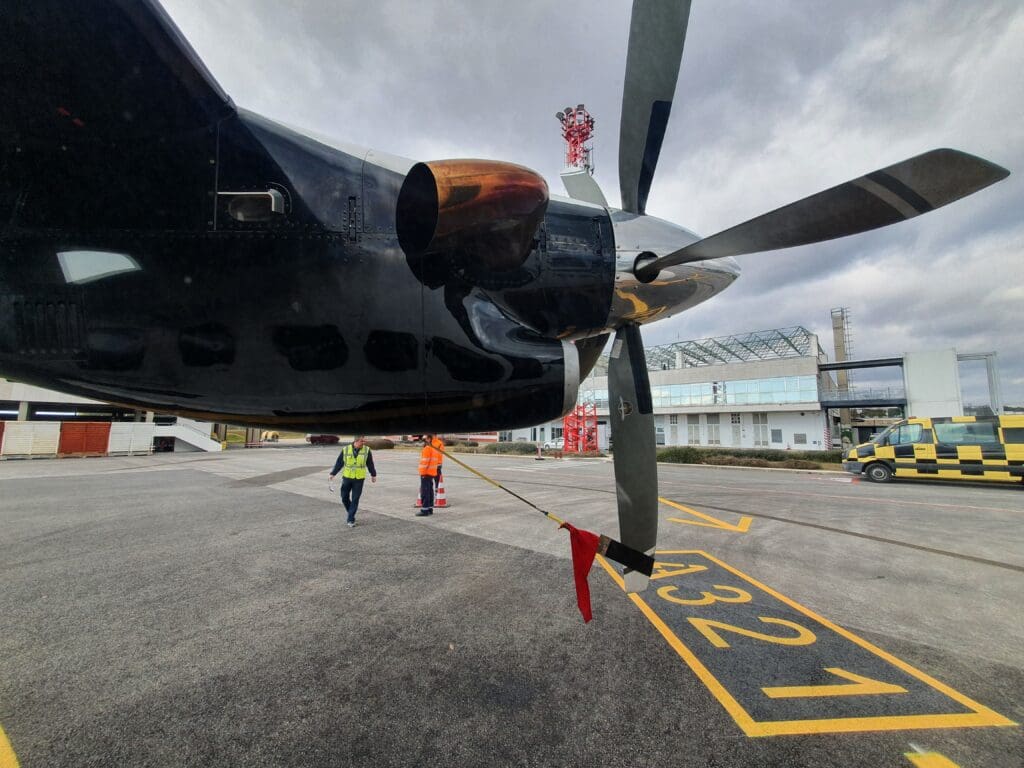
Sitting right behind the cockpit, I could overhear the Captain request permission to start the aircraft’s engines from air traffic control before moving onto the pre-start checklists. A short time later, the long whine could be heard once more after which the Avia propellers whirled into life as the two engines fired up. Ten minutes ahead of schedule, the aircraft cautiously powered out of its stand before wheeling to the right. From its parking position, the Turbolet picked up speed as it made its way past the two aforementioned visiting private aircraft. Thanks to the fact that a gentle breeze was blowing in almost directly from the south that lunchtime, straight across Pula’s sole runway, the pilots were afforded the slight time-saving luxury of departing into the east via Runway 09 rather than departing via the same runway by which we had arrived. Therefore, once away from the apron, the Let taxied left and without pausing made its way onto Runway 09.
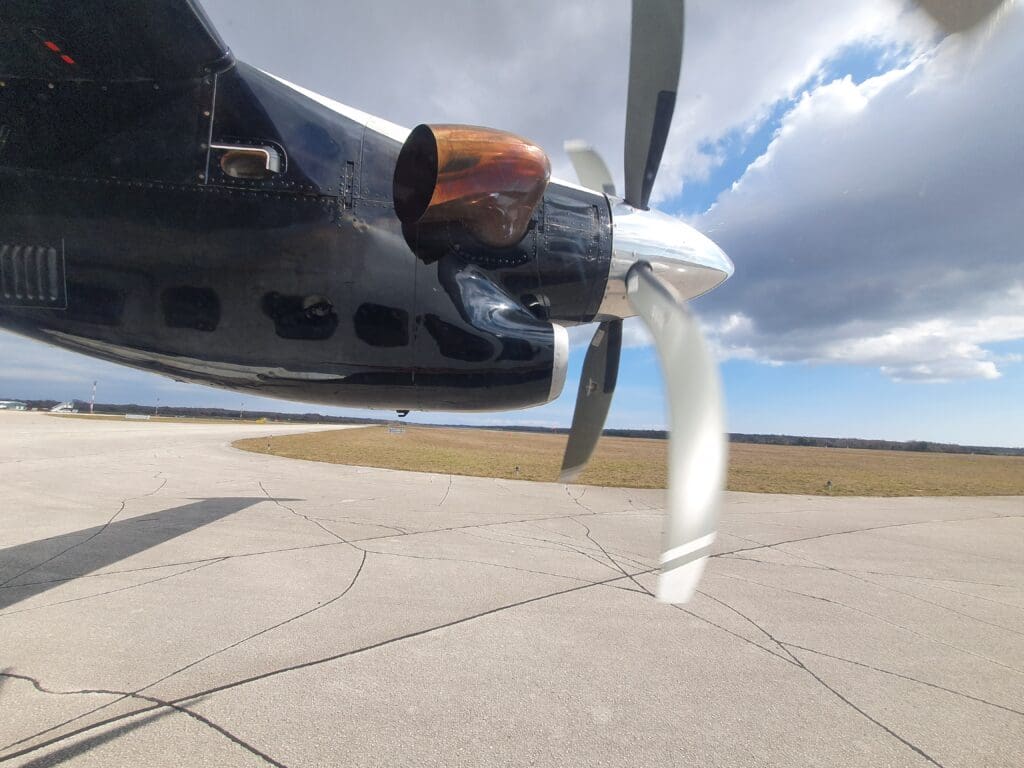
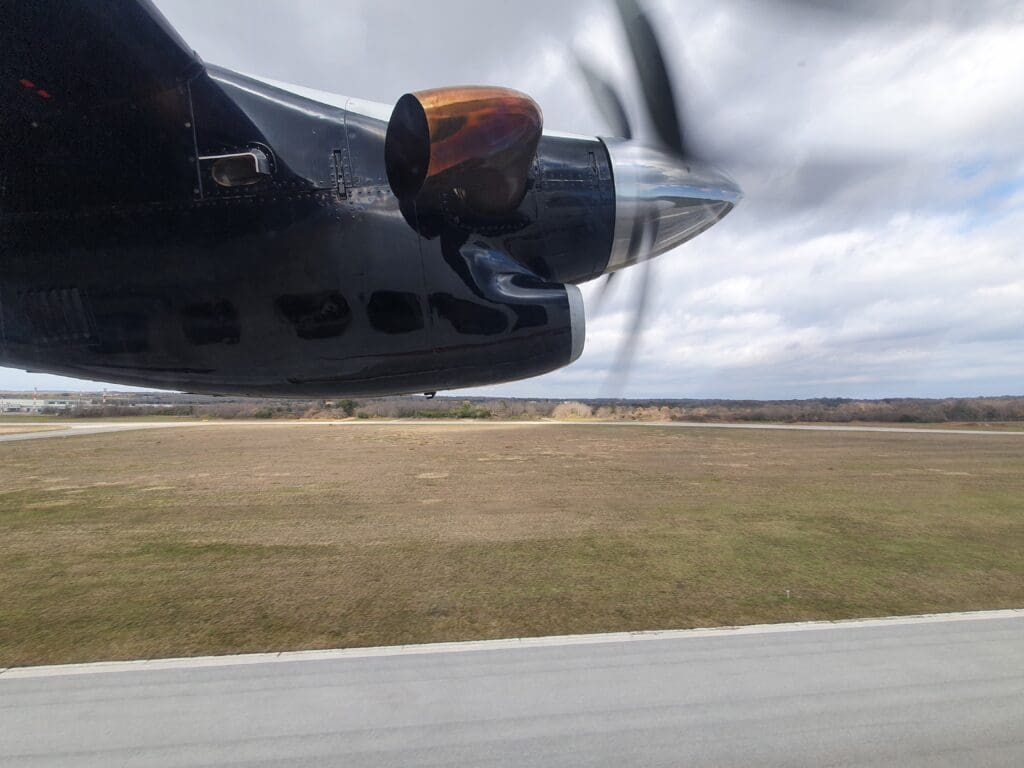
Once again, the aircraft would make a punctual departure and at 1327, eight minutes ahead of schedule, the two Pratt and Whitney engines powered up again. Seeing as I was seated right next to the engines, at this time the cabin was filled with vibration and noise, as the aircraft rolled down the runway before floating upwards into Croatia’s cloudy skies. Sitting on the opposite side of the aircraft for the flight to Pula, seeing as we had taken off in the opposite direction, as the aircraft climbed towards the clouds I was provided with a second look at the Istrian sights that I had seen whilst on approach to the airport. These included the towns of Valtura and Kavran and the various bays and coves that sit along the peninsula’s eastern shore. However, around seven minutes or so into the flight, the aircraft rose into the clouds and quickly passed through these with only minimal amounts of turbulence.
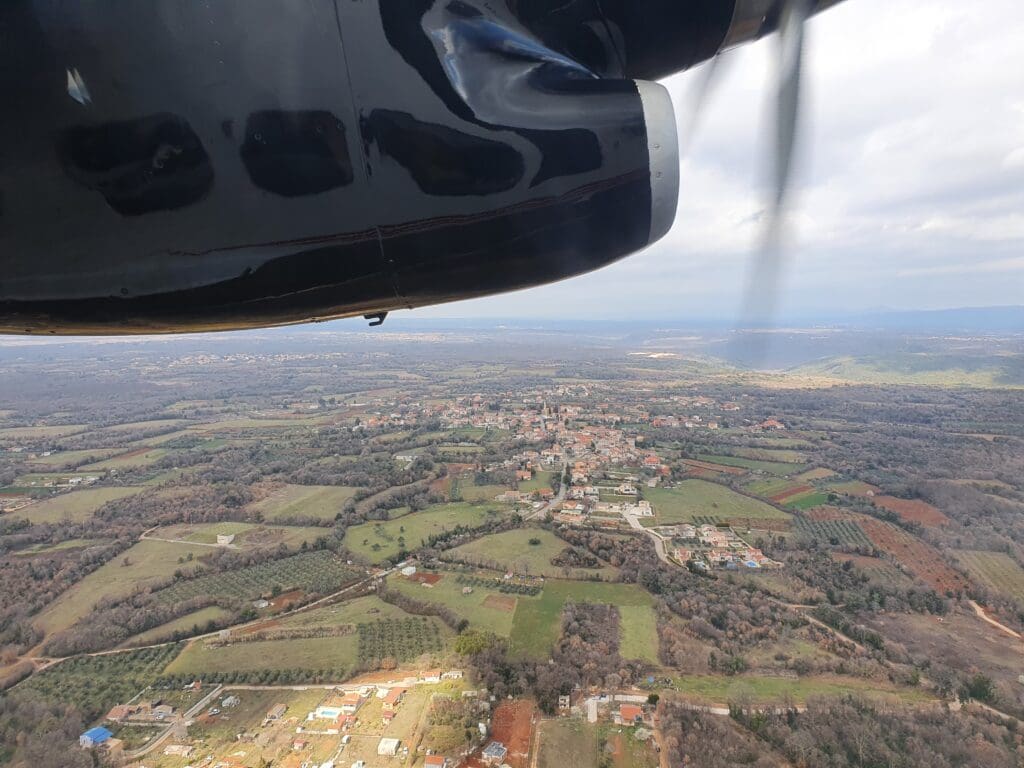
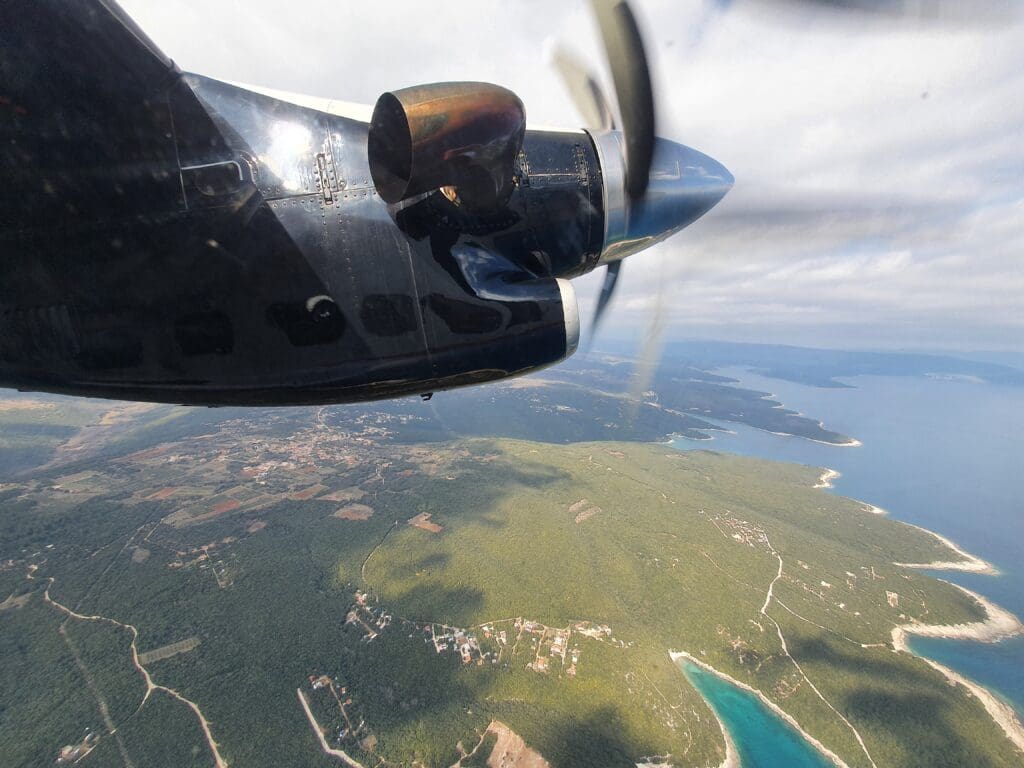
Once above the clouds, the Turbolet turned onto a heading of 80 degrees which would point it in the general direction of Osijek. Whilst nothing could be seen of the scenery below, as the aircraft slowly climbed up to its cruising altitude of 11,000 feet we trundled eastwards over the islands of Cres and Krk before reaching the mainland just to the south of the town of Novi Vinodolski. With little to see outside, no service and no inflight entertainment (at least for those who were not entertained by the Turbolet itself!), glancing around it appeared that most passengers were passing the time by reading, sleeping or using their personal devices.
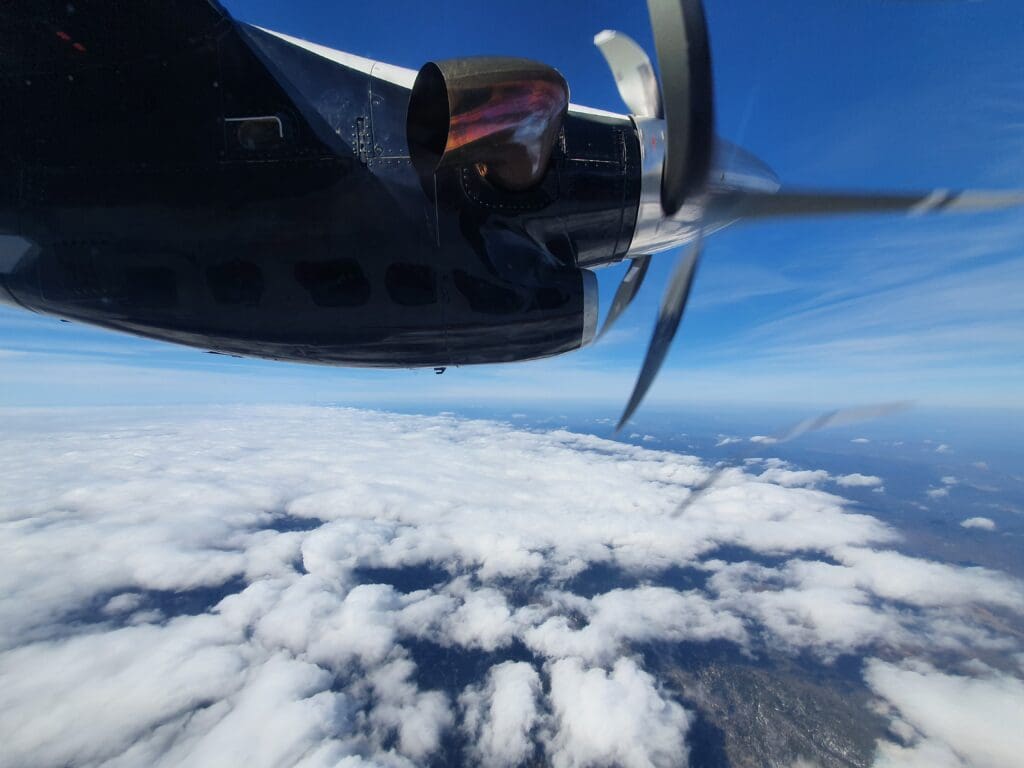
Having been treated to fantastic views of Dalmatia’s diverse and impressive landscapes on the flight up to Pula, I was not too disappointed at the near-omnipresent cloud cover during the second leg over to Osijek. Nevertheless, I was still delighted to find the clouds clear suddenly around twenty minutes into the flight – this revealed the frost-covered tree-lined hills of central Croatia’s Karlovac County. There, the E71 motorway which runs from Split to the Slovakian city of Košice could be seen snaking through the hilly landscape.
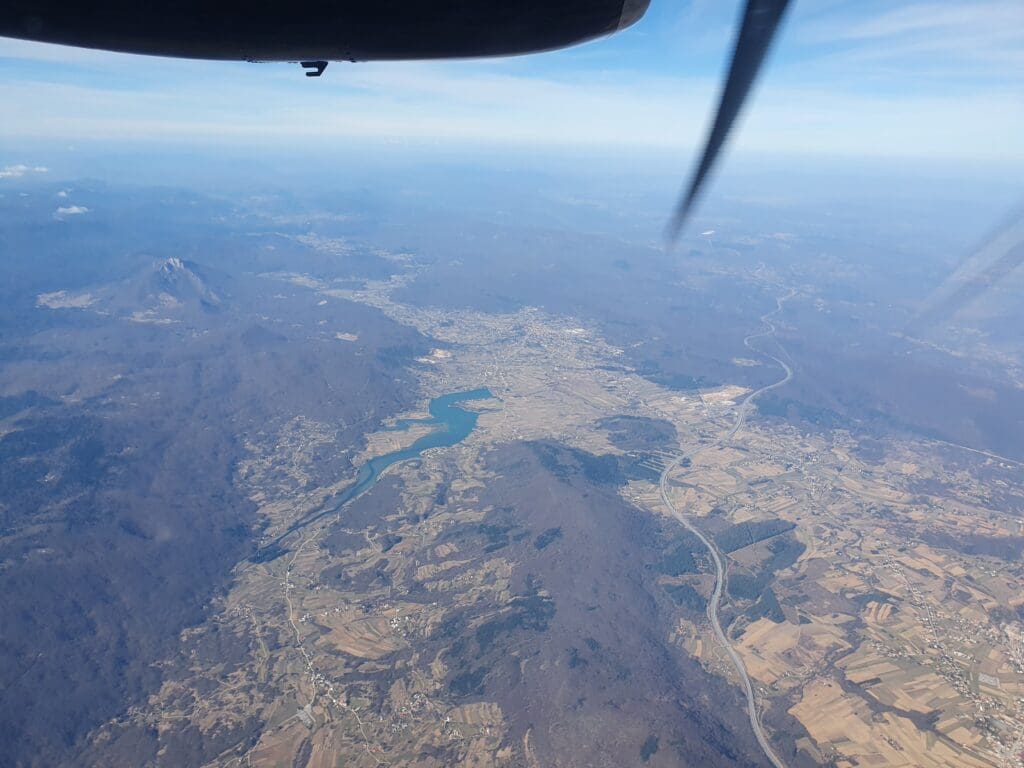
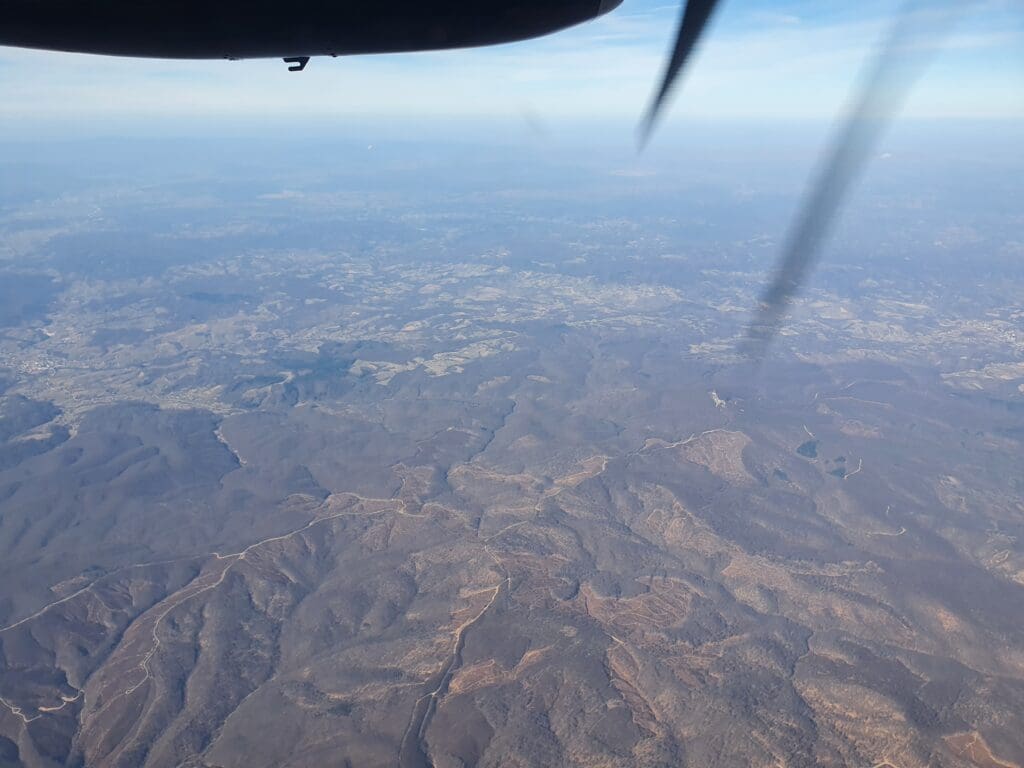
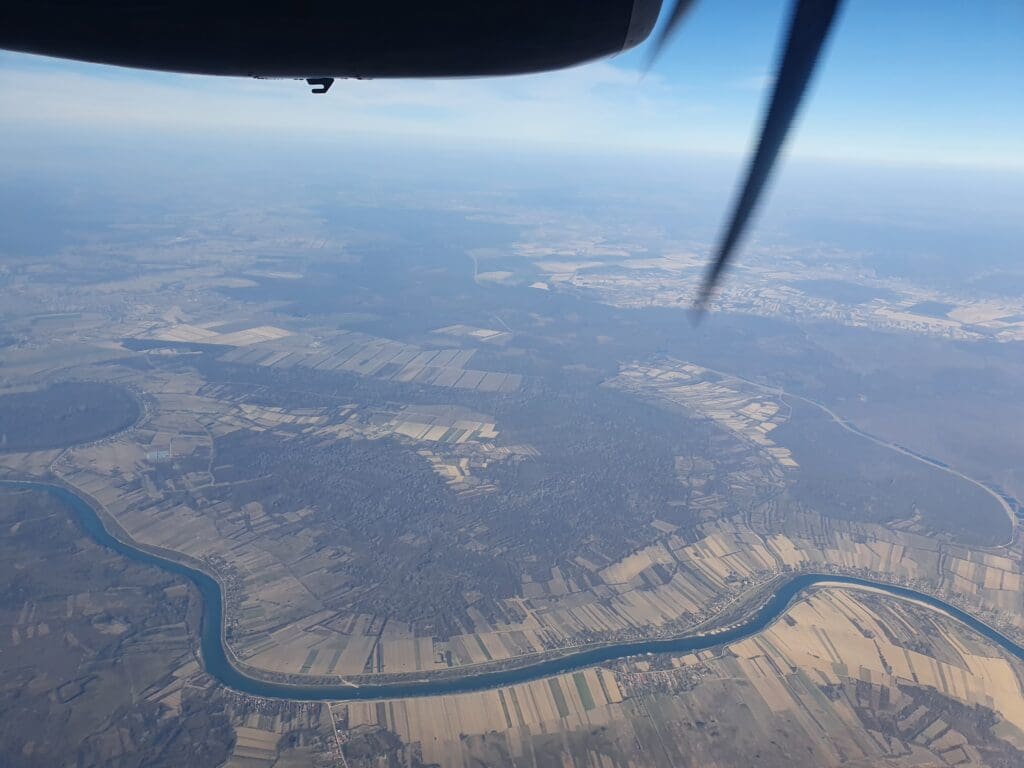
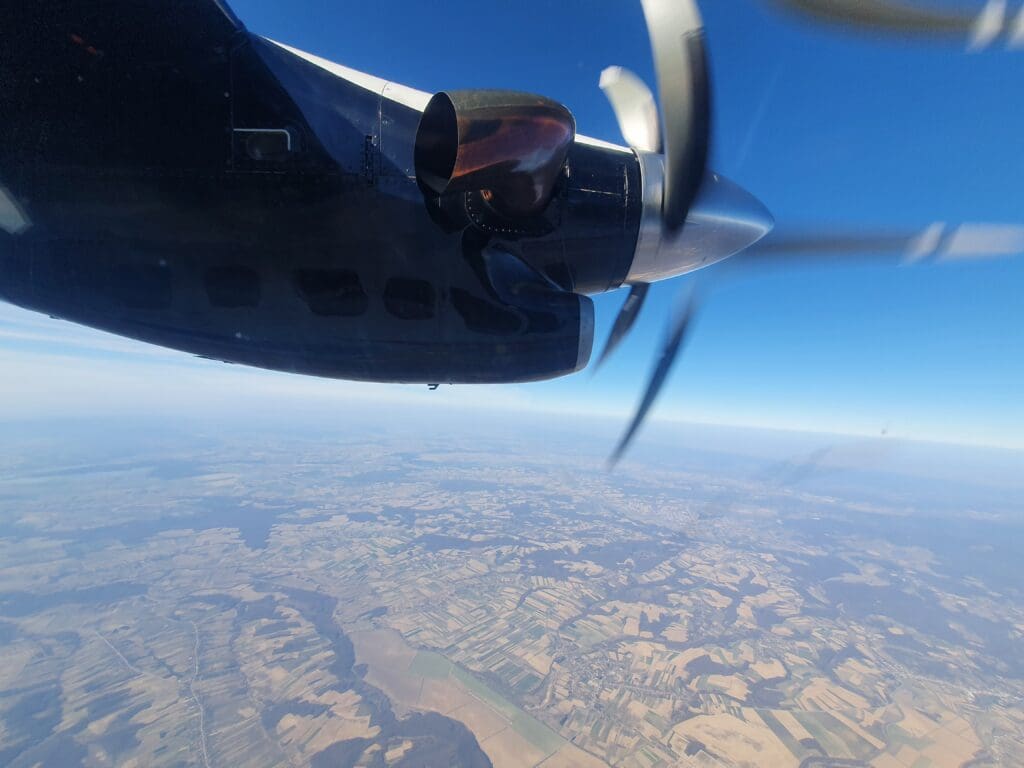
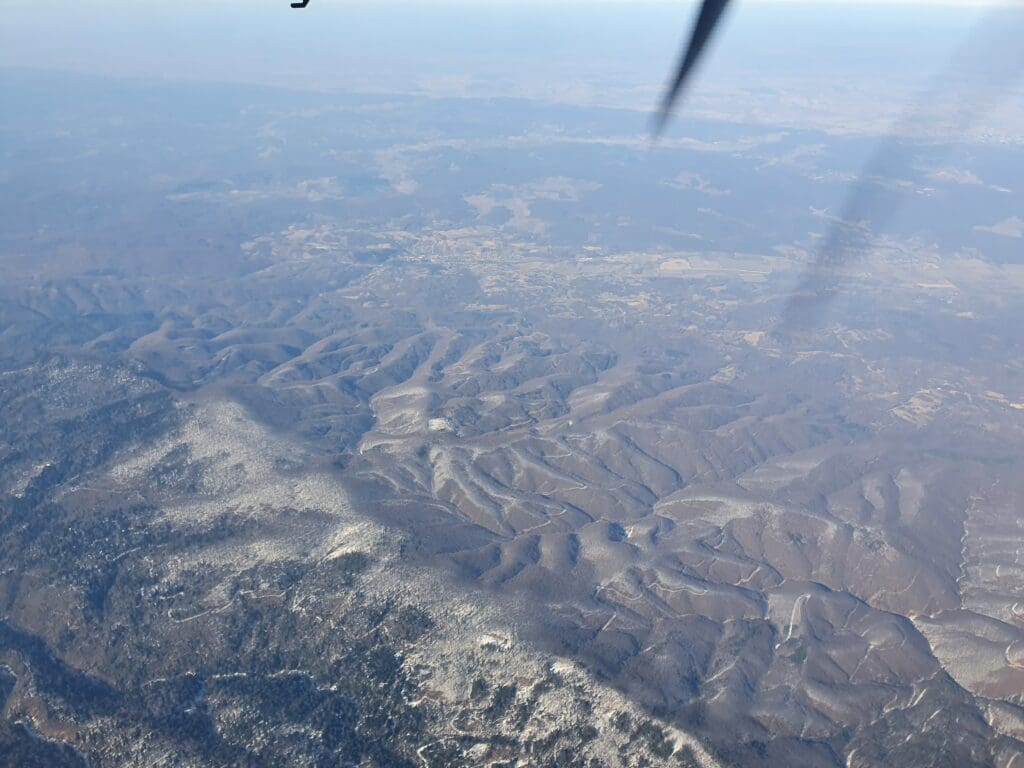
A short while later, the scenery flattened out and the hills were replaced by a mixture of forests and beige and brown wintery fields. Soon enough, the winding Sava River could be seen before the landscape temporarily rose once again as the Turbolet cruised above Papuk and the Jankovac Valley. At this point, the aircraft commenced its slow and barely noticeable descent, gently returning to Earth at a rate of around 400 feet per minute, with the most obvious sign of our descent being the fact that the Slavonian fields and villages became increasingly clearer as the aircraft sank downwards.
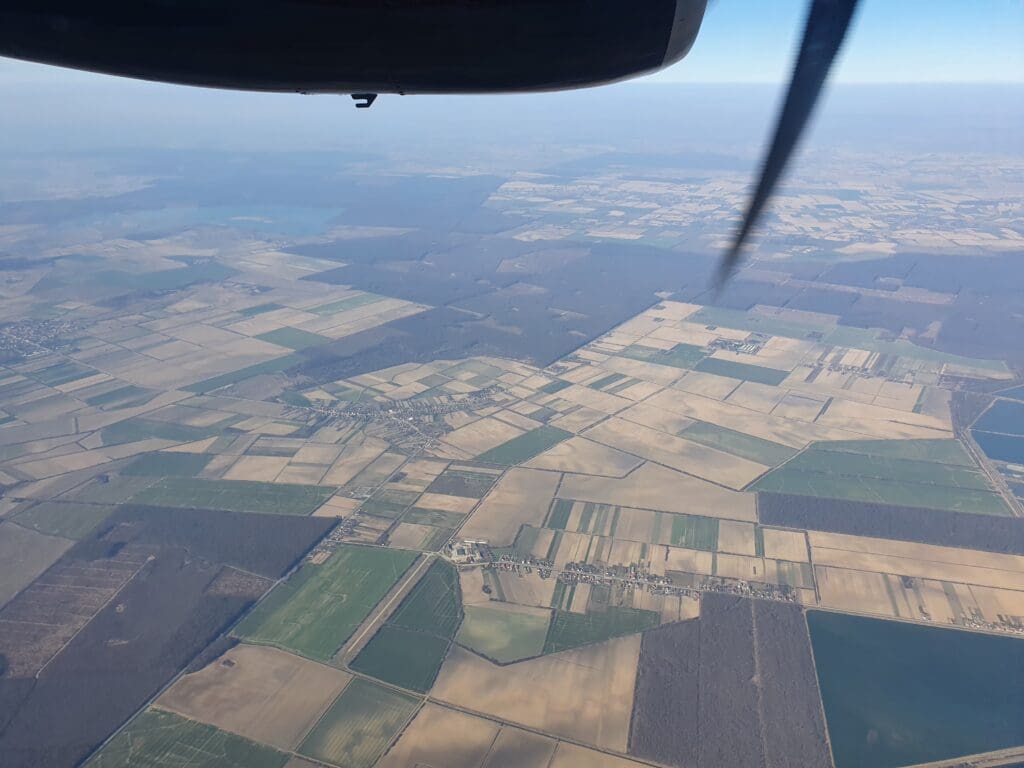
As the aircraft neared Osijek, the D2 motorway appeared just to the north of the aircraft and the Turbolet flew roughly parallel to this for a while. This road runs across northern Croatia from the border with Slovenia in the west, to Serbia in the east, and serves to be one of the main routes into Osijek. Soon the eastern fringes of Osijek appeared and I spotted a small airfield complete with two relatively long parallel runways – one made of grass, and the other made of asphalt. Later research revealed this to be a general aviation aerodrome, Osijek-Čepin Airfield which is host to a reasonable number of light aircraft.
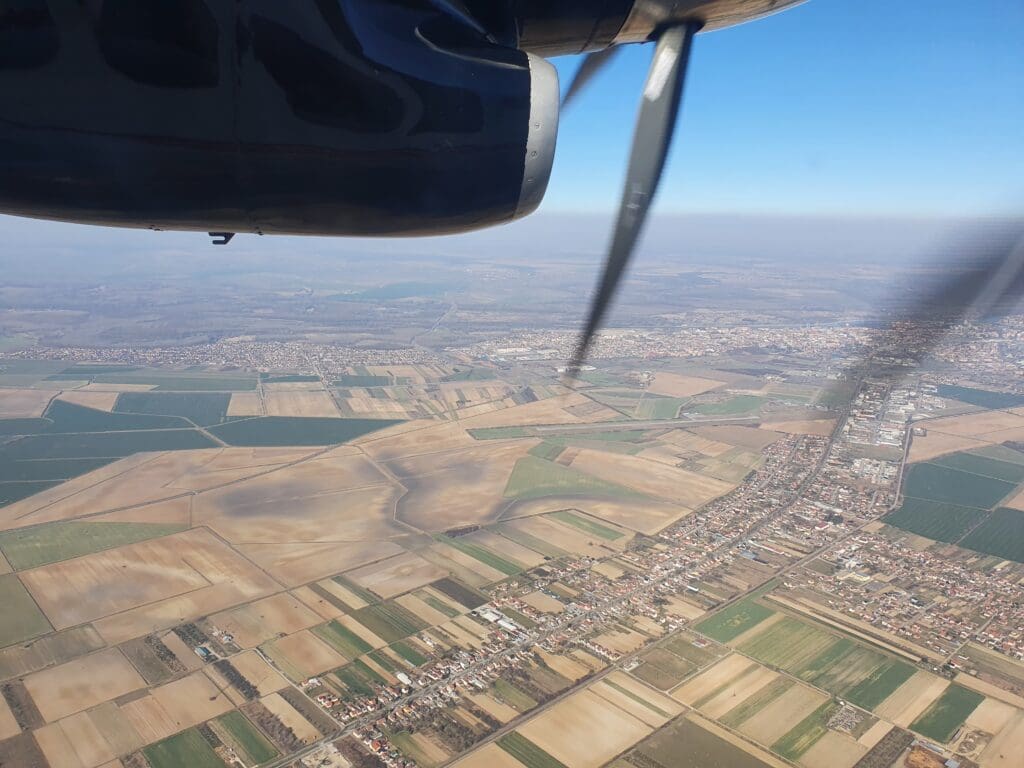
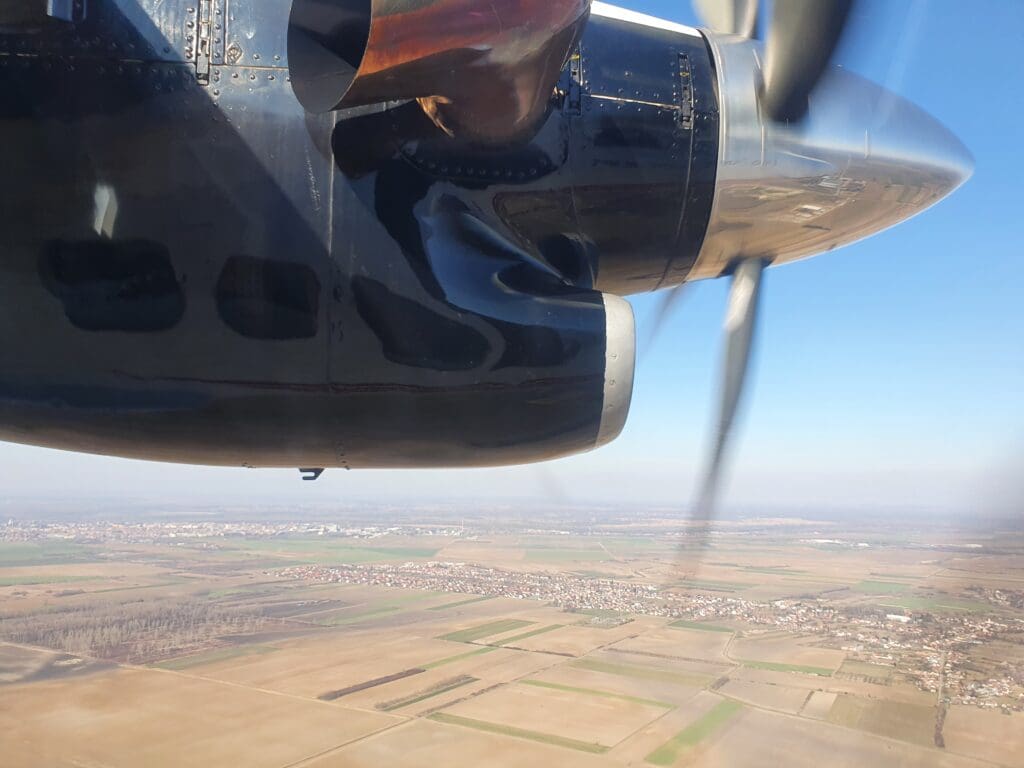
After passing the airfield, the centre of Osijek came into view as well as the cluster of residential and industrial buildings that surround this. Whilst the city may be Croatia’s fourth largest, this is still relatively compact and thus virtually the entirety of the city could be seen within a couple of minutes or so as we made our way towards the airport.
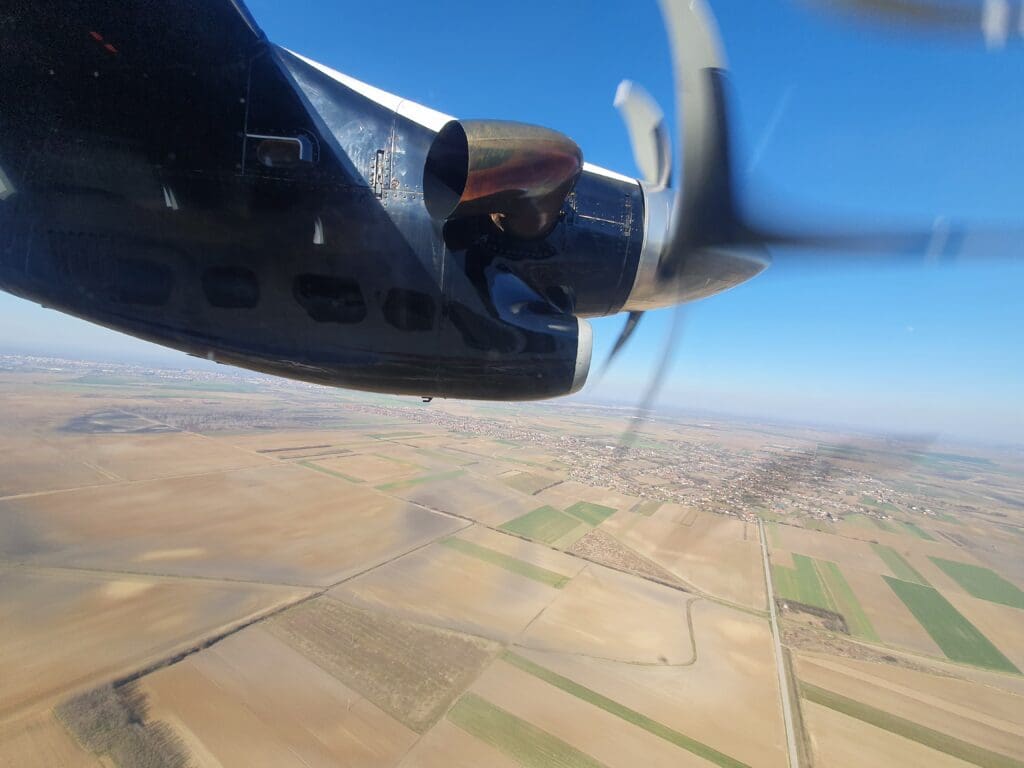
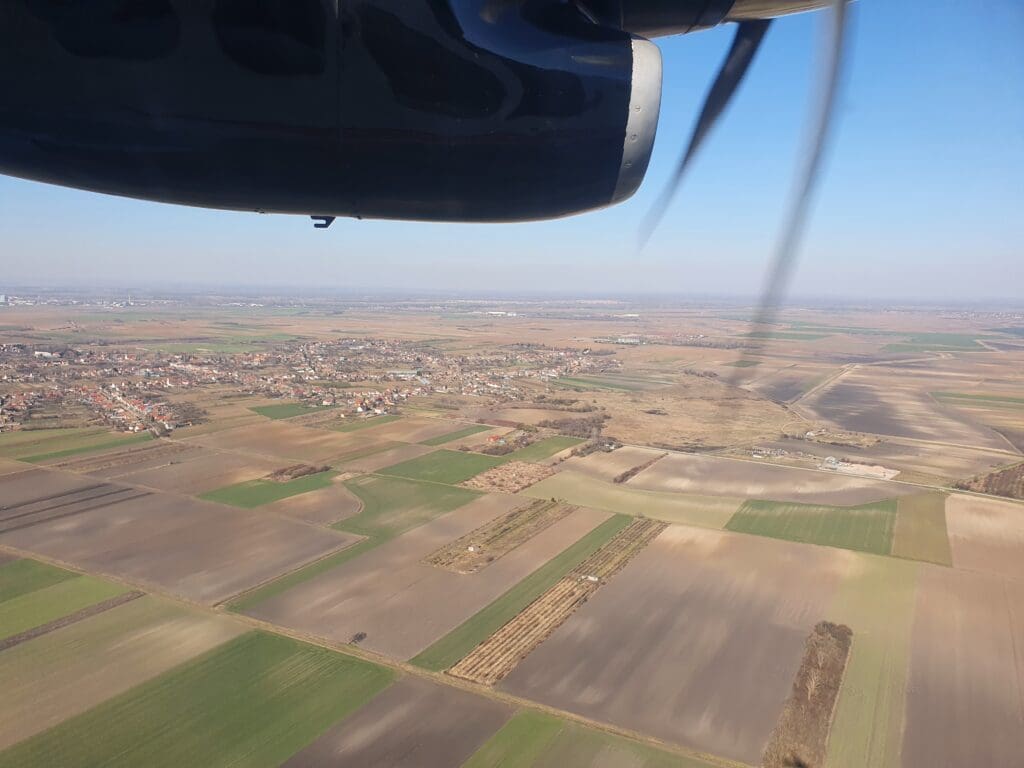
Seeing as Osijek Airport sits around twenty kilometres to the east of the city centre, after passing the city the aircraft continued back out towards the flat countryside that surrounds the city. At this time, the landing gear fell into position beneath the aircraft before the aircraft commenced a fairly steep descent as it neared the airport, chasing its shadow. A short time later the small turboprop noisily buzzed over Osijek Airport’s perimeter fence at which point the eclectic selection of aircraft on the ground that afternoon appeared. These included two aircraft operated by the locally based Air Pannonia – a bright red and comparatively new Antonov An-2 of 1985 vintage and a more modern and comfortable Cessna Citation CJ2. Other than this, Croatia’s only Britten-Norman Islander and an ex-European Coastal Airlines Grumman Mallard could also be seen alongside a modern Maltese Beechcraft King Air and a Globe Air Cessna Citation visiting for maintenance. Last but not least, Van Air Europe’s other Croatia-based Let L-410 Turbolet could be seen outside the terminal.
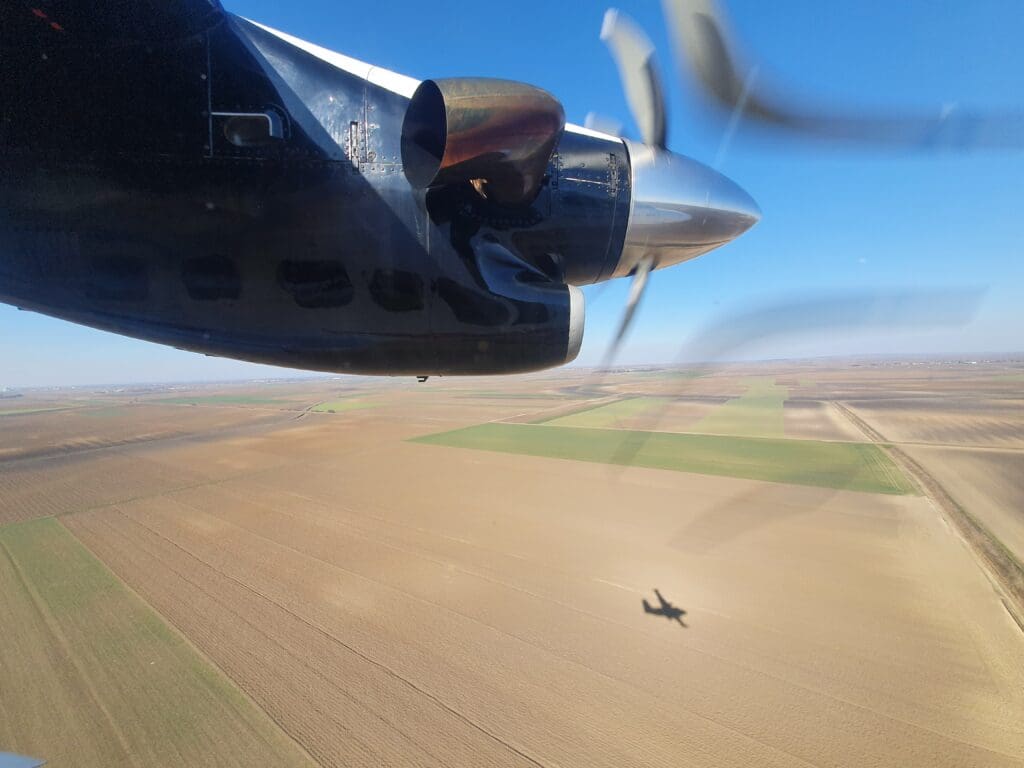
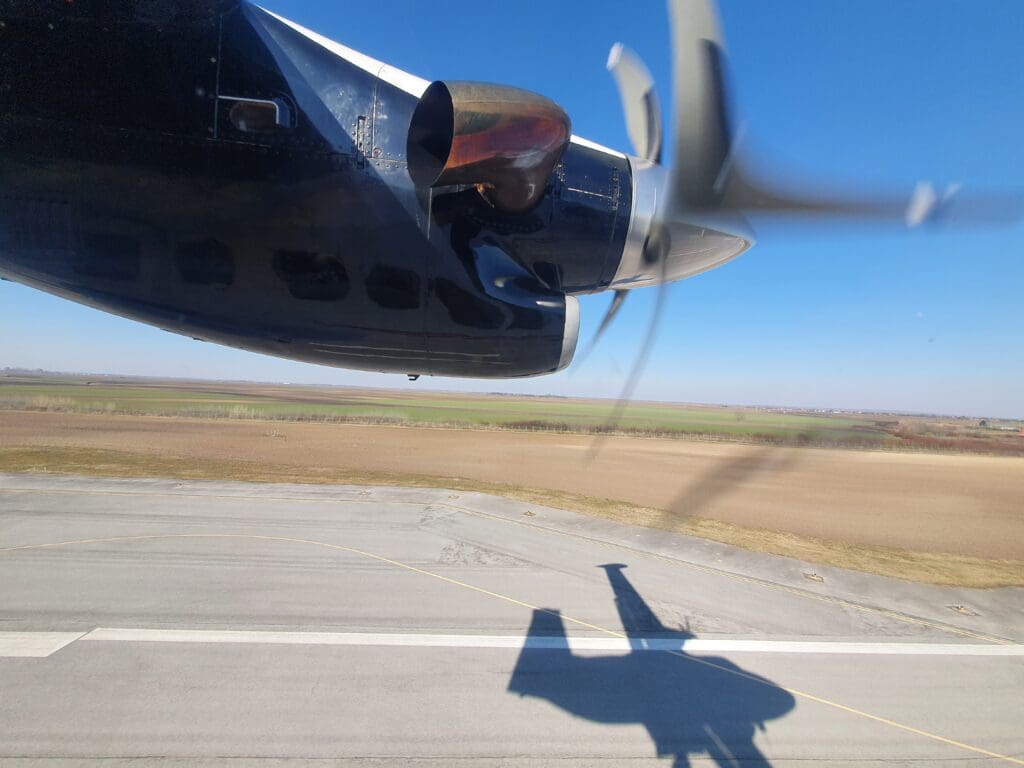
An hour and nine minutes after taking off from Pula, the Turbolet returned to Croatian soil with a gentle bump. As was the case in Pula, the Turbolet’s famous STOL capabilities would not be needed thanks to Osijek Airport’s 2.5-kilometre long runway although a fair amount of squeaking could be heard throughout the cabin as the aircraft decelerated. A short time after landing, the aircraft vacated the runway to the left and made a very short taxi over to Stand 2, located directly outside Osijek’s small terminal.
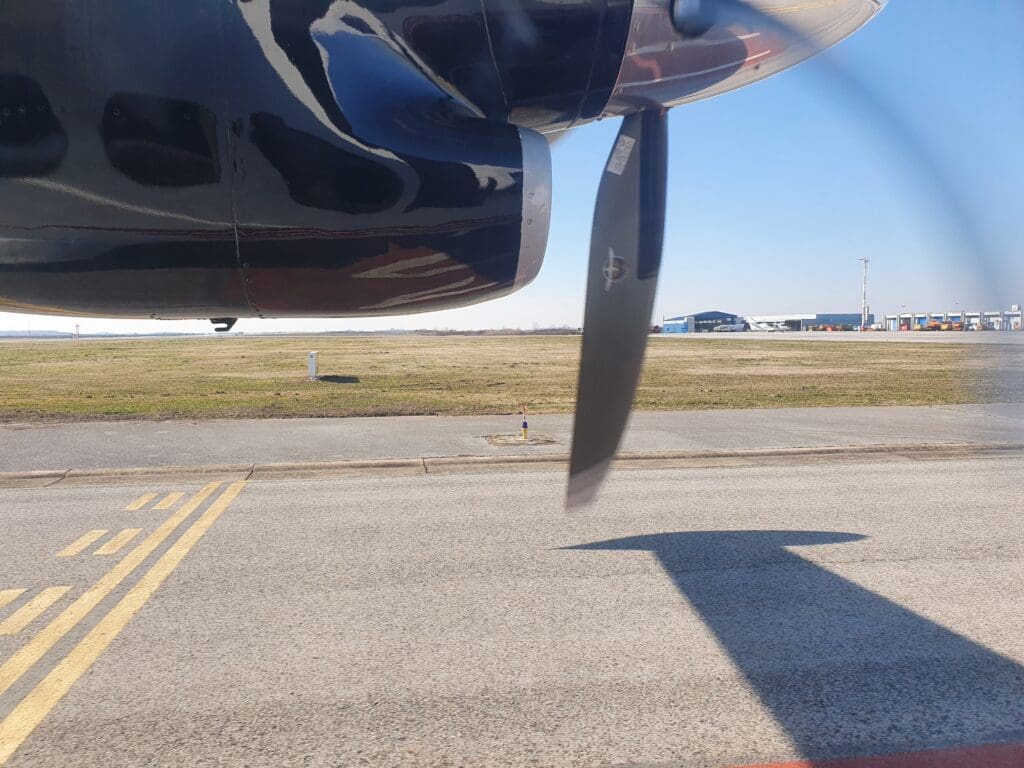
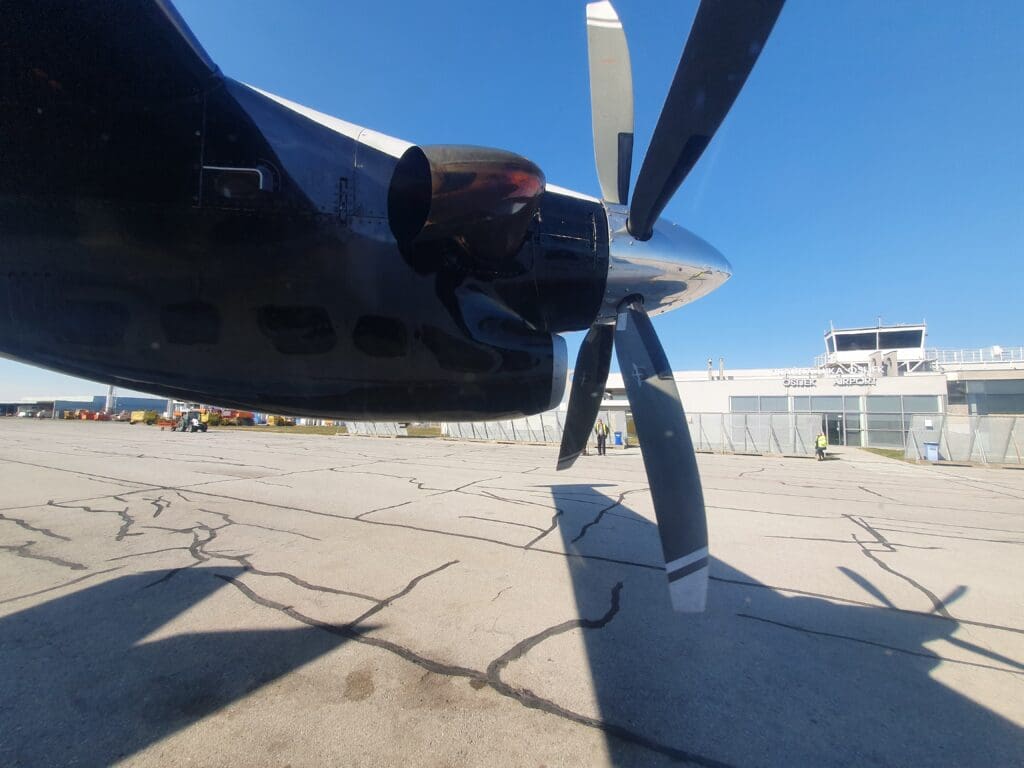
After coming to a halt, the engines spooled down and the First Officer emerged from the cockpit before heading to the rear of the aircraft to open the cabin door. Once this had been done, the flight attendant permitted passengers to disembark the turboprop. A few moments later, I thanked the flight attendant before heading into the chilly Croatian air. Of all the airports that I had passed through on my trip to Croatia, Osijek Airport was the quietest by far, with this only served by Trade Air at the time of my trip. Examining the terminal building, this took the form of a single-story structure atop of which the airport’s small control tower could be seen.
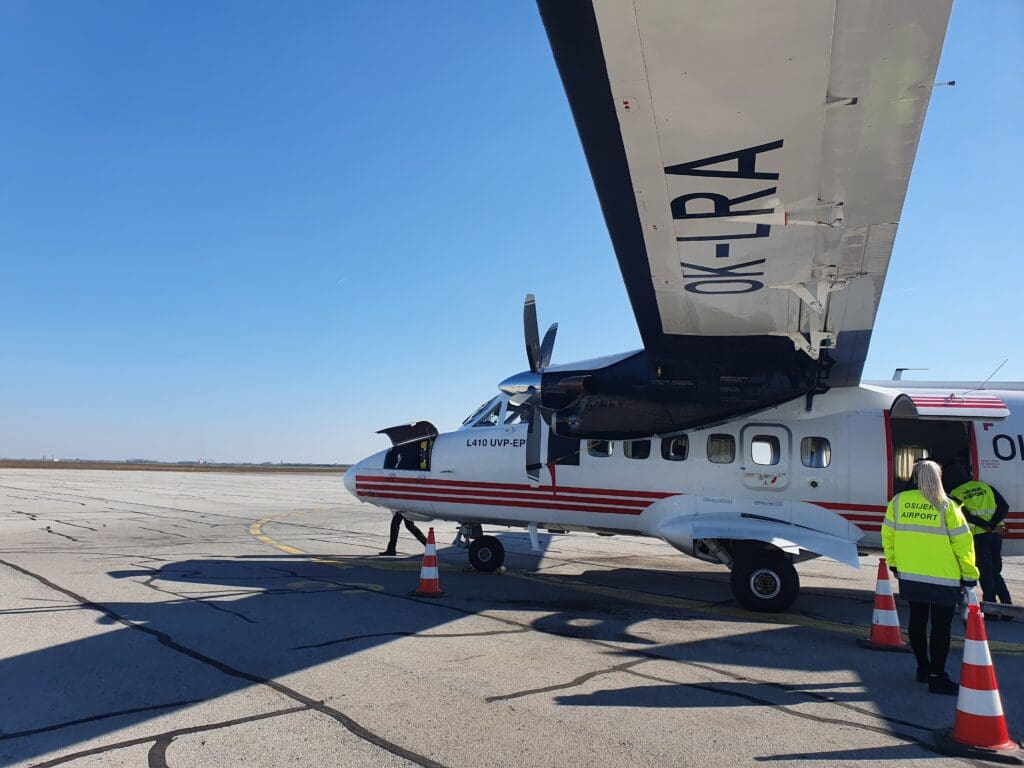
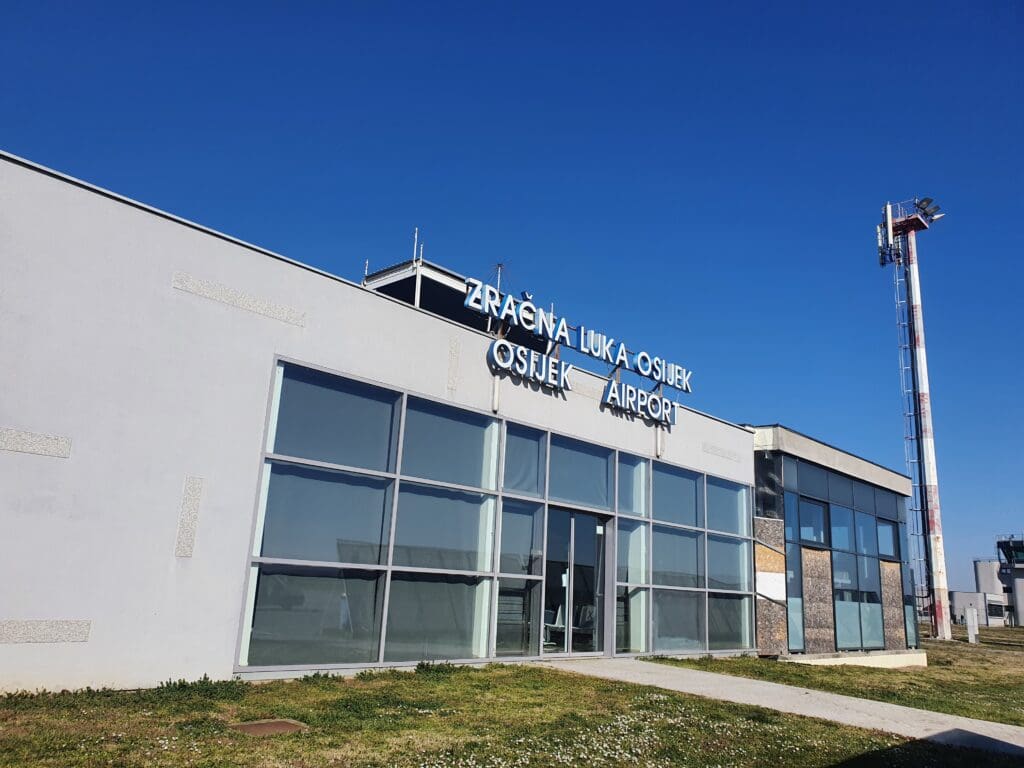
With the flight terminating in Osijek and not holding a boarding pass for the next sector to Zagreb, once I had disembarked the aircraft I followed the crowds through the small and rudimentary baggage hall before arriving in the landside portion of the terminal. As one would perhaps expect, around half of this is dedicated to arrivals and the other half to departures, complete with several check-in counters. As soon as I arrived in the landside area, I strolled over to the only manned check-in counter and handed over my passport. After the usual tapping away on their keyboard, the agent handed over a boarding pass, complete with Osijek Airport’s logo and my passport was returned.
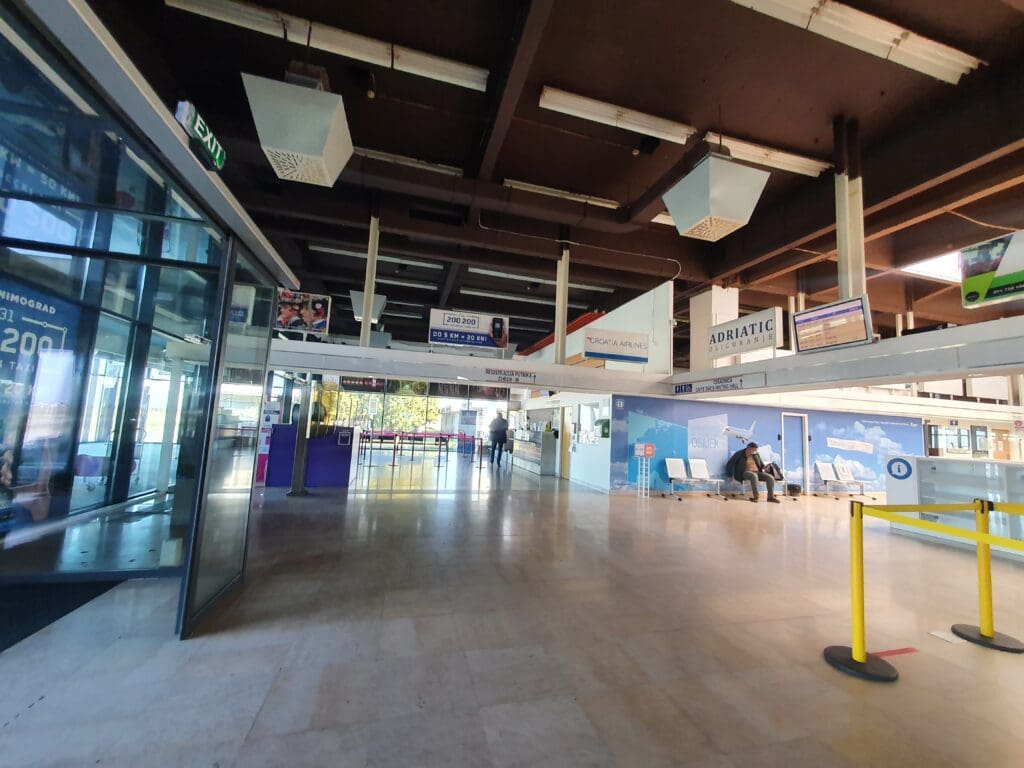
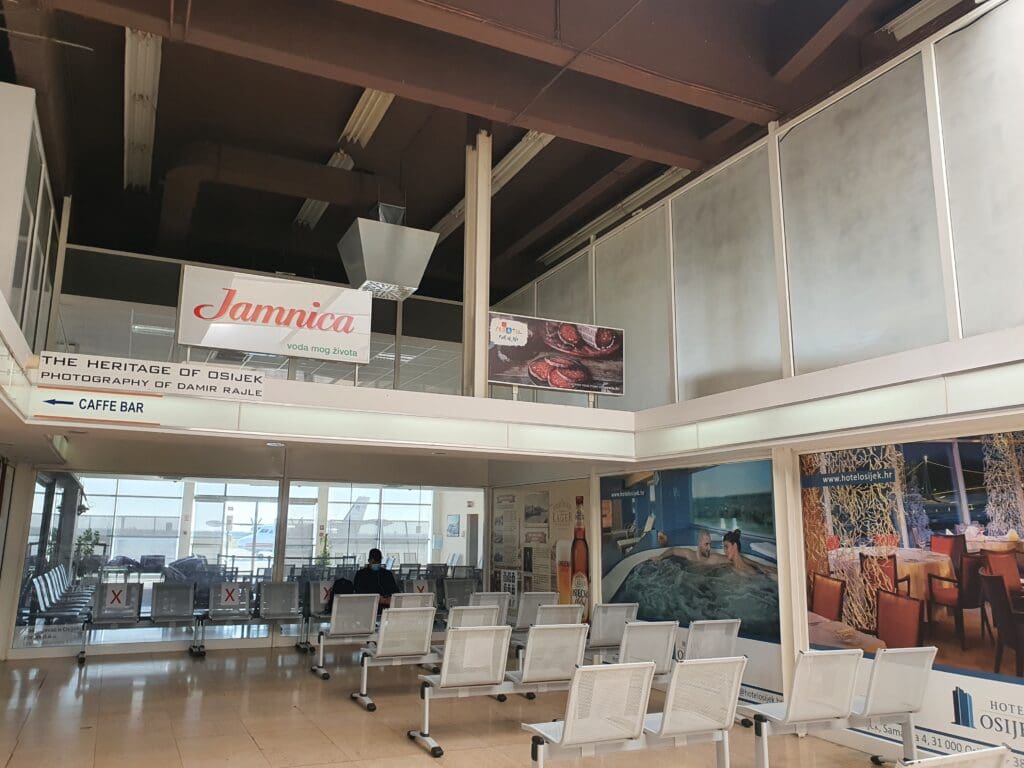
Given the terminal’s size and its lack of flights, unsurprisingly it appeared that the staff members there wore various hats. As such, the terminal’s single security checkpoint did not open until the two staff members that would man this had finished tending to those that had arrived from Split and Pula. This gave me a short amount of time to explore the landside portion of the terminal. Since the opening of Osijek Airport’s terminal in 1980, this appeared to have undergone only minor modernisation and cosmetic changes and thus gave off a very retro vibe. However, I found the terminal to be clean and tidy, and feature everything that you could want from a small airport – including complimentary wifi, plug sockets and charging points, and a café-bar which was open at that time in the afternoon. Furthermore, all staff members I interacted with during my stay were nice and friendly, and I found the terminal to have a rather homely and welcoming atmosphere.
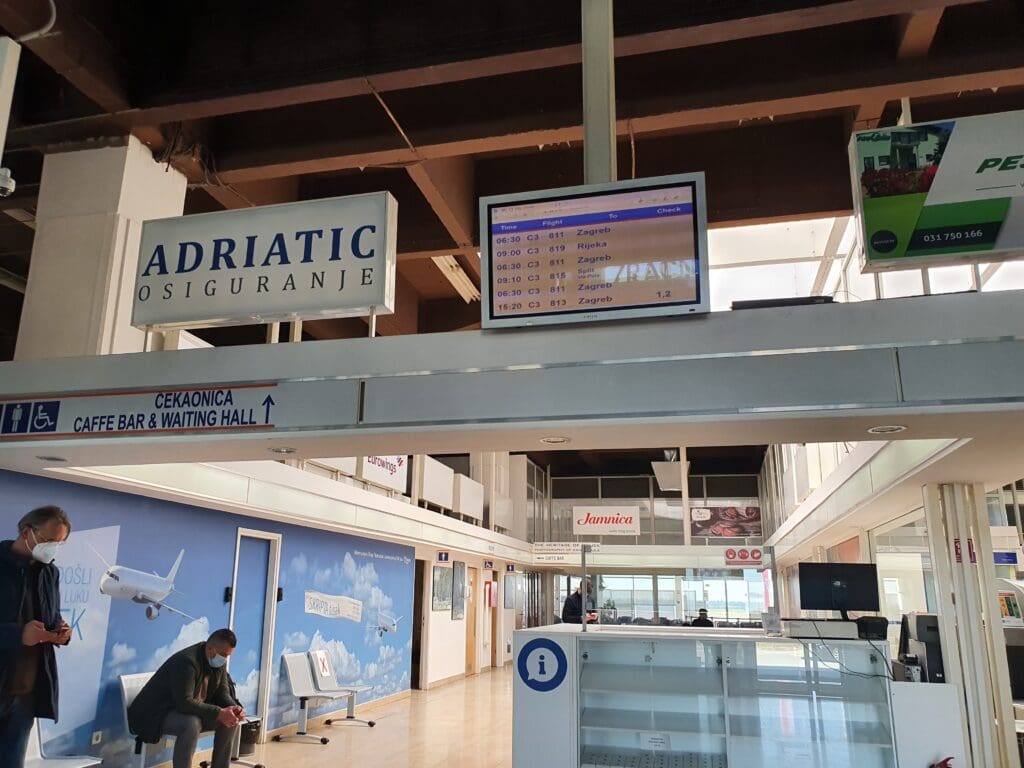
At 1453, an announcement was made in Croatian and English inviting Zagreb-bound passengers to make their way to the gate, at which point the security checkpoint opened. Once my boarding pass was scanned, I passed through this quickly and without any issue before arriving in the terminal’s airside waiting area. This was complete with another set of toilets, which, like those in the landside area were dated yet clean and served their purpose, plenty of seating – with these taking the form of comfortable leather chairs, and more spartan metal benches, and a charging point in one corner of the waiting area. However, the piece de resistance of the waiting area was the small shop which was well stocked with the usual selection of drinks and snacks, alongside local souvenirs taking the form of NK Osijek (the local football team) memorabilia and bottles of local Slavonian wine. For enthusiasts, this area also featured a partial view onto the stand directly outside the terminal, where at that time the Let L-410 could be seen being refuelled once again whilst a new crew of three journeyed out to the aircraft.
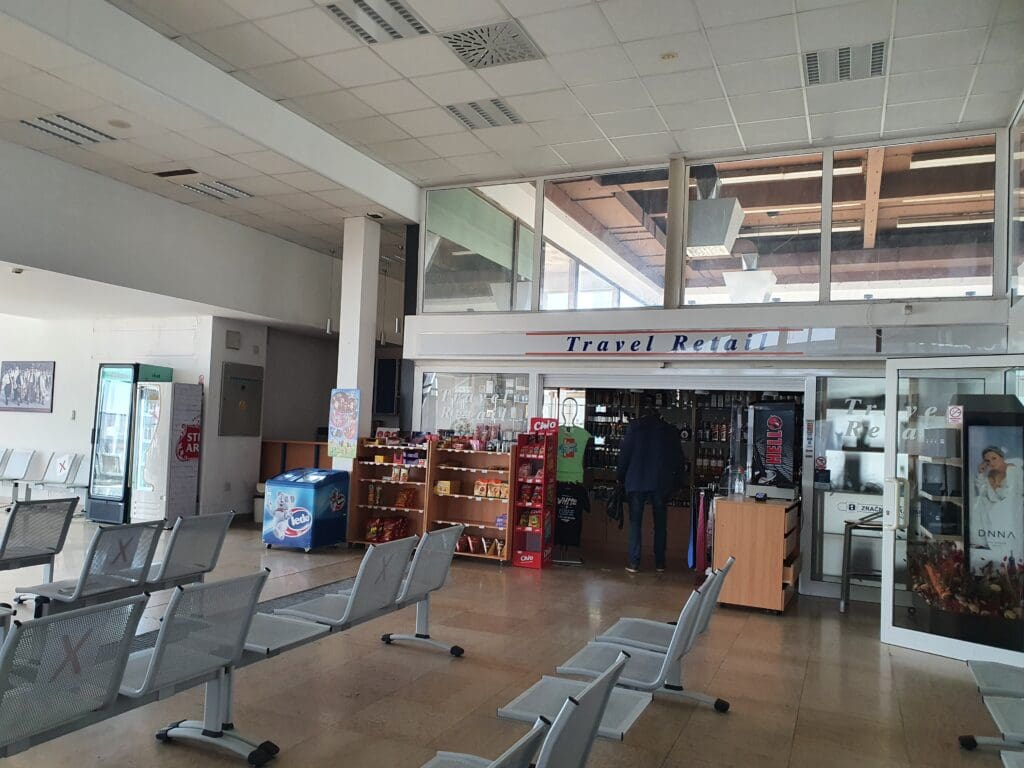
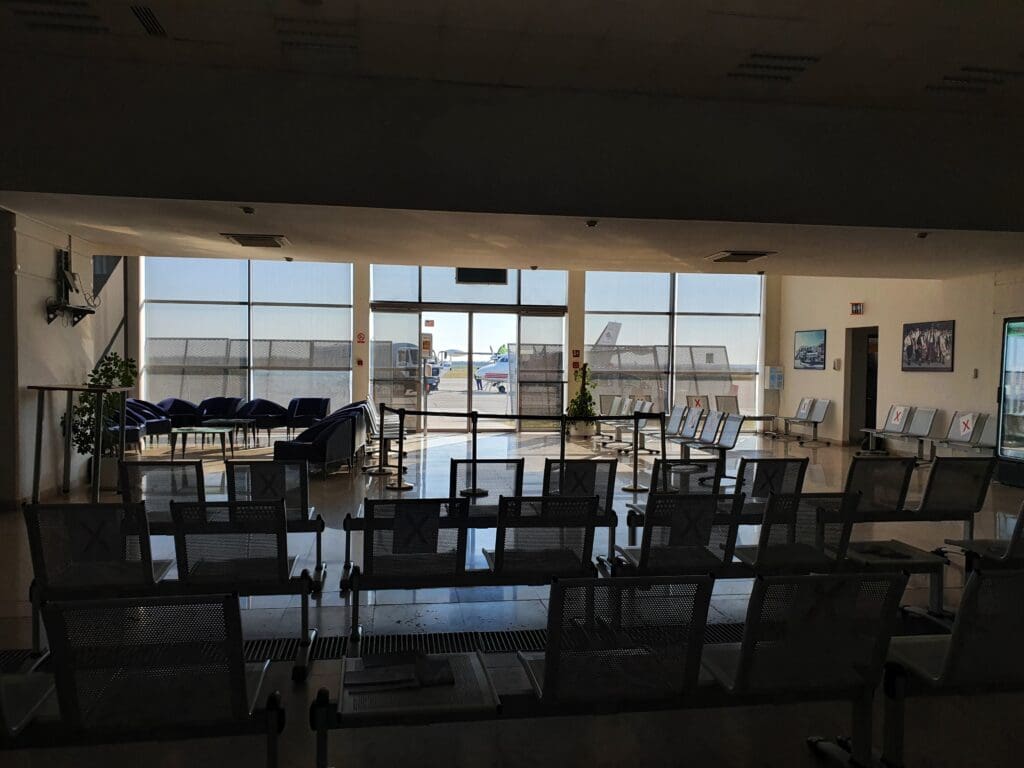
Whilst just 134 miles separate Osijek and Zagreb, travelling between the two can be a timely process with bus and rail services taking four and five hours respectively. Therefore whilst slightly pricier, travelling by air is a logical choice for those short on time, or those connecting to and from flights in Zagreb. However, despite this, the flight to Zagreb that afternoon would be the quietest of all three sectors that I had flown with Trade Air, with a total of just seven passengers heading to the Croatian capital. Furthermore whilst I believe I was the only foreigner on the flights from Split and Pula, a total of four non-Croatian passengers seemed to be heading to Zagreb. As I waited, I decided to purchase a 500ml bottle of Vitamin C enriched orange flavoured water and a KitKat for a reasonable 20 Kn before taking a seat and waiting for boarding to commence.
With ten minutes to go until the flight’s scheduled departure time of 1520, the check-in agent, who was now sporting a high visibility jacket, appeared in the airside portion of the terminal and said a few words in Croatian before opening up the doors to the apron and leading passengers out to the aircraft. Unlike my previous two lukewarm welcomes, as I clambered up the built-in steps and entered the small cabin, this time I received a much friendlier greeting in Croatian by the new flight attendant before I turned left and took my seat. Given the good view offered by this, I decided to pick my original seat, Seat 5C for the final flight over to Zagreb.
Given the light load, it did not take long for all passengers to climb up into the Tubolet’s small cabin and choose their seats. After all had strapped themselves in, the new First Officer closed the cabin door and made their way up into the cockpit, once again closing the curtain behind them to ensure that passengers were not treated to any views of the action up ahead during the flight. After the First Officer had retreated to the sanctuary of the cockpit, the flight attendant made their way to the front of the cabin and commenced a quick welcome and safety speech in Croatian followed by an even shorter welcome in English. The latter part of this simply consisted of informing non-Croatian passengers that ‘everything from the morning flight still applied’ – with this attendant presumably recognising my fellow foreign passengers from the early morning service from Zagreb to Osijek. Unlike on the two earlier flights, at the end of this speech, the flight attendant then passed through the cabin offering passengers water. Whilst this was a nice touch, there was just one taker, who received this in a plastic cup a few moments later.
After the flight attendant’s speech came to an end, the long whine could be heard for the third and final time that day before the two Avia five-bladed propellers whirled into life. With four minutes to go until the flight’s scheduled departure time, the aircraft pulled forward out of its stand and swung right before turning left onto the taxiway. Given the compact nature of Osijek Airport, the aircraft managed to reach the airport’s sole runway in around a minute and with no other traffic, no waiting was required before the Turbolet made its way onto this. had been the case in both Split and Pula, light winds blowing across the runway meant that the aircraft would depart into the opposite direction to which it had arrived. As such, this ensured that the views I would be treated to during our departure would match those that I had seen during the approach.
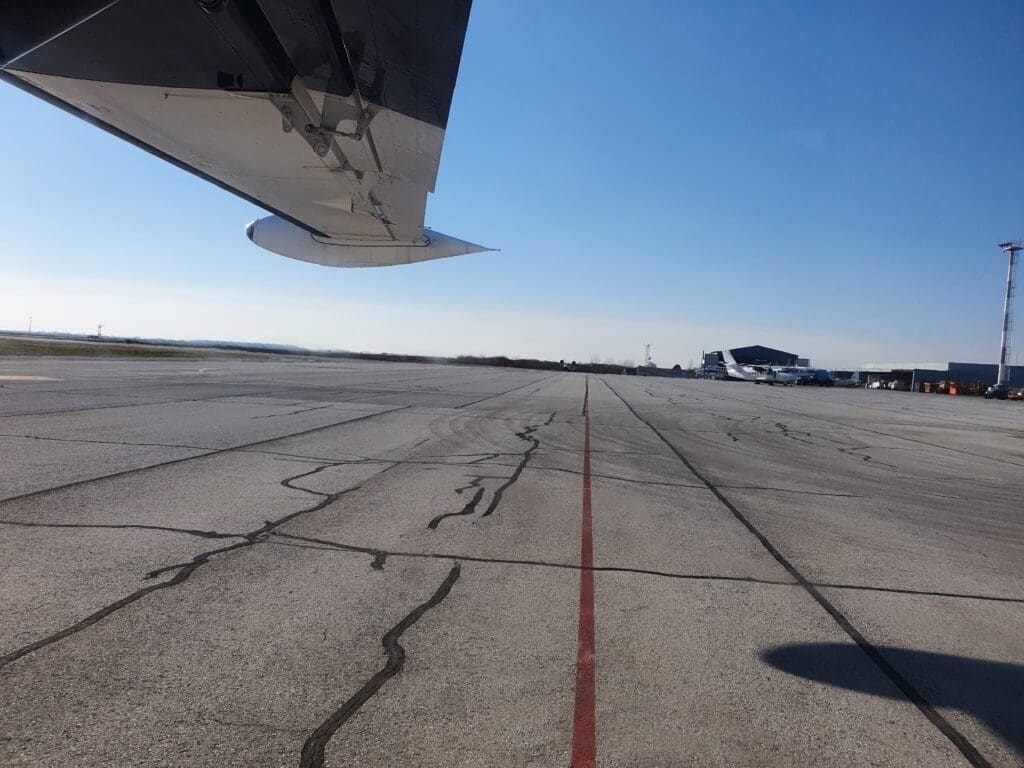
Following what seemed to be a long backtrack to the end of the runway, at 1519 the Turbolet began a powerful and noisy rolling take-off. As was to be expected given the aircraft’s STOL capabilities combined with the light load, the aircraft rocketed upwards into the Slavonian skies in no time allowing for a good view of the terminal and the host of parked aircraft before these sights were replaced by the flat fields that sit around Osijek until we reached the buildings of the city popped into view.
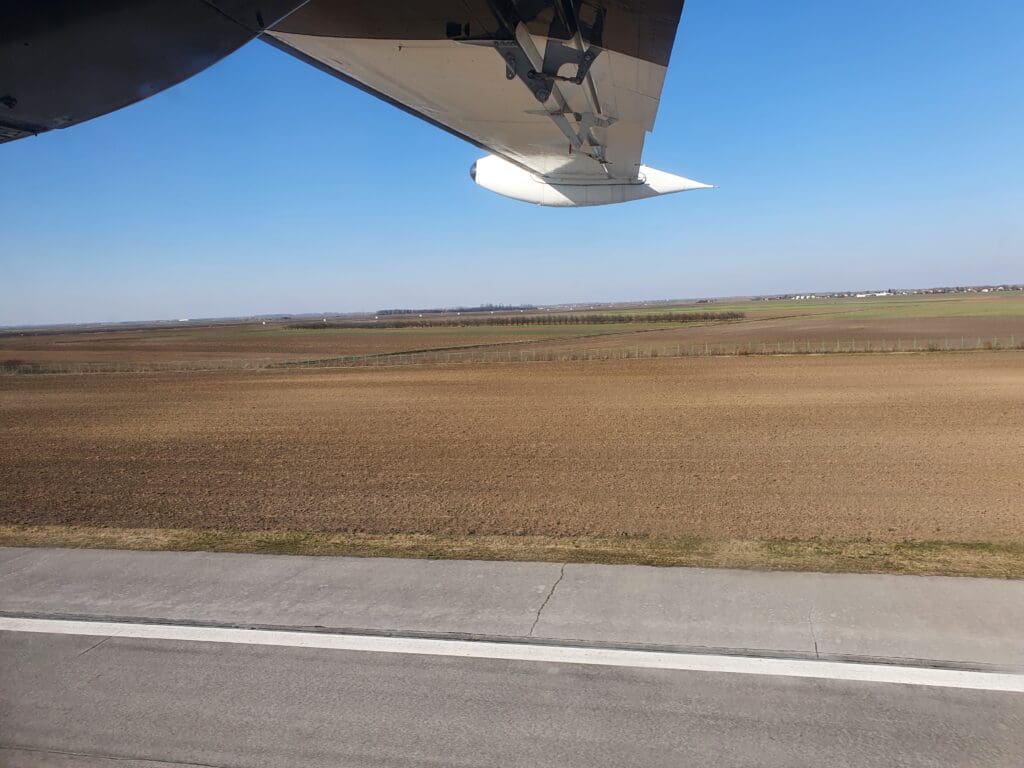
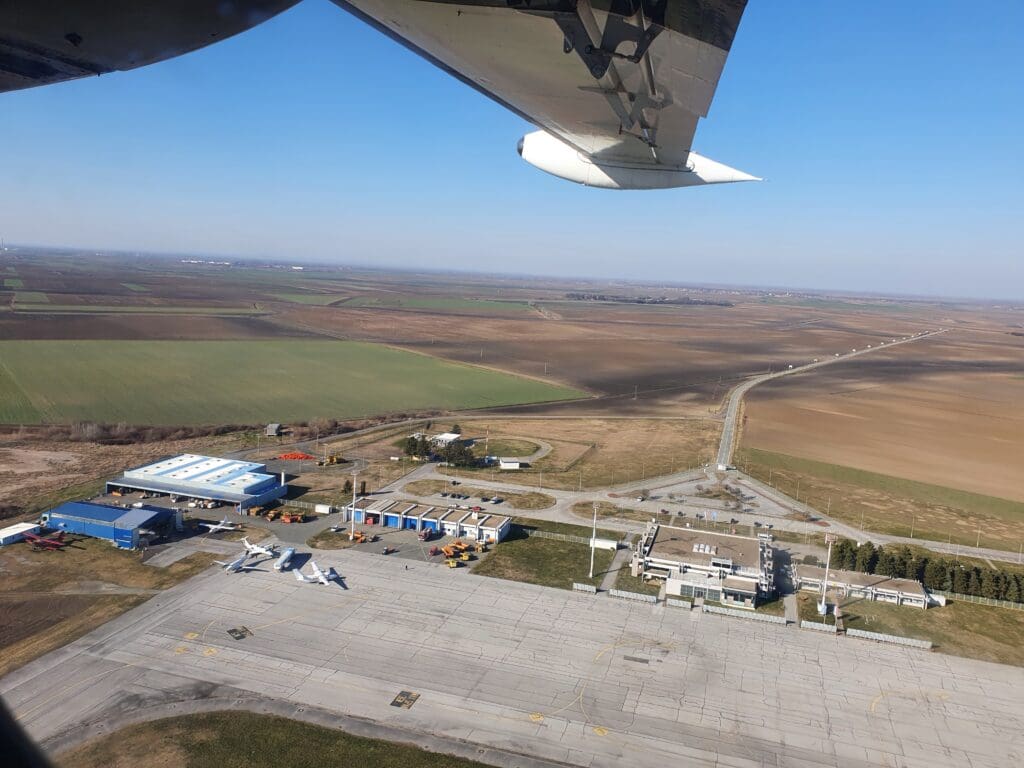
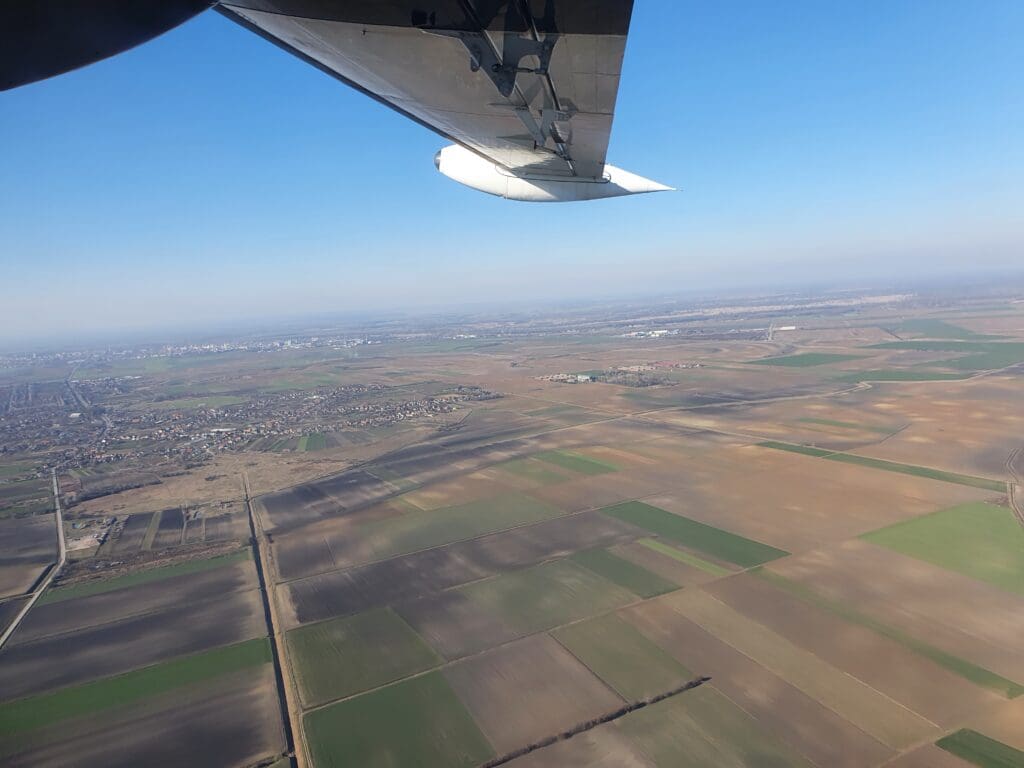
As the Turbolet noisily climbed towards its low cruising altitude of 11,000 feet, the entirety of Osijek could be seen and soon the distinctive landmark of Osijek-Čepin Airfield appeared, indicating our departure from the city. From there, the aircraft flew northwest, travelling roughly parallel to the winding course of the Drava River before levelling off around eleven minutes after taking to the skies. As had been the case onboard the other two flights, once in the cruise, the flight to Zagreb was smooth and no more than a few bumps could be felt as the aircraft plodded eastwards. Nevertheless, with no toilet or galley to visit inside the small Turbolet, and therefore nowhere for passengers to go, the seatbelt sign at the front of the cabin remained illuminated and all seven passengers plus the flight attendant remained firmly in their seats.
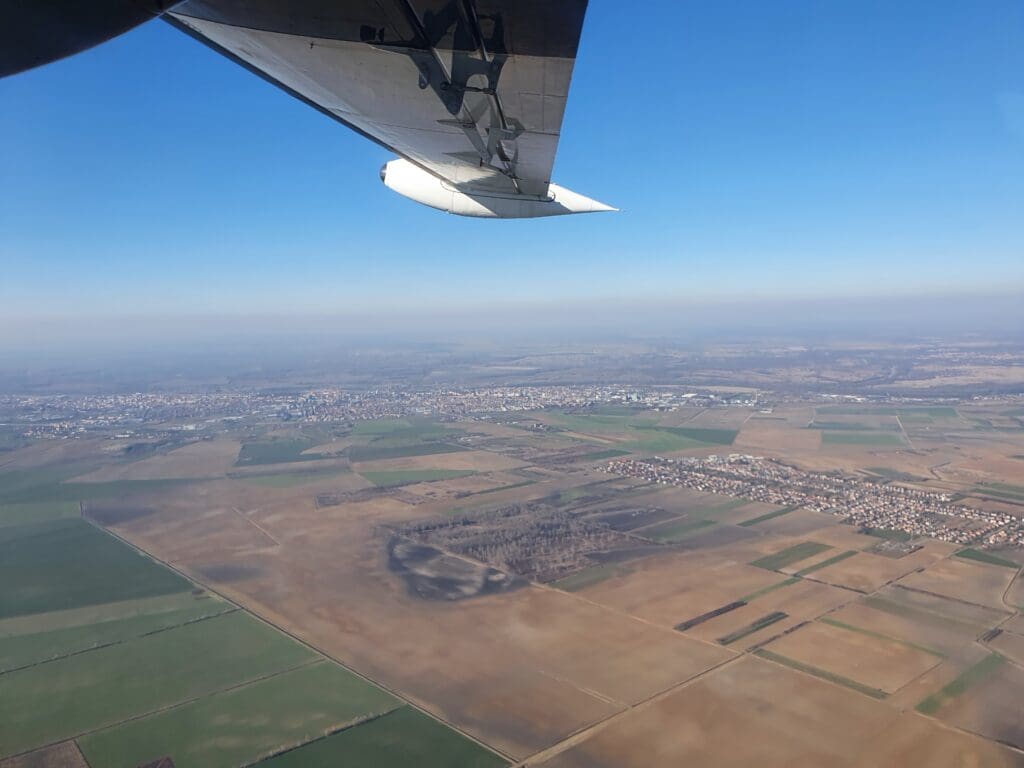
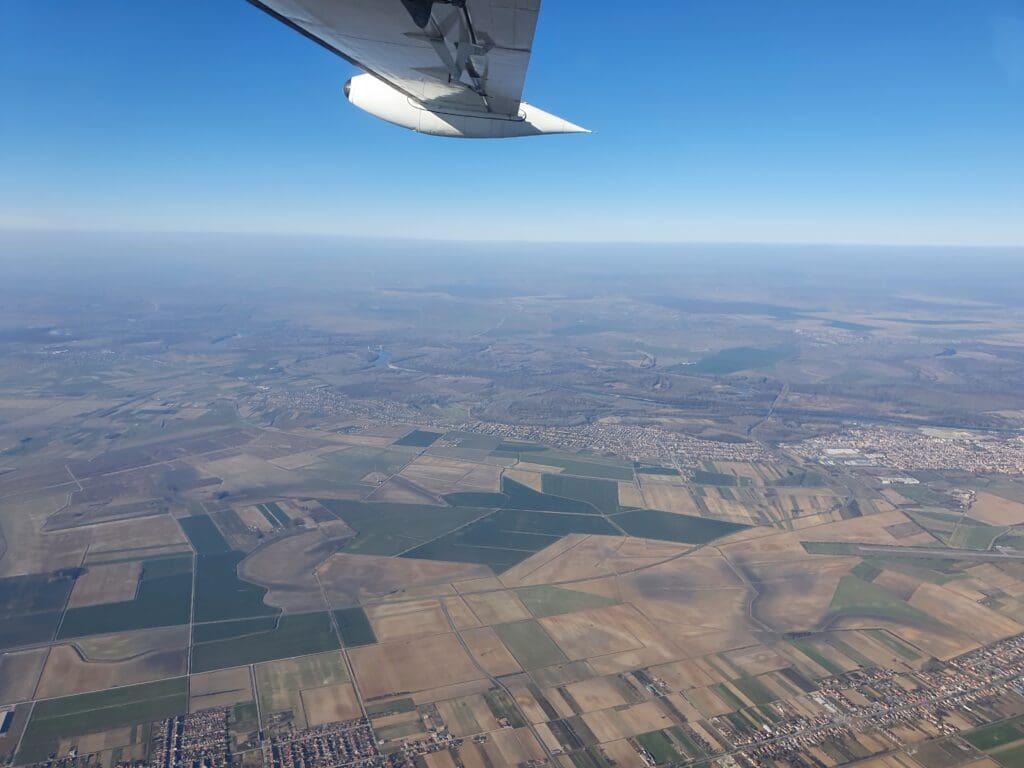
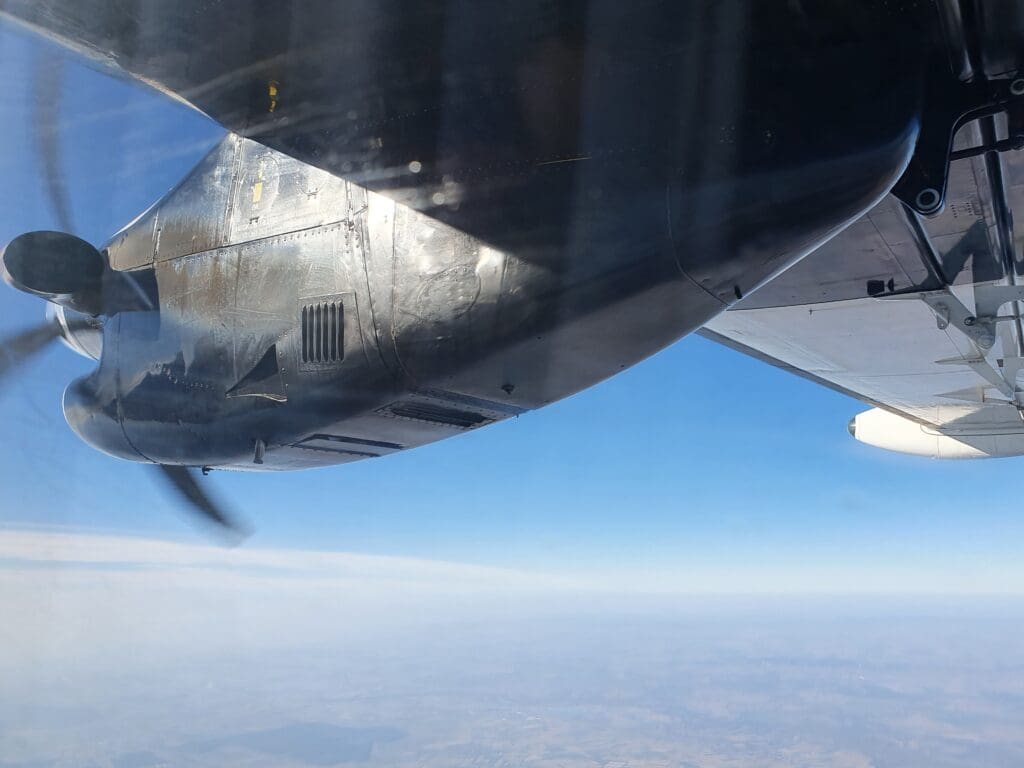
After leaving Osijek behind, little other than the occasional passing towns and villages rising out of the mostly flat landscape, little could be seen below. However, upon leaving Osijek-Baranja province and crossing into Virovitica-Podravina and then Bjelovar-Bilogora, a bank of hills rose up and filled the landscape below for around five minutes before sinking back down as we trundled towards the centre of the latter region.
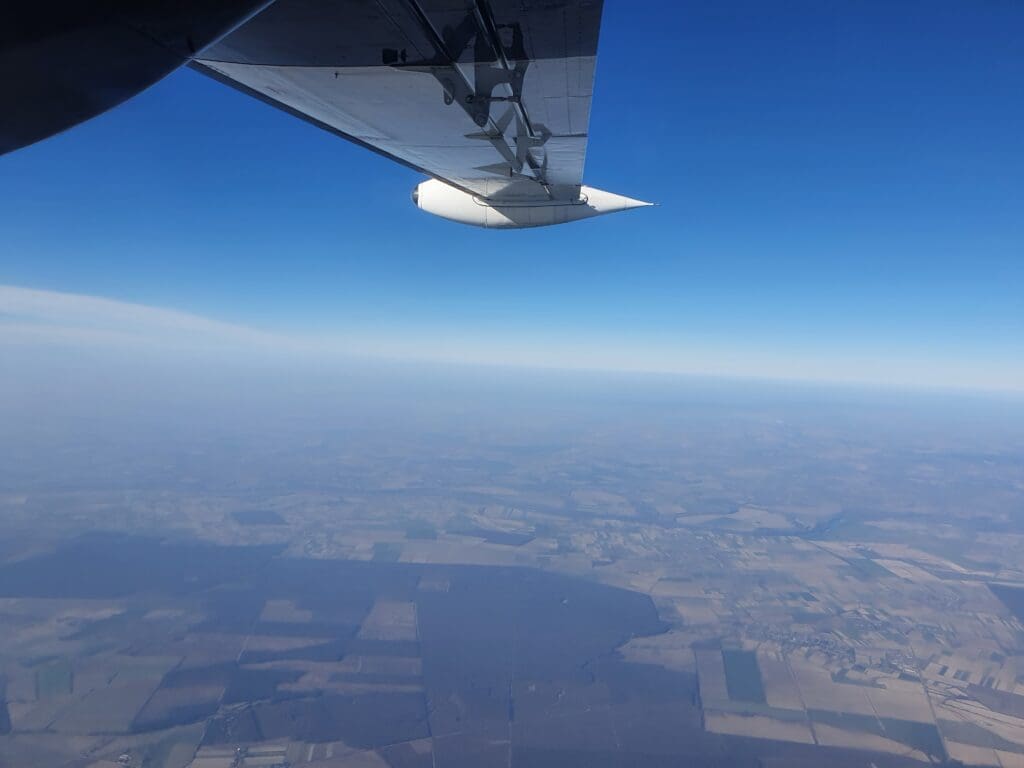
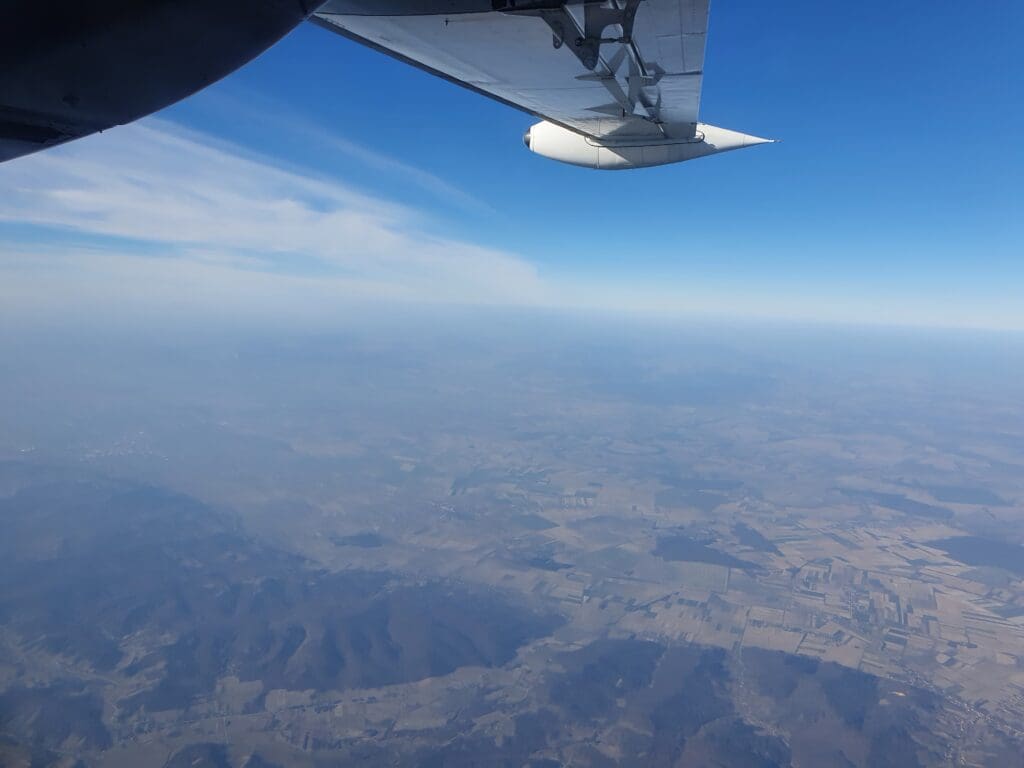
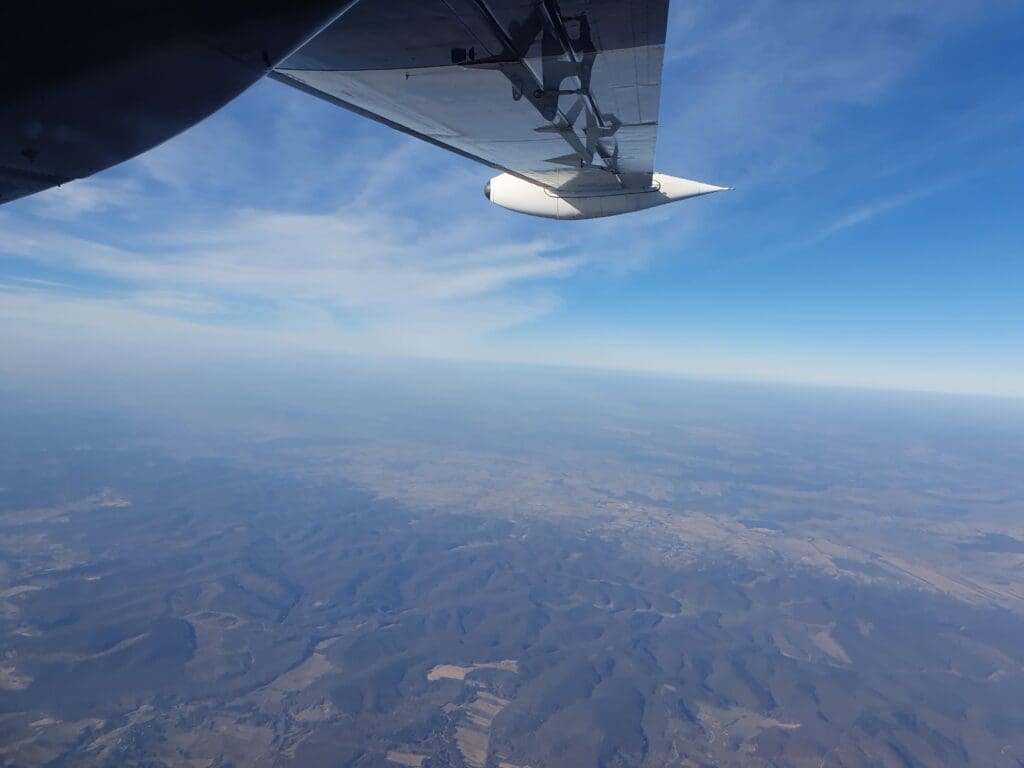
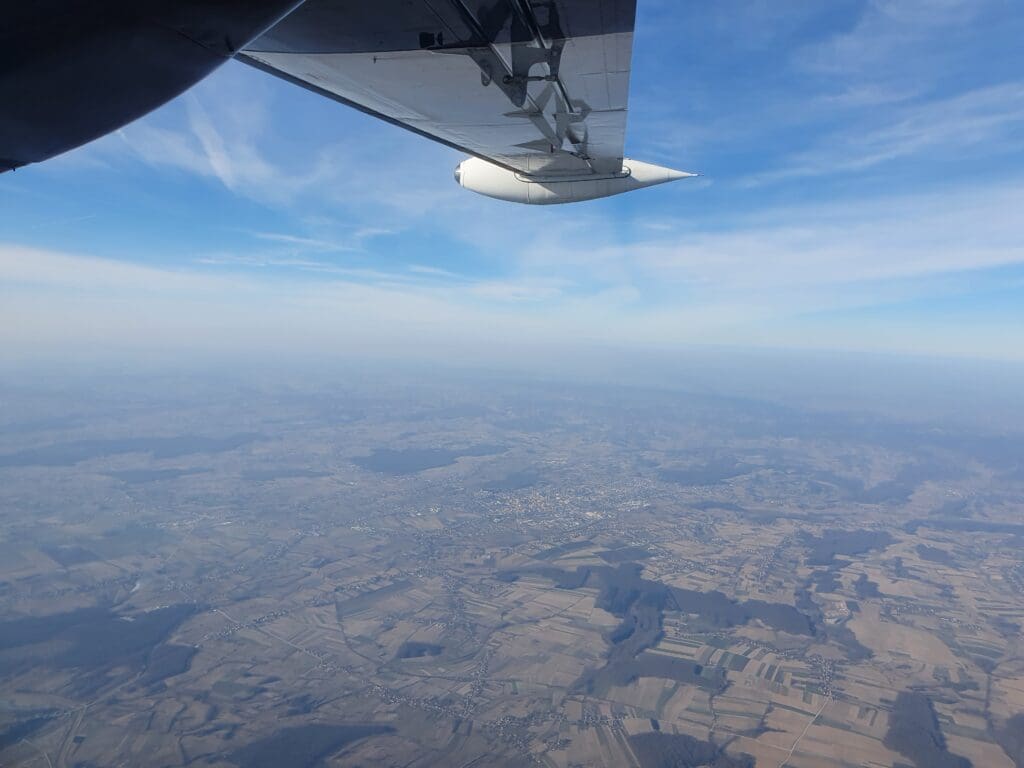
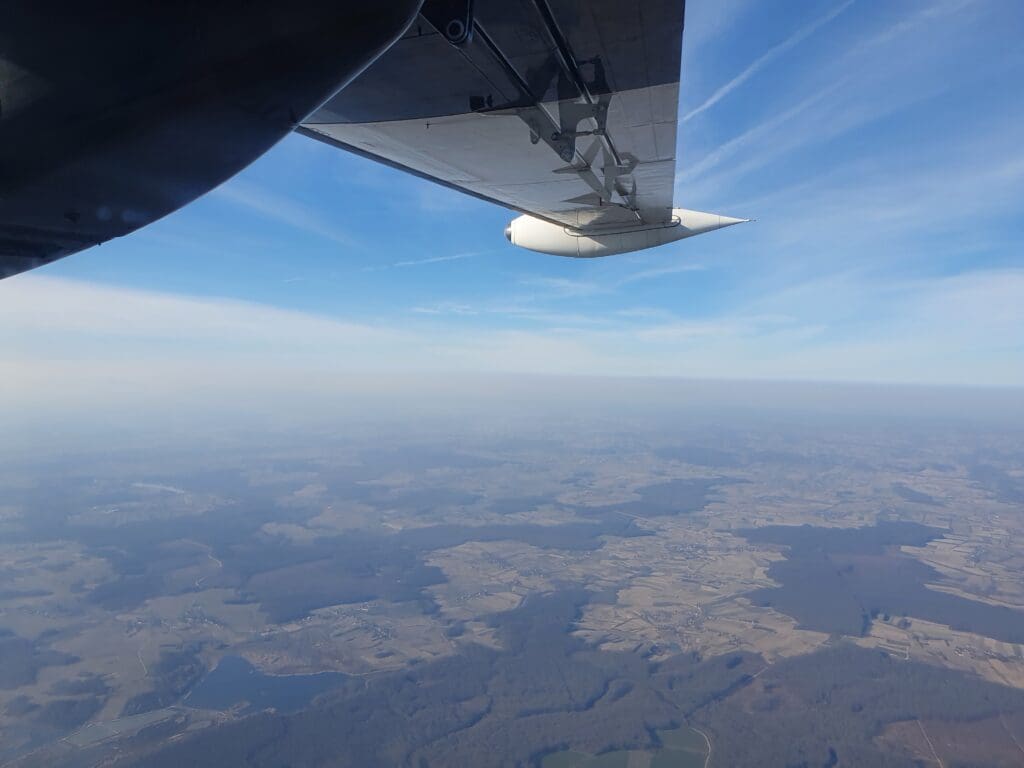
Aware that this would likely be my final flight on the Let L-410 for quite some time, I enjoyed my final few moments onboard the noisy Turbolet, soaking up the oil-scented atmosphere and staring out of the large window at the passing towns and villages below. Once again, the aircraft seemed to commence its descent with plenty of distance still to cover until its destination. As such, this was very shallow and barely noticeable, beginning just nine minutes after the Turbolet had reached its cruising altitude.
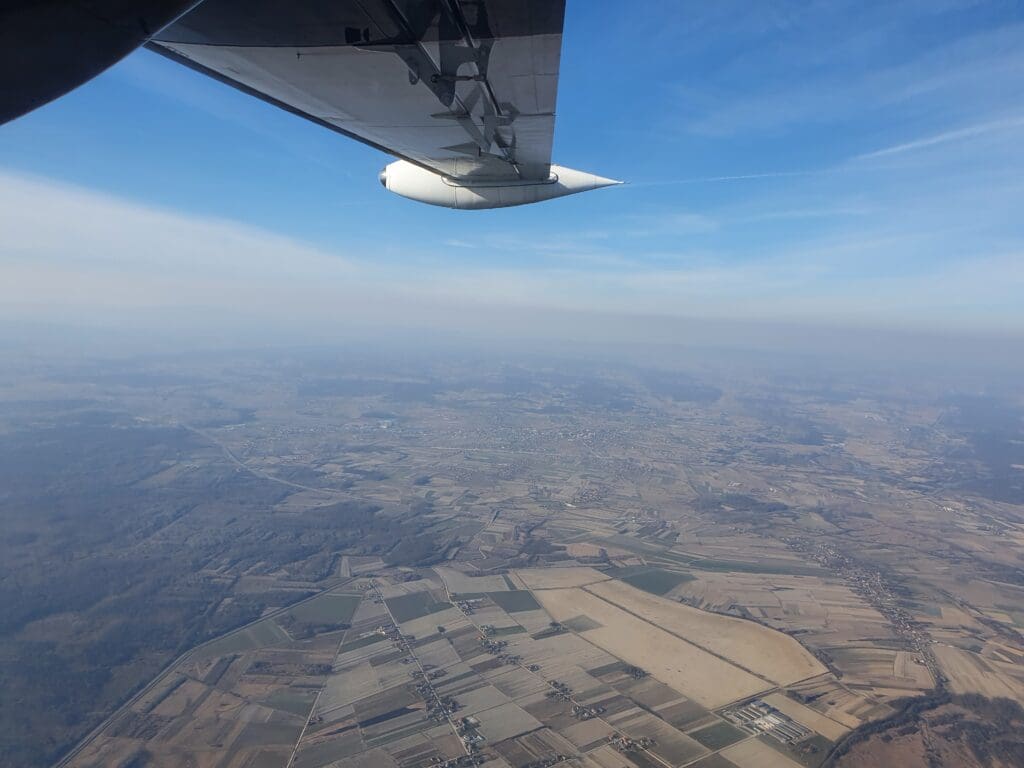
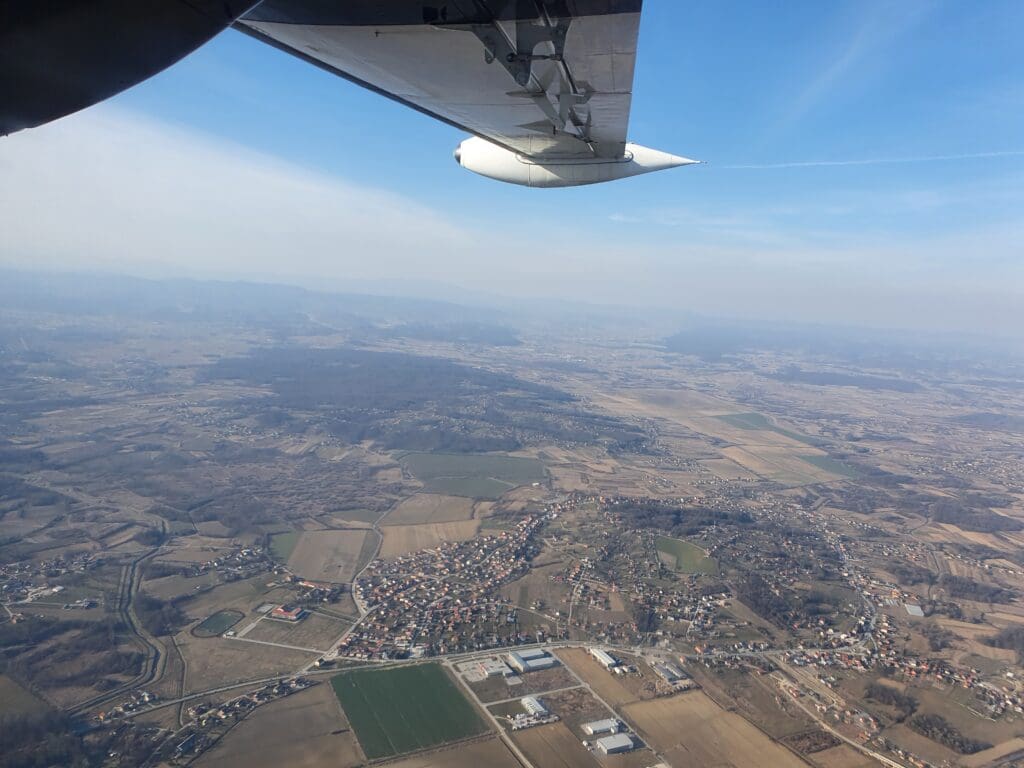
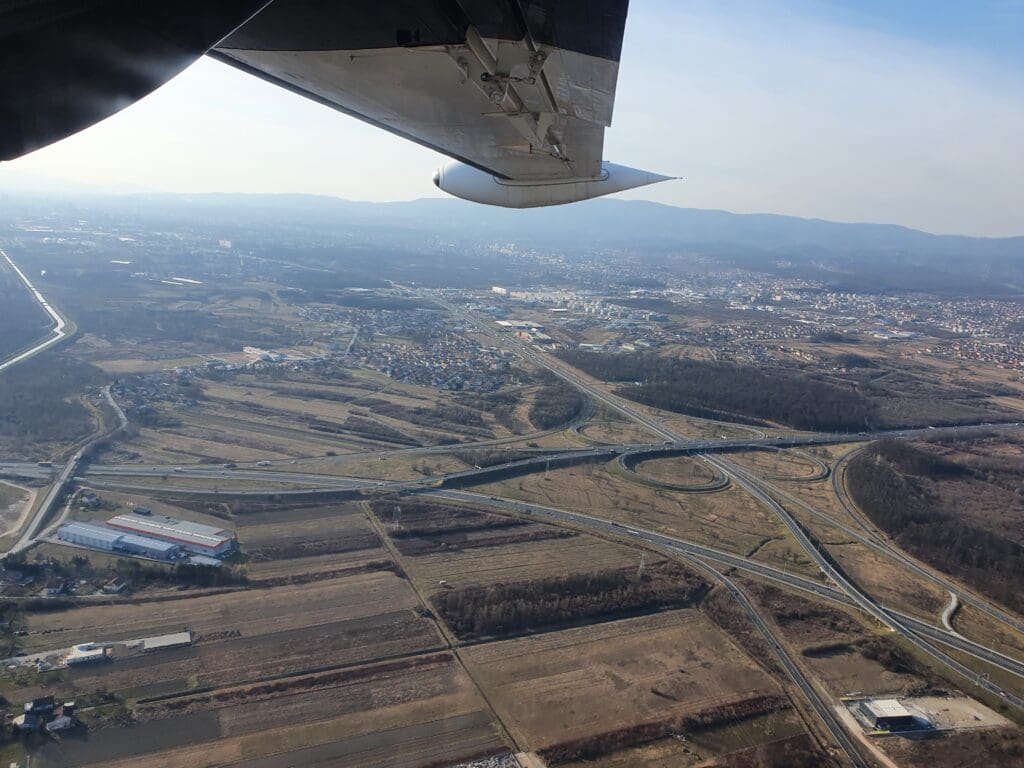
Just before 1600, the Turbolet reached Zagreb’s western fringes and crossed over the suburb of Dumovec before turning to line itself up for an approach to Zagreb Airport’s Runway 22. As the Turbolet neared the airport, the aircraft flew roughly parallel with the busy E71 road whilst the buildings of central Zagreb could be seen popping up through the afternoon haze to the north before the modest houses of small villages near the airport whizzed past below. Soon enough, the landing gear fell into position in preparation for the aircraft’s arrival as this commenced what seemed to be a steep final approach down towards the runway. At this time, the aircraft was rocked about a little bit although this was far from the most severe turbulence that I have ever experienced.
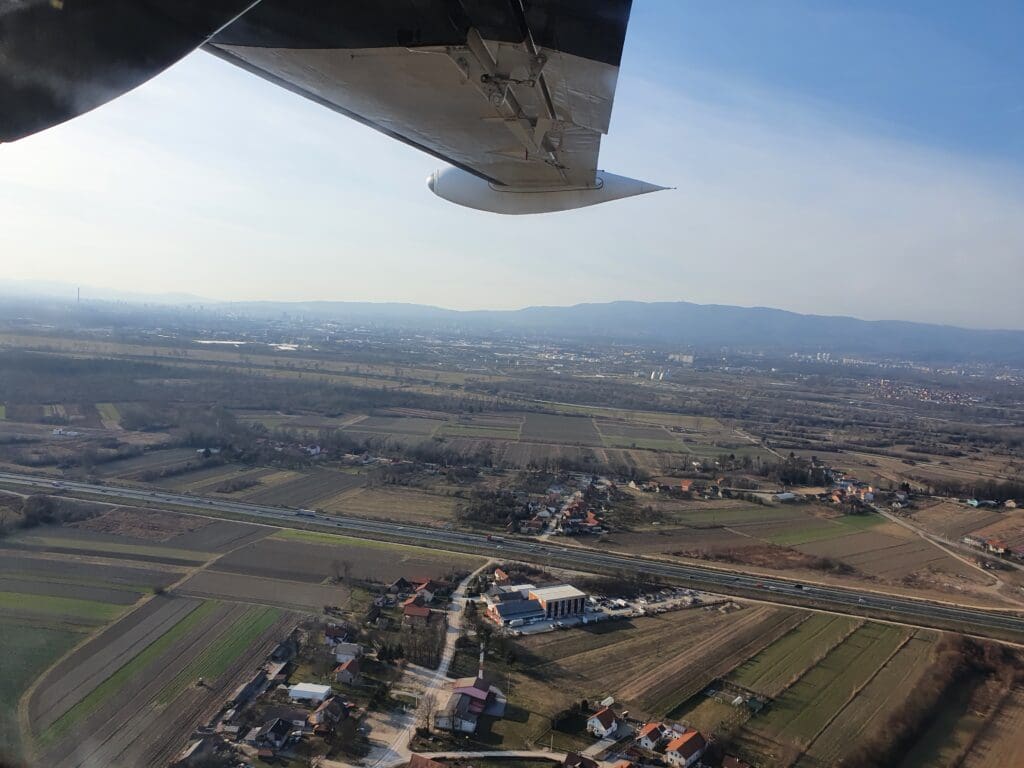
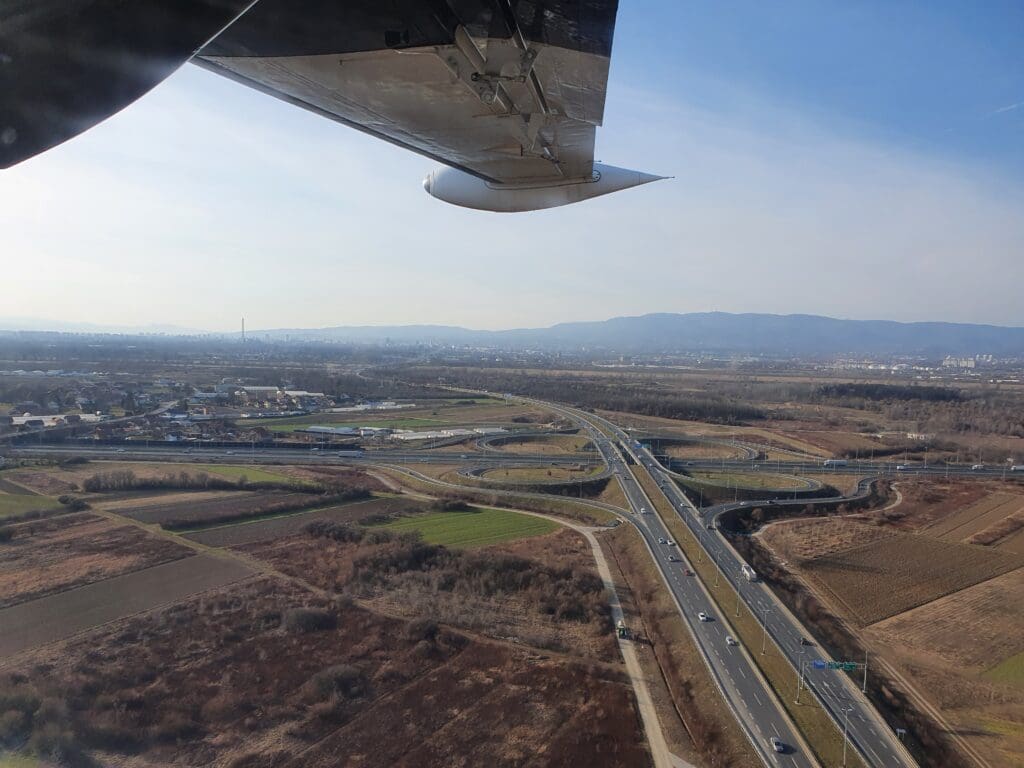
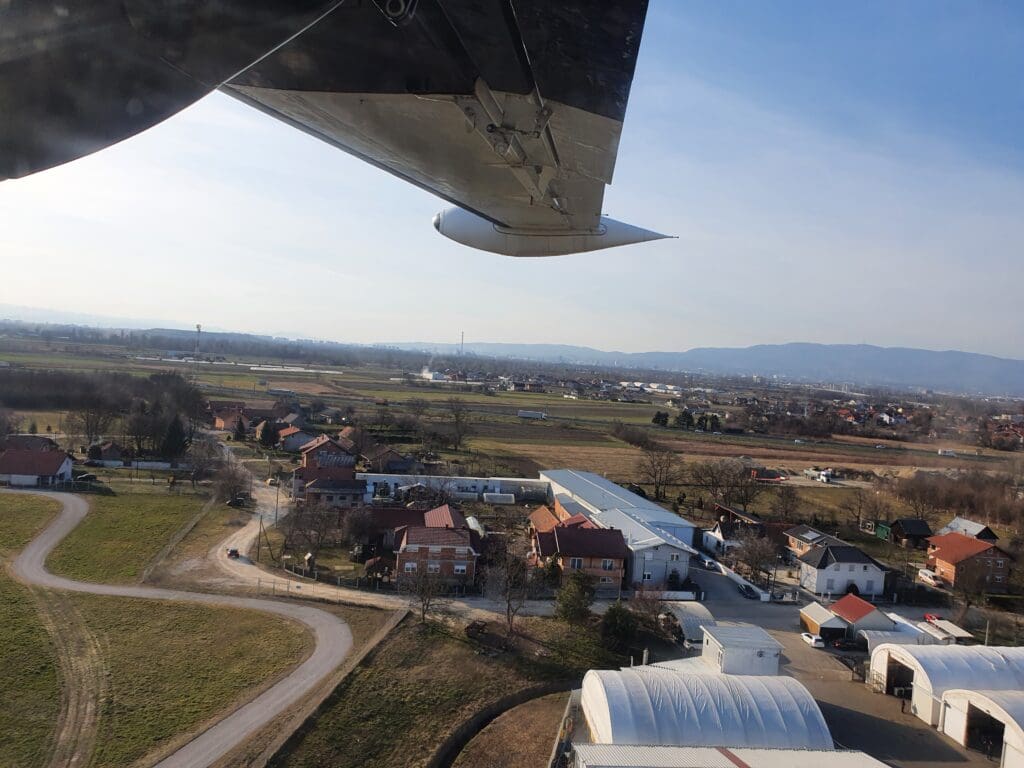
Following a pleasant 41 minutes in the air, the Turbolet sank over Zagreb Airport’s perimeter fence before making a very smooth touchdown on Runway 22 several moments later. Given the fact that Trade Air’s Turbolet-operated services utilise remote stands in the southwest corner of Zagreb Airport, after touching down there was no need for the aircraft to make a quick exit from the runway. Instead, the pilots braked gently to minimise taxi time. Eventually, the aircraft vacated the runway to the left and made its way past a fellow Turbolet, this belonging to Bulgarian carrier Heli Air, a Boeing 737-400F operated by Spanish carrier Swiftair as well as Trade Air’s single Fokker 100. After passing these, the aircraft swung left and cautiously taxied into Stand W12 before coming to a halt ahead of schedule.
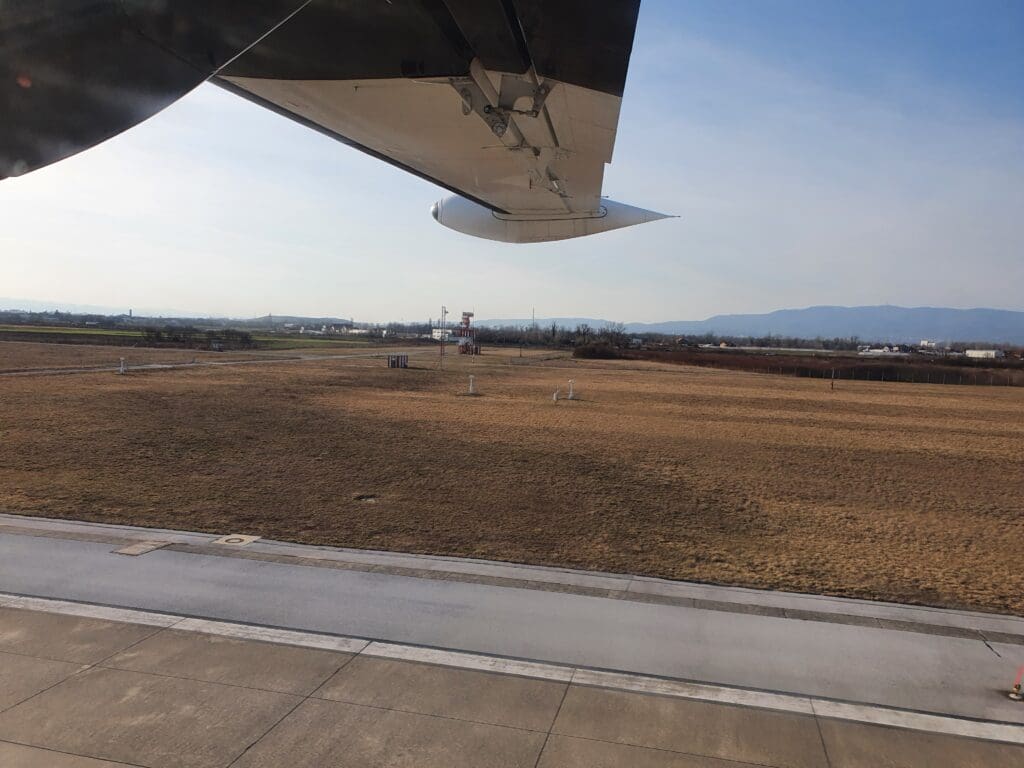
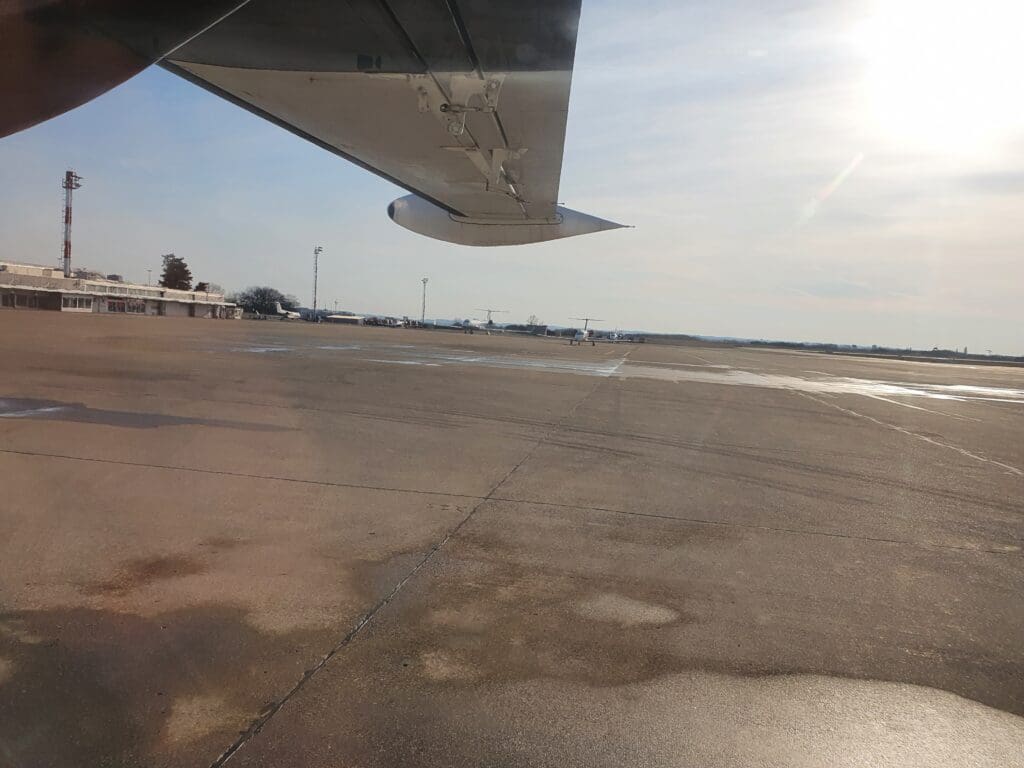
In the usual manner, once on stand, the two turboprop engines spooled down, however, unlike at the other airports that I had passed through that day, passengers could not simply disembark and walk over to the terminal. Instead, the first officer did not open the cabin door until an airport bus had been manoeuvred into position just off the Turbolet’s port wingtip. This soon appeared and being one of the rearmost passengers onboard the aircraft, once the door opened I soon stood up and thanked the flight attendant before heading out of the aircraft and walking the short distance over to the waiting bus.
As soon as all seven passengers had made their way onto the bus, the doors slid closed and this began its journey down the flight line towards Zagreb Airport’s modern and distinctive terminal. Unfortunately, thanks to the decals applied to the side of the bus promoting SIXT, little could be seen of the aircraft that we passed on this journey – although the majority of these took the form of relatively uninteresting Croatia Airlines Airbuses and Dash 8 Q400s. A short time later, the bus came to a halt at the doors to the empty domestic airside portion of the terminal, bringing my Croatian Turbolet experience to an end.
Summary
Without a doubt, my Monday jaunt across Croatia was €58.85 well spent. Not only did this allow me to get an aerial tour of the country and witness its diverse and impressive landscapes, but I also managed to sample no fewer than three flights on the rare Let L-410 Turbolet. Whilst more ‘normal’ passengers may complain about the Turbolet’s small cabin, the cool flight attendant or the unrelenting noise produced by the aircraft’s two turboprop engines, I was left with very little to complain about. I would thoroughly recommend this experience to anyone looking for a cost-effective means of sampling the rare Turbolet.