A Ukrainian Embraer 145 Ride: Windrose Airlines Review
Booking
At the time of my trip in May 2019, those wishing to travel between Kyiv and Zaporizhia by air could utilise the help of two different airlines. Those fancying a ride on a rare Soviet-era aircraft, usually an Antonov An-24 could fly with Motor Sich Airlines from Zhuliany, whilst Ukraine International Airlines loyalists could fly from Boryspil, with most of the airline’s services operated by wet-leased Windrose Airlines Embraer 145s. Despite the fact that, understandably, most aviation enthusiasts would likely gravitate towards the Motor Sich Airlines option, having already included this rare Antonov in our Ukrainian itinerary and with the airline’s schedules not allowing us much time to explore the delights of Zaporizhia, we operated to take one of the Windrose Airlines-operated Embraer services.
With there being no price difference for tickets booked directly with Ukraine International Airlines versus third-party booking sites, we thought it wise to book directly with Ukraine’s national airline. Upon landing on the airline’s site, we were greeted by the not overly Ukrainian image of a yacht floating in turquoise waters, flanked by grey cliffs – with this being an advertisement for the airline’s summer services to Palma de Mallorca. This was soon replaced by advertisements for their flights to Iceland (via Helsinki, where passengers would connect onto Icelandair), La Romana, their new inflight menu, and premium economy service. Given Ukraine International Airlines’ status as a major airline with an extensive route network, searching for flights and using their website was a straightforward and painless experience.
After entering all the required information into the flight search engine, I was almost immediately presented with two options: a 1050 and a 2010 departure, both operated by Windrose Airlines and priced at 2,195 and 5,393 hryvnias respectively. Whilst both fares seemed to be on the more expensive side of things for a domestic flight of no more than about 260 miles. I opted for the cheaper morning flight, which also allowed for an afternoon of exploration in Zaporizhia. After entering my details, I navigated the minefield of optional extras, such as checked luggage and travel insurance. Whilst I avoided most of these, I did succumb to the 121 hryvnias seat reservation fee and a 151 hryvnias mozzarella panini, bringing my total fare to 2441 hryvnias (£69). The payment process was quick and smooth, and I received a confirmation email almost instantly, completing all bookings for my trip to Ukraine and Belarus.
The Journey
Having stayed in Kyiv’s Pechersk neighbourhood, we decided to err on the side of caution and left our accommodation at 0730 and began the brisk walk through the slightly chilly early summer streets of the Ukrainian capital. After a few minutes, we arrived at Pecherska Station on Kyiv Metro’s M3, or Syretsko–Pecherska Line. Once inside, we purchased two plastic tokens for 16 hryvnia – to put this fare into context, one could take six journeys on the Kyiv Metro for less than the cost of a single trip on the London Underground! After passing through the barriers, we descended the deep escalators to the northbound platform before an old Soviet-era train came rattling into the platform.
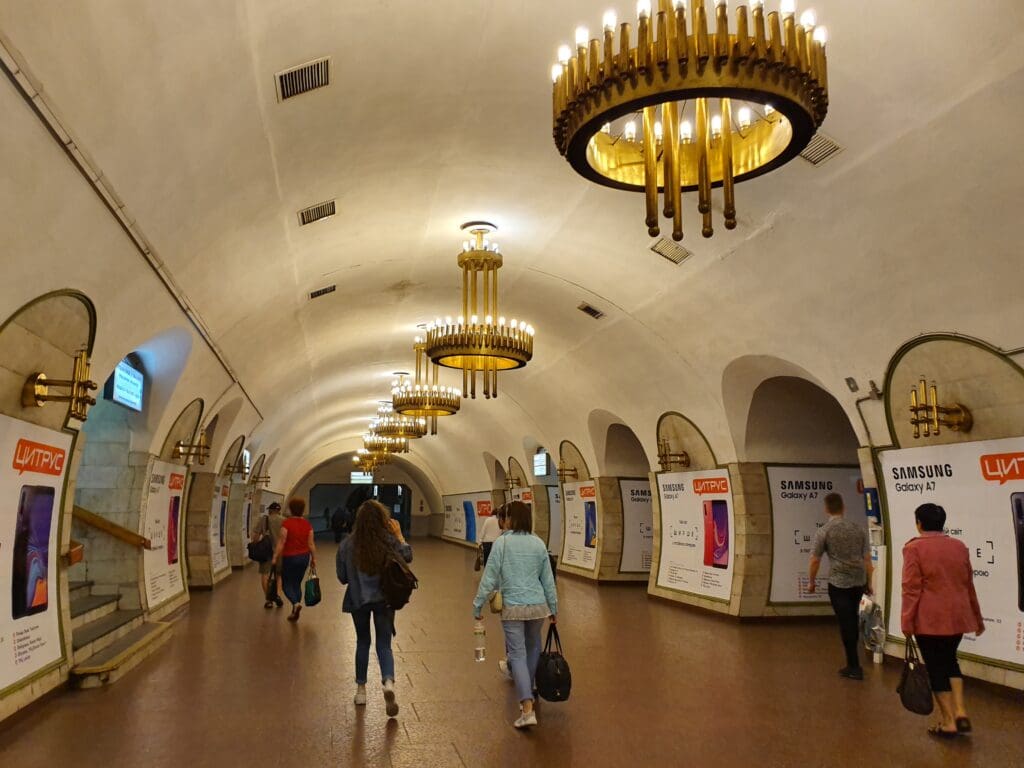

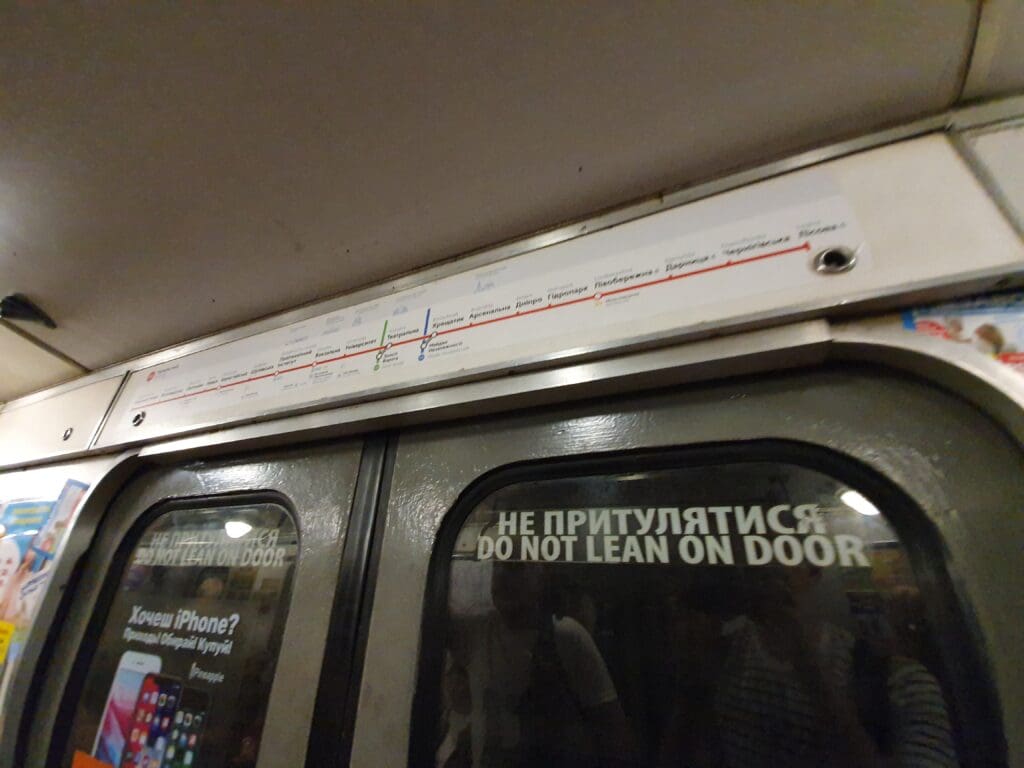
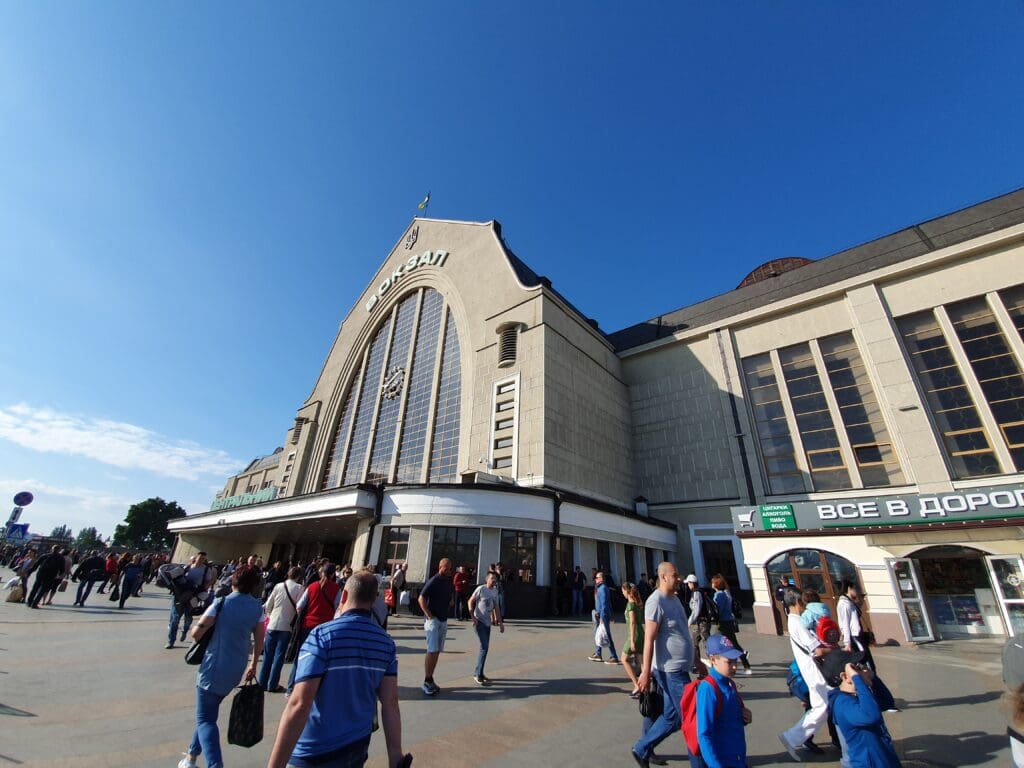
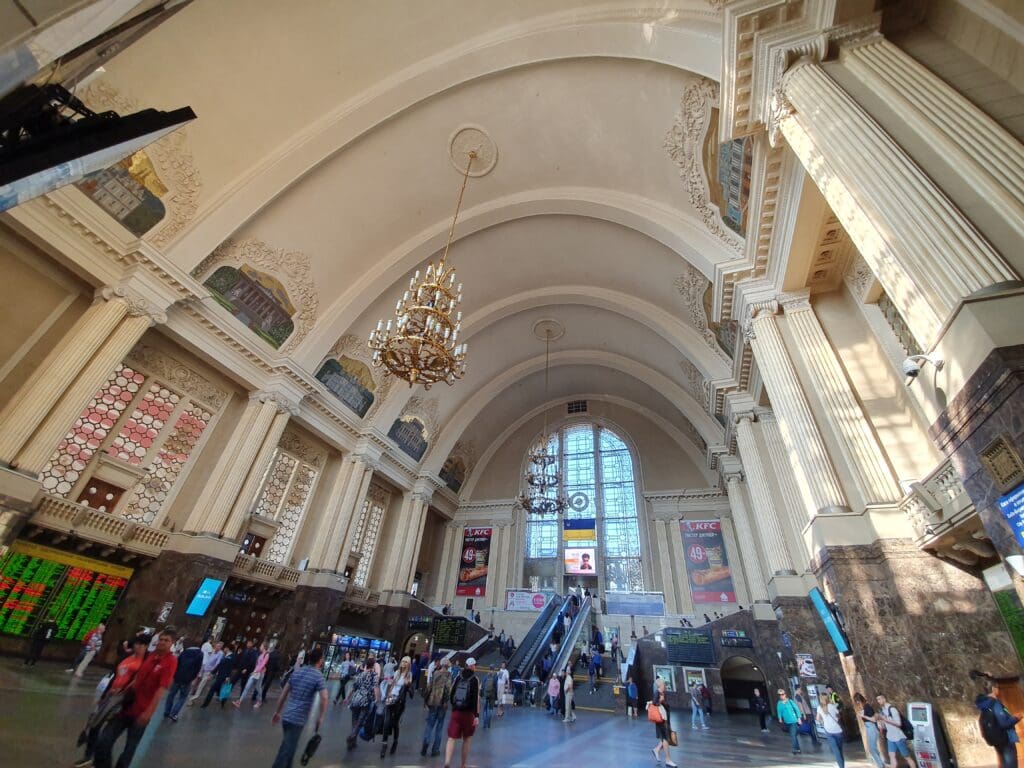
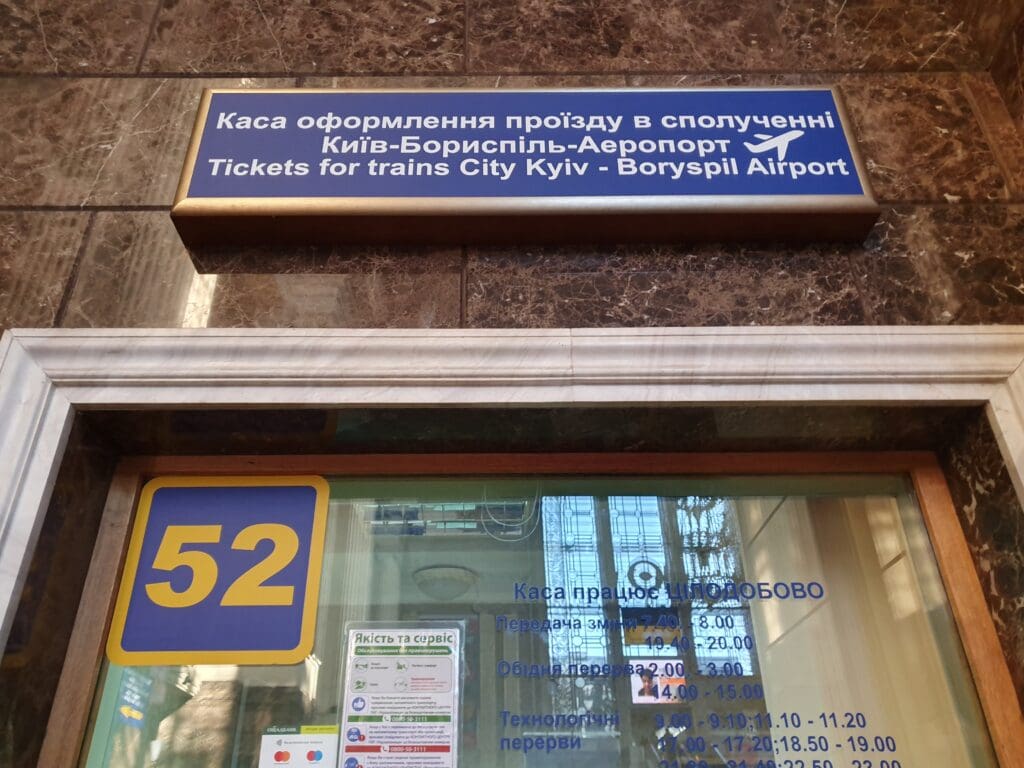
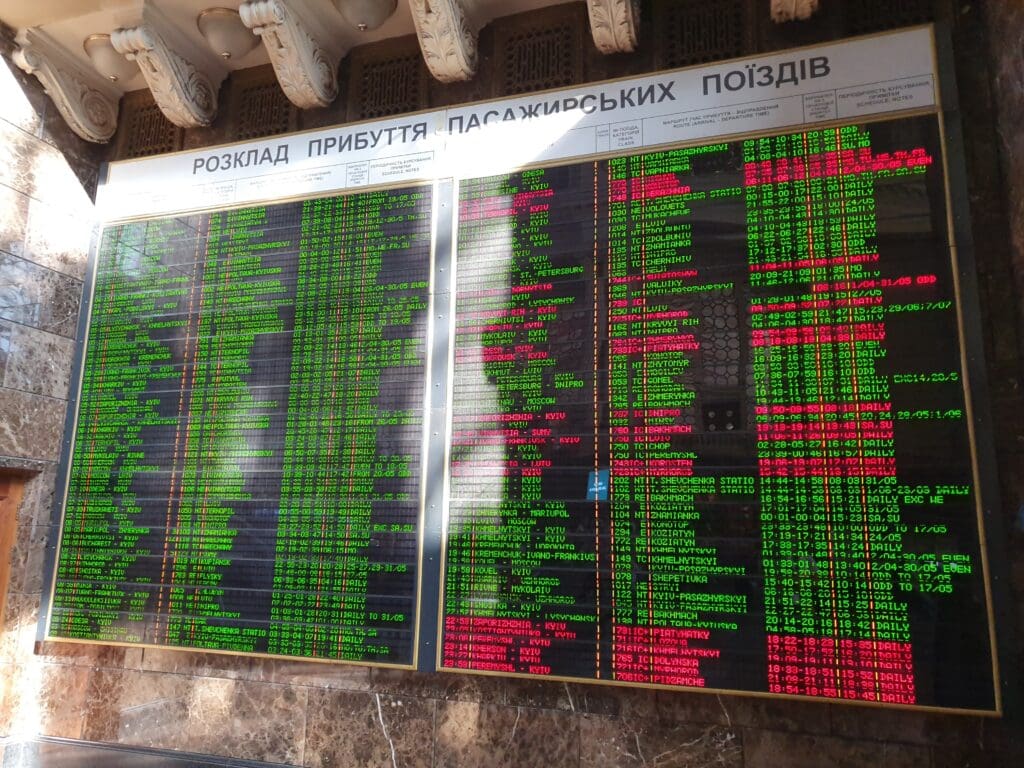
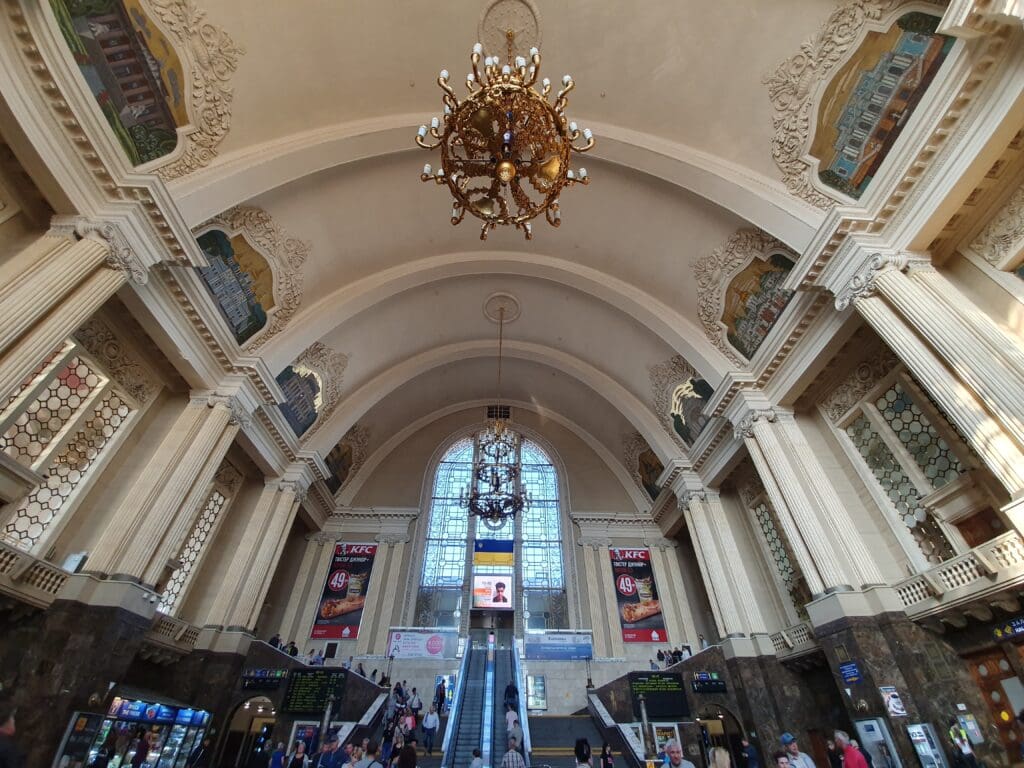
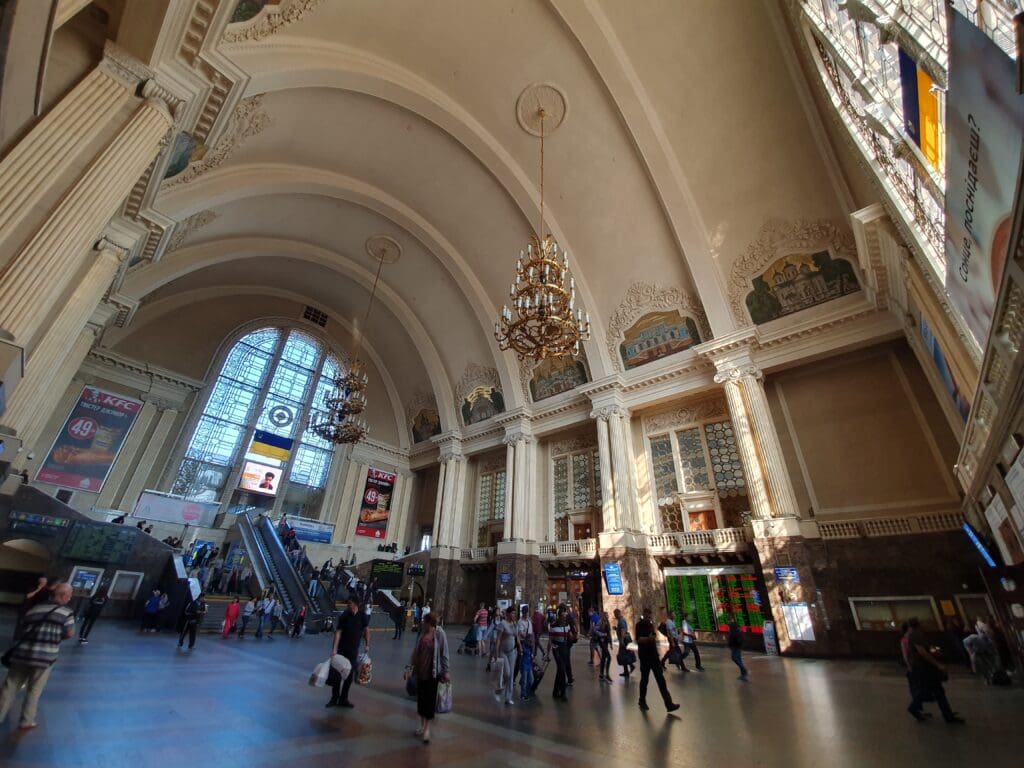
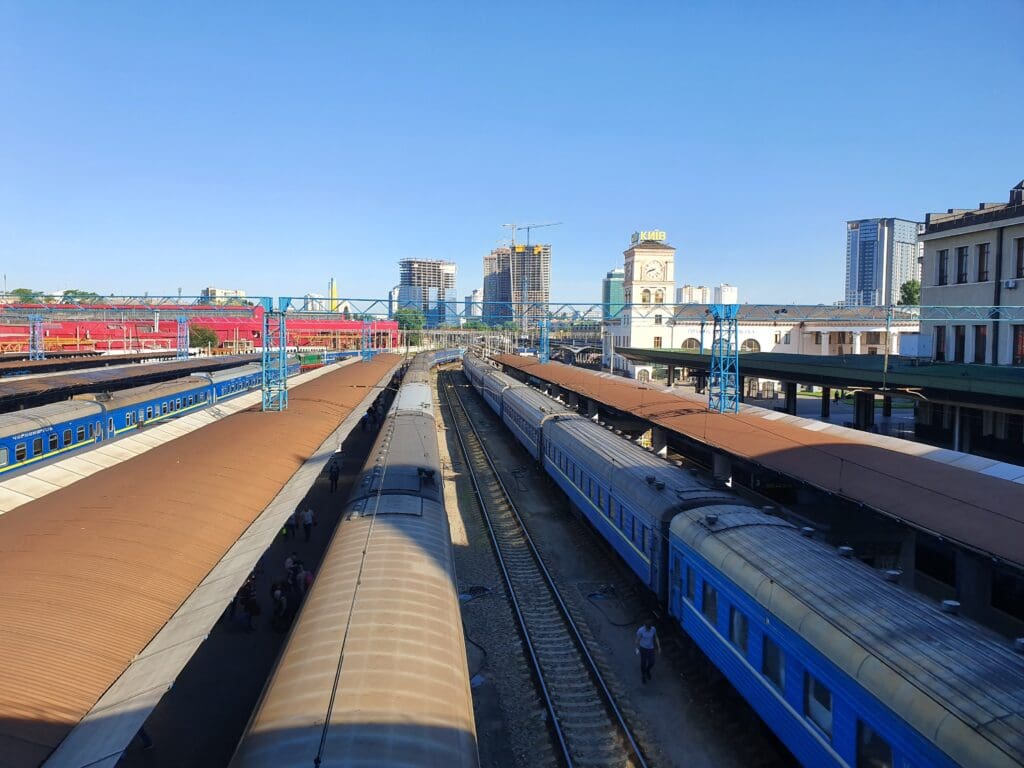
Several minutes later and after a slight glitch which saw us accidentally disembark a stop early at Palats Sportu, we arrived at Kyiv’s main railway station from where we intended to catch the next Kyiv Boryspil Express train to the airport. After a series of long escalators, we arrived out in the open air and made the short walk into busy Kyiv-Pasazhyrskyi’s grand departure hall. Once inside, we headed to the dedicated airport train ticket counter which was easy to find thanks to clear signage. Fortunately, purchasing one-way tickets to the airport was a quick and easy process, and by the time we had these in hand, we were left with around twenty minutes or so to go until the next Boryspil-bound departure. Tickets in hand, we admired the station’s impressive architecture and bustling atmosphere, with departures to destinations across Ukraine and beyond, with destinations including Azerbaijan, Belarus, Moldova, Russia, and Romania. After a coffee, we made our way to the airport services’ dedicated platform, passing long blue carriages hauled by Soviet-era locomotives. In and amongst these older trains, I noticed some Korean-built Hyundai Rotem electrical multiple units which appeared to be very similar in their design to those used on the line between Seoul Incheon Airport and Seoul Station!
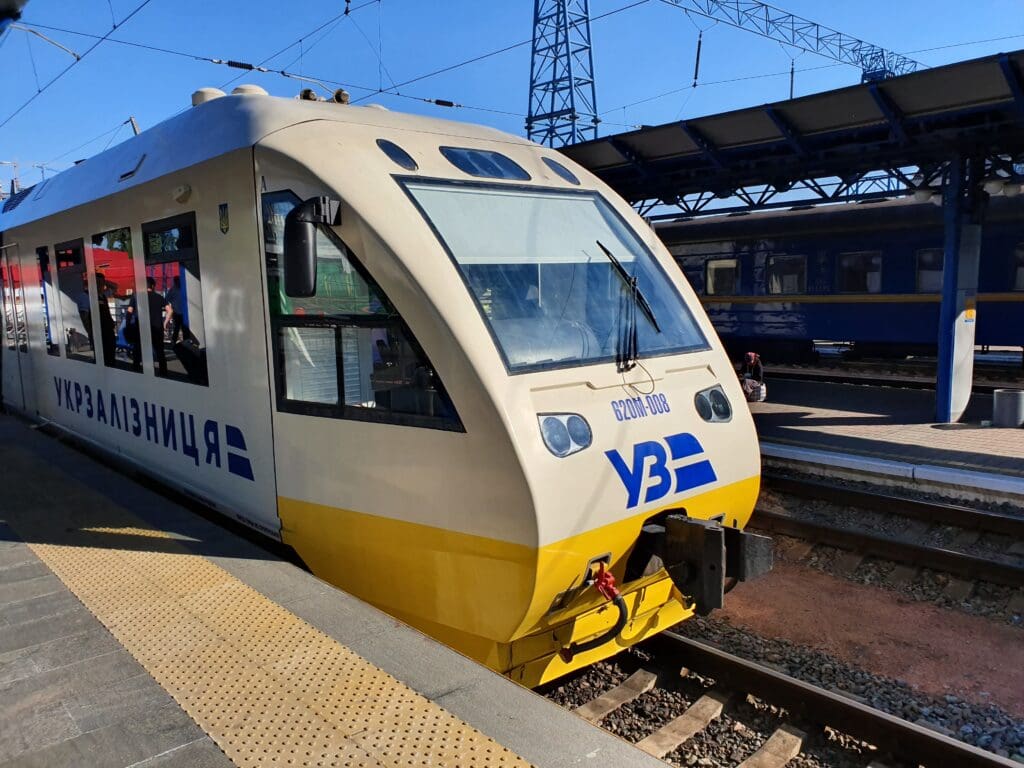
By the time we reached the platform, the modern Polish-manufactured Pesa 620M diesel railbus that would soon head off to the airport could already be seen waiting and so with no reason not to, we boarded this and took our seats. Onboard, the train was clean, comfortable and not too busy, and we departed right on time at 0850. After powering away from the sprawl of Kyiv-Pasazhyrskyi, the train sped out of the city centre, crossing the Dnipro River before reaching the Ukrainian capital’s mixture of green and apartment block-filled suburbs. Around twenty minutes into the journey, the train made a brief stop at Darnytsia Station where a few passengers boarded before we continued onwards on the second half of our journey.
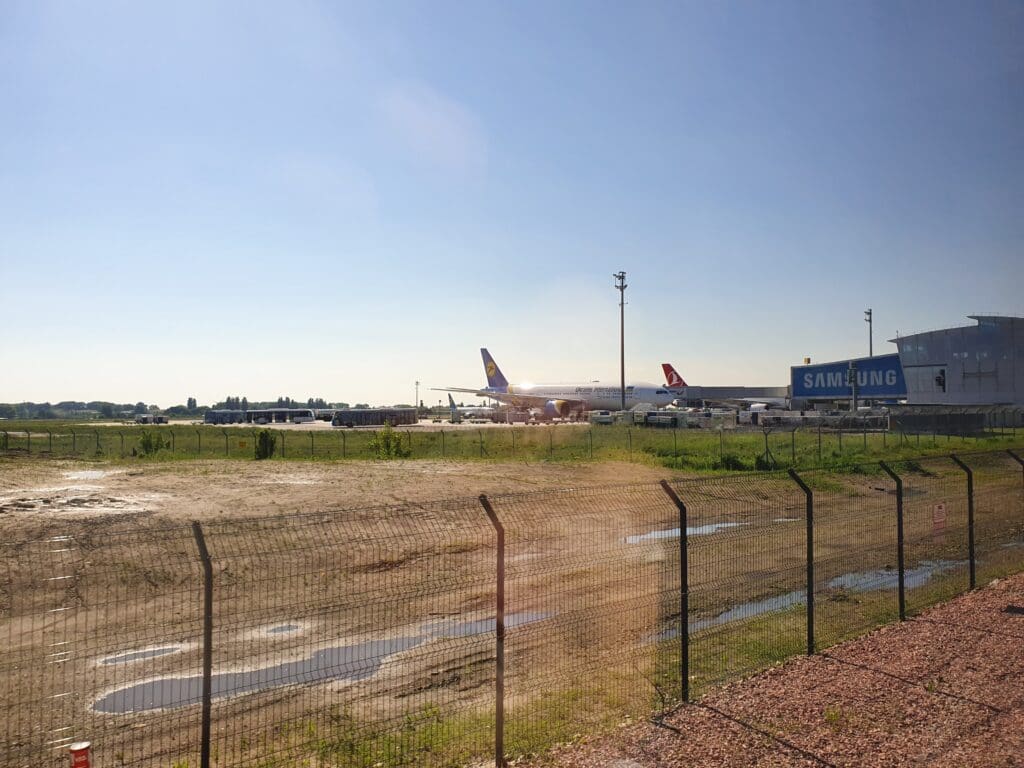
Soon, I caught sight of a Ukraine International Airlines Boeing 737-800 climbing into the skies at the start of its journey to Istanbul, indicating that we were nearing the end of our journey to the airport. Around 40 minutes after leaving Kyiv-Pasazhyrskyi, the train came to a halt at its terminus station, which is conveniently located a very short walk away from Kyiv Boryspil’s main terminal, Terminal D. As seems to be common at airports across the former Soviet Union, before entering the terminal all passengers must pass through a security checkpoint. Fortunately, with no queues, this was a quick and hassle-free process and we were soon able to continue on our journey.
Inside, the majority of Terminal D is unsurprisingly comprised of the terminal’s international portion, with domestic passengers confined to a small section beneath the main international check-in hall. After a quick ride up the escalator, we reached the domestic check-in area. Seeing as we were already in possession of mobile boarding passes and lacking any form of checked luggage, we proceeded directly to security. Whilst there was only a single checkpoint open at that time, the efficiency of the security staff meant that just like at the entrance to the terminal, we were able to pass through this quickly and easily with only minimal amounts of waiting.
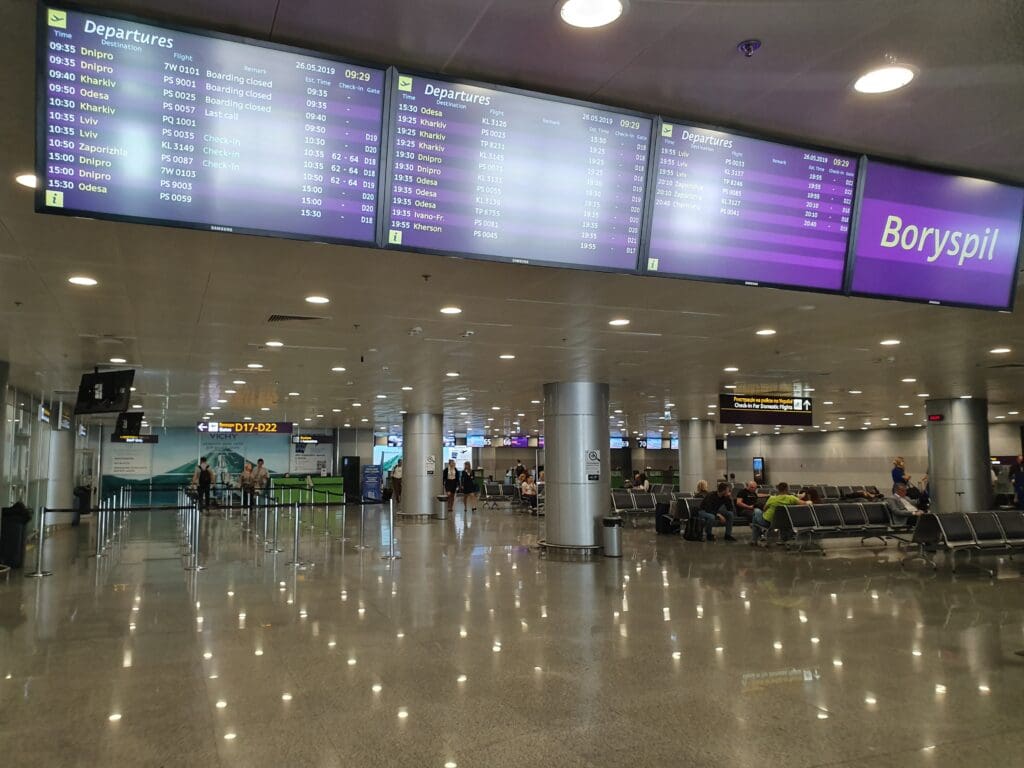
Unlike the international departure area, which boasts expansive views of the apron, runway, and even stored aircraft in the distance, the domestic section offers little more than the unexciting view of the bus parking area. Inside, facilities are rather small with nothing offered other than a small café, a vending machine and a lounge for premium passengers. On the plus side, a good number of charging points were offered whilst the complimentary wifi worked without a glitch for the duration of our stay. Meanwhile, other than the toilets, everything seemed to be in a clean and tidy state. However ultimately, I would caution passengers against passing through security with hours to go until their domestic flight. Lacking any ‘real’ gates, all domestic passengers must be bussed out to their aircraft.
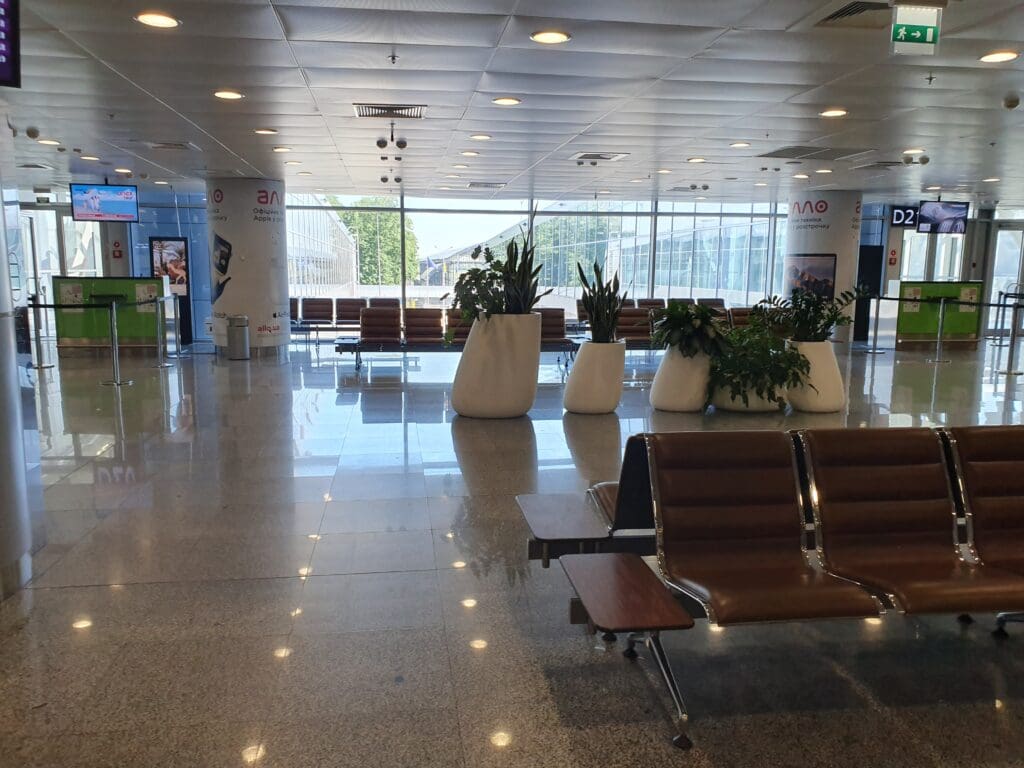
At that time, the domestic area was bustling with passengers, with two other flights scheduled to depart before our service to Zaporizhia. These took the form of two Boeing 737-800 operated flights – one bound for Kharkiv and operated by SkyUp Airlines, and the other operated by Ukraine International Airlines and heading for Lviv. Unsurprisingly, once boarding for these two Boeing 737-operated services commenced, the terminal emptied a little, leaving only those bound for Zaporizhia.
With 45 minutes to go until our flight’s scheduled departure time, at 1010, those bound for Zaporizhia were invited to board the flight. Nevertheless, at this time, my father and I made our way to the gate and joined the short queue before our boarding passes were scanned and we were able to make our way down the escalators and onto the nearly-full Cobus. Whilst the morning sunshine resulted in pleasantly warm temperatures for those outside in the open air, the packed bus soon became uncomfortably hot with passengers packed in like sardines. After a hot wait, ten minutes after boarding, the bus finally pulled away from the terminal and made its way to the aircraft.
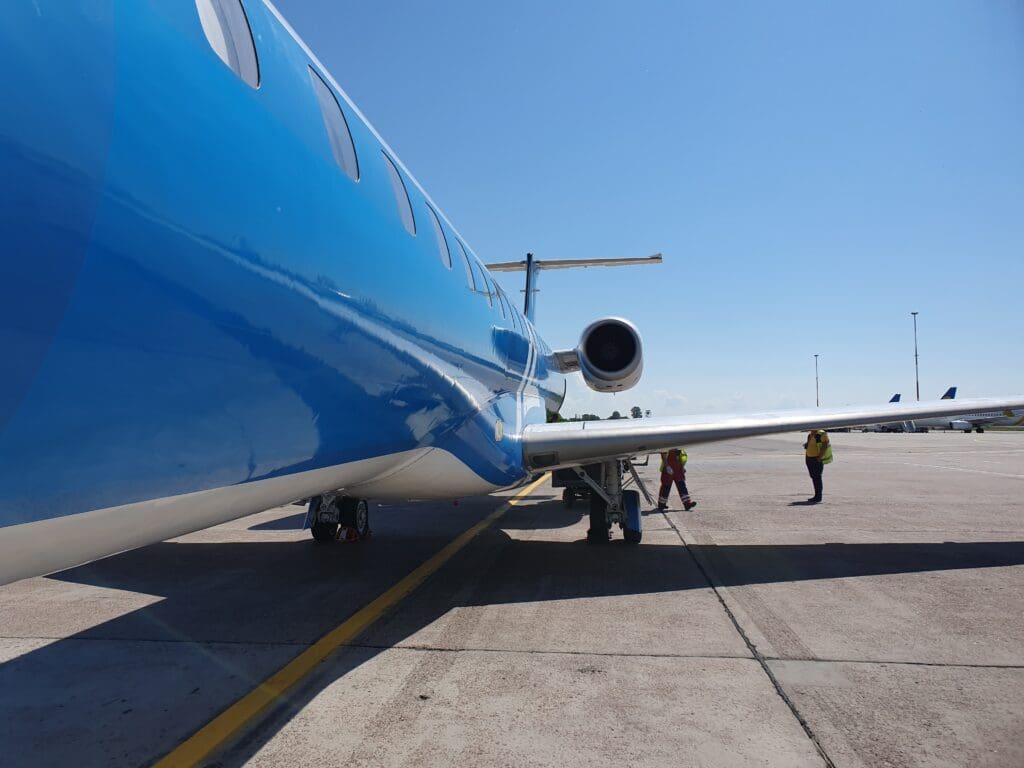
Standing near one of the windows, as we journeyed down the apron I was treated to good views which included every single type of aircraft in Ukraine International Airlines’ fleet. These ranged from their small Embraer 190s to their second-hand Boeing 777-200ERs that they had recently acquired from Asiana Airlines. However interestingly, not a single aircraft from any other airline from either Ukraine or abroad could be seen! Eventually, the Cobus arrived at the apron that sits in front of the airport’s original Soviet-era terminal, Terminal B where a total of three Windrose Airlines Embraer 145s, almost half of the airline’s Embraer fleet, could be seen waiting for their next missions.
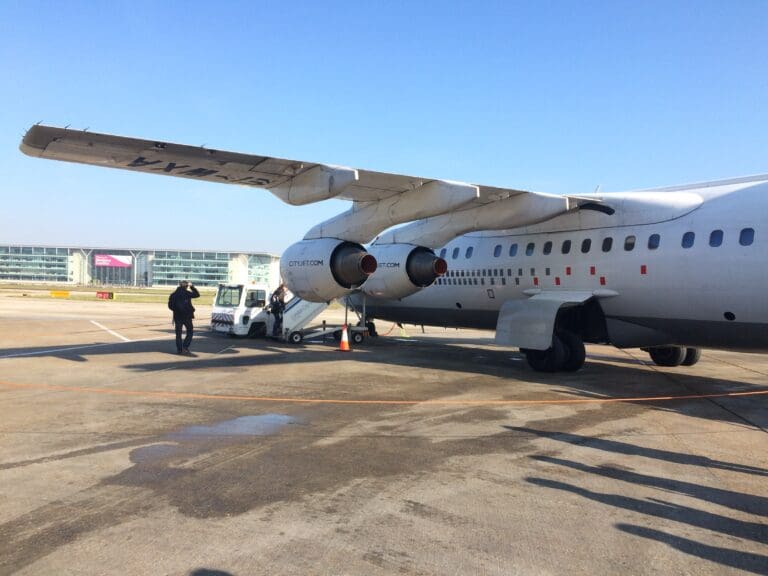
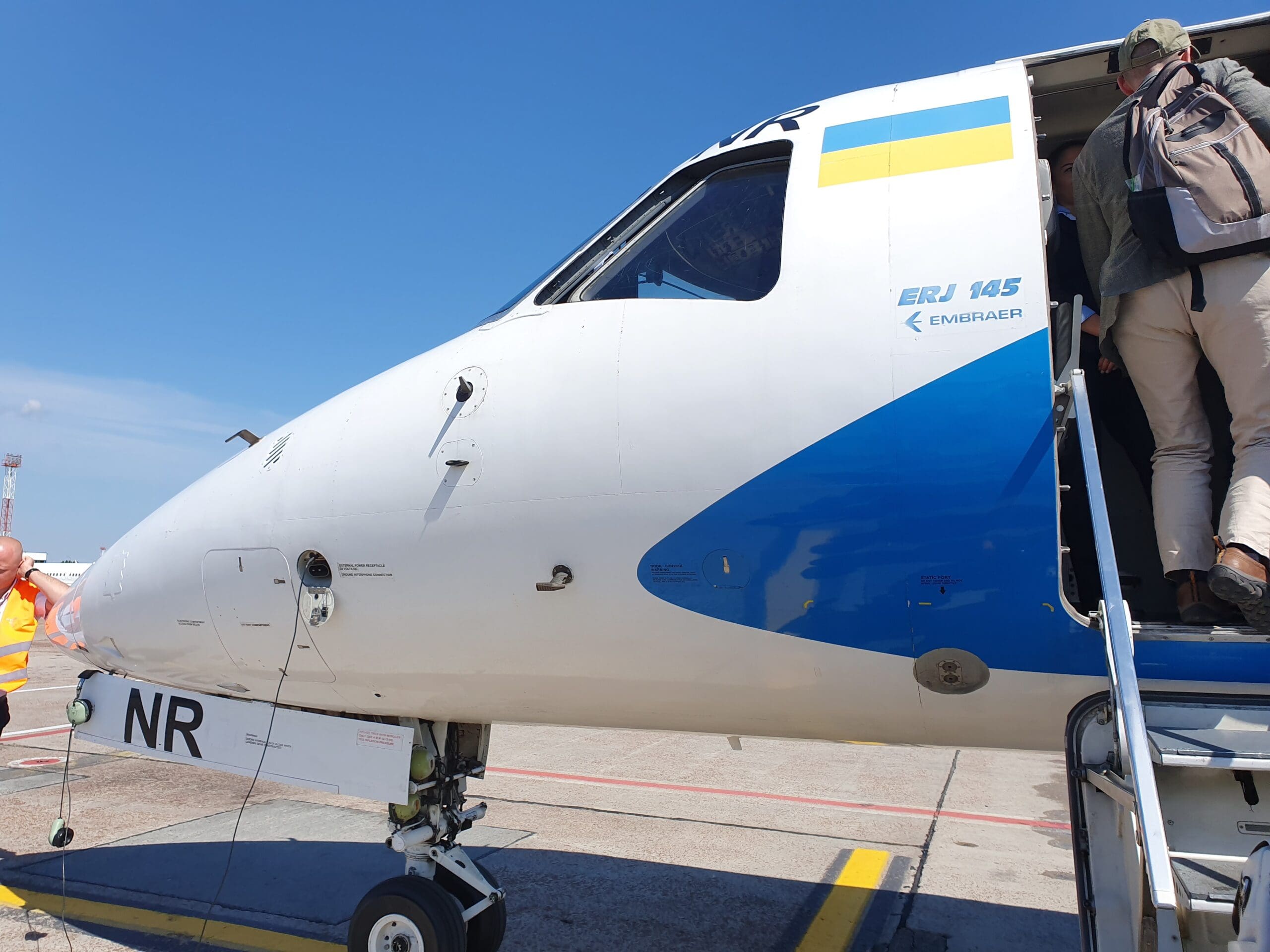
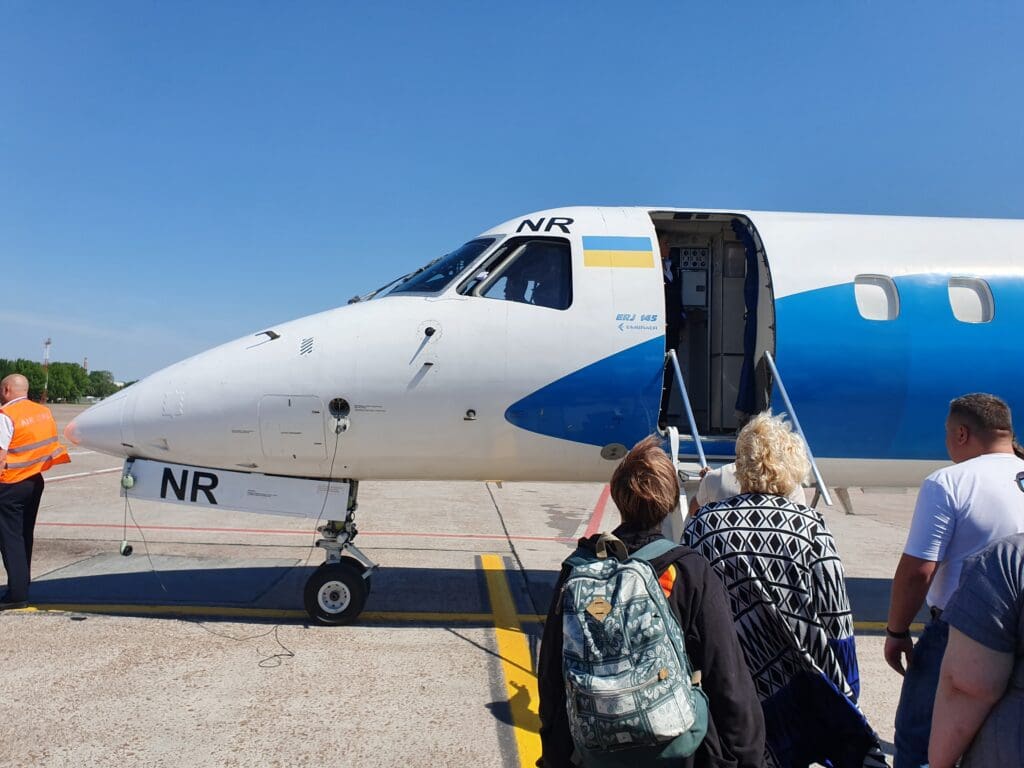
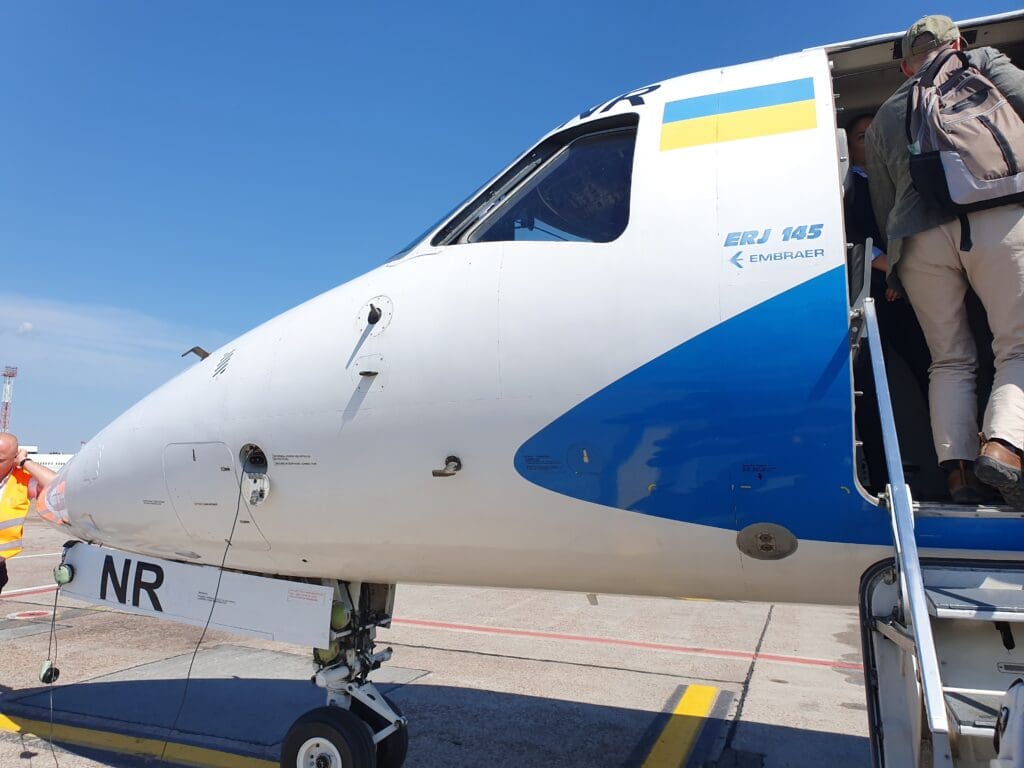
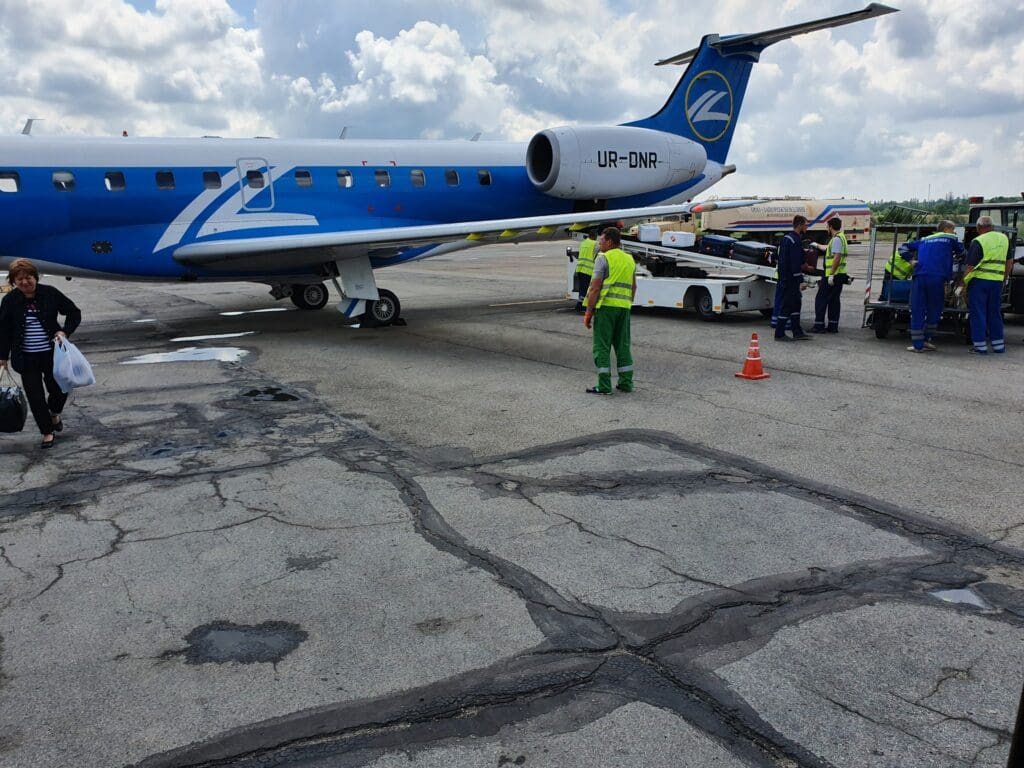
Following our short journey, the bus pulled up next to Embraer 145LR, UR-DNR. With the construction number of 145641, this particular jet had rolled off the Embraer factory line in São José dos Campos at a time when Brazil was celebrating its fifth World Cup victory. In September 2002, the aircraft was ferried across the Atlantic to its new home in Italy. There, the aircraft operated for Alitalia’s regional subsidiary Alitalia Express as I-EXMF and sported the name of the 1963 winner of the Nobel Prize for Chemistry, Giulio Natta. Operating in the skies of Italy and beyond for six years, this was withdrawn in service in 2008 owing to Alitalia Express’ decision to operate an all Embraer 170 fleet. Entering storage at Clermont-Ferrand Airport in France. In 2010, the aircraft was re-registered and delivered to Dniproavia, where it suffered two incidents in May 2012 – one involving a rejected takeoff in Dnipro and another where it veered off the runway at Moscow Sheremetyevo. Following Dniproavia’s collapse in 2017, the aircraft was transferred to Windrose Airlines and at the time of my flight had solely operated charters and wet-leased services on behalf of Ukraine International Airlines.
Returning to the journey, once at the aircraft a brief wait was in store as cleaning staff finished preparing the cabin for its afternoon flights. After a few minutes, the bus doors slid open and boarding commenced. Soon, I climbed up the Embraer’s built-in steps and entered the small forward galley where I received nothing by means of a greeting from one of the two flight attendants onboard, thereby failing to get my Windrose Airlines experience off to the very best start. Navigating my way through the narrow cabin, some queuing was required in the aisle as passengers struggled to squeeze their hand luggage into the Embraer’s small-than-usual overhead lockers, and thus it took a fair amount of time before we reached our seats in the aircraft’s penultimate row.
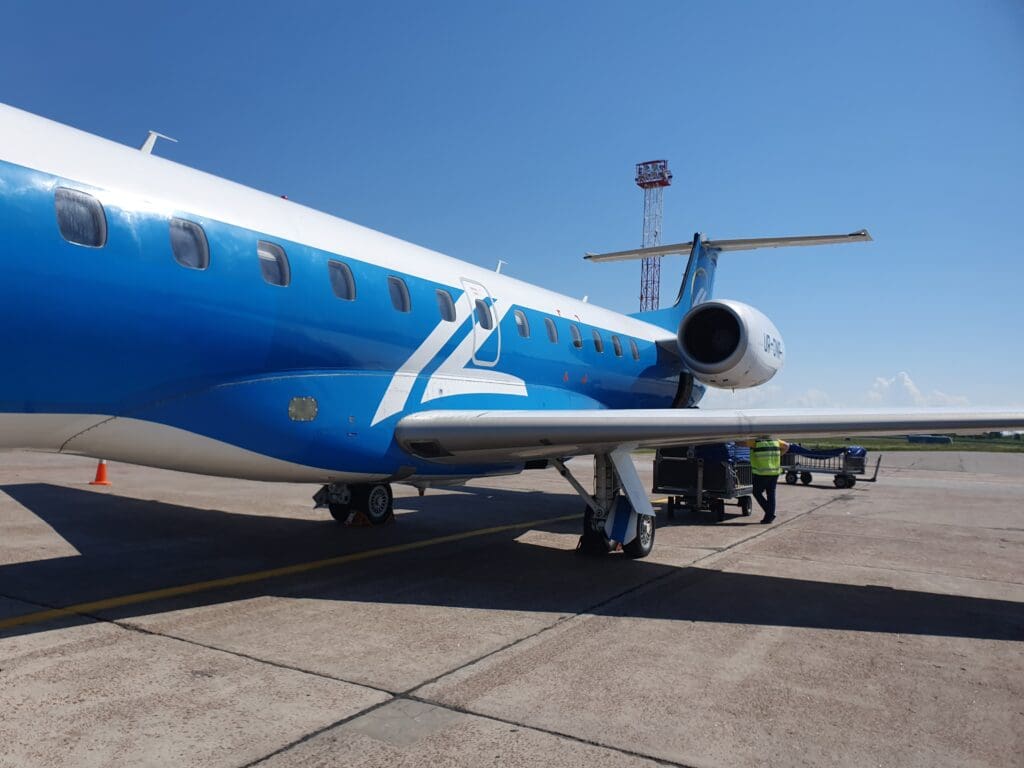
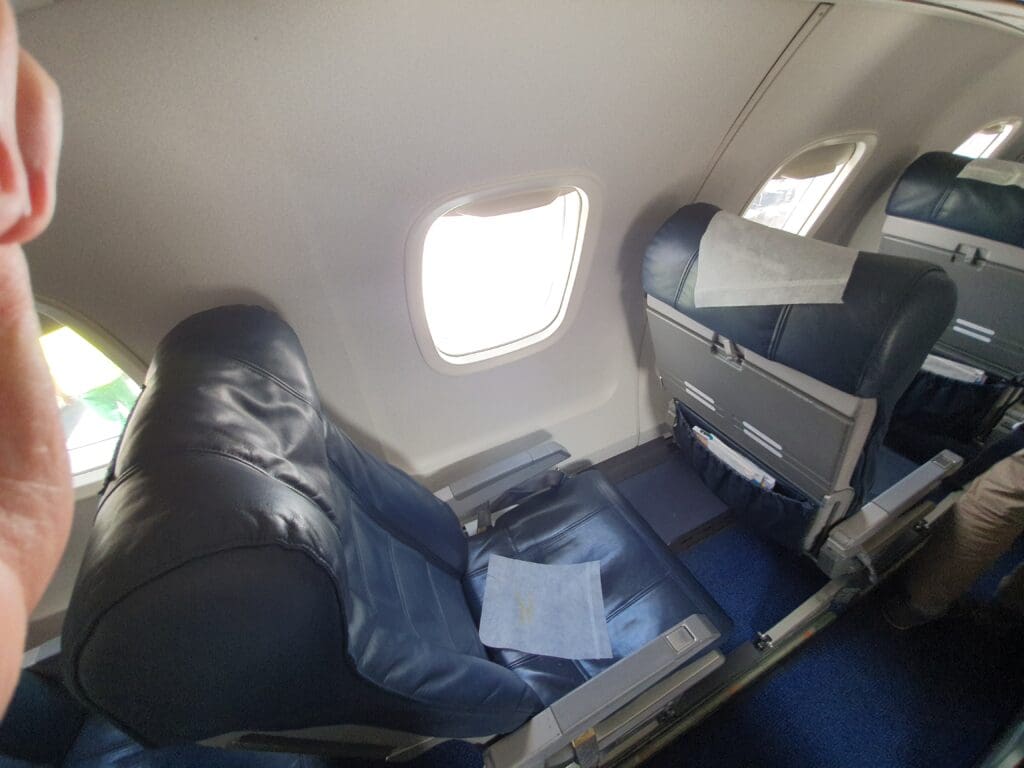
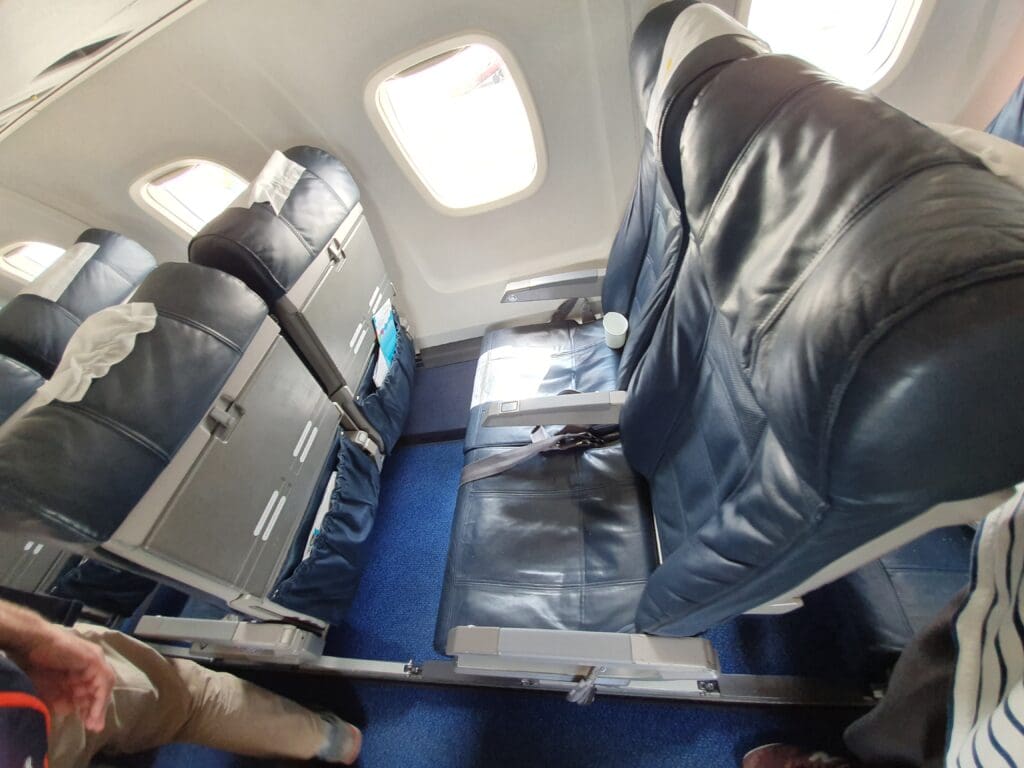
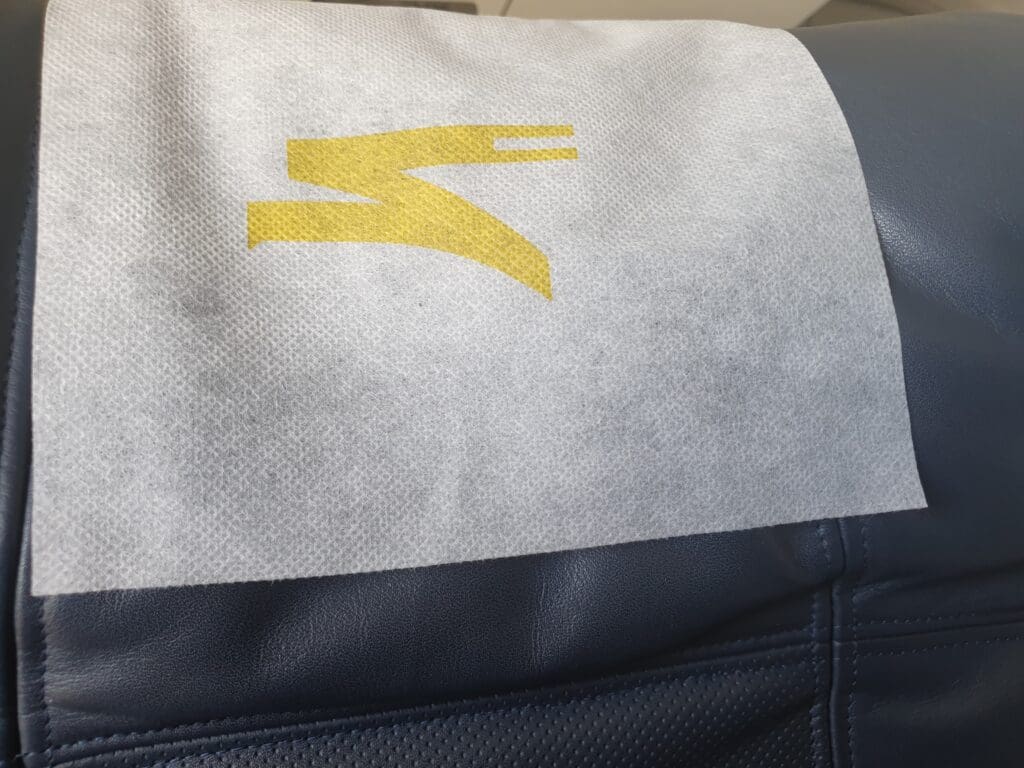
As is the case on most Embraer 145s, this particular jet featured 48 seats in a 2-1 configuration. Each of these was covered in a dark blue faux leather cover and topped with a disposable fabric antimacassar that sported Ukraine International Airlines’ eagle motif. Once I had settled in for the flight, I found the seat to be well-padded and comfortable, offering an adequate amount of legroom for a short flight. However, whilst clean, scratches and marks seemed to be omnipresent in the area around my seat, leaving me with a far from particularly fantastic first impression. Turning to the seatback pockets, these contained the latest edition of Ukraine Internatoinal Airlines’ Panorama magazine, a colourful Windrose Airlines safety card, and a plain white sick bag. All-in-all, other than the lack of Ukraine International Airlines titles on the jet’s exterior and the safety card, there was little to imply that we were not travelling on service operated by the Ukrainian flag carrier.
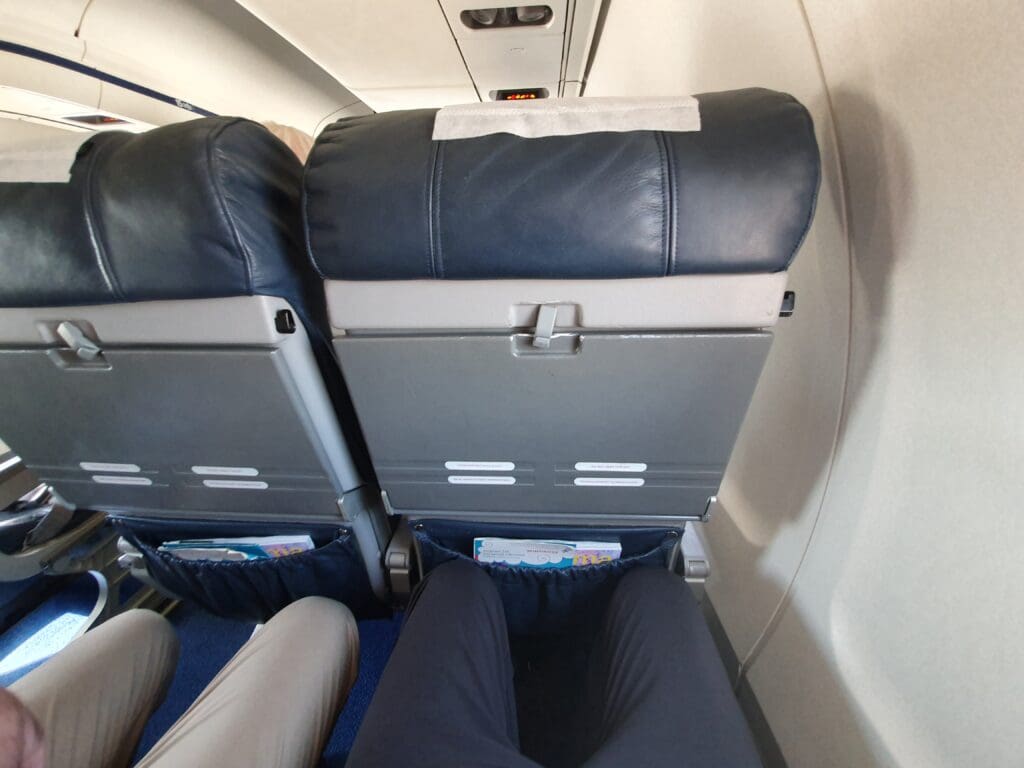
Seeing as all passengers had been squeezed onto a single bus, boarding did not take massive amounts of time, and wasting no time at all, the cabin door was closed at 1044, 11 minutes ahead of our scheduled departure time. That morning, the flight seemed to be completely full. Unsurprisingly, most passengers hailed from Ukraine, although I did also note a host of Chinese and Kazakhstani passengers, alongside a pair of Brits – my father and I!

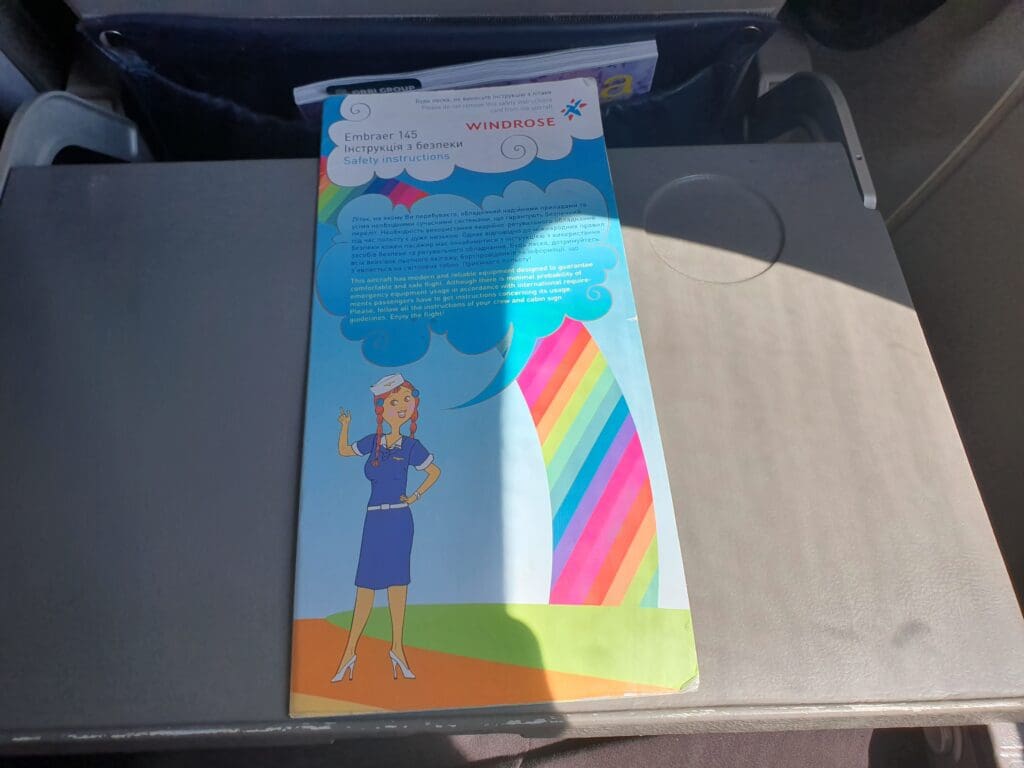
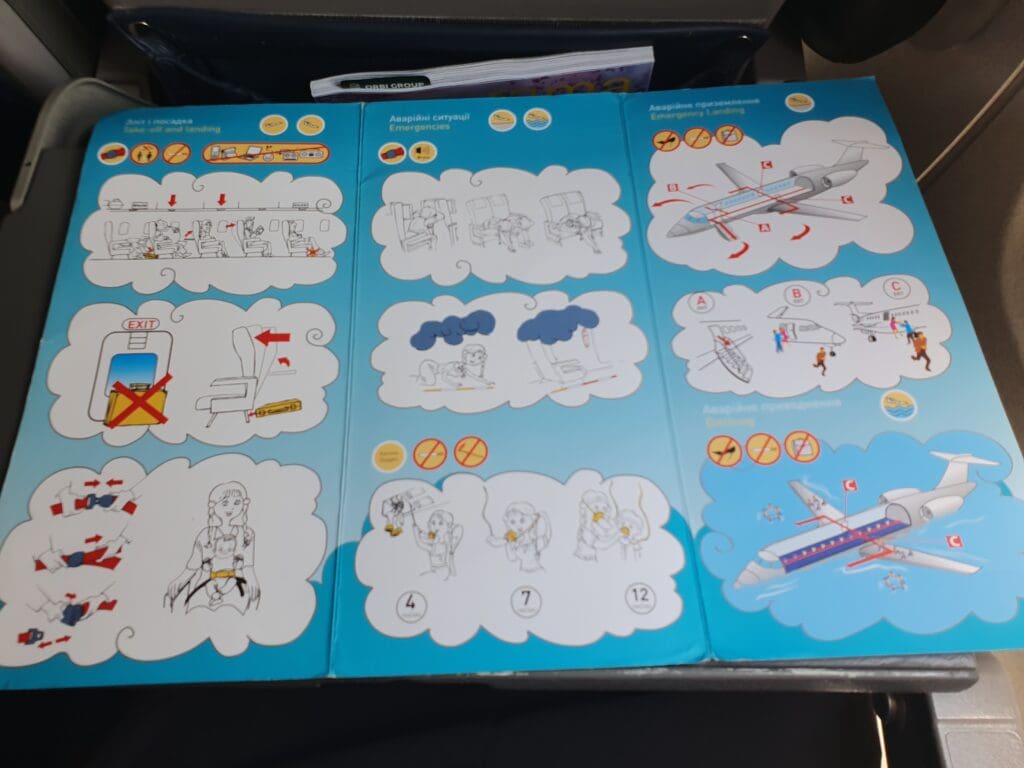
Almost as soon as the cabin door was closed, the right-hand Rolls-Royce AE 3007A1 engine began to whine into life whilst inside the cabin the Purser undertook a short welcome speech in Ukrainian, Russian, and English before moving onto the safety briefly, during which the other flight attendant performed a demonstration in the aisle. With no pushback required, the Embraer lurched forwards under its own power at 1046 and commenced its taxi to Runway 36L, with the other engine being fired up during this short journey. During the taxi, I was offered views of a variety of aircraft. These included a trio of Boeing 737 Classics operated by local airlines Bravo Airways and YanAir, a brightly coloured Windrose Airlines Airbus A320, several business jets and a Beechcraft Super King Air 350 operated by the Ukrainian State Air Traffic Services Enterprise and used for calibration flights.
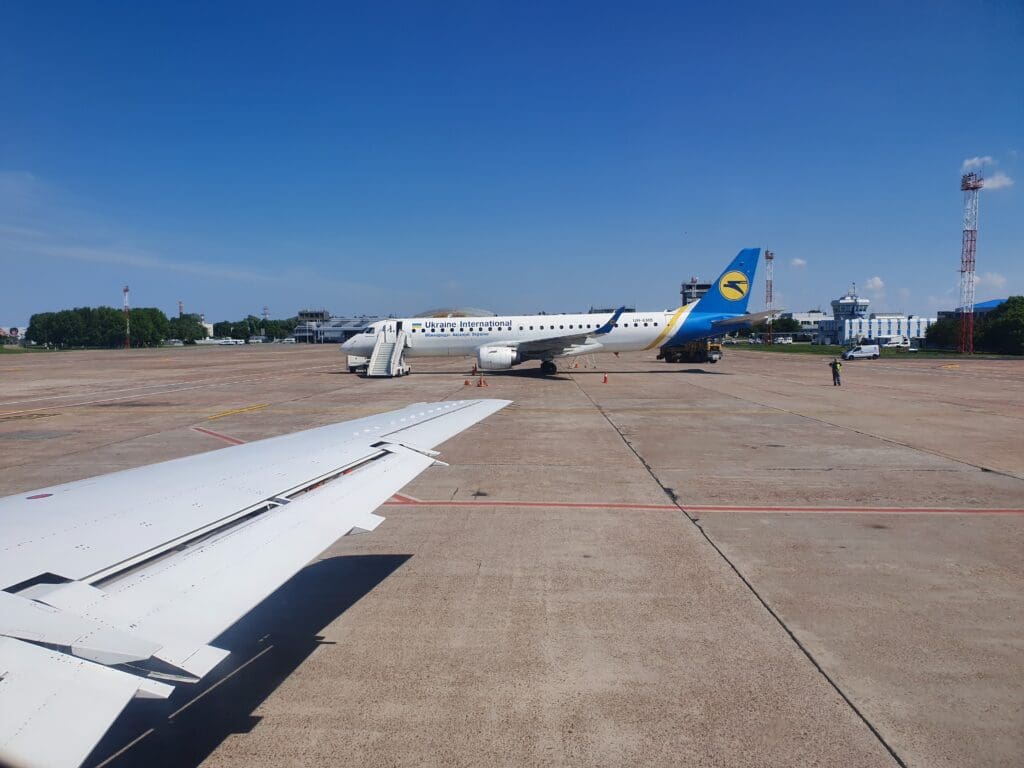

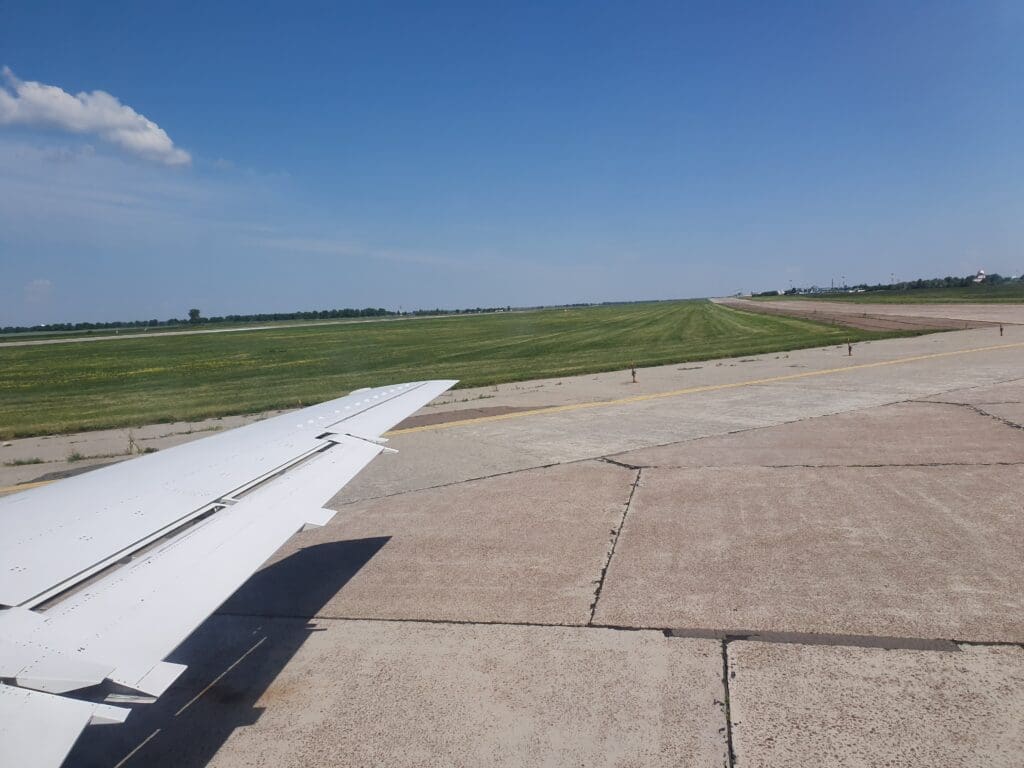
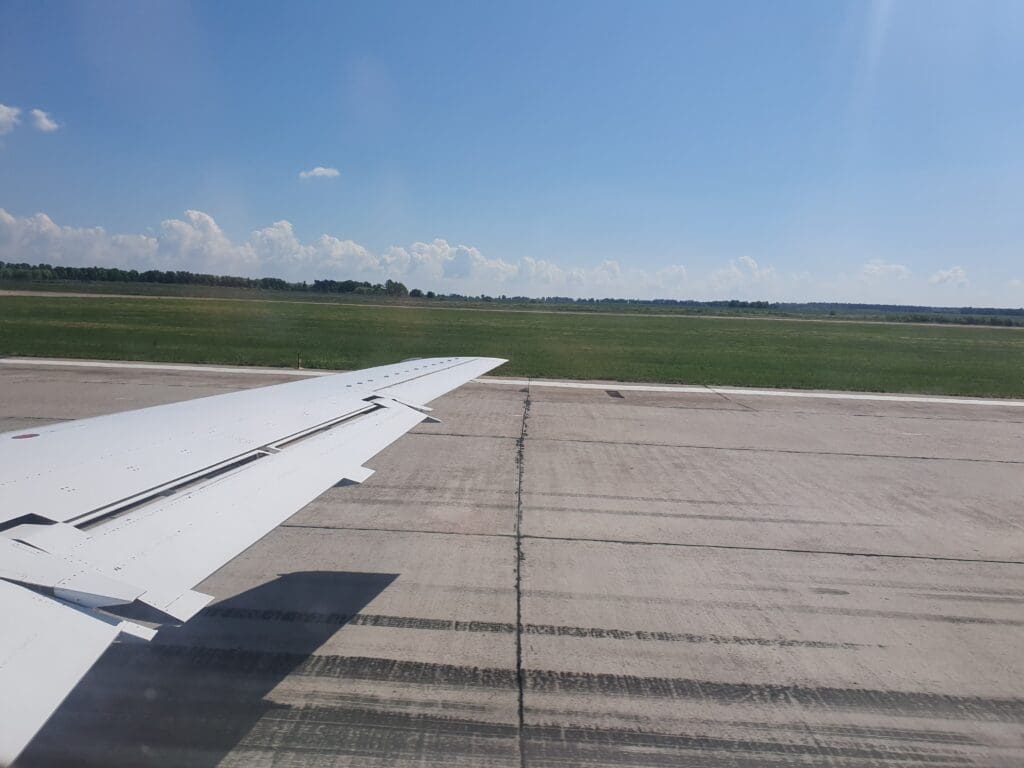
As we made our way to the runway, the Captain performed a short welcome announcement in Ukrainian and English. This considered of a welcome and word of thanks, alongside the weather in Zaporizhia, which was a balmy 25 degrees with a few clouds lingering about. Looking outside, the Embraer taxied past a long-stored Boeing 737-200 and a Tupolev Tu-154, and, without any sort of pause made its way onto the runway at 1052. Once there, the two Rolls-Royce engines whined into life and we went flying down the runway, performing a powerful rolling take-off. Slightly worryingly, this caught one flight attendant off guard who, at this time, was still standing in the aisle conducting their pre-departure checks. This caused them to go stumbling down the aisle, grabbing onto several seats before strapping themselves into the single jumpseat at the rear of the aircraft.
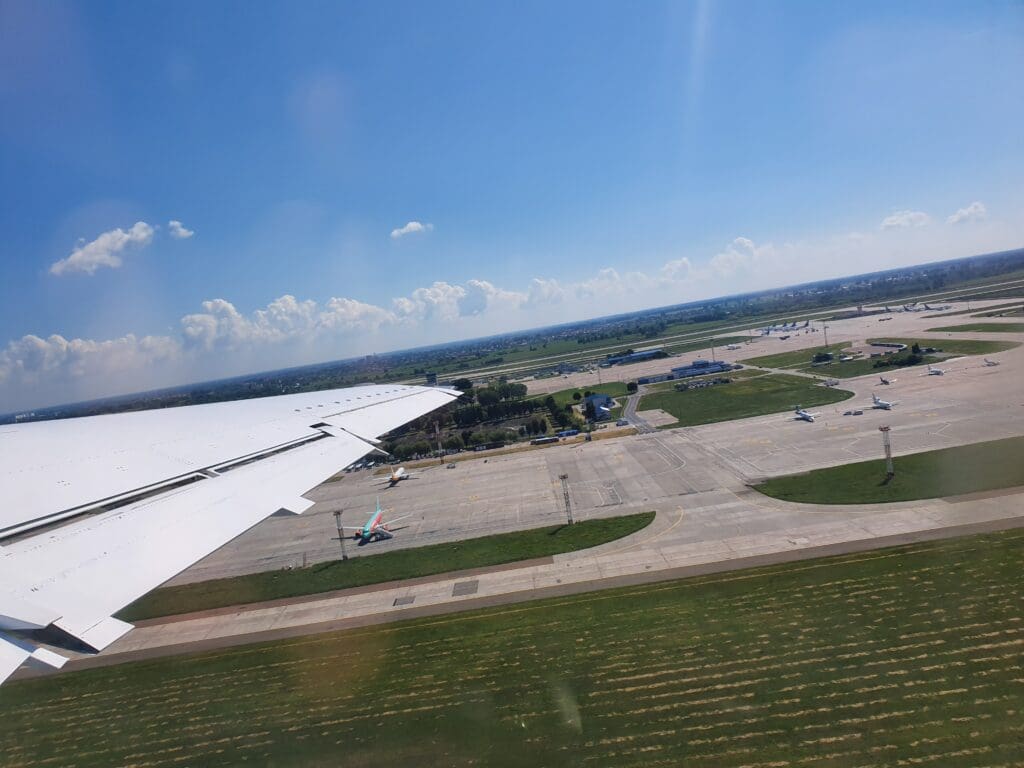
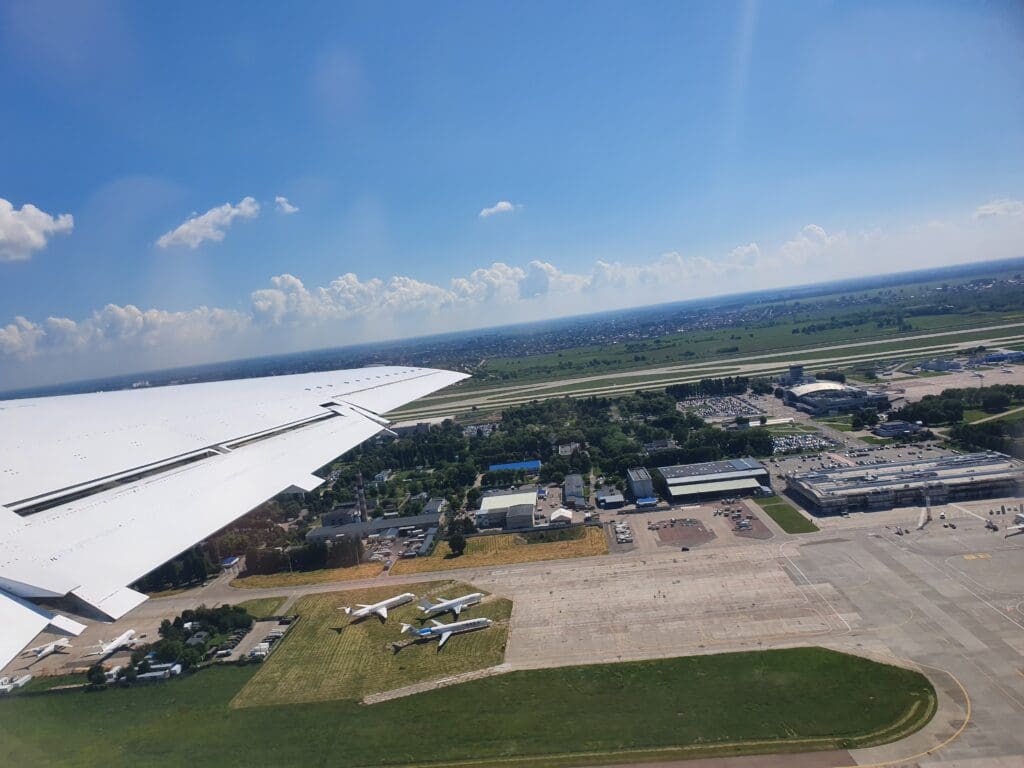
Following a bumpy ride down the runway, the aircraft rotated into the skies and within moments superb views of much of Kyiv Boryspil were offered. These included four stored McDonnell Douglas MD-80s – two of which sported Iran Air’s livery, alongside a host of Boeing 737 Classics, including one Southwest Airlines liveried jet. Other highlights came in the form of the Ukrainian government jets which included the rare Antonov An-148 and a slightly less unusual Airbus A319 Corporate Jet. Another aircraft of note came in the form of a Kam Air Boeing 767-300ER. Following this aerial tour of Boryspil Airport, we left the sprawl of this behind and banked to right, allowing for one final glimpse of the airport before turning south over the town of Dudarkiv and passing over the town of Boryspil.
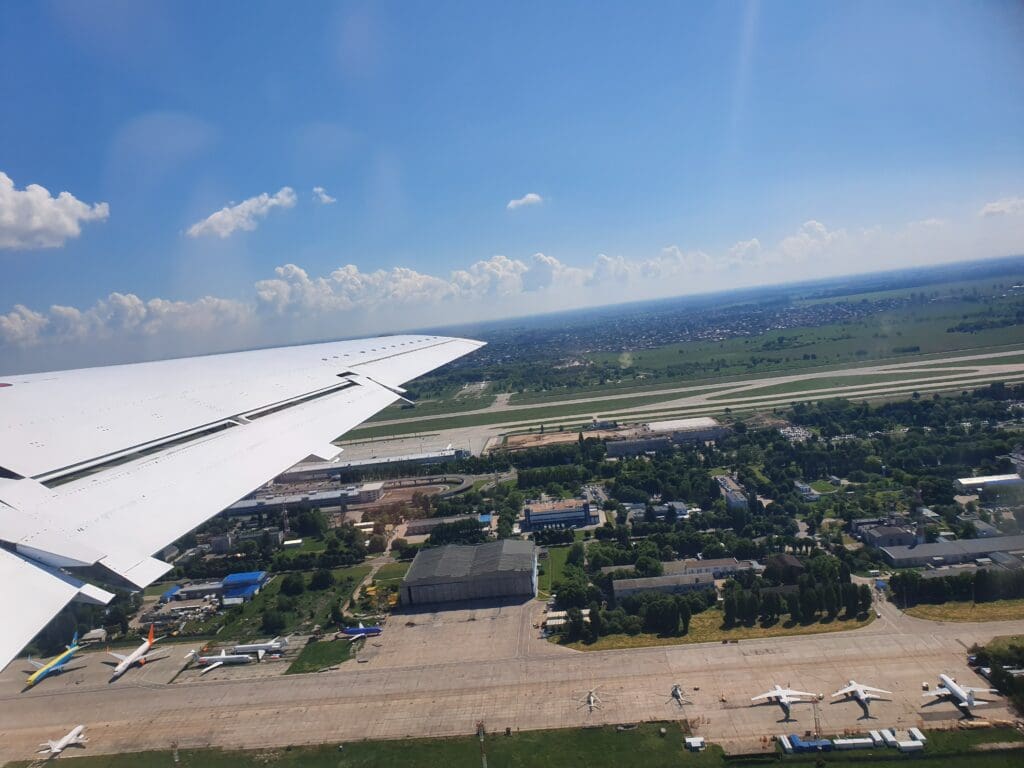
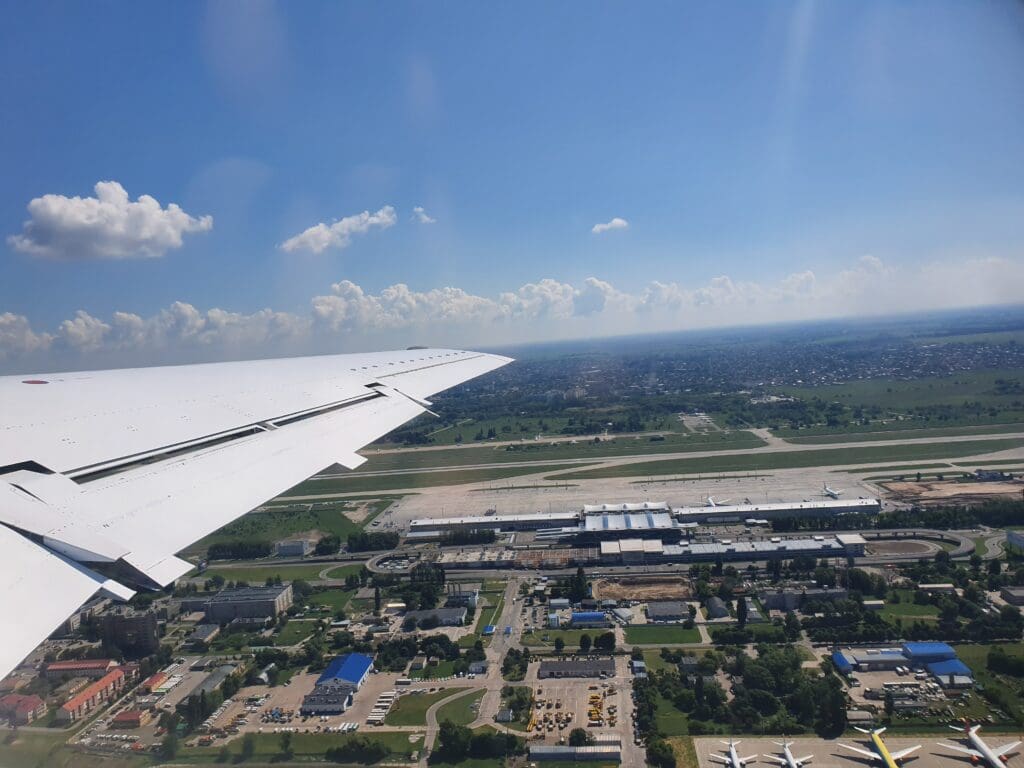
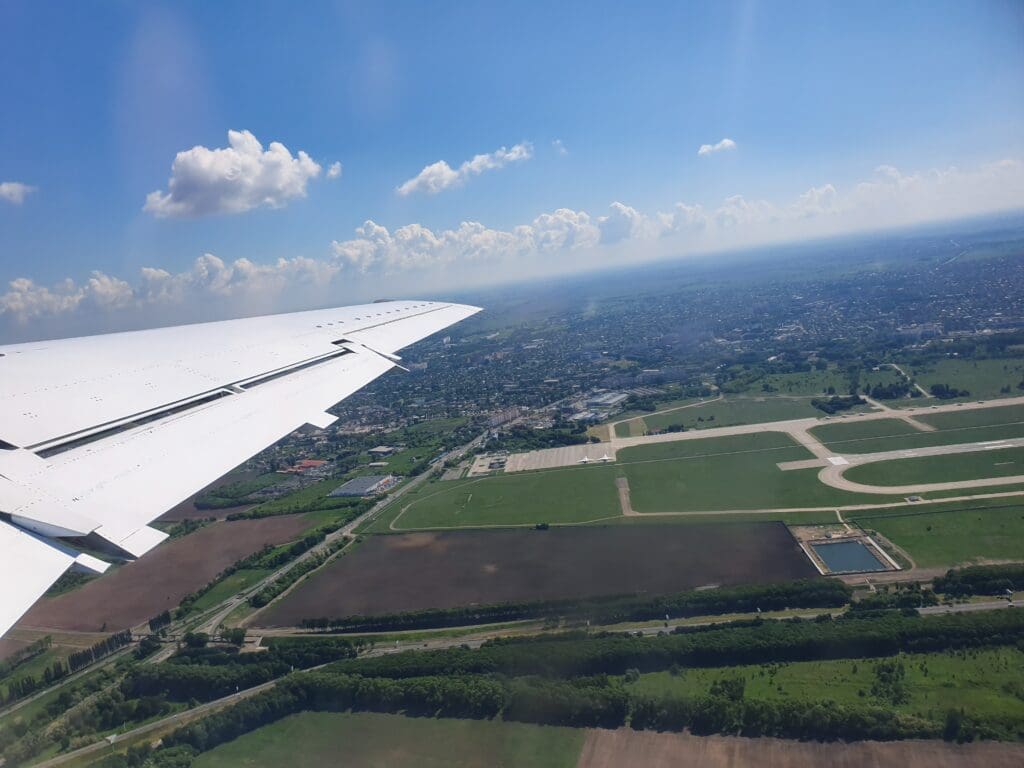
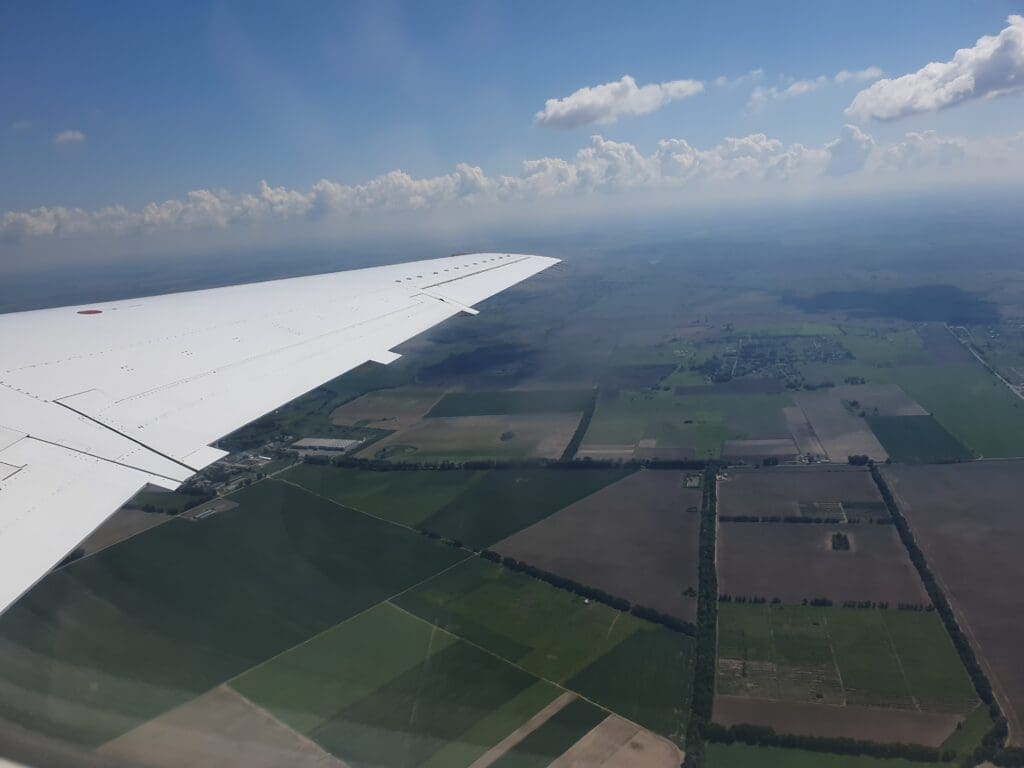
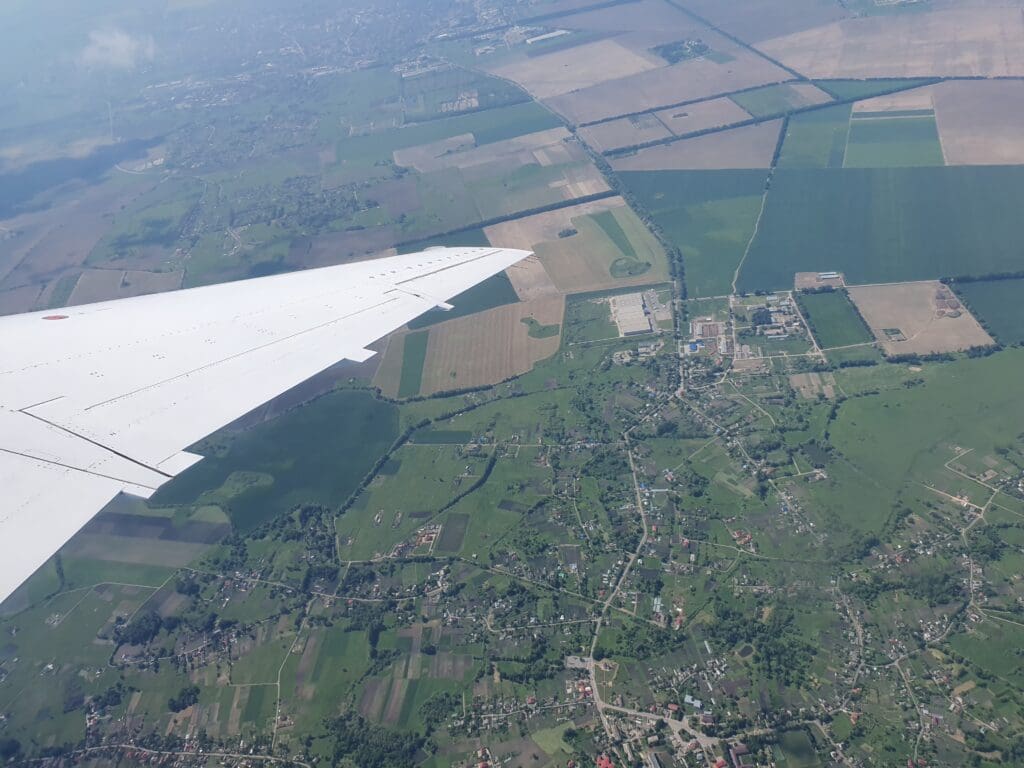
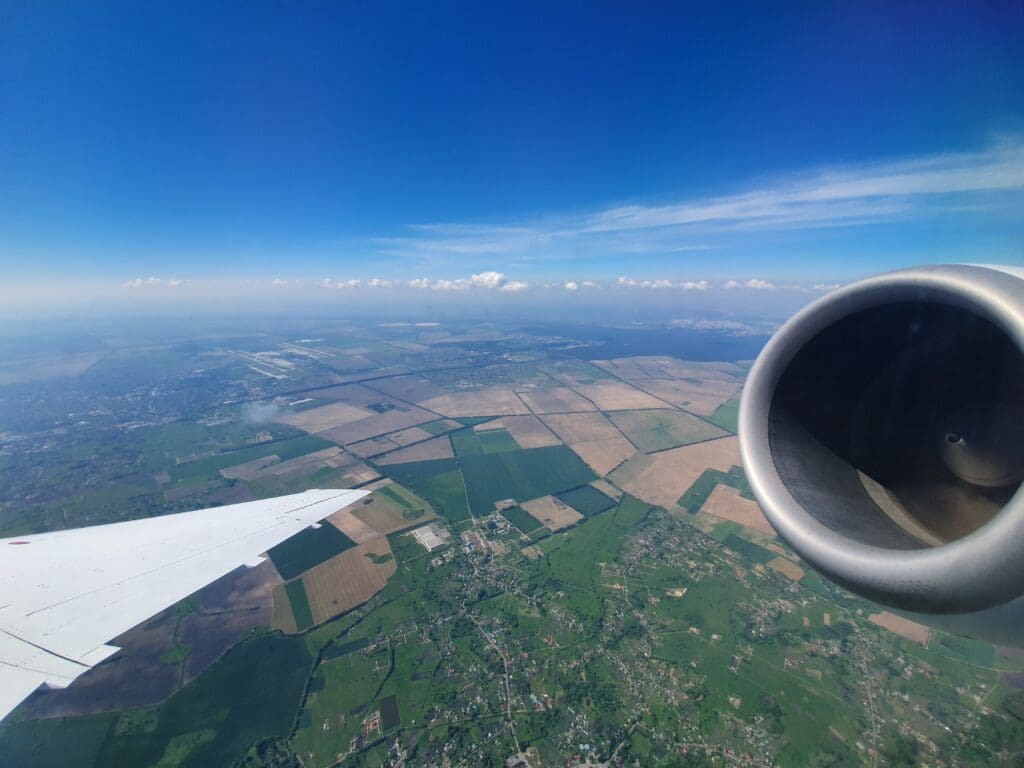
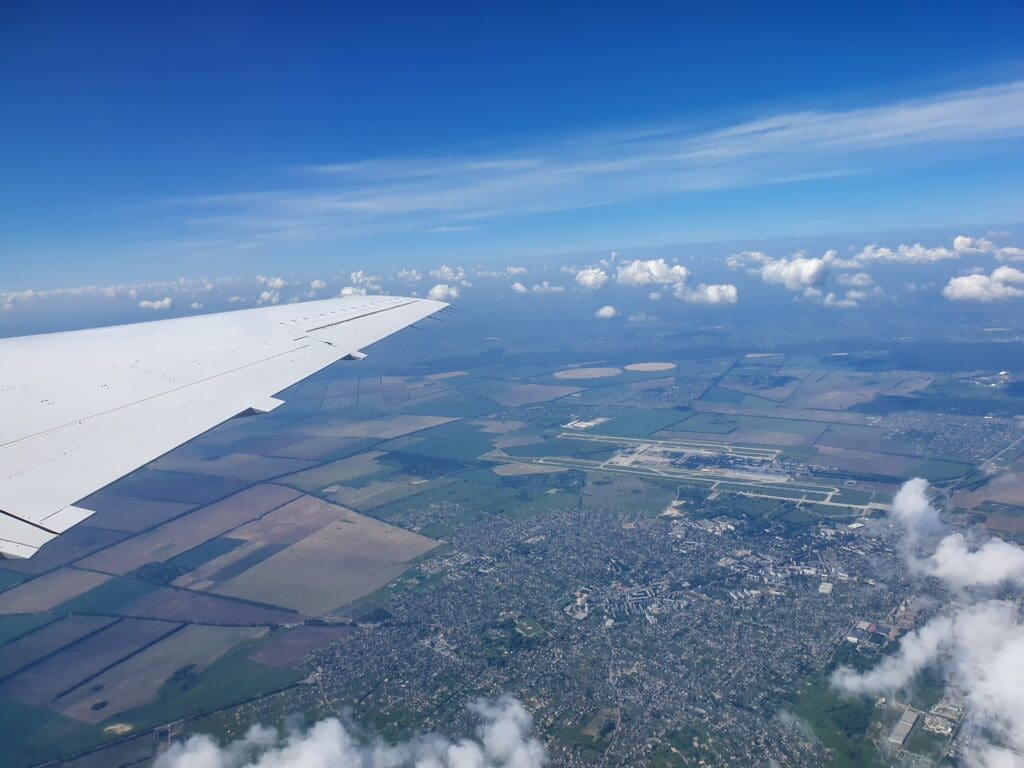
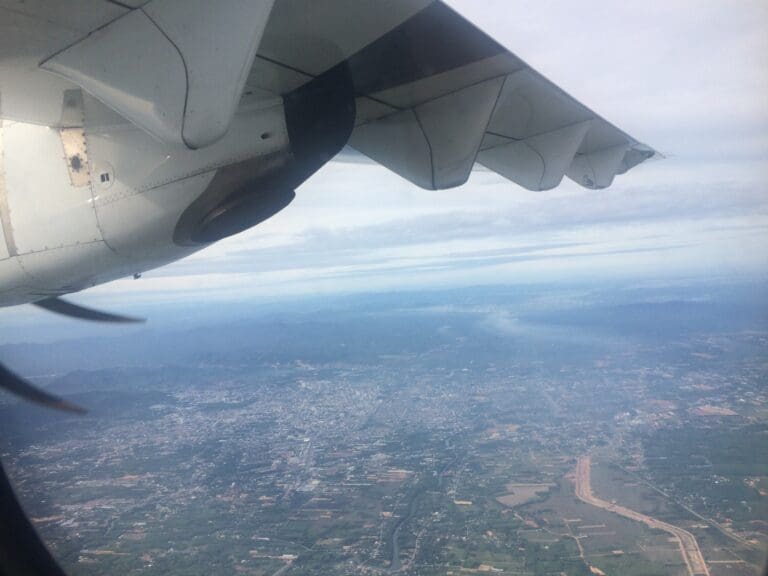
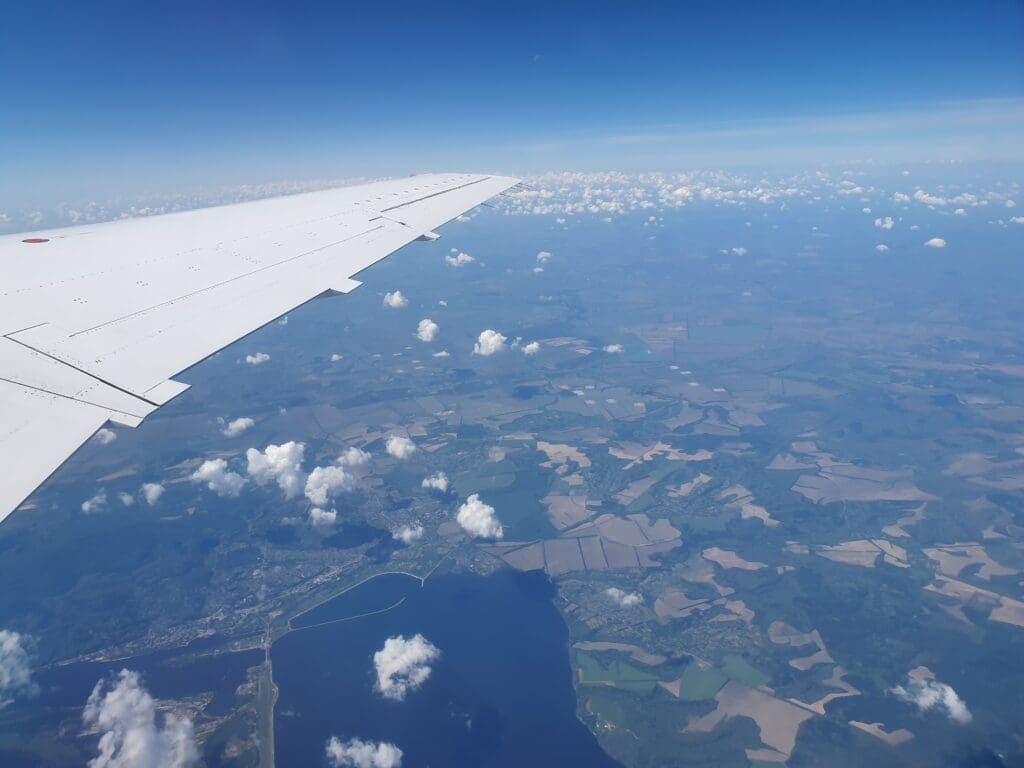
A couple of minutes or so after taking off, the Purser made an announcement informing all passengers of the location of the sole toilet on board, before moving to give the usual seatbelt warnings and a stern message advising of the prohibition of smoking and vaping onboard. Following this, the other crew member made their way through the aircraft to the forward galley and assisted the Purser in preparing the cart for the onboard service. Thanks to the good weather around Kyiv and the Embraer’s large windows, as we climbed, I was treated to good views of the flat and mostly rural area to the south of the capital city. However, upon reaching the banks of the Dnipro River, clouds rolled in below. Approximately fifteen minutes into the flight, the Embraer could be felt gently levelling off at 27,000 feet at which point the seatbelt sign was extinguished with a loud ding.
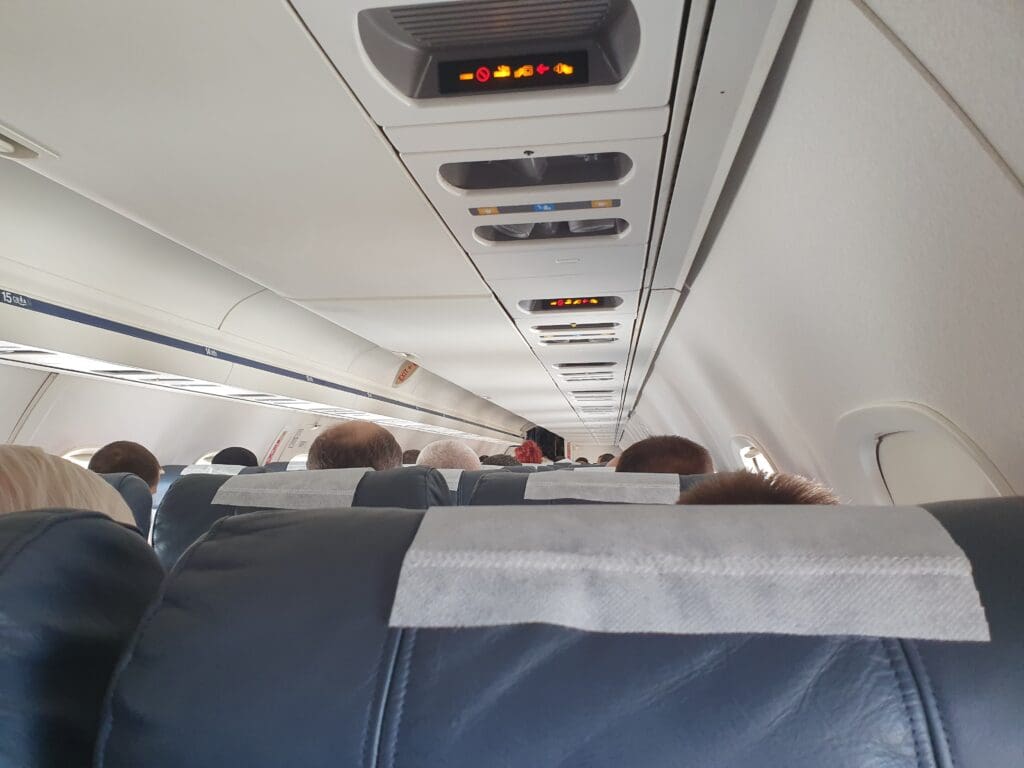
Almost as soon as we had levelled off, one of the flight attendants passed through the cabin distributing pre-oredered food. Interestingly, plenty of passengers seemed to have pre-ordered an early lunch, and so the flight attendant spent a fair few minutes handing out paninis and salads. Whilst this should have gone without a glitch, according to the crew’s information I should have been sitting on the ‘A’ side and received a gentle telling off before I was coldly handed my cold mozzarella panini. Once these items had been handed out, the crew commenced the main service of the flight, a round of still water served in a paper cup. Whilst this was rather basic, this was undoubtedly welcomed by most passengers given the sauna like temperatures inside the cabin as we sped southwards over Ukraine.
Perhaps unsurprisingly given the lack of storage space on the Embraer 145 and the short flight time, unlike other Ukraine International Airlines services, no buy-on-board service was undertaken. Once I had polished off the mediocre panini, with nothing to see below I decided to have a flick through Ukraine International Airlines’ Panorama magazine. This was smattered with the usual smorgasbord of articles on a range of topics and information regarding the airline, as well as plenty of advertisements for a range of services both in Ukraine and abroad.
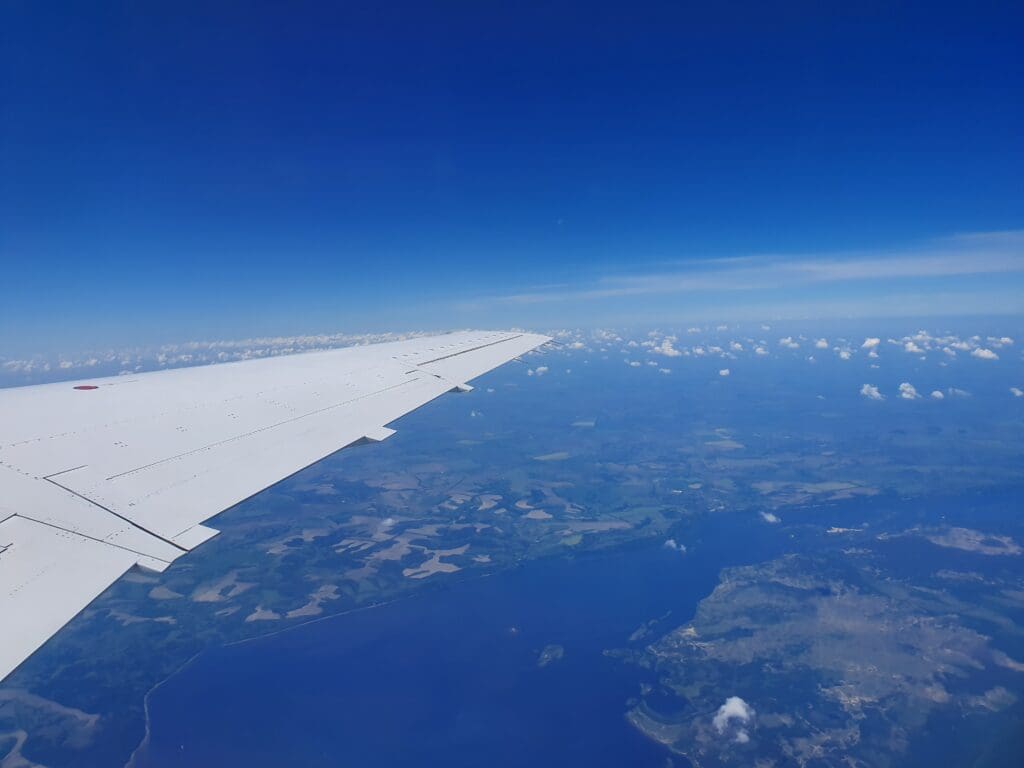
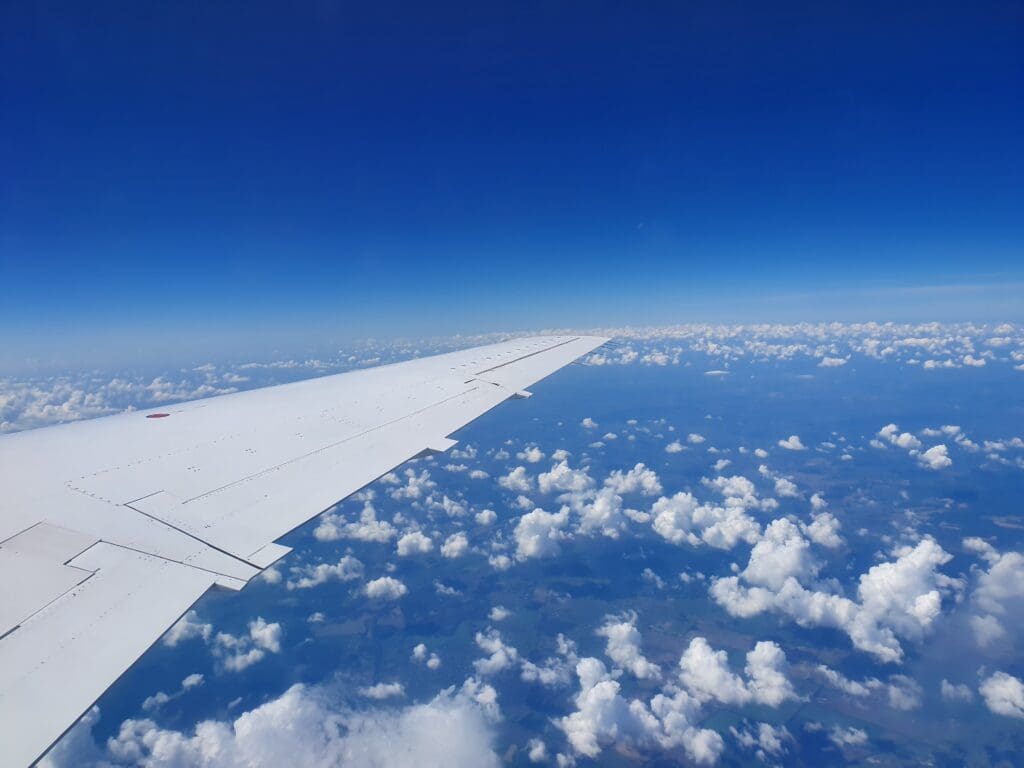
Given the clouds below, I was unable to track the flight’s progress as we headed southwards down the Dnipro River, however a later check revealed that after leaving Boryspil, we had flown virtually parallel to this. This took us past Cherkasy and to the west of cities such as Kremenchuk, Kamianske and Dnipro. As we flew southwards, our cruise was almost entirely free of turbulence ensuring a comfortable ride down Ukraine. Whilst some may find the Embraer 145 to be a little cramped, particularly when full, given the length of the journey I could not find anything to complain about when it came to comfort. Plus, surprisingly, given our location next to one of the engines, the aircraft did not appear to be particularly loud, although this was perhaps assisted by the fact that we had spent our previous flight next to a thundering Ivchenko turboprop!
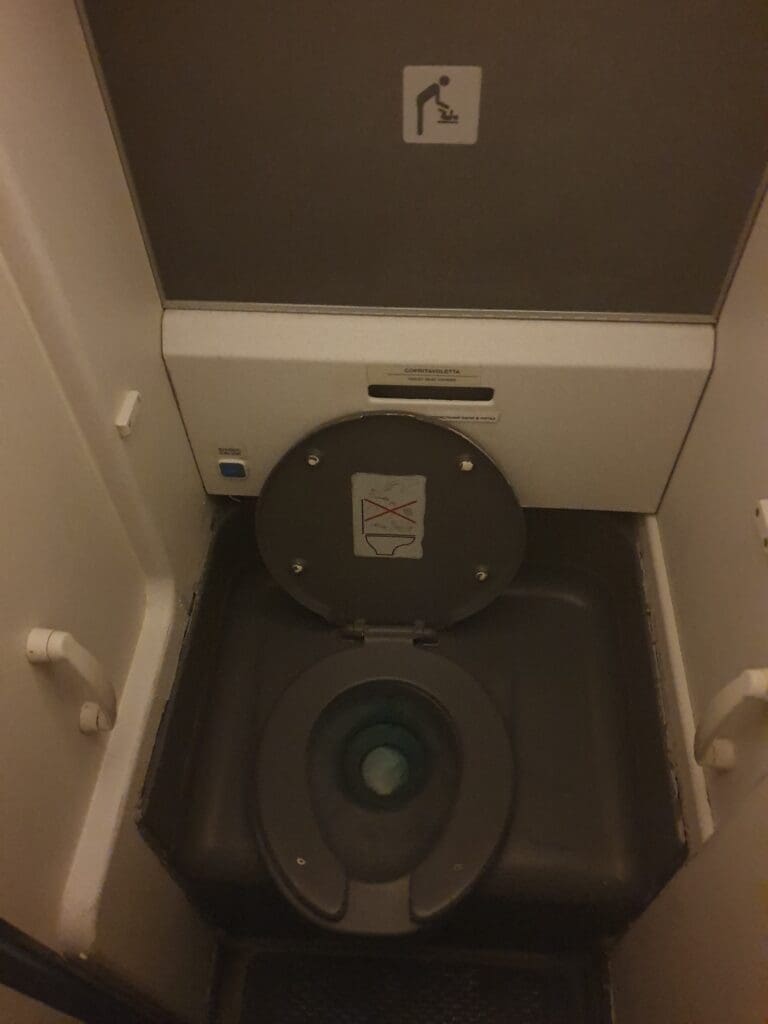
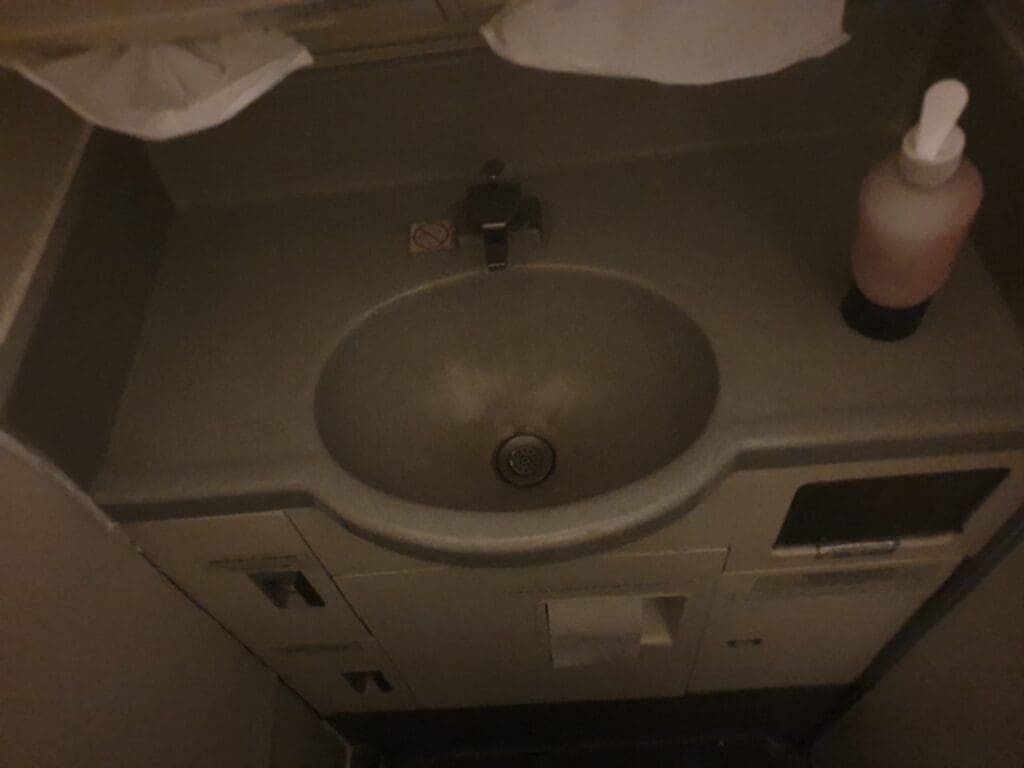
With the flight slowly nearing its end, I dreaded the idea of missing out on a trip to the aircraft’s sole toilet. Located at the rear of the cabin, I arrived there almost immediately after leaving my seat. After entering this, I was disappointed to find that the door appeared to be impossible to lock, perhaps as a result of this, the toilet remained poorly lit. In addition, like the rest of the cabin, the toilet appeared to be rather battered and worn. However this was stocked with the basics and ultimately served its purpose.
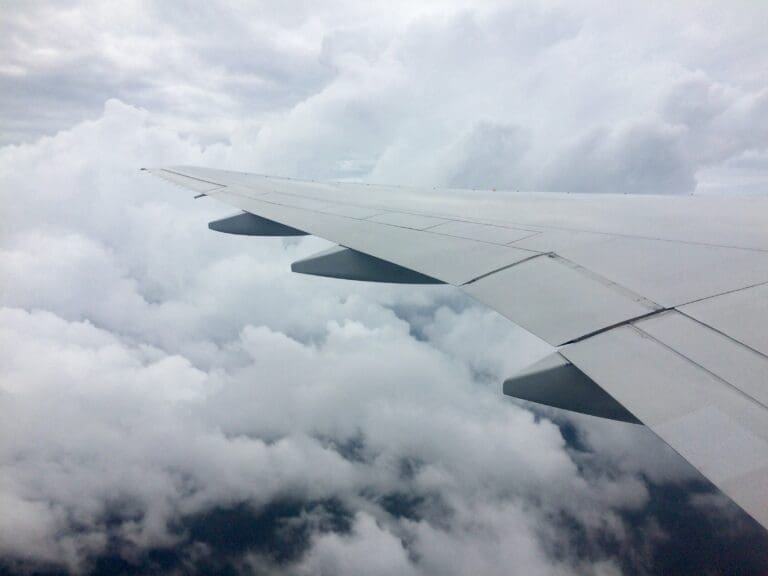
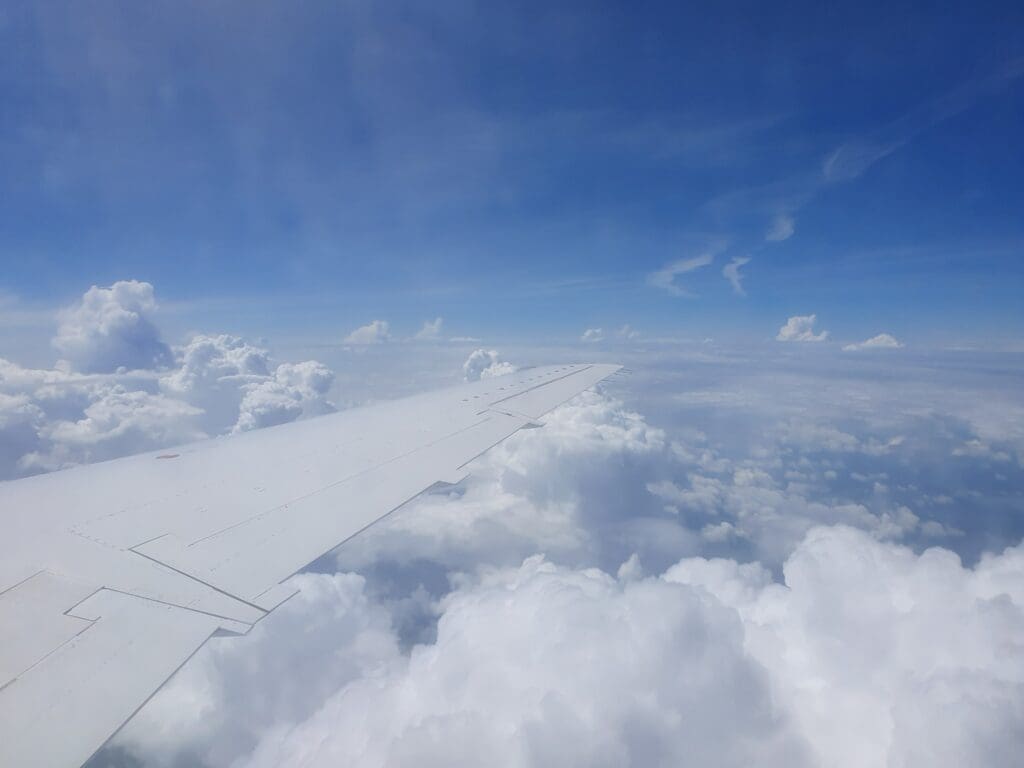
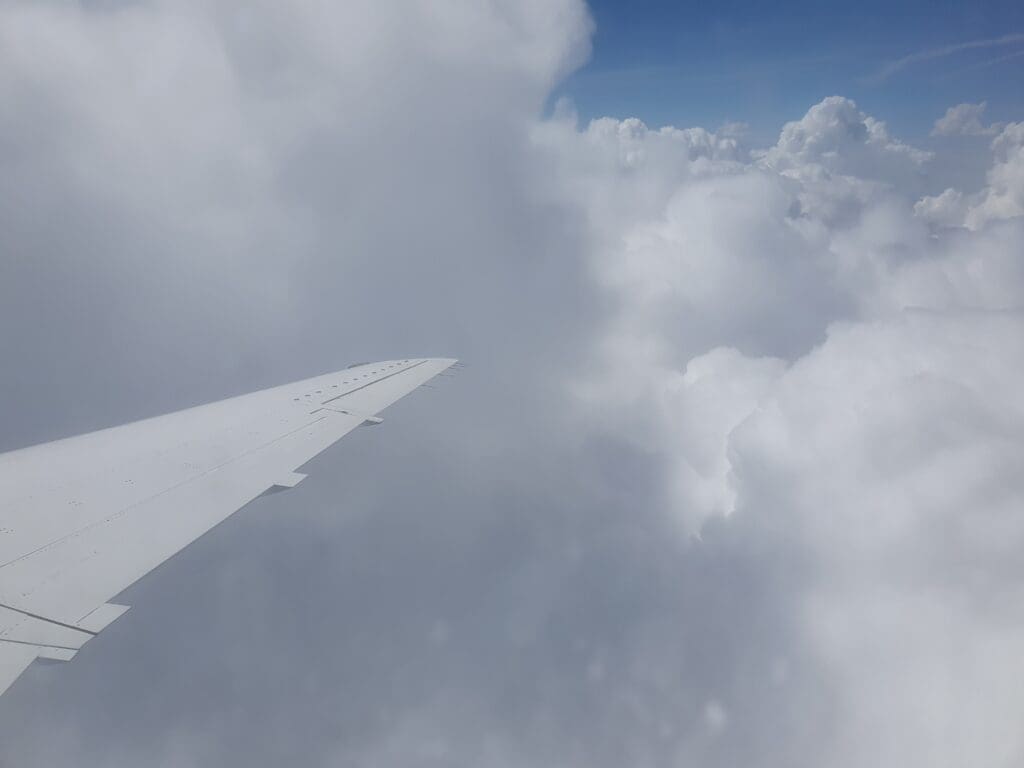
Several minutes after I returned to my seat, at 1129 the aircraft could be felt commencing its descent. This was confirmed by the usual announcement regarding seatbelts, seatbacks, tray tables and window shades moments later. As we descended, some impressive cloud formations could be seen outside and as we headed past these, the speedbrakes were partially extended resulting in some gentle shuddering as we decelerated. Meanwhile, only a short time after the Purser had made their pre-arrival announcement, the seatbelt signs were reilluminated and one of the crew members passed through the cabin ensuring all was secure for our arrival.
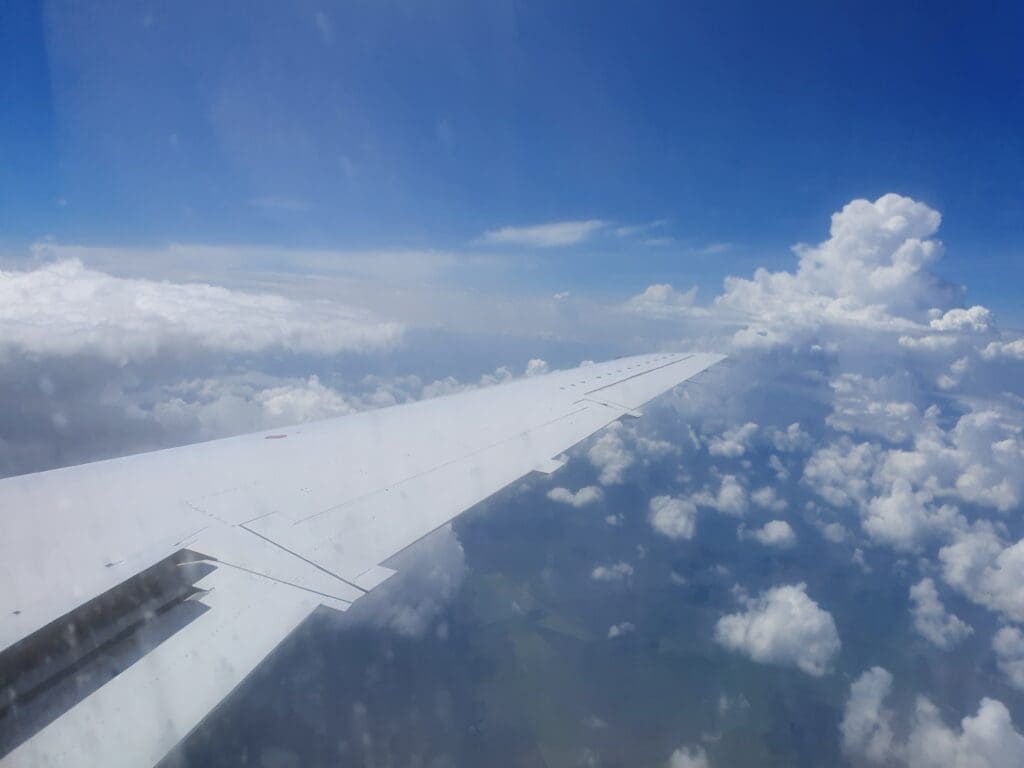
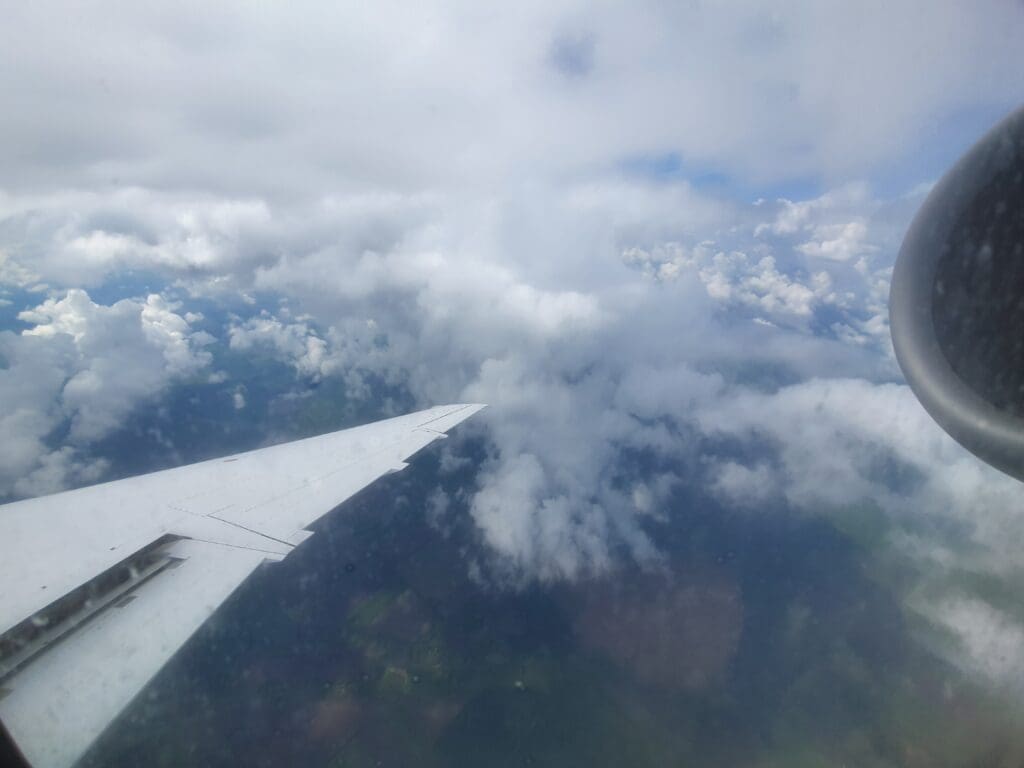
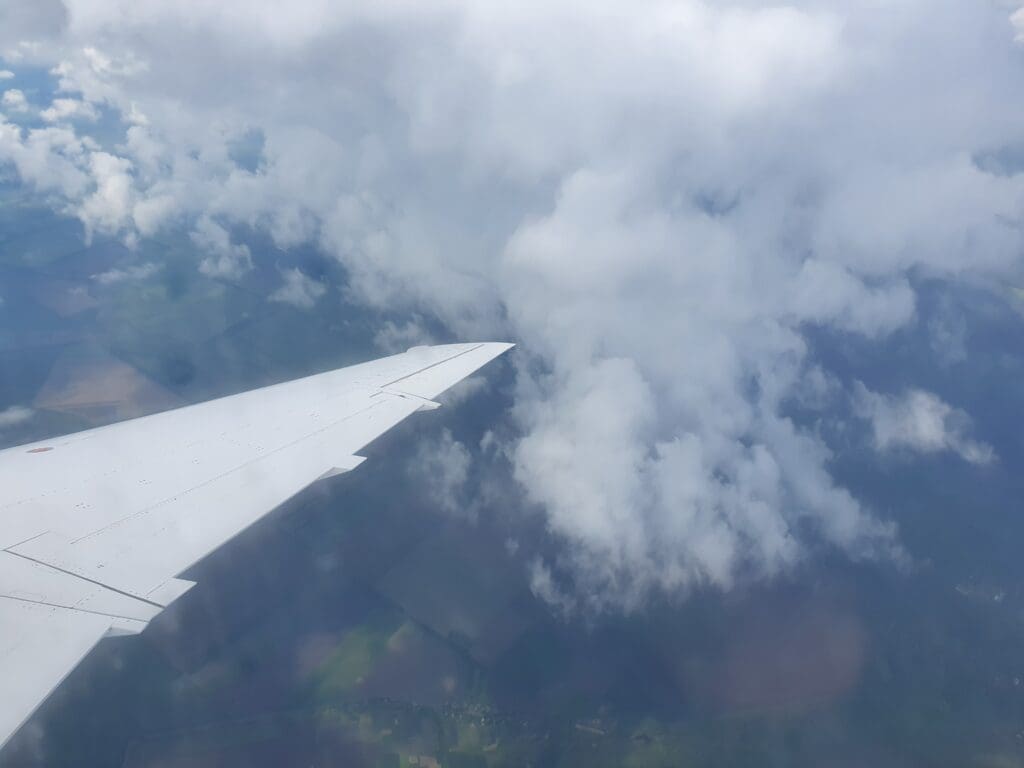
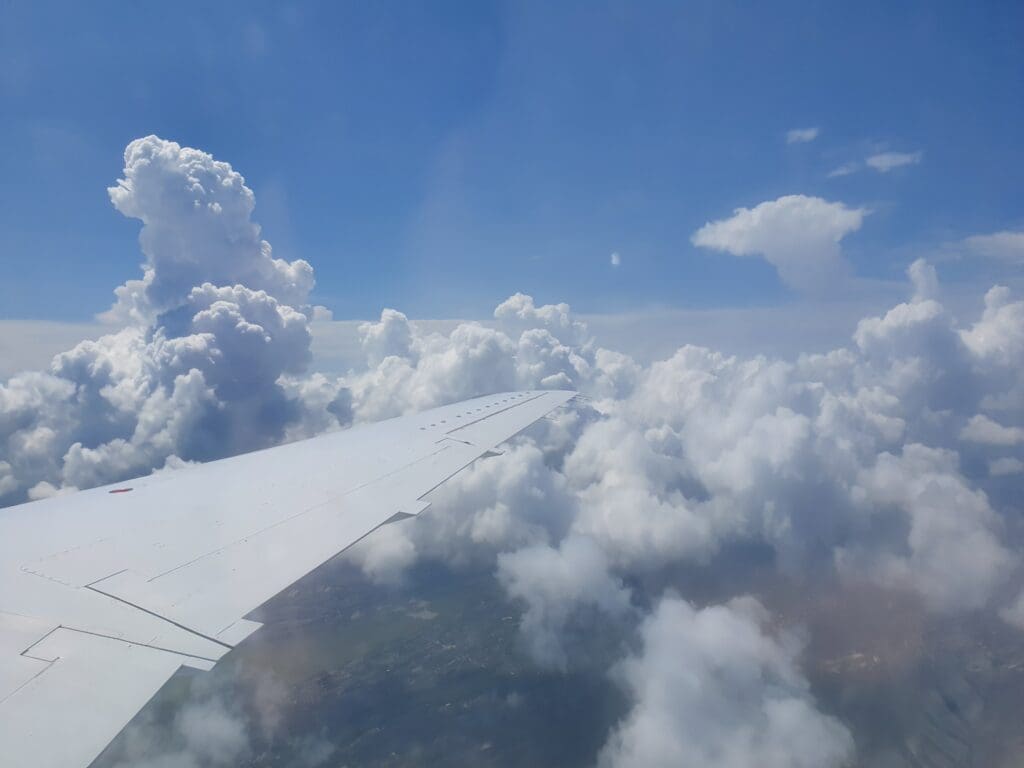
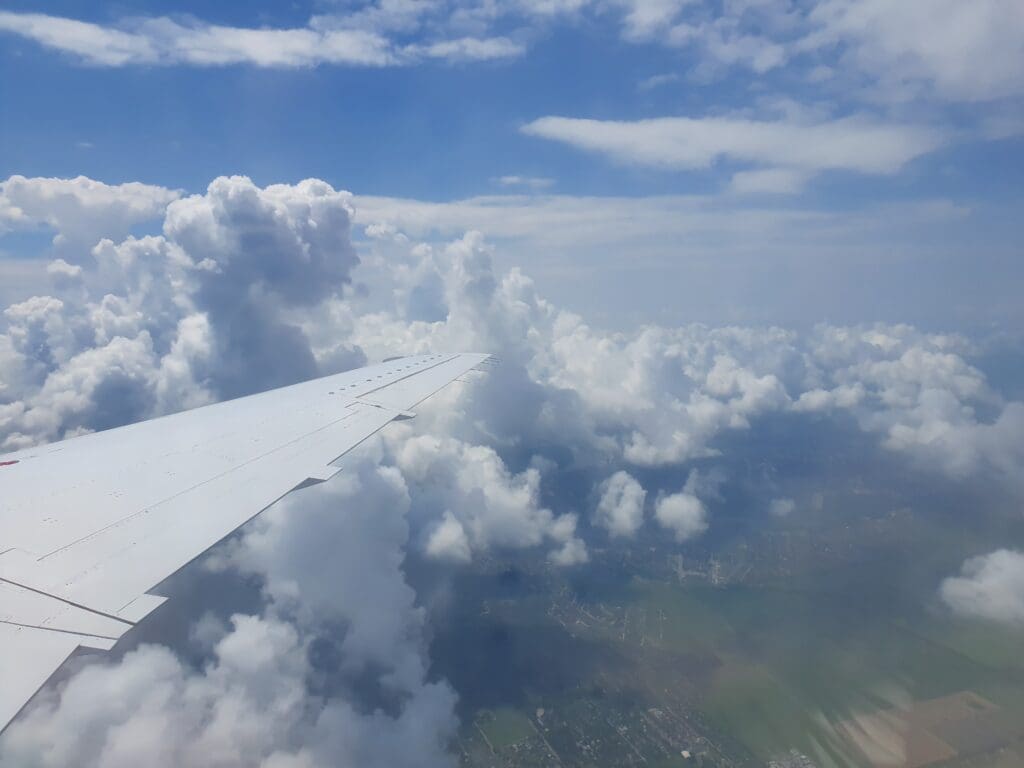
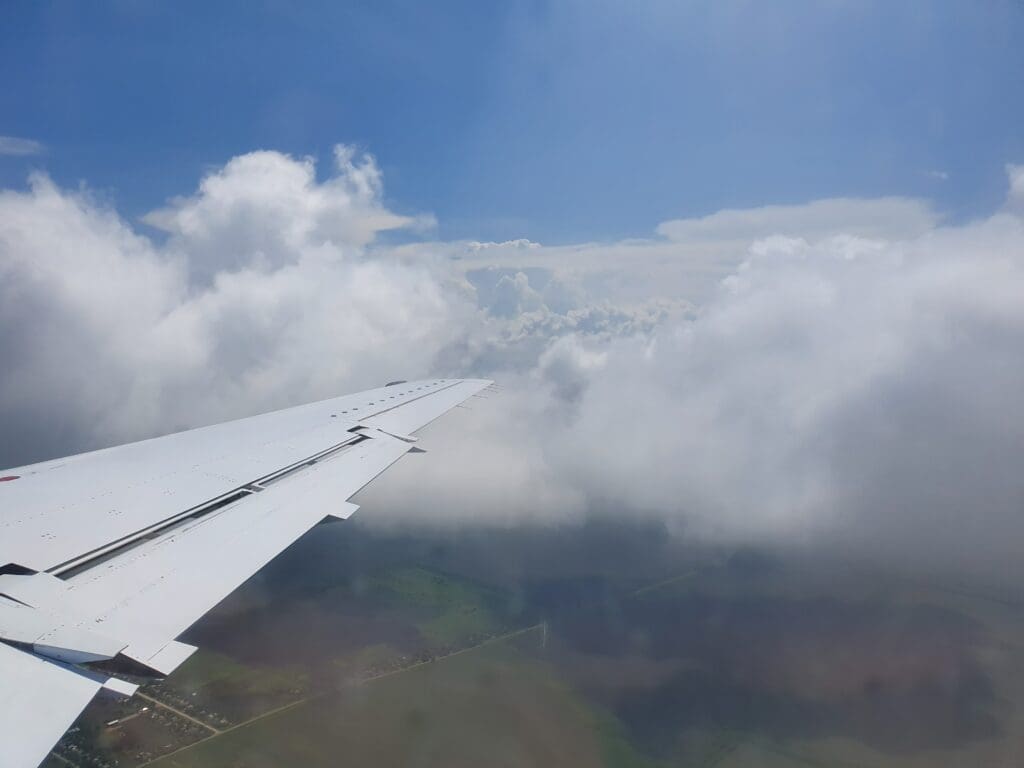
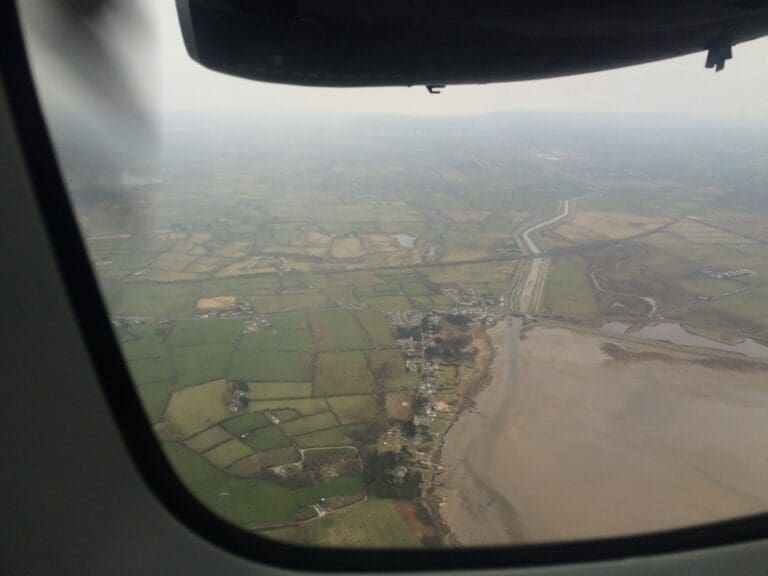
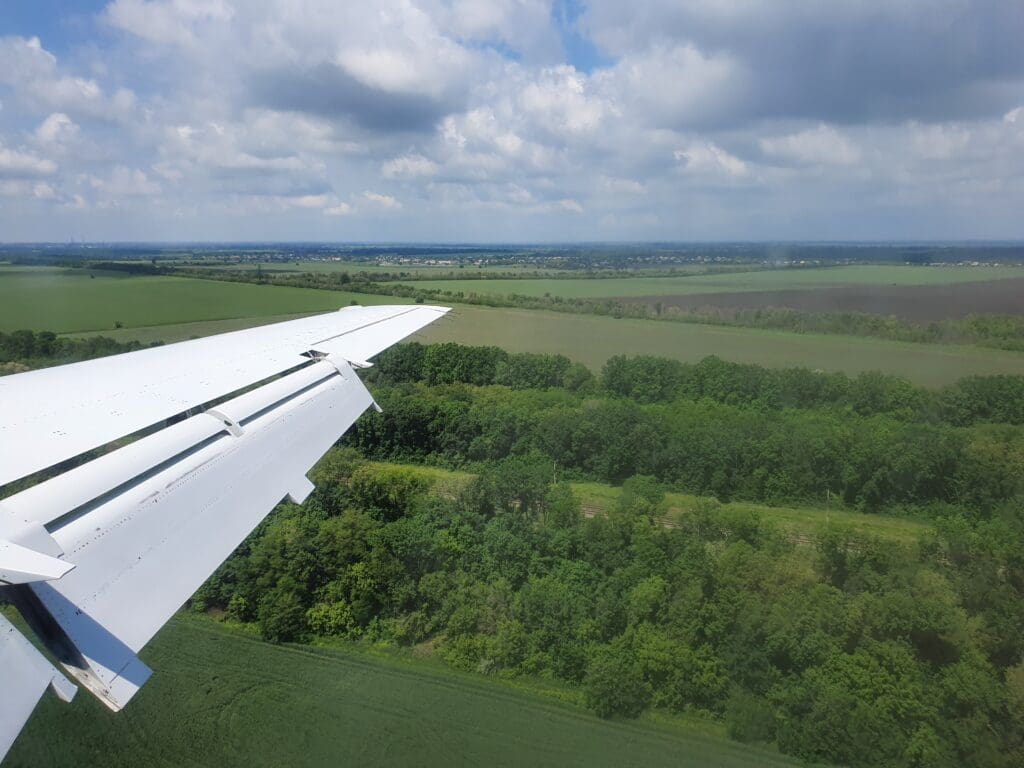
Eventually, the green countryside appered below as we sank below the clouds whilst the flaps were partially extended. After making a loop around the airfield, the aircraft established itself on approach for Runway 20 at which point the flaps were fully extended and the landing gear was lowered in preparation for our arrival. As we sank towards the runway, for the first time in the flight the aircraft seemed to bump around rather considerably meanwhile below several villages could be spotted amongst the picturesque green fields and woodlands.
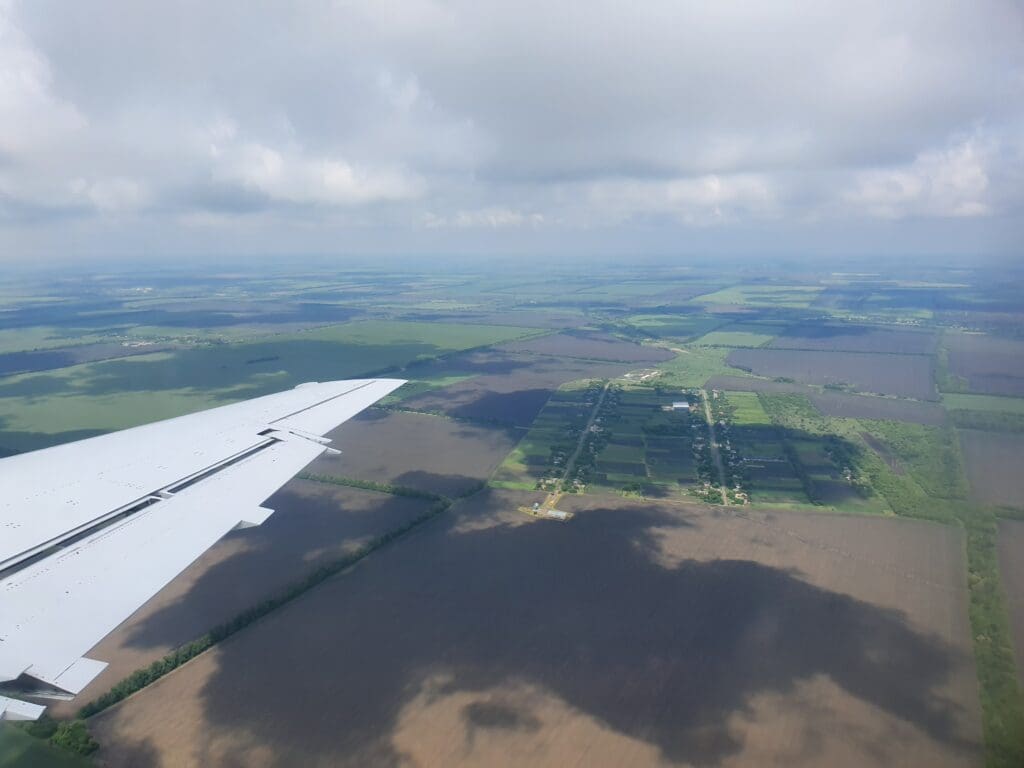
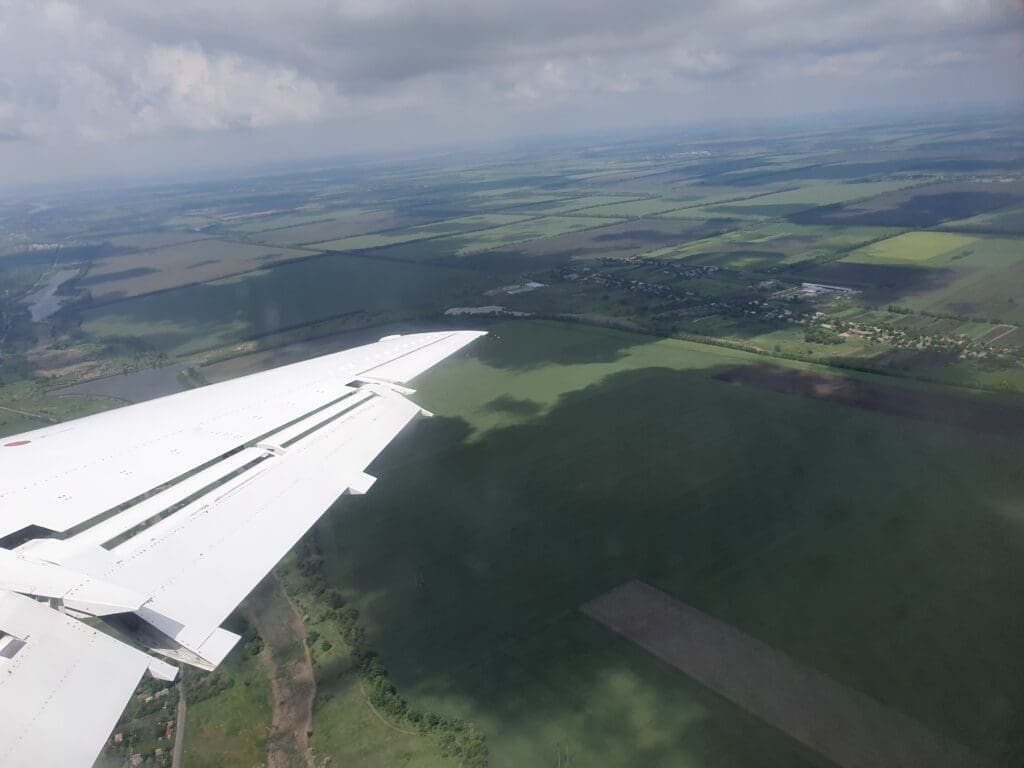
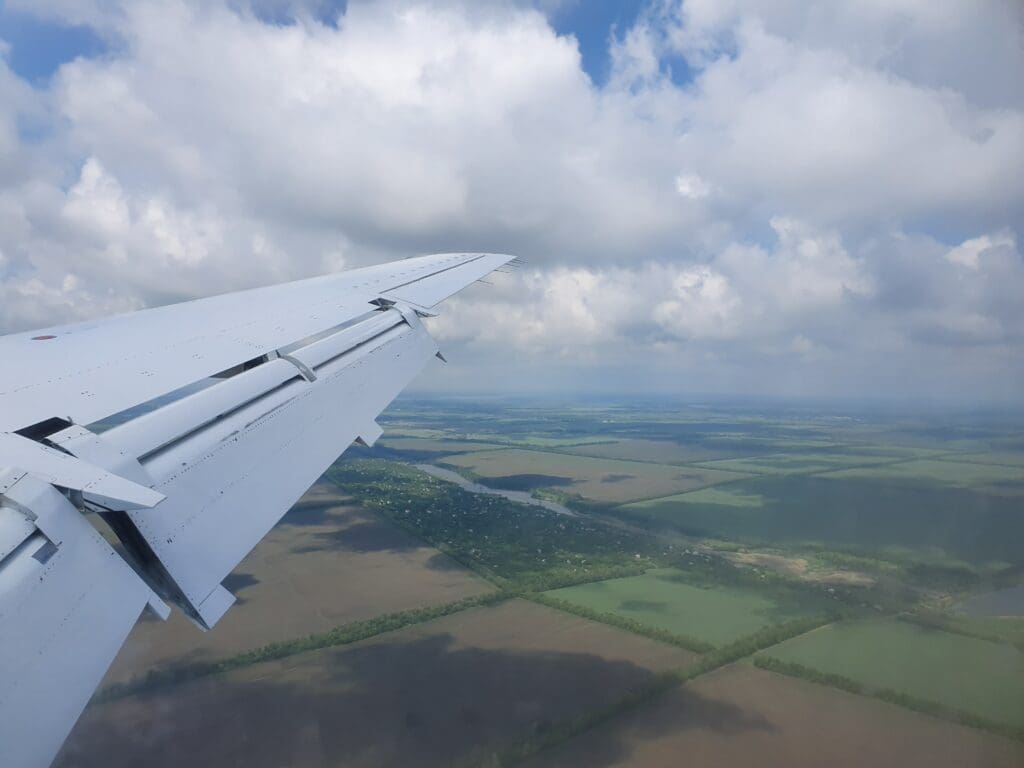
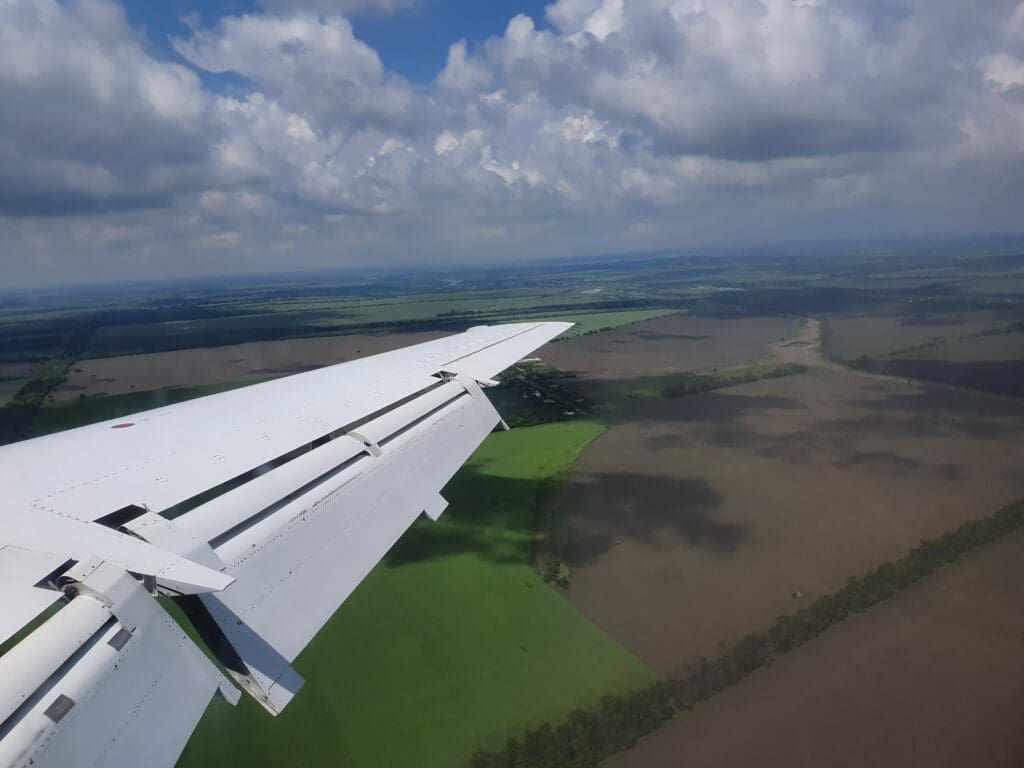
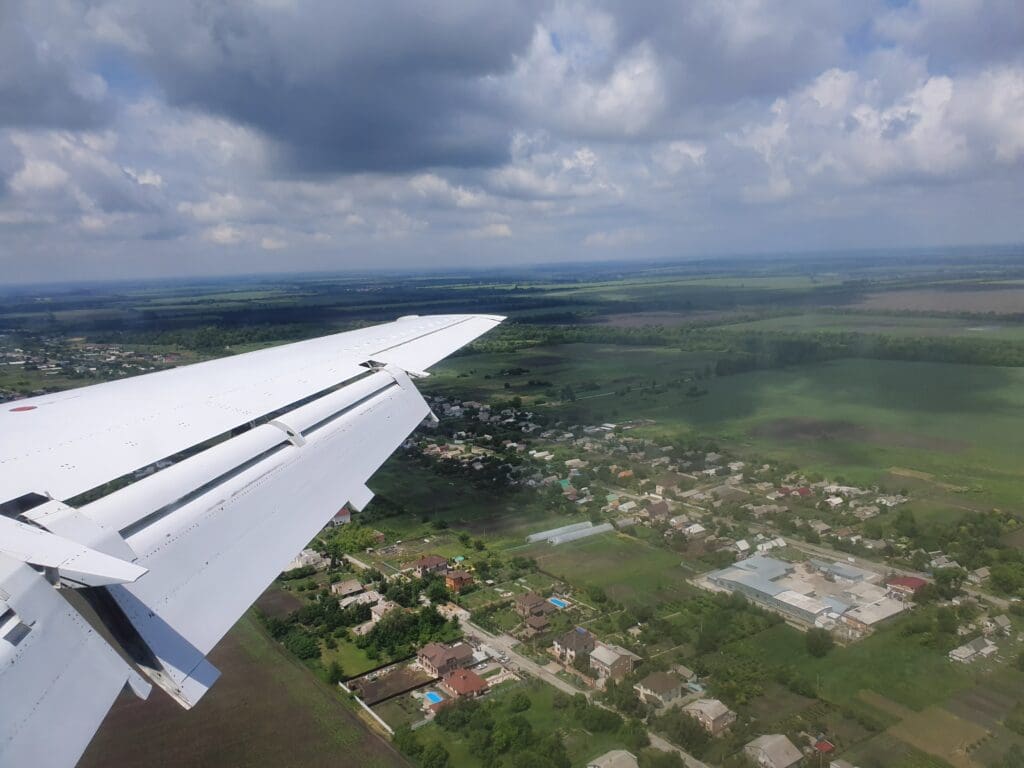
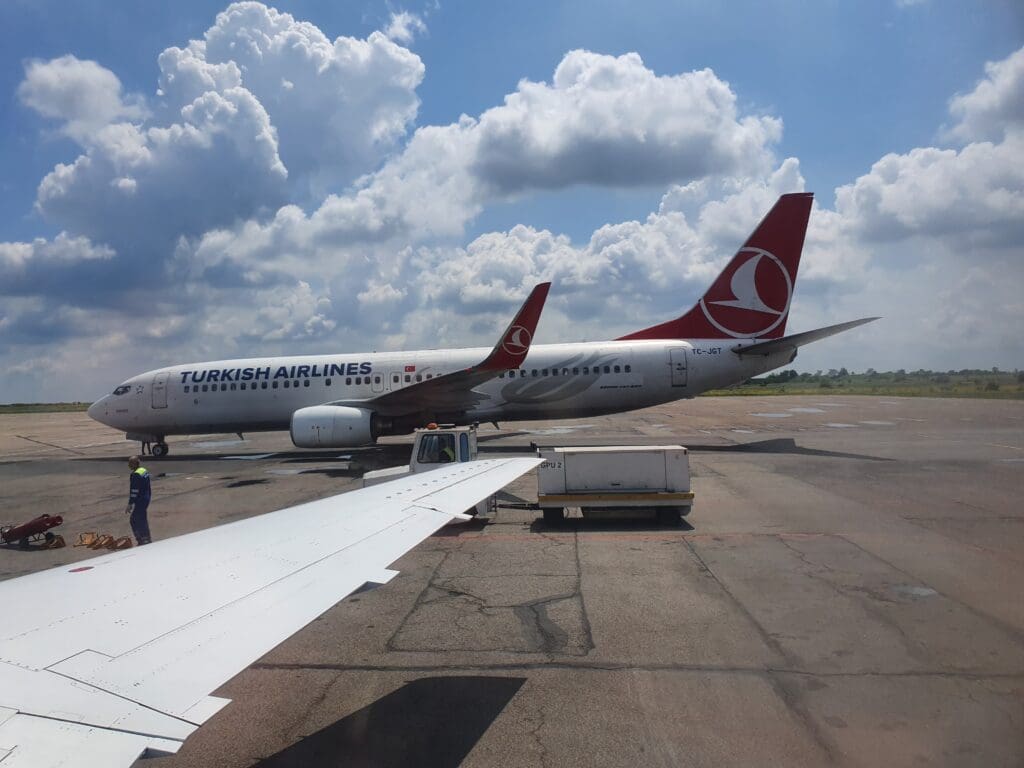
Moments after passing over a railway line, exactly 55 minutes after we had departed from Kyiv Boryspil, the aircraft made a soft touchdown on what felt like a very bumpy runway. Once back on Terrafirma, the Embraer made a speedy exit from the main ramp that runs from the taxiway to the runway. Home to plenty of interesting active and stored Soviet era aircraft, as we made our way to the terminal I spotted a host of Antonov and Yakovlev aircraft before a much more modern Turkish Airlines Boeing 737-800 came into view ready for its short flight across the Black Sea to Istanbul.
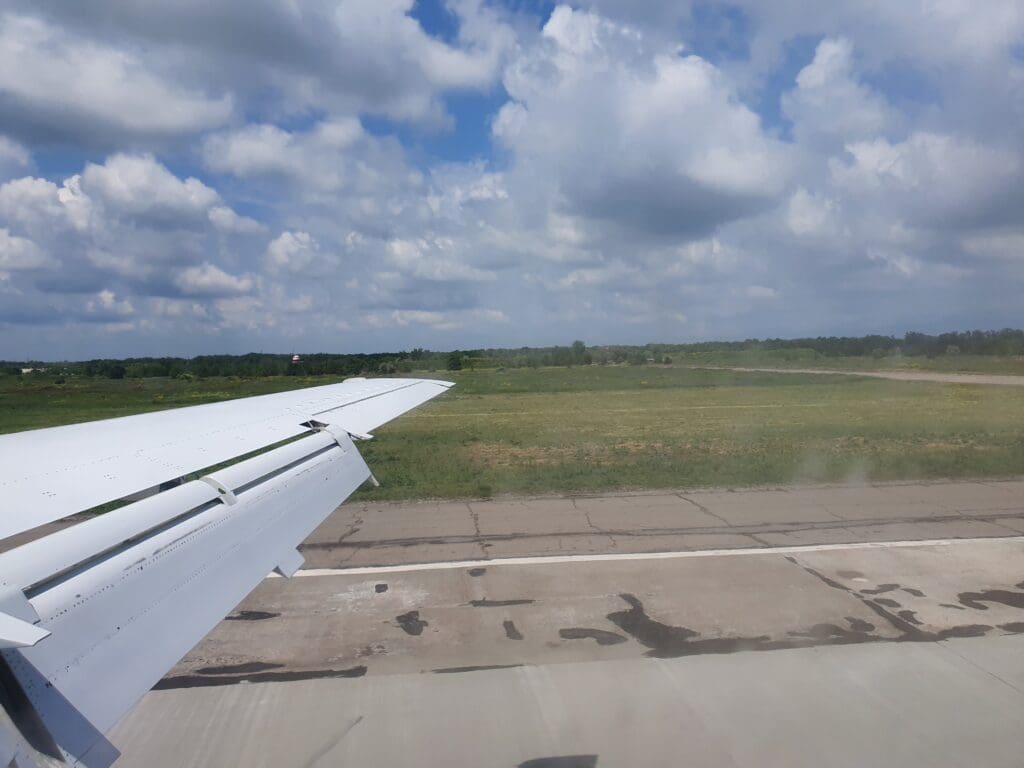
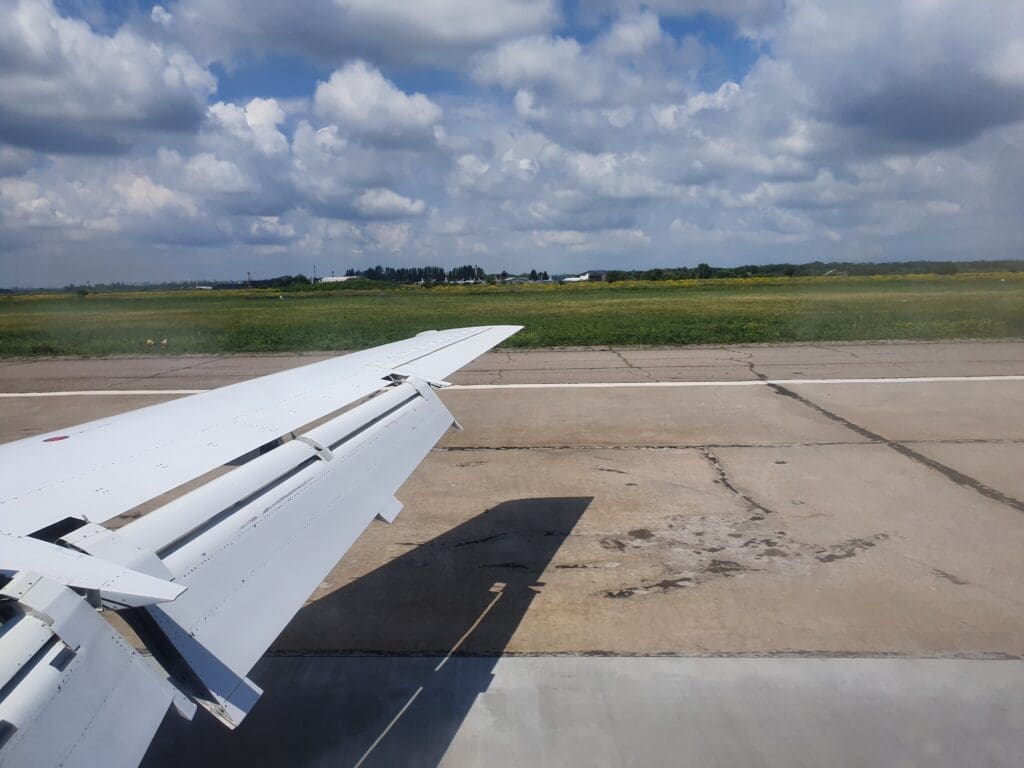
Once the Emrbaer came to a halt, two Rolls-Royce engines powered down and the cabin door was opened almost immediately. Perhaps desperate to leave the sauna-like cabin, disembarkation occurred very quickly and thus despite sitting at the rear of the aircraft, I made it out into the Zaporizhian fresh air within minutes of our arrival. Lacking any luggage, we were able to walk straight through the airport’s very rudimentary domestic terminal and were soon met by a flock of taxi drivers semi-aggressively touting for custom in a mixture of English, Russian and Ukrainian. Unable to check in to our Airbnb until the afternoon and given its position not too far away from the airport, we decided that our first stop should be Motor Sich’s Museum of Technology Boguslaev. Whilst expensive, having just arrived in the city, we opted for convenience over price and bargained with one of the unofficial drivers, eventually settling on the vastly inflated price of 300 hryvnias for the journey to the museum, rejecting the friendly driver’s offer to wait for an hour at the museum before taking us on an expensive tour of the city.
Summary
My flight with Windrose Airlines was nothing special – the crew were cold, the aircraft was battered and thus my experience left me with nothing to rave about. With that considered, I probably wouldn’t go out of my way to fly with Windrose Airlines again in the future. Nevertheless, they did manage to deliver my father and I to Zaporizhia on time and in one piece, and I was happy to get the opportunity to fly onboard an Embraer 145 as opposed to an Airbus A320 or a Boeing 737-800.