Aer Lingus A330 Review: Flying a Big Jet on the Short Dublin to Heathrow Route
Background
In the distant pre-Covid world, Aer Lingus’ Airbus A330s were somewhat of a rarity at British airports. Instead, as one would likely expect given the type’s capabilities, these spent most of their time shuttling passengers back and forth across the Atlantic on the carrier’s services to Canada and the United States. However, with the delivery of Aer Lingus’ Airbus A321neos coupled with the demand for long haul Transatlantic travel going pear-shaped during the pandemic, this new narrowbody type has proved sufficient for a number of the carrier’s North American routes in the current climate. In turn, this has freed up some of Aer Lingus’ widebody fleet and allowed the Airbus A330 to be deployed on other routes – one of which is the carrier’s daily evening Dublin to Heathrow rotation. Seeing as I would be unlikely to get the opportunity to sample a long haul flight on Aer Lingus at any time in the near future, needing to get back to London after my jaunt up to Donegal, I decided that I would pay the slight premium to sample the delights of Aer Lingus and one of their Airbus A330s.
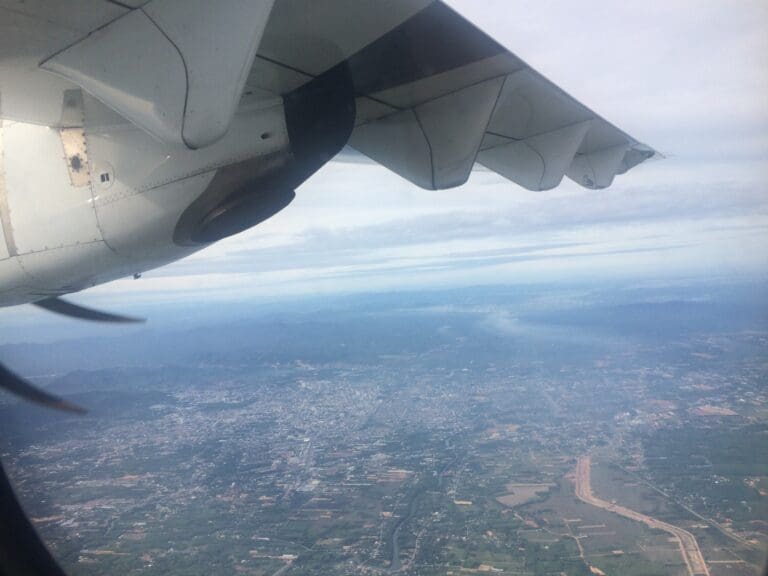
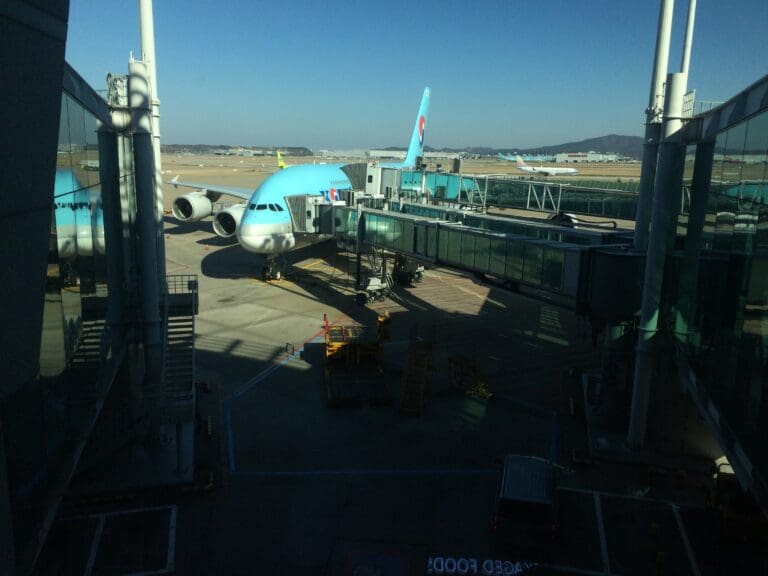
Whilst this service is undoubtedly one of the shorter Airbus A330 services operated across the world, it was not to be the shortest Airbus A330 service that I had ever taken. Instead, that award goes to Korean Air and their 181-mile Airbus A330-300 operated service between Jeju and Busan that I had sampled back in 2015. Meanwhile, in terms of point-to-point distance, this flight was to be of equal length to the short hop between Seoul Gimpo and Jeju, which I had previously flown onboard Asiana Airlines and Korean Air’s Airbus A330s.
Booking
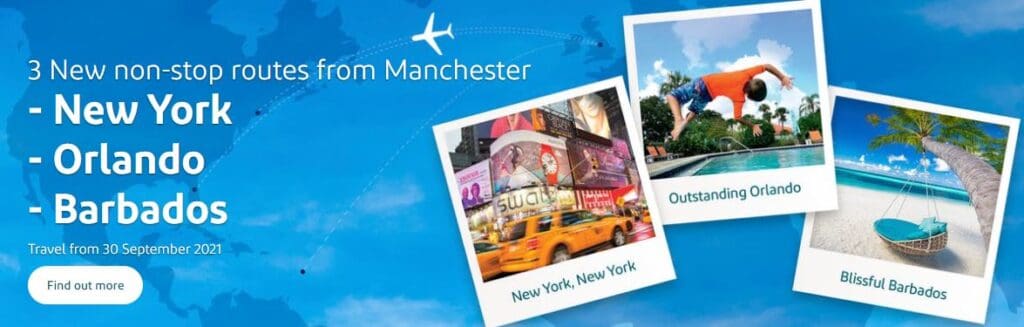
Opting to book directly with Aer Lingus, after deciding to travel with the airline I headed straight over to their homepage. Upon arriving there, booking from the UK, I was greeted by a large advertisement for Aer Lingus’ new direct services from Manchester to Barbados, New York and Orlando. Scrolling down the front page, I came across the flight search engine and wasted no time in inputting the relevant details into this before being presented with Aer Lingus’ four services between Dublin and Heathrow that Sunday.
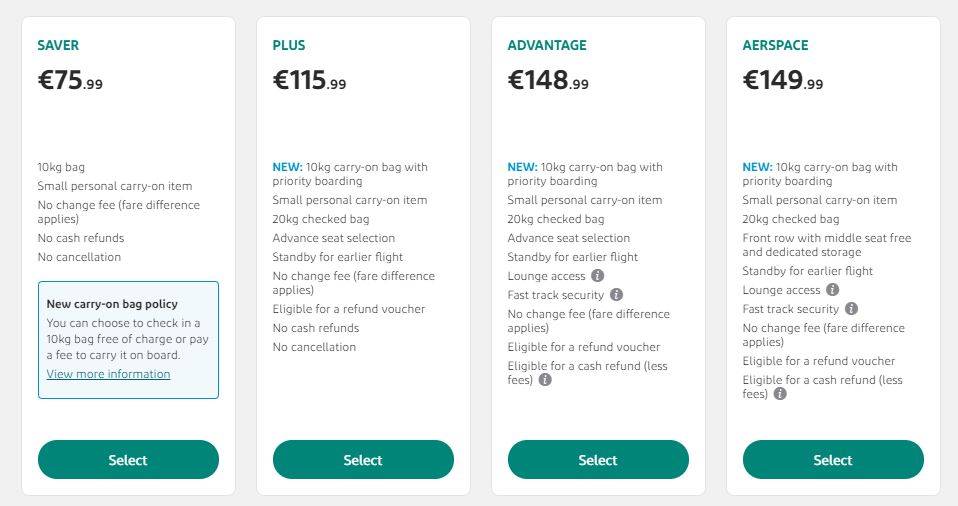
The cheapest one-way fares for these services ranged between €75.99 and €85.99, with my chosen flight thankfully falling at the former price point. Admittedly, given the flight’s length, this was quite expensive, although it is worth noting that I was to travel at a peak time – Sunday evening. Furthermore, Aer Lingus appears to charge a significant premium for their flights to Heathrow compared to other airports across the UK. For example, Aer Lingus’ evening flight to Gatwick would have set me back €55.99, whilst fares to other British airports that evening stood at around €30. Yet, given the aircraft type, as a one-off, I was willing to pay this premium!
Once I had double-checked that the evening flight was scheduled to be operated by an Airbus A330, I clicked on this option and was presented with four fares. These were Saver, Plus, Advantage and Aerspace in price ascending order. Whilst Aer Lingus officially only offers a single class of service onboard their short haul flights, those travelling on the Aerspace fare are provided with the usual increased luggage allowance alongside lounge access and the opportunity to sit in business class albeit with economy onboard service. Onboard, this is not a fantastic upgrade for those travelling on Aer Lingus’ standard Airbus A320s, however, those flying on the carrier’s Airbus A321neos and Airbus A330s can enjoy the luxury of lie-flat business class seats. Meanwhile, on the other end of the scale, it is worth noting that Aer Lingus’ Saver fares allow passengers to check-in a 10kg bag for free.
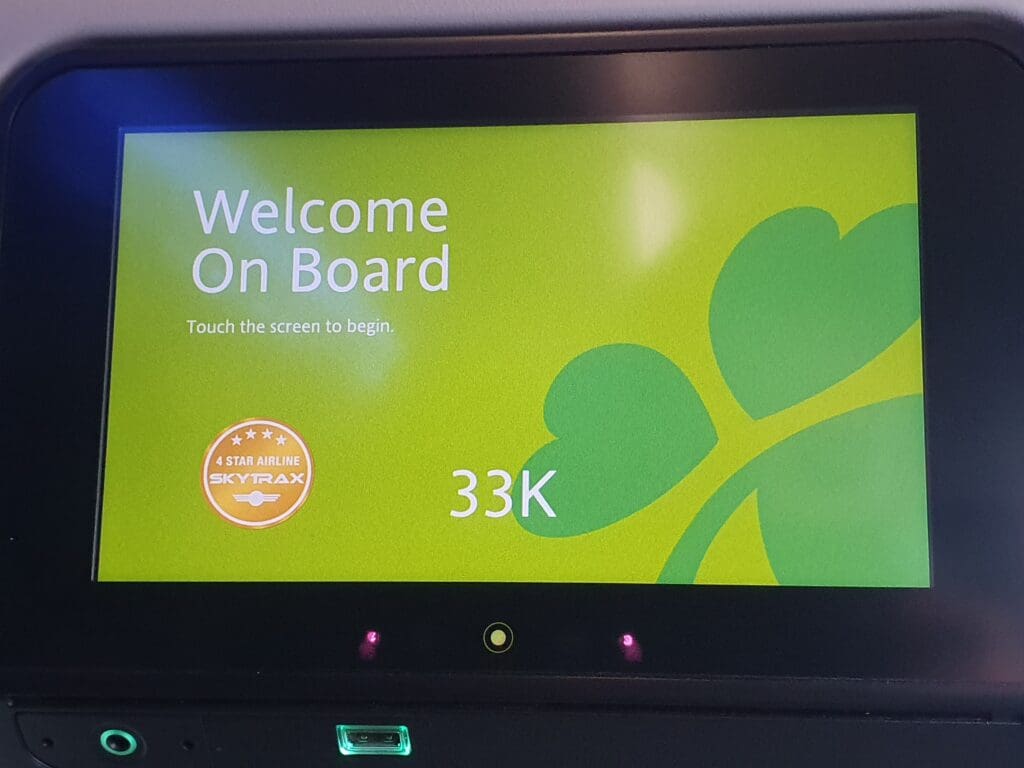
As per usual, I went for the cheapest fare and entered my details before commencing my journey through the minefield of optional extras. To start, I was given the option to receive my booking information by text for an additional €2, and to add Allianz travel insurance for €8.43. Rejecting both, I was then presented with the Airbus A330-300’s seat map which revealed a sea of empty seats, these reservable for a fee of between €3.99 and €16.99. Opting for a seat on the right-hand side of the aircraft in the hope that this would offer good views of London in the event of good weather and a landing on Runway 27L/R, I decided to go for Seat 33K which added €3.99 to the total cost of my booking. Next up was the option to add additional luggage – seeing as I would be travelling light and planned on taking a single carry-on bag, I headed past this before reaching the final page of optional extras – car hire and Heathrow Express tickets. Once again, I rejected these options before reaching the payment page where I made a quick and easy payment of €79.98, receiving email confirmation of my booking several minutes later.
Check-In
Deciding to check-in via the Aer Lingus’ app, I opted to do this around 22 hours before departure. Once I entered my booking number and surname, I was then taken to a page whereby I could add or edit my frequent flyer number, re-select my chosen seat and add luggage or sports equipment for an additional fee – skipping past all of these, I agreed not to transport any prohibited goods and was soon presented with my boarding pass – all in all the process took the best part of 40 seconds!
The Journey
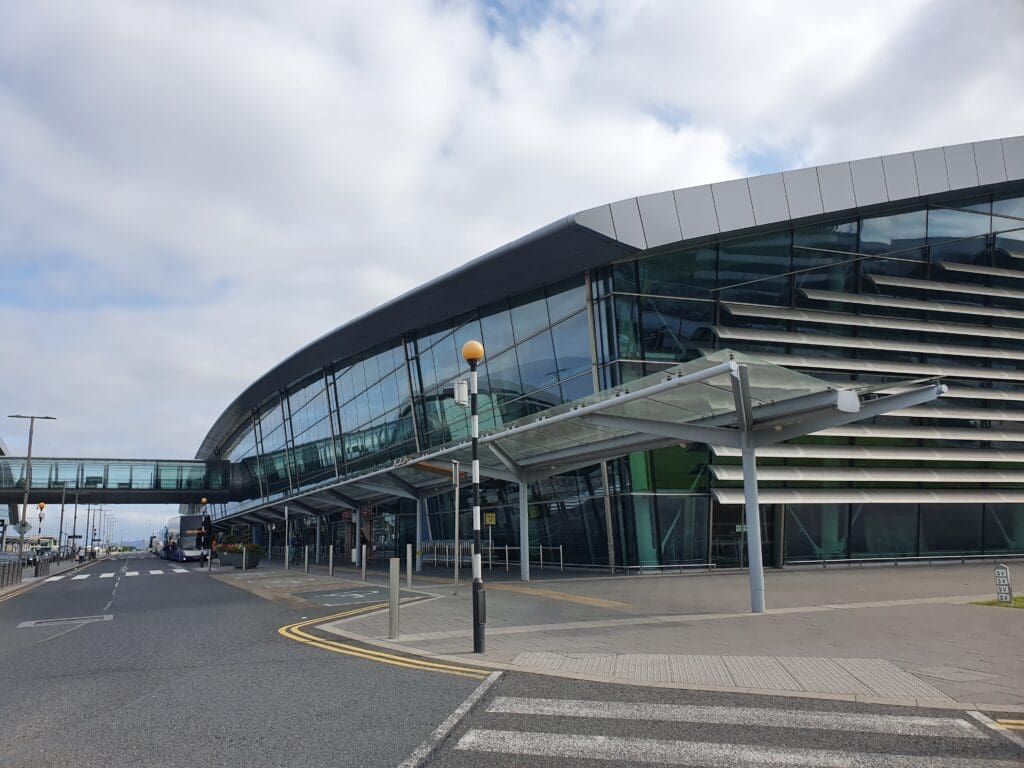
By the time I had disembarked from the Amapola Fokker 50 that had powered me across Ireland from Donegal and made my way through arrivals to the landside area of Terminal 1, I still had three hours to go before my Aer Lingus flight over to Heathrow. Whilst I had pondered the idea of a quick trip to the mound on the south side of the airport, not wanting to rush, I opted against this and stopped for an overpriced sandwich before making my way over to Terminal 2. Unlike some larger airports, Dublin Airport’s two terminals are located next to one another and are conveniently connected by an indoor walkway. Nevertheless, fancying a few minutes outside, I decided to head out into the open air and walked over to Dublin’s newer terminal.
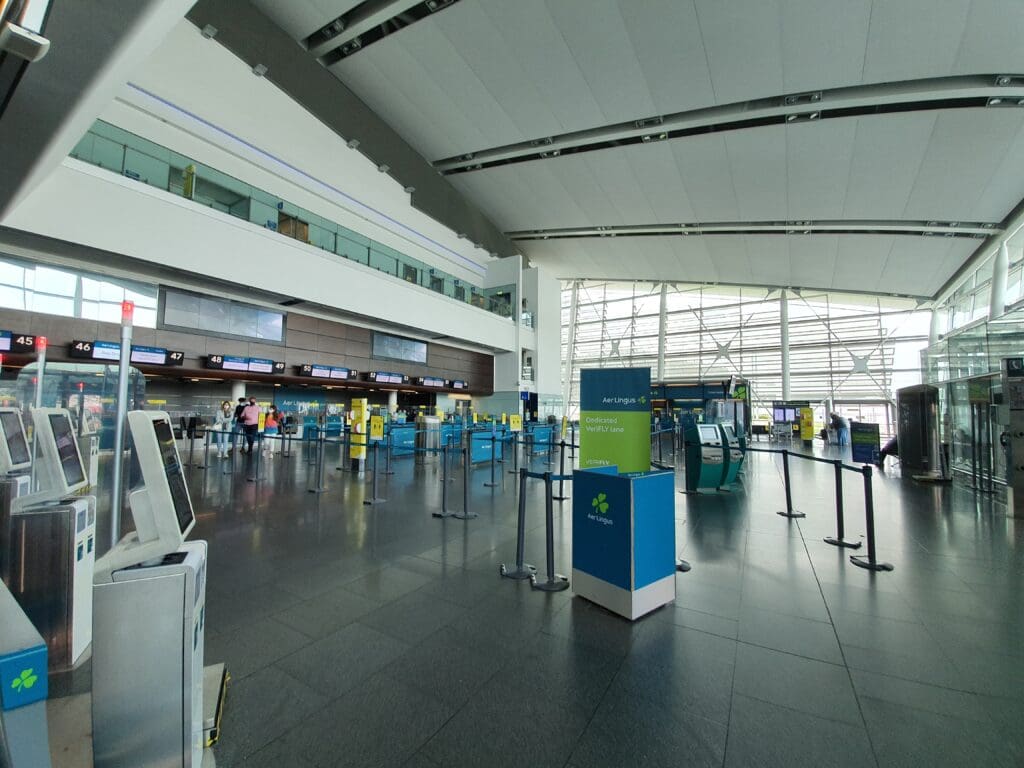
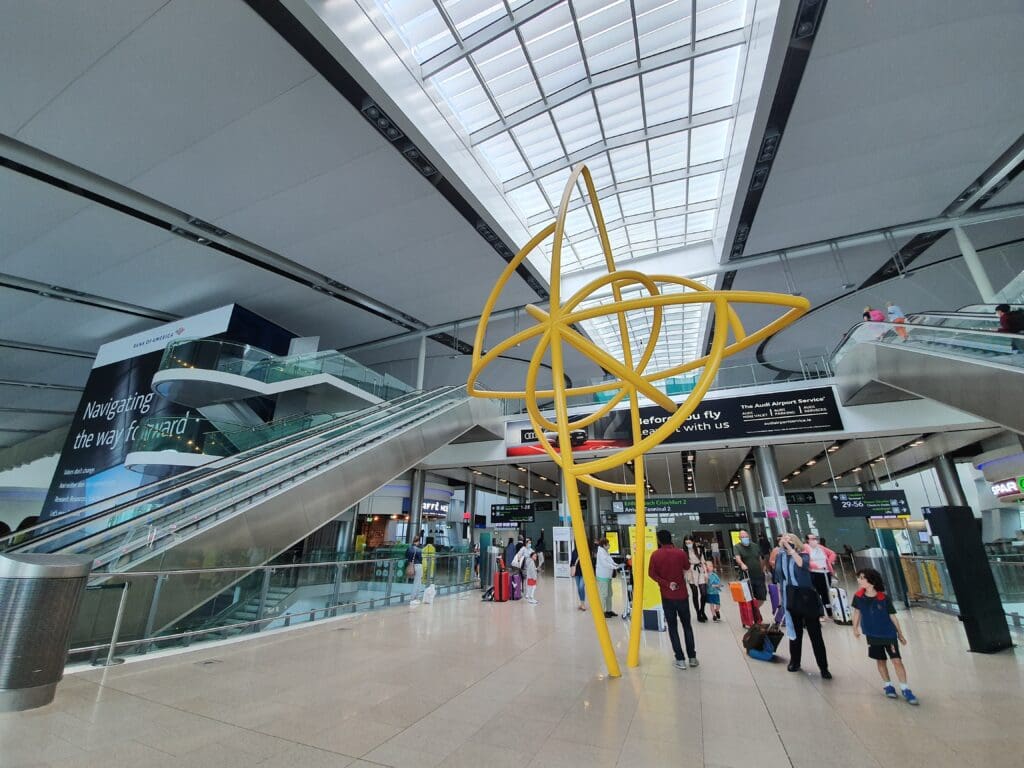
Having first opened its doors in 2010, Terminal 2 is bright, modern and spacious, although the latter point was perhaps assisted by the lack of passengers that afternoon. Entering this on the check-in level, around half of this is dedicated to Aer Lingus and features plenty of green, whilst the other half is occupied by the terminal’s other users – namely American Airlines, Delta Air Lines, Emirates and United Airlines. Seeing as I had a mobile boarding pass and with no hold luggage to check in, I journeyed up the escalators. These took me first to the arrivals level where I was greeted by Isabel Nolan’s Turning Point sculpture before I made my way further up to the departures level of the terminal.
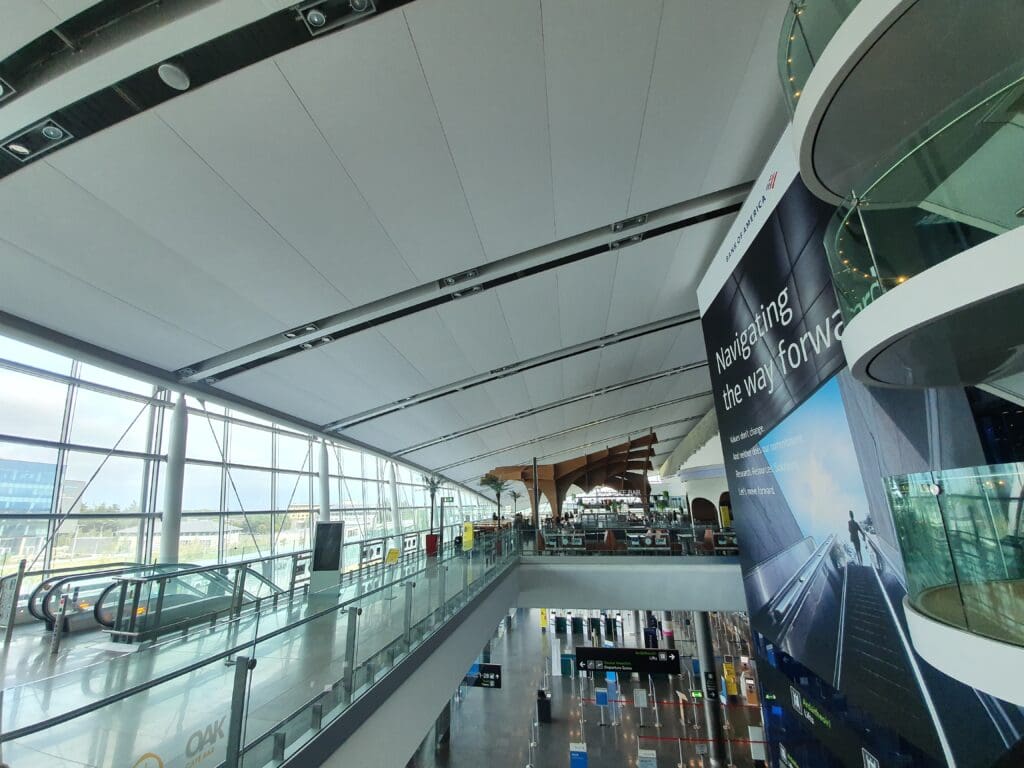
Given the lack of passengers and the positive experience that I enjoyed at security over in Terminal 1 the previous day, I expected security to be a breeze. However, once my boarding pass was scanned and I entered the security area, I was immediately greeted by a long queue. Despite featuring a long line of checkpoints, a total of just one of these was open and I thus spent the next twenty minutes or so shuffling forward until arriving at this checkpoint. Perhaps understandably given the fact that through no fault of their own, they had to deal with multiple complaining passengers, the security staff did not seem particularly friendly although they did go about their duties efficiently and I managed to make it airside within a minute of arriving at the checkpoint.
Once airside, I headed through the duty-free shop before arriving at the terminal’s main area where the usual selection of cafés, restaurants and shops could be seen – many of which were closed; something I would probably attribute to a combination of Covid, a lack of flights that afternoon and the fact that it was a Sunday. Whilst there were plenty of Aer Lingus’ shamrock adorned aircraft parked at the terminal’s gates, only one flight would depart before my flight over to Heathrow – an Airbus A320-operated service bound for Amsterdam. Therefore, the terminal was initially reminiscent of a ghost town, although more passengers arrived later on as the departure time for the London flight neared, with this being followed by departures to Birmingham, Edinburgh, Gatwick and Manchester. With little to do in the main shopping area and having already eaten a late lunch/early dinner, I decided to head down the main pier where I soon found a seat that offered a good view of the regular stream of arrivals.
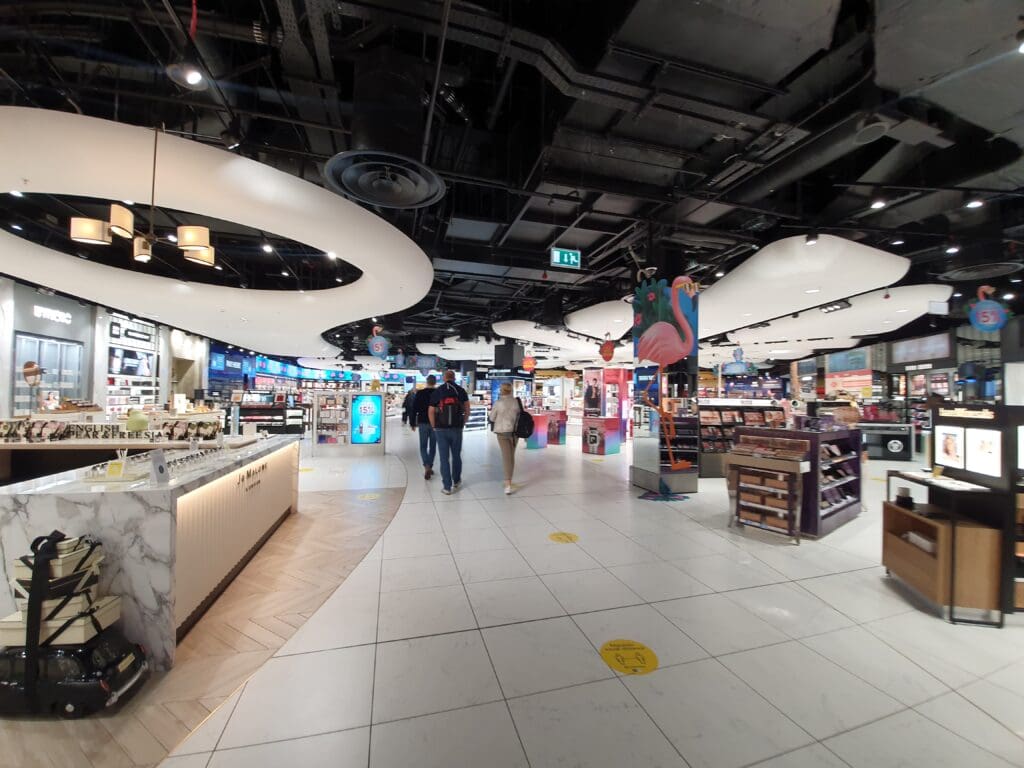
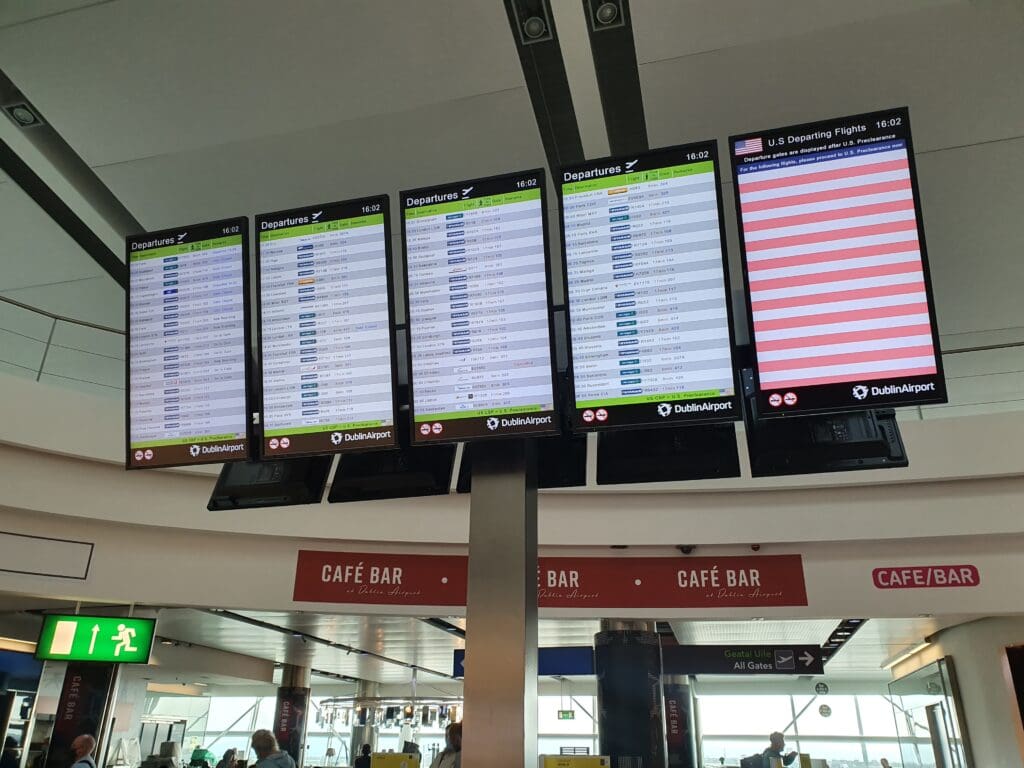
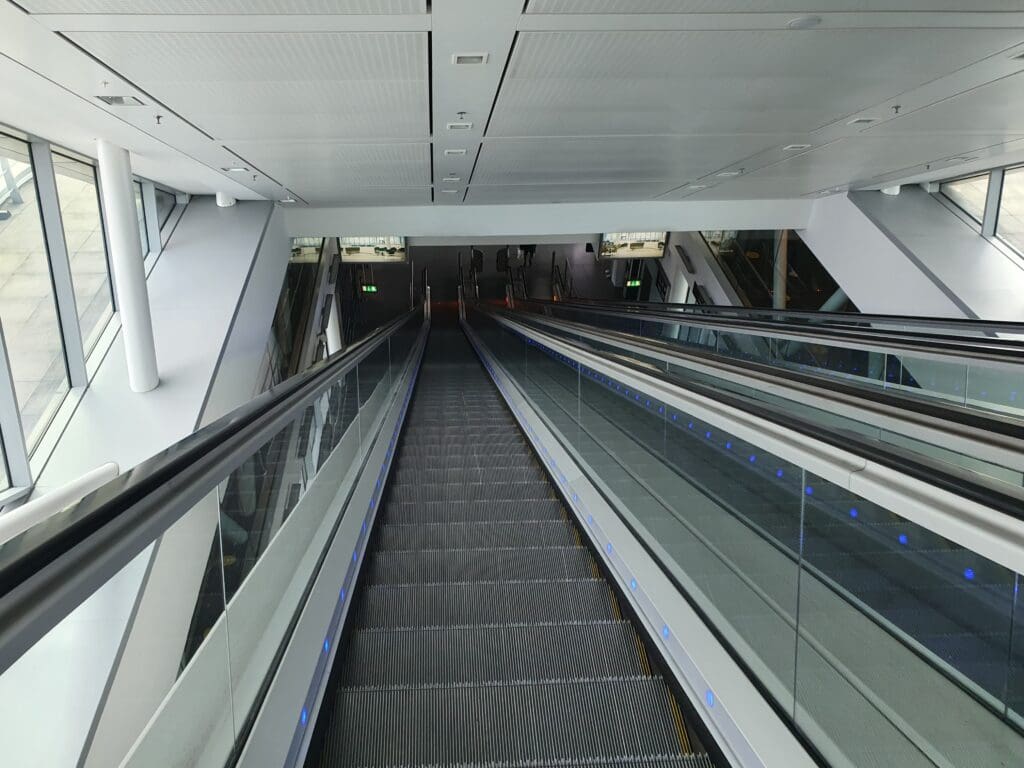
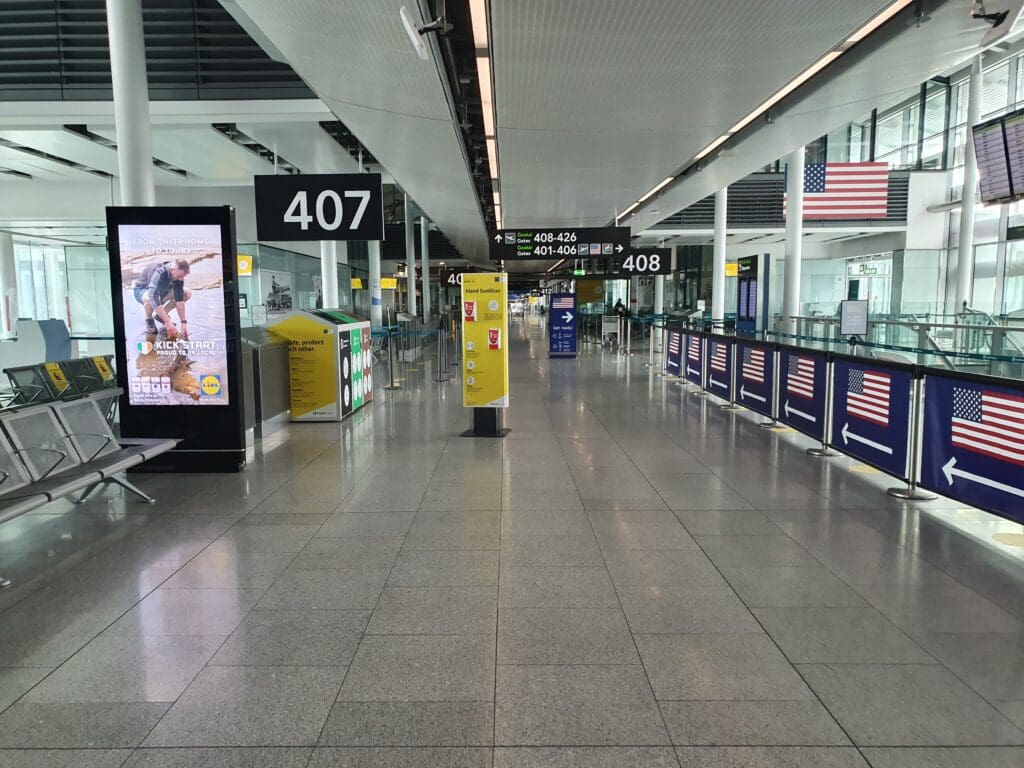
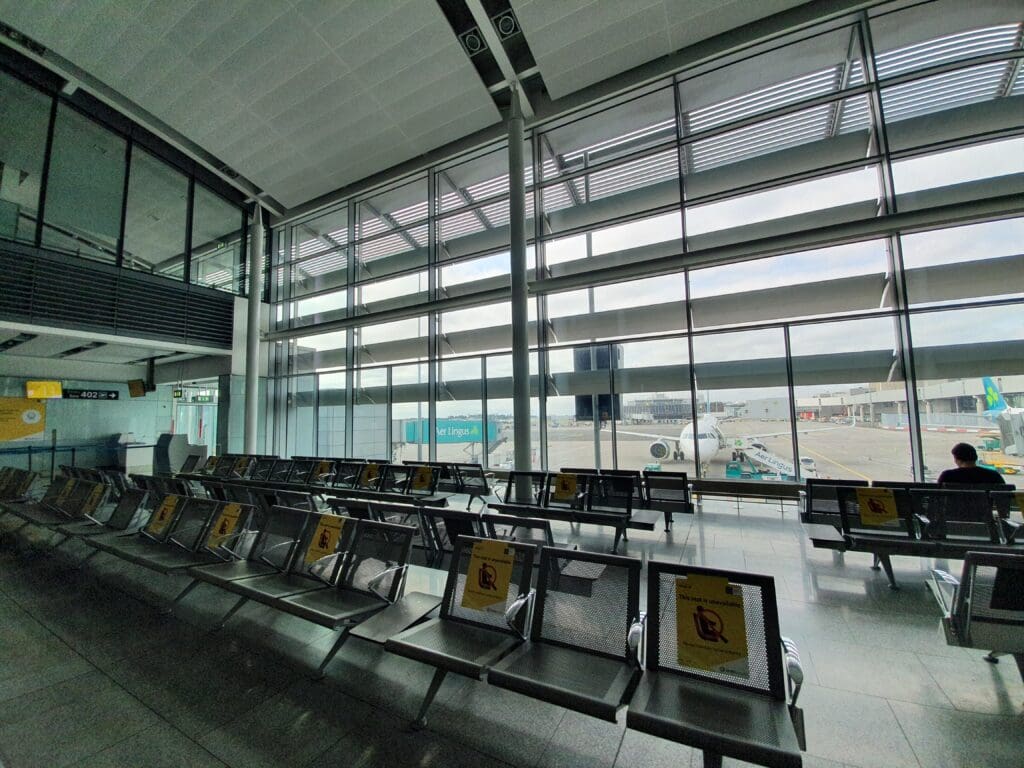
Overall, the airside portion of the terminal was spacious and modern and appeared to be in a relatively clean state therefore giving me little to complain about. On both sides of the pier, large floor-to-ceiling windows provide unobstructed views of the gates outside as well as of the runway and approaching aircraft. However, these did appear to require a good clean and any decent photography through these may have proven to be a little bit tricky. Aside from this, as I had found to be the case in Terminal 1, plug sockets and USB-A ports were in short supply and limited to several workspaces, meanwhile, the complimentary wifi worked well throughout the terminal.
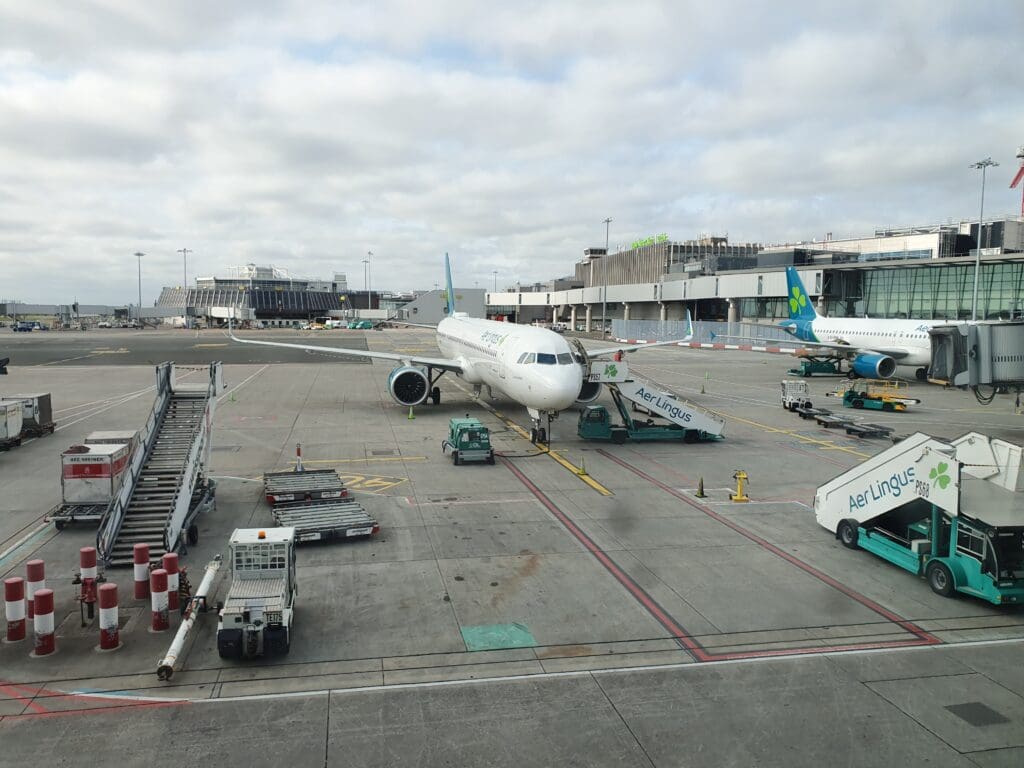
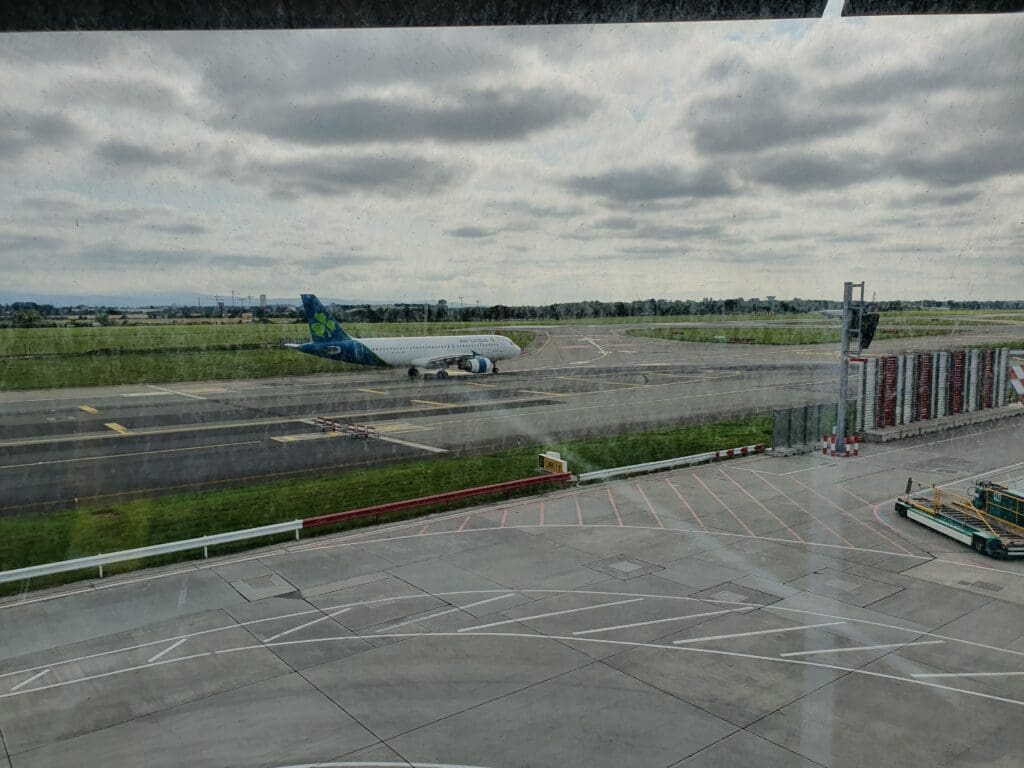
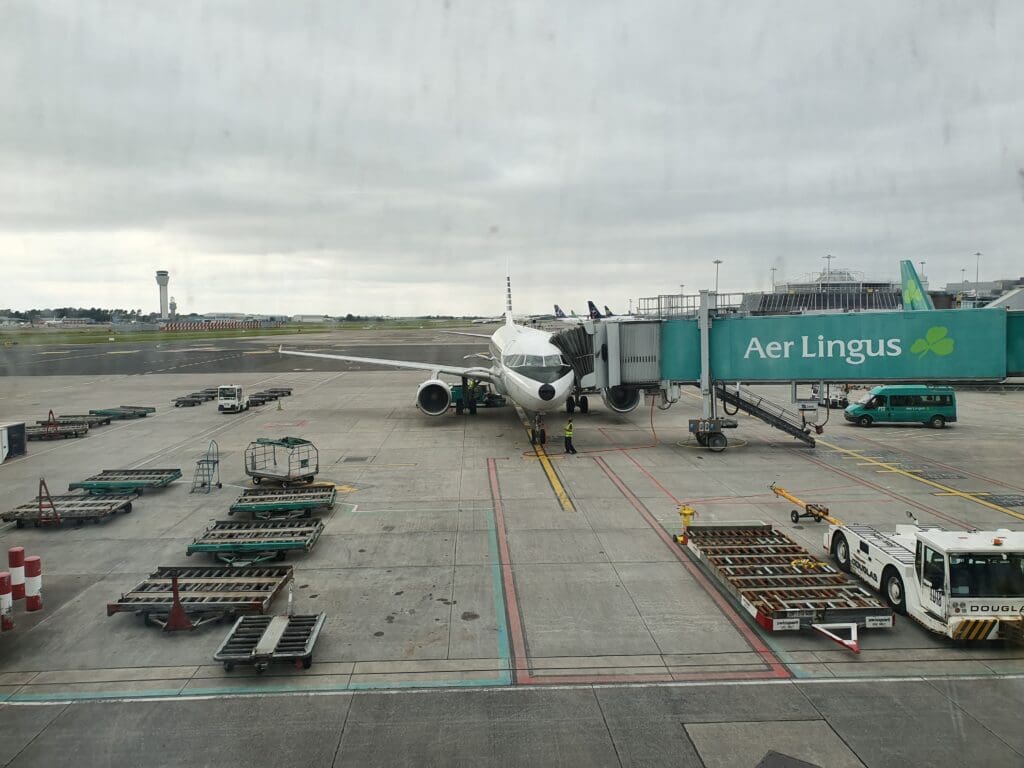
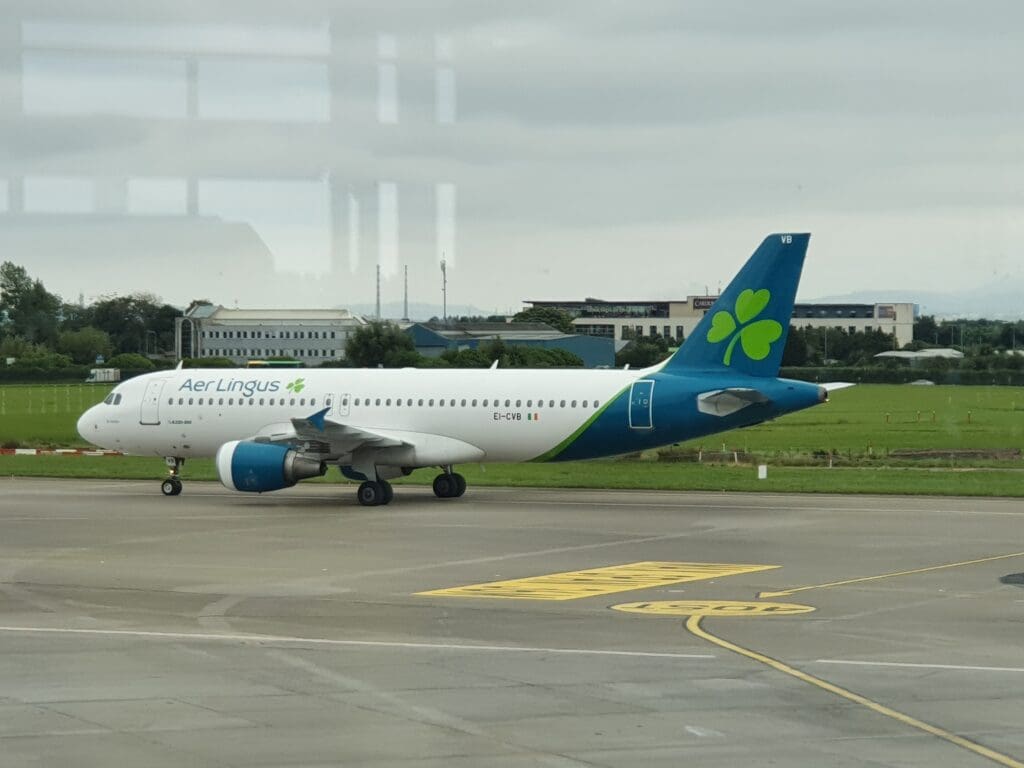
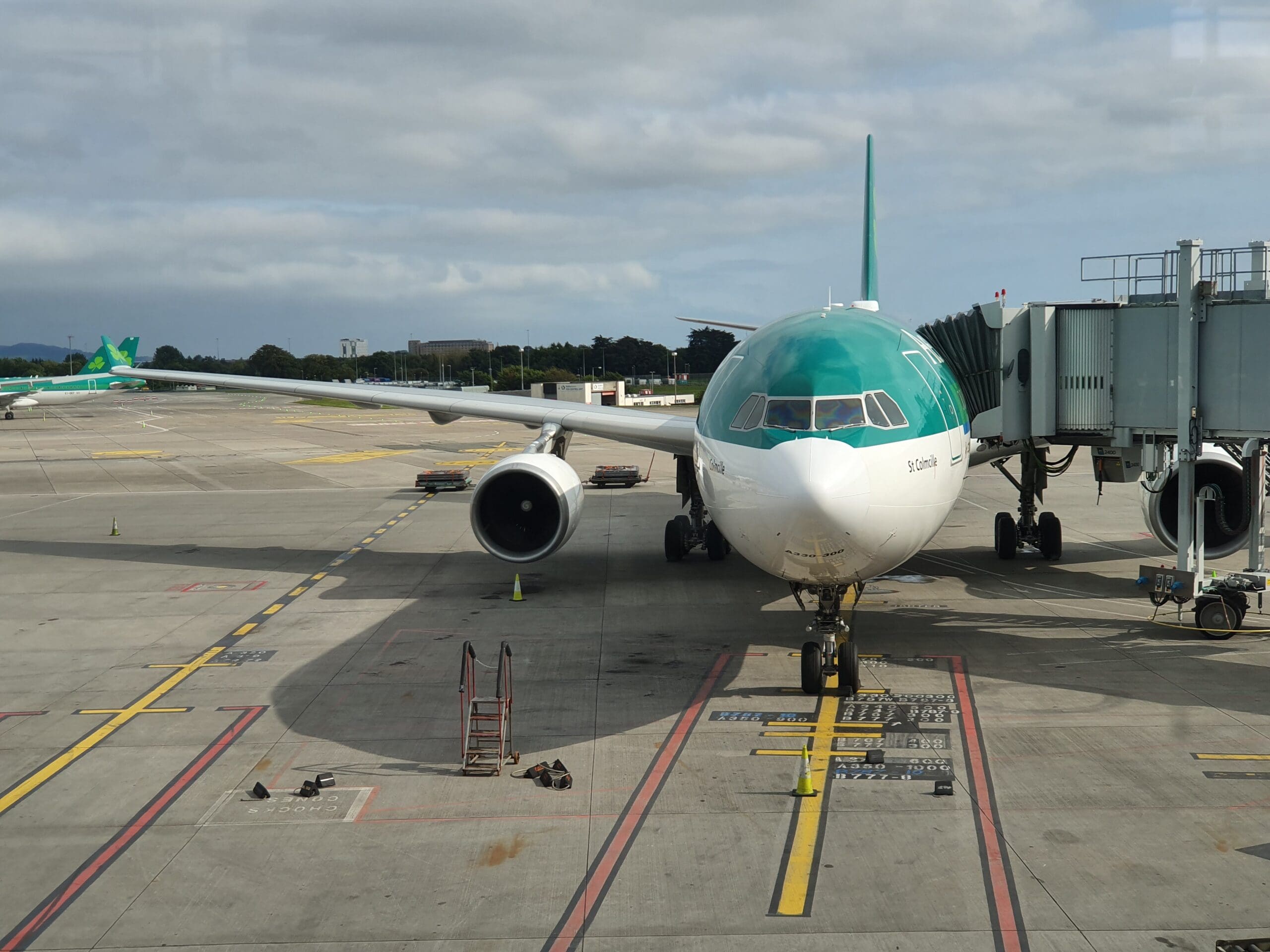
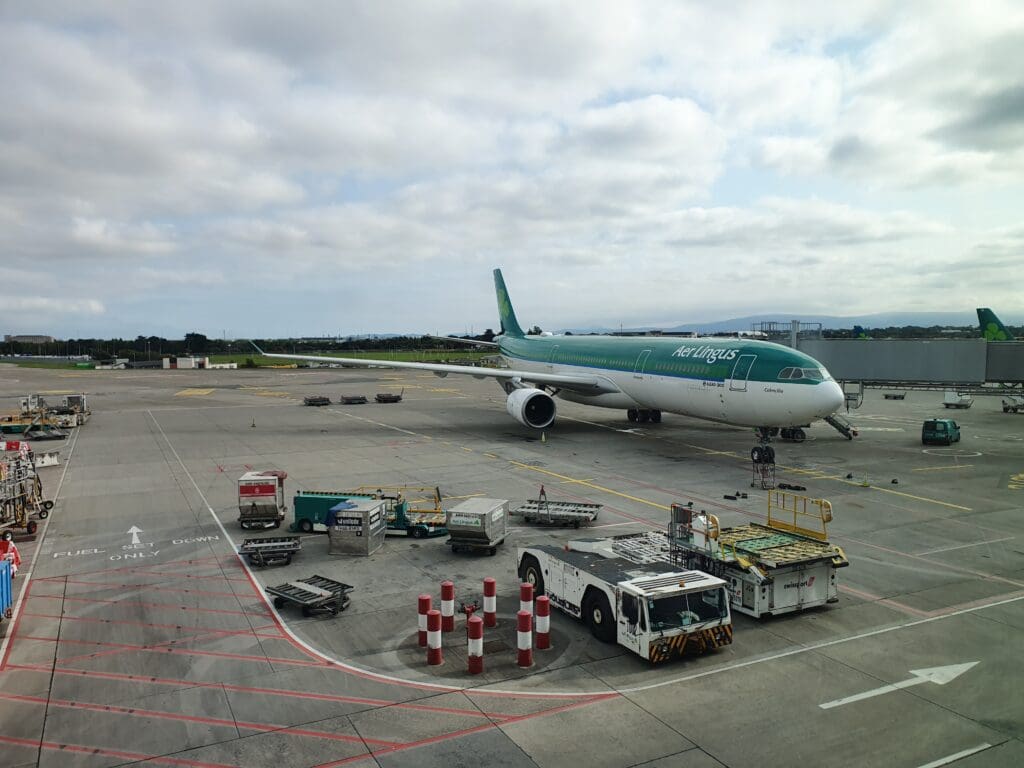
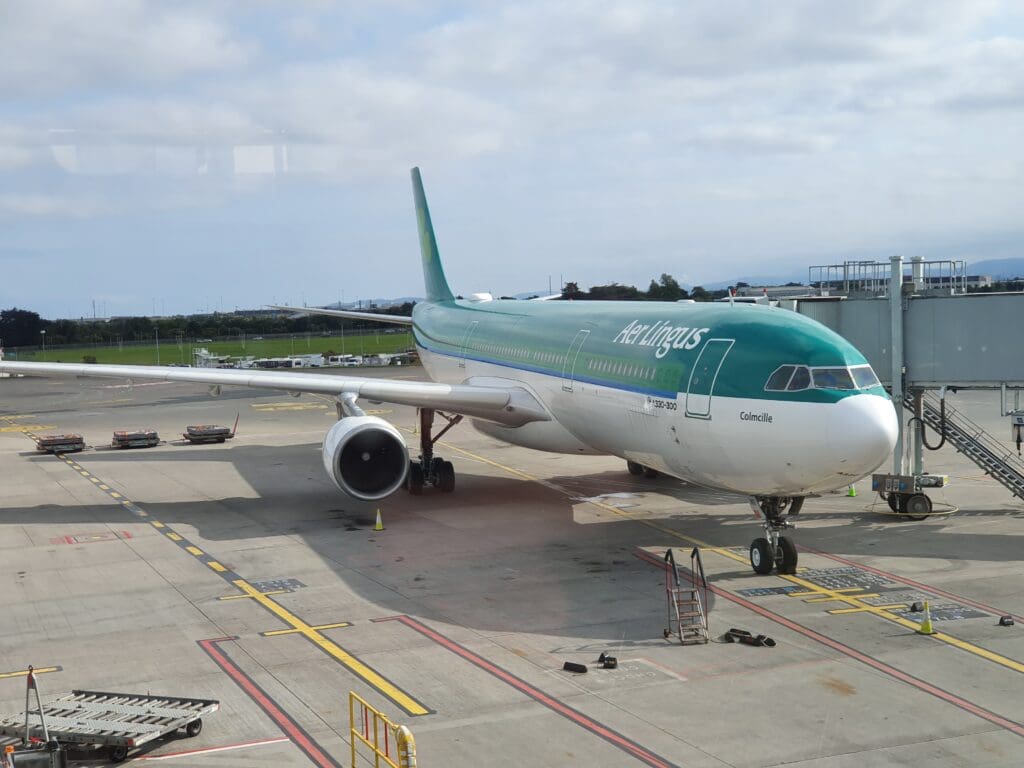
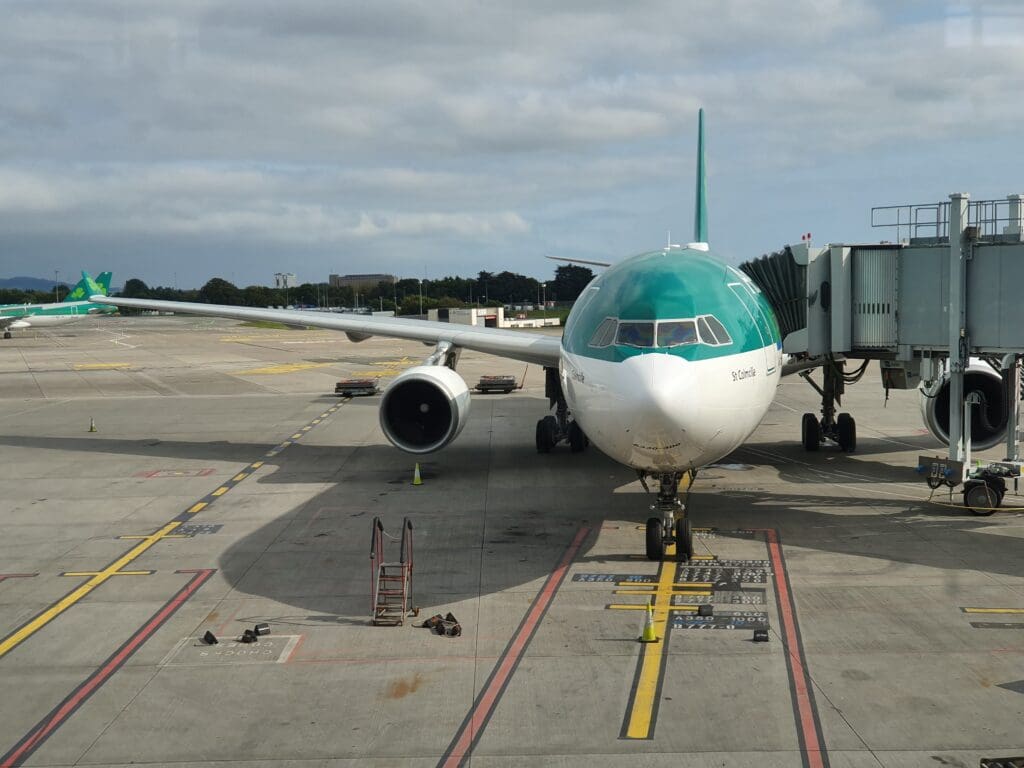
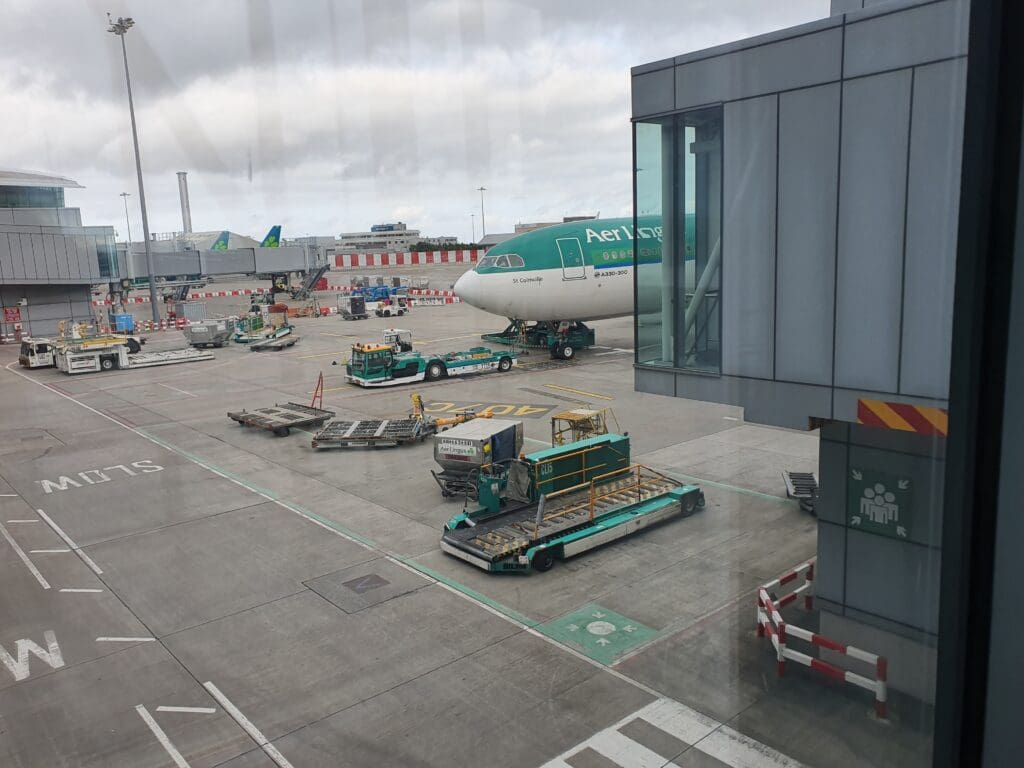
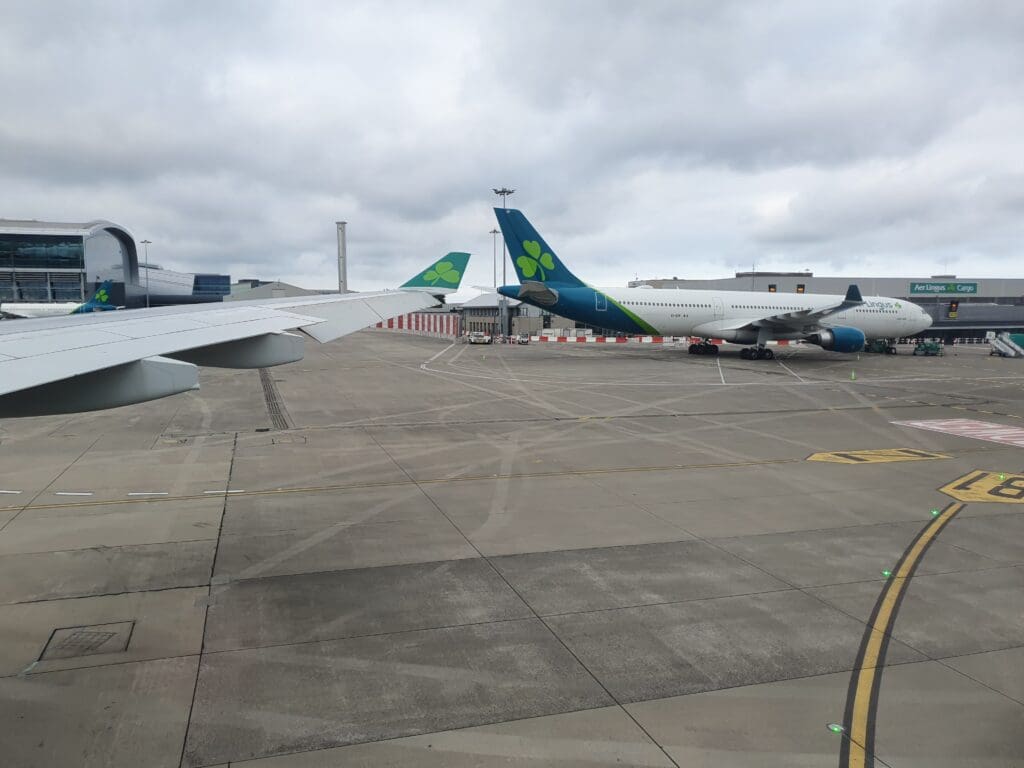
With the gate for my flight already showing on the flight information display screens, outside Gate 417 at Stand 407, an Airbus A330-302 could be seen sporting Aer Lingus’ iconic ‘old’ green and white livery. This particular aircraft took the form of EI-FNG, christened as St Colmcille, the Irish name for St Columba. Manufactured at Toulouse Blagnac in 2016, the aircraft is one of Aer Lingus’ newer A330s and took to the skies for the first time in August that year making the jet only days over five years old. On the final day of August that year, the aircraft was flown up to Dublin and soon entered service, primarily shuttling passengers back and forth across the Atlantic. In the week before my flight, the aircraft had only conducted three round trips from Dublin – these took the jet to Faro, Malaga and New York JFK, travelling around 11,000 miles. Whilst there was little action around the widebody upon my arrival, soon enough ground crew arrived, the jet was fuelled up and a seemingly endless stream of pallets began to be fed into the hold of the aircraft. The latter served as a tangible reminder as to why Aer Lingus’ largest aircraft is dispatched on one of its shortest routes.
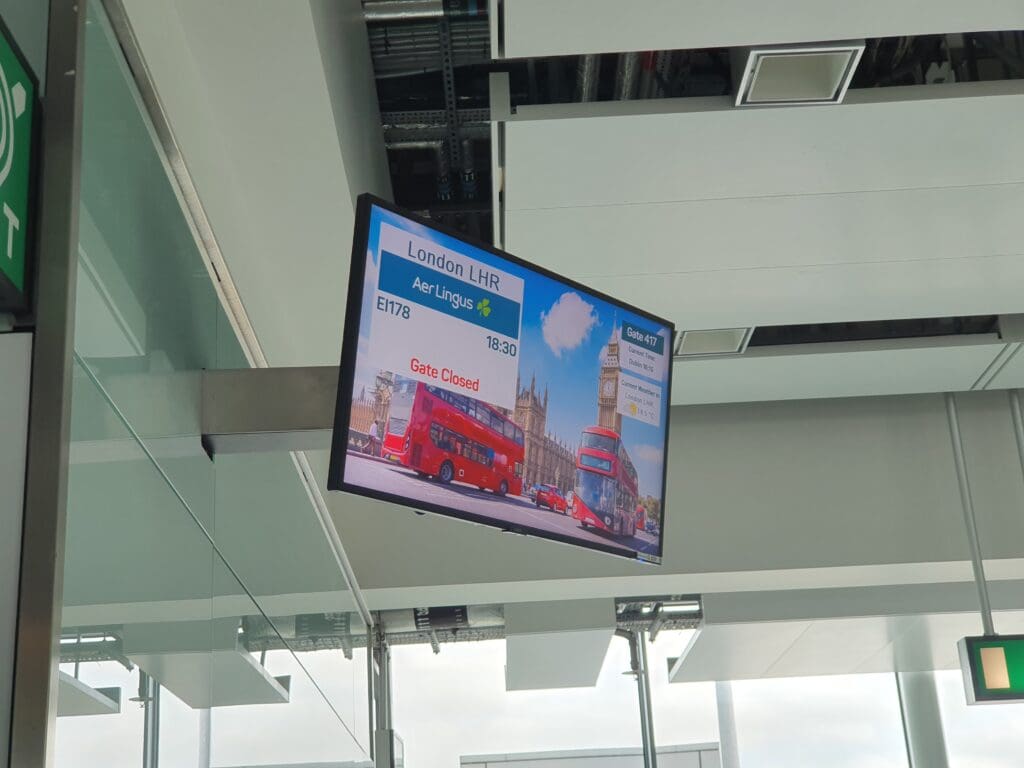
Turning my attention back inside the terminal, passengers continued to stream down the pier and the area around gate 417 soon became crowded leaving few available seats at the gate itself. At 1735, the gate agent announced that boarding would commence soon and be undertaken row-by-row, requesting passengers to remain seated until their section of the aircraft was called for boarding to ensure social distancing. Doing the exact opposite, this caused several eager passengers to stand up and crowd around the gate. At 1740, those passengers requiring assistance were requested to head to the gate for boarding followed by those travelling in business class, which presumably meant those with Aerspace tickets. Boarding for the masses then commenced and I found myself in the first cohort of economy class passengers permitted to board the aircraft – those travelling in the rearmost Economy cabin.
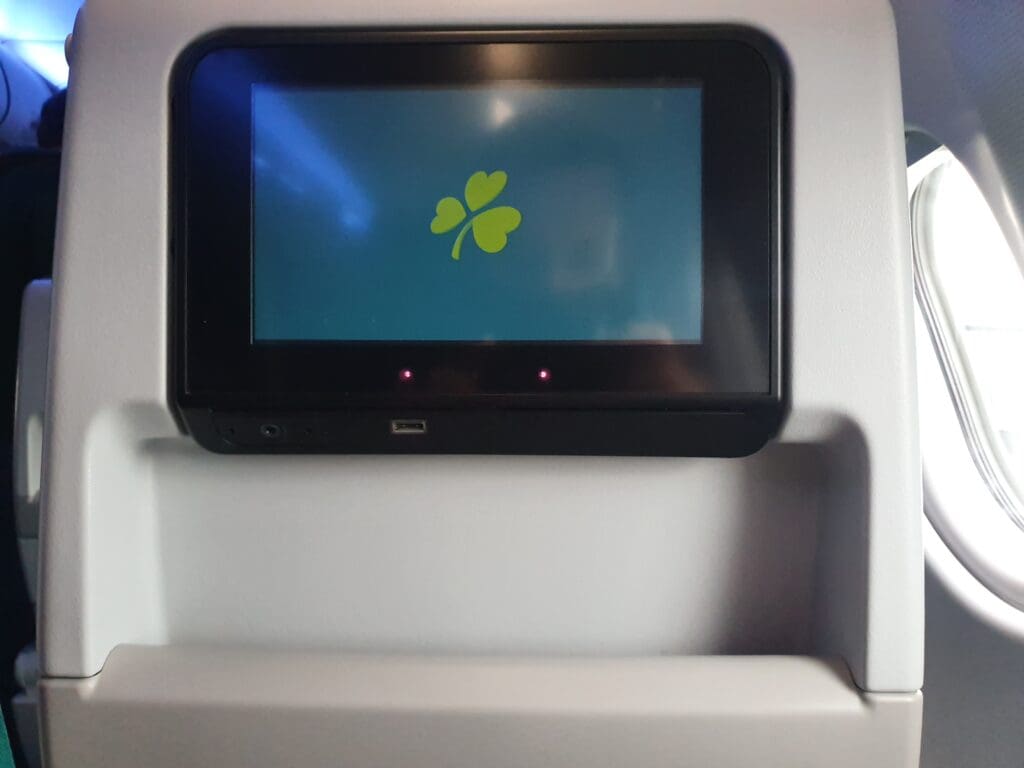
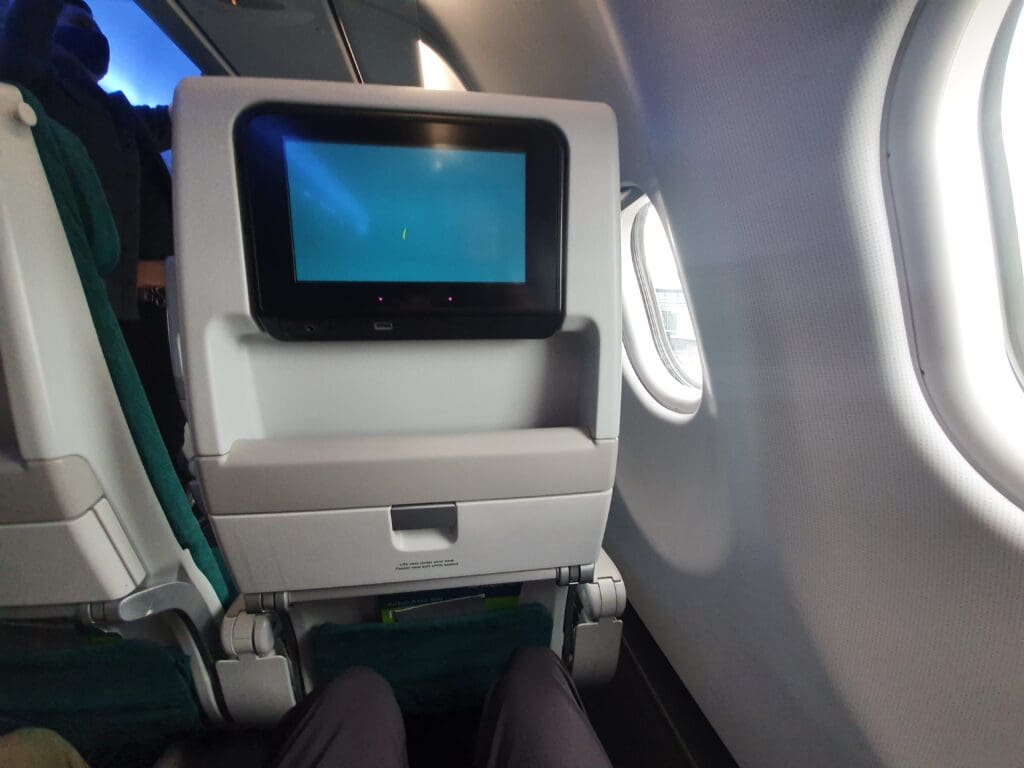
Once I had scanned my boarding pass and shown my passport to one of the two gate agents, I headed towards the jet bridge and soon came to a grinding halt just before stepping onto this. Following a few minutes of shuffling, I stepped up into one of the galleys where I was warmly welcomed onboard by one of the two flight attendants tasked with welcoming passengers and advised to turn right down the second aisle. Whilst this initial greeting left a good impression, other crew members I passed on the way to my seat did not appear to be as talkative or friendly and did not say a word as I headed down the aircraft. Onboard most of Aer Lingus’ Airbus A330-300s, including St Colmcille, the Economy class cabin features 287 modern Recaro CL3710 seats in a 2-4-2 configuration across a forward and rear cabin. On the rear of these, a modern and high-definition 10-inch wide inflight entertainment screen could be found along with a USB-A port and a headphone jack, plus a seatback pocket and a small storage pocket. Once upon a not-too-distant time, Aer Lingus’ Economy seats were covered in James Joyce’s handwriting, however, today these are instead covered in a more simplistic emerald green fabric. Each of these is topped with either a blue or green disposable antimacassar covering the adjustable headrest and features Aer Lingus’ shamrock motif.
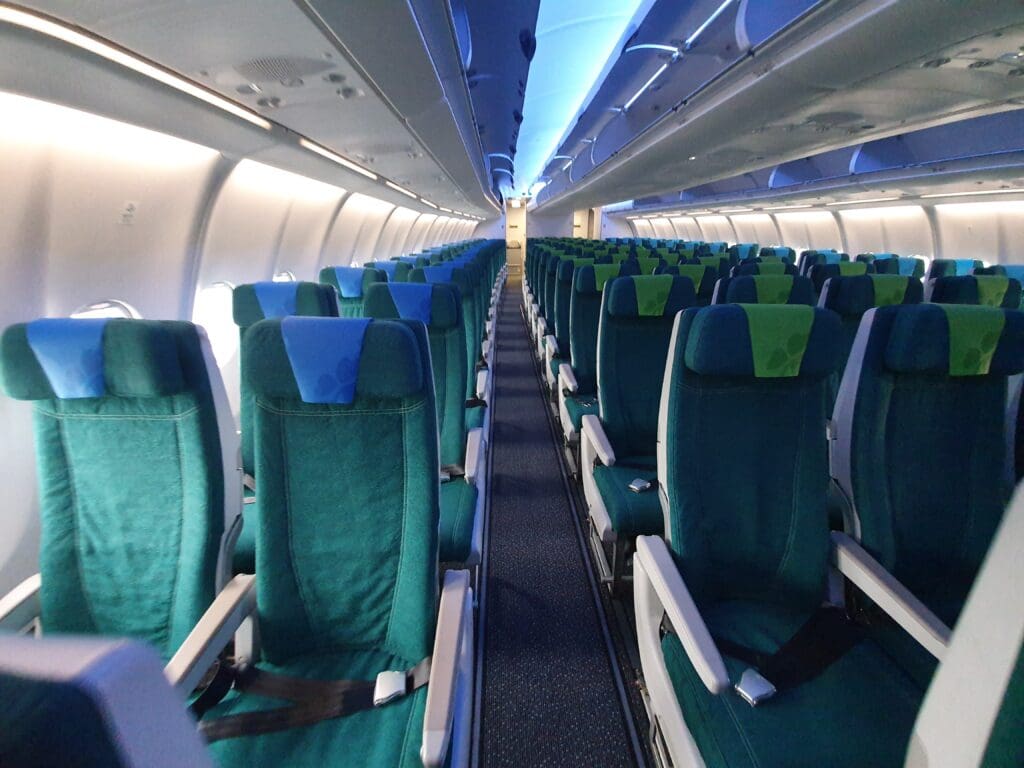
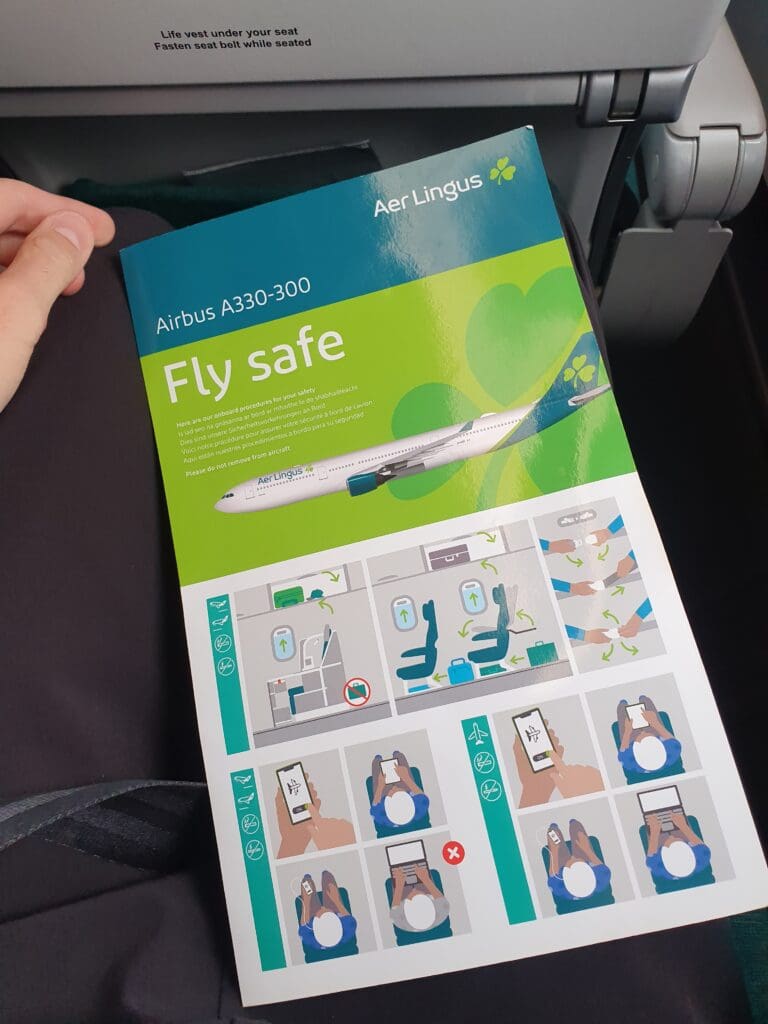
As passengers boarded, the cabin was filled with blue mood lighting whilst upbeat rhythms provided the soundtrack to this, their tempo perhaps encouraging passengers to get a move on and head into their seats at a speedy base. Managing to head down the aircraft without too much stopping and starting, I soon arrived at Seat 33K and was almost immediately joined by a neighbour for the hop over to London. Featuring 31 inches of pitch, Aer Lingus’ Airbus A330 seats are not the most spacious that I have ever sampled, however, they are fairly standard for a long widebody aircraft. Importantly, I found these to be relatively soft and I would have not had an issue with sitting in these for a longer ride across the Atlantic. Given the age of the aircraft, the cabin was modern and bright, and I failed to spot any major signs of wear and tear around my seat. In addition, perhaps unsurprisingly given the jet’s long time on the ground before my flight, this appeared to be in a spotlessly clean condition. Turning to the seatback pocket, this contained a safety card as well as a sickbag identical in style to those on British Airways albeit in silver instead of blue. As with many airlines during the pandemic, the carrier’s Cara magazine has turned digital only and so this was absent that evening.
Once strapped in, passengers continued to board the aircraft and an announcement was made requesting all take their seats as soon as possible and advised that only those items that cannot fit under the seats to be placed in the overhead lockers as the flight would be almost full that evening. Outside, pallets continued to be loaded into the aircraft so some slight vibration could be felt as these entered the aircraft and were shifted about on the floor below. By 1820 all passengers had made it onto the aircraft and the Purser performed their first welcome announcement of the flight – this commenced with a short introduction in Gaelic before moving to English where all were welcomed and informed of the Bia onboard menu which could be accessed online whilst still on the ground, as well as the availability of cigarettes and spirits to purchase as well as a warning to keep masks on for the duration of the flight. Five minutes later whilst still in position at the gate, the captain performed their welcome speech which revealed that we were in good hands that evening with two Captains in the cockpit, a word of thanks for choosing Aer Lingus and an update on the weather with the summary ‘weather in Dublin is fine, weather in London is fine’ – indeed post-arrival I found the weather in London to be rather similar to that in Dublin.
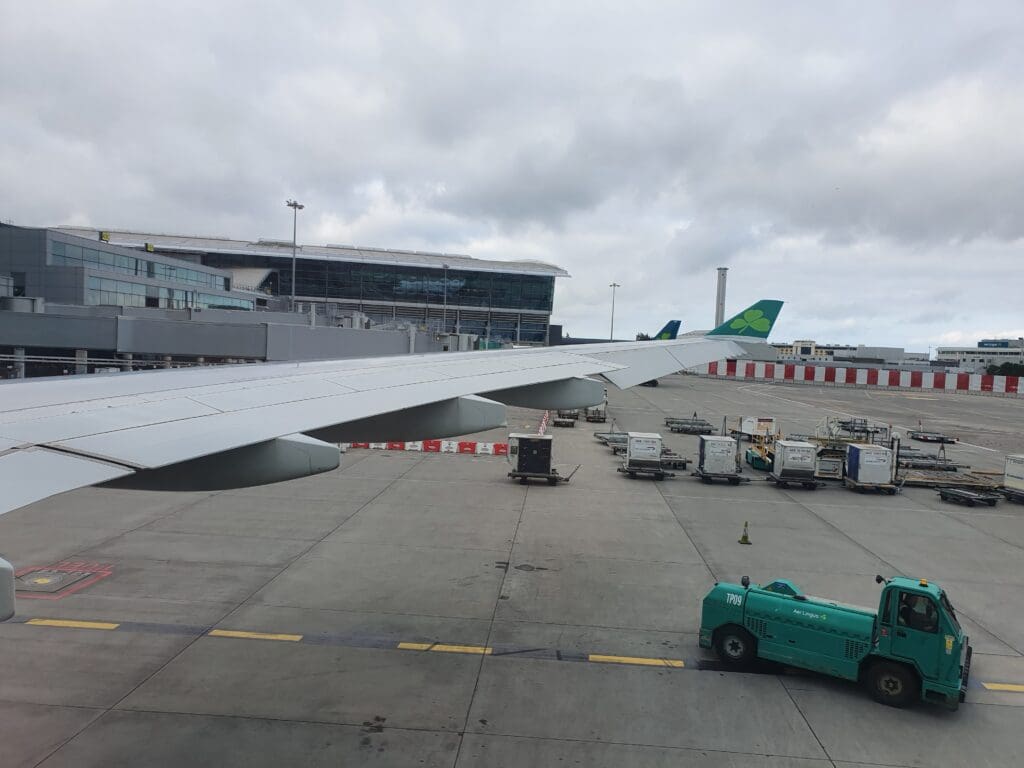
Once the Captain’s calming tones ceased, the purser performed their second announcement which was somewhat similar to the first albeit without the advertisements. Interestingly, this included a warning that only still photography for personal use in which the crew were not visible could be taken during the flight. This was then followed by a manual safety demonstration as the purser read out the safety instructions – which was conducted in place of a safety video. As this was being undertaken, the aircraft was pushed back and then pulled forward as the Airbus A330’s two large General Electric CF6-80E1A4 engines quietly spooled up into life with a fair amount of vibration and temporarily filling the cabin with the scent of aviation fuel. Once the flaps were partially extended, the aircraft gently taxied away under its own power and in no time at all reached the end of Runway 28L.
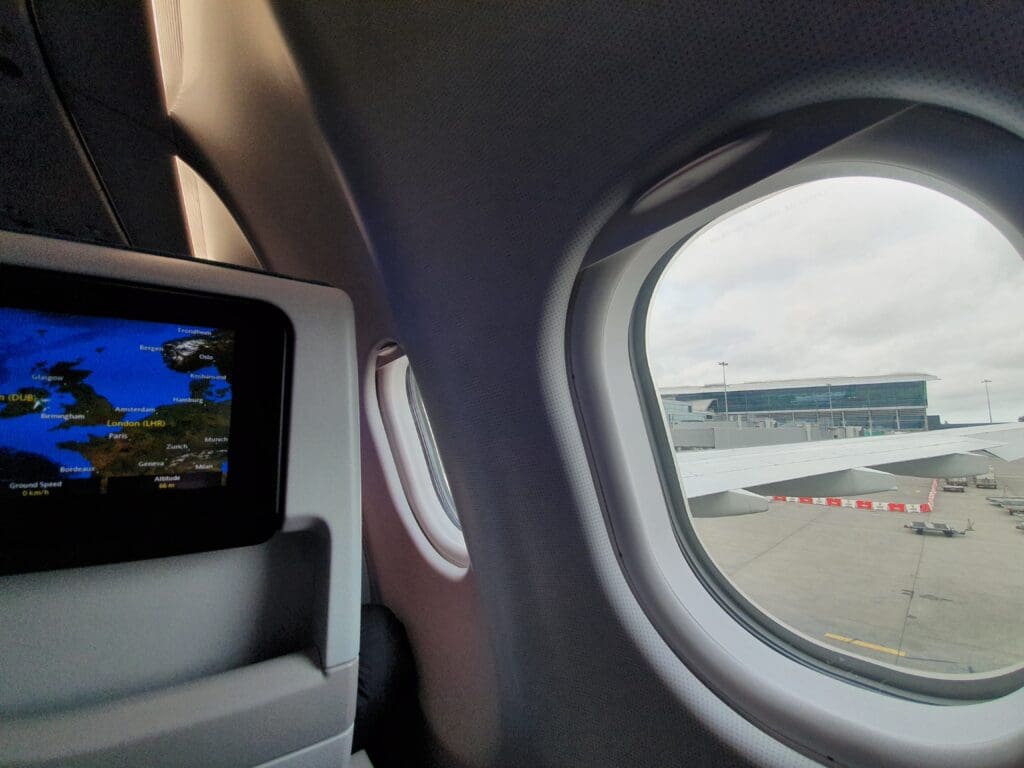
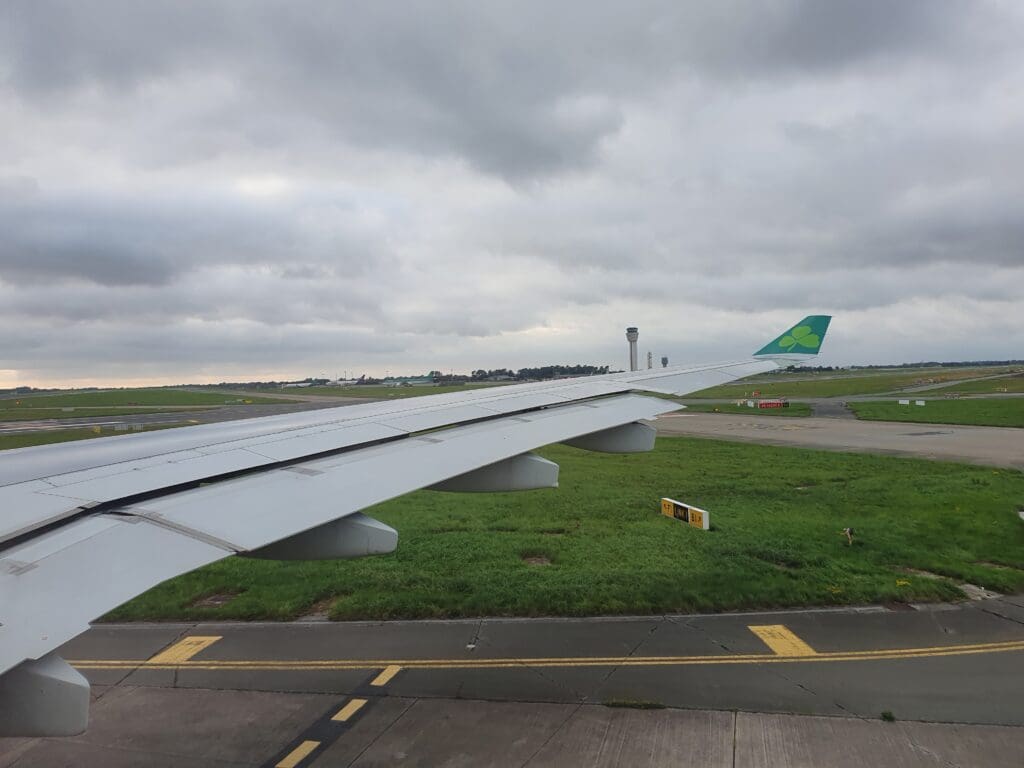
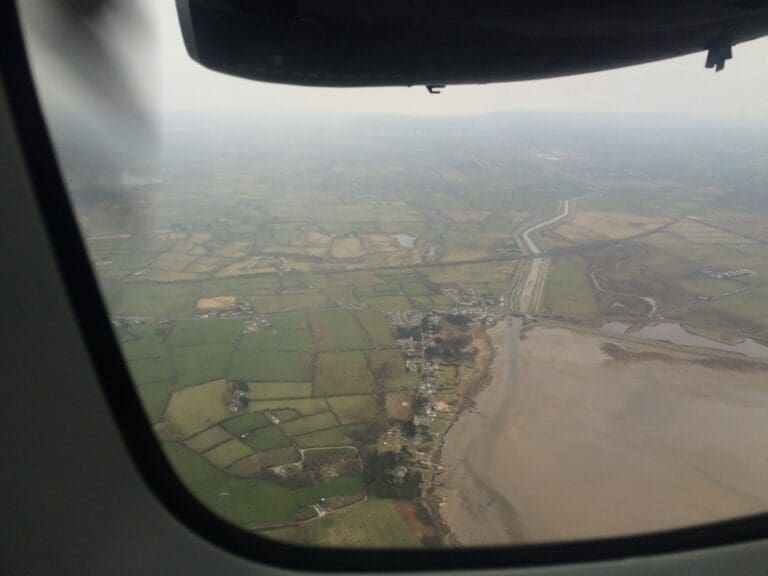
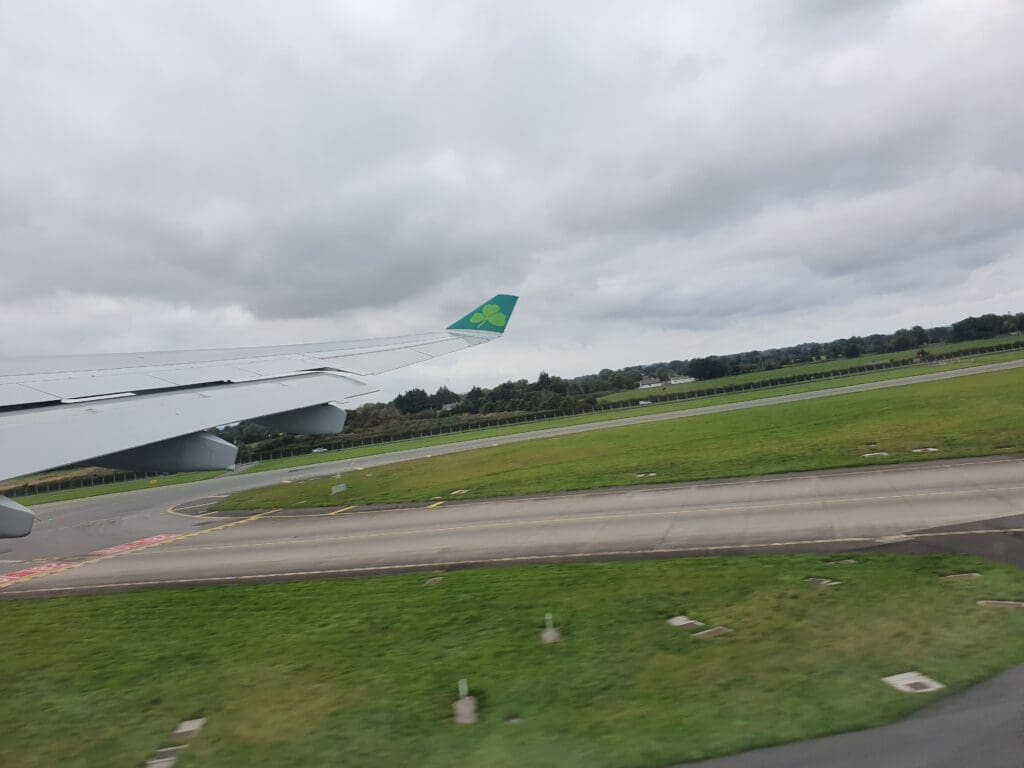
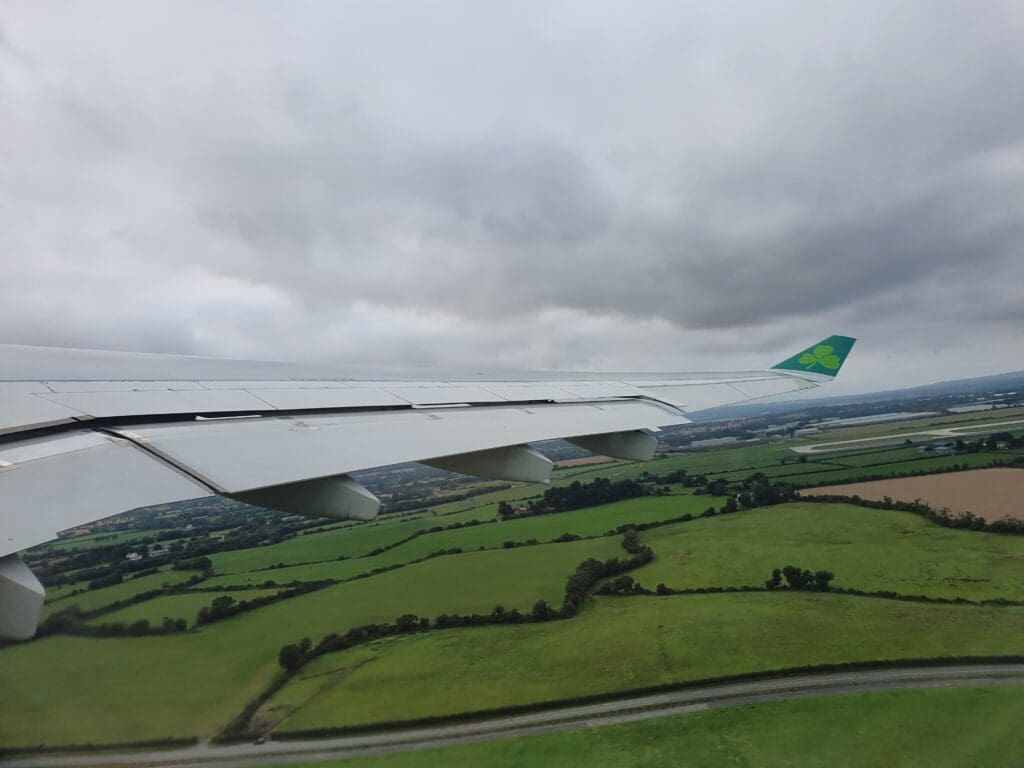
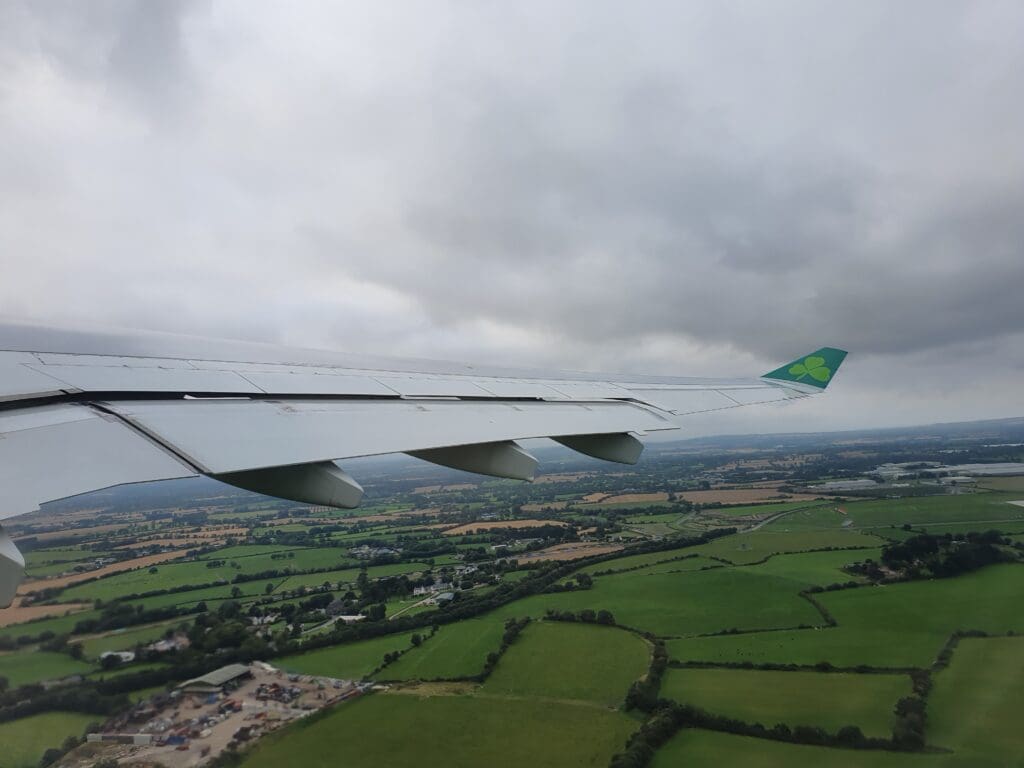
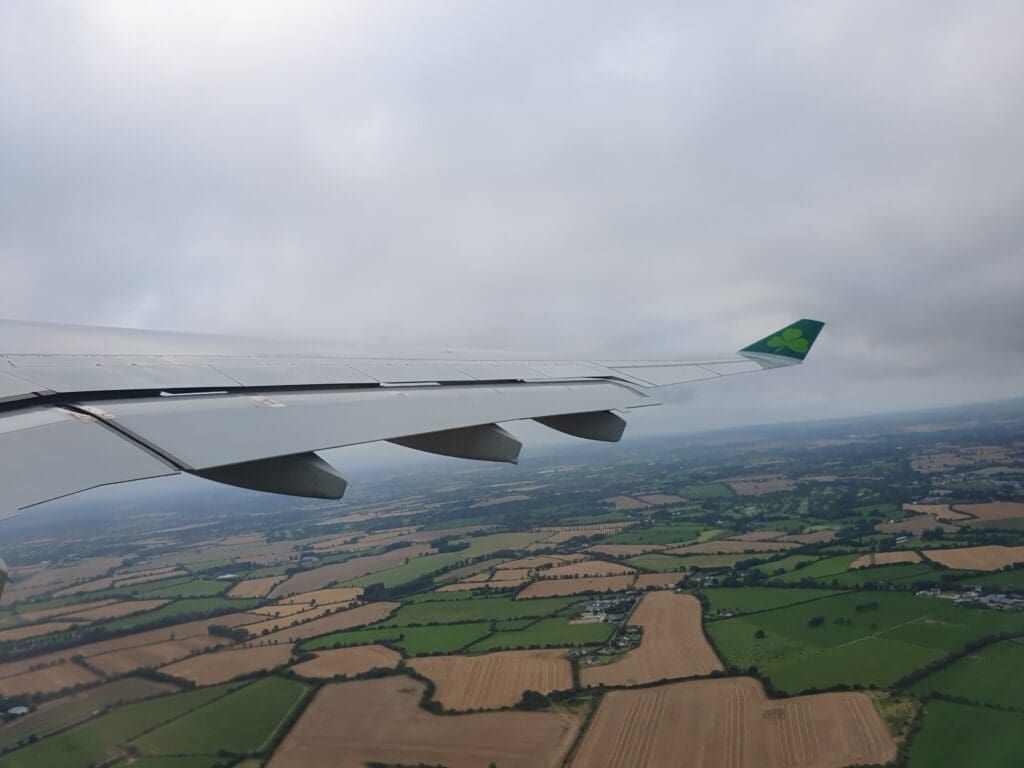
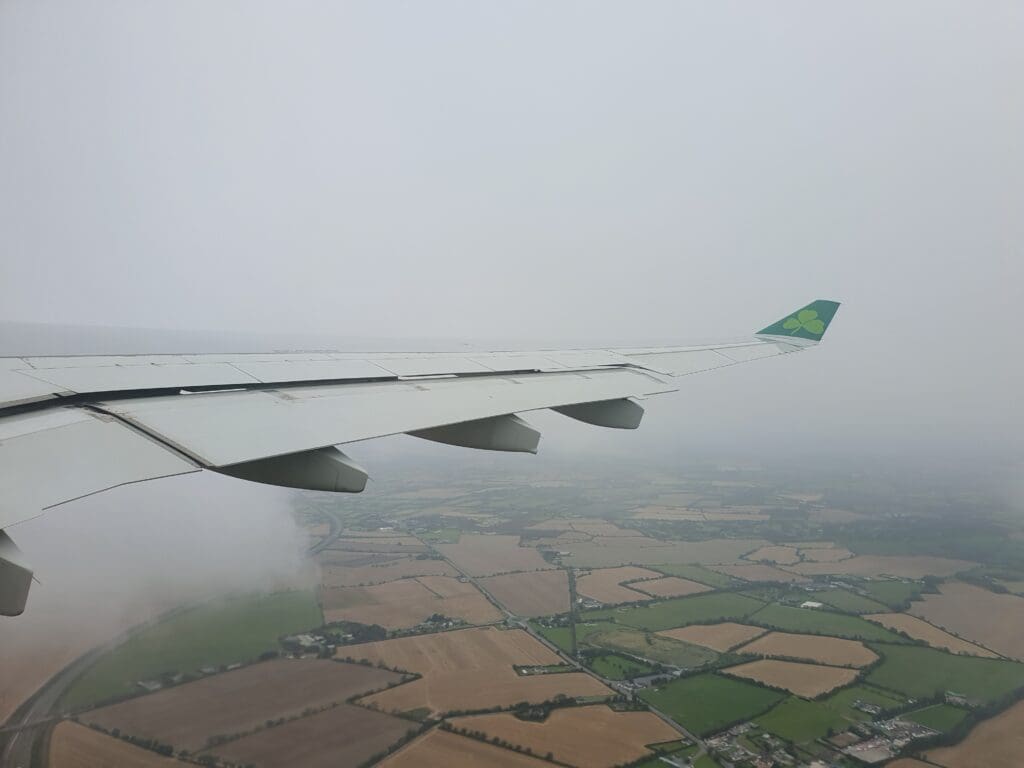
Without pausing, at 1836 our Airbus A330, known to air traffic control as ‘Shamrock 17 Juliet’ made its way onto the runway and performed a relatively powerful rolling take-off. Eventually, once past the control tower the aircraft rotated up into the mostly cloudy evening skies and made what seemed like a fairly shallow climb out. As the jet rose skywards, a good view of the fields that sit to the west of the airport could be seen for a minute or so before the aircraft smoothly cut through the thin layer of clouds. Once blue skies appeared above, the aircraft gently banked before rolling out on an easterly heading and returning towards Dublin, flying right over the centre of the capital. As the aircraft climbed through 10,000 feet, the seatbelt signs were extinguished at which point the purser conducted another announcement with the usual seatbelt advice and advised passengers not to queue for the bathrooms due to social distancing measures.
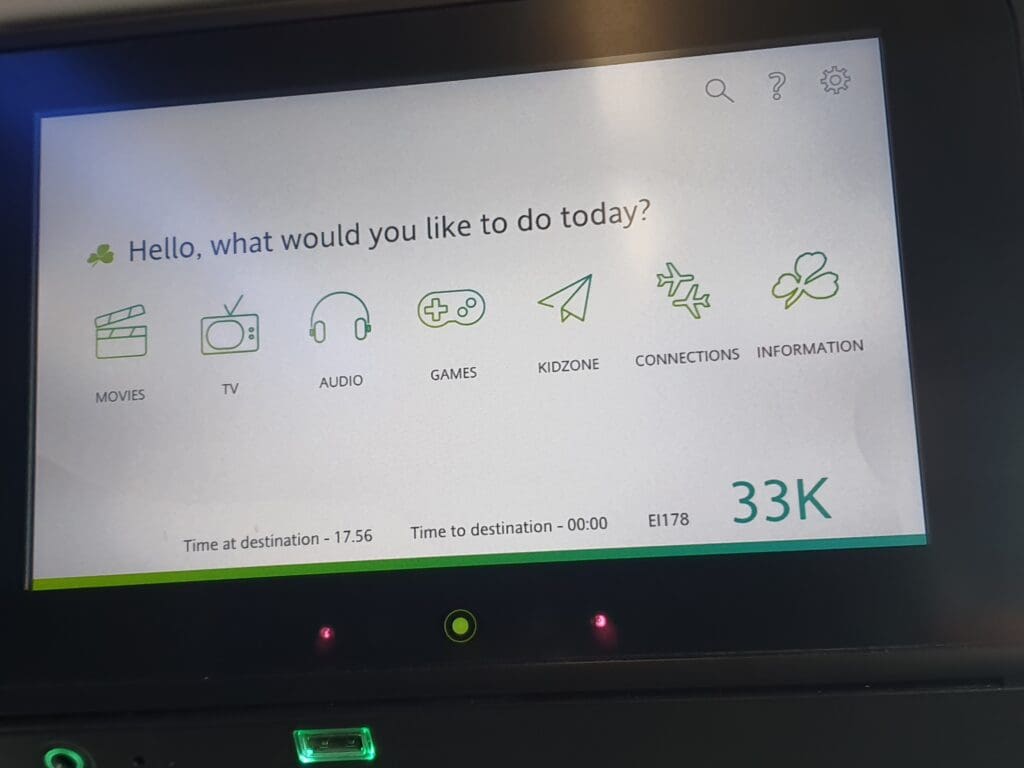
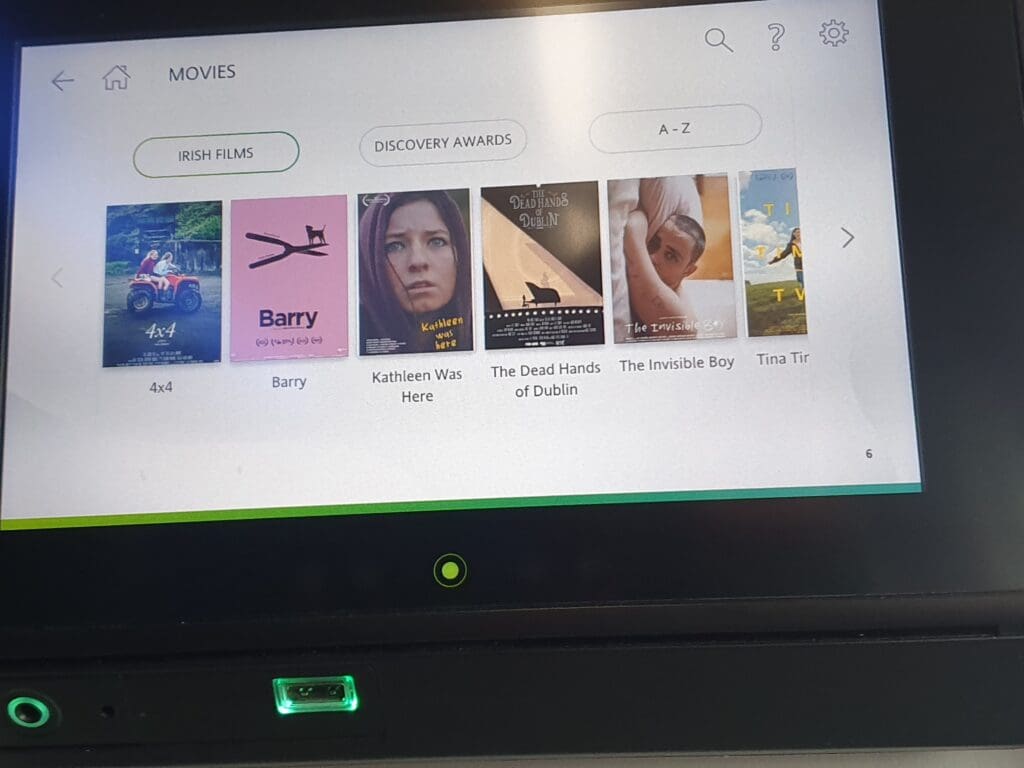
After leaving Dublin, the aircraft climbed out over the Irish Sea, at which point given the total cloud cover below, I decided to explore the inflight entertainment. Given the lack of an inflight magazine, this consisted solely of the inflight entertainment system which offered a relatively decent screen quality and was responsive to touch. Browsing the content, this was expansive enough to occupy even the most restless passengers during a long transatlantic slog with a cornucopia of films, television programmes, audiobooks and music both old and new. Whilst this was operable throughout the flight, given the short length of this, complimentary headphones were not offered. However seeing the moving map as the most important feature of this regardless of flight duration, this was not an issue. Finally, as with many airlines, Aer Lingus offers wifi on its Airbus A321neo and Airbus A330 fleet, and various signs were in place advertising this – however no networks could be found for the duration of the flight.
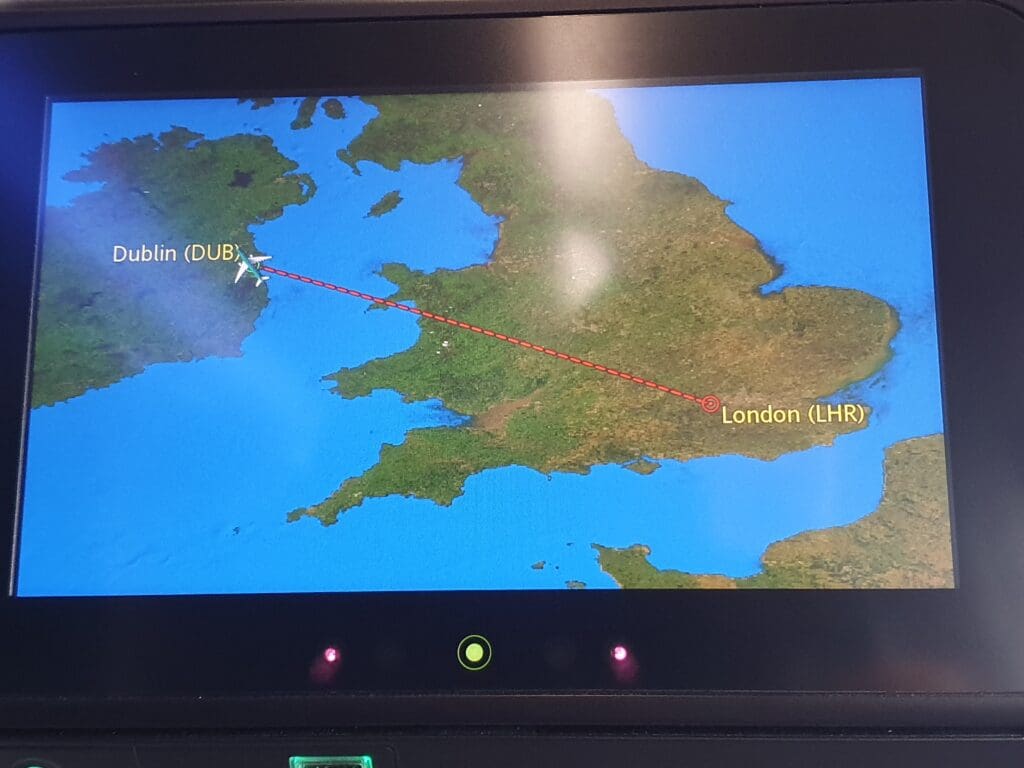
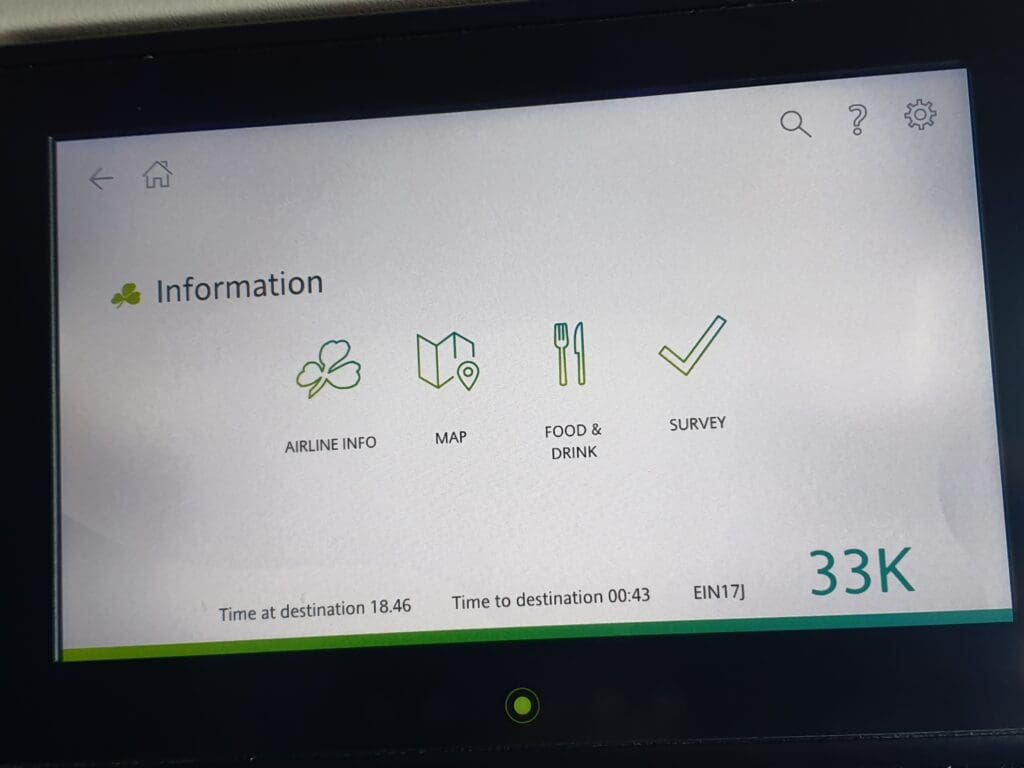
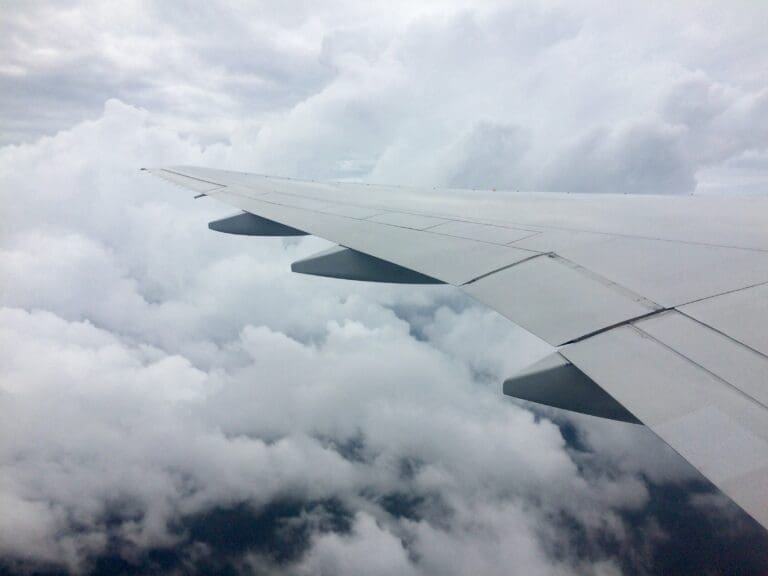
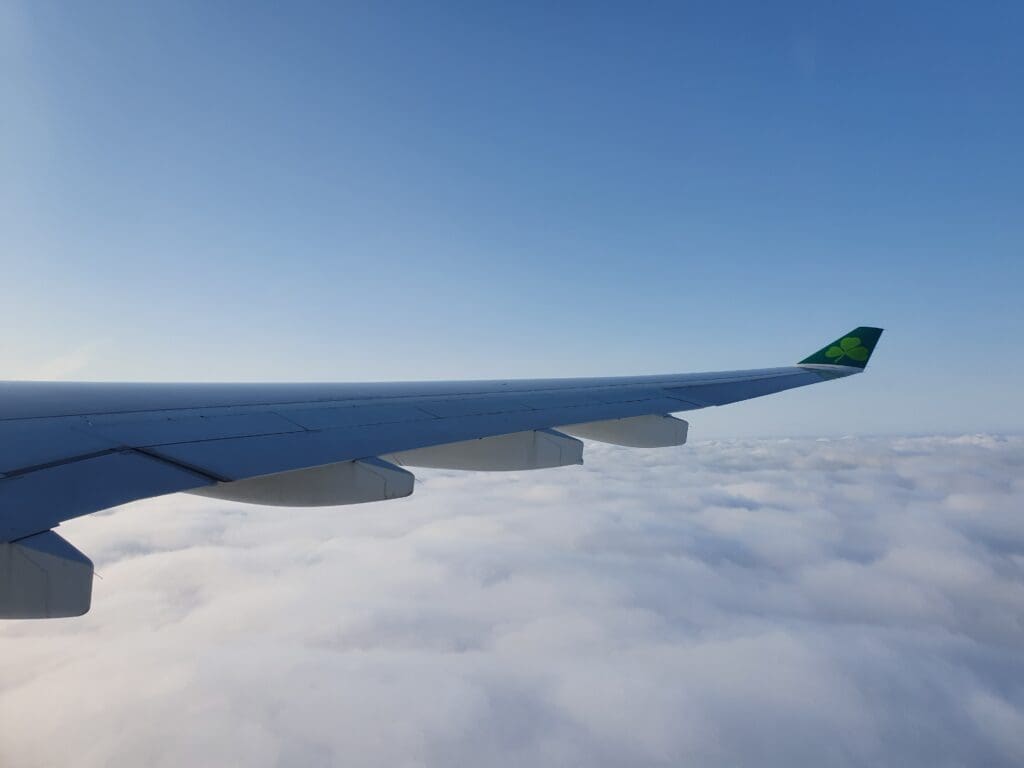
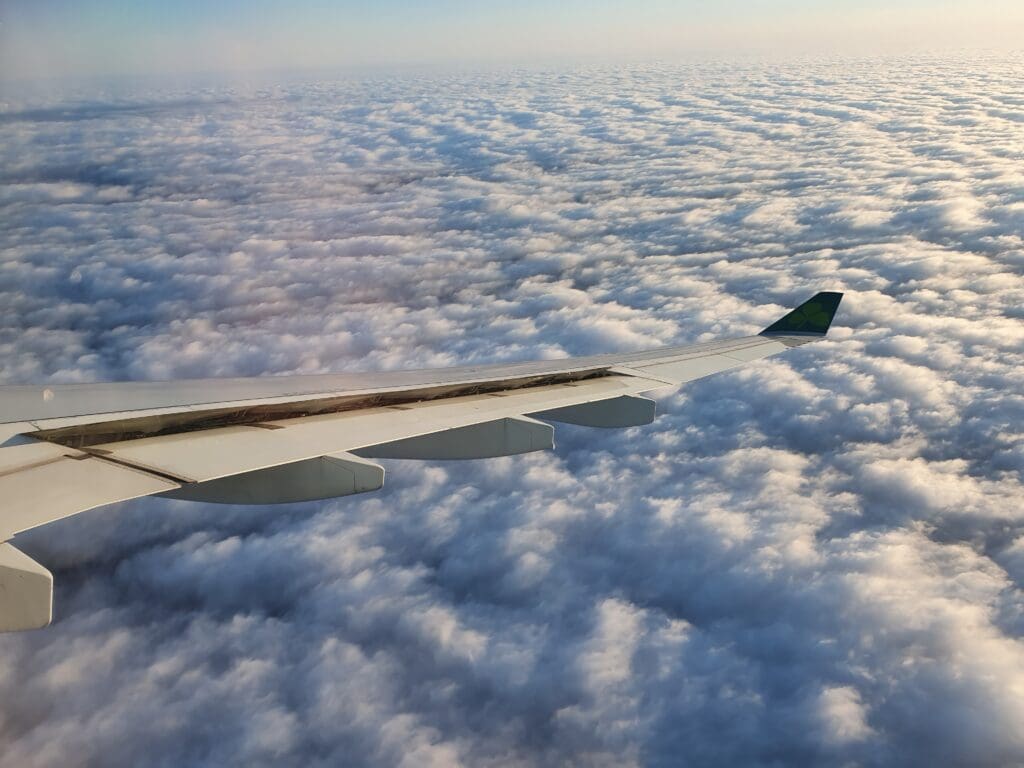
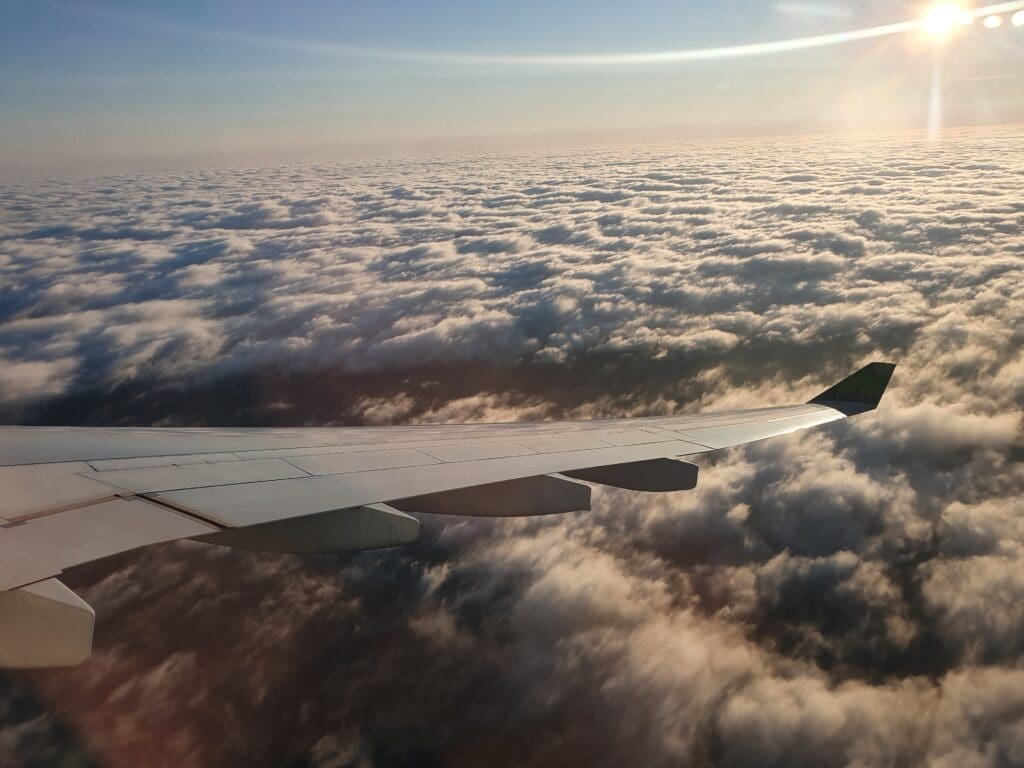
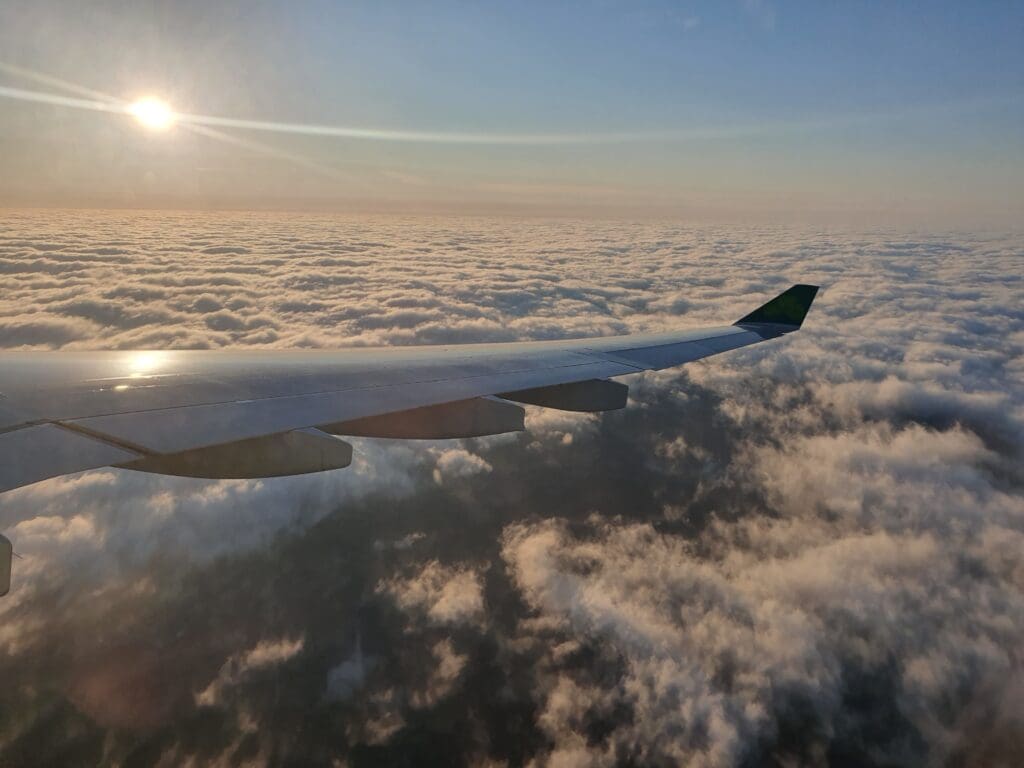
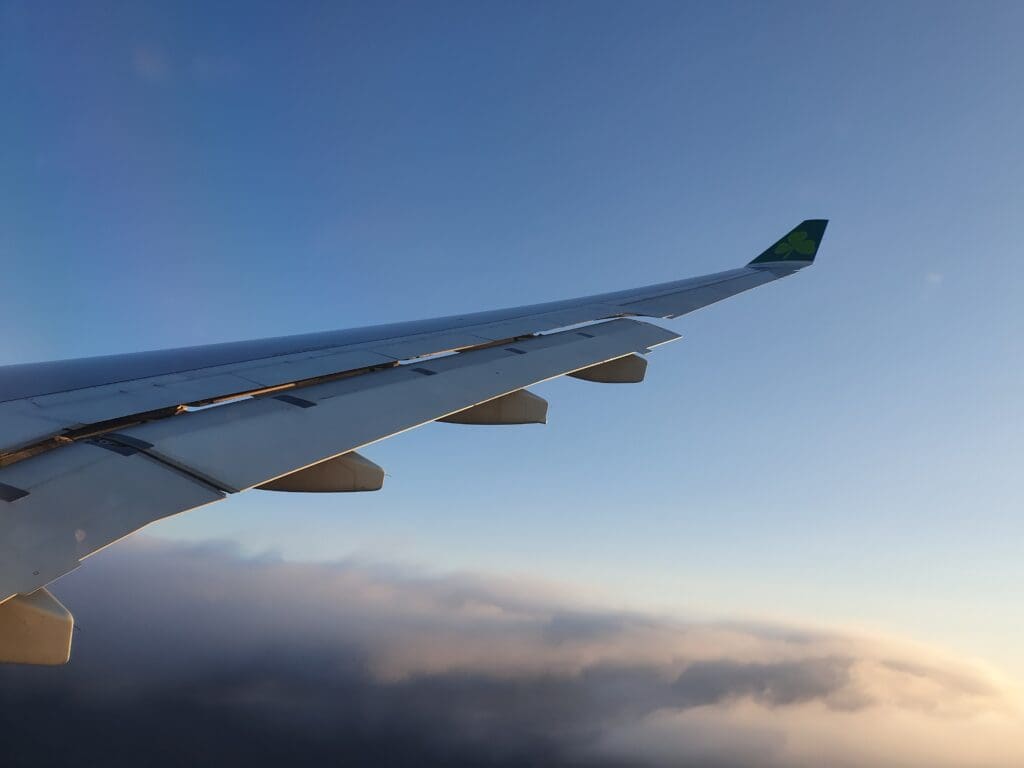
Turning my attention to the outside world, around halfway into the flight’s crossing of the Irish Sea, the clouds parted and a short time later Wales’ Llŷn Peninsula came into view. After making landfall near Holyhead on the island of Anglesey, the aircraft levelled off at its cruising altitude of 33,000 feet and the peaks of Snowdonia National Park came into view below the aircraft. Unfortunately, the clear skies were not to last and a short time after passing these clouds obscured the view of the UK below and remained in place for the remainder of the flight.
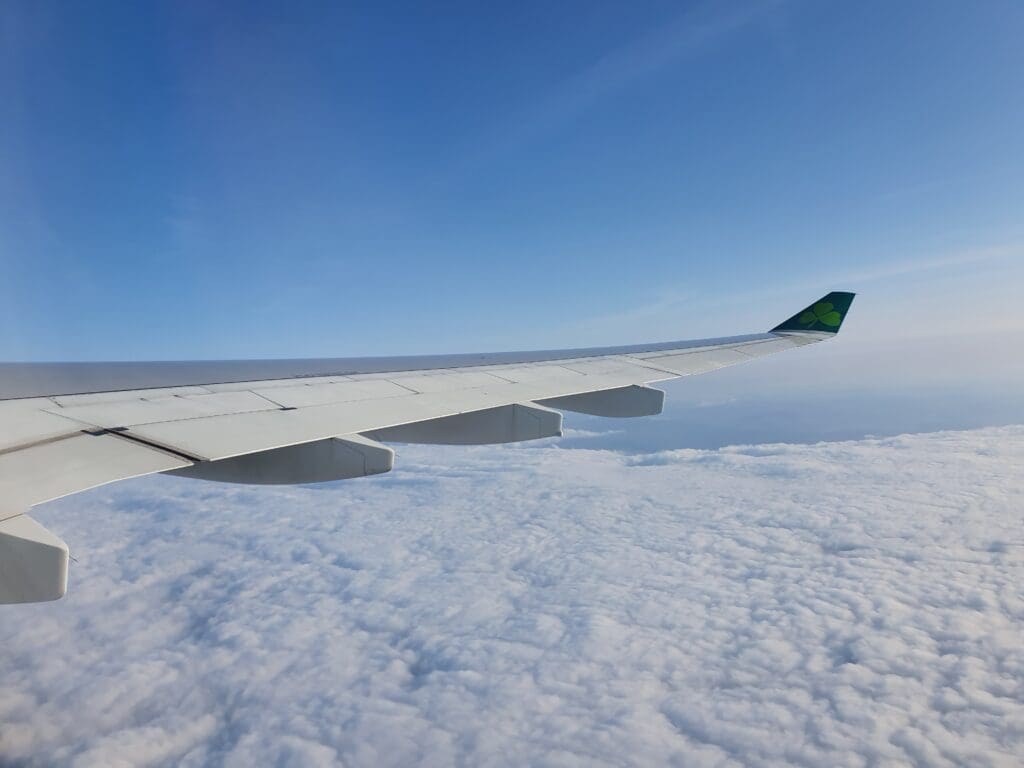
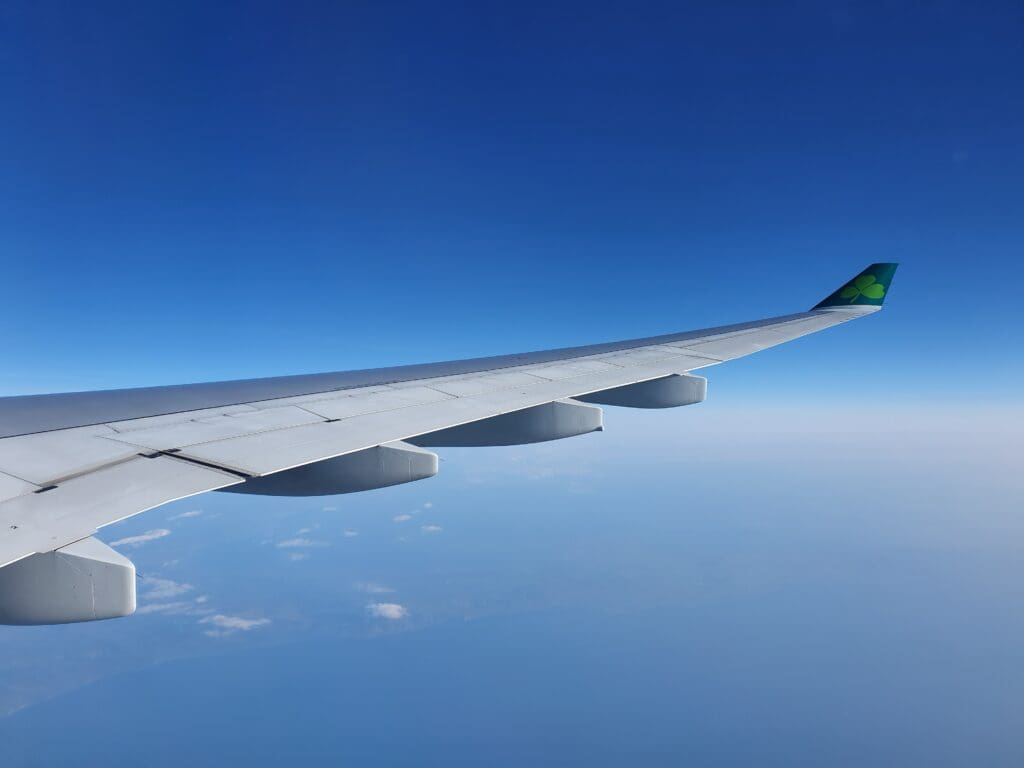
Just before reaching the town of Mold which sits on the Welsh side of the country’s border with England, the aircraft turned to the southeast and cruised over Wrexham before crossing into England to the north of Shrewsbury. Despite the short flight time, the inflight refreshment service was undertaken and reached my row at 1900 just as the aircraft could be felt commencing its descent. Whilst officially a ‘full service’ carrier, Aer Lingus has long scrapped complimentary onboard offerings to those passengers flying in Economy on their short haul intra-European flights. The exception to this are those travelling on Aerspace tickets who are offered a complimentary bottle of water. Thus, those needing some mid-flight refreshment can turn to the Bia (literally meaning ‘food’) buy-on-board menu. Examining this, I was quite surprised to see that the selection of goods offered is rather limited – featuring only a small selection of drinks and nothing more substantial than a variety of sweets and cereal/protein bars. In terms of price, these were all fairly standard for an inflight menu – for example, a coffee would set you back €3, and a KitKat €2. Despite my analysis, not needing any refreshment I decided to pass.
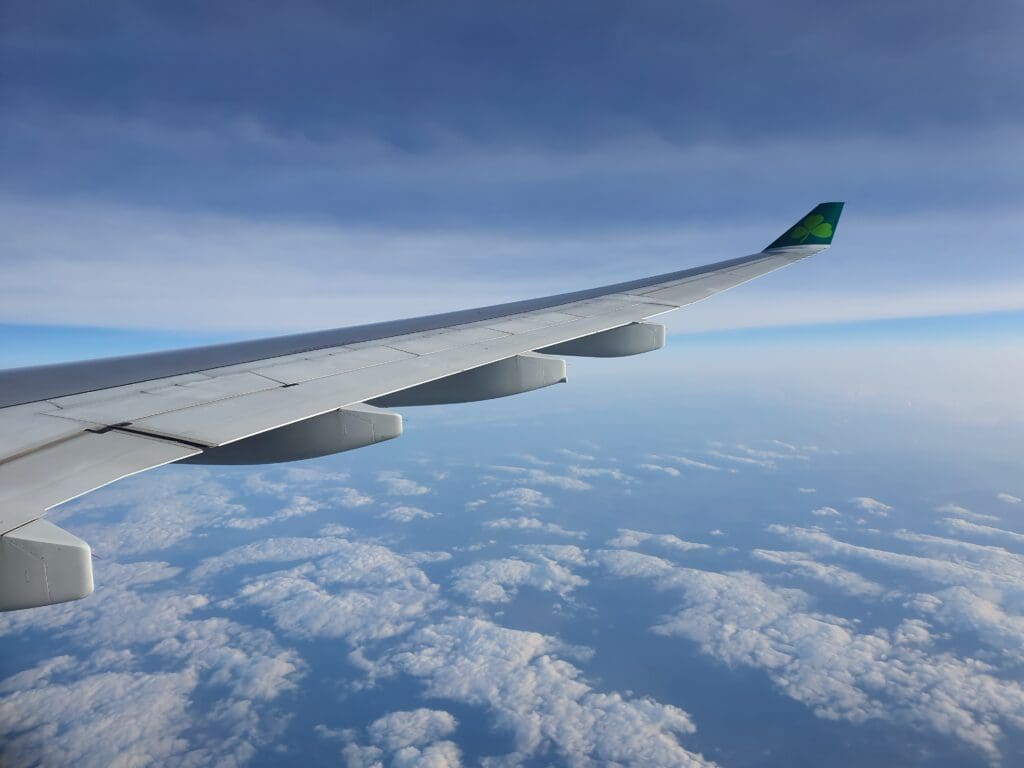
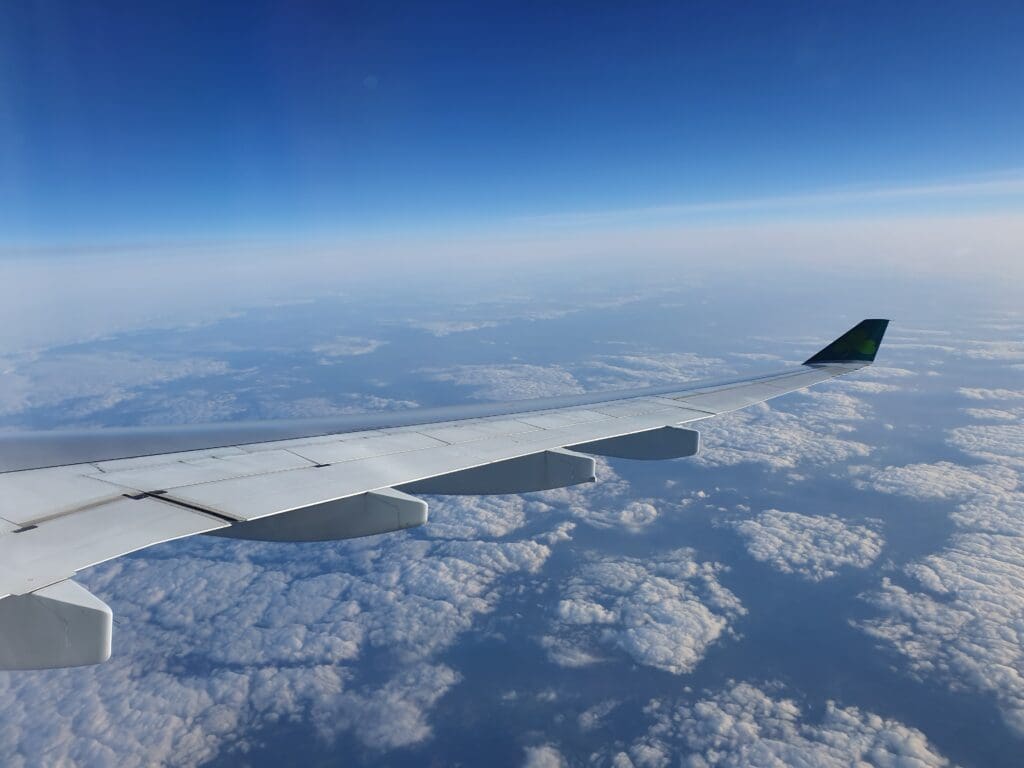
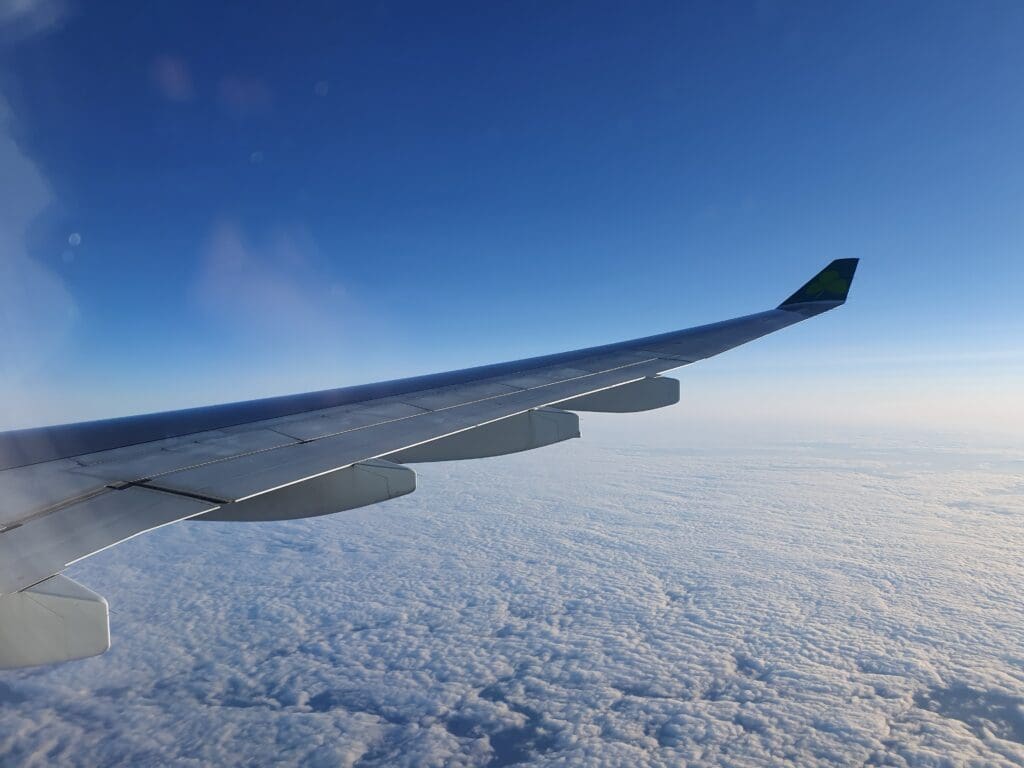
Returning to the route, the aircraft continued on its southeasterly heading and cut across Wolverhampton and then Birmingham. At this point the captain performed a second announcement, advising passengers that we could expect to be on the ground in 25 minutes and informed us all that we would land into the east and our approach would take us over Windsor. As I had expected having checked the weather forecast, once again my mission to bag a westerly approach during the day in reasonable weather conditions had turned out to be a complete failure! Moving on, this was followed by another announcement from the purser advising that due to a catering error, no more hot drinks could be served for the remainder of the flight.
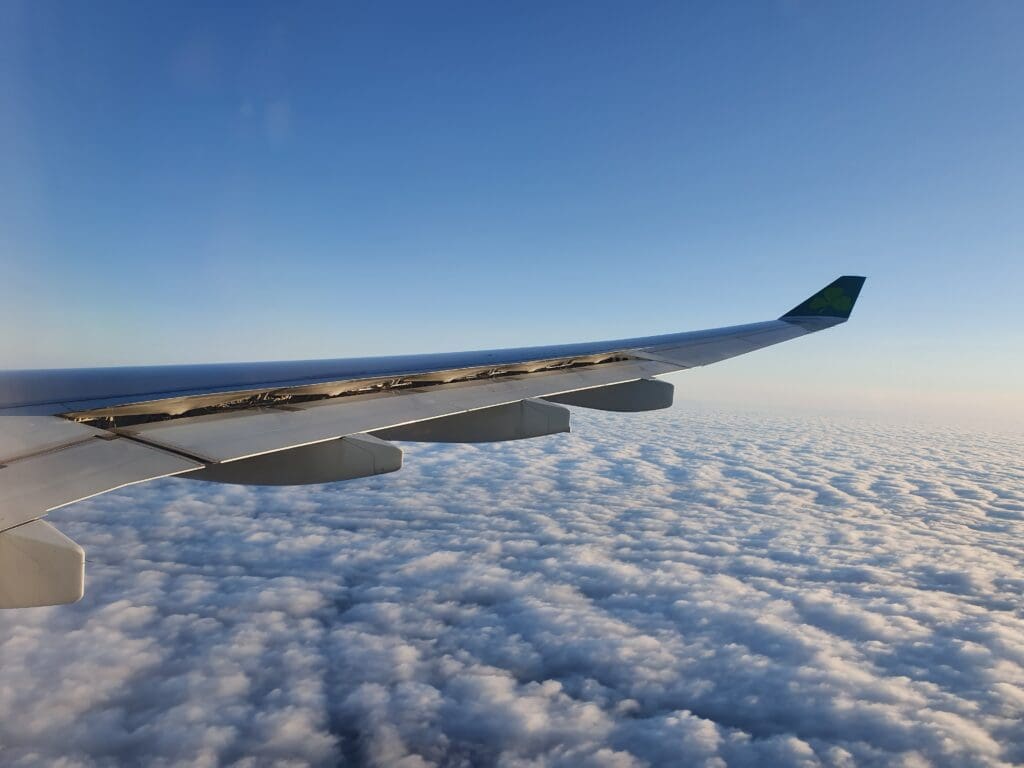
Once past Aylesbury, the seatbelt signs were reilluminated as the aircraft sank below 10,000 feet over the Chiltern Hills. At this point, the Purser performed a pre-arrival announcement advising passengers to return to their seats and ensure their seatbelts were fastened in preparation for our arrival. The crew then passed through the cabin, collecting rubbish efficiently and politely before passing through the cabin for a final time to ensure all was in place for our arrival into Heathrow. Following several turns, at 1920 the aircraft sank into the clouds around Henley-on-Thames before emerging from these moments later revealing the mostly flat and rural landscape below before the town of Bracknell came into view. As the Airbus A330 neared Heathrow, one of my favourite childhood destinations, Legoland Windsor could be seen passing beneath the aircraft which was soon followed by The Long Walk, the three-mile straight path that runs from Windsor Castle.
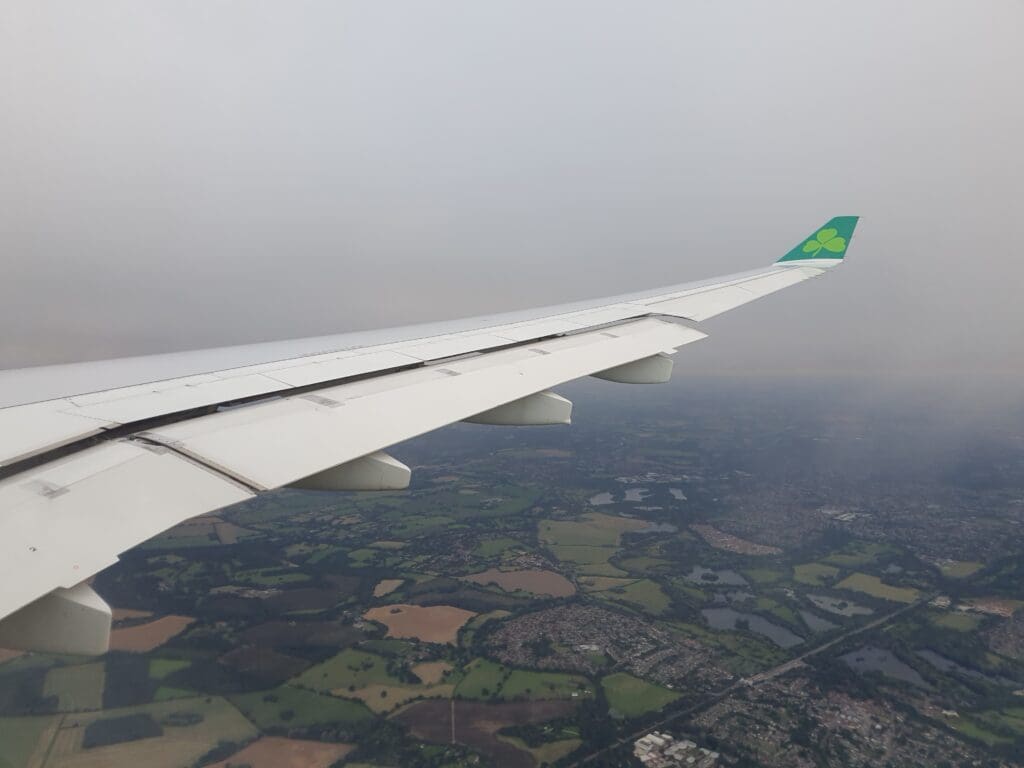
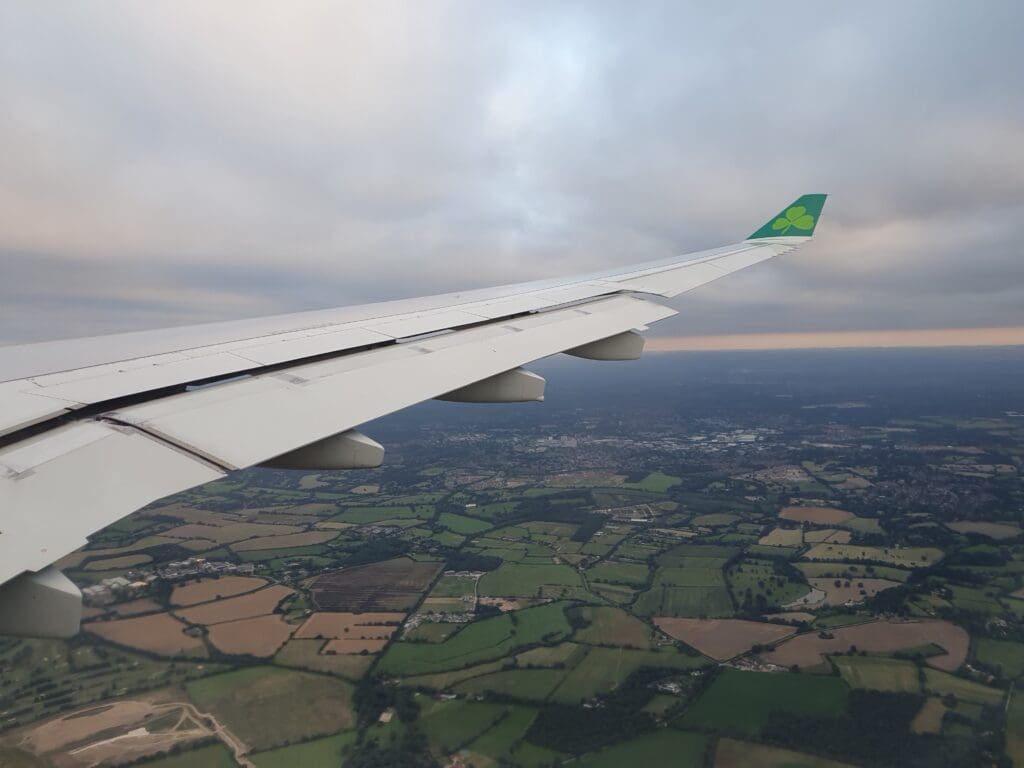
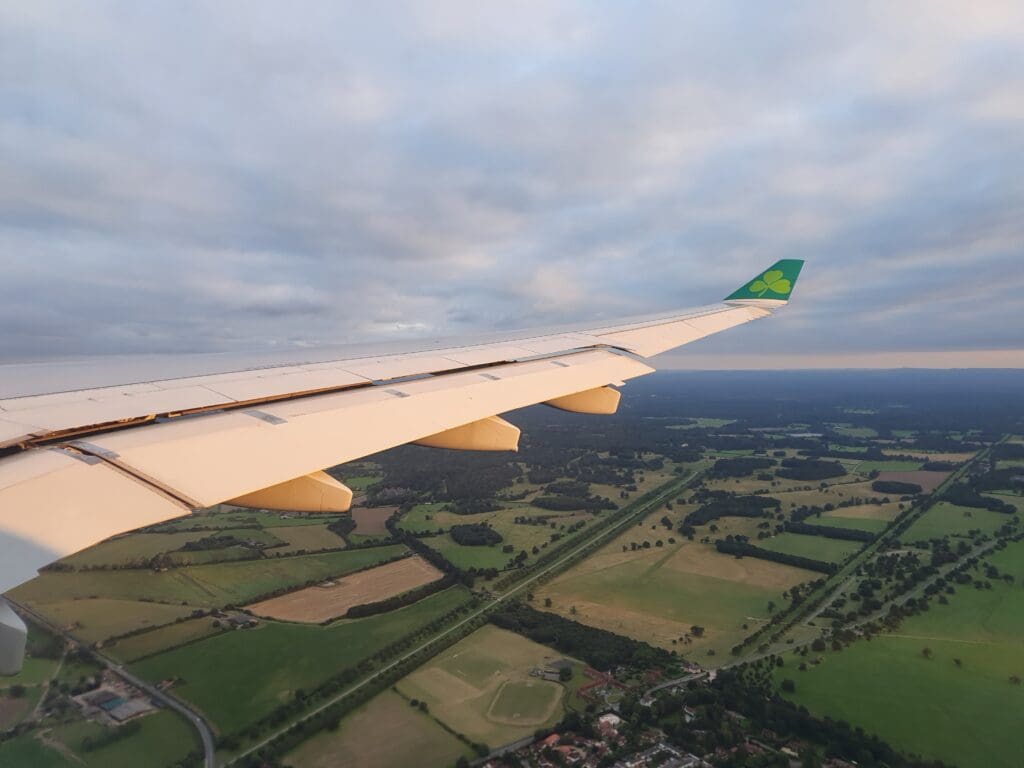
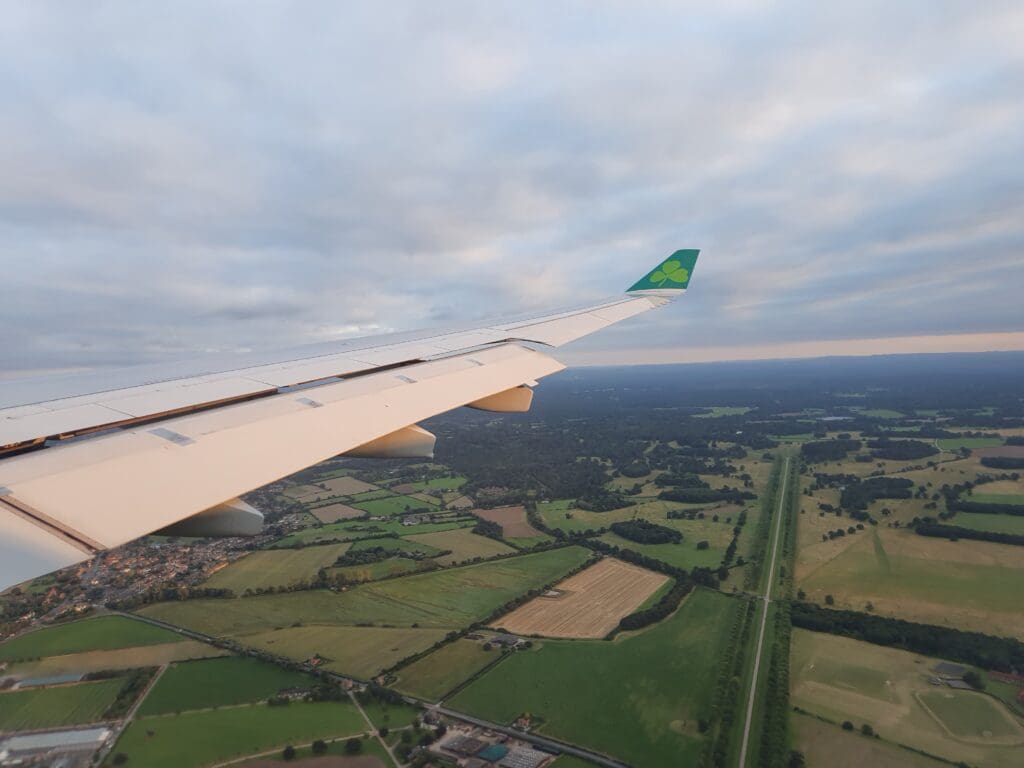
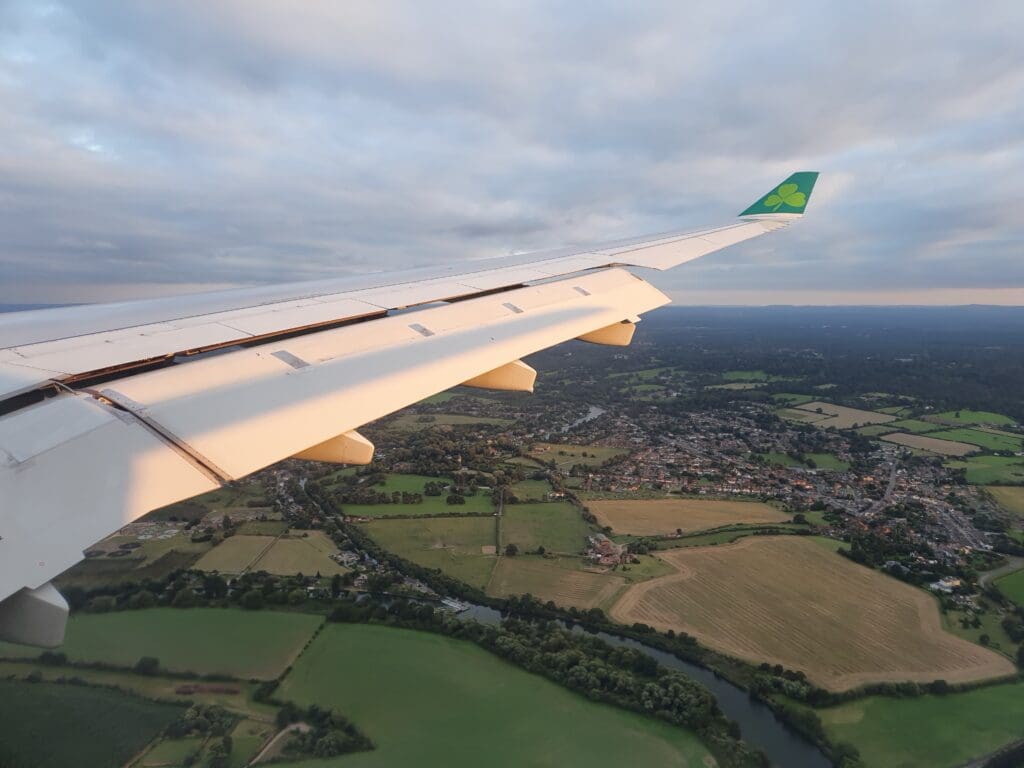
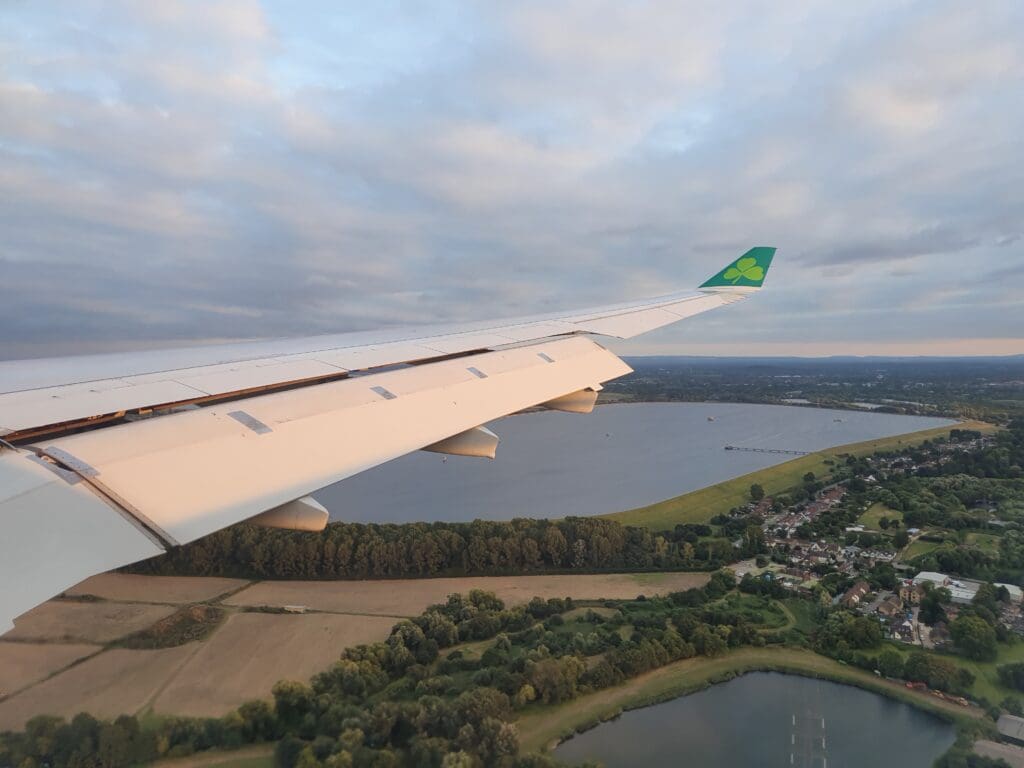
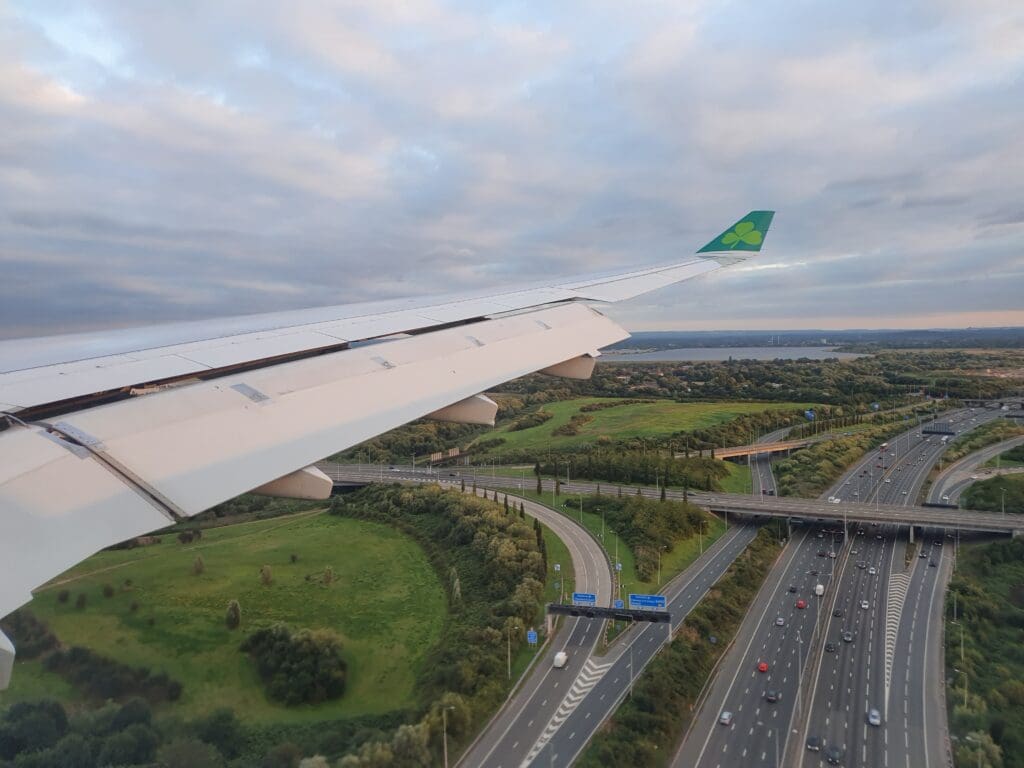
Indicating our imminent arrival, Staines Reservoirs came into view below and after passing over a few industrial estates the aircraft darted over the quiet M25 and Terminal 5 before making a barely noticeable touchdown on Runway 09L at 1926, fifty minutes after departing from Dublin. Rather appropriately, an Aer Lingus Airbus A320 could be seen climbing out at the start of its journey to Belfast – a reminder of the carrier’s significant operation at Heathrow.
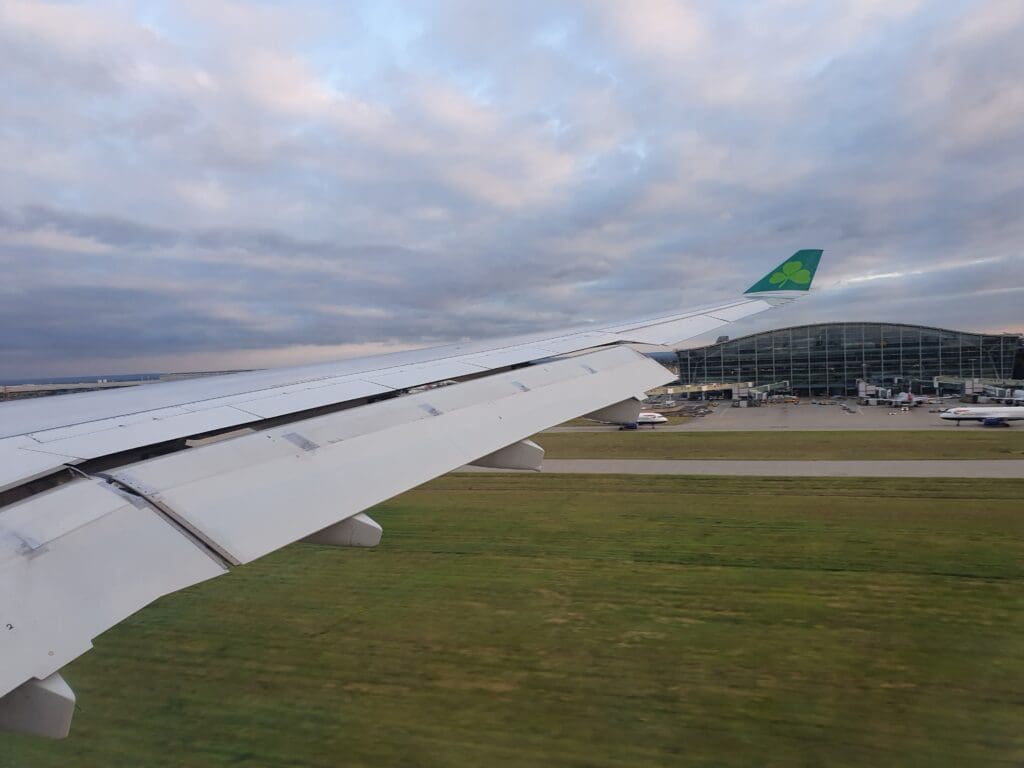
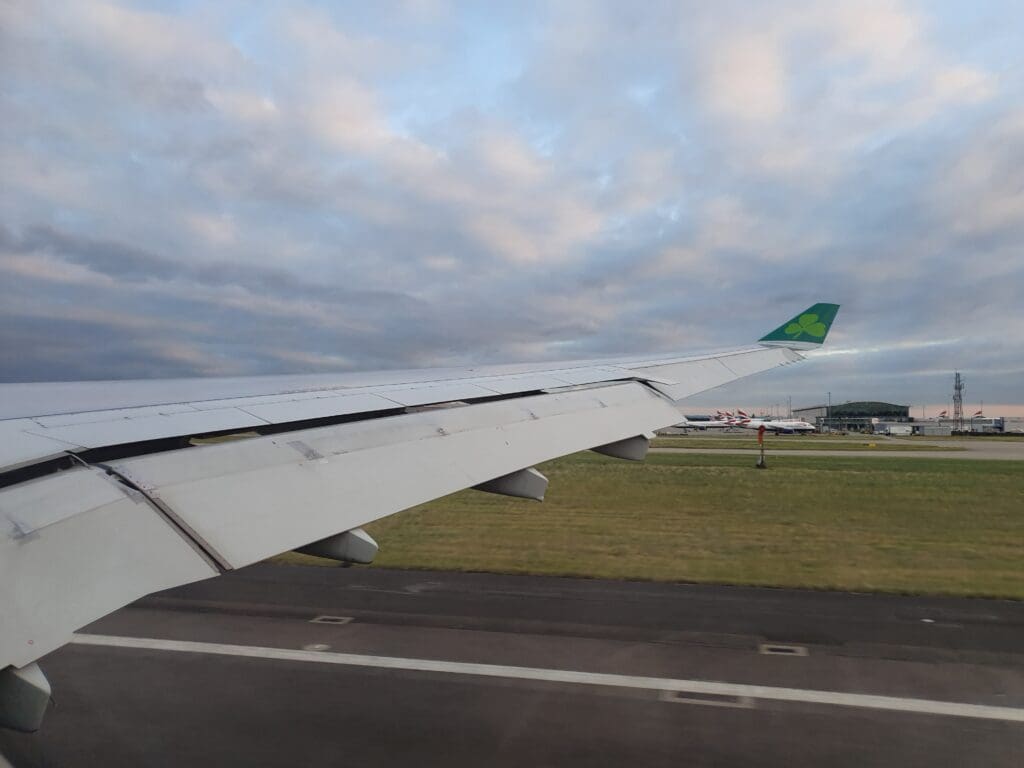
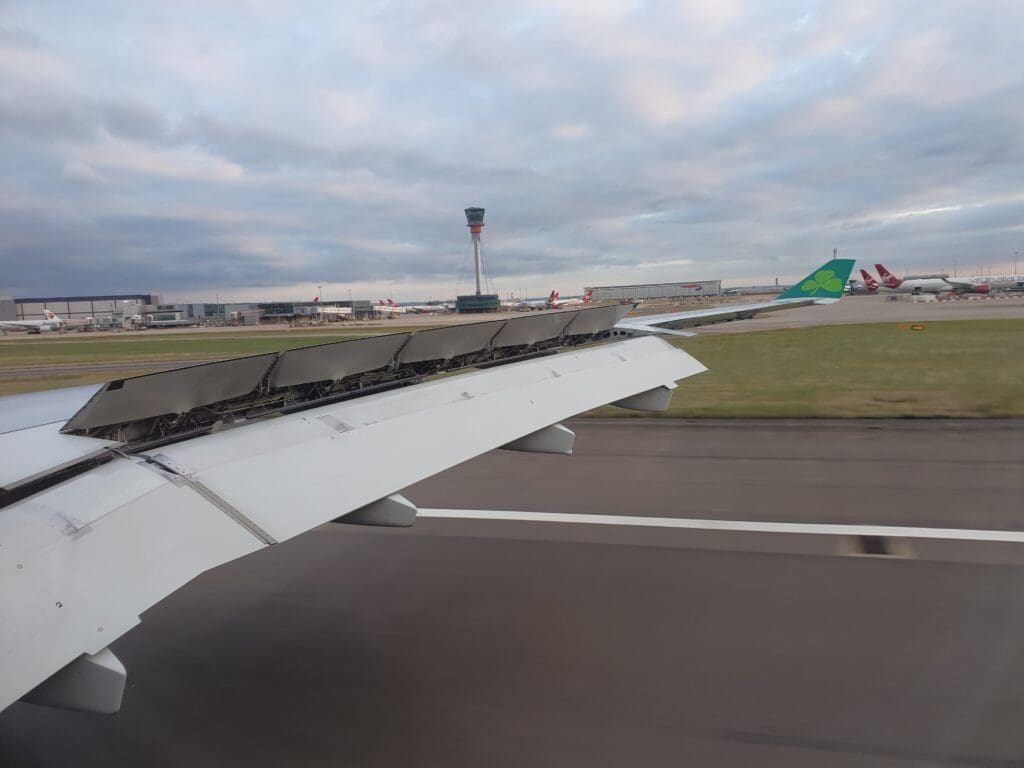
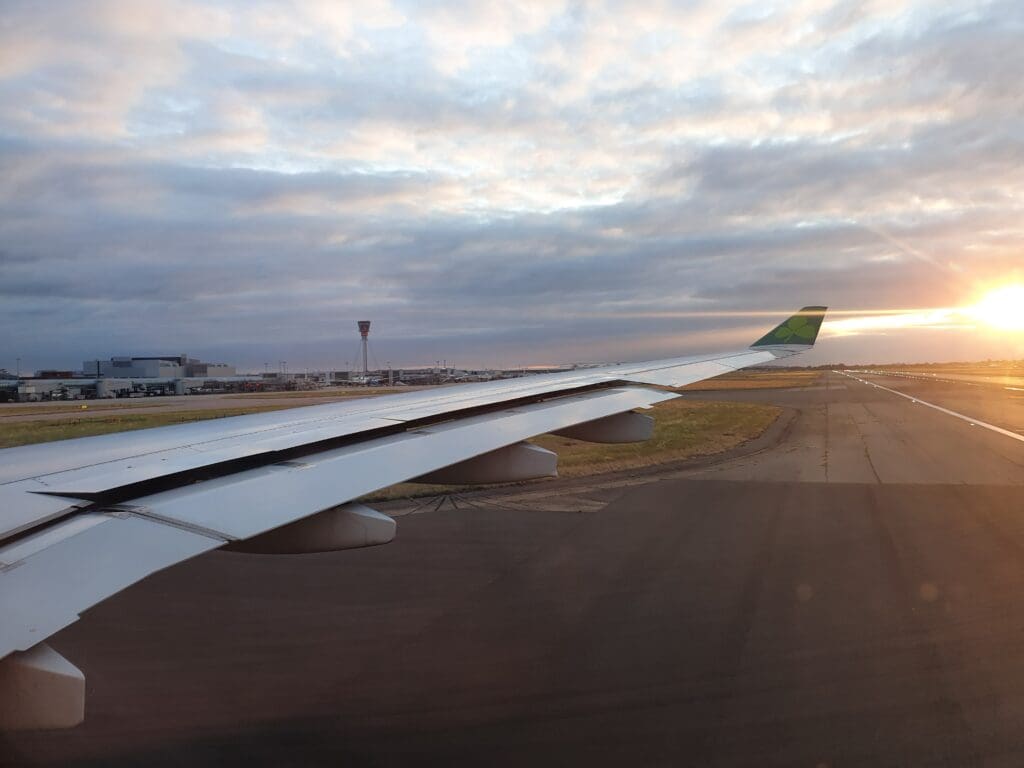
Once firmly on the ground, the aircraft slowed rather rapidly before turning right and making its way around Terminal 2B where a line of four Boeing 787 aircraft could be seen – these operated by Air India, Ethiopian Airlines, Etihad Airways and Gulf Air, ready to head out on overnight flights. Immediately after vacating the runway, the purser welcomed us all to London, first with a brief announcement in Gaelic before commencing a longer announcement in English. During this, the Purser advised that disembarkation would take place row by row and advised passengers to remain seated until the row in front had stood up and made their way down the aisle.
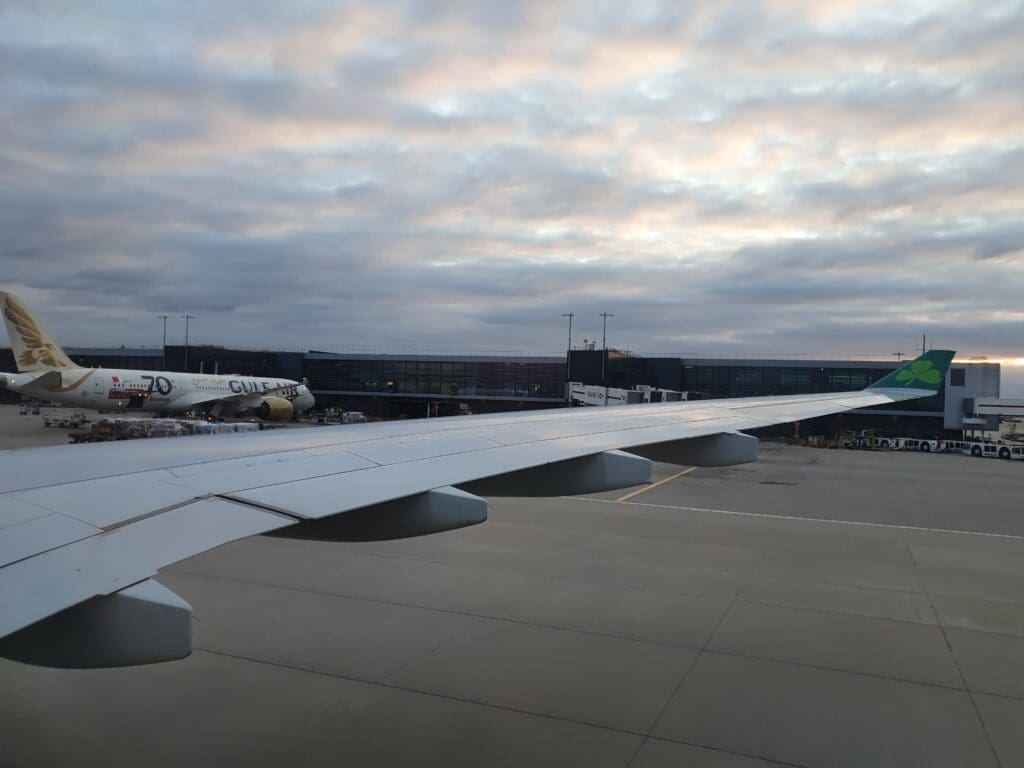
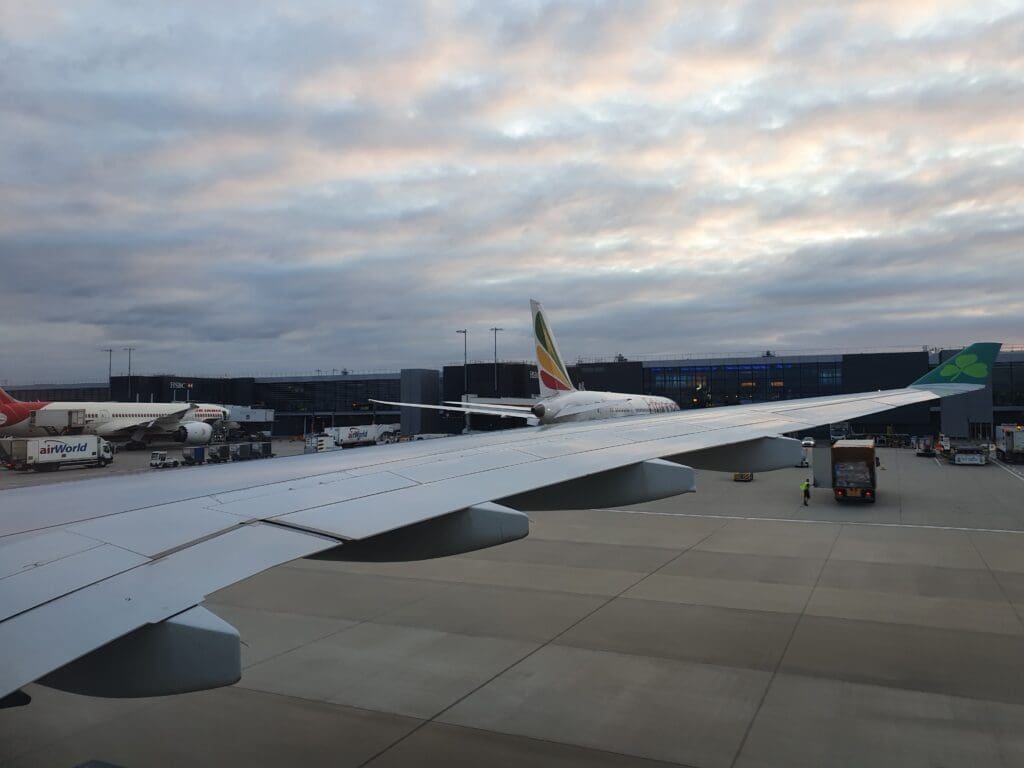
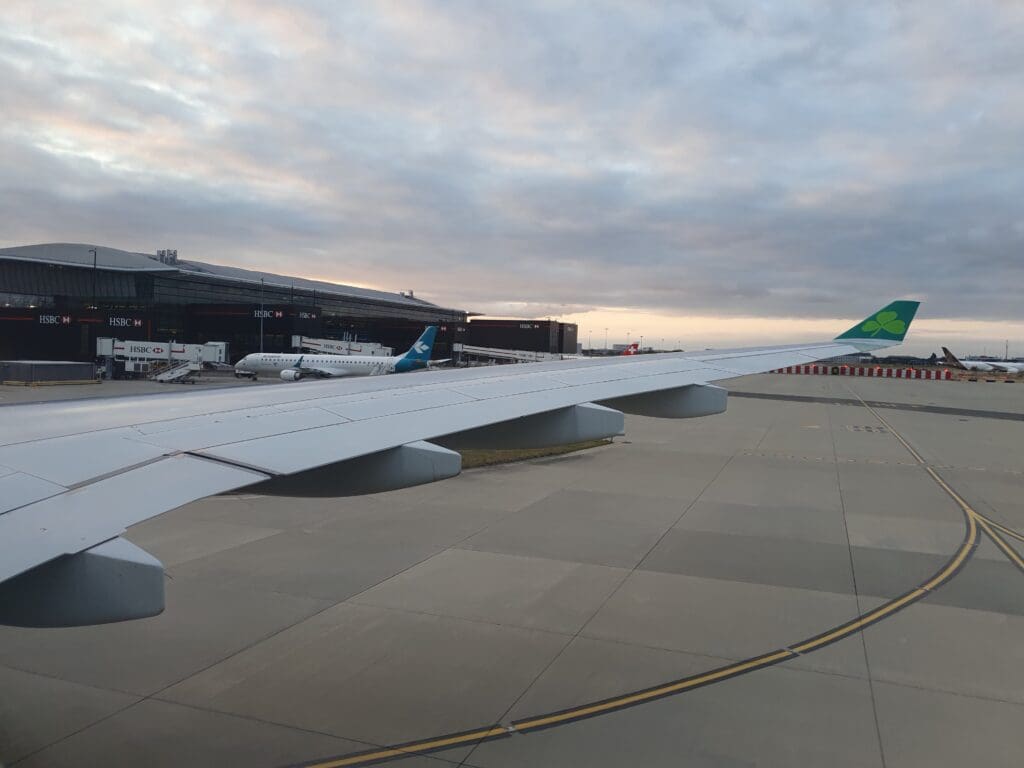
As soon as the aircraft came to a halt at Stand 221 at 1935, this advice appeared to have gone out of the window with many passengers standing up in a seeming hurry to exit the aircraft. Fortunately, the cabin crew member at the front of the rear economy cabin appeared to be rather adept at policing this, preventing passengers from moving forward until all had exited the forward economy cabin. Whilst I was in no particular hurry, the jet bridge was soon connected and disembarkation was fairly swift. Soon enough, I found myself thanking various crew members as I moved forward before exiting the aircraft via the L2 door.
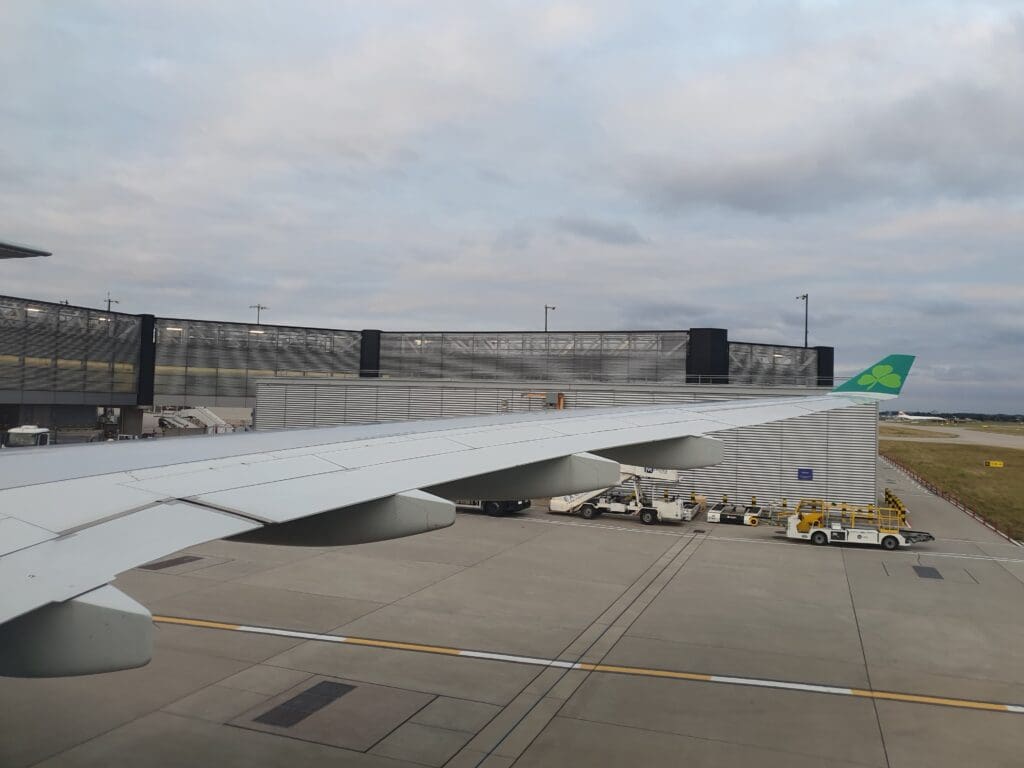
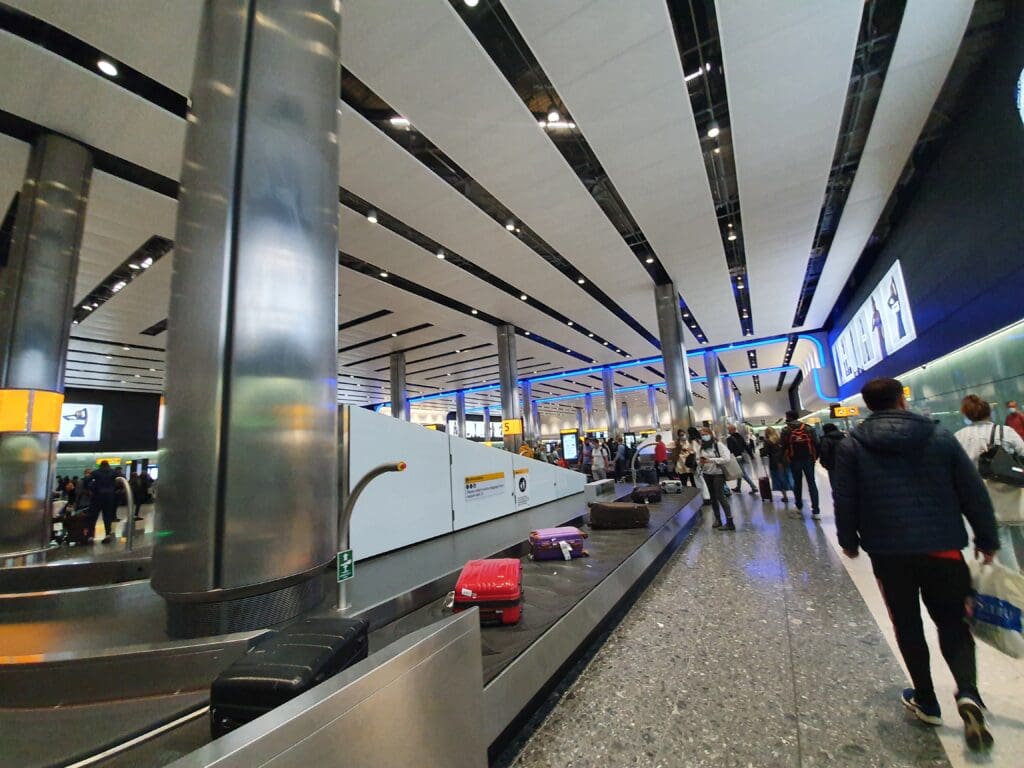
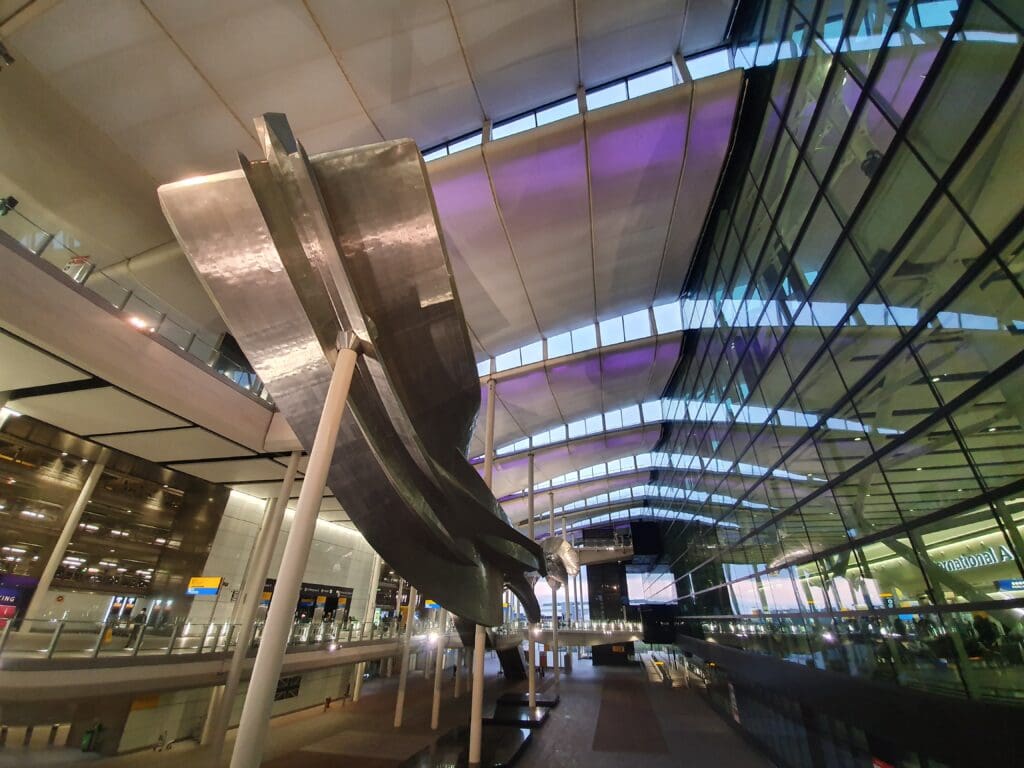
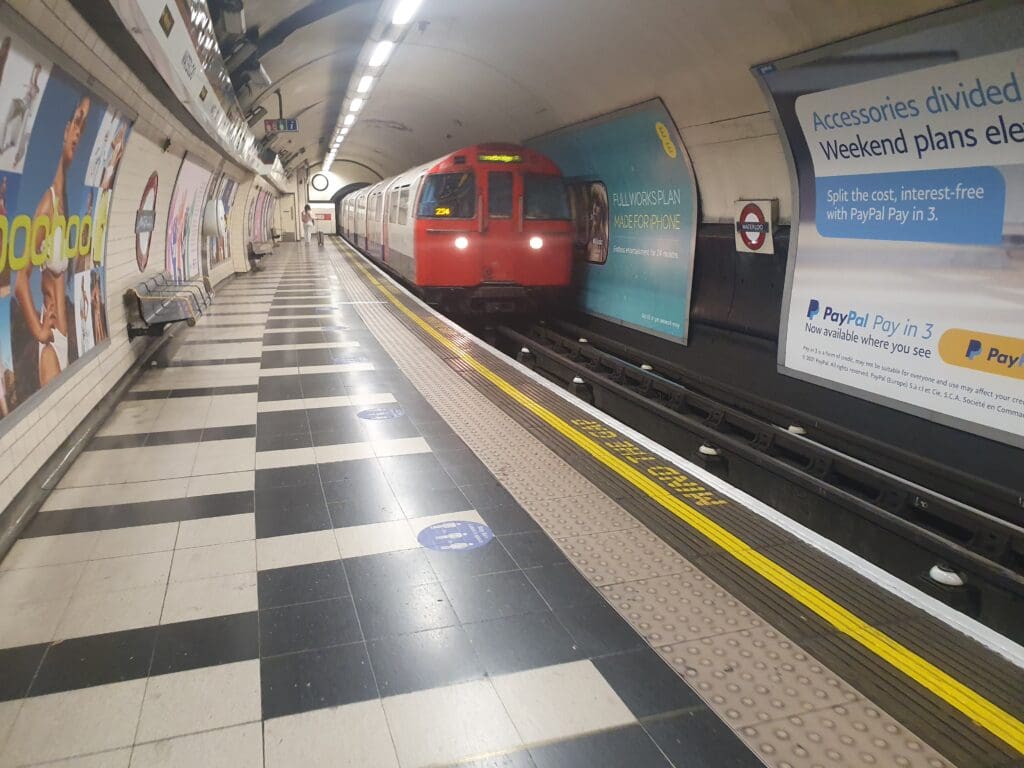
After walking up the jet bridge, the walk to arrivals was relatively short and I found myself standing in Terminal 2’s large baggage collection hall in no time at all. Having arrived from Ireland, located in the Common Travel Area, there was no passport check and so lacking hold luggage I was able to exit into the landside area without any waiting, arriving there exactly ten minutes after the aircraft had pulled into the stand. From there, I headed down to the basement level, tapped into the Underground and caught a couple of Piccadilly Line trains back to Ealing, arriving home less than an hour after the aircraft touched down at Heathrow.
Conclusion
Whilst I would perhaps have to sample the airline on a longer flight to accurately review their service, my experience with Aer Lingus was largely positive and left me with no valid complaints. I was delivered to London on time, in one piece and the aircraft was more than comfortable for the short fifty-minute flight. Despite being ignored during my initial walk down the cabin, throughout the flight the crew redeemed themselves and were friendly and polite. Therefore to conclude, I would most certainly be willing to fly with Aer Lingus again and perhaps on a longer flight which would allow me to get a better idea of their service.