An Evening Cathay Pacific A330 Ride: Hong Kong to Jakarta
You can read all the background and booking information in my report from Dubai to Hong Kong here.
Upon stepping off the Airbus A350 that had safely delivered me from Dubai, I was left looking forward to my shorter ride to Indonesia onboard one of Cathay Pacific’s regional workhorse Airbus A330-300s. However, first, I would have to spend a long five-hour transit at Hong Kong International Airport. Fortunately, being an aviation enthusiast, I had no qualms about the opportunity to spend plenty of time watching the constant stream of diverse movements at one of the world’s busiest airports!
As I journeyed up the jetbridge from the Airbus A350, given Hong Kong’s role as a major international hub, I was hoping for and expecting a smooth, easy and stress-free transit experience. However, unexpectedly, my first task was to convince the Hong Kong Customs and Excise Department that I was not one of their most wanted! Almost as soon as I entered the terminal, an official sprang out of nowhere and professionally produced their warrant card, introducing themselves before requesting to see my boarding pass and passport. Upon showing both documents, with a slightly disappointed look and tone, they responded, ‘Okay, head to E1 and have a nice journey.’ And just like that, my brush with Hong Kong’s law enforcement agencies came to a thankfully abrupt end.
Once this slight drama was over, I followed signs for transfers. Unlike at some airports, all transit passengers in Hong Kong must pass through a security checkpoint before entering the airside departures area. Given the size of Hong Kong International Airport and the high number of passengers transferring, thanks to its status as the home of Cathay Pacific, I was a little surprised to find this to be reasonably small with just two x-ray scanners. Fortunately, I seemed to have arrived at a quiet time with no other passengers there at that point. Once my boarding pass had been scanned and my photograph was taken, I walked up to one of the scanners and parted with my belongings before passing through a metal detector. Interestingly, my bag failed the first time around, as my keys and coins had been left in this, whilst the masses of electronics that I was carrying did not flag up! Fortunately, after a second round of scanning, I received the all-clear and was free to continue on my journey.
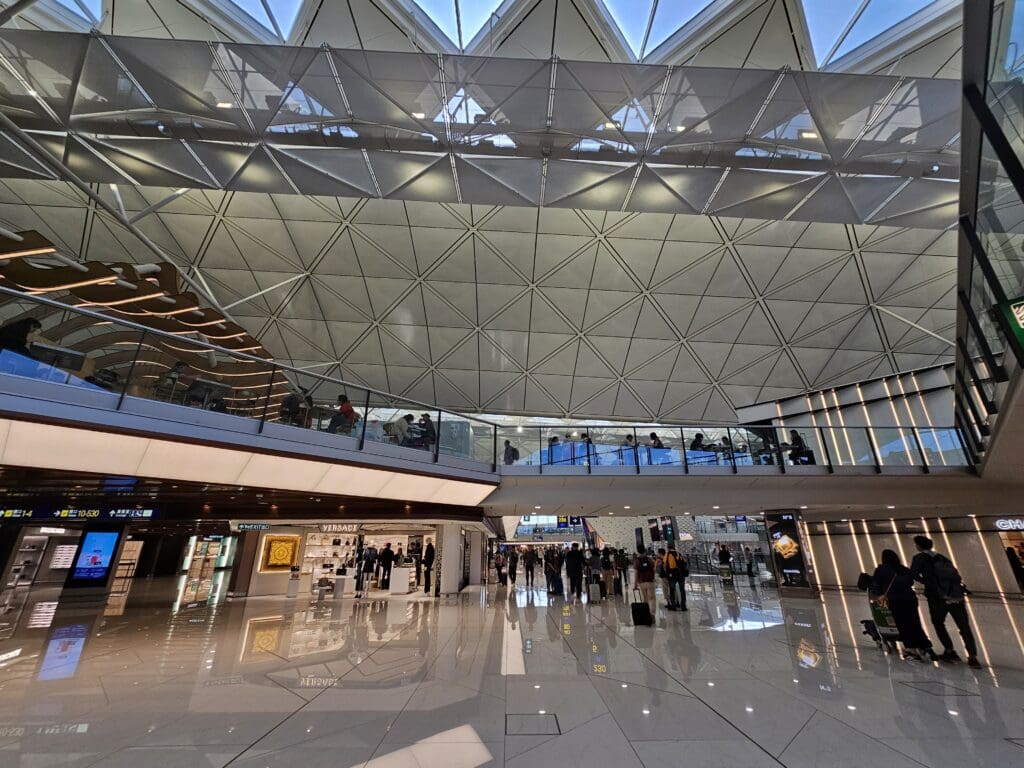
Hong Kong International Airport opened its doors in 1998, taking the baton from Hong Kong’s famous but by then outdated and small Kai Tak Airport. Built over a relatively short period of time and on reclaimed land, the airport was heralded as an engineering marvel and soon became known for its ultra-modernity and plethora of facilities. Whilst now a quarter-century old, wandering around the terminal, this still appeared modern and up-to-date and was bright, spacious and airy. This came with plenty of greenery which I found to be a nice touch, whilst also featuring some superb views of the action outside. Meanwhile, this is gigantic and consists of a main terminal plus two satellite terminals – one which is reached by a people mover and used exclusively by low-cost carriers, with another being accessed by a bridge over the apron, something that I have only seen elsewhere at London Gatwick.
For those looking to do some retail therapy, the airport is a little like a mall with an airport attached, with many shops, restaurants, cafés and bars, ensuring this to be a decent place to spend time before jetting off across the world. Meanwhile, those with plenty of Hong Kong Dollars to part with and looking to do some retail therapy are offered a plethora of shops which are dotted throughout the terminal. Importantly, as I wandered around, I found the terminal to be in a very clean and tidy state, leaving me with nothing to complain about, whilst plenty of charging points could be found and the complimentary wifi worked well throughout. My only real complaint was the lack of convenience-type stores or vending machines which meant that economical options for drinks and snacks were incredibly limited. Thus, if travelling on a budget, I would recommend travelling with a water bottle and filling this up from the many complimentary water outlets throughout the terminal.
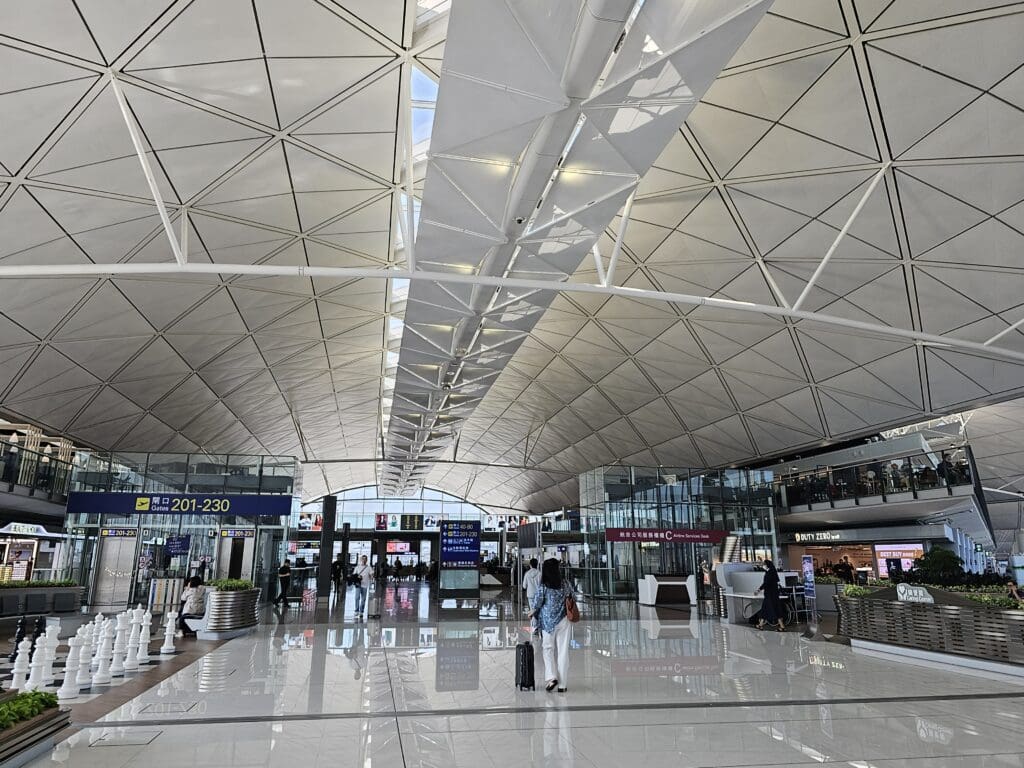
From an aviation enthusiast’s perspective, Hong Kong International Airport is fantastic and offers superb spotting opportunities with a near-constant stream of traffic from airlines across the world. After wandering around, I found a seat in a good location and sat for a few hours, watching as aircraft after aircraft taxied in after landing. Having previously lived in Korea and travelled extensively around East Asia, many of these aircraft were operated by airlines that were once very familiar to me, but, with this being my first time in the region following Covid, I had not seen them for quite some time.
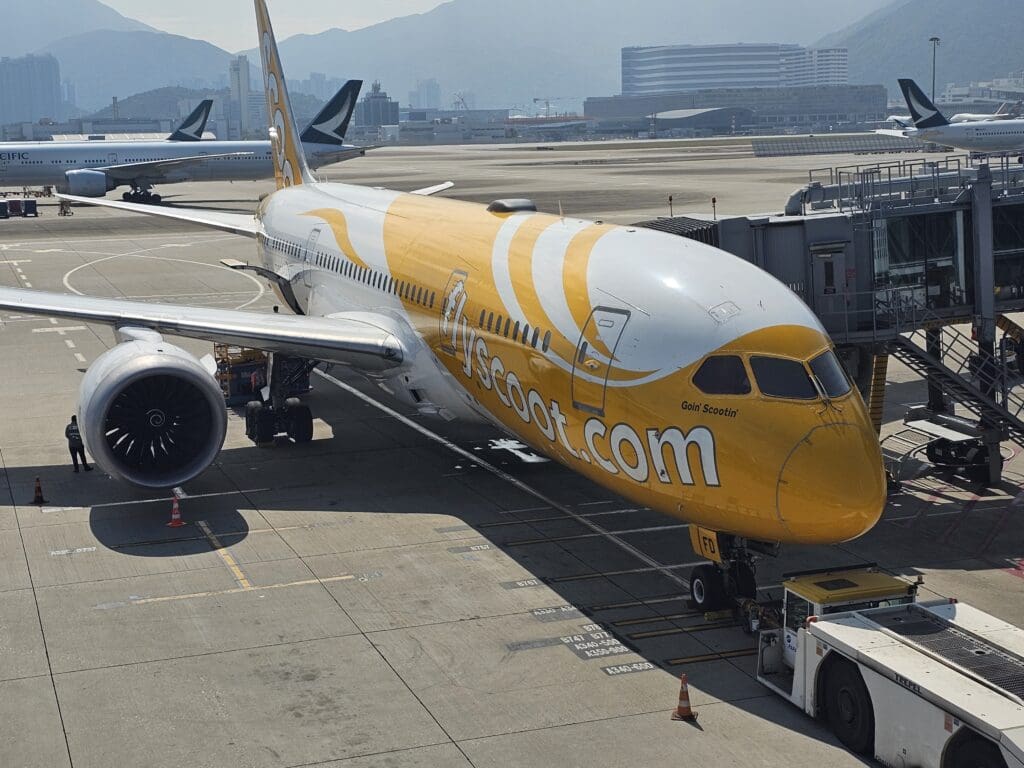
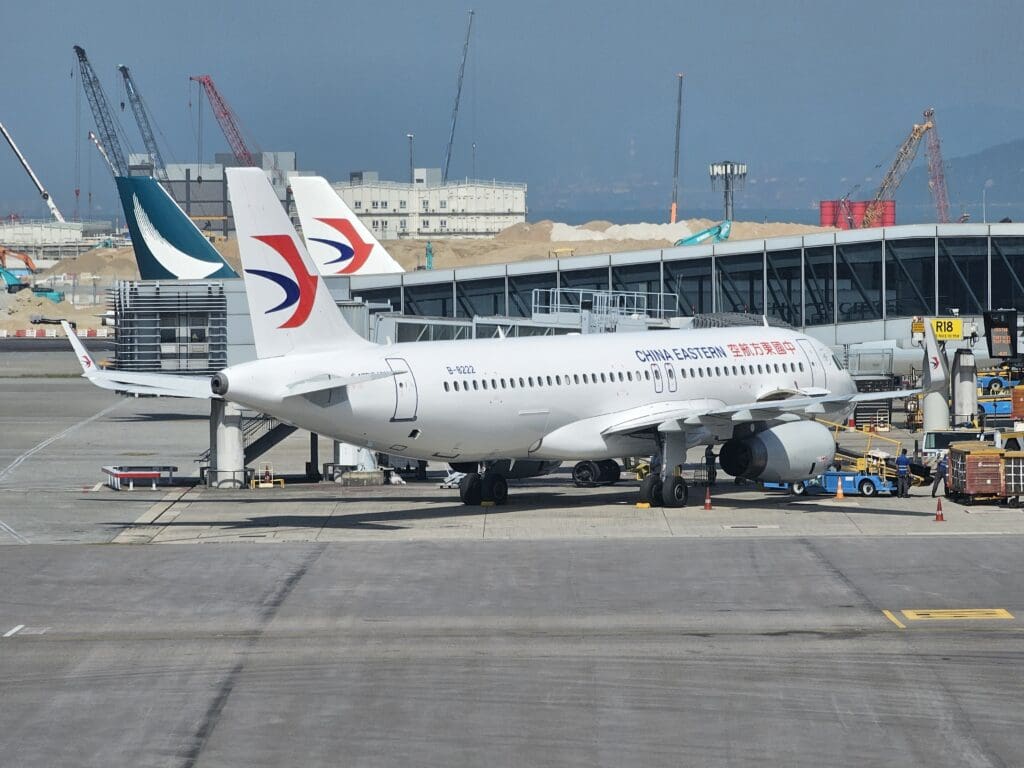
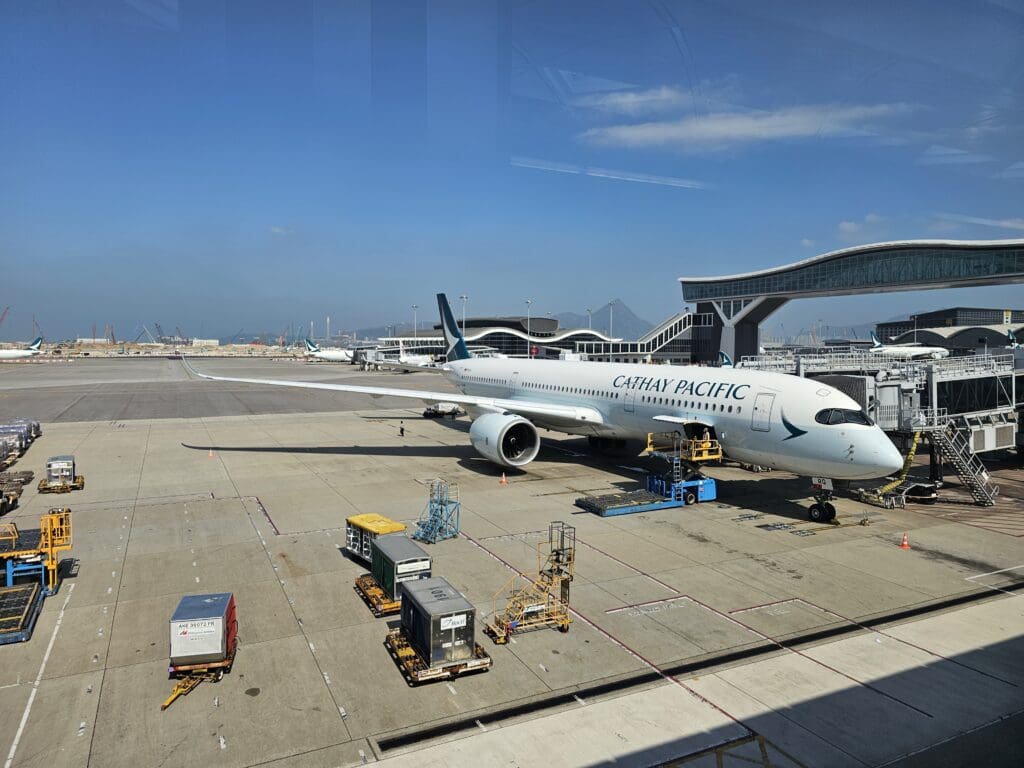
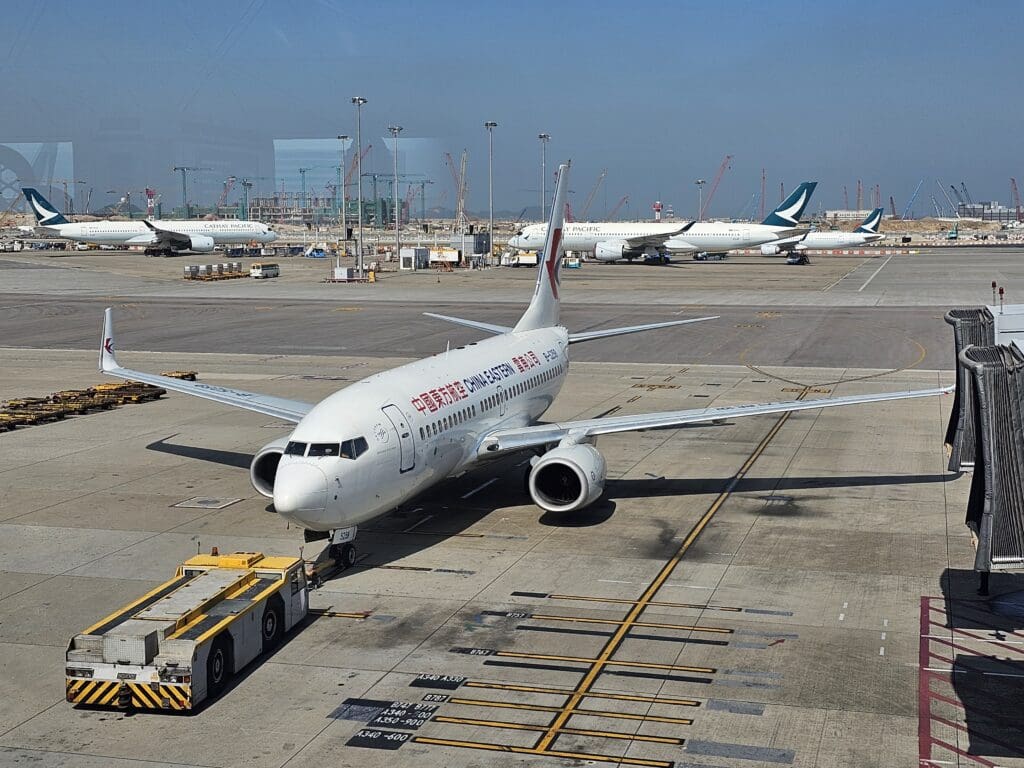
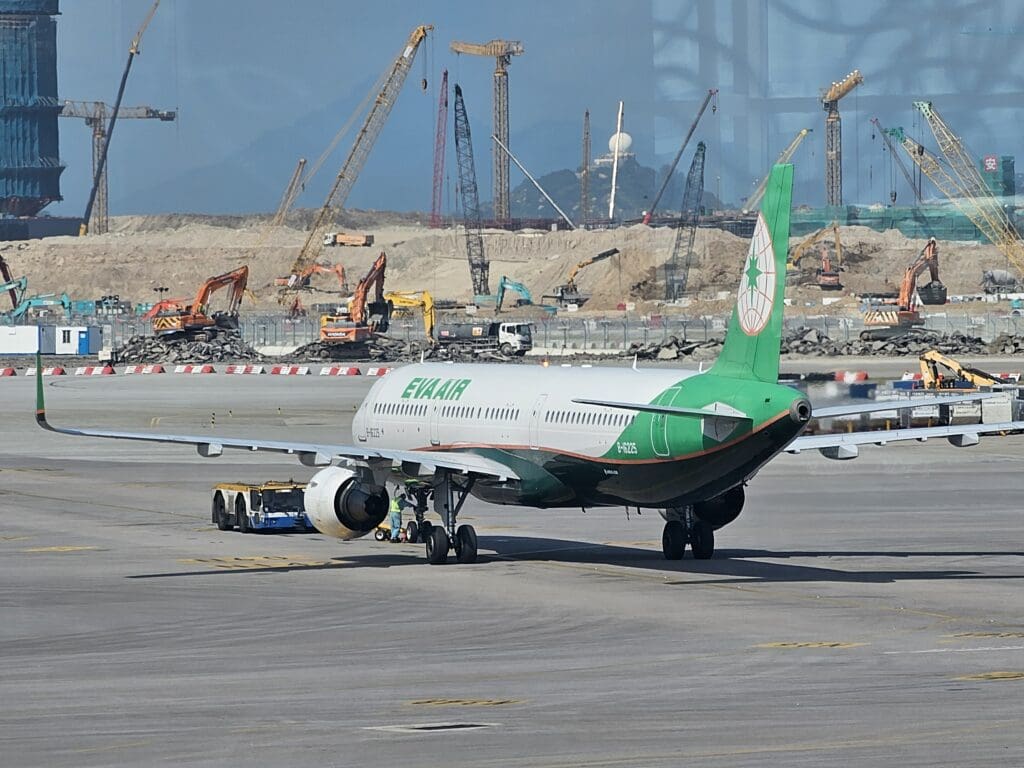
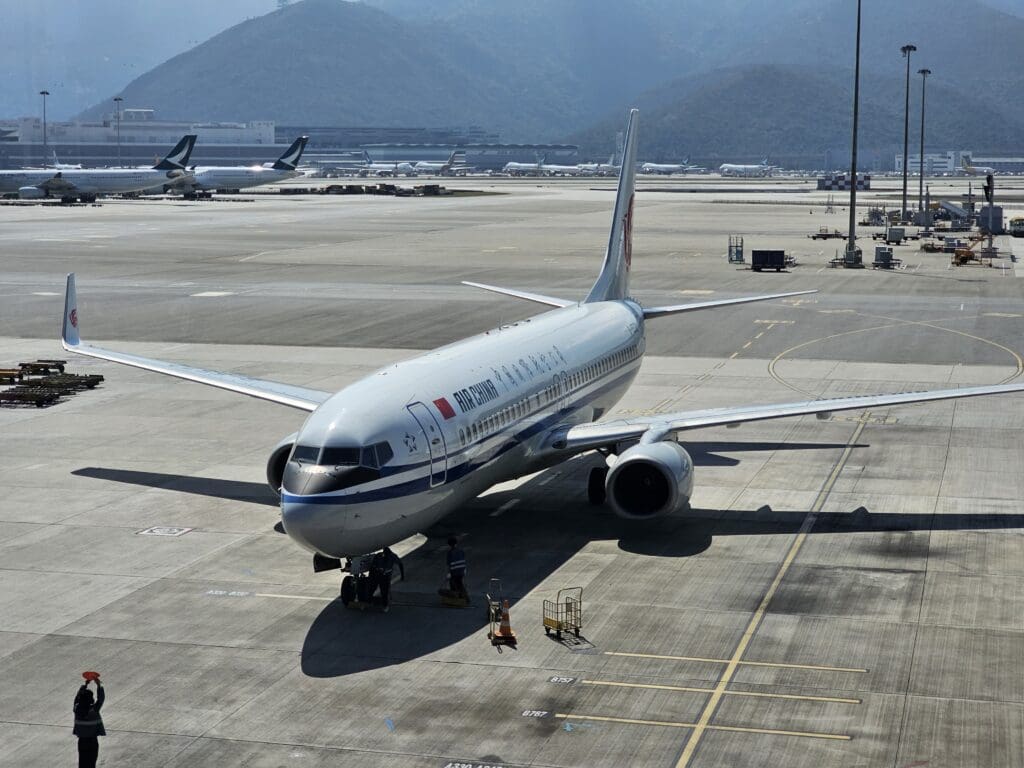
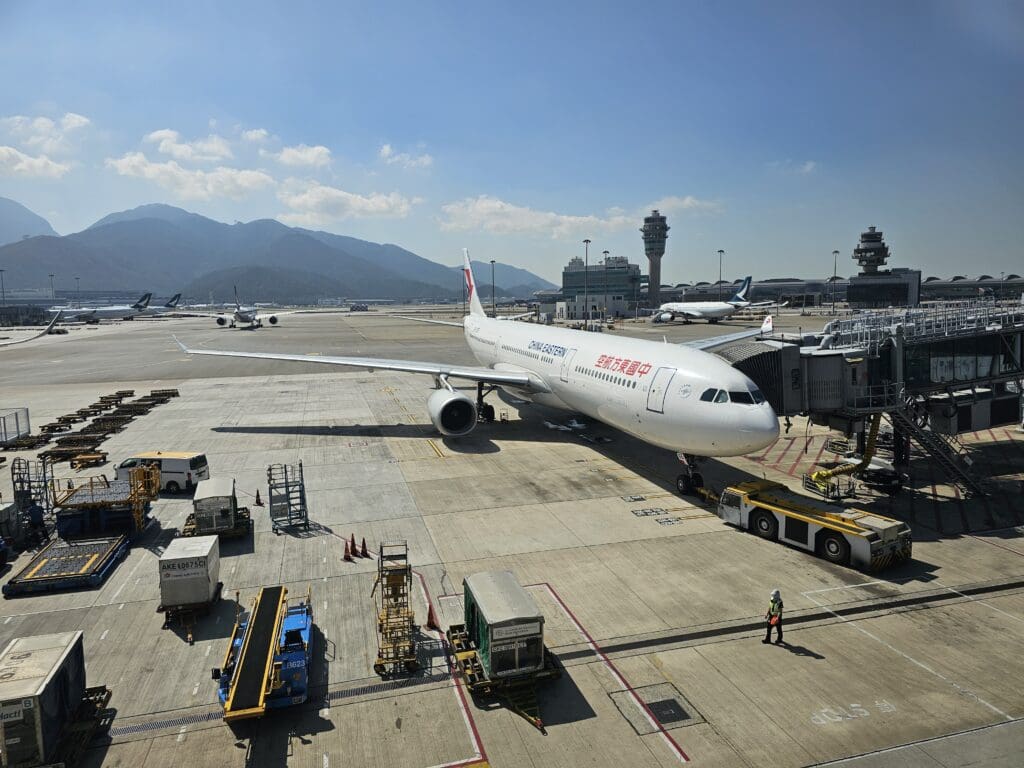
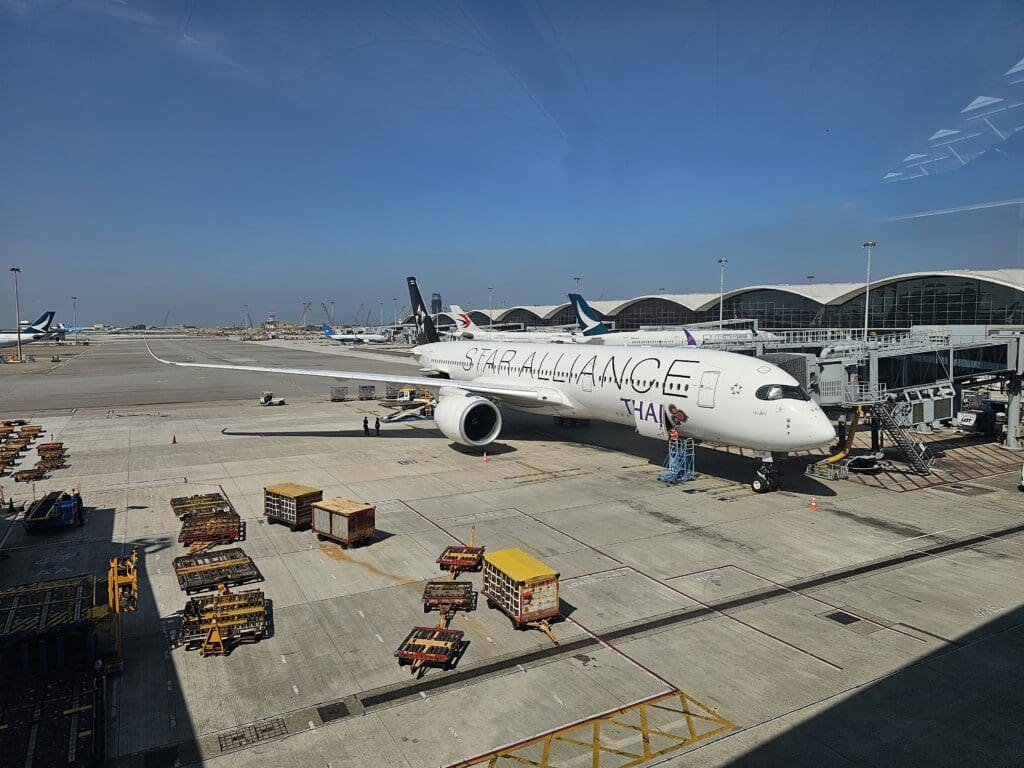
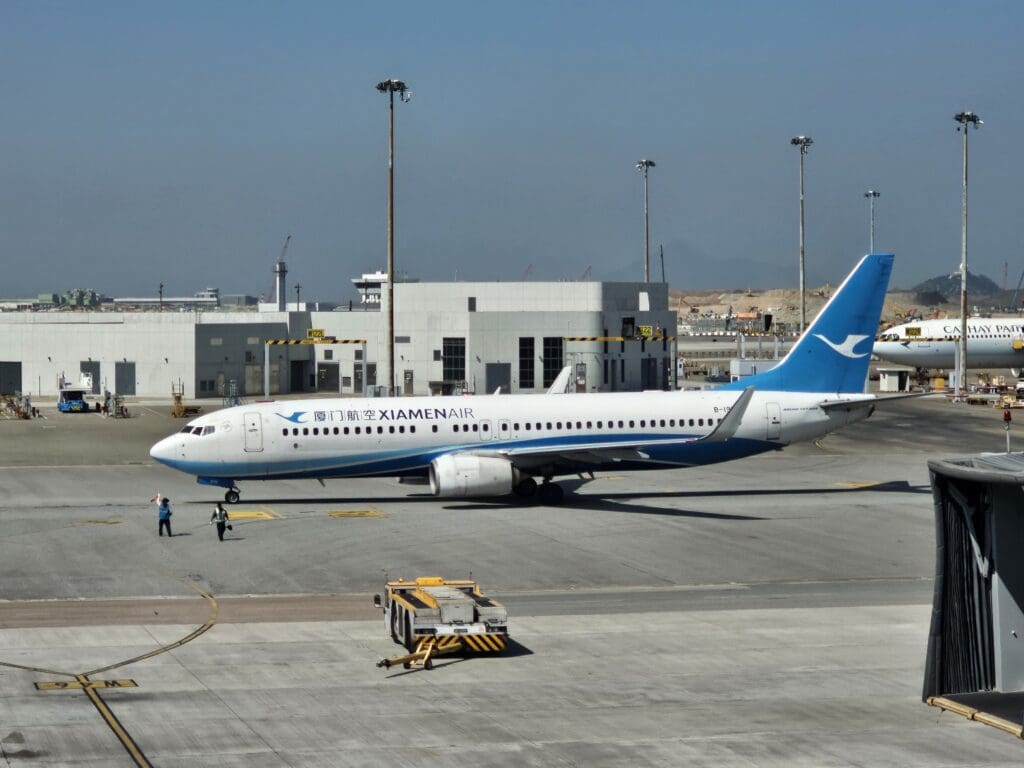
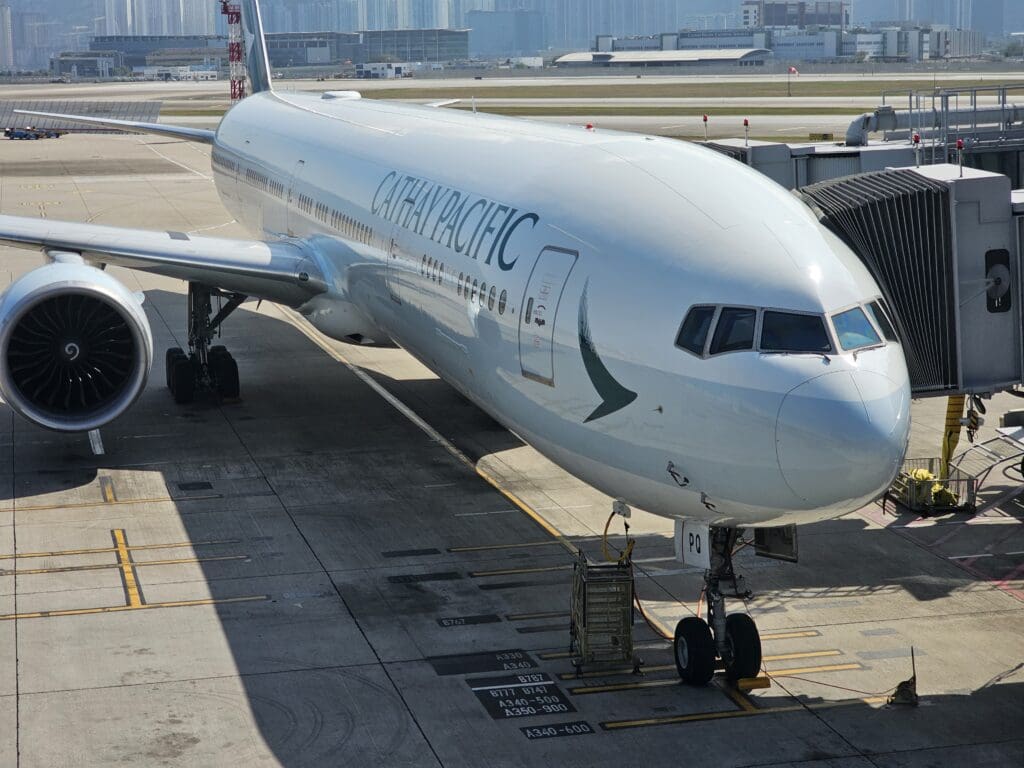
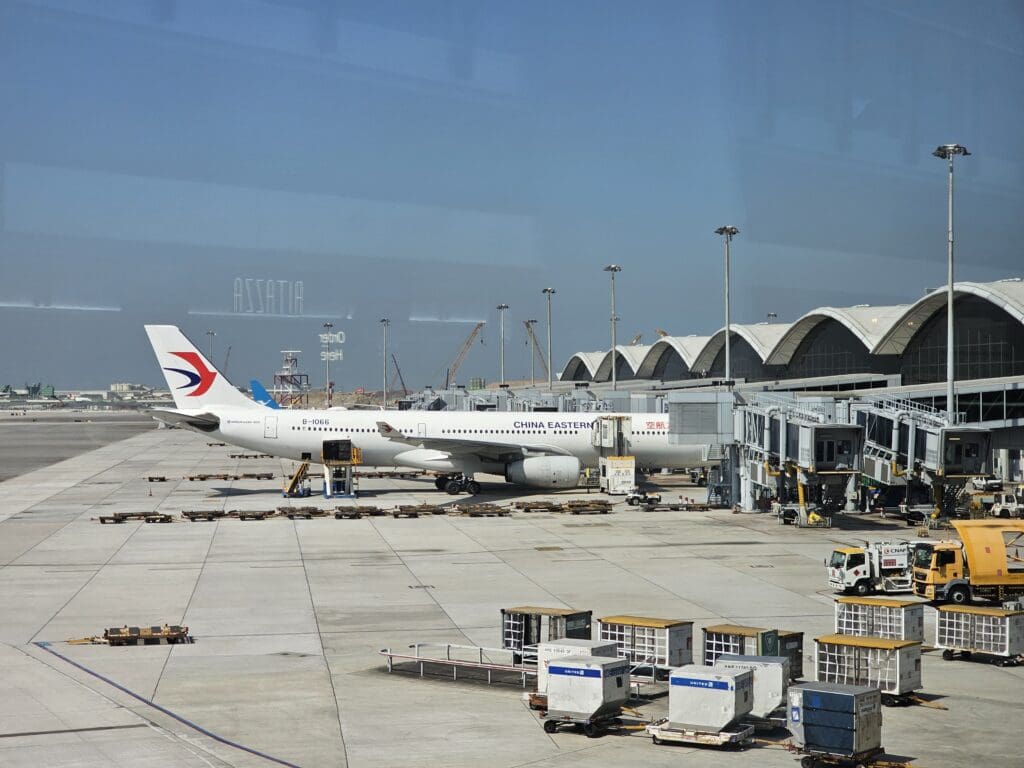
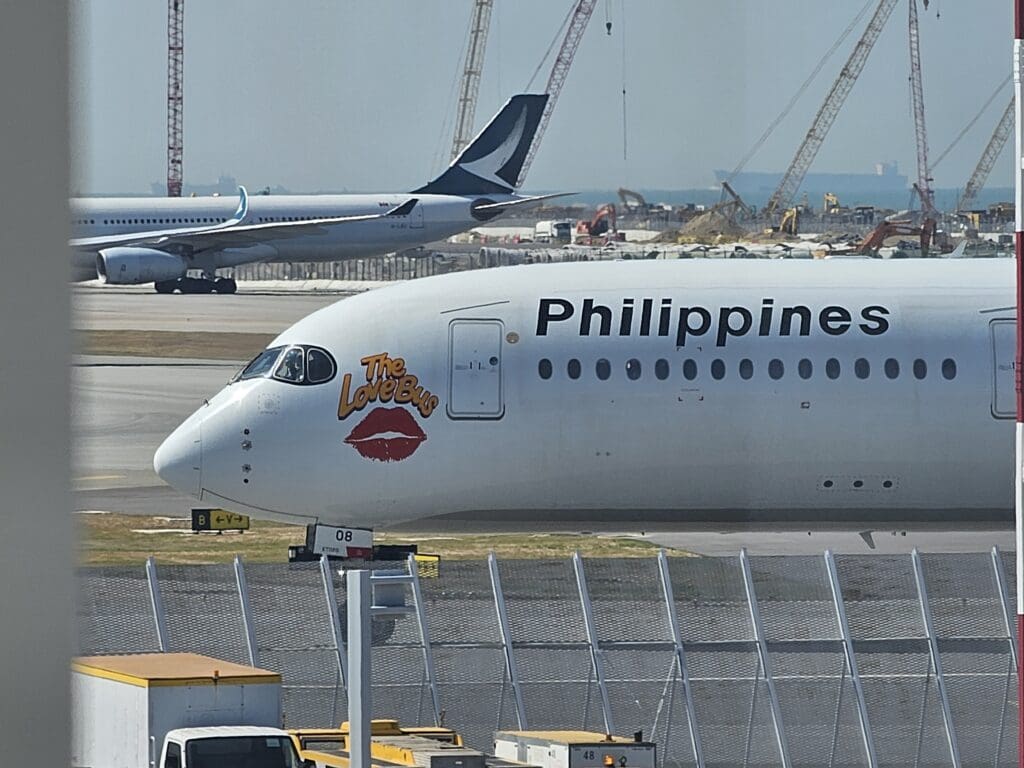
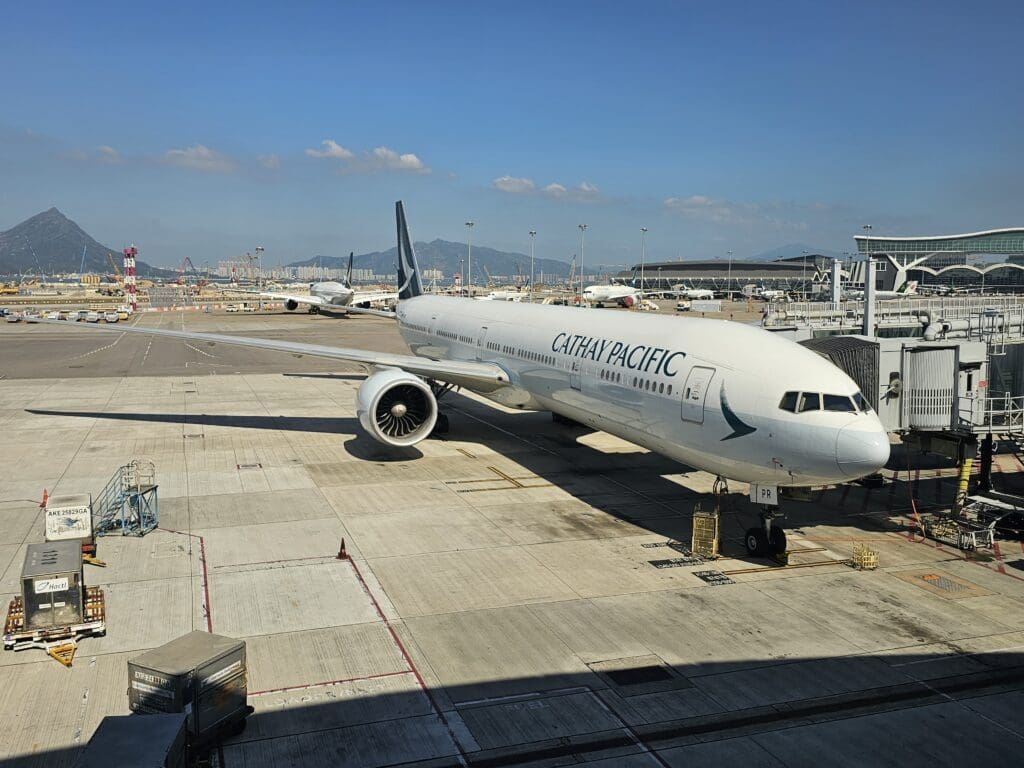
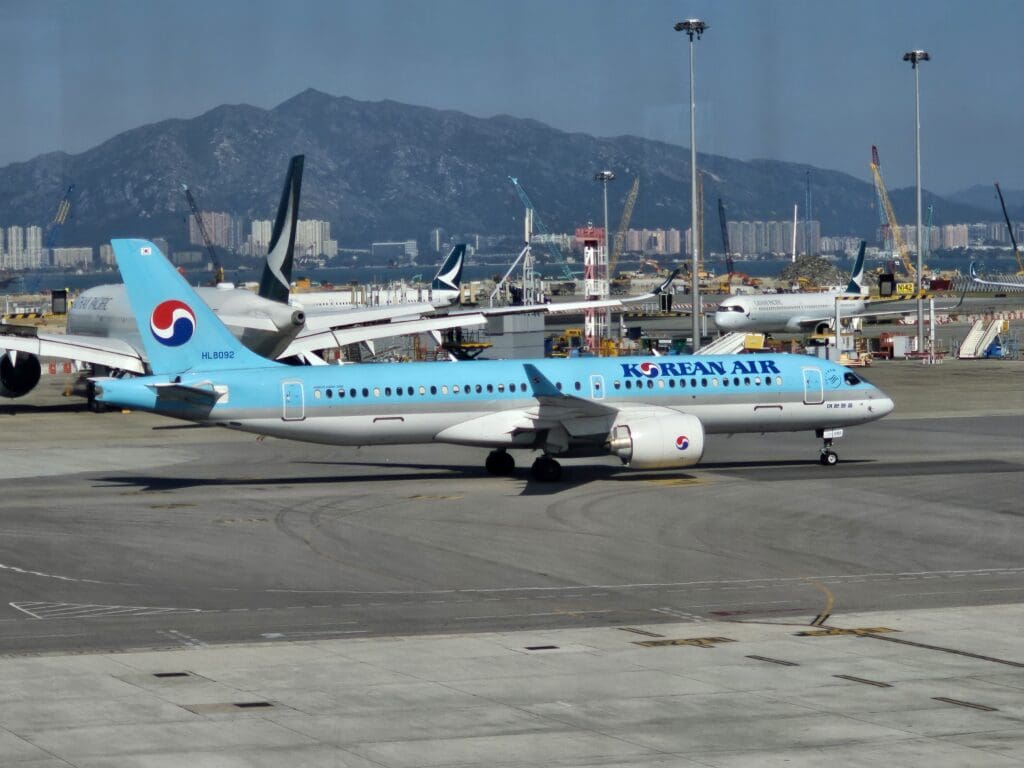
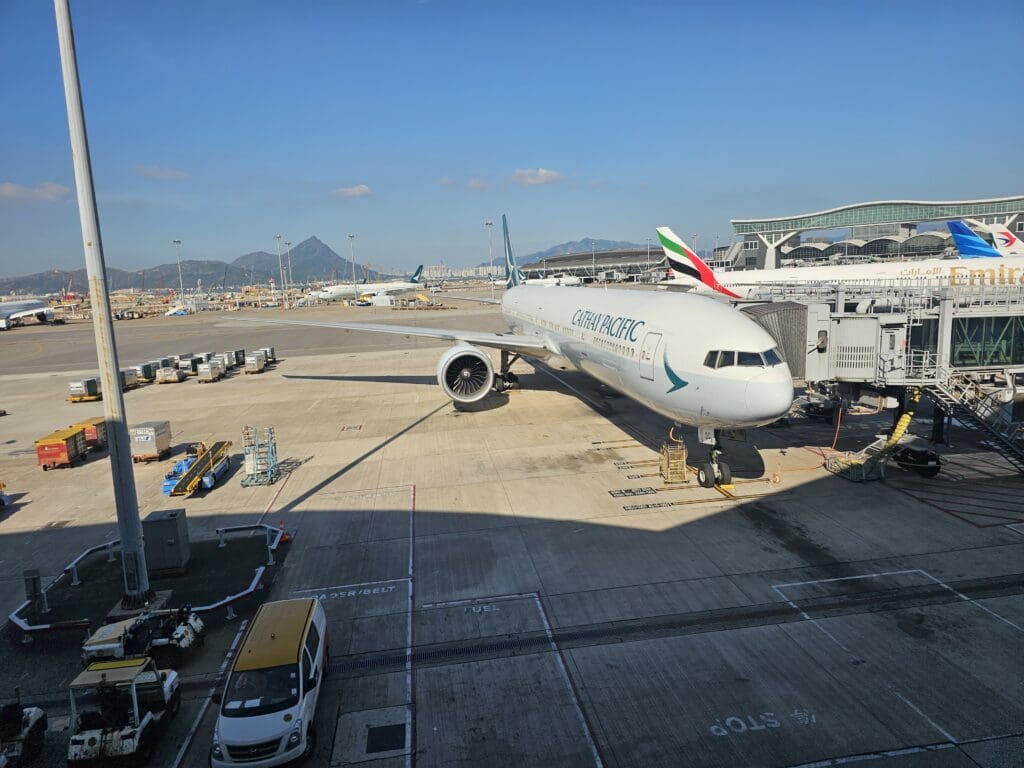
With a little over two hours to go until my flight to Jakarta, the departure boards updated to advise passengers that this would depart from Gate 65. Given the sheer gigantic size of Hong Kong Airport, I knew that there was a good chance that I would be in for a long trek over to the gate however by coincidence, this was located just a couple of minutes away from where I had been waiting and watching the aircraft! At that time, no aircraft could be seen outside, however at 1425, a total of 85 minutes before the scheduled departure time of my flight, the inbound aircraft could be seen arriving from Jakarta.
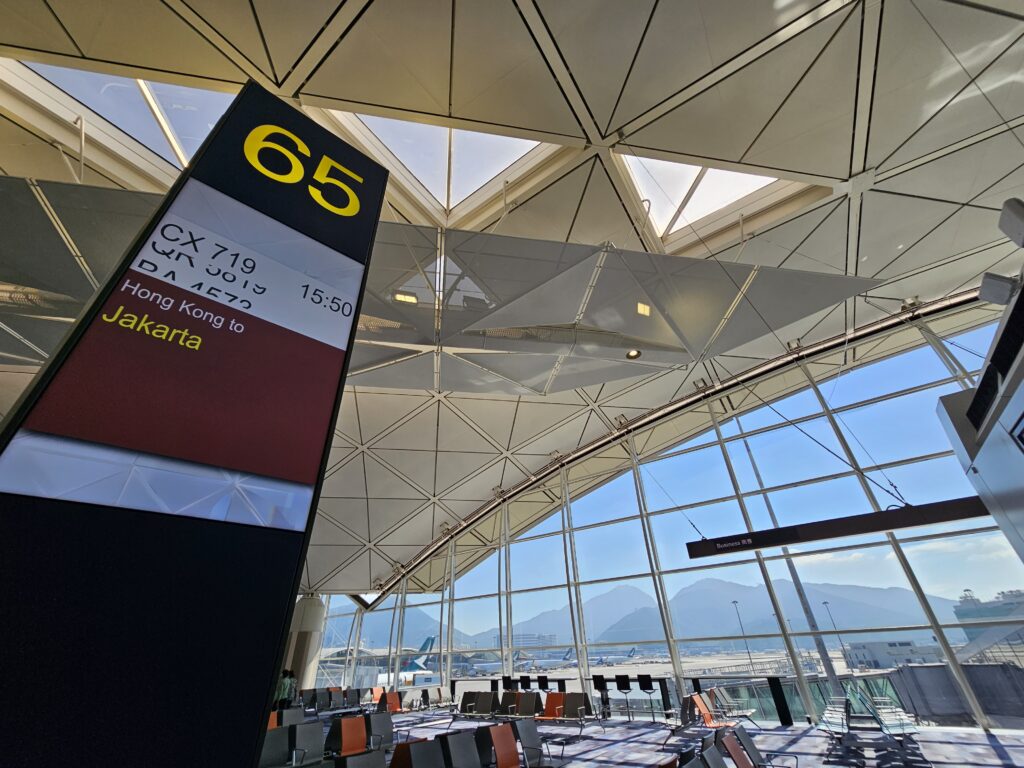
This particular aircraft took the form of Airbus A330-343 B-LBJ which carries the construction number 1618. Assembled at Airbus’ plant in Toulouse Blagnac, this particular Airbus first took to the skies in April 2015 with the test registration F-WWYA, making it around 8.6 years old at the time of my flight in November 2023. Delivered to Cathay Pacific in Spring 2015, the aircraft has spent the entirety of its life shuttling passengers between Hong Kong and destinations across East and South Asia. However, this was not without interruption. Firstly, in August 2016 the aircraft suffered a turbulence-induced cracked windshield on a flight from Hong Kong to Beijing. Meanwhile, like many aircraft in Cathay Pacific’s fleet, the downturn in travel during the pandemic saw the aircraft head to Alice Springs in Australia’s Northern Territory where it entered a two-year period of storage from November 2020 to November 2022. Fortunately, things appeared to have returned to normality and in the week before my flight, the aircraft connected Hong Kong with Denpasar Bali, Jakarta, Kaohsiung and Kathmandu.
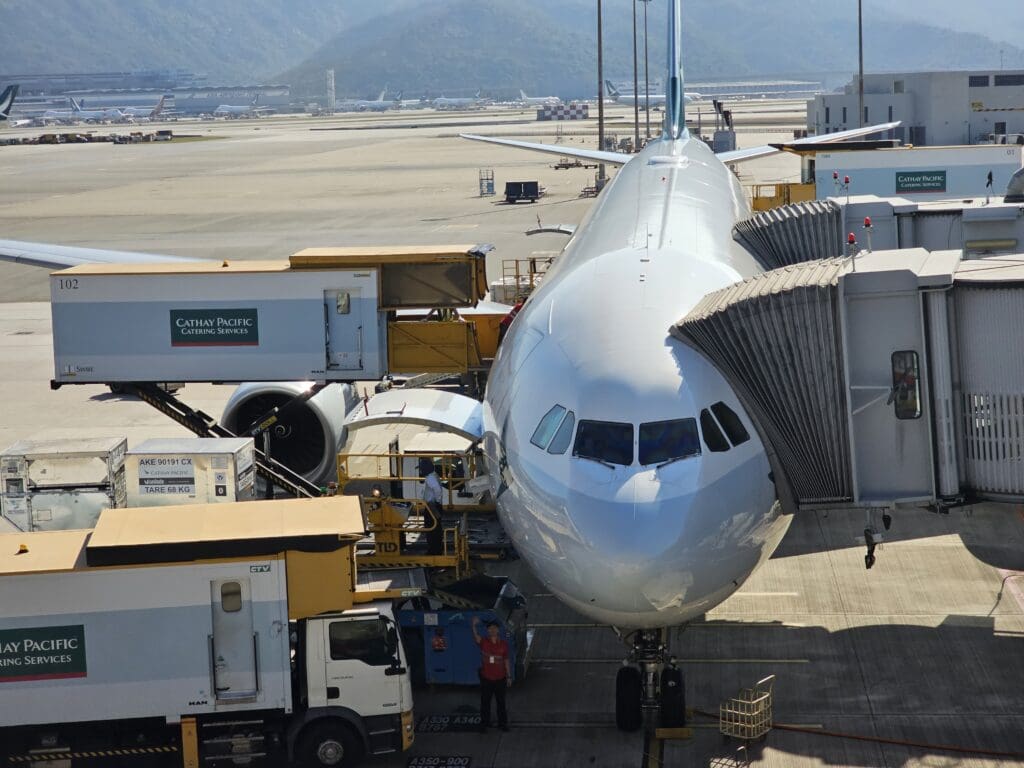
According to my boarding pass, boarding was scheduled to commence forty minutes before departure at 1510. With 10 minutes to go, I returned to the gate where a reasonable number of passengers could be seen raring to go, although it was difficult to tell just whether there was enough to fill the 293-seat Airbus A330-300. As I wandered around the gate, I managed to spot a few passengers who like me, had started their journeys in Dubai, with this being the shortest connection possible on Cathay Pacific. It wasn’t long before 1510 arrived by which time a fairly long line of passengers could be seen queueing, with, as you would expect, separate lines for those in Business and Economy. At 1518 the gate agent made an announcement in English only advising of the commencement of boarding for elite members of Cathay Pacific’s Cathay frequent flyer program as well as those in Business and those requiring assistance. No more than three minutes later, the Economy queue began to shift forward. Interestingly, Cathay Pacific utilises facial recognition technology for boarding in Hong Kong. With three facial recognition gates and a manned counter, I tried out the former and simply stood on some footprints and looked at a camera. Then, as if by magic, the gates opened and I was free to head down towards the jetbridge with no need for a boarding pass scan or passport check.
That afternoon, two jetbridges were connected to the aircraft – one to the L1 door for the exclusive use of those in Business, and another to the L2 for those in Economy. Heading down the latter, I found this glass jetbridge to bear more similarities to a greenhouse than a boarding bridge, with this being both boiling hot and rather humid. Whilst this would not have been an issue, I was required to spend a couple of minutes shuffling forward in a queue before stepping into the galley that separates the forward Economy cabin from the Business cabin. As soon as I stepped onboard, I received a friendly welcome from one of the flight attendants who checked my boarding pass before pointing me down the second aisle.
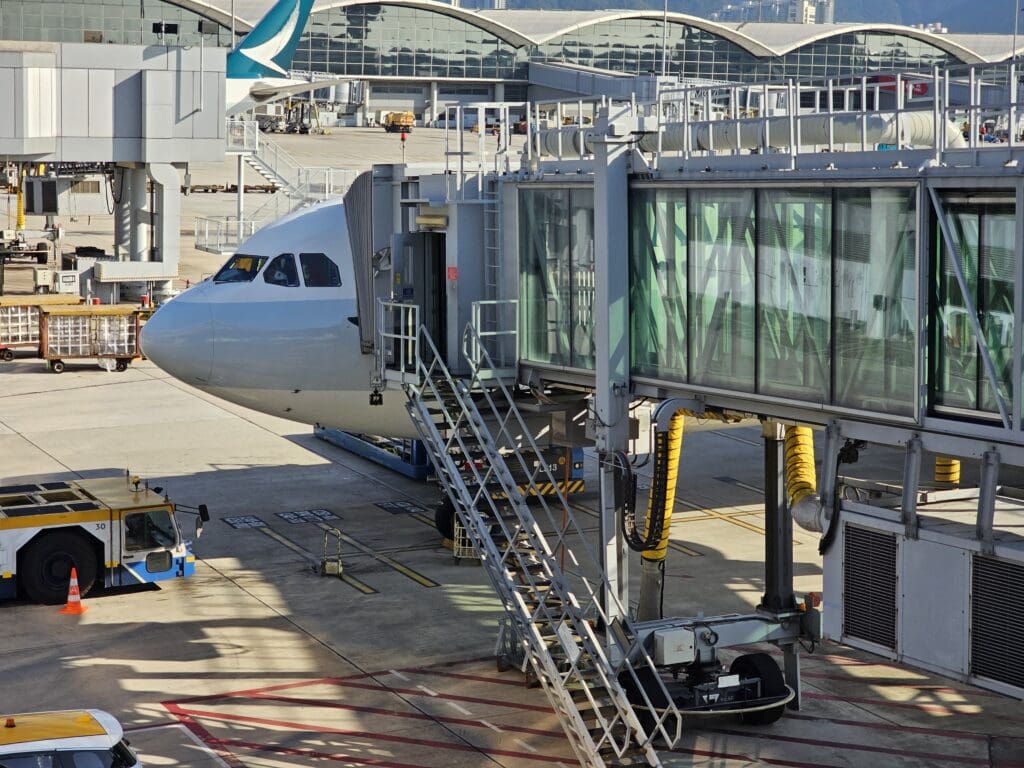
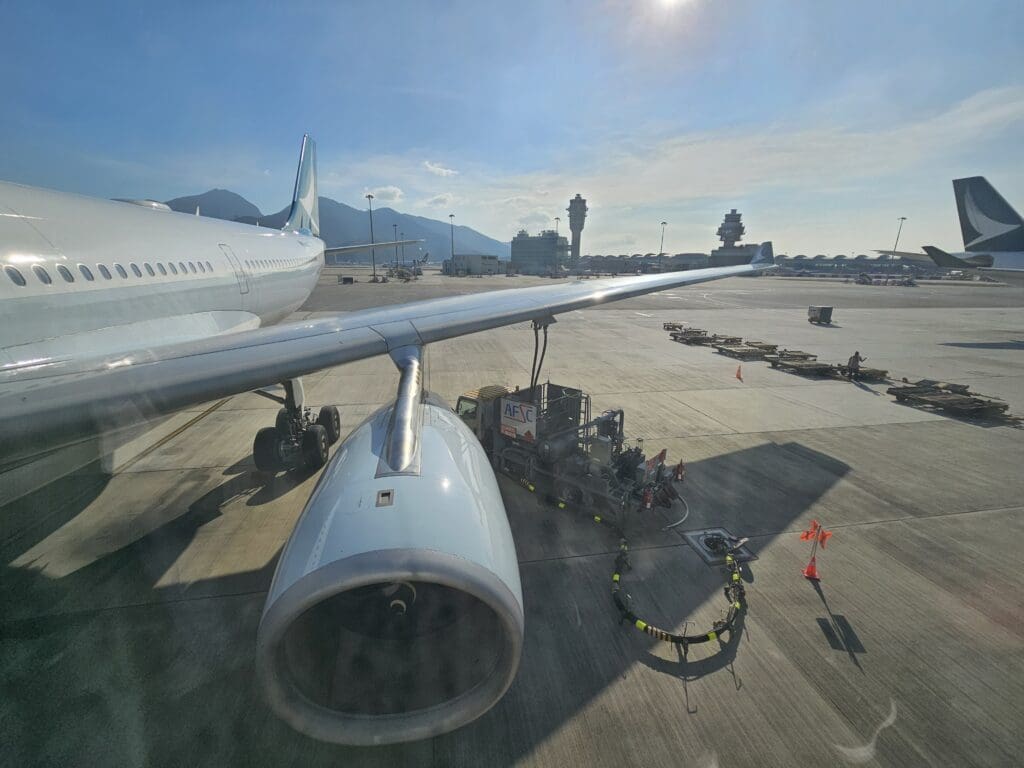
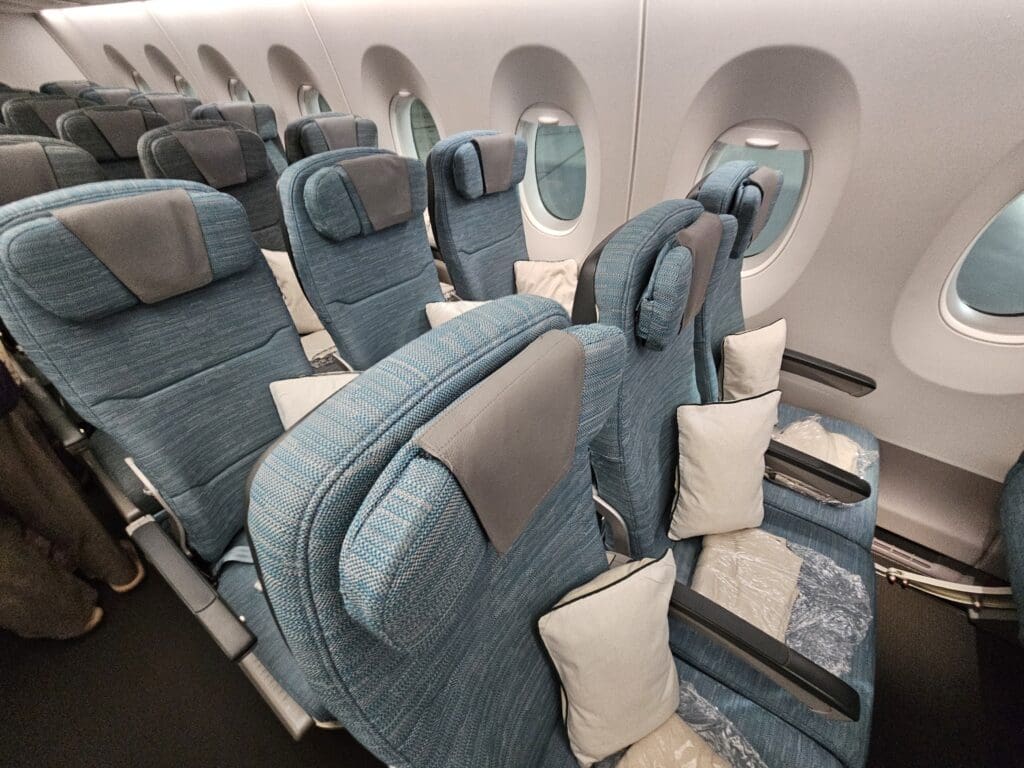
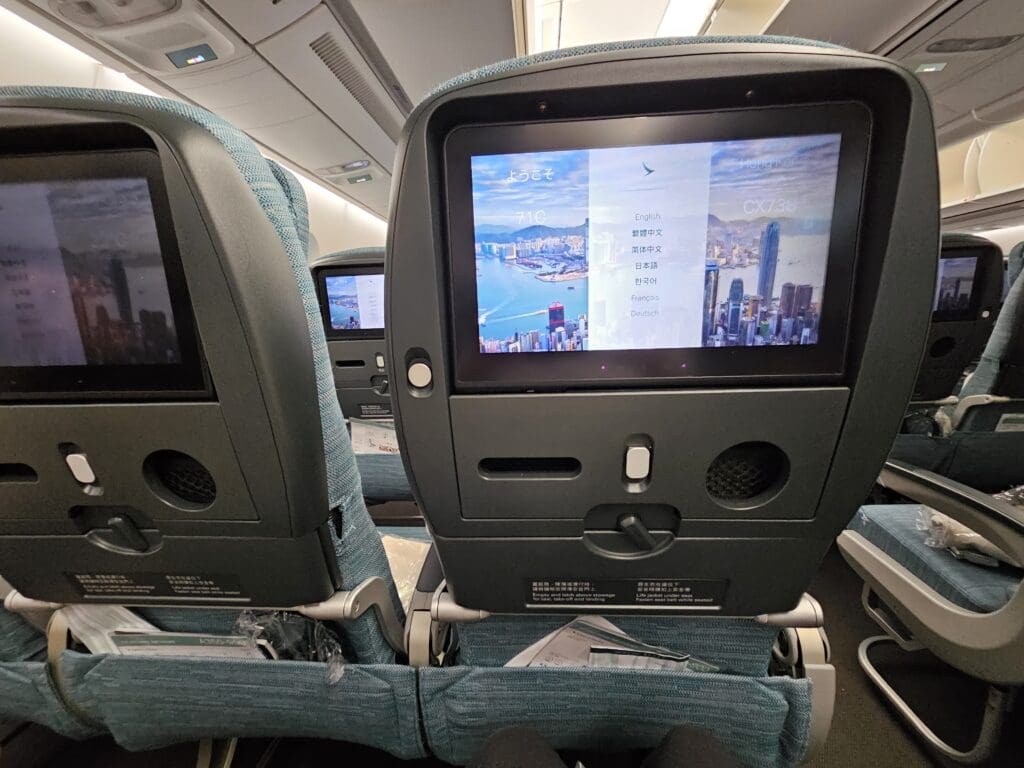
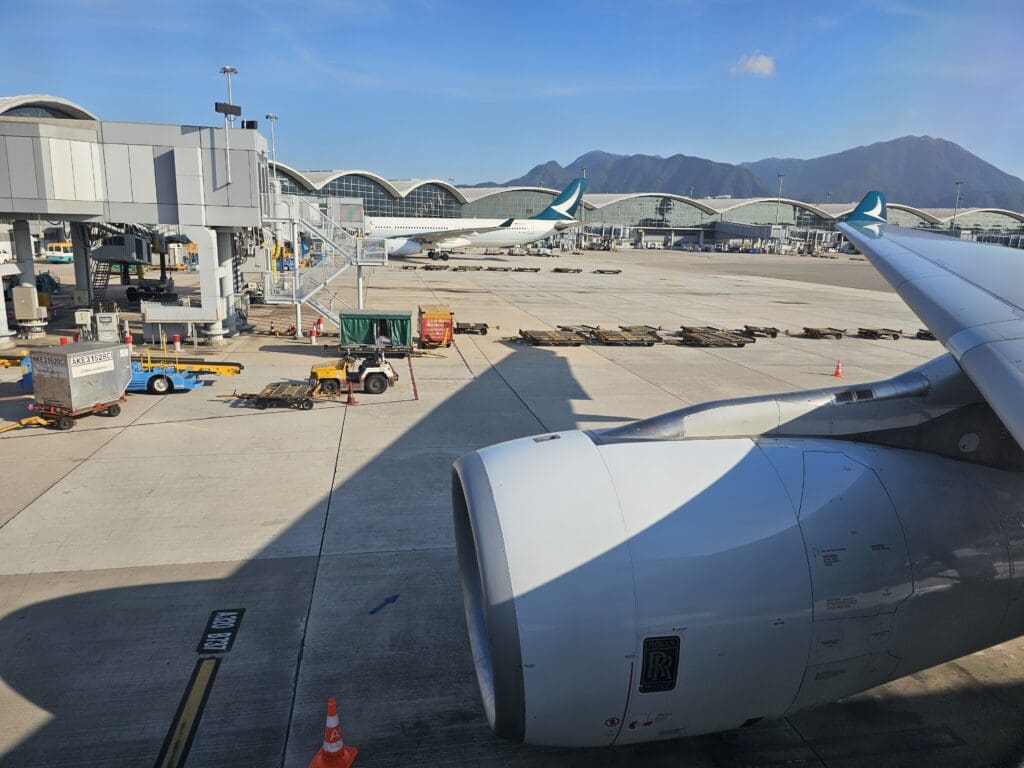
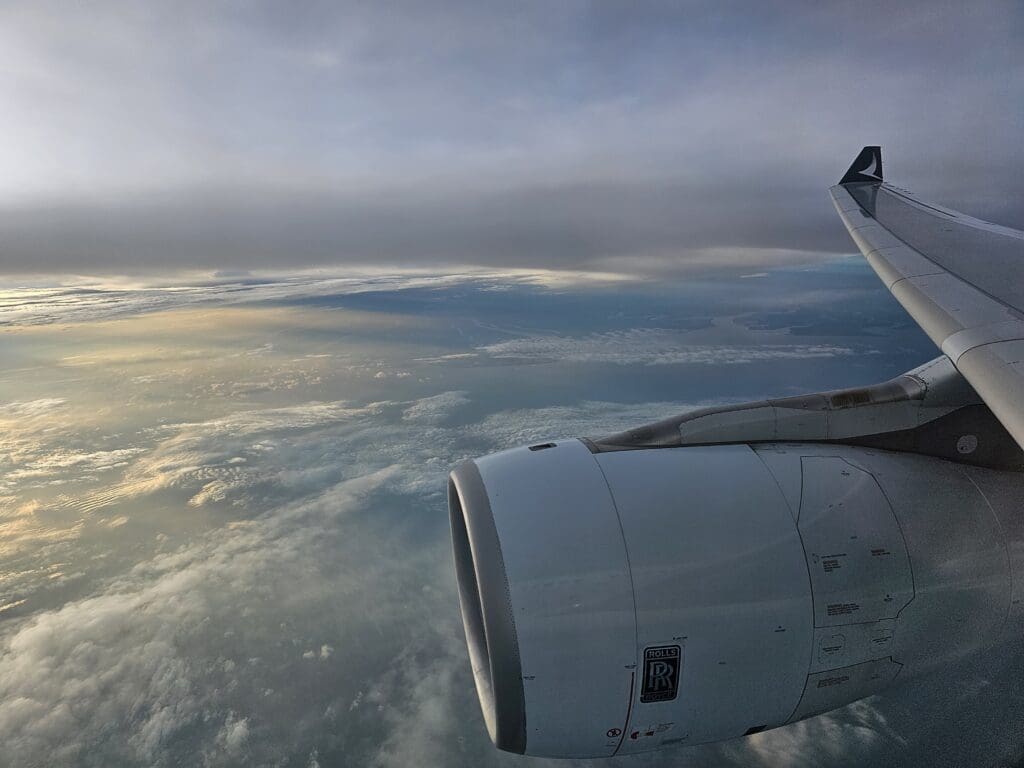
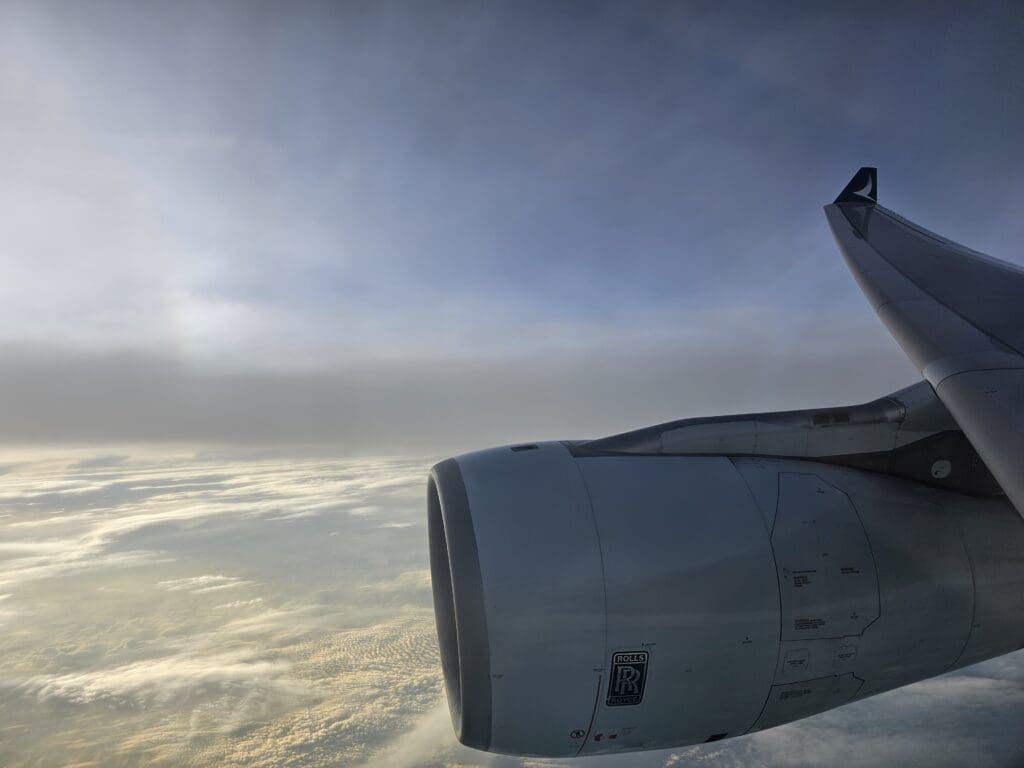
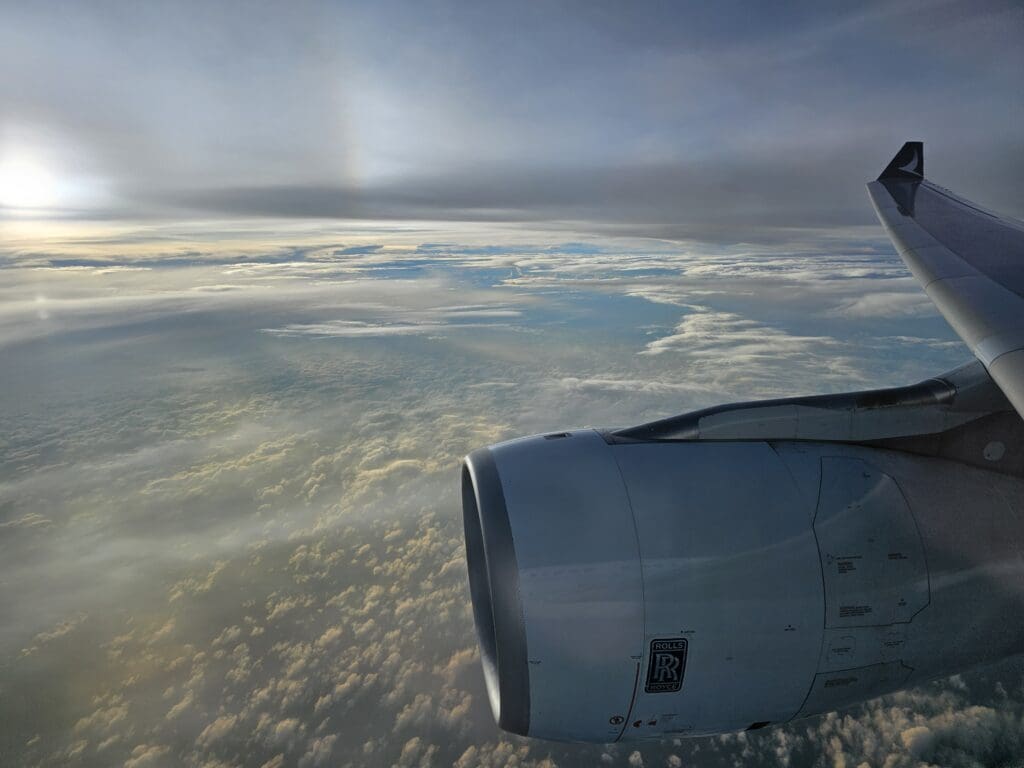
Looking left, I caught a glimpse of the aircraft’s Business Class cabin, where 28 Safran Cirrus II lie-flat seats could be seen arranged in a 1-2-1 configuration. However, knowing where I belonged, I instead turned right and entered the Economy cabin, receiving a friendly greeting from another flight attendant as soon as I arrived there. Compared to the Airbus A350 that I had sampled on the ride over from Dubai, the cabin onboard this particular Airbus was a little more vibrant (if not more dated in its appearance). There, each seat was covered in either a royal blue or light blue fabric cover which sported a pattern of repeating diamonds. These came with an adjustable headrest as well as a disposable fabric antimacassar rather than a leather one as seen on the Airbus A350. Meanwhile, the rears of these featured a large and high-quality inflight entertainment screen, a bi-fold tray table, a cup holder and a USB-A port, whilst a universal plug socket could be found underneath each seat. In terms of layout, these were arranged in the standard Airbus A330 2-4-2 configuration and I was delighted to see that my seat aligned well with the windows, allowing for a fantastic view of the Airbus’ starboard engine.
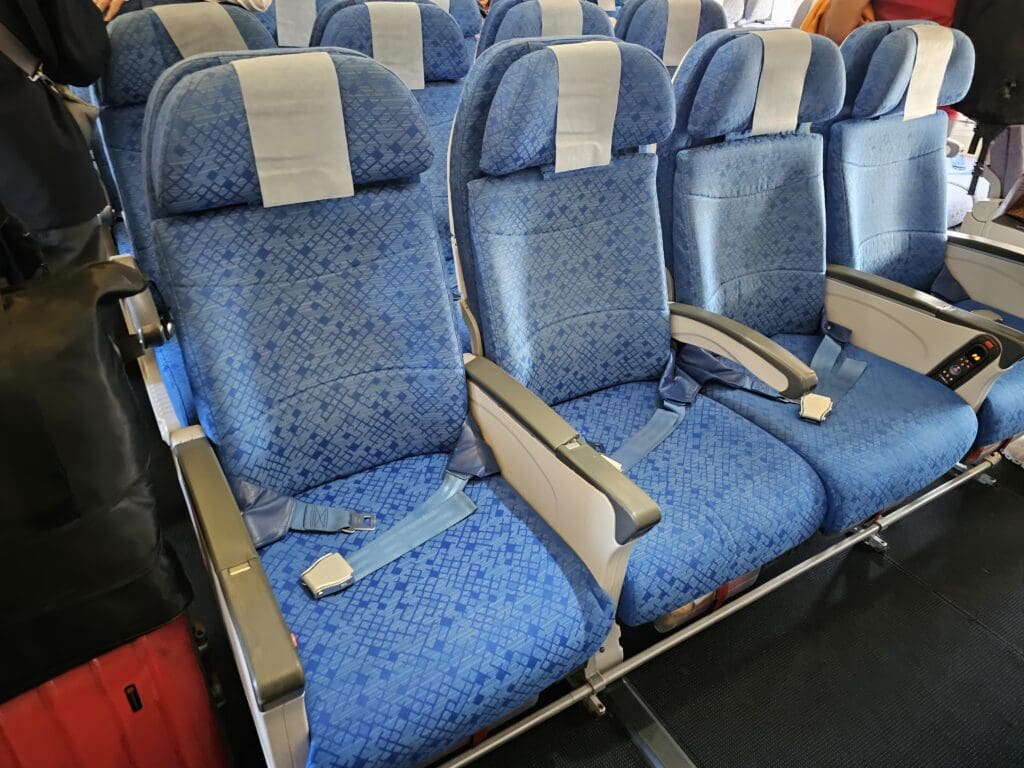
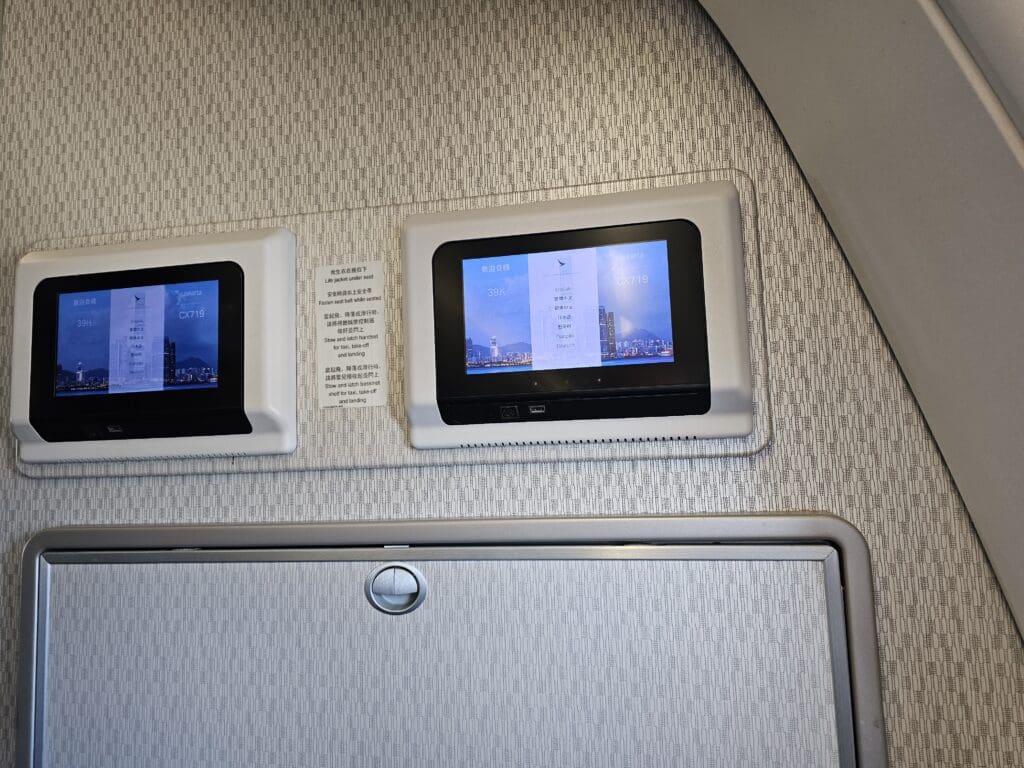
Seeing as I would be making the journey to Jakarta in the first row of Economy, I reached my seat in a matter of seconds and plonked myself down. Upon doing so, I was rather impressed by the level of comfort offered by this seat. As expected, this came with a superb amount of legroom (although I can’t comment on the ‘regular’ Economy seats). In front of me, a personal inflight entertainment screen could be seen fixed onto the bulkhead which could be controlled either by touch or by means of a control located in the armrest. Also on the bulkhead was a bassinet and below this, a literature pocket containing the latest copy of the Cathay inflight magazine, a safety card, a sickbag and a pair of headphones. It should be noted that no pillows or blankets were provided however the crew were proactive in handing these out to those who requested them. Despite the relatively short turnaround, I found the cabin to be in a very clean and tidy state, whilst this was home to only minimal signs of wear and tear. All-in-all, the crew and the cabin left me with a very positive first impression of this flight and looked forward to the delights that would be in store.
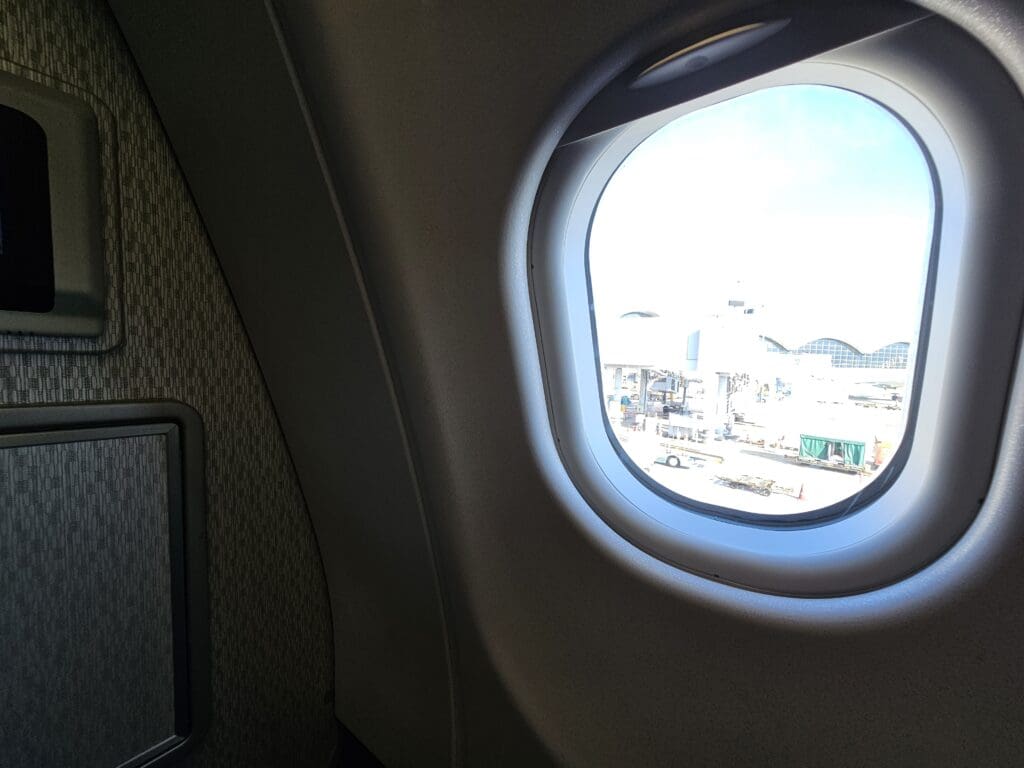
Once seated, passengers continued to board as a playlist of calming piano music and easy-listening jazz filled the cabin contrasting with the high-tempo tunes used by many low-cost carriers in an attempt to get passengers seated as quickly as possible. Once in a while, this music was momentarily interrupted by pre-recorded announcements in English, Indonesian and Mandarin regarding stowing luggage correctly as well as broadcasting warnings regarding power banks. As time passed, the rate of flow of passengers began to slow and soon all passengers were onboard, at which point I was delighted to find that the seat next to mine remained empty. With ten minutes to go until our scheduled departure time, the Australian Captain performed their welcome announcement which consisted of a word of thanks for flying with Cathay Pacific, an introduction to the First Officer and Cabin Services Manager, a mention of our 4H10 flight time and a warning that we could expect patches of light turbulence throughout the flight and were thus encouraged to stay seated and seatbelted whenever possible.
That afternoon, despite the empty neighbouring seat, the flight appeared to be largely full and most passengers seemed to hail from Indonesia with plenty of older couples, tour groups and a fair number of families. With five minutes to go until our scheduled departure time, the Cabin Services Manager performed their welcome announcement in English only during which they reiterated a few of the words that the Captain had said, and went through the usual warnings and information before advising passengers to watch the soon-to-follow safety video. This then took over the inflight entertainment screens and consisted of the hybrid antimated-real life safety video. Given our destination and Cathay Pacific’s many flights to Indonesia, I was surprised to see that neither an Indonesian version nor one with Indonesian subtitles was broadcast.
As the safety video neared its end, outside several members of ground staff could be seen removing cones from around the aircraft and almost as soon as all of these had been collected, at 1551 the Airbus jolted forwards slightly before heading back as our pushback commenced. As we neared the end of this, the two Rolls-Royce Trent 772B-60 hairdryer engines could be heard and felt vibrating into life although this start-up was surprisingly quiet given the fact that I was sitting right next to the engine! Meanwhile, at this stage, the crew made multiple passes through the cabin to ensure that all was secure and in place for our departure.
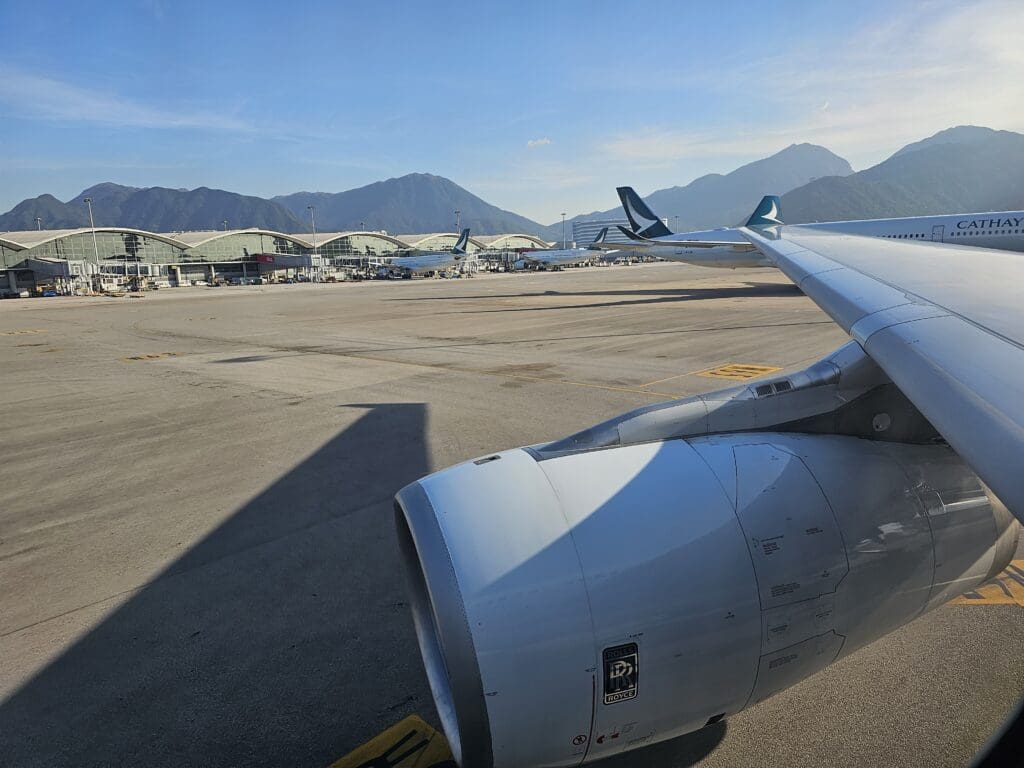
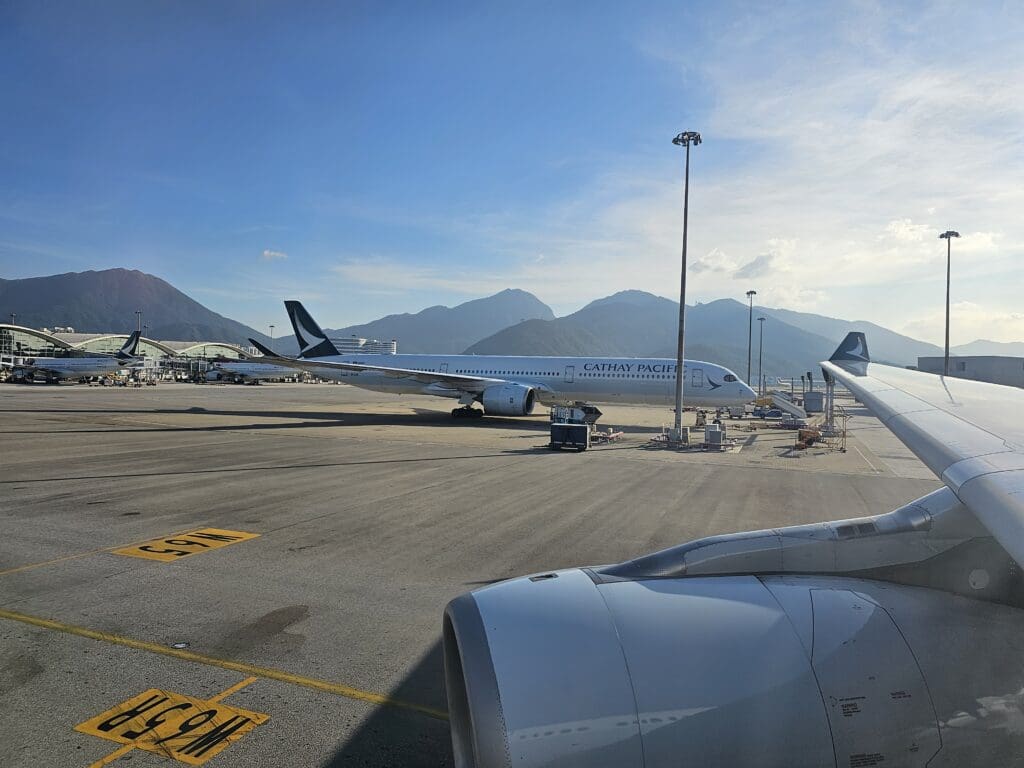
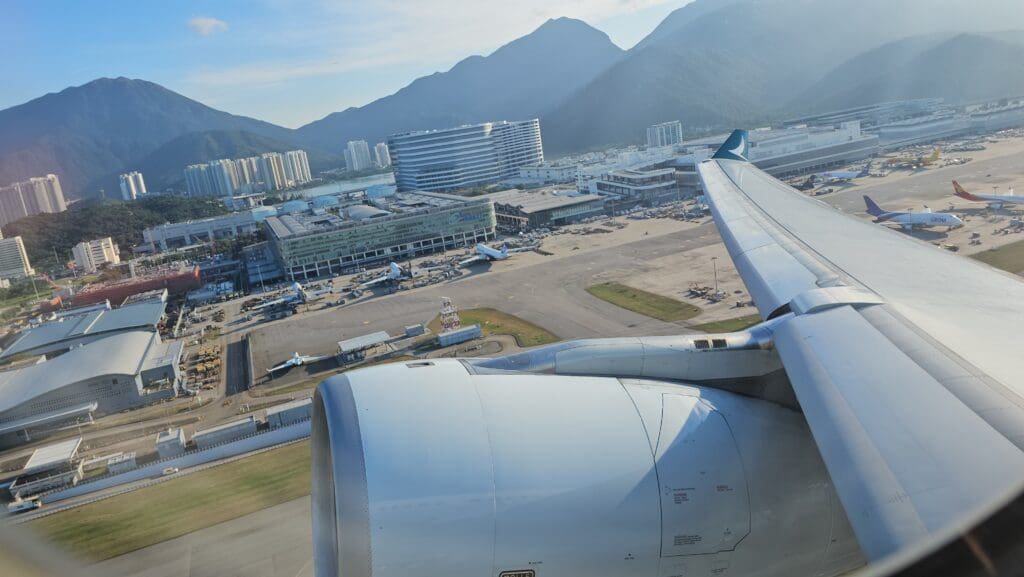
At 1556, the aircraft commenced its journey to Runway 07R. From our parking position, we soon trundled past the satellite terminal where a fair number of HK Express narrowbodies could be seen waiting to head off across Asia. Next up on our tour of the airport was the remote stands where a fair number of stored Cathay Pacific aircraft, ranging from old rotting Cathay Dragon jets that looked unlikely to ever take to the skies again to new Airbus A350s, could be seen. After this came the HAECO hangars where a diverse crowd of aircraft visiting for maintenance including an Air New Zealand Boeing 787-9 Dreamliner, a Finnair Airbus A350 and several Air Canada jets.
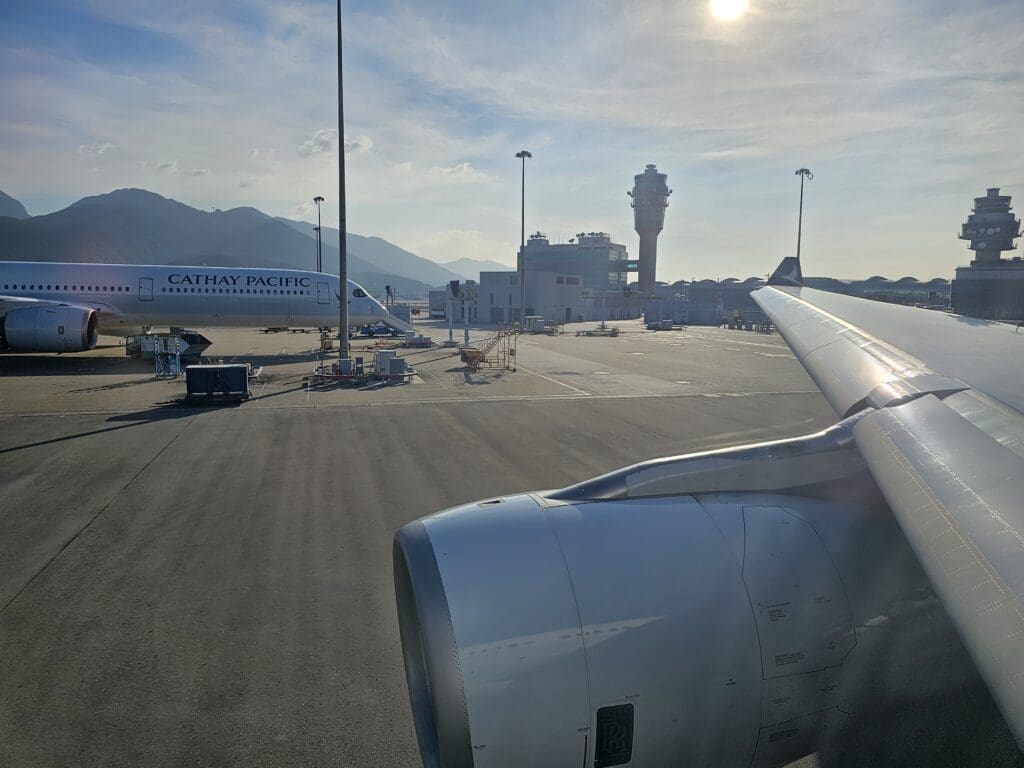
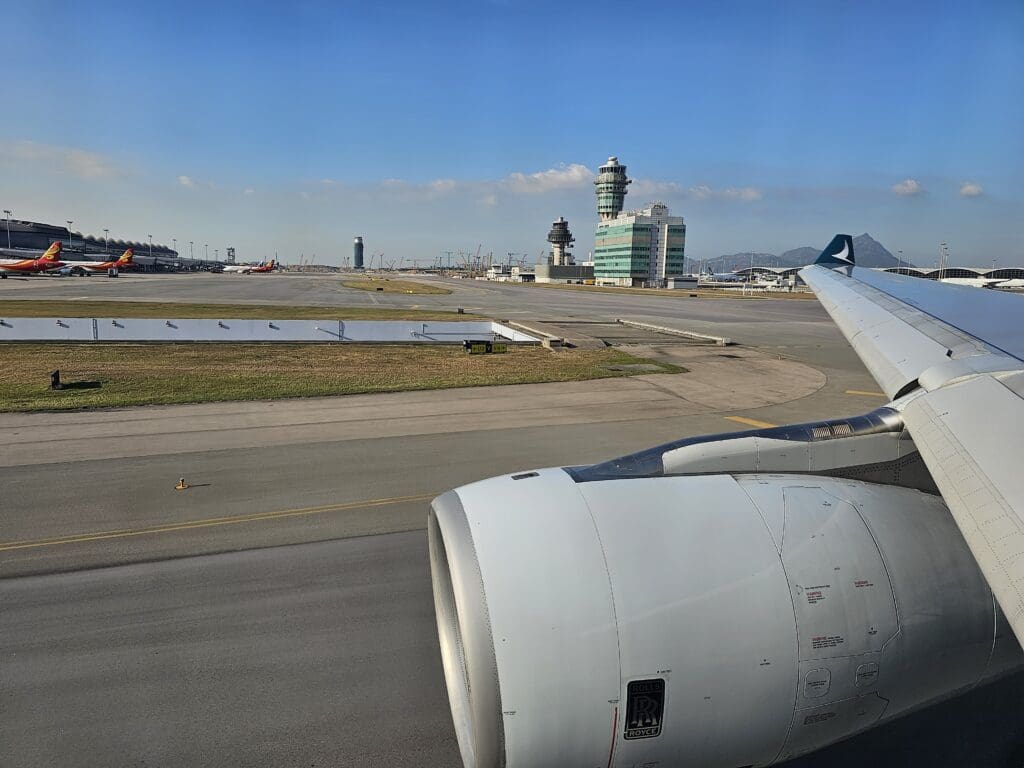
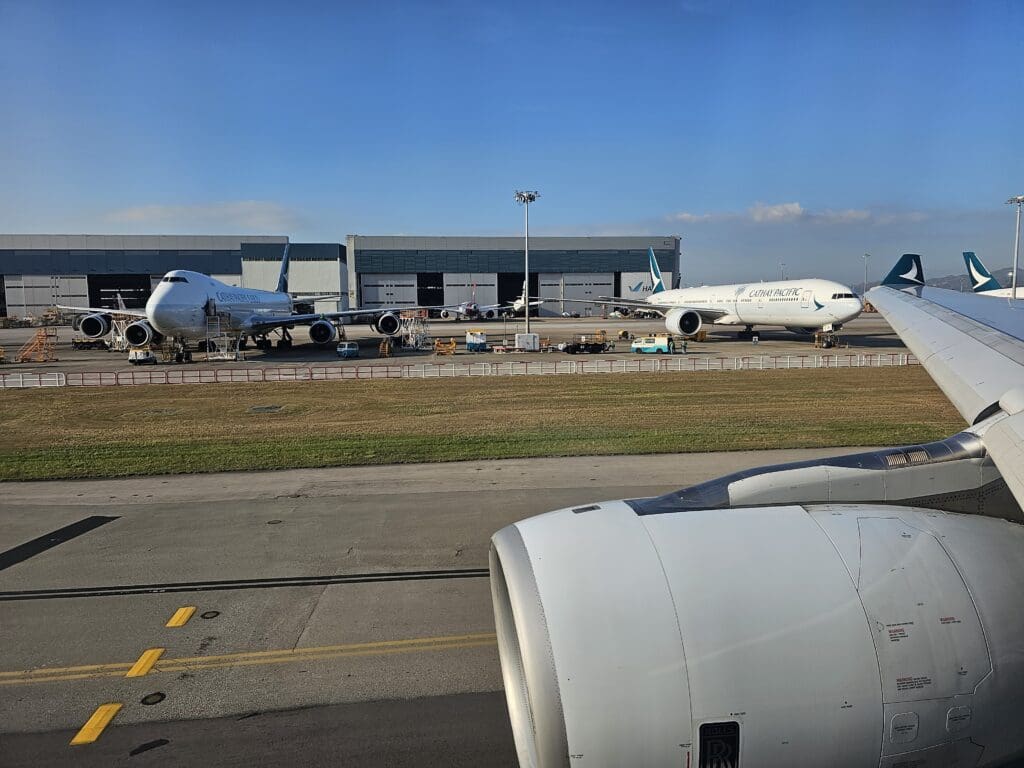
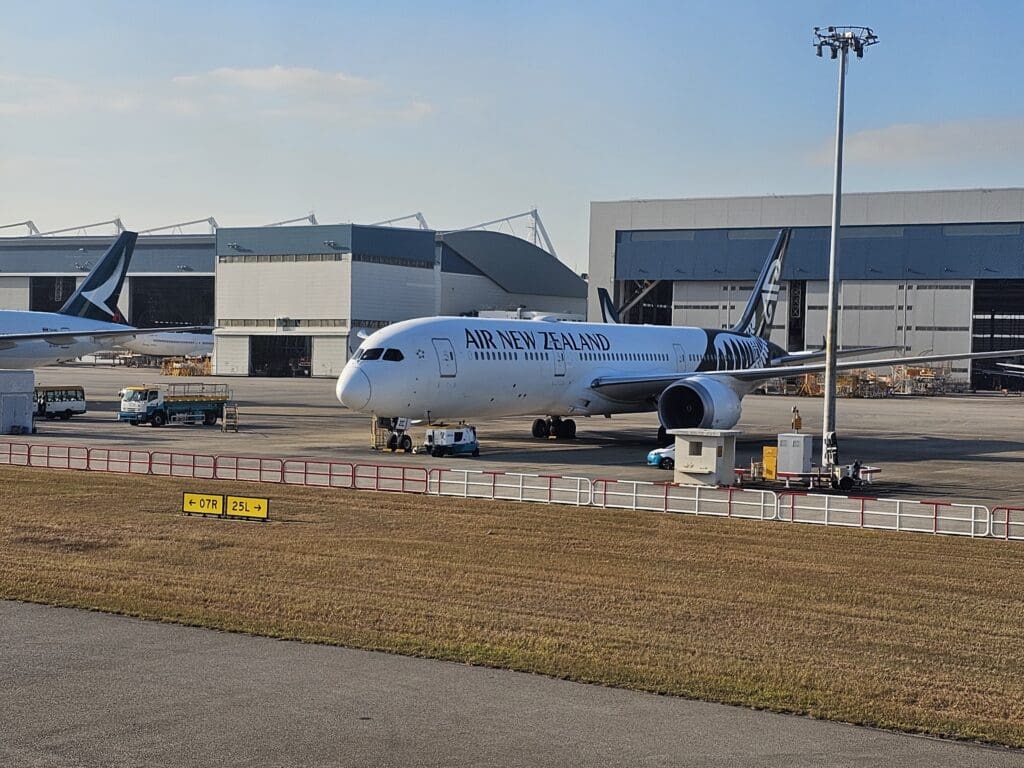
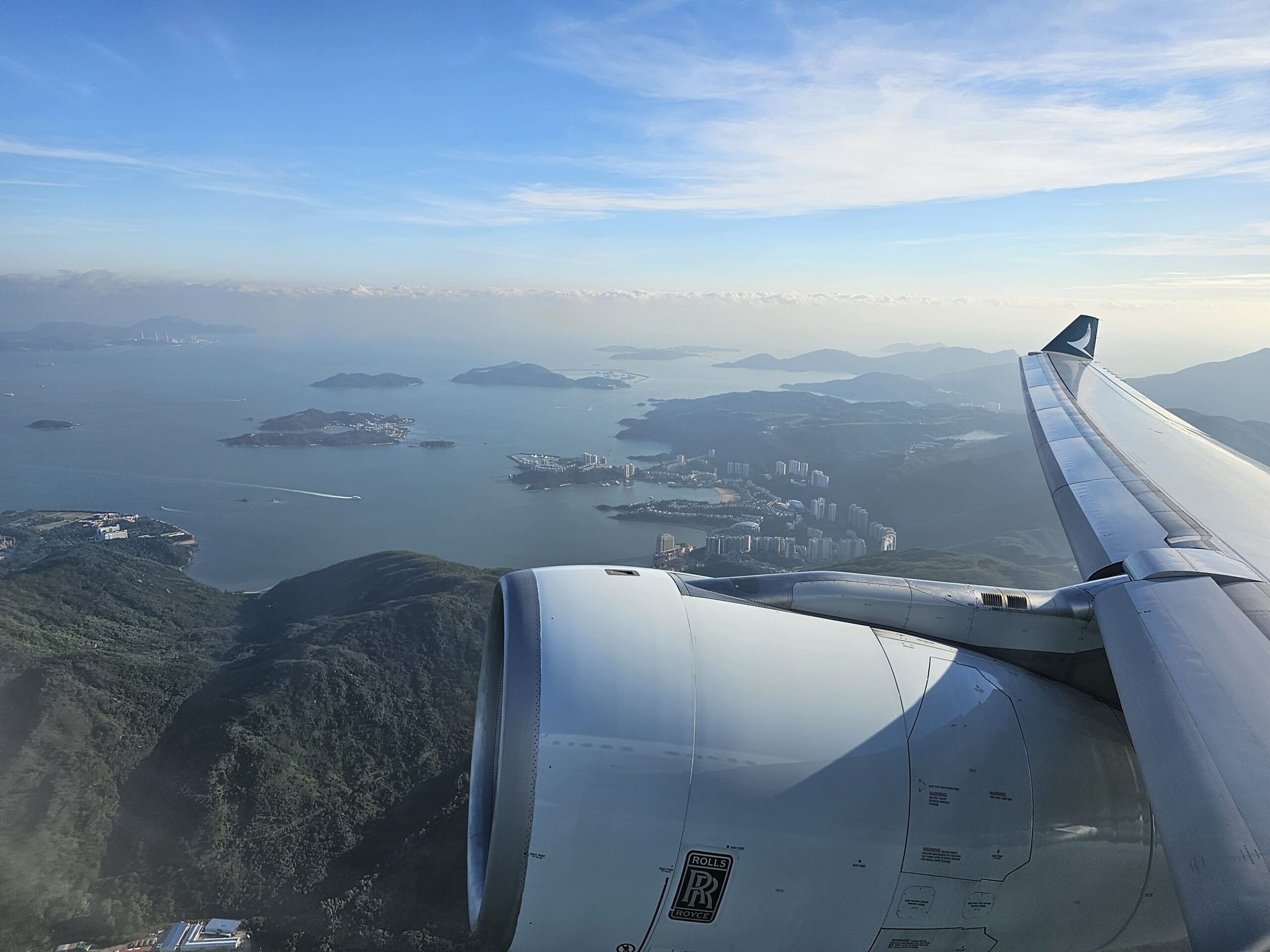
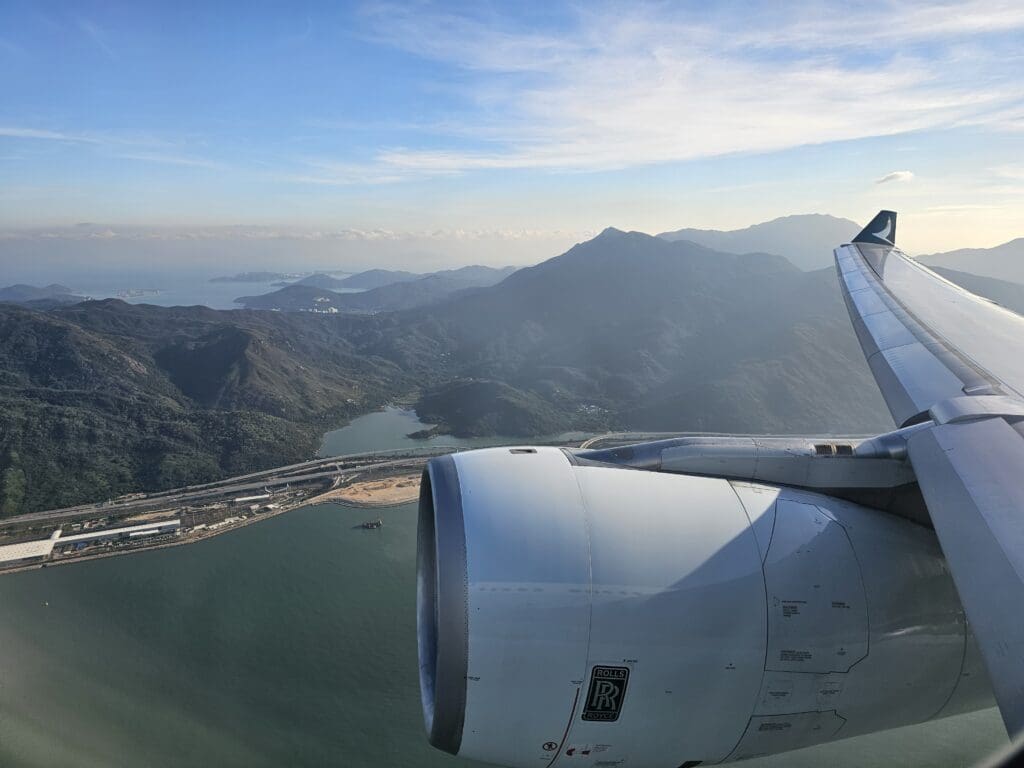
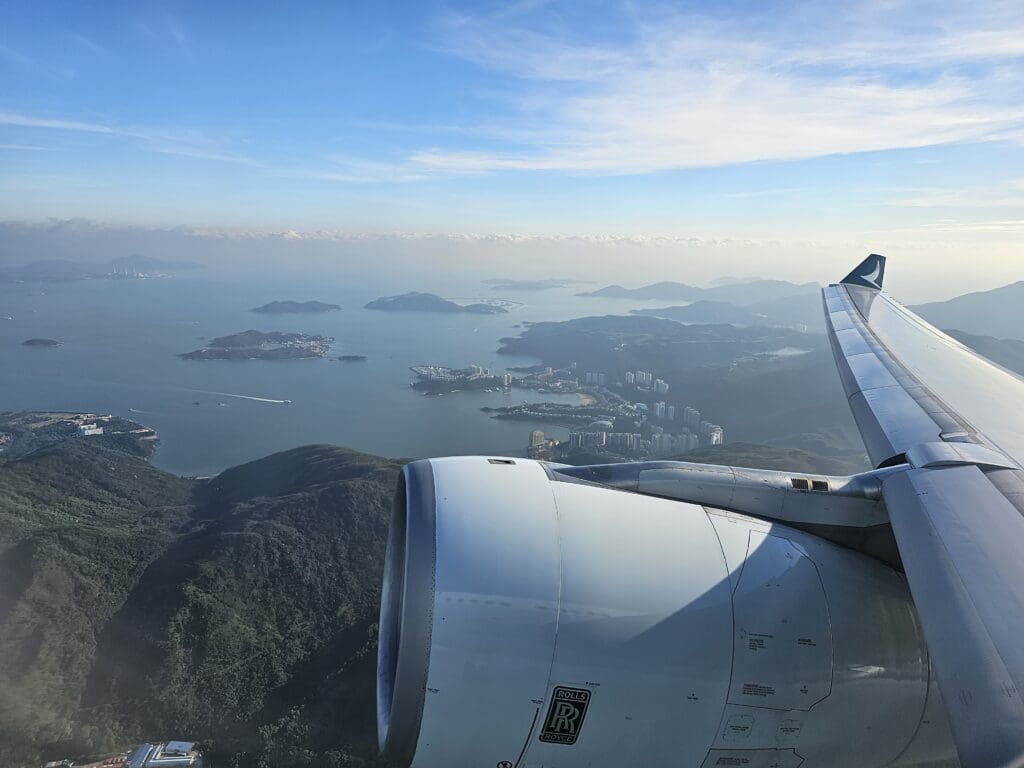
Around nine minutes after leaving its stand, the Airbus came to a halt at the end of Runway 07R. Once there, several minutes of waiting was in store as we allowed for a cluster of aircraft to take to the skies before eventually at 1610, we rolled onto the runway. Once on this, the aircraft performed a rolling take-off, speeding past the hangars of the Hong Kong Government Flying Service and the general aviation area, which was hosting a smorgasbord of expensive business jets from across the world. Eventually, the Airbus’ nose was pointed skywards, and we rose into the clear skies of Hong Kong. Sitting on the right-hand side of the aircraft, I was offered a superb view of the green mountains of the island of Lantau.
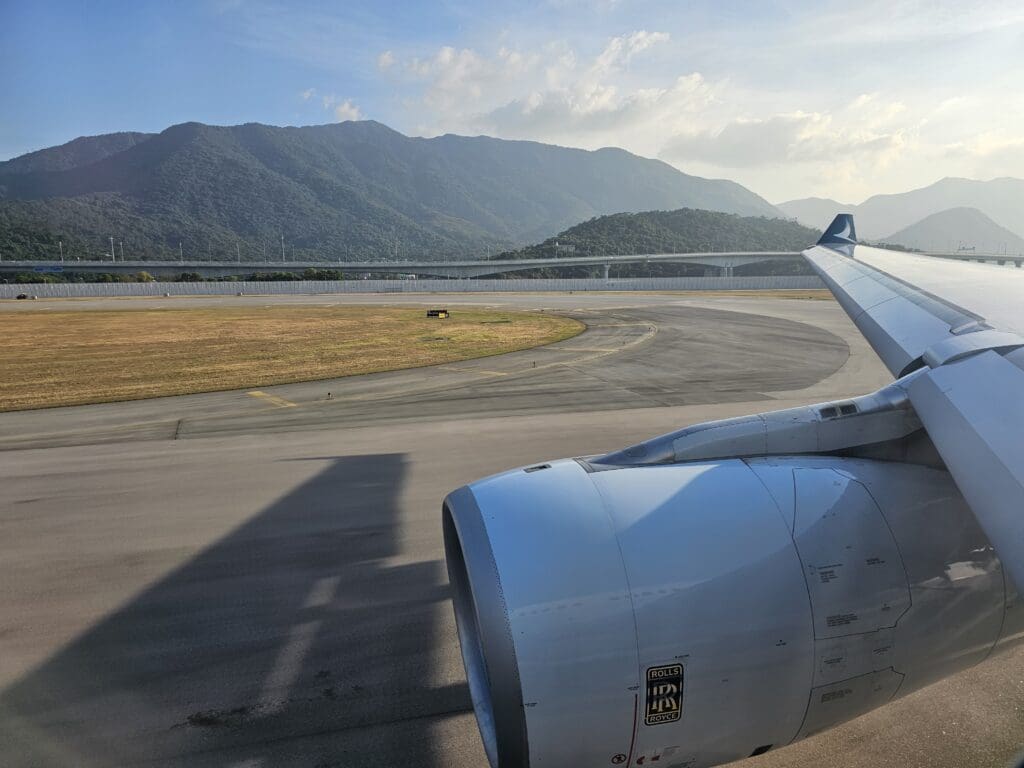
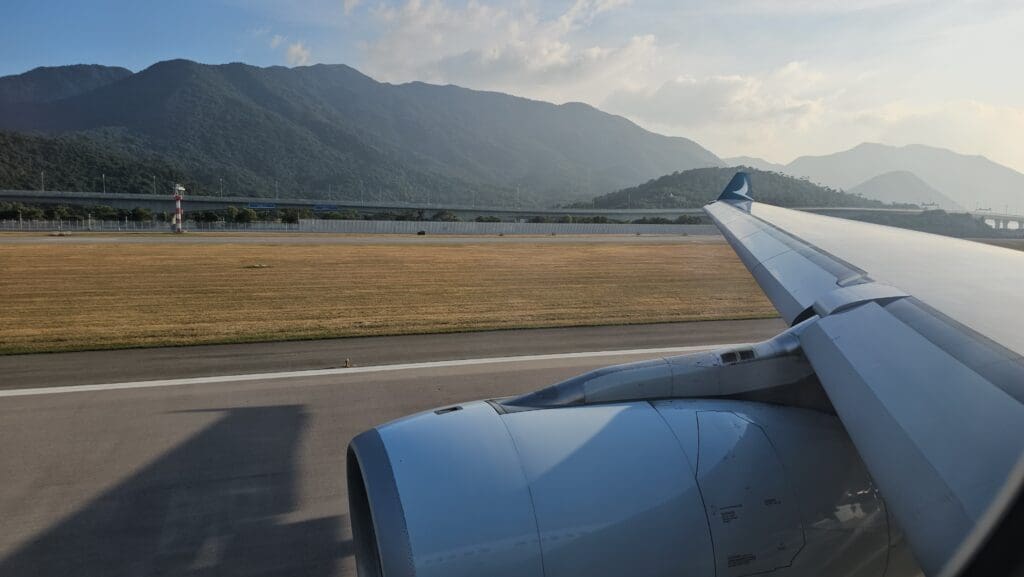

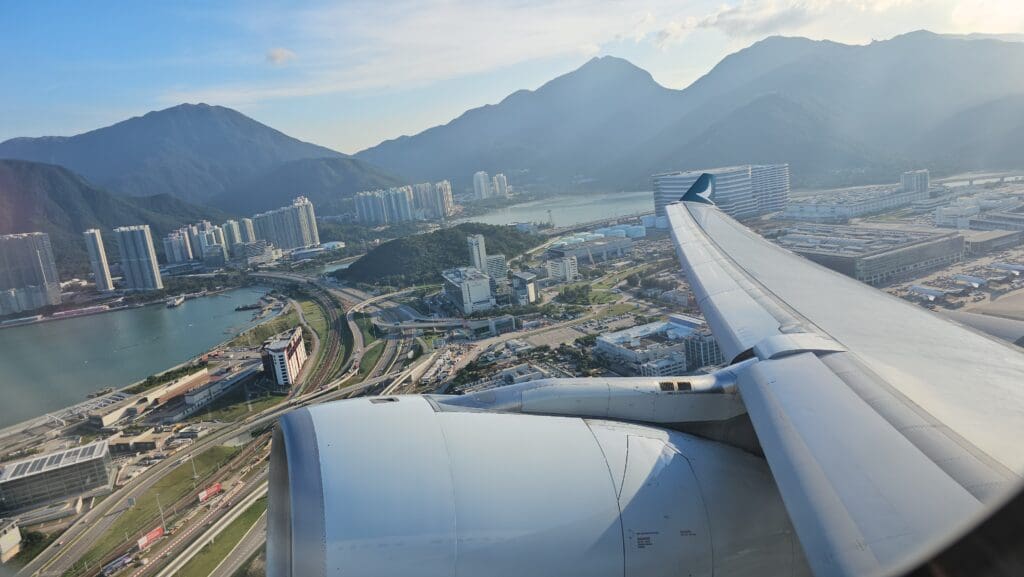
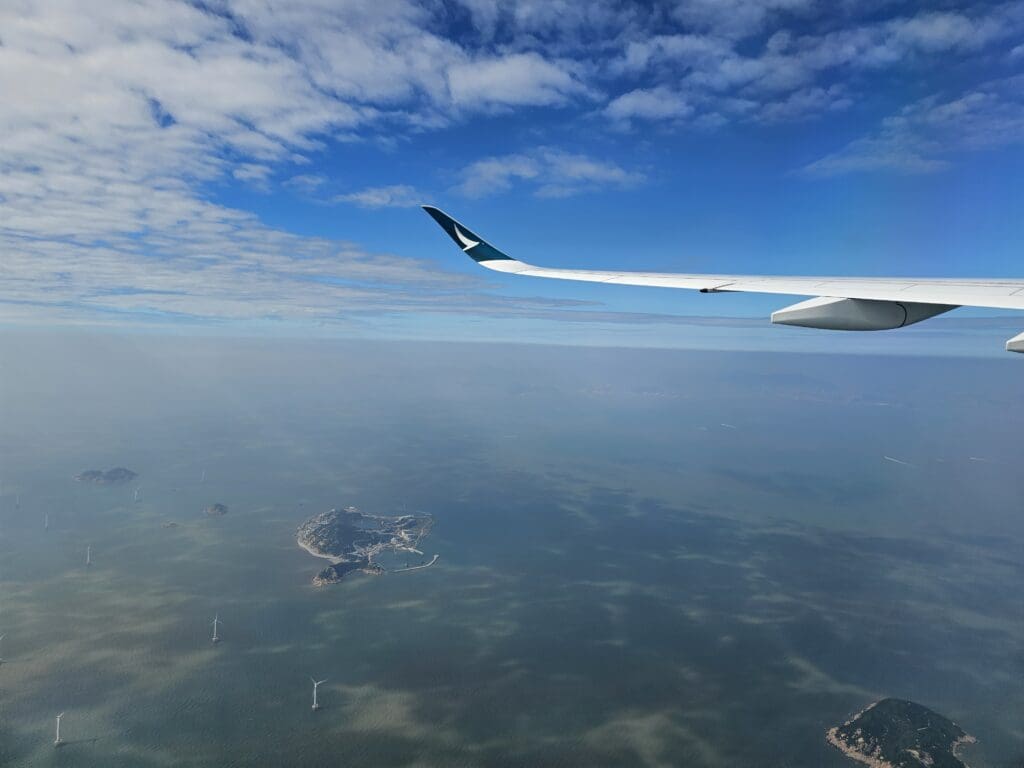
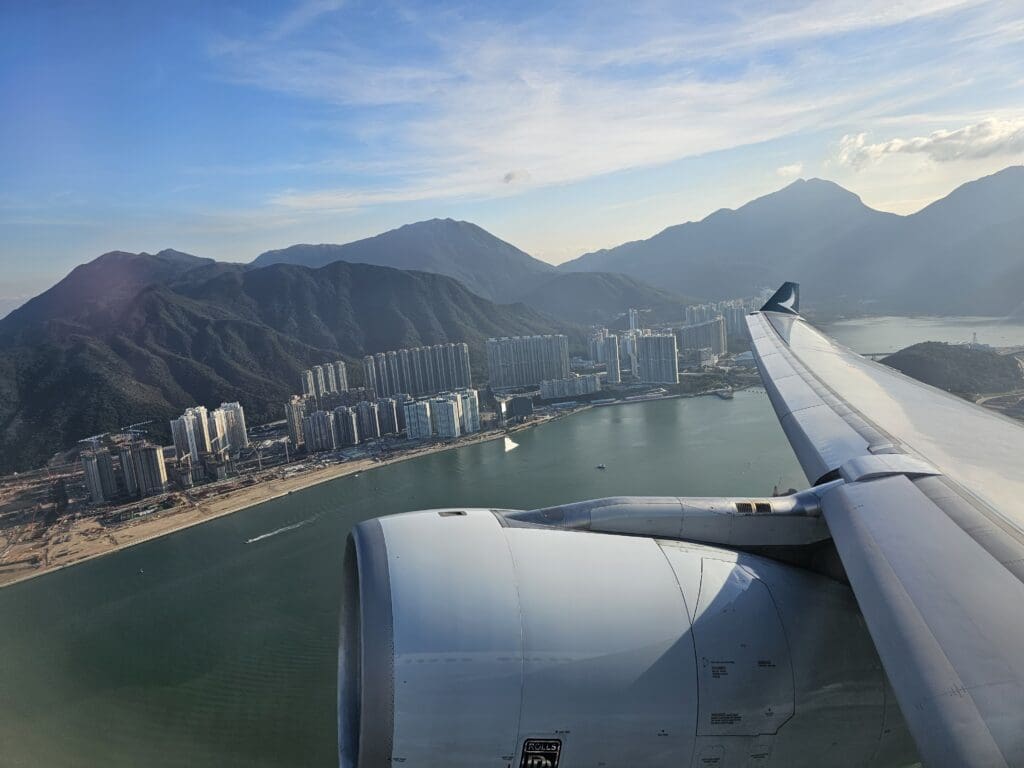
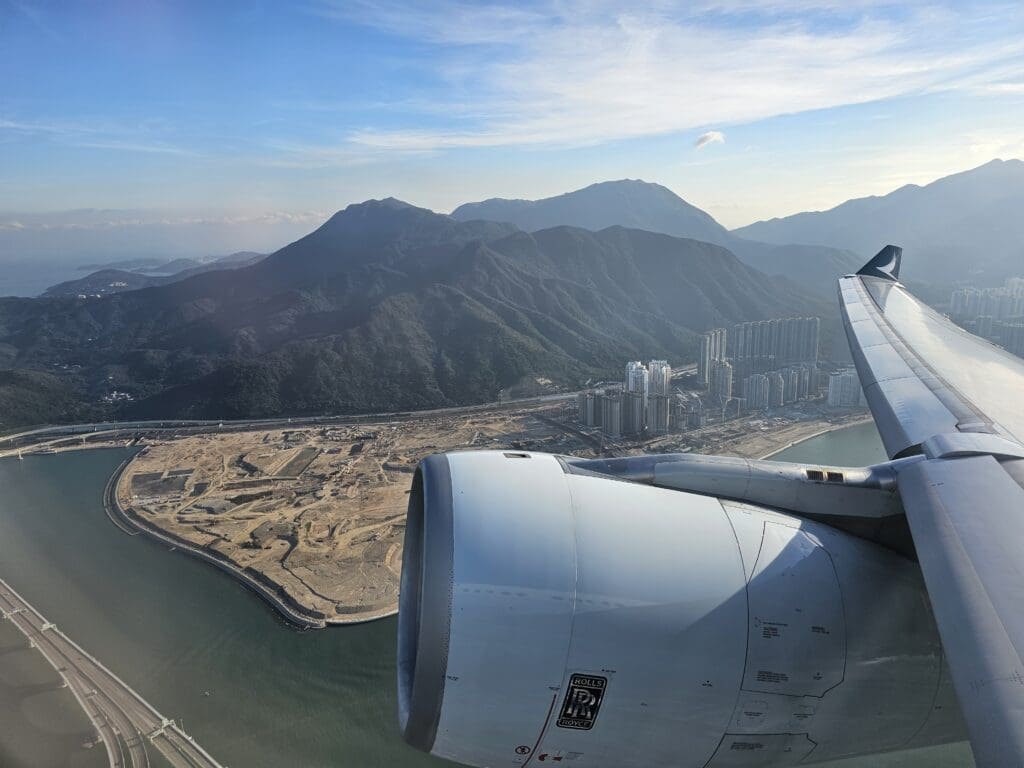
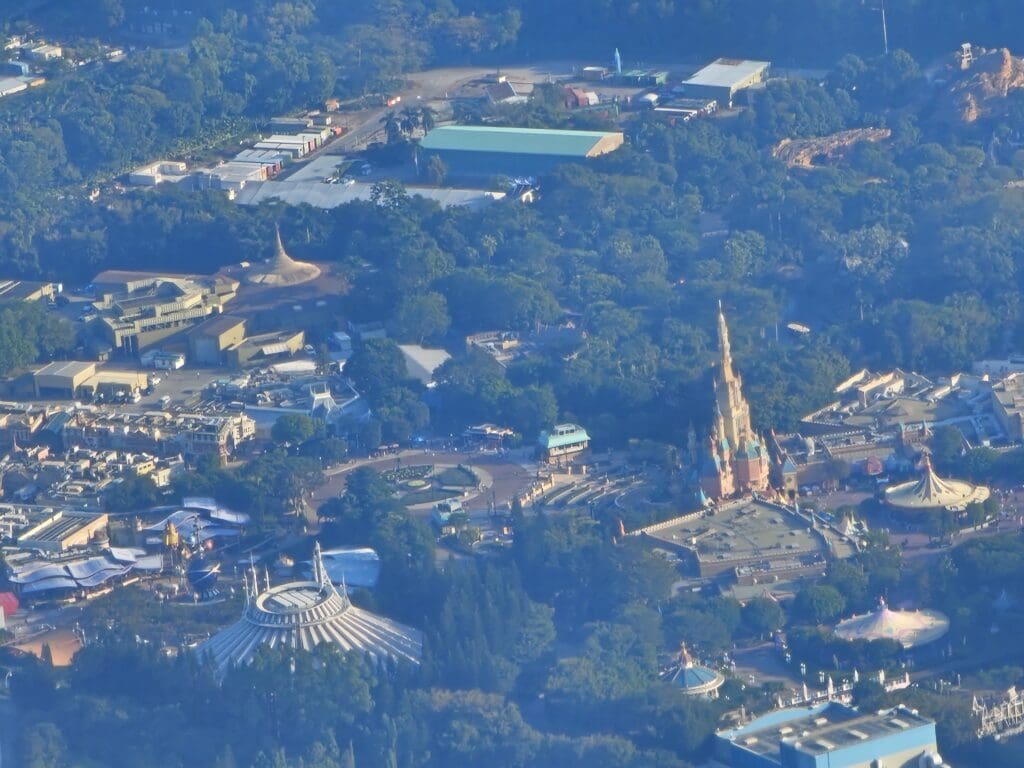
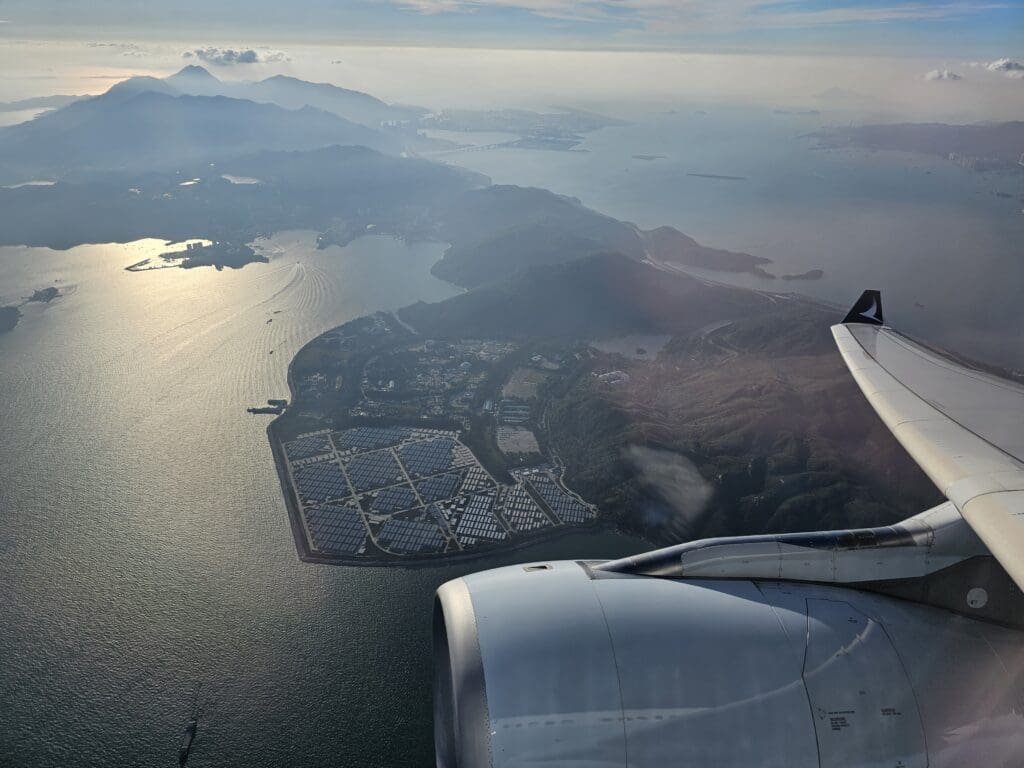
With good parting views of Hong Kong offered during the initial stages of the flight, upon reaching Disneyland, the aircraft banked to the right and set a southerly course which would have presumably enabled those on the other side of the aircraft to have views of Causeway Bay and Hong Kong’s tall skyscrapers before leaving Hong Kong behind. Heading southwards over the South China Sea, little could be seen other than the waters below as we climbed up to our initial cruising altitude of 36,000 feet.
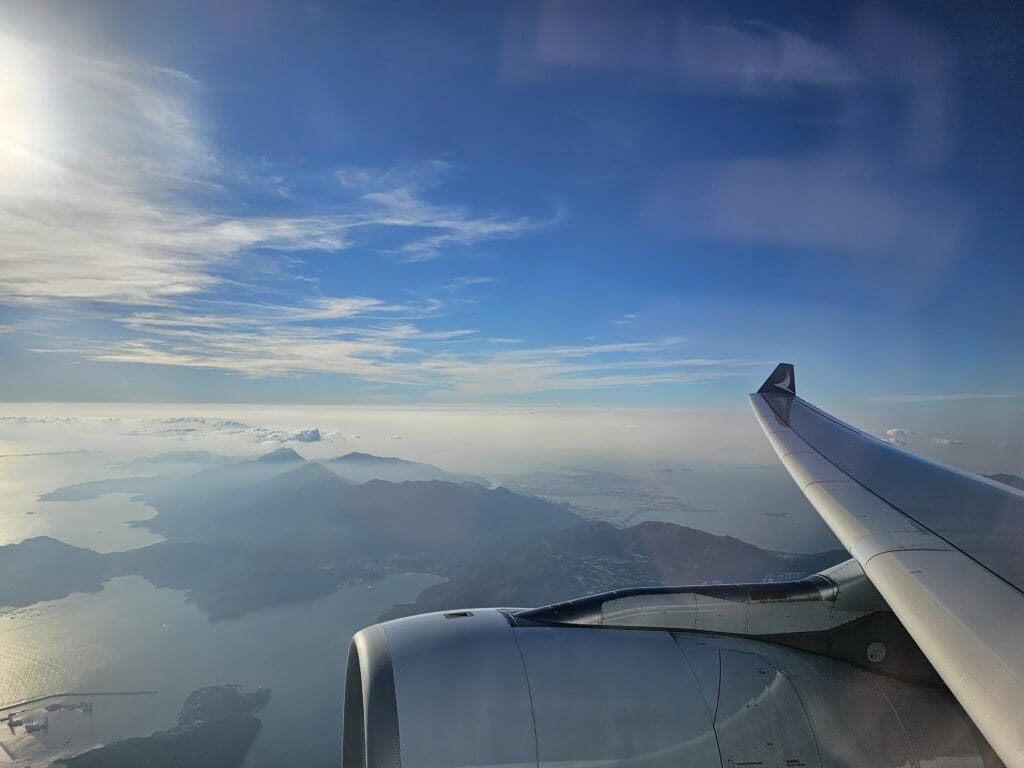
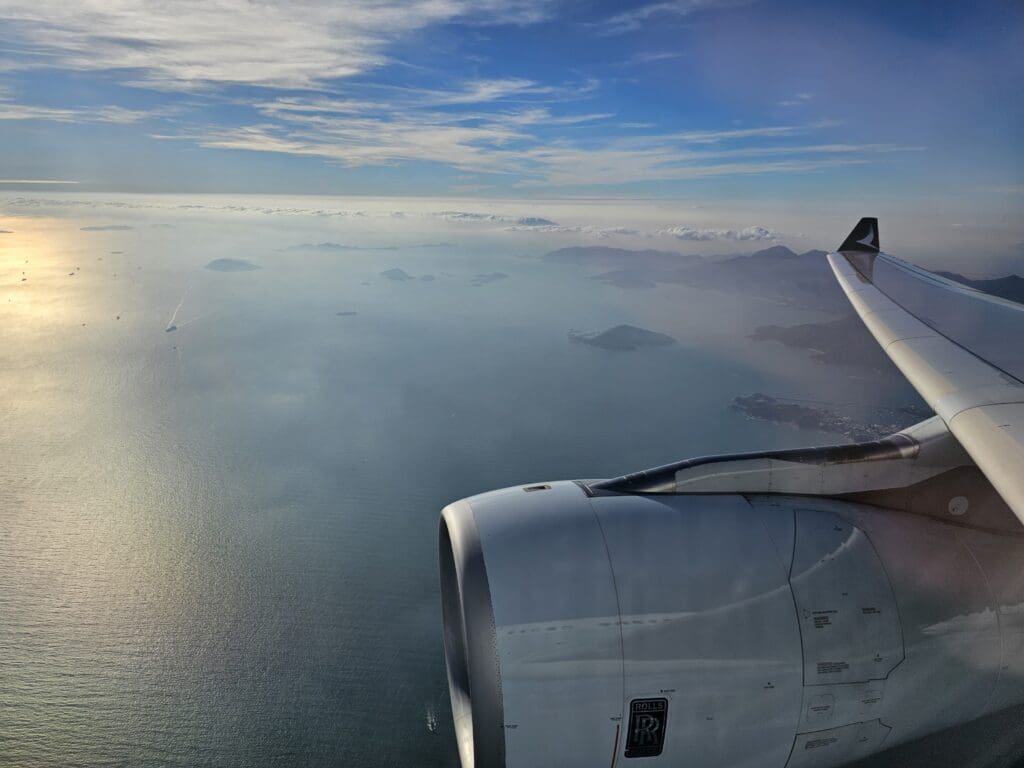
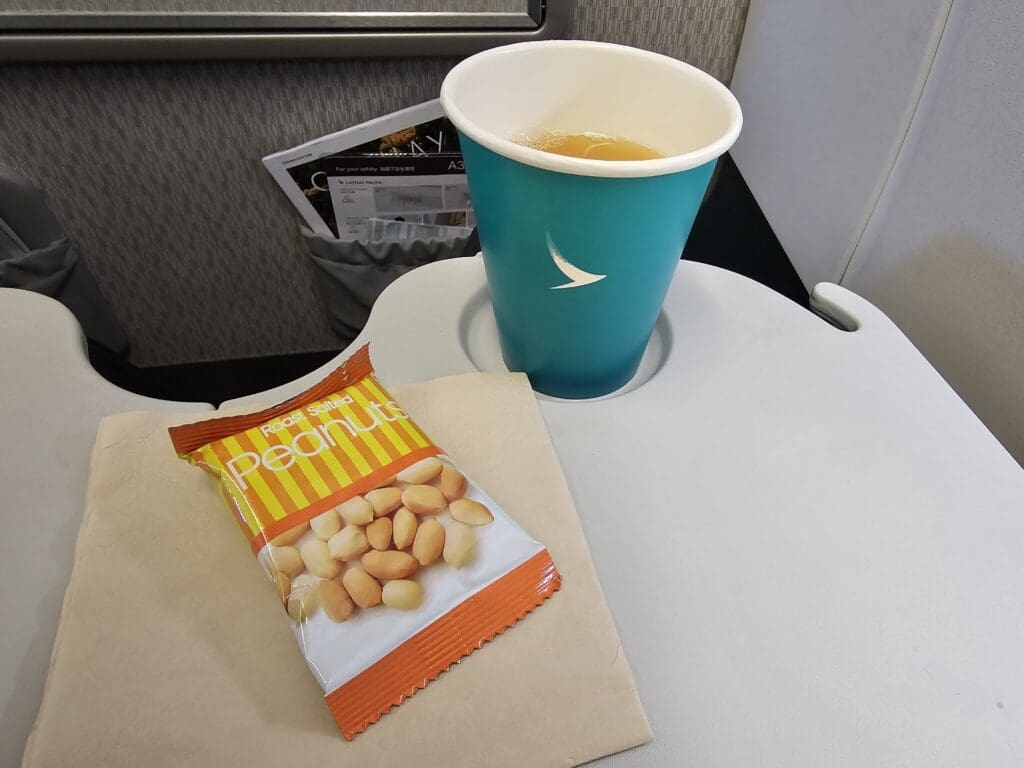
Seeing as the initial climb out of Hong Kong had been smooth, the seatbelt signs were extinguished as soon as we passed through 10,000 feet at which point an announcement with the usual warmings was performed in Indonesian and English, which was then reiterated by another crew member in Mandarin. Soon the carts were rolled out, and, being at the front of the Economy cabin, I was one of the first passengers to be treated to the onboard service. This was kicked off with a round of drinks and I opted for an orange juice which was presented to me in a paper cup alongside a serviette and small bag of salted peanuts. Around ten minutes later, the same flight attendant headed down the aisle and collected any rubbish whilst the scent of warming food wafted into the cabin from the galley up ahead.
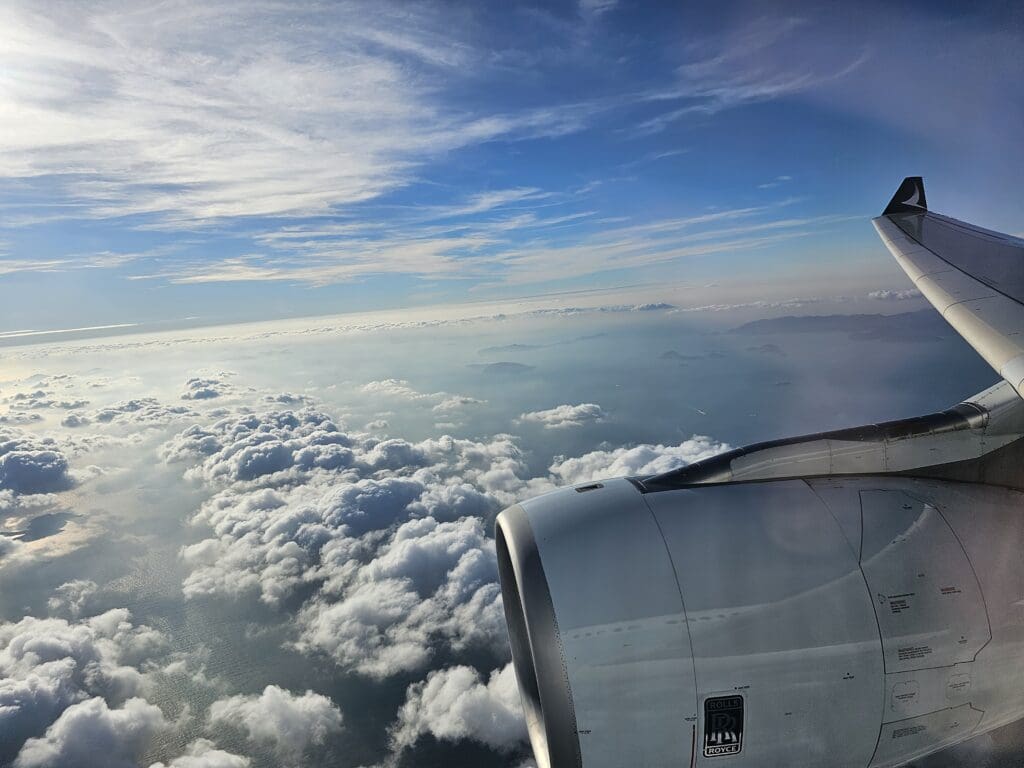
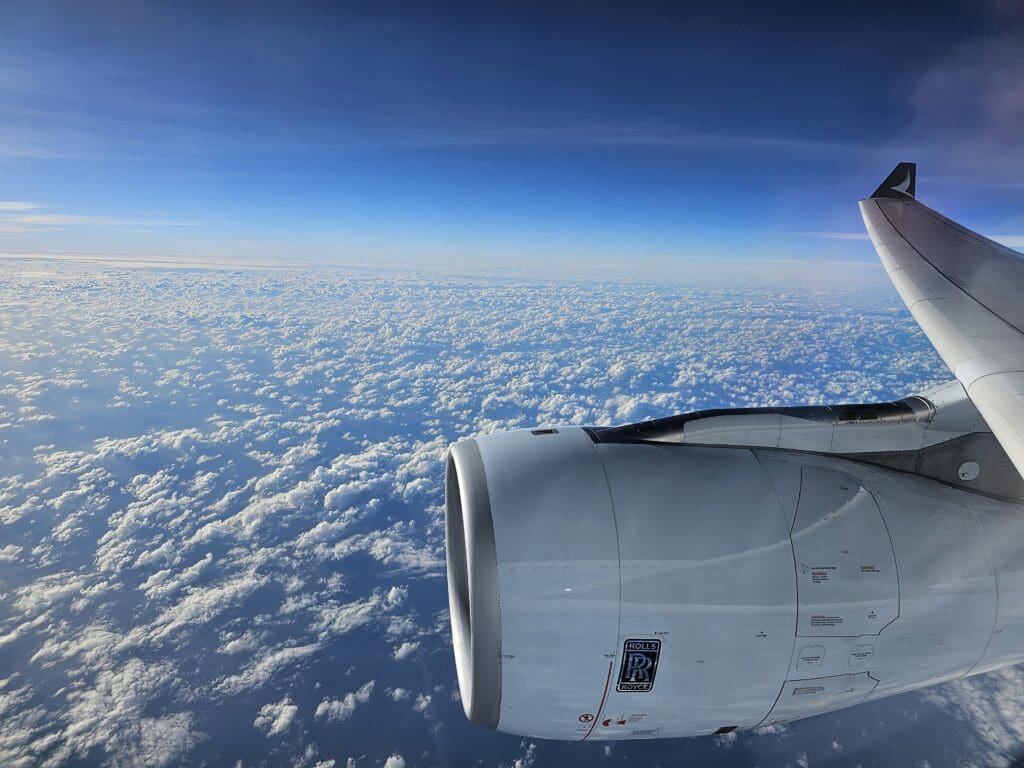
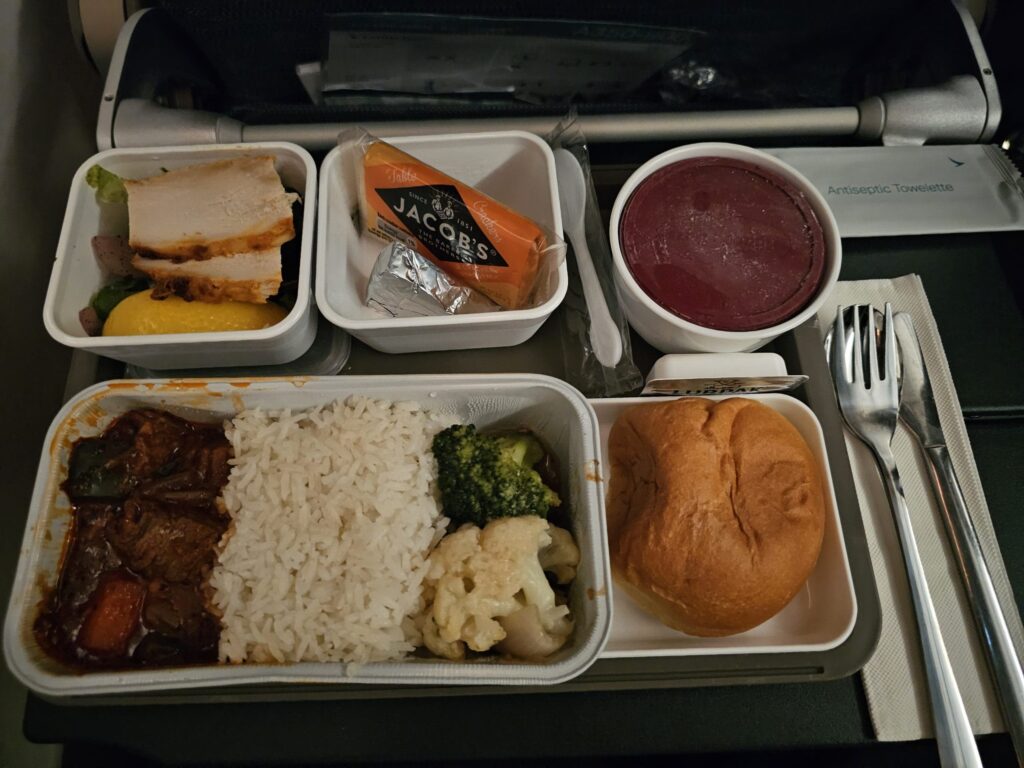
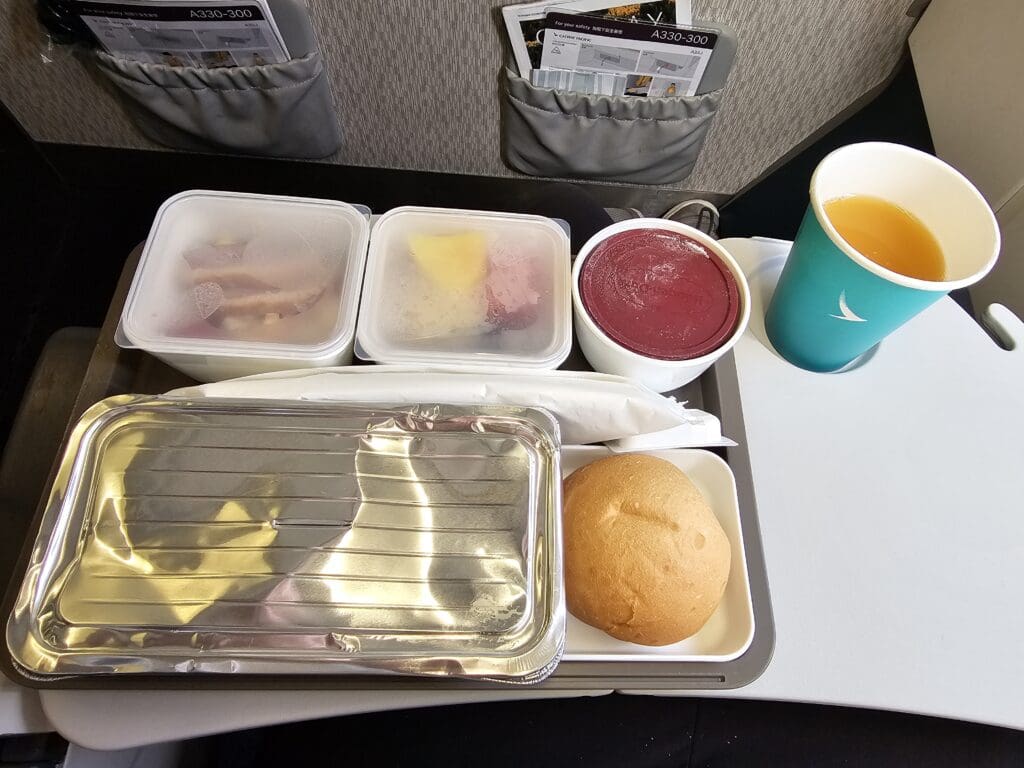
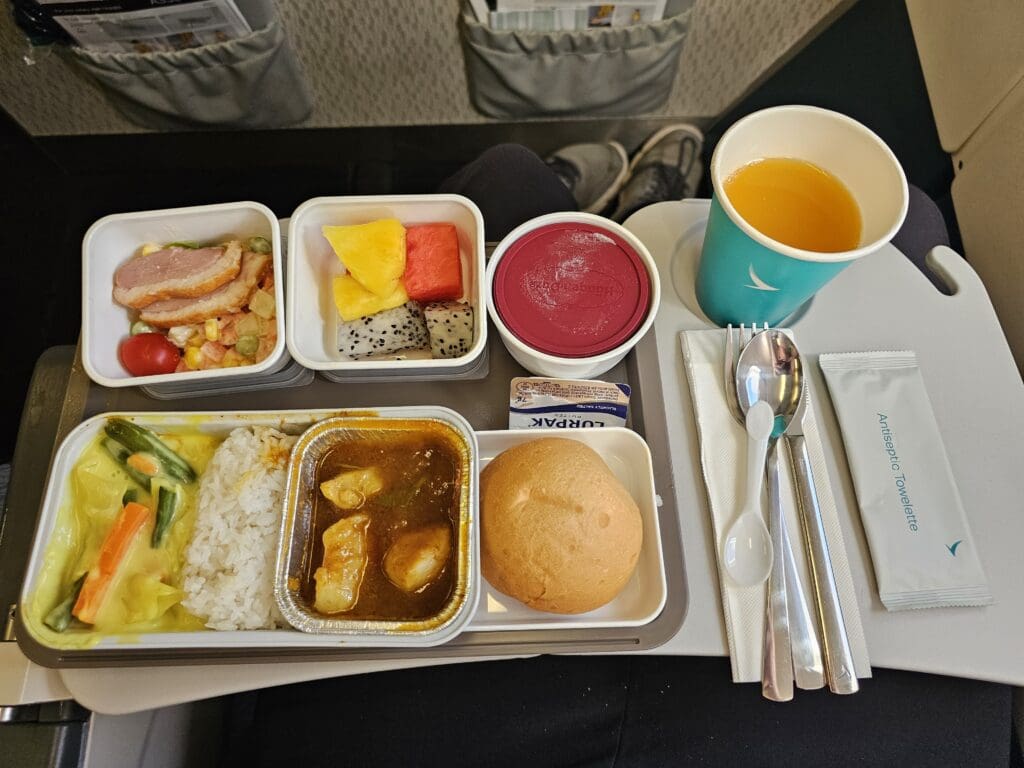
Almost exactly forty minutes after the drinks round commenced, at 1704 the carts took to the aisles once more and I was politely offered either chicken with potatoes or fish with rice. Opting for the latter, a tray of food was placed on my tray table, and I soon began exploring its contents. Focusing on the main dish, this consisted of white rice, vegetables in a creamy sauce and fish in a slightly spicy sauce. This was accompanied by two slices of duck on a bed of what seemed to resemble a Polish vegetable salad, along with a warm bread roll with a small tub of Lurpack butter (a valuable commodity back in Britain!), a small fruit salad and a tub of Haagen-Daas’ summer berries and cream flavour ice cream. As on the flight from Dubai, real metal cutlery was provided plus a plastic spoon for the ice cream, a serviette and a wet wipe. Upon requesting my choice of drink, I initially opted for a coffee although I was advised that they had none on their cart and promised to return with a coffee once the service had been completed. Thus, opting for another orange juice in the meantime I soon got to work on the meal. Overall, I found this to be a deliciously high-quality meal that left me with nothing to complain about.
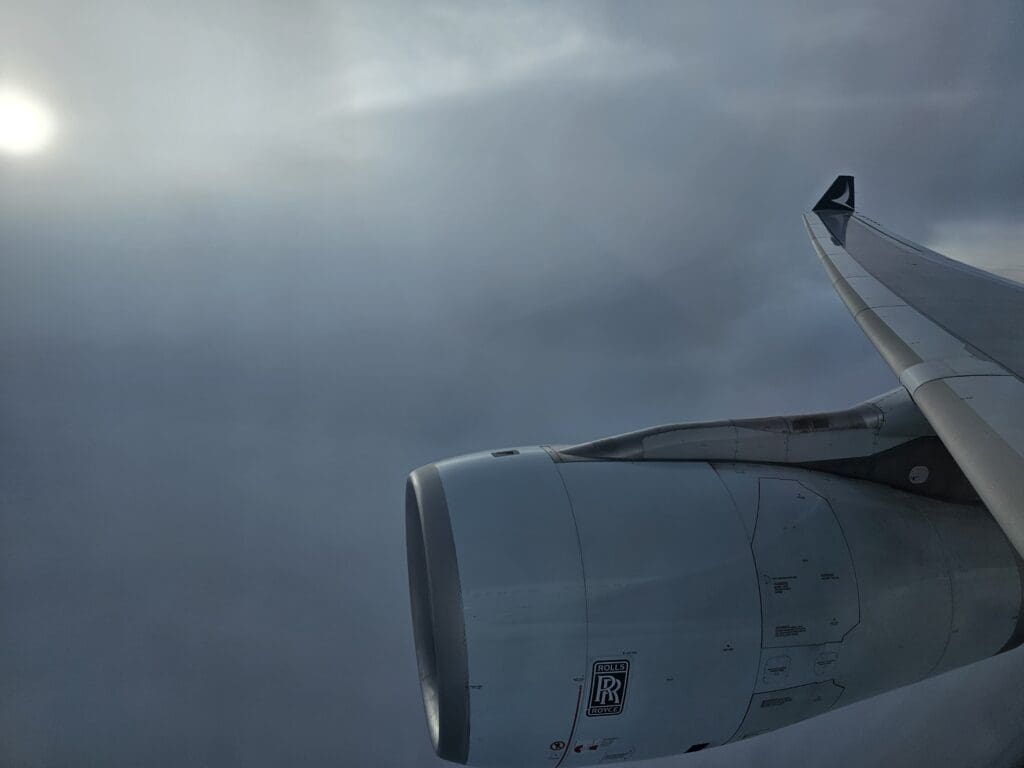
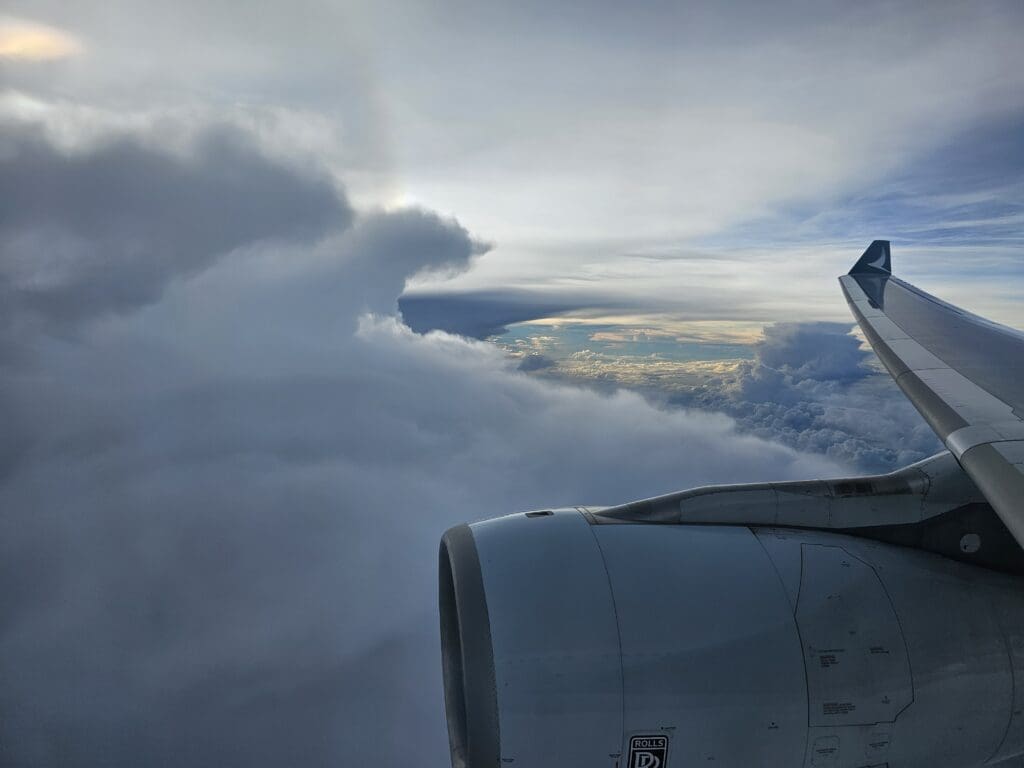
As I ate this, the Airbus skirted along the Vietnamese coastline and soon the region of Khánh Hòa came into view as we passed to the north of the famous holiday destination of Nha Trang. Unfortunately, Vietnamese views did not last for long as we soon entered a bank of menacing-looking cumulonimbus clouds at which point the seatbelt signs were illuminated as we proceeded to bounce around a little. However despite the clouds’ appearance, the turbulence was far from the worst that I have experienced and the crew remained standing and undertaking their duties, clearing the trays away around forty minutes after the meal service had commenced. Around thirty minutes after the seatbelt signs had been illuminated, these were extinguished and true to their word, the flight attendant returned to my seat with a cup of coffee.
With little to see outside, I decided to play around with the inflight entertainment system, which, other than the lack of exterior camera options and live television channels, proved to be identical to the system on the Airbus A350. Whilst I give a more comprehensive review of the inflight entertainment system in my Airbus A350 report, this was highly expansive in terms of its content. This was responsive and quick to load, thus leaving me with nothing to complain about although I would bring your glasses if sitting in the front row! As on the Airbus A350, a wifi network is provided. That evening, three options were offered, a Message Pass for $3.95, a one-hour pass for $9.95 and a flight pass for $12.95. Meanwhile, for those not wanting to pay, nothing can be done with this wifi network other than browse the Cathay Shop catalogue.
As we cruised southwards, needing to charge my phone, I plugged this into the plug socket beneath my seat although I soon discovered that this did not work. Fortunately, the plug socket of the neighbouring seat did and so I was able to use this to charge my phone. Returning to the route, from Nha Trang the aircraft travelled down a small portion of the Vietnamese coastline before leaving this behind at Phan Thiet, just up the coast from Ho Chi Minh City. Continuing southwards, the aircraft spent virtually the entirety of the flight over the sea and as it headed down over the South China Sea, the skies began to darken whilst inside the cabin the lights were turned off and many fell asleep.
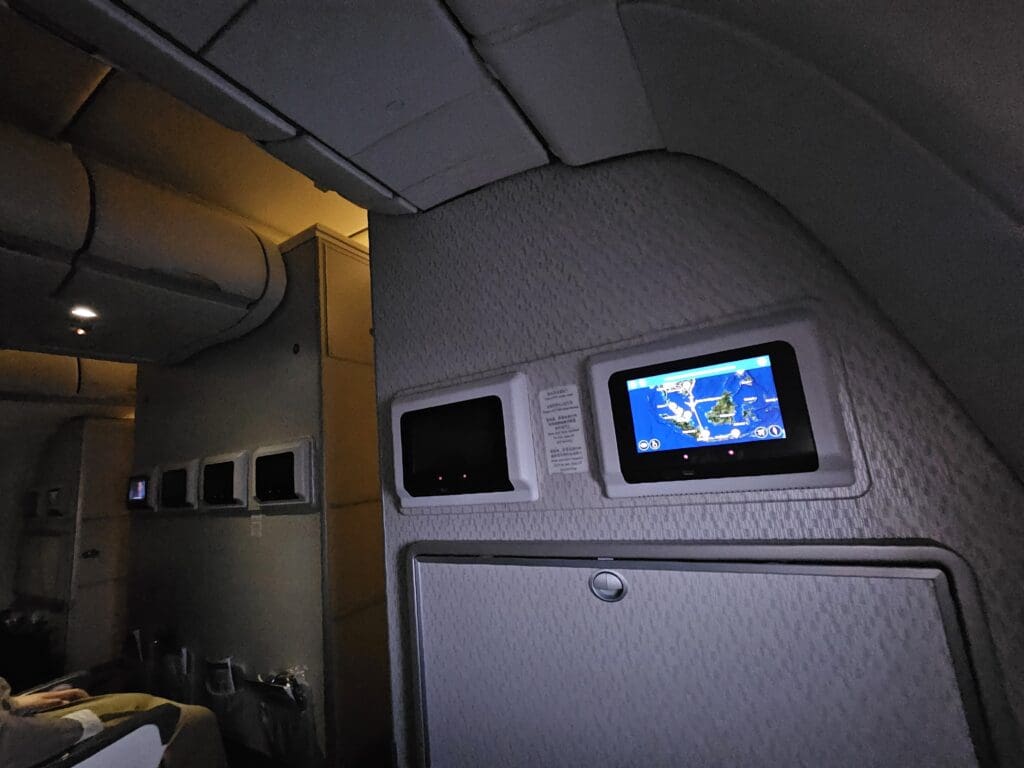
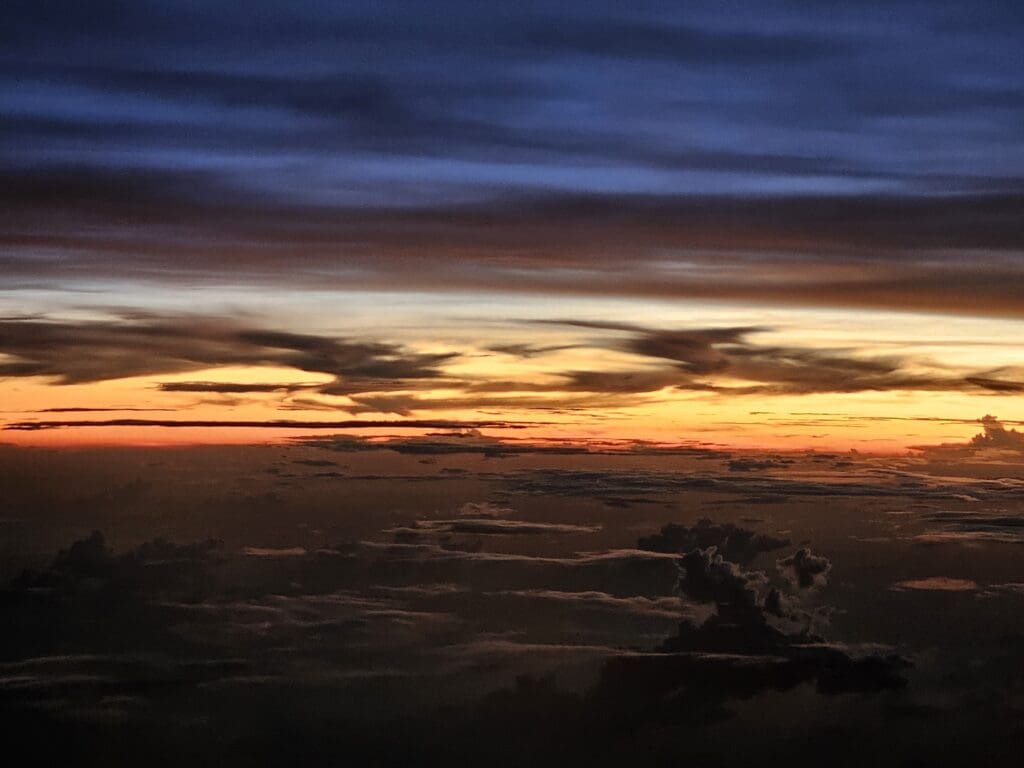
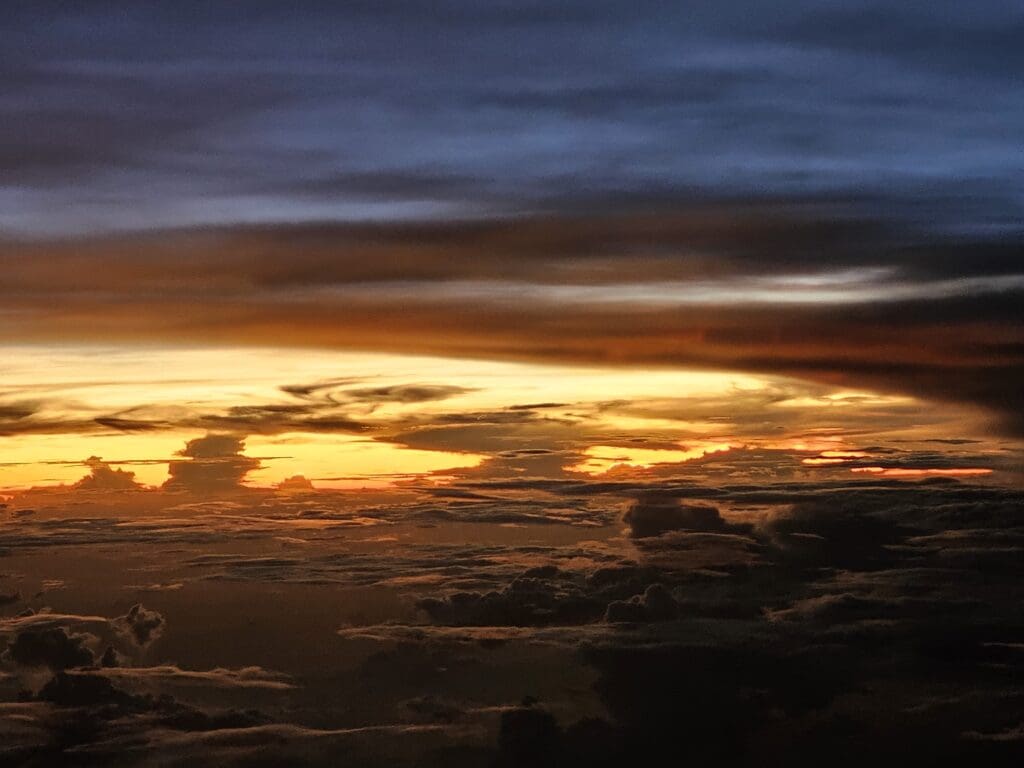
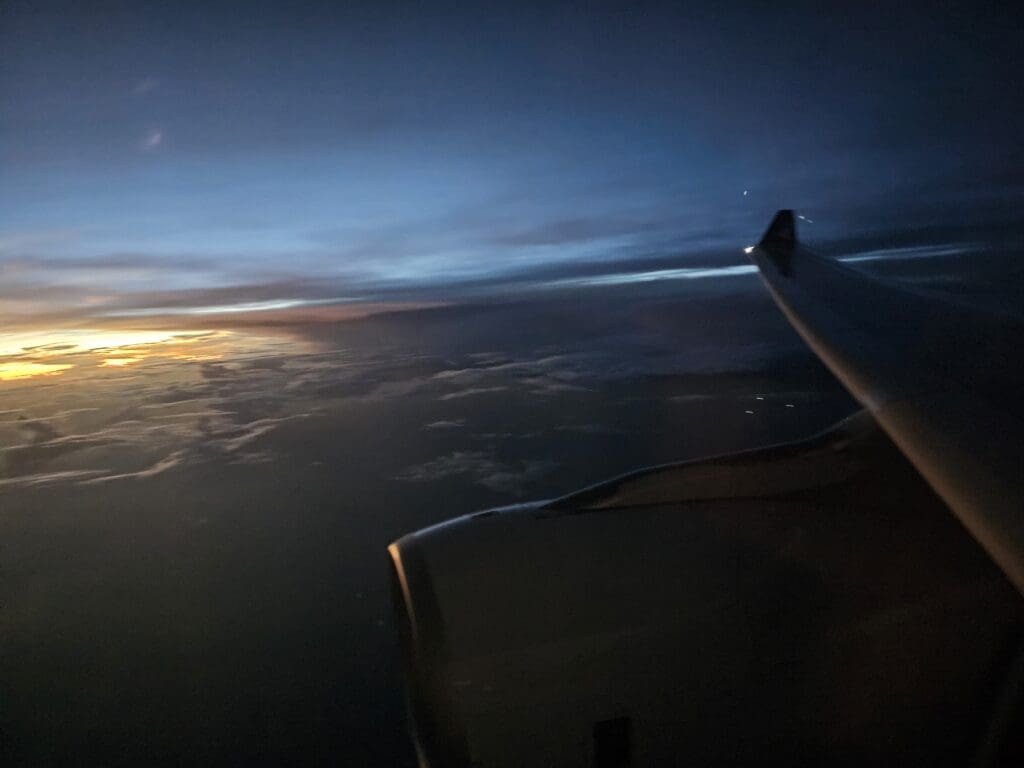
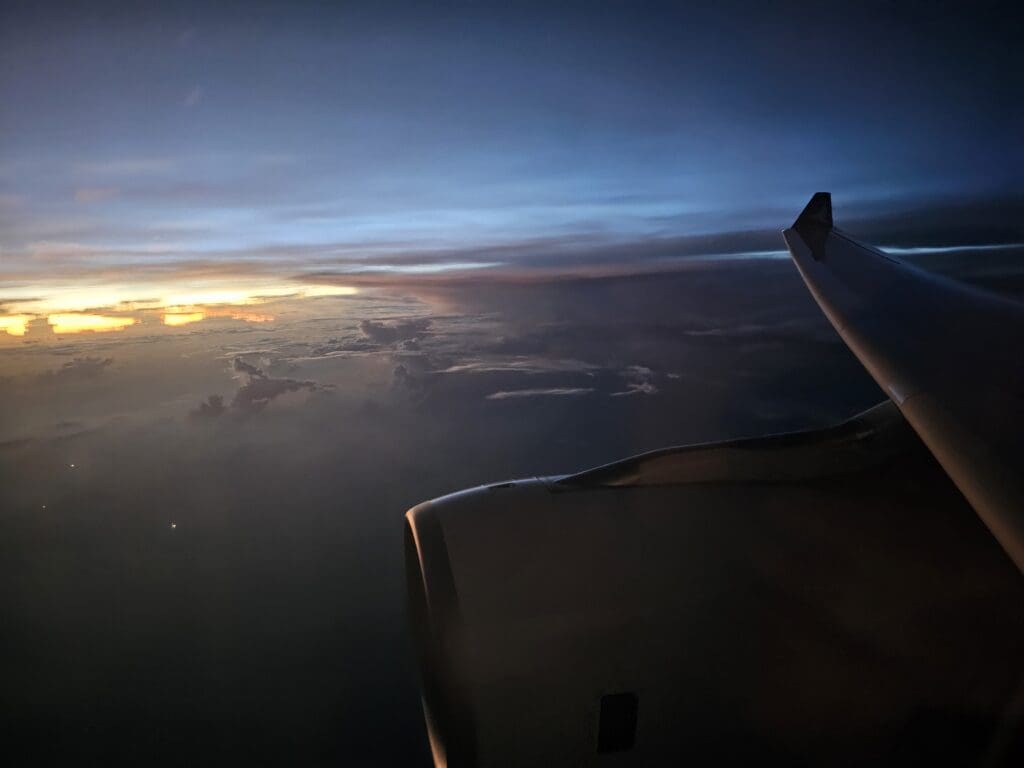
At dusk, I spotted some islands outside which turned out to be the islands of Tobong and Air Pasir, two small Indonesian islands which are part of the Riau Islands that sit in between the east coast of Malaysia and the island of Borneo. Meanwhile, above these, the contrast between the bright sun and dark clouds created some scenic vistas as we cruised southwards and neared the end of the flight. At this time, I drifted off to sleep for around forty minutes and woke up as we neared the Indonesian island of Belitung.
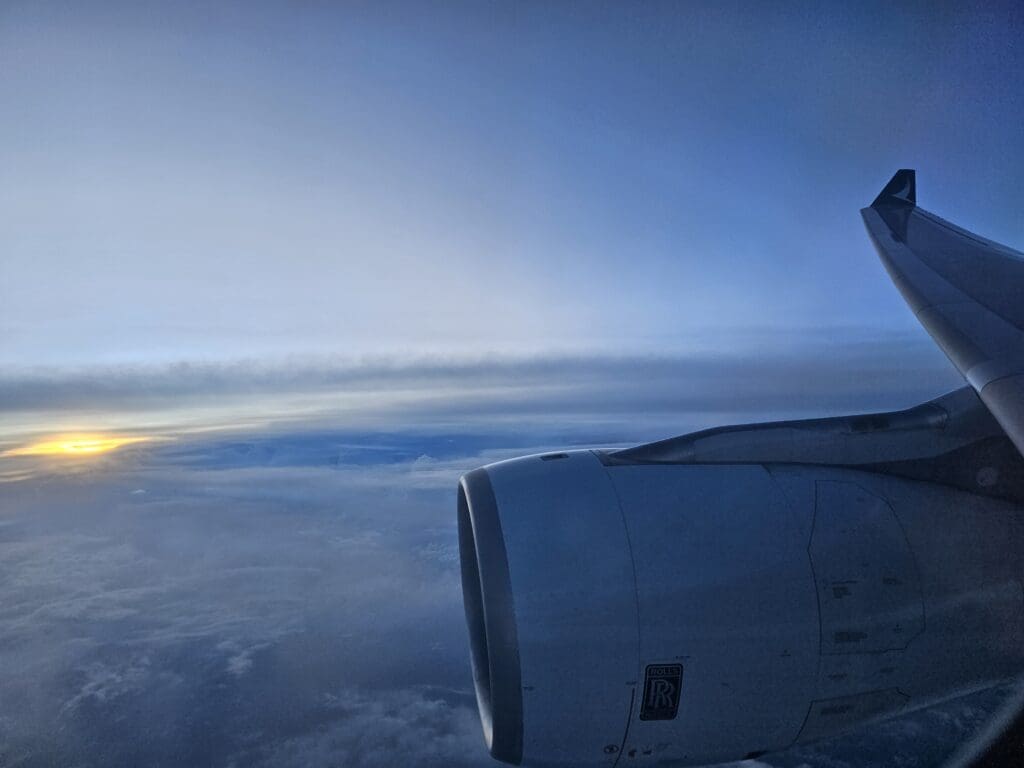
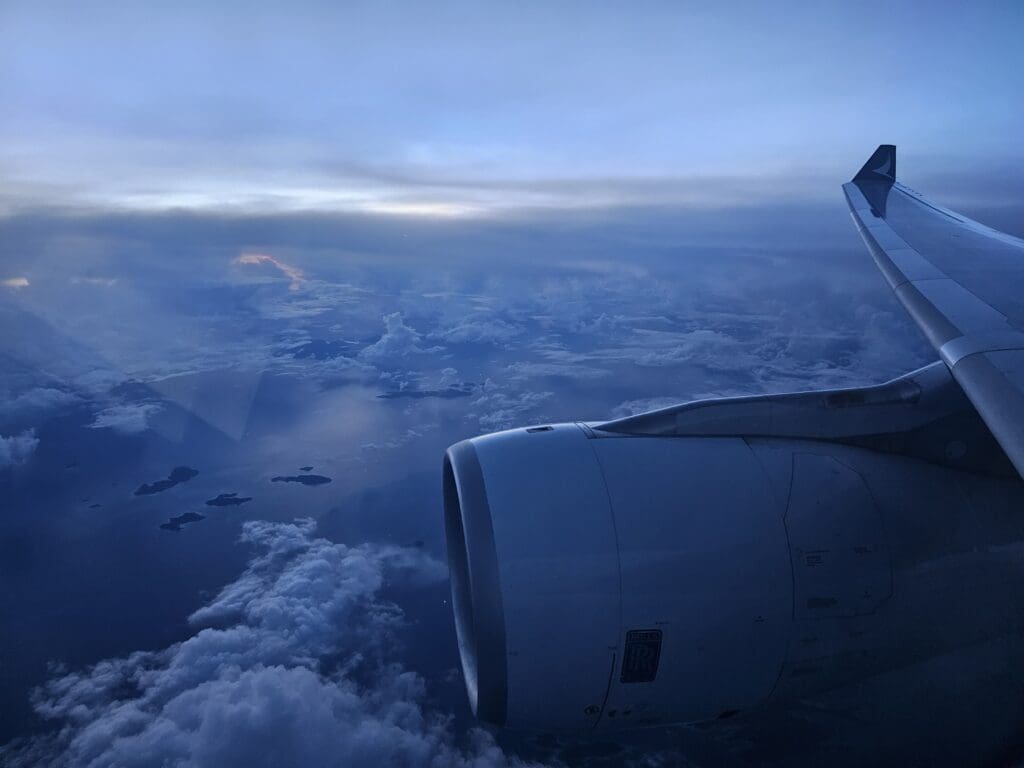
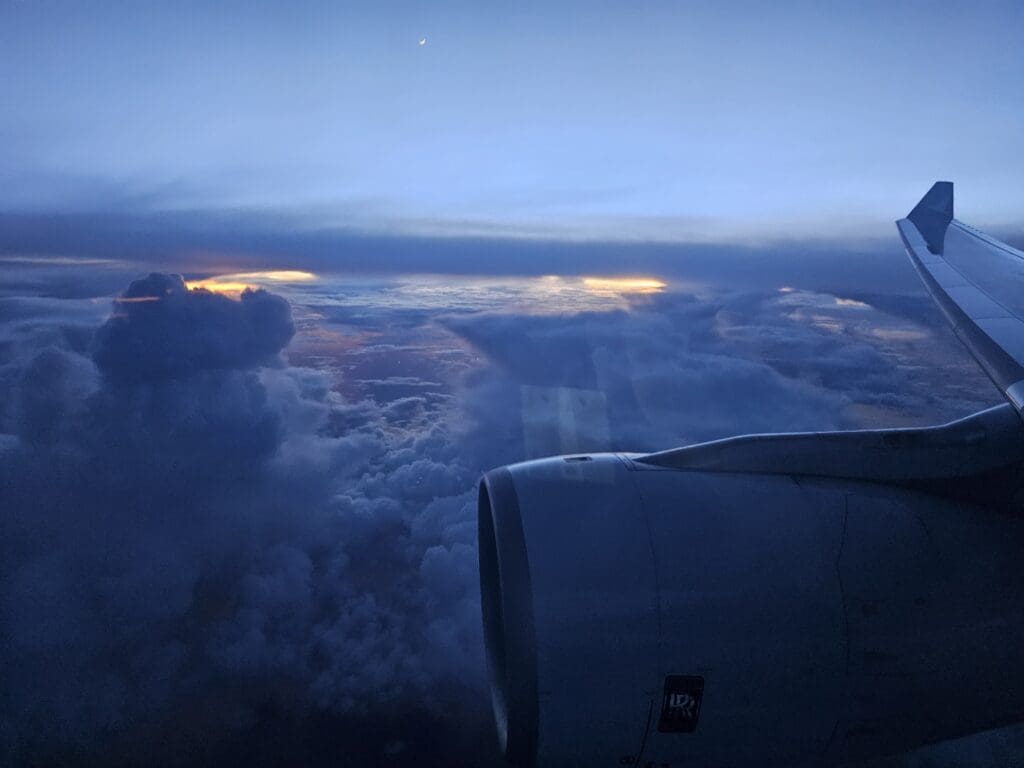
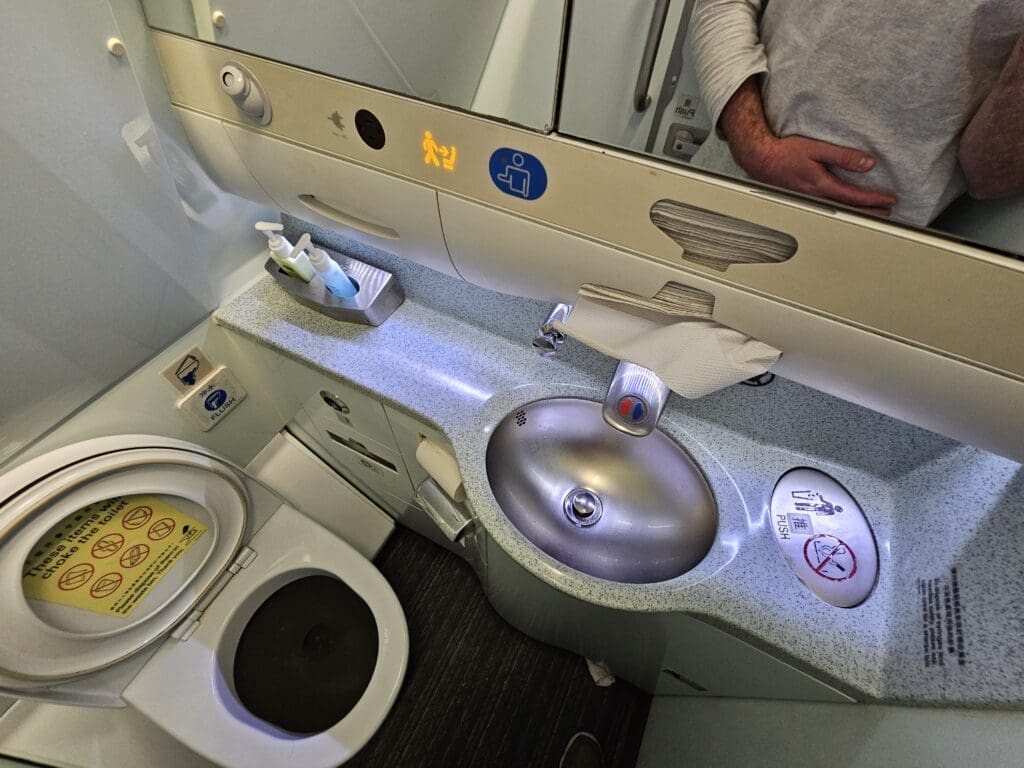
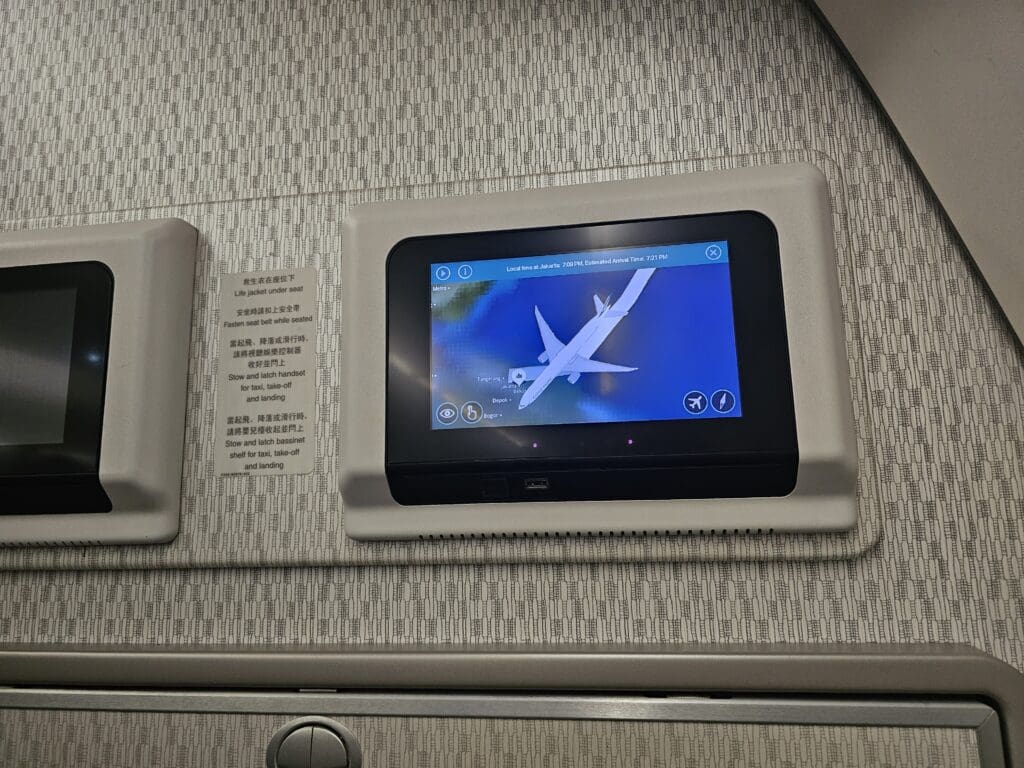
Once awake, I decided to visit one of the aircraft’s lavatories. Upon opening this up, I noticed that Cathay Pacific appears to have personalised this somewhat, with everything being in a slightly green shade, and I was pleased to find this to be in a clean and tidy state. After returning to my seat, it wasn’t long before the Captain’s voice filled the cabin once more as they performed their welcomingly detailed pre-arrival announcement advising exactly when we would commence our descent, along with our expected landing time, taxi time and disembarkation time – with the Captain mentioning that he hoped we would be off the aircraft in advance of our scheduled arrival time of 1935. The Captain then advised passengers of the local time in Indonesia and provided a brief update on the weather before thanking passengers for flying with Cathay Pacific.
A few minutes after the Captain ended their pre-arrival announcement, the cabin lights were reilluminated and the crew began to collect rubbish as we commenced our descent down from 41,000 feet as we trundled between Belitung and Java. As we sank, it wasn’t long before we hit a patch of turbulence and soon the seatbelt signs were illuminated at which point the crew passed through the cabin ensuring all was secure and in place for our arrival, once again this consisted of a thorough check with multiple crew members checking and then re-checking everything before strapping themselves in.
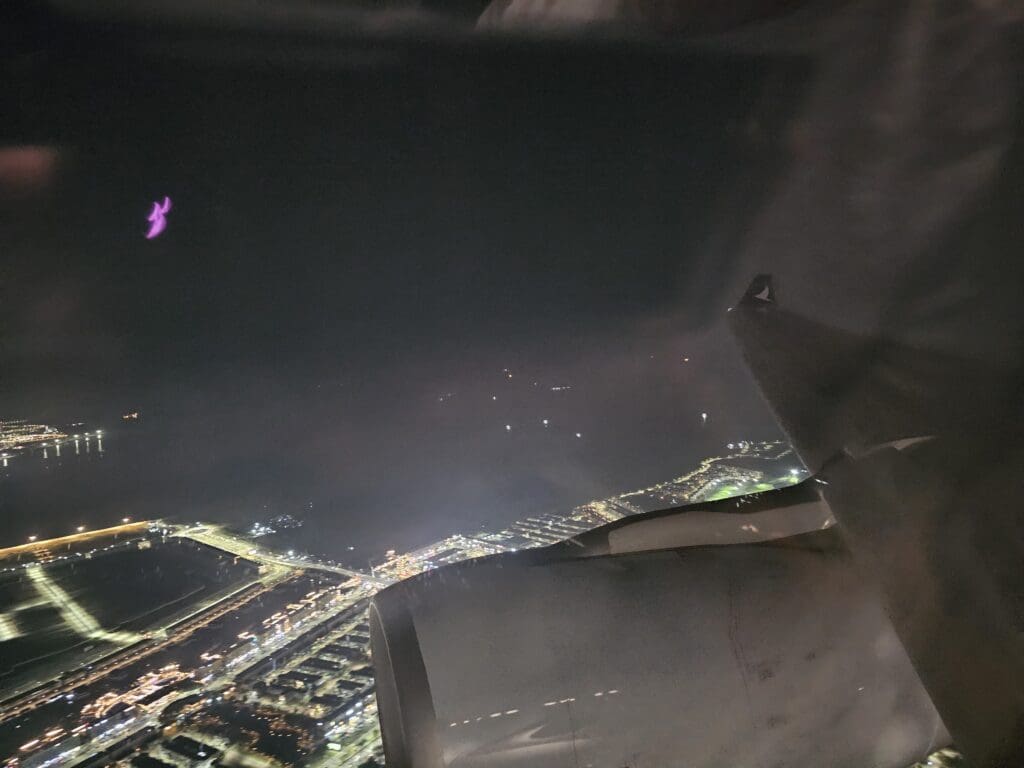
Thanks to the darkness as well as the fact that most of our descent took place over the waters of the Java Sea, nothing could be seen as we headed downwards until the late stages of our approach. Eventually, the Airbus reached the Javan shoreline and immediately turned westwards and flew down the coastline towards Jakarta. Whilst those on the other side of the aircraft would have presumably been treated to good views of the lights of the Indonesian capital, little could be seen on the right-hand side until we crossed the shoreline just to the east of the airport by which time the landing gear and flaps had been extended in preparation for our arrival.
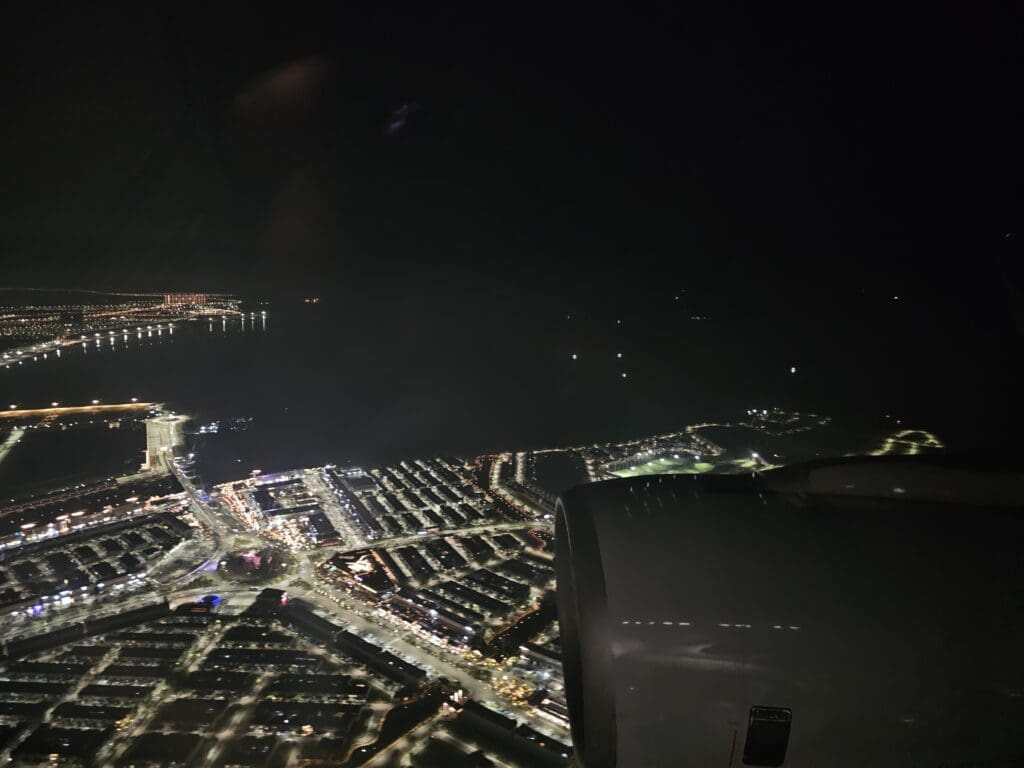
A minute or so after crossing the coast, the lights of Jakarta Soekarno-Hatta Airport came into view at which point I caught sight of one of the more interesting visitors on the ground at the time, one of only four US Air Force Boeing E-4B Nightwatch aircraft! Moments later, the aircraft made a fairly smooth touchdown on Jakarta’s Runway 25L after 4H12 in the air. Once on Indonesian soil, the aircraft decelerated rather quickly and we whizzed past Terminal 1 and its many Super Air Jet aircraft before vacating the runway.
As we commenced our long taxi around the airport to Terminal 3, rows and rows of locally based aircraft, both stored and active could be seen, many of which were operated by local giants Citilink and Lion Air. After skirting around Terminal 1, next up was Terminal 2, which serves as the main hub for Lion Air as well as a host of other low cost carriers from abroad. After around ten minutes, the aircraft pulled in next to a fellow Airbus A330 operated by local carrier Garuda Indonesia and came to a slow stop. Once there, the engines spooled down and in the usual manner many jumped up in a rush to leave. Fortunately, it wasn’t long before the jetbridge was connected and L2 door opened, and, moments after the last Business class passenger had disembarked, I found myself thanking the crew and heading up the jetbridge into the terminal building.
From the gate, a very long walk through the modern yet strangely deserted terminal building was in store. Whilst Jakarta Soerkarno-Hatta is by no means a quiet airport, the flight from Hong Kong seemed to have arrived during a lull and thus fairly few passengers could be seen anywhere in the arrivals hall. This meant that my arrival experience was quick and painless. After a while, I arrived at the large immigration hall and was able to walk straight up to the only counter open for overseas passport holders. Holding an e-visa, this was scanned and after some typing my passport was stamped and returned before I was able to continue onwards. Speeding through the baggage claim hall, I was required to fill out a customs declaration form before making my way through the customs check and heading out into the evening Southeast Asian heat and humidity, ending my first-ever Cathay Pacific experience.
Summary
Overall, I enjoyed a superb ride down from Hong Kong with Cathay Pacific and was left with absolutely nothing to complain about. Unlike the flight from Dubai to Hong Kong, during which, whilst I had found the crew to be polite, they were also not particularly friendly or interactive with passengers, the crew on this sector down to Jakarta were. In addition, the aircraft was clean, comfortable and in a very good state, the entertainment system, whilst not used, was expansive, and I arrived in Indonesia on time and in one piece. Needless to say, I would be more than happy to fly with Cathay Pacific again in the future if the need arose.