An Unexpected Cessna Citation 560XLS Ride: Ostersund to Umea with Jonair

Background
In September 1969, the Cessna Citation I, initially known as the Fanjet 500, rocketed upwards into the Kansan skies on its first-ever test flight. Designed to rival types such as the Gates Learjet, this light business jet sought to tap into the increasingly large market of rich and famous flyers. Indeed, over fifty years later it would be difficult to argue that the Citation has not achieved success in this mission, with the aircraft having been developed into a long list of models of a variety of shapes and sizes from the minuscule Mustang to the long Longitude. With over 8,000 Citations having rolled off the production line in Wichita and manufacture of the type continuing to this day, such aircraft have become common sights and airports across the world. However, given its primary role as a private jet designed to transport the rich and famous, it is rarely, if ever, seen in scheduled passenger service anywhere in the world. Whilst I had been lucky enough to grab a reasonably priced seat on a Cessna 550 Citation Bravo empty-leg flight between Liverpool and Gloucestershire Airport in 2021, as a cash-strapped recent graduate, the Citation was not an aircraft type I was particularly well acquainted with!
On the morning of my Citation flight, I had woken up in the city of Östersund, the capital of Sweden’s northern Jämtland County, with absolutely no idea that I would wind up flying onboard a luxurious private jet that afternoon. Originally, my itinerary would see me taking Jonair’s early morning flight to Umeå onboard Europe’s only Beechcraft 1900C. Upon arrival, I would have a tour of the airline’s headquarters before travelling down to Stockholm Arlanda on an Airbus A320neo before connecting onto a CityJet Bombardier CRJ-900 for the short hop across the Baltic to Helsinki. Following a very early start, the first part of my long day had gone as intended and I had had a great time flying across the frozen Swedish landscape on the Beechcraft 1900C before meeting up with the friendly CEO of Jonair who showed me around their facilities. However, during this, one of the pilots who had flown me over to Umeå mentioned that their Beechcraft 1900C would be ferried across to the Finnish city of Kokkola that afternoon before operating a charter to Sveg. With one of Jonair’s King Airs in maintenance, another operating the carrier’s service between Stockholm and Sveg, and the final example up in the far north operating the route between Luleå and Pajala, the pilot mentioned that the only aircraft able to operate that afternoon’s rotation to Östersund took the form of the carrier’s most recent addition, a luxurious Cessna 560XL Citation Excel!
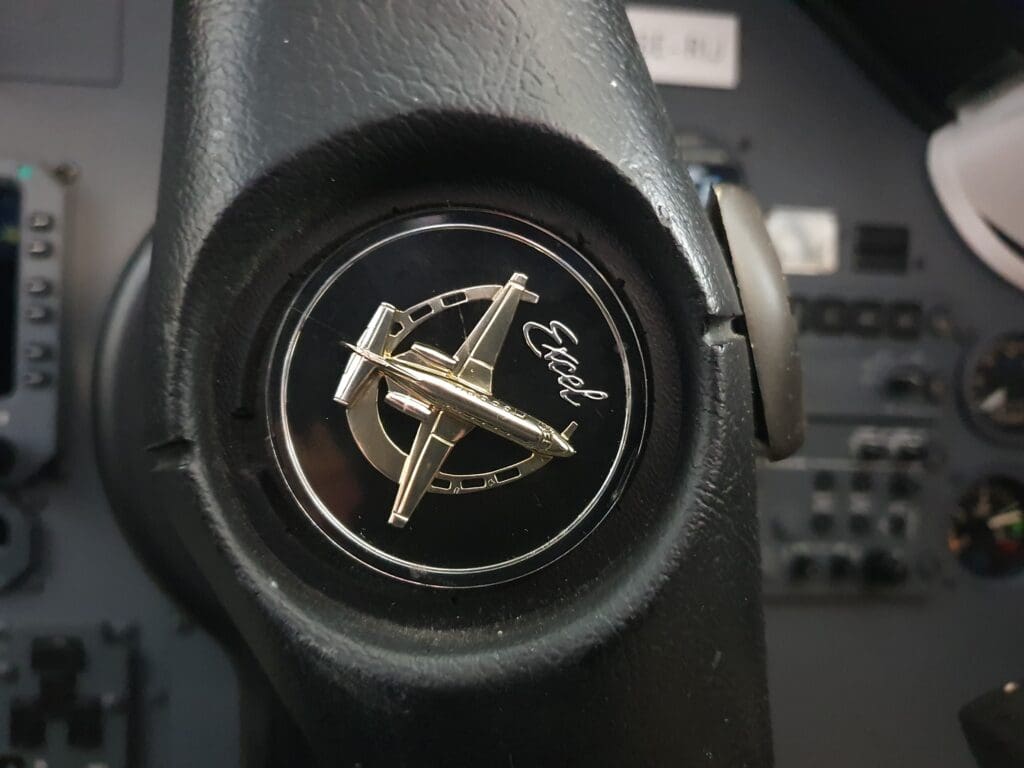
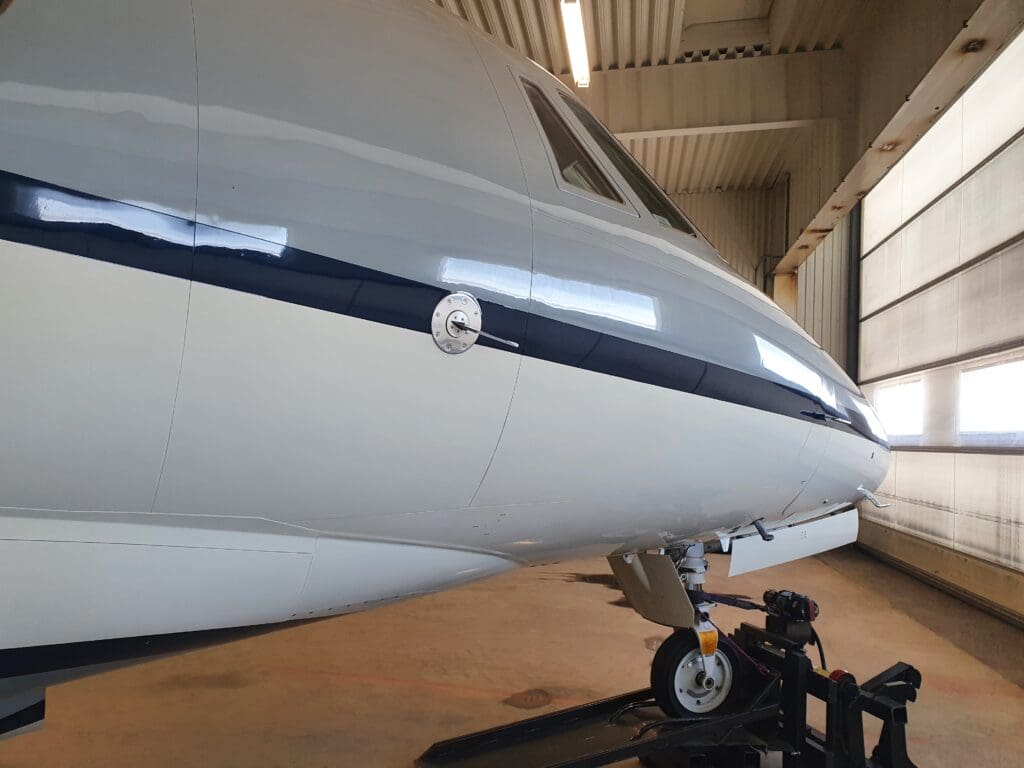
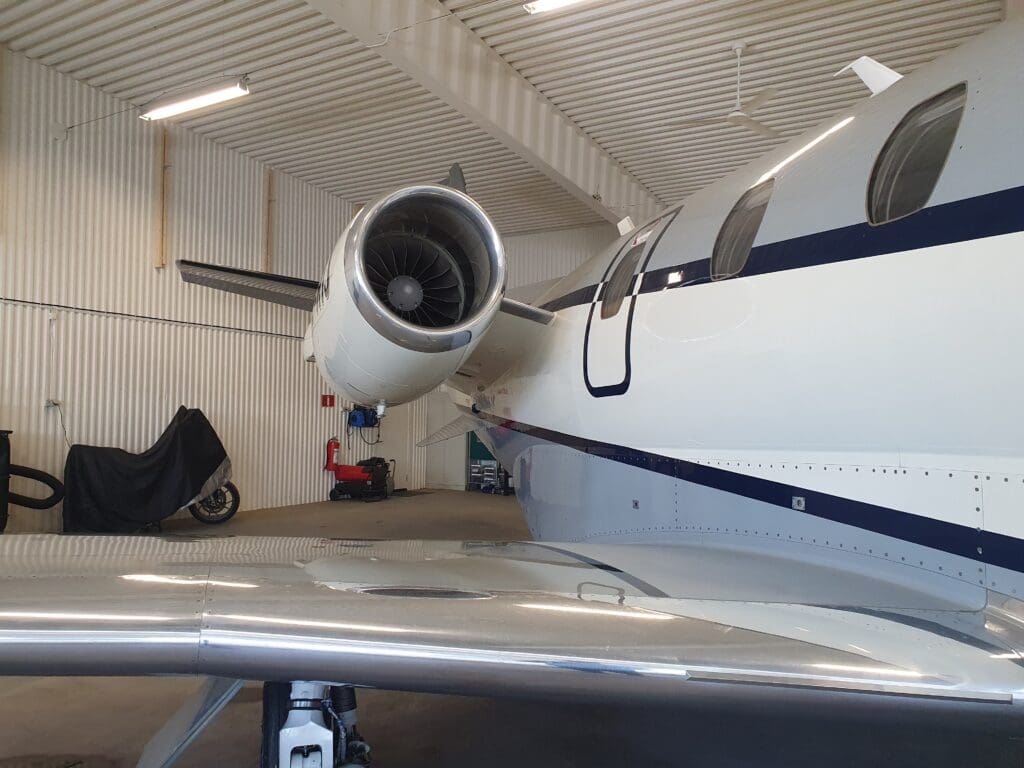
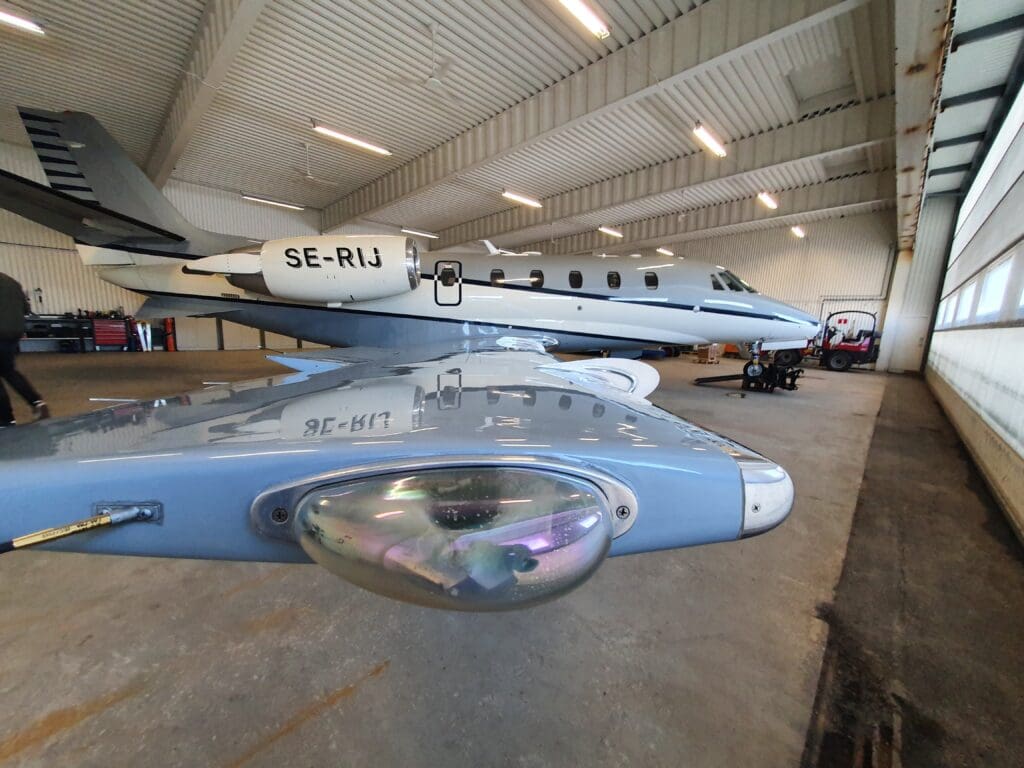
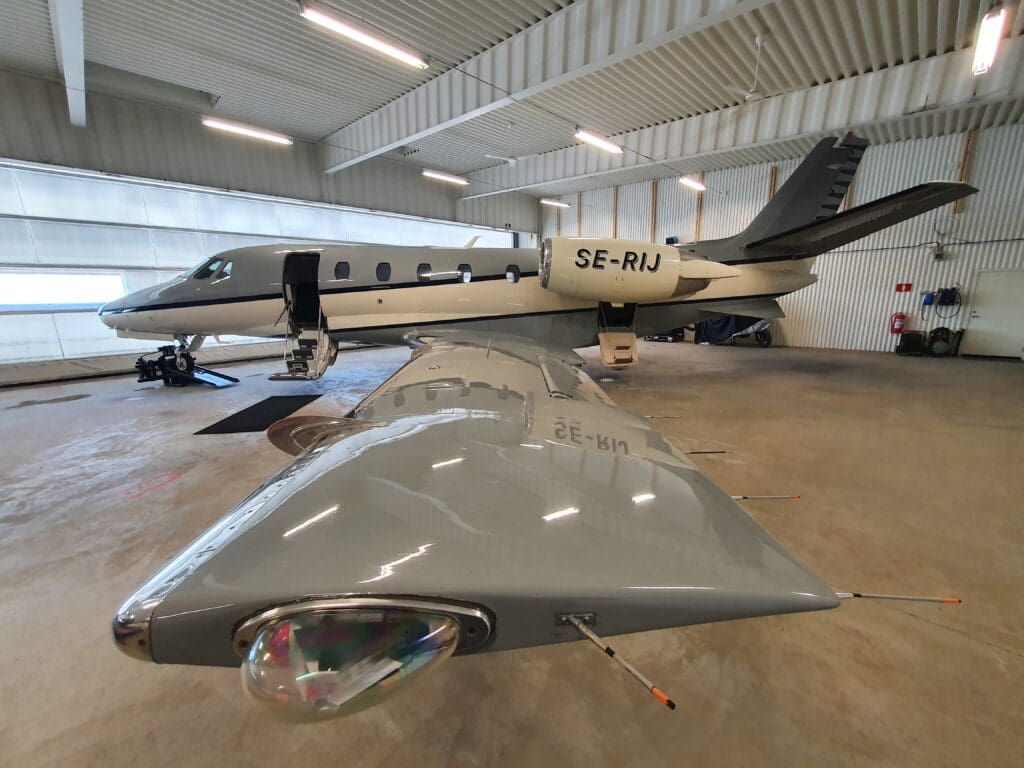
Given the almost non-existent opportunities to fly onboard Cessna Citations in my everyday life, upon hearing this piece of information I headed over to Jonair’s website and did a search to see if there were any remaining seats on this flight. Much to my delight, two seats remained, with the cheapest tickets for these priced at 995 Kr. Whilst this was most definitely a good deal for a Citation-operated service, my heart sank a little when undertaking a search for flights between Östersund and Helsinki later that afternoon. Having forked out just £35 for my initial itinerary between Umeå and Helsinki, new tickets for my new routing would set me back over £235 plus an additional €12 for an extra carry-on bag with Scandinavian Airlines. Being far from cheap, especially for two short flights, I deliberated for a few minutes asking myself whether a flight onboard a Cessna Citation Excel was really worth the combined total of over £300. However, with payday on the horizon, and being highly unlikely to find myself onboard a private jet again at any point in the near future, I splurged out and soon purchased my tickets from Jonair’s website.
The Journey
Following an enjoyable two hours spent touring Jonair’s hangar and offices and chatting with various staff members, the head of Jonair kindly delivered me to Umeå Airport’s small terminal building with almost four hours to go until the flight’s 1440 departure time. Seeing as I had plenty of time on my hands, I decided to go for a walk around the local area although within twenty minutes, hungry and freezing, I returned to the warm sanctuary of the terminal building. In 2019, a little over 960,000 passengers passed through Umeå Airport, making this Sweden’s seventh busiest. For UK-based readers, this is a similar figure to the number of travellers that passed through Inverness Airport in the same year. On the day of my flight, a Tuesday, a total of fourteen scheduled passenger services would depart from Umeå. The vast majority of these took the form of Norwegian and Scandinavian Airlines services to Stockholm Arlanda, in addition to three flights to Stockholm Bromma operated by Swedish regional carrier BRA, and of course Jonair’s two departures to Östersund. Of these, the only passenger departure before my flight would be an Arlanda-bound Norwegian Boeing 737-800 and with this considered, that day the landside portion of the terminal seemed to be fairly quiet, with few passengers and visitors seen mingling about.
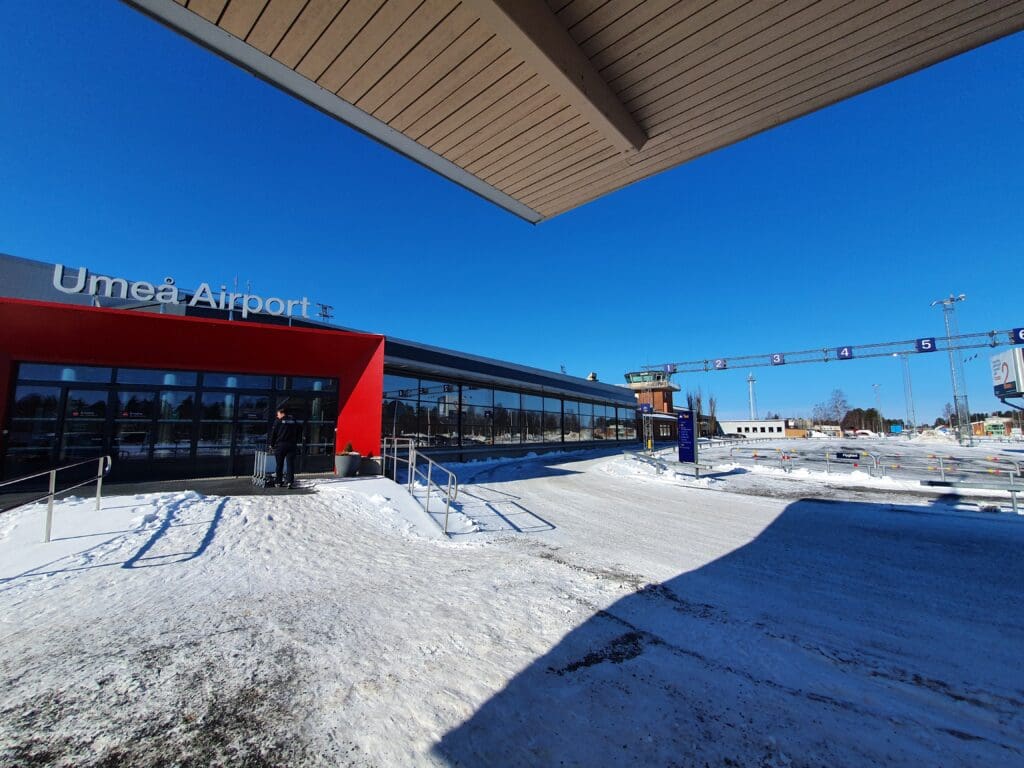
Whilst Umeå Airport officially opened in 1962, the terminal’s current interior dates back to 2008 when a major refurbishment project took place. Despite this having occurred fourteen years before my flight, I found the terminal to appear bright and modern, with large windows allowing for natural light to flood into many parts of the landside area. For those wishing to sit and wait, plenty of benches could be spotted across the terminal and a good number of plug sockets were present for passengers to charge their devices before boarding. In addition, Swedavia’s complimentary wifi network was also provided which I found to work without any issues throughout the terminal. As one would hope, as far as I could tell the landside portion of the terminal appeared to be spotlessly clean and I was left with nothing that I could complain about. However, I should point out that given its compact size, only limited facilities are offered in the landside portion of the terminal and therefore passengers may want to limit their time there before departure. These consist of a few vending machines and a small café which, as I later discovered, opened on the day of my flight!
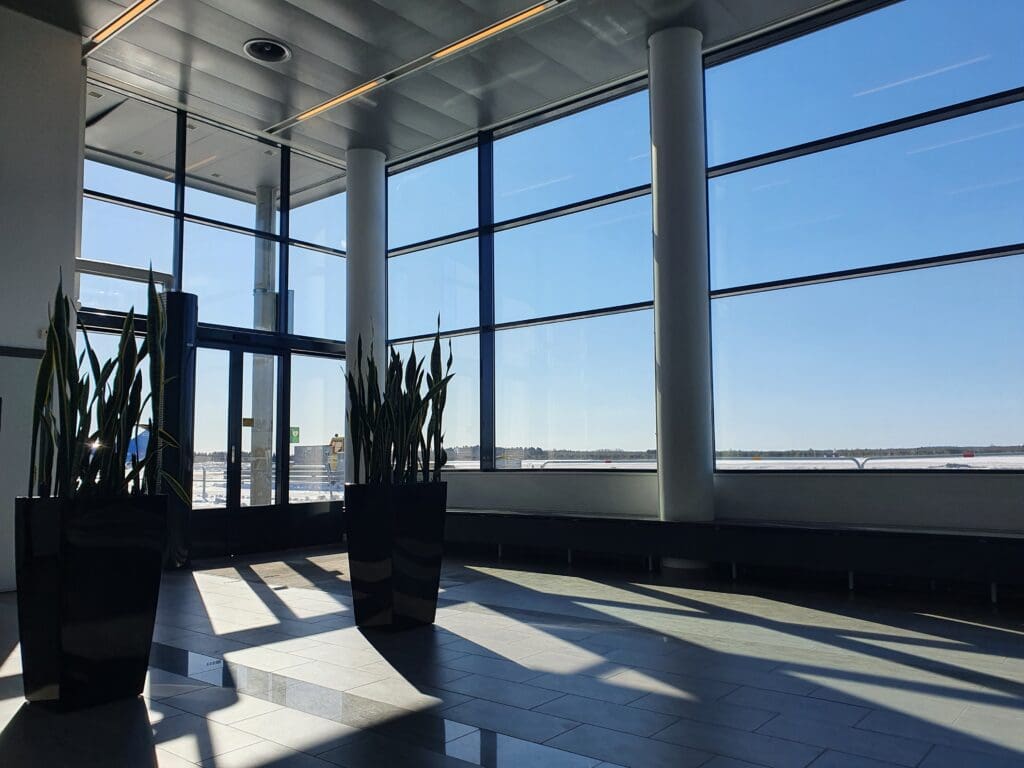
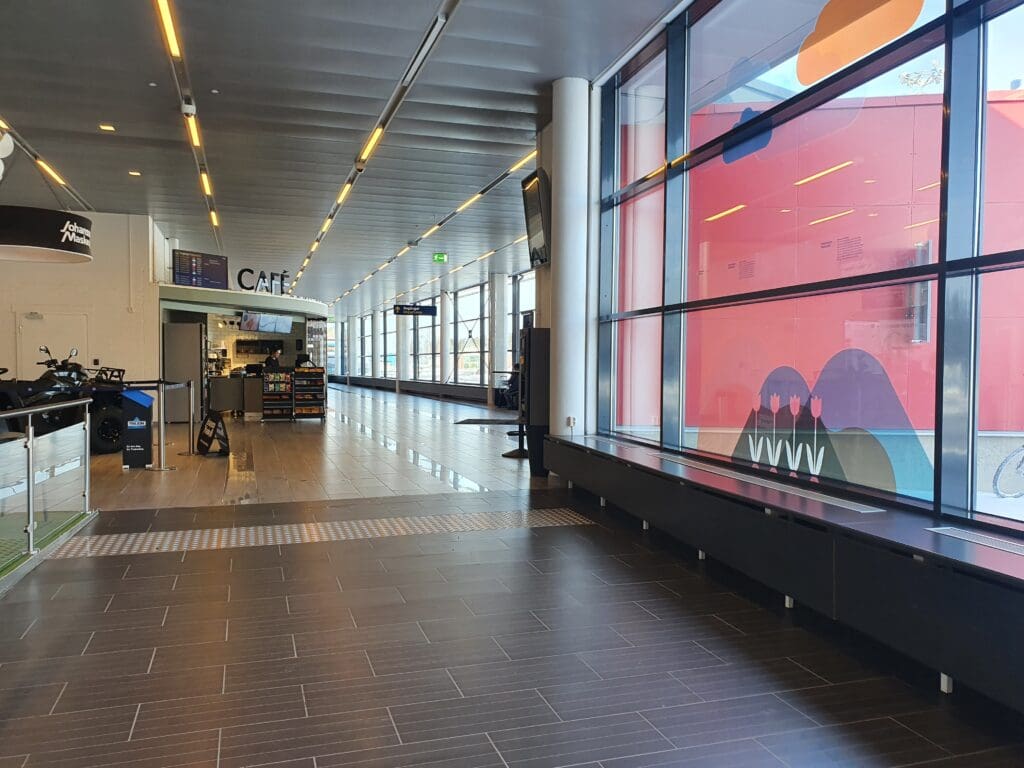
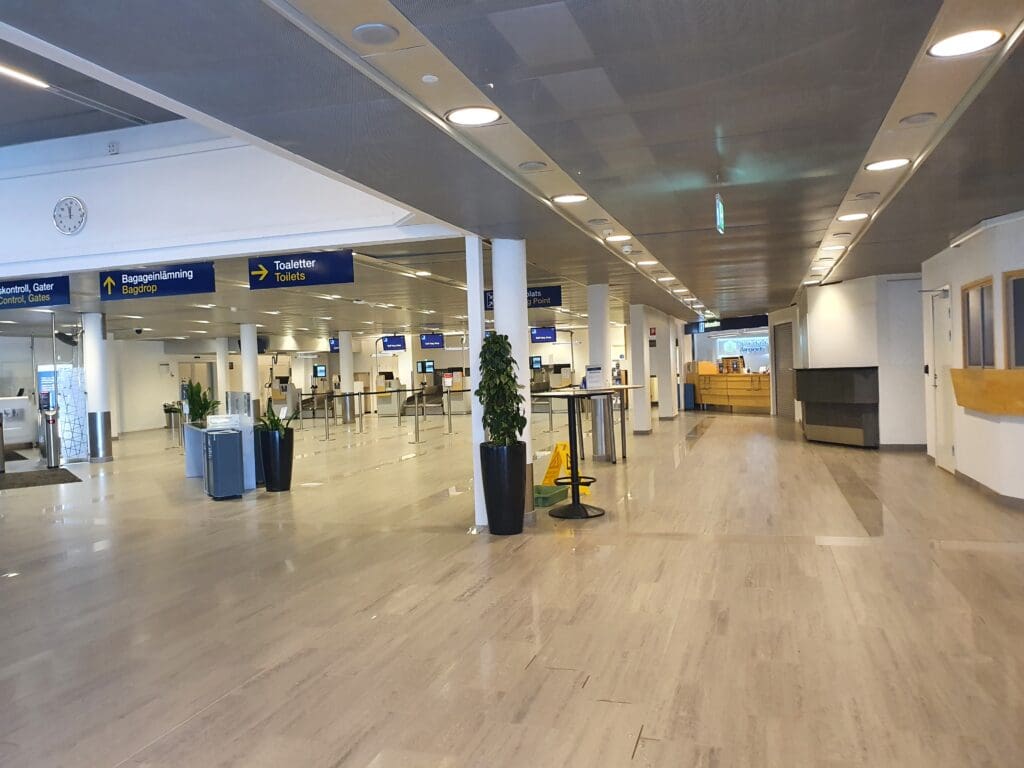
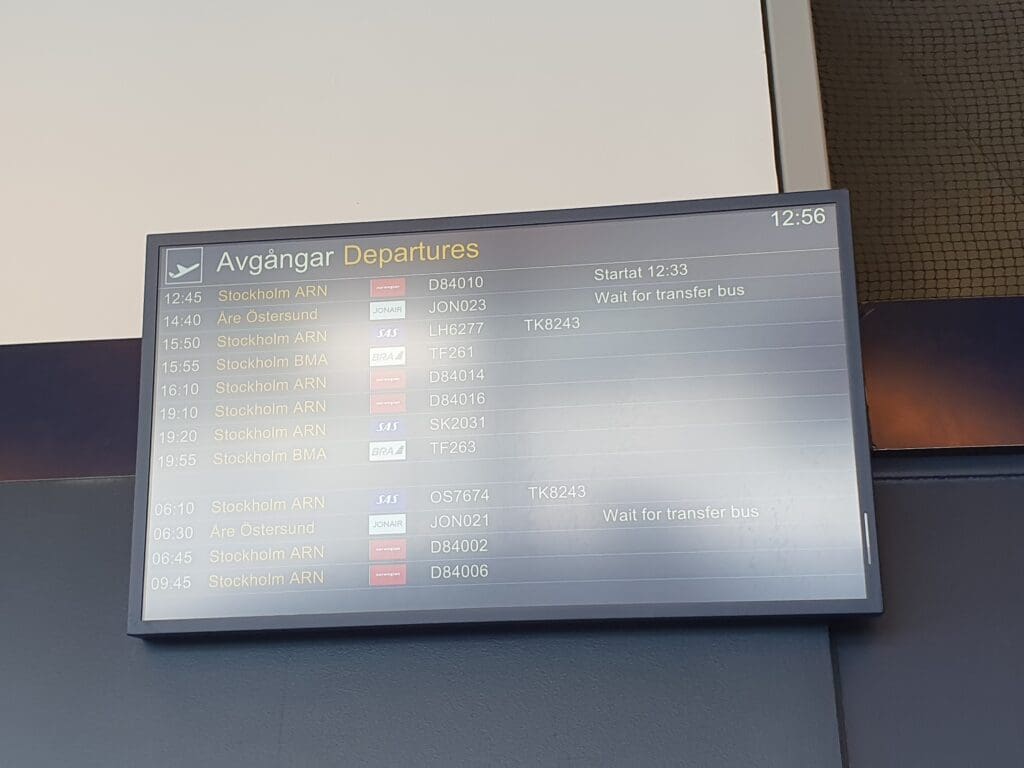
Having skipped breakfast that morning, following a short walk around I decided to head to the café to grab a spot of lunch. This featured a good selection of hot and cold snacks, and the army of staff there were all polite and friendly. After one staff member went through each sandwich in the refrigerated cabinet, I went for a turkey wrap, a small bar of Swedish Marabou chocolate and a cappuccino, with this totally an extortionate 163 Kr. However, with little other choice other than to head to one of the vending machines, I went ahead with this and found the wrap to be delicious. Opting to take this away, I made my way to the baggage collection hall which is the only part of the landside area that I found to offer a view of the apron. As in Östersund, the airport’s baggage carousels are located in the landside portion of the Umeå’s terminal – something that before this trip I had only ever seen at miniature airports as well as Sudbury and Thunder Bay in Ontario. Upon arriving there, little other than a nocturnal Swiss-registered ATR 42 could be seen outside resting up for the day. This particular aircraft was operated by Zimex Aviation and spent its nights hauling mail around Sweden. Other than this, some excitement was had when the aforementioned Norwegian Boeing 737 touched down, making a very quick turnaround and taking to the skies once more after spending just 28 minutes on the ground. In addition, one of Svensk Ambulansflyg’s brand new Pilatus PC-24s popped in for a short visit – with these jets dedicated to transporting sick patients to and from hospitals across Sweden. Other than these winged aircraft, a host of helicopters could be seen during my stay including a bright red Bell helicopter, a Robinson R44 and the locally based slick-looking red and white coastguard AgustaWestland AW139 which could be seen heading off on a mission towards the end of my stay.

As had been the case at Arlanda and Östersund, check-in arrangements for those flying with Jonair out of Umeå were ‘non-standard’ with no boarding passes or security checks. Inside the terminal, a sign similar to that in Östersund was placed at the airport’s meeting point advising those heading off on Jonair to rendezvous there thirty minutes before their service’s scheduled departure time. Given the early start to boarding at Östersund that morning, not wanting to make anyone wait, I decided to get to the meeting point with plenty of time to go until my flight’s scheduled departure time. Upon arriving there at 1400, much to my surprise a Jonair representative could be seen amongst a small gaggle of passengers. Once there, I was asked if I was heading to Östersund, before confirming my name. Seeing as the Jonair staff had agreed to keep my bag in the office until the flight, not wanting for this to be left behind in Umeå, I also confirmed that the staff member was aware of this arrangement. Fortunately, they confirmed that they had already placed my small suitcase onto the aircraft. Being the second to last passenger to arrive, around ten minutes later the eighth and final passenger appeared before all were led outside to a Volkswagen minivan that wore large titles advertising its role as the shuttle bus for those passengers travelling to and from Östersund. Upon seeing this, I couldn’t help but think that a respray would be needed were Jonair to ever start a second scheduled route from their main base!
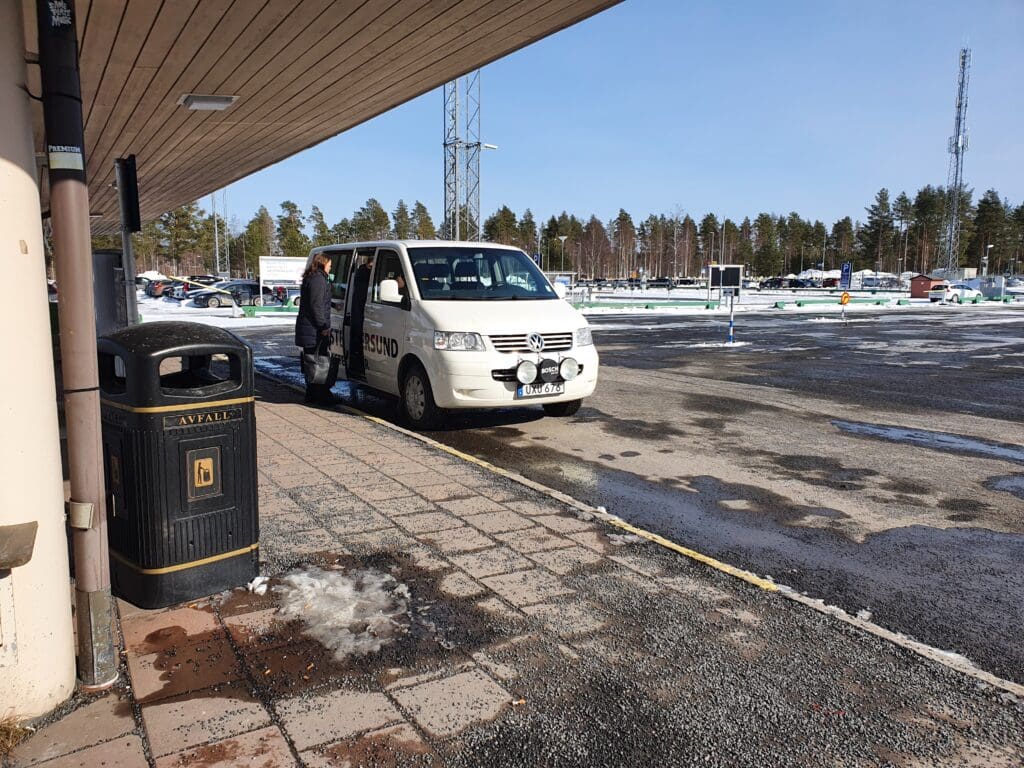
Upon arriving at the minivan, with no hold luggage to place in the boot, I jumped straight in and a couple of minutes later all passengers had squeezed themselves in and the doors were closed. At Umeå Airport, Jonair’s facilities are located a short way down the flight line from the terminal, however with these all being beyond the airport fence and thus on the airside of the area of the airport, there is no option for passengers to make their way straight to the Jonair ‘terminal’ before their flight. That said, as I had discovered during my tour that morning, this does feature a small and rather luxurious VIP room for those departing on charter services. After leaving the terminal behind, the minivan trundled a short way along the road which runs parallel to the airport’s northeastern perimeter, the Norra Obbolavägen before soon taking a right and trundling through the snow-covered car park.
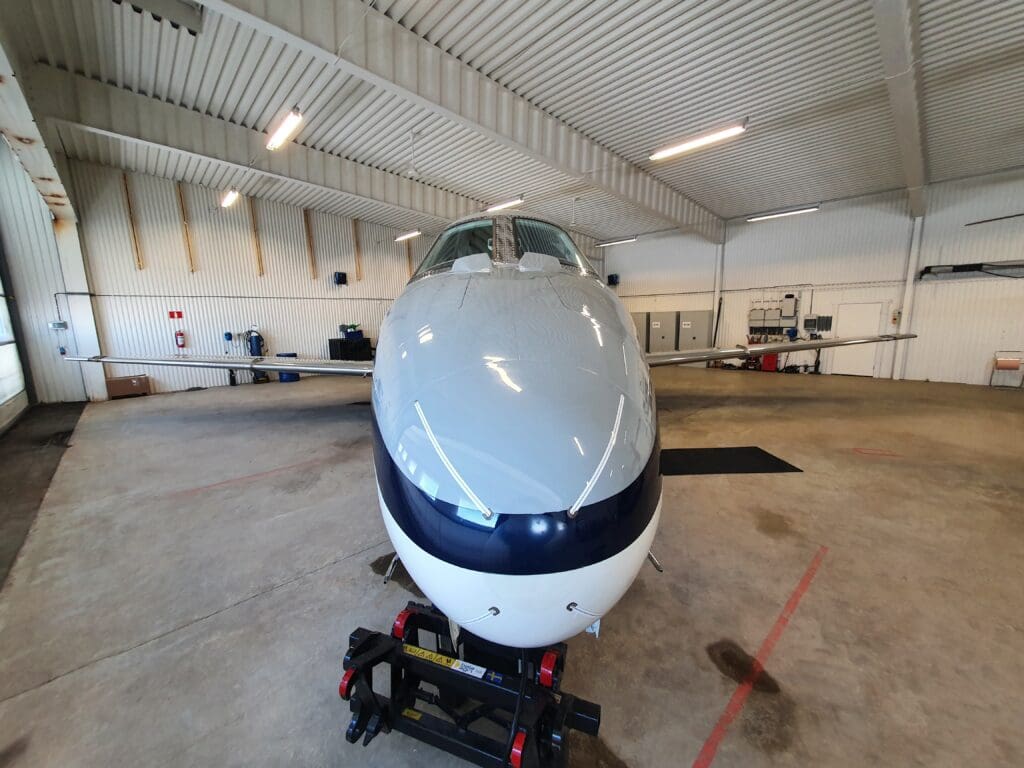
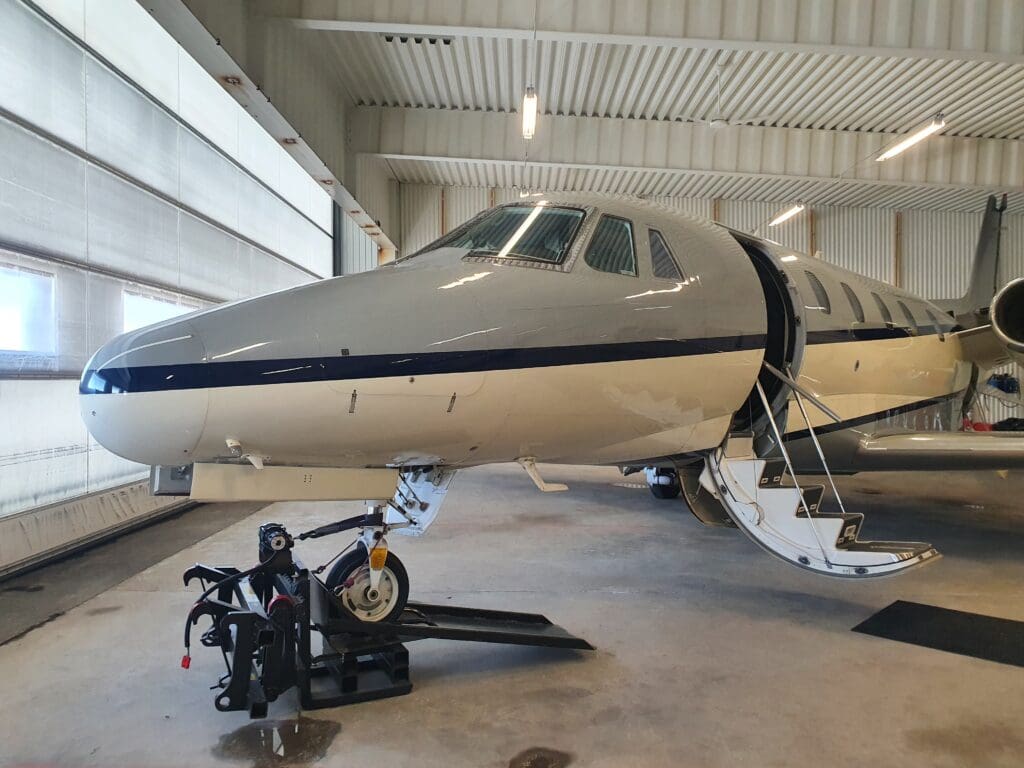
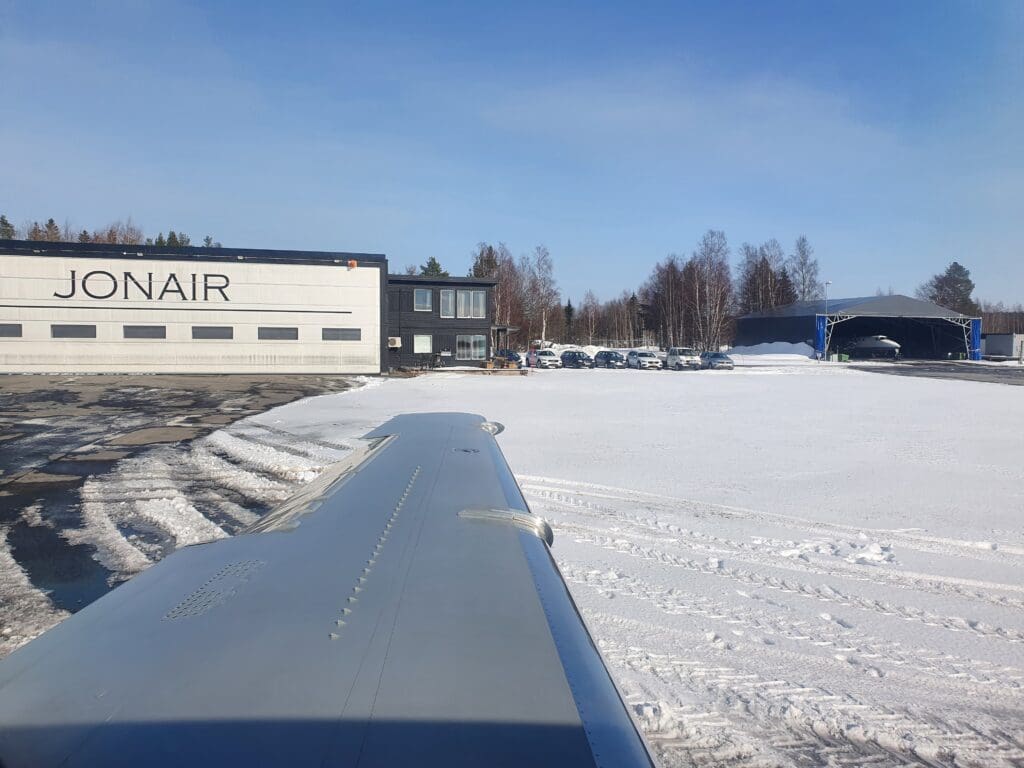
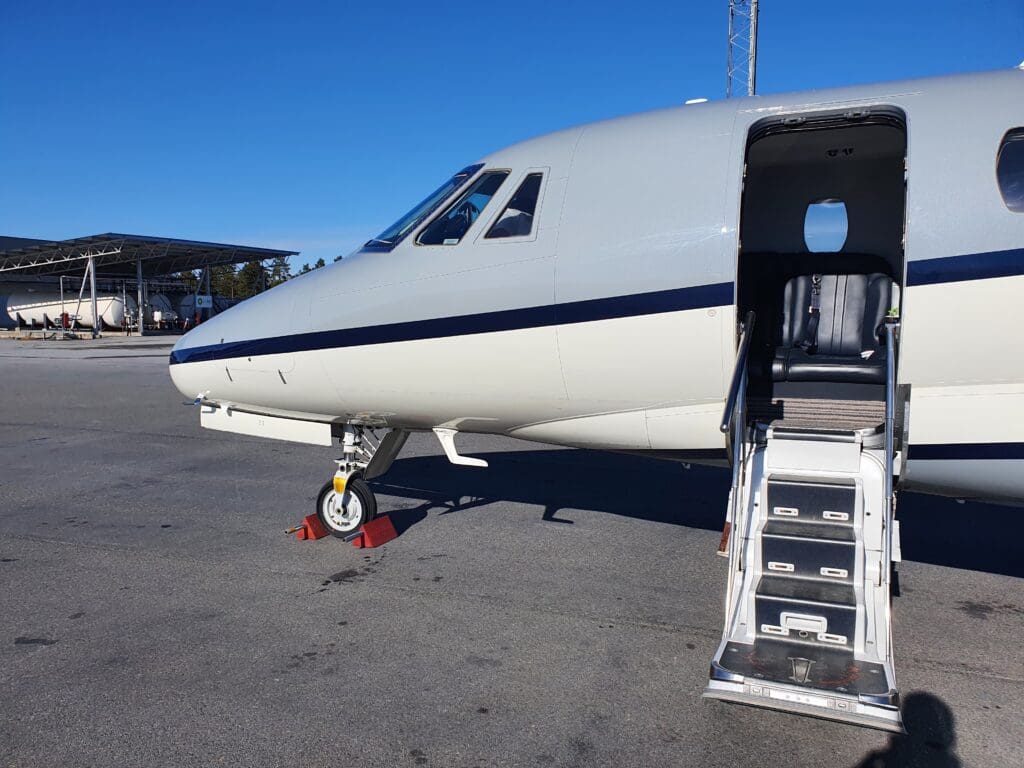
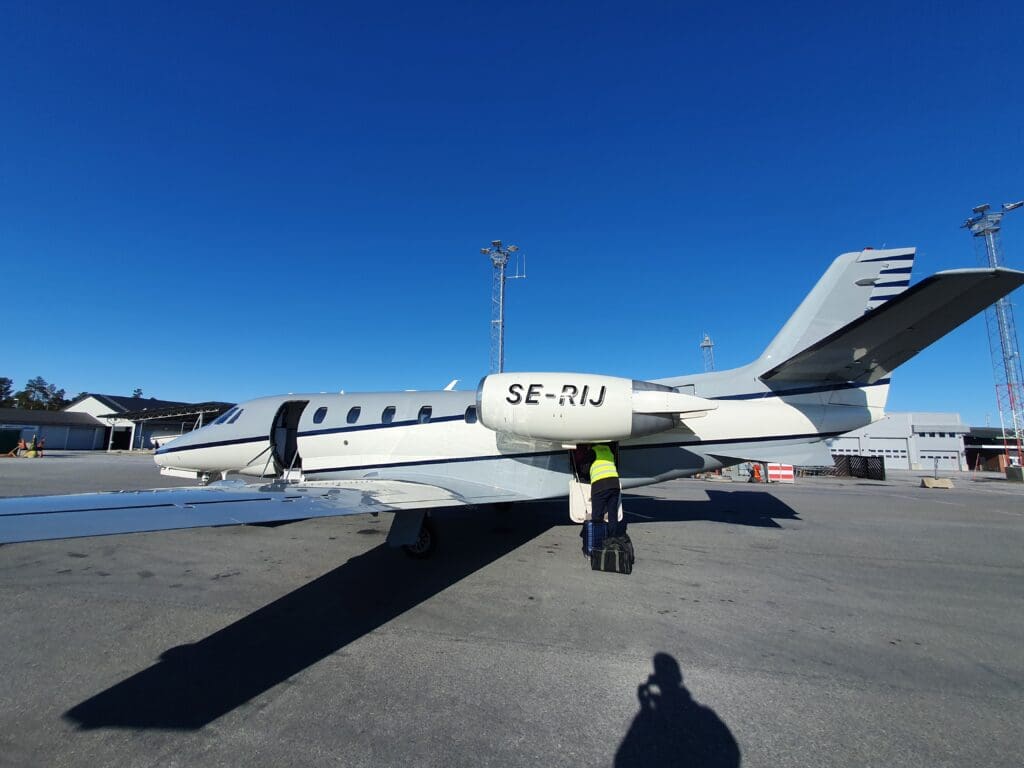
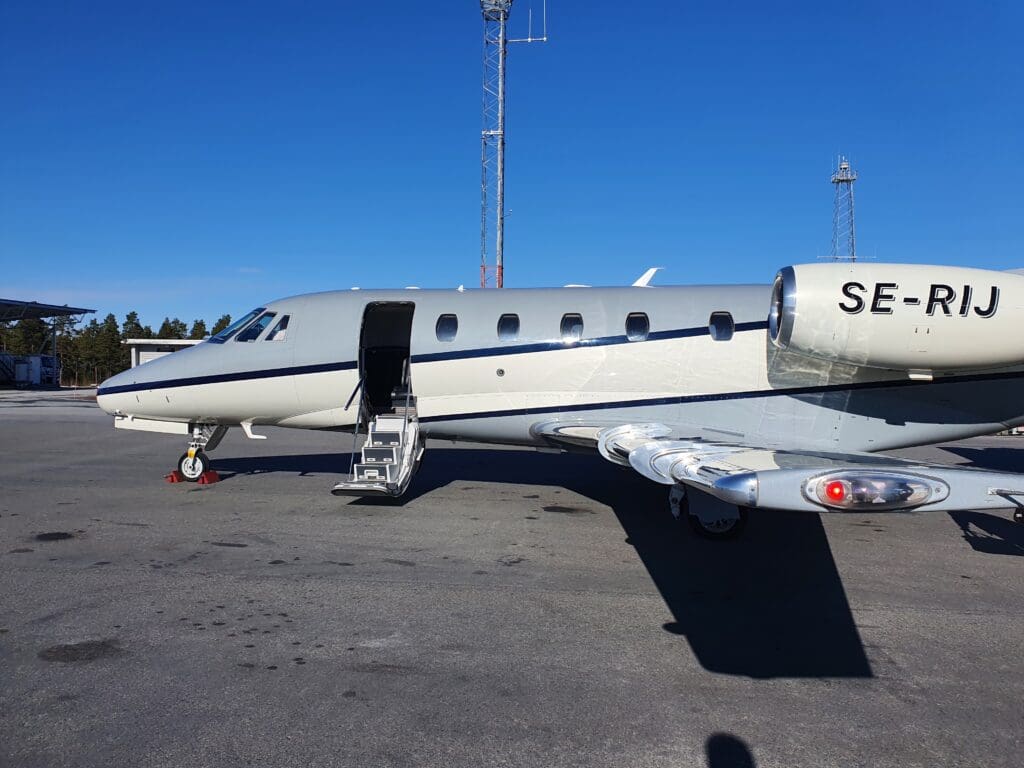
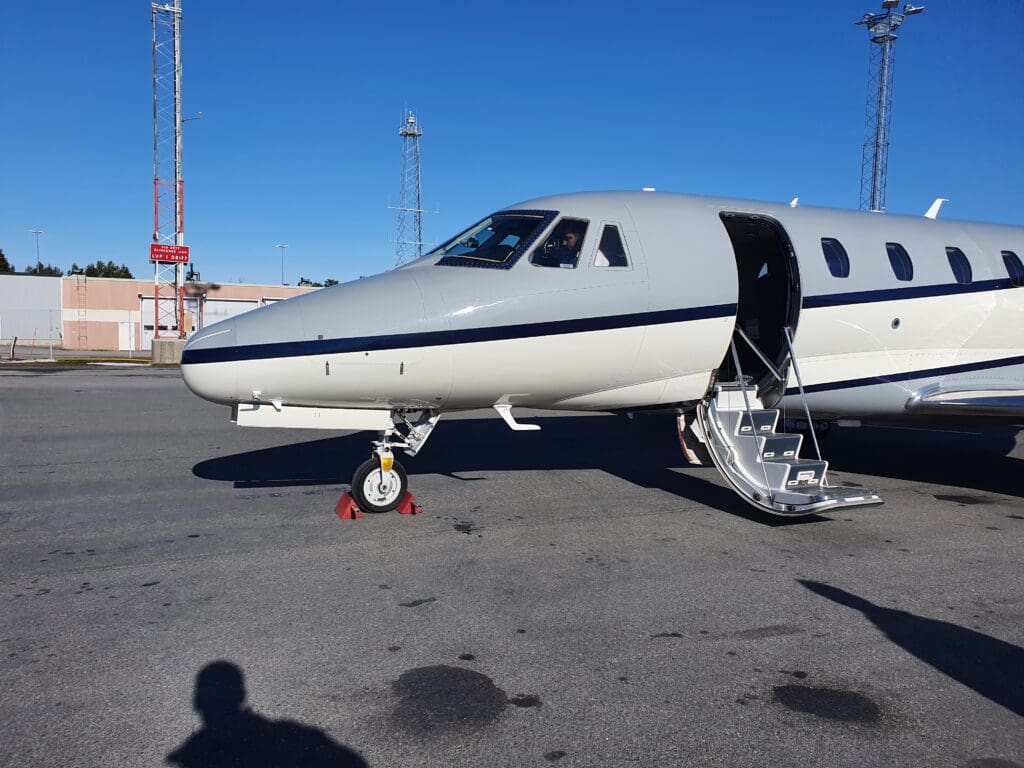
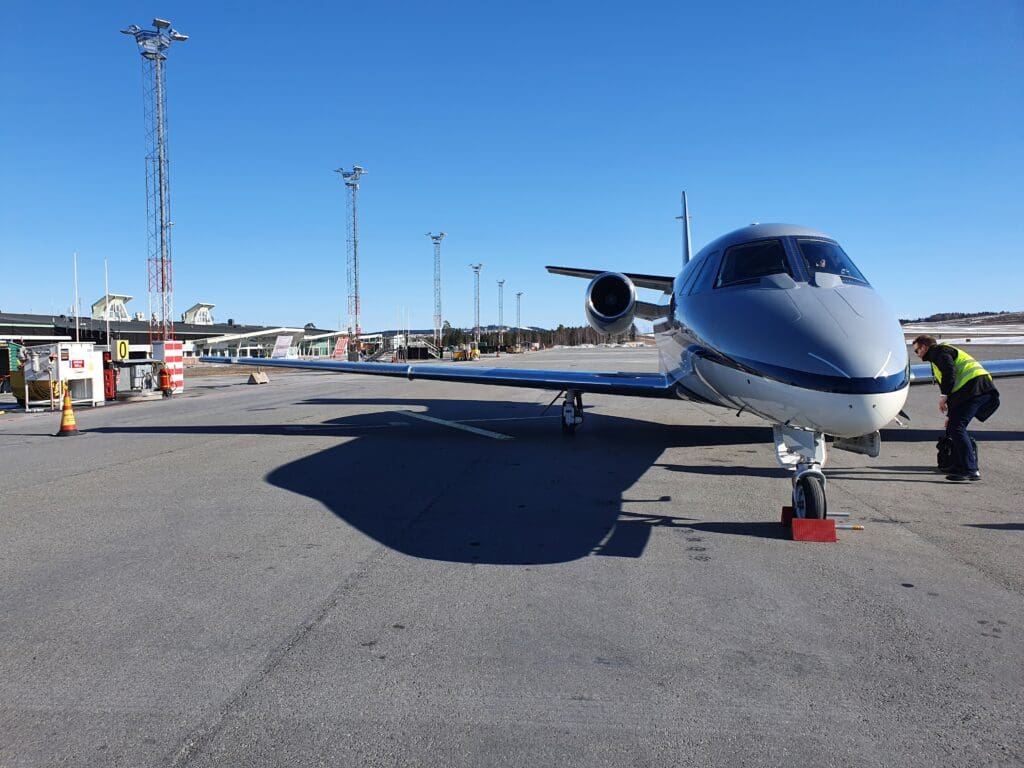
As soon as the minivan exited the road, Jonair’s sole Cessna 560XL Citation Excel could be seen waiting on the ramp, gleaming in its smart and elegant grey, white and blue livery. Manufactured at Cessna’s Wichita factory with the construction number 560-5258, this particular jet took to the skies for the first time in 2002, making the aircraft around twenty years old at the time of my flight. Remaining relatively close to its birthplace, this Cessna commenced its career in Canada as C-GWII – however, I was able to find out next to nothing about this stage of the aircraft’s life and no photos of its time in this guise. Following three years of service in North America, in August 2005 the Citation was ferried eastwards across the Atlantic before settling in Rotterdam. There, the Citation operated for the still-in-existence Dutch charter specialist, JetNetherlands as PH-DRK. Remaining there for almost a decade, in July 2015 the aircraft was re-registered as LX-VMF and entered service with another well-established charter operator, Luxaviation. Whilst Luxaviation is seen to be a major player in the exclusive world of private jet charter, this particular Citation’s stay in Luxembourg was to be no more than a few years and in 2021, the aircraft was given its current Swedish registration of SE-RIJ and ferried to Gothenburg where it initially flew for small operator Jivair before commencing its life with Jonair in November that year. Comparatively underutilised when compared to our typical airliner, in the week before my flight the Citation had undertaken a total of nine flights, visiting Kiruna, Luleå, Norrköping, Stockholm Bromma and Sundsvall from its base in Umeå.
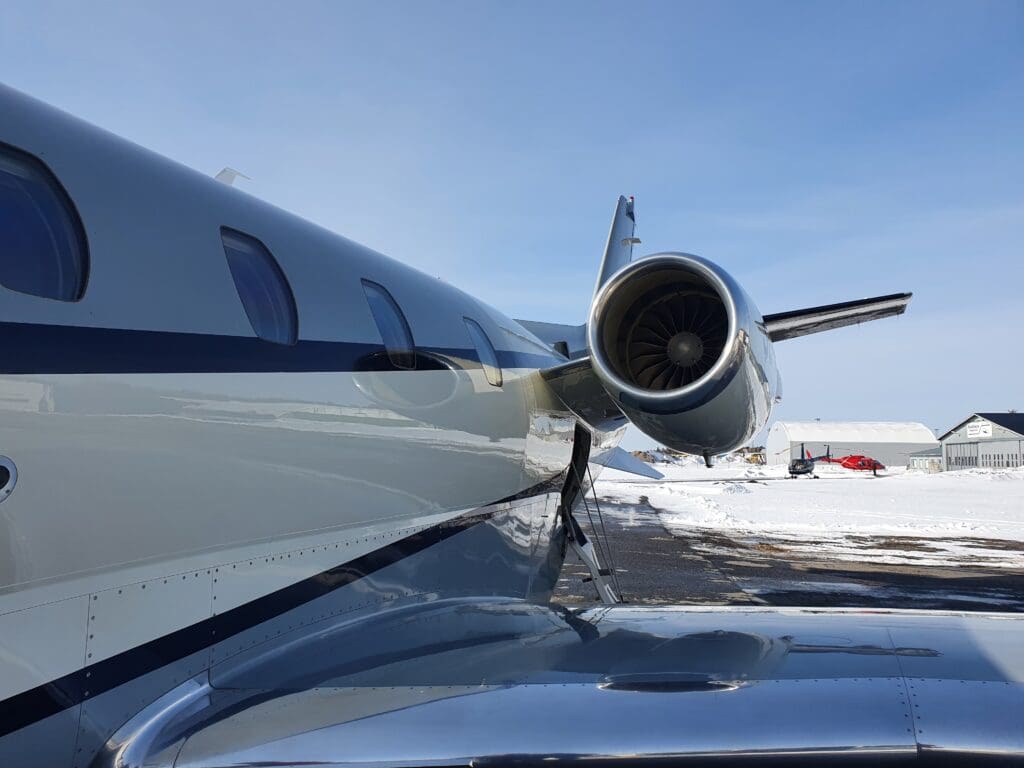
As the minivan came to a halt near the nose of the Citation, most appeared to be rather surprised to see a sleek-looking business jet standing in front of them in place of the usual utilitarian Beechcraft 1900C workhorse that usually operates the route. Whilst I was perhaps the only aviation enthusiast flying to Östersund that afternoon, once the doors opened and passengers spilt onto the apron, many of my fellow passengers appeared to take photos of the waiting jet. In true VIP style, the Captain could be seen waiting near the carpet that had been placed at the bottom of the aircraft’s built-in steps, ready to greet the flight’s passengers and assist with transferring their luggage from the back of the minivan and into the spacious hold at the rear of the aircraft.
Hoping to snag one of the two single seats at the rear of the aircraft, once the minivan doors opened I decided to hold off on the photos and made my way straight towards the Cessna’s entrance. Ending up third in the queue to board the aircraft, I was pleased to find that one of the two solo seats at the rear of the cabin remained vacant – this being what would be Seat 3A were the seats to have been numbered. This particular Citation Excel features a configuration that is standard for many different variants of Citation – featuring a total of nine seating positions. These consist of an inwards-facing chaise longue directly opposite the entry door with space for two passengers, two pairs of seats positioned towards one another on either side of the aisle, the two single seats at the rear of the aircraft, and then finally an inwards facing seat positioned directly opposite the toilet. Whilst the cabin may be relatively small, as on all business jets, the space is utilised effectively to fit in as many wealthy passengers as possible.
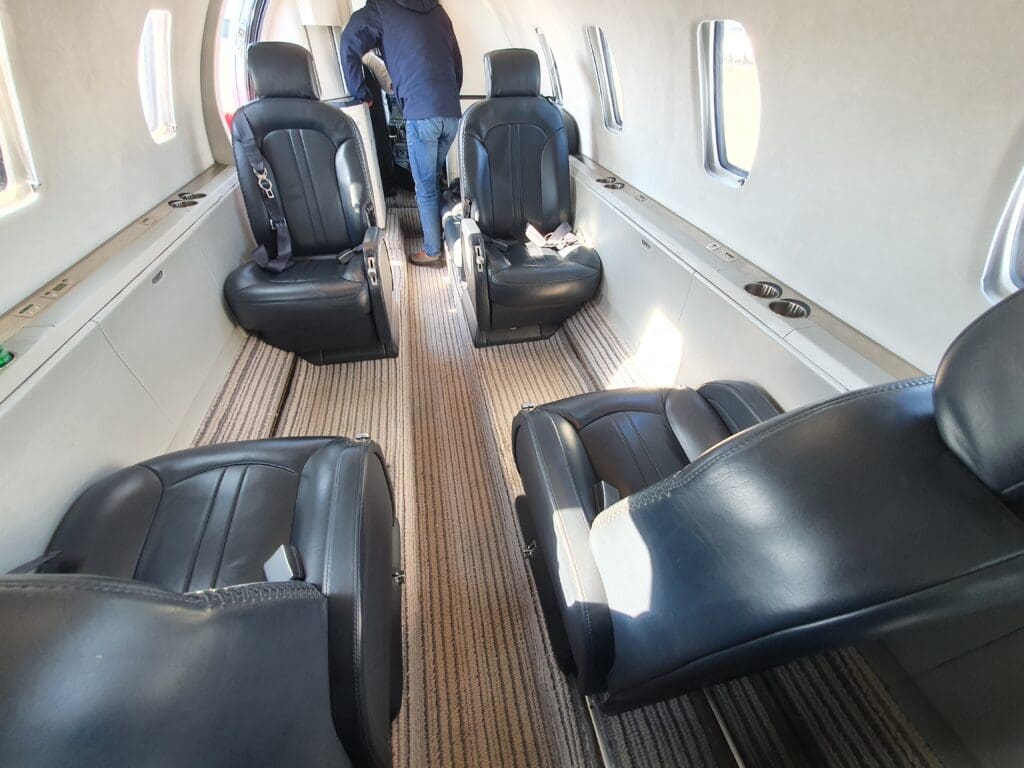
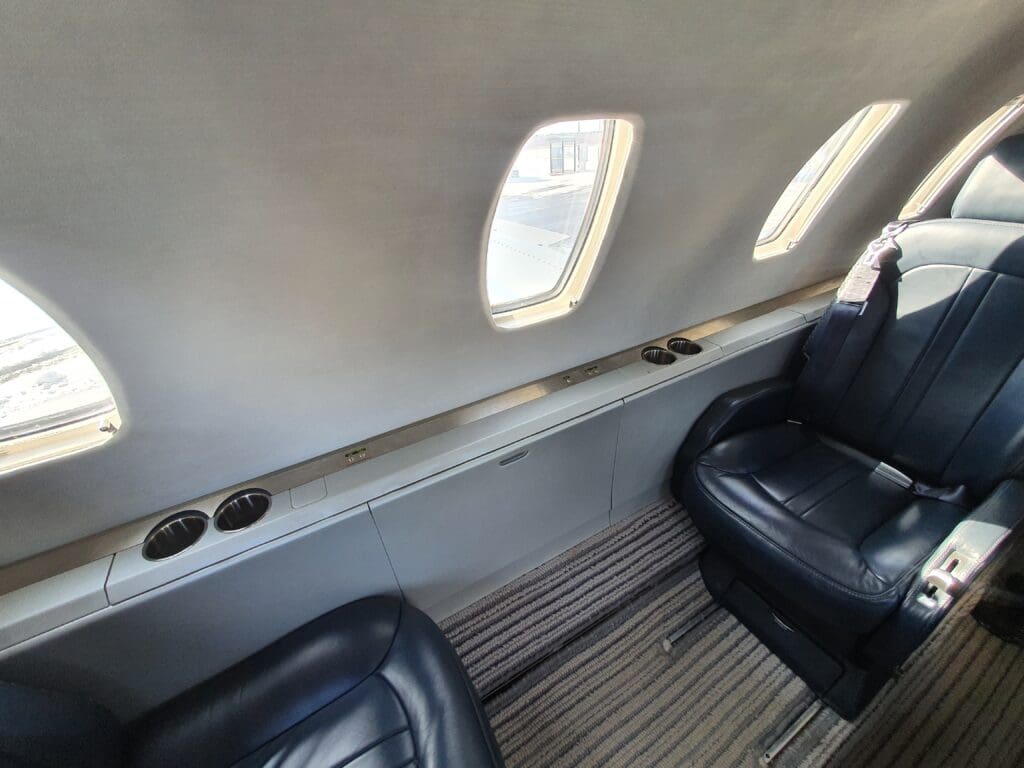
A photograph of the aircraft’s interior during its time with Luxaviation shows its seats to have been covered in blue leather. However, following its delivery to Sweden, Jivair AB undertook a costly refresh of these with each seat now sporting very dark blue/black leather and complete with ornate stitching. Meanwhile, smart beige and brown striped carpets line the cabin floor whilst a panel of light grey plastic and polished metal runs along either side of the cabin. Inside, the cabin height of 1.73 metres meant that I did not have to bend my head too much as I journeyed towards the rear of the aircraft. Furthermore, measuring 1.71 metres across, this seemed to be comparatively spacious compared to the cabin of the Citation Bravo that I had previously flown in – with this being 1.43 metres tall and 1.49 metres wide.
As one would likely expect from a private jet, upon sitting down I found the seat to be highly comfortable – offering a good amount of legroom whilst also being soft and well padded. In the panel to my left underneath the Citation’s distinctively shaped windows, two buttons could be seen – one for the reading light and the other to illuminate the pull-out table. These lights are located above the seats alongside an air vent. Meanwhile, a literature compartment in this panel contained two Jonair-branded safety cards, identical in design to those found on the operator’s other aircraft. As one would expect, the aircraft appeared to be in a spotlessly clean condition, and other than a few very minor scratches on the metal side panel, I failed to spot any signs of wear and tear. It is worth noting that no screens were provided inside the cabin, and I also failed to spot any power ports which may prove slightly annoying for those wanting to charge or power their devices on a longer flight.
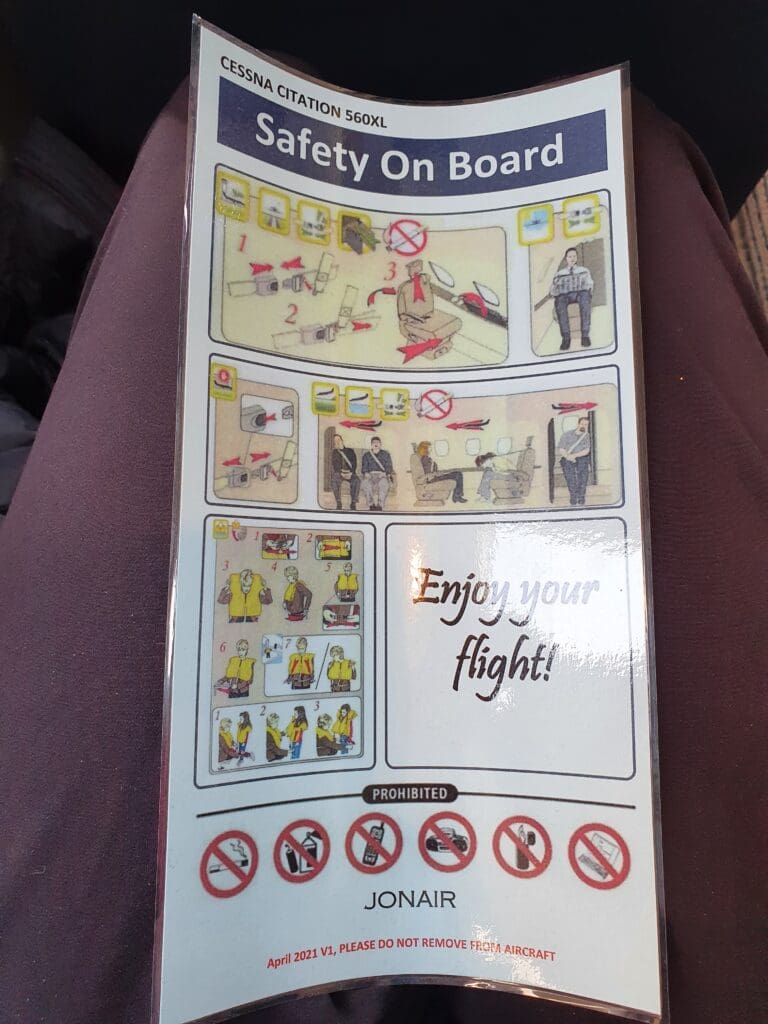


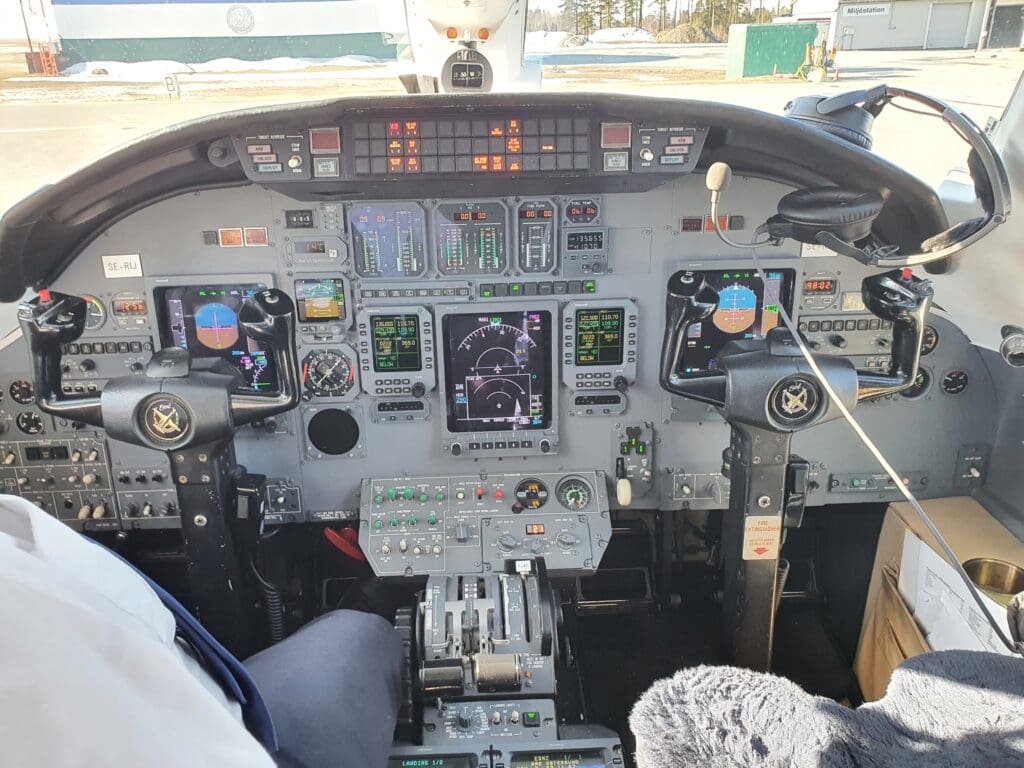
Given the Citation’s small size, it did not take too long for all passengers to make their way into the cabin and take their seats. However, it did take a little longer for several passengers to get to grips with the seatbelts which featured both a shoulder and a waist strap. Once all passengers and their bags had made it onto the aircraft, the Captain boarded and closed the door before performing what seemed to be a long welcome and safety speech from the front of the cabin. Whilst this was undertaken in Swedish only, I managed to catch a mention of oxygen masks, safety cards and drinks in the compartments at the front of the cabin which passengers were free to help themselves to during the flight. Once this had been done, the Captain squeezed into the cockpit and a few moments later, the two Pratt and Whitney turbofan jet engines hummed and whirred into life in what seemed to be a fairly quiet start-up procedure.
As had been the case in Östersund, once the engines had spooled up, there was no hanging about, with the aircraft cautiously powering forward and taxying out of its stand a whole eighteen minutes ahead of schedule at 1422. From its parking position, the aircraft turned right and slowly passed the small hangars of a couple of local flying clubs before picking up speed once on the taxiway.
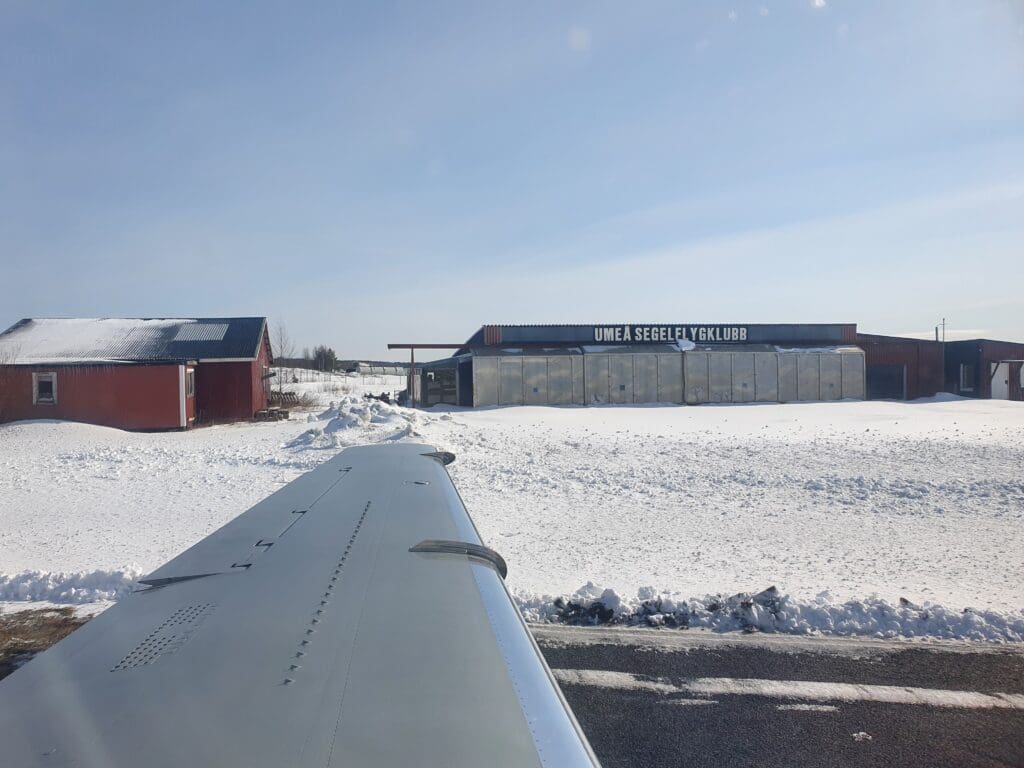
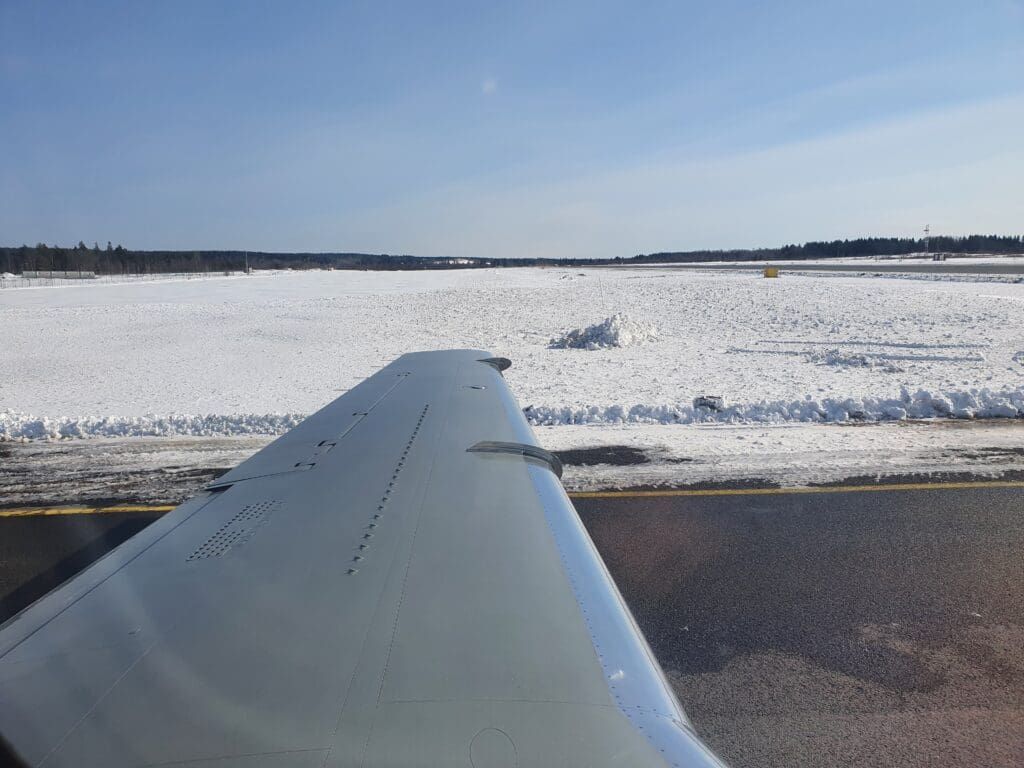
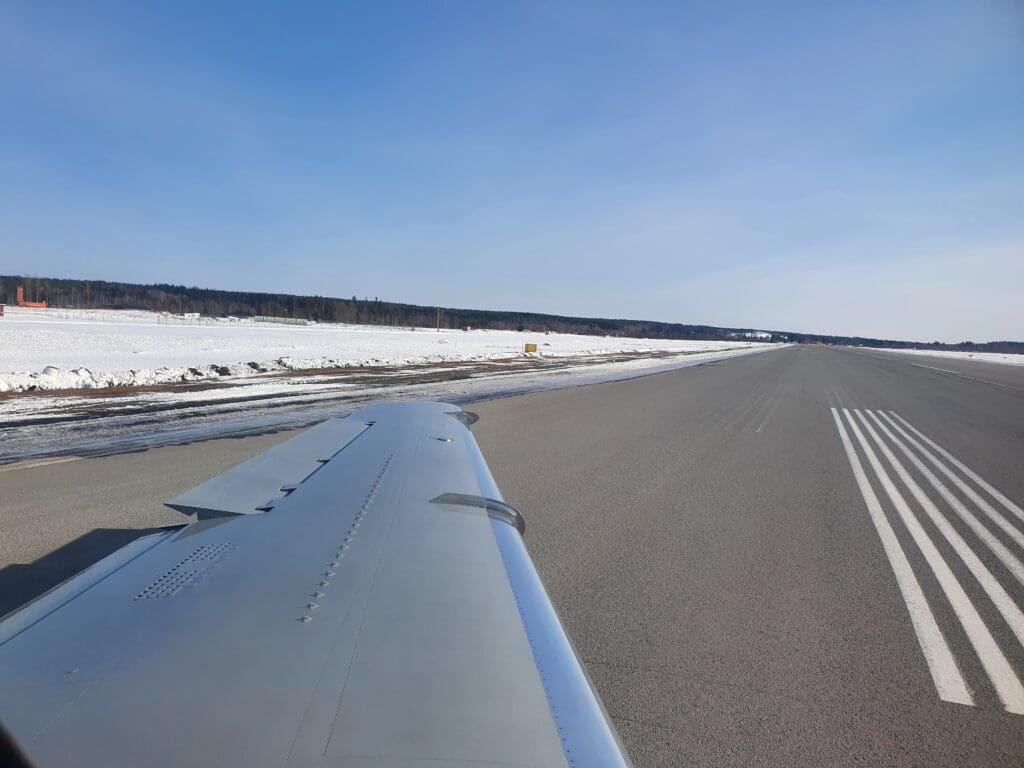
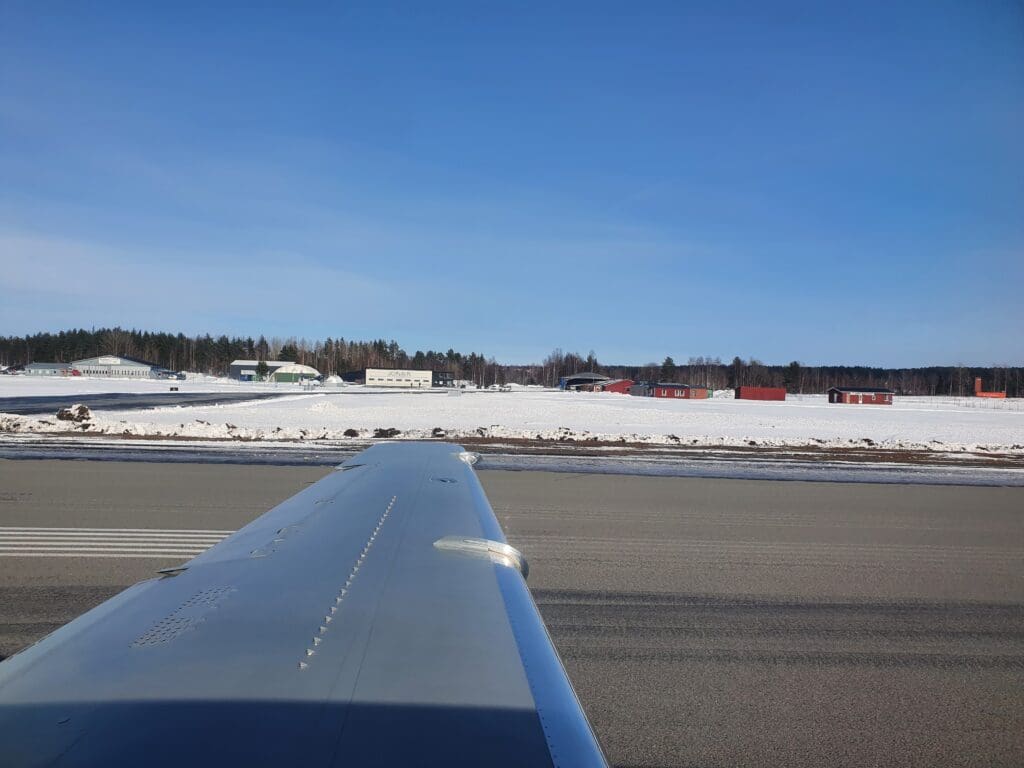
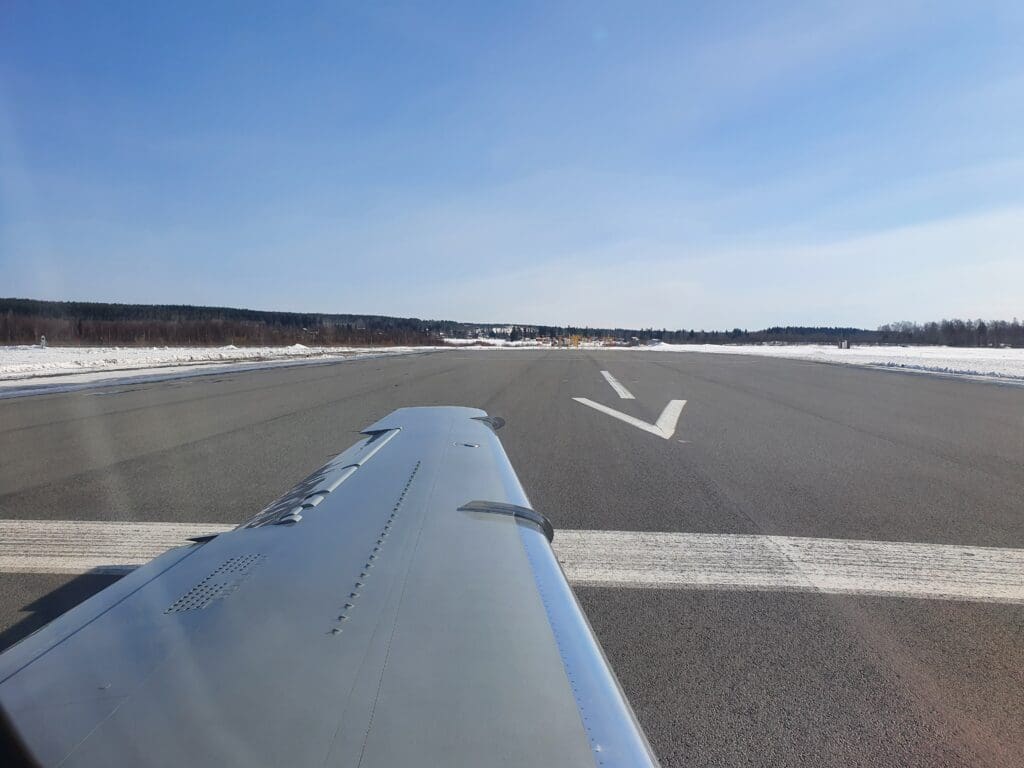
Without holding, following a short taxi the Citation made its way onto Umeå Airport’s runway before turning left and backtracking to the end of Runway 32. A few moments later, the Citation reached the end of this and turned around before coming to a quick stop. At 1425, the two PW545A jet engines whined into life, resulting in a fairly high-pitched sound as the aircraft went flying down the runway. Within a few seconds, the jet rotated up into the sunny skies of Northern Sweden, with the landing gear and flaps promptly retracted as the aircraft rocketed away from Umeå.
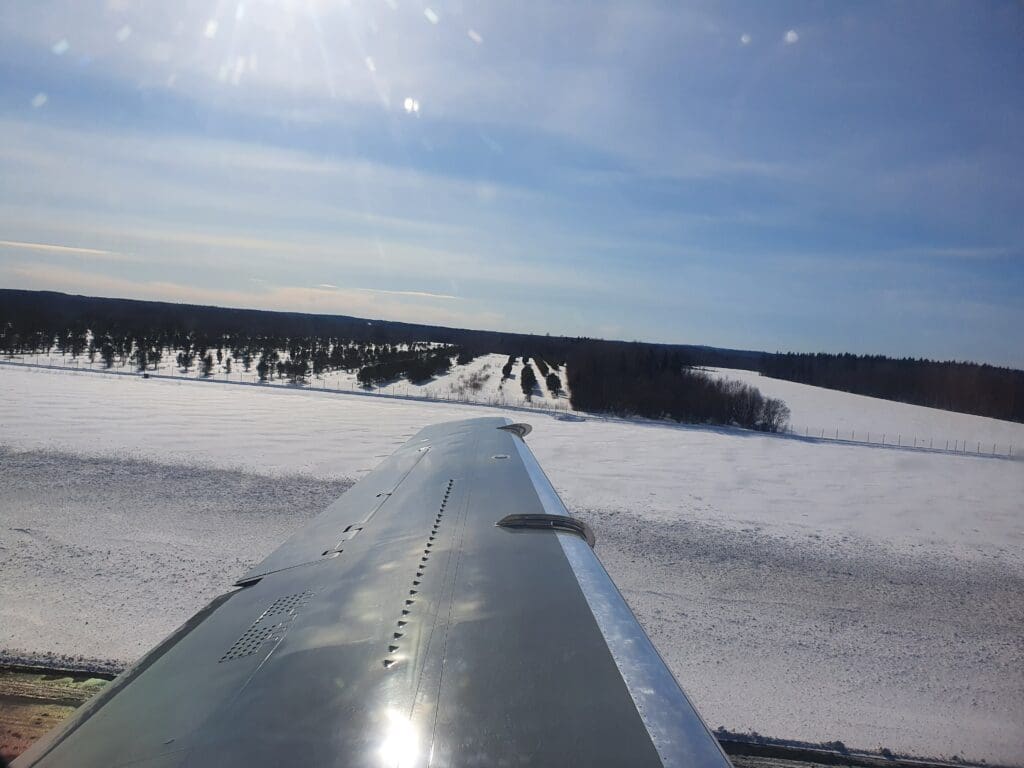
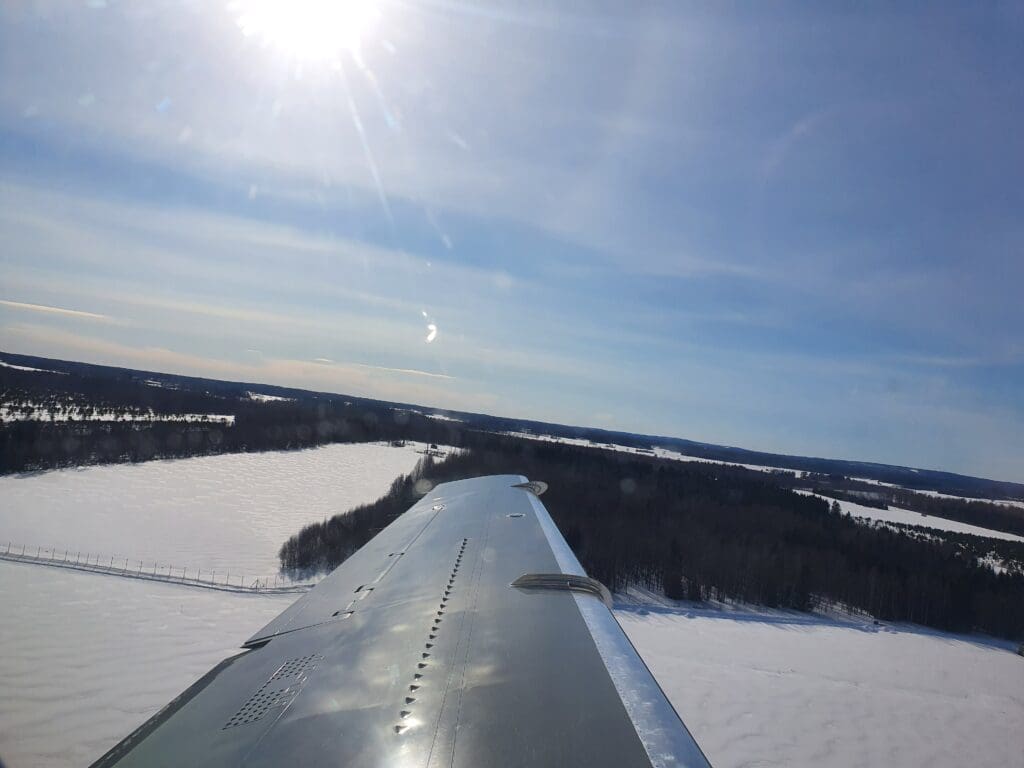
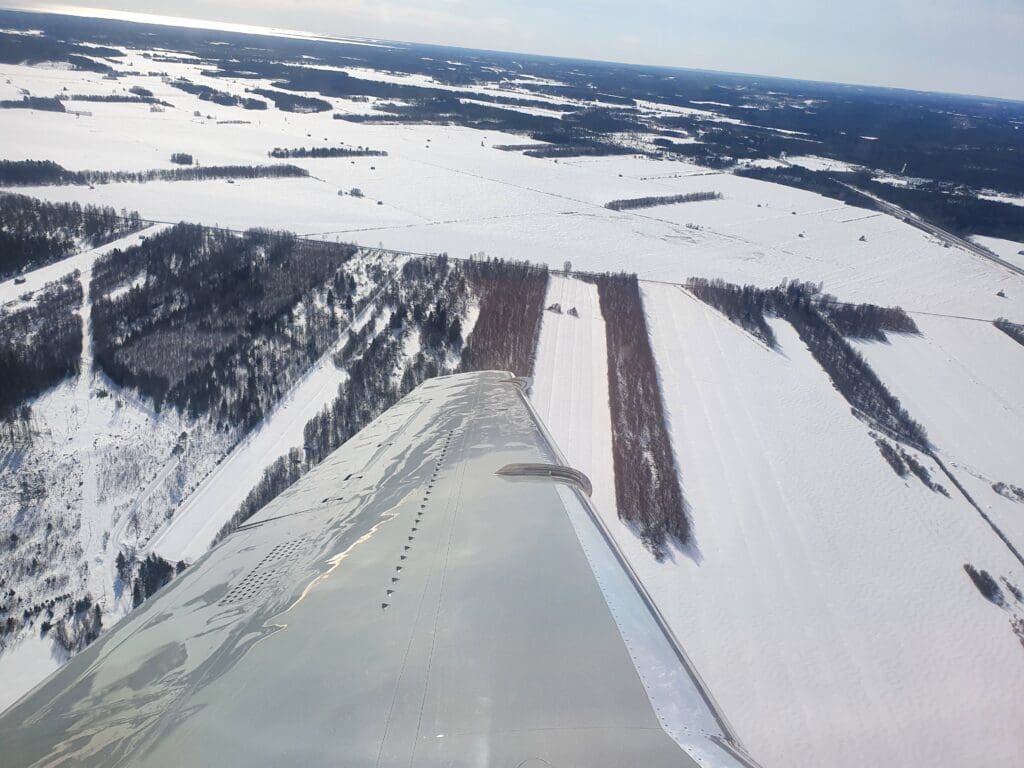
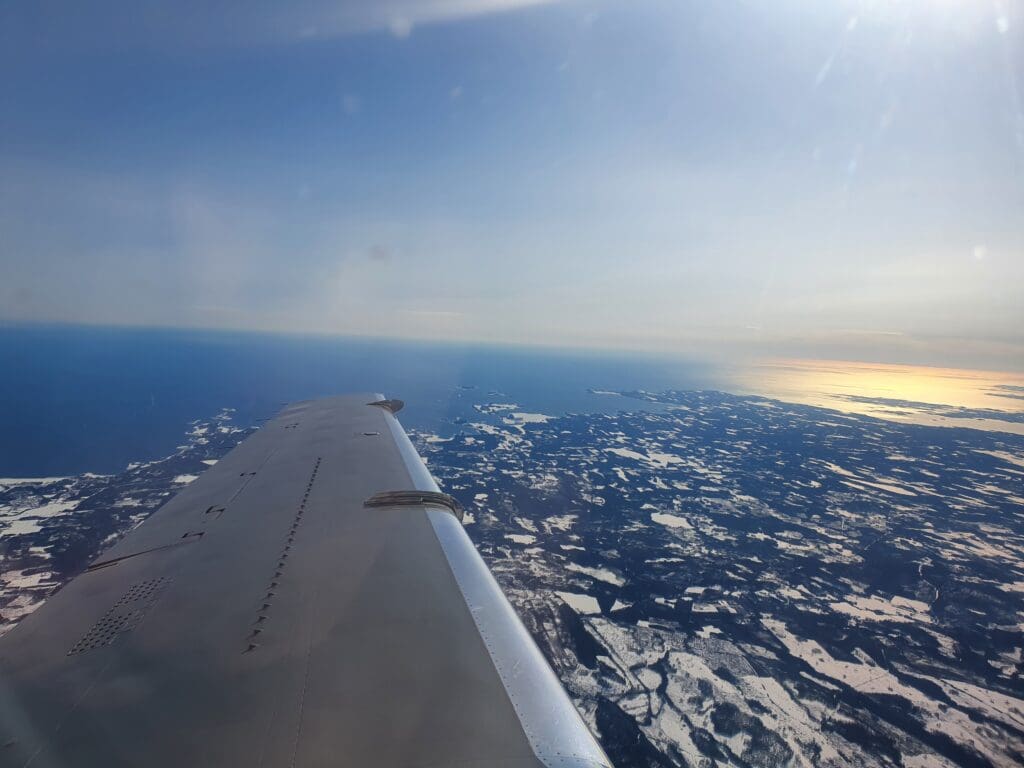
For those on the right-hand side of the aircraft, the initial climb out would have likely resulted in good views of the airport and the banks of the Ume River, shortly followed by the buildings of downtown Umeå. However, from my seat, I was instead provided with vistas of the mostly flat picturesque countryside to the south of Umeå consisting of snow-covered fields, forests and frozen lakes. In addition during the first few minutes of the flight, the chilly waters of the Baltic Sea could also be seen in the distance. A short time after departure, the Citation banked to the left before rolling out on a heading of approximately 254 degrees, taking the aircraft straight to Östersund with minimal changes in course required to get us there. Except for a few bumps almost immediately after taking to the skies, that afternoon the Citation’s quick climb was incredibly smooth and so a few minutes later, a loud ‘ding-dong’ could be heard as the seatbelt sign at the front of the cabin was extinguished.
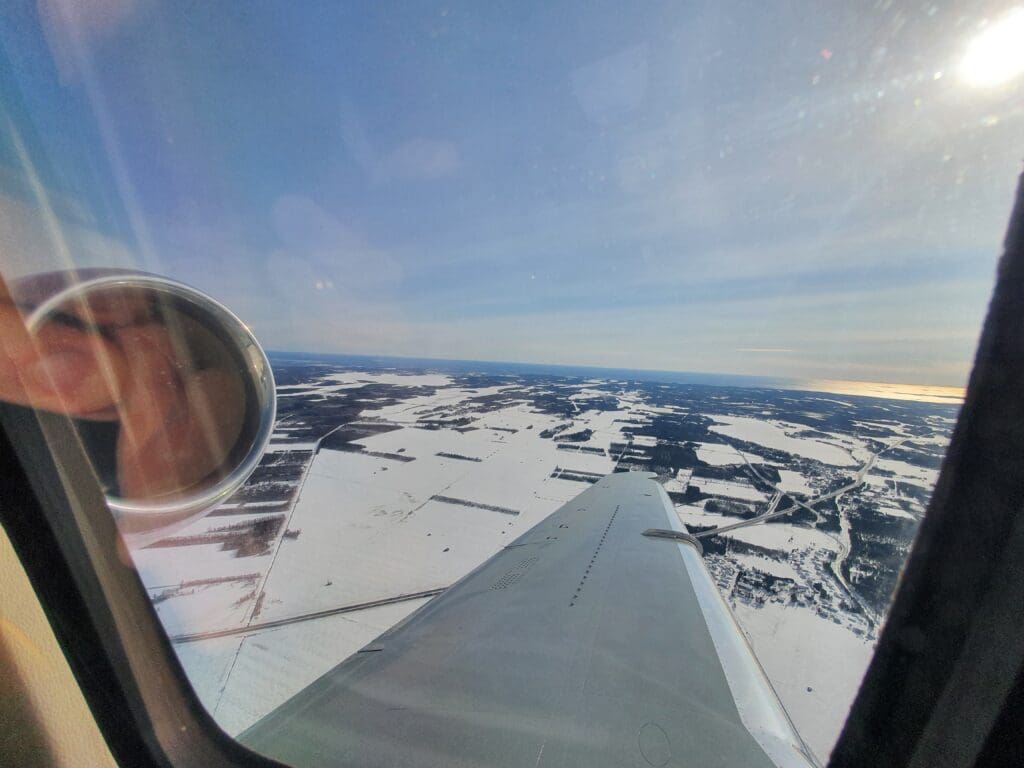
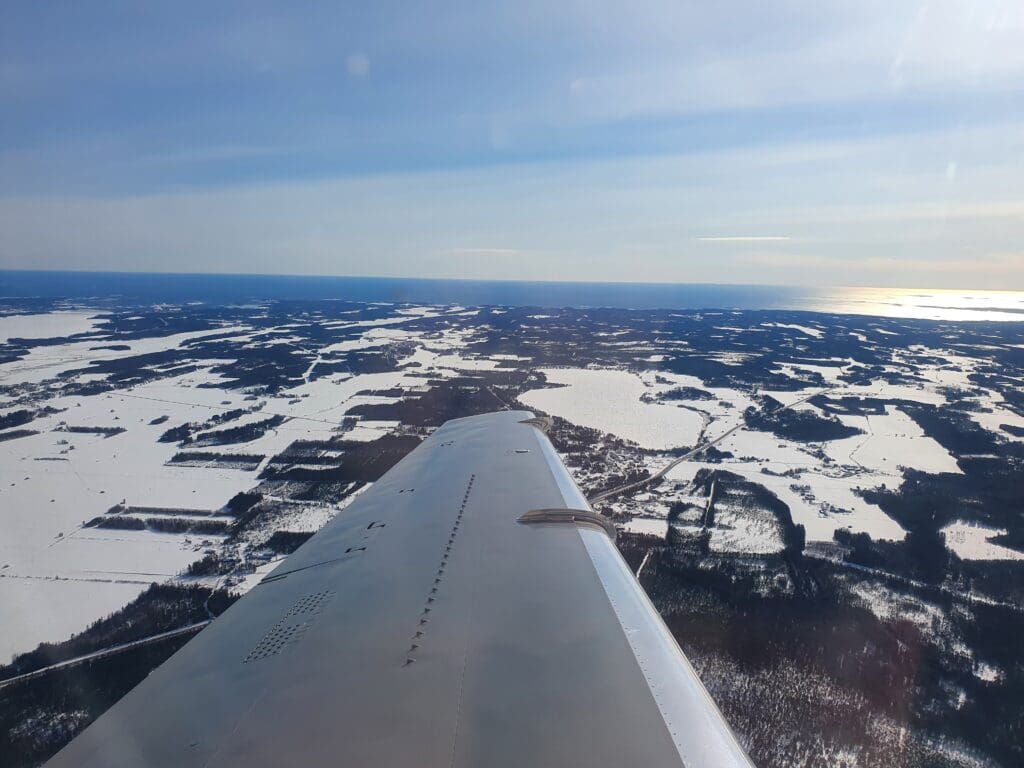


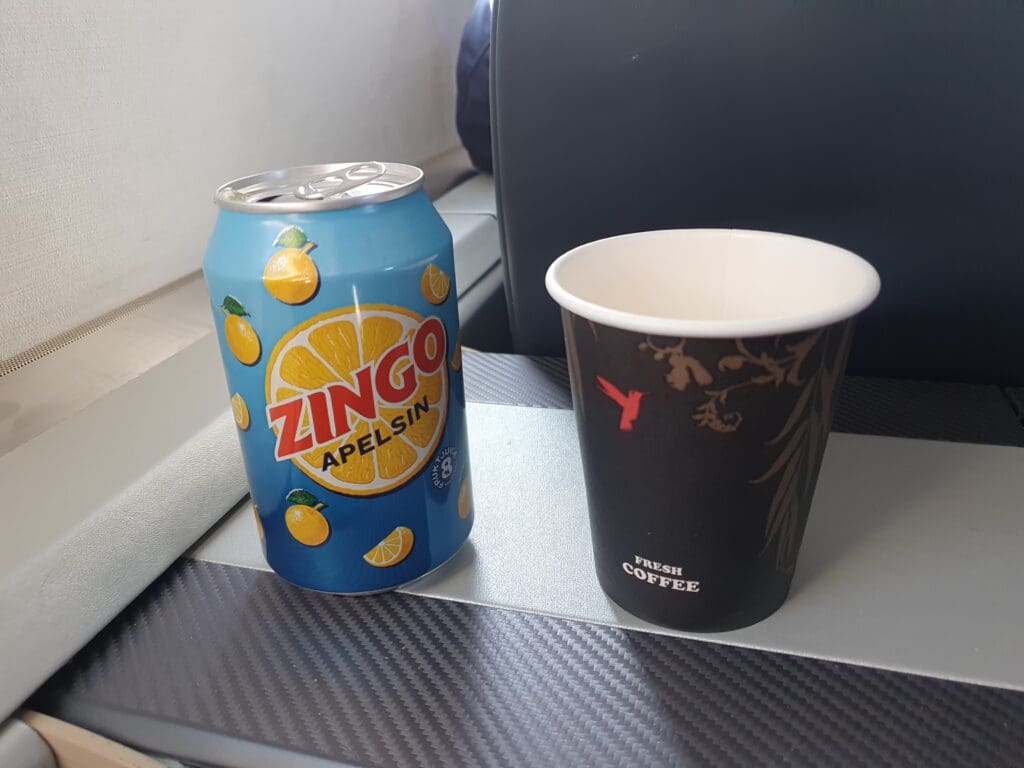
Unlike on the morning Beechcraft service during which passengers rejected the complimentary hot drinks and remained firmly in their seats for the duration of the flight, that afternoon, once the seatbelt signs had been extinguished a fair number of passengers decided to help themselves to the selection of complimentary drinks placed in the compartments at the front of the cabin. Seeking to make the most of the experience, as the aircraft neared its cruising altitude I cautiously slinked up through the cabin, taking care not to inadvertently walk into my fellow passengers’ arms and shoulders before arriving at the galley area that sits between the cockpit and cabin. There, plenty of compartments could be seen and after opening up several of these to no avail, I eventually discovered the loot. That afternoon one compartment contained 330ml cans of 7-Up, Coca-Cola, Zingo sparkling orange and various flavours of Loka sparkling water, whilst another contained bottles of Perrier sparkling water. On the compartment to the right, a jug of hot water could be found alongside tea bags, hot chocolate and coffee sachets. Whilst I imagine that those who charter the aircraft are offered real glasses and mugs, for us ‘regular’ passengers paper coffee cups were provided. All-in-all, I thought that this was a good selection given the length of the flight.
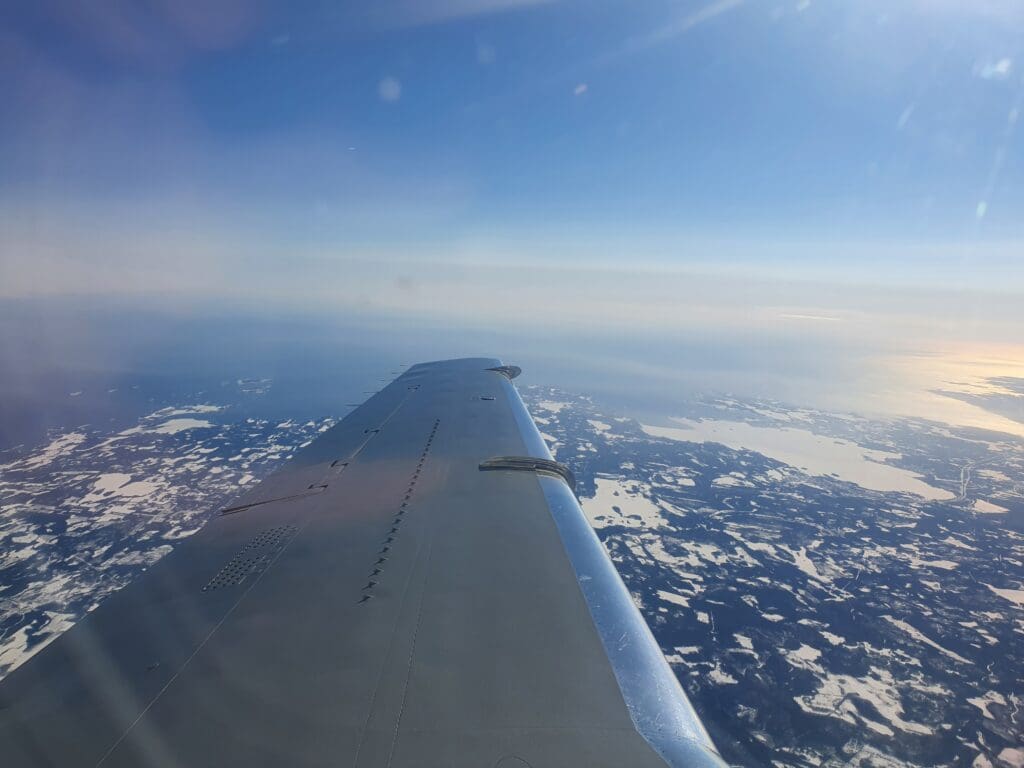
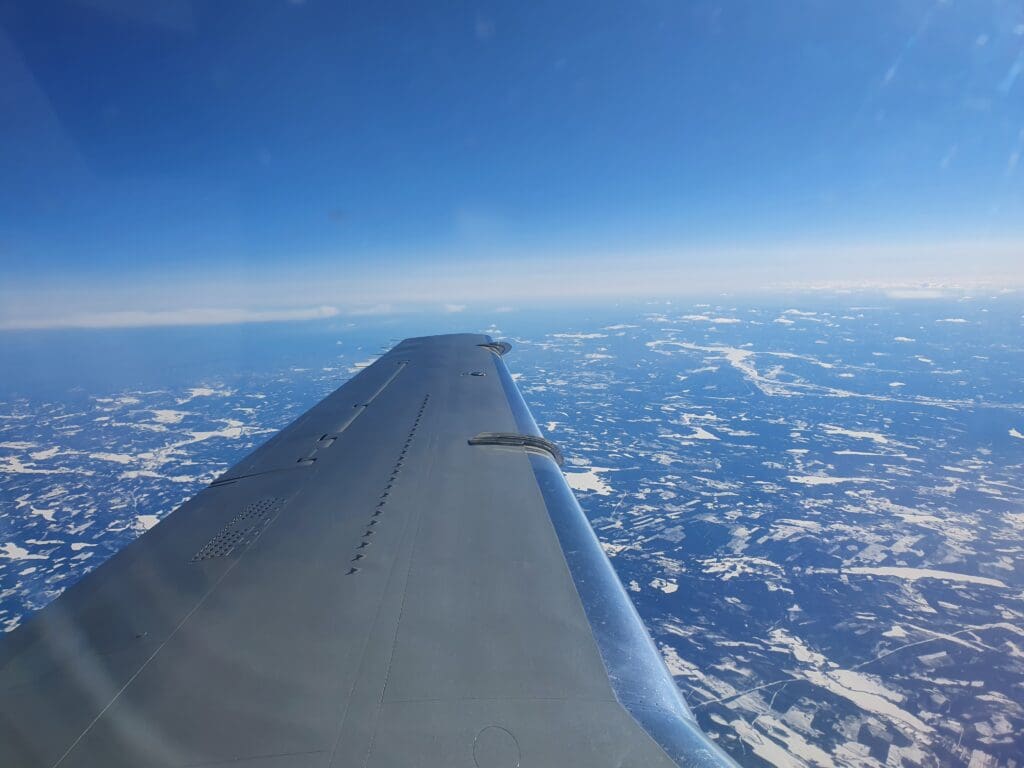
Upon returning to my seat, I pulled out the tray table from the side compartment and poured the can of Zingo into the paper cup. Returning to the flight’s progress, the aircraft made its way southwestwards across Vasternorrland with a quick ground speed of around 420 knots and an altitude of 22,000 feet, with the sight of the Baltic Sea soon disappearing and being replaced by endless views of the flat snowy Swedish countryside. Inside the cabin, as the aircraft smoothly soared high above Sweden, several passengers could be seen taking photos of their luxurious surroundings, whilst others slept, browsed their own devices and read. Having been lucky enough to end up in what is perhaps the most desirable seat for solo passengers onboard the Citation, the aircraft proved to be comfortable and spacious. However, being an almost full flight, I can’t help but think that the two passengers occupying the sideways-facing chaise longue may have had a different experience having to spend the flight cosied up to an unknown fellow passenger. I should also note that once in the air, the cabin still seemed to be relatively quiet despite the presence of two jet engines a short way behind us. With this considered, I assume that the area around the Citation’s cabin must be fitted with fairly good levels of sound-absorbing material.
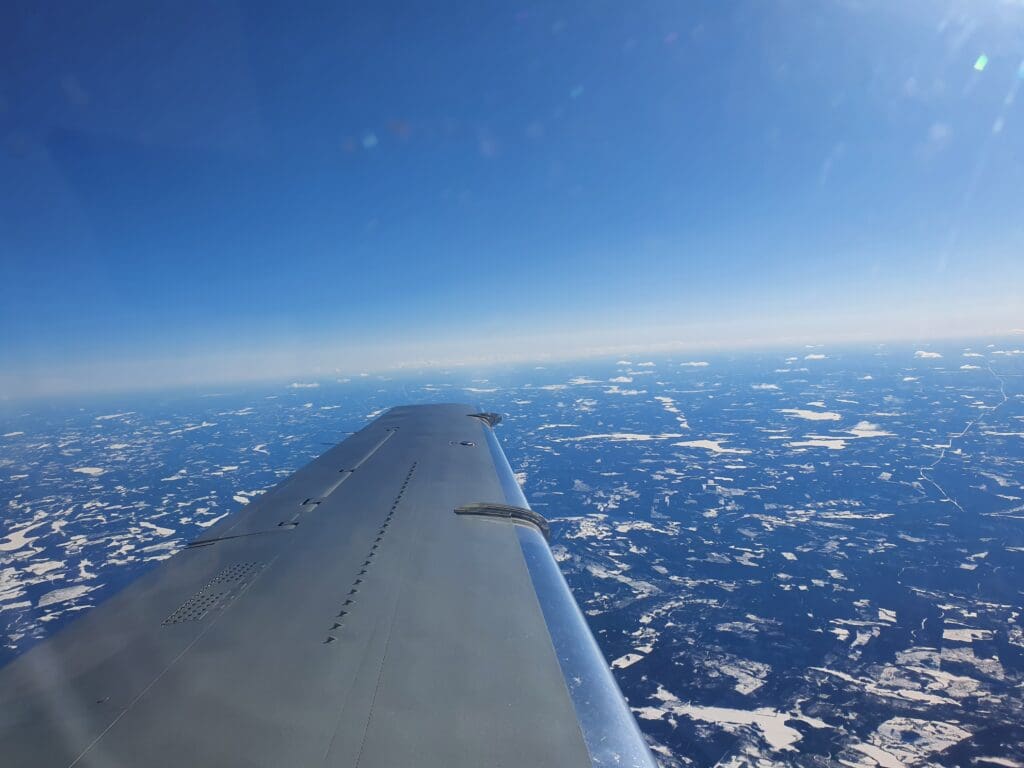
Having not drank anything since my cappuccino in the terminal, by the time of the flight I was rather thirsty and polished off my Zingo in no time. Once done, I decided to make a quick trip to the lavatory at the rear of the Citation. After I entered this, I fought with the two dividers that separate this space from the cabin for a few moments before unlocking these and sealing off the toilet area. Once these had been closed, I found this space to be bigger than expected, allowing for a decent amount of room to stretch out and get changed if required. Other than this, a large mirror runs across much of the wall at the rear of the cabin whilst plenty of natural light fills this space thanks to the presence of the Citation’s large windows on either side of the toilet area, with these offering a superb view of both the wing and engine. Unlike several smaller corporate aircraft, underneath its leather-covered lid, this aircraft features a flushing toilet. Meanwhile, a sink is also present although it appeared that no water had been loaded onto the aircraft, with a large bottle of antibacterial hand sanitiser provided in place of the usual soap and water. As one would hope, the toilet area appeared to be clean and I was thus left with nothing to make any sort of valid complaint about as I returned to my seat in the cabin.


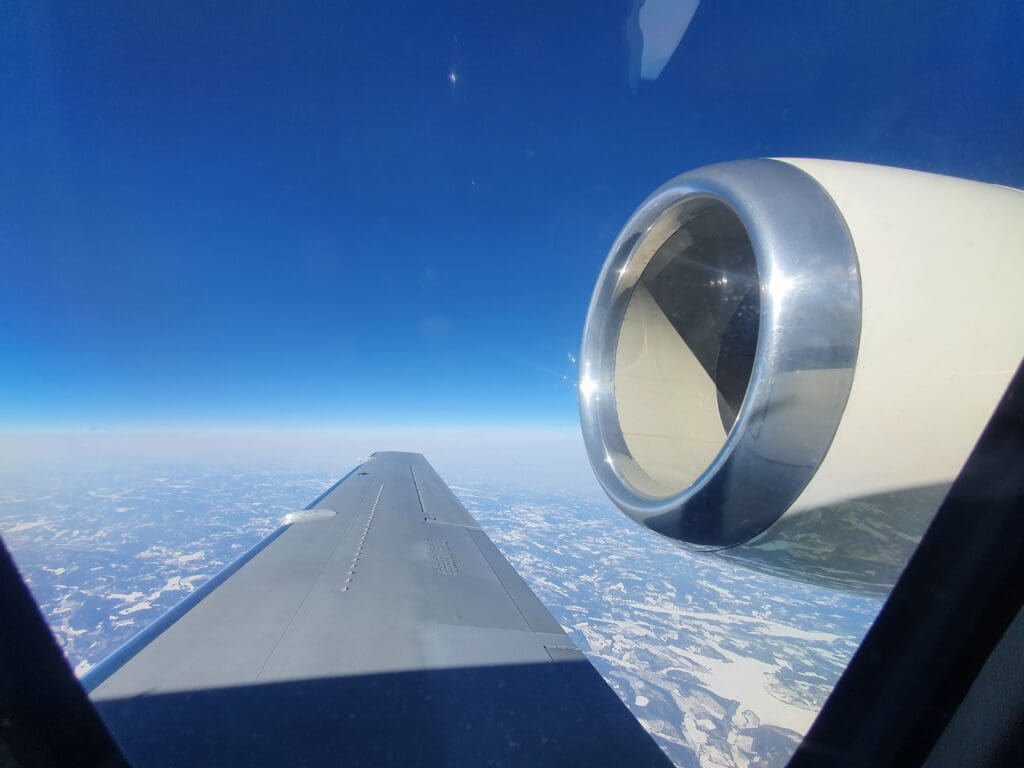
By the time I had made it back into my seat, glancing at the time, it was obvious that the flight would shortly be commencing its descent and thus my Citation experience was coming to an end. Sure enough, a couple of minutes or so later, the noise levels decreased slightly and the aircraft gently pitched down at the top of its descent into Östersund. During the first few minutes of this, the seatbelt signs remained off despite some light turbulence. However at 1445, a loud ‘ding-dong’ briefly filled the cabin once again as the seat belt signs were reilluminated as the Citation crossed into the skies of Jämtland County. This was then followed by a long announcement from the Captain, which like the welcome speech was undertaken in Swedish only. Whilst not too sure of what was mentioned, I assumed that this was to do with the aircraft’s impending arrival into Östersund, and nothing to cause any concern. As the Citation sank lower, the aircraft hit another patch of turbulence which continued for a few minutes. Whilst the aircraft bumped around a fair bit, thankfully this was nothing compared to the incredibly hair-raising approach that I had experienced the previous day on my King Air flight to Sveg.

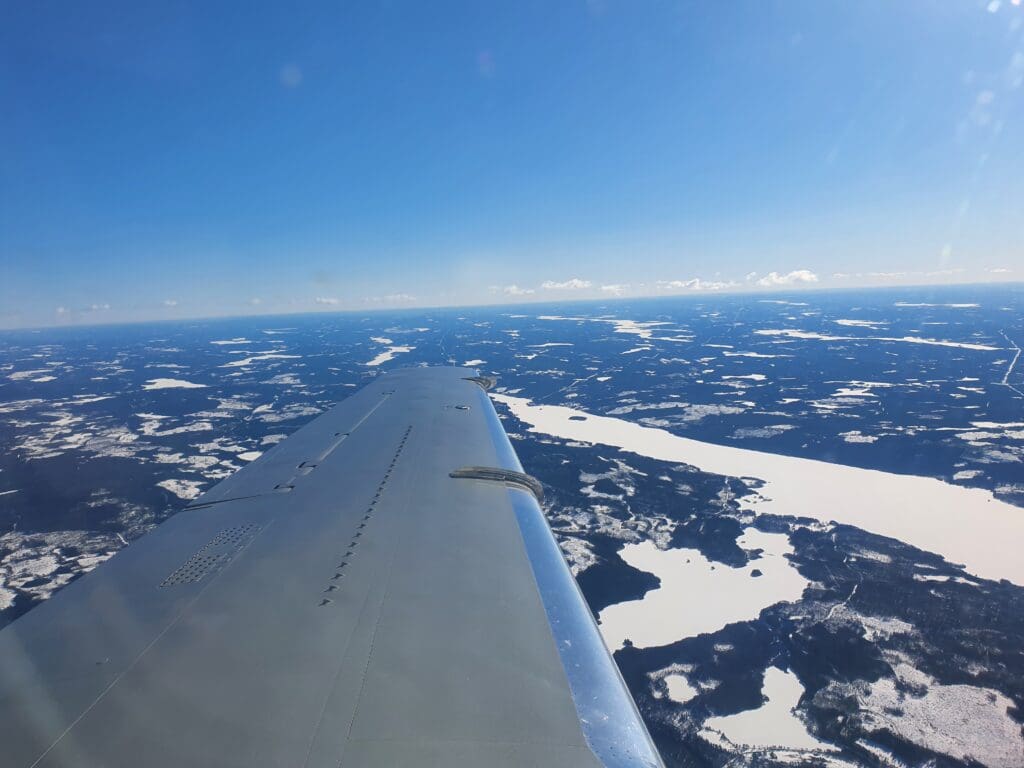
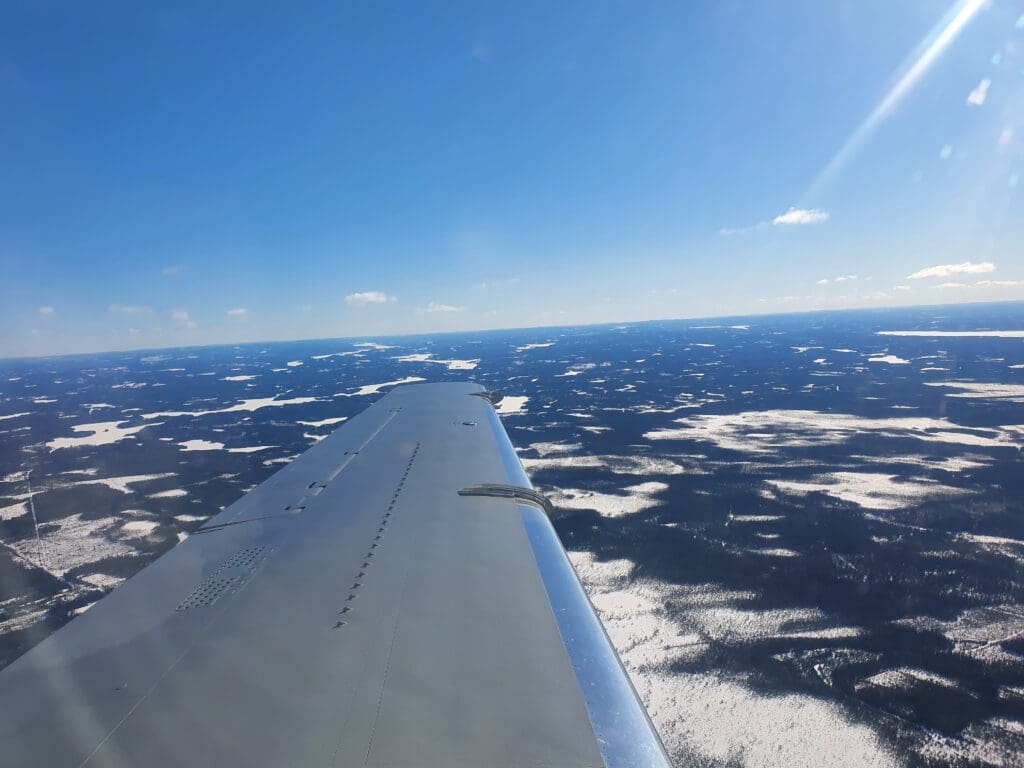
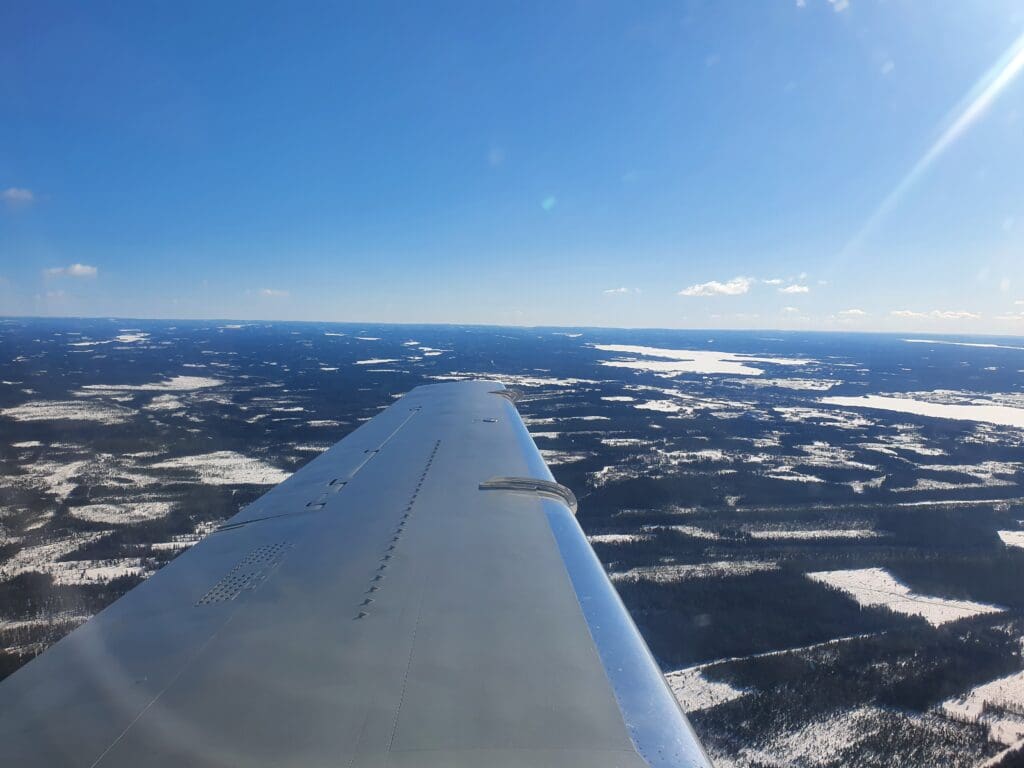
A short time after crossing the frozen waters of the Indalsalven, one of Sweden’s longest rivers, those on the right-hand side of the cabin could be seen snapping away as the buildings of Jämtland’s capital appeared off the Citation’s right wing. Meanwhile, from my seat on the left-hand side of the aircraft, as we passed Östersund I was offered views of the small town of Ope and the 330-metre tall radio and television mast, the Brattåsmasten, one of the tallest structures in Sweden. From there, the Cessna then sank over the frozen snow-covered waters of Storsjön lake and turned to line itself up for an approach to Östersund’s Runway 30.
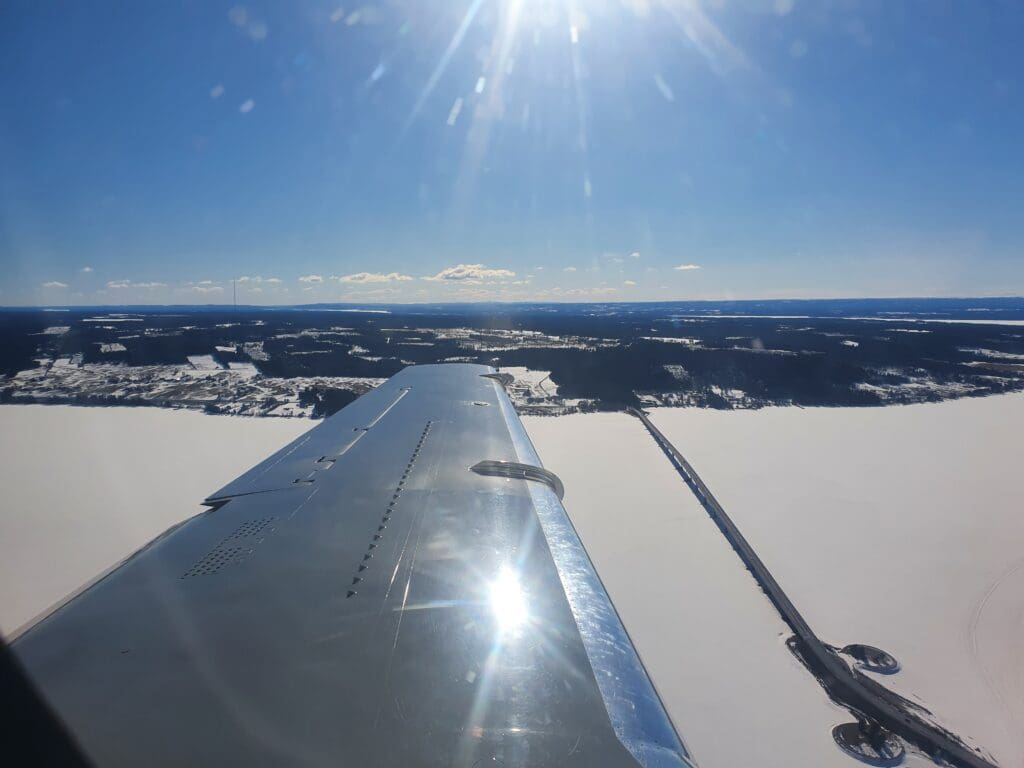
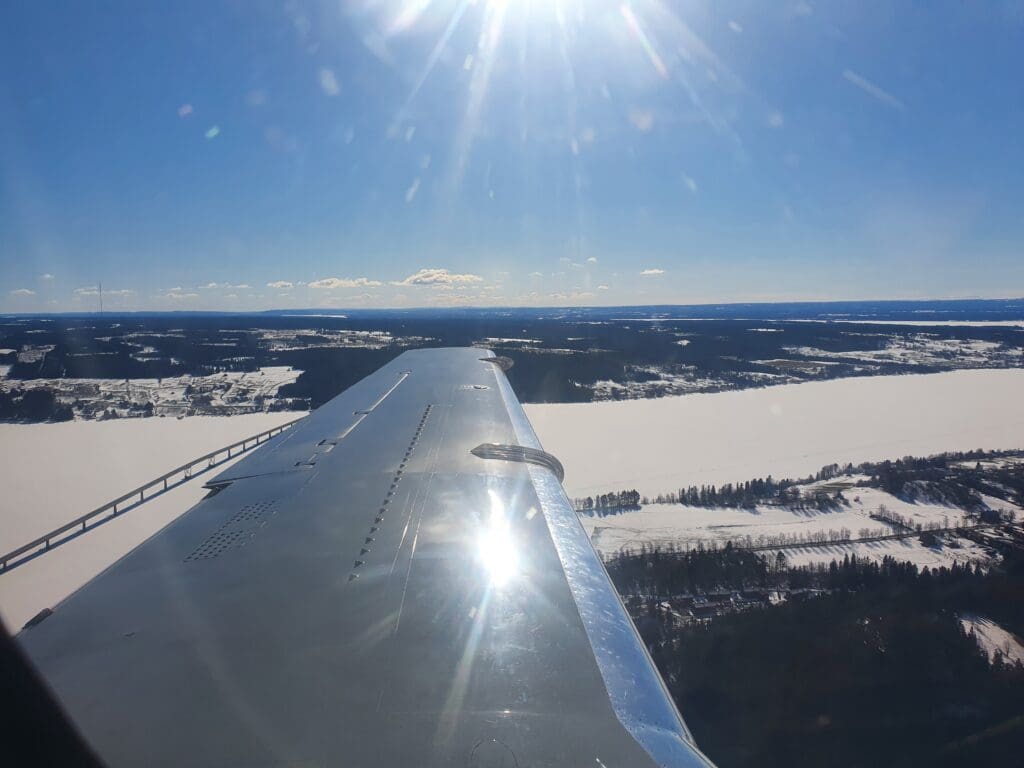
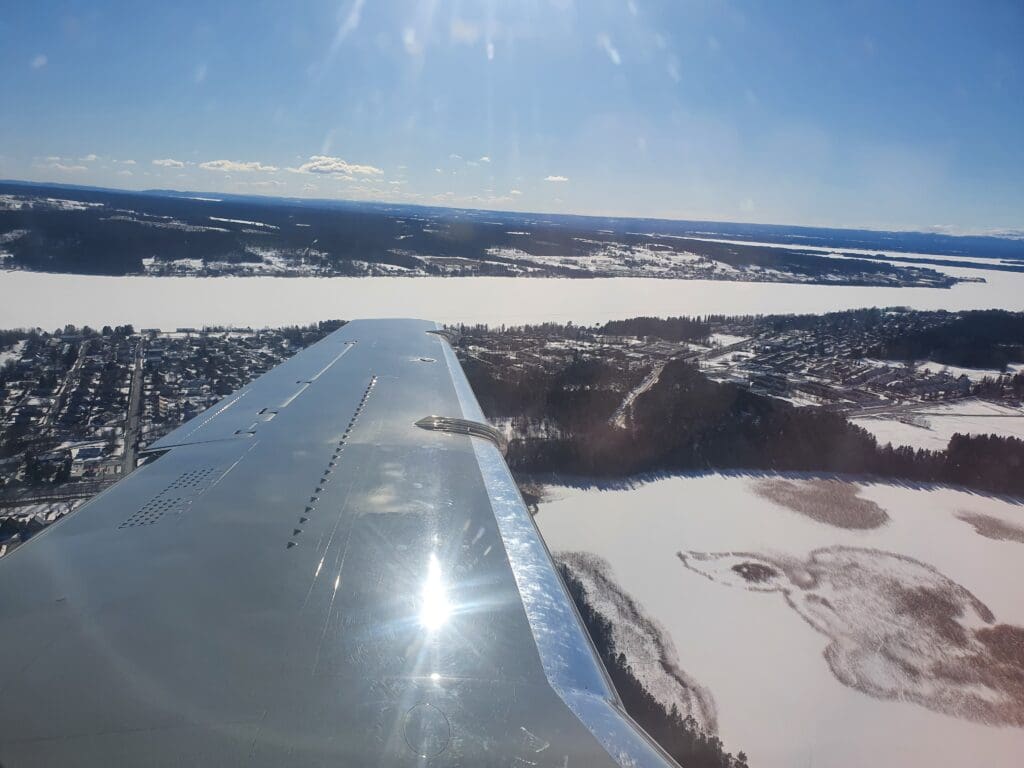
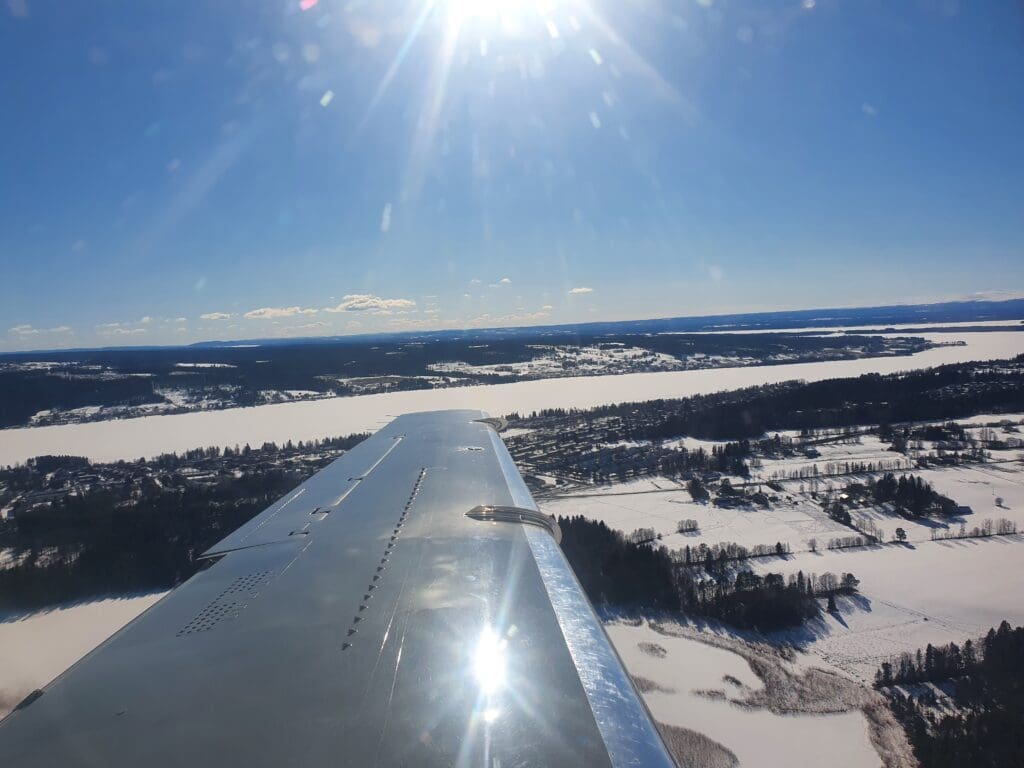
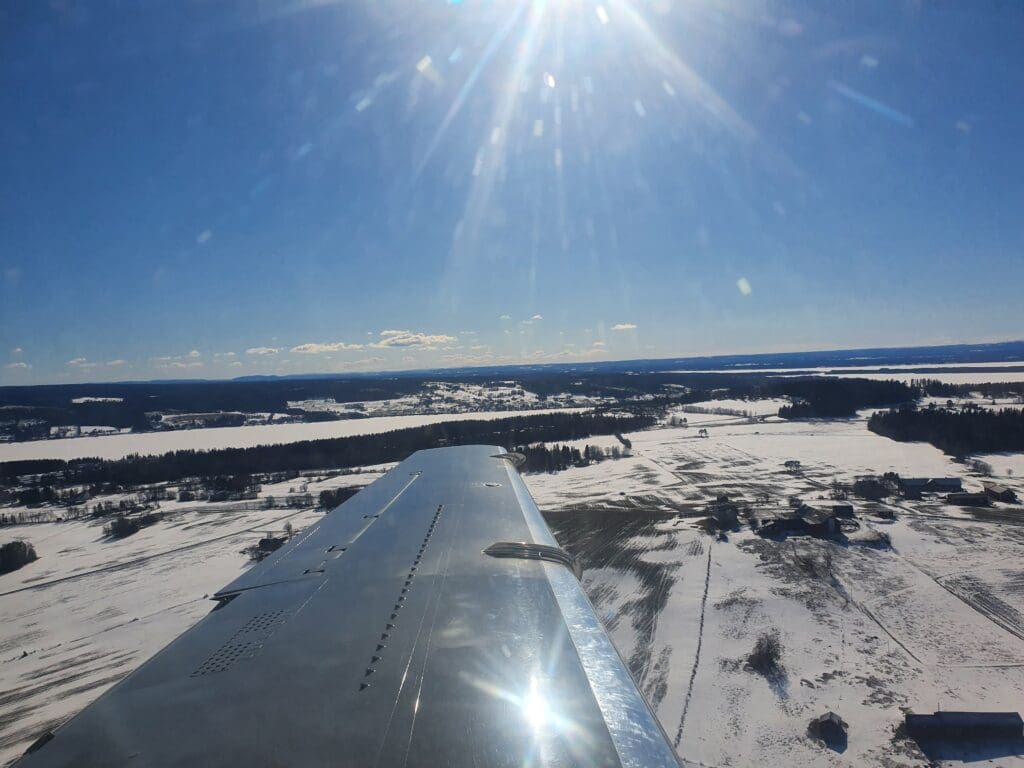
As the aircraft descended over the lake, the flaps and gear fell into position before the 1.5 kilometre-long Vallsundsbron bridge – one of three road bridges that connects the ‘mainland’ with the island of Frösön came into view. A short while later, the aircraft sank over one of Frösön’s lakeside towns followed by forests and fields, whilst the slopes of the Gustavsbergsbacken ski resort could be seen on the opposite side of the aircraft. Indicating our imminent arrival, several callouts from the Citation’s ground proximity warning system could be heard being blurted out from the cockpit speakers.
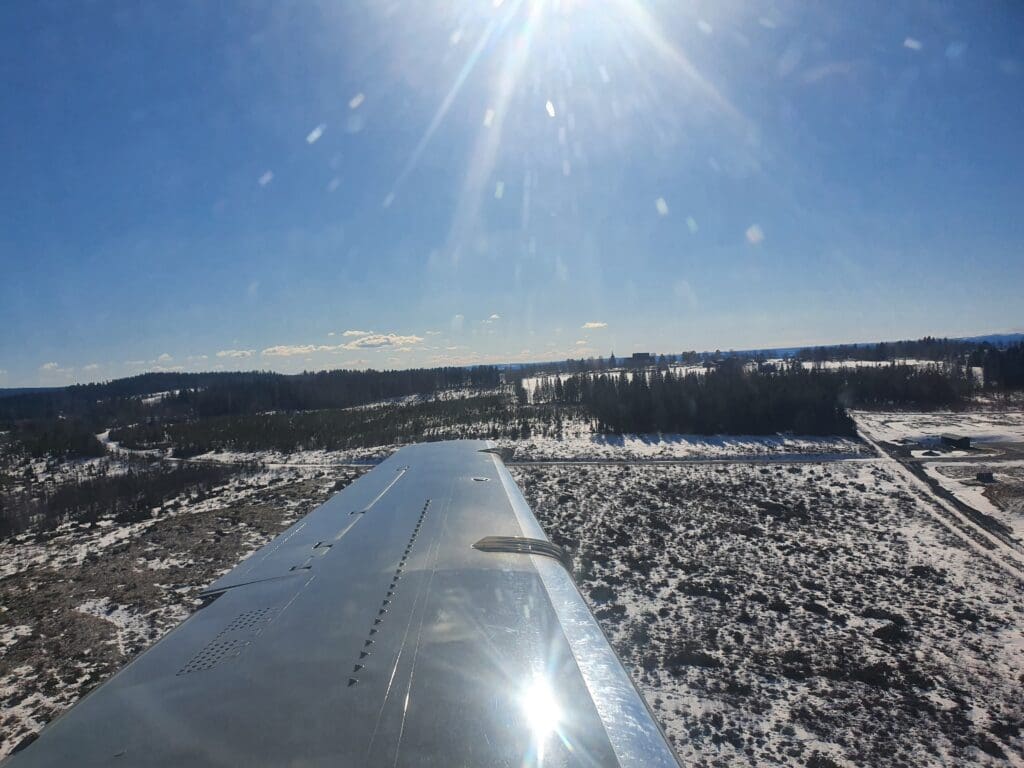
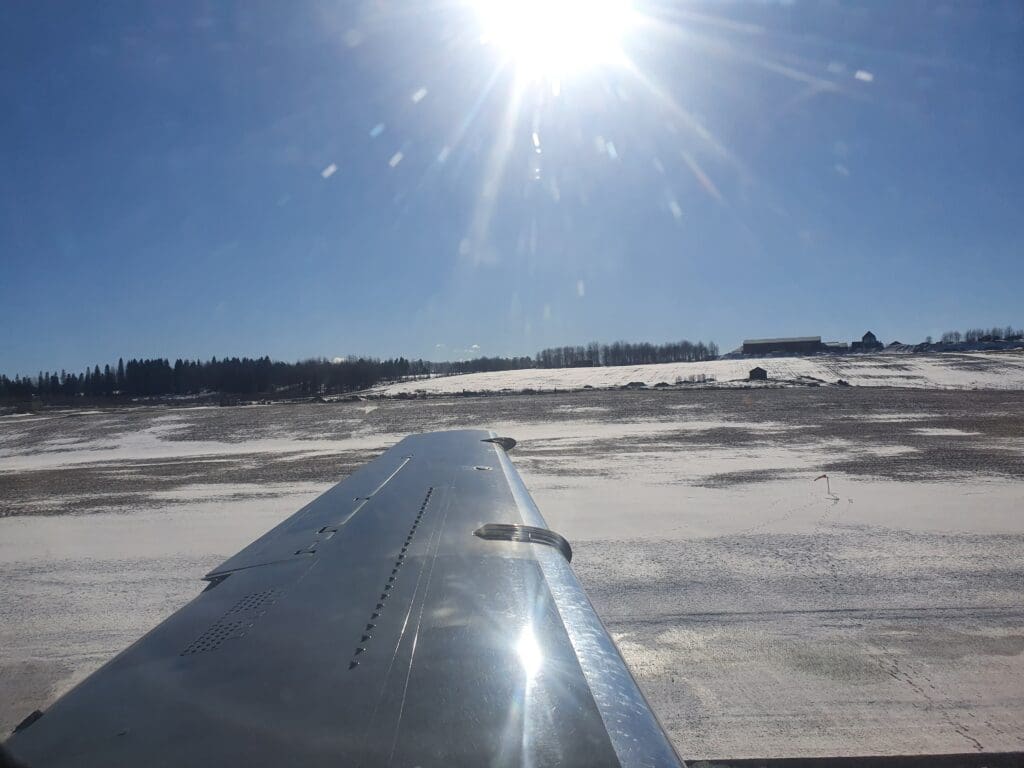
All too soon, my pleasant 32 minutes in the air came to an end at 1455 when the Citation crossed over Åre Östersund Airport’s perimeter fence before making a soft touchdown on Runway 30. Once on the ground, the Citation’s unusually shaped speed brakes sprung up and the reverse thrust was applied before the aircraft vacated the runway to the right. At that time, no other aircraft could be seen on the ground in Östersund, although following us on the approach to Östersund was an Xfly Bombardier CRJ-900 operating a Scandinavian Airlines service up from Stockholm Arlanda.
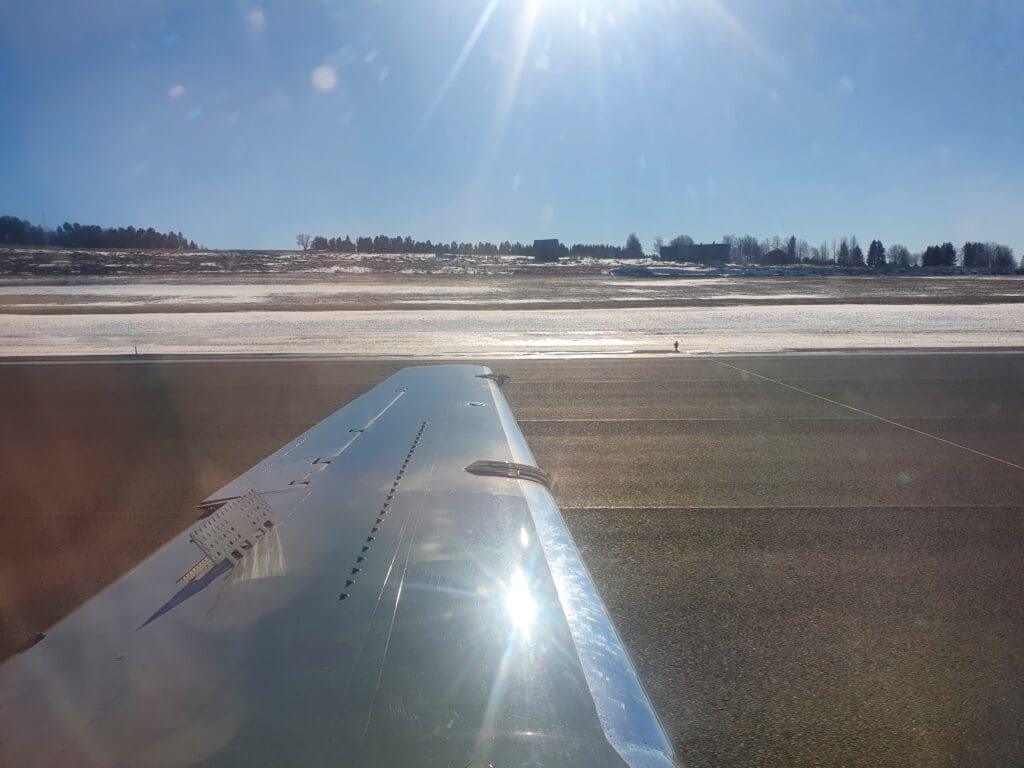

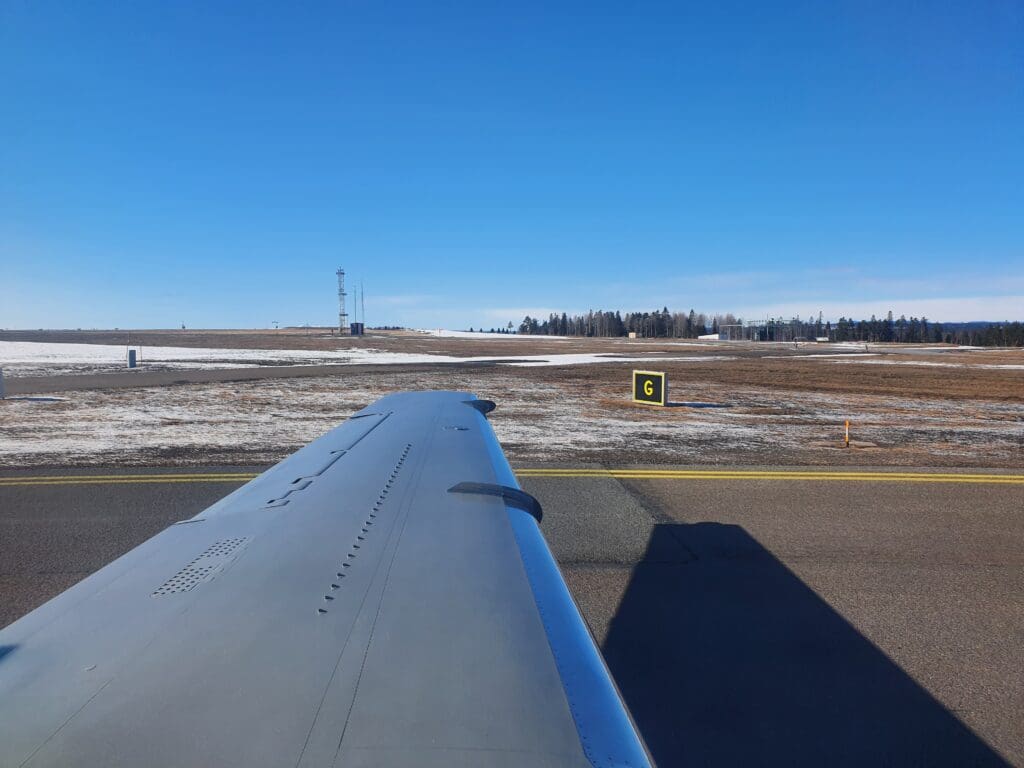

After leaving the runway, the Citation made a very short taxi to the airport’s remote stands, with the aircraft being marshalled in to stand Oscar. As soon as the aircraft came to a gentle halt, the two engines spooled down before the First Officer emerged from the cockpit and made their way to the rear baggage hold to retrieve passengers’ luggage. Seeing as I had been seated at the rear of the aircraft and hoping to snap a few final photos of the cabin, I waited for the other passengers to disembark before taking a few photos and having a very brief conversation with the Captain about the Citation. After thanking them, I then made my way out of the aircraft and walked around the wing to the cargo hold where my small suitcase had just been taken out and was waiting for me to collect. Once all passengers had retrieved their bags, the First Officer then escorted us away from the apron and over to a gate that led to the airport’s car park – this brought my experience with Jonair to a close.

Summary
All-in-all, I had a fantastic time flying the Citation Excel. Whilst I doubt that I will fly such an aircraft again at any time in the near future, it was good to get a taste of private aviation once again. As expected, the aircraft was clean and comfortable, and the crew were all very friendly, ultimately leaving me with no complaints about my experience.