Are Aegean Really That Good? Birmingham to Athens on an A320neo
Background
In the not-too-distant past, Greece’s national airline connected Athens with cities as far away as Los Angeles, Tokyo and Sydney. However, likely much to the delight of the Greek taxpayer, the days of state-owned Olympic Airlines have been consigned to the history books and in its place is the privately owned Aegean Airlines. Whilst its route network may not extend beyond Europe, the Middle East and North Africa, the carrier is frequently lauded for its high levels of onboard service, for which it has won a plethora of awards.
Established in the late 1980s, Aegean Aviation was the first private Greek company to be awarded an air operator certificate and put this to use as a private jet operator, flying the Learjet. Moving into the world of commercial aviation, in 1999, the carrier operated its first domestic flights with several BAe Avro RJ100 quad jets before inheriting ATR 72s and Boeing 737 Classics through mergers with Air Greece and Cronus Airlines. Since then, the airline has streamlined its fleet and operates over sixty Airbus A320 and A321 aircraft (both CEOs and NEOs). In addition, staying true to its roots, Aegean Airlines continues to operate private jets, flying the Gulfstream G550 and Learjet 60 for those with stacks of money to spend. Those who are island hopping in Greece may well end up on the carrier’s regional subsidiary, Olympic Air, which operates a fleet of ATR and Dash 8 turboprops across the country (you can read about my flight from Kastellorizo to Rhodes onboard one of their Dash 8 Q200 turboprops here!).
Following my first trip on Aegean Airlines in May 2022, I was left rather impressed. Whilst this was nothing more than a short hop from Athens to Rhodes, the Airbus A320 was comfortable and in good condition, the crew were friendly, and I enjoyed the light snacks served onboard. Meanwhile, several months later, I enjoyed another reasonable experience onboard one of the carrier’s Airbus A320s from Thessaloniki to Rhodes. Given my pleasant first couple of flights with Aegean Airlines, I had long wanted to sample the Greek national carrier on a longer trip and thus decided to enlist their services to position over to Greece for a ten-day holiday in September 2023.
Given Greece’s popularity as a holiday destination amongst Brits, as well as the country’s relatively large Greek diaspora, perhaps unsurprisingly, Aegean Airlines maintains a large presence across the UK. Alongside the carrier’s multiple daily flights between Athens and London Heathrow, the airline’s Airbuses also connect the Greek capital with Birmingham, Bristol, Edinburgh, Manchester and Newcastle. Furthermore, during the summer of 2023, Aegean Airlines’ aircraft could be seen at other British airports, such as East Midlands, with the airline operating services between Greece and the UK on behalf of TUI. Based in Leeds and relying on public transport, the easiest option for getting to Athens on Aegean Airlines would be to fly from Manchester. However, with this being an overnight service, I wasn’t too keen on arriving in Greece in the early hours, with a late afternoon or early evening arrival being far preferable. I thus turned to Birmingham and Newcastle – however, I soon ruled the latter out owing to the lack of flights on my chosen departure day.
Another reason for opting to fly with Aegean Airlines was the fact that I had miles to spend. During my previous life in Korea, I had managed to build up a decent number of miles on my Asiana Club account. However, now back in Europe and with Aegean Airlines’ Miles and Smiles programme being my Star Alliance account of choice, with good reward availability, I decided to spend what remained in my Asiana Club account. Once logged into my account, I searched for flights and was soon presented with the direct Aegean Airlines service between Birmingham and Athens, as well as various one and two-stop Lufthansa options. In total, the direct flight would set me back 15,000 miles and 68,100 Korean Won (around £40), including 23kg of hold luggage. Making a quick and easy payment, I soon received my ticket via email and was all set to head to Greece. On a side note, whilst this reward flight booking had been relatively painless, I couldn’t help but notice that the English version of Asiana Airlines’ website was riddled with grammatical and spelling errors – this being a little surprising given the worldwide route network of Korea’s second-largest airline.
As my departure date neared, I checked my booking on Aegean Airlines’ website, which enabled me to add a special meal, pay extra to travel with outsized equipment or sports goods, or request assistance. A week before departure, I received an email inviting me to bid for an upgrade, although with the cheapest possible bid starting at €95 (plus €15.15 in taxes), I decided to pass.
The Journey
Enjoying its own dedicated railway station and being relatively centrally located within the country, Birmingham Airport is not too difficult to reach for millions of people residing in the Midlands as well as in neighbouring regions. Travelling down from the South Yorkshire city of Sheffield, I had hoped for an easy journey down, taking the first train of the day to Birmingham at the crack of dawn before changing on to an airport-bound service. However, with a couple of weeks to go, a last-minute strike by one of Britain’s transport unions resulted in virtually all rail services between Sheffield and Birmingham being cancelled on the day of my departure. Fortunately, things worked out, and I wound up catching a lift with a relative who would be driving in that direction that day.
Following an early wake-up, we hit the quiet and green morning streets of Sheffield at 0500 and sped southwards through the misty landscapes of the North Midlands. Upon reaching East Midlands Airport, we left the M1 motorway so as not to end up in London and continued our journey along the A42. Thankfully, the traffic was relatively good that morning, and after no more than an hour and a half spent on the roads, the sprawl of Birmingham Airport appeared, and we soon came to a halt at the airport’s dedicated drop-off zone. Unlike many British airports, Birmingham Airport allows drivers to drop off passengers at the terminal without a fee (so long as they are not in the drop-off zone for more than ten minutes). The only downside to this is that, unlike at many other airports, the drop-off zone is a five-minute walk away from the terminal building, rather than being located directly outside of it. Whilst this may be cumbersome for those with significant amounts of luggage, this is step-free, and a plastic shelter covers most of the walkway, offering some protection from the almost inevitable rain.
Seeing as I was dressed for the 32-degree heat of Athens and not the 12-degree heat of Birmingham, I made a very brisk walk towards the terminal and soon found myself standing outside the building’s relatively unimpressive facade. With an impressive total of 30 flights scheduled to depart between 0700 and 1000, I was surprised at the lack of commotion, with relatively few passengers seen both outside and inside the landside portion of the terminal. Inside, whilst I would not describe Birmingham Airport as being unpleasant, it does lack any distinguishing features and can feel rather cramped during busy periods. The latter point is most definitely not helped by the ongoing renovation works, which make the terminal feel like a building site in places. In terms of its layout, the terminal features four check-in halls, logically named A, B, C and D. Of these, A is by far the most spacious and is used exclusively by Jet2 and is thus heavily decked out in the carrier’s distinctive red branding. Meanwhile, B, C and D sit clustered together at the opposite end of the L-shaped terminal building. Between these two halls sits the arrivals area as well as several shops and cafés, including branches of Costa Coffee, Greggs, Café Nero, Marks and Spencers and SPAR. Unfortunately for enthusiasts, no airside views can be had from the landside portion of the terminal, with the observation deck that once sat above this having long closed and been replaced by a spotting shelter in a nearby car park.
Having successfully checked in online and with no hold luggage to drop off, after a short walk and a coffee from Caffe Nero, I decided to make my way to security. At Birmingham Airport, the sole security hall sits on the first floor above the check area and can be entered via two separate entrances at either end of the terminal. One entrance is partially hidden and located in Jet2’s check-in hall, whilst the other can be accessed via the escalators in the main part of the terminal. Unless you happen to be departing during a Jet2 rush, I would advise entering via the former entrance, with this usually having shorter queues. Once I had polished off my coffee, I made my way upstairs and tapped myself through the automated gates. Whilst Birmingham Airport is not exactly known for its short wait times, especially during busy periods, that morning, I was required to wait a reasonable fifteen minutes before reaching a checkpoint. Once there, the staff seemed to work quickly and efficiently and were pleasantly friendly. After a quick and easy check, I collected my things and continued to the airside portion of the terminal.
Like many airports, once through security, passengers must first walk through the airport’s duty-free store, which in Birmingham is operated by World Duty Free. Seeing as I didn’t need to make any purchases, I sped through this and soon arrived at the terminal’s central hub, which is home to most of the terminal’s shops and eateries. Focusing on these, a reasonable selection is offered, although most items are sold at the usual inflated airport prices. With most passengers seeming to wait in this space before heading to their gate, this part of the terminal was very busy with few spaces left to sit and wait. However, other than this, I was pleased to find the terminal to be in a reasonably clean and tidy state, whilst the complimentary wifi worked throughout, leaving me with little to complain about other than the lack of plug sockets. Needing to pick up my click-and-collect order from Boots, once airside, I made a beeline for this before continuing on my journey.
For aviation enthusiasts, it is worth noting that no views can be had from the central part of the terminal, although these can be had from the two piers that jut off this. These consist of the older pier and the longer and newer pier that was completed in 2009. Of these, the latter provides far better views of the action outside – offering views out onto a number of the stands below and clear vistas of the runway and Elmdon Apron in the distance where the airport’s more interesting visitors tend to linger. Thus, following a short walk around, I decided to set up camp at the end of the newer pier. For a regional airport, Birmingham is fairly well served with direct flights to destinations across Europe, as well as longer slogs to the Middle East, North America and South Asia. As such, enthusiasts can see a decent selection of narrow and widebody aircraft at the airport, whilst this is also frequented by cargo, military and private aircraft.
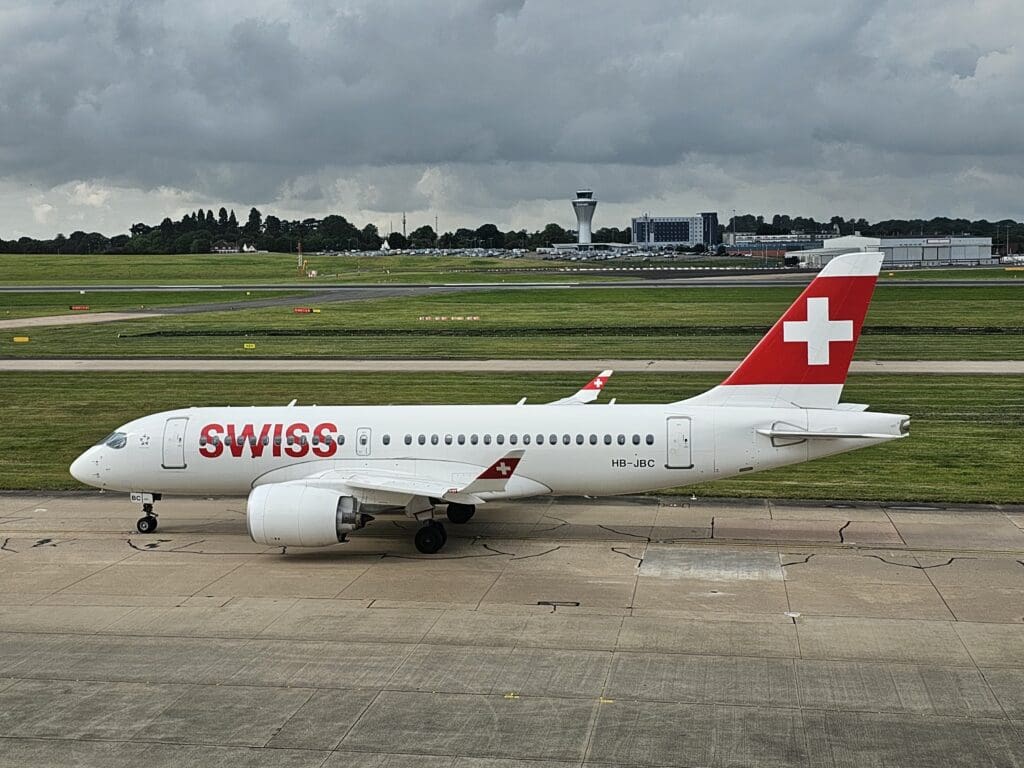
However, from a UK-based enthusiast’s perspective, it was challenging to argue that the movements that morning were much to get excited about. Whilst a regular stream of movements was offered, the bulk of these consisted of Jet2, Ryanair and TUI Airways jets. Other airlines seen include Air France, Blue Islands, EasyJet, Emerald Airlines, Eurowings, KLM, Loganair, Lufthansa, Scandinavian Airlines (technically CityJet), Sun Express, Sunwing Airlines (operating for TUI Airways), Swiss and Turkish Airlines. Of slightly more interest was a sleek-looking Qatar Executive Gulfstream G650 which arrived during my stay after a long flight from San Jose. On the opposite side of the runway, other interesting aircraft could be seen, including a German Metroliner, several business jets, an Air Canada Airbus A321 and a Brussels Airlines Airbus A320 wearing the colourful Pieter Bruegel liver – the latter two aircraft were visiting Birmingham for maintenance.
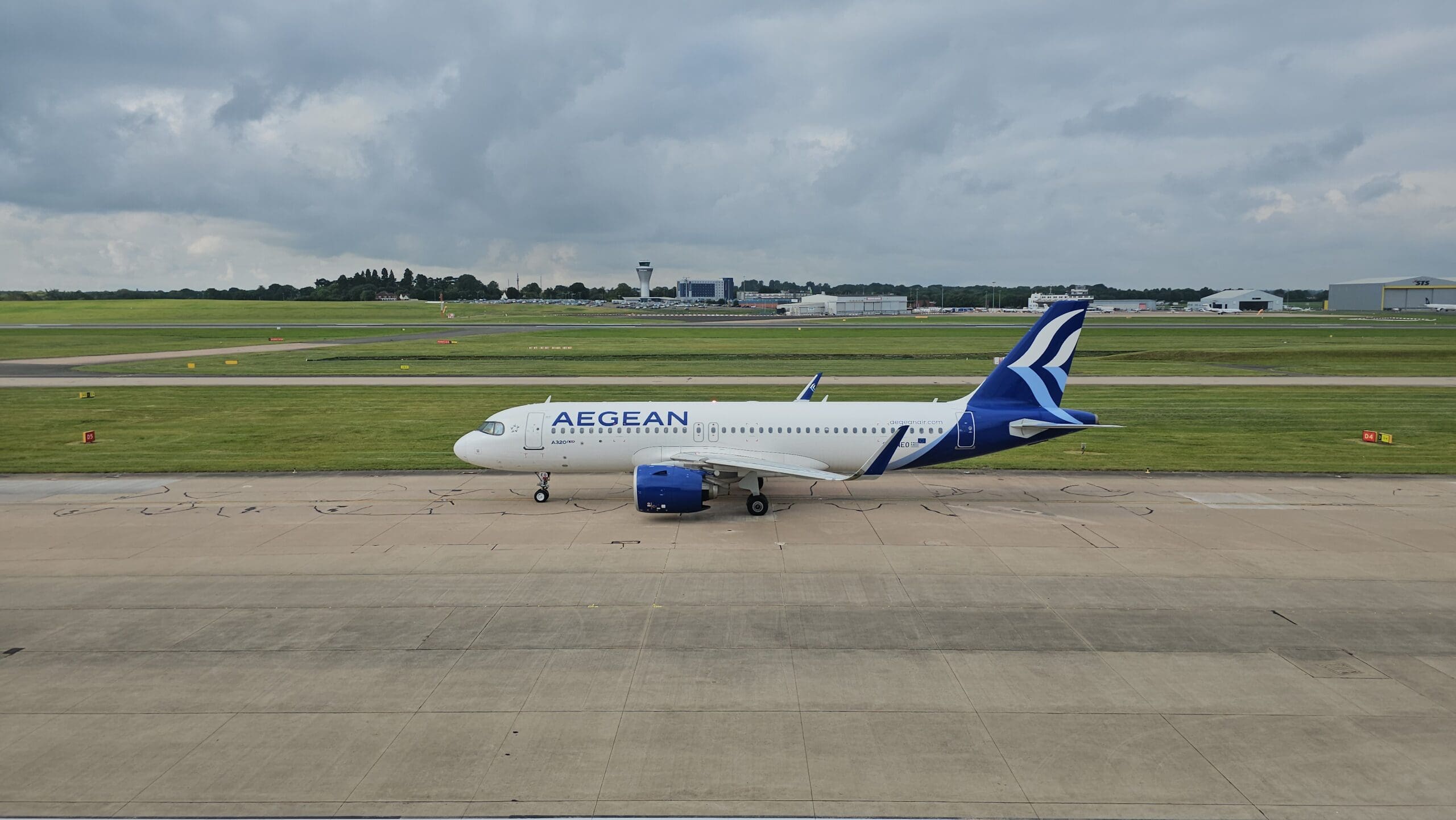
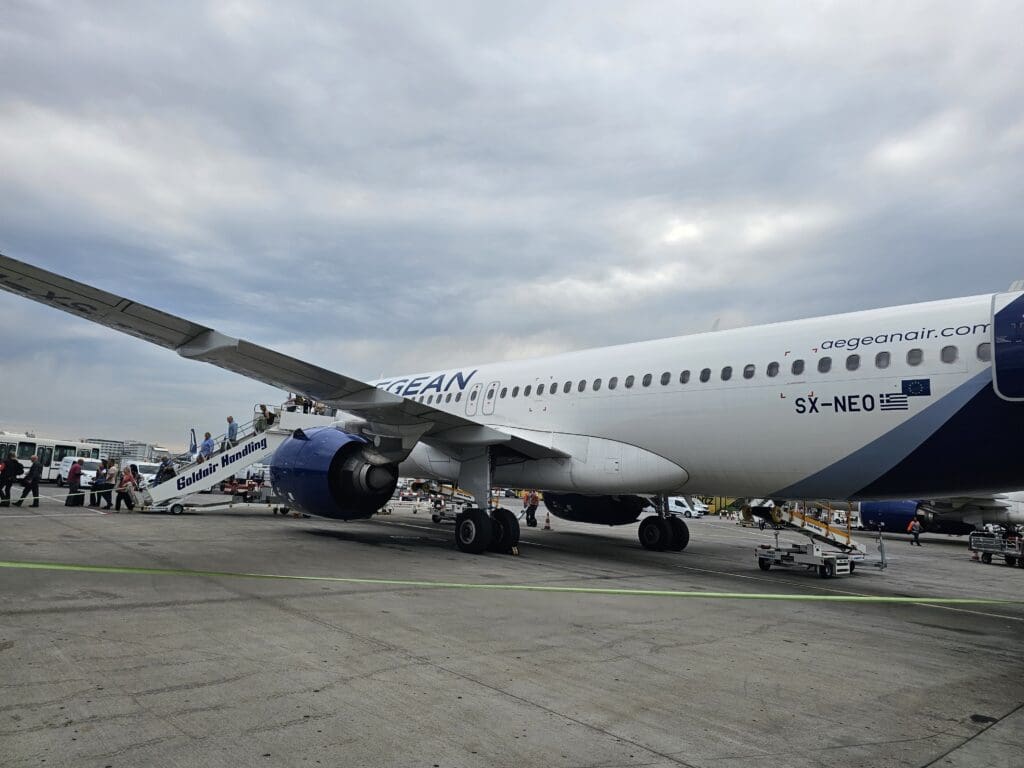
Once I had taken a seat at the far end of the pier, I tracked the inbound flight and discovered that this had departed Athens an hour behind schedule at 0855. Thus, a punctual departure at 1035 now looked relatively unlikely. That day, the appropriately registered Airbus A320-271N SX-NEO had been assigned to the Birmingham rotation. This particular Airbus was manufactured at Airbus’ Toulouse Blagnac plant and made its first flight in December 2019 with the test registration F-WWIK and was thus almost four years old at the time of my flight. Delivered directly to Aegean Airlines, the aircraft has spent its entire career with the Greek national carrier, flying passengers from Athens to destinations across Europe, the Middle East and North Africa. In the week before my flight, the aircraft had operated a total of 37 sectors and covered at least 36,000 miles, flying between Athens and Birmingham, Brussels, Copenhagen, Dublin, Karpathos, Kos, Marseille, Milan, Munich, Naples, Prague, Riga, Rome, Samos, Tbilisi, Tunis, Vienna and Zakynthos.
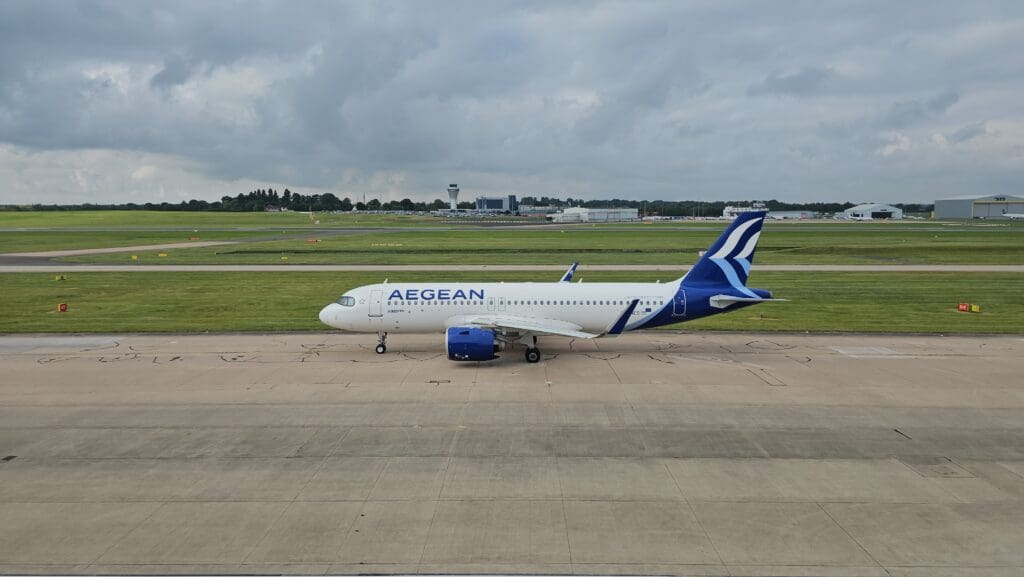
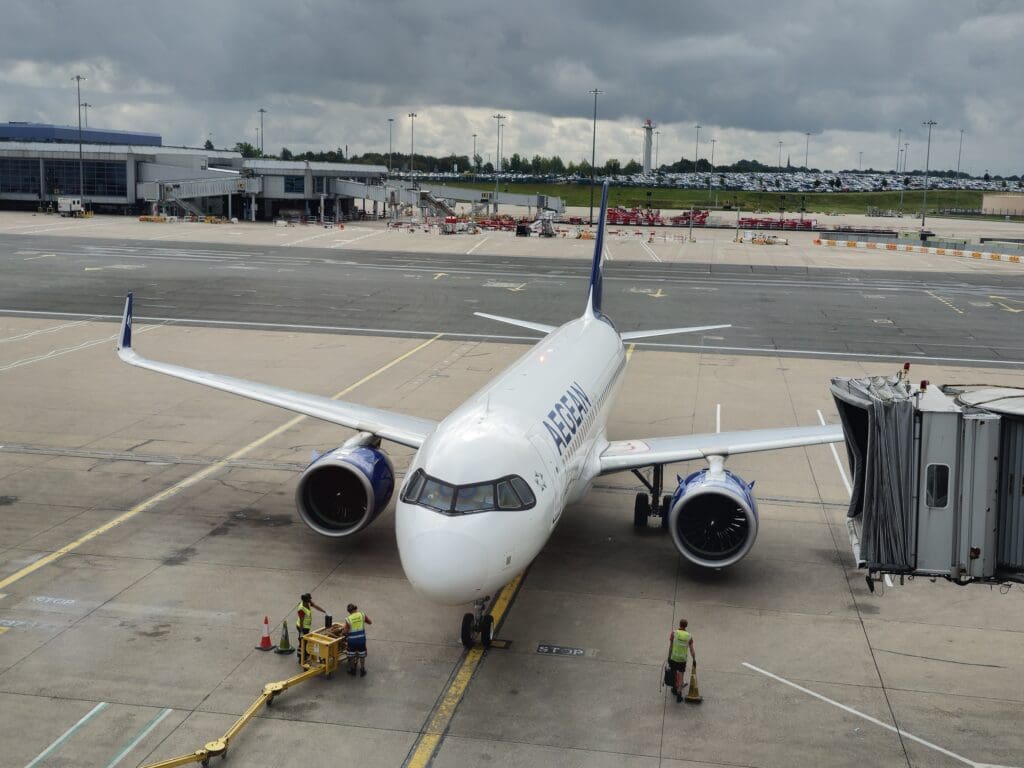
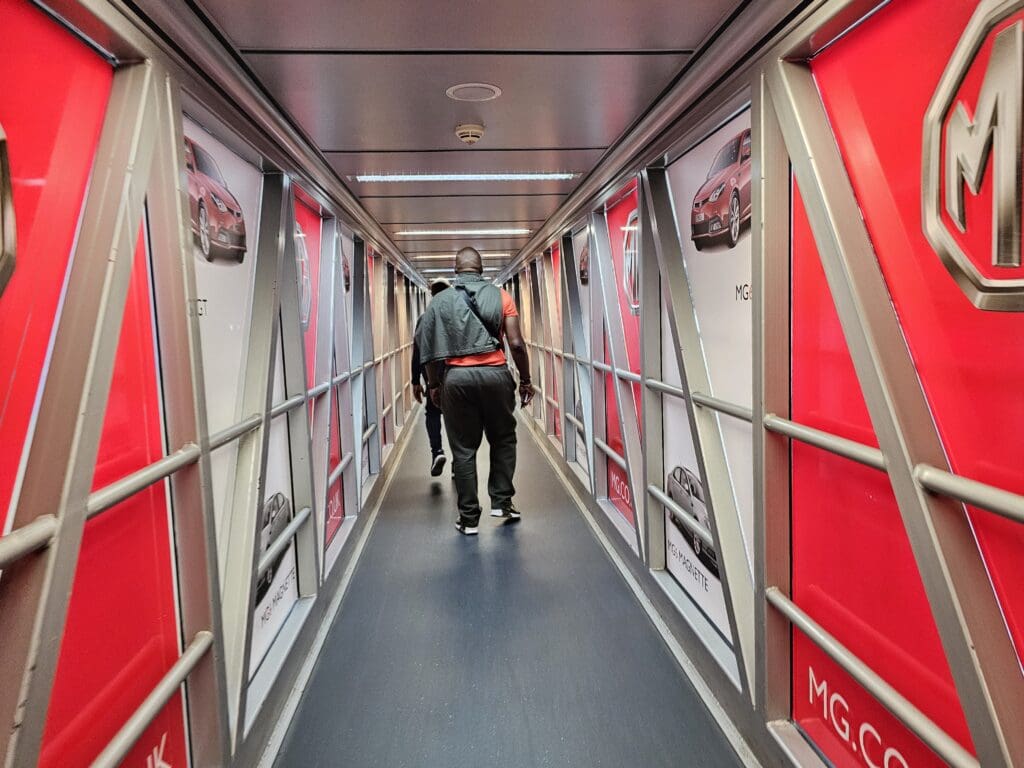
At 1000, the departure boards updated to show that the flight to Athens would depart from Gate 41, which was coincidentally and conveniently located just next to where I had been waiting at the end of the pier. Soon, passengers began to arrive in their hordes and at 1030, the sleek-looking Airbus could be seen touching down and soon came to a halt at the stand outside. Whilst this arrival time was a clear indication that the flight would depart Birmingham behind schedule, inside the terminal, a fair number of passengers could be seen standing up and waiting as if boarding was about to commence. Indeed, it is worth mentioning that no announcements were made by the gate staff regarding the flight’s delay. After a little over half an hour of waiting, at 1105 an announcement was made inviting passengers to board, with those needing assistance and those in Business invited to board first, followed by those seated in the Airbus’ rearmost rows. Falling into the latter category, it wasn’t long before I had my boarding pass scanned and passport checked by one of the two gate agents before I headed down the MG-sponsored jetbridge.
As I stepped into the forward galley, two crew members could be seen – one of whom was in the midst of pouring drinks for those in Business, whilst the other stood cheerily welcoming passengers and held a wicker basket containing soft jelly sweets. Left with a good first impression, I turned right and made my way into the cabin with high expectations. Despite Aegean Airlines’ award-winning status, as on most European narrowbody aircraft, the airline does not offer a ‘real’ business class hard product. Instead, a ‘Euro-Biz’ product is offered, which consists of Economy seats with a blocked middle seat and a movable curtain which separates this cabin from Economy. That morning, the first three rows of the aircraft had been blocked off for use by those in Business Class, and this cabin seemed to be almost full by the time I boarded the aircraft.
Examining the aircraft’s seats, these came in the form of Collins Aerospace’s Meridian seats and were customised by a smart blue pleather cover with a swirling pattern and cream-coloured sides. Those in the forward half of the cabin were topped with an adjustable headrest on which the Aegean Airlines motif could be seen embroidered, whilst all came with an Aegean Airlines branded fabric antimacassar. Each seat is complete with a USB-A port, coat hook, literature compartment and seatback pocket. In terms of layout, Aegean Airlines’ Airbus A320neos feature a European standard configuration of 180 seats, with this being the same number as those operated by British Airways, ITA Airways, Lufthansa, Scandinavian Airlines and a few others.
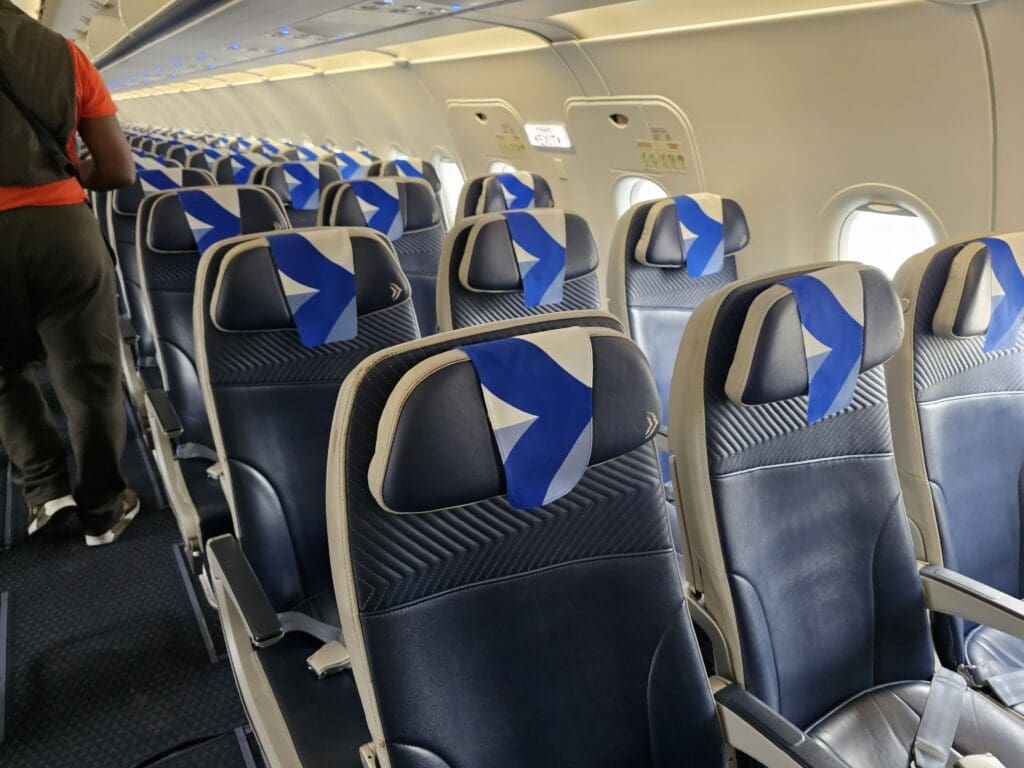
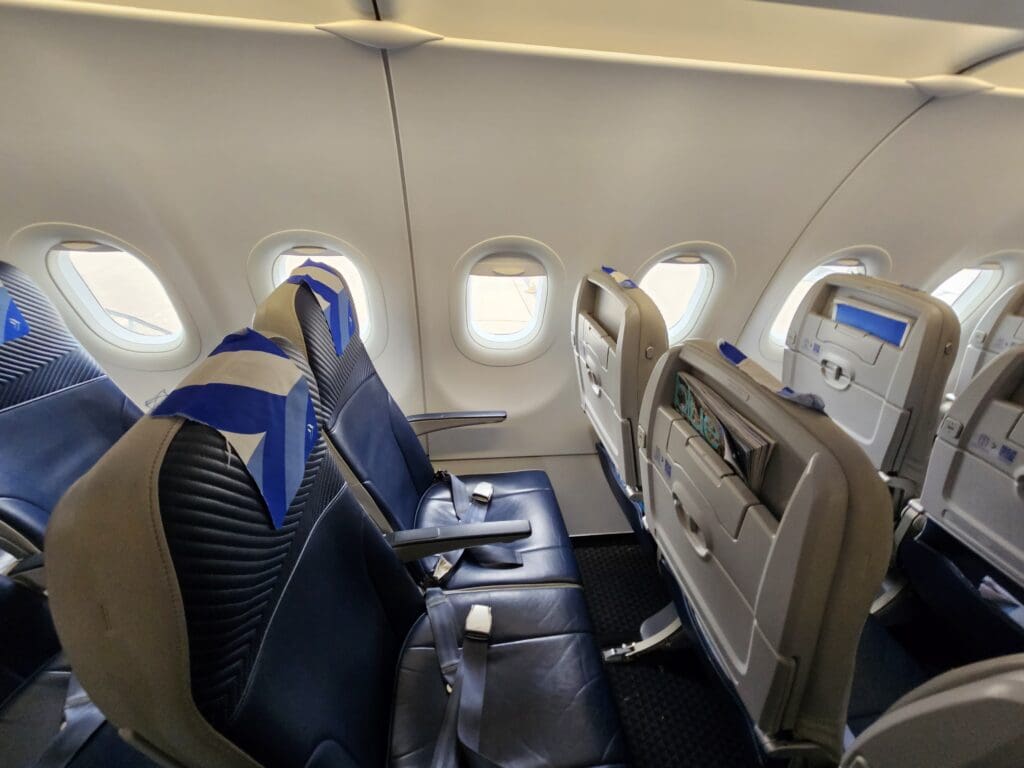
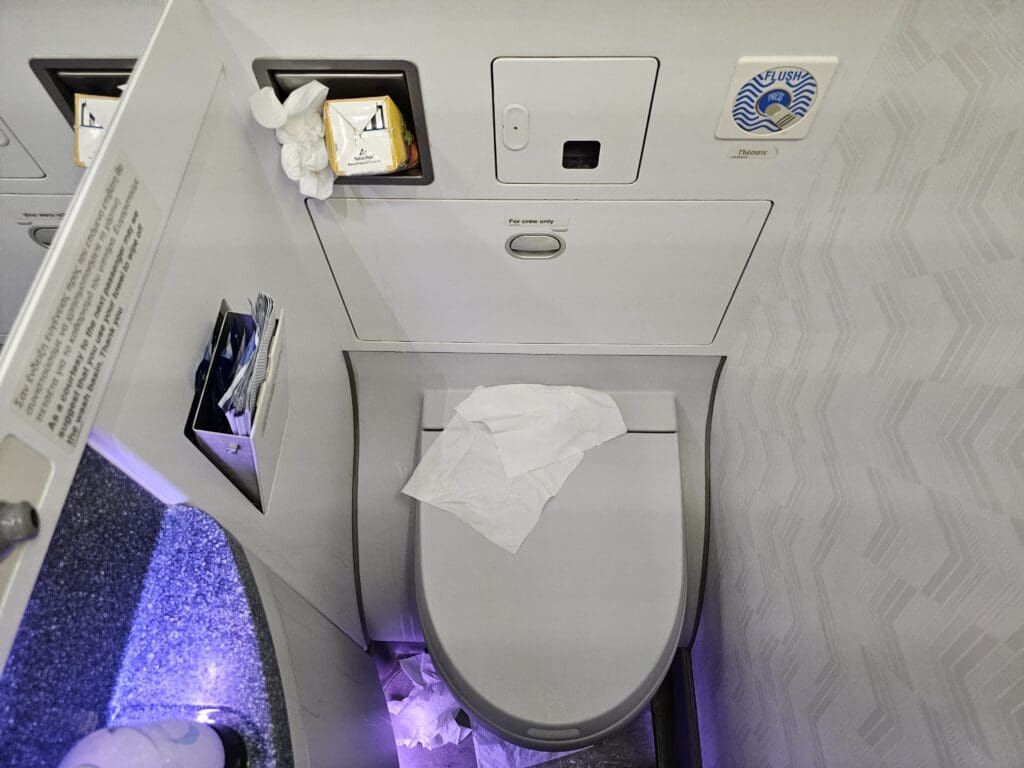
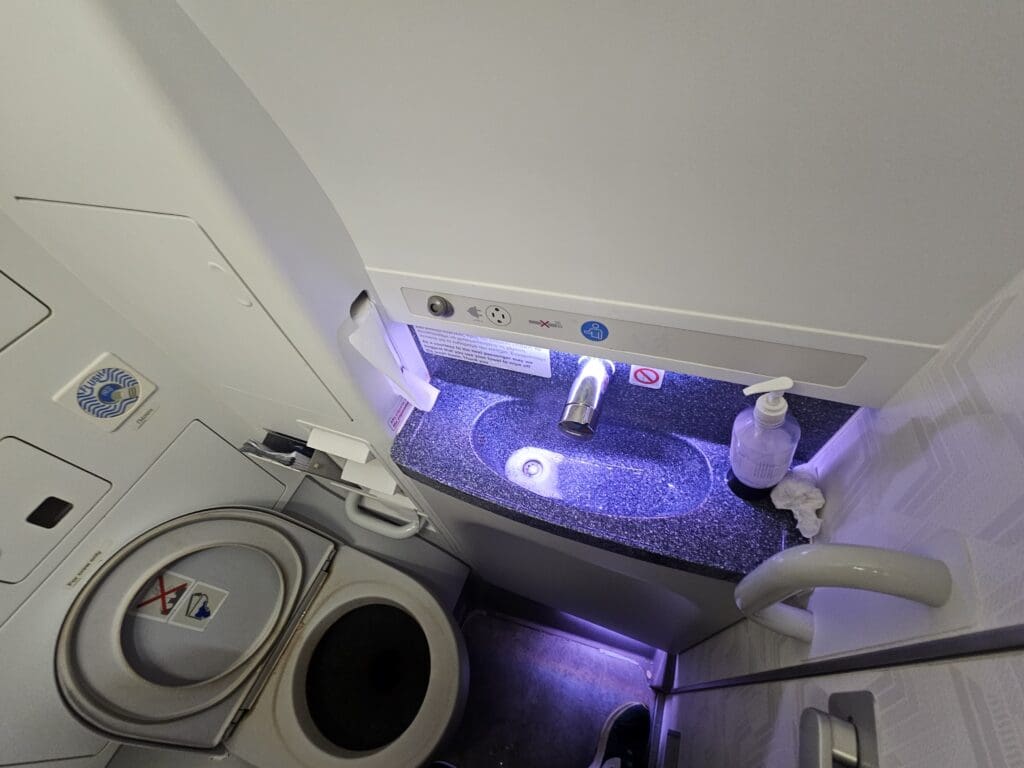
As I made my way to the rear of the cabin, I received another friendly greeting before I squeezed my backpack into the overhead locker. Conscious that I may well end up trapped in the window seat for the duration of the flight, once I had stowed my bag, I decided to head to the rear galley to use one of the two minuscule lavatories squeezed in there. Upon arriving at the galley, I was surprised to see that no crew member could be seen in the galley and rather alarmingly, the L2 door was wide open and completely unattended, meaning that a passenger could have run straight from the aircraft to the ramp, or vice-versa. Moving past this point, I squeezed myself into one of the two lavatories and was immediately hit by an unpleasant stench and the disappointing sight of a filthy toilet. This appeared to have not been cleaned at all and featured an overflowing waste bin and tissues strewn all over the floor.
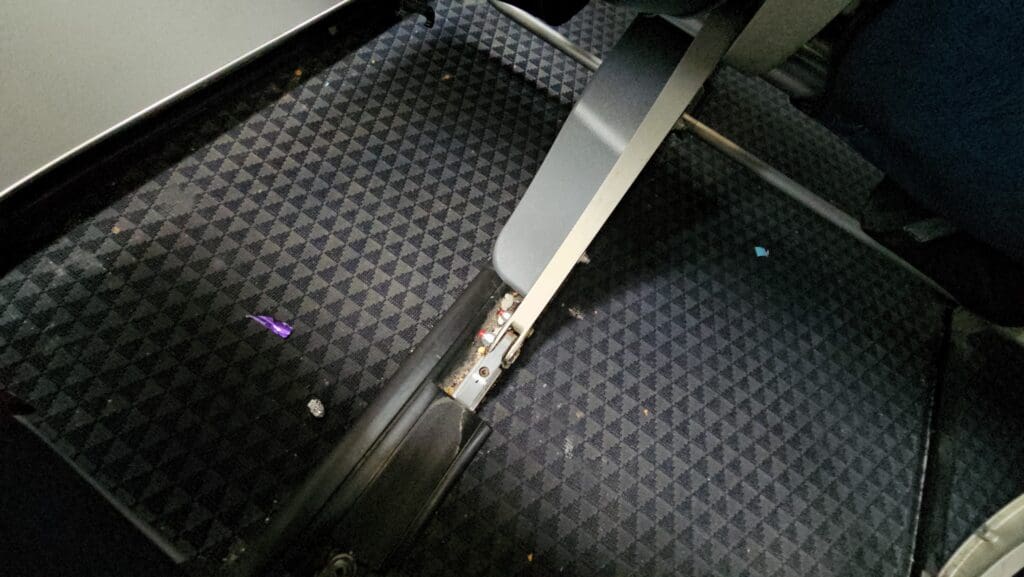
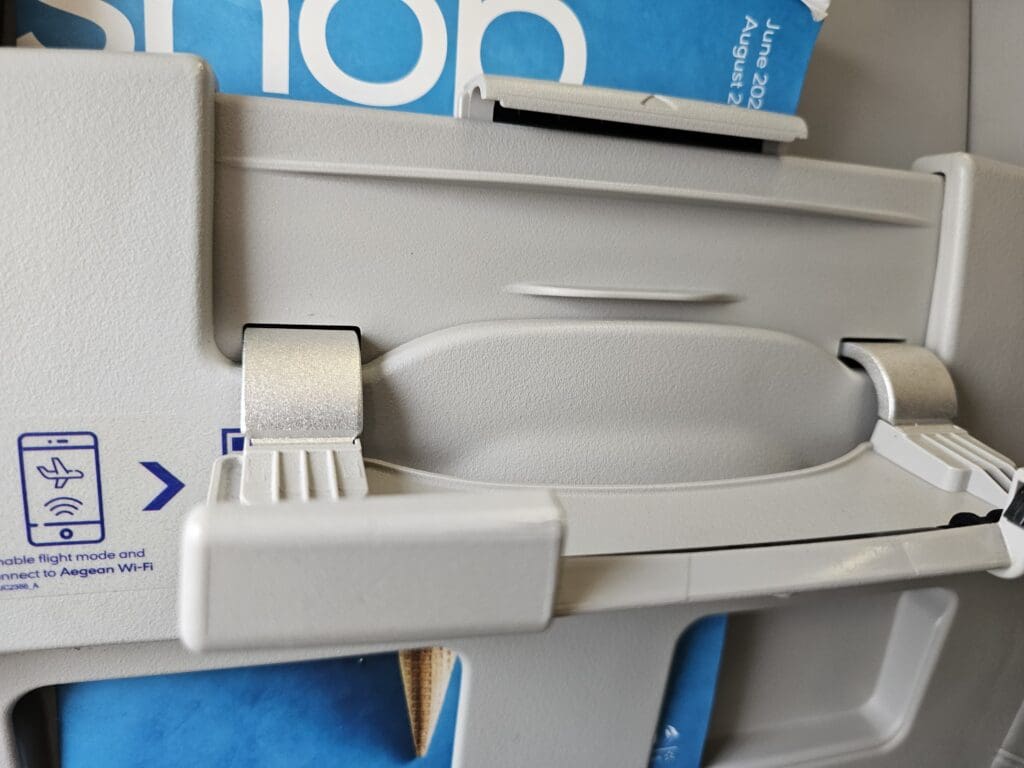
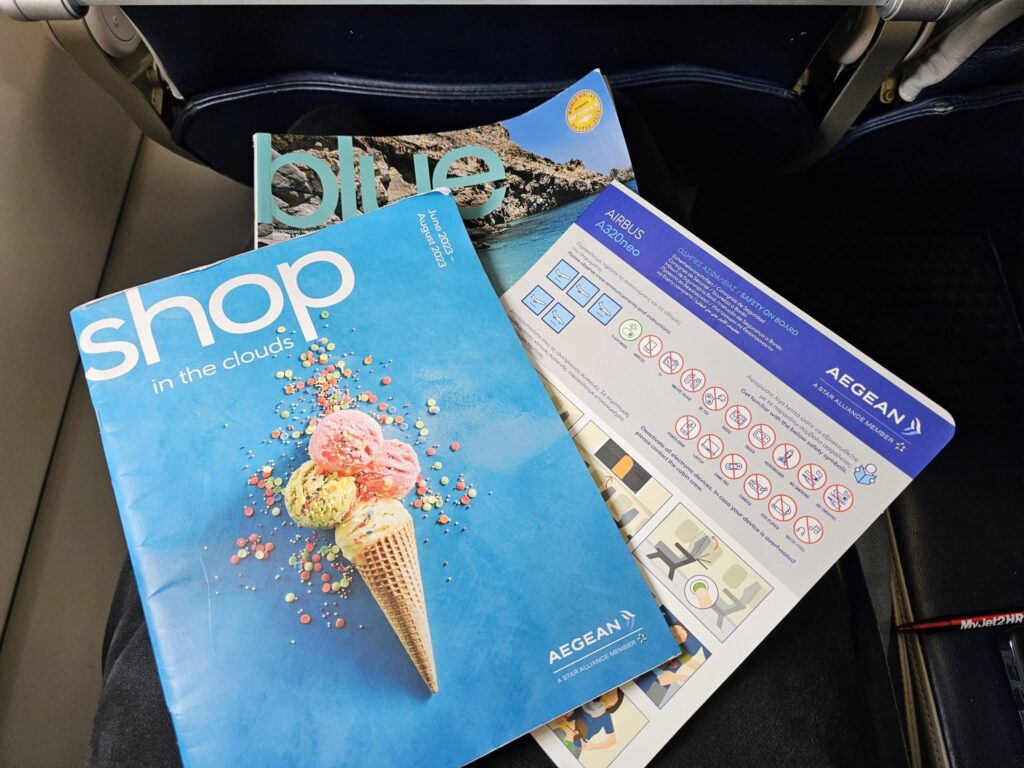
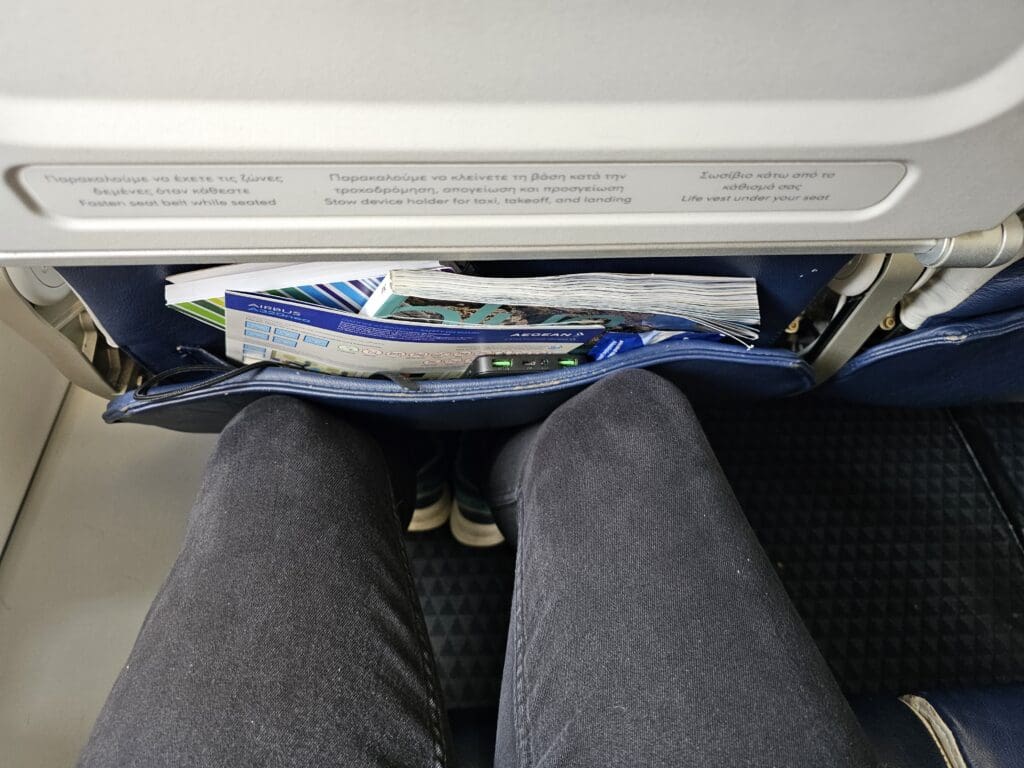
Not wishing to spend any more time than necessary in the lavatory, I soon returned to my seat and settled in for the journey ahead. Unfortunately, upon sitting down, I was once again disappointed. Examining the area around my seat, this appeared to be highly battered and tired-looking and featured plenty of well-ingrained dirt plus a reasonable amount of rubbish from the inbound flight. Examining the contents of the seatback pocket, this contained nothing other than a copy of Aegean Airlines’ onboard shopping catalogue and a sick bag. Finally, I found the seat to be relatively cramped and offered a poor amount of legroom, seemingly worse than their Airbus A320ceos that I had previously sampled. Overall, given Aegean Airlines’ stellar reputation and my previous experience with the carrier, despite the friendly welcomes from the crew, the cramped, dirty and battered cabin got things off to a poor start, and I sincerely hoped that things would improve during the flight!
Once strapped in, passengers continued to stream onto the aircraft, and it wasn’t long before the two seats next to me were filled. Flying at the very end of England’s school holidays, unsurprisingly, there were few families onboard, with most passengers coming in the form of older tourists jetting off on long weekends to Athens. With Birmingham perhaps not being the most visited destination amongst those travelling from Greece, most passengers seemed to hail from the UK. At 1125, boarding was announced as complete, and a short time later, the Captain’s calm-sounding voice filled the cabin as they performed their barely audible welcome announcement in Greek and English. During this, they introduced themselves and the First Officer, informed us all of the 30-degree weather in Athens, provided a brief overview of the route and mentioned that we could expect a 3H20 flight time on our journey to the Greek capital.
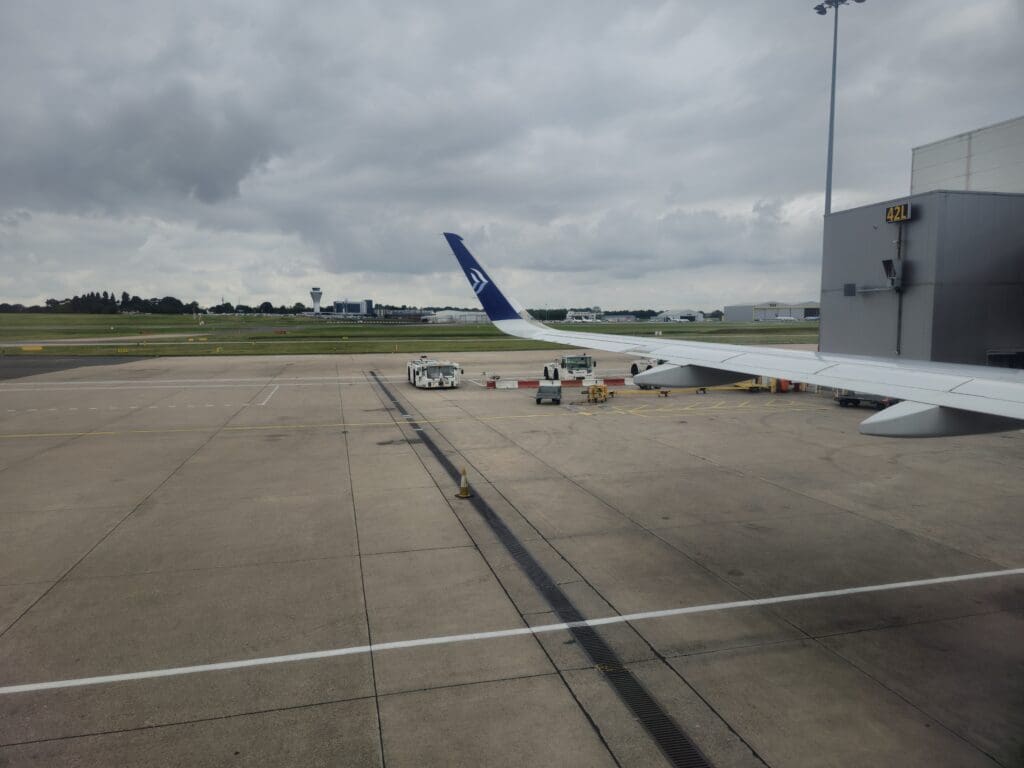
Once the Captain’s announcement had come to an end, there was little activity both inside and outside the cabin, with the crew remaining in the galleys, and the jetbridge and airstairs remaining connected to the aircraft with few ground staff visible outside. Following a fifteen-minute pause, the Purser performed their welcome announcement, whereby they reiterated some of the information provided by the Captain, in addition to offering the usual warnings regarding keeping seatbelts fastened throughout the flight. It is worth noting that no explanation, mention or apology for the flight’s delay was offered during these announcements, or indeed at any point during the flight.
After this announcement, the crew closed and armed the doors whilst the steps and jetbridge were backed away from the aircraft before the safety demonstration commenced. On my previous Airbus A320 hop from Thessaloniki to Rhodes, this came in the form of a safety video featuring Greek basketball player, Giannis Antetokounmpo; however, that morning no video was played (I’m not entirely sure if Aegean Airlines’ A320neos have overhead screens installed). Instead, a long pre-recorded announcement was broadcast over the cabin’s speakers as several crew members undertook their demonstration in the aisle.
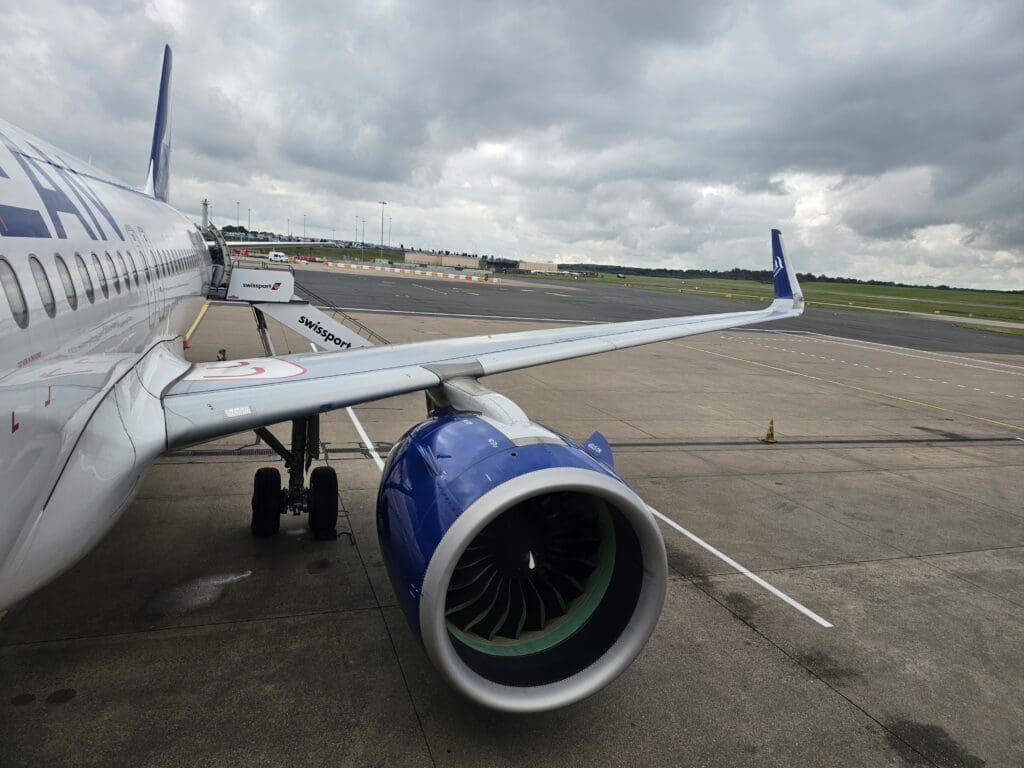
As the safety demonstration was underway, at 1153 the aircraft was pushed back from the stand and upon coming to a halt, the cabin was filled with the scent of jet fuel as the Airbus’ two large Pratt & Whitney PW1127G engines quietly spooled up into life with some humming and whirring. Back inside, upon completing the safety demonstration, the crew passed through the cabin, ensuring all was set for our departure, just as we commenced our taxi to the end of the Birmingham Airport’s Runway 33.
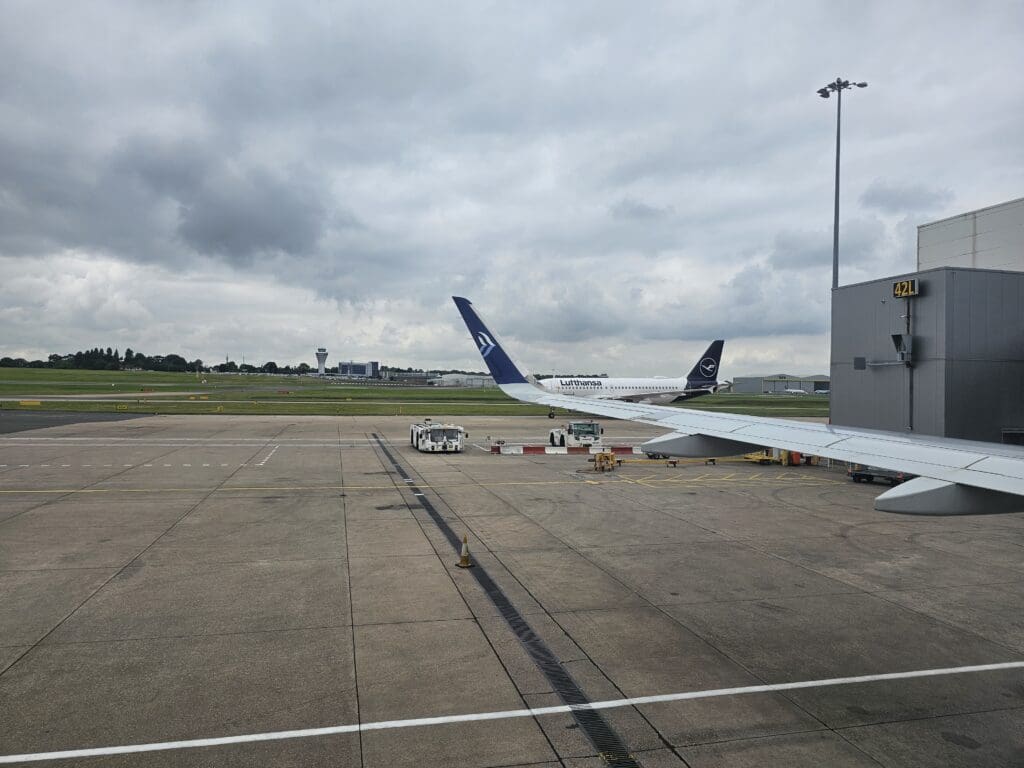
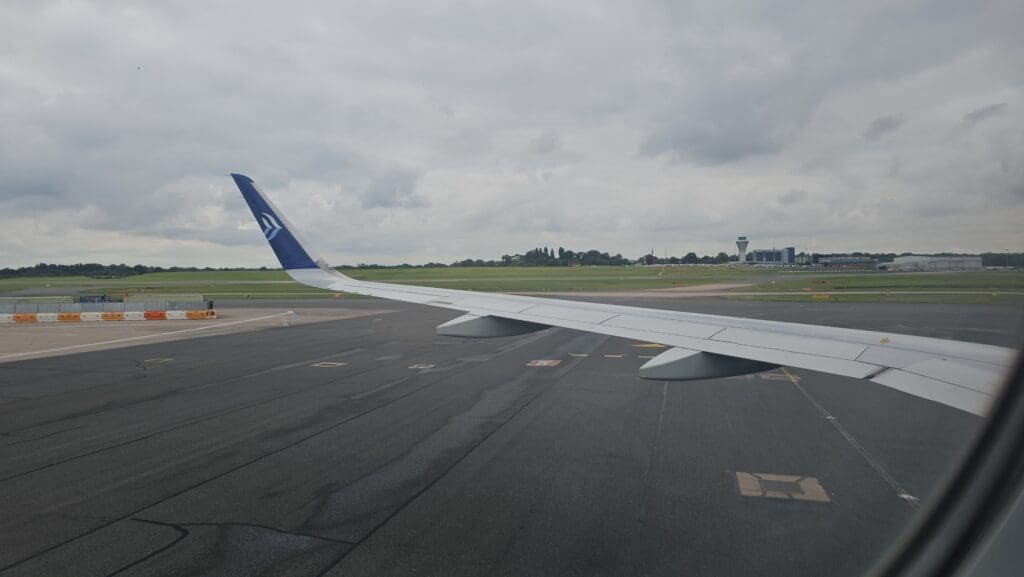
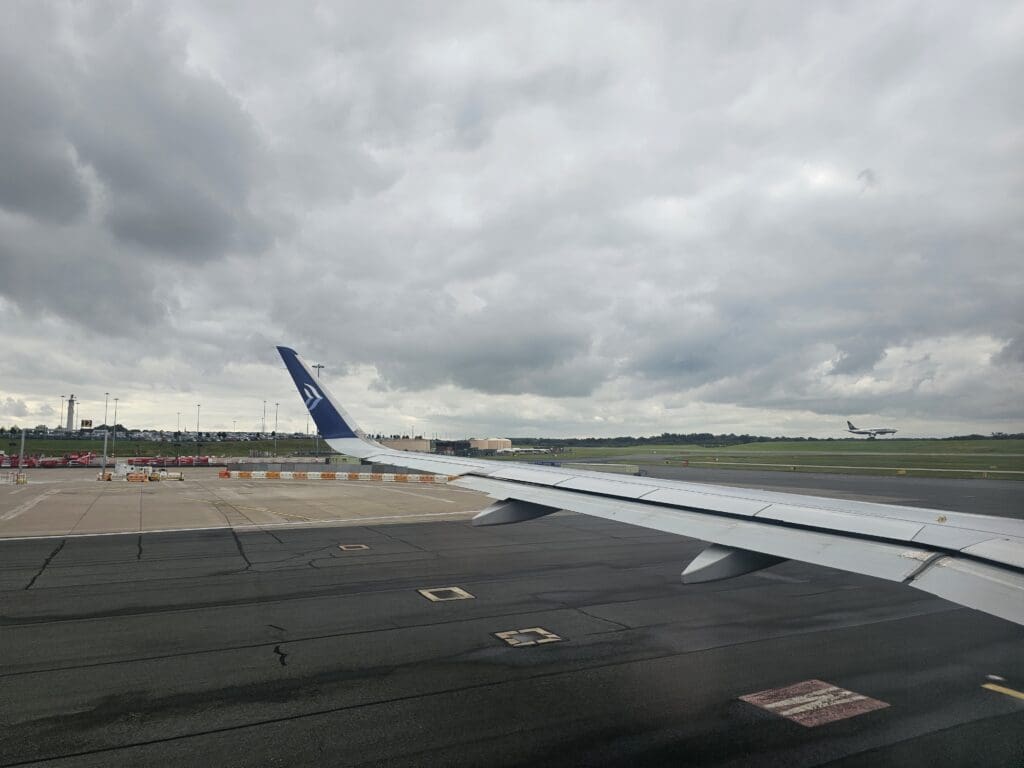
Once we had left the terminal behind, little of note could be seen during the taxi other than the fuel depot and car parks, whilst a small group of enthusiasts had gathered at the observation shelter near the end of the runway. Having missed the morning rush, following our short taxi no holding was required and we headed straight onto the runway. At 1202, without pausing, the two engines howled into life and the Airbus began its powerful takeoff roll, first passing the cluster of cargo and business jets on the Elmdon Apron, followed by the maintenance hangars, before we gently rotated and made our way up into Birmingham’s typically cloudy skies. As we rocketed upwards, the flat suburbs that sit to the south of the city centre such as Yardley, Lea Hall and Small Heath could be seen, as well as the tall buildings of the city centre before we headed up into the clouds.
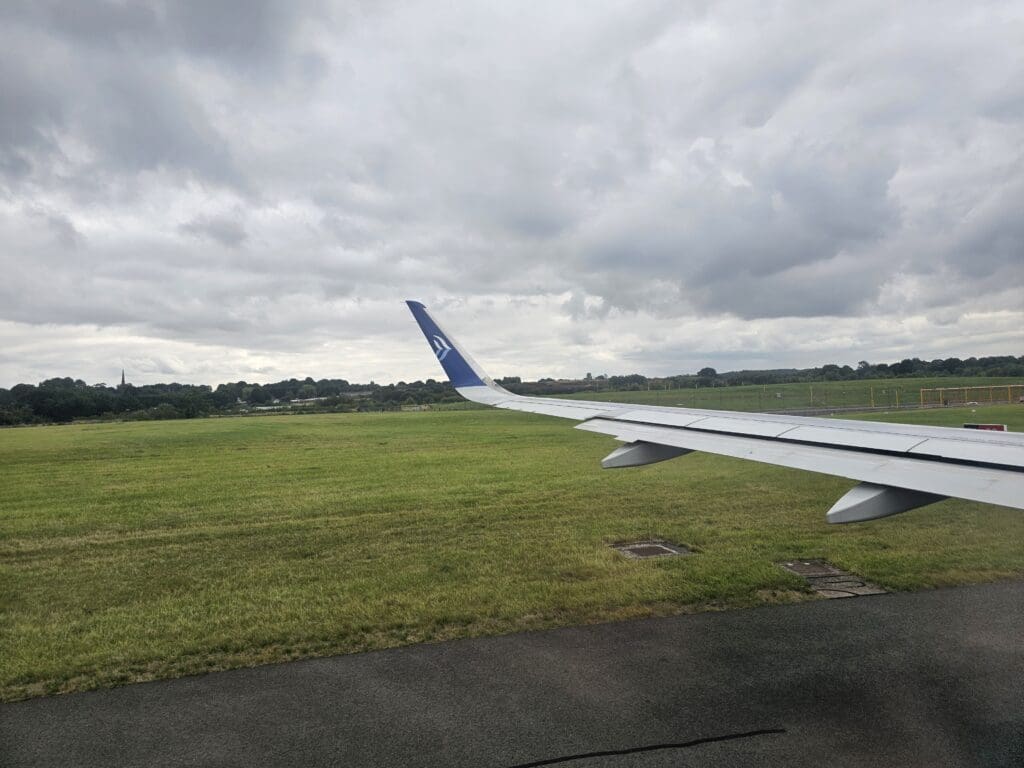
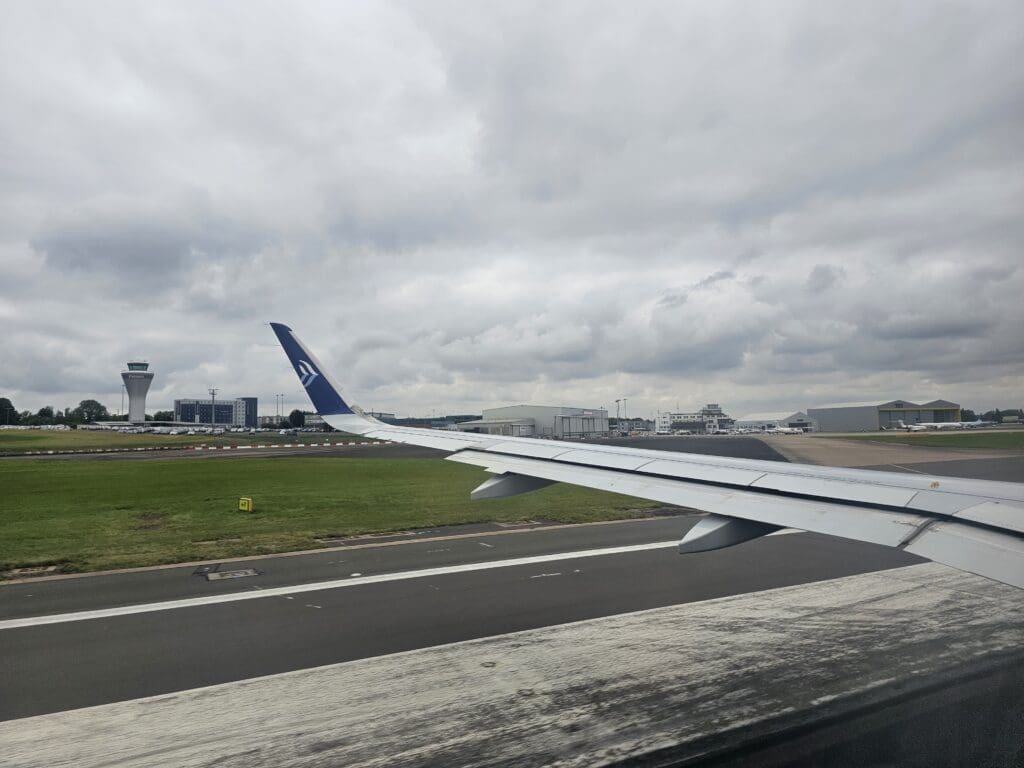

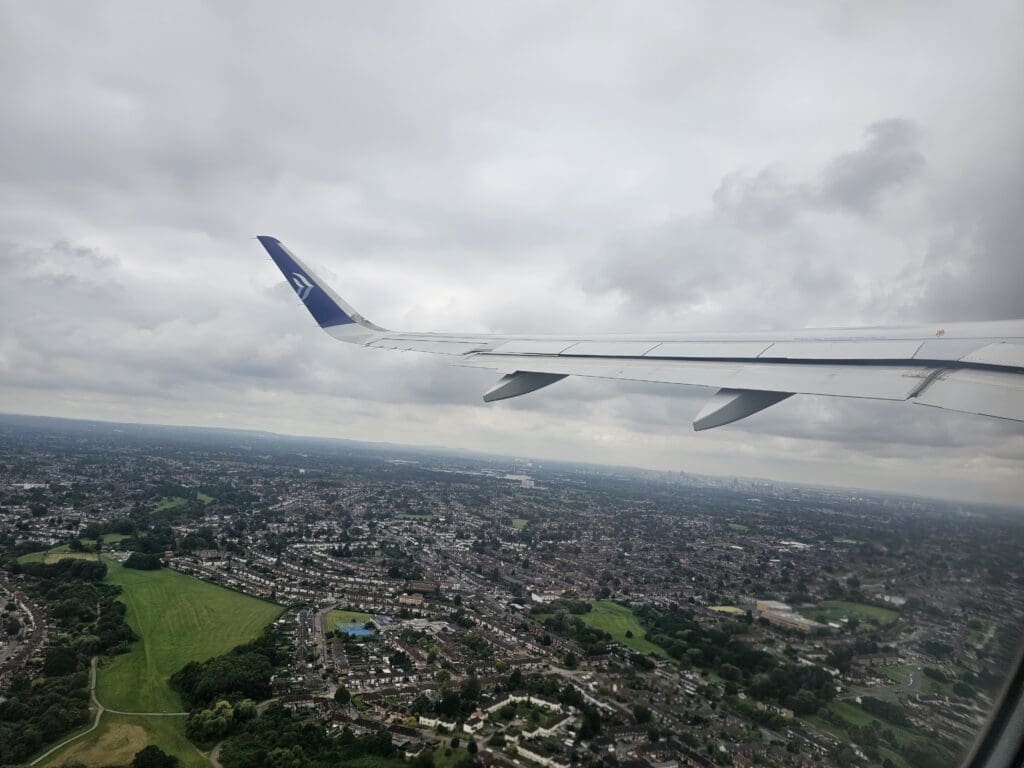
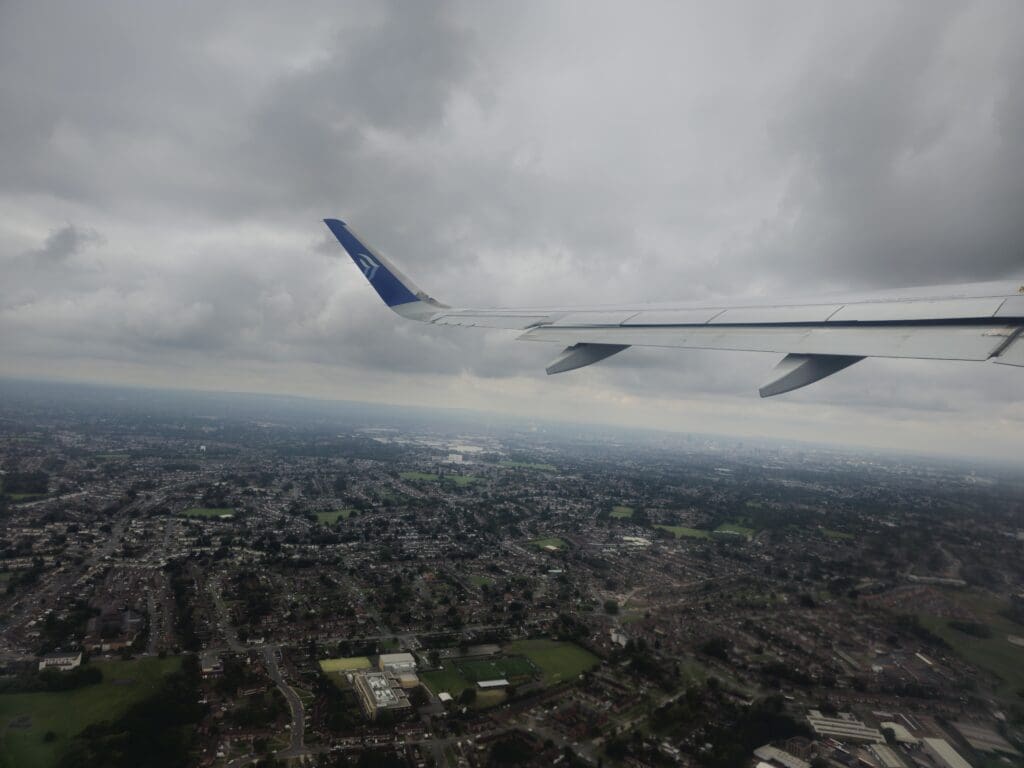
That lunchtime, the clouds did not seem to be too thick, and we passed through them quickly and smoothly with blue sky soon appearing above the aircraft. By this time, the aircraft had made an almost 180-degree turn and was now flying southwards over the county of Warwickshire, passing the towns of Leamington Spa and Shakespeare’s birthplace, Stratford-upon-Avon. At this time, the seatbelt signs were extinguished and the purser undertook their usual post-departure announcement, whereby they requested passengers to keep their seatbelts fastened whilst seated. Returning to the scenery outside, at 1212 a gap in the clouds revealed patches of green fields, which I later deciphered to be rural northern Oxfordshire, with the aircraft soon reaching the well-to-do town of Chipping Norton – a popular spot for the second homes of the rich and famous. Continuing onwards, the aircraft climbed over Bicester and Aylesbury and we crossed over the rolling hills of the Cotswolds before reaching North London. Unfortunately, with clouds having rolled in once again, nothing of the capital could be seen, although a gap in these did reveal the coastline of Essex just to the south of London Gateway Port.

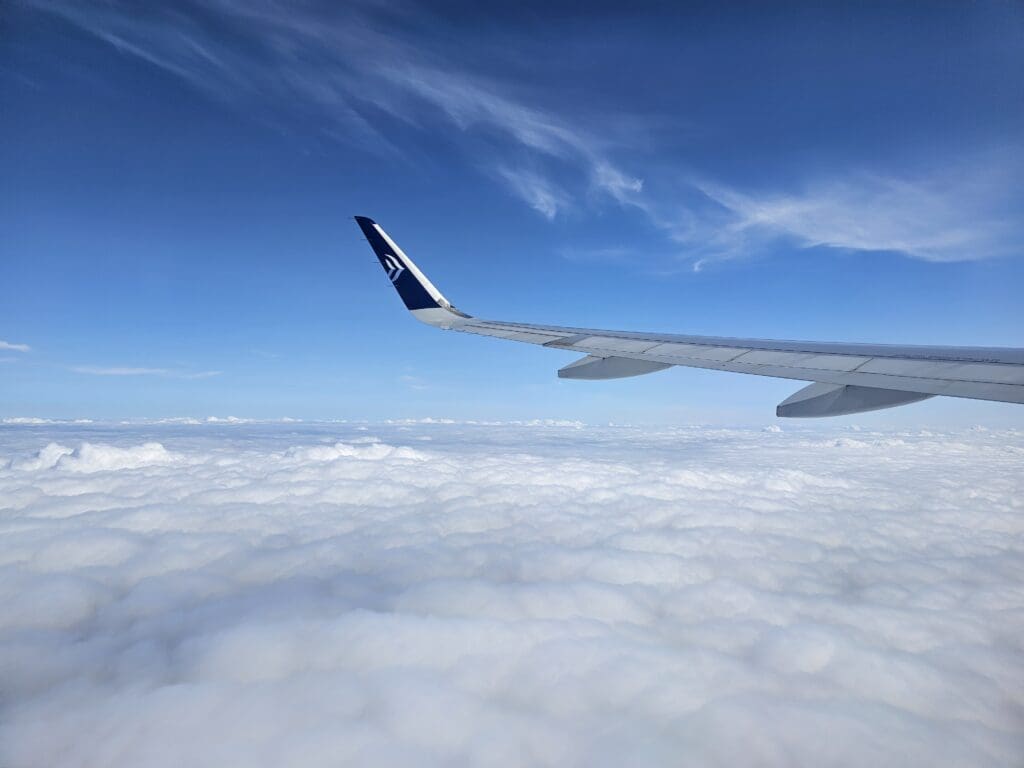
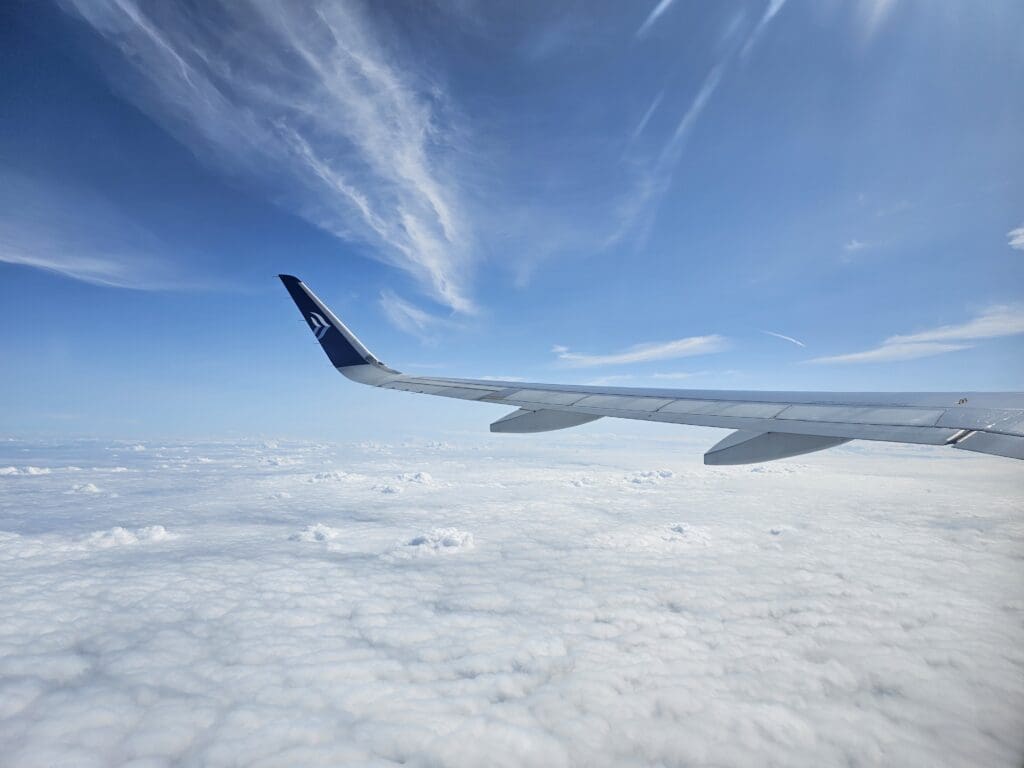
After crossing the Thames Estuary, the Airbus skirted along Kent’s northern coastline, at which point it levelled off at its cruising altitude of 33,000 feet. A total of 24 minutes after taking to the skies, the aircraft left the British coastline behind between the seaside towns of Margate and Deal and made a short four-minute crossing of the Channel, making landfall just to the south of Dunkirk. From there, the aircraft skirted along the French-Belgian border and crossed over this five times, whilst inside the cabin the crew rolled out the two carts indicating the commencement of the lunchtime service. Unfortunately, as they did so, the aircraft hit a fairly significant patch of turbulence, which caused these to soon be rolled back to the rear galley.
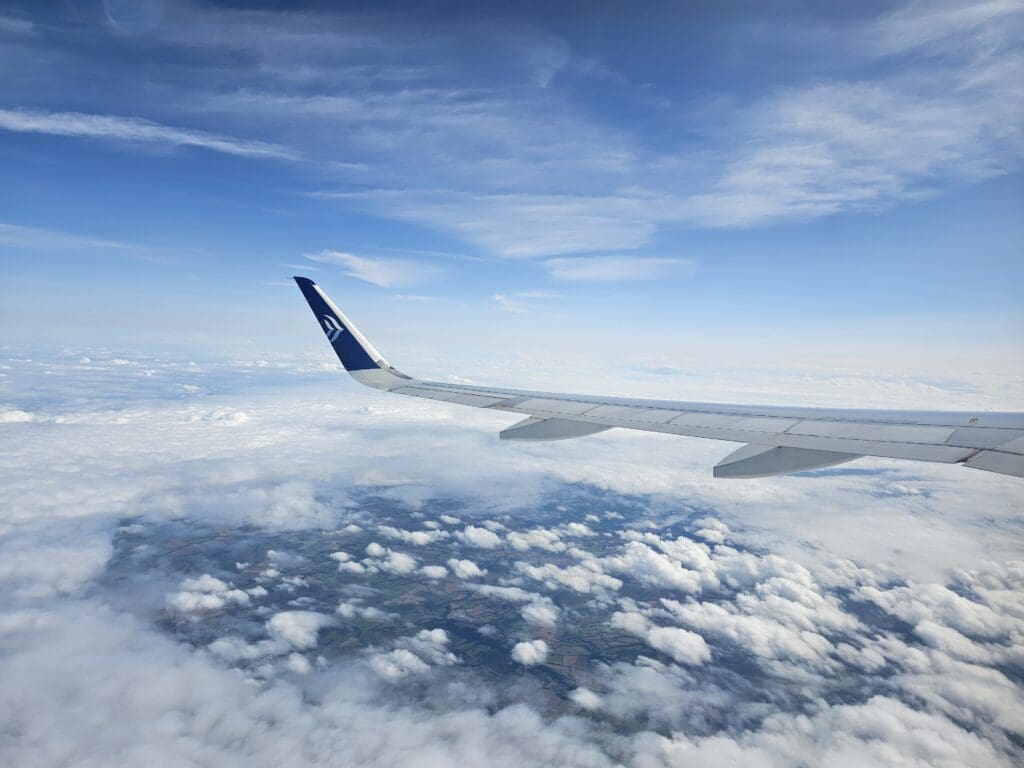
With the lunchtime service having been postponed, at this time, I decided to connect to the onboard wifi network. Connecting to this quickly and without issue, I first explored the streaming function of this, with this hosting a modest selection of content – specifically episodes from 7 American television series, 5 documentaries, 8 Greek destination guides, 6 cartoons and a selection of games. This also featured plenty of information about the airline and an interactive moving map. Much to my surprise and delight, complimentary wifi was offered for those looking to send messages and browse the web, which I found to be of a very reasonable speed, leaving me rather impressed.
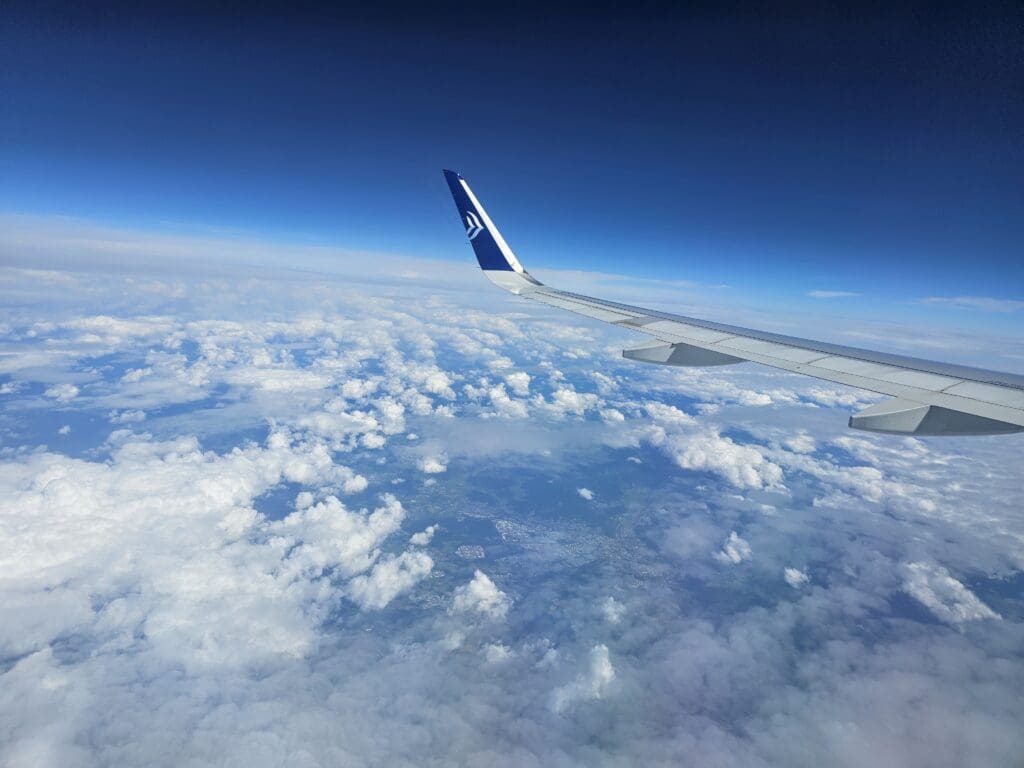
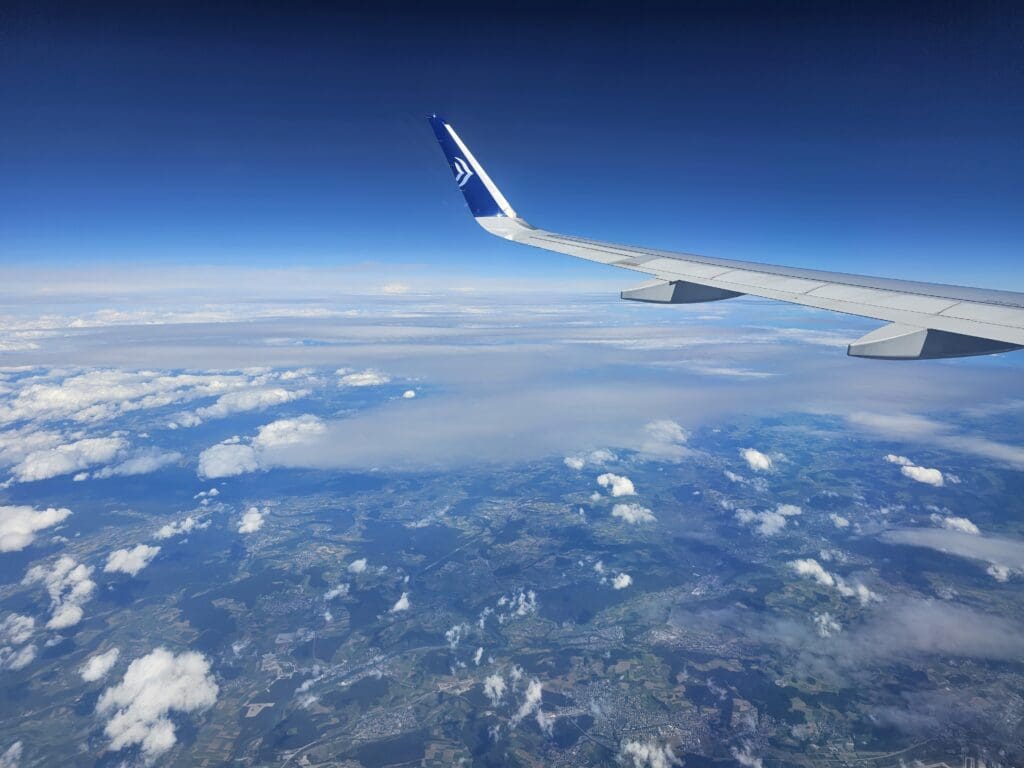
Around ten minutes after the first attempt at the onboard service had been made, the seatbelt signs were extinguished, and the crew took to the aisles once more. With one cart loaded with food and the other with drinks, the service commenced from the front of the aircraft, and the crew slowly but surely worked their way rearwards. As I waited, the clouds parted below and revealed the French city of Strasbourg before we crossed over the Rhine and flew over the hills of the German state of Baden-Württemberg. That afternoon, our time in German airspace was to be very brief and just four minutes after entering this, the Airbus crossed into Swiss skies just to the northwest of Zurich.
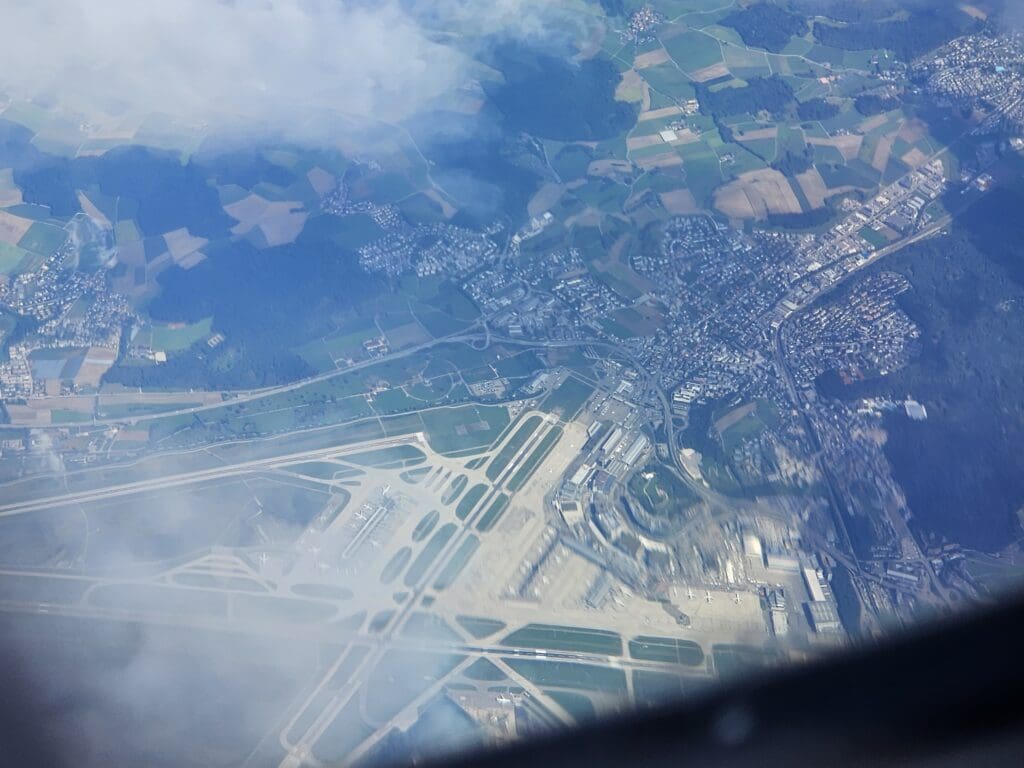
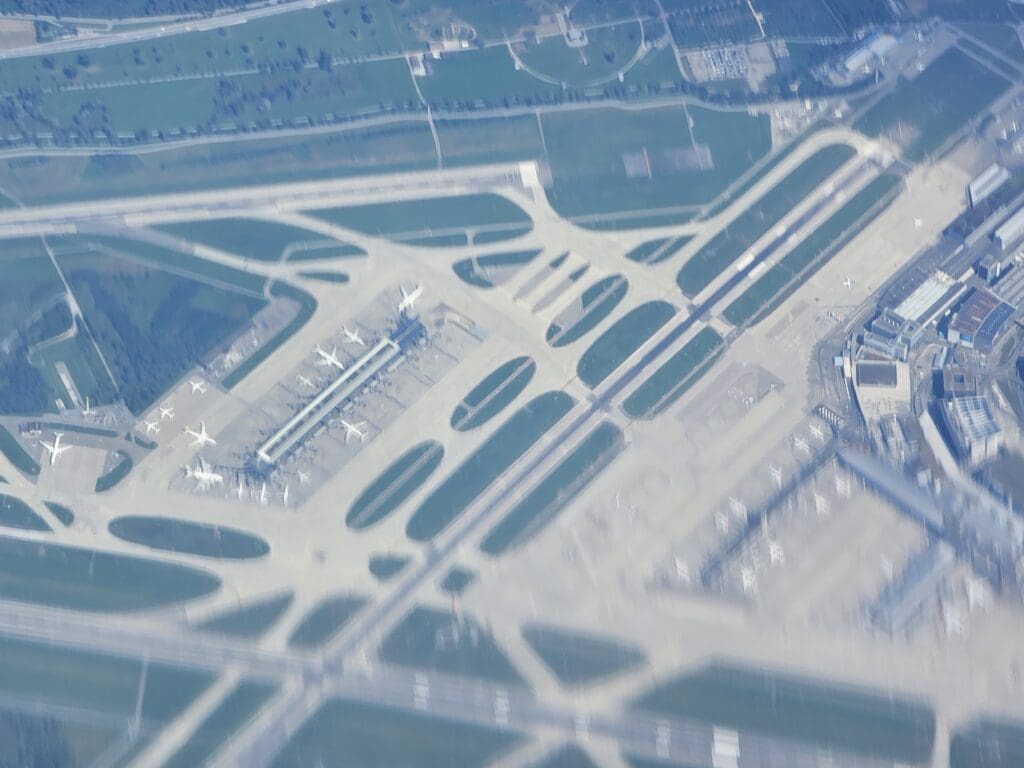
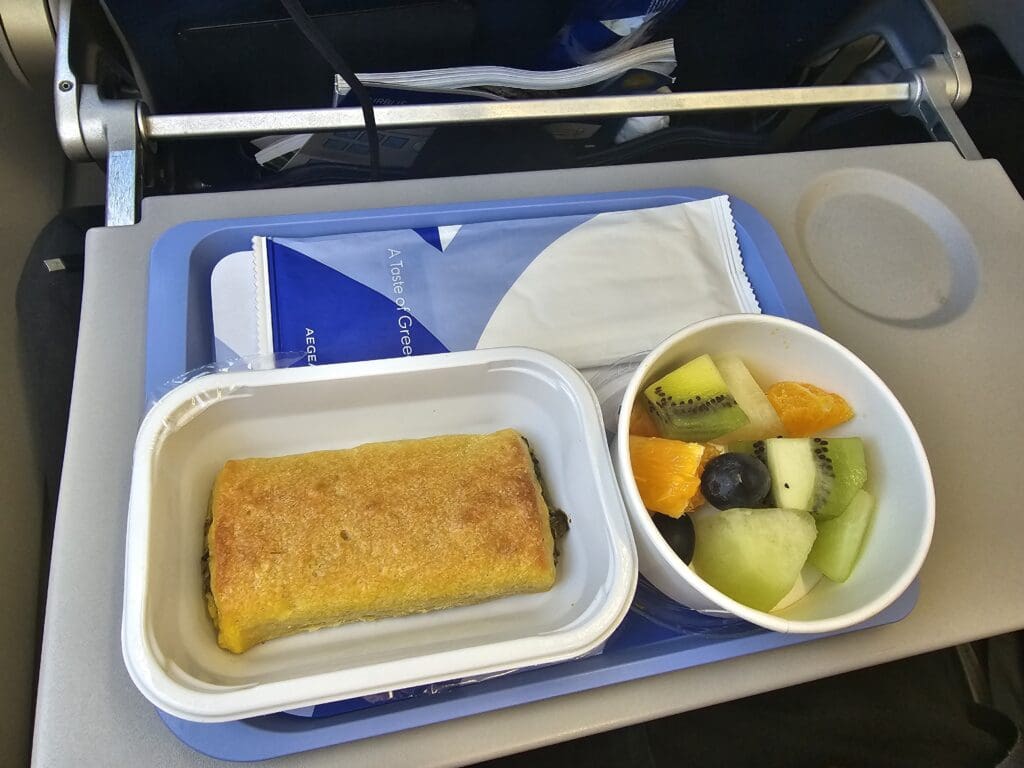
Around half an hour after the lunch service commenced, a flight attendant politely asked whether I would like a spinach pie or cheese pie. Opting for the former, a dish containing this was soon plonked down on a small plastic tray and cautiously passed over to me. A short time later, the second trolley arrived and an equally polite and friendly flight attendant requested my drinks choice – whilst in the holiday spirit, I decided to opt for a plain and simple orange juice rather than the complimentary alcohol that many of my fellow passengers seemed to be indulging in. Without delay, I soon got to work examining the contents of the lunch, although admittedly this did not take long and consisted of a small spinach pie and a fruit salad along with a sachet containing wooden cutlery, serviettes and a wet wipe. Whilst the portion size was perhaps not as plentiful as I have seen offered on some other Aegean Airlines services, all-in-all this proved to be a decent offering and I ended up being rather pleased with the deliciousness of the pie, the friendliness of the crew during this service this and the use of sustainable packaging and cutlery. Meanwhile, the crew commenced their rubbish collection service a reasonable amount of time after all meals had been distributed.
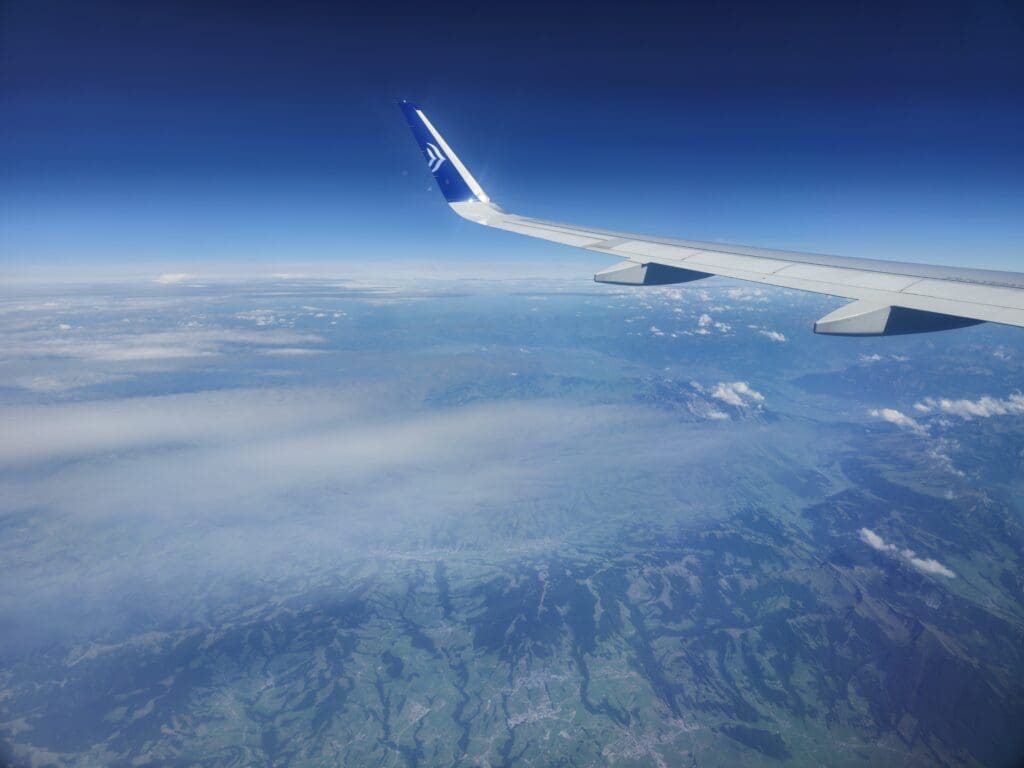
As I nibbled on the pie, I admired the tall snowy peaks outside before these rose downwards as we headed south over the Italian region of Veneto. Not too long after this, the waters of the Adriatic Sea appeared as we passed to the west of Venice before we crossed the sandy coastline near the Parco del Delta del Po. From there, relatively little could be seen other than the blue waters below and the occasionally passing ship although eventually a cluster of Croatian islands appeared in the distance – the nearest and most visible of which took the form of Vis.
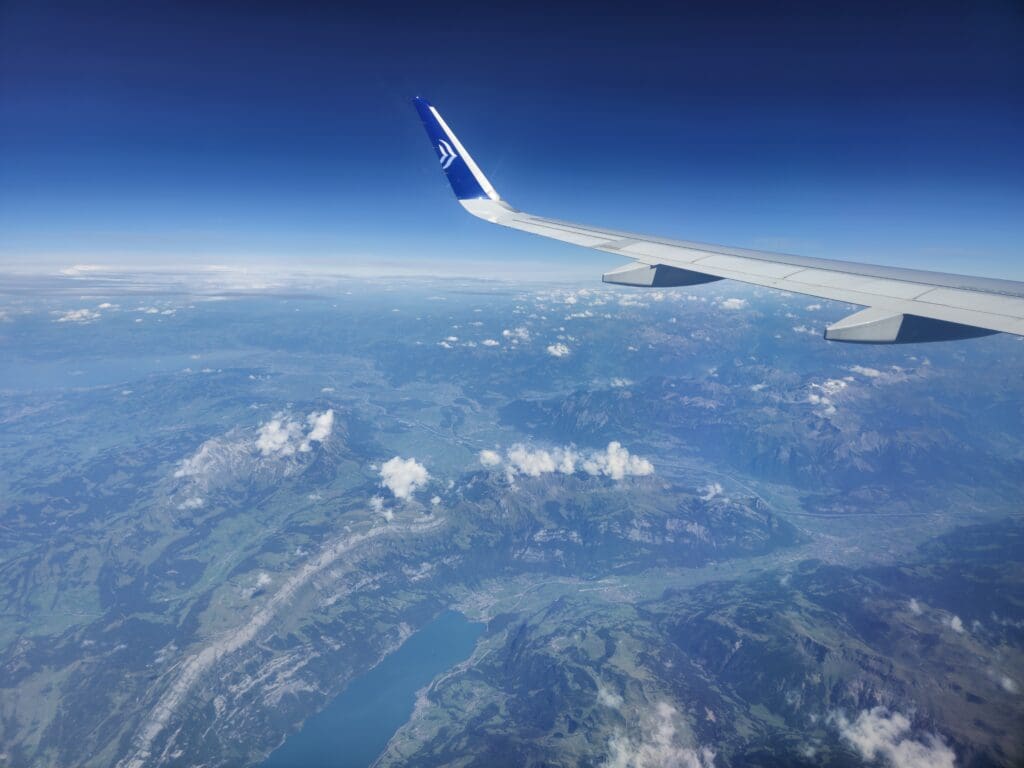
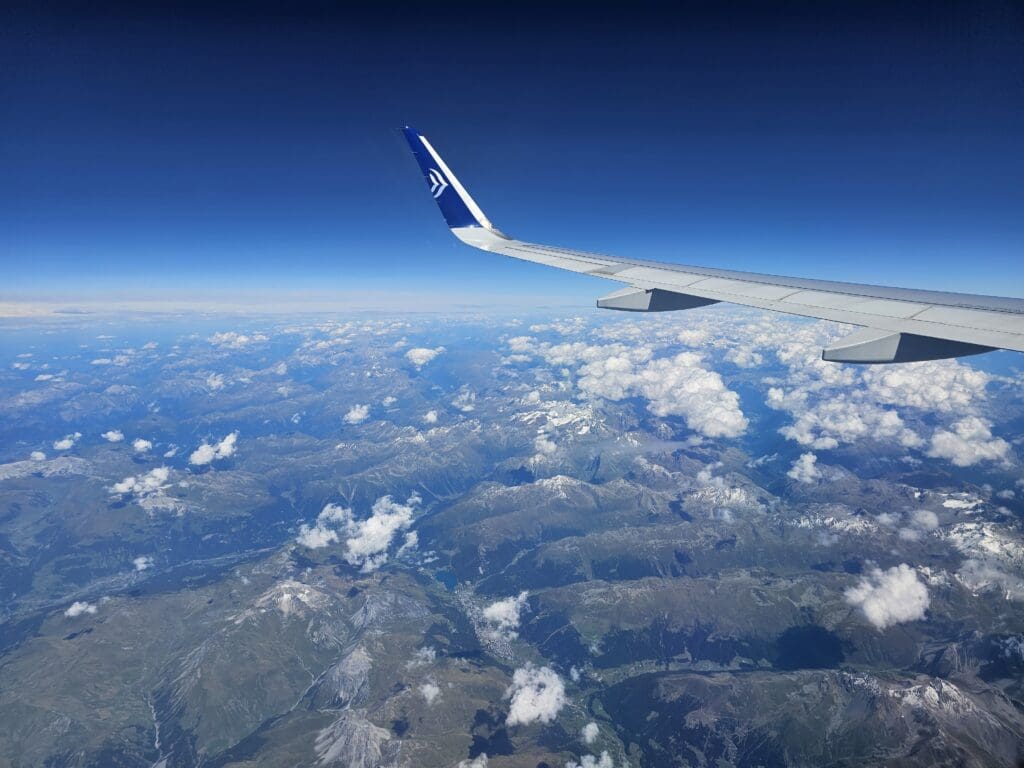
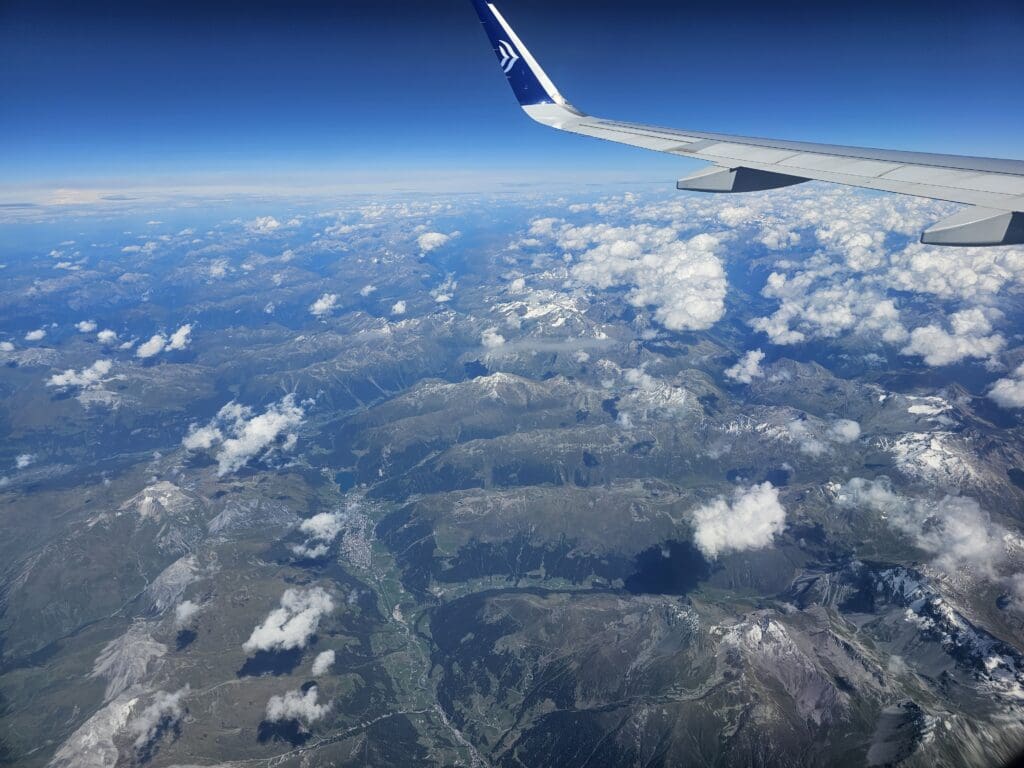
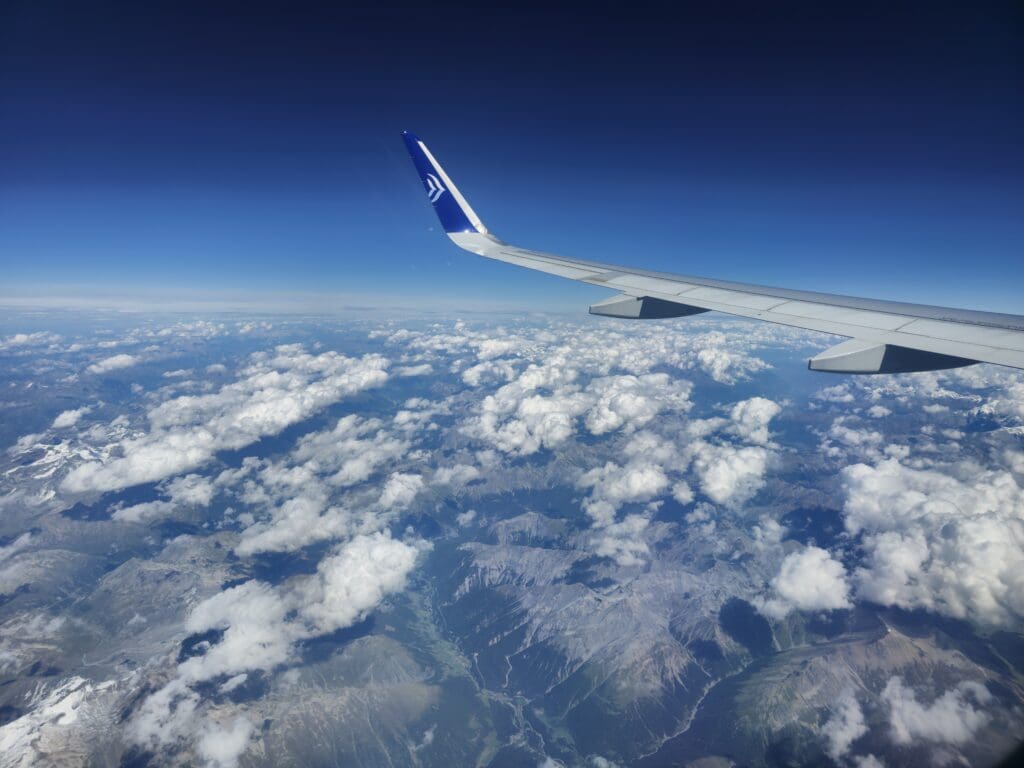
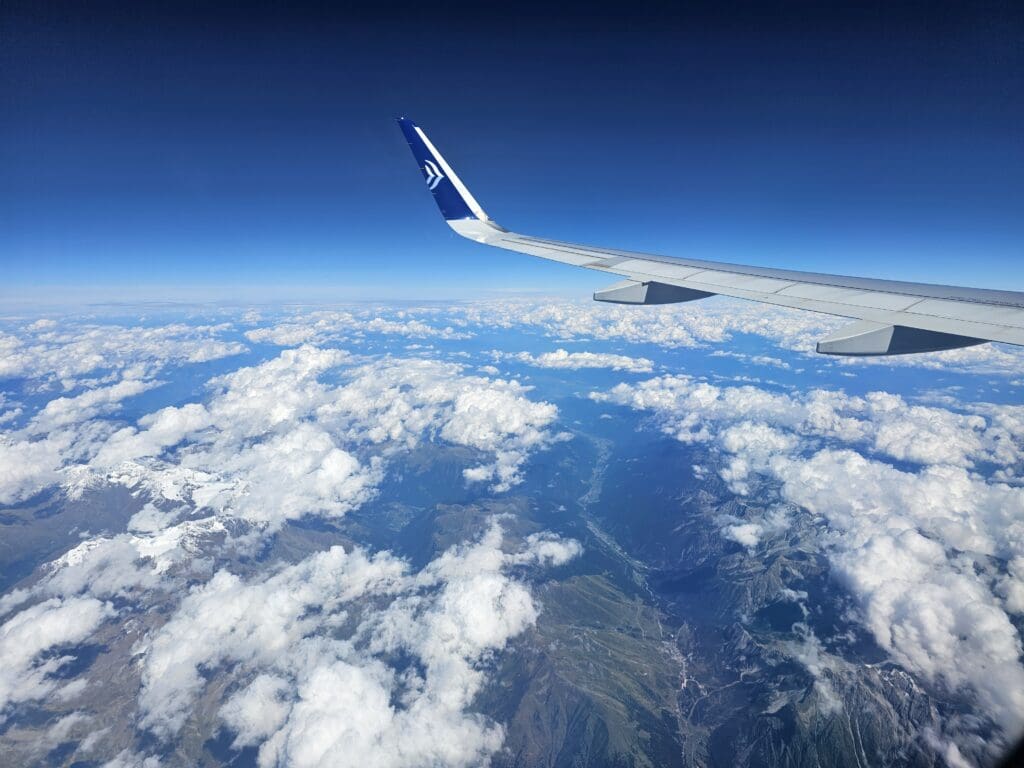
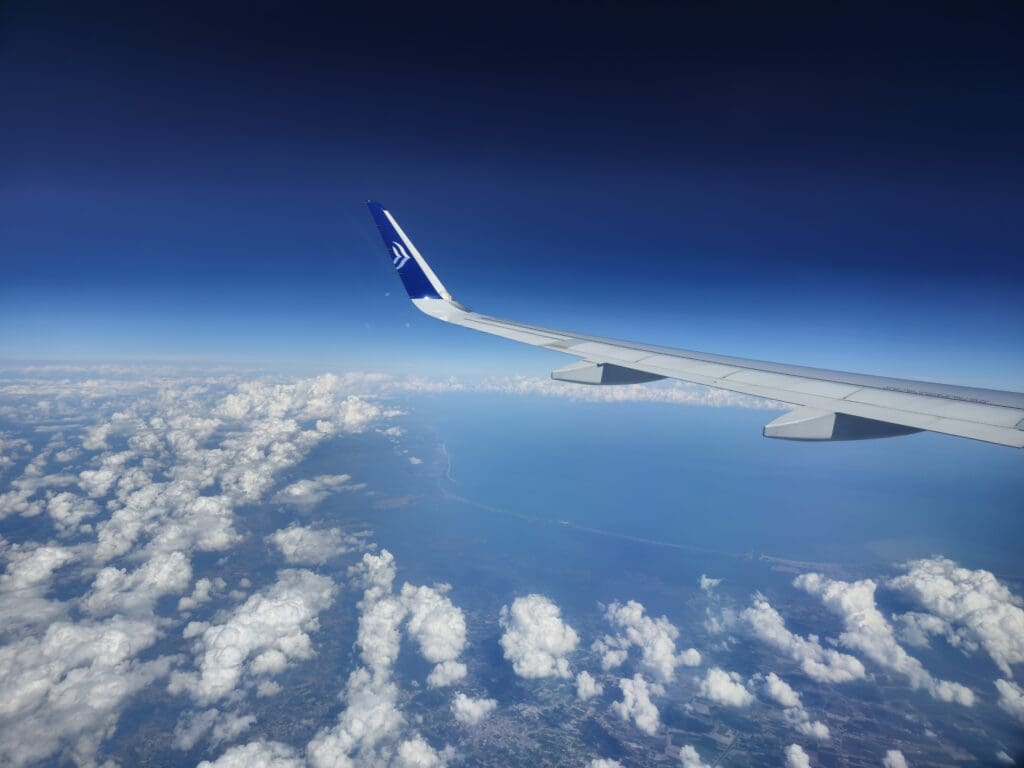
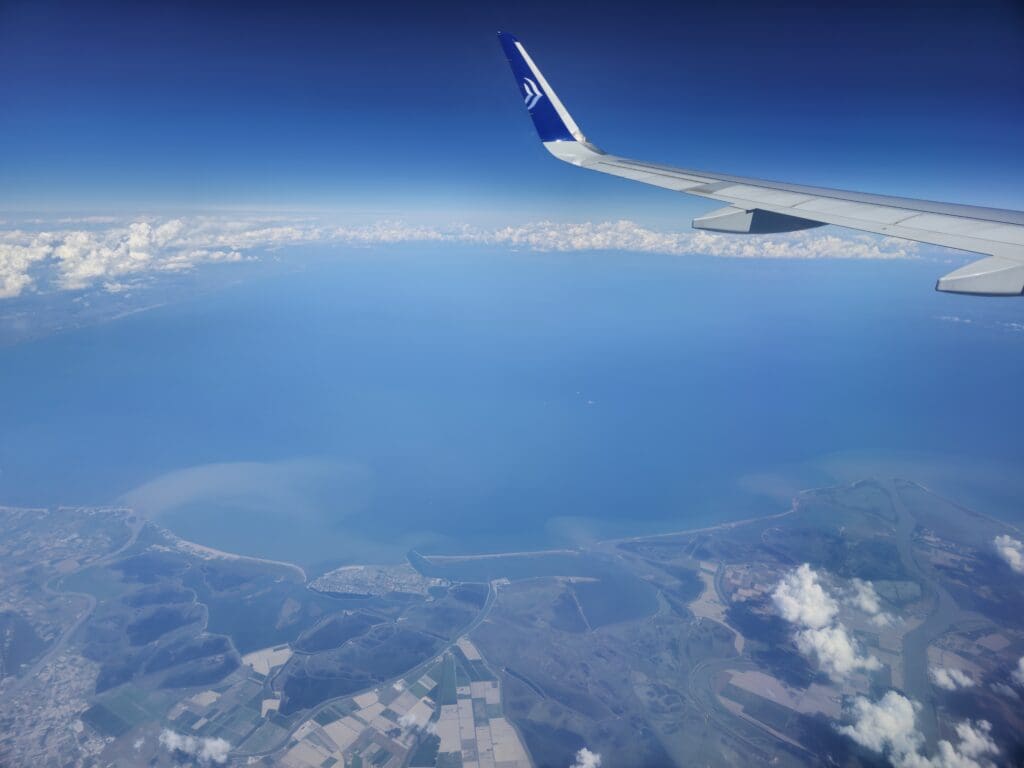
Inside the cabin, whilst not fancying anything else to drink, I was pleased to see that the crew willingly distributed additional alcoholic and non-alcoholic drinks to those who requested them throughout the flight. Meanwhile, as we headed southeastwards over the Adriatic, a reasonable queue of passengers formed in the cabin and soon the crew announced the commencement of the onboard shop service in Greek and English. However, having few takers for this, the crew were able to speed down the aisle before retreating to the galleys.
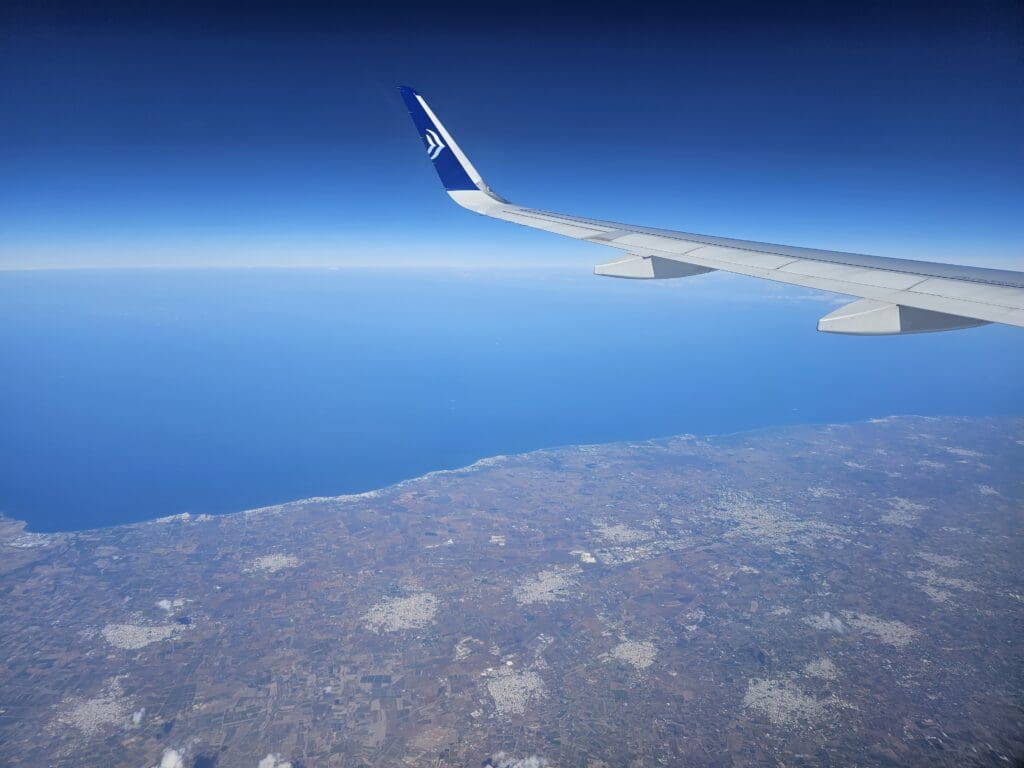
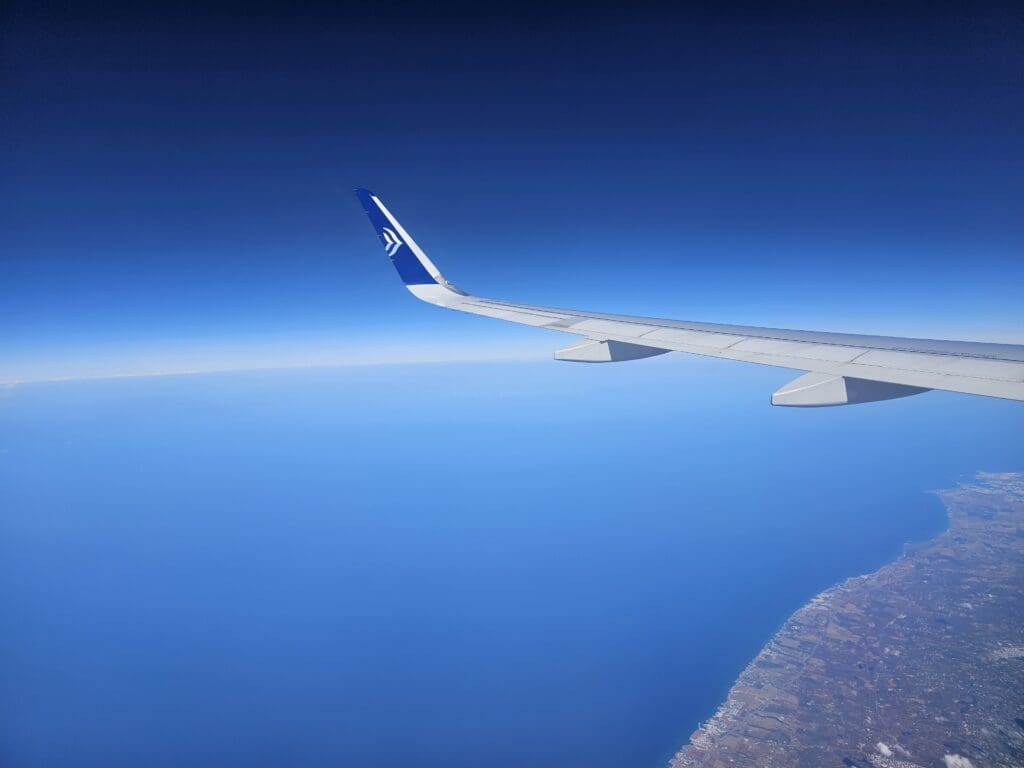

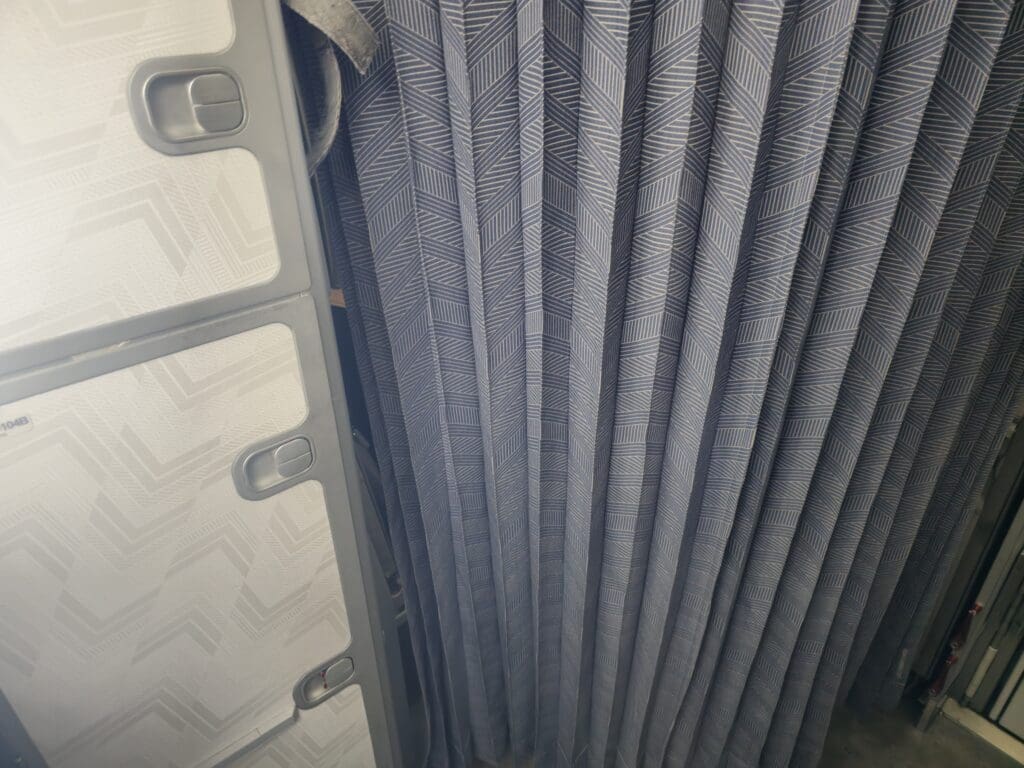
Around thirty minutes after leaving the Italian coastline near Venice behind, the Airbus made landfall once again, although this time in the region at the opposite end of the country near Italy’s heel, Puglia. As we continued southeastwards, the coastal city of Brindisi could be seen along with its airport before we reached the town of Leece. Upon leaving Italy behind for good, I decided to follow my neighbour and make a pre-arrival trip to the lavatory. With the toilet I had used before departure now out of service (perhaps owing to its overflowing bin), a long queue was in store, and I spent around ten minutes admiring the nicely patterned bulkhead and galley curtain before heading into the lavatory. Once again, I found the lavatory to be in a poor state, with this appearing to have not been cleaned during the journey.
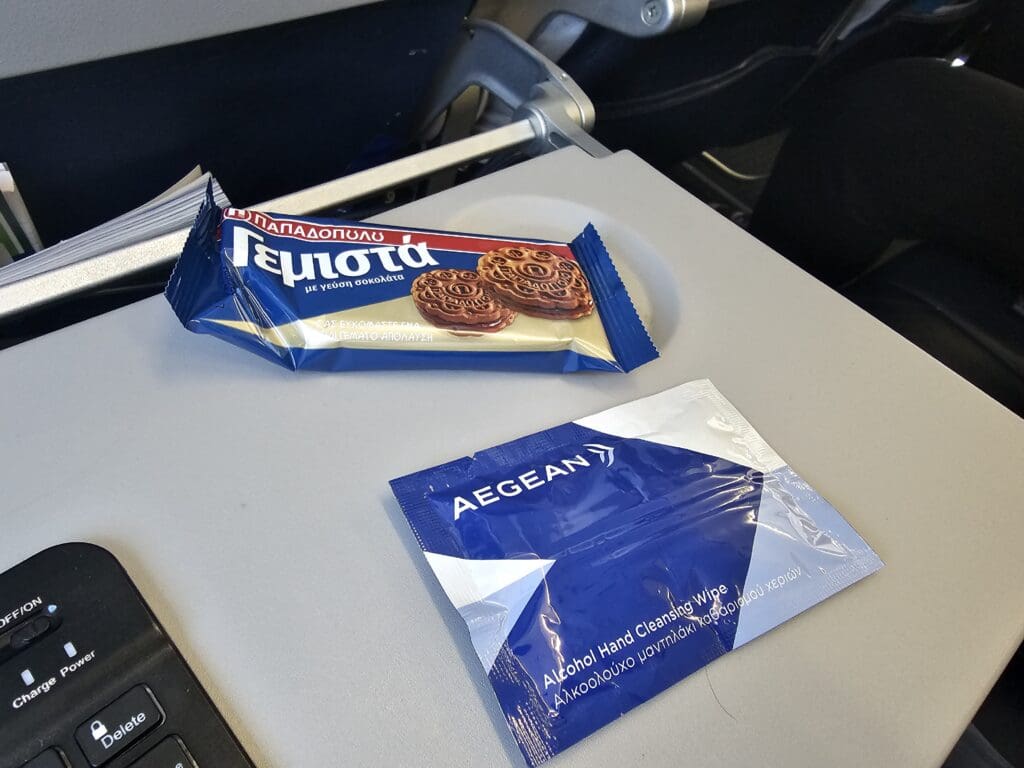
Once I had returned to my seat, the Greek island of Corfu could already be seen outside, indicating that we were nearing the end of the journey. Thankfully, I had made it back to my seat just in time for the pre-arrival snack service and was soon handed a pack of Papadopoulos chocolate biscuits by one of the friendly flight attendants. Whilst not failing to take the edge of the more negative aspects of my flight, this was positively unexpected and a nice way to round off the flight. As I nibbled these, the island of Lefkada could be seen below at which point the aircraft could be felt commencing its descent.
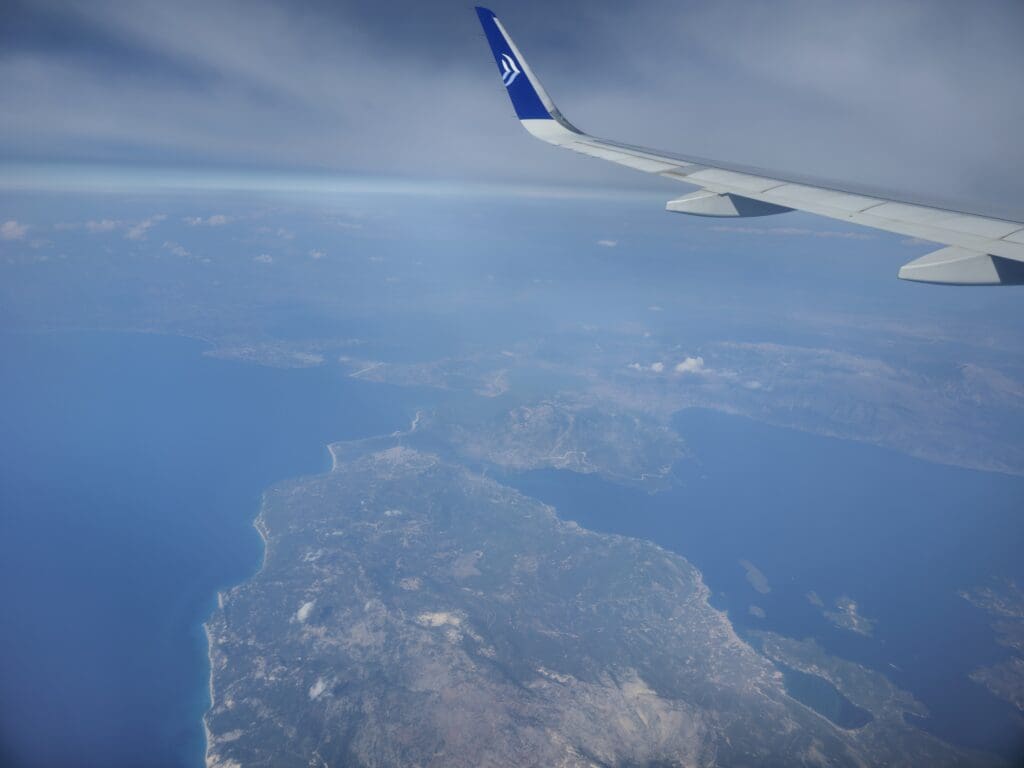
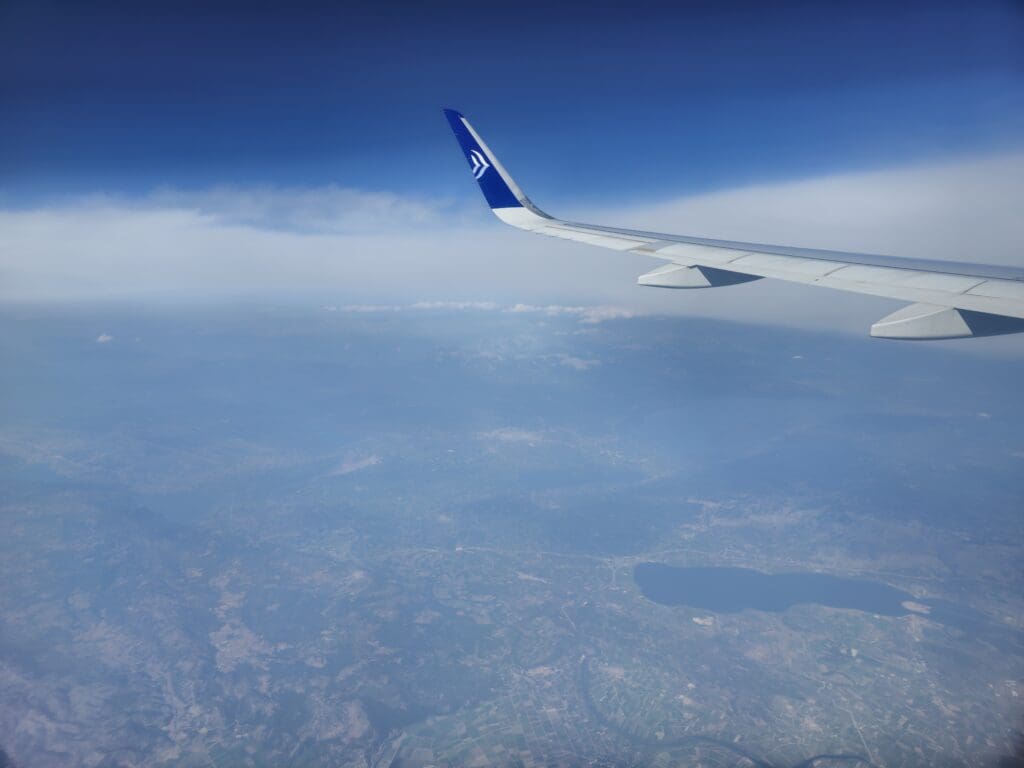
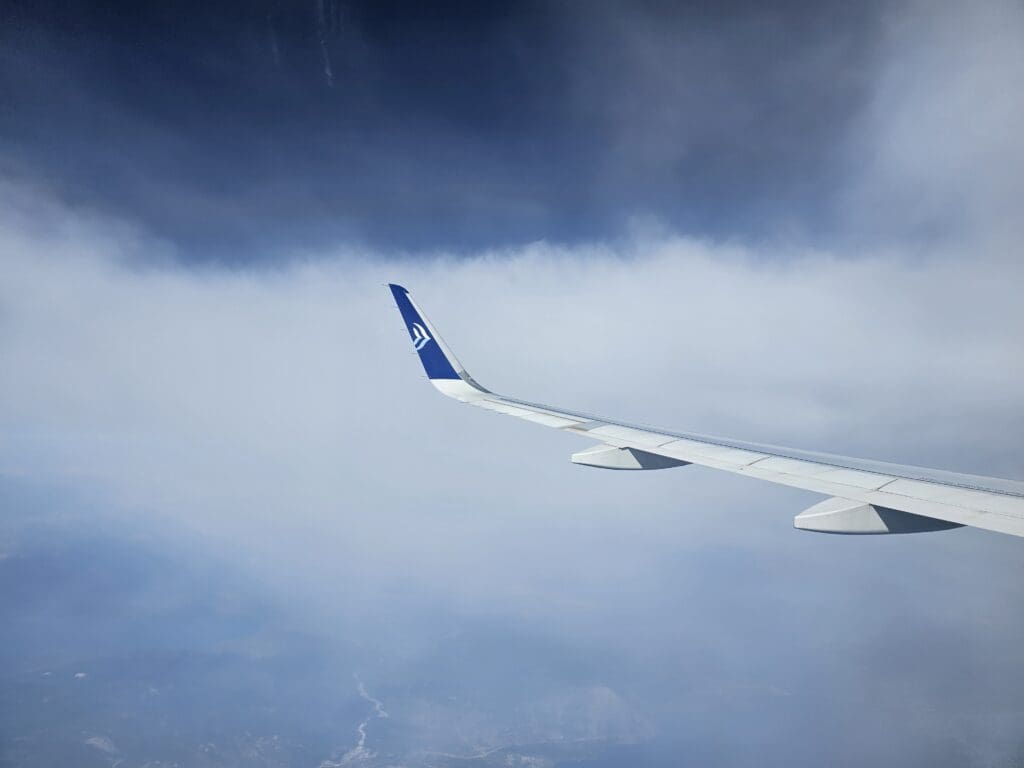
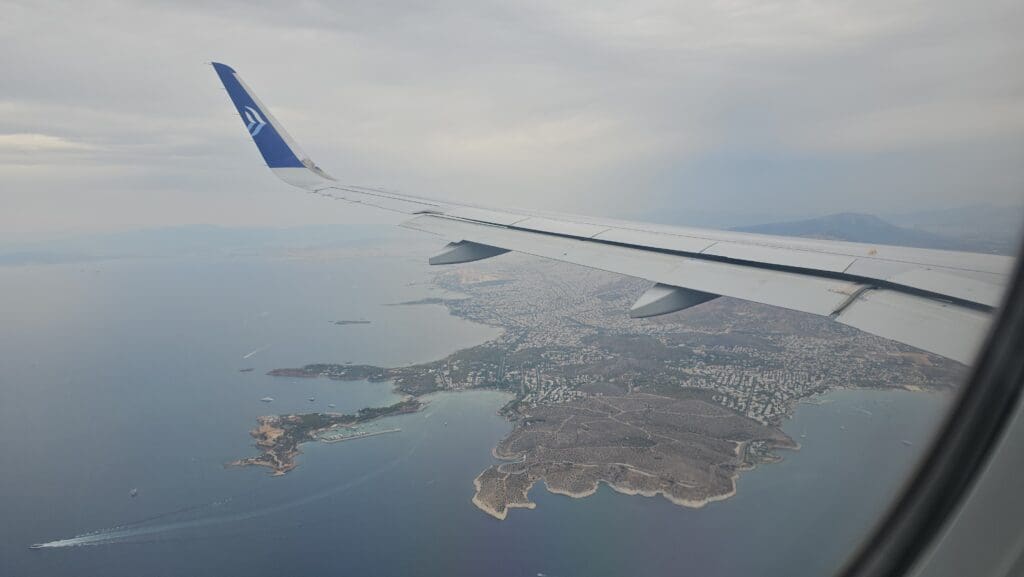
With plenty of dark and stormy clouds lingering around, the seatbelt signs were illuminated immediately after the Airbus had commenced its descent and soon the crew passed through the cabin collecting rubbish and ensuring that all was secure and in place for our arrival into Athens. Thanks to the clouds, at this time only patches of Greece could be seen as we passed the city of Patras and descended over the hills and mountains of the Peloponnese peninsula. Just before reaching Nafplion, the aircraft sank below the clouds for good and headed out over the blue waters of the Saronic Gulf. Soon, the small islands of Agistri and Egina came into view as we passed these and made our way towards the mainland’s coastline.
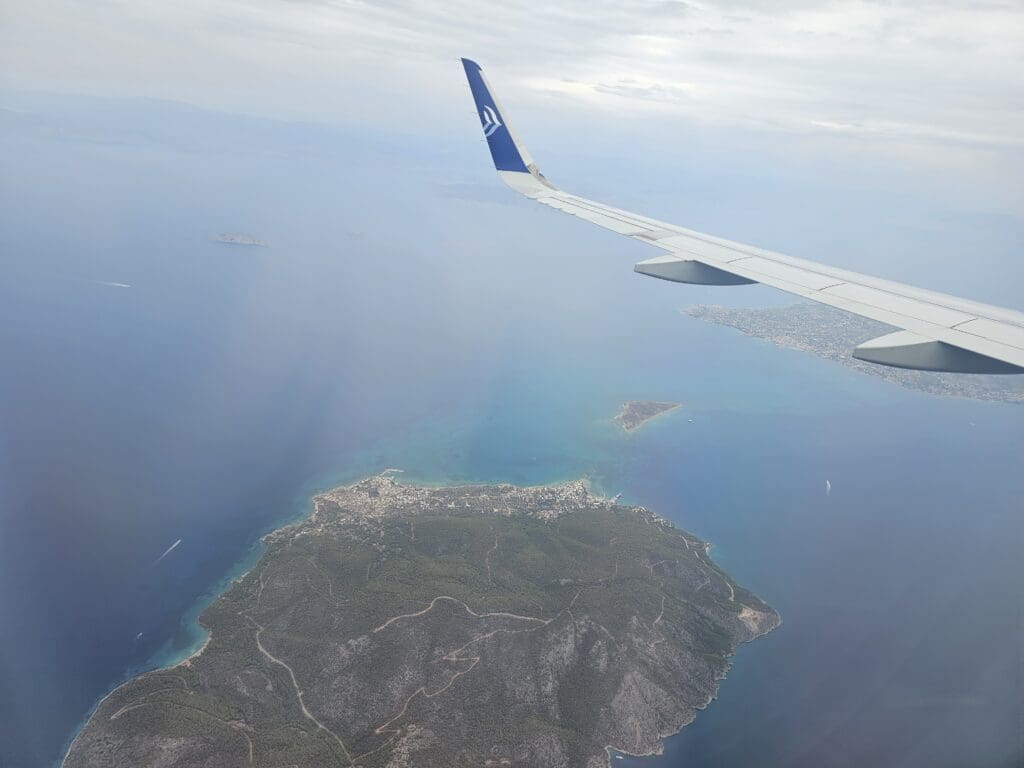
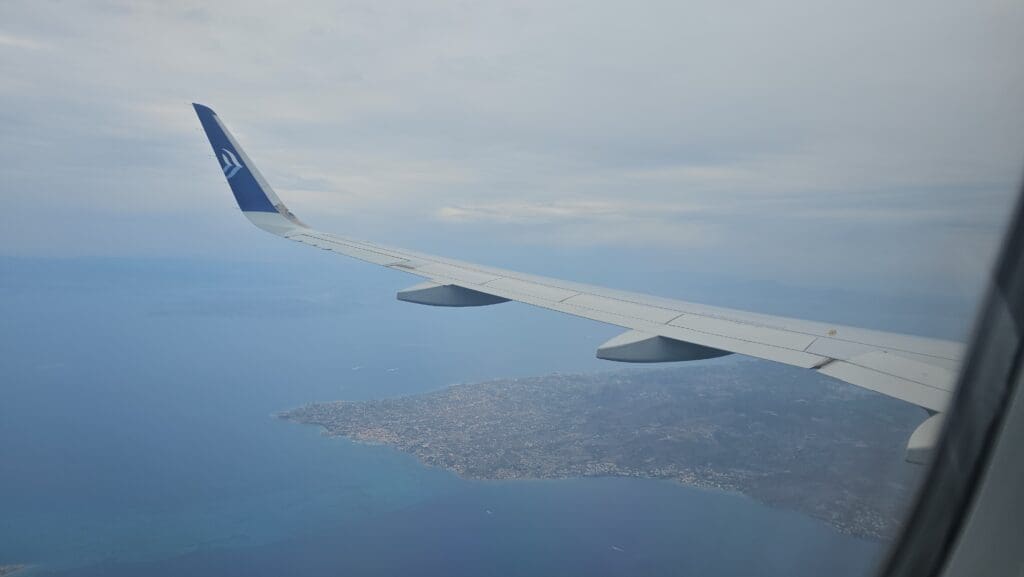
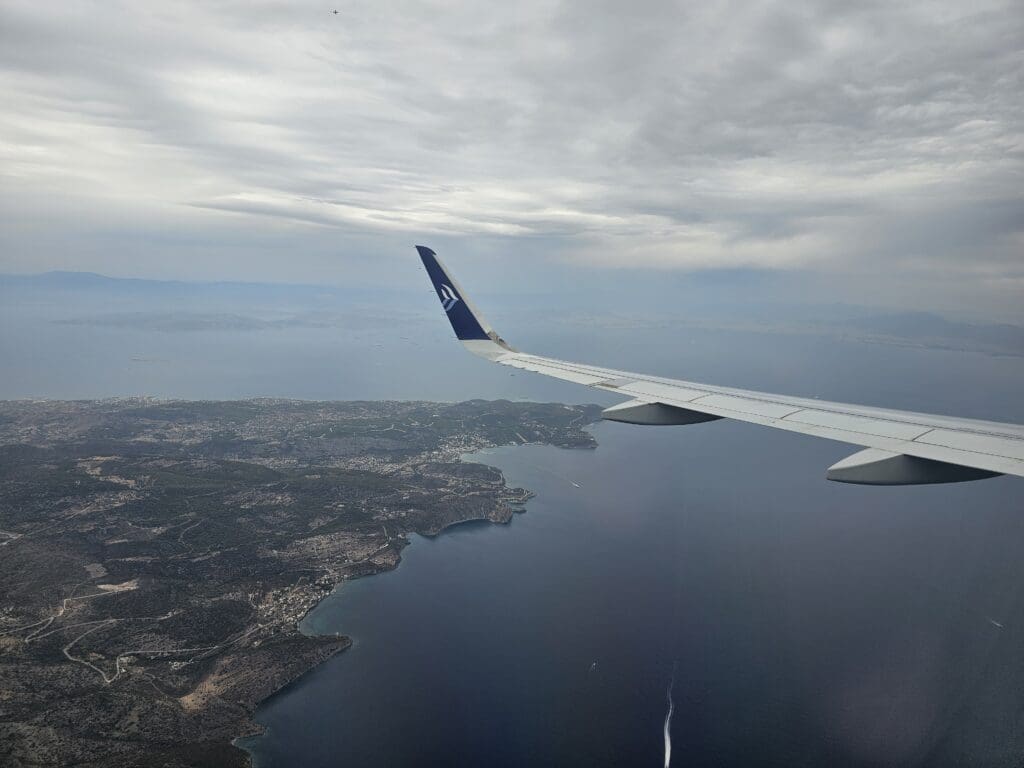
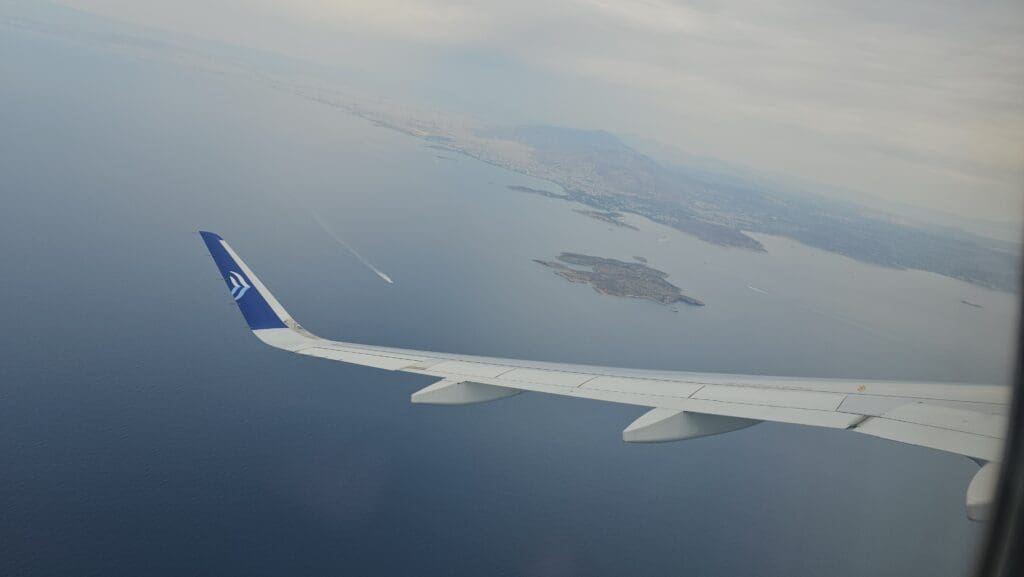
As we headed towards the airport, the flaps and landing gear were extended as Athens’ coastline came into view, along with the old airport in the suburb of Elliniko. After passing the seaside town of Varkiza, where a beach and several sailing boats could be seen, we crossed over the coastline and continued onwards to the airport. At this time, the mountains that separate Athens Airport from the city itself could be seen whilst it wasn’t long before we crossed over the perimeter fence at which point the retail park that sits between the two runways could be seen. Following this, a good view was offered of the general aviation apron at the southern end of the airport. There, a selection of locally based private jets, plus two Fly Cycladic Cessna 208s and a visiting Saudi Arabian Cessna 550 Citation Bravo and Cypriot Piaggio Avanti came into view.
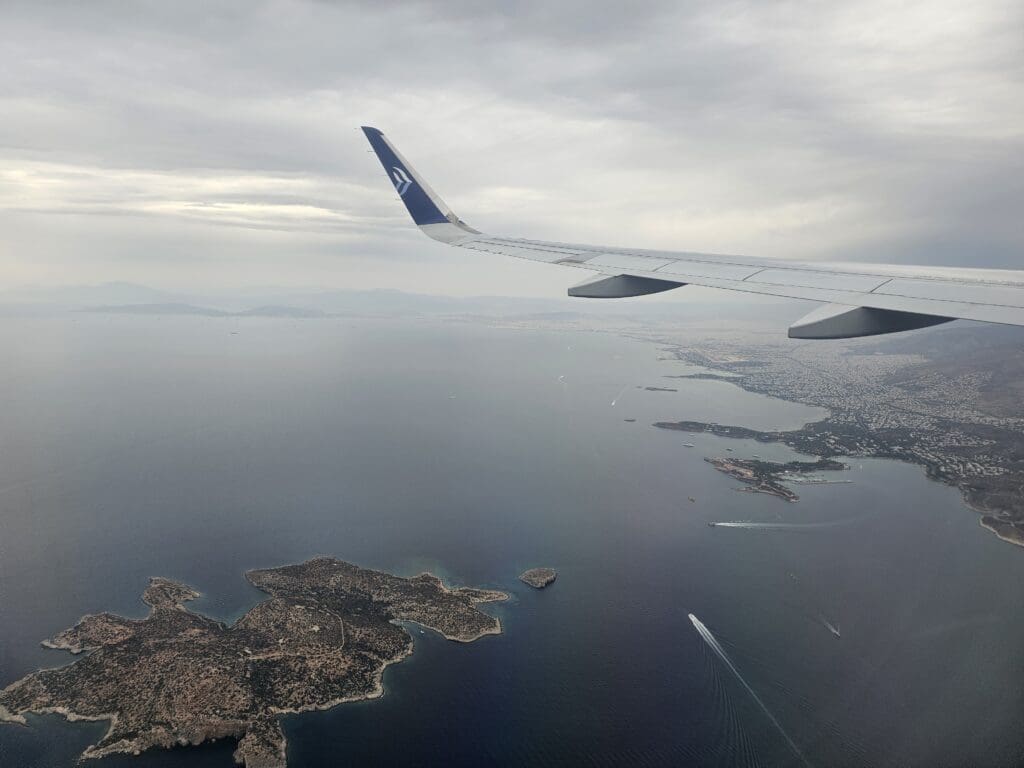
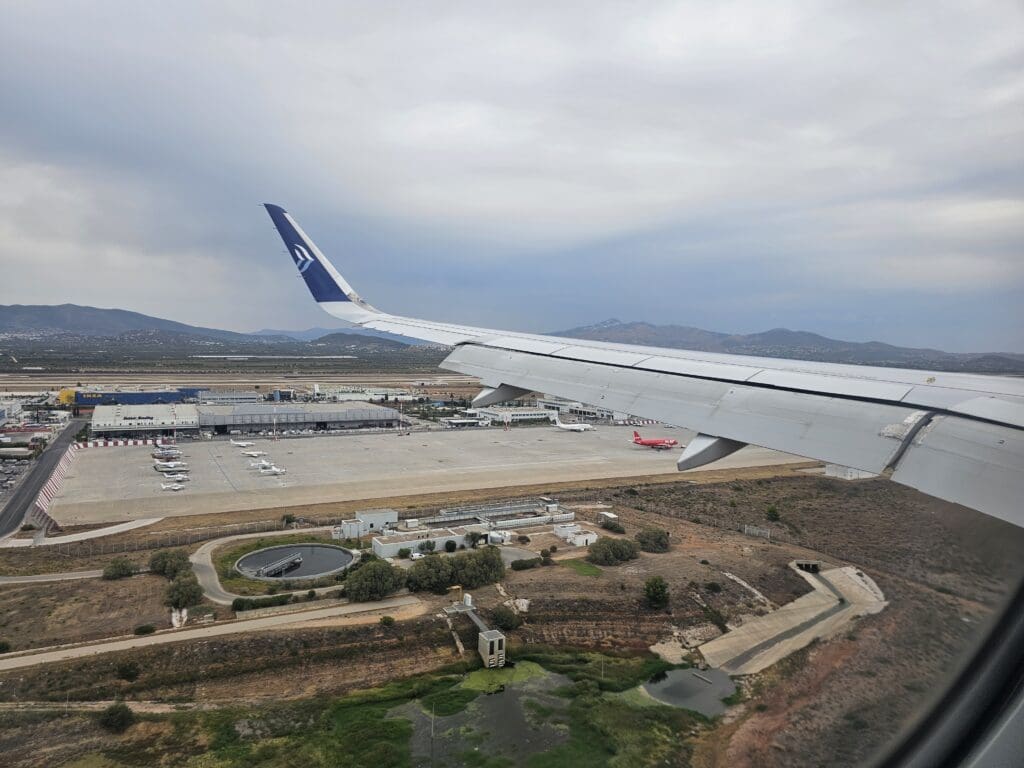
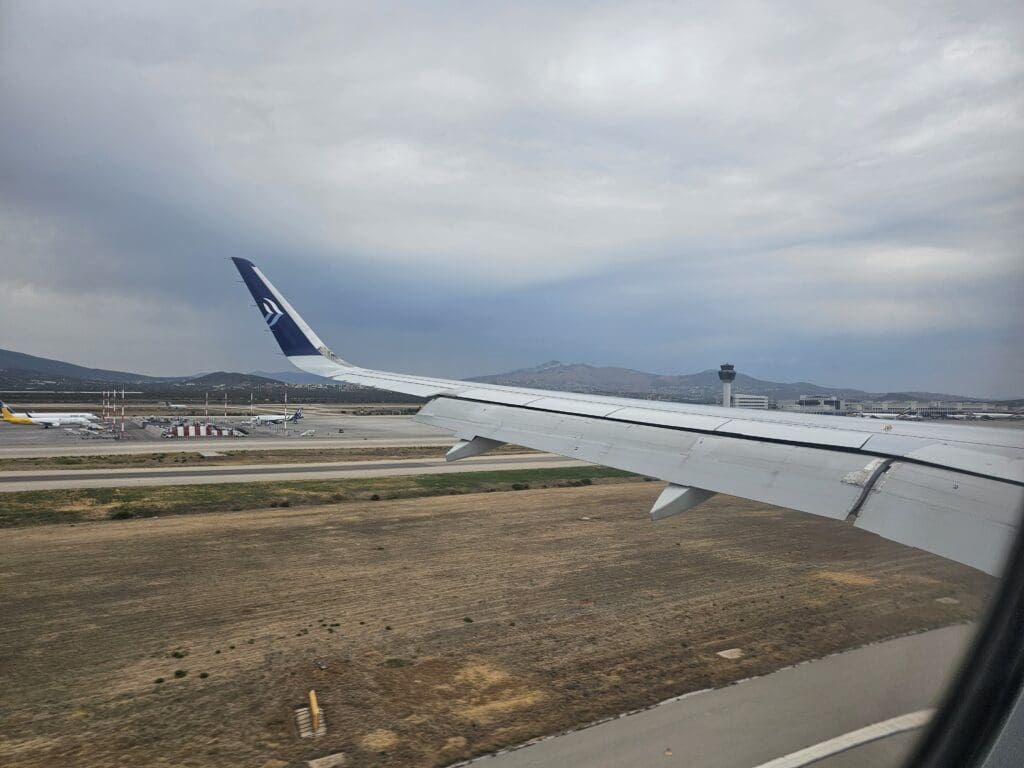
At 1719, the Airbus made a firm touchdown on Runway 03R after 3H16 in the skies of Europe before decelerating rather quickly and soon vacating the runway to the left. In the usual manner, once off the runway, the cabin crew performed their post-arrival announcement, at which point it became evident that we were heading for a remote stand. Following a very short taxi and whilst the English version of the post-arrival announcement neared its conclusion, the aircraft cautiously pulled in between two other Aegean Airlines Airbuses as classical music began to ring out through the cabin before the two engines spooled out. In the cabin, the music was temporarily interrupted by a short announcement from the crew advising those passengers bound for Dubai on Emirates (a rather interesting route!) to make themselves known to the crew. This was followed by the sight of a passenger frantically scrambling through the aisle, their sense of urgency understandable by the fact that this flight was scheduled to depart just a short time later.
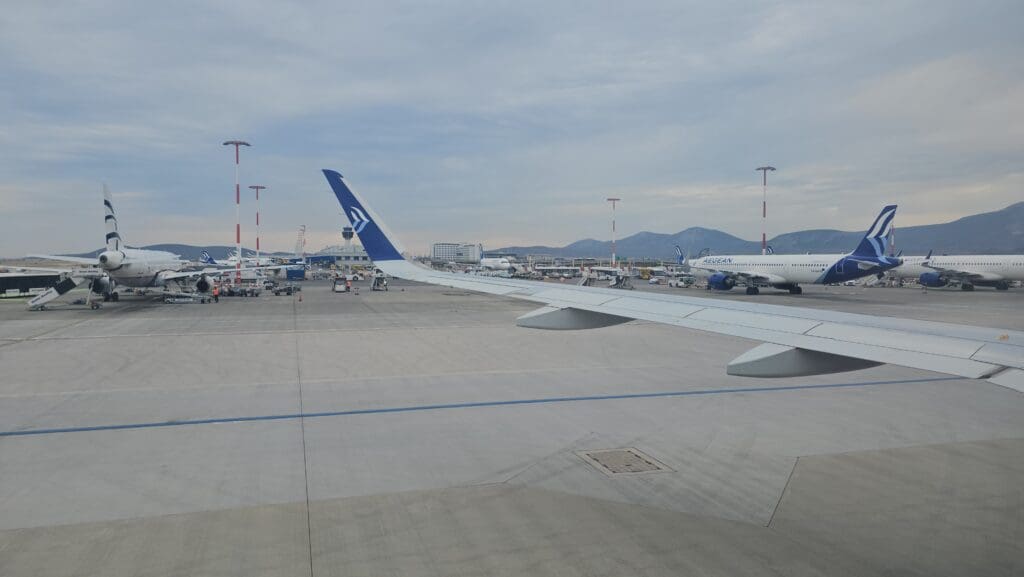
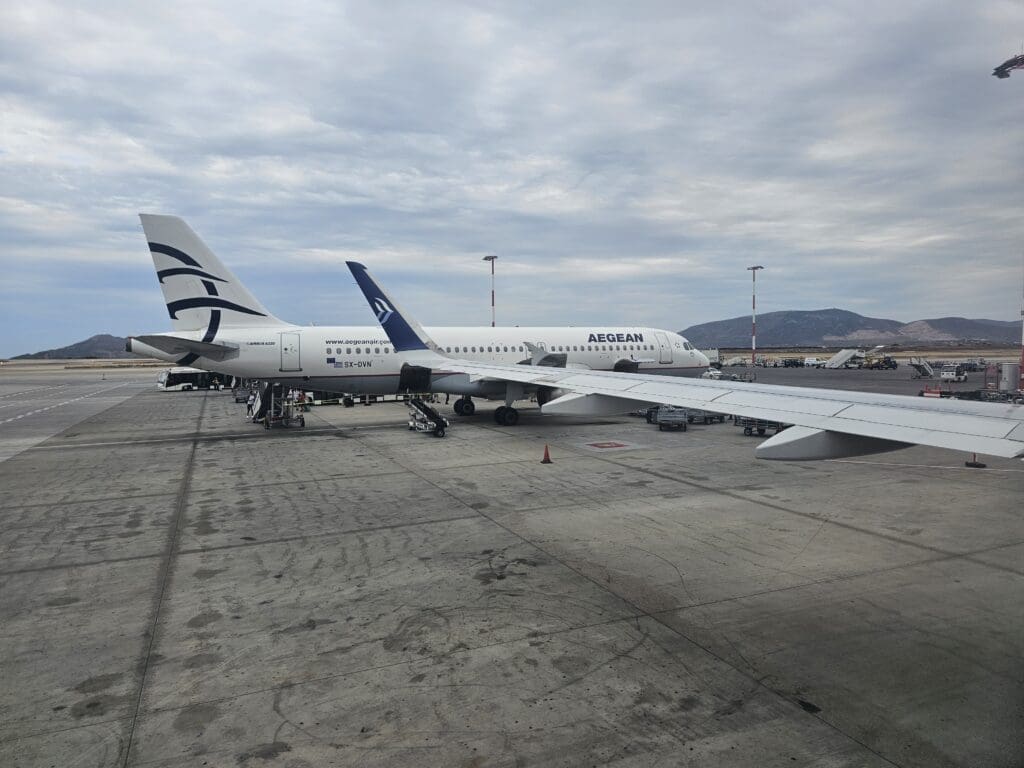
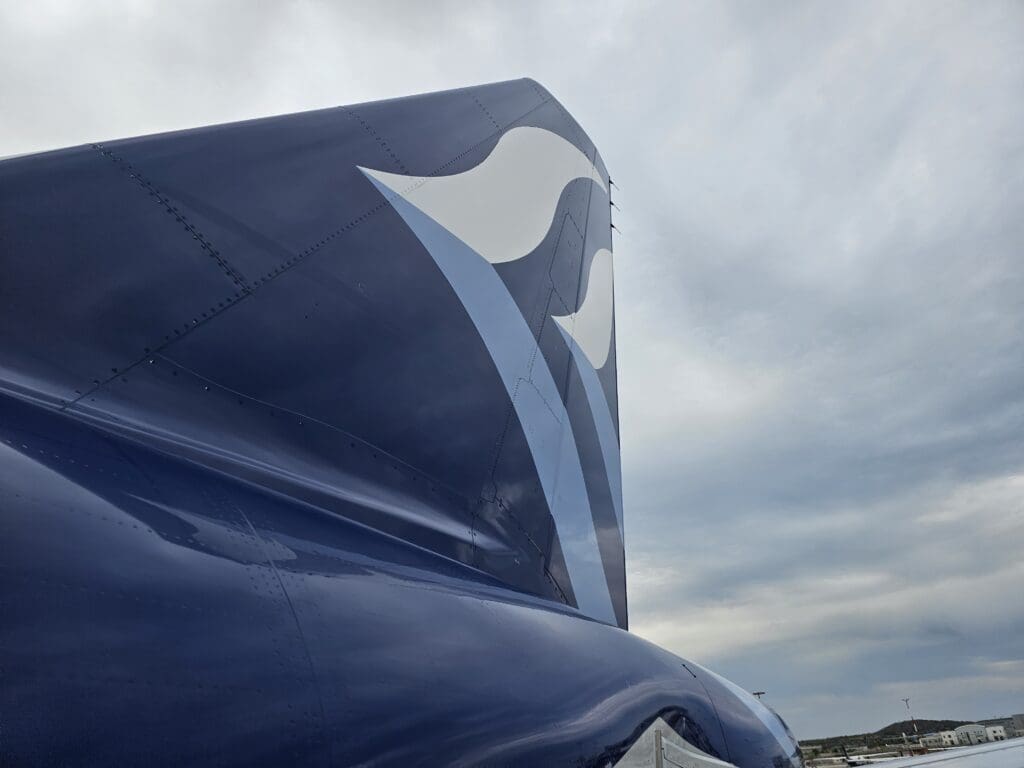
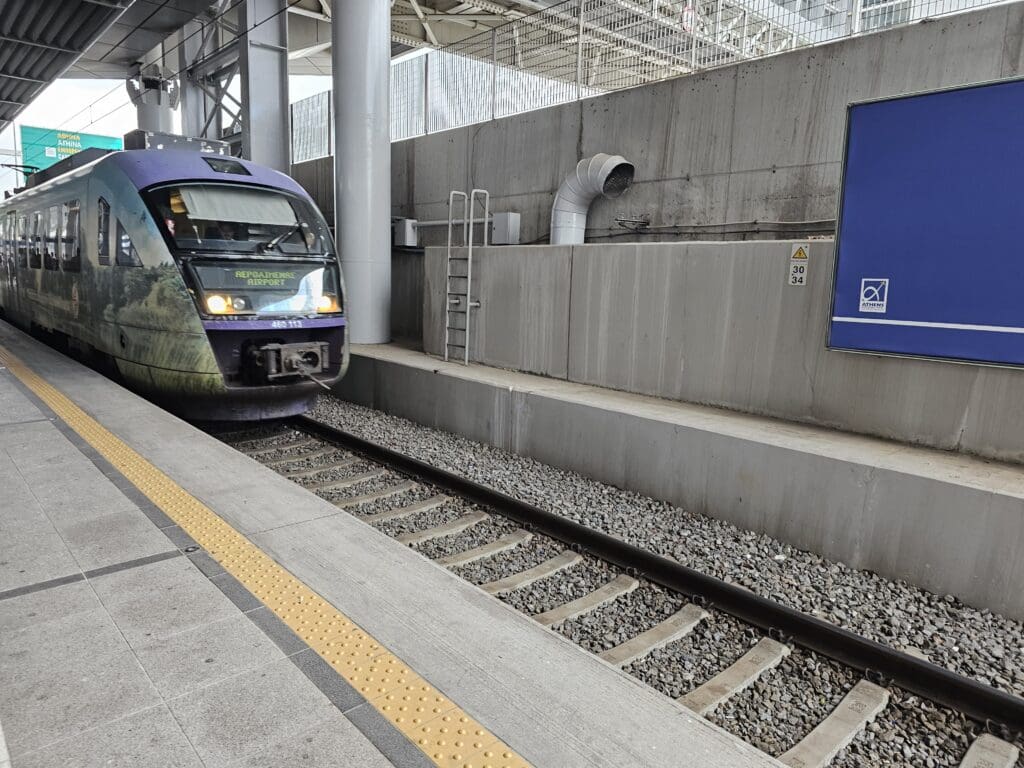
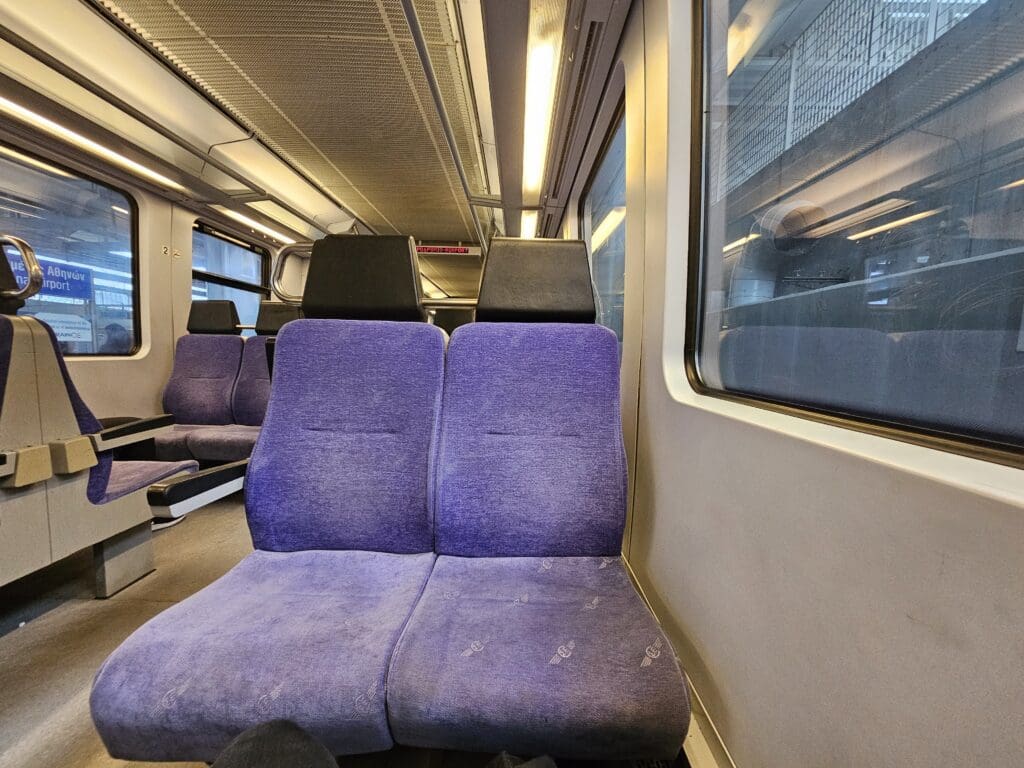
Outside, steps were soon wheeled up to the front and rear doors, and two buses could be seen waiting to shuttle passengers to the terminal building. At 1728, six minutes after the Airbus had come to a halt, disembarkation commenced, and I soon stood up, collected my bag and made my way rearward,s where I was thanked in a pleasant and friendly manner before heading out into the afternoon Greek heat. Soon making it onto the bus, once this was full, the doors slid closed and we began our short journey over to the main terminal. Deposited near the entrance to the immigration hall, thankfully most desks were open and just a short and fast-moving queue could be seen leading up to these. After no more than three minutes of waiting in line, a rather disinterested immigration officer took my passport, continuing their conversation with their colleague on the other half of the booth as they scanned and stamped it. Once this had been handed back to me, I continued onwards, speeding through the baggage collection hall before making my way to the airport’s dedicated metro and suburban railway station for my journey into Athens.
Summary
Having had high expectations for my first international flight with Aegean Airlines, I was ultimately left disappointed by the poor and unclean state of the cabin. However, other than this, I had enjoyed a fantastic flight and was left with nothing to complain about (other than the lack of legroom). Onboard, the crew were friendly, the complimentary wifi was appreciated, and the lunch option and snack service were a rare and welcome addition to an intra-European service. Whilst I would not rule out flying with Aegean Airlines again, I would hope to fly on a cleaner and less battered aircraft!