Bagging My First Beechcraft 1900: Vancouver to Prince George via Kamloops with Central Mountain Air
Background
Living in the UK, the Beechcraft 1900 is not the easiest aircraft to fly, with just three European operators flying the type at the time of my trip. These take the form of Swedish carrier Jonair, as well as French regional carriers Chalair and TwinJet. Seeing as I had a few days in Vancouver, I was unable to resist the opportunity to finally tick the Beechcraft 1900 off my ‘to fly’ list, with both Central Mountain Air and Pacific Coastal Airlines operating the aircraft from Vancouver. Examining schedules and fares, I worked out that the cheapest option that aligned with my schedule was to fly with Central Mountain Air from Vancouver to Prince George with a quick stop in Kamloops, before flying back down to Vancouver on a WestJet Encore Dash 8 Q400.
Booking
Looking around, I found that the flights up to Prince George were around £9 cheaper to book via an online travel agent. However, being well aware of the long and arduous process that would be in store were I to have to cancel or reschedule the flights, I decided to pay a premium and book directly with Central Mountain Air. Upon arriving at the airline’s homepage, I was presented with a scenic picture of Edmonton at dusk, on which the flight search engine was superimposed. Going ahead and entering all the required details, I was presented with two options – an 0805 departure via Kelowna, or a cheaper 0815 service via Kamloops. With both being of comparable length and operated by the Beechcraft 1900D, I opted to go for the cheaper flight which was priced at an acceptable $159.73. After selecting this, I was presented with three fare options: Econ, Flex and Flex+. Opting for the cheapest fare, I steamed ahead and entered my personal details before receiving a quick confirmation. As I have found to be the case with all Canadian regional airlines, the entire booking process was quick and painless.
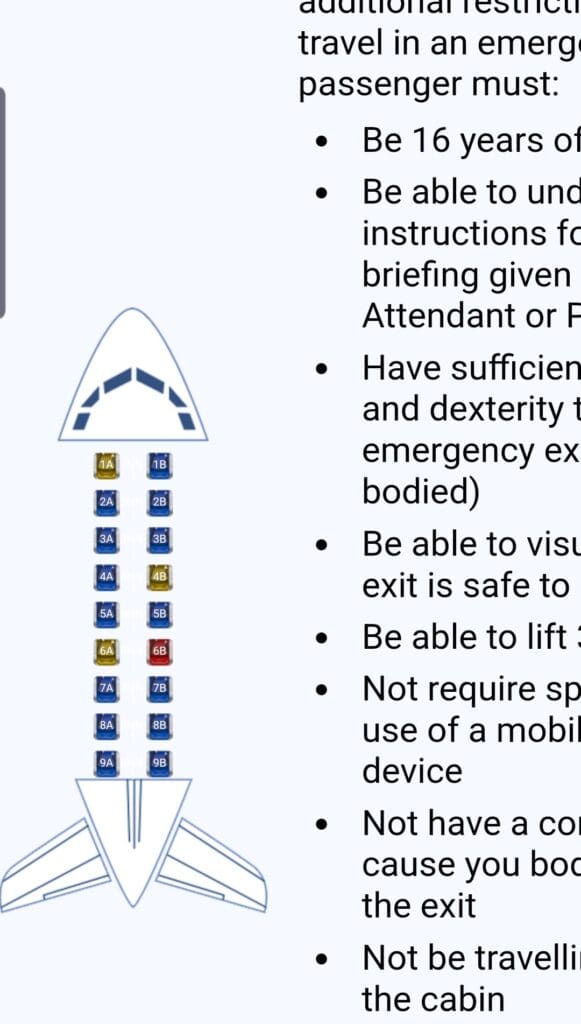
As is not always the case with regional carriers operating small aircraft, those heading off on Central Mountain Air’s scheduled flights can check-in online and select their seats without payment 24 hours before departure. Given the 1-1 arrangement of the Beechcraft 1900, I knew that so long as I didn’t end up in the windowless first row, I would end up in both a window and an aisle seat. Nevertheless, I still decided to check-in online and was able to select my seats and check-in without any issues.
The Journey
Being a small regional carrier, Central Mountain Air utilises Vancouver Airport’s South Terminal, which, at the time of my flight also served Iskwew Air, North Cariboo Air, Pacific Coastal Airlines and Summit Air. This does add a layer of complications for those connecting to or from most other flights at Vancouver Airport, with this terminal located on the south side of the airfield and completely separate from the main terminal complex. However, it is worth mentioning that a complimentary shuttle bus operates between the two most of the day. Starting my journey in Richmond and not wanting to splurge out on a taxi, given the lack of rain on my departure day, I decided to trek to the terminal on foot.
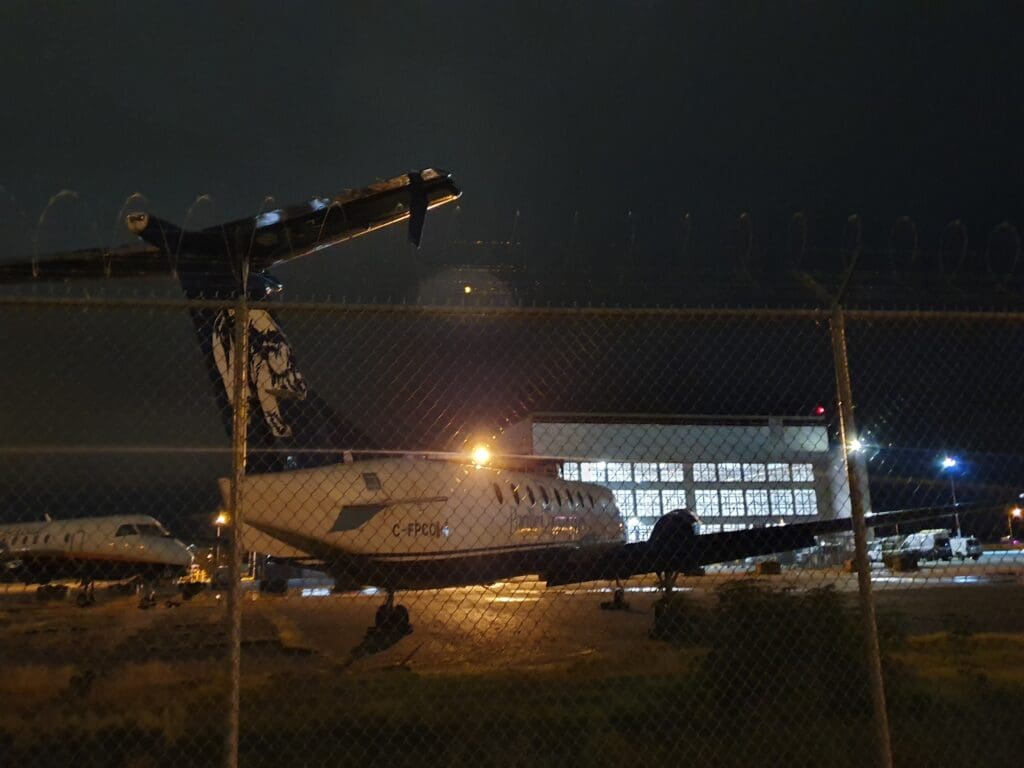
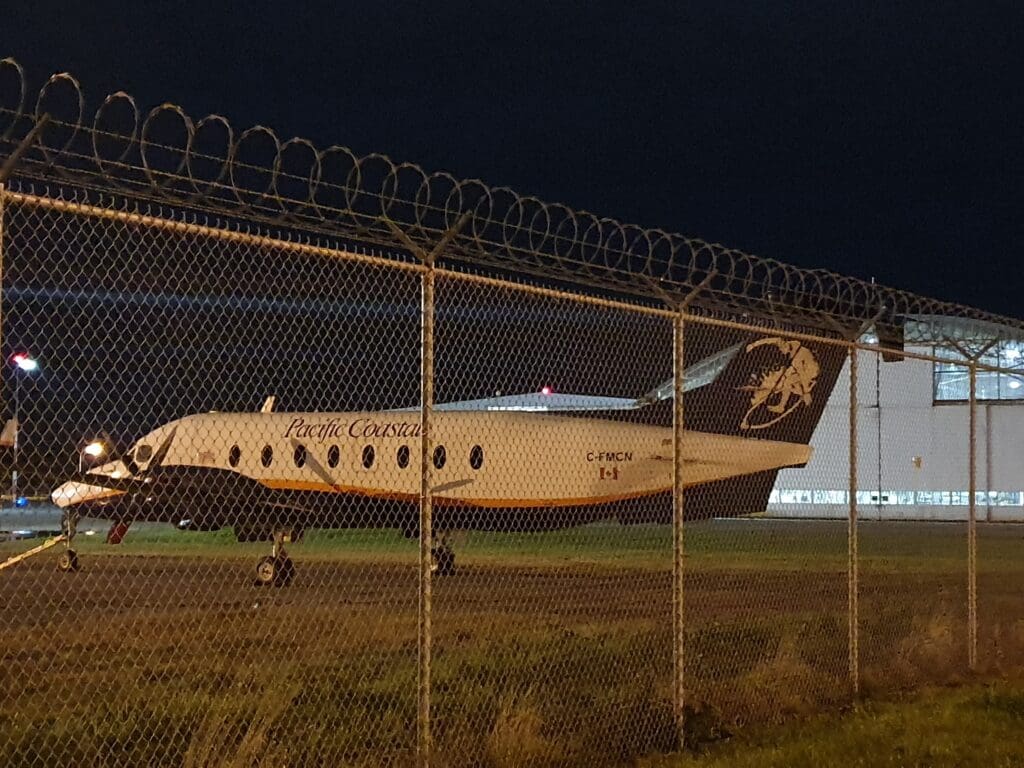
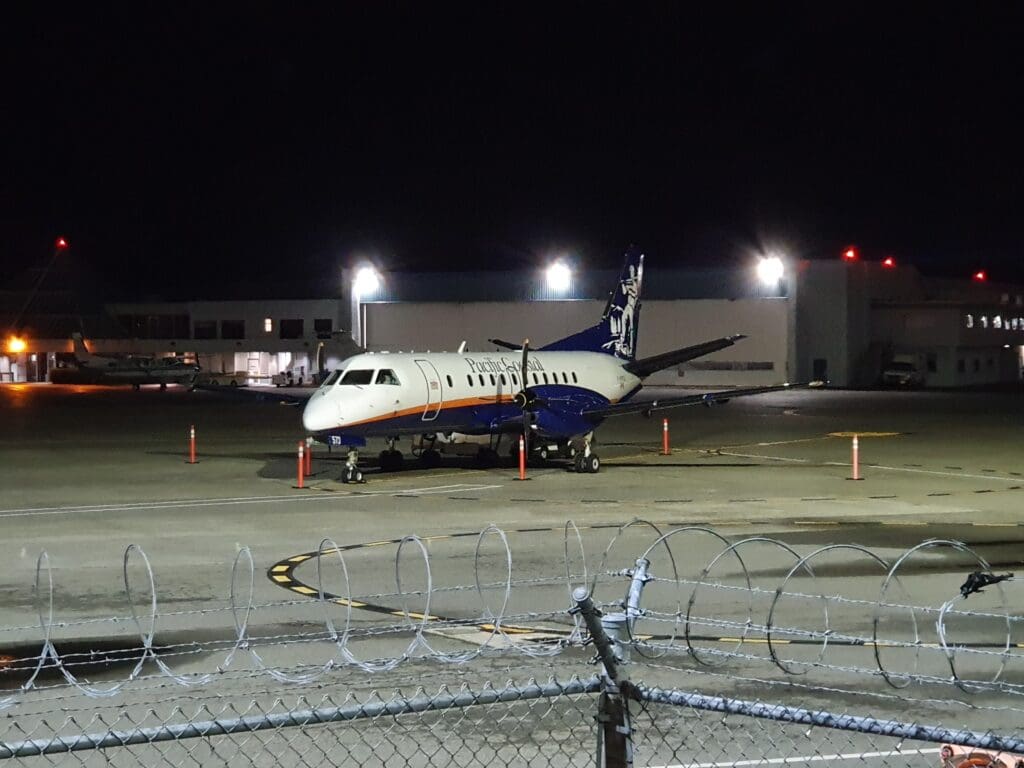
Aware of the South Terminal’s small size, I was expecting my transit through the airport to be a quick and seamless affair, however, hoping to have plenty of time to soak up the atmosphere and watch as small turboprops headed off to destinations across British Columbia, I aimed to arrive at the terminal around two hours before my flight departure. After a quick shower, I left my hotel in central Richmond just after 0500 and walked along the city’s quiet streets through the chilly morning air, crossing the Fraser River around fifteen minutes later. Once on Sea Island, the journey to the terminal was fairly straightforward, consisting of a walk along Inglis Drive. Nevertheless, I still managed to take an accidental detour, which afforded me some views of Pacific Coastal Airlines’ maintenance hangar and several of the airline’s Beechcraft 1900s and Saab 340s being dragged over to the South Terminal in preparation for a new day of flying. With most roads near the terminal lacking pavements, this walk was not particularly ideal, and I would most certainly not recommend this for any passengers travelling with any significant amount of luggage. However, fortunately, I made it to the terminal in one piece around fifty minutes after leaving my hotel in Richmond.


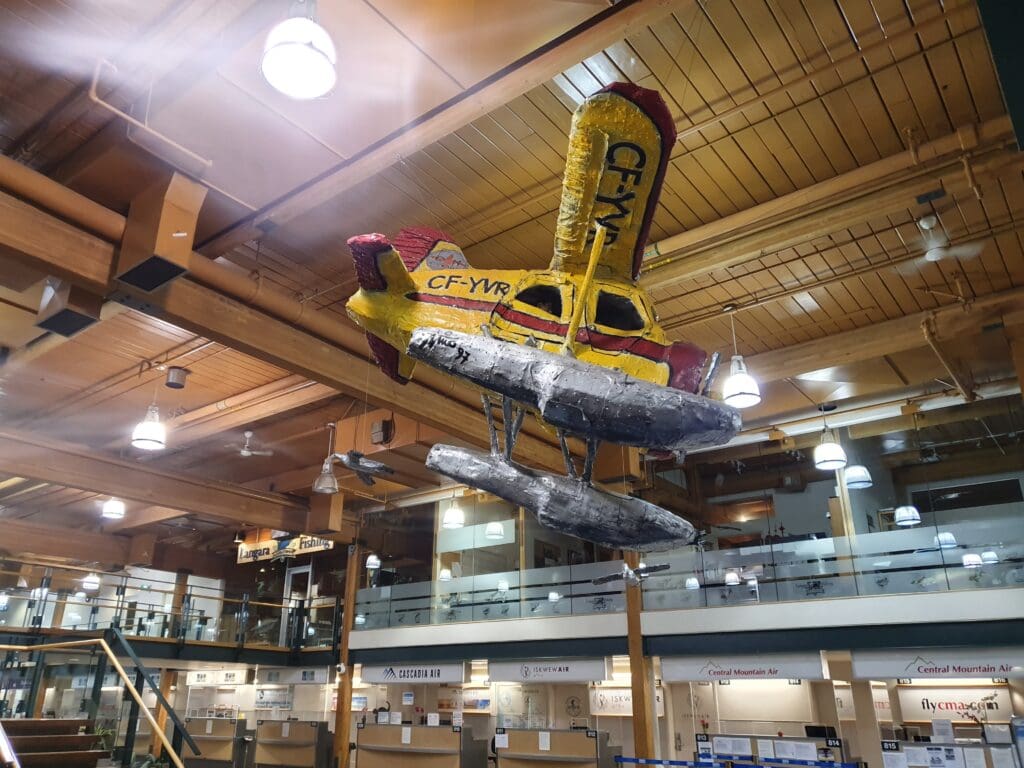
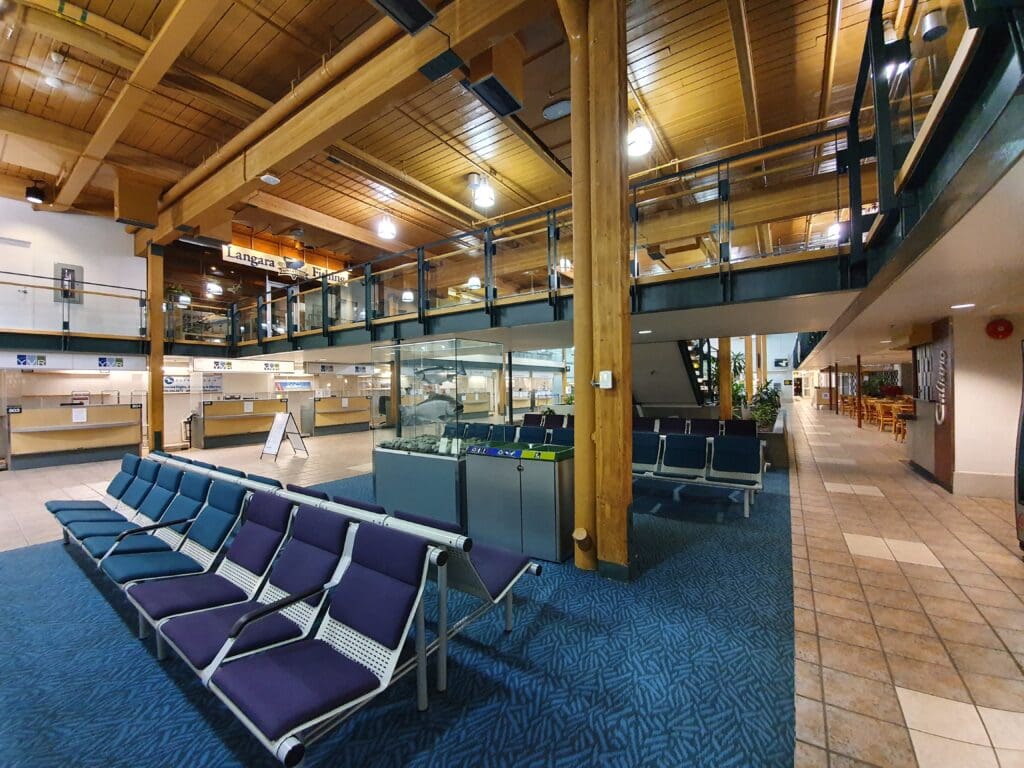
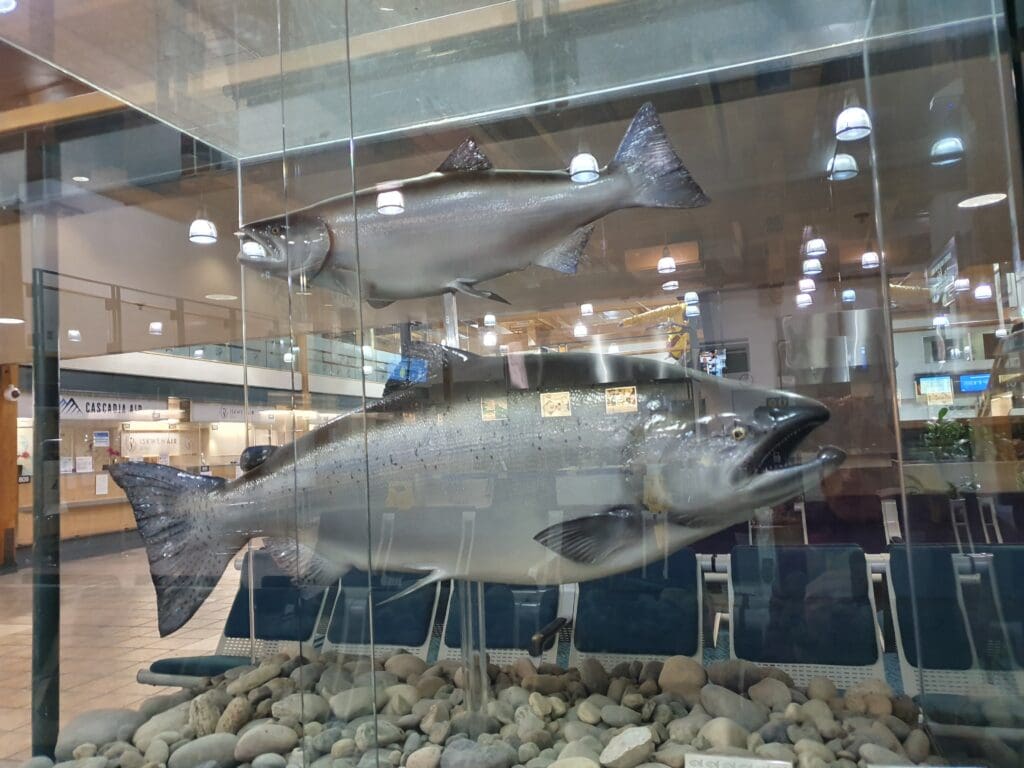
Inside, the South Terminal offers a unique, local and somewhat homely vibe – its interior serves to be a sort of cross between a British Columbia log cabin and an airport terminal. Proud of its local importance in connecting Vancouver with towns and cities across the province, those with time to spare can examine the terminal’s interesting artefacts and displays, including several fish-related displays, and a selection of photos and pieces of information relating to Vancouver Airport’s history. However, perhaps the pièce de résistance is the papier-mâché De Havilland Otter that dangles from the ceiling in honour of the type that has long played a vital role in connecting some of the more remote parts of the region. Once passengers have exhausted the displays, the terminal is also home to a gift shop and café, alongside the Langara Fishing shop and a St. Jean’s Cannery and Smokehouse store. However, given the early hour, unsurprisingly all facilities were yet to open and thus those needing some sustenance were forced to rely on two vending machines – one for drinks and another for snacks. As one would hope, the terminal appeared to be clean and was in good condition. Additionally, several charging points could be seen dotted about for those needing to charge their devices. As in the rest of Vancouver Airport, complimentary wifi is offered which worked well for the duration of my stay.
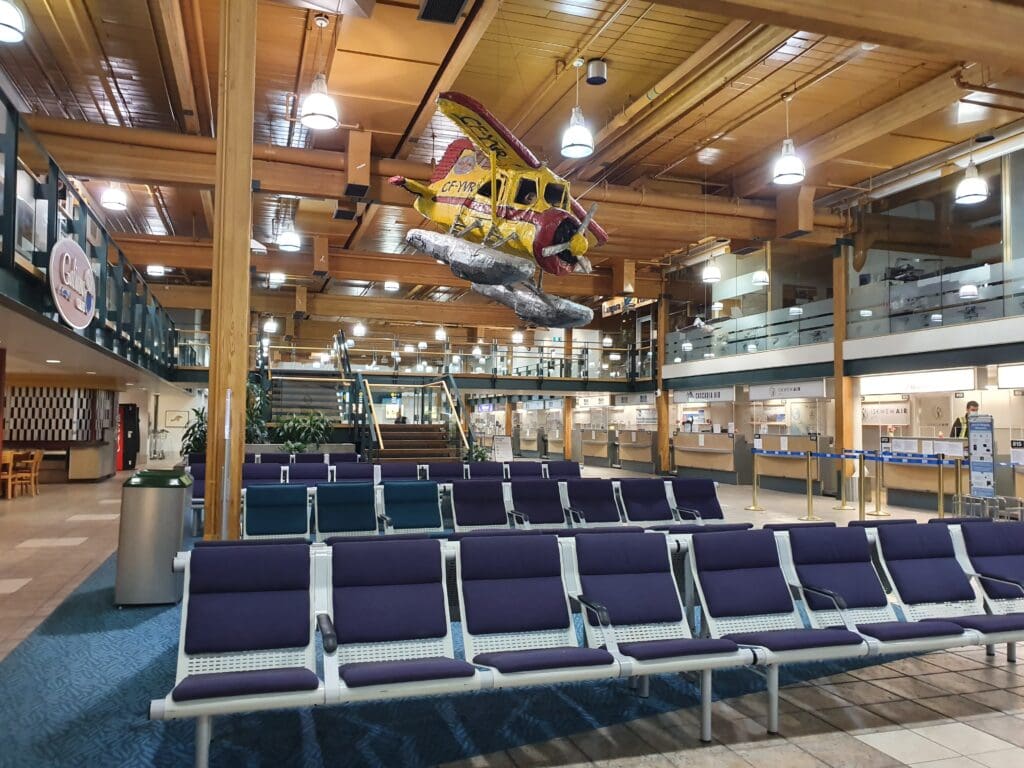
Upon arriving at the terminal, only one other passenger could be seen waiting, however unsurprisingly we were soon joined by a host of other passengers. That morning, a total of five departures could be seen on the departure boards before my Central Mountain Air flight to Kamloops. These consisted of Pacific Coastal Airlines’ services to Campbell River, Cranbrook and Masset, a North Cariboo Air flight to Smithers as well as the other Central Mountain Air flight to Kelowna. Around ten minutes after I arrived, two agents appeared at Central Mountain Air’s four check-in desks and seeing no reason not to, I walked over to these in the hope of receiving a paper copy of my boarding pass.
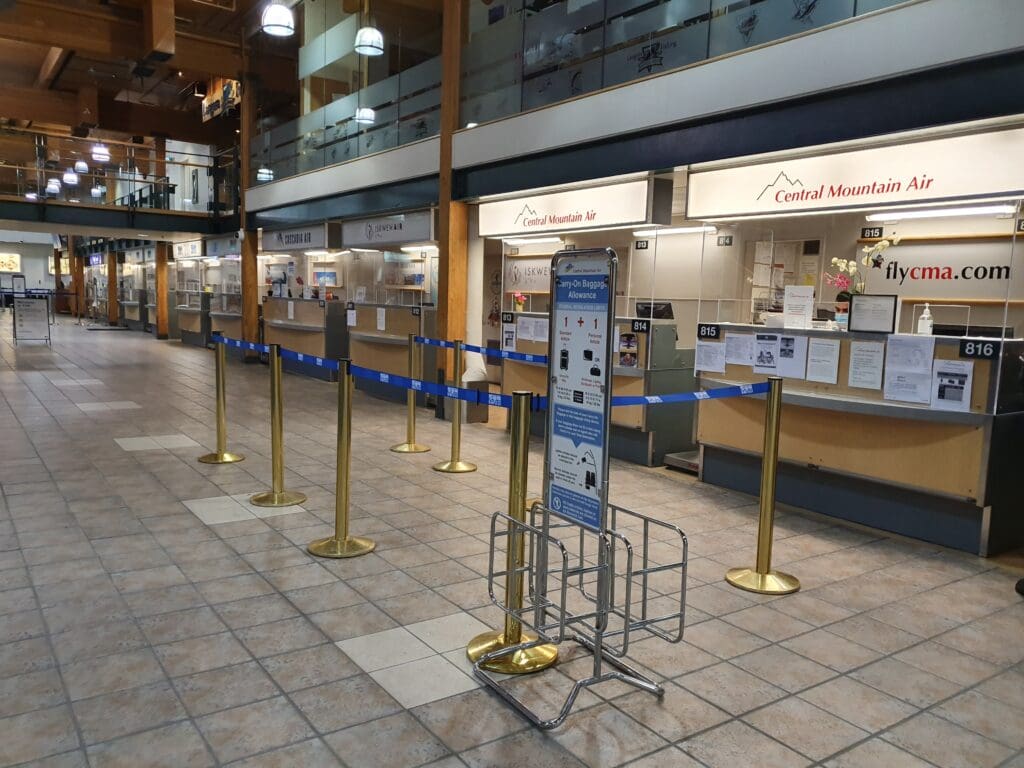
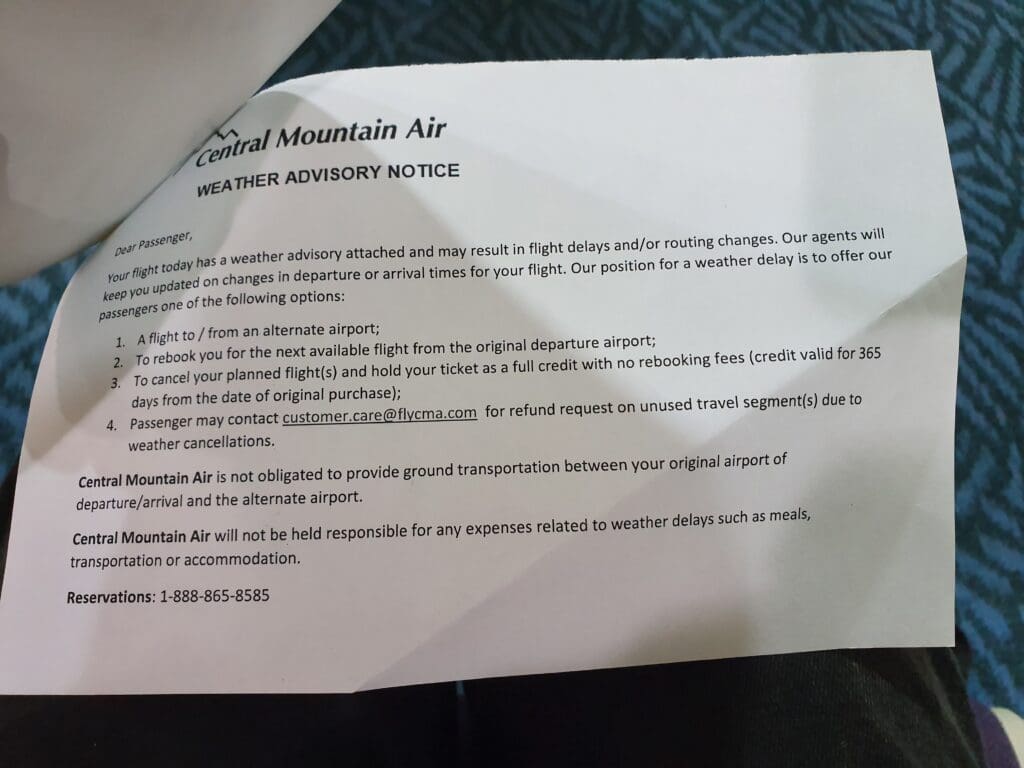
After handing over my passport and confirming my final destination, the friendly agent advised me that owing to low visibility in Prince George, a weather advisory was in place and that it may be necessary for the flight to divert to Williams Lake and was thus offered a refund were I not willing to take this risk. Given my evening flight back to Vancouver, my choice to reject the full credit refund and proceed ahead was risky, however, I could not come this far and not end up flying on a Beechcraft 1900! My two boarding passes were then printed out and handed over to me, with these stapled to a disclaimer that worryingly stated that Central Mountain Air would not be liable for providing ground transport from the alternate airport to the destination airport or for any expenses incurred as a result of a delay or diversion. Once I had received my boarding pass, I was informed that boarding would commence thirty minutes before departure through Gate 2 and advised to wait in the landside area until the security checkpoint opened up.
As I sat and waited, I planned out potential itineraries in case I ended up stranded in Williams Lake. Located three hours south of Prince George by road, it would be unlikely that I would be able to make my return WestJet Encore flight back to Vancouver that evening, and thus a pricey Pacific Coastal Airlines Saab 340 flight back to Vancouver that afternoon would be my only viable option. Weighing up all options, I eventually decided that if it looked likely that the flight would end up in Williams Lake, I would disembark in Kamloops, which would offer me a greater number of options to return to Vancouver.
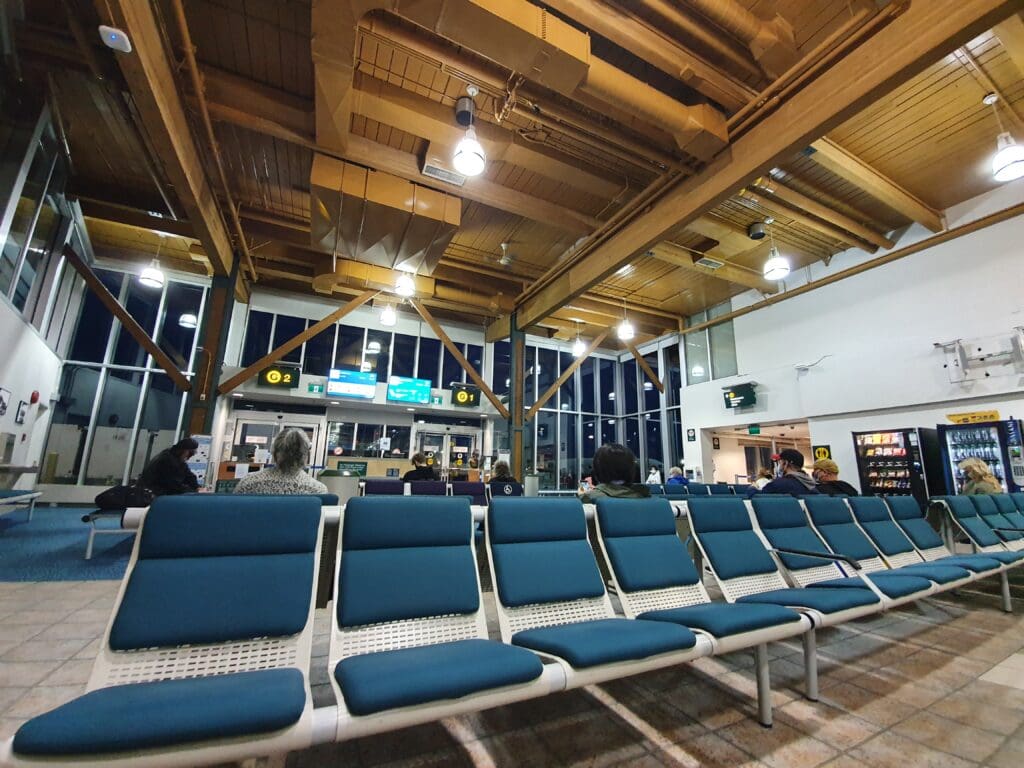
Returning to the journey in hand, the South Terminal features a total of three gates – with Gate 1 separated from the other two and featuring its own security check area. Once the checkpoint had opened up, I decided to head through this. Seeing as I arrived with no other passengers in front of me, security was a breeze and the staff members there were pleasant and friendly. Examining the airside area, it is clear that this was not designed with any long waits in mind, consisting of a small hall with little other than toilets, seats, plug sockets, two vending machines and a payphone. Meanwhile, large windows offered a decent view of the aircraft waiting on the ramp outside. At that time, these consisted of a mixture of Pacific Coastal Airlines’ Beechcraft 1900Cs and 1900Ds and Saab 340s. Whilst this area had initially been busy, once Pacific Coastal’s flights bound for Campbell River and Cranbrook had boarded, a total of just eight passengers could be seen waiting for Central Mountain Air’s two flights to Kamloops and Kelowna.
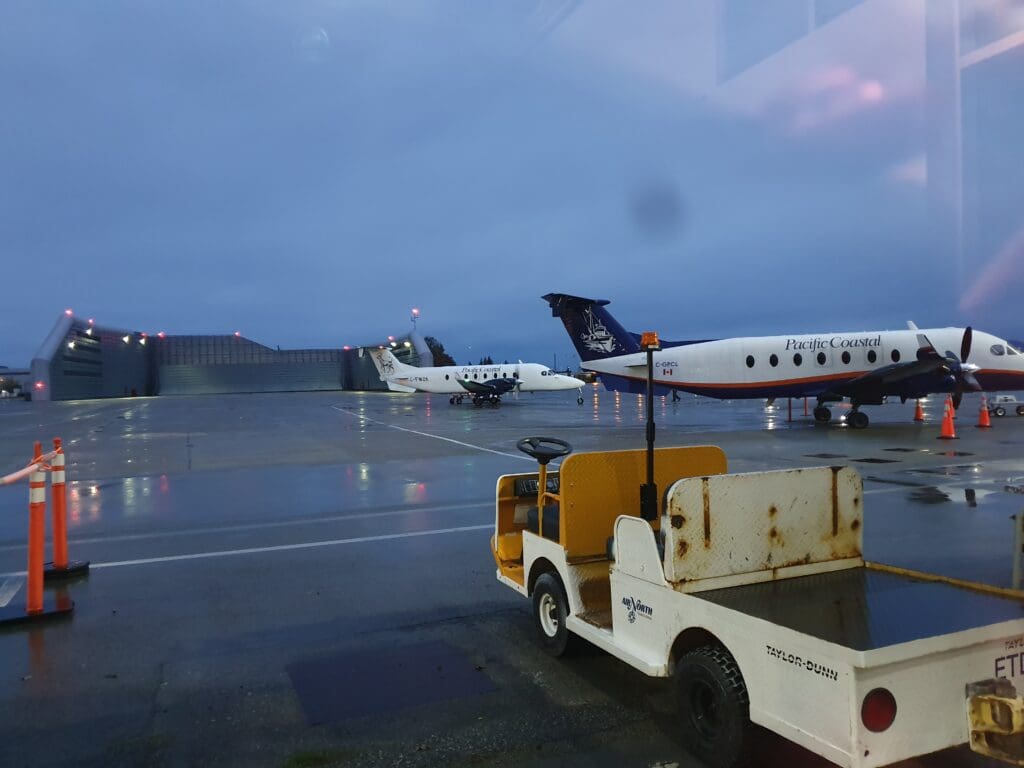
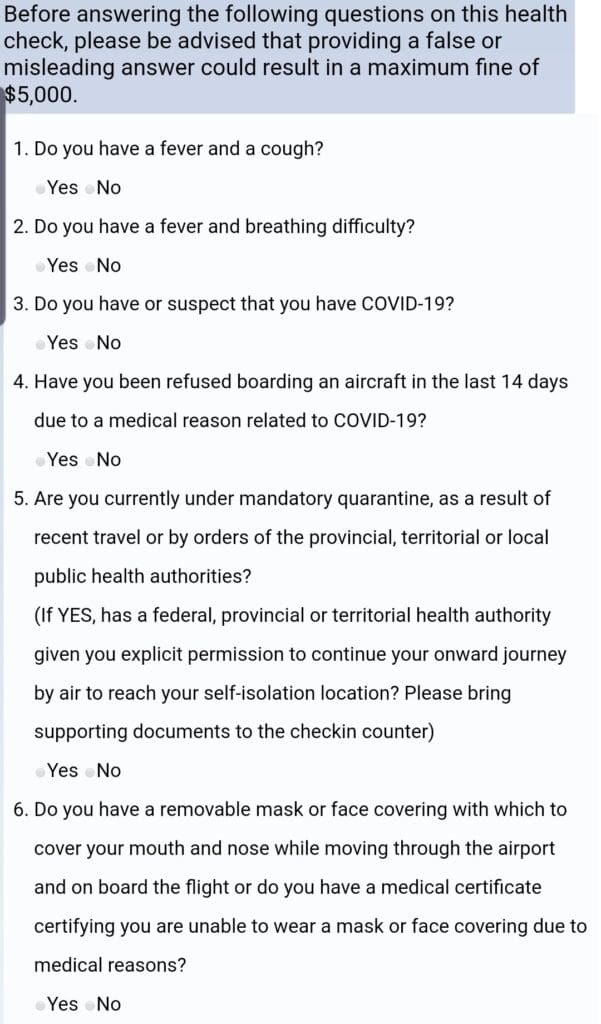
Having been highly sceptical that it could take all of thirty minutes to board an eighteen-seat airliner, unsurprisingly 0745 came and went with no indication that boarding would commence at any point soon. At 0755, the Central Mountain Air gate agent announced that boarding for the Kelowna flight would commence in five minutes, after which those bound for Kamloops would be invited to board, before closing this with a note regarding the usage of facemasks. Ten minutes after this announcement had been made, those bound for Kelowna were invited to board leaving a total of four passengers including myself in the gate area – this equating to a total passenger load of just 22%.
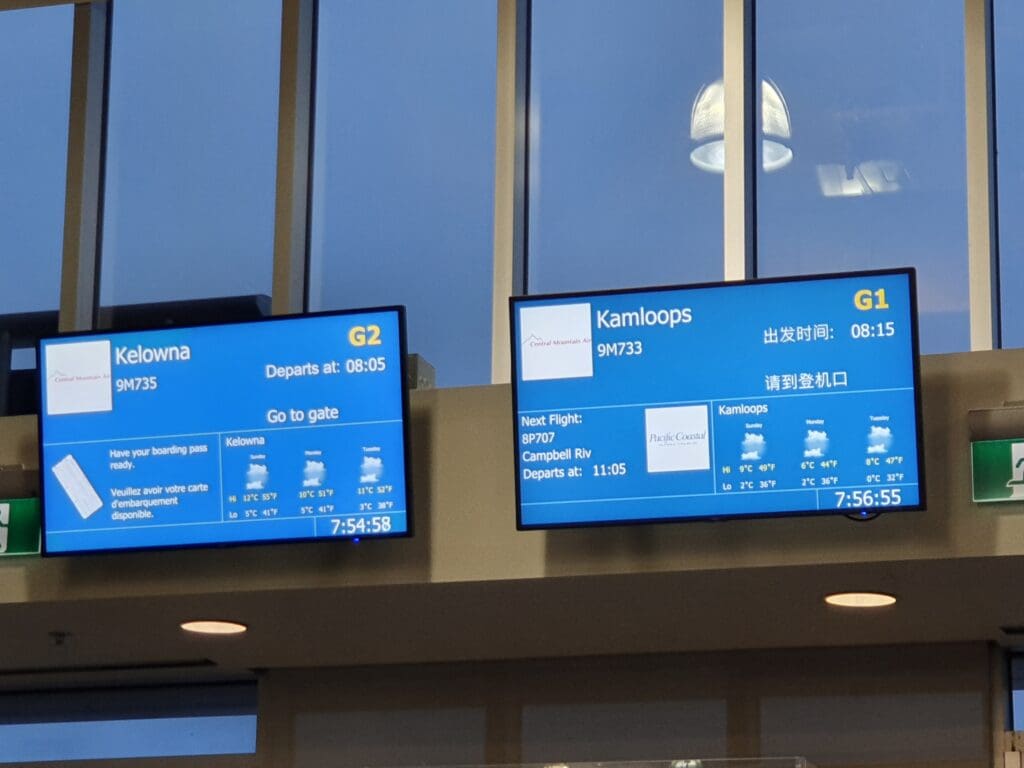
Soon enough, the flight’s scheduled departure time came and went with no update, however, it appeared that the gate agent was waiting for the Kelowna-bound Beechcraft to commence its taxi before allowing those bound for Kamloops to board. At 0820, the flight’s First Officer appeared outside the terminal and following a quick conversation, the gate agent announced the commencement of boarding. Ending up second in the queue, the friendly gate agent checked my boarding pass and passport before crossing my name off the passenger manifest and wishing me a nice flight. Heading through the doors and into the open air, I was greeted by the First Officer who, once all passengers had had their documents checked, led us all around the corner where the distinctive small turboprop could be seen waiting to head north.

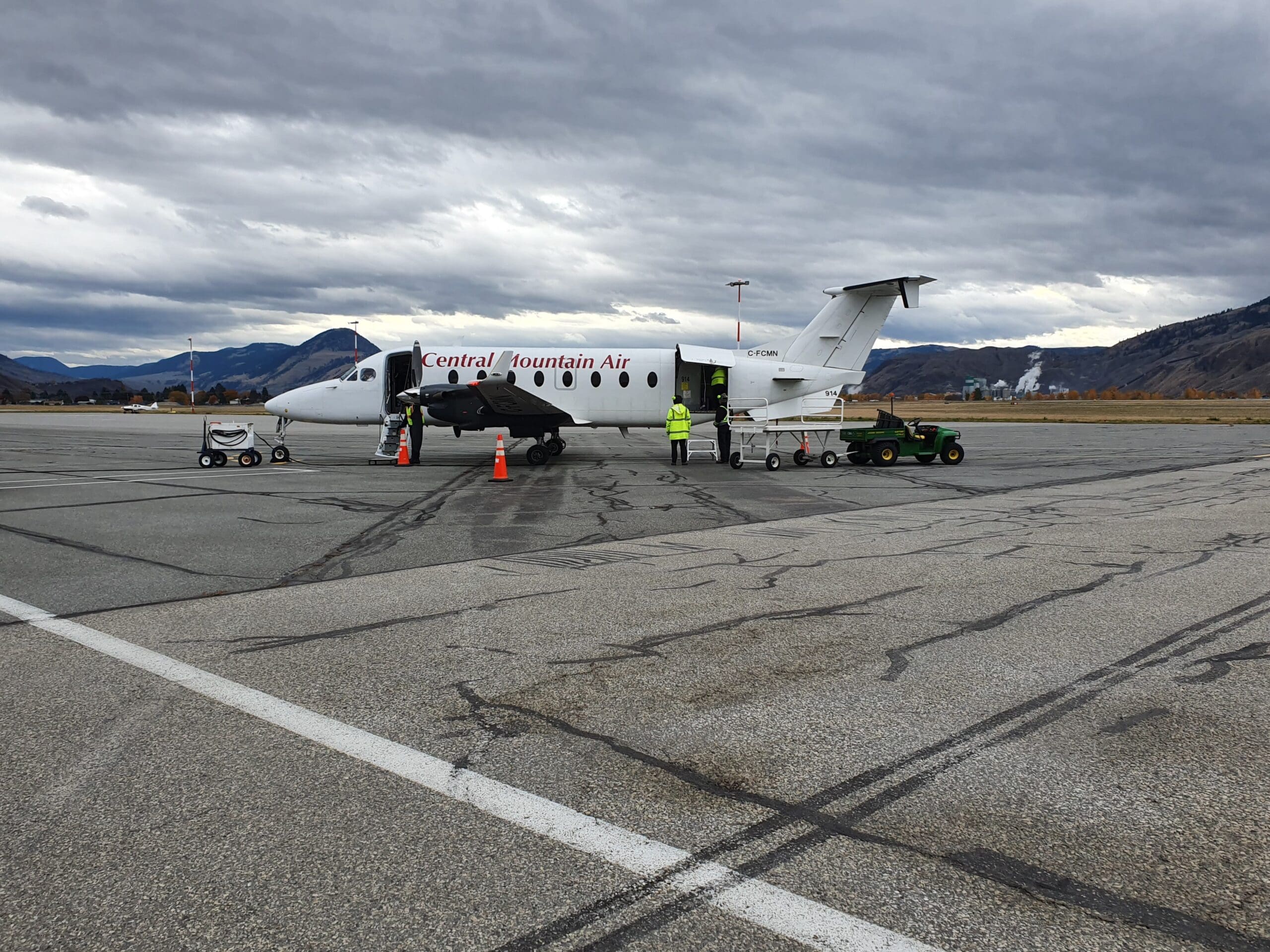
That morning, the Beechcraft 1900D operating the flight to Kamloops took the form of C-FCMN, which as with many Canadian airliners also has a fleet number, 914. This sports an almost all-white livery save from the aircraft’s black engines and the red Central Mountain Air titles on the fuselage. Manufactured at Beechcraft’s plant in the Kansan aviation hub of Wichita with the construction number UE-276, the aircraft first took to the skies in 1997 making it a little over 24 years old at the time of my flight. Interestingly, the aircraft has spent its entire career flying the skies of Western Canada with Central Mountain Air. Upon searching online, I could find details of one incident involving the aircraft. This occurred in April 2018 when after departure from Vancouver, the pilots noticed a fuel leak and subsequently shut down the number one engine and returned to Vancouver where the aircraft blew a tire upon landing.
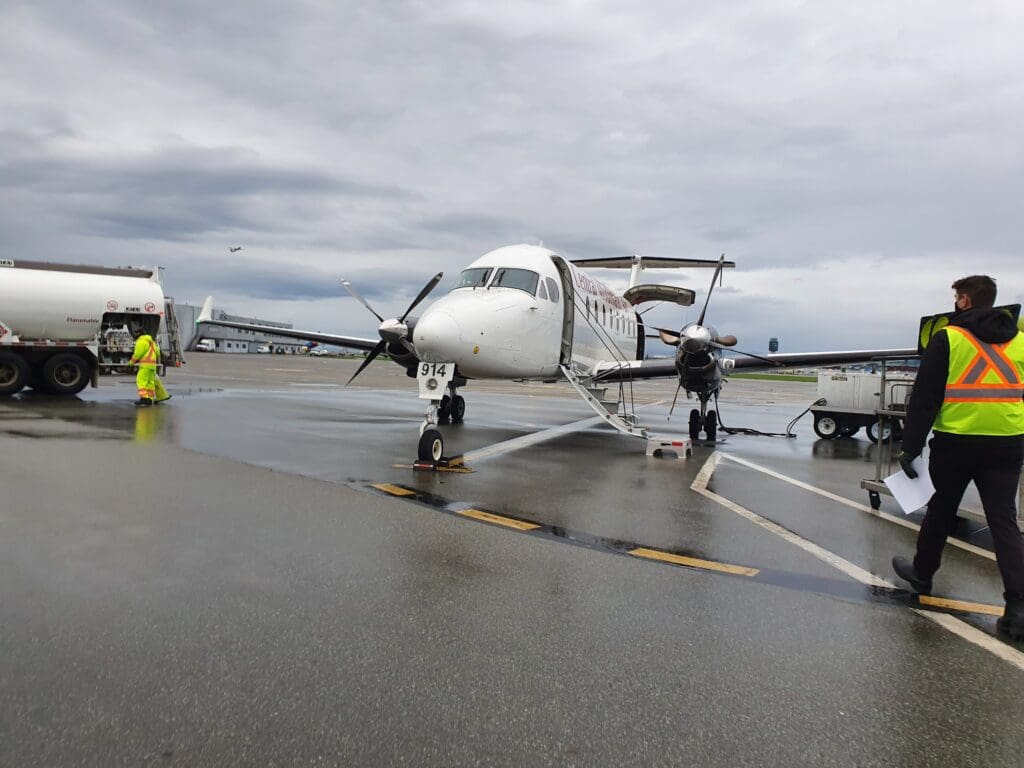
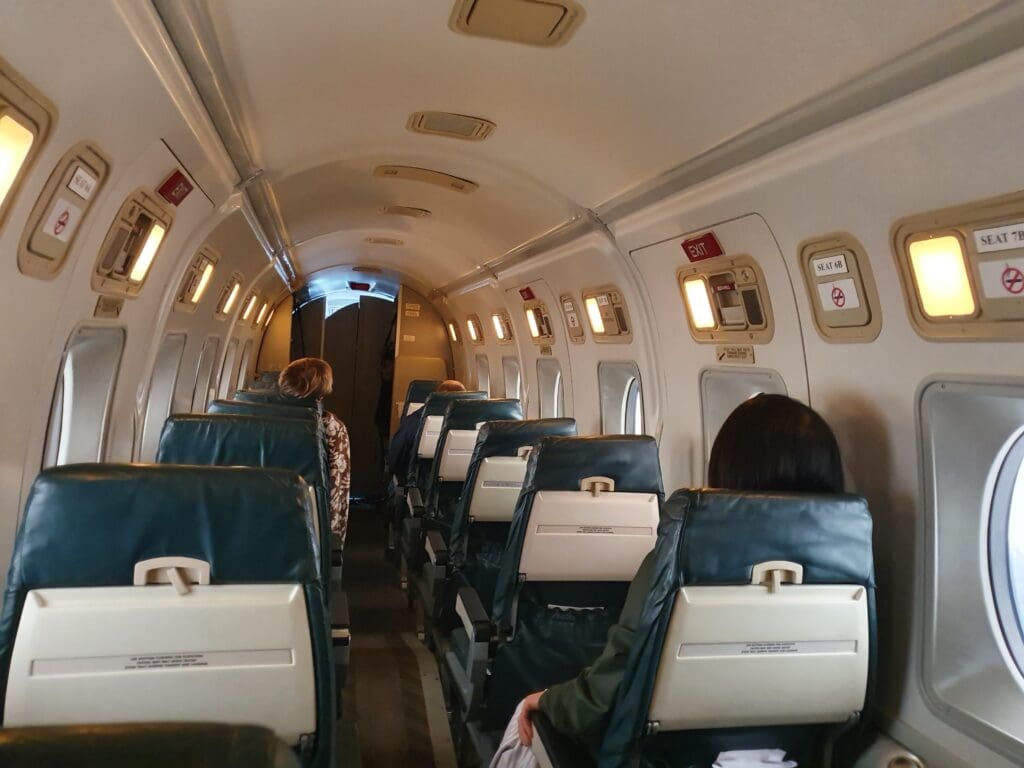
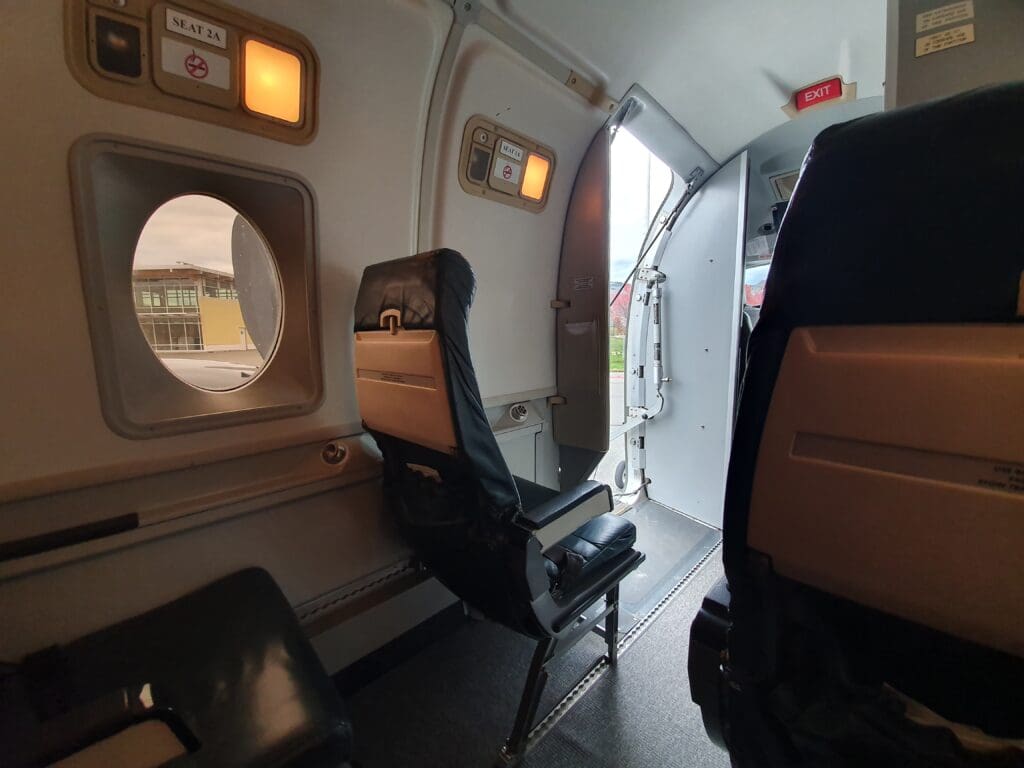
Upon arriving at the aircraft, I cautiously made my way up the six steps built into the inner side of the cabin door, admiring the four large Hartzell propeller blades before finding myself in the forward ‘galley’ area of the aircraft. Whilst some Beechcraft 1900 operators use this area for the storage of inflight beverages and snacks, Central Mountain Air does not offer any inflight refreshments on their Beechcraft-operated services. Therefore, onboard C-FCMN, a closet can be found at the front of the aircraft as well as several plastic storage boxes containing various bits and pieces such as toilet roll, air freshener and other equipment. Turning right, as expected, the cabin was narrow, however, the relatively tall ceiling of the Beechcraft 1900D made this feel slightly cavernous and more spacious than several other similarly sized airliners. This meant that I was able to make it down the cabin to my seat without having to bend over too much. With a total of sixteen large oval-shaped windows dotted about the fuselage, from the exterior one may conclude that the interior of the Beechcraft 1900 must be filled with plenty of natural light. However, these are permanently tinted and therefore the cabin was relatively dark, illuminated by the yellow tinge of the faint cabin lights located above each seat.
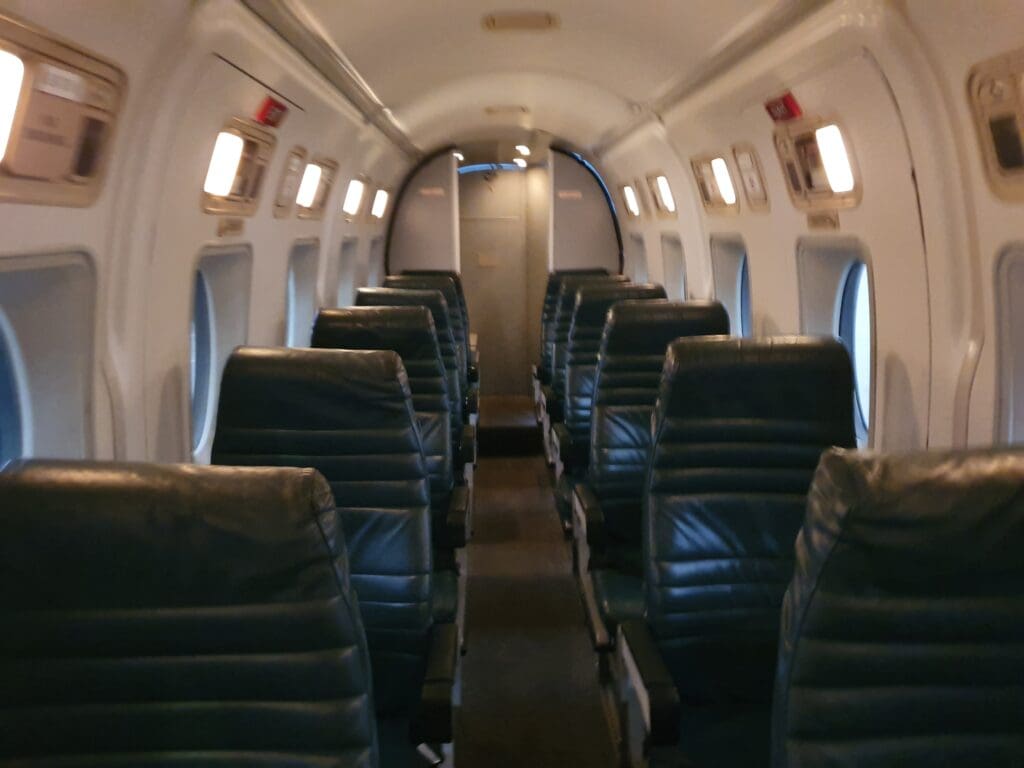
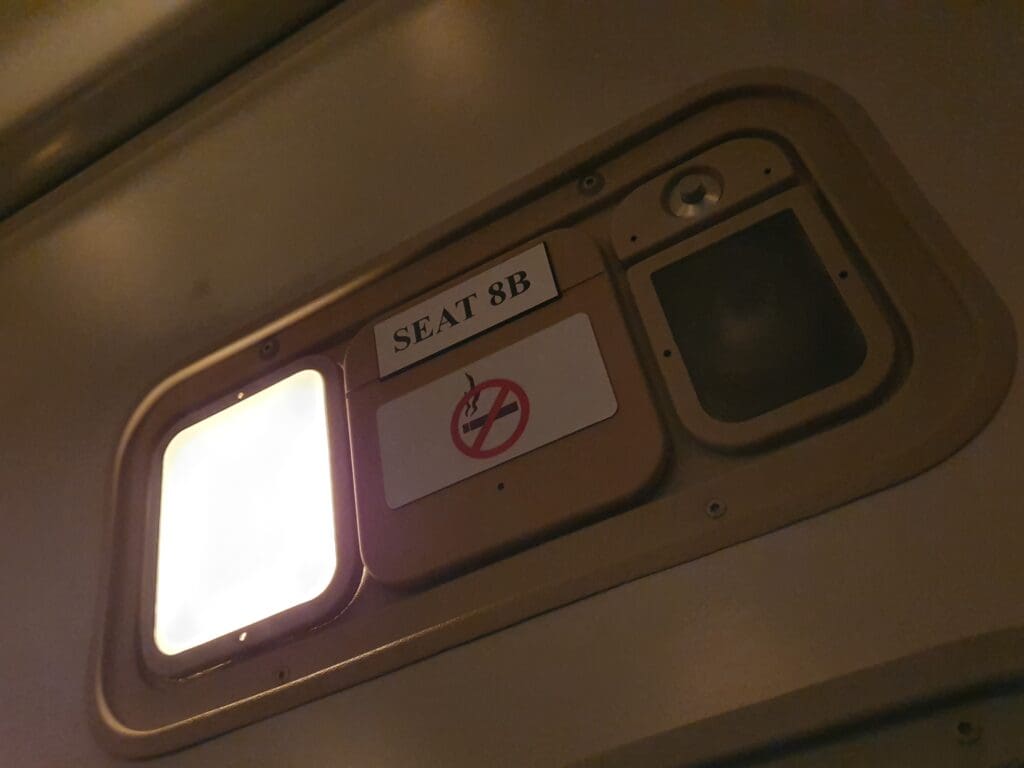
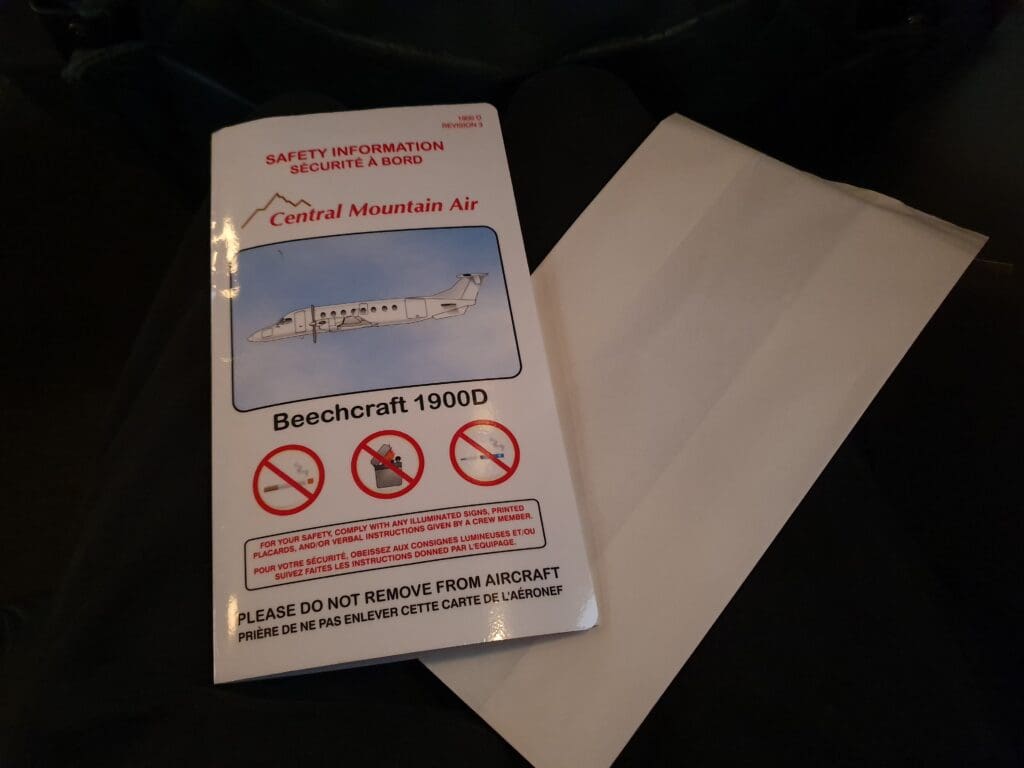
After passing the hump in the aisle as I crossed the wings, I soon arrived in the penultimate row, Row 8. Inside, C-FCMN features a total of eighteen seats, each of which is covered in dark green leather. Onboard, all passengers are provided with the luxury of an individual air vent located in the space beneath each window, whilst reading lights can be found above these. Whilst a good number of Beechcraft 1900 operators opt for additional cargo space and an extra middle seat at the rear of the cabin, Central Mountain Air’s Beechcraft fleet offer a small toilet at the rear of the cabin. Upon sitting down in Seat 8B, I was pleased to find that this was soft, comfortable, and as is not always the case on such a small airliner, offered a good amount of legroom. Whilst the seat cover appeared to have seen better days, all-in-all the cabin appeared to be in a surprisingly good state given the aircraft’s age and the rugged nature of operations undertaken by the Beechcraft 1900. Furthermore, as one ought to expect, the cabin appeared to be in spotless condition, with no signs of any rubbish or dirt anywhere around my seat. Turning to the seatback pockets, these contained a safety card and a plain sick bag.

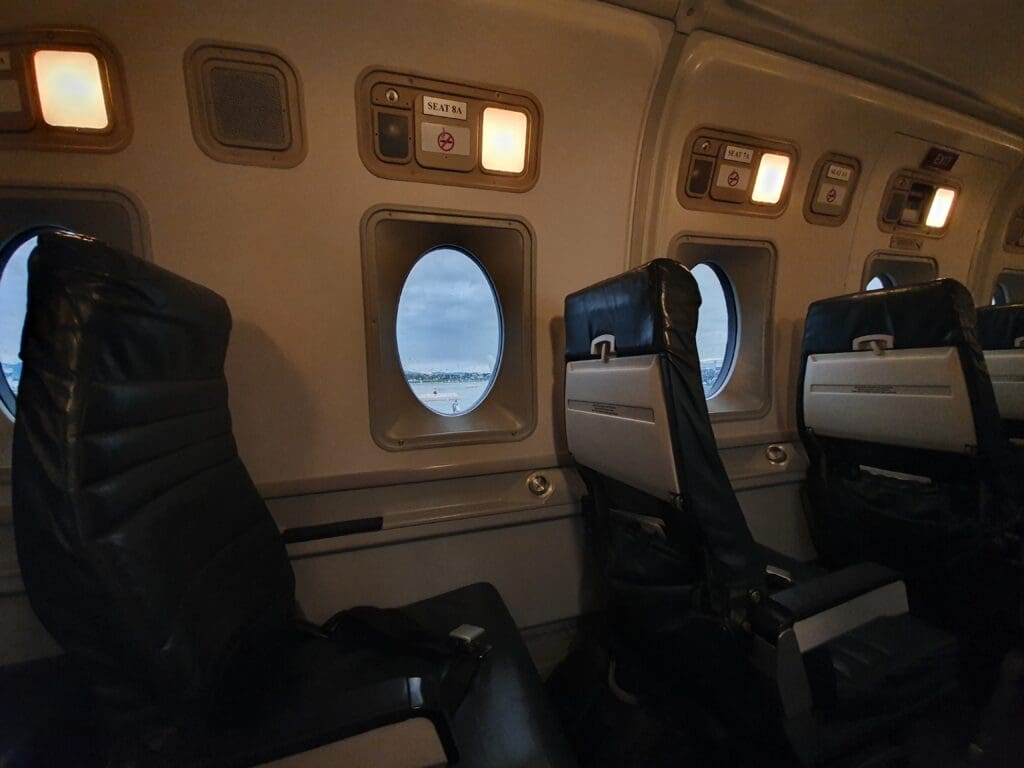
After taking my seat, seeing as 8A would remain vacant, I shifted across in the hope that this would offer good views of Vancouver after our departure. Given the light load, it took virtually no time at all for passengers to take their seats and strap themselves in whilst the First Officer soon closed the cabin door before turning around and performing a short welcome speech and safety briefing. Once this had been done, the First Officer retreated to the aircraft’s small cockpit, closing the sliding screen door behind them, after which the Captain performed their welcome announcement. This consisted of a word of thanks for flying with Central Mountain Air, a mention of our 32-minute flight time, 19,000 feet cruising altitude and the expectation that the flight that morning would likely be a smooth affair.
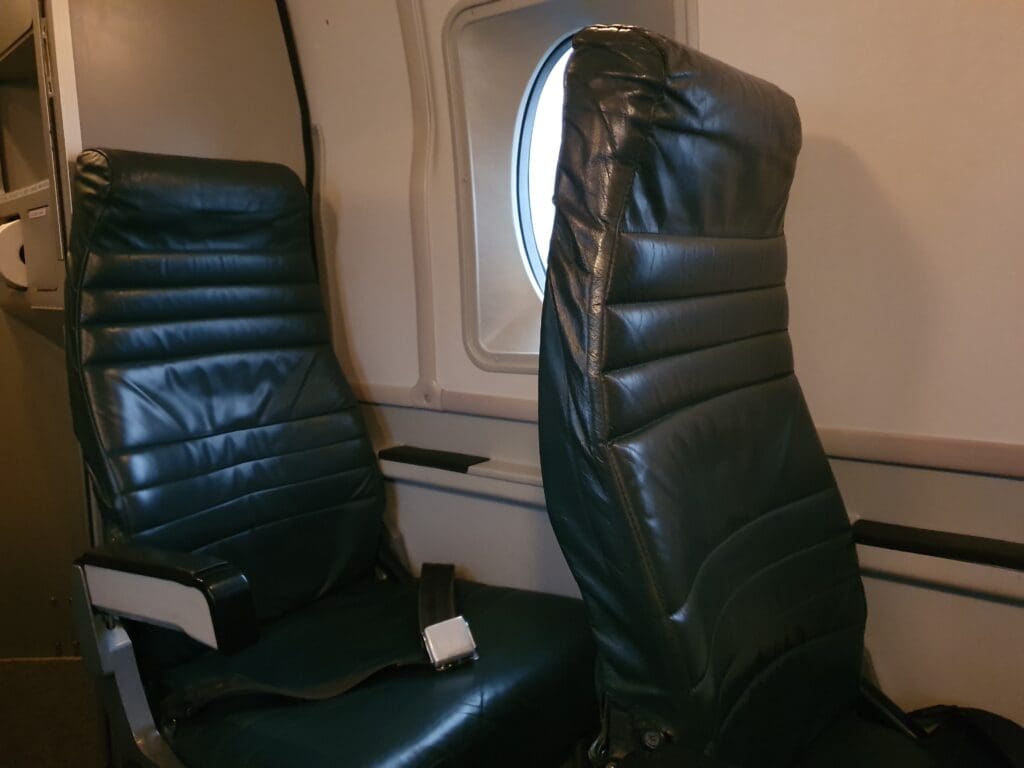
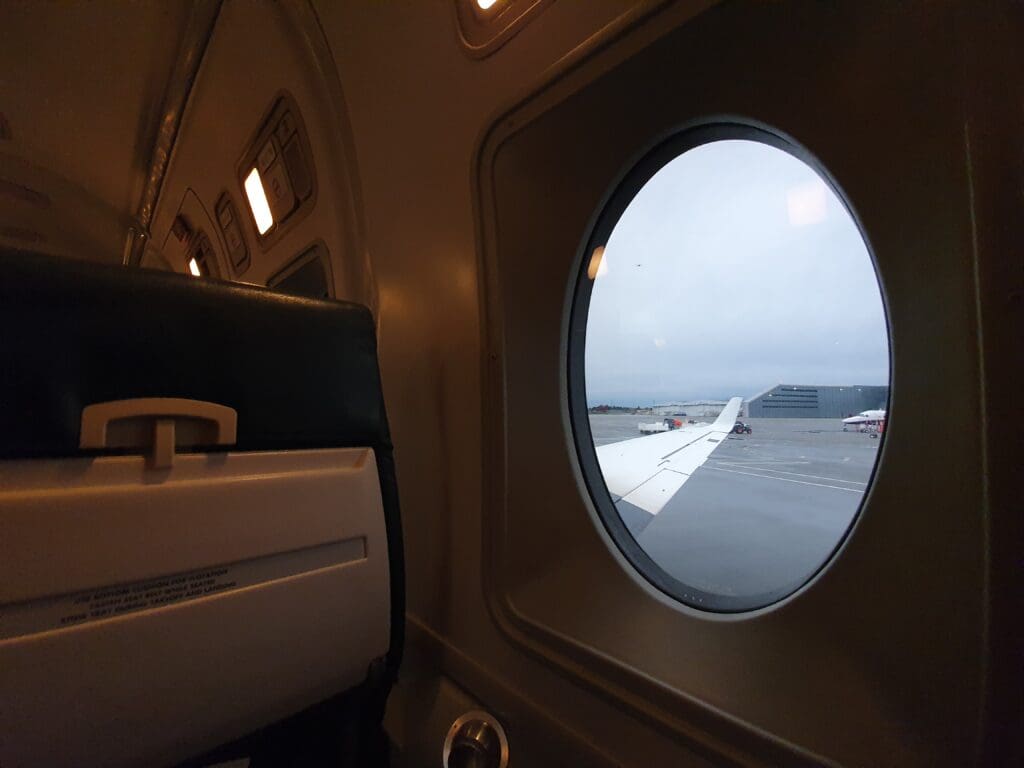
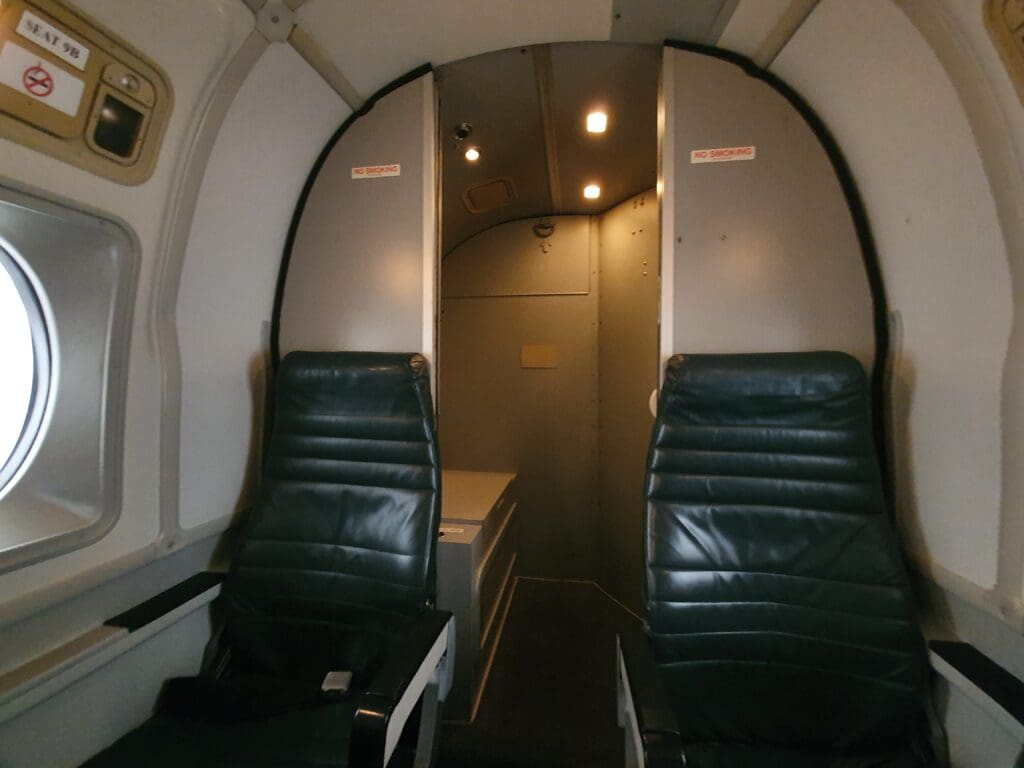
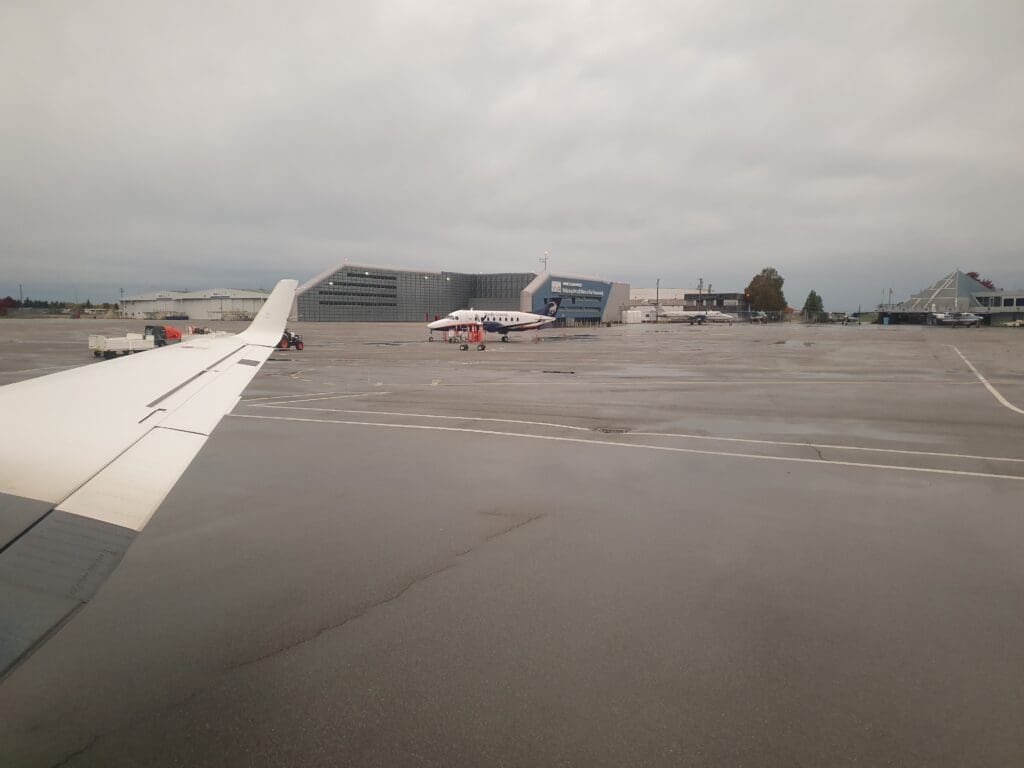
Almost as soon as the Captain’s welcome announcement came to a close, the Beechcraft’s two Pratt and Whitney Canada PT6A-67D turboprop engines spooled up and the propellers whirled into life. Seated almost as far away from the engines as possible, at first these did not seem to be too noisy however I expected my second leg in seat 2B to be slightly louder. As the engines spooled up, a pre-recorded safety announcement was broadcast over the cabin’s speakers. Alongside all the usual instructions and information, this also included a short mention of the location of the emergency locator transmitter (ELT) onboard the aircraft. Sixteen minutes behind schedule, at 0831, the Beechcraft lurched forward before immediately wheeling right and exiting the South Terminal’s apron. From there, the aircraft made its way along the taxiway to Runway 08R, travelling virtually parallel with the shoreline of Sea Island. During this journey, the Beechcraft passed an Air Canada Jetz Airbus A319, Air North Boeing 737-500, Summit Air Dash 8 Q300 and Sun Country Airlines Boeing 737-800 all parked outside the Signature Flight Support facility.
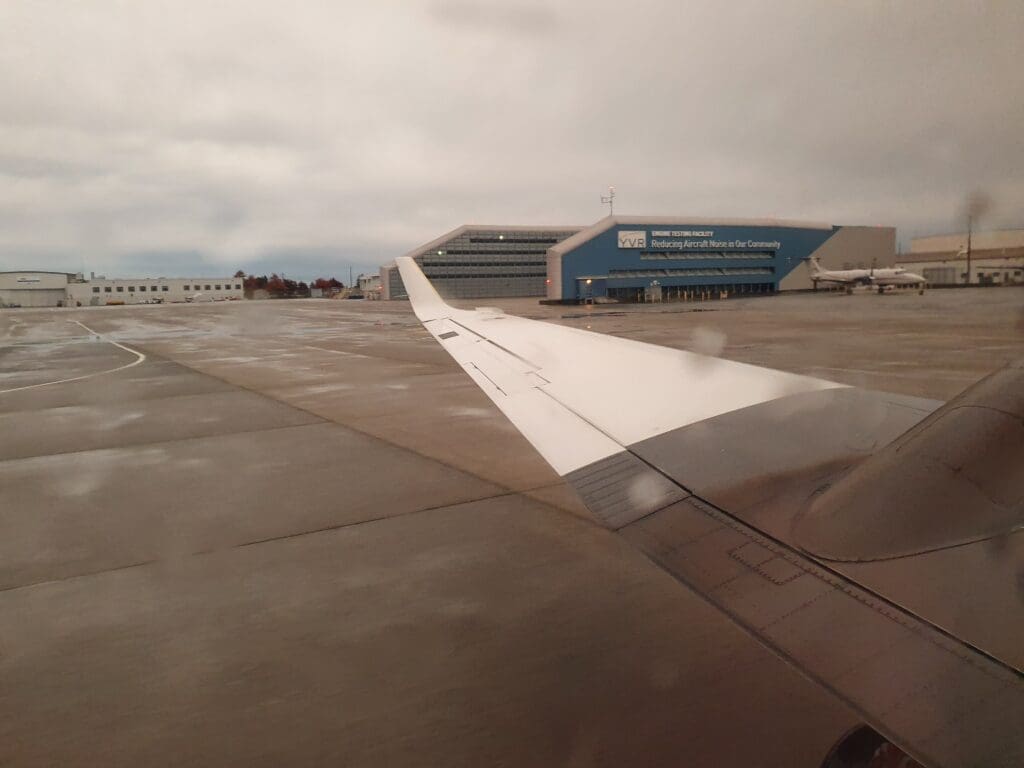
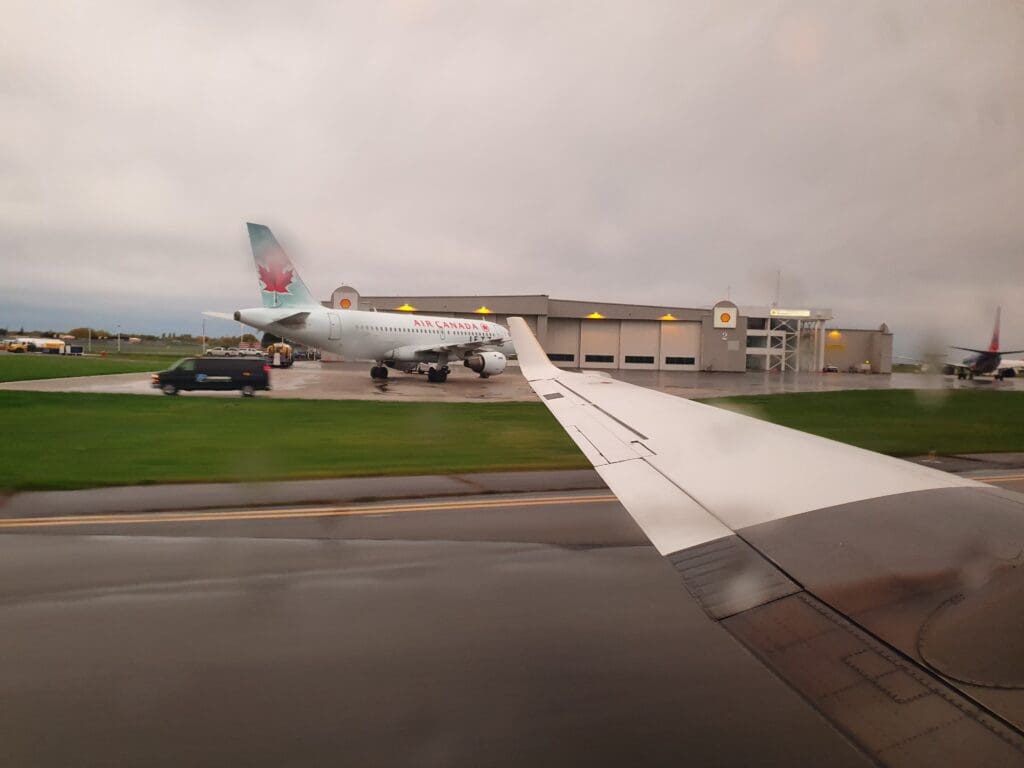
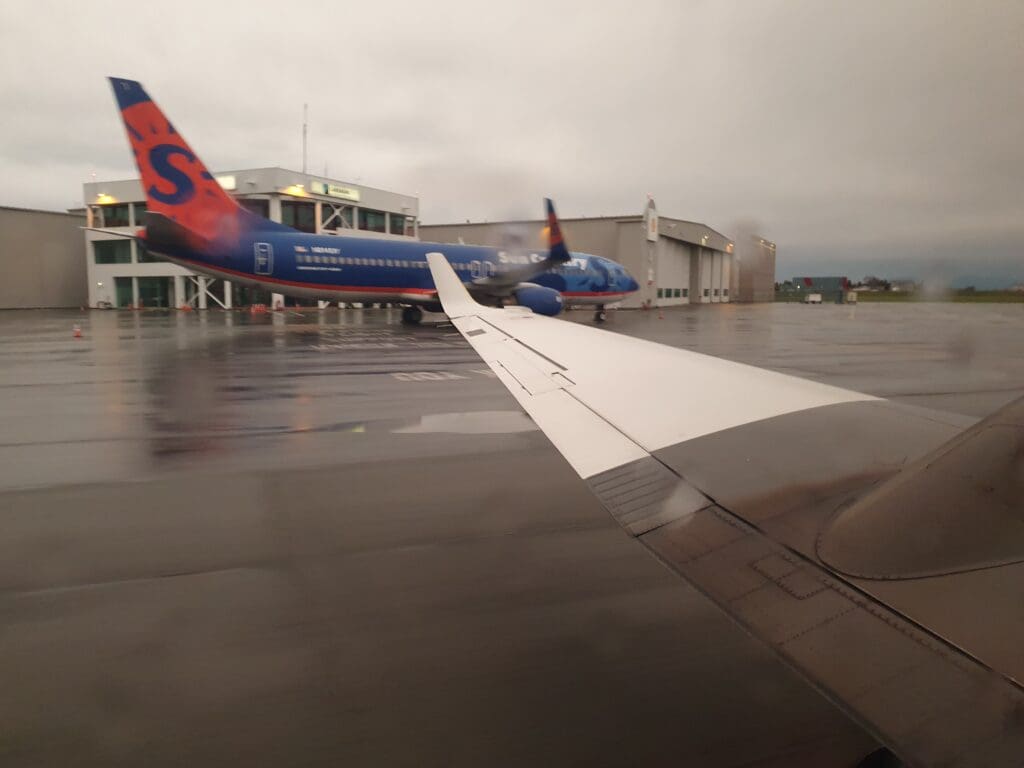
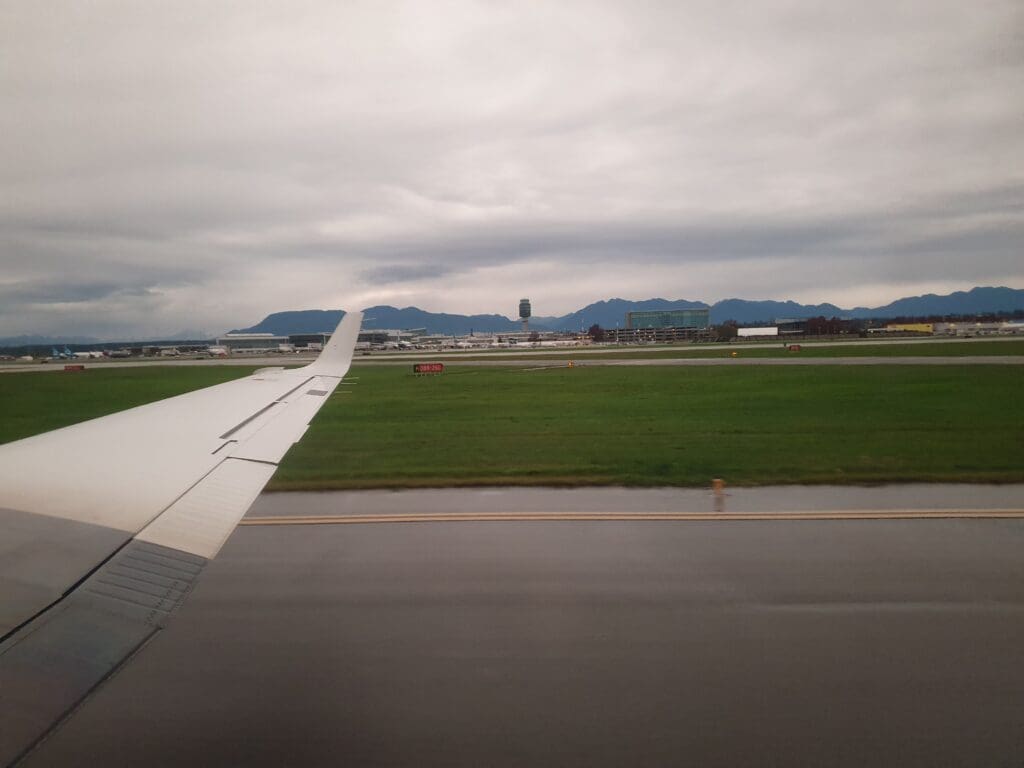
Six minutes after commencing the taxi, at 0837 the Beechcraft taxied onto Runway 08R without any holding before coming to a very brief halt. A few seconds later, the engines spooled up and all onboard were pinned back into their seats as the lightly loaded turboprop commenced a powerful and short take-off roll. Once in the skies I was offered a fantastic view of almost the entirety of Vancouver Airport and Sea Island as the landing gear and flaps were retracted with a vacuum cleaner-like sound.
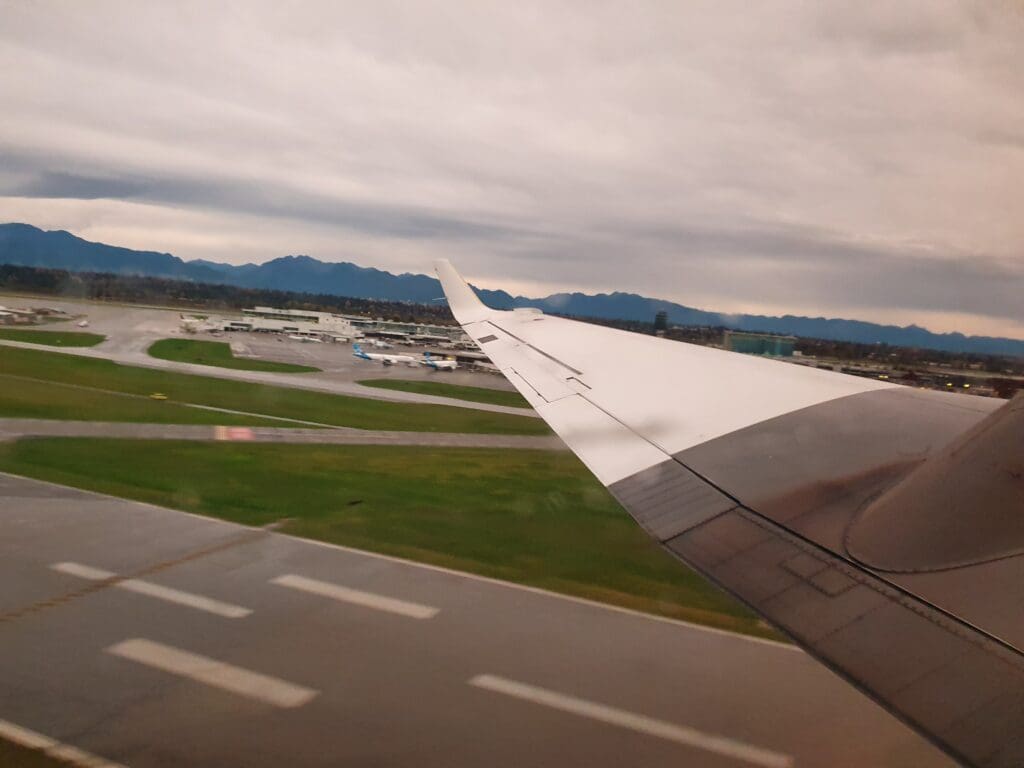
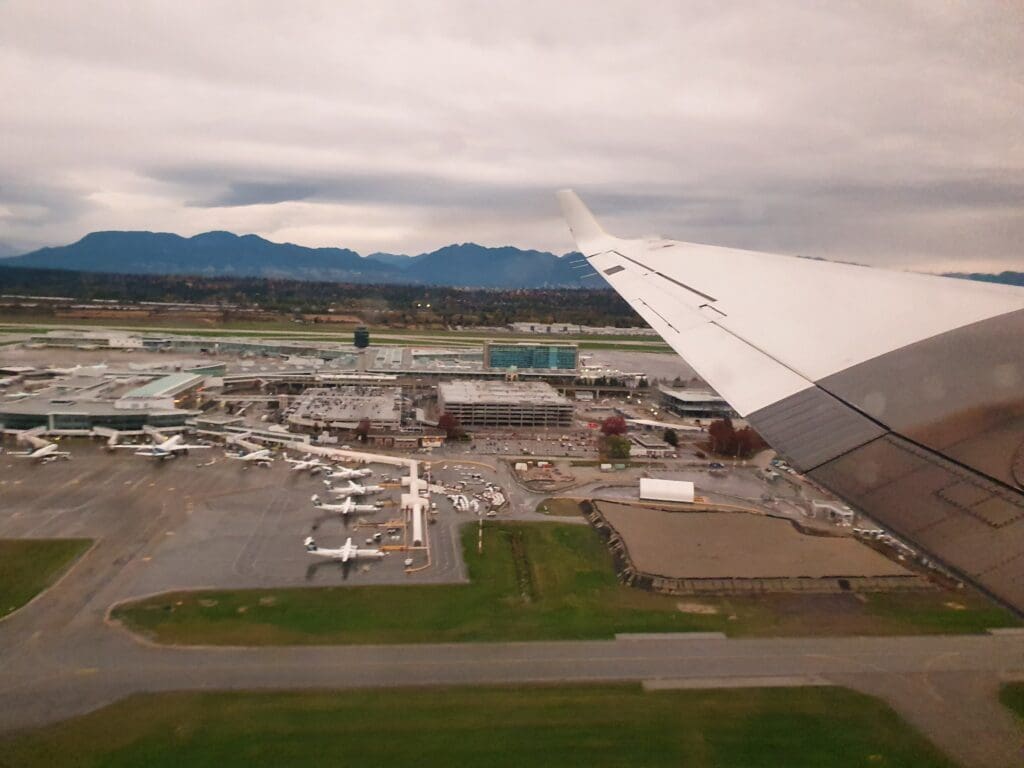
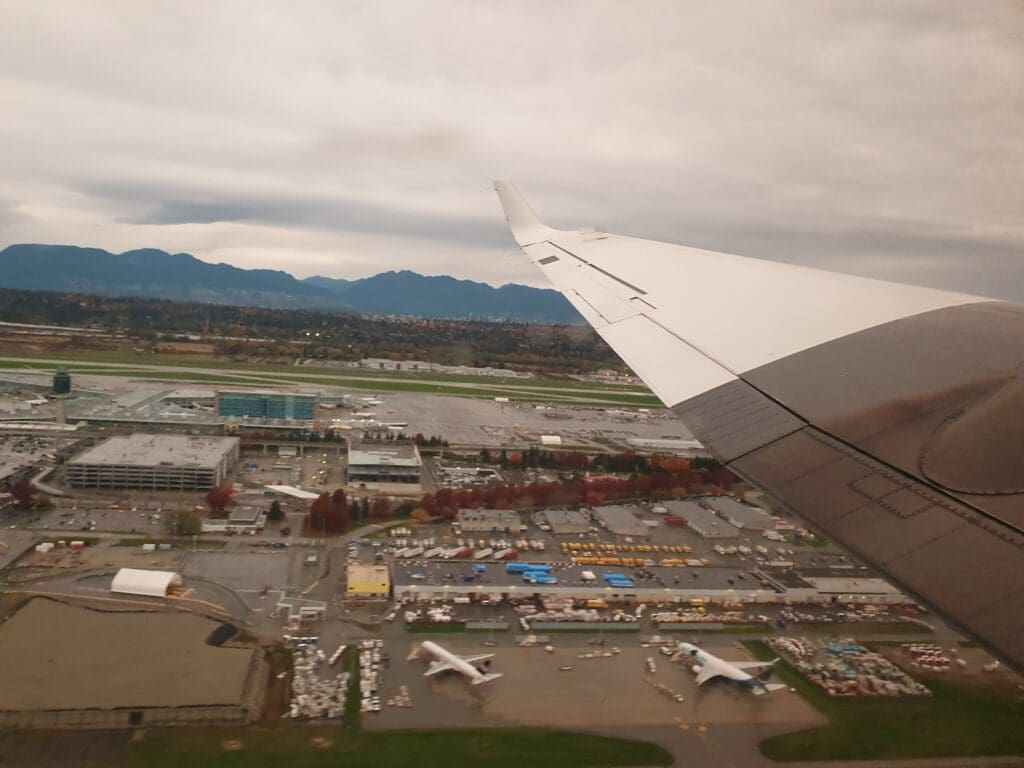
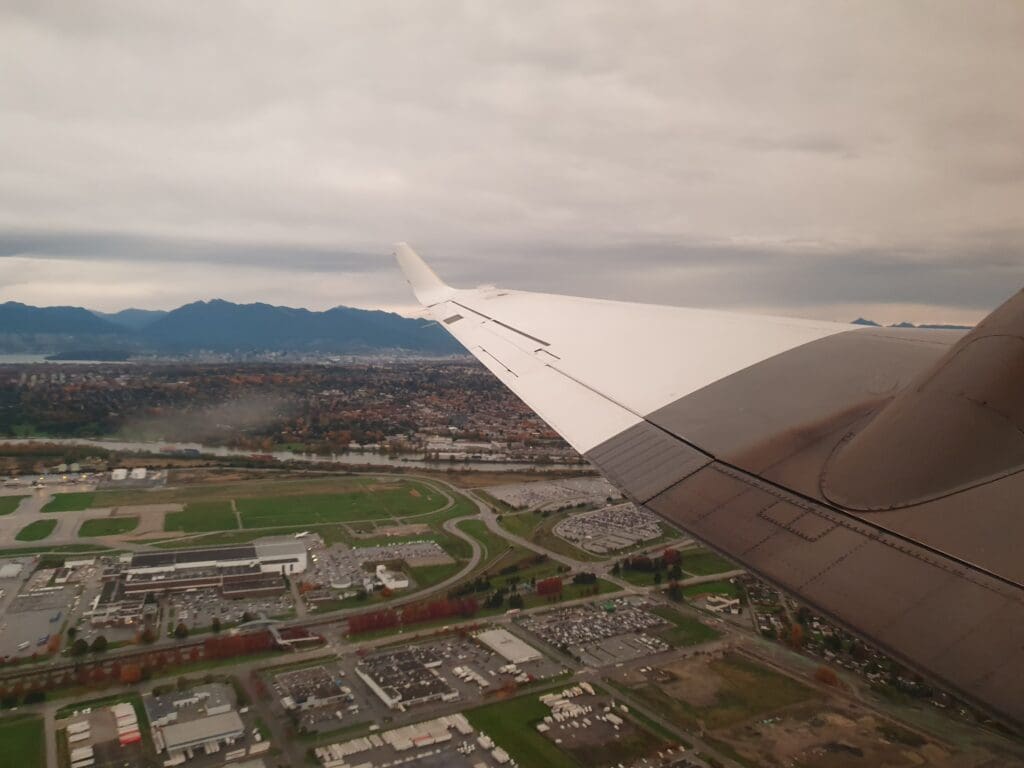
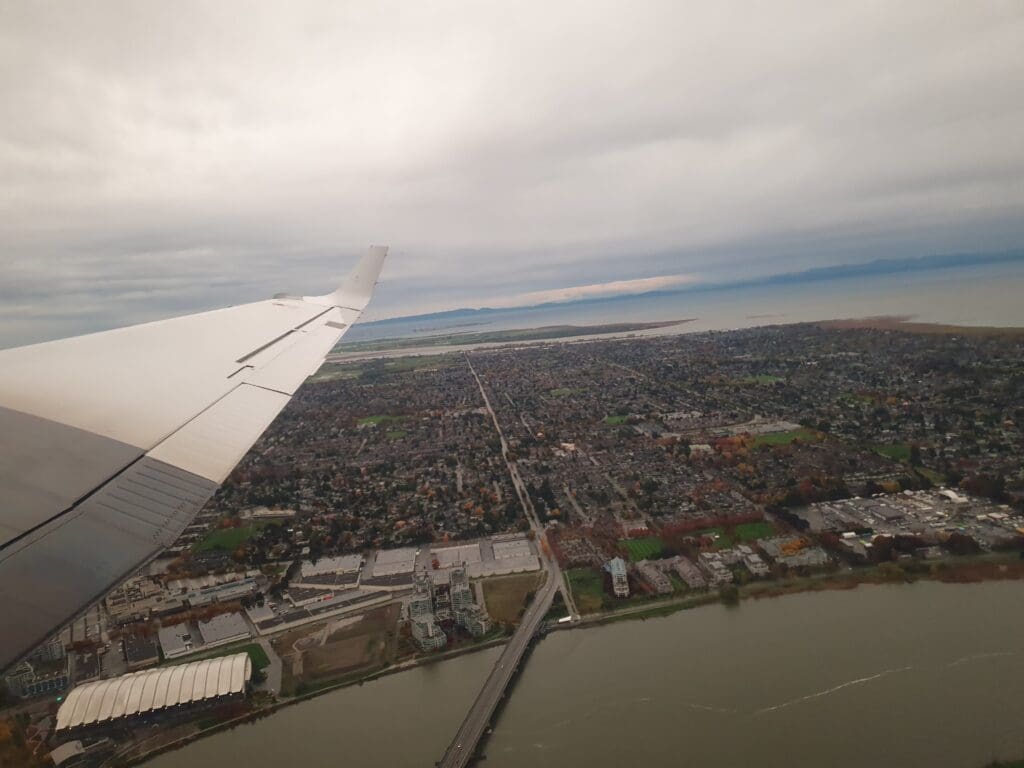
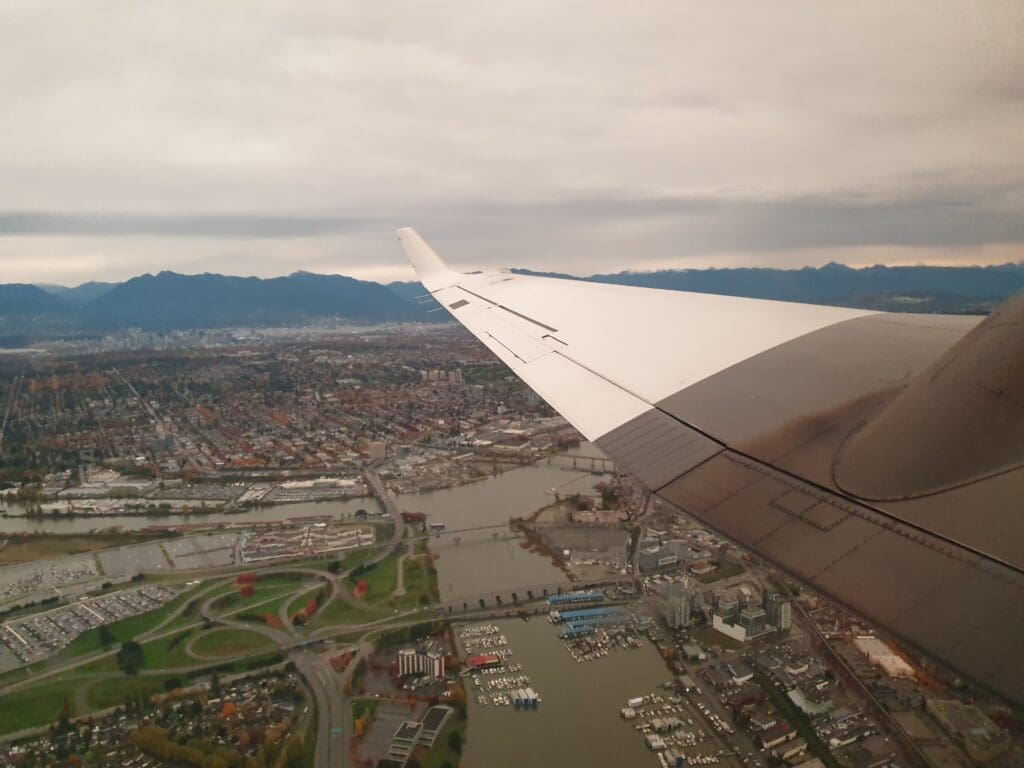
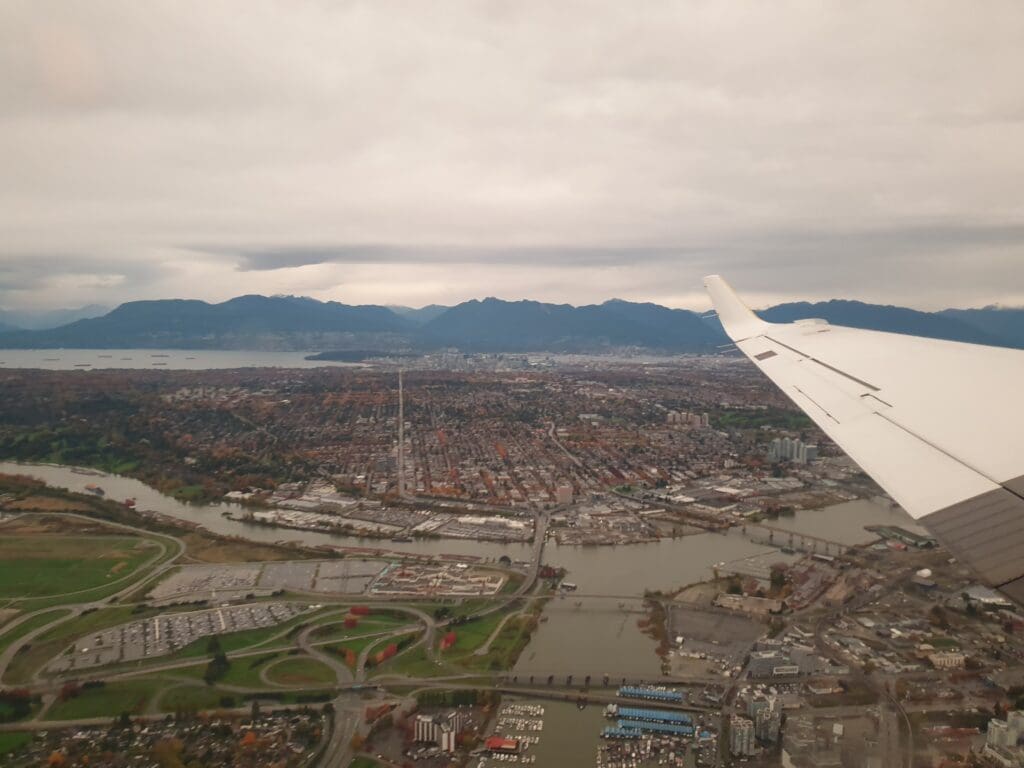
After leaving Sea Island behind, the Beechcraft climbed out over Richmond whilst the tall buildings of Vancouver’s downtown area soon appeared to the north. A short time later, the aircraft turned north and set a course towards Kamloops, skirting around Burnaby before rising up and eventually climbing up into the clouds after passing over the Burrard Inlet. In spite of experiencing a fair few lumps and bumps whilst below the clouds, after climbing up into these the flight surprisingly smoothed out as the Beechcraft cut through these with ease.
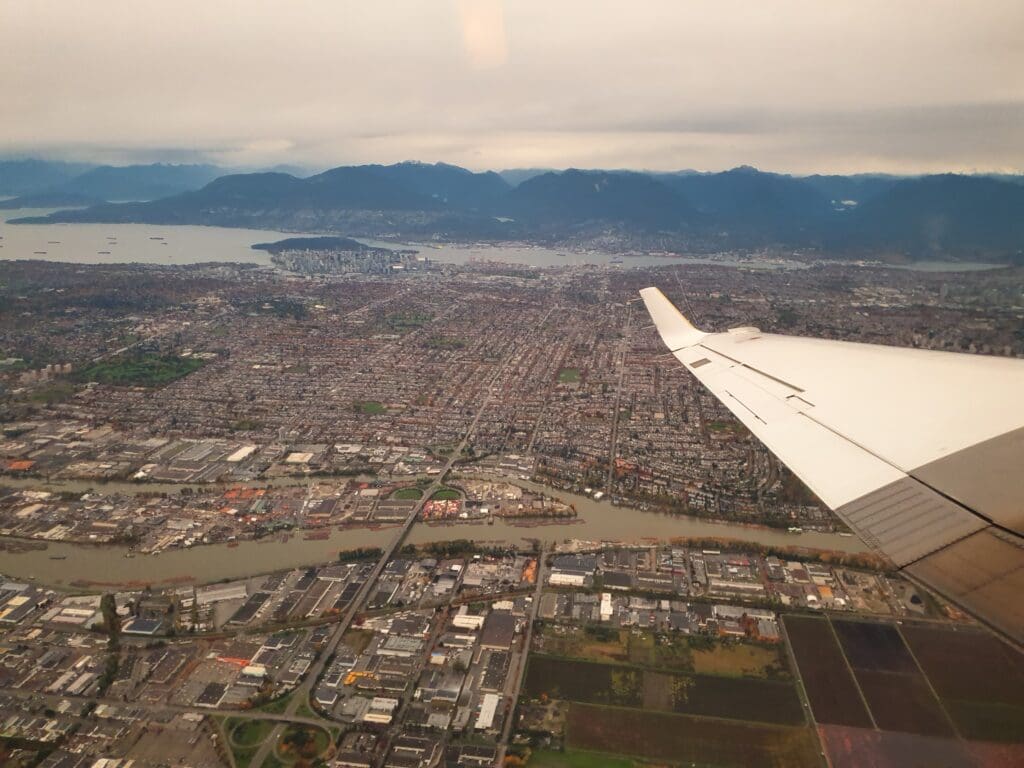
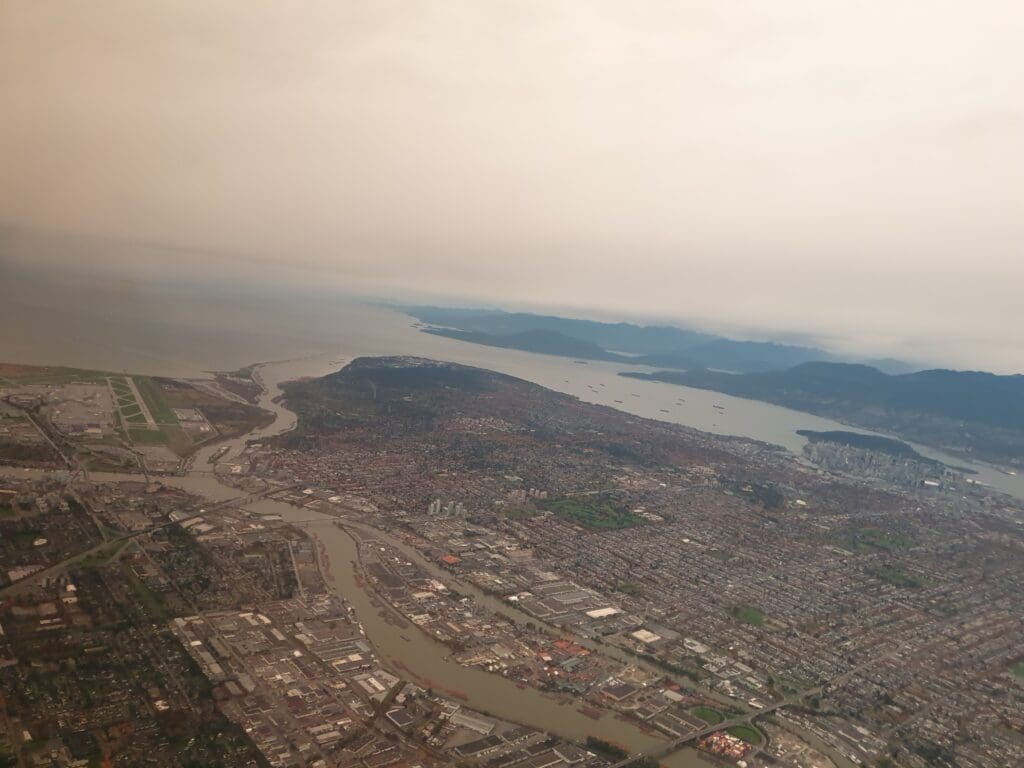


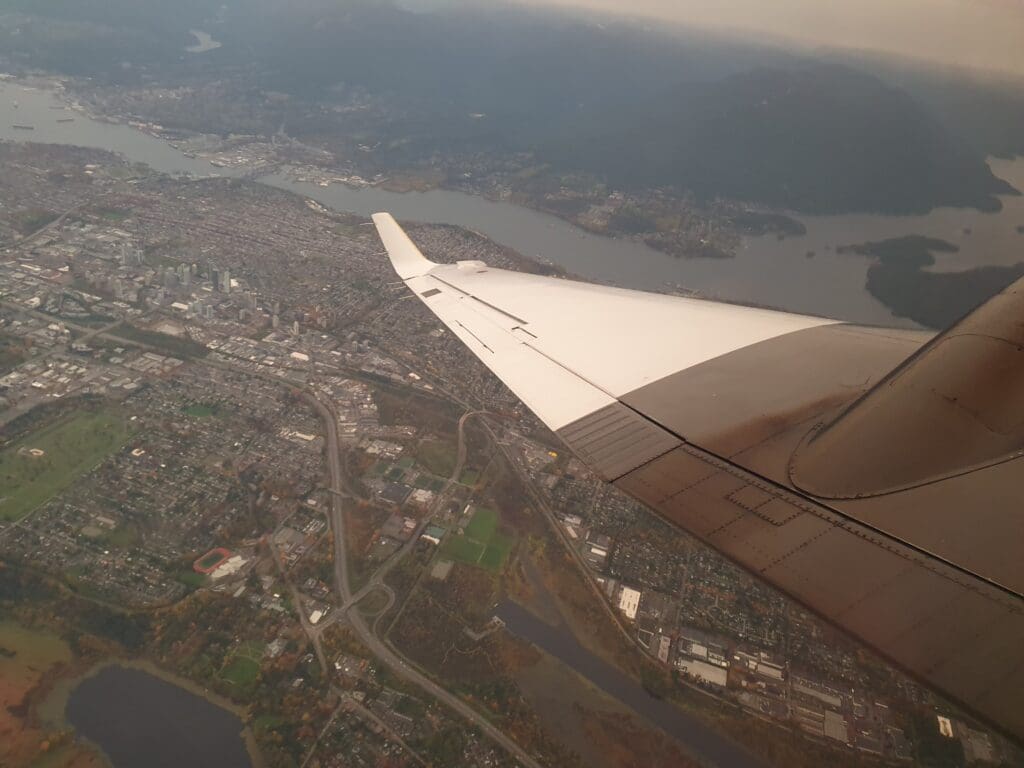
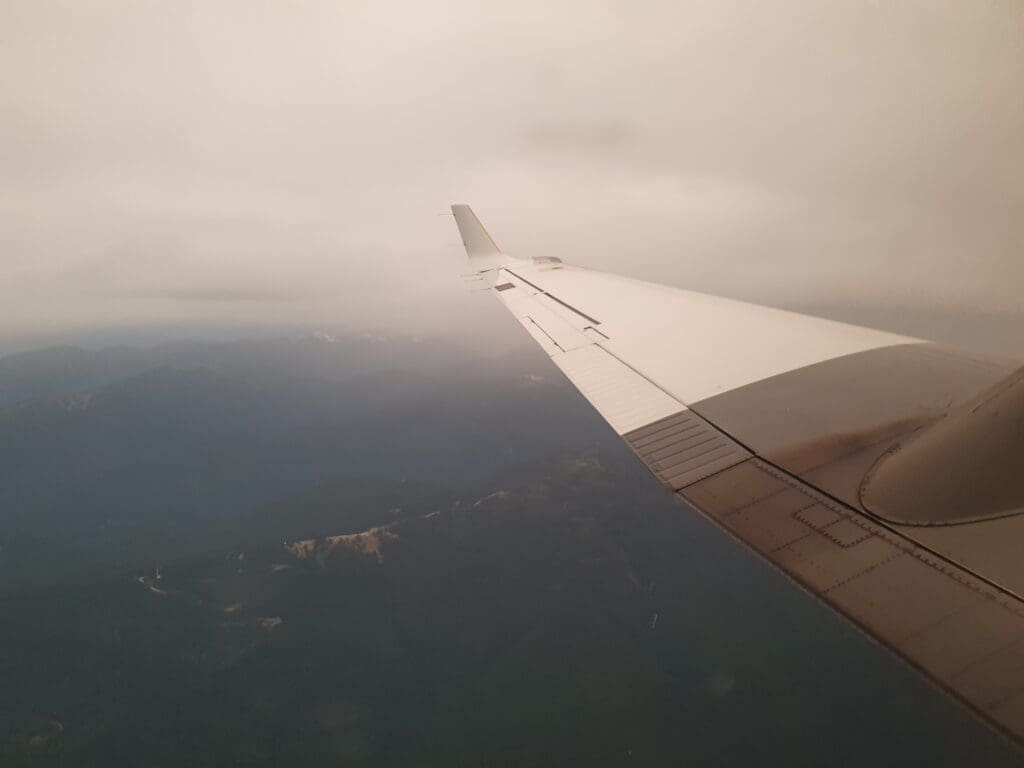
A grand total of thirteen minutes after departing Vancouver, the Beechcraft could be felt levelling off at its low cruising altitude of 19,000 feet at which time the turboprop was passing just to the north of Pitt Lake. In good weather, whilst the flight would undoubtedly offer superb vistas of the Rockies, unfortunately during the cruise nothing could be seen other than the thick white clouds a short distance beneath the aircraft. Therefore, I entertained myself by soaking up the atmosphere of this small and relatively rare turboprop that I had been hoping to fly for quite some time. Travelling in virtually a straight line all the way from Vancouver to Kamloops, the flight’s route took it across the mountains of British Columbia, passing over the Mehatl Creek Provincial Park before reaching the town of Lytton which had sadly become internationally known after being devastated by wildfires several months earlier.
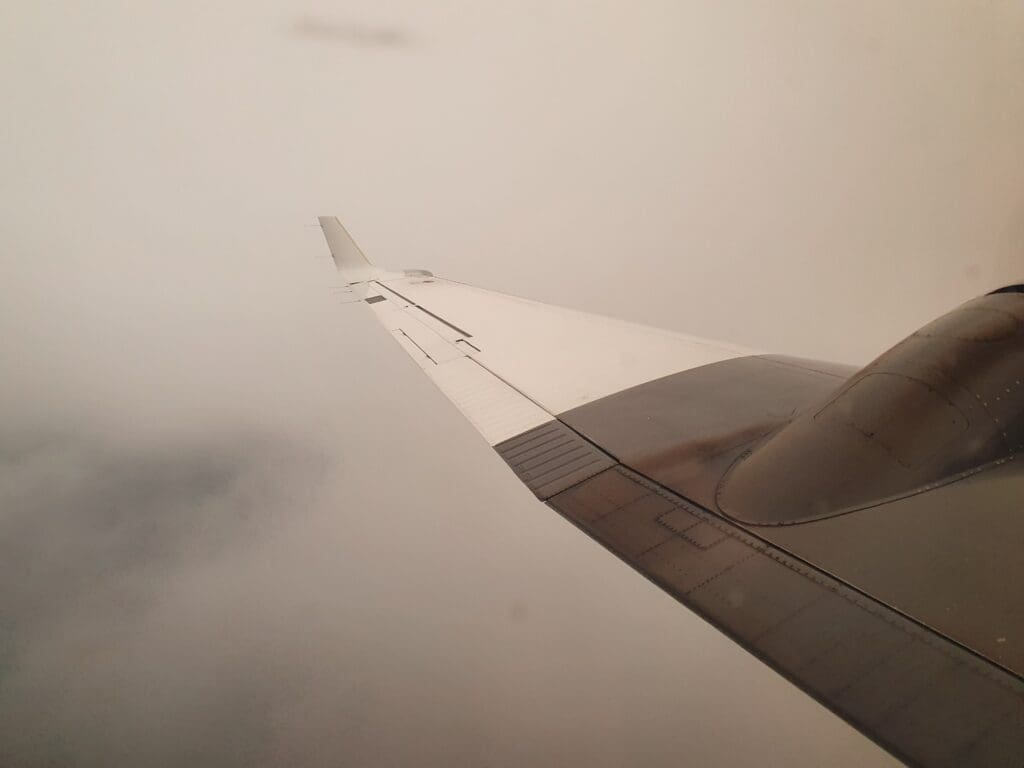
As the Beechcraft cruised along, around halfway through the flight, the sound of something hitting the fuselage could be heard as if the aircraft was flying through a hailstorm. Having read various things on this, one potential explanation for this was that this was ice shedding from the props being flung towards the fuselage, which is a common phenomenon when the type is flown in icing conditions. I should also add that whilst in the cruise, perhaps as I was seated near the rear of the cabin, the two Pratt and Whitney engines did not appear to be overly loud which is of course not always the case on small turboprops.
After what seemed like no time in the cruise at all, the Beechcraft could be felt commencing its way down back towards the ground. This was soon followed by a loud ding and a quiet announcement from the captain who advised all four passengers that we could expect to be on the ground in ten minutes’ time. Several minutes later, British Columbia came into view once again with the expanse of Canada’s largest open-pit copper mine, the Highland Valley Copper Mine, appearing beneath the turboprop. This was soon replaced by vistas of forests, lakes and mountains as the aircraft continued onward towards Kamloops.
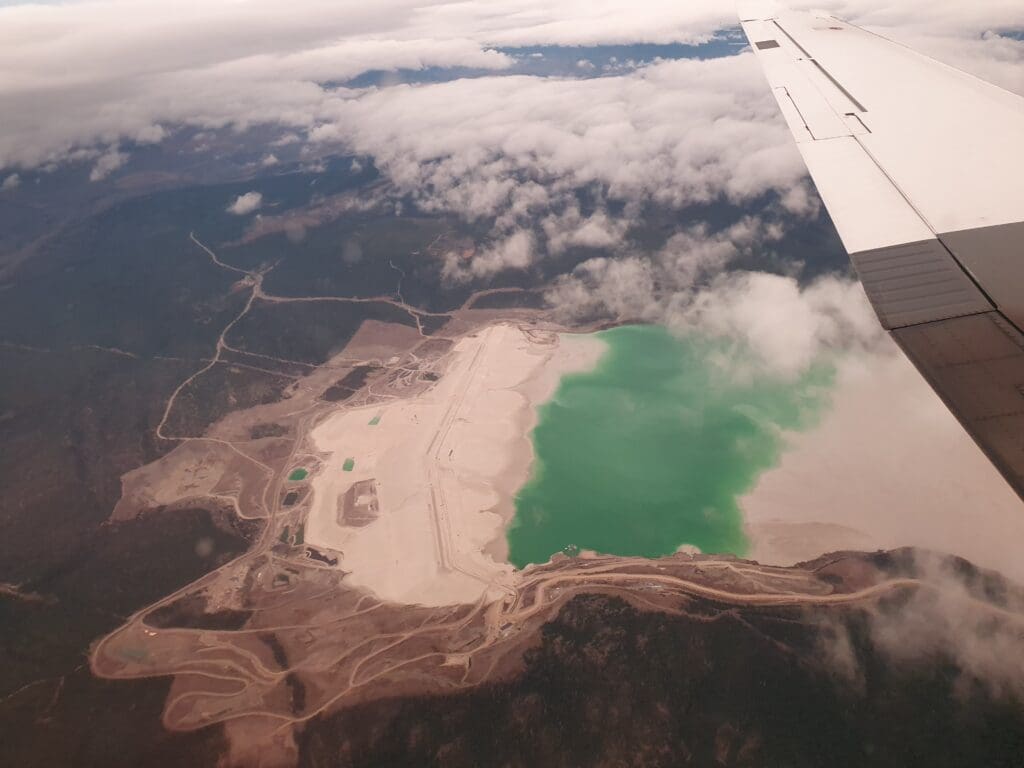
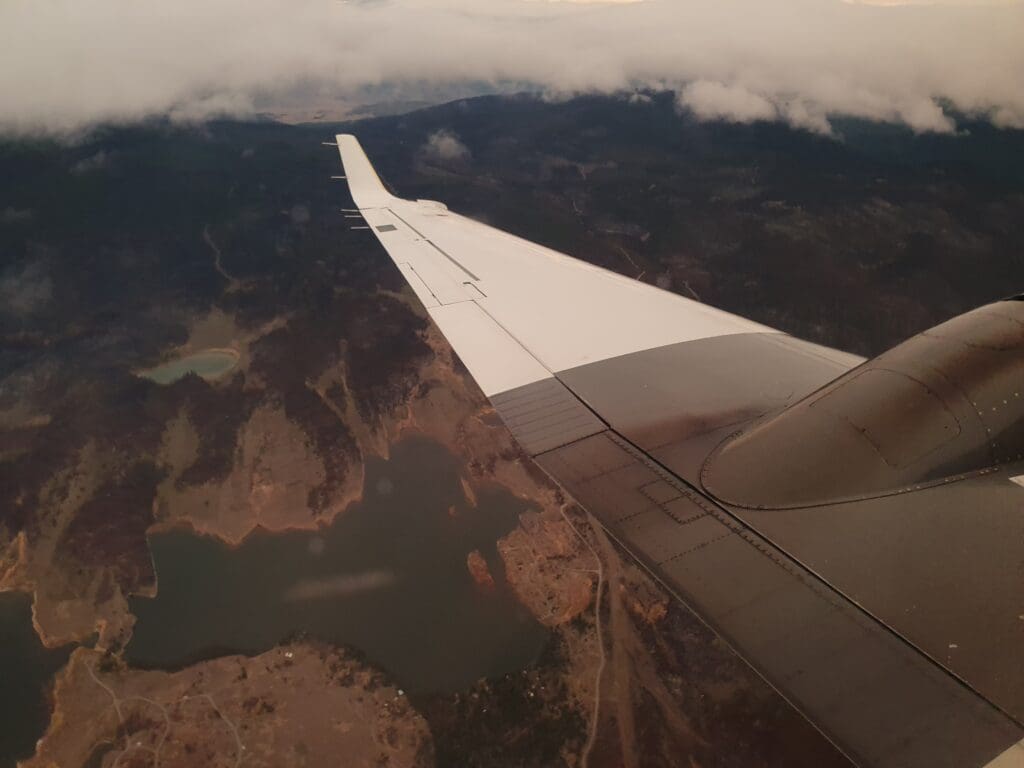
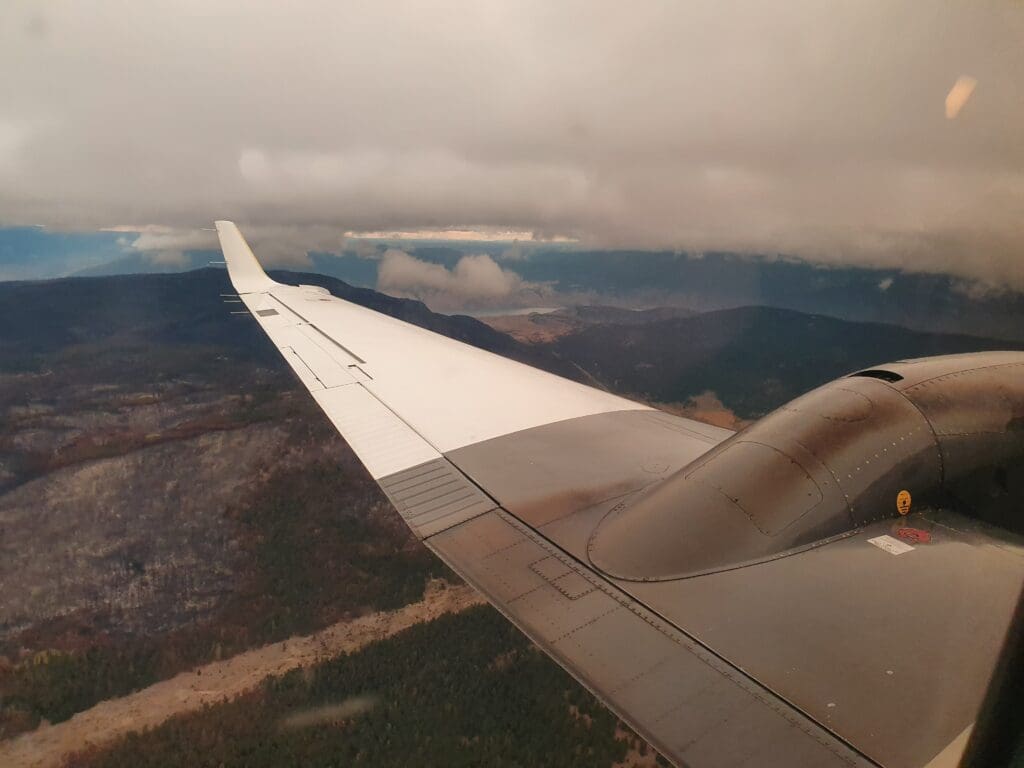
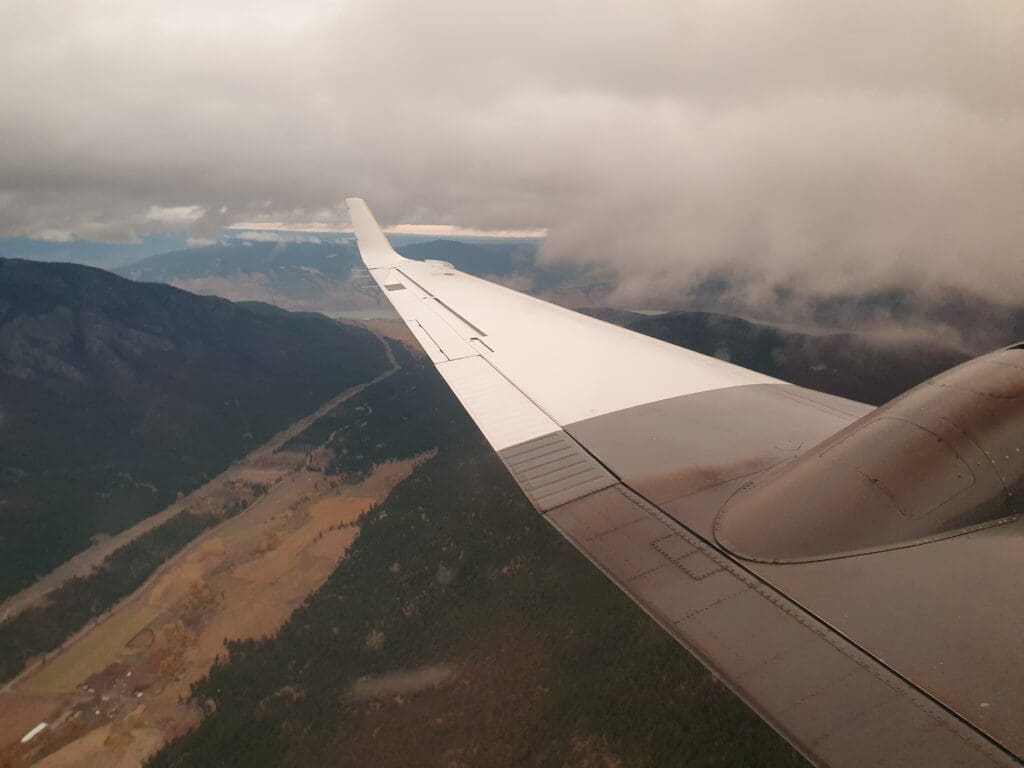
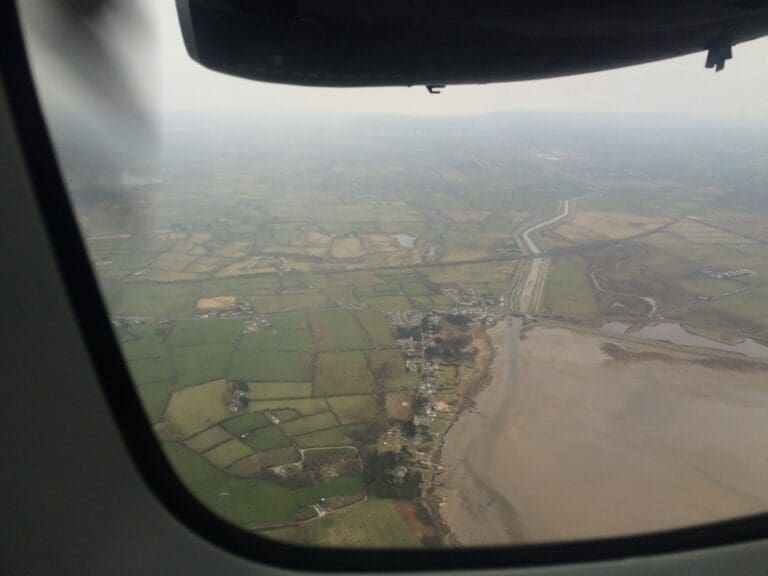
Once out of the clouds for good, picturesque views of stereotypical British Columbian scenery consisting of forested mountain slopes could be had as the aircraft descended over the Tunkwa and Mount Savona provincial parks. Passing only a short distance above mountain peaks, at this time the aircraft was pummelled about rather violently in what was perhaps the roughest bout of turbulence I had ever experienced onboard an aircraft in living memory. Fortunately, after crossing the mountain tops and making our way over Kamloops Lake, things smoothed out a little and the aircraft soon banked to line up for an approach to Kamloops Airport’s Runway 09. As the aircraft descended, good views of the lake’s northern shoreline could be had and soon enough the audible vacuum cleaner sound could be heard as the flaps and landing gear fell into position. After passing Tranquille where its well-known former tuberculosis hospital could be seen, the Beechcraft soon crossed the shoreline and darted down towards the runway.
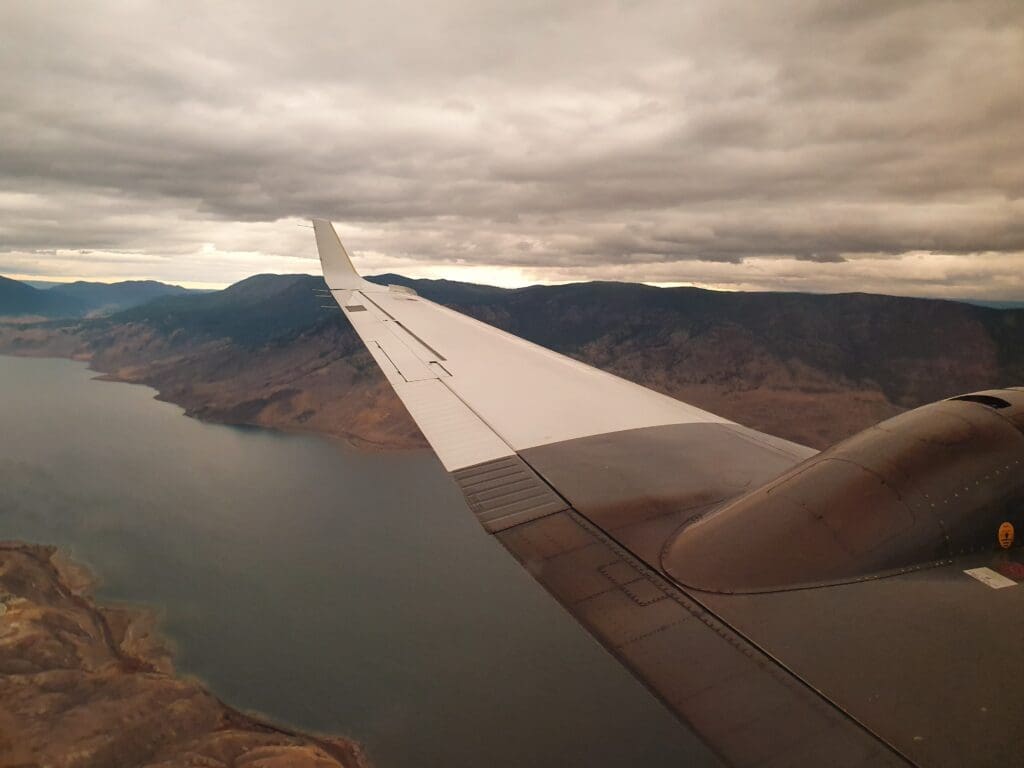
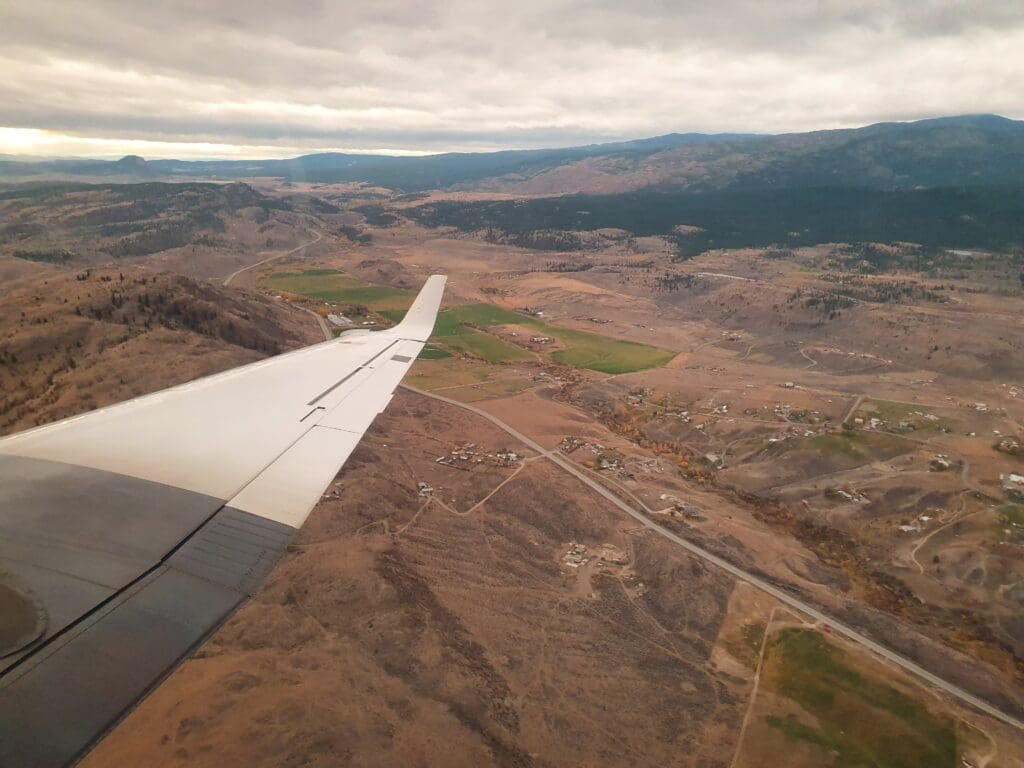
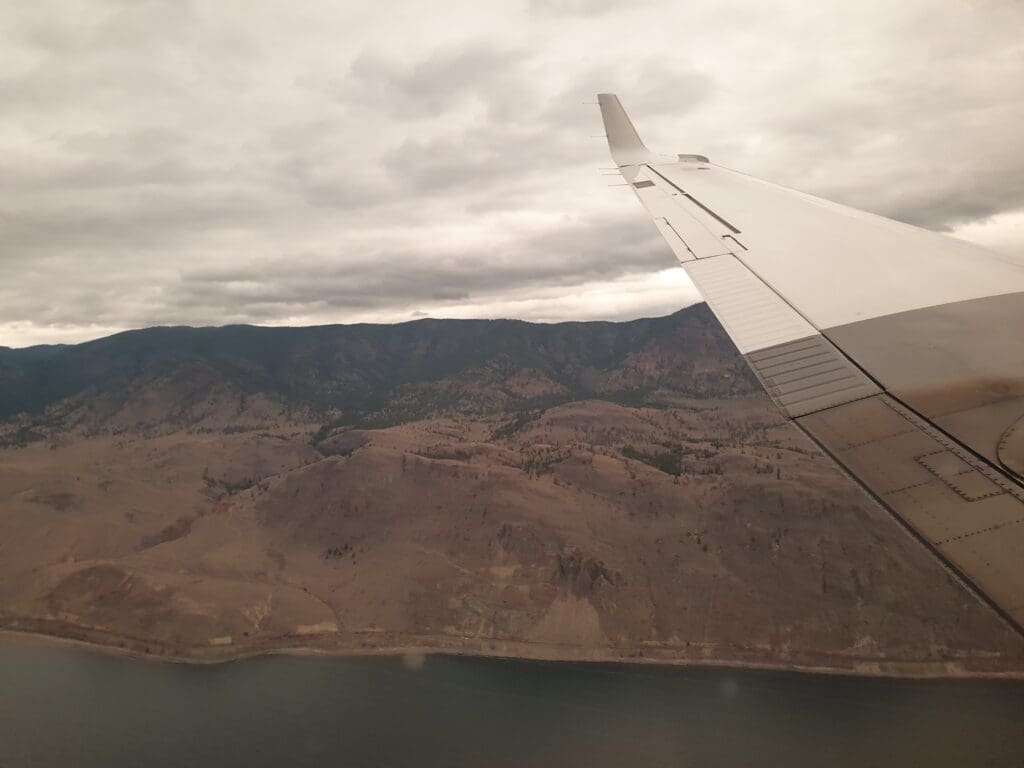
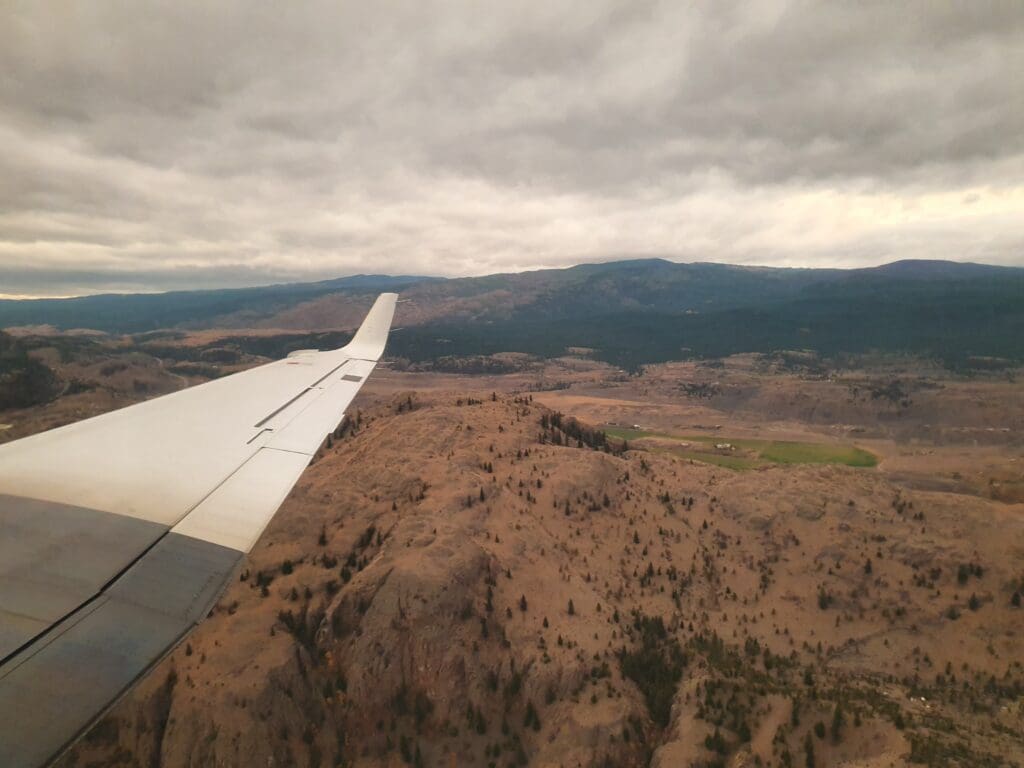
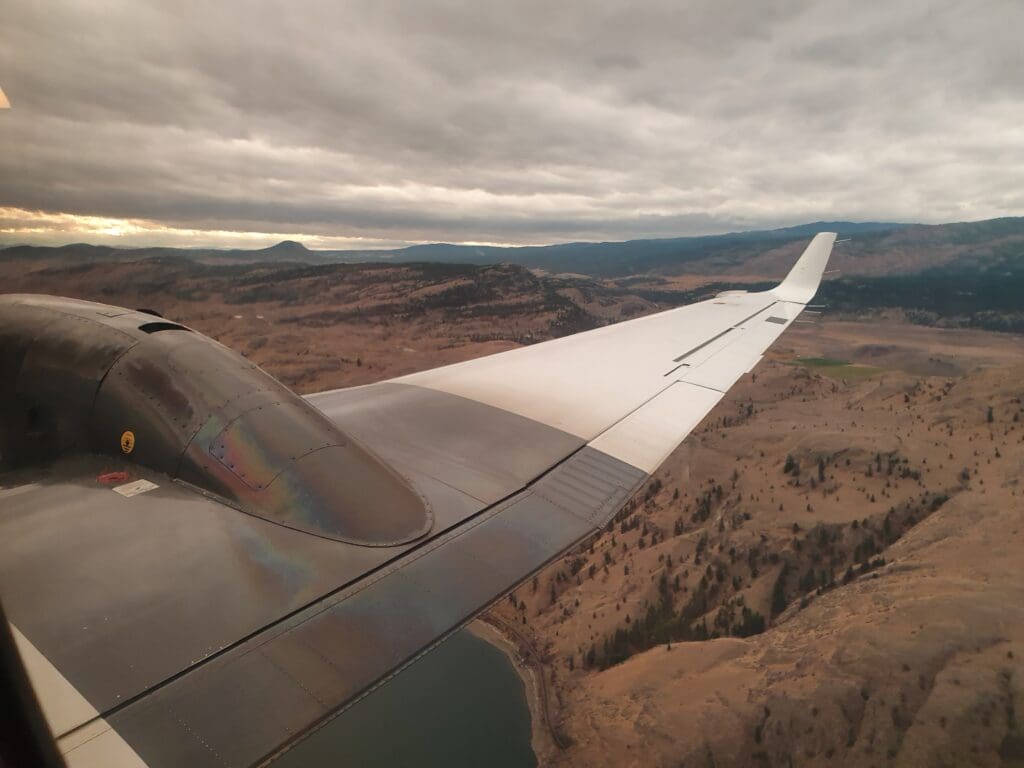
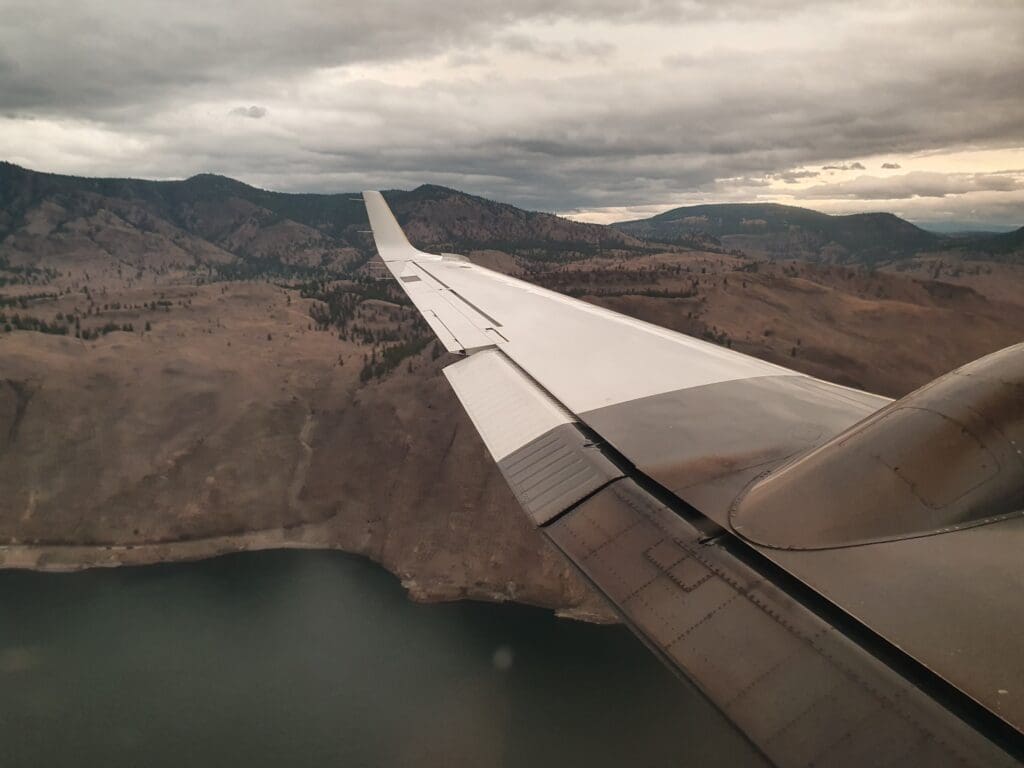
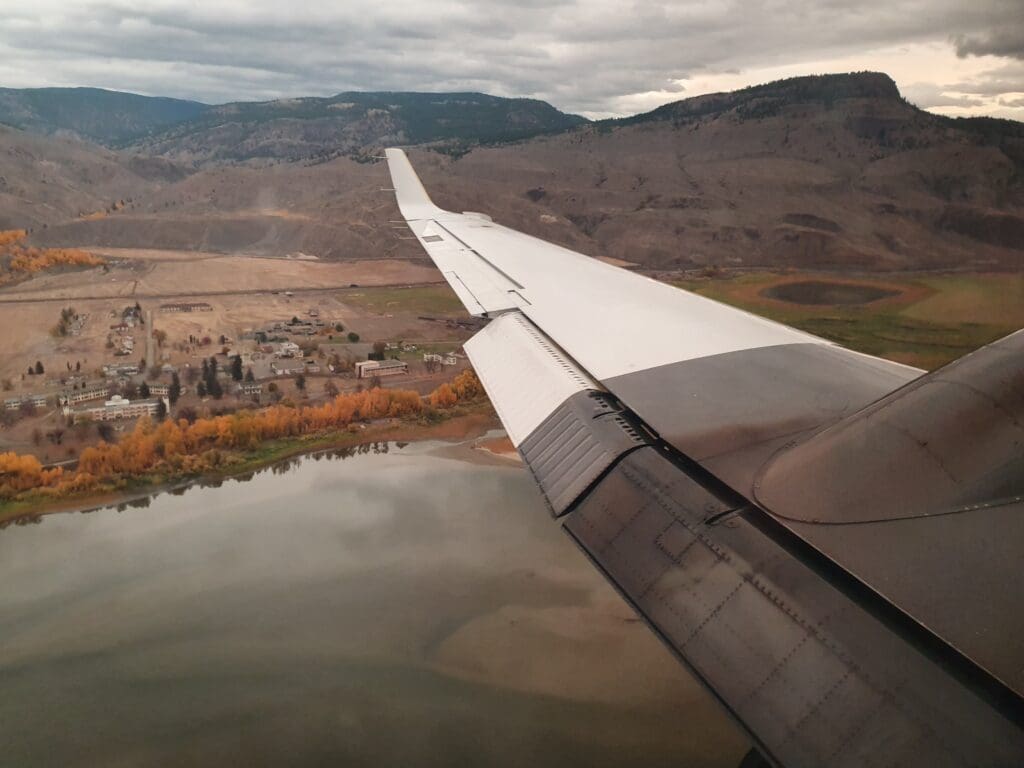
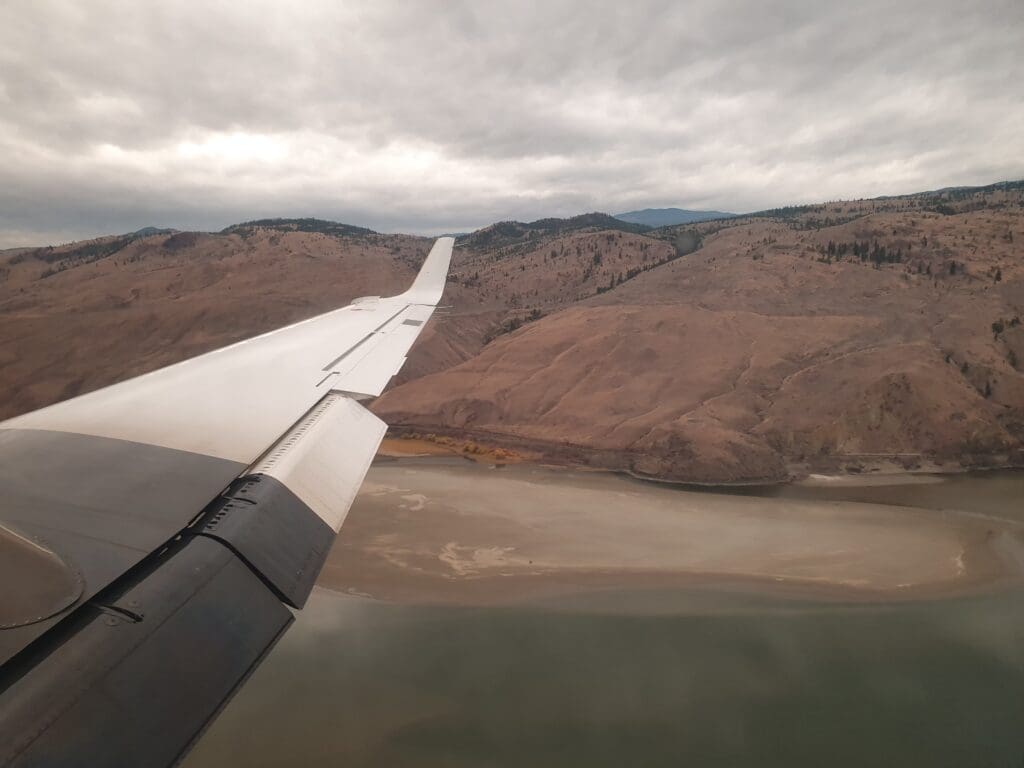
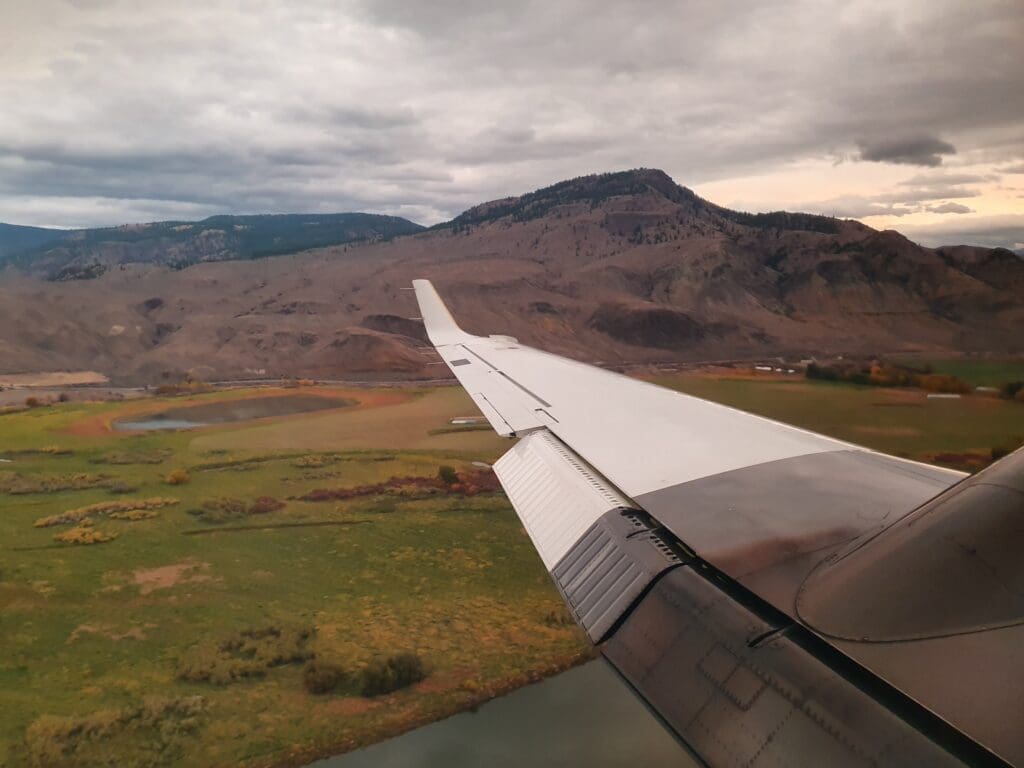
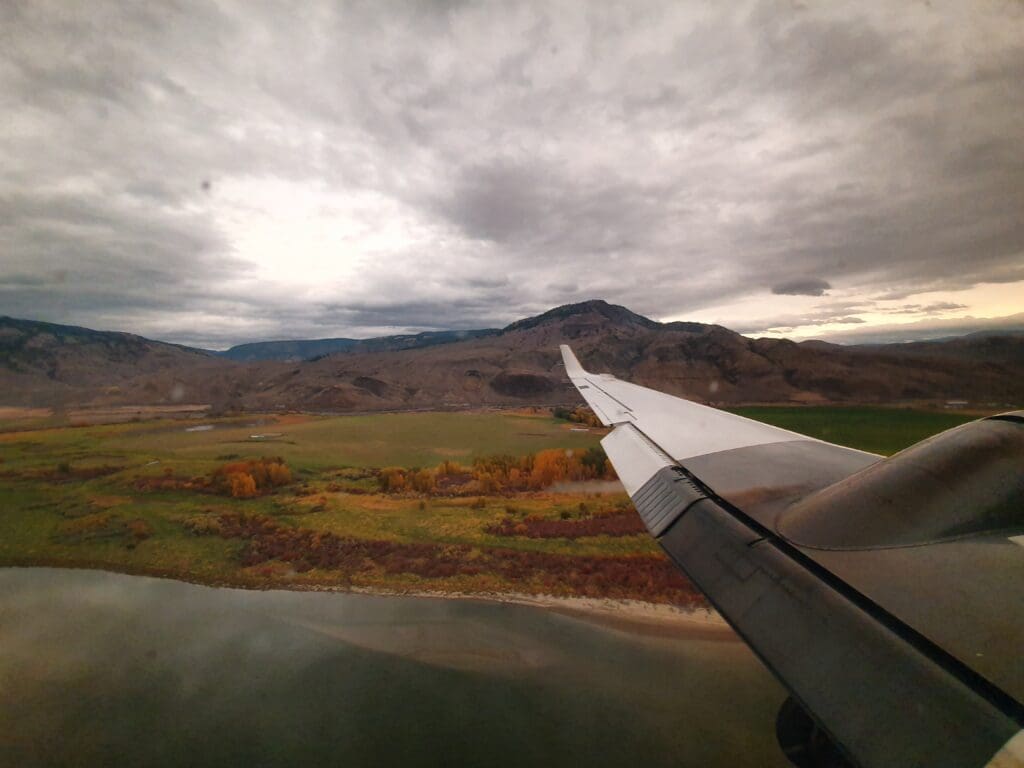
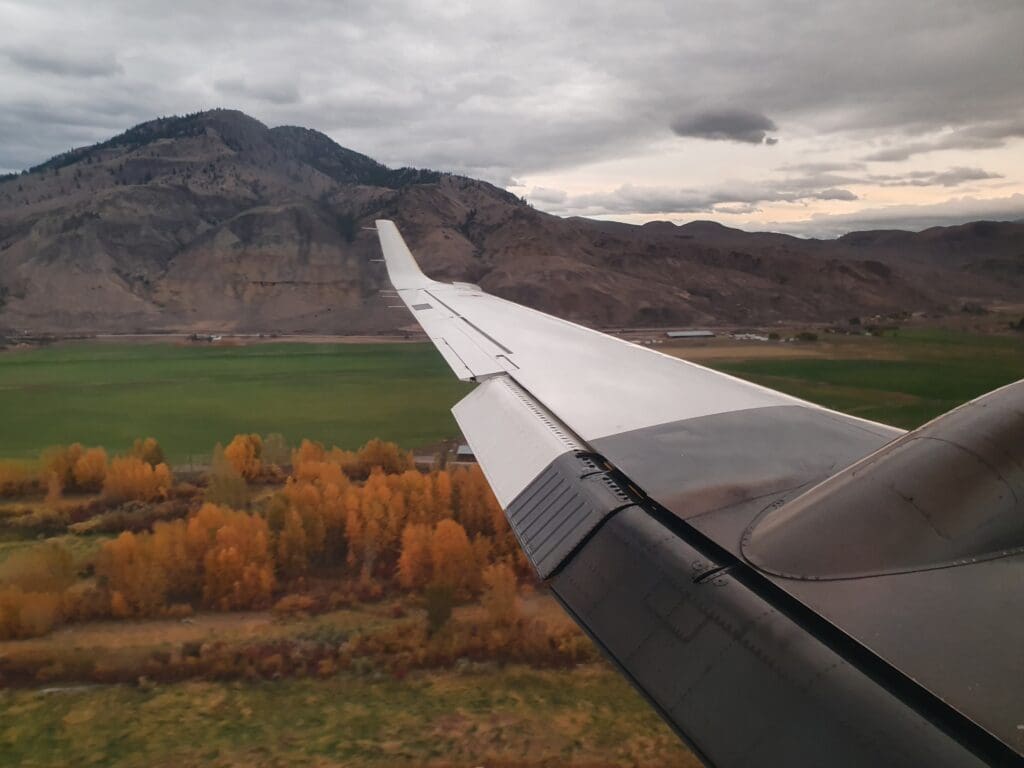
Around 160 miles, or 37 minutes’ worth of flying, at 0914 the turboprop made a firm touchdown in Kamloops. With the pilots likely wishing to minimise taxi time, the aircraft decelerated slowly and a host of light aircraft, both with wheels and floats appeared on both sides of the airfield before the aircraft eventually vacated the runway to the left. Once off the runway, Kamloops Airport’s low-rise control tower and neighbouring slightly dated looking terminal appeared whilst inside the cabin a pre-recorded announcement rang out requesting all passengers to remain seated. That morning, no other airliner could be seen at the terminal, something that was not particularly surprising given the fact that Kamloops Airport can hardly be described as one of Canada’s major air hubs. At 0919, the Beechcraft came to a halt at stand one where two ground agents could be seen waiting to tend to the aircraft and ready it for its next flight up to Prince George.
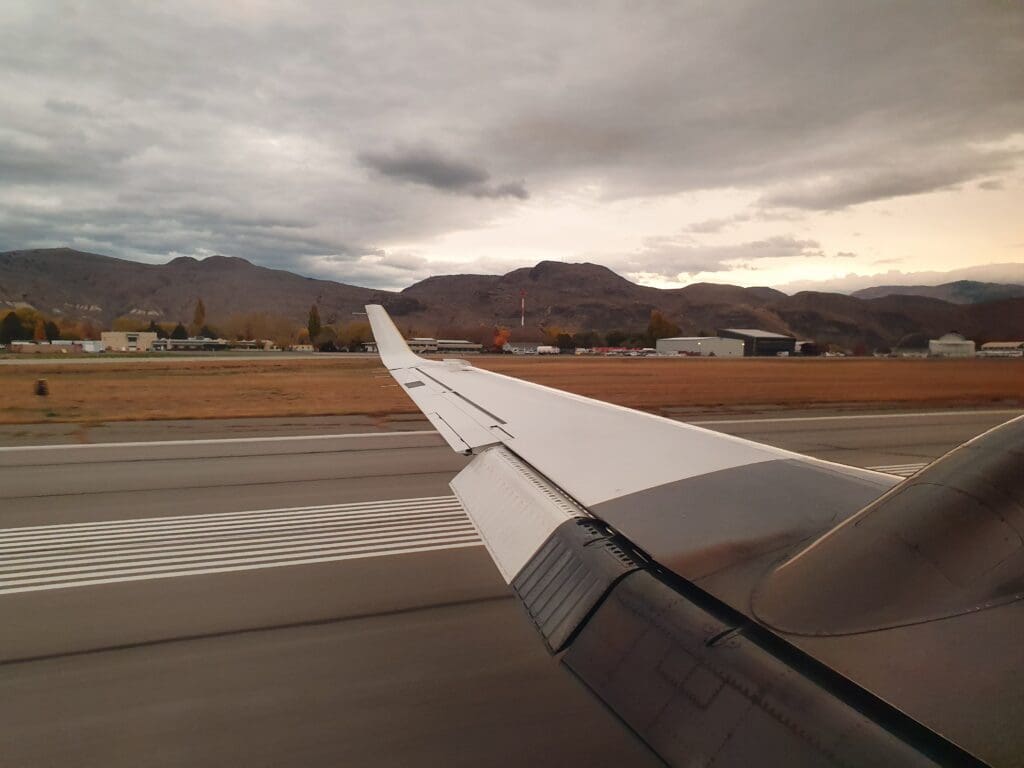
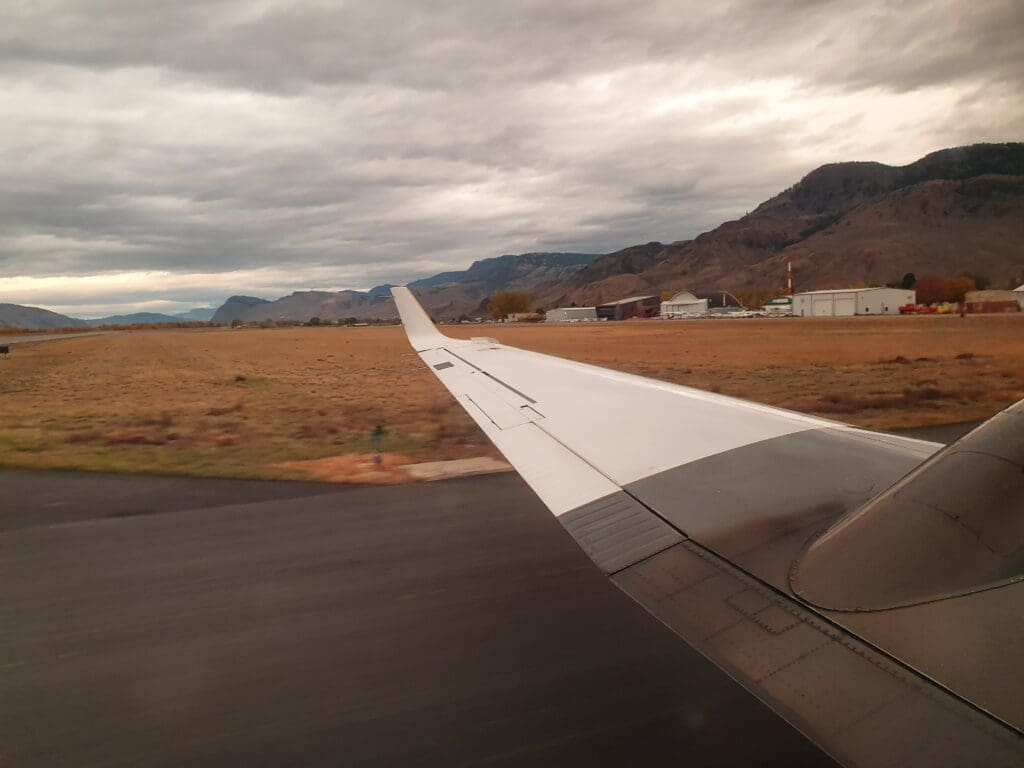
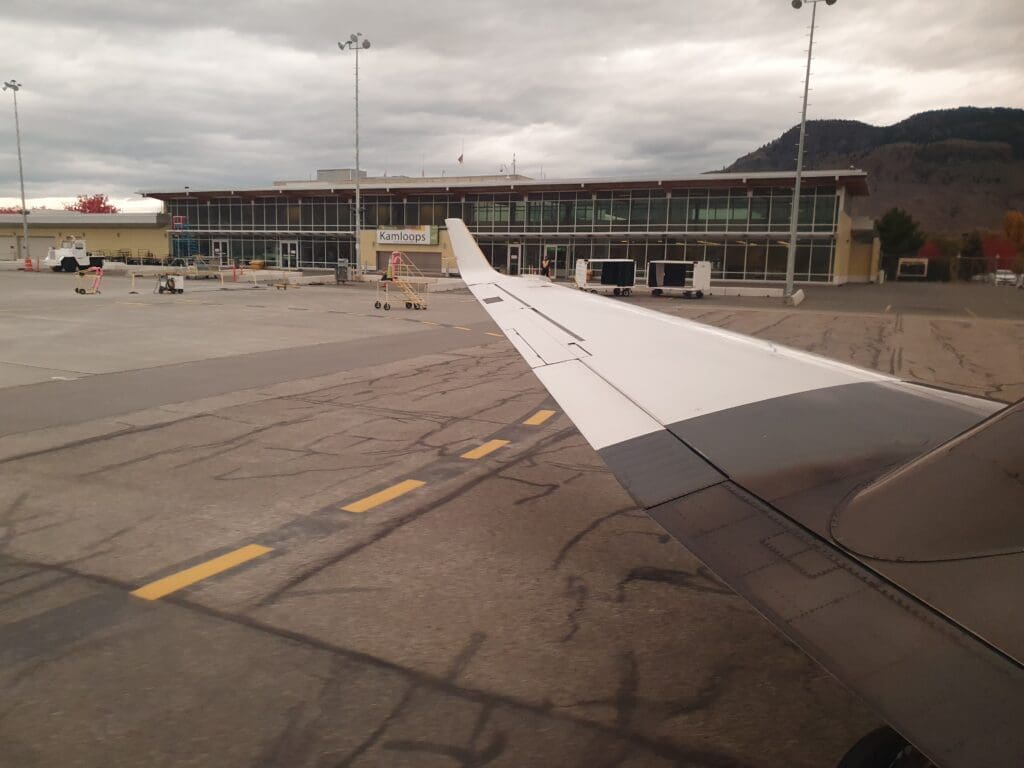
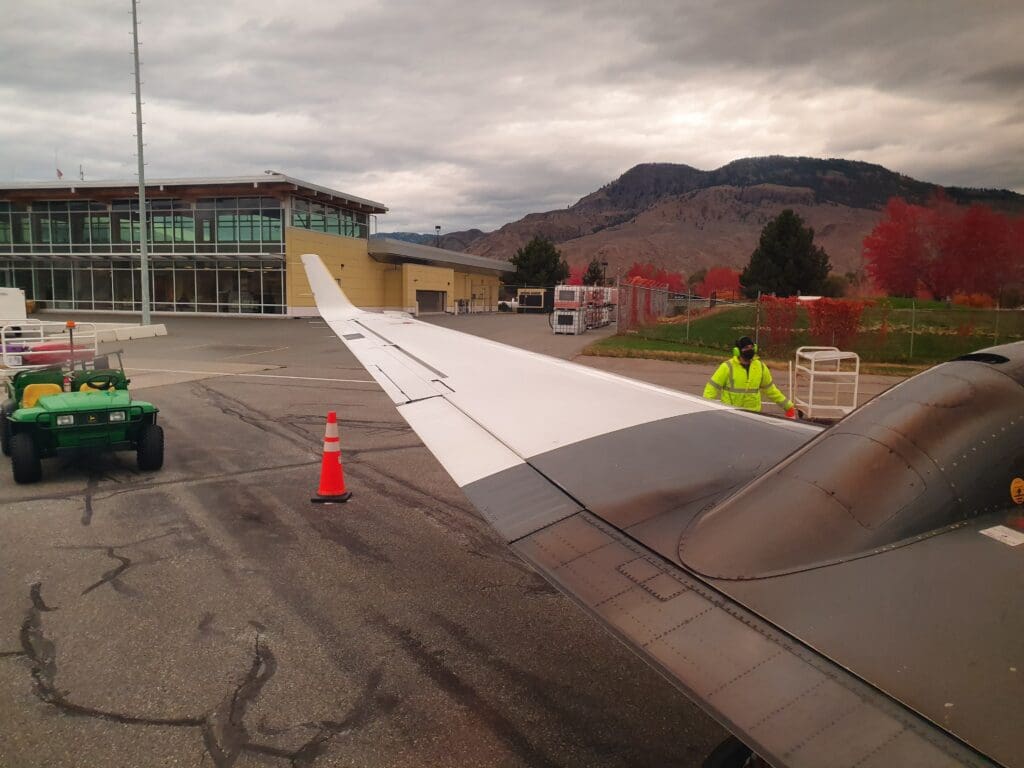
Almost immediately after coming to a halt, the two engines spooled down and the First Officer soon emerged from the cockpit. Much to my delight, the pilot allowed those heading onwards to Prince George to either wait inside the aircraft or to head into the terminal for a short time and re-board with those commencing their journey in Kamloops. Being an aviation enthusiast, I of course opted for the latter option and I disembarked along with one other Prince George bound passenger and another who was ending their journey in Kamloops. Once outside, a very friendly security guard escorted us to the terminal where I entered via the doors to the airside departure lounge. During this short walk, an Air Canada Express Dash 8 Q400 could be seen touching down having also journeyed across from Vancouver.
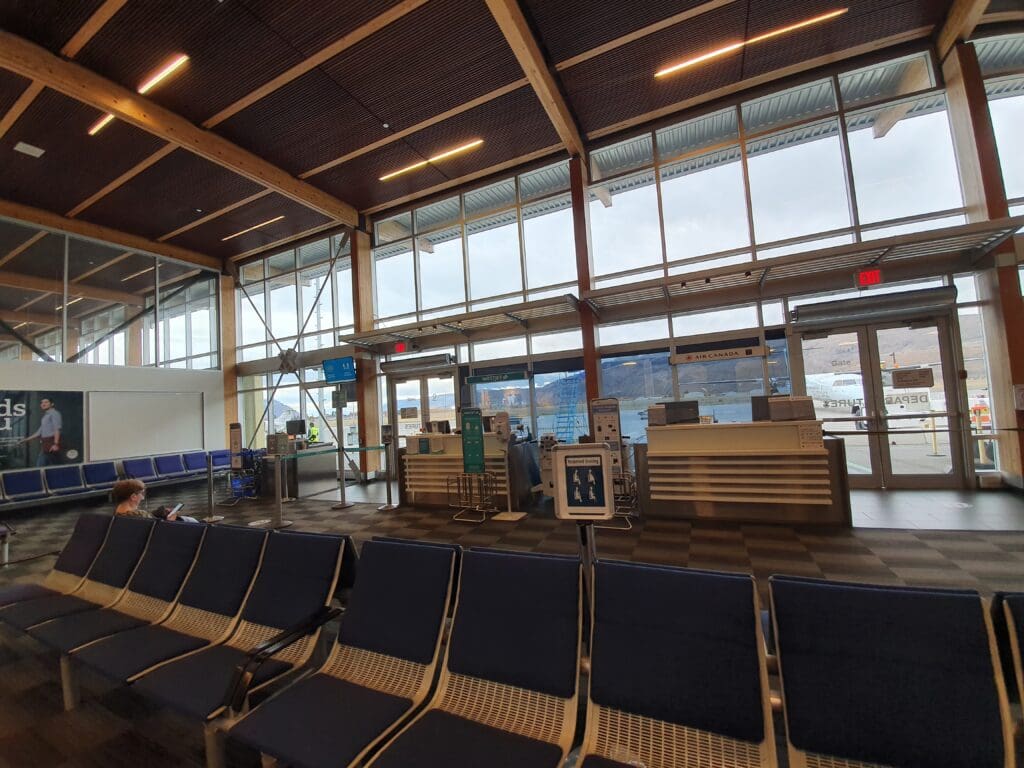

Whilst the terminal may not be the newest in Canada, upon entering the waiting area I was pleased to find this to be pleasant, comfortable, clean and tidy. In terms of facilities, those departing can visit a small coffee shop located in one corner of the waiting area which appeared to be a popular choice during my stay, whilst several vending machines offering hot and cold drinks and a variety of snacks could also be seen. In addition, a good number of plug sockets could be seen and fast complimentary was provided which I found to work well. After a quick stop at one of the terminal’s clean bathrooms, I took a seat near the gate and waited for boarding for the Prince George service to be announced. After a little over ten minutes in the terminal, one of the two locally based Central Mountain Air agents staffing the gate podium requesting those needing assistance to head over to gate one. However, with no passengers falling into this category, boarding for all passengers bound for Prince George was announced around a minute later. Sitting almost directly opposite the gate, my boarding pass and passport were soon checked before I made my way outside and commenced the walk along the terminal towards the Beechcraft.
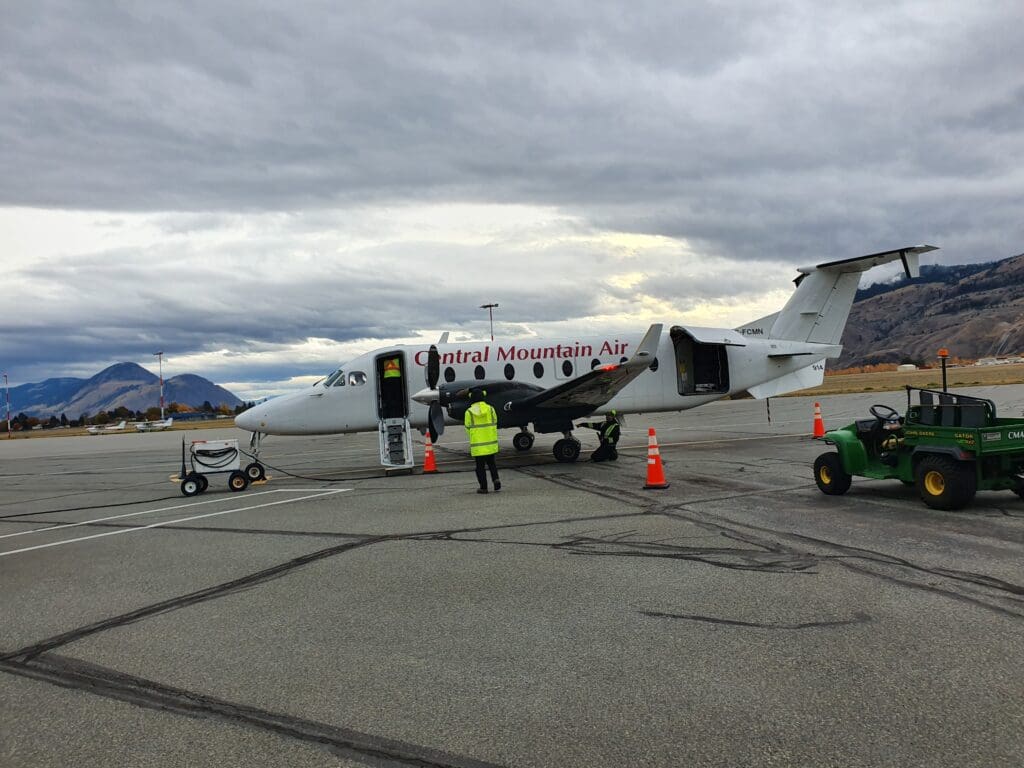
Upon reaching the aircraft, I was welcomed again by the first officer and advised to watch my head as I boarded the aircraft. Having selected Seat 2A for this sector, once inside the Beechcraft’s small cabin, I did not have too far to travel until I slid into my seat in the second row of the aircraft. As one would expect, my seat for the journey up to Prince George offered identical levels of comfort to Seat 8A whilst only relatively minor wear and tear could be seen in the area around my seat. Alongside the three passengers (including myself) who commenced their journey in Vancouver, twelve passengers joined the flight in Kamloops with a grand total of fifteen heading to Prince George, equating to a more respectable load of 79%. Perhaps all well versed in the peculiarities of flying onboard such minuscule airliners, all passengers made it onboard promptly and with minimal fuss. As in Vancouver, the young First Officer closed the cabin door before turning around and undertaking a short welcome and safety briefing. Once this was done, the pilot headed up into the cockpit before closing the flimsy-looking plastic divider that separates the cabin and cockpit. Once again, the Captain then undertook a welcome announcement over the cabin’s speakers, mentioning our flight time of 42 minutes, 22,000 feet cruising altitude and the weather in Prince George. Fortunately, in spite of the warnings made by the check-in staff in Vancouver, the possibility of a diversion now seemed remote, with British Columbia’s northern capital basking in sunshine.
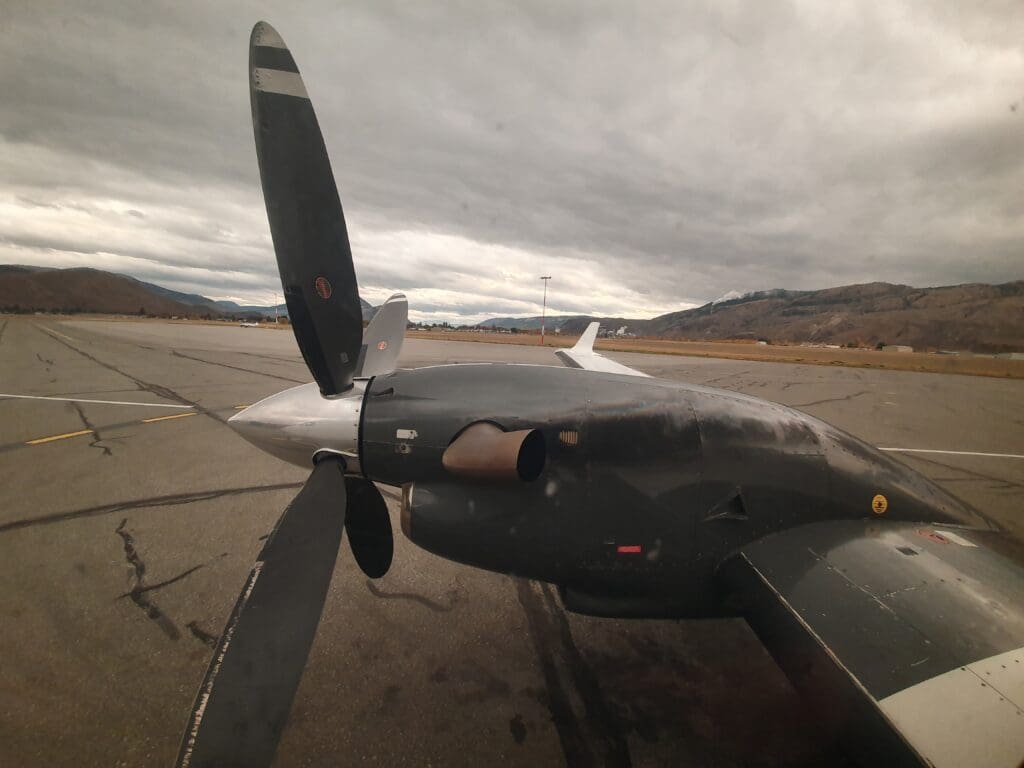
In the moments that followed, seated near the front of the cabin I overheard the two pilots running through their pre-startup checks before the two Pratt and Whitney Canada engines spooled up again for the journey northwards. As the two engines fired up into life, Central Mountain Air’s pre-recorded safety announcement was played again before the aircraft powered forward out of its stand and cautiously turned around. From the terminal, the journey over to Runway 09 was relatively quick, during which I was offered a good view of the host of light aircraft parked up outside the hangars on the north side of the airfield.
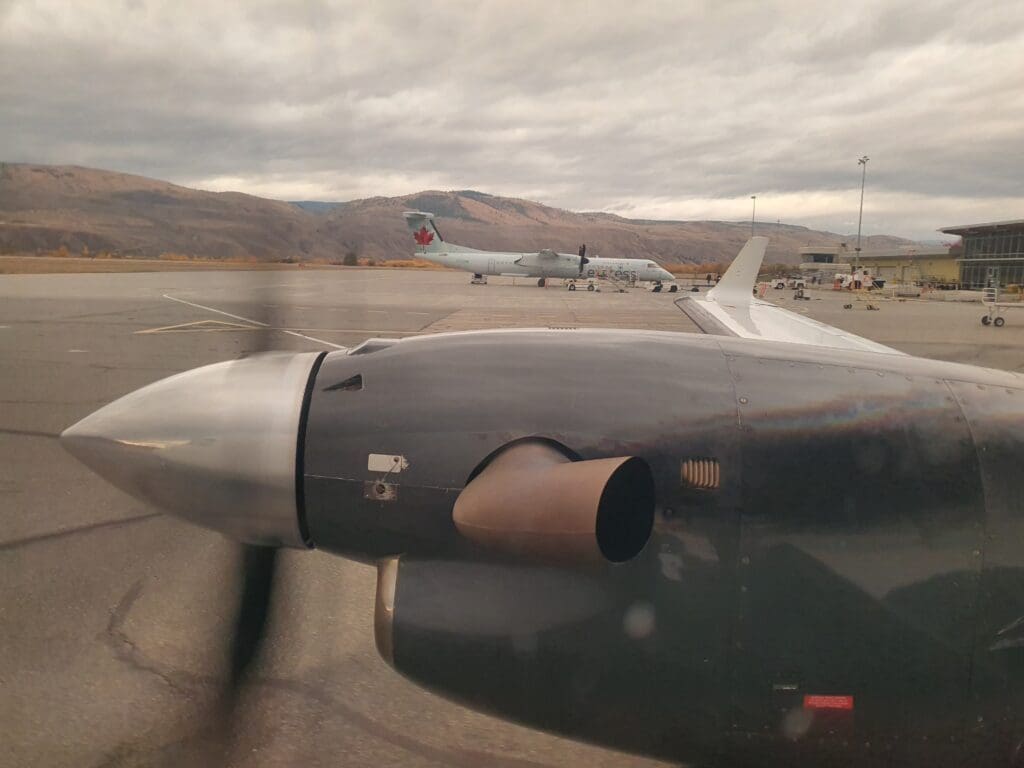
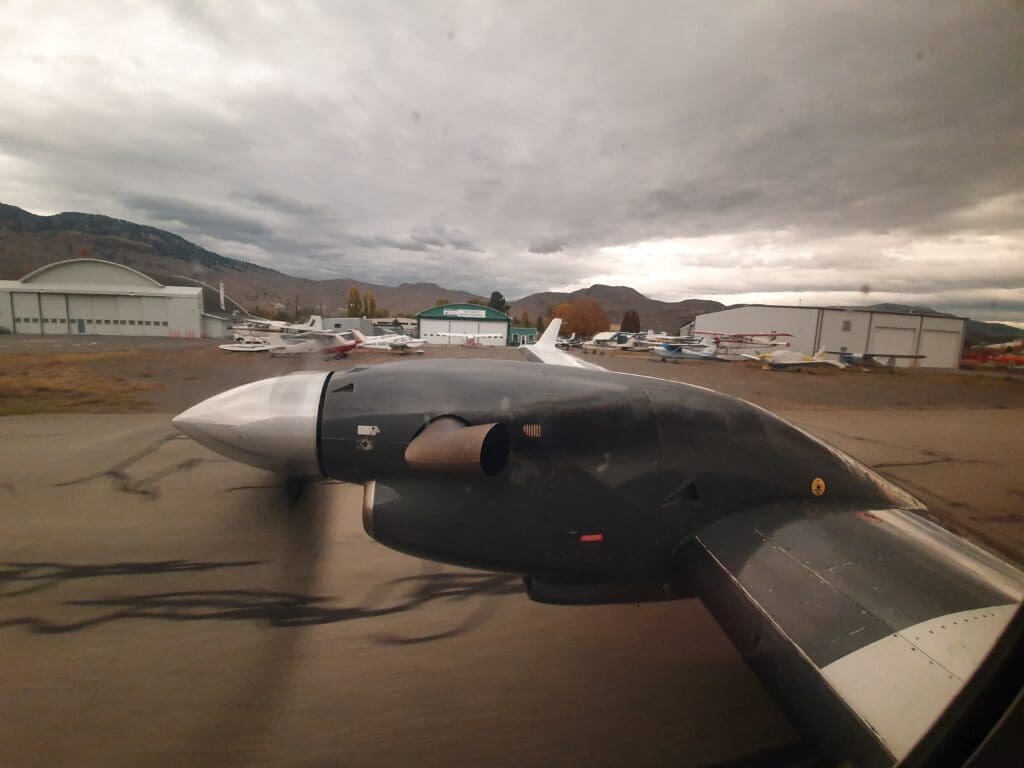
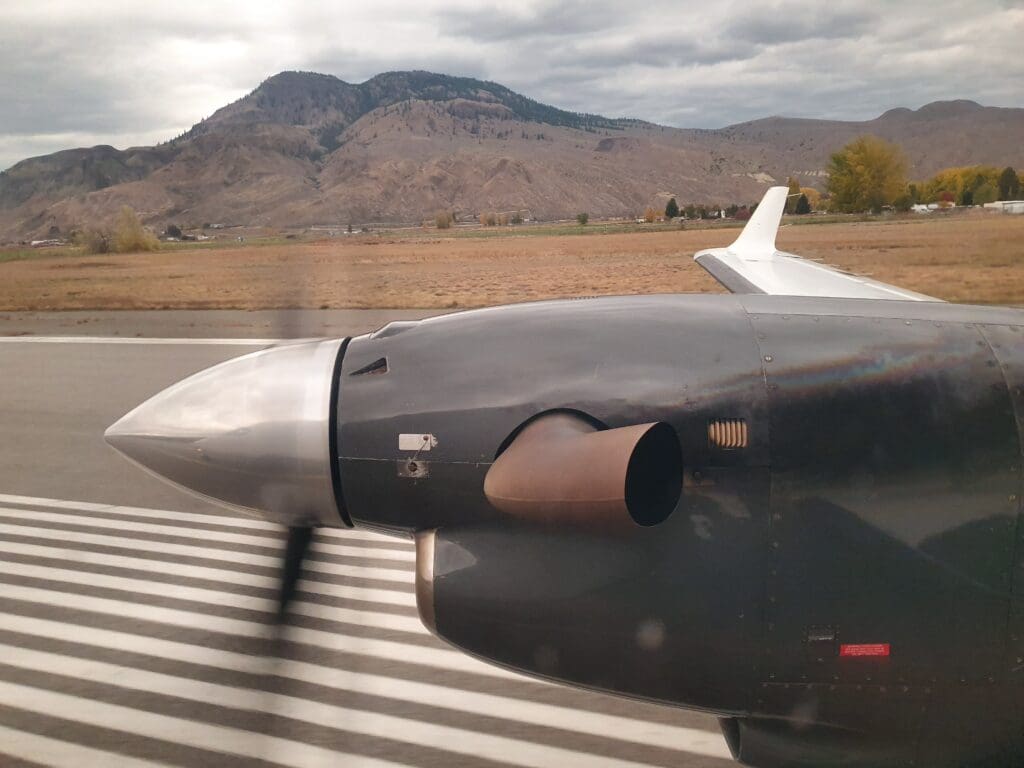
At 0949, the aircraft entered the runway and made a short taxi to the end of this before turning around. Despite this backtrack, at 8,000 feet long, Kamloops’ main runway is more than long enough for any small turboprop. In fact, once upon a time the airport was served by Pacific Western Airlines’ Boeing 737-200s, and more recently a Royal Canadian Air Force CC-150 Polaris (Airbus A310) visited following the tragic crash of a Snowbird CT-114 in the city in May 2020. Once pointing in the correct direction, the Beechcraft performed a rolling takeoff, with seat 2B offering a significantly higher level of noise and vibrations than 8A. Despite the higher load on this sector, once again the aircraft rocketed upwards in what seemed like no time at all with the hangars to the south of the runway soon coming into view before leaving the airport behind and heading over Kamloops Lake. In no time at all, the gear and flaps were retracted and almost immediately after departure, Kamloops’ large pump mill, operated by Domtar could be seen. From there, the aircraft climbed over the centre of Kamloops before turning onto a northerly heading and rising into the white clouds, eventually settling at a cruising altitude of 22,000 feet.
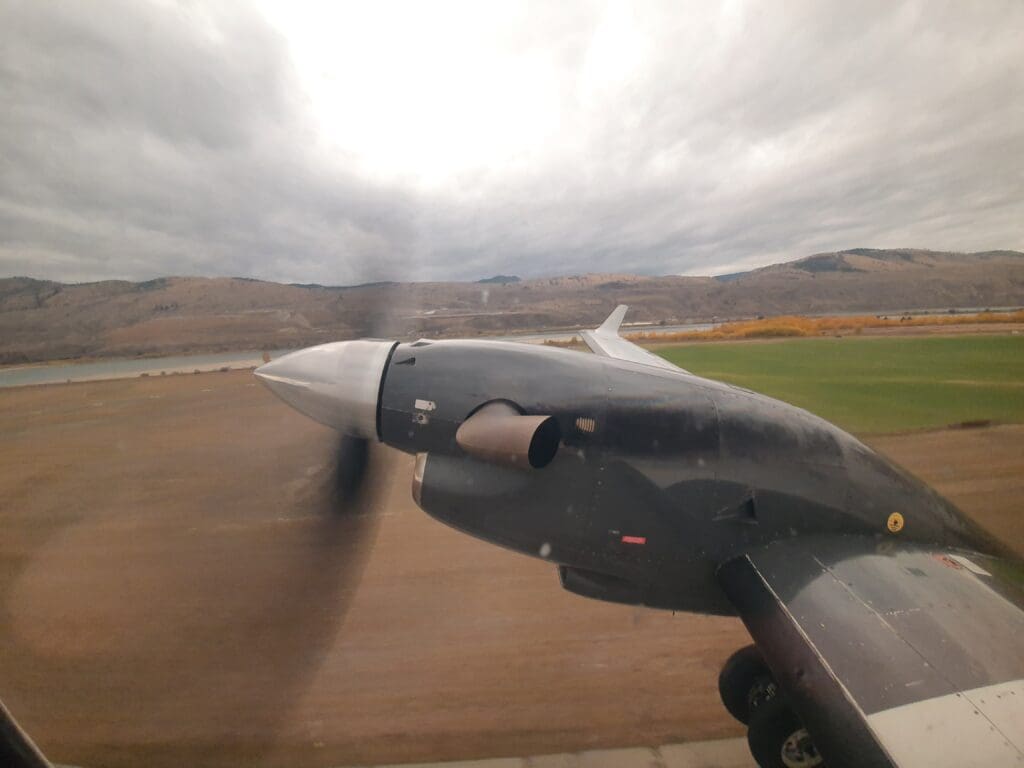
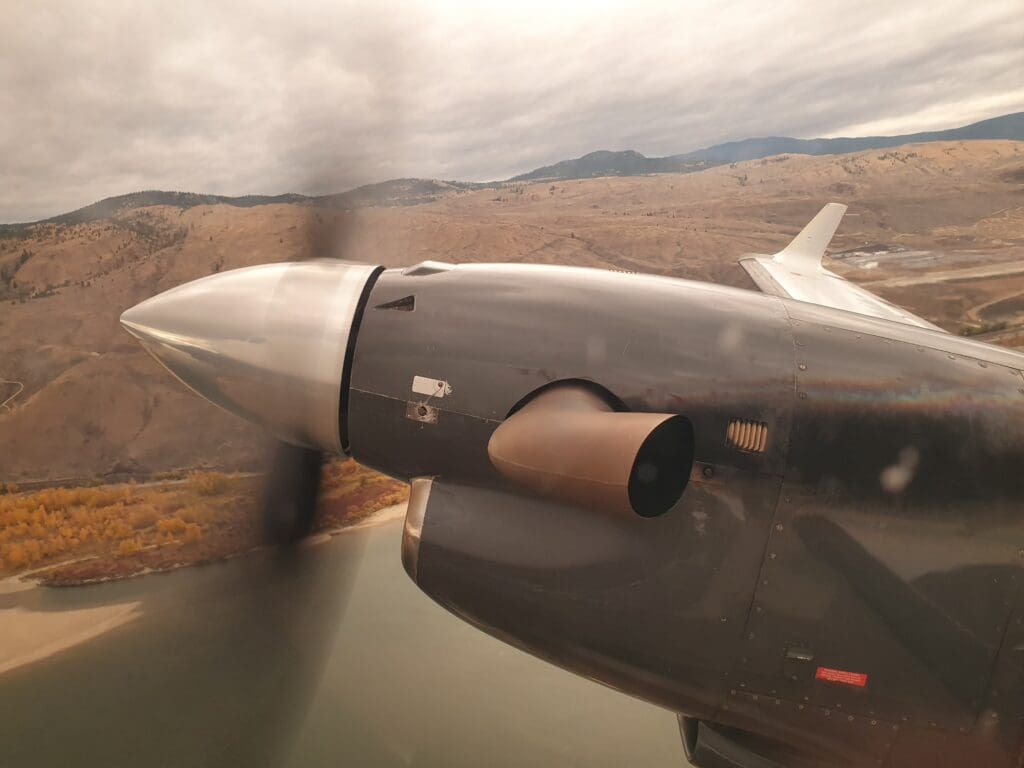
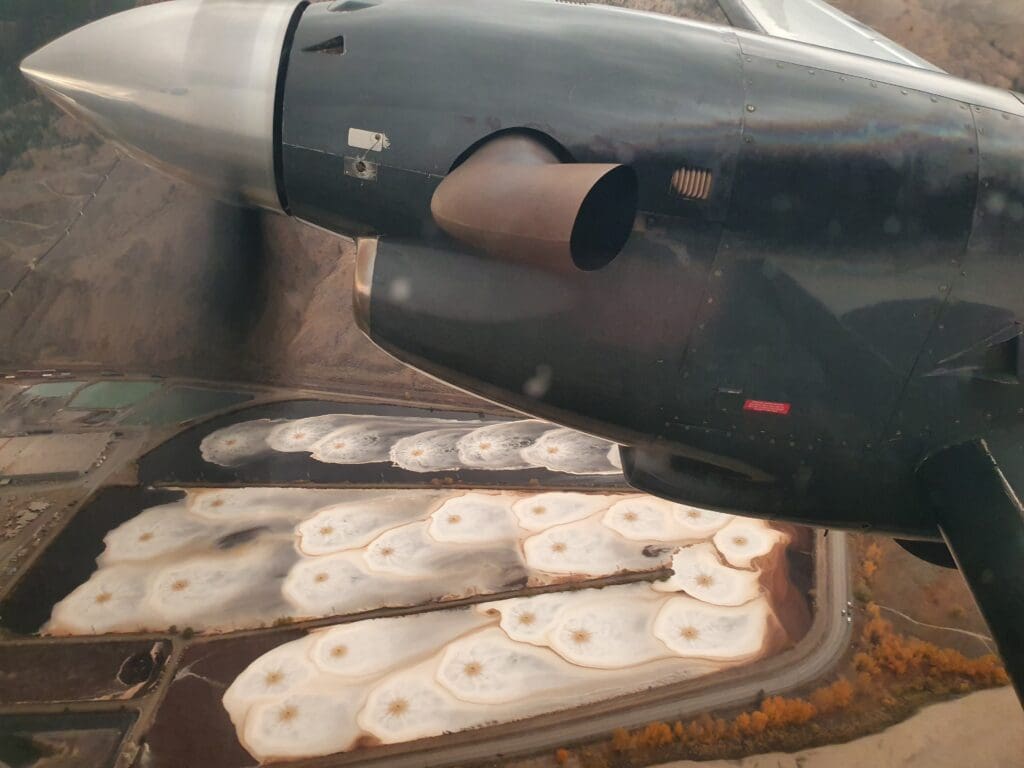
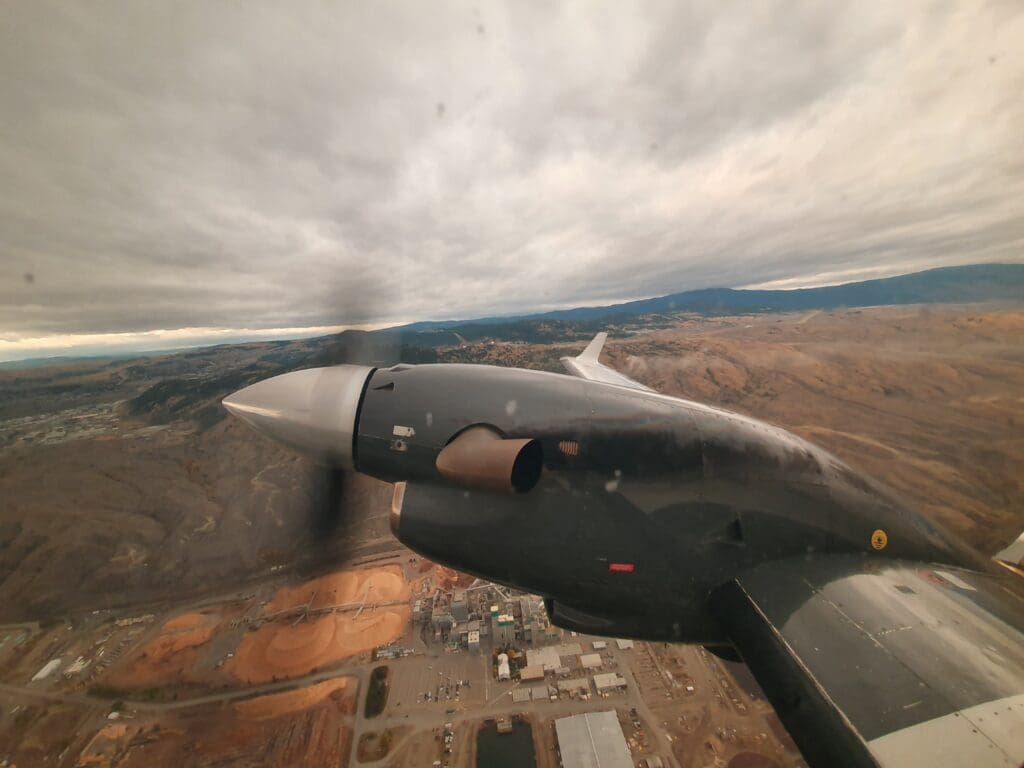

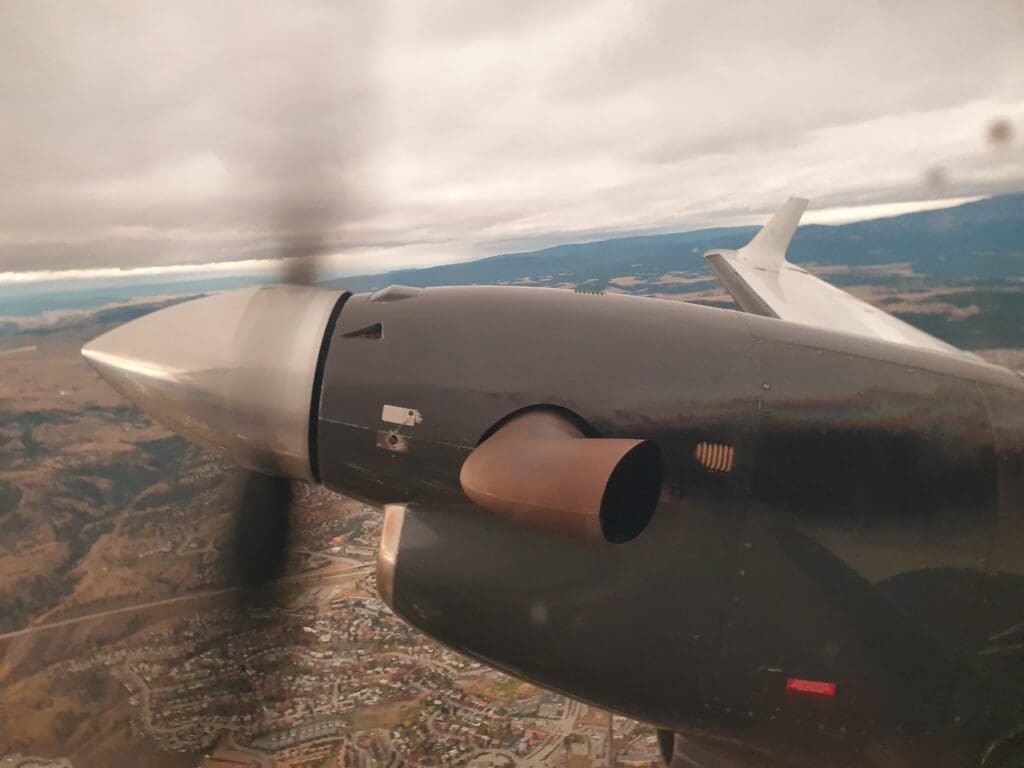
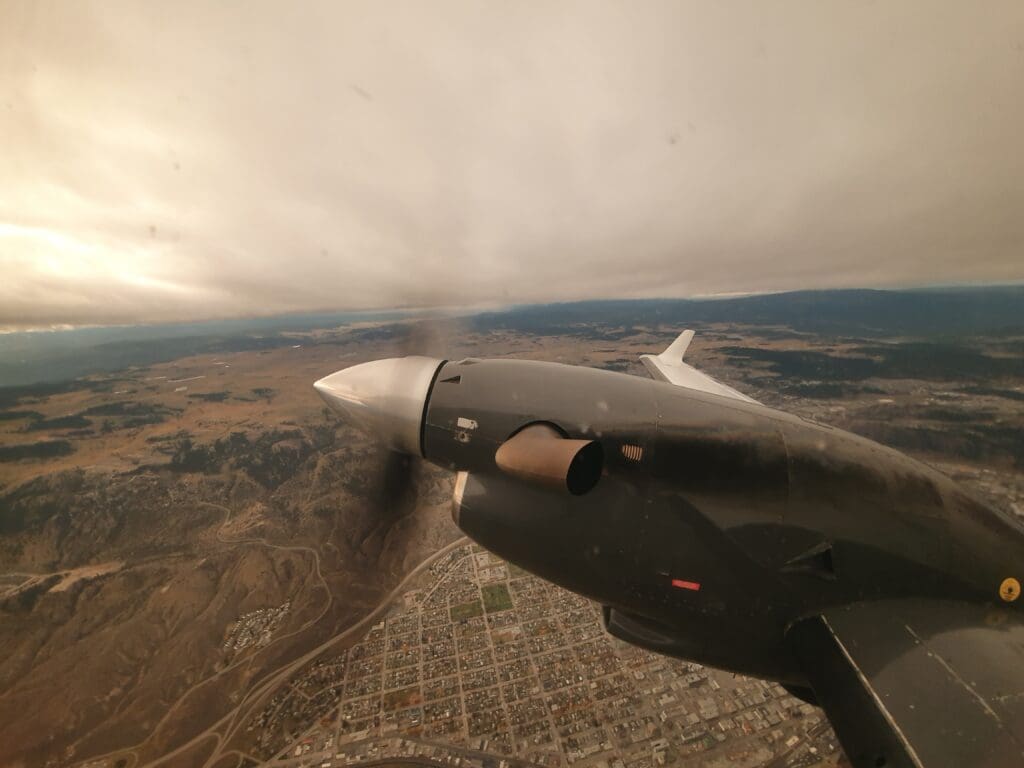
That morning, I had expected that the thick clouds would linger below for the entire second leg of the journey and prevent any views of British Columbia as they had done on the way over to Kamloops. However, around ten minutes after levelling off, much to my delight the clouds parted and revealed the remote wilderness of central British Columbia. As the Beechcraft journeyed northwards, a mixture of forests, lakes and the occasional small settlement could be seen passing by below, whilst in the distance the snow-capped Rockies could be seen to the east. Later research revealed that during the flight I had managed to spot Canim Lake as well as the much larger Quesnel Lake. After leaving Kamloops, the aircraft flew roughly along the course of British Columbia Highway 97 which runs all the way from the American border in the south to the border with Yukon in the north.
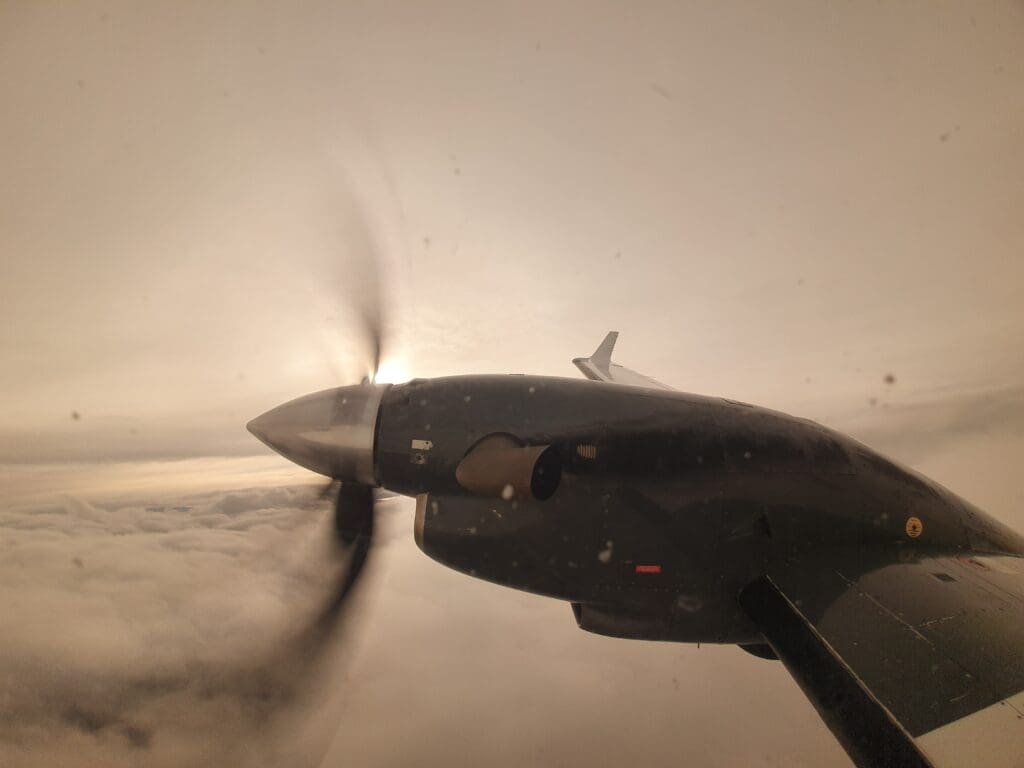
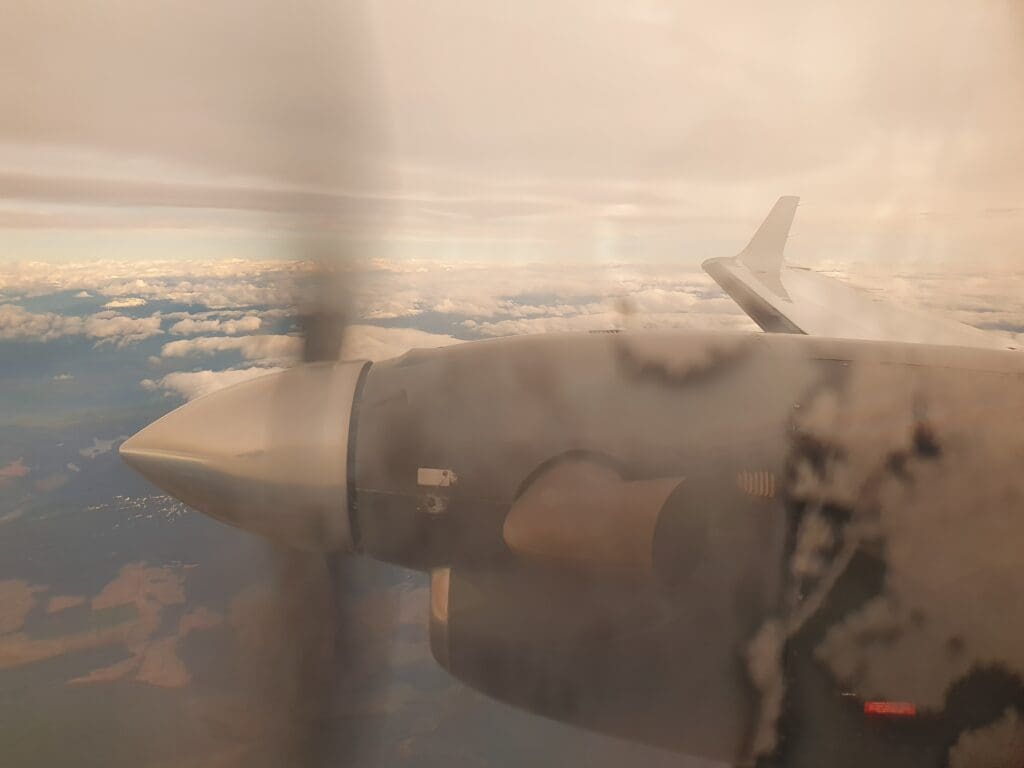
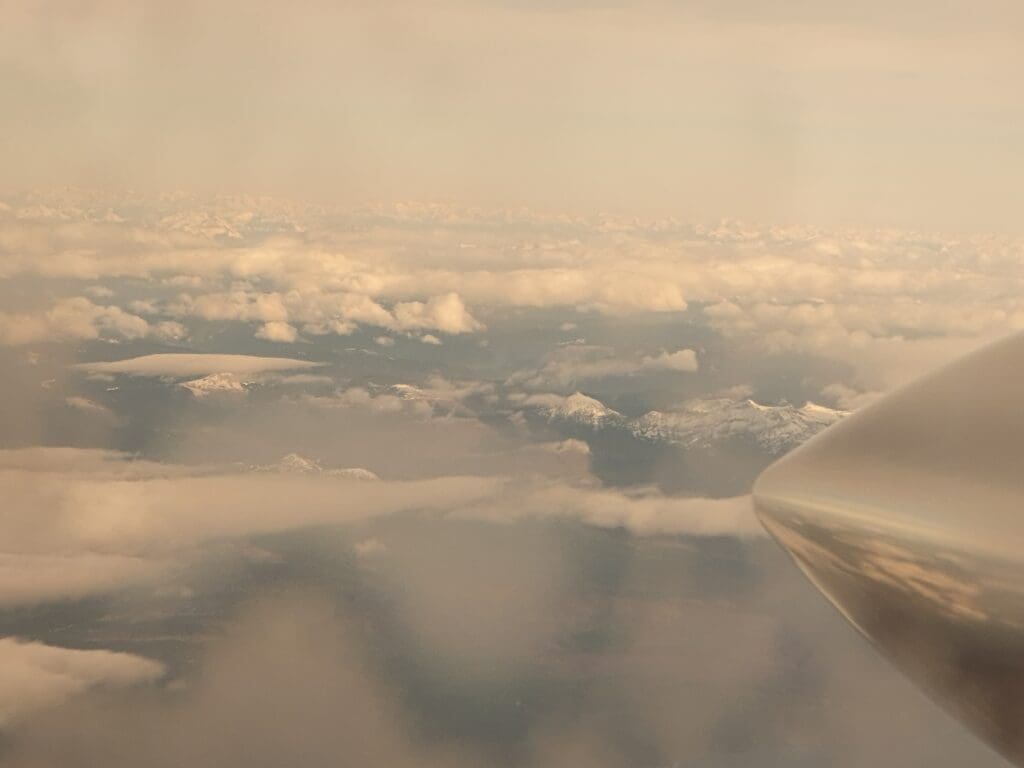
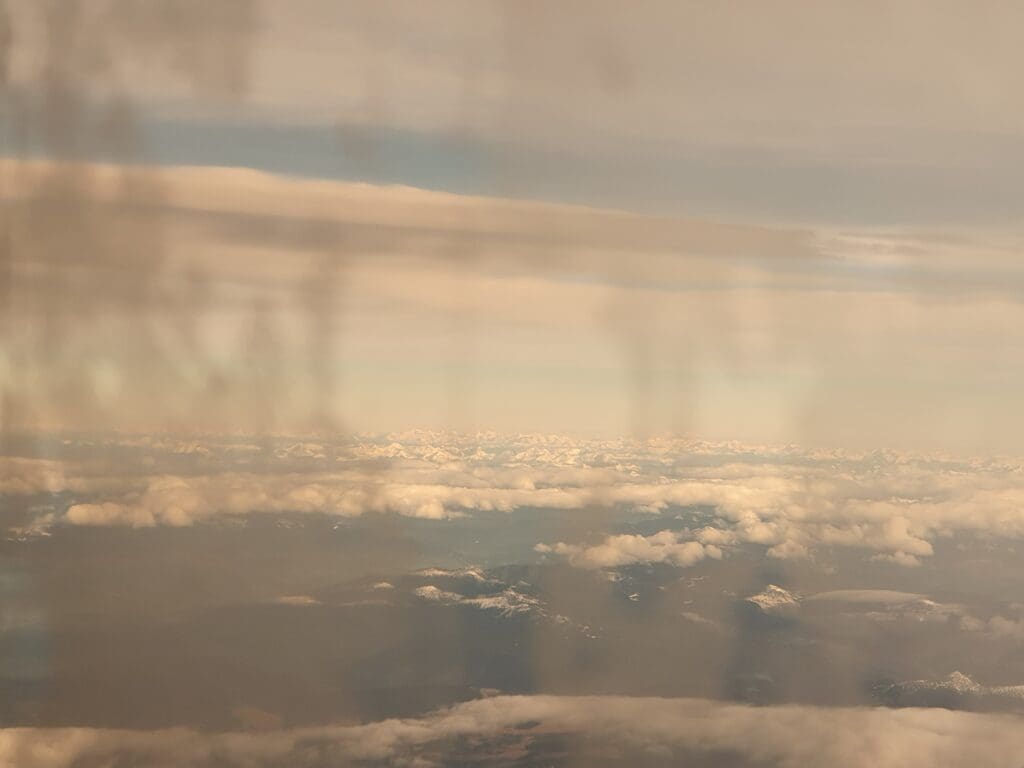
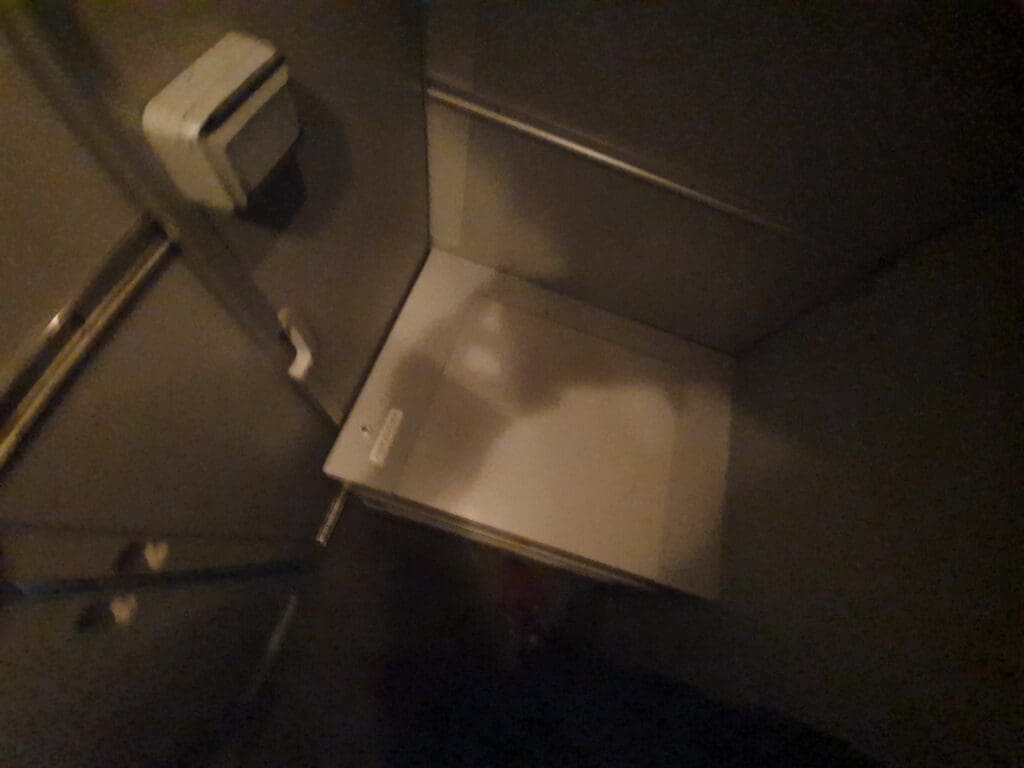
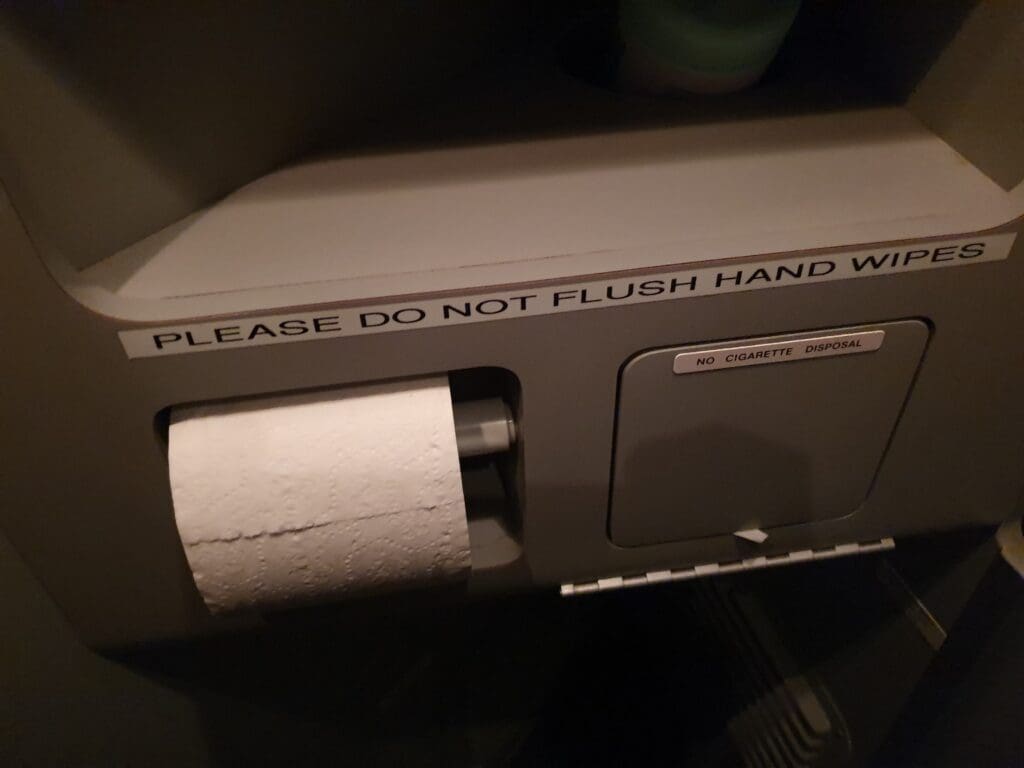
As the Captain had mentioned during their welcome announcement, the cruise that morning was relatively smooth – and whilst I failed to spot any seatbelt signs inside the cabin, I decided that a bathroom visit would be permitted at that time. Heading to the rear of the aircraft, receiving several suspicious looks from my fellow passengers as I did so, I soon arrived at the small toilet that separates the passenger cabin from the cargo compartment. Upon entering this, I slid the two plastic panels shut, and as these lack a lock, I ensured to do this correctly to prevent them from opening up mid-visit. Unlike the rest of the cabin, due to the curvature of the fuselage, I found it impossible to stand upright in the toilet, and as with many facilities onboard small airliners, this was relatively miniscule. Consisting of a toilet in a bench-style platform, toilet roll, wet wipes and a mirror, this was basic yet served its purpose and like the rest of the cabin appeared to be clean and tidy.
By the time I returned to my seat, there was not a great deal of the flight left and my first-ever Beechcraft 1900 experience was sadly nearing its end. At 1030, the aircraft could be felt commencing its descent which was confirmed several minutes later by another barely audible announcement from the captain. Looking outside, by this time the scenery below had flattened out a little however there was little to see other than endless forests and the occasional lake, with few signs of human life visible as we slowly edged towards Prince George.

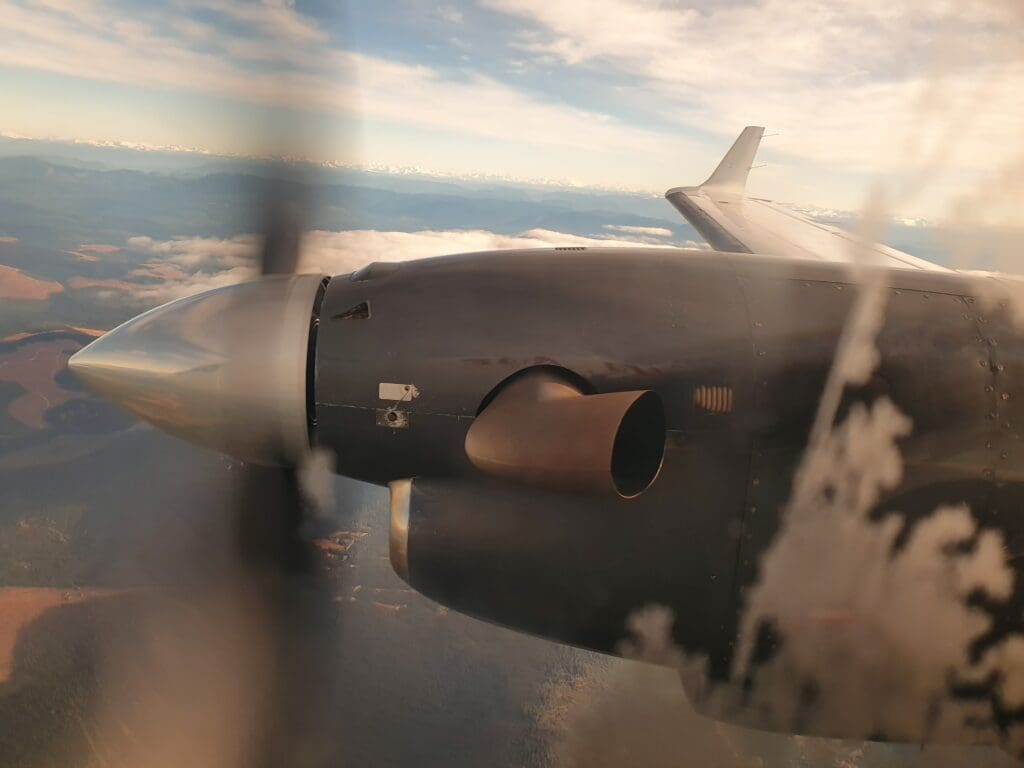
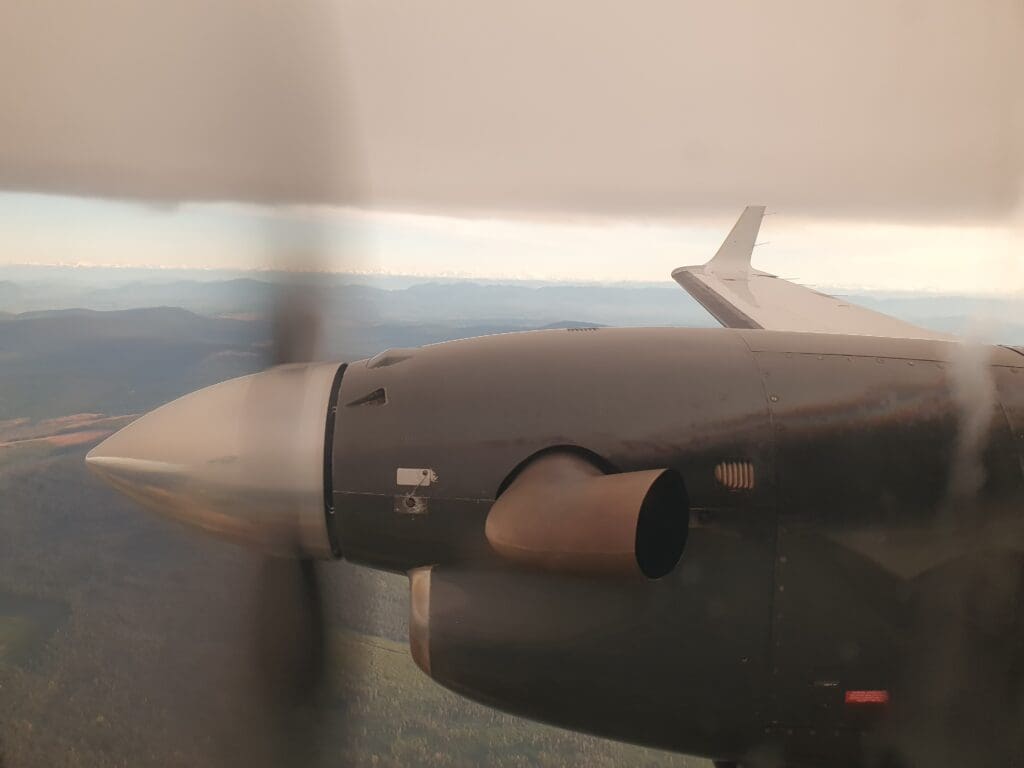
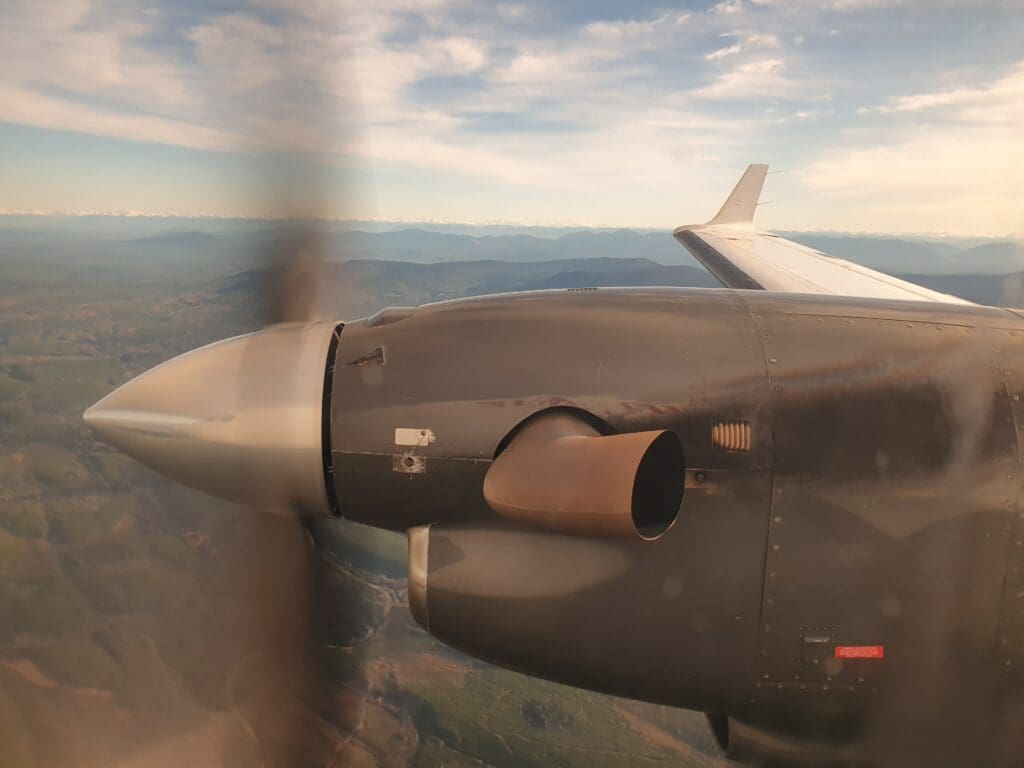
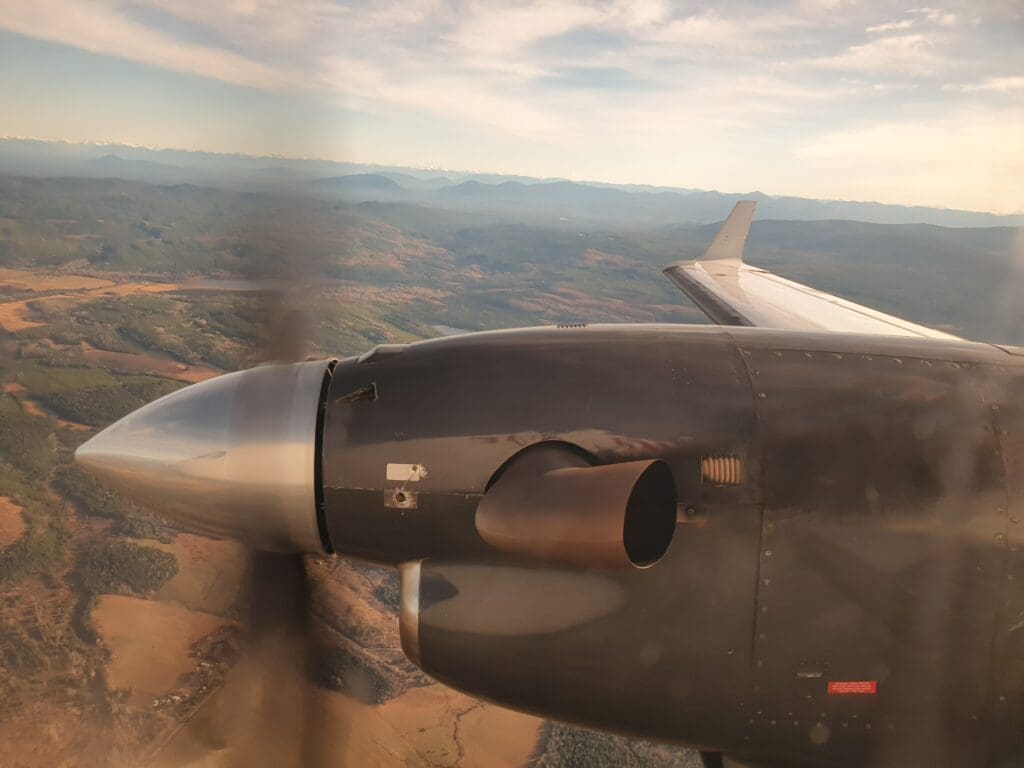
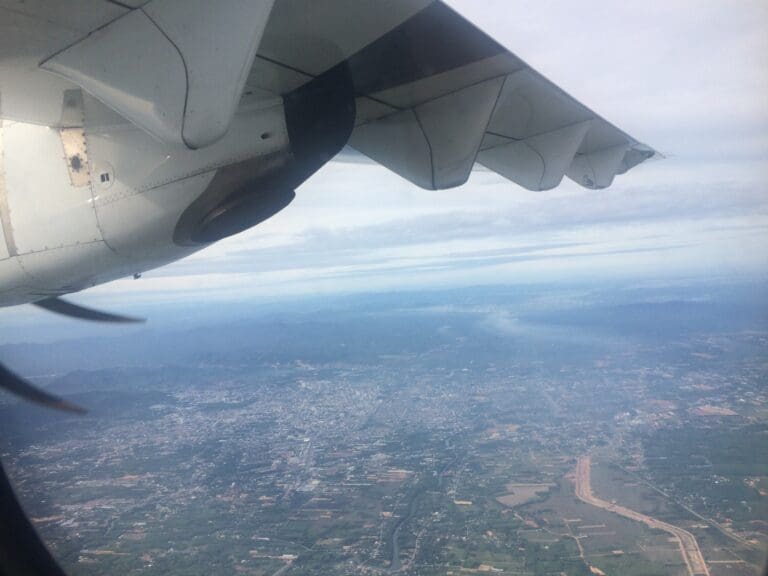
However, unsurprisingly as the city neared, several small settlements could be seen as well as patches of farmland emerging from the expansive forests. Approaching from the south, and heading towards Prince George Airport’s longest runway, Runway 33, very little turning was needed to line the aircraft up for an approach to this. Soon enough, a short burst of the vacuum cleaner sound filled the cabin as the landing gear and flaps were extended. As the aircraft sank downwards, the Beechcraft bounced about a little in the wind, however this was nothing compared to the turbulence felt whilst approaching Kamloops earlier that morning.
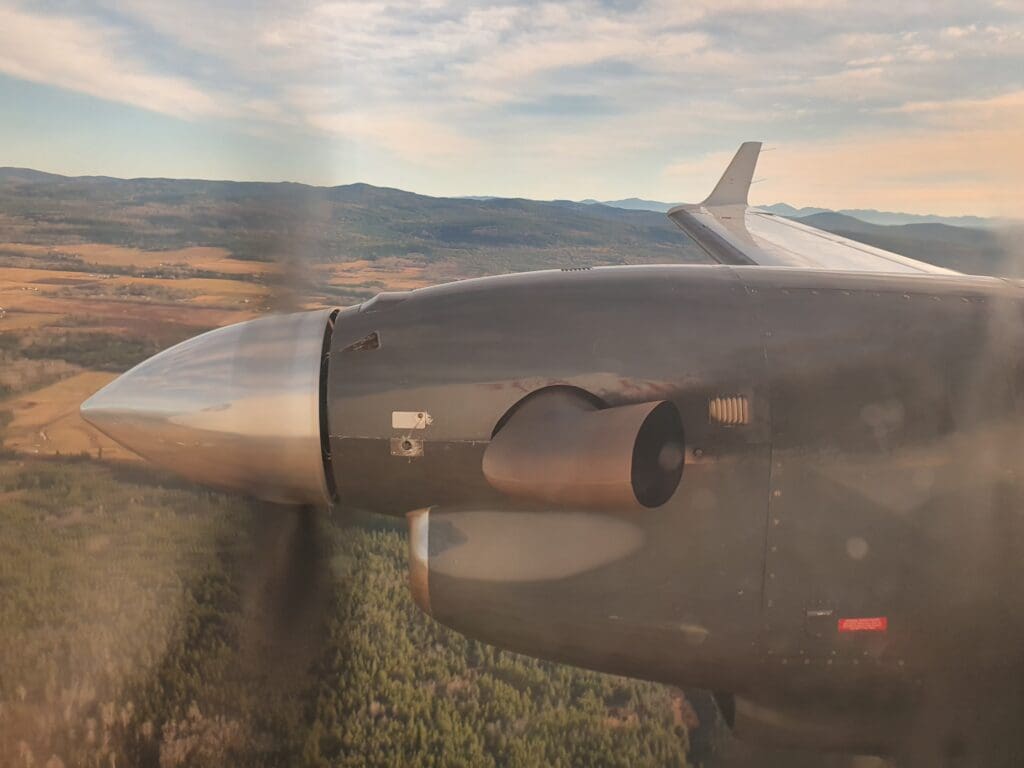
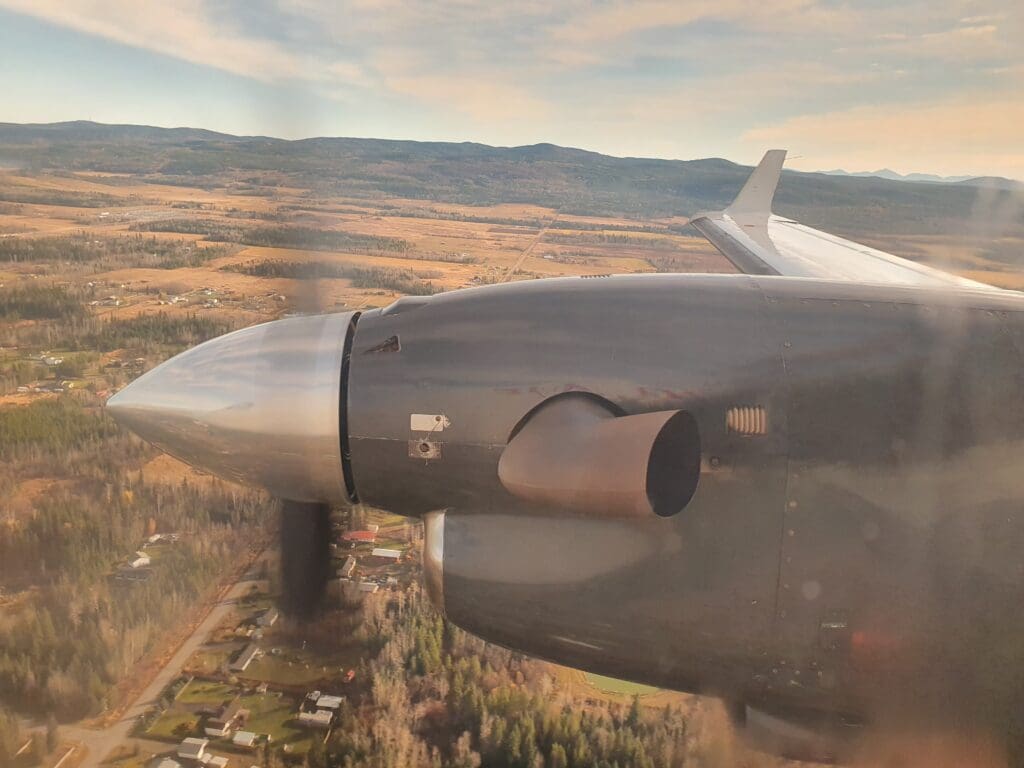
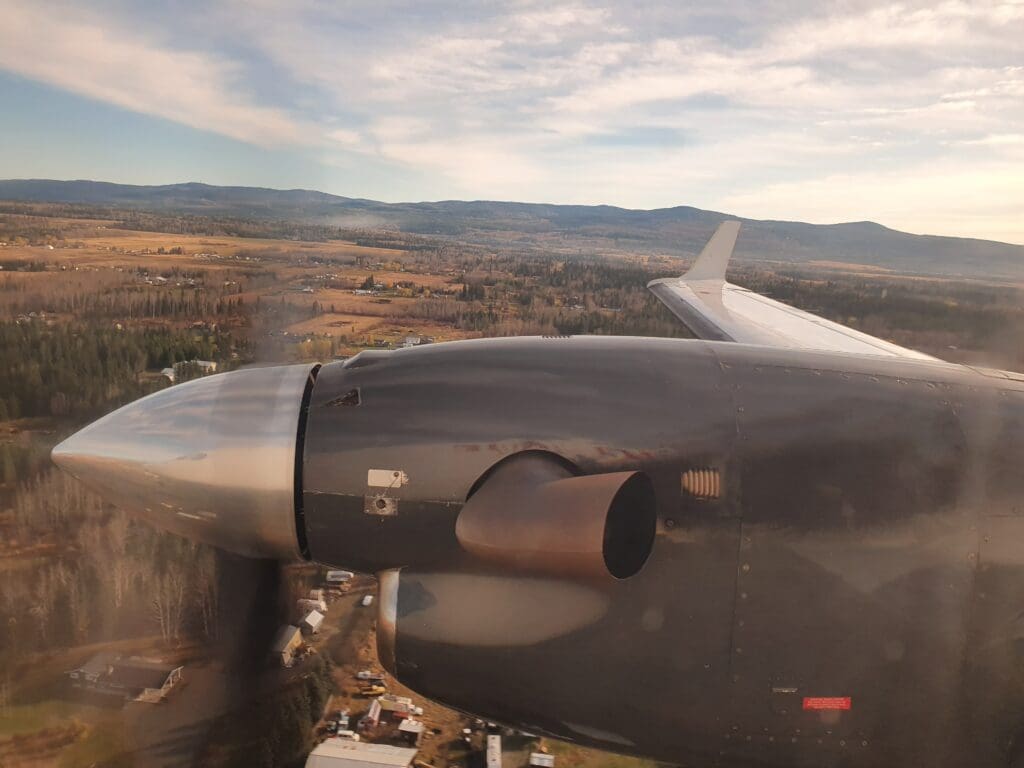
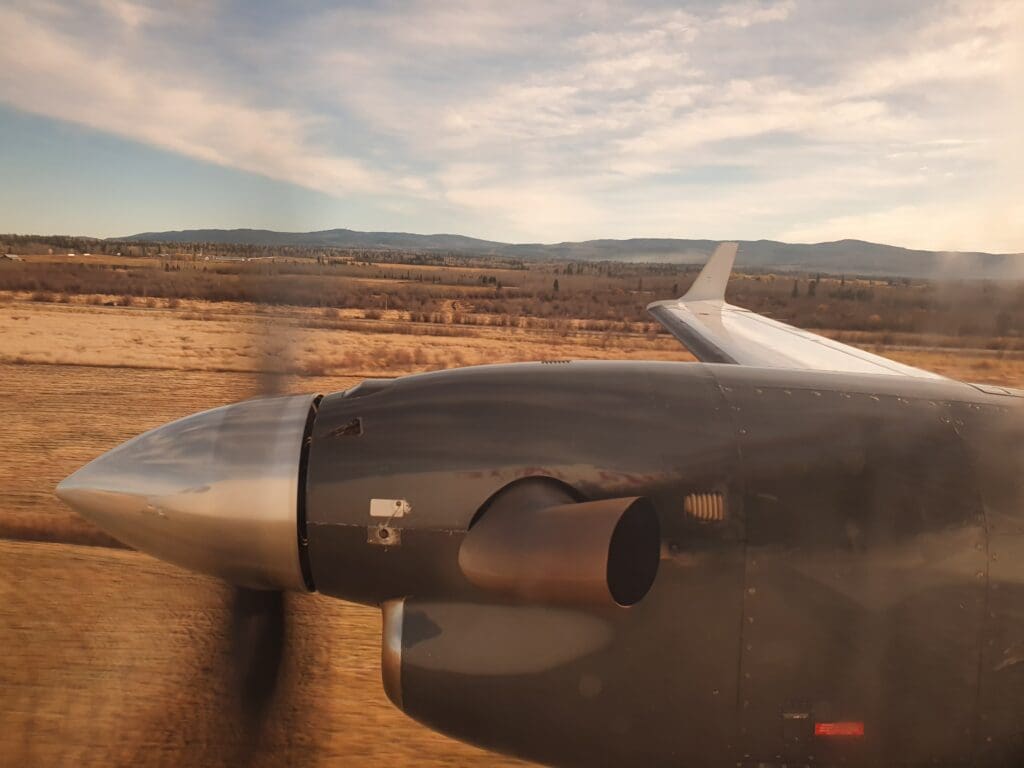
At 1040, the Beechcraft crossed over Johnson Road and the airport’s perimeter fence before touching down on Runway 33 with a thud. As had been the case in Kamloops, once on the ground, the aircraft decelerated very gently before eventually vacating the runway via Runway 24, travelling a short way along this before taxiing onto the apron. At that time, no other airliner could be seen at the stands directly outside the terminal, however, a locally based Beechcraft 1900D and King Air belonging to Central Mountain Air’s non-scheduled sister airline, Northern Thunderbird Air could be seen waiting for their next missions.
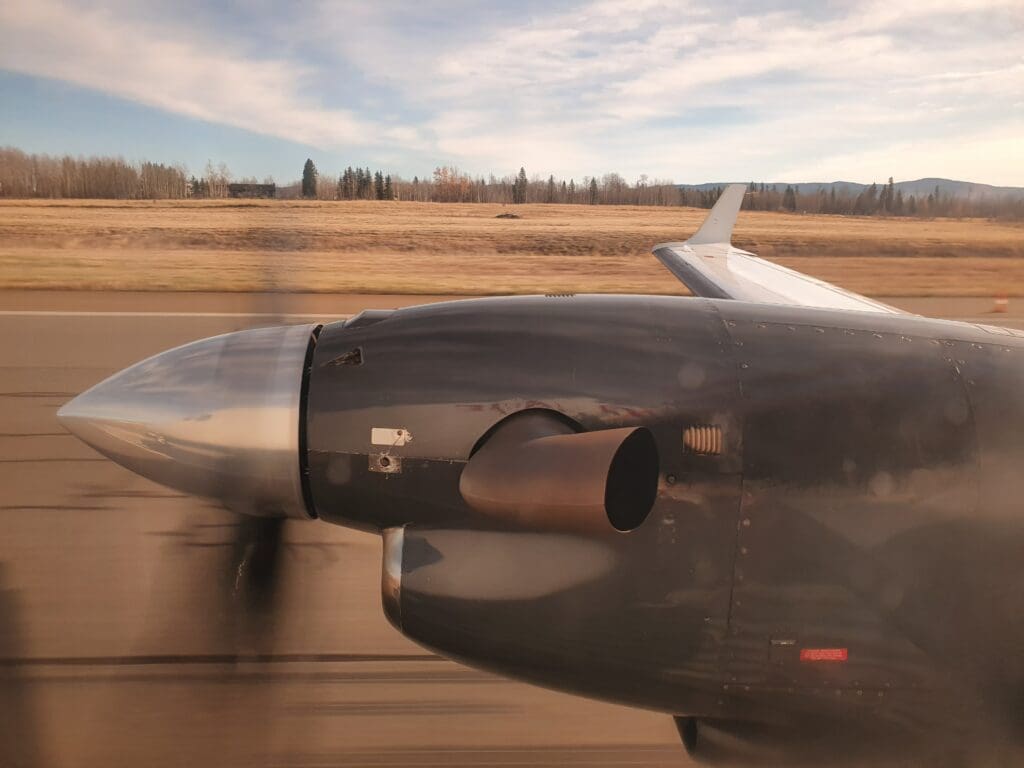
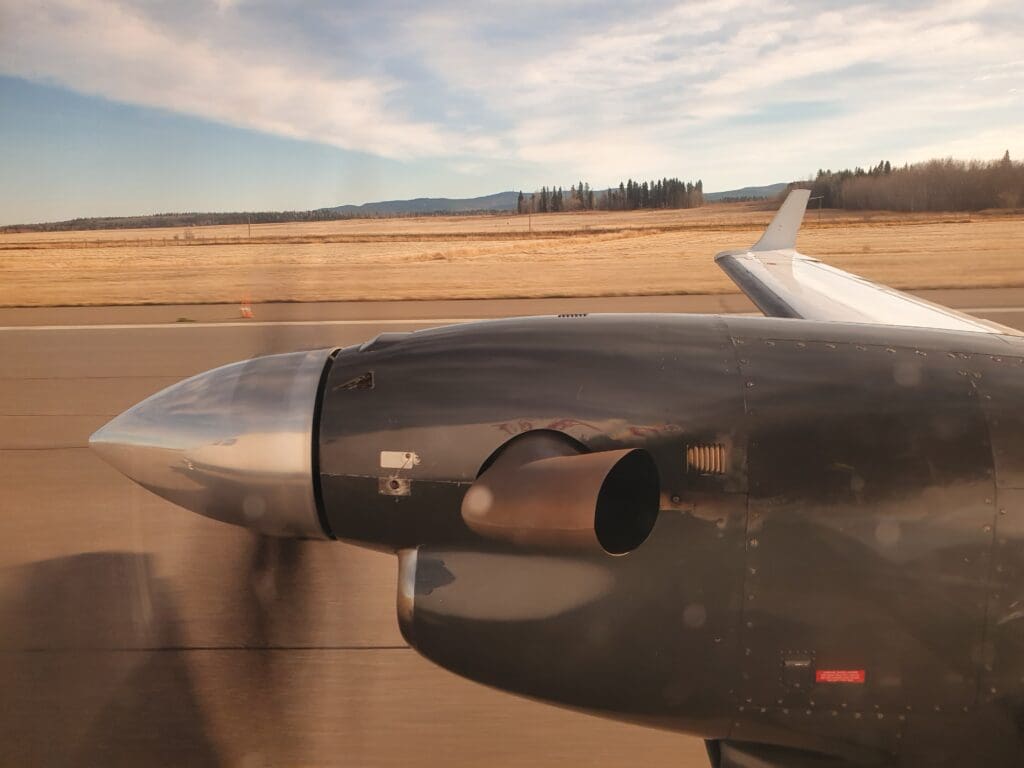
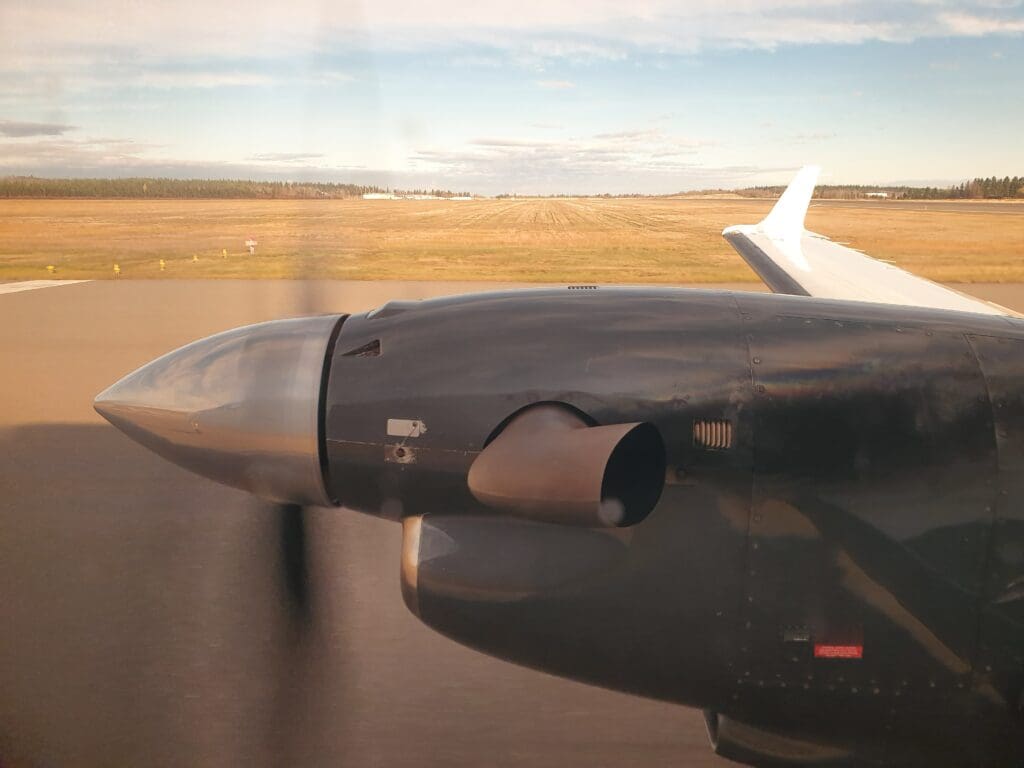
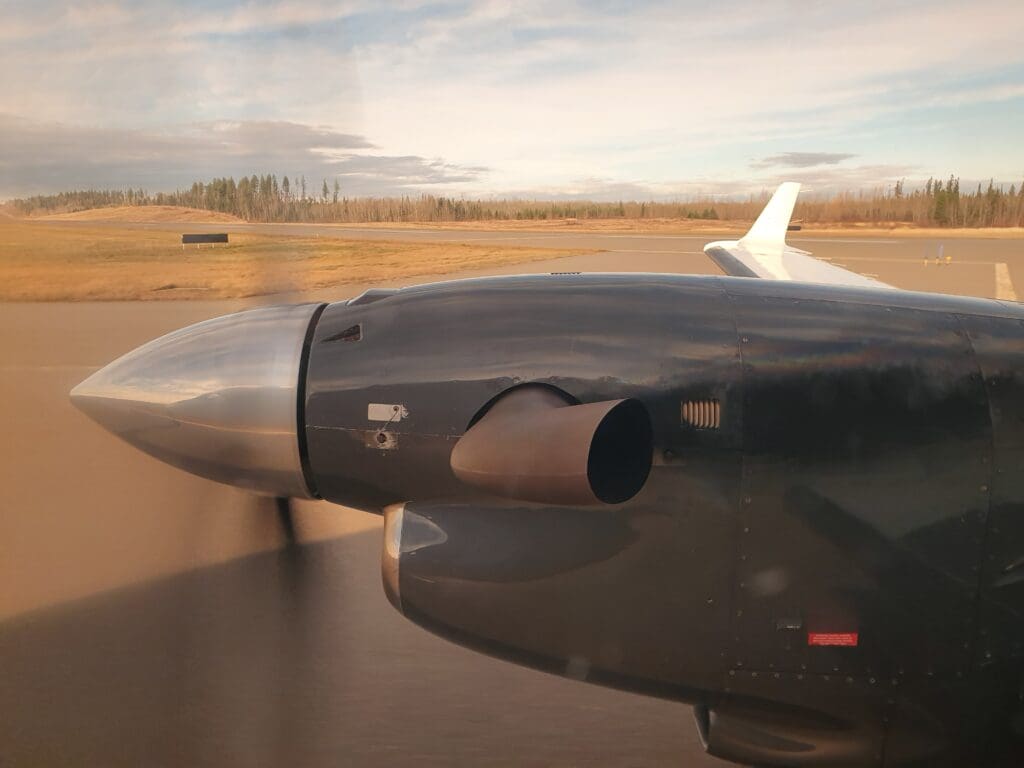

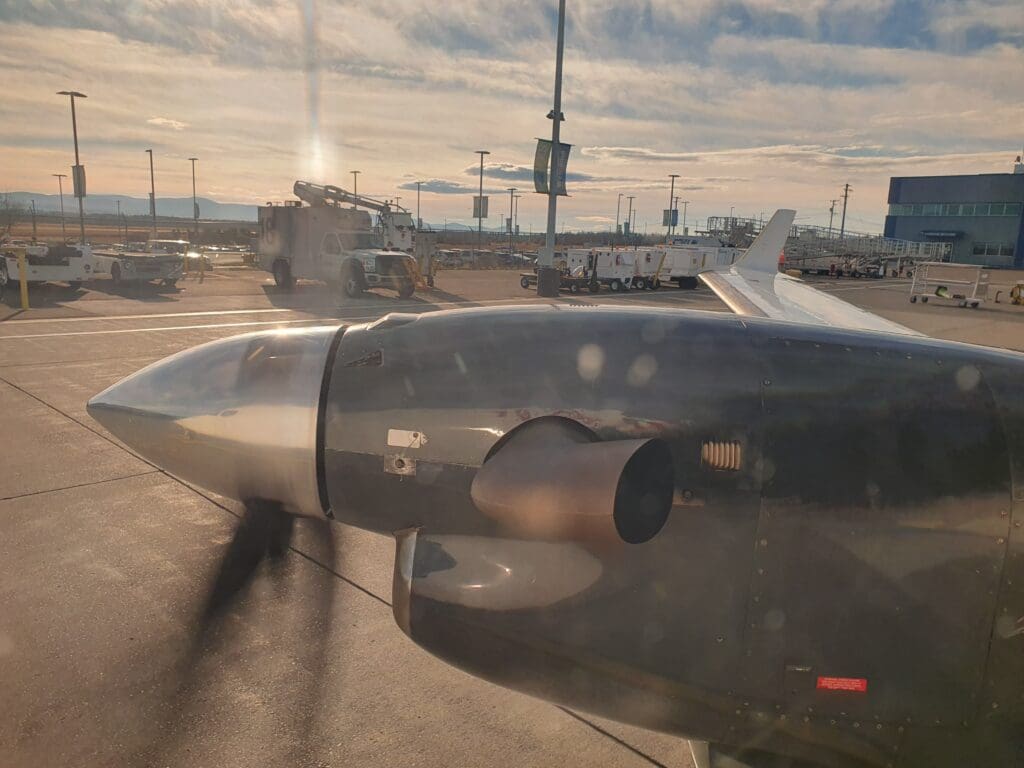
After coming to a halt, the engines spooled down and the plastic dividers slid open before the First Officer emerged, welcomed everyone to Prince George and requested all to remain in their seats for a couple of minutes. Once this welcome speech had been performed, the first officer opened the main cabin door and was greeted by one of Central Mountain Air’s ground staff before passengers were given the go-ahead to disembark the aircraft. Given my position near the front of the cabin, in a matter of seconds, I cautiously headed down the aircraft’s steps before thanking the First Officer and being welcomed to Prince George by the friendly ground agent.
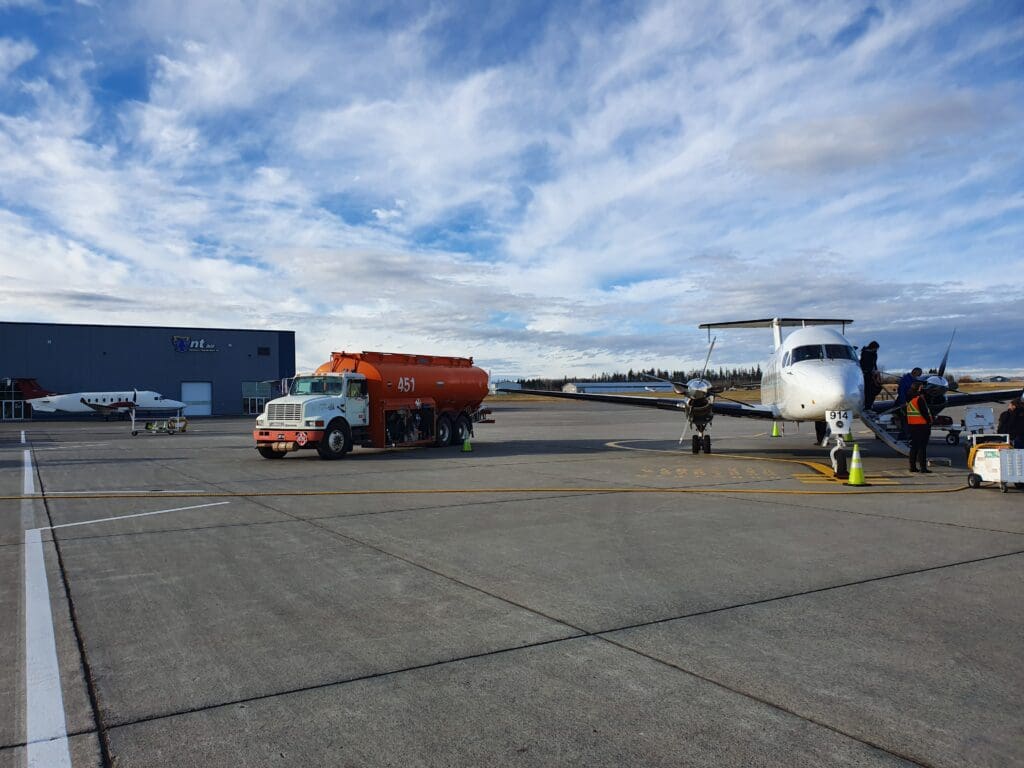
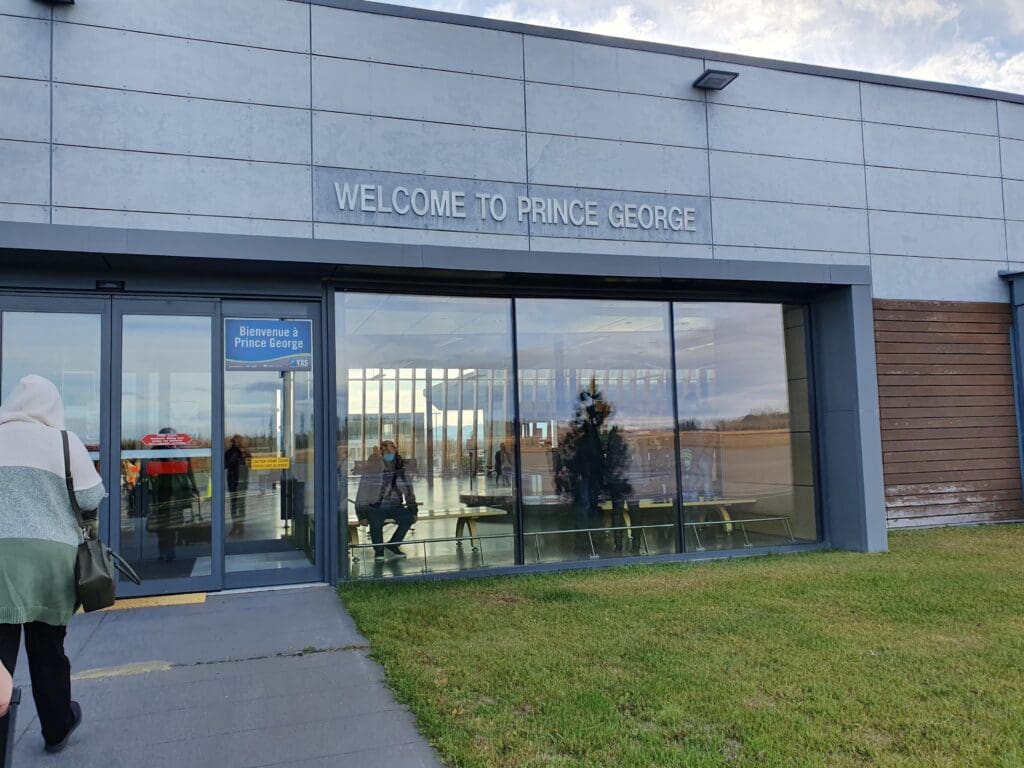
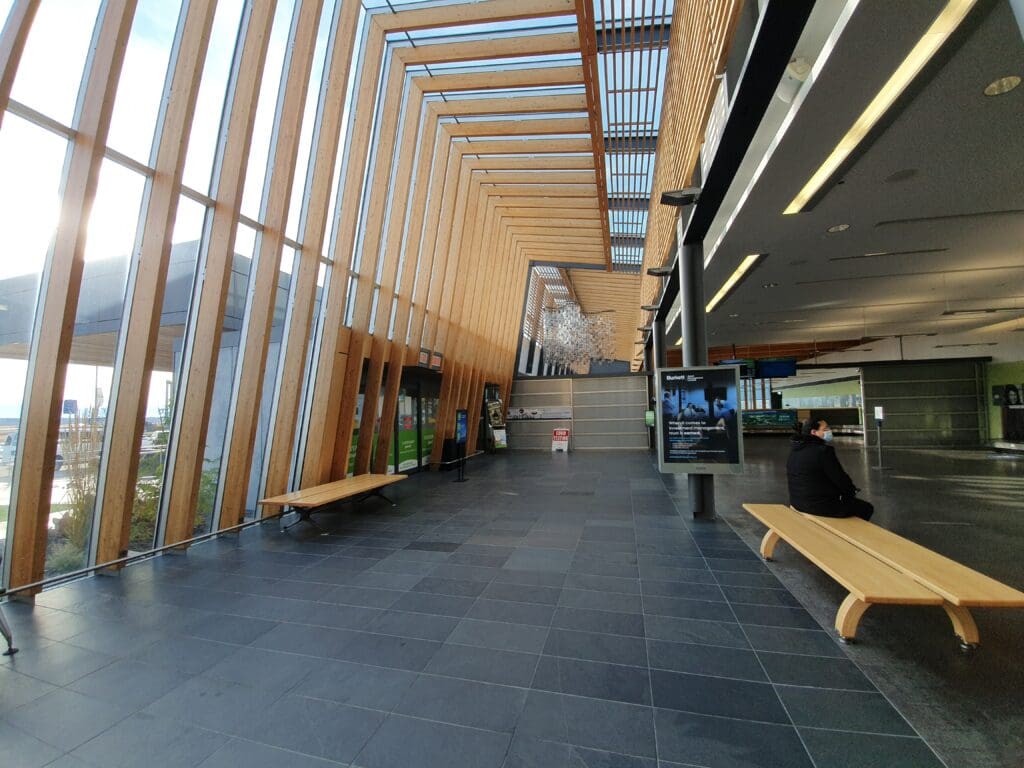
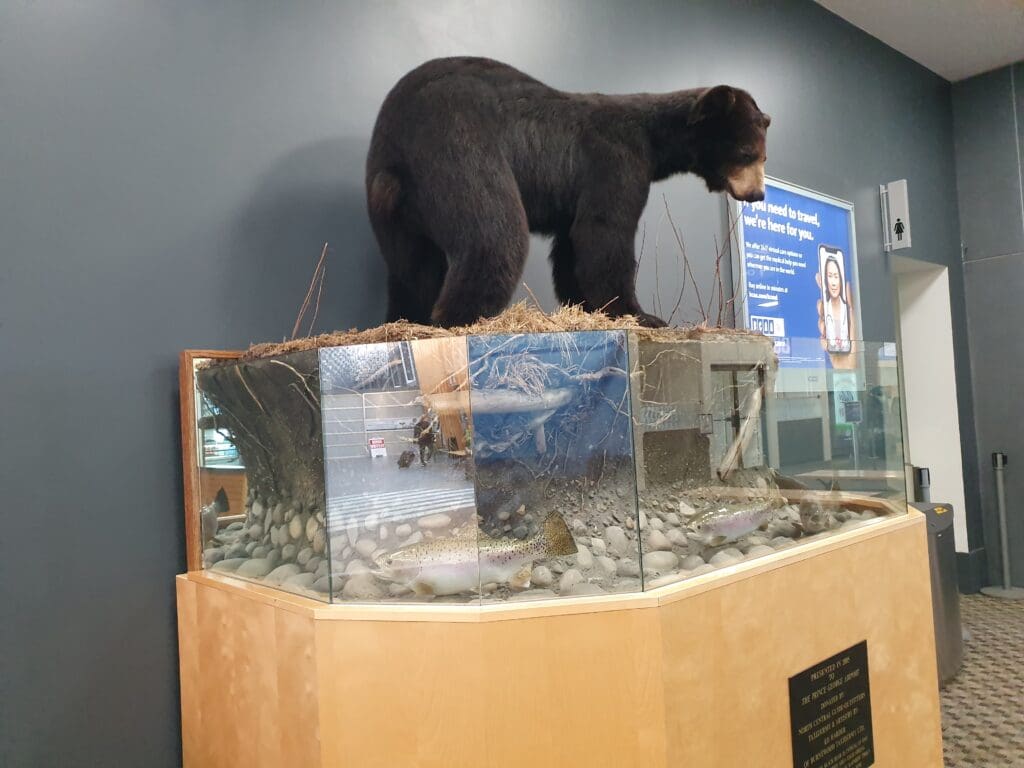
From the aircraft, I made a very short walk over to the terminal and soon entered the modern arrival hall as a WestJet Encore Dash 8 Q400 could be seen pulling into the neighbouring stand following a flight up from Vancouver. Seeing as I had no bags to collect, my journey from the aircraft to the area outside the landside area of the terminal took all of a couple of minutes and upon arriving there I was greeted by a fleet of yellow cabs from all of Prince George’s taxi companies. Also waiting was a battered shuttle wagon that advertised its service between Prince George and the airport on its side – seeing no harm in enquiring with the driver as to how much this would cost, in response the driver responded that he would take me to the Marriott in downtown Prince George for $15. Seeing as this fare was around half of what I had expected to pay in a taxi, I opted for this however I would have to share the ride with the incoming WestJet Encore crew – with this being no issue, I paid the driver $20 and after ten minutes, with two cabin crew in the back, the van sped away from the airport arriving in Prince George a little over ten minutes later.