Bagging the Rare Fokker 50 to one of the World’s Most Scenic Airports: Dublin to Donegal
Background
Sandwiched between the Atlantic and Northern Ireland, County Donegal is located in the far northwest corner of Ireland. Famous for the beauty of its rugged coastline, the county attracts a fair number of tourists from both near and far. However, lacking any rail connections, and with buses from Dublin taking around four hours to reach the county, for those without a car, reaching County Donegal is not a particularly quick task. Fortunately, for those in a hurry, a direct air link is offered between Dublin and Donegal, with flights between the two usually taking no more than forty minutes to make the 140-mile trip. For a long time, these services were operated by ATR-42 turboprops, initially by those of Aer Arann, and then later on by Stobart Air operating on behalf of Aer Lingus Regional. However, the collapse of Stobart Air in June 2021 meant that the route was left without an operator and so Swedish Fokker 50 operator Amapola Flyg was brought in as a stop-gap solution until the new Stobart Air reincarnation, Emerald Airlines was in a position to operate flights.
With a route network that is focused on rural Sweden, it would perhaps be somewhat inaccurate to claim that Amapola Flyg is particularly well-known outside of its home country. However, operating Europe’s last remaining Fokker 50s and providing a booking portal for AIS Airlines-operated Jetstream 32 flights in Sweden, the carrier is on the radar of many aviation enthusiasts.
Having planned a week-long trip to Sweden to fly the Fokker 50 and Jetstream 32, alongside Jonair’s Beechcraft King Air and 1900C since early 2020, thanks to Covid this was yet to come to fruition. However, the Irish government’s awarding of this seven-month PSO contract to Amapola Flyg would provide me with a golden opportunity to sample a flight onboard a classic Fokker 50. After confirming that Ireland’s entry requirements for double-jabbed travellers had been relaxed, with no PCR test nor quarantine required, I soon got to work planning a suitable itinerary. Hoping to spend some time in County Donegal, I decided to head to Ireland over the August Bank Holiday weekend, travelling from London on Saturday morning before flying on to Donegal in the afternoon. I would then stay a night in the village of Kincasslagh before making my way back to Dublin on Sunday afternoon.
Booking
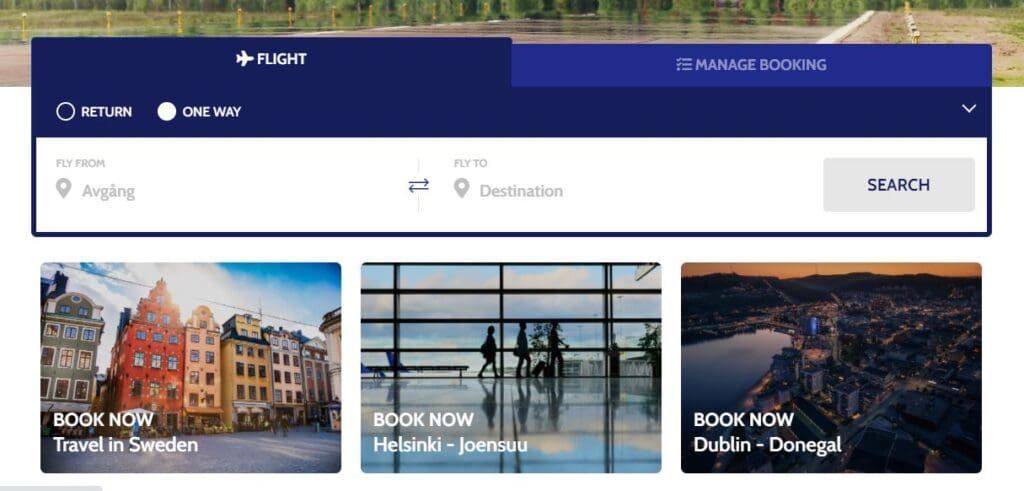
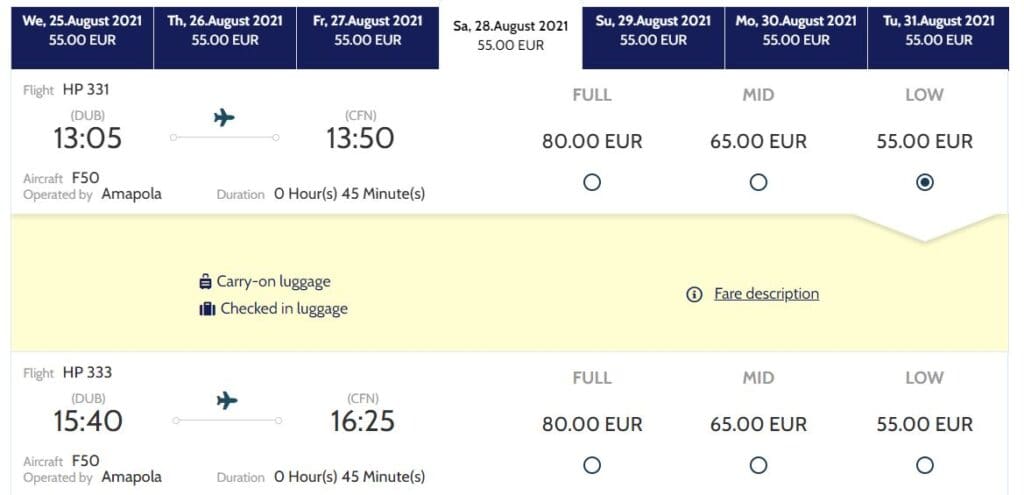
Given the fact that most destinations served by Amapola are in Sweden, unsurprisingly upon landing on the airline’s homepage, I was presented with several scenic shots of the carrier’s destinations across the country. Unfortunately, unable to understand Svenska, I selected English from the drop-down menu in the top bar, the other language option unsurprisingly taking the form of Finnish, explained by the airline’s new PSO route from Helsinki to Joensuu. After filling in all the required information into the flight search bar, I was presented with two options for both my outbound flight to Donegal and the return leg to Dublin. Each flight in both directions was equally priced with a ‘low’, ‘mid’ and ‘full’ fare at €55, €65 and €80 respectively.
Seeking to maximise my time in Donegal, I opted to go for the 1305 departure from Dublin, and the 1425 departure from Donegal the following day. As per usual, I settled on the cheapest fare possible which came in at a total of €110. Admittedly, for a PSO flight, this did seem to be a little on the steep side, however, based in the UK, it was most definitely the cheapest and most convenient way of flying on a Fokker 50 in 2021. After selecting this option, I went ahead and entered my details, after which I was taken to a booking summary page in which my flight details were listed in Swedish. Once I quickly scanned over these, making sure all was correct, I then went to the rather rudimentary yet functional payment page provided by the Danish company Nets where I was able to make a quick payment. Once all was done, I was whisked to the ‘Reservation Success’ page and received a prompt confirmation email. Finally, it should be noted that Amapola Flyg do not offer the option to pre-select seats during the booking process nor do they offer online check-in at present.
The Journey
Having woken up on the morning of my trip to Donegal at 0400 following no more than five hours of sleep, by the time I reached Dublin from Luton at 0730 I was already feeling rather shattered. Nevertheless, with the flight to Donegal scheduled to depart at 1305, I still had a long way to go until I could rest for the day. Hoping to wake myself up a little and partake in an aviation-related activity, I decided to walk around the airport’s western perimeter to the famous mound located just to the south of the main runway. Following an hour or so there, in need of some sustenance, I made my way back around the fence line and headed over to an airport convenience store for an overpriced coffee and sandwich.
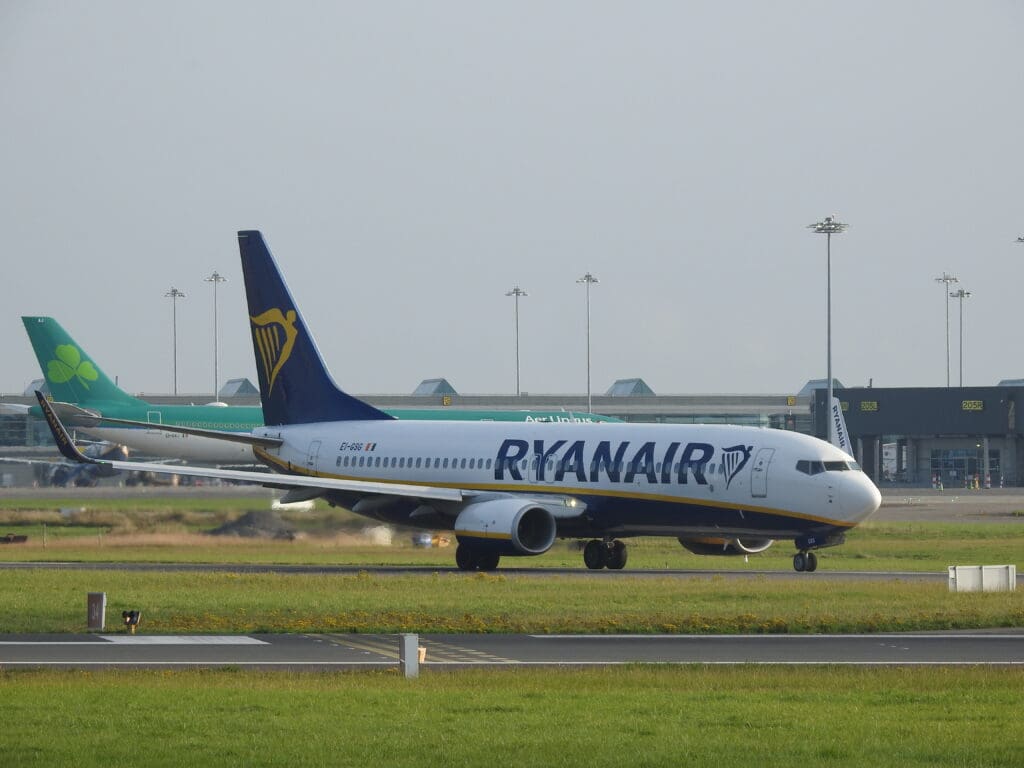
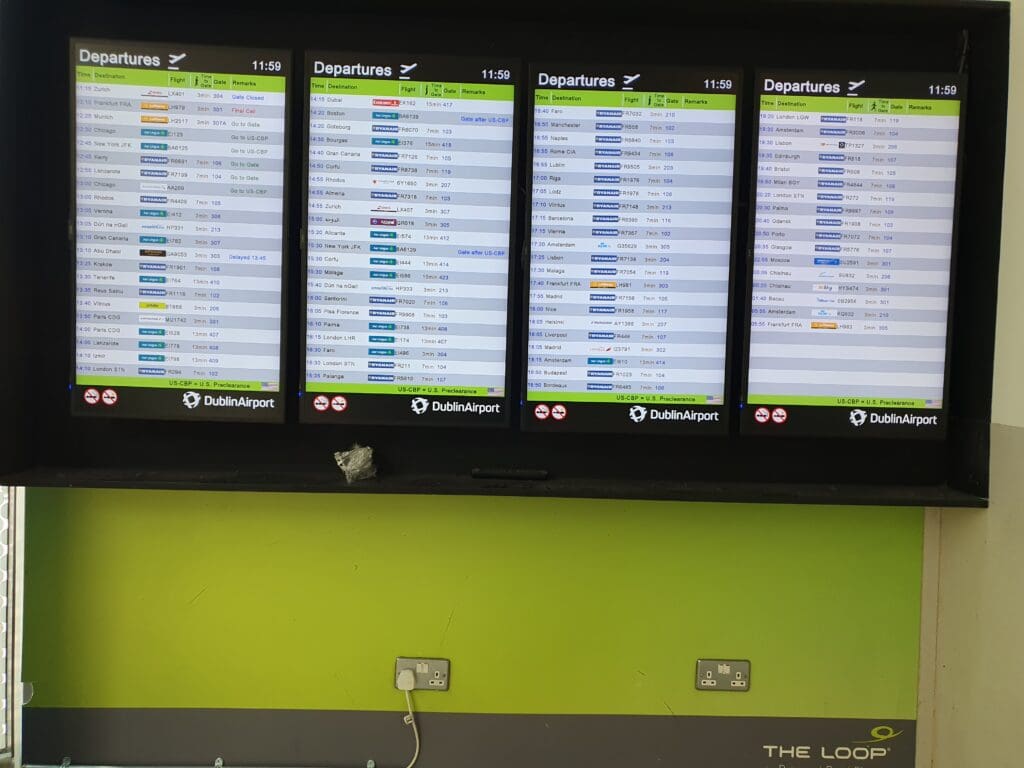
Dublin Airport consists of two terminals that are connected by a walkway. These are logically named Terminal 1 – easily recognisable due to the distinctive offices above this, and the modern Terminal 2 which serves as the main hub for Aer Lingus. Travelling around a month after Amapola’s service to Donegal commenced, I could find little official information through either Amapola or Dublin Airport’s website as to which terminal I would have to head to that morning. Fortunately, at the time of my flight, several enthusiasts had traversed the route before me and posted their reviews online which revealed that this service operates from Terminal 1. Upon arriving at Terminal 1 I confirmed this on the flight information display screens which indeed revealed that this information was correct and that check-in for my flight would be taking place at check-in area 14.
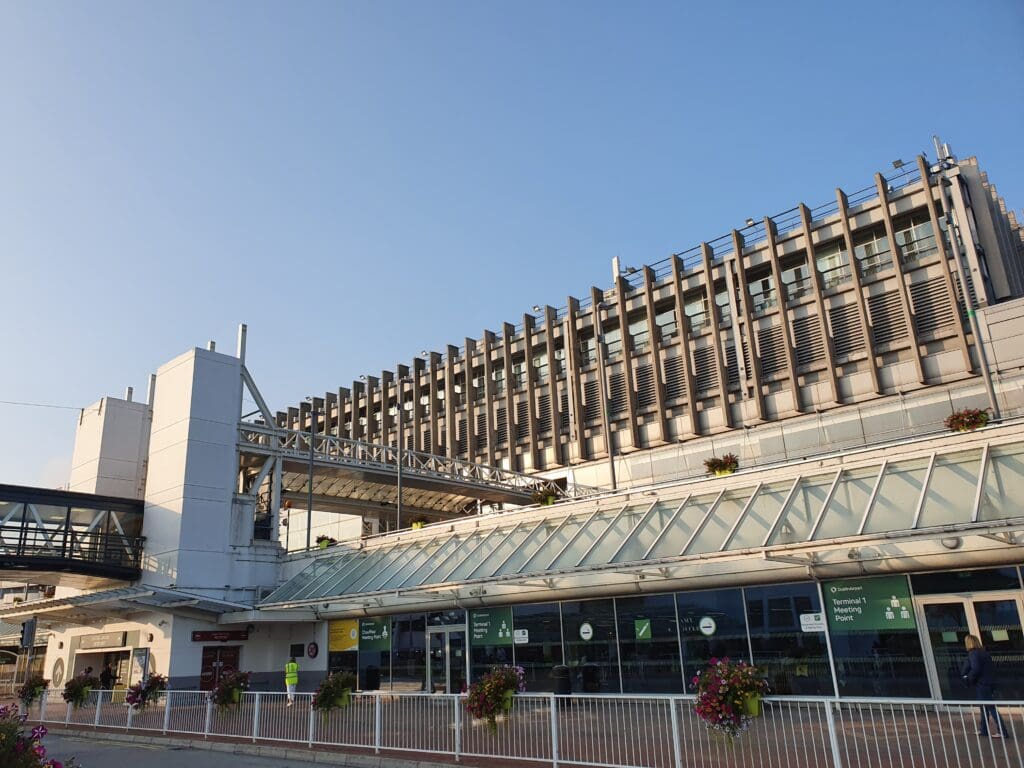
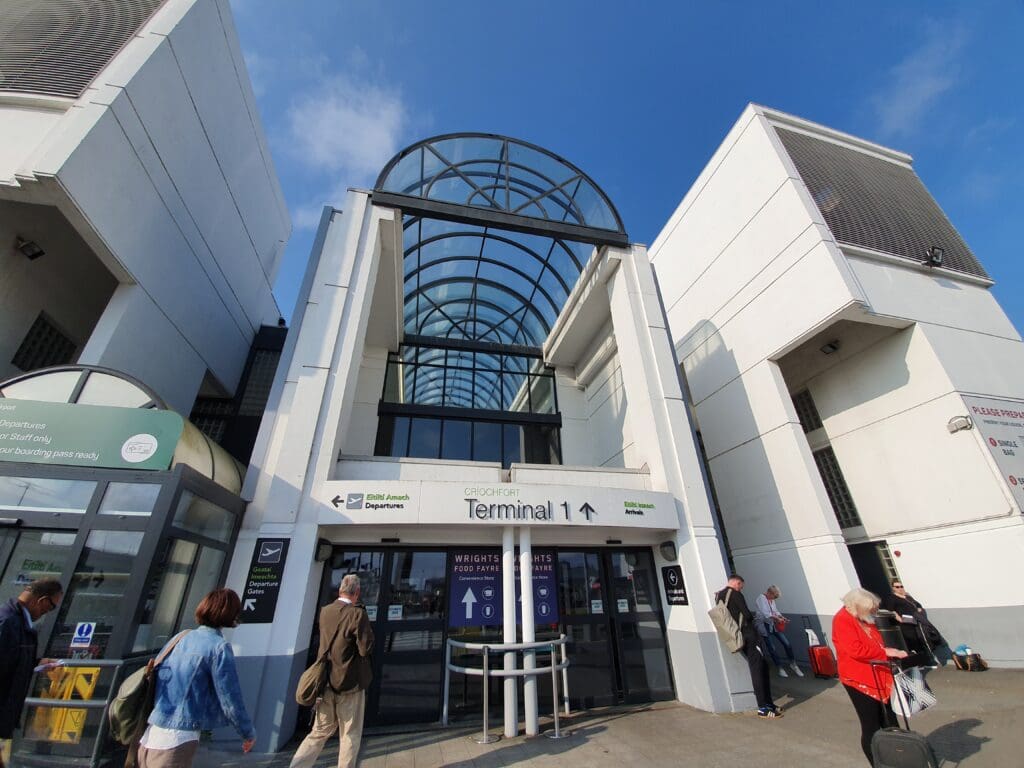
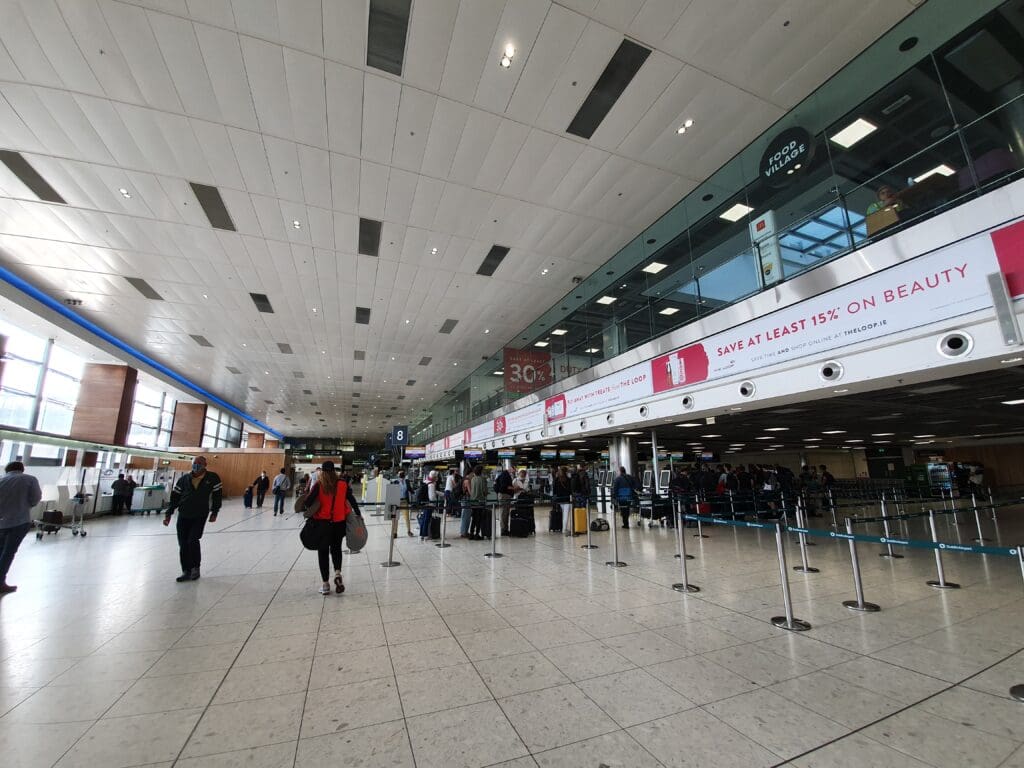
Admittedly from the outside, Dublin Airport’s Terminal 1 does not appear to be the most modern, however inside I found the main check-in hall to be bright, airy and spacious with a good number of cafés, restaurants and shops, as well as fast complimentary wifi. My only complaint about this area was the inherent lack of plug sockets which left me having to rely on my portable battery to charge my phone. At that time in the morning, the terminal’s main check-in area was a hive of activity with passengers heading off on a selection of services to destinations across Europe and North America. Whilst sceptical that check-in would be open at that time, I decided to head down to check-in area 14, located way down in the basement of the terminal where little activity could be seen aside from a few last-minute stragglers checking in for Turkish Airlines’ morning flight to Istanbul. Indeed, as I had expected, check-in for the flight to Donegal was yet to open so I decided to take a seat on one of the metal benches at the rear of the hall and do some work on my laptop.
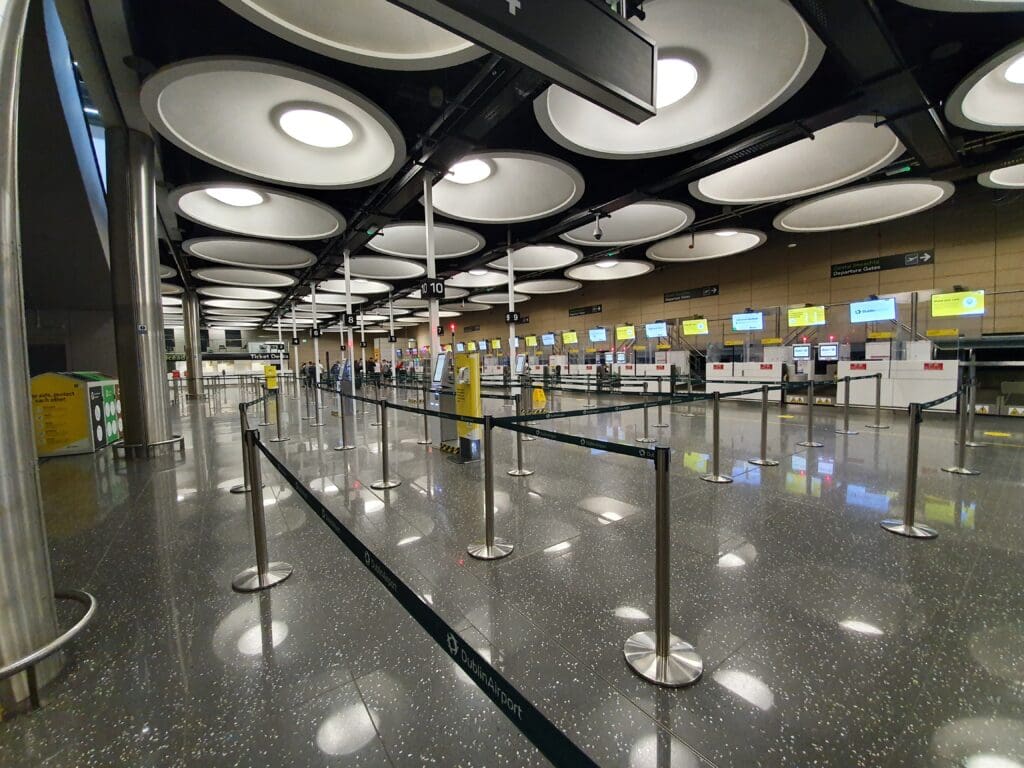
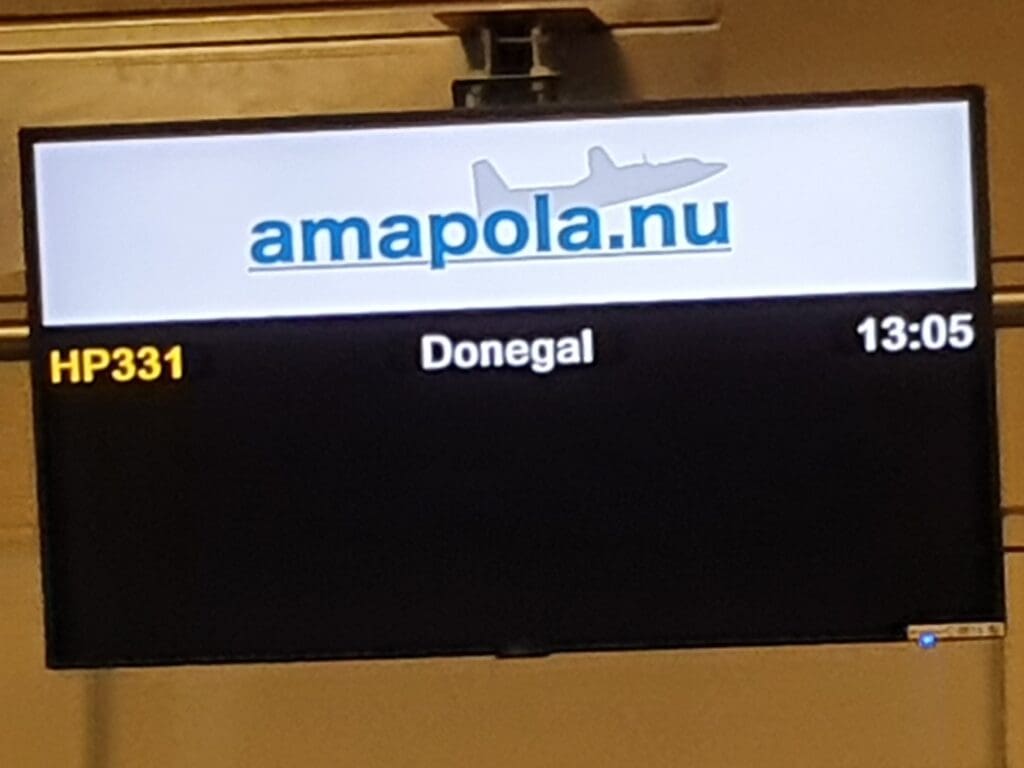
As time passed I was joined by a few other passengers, who, as if regulars, proceeded to stand up at 1105 and make their way over to a check-in desk staffed by a single Swissport agent. Several minutes later, the screen above the desk transitioned confirming that all were indeed in the right location for check-in. Within a couple of minutes, I handed over my passport and requested a window seat. Working quickly yet appearing not to be in a particularly sociable mood that morning, the agent promptly returned my passport and handed over a boarding pass with the word ‘FREE’ printed under the seat assignment – the best possible outcome that morning. Aside from this, I was a little surprised to see that the boarding time listed on the pass was given as 1220 – however, I was somewhat sceptical that it would take 45 minutes to fill a Fokker 50.
Seeing no reason to stay in the largely viewless landside area, I headed up several flights of escalators and proceeded to the security area located at the opposite end of the security check area. Once I had scanned my boarding pass on the automated gate, I made my way into the security area and I was pleased to see that this was almost entirely devoid of passengers. Two minutes and several brief interactions with the very friendly security staff later, I found myself airside and ready to explore the delights of the terminal.
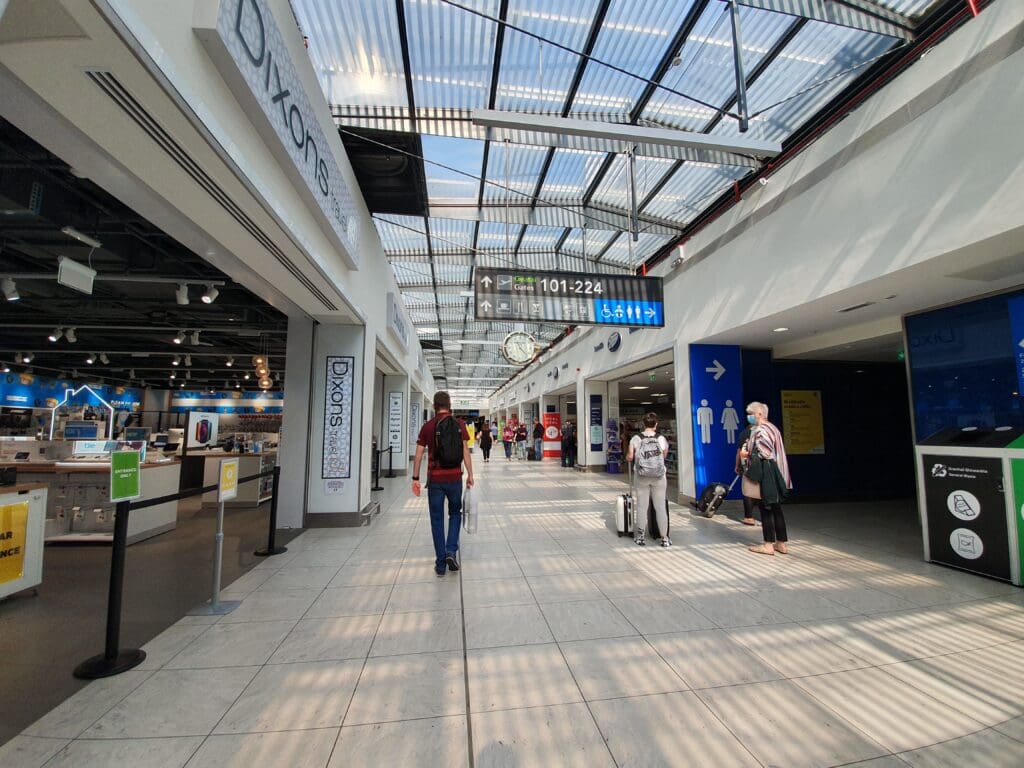
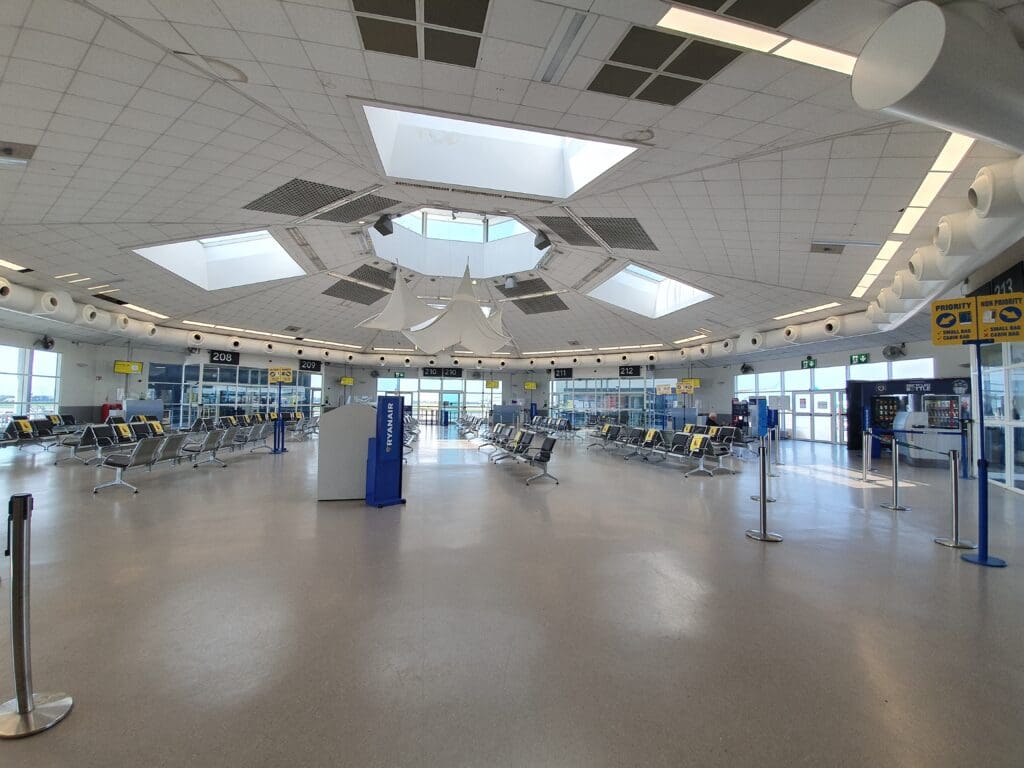
Once through security, I was required to pass through the terminal’s large duty-free store before entering the main airside section of the terminal. Airside, the terminal is relatively large and consists of three separate piers that are some distance apart – the furthest being the long rectangular pier primarily utilised by Ryanair. Admittedly whilst the terminal’s interior may not win any awards for its architectural splendour, the terminal was modern, mostly clean and the wifi continued to work well throughout. In terms of facilities, this featured all the amenities one would expect for a decent-sized international terminal although once again, as with the landside area, plug sockets were somewhat hard to come by. Still, I did eventually find several of these at a workstation near my departure gate. Finally and of great importance for enthusiasts, large windows offer good views of the action outside from various locations throughout the terminal, therefore allowing for reasonable spotting opportunities.
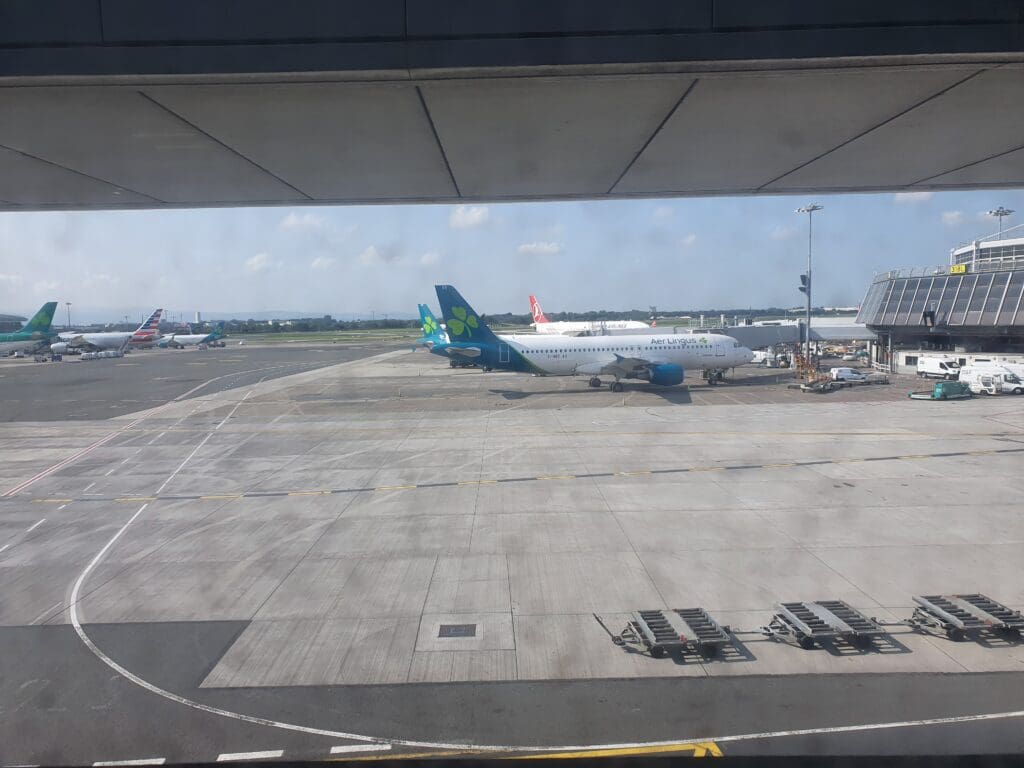
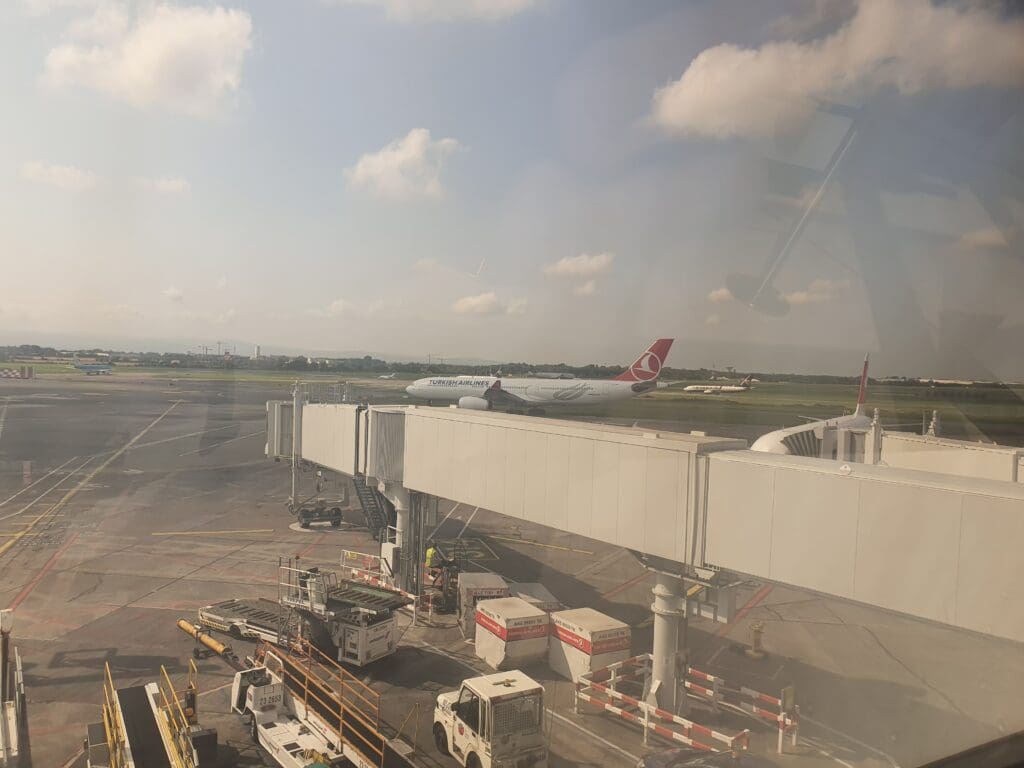
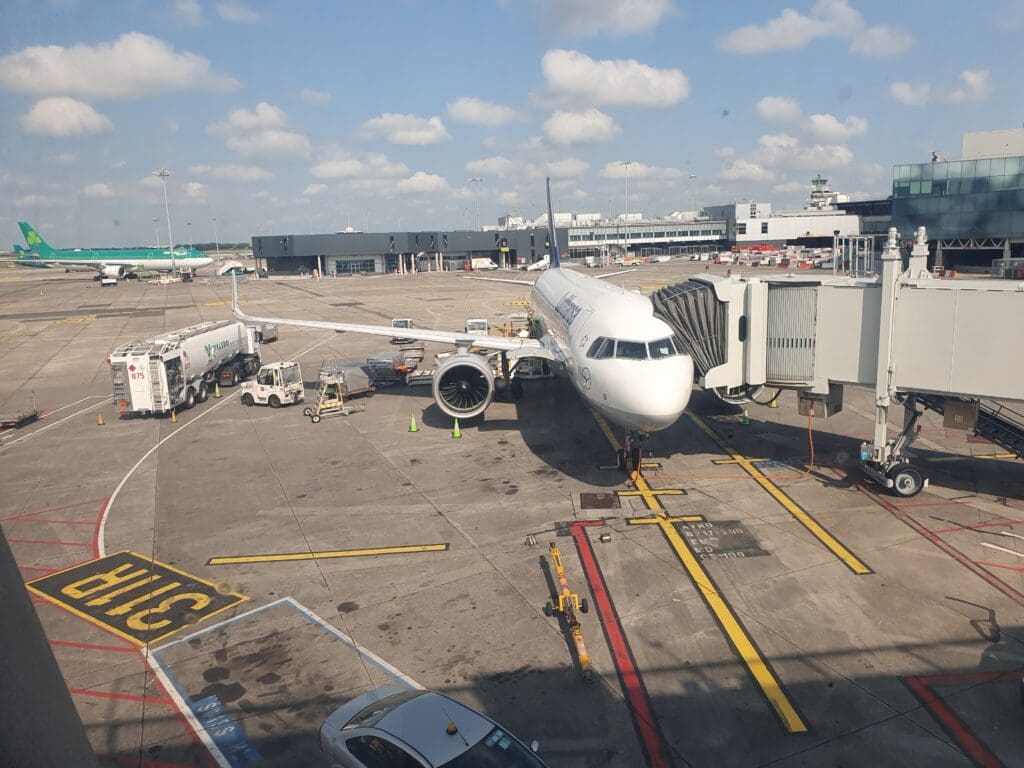
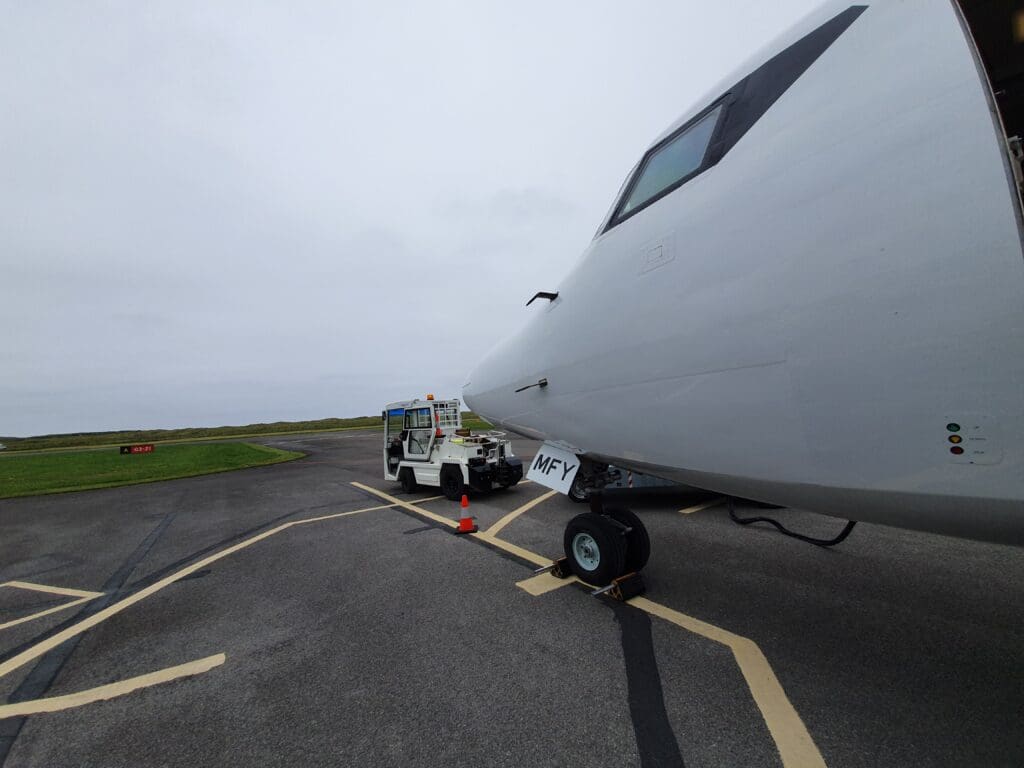
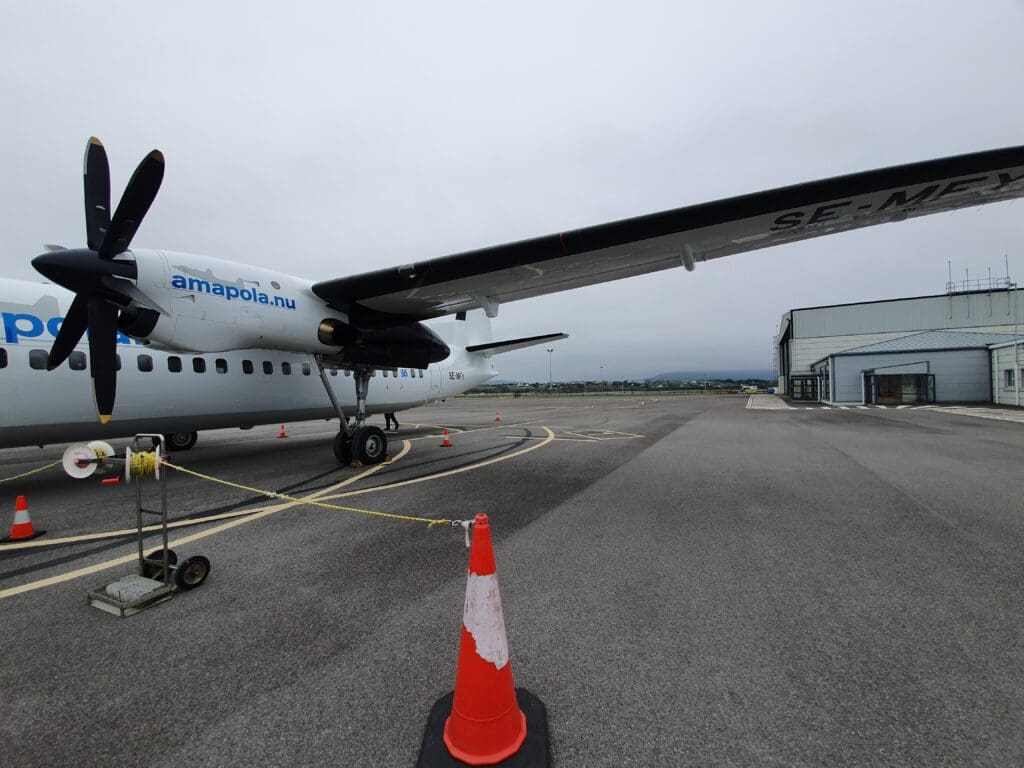
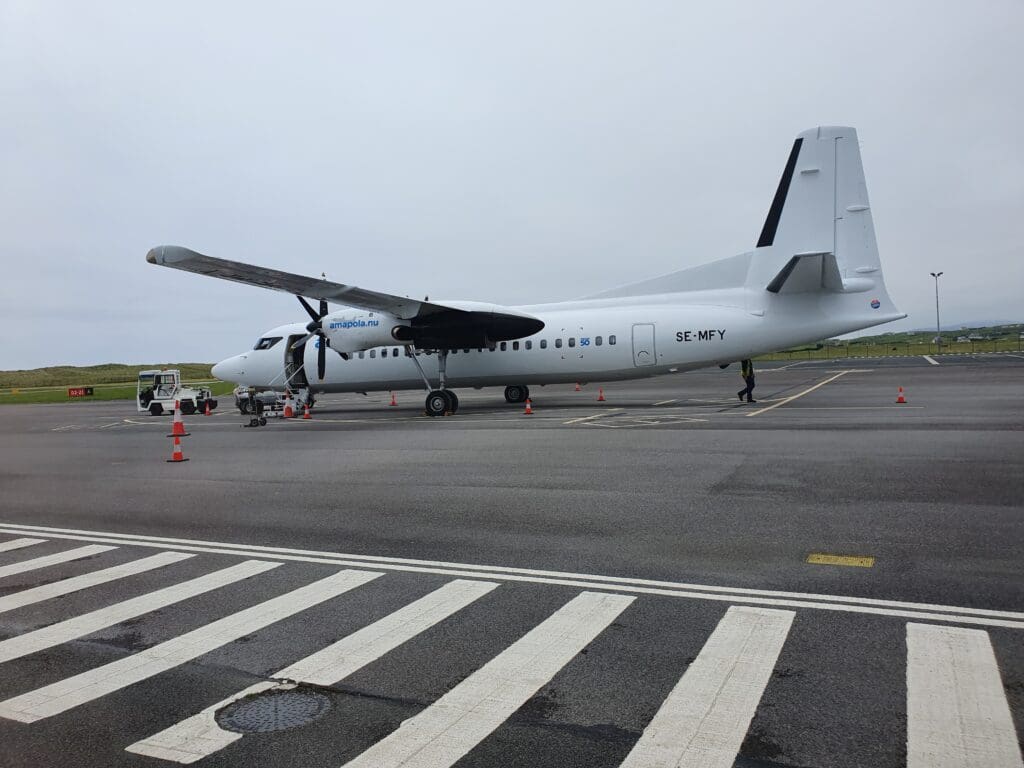
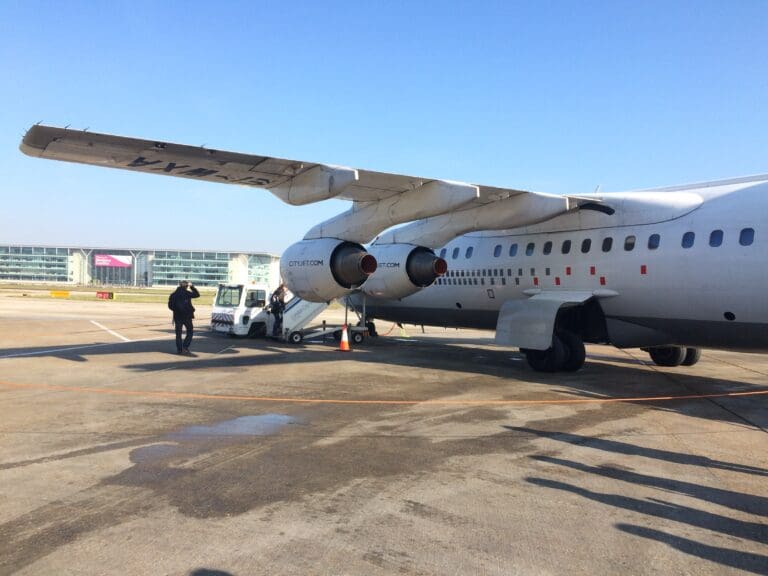
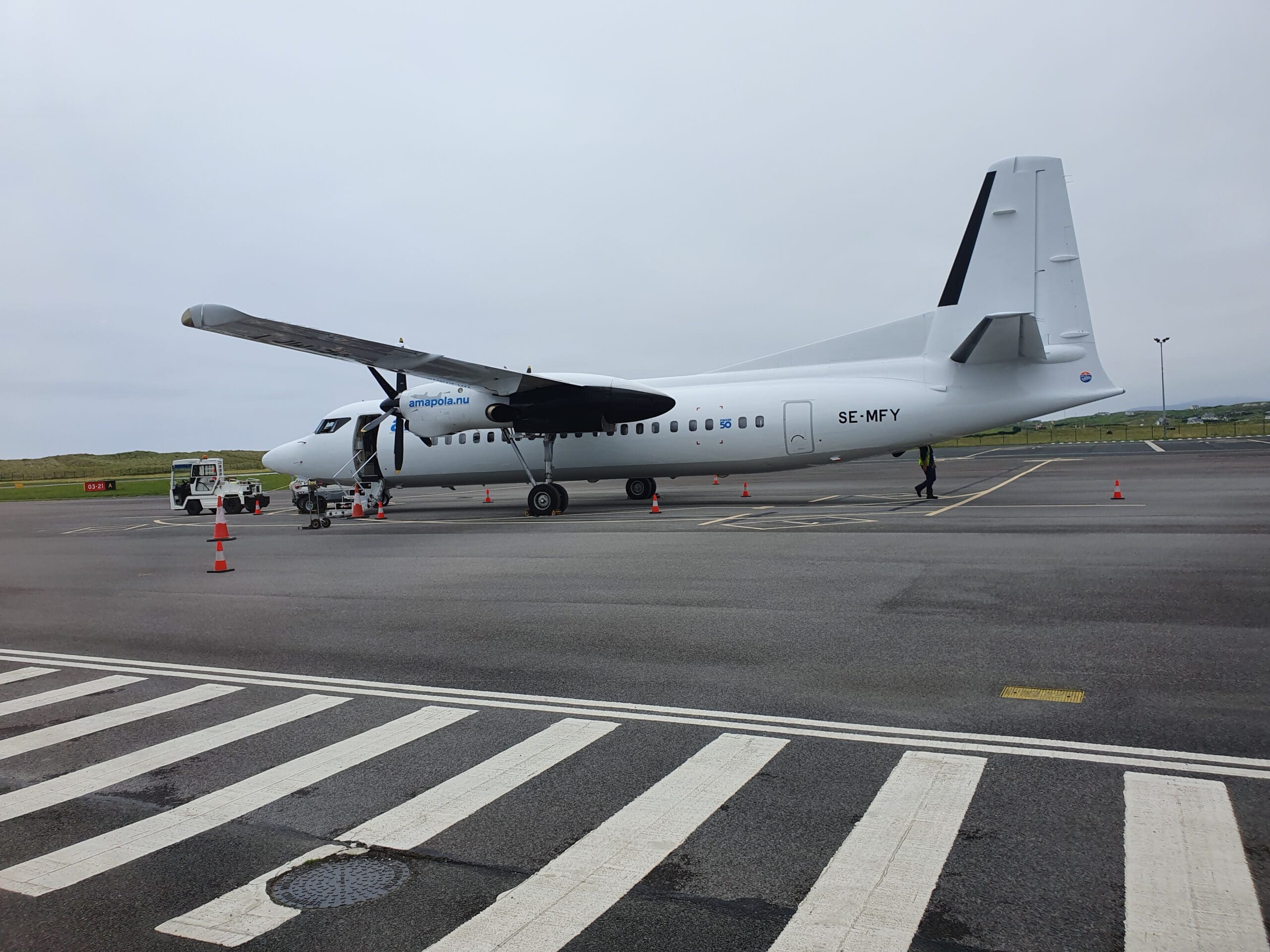
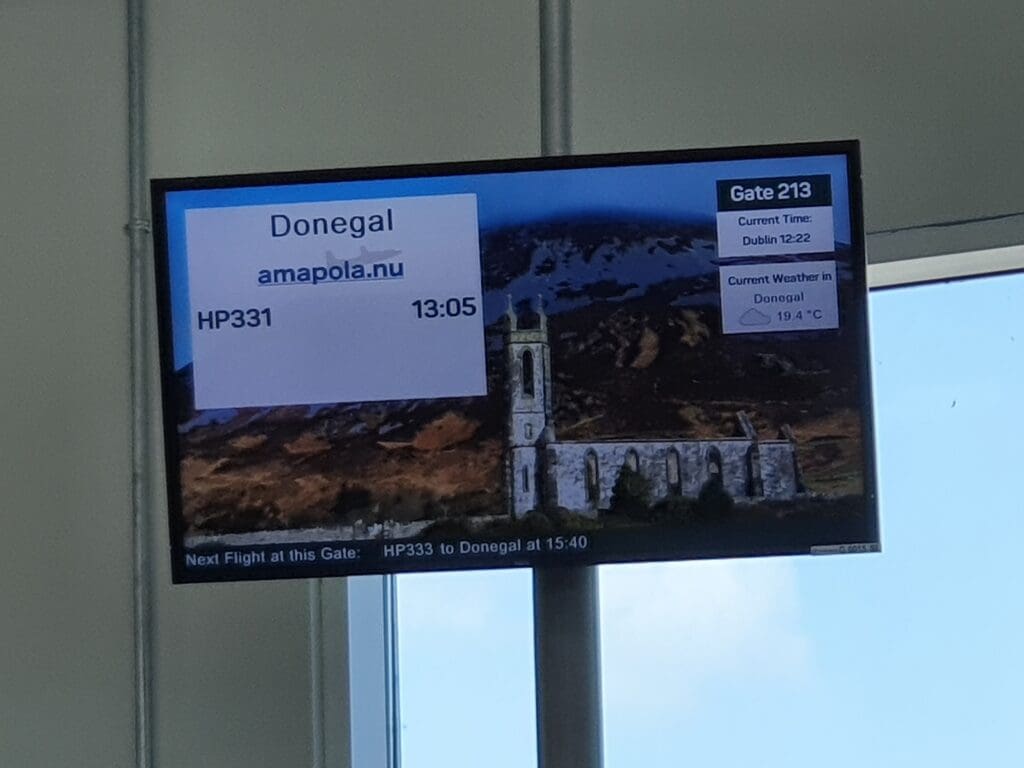
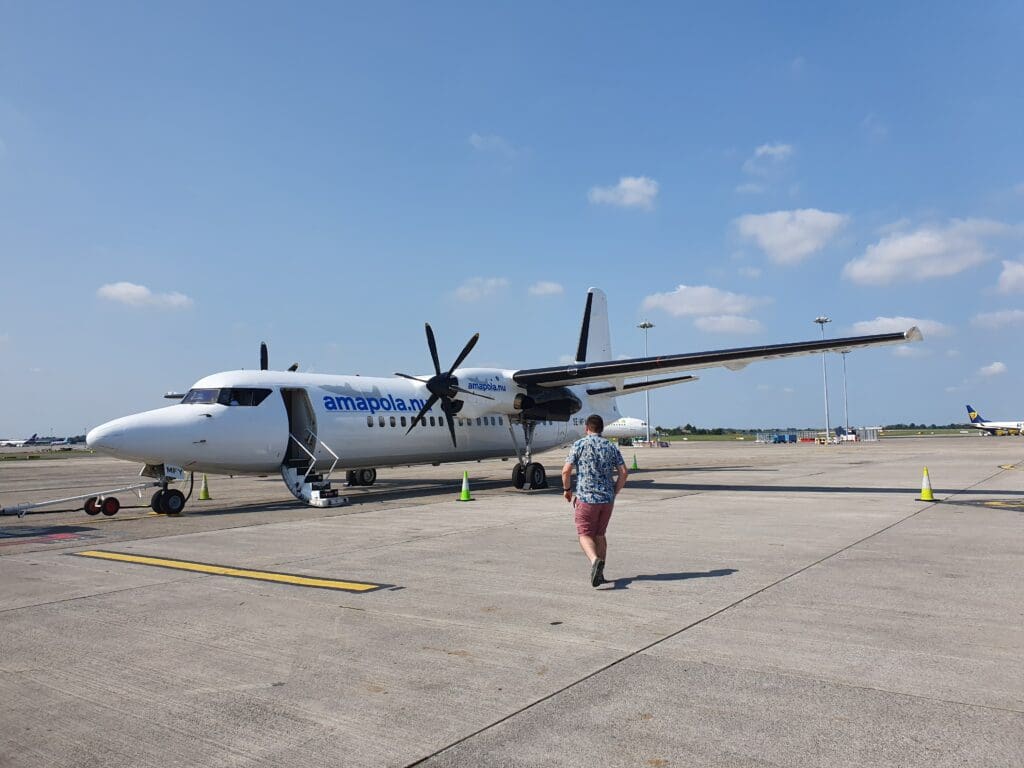
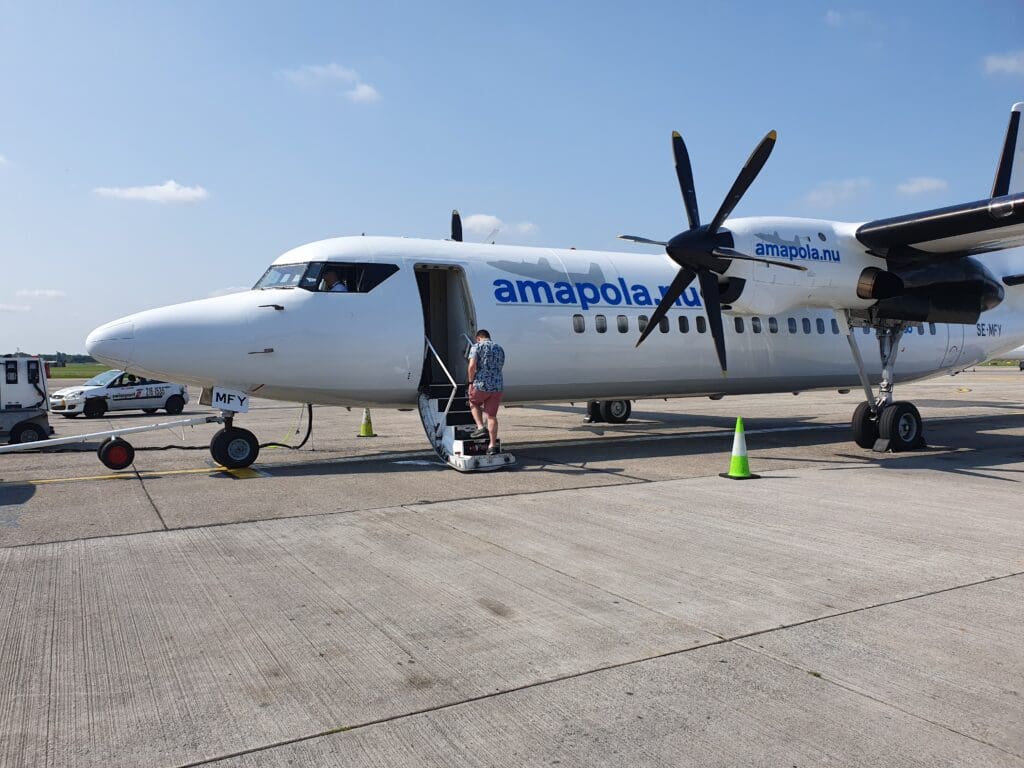
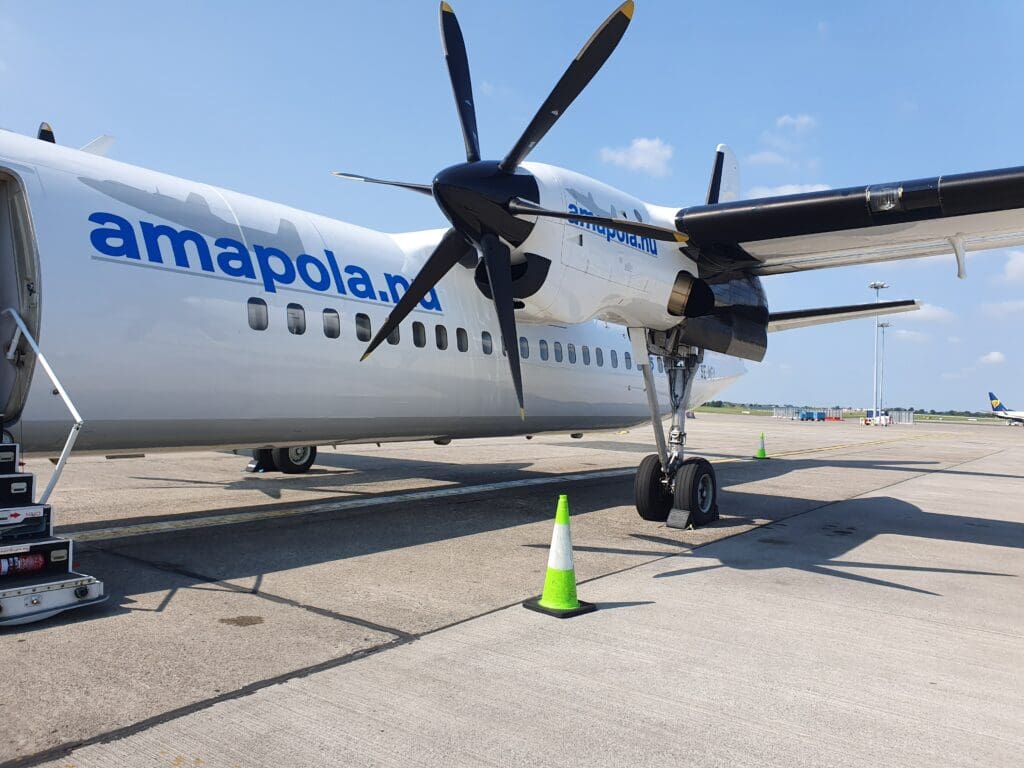
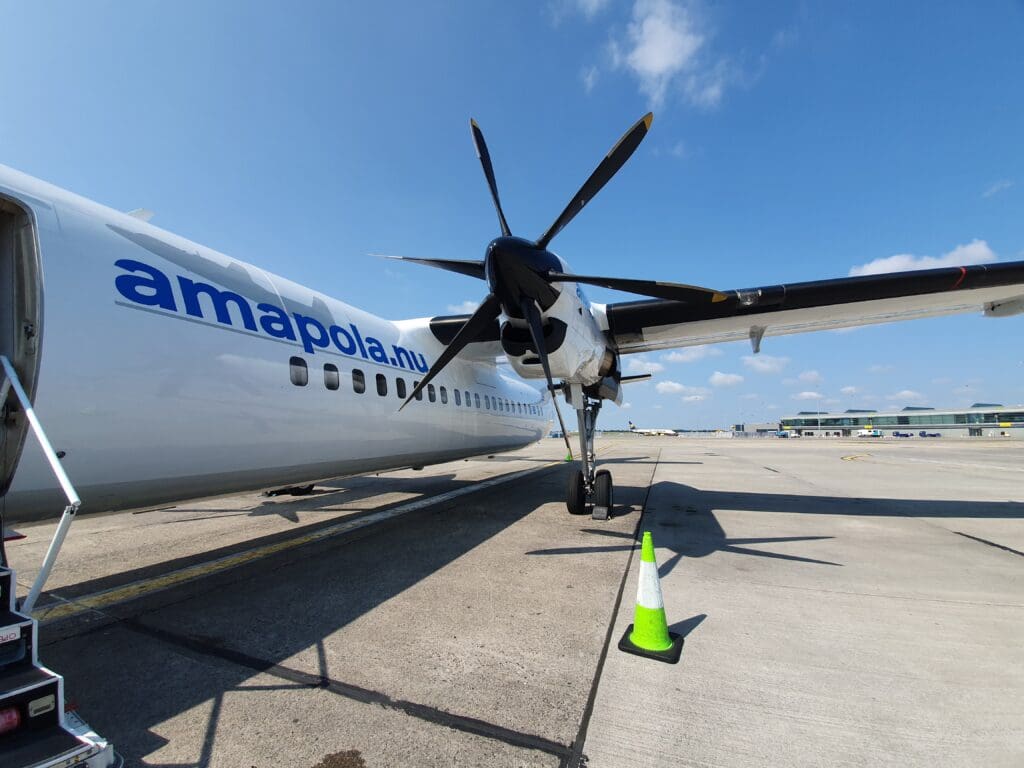
After exploring the sights of the terminal for around half an hour, I decided to make my way down to Gate 213 – one of the terminal’s few gates located on ground floor level and presumably the former hub for Aer Lingus Regional’s operations. Outside, the Fokker 50 that would take me across Ireland could be seen enjoying a break in between flights having arrived just before 1100 that morning. Seeing as only one Amapola Flyg aircraft had been cast away into exile in Ireland, predicting which of the world’s small handful of flying Fokker 50s would operate my flights to and from Donegal was not a particularly laborious task. Sporting a mostly white livery, except a ‘bandit mask’ and Amapola Flyg’s logo at the front of the fuselage and on each engine cowling, the aircraft operating these flights would be SE-MFY. Having first taken to the skies in December 1989, at the time of my flight, this particular turboprop was slowly but surely edging towards its 32nd birthday – solidifying the aircraft’s status as one of the oldest commercial airliners that I have ever flown.
Turning to the aircraft’s history, manufactured at Fokker’s Schiphol Airport-based plant, the aircraft was initially intended to commence its commercial life Down Under with Ansett Airlines. In reality, the aircraft ended up entering service much closer to home; delivered to Germany’s DLT as D-AFKH in March 1992, operating services on behalf of Lufthansa CityLine. In April 1995, the Fokker was sent southwards to Spain where it was initially registered as EC-868 and then EC-GBG, operating for regional carrier Air Nostrum. Following several years spent enjoying the Spanish sunshine, in March 2001 the aircraft was sent northwards, once again settling near its birthplace. Back in the Benelux region, the aircraft was given the registration OO-VLS and named ‘City of Hamburg’, entering service with Antwerp-based carrier VLM Airlines. Including a multi-year stint flying on behalf of CityJet, it was here that the aircraft remained until the ultimate failure of VLM Airlines in the summer of 2018, a respectable seventeen years later. Following this, the aircraft was withdrawn from service and placed into storage at Antwerp, before being taken up by Amapola Flyg and entering storage at Malmo Airport until July 2019. In July 2019, the aircraft was leased to newly formed Air Antwerp where it served as the carrier’s only aircraft, spending its days shuttling between Antwerp and London City. However, with the onset of the pandemic and the halting of Air Antwerp’s operations, the aircraft entered storage once again, eventually being returned to Malmo following the collapse of Air Antwerp. Fortunately, this did not herald an end to the aircraft’s commercial life, and in July 2021, the aircraft re-entered service with Amapola Flyg, becoming the carrier’s dedicated Ireland-based aircraft.
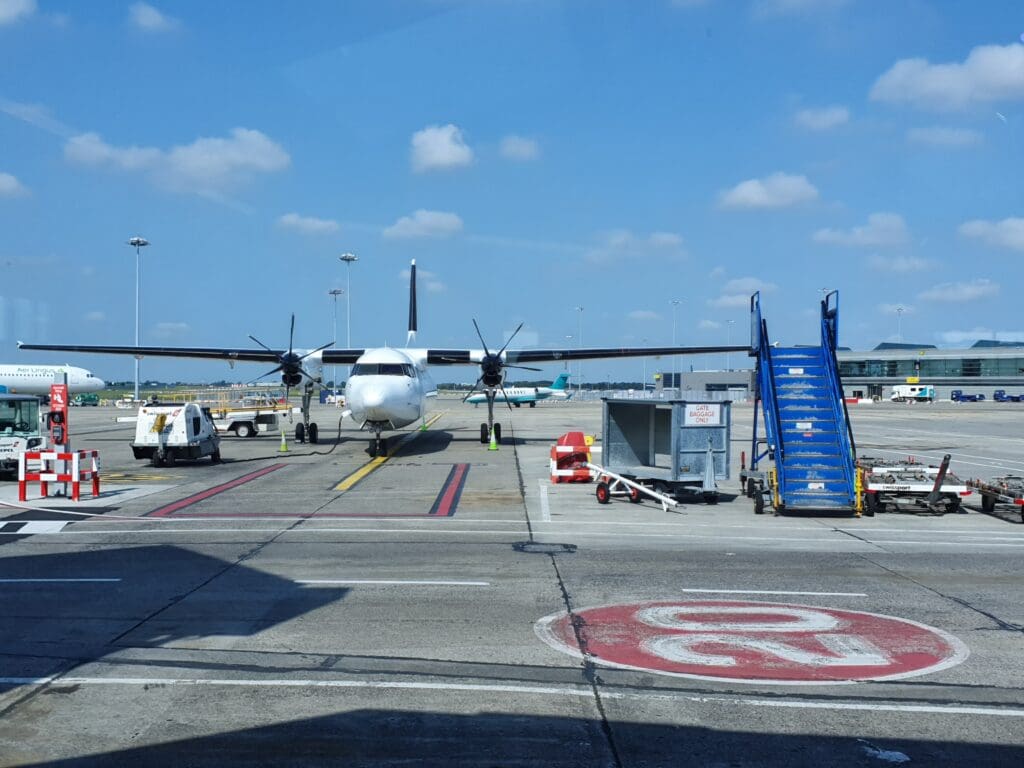
At the time of my arrival at the gate, there was only one passenger more eager than me to head off who could already be seen waiting there. Shortly after taking a seat, several other passengers arrived although the number of those waiting remained well below the fifty needed to fill an entire Fokker 50. Unsurprisingly, by the time the flight’s scheduled boarding time of 1220 arrived there appeared to be little sign that boarding was to commence any time soon although a flurry of activity could be seen occurring outside around the aircraft.
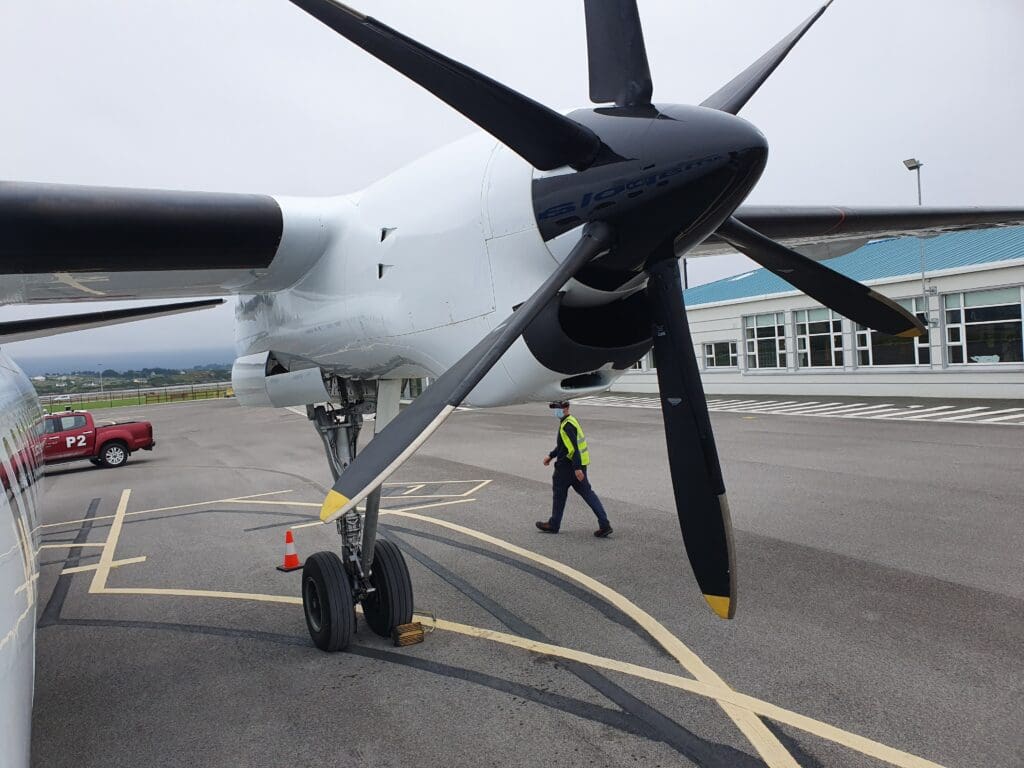
Thirty minutes later at 1250, a Swissport agent headed over to the gate podium and made an announcement requesting passengers to come forward and have their boarding passes and identity documents ready for inspection. Promptly jumping up, I ended up second in the queue and scanned my boarding pass – despite the agent’s announcement the latter documents were not checked and I was soon wished a pleasant flight. I then made my way out into the refreshing summer breeze and after briefly stopping to take a few photos and admire the seemingly giant six-blade propeller, I clambered up the six steps on the inward side of the Fokker’s main cabin door and entered the aircraft’s small forward galley area. Once safely inside the aircraft, I was given a warm and friendly greeting by the sole flight attendant onboard and advised to take any seat located in row seven or beyond.
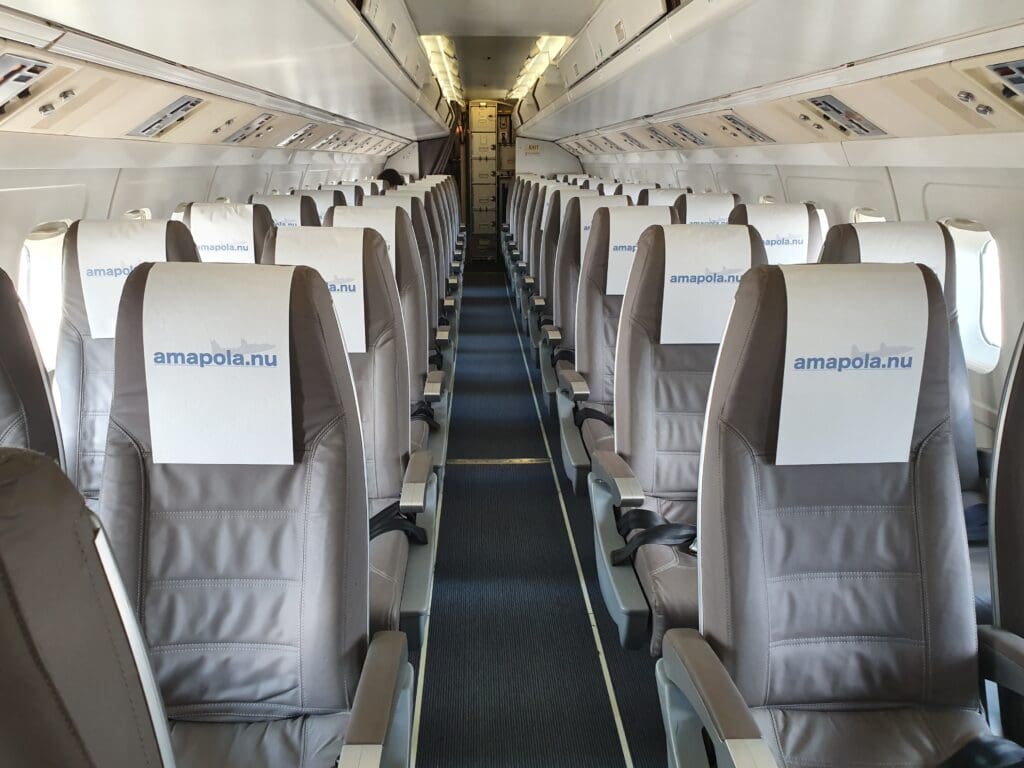
As I turned right, I was greeted by the sight of fifty smart-looking Economy seats, each of which was covered in an elephant grey (faux?) leather covering and topped with an Amapola branded disposable fabric antimacassar. Journeying down the aircraft I had plenty of seats to choose from and I soon decided to take Seat 13D in the rearmost row of the aircraft. Due to the length of the Fokker 50’s engines, it is worth noting that only those seats at the very front or towards the rear of the cabin offer a decent view unless, of course, you enjoy staring at the aircraft’s hard-working PW127B engines.
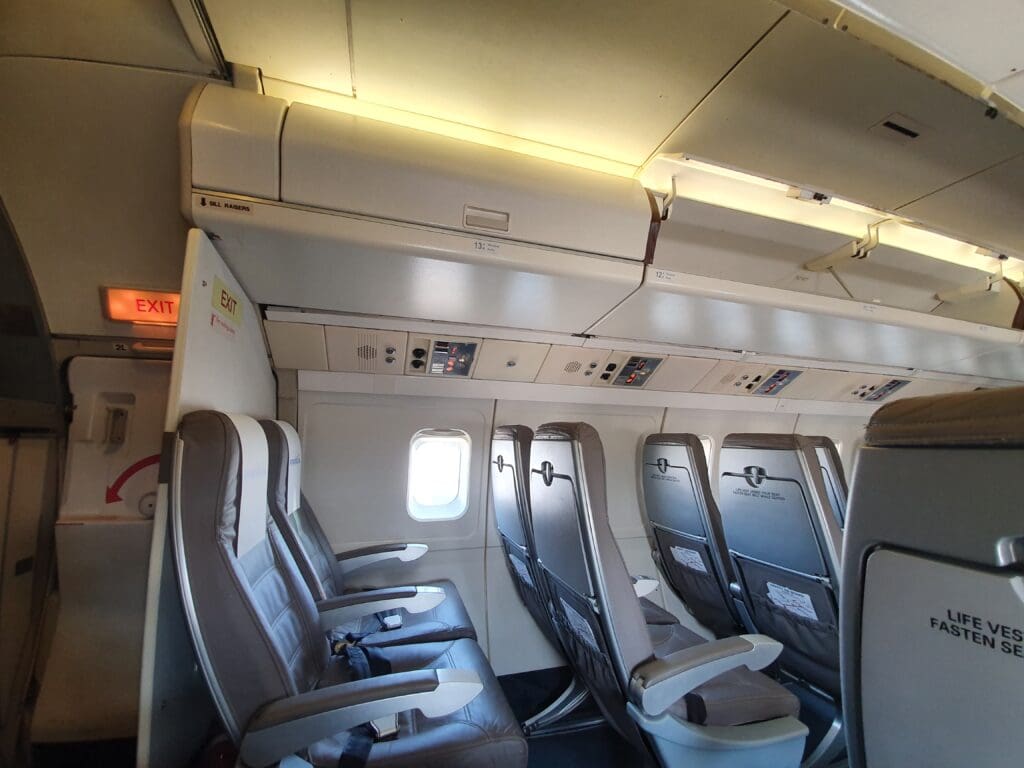
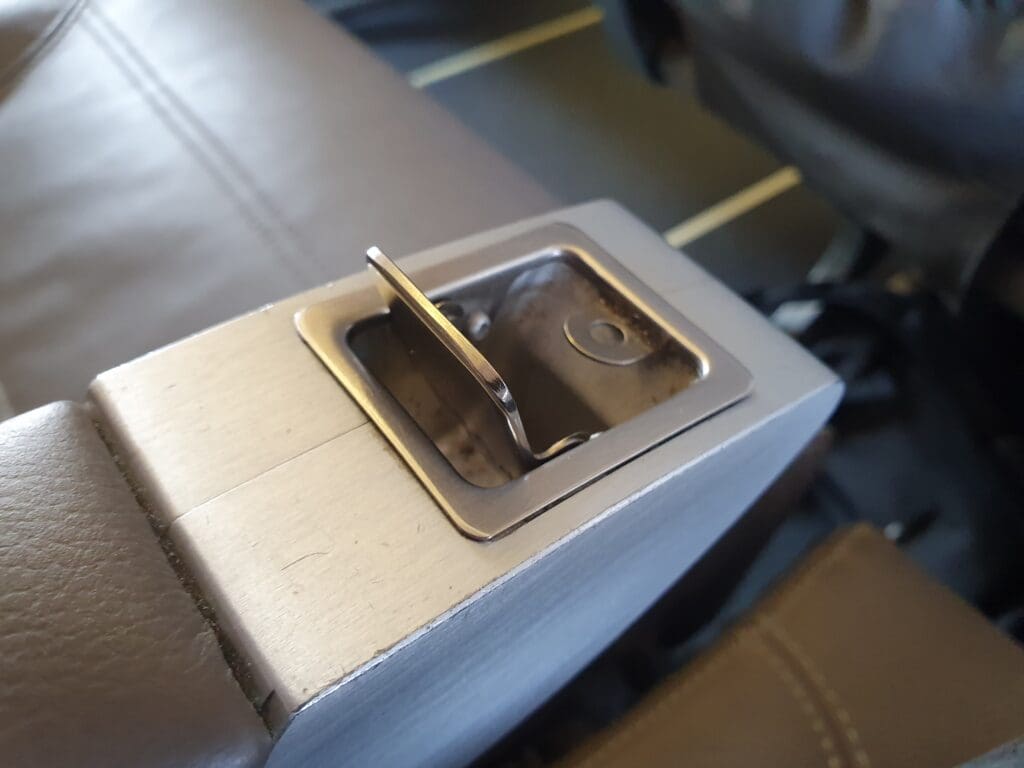
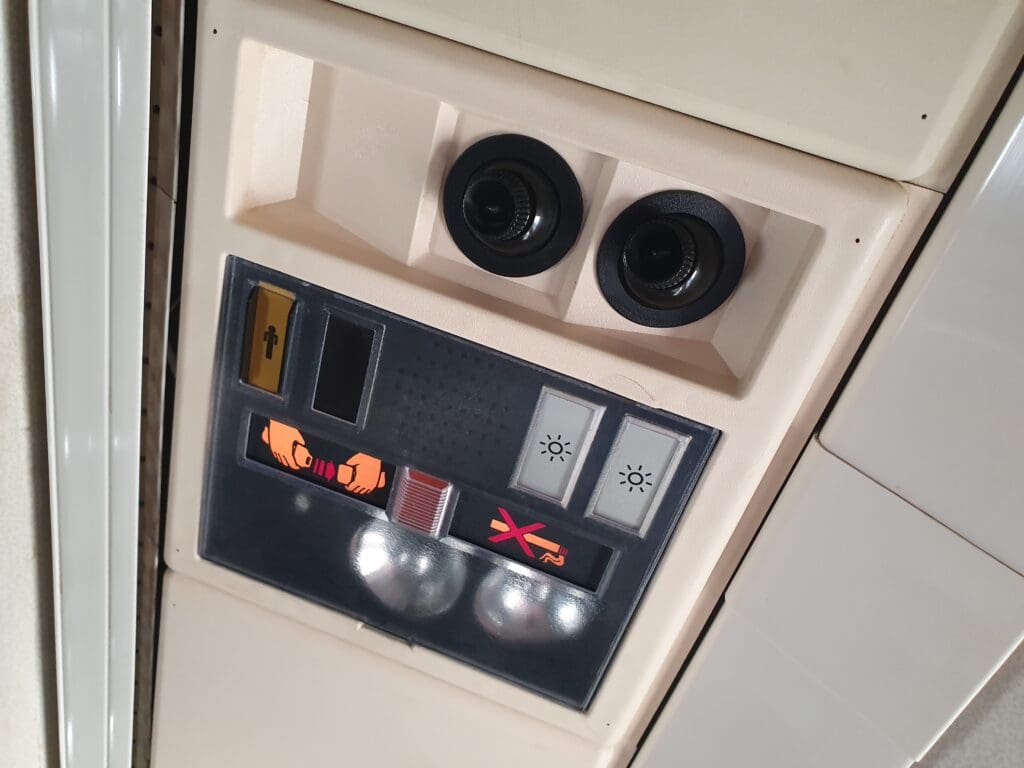
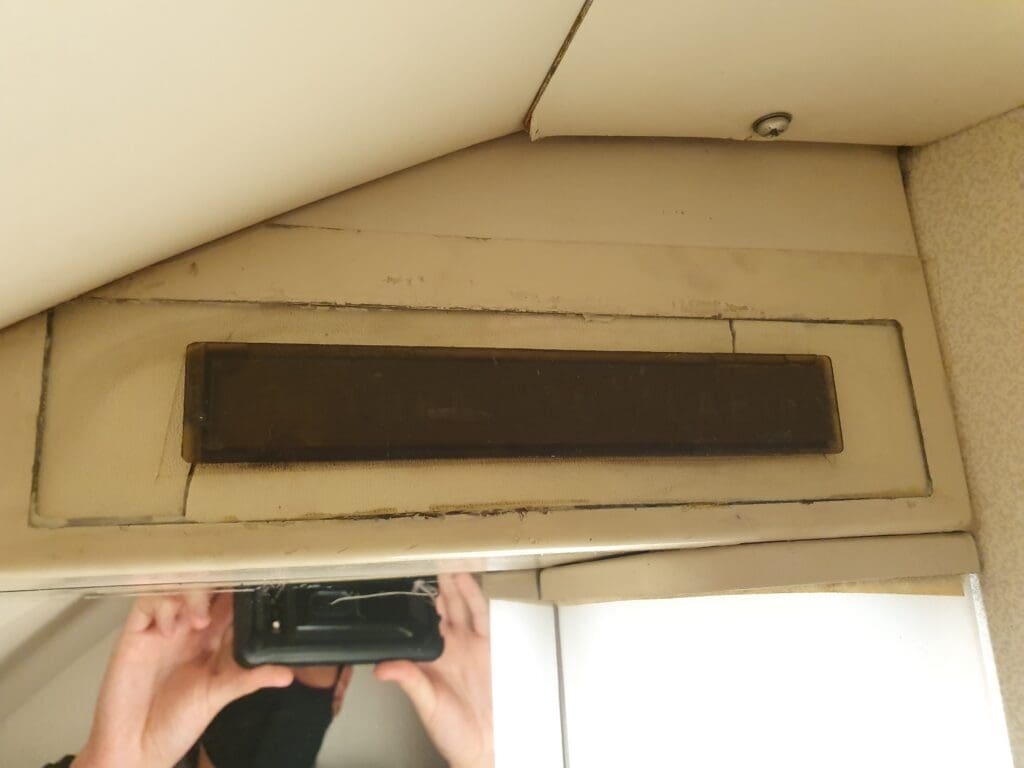
Upon sitting down, I was pleased to find that the seat was relatively soft and offered a good amount of legroom – especially when compared to your typical turboprop airliner. However, it is worth noting that due to the placing of the two struts that attach the seat to the cabin floor, I would be surprised if more than one medium-sized bag could fit underneath the seats. Given the aircraft’s age, I was a little surprised that except for a few marks and scratches, I failed to spot any major signs of wear and tear around my seat. Nevertheless, even to the untrained eye, the cabin of the aircraft was a little dated featuring ashtrays in the armrests, small overhead lockers, cabin lighting with a notable yellow tinge and retro-looking PSUs. On cabin design note, on all Fokker 50s, the PSUs are located on a panel that slopes upwards creating a slightly spacious feel in the cabin not too dissimilar from that experienced on those aircraft fitted with Boeing’s Sky Interior. Turning to the seatback pocket this contained a safety card and a plain white sickbag, and finally, the cabin appeared to be spotlessly clean.
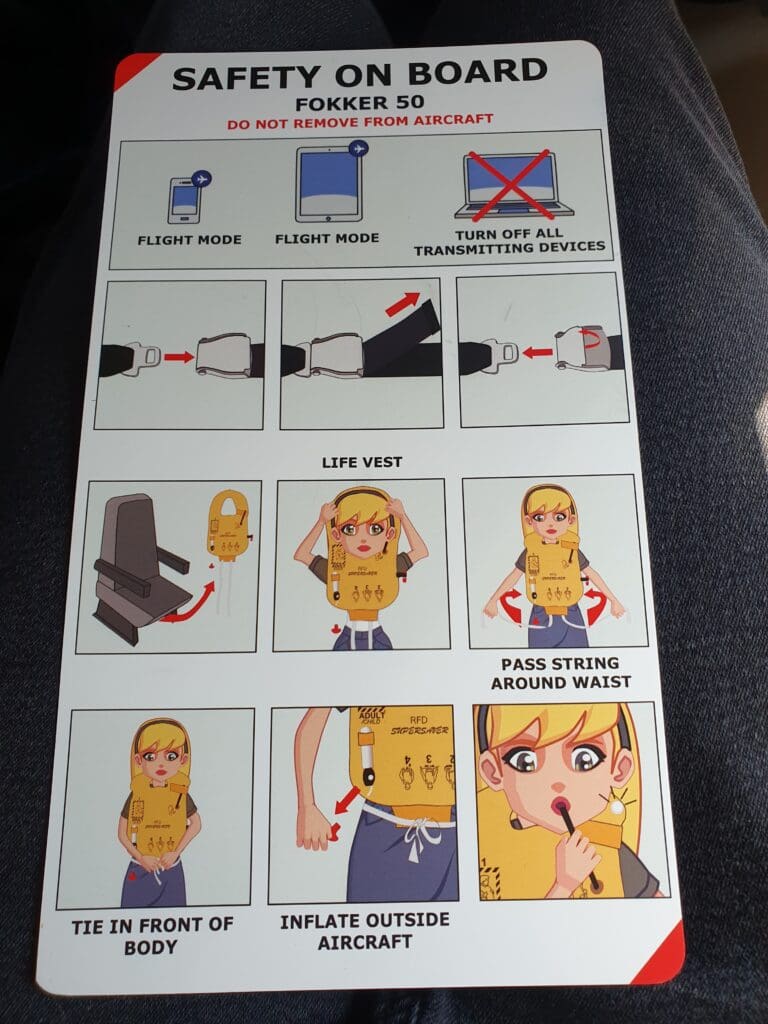
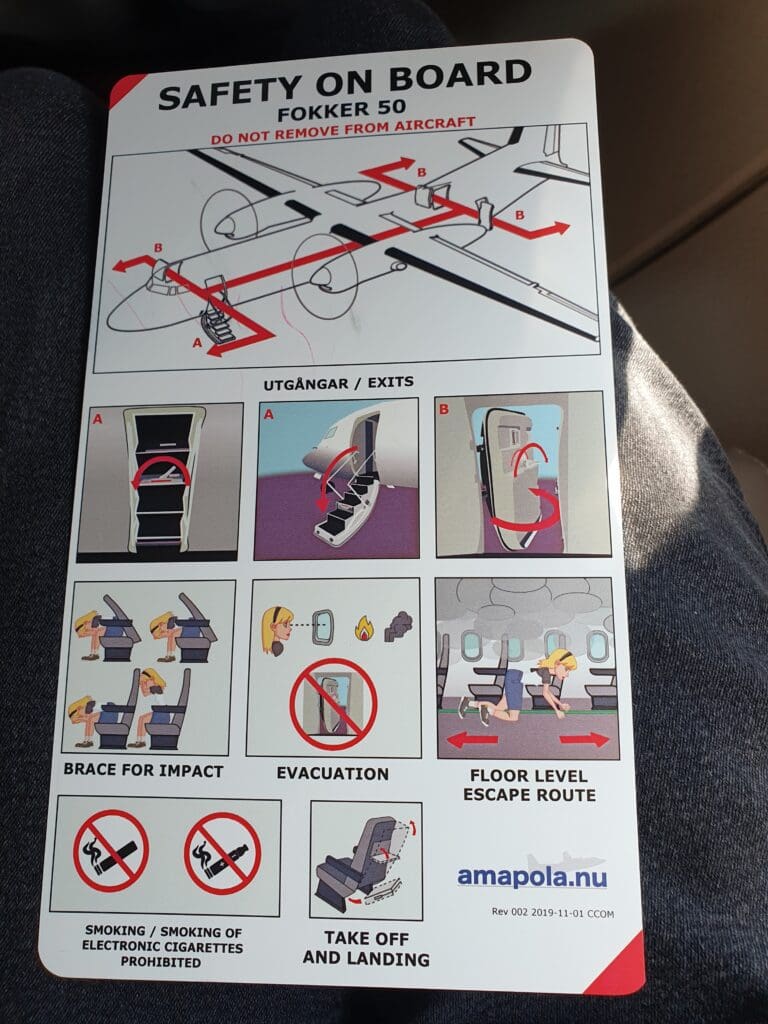
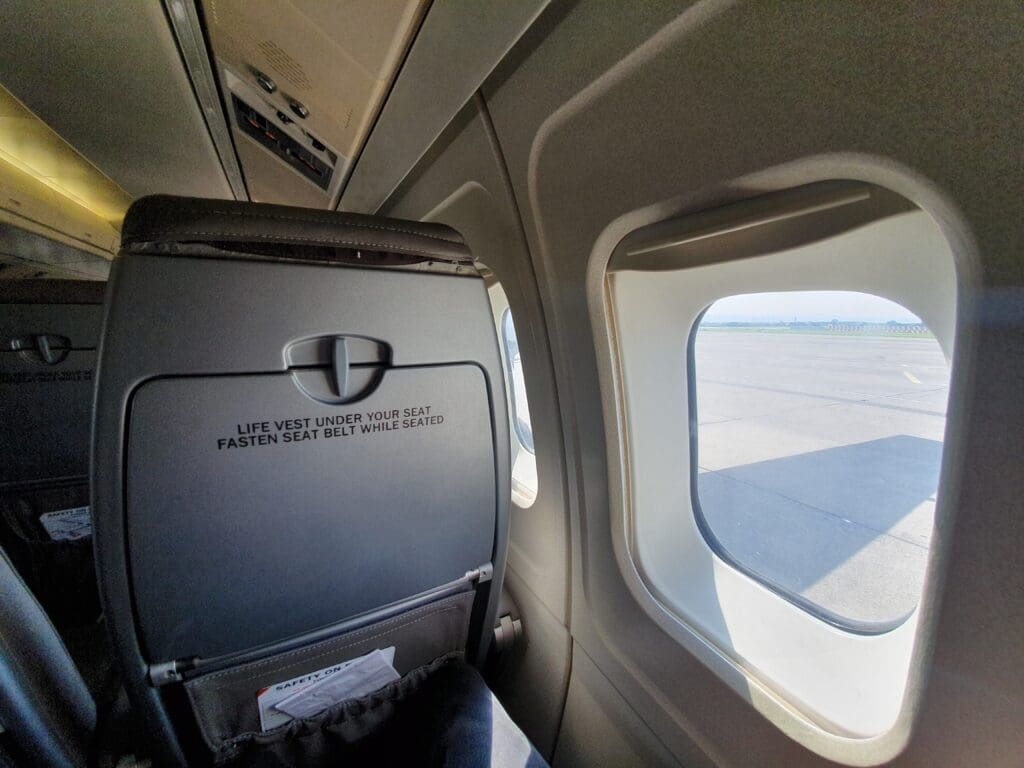

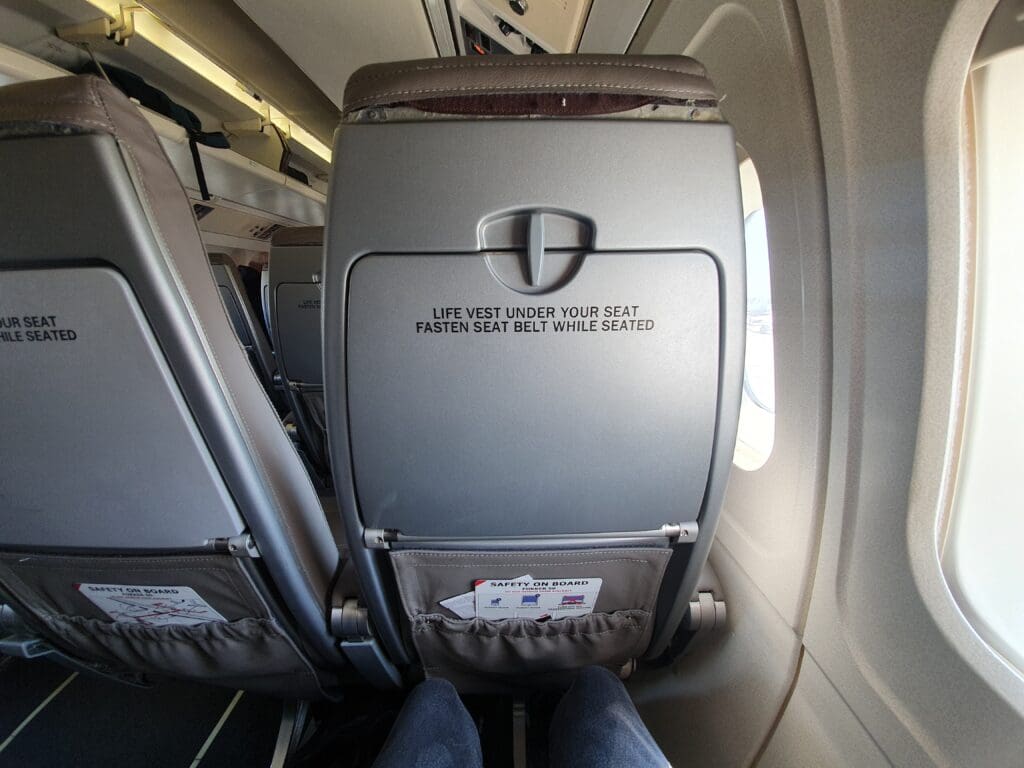
No more than three minutes after I had settled into my seat, much to my surprise all passengers had made it onto the aircraft. That afternoon, a total of twelve passengers would be making the trip up to Donegal – ten solo flyers and a pair. Once all were onboard, the flight attendant wasted no time in preparing the cabin for departure, first closing the main cabin door before performing a friendly welcome announcement followed by a silent demonstration on how to don the aircraft’s lifejackets. As the safety demonstration was underway, the aircraft was gently pushed back and the two Pratt and Whitney PW127B engines whirled into life. Whilst the start-up of the engines appeared to cause a fair amount of vibration, perhaps owing to my location at the rear of the cabin this was not accompanied by too much noise.
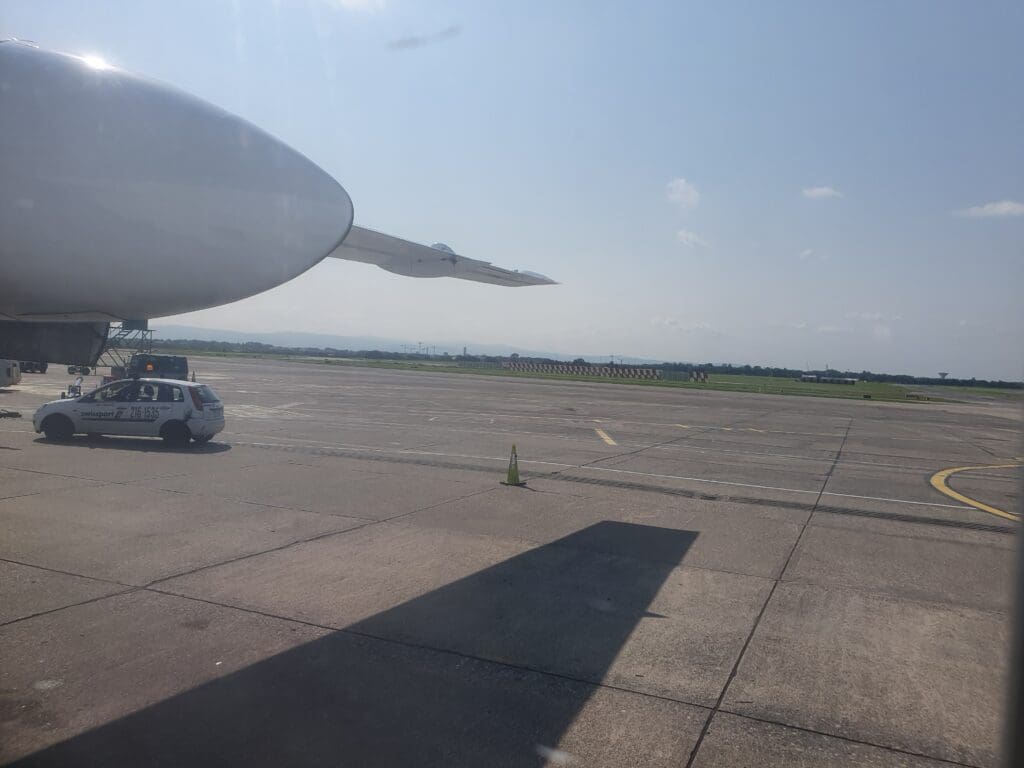
Following a short pause, at 1300 the Fokker began its taxi out to Dublin Airport’s Runway 28L and without any holding at 1304 the aircraft entered the runway and began its take-off roll. Given the aircraft’s light load, the aircraft flew down the runway and soon rotated up into the sunny Irish skies like a rocket. Once leaving the airport behind, the aircraft climbed over green and brown fields before turning northwest and setting a course that would take us directly to Donegal.
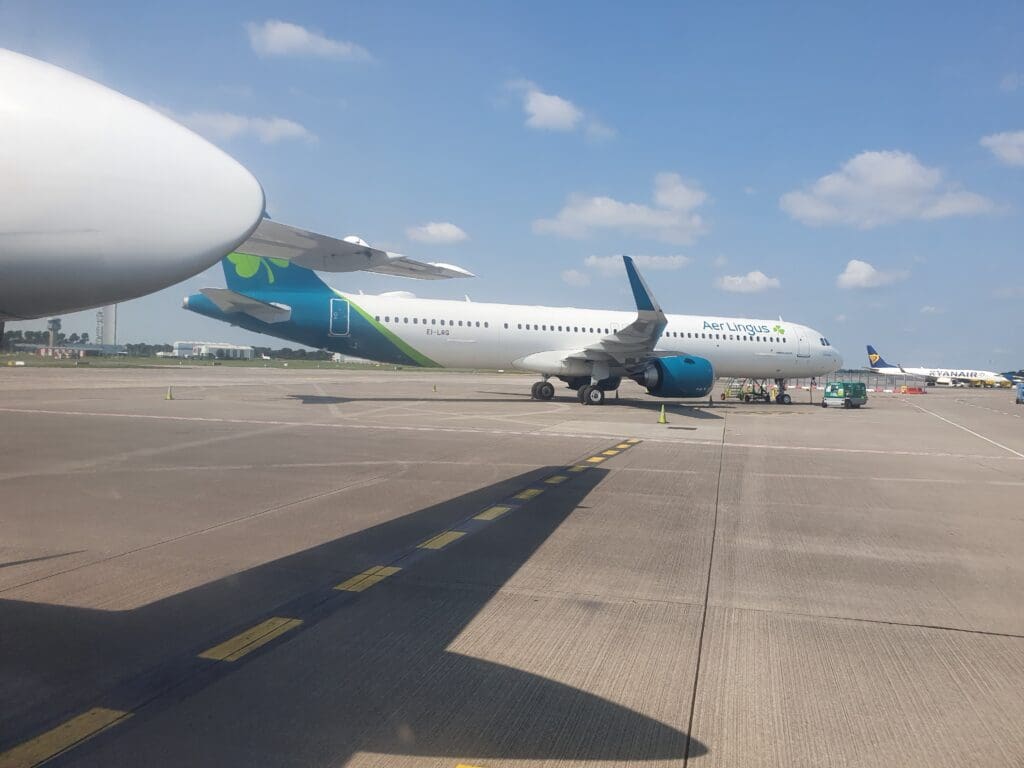
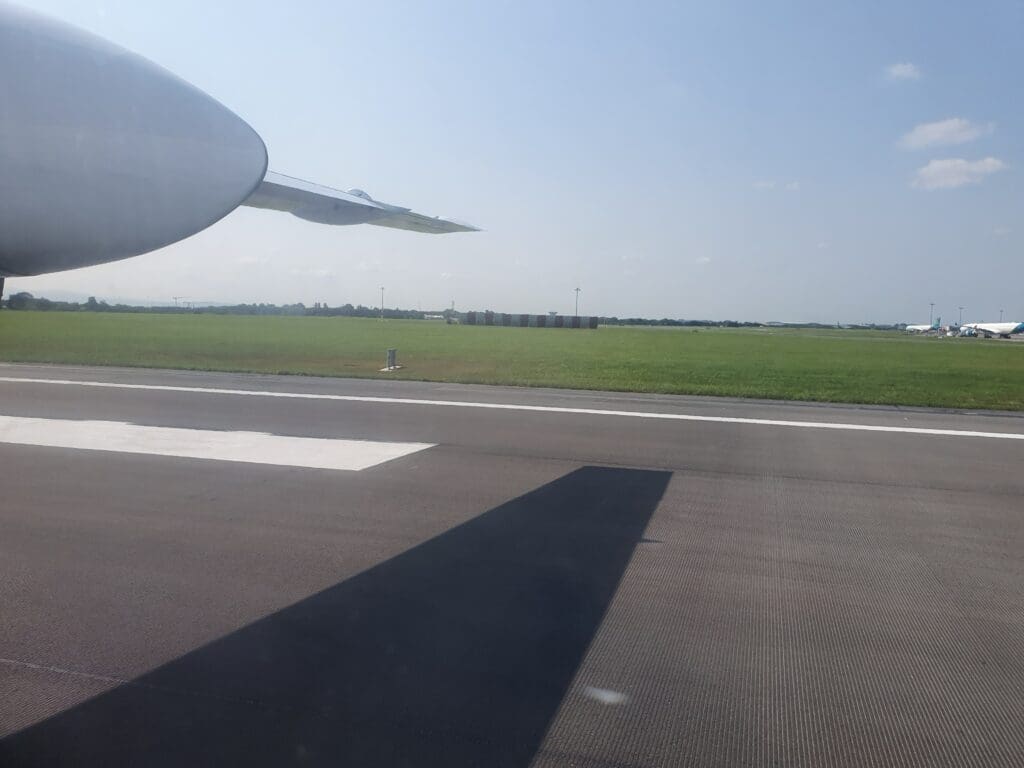
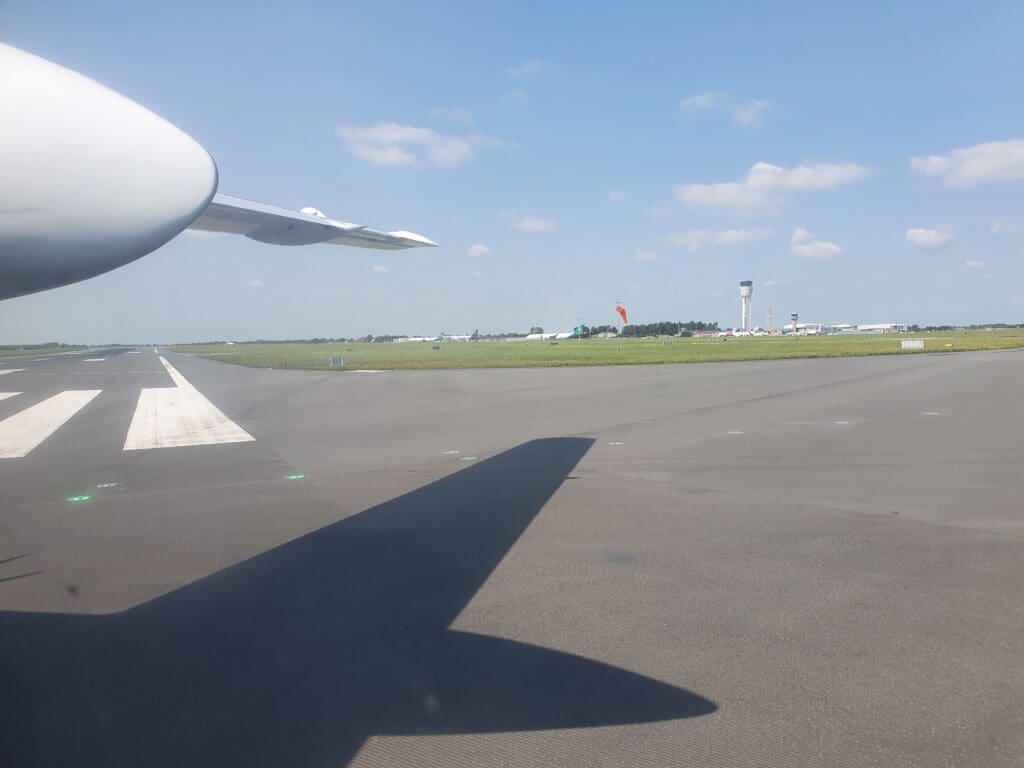
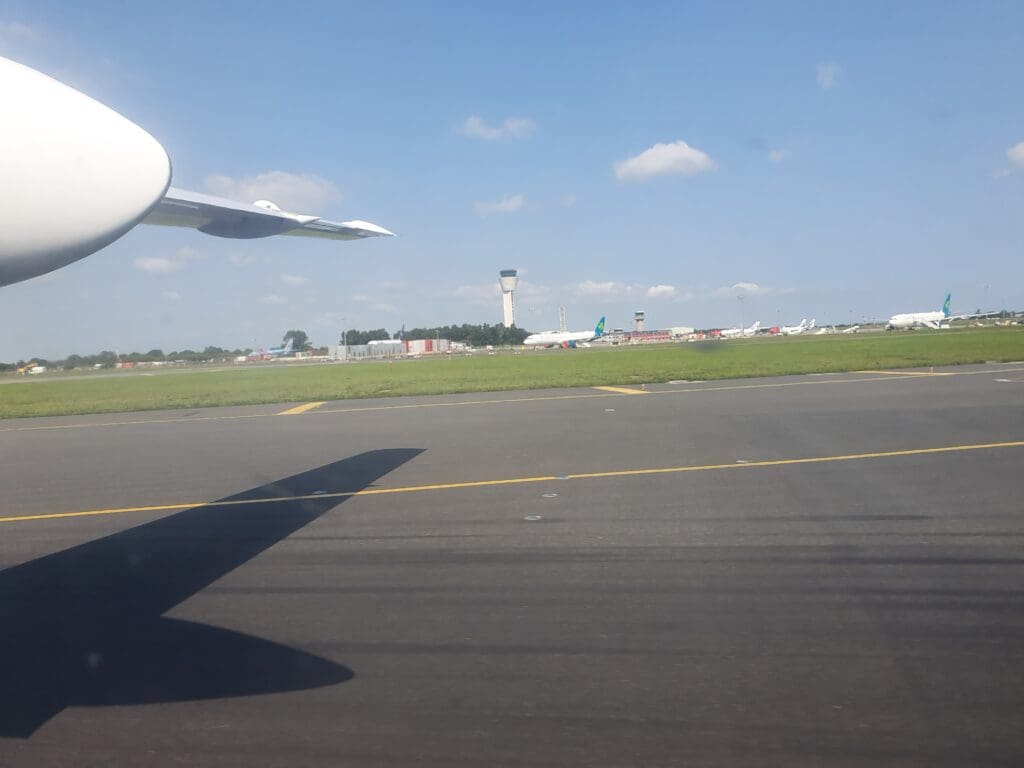
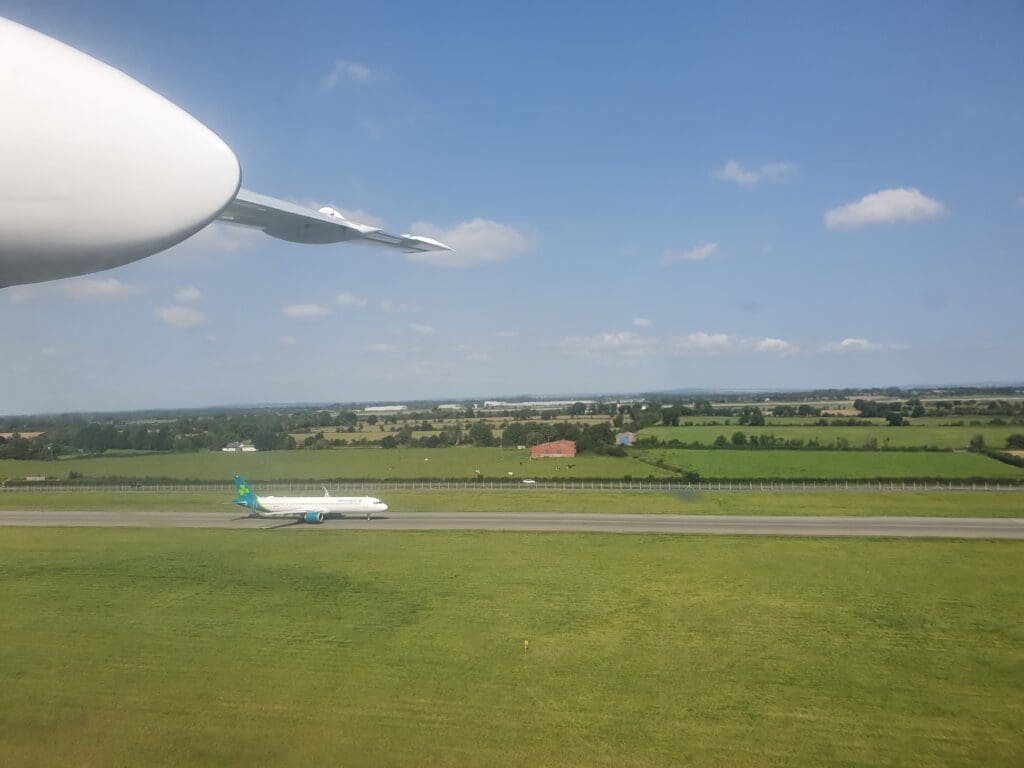
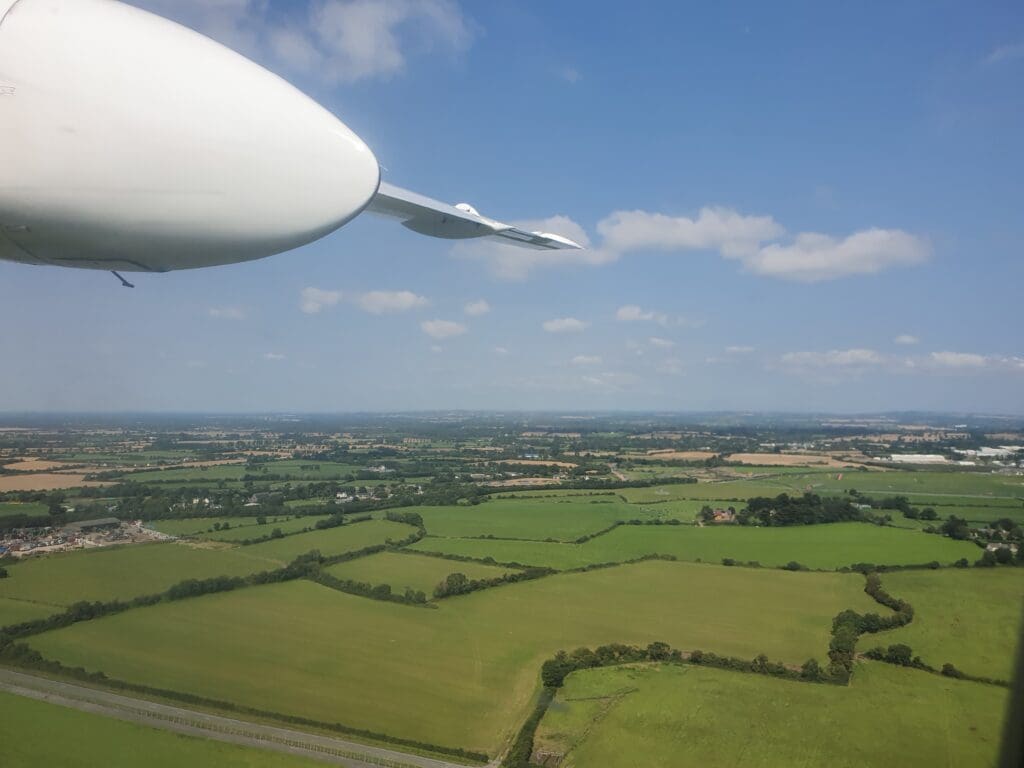
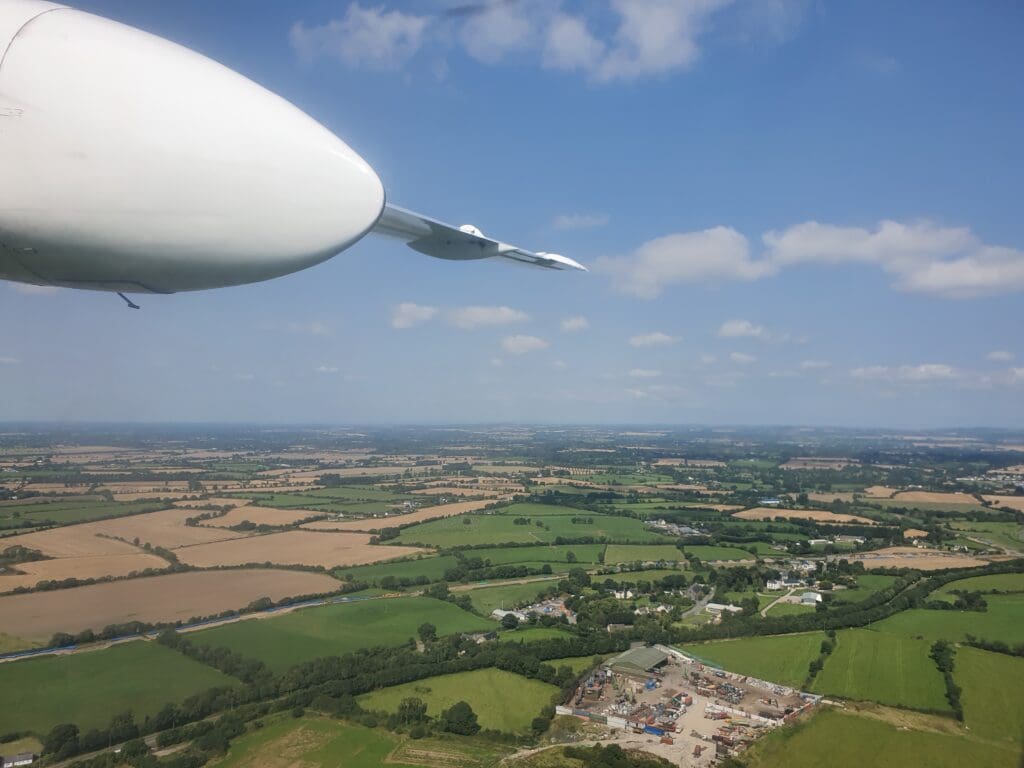
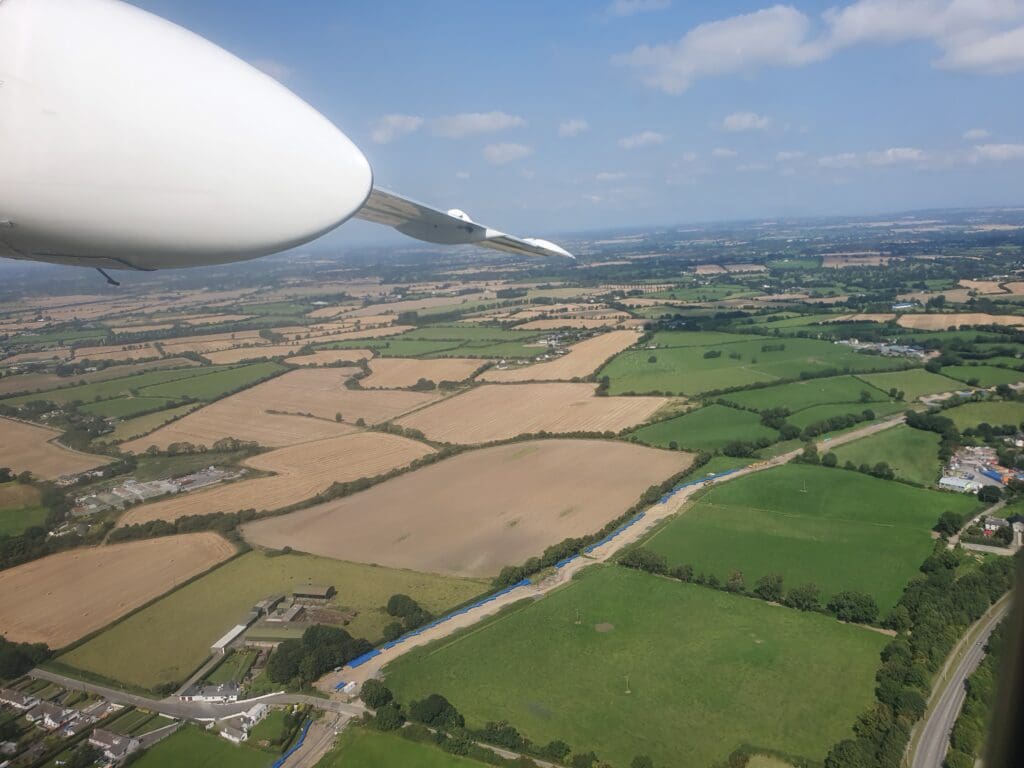
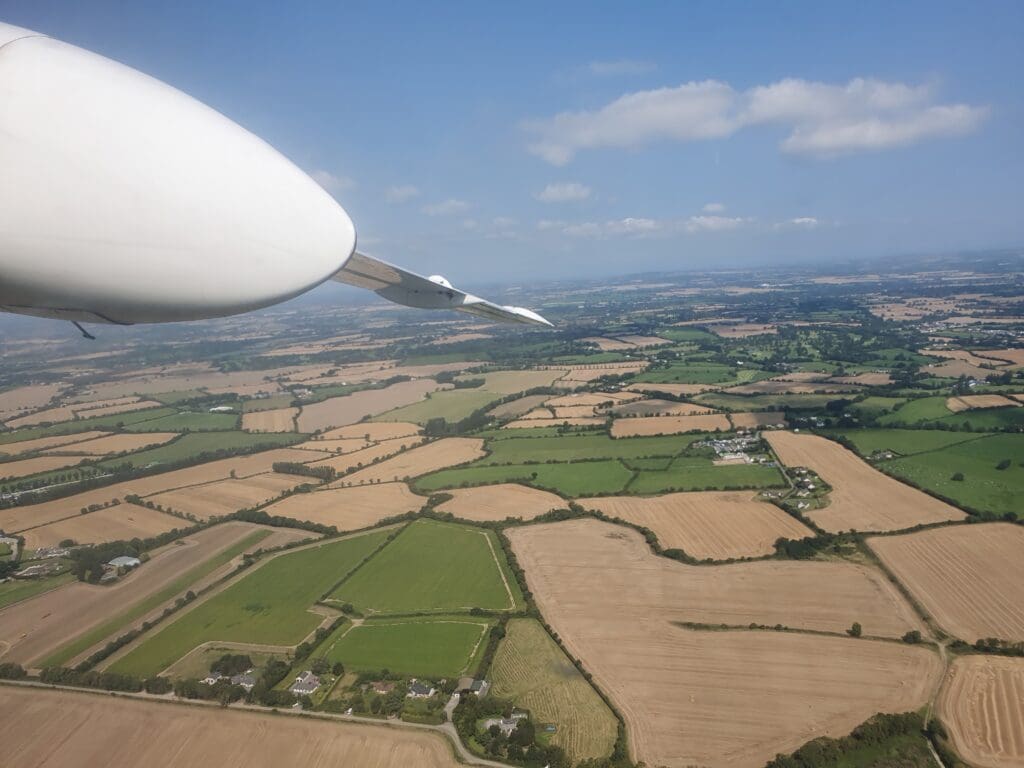
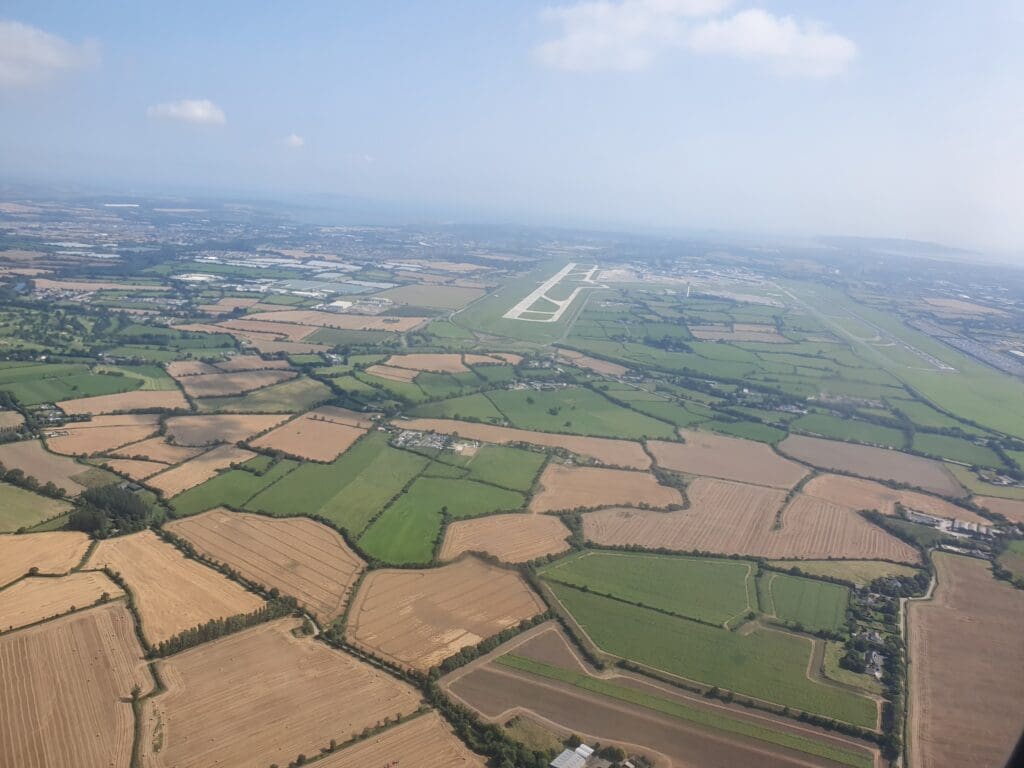
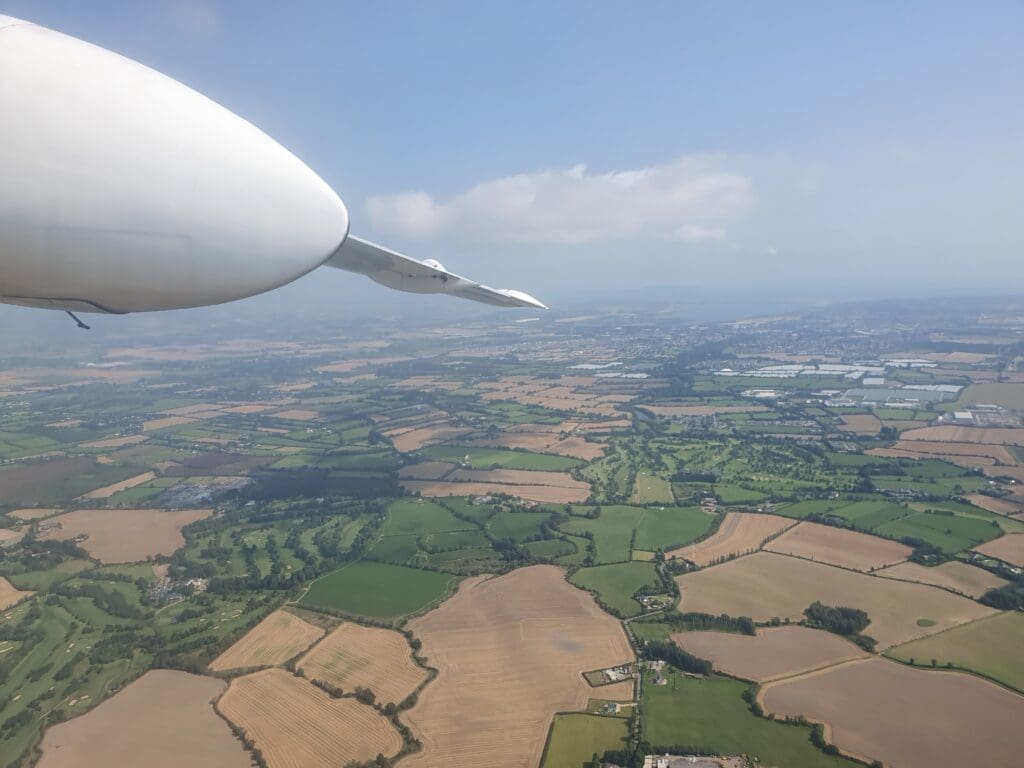
During the first few minutes of the flight, the aircraft was thrown about a little, nevertheless, the seatbelt signs were extinguished in no time at all – around four minutes after departure to be precise. After these dinged off, the flight attendant performed the usual announcement advising passengers to keep seatbelts fastened whilst seated and advised those onboard of the location of the toilet at the front of the cabin.

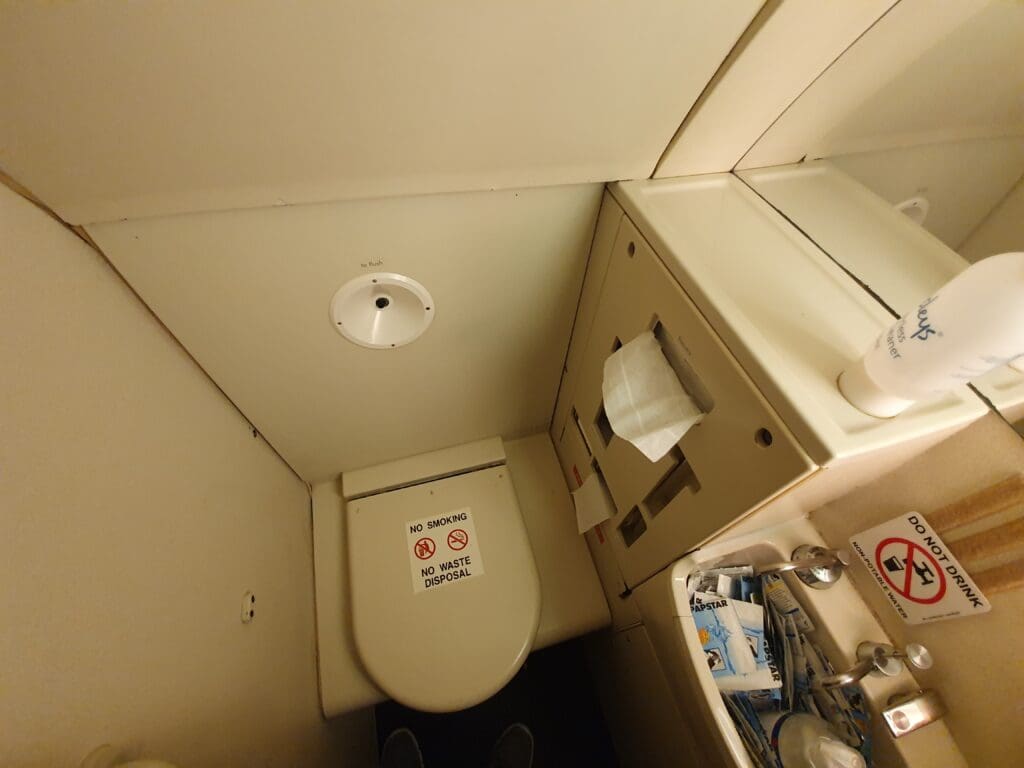
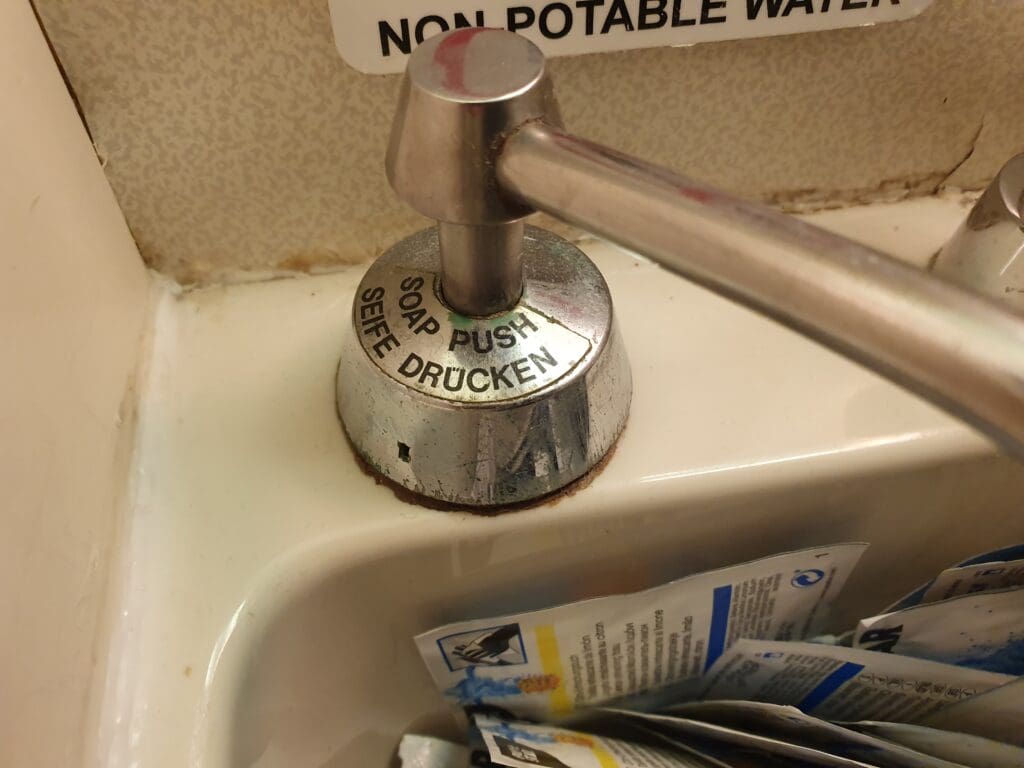
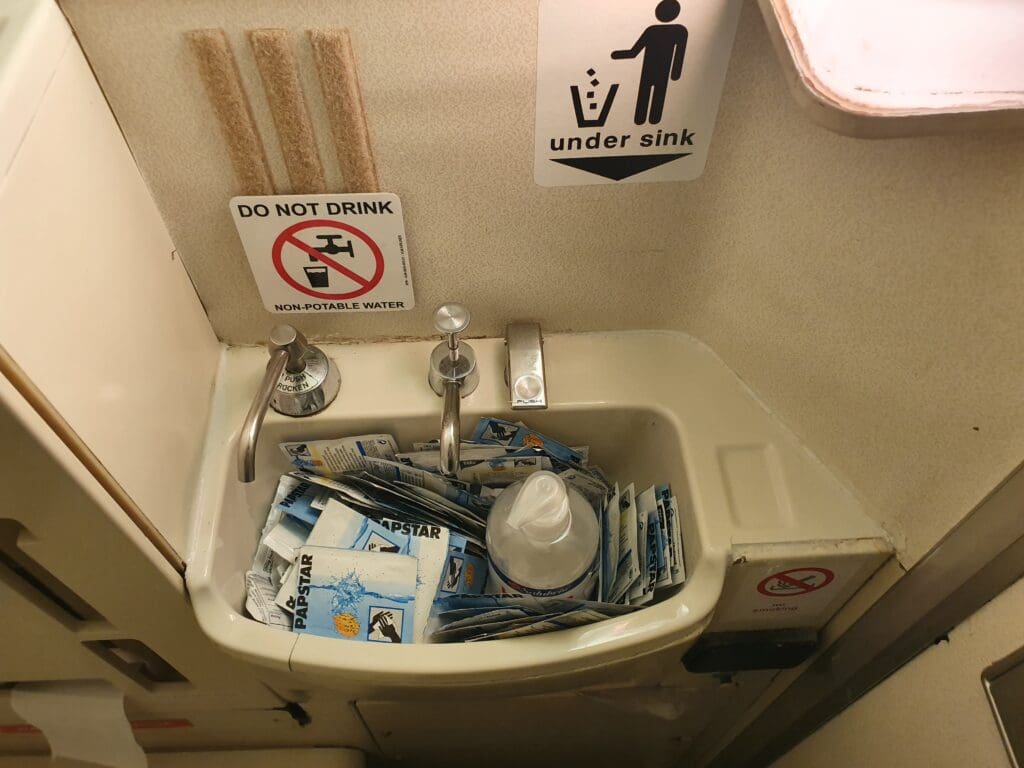
During the initial stages of the flight, I decided to make a trip to the sole bathroom onboard the aircraft – this is located on the left-hand side of the cabin just ahead of the forwardmost seats. As is usually the case on turboprops, this was not amazingly spacious however it did seem to be a little more roomy than those I have sampled on the ATR 72 and Dash 8 Q400. Thankfully, this appeared to be clean although it was just as retro as the main cabin and significantly more battered with plenty of marks and scratches all over. Interestingly, I couldn’t help but notice the German instructions ‘seife drucken’ on the soap dispenser – a clear remnant of the aircraft’s days with DLT many moons ago. Finally, the taps provided no running water and thus both antibacterial gel and wet wipes were offered instead.
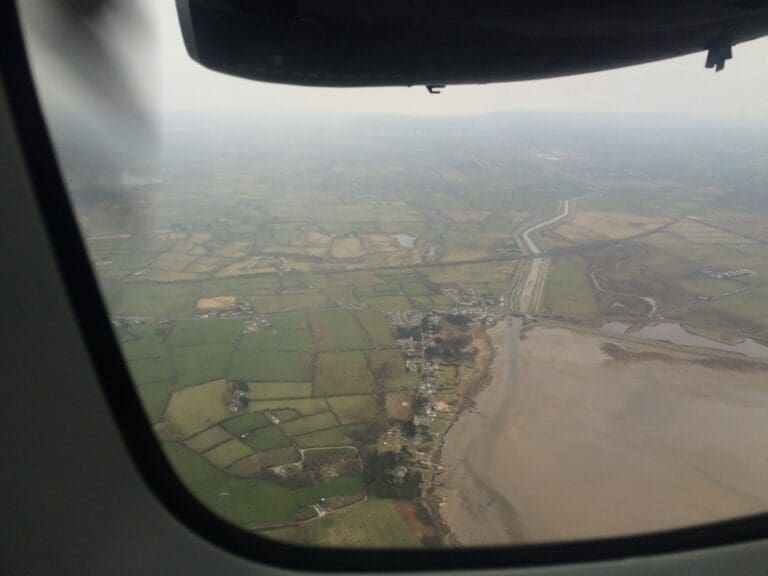
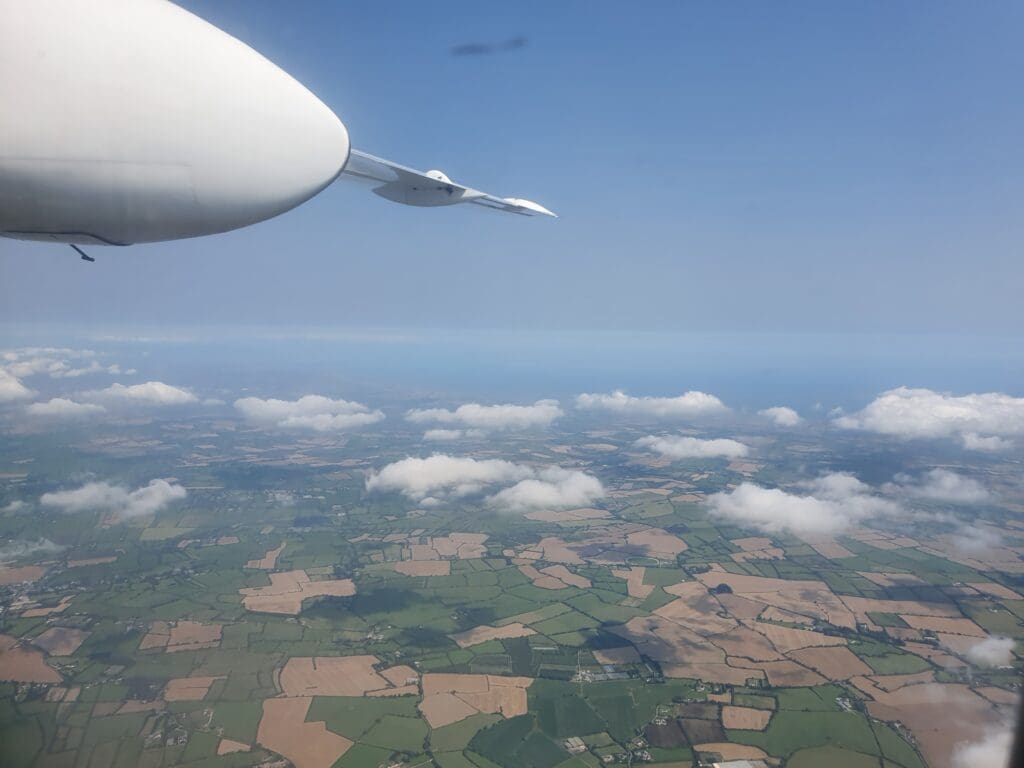
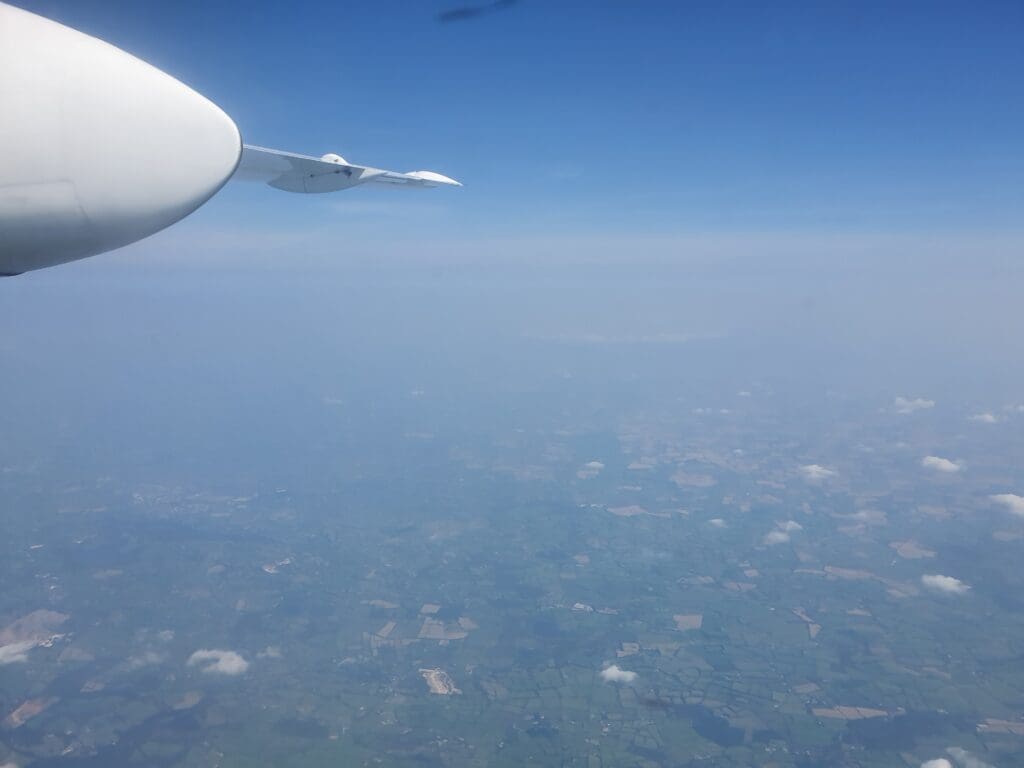
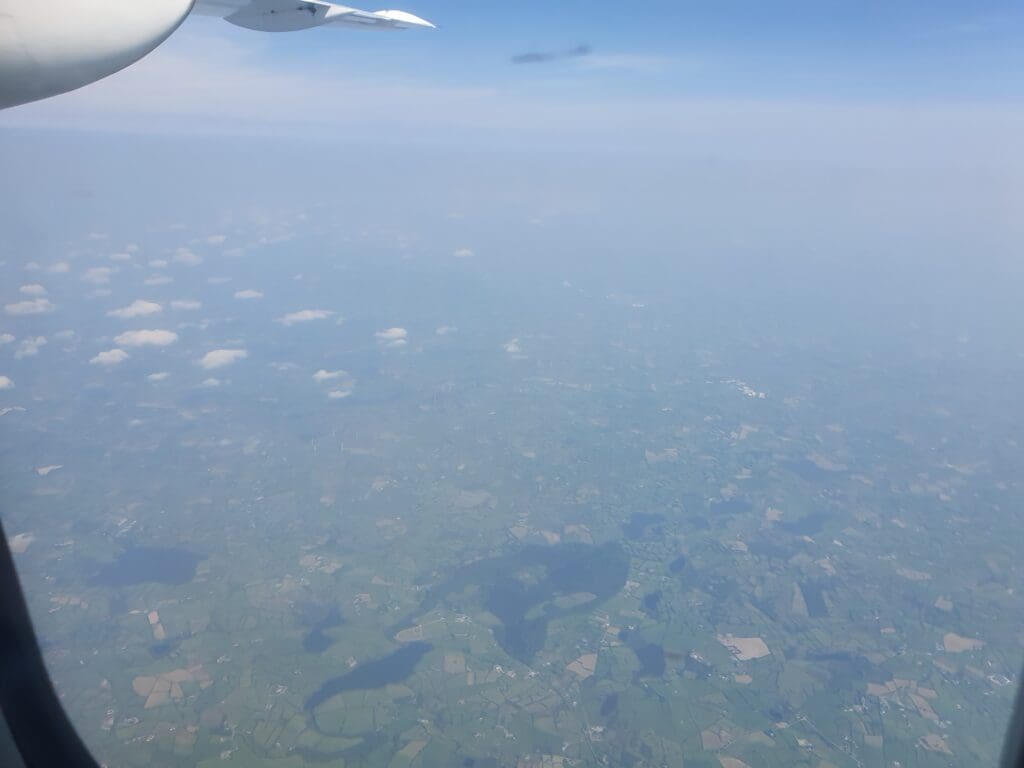
Upon returning to my seat, the aircraft had reached its low cruising altitude of 12,000 feet. From this altitude, a decent view of the green scenery of the Emerald Isle could be seen below. Given the short length of the flight, unsurprisingly there was to be nothing in the way of onboard service and with no inflight magazine I had little to do than admire the world below and soak up the atmosphere of the Fokker 50 – not that that was anything to complain about! After leaving Dublin behind, the Fokker cut across County Meath and then County Cavan and Country Monaghan before reaching Northern Ireland. As the aircraft approached Enniskillen, clouds rolled in below and blocked any view of the ground until the aircraft found itself on final approach to Donegal Airport.
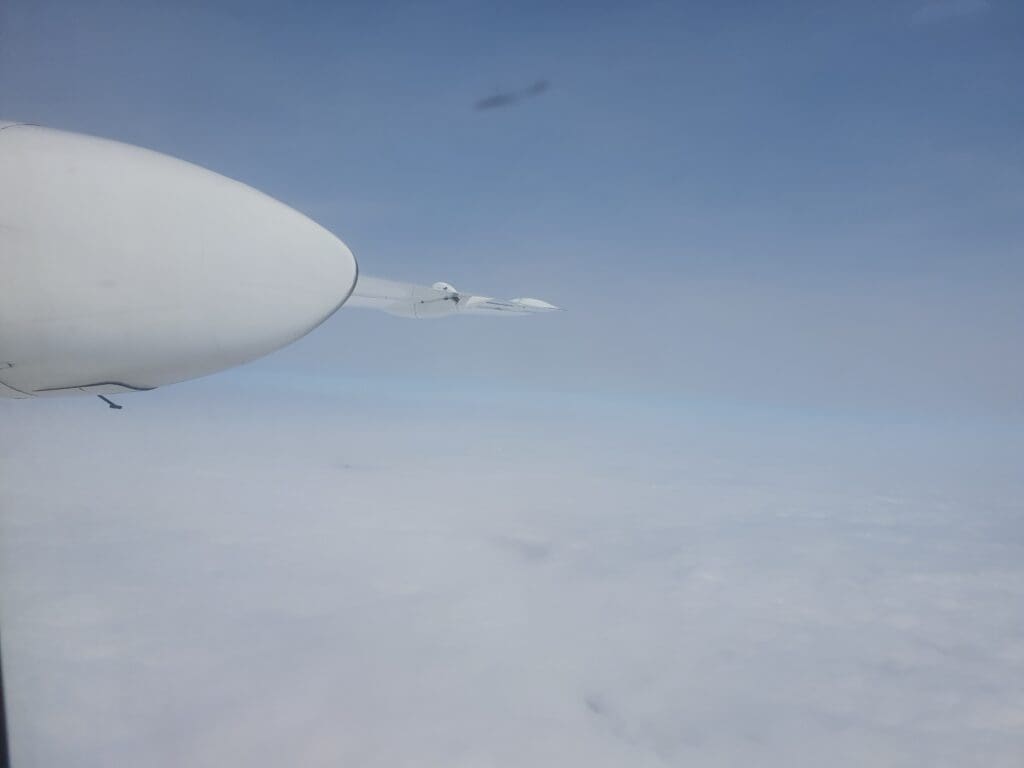
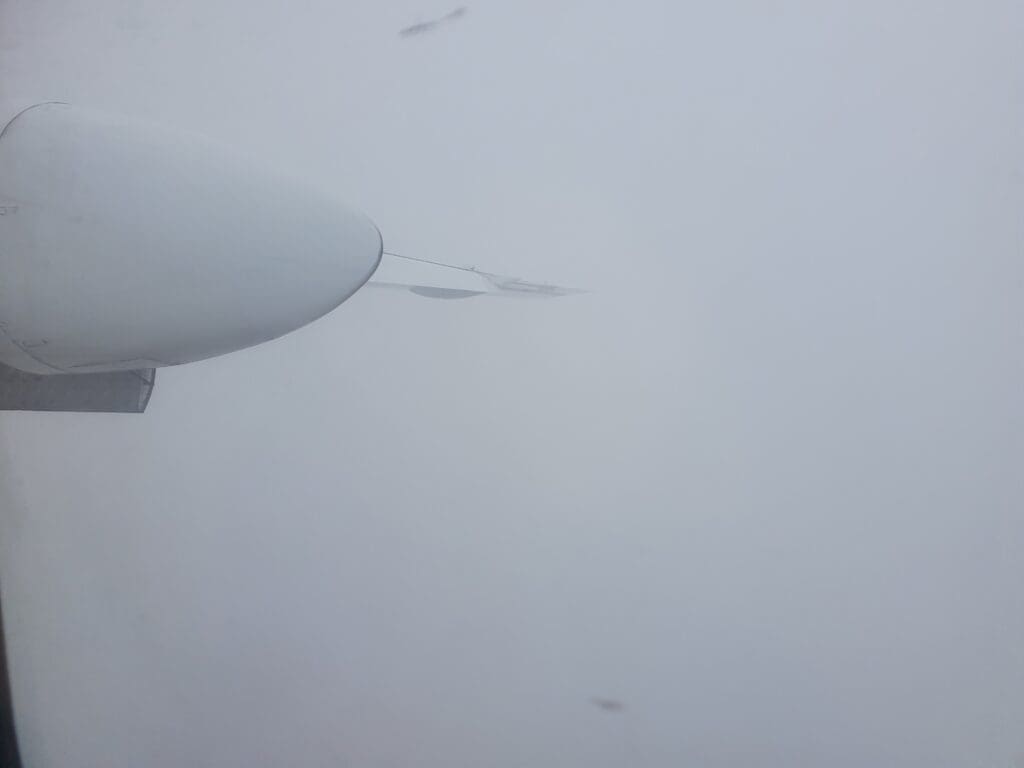
Given the flight’s short distance, it came as no surprise to feel the aircraft gently sinking back towards the ground at 1330 as the aircraft reached Northern Ireland’s western border. Moments later one of the pilots performed a barely audible announcement during which details regarding the weather in Donegal could be heard before this was concluded and the seat belt signs were turned back on once again. This was then followed by an announcement by the flight attendant who then proceeded to check that all was in place for our arrival into Donegal before taking their seat in the rear galley.
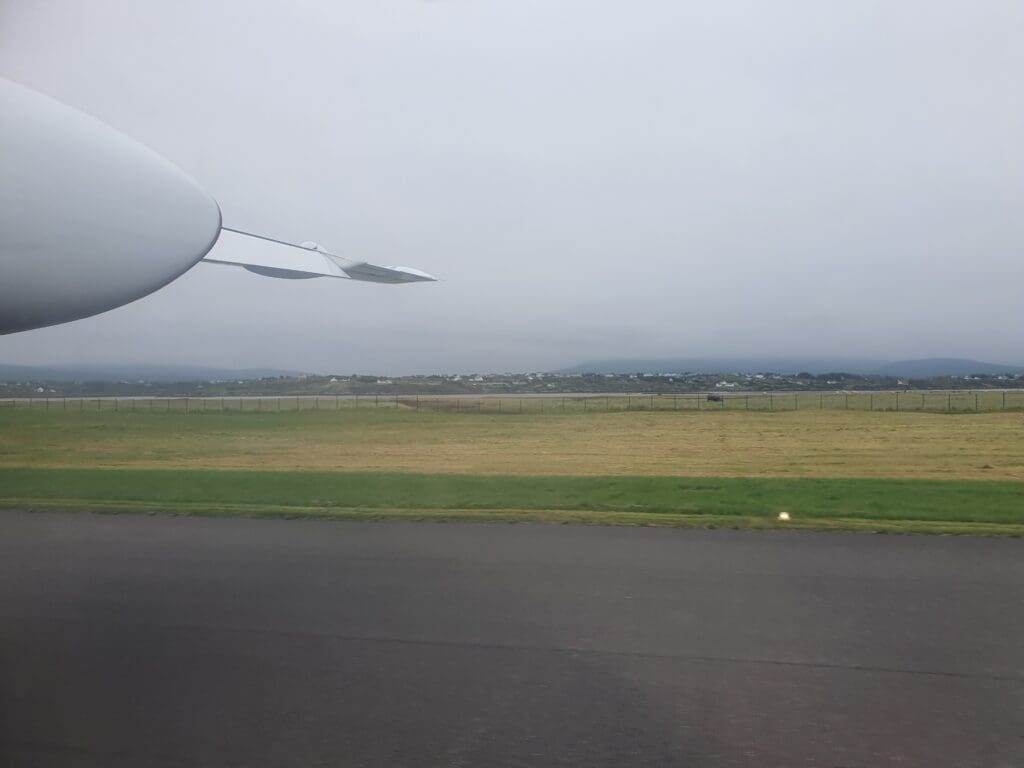
Indicating that Donegal was not enjoying the same sunny weather as we had left behind in Dublin, full flaps and gear were extended some time before the aircraft sank into the clouds and the aircraft decelerated with a good few lumps and bumps. Once in the clouds, the Fokker cut through these in no time and soon enough the green rocky landscape of Donegal came into view a short distance below the aircraft. As the Fokker neared the airport, the rocky landscape was replaced by the fields, houses and gardens of Mullaghduff. These then cleared as the aircraft darted over the perimeter fence and whizzed past the small terminal building before touching down on Runway 03 at 1343.
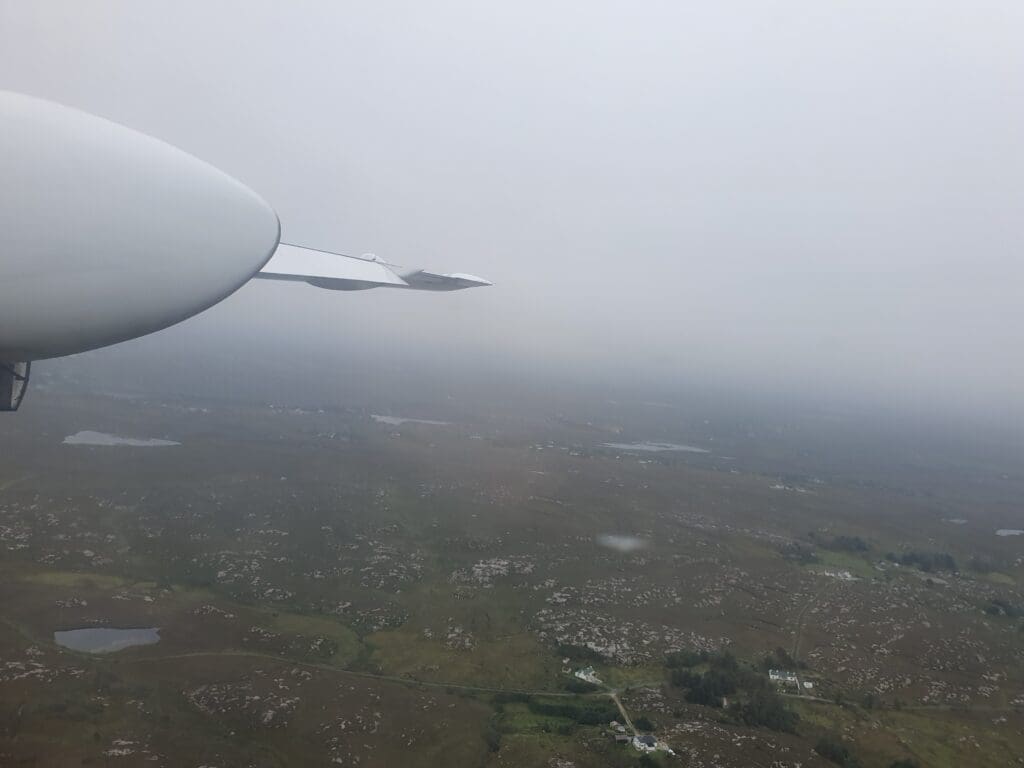
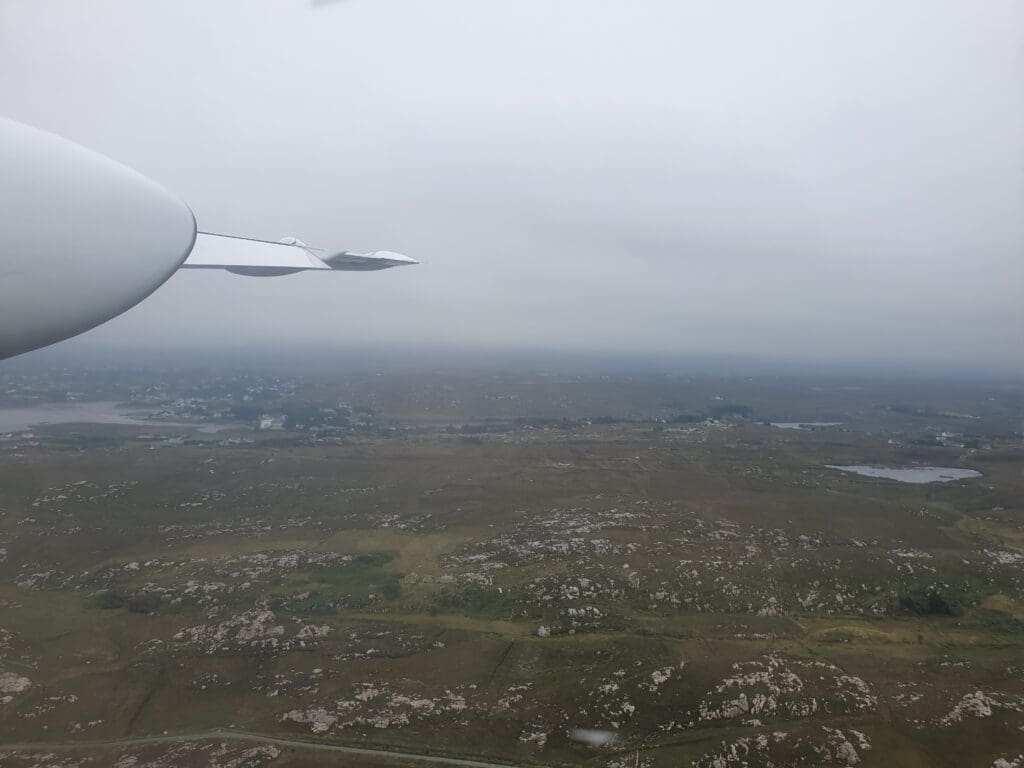
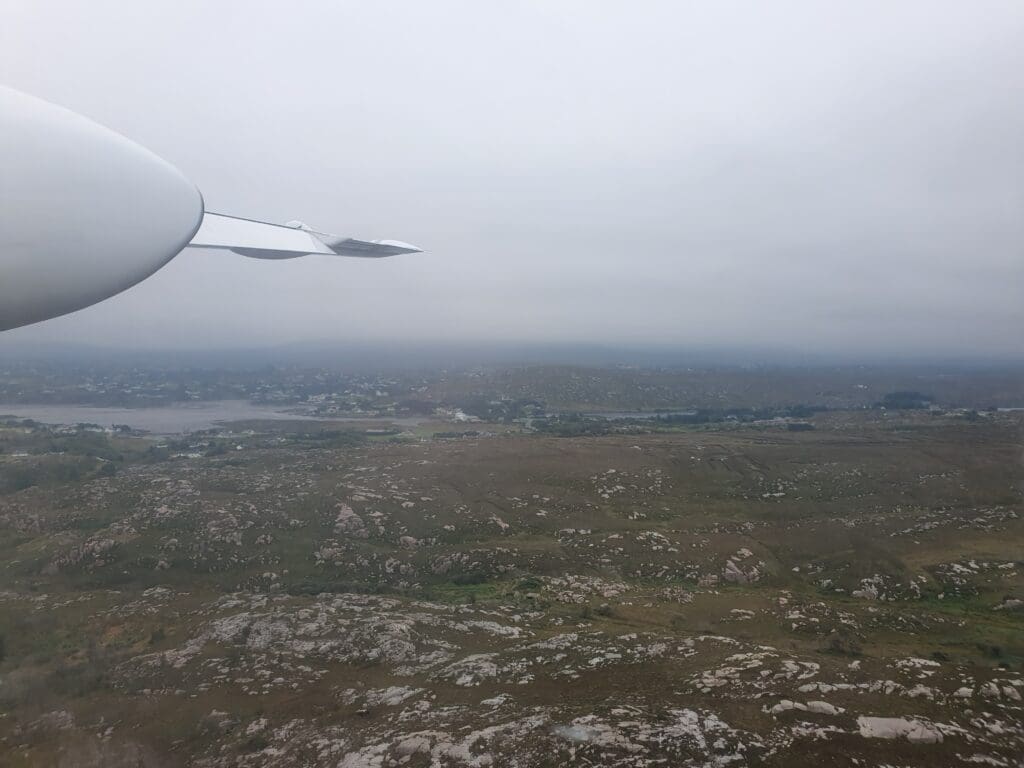
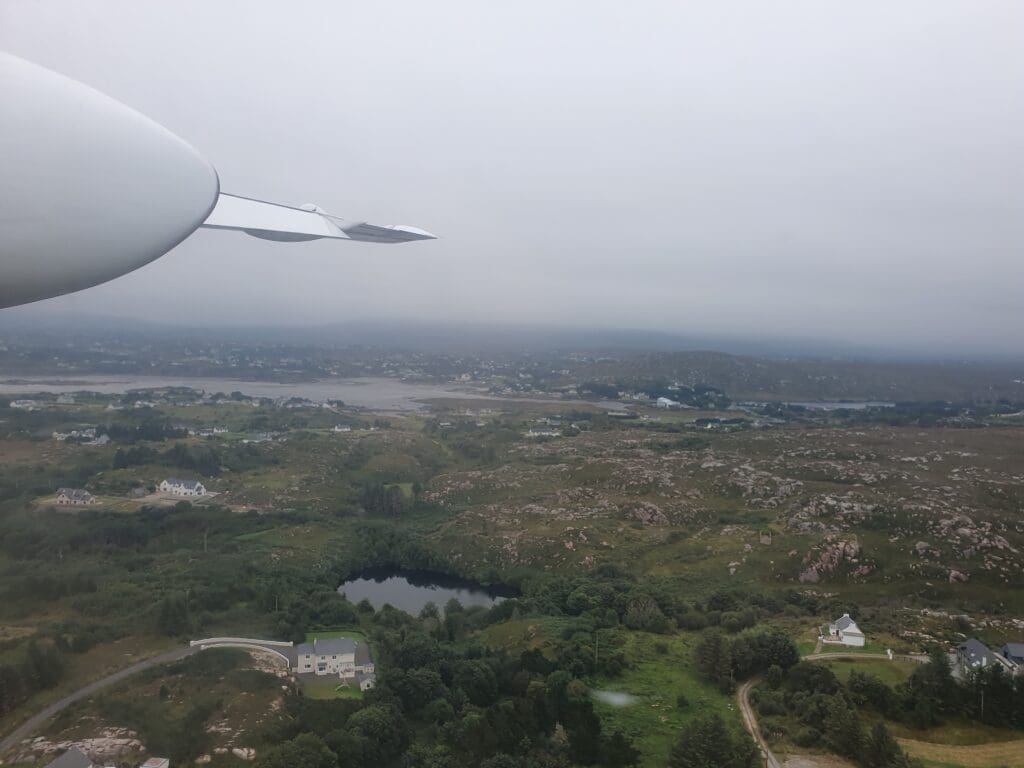
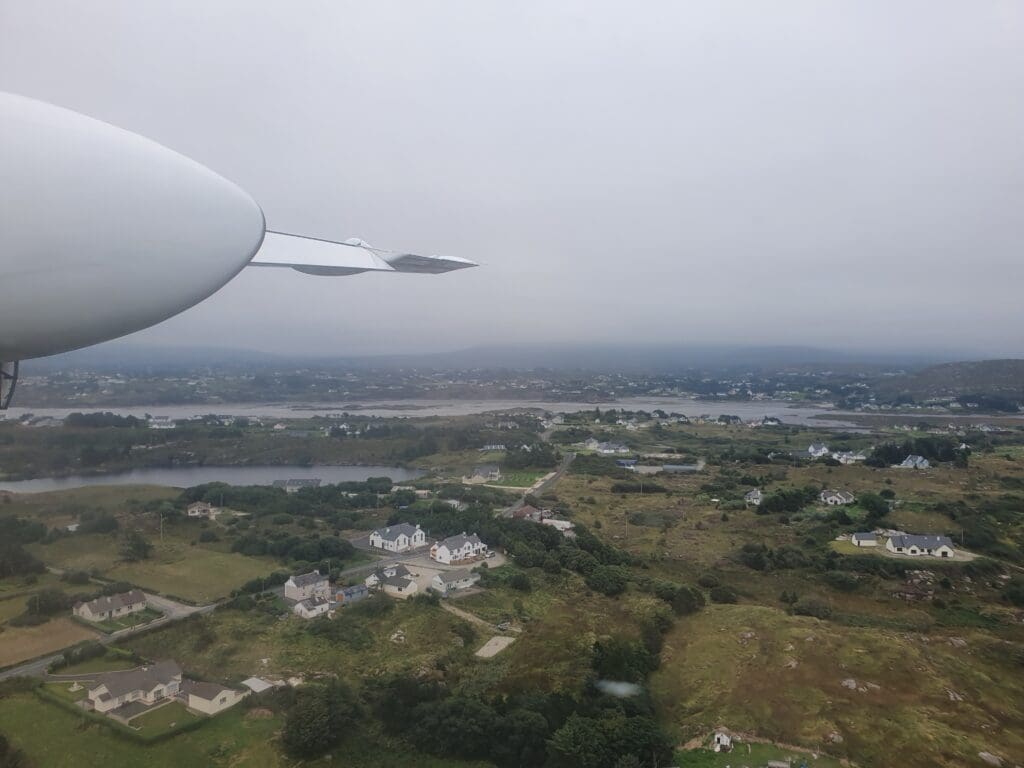
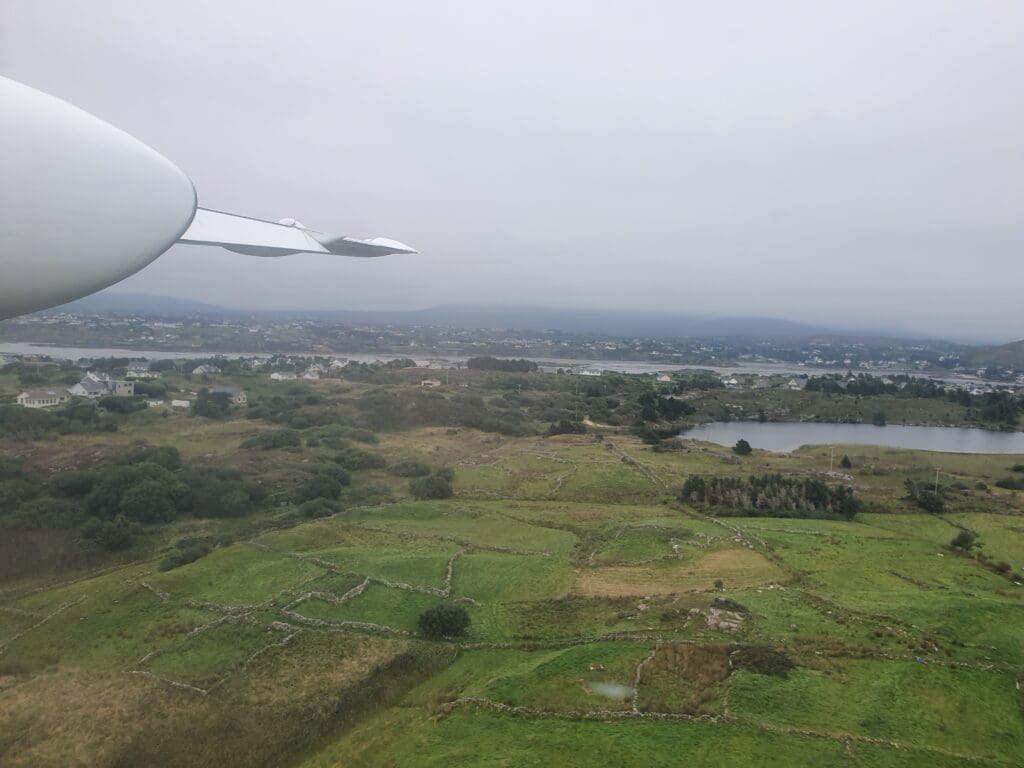
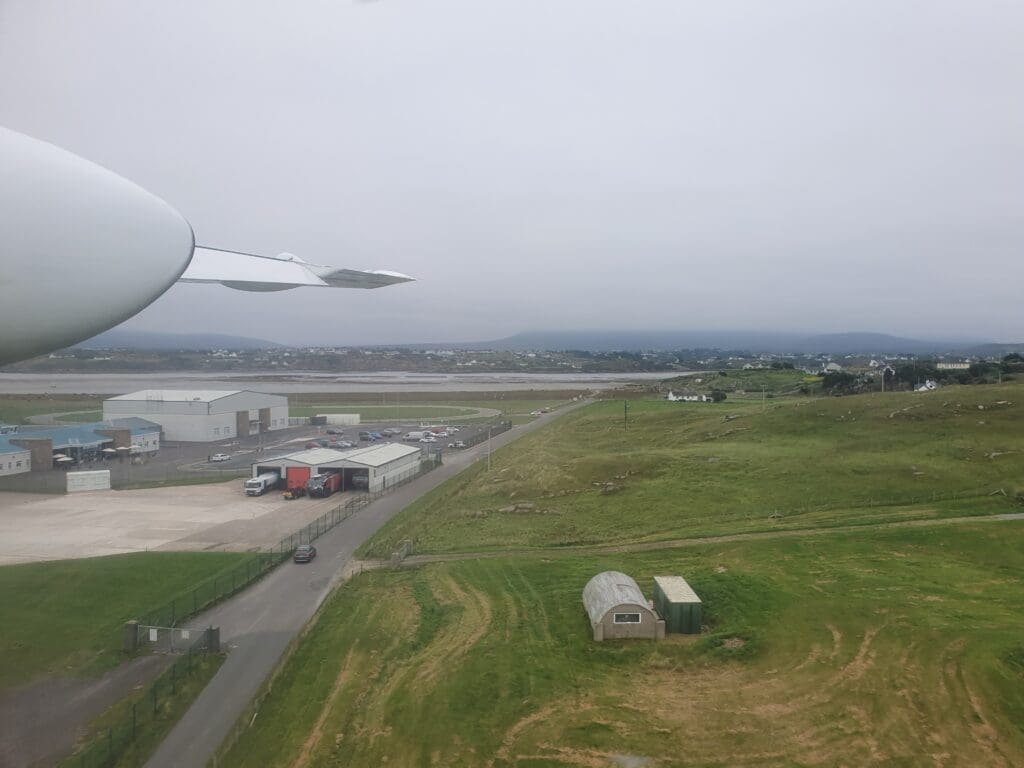
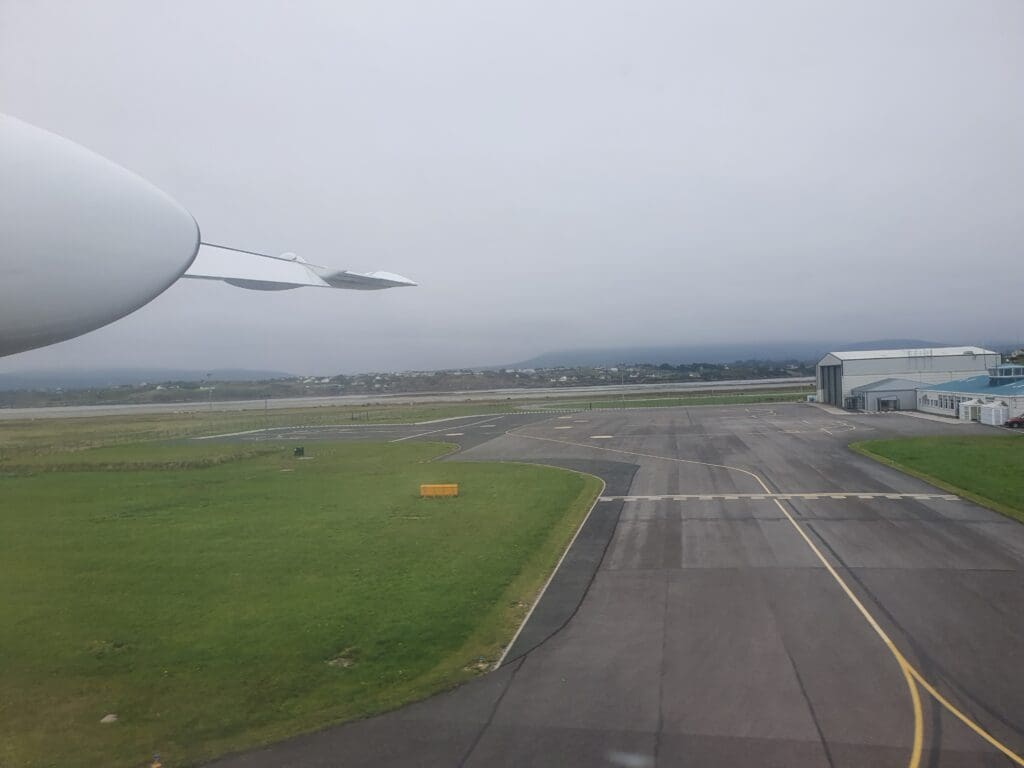
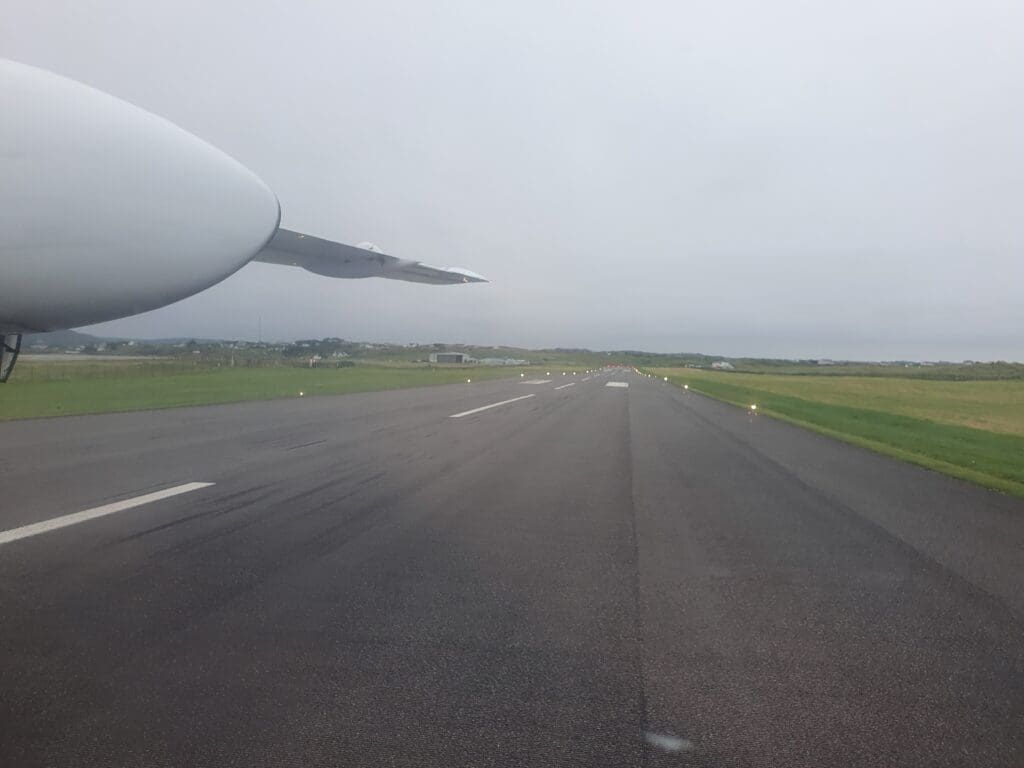
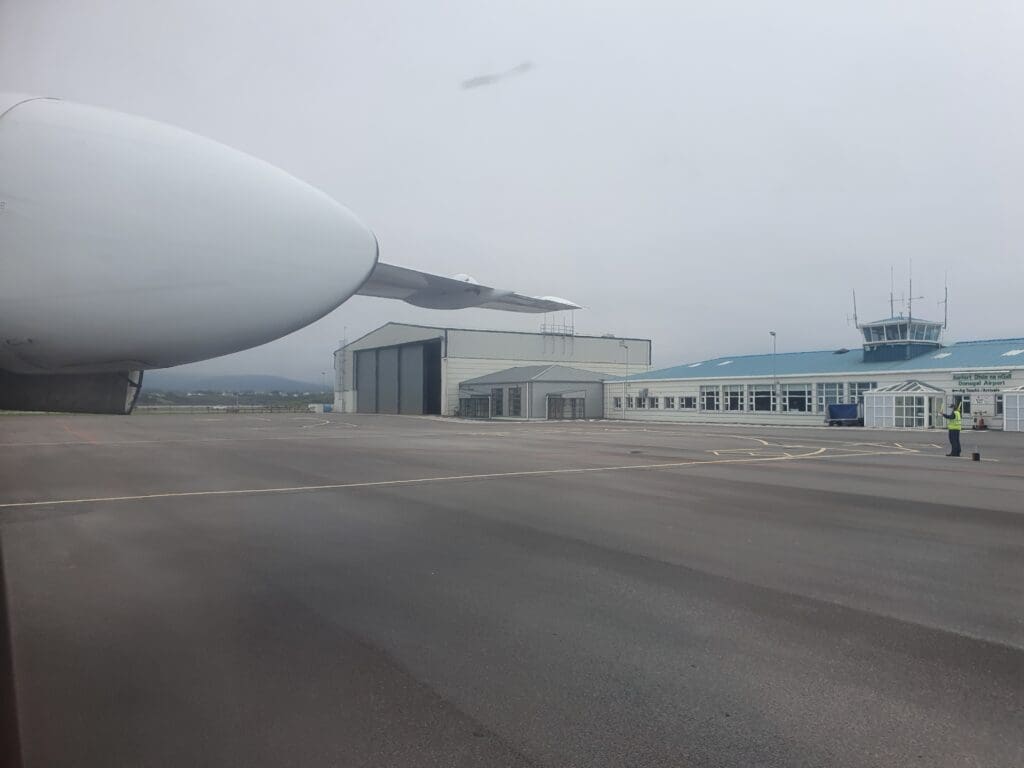
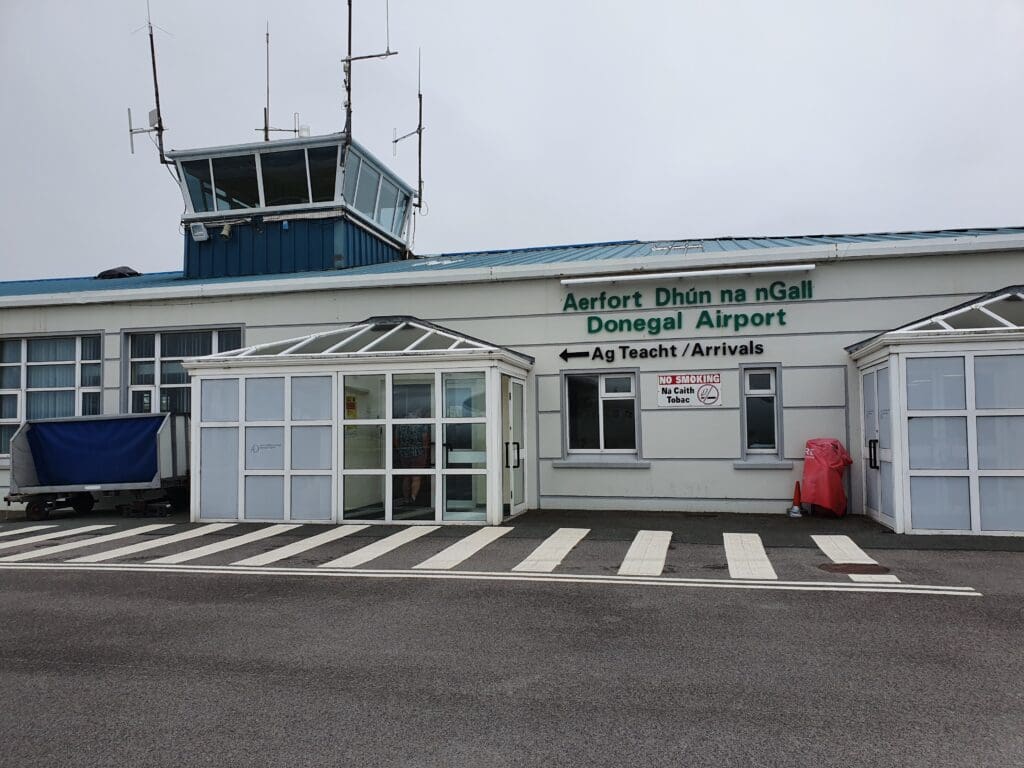
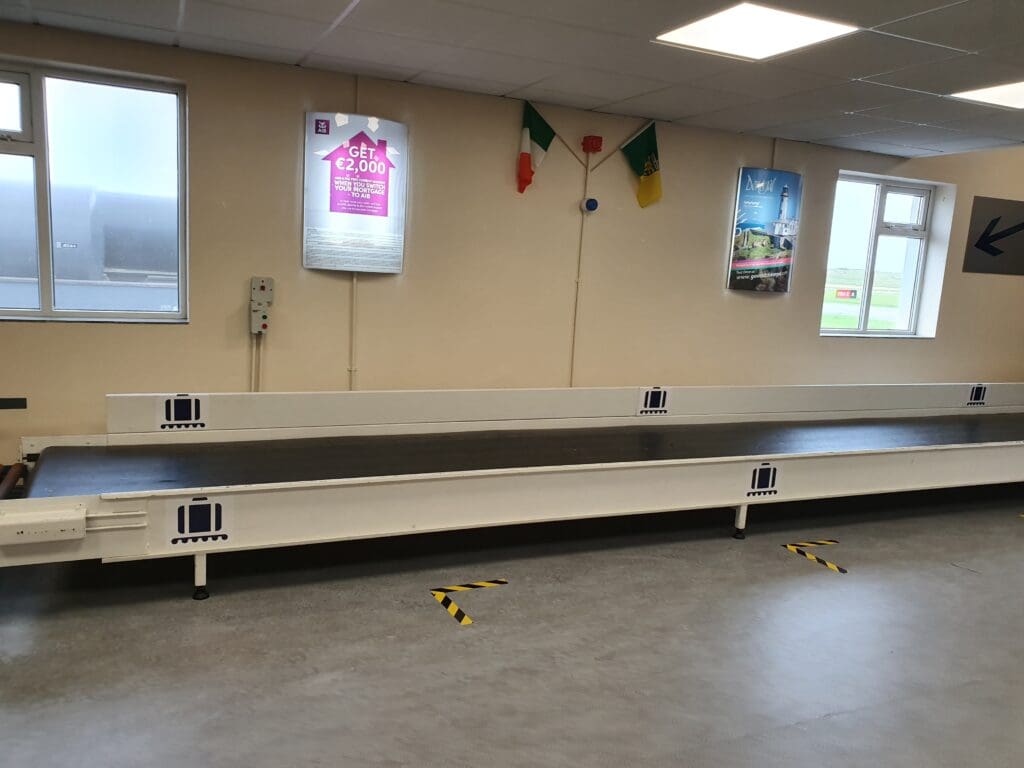
Whilst Donegal Airport’s 4904-foot runway can comfortably accommodate a Fokker 50, relatively harsh braking was applied and the aircraft soon slowed down before performing a tight 180-degree turn and backtracking along the runway. During this time, the flight attendant performed the usual welcome announcement – asking all to remain in their seats and thanking all onboard for flying with Amapola before heading to the front of the aircraft in preparation for opening the main cabin door. Once clear of the runway, the aircraft pulled into its position in front of the small terminal building before the engines were shut down, momentarily causing slight vibration before the cabin fell into total silence. With no jet bridge to be connected nor a bus needing to shuttle passengers off to the terminal, disembarkation was quick and I soon found myself thanking the flight attendant and walking off into the terminal building ready to explore Ireland’s rugged northwest coastline.