BA’s Luxury Danish Subsidiary: London City to Billund on a Sun Air Dornier 328
Background
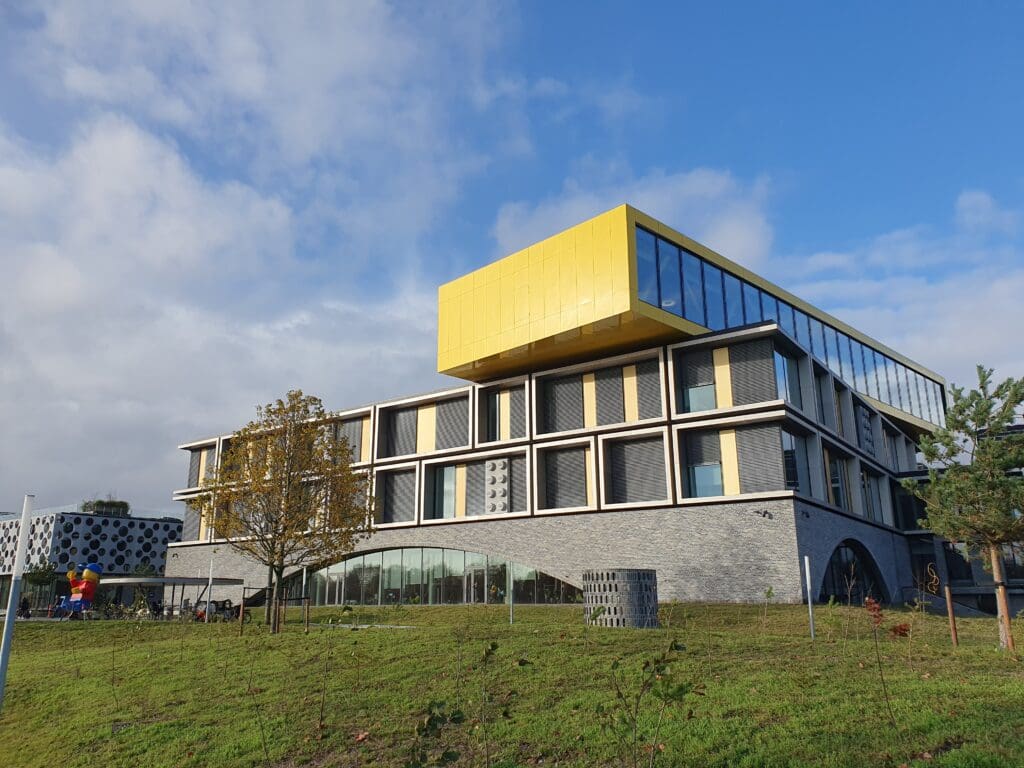
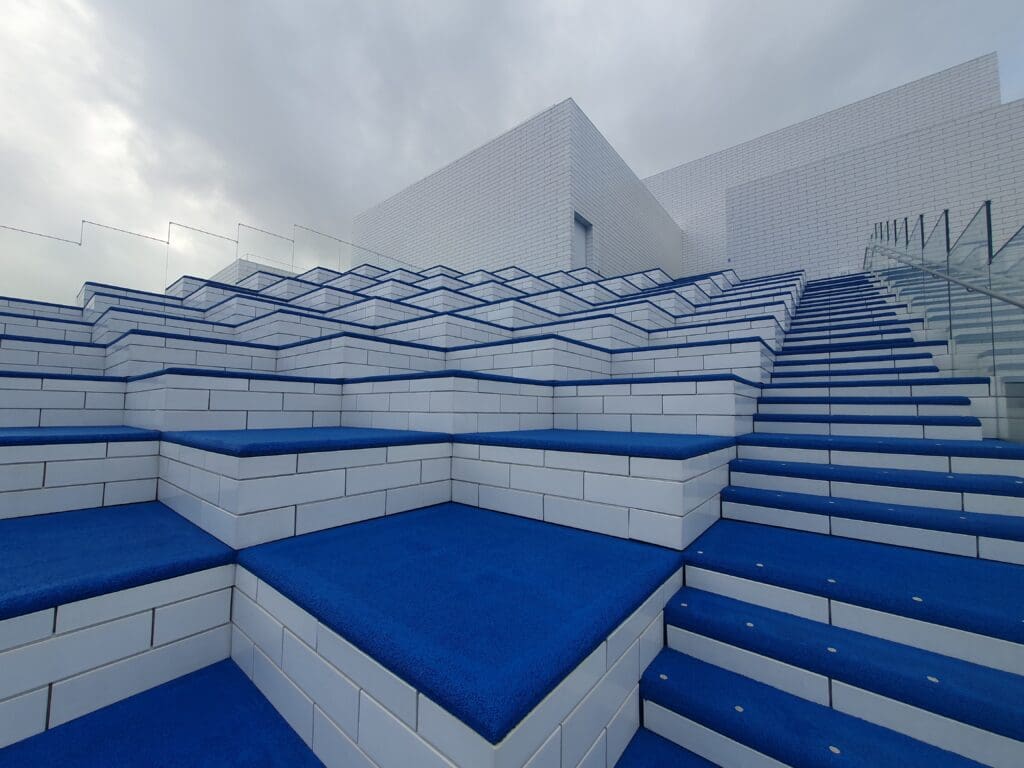
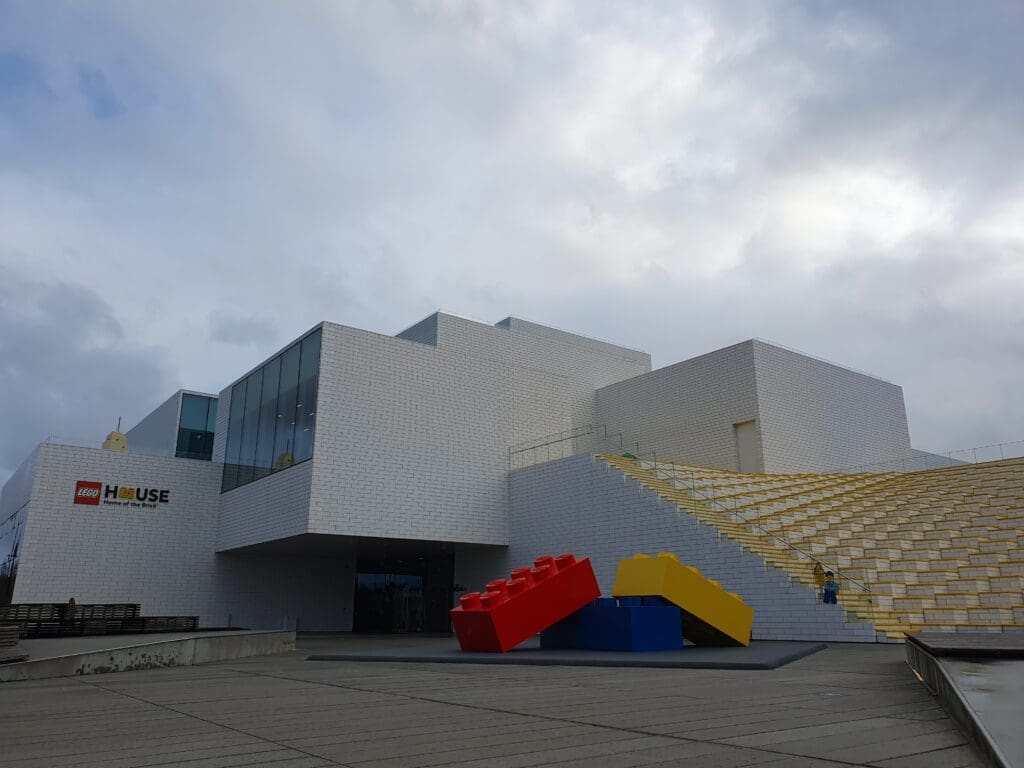
In the centre of Jutland around 134 miles to the east of Copenhagen sits the quaint Danish town of Billund. Home to fewer than 8,000 residents, this peaceful town may go unnoticed were it not to serve as the birthplace of one of the world’s most famous toy brands – Lego, and its associated theme park Legoland – the most popular Danish attraction outside of Copenhagen. However, aviation enthusiasts and experts may be familiar with Billund not for its association with its world famous multicoloured plastic bricks, but instead for its local airline, Sun-Air of Scandinavia. As one of the world’s relatively few Dornier 328 operators, and serving to be the only operator of scheduled Dornier 328JET services anywhere in Europe, today many enthusiasts make the pilgrimage to Denmark to sample a ride on one of these rare and unique airliners.
Whilst far from being the oldest model of aircraft in operation today, few would dispute the fact that the Dornier 328 is a rare airliner with the type remaining in scheduled service with just a small handful of carriers across the globe. Emerging from the drawing board during the 1980s, the Dornier 328 served to be the German entry to the regional turboprop battle of the era and sought to compete against types such as the British Jetstream 41, Canadian Dash 8, French ATR 42 and Swedish Saab 340. The key selling points of this new airliner were its higher cruising speed, altitude and range – with the type receiving a fair amount of interest from airlines across the globe. In December 1991 the Dornier 328 took to the skies for the first time, although its testing phase was marred by a serious accident in which an aircraft temporarily lost control and the six propeller blades of one engine separated and punctured the fuselage. Remarkably, the aircraft’s occupants returned to earth safely and the aircraft was repaired and returned to testing duties!
In October 1993, the first Dornier 328 entered commercial service with the long-defunct Swiss regional carrier Air Engiadina. Despite the initial interest in the Dornier 328 and a significant order for 35 aircraft placed by American regional airline Horizon Air, the project faced multiple setbacks. These included the economic challenges of the 1990s, as well as tough competition from other turboprop airliners and the rise of regional jets. Seeking to secure the Dornier 328’s future, in 1995 Dornier partnered up with American manufacturer Fairchild Aircraft – with plans emerging for a stretched variant as well as a larger regional jet airliner (which seemed to bear a strong resemblance to the later Sukhoi Superjet!). Unfortunately, neither of these projects took off however this transatlantic partnership did result in the development of a re-engined Dornier 328 armed with two Pratt & Whitney Canada PW306B turbofan engines – with this new version imaginatively named the Fairchild Dornier 328JET. This makes the Dornier 328 one of the very few (perhaps only?) airliners to have both a jet and turboprop variant in regular operation. Nevertheless, despite this, Dornier’s financial woes and their insolvency in 2002 brought an end to mainstream production of the type. By this time a total of 327 Dornier 328s had emerged from the factory (217 turboprops and 110 jets). Although it is worth noting that there have been multiple attempts to restart production of the type, with one example manufactured by South Carolinian AvCraft Aviation, with Deutsche Aircraft and the Sierra Nevada Corporation also planning to recommence production of an updated, upgraded and more efficient version of the airliner.
Having taken a keen interest in aviation since 2006 and being based in the UK for much of this time, the Dornier 328 is an aircraft that I have seen a fair bit of at airports across the country. Specifically, I had encountered the Dornier 328 in the guises of CityJet, EuroManx, Flybe, Loganair, ScotAirways and Suckling Airways. However, local operations ended in early 2019 when Loganair retired their last remaining Dornier 328, meaning that I had missed my chance to catch an ‘easy’ ride on a Dornier 328 domestic hop. Fortunately, all was not lost as Danish airline Sun-Air of Scandinavia, one of only three European airlines to deploy the Dornier 328 on scheduled passenger routes, had long-operated services between Denmark and both London City and Manchester, having previously also served Cambridge and Humberside.
Known not only for their fleet of rare Dornier 328s, Sun-Air is renowned for their high levels of service and I had been wanting to sample the delights of the carrier for quite some time. Having not been able to catch a ride on Sun-Air before the pandemic, in Spring 2020 the airline halted their scheduled services which had spanned across Western Europe – the carrier then serving Belgium, Denmark, France, Germany, Norway and the UK. Not resuming these for quite some time, I became a little concerned that I had missed the boat to fly with Sun-Air although thankfully, after over two years, these recommenced in September 2022 albeit with a very condensed route network consisting of flights between Billund and London City and Manchester. Finding myself with some time on my hands in between jobs in late October 2022, I finally decided to head to Denmark on Sun-Air. Primarily focusing on attracting a business clientele, tickets for Sun-Air’s services often come at business class prices and indeed on my chosen departure date, a one-way ticket from London City to Billund would set me back well over £300. Fortunately, with Sun-Air famously serving as a British Airways franchise partner, passengers can utilise Avios on these services and I thus decided to part with 9000 miles (plus £0.50) in exchange for a ride on the Dornier. Had I wished to, I could have also opted to reserve a seat in advance, although prices to do so seemed to be rather extortionate given the length of the flight – with seats priced at £20, £26 or £32.
The Journey
Living in the West London borough of Ealing, my airport of choice is usually Heathrow owing to the fact that I can make the door-to-door journey to and from the airport in around half an hour. Whilst far more convenient than the distant airports of Gatwick, Luton and Stansted, reaching London City Airport involves trekking across London from west to east. With my flight departing at 0945, on the morning of my day trip to Denmark, I decided to wake up at 0600 with the aim of leaving home by 0700. Having prepared all my things the evening before, following a quick coffee, bowl of cereal and a shower, I headed out onto the chilly November streets at 0655 and commenced my trek across to East London. From Ealing, there are a variety of ways to reach London City Airport by public transport – all of which involve at least one change. That morning, I decided to take a 30-minute journey on the infamous Central Line from West Acton Station, travelling deep into Central London’s subterranean world before disembarking at Bank Station in the City of London. Following a quick and painless transfer, I then caught a Woolwich-bound Docklands Light Railway (DLR) train out to the Docklands.
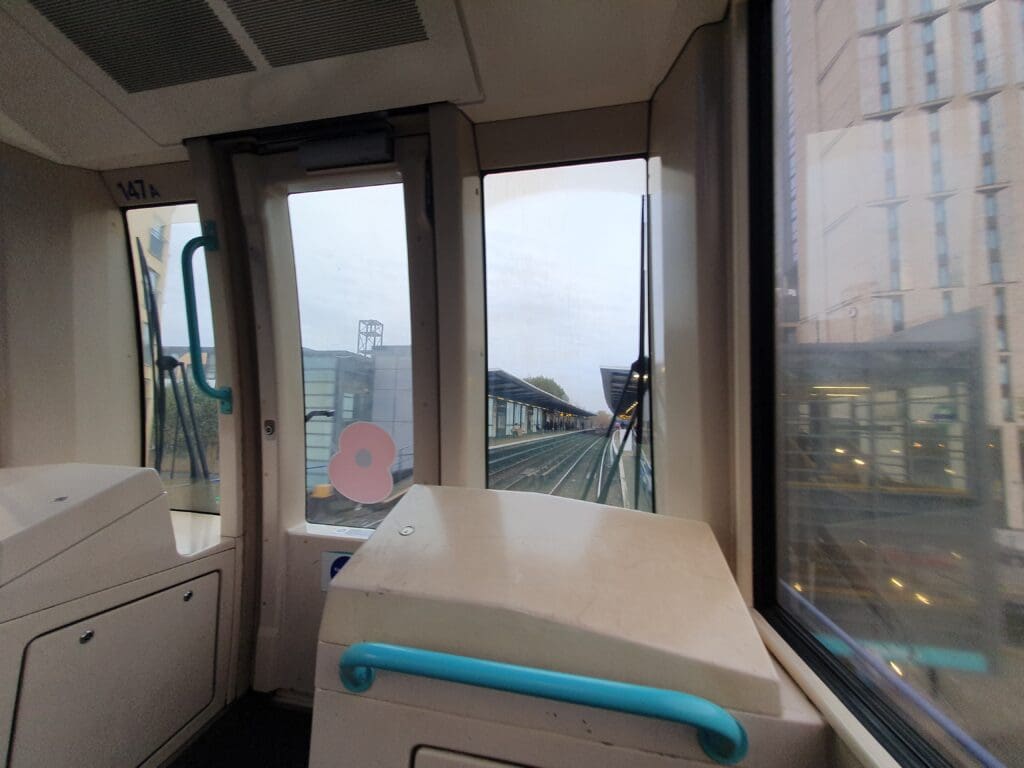
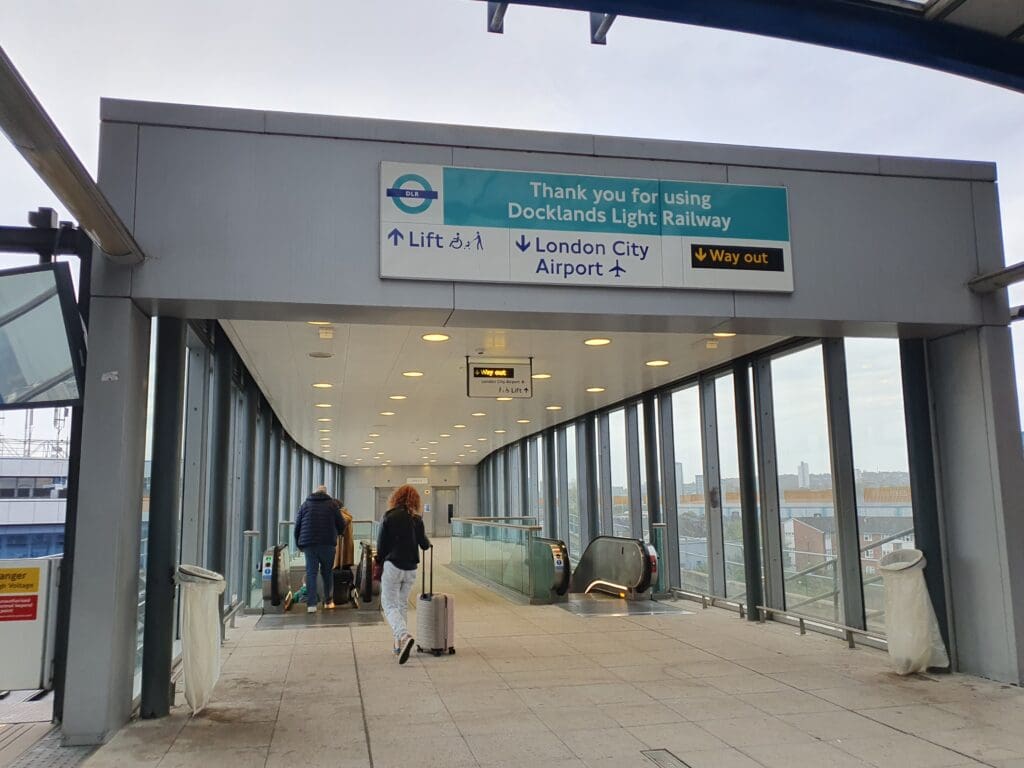
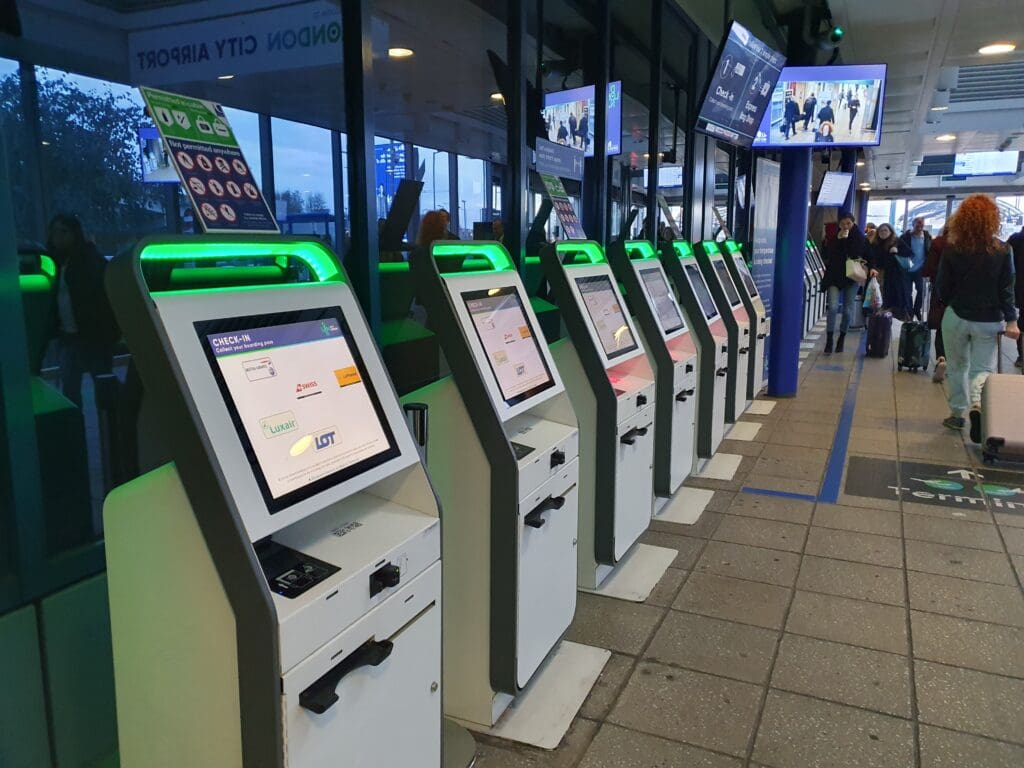
Whilst London City Airport welcomed its first fee-paying passengers in 1987, it wasn’t for another eighteen years that the airport was integrated into London’s rail network – with the airport’s own DLR station opening in 2005. Built above ground and just across from the terminal building, following a 65-minute journey I hopped off the train and made the minute-long walk over to the terminal. This consisted of a quick descent to ground level by means of an escalator, a tap of my Oyster card and a short walk along a covered walkway lined with check-in machines. With London City Airport enjoying somewhat of a heyday and offering passengers direct access to a veritable smorgasbord of destinations across Europe, some may be surprised at the seemingly minuscule size of the terminal’s check-in hall with this arguably more reminiscent of a small regional airport rather than one of Europe’s business travel hubs. Inside, a small number of check-in counters could be seen on one side of the hall alongside several automated bag drop-off counters and plenty of check-in machines. With the lack of check-in counters perhaps hinged on the assumption that London City Airport’s typical corporate clientele travel light and check-in online. Other than these, a local branch of café chain Pret-a-Manger could be found opposite the check-in desks allowing passengers and non-passengers alike to enjoy a quick refreshment.
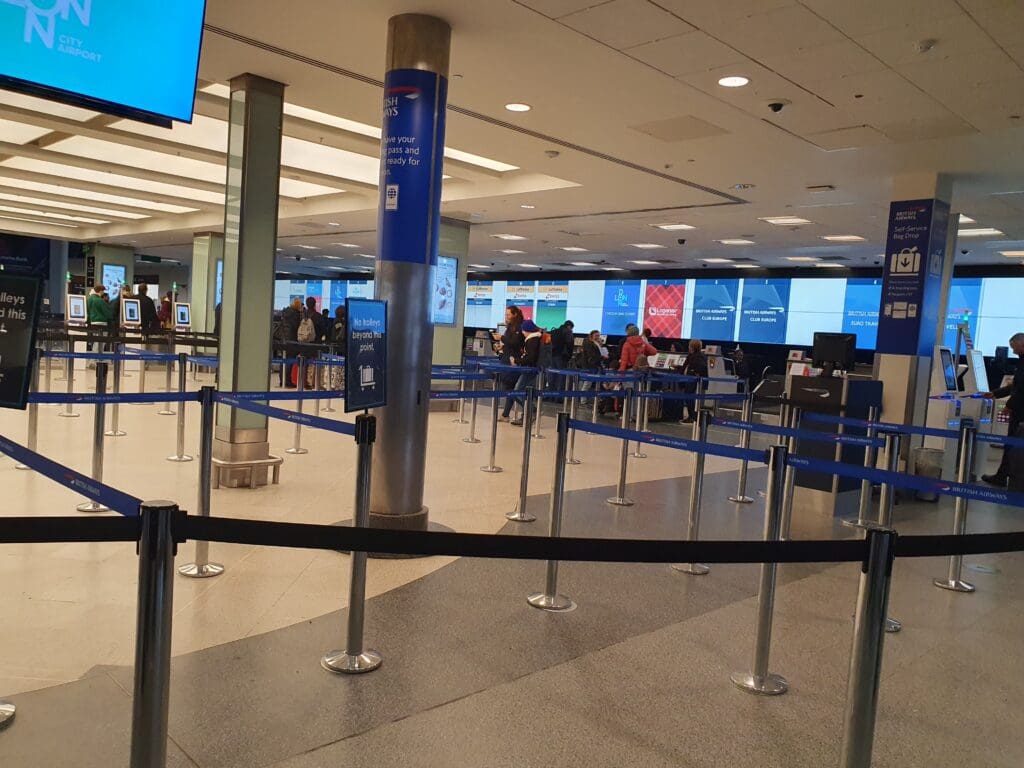
Turning to the departure boards, with 27 departures prior to my flight’s 0945 departure time, plenty of passengers could be seen scurrying about in all directions. To complicate matters, the doors for both domestic and international arrivals sit on one side of this hall and thus a constant stream of passengers walk against the flow of departing travellers creating often busy scenes. Having checked in online and with no hold luggage to drop off, after soaking up the busy atmosphere for a few seconds I decided to head up the escalators and journeyed over to the security area. One of London City’s key selling points is the fact that passengers can turn up a relatively short time before their flight and still make this – with those departing on British Airways’ services advised to head through security just 20 minutes before departure. After tapping my boarding pass on one of the automated gates, I walked over to the security hall and joined what seemed to be a fairly long queue up to the security checkpoints – with two out of four of these open that morning. Thankfully, I had not cut things fine as it took me a total of 15 minutes of queuing before I was greeted by a rather shouty security staff member at one of the two checkpoints.
Eventually, I arrived in the airside area and walked through the terminal’s minuscule duty free shop before arriving in the main airside area. Given the fact that London City Airport is designed with minimal waits inside once airside, the terminal does lack the same array of facilities that some may expect to see at a busy international airport. Meanwhile, aesthetically, I found the terminal to bear more in common with a motorway service station rather than an airport terminal. Perhaps hoping to capture the demographic of joyful and sorrowful passengers in need of a drink after a long day’s work, three bars are on offer, alongside two cafés – Café Nero and another Pret-a-Manger. In addition to the small duty free store, three shops are available in the terminal – a Boots, an electronics store and a WHSmiths. In terms of design, the airport features a small, busy and viewless central hub as well as a long thin leg branching off this and running along the apron to the west. As I have found to be the case during my previous departures from the airport, that morning many passengers seemed to be waiting in the main portion of the terminal and thus this seemed to be rather crowded with few spaces remaining available to sit and wait. Following a quick stop at a filthy set of toilets in the main waiting area – finding half of these were blocked and nearly overflowing, I made my way down the terminal’s ‘leg’ where I was pleased to find plenty of seats remaining available. As many expect to see in 2022, I found the terminal to be home to a good number of plug sockets and charging points as well as fast complimentary wifi which worked well throughout the terminal for the duration of my stay.
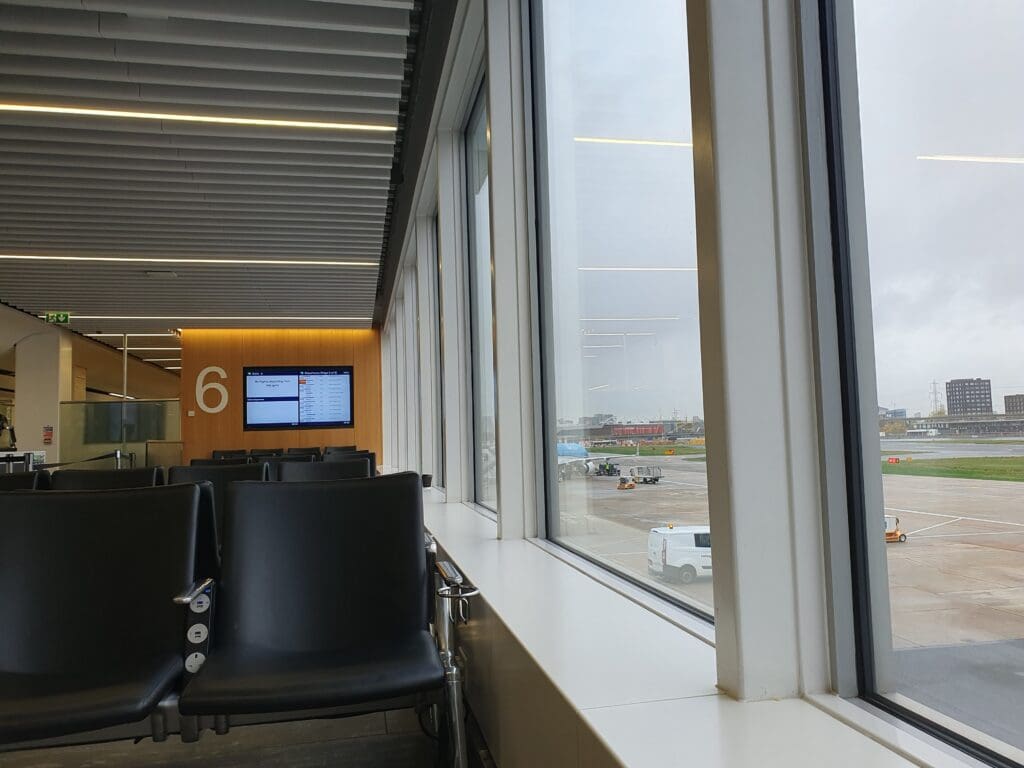
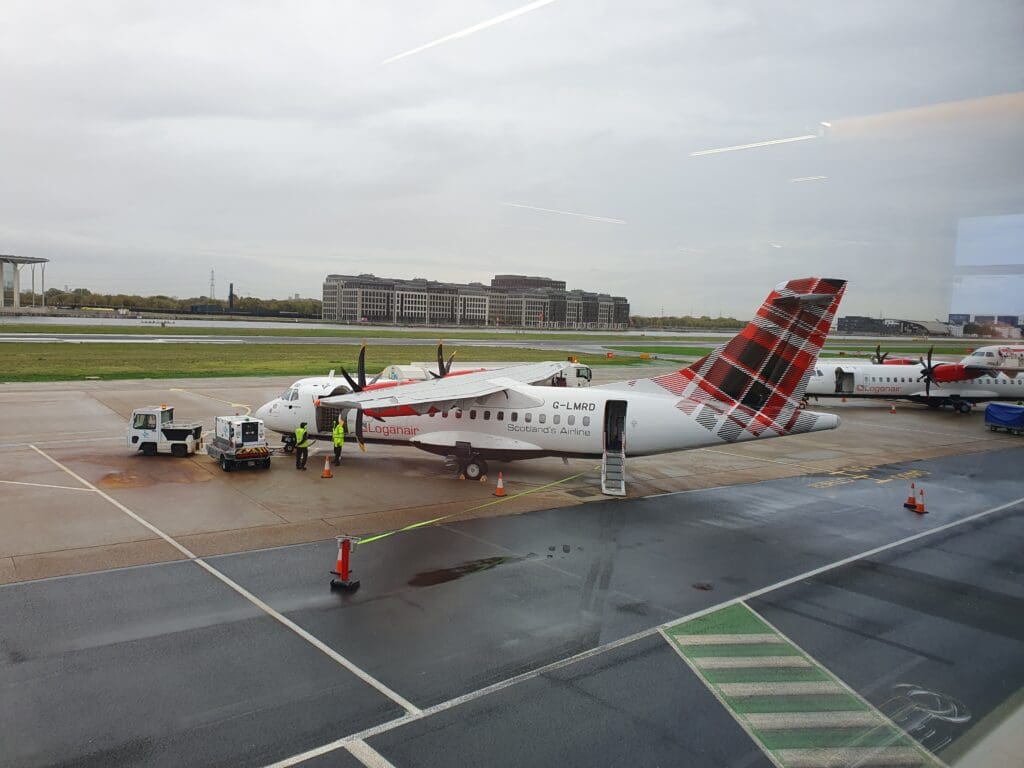
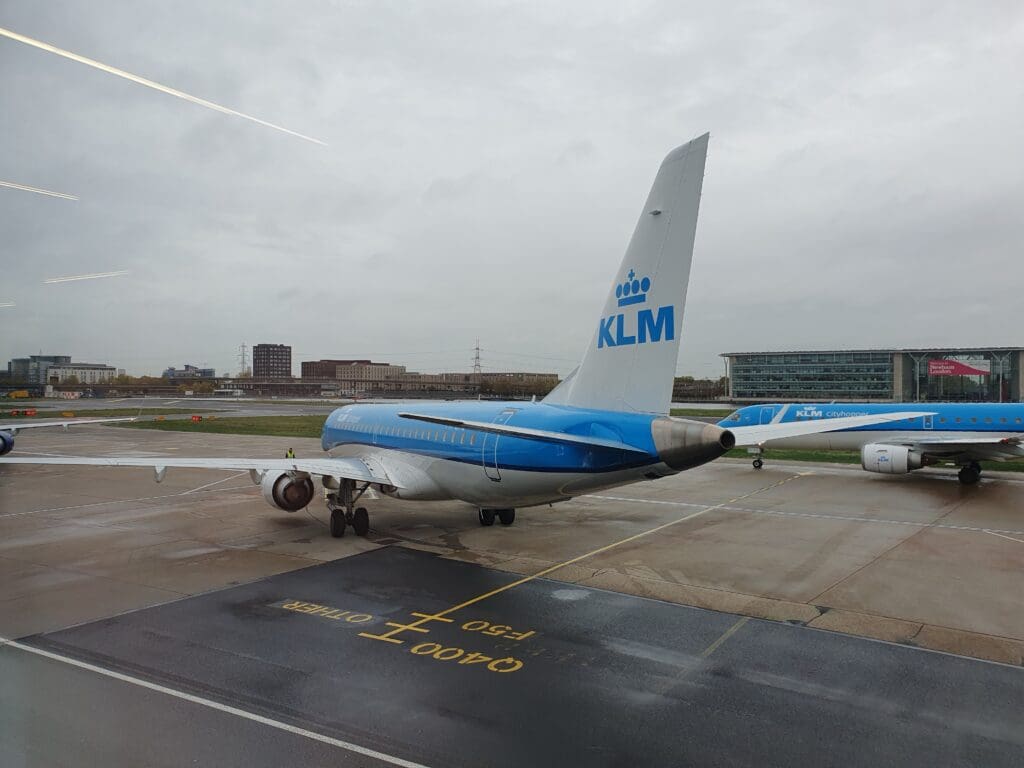
Aviation enthusiasts will be glad to hear that views onto the apron and runway can be had thanks to large windows throughout much of the terminal. After having a brief explore, I plonked myself down next to one of these and watched as aircraft came and went below. At the time of my flight in November 2022, London City Airport was served by nine airlines from across Europe and during my stay I managed to see aircraft from eight of these – BA CityFlyer, German Airways (operating for ITA Airways), KLM Cityhopper, Loganair, Lufthansa Cityline, Luxair, Sun-Air and Swiss. Whilst the Jumbolino quadjet once ruled the roost at the airport, today this role is filled by the Embraer 190 – with these currently undoubtedly serving as the aircraft of choice for many airlines serving the airport. In addition to scheduled services, I also spotted a Luxaviation Belgium Cessna 560XL Citation touch down at the end of its quick 40-minute hop from Brussels followed later by a NetJets Europe Embraer Phenom 300 touching down from Stuttgart.
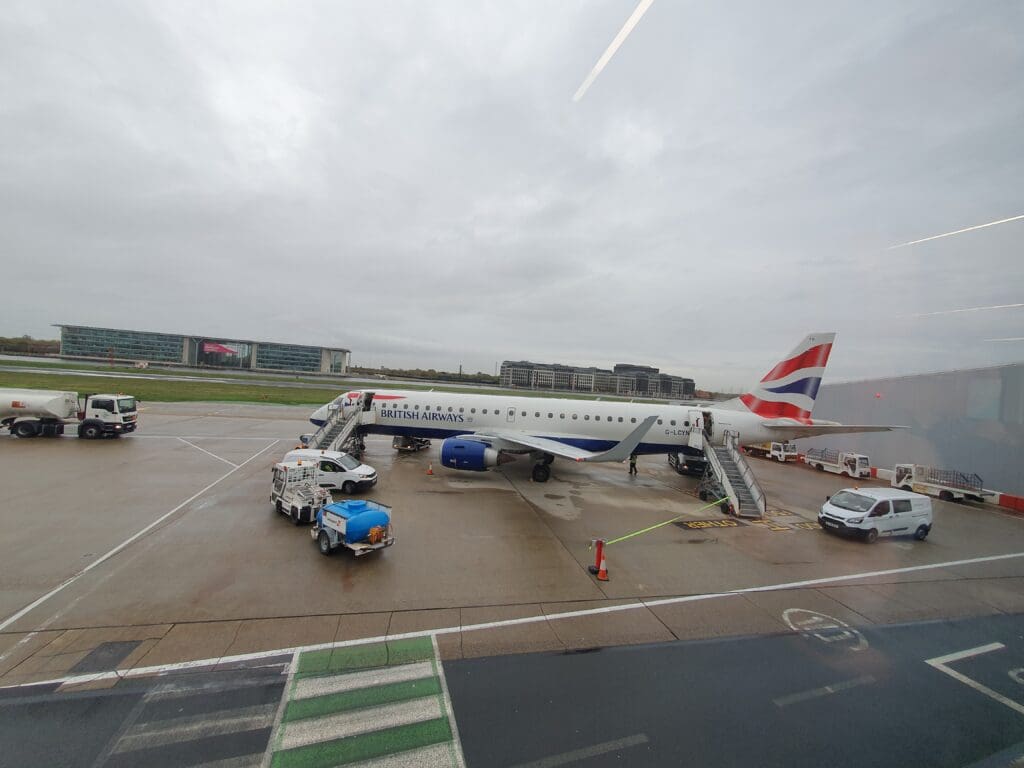
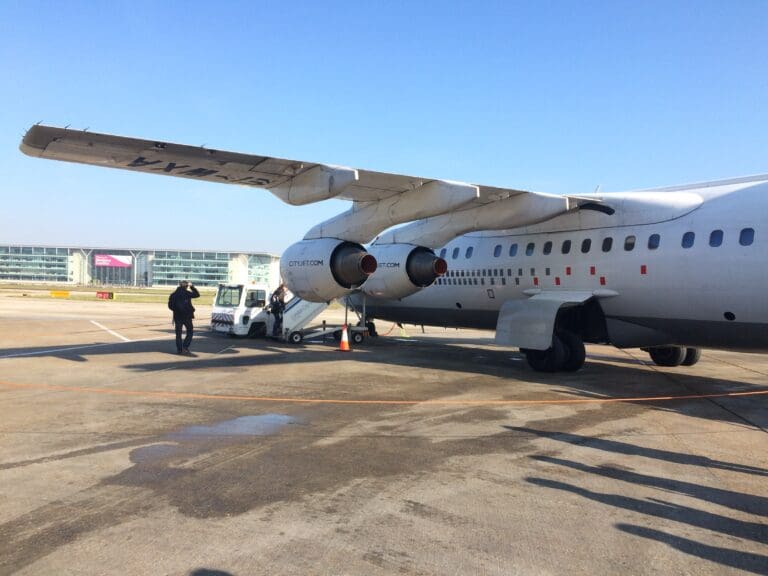
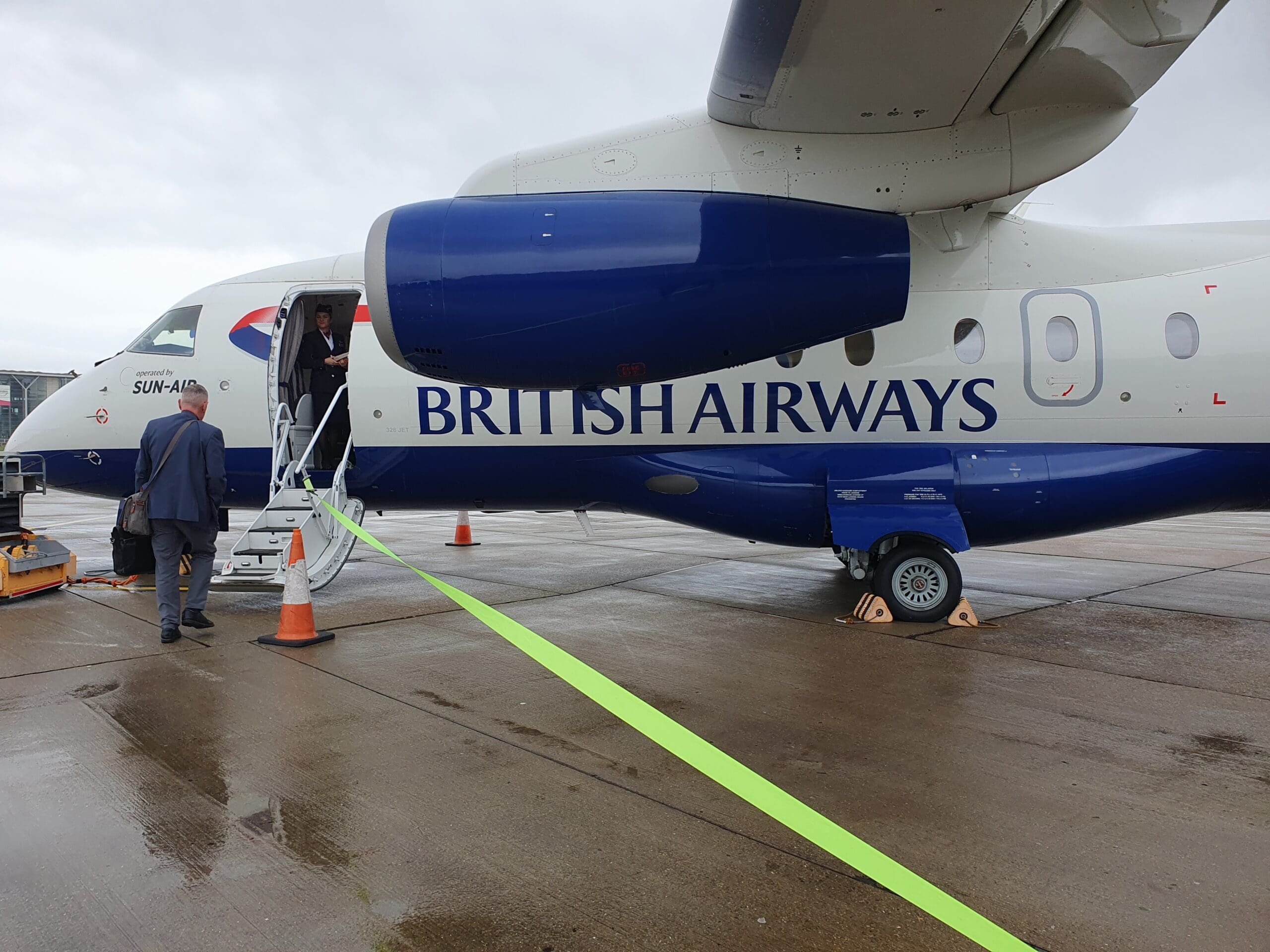
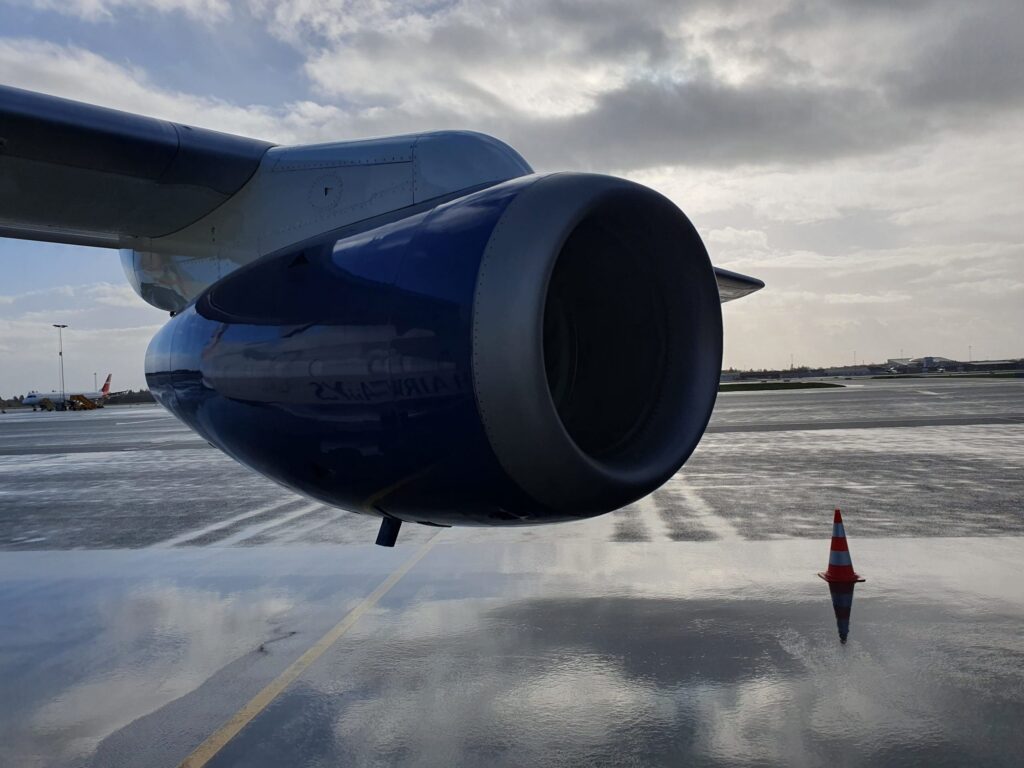
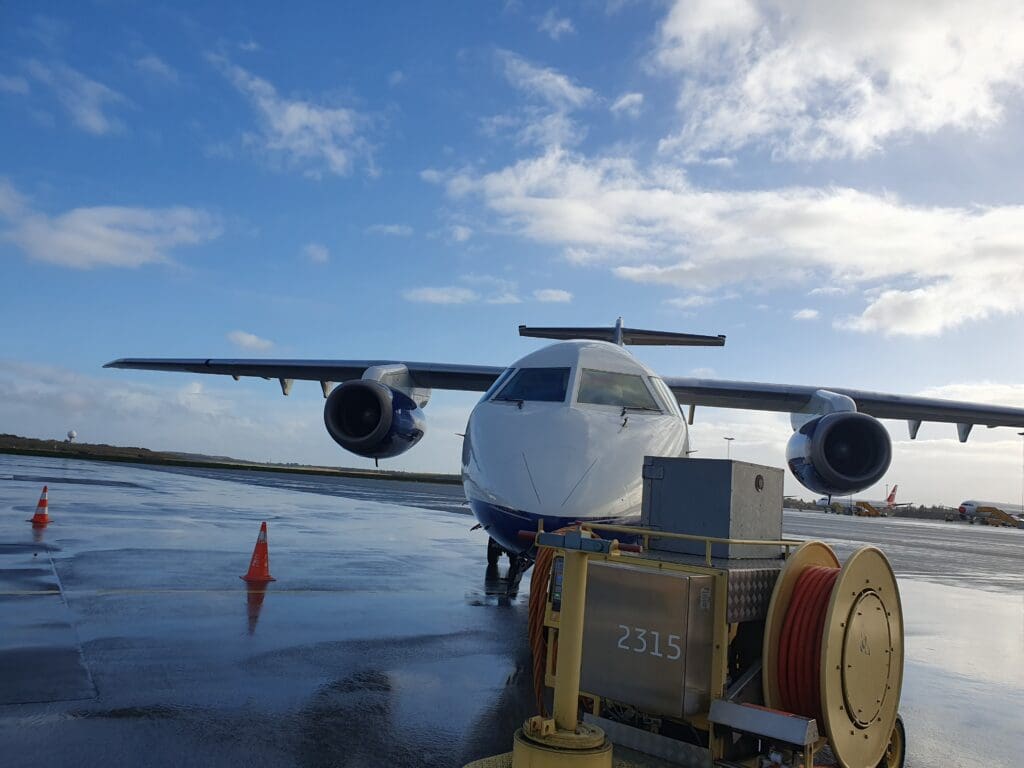
At 0905 I watched as the British Airways liveried Dornier 328 came darting down from the heavens and touched down on London City’s comparatively short and narrow runway. Whilst Sun-Air operate an impressive total of thirteen Dornier 328JETs, only one of these is authorised to fly into London City Airport and it was thus not difficult to decipher which aircraft would be taking me over to Billund that morning. As expected, this took the form of Dornier 328-310 Jet OY-NCO would be operating the service to Billund. Assembled at Dornier’s factory in the Bavarian village of Oberpfaffenhofen, this particular jet first took to the skies with the German test registration of D-BDXQ at some point in 2002, making it around twenty years old at the time of my flight in November 2022. Unfortunately, the first years of the aircraft’s life are shrouded in mystery and I was unable to find any photos of the jet until it was delivered to Sun-Air. Following testing, the aircraft received the American registration of N328HJ and was delivered to a mystery operator simply listed as a Wells Fargo Bank Northwest NA Trustee in September 2003. Over a year later in December 2004 the aircraft was then handed over to corporate operator Club Airways International as OE-HAB – although once again I was unable to find any details relating to this portion of the aircraft’s life. Following just a few months spent with the airline, in July 2005 the aircraft received its current registration and was delivered to its new home in Denmark. Initially sporting a smart corporate livery of blue, white and grey, the aircraft was presumably deployed on both Sun-Air’s scheduled services as well as charters for the airline’s corporate subsidiary, JoinJet. A little over a decade later, the aircraft was repainted into the familiar colours of British Airways, with nothing other than its Danish registration and the words ‘Operated by SUN-AIR’ underneath the cockpit window indicating that this is not operated by the British giant. As with many airliners across the world, during the pandemic, the aircraft was in long-term storage, with this ending up on the ground Thisted between June and November 2020, before being shuttled to Aarhus where it stayed until March 2021 before returning to charter work.
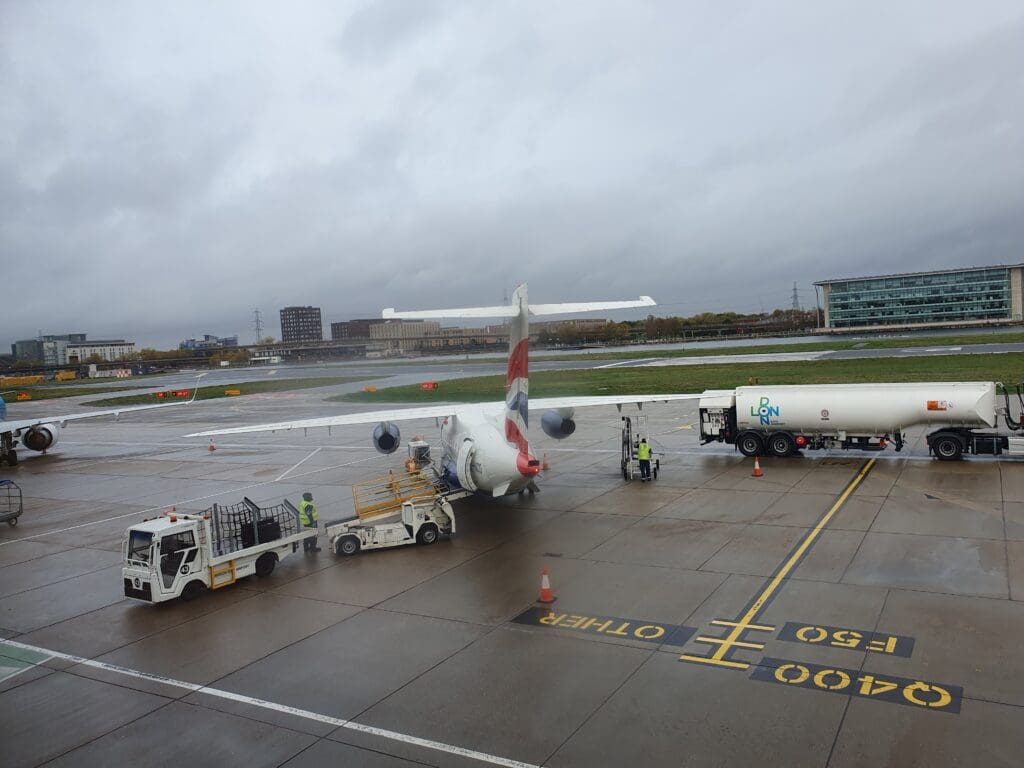
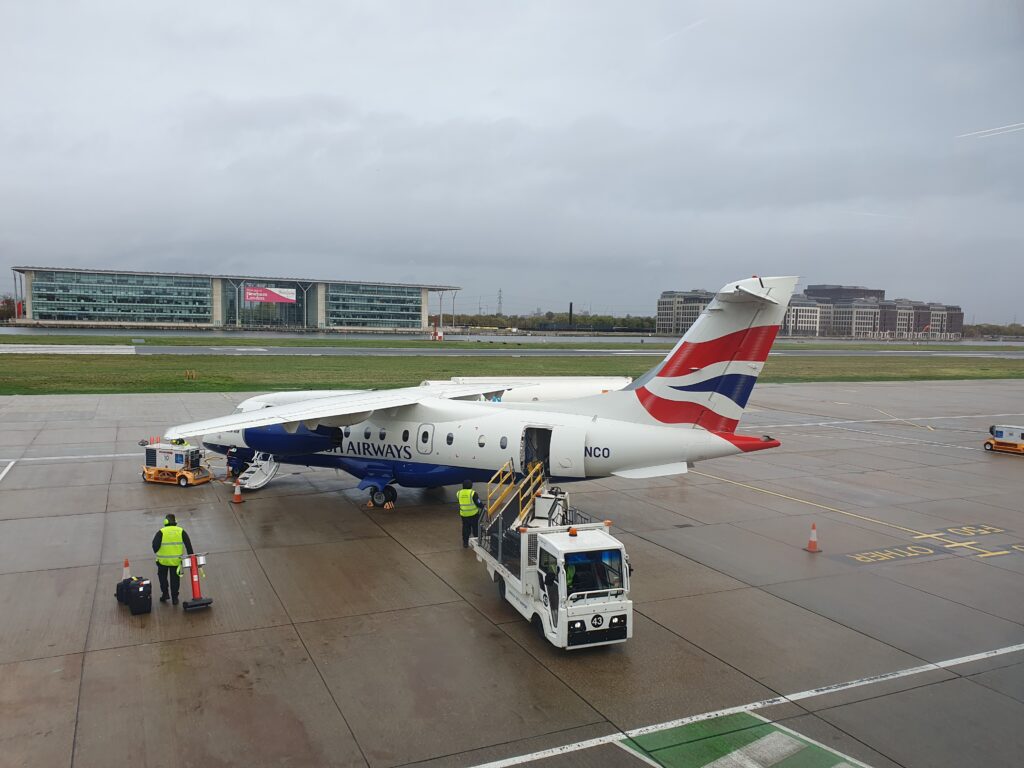
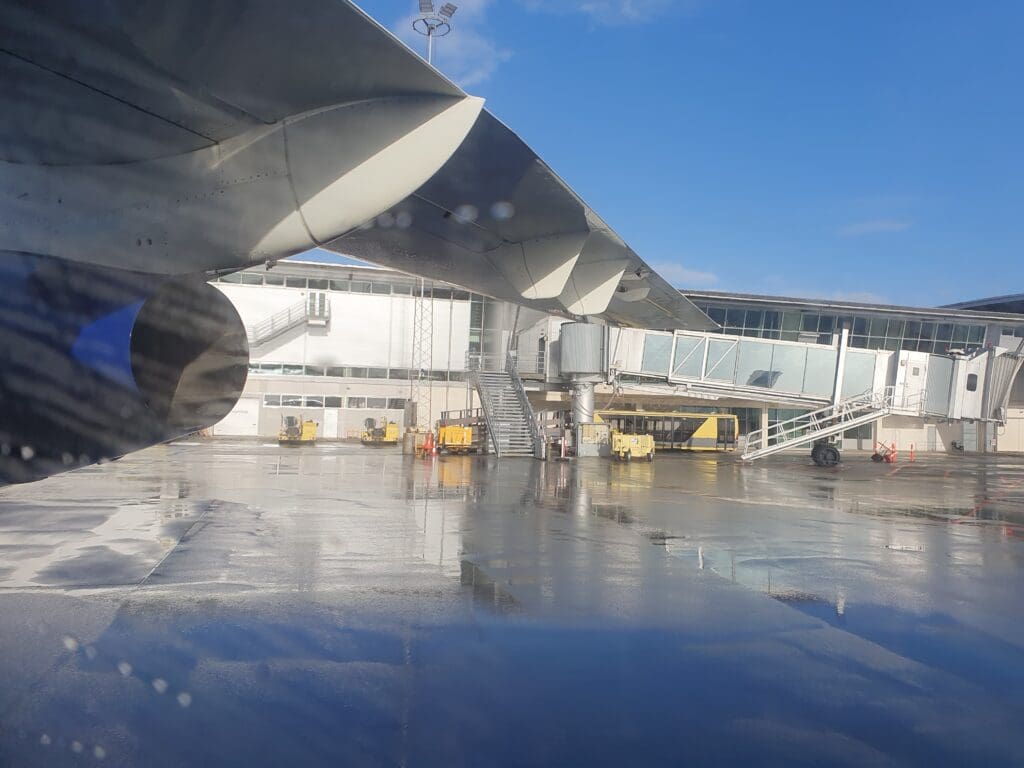
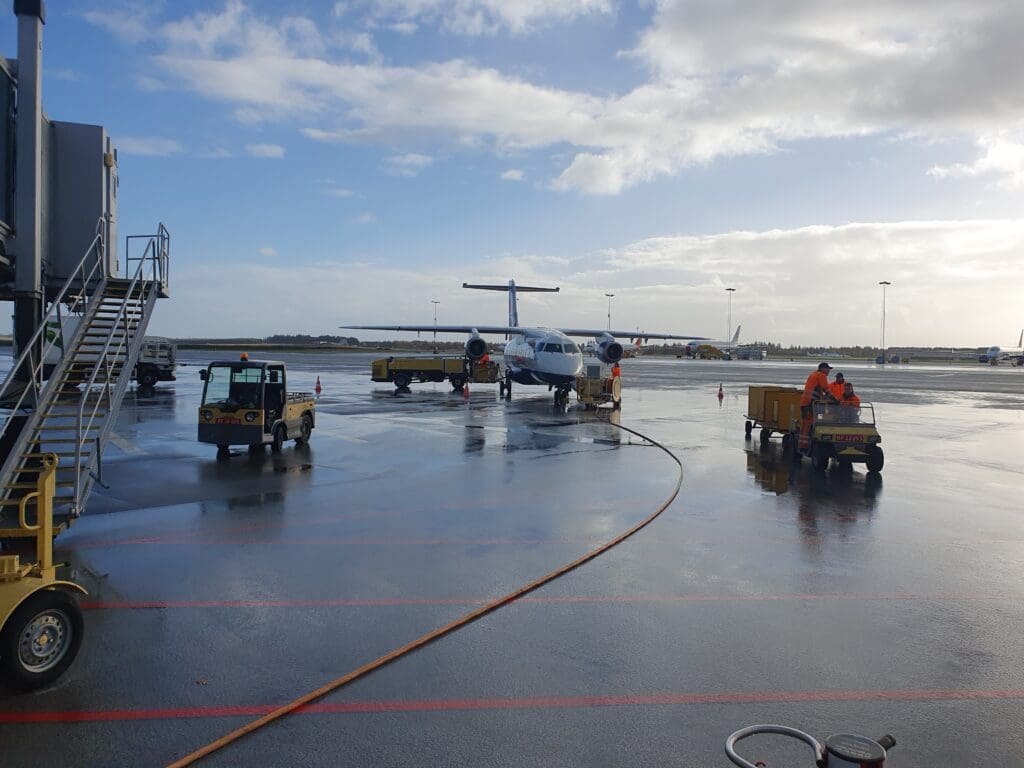
Once on the ground, the Dornier made its way over to Stand 7 and I soon followed this, settling in a seat next to the window near the counter for Gate 7 where a small cluster of five passengers could be seen waiting. Looking outside, no more than about 15 passengers and their bags soon emerged from the Dornier before a cleaner boarded and the aircraft was refuelled in preparation for its return journey across the North Sea as the First Officer commenced their walk around. A little before 0920, a gate agent appeared, meanwhile, the screen at the gate showed that boarding would commence twenty minutes prior to departure at 0925. At 0920, the gate agent requested those with trolley bags to come forward as, indicating a lack of storage space in the cabin, these would need to be tagged and placed in the hold. At 0930, the gate agent made an announcement requesting those Billund-bound passengers in groups 1 to 3 to proceed forward for boarding at which point just one passenger stood up before another announcement was made a few moments later inviting all remaining passengers forward. Sitting near the gate podium, I soon made it to the desk where I scanned my boarding pass and had my passport checked before I headed down the stairs to ground level. In perhaps a Ryanair-esque fashion, once through this boarding pass and passport check, I found that the doors to the apron were closed and the actual act of boarding was yet to commence – although fortunately one of the ramp workers soon opened these and we trundled out to the aircraft.
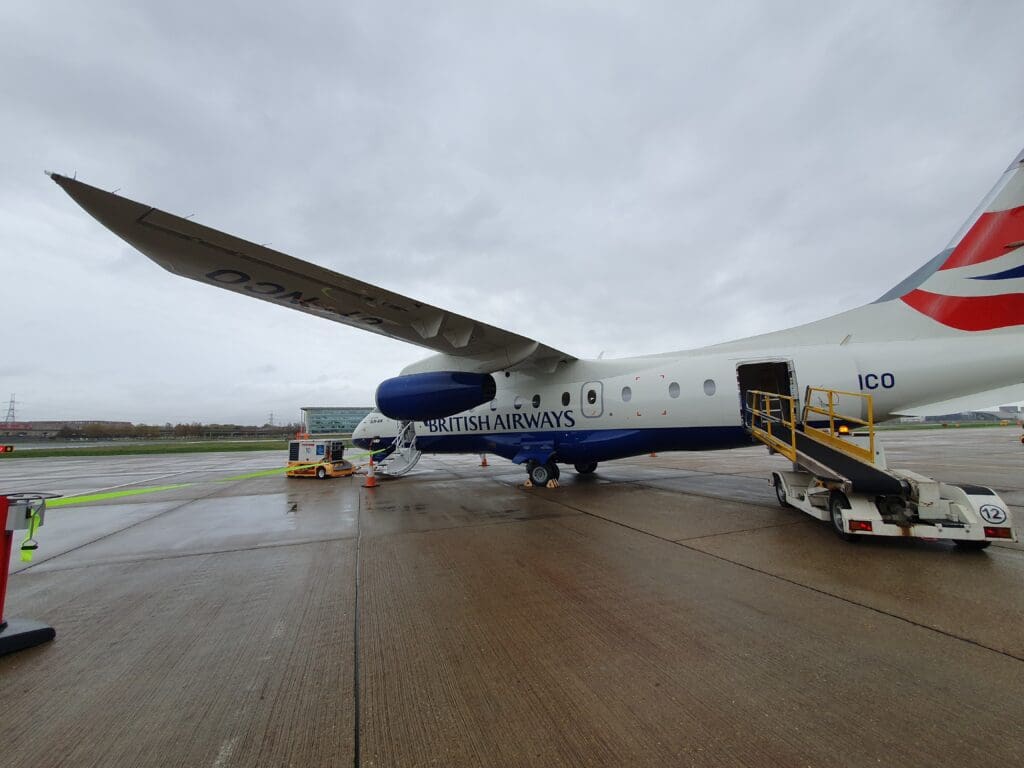
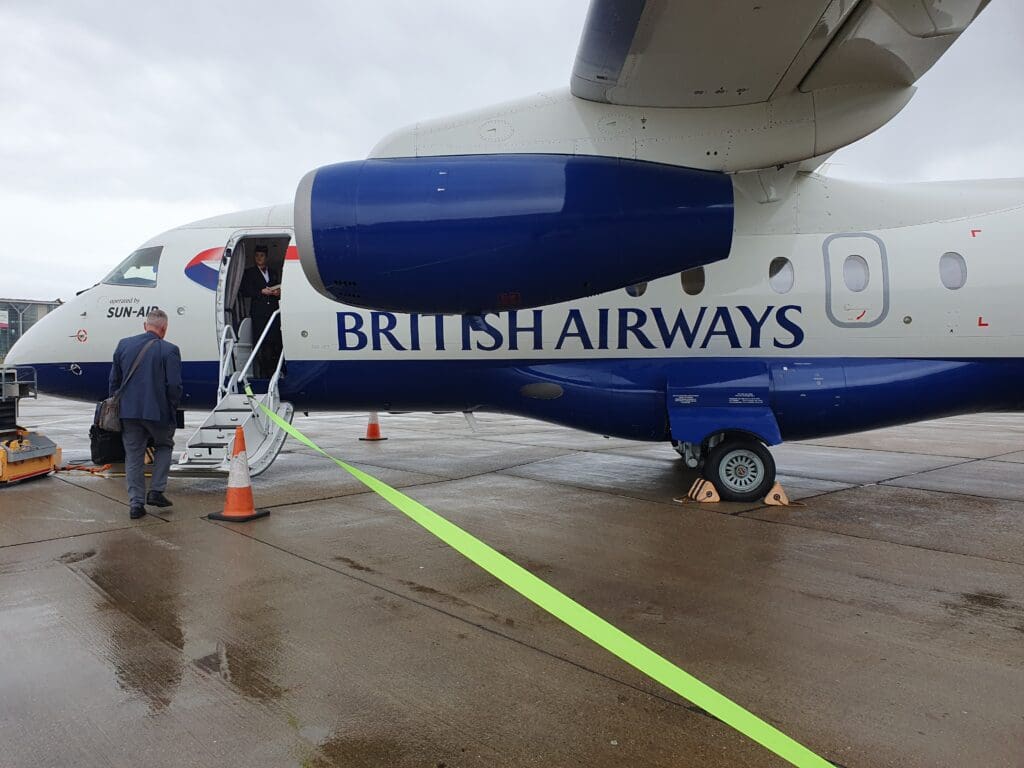
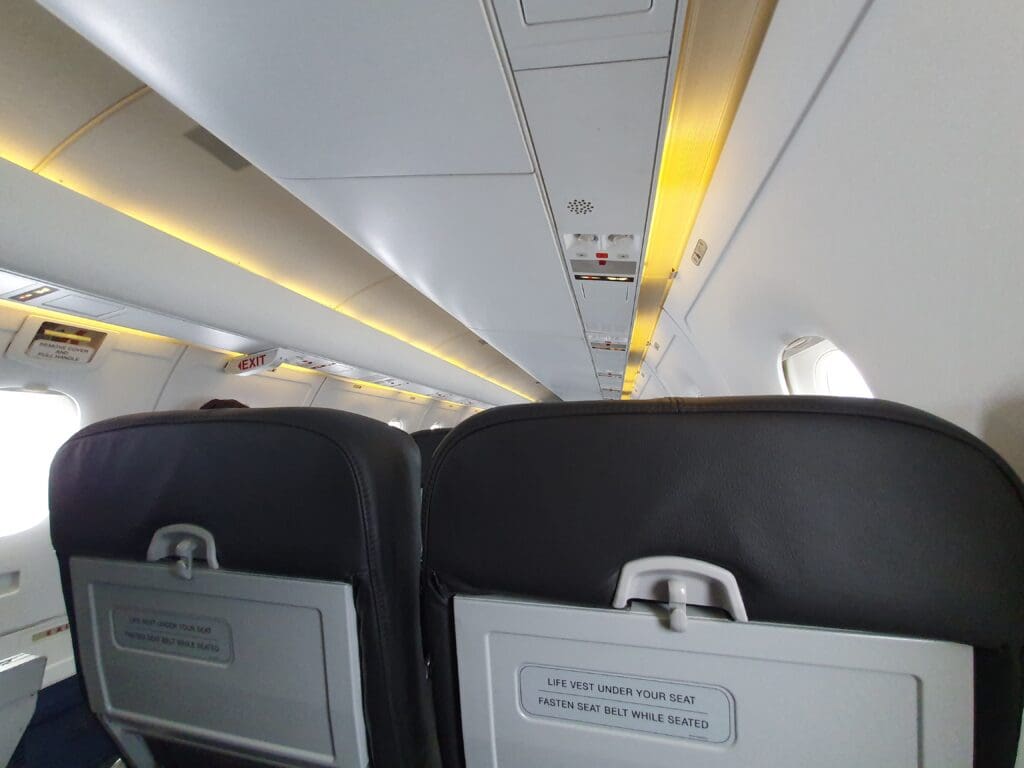
Journeying the short distance through the chilly November morning air to the aircraft, after snapping a few photos, I climbed up the five steps built into the Dornier’s main cabin door and soon received a very friendly greeting from the sole flight attendant that would be looking after the small number of passengers travelling to Denmark that morning. Other than the livery, a reminder that I was on a British Airways service came in the form of the cabin crew’s outfit which took the form of British Airways’ familiar uniform. As with a mainline British Airways service, as passengers made their way into the aircraft the flight attendant held a basket containing antibacterial wipes and after picking one of these up, I turned right and entered the Dornier’s small cabin. With just 32 seats, the Dornier is undoubtedly one the smallest commercial jet airliners in operation – comparable in capacity to the small Jetstream 41 or Dash 8 100/200 turboprops. Inside, seats are arranged in a 2-1 configuration with each of these covered in an elephant grey (faux?) leather covering – the same shade as can be seen on British Airways’ Airbus narrowbodies and BA CityFlyer’s Embraers. Given the aircraft’s small size, it didn’t take too long for me to reach the rear of the cabin and I soon plonked myself down in Seat 10F.
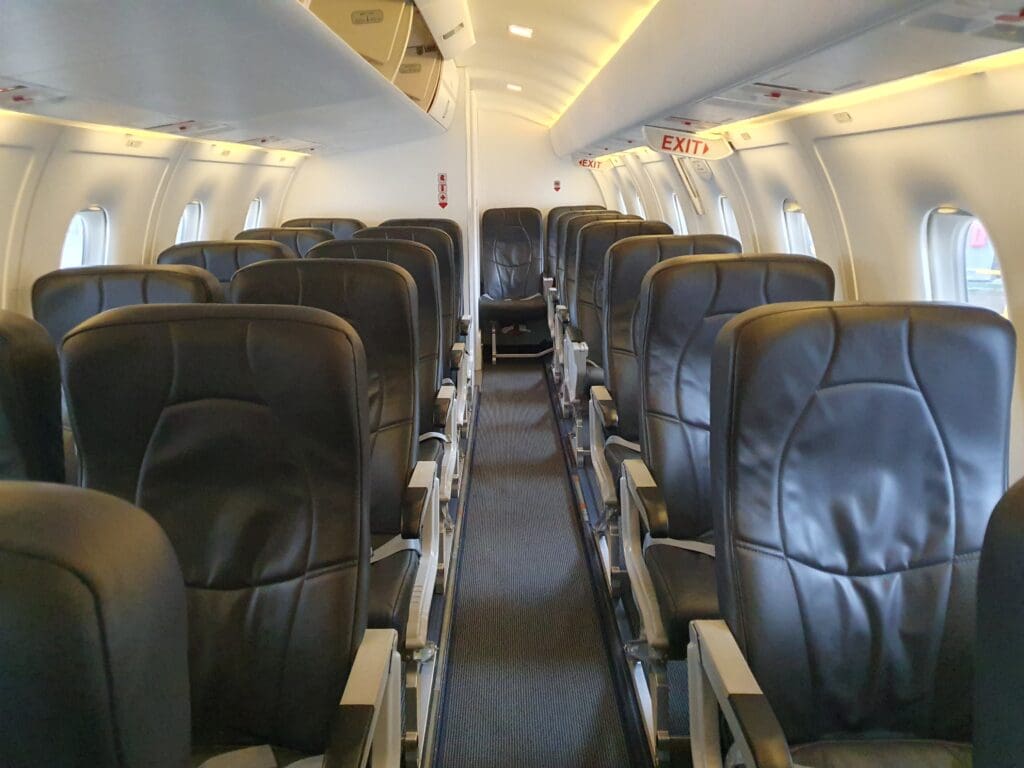
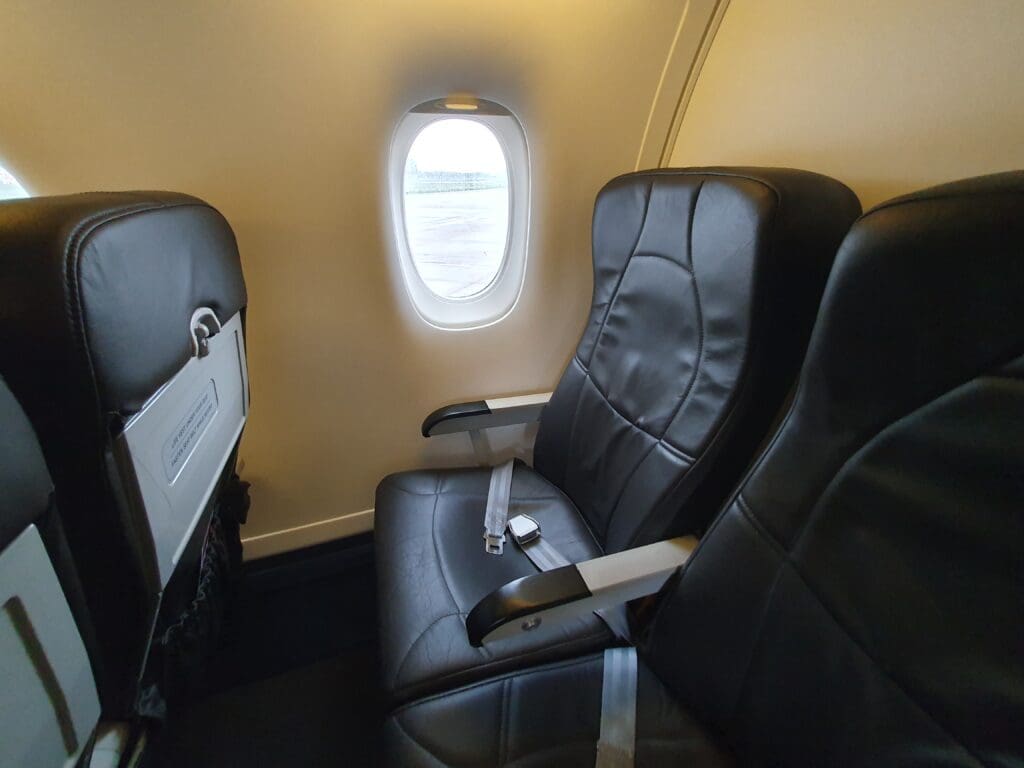
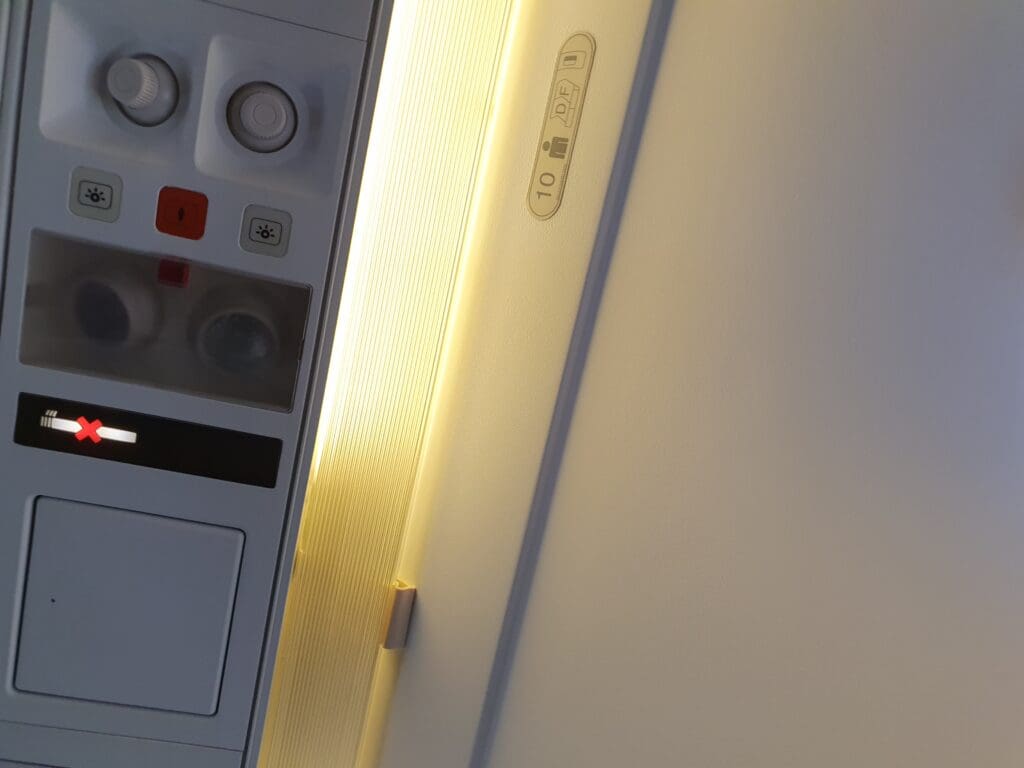
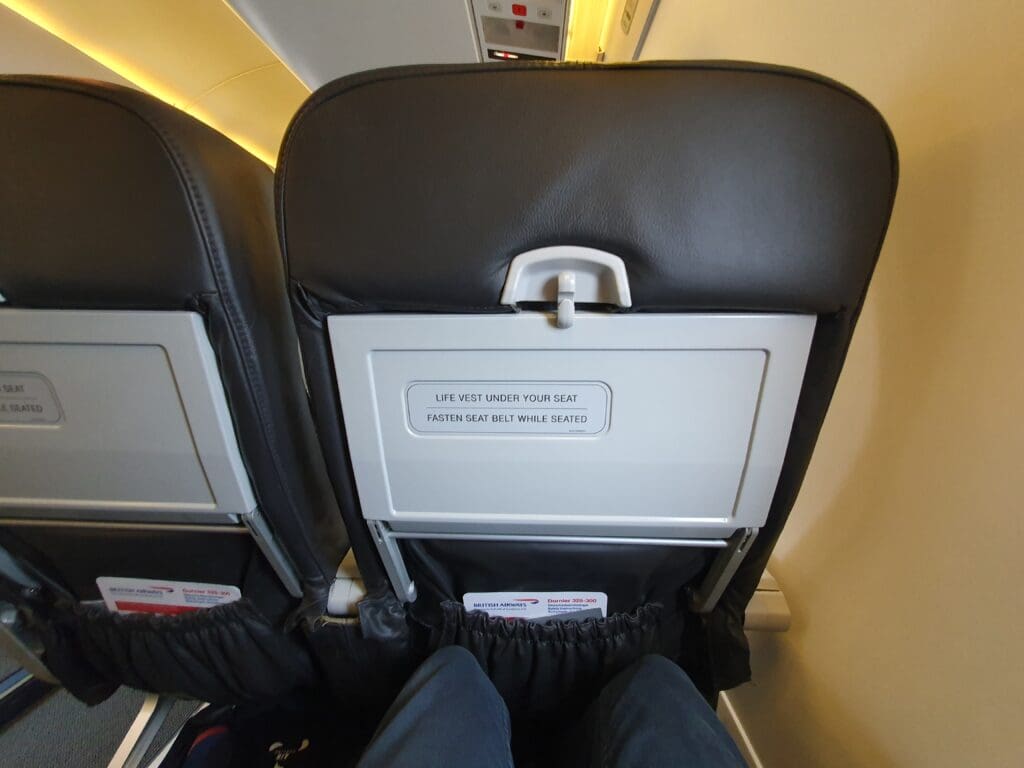
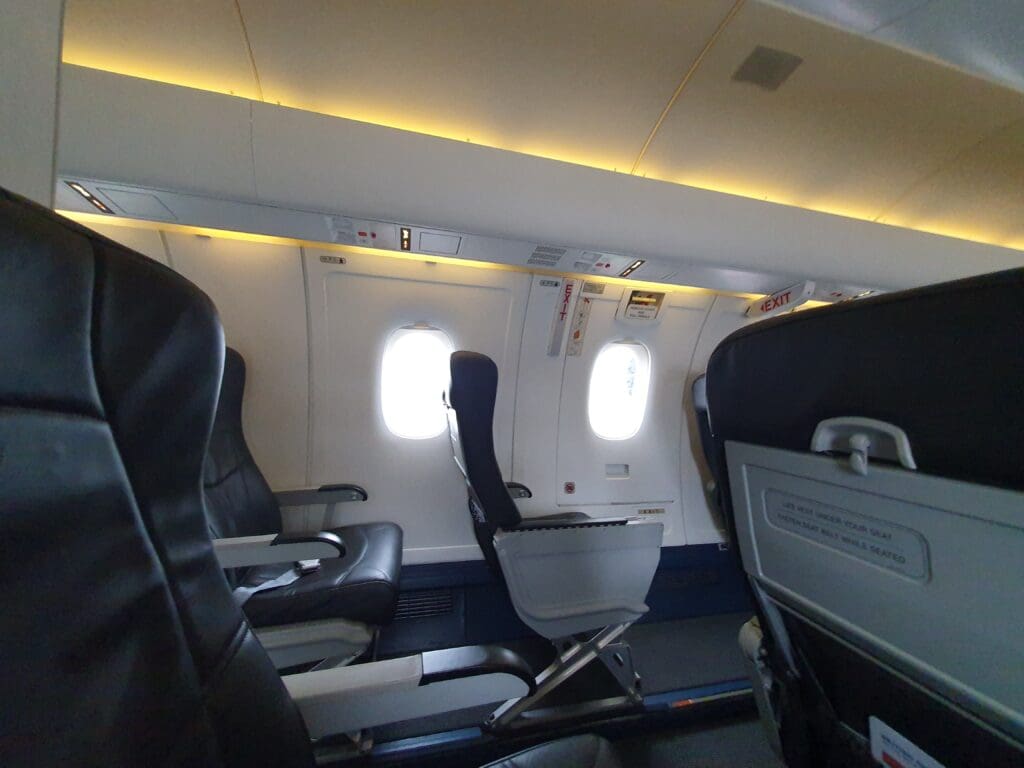
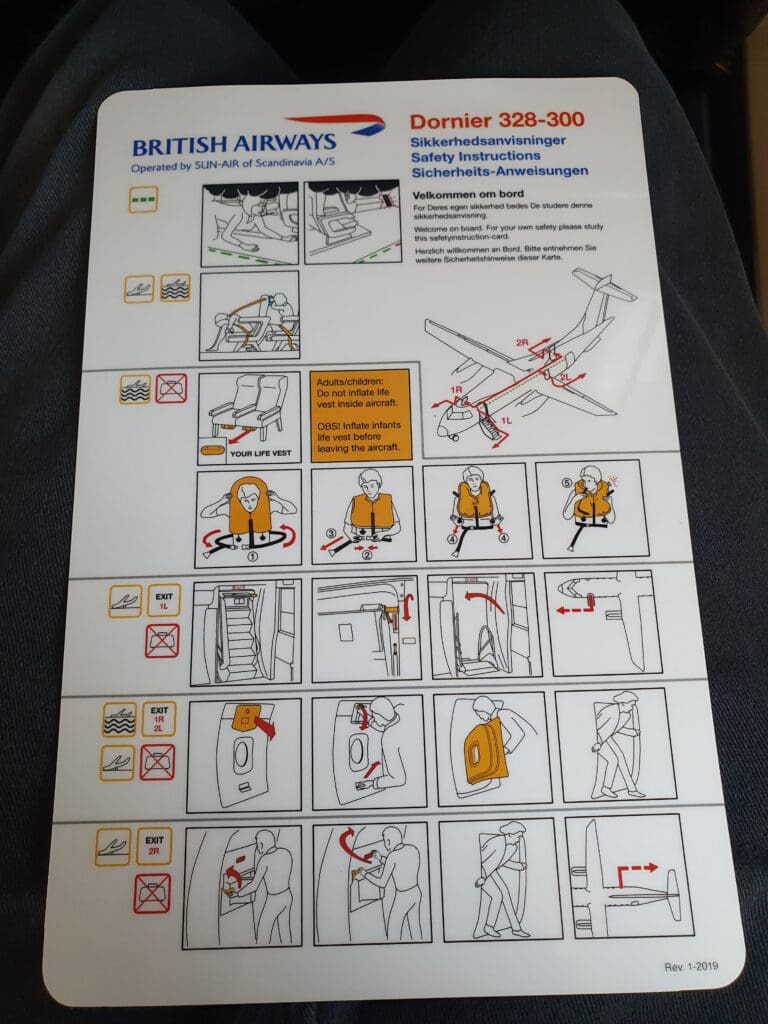
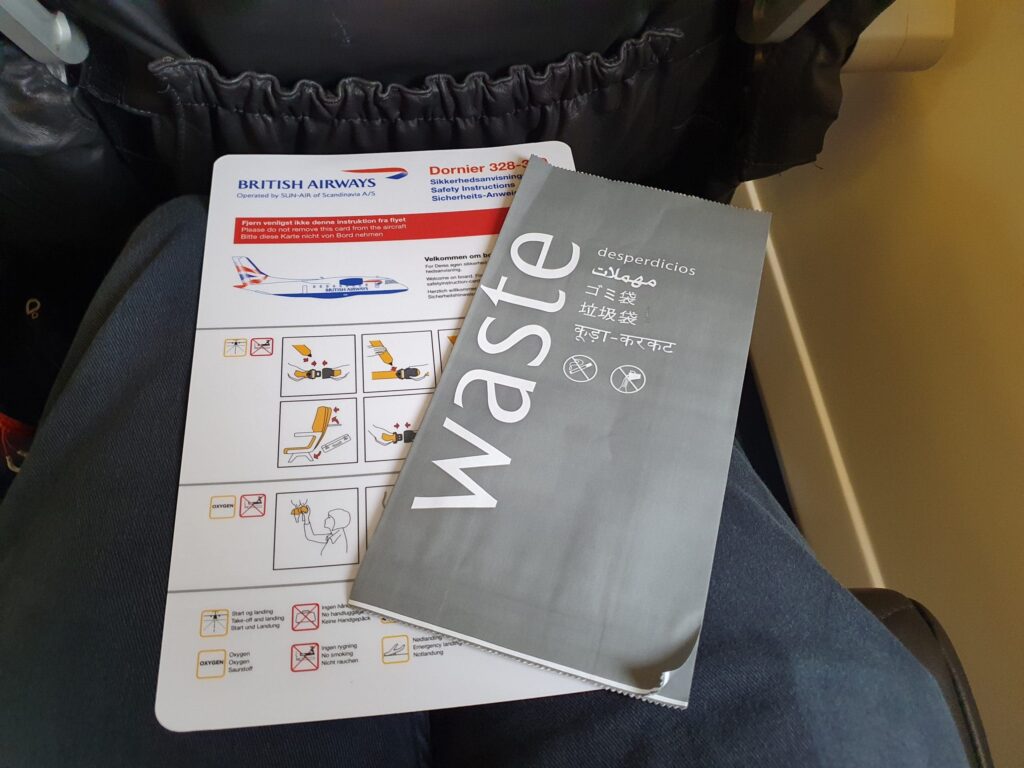
Upon taking my seat, I was pleased to find this to be very soft and comfortable – far more so than the slimline seats that can be found on many airliners the world over today. Furthermore, these provided a decent amount of legroom for a regional jet, although perhaps not as much as that as can be had on BA CityFlyer’s Embraer 190 fleet. Whilst the cabin seemed to be a little dated in its design given the fact that the aircraft was only two decades old, this appeared to be in an immaculate condition with no major signs of wear and tear. Furthermore, this seemed to have been well cleaned during its short stay on the ground in London, with no signs of rubbish anywhere around my seat. Continuing with the positives, the Dornier’s large cabin windows allowed for light to pour in and gave the cabin a rather bright and airy feel which was complemented by some retro-ish yellowy cabin lighting. Turning to the seatback pocket, this contained a safety card as well as a British Airways branded sickbag, with no inflight reading material provided.
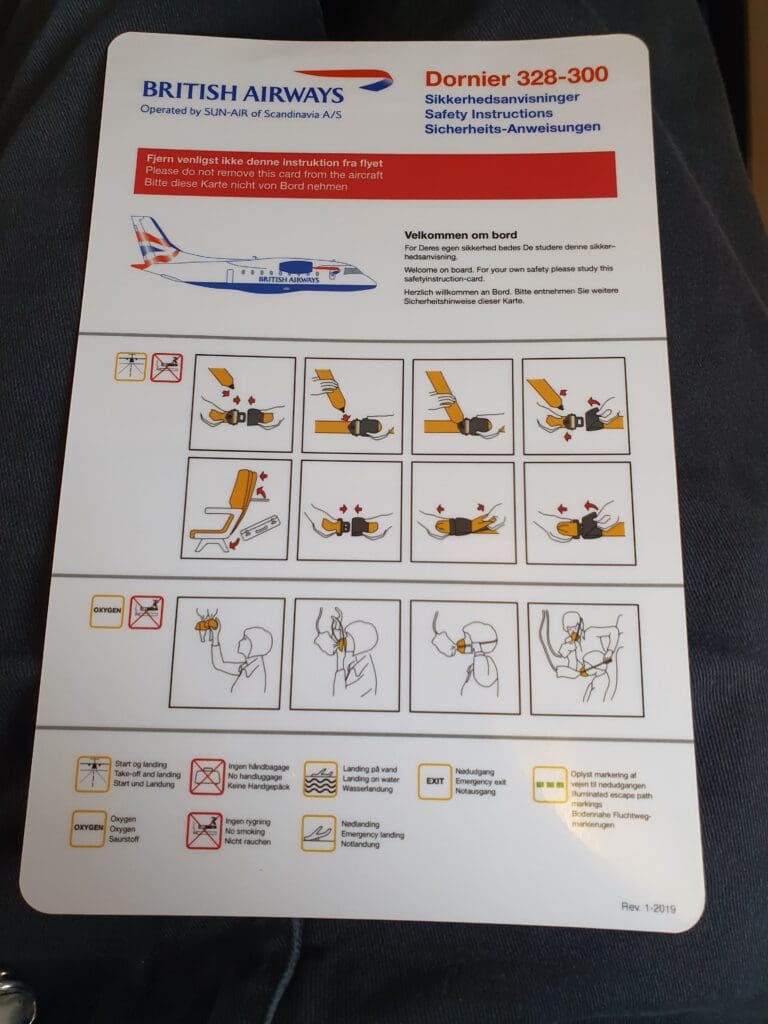
With Sun-Air operating both a morning and evening rotation from Billund to London City, the airline’s services are timed to allow Billundian business people the best part of a day in the British capital, whilst those travelling in the opposite direction can spend an afternoon in Billund. Yet flying in the era of Teams and Zoom, I was unsure of how busy the flight would be and once the final passenger had climbed up into the cabin, I was not particularly surprised to find this to be nearly completely empty. That morning a grand total of just six passengers would be making the hop over the North Sea to Denmark – with all bar two (myself being one of them) taking the form of smartly dressed business people. Indeed, given the very high price of Sun-Air’s London City services, especially when compared to British Airways and Ryanair’s services from Heathrow and Stansted respectively, the presence of this demographic was hardly surprising. This equated to a load of just 19% and would have allowed for this service to have been undertaken by one of Sun-Air’s business jets instead!
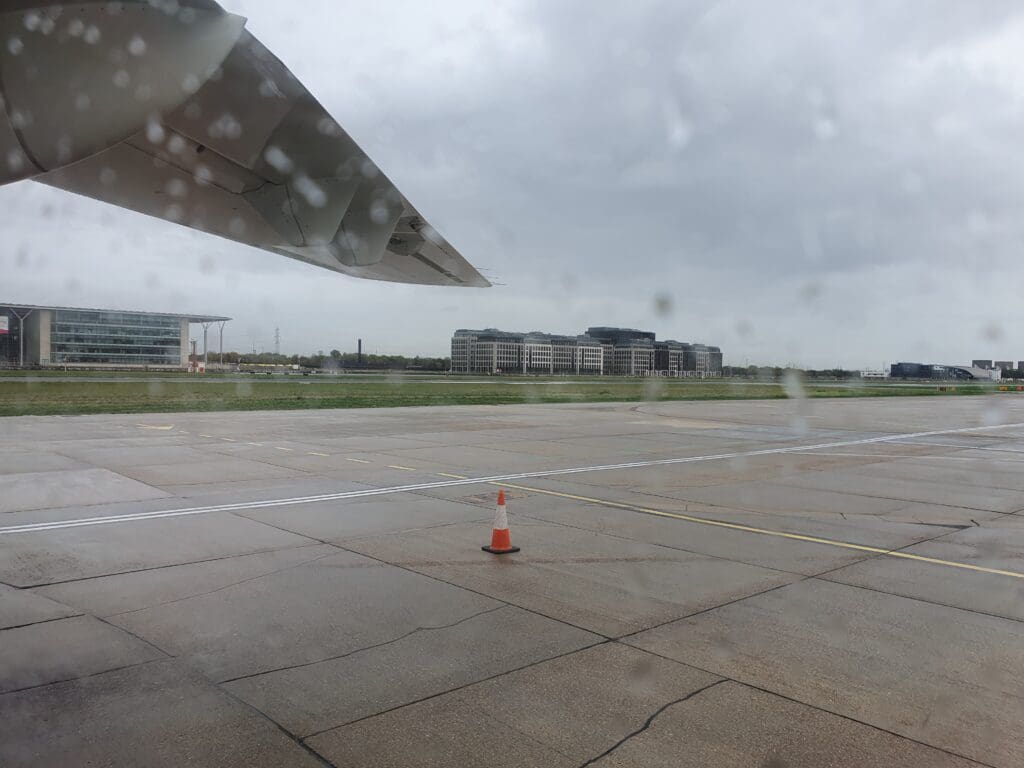
Given the light load and with all having turned up to the gate on time, it took no more than a couple of minutes for all passengers to make it onto the aircraft and a short time later the flight attendant closed the cabin door with a firm thud. Meanwhile, outside several members of the seven-strong army of ground crew that had been lingering around the rear of the aircraft during boarding could be seen removing cones and other bits of equipment from around the aircraft through the rain droplet-filled window. After a couple of minutes of waiting, the calm-sounding Danish Captain performed their welcome announcement in English only. To commence this, they welcomed all onboard and thanked passengers for flying with British Airways and Sun-Air before moving on to announce that the engines would be started in a few minutes’ time. That morning, the Captain announced that we could expect a flying time of 1H15 to Billund and that conditions route would likely be smooth, although the approach may be slightly bumpy owing to high winds in Billund that lunchtime. Almost immediately after the Captain’s speech came to an end, the flight attendant headed to the front of the cabin and played the pre-recorded safety announcement. Once again, this was played in English only and was accompanied by a demonstration. After this had reached its end, the flight attendant then passed through the cabin and ensured that all was in position for our departure. Following this important task, as if flying in business class, the flight attendant passed through the cabin asking for each passenger’s choice of post-departure drink – going through all the available options with each passenger! Choosing an orange juice, this was jotted down before the flight attendant made their way up to the front of the aircraft and strapped themselves into the rearward facing jumpseat in preparation for our departure.
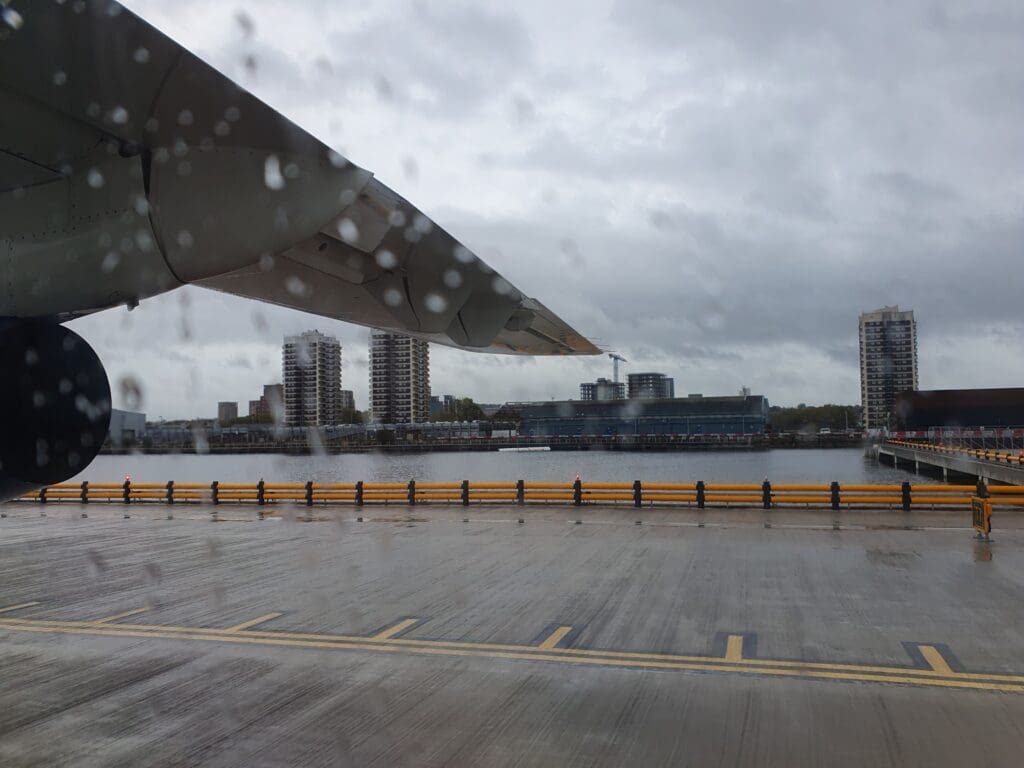
Just after I had given my drink choice to the flight attendant, a little after 0940 the Dornier 328’s two Pratt & Whitney Canada PW306B turbofan engines noisily powered up into life during which the cabin was filled with a loud whine. As these started up, it became clear that the Dornier 328 perhaps lacks the same level of noise insulation as larger and more ‘conventional’ jet airliners, with this proving to be noticeably louder than the start-up onboard an Airbus A320 or Boeing 737. Once the two engines had safely spooled up, the aircraft remained on stand for a few more minutes before powering forward and commencing a quick taxi along the terminal. By this time, the morning rush appeared to have come and gone, with just two Embraer 190s remaining at the terminal. One of these took the form of a Lufthansa CityLine jet being readied for its return to Frankfurt, whilst the other was a locally based BA CityFlyer aircraft that would head off to Berlin a few minutes later. Unlike my last departure from London City onboard a vintage WDL Aviation BAe 146 in May 2019, no backtrack along the runway is required when departing from runway 27 thanks to the opening of a new taxiway in late 2020. Thus, once away from the terminal, the Dornier continued its taxi along King George V Dock where the tower blocks of North Woolwich could be seen as well as a cluster of boats and barges floating in the waters below.

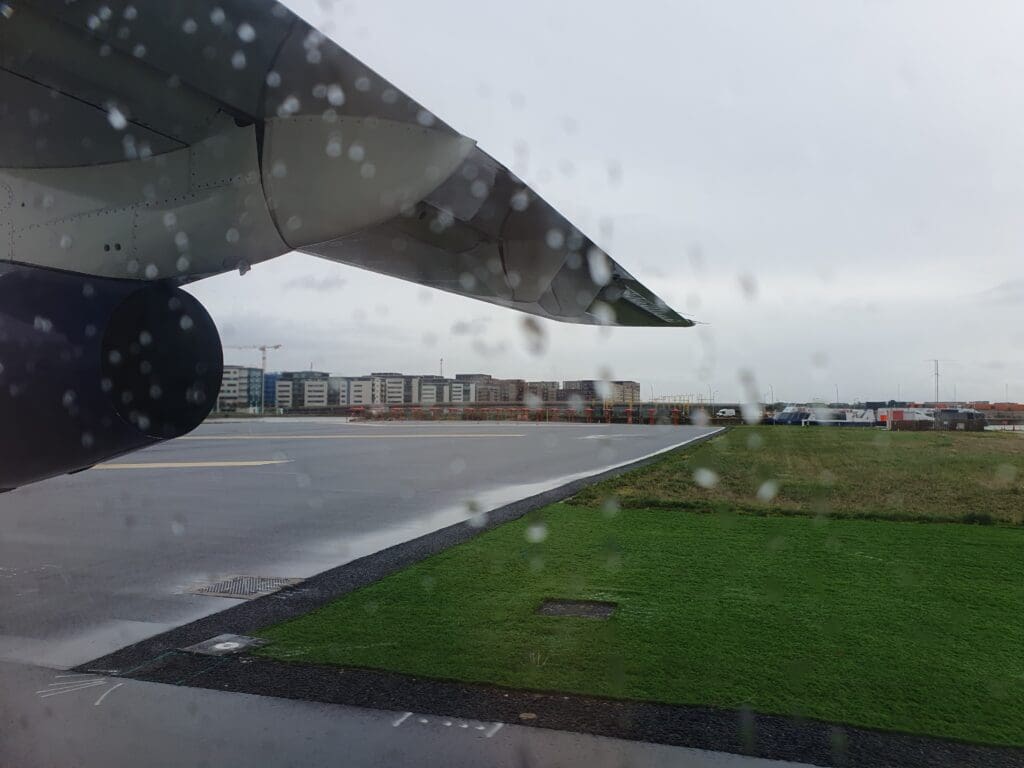
Following a quick journey, the Dornier made its way onto Runway 27 without any holding before lining up on the centreline and coming to a halt. Pausing for around a minute, this allowed me enough time to admire the brightly coloured buildings of the University of East London before the Dornier’s two jet engines roared into life and the aircraft began to accelerate down the rain-soaked runway. Given the very light load that morning as well as the Dornier’s two powerful jet engines – capable of delivering a combined total of 53.8 kN (12,000 lbf) of thrust, that morning I expected that we would soar upwards into the skies like a fighter jet. Indeed, after being pinned back into my seat as the aircraft rolled down the runway, the Dornier rocketed upwards in what seemed like no time at all. This allowed for a birds eye view of the path that runs on the northern side of Royal Albert Dock – a popular spotting spot.
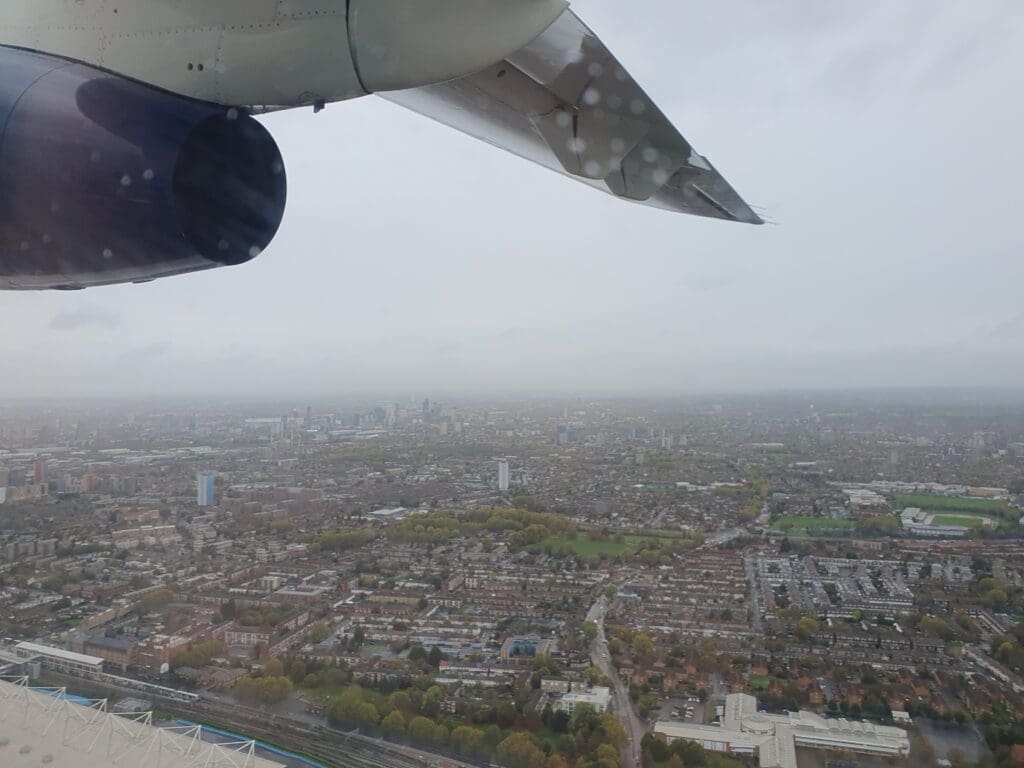
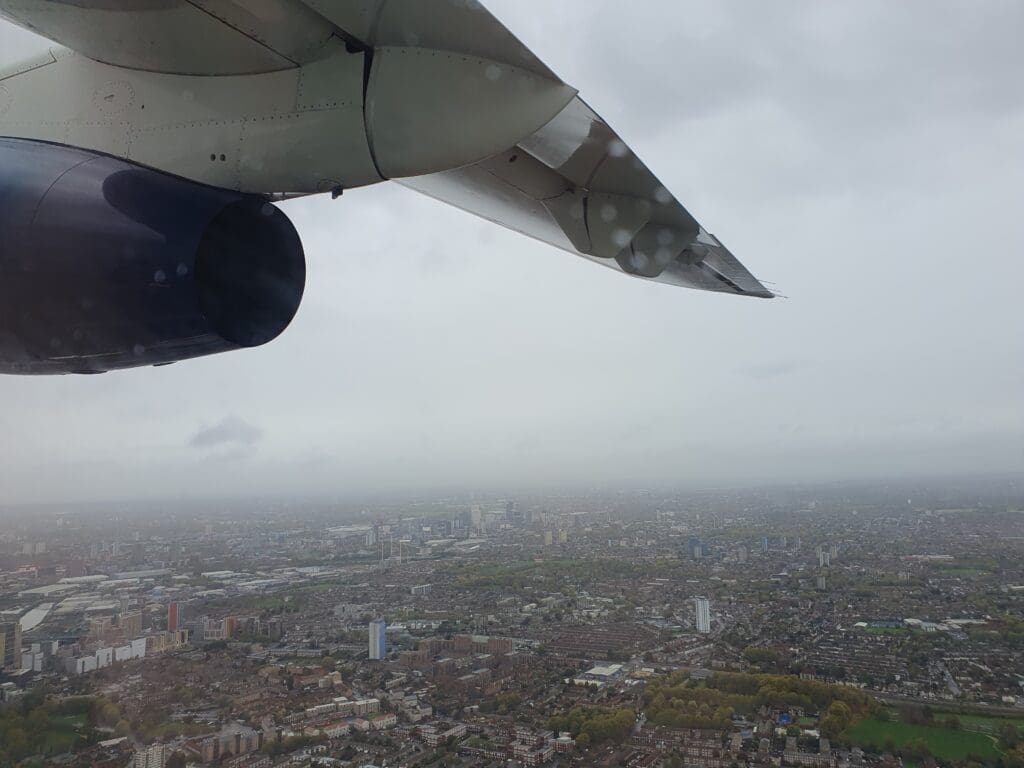
Once up in the grey London skies, the gear and flaps were soon retracted and the aircraft left London City Airport behind, crossing over Connaught Bridge and out over Royal Victoria Dock before continuing westwards for around a minute after departure. Just before reaching Canary Wharf, the Dornier banked to fly north towards the East London area of Stratford. Whilst admittedly not as exciting as making an approach into London City Airport’s Runway 09 over Central London, I was treated to a good view of Stratford’s Olympic Park, including its stadium which is now home to West Ham FC, the local Westfield shopping centre – the fourth largest in the UK, and the UK’s busiest railway station, Stratford station. As we crossed over Stratford, the Dornier temporarily levelled off at around 3,000 feet which allowed for a good view of Wanstead Park and Ilford Railway Depot as we flew eastwards.
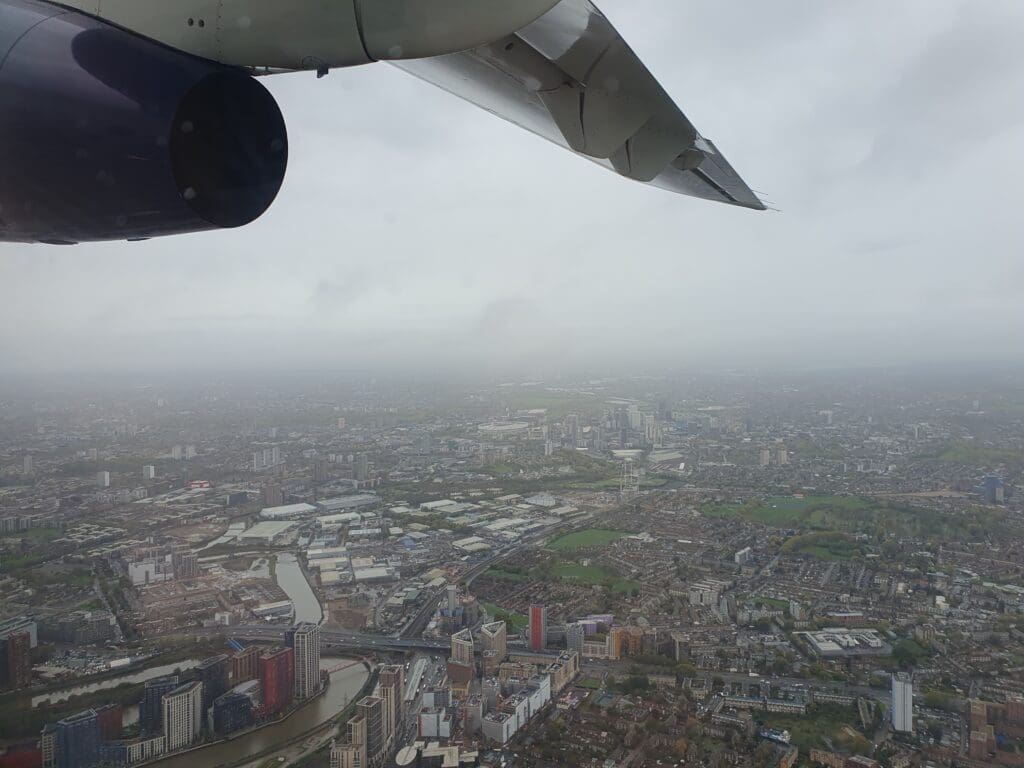
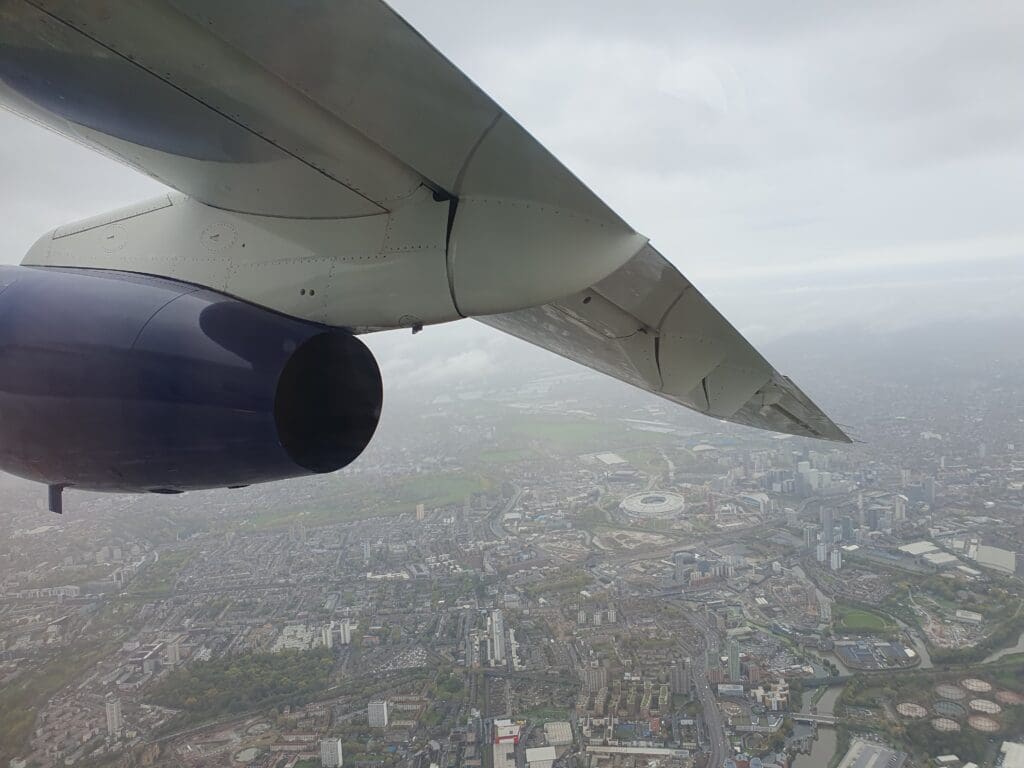
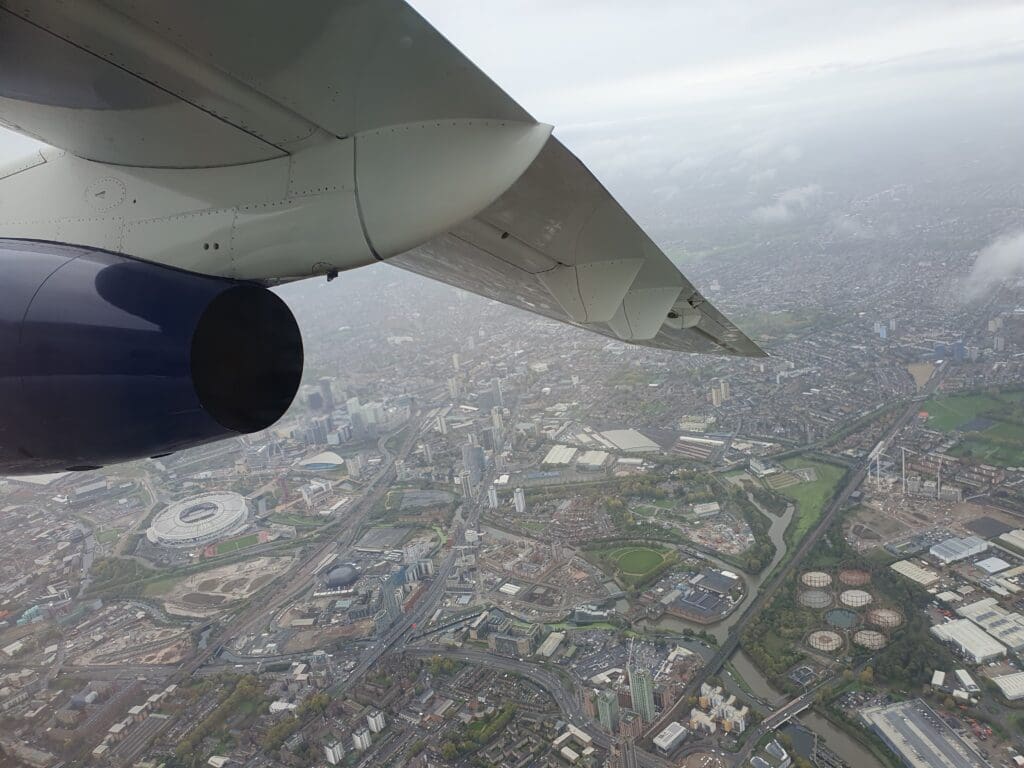
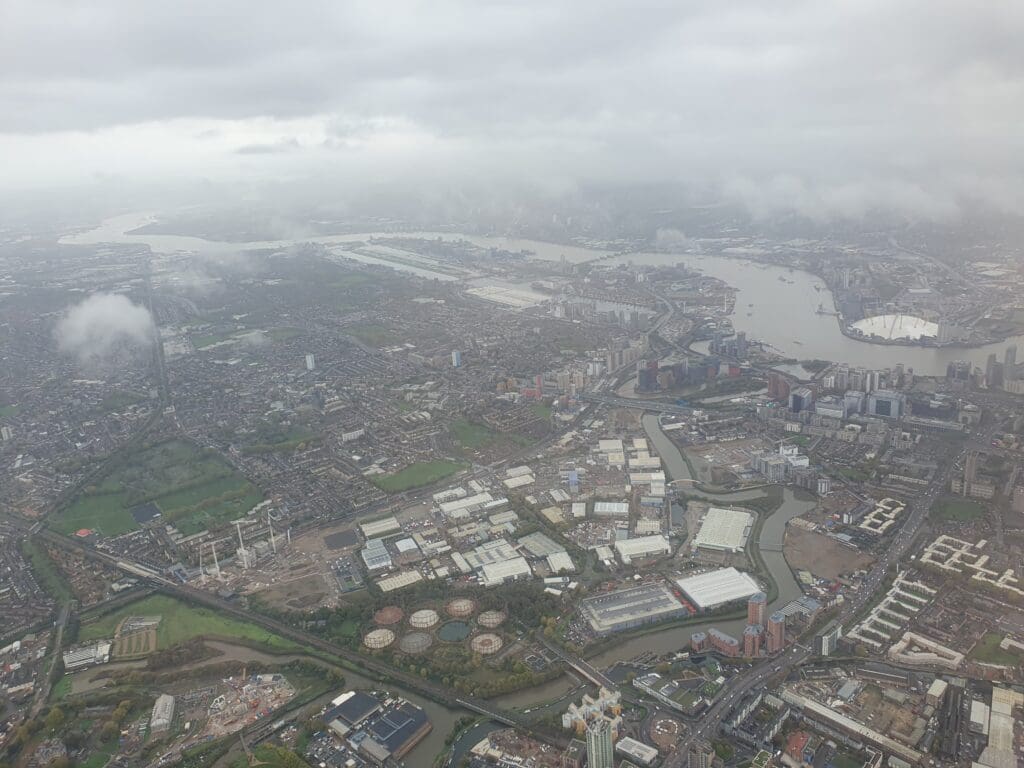
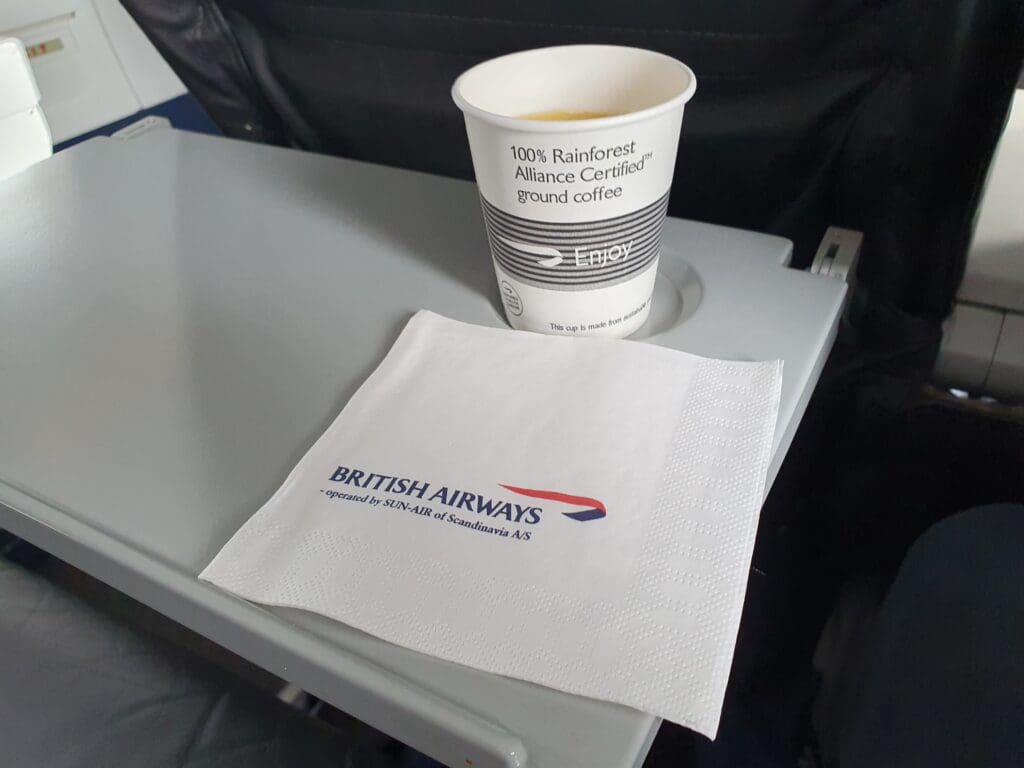
A short time after leaving Ilford behind, the Dornier continued its climb over London’s northeastern fringes as we journeyed from Greater London and out into the wilds of Essex. At this time a loud ding rang out indicating that the flight attendant was free to leave their jumpseat at the front of the aircraft and move about the cabin. Making their way to the rear of the aircraft, they soon poured out passengers’ drinks of choice and within a few moments I was handed an orange juice in a British Airways branded paper cup and a British Airways/Sun-Air branded serviette. Turning my attention back to the world outside, as we climbed gaps in the clouds revealed the busy M25 motorway before we passed over the Essex town of Brentwood and turned on to a northeasterly heading that would take us towards Denmark. From there, a good view of the green Essex countryside could be had, as well as Hanningfield Reservoir followed by Maldon and the River Blackwater Estuary before the aircraft rose up into the clouds for good, taking away all remaining views of the flat Anglian landscape below.
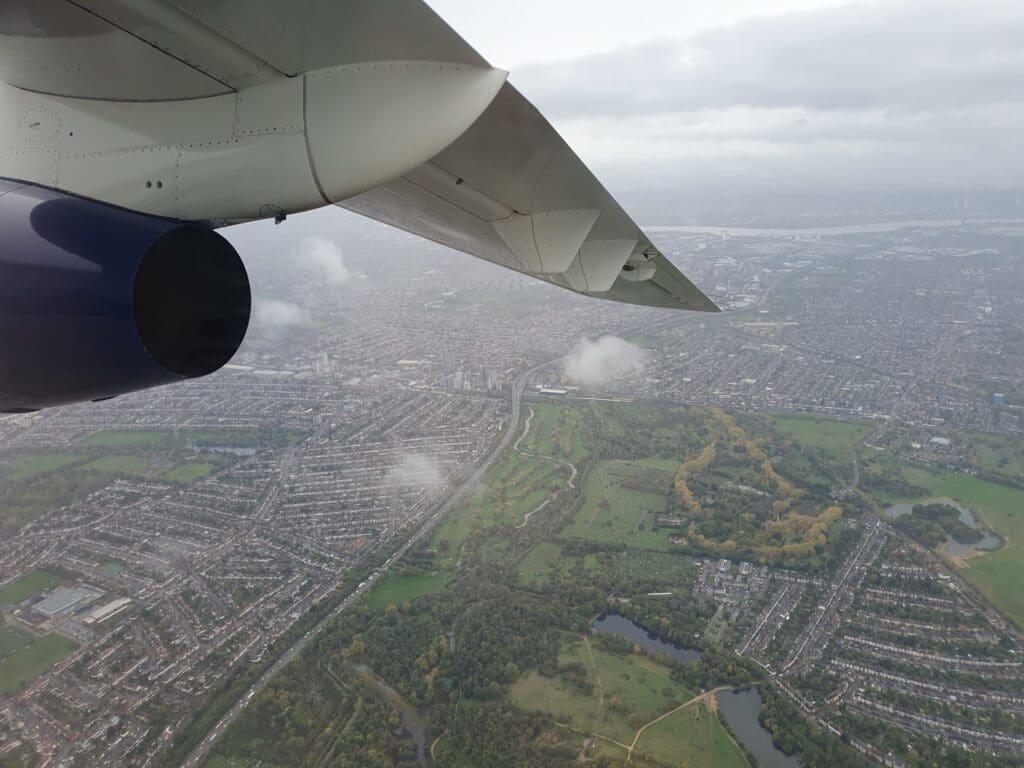
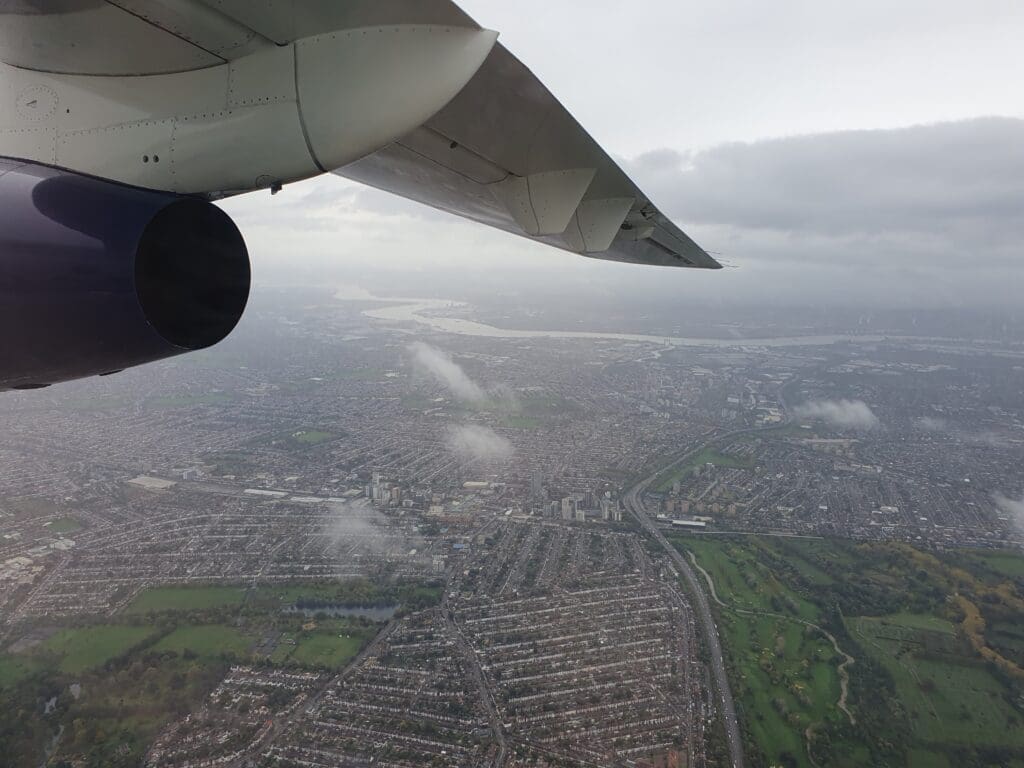
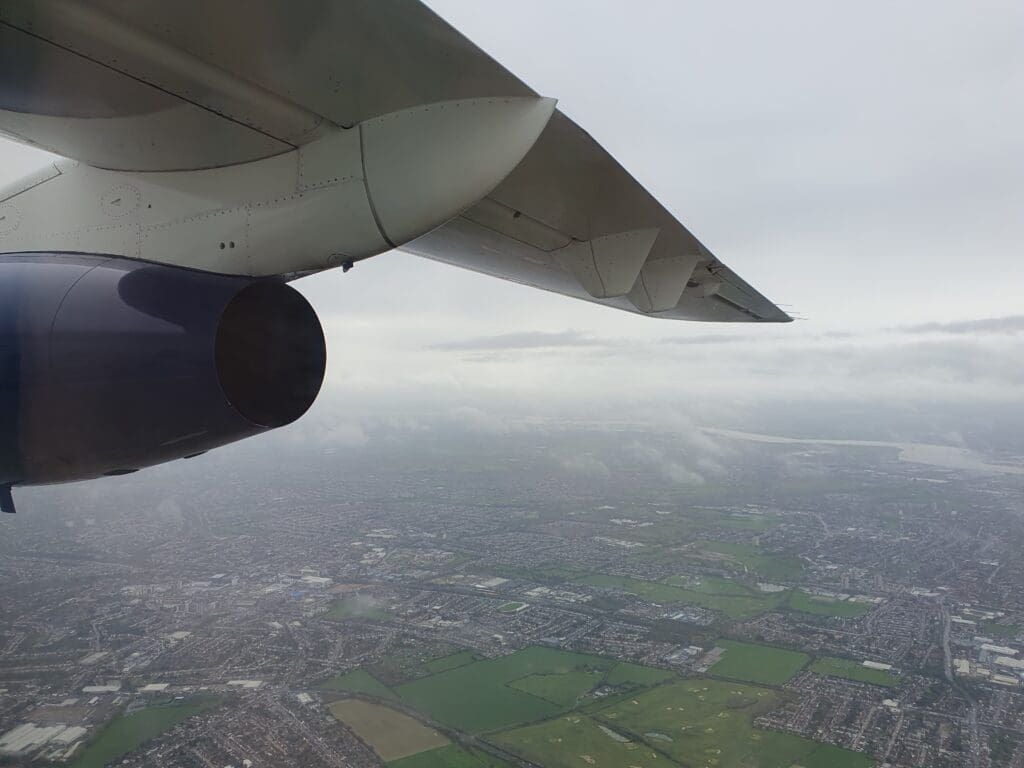
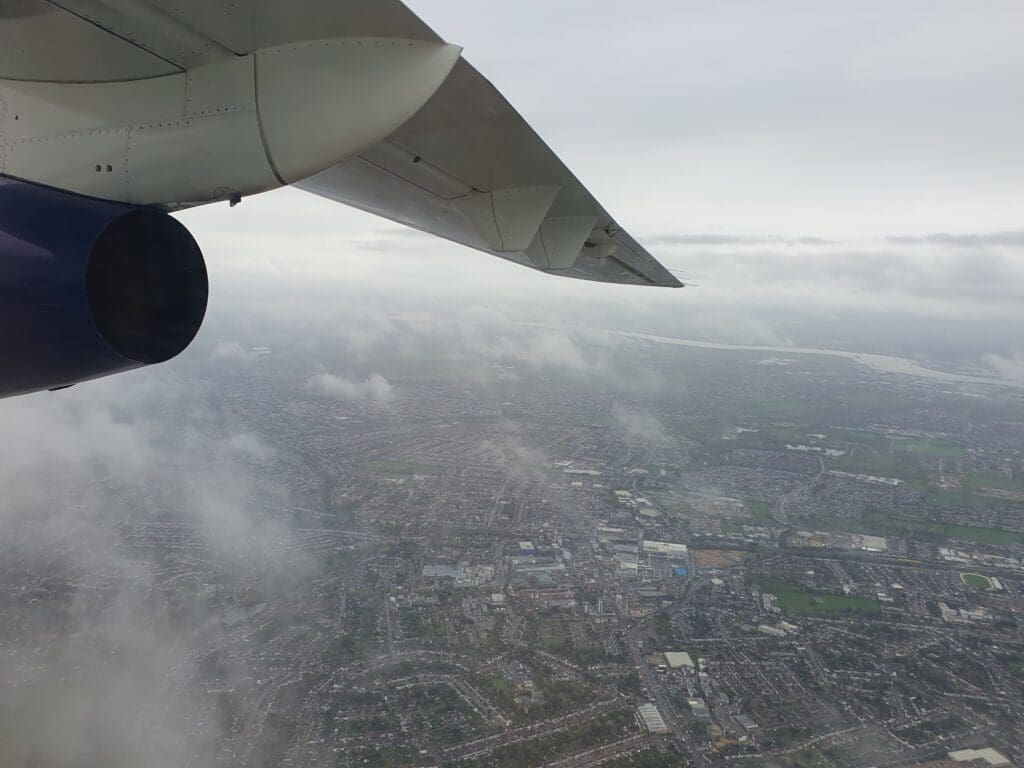
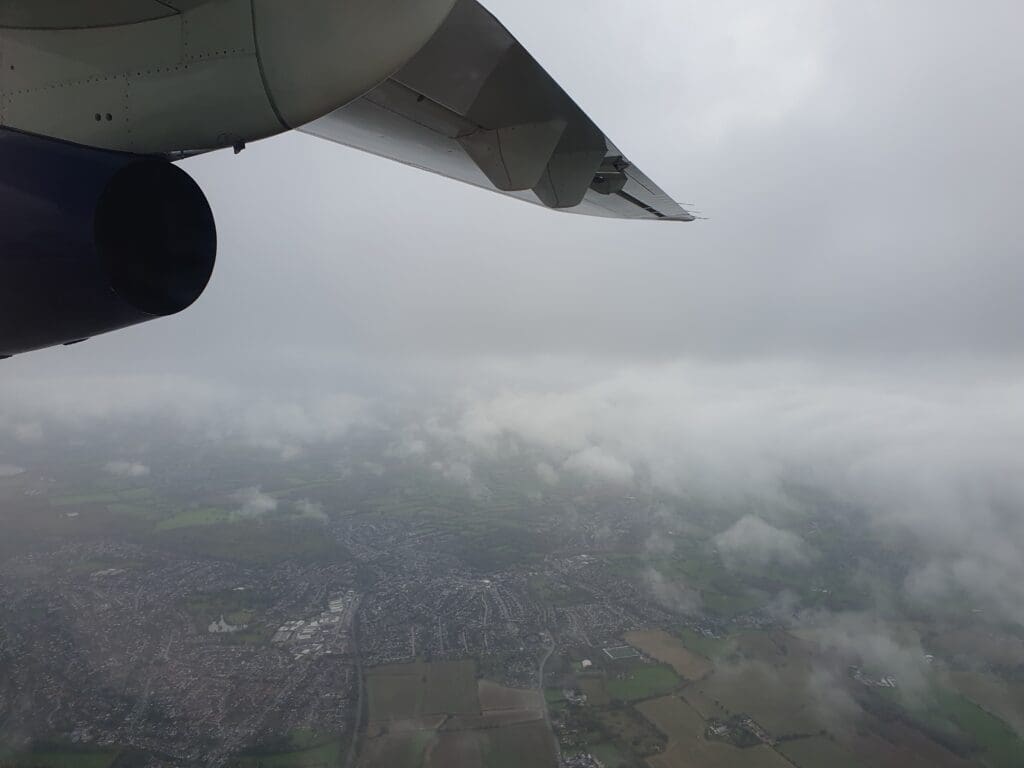
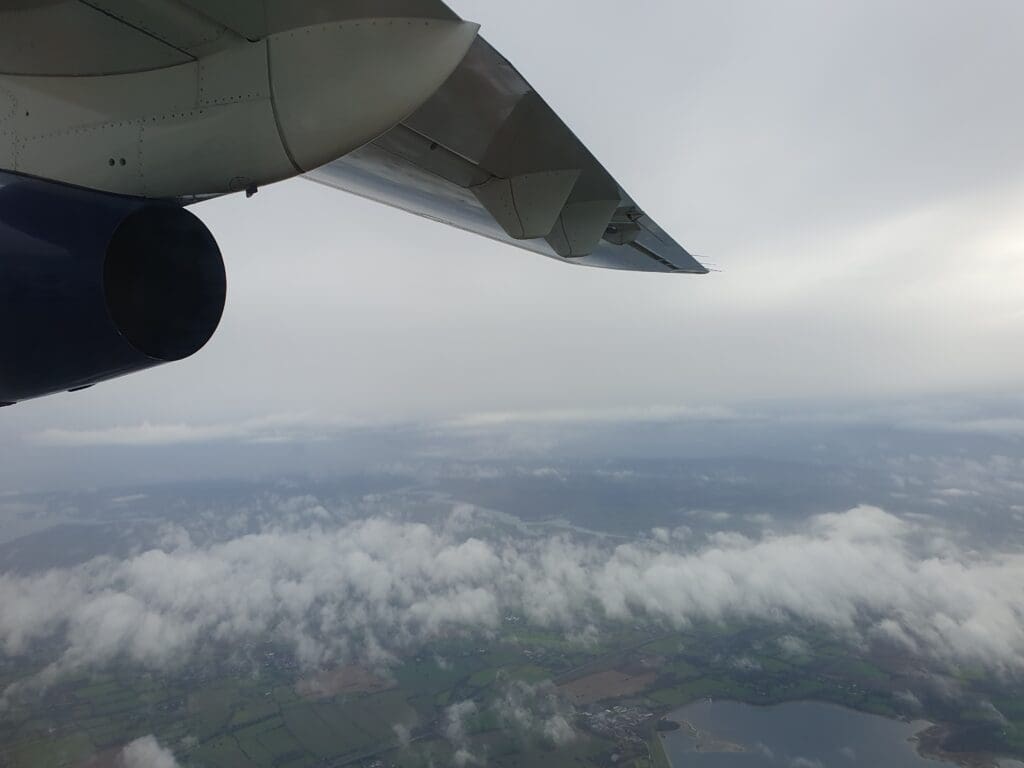
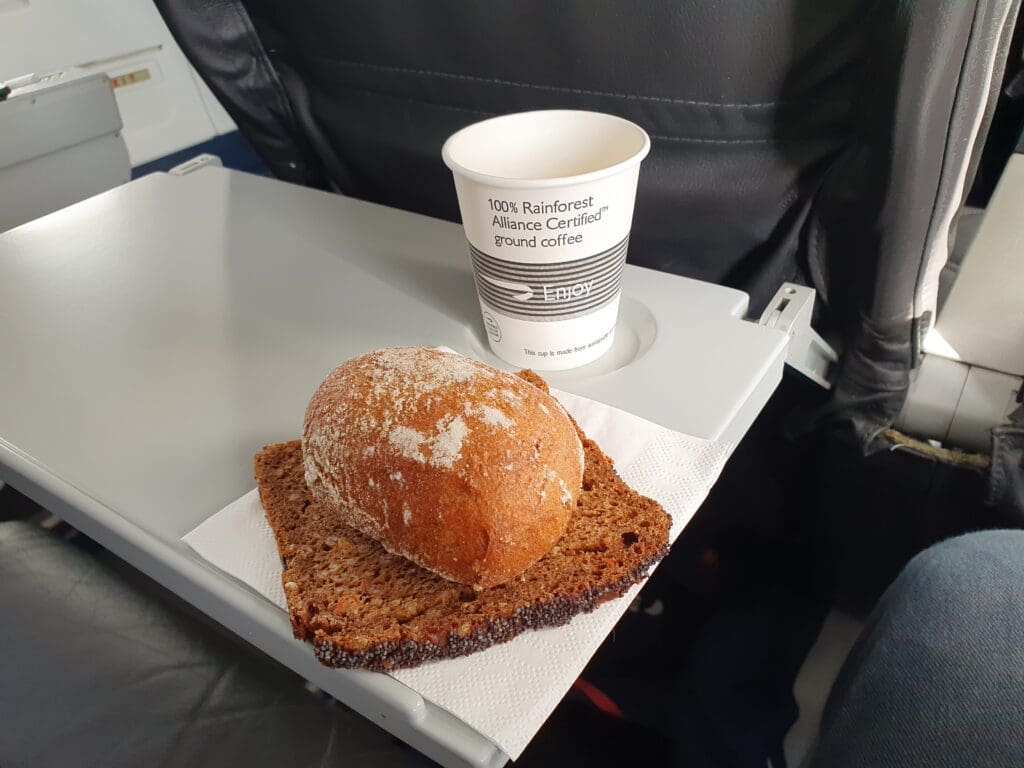
At 0958 the seatbelt signs were extinguished just before the Dornier broke free from the clouds and blue sky appeared above. Wasting no time, the flight attendant soon rolled out a small trolley to the front of the cabin and commenced the main round of inflight service. As mentioned, Sun-Air offers passengers a full meal on all of their services, with this service often compared to Club Europe (Business) service onboard mainline British Airways’ short haul flights and is known for far exceeding the complimentary Euro Traveller offerings. Given the very light load, in spite of the fact that the flight attendant took their time to interact with passengers and ensure that they had everything they needed, it didn’t take long until they reached my row at the rear of the aircraft. To start, a small tray fully laden with items was passed over and placed on my tray table before I was asked whether I would like tea or coffee. Opting for the latter, this was poured into my plastic mug and cautiously passed back over to me. Next up was bread, with the flight attendant presenting a basket full of rye bread slices and brown bread rolls. Initially opting to go just for a rye bread, I was then convinced to have a bread roll too! These were both placed on a serviette on the neighbouring tray table before our interaction was over and the flight attendant made their way back to the rear galley.
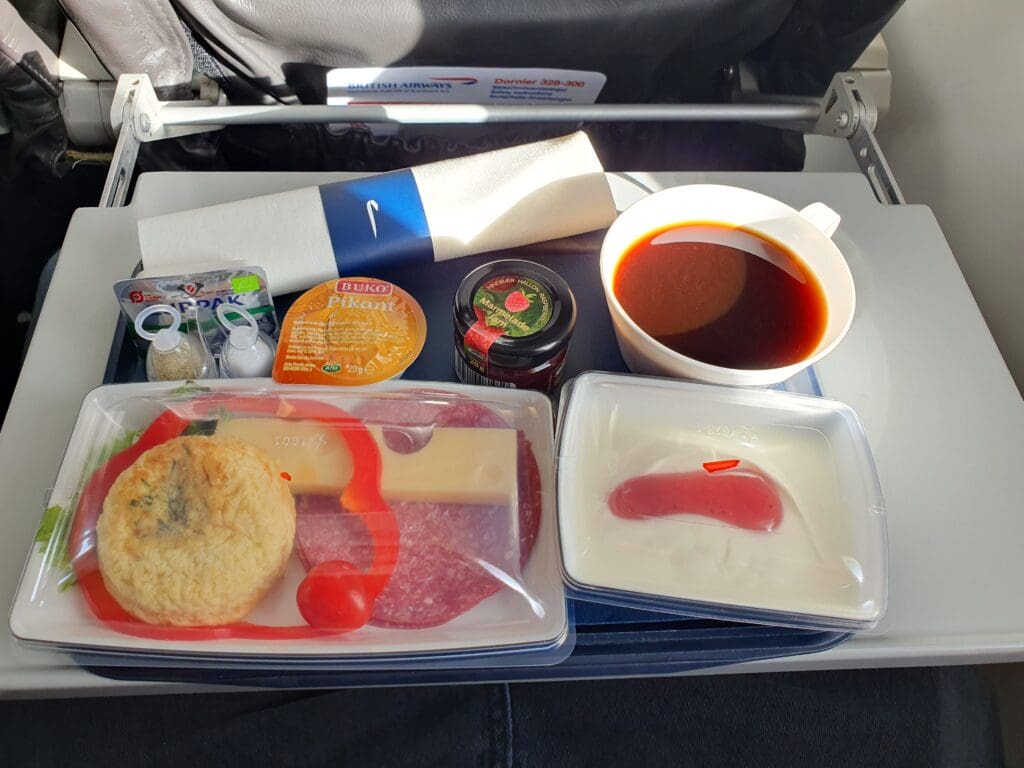
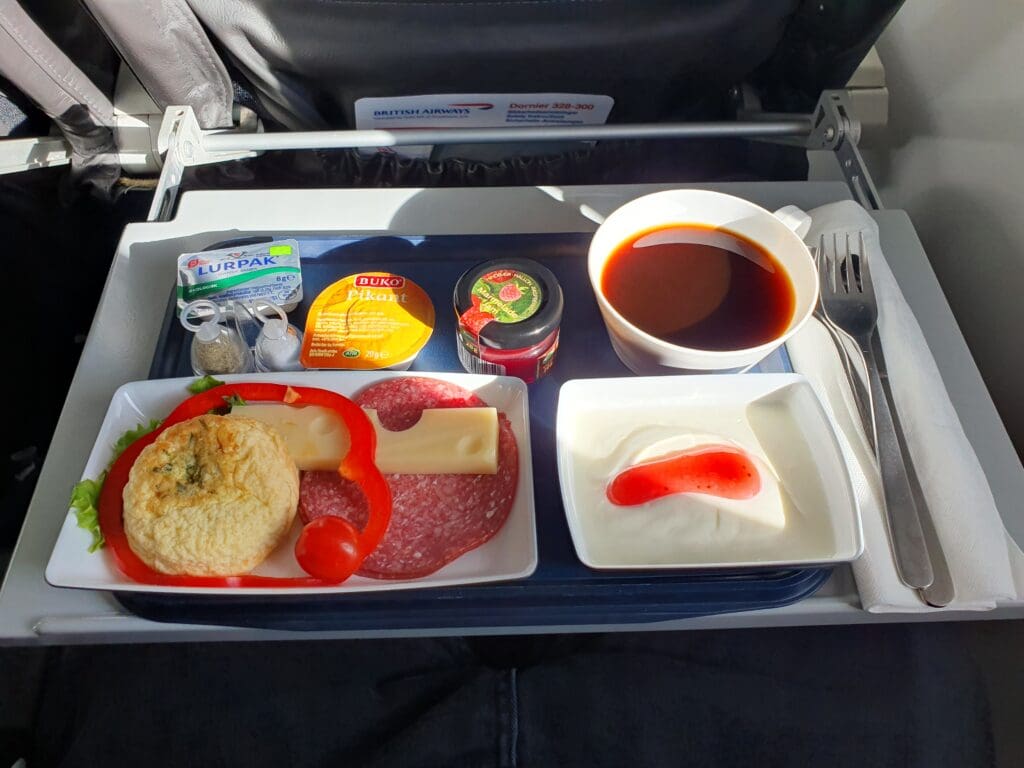
That morning I was treated to a hearty continental breakfast – provided with a main dish containing several pieces of salami and a block of mild cheese, a red pepper and a single cherry tomato, as well as a spinach and egg souffle/tartlet. For dessert, I had been provided with a yoghurt with a hint of fruit puree. To accompany these, individual salt and pepper shakers were provided, as well as small tubs of Lurpak and a cheese spread, and a small glass jar containing raspberry jam. In addition, I was provided with real British Airways branded metal cutlery neatly rolled up in a serviette. Whilst I had been expecting this offering, I was nevertheless highly impressed with this delightful and filling breakfast offering and found this to be more akin to a Club Europe meal rather than a Euro Traveller one!
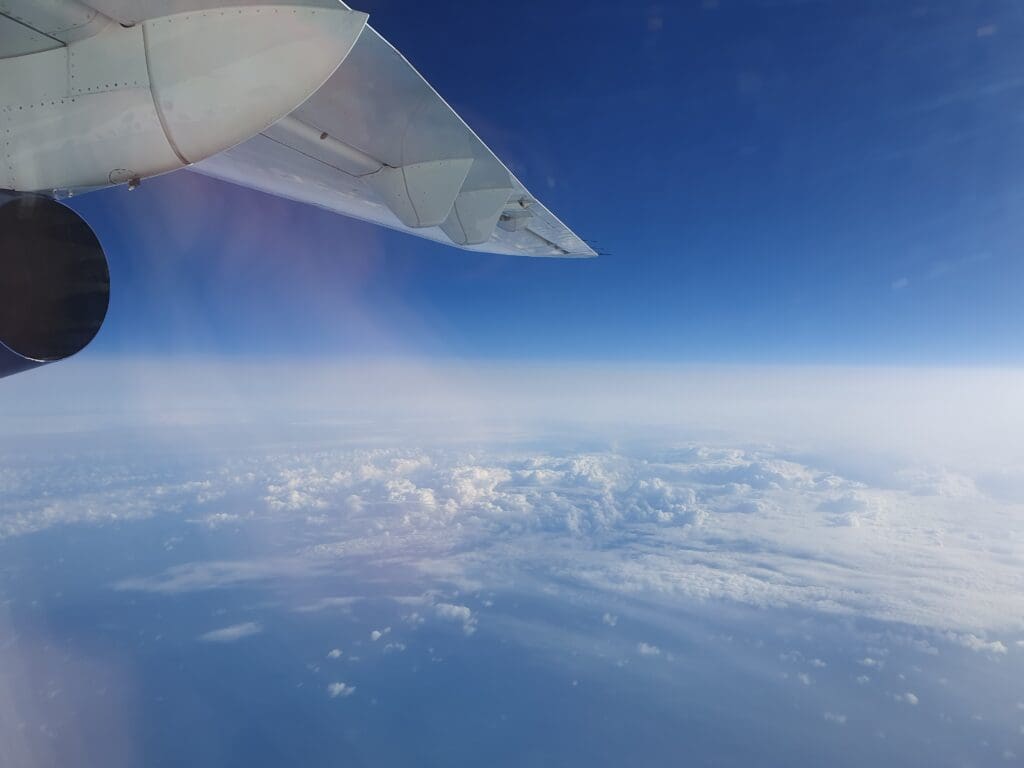
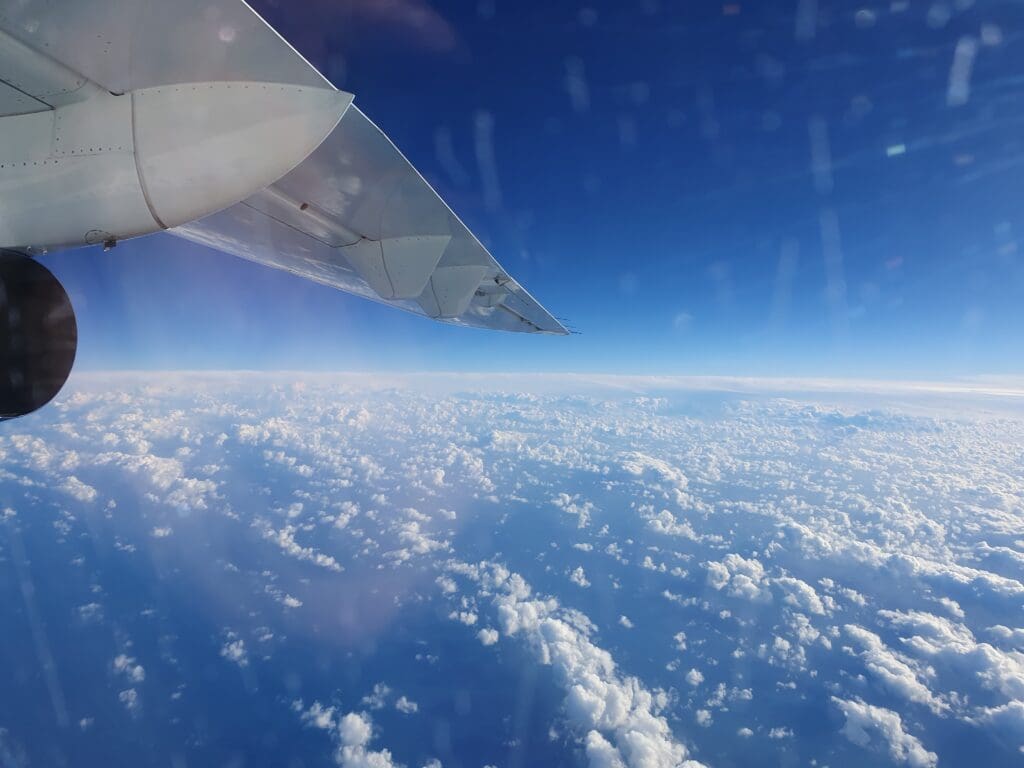
Turning to examine the route that morning, once the clouds rolled in below it wasn’t long before the Dornier reached the East Anglian coastline, flying directly over the neighbouring port towns of Harwich and Felixstowe in Essex and Suffolk respectively. After leaving Felixstowe behind, the aircraft crossed over the coastline although continued flying northeast along the Suffolk and Norfolk coast before the latter county retreated away and the Dornier made its way out to sea. Cruising along at 35,000 feet, as the Captain had mentioned during their pre-departure speech, the cruise ended up being relatively smooth with just a few gentle lumps and bumps as the aircraft flew high above the sea. During our crossing of the North Sea, gaps in the clouds below revealed the blue waters below; however, I failed to spot any offshore platforms or wind turbines as we made our way northwards.
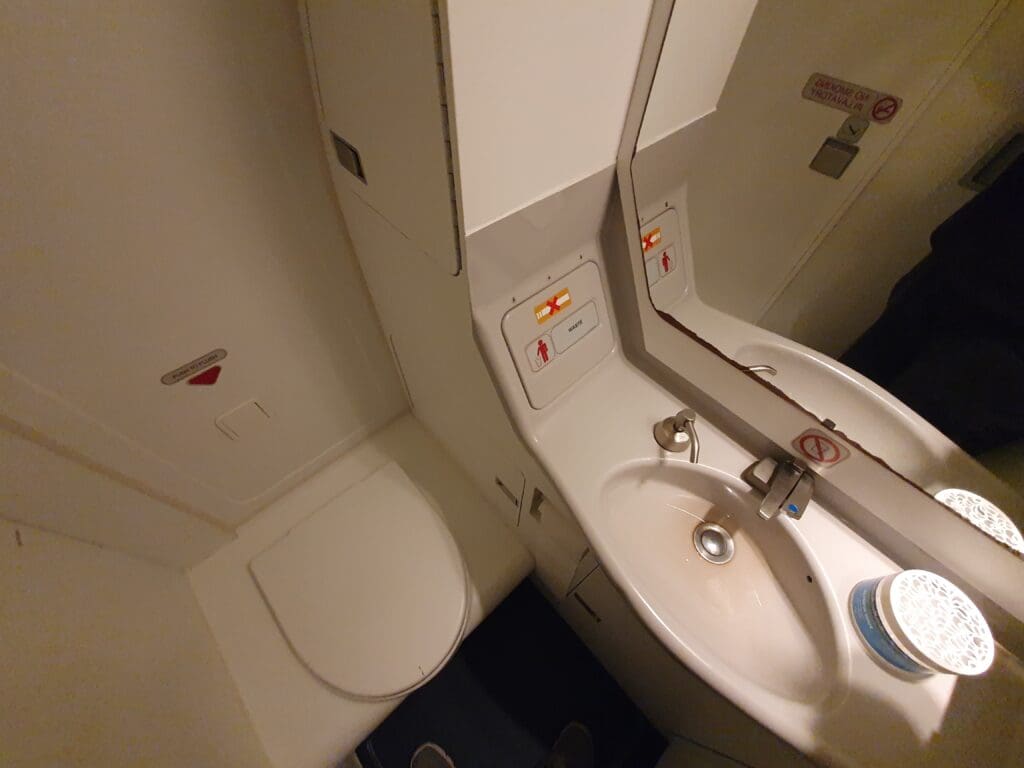
As passengers ate breakfast, the flight attendant patrolled the aisle ready to quickly respond to any requests and take away the trays of passengers once they had finished eating. Once mine had been collected, I decided to pay a visit to the Dornier 328’s toilet which is located at the rear of the cabin opposite the aircraft’s miniscule galley. Given the small size of the aircraft, I was pleasantly surprised to find that this provided ample room for someone of slightly larger than average stature – with this seeming to be more spacious than the toilets of ATRs and Dash 8s. As with the cabin, whilst dated in its aesthetics, I found the bathroom to be clean and in good condition and I was thus left with nothing to complain about that morning. Following my quick trip, I returned to my seat and strapped myself in, knowing that there was not a great deal left of the flight.
Once roughly parallel with Billund, at 1139 Danish time, the aircraft turned onto an easterly heading that would take us all towards Jutland. Several minutes later, indicating that the end of the flight was indeed near, after exactly an hour in the skies the noise produced by the Dornier’s two turbofan engines decreased and the aircraft could immediately be felt commencing its descent. Confirming this, five minutes later the Captain performed a pre-arrival announcement whereby they informed passengers that we would land in around 15 minutes’ time, and provided an update on the weather before ending this by thanking passengers for flying with Sun-Air and wishing us all an enjoyable day in Billund. As soon as this came to an end, the seatbelt signs were re-illuminated and the flight attendant performed their pre-arrival speech which included all the usual warnings regarding seatbacks, tray tables, seat belts and window shades. As they performed this, the aircraft crossed over the Danish coastline just to the north of the Blåvandshuk headland before continuing onwards to the small city of Varde – passing directly over this. After making their pre-arrival announcement, the flight attendant then passed through the cabin collecting any remaining rubbish and ensuring all was in place for our arrival before strapping themselves into the jumpseat at the front of the cabin in good time for our arrival.

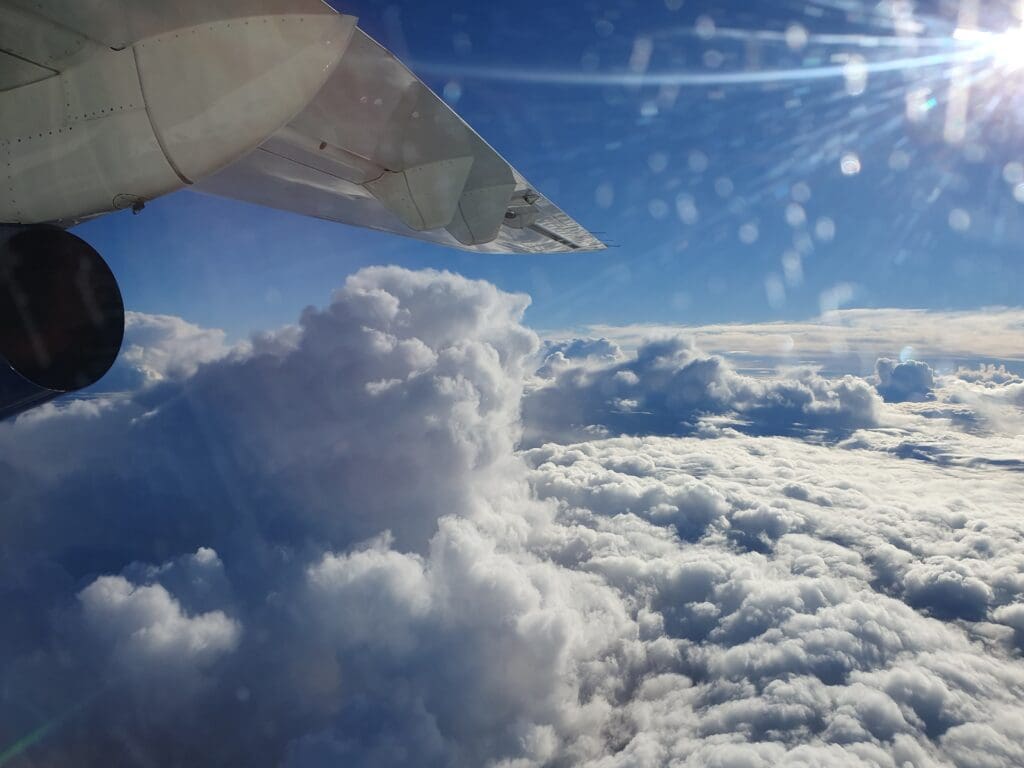
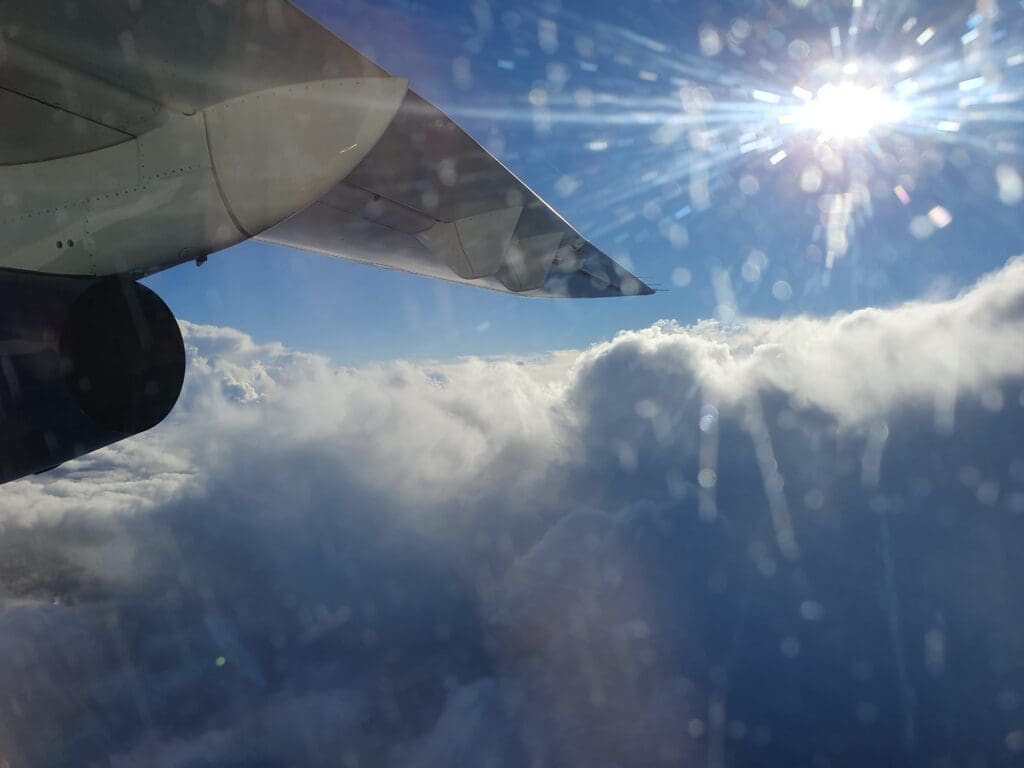
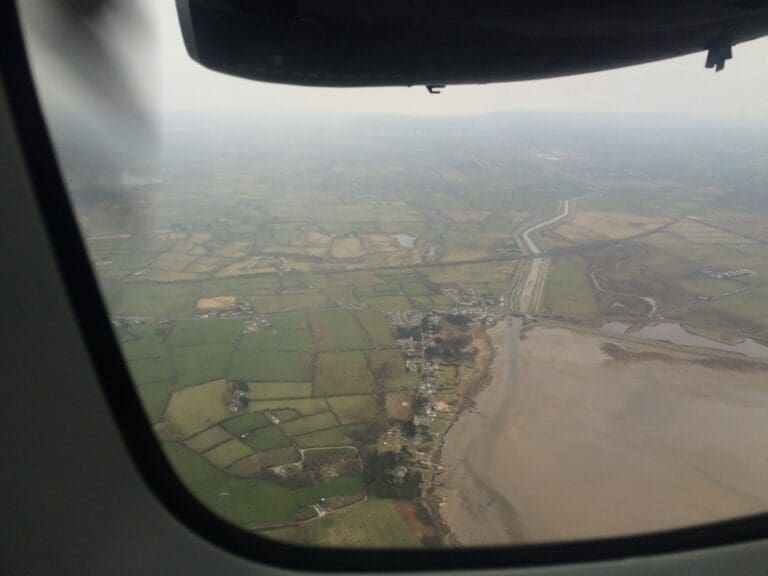
Looking outside, it wasn’t long before the aircraft sank below the clouds and Jutland’s mostly flat rural landscape of lush green fields and forests appeared below. That lunchtime, the aircraft crossed almost the entirety of Jutland from west to east before turning back towards Billund just after reaching the small city of Vejle which sits on Jutland’s eastern coastline. After turning towards Billund, the flaps were soon extended followed by the gear, as the green fields and forests below along with the occasional farm and village became increasingly clearer as we neared Billund Airport.
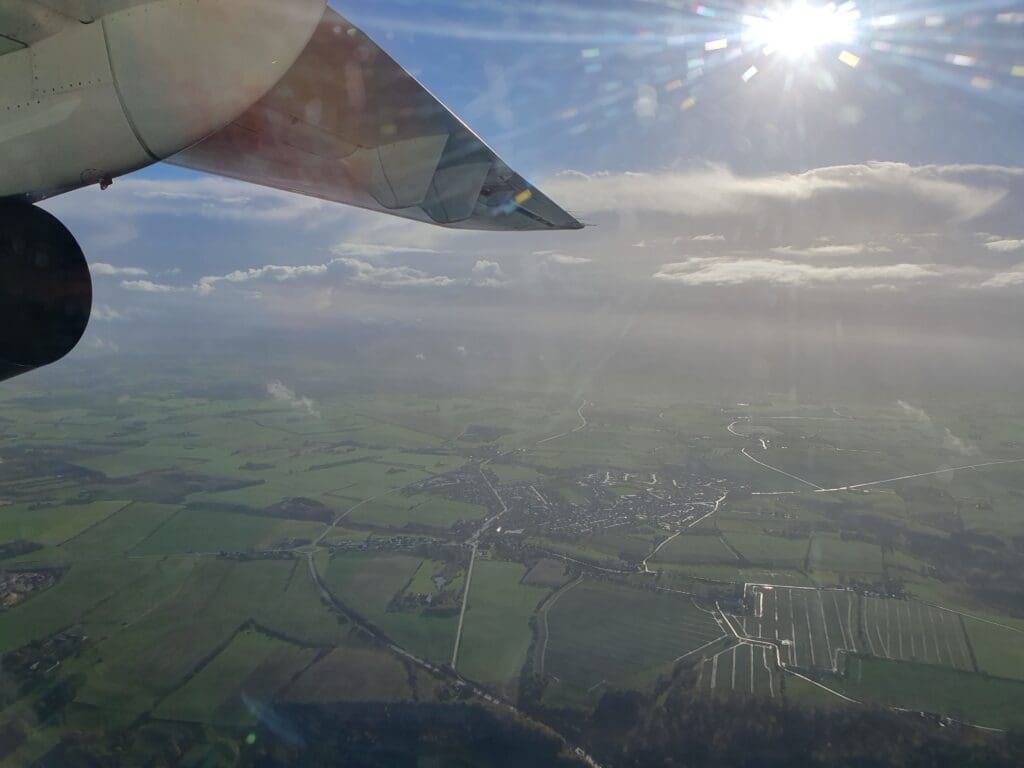
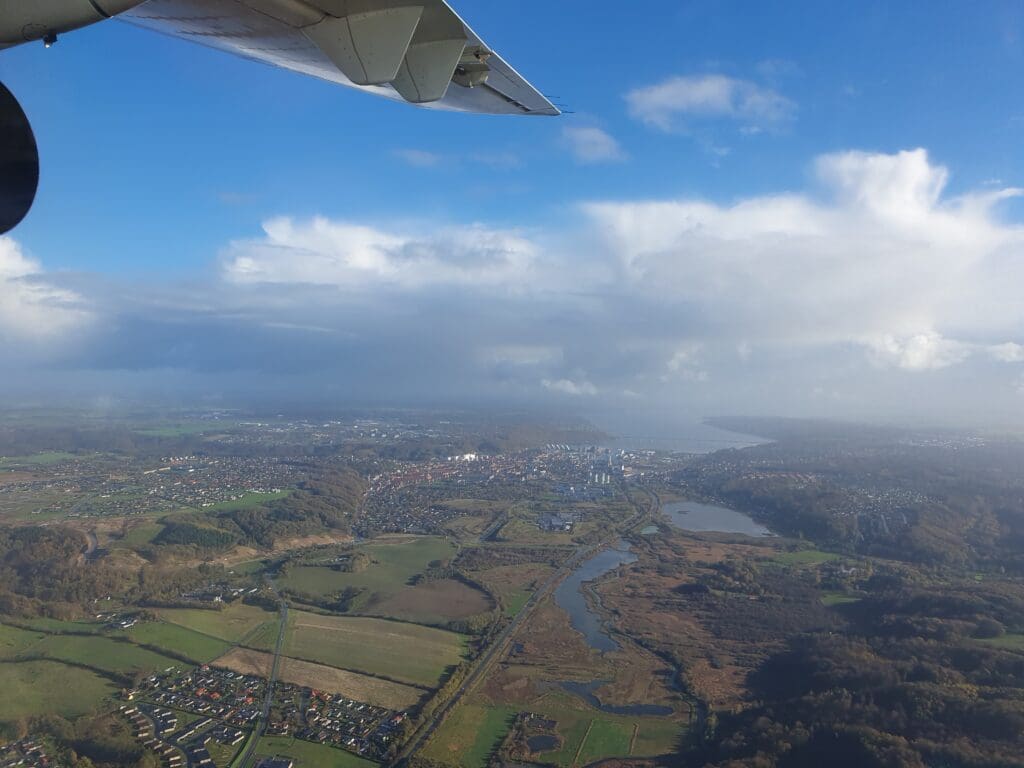
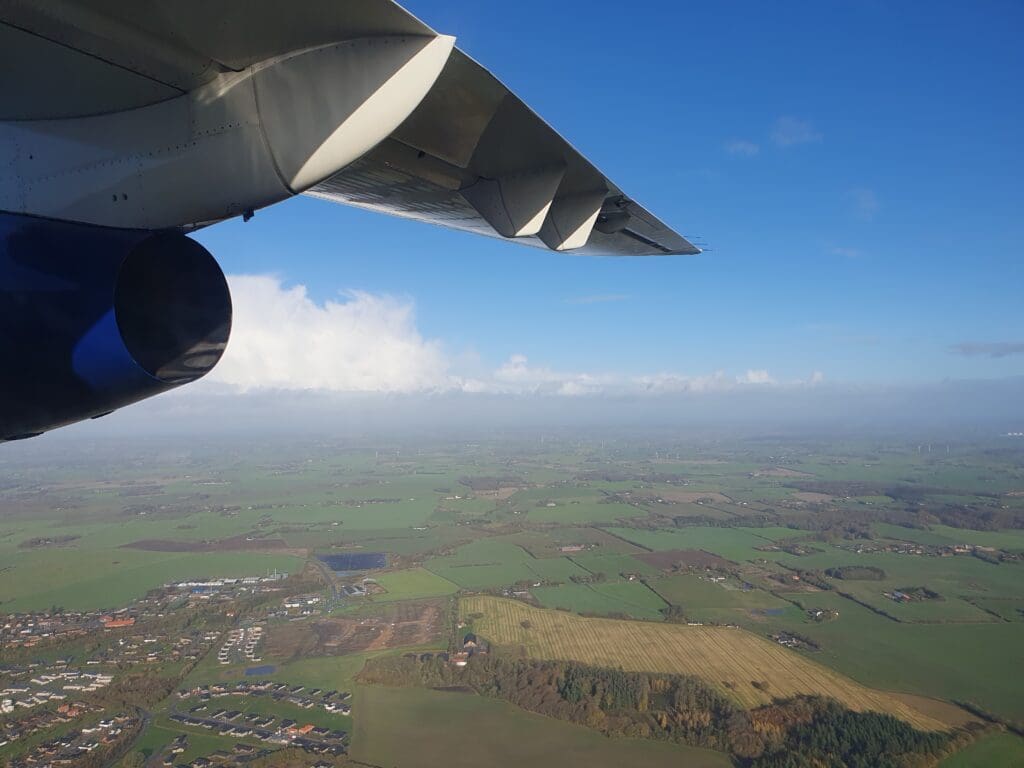
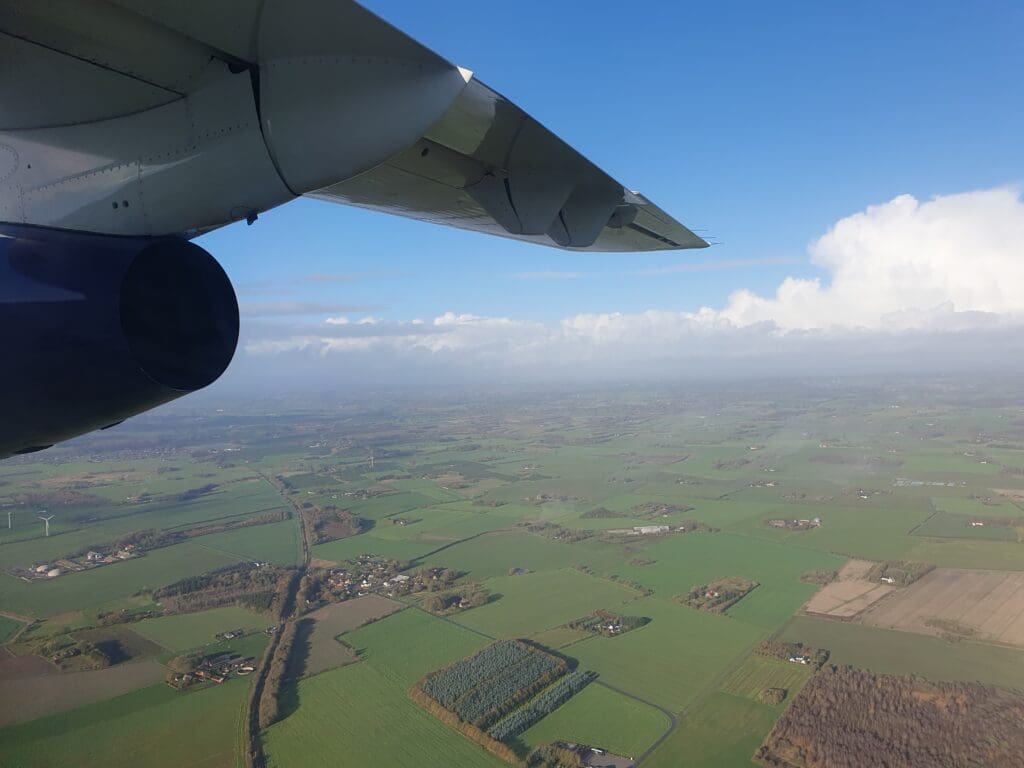
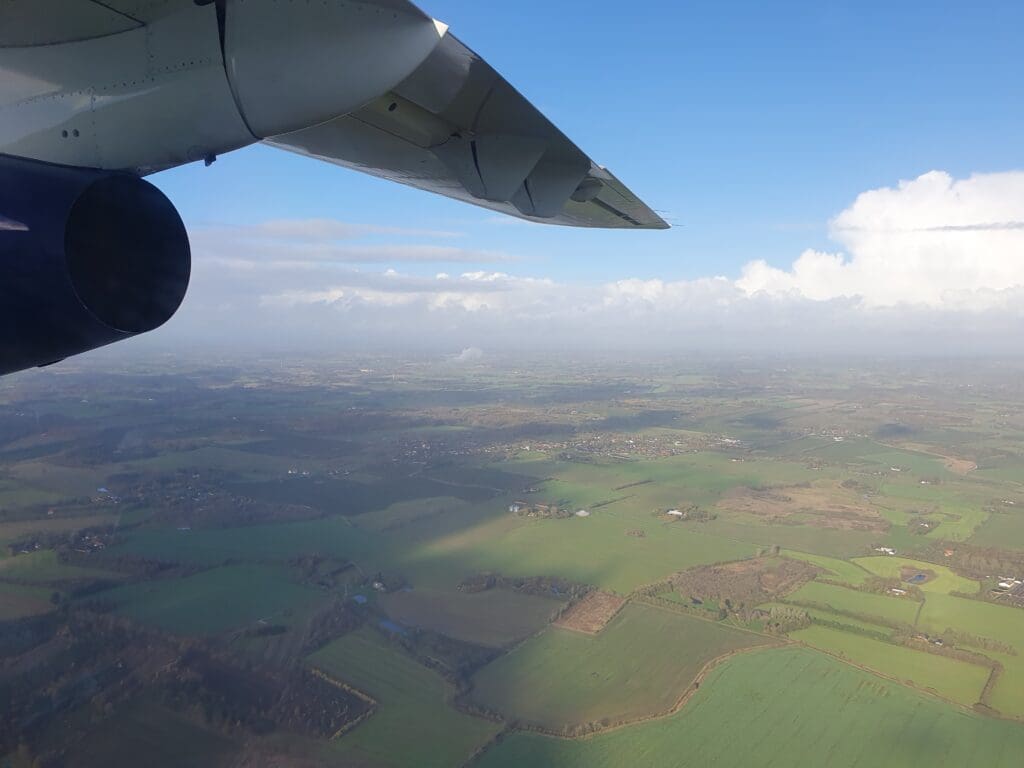
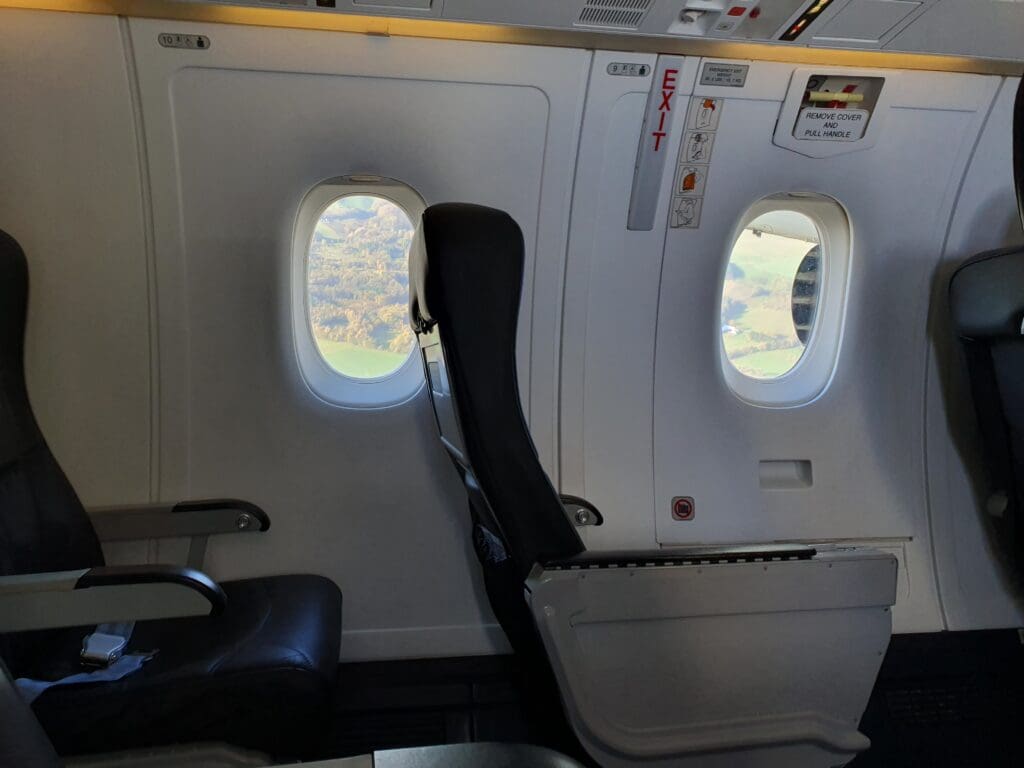
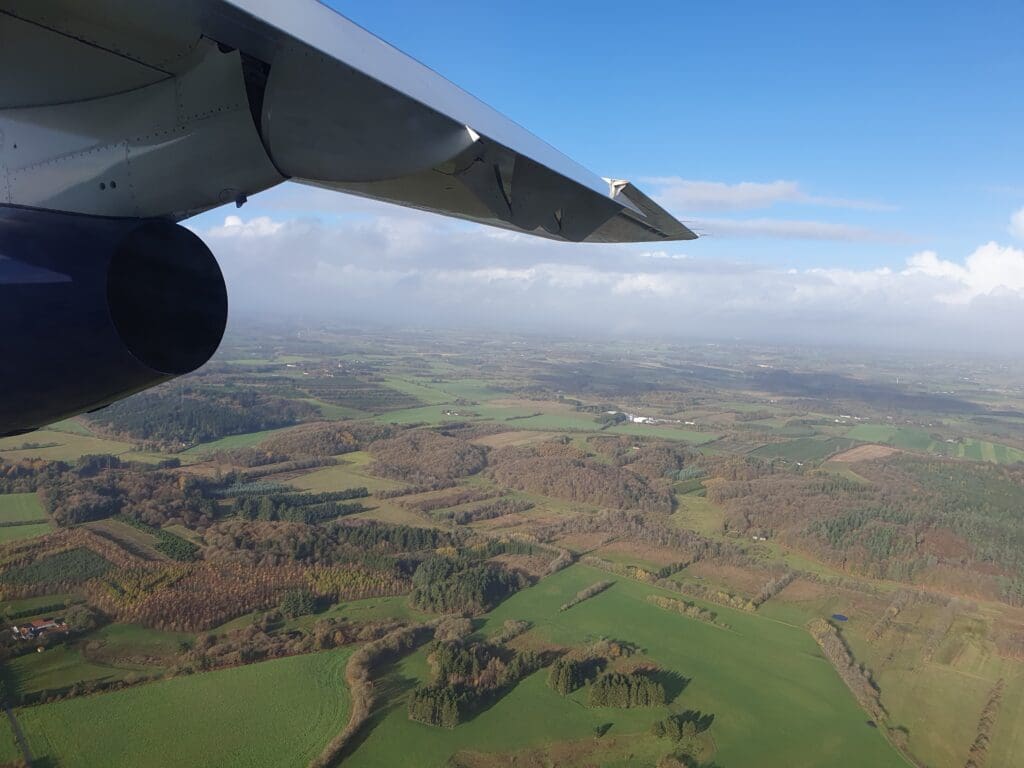
Watching as our shadow grew increasingly closer, soon, the Dornier whizzed over Billund Airport’s perimeter fence and a long retired Bombardier CRJ once operated by Danish regional airline Cimber Air appeared – this now being used as a fire and rescue trainer. Following a fantastic 1H21 in the air, at 1208 the Dornier touched down on Billund Airport’s Runway 27 with a firm thud before the large speedbrakes popped up from the wing and the aircraft decelerated rather quickly. As the aircraft slowed, Billund Airport’s modern terminal soon came into view near which four aircraft could be seen – two stored Embraer 195s belonging to the ill-fated Great Dane Airlines, as well as a Copenhagen Air Taxi Boeing 737-400 and a DAT Airbus A320.
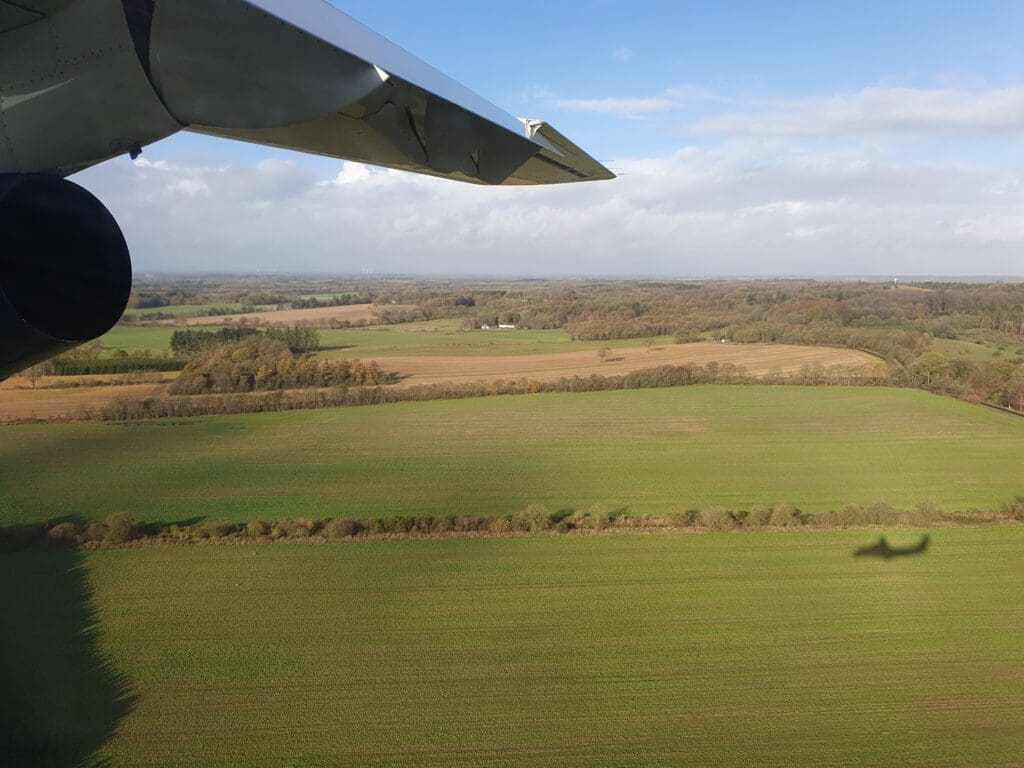
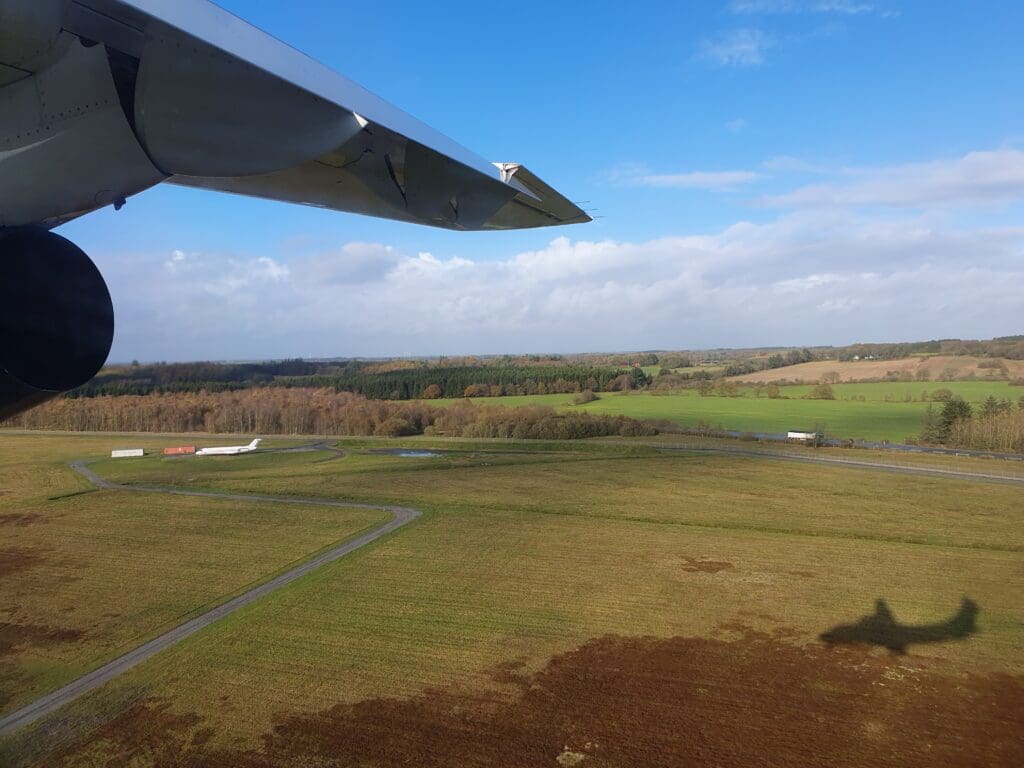
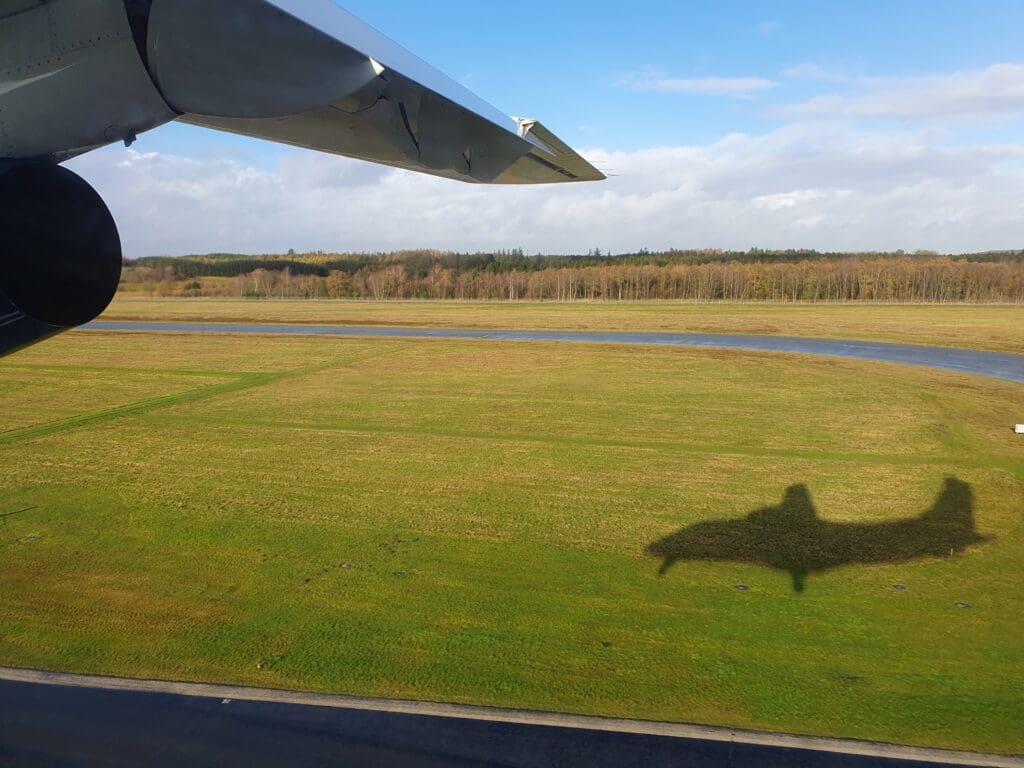
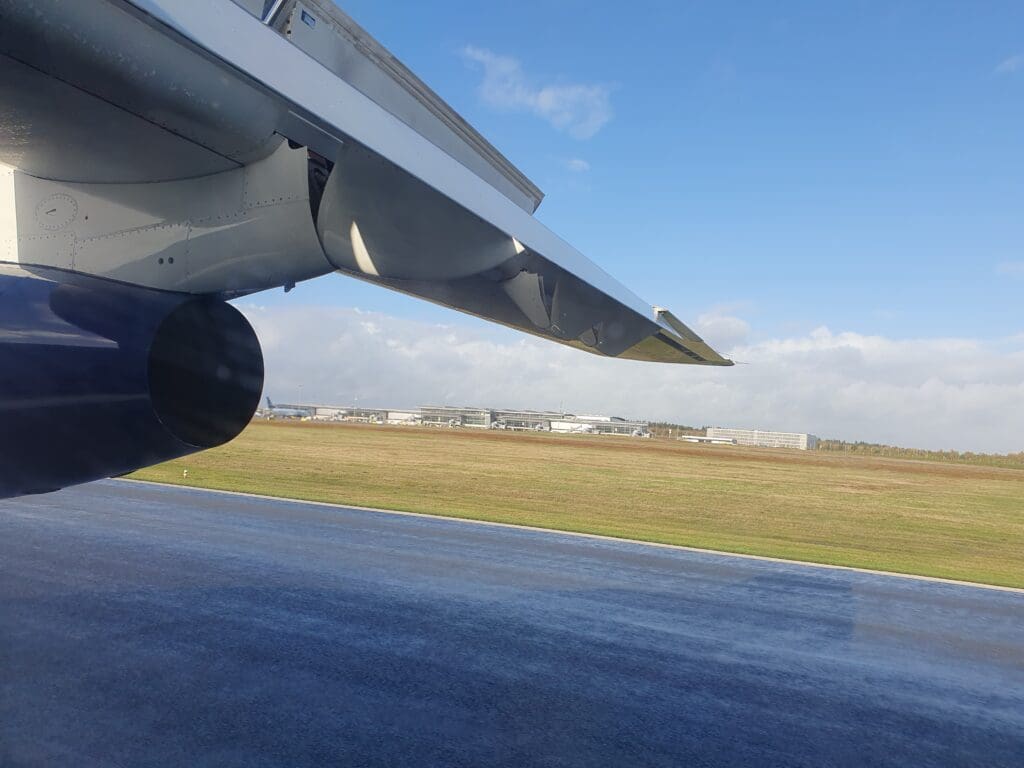
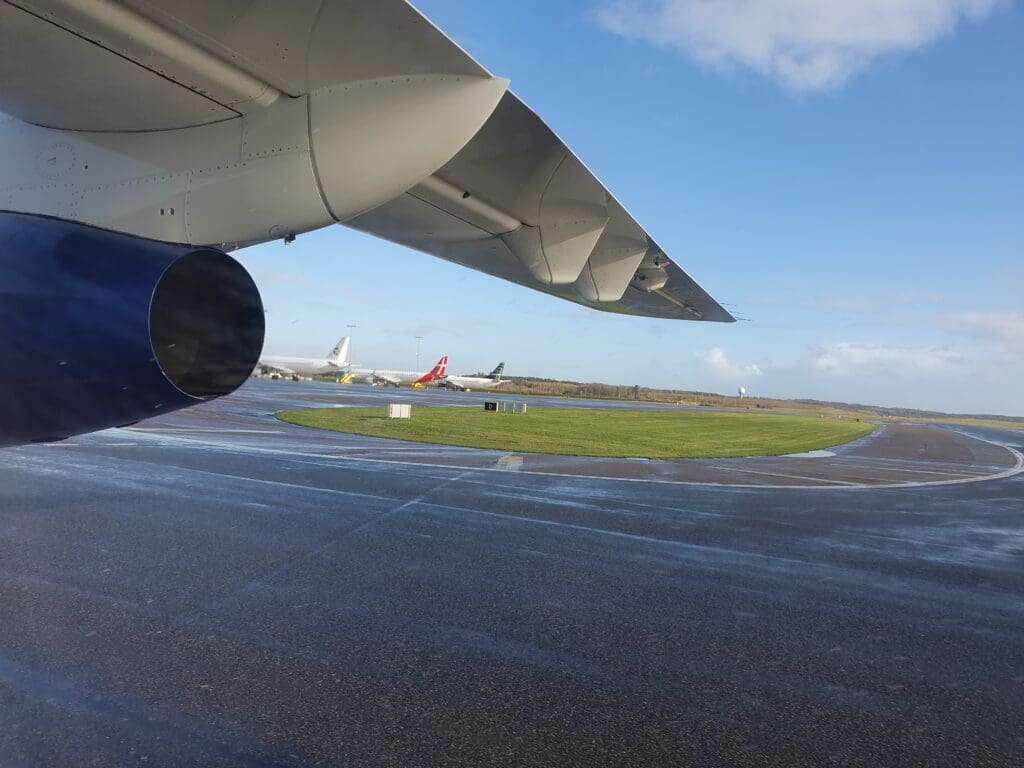
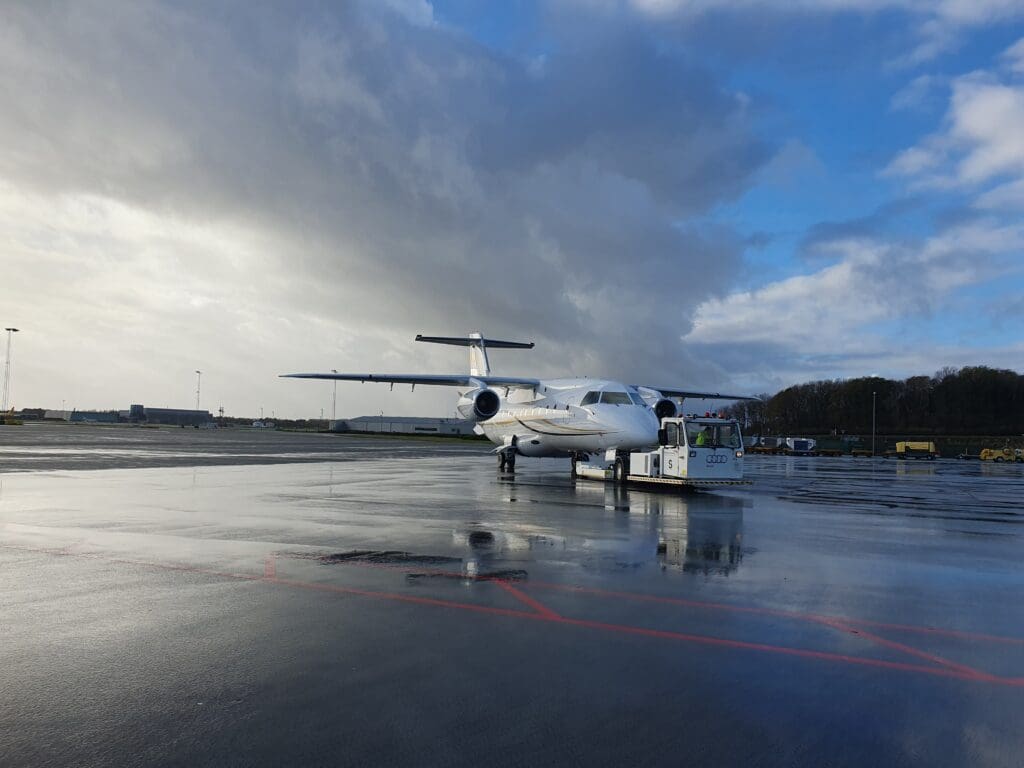
Soon vacating the runway, the Dornier made a quick taxi over to the terminal as the flight attendant’s welcome announcement rang out through the cabin. A very short time after leaving the runway, the Dornier came to a halt at Stand 27/28, pulling in next to a corporate liveried Sun-Air Dornier 328 Jet that had arrived on the airline’s other scheduled service from Manchester a short time earlier. Once the aircraft came to a standstill and the engines spooled down, unlike on many other flights passengers appeared to be in no rush to exit the aircraft and all remained seated until the flight attendant permitted us to disembark. With no jetbridge to be connected, once the cabin door was open it didn’t take long for disembarkation to commence, and despite being the last to exit the aircraft, I soon thanked the flight attendant before heading down the aircraft’s steps and out into the fresh Danish air.
From the aircraft, I headed up a set of steps and into the terminal before making a short walk to the immigration area. Whilst only two immigration counters were manned, seeing the flight from London City was the only flight from outside of the Common Travel Area to arrive at that time, I was able to walk straight up to one of the counters where a friendly immigration officer stamped me into Denmark without any questions. From there, I made my way quickly through the baggage claim hall before heading outside to commence my eight hour stay in Billund.
Summary
Having had high expectations of Sun-Air, I can safely say that I wasn’t disappointed. Not only did the airline deliver me to Billund safely and ahead of schedule, I found their Dornier 328 to be a comfortable aircraft in tip-top condition. Meanwhile, I have absolutely nothing to complain about regarding the onboard meal service whilst I found the flight attendant to be friendly, welcoming and attentive. Granted, whilst the prohibitive cost of Sun-Air’s services as well as my usual lack of a need to go to Denmark means that I will be unlikely to fly with them on a regular basis, I would most certainly not hesitate to fly with them again were the opportunity to arise!