Crossing Arabia on an A320: My First Flight with Saudia – Dubai to Jeddah
Background and Booking
First commencing operations with a Douglas DC-3 gifted from the US in 1945, over several decades Saudi Arabia’s national carrier has undergone massive expansion. Today, Saudia operates the third largest fleet of aircraft in the Middle East and flies to almost one hundred destinations across the world. Growing up I recall frequently seeing Boeing 777-200ERs sporting the carrier’s distinctive livery during my spotting trips to Heathrow and Manchester, as well as a host of more interesting types sporting these colours. These including Boeing 747SPs and Gulfstreams belonging to the Saudi Royal Flight as well as C-130 Hercules aircraft operated by the Royal Saudi Air Force masking their military identity with Saudia’s beige, gold and white colour scheme. Having read some fairly decent reviews of the airline’s Guest Class (economy) product, I had wanted to sample Saudia for some time. However, as is usually the case, a mixture of finances and other commitments had gotten in the way. Back in February 2019 I came incredibly close to sampling a couple of the flight’s with the airline from Addis Ababa to Dubai via Riyadh onboard one of the carrier’s Airbus A320s and A330s, only for a crucial commitment in London to leave me with no choice but to cancel this. Fortunately, just over a year later and two weeks after I had moved from Paris to Dubai, needing to return to the UK for a last minute job interview, I was pleased to find Saudia offered some relatively cheap one way fares from Dubai to Europe priced at around £230. However the catch to this being that the cheapest services were to Paris CDG, with the airline’s flights to Heathrow and Manchester proving substantially more expensive. However with an abundance of cheap options to get from Paris back to the UK, I decided to head to Saudia’s website to book these without delay. The only other cheap non-LCC option back to Europe being with EgyptAir via Cairo.
Upon landing on Saudia’s homepage, I was met by a promotion for Saudi Arabia’s tourist e-visas, a nice mural celebrating the airline’s 75th anniversary featuring a collage of four of their aircraft throughout the ages stuck together – a DC-3, Boeing 707, Lockheed Tristar and Boeing 787, as well as a list of cheap fares from Dubai to destinations across Europe and an advert for the website’s 360vr feature which allows for a glimpse into one of the airline’s Boeing 777-300ERs. Upon entering the details regarding my journey, I was presented with a list of four flight combinations departing that Friday from Dubai to Paris, all of which were priced at a reasonable 1085 AED. Of these three were overnight journeys with late afternoon and evening departure times from Dubai involving a stop in Riyadh before heading onwards on an overnight flight to Paris onboard one of the carrier’s Boeing 777-300ERs. Seeing as all of these would allow a nearly full day in both Dubai and Paris, I am sure that these would have been the preferred options for most. However, being an illogical enthusiast preferring to fly during the day on one of the airline’s Dreamliners and, looking to fly in the day, I turned to the final combination. This would involve an early 0420 departure from Dubai onboard one of the airline’s many Airbus A320s, eventually landing in Paris on a Dreamliner at 1415 that afternoon after a three and a half hour connection at Jeddah’s old terminal. This combination would allow me to sample both Saudia’s narrowbody workhorse as well as the latest model of aircraft in their fleet. Thanks to the fact that Saudia details the facilities onboard each aircraft alongside the aircraft type when booking, I discovered that the A320 taking me to Jeddah would not be one of their retrofitted aircraft with PTVs and would lack powerports in economy. Meanwhile, as you would expect, the Boeing 787 would be fitted with everything you could want including plug sockets, PTVs and wifi. In addition, as is standard on Saudia’s long haul aircraft, this would feature a prayer area at the rear of the aircraft.
Seeing no reason not to book, I soon clicked on the cheapest ‘semi-flex’ option. Despite being the cheapest available fare, this allowed for a very generous baggage allowance of two suitcases weighing up to 23kg each and a 100% mileage accrual for members of the airline’s Alfursan frequent flyer program. However, collecting Skyteam miles with my Korean Air Skypass account, this would allow for a still acceptable accrual rate of 75% which would see me receive 2856 miles – 57% of the amount required for a single economy class domestic flight in Korea. After selecting this flight combination, I entered my contact details and passport information. On this page I was also able to request special assistance or a special meal and had the opportunity to enter the details of any Skyteam FFP. Unfortunately for some reason my Korean Air Skypass number came up as ‘invalid’ however, seeing as I could claim miles for the flight retrospectively or attempt to add my membership number during the check-in process, I was not too concerned about this.
Once I had filled in all the required information I was taken to the seat selection page. Despite the fact that there was only three days to go until my departure, upon opening up the seatmaps it appeared that either both flights were going to be empty or the majority of passengers had opted not to pre-select seats. Like many airlines, Saudia offers both complementary and charged options for seat selection, with seats in the front half of the economy section on both flights reservable for a fee. For the shorter leg to Jeddah, middle seats were priced at 50 AED and window and aisle seats cost 70 AED. Meanwhile for the longer leg to Europe, those wishing to occupy bulkhead or exit seats would have to fork our 220 AED and 130 AED or 100 AED for aisle/window and middle seats respectively in the forward economy cabin. As is usually the case, I went for the free options and ended up selecting seats 41A and 51L. After selecting these, I passed on any additional optional extras, namely excess baggage and wifi, the latter only available on the Dreamliner leg and priced at a reasonable 90 AED for the entire flight. Soon enough, I was presented with the payment page where I purchased the ticket without too much hassle, although there was a somewhat worrying long pause whilst the payment was processed. Eventually I ended up on the booking confirmation page which included a link to bid for upgrades to business. With minimum bids starting at a pricey 690 AED and 1620 AED for my two flights and given the economy focus of my reports, it didn’t take long for me to pass on these. As soon as I had booked, I received a couple of very similar emails – a booking confirmation and e-ticket and two texts, one confirming the issuance of my ticket and the other with a security code that I would need if calling the airline’s customer care centre.
Check-In
Given the ongoing Coronavirus outbreak and the rapid pace at which the disease was spreading across the world, throughout the entire planning and booking stages I was well aware of the higher than usual risk of one or both of my flights ending up cancelled and my trip postponed. Whilst at this stage none of the three countries involved in my trip had suffered outbreaks as serious as those in some other nations, the situation and number of cases in each nation rose each day. Indeed from fairly early on both Saudia and the Saudi Arabian government had taken a proactive role in steps to prevent the virus’ spread. These included the temporary suspension of Umrah, the suspension of tourist visas for citizens of a number of countries and the barring of entry of those who had visited China, Hong Kong, Iran, Macao and Taiwan within fourteen days prior to their arrival in Saudi Arabia. Hoping that things would not worsen, in the days prior to my trip I kept an eye on the situation, during which, I did notice the cancellation of several flights from Dubai to the KSA, however, I hoped this was simply due to a fall in passenger numbers.
Fortunately, all seemed to be going ahead and, 48 hours prior to departure I decided to check-in online for my trip. Having already entered my passport details and needing to drop off my luggage at the airport anyway, doing so would not save me any time. However, I opted to do via Saudia’s website in order to test out the system. After heading back to the airline’s modern and reasonably well laid out website, I soon found the online check-in page and entered my surname and booking reference. Once I had agreed not to transport hazardous materials, I was presented with a summary of my booking complete with the option to change seats and add frequent flyer details. As had been the case during booking, for some reason the system did not want to accept my Korean Air Skypass number and so I would end up having to claim these miles retrospectively. Proceeding onwards I was asked to indicate whether I was a Hajj passenger before being given several options of how I wished to receive my boarding passes. Despite holding no intention to actually print these off, I opted to have these emailed as a PDF.
All in all, bar my Skypass hiccup, all in all, my online pre-flight experience with Saudia had been a positive one and left me looking forward to my flight.
The Journey
Seeing as Dubai International Airport is one of the world’s busiest and most important air hubs, unsurprisingly getting to the United Arab Emirates’ largest airport from across Dubai is a fairly straightforward task. Those who do not wish to splurge on a taxi can take the Red Line of Dubai’s clean and reliable metro network which serves both Terminal 1 and Terminal 3. In addition to this, a network of buses connects the airport to various Dubai neighbourhoods, although these can be a little slow and complicated to catch compared to the metro. There are several airports where I try to avoid an early morning departure like the plague, however, Dubai International Airport is not one of them and I did not anticipate any major issues in reaching the airport in good time for my 0420 flight to Jeddah. Having spent my time in Dubai staying in Dubai Marina and a short walk away from DMCC Station, conveniently located on the Red Line and lacking any baggage, it only made sense to catch the Dubai Metro to the airport. This cost a total of 7.50 dirhams. However, with this stopping service for several hours each night, I would have to catch the last train of the day at 0009 and arrive at the airport with a little over three hours to go until my flight to Saudi Arabia.
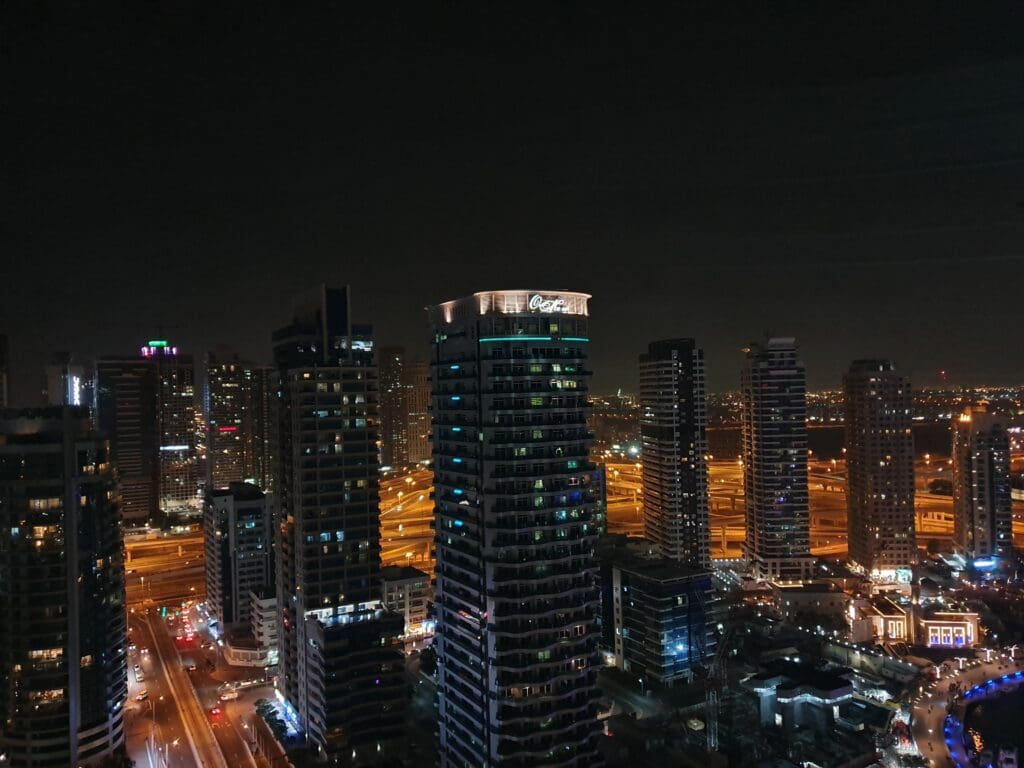
Lacking anything critical to do the day before my flight, I initially intended to adjust my sleep pattern to avoid feeling like a zombie for the entire journey to Paris. To do this, I slept for the bare minimum on Wednesday night in the hope that I would collapse into bed on Thursday afternoon and wake up after a solid sleep at 2300 in order to complete my final preparations. As it turned out, I completely failed in this mission and was unable to catch so much as a wink of sleep that afternoon and evening. At about 2230, I had a late night Filipino dinner of chicken adobo, fruit salad and a strong coffee to see me through the start of my journey before I made my way down the skyscraper and commenced the 10 minute walk to DMCC station.
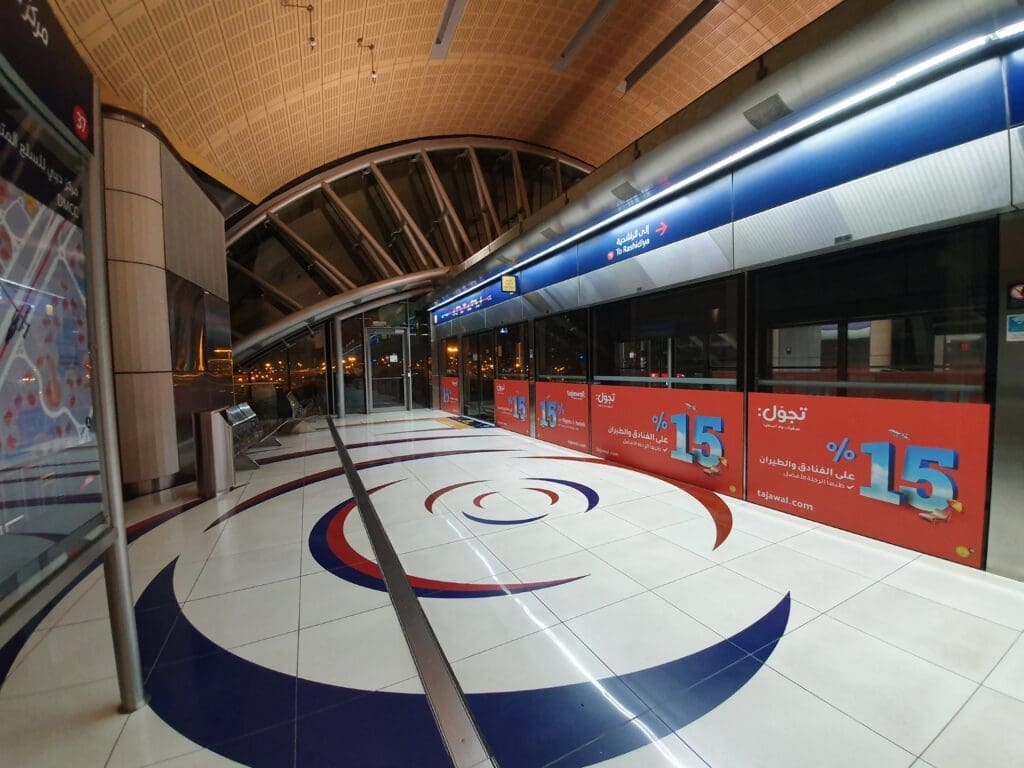
Being a Thursday evening and thus the Emirati equivalent of a Friday night, at that time the streets were rather busy with an eclectic mix of families, revellers and tourists, all out for a good time. Soon, I arrived at DMCC Station, tapped my Nol card on the barriers and my way up to the northbound platform. Within a couple of minutes, a driverless train bound for Rashidiya hurtled into the platform, and I boarded without delay. Much to my surprise and delight, I was pleased to find that the train was near-empty and so I was able to take a seat and settle in for the long journey through the city. However, connecting a fair number of Dubai’s main districts and hotspots and of course being one of the final trains of the day, unsurprisingly this did fill up as we sped northwards through Dubai.
Following 20 stops and about 35 minutes, the train could be felt decelerating as it approached Terminal 1 Station. There, I disembarked along with a small crowd that almost exclusively seemed to consist of airport workers. Designed with convenience in mind, reaching the terminal’s check-in hall was a quick and easy task, and I arrived there no more than about a minute after I had made my way through the station barriers. Upon checking the departure boards, these revealed that check-in for my flight to Jeddah would occur at Zone 6, located at the far end of the terminal, however, unsurprisingly arriving just under four hours to go until departure, these desks were yet to open. Thus, I decided to pass the time by having a stroll through the busy terminal.
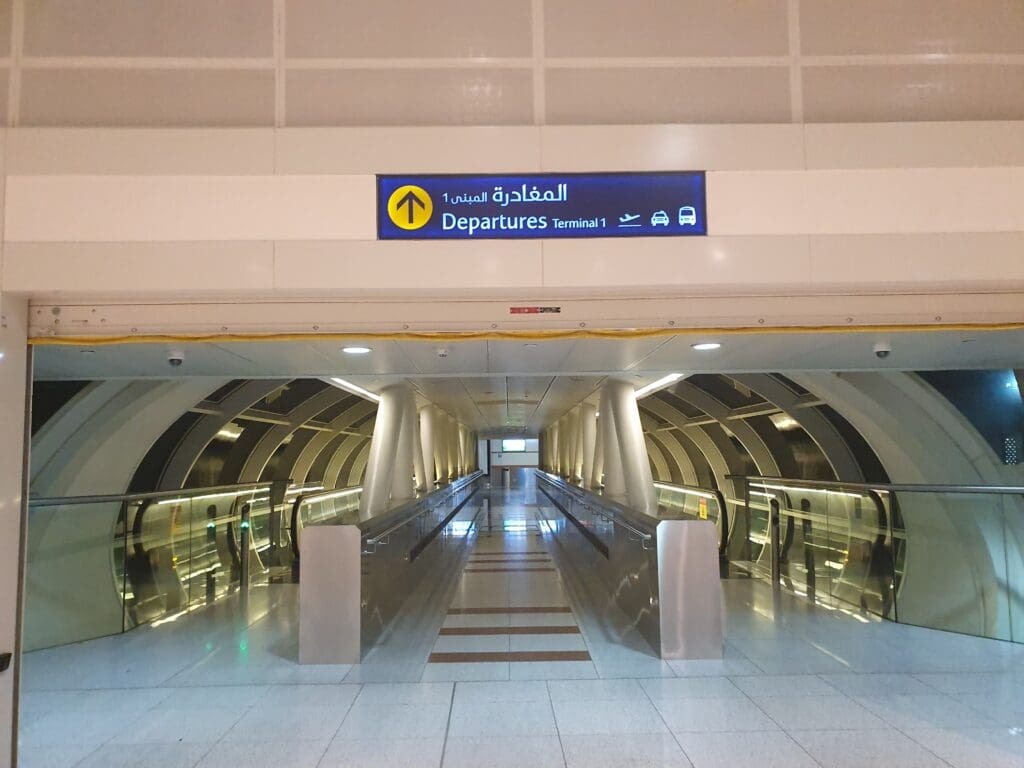
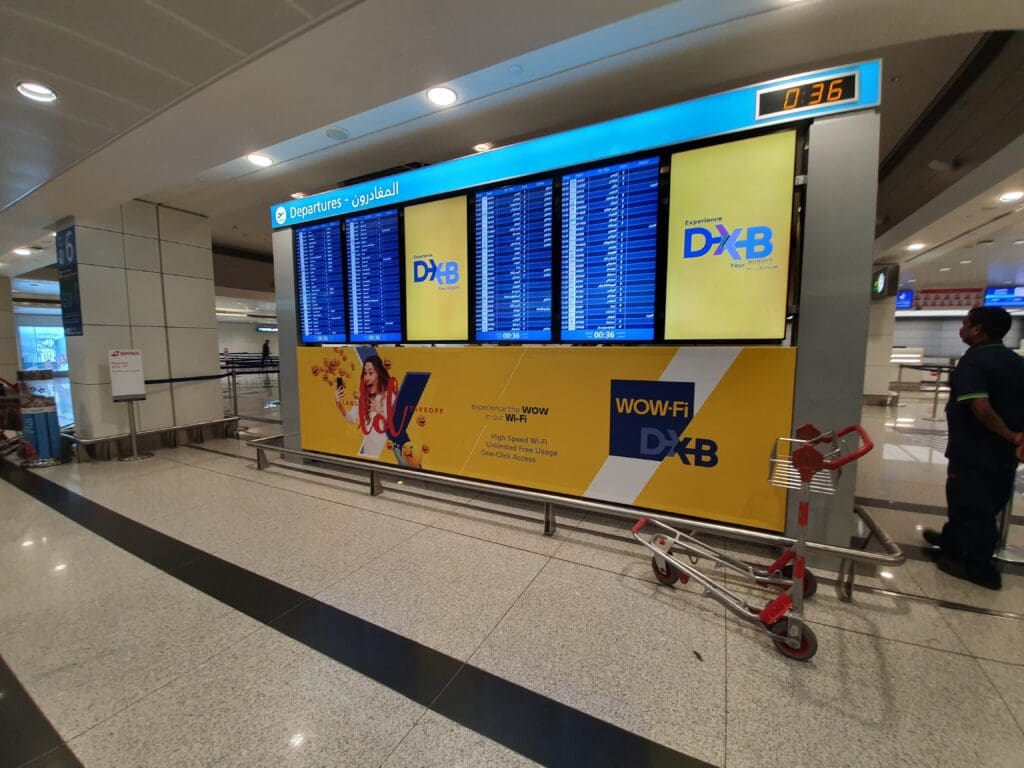
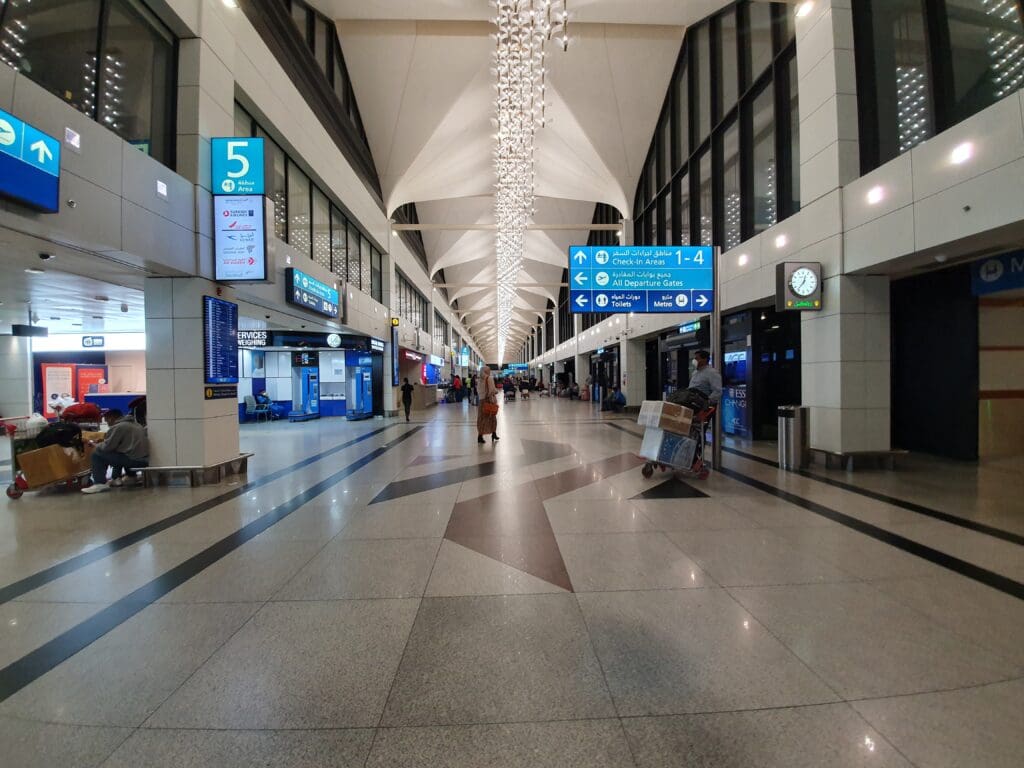
Whilst the landside area of Dubai International Airport’s Terminal 1 may be functional, it isn’t the most modern or stylish terminal in the world, being, I believe, the oldest terminal space across the entire airport. Furthermore, regardless of time, this seems to be eternally busy, with flights departing throughout the day and night. That morning, free seats were hard to come by and many passengers had taken to sitting on the floor. Meanwhile, whilst some parts of the terminal appeared to be spotlessly clean, others were in a somewhat poor state with a fair amount of rubbish strewn about. Other than the fancy-looking light fixtures in the main entry hall and the faux palm trees on the upper level of the terminal, this was not home to any particularly noteworthy architectural features, with low ceilings coupled with the many passengers giving the check-in hall a cramped feel. However, moving onto the positives, a good number of shops, cafés and restaurants could be seen dotted throughout the terminal. Meanwhile, fast complimentary wifi was provided throughout. Following a short wander around, I made my way to the upper level of the terminal which offered a good view of a small portion of Terminal 3 albeit through slightly mucky windows. Dimly lit and comparatively quiet compared to the rest of the terminal, I would recommend this part of the terminal to those who end up having to wait to check-in.

After spending half an hour observing Emirates Airbus A380s and Boeing 777s starting their journeys to destinations across the world, with just under 10 minutes to go until check-in for my flight was scheduled to open, I wandered back downstairs to Saudia’s check-in desks. By the time I returned, a small cluster of Jeddah-bound passengers could already be seen waiting for check-in to commence, despite the lack of staff members behind the desks. Joining this queue, I ended up sixth in line and as the clock neared 0120, a trio of Dnata workers appeared and opened up the desks. That night, one desk was available for Sky Priority passengers and those fortunate few journeying to Saudi Arabia in Business, whilst two desks were offered for those in economy, which Saudia markets as Guest Class. Carrying mountains of luggage, it seemed like most of those queueing in front of me were making the most of Saudia’s generous baggage allowance so I expected a reasonable wait until I was able to proceed to one of the desks. Ten minutes after boarding commenced, I was called forward and handed over my mobile boarding pass to one of the friendly Dnata workers and placed my bag on the belt. Following some typing, given the Coronavirus situation, the check-in agent asked whether I had visited any other countries in the two weeks before my flight, responding that I had just been in Dubai during this time, my two boarding passes were printed off and I was pointed in the direction of security and immigration.
Following a brisk walk, I arrived at the terminal’s immigration area. Despite being busy, as is usually the case at Dubai International Airport, most immigration booths were open and so the queue shuffled along at a fair pace. After no more than five minutes of waiting I handed my passport over to the immigration official and after some scanning, clicking and the usual suspicious glances, my passport was stamped and returned and I was free to head onwards to the security area located right after this. With immigration serving to slow the rate of flow of passengers and seeing as the majority of security checkpoints were open, I was able to walk straight up to one of these where I was met with the usual questions regarding liquids and electronics. After a quick check, I was allowed to head up the escalators towards the station from where all passengers must catch the automated train that leads to the separate building where the terminal’s gates are located.
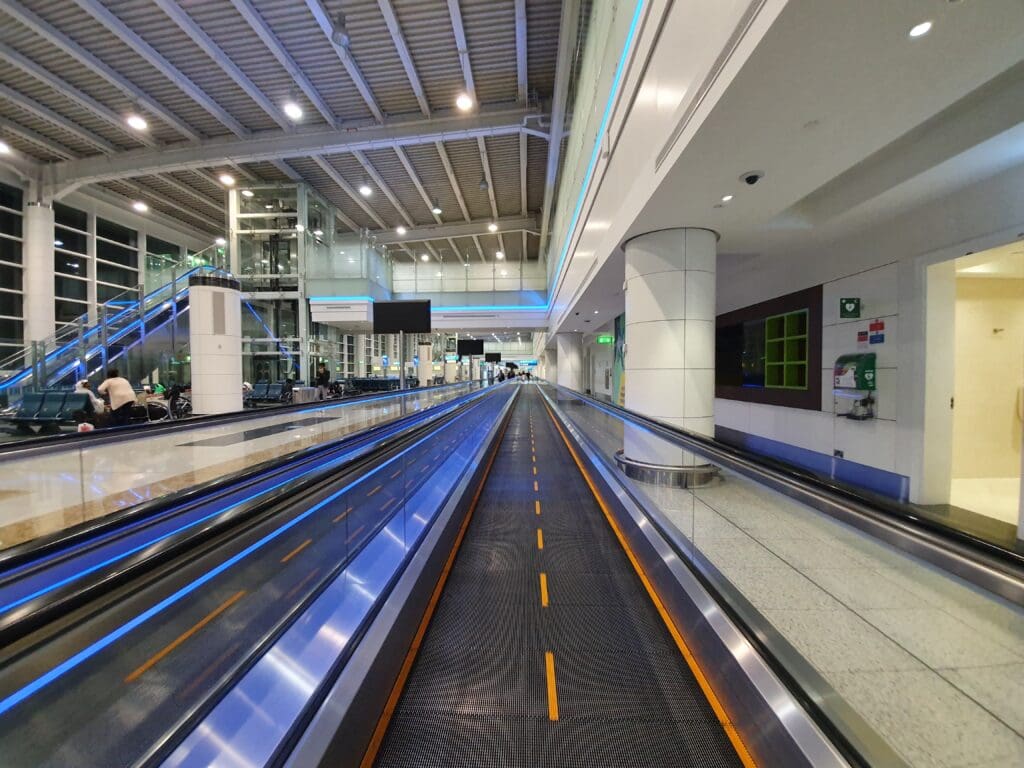
Whilst it is fair to say I am not the biggest fan of Terminal 1’s landside departure area, airside, the terminal goes some way to redeem itself. Like any major international terminal, this hosts an abundance of cafés, restaurants and shops and, unlike the landside area which feels a little cramped and worn, the airside area is relatively modern and spacious. In addition, plenty of plug sockets can be found throughout the terminal. Crucially, as far as the eye could tell, the airside portion of the terminal appeared to be clean and tidy. With departures through the night, inside the terminal, a constant stream of passengers could be spotted heading to destinations across Africa, Asia and Europe. However, despite this, for the duration of my stay, the terminal never appeared to be incredibly busy and as I wandered through I saw plenty of places to sit and wait.
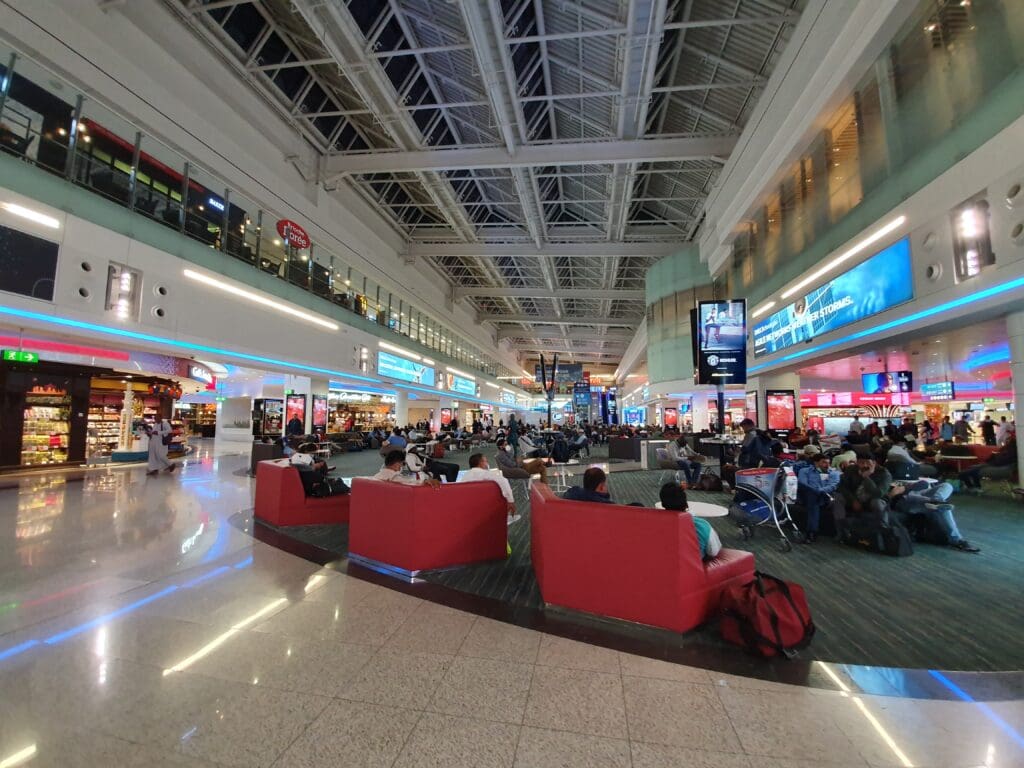
Home to the majority of overseas carriers that serve Dubai, operations at Terminal 1 are incredibly diverse with a long list of airlines utilising a wide range of aircraft spotable at the terminal. That night a smorgasbord of aircraft operated by Aeroflot, Air India, Azerbaijan Airlines, British Airways, Kenya Airways, Lufthansa, Middle East Airlines, Spicejet, Swiss, Turkish Airlines and Ukraine International Airlines could all be seen outside operating aircraft ranging in size from the Airbus A319 to the Airbus A350-1000. Given the wide variety of airlines and aircraft, the terminal may appear to be a haven for enthusiasts however opportunities for decent views of the action were limited by the darkness and the terminal’s design. In addition, unfortunately, the United Arab Emirates is not known to be the most aviation enthusiast-friendly nation and so anybody who wishes to photograph the impressive array of airlines at the airport must do so with caution!
With little opportunity to see much of the aircraft outside thanks to the darkness, after a long stroll I decided to take a seat at an empty gate. Within a few minutes, this area was filled by weary passengers bound for Jaipur with Spicejet. Not too long later I was approached by one of the gate agents for this flight who appeared to be searching for a passenger with a Western name, after surprising them by telling them that this was not me and showing them my boarding pass to Jeddah, I was left alone.
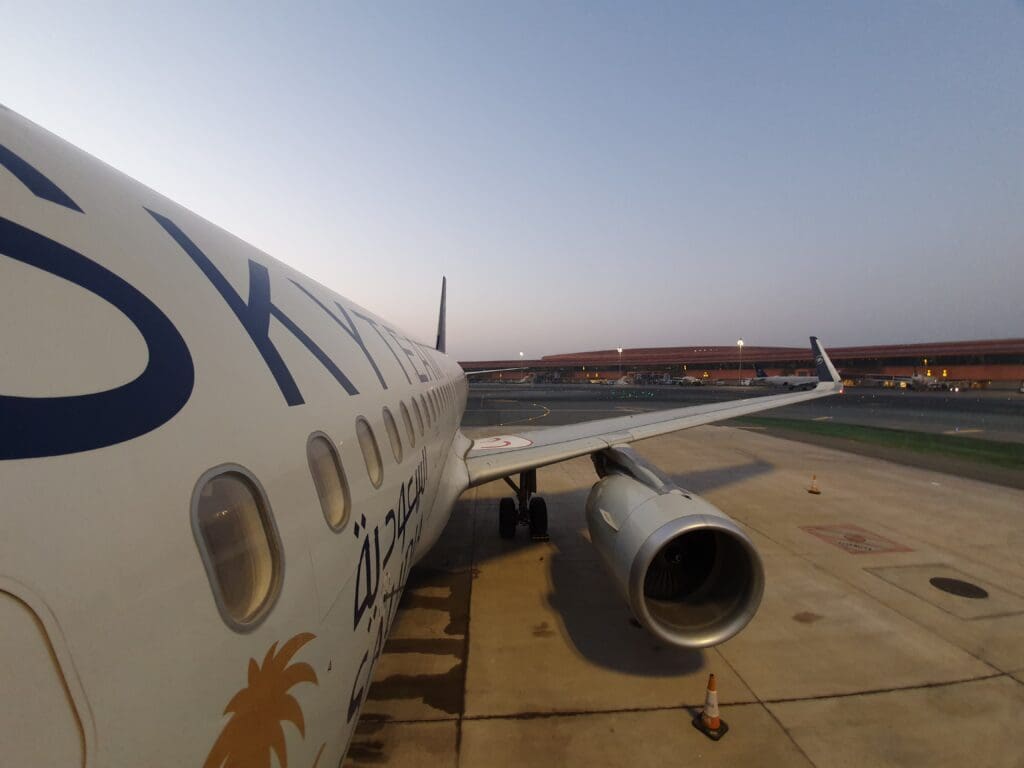
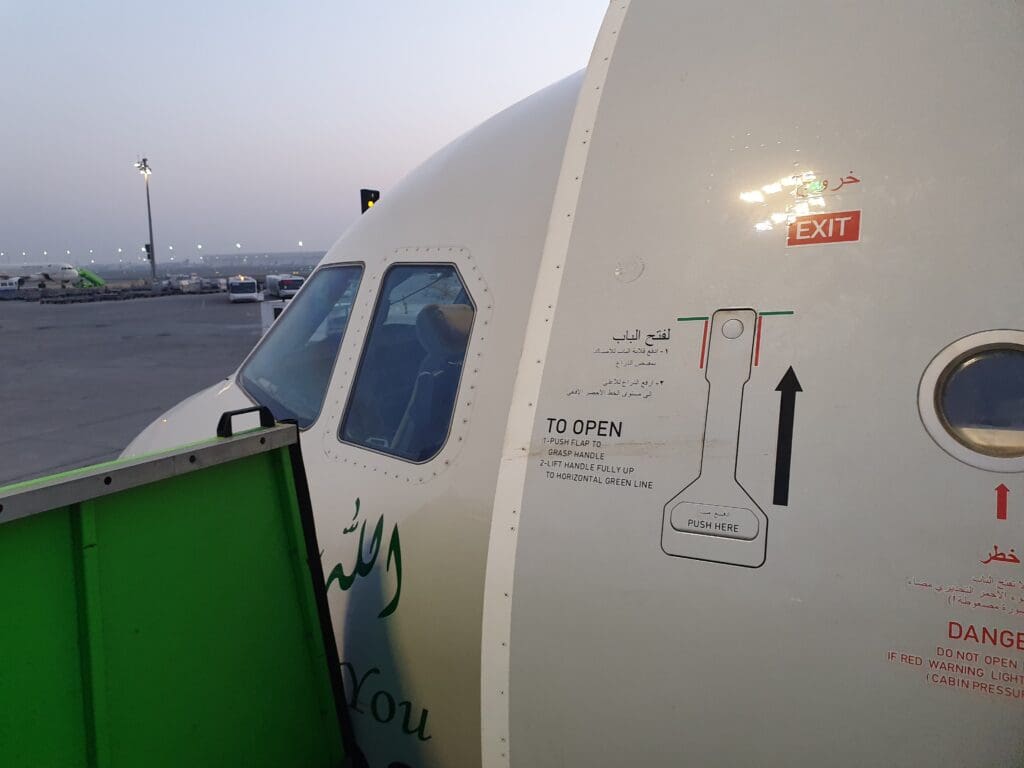
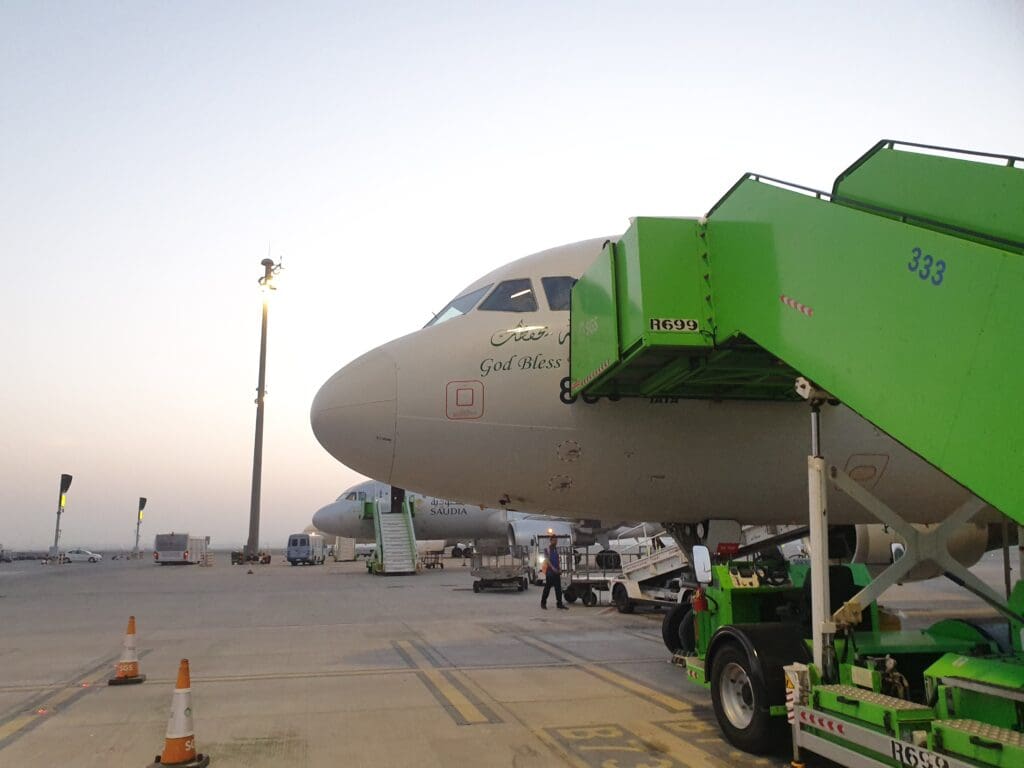
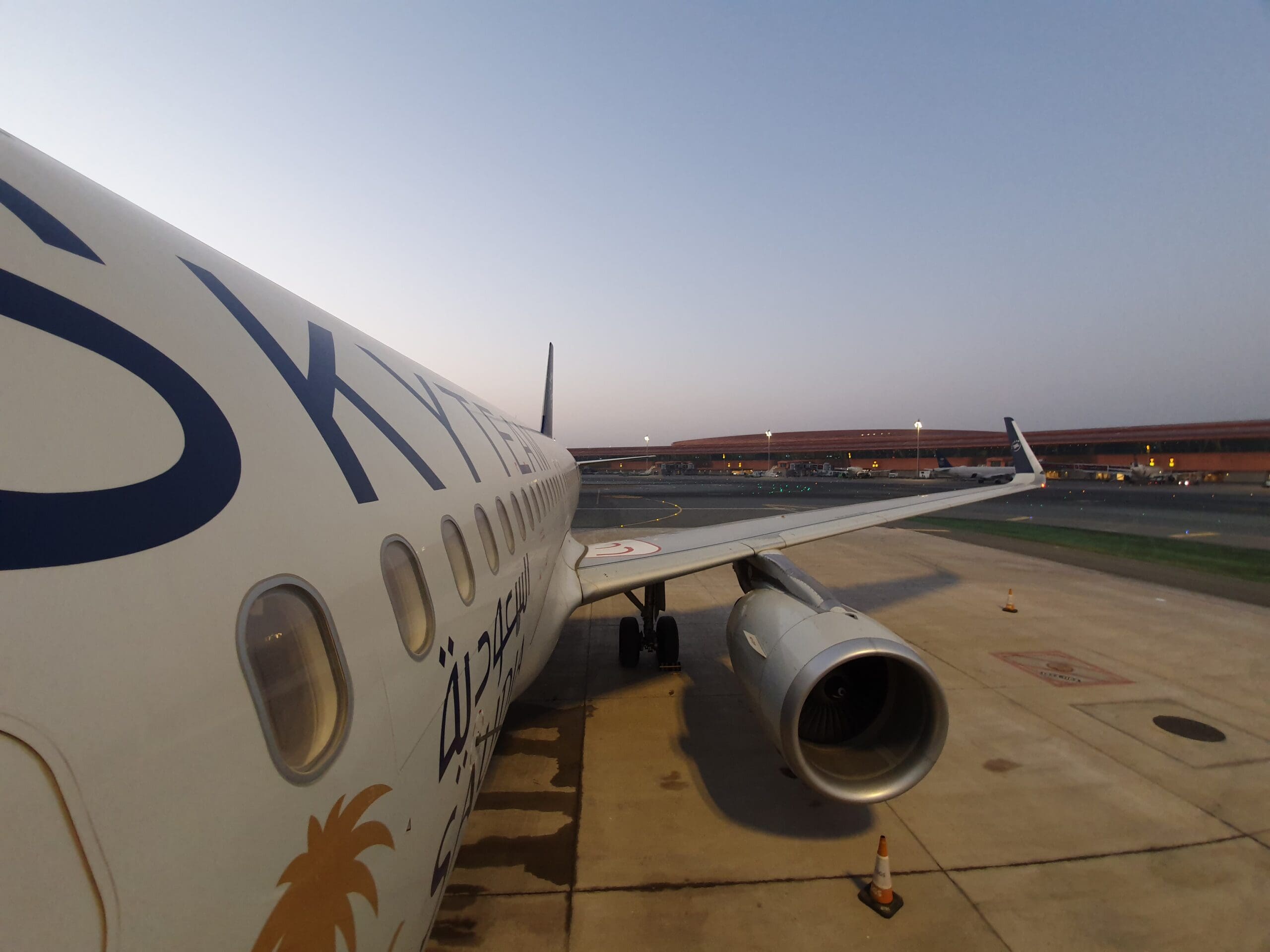
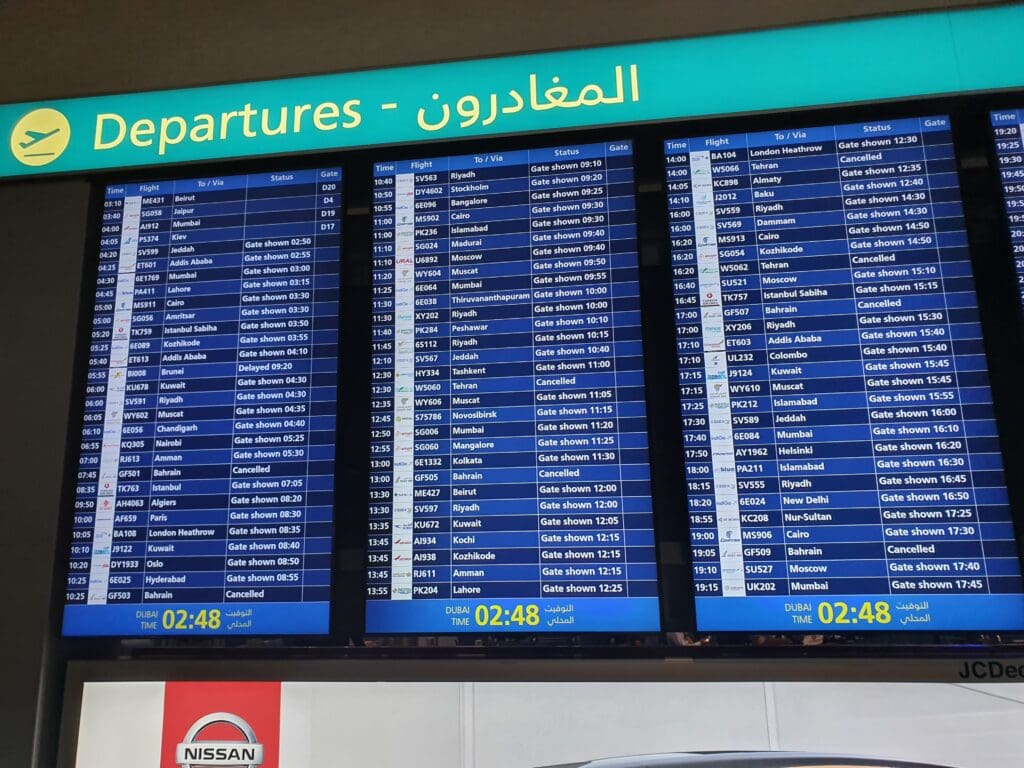
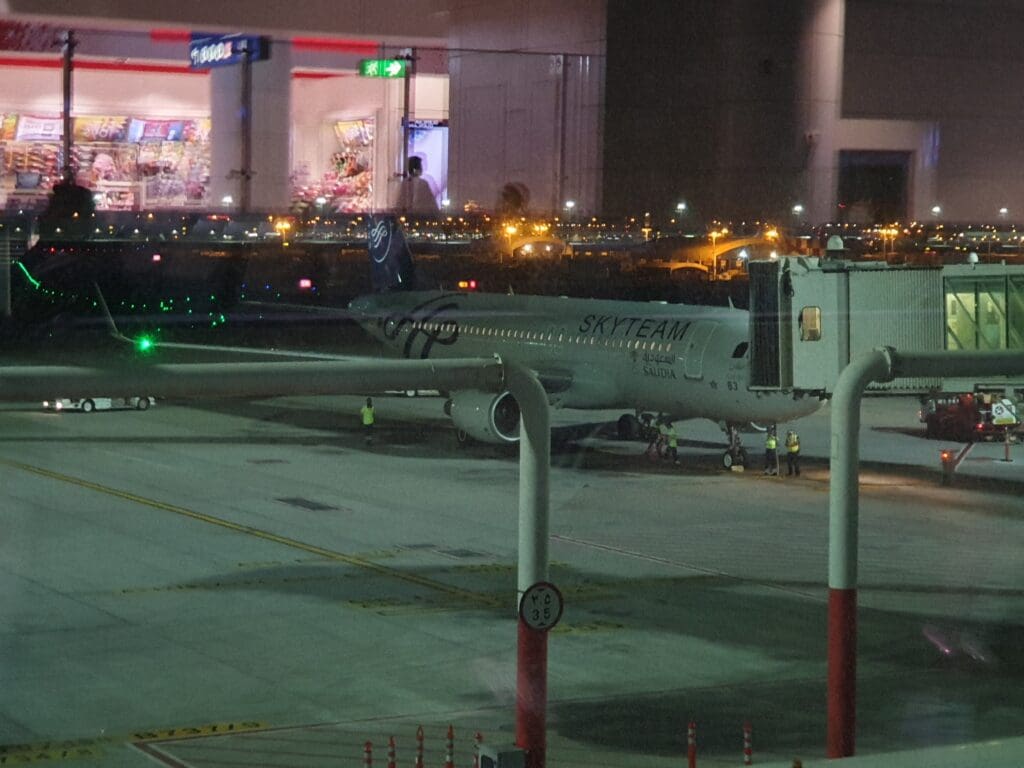
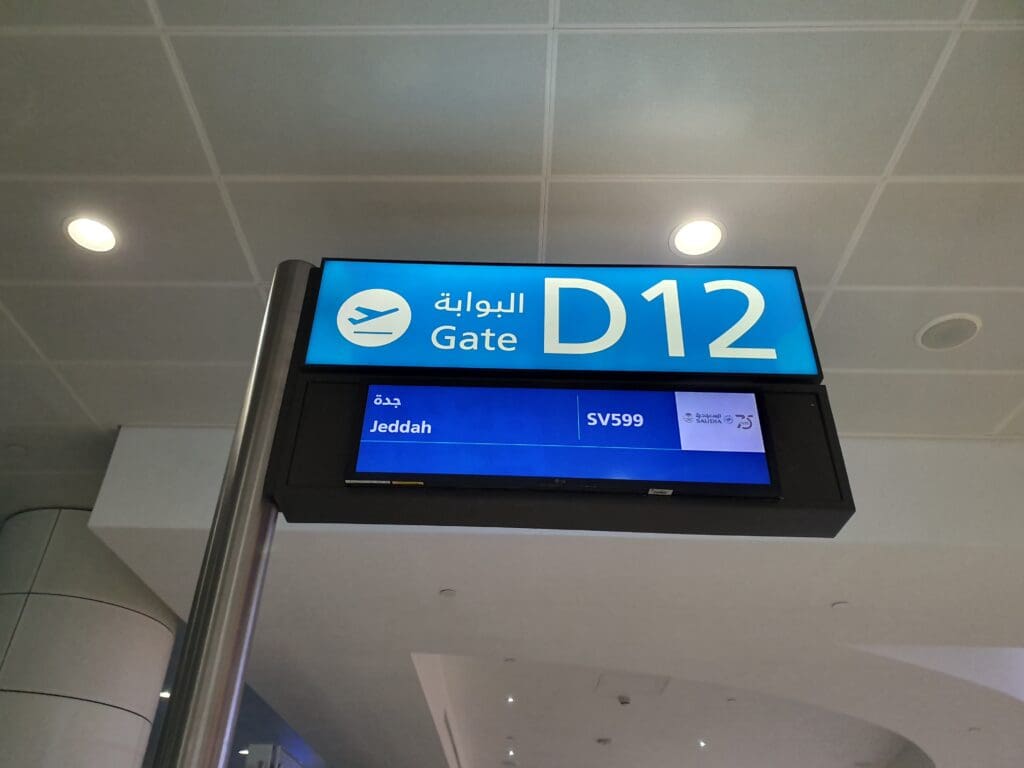
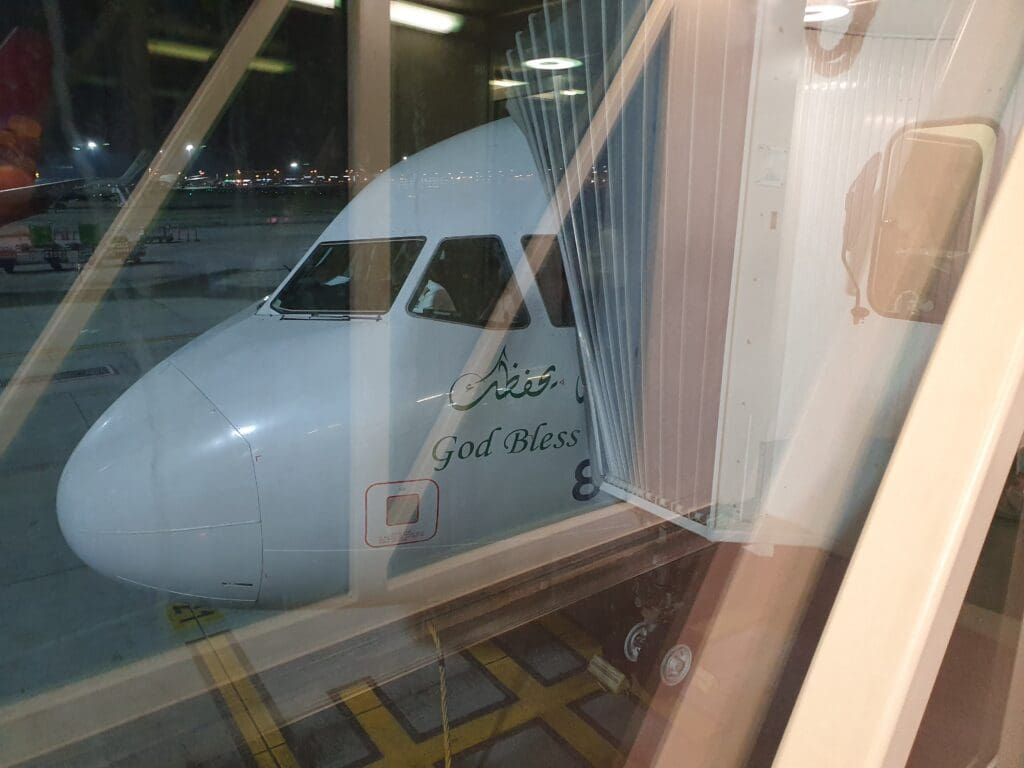
In the terminal, each flight’s departure gate is only displayed on the departure boards 90 minutes before departure and so, at 0250 it was revealed that my flight to Jeddah would depart from Gate D12. A little over ten minutes later, a Saudia Airbus A320 pulled up to the terminal at 0301, one minute after its scheduled arrival time. Rather than featuring the beige, blue, white and gold tones of Saudia’s distinctive livery, this particular example proudly sported a silver and blue livery spottable across the world. That morning, sharklet-fitted HZ-AZ83, one of two Saudia Airbus A320s to feature the Skyteam promotional livery, would operate the service to Jeddah. However, the jet had not completely surrendered its identity to Skyteam, with small Saudia titles under the business class windows alongside the phrase ‘God Bless You’ in Arabic and English under the cockpit and the code ‘83’, denoting the aircraft to be HZ-AS83. As it happened, according to Flightradar24 this flight was originally scheduled to have been operated by HZ-ASF, the airline’s other Skyteam liveried A320. However, the day before my flight ‘SF’ was forced to return to Jeddah a short time after departing for Geneva hinting at some sort of technical issue and had remained on the ground ever since. As a resul,t this newer and higher capacity Airbus A320-214 had stepped in to take the original aircraft’s place. Assembled at Airbus’ home in Toulouse, this particular Airbus A320 first took to the skies wearing the test registration F-WWIM in early September 2018 making it a little over a year and a half old at the time of my flight. Later that month, the aircraft was flown to Saudi Arabia to commence its commercial life and at the time of my flight, this particular aircraft was the third youngest in the airline’s 46-strong A320 fleet. In the week before my flight, the aircraft had been in the air virtually non-stop, flying over 27,500 miles across the Middle East. The majority of these flights connected Jeddah to destinations across the Kingdom, namely Abha, Al-Qassim, Arar, Gurayat, Jizan, Medina, Riyadh and Sakaka with international services limited to one round trip each to Abu Dhabi, Amman, Alexandria and Dubai.
After watching the aircraft pull into the gate, seeing as I still had plenty of time to go before my flight’s scheduled boarding time at 0340, I decided to have another wander around the terminal to stretch my legs before the flight. At 0325 I returned to the gate which at that time was still relatively empty despite there only being 15 minutes to go until the scheduled commencement of boarding. Shortly after taking a seat, I received an email from Saudia informing me that boarding was now open for the flight to Jeddah. However, from my position pacing the gate’s counter, I could see that this was not the case. Nevertheless, I realised that this is a good way of ensuring that those who are always glued to their phone arrive at the gate punctually thus minimising the risk of a delay. As the clock struck 0340 an automated announcement rang out through the gate area in Arabic and English inviting all those passengers travelling in Business, Sky Priority holders and those needing assistance to board the aircraft, or to do so at their leisure. After no more than five passengers headed over to board, a couple of minutes later another announcement rang out, this time being a final call for the flight asking for all remaining passengers to board. Seeing this as my cue to get moving, I headed over to the podium where I had my boarding pass scanned and passport checked by a stony-faced Dnata worker before being allowed to head down onto the glass jetway.
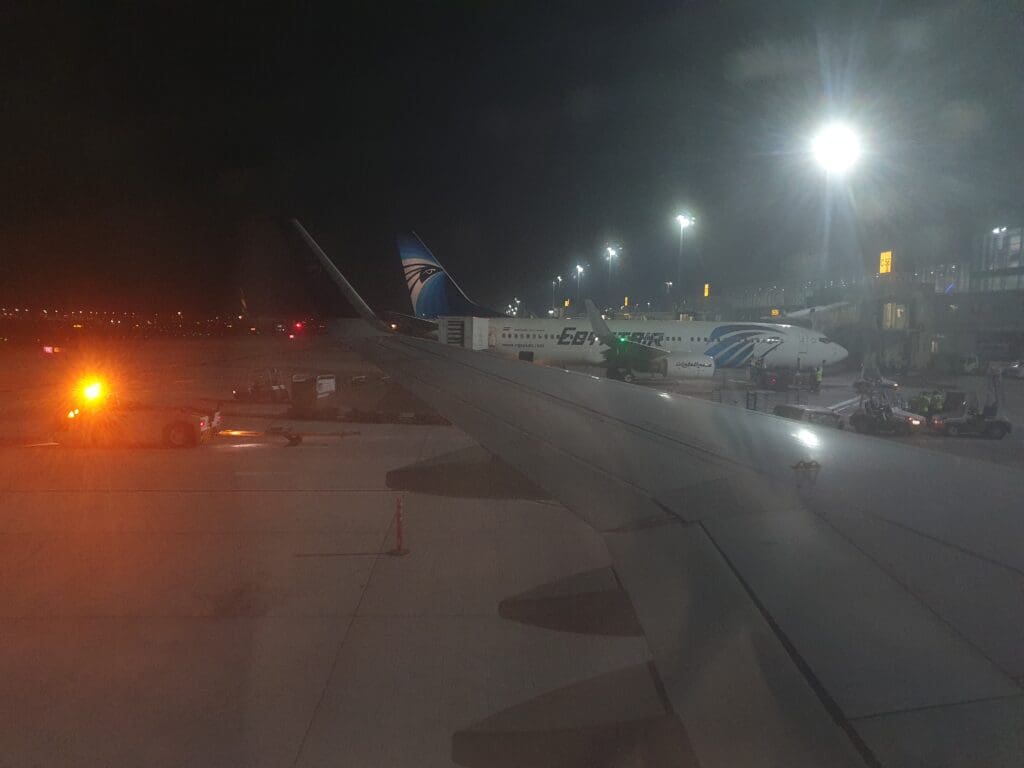
As I headed down the jetway and towards the aircraft, due to the position of the jet, views of my ride over to Saudi Arabia were minimal however I did get a decent view of the EgyptAir Boeing 737-800 at the neighbouring gate. This Boeing was the aircraft I would have departed on that morning had I not opted to fly with Saudia. Without any waiting, I stepped onto the faux wooden floor of the forward galley where I was immediately taken aback by the incredibly warm greeting from the Purser. Dressed in a uniform that a non-expert may claim to be pilot’s attire, the Purser gave me a reassuring pat on the back just before I headed into the aircraft’s Business cabin. There, 12 well-padded recliners, each fitted with the luxury of an inflight entertainment screen could be seen in a 2-2 arrangement. Admittedly, had I been a regular on the route and accustomed to the lie-flat Business product of Saudia’s widebodies and updated medium-haul Airbus A320, then I may have been a little disappointed with these. However, these are most definitely an upgrade for anyone who usually flies in business on intra-European flights.
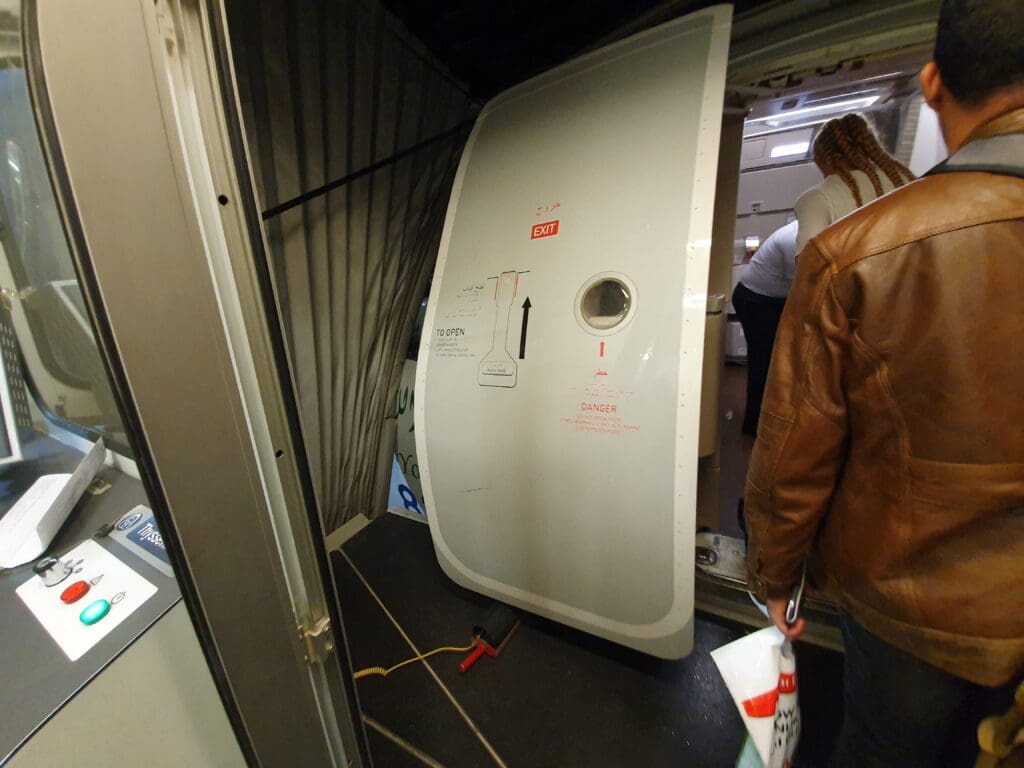

As I passed through this small cabin I received another warm greeting from another of the four flight attendants before I arrived in the Guest Class section of the aircraft. Running from Row 30 to Row 51, this section of the aircraft is home to 132 Rockwell Collins Pinnacle seats. Onboard, each of these seats is covered in a smart-looking beige faux leather and features a movable headrest covered by a matching beige headrest cover.
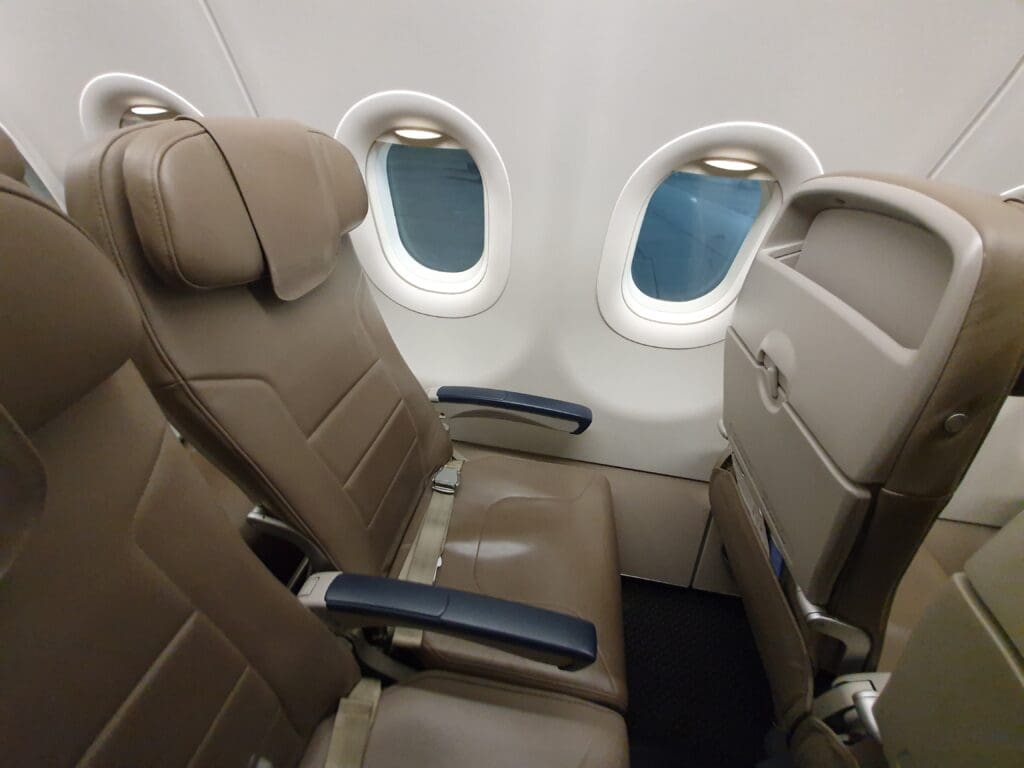
Given the light load, boarding was a calm and pleasant affair with no commotion whatsoever during this. Following one last friendly welcome, I made it to Row 41 and, fortunately lacking any seatmates, I slid into Seat 41A with ease. Seeing as this was my first time in a Pinnacle seat, I was hoping to find these as comfortable as they looked. Thankfully, upon sitting down I discovered the seat to be well-padded and superior to any slimline seat. However when it came to legroom, this was neither terrible nor remarkable, yet I could not make any valid complaints about this given the relatively short length of the flight. Underneath each seat, a universal plug socket and a USB-A port could be found and upon testing these later on, I was pleased to find that both worked without issue.
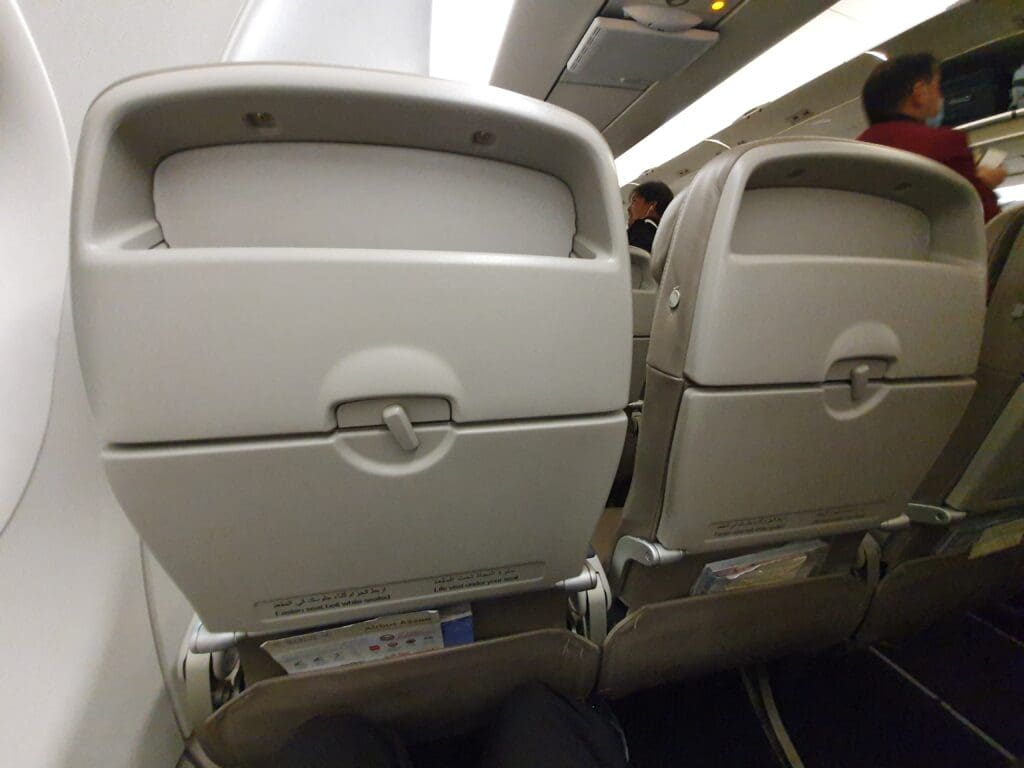
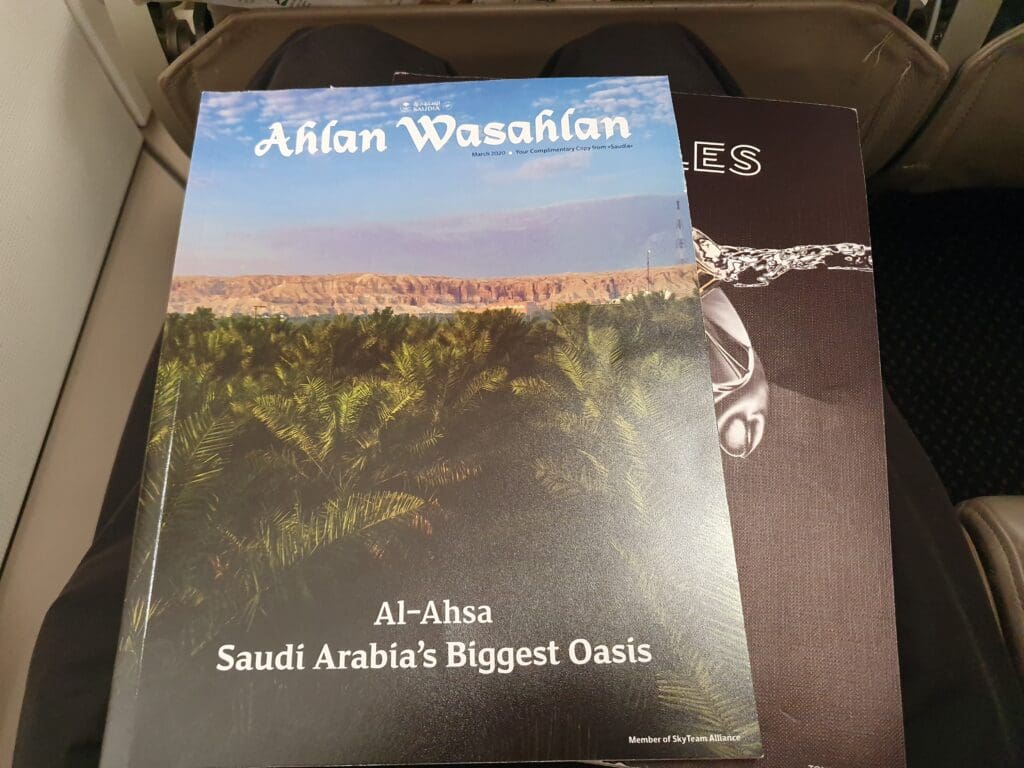
As one ought to expect, the aircraft appeared to be spotlessly clean and I failed to spot so much as a single crumb around my seat area. However, despite the young age of the aircraft, I was surprised and disappointed to notice an array of marks, scratches, worn-in dirt and stains around my seat indicating the cabin to be in severe need of a deep clean and some light maintenance. Turning to the seatback pocket, this contained a copy of the airline’s Skysales catalogue, the March 2020 copy of the Ahlan Wasahlan inflight magazine and the safety card. Interestingly, from the latter, I noticed that Saudia had given this specific configuration of A320 the name ‘Airbus A320N’, despite firmly being an Airbus A320 of the regular CEO variety.
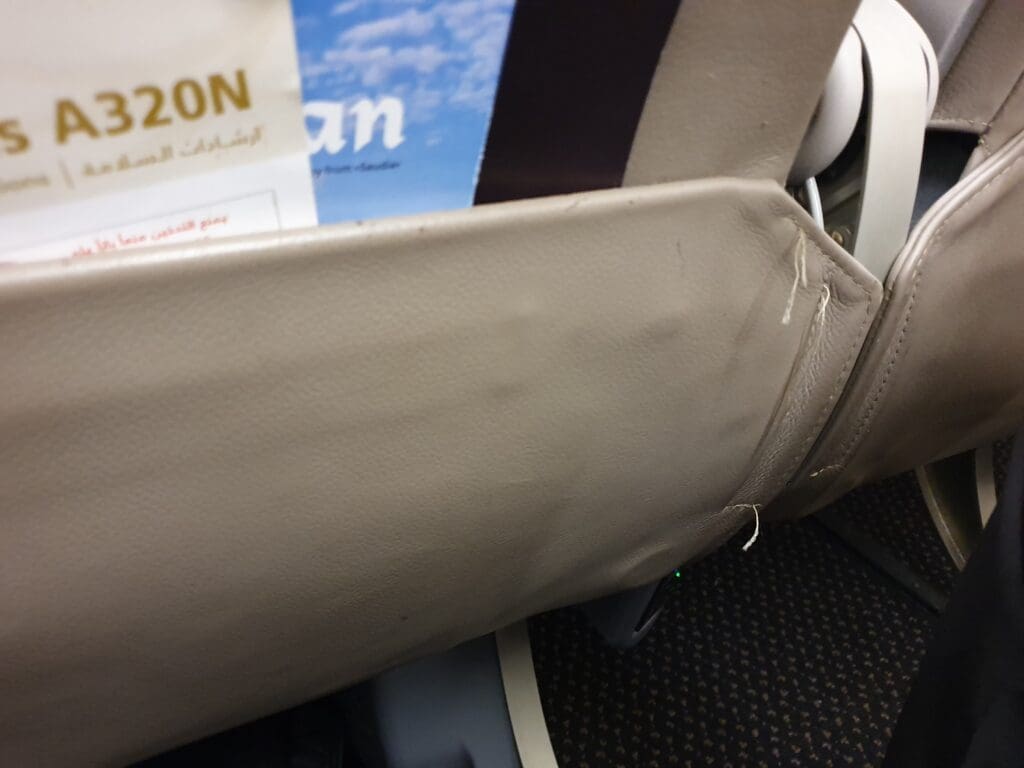
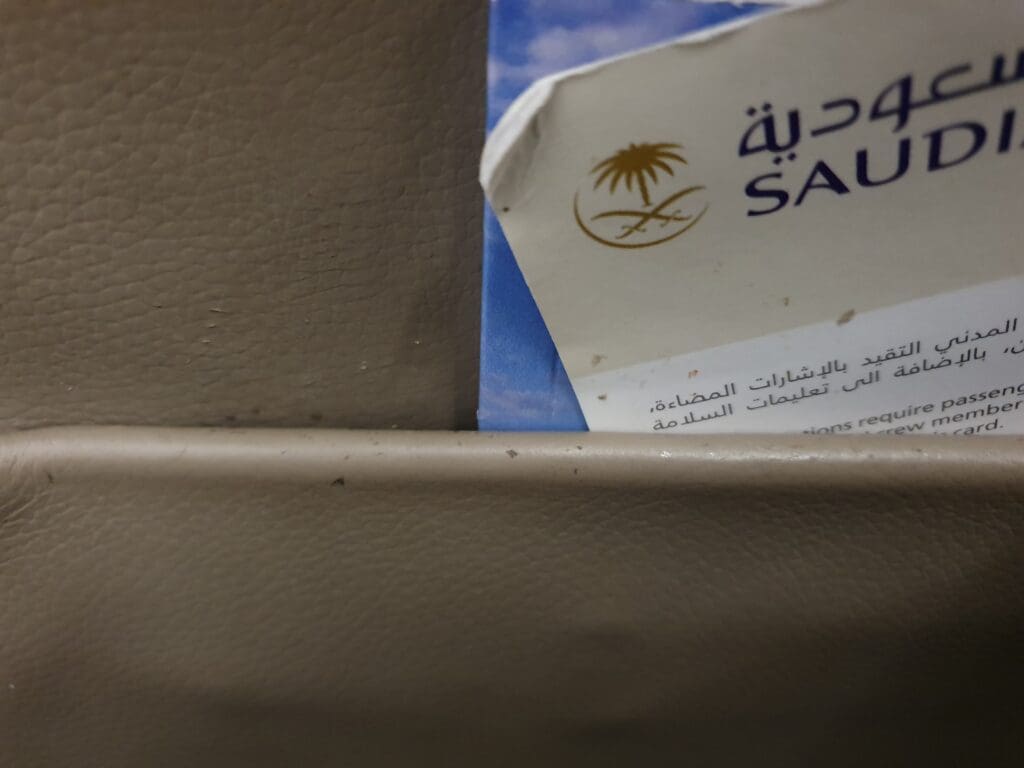

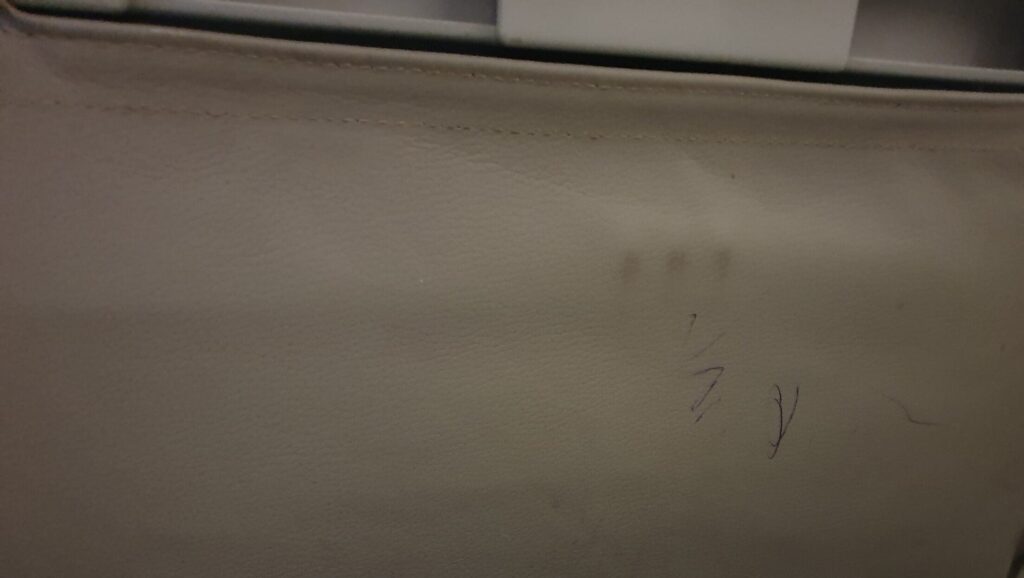
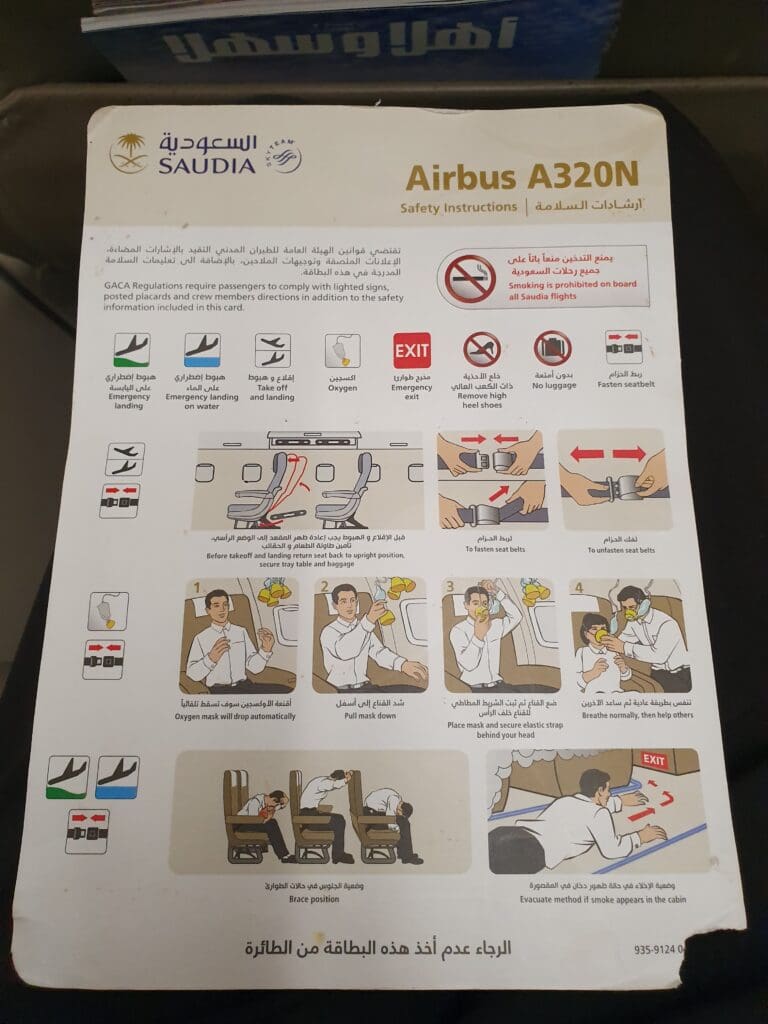
Being one of the first Guest Class passengers to board, after taking my seat passengers continued to flow onto the aircraft, however, this resembled a trickle rather than a deluge indicating that it would be a rather empty flight to Saudi Arabia that morning. Once the majority of passengers had boarded, the overhead screens came down and played a montage featuring some of Saudia’s destinations across the world accompanied by a calming yet repetitive Arabic melody, broken up once every few minutes by a screen displaying the airline’s logo. Given the fact that neither pillows nor blankets had been placed on the seats in Guest Class, understandably given the intention of many to sleep during the flight, several passengers requested these as we waited for departure. Not only were the crew willing to hand these out, rather than simply passing these to passengers, I noticed two crew members removing the packaging from the blankets before handing these to passengers. Of course, you could say that this was simply done to aid the cleaning process later on, nevertheless, this procedure was a nice touch and one that I had not encountered before this flight.
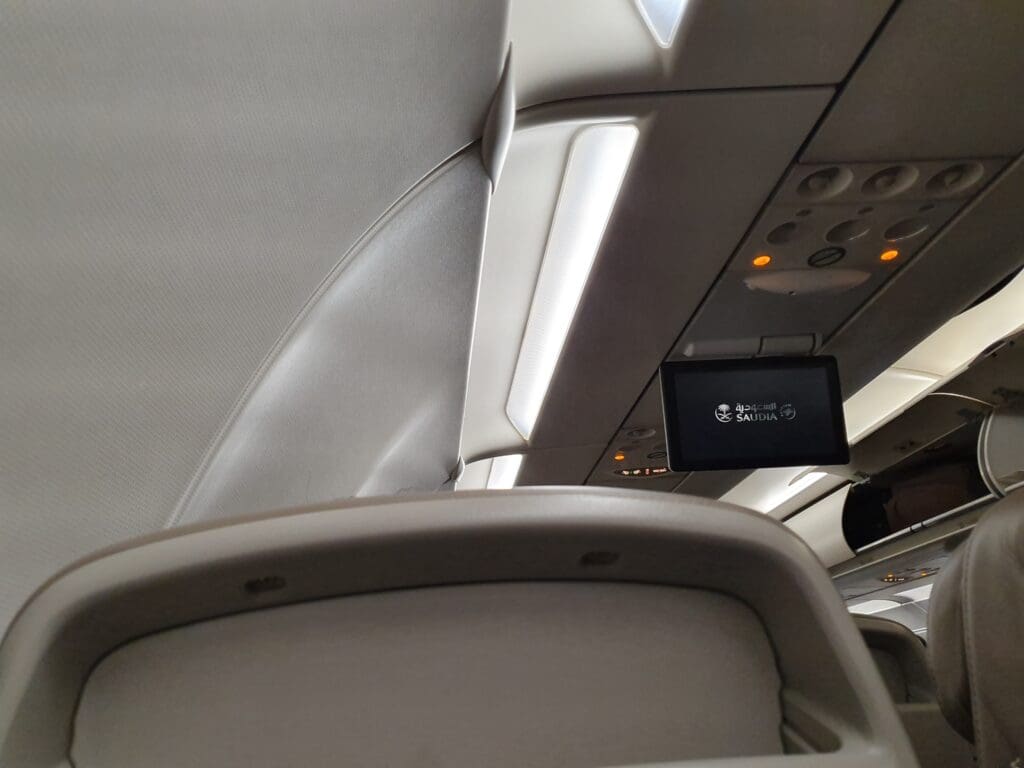
With 20 minutes to go until the flight’s scheduled departure time and still enjoying the luxury of two vacant seats next to mine, at this time I was delighted to hear boarding announced as complete. Unsurprisingly given the then newly introduced regulations attempting to limit the spread of Coronavirus in Saudi Arabia, the flight was very much empty with no more than a third of the seats in the Guest Class ending up filled. When it came to the flight’s demographics, the majority of passengers appeared to hail from Saudi Arabia and whilst a few families were present, most were flying alone. That said, I did notice several passengers from India alongside a British family who appeared to reside in the Kingdom. Turning to the cabin crew, this was a fairly young team consisting of two males from Saudi Arabia and two females from the Philippines, with only the Purser working in Business that morning.
As soon as boarding reached its conclusion, the crew passed through the cabin handing out packaged wet wipes before collecting the used wipes and their packaging several minutes later. At 0410 the friendly Purser conducted a long welcome speech in Arabic and English. Aside from the usual welcome and thanks for flying with Saudia, the purser noted that the crew spoke a trio of languages (Arabic, English and Tagalog) and informed all onboard that the cruising altitude that morning would be 36,000 feet before finally drawing attention to the fact that 2020 serves as the Saudia’s 75th anniversary year. As soon as this was completed, the Saudia logo screen on the overhead screens was replaced by the airline’s long, standard and unremarkable safety video which played first in Arabic with a sign language interpreter followed by an English version.
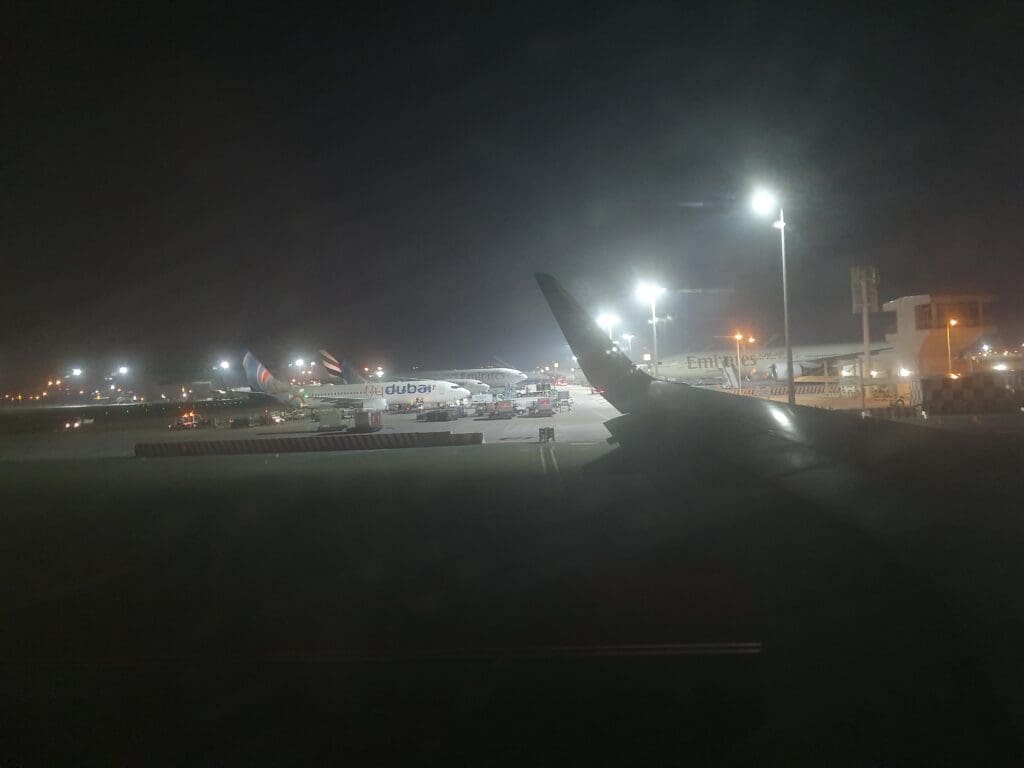
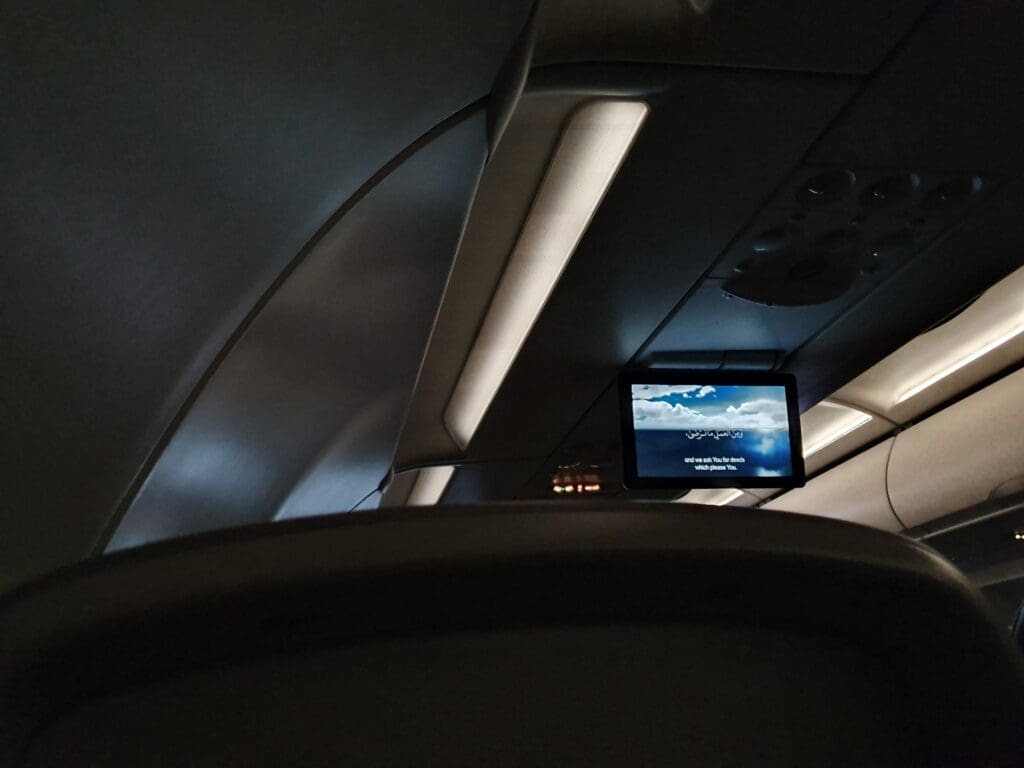
As the English language version of this commenced, the pushback of the Airbus A320 could be felt commencing with a jolt a whole five minutes before the flight’s scheduled departure time. As we travelled backwards, the cabin was filled with the squeaky sound synonymous with the Airbus A320 Family before the two CFM56 engines vibrated quietly into life. Once the safety video ended, an Islamic Dua played on the overhead screens complete with English subtitles. This was then followed by a two-minute video highlighting the latest content featured on the airline’s entertainment system before the screens were retracted and lights dimmed in preparation for our departure. By this time, the aircraft had already commenced its long taxi to the end of Runway 30R. Seeing as I was sitting on the left hand side of the aircraft, as we made our way to the runway I was treated to views of a trio of aircraft departing into the night sky – a pair of Emirates Boeing 777-300ERs and a single FlyDubai Boeing 737-800. Meanwhile, in the distance, a couple of fairly rare aircraft (in my opinion) could be spotted amongst the masses of FlyDubai jets. These took the form of a vintage Ariana Afghan Airlines Boeing 737-400 and a reasonably new Nepal Airlines Airbus A320.
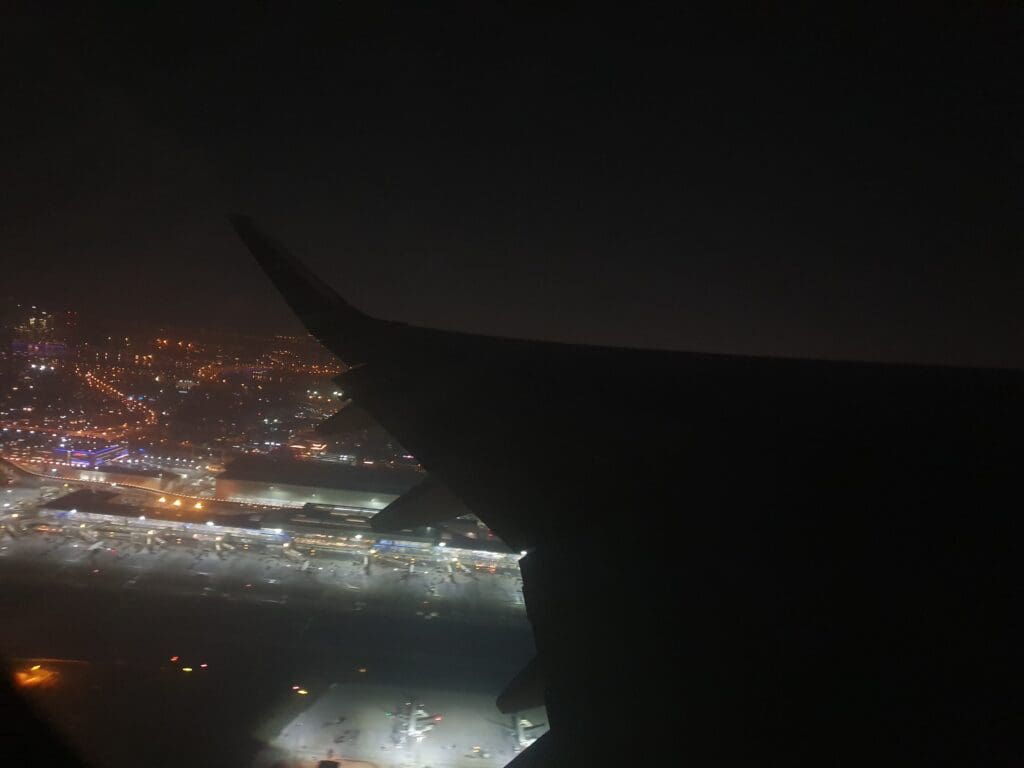
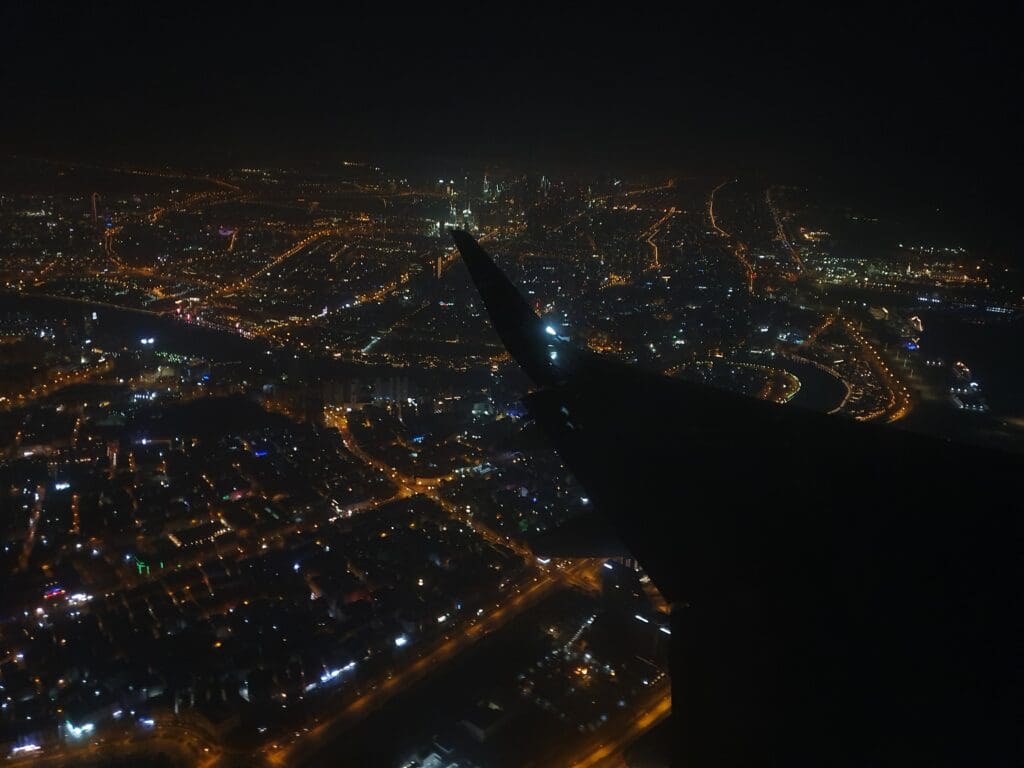
Twelve minutes after the aircraft had commenced its taxi, at 0432 the instruction was given for the crew to take their seats although immediately after this was made, the aircraft taxied straight onto the runway where it performed a rolling takeoff. As one would expect given the light load, the takeoff was powerful and we rotated up into the skies in no time at all allowing for good views of both Terminal 1 and Terminal 3 as we headed towards the coast. Whilst by day this departure would have allowed for superb views of the Burj Khalifa and its surrounding skyscrapers in the distance, as the fact that the display lights of these were dimmed, these buildings could only just be made out as we headed up into the sky. A few moments after leaving the airport’s perimeter, the lights of Deira and Dubai Creek popped into view as the aircraft banked before rolling out and flying parallel to Dubai’s coastline. As we flew along the coast, slightly better views could be had of the Burj Khalifa after which the famous Burj Al Arab and the outline of the Palm Khalifa could be seen. From there the aircraft headed past Jumeira Beach and the Marina and then on to Jebel Ali before turning inland and flying along the E11 road towards Abu Dhabi.
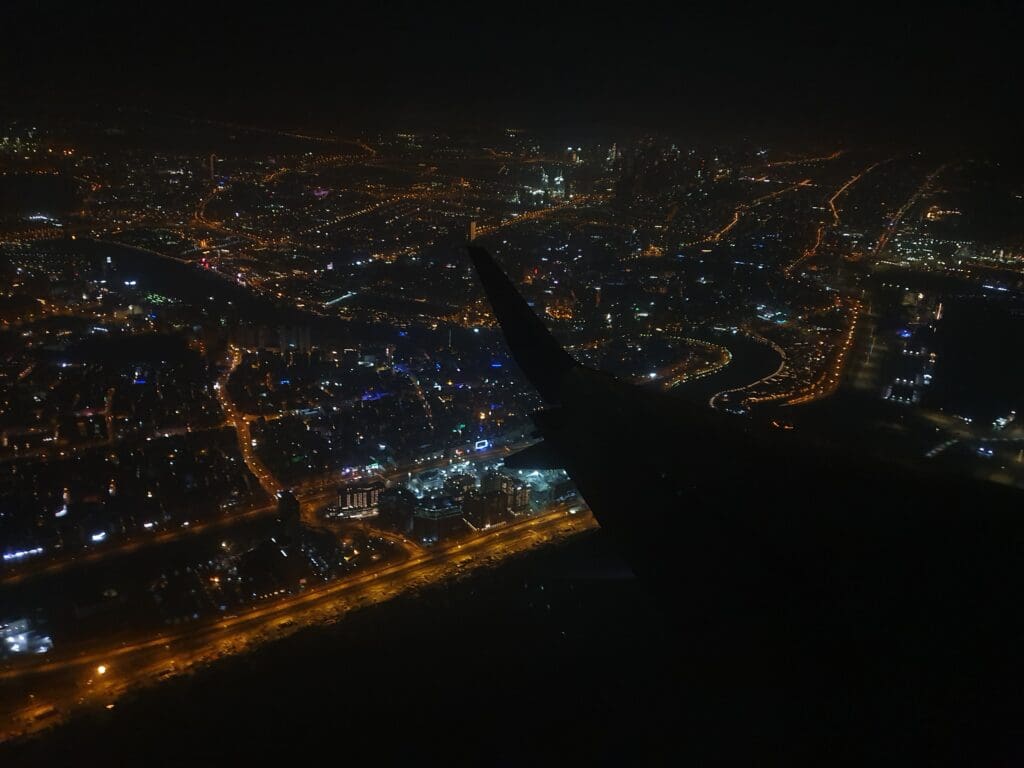
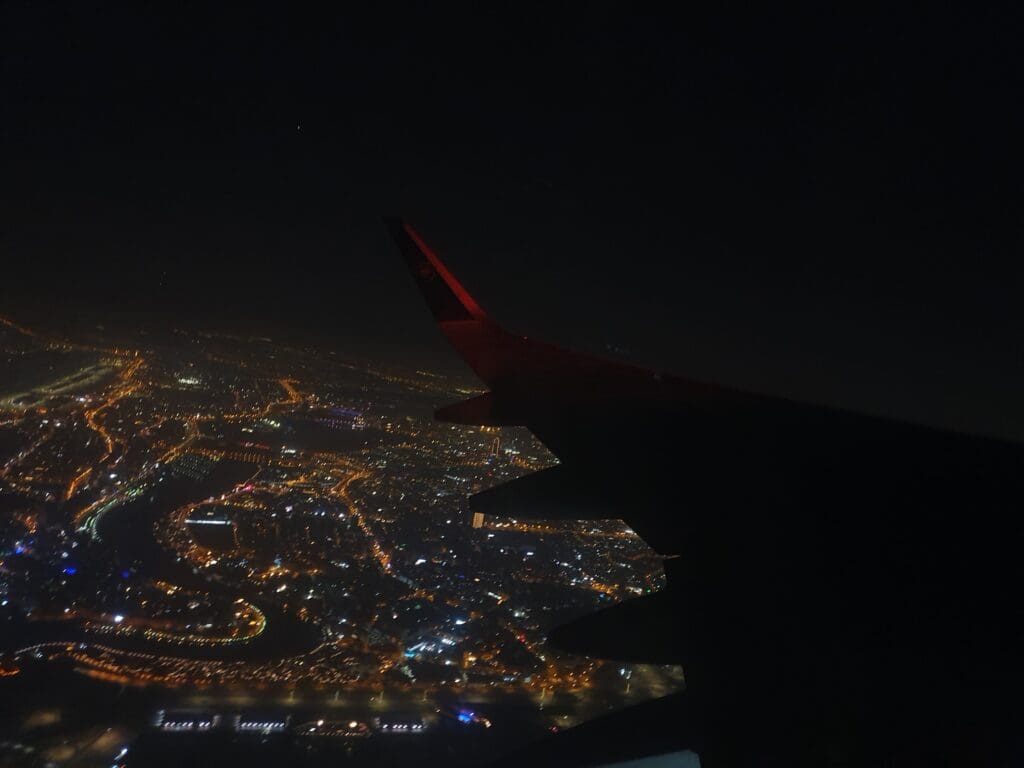
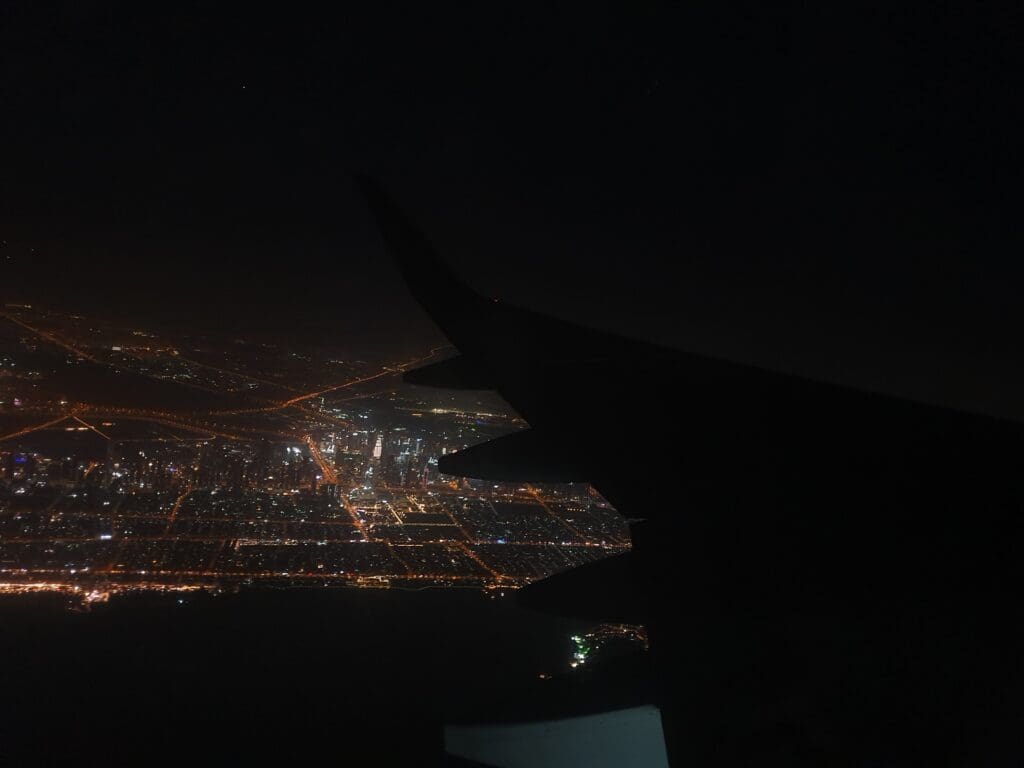
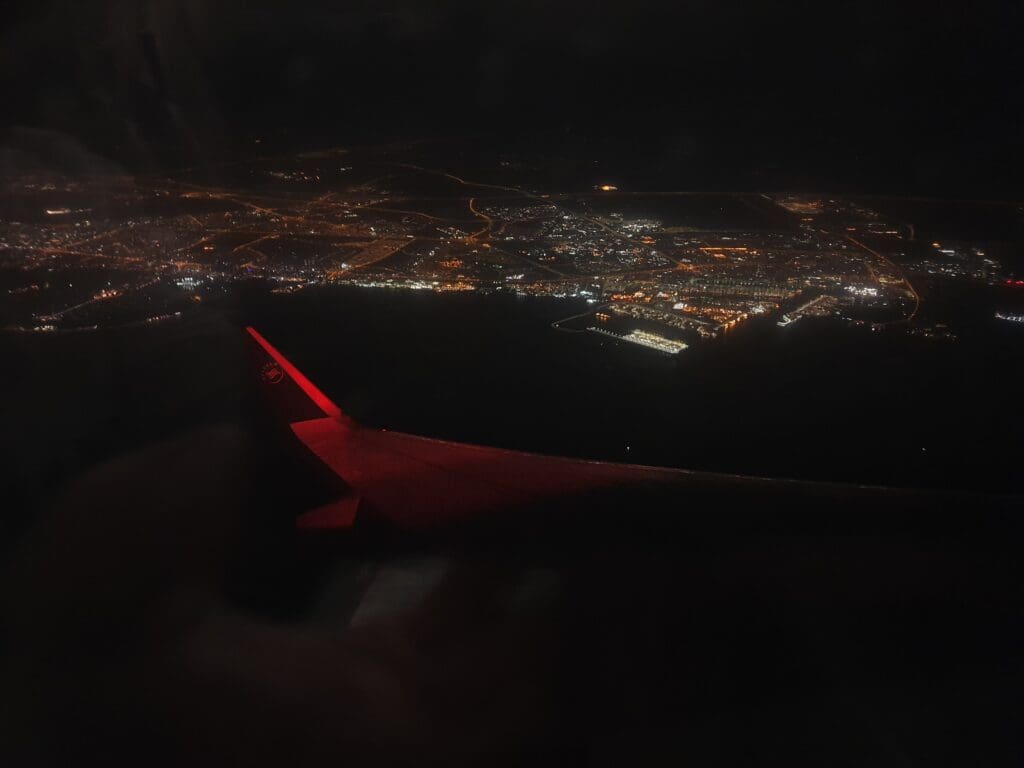
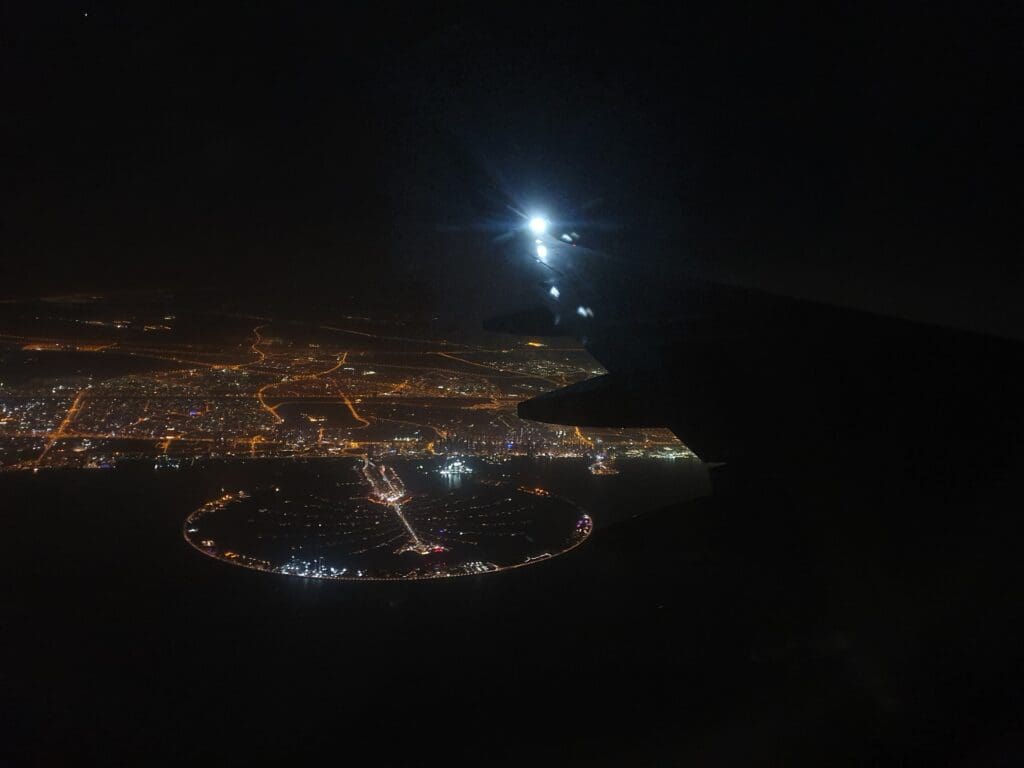
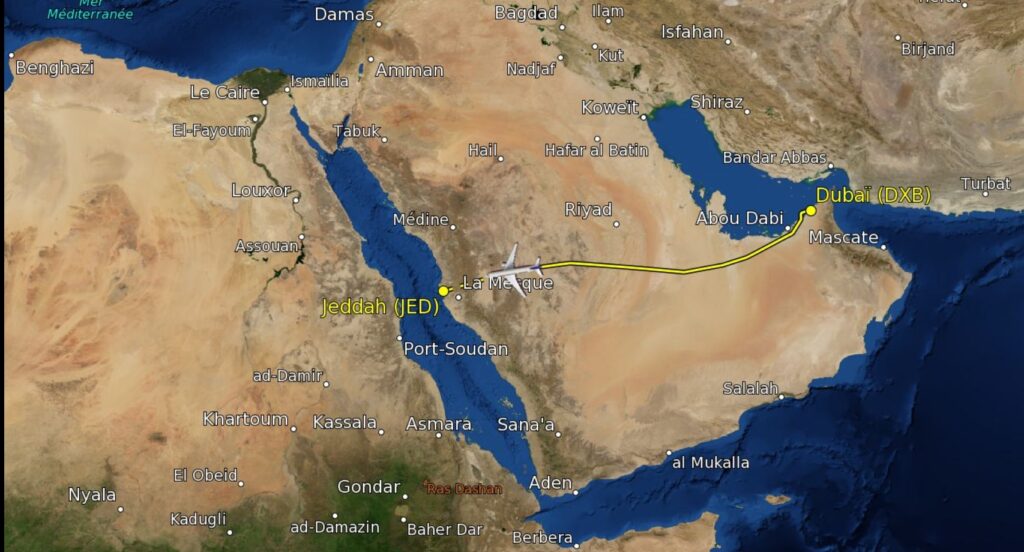
After leaving Dubai behind, the seatbelt signs were switched off and plenty of clanking could be heard coming from the rear galley indicating that the inflight service would soon commence. At this time, the overhead screens extended and played a short video which appeared to highlight some of Saudi Arabia’s sights followed by another regarding the 2017 boxing match between Anthony Joshua and Klitschko. However, any boxing fans or tourists seeking some last-minute advice for their trip to Saudi Arabia would have likely been disappointed as there appeared to be no headphone socket around the seat and thus no way of listening in to these programmes. As both of these were rather short, not too long after departure the screens went on to broadcast the moving map channel which scrolled through its various pages in Arabic, English and French.
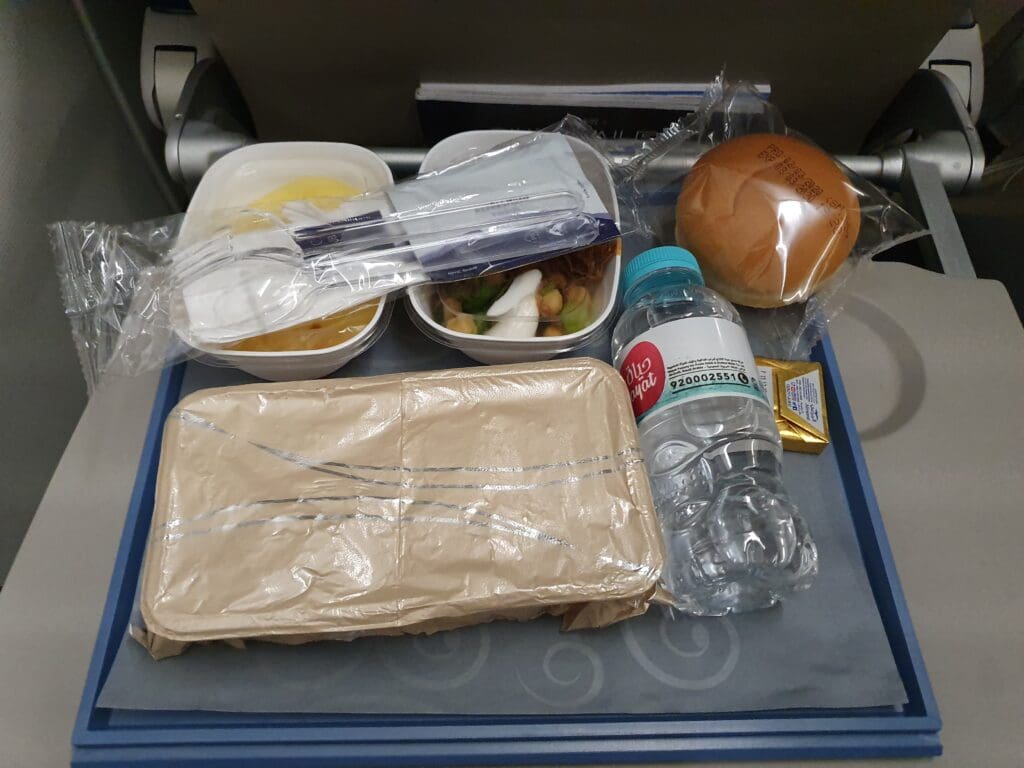
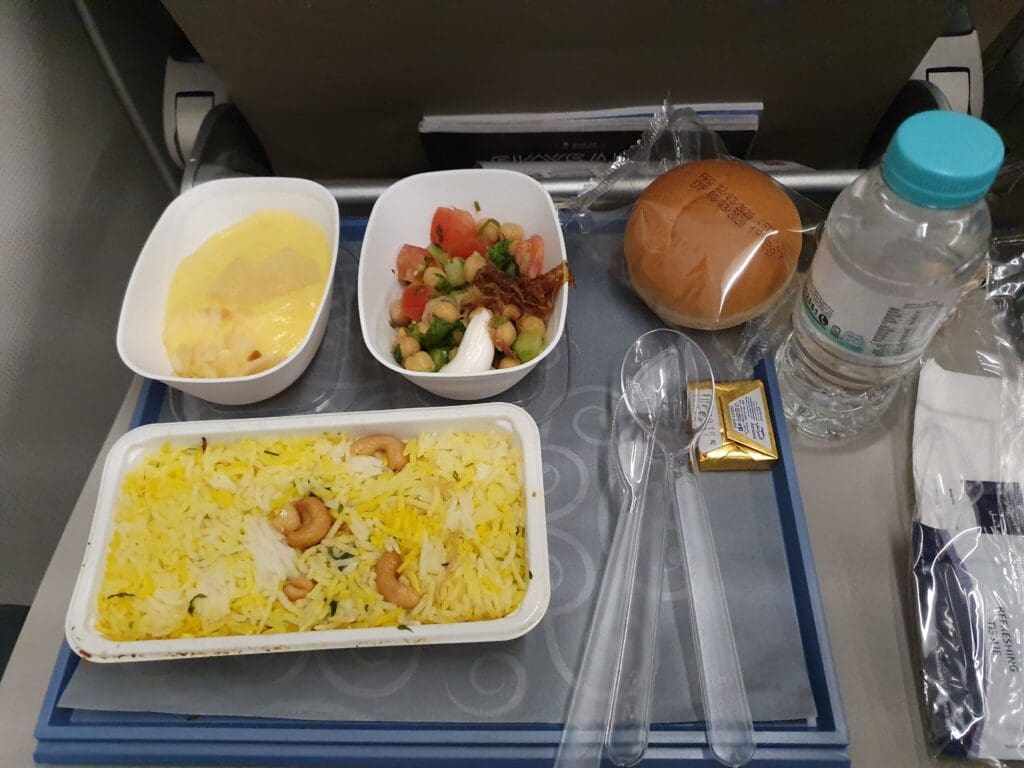
Perhaps realising that most passengers just wanted to sleep, the meal service commenced only a very short time after the seatbelt signs were extinguished. This involved two trolleys – one rolled to the front of the cabin and the other commencing its journey rearwards from Row 41 ensuring that I was one of the first passengers onboard to be served that morning. This occurred less than twenty minutes after departure as we neared our cruising altitude of 36,000 feet above the Emirate of Abu Dhabi. Whilst no paper menus were present on this flight, I was asked whether I wished for a chicken biryani or a cheese and pesto pasta dish in a polite and friendly manner. Whilst neither were typical breakfast options, often finding mid-flight breakfasts underwhelming I could not complain about this. Opting for the biryani, I was promptly handed a tray featuring a foil-covered container, a 200ml bottle of water, two side dishes (one containing a chickpea salad and the other a custard-based dessert), a packaged bread roll and a packet containing plastic cutlery. Interestingly, no drinks were offered at this stage however once all meals had been handed out, a drinks round was made. Despite being a little on the small side, the cashew-topped chicken biryani was delicious as was the chickpea salad and nondescript custard dessert. All in all, this meal was substantial enough and I ended up with little to complain about regarding this especially considering the length of the flight. Just before entering Saudi airspace near the southwestern corner of the United Arab Emirates, the crew returned to my row offering drinks. By this time, I had embarrassingly polished off the meal entirely and so the crew happily removed my tray. Opting for a coffee, this was handed to me in a logoless paper cup along with a stirrer and a serviette.
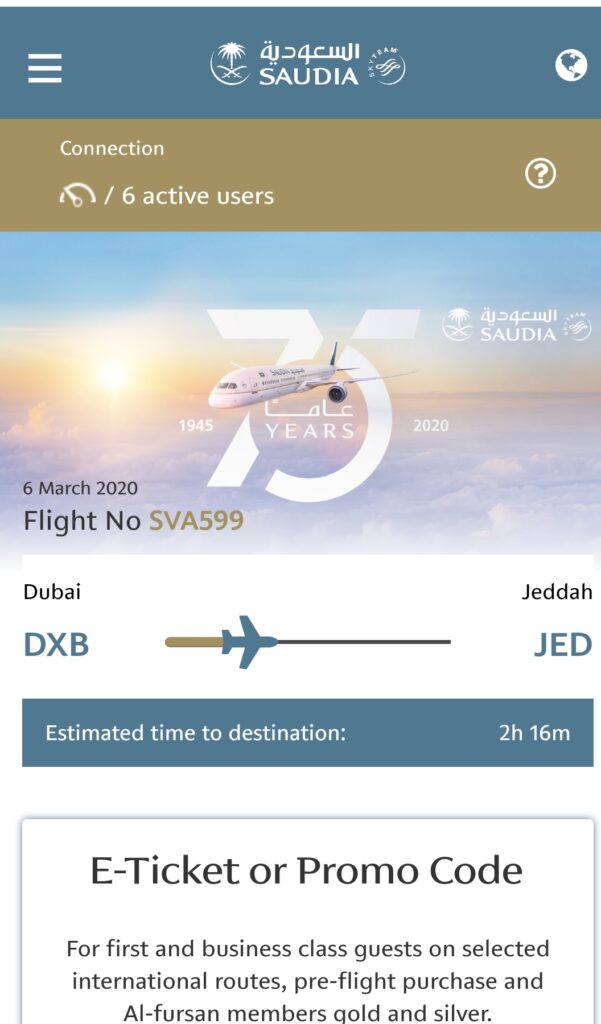
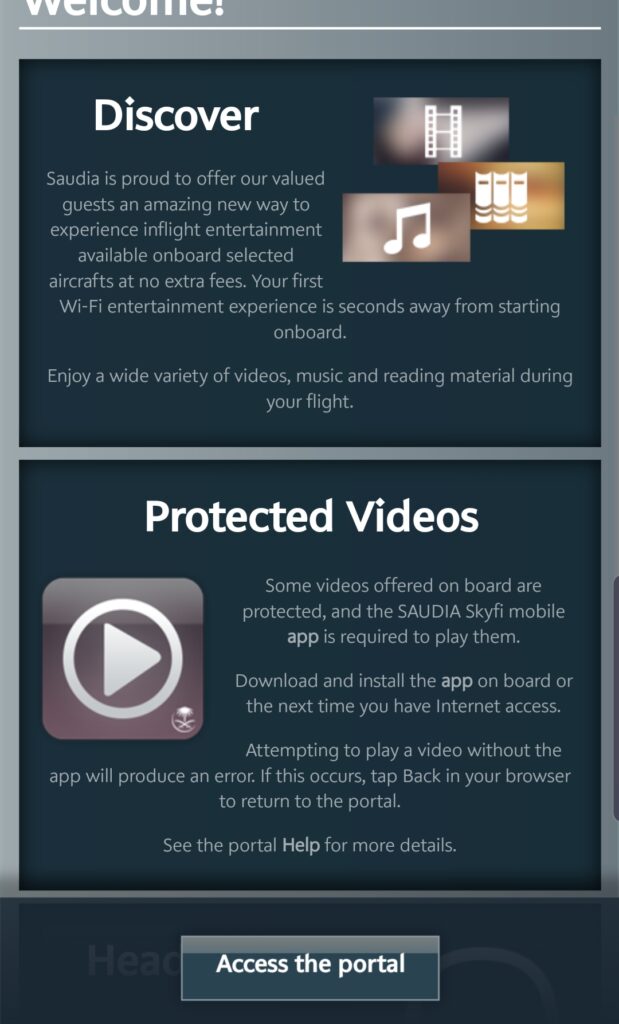
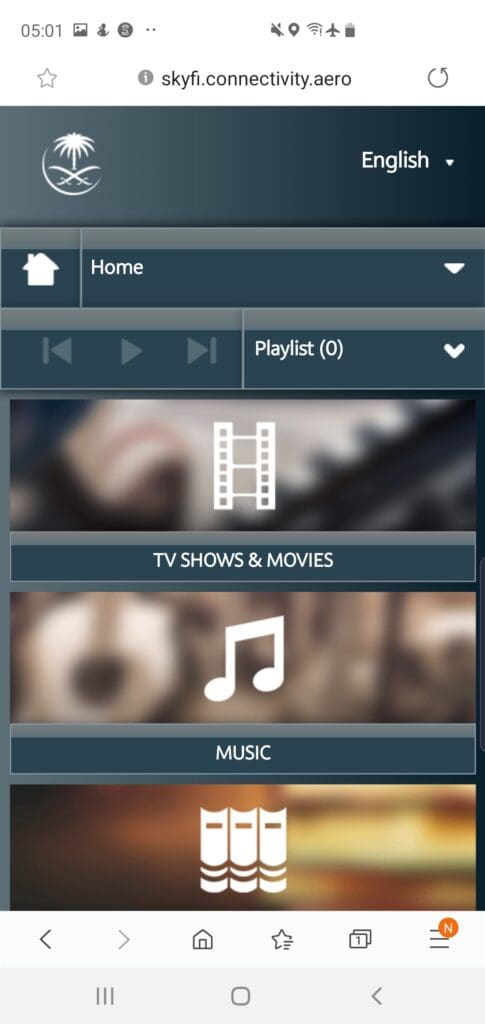
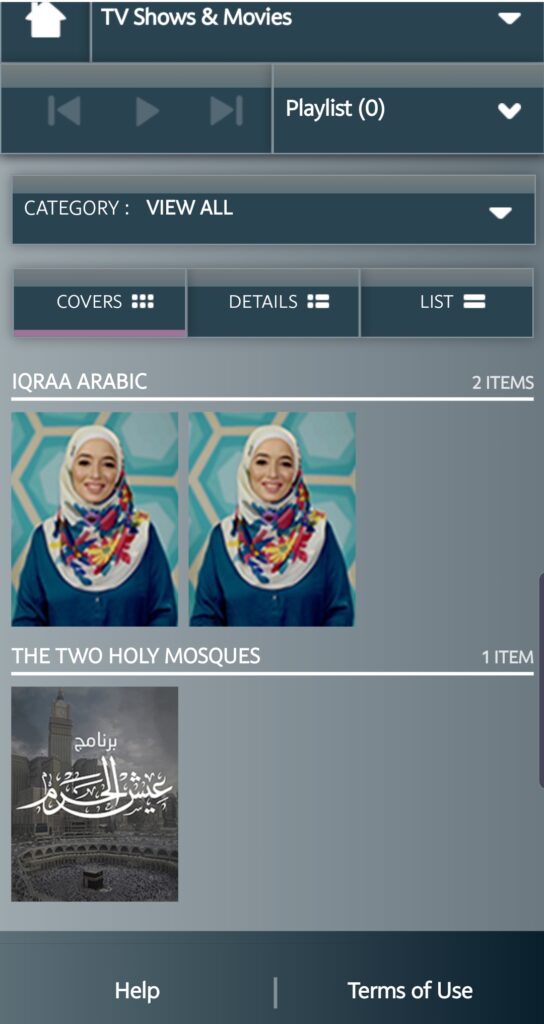
Once this drinks service had been made, no further rounds of service were made however I imagine that the crew would have been happy to deal with any requests for drinks during the flight. As soon as the crew finished their drinks round, the lights were dimmed and understandably many passengers drifted off to sleep. With little to see outside the aircraft, before taking a short nap I decided to explore the various entertainment options available. Whilst many of Saudia’s Airbus A320s are fitted with inflight entertainment screens in both Business and Guest Class, on those that lack these, a streaming service, officially referred to as the ‘Wireless Entertainment System’ is offered. Fortunately, I was able to connect to the aircraft’s wifi network and launch the entertainment system without any issues. Initially, I found this to be fairly well laid out, however, I could not ignore the presence of a message regarding ‘Protected Videos’ which required the airline’s entertainment app to play. However, not only was this app poorly advertised, my attempts to download this from the Google Play store several days before my flight had produced an error message. Moving on to the available content, lacking the expansive entertainment options that Saudia frequently promotes, this was highly limited to two programmes by the internet television channel Iqraa and a programme entitled ‘The Two Holy Mosques’. The fact that this aircraft usually only flies domestic flights may perhaps explain this limited selection of content. However importantly, the moving map did work without any issue!
Given the slightly lacking inflight entertainment streaming option, I decided to turn to the March 2020 edition of Saudia’s Ahlan Wasahlan inflight magazine – which, unlike the rest of the aircraft, seemed to be in a crisp and pristine state as if this had only just been placed into the seatback pocket. As one would expect, this features both an Arabic and English section, with the latter being somewhat smaller and occupying around a third of the magazine. Unfortunately unable to read Arabic, I confined myself to the English language section which contained in-depth travel articles on the largest oasis in the world at Al-Ahsa, around three hundred kilometres from Riyadh, and Dublin. Whilst the latter may not be served by Saudia, the Irish capital is easily reached from both Heathrow, Manchester and the airline’s other European destinations. However, the optimistic enthusiast in me would suggest that this could hint at a new route. Aside from this, the magazine also featured an article entitled ‘A Corporate Government Paradigm Shift’ which was sponsored by the INSEAD Business School and written by its director. However, not wishing to fall asleep, I skipped past this and instead turned to the Saudia and Skyteam news which, amongst other articles, featured a proud piece on the airline’s new cabin crew uniforms which are to be rolled out initially on flights to Heathrow and Paris CDG. Finally, it is worth mentioning that the magazine did not appear to be nearly as advert-heavy as that of many other airlines, with only a limited number of adverts, all of which seemed to be either for Saudia or Skyteam.
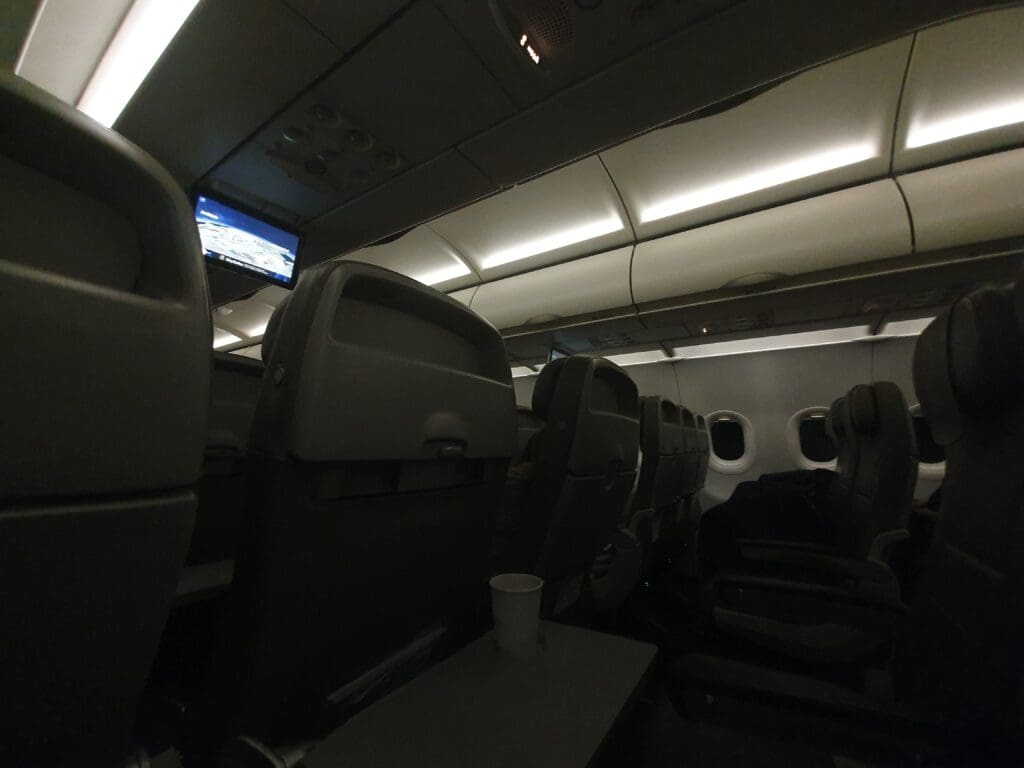
Following my short exploration of the entertainment options, still with little to see outside as we cruised high above the dark desert and feeling incredibly tired I decided to stretch out for a nap. Despite successfully drifting off within a minute or so, being a light sleeper I was awoken just as the aircraft hit its first patch of light turbulence around forty minutes later. By this time, the Airbus was just about to cross into Makkah Province, Saudi Arabia’s most populous region with a little over 8.5 million residents. As we cruised westwards towards the Red Sea coastline, for the first time after leaving the United Arab Emirates I noticed the orange glow of several towns 36,000 feet below the aircraft. Meanwhile, inside the cabin, the majority of passengers appeared to remain fast asleep. Seeing as there was not too long to go until the aircraft arrived in Jeddah, at this point I decided to pay a visit to one of the two lavatories at the rear of the aircraft. As you would expect, this was typically A320 in style, being neither spacious nor incredibly cramped. However, I was immediately disappointed by the fact that this appeared to be in a battered and dirty condition. The latter came as a slight surprise given the length of the flight and the fact that most passengers appeared to have spent much of this asleep.
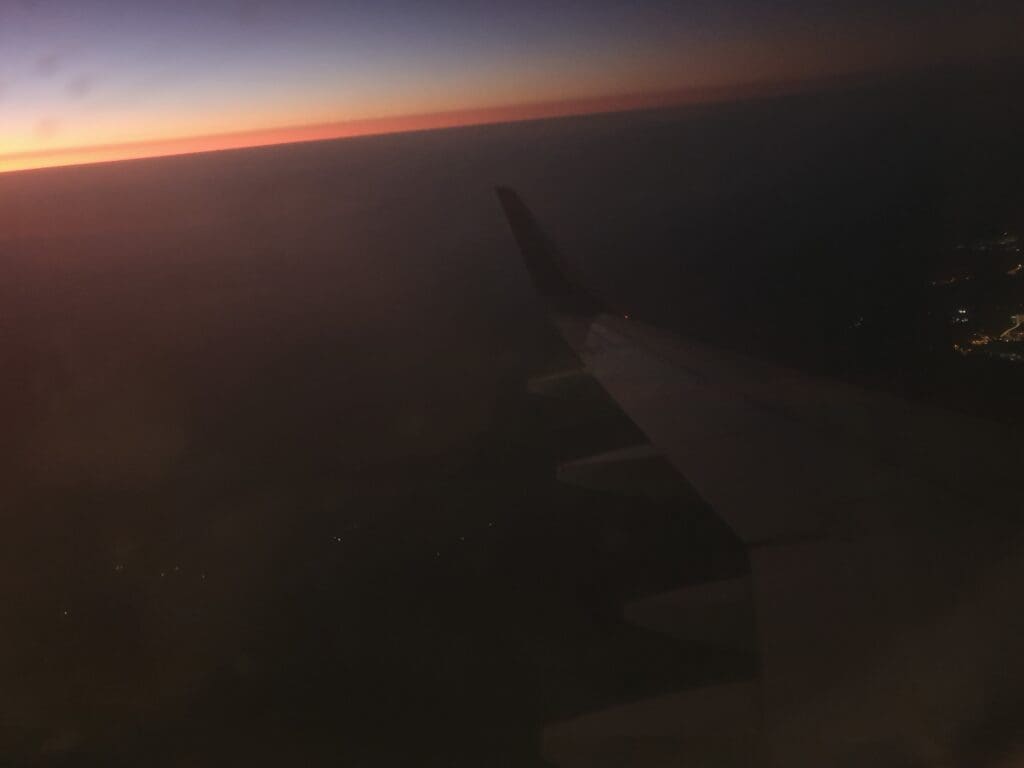
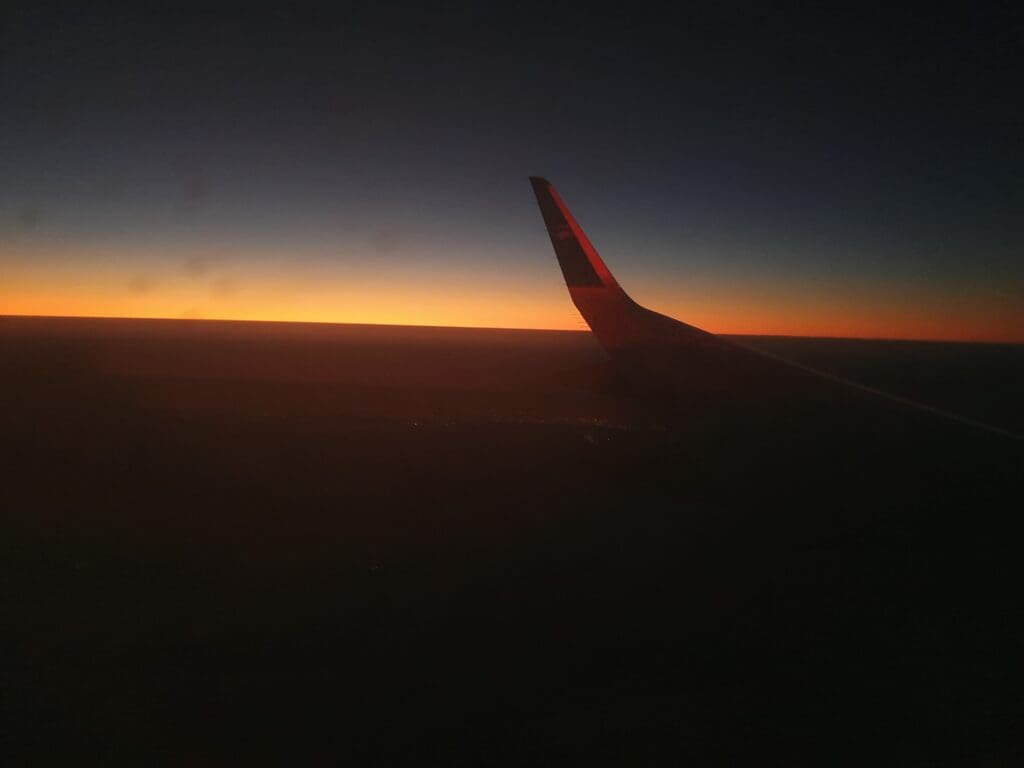
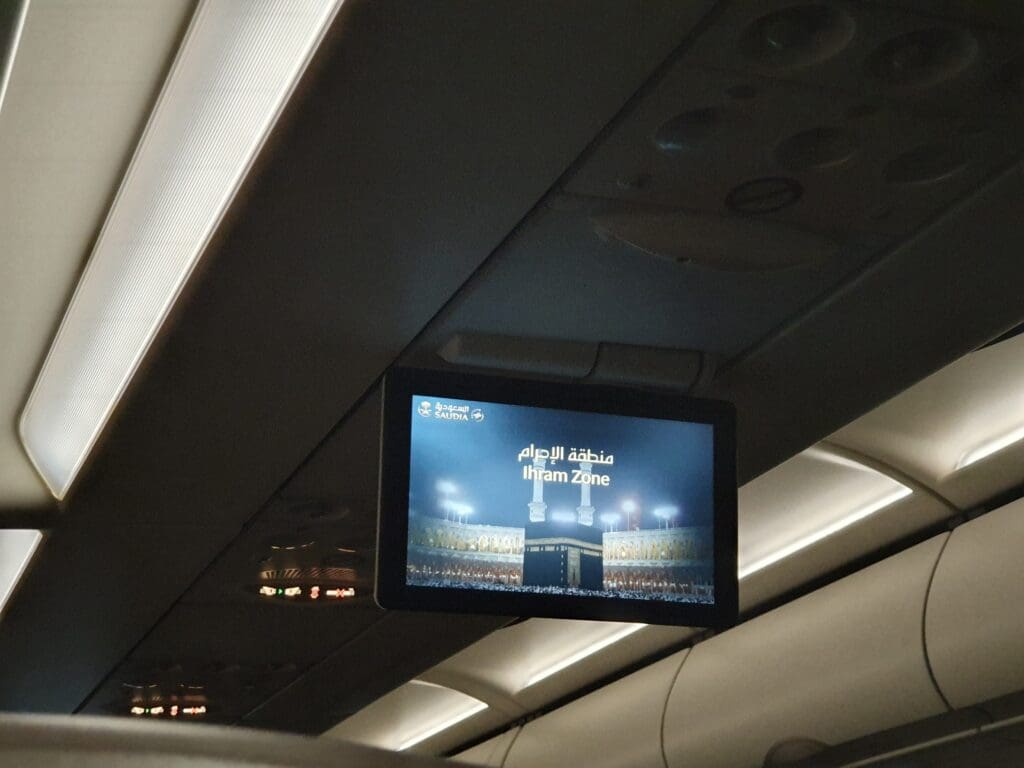
A few minutes after returning to my seat, outside the orange glow of that day’s sunrise appeared on the horizon although unfortunately, the streak-filled windows prevented any decent photos of this as we cruised towards the end of the flight. After crossing over the Saja and Umm Al Ramth Wildlife Sanctuary located just over halfway between Riyadh and Mecca, at 0545 local time, the Airbus A320 could be felt commencing the initial stages of the descent. This sinking did not last too long however as we soon levelled off at 32,000 feet, flying at this altitude for several minutes. As the skies slowly began to brighten, the aircraft continued its descent and at 0600 the seatbelt signs were re-illuminated as we passed down through 20,000 feet. Having hoped for decent views of the region’s mountains as the aircraft neared Jeddah, unfortunately, the lack of light combined with the haze ensured that only the peaks of a few of these were visible and no good photos could be taken. Shortly after the seatbelt signs were re-illuminated, the cabin lights were switched on again allowing the crew to conduct their final checks. Interestingly, as the aircraft neared Mecca, the moving map became temporarily locked on a screen which displayed the Kaaba inside the Great Mosque of Mecca with the words ‘Ihram Zone’. Several minutes later, in place of the usual pre-arrival announcement a video played in Arabic and English asking for all passengers to fasten their seatbelts, ensure their window shades are up, tray tables stowed and seatbacks are in the upright position in preparation for the aircraft’s arrival. Once this came to an end, the screen reverted to the moving map channel which revealed we were very near Jeddah.
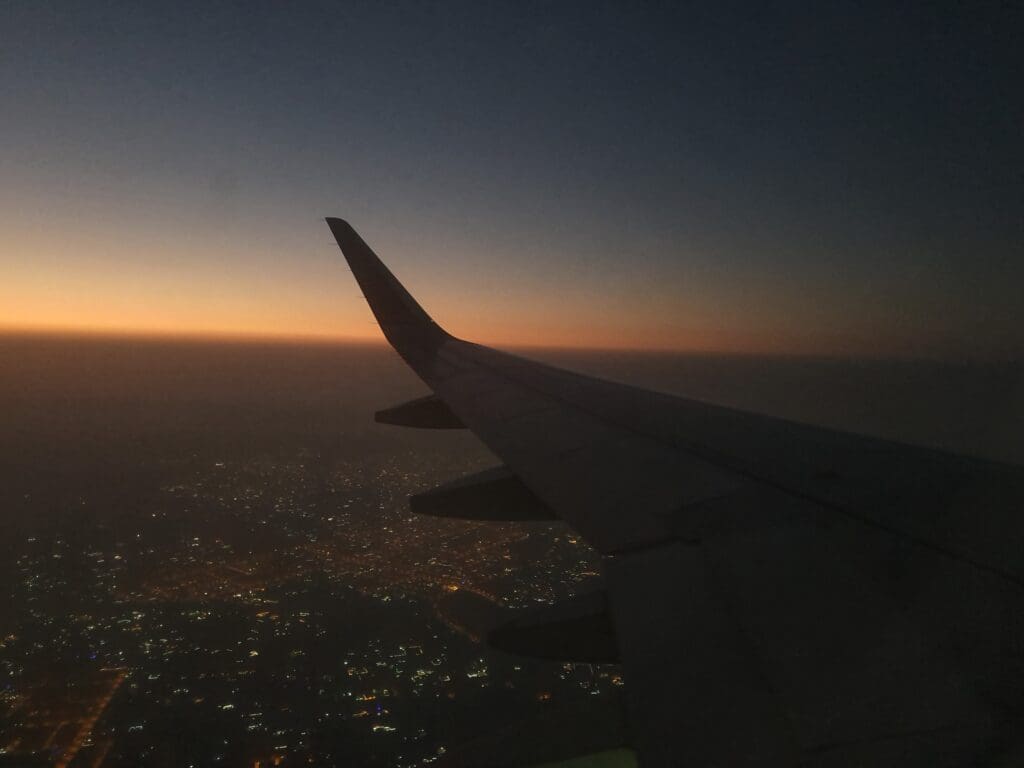
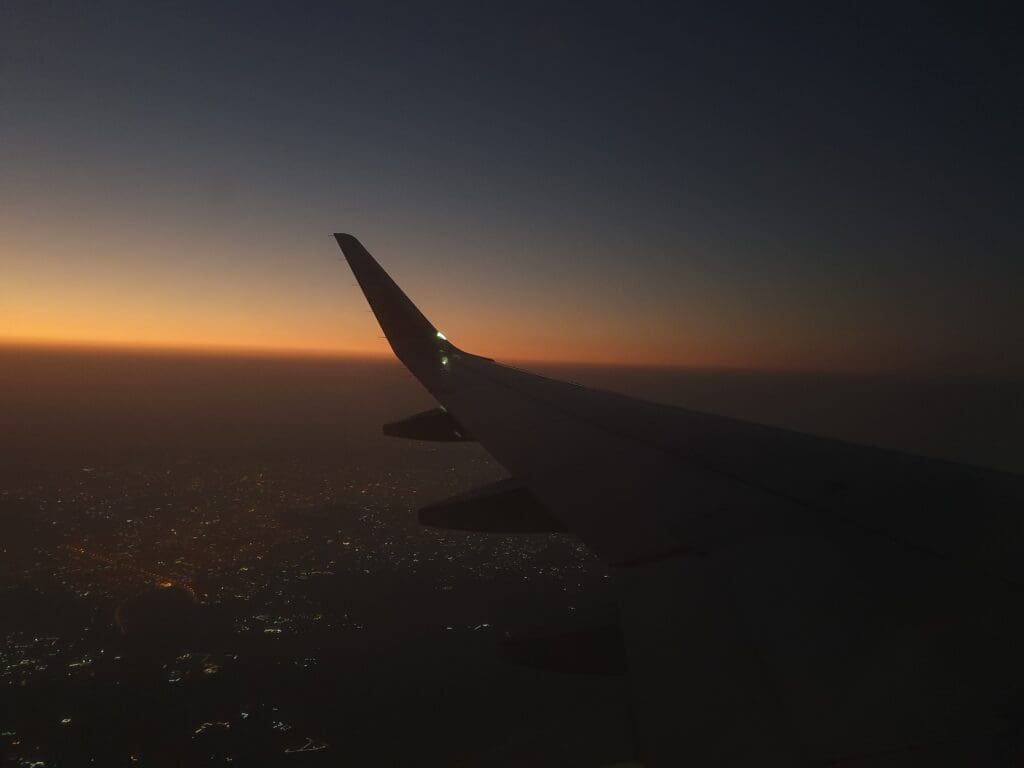
As we passed down through 10,000 feet, one final check was made by members of the crew before the lights were dimmed again just as the aircraft banked right setting us on course for King Abdulaziz Airport’s Runway 34R. As we approached the airport, a selection of mostly low-rise residential buildings came into view under the approach path and in the usual manner the flaps and gear were extended as the aircraft continued to sink gently towards the runway. As the ground below neared indicating our imminent touchdown, passing through the cabin just as a very last minute announcement from the cockpit was made asking for the crew to take their seats. After passing over the suburb of Al Marwah, the airport’s large new terminal which at that time was in very limited operation popped into view meanwhile in the cabin the purser appeared to make it to the front of the aircraft only seconds before touchdown. At 0618, the Airbus A320’s 2H50 flight came to a gentle end as the aircraft made a smooth touchdown 12 minutes ahead of schedule.
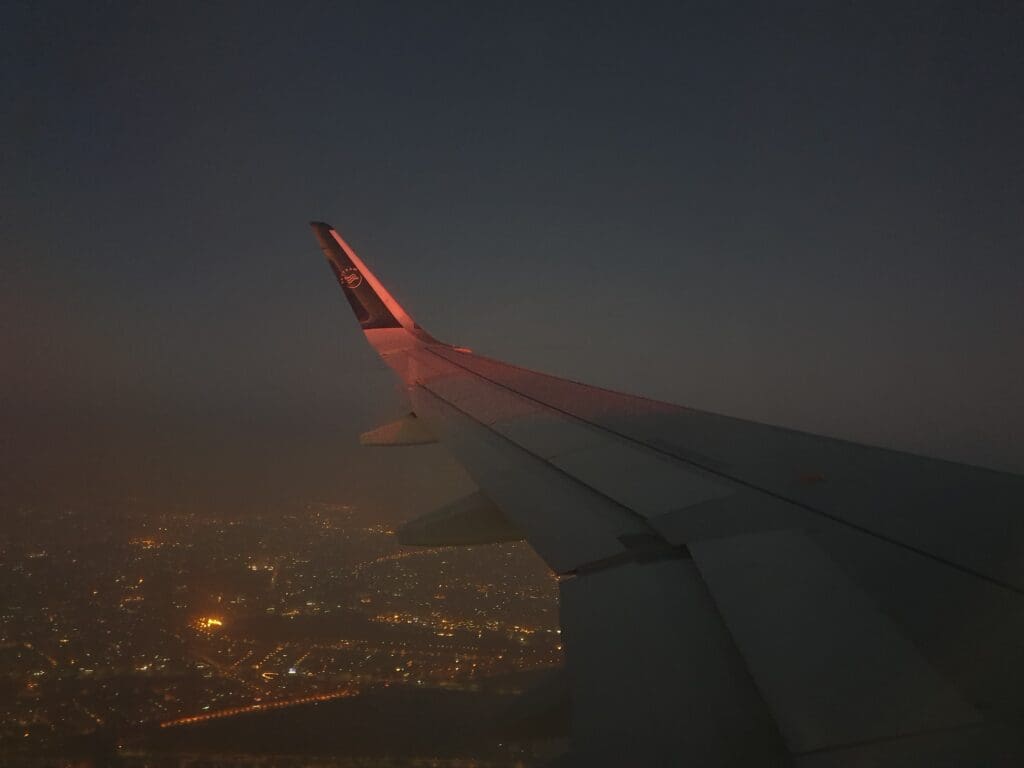
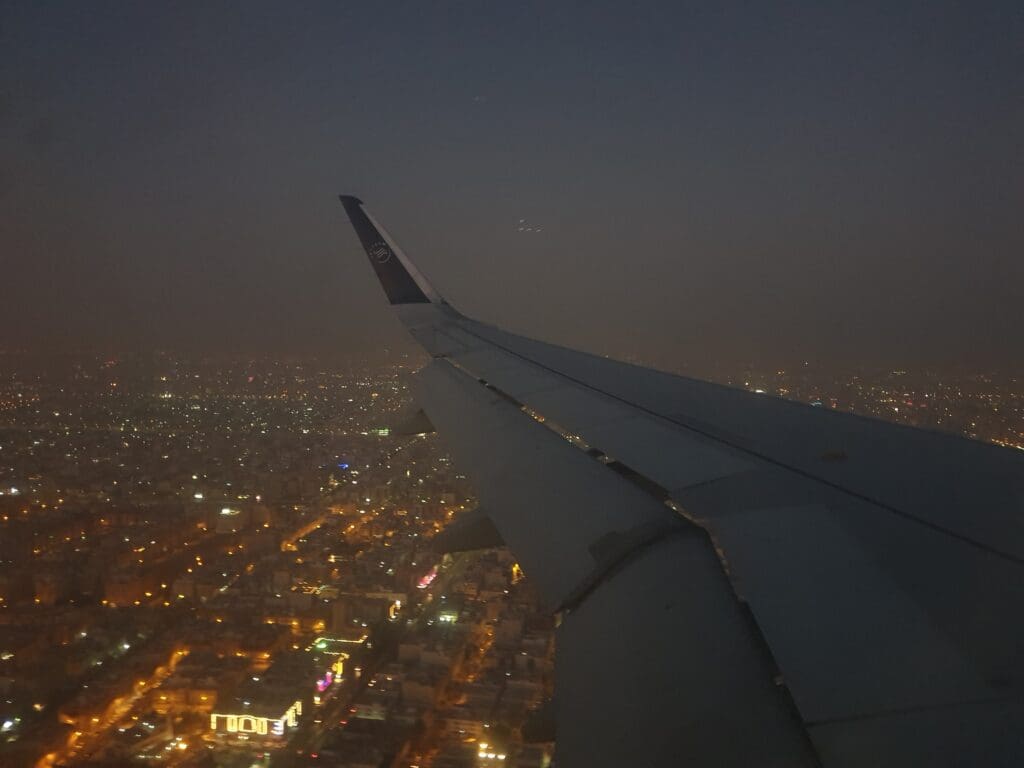
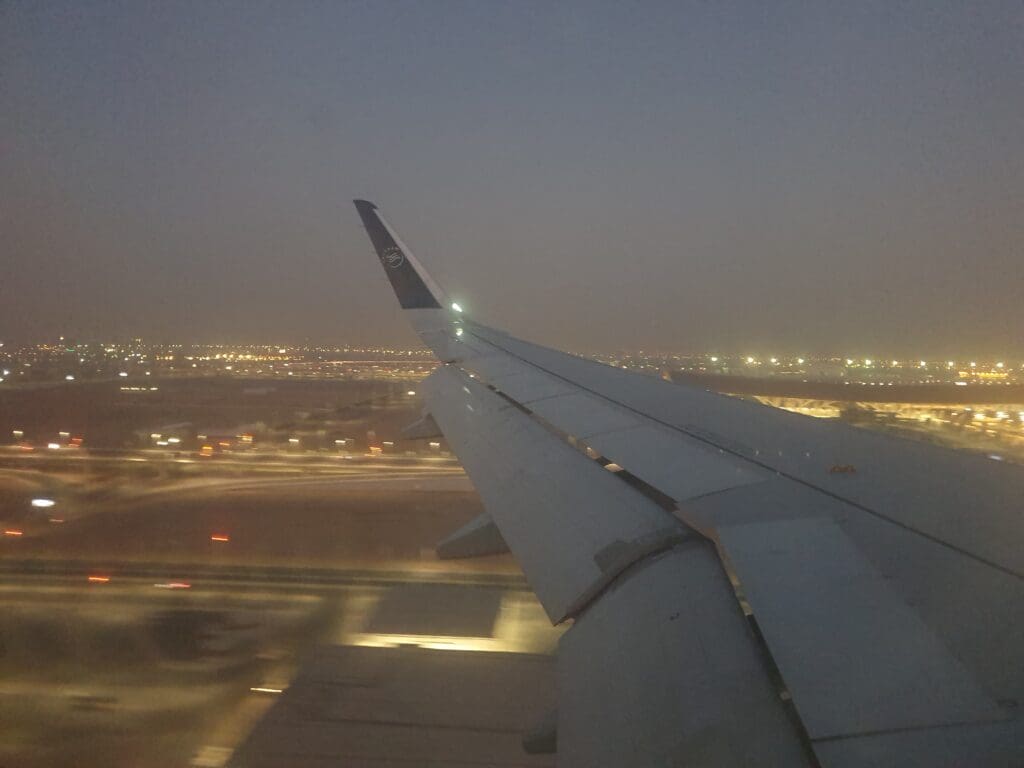
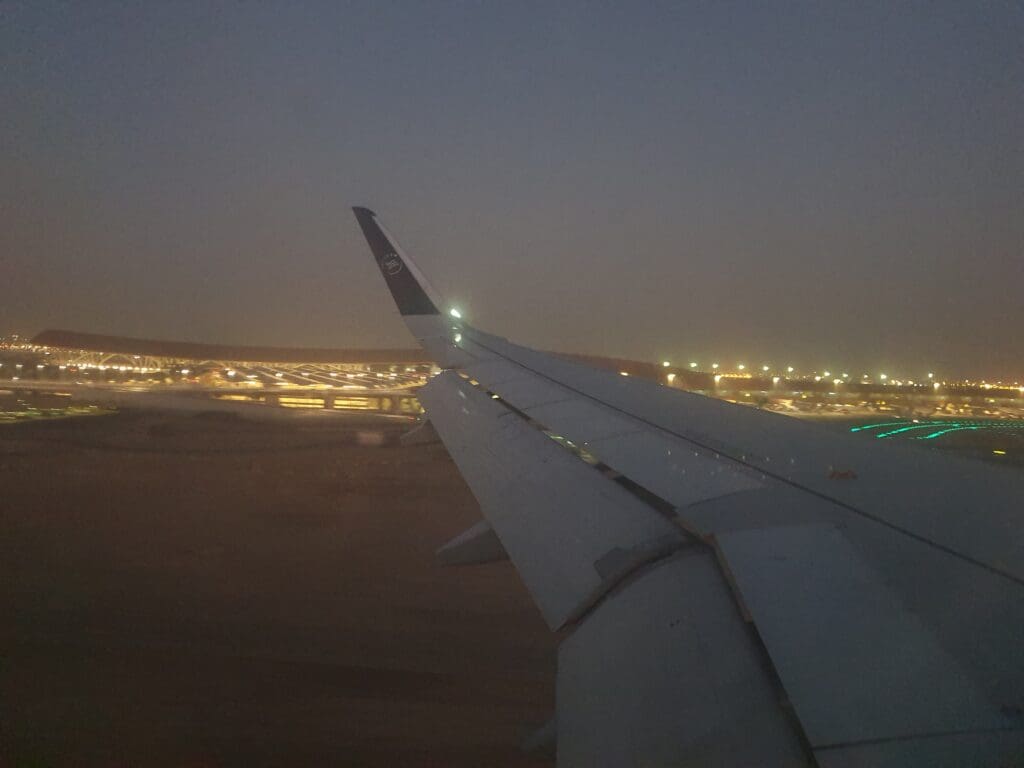
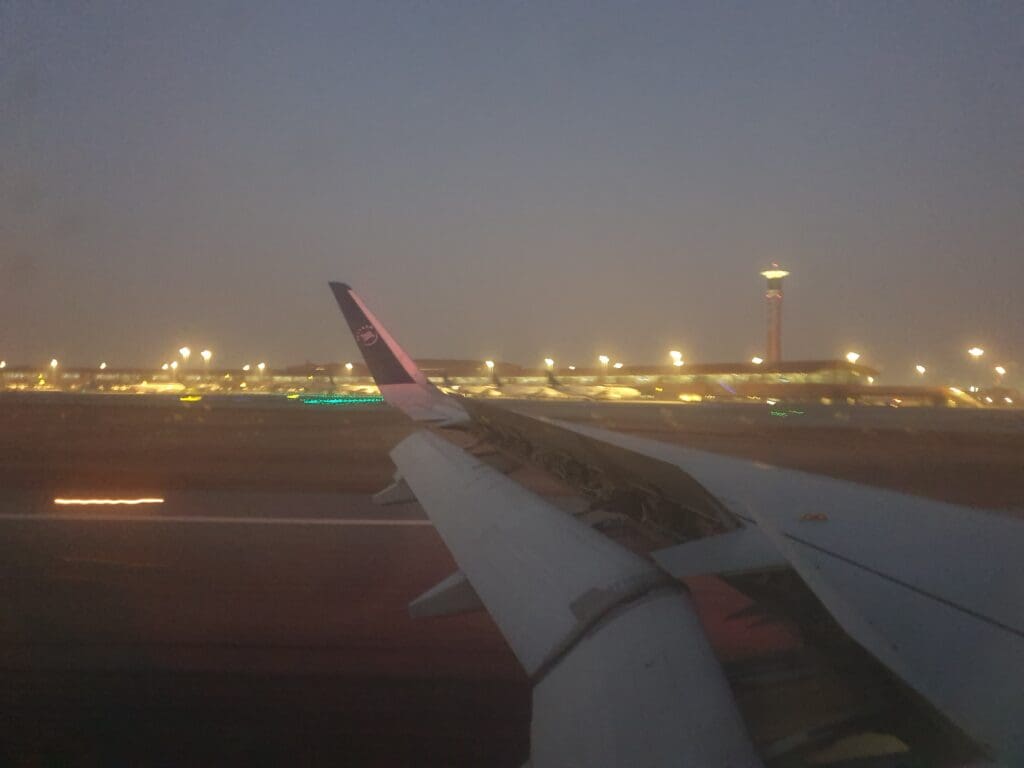
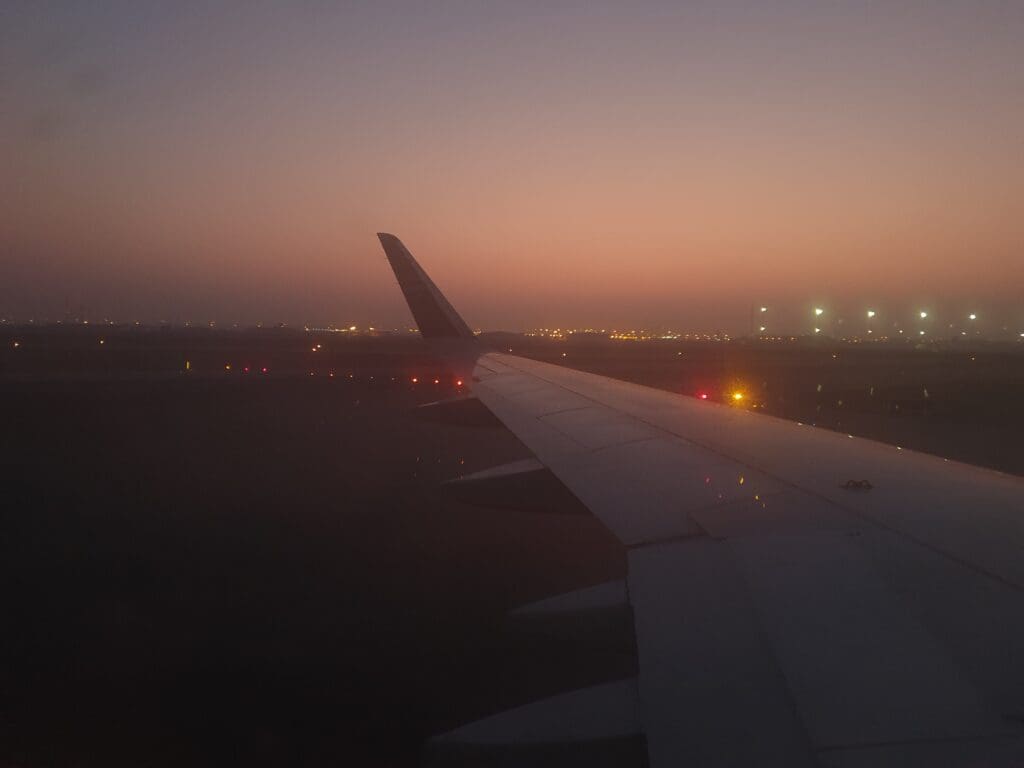
After touching down some very gentle braking ensued resulting in a long landing roll and a subsequent long taxi to a remote stand near the airport’s new terminal. As we taxied off the runway a final announcement was made from the purser welcoming us all to Jeddah and thanking us for flying with Saudia. As I found myself sitting on the left-hand side of the cabin, as we journeyed over to the stand I was offered a view of a couple of departing Saudia jets, namely an Airbus A320 and an Airbus A330, as well as the faint outline of a diverse collection of different Hercules models in a range of liveries, all belonging to the Royal Saudi Air Force and based at the airport.

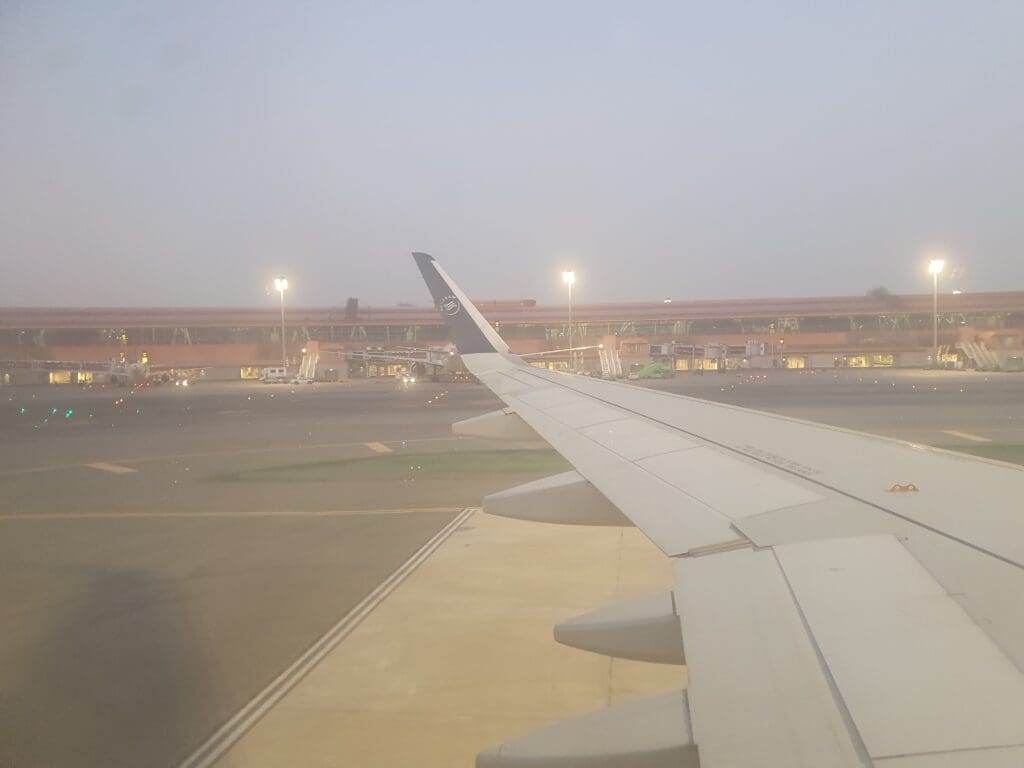
A total of ten minutes after landing in Jeddah, our A320 slowly pulled up to a remote stand alongside Saudia’s other Skyteam liveried A320 (the aircraft originally scheduled to operate the flight), HZ-ASF. Once the aircraft came to a gentle halt, there was no major commotion and perhaps all tired and weary, nobody seemed to be in a rush to exit the aircraft. However, thanks to the fact that a bus, airstairs and a range of other vehicles were already waiting at the stand to meet the aircraft upon arrival, disembarkation commenced promptly after the aircraft came to a halt.
Exactly four minutes after the aircraft pulled into the stand, I had made it through the aircraft to the forward galley where I thanked the two Saudi crew members before heading out into the warm morning air. Despite reading reports of enthusiasts receiving stern words for snapping photos on the airport’s apron, my final shots of the aircraft either went unnoticed by the ground staff members, or they did not care about these. Once I had taken several parting photos, I headed over to the first of the two buses, finding myself the last to board, the doors soon closed and pulled away from the aircraft. From the stand, it was a rather long journey out across the apron and then into a tunnel before the bus arrived at a small and inconspicuous building that turned out to be the airport’s South Terminal, thus commencing my transit experience at Jeddah Airport. All in all, my first flight with Saudia had gone without any glitches and, despite the worn state of the young aircraft, I was left with a superb impression thanks to the flight’s wonderful and attentive crew.