
Etihad A380 Economy Review: Flying from London to Abu Dhabi on the Mighty Whale
Background
Almost every year, my family have flocked from far and wide to celebrate Christmas at my parent’s house in the South Yorkshire city of Sheffield. However, seeking a break from the dreary winter weather, short days and the chaos that comes as part and parcel of hosting the seasonal festivities, in 2023 it was decided that the task of hosting our family Christmas get-together would be delegated to my sister. However, seeing as my sister lives in the Emirate of Sharjah, getting there would be a little more exciting than squeezing onto a packed intercity train or crawling along the motorway in a festive traffic jam.
Fortunately, travelling between the United Kingdom and the United Arab Emirates is not a particularly difficult mission and there are a vast array of geographically logical non-stop and one-stop options offered on a plethora of airlines from across Europe, the Middle East and North Africa. Seeking to maximise my time in the Gulf and for a variety of other reasons, I decided to make my outbound trip with Etihad Airways. Unlike much larger Dubai-based rival, Emirates, who serve seven airports across Britain, Etihad Airways’ gold-coloured aircraft can only be seen at London Heathrow and Manchester. Despite being based in Leeds and thus within easy reach of Manchester Airport, needing to work until the mid-afternoon of the Friday before Christmas, I opted to reject Etihad Airways’ daily morning flight from Manchester and instead opted to settle for the last of the airline’s four daily flights between Heathrow and Abu Dhabi, EY18. This was scheduled to depart the British capital at 2055 and arrive in the Emirati capital seven hours later at 0755, thus giving me a day that I would have not otherwise had had I opted to go for the airline’s Manchester service. Furthermore, with the Heathrow service operated by the Airbus A380, as an aviation enthusiast, it was difficult to pass on this option!
With all soon booked and sorted, all that was left to do was sit back, relax and excitedly wait for my fifth-ever ride onboard the Airbus A380. Having previously sampled the whale with British Airways, China Southern Airlines, Korean Air and Qatar Airways, this would be my first time flying onboard an Etihad Airways Airbus A380. However, this was not my first experience with the airline, having sampled the delights of Etihad Airways a total of five times before this trip. Seeing as my last trip with the airline had taken place less than three months earlier when I had flown from Rome Fiumicino to Abu Dhabi onboard one of their Boeing 777-300ER aircraft, I had a good idea of what to expect onboard. With this flight having left me with few complaints, I had high expectations for my overnight Airbus A380 flight to the Middle East.
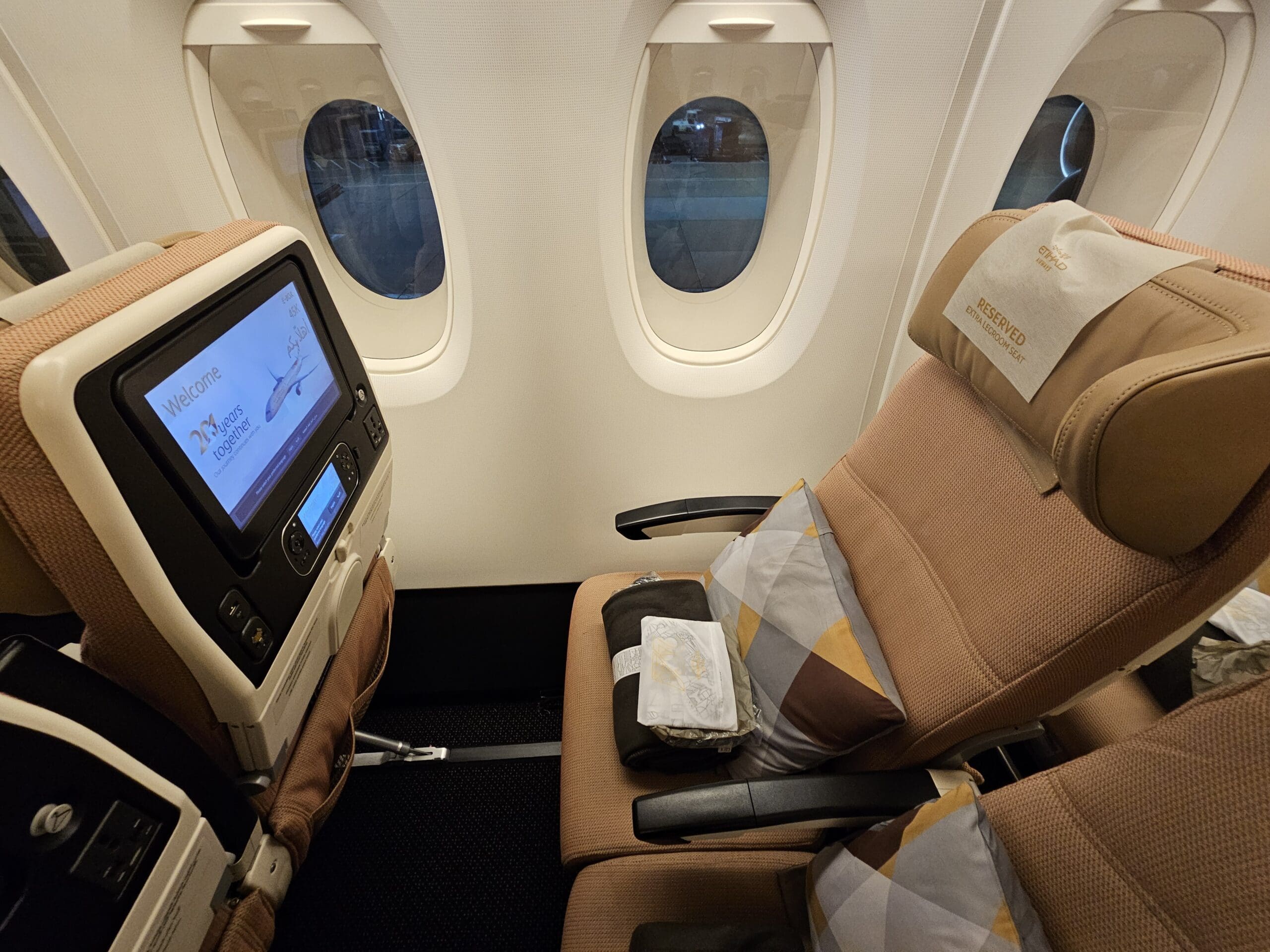
Once all had been booked, I was able to use Etihad Airways’ website to add a range of additional extras – these included booking a seat on the airline’s complimentary shuttle buses to Al Ain and Dubai, adding additional luggage, pre-selecting special meals, adding priority check-in services and selecting a seat for the ride. Focusing on the latter, seeing as I would be travelling on a Choice Plus fare, I was eligible to select an extra legroom seat and opted to make the journey in 45K, located at the front of the lower deck. In addition, I should also mention that I ended up having to contact the airline regarding their shuttle bus before my trip, whilst I initially ended up going around in circles with their AI chatbot, eventually, I connected to an agent and found them to be helpful and able to solve my issue within a few minutes.
Last but not least, once my ticket had been booked, I would then have to work out how to get from Sheffield to Heathrow Airport. Fortunately, with plenty of direct trains from Sheffield to London St Pancras and a range of options to get from there to Terminal 4, this wouldn’t be an issue and I soon booked a seat on the 1437 train to London.
A Bit More About Etihad Airways’ Airbus A380s
Just one year after Etihad Airways commenced operations in 2003, the then-infant carrier placed an order for ten Airbus A380 aircraft. In the decade that followed, the airline witnessed impressive growth, expanding its fleet to encompass a wide array of narrow and widebody Airbus and Boeing jets, with these deployed to destinations across the world. During this time, the airline solidified its status as a major player in the aviation industry and became well-known for its expansive route network and high levels of service. Over a decade after placing their order for the type, in December 2014, Etihad Airways’ first Airbus A380 touched down to much celebration.
Following delivery, Etihad Airways’ garnered much attention for its brand new Residence Suite product, one of the most luxurious offerings onboard any Airbus A380 and perhaps any modern airliner! This consists of a private living space with a separate bedroom at the very front of the Airbus A380’s upper deck. Meanwhile, these aircraft also feature 9 First Class suites, 70 Business Class seats and a whopping total of 417 Economy seats on the Airbus’ main deck. These were soon deployed on high-demand routes to destinations across the world, including Melbourne, Mumbai, London Heathrow, New York JFK, Paris CDG, Seoul Incheon and Sydney, with Etihad Airways’ final and tenth example touching down in Abu Dhabi in May 2017.
However, all has most certainly not been plain sailing. Like most Airbus A380 operators, the rapid fall in demand for air travel saw Etihad Airways place their Airbus A380 fleet in storage. With all ten examples ending up in either Lourdes or Teruel. Worryingly, the uncertainty of the era combined with Etihad Airways’ financial challenges meant that for a while, the future of the airline’s Airbus A380 fleet was uncertain. Fortunately, in 2022, Etihad Airways announced plans to reinstate the type into the airline’s fleet. Over three years after first entering storage, the carrier’s four youngest Airbus A380s returned to service, with the airline’s first commercial Airbus A380 flight taking place in July 2023. Initially, these four aircraft operated exclusively on the route between Abu Dhabi and London Heathrow, although in 2024, they commenced regular operations to Mumbai, New York JFK and Paris CDG, with Singapore Changi set to follow in 2025.
The Journey
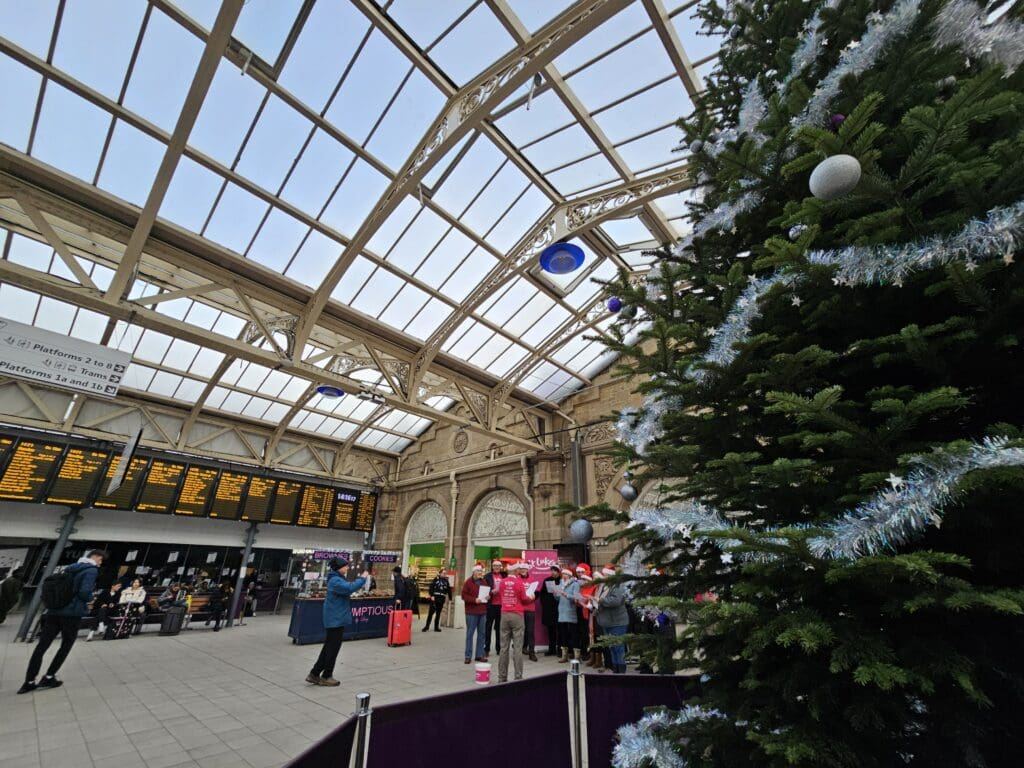
After a few weeks of waiting, departure day rolled around and I was eager to jet off to the sunshine. Following a short day spent working from home and an early festive finish, the time came for me to commence the first part of my journey, the slog down to London. Travelling with a suitcase containing four bottles of wine, a few clothes and little else, I thought it best to catch an Uber to Sheffield Station, rather than have the hassle of making this 2.7-mile journey either on foot or by bus. Not wanting to cut things too fine, I decided to order a ride just before 1400 and a few minutes later a shiny Hyundai Ioniq pulled up outside. After descending southwestern Sheffield’s tree-lined hills, upon reaching one of the main arteries, we hit a few jams heading into the city although moving along quickly, thankfully we pulled up to Sheffield Station with around twenty minutes to spare before my train. Seeing as I would be travelling on one of the busiest travel days of the year and being a fairly large station, unsurprisingly Sheffield Station was rammed, with passengers scurrying about here, there and everywhere. Adding a nice festive atmosphere, a large Christmas tree could be seen in the middle of the station atrium along with other decorations, whilst a local hospice choir could be singing carols attracting the attention of a fair number of passengers.
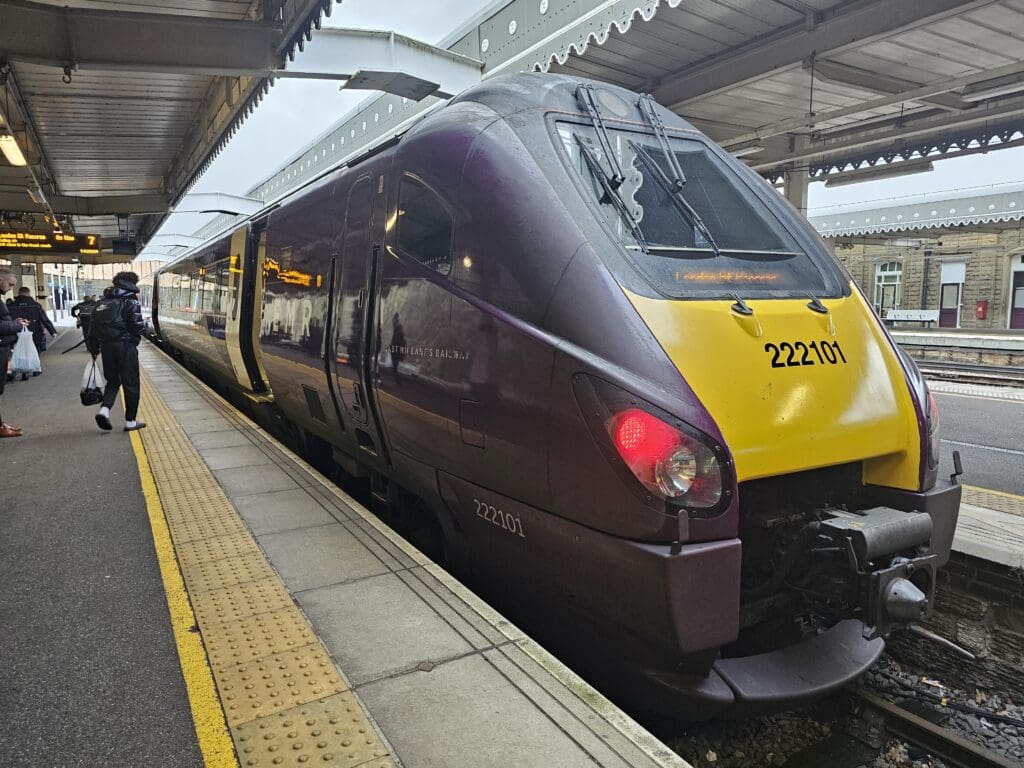
Upon checking the departure boards, I was pleased to find that my train to London was scheduled to depart on time and I soon made my way over to the platform where an East Midlands Railway Class 222 diesel multiple unit train could be seen waiting to make the 141-mile journey southwards along the Midland Main Line. Having been introduced to the route in 2004, these trains are now looking a little battered on the inside yet they remain capable of providing passengers with a comfortable ride. As expected, once onboard, the train proved to be incredibly busy, with plenty of students wielding large suitcases returning home for Christmas alongside a fair number of families heading for a pre-Christmas trip to the capital city. Fortunately, seeing as I had a pre-reserved seat, I was able to enjoy the journey in relative comfort and once I had played a game of suitcase Tetris with the other bags on the luggage racks, I took my seat and settled in for the journey southwards.
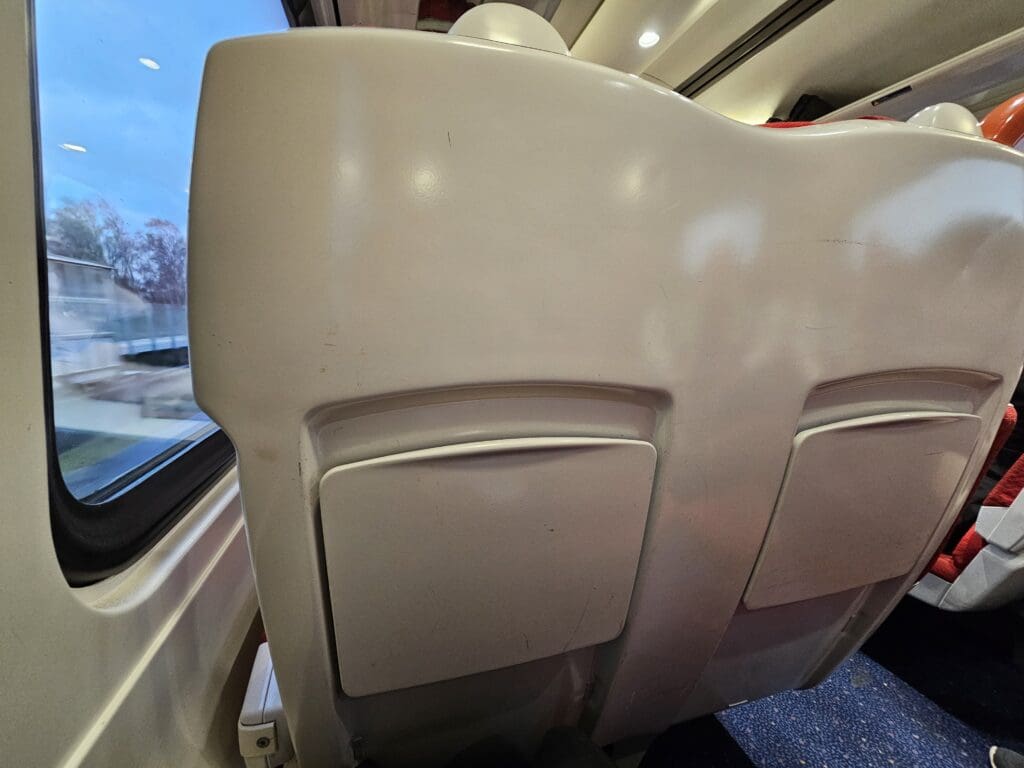
Despite giving myself plenty of time, I was nevertheless pleased to find that the train vibrated out of Sheffield on time and we soon sped out of the city and entered the country of Derbyshire, marking our geographical transition from the North to the Midlands. Heading southwards, the train made short stops in Chesterfield, Derby and Leicester. For the most part, other than the busyness, the train journey to London was pleasantly unremarkable, other than the onboard emergency alarm being activated as we edged out of the platform at Leicester as a mother and child had been split up, with the latter remaining on the platform and the former on the train. Fortunately, everything was soon resolved and we pulled into London St Pancras’ grand train shed on time, just under two hours after leaving Sheffield.
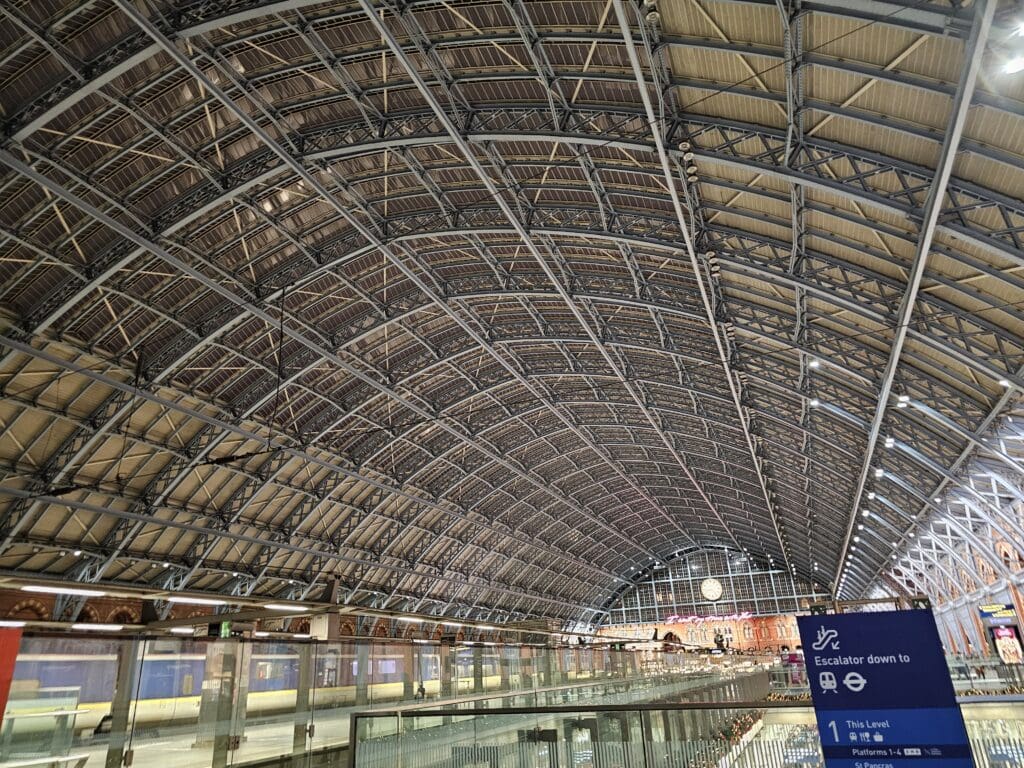
Once in the capital city, I had a fair number of options to reach Heathrow Airport. From St Pancras Station, the most direct means of reaching Heathrow involves taking the London Underground’s Piccadilly Line. This trundles deep beneath London before emerging in the open air at Hammersmith and makes plenty of stops as it winds its way westwards through the capital. However travelling with a large suitcase during the afternoon rush, I decided against this and went for a quicker option albeit with more changes. From the East Midlands Railway platforms, I descended down to the basement and caught a Thameslink train one stop southwards to Farringdon. From there, I continued heading downwards until I arrived at the modern platforms of the Elizabeth Line where I intended to catch a train straight to Terminal 4. However, having just missed a service, for old time’s sake I instead took another westbound Elizabeth Line train to Ealing Broadway where I had previously lived, preferring to wait there in the open air rather than deep underground at Farringdon. Packed in like sardines as we sped deep beneath the streets of London during rush hour with coughs and sniffles aplenty, I was reminded of just why I had moved back up North after several years of working and studying in the capital! Fortunately, the journey went without a glitch and I soon arrived at Ealing Broadway where I had a ten-minute wait until the next Heathrow-bound train.
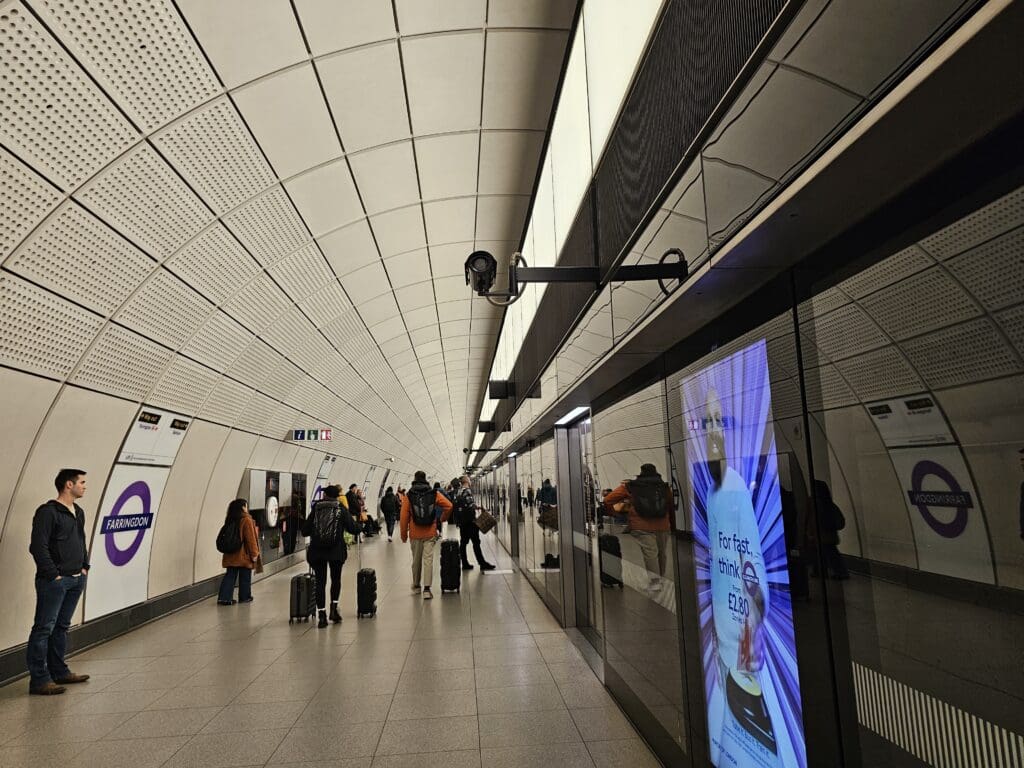
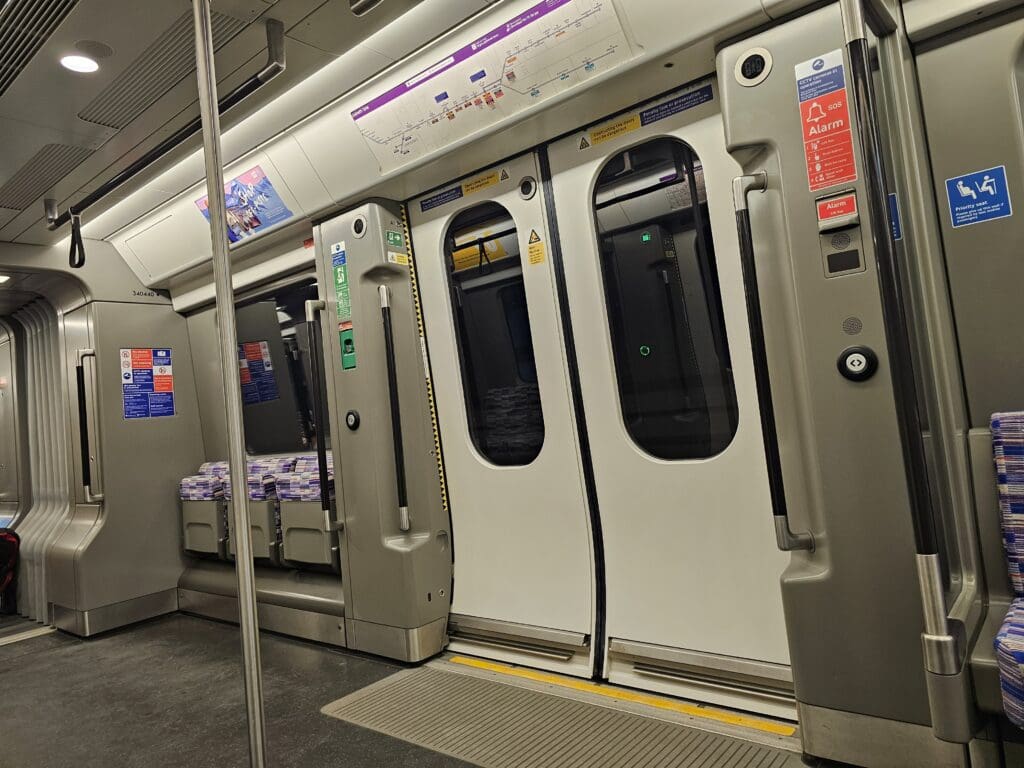
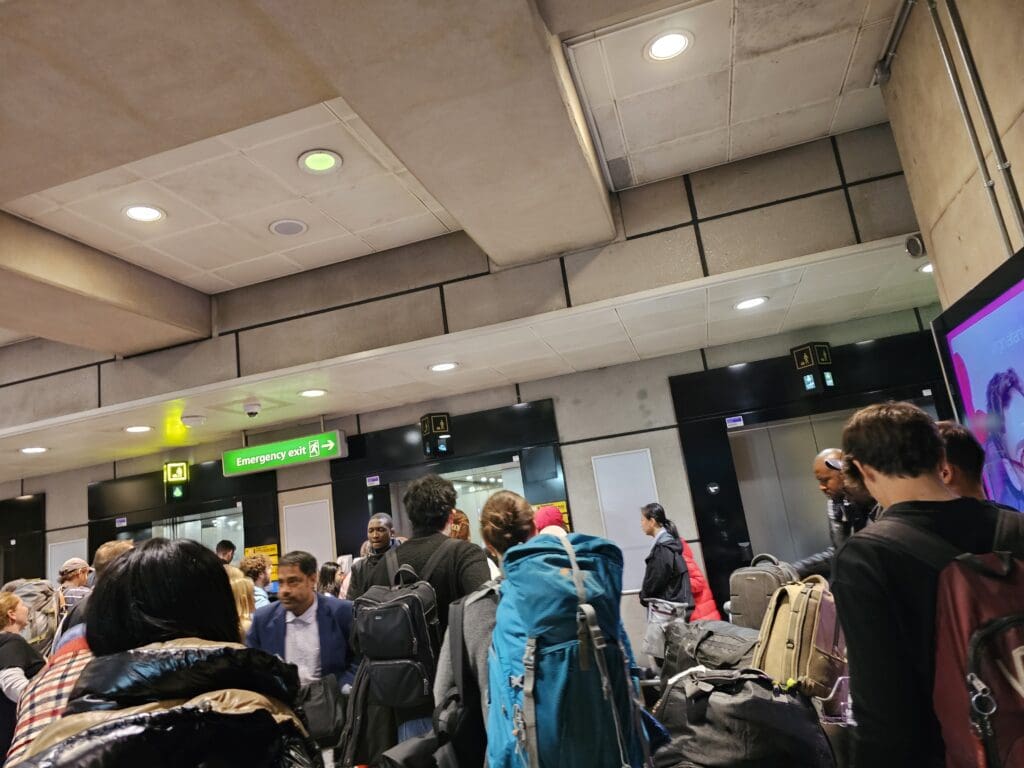
Finally, around four hours and three changes later, the Elizabeth Line train came to a halt at Heathrow Airport’s Terminal 4 and I joined the masses of suitcase-wielding passengers as they piled off the train and joined the scrum at the ticket barriers. With the station appearing to have just one exit, escaping this and making it into the check-in hall proved to be slightly chaotic. Unfortunately, with no escalators nor non-emergency staircases available, passengers must travel up to the terminal via one of four lifts. Whilst all were in use, given the sheer volume of passengers wanting to get between the station and terminal, this ended up being a slow and chaotic end to my journey that ultimately failed to leave me with the best first impression of Terminal 4.
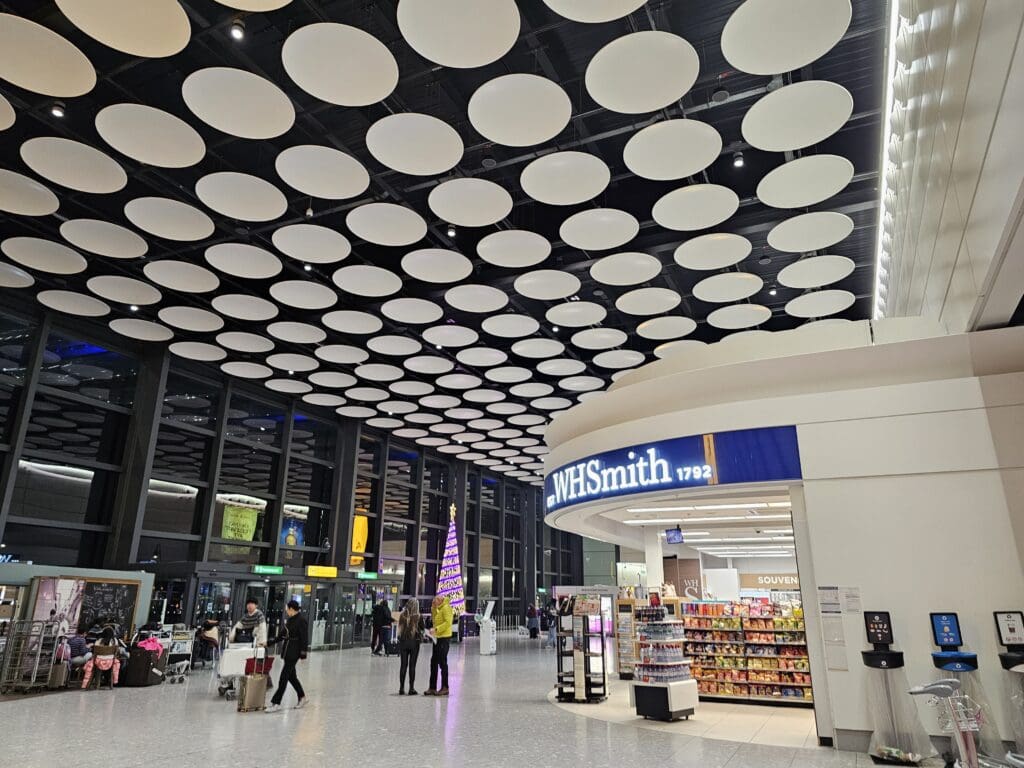
Once upon a not-too-distant time, I had been a fairly regular visitor to Terminal 4. However, the drop in passenger demand during Covid meant that the terminal closed its doors in 2020 and any flights from this were relocated to Terminals 2 and 3. After two years, in June 2022 the terminal finally reopened, and this would be my first time passing through this since 2019. Ignoring the slow and chaotic exit from the station, once inside the landside departures area, my first impressions were fairly positive. Walking around the check-in hall I found this to be clean, bright and modern, and whilst plenty of passengers could be seen there that evening, this did not seem to be particularly crowded or uncomfortably busy. However, those expecting to find a cornucopia of facilities in the landside portion of the terminal would have been somewhat disappointed as this contained little other than the Co-Pilots Bar and Kitchen, a Café Nero, a WHSmiths and a currency exchange counter. In terms of its layout, the check-in area is spread out across a fairly large rectangular-shaped space, with desks divided into eight zones, Zones A to H. With Etihad Airways’ desks located in Zone C, fearful of a long wait to check-in, I decided to head straight to these rather than linger around and soak up the terminal’s sights.
That day, with three Airbus A380 departures and one Boeing 787-9 Dreamliner operated service to Abu Dhabi, in total up to 1725 Etihad Airways passengers (plus any infants on laps) may have departed from Heathrow. Thus, London Heathrow is one of Etihad Airways’ busiest stations and I was not surprised to be greeted by the sight of plenty of the airline’s signage and branding across a near-endless row of desks. Like many airlines at Heathrow, Etihad Airways outsources their front-of-house handling services at Heathrow to the Emirates Group’s handling company, Dnata, whilst a fair number of Etihad Airways staff were also on hand. Upon nearing the entrance to check-in, I was soon pointed towards the queue for those who were yet to commence check-in formalities.
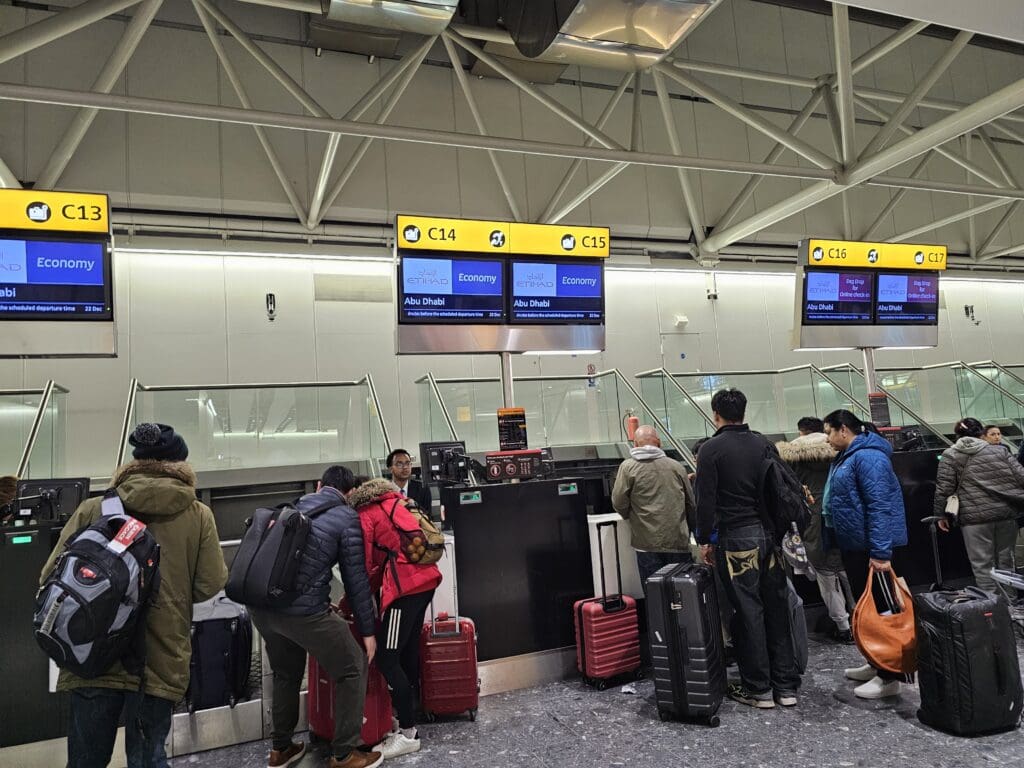
Seeing as I had already selected a seat online and would need to visit a check-in desk to drop off my bag, I decided to delay check-in until I reached the airport. Surprisingly, this worked in my favour as the queues for airport check-in ended up being shorter than those for the bag drop. After a few minutes of waiting, I was shown towards desk, where, in the usual manner, I handed over my passport and was asked for my final destination. For whatever reason, that evening my ticket seemed to cause some confusion with the Dnata agent, who ended up beckoning their supervisor. Fortunately, after a few clicks and some typing later, my boarding pass was printed off and I was told to be at the gate for 2000. Ending up with the sequence number 436, I suspected that I was in for a packed ride over to Abu Dhabi that evening. However, travelling just before Christmas, this was hardly surprising.
Once my suitcase had been sent on its way and with my boarding pass in hand, I marched onwards to security. After tapping this on one of the automated gates, I continued onwards and was soon directed to one of the many open checkpoints. Given the number of passengers in the terminal that evening and well aware that security at Heathrow is not always a quick experience, I had suspected that a fair amount of queuing would be in store before I would be able to explore the terminal. However, I was delighted to be proven wrong and ended up waiting for no more five minutes. Furthermore, this would have been quicker had I not been standing behind a family with multiple pushchairs who had removed neither electronics nor liquids from their bags! Soon enough, I passed through the security check without issue and was free to wander around the terminal. Overall, I was relatively pleased with both check-in and security, having been able to make it from the station to the airside area in around fifteen minutes, including my short wander around the landside portion of the terminal.
Unlike many European airport terminals, Terminal 4 is designed in a way that passengers are not required to pass through the terminal’s duty free area. However, those looking to partake in some retail therapy ought not to fret, as the entrance to this is difficult to miss, being located directly opposite the security area. Being Christmas, expectedly, this was blasting Christmas pop, and as a former retail worker, I could not help but feel sorry for the staff who would have likely had to listen to this soundtrack on repeat for weeks on end! On the subject of Christmas, plenty of decorations could be seen throughout the terminal including a fair number of Christmas trees and nice lighting, giving this an appropriately festive feel.
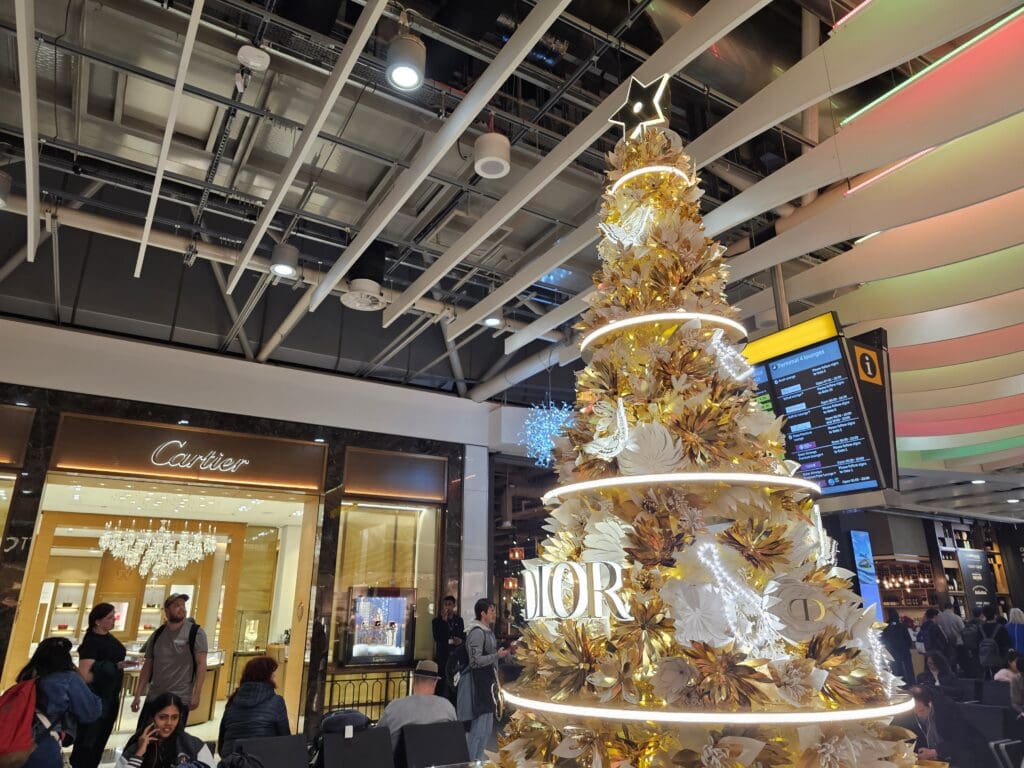
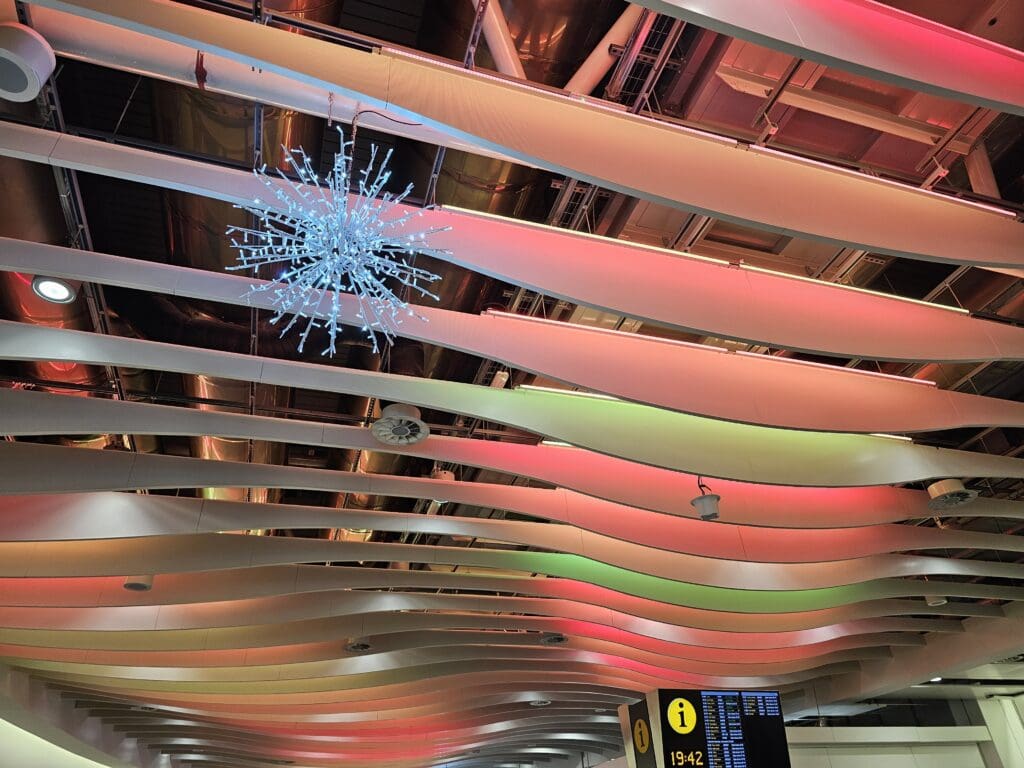
Terminal 4 is not the largest airport terminal in the world and hosts 21 jetbridge-equipped stands spread out across both the main pier and a smaller one. In terms of its facilities, the airside portion is home to a total of 32 shops. Many of these come in the form of luxury brand outlets such as Bulgari, Cartier, Gucci, Louis Vuitton and Mont Blanc to name a select few, most of which seemed to have few customers that evening. Unfortunately, shopping options for those on more of a budget are limited, with only Boots and WHSmiths provided for those looking to buy snacks, drinks and other basics at the usual inflated airport prices. In addition, eight eateries could also be found throughout the terminal. These included three coffee shops, four bar-type restaurants as well as a pricey upmarket restaurant specialising in caviar and seafood.
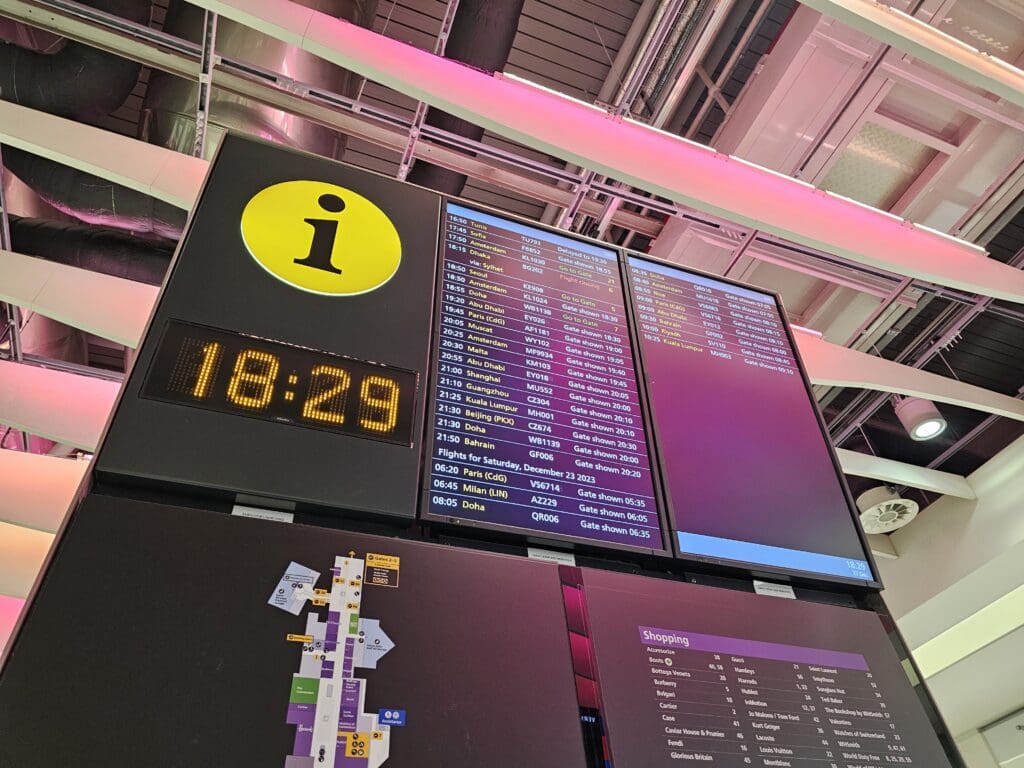
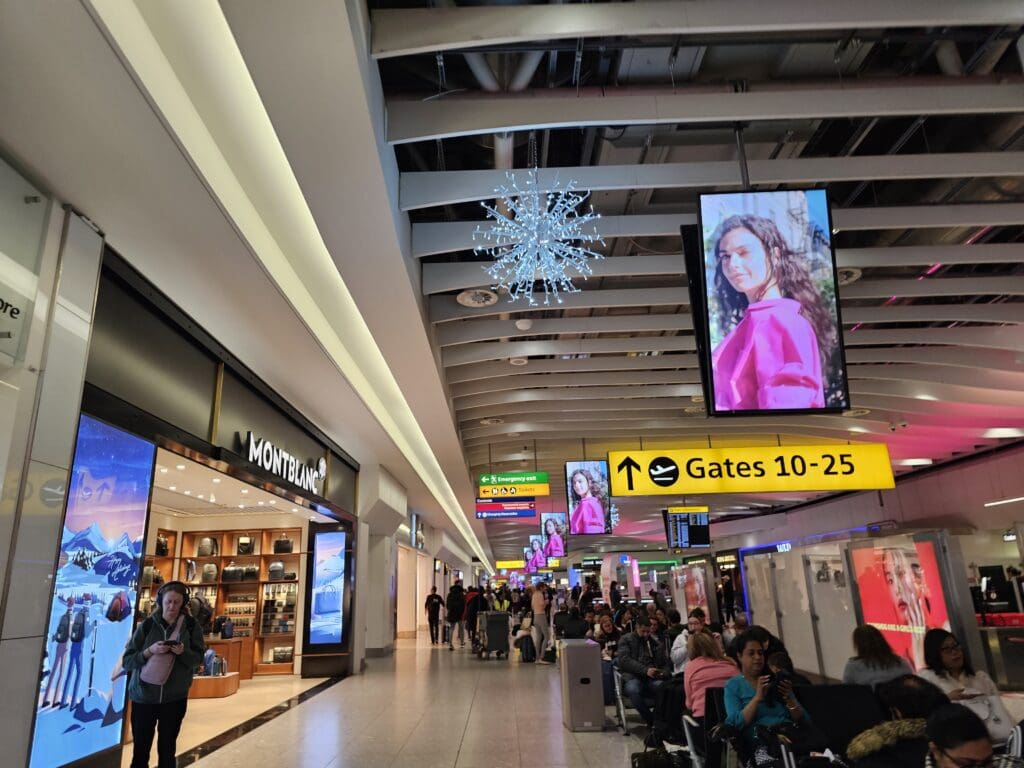
In terms of its architecture, whilst perhaps unlikely to win any design awards, I found the terminal to be fairly modern and nicely designed. Meanwhile, much of this was clean and tidy, leaving me with little to complain about. As most passengers expect, for those looking to stay connected, complimentary wifi was offered throughout the terminal although charging points were a little hard to come by and many of these were already taken by other passengers. After a while, I found a free plug socket in one of the quiet areas at the far end of the terminal however unfortunately this did not work.
For aviation enthusiasts, the undoubted gem of the terminal is the View Heathrow observation deck which sits just above the main airside area. This offers a view over several of the terminal’s gates as well as of the airport’s southerly runway. However, travelling on the shortest day of the year, the sun had long set and so aircraft were a little hard to see outside. In addition to this small observation area, many of Terminal 4’s gates offer a good view of the stands outside.
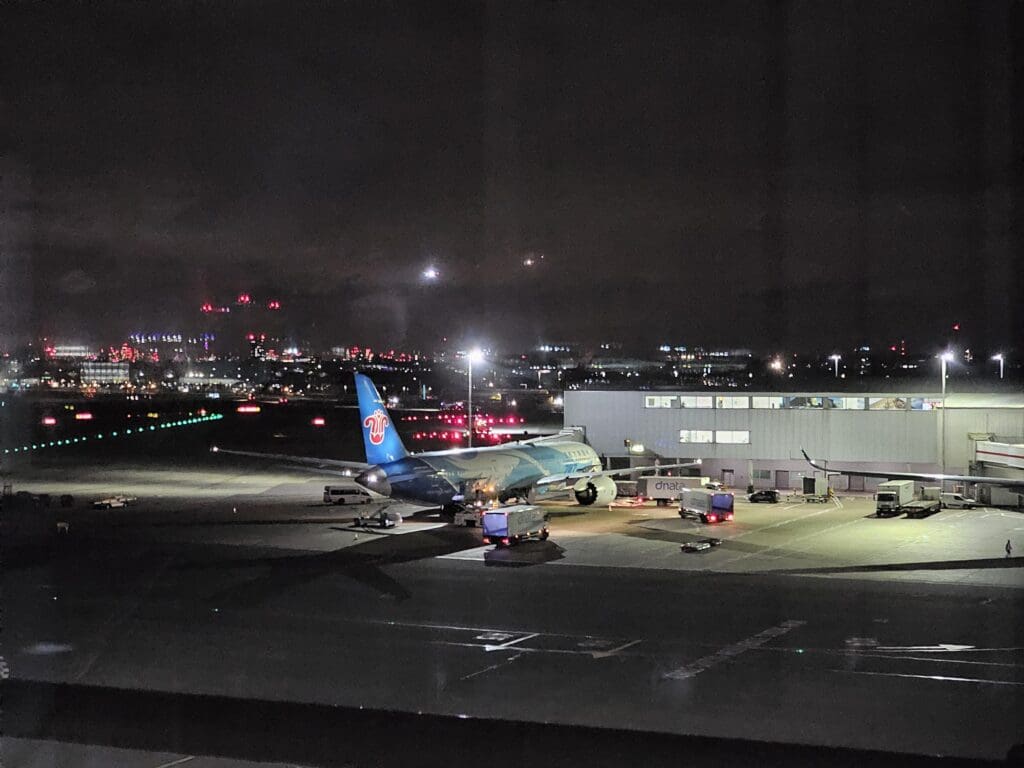
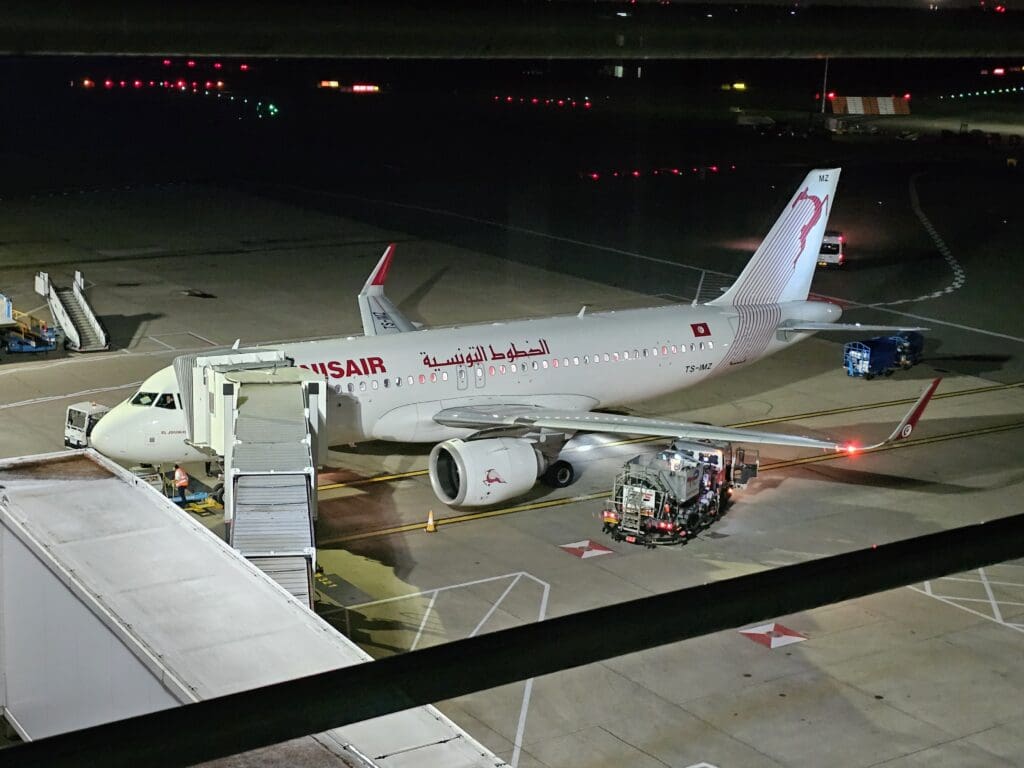
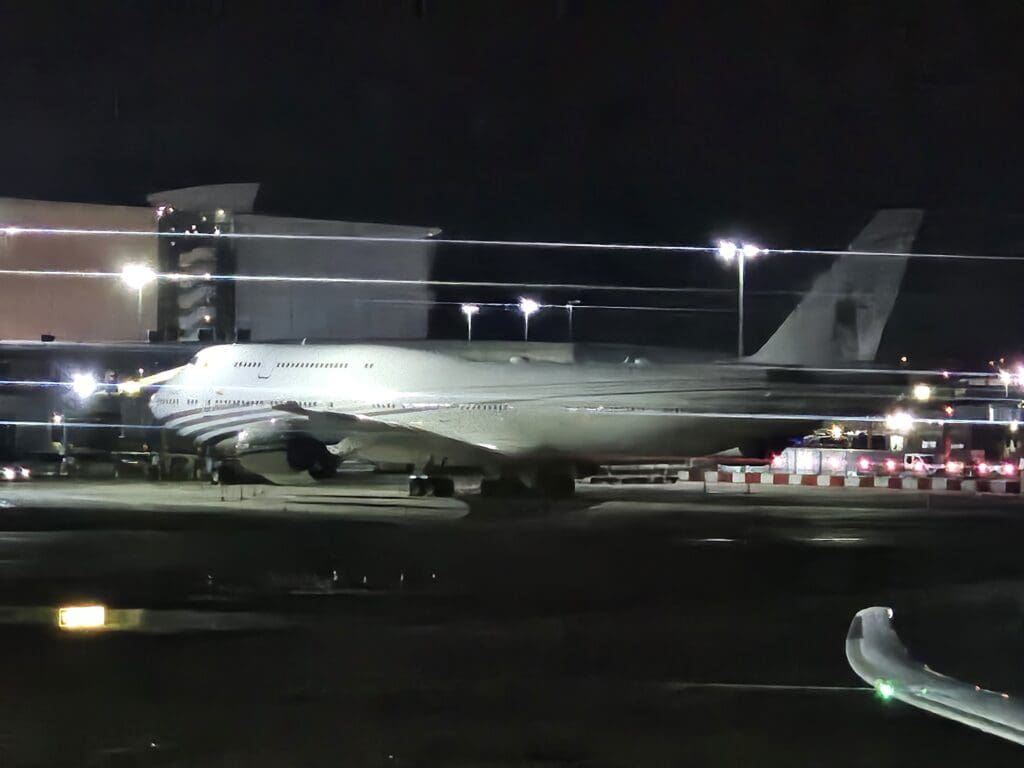
At present, Terminal 4 serves many of Heathrow Airport’s SkyTeam member carriers and non-allianced airlines. That evening, flights would be departing to destinations both near and far, with services to Amsterdam, Bahrain, Beijing, Dhaka, Doha, Guangzhou, Kuala Lumpur, Muscat, Paris CDG, Rome Fiumicino, Seoul Incheon, Shanghai Pudong, Sofia, Tunis and Valetta. These were operated by Etihad Airways, KLM, China Southern Airlines, Biman Bangladesh Airlines, Qatar Airways, Malaysia Airlines, Oman Air, Air France, ITA Airways, Korean Air, China Eastern, Bulgaria Air, Tunisair and Air Malta respectively, with types ranging in size from the Airbus A220 right up to the Airbus A380. In addition, one of the world’s most luxurious private jets, the Sultan of Brunei’s Boeing 747-8 could be seen parked at a remote stand a short distance away!
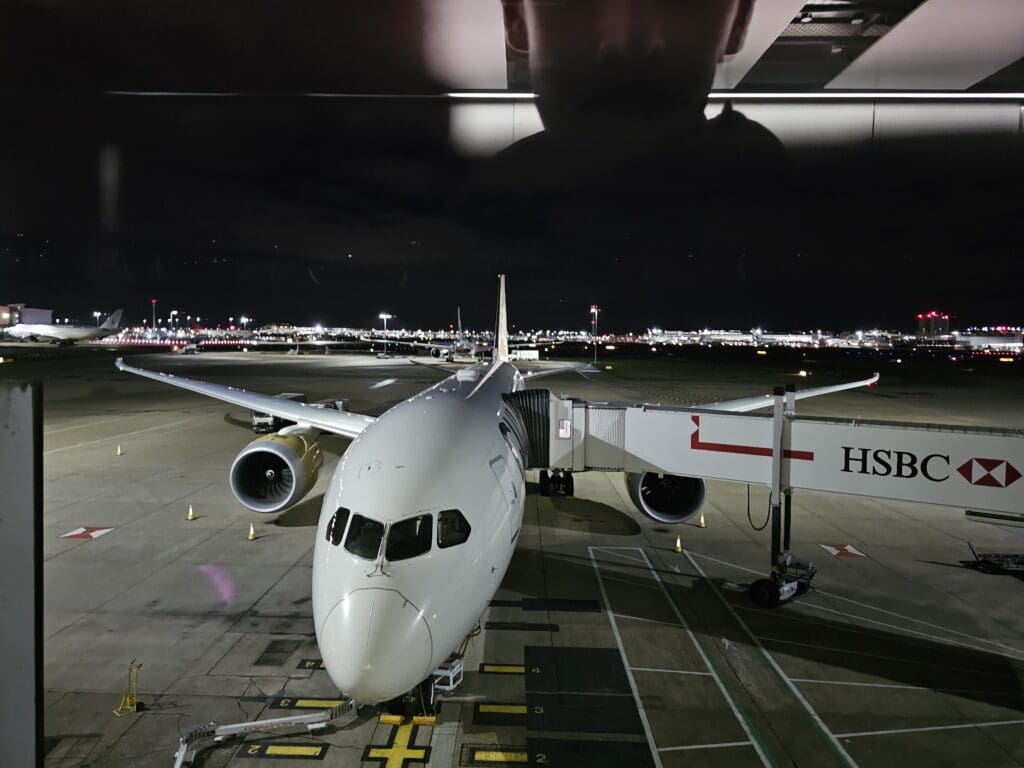
That evening, by the time I had passed through security, the Etihad Airways whale that would be taking me over to the United Arab Emirates could be seen already waiting at Stand 410 outside. This particular aircraft took the form of Airbus A380-861, A6-APH. Carrying the serial number 199, like all Airbus A380s, this aircraft was assembled at Airbus’ ‘home’ plant in Toulouse Blagnac and as it happened took to the skies for the very first time exactly eight years before my flight. Following testing, the aircraft was handed over to Etihad Airways and spent the first few years of its life flying to the carrier’s destinations across the world. In 2018, this received a special livery commemorating the Year of Zayed, celebrating the centenary anniversary of the birth of Sheikh Zayed bin Sultan al-Nahyan, the United Arab Emirates’ founder and first president.
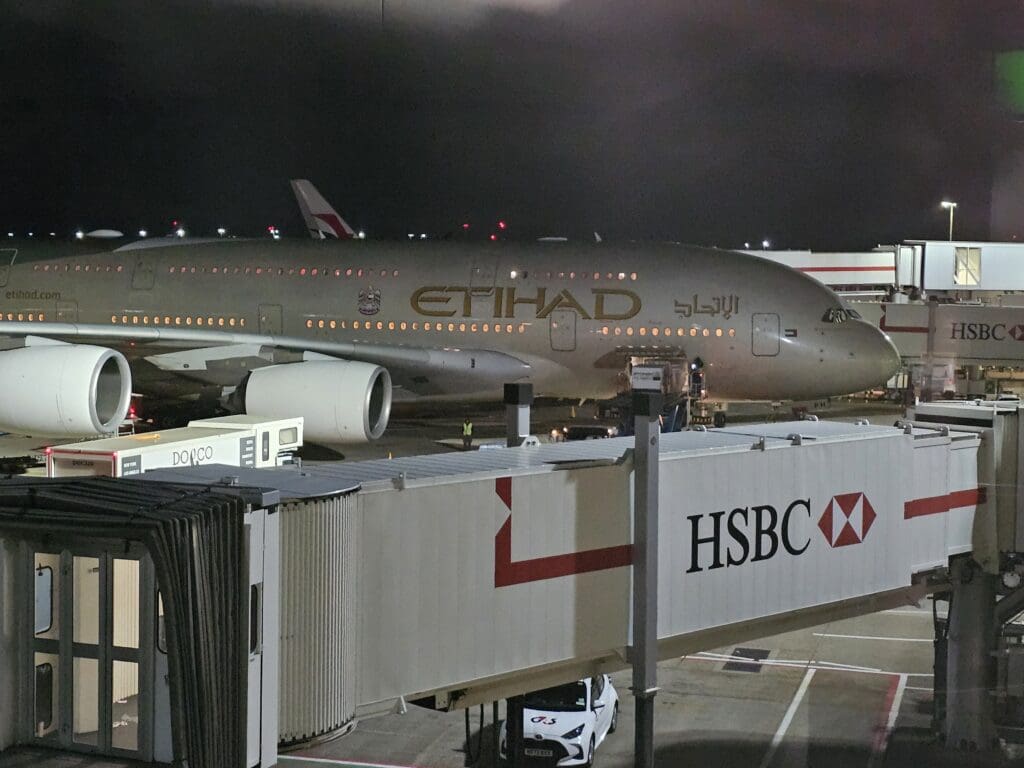
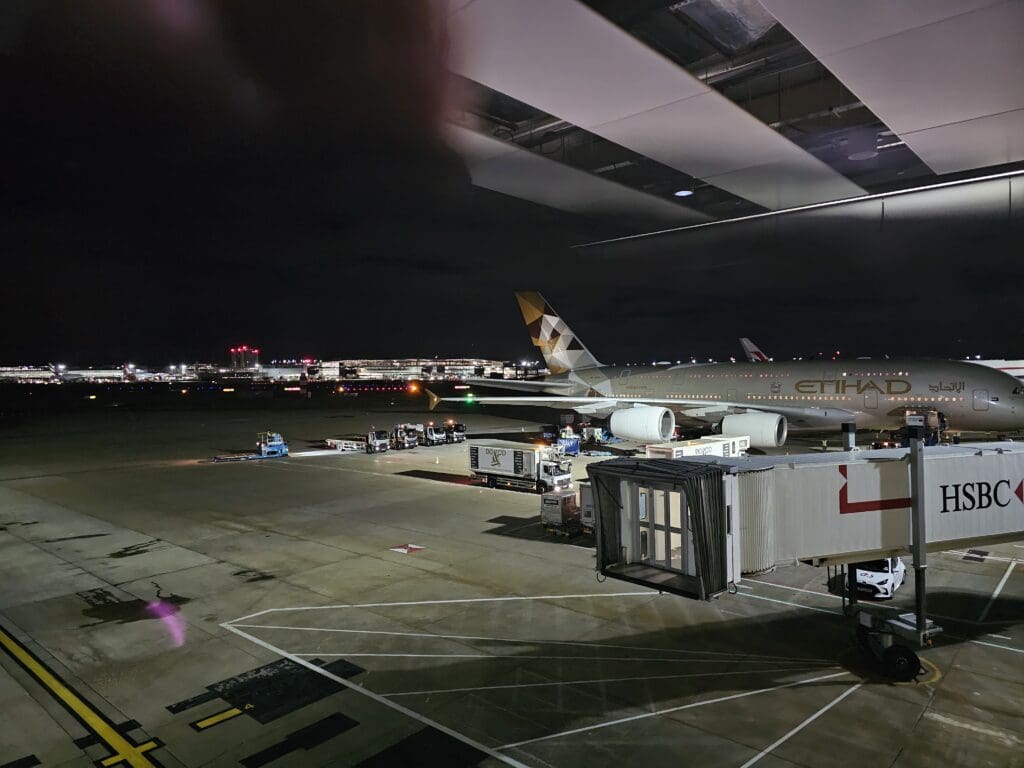
Unfortunately, thanks to the pandemic, all was not plain sailing for the aircraft and in March 2020, the onset of the pandemic and sudden reduction in passenger numbers meant that the aircraft was placed into long-term storage at Abu Dhabi Airport. Not giving all too much hope of a return to service, in June 2021 the aircraft was ferried across to Teruel Airport in northeastern Spain. However, with the announcement of the Airbus A380’s return to service, in preparation for this, the aircraft headed north to Lourdes Tarbes Airport in France before heading back home to Abu Dhabi in May 2023. Eventually, in mid-October 2023 the aircraft returned to service on the route between Abu Dhabi and London Heathrow.
With boarding scheduled to commence 55 minutes before departure at 2000, as this time approached, I made my way over to Gate 10. Upon arriving there, all seemed to be in place for boarding with plenty of barriers, signs and Dnata and Etihad Airways staff on hand. That evening, three jetbridges were connected up to the aircraft – two to the main deck and one to the upper deck. Meanwhile, technically, boarding was to take place through two gates – Gate 10A for those on the upper deck, and 10B for those Economy passengers in Zones 2 to 6.
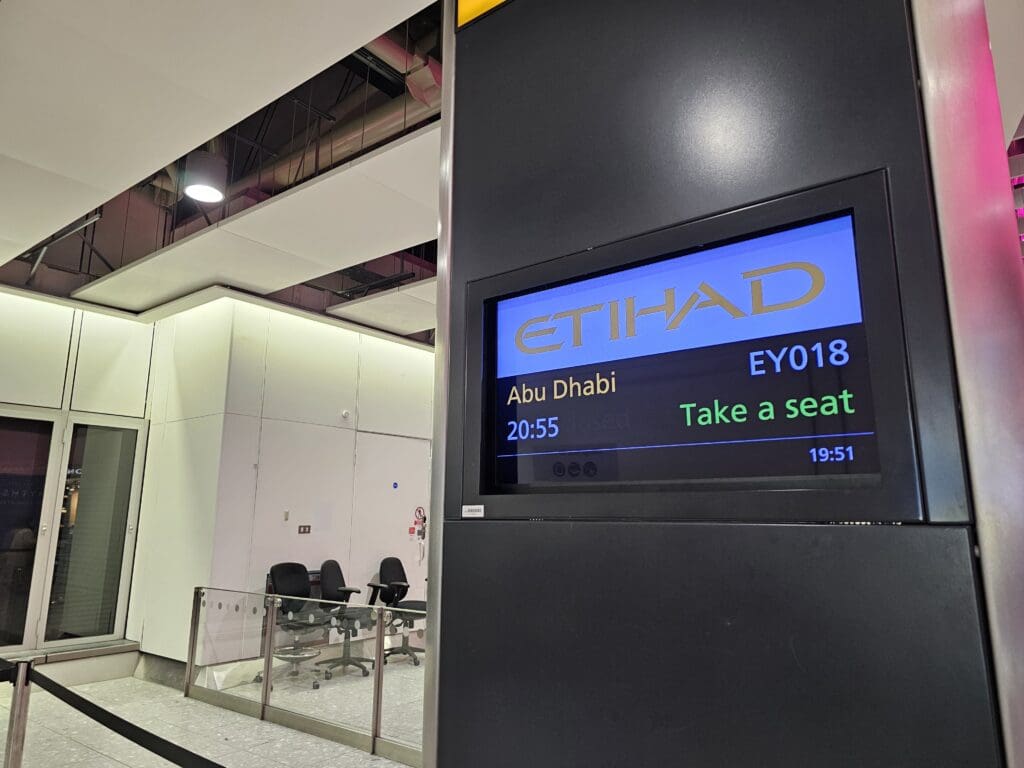
Three minutes after boarding had been scheduled to commence, an announcement was made requesting those who had connected from Aer Lingus and Air Canada flights, and lacked a boarding pass, to make themselves known to gate staff. Much to my surprise given Etihad Airways’ services to both Dublin and Toronto, there seemed to be quite a few passengers who fell into this category. By this time, a fair number of eager passengers had attempted to stand up and form a queue at the gate podium, however, anyone brave enough to do so was soon advised by the gate staff to sit down and wait for their zone to be announced. At 2015, those travelling on the Airbus A380’s upper deck were invited to board the aircraft as the gate staff worked their way through the various boarding zones. Ten minutes later, those in Zone 6 were invited to board the aircraft, and I soon joined the queue leading up to the gate podium. Soon, a friendly Dnata agent scanned my boarding pass, checked my passport and wished me a nice flight before I was free to continue down to the waiting whale.
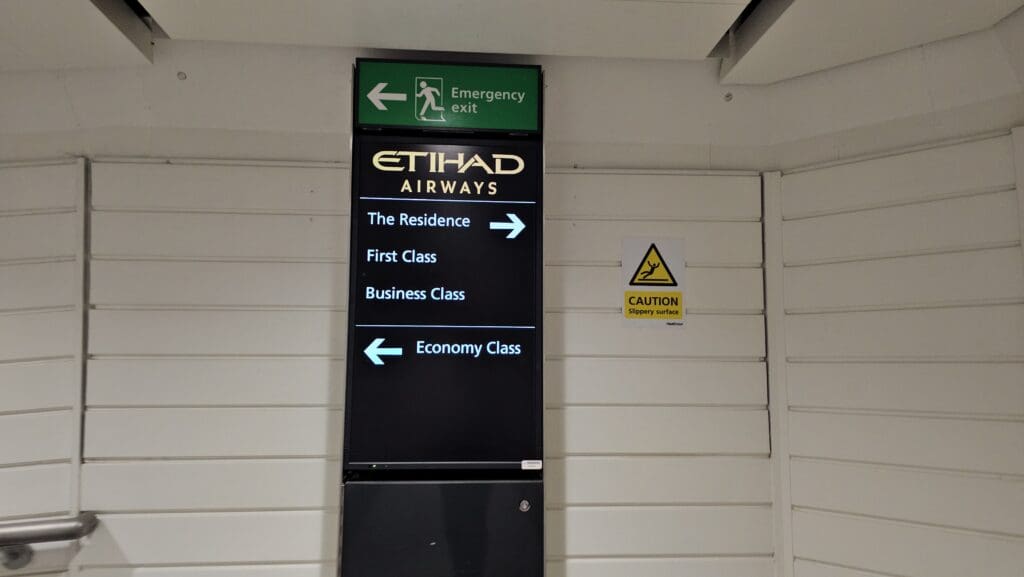
From the terminal, I headed down a series of rather cold and unattractive corridors that led me to the three jetbridges. Where these divided, another staff member was on hand ensuring that passengers boarded via the correct jetbridge. In a rather efficient manner, those seated in seats ABCDE were requested to board via the L2 door and those in FGHJK via the L1 door. Seeing as I would be seated in 45K, I made my way down the forwardmost jetbridge. Without any waiting, I stepped into the modest atrium area at the front of the aircraft where I received a warm and friendly greeting from one of the flight attendants who checked my boarding pass and pointed me down the second aisle and I soon made my way past the forward stairwell as well as the door to the cockpit and cockpit crew rest area.
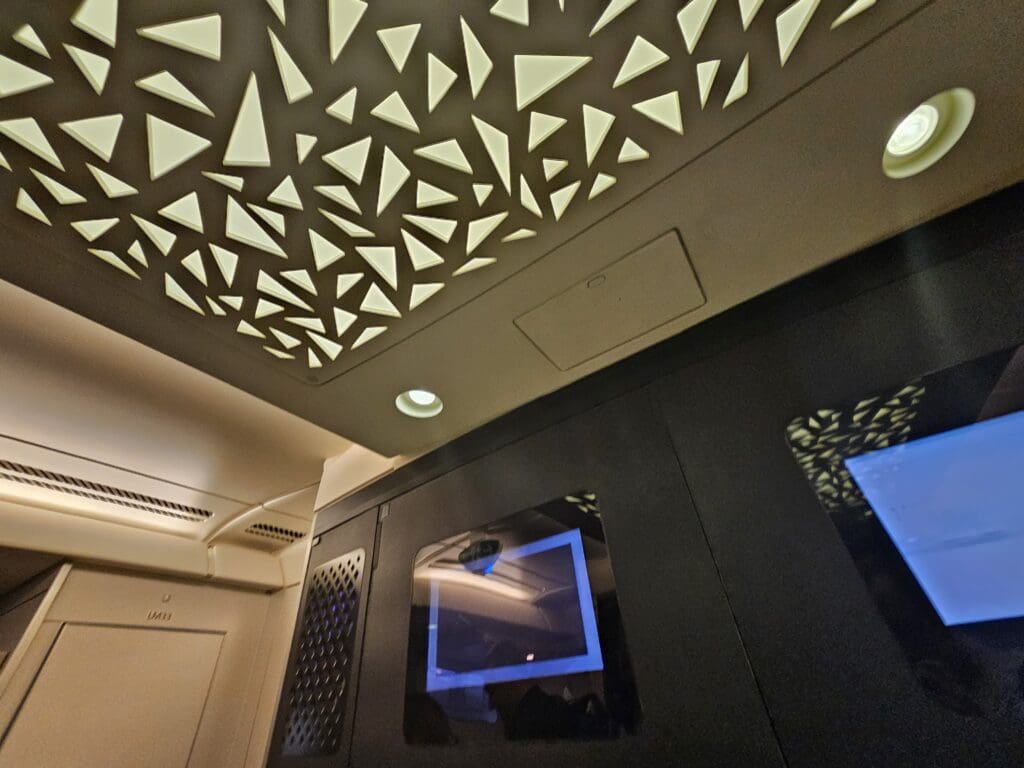
Onboard, all of the Airbus A380’s Economy Space seats are located in the forward cabin which is home to 68 seats arranged in the standard 3-4-3 layout. These Weber 5751 seats are modern in their design and have a somewhat unique appearance thanks to their ‘fixed-wing’ one-side-only camel leather headrest, which I believe to be unique to Etihad Airways, and can be also found on the airline’s Airbus A350 and Boeing 787 Dreamliner aircraft. Each Economy seat is upholstered with a sandy desert-coloured fabric and topped with a disposable antimacassar.
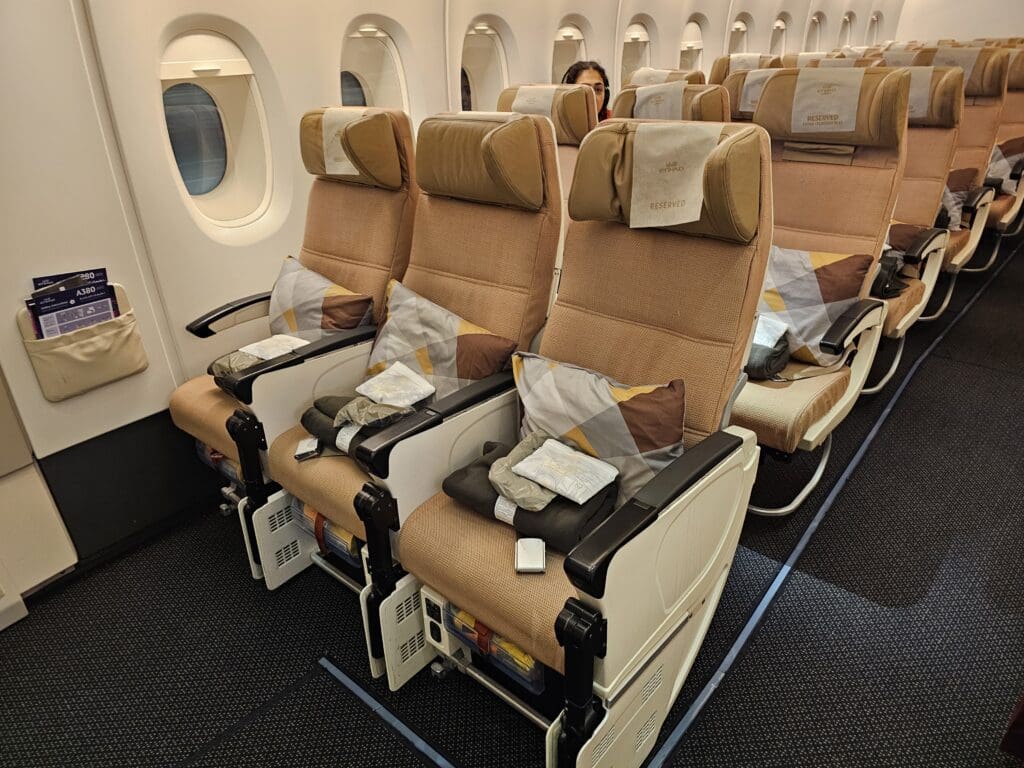
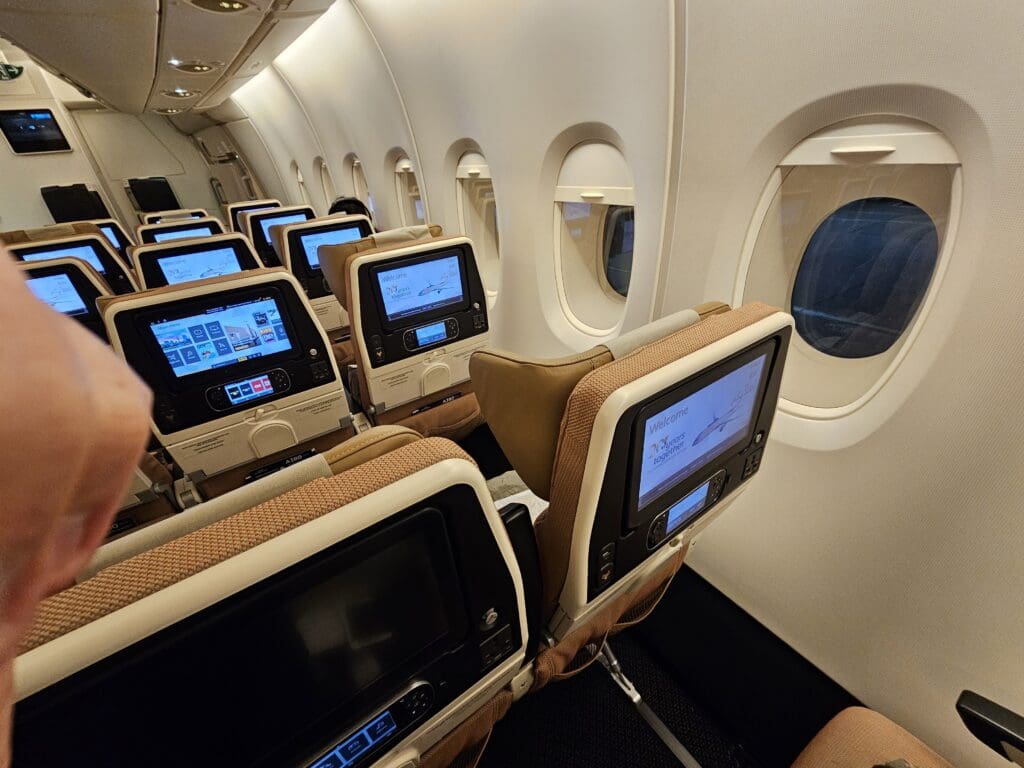
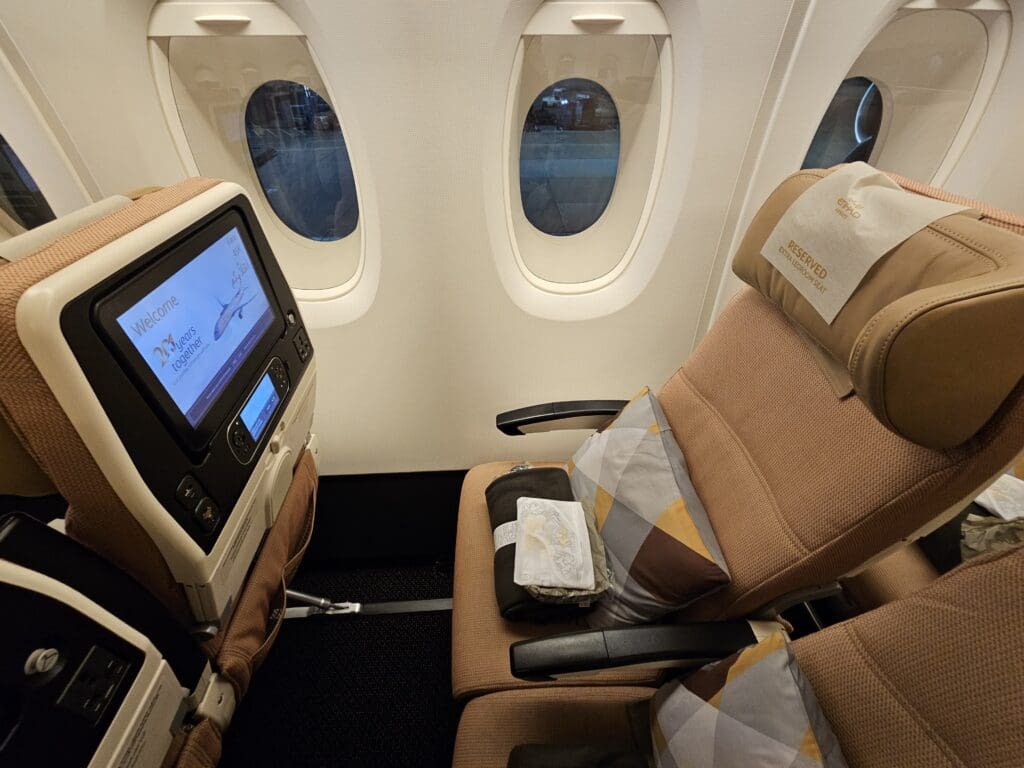
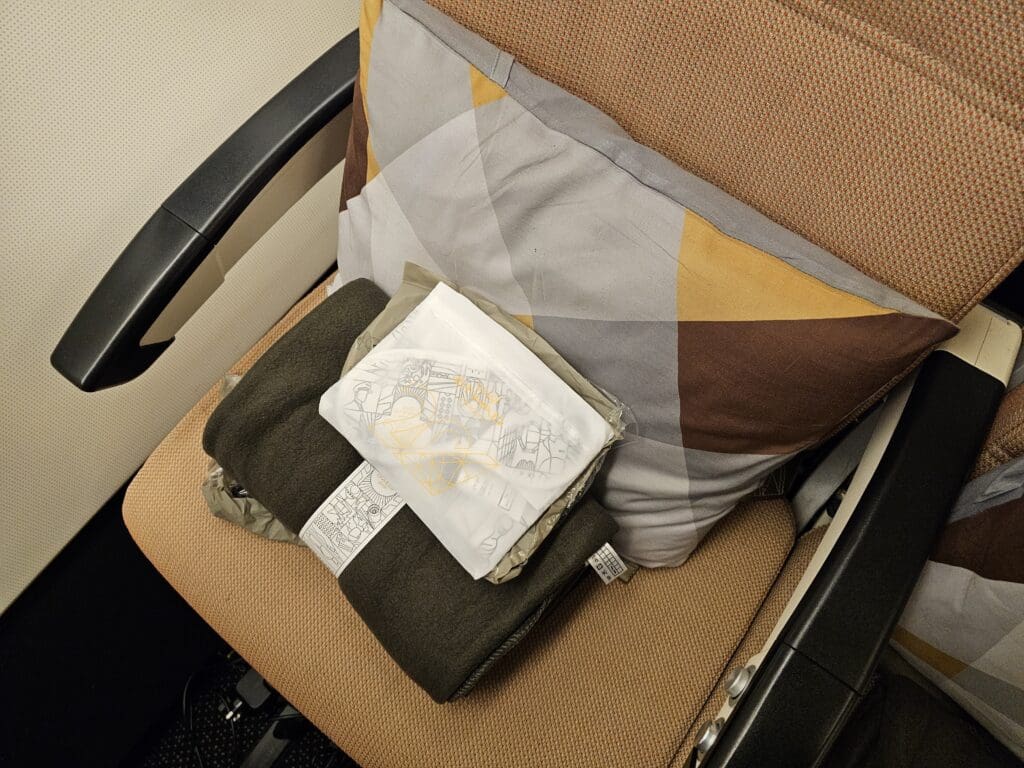
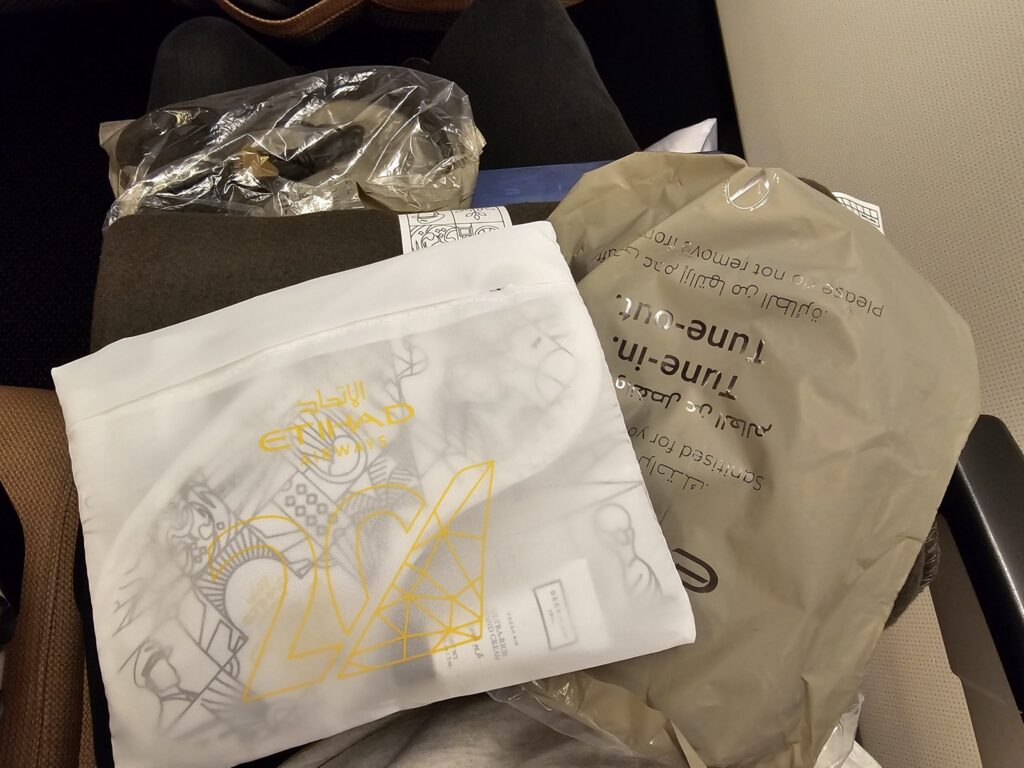
Meanwhile, the rears of these feature a bi-hold tray table and a seatback pocket that featured the latest copy of Etihad Airways’ monthly Atlas magazine, a safety card and a sickbag. Meanwhile, entertainment was provided in the form of an 11.1-inch wide (28.19cm) inflight entertainment screen powered by Panasonic’s eX3 system. Below this, a digital controller could be found, whilst both a USB port and a universal power outlet were located on each seatback. Upon boarding, a decent quality blanket and pillow had been placed on each seat along with what seemed to be an above average quality headset (for economy) and an amenity kit which contained a sanitising wipe, toothpaste-brush set, an eye mask and ear plugs. With the latter being something that many airlines have long eliminated, this was a very nice touch.
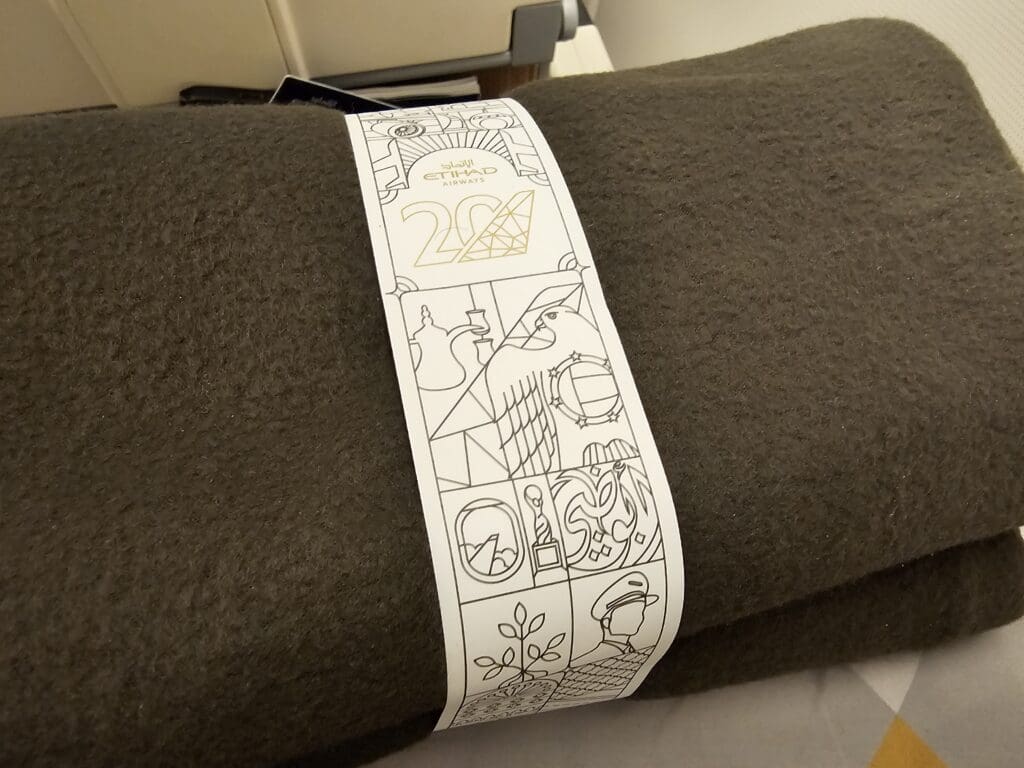
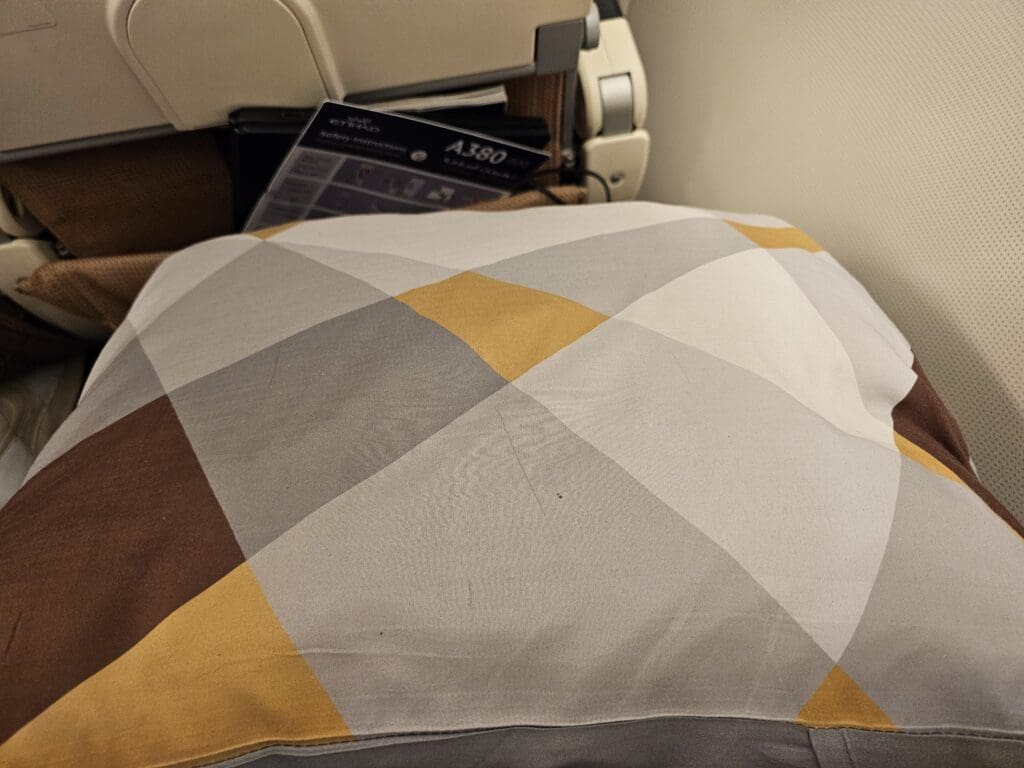
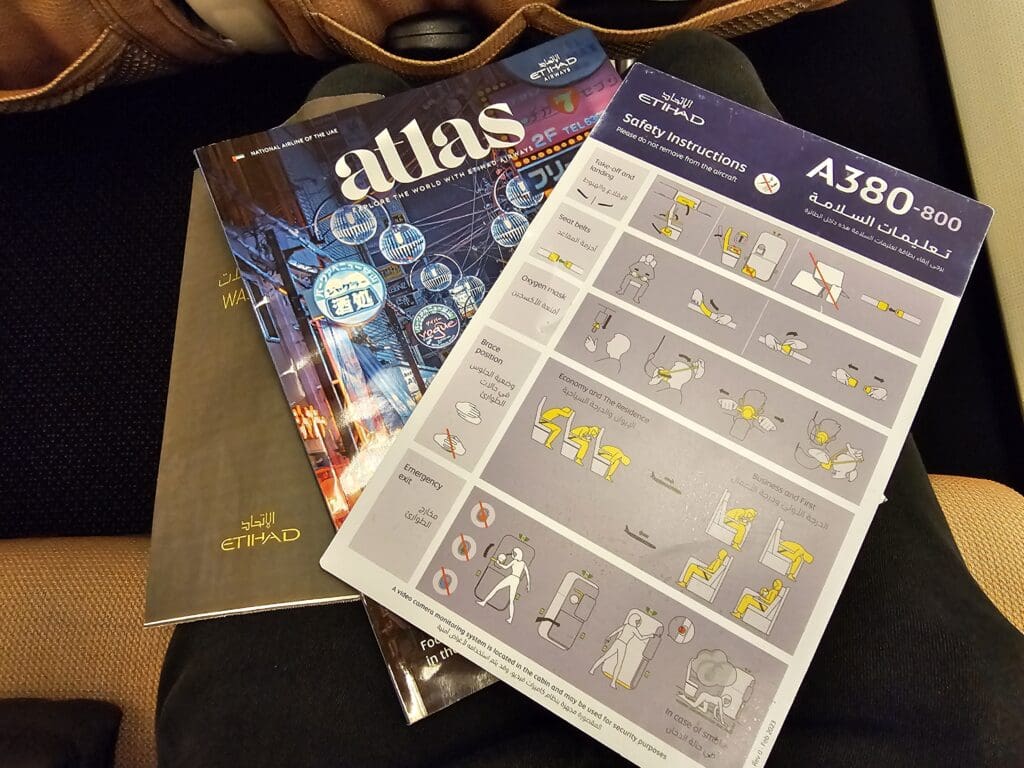
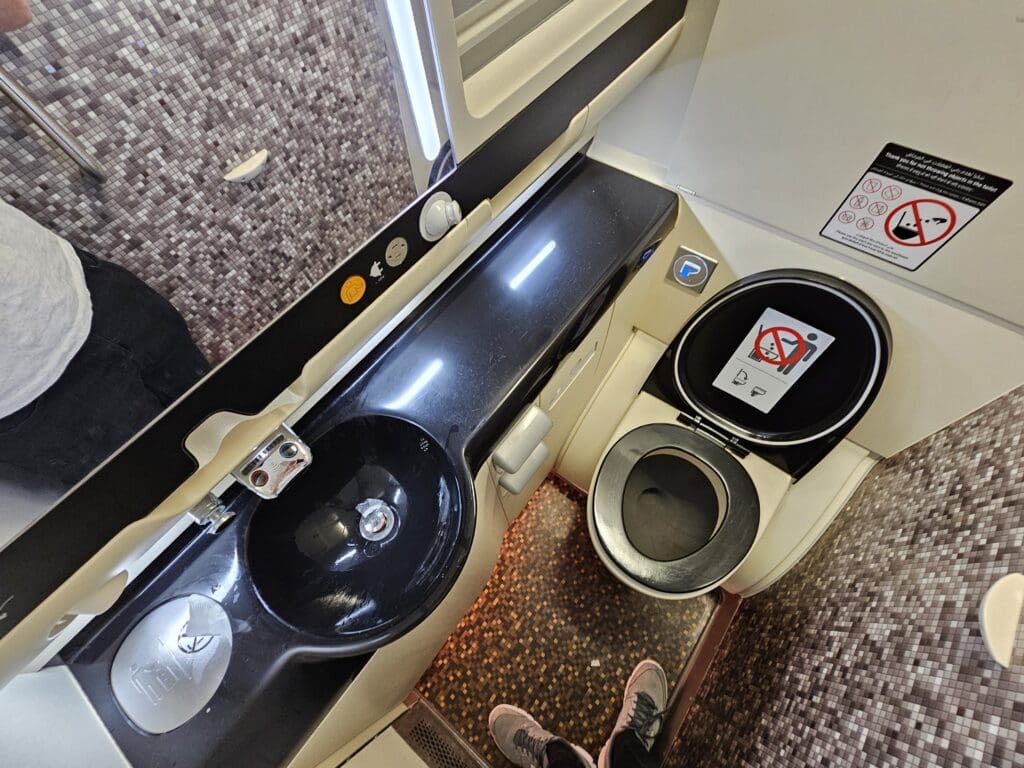
With few passengers in front of me, I arrived at my seat in a matter of seconds. Seeing as I was yet to be joined by any neighbours, once I had stowed my back in the Airbus’ large overhead lockers, I decided to make a pre-departure lavatory trip to one of the ten lavatories available to those in Economy. Onboard, there are 41.7 Economy passengers to a lavatory, a fairly standard ratio for a widebody jet. Visiting one of the two lavatories on either side of the main deck’s forward galley, upon opening this up, I found the lavatory to be spacious, and somewhat unique in its design thanks to a fair amount of black plastic panelling, appearing to have been significantly customised by Etihad Airways. Importantly, this was clean, tidy and stocked with the basics, thereby leaving me with no complaints.
Soon, I returned to my seat, plonked myself down and settled in for the overnight journey ahead. Once there, my first impressions of the seat and the area around this were very good. Firstly, the seat was spacious, soft and comfortable, whilst this was spotlessly clean and I failed to spot any notable signs of wear and tear. Seeing as I am not a particularly frequent Airbus A380 passenger, with this being my first ride on the type since flying onboard a British Airways Airbus A380 from London Heathrow to Frankfurt back in 2021, I had forgotten just how high the type’s passenger service units are compared to other aircraft types, as well as the noticeable gap between the inner and outer window panes which can make photography on the Airbus A380 a little challenging.
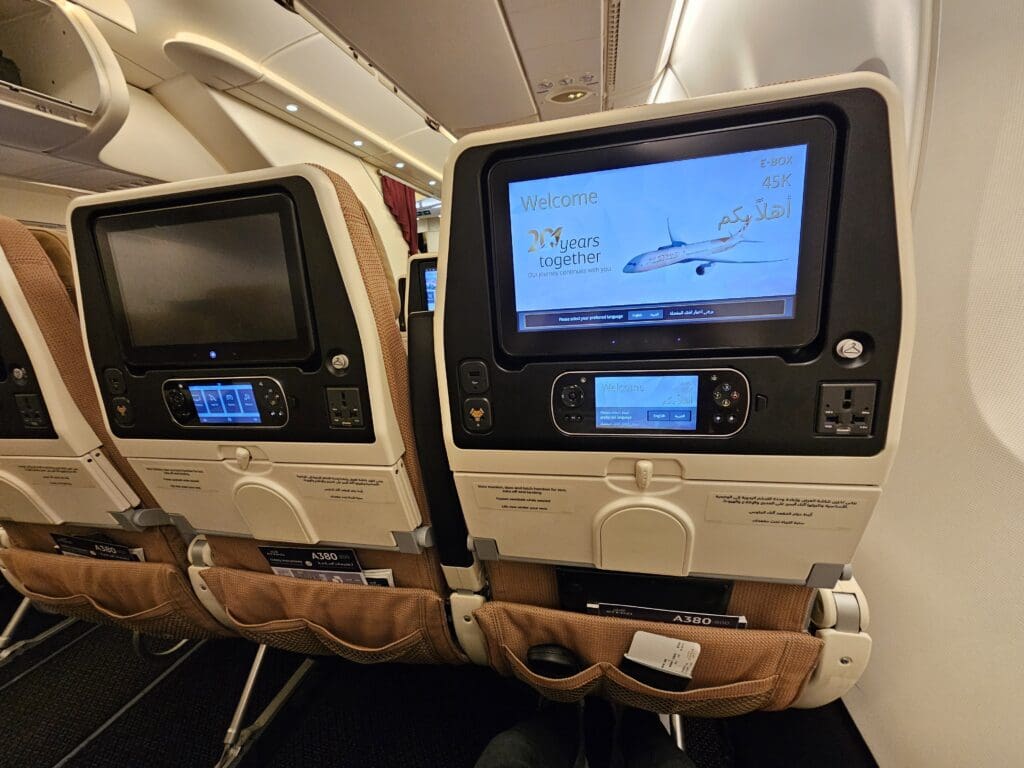
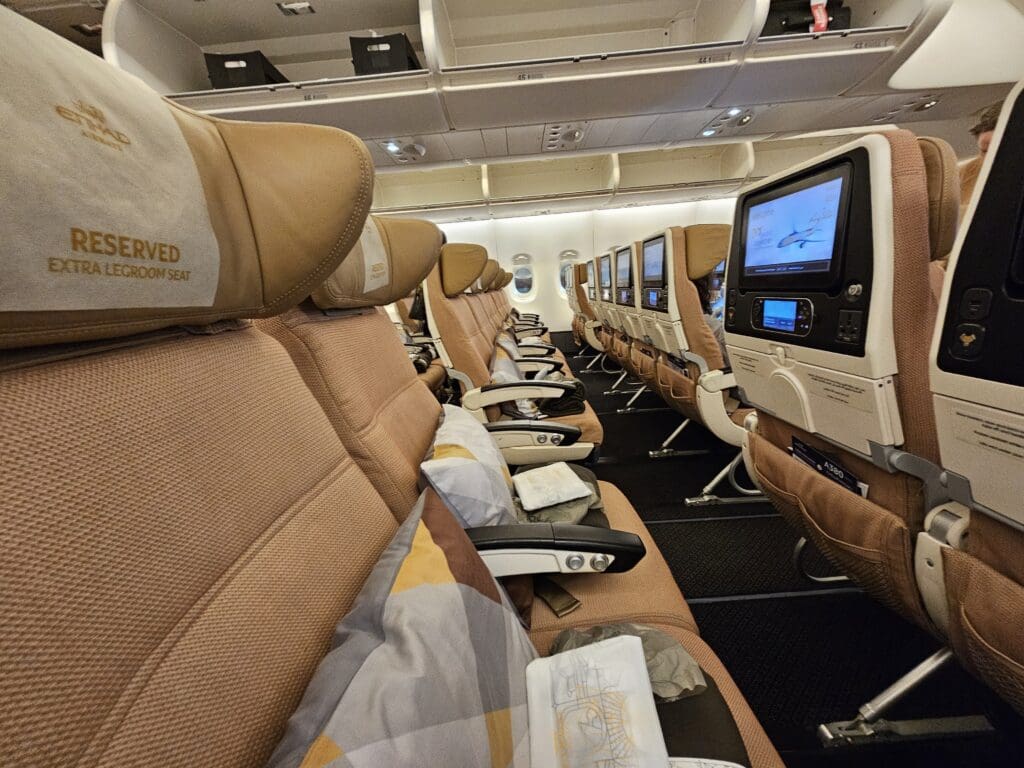
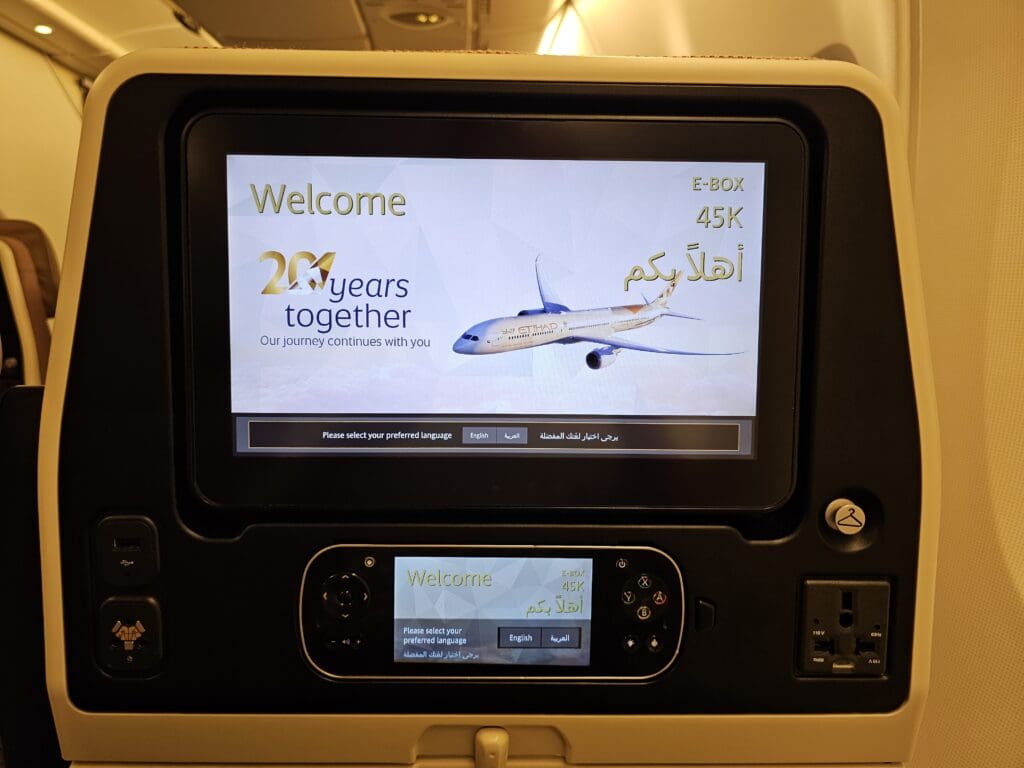
As passengers filtered onto the aircraft, Etihad Airways’ calming boarding music rang out through the cabin which consisted of a fusion of varying styles with a suitably heavy influence of traditional Emirati music. Soon, I was joined by both a middle and aisle seat occupier and it didn’t take too long for the entire aircraft to be filled, however, with plenty of families travelling, many of whom seemed to have heaps of hand luggage in tow, it seemed to take a fair amount of time for passengers to get seated and settled. Focusing on the demographics, being the start of the school holidays, there appeared to be plenty of British-South Asian and Filipino families, presumably connecting onwards to Manila and destinations across Etihad Airways’ South Asian route network. Meanwhile, there also seemed to be plenty of Australian solo flyers, presumably heading back Down Under to spend Christmas with family and friends.
With twelve minutes to go until our scheduled departure time, boarding was announced as complete at which point the Canadian-accented Captain performed their welcome announcement. This informed passengers of the 6H05 flight time and the weather in Abu Dhabi before promising to update us with updated information before our arrival in the United Arab Emirates. This was then repeated by a longer announcement from an Arabic-speaking crew member, who also performed their own welcome announcement before the Romanian Cabin Manager undertook their long welcome announcement in English. Once this long slew of announcements had come to an end, the inflight entertainment screens were locked and Etihad Airways’ safety video was broadcast. Released in 2021 in partnership with the Louvre Abu Dhabi, this consists of various crew members going through the safety instructions in the gallery’s unique surroundings and was broadcast in English and Arabic, accompanied by subtitles in both languages. Lasting about eight minutes, this ended with an advertisement for the government’s foreign aid agency, the Abu Dhabi Fund for Development.
By the time these videos had come to an end, we reached our scheduled departure time although there was still no sign of any movement. Having a look outside via the three external cameras accessible via the inflight entertainment system, these revealed that the jetbridges had all been removed and the tug was connected ready to push the Airbus back from its parking position. Ten minutes after our scheduled departure time, the Captain announced that owing to the high volume of departing traffic, our departure had been delayed and we could expect to be pushed back within ten minutes. True to this, at 2106 gently jolted backwards and was pushed back away from the gate. As we journeyed rearwards, the Airbus’ four massive Engine Alliance GP7270 engines quietly spooled into life, failing to create much by way of noise or vibration as they hummed in preparation for our journey over to the Middle East.
After a few minutes, the tug was disconnected and with all four engines having spooled up, the flaps could be heard whining into position in preparation for our departure. That evening, Runway 27R was in use for all departing aircraft and so after leaving Terminal 4 behind, the aircraft darted over Runway 27L in between arriving aircraft and cautiously made its way over to the runway. Sitting on the right-hand side of the aircraft, during this journey, I was treated to views of British Airways and Virgin Atlantic’s maintenance hangars, although unusually, few aircraft could be seen there. Not too long after we left the terminal behind, the Airbus came to a halt as it joined the take-off queue. Whilst waiting, a total of five Airbus A320s rocketed off ahead of us in addition to the two-hour delayed Etihad Airways Boeing 787-9 Dreamliner that was of course also bound for Abu Dhabi.
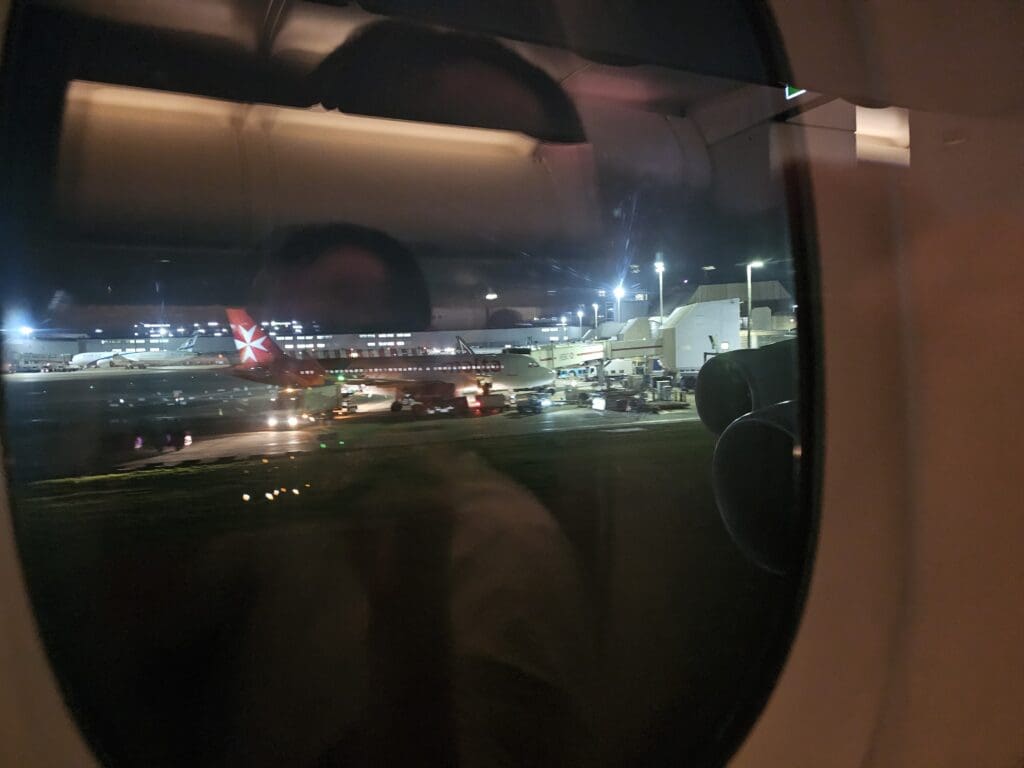
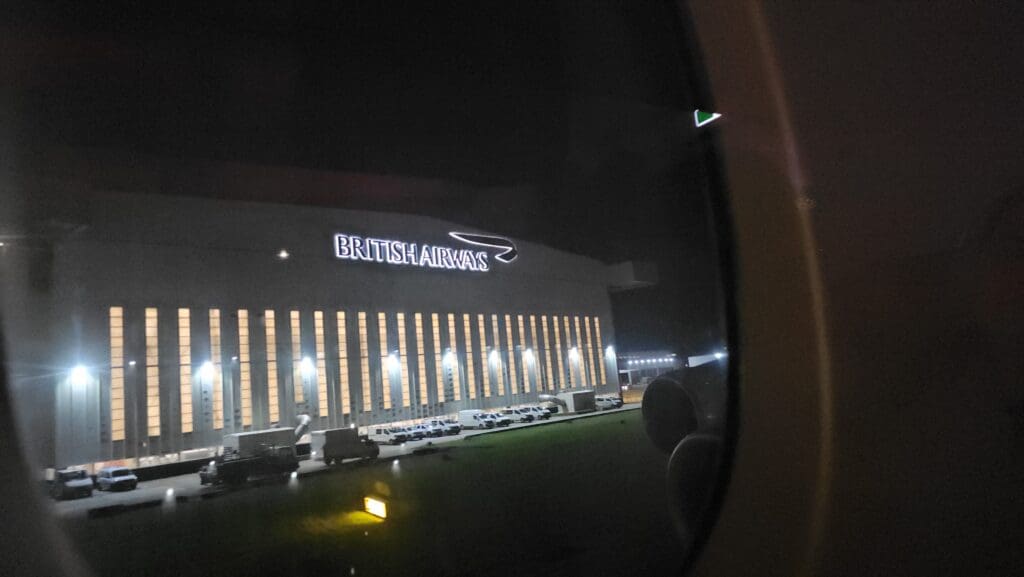
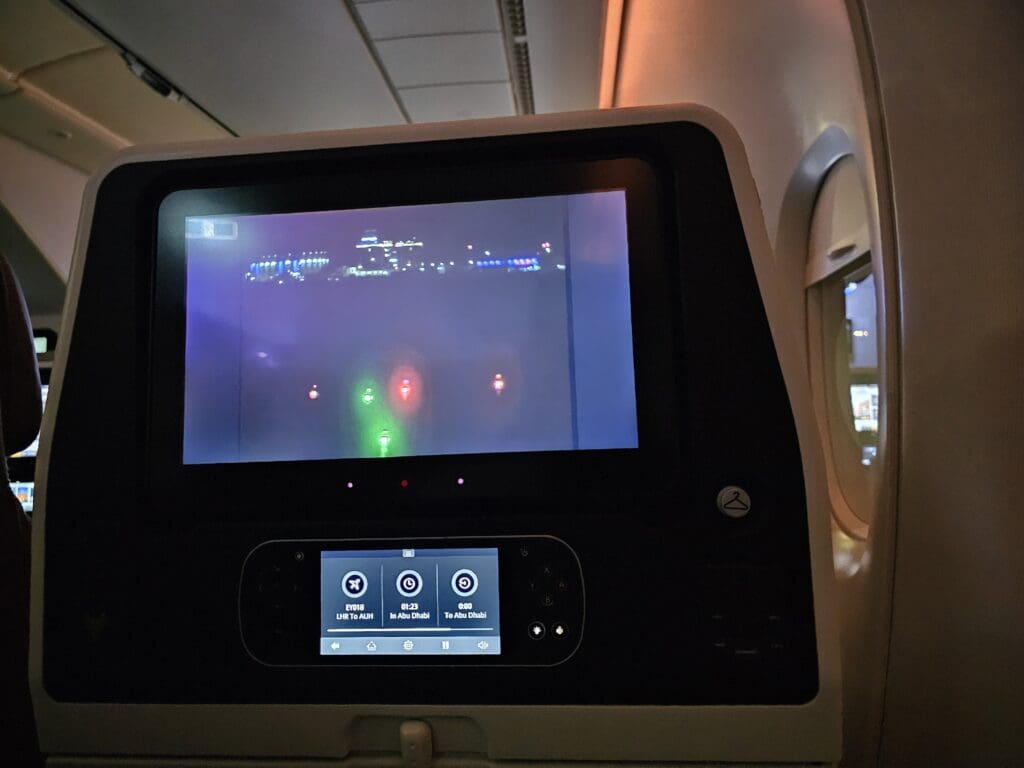
Eventually, at 2131, the Airbus lumbered onto the runway, and without pausing, take-off thrust was set and we began to accelerate. As seems to be the norm for the Airbus A380, our take-off roll proved to be a fairly calm and gentle affair, and we travelled a fair distance down the runway before rotating upwards into the clear and crisp skies of Southern England. Within a few moments, the gear could be heard being retracted into the fuselage and the Airbus gently soared over the perimeter fence as we left the sprawl of Heathrow Airport behind. After passing over the busy M25 motorway, the Airbus banked to the left, and like many flights from London Heathrow to the Middle East, we undertook a DET2F Standard Instrument Department. This took the aircraft roughly anticlockwise around the M25 motorway as it loops around London, passing the likes of towns in the capital’s commuter belt such as Epsom, Woking, Cobham, Leatherhead, Caterham and Sevenoaks could be seen, as we climbed over the counties of Surrey and Kent.
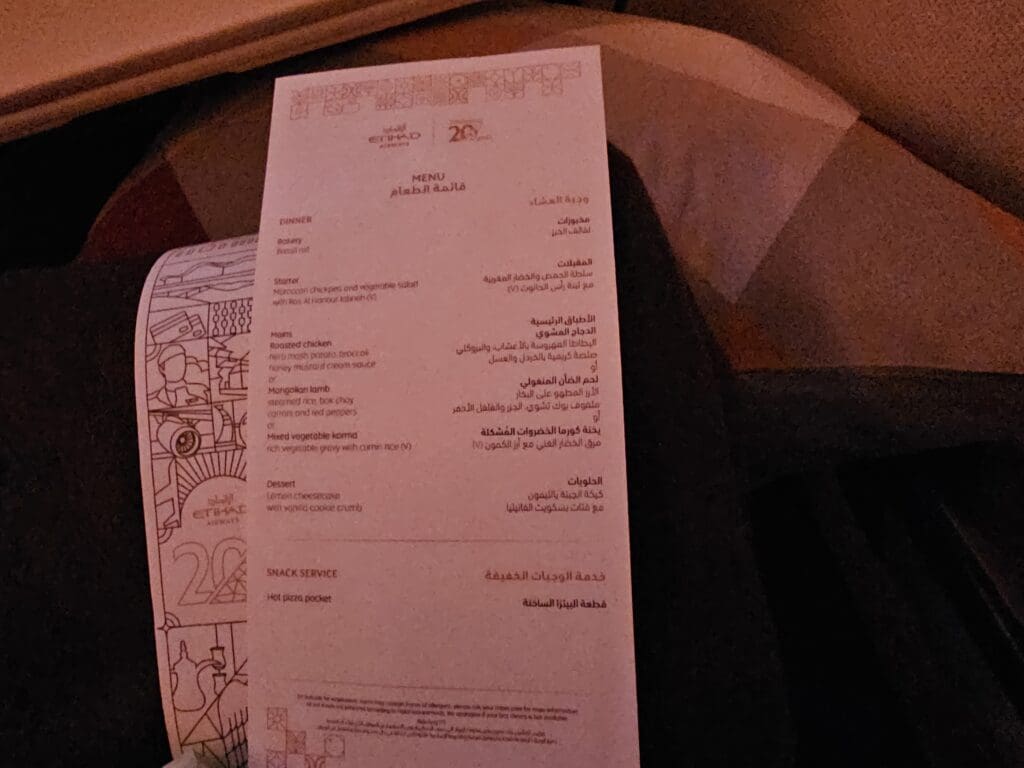
With good weather lingering across Southeastern England that night, our climb out of Heathrow ending up being silky smooth enabling the crew to be released from their seats at the earliest possible opportunity. A few short minutes after departure as the Airbus climbed through 10,000 feet, a ding could be heard as the seatbelt signs were extinguished. Once up and moving about, the first task for those crew members assigned to the Economy section involved handing out menus to passengers. Unlike on my previous ride with Etihad Airways from Rome, I was delighted to find that all passengers were handed out real paper menus, detailing all food and drink options onboard. As is the case on most flights between London and the Gulf States, a full meal and a snack were to be served. Despite our post-dinner departure time, the former was to consist of a post-departure dinner rather than a pre-arrival breakfast. For dinner, passengers could pick from one of three options: roast chicken, Mongolian lamb or a vegetable korma, whilst a pizza slice would be served prior to our arrival.
Returning to the route, no more than fifteen minutes after taking the skies, the aircraft neared the coastline and passed in between the Kent seaside towns of Deal and Margate before we left the shores of Britain behind. From there, the aircraft sped towards the Belgian coastline and passed just to the south of the city of Ostend around seven minutes after leaving Britain. From there, the aircraft trundled across Belgium from west to east, soon levelling off at 39,000 feet where we would remain until we commenced our descent. Far below, the lights of Ghent, Brussels, Leuven and Liège sped past before the Airbus made its way into the skies of the German state of Rhineland-Palatinate.
As we cruised high above the border between Belgium and Germany, the scent of warming food wafted through the cabin and indicated that the dinner service would soon commence. However, with this appearing to be undertaken from the rear of the aircraft, and given the fact that the aircraft was virtually full, it took quite some time for the crew to make it to the forwardmost section of the main deck. This gave me plenty of time to examine the options as flew across Germany. From the Belgian border, the Airbus flew southeastwards, passing just to the south of Darmstadt, Frankfurt and Mainz, and to the north of Heidelberg and Mannheim. From there, we spent a very short time crossing the northern tip of Baden-Württemberg, before heading out over Bavaria where we passed to the south of Nuremberg before following the course of both the Danube and the Bundesautobahn 3 as it cuts through the German countryside on its way to the border with Central Europe.
Almost forty minutes after leaving Belgium behind, the aircraft made its way into the skies of Austria and passed the city of Linz, where I visited the previous year in order to bag a ride on the rare McDonnell Douglas MD-80! Eventually, at 2240 Greenwich Mean Time, the service cart entered the forwardmost cabin and soon one of the flight attendants manning this reached my row and said “Meal?” in a disappointingly cold and brash manner. Thankfully, despite being in the last cohort of passengers to be served, all options were still available and I decided to go for the Mongolian lamb. After a few moments, the second flight attendant asked me for my choice of drink in an equally cool manner, and despite the fairly expansive list of drinks available, I decided to pair this with an orange juice plain and simple.
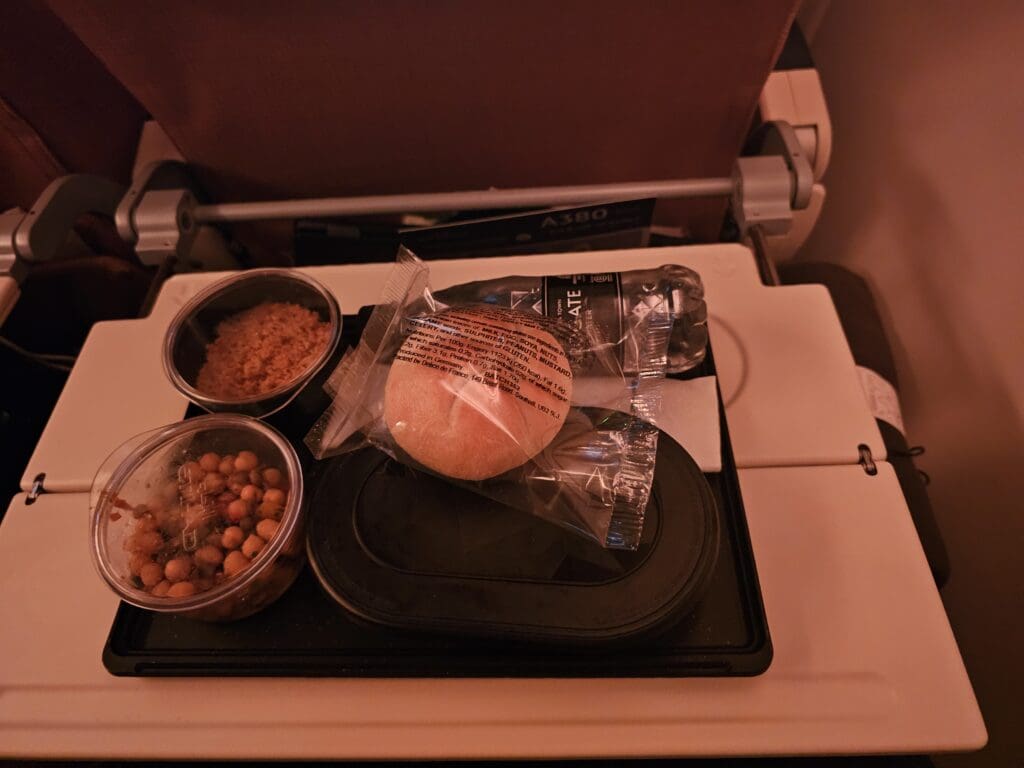
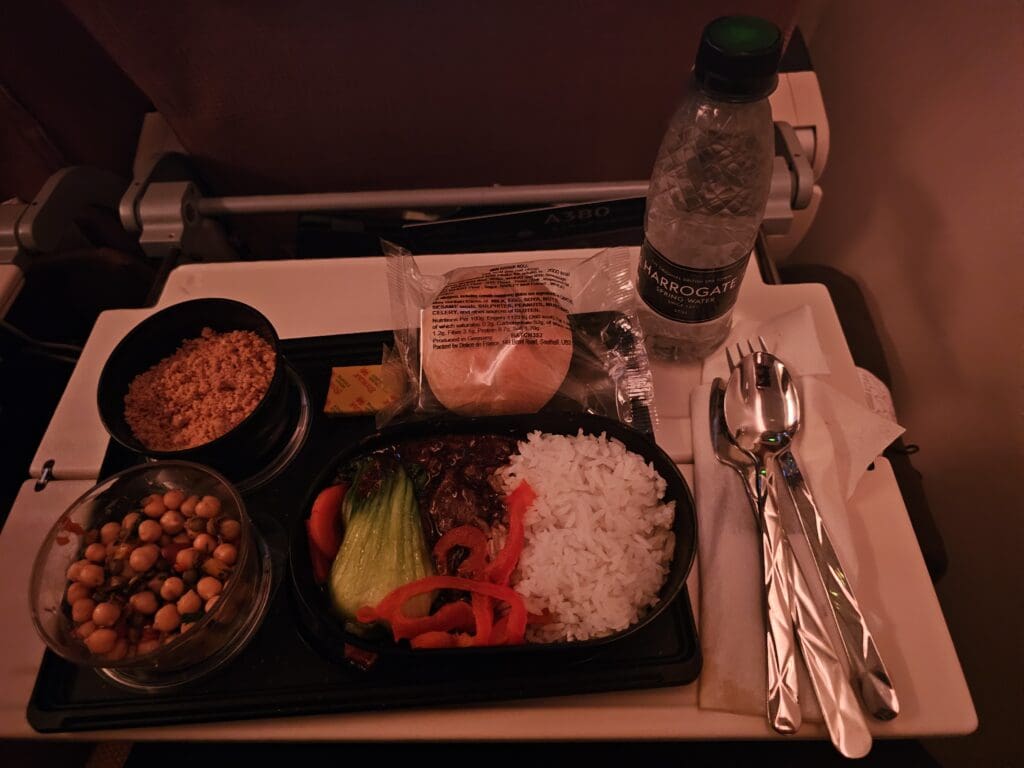
Without dwelling too much on the poor level of service, I soon got to work on this rather late dinner. This consisted of the main dish, a Moroccan chickpea and vegetable salad, a bread roll and butter, and a lemon cheesecake dessert, accompanied by a 250ml bottle of still Harrogate Spring water. Adding a welcome touch of sophistication, eating utensils came in the form of some very nicely designed metal cutlery. Other than the manner in which the meals had been distributed, this service left me with no complaints and I found the meal to be of good quality and sufficient quantity given the duration of the flight. As it happened, I was served just at the right moment as a few minutes later the aircraft hit a patch of turbulence that warranted the reillumination of the seatbelt signs before becoming a little more severe at which point the crew were requested to take their seats and the service for the very final passengers was halted. As we bounced around high above Hungary, the crew performed multiple announcements in Arabic and English, apologising for the disruption to the service and advised that this would recommence as soon as it was safe to do so.
Returning to the route, the Airbus cruised just to the west of Vienna and passed directly over the city of Wiener Neustadt, famous amongst other things for being the home of aircraft manufacturer Diamond Aircraft Industries. After a total of twelve minutes spent in the skies of Austria the aircraft entered Hungarian airspace and headed south, cutting across the far west of the country over Transdanubia. Once past the city of Pécs, the aircraft crossed over into Serbian airspace and continued heading southwards down the Balkans. Given the clear skies in this part of the world that evening, I was treated to good views of the city lights of Novi Sad and Belgrade. From there, the aircraft sliced across Bulgaria, taking a total of twenty minutes to trundle across the country before entering the skies of Turkey near the border city of Edirne.
Once past Istanbul, the seatbelt signs were extinguished at which point the crew jumped up and began to collect passengers’ empty trays. As soon as this had been completed, the lights were turned off and many of those around me drifted off to sleep. Seeing as my neighbours had stood up to make a midflight toilet break, I decided to follow suit and found that the toilet remained in a reasonably good condition, although this was perhaps unsurprising given the fact that the meal service and turbulence would have limited passengers’ opportunities to use these. Once back in my seat, I managed to drift off to sleep for a solid twenty minutes before waking up as we passed the Turkish capital city, Ankara. Continuing southeast across the massive expanse of the country, the Airbus flew high above the regions of Central, Eastern and Southeastern Anatolia, passing close to the likes of Malatya, Diyarbakir, Batman and Siirt. Whilst this route would have offered a superb view of the tall mountains of Turkey’s far southeastern corner, given the time, little could be seen other than the orange glow of occasional passing towns.
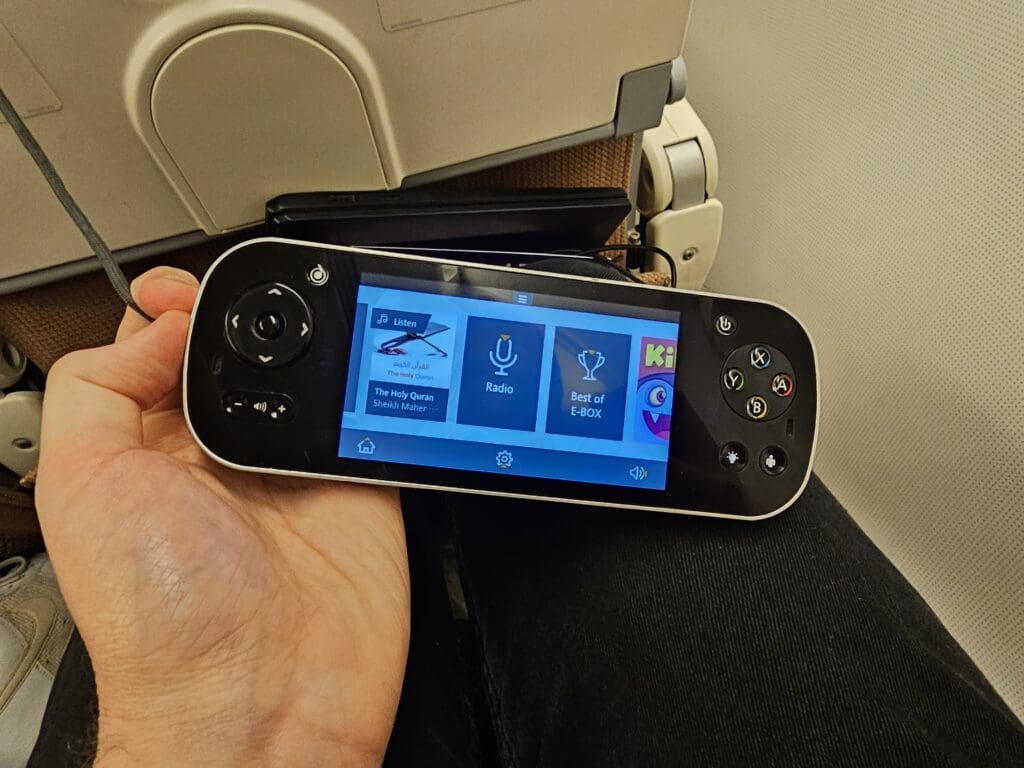
With little to see outside and unable to get back to sleep, I decided that it was an opportune moment to explore Etihad Airways’ E-Box entertainment system. Despite being an airline with an expansive route network and global reach, this system is offered in just two languages, Arabic and English. However, other than this, I was left with very little to complain about, and I found the system to be laid out in a modern yet not too overly complicated manner, with the screen being responsive to touch and quick to transition between pages. Additionally, as is slowly becoming more common, the inflight entertainment system allows passengers to share video content with other seats, enabling two passengers to watch the same content at the same time on two different screens.
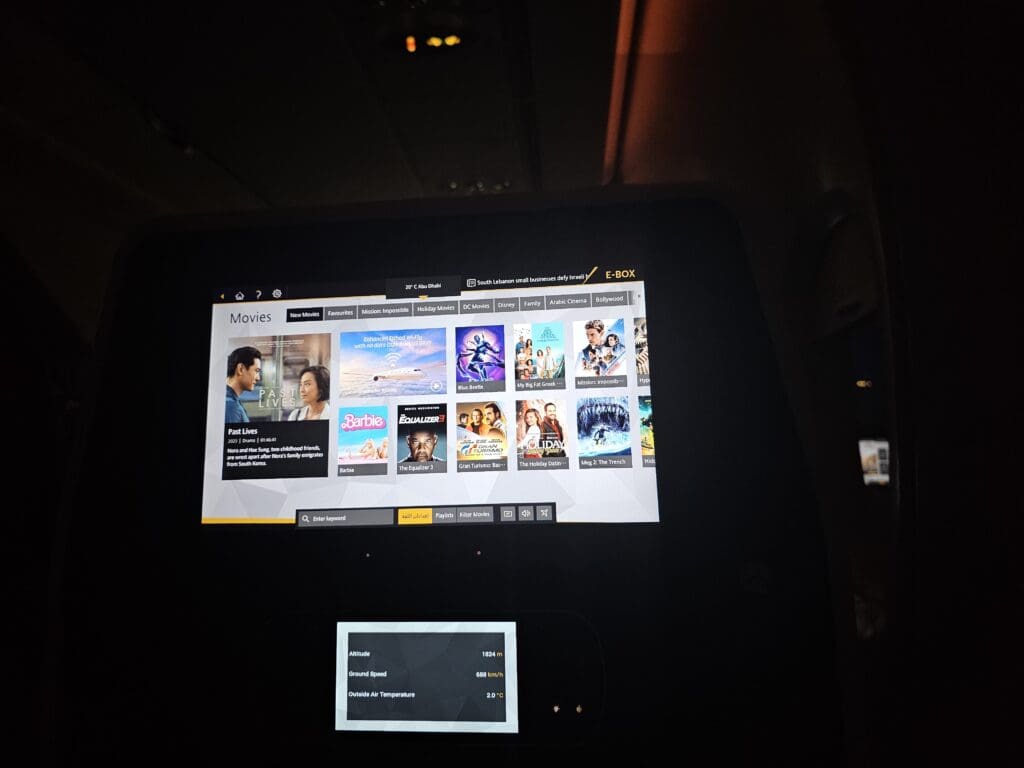
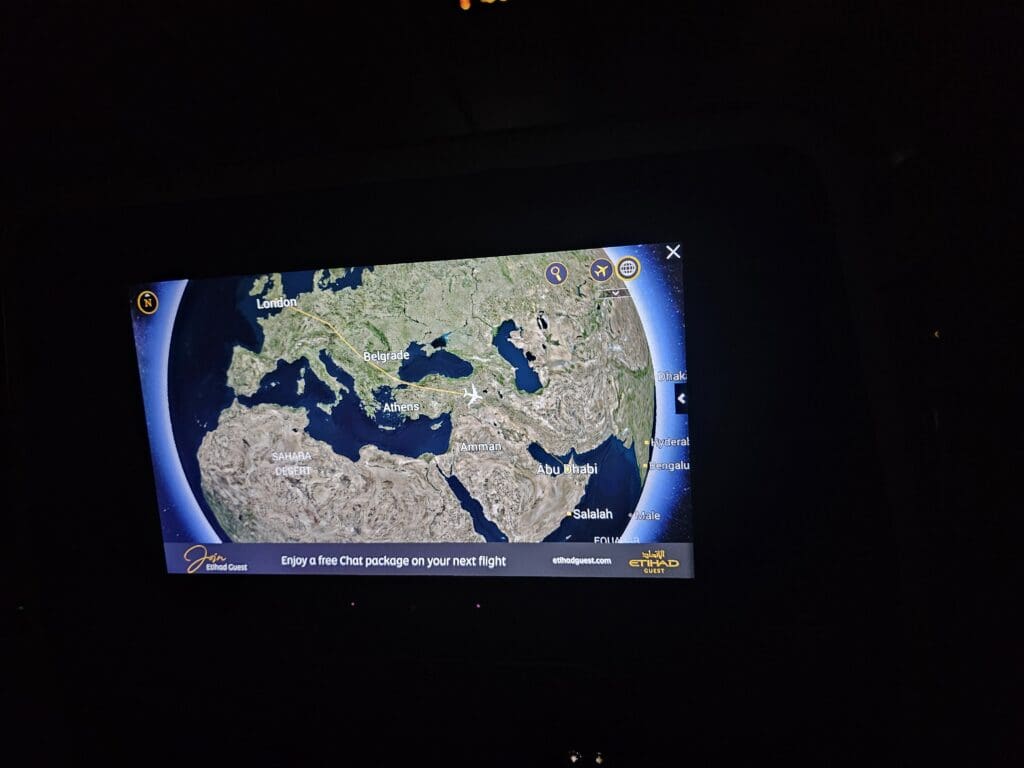
When it comes to content, those flying with Etihad Airways can choose from a massive array of over 490 television programmes, 280 films and 680 albums. These come in addition to 15 radio channels, 7 live television channels (BBC News, CNBC, CNN, NHK World Premium, Sky News Arabic, Sport24 Extra and Sport24 Live) and 25 games. Focusing on the films, whilst many of these took the form of Hollywood productions both old and new, films from a decent number of other countries could also be found – with a reasonable number of Arabic language, Bollywood and Korean films. Meanwhile, for those not wanting to watch or listen to anything, the system also provides a live news stream and plenty of information about the airline and its destinations.
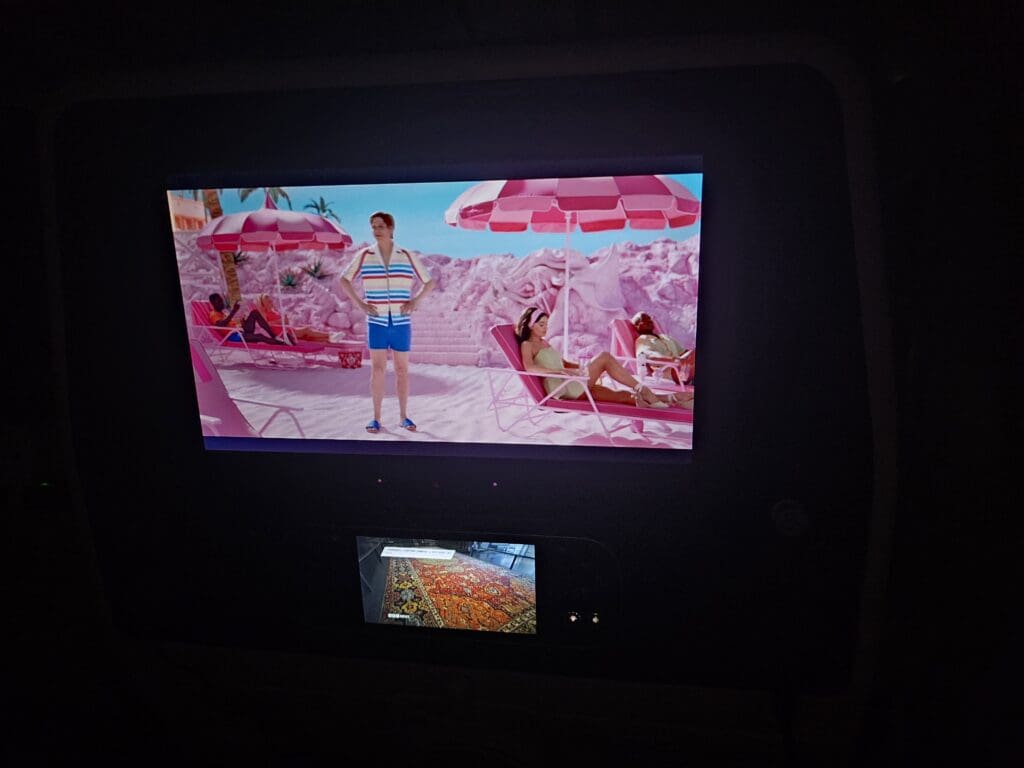
Turning to the remote control, this was essentially a miniature version of the inflight entertainment screen and rather ingeniously enabled passengers to watch two things at once. For example, if needing to keep up to date with the world, you could watch a film on your main screen whilst broadcasting a live news channel beneath this – albeit without sound. Whilst having no real intention of watching anything, I decided to start playing one of the newest films on the system, Barbie, released five months before my flight. This commenced with advertisements for Aldar Properties and the Gran Turismo film, although these could be skipped.
In addition to its E-Box inflight entertainment system, Etihad Airways also offers wifi, or Wi-Fly as they call it. Those who are members of the Etihad Guest loyalty program are provided with free messaging services which I found to work well for most of the flight. Meanwhile, those needing to stay connected to the world could part with $9.99 (or 1200 Etihad Guest miles) to use the internet for the duration of the flight. Meanwhile, all passengers could use the Wi-Fly network to read the latest news, see information about the flight, discover more about Abu Dhabi and the airline, or browse a selection of eighteen magazines on the E-library. Overall, I found the entertainment offered and the additional features of the system to be fantastic, so top marks to Etihad Airways in this regard! Last but not least, that month’s edition of the Atlas magazine seemed to be of decent quality, offering a selection of articles in both Arabic and English on a selection of items, albeit with the usual smorgasbord of advertisements peppered throughout.
After almost an hour and a half in the skies of Turkey, passing from its northwest to southeastern corner, the aircraft made its way into the skies of Iraqi Kurdistan. Looking outside, it wasn’t long before the bright lights of the region’s capital, Erbil, appeared below. Up above, an impressive array of bright stars could be seen whilst lower down, for the entire time we were in Iraqi airspace, the lights of aircraft were easily spotted heading in both the same and opposite directions, highlighting the busyness of this patch of sky. Whilst I did not count the number of aircraft that I spotted, I suspect that I saw at least thirty passing aircraft in the skies over Iraq that night, of these, most were trundling between Europe and the Gulf States.
Not long after passing the city of Kirkuk and as we neared Baghdad, the mood lighting was turned on to its orange glow setting no more than two hours after the cabin lights had been turned off. At this time, the scent of warming food once again wafted through the cabin and as we neared Basra in Iraq’s far south, the crew took to the aisles and began the quick distribution of the second meal service of the flight. With this being a relatively short overnight flight, many may suggest that this second meal service was not needed. Furthermore, given the fact that the flight was scheduled to arrive in Abu Dhabi at 0755, it would have been far more appropriate and appealing for this second service to consist of a light breakfast. Or perhaps for a full breakfast to be served as the main meal, with a pizza slice or similar served after departure considering that many will have eaten before boarding.
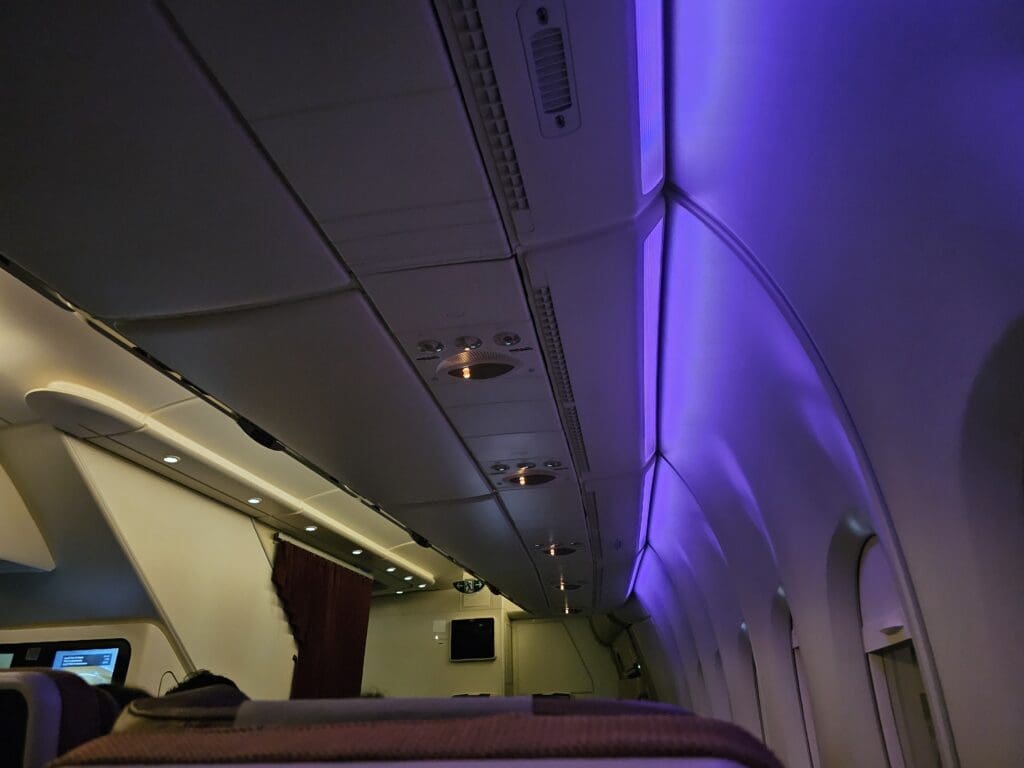
Soon, at around 0210 Greenwich Mean Time or 0610 UAE time, I was handed a reusable plastic basket which contained a cardboard box with a warm slab of Margherita pizza and a small container containing a Lily O’Brien’s lemon cheesecake. Unsurprisingly, many passengers were either still asleep or decided to pass on this second offering. Seeing as I had had dinner just over three hours earlier, I was still rather full yet seeking to get the full Etihad Airways experience, I decided to be greedy and partake in this meal service. Once again, I found the crew member handing these out to be rather cold and brash, although, to my delight, the crew member responsible for drinks was a lot friendlier. Opting for an Arabic coffee, they thoughtfully warned me that this was not a ‘real’ one and instead came from a sachet. Coincidentally I had received the exact same warning on my last Etihad Airways flight and so I knew exactly what I was getting myself into!
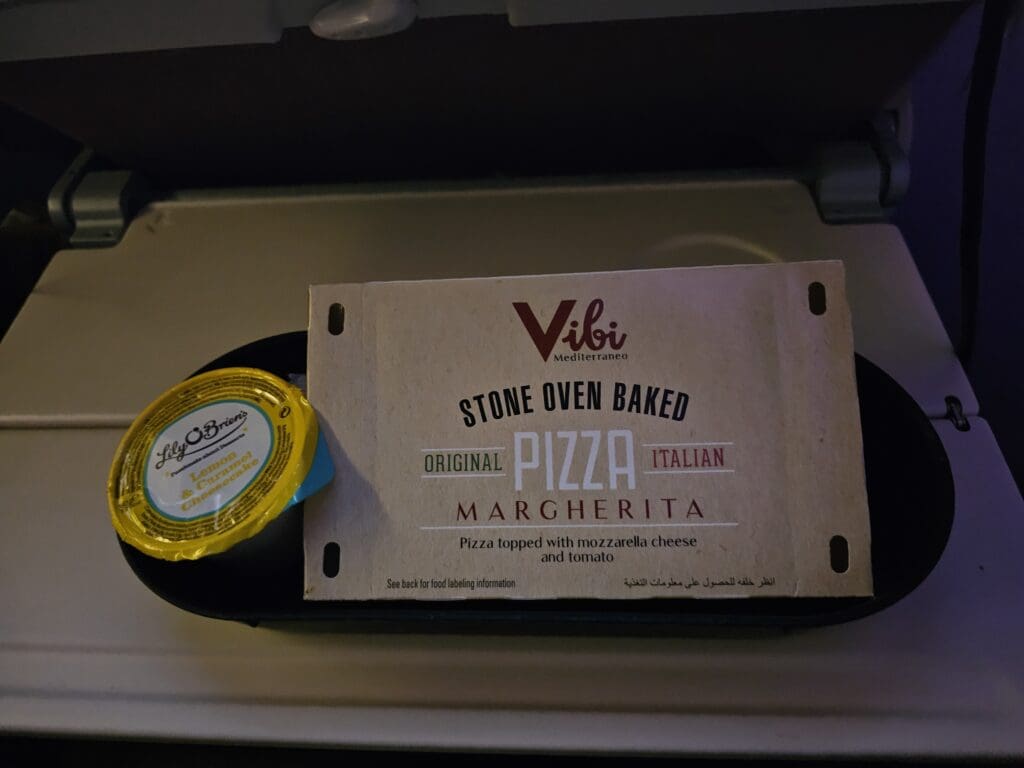

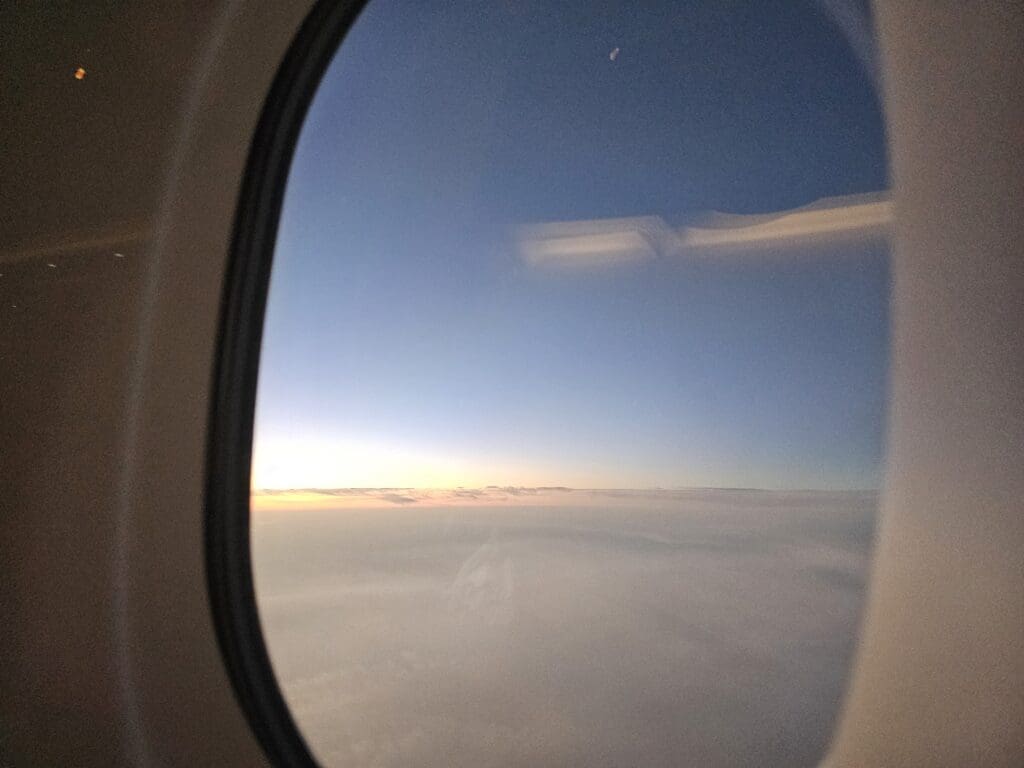
In terms of the quality, the pizza was most certainly nothing special and seemed to be unhealthily greasy, especially given the time of day! However, this was still appreciated and left me with few real complaints. By the time I had finished this, the aircraft had passed through the narrow channel that separates Kuwait from Iran, crossing the shores of Iraq’s very short stretch of coastline and was now cruising over the waters of the Persian Gulf. As we flew parallel to the shores of Saudi Arabia’s Eastern Province, the skies began to brighten ending the short night and heralding the commencement of a new day in the Middle East. At this time, I noticed that a list of connecting flights and their gate numbers was made available on the inflight entertainment system. Whilst this was of no use to me, I found this to be a nice and helpful touch for those heading onwards to destinations across the world – although one that is fairly common on hub-and-spoke airlines.
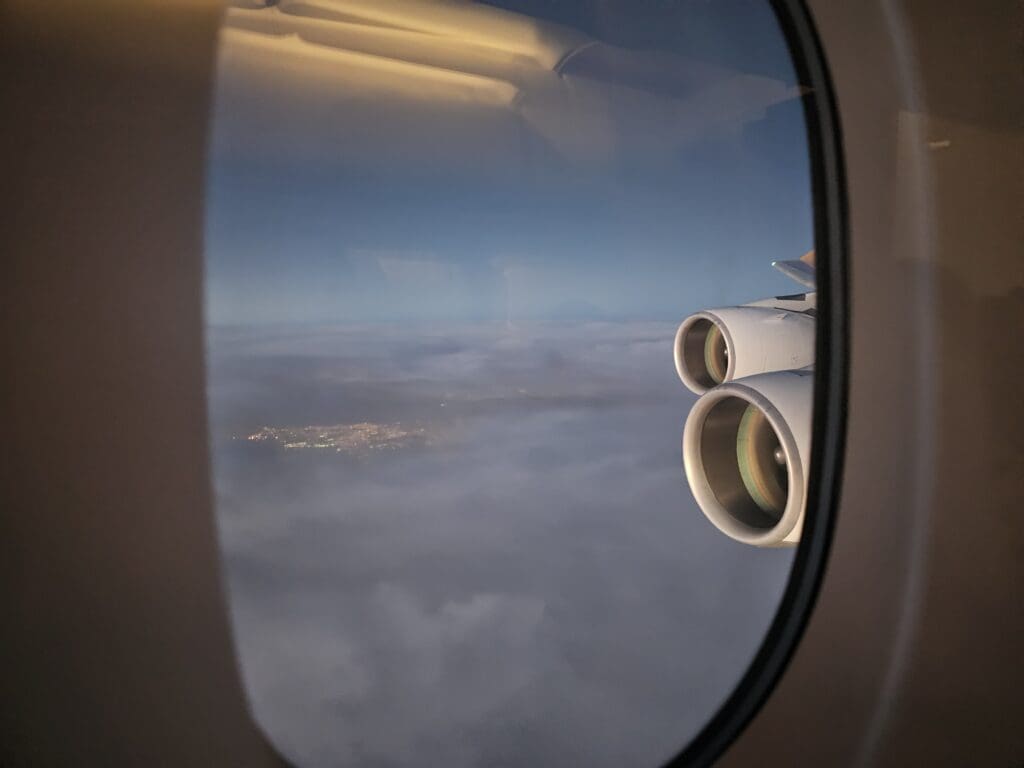
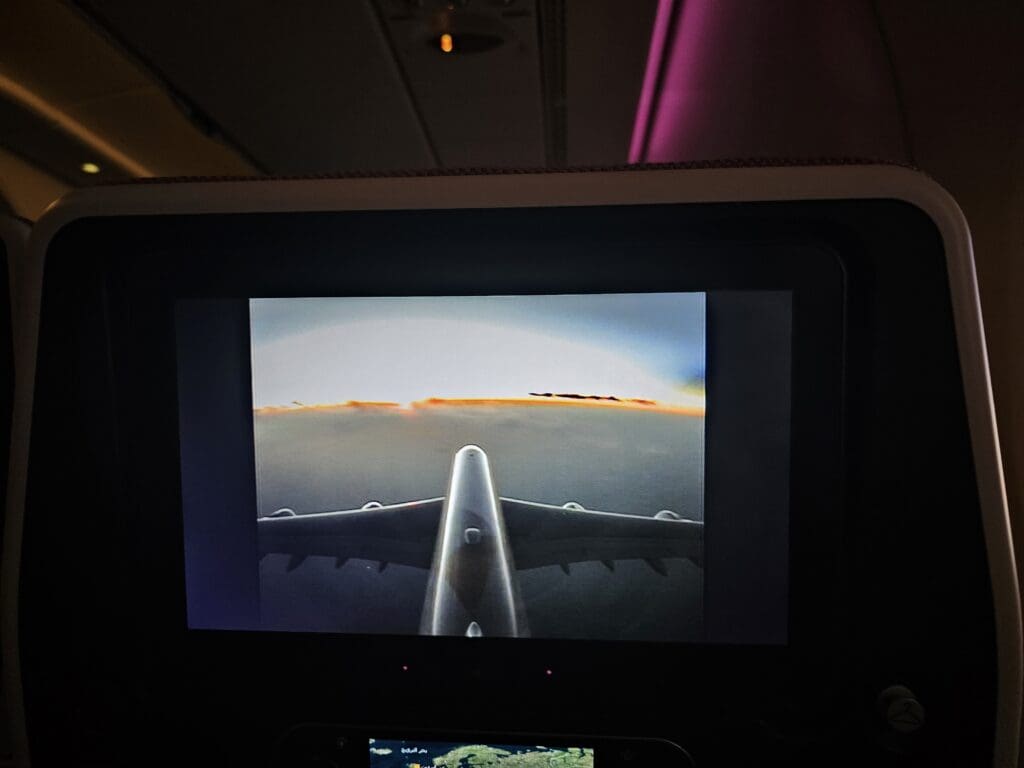
Upon reaching the northern tip of Qatar, the shoreline of the country’s Madinat ash Shamal province appeared at which point the Captain’s voice filled the cabin as they performed another short announcement. During this, the Captain thanked passengers for flying with Etihad Airways and informed us all that we would shortly be commencing our descent into Abu Dhabi, ending this by providing an update on the weather on the ground.
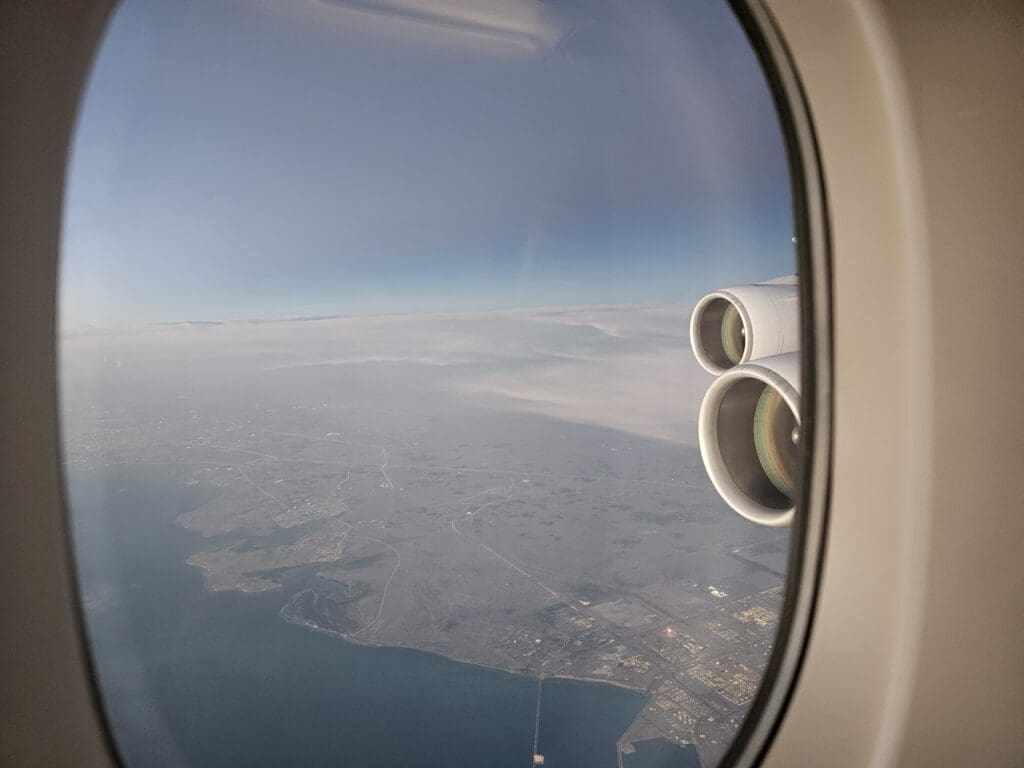
A short time after leaving Qatar behind, the aircraft could be felt gently leaving its cruising altitude at which point the cabin crew soon performed an announcement in Arabic and English which featured the usual pre-arrival warnings and instructions regarding window shades, seatbacks and tray tables. Perhaps wanting to get the cabin ready for our arrival in good time, and with the task likely taking slightly longer than usual given the massive size of the aircraft, the seatbelt signs were soon illuminated and the crew passed through the cabin ensuring all was secure for our arrival. As we sank downwards, an information video regarding the new terminal at Abu Dhabi with instructions for both transit passengers and those ending their journeys in the Emirati capital was broadcast on the inflight entertainment screens. This lasted a few minutes and once this came to an end, the inflight entertainment system could be used once more.
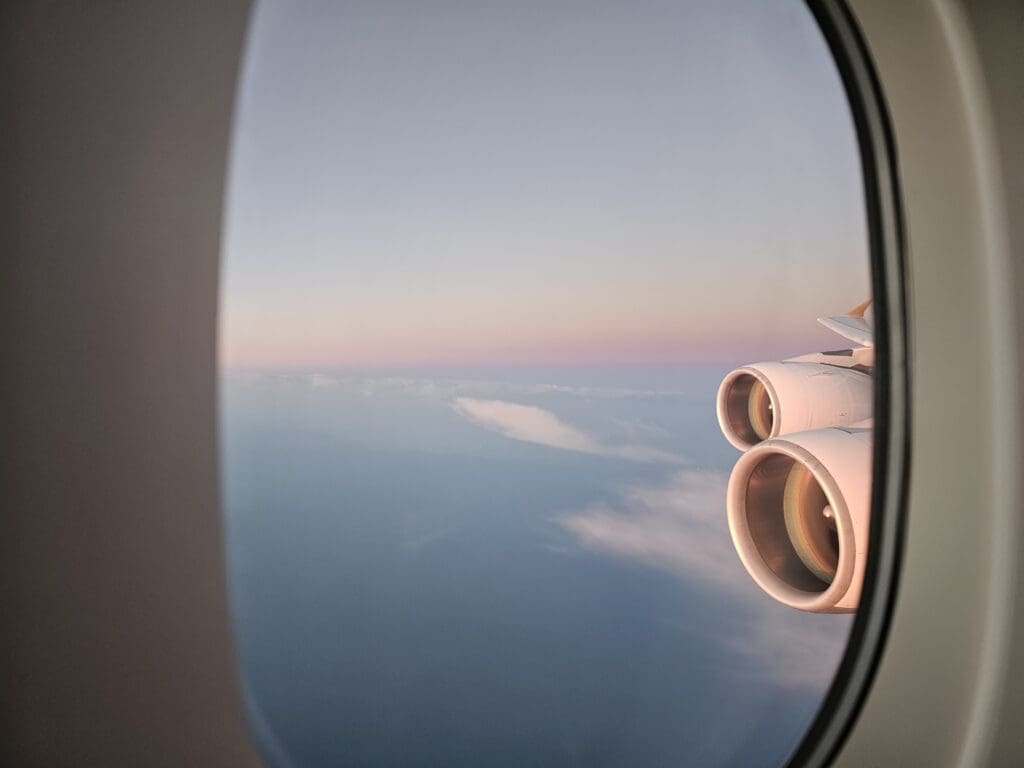
As we sank downwards, suffering from a light cold and unable to clear my ears, unfortunately, I was soon hit by a wall of pain so the descent was somewhat of a blur and I simply wanted to get down and on the ground as soon as possible! However, I did manage to spot the island of Zirku and its airport – part of the Emirate of Abu Dhabi, this is primarily a site for oil refining and is connected to the mainland by Abu Dhabi Aviation’s Dash 8 operated services for oil workers.
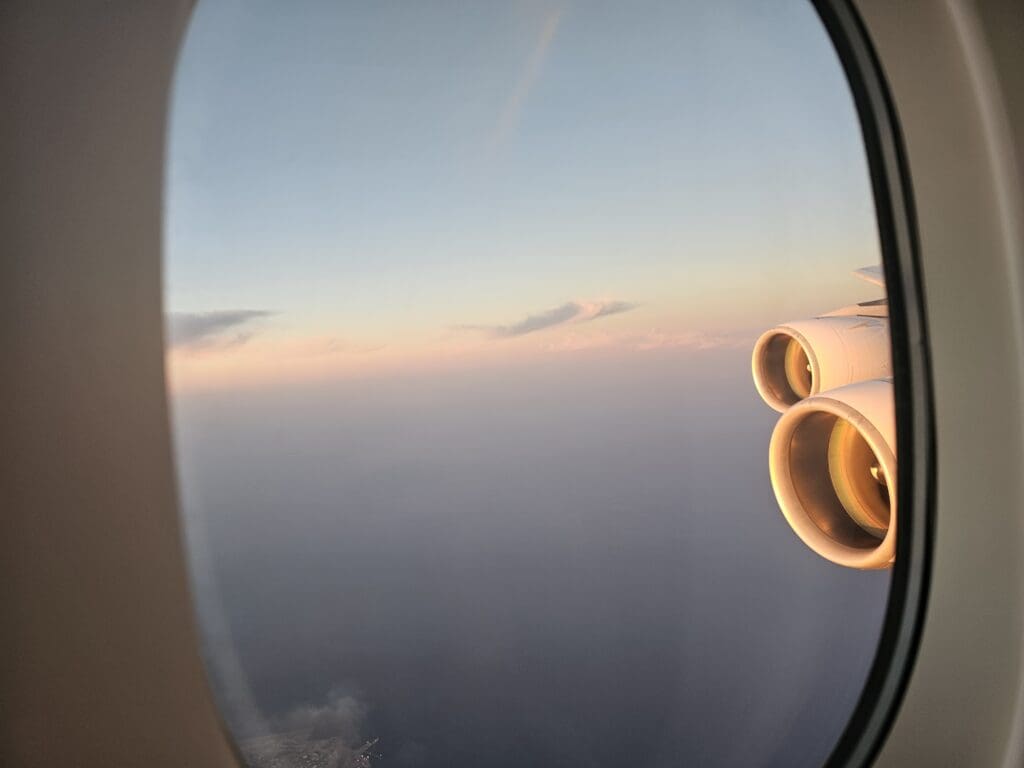
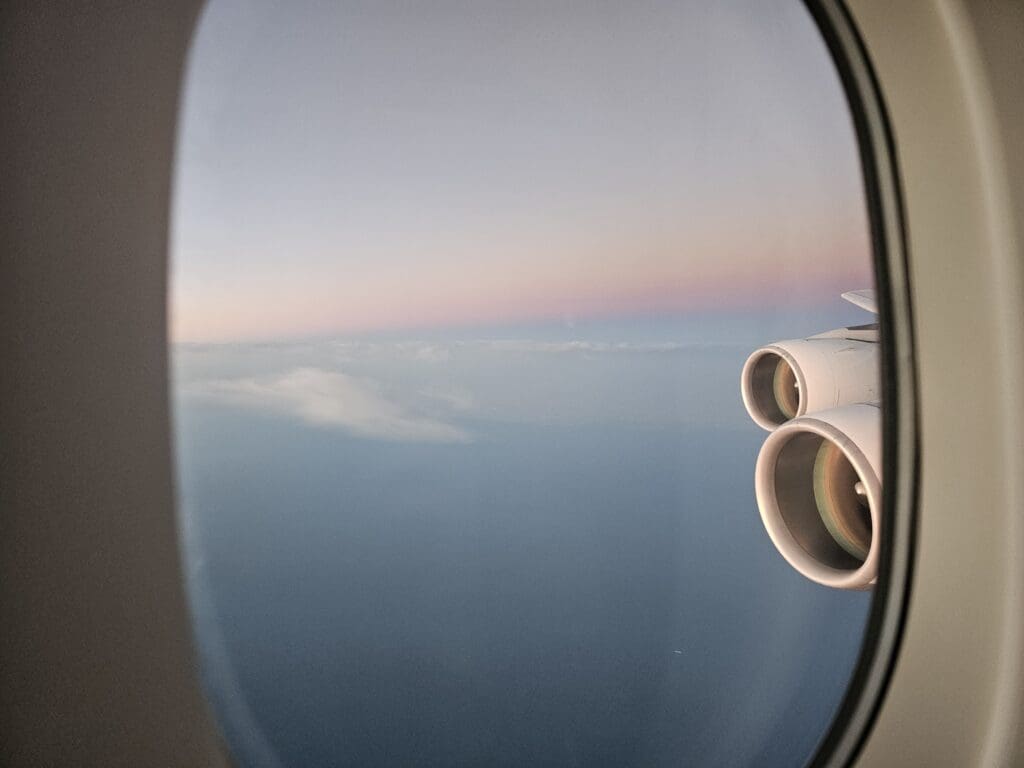
Eventually, the sandy shoreline of Abu Dhabi and the cluster of islands to the south of the city came into view. Soon, the tall buildings of the city’s Corniche and centre could also be seen in the distance through the morning haze. That day, with a light wind blowing from the east, only minimal turning was required to line the aircraft up for an approach to the airport’s Runway 13L. Continuing down over Yas Island, the flaps and landing gear were extended in preparation for our arrival and soon the expansive sight of Ferrari World came into view.
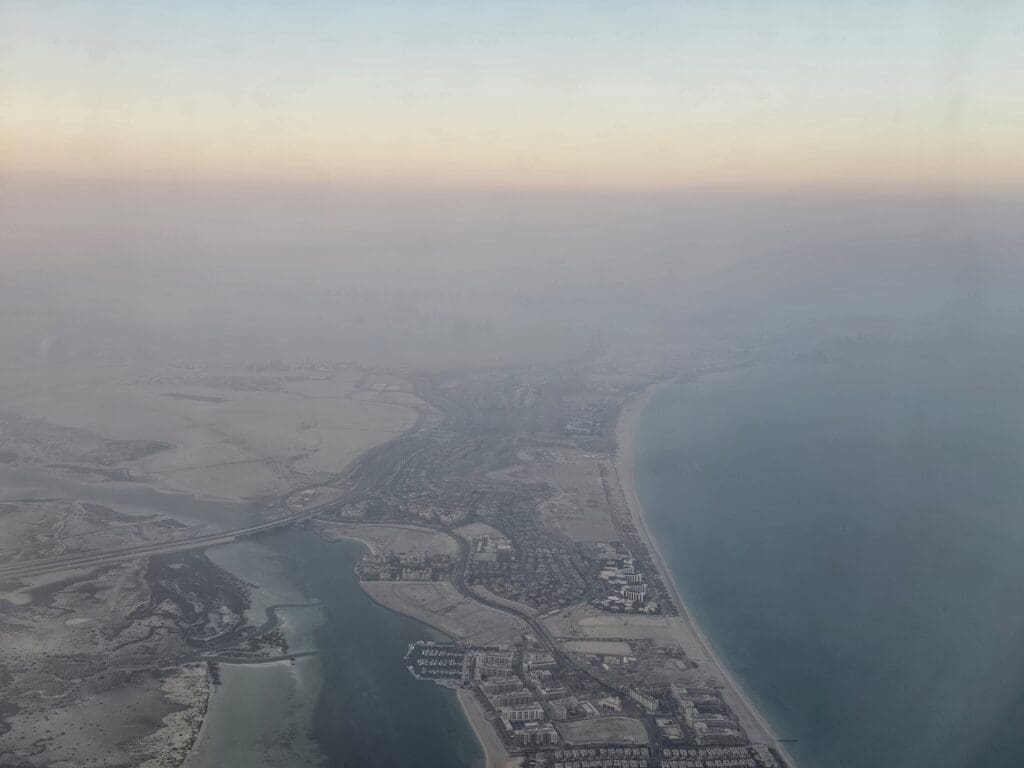
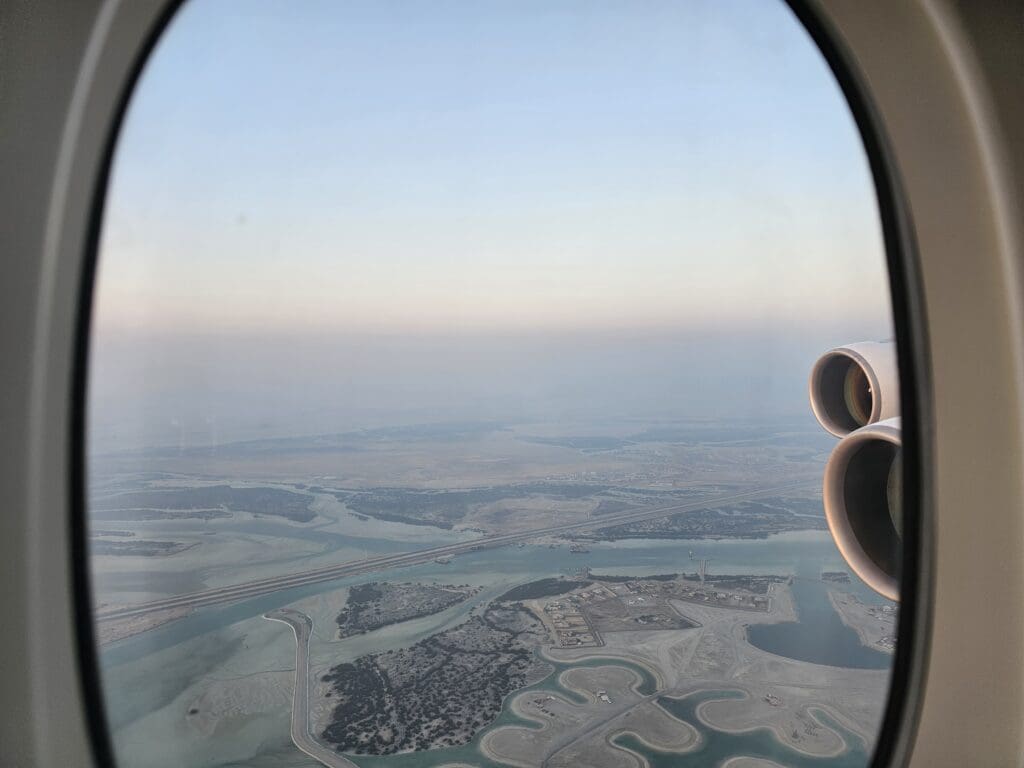
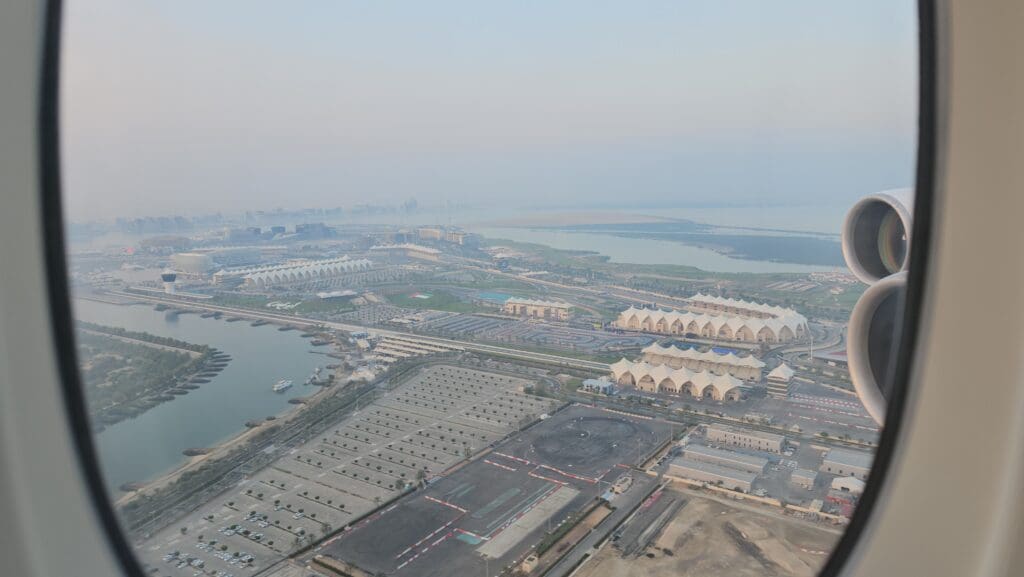
With some slight turbulence, as we descended downwards towards the sandy landscape below, the whale sank over the perimeter fence and touched down at 0724 after a grand total of just 5H53 spent in the skies of Europe and the Middle East. Almost immediately after touching down, Abu Dhabi Airport’s shiny new terminal appeared where plenty of mostly Etihad Airways aircraft could be seen waiting to head off on their next missions to destinations both near and far.
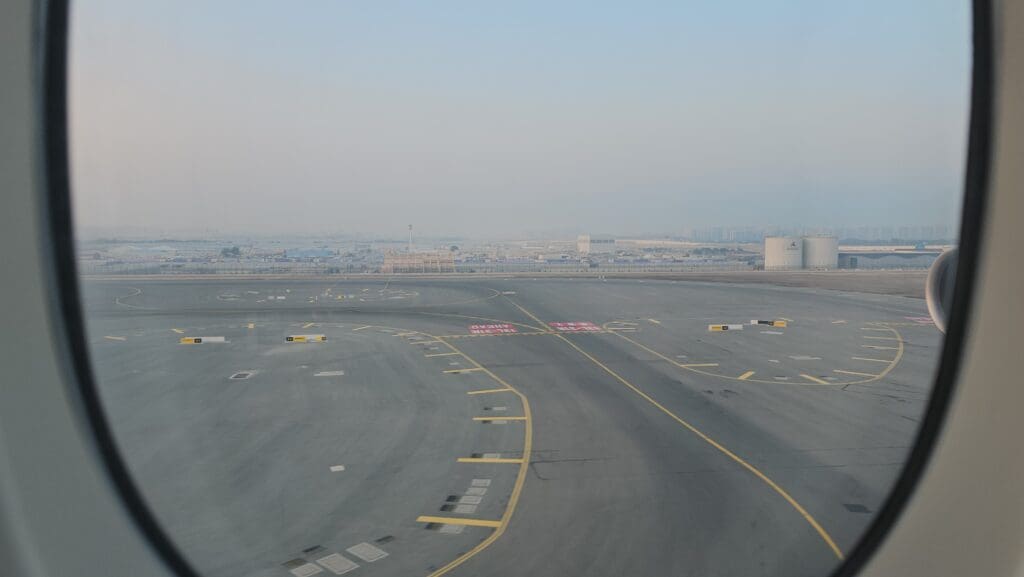
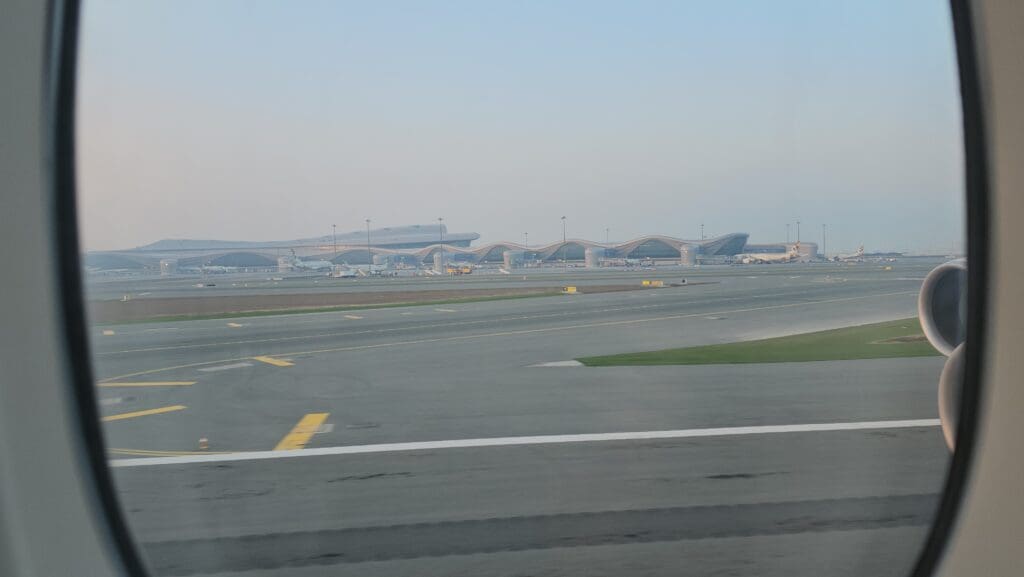
Once on the ground, it wasn’t long before the aircraft vacated the runway to the right and commenced its slow and cautious taxi over to the terminal building, at which point the cabin crew welcomed all to Abu Dhabi in Arabic and English, thanked passengers for choosing to fly with Etihad Airways and advised passengers to remain seated with their seatbelts fastened until we had come to a halt at the gate. Around eight minutes later, the Airbus slowly made its way into Stand 610 where it pulled in next to an Air Arabia Abu Dhabi Airbus A320 that was soon to head to the Pakistani city of Multan.
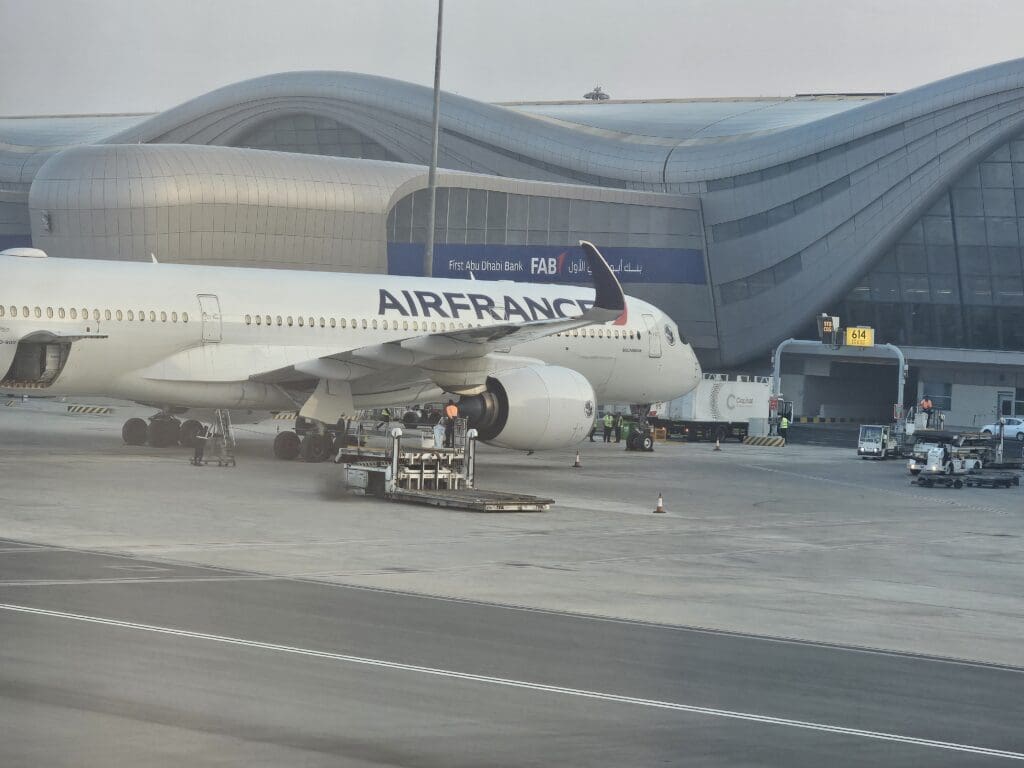
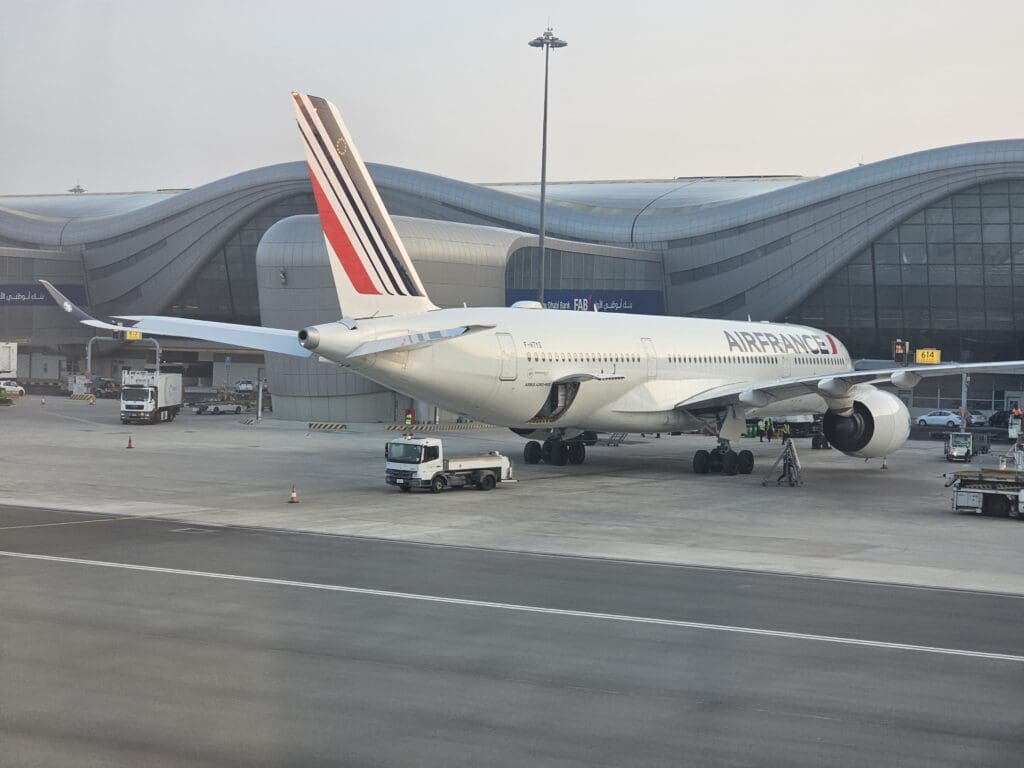
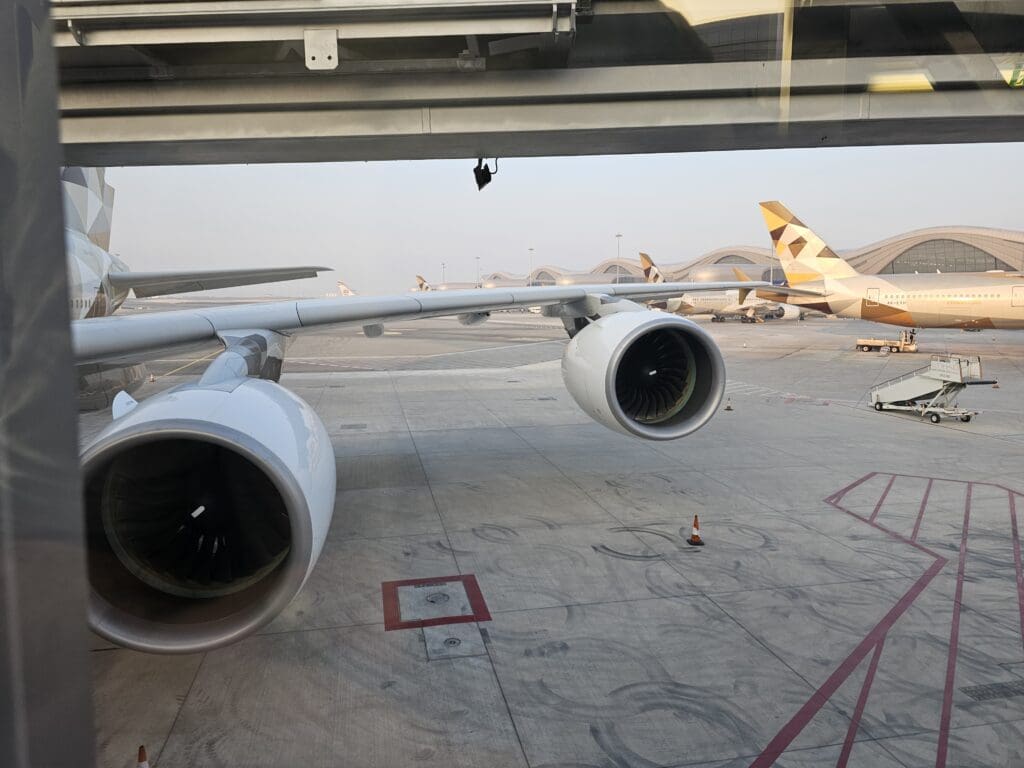
As is often the case, once the seatbelt signs were switched off, many in the cabin jumped up in a mad rush to disembark, however, it took a fair amount of time for the jetbridge to be connected to the lower deck, with disembarkation not commencing until thirteen minutes after we had come to a halt. With this undertaken via the 2L door, once this was in place I was soon able to stand up and walk the few steps over to this exit where I thanked one of the crew members before heading up into Abu Dhabi’s new terminal which had welcomed its first passengers less than two months before my trip.
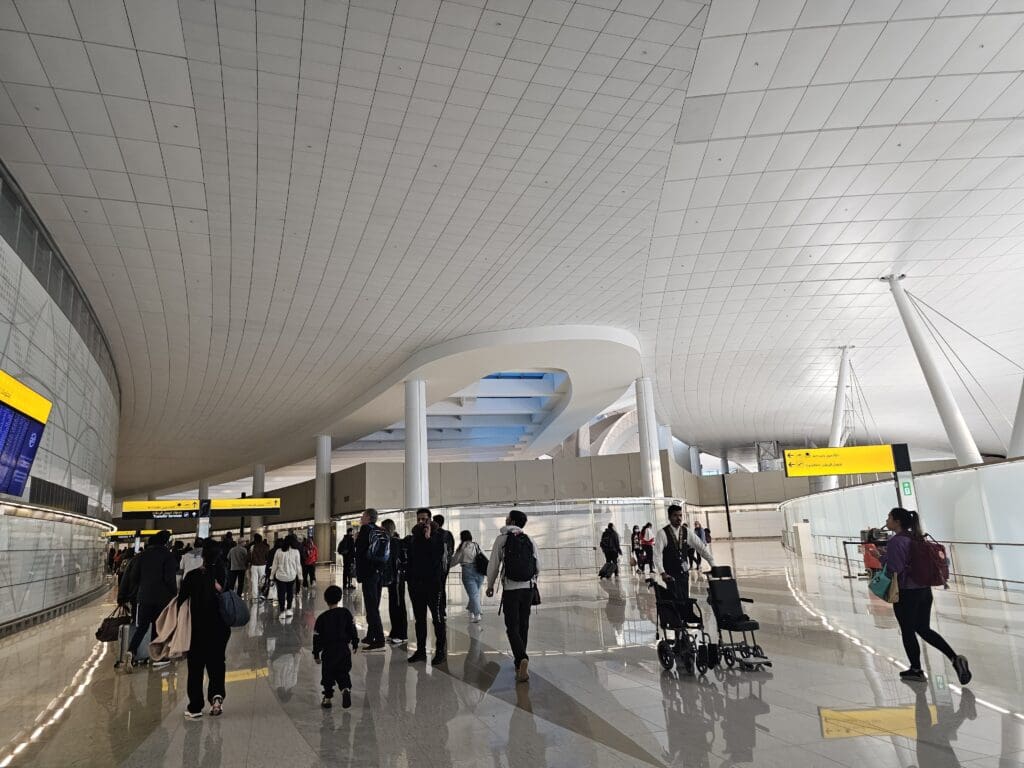
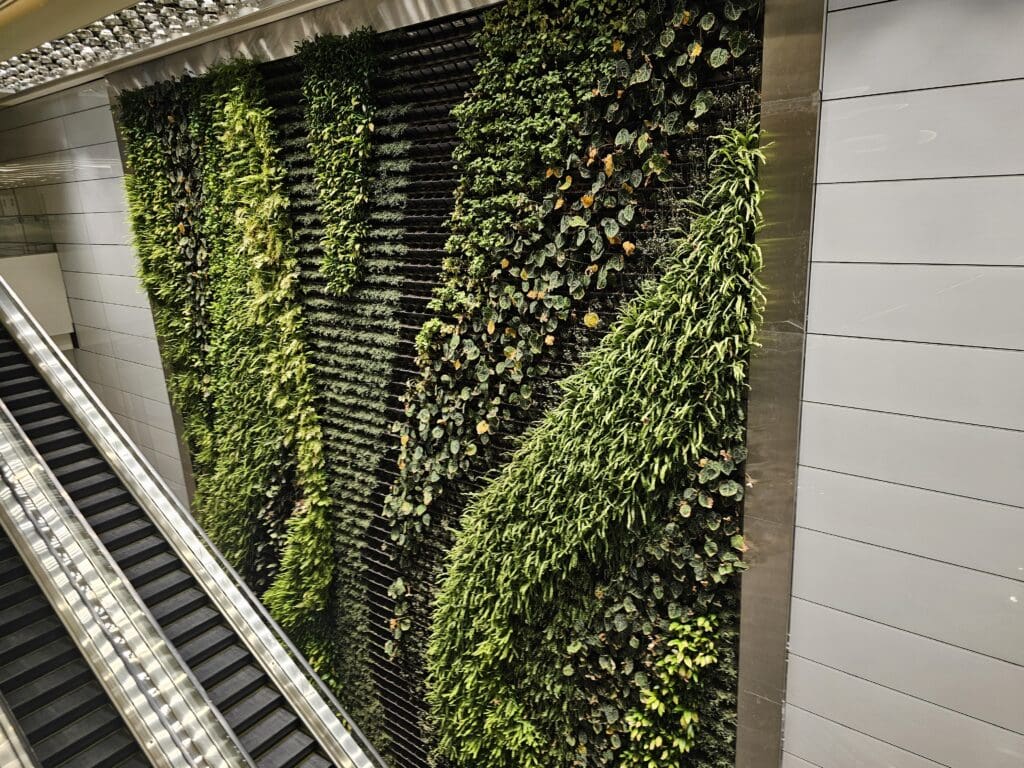
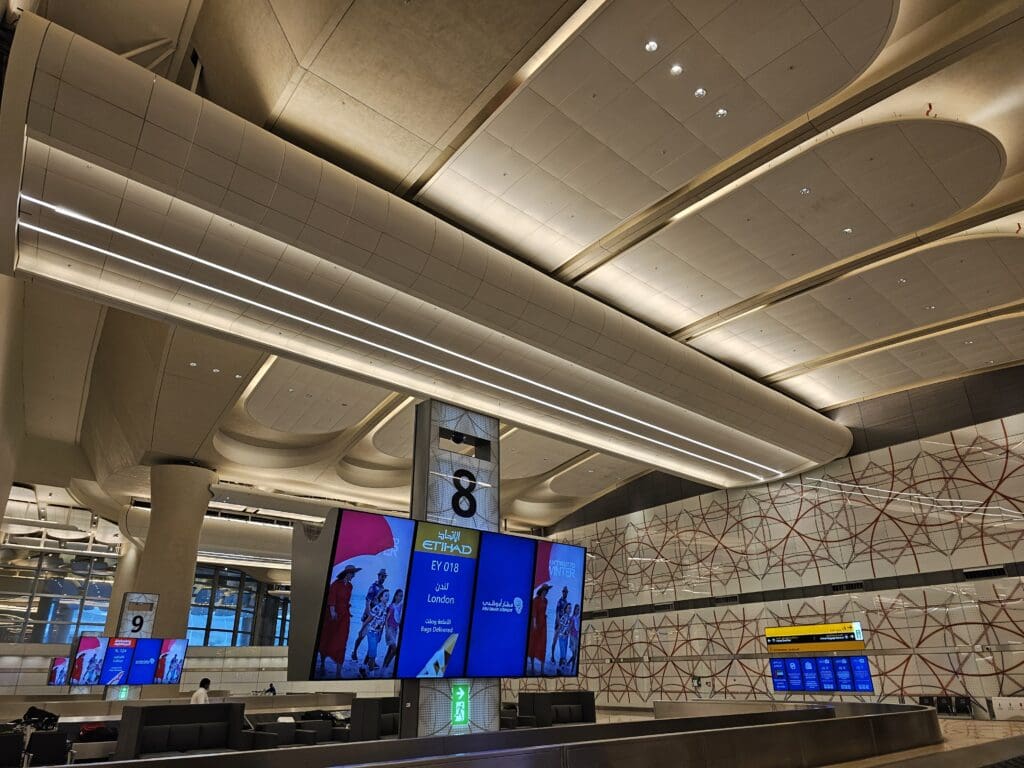
Once inside the shiny new terminal, those connecting to onward destinations were split off, leaving just a fairly small number of passengers from the London flight to proceed onwards to immigration. From there, I headed down a long escalator to the ground floor level of the terminal and passed a green wall of plants before arriving at the large immigration hall. According to the immigration rules, I could have used the e-gates seeing as I had entered the United Arab Emirates within the past year, and whilst a family member who had arrived the previous week did so, I was informed by one of the airport staff that I instead had to join the snaking queue leading up to one of the few open immigration counters. At that time of the morning, many of those waiting there consisted of passengers from Air France’s flight from Paris CDG and by chance, I spotted my father who had arrived on this flight, waiting around twenty passengers ahead of me!
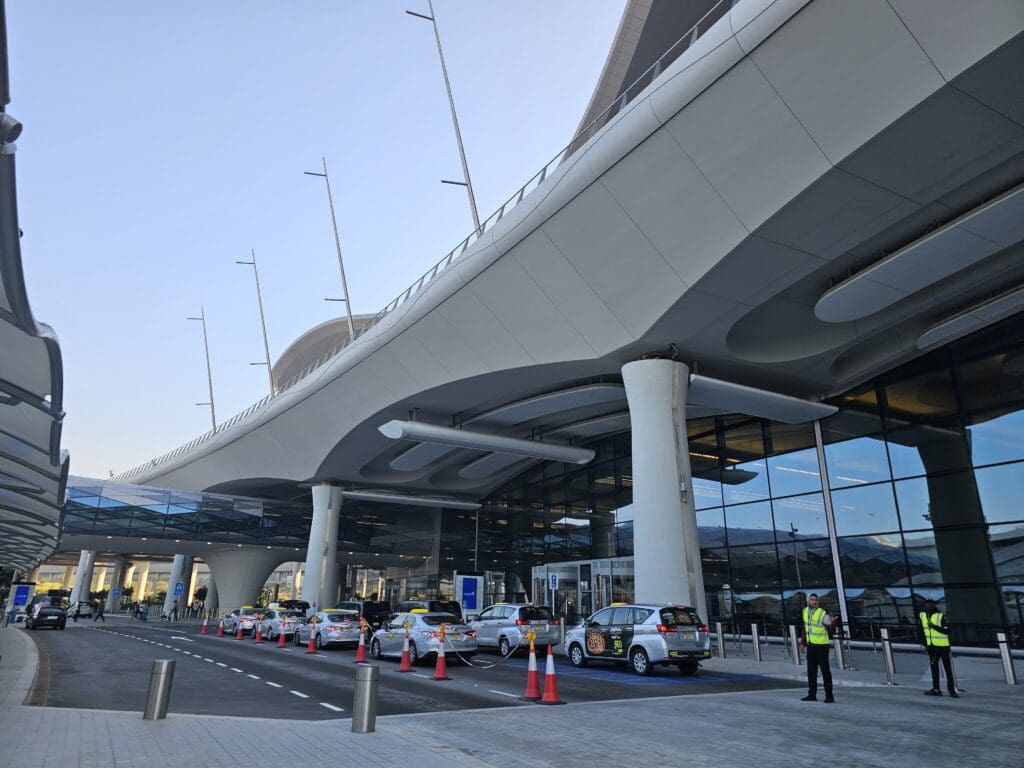
After around thirty minutes of waiting, I made my way up to a counter and following a quick scan of my passport, some angry typing and a photo, the gate swung open and I entered the United Arab Emirates. From there, the next stop was the customs checkpoint and all passengers were required to have their hand luggage scanned by an x-ray machine. Fortunately, this was quick and easy, and afterwards, I then entered the large baggage collection hall. Given my long wait at immigration, unsurprisingly once there my bag could already be seen spinning around and so I soon picked this up and made my way straight out into the landside arrivals area.
Summary
All-in-all, I was relatively pleased with my Etihad Airways experience and found their Airbus A380 to offer a comfortable and pleasant ride, especially for the comparatively short flight between London and Abu Dhabi. My ground experience in Heathrow was pleasant enough, and once onboard I was well fed and well entertained, and importantly I touched down in Abu Dhabi on time and in one piece. My only complaint about the flight was the cold crew members, with three out of the five flight attendants I interacted with being rather cool and distant. Nevertheless, this in itself would not be a reason to avoid Etihad Airways in the future and I would happily consider flying with the airline again.
Nice review. Good work!