
Etihad on the Cheap: Rome to Abu Dhabi on a Boeing 777-300ER
Background
Challenging Etihad Airways’ monopoly, in September 2023, the Emirati subsidiary of low-cost European giant Wizz Air began operating direct flights between Abu Dhabi and Rome Fiumicino. All of a sudden, for those willing to be squeezed in like sardines for five hours or so and lacking any baggage, travelling between the Italian and Emirati capitals could be done for next to nothing, massively undercutting competitor Etihad Airways. However, perhaps seeking to prise some attention away from the new ultra-low-cost competition on this route, in autumn 2023, Etihad Airways ran a promotional fare between Rome and Abu Dhabi, offering tickets for around €50 each way. Based in Britain and with no other opportunities to fly on Etihad Airways (and the operating aircraft, the Boeing 777-300ER) for such a low price, without too much hesitation, I booked a weekend adventure to Abu Dhabi and back, returning to Manchester on Qatar Airways which would allow me to make a direct comparison between the two carriers.
This was not to be my first experience with Etihad Airways, although plenty of time had passed since my last and only other trip with the carrier. This had taken place nine years prior in 2014 when I had flown from Manchester to Seoul Incheon via Abu Dhabi and back. During this trip, I sampled the delights of their Boeing 777-300ER between Manchester and Abu Dhabi, and their rare and now-retired ex-Air India Boeing 777-200LRs between Abu Dhabi and Seoul Incheon. This trip left me impressed with Etihad Airways’ levels of service and comfort, and whilst this was almost a decade ago, I was looking forward to seeing whether the carrier had changed. Admittedly, today, passengers’ opinions on Etihad Airways are fairly split. Whilst the carrier is generally very highly regarded, in recent years, some have complained that the levels of service onboard are a shadow of what they once were. Meanwhile, a core of loyal Etihad’ers continues to defend the airline as one of the world’s best.
Regardless, there was only one way to find out which camp was right, and even if it was terrible, I could rest easy knowing that I had not paid a fortune for my ticket!
A Bit About Etihad
Historically, Abu Dhabi Airport was primarily served by Gulf Air. Whilst today this is seen as a wholly Bahraini carrier, in the not-too-distant past, this was a joint venture between the governments of Bahrain, Oman, Qatar and the United Arab Emirates (specifically the Emirate of Abu Dhabi), with bases in each country’s capital. However, Gulf Air’s decreasing profitability, politics and a shift to focus on national rather than multinational carriers in the region saw each country bar Bahrain exit this venture. Before Abu Dhabi’s exit, in 2003, a Royal Decree was issued that saw the creation of national carrier Etihad Airways – with Etihad meaning ‘union’ in Arabic and representing the union of all seven Emirates that make up the United Arab Emirates.
Enjoying strong backing, Etihad Airways employed a hub-and-spoke model just like its increasingly successful competitors in Doha and Dubai, serving destinations across the world with a fleet of Airbus and Boeing jets. Offering high levels of onboard service, it wasn’t long before Etihad Airways became relatively well known amongst the travelling public just like its fellow ME3 counterparts, Emirates and Qatar Airways. Further expanding the airline’s footprint, the airline entered into partnerships with Formula 1 and Manchester City FC, amongst others. In aviation, the company took up stakes in Aer Lingus, Air Berlin, Air Seychelles, Air Serbia, Alitalia, Darwin Airline (rebranded as Etihad Regional), Jet Airways and Virgin Australia. However, this growth was not all positive, and the carrier suffered notable losses that were worsened by the onset of the pandemic. Emerging from this with a slightly streamlined fleet and a smaller route network, fortunately, the carrier has since returned to profit, although this remains the smallest of the ME3 in terms of aircraft numbers and destinations.
Booking
With no reason not to book this promotional fare directly with Etihad, I soon downloaded their app and did a quick search for flights between Rome and Abu Dhabi. Following a few moments of loading, I was presented with that Saturday’s only direct service between the two, with the cheapest ticket coming in at a very reasonable €56.97. Selecting this I was taken to the seat selection page where I was given the option of pre-selecting a seat with these ranging in price from €19 to €102 for the extra-legroom, or Economy Comfort seats at the very front of the cabin. Carrying the hope that I would still be able to pre-select a seat during online check-in I sped past these options and made a quick and easy payment without any issue.
After booking, I was able to add a range of extras such as hold luggage for €104 (no bags were included in my promotional fare) and a priority security pass for €37. In addition, I could also reserve a seat on Etihad Airways’ complimentary shuttle bus that runs to both Al Ain and Dubai. Whilst not needed on this particular trip, this is a nice touch and a surefire way of capturing passengers heading to and from Dubai.
Check-in
Check-in for the majority of Etihad Airways’ services opens thirty hours before departure, and a few hours into this window I loaded up the airline’s app and commenced proceedings. As one would hope, this was quick and easy, although having been automatically allocated one of the worst seats onboard (a middle seat in the middle bank of seats), I opted to reselect the only selectable window seat in the Economy cabin, Seat 49K. Fortunately, this could be done for free and after entering the required details, I received my mobile boarding pass and was all set to head off on my adventure.
The Journey
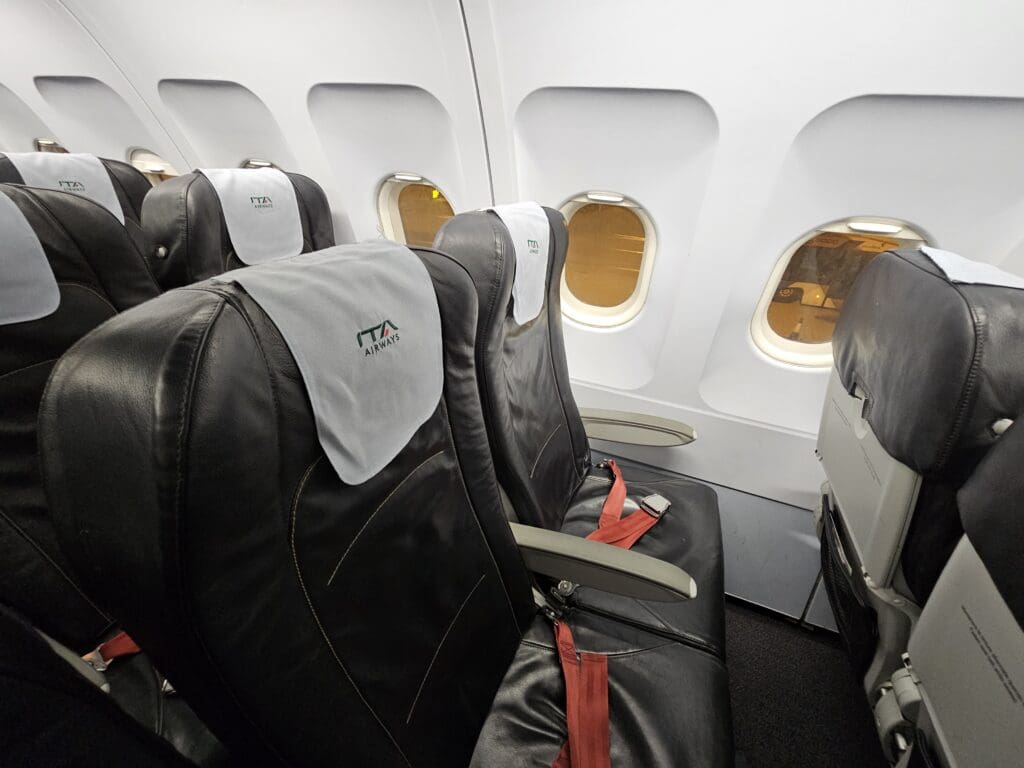
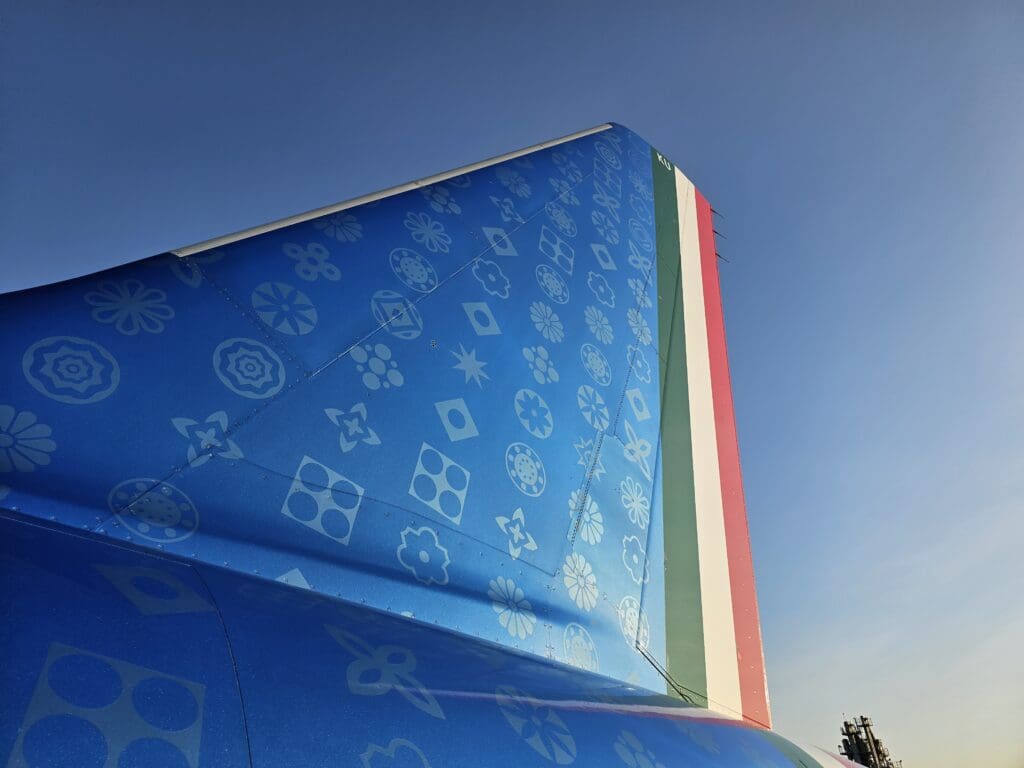
On the morning of my trek, I touched down in Rome bright and early, bringing an end to my second-ever flight with ITA Airways. Unfortunately, this experience left me lacking a great number of praises for Italy’s national carrier. Whilst the aircraft sported ITA Airways’ new(ish) distinctive bright blue livery, inside, I found the cabin to be battered and cramped. Furthermore, the crew seemed to be very snappy in their interactions with passengers. However, going some way to partially redeem themselves, we touched down in Rome on time, which was of course, of high importance given my onward flight to Abu Dhabi. Having been shuttled from a remote stand, I made it to the terminal with a little over two hours to go until the scheduled departure time of my flight to Abu Dhabi. By this time, given my virtually sleepless night wandering the halls of Barcelona Airport, I was akin to a zombie and simply wished for a hassle-free journey through Rome Fiumicino.
Fortunately, in most cases, Rome Fiumicino is relatively easy to pass through, with no additional security checkpoints between flights and no massively long treks to get from one terminal to another. For those with time on their hands and money to spend, plenty of shops, cafés and restaurants are on offer. In terms of its layout, Rome Fiumicino is home to two passenger terminals – Terminal 1 and Terminal 3, with these serving flights to and from destinations within and outside of the Schengen area respectively. However, these two terminals are conjoined and once airside, were it not for the passport checkpoint, many passengers may well not realise that they are passing from one terminal to another. However, it is worth noting that Terminal 3 is home to a 14-gate satellite terminal, which is typically, but not always, used by non-Skyteam carriers.
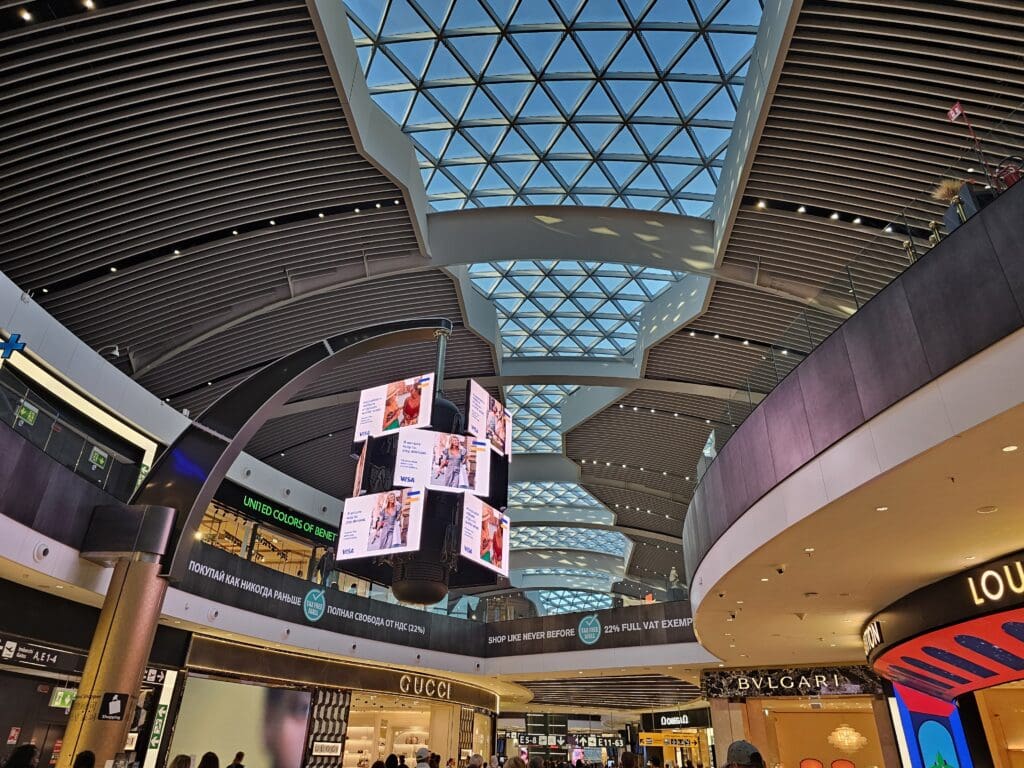
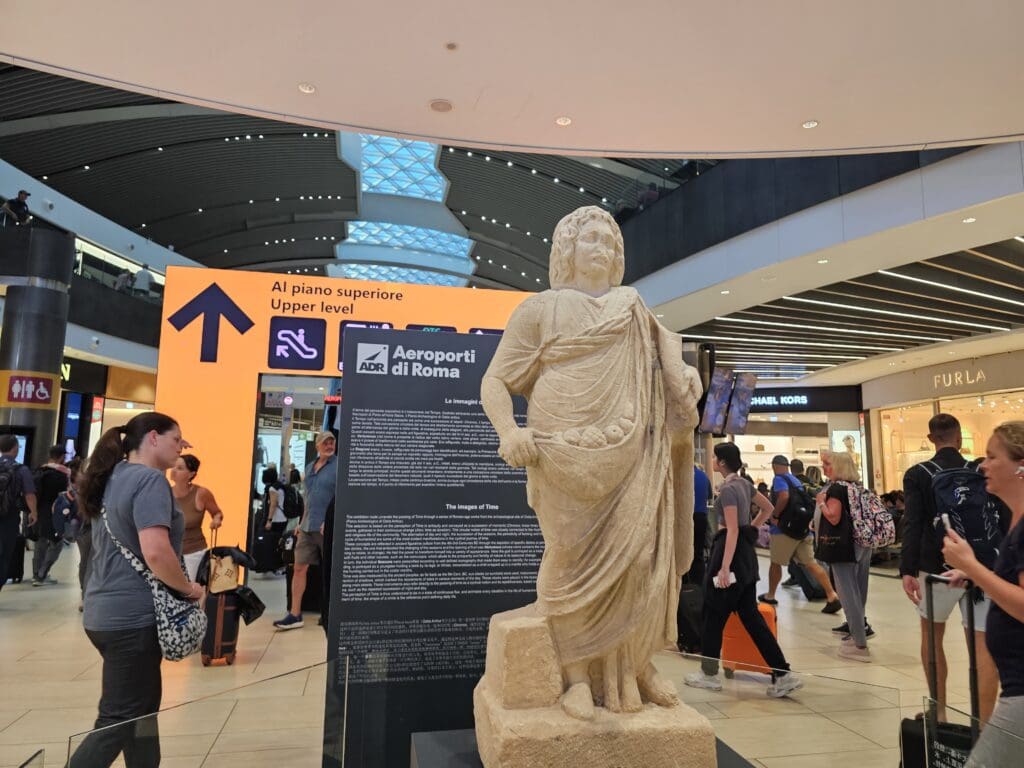
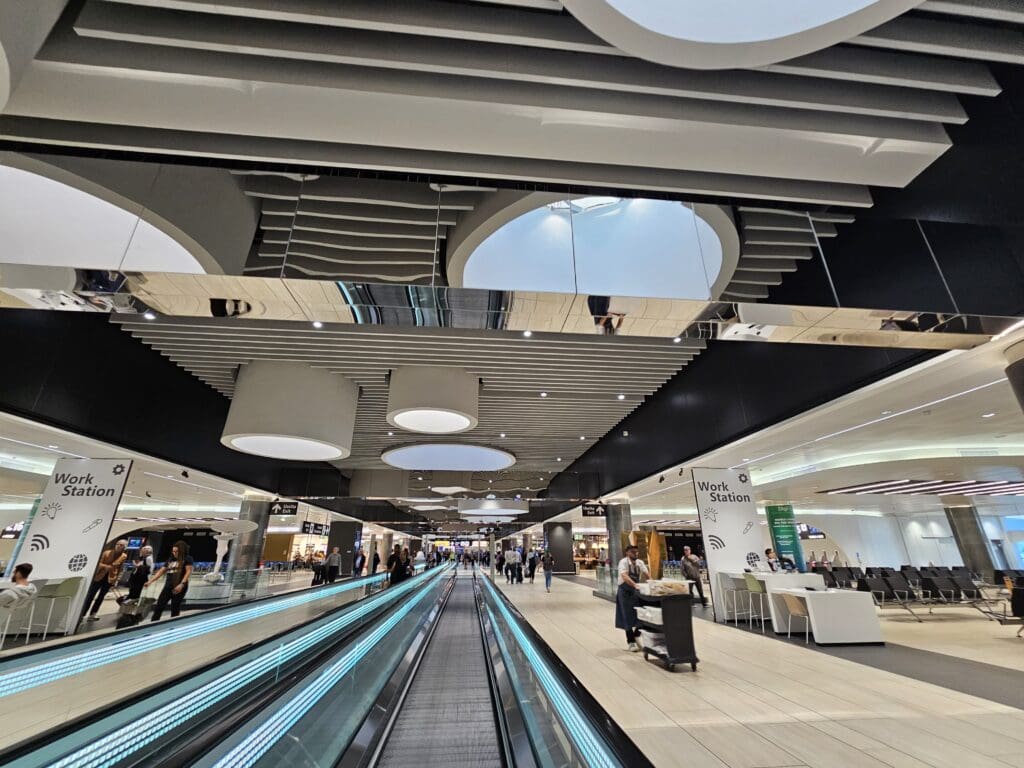
Once inside Terminal 1, I followed signs for the E-gates (all of Terminal 3 gates start with the E) and made a leisurely Saturday morning stroll through the terminal. At that time, the airport was packed with crowds of passengers scurrying about here, there and everywhere. However, aside from this, Rome Fiumicino left me with little to complain about. Having undergone plenty of renovation work, I found the terminal to be bright, airy and modern and was home to a few interesting sights. For example, professional and armchair ancient history buffs alike ought to spend some time wandering along the airport’s Images of Time exhibition route, which takes passengers around six ancient Roman artefacts. Whilst not having enough time to do the full trail, I did stumble into a statue of the Roman god of the seasons, Vertumnus, which dates back to the third century AD. In addition, plenty of pianos were available for budding passengers to either annoy or entertain their fellow passengers, and I also spotted what seemed to be an airport radio station studio although this was empty at that time.
After around ten minutes of trundling through the busy terminal, I arrived at the passport control area which marks the entrance to Terminal 3. Given the busyness and the many flights departing off to non-Schengen destinations that morning, upon arriving there I was not particularly surprised to see a reasonably long queue. However, seeing as British passport holders can use the e-gates, thankfully, the line for these shuffled along at a reasonable pace and after scanning my passport, I headed to the counter to get my passport stamped before I was free to continue my journey onwards. As with Terminal 1, I found Terminal 3 to be clean, bright and modern, with plenty of facilities available and a good number of USB-A ports and plug sockets for those needing to charge their devices.
Seeing as Etihad Airways is not a Skyteam member, that morning I had suspected that my flight would depart from the satellite terminal. However, with the departure boards not revealing the gate number until 0900, there was only one way to find out whether this would be the case. This involved going to the nearest window and looking out to see if the Abu Dhabi-bound Boeing 777 could be seen waiting there. Indeed, this was the case and wasting no time I made my way to the station and caught the next train over to the satellite terminal.
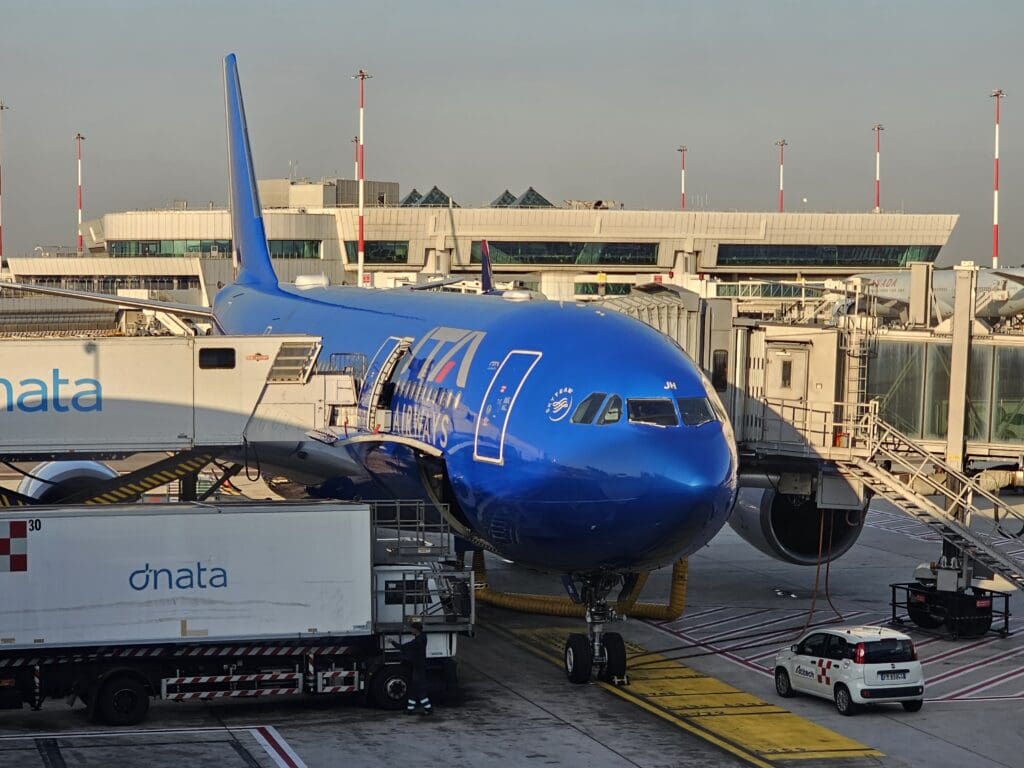
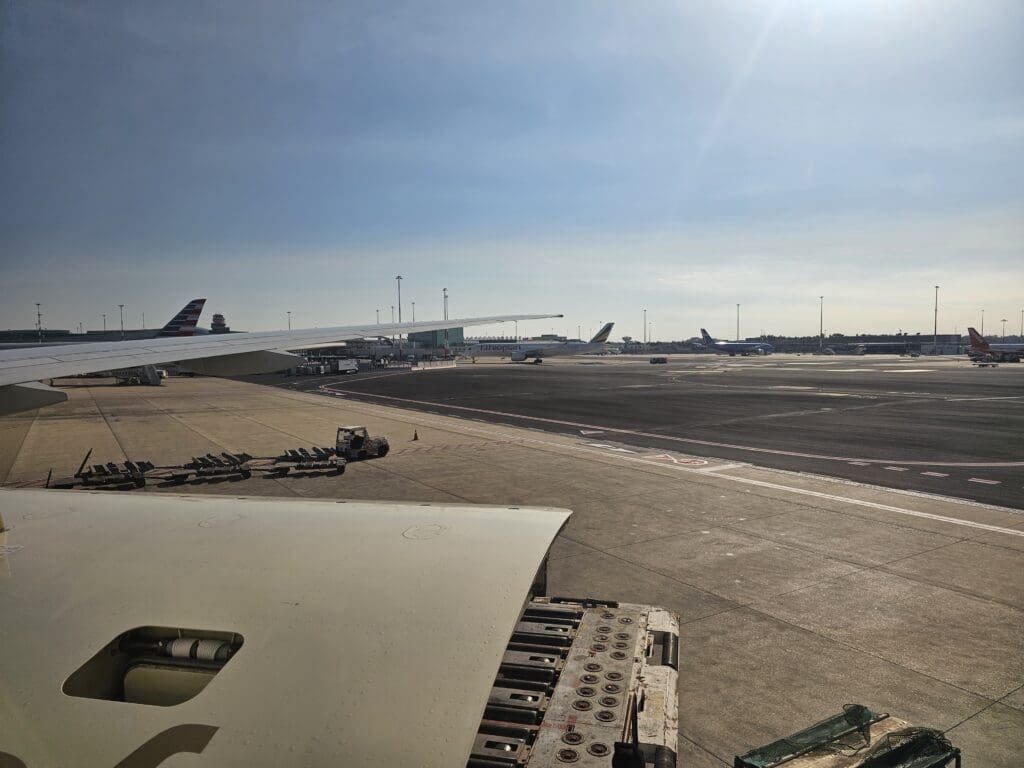
Unless you are an aviation enthusiast who is content with staring at the comings and goings of aircraft, I would not recommend arriving at the satellite terminal with heaps of time until your flight. Compared to the main portion of the terminal, this is somewhat more dated, and cramped and is rather lacking in facilities with just a single branch of WHSmiths and two cafés. Like the rest of the terminal, this was packed and seemed to be a hub for North American tourists returning home from their European late summer holidays, or ‘vacations’. Thus, unsurprisingly, the stands outside were filled with widebody jets being readied for their westbound transatlantic slogs with all aircraft other than the two Middle Eastern visitors and an Albania-bound Wizz Air Airbus A321 falling into this category. Specifically, these included American Airlines services bound for Charlotte, Chicago, Dallas, New York JFK and Philadelphia; United Airlines services to Chicago, Newark and Washington; and a single Air Canada flight to Toronto.
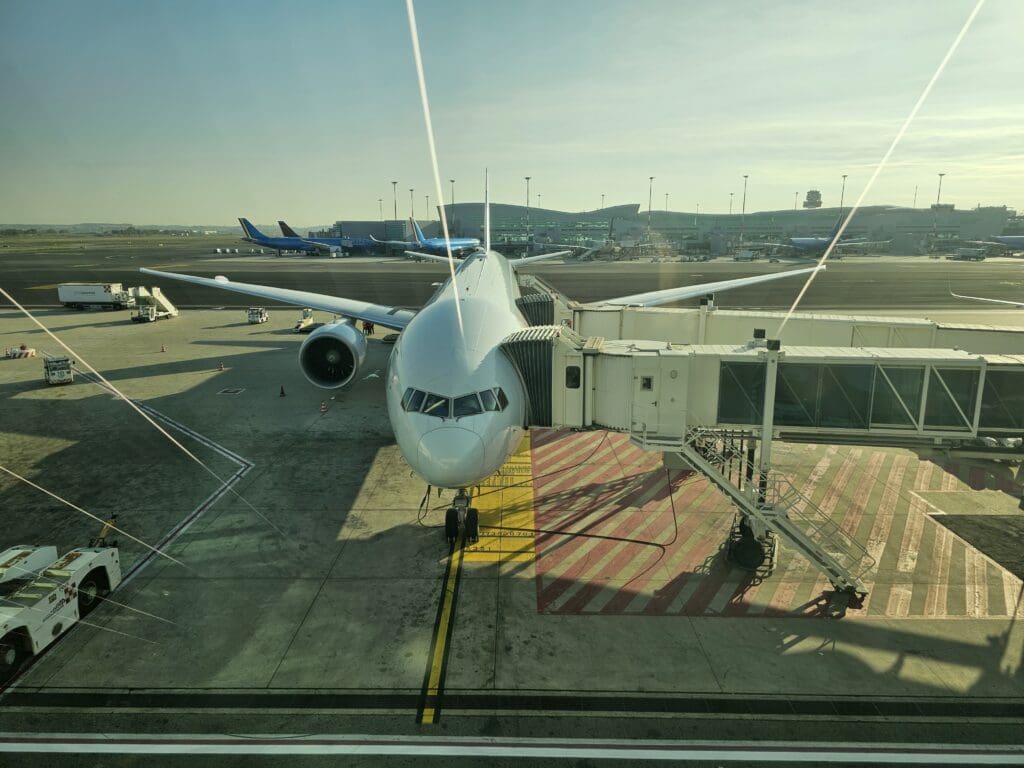
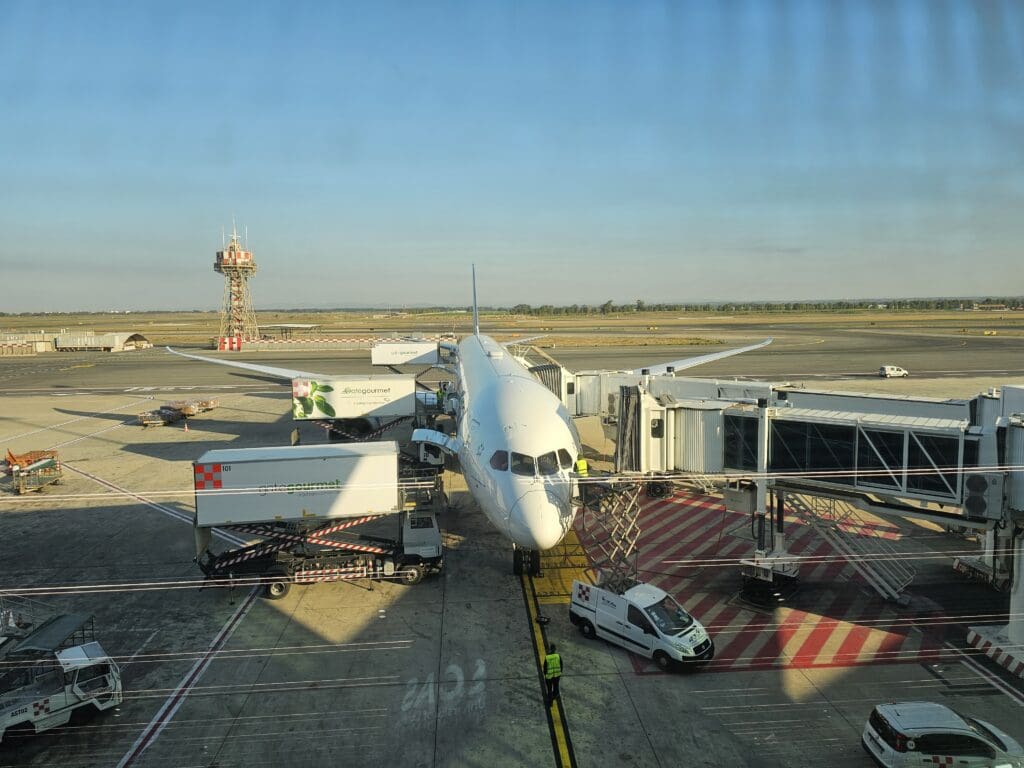
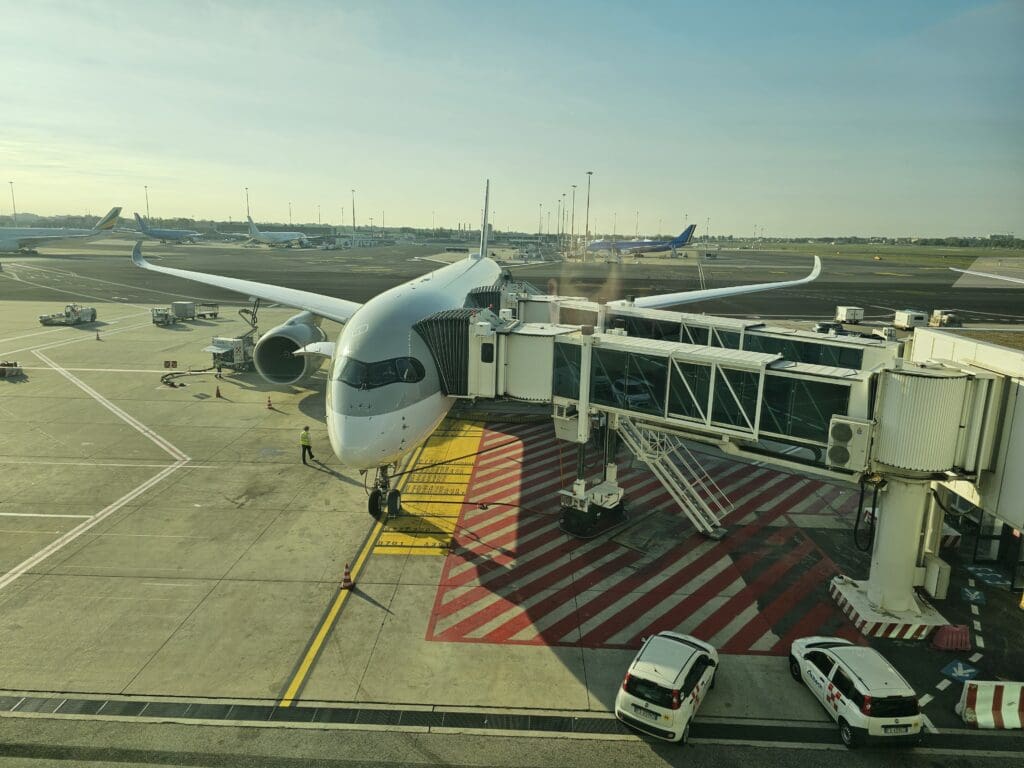
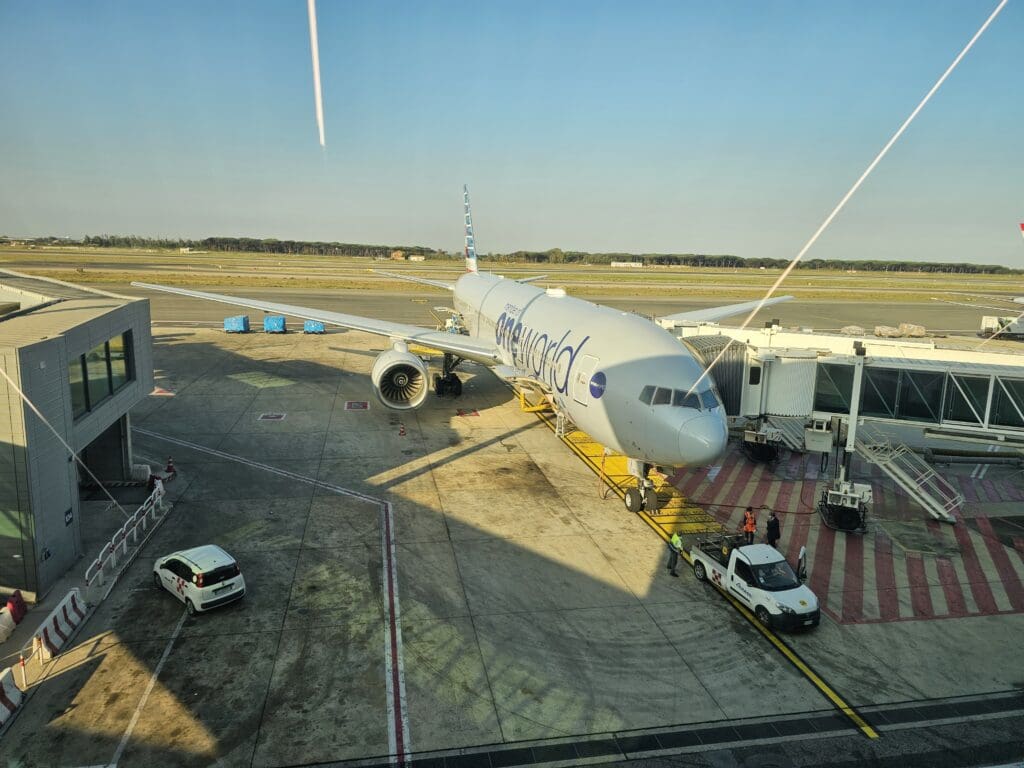
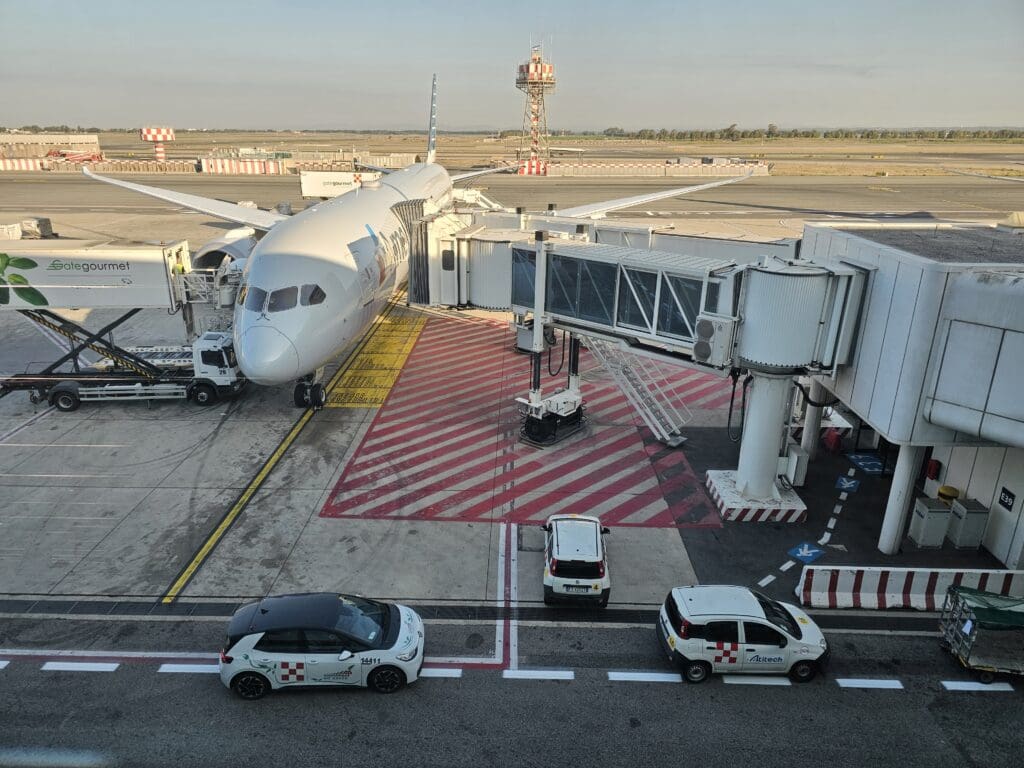
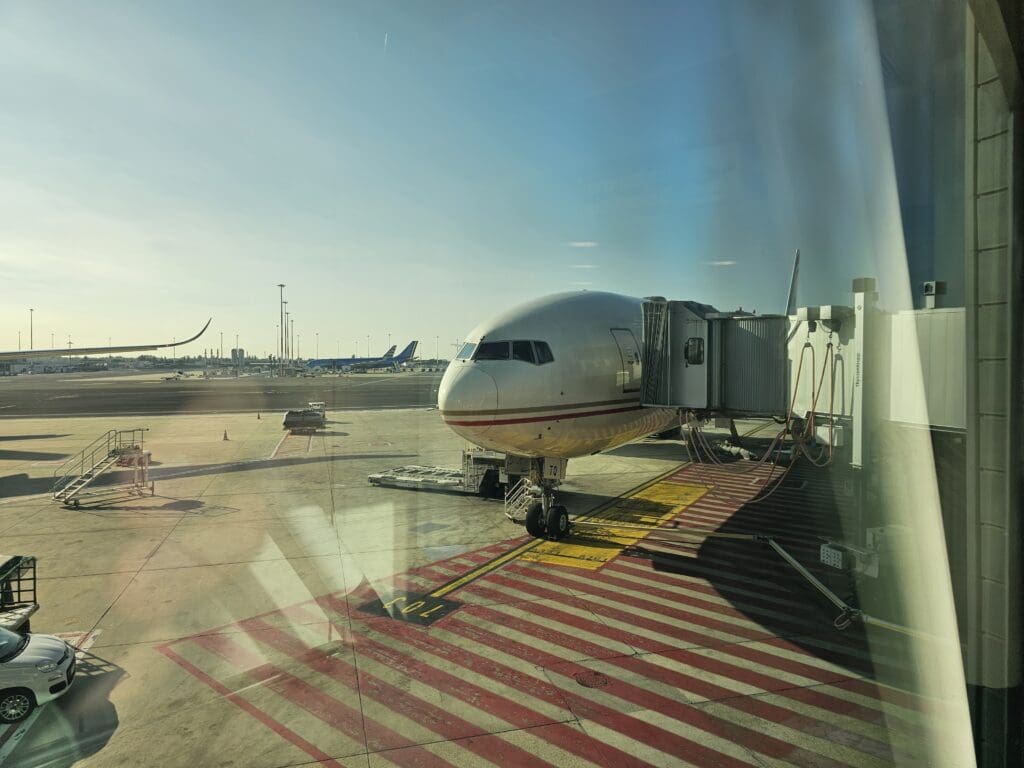
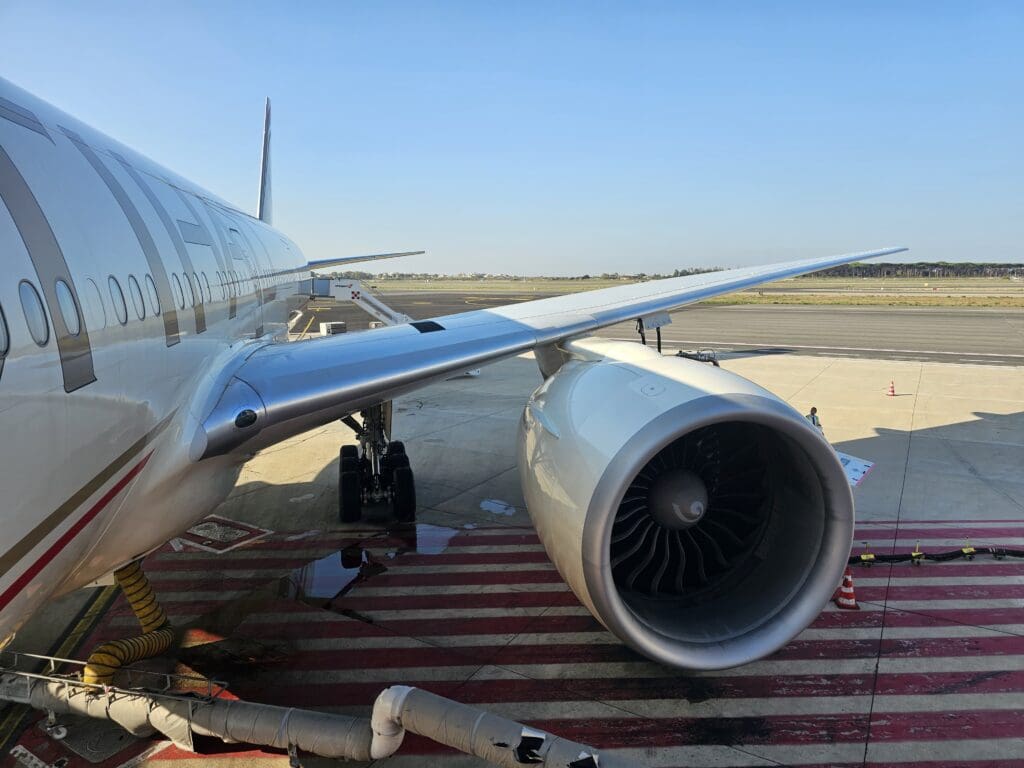
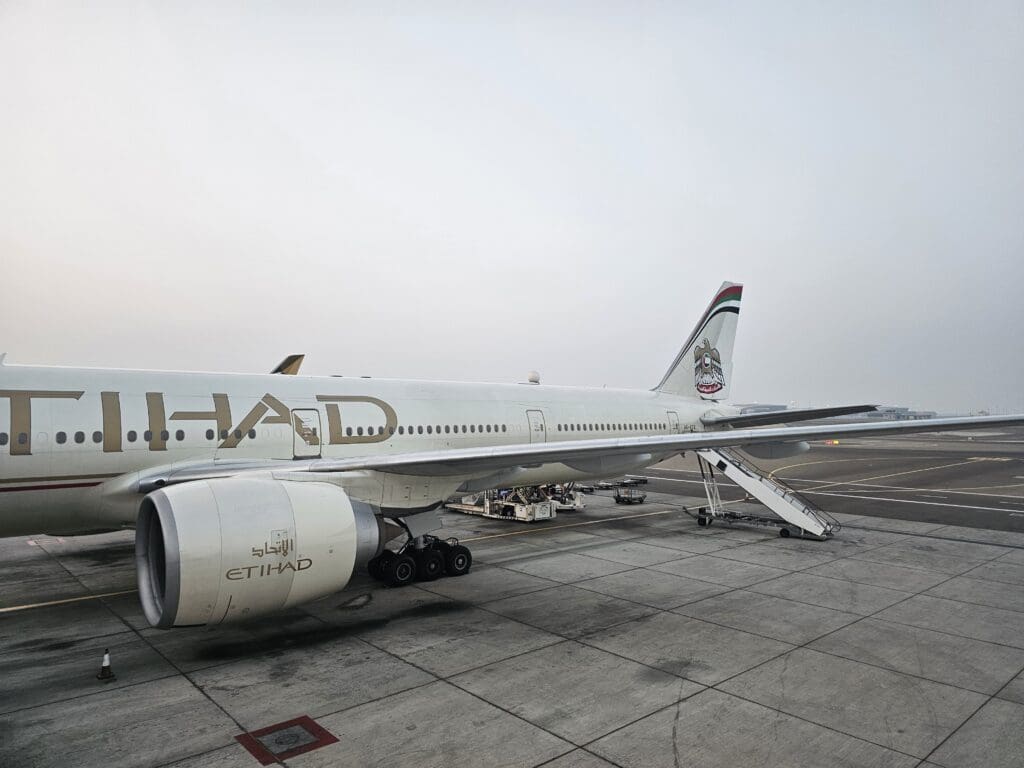
After strolling around the small terminal, I took my seat, charged my phone and looked out as a series of narrowbody jets rocketed up from Rome Fiumicino’s Runway 25. As expected, at 0900 the departure boards updated and advised that the flight would depart from Gate E34, and so at this time, I wandered over to this gate. Upon my arrival, I found the area around this to be rather busy, although this was explained by the fact that Qatar Airways’ Airbus A350 service to Doha was boarding at the neighbouring gate. Outside, the Boeing 777-3FX(ER) that would be taking us to Abu Dhabi could be seen being readied in the Italian sunshine at Stand 703. This particular Boeing took the form of A6-ETQ, which coincidentally, was the same aircraft I had flown nine years prior from Manchester to Abu Dhabi in August 2014. Interestingly, whilst Etihad Airways launched its refreshed brand identity in Autumn 2014, this aircraft is one of the few in the carrier’s fleet yet to be repainted into the ‘new’ livery.

Manufactured at Boeing’s facility in Everett with the line number 1137, this aircraft made its first-ever flight in August 2013 before being handed over to Etihad Airways the following month. Since then, the aircraft has connected Abu Dhabi to destinations across the world and in the week before my flight this made visits to Bangkok, Rome Fiumicino and Toronto, covering at least 42,000 miles in the process. Today, Etihad Airways’ nine Boeing 777-300ERs come in a mishmash of varying configurations. Of these, one is outfitted in a 3-class (First, Business and Economy) configuration, whilst the others feature just Business and Economy. Of these, two, including A6-ETQ, feature a slightly larger Business cabin with 40 seats and 340 in Economy, whilst the remaining aircraft are complete with just 28 Business Class seats and an impressive total of 384 seats in Economy.
Once those bound for Doha had boarded the neighbouring Airbus A350, the gate area temporarily quietened down, although it wasn’t long before the Abu Dhabi-bound passengers began to filter through from the main terminal. According to my mobile boarding pass, boarding was set to commence an hour before departure however, I felt that this was a little exaggerated despite the Boeing 777’s large size. However, at 0920 I was proven wrong when two gate staff appeared and immediately announced the commencement of boarding. This began with an invitation to those needing assistance and passengers in Group 1 to make their way forward. With just a trickle of passengers making their way to the aircraft at this time, a minute or so later, those in Group 2, which includes passengers travelling in the rearmost Economy cabin, were invited forward. Falling into this category, at this time I made my way to the podium where I had my boarding pass scanned and passport checked before I was wished a nice flight by the friendly ground agent manning the podium. From there, I travelled down a short escalator and trundled down the single jetbridge that was connected to the aircraft that morning.
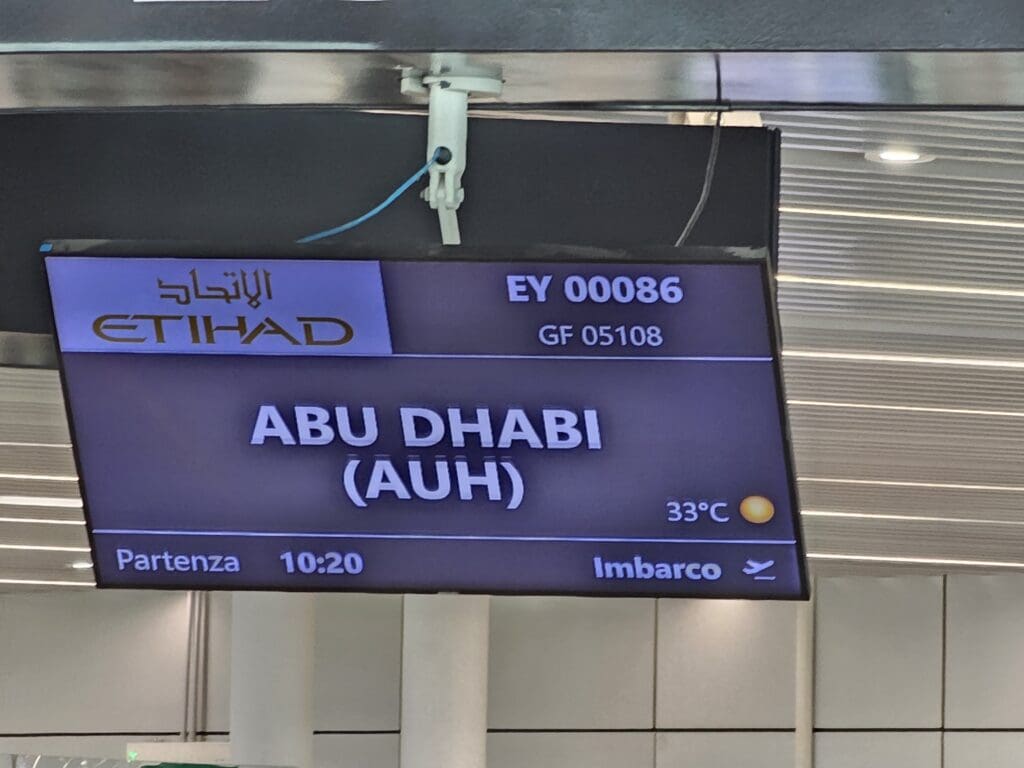
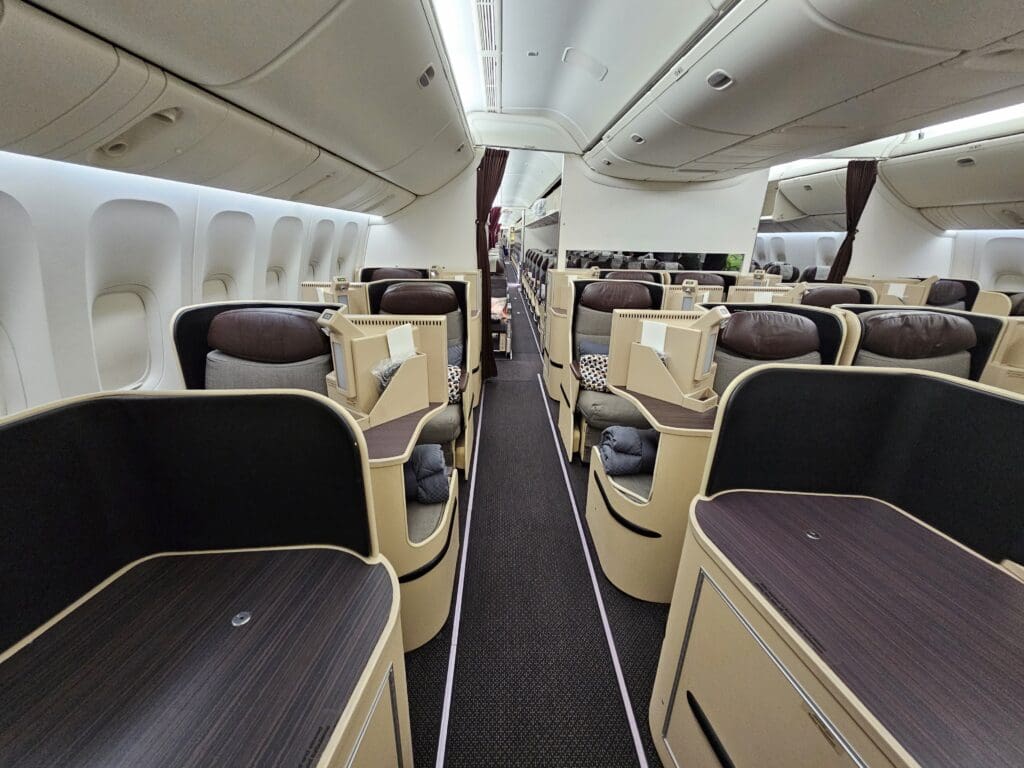
With just one passenger in front of me, no waiting was required as I neared the L2 door, and I soon stepped into the galley that separated the two Business cabins. Getting my experience with the crew off to a good start, immediately upon stepping into the aircraft, I was given a friendly welcome and after being directed down the second aisle, I journeyed into the cabin. First up on my trek to the rear of the aircraft was the smaller of the two Business cabins. This is home to three rows of lie-flat seats in a 1-2-1 configuration. Whilst I am certainly not a luxury travel connoisseur and would have happily accepted the invitation to travel in one of these seats that day, these seats appeared to be a little more dated and less private than those of several other carriers.
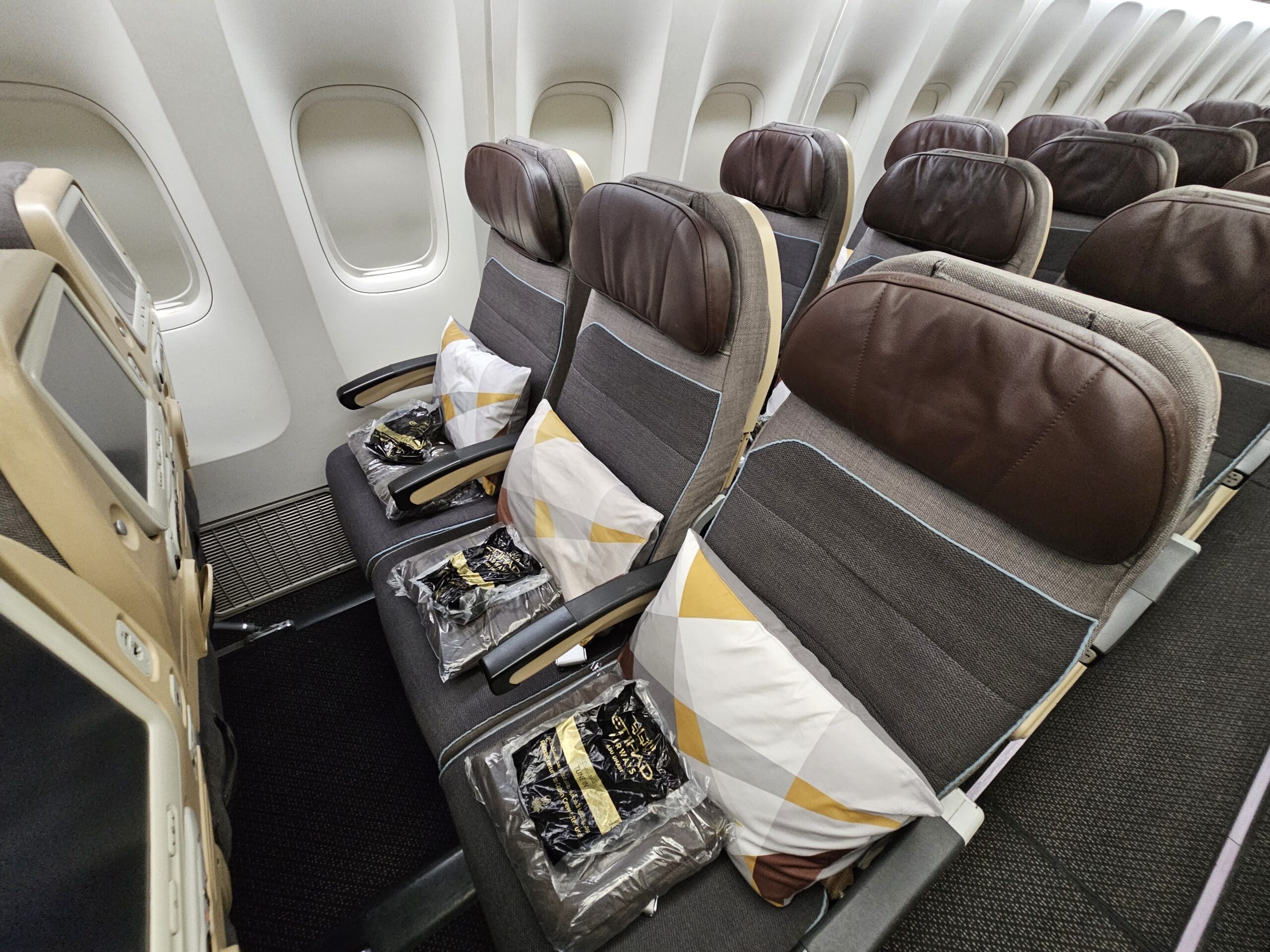
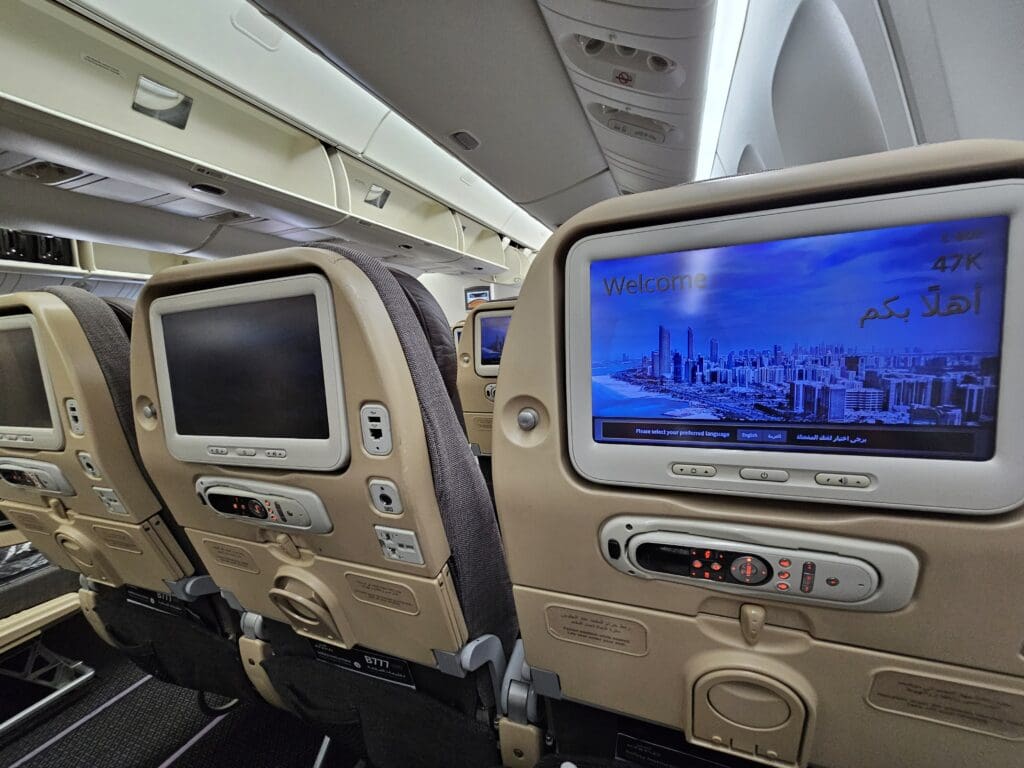
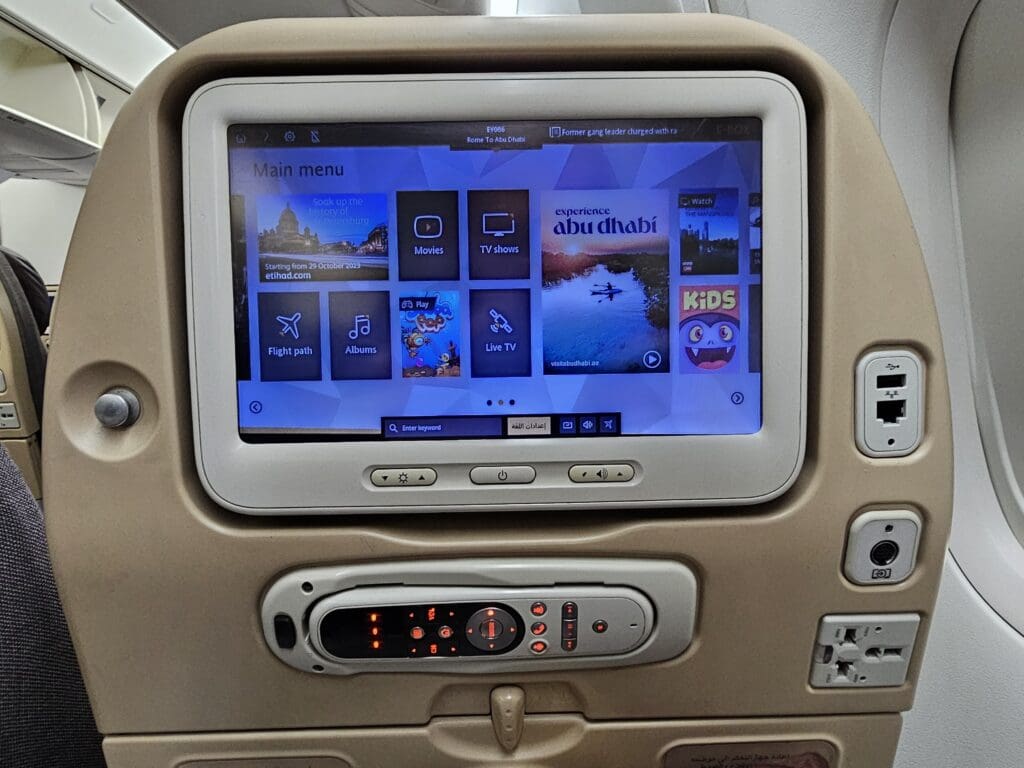
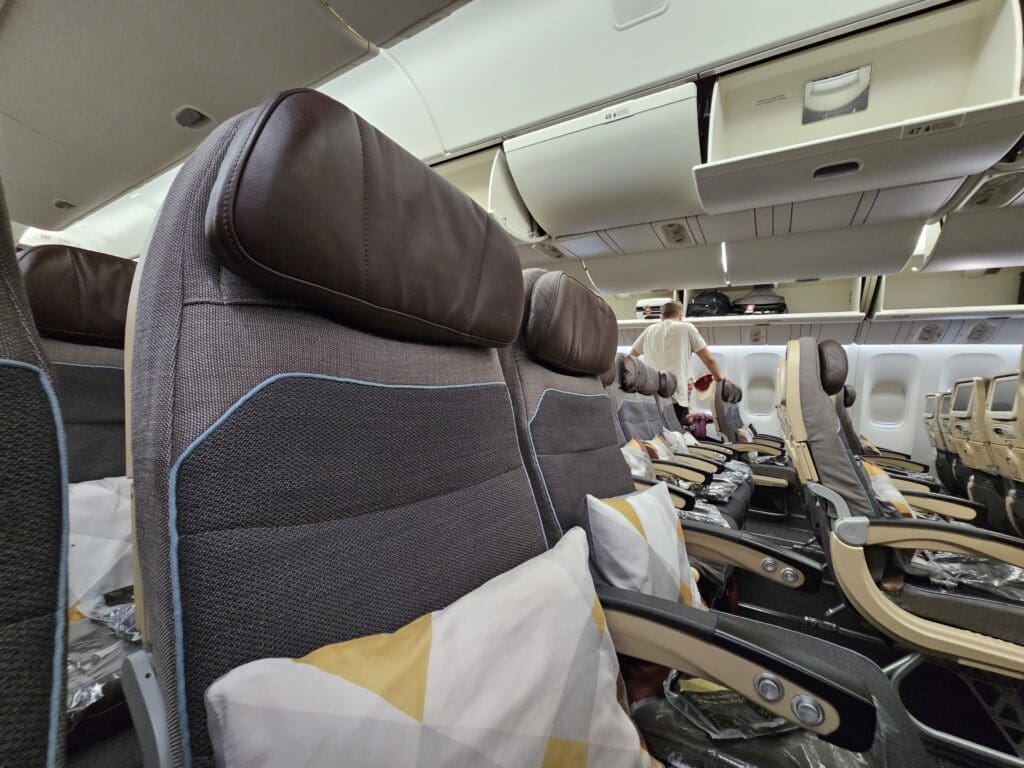
Continuing onwards down the aircraft, I entered the forwardmost of the Boeing’s three Economy cabins where I received another warm welcome. In Economy, Etihad Airways has opted to fit their Boeing 777s with the more squeezed 3-4-3 layout rather than the 3-3-3 configuration, and each Weber 5751 seat is covered in a dark two-tone fabric cover and complete with an adjustable headrest. Each of these also features a personal inflight entertainment screen and clunky controller, a plug socket, a USB-A port and a seatback pocket. That morning, a packet of headphones, blanket and pillow had been placed on each seat upon boarding, and it is worth noting that the latter was nicely designed and seemed to be of a higher quality than your typical cheap Economy class pillow.
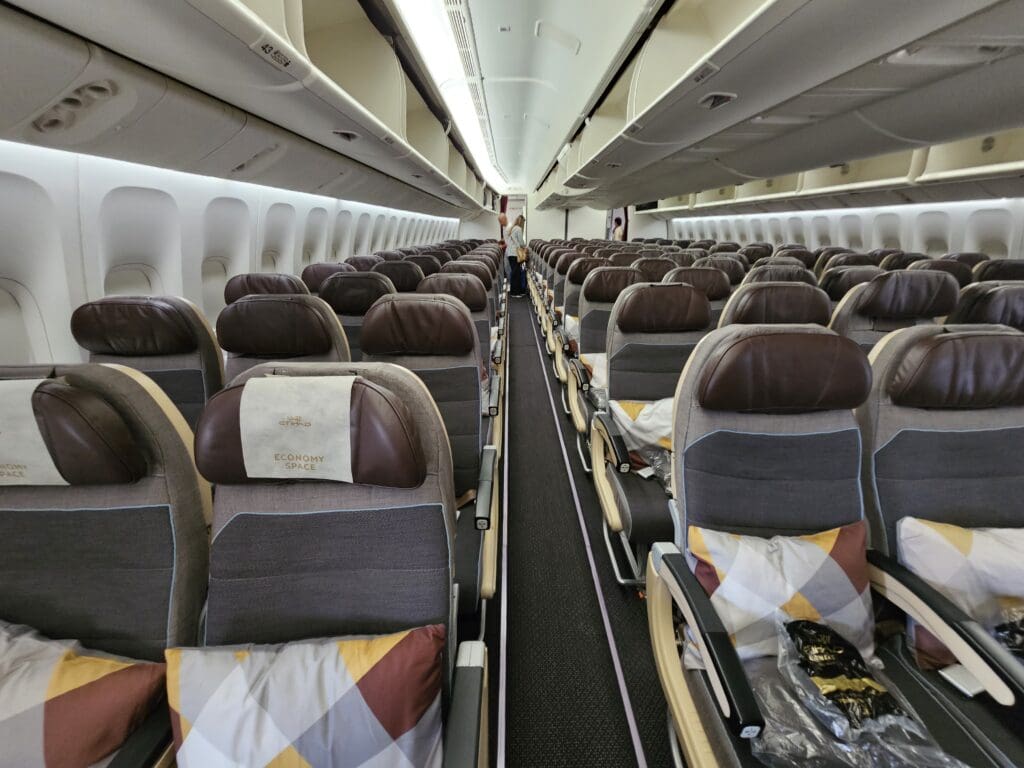
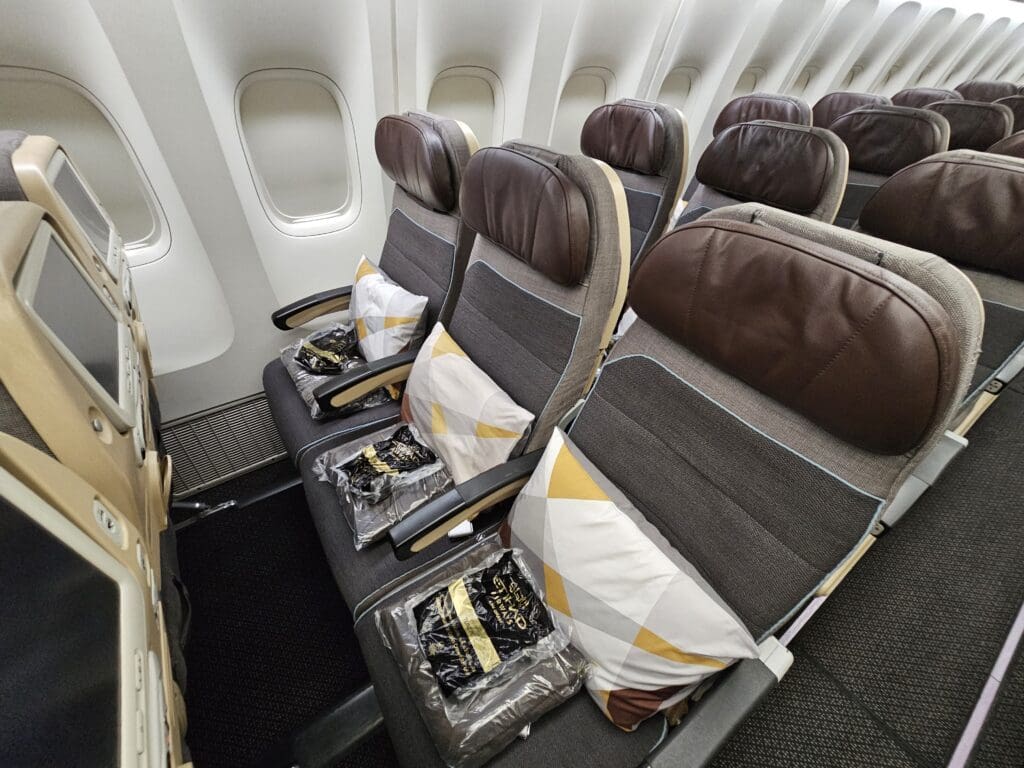
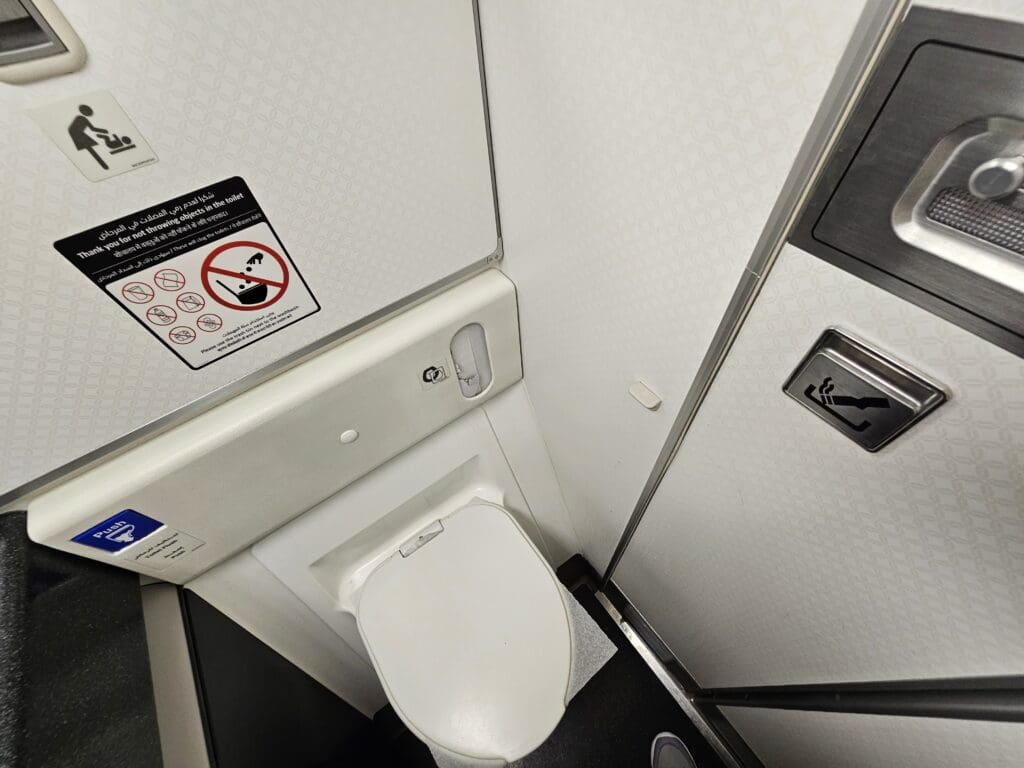
Even though Etihad Airways does not offer a Premium Economy product on any of its aircraft, the forwardmost Economy cabin is sold as ‘Economy Space’ with these seats offering slightly more legroom than their regular counterparts. As I made my way rearwards, I received several more welcomes from the friendly crew before I arrived in the rearmost cabin. Once I arrived at row 49, I stowed my bag, and, realising that I might be trapped in the window seat for some time, I decided to pay a pre-departure visit to one of the lavatories at the rear of the aircraft. Once inside, I was delighted to find this to be in a spotlessly clean condition with few noticeable signs of wear and tear.
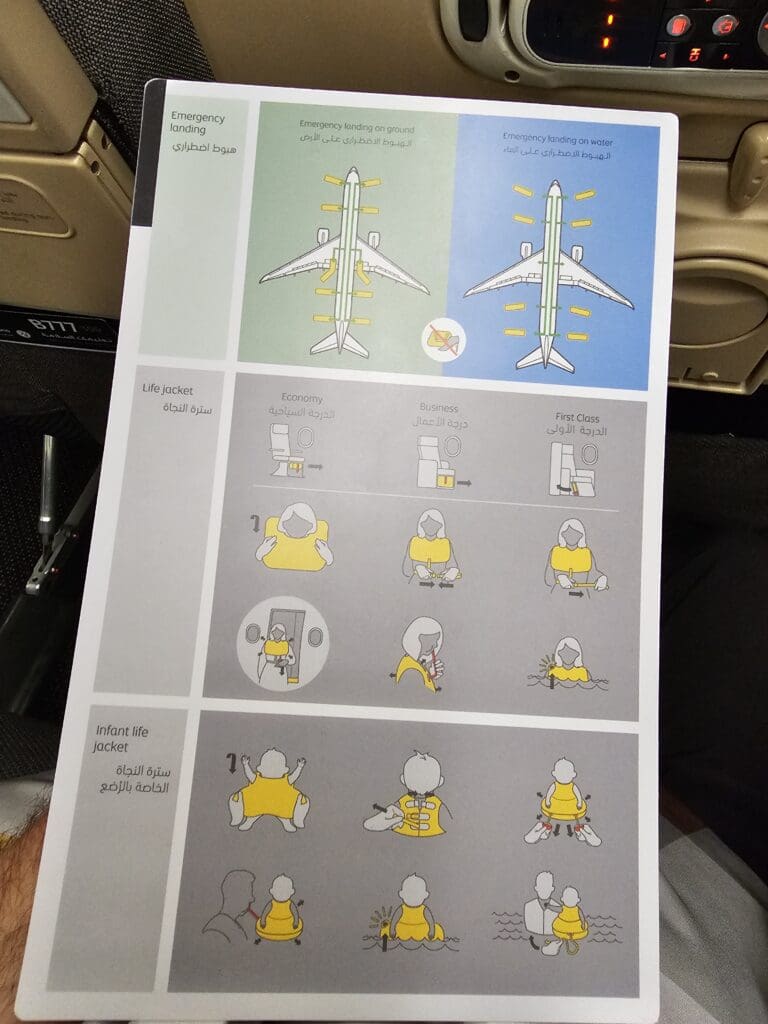
Upon returning to my seat, I sat down and settled in for the journey ahead. Focusing on the seat itself, I was pleased to find this to be soft and comfortable. Whilst not the most spacious Economy seat in the world, this was perfectly adequate for the ride over to Abu Dhabi. Turning to the seatback pocket, this contained a safety card and a sick bag. Those expecting Etihad Airways to provide literature would have been disappointed, as no inflight magazine could be found that day. In terms of its design, the seat did appear to be somewhat outdated, especially compared to the modern seats that are installed onboard Etihad Airways’ Airbus A350s, A380s and Boeing 787s. The aircraft is still fitted with the same type of seats as when delivered back in 2013, and the same ones that I had sat in on my Etihad Airways flights from Manchester to Incheon and back in 2014.

Once seated, it wasn’t long before the rearmost cabin began to fill up whilst outside a seemingly endless stream of ULD containers could be seen being loaded into the aircraft accompanied by plenty of jolts and thumps as these were moved into position below. Back inside, I was soon joined by seatmates, who, like many of my fellow passengers came in the form of Australian tourists commencing their long trek back Down Under and were presumably connecting onwards to Etihad’s evening flight to Melbourne. As the final passengers made their way into the aircraft, at 1000, the Captain’s voice filled the cabin as they performed their welcome announcement first in Arabic, and then again in English. This consisted of the usual welcomes and thanks, a mention of the short flight time of five hours and an update on the balmy weather in Abu Dhabi.
Once the Captain’s announcement had reached its end, the Cabin Manager performed their welcome in Arabic and English as the final ULDs could be seen being loaded onto the aircraft. This announcement consisted of the usual information, however, they also advised passengers that the usage of powerbanks was prohibited during the flight. Whilst this is the first time I’ve heard of these being banned onboard, given the number of incidents involving the combustion of such devices across the world, this is not particularly surprising. That said, I did spot multiple passengers using these throughout the flight so I am not too sure how well this was policed. With ten minutes to go until our departure time, boarding was announced as complete and the ground staff were requested to leave the aircraft.
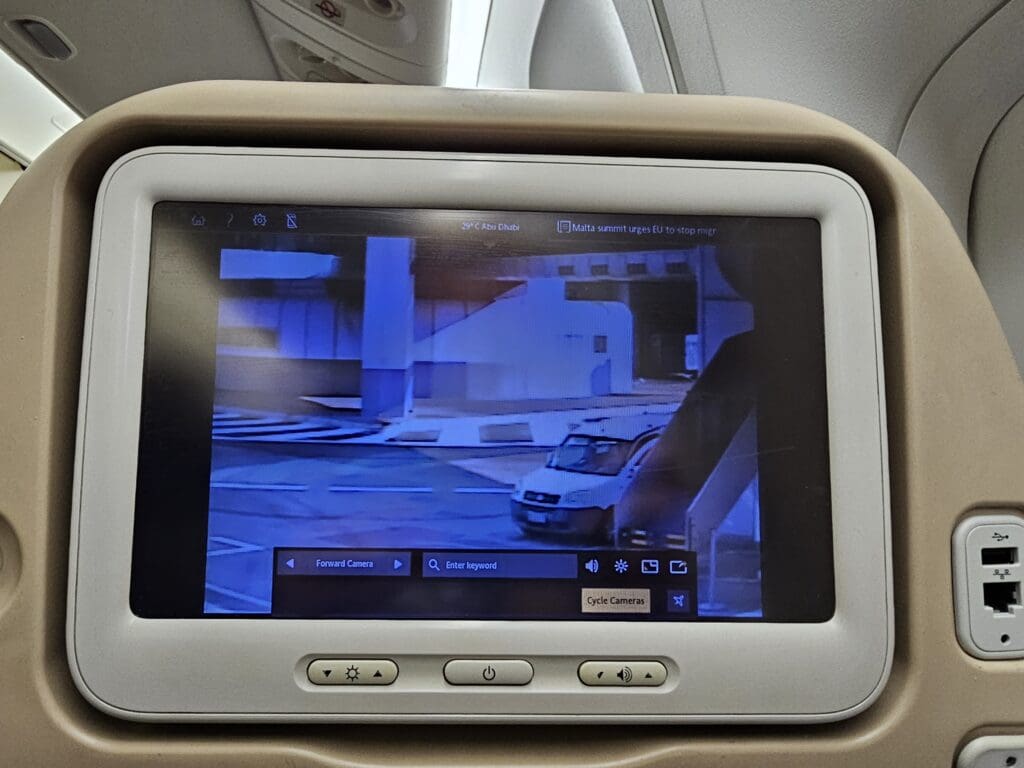
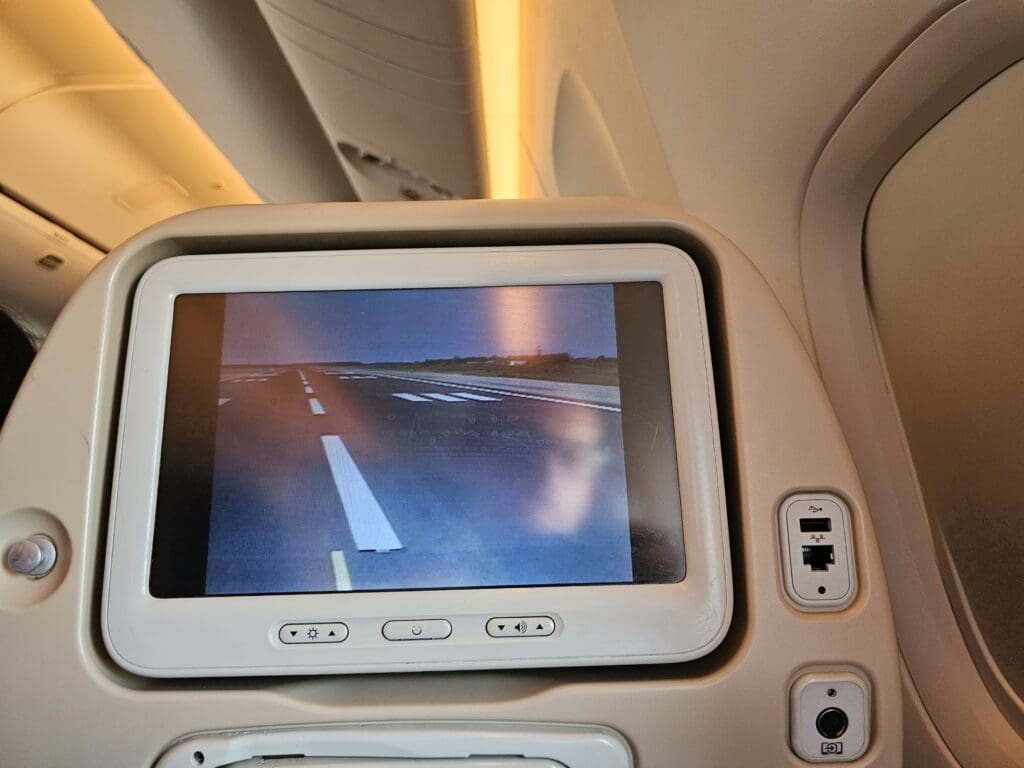
Hinting at our imminent departure, at 1024, the pre-safety video prayer took over the screens and speakers and then transformed into the safety video. Other than the fact that this was filmed in the Louvre Abu Dhabi, the safety video was relatively standard with no gimmicks or humour, yet importantly, this served its purpose and thus got no complaints from me! During our journey rearwards, the Boeing 777’s two massive General Electric GE90-115B engines powered into life, temporarily resulting in plenty of noise and vibration before things quietened down. As we commenced our taxi, the crew passed through the cabin, ensuring that all was secure for departure before the lights transformed to a sunrise/sunset yellow, or perhaps more appropriately, a desert gold. Soon leaving the satellite terminal behind, by this time, the selection of jets waiting there had changed slightly, with two new arrivals in the form of Airbus A330s – one from Air Transat and the other from Turkish Airlines. As we made our way to the runway, like a true enthusiast, I watched the forward-facing camera, which revealed there to be quite a queue of aircraft waiting to take off from Runway 25.
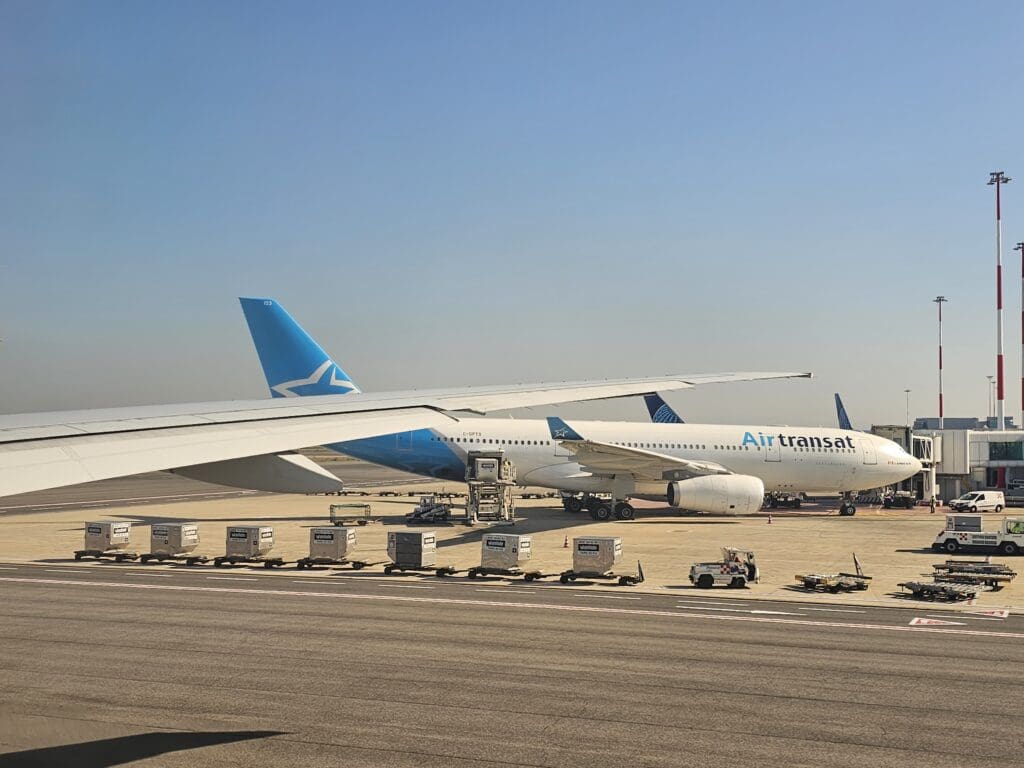
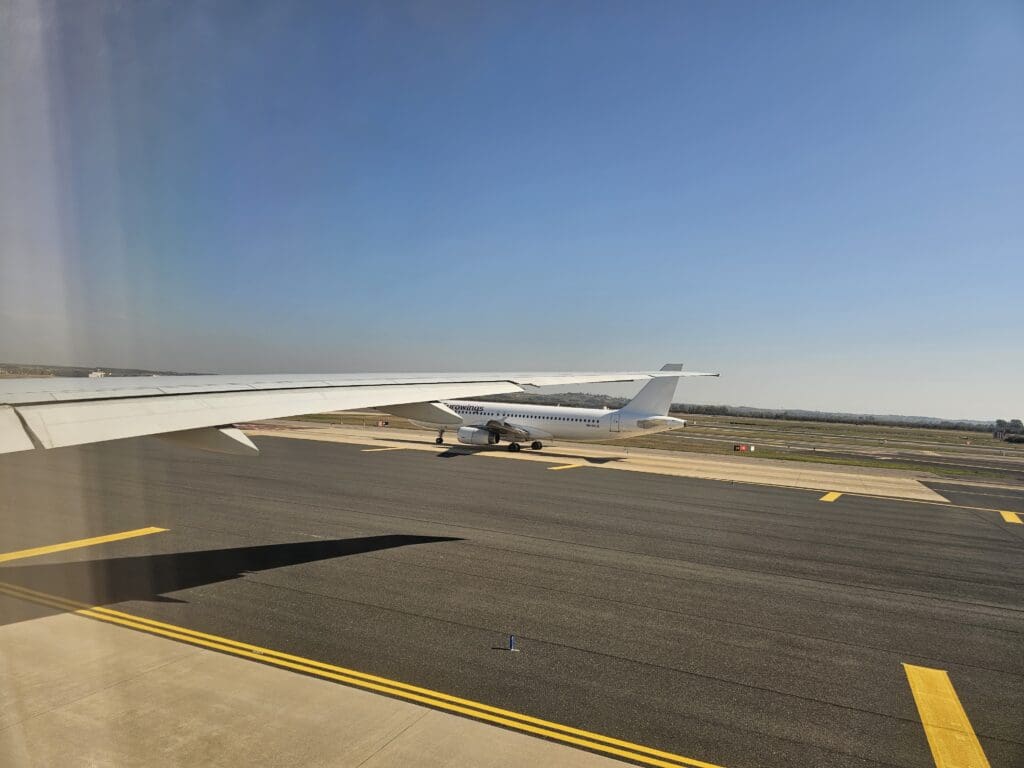
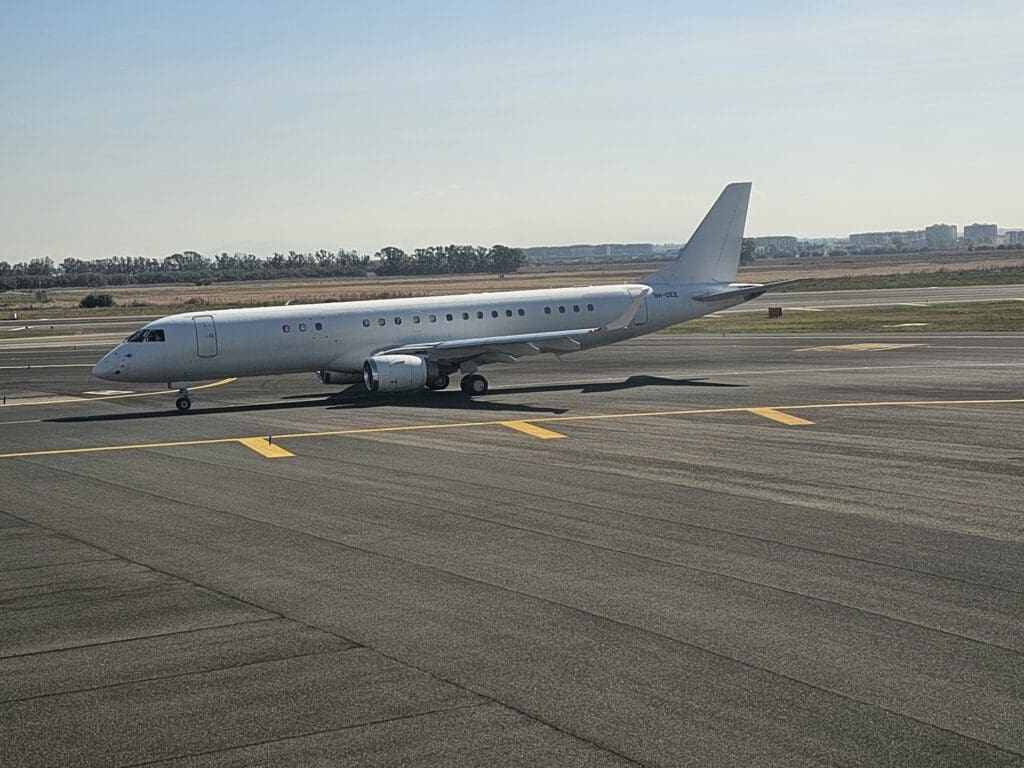
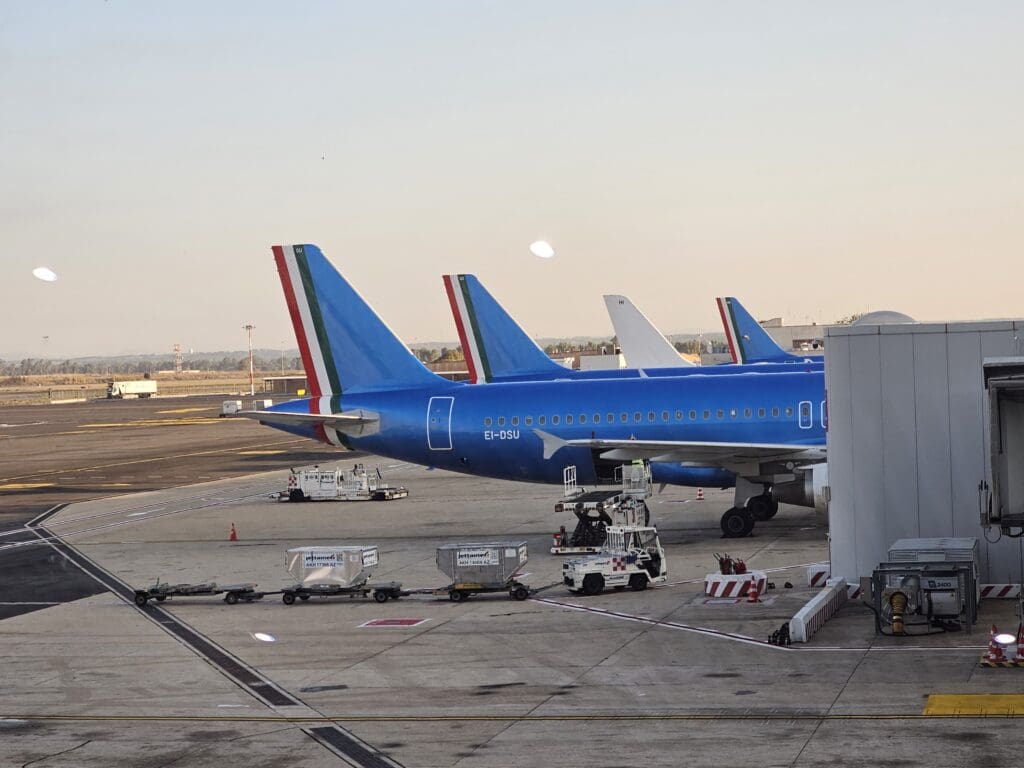
As we passed Terminal 1, I was given one last view of the sea of blue ITA Airways Airbuses waiting there for their next trips. From there, the aircraft came to a halt before slowly edging forward at a snail’s pace as a selection of aircraft overtook us. Finally, over thirty minutes after leaving the stand, at 1057 the Boeing slowly lumbered onto the runway. Following a short pause, the two engines roared into life, and the aircraft performed its powerful yet long take-off roll, eventually rotating upwards into the Italian skies.
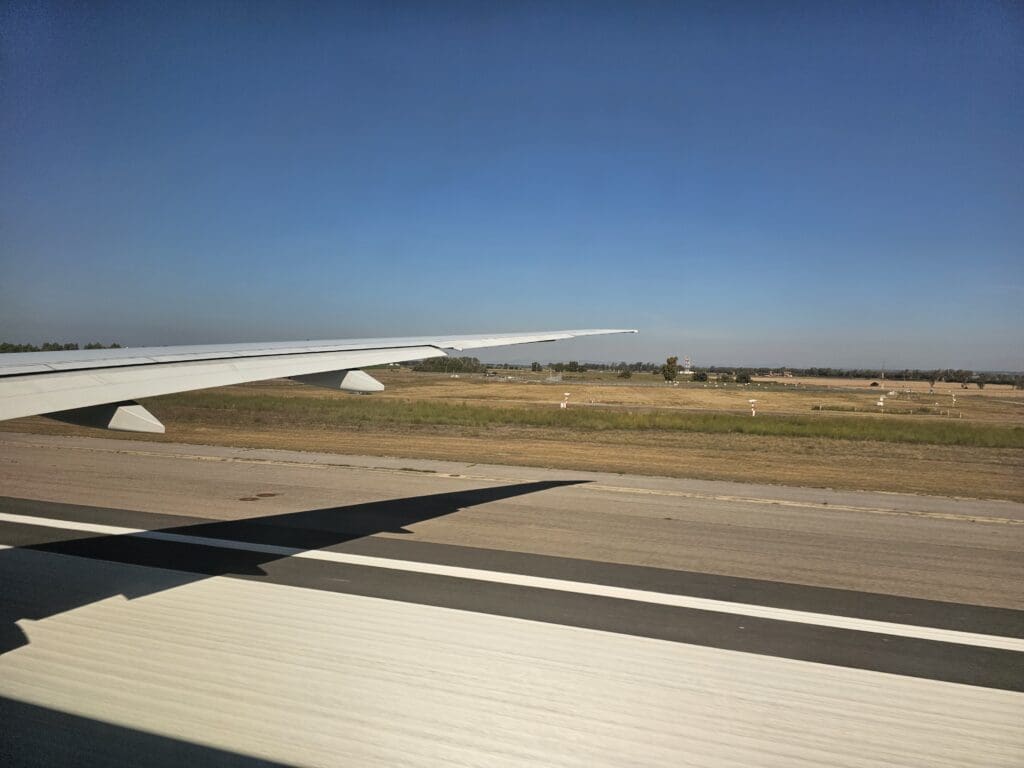
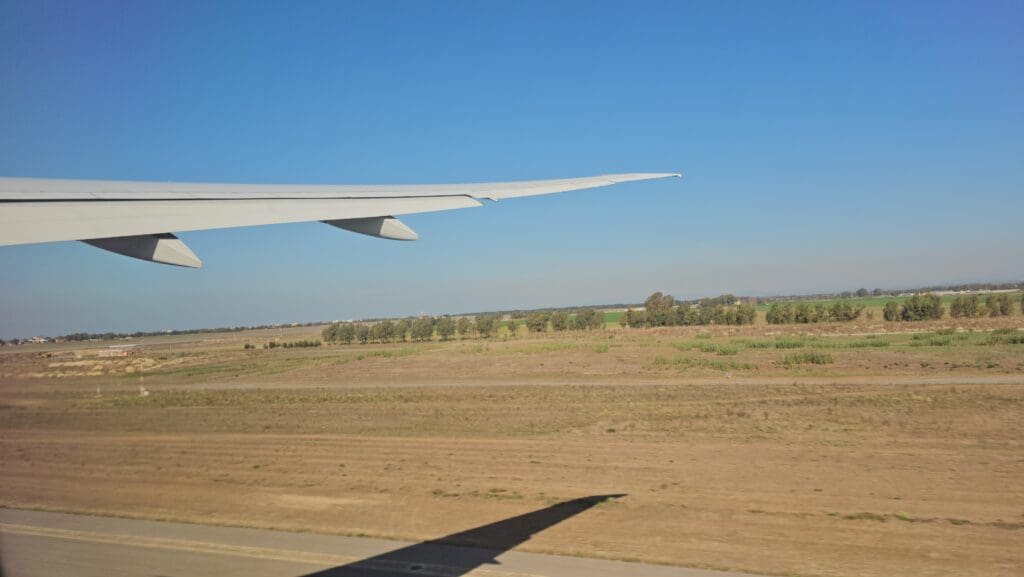
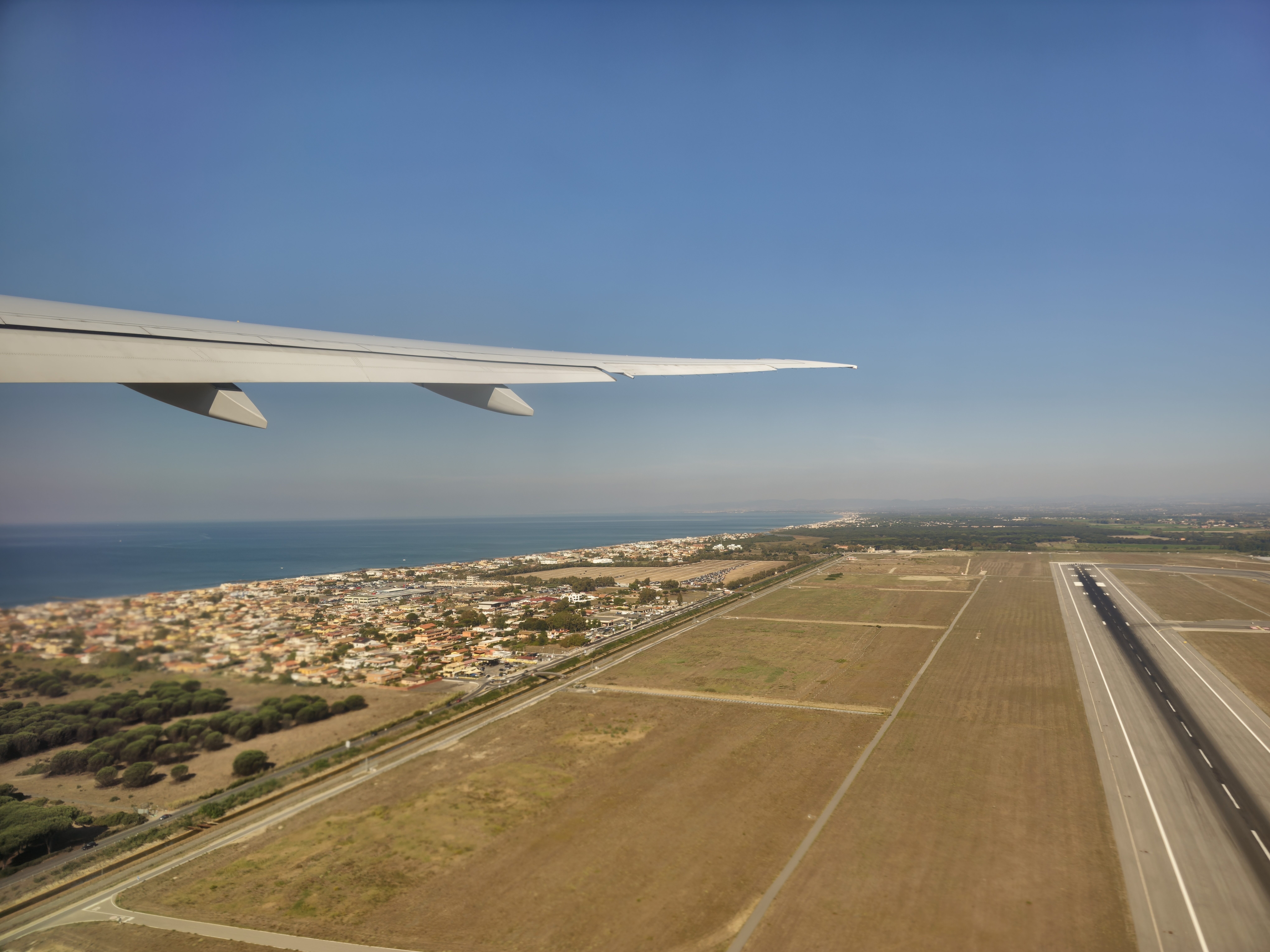
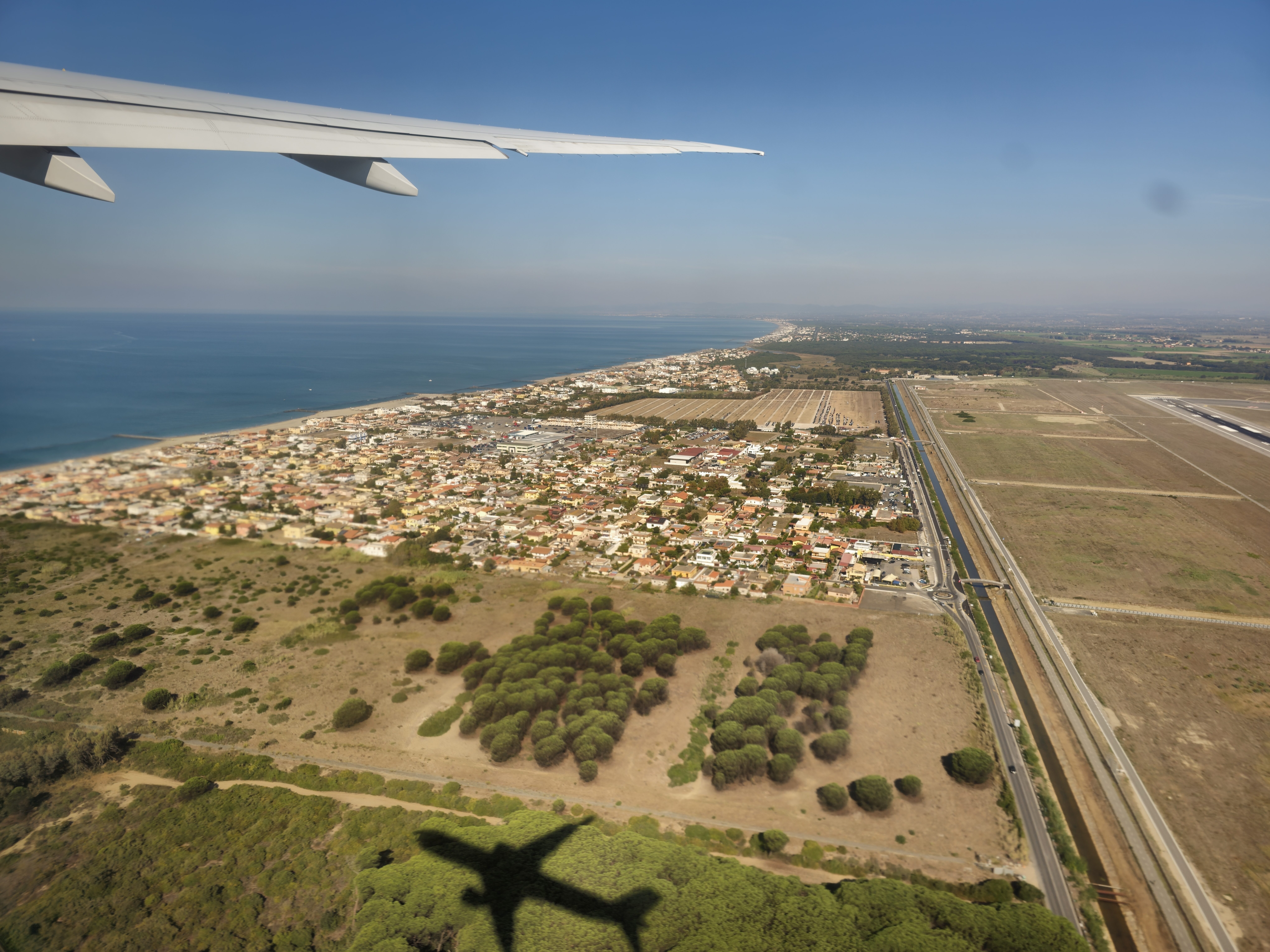
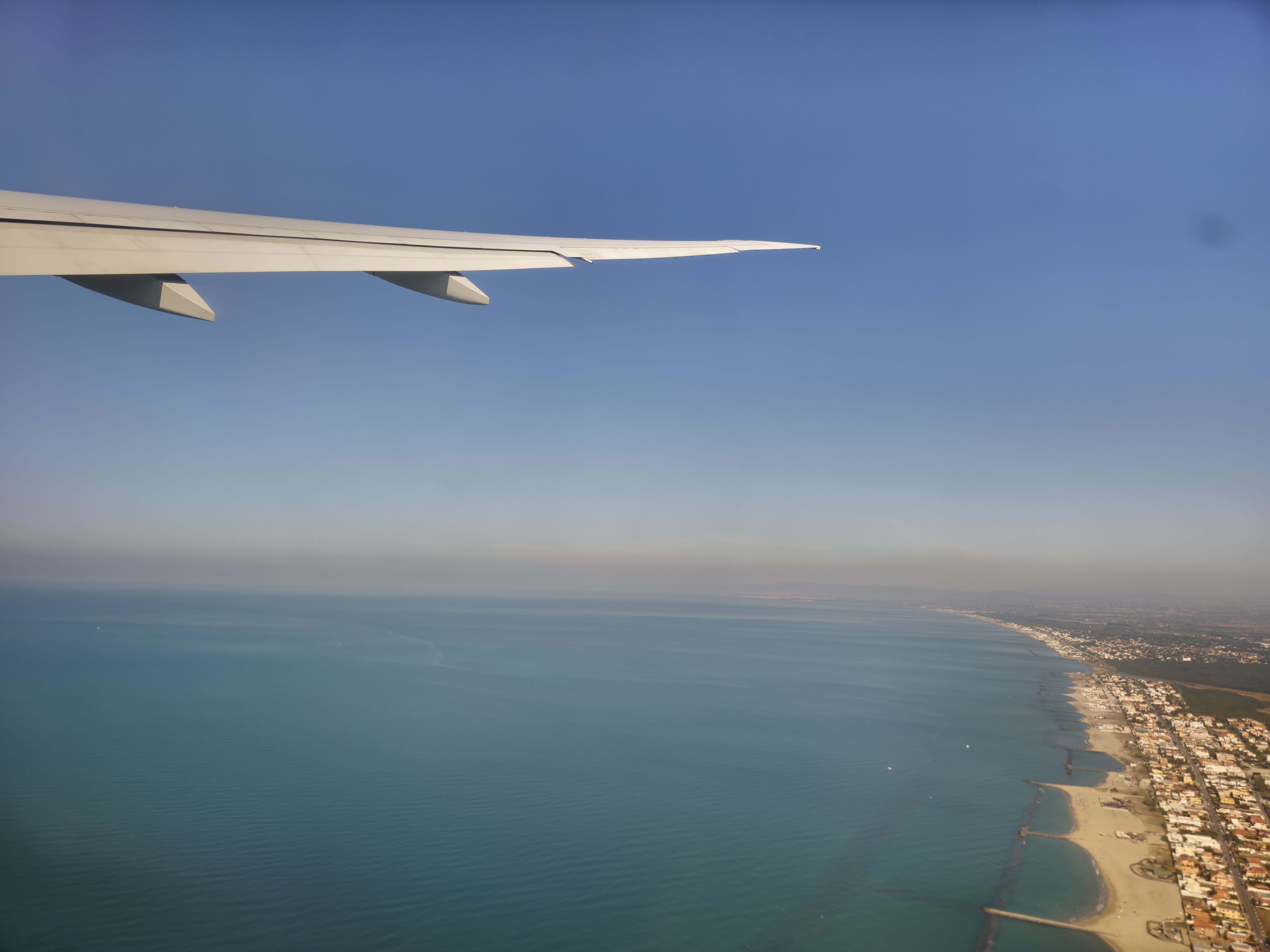
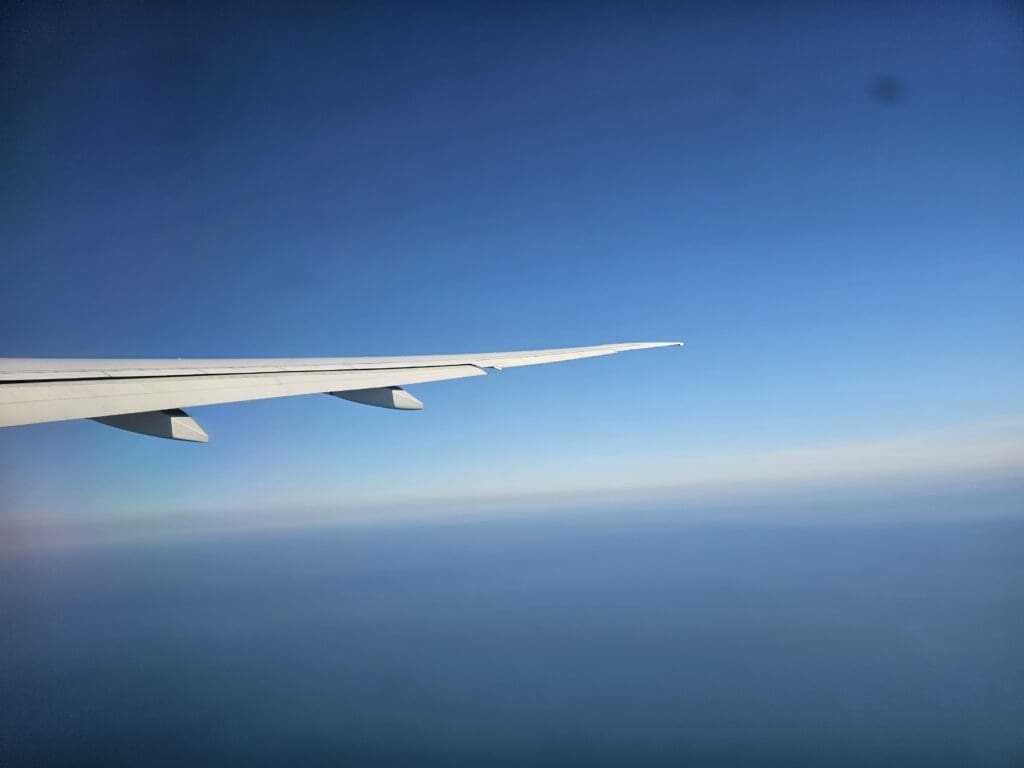
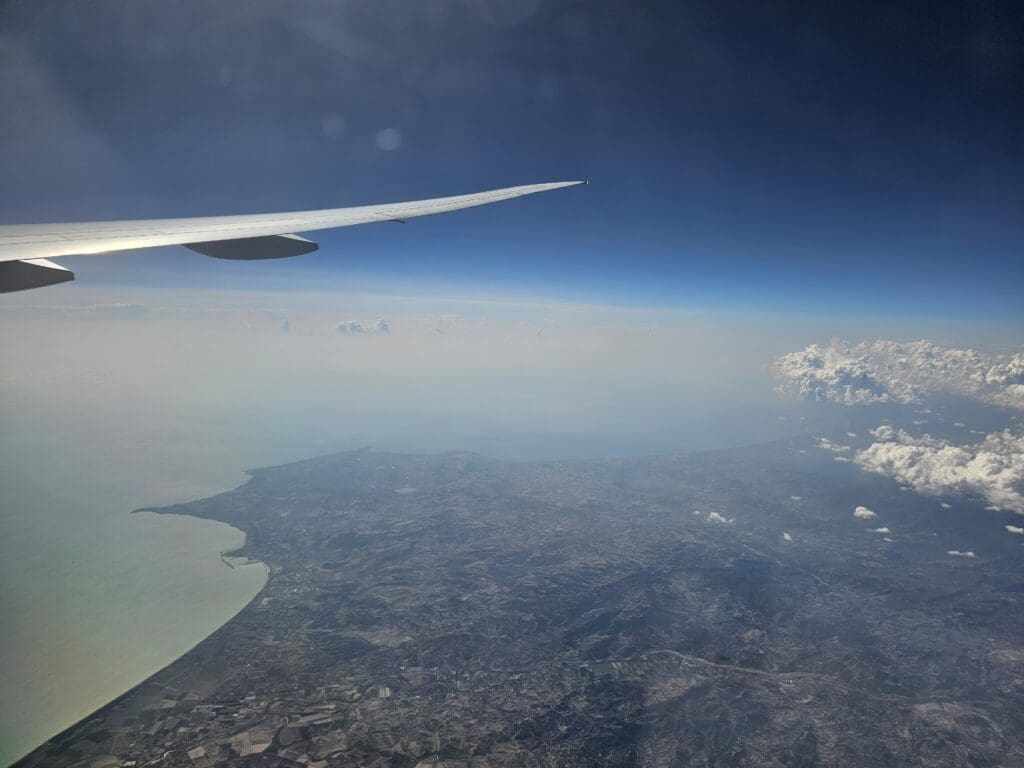
Given Rome Fiumicino’s proximity to the shoreline, it didn’t come as a surprise to find that just seconds after taking off, we passed the town of Focene and headed out over the blue waters of the Tyrrhenian Sea. From there, we soon made a gentle bank to the left, rolled out on a southeasterly heading and continued flying almost in a straight line for the duration of the flight. That morning, our departure had gone without a bump, and the seatbelt signs were extinguished as soon as we passed 10,000 feet. Sitting on the right-hand side of the aircraft, unfortunately, little could be seen during the first half hour or so of our flight. However, travelling down the west coast of Italy, those on the port side of the cabin would have been treated to superb views of famous places such as Naples, Pompei, Sorrento and the mountains of Salerno.
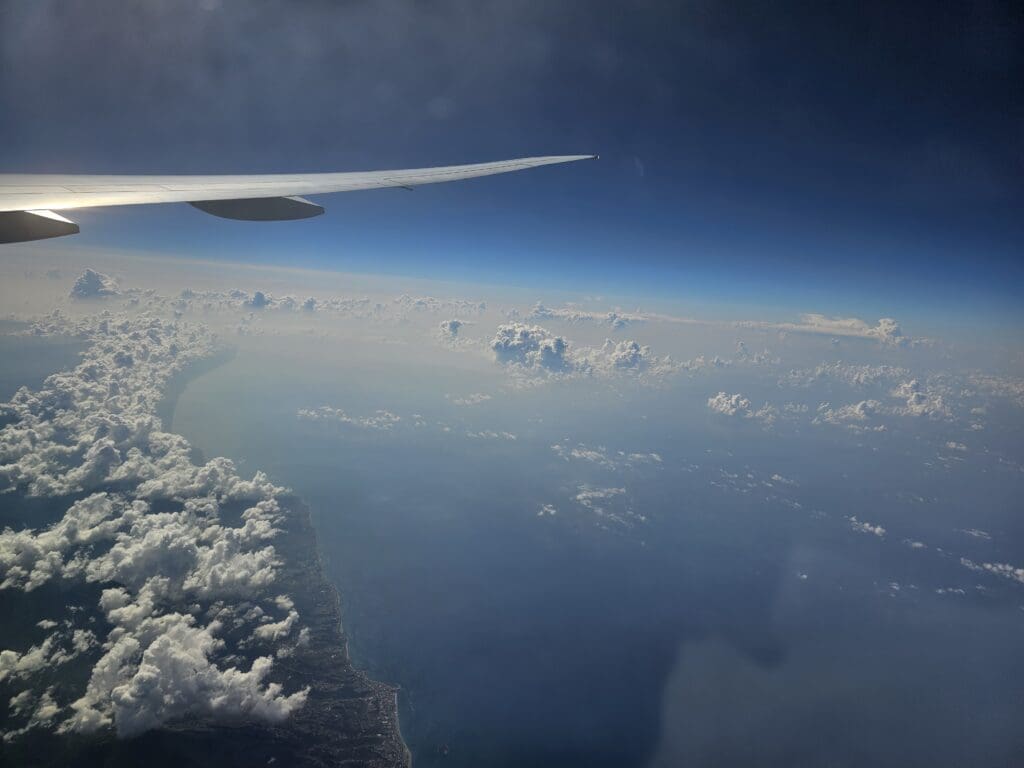
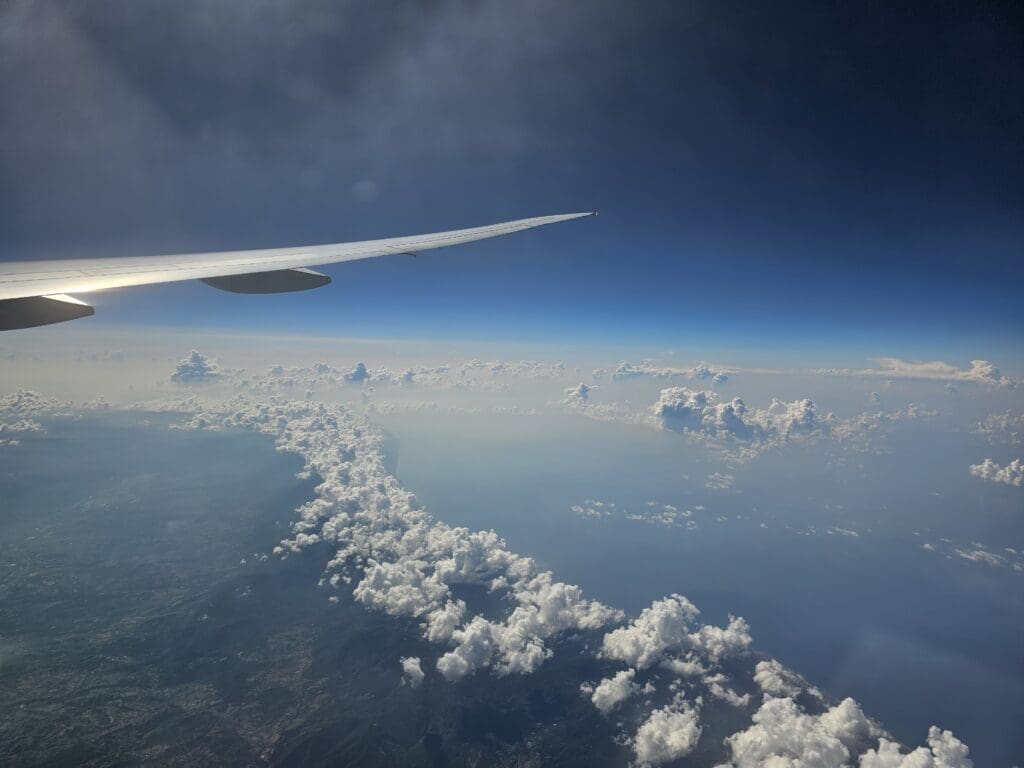
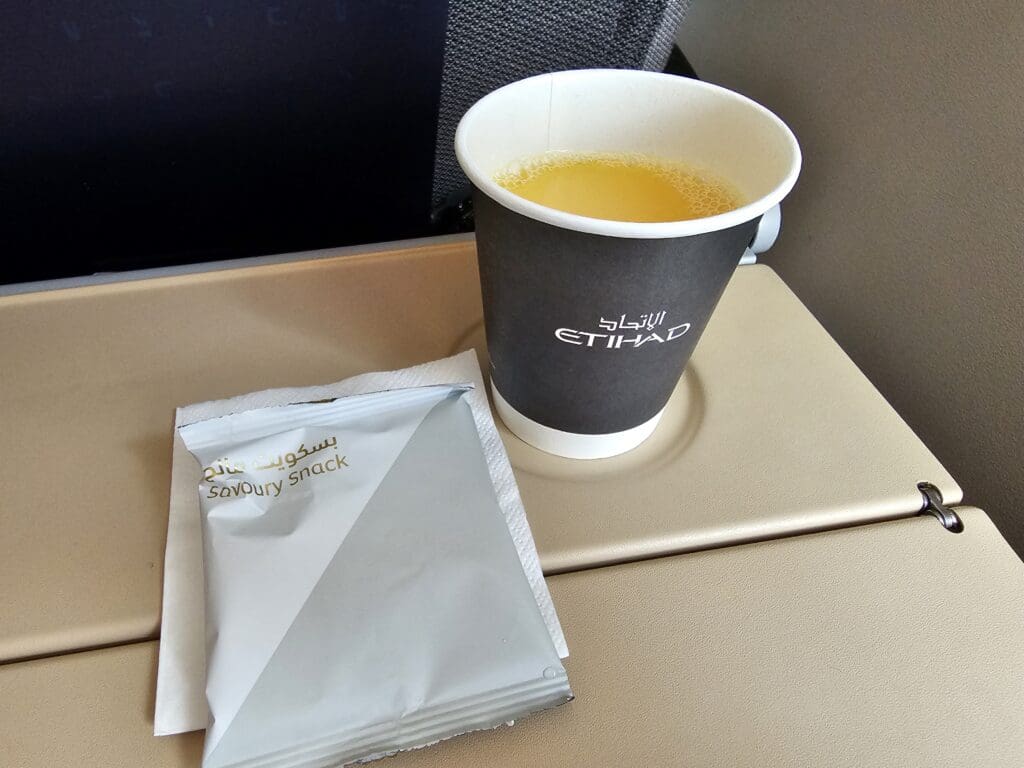
Back inside the cabin, at 1127 the service carts were rolled out into the aisle indicating the commencement of the pre-lunch beverage service. Within a few minutes, a friendly flight attendant reached my row and after opting for an orange juice, this was cautiously passed over to me in a paper cup accompanied by a serviette and a small bag of salted crackers. As I nibbled on these, the Boeing crossed over the Calabrian coastline and soon the region’s beige-coloured hills appeared below as we made an eight-minute crossing of the region. From there, the aircraft crossed over Italy’s eastern coastline and cruised out towards Greece over the waters of the Ionian Sea.
With a temporary lull in between the drinks and lunch service and little to see other than the sea below, at this time I decided to explore the delights of Etihad Airways’ E-Box inflight entertainment system. Given Etihad Airways’ global route network and generally highly regarded status, you would expect the carrier to have a decent selection of entertainment content, and indeed this proved to be true. In total, I counted 290 films that included everything from timeless classics to very recent releases and pretty much everything in between. For those fancying a shorter watch, a total of 246 television programmes were on offer, with these proudly including a good amount of content on Abu Dhabi, its culture and history. If seeking to keep up-to-date with the latest happenings on the ground, six live television channels were offered in the form of BBC, CNBC, CNN, NHK World and Sky News Arabic, alongside a news feed within the system itself. In addition, a near-endless stream of audio tracks and the Quran could be listened to during the flight. Finally, 28 games were also on offer on this system. Whilst I had no intention of watching anything on this flight, I picked a film at random and found this to commence with advertisements for the carrier’s onboard wi-fi service, ingeniously named ‘Wi-Fly’ as well as a reel showing the current highlights on E-Box. Two more novel aspects of the system came in the form of the ability to order drinks and have them delivered to your seat (unfortunately, I did not get around to testing this), and another whereby you could pair your screen with that of another passenger.
Whilst all the above was very positive, there were a few downsides to the inflight entertainment system. In particular, despite being of an acceptable size, the screen was of slightly lower quality than your modern inflight entertainment screens of today. However, perhaps the most obvious negative was the poor responsiveness of the touchscreen function and incorrect calibration. Both of these combined meant that I resorted to using the clunky remote control to navigate my way through this. Finally, given Etihad Airways’ expansive route network, I was a little surprised to find that the system was available in English and Arabic only, with no other languages offered. Once I had exhausted the inflight entertainment system, I decided to connect to the onboard wi-fi or Wi-Fly service, as Etihad Airways refers to it! Those who are members of the airline’s frequent flyer programme, Etihad Guest, can connect to this and use this without charge for messaging apps. However, those requiring something more could access unlimited wifi for the fair price of $9.99. Those without Etihad Guest membership can still connect to the wifi and access a range of magazines, read the latest headlines, track the progress of the flight, check the weather at the destination and find out more about Abu Dhabi.
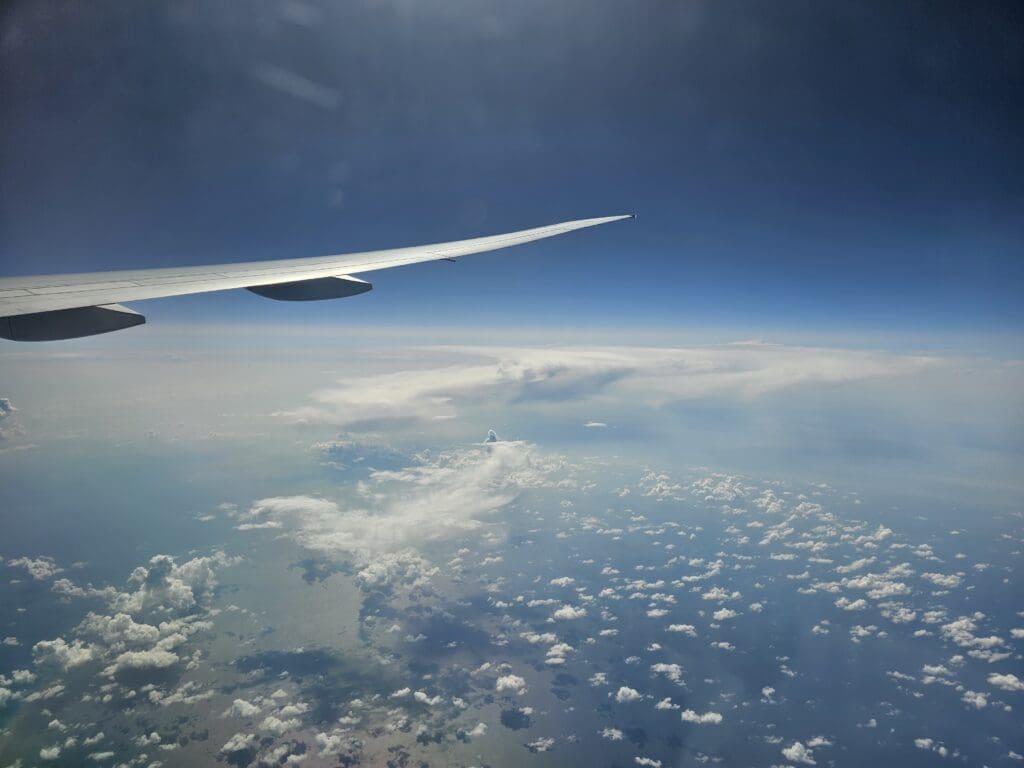
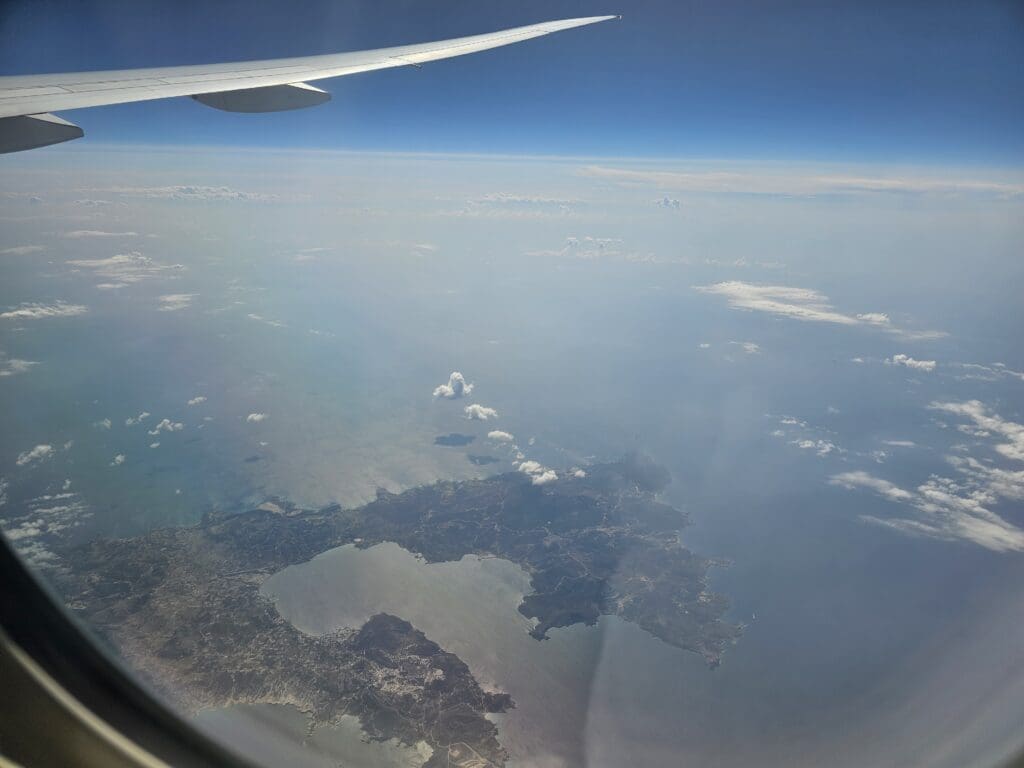
Fortunately, throughout the flight, the crew did not request passengers to shut their window blinds and seeing as most of those around me remained awake, I did not feel under pressure to shut them. Around twenty minutes after leaving Italy behind, the Greek island of Zakynthos appeared where plenty of tall stormy-looking clouds could be seen lingering. Passing this in no time, the aircraft made landfall over the Peloponnese however, thanks to clouds below, nothing of this could be seen as we cut right across the region. However, as we made our way out over the Aegean Sea, the clouds parted and revealed the occasional cluster of small islands, which included the likes of Milos and Santorini. As we passed these, around an hour and a half into the flight, the crew took the aisles once more and the lunch service commenced.
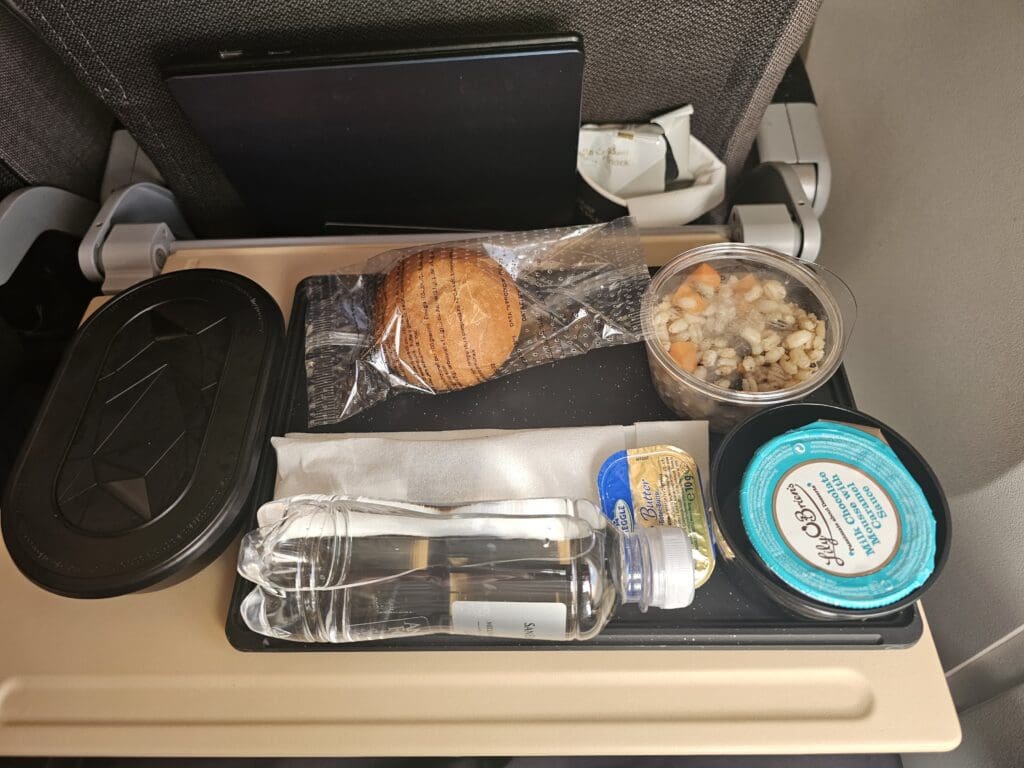
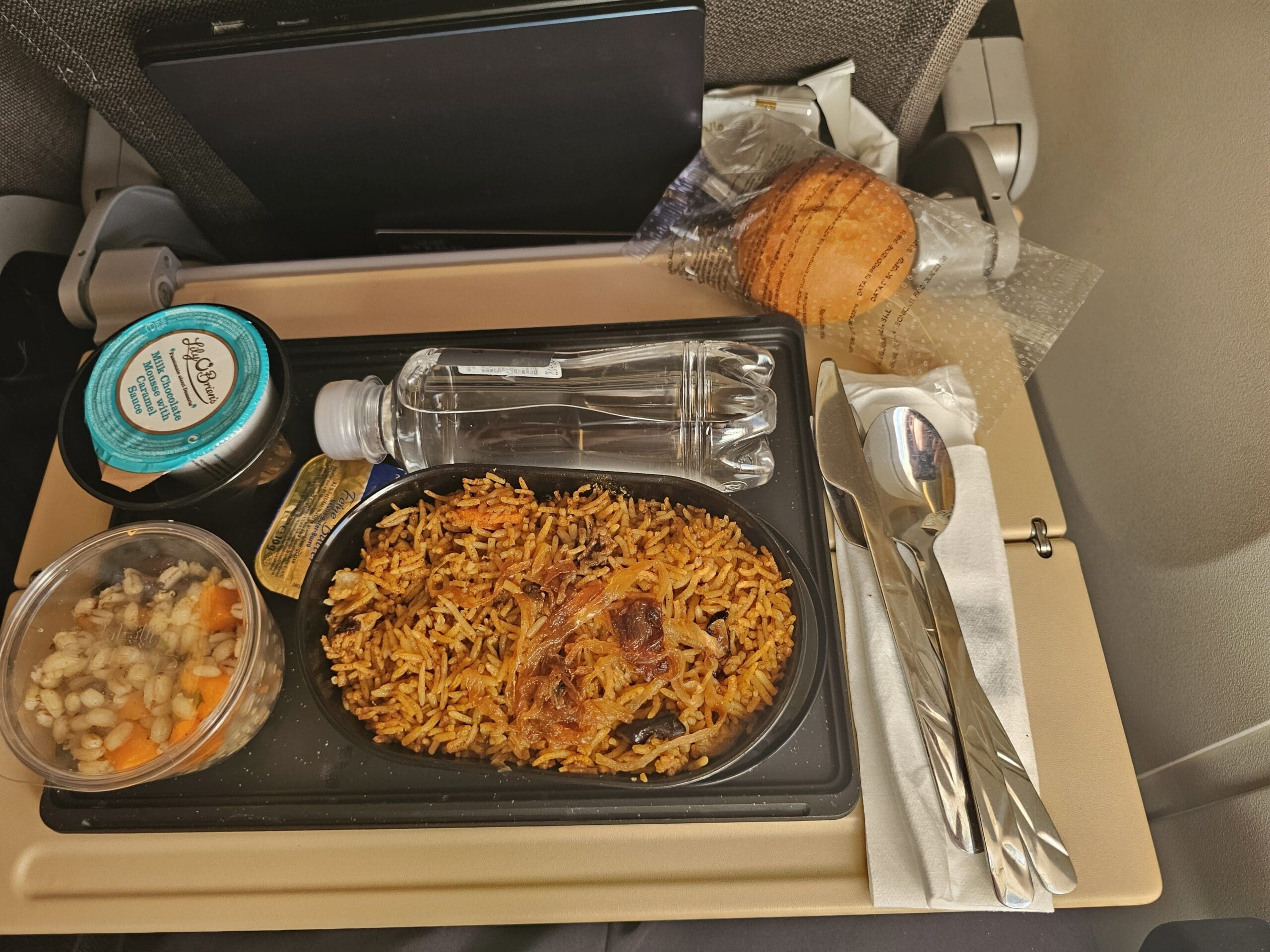
Taking their time to work through the cabin, around thirty minutes after this commenced one of the flight attendants reached my row at which point the aircraft was roughly halfway between Rhodes and Cyprus. That afternoon, two options were offered – ‘chicken’ or ‘vegetarian pasta’. Whilst I’m sure that the flight attendant would have explained these options in more detail had I asked, these basic descriptions left plenty to the imagination and, curious as to just what sort of dish it would be, I decided to go for the chicken. A few moments later, I was handed a tray which contained the main dish, a grain salad, a typically hard bread roll accompanied with a packet of butter, a small bottle of still water and a chocolate and salted caramel mousse to top this off. Adding some class, the eating utensils came in the form of proper metal cutlery featuring Etihad Airways’ logo. Opening the main dish, this turned out to be kabsa, a popular Middle Eastern chicken dish consisting of chicken with rice. Soon tasting this, I found this to be delicious and of decent quality, neither being too dry nor greasy. Meanwhile, the side salad was also of good quality, as was the dessert. All in all, I was thus left with absolutely nothing to complain about with this proving to be delicious and of good size and quality for the relatively short flight.
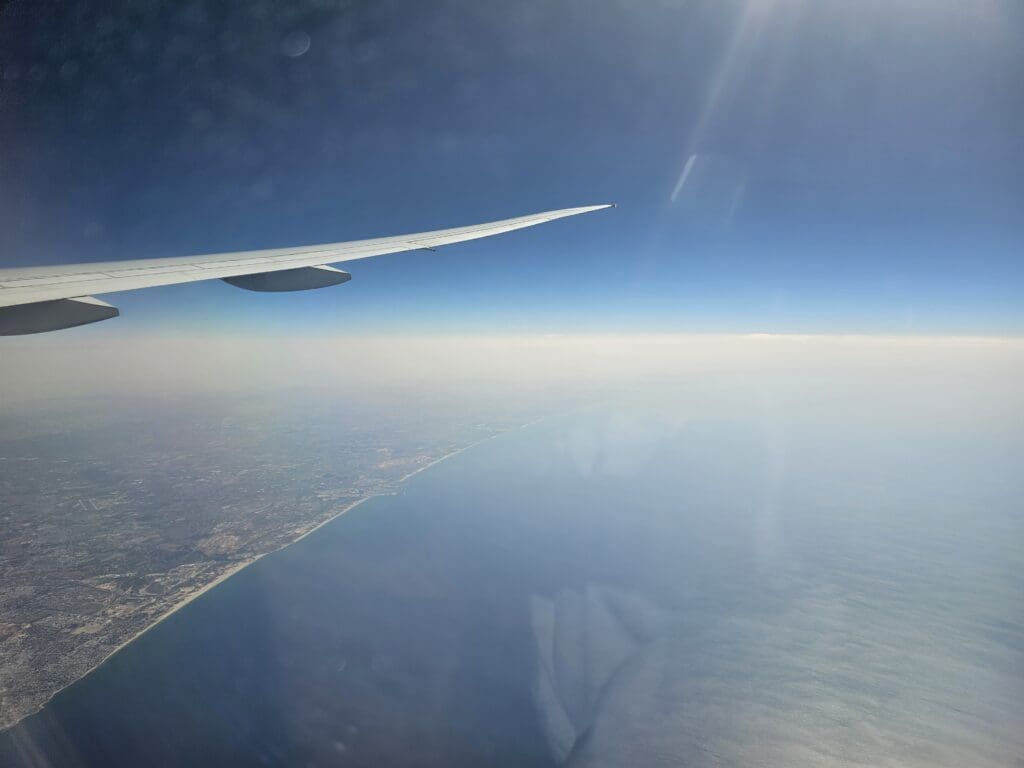
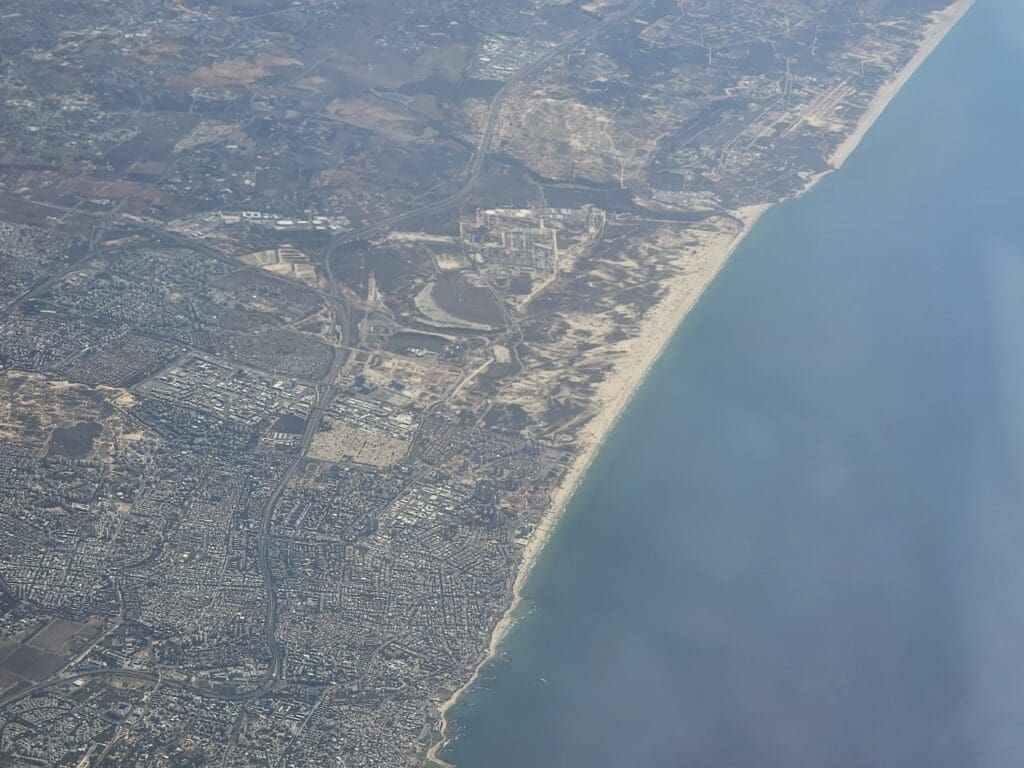
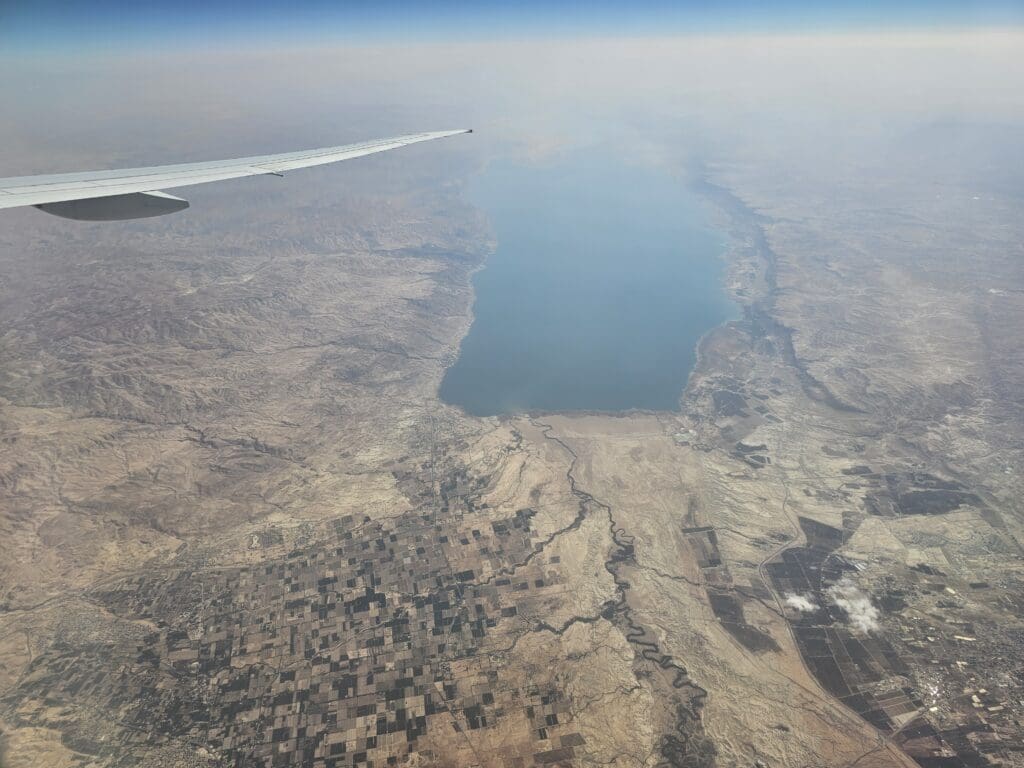
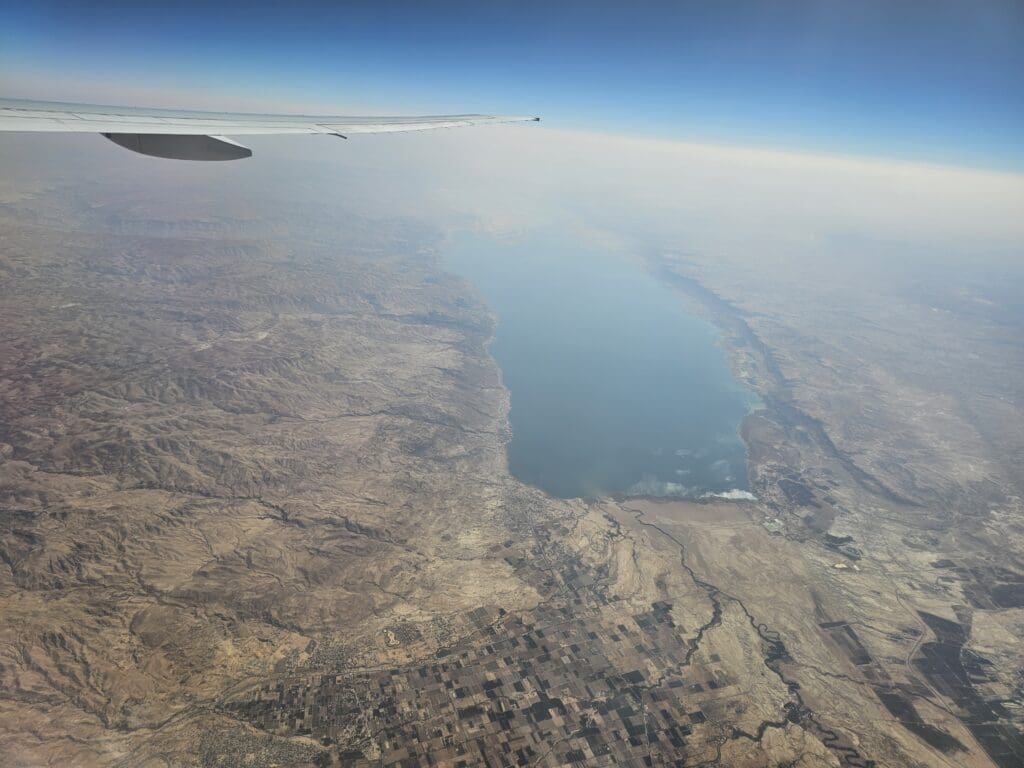
Around thirty minutes later, the flight attendant who had served me returned to collect the empty trays just before we made landfall once again. Travelling around a week before the conflict, that afternoon our flight to Abu Dhabi was to cross right over the heart of Israel, and roughly halfway into the flight, the beaches of Tel Aviv could be seen clearly outside of the window, followed a short time later by the city’s main airport. There, plenty of aircraft could be seen on the ground, both at the terminal and remote stands, before we continued heading westwards, where the hills rose as we crossed over into the skies of the West Bank. A short time later, the hills suddenly subsided and the landscape turned into a much sandier shade as we passed Jericho and the northern shoreline of the famous Dead Sea.
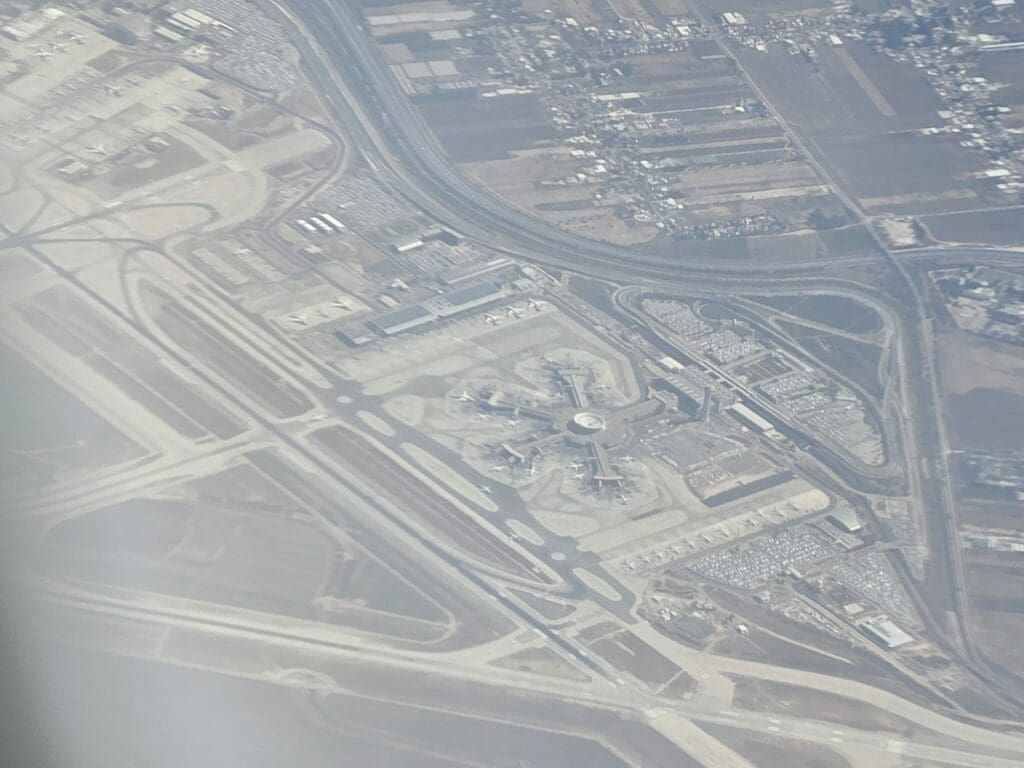
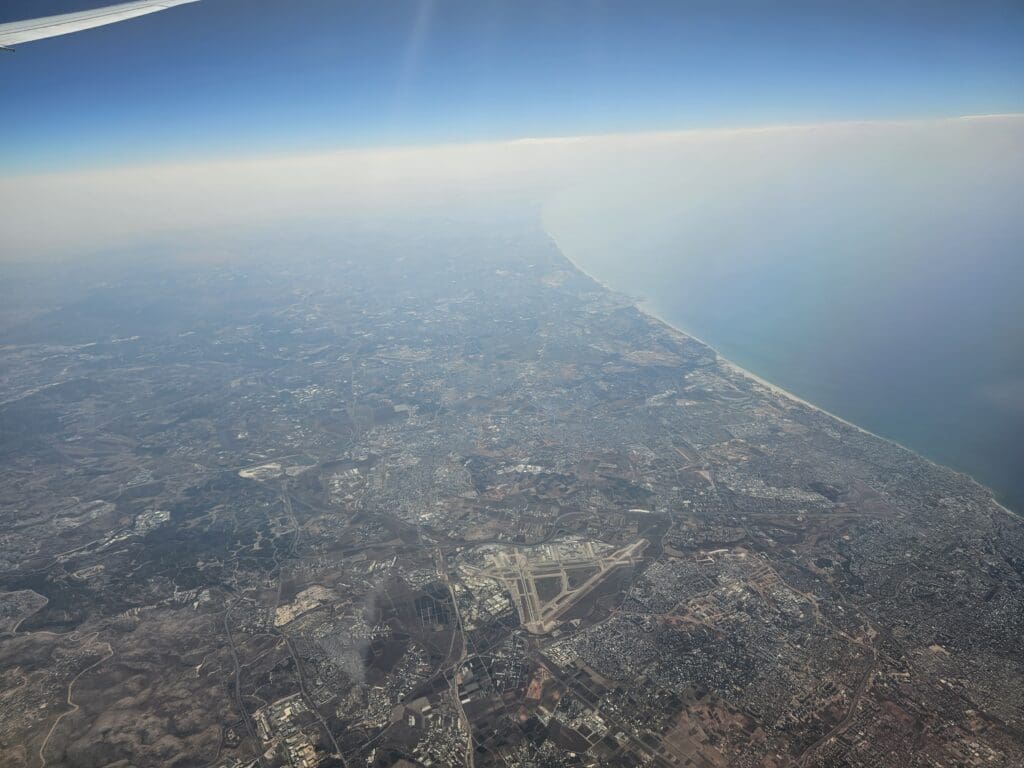
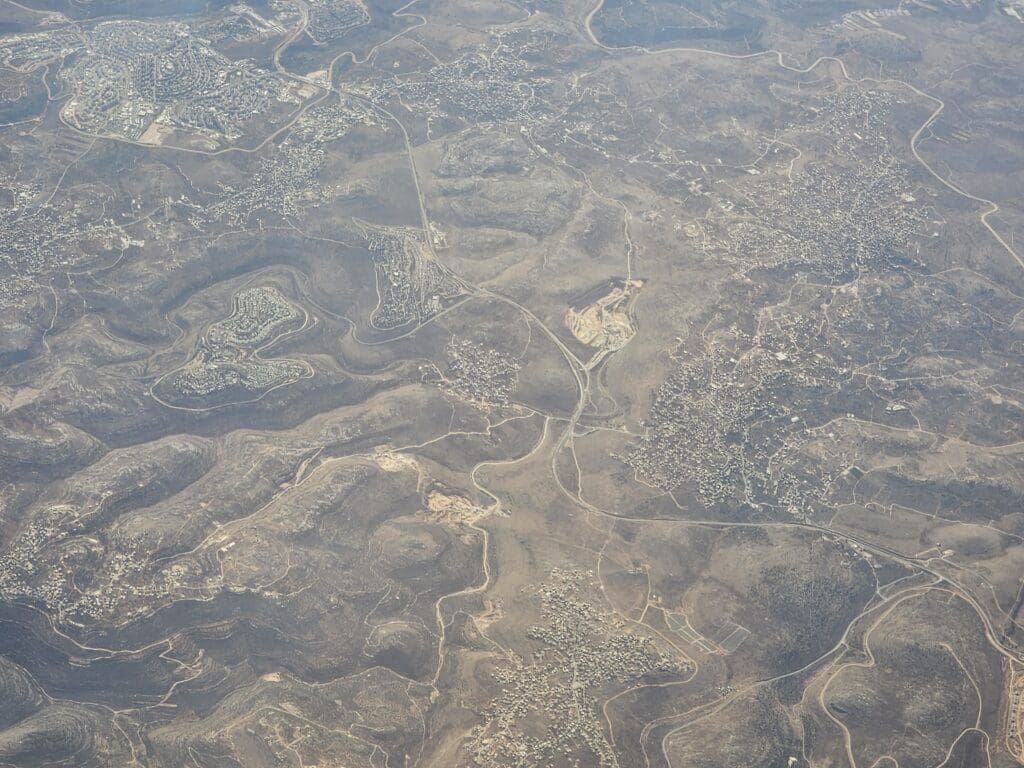
Just four minutes after the aircraft had passed over the shores of Tel Aviv, we then crossed over into the skies of Jordan. After leaving the Dead Sea behind, those on the opposite side of the aircraft would have been treated to a good view of the capital, Amman, however, from the right-hand side, little could be seen other than the very impressive desert landscapes passing 35,000 feet below. This consisted of wadis, rocky landscapes, dried rivers and an endless number of circular fields. This landscape continued unabated as we made our way into Saudi Arabian airspace around eight minutes after entering the skies of Jordan, crossing over the border just to the west of the city of Al Qurayyat in the country’s Al Jawf Province.
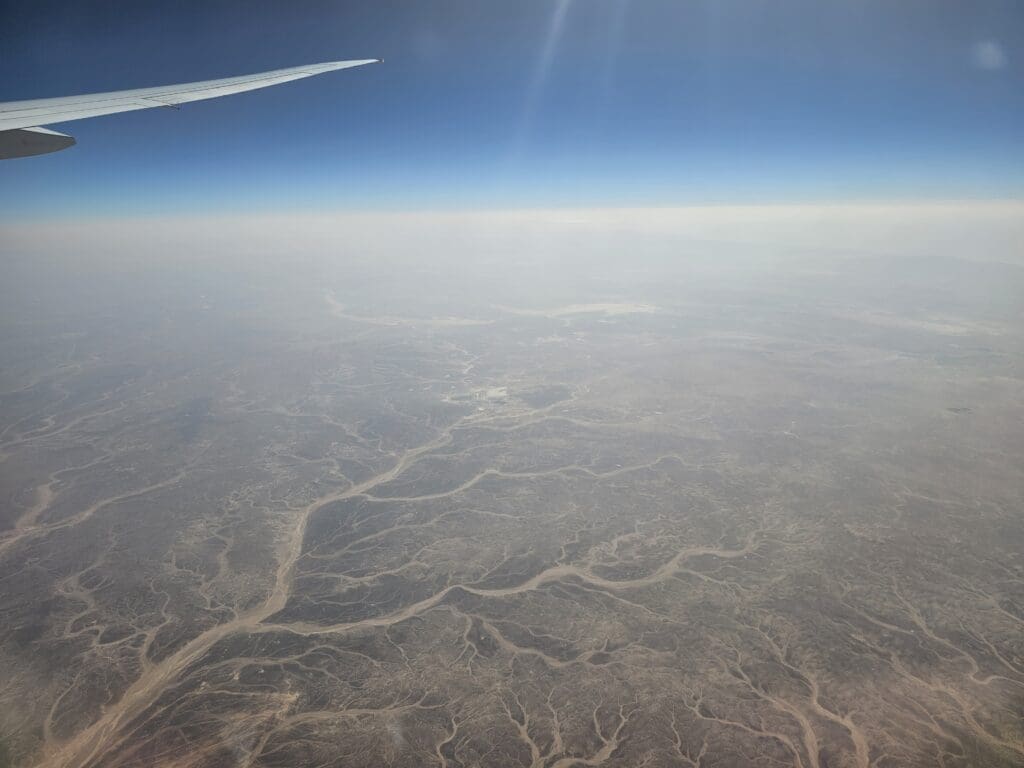
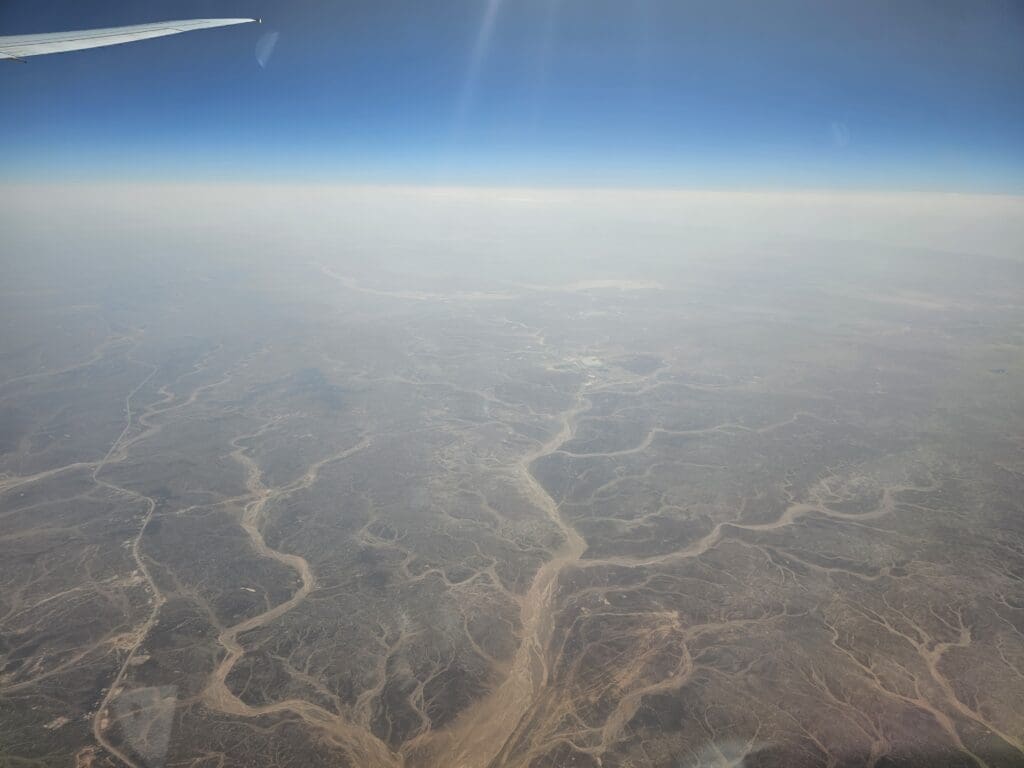
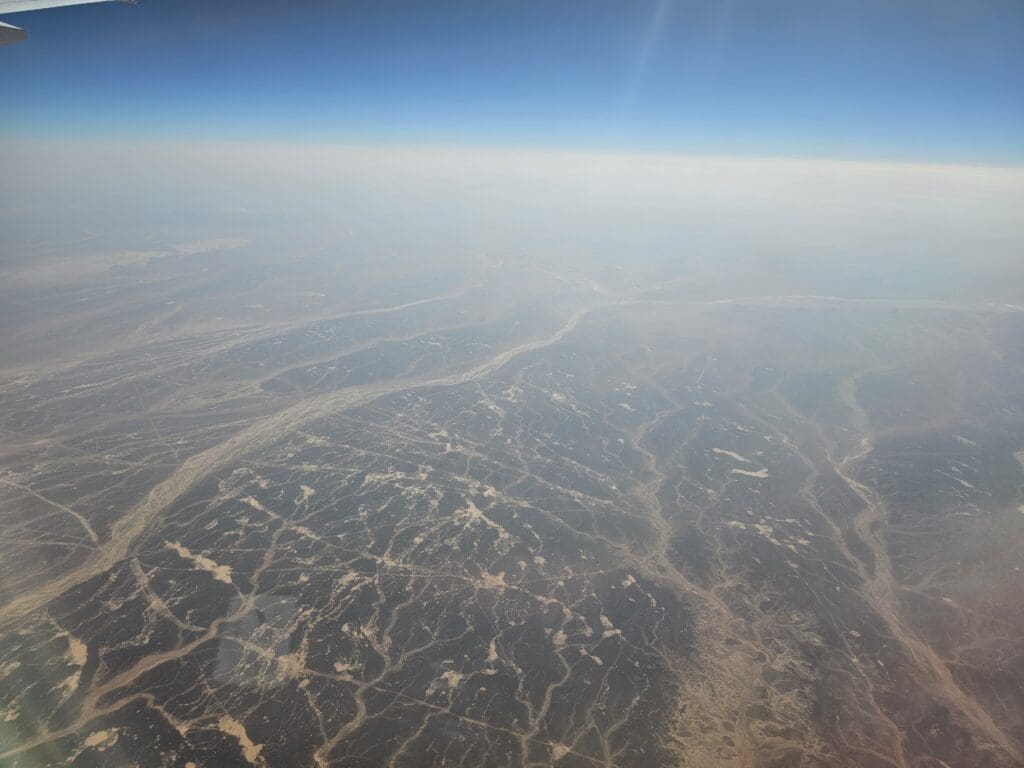
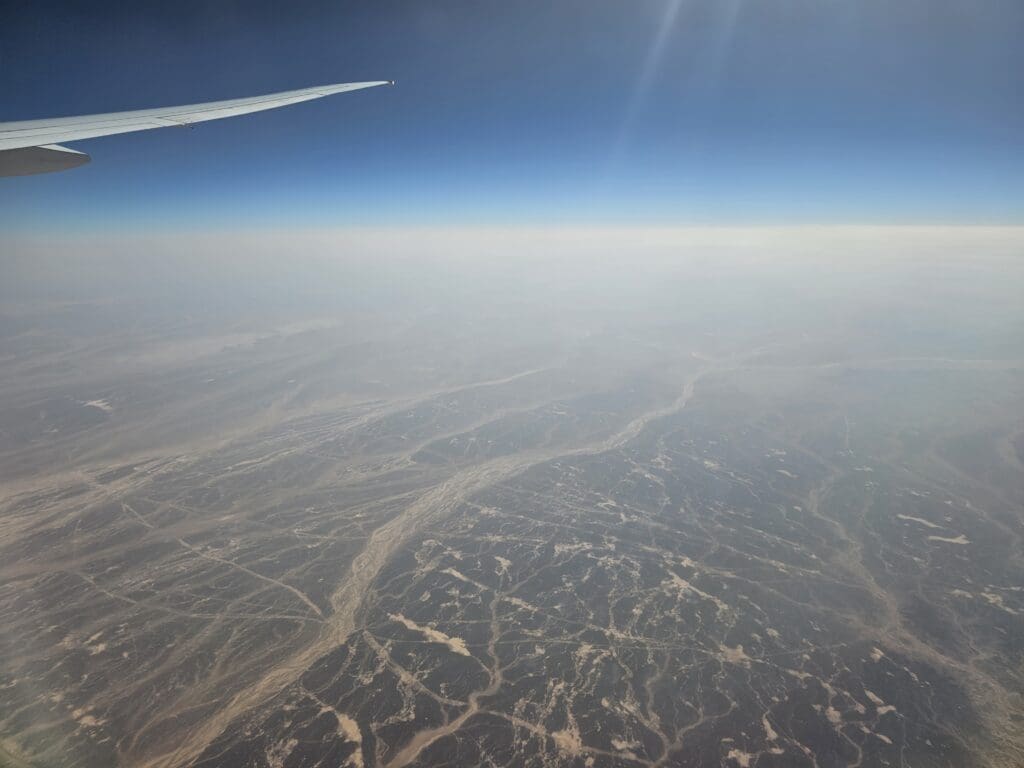

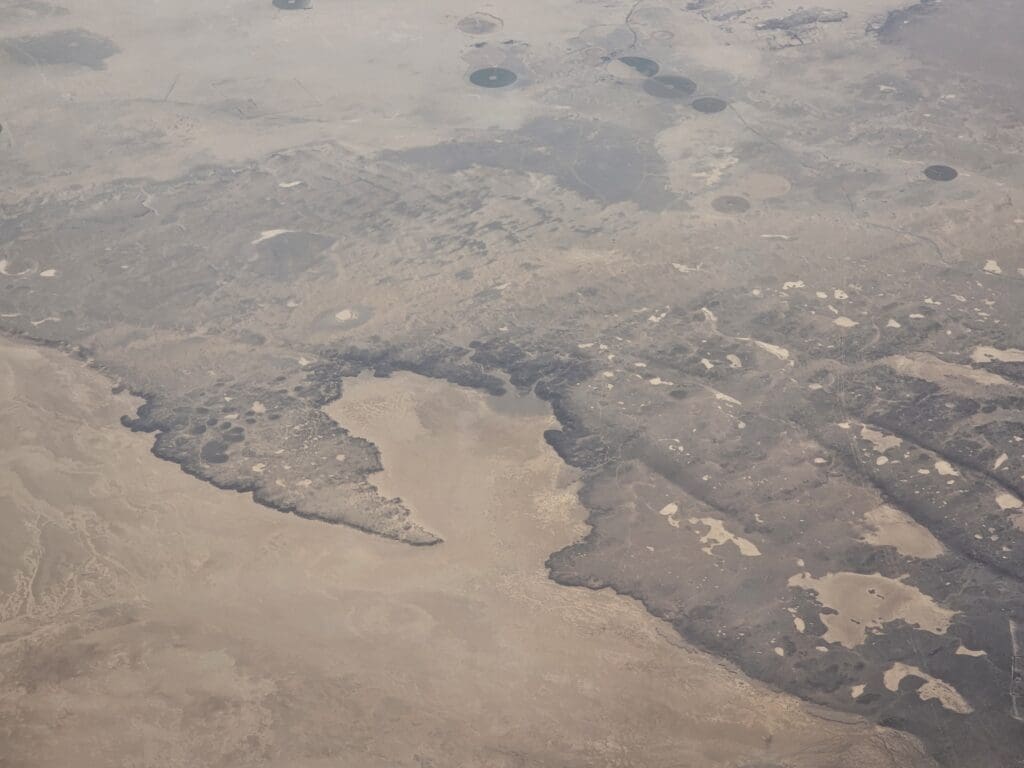
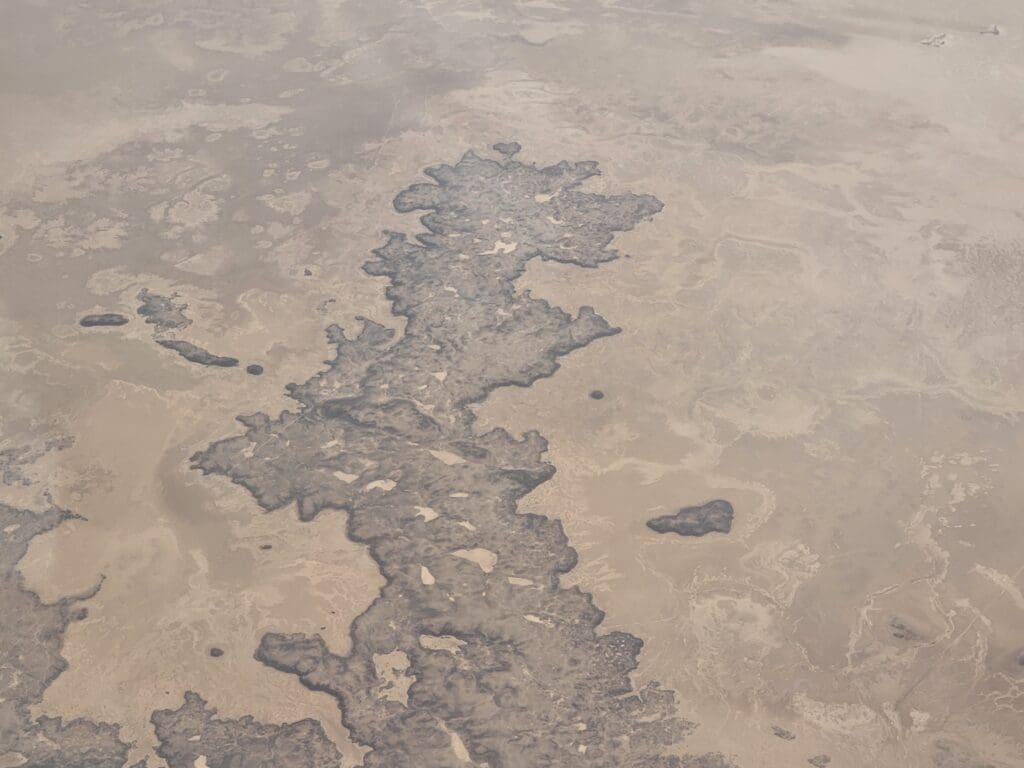
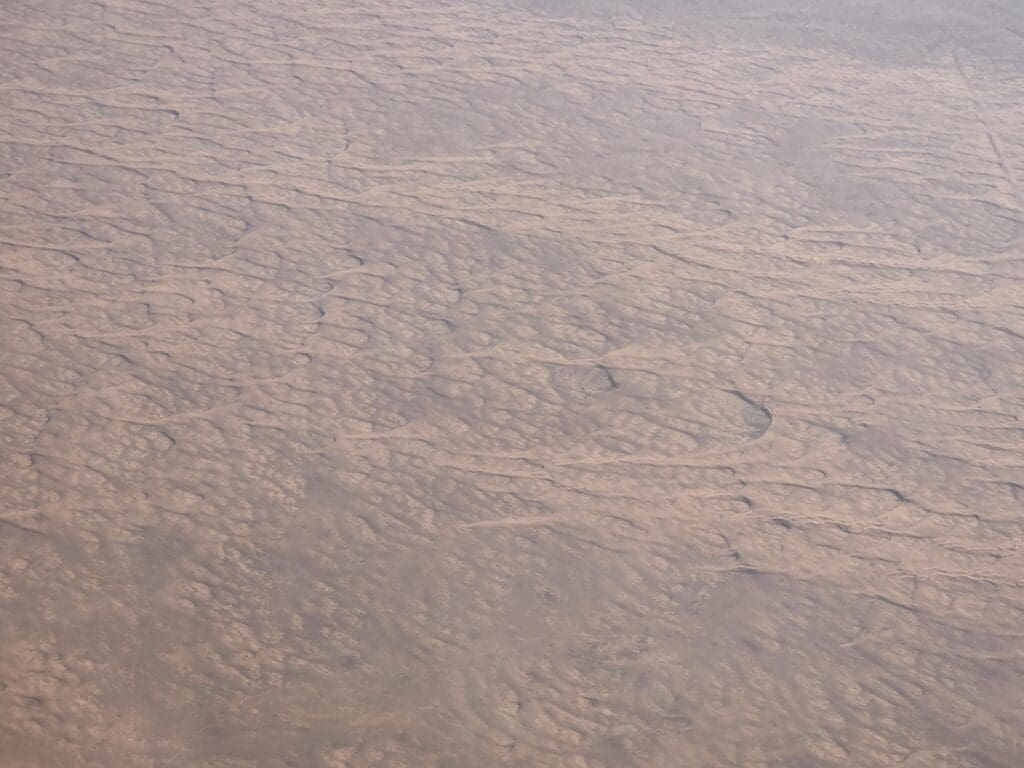
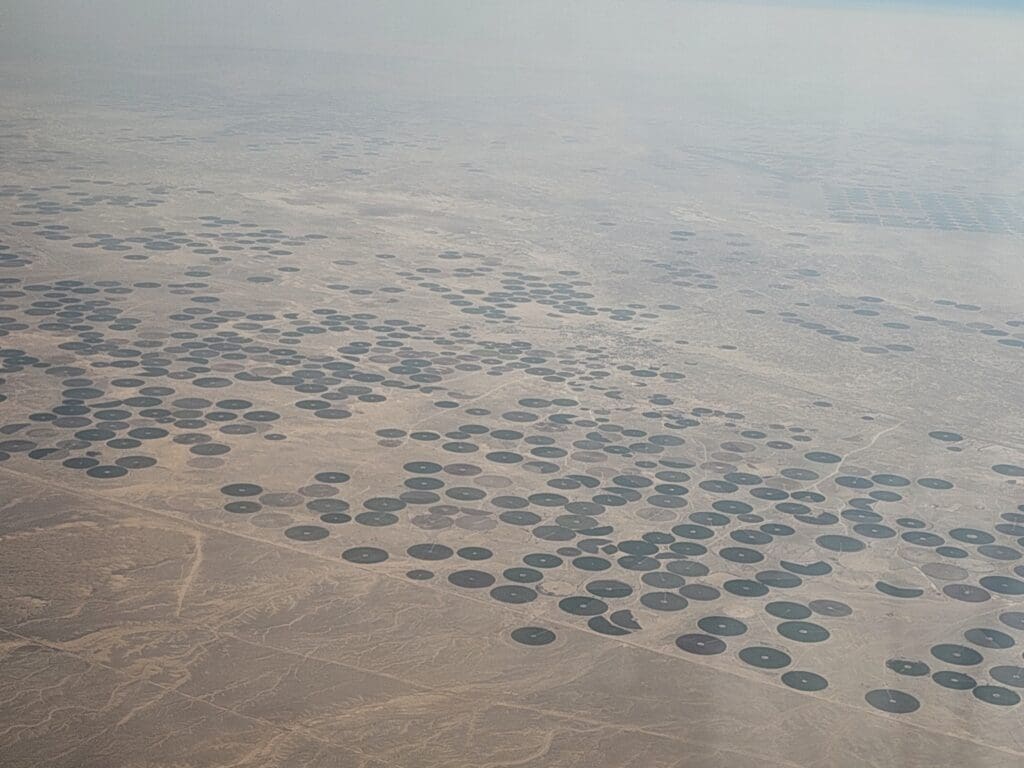
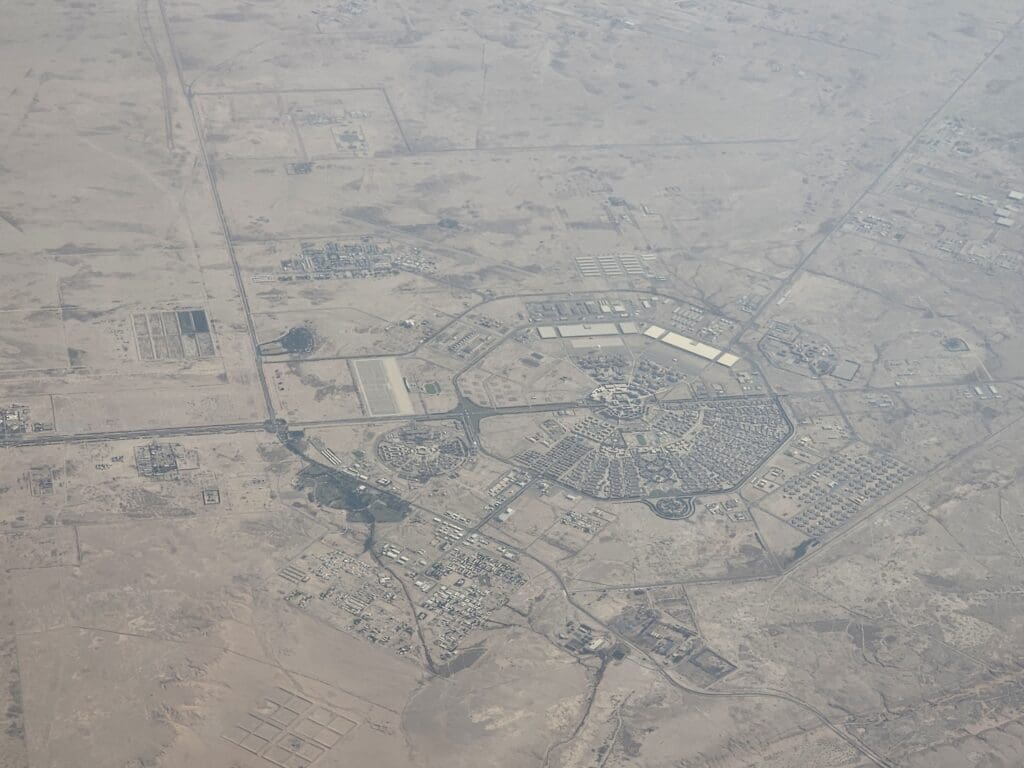
For the first fifteen minutes or so of our flight across Saudi Arabia, the Boeing soared high above the King Salman bin Abdulaziz Royal Natural Reserve – the world’s fourth-largest wild reserve. Heading onwards, the first significant settlement I spotted in Saudi Arabia that afternoon took the form of Sakaka, which was soon replaced by the impressive expanse of the orange dunes of the Arabian Desert. Once in a while, the occasional remote road could be seen cutting through this however, for much of our journey, few signs of human life could be seen below. After a while, all of a sudden the strange sight of what seemed to be an octagon-shaped town appeared out of nowhere. Later research revealed this to be the King Khalid Military City, which was designed and constructed by the American military in the seventies and eighties and remains inhabited.
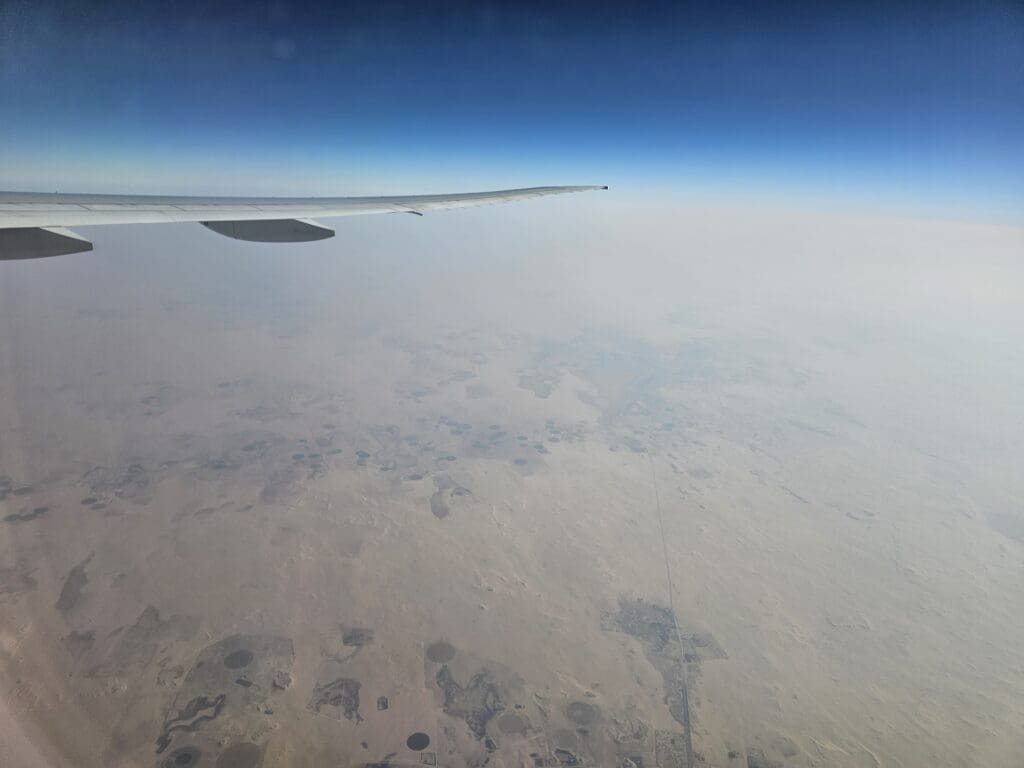
From this interesting spectacle, little could be seen until we reached Saudi Arabia’s fourth-largest city, the coastal city of Dammam. Home to around 1.5 million people, Dammam is one of the centres for the country’s oil industry and thus brings in plenty of visitors from across the world. As we crossed over this, the crew took to the aisles and commenced their third and final drinks round of the flight. Deciding to go for a regionally appropriate drink instead of the orange juices that I had been having thus far into the service, I opted for an Arabic coffee. Whilst beggars can’t be choosers, unlike on my Saudia flight from Jeddah to Paris, this was not poured out of a metal jug but rather came from a sachet. Nevertheless, this hit the spot and as I sipped this I watched the slowly darkening sky and the northern shores of Bahrain as they passed below. After polishing this off, I decided to go for one final toilet visit and I was pleased to find this to be in a clean and tidy state, indicating that this had been tended to during the flight.
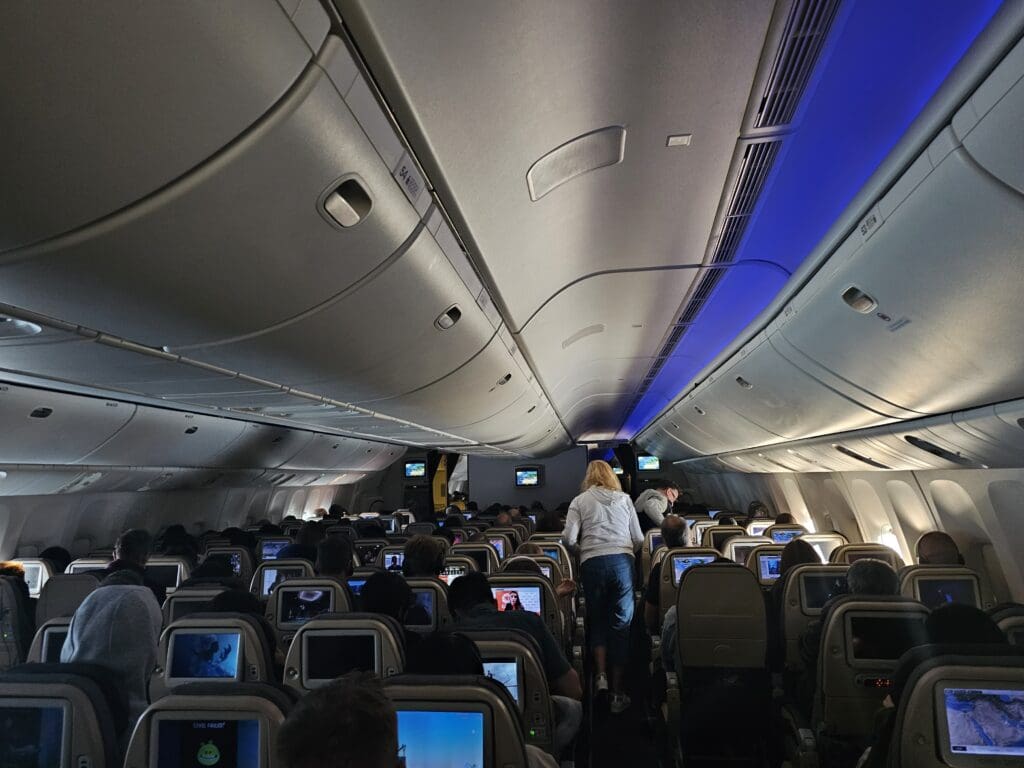
Upon returning to my seat, I glanced out the window and could see the northern tip of Qatar just as the aircraft could be felt making its way back to Earth. A few moments later, the city of Al Khor and its Al Bayt Stadium could be seen just before we left the country behind and continued our descent over the Persian Gulf. At this time, the Captain came over the speakers once again during which they thanked passengers for flying with Etihad Airways and advised that we could expect to be on the ground in around thirty minutes. In the usual manner, this was followed by an announcement from the Cabin Manager who reiterated the captain’s thanks before going over the usual pre-arrival instructions regarding seatbacks, window shades and tray tables. After this, a short video was played promoting Abu Dhabi, the seatbelt signs were switched back on and the crew performed their usual pass through the cabin, ensuring all was secure for arrival. After this, the cabin lights were dimmed and the cabin was illuminated by faint blue mood lighting.
As we neared the coastline of the United Arab Emirates, mist rolled in below, ensuring that little of the coastline could be seen until we crossed right over Abu Dhabi’s Corniche and flew over the city centre. That evening, our approach took us right over the heart of the city before the tower blocks and villas of its outskirts came into view as we headed back towards the desert. As we neared the city’s fringes, the flaps were lowered and the aircraft turned back around to line up for an approach to Abu Dhabi Airport’s Runway 31L.
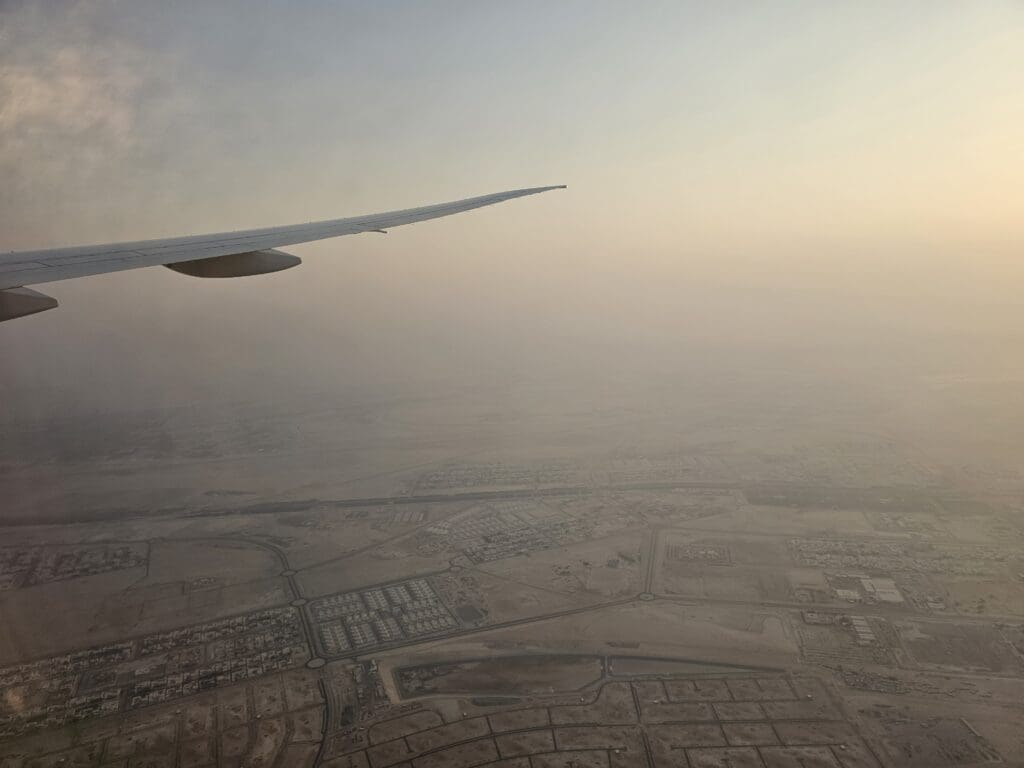
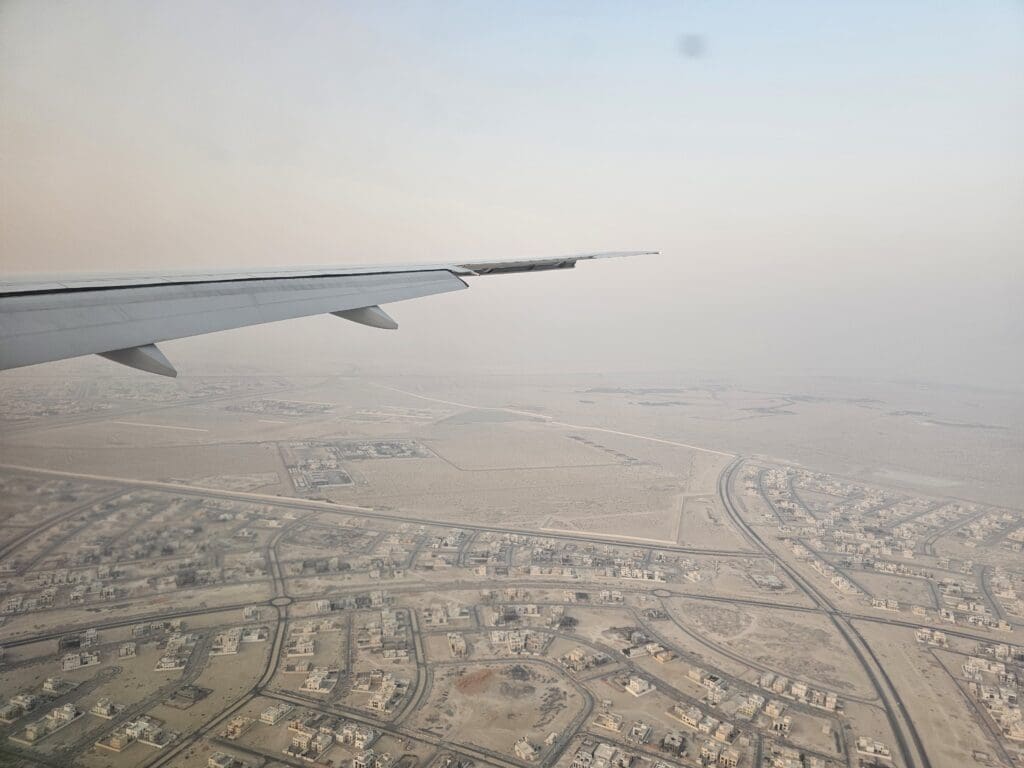
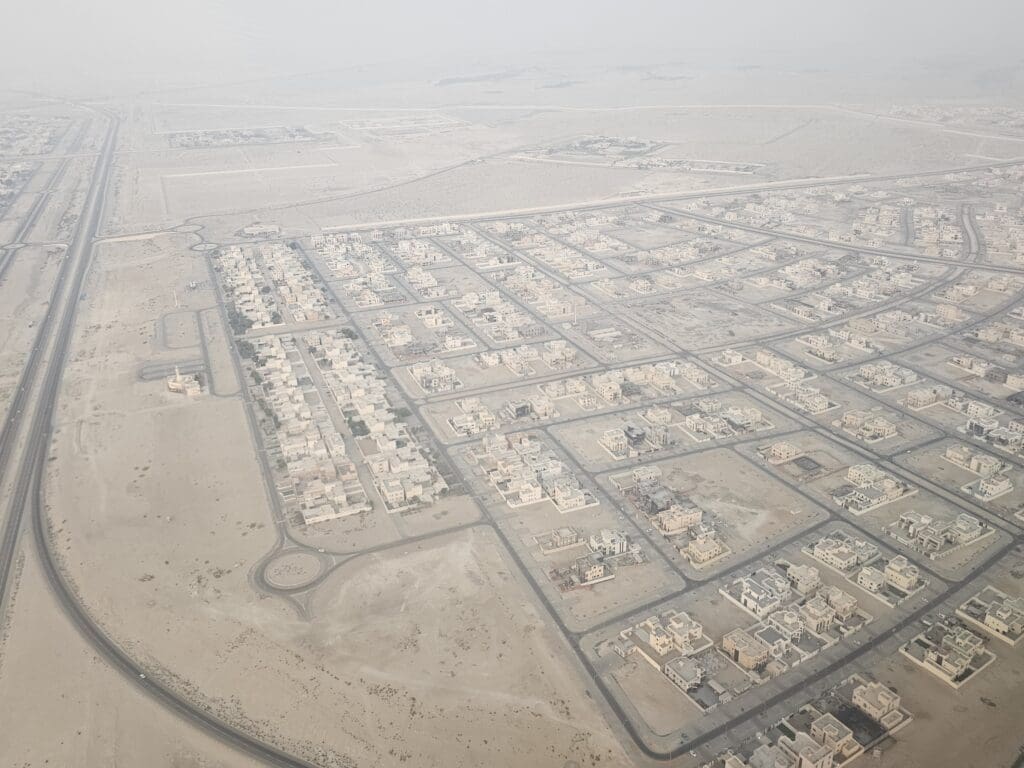
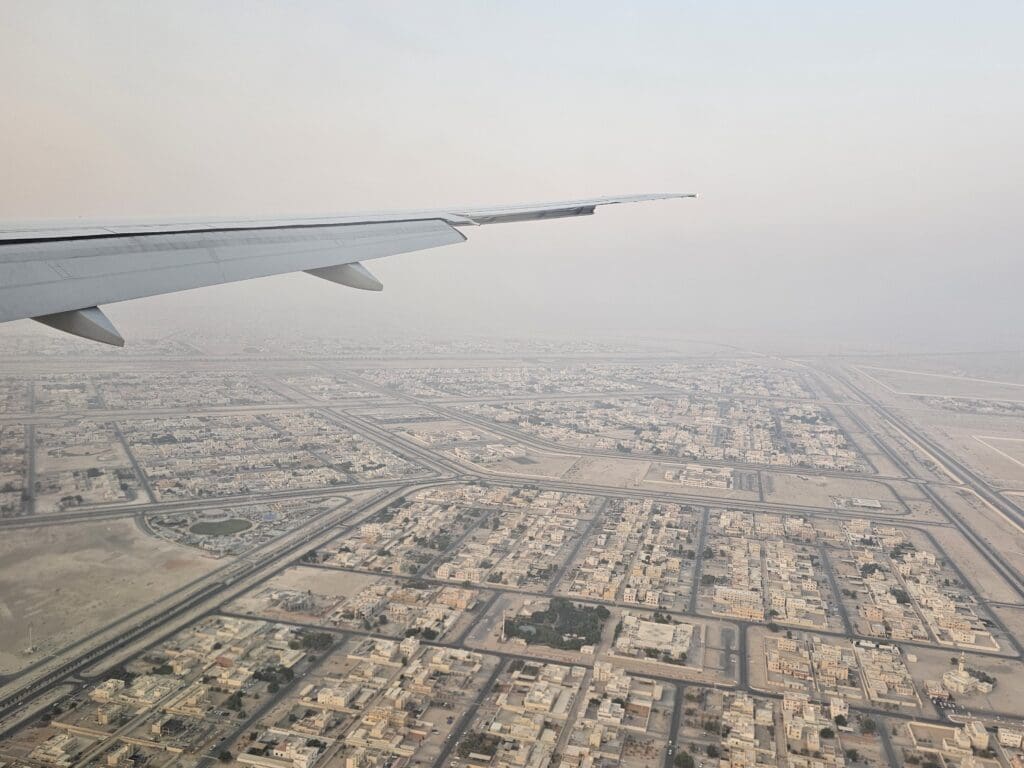
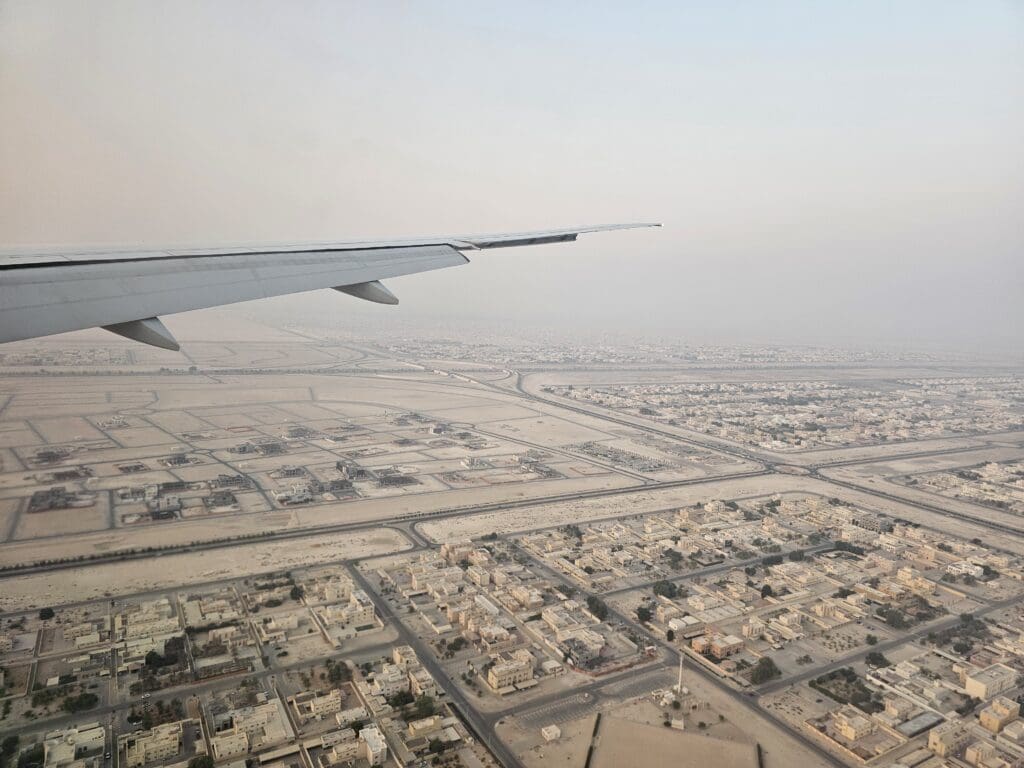
Bouncing around slightly, the aircraft sank over the mostly residential neighbourhoods of Madinat Al Riyad, Al Shamkhah and Al Falah. Soon, the busy E11 motorway which runs from Saudi Arabia in the south, past Abu Dhabi, through Dubai and up to Ras Al-Khaimah could be seen before we crossed over the perimeter fence and made a fairly smooth touchdown at 1749, a total of 4H51 after taking off from Rome.
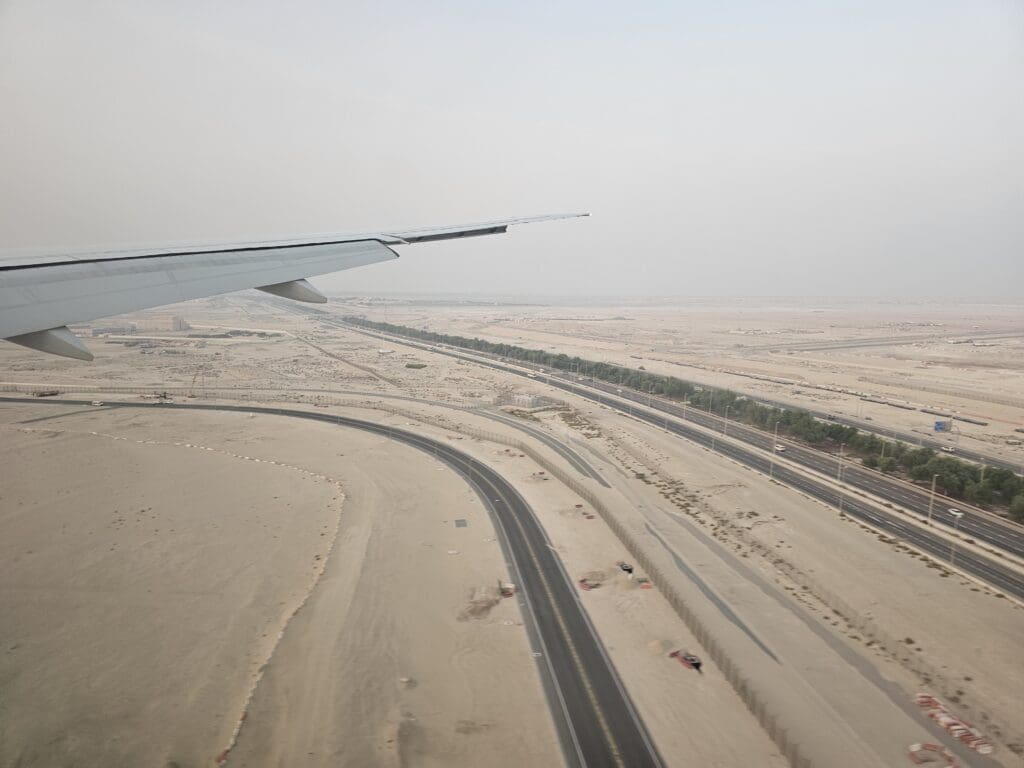
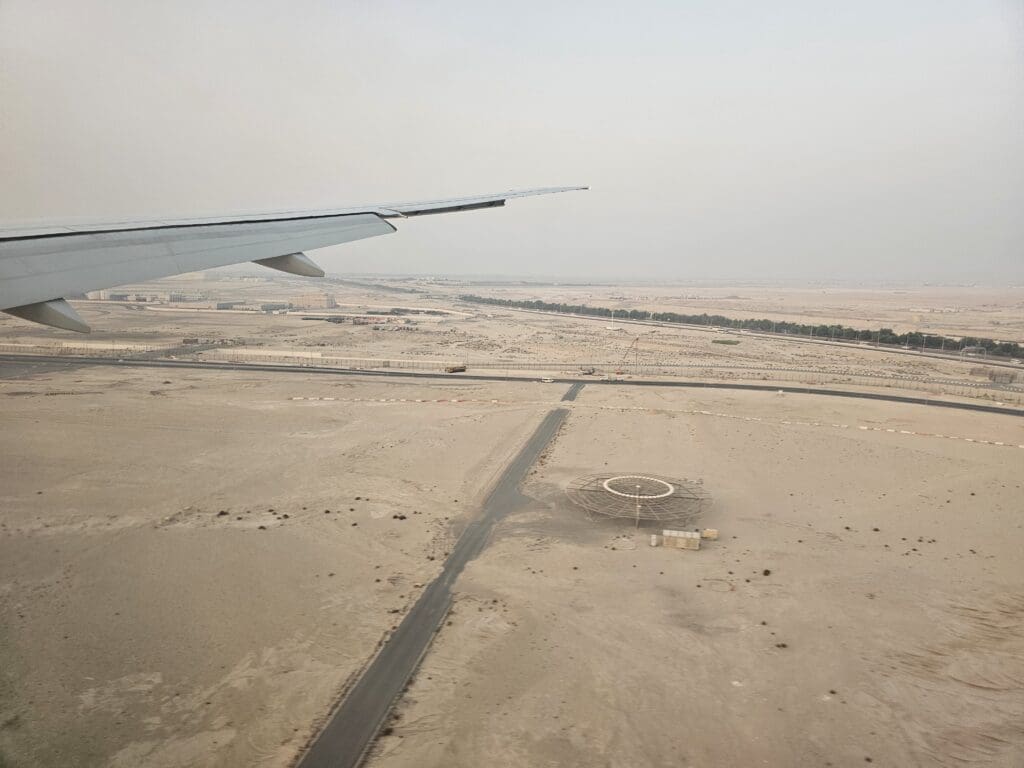
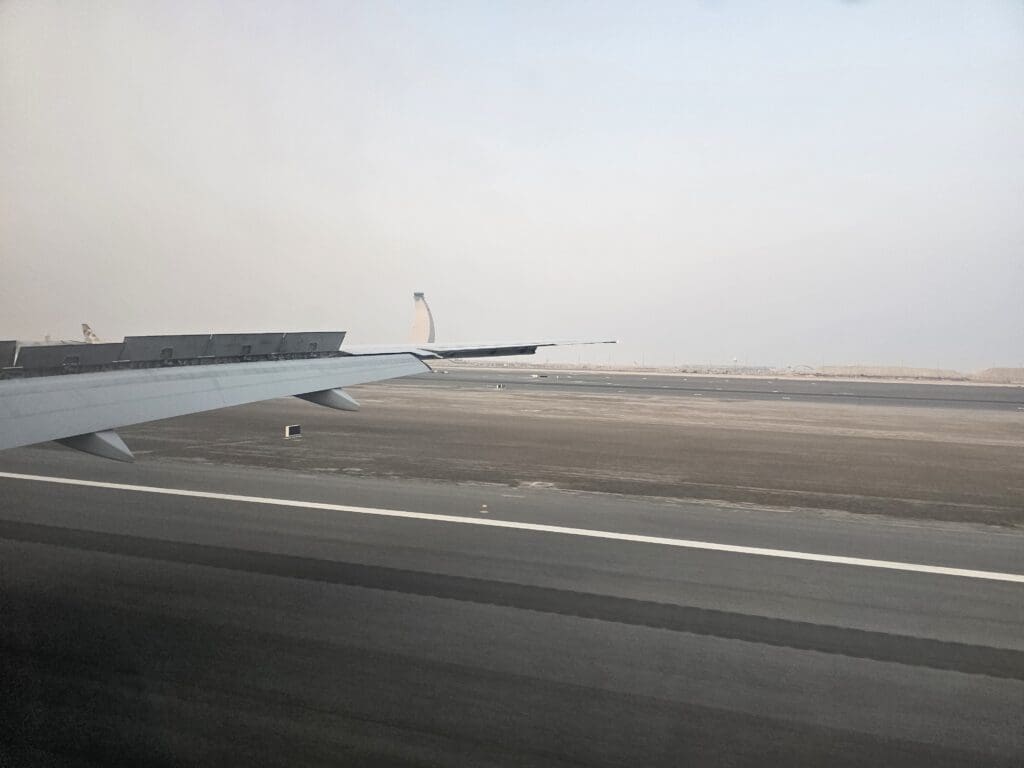
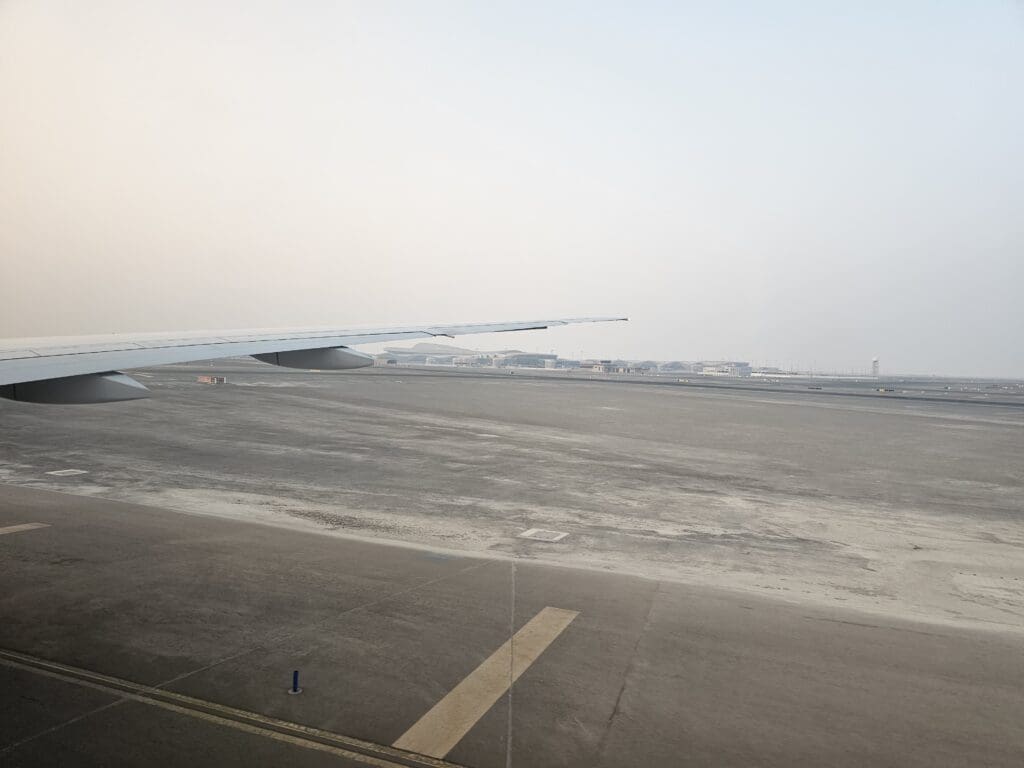
As the aircraft decelerated, an eclectic line of aircraft could be seen off the starboard wingtip. On the more expected side of things came several stored Etihad Airbuses, whilst a more unexpected yet not particularly rare Airbus A330 belonging to Spanish carrier Wamos Air could also be seen, with this scheduled to head off on an overnight flight to Indonesia on behalf of Etihad. The three highlights, however, were two vintage Boeing 747-200 Freighters, one of a very small number of examples of the type remaining in operation today and an Ilyushin Il-76. All of these seemed to be temporarily based in Abu Dhabi and undertook cargo services to destinations in Africa, with the Ilyushin and one Boeing registered in the Central Asian state of Kyrgyzstan, and another Boeing belonging to Georgian carrier Geo Sky.
Soon, Abu Dhabi Airport’s sail-like control tower and new terminal appeared, and we turned left and vacated the runway, at which point the Cabin Manager welcomed all to Abu Dhabi in Arabic and English. At this point, another interesting visitor came into view in the form of an Airbus A320 operated by Indonesian carrier Batik Air, which I presumed was visiting for maintenance. From the runway, the aircraft taxied towards one of the closest stands at Terminal 3 and came to a halt no more than three minutes after touching down. In the usual manner, as soon as the aircraft came to a halt, many of my fellow passengers jumped up as if in a desperate rush to escape the aircraft however with just one jetbridge to be connected, those in a hurry would have been disappointed as this took a fair while to be positioned up to the aircraft before disembarkation commenced. As I waited, the sun could be seen sinking and a sleek-looking Boeing 787 Dreamliner pulled up at the neighbouring stand at the end of its long journey from Washington.
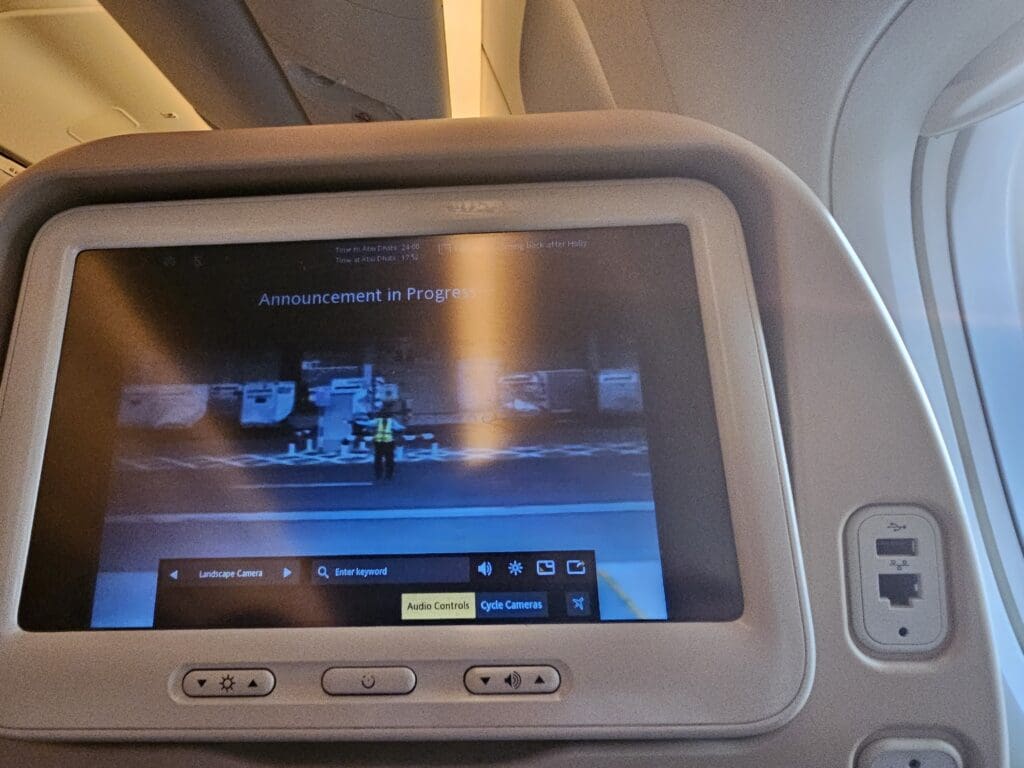
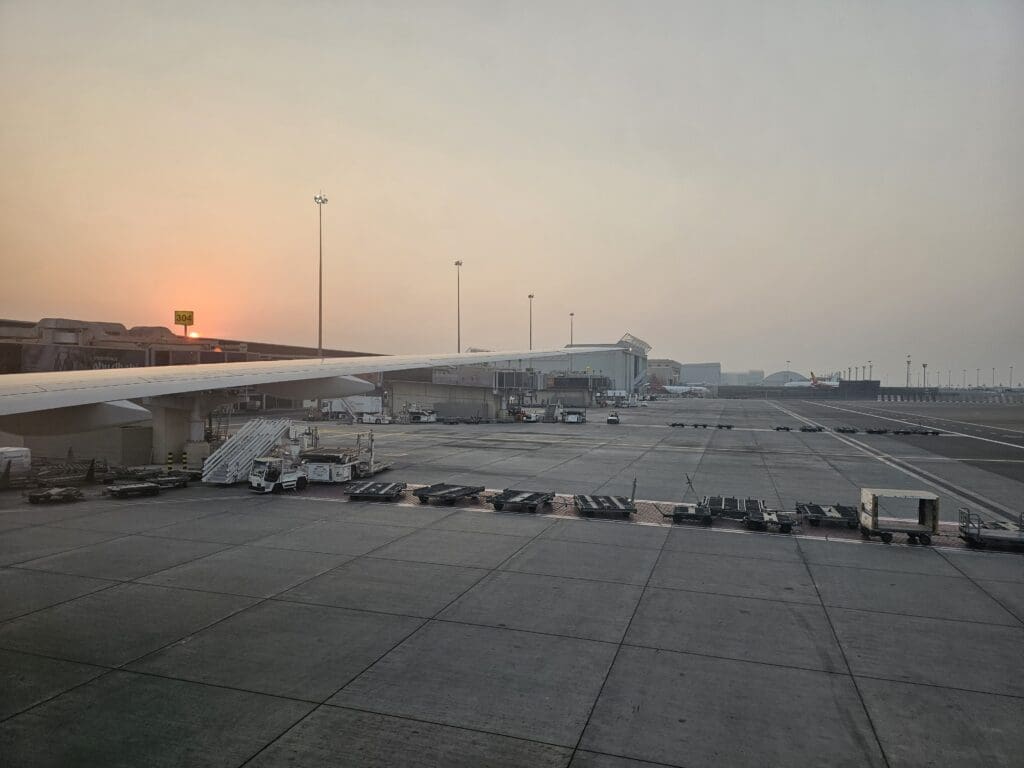
After a while of waiting, I stood up and made my way through the now untidy cabins, thanking various crew members before stepping onto the jetbridge a total of eleven minutes after coming to a halt. Once inside the terminal, a reasonable walk was in order until I reached the passport control area. Whilst Abu Dhabi Airport may be significantly less busy than its counterpart in Dubai, I was still rather surprised to find this to be rather miniscule with just a small number of booths on offer. Nevertheless, with few passengers from my flight ending their journey in Abu Dhabi, I was able to pass through this relatively quickly and without hassle and soon arrived at the baggage claim hall. Steaming onwards, I made my way to the taxi rank to commence my short stay in the Emirati capital city.
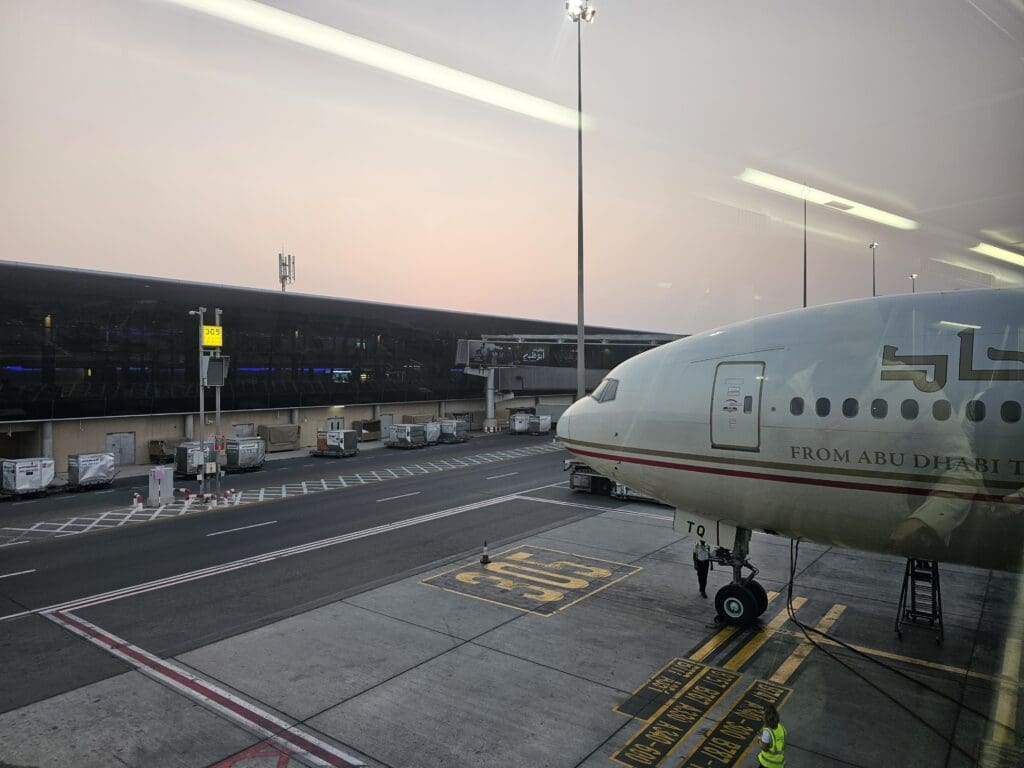
Summary
That day, my experience with Etihad Airways left me with nothing to make a major complaint about. I had enjoyed a comfortable (and very cheap!) ride over to Abu Dhabi, been treated to a superb lunch and saw some spectacular sights as I cruised at 35,000 feet above the Middle East. Of course, the Boeing 777 does not feature Etihad Airways’ latest or most glamorous hard product, but, for a flight of just under five hours, I could put up with the slow-to-respond inflight entertainment screen. Moving to the crew, I found them to be polite and friendly, although not as animated as on some other airlines.

Nice review.
Thank you very much for reading!