Flying Colourful Uzbekistan Airways: Riga to Tashkent on an A320
Background
Uzbekistan Airways is a carrier that has served as a near-constant feature of my career as an aviation enthusiast. Growing up in the United Kingdom during the 2000s, their ‘exotic’ Airbus A310s, Boeing 757s and Boeing 767s had frequently served to be highlights of spotting trips to Birmingham and London Heathrow. For a time the carrier had also served Manchester with their long-retired Ilyushin Il-62 and Tupolev Tu-154 Soviet-era jets, meaning that they once operated to three British airports simultaneously – a far cry from the thrice-weekly service operated between Tashkent and London Heathrow today. This once-heavy presence across the UK is explained by their cheap and quick one-stop services to India and deals with local travel agents targeting the British Indian diaspora. This was also been replicated by another airline I had long wanted to sample, Turkmenistan Airlines.
On a personal level, at some point in the early 2000s Uzbekistan Airways had proven to be the cheapest option for my aunt and uncle’s trip from Birmingham to Bangkok. This turned out to be an adventurous experience for them, with a chaotic Tashkent transit, cold and no-nonsense crew, questionably inflight catering and a battered old aircraft with a mishmash of seats. Much more recently, my sister had sampled the carrier between Dubai and Tashkent and had been impressed by their modern Dreamliner as well as the quantity of food provided to them in flight.
After years of yearning to sample the delights of the Uzbek national carrier, I finally managed to get around to this in May 2019. This consisted of a very short domestic hop between Tashkent and Samarkand on one of the carrier’s now retired Boeing 757-200s, as well as a longer slog between Tashkent and Seoul Incheon aboard a brand new Boeing 787-8 Dreamliner. On the domestic sector, I had been surprised by the friendliness and warmth of the crew, however, I found the old Boeing to be cramped and battered (review here!). Meanwhile, the exact opposite proved to be true on the Dreamliner, although as with my sister’s experience, I was positively taken aback by the amount of food I had been handed on what isn’t a massively long flight to Korea (review here!). All-in-all I wasn’t left with any reason not to fly with Uzbekistan Airways again and vowed to attempt to do so were I to return to Uzbekistan – something that I had wished to do ever since leaving this fantastic country!
Fast-forward just under four years to Spring 2023 and I was planning another trip to Uzbekistan. Following some deliberation I decided to spend some Avios and fly from Manchester to New Delhi via Heathrow, where I would connect onto an Uzbekistan Airways Boeing 767-300ER for the short journey north. Unfortunately, a variety of reasons meant that I ended up having little choice but to postpone my trip by several days at the very last minute. Unable to reschedule my reward flights with British Airways as well as my flight from Delhi to Tashkent, I ended up having to start at square one and rebook my entire outbound itinerary. Not wishing to waste more money than necessary, I searched for the cheapest possible routings which would enable me to pick up my trip several days later with only minimal disruption. After searching high and low, I deciphered that the cheapest possible way of reaching Uzbekistan was to catch an afternoon Ryanair flight from London Stansted to Riga, before catching an Uzbekistan Airways service the next day to Tashkent – with the entire route setting me back around £300.
Whilst I have had the odd negative experience with online travel agent Trip, seeing as they were offering the cheapest tickets for the flight over to Tashkent and as I already had their app installed on my phone, I decided that I would go ahead and book with them. All-in-all this was a quick experience and paid for my flight within no more than a minute after searching for this, receiving my ticket no more than ten minutes later.
The Journey
Ignoring the fact that I had never intended on making an overnight stop in Latvia on my trek to Central Asia, I found Riga to be absolutely lovely, with the city managing to convince me to return to the country for a longer stay at some point in the future. With my flight to Tashkent scheduled to depart at 1500, I could have had a leisurely morning however seeking to have a long walk around and see as much as possible, I woke up at the crack of dawn. Following a quick shower, I packed up my things and left the cheap and basic hotel that I had called home for my short stay before heading out onto the colourful and quaint streets of Riga’s Old Town, or Vecrīga. A couple of hours later, once suitably cold and with legs that were beginning to ache, I darted into one of Riga’s plentiful overpriced trendy coffee shops for a late breakfast consisting of a cappuccino and a pastry. After warming up, I decided it was time to continue on my journey and still with buckets of time to spare, I made my way over to the train station in order to catch a bus to the airport.
Sitting around ten kilometres to the south of the city centre, Riga Airport is comparatively conveniently located and is by no means a Latvian equivalent of Beauvais, Skavsta or Stansted. Thus, reaching the airport is by no means an expensive or difficult task that requires months of careful planning. Those wishing to make this journey in the comfort and luxury of a taxi can expect to pay at least €20, however, for those on a budget, the Number 22 bus service provides a much more economical means of transport. After around ten minutes of waiting at a busy bus stop where a constant stream of buses and their passengers could be seen coming and going, a modern airport-bound bendy bus pulled up. Soon stepping onboard, I paid the €2 fare to the driver – it should be noted that a €0.50 discount can be had if passengers purchase a 90-minute ticket from a bus ticket machine although unfortunately, I was unable to find any of these around the station.
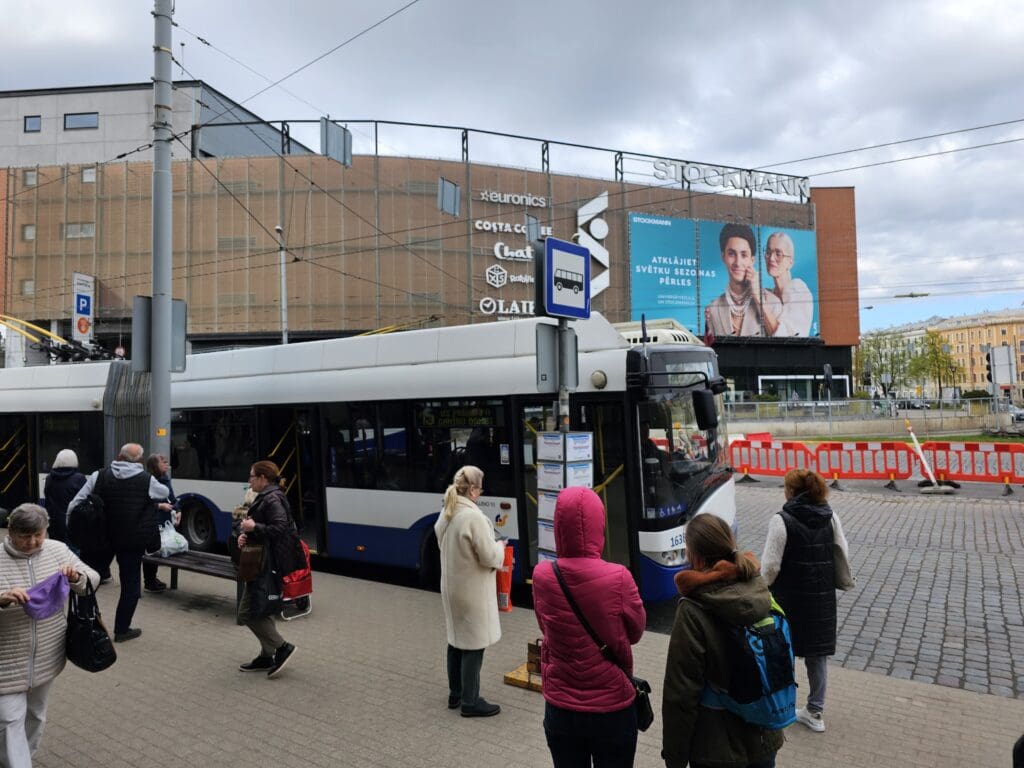
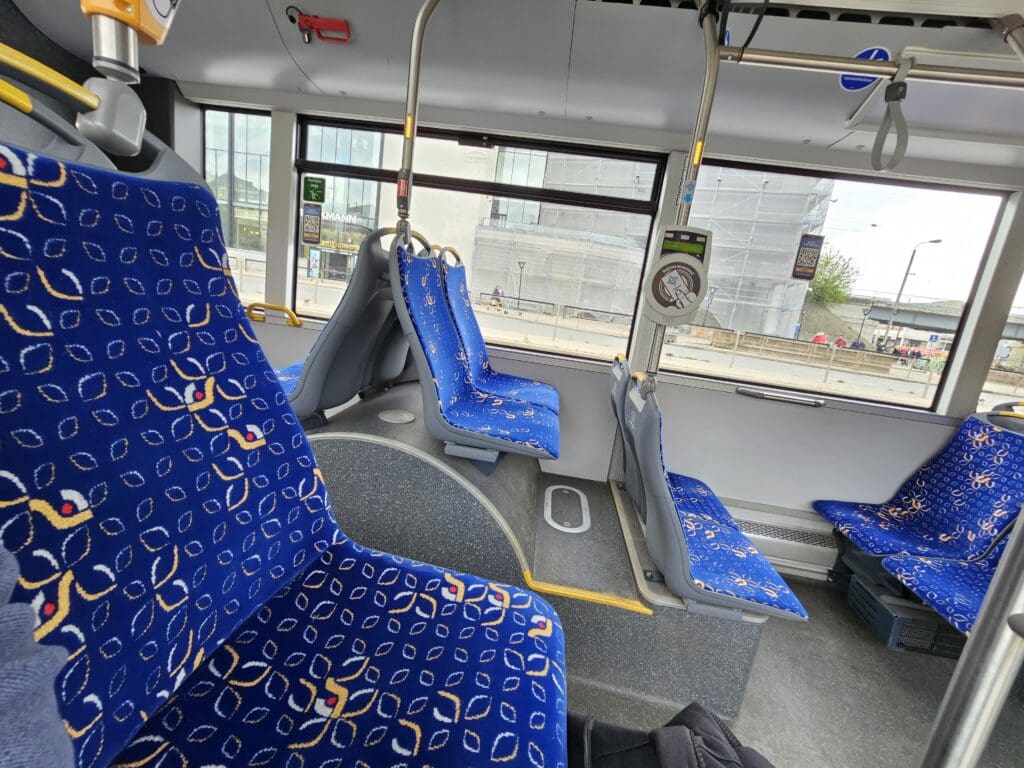
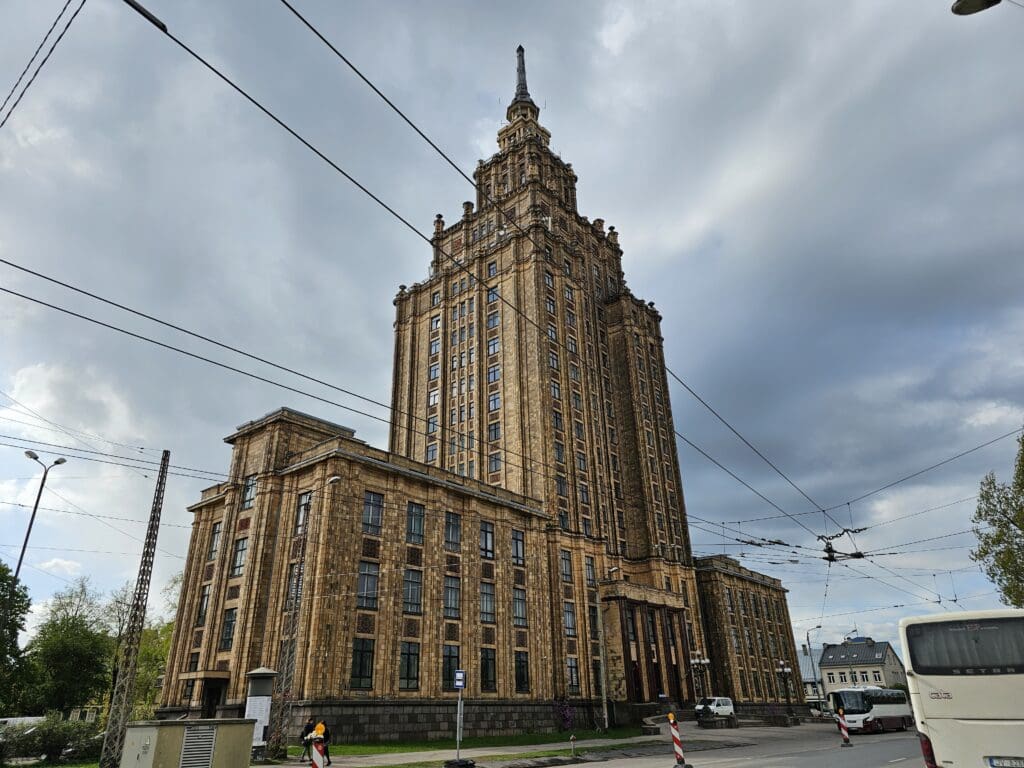
With just a small handful of passengers onboard, the bus skirted along the fringes of the Old Town before getting caught up in a few short jams. Soon speeding over Riga’s Stone Bridge, the bus flew over the wide Daugava River and whizzed past the distinctive-looking National Library of Latvia before reaching the capital’s apartment block-filled suburbs. With this service serving as a city bus rather than an airport express, unsurprisingly regular stops were made as we passed through the southern suburbs and by the time we neared Riga Airport, only a small number of passengers, most of whom took the form of airport workers, remained onboard. Indicating that we were nearing our destination, around twenty minutes after leaving the city centre, an Airbus A321neo wearing the distinctive pink, purple and white livery of low-cost giant Wizz Air could be seen floating down at the end of its journey from Luton. This was followed a short time later by the sight of a cluster of hangars and a line of all-white Airbus A320 aircraft operated by ACMI specialist SmartLynx Airlines before we came to a halt right outside the terminal building.
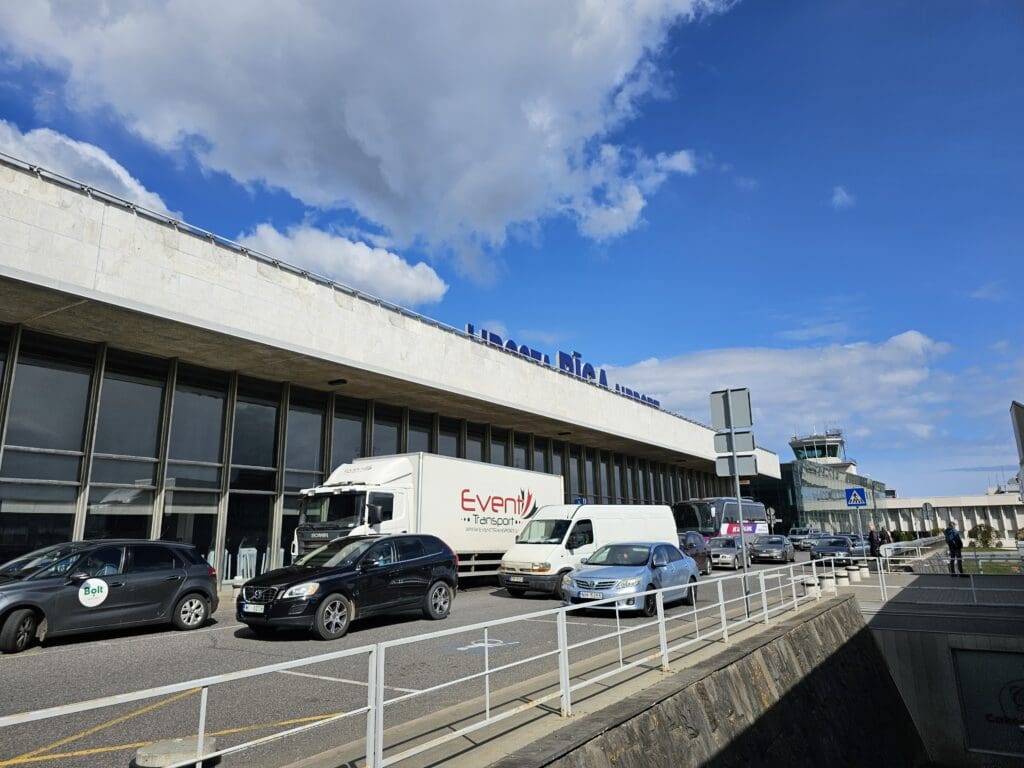
Having welcomed its first passengers in 1973, Riga Airport’s terminal building is a transpicuous relic from Latvia’s Soviet past and a classic example of the brutalist architecture of the era. This features plenty of grey concrete, with little else other than large blue lettering denoting the purpose of the building – being of the same era, from the outside, this appeared to bear a slight resemblance to the terminal at the old Ulaanbataar Airport. With a minute proving to be a sufficient amount of time to examine the exterior of the terminal, I soon made my way inside. In terms of layout, Riga Airport can be seen as following standard conventions, with the arrivals located on the ground floor, and departures on the level above this. Walking around, I found the landside interior to be grey and dated in its aesthetic, although the many bright green signs provided by hometown carrier airBaltic did serve to brighten this up a little.
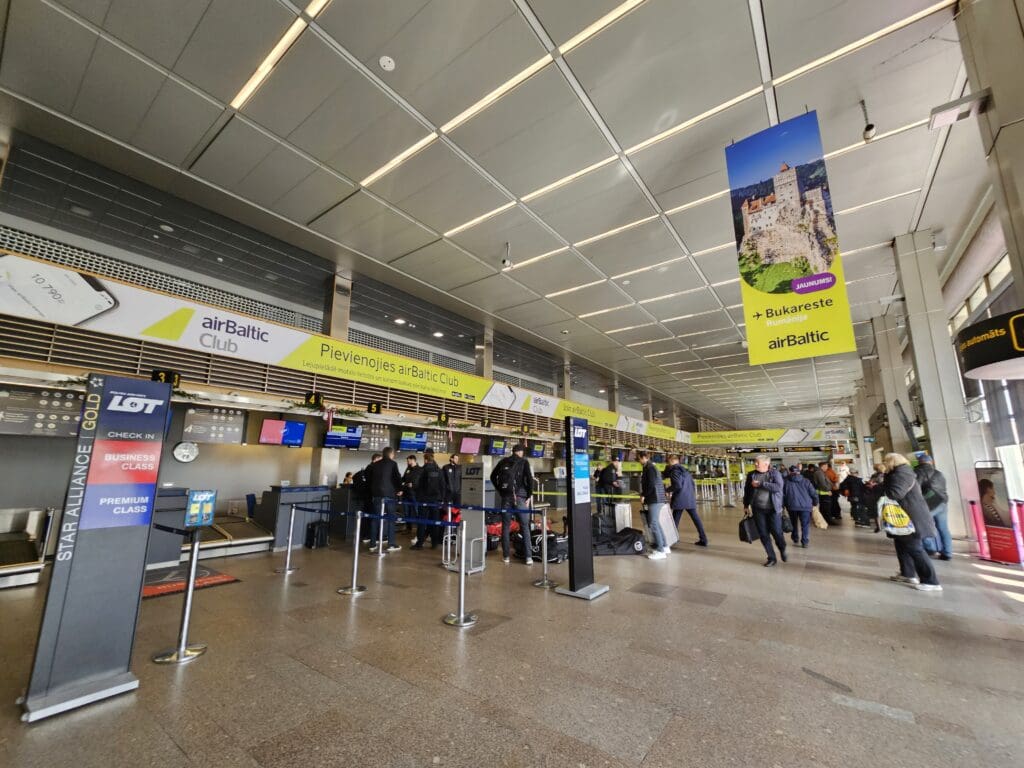
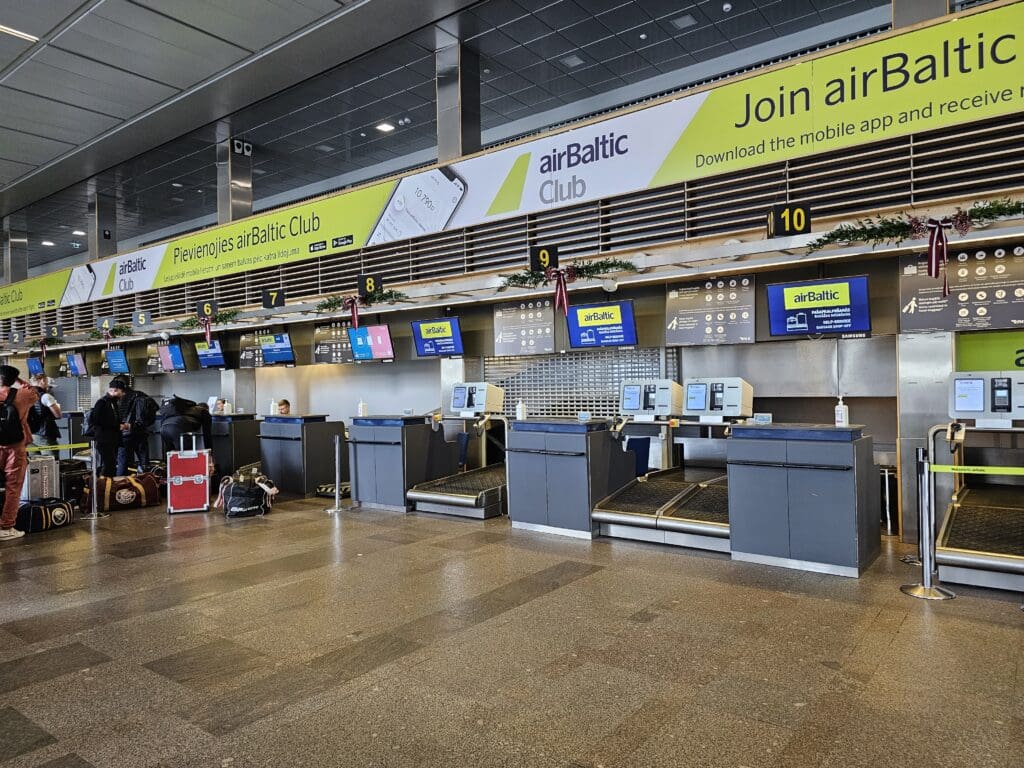
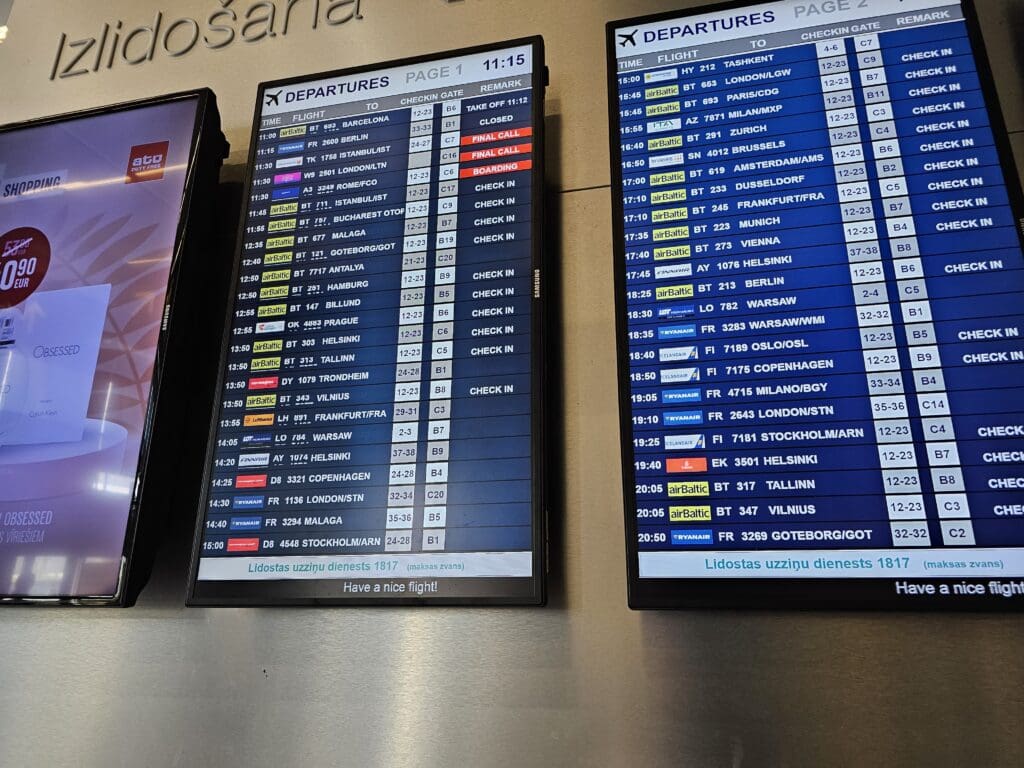
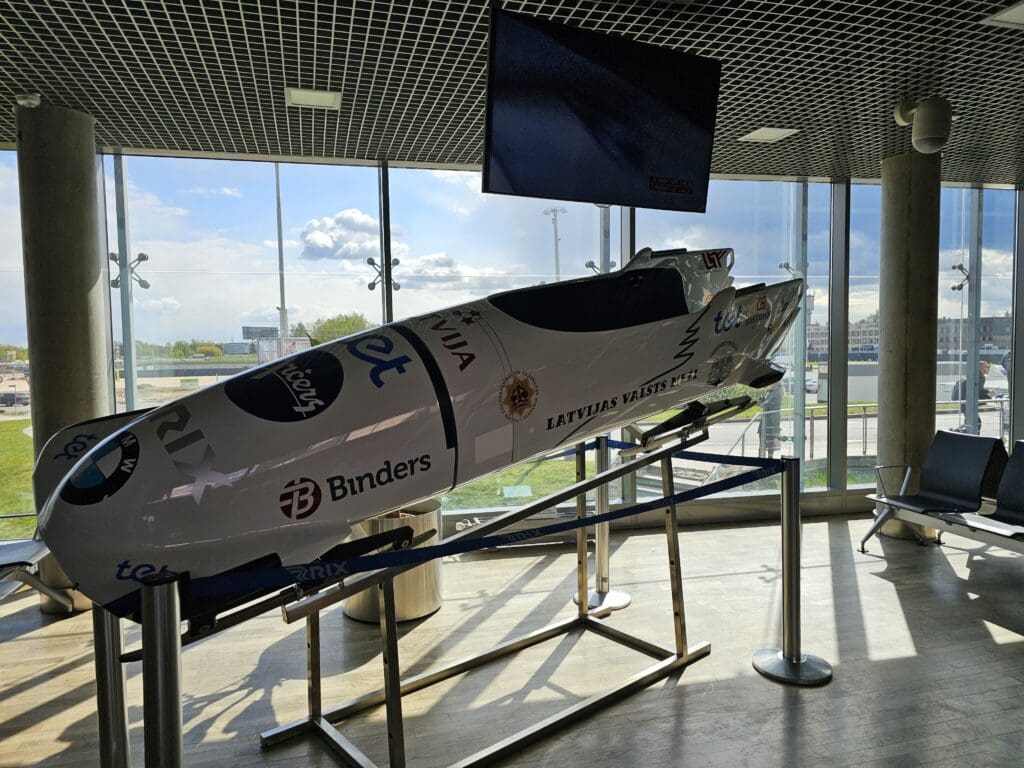
Whilst Riga Airport is not the busiest in Europe, being the primary hub of airBaltic this does see a fair number of flights and with this considered, the landside portion of the terminal seemed to be relatively compact. Needless to say, it is perhaps fair to suggest that the Soviet planners of the 1960s did not envision Riga becoming a significant international hub. Inside, the check-in desks, most of which appeared to be heavily airBaltic branded, are located down a thin strip – whilst banks of check-in machines could be seen opposite the desks and could be used by those heading off on airBaltic, Finnair, LOT and Turkish Airlines. Walking around the check-in area, a long queue of mostly joyful-looking passengers could be seen waiting to check in for airBaltic’s early afternoon service down to the Turkish holiday spot of Antalya, whilst a much shorter queue could be seen waiting for the carrier’s short hop to Billund. Bringing the terminal into the twenty-first century, at one end of this I stumbled across a small, pleasant and modern waiting area with plenty of locally sourced wood. There, a small convenience shop could be found along with a bobsleigh on display, which, I assume, was once used by the Latvian national team.
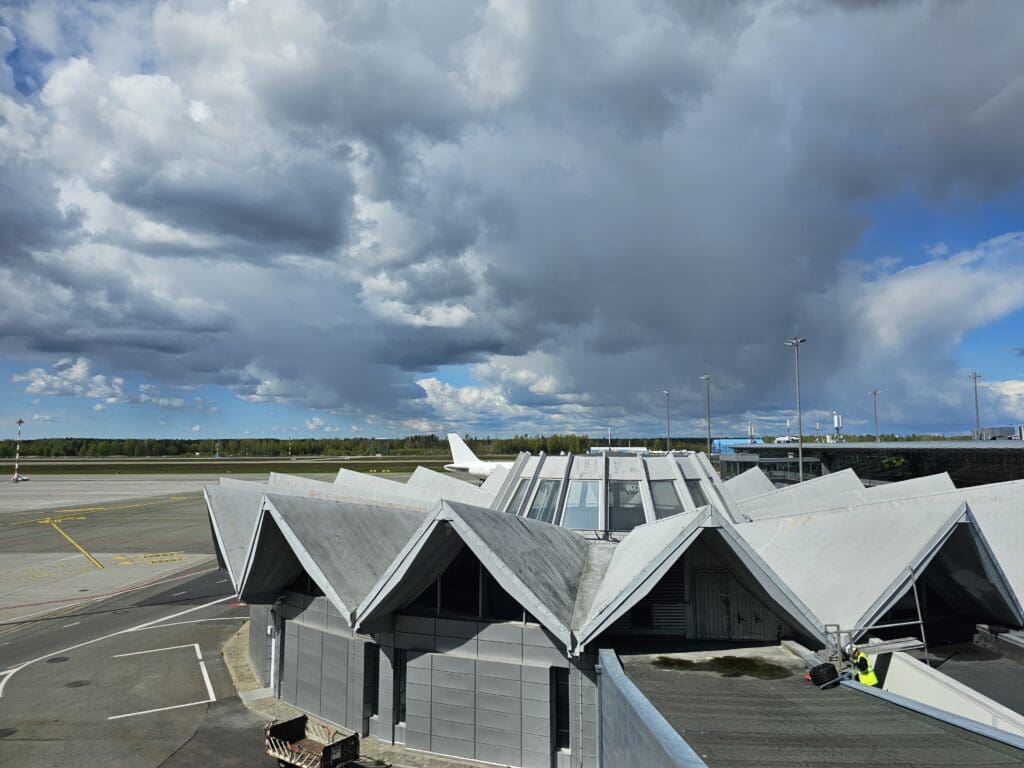
In terms of facilities, I noted a pharmacy, two convenience stores and a fair number of vending machines to be present on the departures floor, whilst a café could be found downstairs in arrivals. In spite of the fact that the landside portion of the terminal was clearly not designed as a place for passengers to spend hours before their flight, overall I wasn’t really left with much to complain about. Importantly, this was clean and tidy, with a good number of places to sit and wait, fast complimentary wifi and a reasonable number of plug sockets. However, wearing my enthusiast’s hat, it is worth noting that airside views were limited, with aircraft only visible through a hidden spot on the second floor of the terminal which appeared to be home to offices. Even then, thanks to the protruding terminal, views through this window were largely restricted.
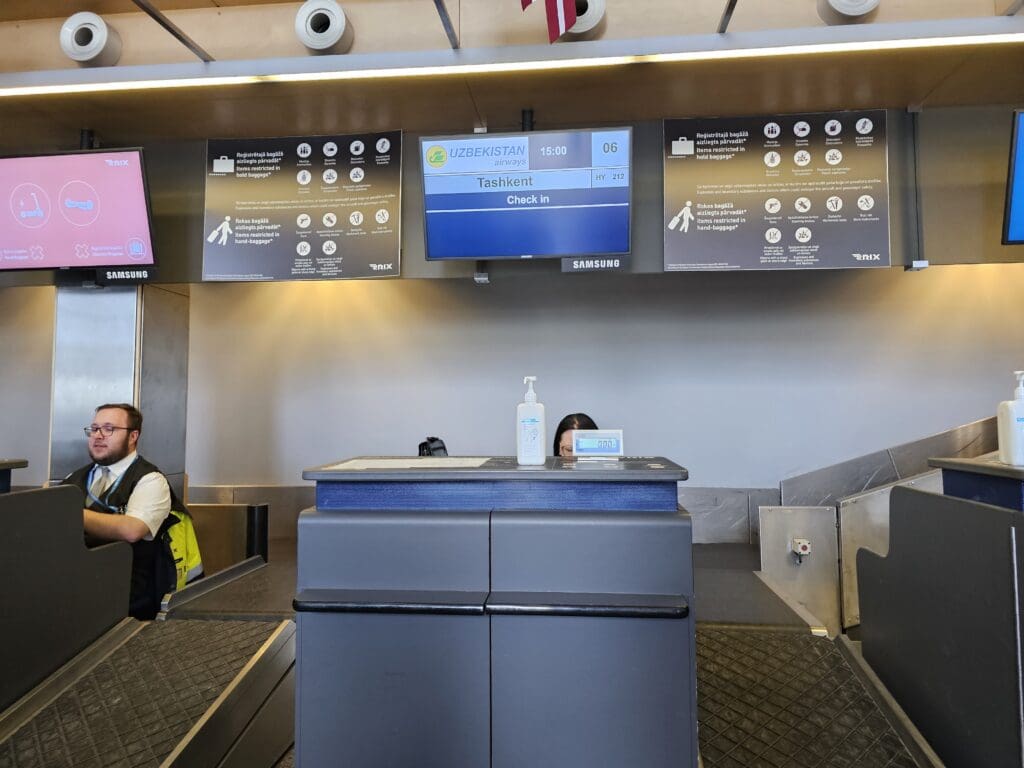
Seeing as check-in for Uzbekistan Airways’ Tashkent service could only be done in person after my explore there was nothing I could do other than sit and wait for check-in to commence. With just over three hours to go until departure, a Riga Airport worker appeared and laid out some bollards, at which point passengers suddenly emerged from the nooks and crannies of the terminal and within minutes a large queue had formed. Eager to secure a window seat and not wishing to stand about in line for hours, I decided to join this line early on and ended up near the front. At 1225, three Riga Airport staff members appeared and took their positions behind the counters – two of which were assigned to checking in those in Economy, one for those in Business. A short time later, the two pilots that would be operating the service to Tashkent strolled up to the counter along with a staff member donned in casual clothes yet sporting an Uzbekistan Airways lanyard (potentially the station manager). Once the two pilots had parted with their large suitcases, check-in commenced and around five minutes later, I walked up to one of the counters and handed over my passport. After a minute or so of tapping away on their keyboard, the friendly agent handed me an Uzbekistan Airways branded boarding pass and stuck a tag on my hand luggage. A glance at my boarding pass revealed that I would be making the journey to Uzbekistan in Seat 25F, with this being in the penultimate row of the Airbus.
Once I had my boarding pass, I decided to make a beeline for security and soon tapped my pass on one of the automated gates which let me through without issue. That lunchtime, a fairly long queue could be seen although with most checkpoints appearing to be open, this moved along quickly and I managed to make it airside after no more than ten minutes of waiting. As is often the norm in Europe, once through security passengers are required to pass through a duty-free store before reaching the main airside portion of the terminal. Having undergone a complete upgrade in 2016, the airside portion of the terminal is aesthetically infinitely more modern than the landside portion and left me with little to complain about. This was modern, pleasant, airy and spacious – in particular I liked the fact that plenty of local wood had been used in its furnishing which was both stylish and gave this a nice Baltic feel.
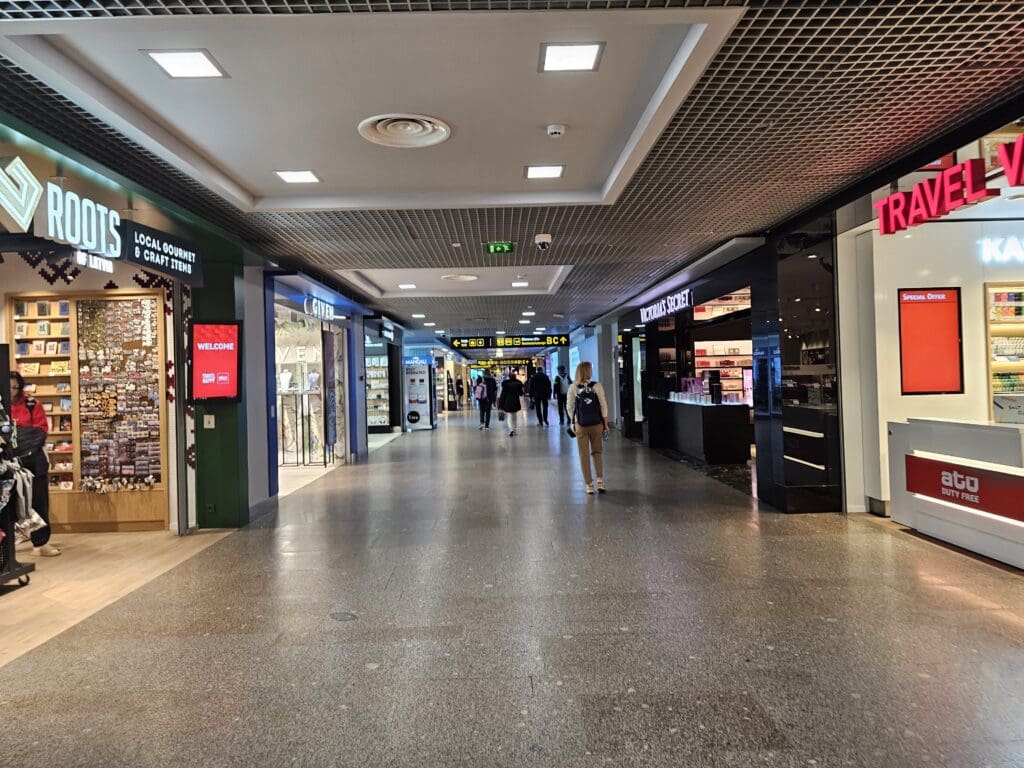
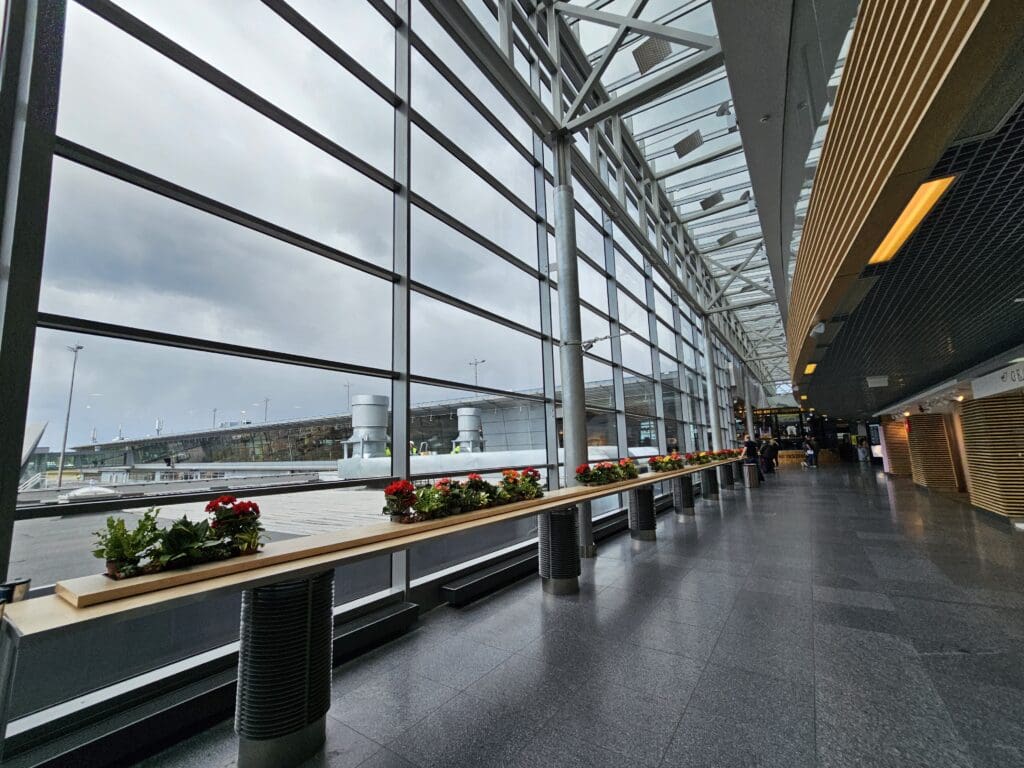
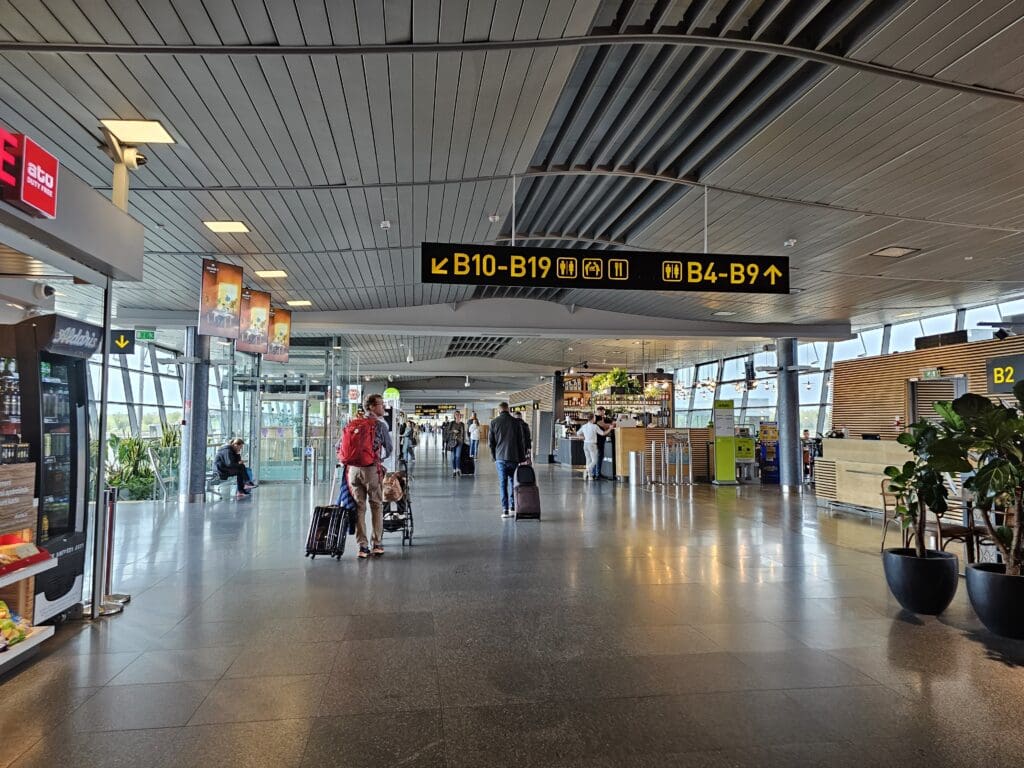
Importantly as an aviation enthusiast, large glass windows offer good unobstructed views of the apron and runway. Meanwhile, all will likely appreciate the variety of seating types on offer as well as the diverse selection of cafés, restaurants and shops provided. Examining the airport’s layout, the airside portion of this consists of two piers that jut out from a central hub – named B and C (I’m not sure what happened to A!). With Latvia located within the European Union’s Schengen area, just a very small number of gates are located beyond passport control and sit at the very end of the C pier.
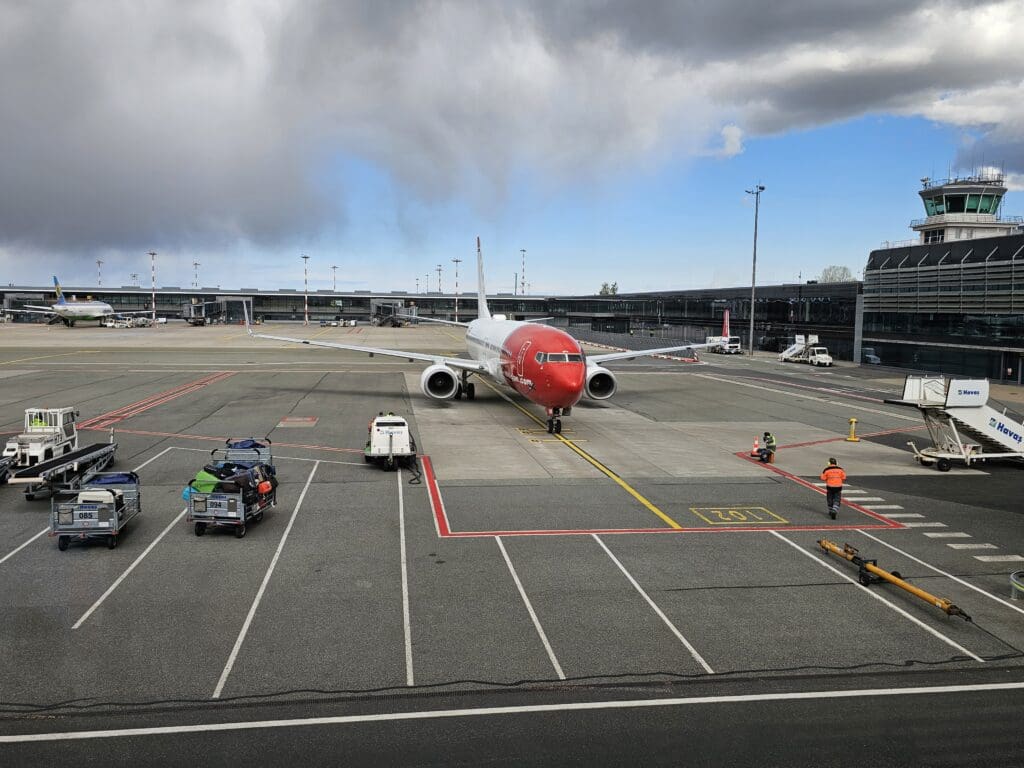
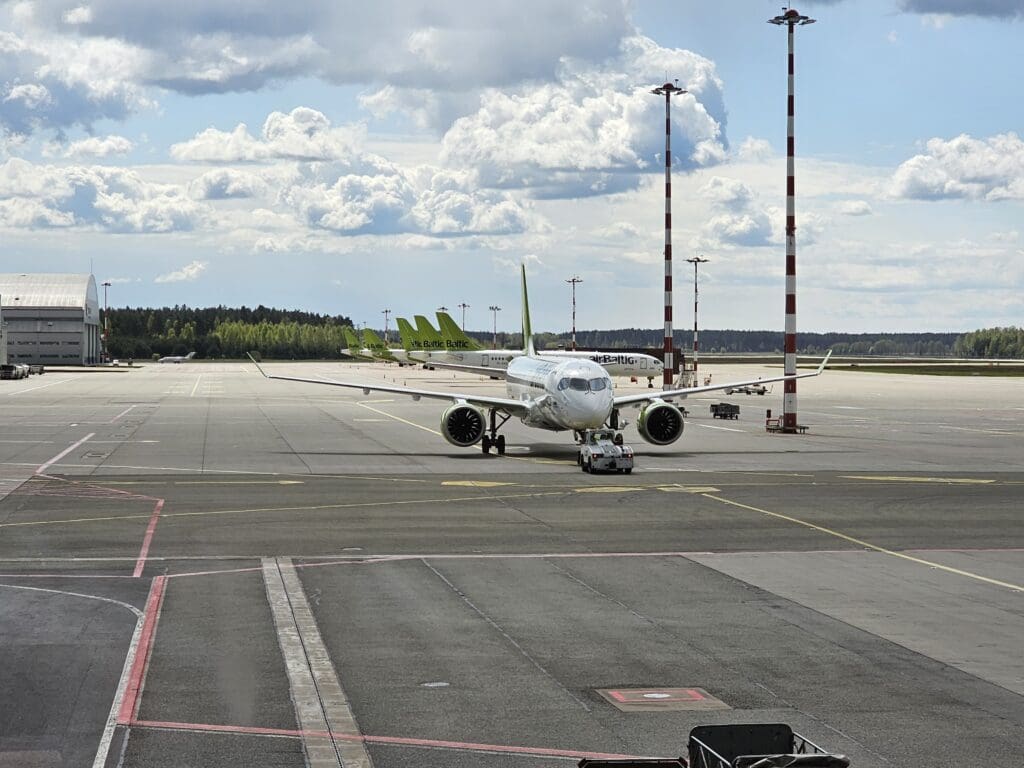
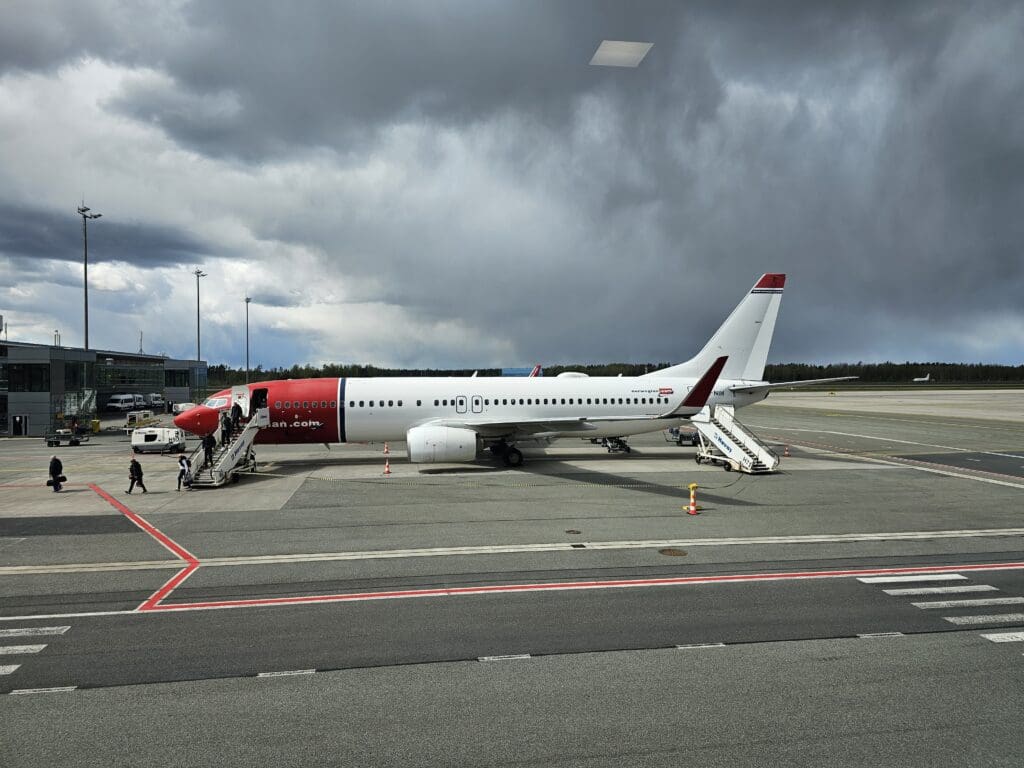
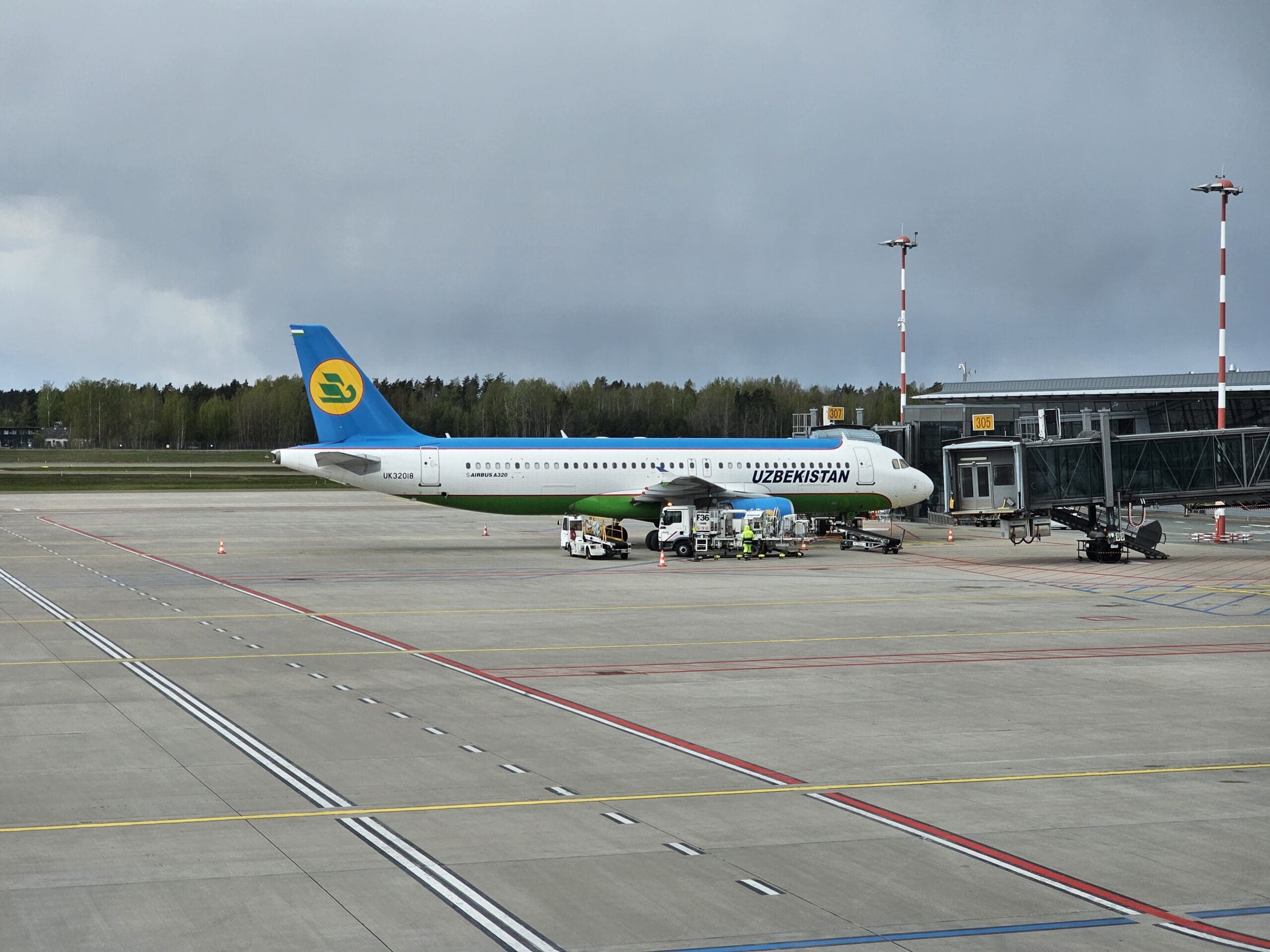
Interestingly, Uzbekistan Airways’ service to Riga is subject to a long three-hour stay on the ground in Latvia. Thus, walking around the terminal, it wasn’t long until I caught sight of the distinctive liveried Airbus that would be taking me to Tashkent – with this standing at gate C7. Separated by 2268 miles, the distance between Riga and Tashkent is comparable to that between New York and Seattle, London and Beirut or Delhi and Hong Kong. Whilst within the range of a traditional Airbus A320, Uzbekistan Airways typically deploys their Airbus A320neo and A321neo airliners on this route. However that day, to my slight disappointment, the service would be operated by one of their older Airbus A320ceo aircraft. The primary difference between this type and their newer Airbuses is the fact that most of their newer Airbuses feature inflight entertainment, whilst their Airbus A320ceos do not. Beating the Airbus A320-operated flights from Doha to Kathmandu and back that I had taken in 2013, this would be the longest Airbus A320ceo sector that I have ever flown.
That day, UK32018, a twelve-year-old Airbus A320-214 had been assigned to the route. Assembled at Airbus’ Hamburg Finkenwerder plant in 2011, this made its first test flight with the registration D-AUBK in May of that year. Since its delivery to Uzbekistan Airways in late May 2011, the aircraft has spent its career operating a mixture of both short and medium-haul services for Uzbekistan Airways. According to the AvHerald, the aircraft has suffered one notable incident during its lifetime when it suffered a runway excursion upon landing in Tashkent in January 2022. In the week prior to my flight, the aircraft operated a total of eighteen sectors, covering over 15,100 miles and connecting Tashkent with Baku, Bukhara, Mineralnye Vody, Nukus, Riga, Tbilisi, Urgench and Yekaterinburg.

Once I had exhausted the sights of Riga Airport, I decided to make the trek over to the end of the C-pier – this being the furthest part of the terminal from the security area. Several minutes after leaving the main part of the terminal, I walked past the busy cafés and the Schengen gates at the base of this pier before arriving at immigration. Having had to wait around thirty minutes upon arriving in Riga the previous evening, I was a little concerned that this would be understaffed and thus with a long wait instore. Much to my delight, I found each of these desks to be open and I was able to walk straight up to one of these and hand over my passport. There, I was greeted by an unusually friendly official and after the usual scans, my passport was stamped and returned at which point I was free to continue on my journey. Having been generally pleased with Riga Airport, I ended up being somewhat disappointed with the terminal’s minuscule waiting area for non-Schengen departures. Whilst this was modern and bright, and offered good views of the runway and aircraft taxying past, this seemed to be semi-abandoned with most lights not turned on, no working plug sockets and the only facility, a café-bar, being firmly closed. Furthermore, the complimentary wifi which had worked well did not seem to extend to this part of the terminal. Thus, unless you happen to be an aviation enthusiast who is simply content with watching aircraft taxi past, it is a good idea not to arrive in this part of the terminal with any great length of time to go before departure.
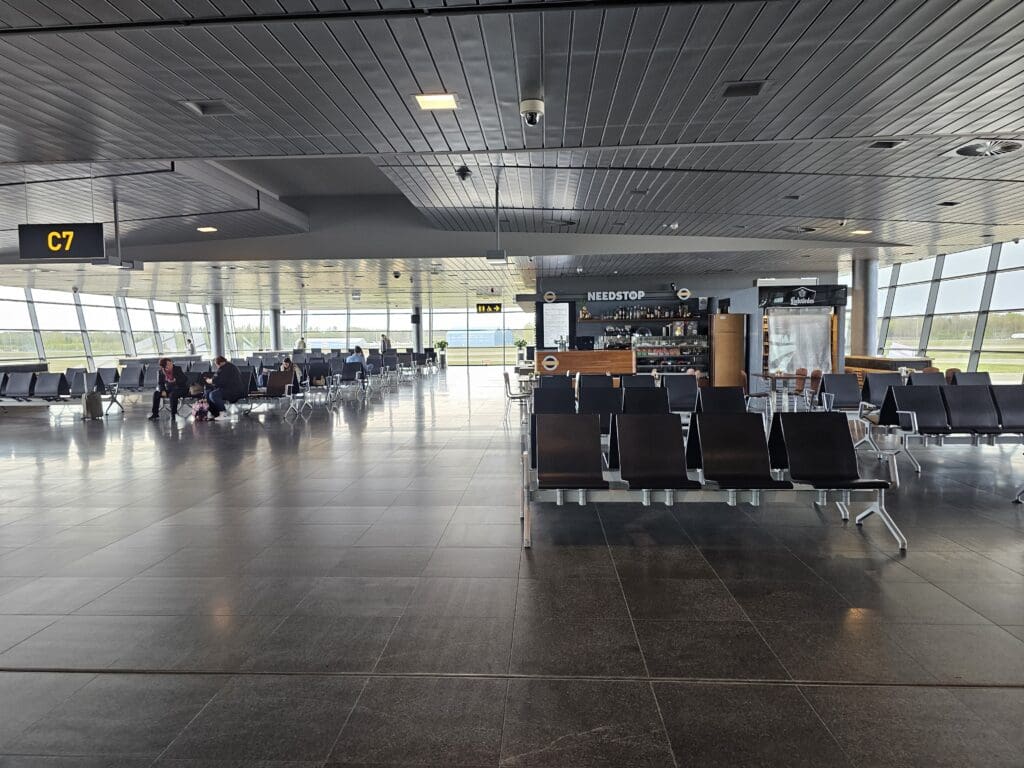
Watching the movements outside, I would say that on average an aircraft made its way past every ten minutes or so and most of these took the form of sleek and modern airBaltic Airbus A220-300s. Other aircraft included several Buzz and Ryanair Boeing 737s and a Nordic Regional Airlines ATR-72 popping in for a visit from its base in Helsinki. Looking out across the airfield, a cluster of business jets and several Bombardier CRJ-200s that had previously operated for Russian carriers Iraero and Rusline could be seen stored on the other side of the runway.
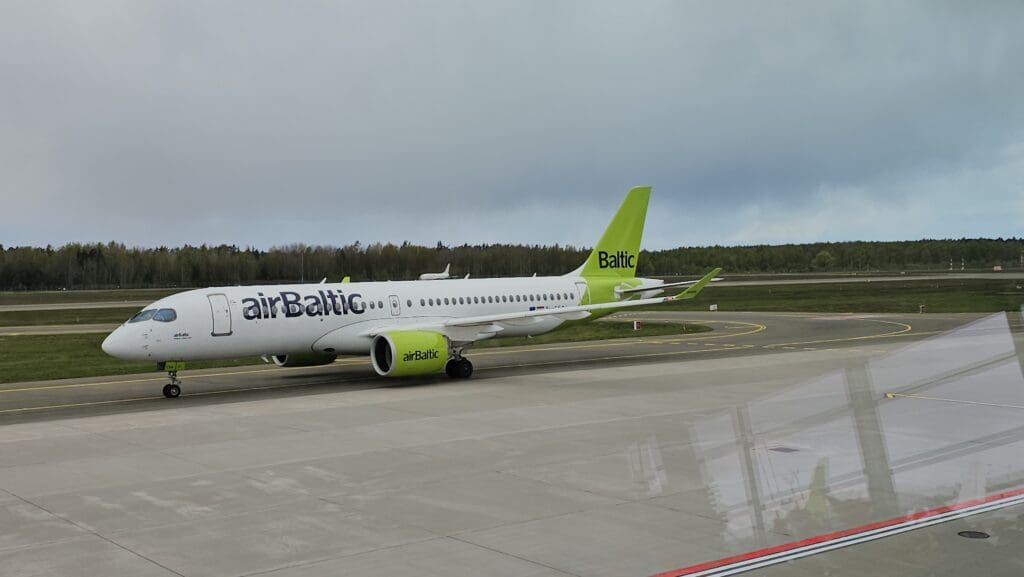
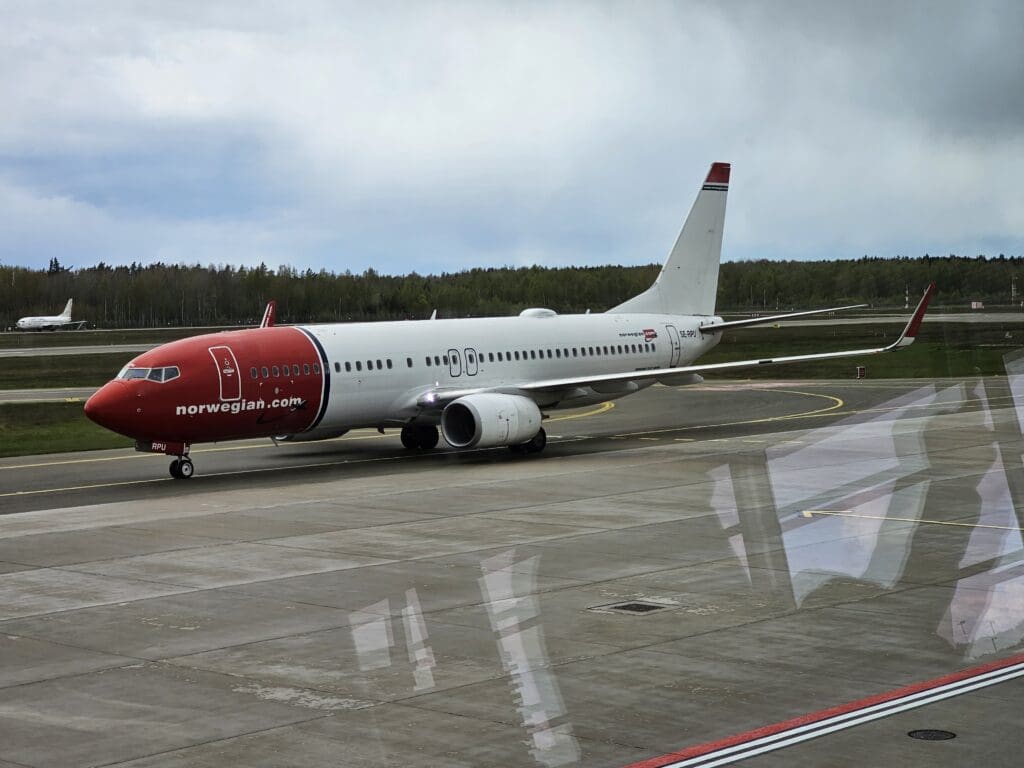
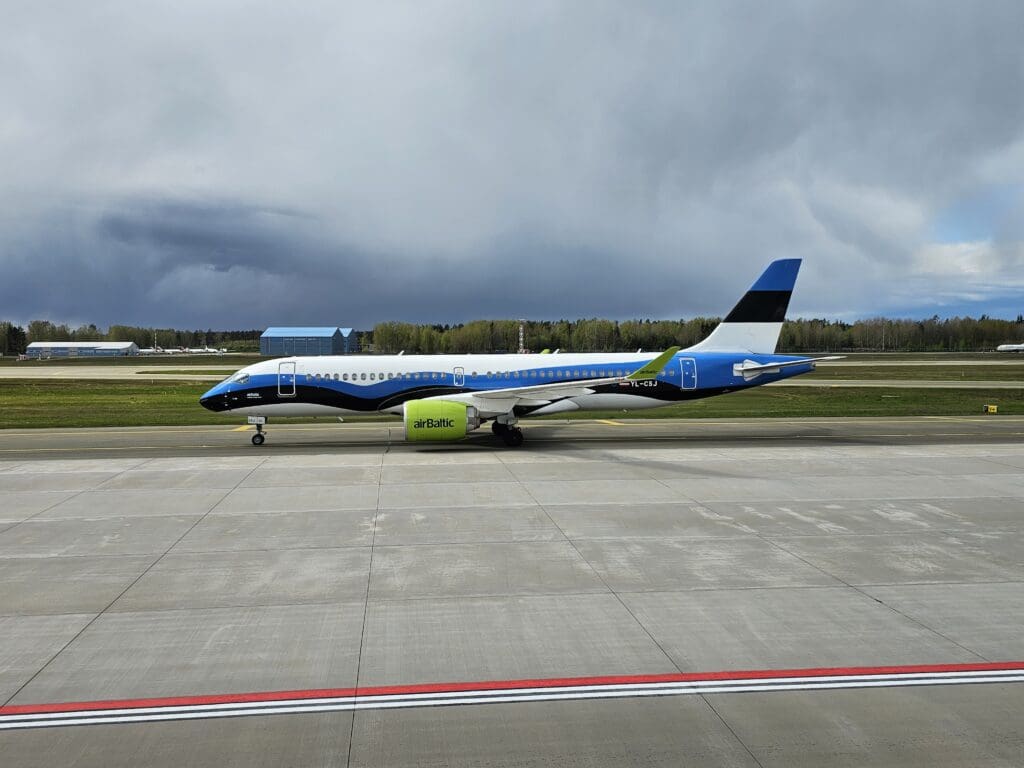
As the minutes passed, more and more passengers bound for Tashkent began filtering through immigration and into this small waiting area. Combined with the fact that those also heading off on airBaltic’s afternoon service to London Gatwick were also arriving, this ended up becoming rather busy. Looking at my boarding pass, this advised that boarding would not commence until 1420 however much to my surprise the first eager passengers began to congregate around the gate podium from around 1345! Seeing no point in getting up so early and sacrificing my comfortable seat next to the window, I remained seated until 1415 and at 1420 on the dot passengers were invited to board in Russian and English. This was not announced in any particular order, with all passengers invited to proceed through at once. At this point, the scrum began to push forward in a rather chaotic manner, and after some jostling I had my boarding pass scanned before heading down the glass jetbridge.
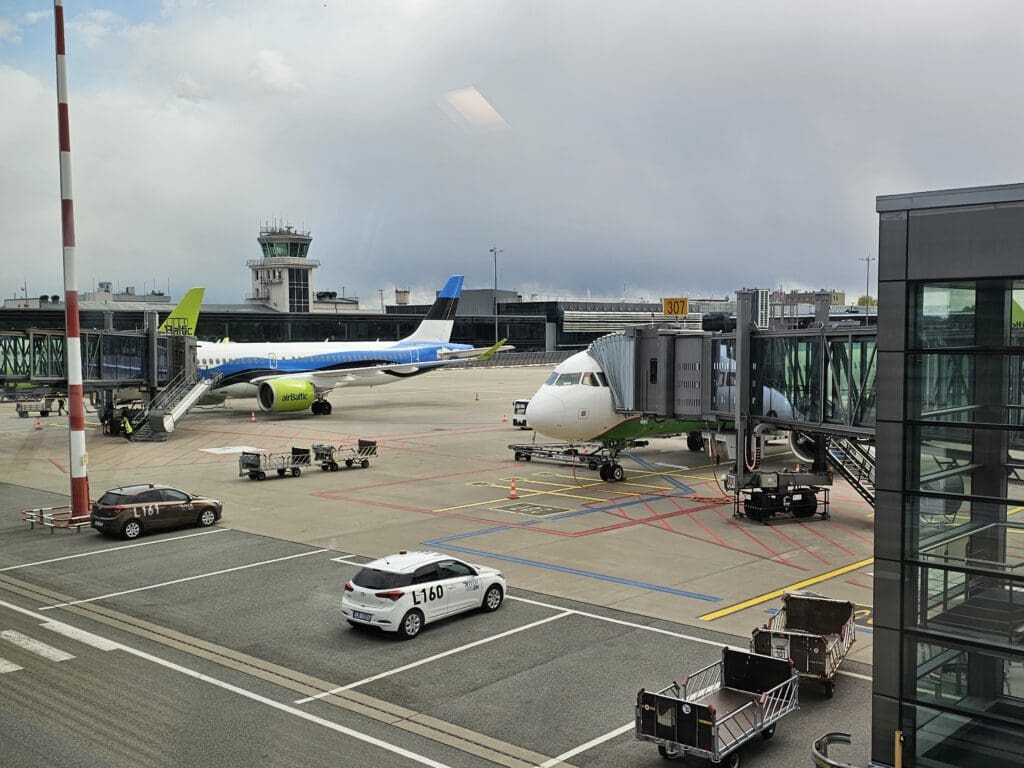
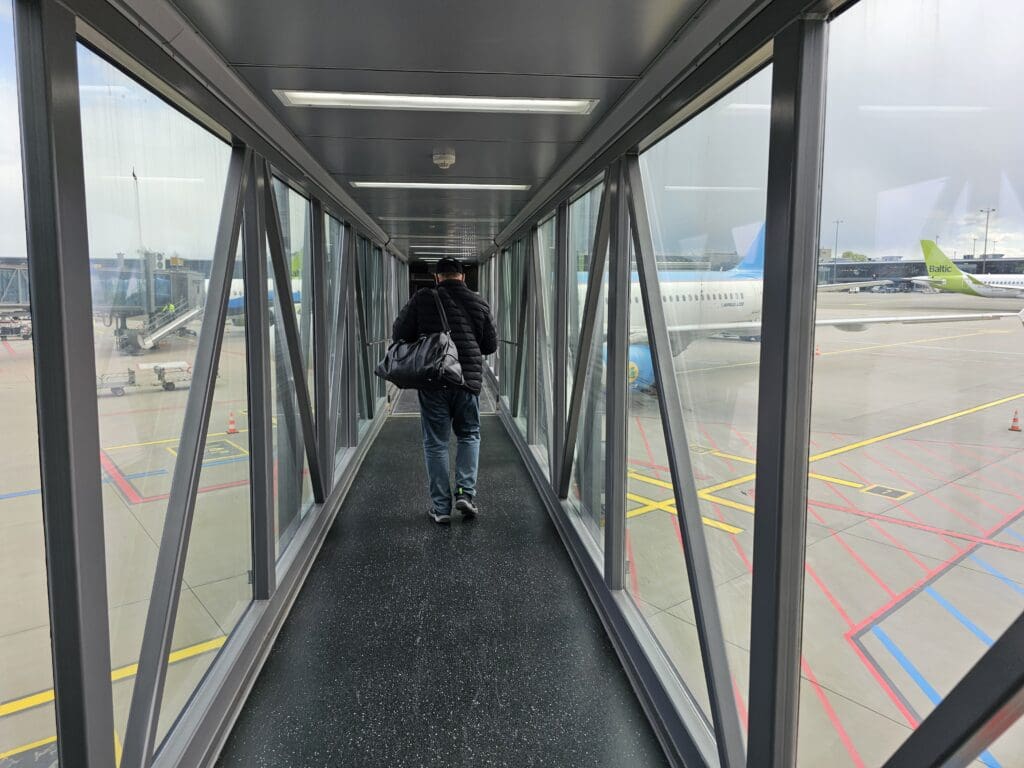
Recognising that the darkness and Tashkent Airport’s infamously strict security guards would likely limit photo opportunities once on the ground in Uzbekistan, I snapped several photos of the colourful Airbus and I walked down the jetbridge and towards the L1 door. As with most aircraft in the carrier’s fleet, a decal celebrating Uzbekistan Airways’ thirtieth anniversary could be seen applied to the door. With no waiting required, I soon found myself stepping up into the Airbus A320’s forward galley where I was given a warm and friendly welcome in Russian by both of the two flight attendants standing there and requested to show my boarding pass. Considering the coolness of the cabin crew on my last Uzbekistan Airways sector, this lively greeting was a welcome welcome and gave some confidence that I would be in for a decent ride over to Uzbekistan. In addition, having been refreshed in early 2020, Uzbekistan Airways’ flight attendants were no longer sporting the non-descript uniform as per my last trip and were smartly dressed in a mostly green uniform with a red cravat and hat.
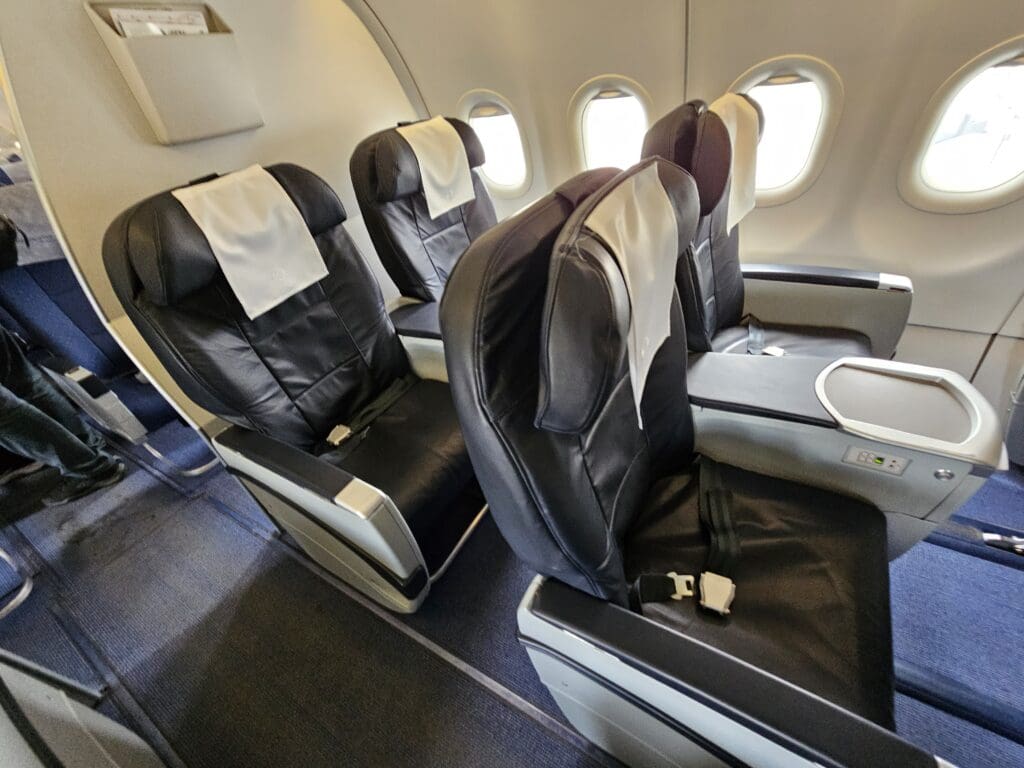
Turning right, moments after boarding I entered the Airbus’ small Business cabin. Reminding me that I was not a European carrier, this consisted of three rows of ‘real’ recliner seats in a 2-2 configuration, each covered in a dark leather cover and topped with a chunky headrest and Uzbekistan Airways antimacassar.
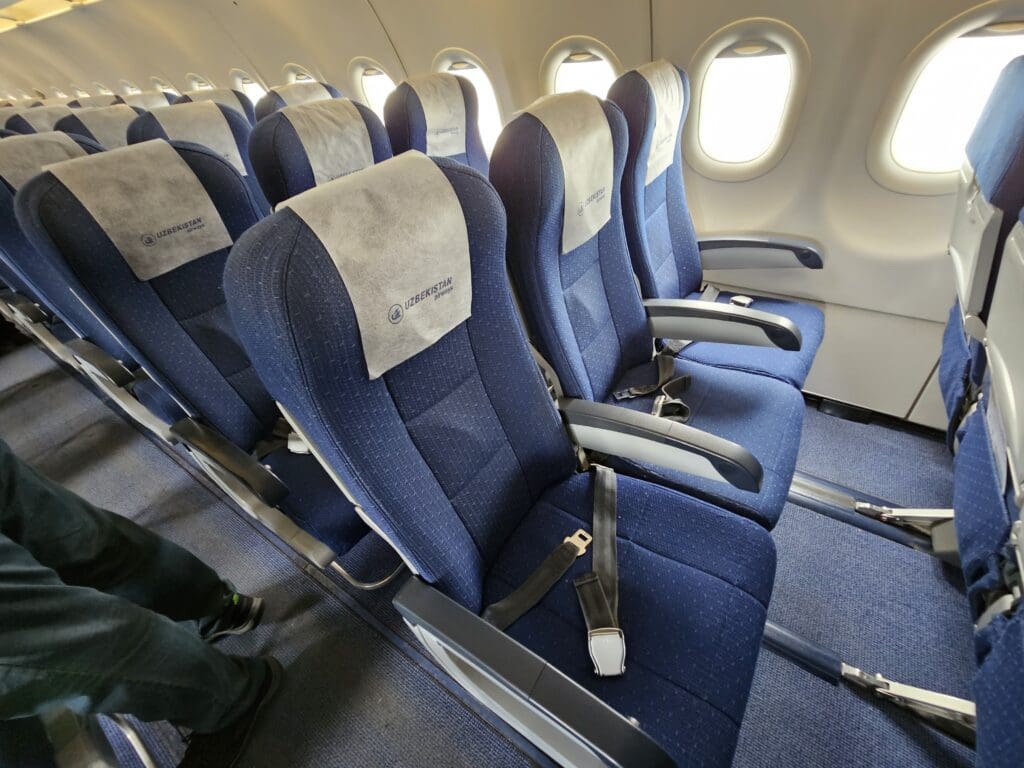
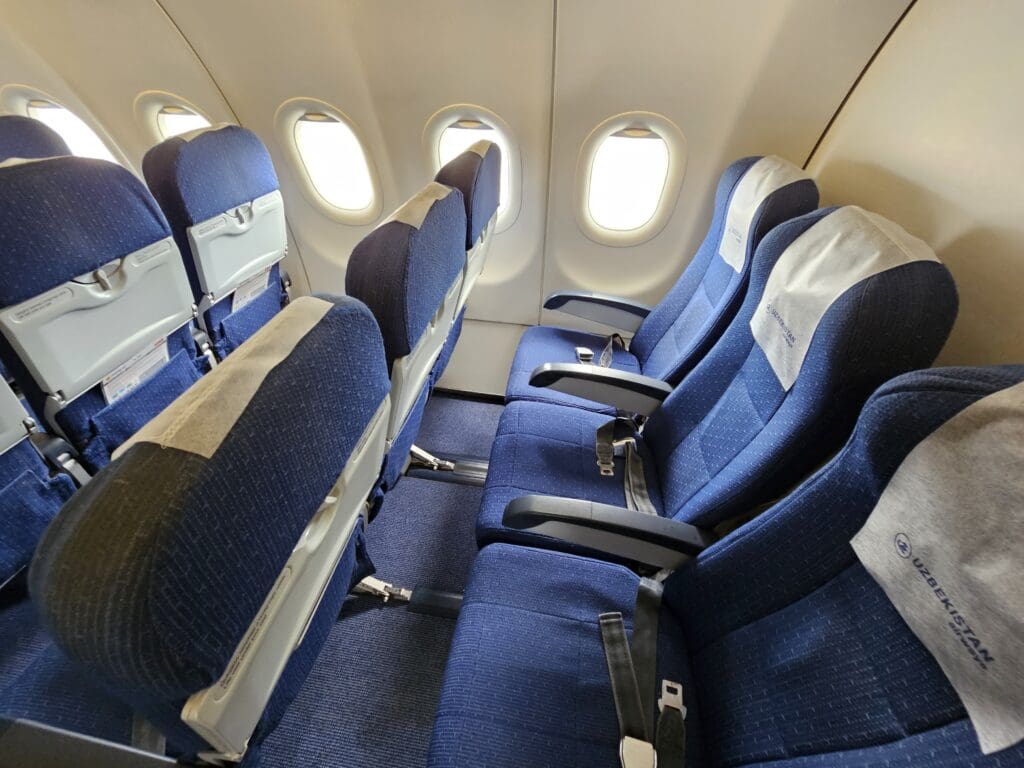
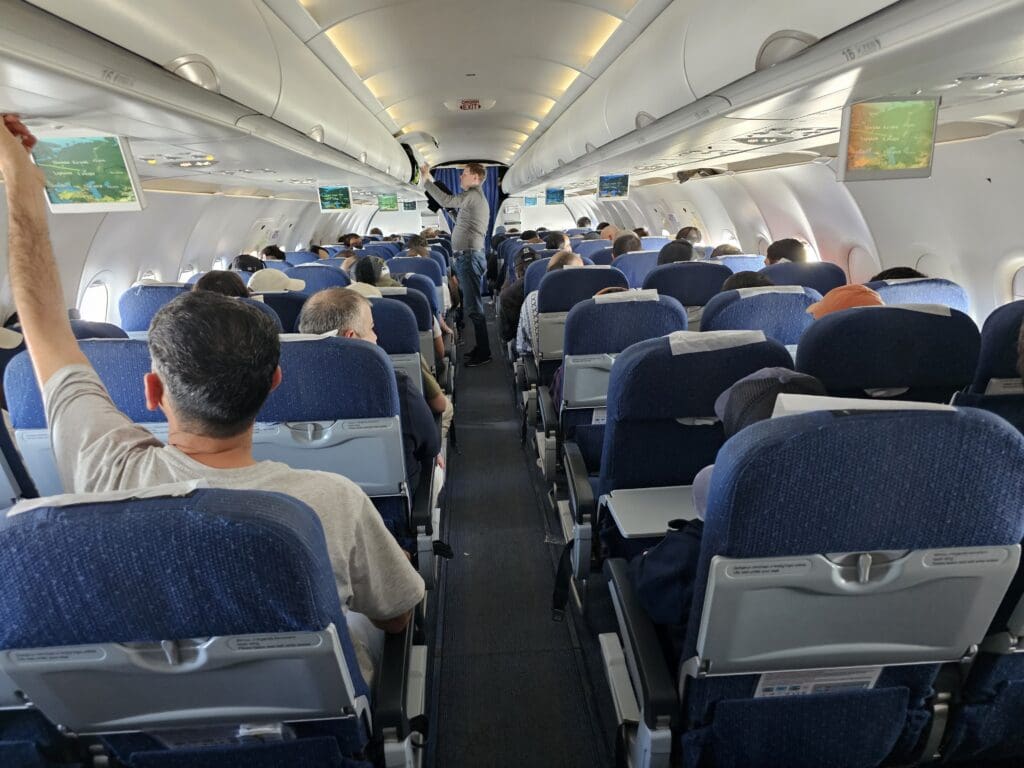
Next up was the Economy cabin, which is home to a grand total of 138 seats in the usual 3-3 layout. Whilst few would have considered this Airbus to be old, the seats in this section of the cabin appeared to be pleasantly chunkier and much more comfortable looking than your typical modern slim and lightweight seat. Those expecting Uzbekistan Airways to have made use of their home country’s rich art and design culture in their onboard design will be disappointed, with each seat covered in a boring dark blue fabric with a simple repeating pattern and topped with a disposable fabric antimacassar. Meanwhile, as I walked to my seat I couldn’t help but notice that the aisle carpet was in dire need of replacement, with this appearing to be in a highly worn state. Returning to the positives, as I trundled to the rear of the aircraft I received another couple of friendly greetings from the cabin crew. On I side note, I couldn’t help but notice that Uzbekistan Airways was yet to update its very limited playlist since my last journey in 2019 – with this consisting of nothing else other than the interesting and dramatic choice of Elton John’s 1995 song, Believe. Perhaps wanting to get their money’s worth, this song rang out non-stop at a rather high volume for the duration of boarding.
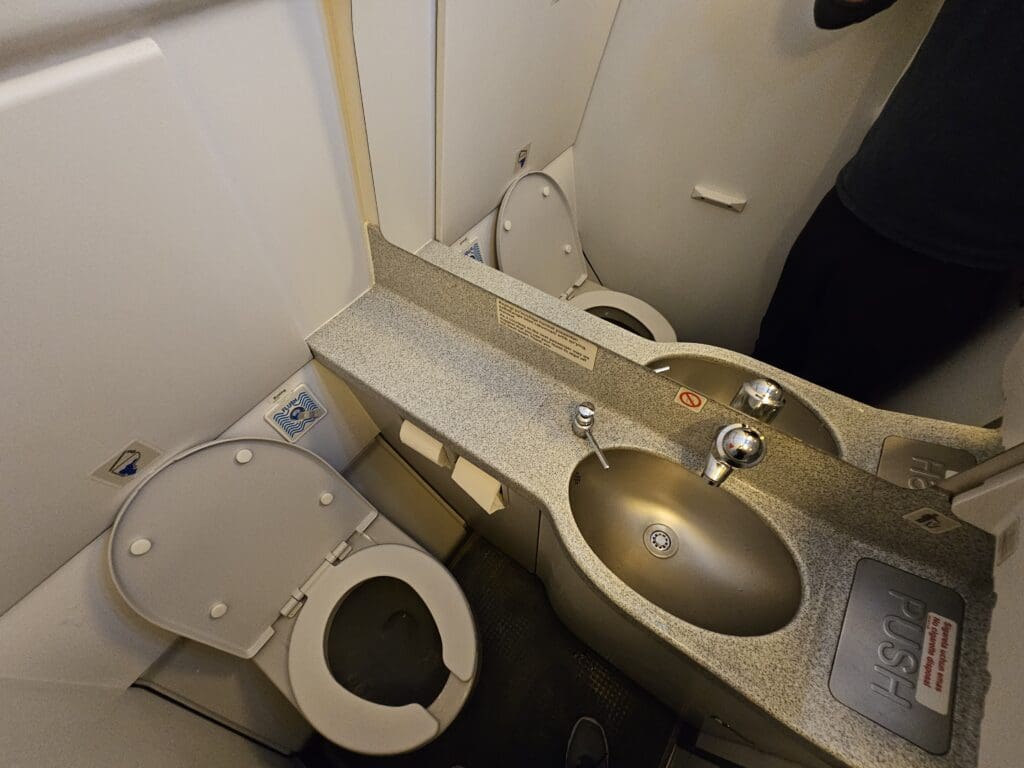
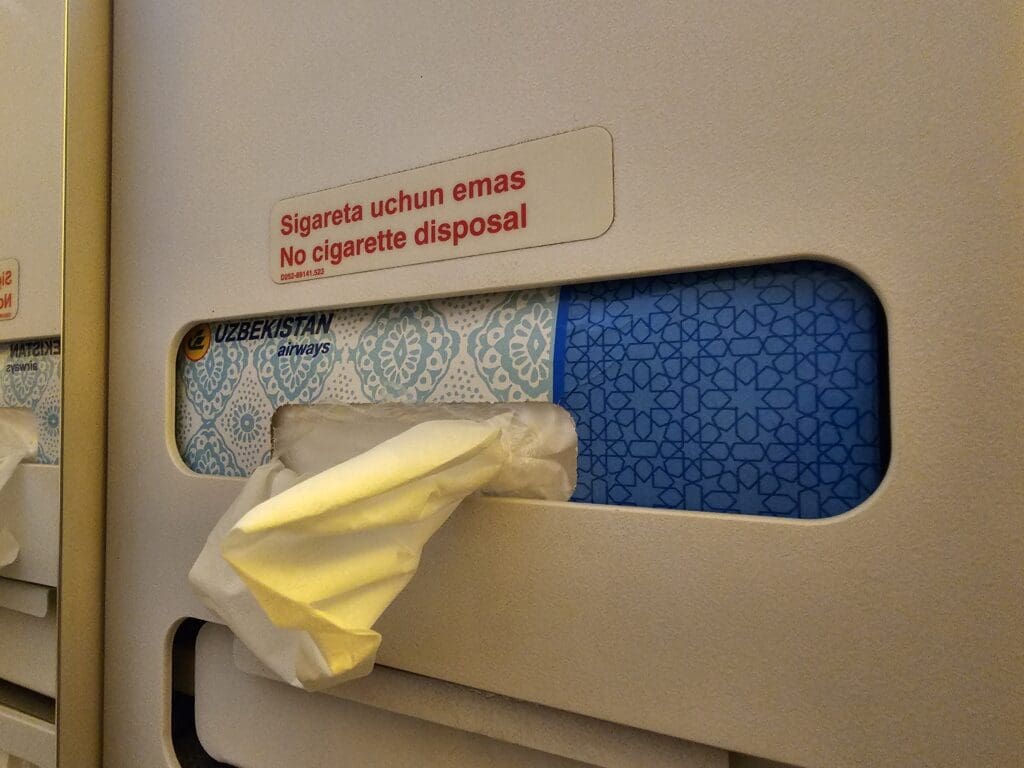
Upon arriving at Row 25, I stowed my backpack in the overhead locker, and unsure if I was to be completely blocked in for the duration of the flight, I decided to make a pre-departure visit to one of the two lavatories at the rear of the cabin. Ignoring the small number of marks and scratches in this, I found the lavatory to be clean and in a good state, serving its purpose and leaving me with little to complain about.
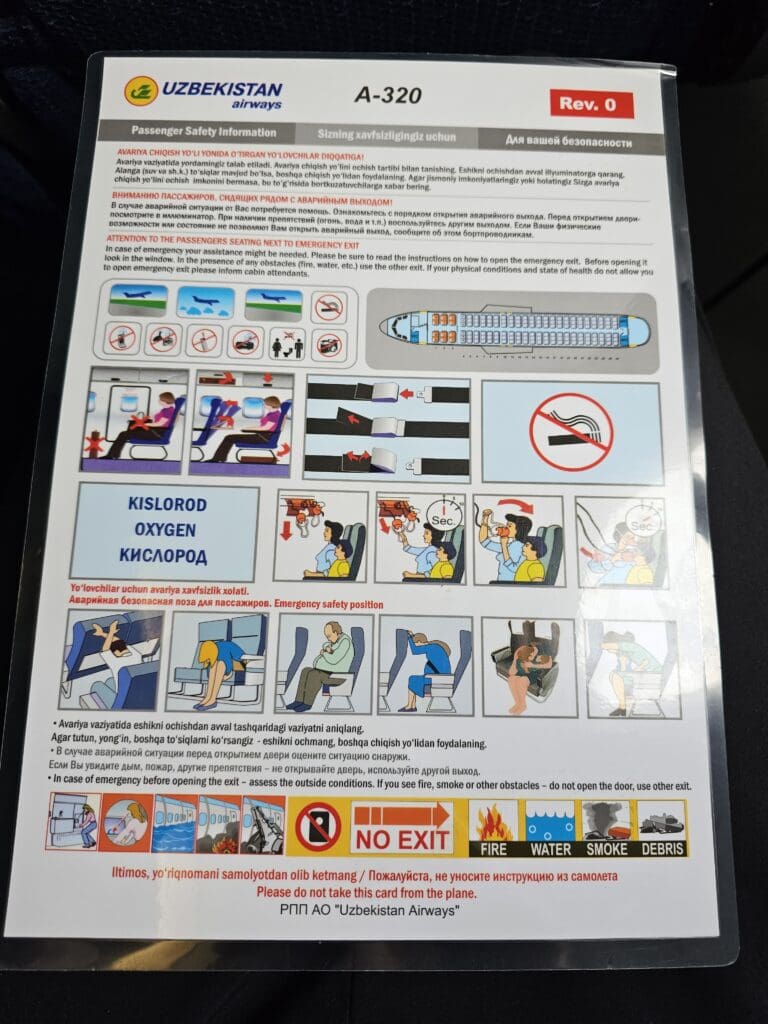
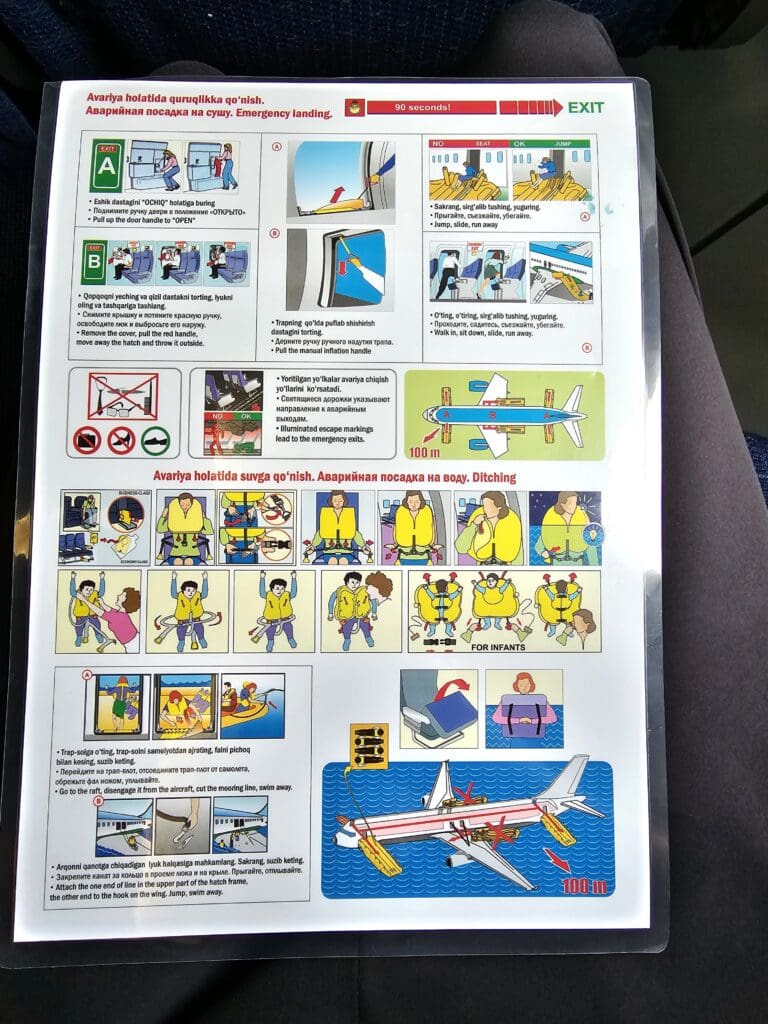
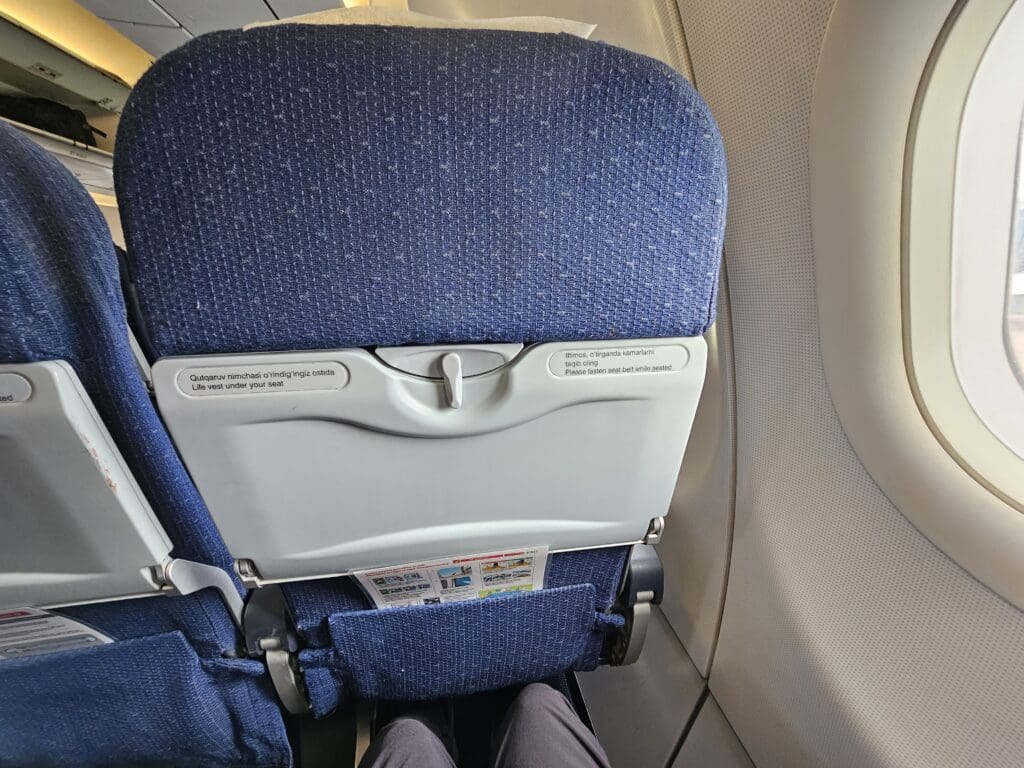
Upon returning from the lavatory I slid into Seat 25F and settled in for the journey to Tashkent. Commencing with the positives, I found the seat to be comfortable and well-padded, whilst also featuring a good amount of legroom. Importantly, but also as one would expect given the aircraft’s long turnaround in Riga, the area around my seat appeared to be spotlessly clean with no signs of any rubbish or crumbs from previous passengers. However, the seat and area around this featured some rather unignorable signs of wear and tear – with frayed and worn-looking fabric, a broken audio control panel in the armrest and plenty of scratches around the seat and neighbouring cabin side wall. Turning to the seatback pockets, these were devoid of anything other than a safety card – lacking the airline’s self-titled inflight magazine. Finally, no blankets or pillows were provided, which, whilst no disaster was slightly disappointing considering the full-service nature of Uzbekistan Airways and the length of the flight.
Given the scrum at the gate, I wasn’t overly surprised to find boarding to be quick and chaotic, with passengers piling onto the aircraft as quickly as possible. Whilst neither calm nor orderly, this did mean that boarding was completed well ahead of our scheduled departure time. That day, the flight to Tashkent seemed to be completely full in Economy and most of my fellow passengers came in the form of joyful Uzbek workers, returning home to their friends and families for a break. Like me, most passengers seemed to be flying point-to-point, although seeing as the flight was codeshared with airBaltic, a small number of connecting passengers were also noted – the majority of whom appeared to be Dutch tourists. With a grand total of eight minutes to go until our departure, the cargo door beneath my seat could be heard closing with a loud whine followed by a thud before the last belt loader was backed up away from the aircraft and the cones around this were removed.
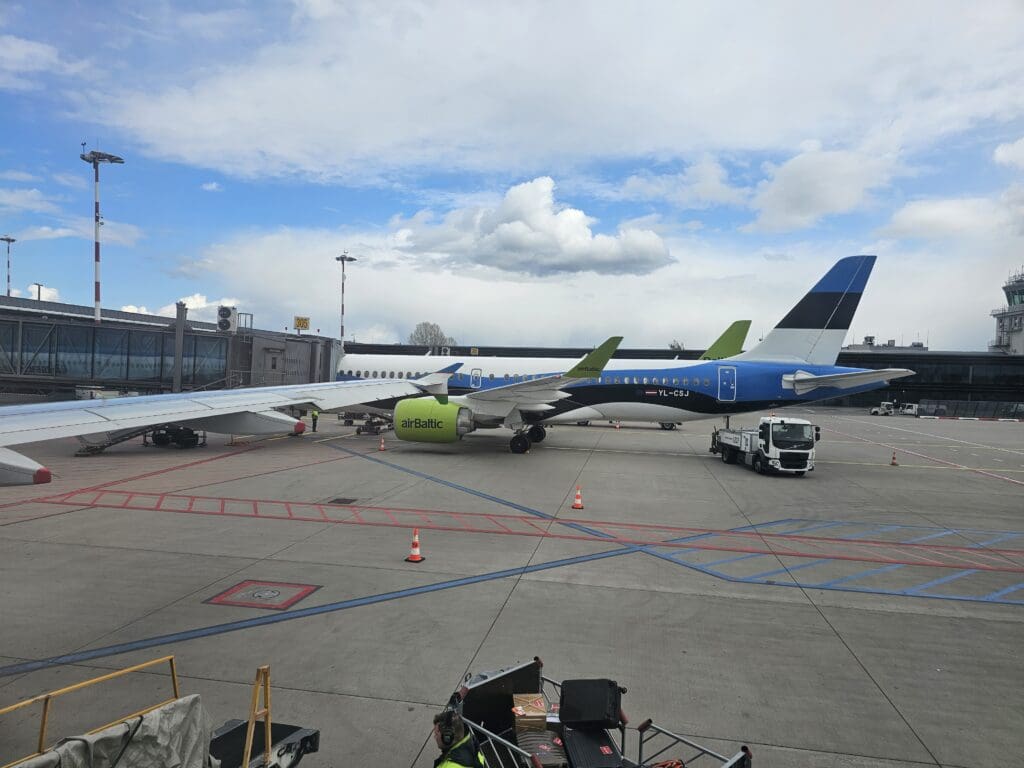
After a few minutes, the purser performed their welcome announcement in Uzbek, followed by shorter versions in Russian and English. This consisted of a friendly welcome, a word of thanks for flying with Uzbekistan Airways and a mention of our flight time and cruising altitude. As this welcome announcement neared its end, the Airbus jolted backwards and the two CFMI CFM56-5B4/P engines hummed and whirred into life, ready to safely carry us all two thousand plus miles over to Central Asia. As we pushed back, the overhead screens were continuously extended and retracted for about a minute, making exactly ten cycles, indicating that there was some sort of issue with these.
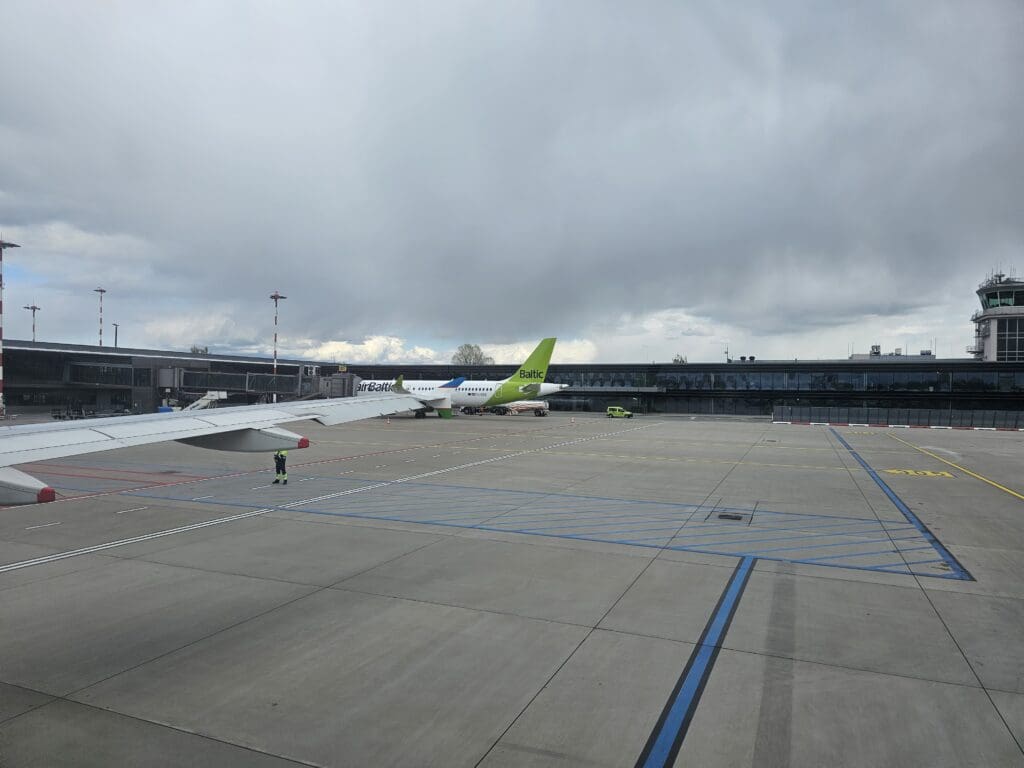
In early 2020, Uzbekistan Airways released its new high-budget safety video which takes passengers on a journey through Uzbekistan, highlighting aspects of the country’s rich culture and history, whilst also pointing out the safety features. However, perhaps owing to the potential issues with the overhead screens, nothing more than a trilingual manual safety demonstration was undertaken. This consisted of the purser reading out the safety instructions whilst one crew member performed the actions to this – although undertaking this demonstration from the very front of the cabin, admittedly they could barely be seen! As this was being undertaken, the tug was disconnected and Airbus soon taxied away under its own power, commencing its journey to the end of Riga Airport’s Runway 36. During our taxi, I caught a glimpse of the reasonable collection of Soviet-era civilian and military aircraft that are on display at the open-air Riga Aviation Museum, and managed to spot an ex-Aeroflot Tupolev Tu-134 as well as an Antonov An-24 – an aircraft that I would have the pleasure of flying on later on in the trip!
Once the safety demonstration had come to an end, the crew passed through the cabin ensuring all was secure before strapping themselves into their seats with only minimal time remaining prior to our departure. With Riga Airport not being the largest in the world, the Airbus arrived at the end of the runway no more than four minutes after leaving its stand and made its way onto this without any holding.
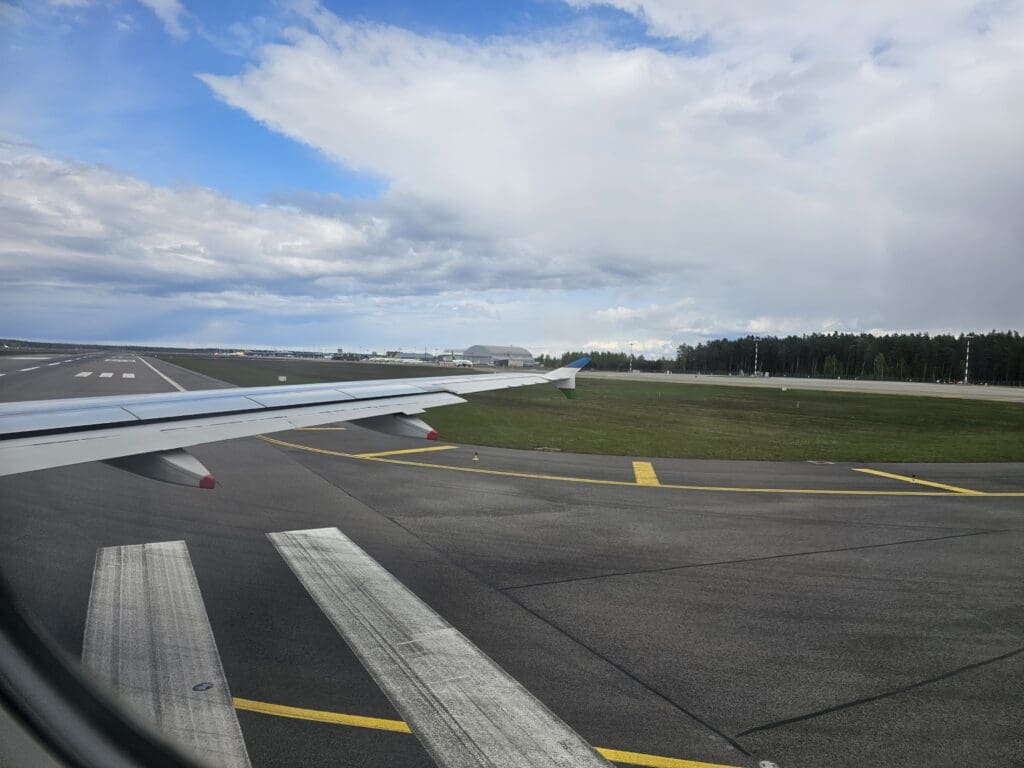
Once lined up on the centreline, the aircraft came to a halt for a few seconds before the two engines powered up and the Airbus performed a powerful yet long takeoff roll. During the first few seconds of this, the Airbus accelerated past airBaltic’s maintenance facilities where a cluster of Airbus A220s could be seen alongside several business jets. Next up was the terminal, by which time the nose had been pointed skywards and the Airbus gently rocketed upwards into the Latvian skies, allowing for a good birdseye view of the C-pier that we had left several minutes prior and the remote stands at the northern end of the airport.
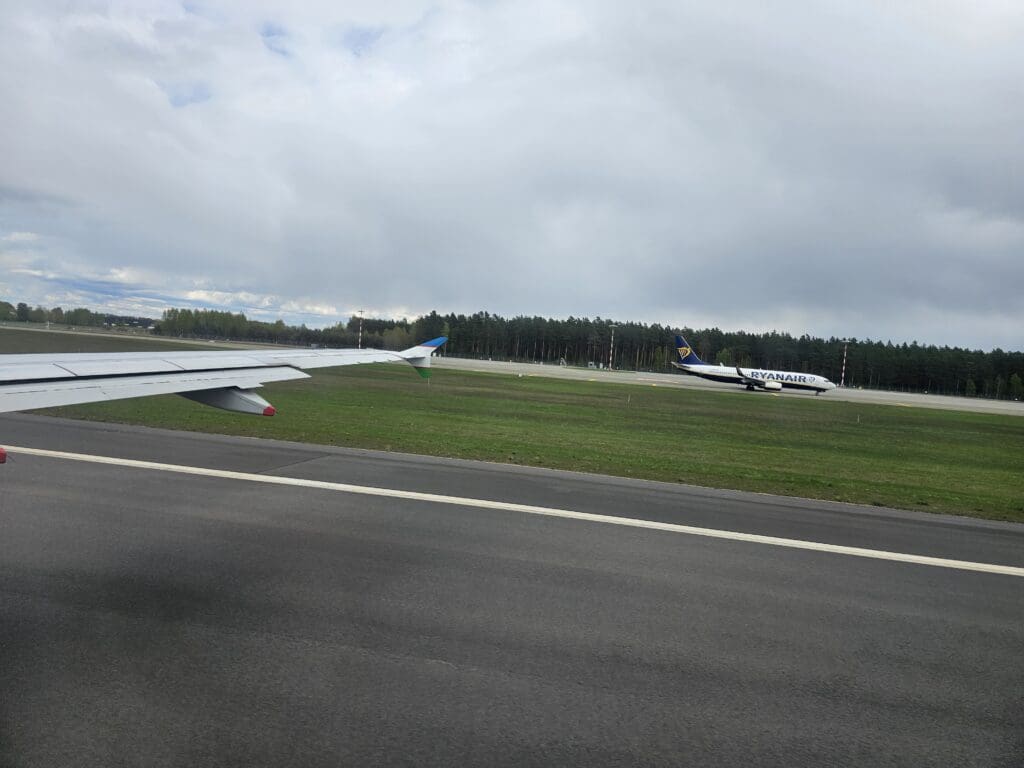
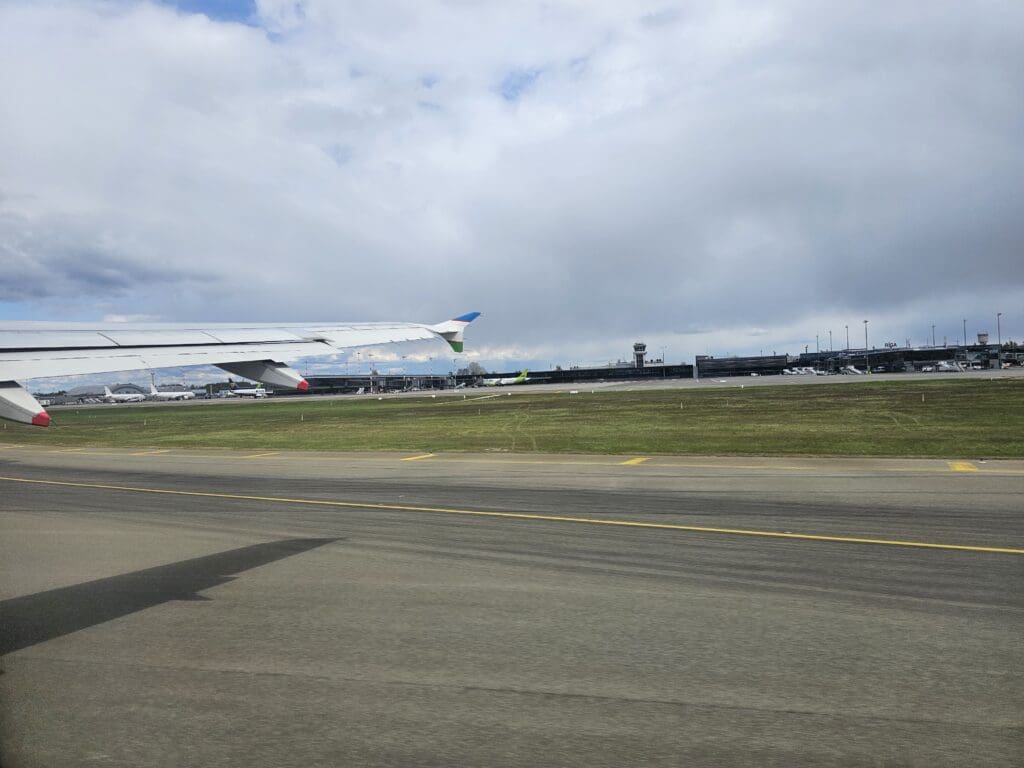
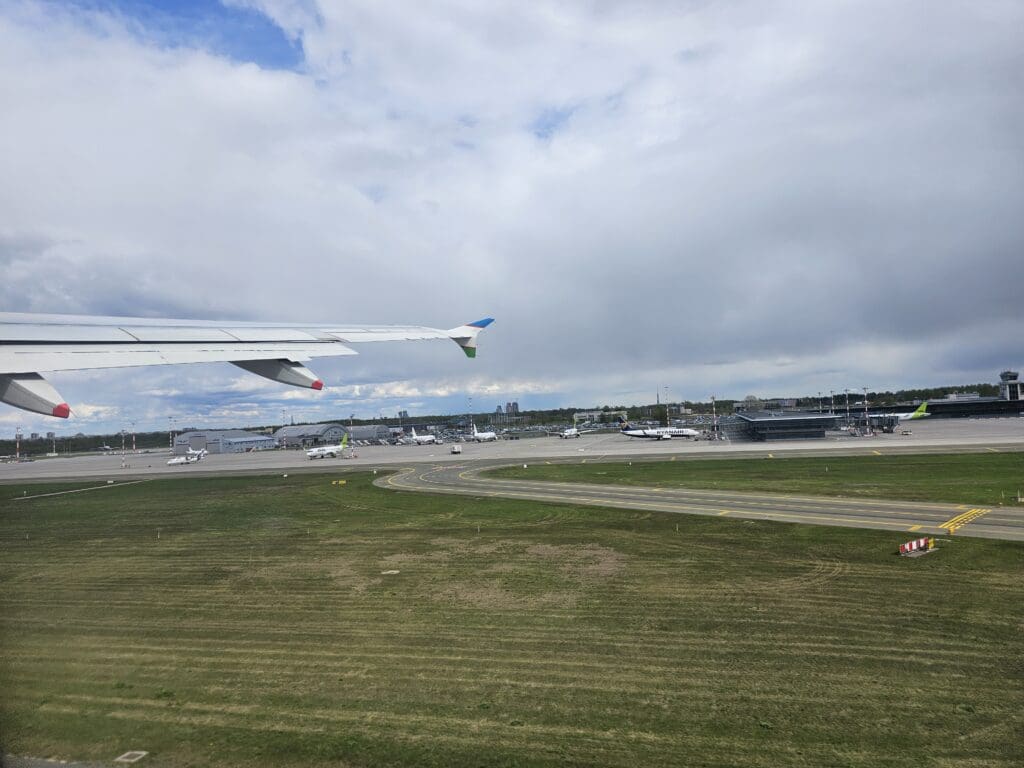
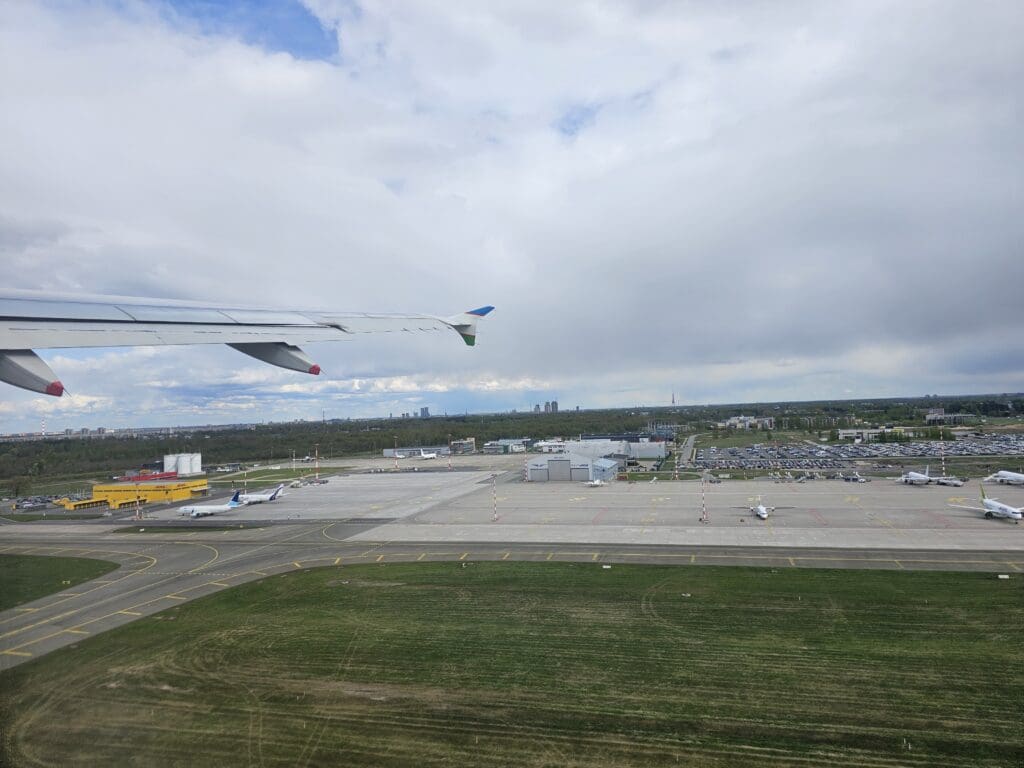
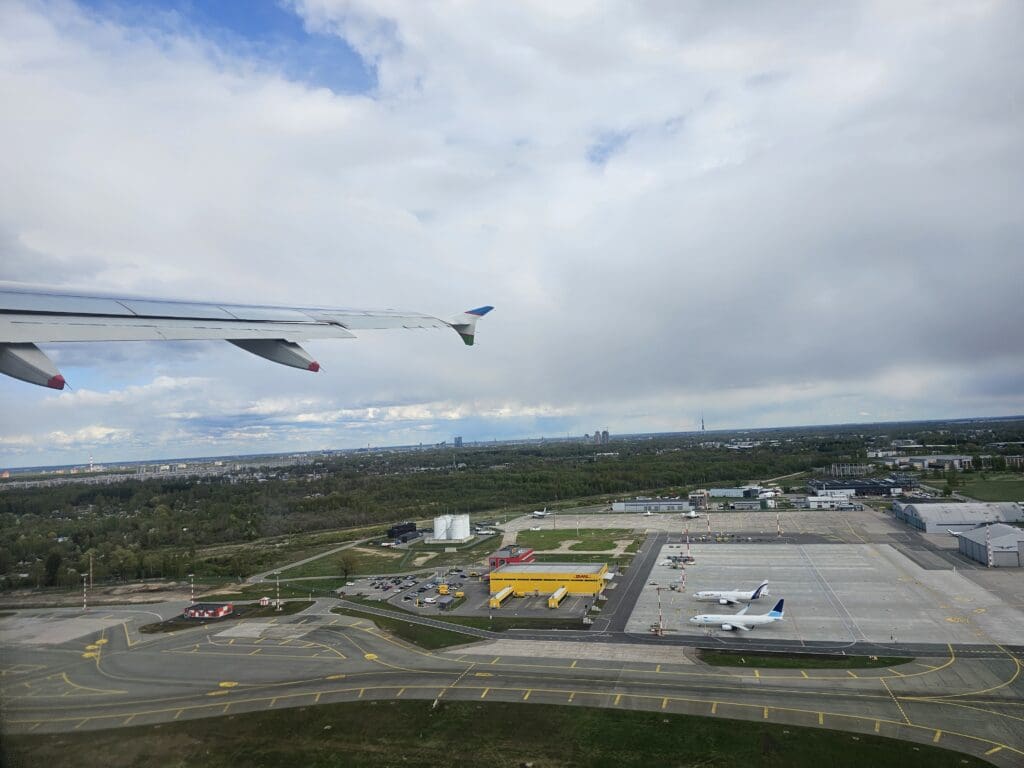
Almost immediately upon taking to the skies, Riga’s leafy suburbs could be seen as well as the blue waters of the Daugava. Beyond this, the buildings of the city centre as well as the tallest tower in the EU, the 368.5 metre-tall Riga Radio and TV Tower popped into view. Once away from the airport, the Airbus flew roughly parallel with the Daugava River for a minute or so, and it was not long before the industrial areas that sit around the mouth of this river could be seen at which point the aircraft banked to turn around and set an easterly course that would take us to the Russian border. During this bank, I managed to catch sight of Riga’s old airport at Spilve, which now serves as a general aviation airfield, before the aircraft rose upwards into the clouds.
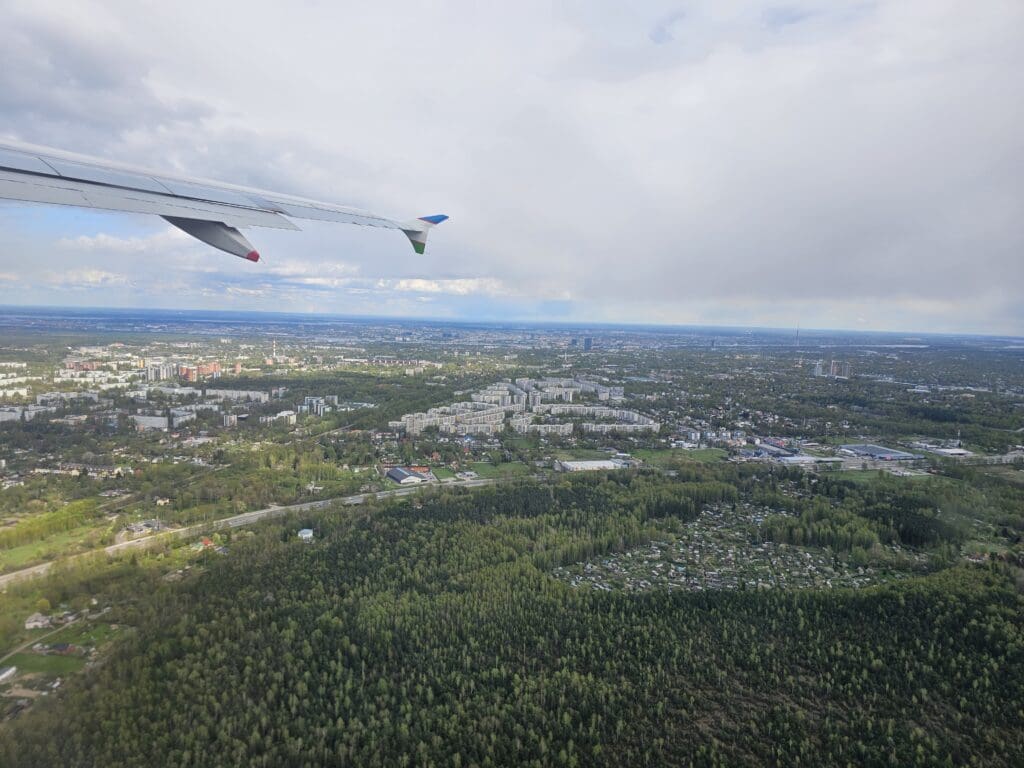
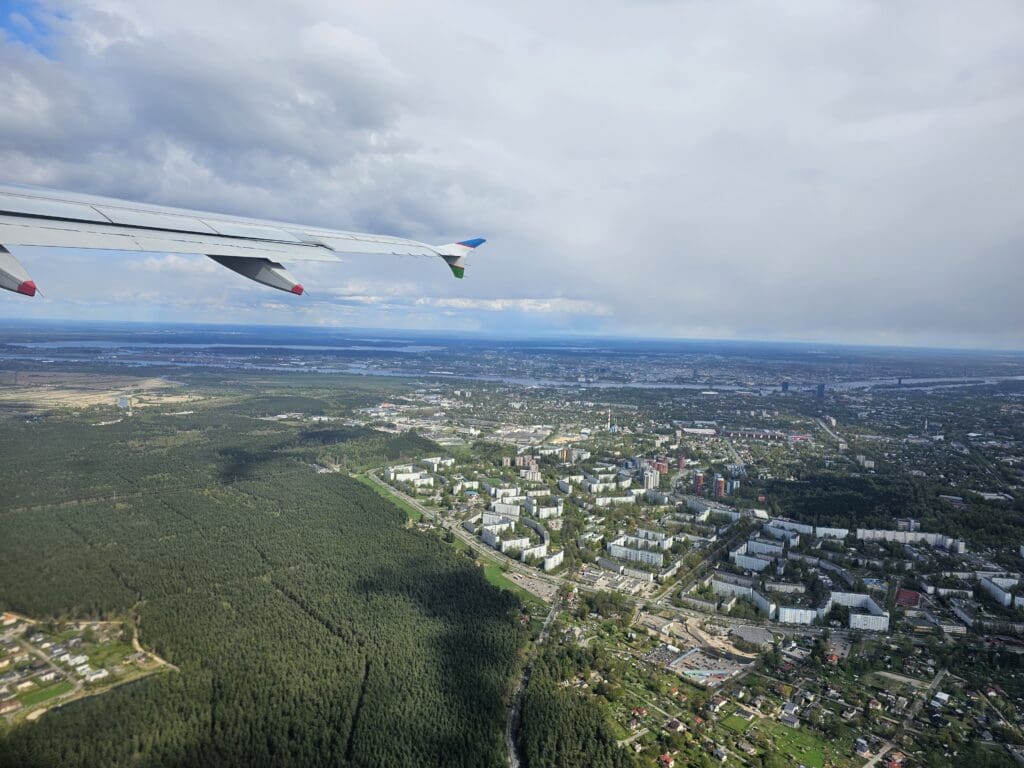
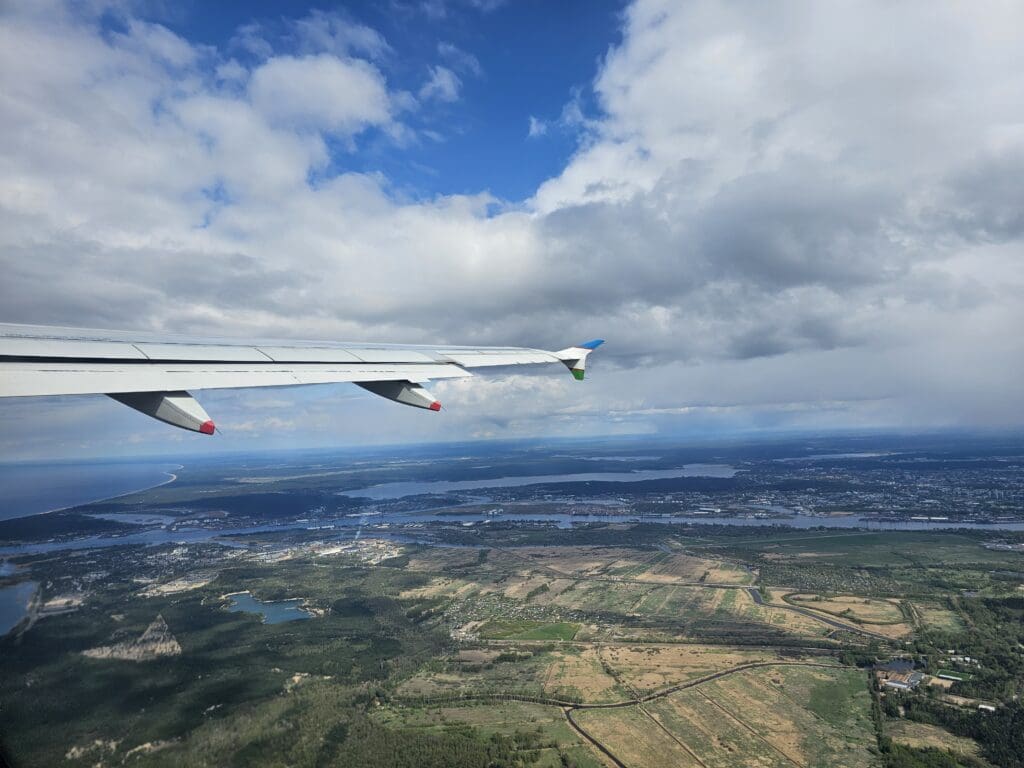
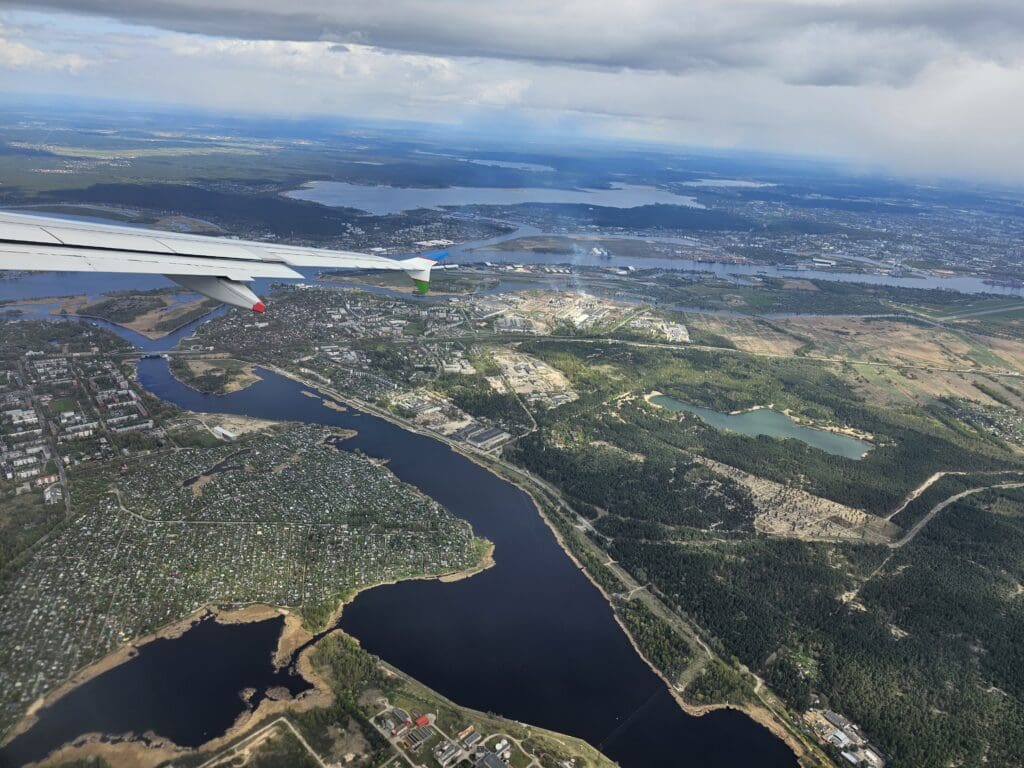
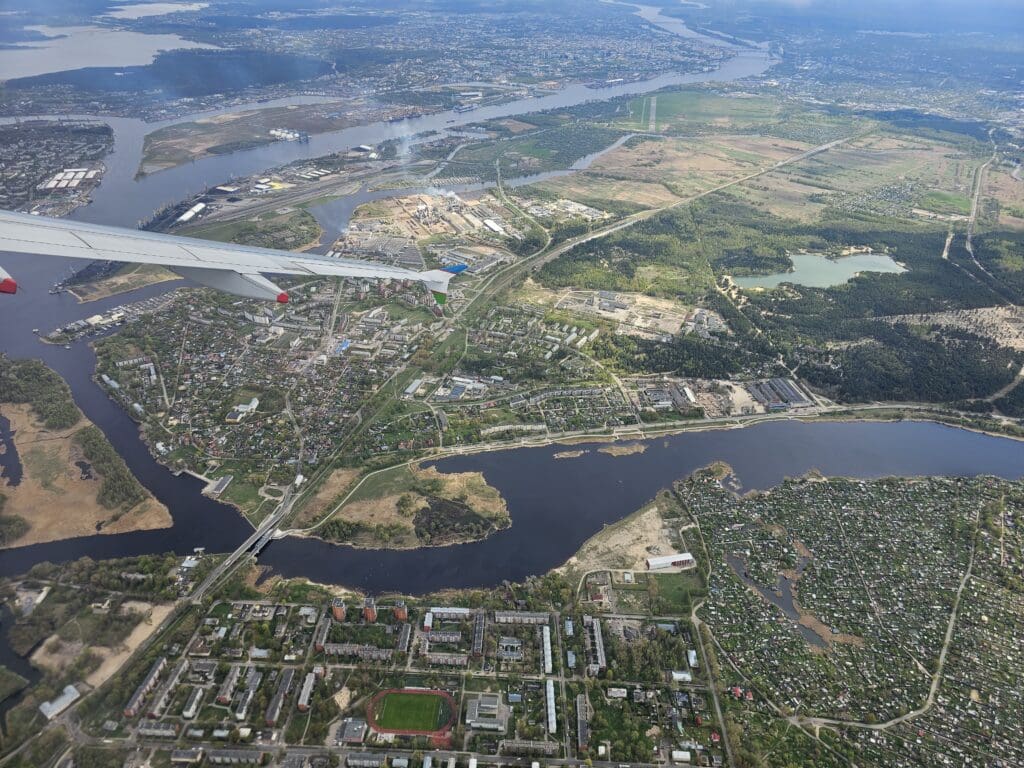
As we passed through the wispy white clouds that lingered over Riga, in the usual manner a fair number of lumps and bumps could be felt. Thankfully, once away from the capital, gaps in these revealed the mostly flat Latvian countryside where plenty of forests and farms could be seen as we followed the Daugava eastwards. Given the comparatively small size of Latvia, it didn’t take long for the aircraft to slice across the country that afternoon and we soon passed over the city of Rēzekne, followed by the town of Zilupe before heading over the now-tense border with Russia and into the skies over Pskov Oblast.
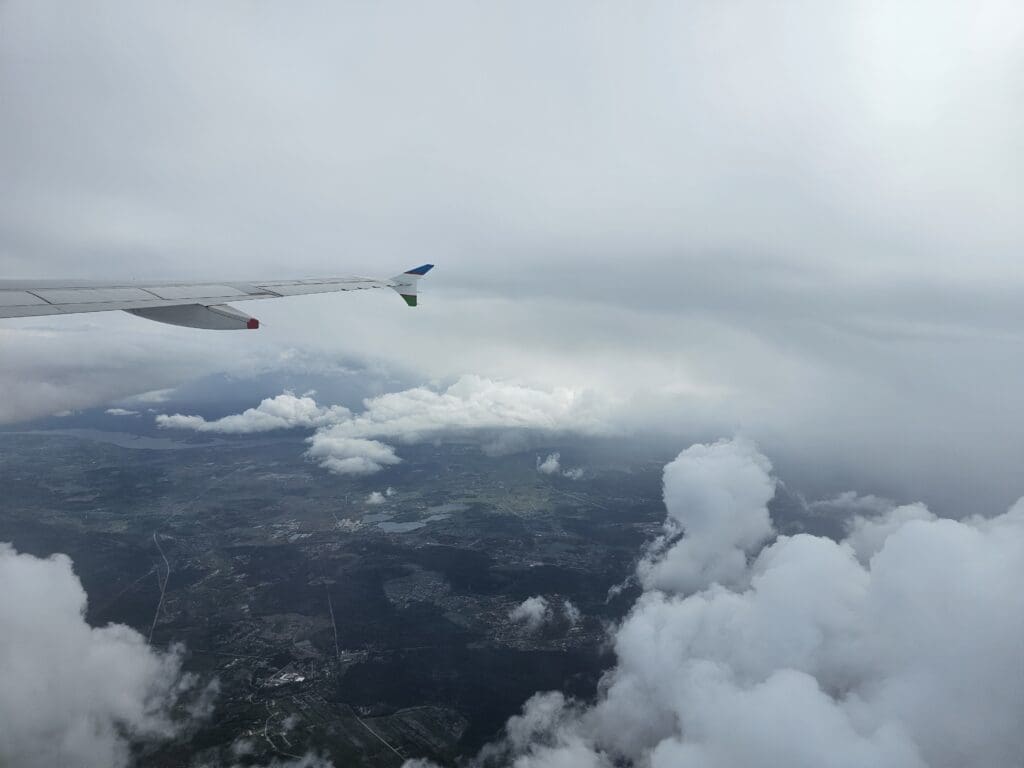
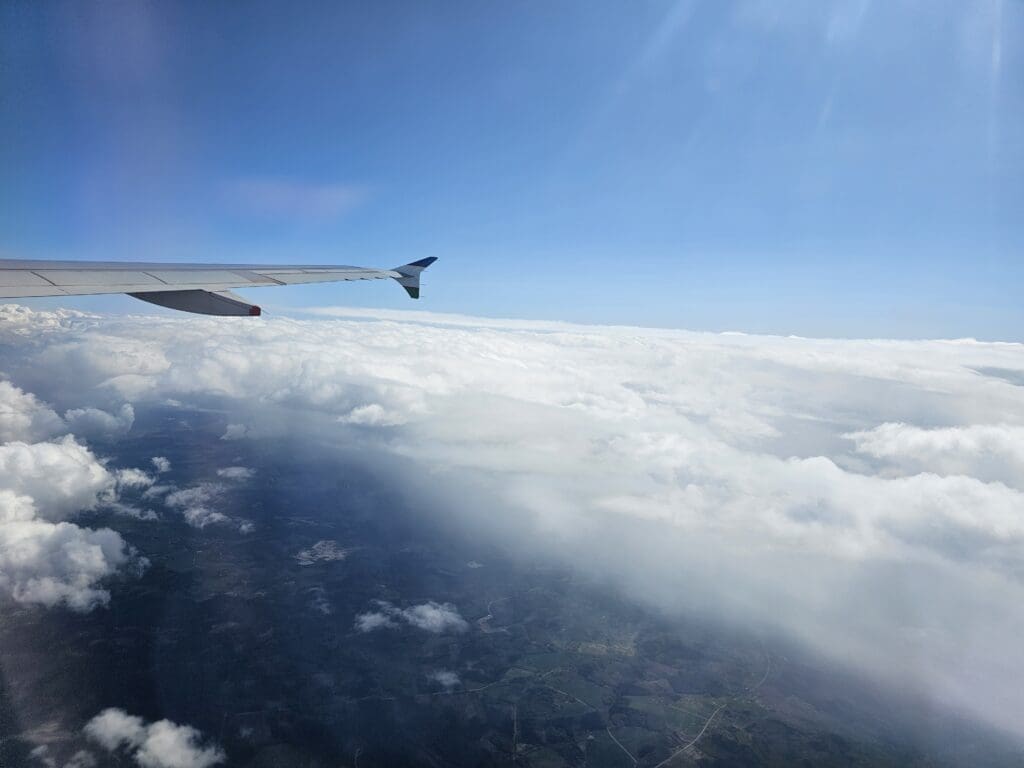
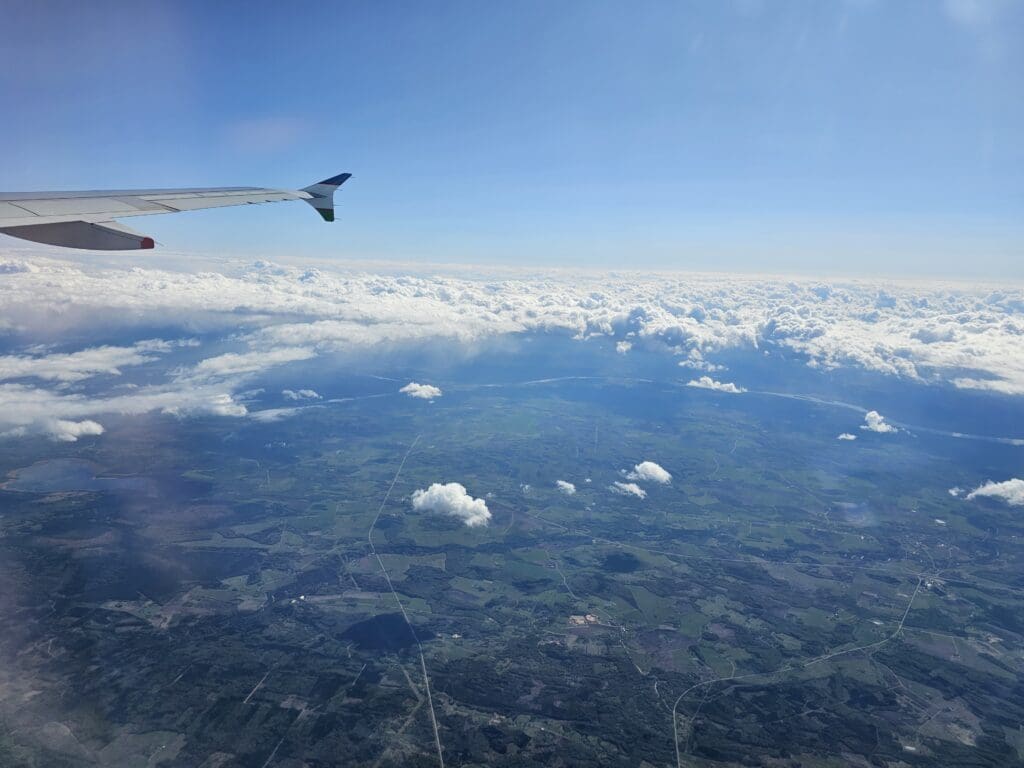
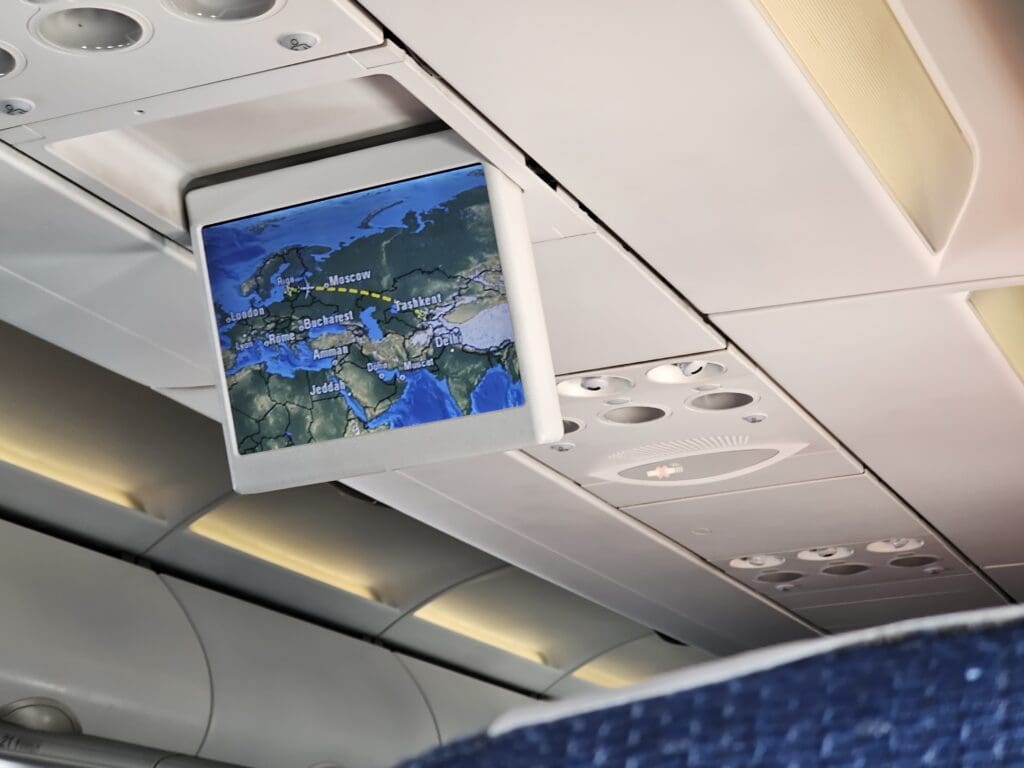
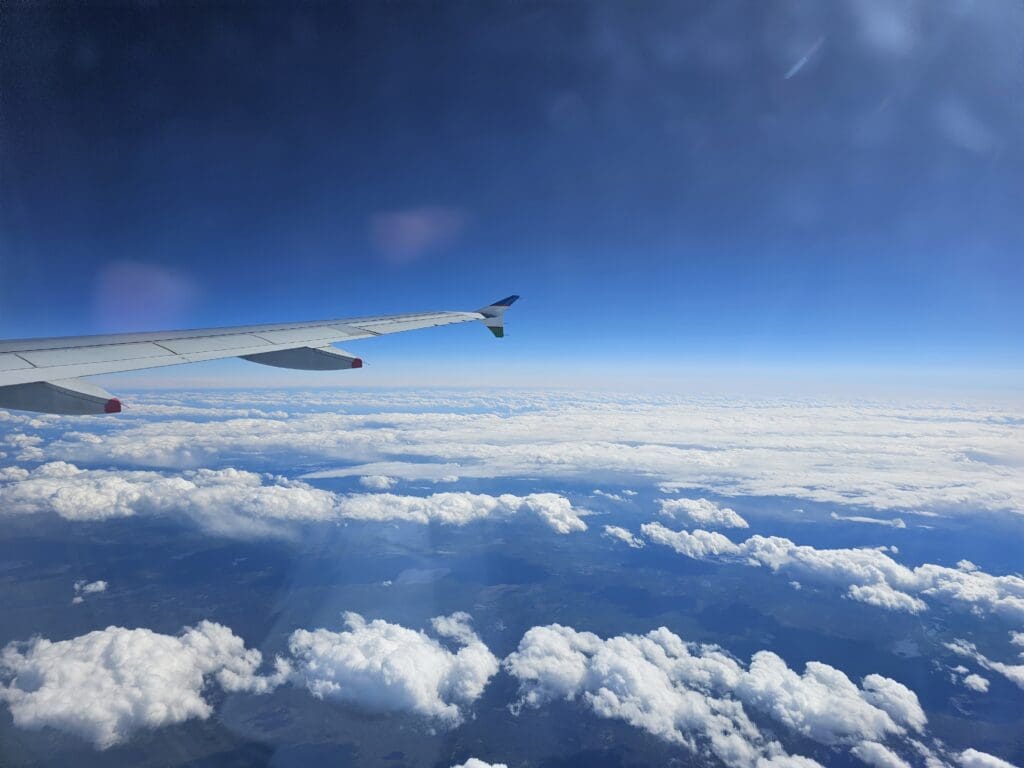
A few minutes after entering Russian airspace and around 26 minutes into the flight, the aircraft levelled off at its cruising altitude of 35,000 feet and would remain there until the commencement of its descent. At this point, the seatbelt signs were extinguished and the Captain performed a quiet and mostly inaudible announcement in Uzbek, Russian and English. As this was being performed, the overhead screens fell down into position in order to display the moving map, whilst a flight attendant passed through the cabin handing out low-quality headphones. Although seeing as my audio control panel not working, I had no use for these. A short time later, two drinks carts were rolled out, with one commencing service from the front of the Economy cabin and the other from the rear. Given my position, it was not long before I was offered the choice of water, Coca-Cola or a range of juices by one of the friendly crew members. Opting for an orange juice, this was poured out into a paper cup and then cautiously handed over to me.
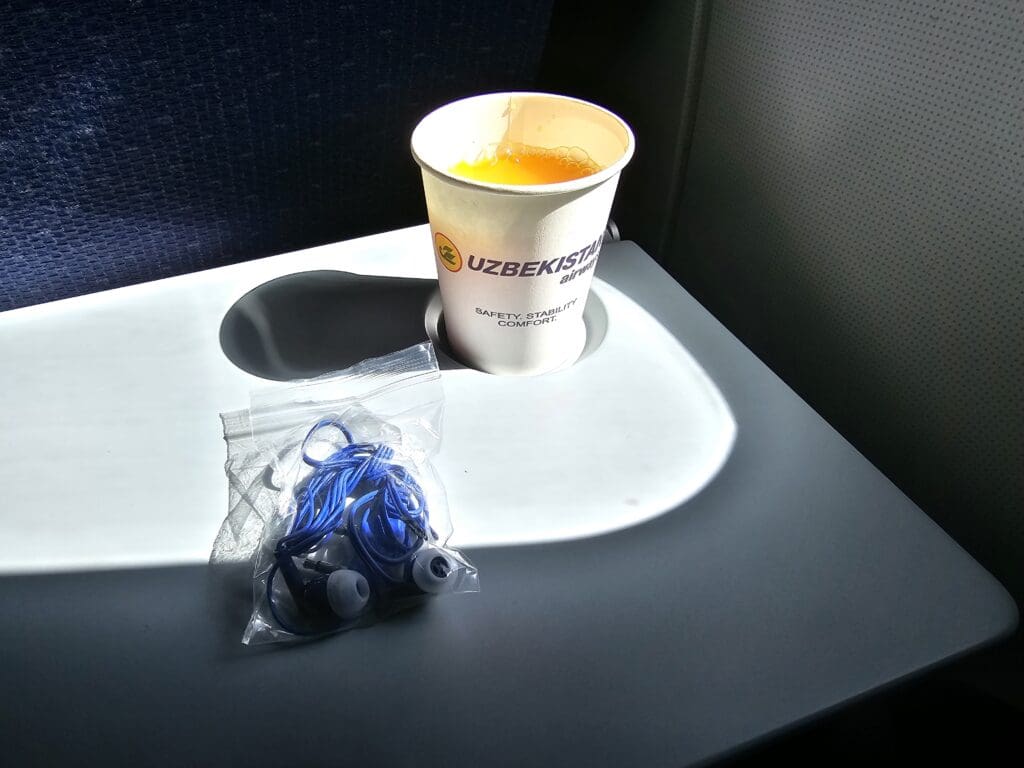
As I sipped on the unnaturally sweet and sugary juice, clouds swooped in below and took the view of the mostly forested rural landscapes of far western Russia at which point I turned my attention to the scent of food wafting from the rear galley. Around an hour after our departure from Riga, two carts were rolled out and once again service was undertaken from both the front and rear of the aircraft. As mentioned, during my last trip with Uzbekistan Airways I was pleasantly taken aback by the sheer volume of food provided on the sub-six hour sector from Tashkent to Incheon. However, given the slightly shorter length of this service and reduced galley space onboard the Airbus A320 compared to the much larger Dreamliner, I was not entirely sure whether I would be treated to the same sort of feast as I had received on my flight to Korea.
Fortunately, I didn’t have to wait long and a short time later, the flight attendant made the undecorated, blunt and familiar question of ‘chicken or beef?’. Opting for the latter, I was first passed a small and very hot foil dish containing the main meal, which, to my delight was promptly followed by a large plastic box that was filled to the brim with a wide array of side dishes. Specifically, this contained a salad with two slices of slightly stale-looking cucumber and lettuce with a slice of cheese, a small samsa (an Uzbek meat pastry), a muffin, a packaged bread roll, a packet of peanuts, two slices of orange, tubs of grape jam and butter, sachets of mustard and olive oil, a wet wipe and a packet contained plastic cutlery, salt, petter, sugar and serviettes. Upon peeling back the lid of the main dish, I found this to consist of a beef dish with white rice and sweetcorn. Giving this a taste, whilst this was not the pinnacle of inflight cuisine and would likely be no match for the likes of Emirates or Singapore Airlines, this was most certainly edible and once again I was left highly impressed by the quantity of food provided. Once all meals had been handed out, the crew then passed through the cabin pouring green and black tea, although opting to do so at an unfortunate time as we soon hit a patch of significant turbulence. Nevertheless, the show continued and I was soon passed a paper cup filled to the brim with boiling hot black tea.
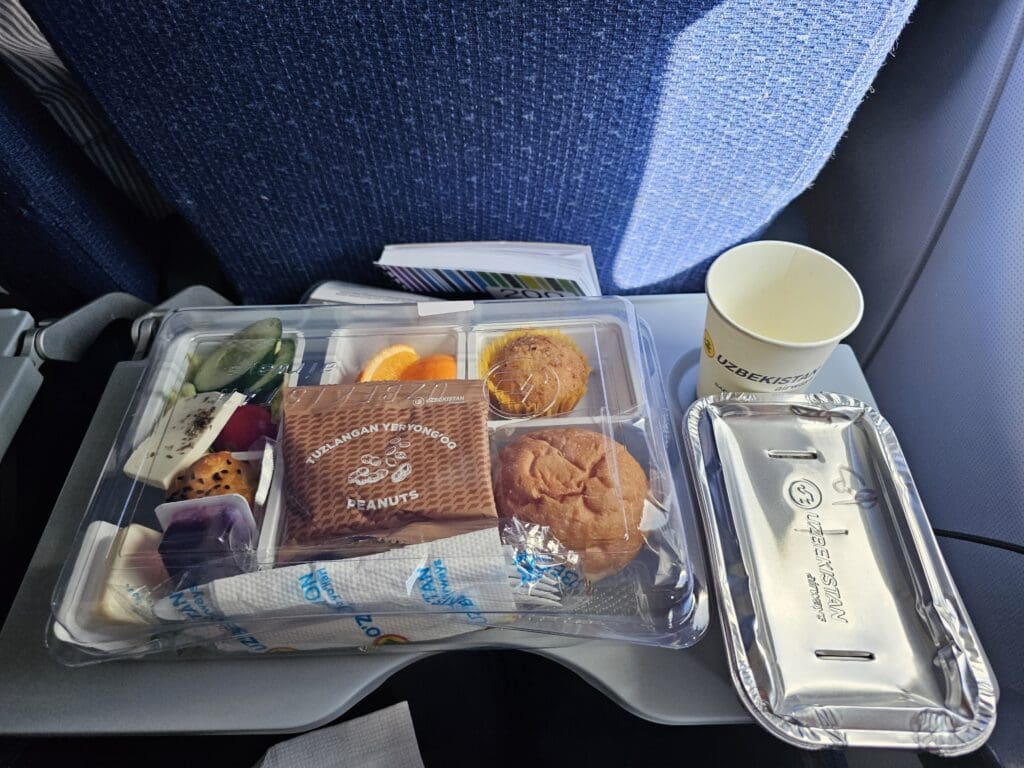

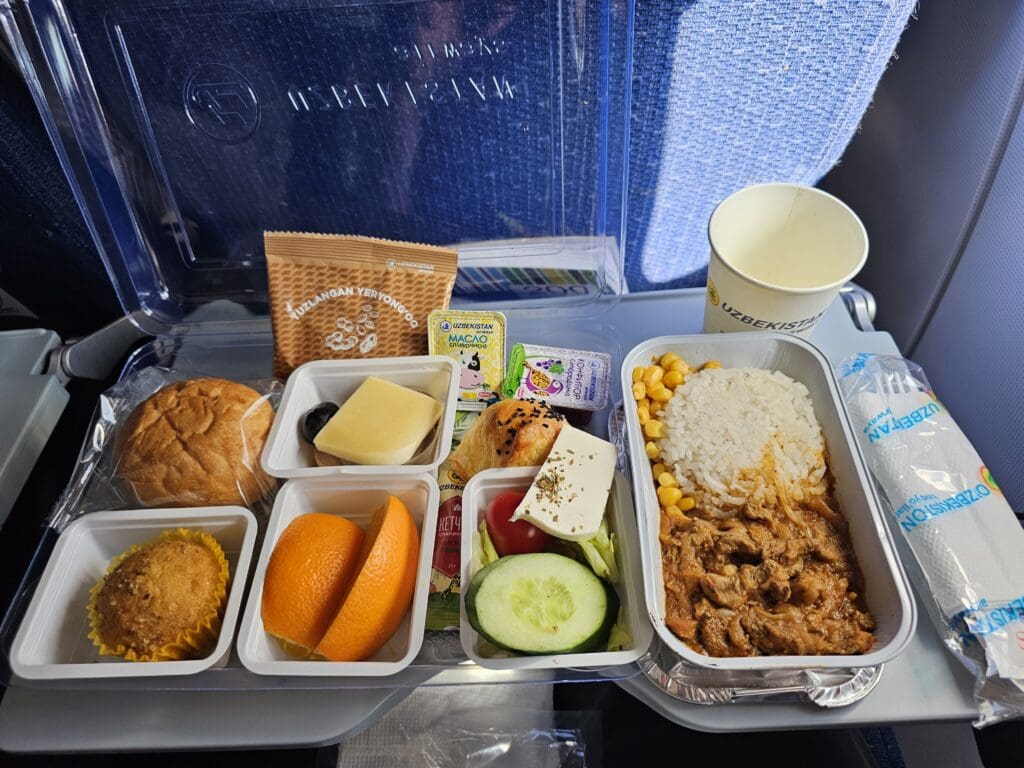
As I ate my late lunch/early tea, the clouds cleared below, bringing Russia’s rural green landscapes into view once more as we cruised eastwards – slowly but surely trundling towards Central Asia. By this time, the aircraft was passing a short distance to the south of Moscow and soon arrived at Ryazan Oblast. Below, little could be seen other than the occasional small village passing by, although soon we reached the city of Penza. Home to around half a million residents, as we passed over this much of the city could be seen as well as the local airport which is served by several airlines with flights to Moscow and Saint Petersburg. Immediately after passing Penza, the large Surskoye Vodokhranilishche reservoir appeared before being replaced by the now familiar sight of fields, forests and villages. Back inside the cabin, around thirty minutes after the meal service had commenced, the trays were collected and soon a massive queue for the two lavatories at the rear of the cabin formed which stretched all the way to the emergency exits in the centre of the cabin!
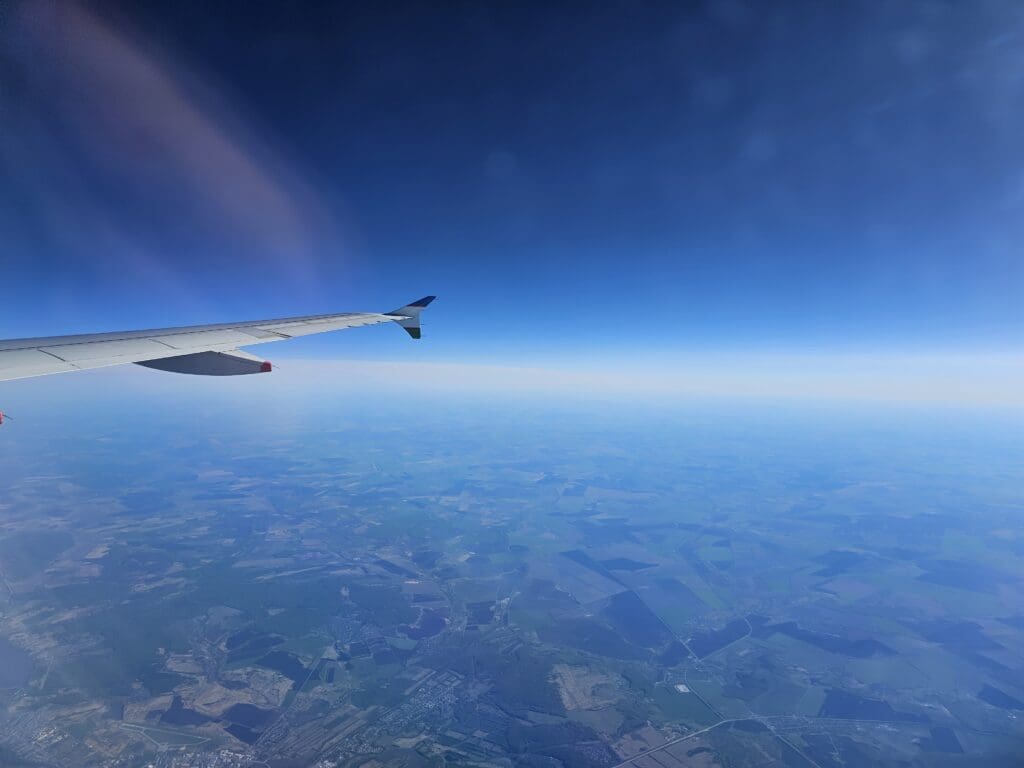
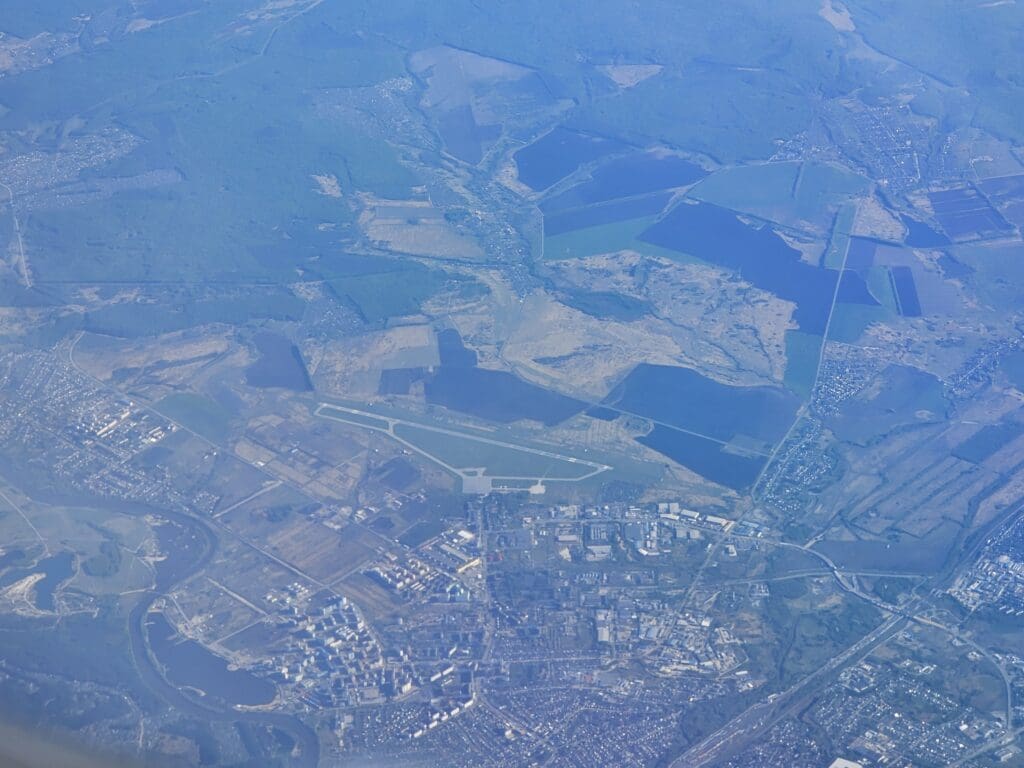
After tea, it wasn’t too long before my neighbour engaged me in conversation in a mixture of broken English and Russian. As with many onboard the flight to Uzbekistan that evening, they were a contract worker in the Baltic and were returning home. Hailing from the eastern city of Andijan, with the conversation soon turning to aviation, they revealed that they had previously served as a MiG-29 pilot before having somewhat of a career change following independence and becoming a carpenter, supplementing this with stints as a lorry driver in Lithuania. After proudly showing me photos of his trusty steed in the Baltics, the conversation fell silent and it wasn’t long before they, as with many onboard, fell asleep. Shifting my attention back to the outside world, around two hours after departure the Airbus crossed over Russia’s famous Volga River, somewhere between Samara and Saratov. Heralding our arrival into Central Asia, around twenty minutes later, the Airbus crossed into Kazakhstani airspace near the city of Uralsk in the far northwest of the country.
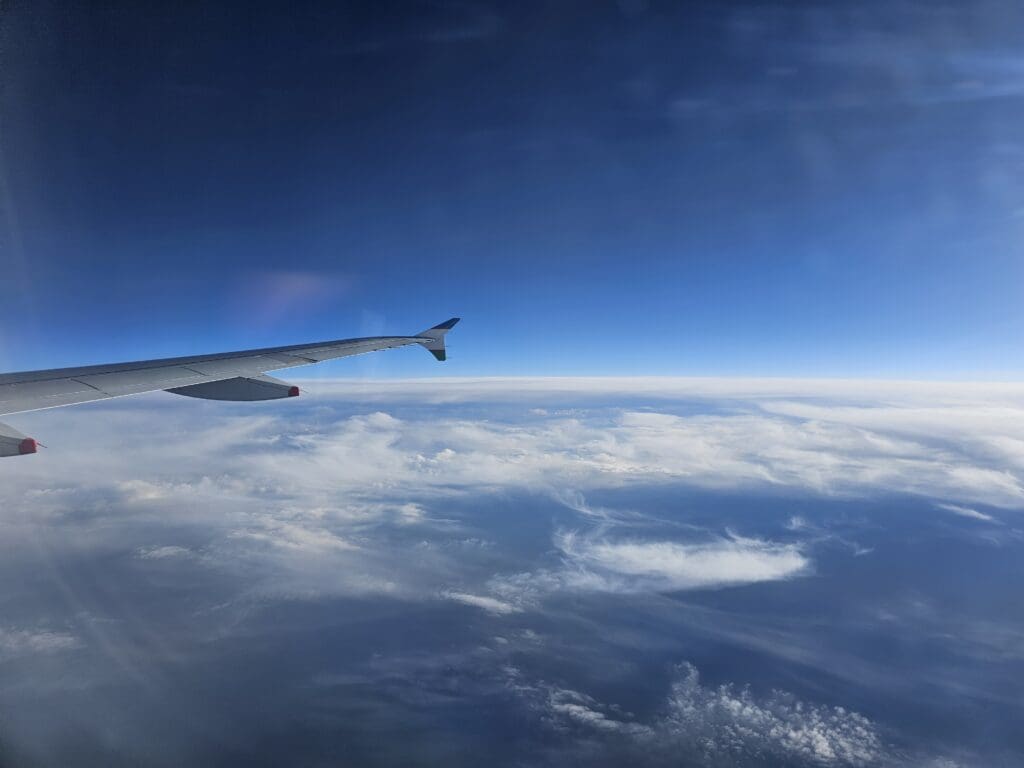
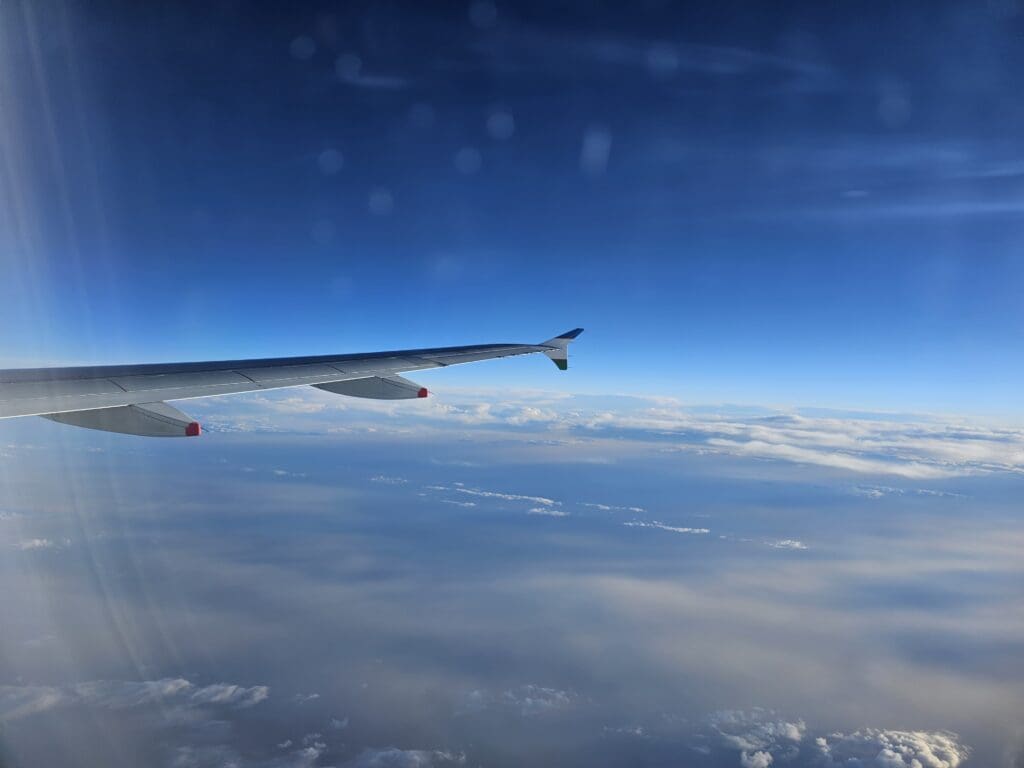
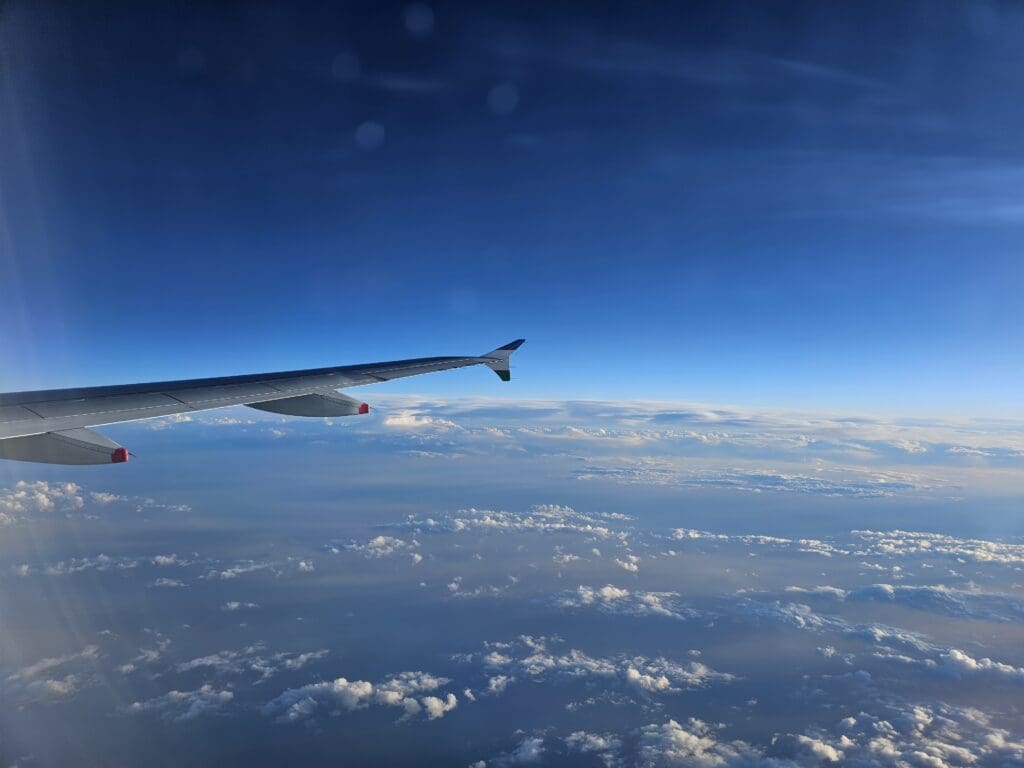
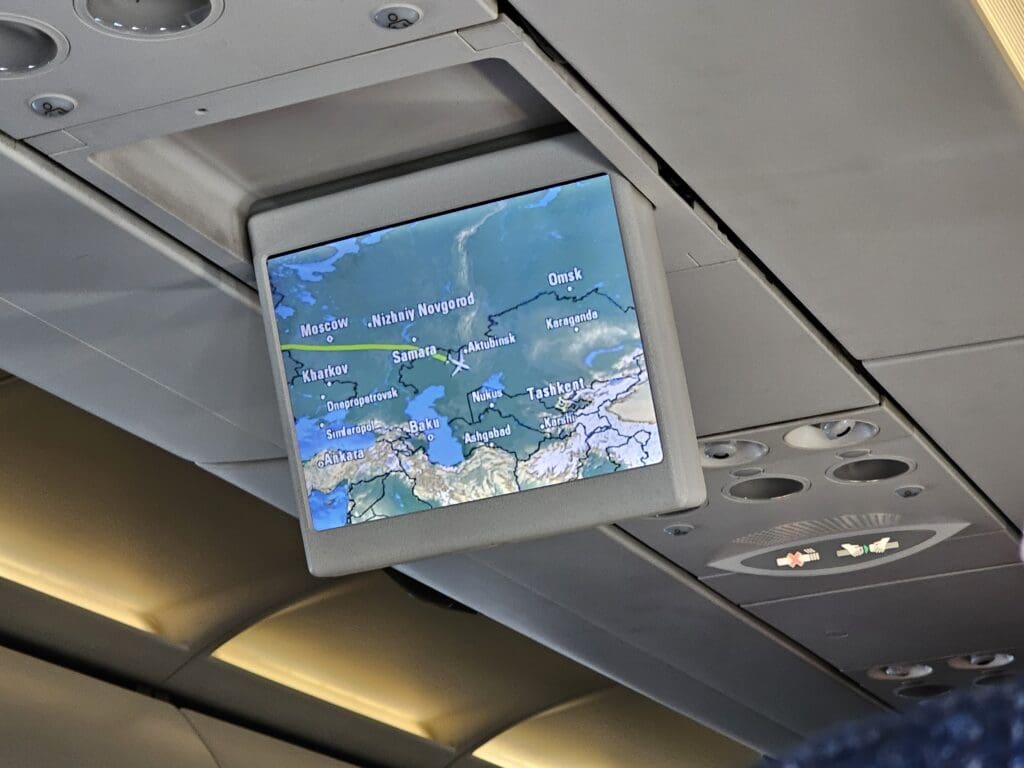
Once in the skies of Kazakhstan, the skies soon darkened and a combination of clouds and the vast nothingness of the steppe meant that very little could be seen outside the aircraft. Having had plenty of exercise walking around the chilly streets of Riga that morning, it wasn’t long before I drifted off for an hour-long nap and by the time I woke up it was completely dark outside. Examining the route taken, that evening the Airbus had cut southeastwards across the Aktobe Region before reaching the Kyzylorda Region and the Aral Sea – not passing over any major settlements during this time. Once back awake, seeing as there was not a great deal of flight time remaining and given the fact that both of my neighbours were now awake, I decided to head for a toilet visit before the inevitable pre-arrival queues. Following a short wait, I entered one of the two lavatories and found it to be in a rather unkempt state – whilst these had seen heavy usage during the flight, it appeared that these had not been checked or cleaned by the crew. On that note, it is worth mentioning that once the trays had been collected, I did not notice any crew members passing through the cabin – with these appearing to have retreated to the galleys to pass the time.
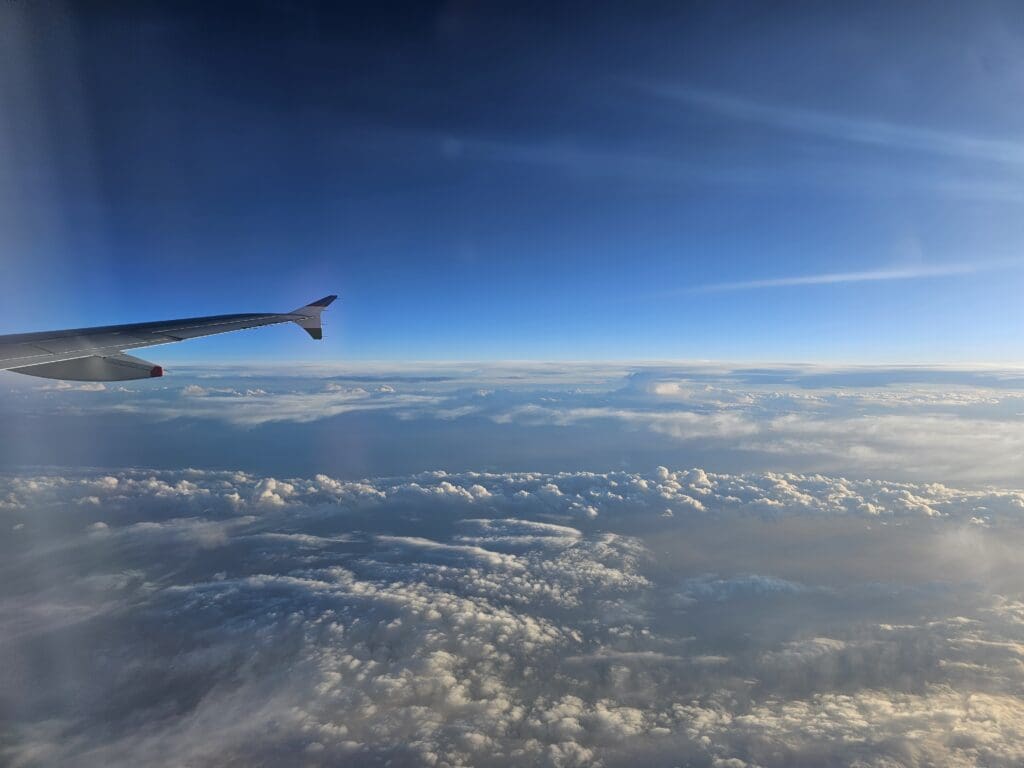
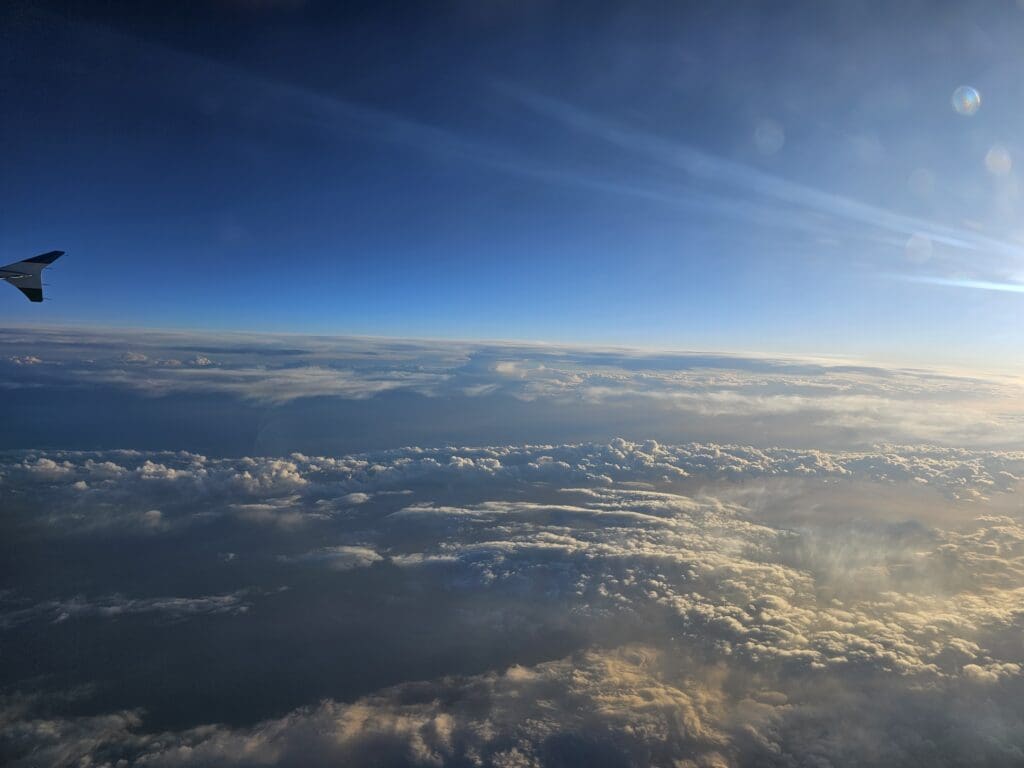
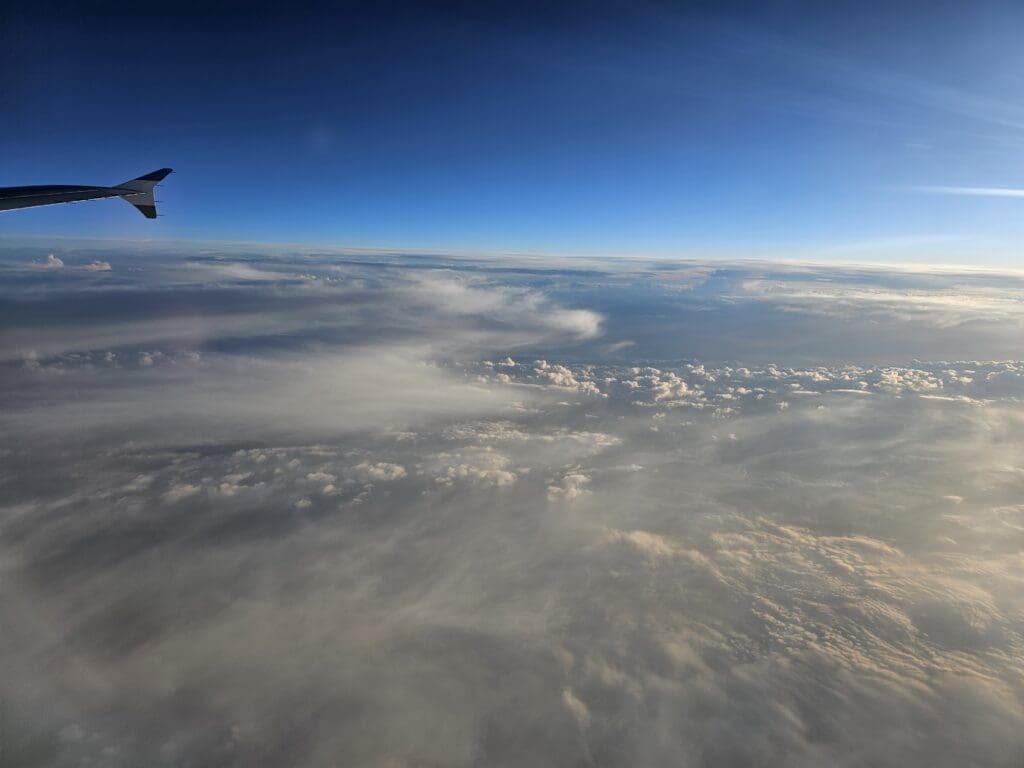
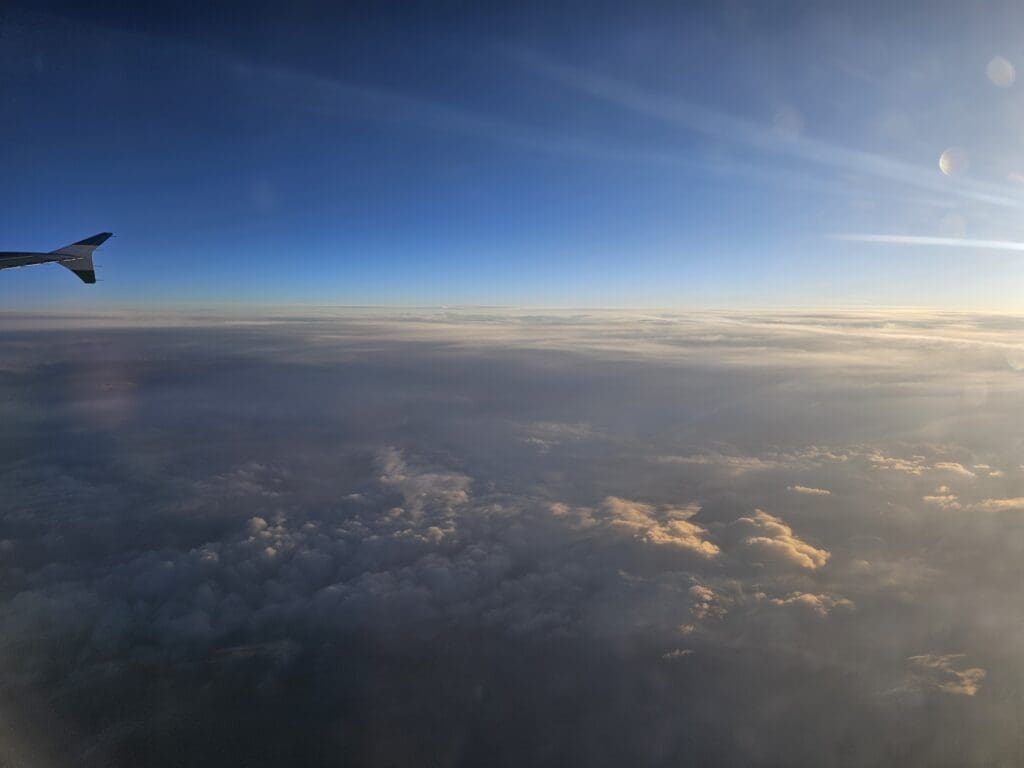
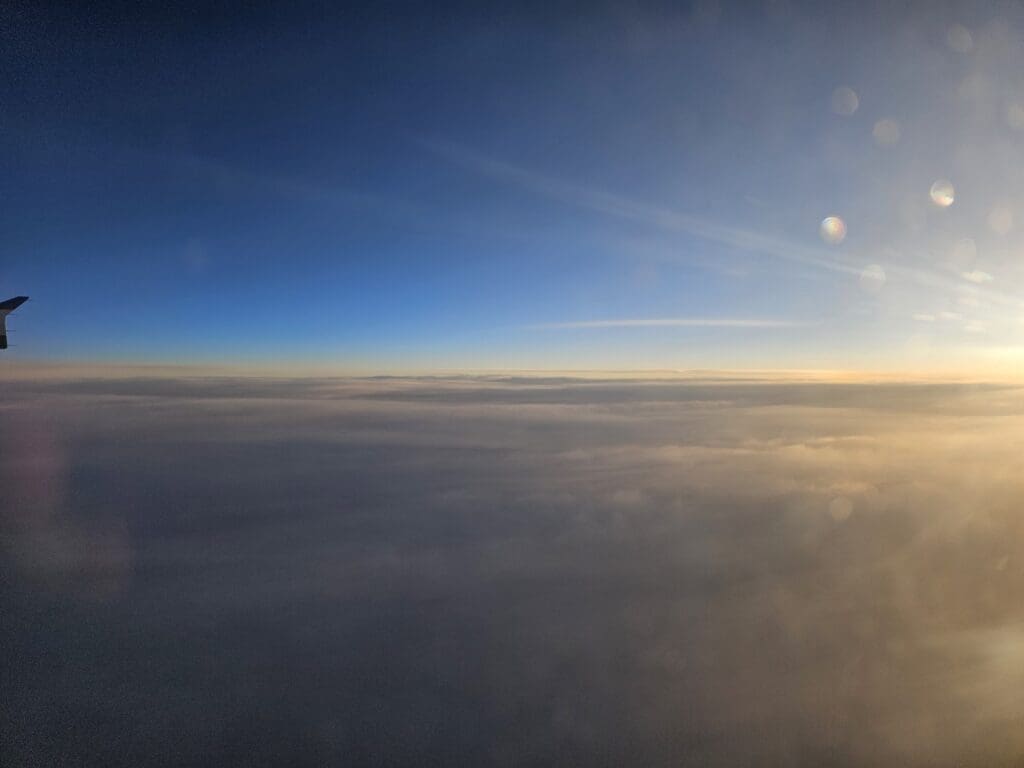
Following my toilet trip, I returned to my seat and strapped myself in, by which time the Airbus had now crossed into Uzbek airspace and was now flying in the skies of the Navoiy Region, several hundred miles to the north of Zarafshan. At this time, the crew rolled out a cart to the front of the cabin and commenced the final round of service, which consisted of a plain and simple yet welcome cup of water. As I had predicted, by this time many of my fellow passengers had woken up and a long queue had formed in the aisle which made collecting the empty paper cups a slightly difficult task for the crew. Around four and a half hours into the flight, the Airbus could be felt leaving its cruising altitude just before we crossed into Kazakhstani airspace once more. This was soon followed by an announcement from the crew in Uzbek, Russian and English with the usual pre-arrival messages, and soon, likely to the dismay of those still queuing for the lavatories, all were requested to take their seats before several crew members came around checking that all was in place for our arrival.
As we sank down over the Kazakhstani countryside of the Turkistan Region, whilst the skies were clear very little could be seen in the rural landscape other than the orangey glow of the lights of villages passing below. With Uzbekistan’s capital located practically on the border with Kazakhstan, it did not come as much a surprise to hear the flaps being partially extended whilst still in Kazakhstani skies. After around twenty minutes of passing through Kazakhstan for the second time, the Airbus crossed over the country’s border with Uzbekistan and soon the land below brightened up as we reached the suburbs of Tashkent.
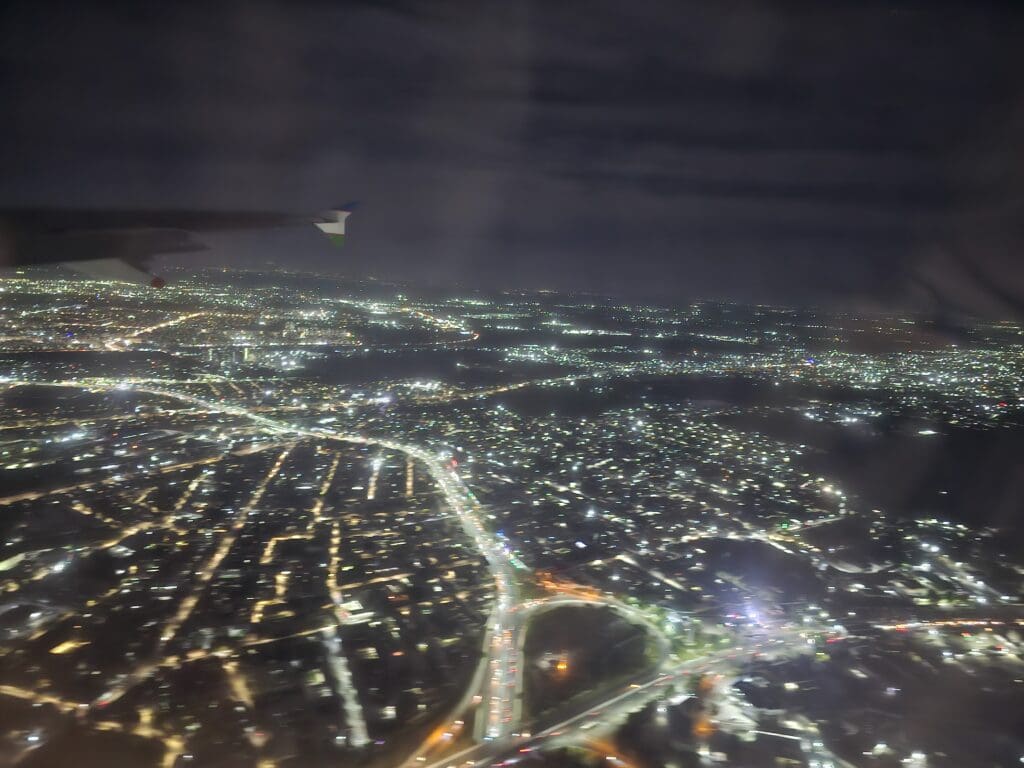
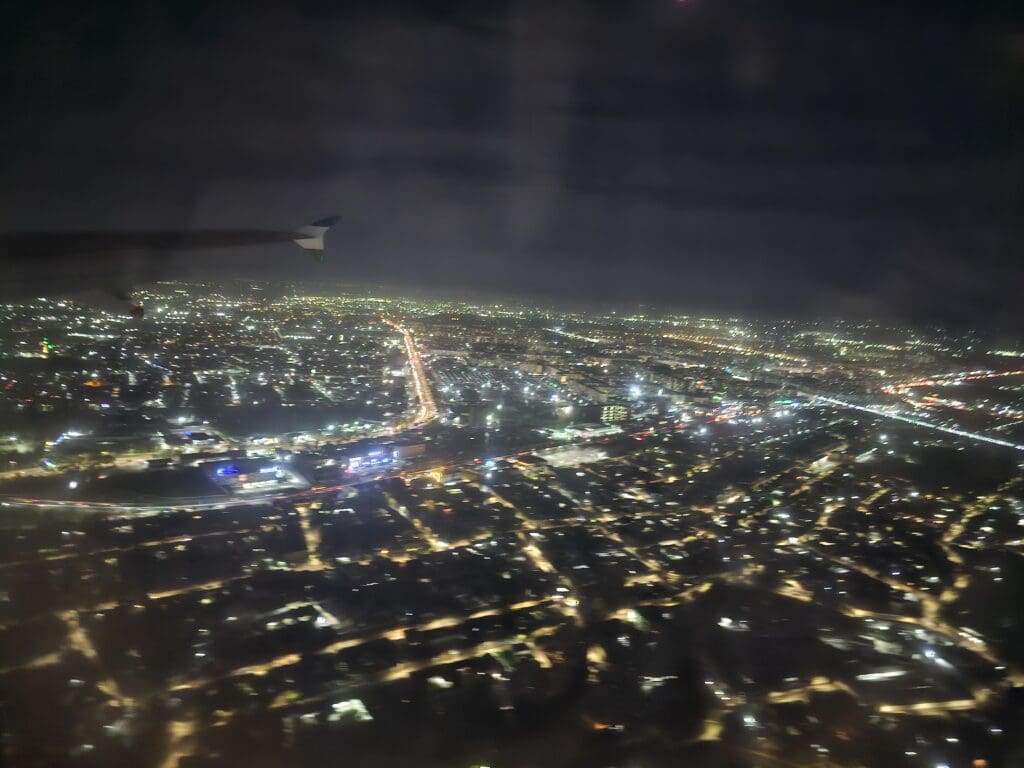
As we passed over the city’s suburbs, full flaps and landing gear were extended as we sank lower and lower over the low-rise yet colourfully lit buildings of Tashkent and before I knew it the aircraft was passing over the airport’s concrete perimeter boundary. As we entered the final few seconds of the flight, a pair of ATR 72 turboprops operated by one of Uzbekistan’s youngest airlines, Silkavia, could be seen resting for the night in front of Tashkent Airport’s domestic terminal before the Airbus was gently placed down on the runway with a barely noticeable bump. Once back on the ground, a round of applause rang through the cabin before the purser made an announcement welcoming passengers to Tashkent and thanking them for flying with Uzbekistan Airways. Afterwards, the now familiar rhythm of Elton John’s Believe filled the cabin once more as this was played loudly on repeat. Sitting on the starboard side of the aircraft, as we taxied towards the terminal, the outlines of a selection of very interesting stored and active aircraft that call Tashkent Airport home could be seen – unfortunately, the fact that much of the apron was not illuminated meant that only limited views of these aircraft were had. Although I did manage to catch a glimpse of Uzbekistan’s only jumbo jet, an old Boeing 747-281F operated by the new local cargo carrier My Freighter, as well as several Ilyushin Il-76 aircraft and government jets.
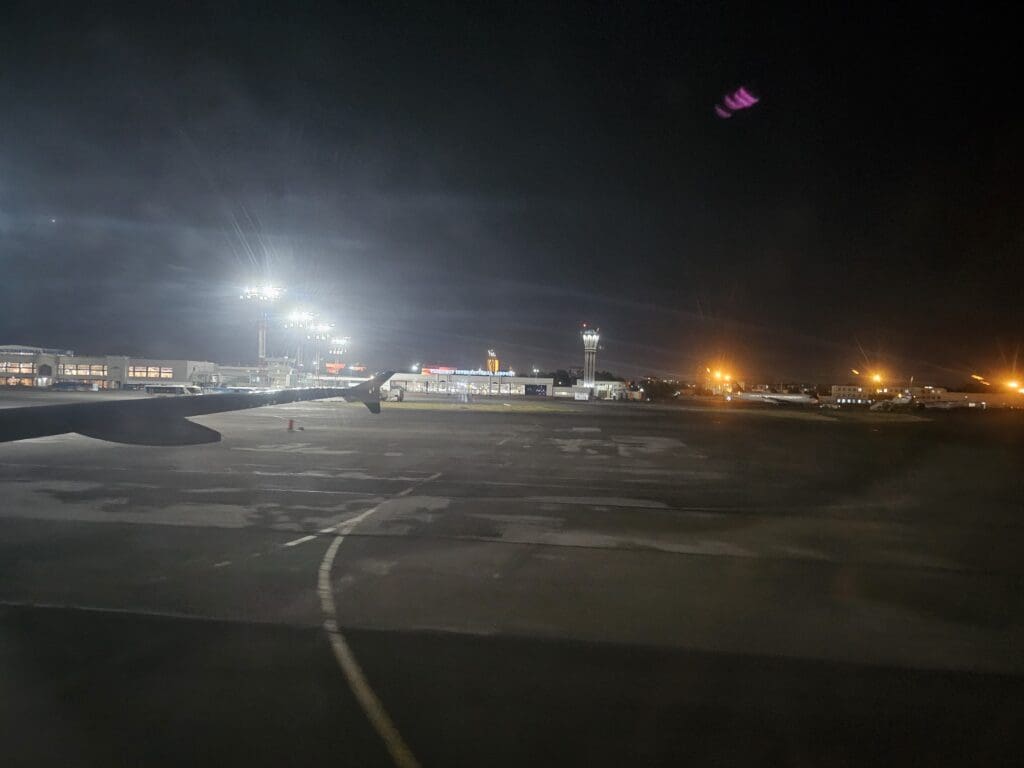
Upon reaching the main apron, as one would expect in Tashkent, this was filled with Uzbekistan Airways’ aircraft, with all types of aircraft in the airline’s fleet visible. These included their largest types such as a Boeing 767-300ER being readied for its overnight flight to Kuala Lumpur and a Boeing 787-8 Dreamliner bound for Seoul Incheon. At that time, the only foreign airliner that could be seen on the ground in Tashkent was an Asiana Airlines Airbus A330-300 parked at the terminal which would soon head off on its overnight slog to Korea. Before I knew it, the Airbus was marshalled into a remote stand and came to a gentle halt at which point the cabin jumped up just before the two CFMI engines spooled down and the seatbelt signs were extinguished. Giving some hope that a quick exit would be possible, upon pulling into the stand an army of ground workers, plenty of ground support equipment and two buses could be seen waiting and ready to meet the inbound aircraft.
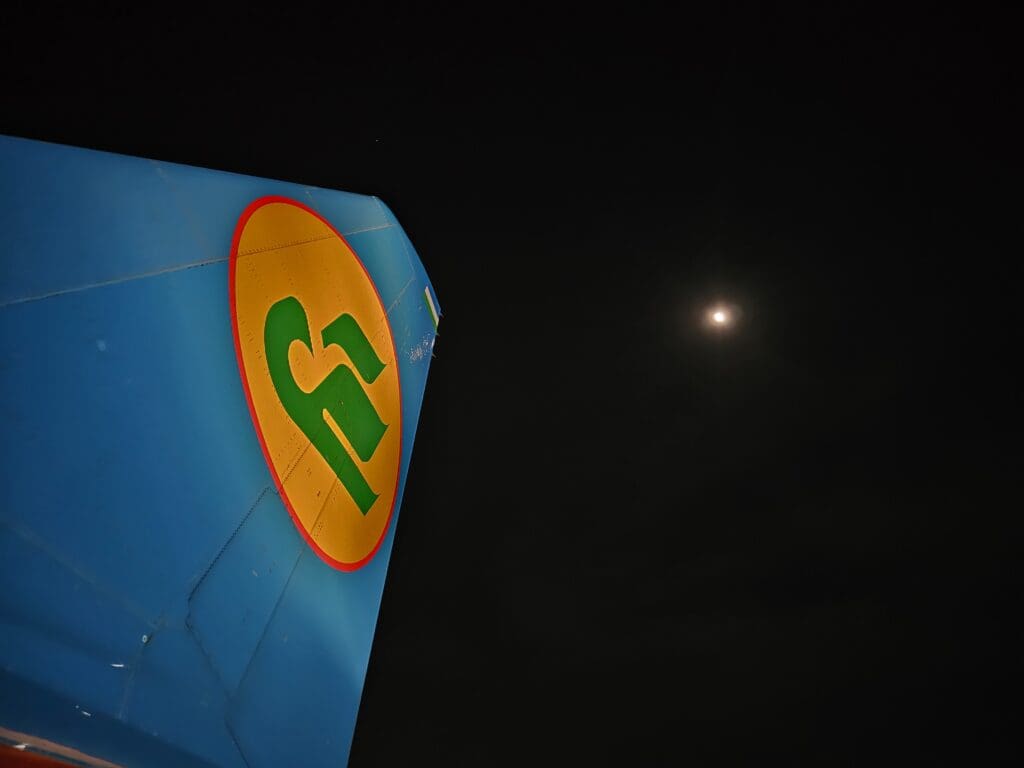
Perhaps having had enough of the Uzbekistan Airways experience, that evening passengers appeared to be in a rush to exit the aircraft with one big scrum forming in the aisle as soon as we came to a halt. Fortunately for those looking to make a quick escape, the Airbus’ L1 and L2 doors were soon opened and disembarkation onto the two waiting buses commenced around four minutes after pulling onto the stand. Seated near the rear of the aircraft, whilst in no hurry to exit, it did not take long until I was able to join the scrum and shuffle to the rear galley. Once there, I thanked the two understandably weary-looking crew members who wished me farewell in Russian before I stepped out into the pleasantly warm kerosene-laden evening air. Almost immediately after stepping off the aircraft, I snapped a quick photo of the Airbus’ illuminated tail although seconds later I ended up being shouted out in Russian by a security guard dressed in a dark green military uniform complete with a large hat atypical of those seen in many former Soviet states.
Fortunately, I made it onto the bus without further drama or reprimand, and after a few minutes, once completely full, both buses began the short journey over to the terminal building. This took us past a few fellow Uzbekistan Airways Airbus A320s, as well a more exciting example operated on behalf of the Uzbek Government, which appeared to be being readied for a flight to some unknown destination. Following a quick journey, the bus pulled up outside Tashkent Airport’s rather grand-looking arrivals hall. Once the bus doors opened, passengers spilt out and soon flooded the building’s large immigration hall. Thankfully, being the only international arrival at that time and with no apparent shortage of manpower, this hall was completely empty other than for an army of immigration officials dressed somewhat intimidatingly in Soviet-inspired quasi-military attire. With most passengers on the flight taking the form of Uzbek nationals, I was able to walk straight up to one of the foreign passport holder desks without any queuing. Unlike my previous entry into Uzbekistan in 2019, this time I received a few questions and was told that I look nothing like my passport photo – I was subsequently asked to produce another form of identification and asked my full name and date of birth! Once convinced that I was indeed the same person (although now without a beard) I was allowed to proceed through to the baggage collection hall. With nothing to pick up, I steamed through this and after my bag had been x-rayed at the customs checkpoint I walked out to the minuscule landside portion of the terminal.
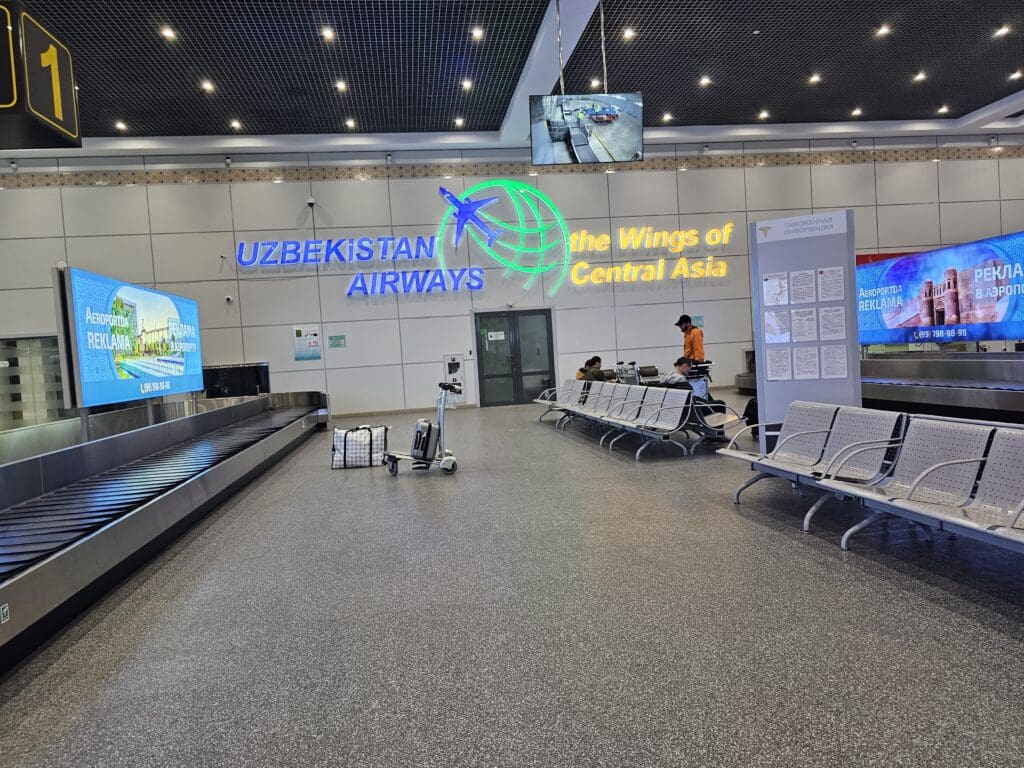
With no guests allowed into the terminal, unlike many airports, once through customs, I was not greeted by any legal or illegal taxi drivers hunting for business. Instead, I made my way up to the official taxi counter and after giving the name of my hotel, I was handed a receipt with my destination and calmly escorted out to a waiting taxi. Once safely inside the small seatbelt-less Honda, this sped off and soon hit Tashkent’s brightly lit and busy streets, and around ten minutes after leaving the airport, this made its way down a dark, bumpy and pothole-filled backstreet and pulled up to the hotel that I would call home for my first two nights in Uzbekistan. After paying the 70,000 Som (£4.77/€5.58/$6.12) fare, I made my way inside, ready to commence my Uzbek adventure.
Summary
I can’t deny that, seeing as Uzbekistan Airways’ Riga rotation is usually operated by some of the newest Airbuses in the carrier’s fleet, that afternoon I was slightly disappointed to end up on one of their older, more battered and inflight entertainment lacking ‘regular’ Airbus A320s. Meanwhile, in spite of the initial warm and friendly welcomes I had received upon boarding in Riga, during the flight the crew were somewhat cold and distant and absent from the aisles for much of the service. Nevertheless, Uzbekistan Airways delivered me to Tashkent on time and in one piece, plus I found the aircraft to be comfortable and was once again pleased by the sheer volume of food provided as part of the inflight meal. Would I fly with the carrier again? Whilst not my favourite nor the most polished airline in the world, I wouldn’t necessarily write off the idea of flying with Uzbekistan Airways again, yet I would be unlikely to go out of my way or pay a premium to do so!