Flying on Europe’s Only Beechcraft 1900C: Ostersund to Umea on Jonair
Background
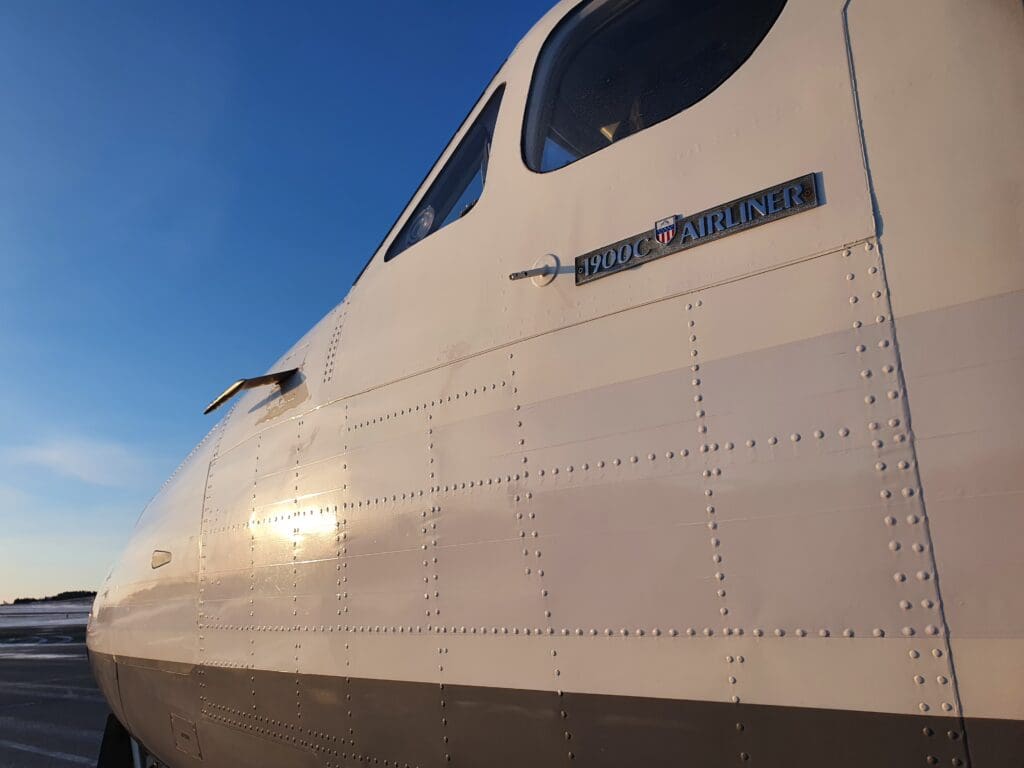
Unlike in North America where the type once proved popular amongst regional feeder airlines, in Europe, the nineteen-seat Beechcraft 1900 has never enjoyed a great amount of success, with many carriers instead opting for larger turboprop airliners. As of early 2022, just three European airlines operate the type – French carriers Chalair and Twin Jet, as well as Swedish carrier Jonair. This equates to a total of 22 Beechcraft 1900 aircraft, of which 21 are of the more common ‘D’ variant and Jonair’s single example is of the ‘C’ variant – this features a significantly lower cabin. Travelling through Sweden and flying on Jonair’s Beechcraft King Air service between Stockholm Arlanda and Sveg, it is only natural that I sought to catch a ride on Europe’s only Beechcraft 1900C, and, with this being deployed on the airline’s route between Umeå and Östersund, fortunately, this was not a particularly difficult nor expensive task.
You can read more about Jonair and my booking experience with the carrier here!
The Journey
Serving the capital of Jämtland and the popular ski resort of Åre, according to Wikipedia, Åre Östersund Airport sits around 11 kilometres away from the centre of Östersund. For those lacking a car and travelling to and from Östersund, the local bus company Lanstrafiken operates a single route between the city and the airport. However, this service is timed with Scandinavian Airlines’ services to and from Stockholm Arlanda and as a result, on the day of my flight, this service operated five times in each direction. Fortunately, with Scandinavian Airlines’ early morning departure to the Swedish capital set to depart at 0630, the first departure of the day aligned with my schedule and thus I opted to take the bus rather than forking out for an expensive yet short taxi ride. Fortunately, the Airbnb where I had spent the night was situated on the bus route in Frösön and thus I would not face any long or arduous journey to get to the bus stop. However, Google Maps and the Lanstrafiken app displayed too different pieces of information regarding the bus’ departure time from the local stop – with one claiming to depart at 0519, and the other ten minutes later at 0529. Whilst I wanted to minimise my time waiting outside in the freezing weather, aware of the difficulties that I would face in reaching the airport were I to miss the bus, I decided to be at the stop in good time for the earlier departure time.
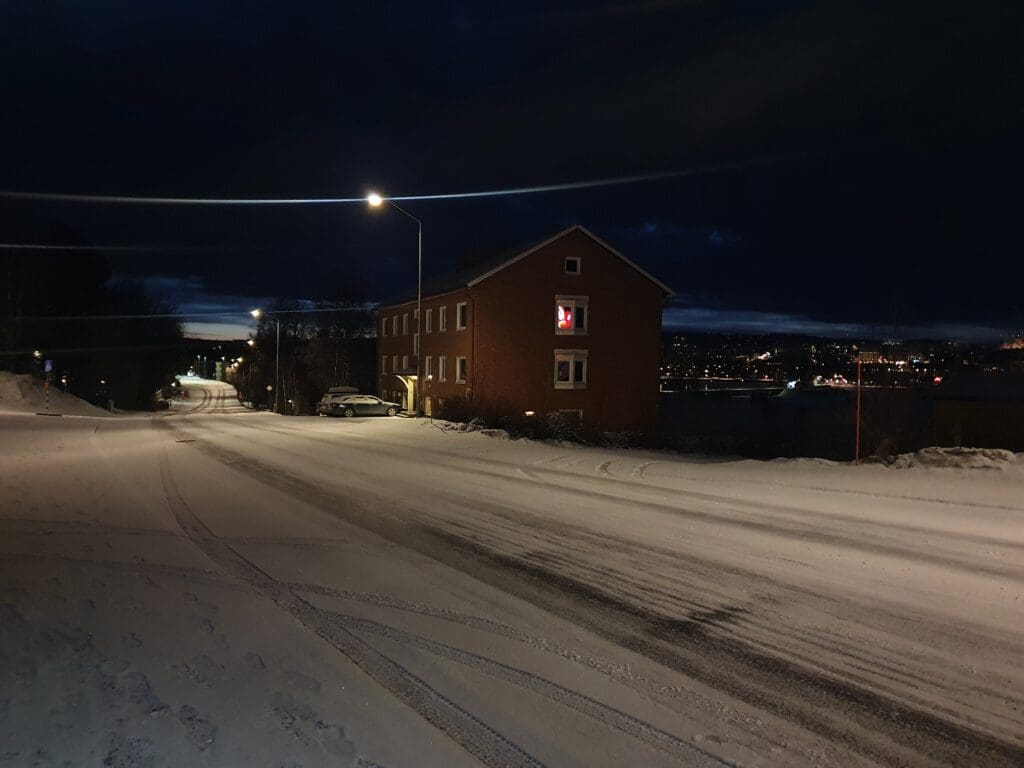
Following a short night’s sleep, I woke up at 0430 ready and raring to go for the day ahead. After a quick shower, I made my way out onto the frozen streets of Frösön where the temperature hovered around -8 degrees Celsius. Whilst not particularly cold for those used to such climes, hailing from the UK, this did seem to be expectedly chilly and with a fresh coat of snow having painted the streets white overnight, I had to take a little care to avoid slipping on my short walk to the bus stop. From the comfortable yet non-descript block of flats, I journeyed uphill for around a minute before arriving at Nybo bus stop with around an hour to go until the earlier scheduled departure time. As it turned out, the operator Lanstrafiken was correct and thus ten minutes of waiting was in store before the welcoming sight of a bus appeared.
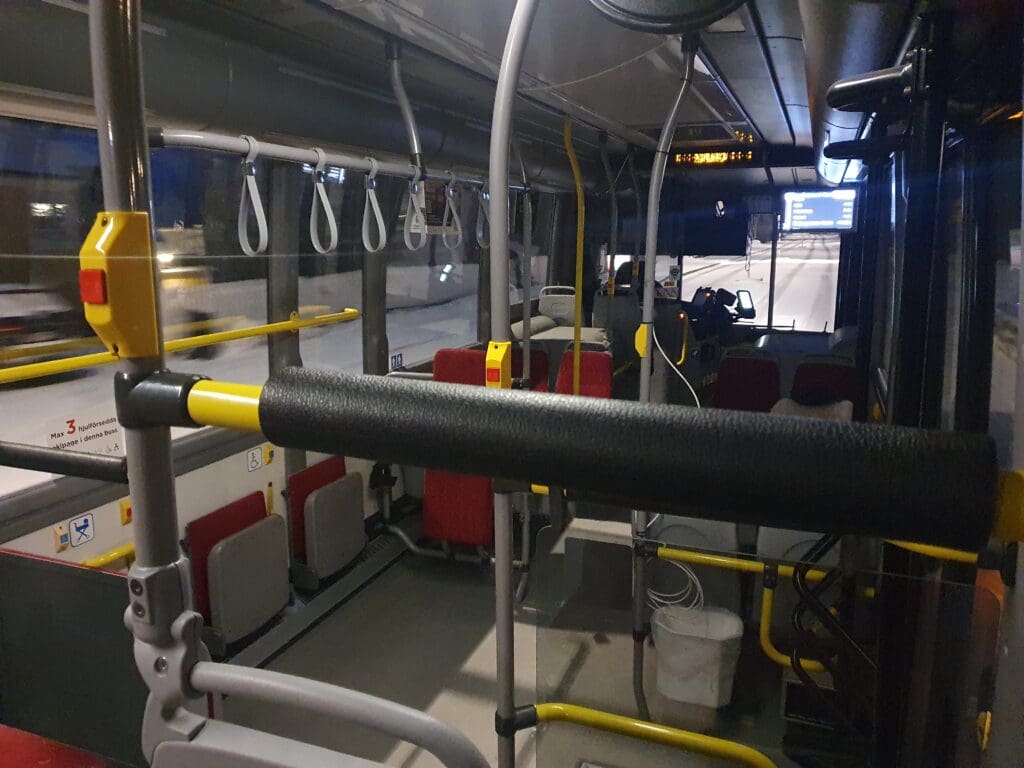
Upon coming to a halt, I was given a friendly welcome in Swedish by the lively driver and soon paid the pricey 90kr (£7) fare by contactless card before being handed my ticket for the journey. With this in hand, I then turned left and journeyed onto the bus, joining just one other airport-bound passenger. After waiting for me to take my seat, the bus then pulled away and trundled uphill, passing through a few neighbourhoods before speeding through what appeared to be fields as we neared the airport. Around ten minutes after leaving the bus stop, the airport’s modest terminal building appeared and the bus soon came to a halt. Depositing myself and the other passenger right outside the terminal’s doors, at that time things seemed to be fairly quiet outside the terminal, with Östersund expectedly lacking the same level of early morning hubbub as you would perhaps see at many other airports across the world.
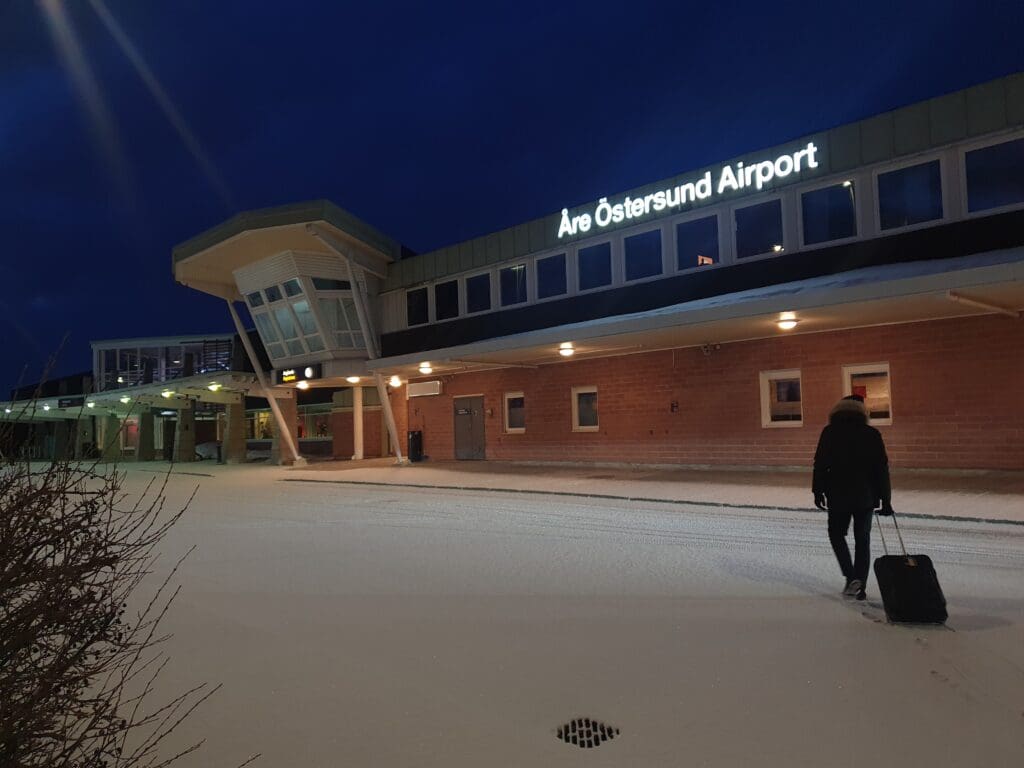
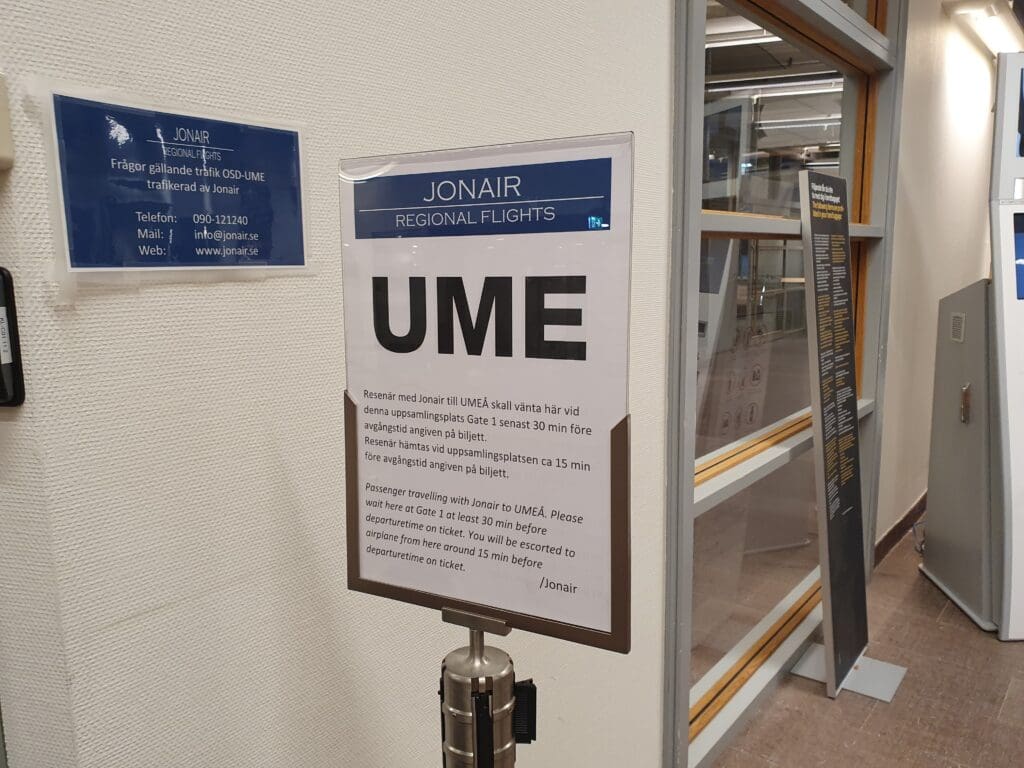
Upon entering the terminal, I found myself standing in the terminal’s small check-in hall where one Swedavia staff member could be seen waiting ready to assist passengers, whilst another sat behind one of the check-in counters checking passengers in for Scandinavian Airlines’ service to Stockholm Arlanda. A short time after entering the terminal, I spotted a small sign advising those bound on Jonair’s service to Umeå to wait at that sign thirty minutes before their flight’s scheduled departure time. Seeing as I still had almost two hours until my flight’s scheduled departure time of 0740, I decided to have a stroll around the landside portion of the terminal.
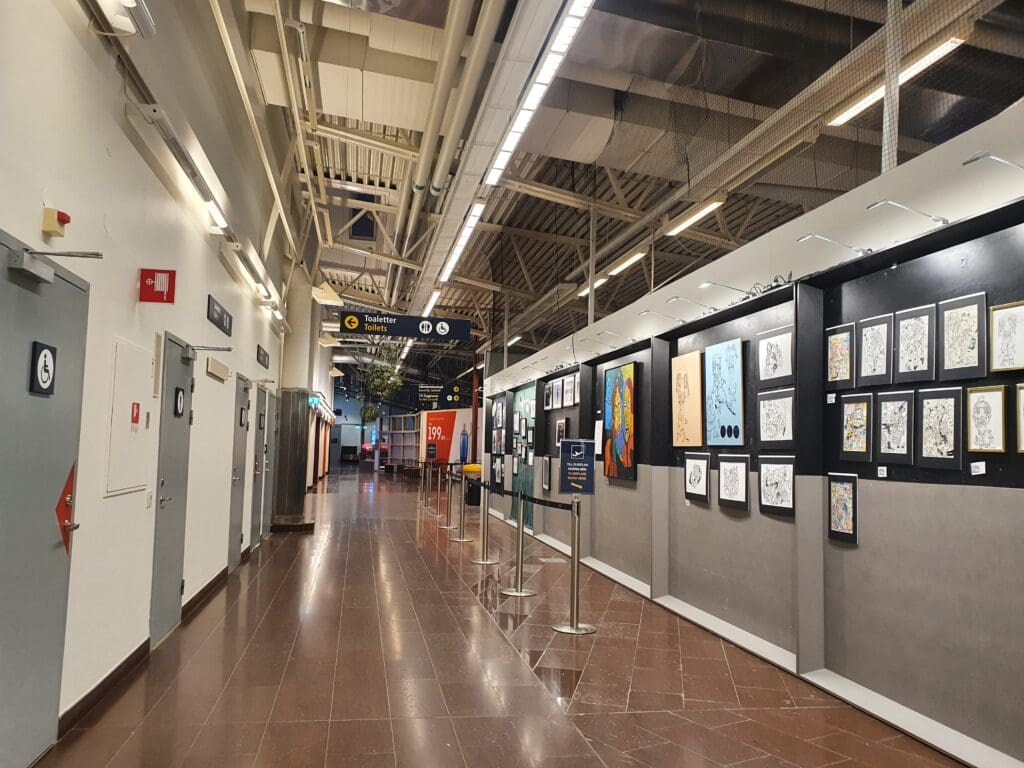
On the day of my flight, Åre Östersund Airport would see a total of just seven scheduled departures. Of these, two took the form of Jonair flights to Umeå, whilst the remaining five consisted of Scandinavian Airlines flights to Stockholm Arlanda, with all of these operated by CityJet and Xfly Bombardier CRJ-900 regional jets. Perhaps unsurprisingly given the relatively low number of flights, the airport is not particularly large and with most of those bound for Stockholm on Scandinavian Airlines’ morning flight having already passed through security, this was largely empty for much of my stay. As I have found is often the case with Scandinavian airports, I was happy to find the terminal to be in a clean and tidy condition, with this being modern, spacious and functional, offering visitors plenty of places to sit and wait. As one would hope for in 2022, complimentary wifi was on offer which I found to work without any issues and a few plug sockets could be seen dotted about the terminal. Meanwhile, for the duration of my stay, a mixture of calming and uplifting music played out over the terminal’s speakers, and I even managed to hear a song by an artist from my hometown of Sheffield, Richard Hawley. Turning to the negatives, my only slight complaint was that very little was offered by means of refreshment facilities in the landside area of the terminal, with nothing other than a couple of vending machines provided for those needing something to eat or drink.
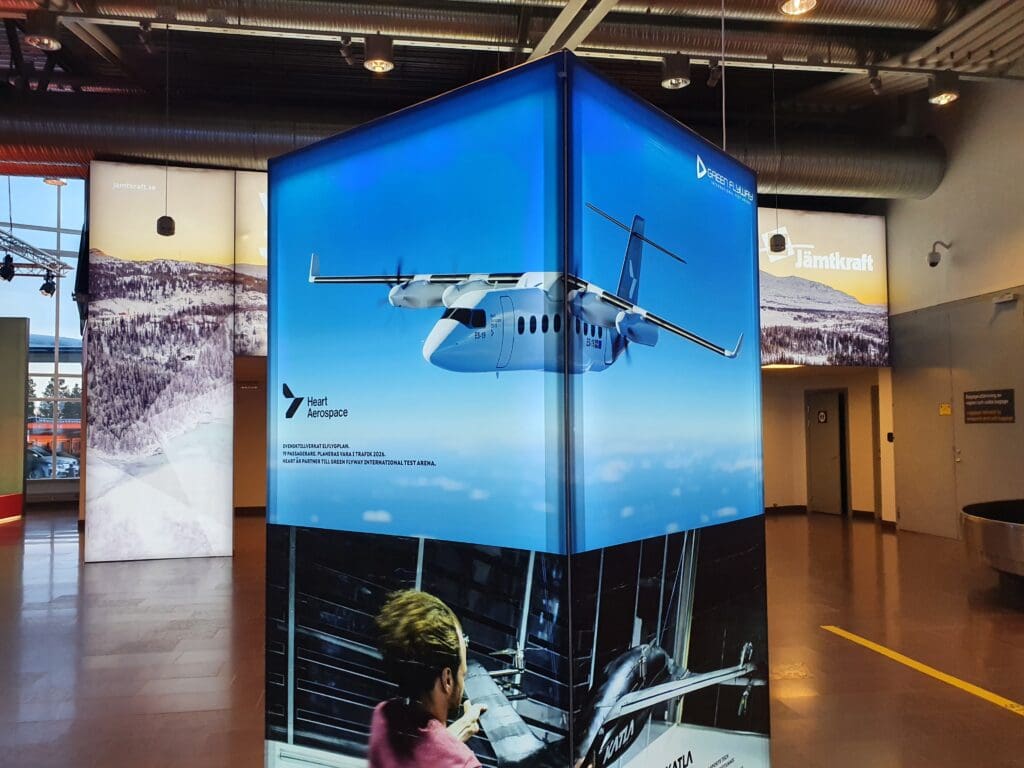
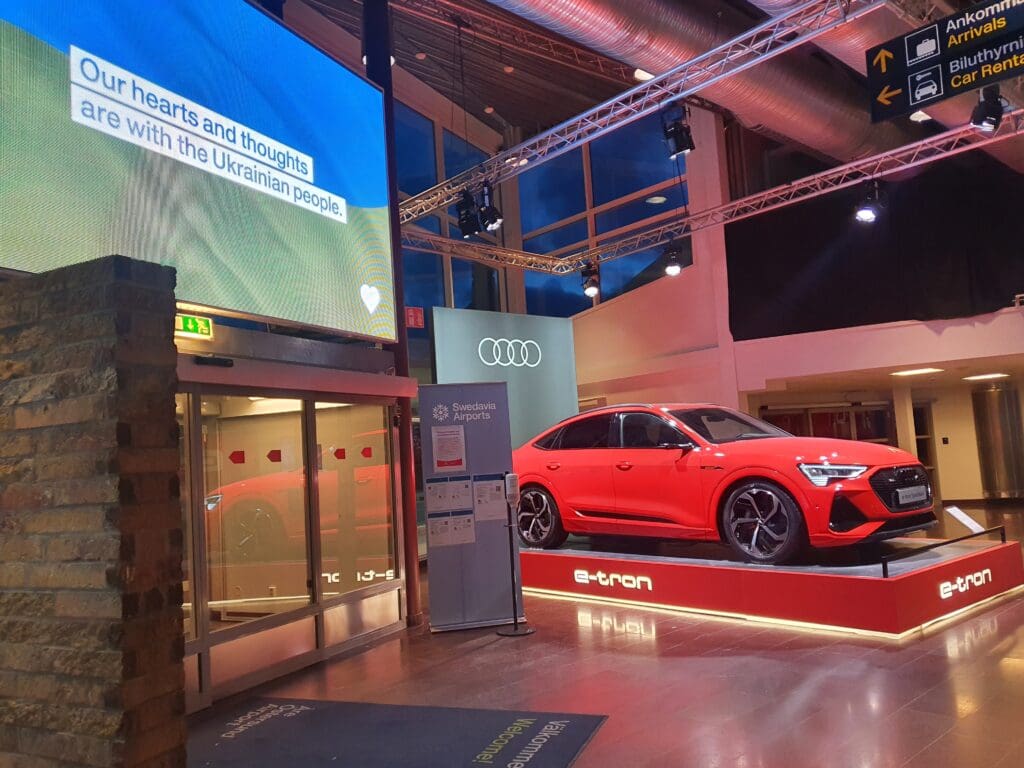
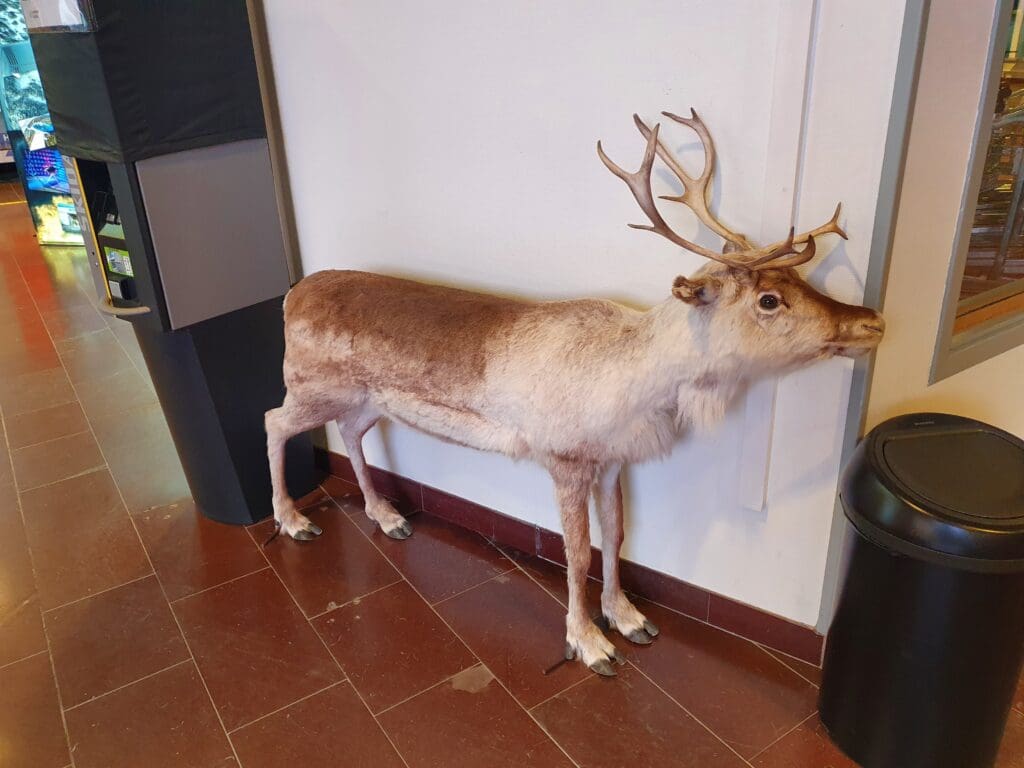
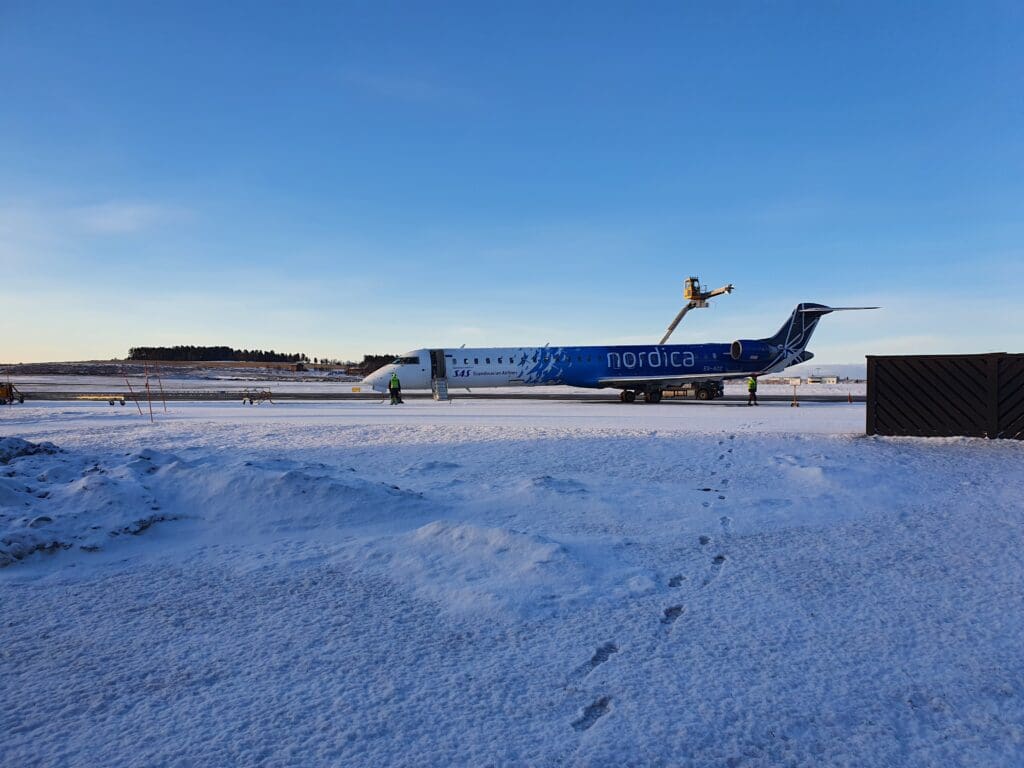
Importantly for enthusiasts, airside views could be had from large windows located next to the baggage carousel at one end of the terminal – as I have noticed at some other Swedish airports, this is located in the landside portion of the terminal! After parting with 20kr in exchange for a low-quality coffee from one of the vending machines, I plonked myself down and watched as the sun began to rise, illuminating the Estonian registered Xfly Bombardier CRJ-900 on the ramp as it was in the process of being readied for its flight to Stockholm Arlanda.
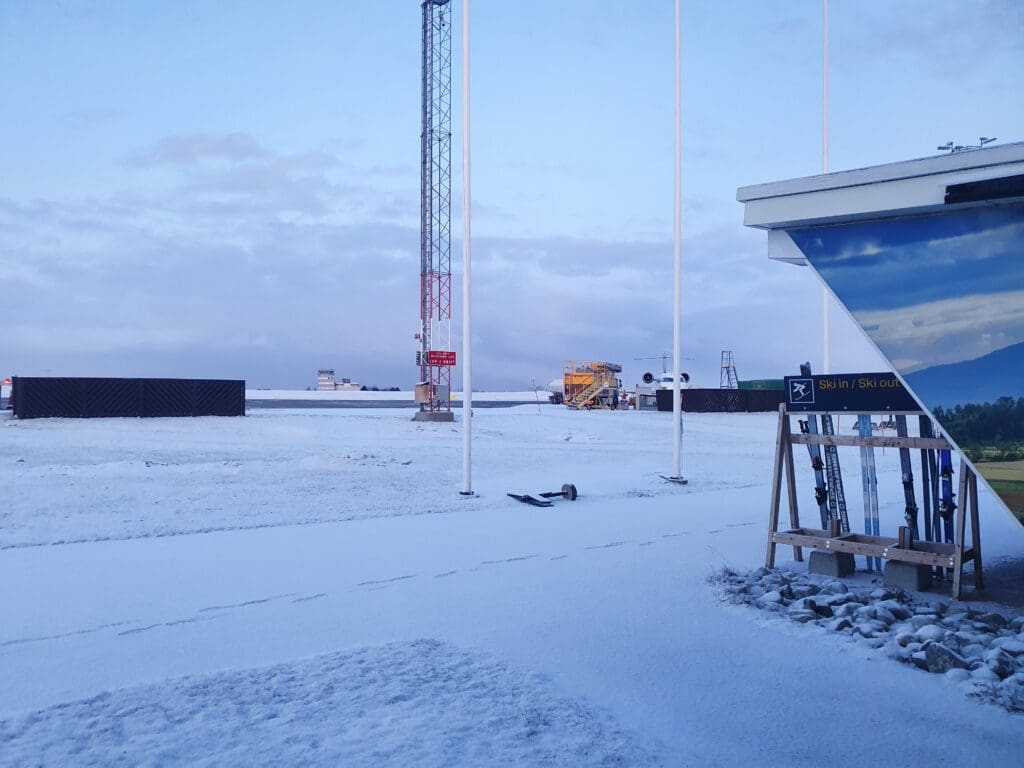
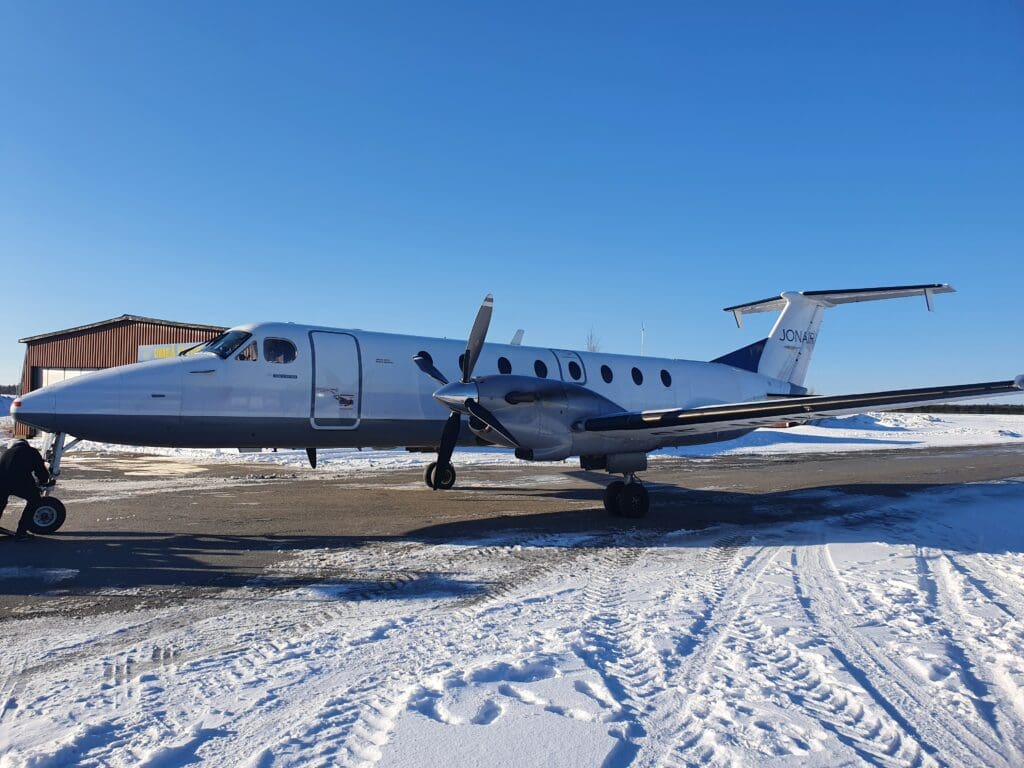
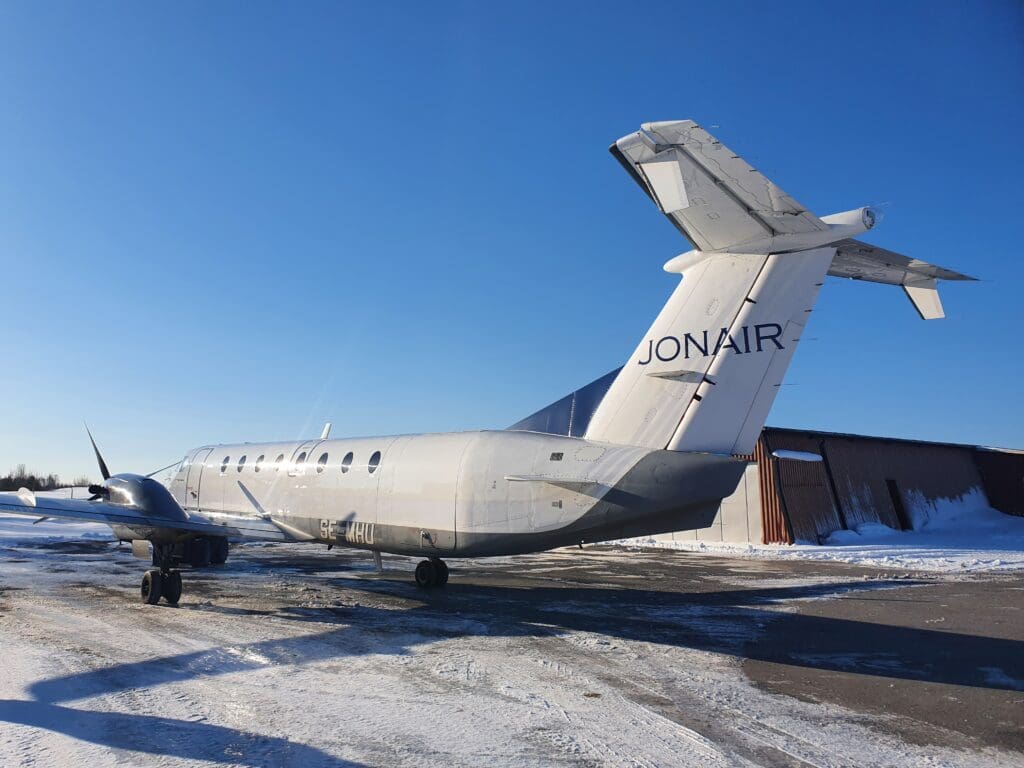
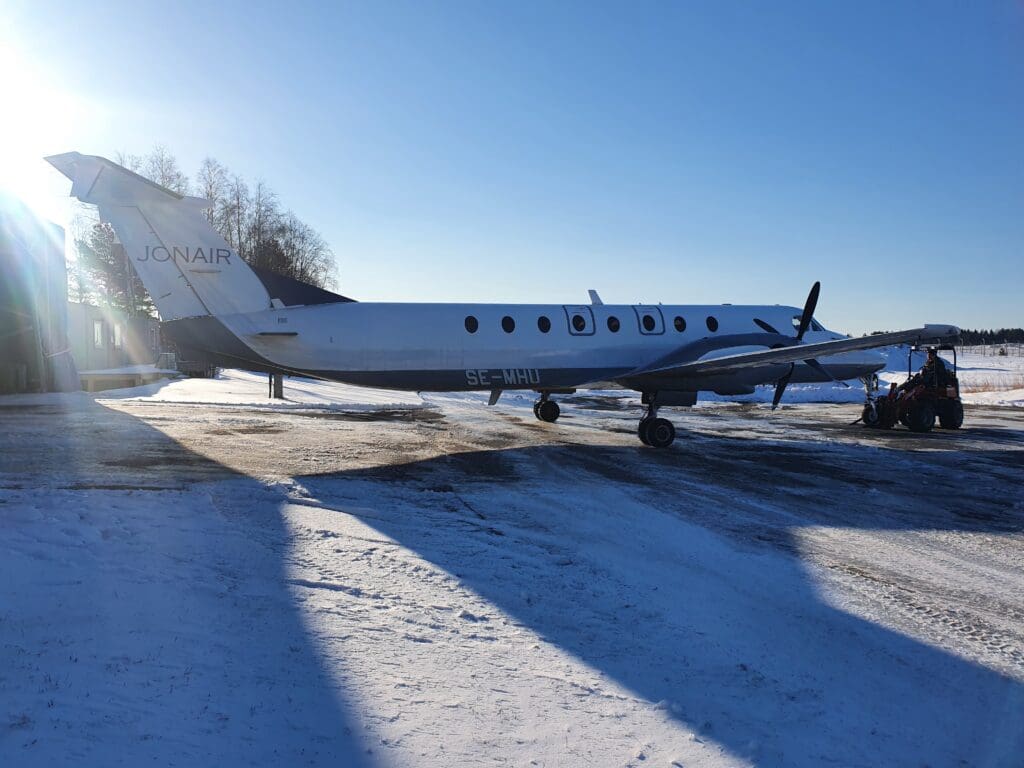
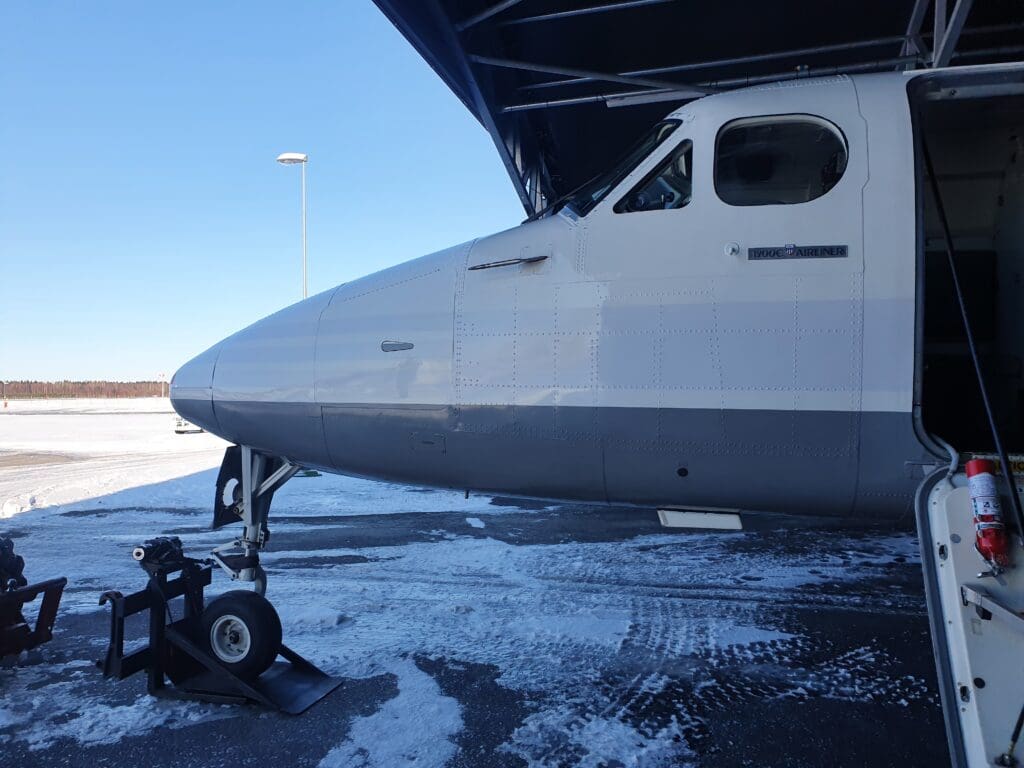
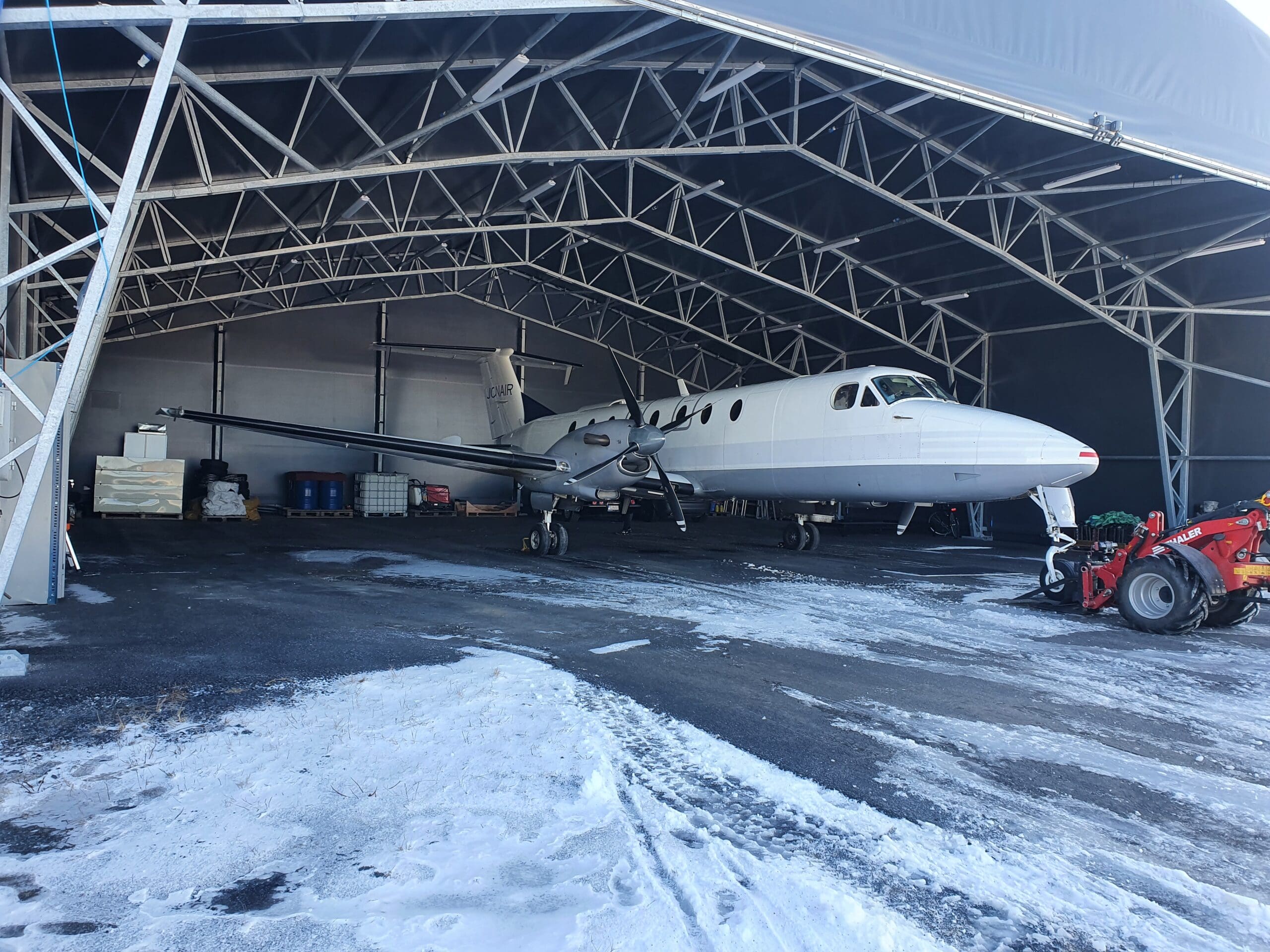
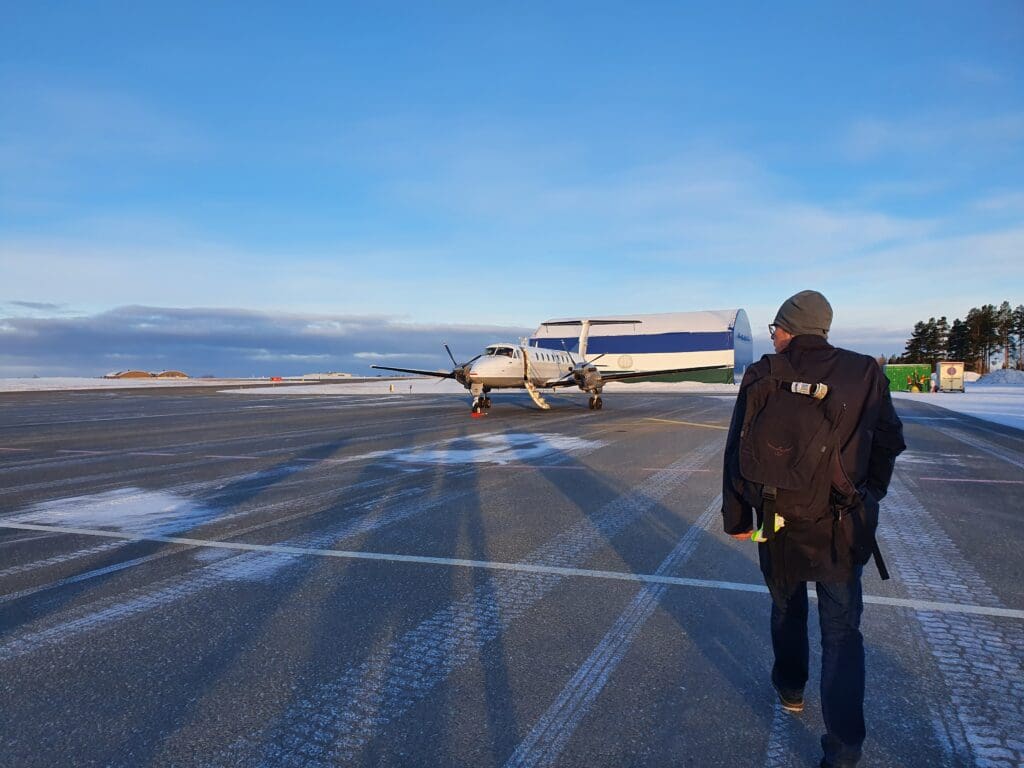
At 0707, the Beechcraft 1900C that would operate the service over to Umeå touched down on the airport’s runway at the end of its 184-mile flight from its home base. Comparing this service to others around the world, this flight is comparable in length to the hops between London Heathrow and Leeds Bradford, Busan and Jeju, or Boston and New York JFK. Given the fact that Jonair operates just one Beechcraft 1900, it wasn’t hard to predict that SE-MHU would be operating the service to Umeå that morning. Assembled at Beechcraft’s factory in Wichita with the construction number UC-115, this turboprop first took to the skies in 1990 making it around 32 years old at the time of my flight. Starting its career in the United States, the aircraft initially entered service with Milwaukee-based Midwest Express Connection as N115YV. However, in 1992, the Beechcraft was then handed over to regional airline Mesa Airlines. Remaining there for four years, in 1996 the aircraft embarked on a new life on the other side of the Atlantic and arrived at French carrier Air Littoral in September that year. Operating with the registration F-GPYY, in May 2001 the aircraft was transferred to Nantes-based charter specialist Atlantique Air Assistance. Remaining with the carrier until its unfortunate collapse in 2017. At some point after this the aircraft ended up in Sweden, initially flying freight with Hummingbird Cargo before having its seats re-installed and entering passenger service with Jonair.
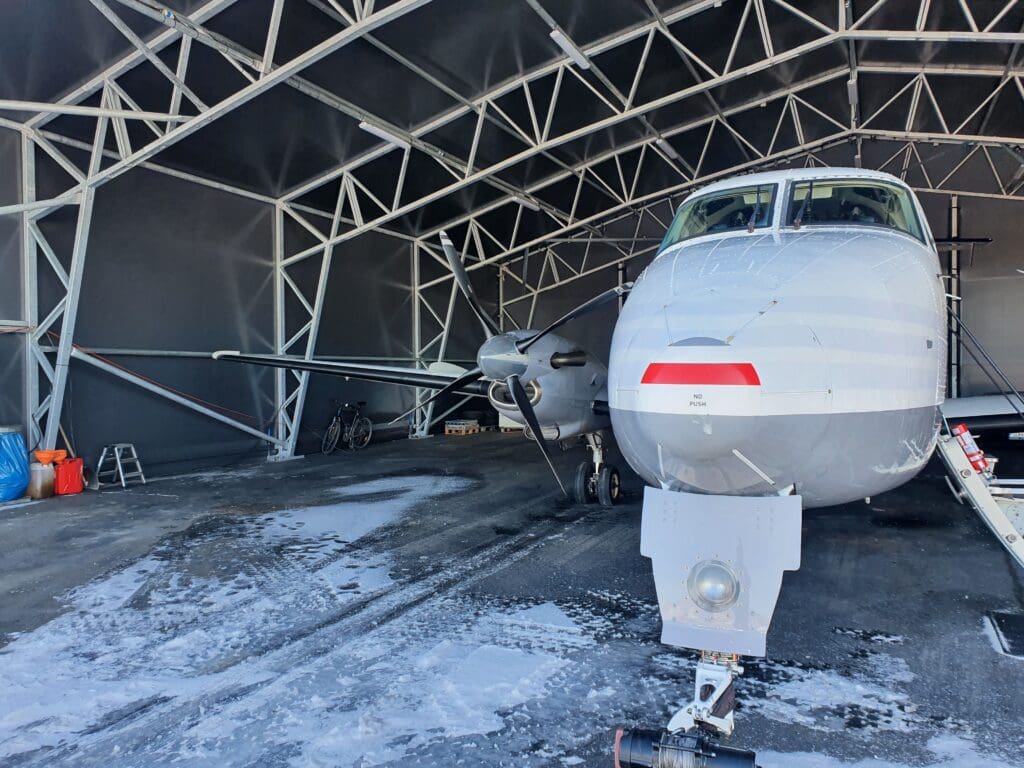
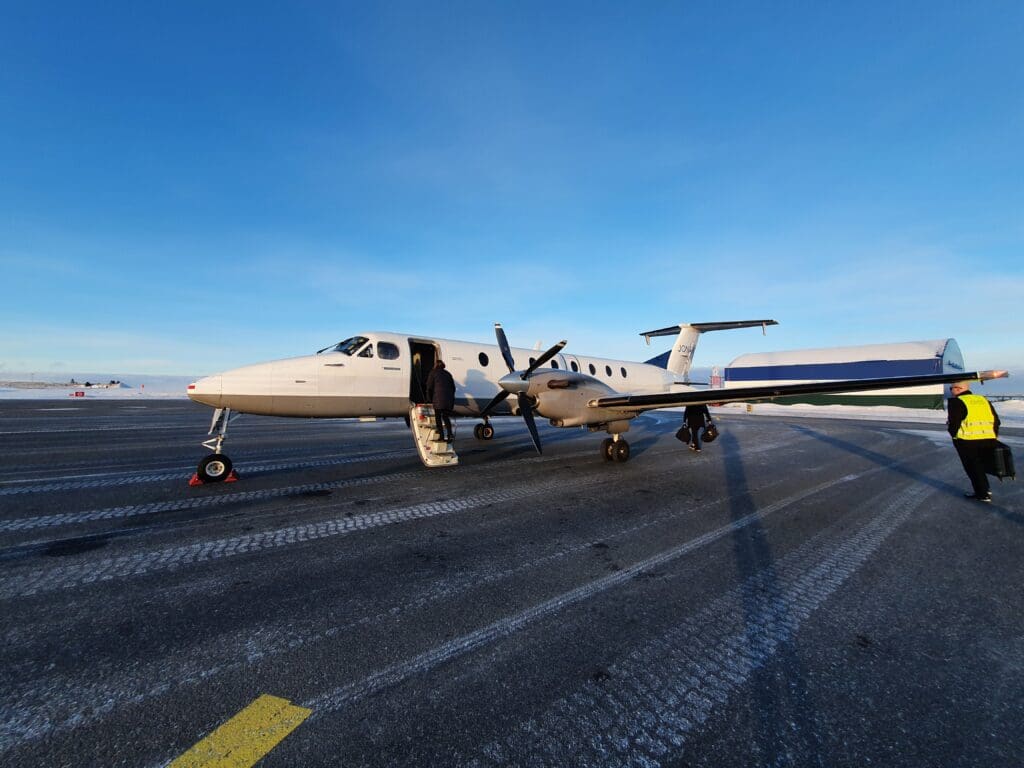
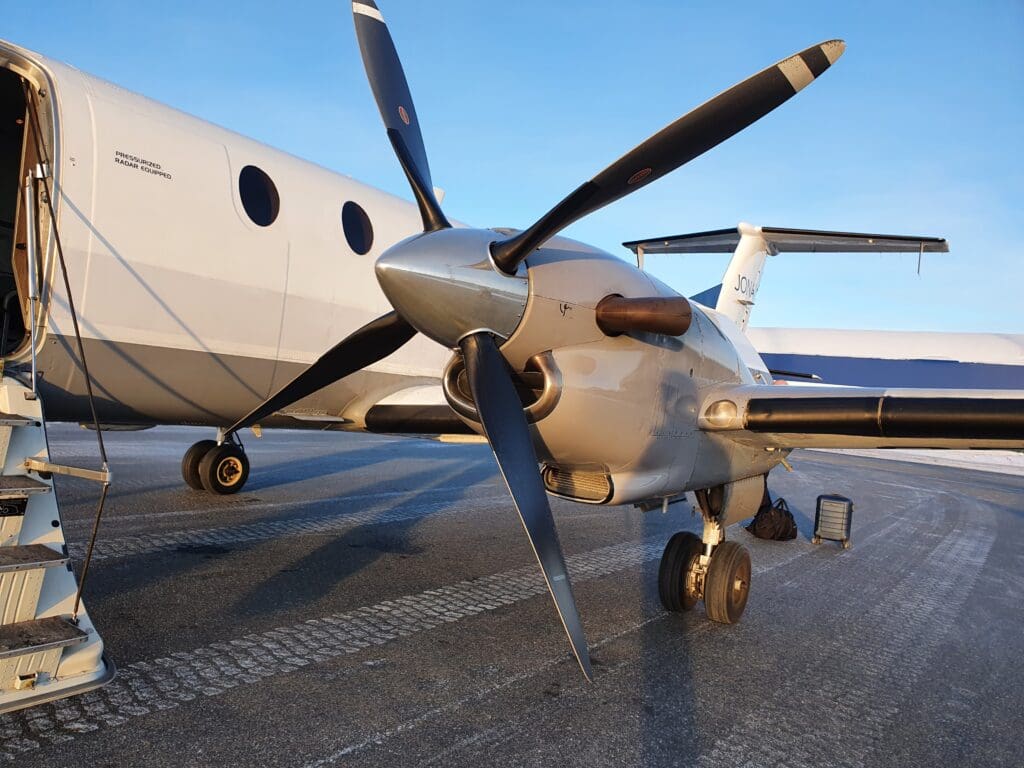
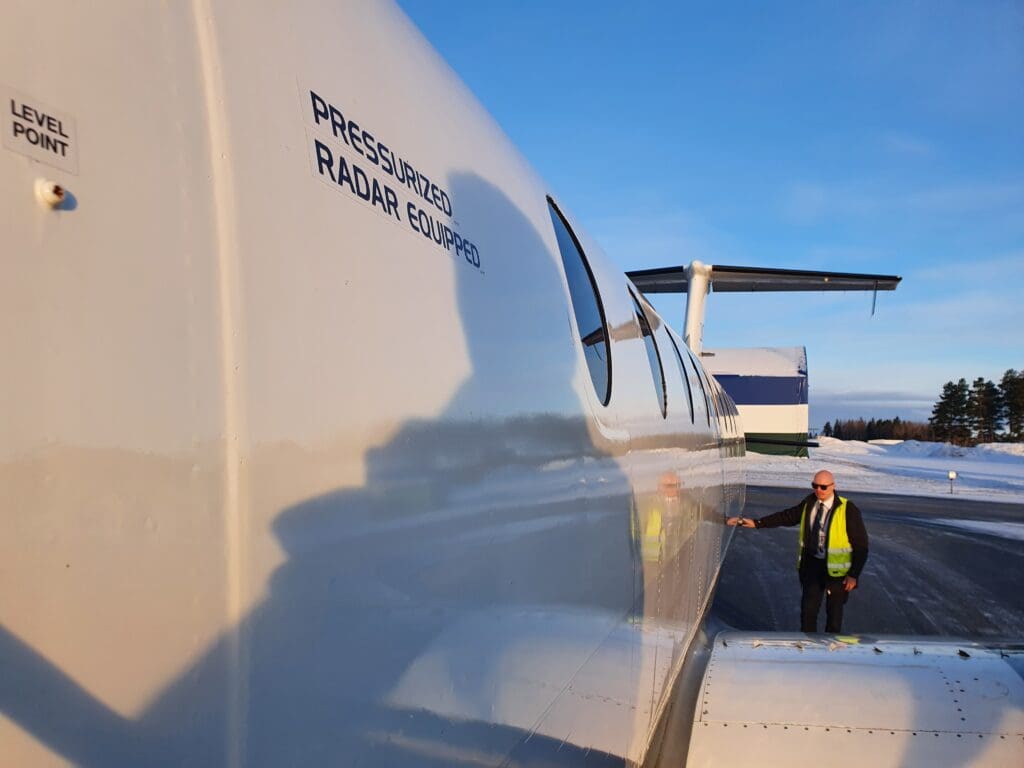
Once the Beechcraft had vacated the runway, I decided to wander back over to the check-in area where I took a seat alongside several others who I assumed were Umeå-bound passengers. With the sign set up there advising that passengers would be escorted out to the aircraft fifteen minutes before departure, I was a little surprised to see that First Officer Andreas (seen on this video here!) appeared in the terminal well ahead of our scheduled departure time. Upon arriving in the check-in hall, they greeted the waiting passengers and ticked their names off a list, and, with all passengers having arrived, at 0715 the pilot then escorted us through to the airside area. As had been the case in Stockholm Arlanda at the start of my King Air journey to Sveg the previous day, no security check was required before the service and so we were taken straight out to the ramp and over to the waiting Beechcraft 1900C glistening in the morning sunshine. As I approached this, signs of the aircraft’s former operator, Atlantique Air Assistance could be seen in the form of the Beechcraft’s red, white and grey nose cone and the various faded stripes that were subtly visible on parts of the fuselage. Once I had handed my small suitcase to the First Officer who then placed this into the hold at the rear of the aircraft, I snapped several photos of the turboprop before climbing up the aircraft’s built-in steps and entering the cabin.
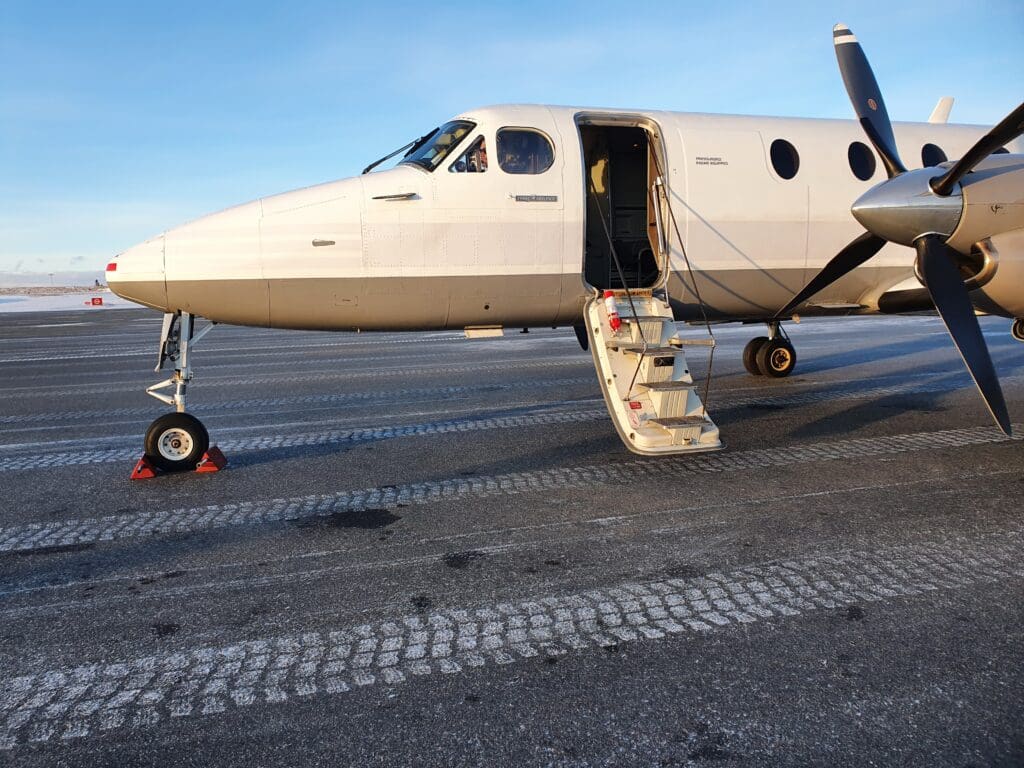
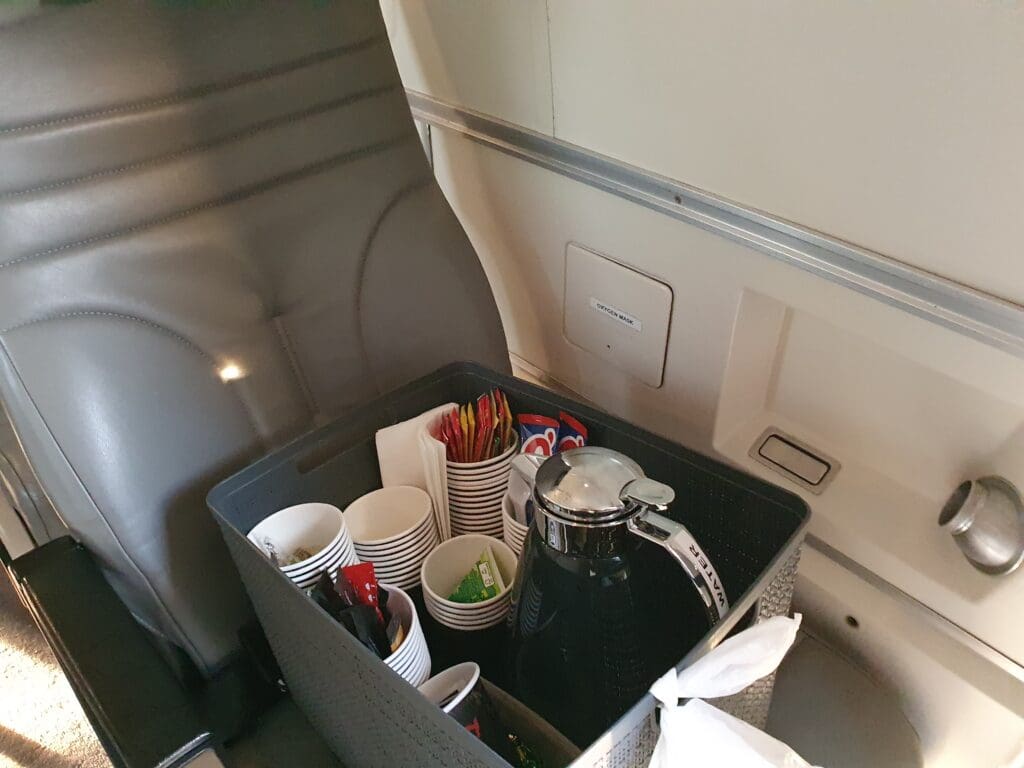
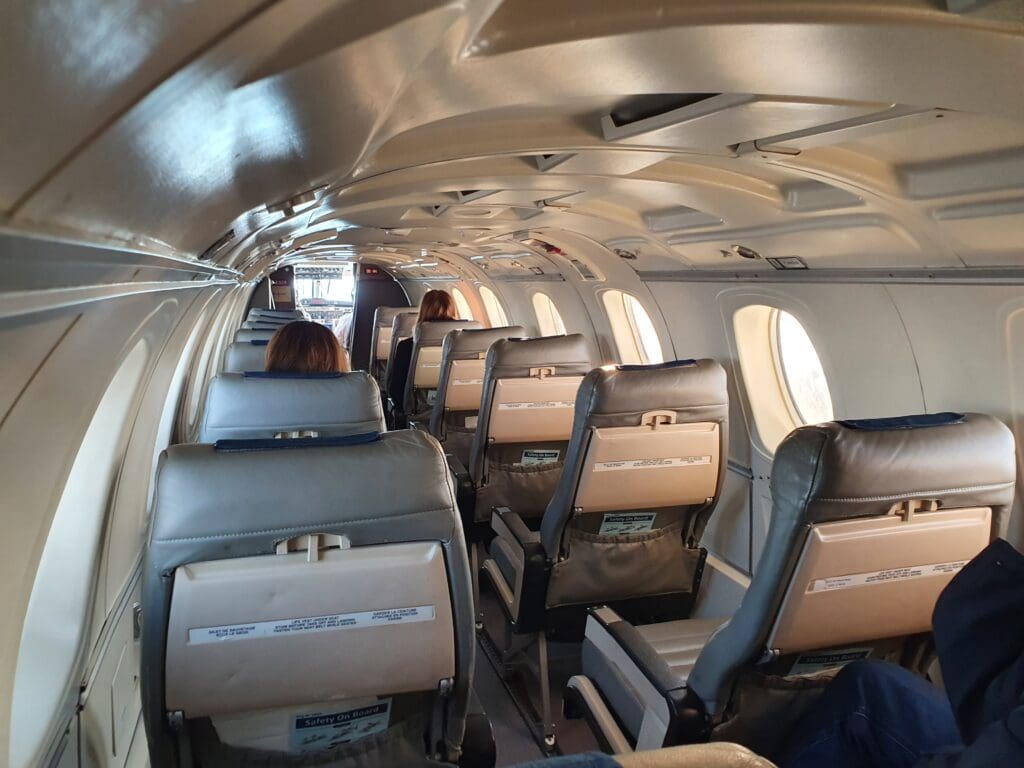
Unlike some Beechcraft 1900s which feature a small closet opposite the main cabin door, as I entered the aircraft I was instead greeted by the sight of a sideways-facing seat – with this presumably used as a jumpseat when required. Turning right, I entered the aircraft’s nine-row cabin, which features nineteen seats covered in a beige leather covering, each of which was topped with a smart-looking blue fabric antimacassar complete with Jonair’s logo. Unlike my flight from Stockholm to Sveg the previous day, a selection of drinks was offered with a plastic tray containing paper cups, tea bags, coffee, hot chocolate and milk sachets and a portable hot water dispenser placed on Seat 1A for passengers to help themselves to during the flight. As I had found to be the case on my Beechcraft 1900 ride from Vancouver to Prince George via Kamloops the previous year, inside, the aircraft appeared to lack any sort of bright cabin lighting which, coupled with the permanently tinged windows made the cabin seem rather dingy. However, the most obvious differences between this aircraft and the Beechcraft 1900D that I had flown with in Canada, took the form of the low cabin height (just 1.46 metres onboard the C and 1.8 metres on the D), as well as the lack of a toilet.
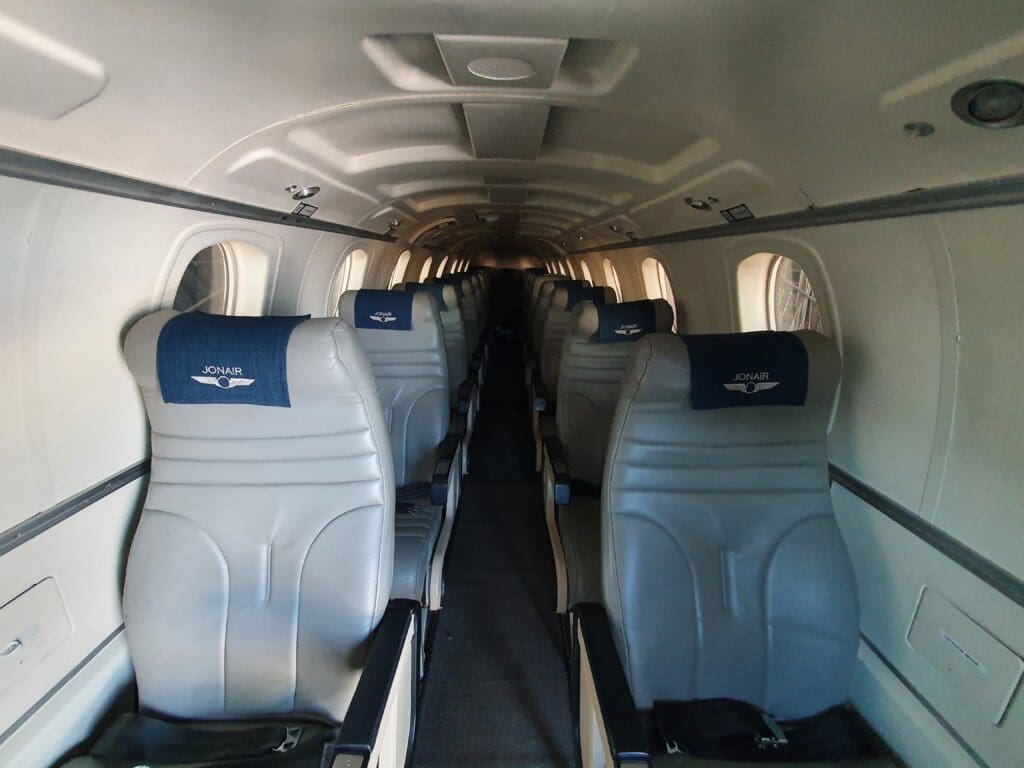
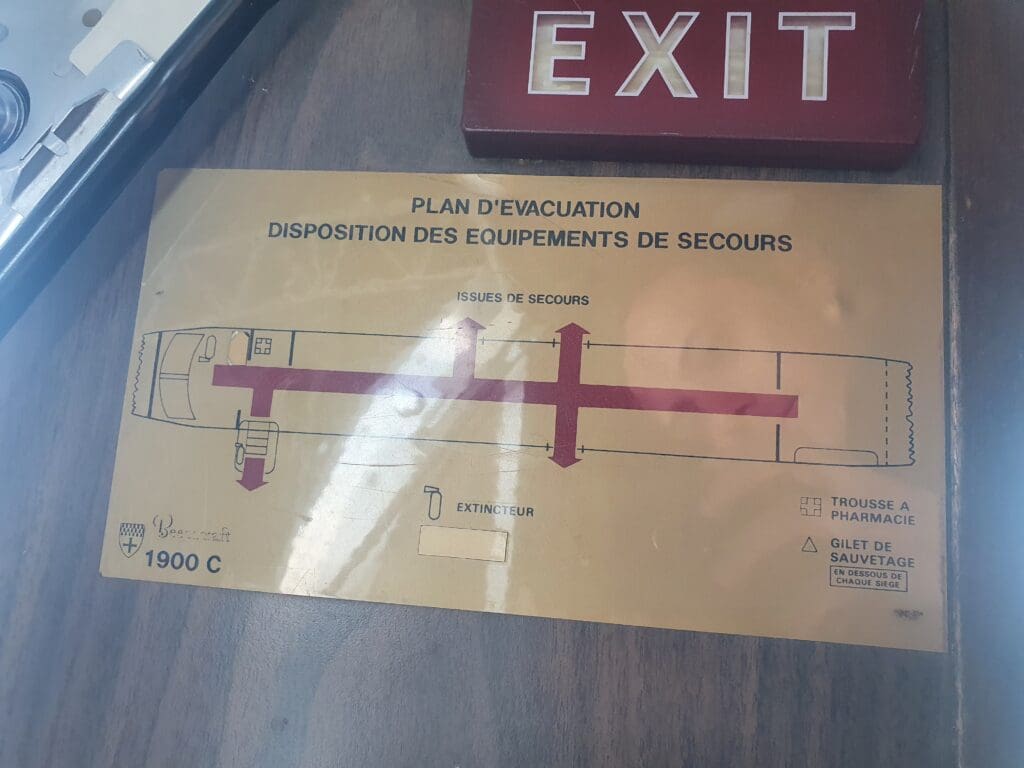
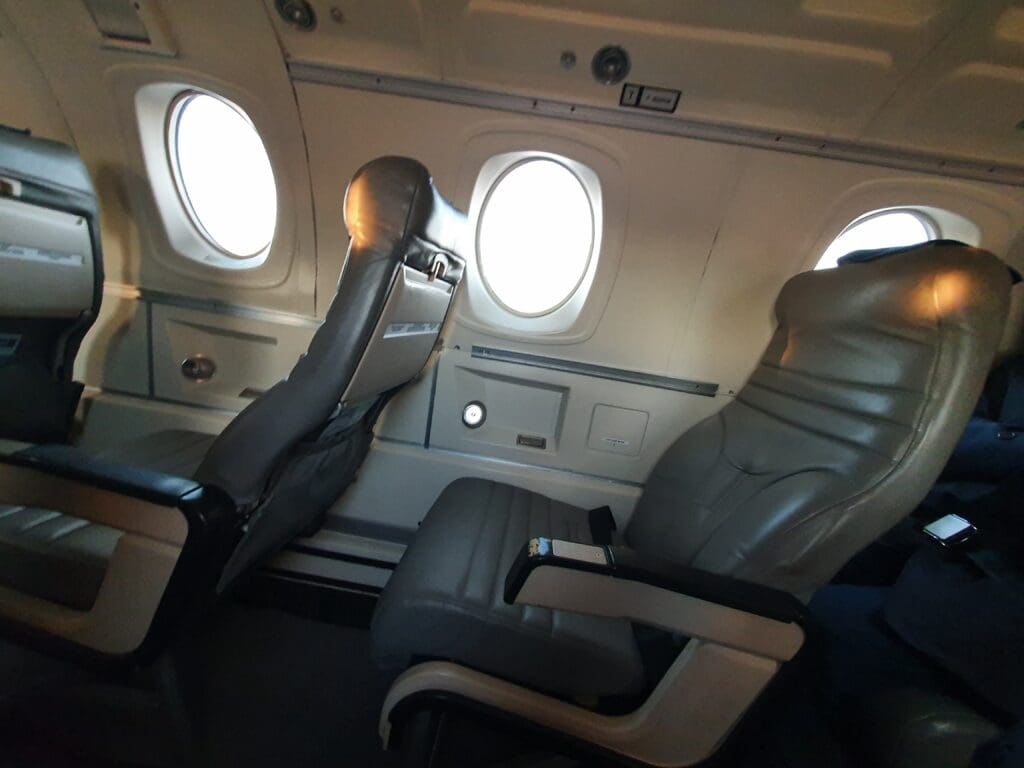
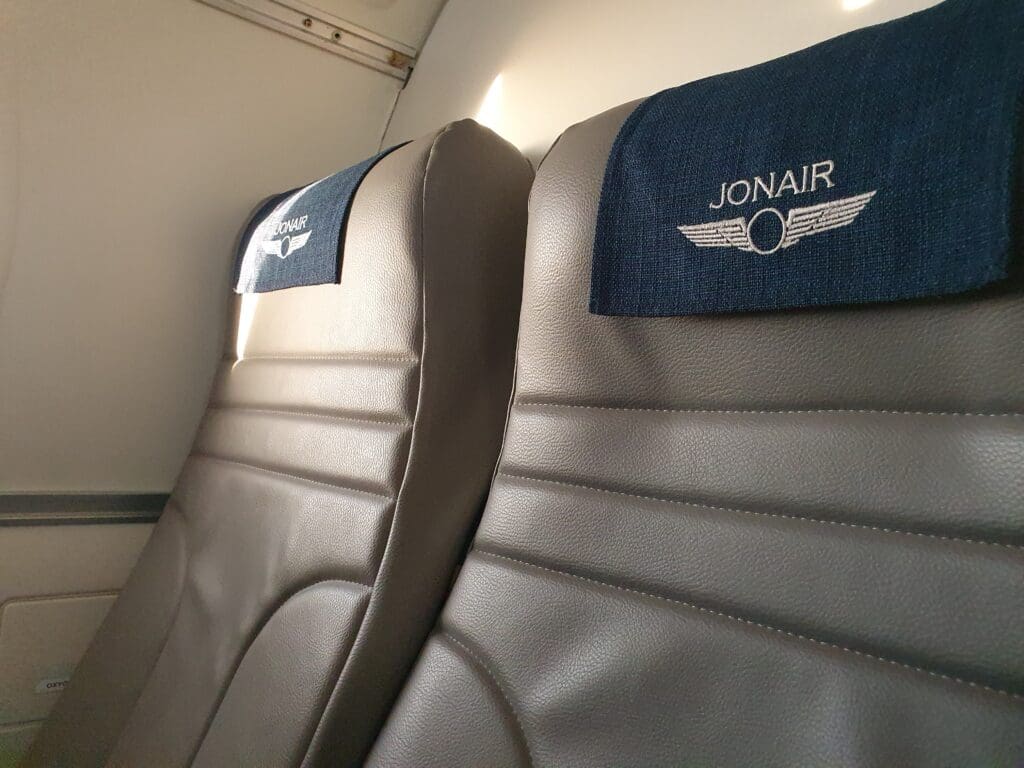
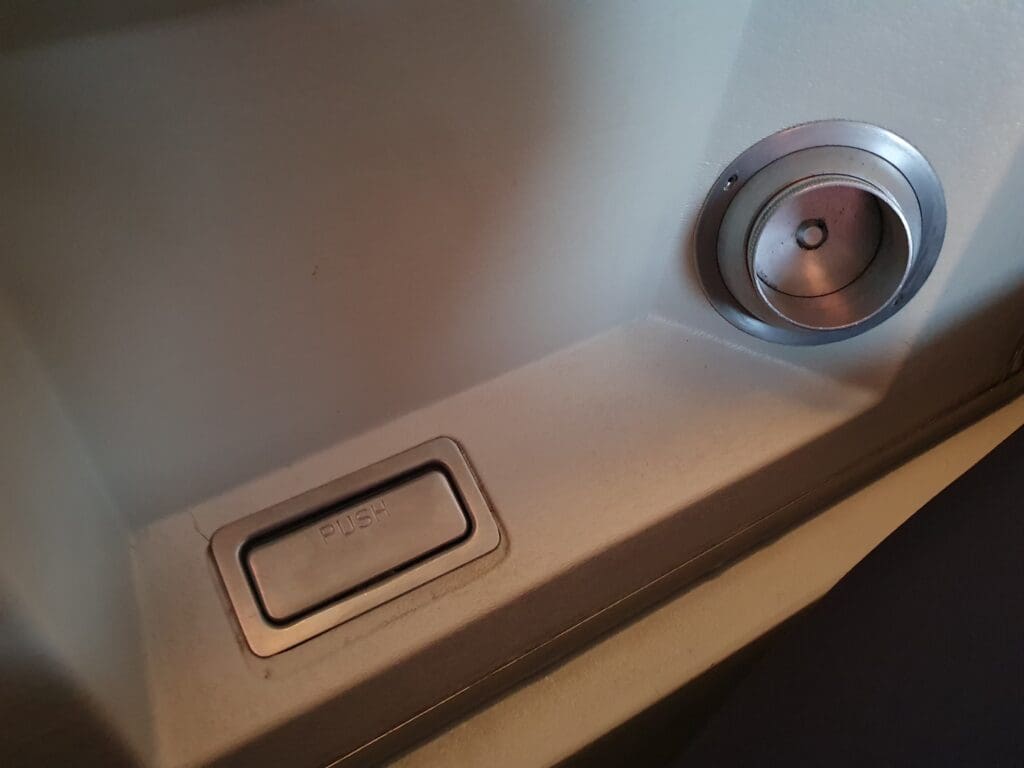
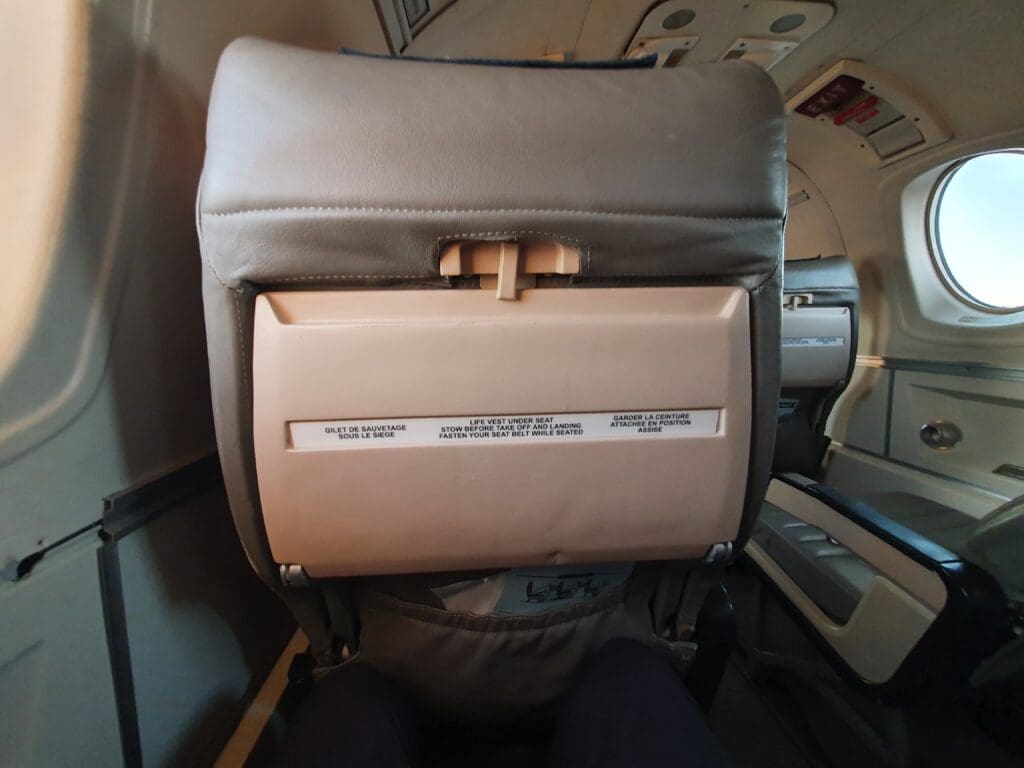
After making my way down the short and narrow cabin, I decided to settle in Seat 7A and upon sitting down I found the seat to be soft and comfortable, whilst also offering an acceptable amount of legroom for such a small aircraft that is primarily deployed on one short flight. Unsurprisingly given the aircraft’s age and its long history of carrying both passengers and cargo, plenty of marks and scratches could be seen however the cabin was clean and tidy, and ultimately left me with little to complain about. Meanwhile, onboard, each passenger is treated to the luxury of their own reading light above their seat, whilst personal air vents and ashtray compartments can be seen beneath each of the large oval windows. Examining the contents of the seatback pocket, this contained a safety card which interestingly and rather misleadingly labelled the aircraft as a ‘King Air 1900C’ alongside a plain white sick bag. Finally, a legacy of the turboprop’s long career in France, all signs inside the cabin appeared to be in both English and French, and other than on the safety card, I failed to spot any sign of Swedish inside the cabin.
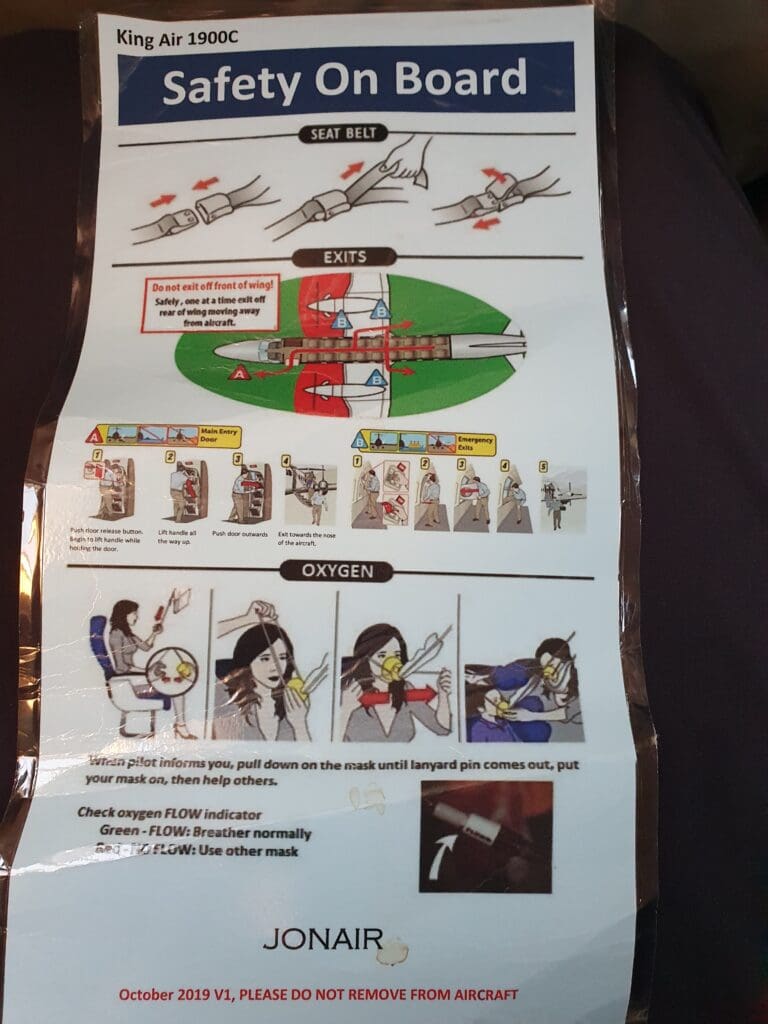
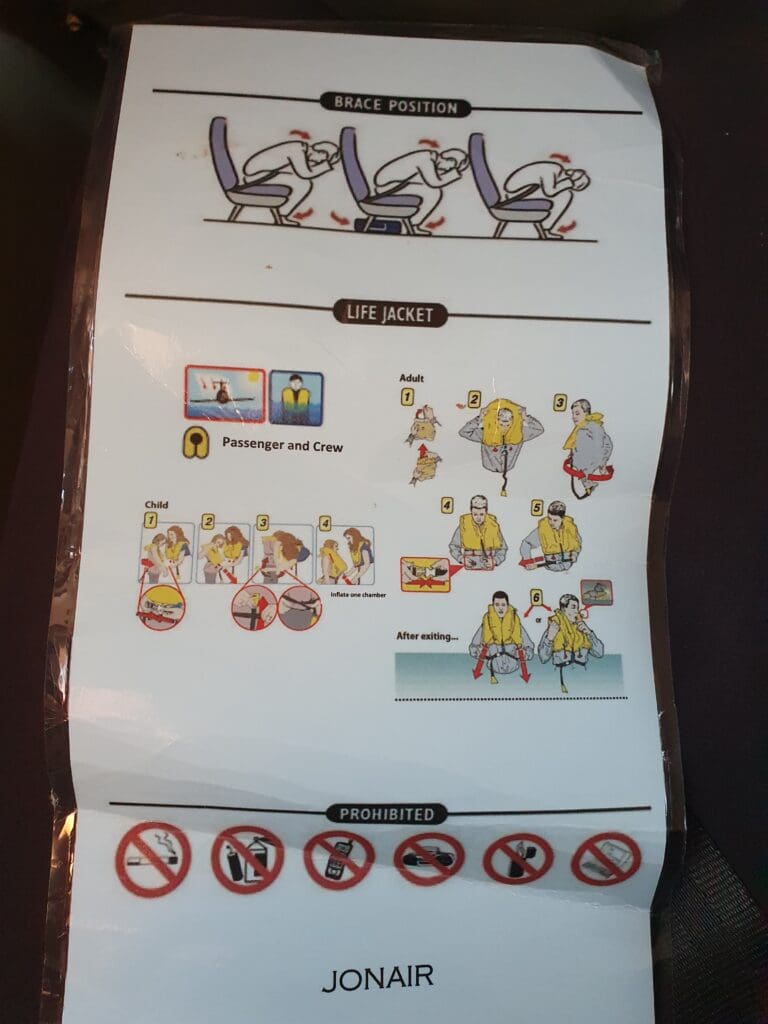
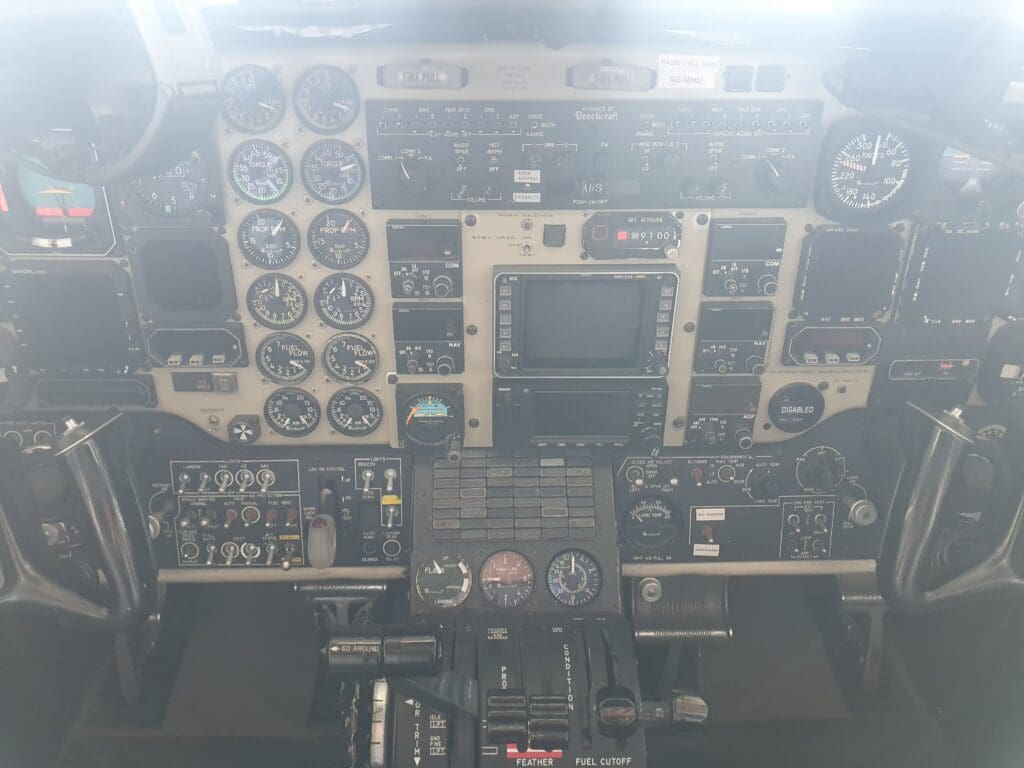
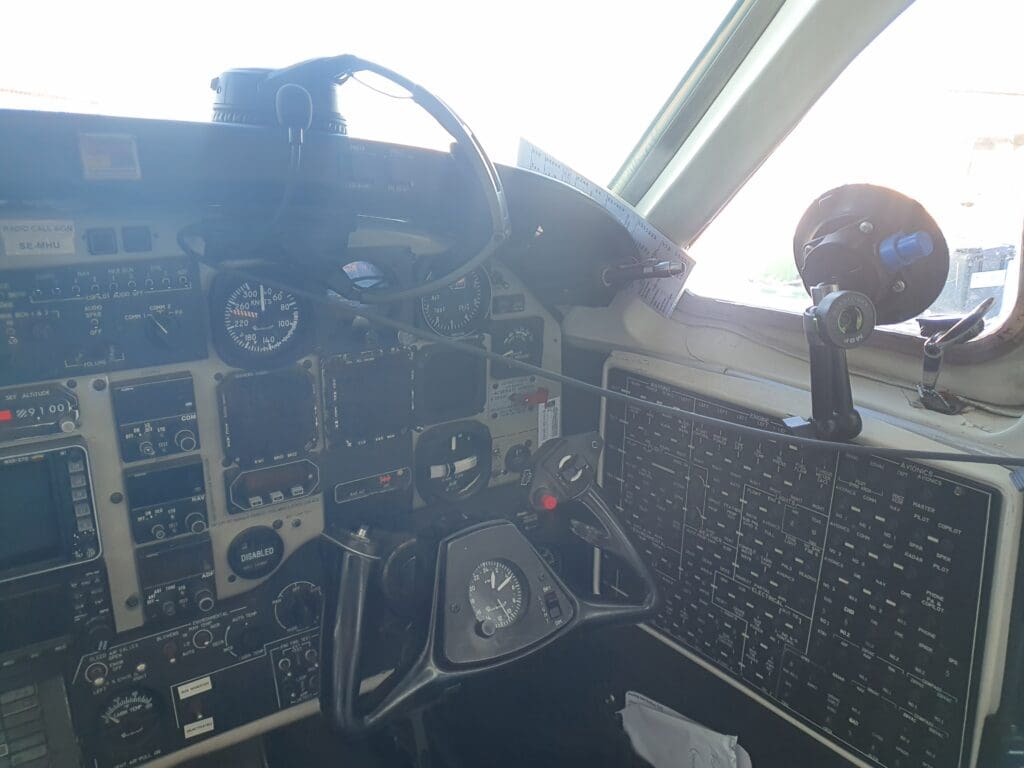
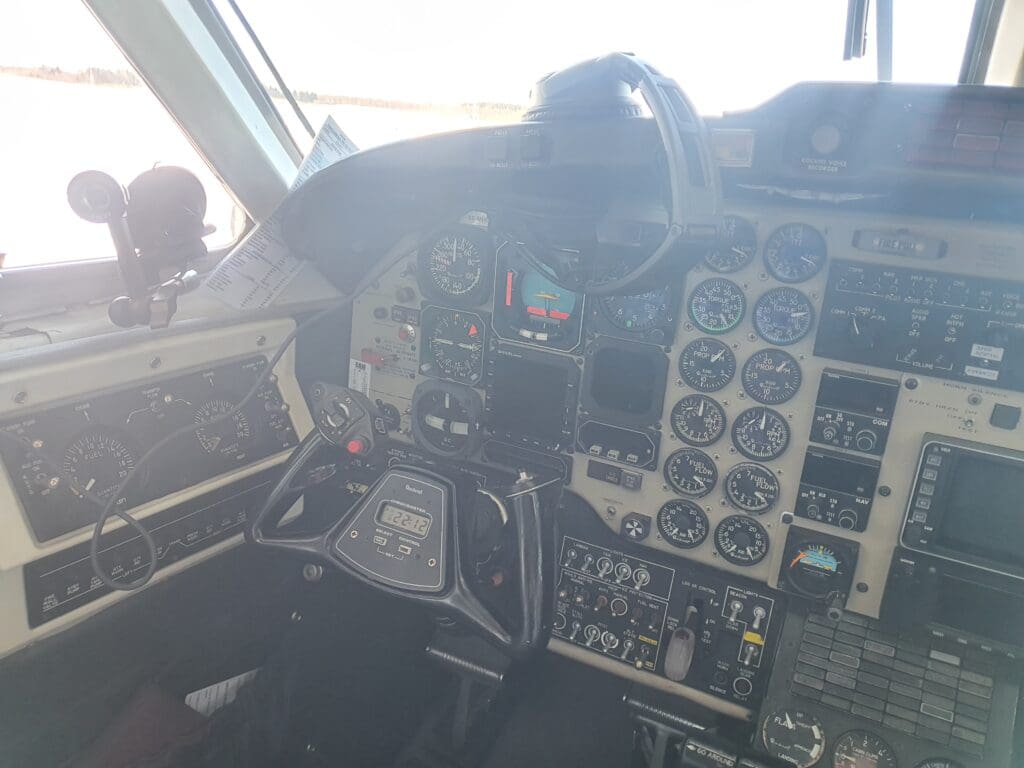
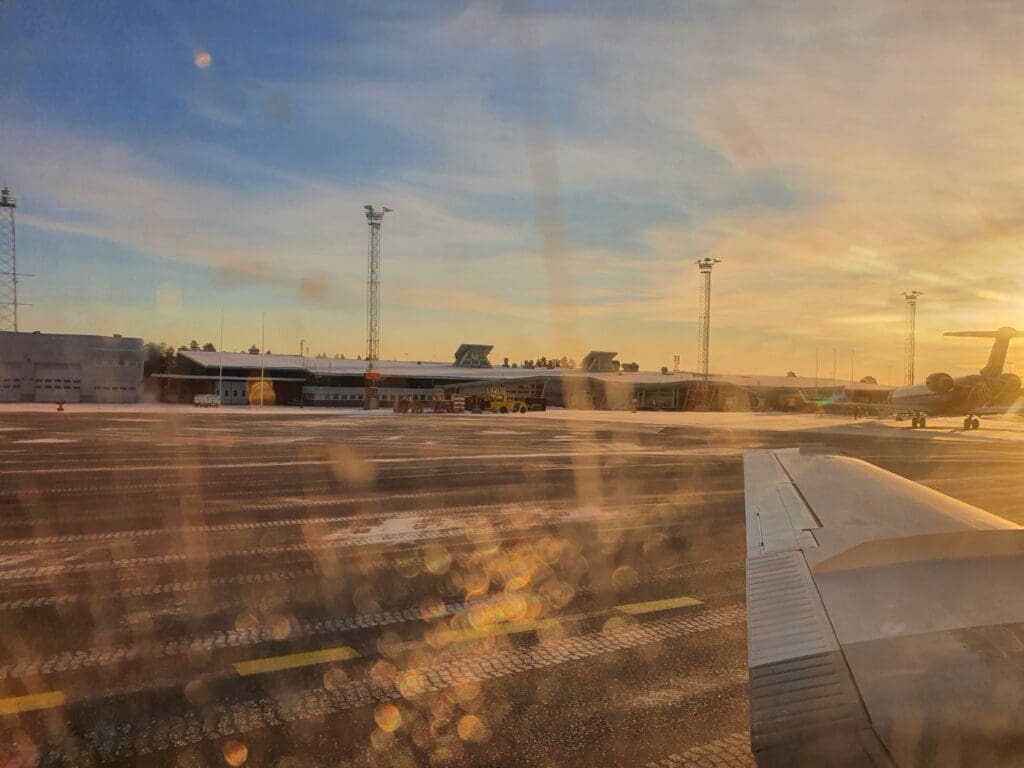
Having been the last of the three Umeå bound passengers to board the aircraft, by the time I had reached my seat and strapped myself in for the journey ahead, the First Officer had already closed the cabin door and taken their position up in the cockpit. At this time, no time was wasted in firing up the Beechcraft’s two Pratt and Whitney Canada PT6A-65B turboprop engines which powered into life with what only seemed to be minimal levels of both noise and vibration. As the two sets of four-blade propellers began to whirl, the First Officer performed a welcome and safety announcement in Swedish and English, during which they mentioned the fifty-minute flight time over to Umeå and encouraged passengers to take a complimentary drink from Seat 1A. Once this announcement came to an end, a full twenty minutes ahead of schedule and just five minutes after boarding had commenced, the Beechcraft jolted forward and commenced its taxi over to the runway. As it passed the terminal, the Stockholm Arlanda bound Xfly Bombardier CRJ-900 could still be seen – with this not departing until well over an hour beyond its scheduled departure time that morning.
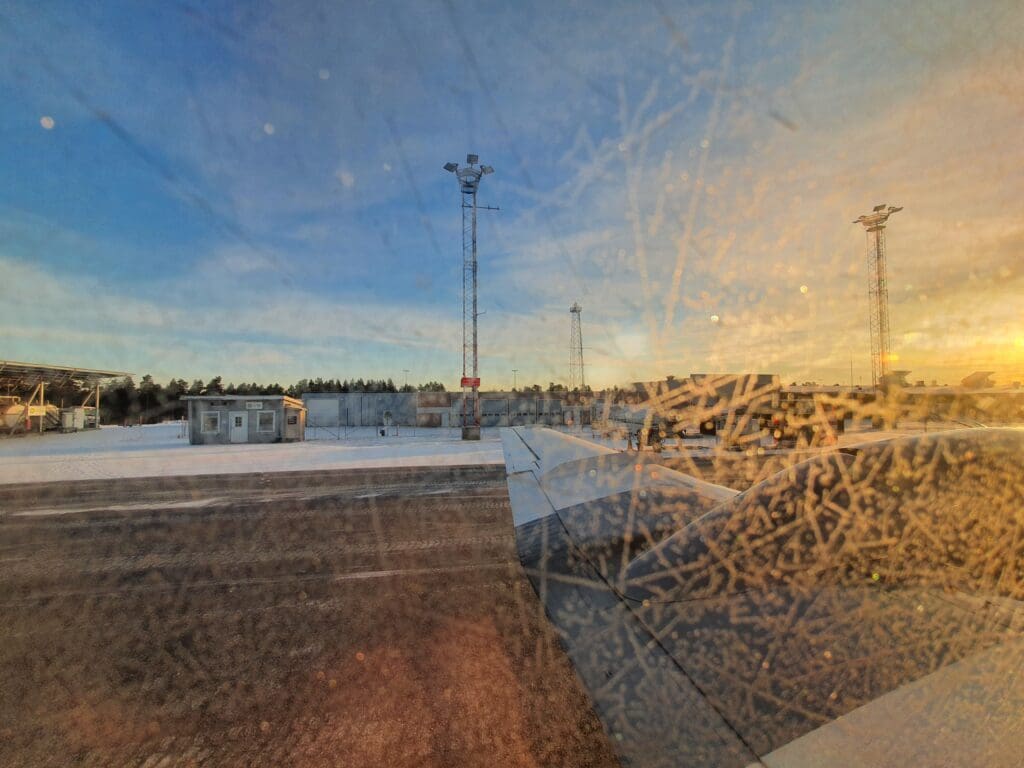
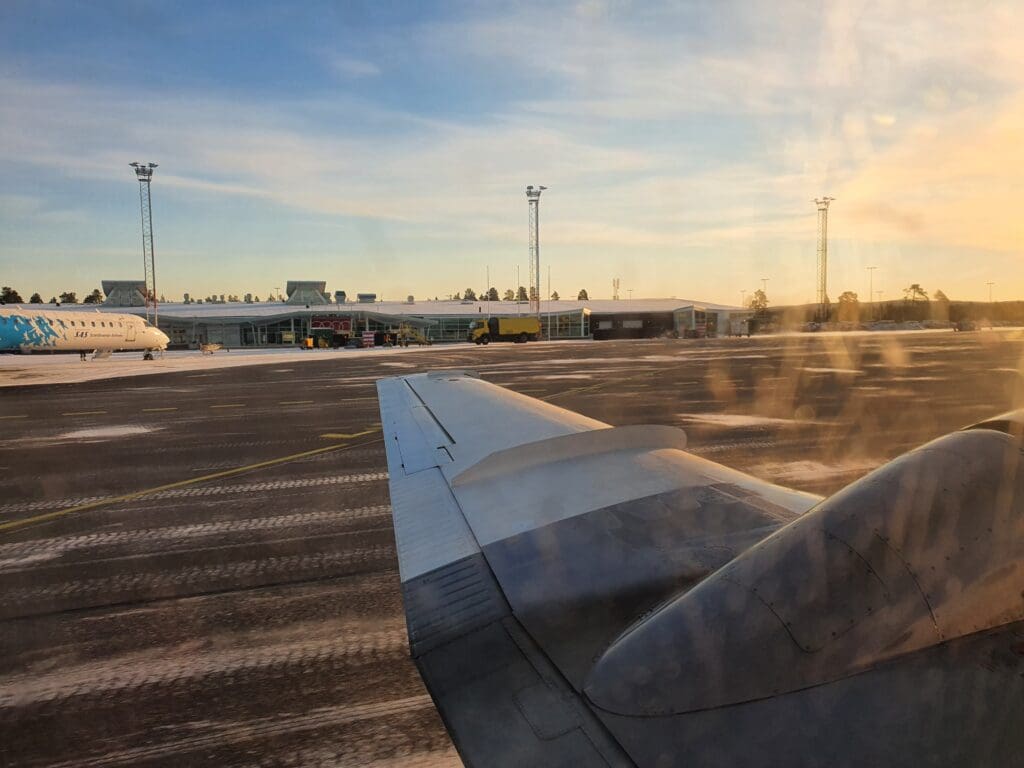
After passing the terminal, the aircraft continued along the perimeter fence, allowing for a good view of the typically Scandinavian pine trees that surround the airport. Following a quick taxi, the aircraft turned right and entered Runway 30 at 0723 with no holding required before our departure. Once on the runway, the Beechcraft came to a halt whilst up ahead the pilots could be seen running through a checklist before the power levers were pushed forward and the aircraft commenced its take-off roll. Given the light load, our take-off roll that morning seemed to be incredibly powerful and the turboprop soon rocketed upwards into the sunny skies that lingered over Jämtland.
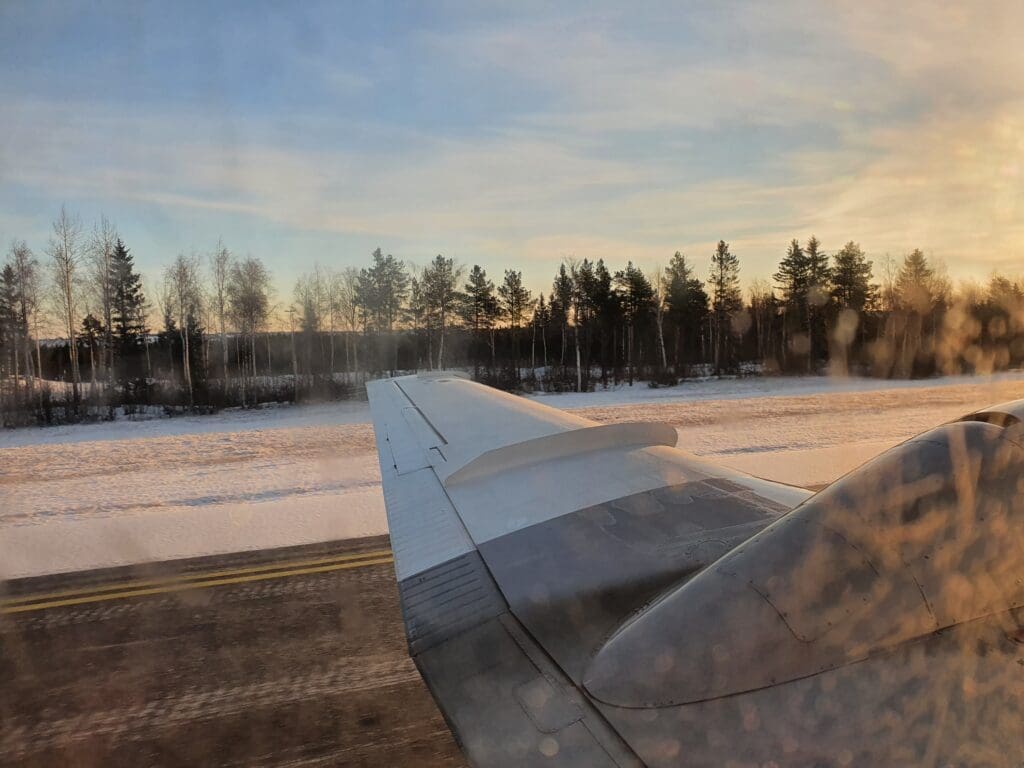
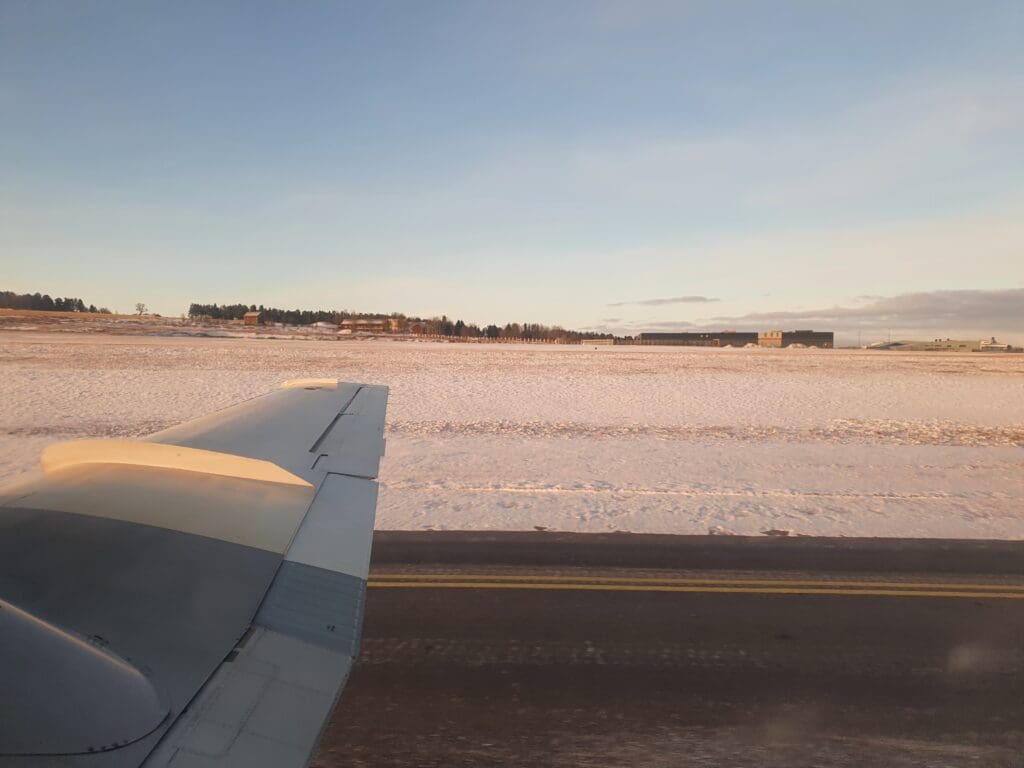
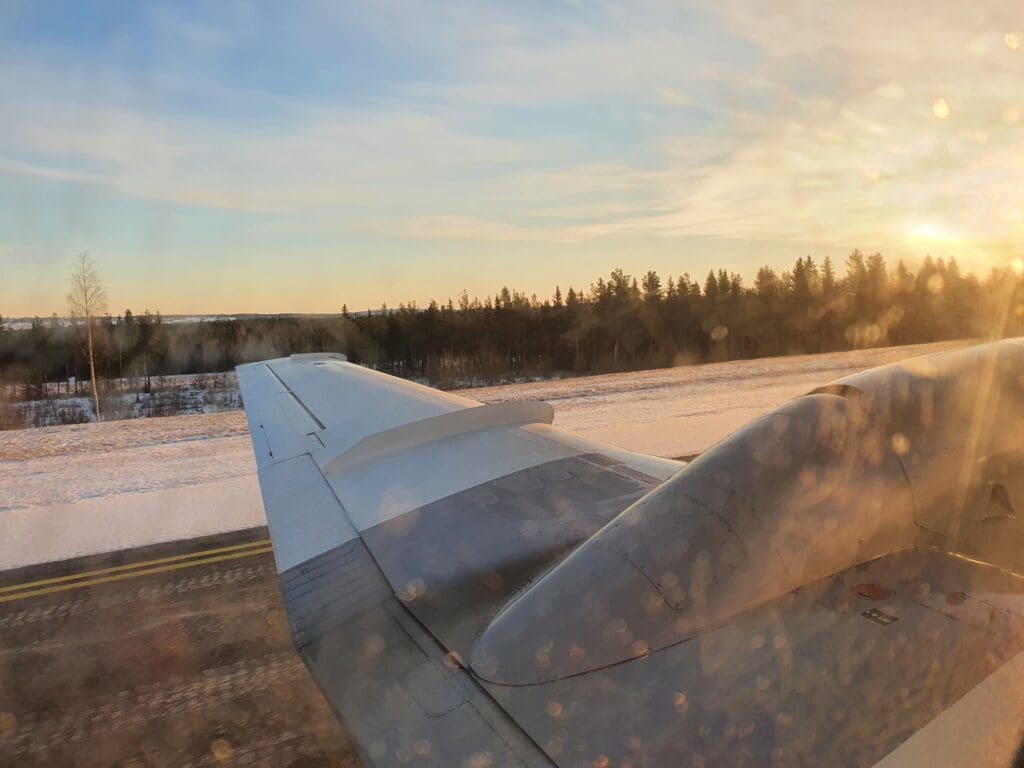

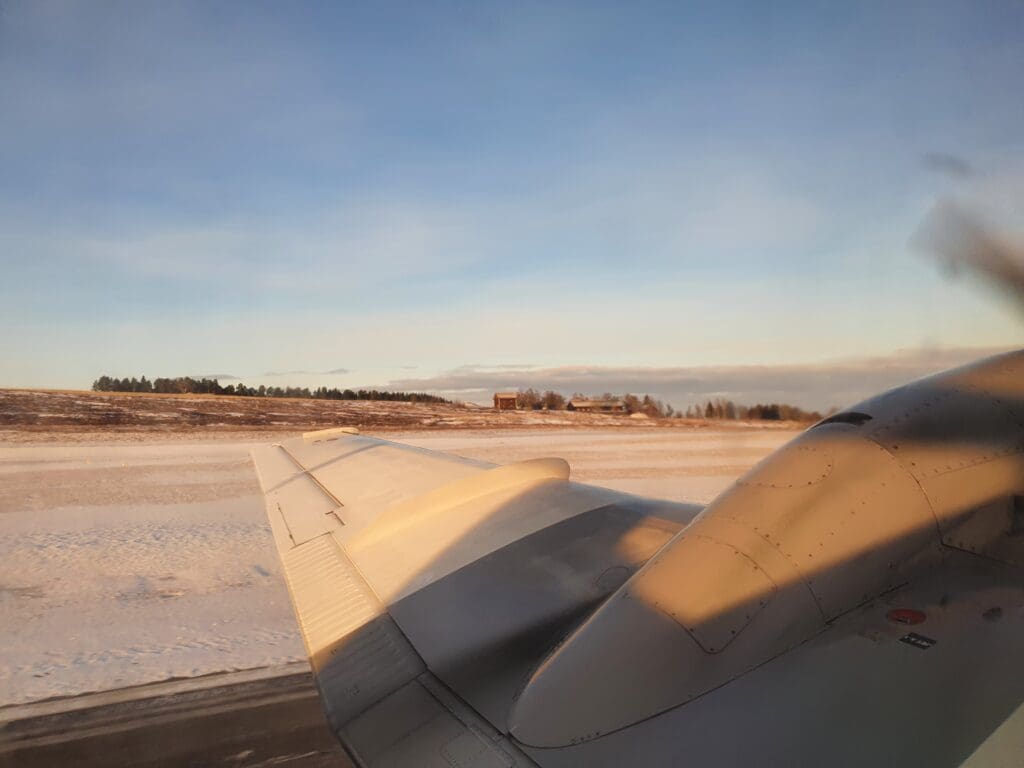
A few moments after the aircraft had taken to the skies, the Beechcraft’s infamous vacuum cleaner sound could be heard as the gear and flaps were retracted before the aircraft gently banked to the right before rolling out on an easterly heading that would take all five of us directly to Umeå. After leaving the island of Frösön, the aircraft climbed over the frozen snow-covered Lake Storsjön, and only three minutes after departure, a loud ding could be heard as the seatbelt signs were switched off. Passing to the north of Östersund, nothing of the city could be seen from my seat on the left-hand side of the aircraft other than a selection of frozen fields, forests and snow-covered lakes. However, unsurprisingly all passengers remained seated for the duration of the flight, either not in need of refreshment or simply not bothering with the hassle of heading to the front of the aircraft and pouring themselves a hot beverage.
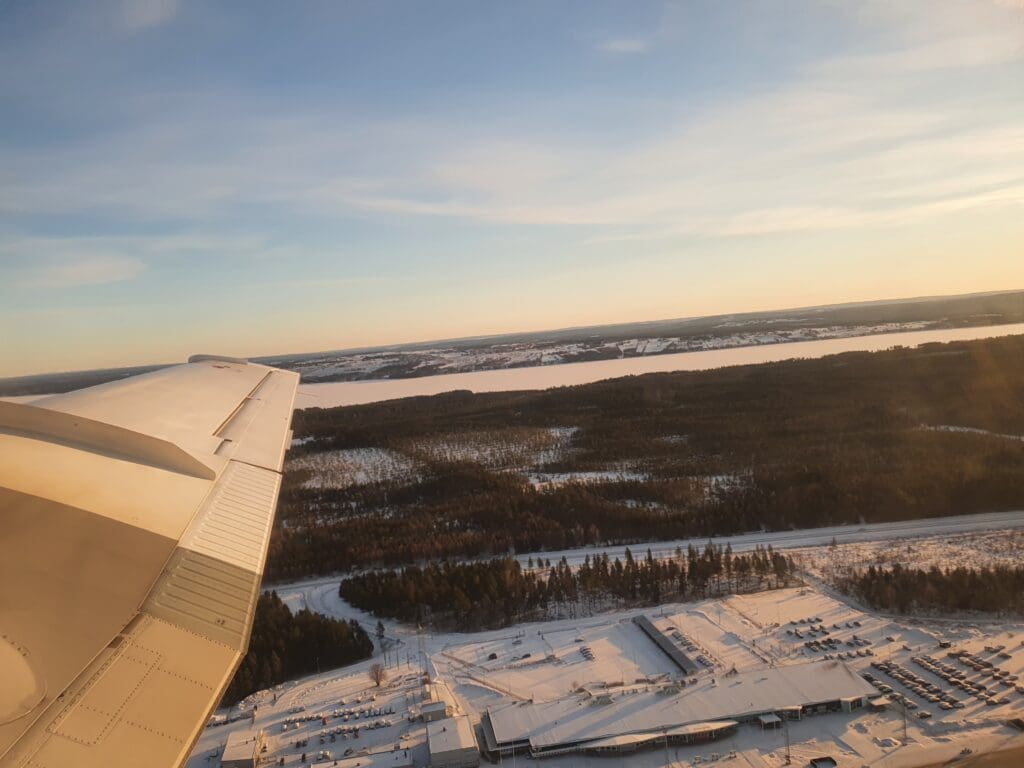
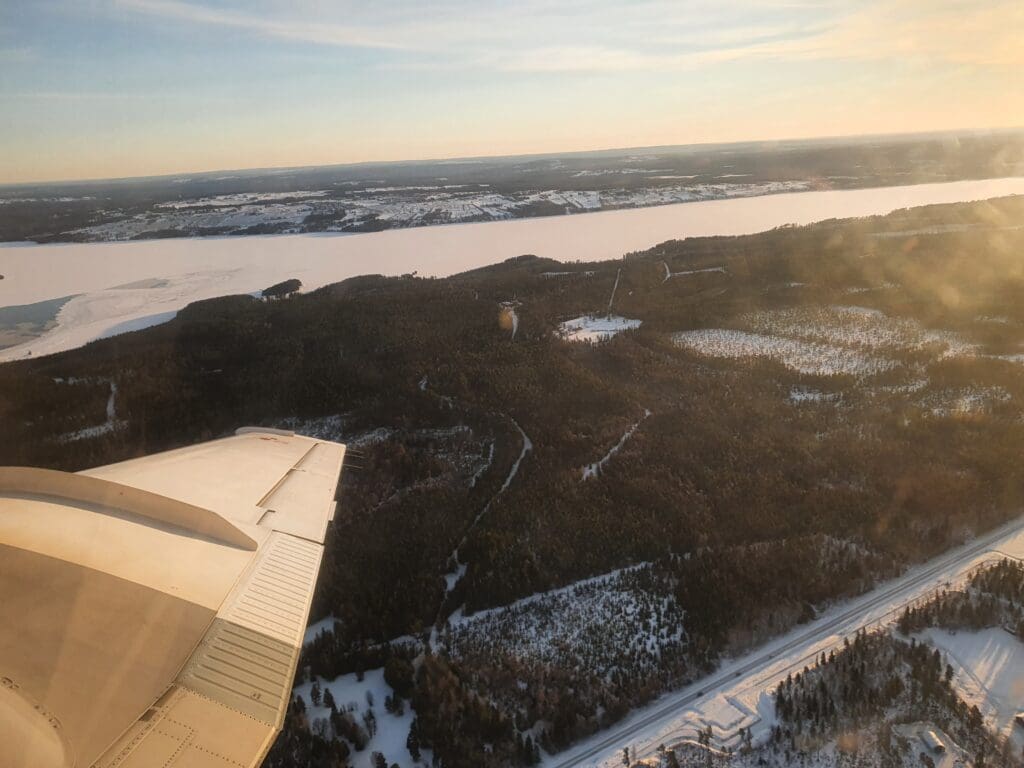
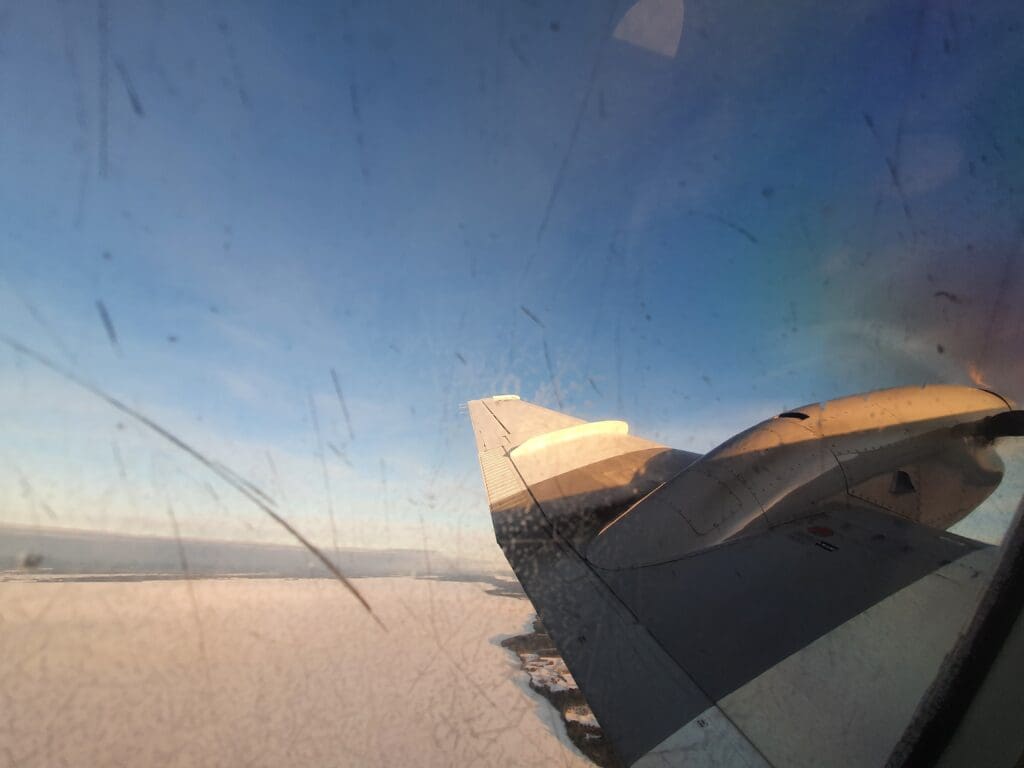
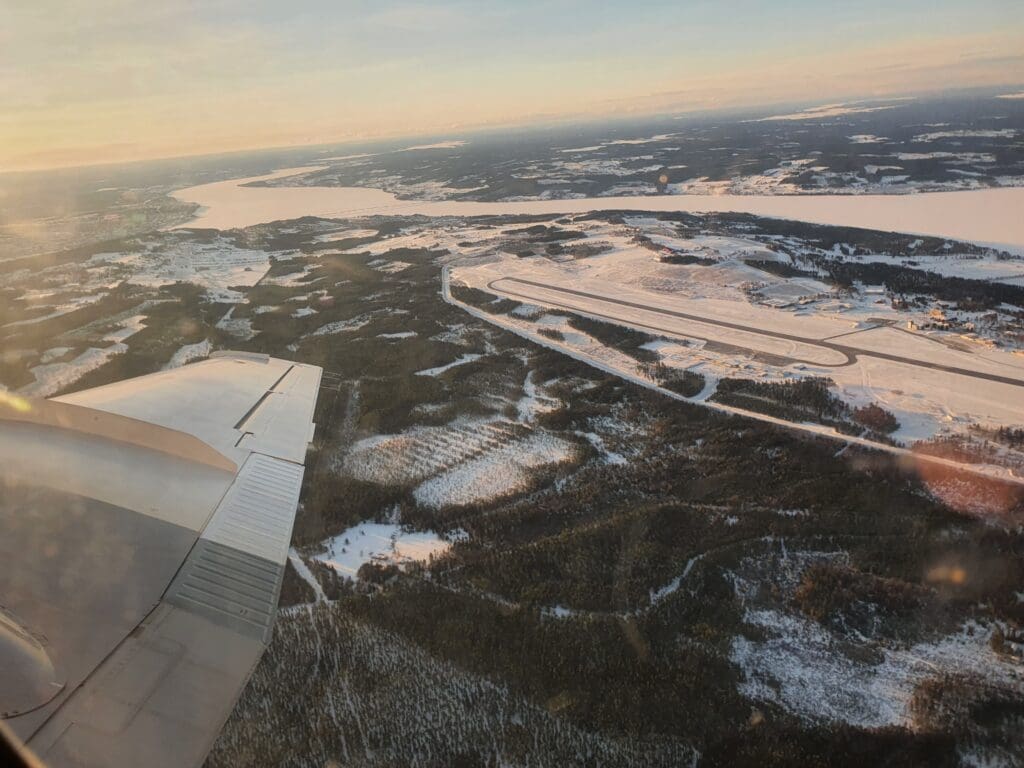
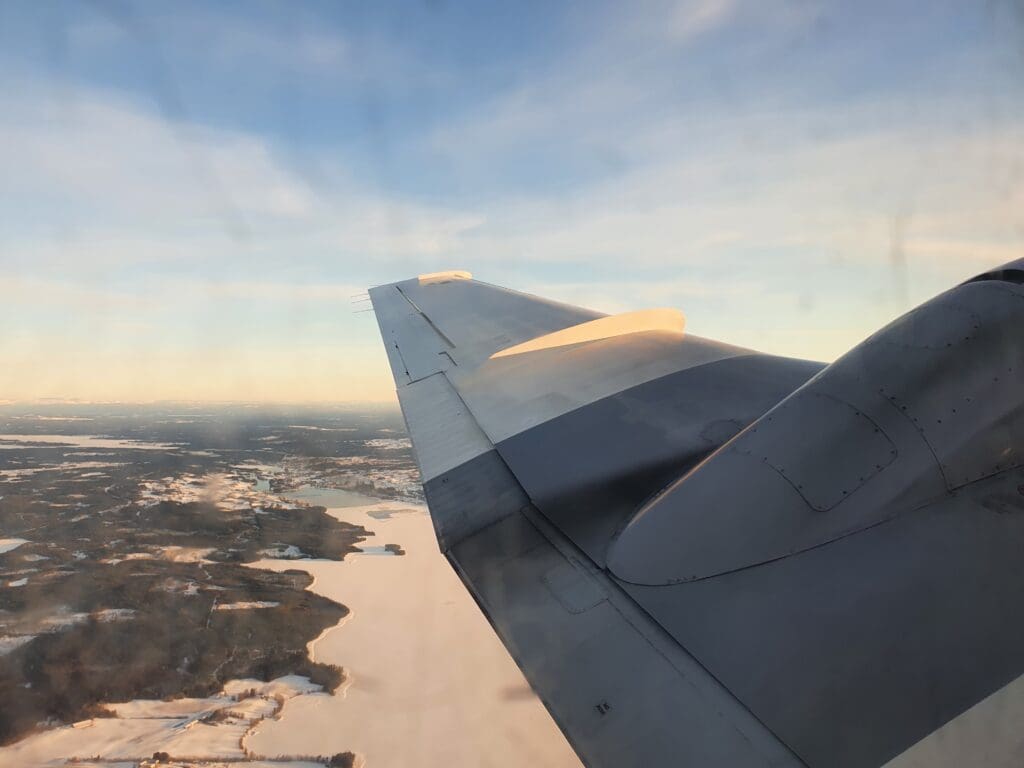
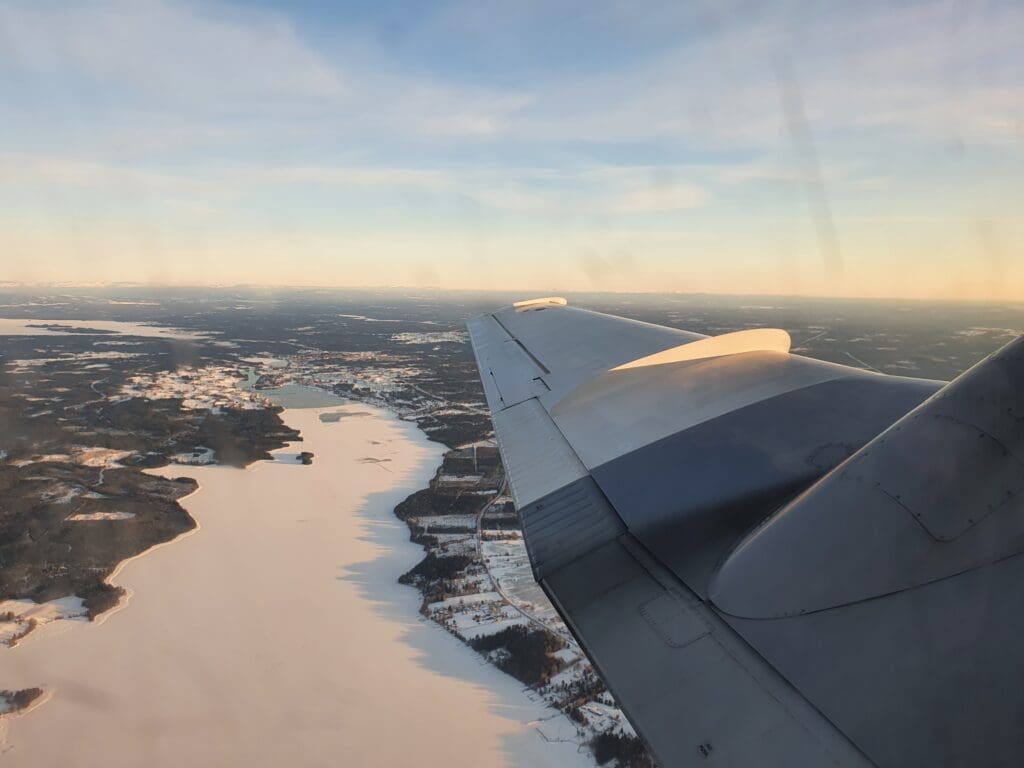
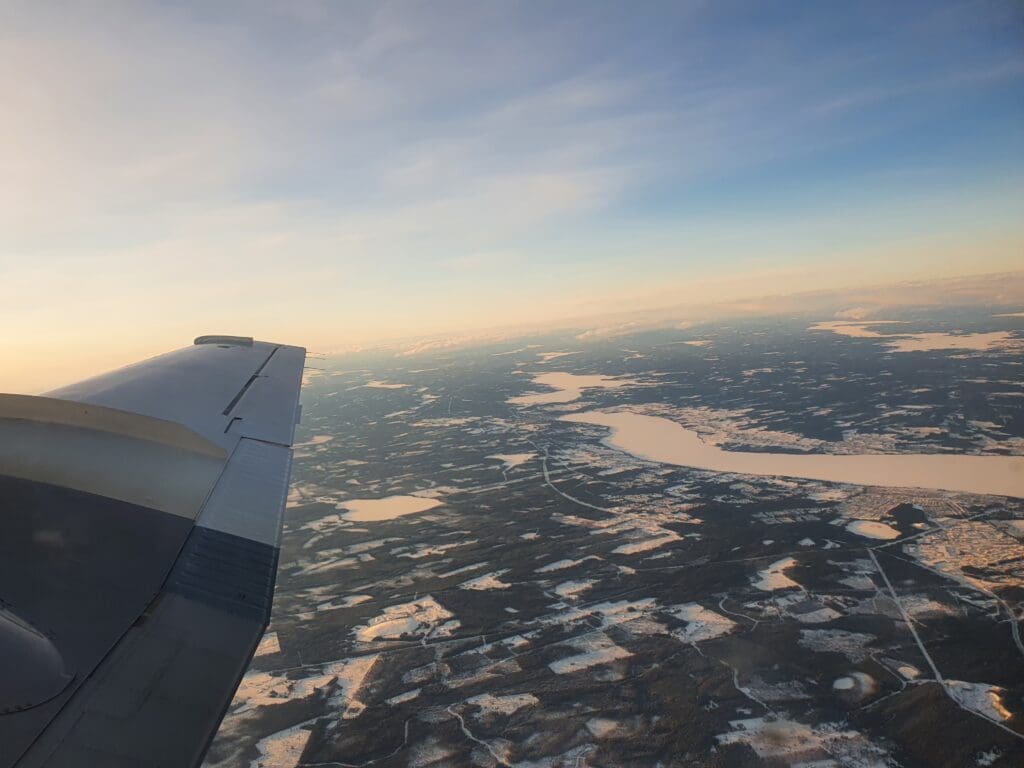
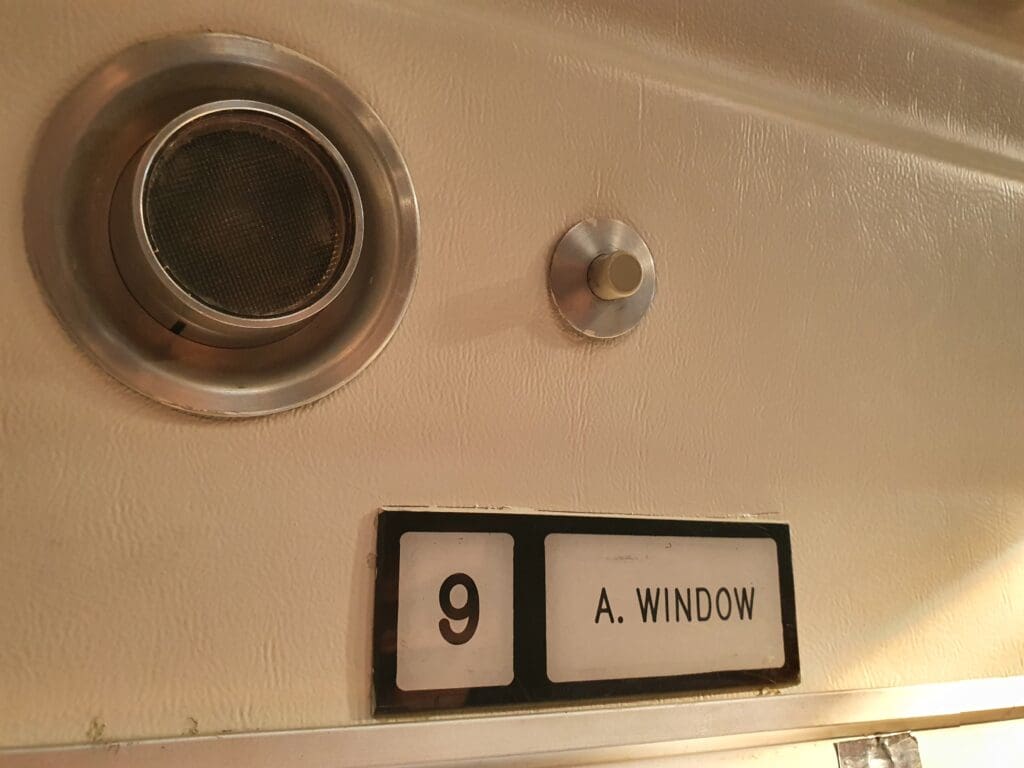
With the large oval porthole to my left covered in scratches and thus preventing any decent photographs from being taken, once the seatbelt signs had been extinguished, I decided to move back to the rearmost row and plonked myself down in Seat 9A. Interestingly, I found this seat to offer notably less legroom than my original seat although the window did seem to be in a much better state. Following a smooth fifteen-minute climb, the Beechcraft levelled off at its cruising altitude of 21,000 feet, by which time my two fellow passengers appeared to have both fallen fast asleep. That morning, the weather proved to be fantastic with nothing more than a light breeze blowing and almost no clouds in sight, which allowed for good views of the frozen rural landscapes below as we cruised from Jämtland to Västernorrland, and then Västerbotten. Meanwhile, only very few bumps could be felt for the entire duration of the flight.
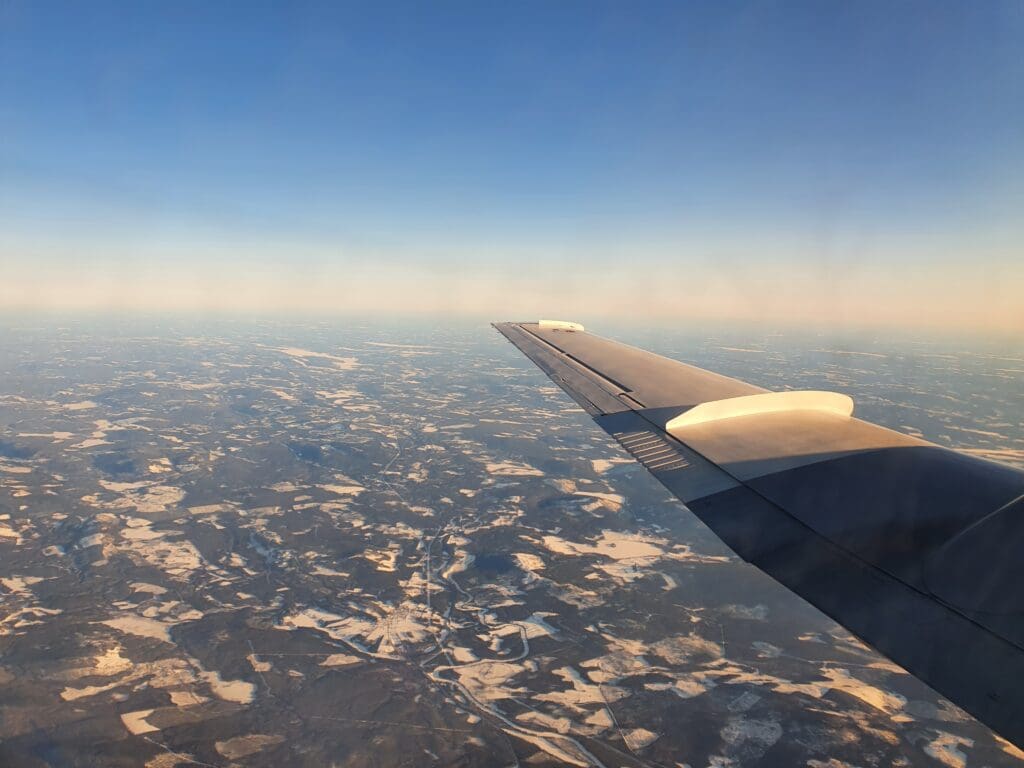
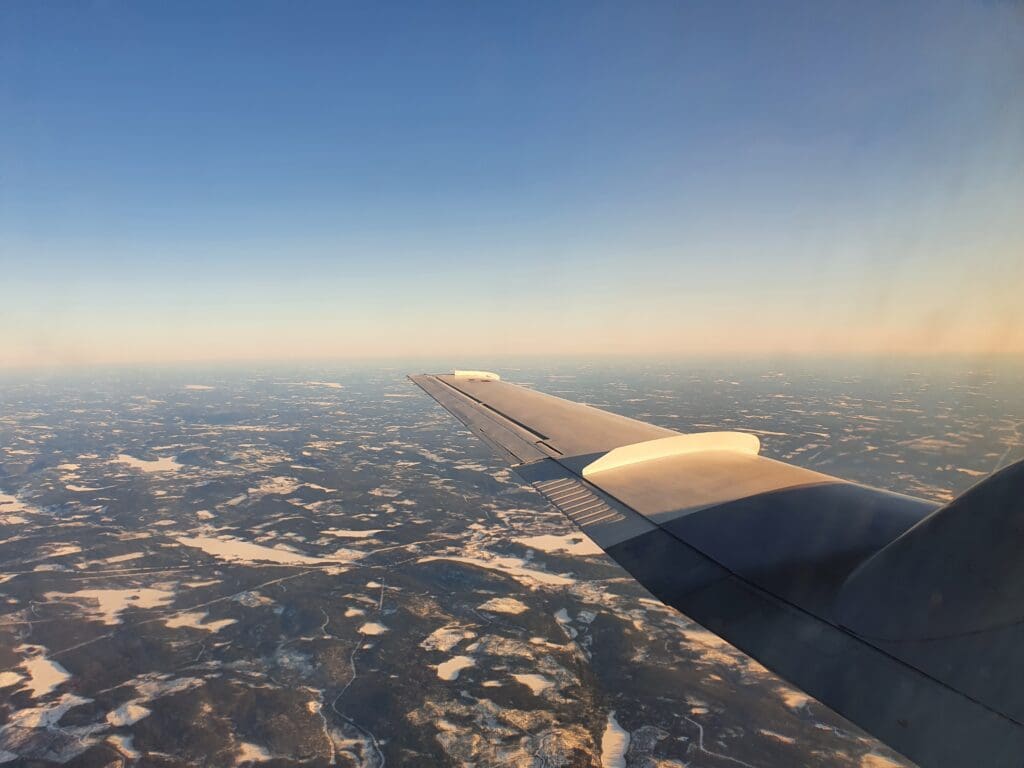
Just ten minutes after the flight’s scheduled departure time, at 0750 the noise produced by the aircraft’s two PT6A turboprop engines decreased slightly and the aircraft could be felt commencing its descent down to Umeå. At this point, the Baltic Sea appeared off the Beechcraft’s right wingtip and at 0756 a loud ding could be heard once again as the seat belt signs were reilluminated in preparation for our arrival. At this time, I refastened my seatbelt and watched as the scenery below became increasingly clearer as the aircraft sank down towards Västerbotten’s capital city. As had been the case for much of the flight, at that time the scenery below consisted of pine forests, frozen snow-covered lakes and farmland with the occasional building dotted about here and there.
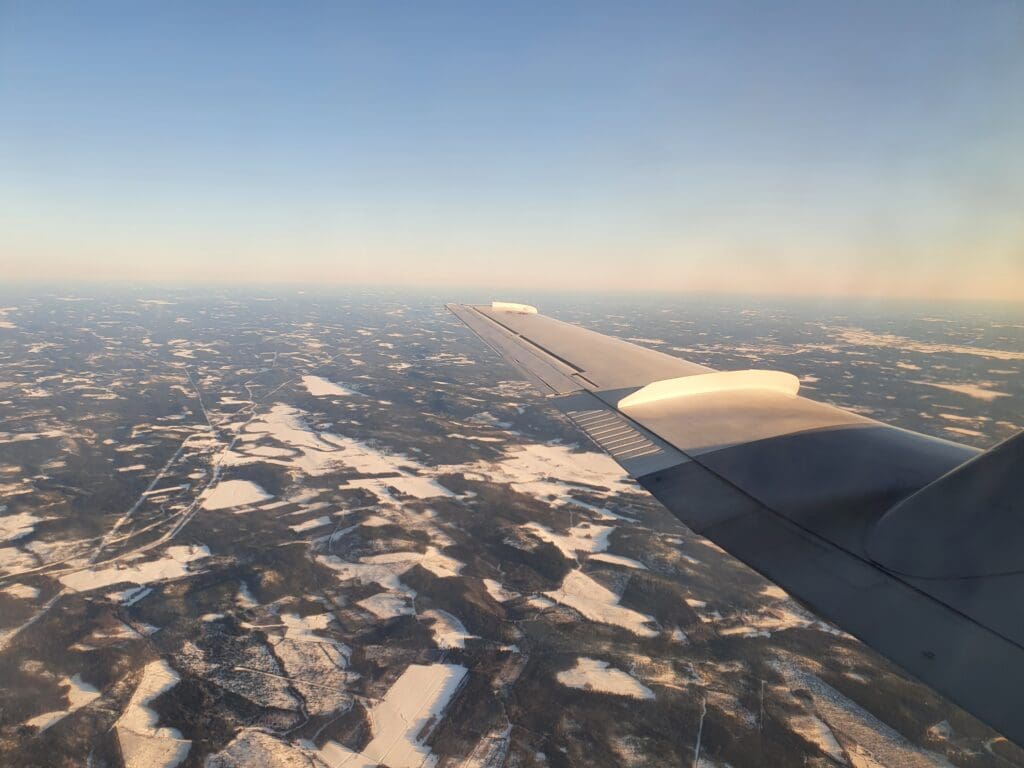
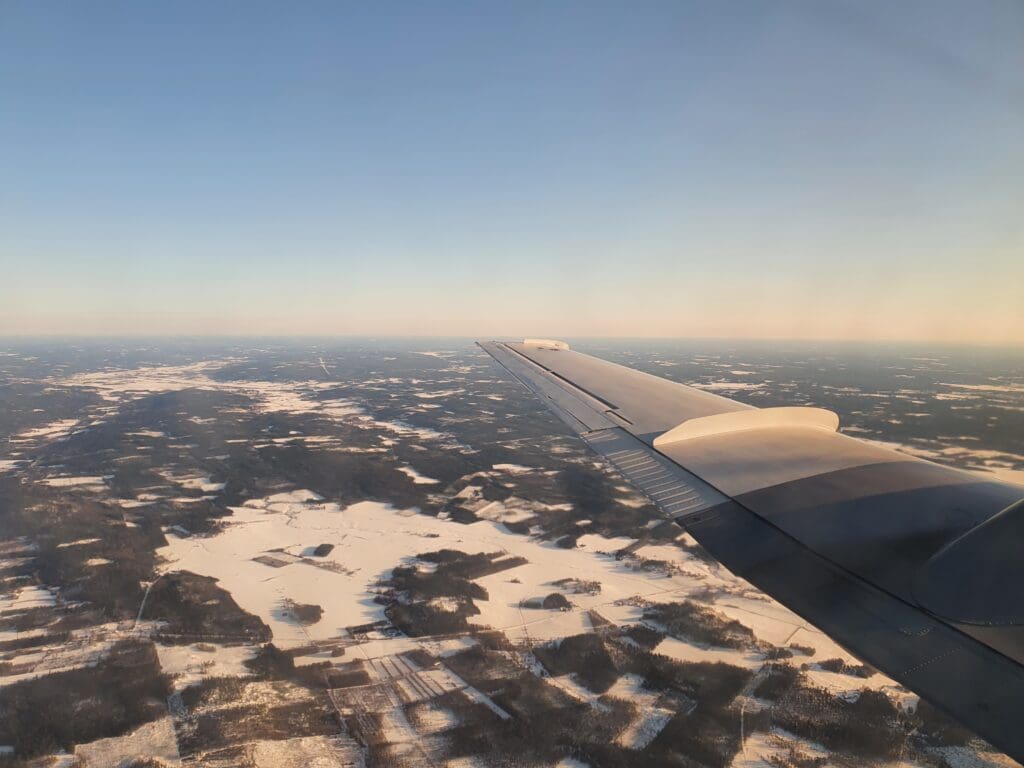
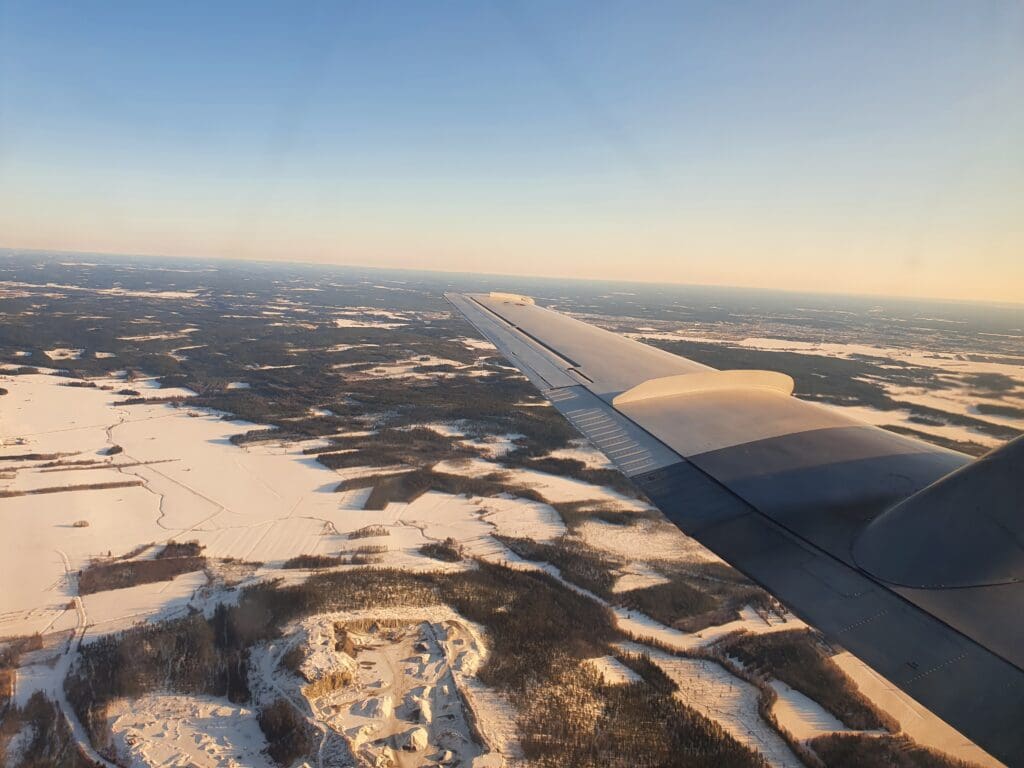
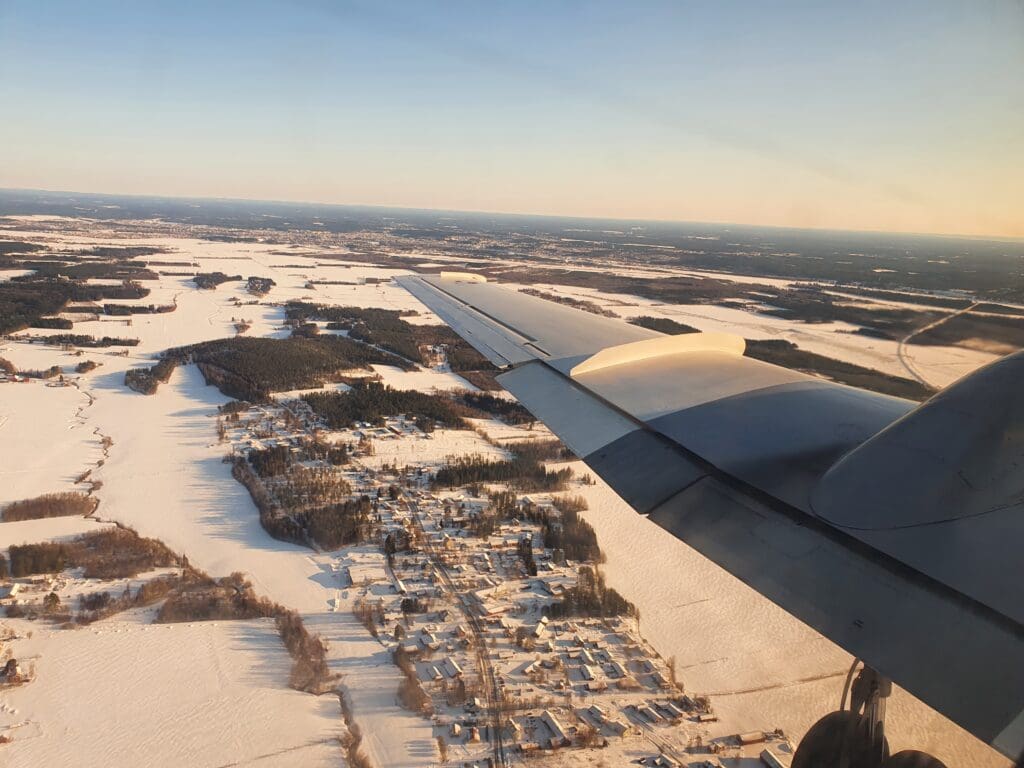
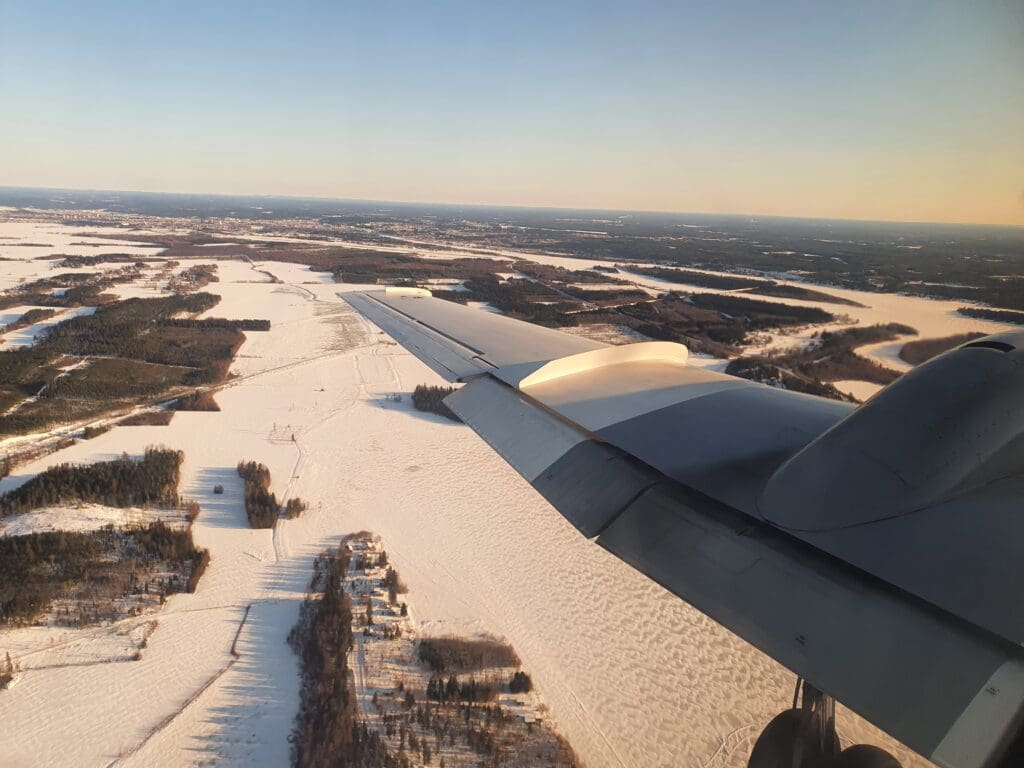
Approaching Umeå from the southwest, the city’s eastern suburbs appeared all of a sudden just after 0800, whilst the buildings of the city centre could also be seen in the distance a short time later. No more than five minutes later, Umeå Airport appeared off the aircraft’s left wing tip at which point the flaps and gear were lowered into position accompanied by the vacuum cleaner sound before the Beechcraft turned onto finals for Umeå Airport’s Runway 32. At this time, the Beechcraft whizzed over various small villages as well as the frozen snow-covered Ume River estuary before crossing over the E12 road.
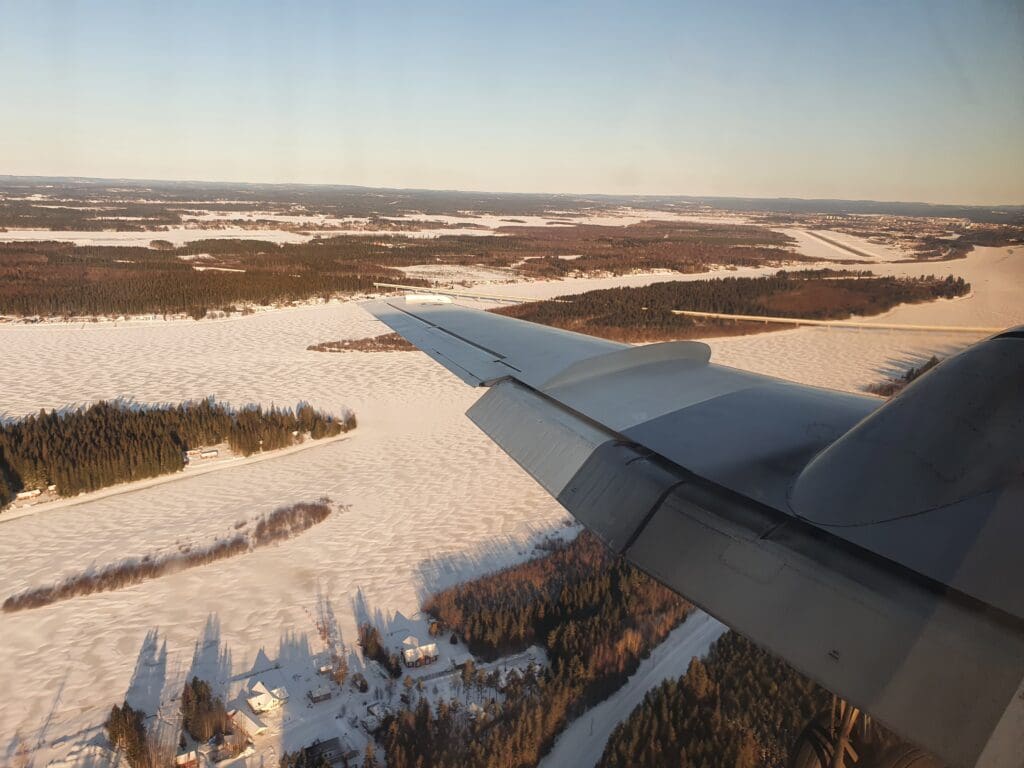
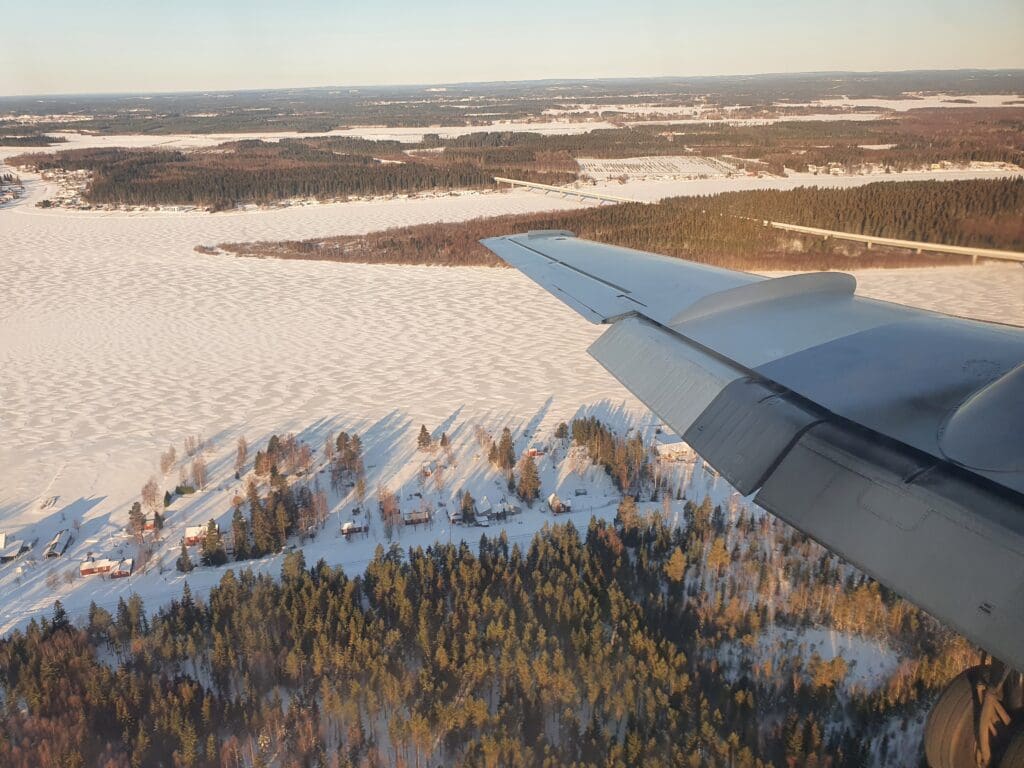
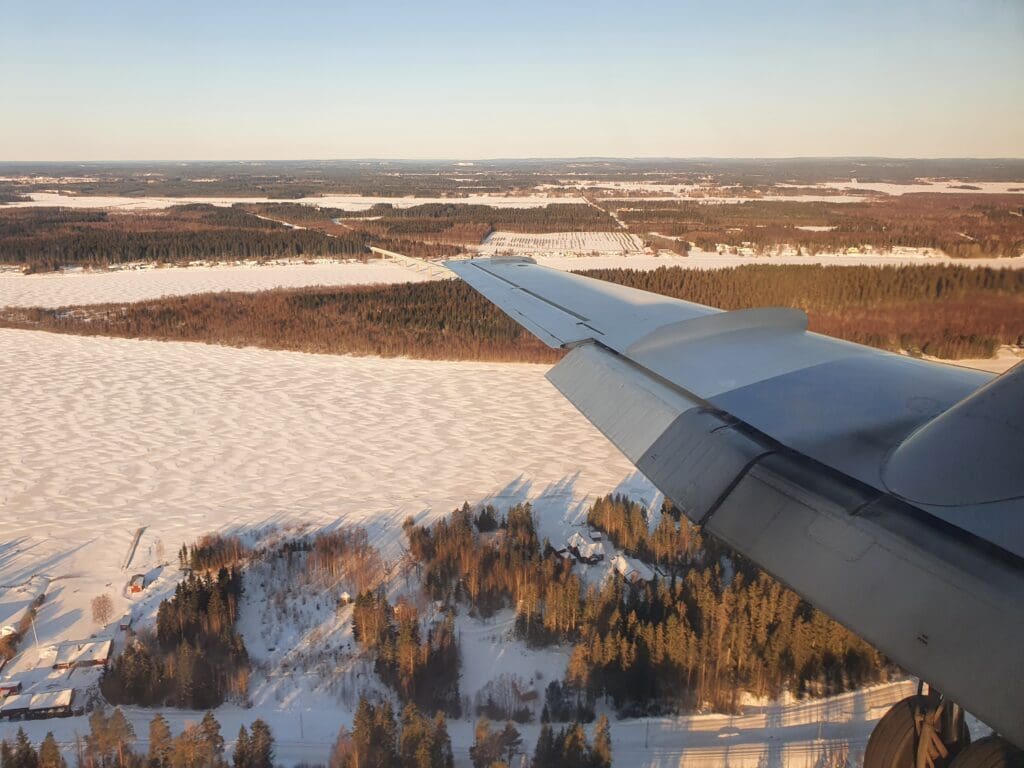
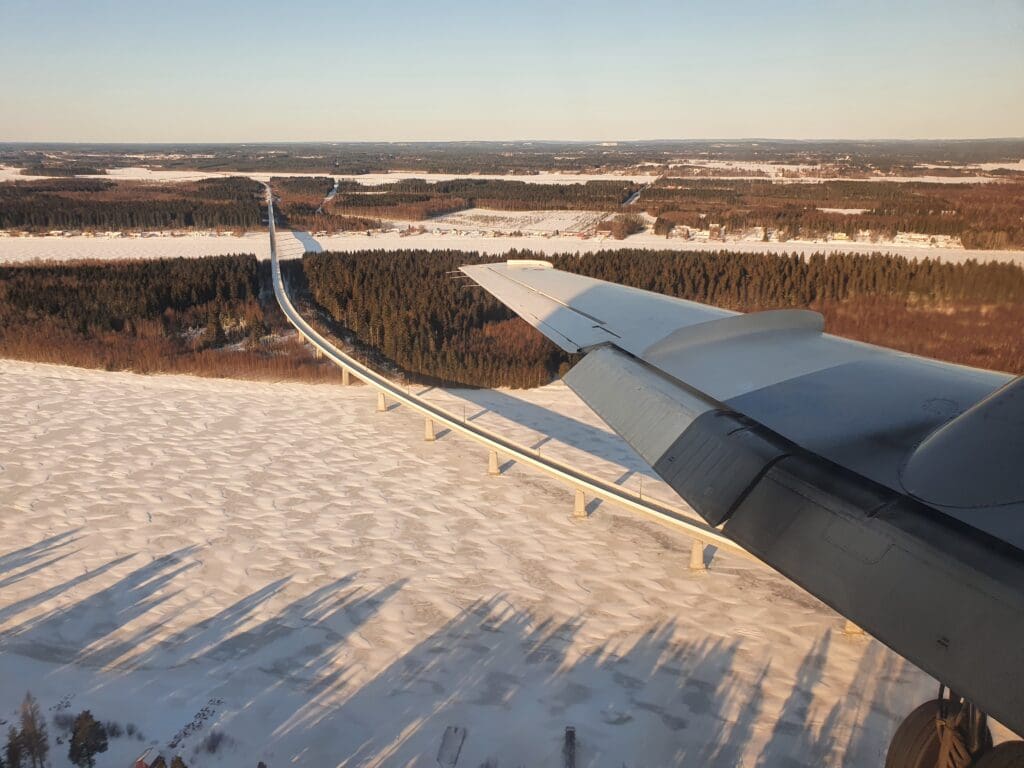
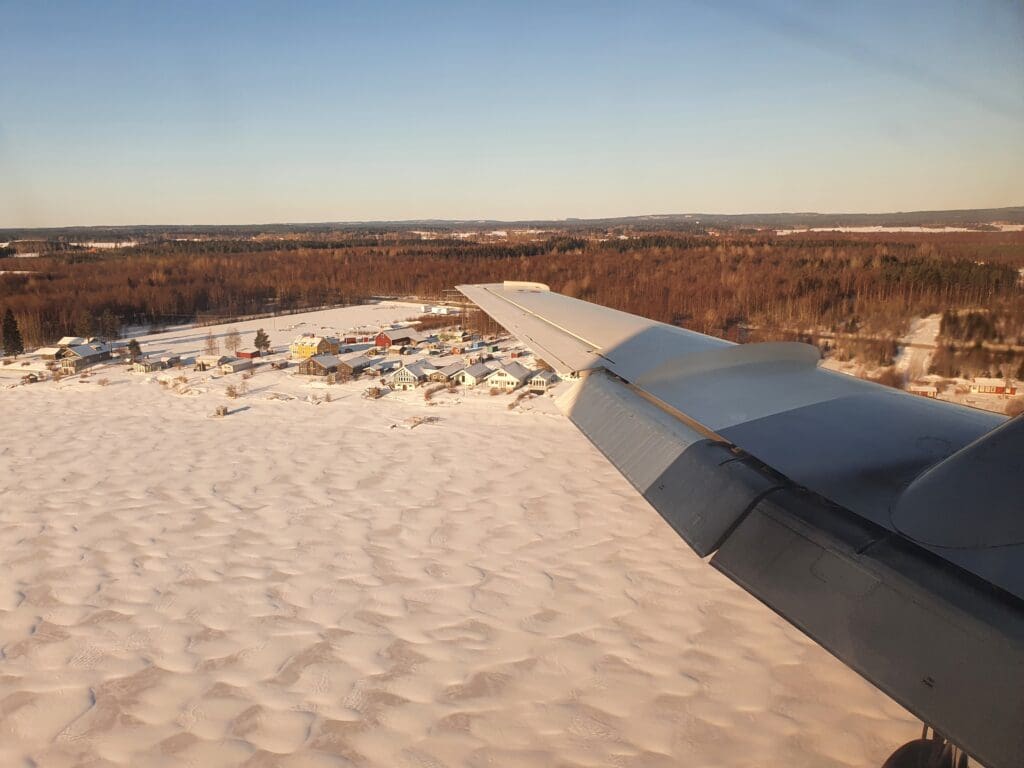
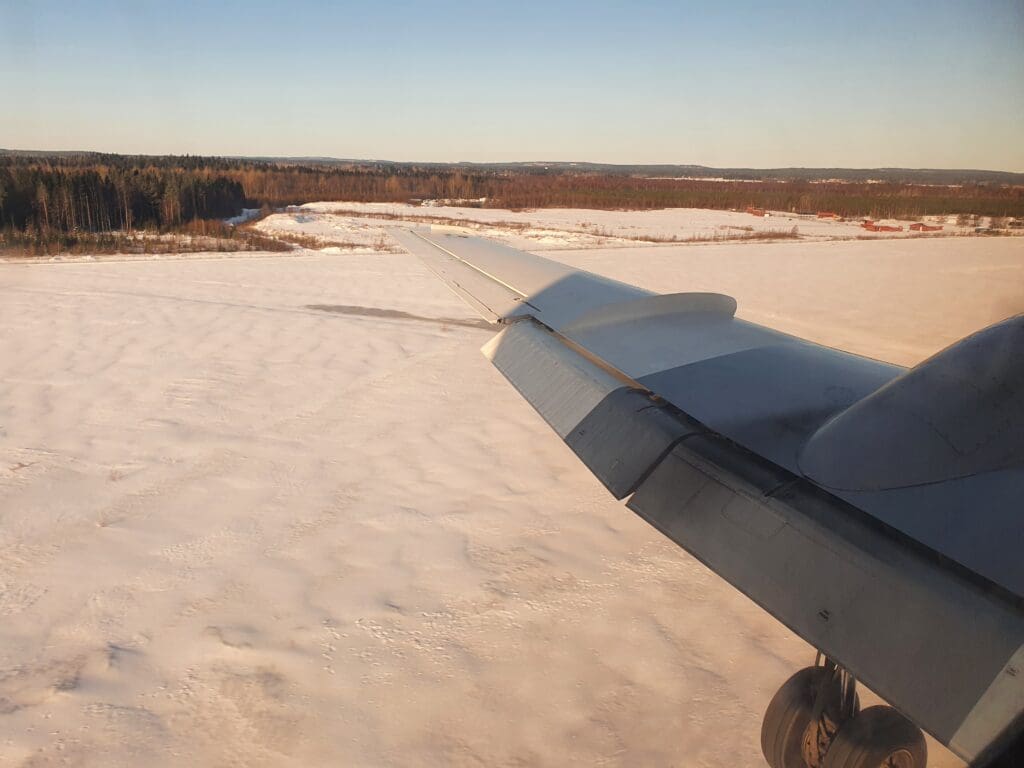
Following a pleasant 45 minutes whizzing across the skies of Northern Sweden in a rare Beechcraft 1900C, the aircraft returned to Terrafirma with a firm bump before gently decelerating. After slowing down, the aircraft then made a U-turn and made a short backtrack past the airport’s modern terminal building. At Umeå Airport, Jonair does not utilise the main terminal building and instead parks their aircraft directly outside the company’s hangar. Thus, after vacating the runway, the Beechcraft made its way past a couple of locally based Robinson helicopters before coming to a halt outside the Jonair headquarters. At that time, a fuel truck and a minibus waiting to meet the aircraft and the two engines soon spooled down before the First Officer emerged from the cockpit and welcomed passengers to Umeå before opening the cabin door.
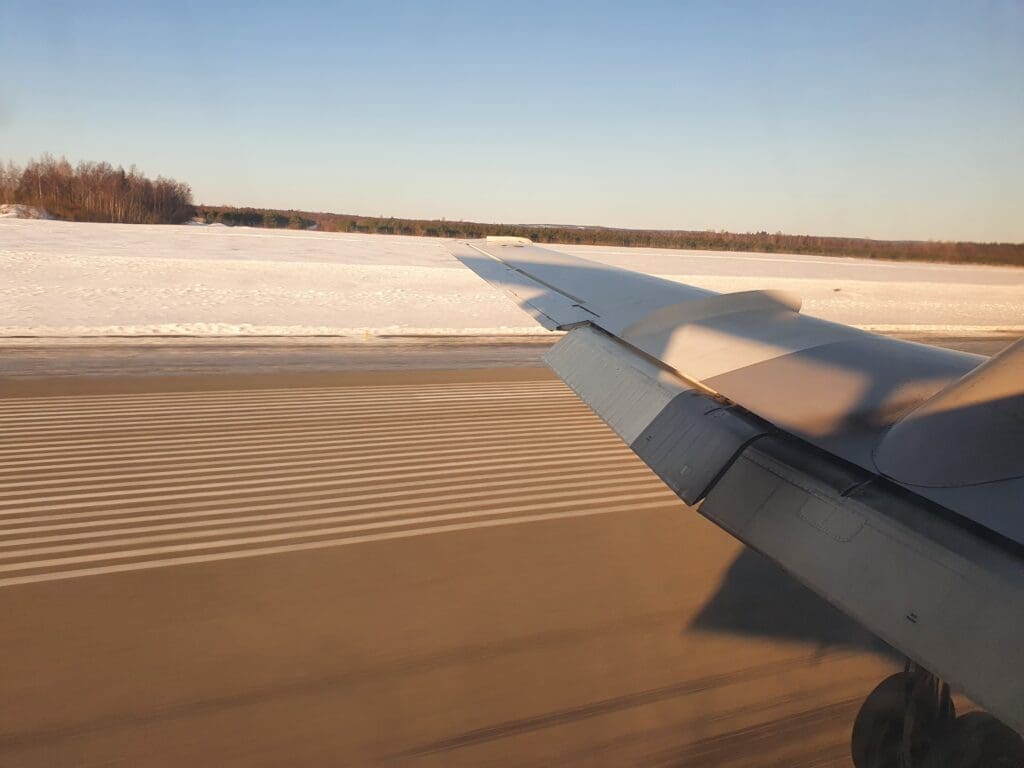
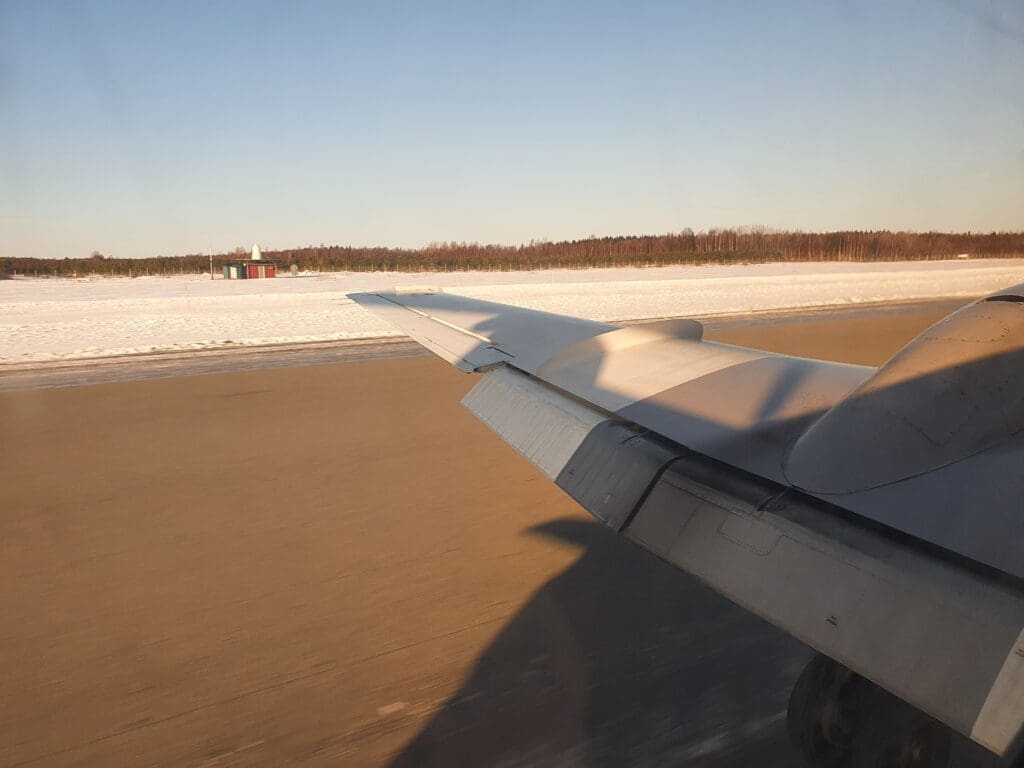
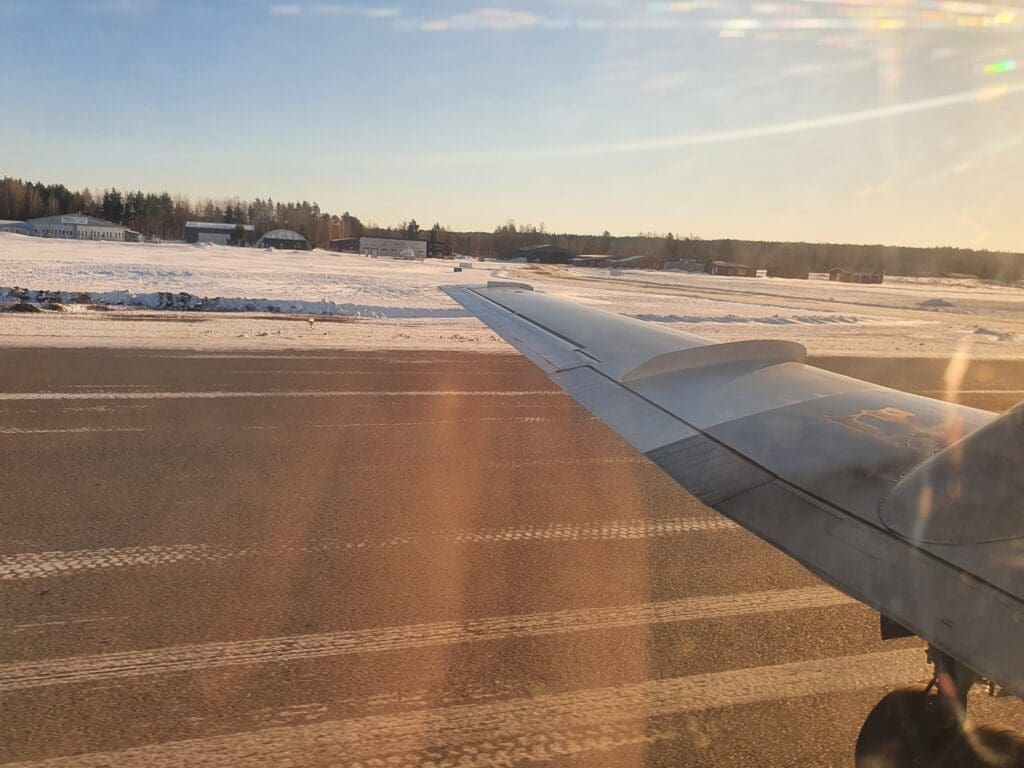
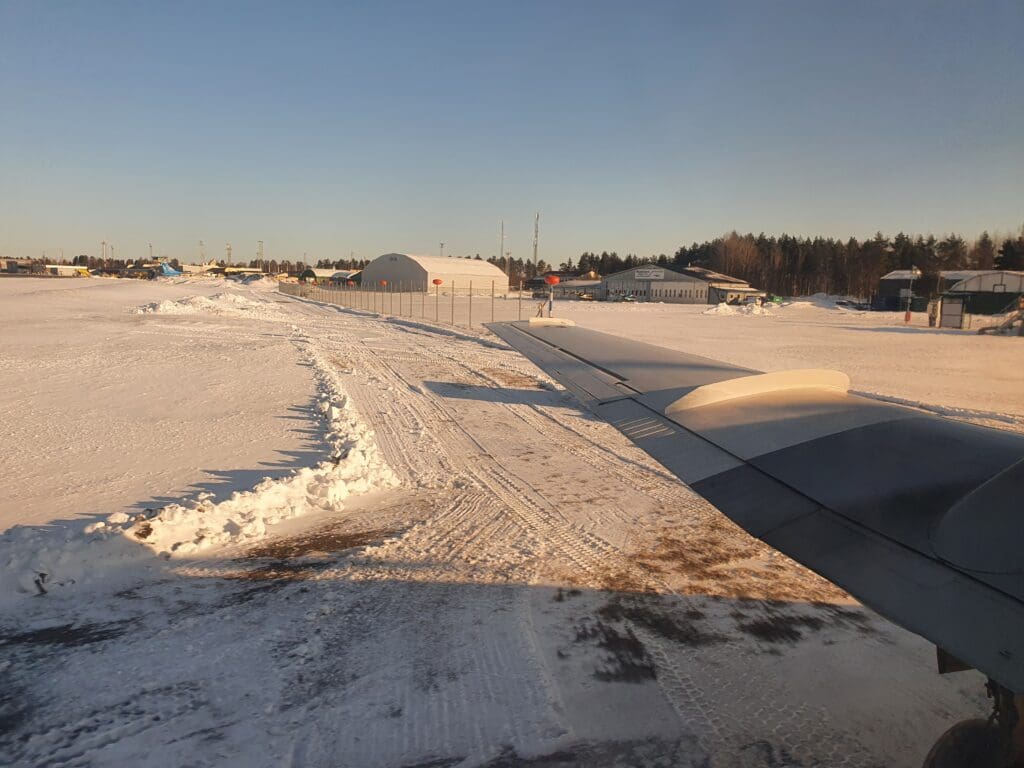
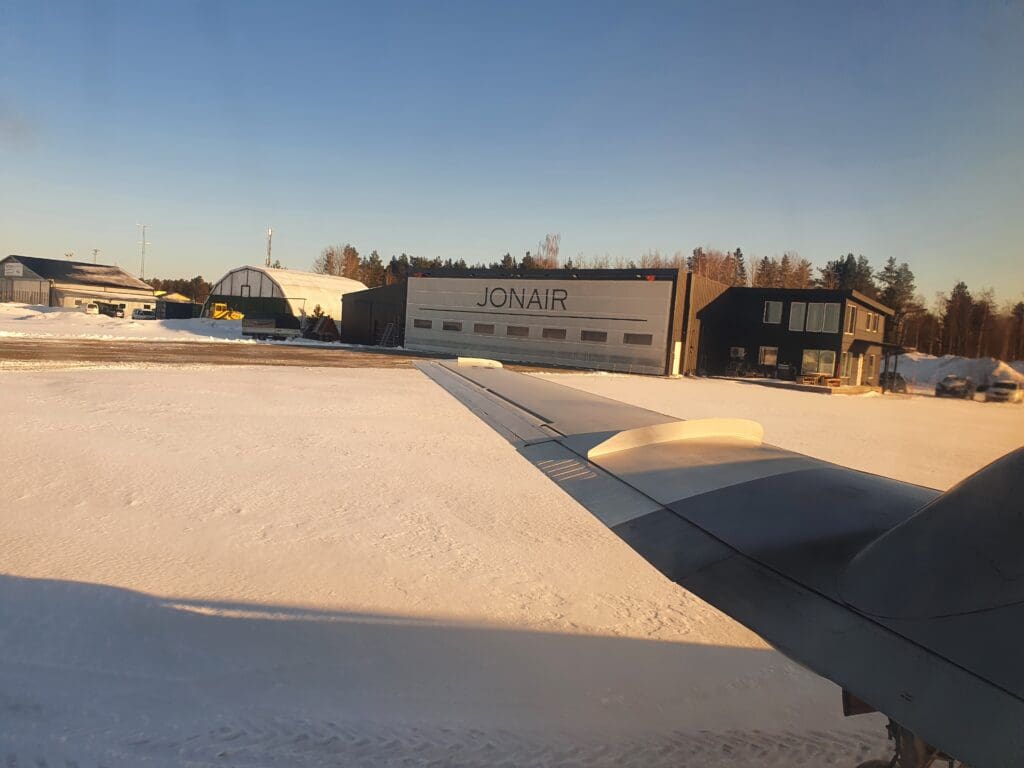
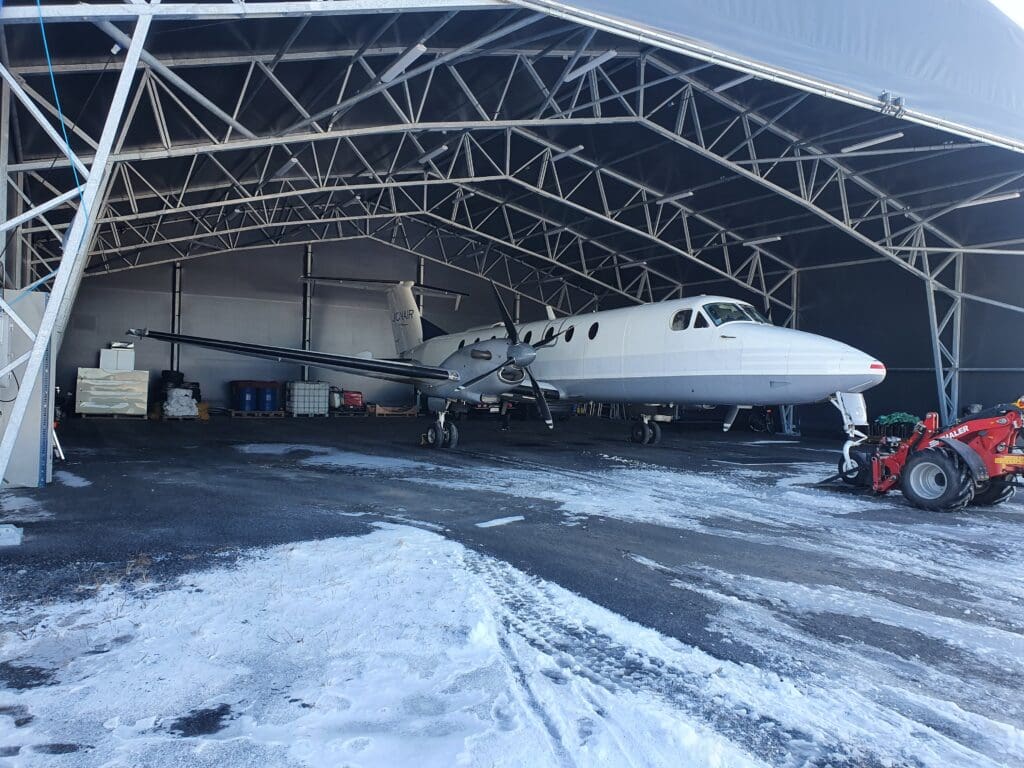
With disembarkation commencing almost immediately, after thanking the First Officer I made my way outside, however, unlike my two fellow flyers, I would not head over to the terminal on the minibus. Having contacted Jonair a few weeks before my flight, I had been offered the opportunity to have a tour of the airline’s facilities at Umeå and thus, I was advised by Andreas to wait for a few moments. Soon the Captain emerged and I watched as the two pilots carefully pushed the Beechcraft into its own dedicated hangar with the assistance of what seemed to be some form of forklift truck!