Flying the Rare Embraer 120 in Europe! Pori to Helsinki with BASE Airlines
Background
Nestled on Finland’s southwestern Baltic coastline in the province of Satakunta sits the historic city of Pori. Home to around 83,000 residents, the city serves to be Finland’s tenth largest and is located around 150 miles (241 kilometres) from the capital, Helsinki. Given Finland’s relatively comprehensive public transport network, travelling between Helsinki and Pori is neither particularly difficult nor expensive – taking around three and a half hours by train or four hours by coach. In addition to this, despite the relatively short distance that separates the two cities, a public service obligation air route operates between these. Intended to provide business people with the opportunity to easily make day trips to either city and enable relatively easy connections to destinations across Europe and further afield, an impressive total of three flights are offered in each direction every weekday. Whilst this short domestic hop may go unnoticed by many, it is well known amongst the European aviation enthusiast community.
With the present-day incarnation of the route springing into life in August 2019, since its inception Hungarian carrier Budapest Aircraft Service (also known as BASe Airlines) was awarded the contract to operate this. Established in 1991, Budapest Aircraft Service started by operating a mixture of scheduled and charter services from Budapest with a small fleet of Let L-410 Turbolets before later coming to manage the country’s ambulance fleet, operate calibration flights and fly services on behalf of a number of other carriers. In 2005, the airline received its first thirty-seat Embraer 120 Brasilia turboprop before adding a further two examples – with this now being the sole aircraft type in Budapest Aircraft Service’s fleet.
Making its first flight in 1983, at that time the Brasilia served to be Embraer’s largest airliner and their answer to the regional turboprop rush of the era, competing against types such as the ATR-42, early Dash 8 models and Saab 340. Until production of the type ended in 2001, a total of 357 examples were manufactured and whilst proving to be relatively popular in North America, this success was not replicated like-for-like in Europe. Today, less than a third of Embraer 120s manufactured remain in the skies and many of these operate cargo services having been retired from passenger use at many airlines across the world. Within Europe, Budapest Aircraft Service remains the sole operator of the passenger variant of the Brasilia and thus, it is unsurprising that enthusiasts flock to Pori to fly on this rare turboprop. Seeing as I would be taking a spring holiday in Finland and Sweden in March 2022, and, being a diehard aviation enthusiast, I knew that I had to work a ride on the Embraer 120 into my itinerary!
Booking
Whilst flights between Helsinki and Pori are operated by Budapest Aircraft Service, tickets for these services cannot be booked via the Hungarian carrier. Instead, these are marketed and sold through the virtual airline Karhu Aero – a company that I could find little information on. Rather conveniently, these can be booked through Finnair if connecting with one of the airline’s flights in Helsinki – although not as a standalone flight between the two cities. Finally, as with many flights across the world, tickets for this service can also be booked via the usual plethora of online third-party booking platforms. However, with tickets for these coming at a premium when booked via these third-party sites, I decided to book directly with Karhu Aero. Regardless of whether booked months, weeks or hours ahead of the flight’s scheduled departure time, tickets for these services appeared to be sold at a fixed price on Karhu Aero’s website.
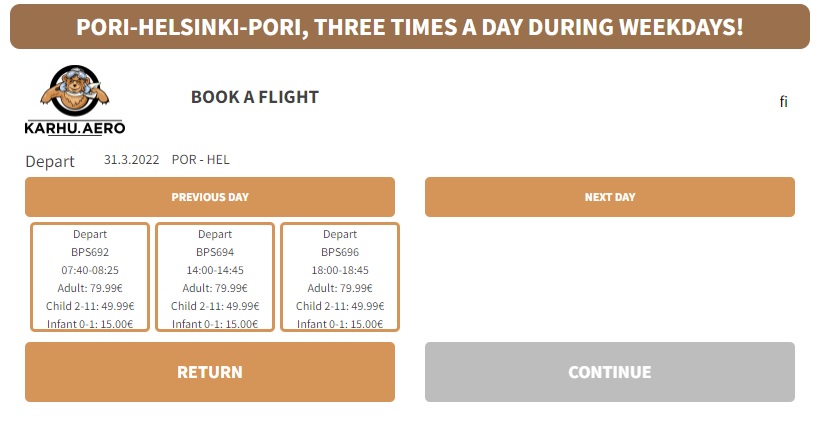
Upon arriving at Karhu Aero’s compact website, I entered the relevant information and was soon presented with three flights on my chosen departure day, a Thursday. These took the form of a morning (0740), afternoon (1400) and evening (1800) departure – with one-way adult fares for all of these flights priced at €79.99. Seeing as I would connect in Helsinki onto Transaviabaltika’s Jetstream 31-operated service to Savonlinna and not wanting an unnecessarily early start from Pori, I decided to opt for the 1400 departure. After selecting this, I was then whisked away to a page where I entered my details before being taken to the ‘Invoice Information’ page. Much to my surprise, there was no online payment function of Karhu Aero’s website and instead, after confirming my itinerary I was emailed an invoice requesting that I make a bank transfer to the carrier within a week and a boarding pass for the flight!
The Journey
Following a pleasant one-night stay in an old and homely wooden house down one of Pori’s quiet backstreets, it was time to move on and head eastwards across Finland to Savonlinna via Helsinki. As airports go, Pori Airport is located an unusually short distance away from the centre of the place it serves – with this sitting just behind Pori’s railway station. Flying in late March, that morning the temperature hovered around a chilly one degree, however with bright sunshine beaming down and thawing the winter snow, and only a light breeze blowing down the city’s streets, I decided to make the journey to the airport on foot. The alternative to this was to take a bus to the airport – with a one-way ticket for this journey priced at €3.50. Having stayed very close to Pori’s central core, according to Google Maps the walk to the airport would take around half an hour and according to Karhu Aero’s website, baggage drop-off would open up fifty minutes before departure. Whilst this meant that I would not have to leave my accommodation until 1240, seeking to allow some extra time for getting lost and wishing to take my time in exploring the delights of Pori Airport, I decided to leave my accommodation at 1100.
From the traditional house that I had called home, I trundled along Pori’s backstreets with my small suitcase in tow, passing a mixture of colourful wooden houses and drab grey apartment blocks. Before I knew it, I arrived at the city’s modest-looking station and dived underneath the railway via means of an underpass. Once on the other side of the tracks, I turned left and entered the final stretch of my trek to the airport. Managing not to get lost en route, around 25 minutes after leaving my accommodation I trundled down the airport’s short driveway before arriving at Pori Airport’s small and rather retro-looking terminal building. Whilst having officially opened for traffic in 1939, as is perhaps obvious from the terminal’s uninspiring concrete and glass design, Pori Airport’s small rectangular terminal building dates back to the 1960s.
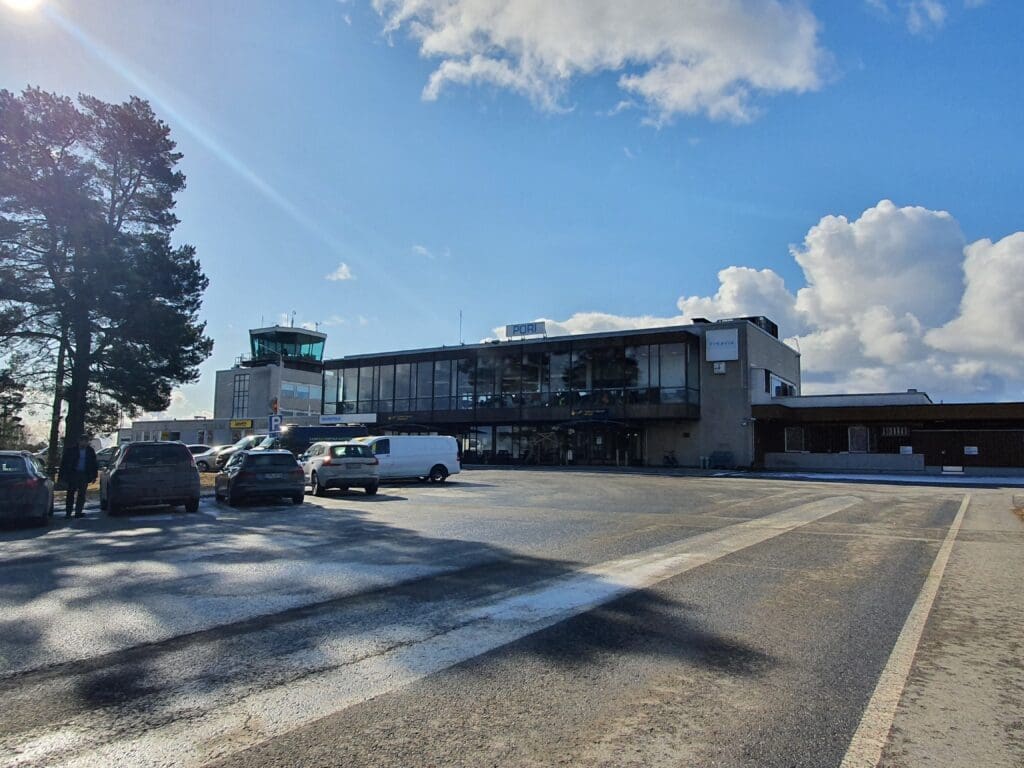
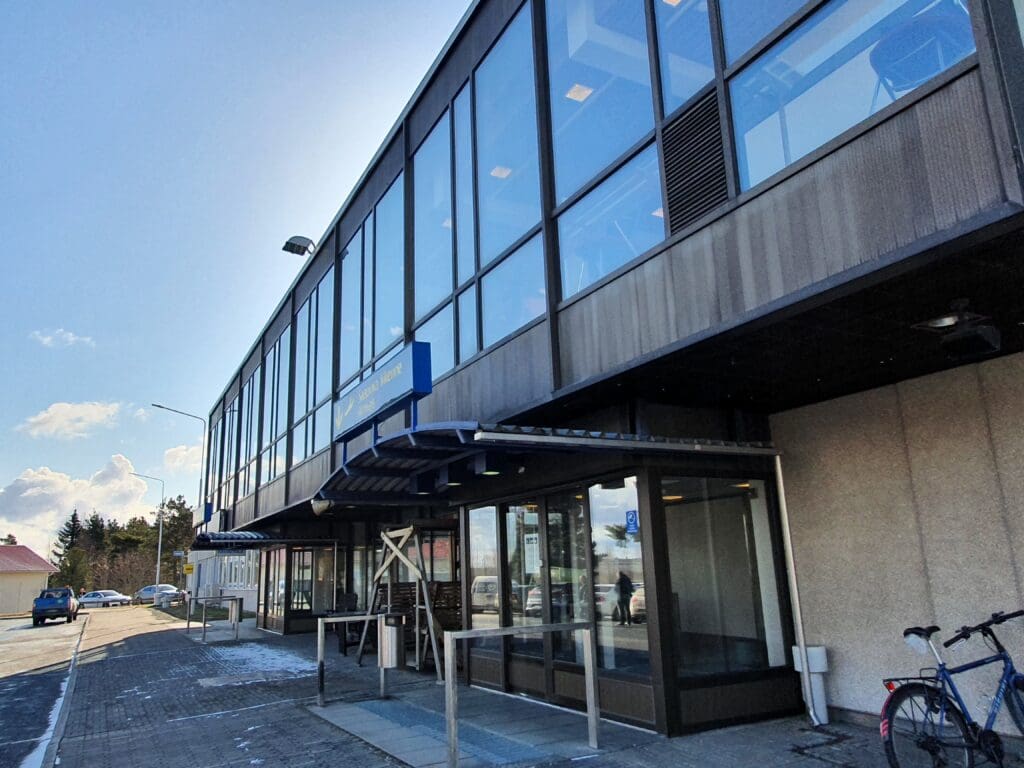
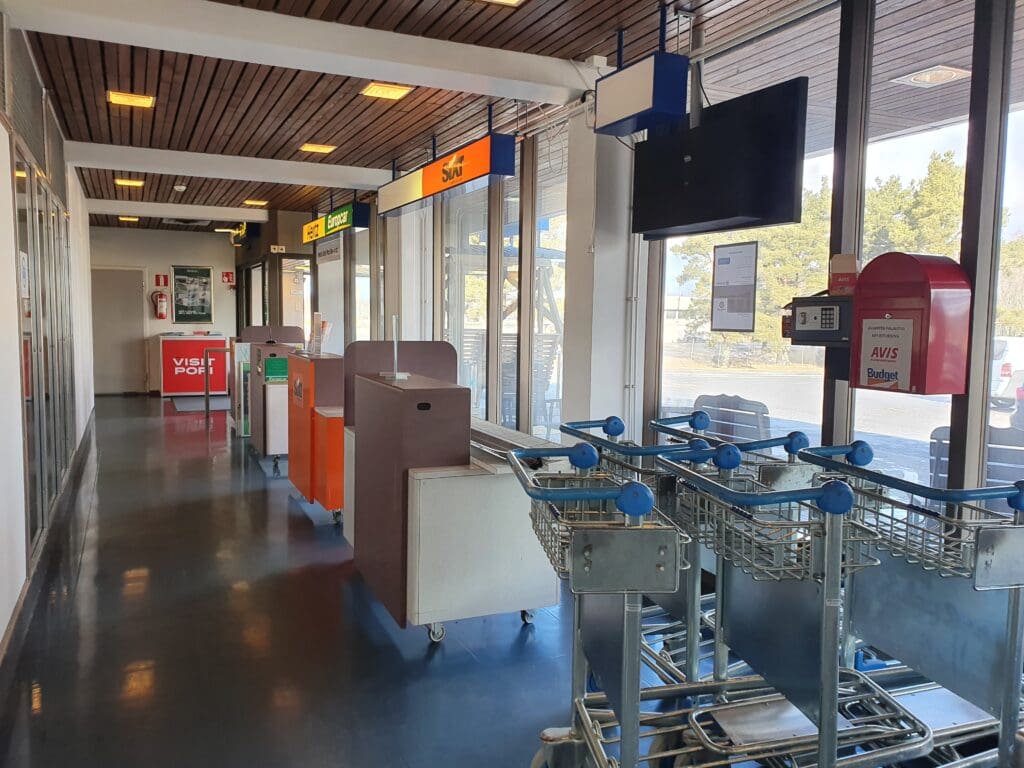
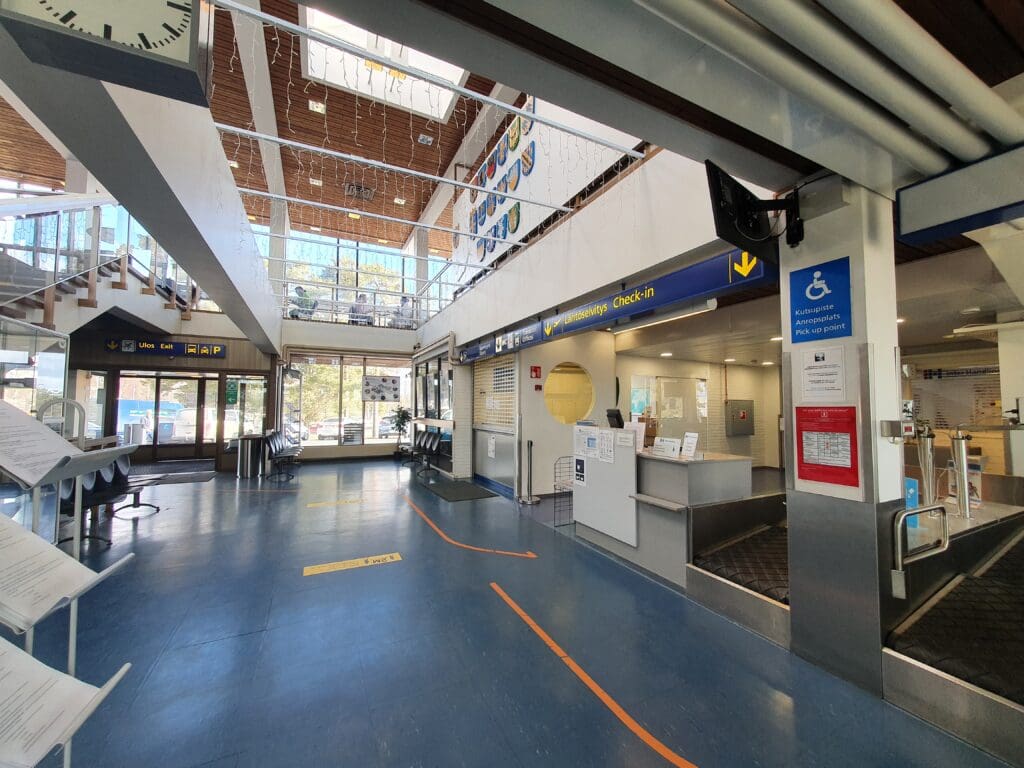
After spending a few moments admiring the architectural splendour of the terminal building, I headed into this and was greeted by the sight of the homely yet slightly dated-looking landside waiting area. There, two check-in desks, three car rental counters and the offices of the locally based ground handling company, Inter Handling, could be seen. Unsurprisingly, with plenty of time to go before departure, upon arriving there I found this part of the terminal to be devoid of any staff members. Despite the terminal’s retro aesthetics, I found this to be clean, warm and pleasant, with complimentary wifi offered which worked well throughout the terminal. Furthermore, aviation enthusiasts will be happy to hear that this part of the terminal offers airside views of both the ramp and the runway, whilst a small collection of local aviation memorabilia can be seen in a display cabinet near the terminal’s entrance. Turning to the toilets, I found these to be in a clean condition and located in the basement of the terminal next to the local civil defence shelter!
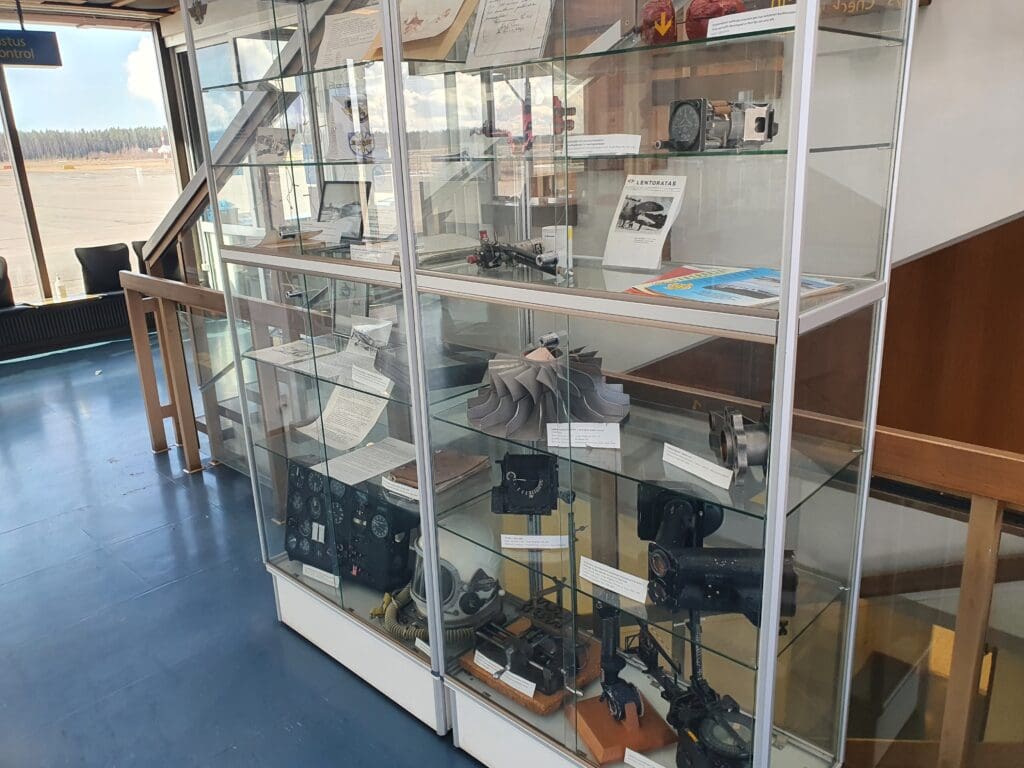
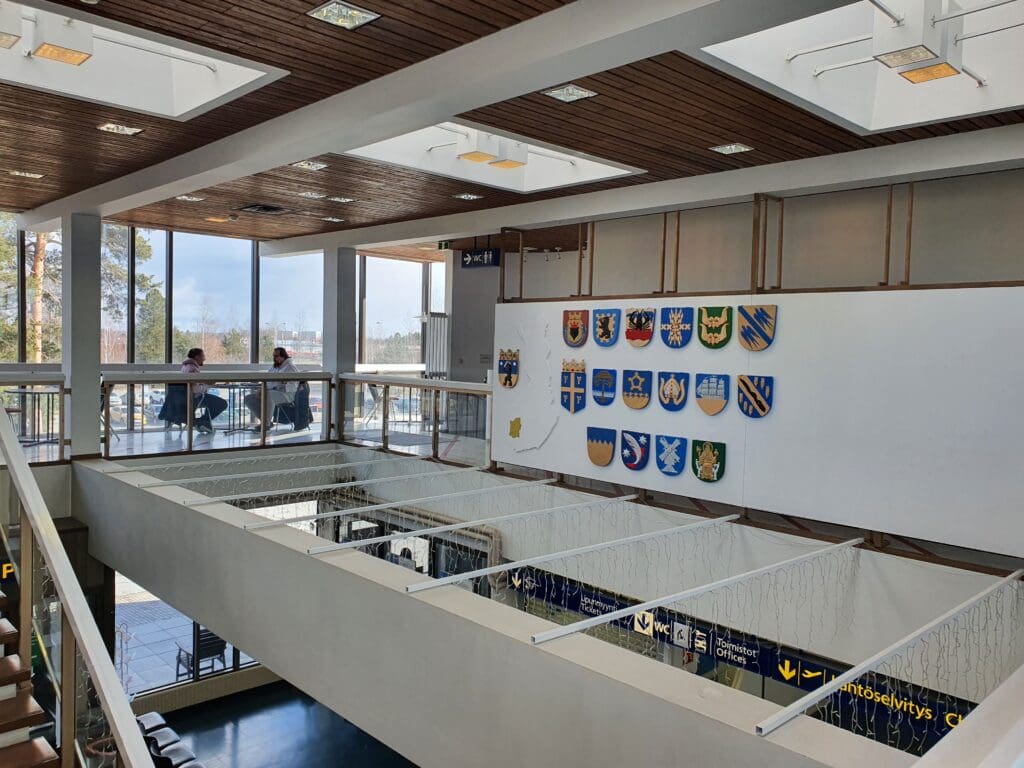
Turning to the history of the airport, once upon a time, Pori Airport served to be of strategic military importance – home to the Finnish Air Force’s Sakunta Air Command until the mid-1980s. Today, no military presence remains although the crests of those units once based at the airport can be seen displayed on a wall in the terminal building. In more recent years Pori Airport has seen several airlines come and go, with defunct carriers Finncomm Airlines, NextJet and Wingo xprs all having served Pori at some point over the last fifteen years. In 2007, the airport temporarily hosted Ryanair who connected this with Stockholm Skavsta whilst runway repair works took place in Tampere. Today, the only scheduled passenger service to serve Pori takes the form of the Budapest Aircraft Service operated service to and from the capital. However, that is most definitely not to say that the airport is quiet, with Pori being home to the Finnish Aviation Academy located on the opposite side of the airfield who operate a range of aircraft from the small two-seater Cessna 152 to Embraer Phenoms for those looking to become commercial pilots. Meanwhile, another flight school, Porin Ilmailukerho is also based at the airport in addition to a host of private light aircraft. Outside, during my stay, a Cessna 152, Cessna 172, Diamond DA-42 and Embraer Phenom 100 could be seen undertaking circuits.
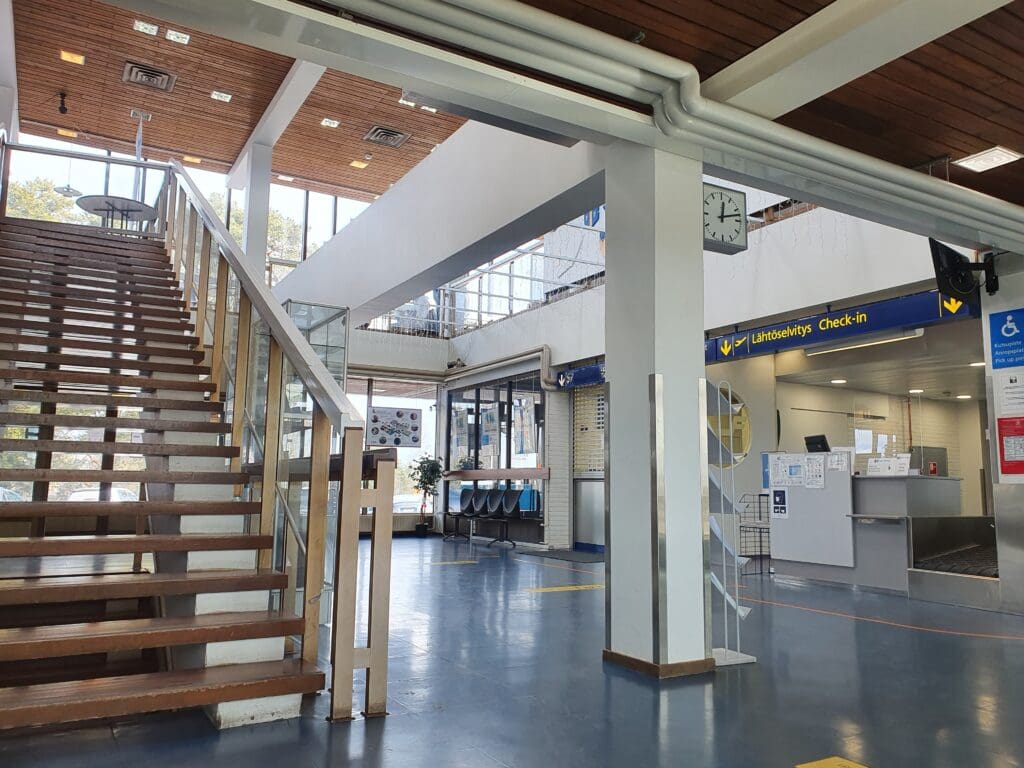
Still having two hours to go until my flight to Helsinki and having exhausted the sights of the terminal, a short time after arriving at the terminal I decided to head upstairs to the Restaurant Lento. Offering a buffet lunch with a good selection of dishes for €10.50, this seemed to be a very popular spot amongst airport staff members, trainee pilots, passengers and non-flying visitors alike. After grabbing a plate of food, I took a seat next to one of the terminal’s windows and looked out at the Embraer 120RT waiting below, having arrived from Helsinki at 0934 that morning. This turboprop took the form HA-FAN, which had been based in Pori and been assigned to Kahru Aero’s route over to the capital for quite some time.
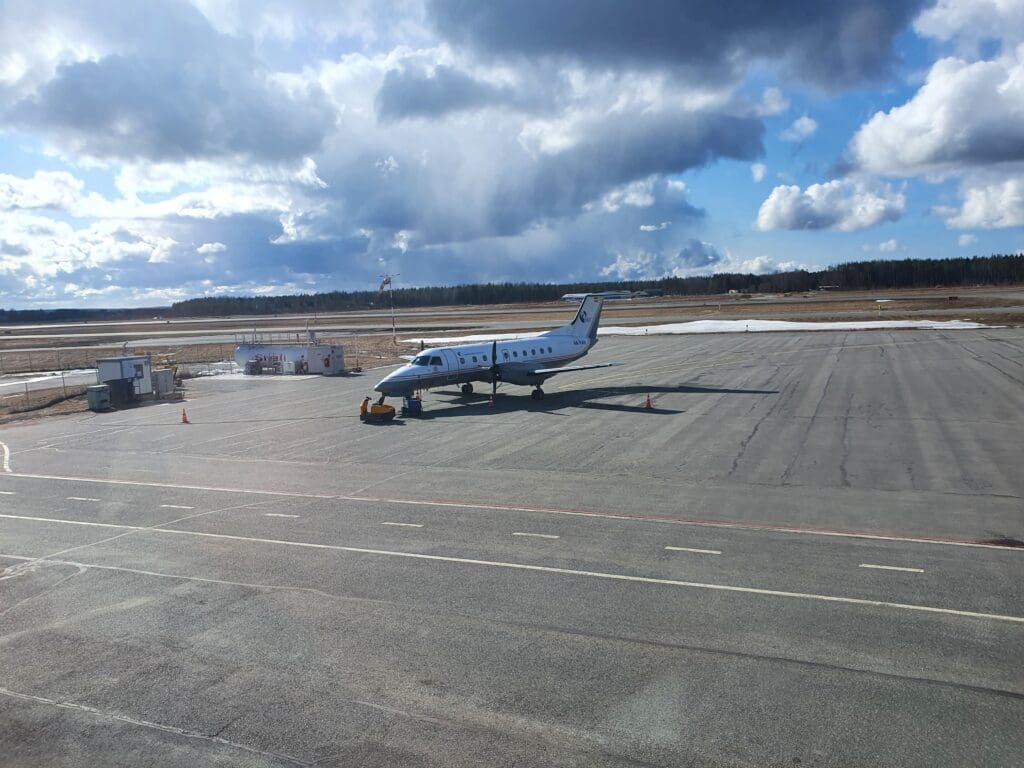
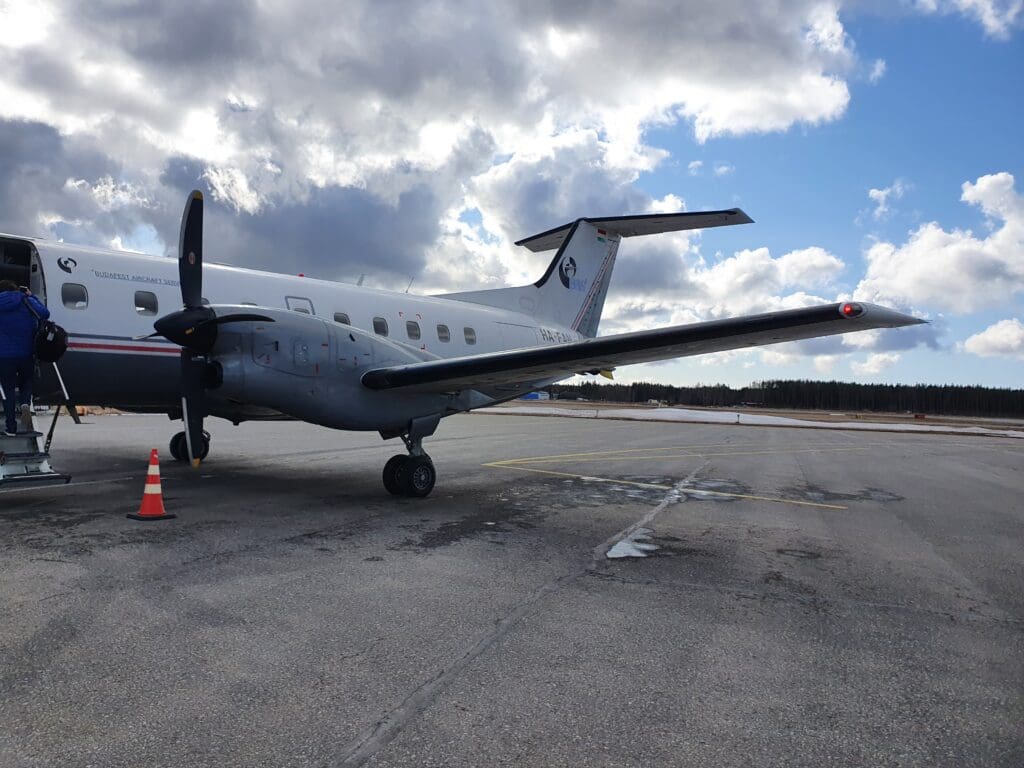
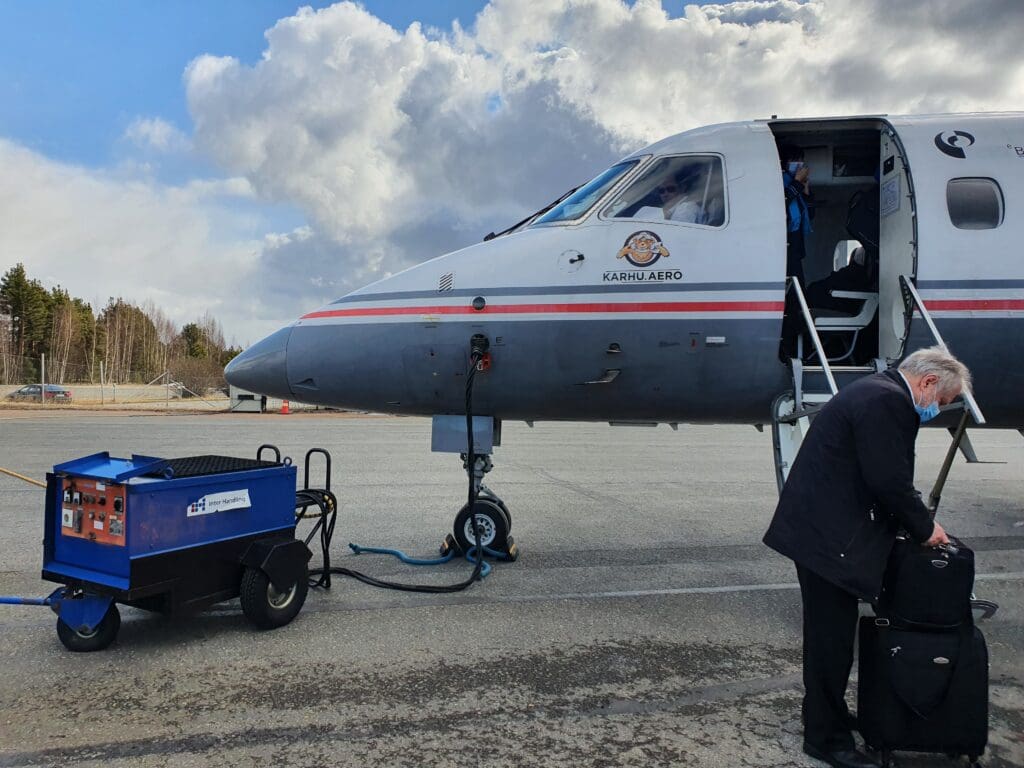
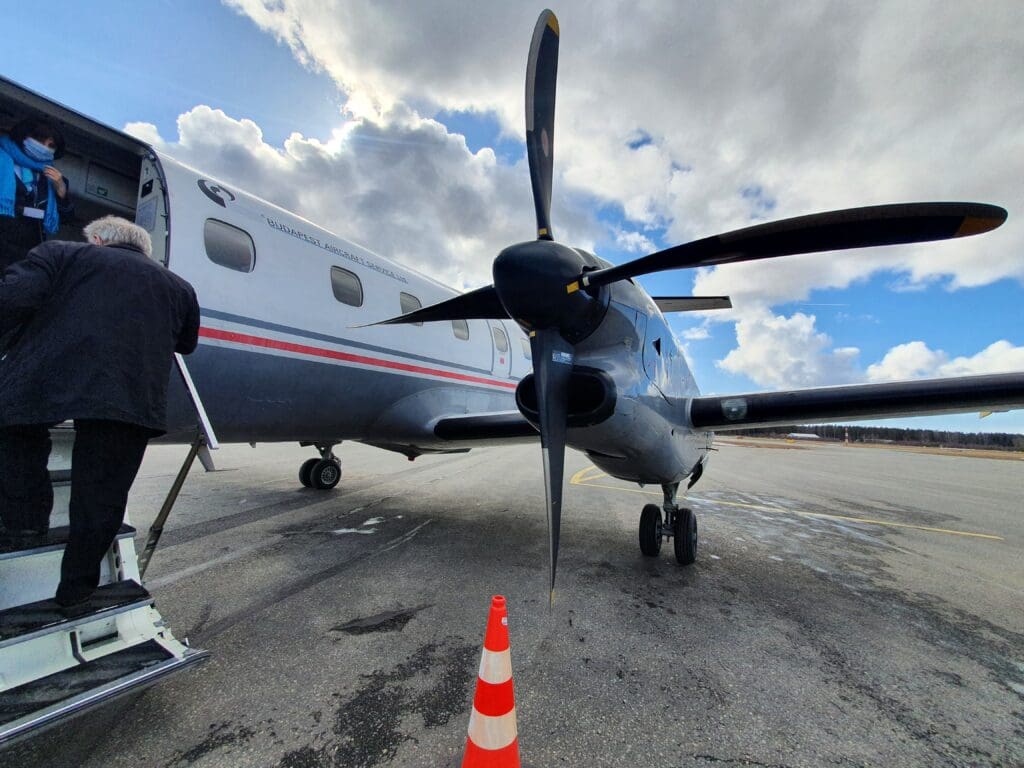
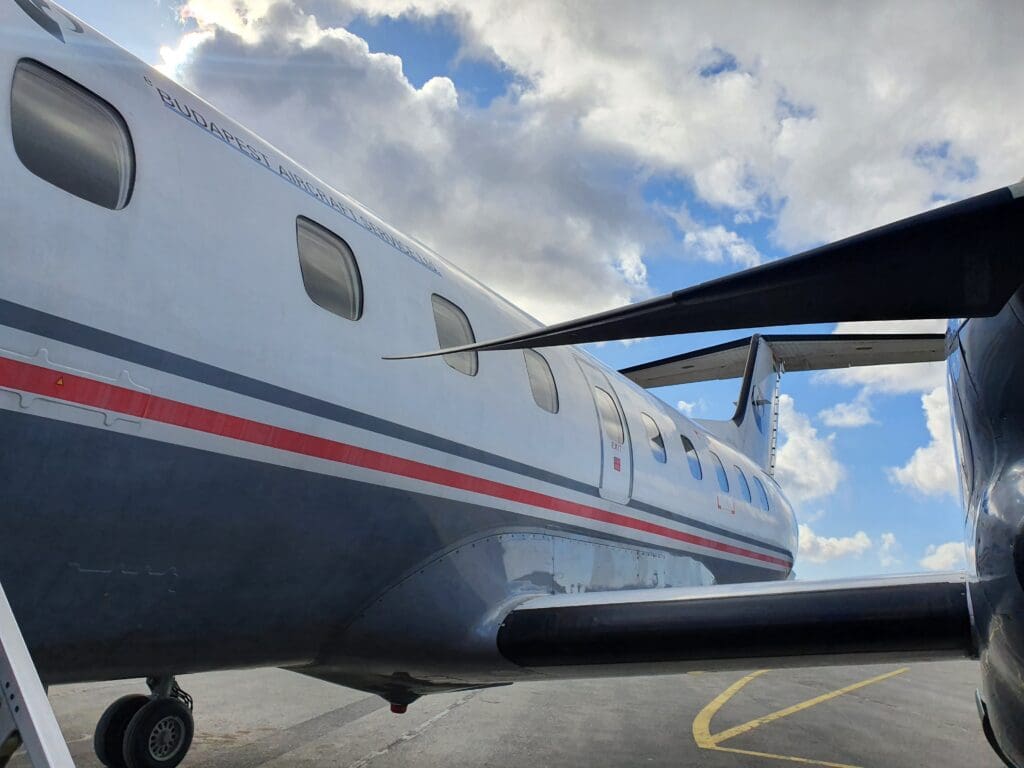
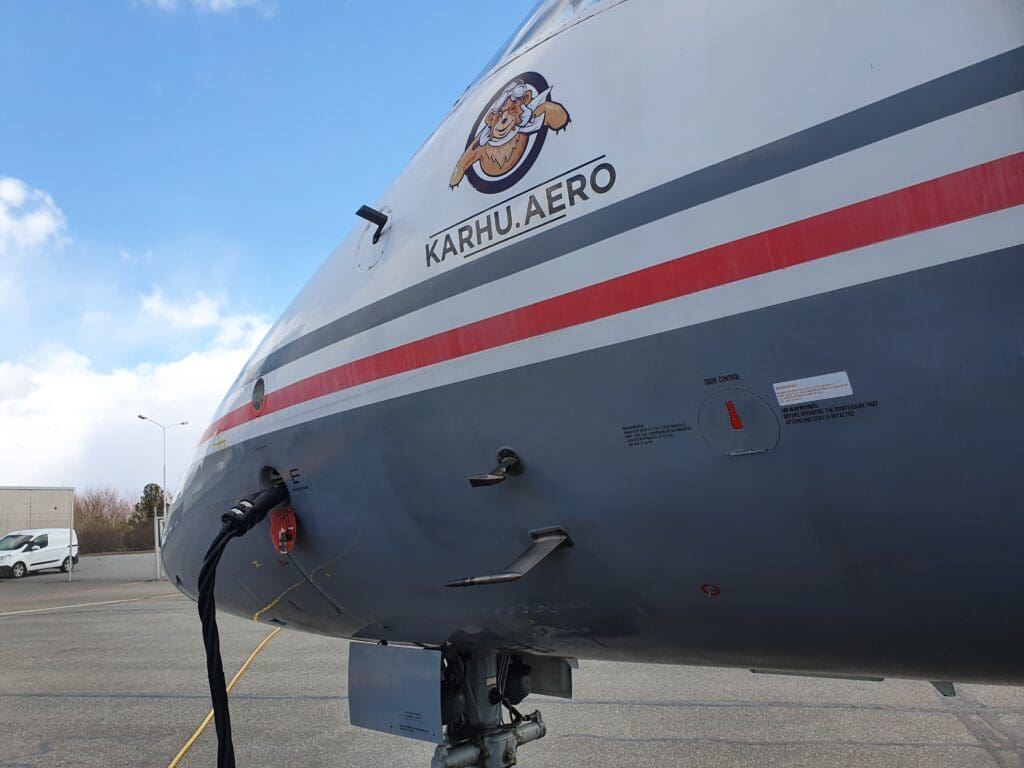
With the serial number 104, this particular Embraer rolled out of the factory and first took to the skies of Brazil in October 1988 with the test registration of PT-SMW, making it well over 33 years old at the time of my flight in March 2022. Following testing, the aircraft was given the registration OO-DTH and ferried across the Atlantic Ocean before touching down at its new home base of Brussels. There, the Embraer was operated by the long-defunct Delta Air Transport, the regional arm of the former Belgian national carrier Sabena. Sporting the airline’s very vintage-looking blue and white livery, the turboprop operated services from Brussels to destinations across Western Europe. In 1990 this particular aircraft was involved in a tragic mid-air collision when it collided with a Piper Aerostar near Antwerp Airport that had been filming the Embraer for a Delta Air Transport promotional video. Despite this accident, following repairs, the aircraft returned to commercial service and remained with the carrier for just under a decade. In 1998 the aircraft was ferried south to France as F-GTSH and delivered to Europe’s largest Embraer 120 operator, Air France’s regional arm Régional Compagnie Aérienne Européenne known simply as Régional. In line with the gradual retirement of Régional’s 31 Embraer 120s, in July 2005 the aircraft was withdrawn from service with the carrier and transferred over to Nantes-based charter specialist, Atlantique Air Assistance. Flying with the airline for a little over three years, in August 2008 the Embraer received its current Hungarian registration and ferried across to Budapest where it entered service with Budapest Aircraft Service. Whilst the Embraer had operated for the Hungarian carrier for almost fifteen years at the time of my flight, this still wore the basic grey, red and white livery of Atlantique Air Assistance albeit with the addition of Budapest Aircraft Service titles on the fuselage and the airline’s motif can be seen on the tail. Meanwhile, a small Kahru Aero logo can be seen on each side of the aircraft underneath the cockpit windows.
According to the AvHerald, during its time with Budapest Aircraft Service, the aircraft has been involved in three notable incidents. The first of these occurred in 2010 whilst operating for Malev. This involved the aircraft returning to Budapest a short time after takeoff due to an unsafe gear indication. The second incident occurred in December 2019 when upon departure from Pori the crew noticed a low oil pressure indication on the right-hand engine resulting in the aircraft returning to Pori. The third incident occurred in November 2020 when the aircraft received multiple birdstrikes following departure from Pori, resulting in the aircraft returning there to land.
Following a leisurely lunch, I sauntered back to the ground floor level of the terminal where I sat and waited for the check-in desks to open. With exactly an hour to go until the service’s scheduled departure time, an Inter Handling agent appeared and typed away at the check-in desks for a few minutes before this opened up. Indicating that the flight may not be full, by this time, the terminal was still relatively empty and just two other passengers could be seen waiting to check-in. Once check-in opened, I soon made my way up to the counter where I was given a warm greeting in Finnish and then again in English once the agent realised that I was not a local. With minimal fuss, I showed the mobile boarding pass that I had received once I had booked my ticket and parted with my bag before receiving a luggage ticket. Once complete, I was wished a nice flight and was free to head through to the airside area. It is worth noting that passengers on the service between Helsinki and Pori are free to sit where they like, with no seat reservations. After walking several steps over to the checkpoint, with no other passengers in front of me, no queuing was required and upon arriving there I was immediately greeted by the two unusually friendly members of the security staff. Following a quick and pleasant security check, I then made my way through to the terminal’s comfortable airside waiting area. As with the landside area of the terminal, I found this to offer good views of the apron and the runway, whilst plenty of seating could be found inside. However, as was to be expected, facilities there were a little limited, consisting of just a water dispenser and a single toilet.
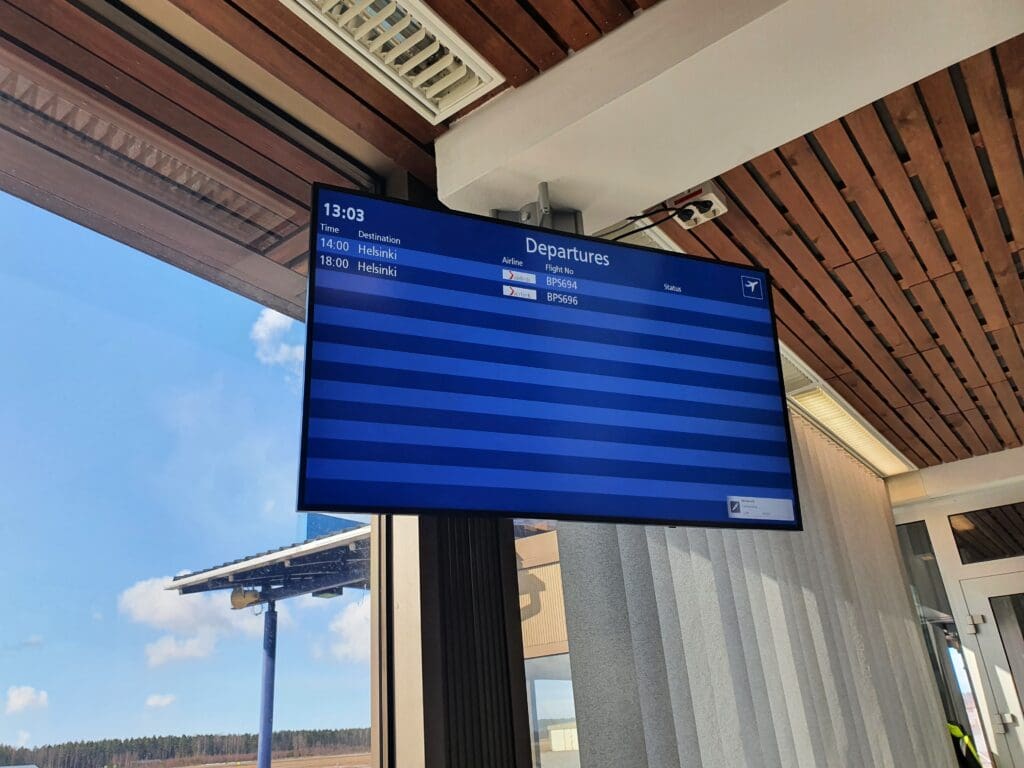
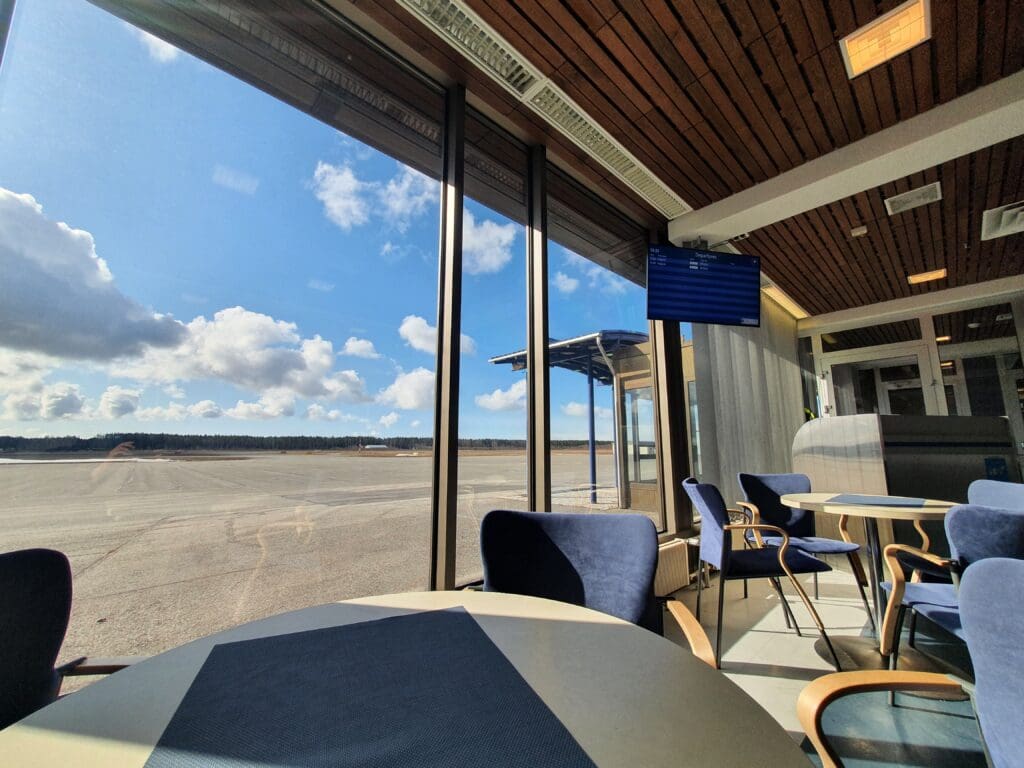
Once in the airside area, I soon took a seat near one of the large windows and soon two members of ground staff appeared and readied the Embraer for its flight over to Helsinki. These were joined at 1320 by the service’s two pilots as well as the sole flight attendant who, indicating that there would be some service onboard, wielded two jugs. Several minutes later, a small milk-float-style van could be seen transporting passengers’ bags out to the cargo hold at the rear of the aircraft. At 1345, the flight’s final passenger appeared in the airside portion of the terminal and was followed by the check-in agent who said a few words in Finnish at which point all stood up and made their way towards the doors to the apron. Upon arriving there, I was asked for my name and after providing this, my name was ticked off and I was free to walk over to the waiting turboprop.
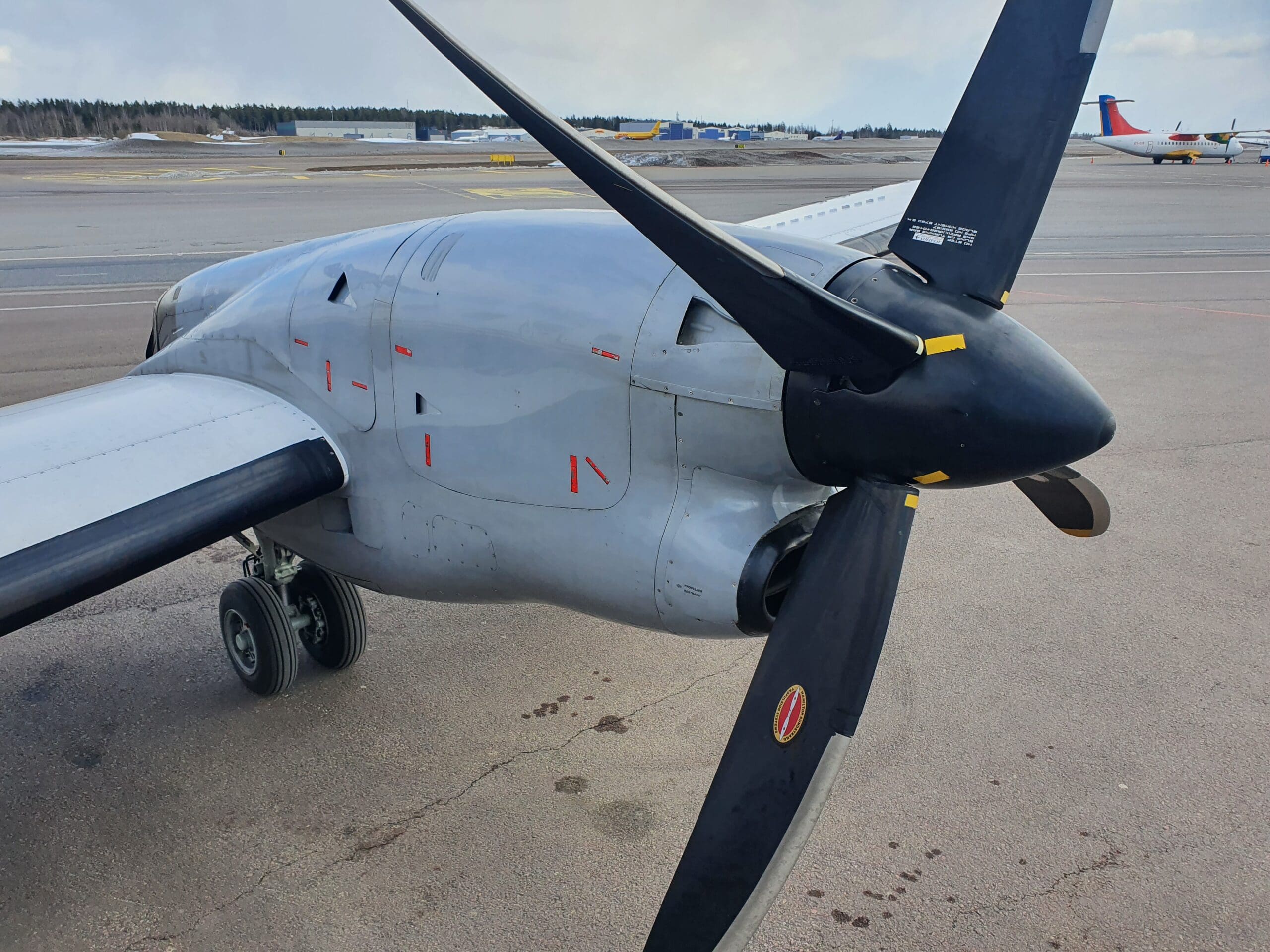
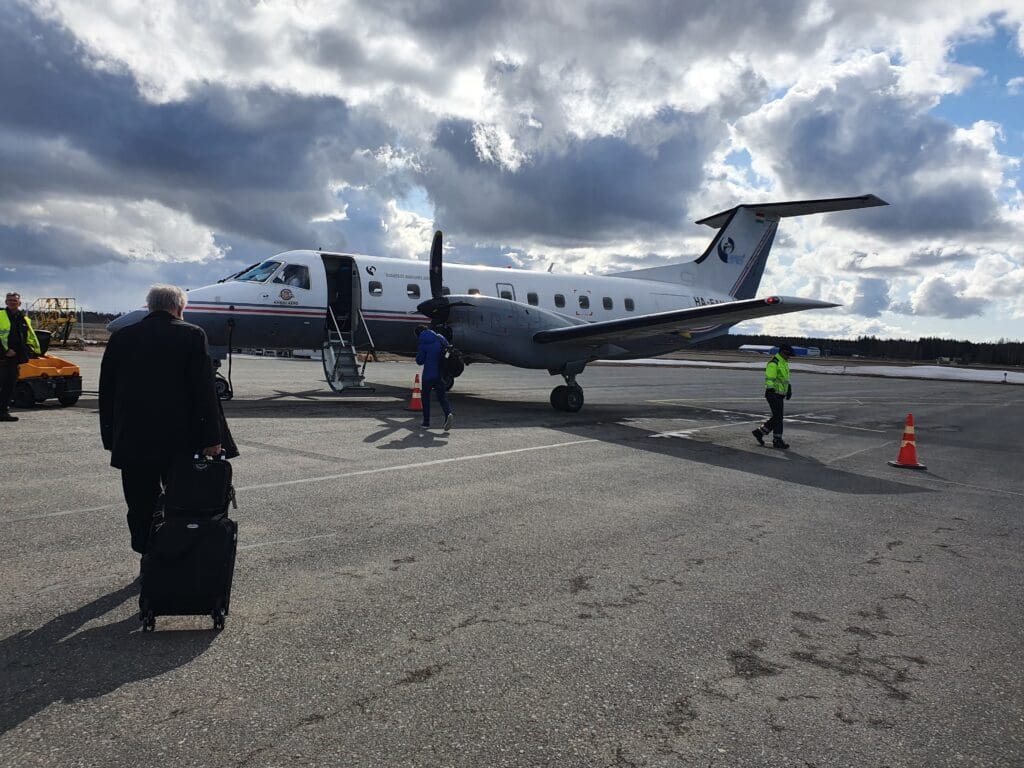
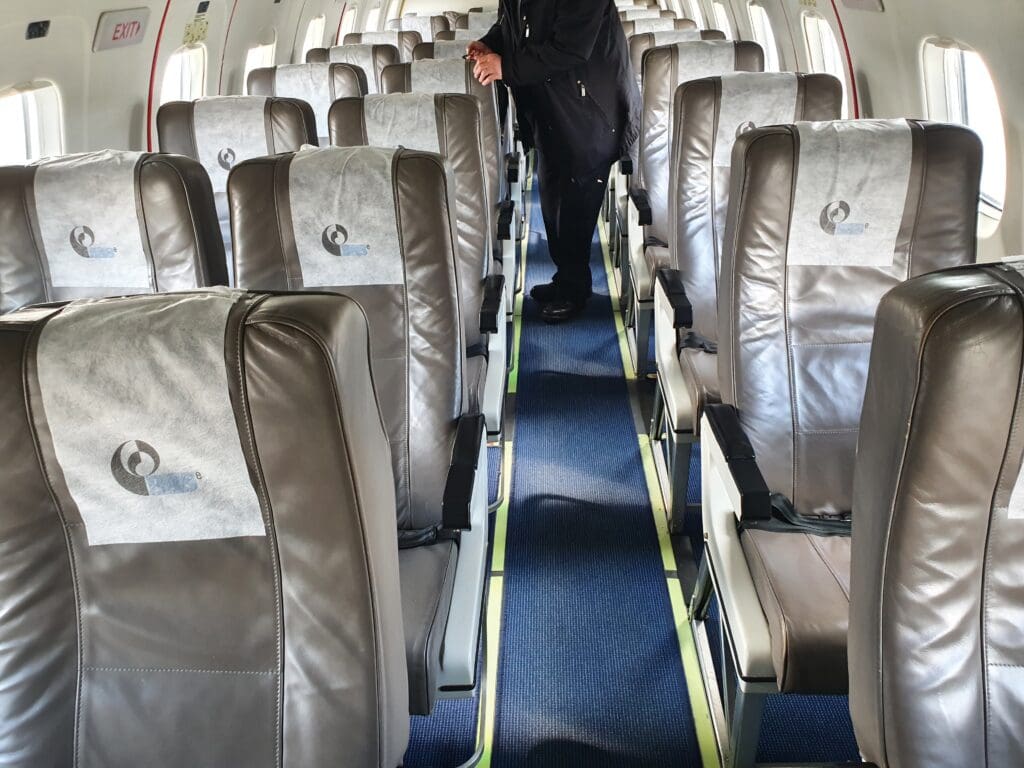
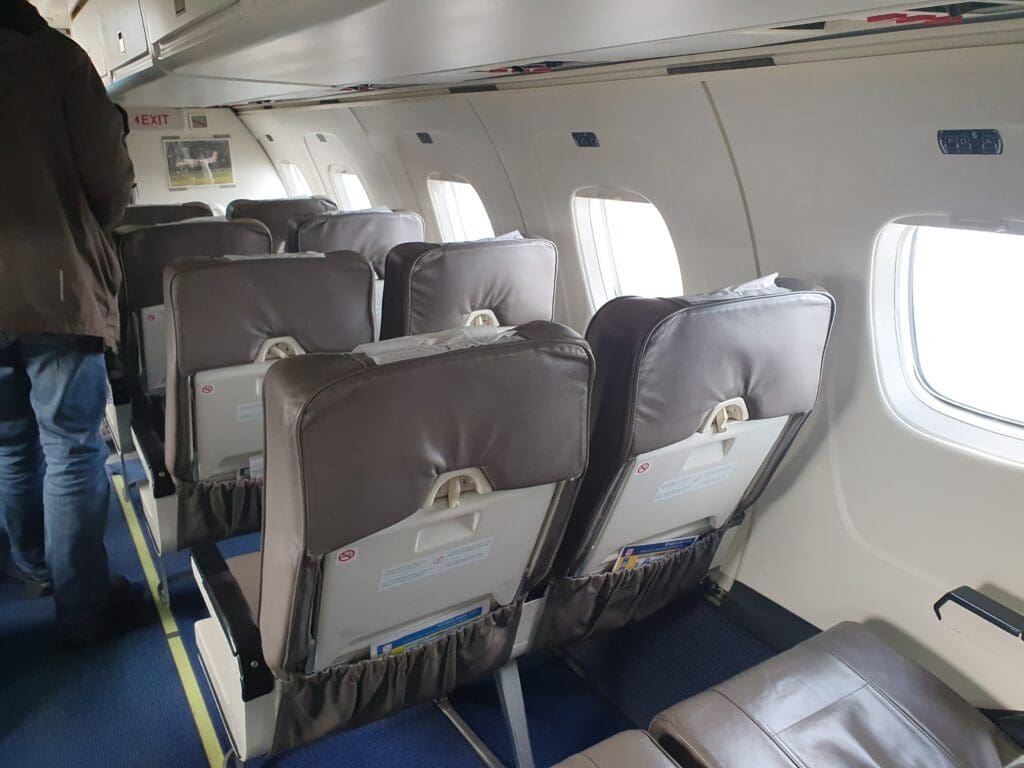
After snapping a few pictures of the rare aircraft in front of me and admiring the large four-blade Hamilton Sundstrand propellers, I climbed up the steps built into the inner side of the main cabin door before entering the small forward area of the aircraft. As soon as I stepped into the aircraft I was greeted in English by the Hungarian flight attendant before turning right and entering the passenger cabin. On the front row seats, a selection of newspapers could be seen, having been placed there for passengers to take and peruse during the short flight over to Helsinki. With the cabin standing at a short 1.76 metres tall, my 1.85ish metre stature meant I had to bend my head slightly as I journeyed down the aircraft, however, the width of the cabin ensured that this did not seem to be particularly cramped. Inside, I found that each of the Embraer’s thirty seats was covered in a grey (faux?) leather covering and sported a disposable fabric antimacassar complete with Budapest Aircraft Service’s motif.
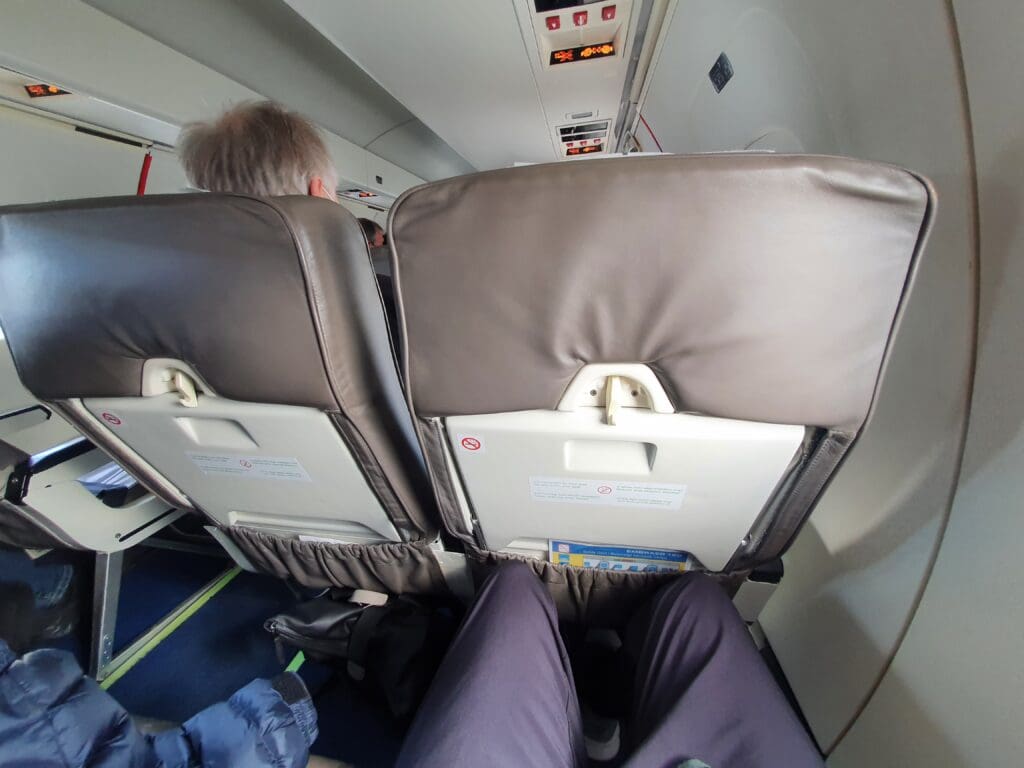
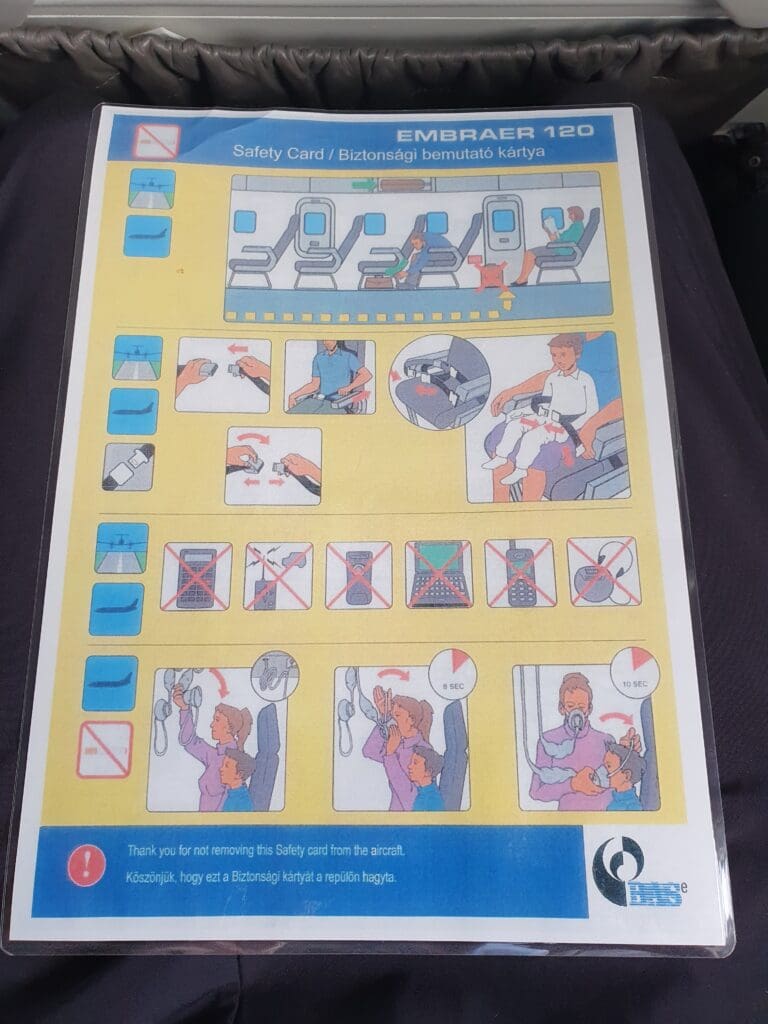
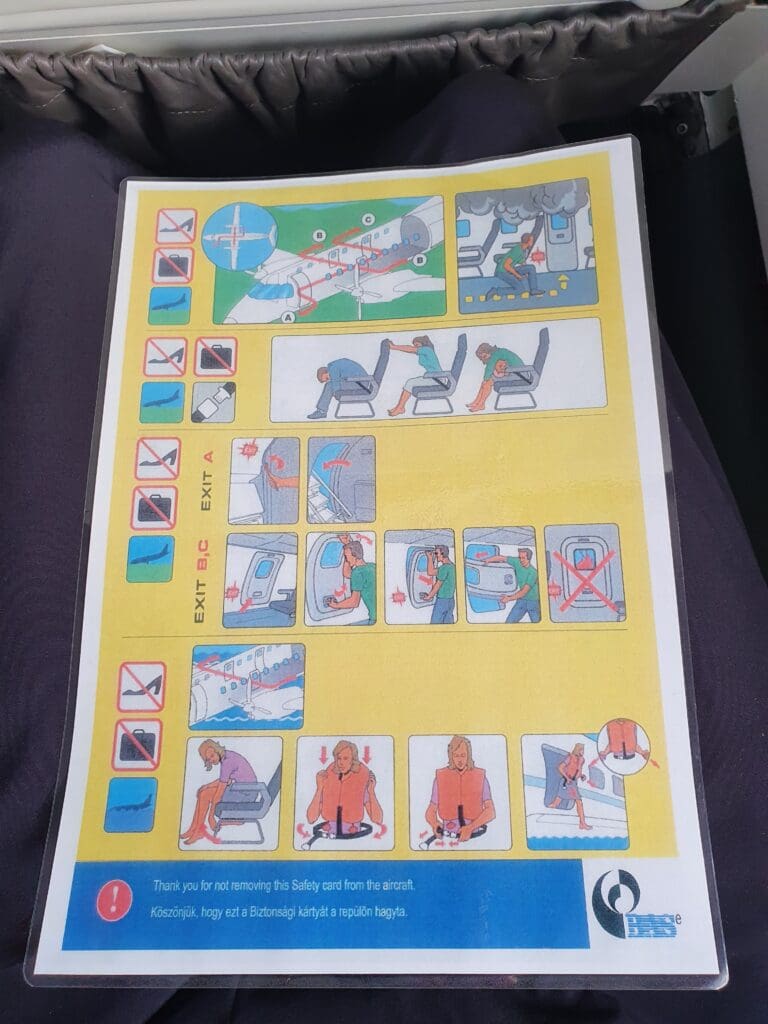
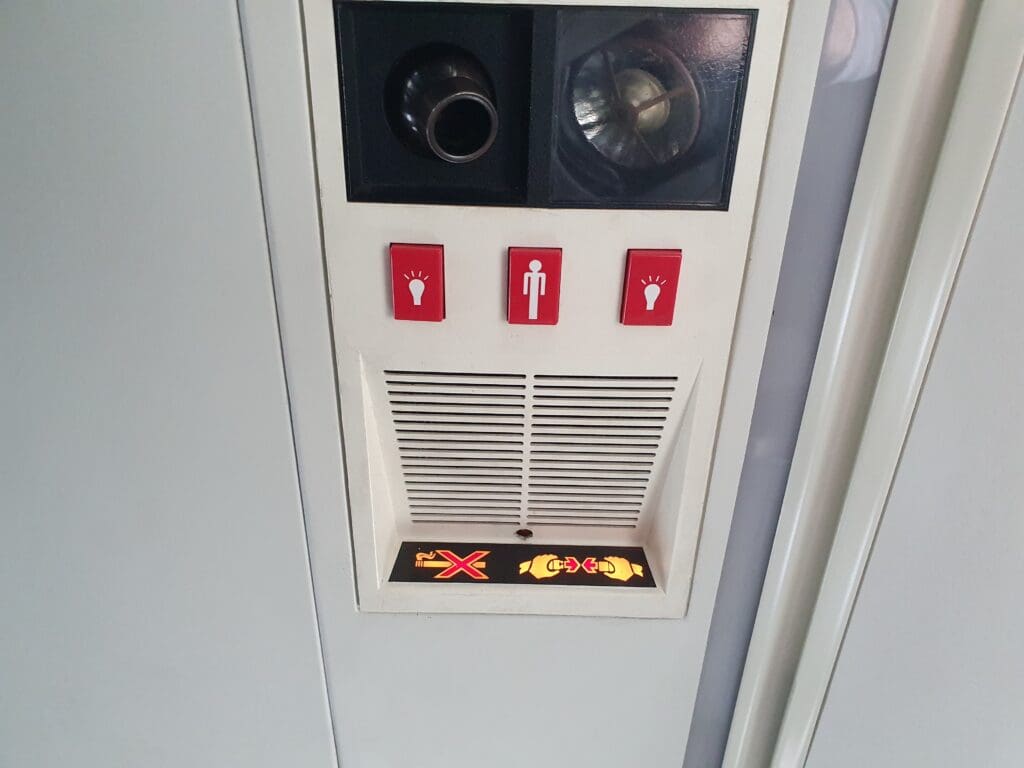
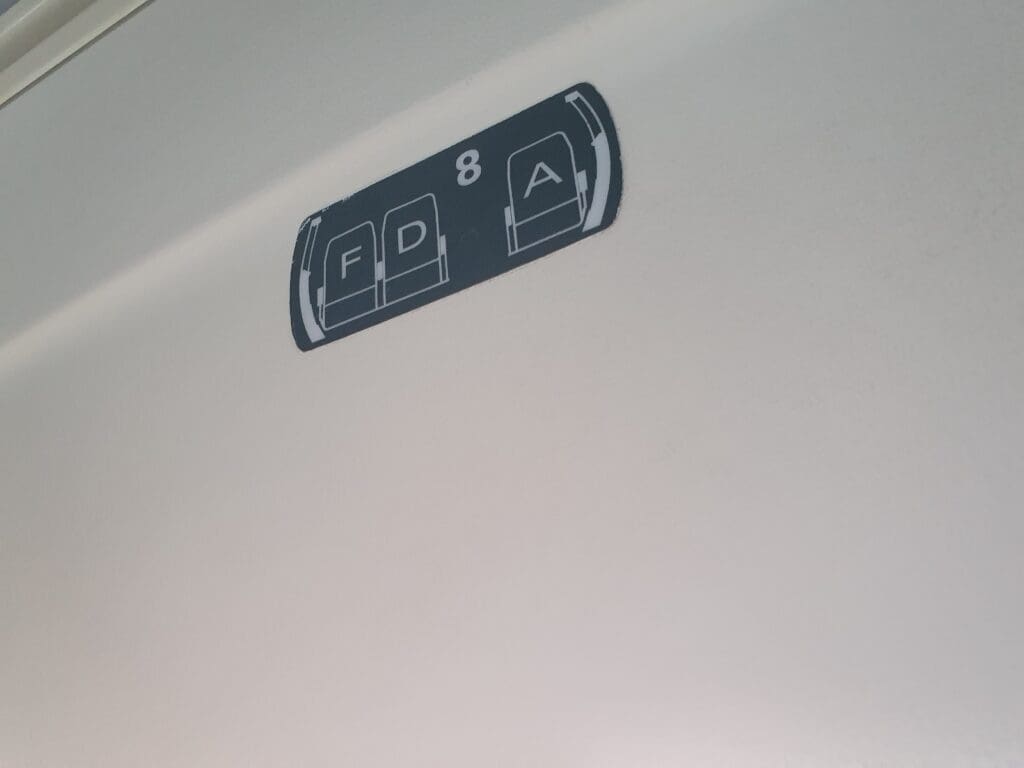
Opting to take Seat 8F, I sat down and immediately noticed that whilst in their upright position, all seats appeared to be more reclined than usual. Nevertheless, I did not see this to be anything to complain about. Furthermore, I found the seat to be fairly soft and provide a good amount of legroom, especially for a small regional turboprop. Slightly surprisingly given the aircraft’s age, I found the area around my seat to be largely free of any major signs of wear and tear, with this limited to a few barely noticeable marks and scratches. To my right, a large window allowed for a good amount of sunlight to pour in, whilst above a rather retro-looking passenger service unit featuring the usual flight attendant call bell, reading lights and air vents could be found. Above, comparatively small overhead lockers could be found (although only on one side), with several passengers having to wrestle with their hand luggage to squeeze this in. Finally, examining the contents of the seatback pocket, this contained a large two-sided BASe Airlines safety card and a plain white sick bag.
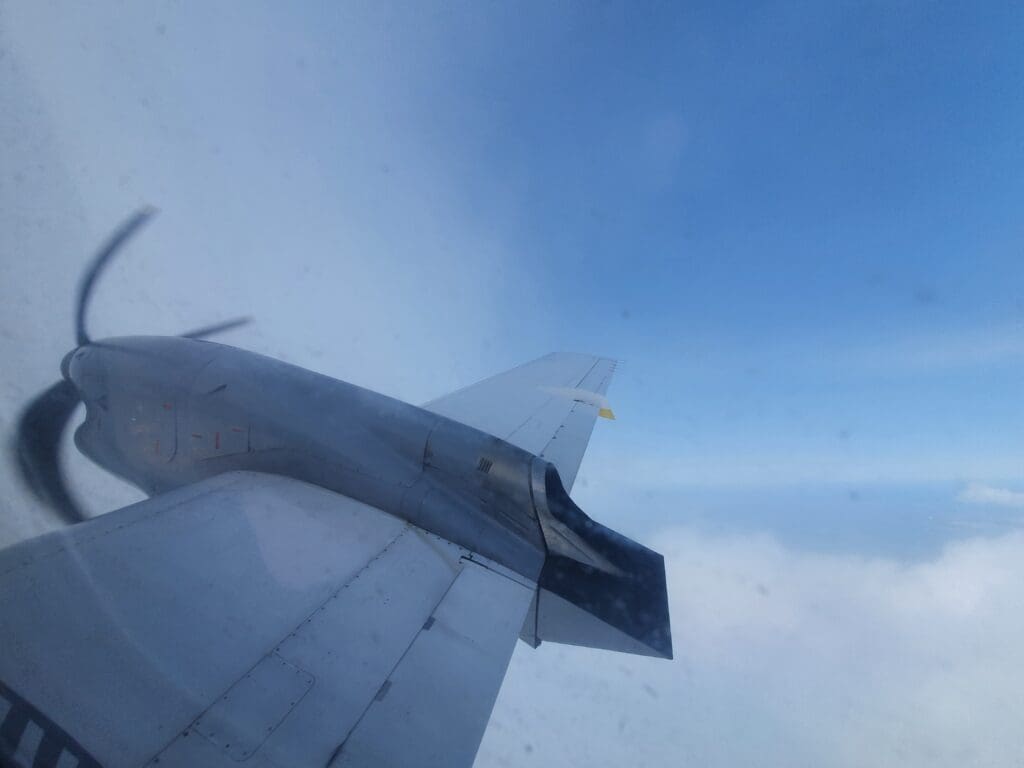
That afternoon a total of just twelve passengers would be making the trip across to Helsinki, with this equating to a load of just 40%. Thus, boarding was completed in no time and around five minutes after this had commenced, all passengers were seated and ready to go and the cabin door at the front of the aircraft was closed with a loud thud. At this time, the voice of the South African Captain filled the cabin as they performed their pre-flight announcement in English. During this, they mentioned that we could expect a few bumps during the flight thanks to thundery showers lingering over the south of the country that afternoon. As soon as this came to an end, the flight attendant then performed their welcome announcement during which they mentioned the flight’s expected forty-minute duration before moving on to the safety instructions. Interestingly as they performed this, several loud dings could be heard which interrupted this announcement on multiple occasions as the two Pratt and Whitney Canada PW116 engines powered up and the propellers whirled into life. Whilst this start-up was fairly quiet, I could feel a fair amount of vibration from my seat near the rear of the cabin, which I imagine may have been slightly more intense further forward.
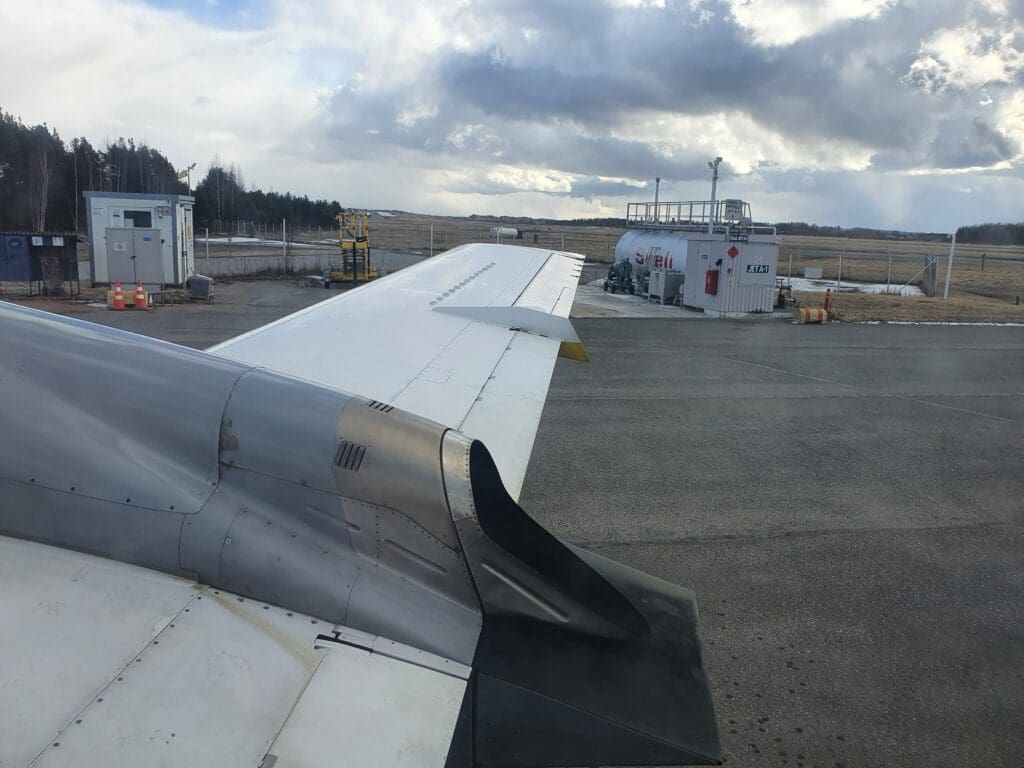
After the two engines had powered up, the Embraer remained in position next to the terminal for a few minutes before slowly edging forward and wheeling to the left as it left the small terminal building behind and headed over to the taxiway. That afternoon, the aircraft would depart from Runway 30 and thus a relatively long taxi was in store before departure. Taxiing along, the Embraer passed the end of Pori Airport’s much shorter Runway 17, before continuing along the fence and travelling almost parallel to the neighbouring main road. A short while later, the aircraft turned right and entered the active runway without any holding before coming to a short halt. At the flight’s scheduled departure time of 1400, the Embraer’s two large turboprop engines powered into life and filled the cabin with plenty of noise and vibration before the brakes were released. Shooting down the runway, the Embraer soon rocketed upwards into the skies, making use of less than half the runway and rotating upwards before reaching the intersection with Pori’s other runway.
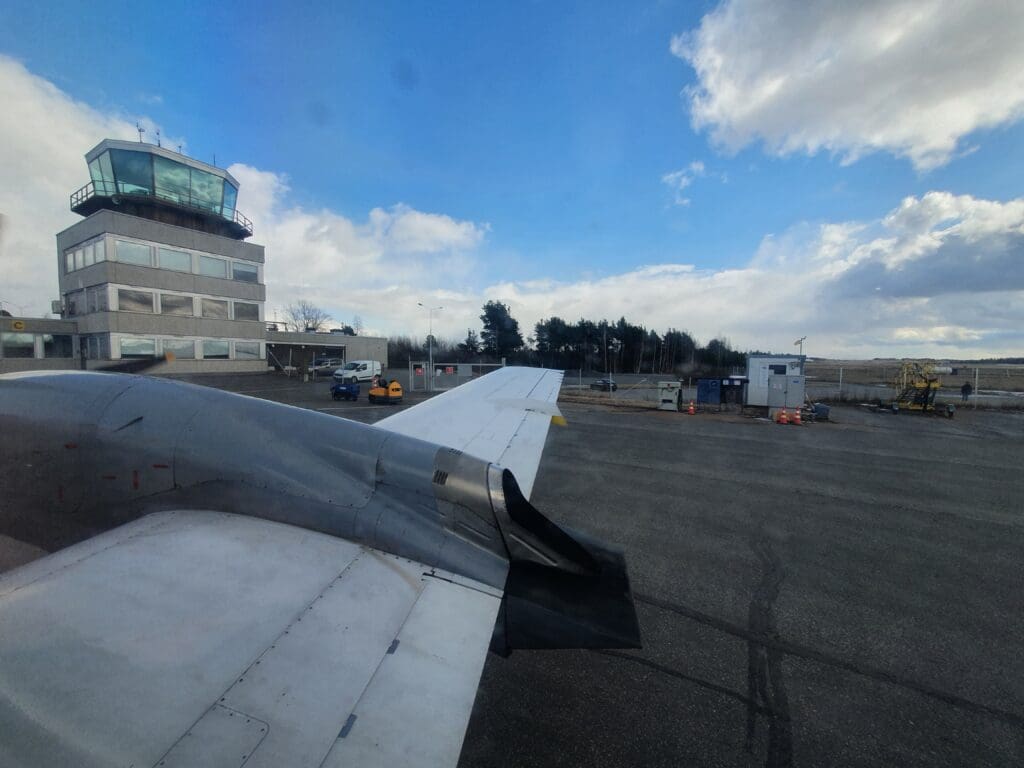
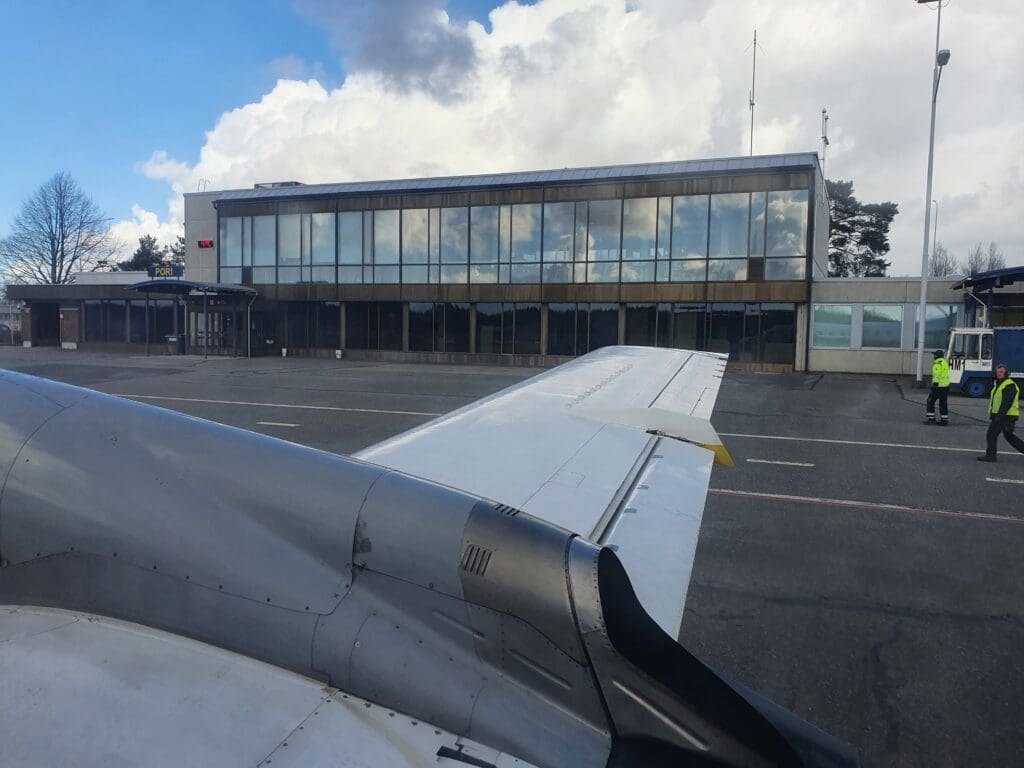
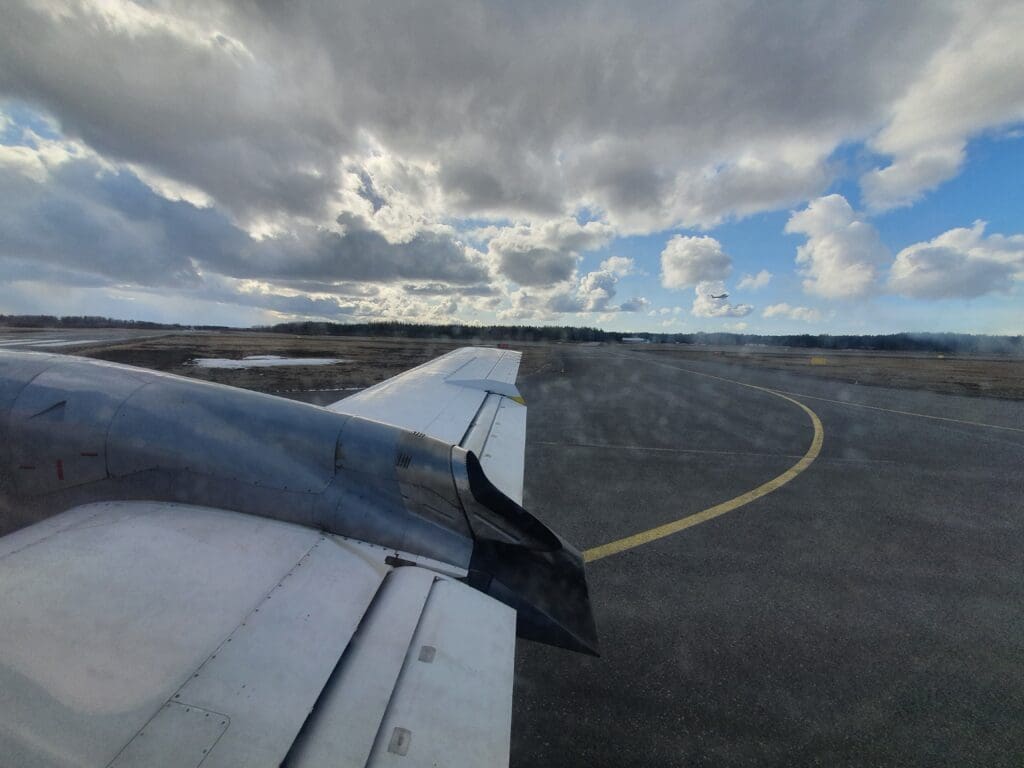
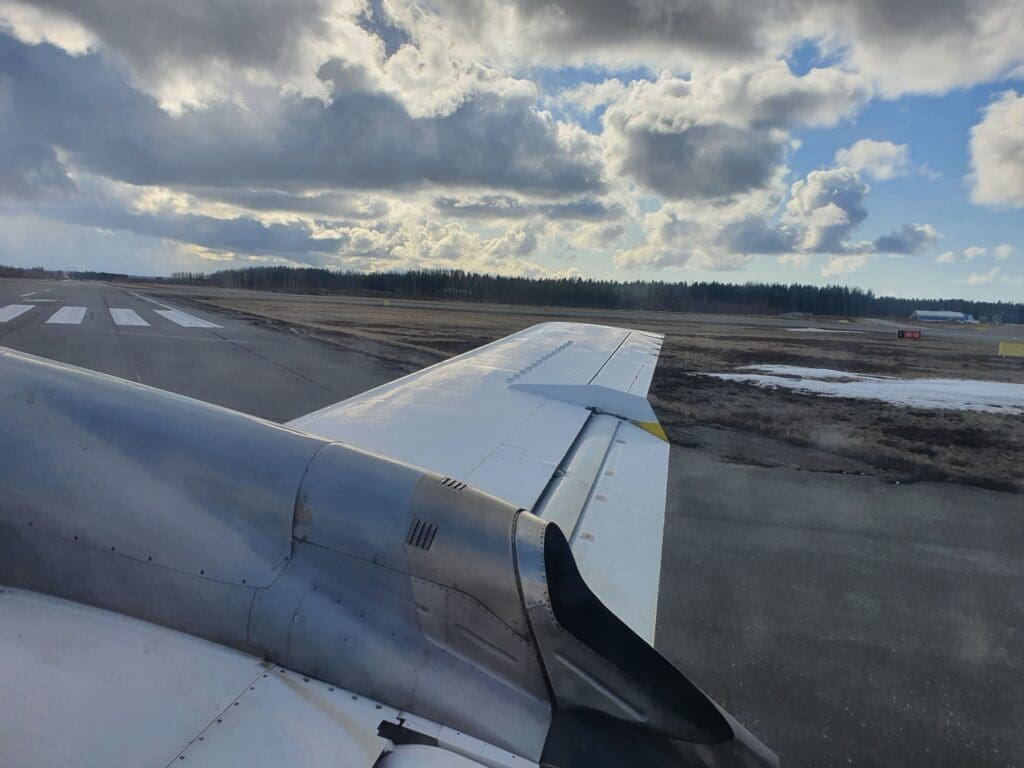
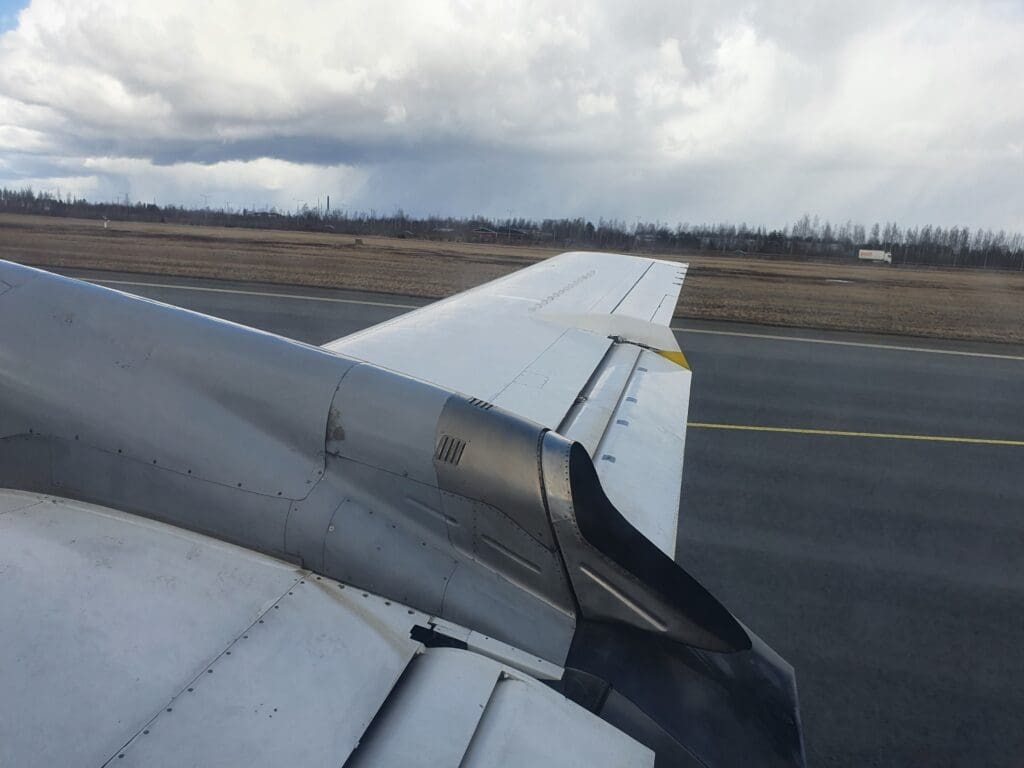
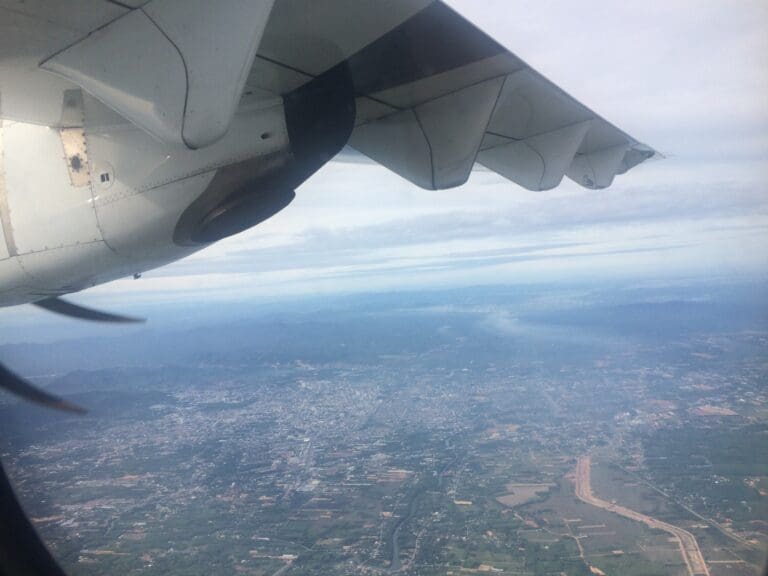
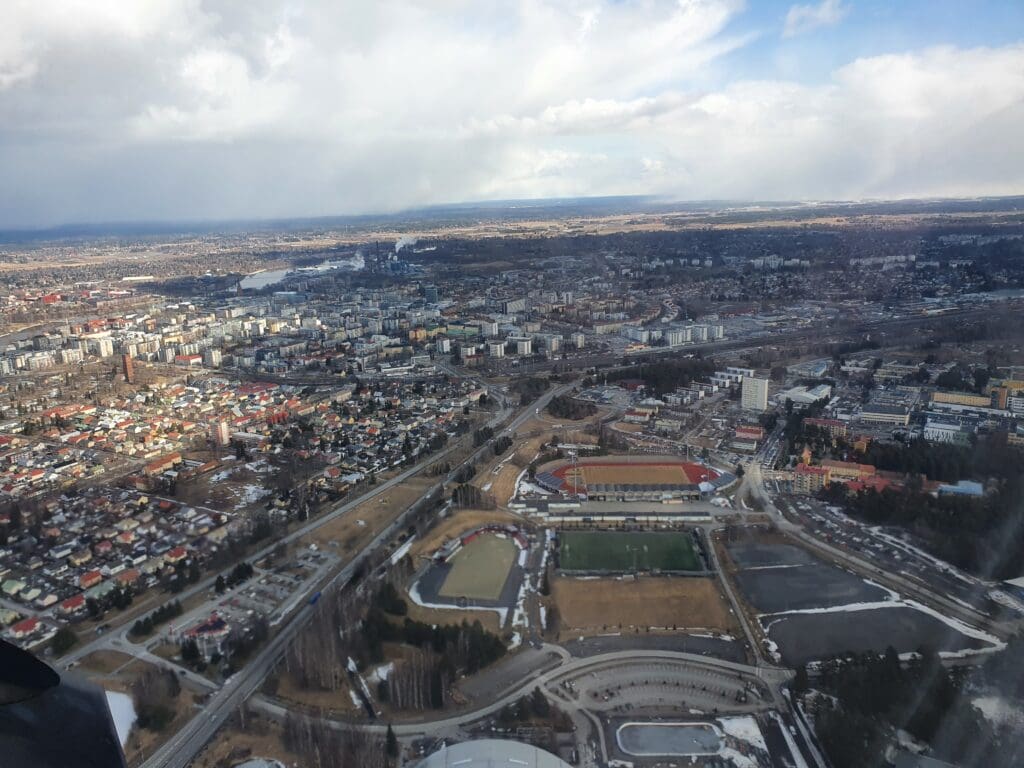
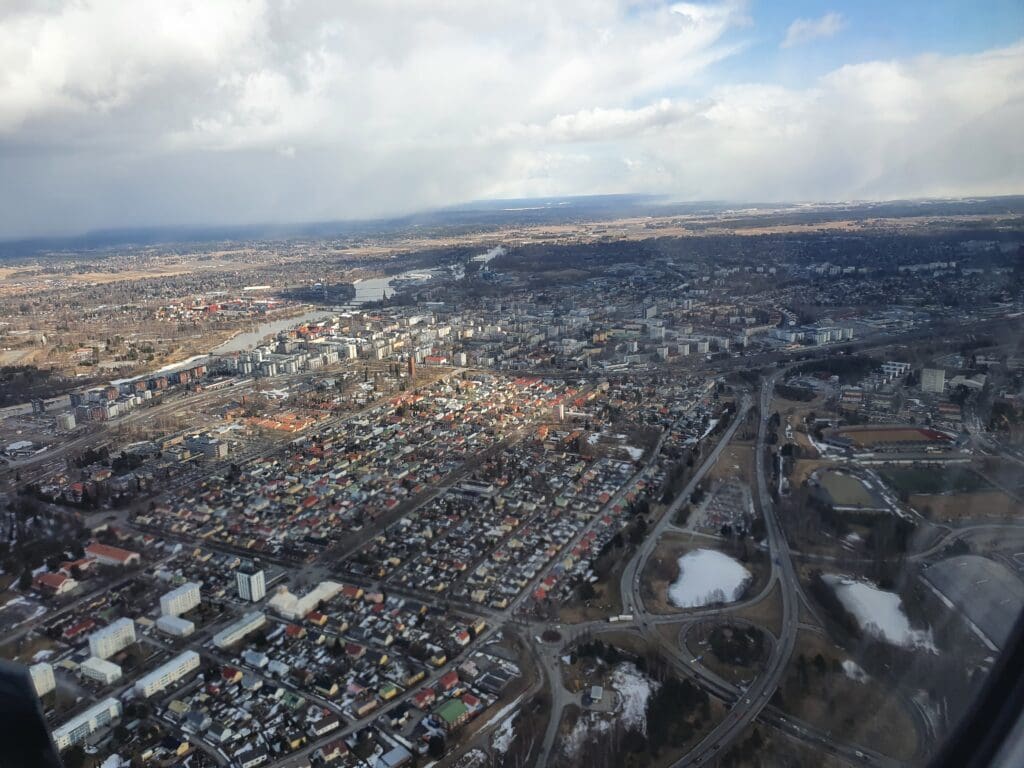
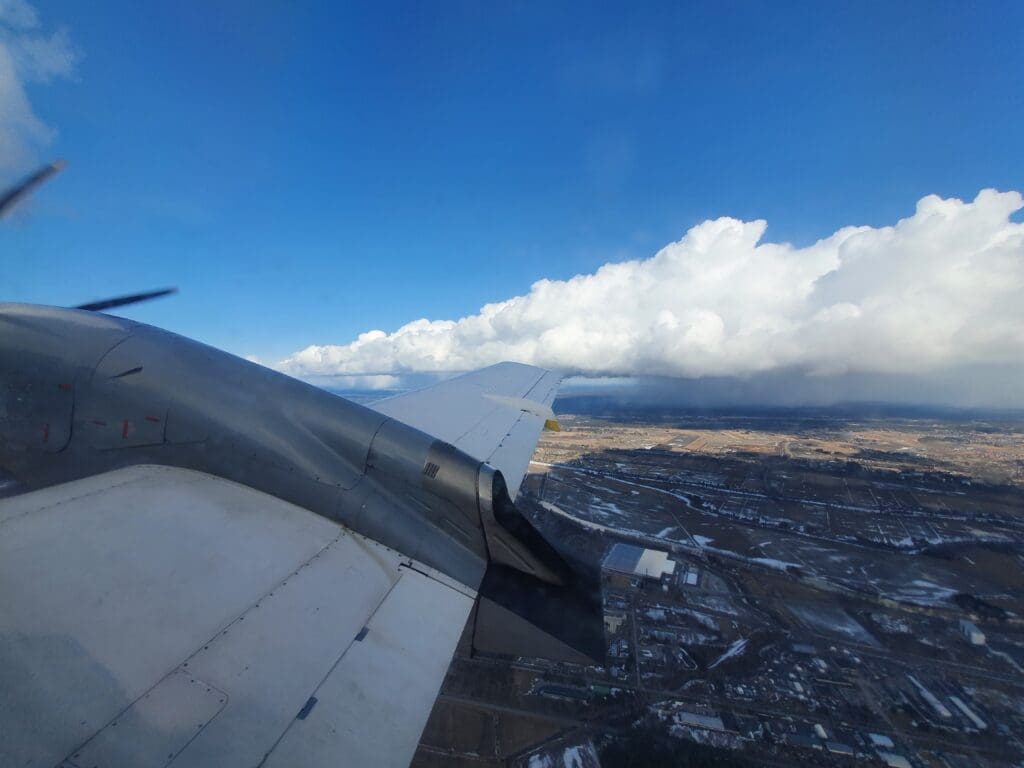
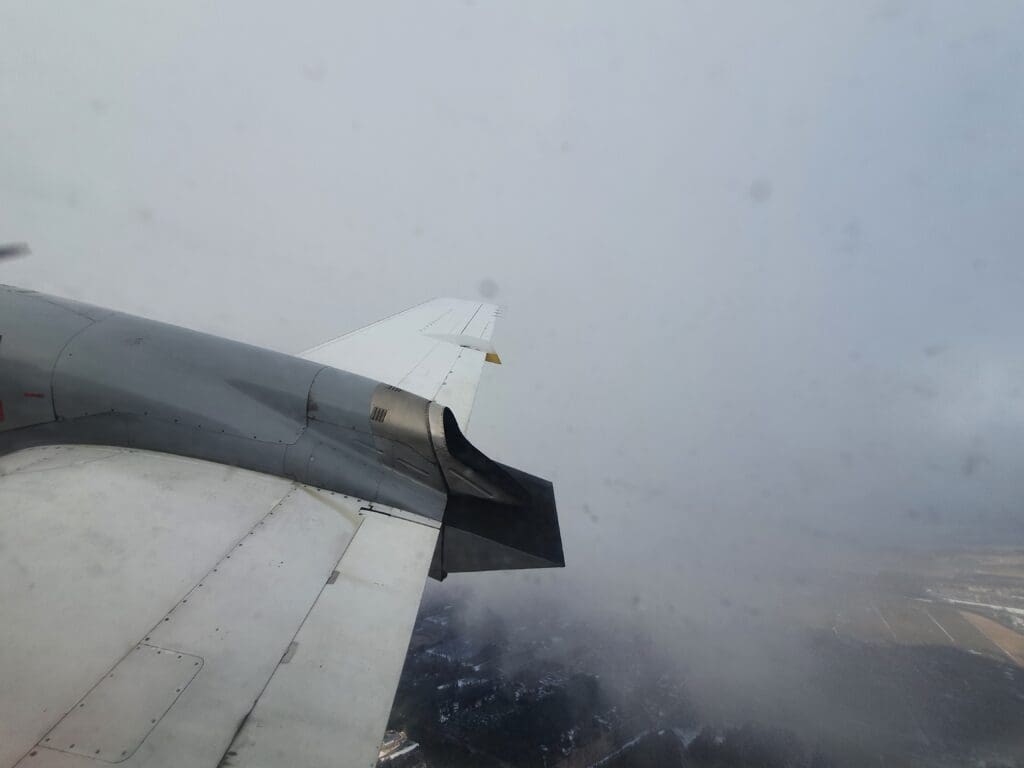
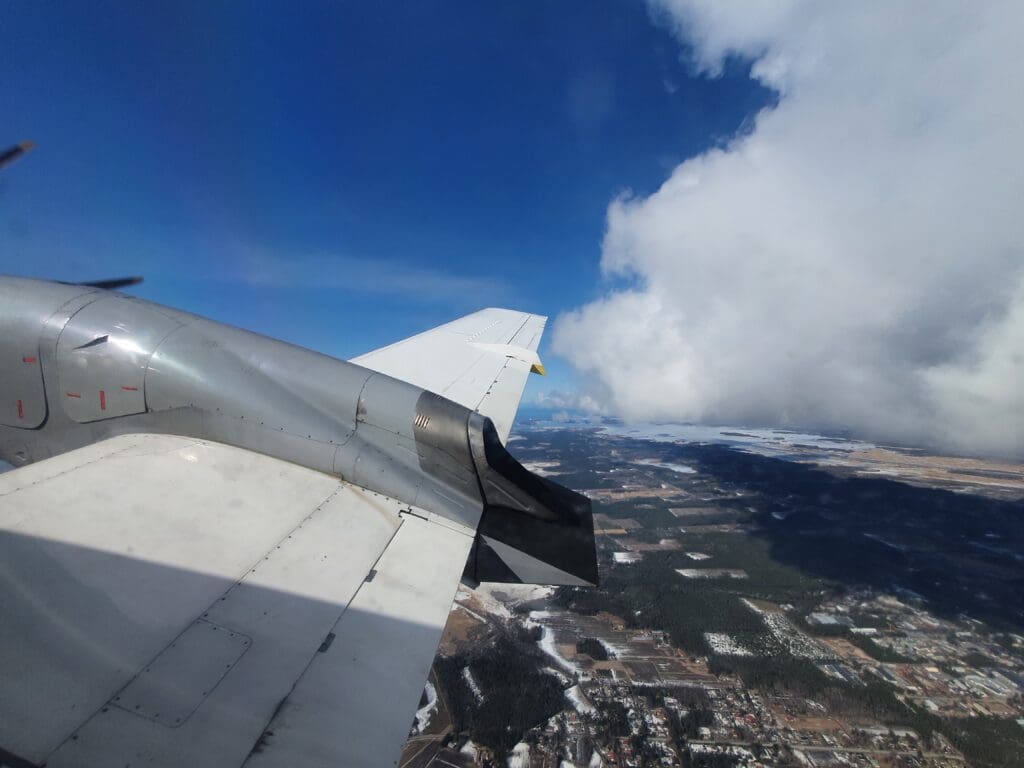
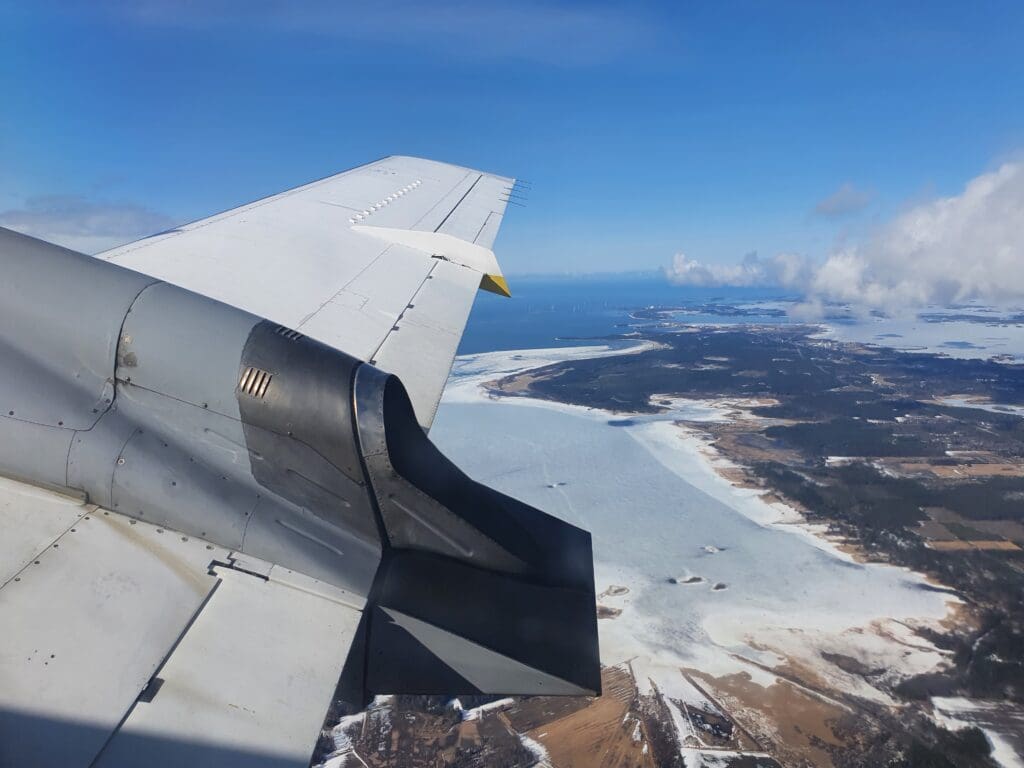
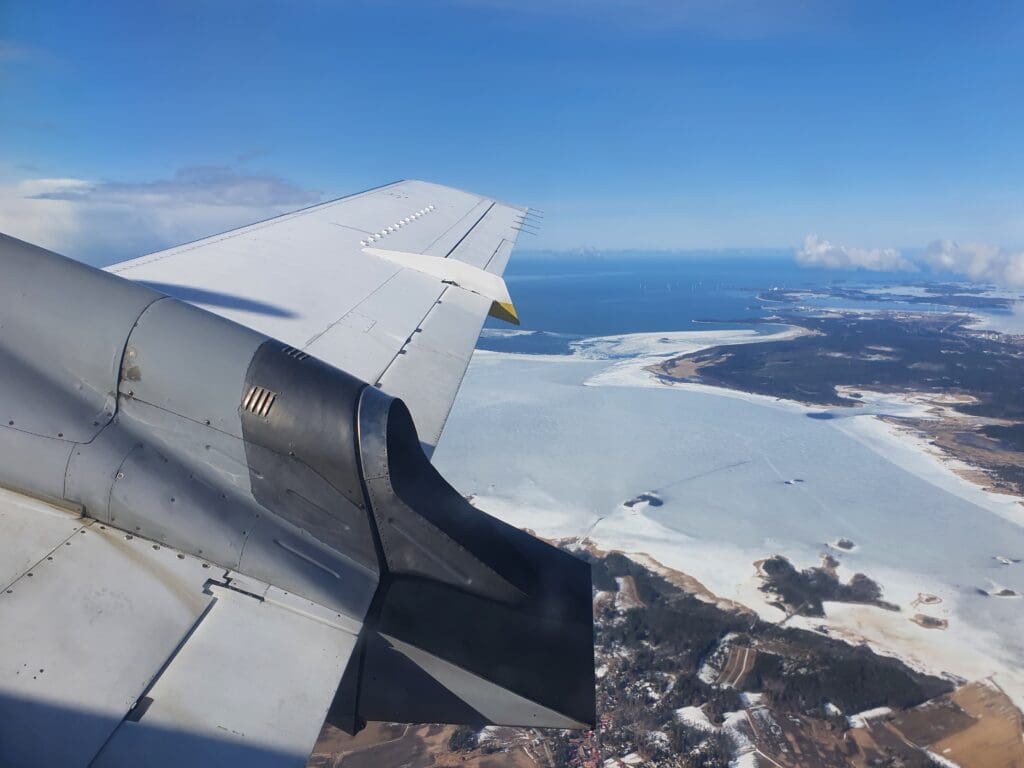
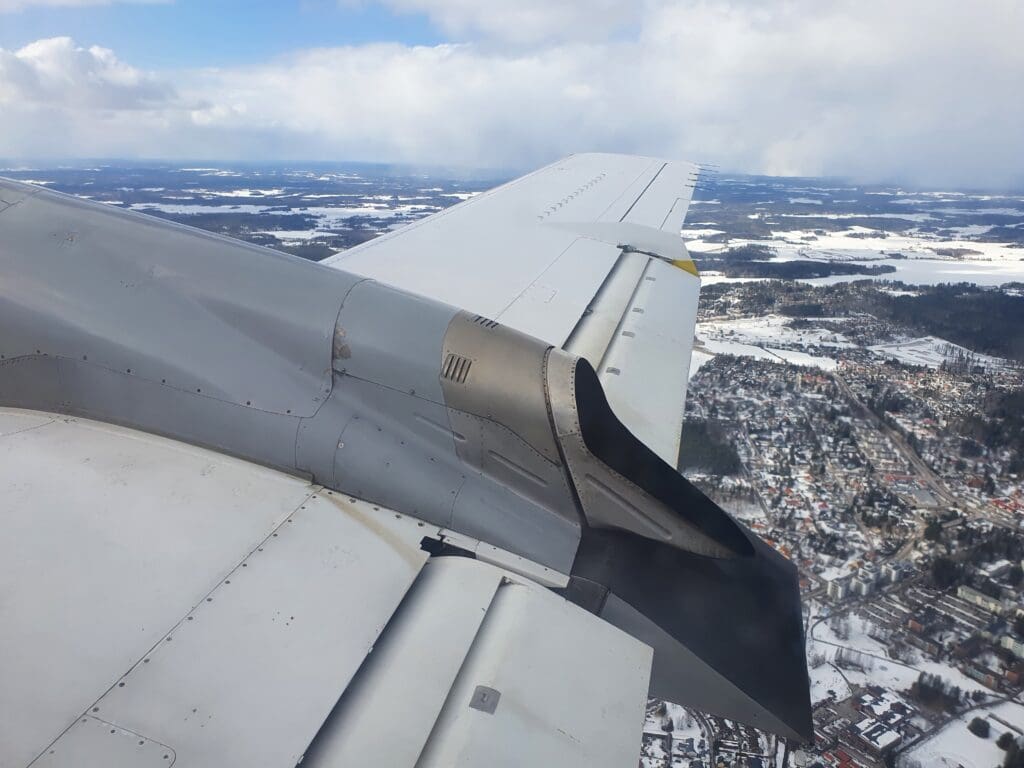
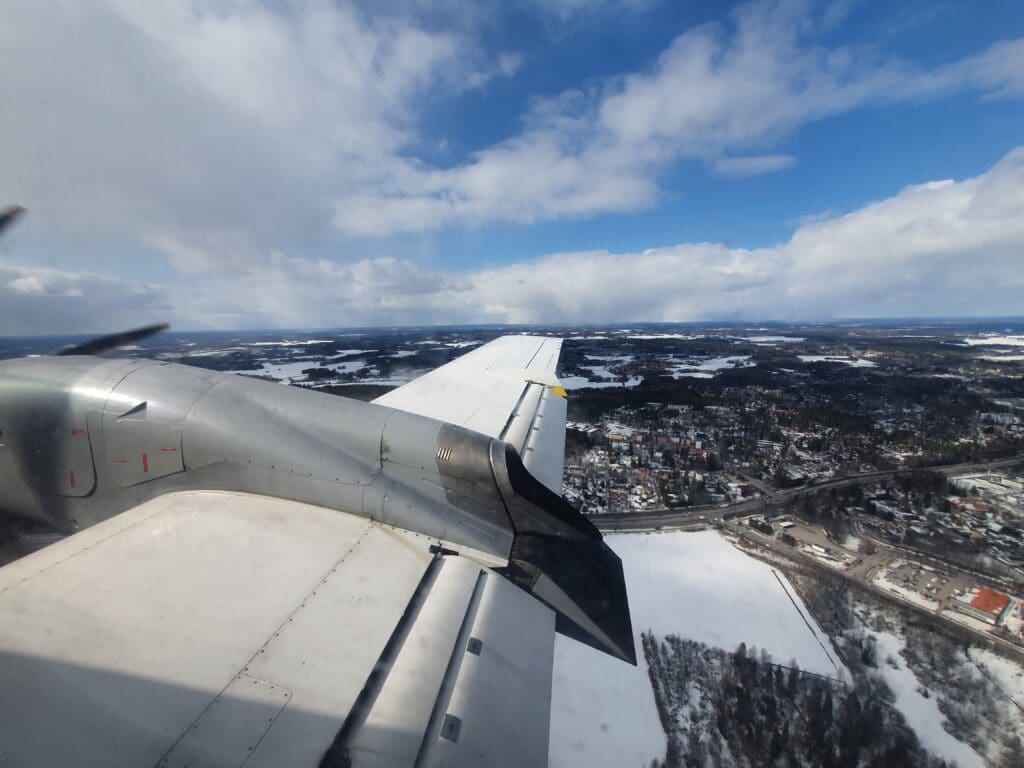
A few moments after taking to the skies, a good bird’s-eye view of the small terminal building could be had, with the buildings of Pori’s city centre and the Kokemäki River also soon appearing. As the Embraer climbed up into the Finnish skies, virtually all of the city of Pori could be seen for a minute or so before the aircraft banked to the left and rolled out on an easterly heading that would take us to the Finnish capital. During this turn, the blue waters of the Baltic Sea could be seen in the distance whilst a large snow-covered frozen bay which I later deciphered to be Selkämatalat passed directly below before the Embraer rose into the clouds, bumping about a fair bit as it climbed through these.
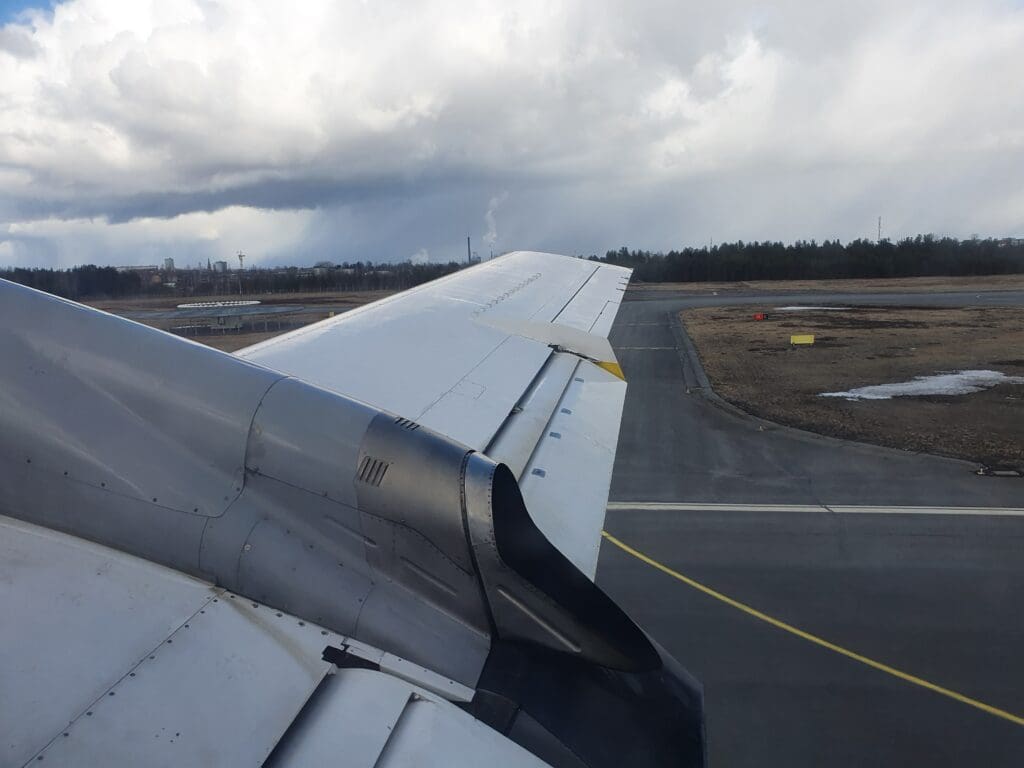
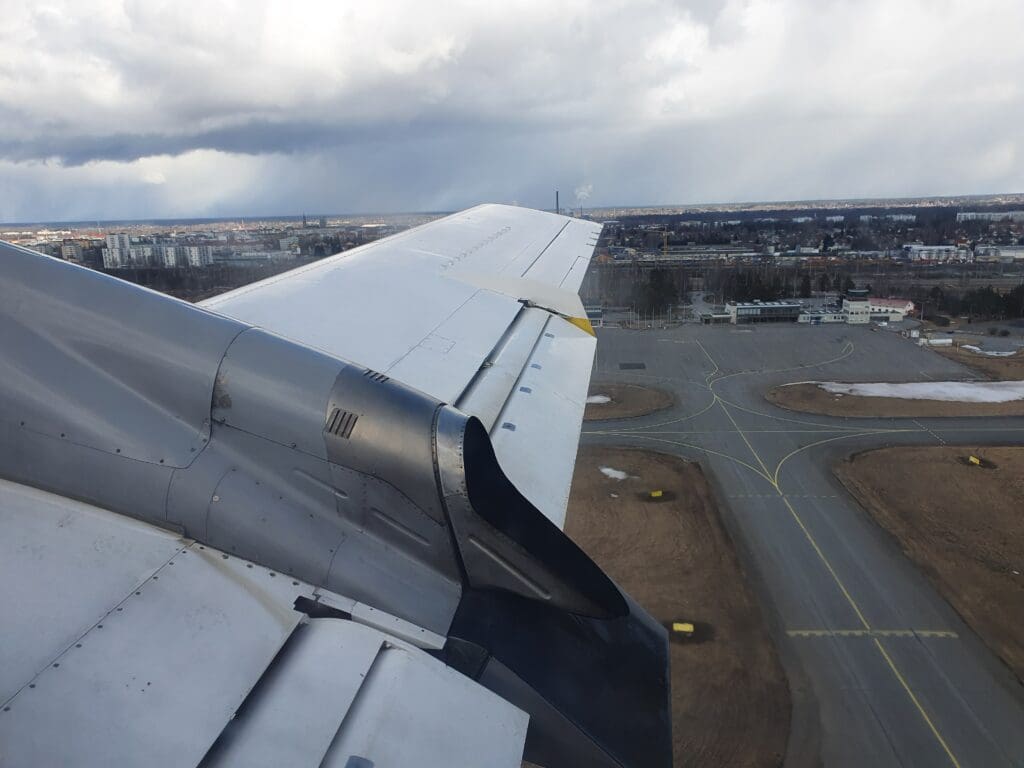
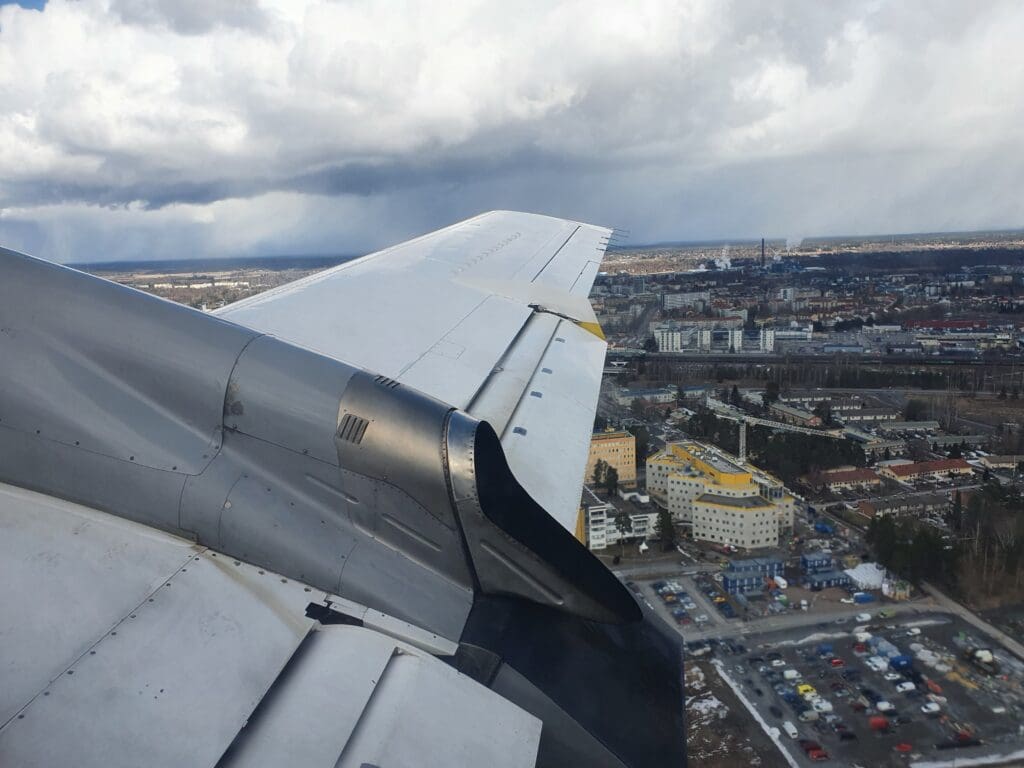
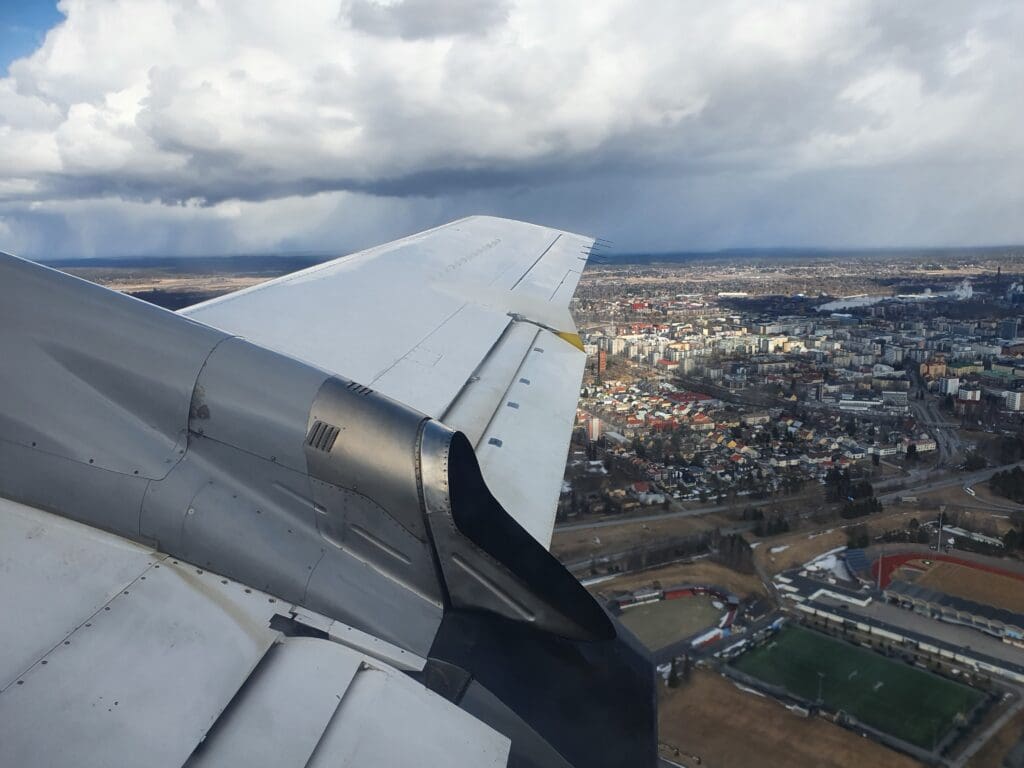
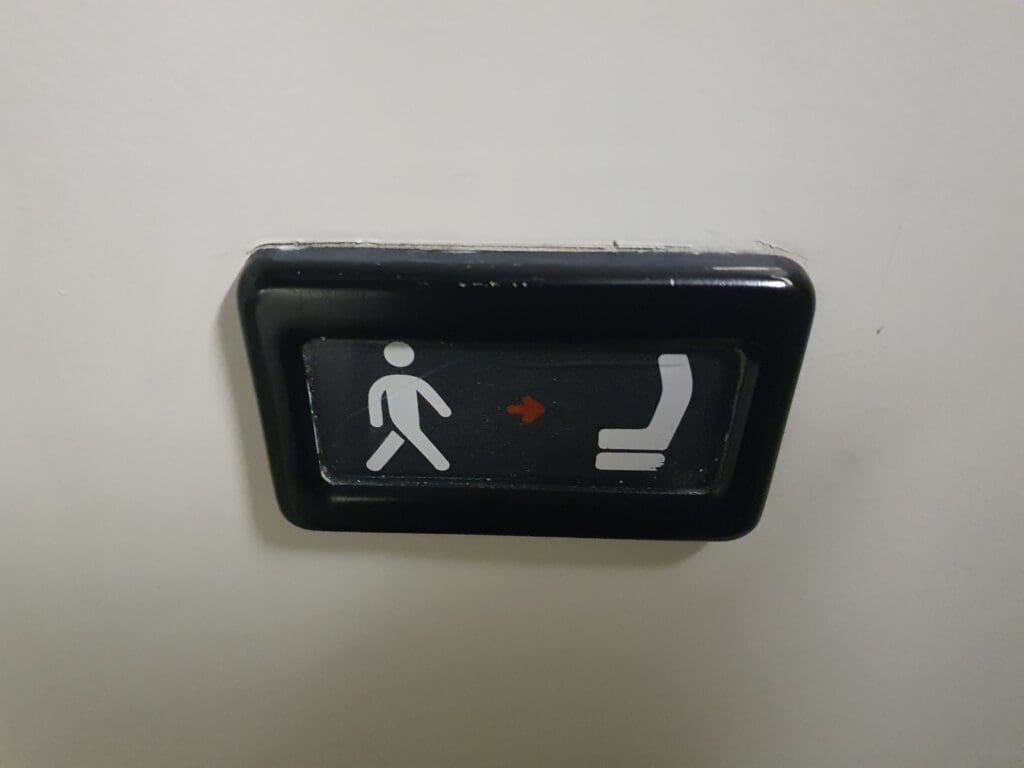
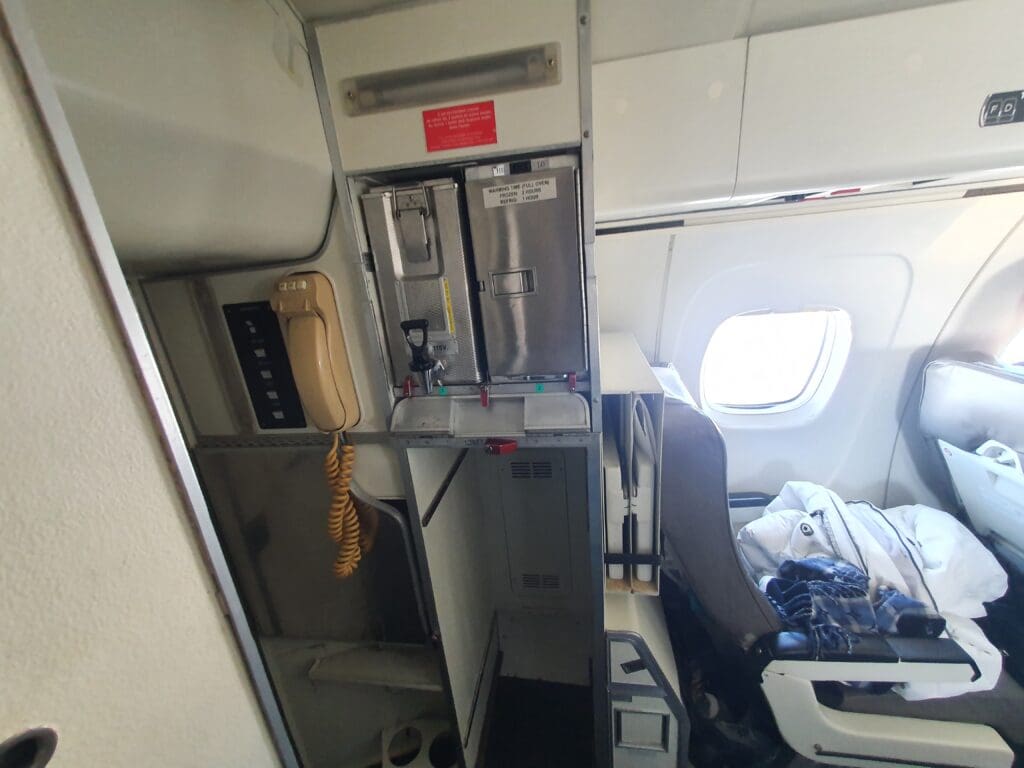
Around five minutes after departure, a loud ding rang out through the cabin indicating that the flight attendant was free to leave their seat and upon doing so they made their way to the miniscule galley at the rear of the aircraft where they prepared the inflight service. Indicating that coffee would be on offer, as they readied the inflight offerings, they made their way into the cabin and asked those passengers behind me if they could open a jar of coffee which appeared to have a stiff lid!
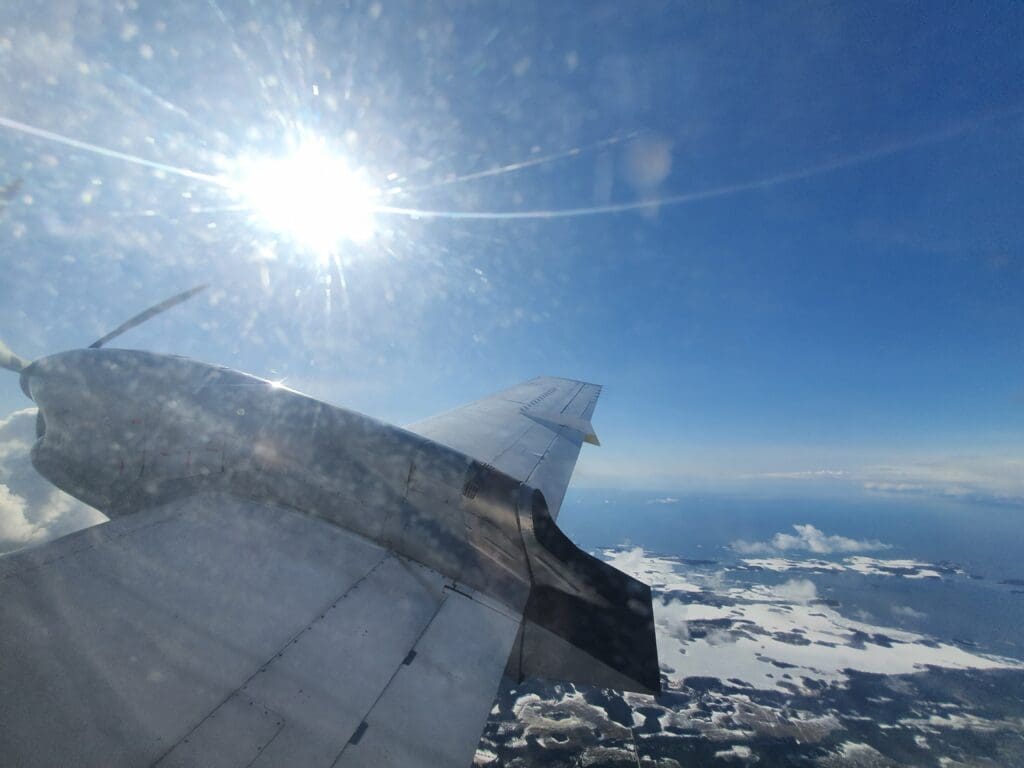
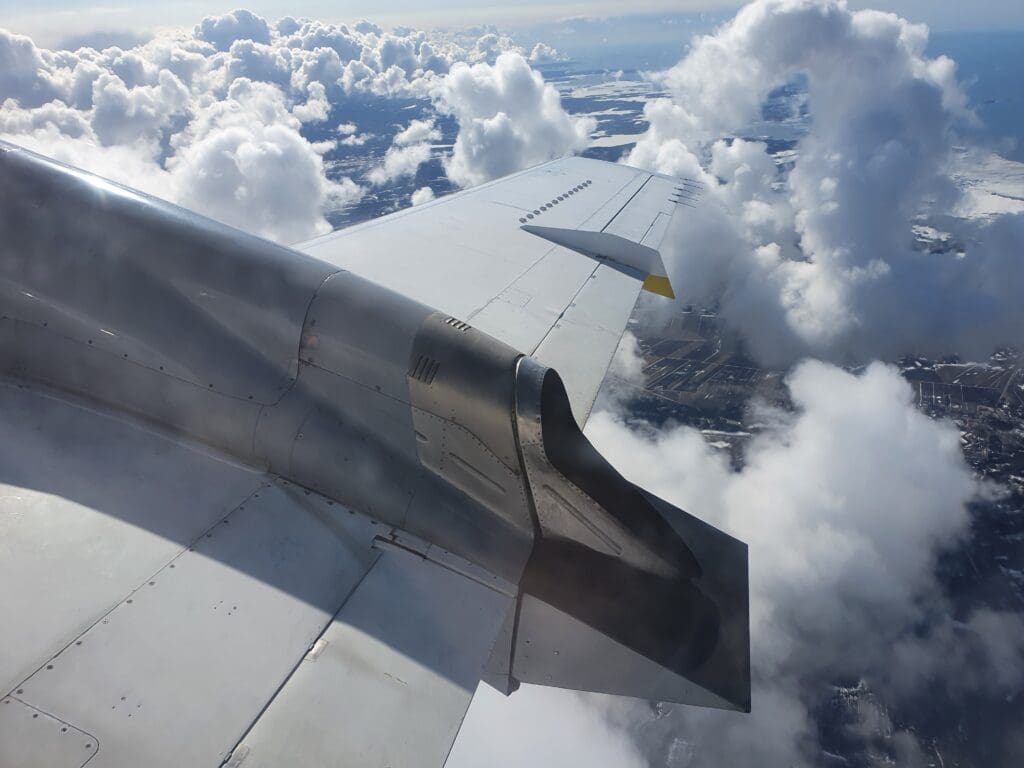
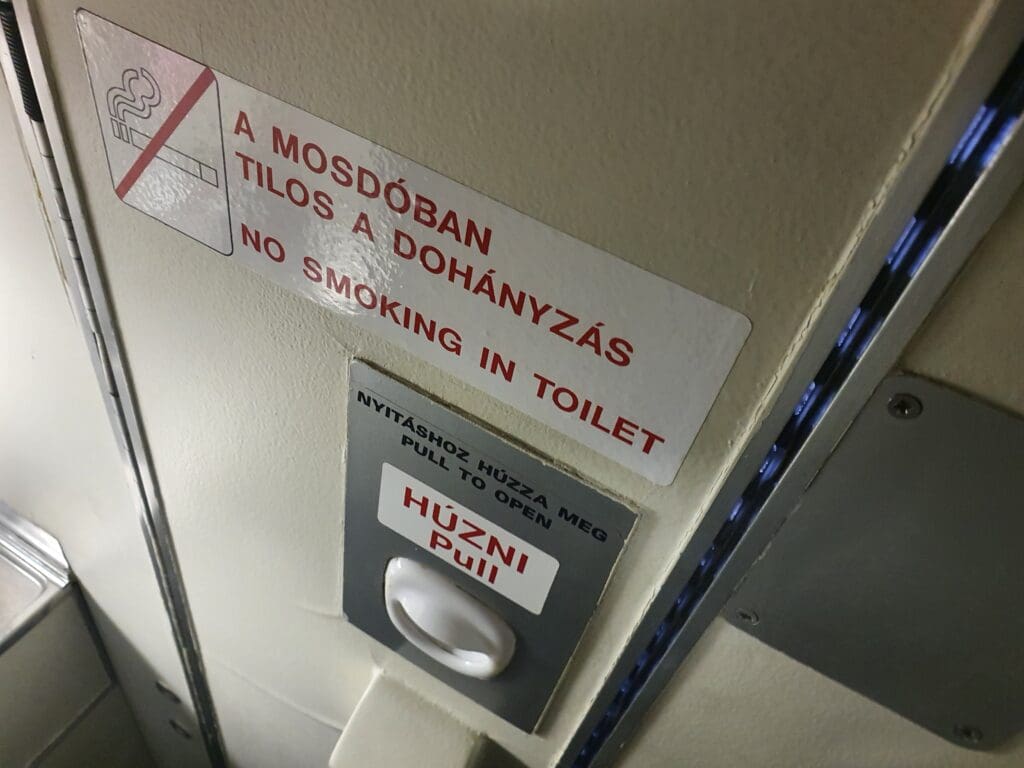
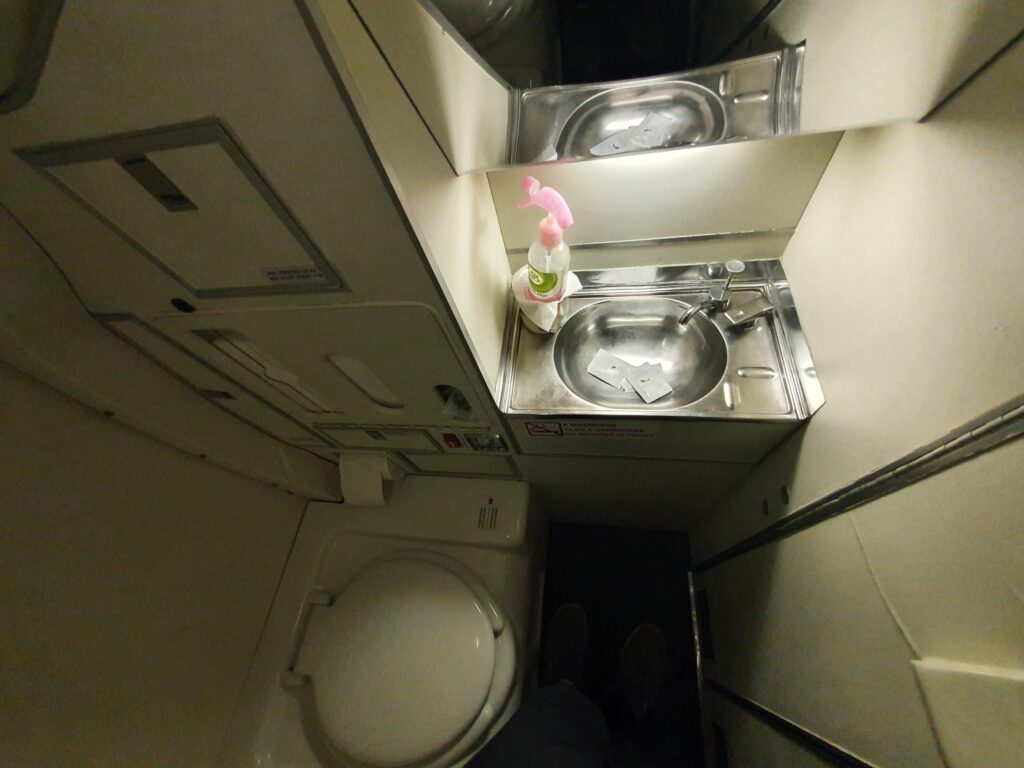
A minute after this, the seatbelt signs were extinguished and seeing as I would likely not get the opportunity to otherwise do so, I made my way to sample the onboard facilities i.e. the toilet at the rear of the aircraft. Whilst better than nothing, as expected this was miniscule and some contortionism was required to squeeze myself into this space. However, once inside, I found this to be clean and stocked with the basics, although lacking running water, antibacterial wet wipes had been placed into the sink. Meanwhile at this time, around ten minutes after departure, the aircraft reached its cruising altitude of 17,000 feet.
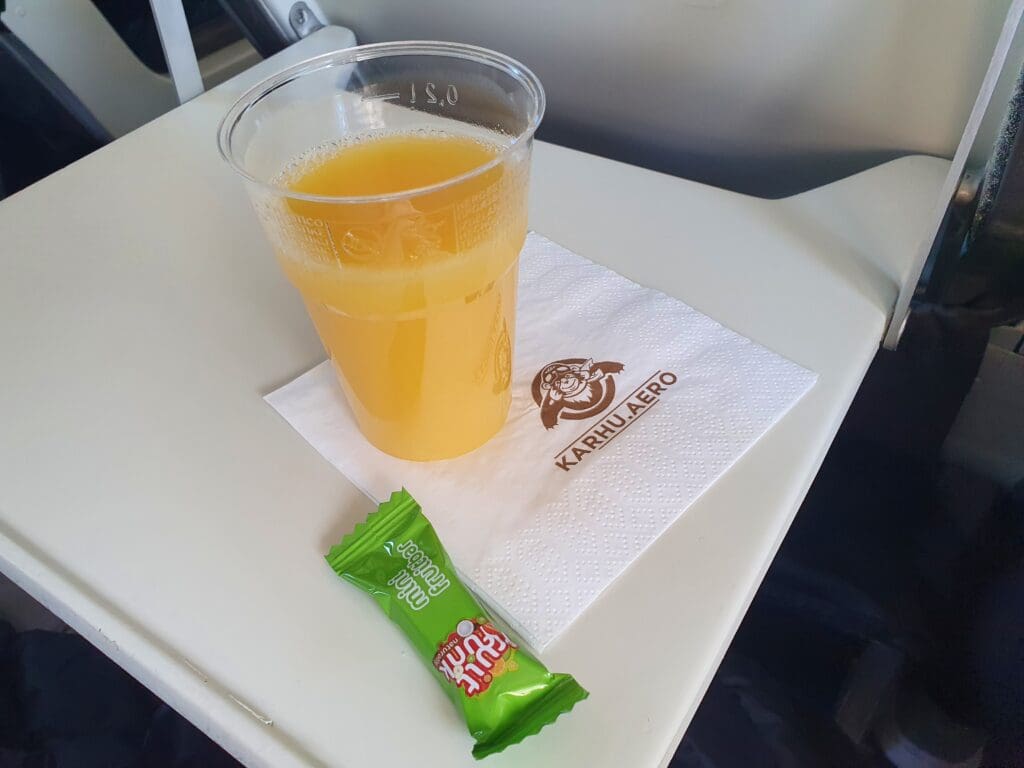
As I returned to my seat, the flight attendant could be seen serving passengers at the front of the cabin however it did not take them long to work their way rearwards. Upon arriving at my row, I was given a warm and friendly greeting and asked for my choice of drink. Given the short length of the flight, I was highly impressed with the drinks choices onboard the short flight, with multiple juices, Coca-Cola and Spanish red wine along with the usual coffee, tea and water options. Opting for an orange juice, the flight attendant filled the plastic 200ml cup almost to its brim and handed this over to me along with a Karhu Aero branded serviette. Whilst this was a very welcome addition to the flight, having been served only a relatively short time before the aircraft commenced its descent, I cannot help but wonder how all thirty passengers could be served in the space of the flight had the aircraft been full. Meanwhile, a few minutes after this service had been completed, the flight attendant passed through the cabin with a Malev-branded tray collecting passengers’ rubbish – one of several rubbish collection passes they made before our arrival in Helsinki.
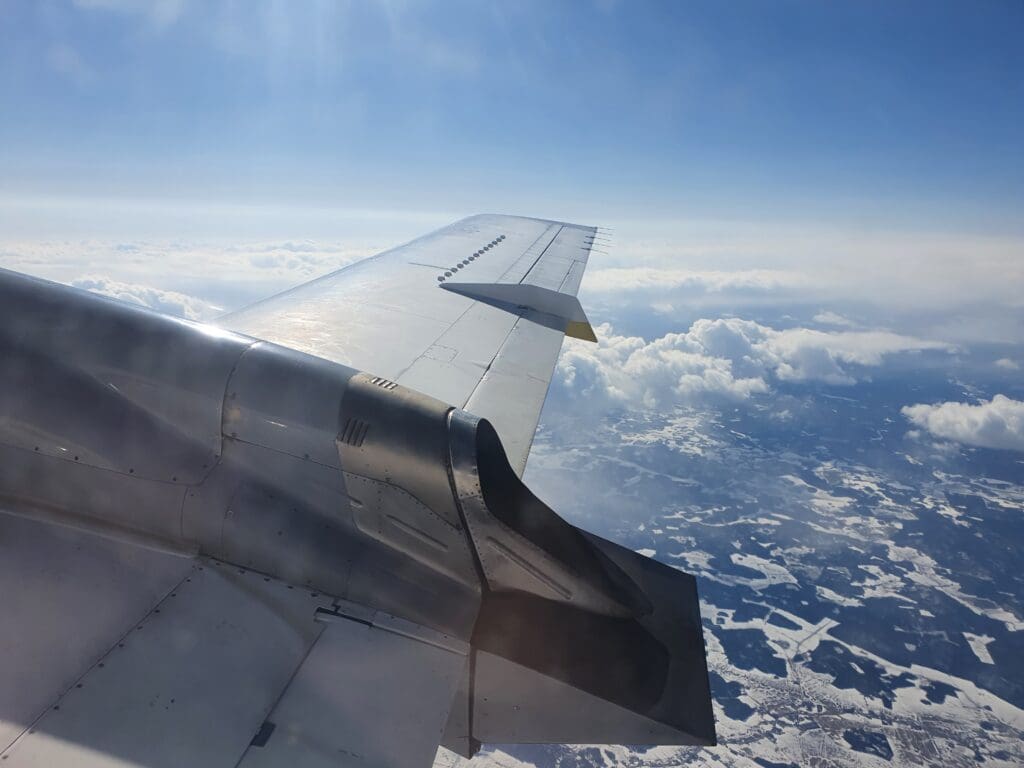
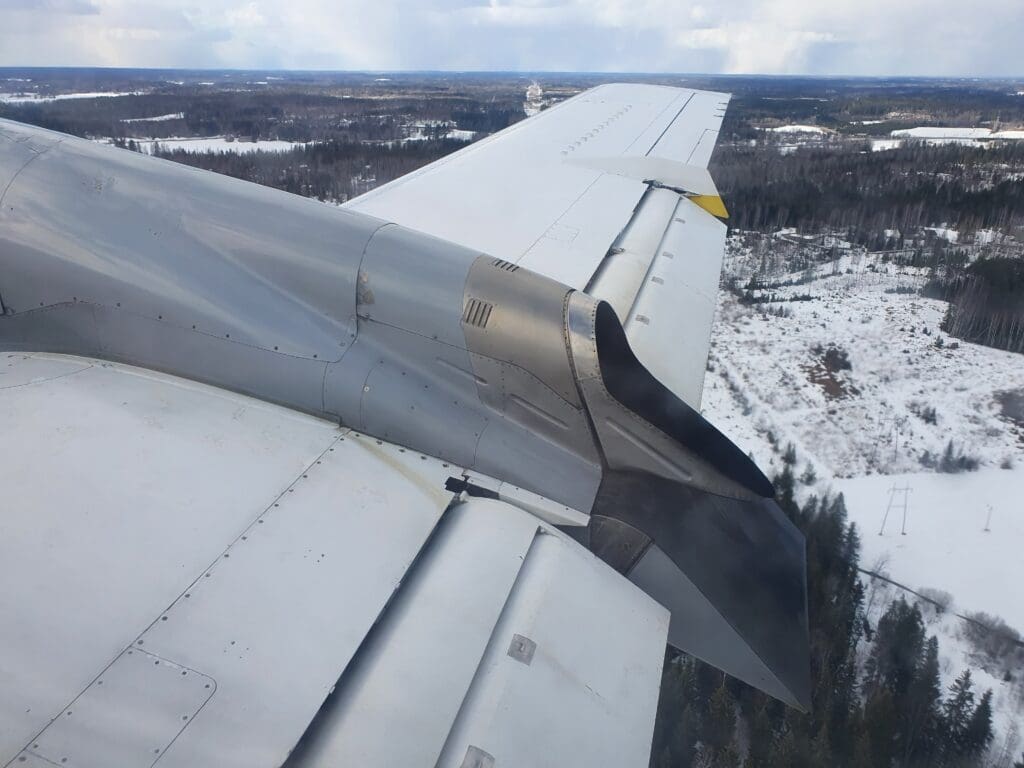
Turning to examine our route to Helsinki that afternoon, after leaving Pori behind, the Embraer rumbled southeast across Satakunta and crossed over the town of Säkylä, situated on the northern shores of Lake Pyhäjärvi. Some distance below, the sporadic cloud cover meant that only limited views of the mostly rural scenery consisting of snow-covered forests and the occasional town could be seen for the duration of the flight. Around fifteen minutes after rocketing upwards into the cloudy Finnish skies, the aircraft left Satakunta behind and crossed over into the skies of the province of Varsinais-Suomi, literally, Southwest Finland and upon reaching the town of Somero, the Embraer banked onto a more easterly heading. As we trundled across southern Finland, the Embraer seemed to provide a smooth ride, with only a few bumps felt during the cruise despite the Captain’s warning of turbulence.
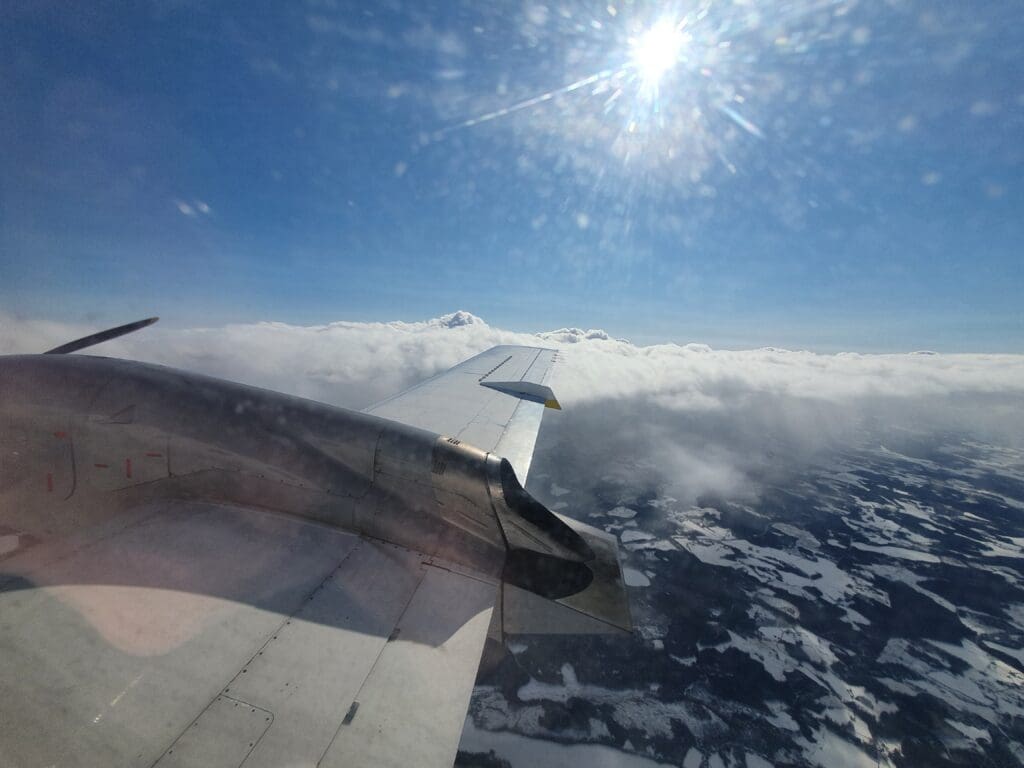
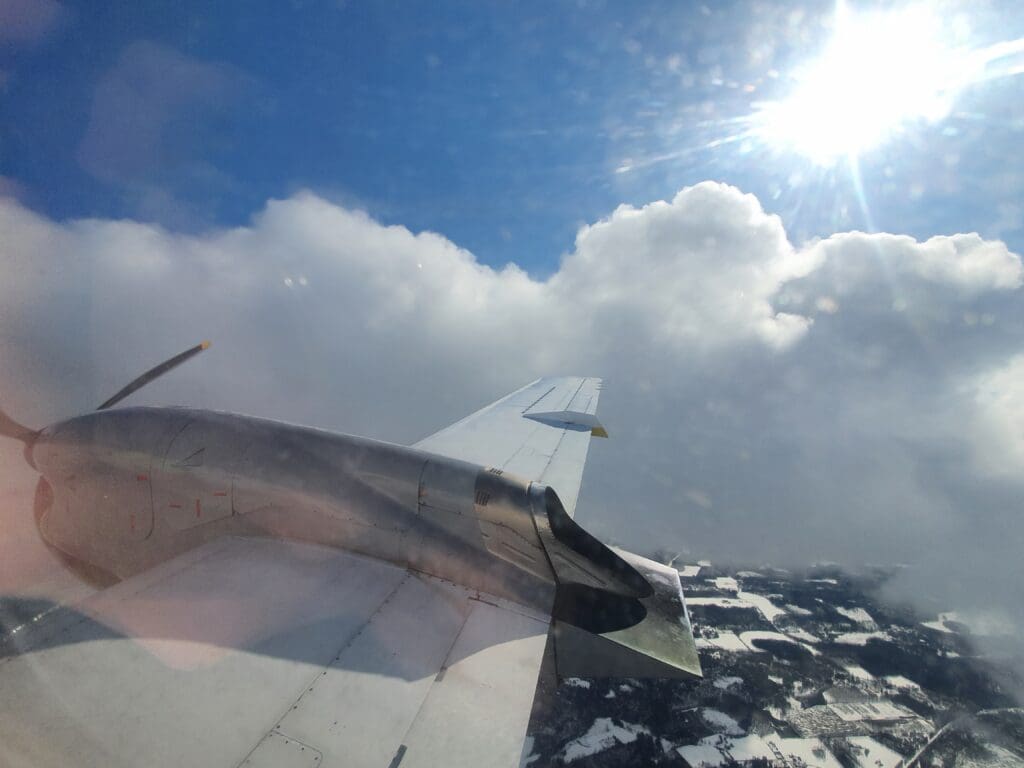
After passing Somero, at 1423 the Embraer could be felt commencing its descent before entering the skies of the region of Uusimaa, of which Helsinki is the capital. A few minutes and bumps later, the seatbelt signs were re-illuminated and the flight attendant passed through the cabin ensuring that everything was in place for our arrival before strapping themselves into the rear-facing jumpseat at the front of the cabin. As we approached Helsinki, below, the forests, fields and lakes of the Finnish countryside were slowly replaced by the sight of the occasional town and industrial estate and soon we reached the fair-sized down of Järvenpää – once home to the famed Finnish composer, Sibelius.
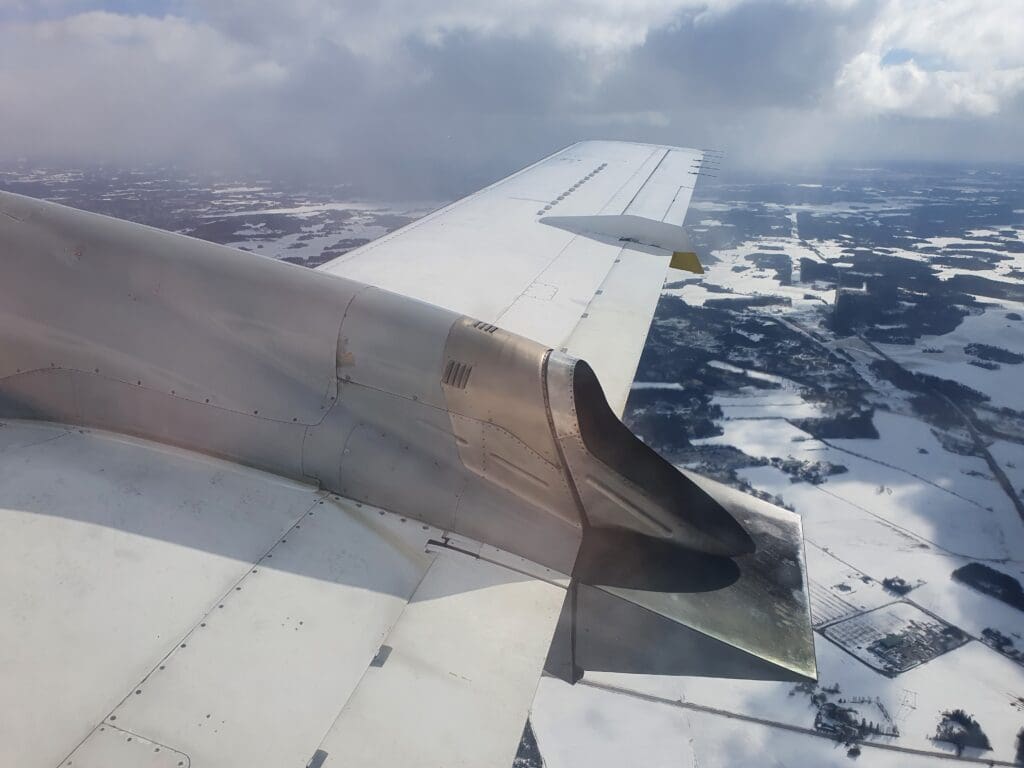
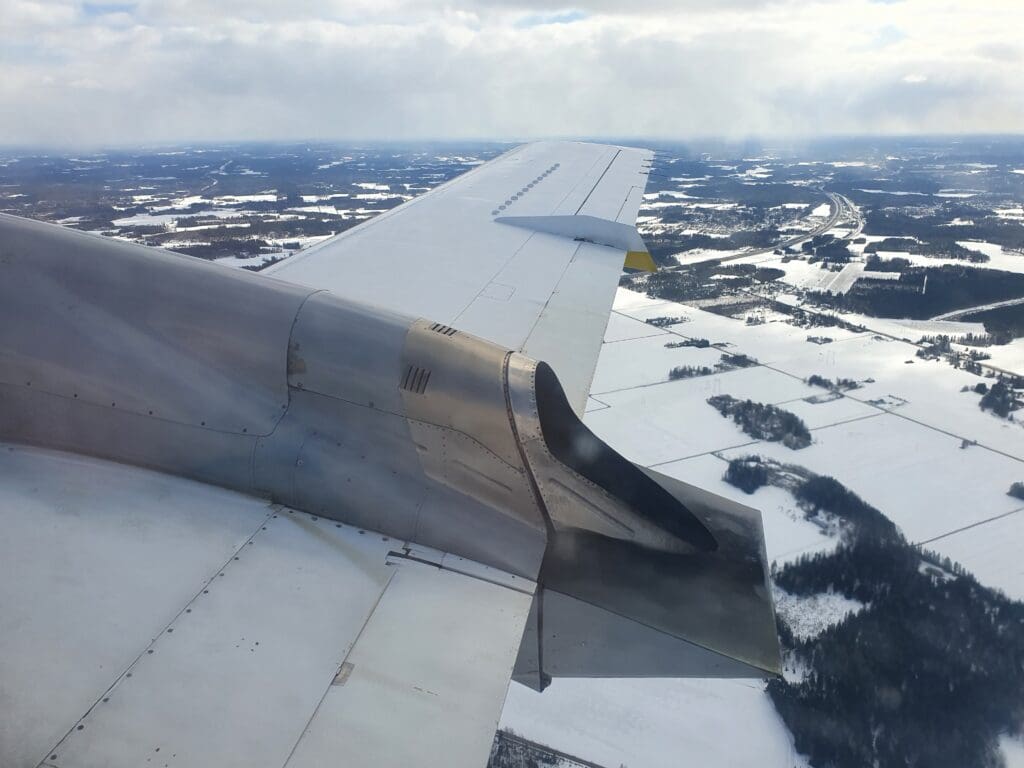
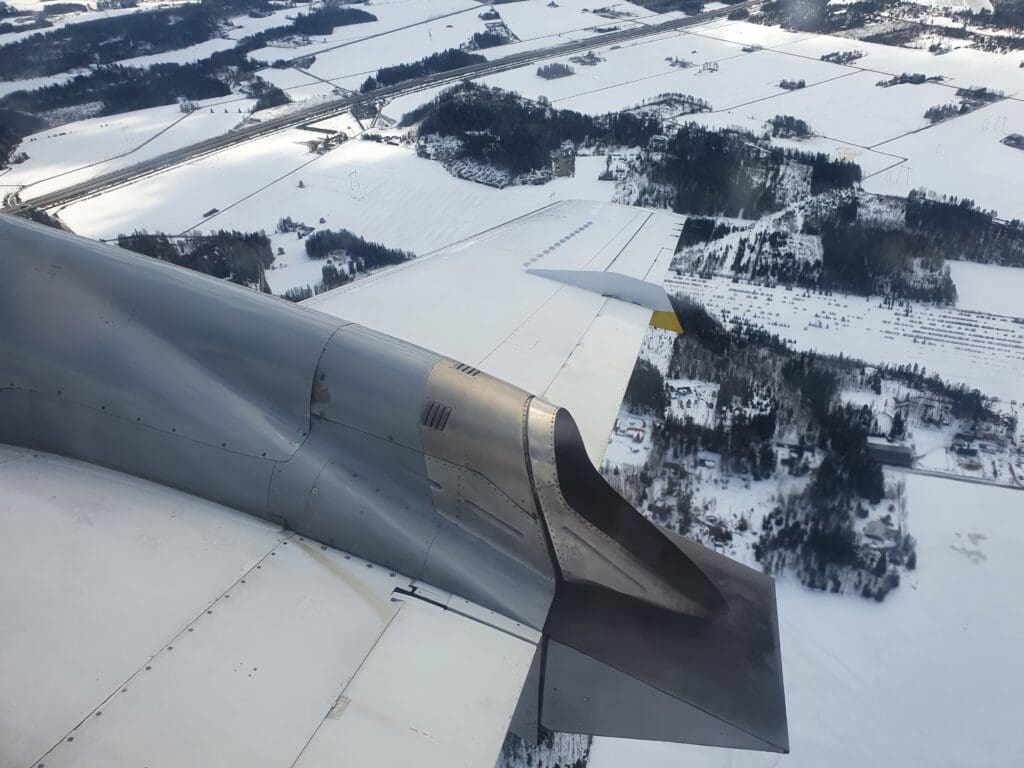

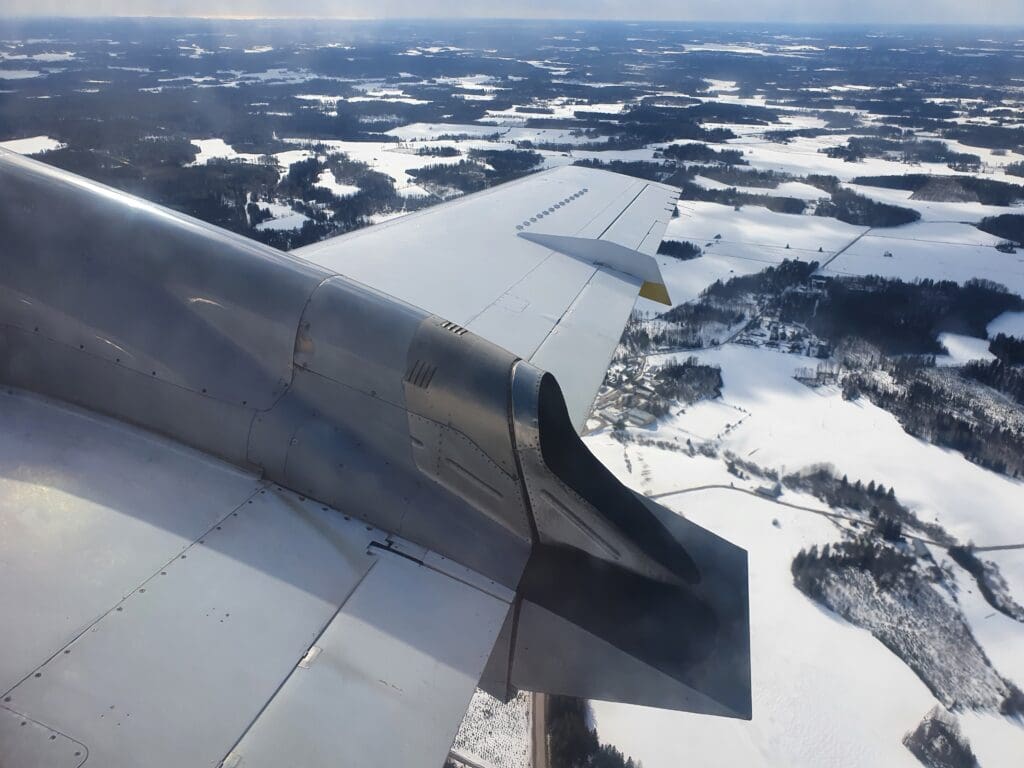
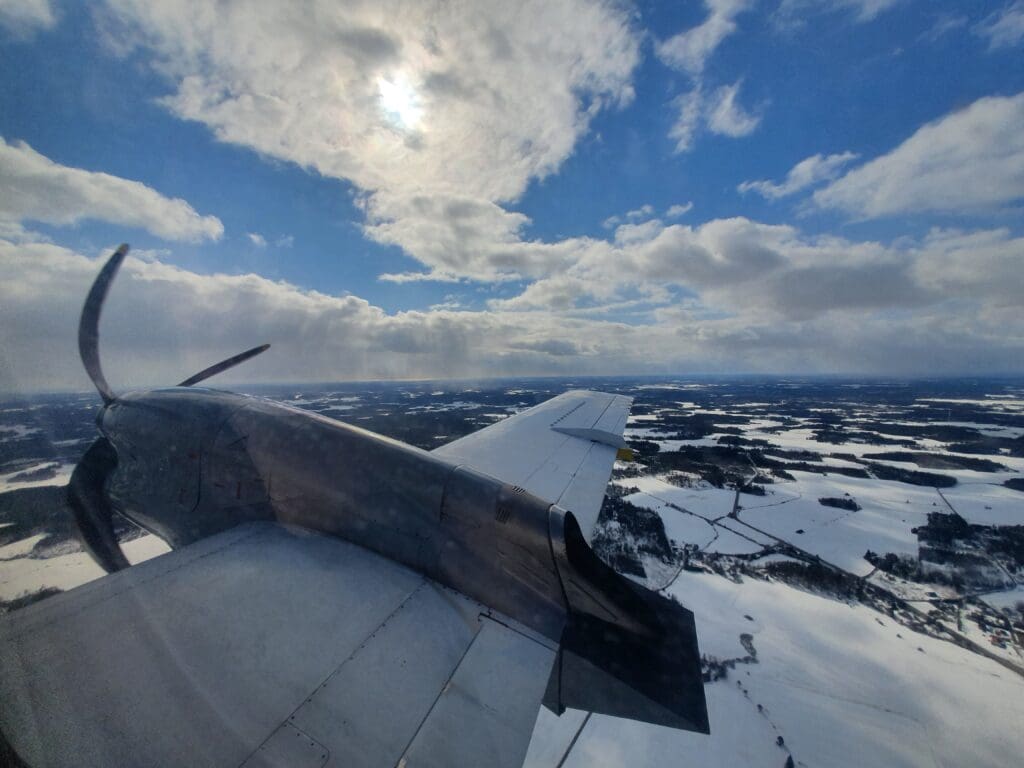
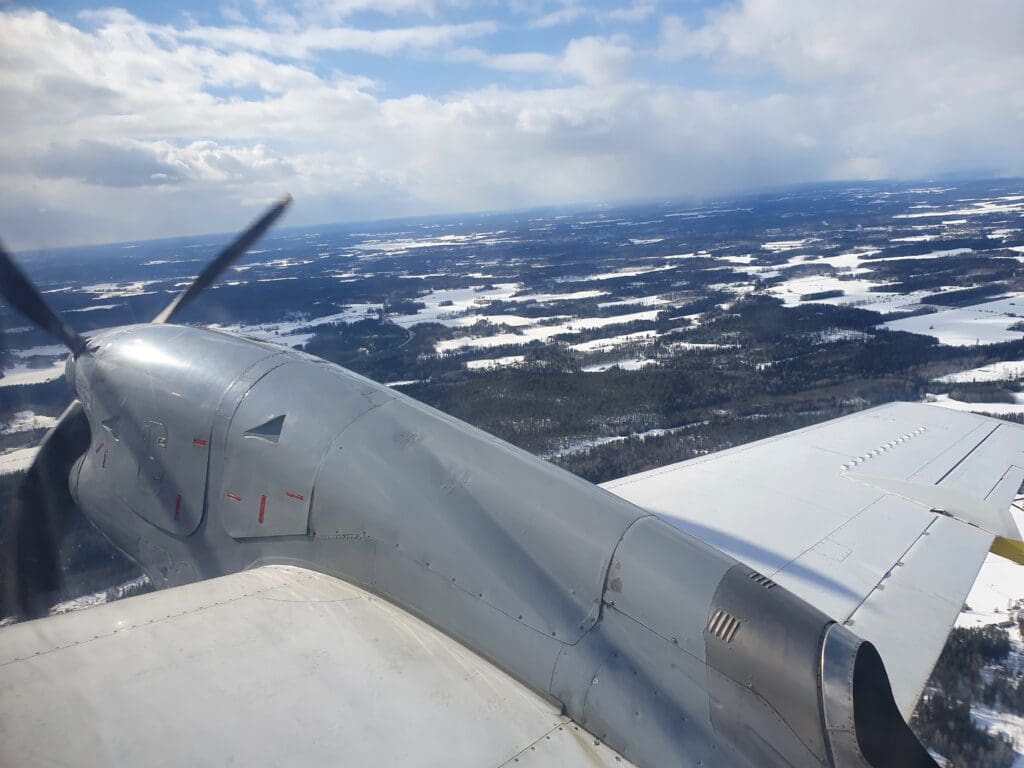
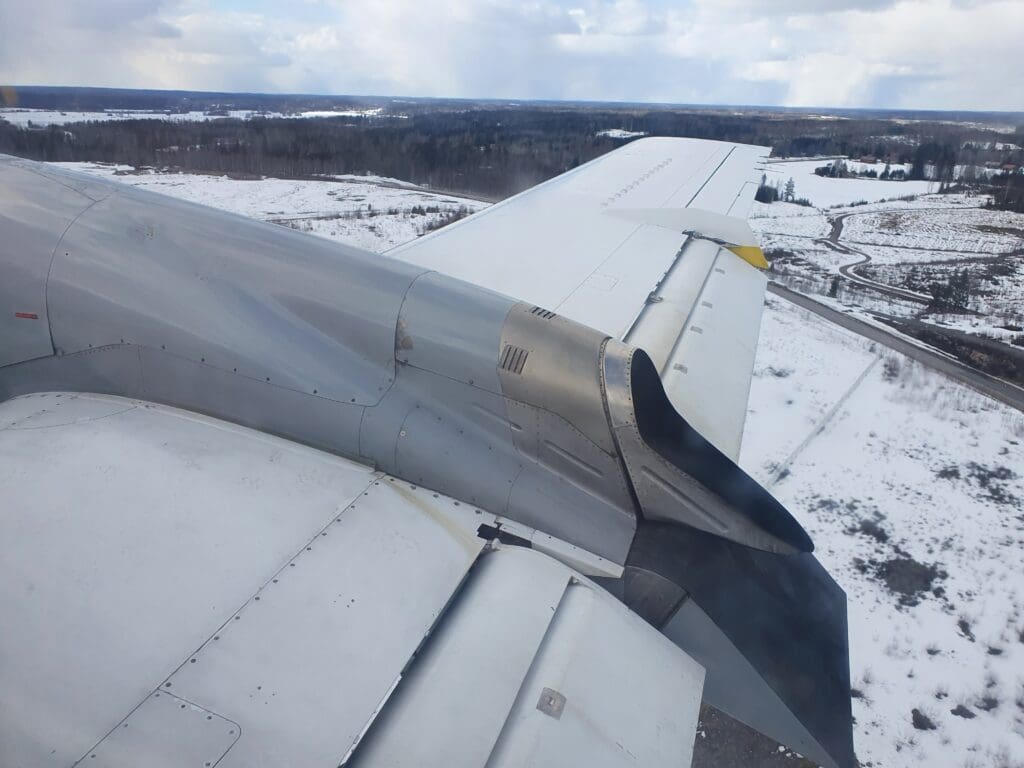
From Järvenpää, the aircraft crossed the E75 motorway which runs all the way from the town of Vardø in the Norwegian Arctic down to the Cretian town of Sitia (albeit with two sea crossings). With a wind blowing in from the west, that afternoon the Embraer would land on Helsinki Airport’s Runway 22R and so the aircraft made its way past Helsinki before turning around and heading back to the airport. As we turned back towards the airport, the flaps and landing gear were extended resulting in a fair amount of noise as the wind rushed past them. Below, as the Embraer neared the airport, the Finnish countryside could be seen as well as the town of Kerava before the aircraft darted over the perimeter fence and made a firm touchdown on the runway at 1442, 42 minutes after taking to the skies.
Once back on the ground, the Embraer decelerated rather rapidly and noisily before turning left and vacating the runway. At this point, the flight attendant performed a brief post-arrival announcement during which they welcomed all to Helsinki and thanked us for flying with Karhu Aero that afternoon. With Helsinki Airport covering a fairly large area, and seeing as Runway 22R is the furthest from the airport’s terminals, once we had vacated this a fairly long taxi was in store until we reached Terminal 1. After crossing Runway 22L, the turboprop made its way past Finnair’s maintenance hangars before reaching the terminals where all aircraft in the fleet of Finnair and its regional subsidiary, Nordic Regional Airlines, could be spotted.
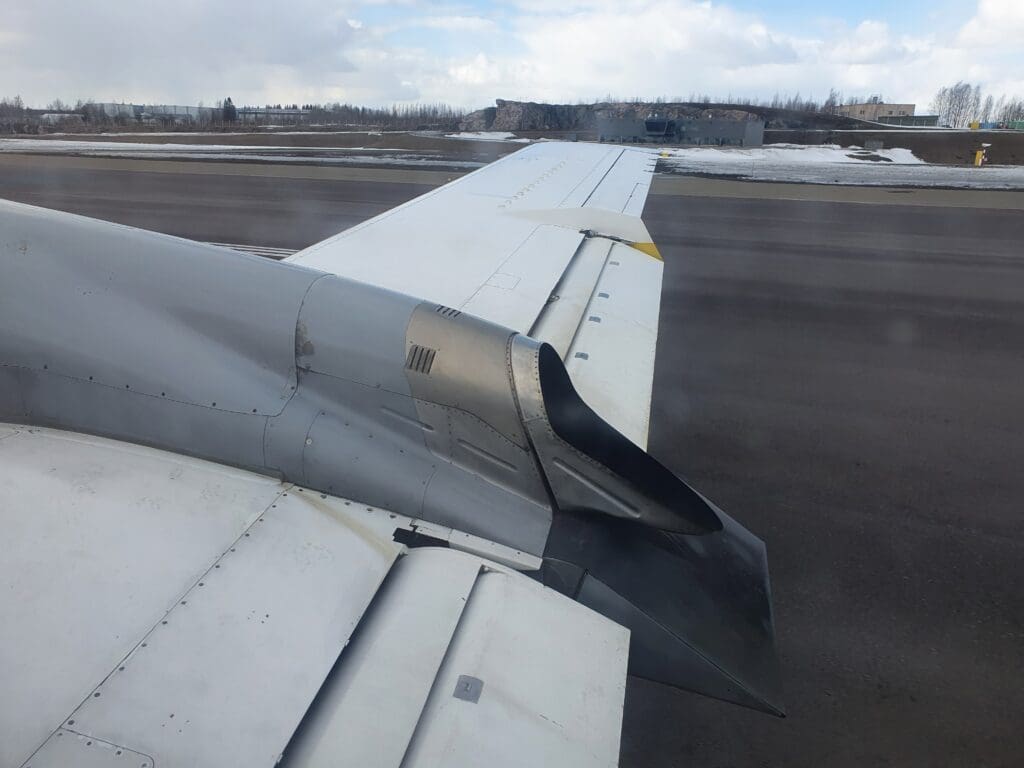
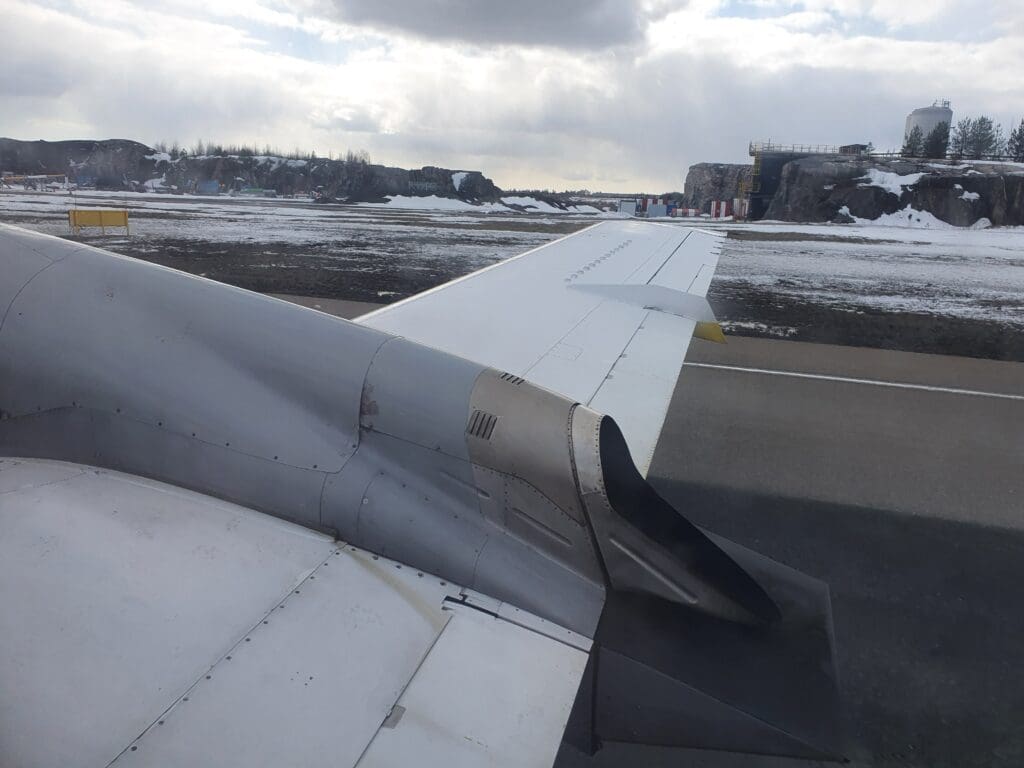
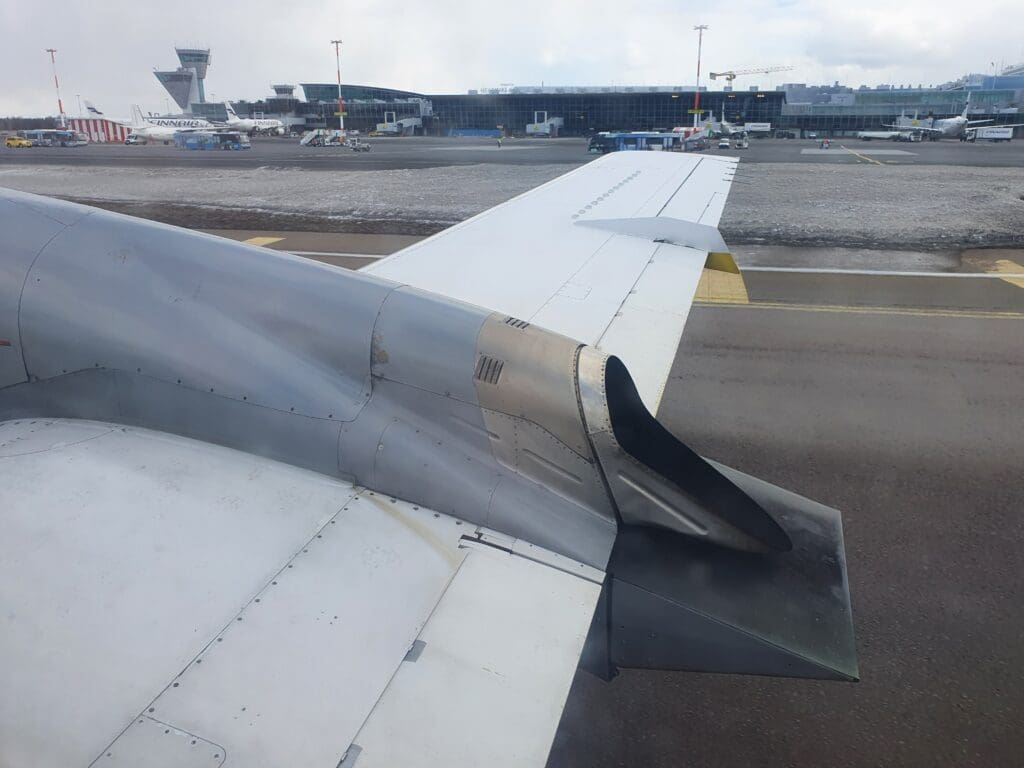
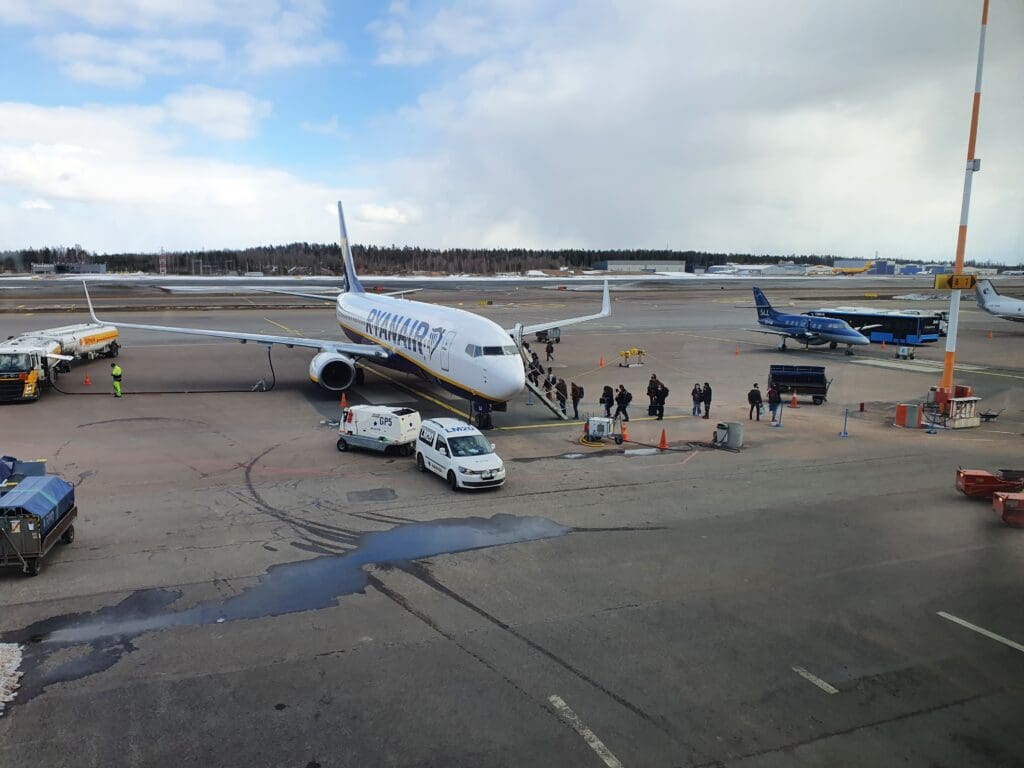
Around ten minutes after vacating the runway, the Embraer passed a Ryanair Boeing 737-800 bound for Brussels Charleroi before turning right and slowly pulling into Stand 6, located at the very end of Terminal 1. Without delay, as soon as the Embraer came to a halt, its two engines spooled down and the seatbelt signs were extinguished with a loud ding. However, that afternoon most passengers appeared to be in no rush to exit, with all remaining seated until the cabin door had been opened. Fortunately, this did not take long with disembarkation commencing around a minute after the aircraft had arrived on stand. After a short wait whilst I allowed those in front of me to disembark, I made my way to the front of the cabin and thanked the flight attendant before walking down the Embraer’s steep steps and trundling through the chilly afternoon air to the terminal building. During this short walk, the Jetstream 31 that would take me a cross to Savonlinna later that afternoon could be seen pulling into the neighbouring stand, its engines producing a deafening and relatively high-pitched squeal.
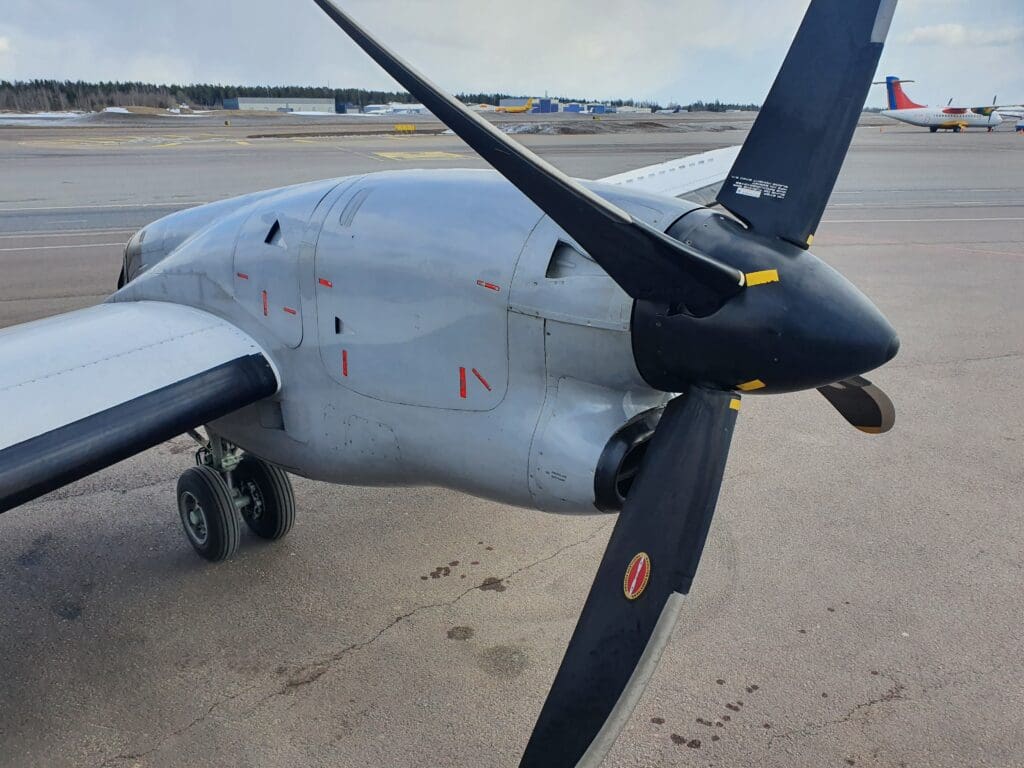
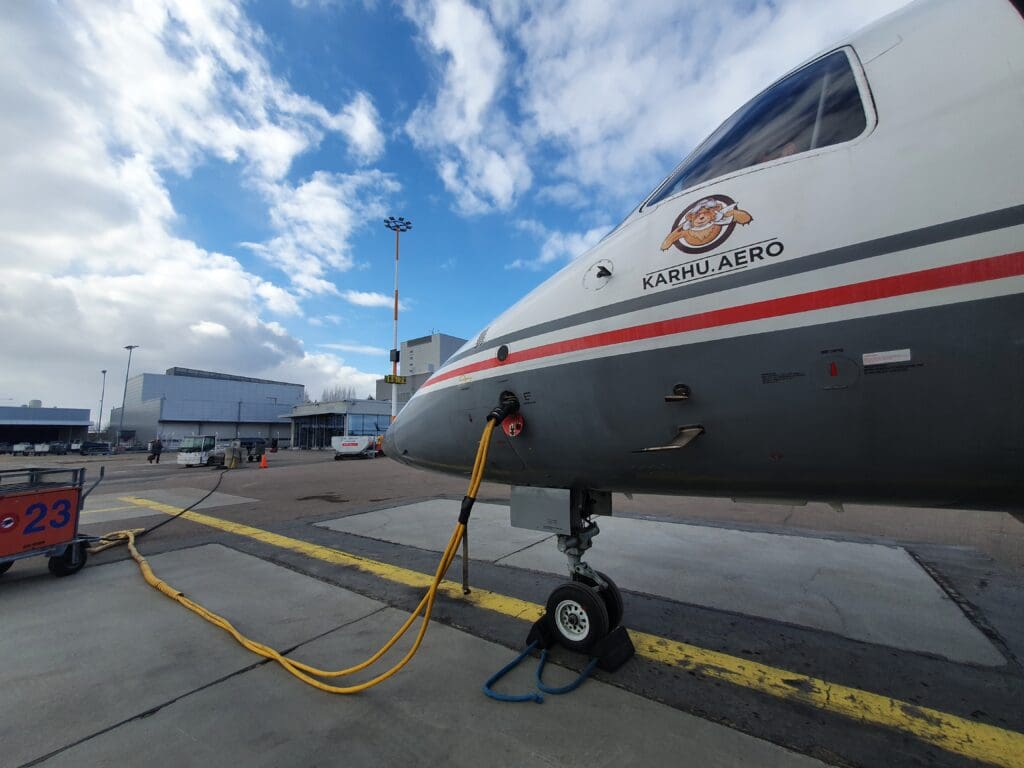
Once inside, I made my way up the stairs and into the shared airside arrivals and departure space of the terminal, following signs for baggage claim area A. Having arrived at the end of the terminal, a fairly long walk was in store until I arrived there; however, even by this time, the bags were yet to appear. Following a five-minute wait, the very small collection of bags from Pori emerged from the depths of the airport and I picked this up before making my way to the landside of Terminal 1. Seeing as both international and domestic flights utilise the terminal, after picking up my bag an army of staff was on hand to check my vaccination status or COVID test result, however after informing these staff that I had arrived from Pori, I was free to go without showing any QR code.
Summary
When compared to other transport options, my flight from Pori to Helsinki was hardly cheap, and, had I been heading to Central Helsinki and/or not taken the form of an aviation enthusiast, I would have most likely ended up taking the train. Nevertheless, I had a good experience that afternoon, with all staff members seeming to be friendly and welcoming, and I was positively surprised by the fact that a round of inflight service was conducted on the short flight. Despite the aircraft’s age, the cabin appeared to be in good shape and comfortable. Whilst I will be unlikely to fly between Pori and Helsinki again at any point in the near future, I had a good experience and was happy that I finally ticked the Embraer 120 off my ‘to fly list’.