
Flying the Rare Fokker 100: Hamburg to Riga with Carpatair
Background
For many, the 2022 summer travel season was synonymous with cancellations, long queues, delays and general chaos. In my personal experience, I ended up having four flights cancelled at short notice and spent plenty of time standing in security lines at airports across Europe. As is well reported, many airlines across the length and breadth of Europe faced severe difficulties in meeting the post-Covid uptick in passenger demand as holidaymakers attempted to jet off on summer holidays. Yet, with many airlines facing staff shortages, more carriers than ever have been forced to turn to damp and wet leasing in an attempt to prop up their own operations. A process which, in a nutshell, involves one airline borrowing an aircraft and its crew from another carrier.
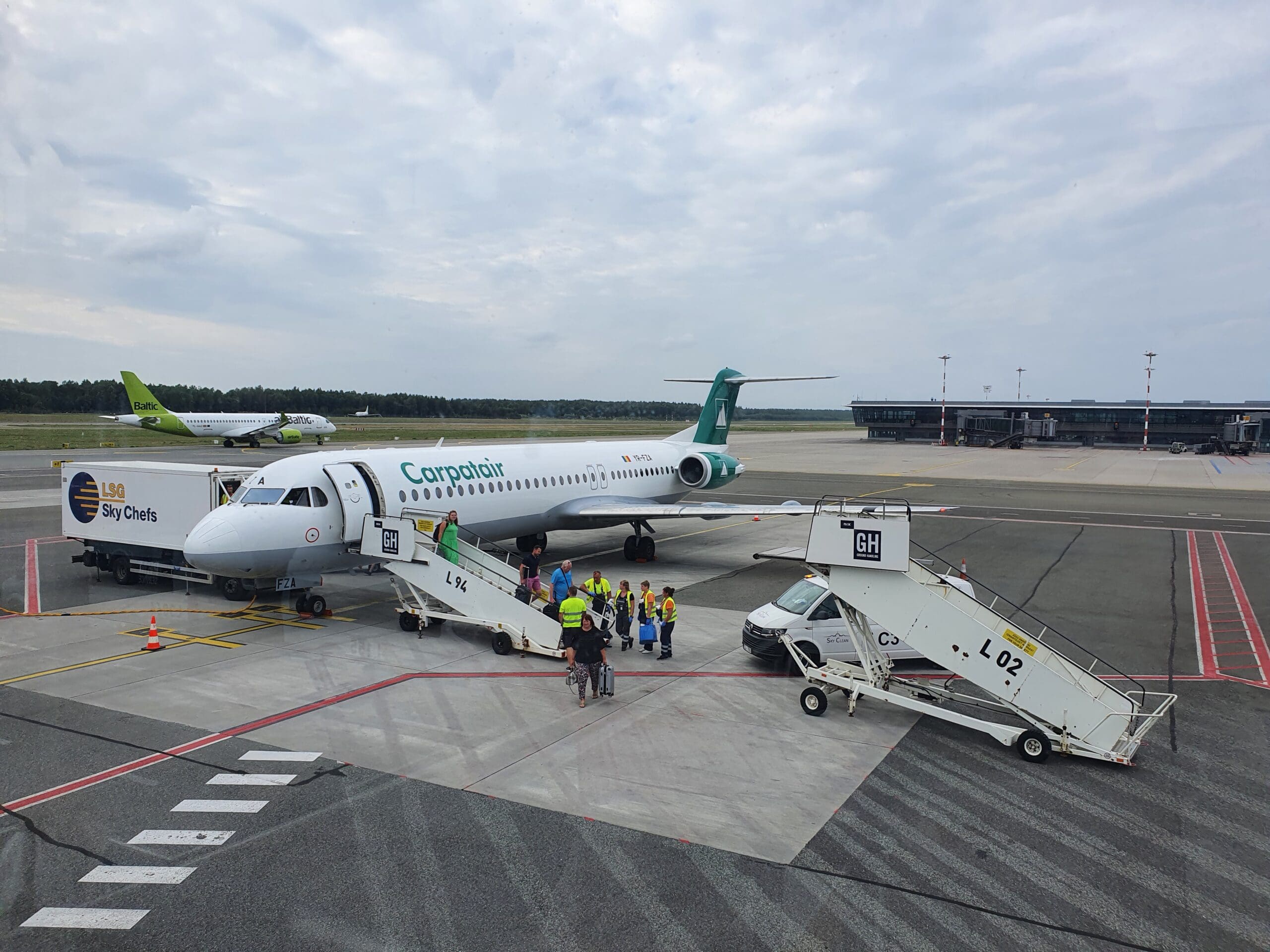
Up in the Baltics, Latvian low cost carrier airBaltic leased out a number of their Airbus A220s to German low cost airline Eurowings. However, indicating that this plan had backfired slightly, in late May 2022 it was revealed that airBaltic would call upon two ACMI specialists in an attempt to bolster their operations and avoid cancellations. Specifically, the carrier would utilise one Boeing 737-400 from Maltese carrier AirHorizont, in addition to one Airbus A319 and two Fokker 100s from Romanian airline Carpatair. With no scheduled Fokker 100 services in Europe, and with Boeing 737 Classics becoming increasingly rare, unsurprisingly this announcement caused a fair amount of excitement in the European aviation enthusiast community. Thus, I soon got to work searching for cheap ways that I could sample these rare aircraft. Unfortunately, initially I had little luck with all one-way and return itineraries involving the two rare types proving to be rather expensive. However, following a fair amount of searching, I managed to source a bargain £72.40. This would involve departing Hamburg on a Romanian Fokker 100 at 1440 on a Sunday afternoon in late August, arriving in Riga at 1700 local time. Following a short 1H20 stop in the Latvian capital, I would continue my journey onwards to Copenhagen onboard a Maltese Boeing 737-400, arriving at 1850. Without delay, I booked this via MyTrip, taking care not to inadvertently elect to purchase one of the many unnecessary extras offered through the site.
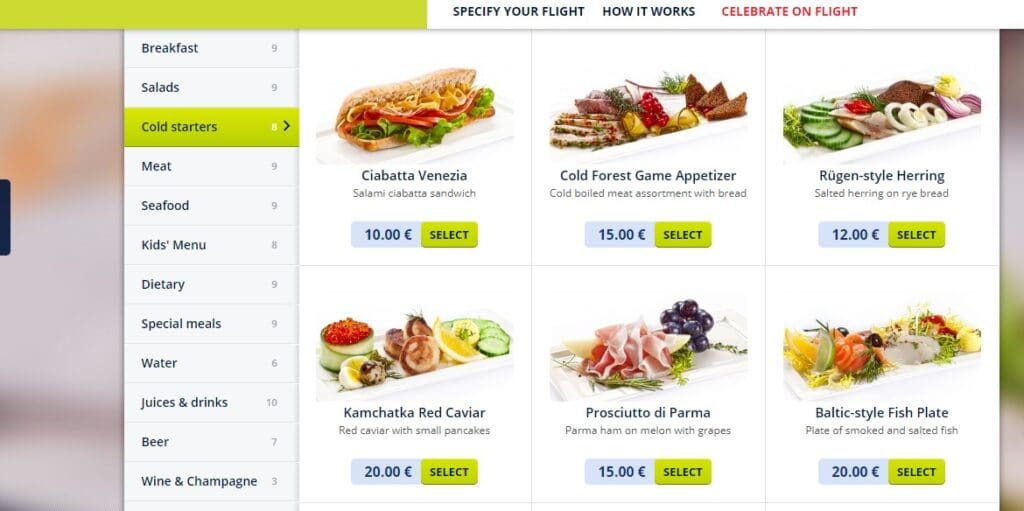
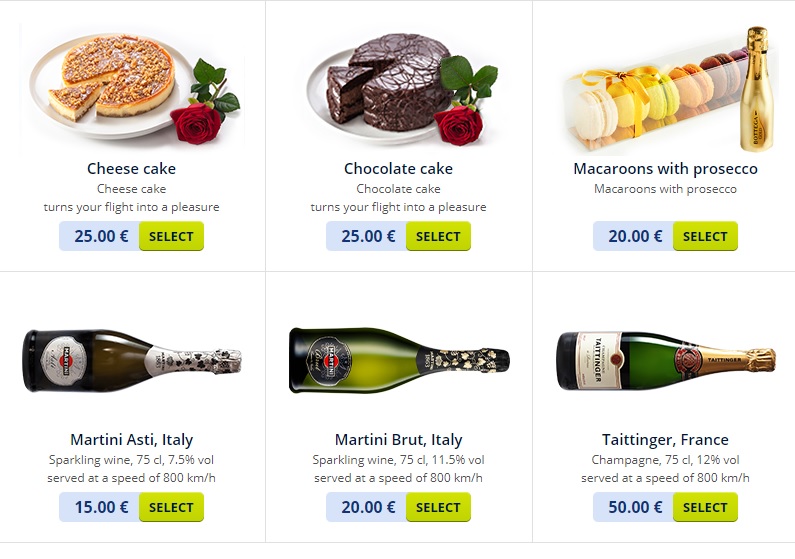
Whilst Carpatair once operated a reasonable network of scheduled services, the last of these was flown in 2014 and since then the Timisoara-based airline has specialised in charter operations. Admittedly, this was not to be my first time flying with the airline having previously flown onboard one of Carpatair’s Fokker 100s in August 2018 – coincidentally one day shy of exactly four years before this trip! This had involved a short jump across the North Sea from Amsterdam to Birmingham, with this service having been operated on behalf of KLM Cityhopper. As my flights with airBaltic approached, I took to their website to explore the pre-bookable refreshment options for my two flights, with the airline allowing passengers to choose from a rather impressive array of inflight delights up to 24 hours before departure. These ranged from celebratory items such as an entire cake for €25, a 750ml bottle of Tattinger champagne for €50, or a bouquet of seventeen roses for €56.91. However, not seeing my rides on the two vintage airliners as being worthy of such extravagant novelties, I instead turned to examine the food options – these including meals, snacks and beverages suitable for breakfast, lunch, dinner and everything in between. Impressively, these were far from your typical low cost carrier offerings, with uninviting pasta, chilli con carne or all-day breakfast nowhere to be seen. Instead, at least on paper, most dishes for sale would have not been out of place in a top restaurant with options including Kamchatkan caviar, Corsican sea bass and honey-glazed duck breast – with most dishes priced at either €20 or €25. Seeking to try some local cuisine, I decided to go for the Latvian-style chicken breast. Upon selecting this I was then presented with an interesting feature that allowed me to select the exact side, dessert and drink that I wished to have. With eight sides and six different desserts on offer, although I could only choose from four different drinks – still water, white wine, red wine or a small can of Britvic orange juice.


Check-In
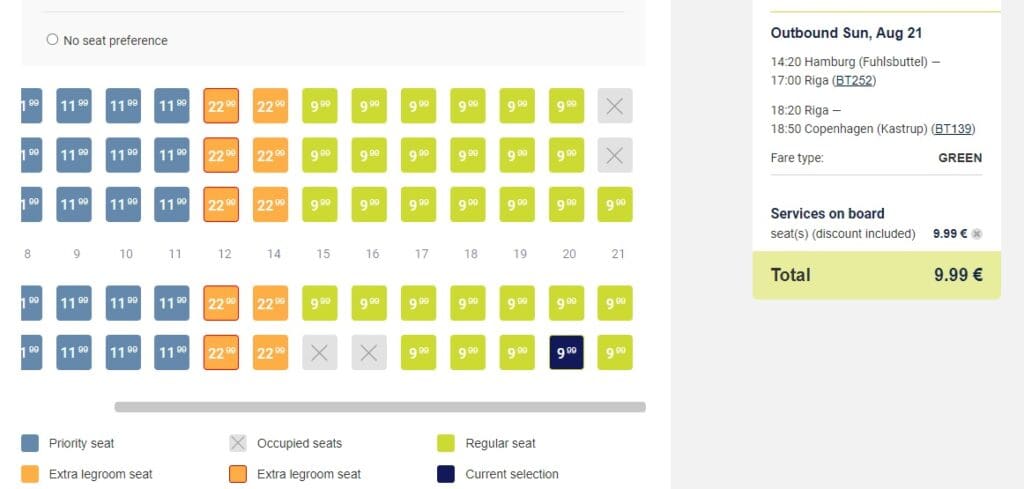
With five days to go until departure, an airBaltic email landed in my inbox inviting me to check-in for my flight. Seeing as I had already selected seats online, I was in no major rush to check-in although were I to have forgotten to do so, I would have ended up paying airBaltic’s extortionate Ryanair-esque €35 airport check-in fee. Hoping to find an airBaltic app compatible with my Samsung phone, but unsurprisingly it didn’t take me too long to find this via the Google Play store. However, upon downloading this, I found that this could only be used by members of the carrier’s loyalty program, airBaltic Club. Deciding to sign up in exchange for a €10 voucher, once done, I signed into the app and loaded my booking details. Heading to the online check-in page, I was presented with a range of the ‘standard’ pre-flight options such as seats and additional luggage, however skipping past these I managed to check-in and receive my two boarding passes without issue within a few taps.
The Journey
As often seems to be the case in Germany, Hamburg Airport is well connected to local public transport, with an S-Bahn station conveniently positioned below the terminal building. Whilst this would have been my first choice option if travelling to the airport from the city centre, given the reasonable August weather and having a fair bit of time on my hands, I opted to make the journey to the airport on foot. Staying around 1.7 kilometres away from the airport in the neighbourhood of Fuhlsbuttel, walking to the airport would prove to be neither a difficult task. That weekend, I spent my Saturday night in an Airbnb room located within an elderly landlord’s apartment. Whilst the room was comfortable enough for my short stay, the near-constant surveillance by the landlord to ensure that I was not destroying their property ensured that when morning came, I was ready to move on. Whilst my flight would not depart until 1440, I had decided on a leisurely morning at the airport, making the most of the good weather by sunning myself on the outdoor observation terraces and watching the comings and goings of aircraft. Thus, following a quick shower, I packed my bags and made my way out of the apartment onto the quiet and tree-lined morning streets just after 0800.
After leaving the apartment, I made my way through the pleasant and peaceful neighbourhood before arriving at a bridge fifteen minutes later. There, a small cluster of planespotters could be seen armed with expensive camera equipment. Given the good weather, and seeing as I was in no rush to get to the terminal, I decided to join them for half an hour and watched as five airliners whizzed past moments before touching down on Runway 23. Following my short stay, I then continued onwards towards the airport and a short time later the terminal’s relatively unimpressive facade appeared and I soon entered the terminal via the doors on the ground floor level.
.
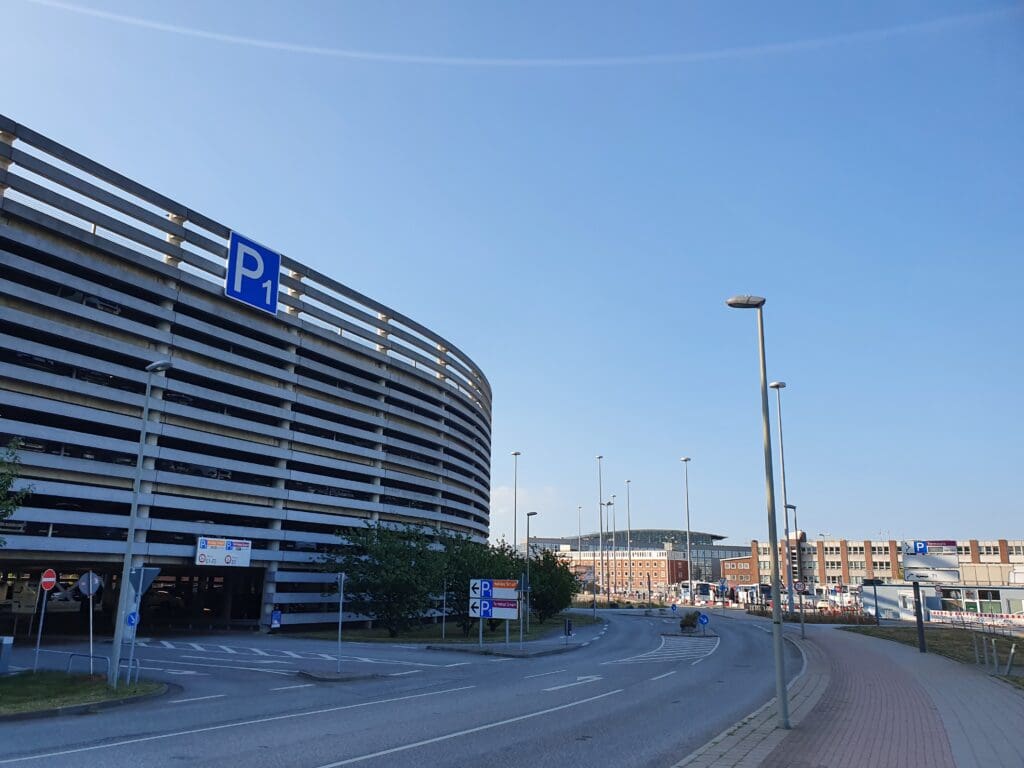
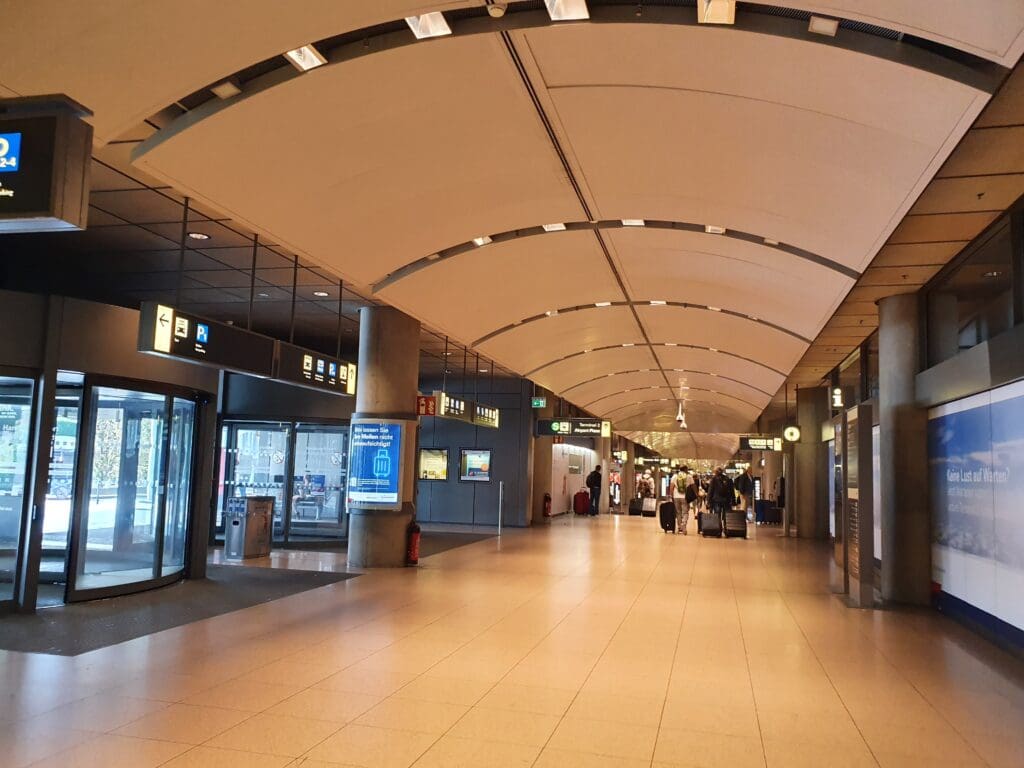
Once safely inside the terminal building, I was greeted by the myriad of shops that constitute the Airport Plaza, a semi-shopping centre-like corridor with a good number of cafés and shops for passengers and non-passengers alike to enjoy. One of the many things that Germany does better than the UK is including real supermarkets in their airports whose prices are not significantly marked up compared to branches elsewhere. In Hamburg Airport’s Airport Plaza, this comes in the form of a decent-sized branch of Edeka which sells most things you could want and that morning seemed to be particularly popular with airport staff members.
In terms of layout, Hamburg Airport is home to two terminals that are logically named Terminal 1 and Terminal 2. However, admittedly, these names are slightly misleading with the ‘terminal’ simply referring to two very similar check-in halls located a short walk from one another. Once passengers have checked in, both those who have checked in in Terminal 1 and Terminal 2 pass through the same security checkpoint and share the same space in the airside area of the terminal. At the time of my flight, I found most carriers operating services to and from Hamburg to make use of Terminal 1, whilst Austrian Airlines, British Airways, Brussels Airlines, Lufthansa, Pegasus Airlines, SAS, Sundair and Swiss utilised Terminal 2. In terms of design, I found both of these two check-in halls to be spacious, modern and bright, whilst the entire airport seemed to be in a relatively clean condition except for the toilets. Meanwhile, complimentary wifi is provided throughout the airport which I found to work well for the duration of my stay. Other than the filthy toilets, my only complaint about the landside portion of the terminal was the apparent lack of plug sockets and charging points.
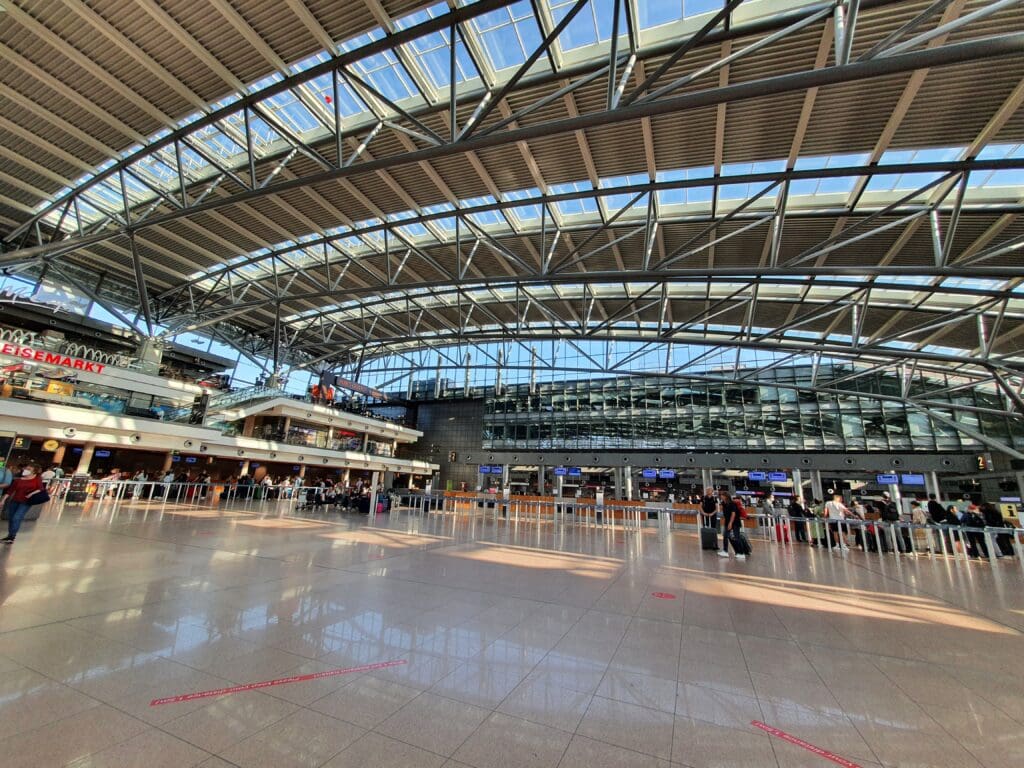
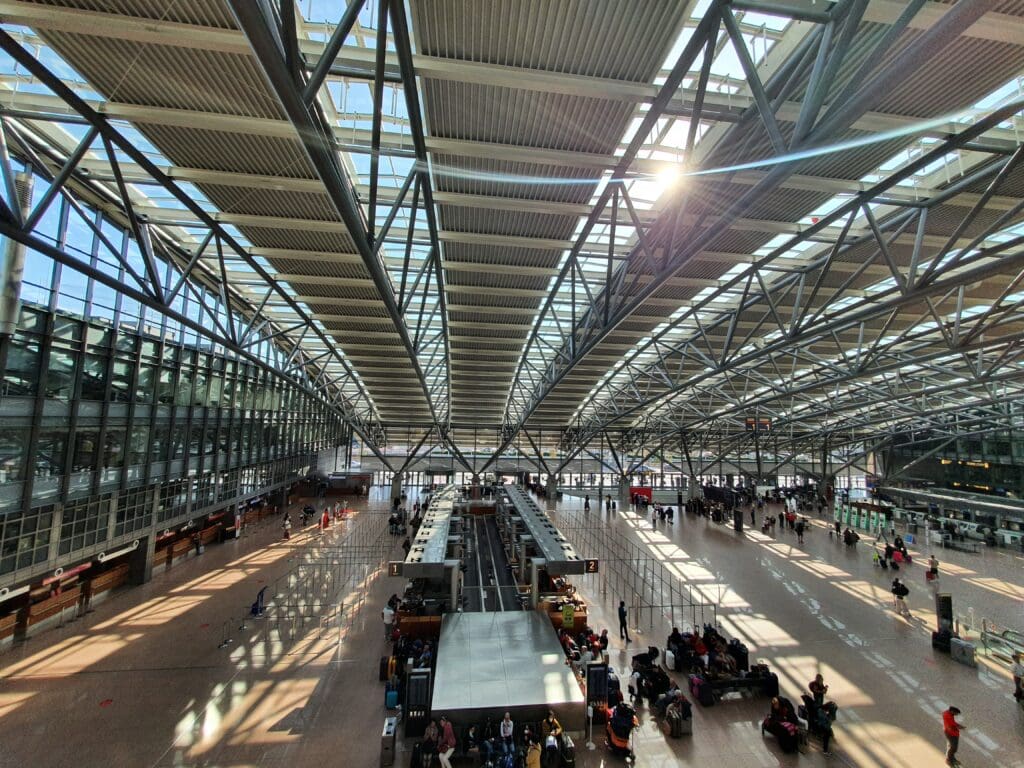
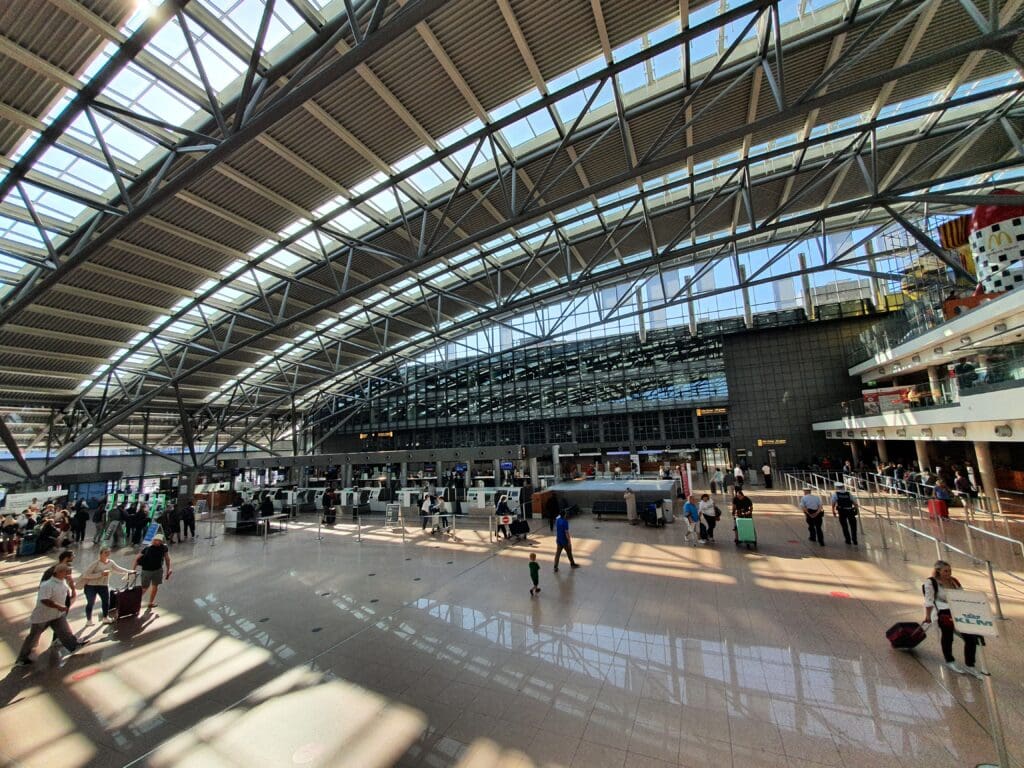
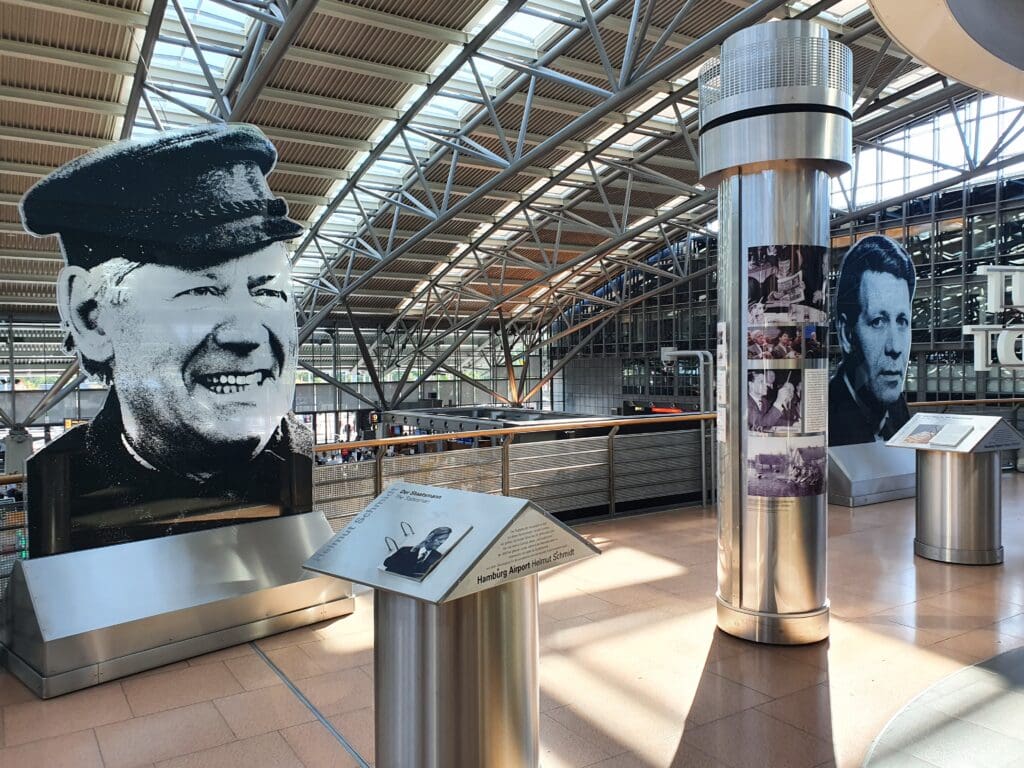
At that time in the morning, with plenty of morning and early afternoon flights, a fair number of passengers could be seen milling about. Once I had had a walk around, I decided to head up two flights of escalators to the local branch of McDonalds that sits above Terminal 1’s check-in area and next to one of the airport’s two observation decks. Purchasing a coffee, with this in hand I then made my way out into the morning sunshine. Whilst I found this to offer a good view of the action on much of the apron, unfortunately, all photos must be taken through glass which appeared to be filled with smudges in many places and in need of a good clean. Nevertheless, this was still a much appreciated space and I thoroughly enjoyed starting my journey by watching a variety of aircraft as I soaked up the sun. Being a London-based aviation enthusiast, outside, there wasn’t much in terms of unusual aircraft types or airlines that I would not be able to see back in the UK. However, one thing that I did find particularly fascinating about Hamburg Airport was the incredible diversity of movements – throughout the weekend I spotted aircraft that ranged in size from the minuscule twin-seat Scheibe SF 25 motor glider, right up to an Emirates Airbus A380! This is something that thanks to plenty of red tape and restrictions on general aviation at many airports, isn’t a situation that you can come across in the UK!
Once spotted out, I decided to head back down the escalators and make my way to the airside portion of the terminal. A short time later, I arrived at the security check, which at 1120, appeared to be fairly busy with a snaking line of passengers waiting to pass through this. After scanning my mobile boarding pass on one of the barriers, this opened up and I was directed towards one of the queues. After around fifteen minutes of standing in line, I was greeted by a lively security staff member and parted with my possessions before entering the full body scanner. Fortunately, despite the wait, the team of security staff worked rather efficiently and I was able to pass through the checkpoint within about a minute or so.
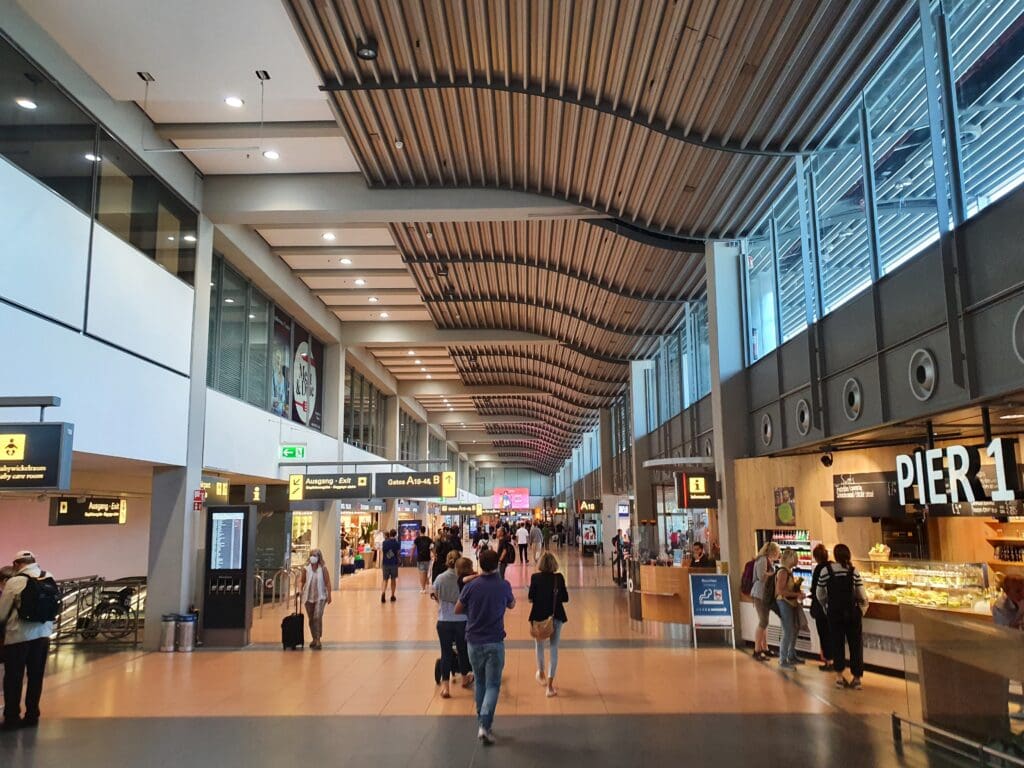
Once through security, I arrived in the terminal’s airside central atrium which is home to a few shops on the main level, four restaurants on the floor above this (although only two of these were open at the time) and two lounges on the top floor. Still full from breakfast and not fancying stopping to do any pre-flight shopping, I continued onwards and made my way into the main airside area. This portion of the terminal is laid out in a fairly straightforward manner that consists of a long corridor complete with a mixture of cafes and shops on one side of this, and gates on the other. At the airport, the gates appear to be in four clusters – A, B, C and D, with the latter located beyond an immigration checkpoint and thus serving only those flights to destinations outside of the Schengen area. Meanwhile, other non-Schengen gates could be found dotted about the terminal sitting behind immigration checkpoints. Whilst a good variety of shops are on offer, unlike in the landside portion of the terminal, there did not appear to be any budget options when it came to shops or eateries and thus those wanting to purchase anything airside in Hamburg Airport ought to be willing to pay the usual inflated airside prices.
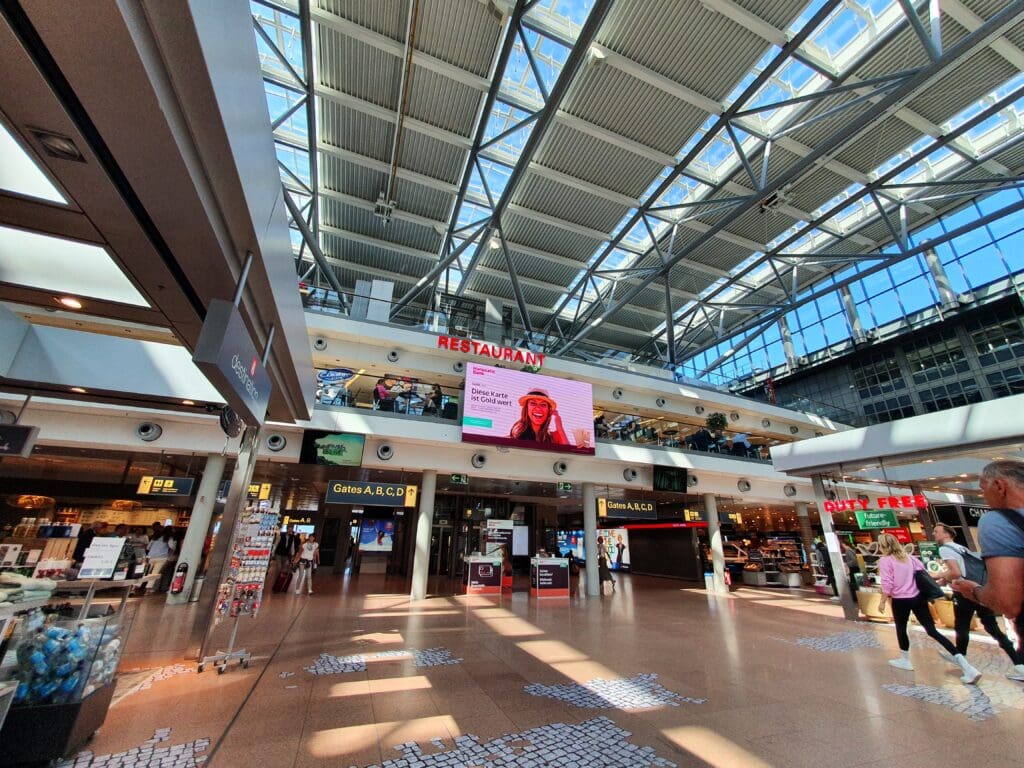
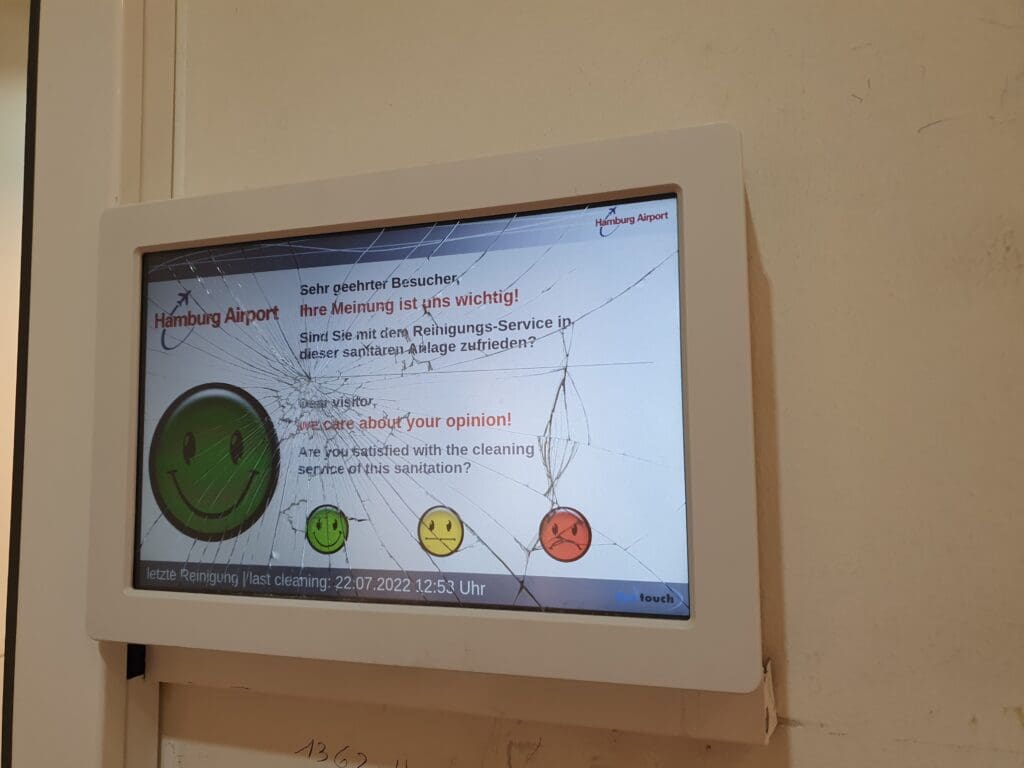
Given the queues at security, I was not particularly surprised to see that the terminal appeared to be fairly busy that lunchtime. Fortunately, plenty of space could be seen for passengers to wait, with a variety of seating, some more comfortable than others, on offer. Continuing with the positives, I found the terminal’s complimentary wifi to work well for the duration of my stay, whilst a reasonable number of plug sockets and USB ports were offered for passengers looking to charge their devices. Meanwhile, a good view of the action outside could be had through large windows on offer at many of the terminal’s gates, whilst most of the terminal appeared to be clean and in a presentation condition. Unfortunately, this did not extend to the toilets that I visited which to my surprise appeared to be in a fifty and decrepit state, filled with graffiti and an omnipresent unpleasant and overbearing stench.
With my flight set to depart Riga at 1250 local time and arrive in Hamburg at 1320, a little after the inbound flight’s departure time, I opened up Flightradar24 to check the status of the flight. Unfortunately, this revealed that the Fokker was yet to take to the skies and did not do so until a little over thirty minutes after its scheduled departure time. Given my short connection time in Riga and with no alternative options to get me to Copenhagen in time for my onward flight to London at 2300, I was a little concerned. Whilst I did briefly examine alternative options to get back to London, there was little point in worrying and the most likely scenario would be that unless the flight was particularly heavily delayed, the onward Copenhagen service would likely be held – especially if there were multiple connecting passengers. Thus, I tried to put the thought of the worst-case scenario to the back of my mind and turned my attention to the world outside. Whilst I waited, a fairly regular stream of movements could be seen coming and going, although I failed to spot any particularly unusual aircraft, with flights heading off to destinations across Europe from Ireland in the west to Turkey in the east.
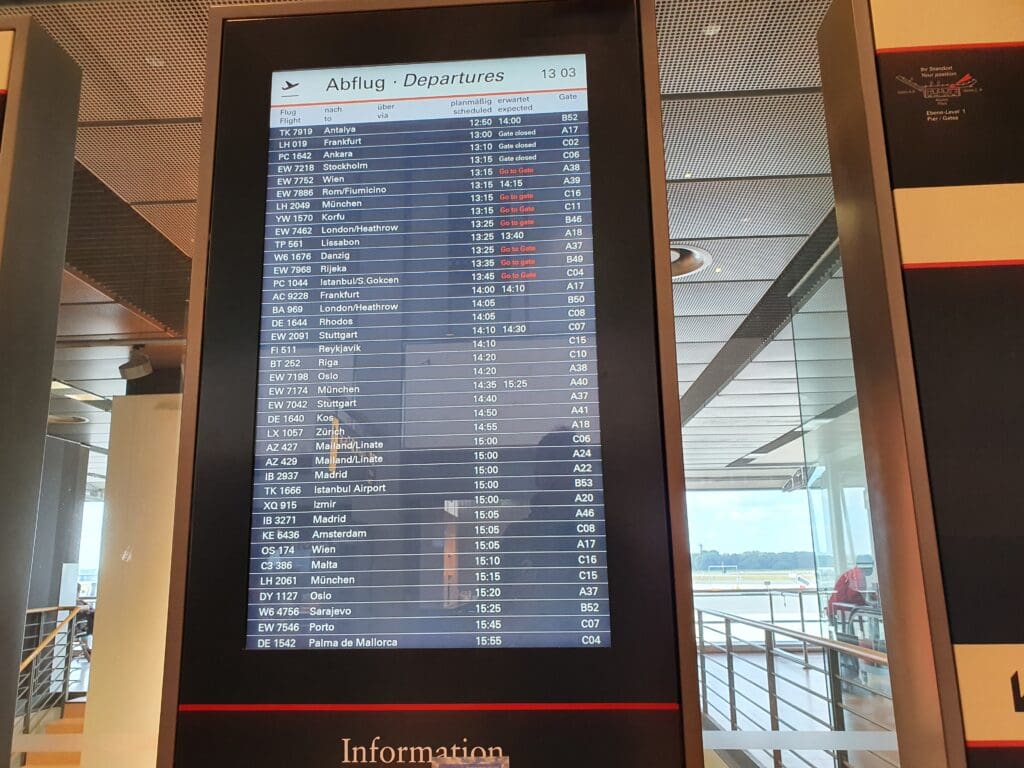
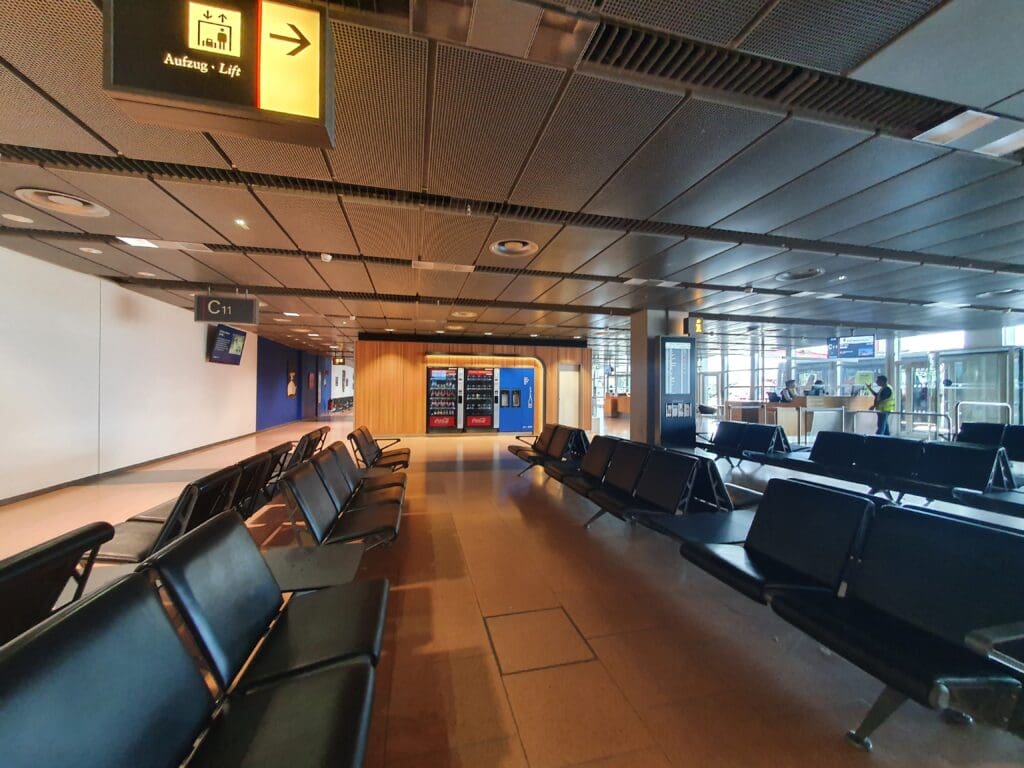
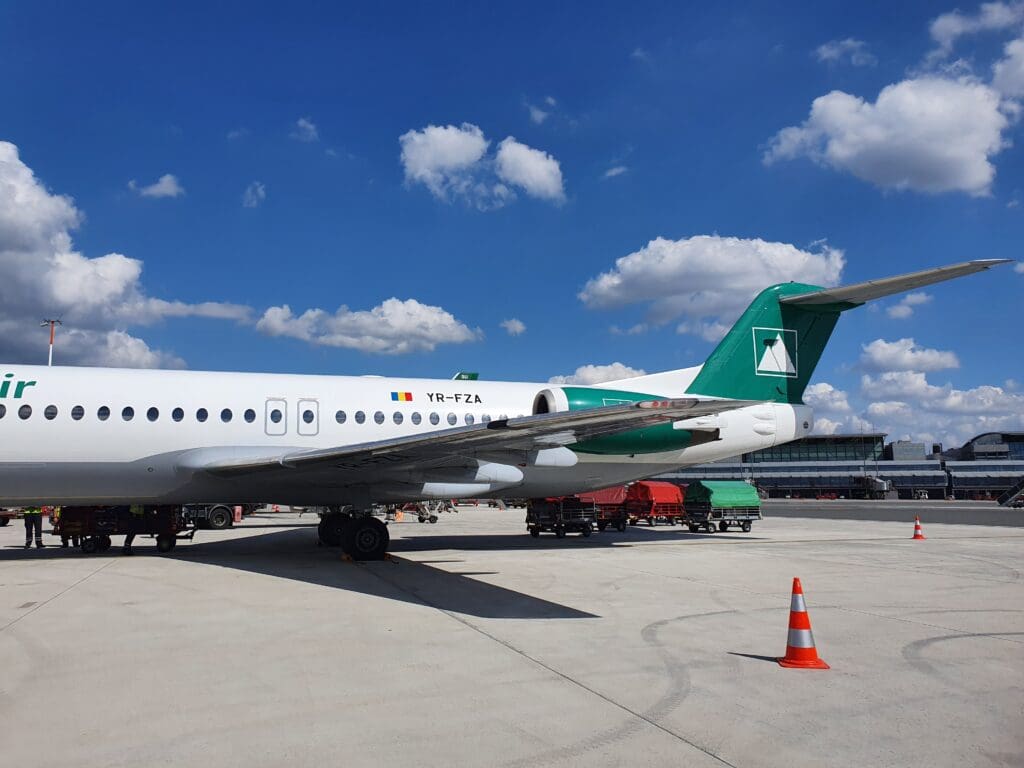
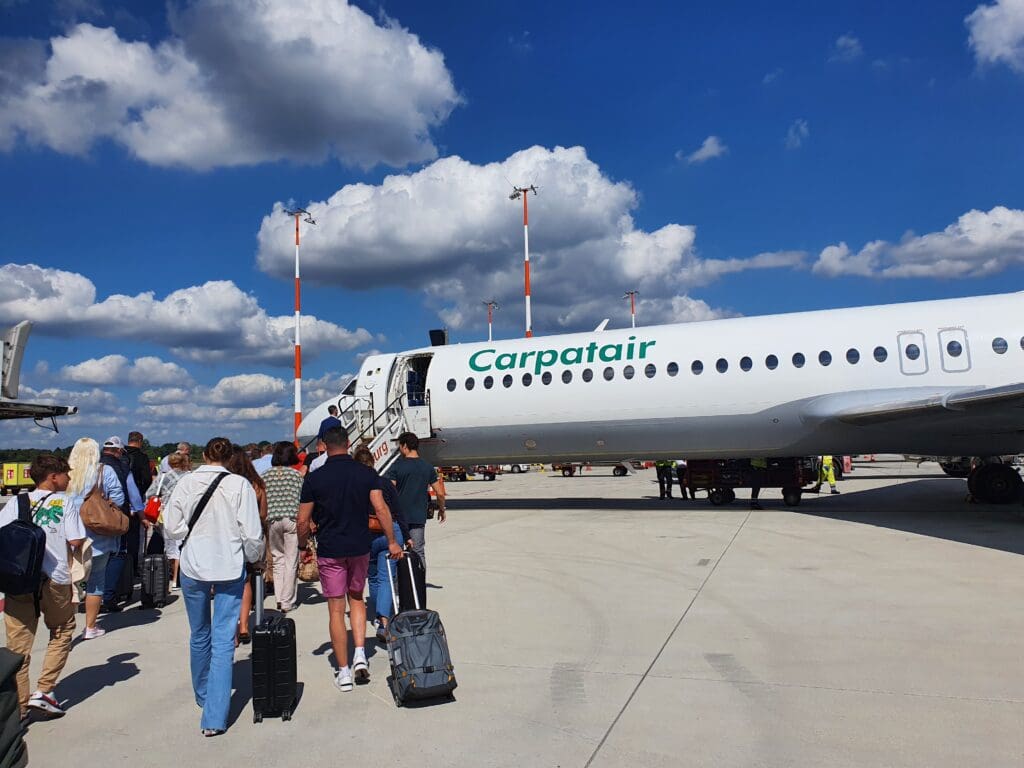
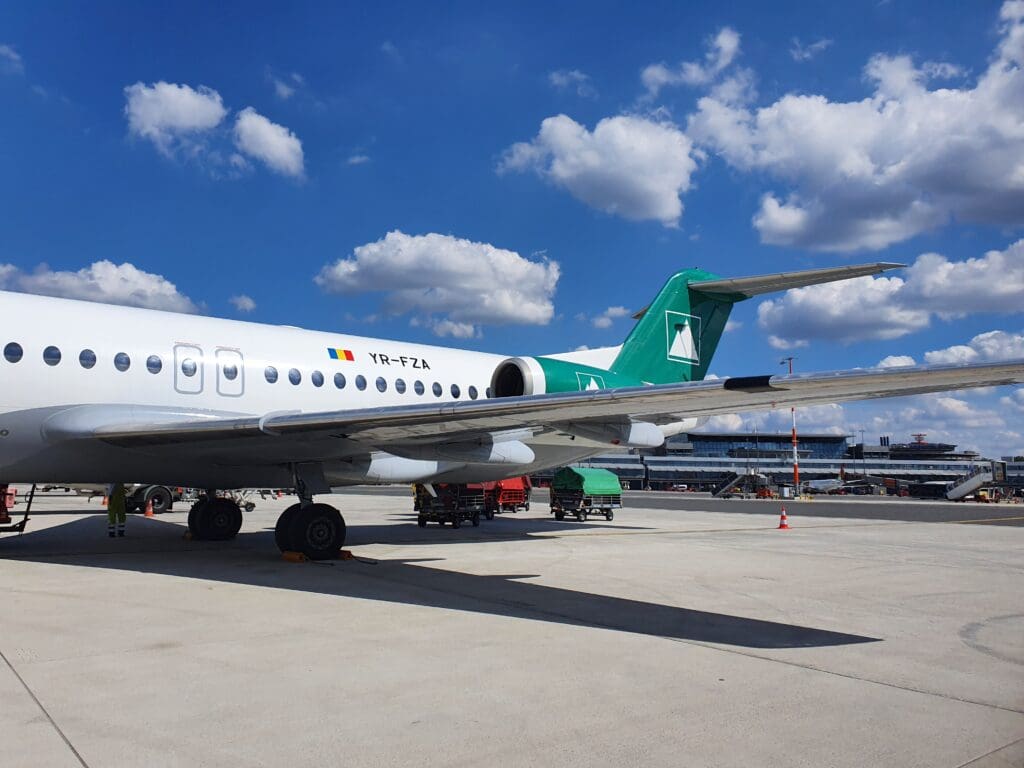
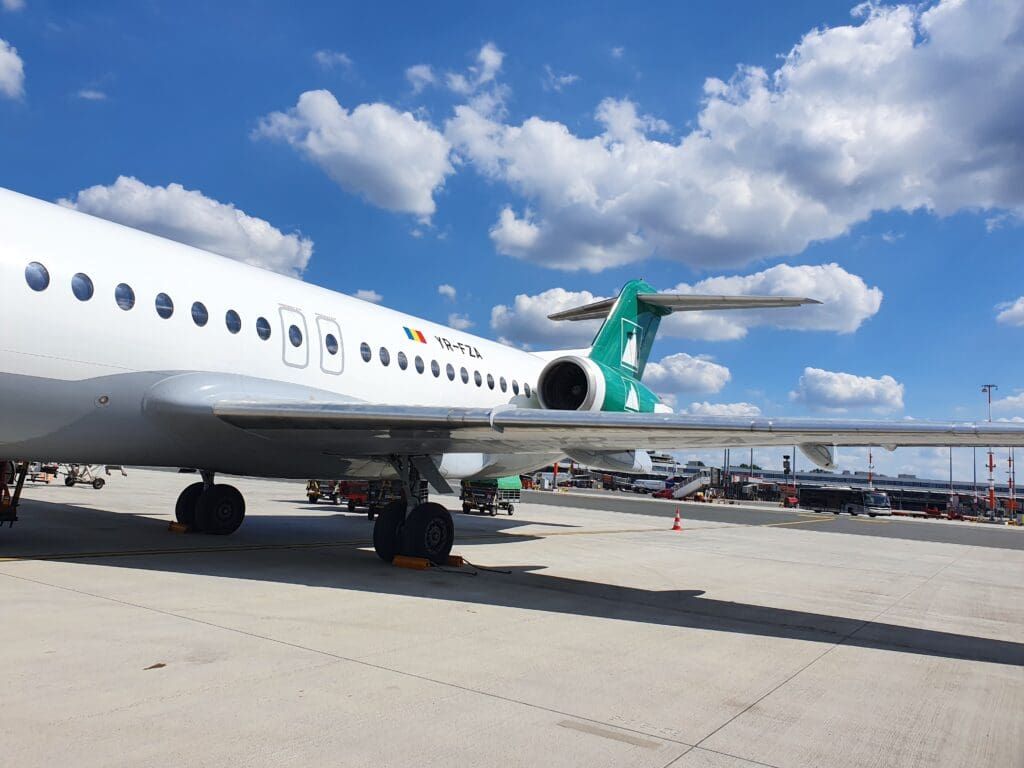
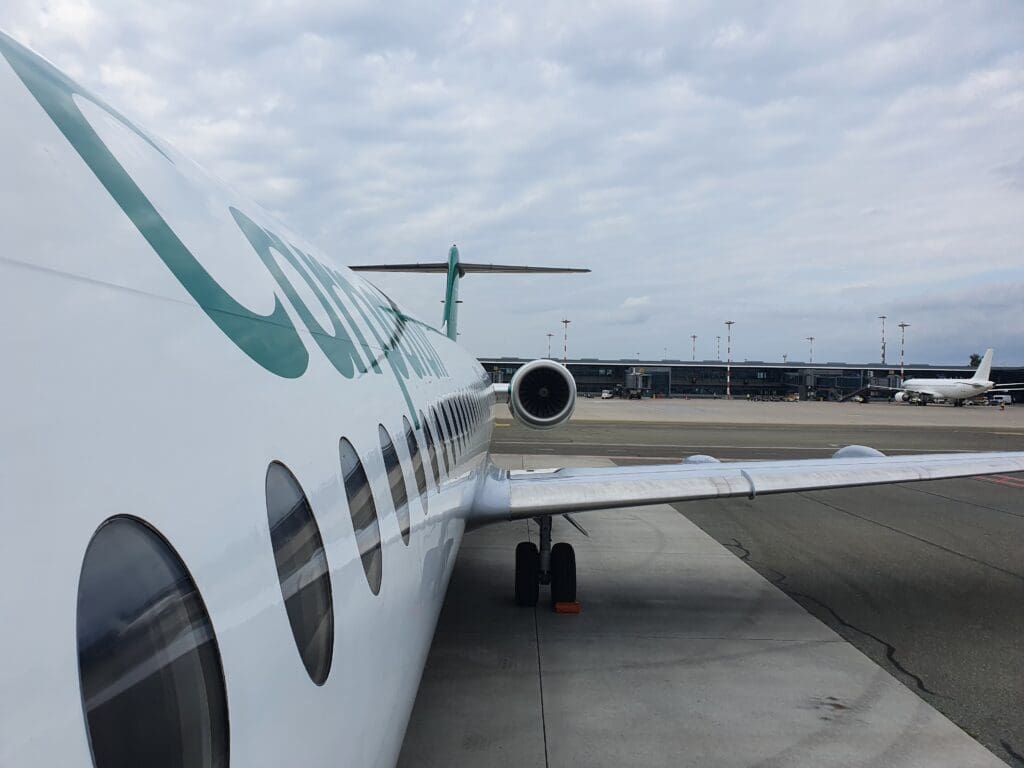
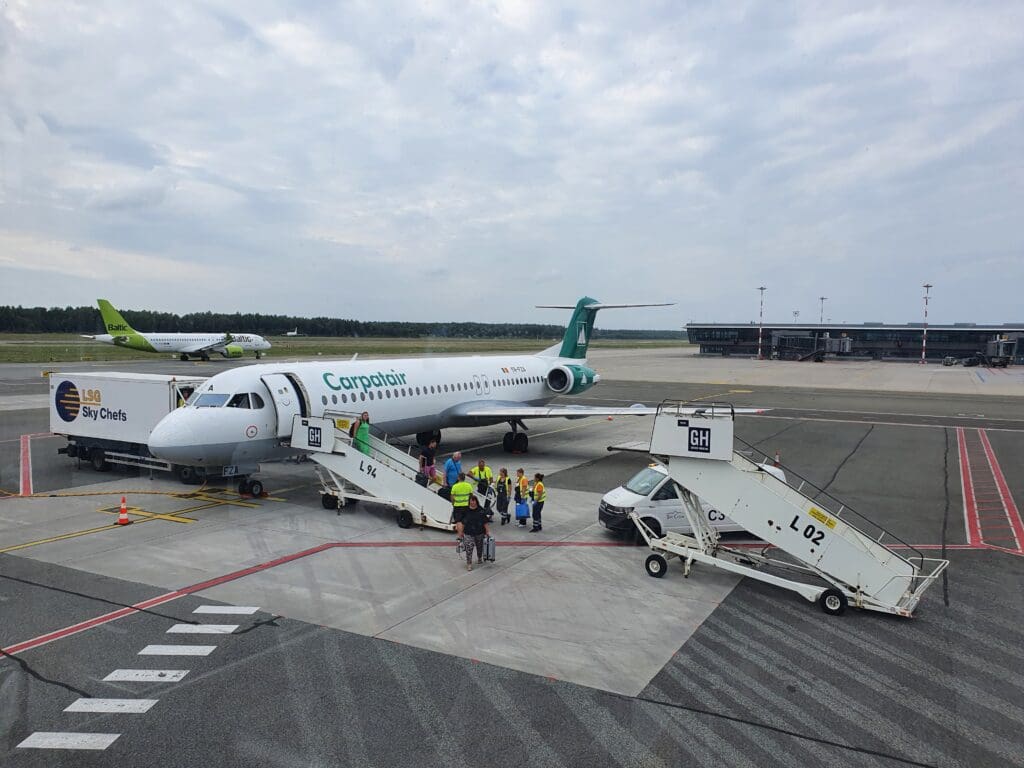
With an hour to go until the flight’s scheduled departure time, I decided to head to my flight’s gate. A quick check of the departure boards revealed that passengers would be required to assemble at Gate C10 – a bus boarding gate on the ground floor level of the terminal. Making my way downstairs, this appeared to be a pleasant and quiet area, with plenty of seating and plug sockets available. At that time, whilst a fair number of passengers could be seen waiting, there did not appear to be enough to fill the Fokker 100’s 100 seats. That said, being the only flight between Hamburg and Riga that day and with still plenty of time to go until departure, I was not too confident that the flight would end up departing Germany nearly empty. Having previously flown on Carpatair’s YR-FKA, that afternoon I was very pleased to see that the Fokker operating the Hamburg rotation would be YR-FZA. Manufactured at Fokker’s facility in the southeastern corner of Amsterdam Schiphol, this particular jet took to the skies on its maiden flight in May 1992 and was thus a little over thirty years old at the time of my flight. Following testing, its Dutch registration of PH-EZC (now worn by a KLM Cityhopper Embraer 190) was removed and replaced with the American registration of N1416A. Sporting the distinctive old polished metal (livery?) of American Airlines, the Fokker was ferried across the Atlantic and soon pressed into service shuttling passengers across North America. There the aircraft remained in service for over eleven years before being placed in storage at the Mojave Air and Space Port in October 2003, with the last Fokker 100 retired from service with American Airlines the following year. Fortunately, after several months, the Fokker found a new home and received the Canadian registration of C-GKZD and in March 2004 the aircraft entered service with the Montréal based low cost carrier Jetsgo. However, almost exactly a year after the aircraft’s delivery, the aircraft fell into bankruptcy and consequently, the Fokker was returned to its homeland with the French registration F-WQVS, with Fokker Services taking responsibility for the jet. In December 2005, the aircraft was brought into the Carpatair bubble, soon working for the airline’s Moldovan subsidiary Moldavian Airlines with the registration ER-FZA. In July 2010, the aircraft was placed onto the Romanian aircraft register as YR-FZA and operated for Carpatair before returning to Moldova in 2013 for a two-year stint in the country. In February 2015, the aircraft was returned to Carpatair for whom it has operated ever since. In the week before my flight, airBaltic had really been getting their money’s worth from Carpatair and this Fokker had been flying almost non-stop each day, with the jet connecting Riga with Bergen, Billund, Copenhagen, Gothenburg, Hamburg, Helsinki, Oslo, Stavanger, Tallinn, Trondheim and Vilnius, covering an impressive total of over 20,880 miles – roughly equating to the distance of a round trip between Riga and Auckland!
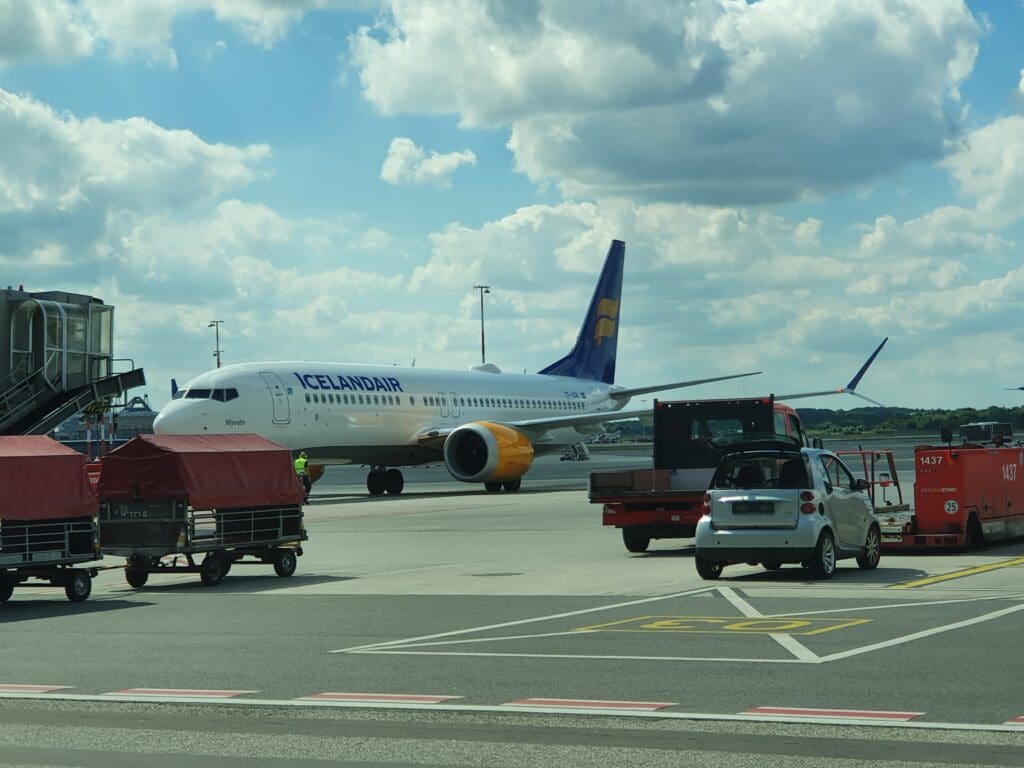
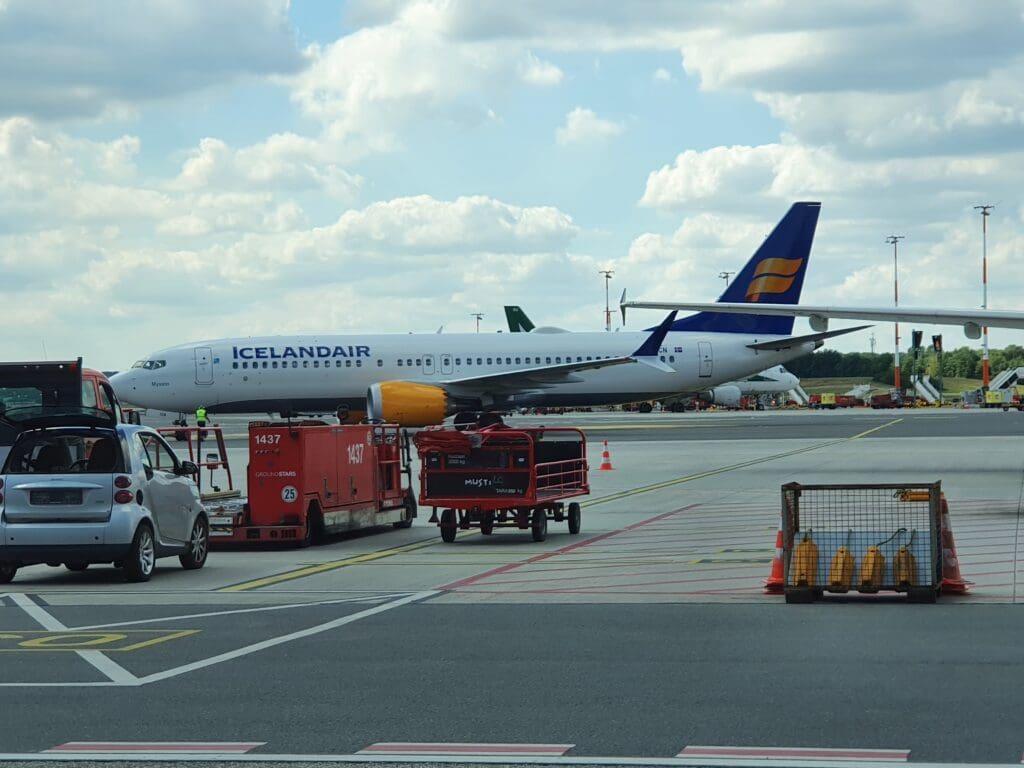
As was to be expected, as time passed more passengers began to arrive at the gate and this ended up becoming rather crowded. Following a short trans-Baltic flight, at 1351 the Fokker 100 touched down on German soil, eleven minutes behind schedule. Serving to give some hope that the flight to Riga would not be particularly heavily delayed, at 1355 a gate agent arrived and a short time later a bus pulled up directly outside the terminal building. Just after 1400, the gate agent announced in German and English, inviting all passengers to proceed forward for boarding. Joining the short queue, that, perhaps having been unaware of the late arrival of the inbound aircraft, had already formed, it wasn’t long before I scanned my boarding pass on the scanner and made my way outside and onto the bus. Once safely inside the bus, another wait was in store as it was decided that the two buses would be filled at the same time before making their way out to the aircraft in tandem.
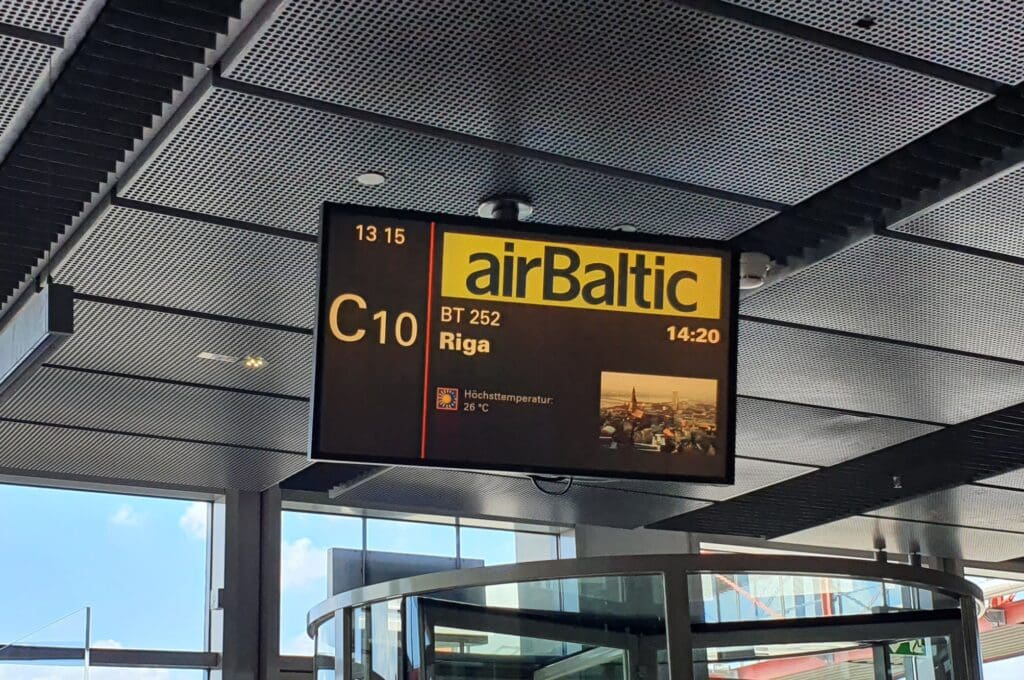
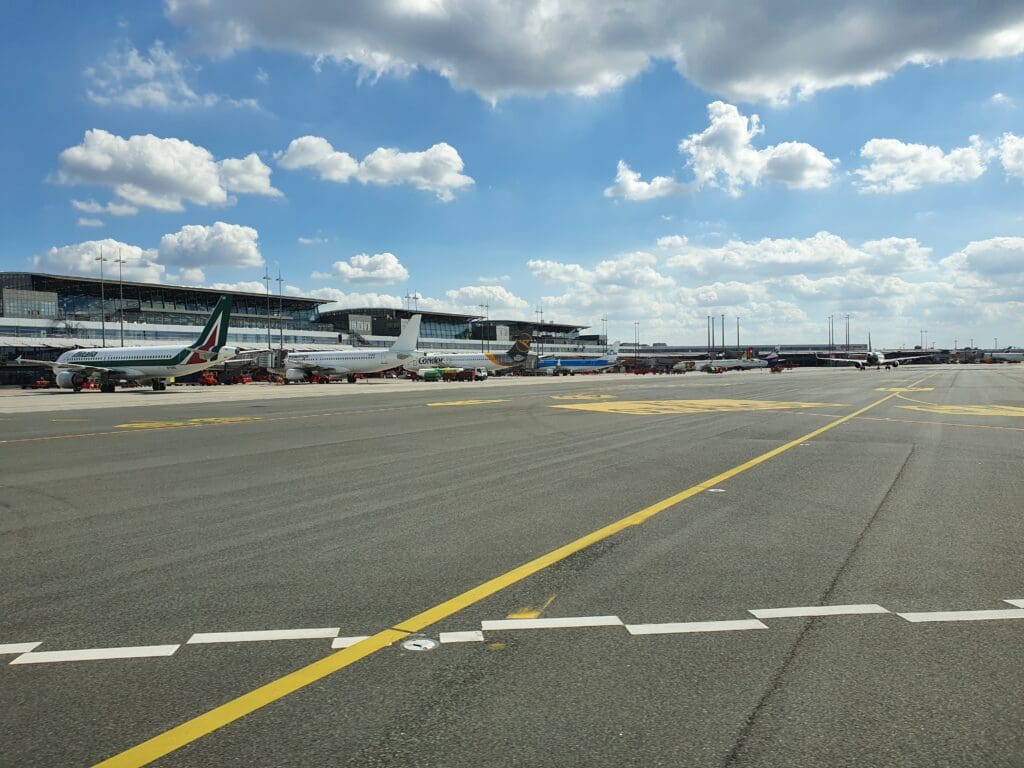
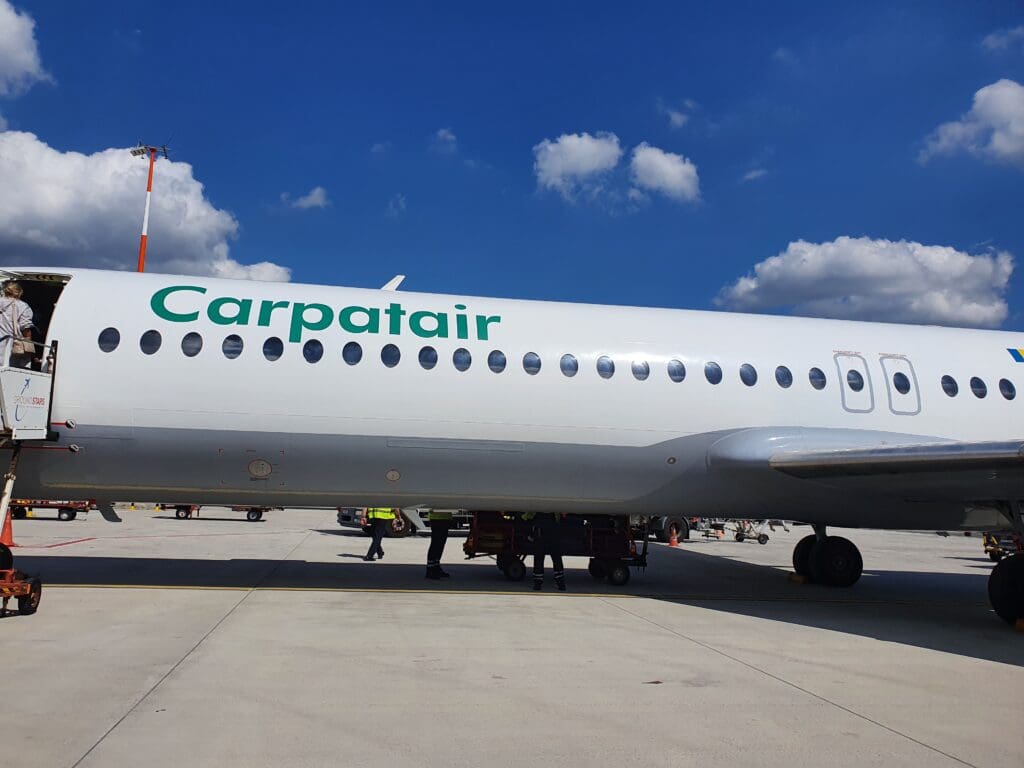
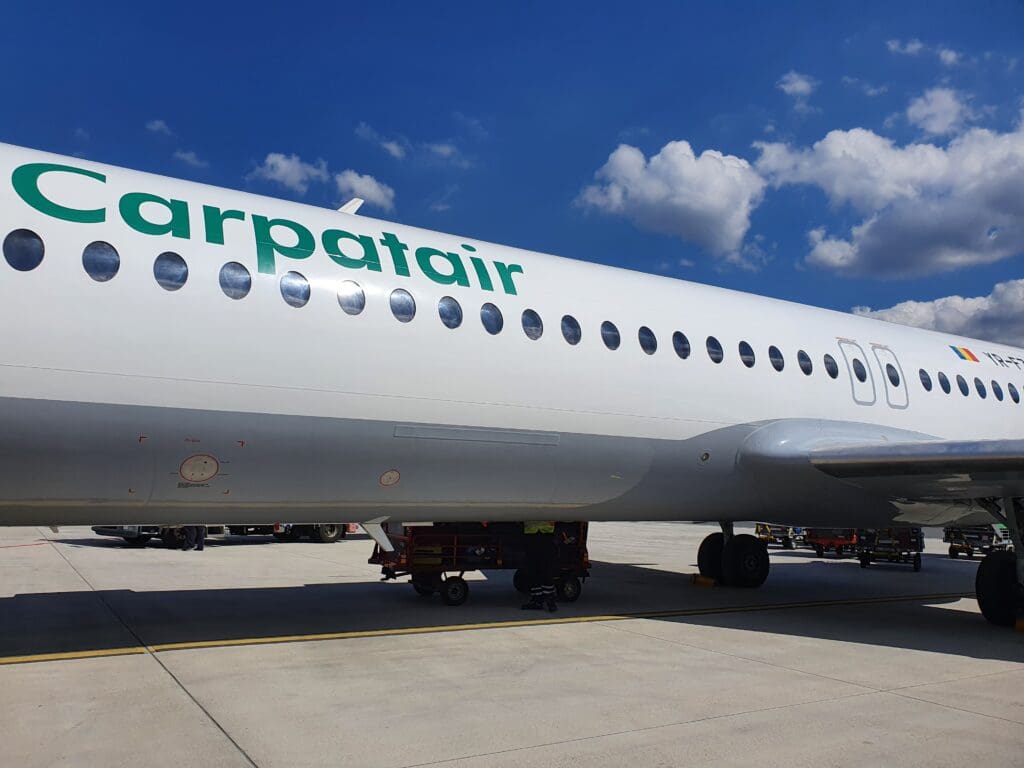
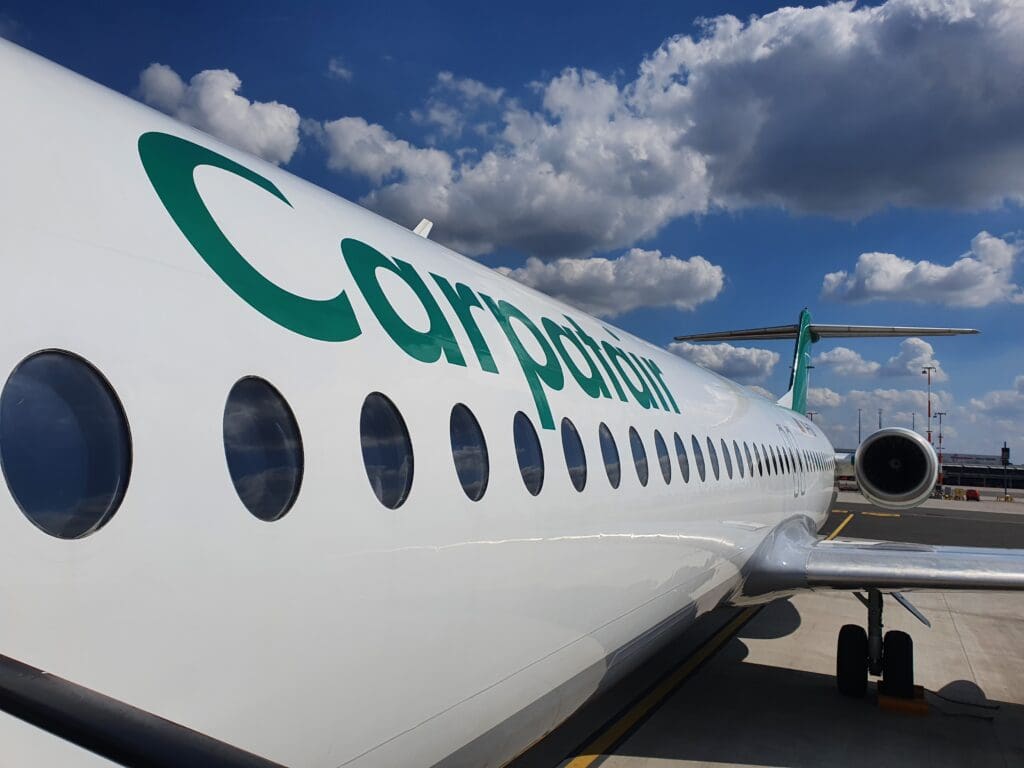
At the flight’s scheduled time of 1420, the last of the Riga-bound passengers had made their way from the terminal and onto the waiting bus. At this point, the driver received a thumbs up from the gate agent and closed the doors before pulling away from the terminal and trundling down the flight line. Following a short pause to allow for an arriving Lufthansa Airbus A321 to taxi past, the bus continued its journey across the apron and towards the distinctive green and white Fokker 100. That afternoon, this was basking in the warm afternoon sunshine at stand 58 where it was parked next to an Alitalia liveried ITA Airways Airbus A320. No more than three minutes after leaving the terminal, the bus came to a gentle halt near the foot of the airstairs that had been placed up to the front of the aircraft; however, a few more minutes of waiting was in store before boarding commenced. Slightly worryingly, it appeared that passengers’ bags from the inbound flight were still being unloaded indicating that it would be some time before the aircraft would be ready to head off to Latvia.
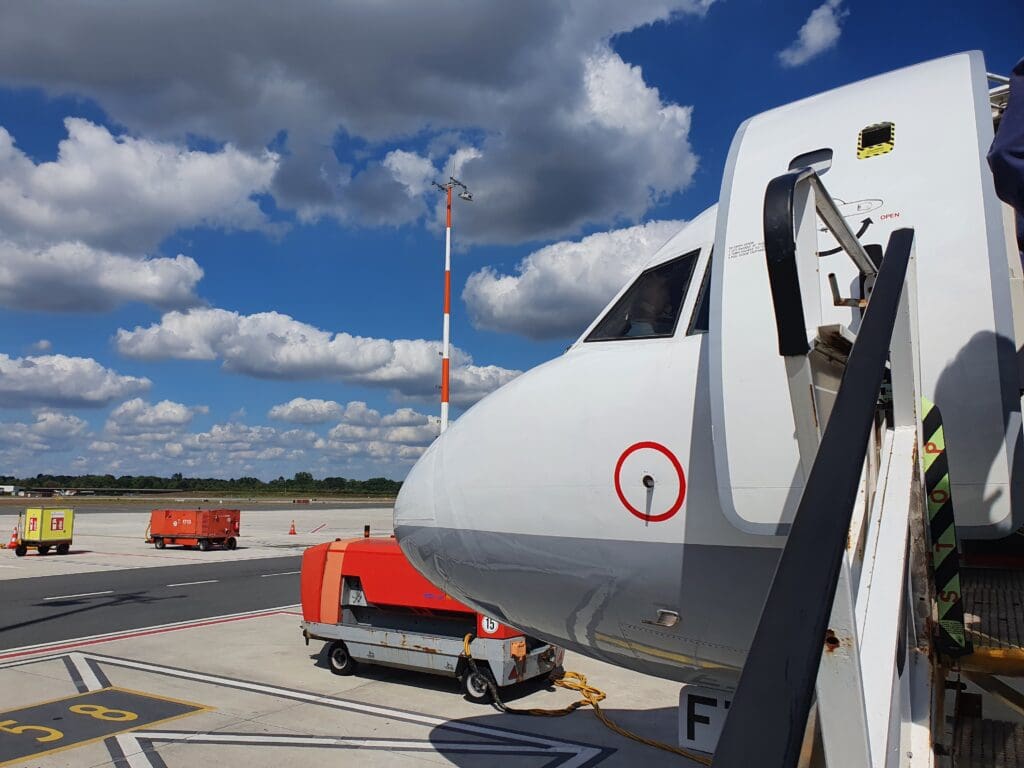
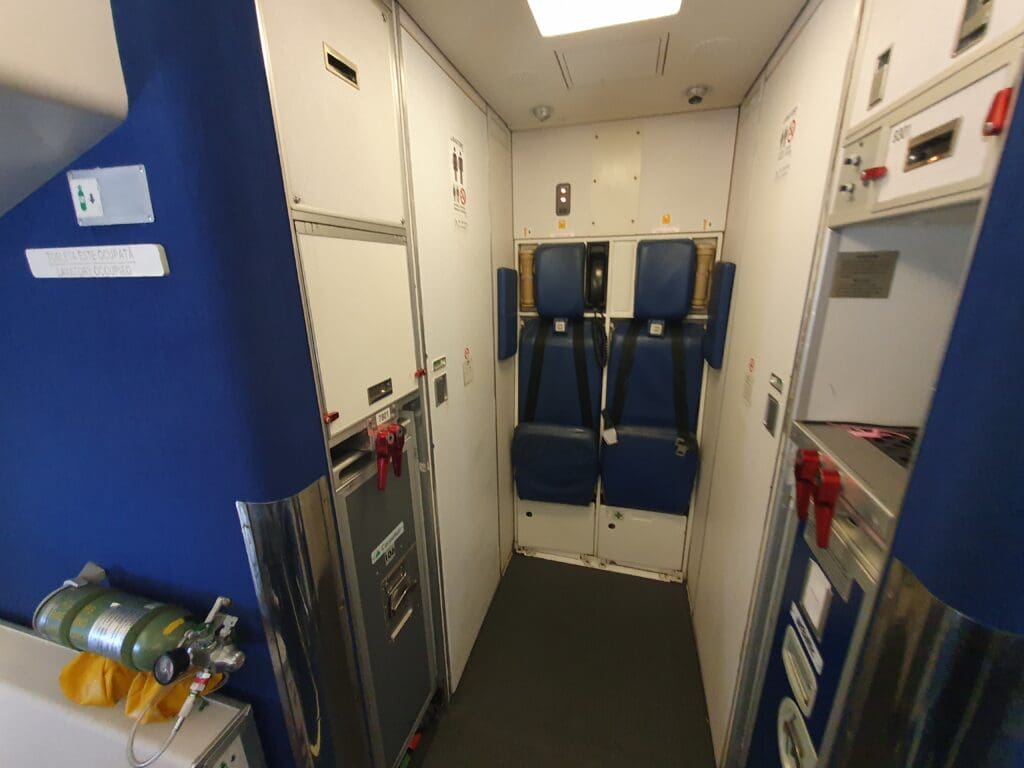
By this time, all passengers appeared to be eager to get onboard and settled, and so once the doors slid open, passengers quickly spilt out onto the apron and a messy queue soon formed. Ending up near the end of this, I had plenty of time to enjoy some last-minute German sunshine and snap some photographs of the rare aircraft in front of me before I made my way up the airstairs. Upon reaching the top of these I stepped into the aircraft, passing the two fold-down rearward facing jumpseats as I entered the small forward galley where I received a friendly greeting from a flight attendant sporting Carpatair’s nondescript uniform of a dark sleeveless blazer, orange cravat and Carpatair name badge. Standing next to them was an airBaltic flight attendant who I presume was there to translate announcements into Latvian and ensure that airBaltic’s service protocols were followed.
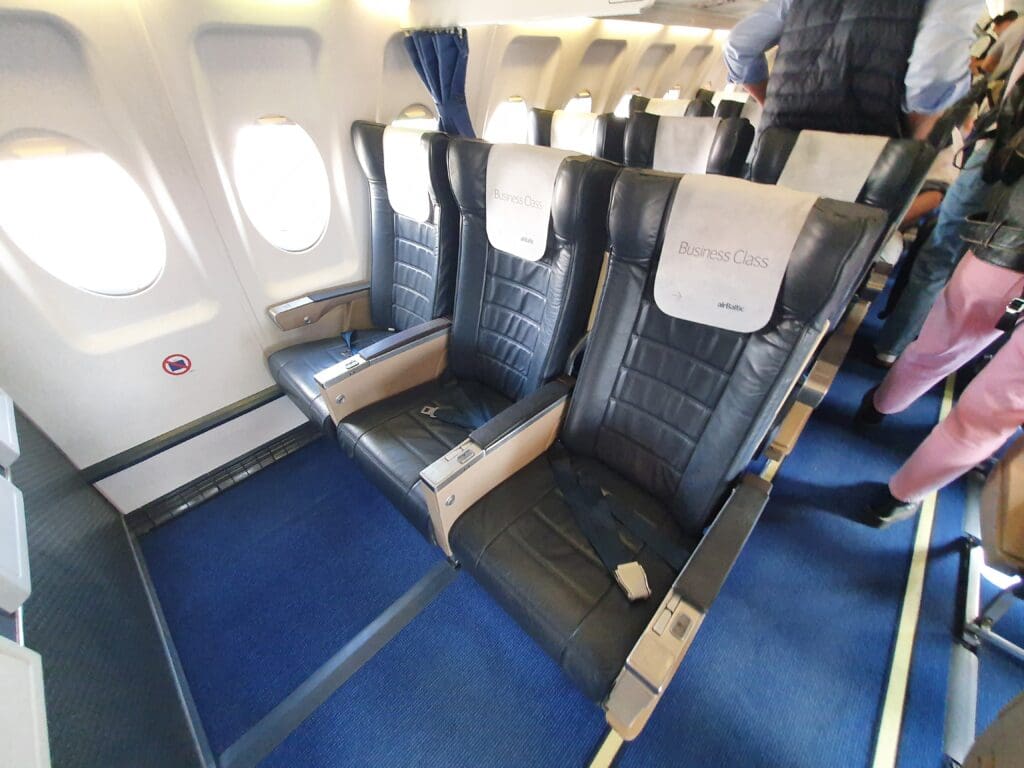
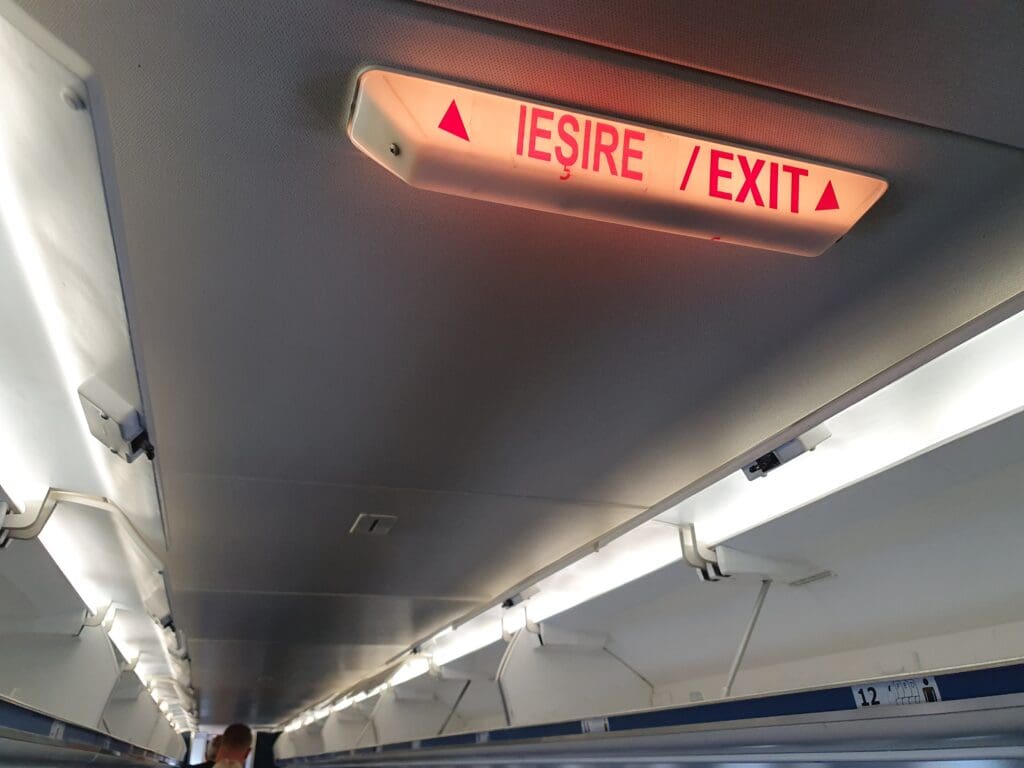
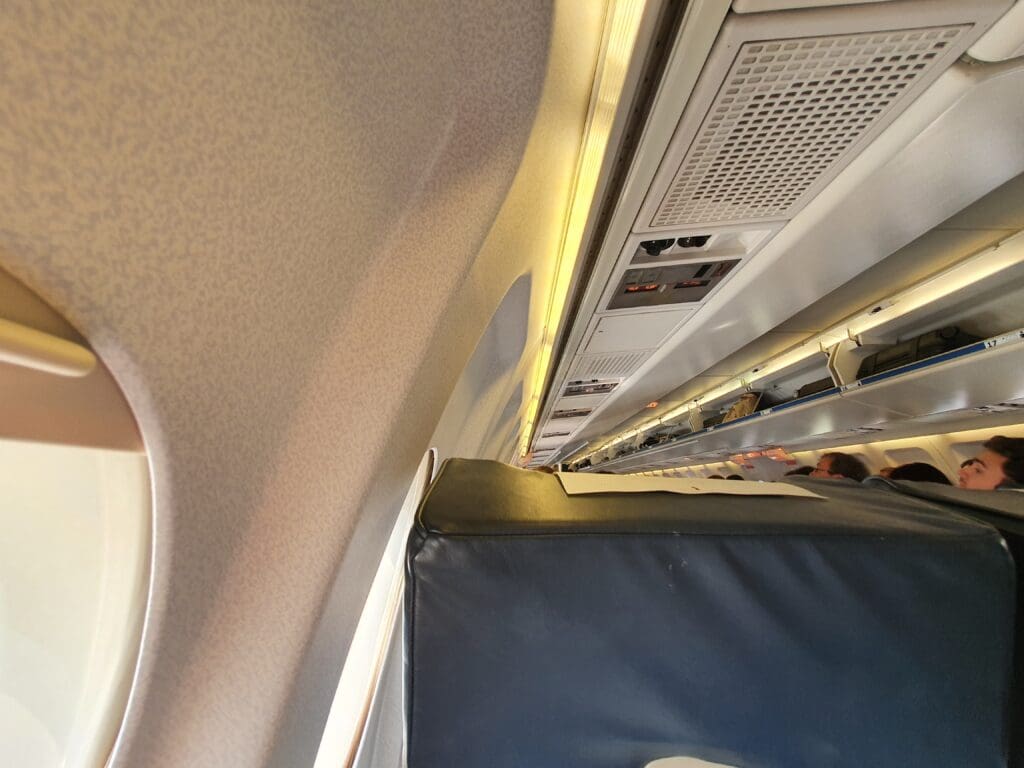
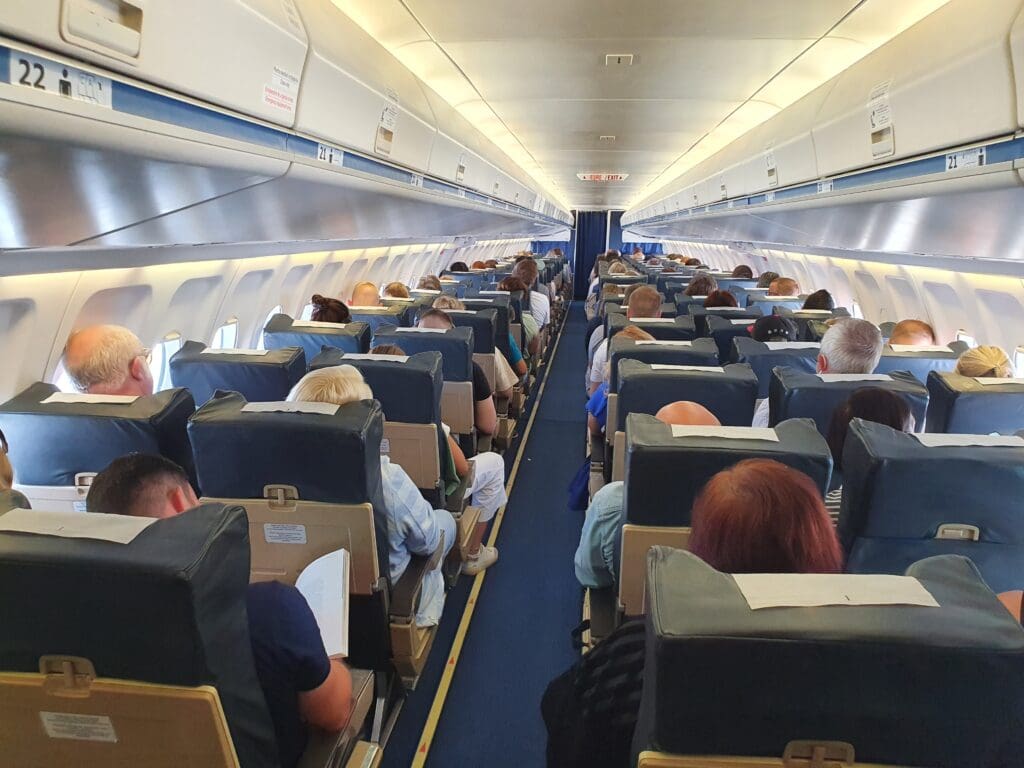
Turning right, I was greeted by what could be described as being the 1990s’ answer to the calming cabin mood lighting of today – an eclectic mishmash of orange and yellow-tinged cabin lighting beaming down and illuminating the incredibly warm cabin. Inside, this particular Fokker 100 features 100 chunky and retro-looking seats and as is standard for the type, these are arranged in a 2-3 configuration. Each of these is covered in a dark blue (faux?) leather covering and topped with a disposable fabric antimacassar featuring airBaltic’s logo. Unlike many low cost carriers, airBaltic offers a Eurobiz-style Business product, and onboard the flight to Riga only the first row of the aircraft was dedicated to this, with a curtain separating this row from the Economy cabin. Following some slightly more friendly greetings from the other two Carpatair flight attendants, and a few stops to allow those ahead of me to stow their luggage, I arrived at row 19 where my seatmate for the afternoon could be already seen sitting in the aisle seat.
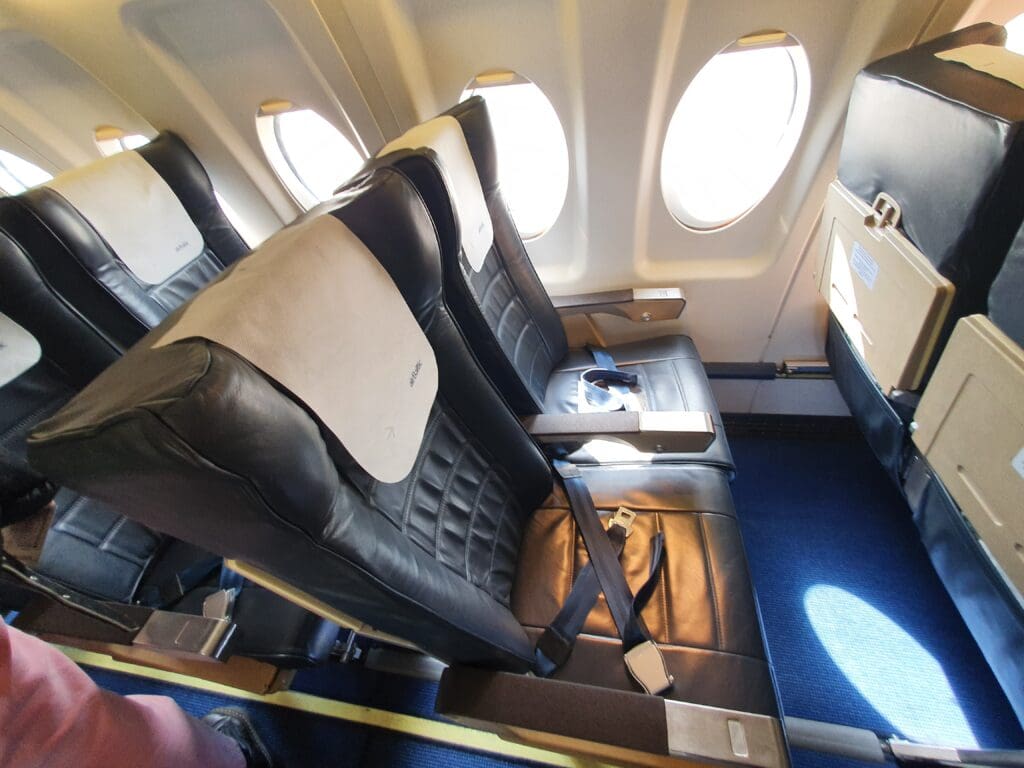
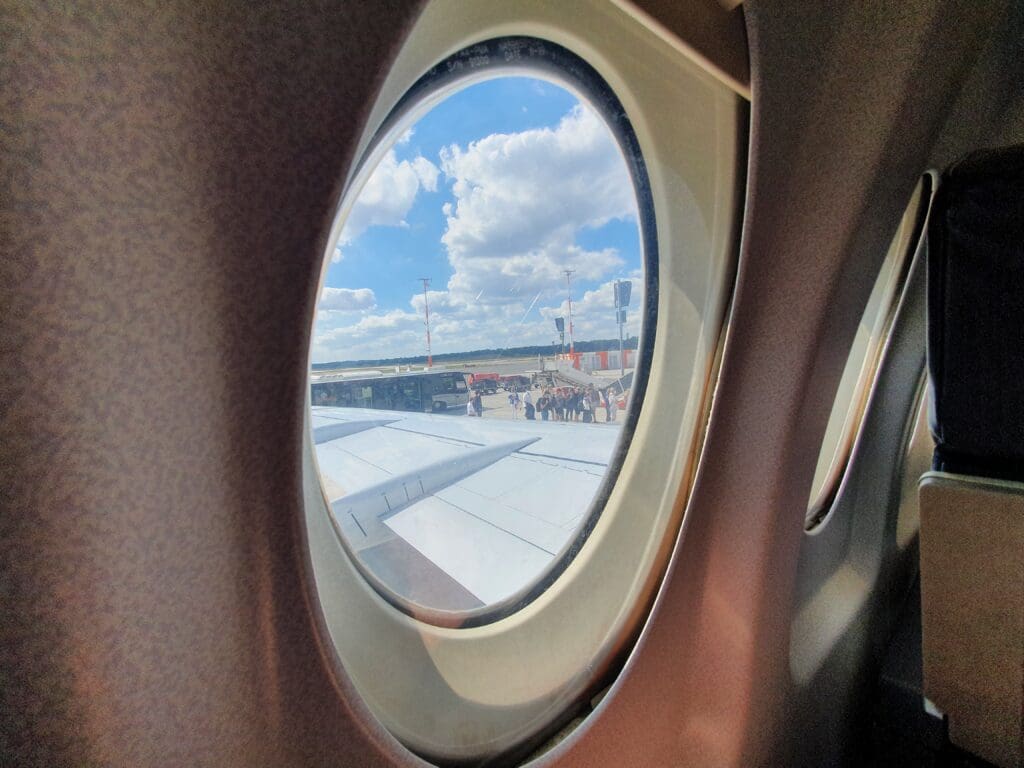
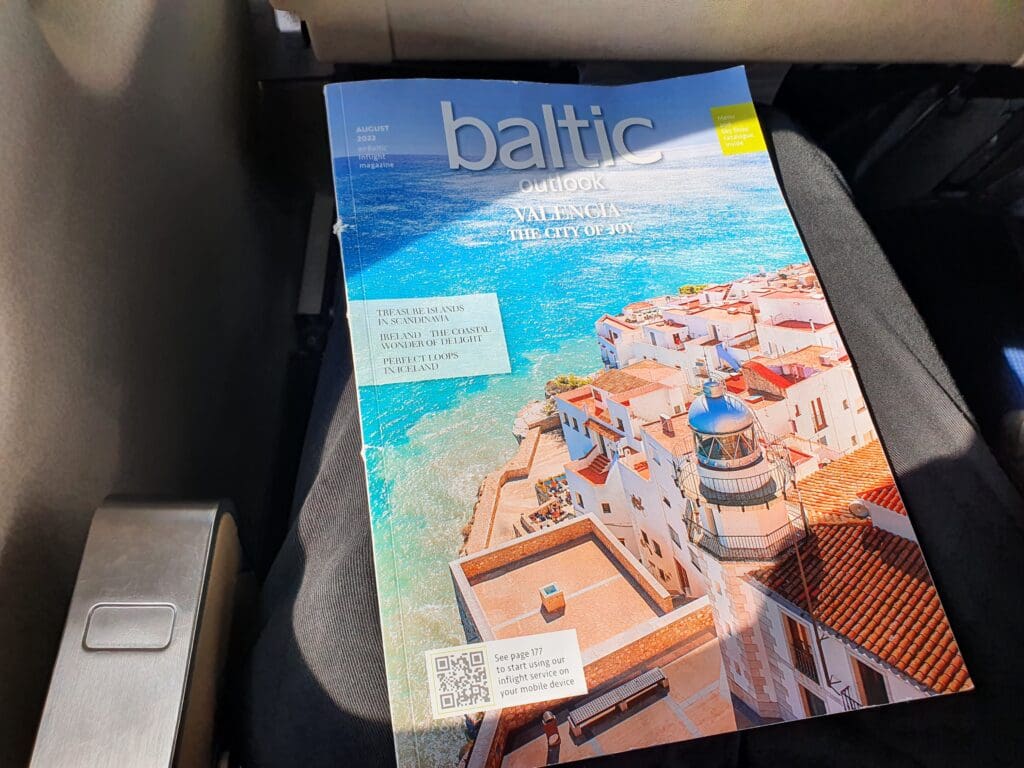
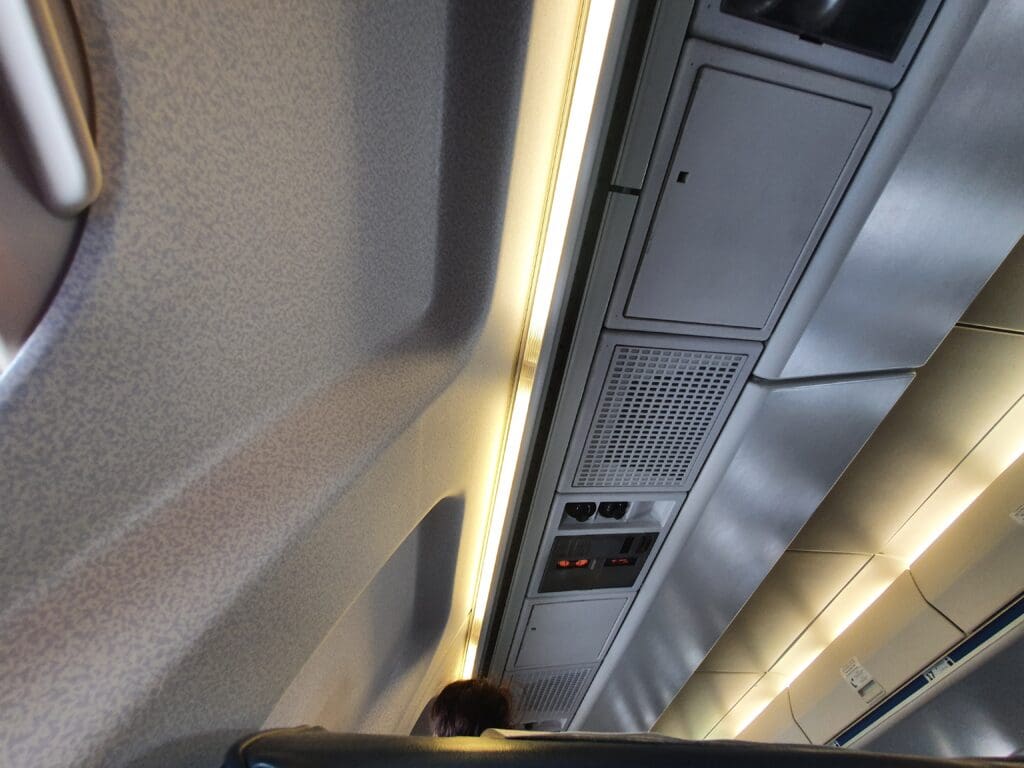
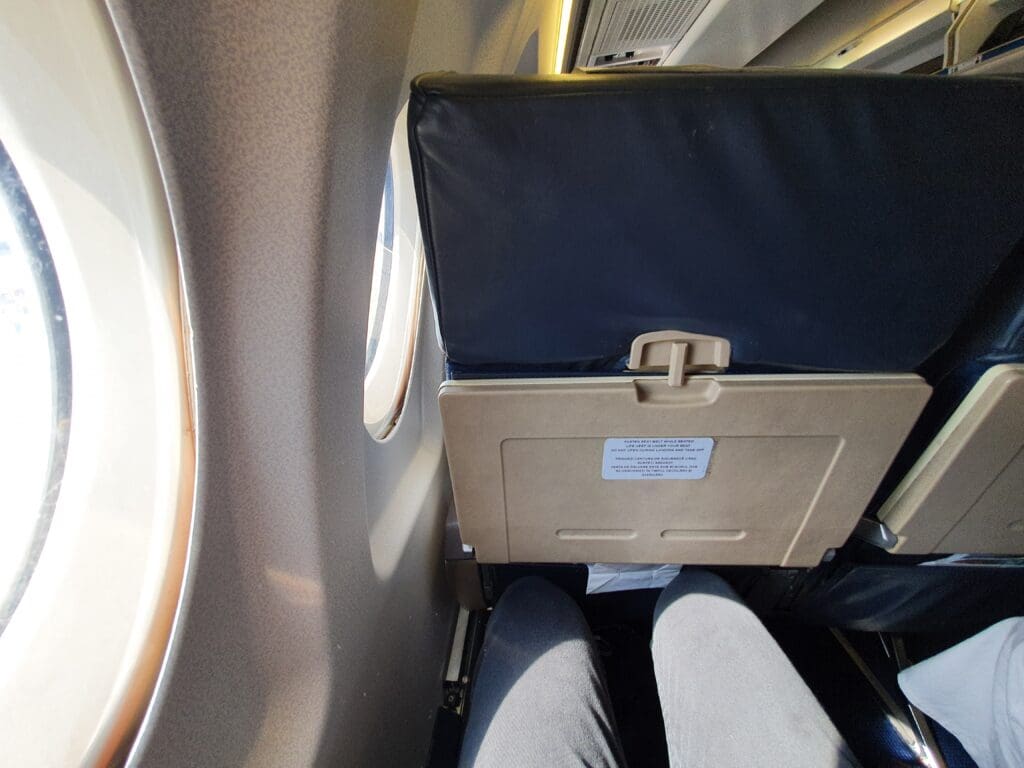
Delighted to see that my seat aligned well with one of the Fokker’s large oval windows, I slid into this and settled in for the short flight across the Baltic. As I had expected, the interior of the aircraft appeared to be fairly dated, with vintage-looking overhead panels, old-style seats and a fair number of marks, scratches and other signs of wear and tear visible around my seat. In terms of comfort, whilst the seat proved to be reasonably soft, the amount of legroom offered by this proved to be far from fantastic and made worse by the fact that the seat ahead reclined each time the passenger in front leaned back. However, on the plus side, the aircraft did appear to have been well cleaned during its short stay on the ground in Hamburg and I was unable to spot so much as a crumb in the area around my seat. Examining the contents of the seatback pocket, this contained a copy of the August 2022 edition of Baltic Outlook, airBaltic’s inflight magazine, a plain white sickbag and Carpatair’s Fokker 100 safety card. Whilst those who had been expecting a ride on one of airBaltic’s state-of-the-art Airbus A220 jets may have been a little disappointed to end up onboard this flying time capsule, as you can expect, I was rather pleased to be flying onboard a scheduled Fokker 100 service in 2022.
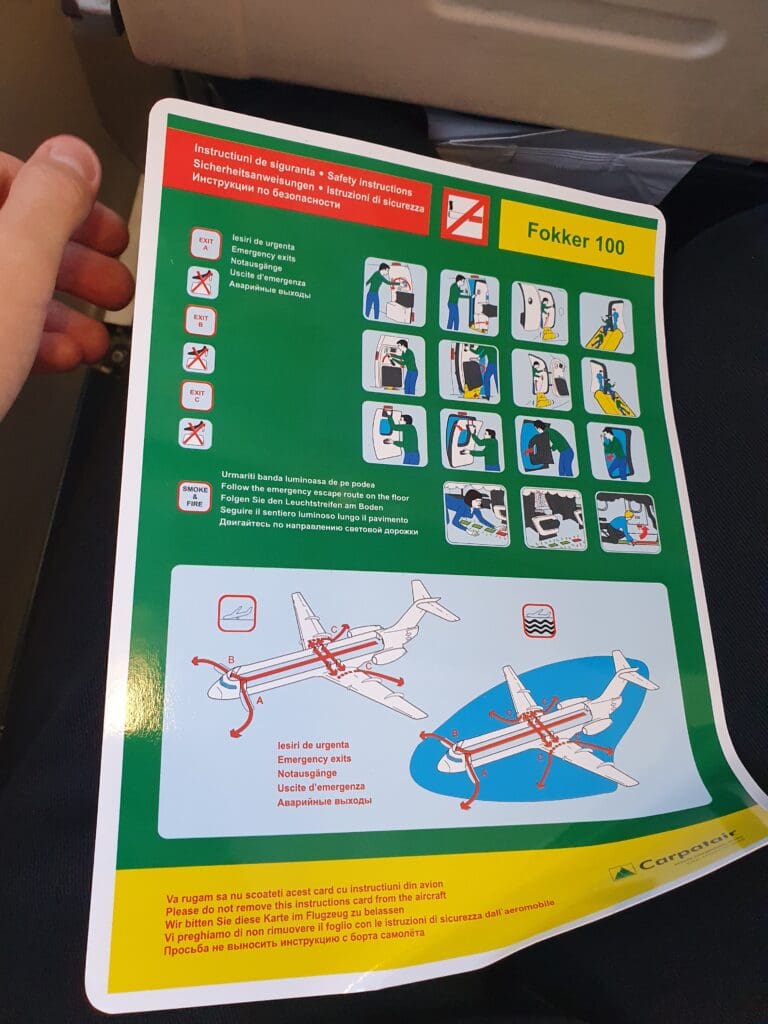
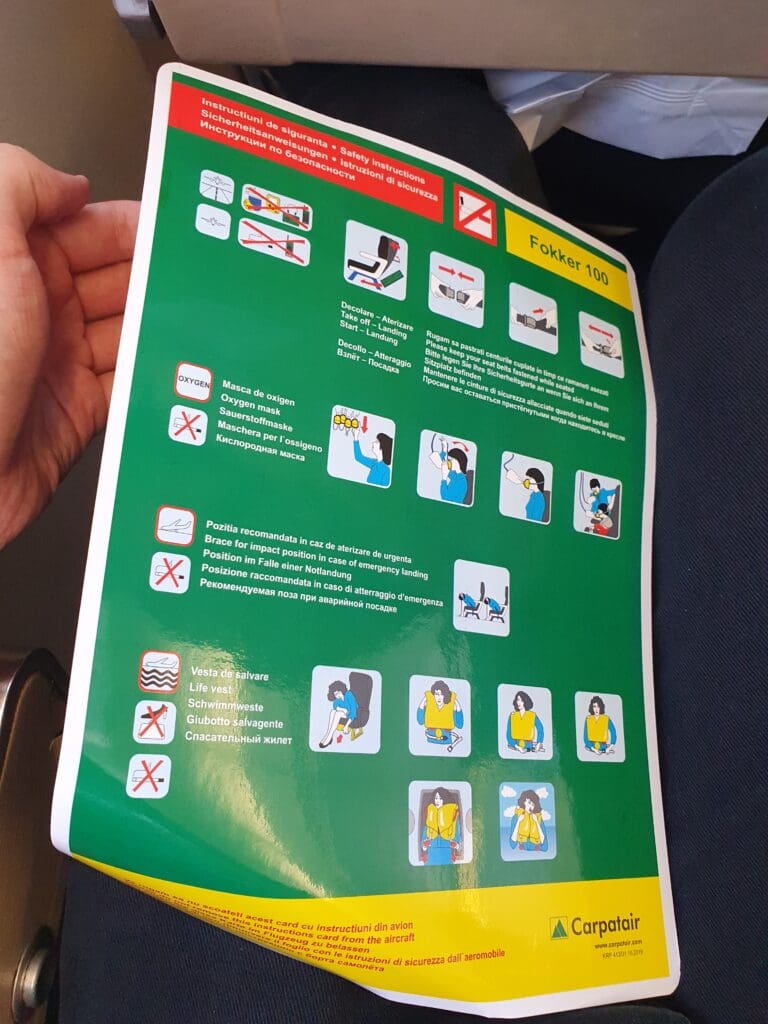
At 1437, the last of the Riga-bound passengers could be seen heading down the aisle and as I had expected, the flight would be totally full. That afternoon, I would estimate approximately two-thirds of passengers to be from Latvia, whilst the remaining third were from Germany and elsewhere, with most passengers appearing to take the form of leisure flyers. I should also mention that during the boarding process, I managed to spot a fellow passenger taking plenty of photographs of the aircraft – either a fellow enthusiast or simply someone who enjoys the delights and/or novelty of flying. Once all passengers had taken their seats, the flight attendants strolled down the aisle ensuring that all overhead lockers were properly closed before temporarily retreating to the forward galley. Eventually, several clunks could be heard coming from below which I assume was the sound of the cargo doors below being closed in preparation for our departure, meanwhile at 1450, the airstairs were moved away from the aircraft and the cabin door was closed. At this time, the Carpatair Purser’s voice filled the cabin as they performed their welcome announcement in English which was complete with the usual welcomes and thanks, alongside an apology for our delayed departure which was noted to be due to slot restrictions resulting in the outbound flight’s late departure from Riga. The Purser then moved on to the safety instructions at which point a demonstration was undertaken in the aisle. Given the presence of an airBaltic flight attendant onboard, I was a little surprised to find that no Latvian version of this was provided and indeed for the duration of the flight, all announcements that were made by the Carpatair crew were not translated.
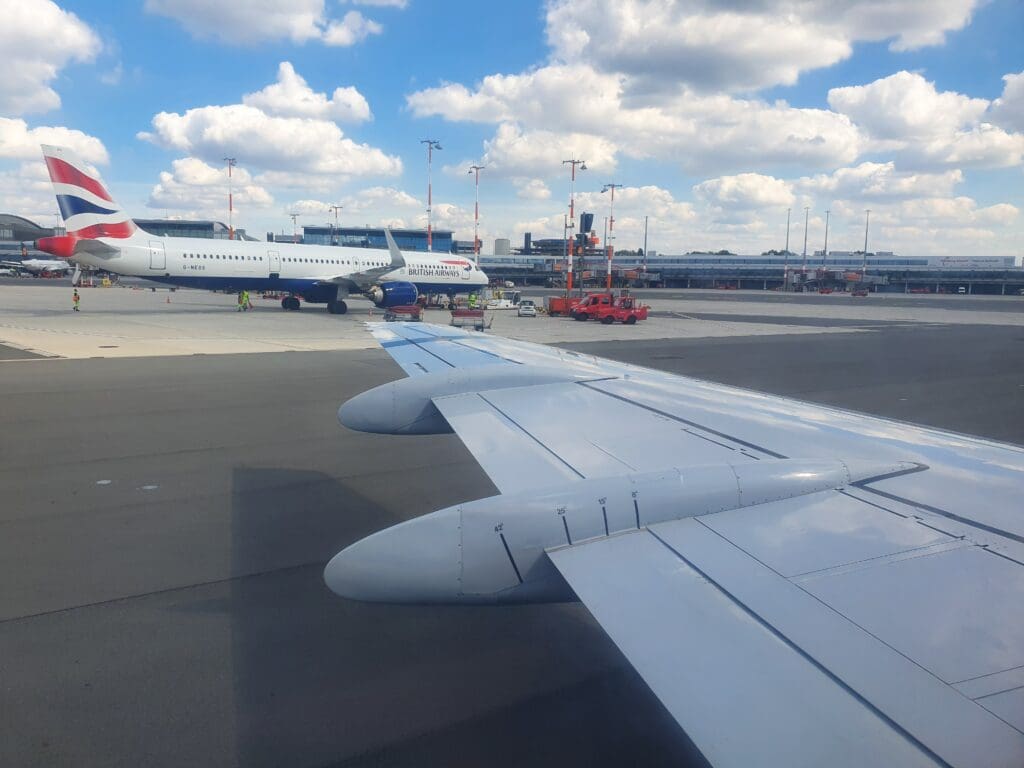
As the safety demonstration was underway, the Fokker could be felt being pushed away from Stand 58 before being pointed in the general direction of the runway. As this took place, a much newer and larger British Airways Airbus A321neo could be seen being readied for its flight down to London Heathrow, reminding me of my final destination early the next morning (technically I would be heading to Stansted, although I live not too far away from Heathrow). Once the aircraft had come to a halt, the Fokker’s two Rolls-Royce Tay 650-15 jet engines let out a slightly high-pitched whine as they powered into life, temporarily causing a fair amount of vibration. Whilst this was not incredibly loud given the fact that I was located almost right next to the engines, as may be obvious, those seeking a quiet ride ought to sit as far forward as possible.
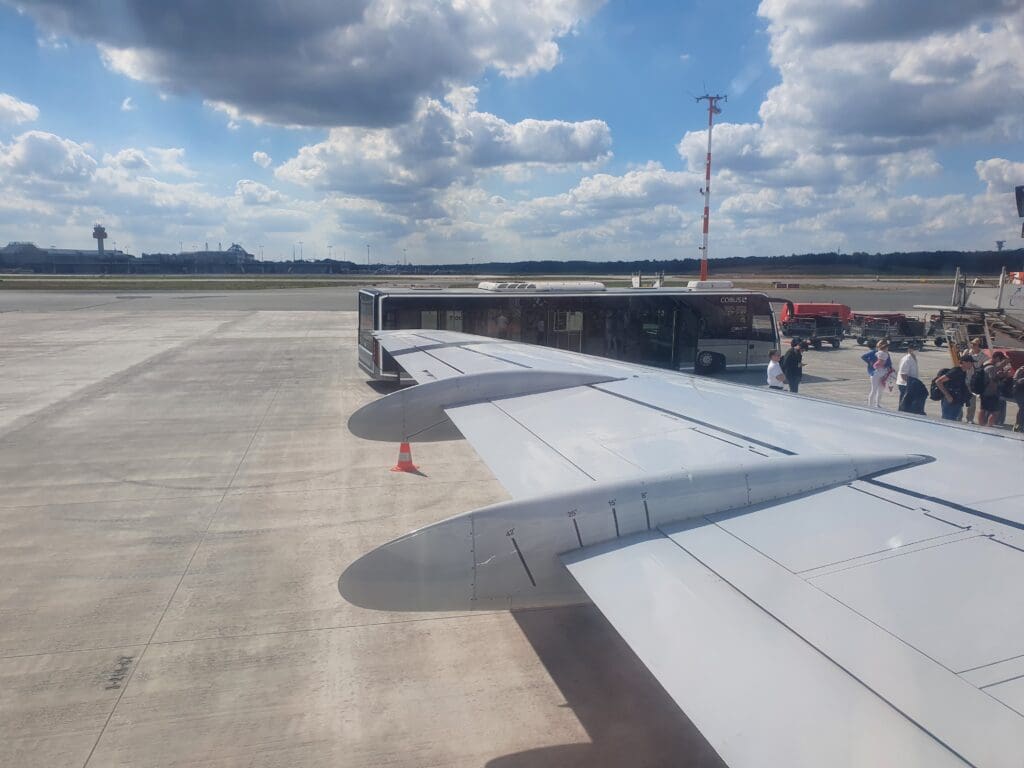
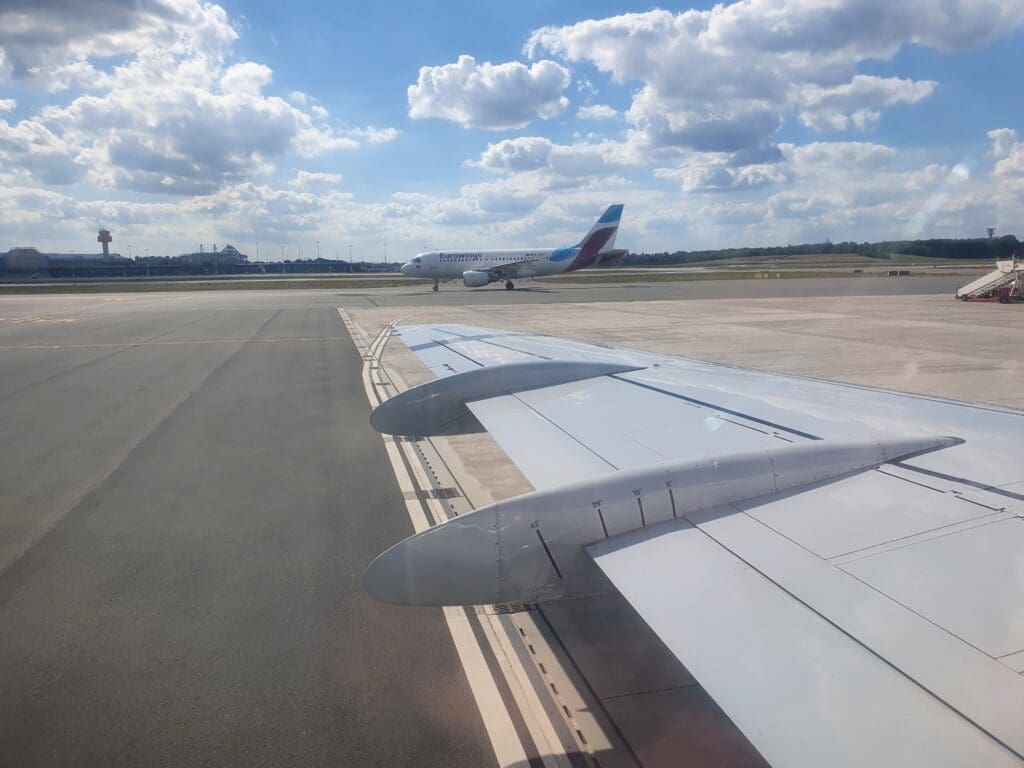
As the engines spooled up, in the usual manner, two crew members passed through the cabin ensuring that everything was in place for our departure. Once the tug had been disconnected, the Fokker powered forward under its own steam and began a very short taxi over to the end of Runway 33. Unlike onboard most other airliners, during this taxi, the aircraft’s flaps remained fully retracted, with these not being extended during our departure – something that is common practice for the Fokker 100. Whilst Hamburg Airport may be the fifth busiest in Germany, that afternoon no waiting was required and at 1455 the Fokker made its way onto the runway. Once there, without pausing, the two Rolls-Royce engines whined up and the aircraft performed a noisy take-off roll. Seeming to travel a significant way down the runway, I was somewhat relieved to find that this eventually rotated upwards, shuddering for a few moments before continuing upwards and smoothly climbing up into the German skies.
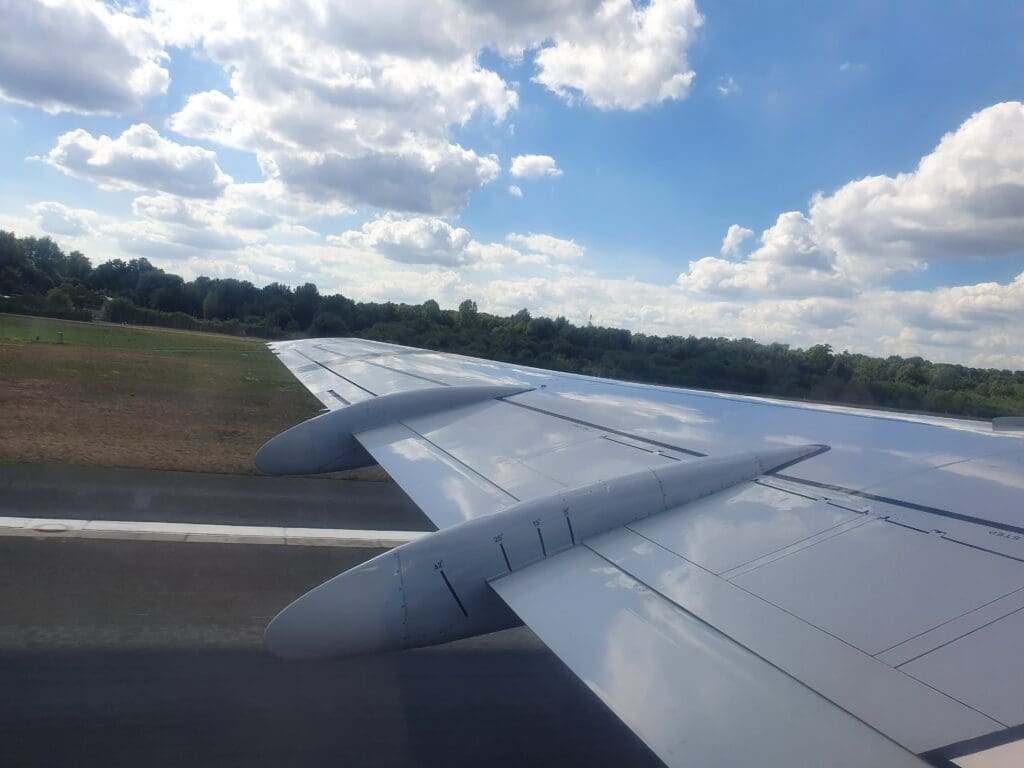
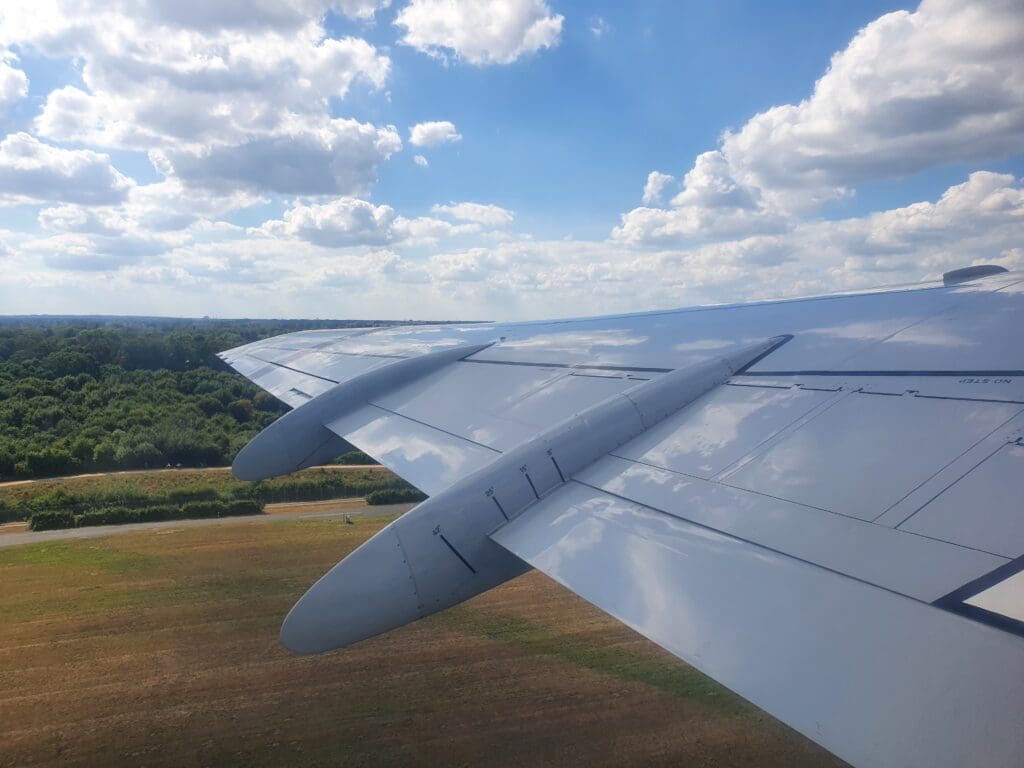
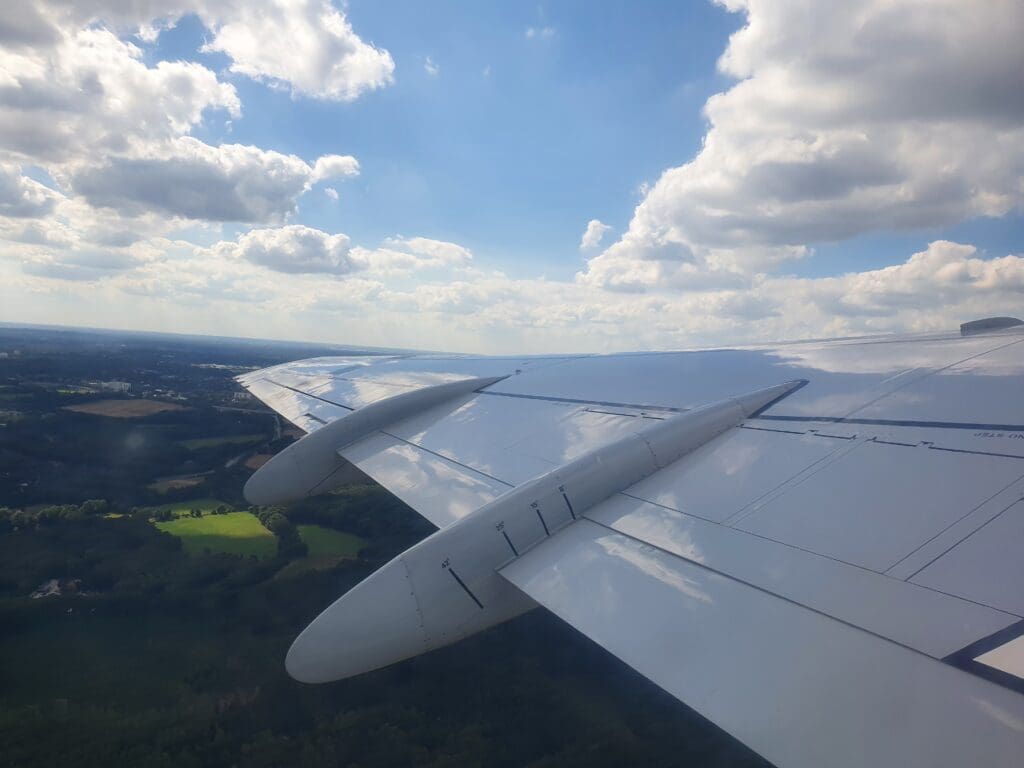
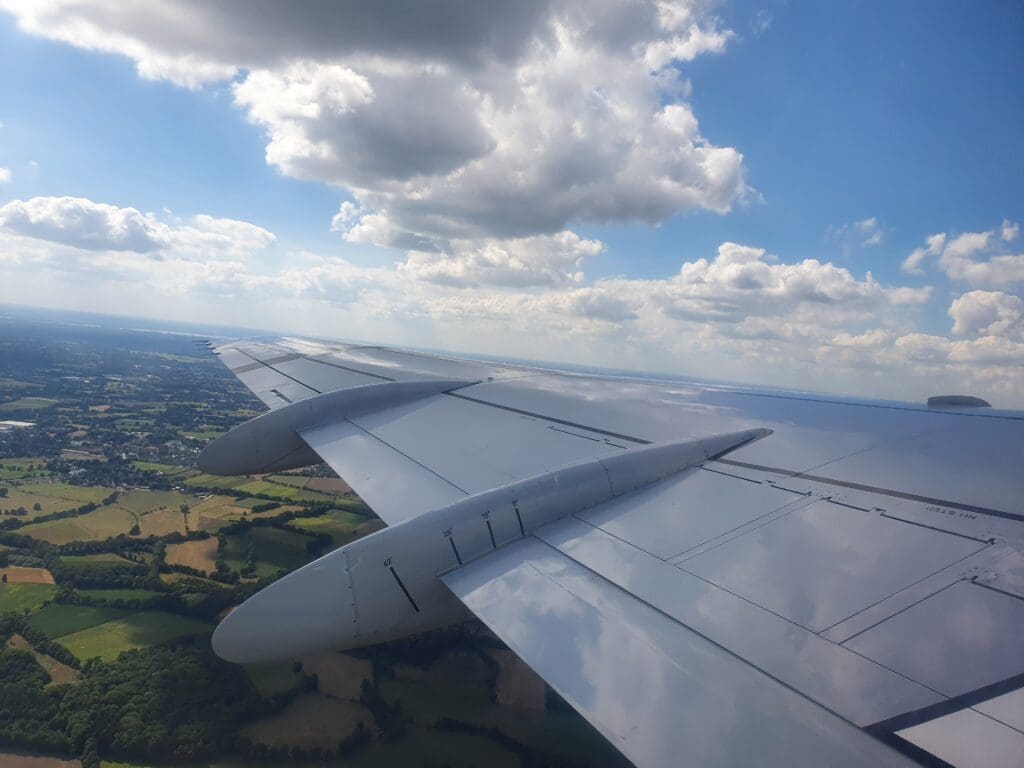
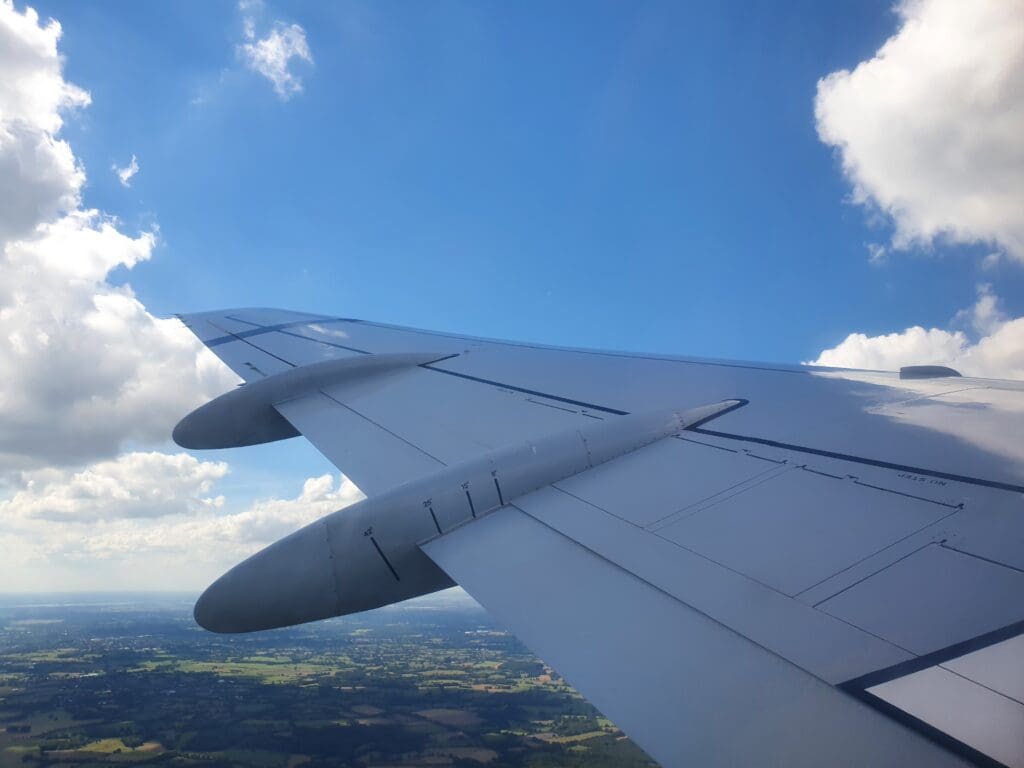
Upon leaving Hamburg Airport behind, the Fokker made its way towards the nearby town of Quickborn. However, just before reaching this town, the aircraft banked to the right and rolled out on a northeasterly heading. After cutting through a thin layer of patchy clouds, once at 10,000 feet the seatbelt signs were switched off and a loud ding rang out through the cabin. This was accompanied by an announcement although the roar of the engines on either side of the cabin resulted in this being completely inaudible – however, I assume that this featured the usual post-departure warning regarding seatbelts. A few minutes later, the airBaltic flight attendant made an announcement in Latvian and English regarding the onboard offerings. During this, they mentioned that those flying in Business would be served a complimentary hot meal, whilst those in Economy who had pre-ordered items would shortly be handed these before going on to mention the buy-on-board service.
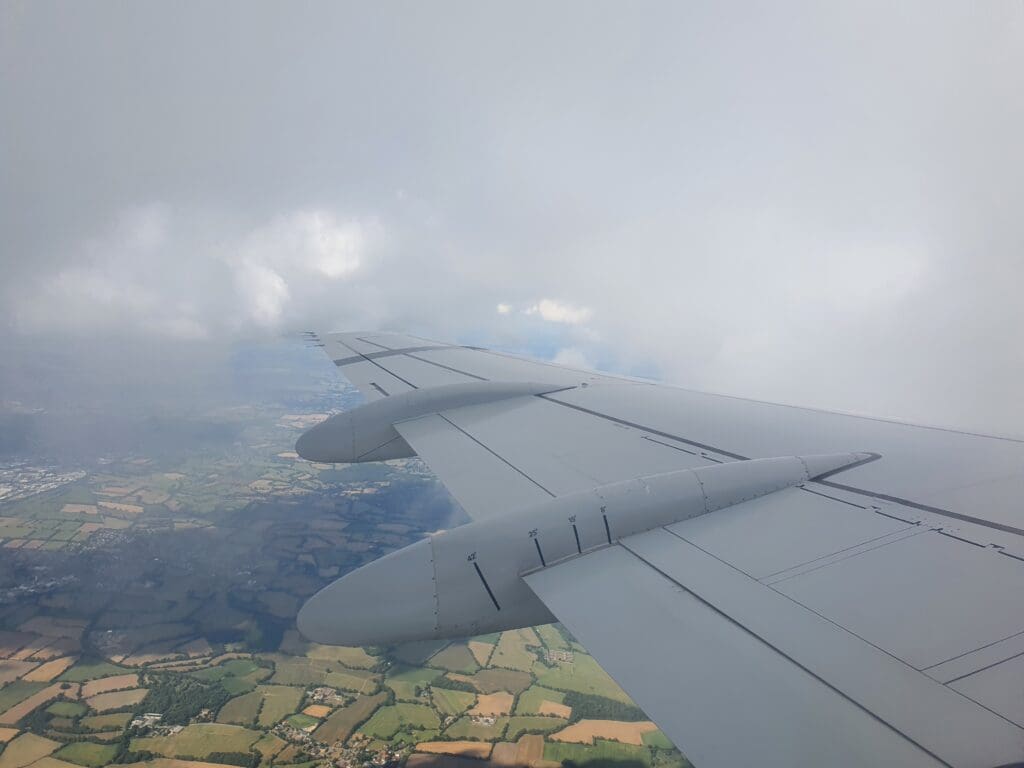
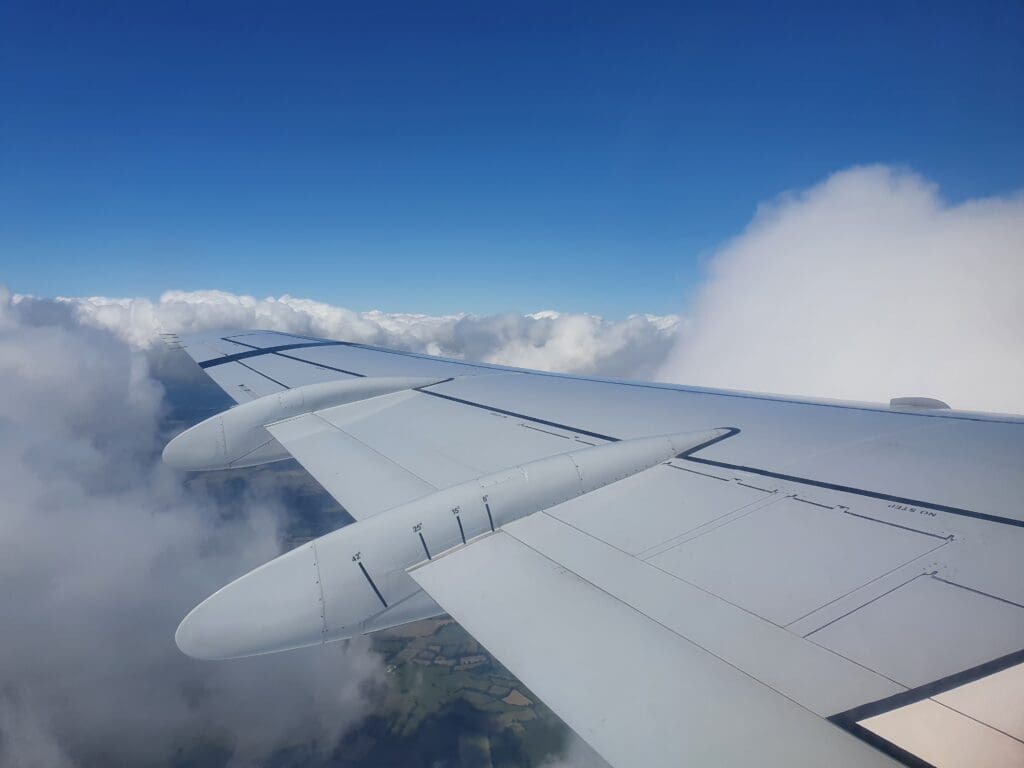
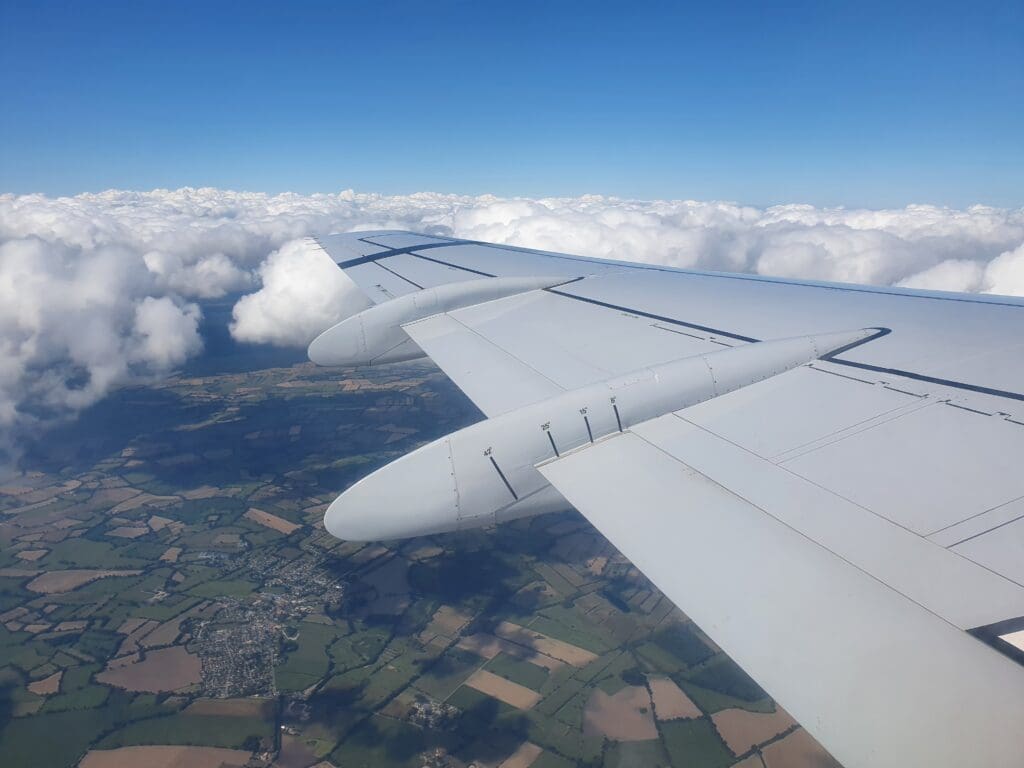
Returning to the route, that afternoon the Fokker passed just to the north of the city of Lubeck and over Timmendorfer Strand before journeying out over the cold waters of the Baltic Sea. From there, the aircraft flew parallel to Schleswig-Holstein’s eastern coastline for a couple of minutes before leaving Germany behind near the island of Fehmarn and heading into Danish airspace. As the Fokker neared its cruising altitude of 35,000 feet a trolley could be seen being rolled out in the aisle and two flight attendants began making their way down the aircraft serving passengers. Reaffirming AirBaltic’s status as a low cost carrier, those travelling in Economy are offered no complimentary inflight refreshments. Instead, the SKY service buy-on-board menu is on hand for those who wish for some inflight refreshment. Browsing through the menu, I found this to contain a good range of hot meals, sweet and savoury snacks and hard and soft drinks. Whilst Latvia has below-average prices for food and beverages compared to other European Union countries, this was sadly not evident in the buy-on-board menu, with items priced at a comparable rate to other European low cost carriers. For example, those in need of a small tub of Pringles, a Twix or a can of Coca-Cola would have had to fork out €3 per item, whilst the most expensive hot dish was priced at €8.
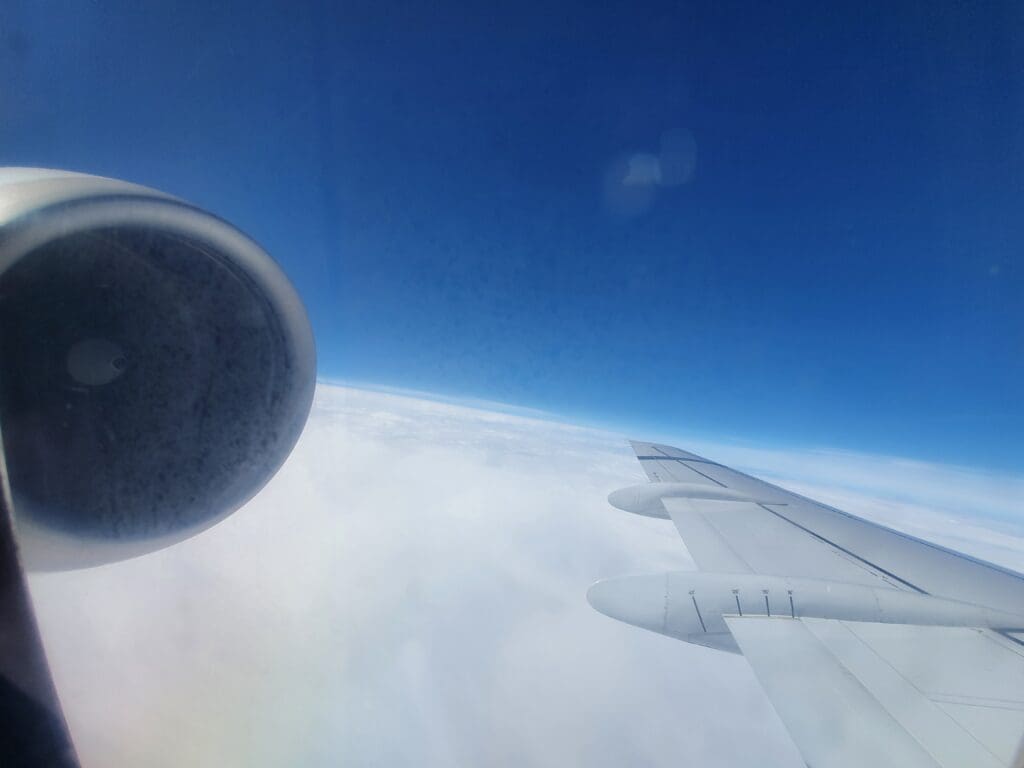
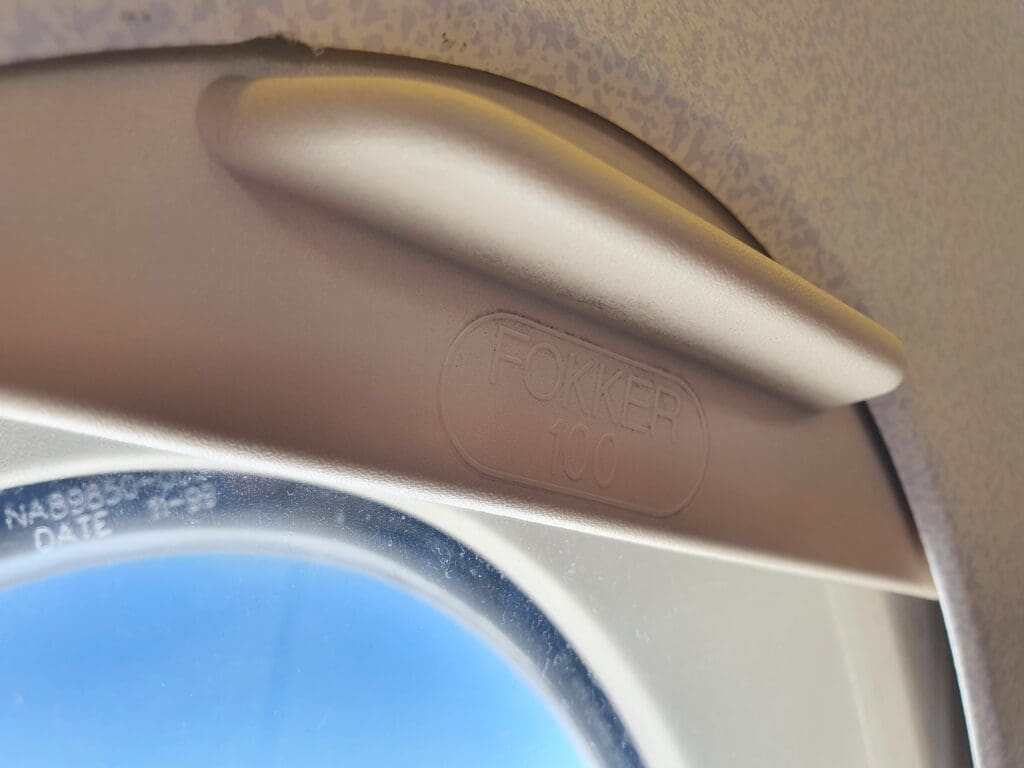
Making landfall over the Danish island of Folster, a good view of this as well as the neighbouring island of Lolland could be had. After passing the island of Møn the aircraft continued onwards towards Sweden although the Fokker did not pass over the country’s coastline, instead flying to the south of the country’s southern coast. Unfortunately, at this time clouds rolled in below blocking any view of the Baltic Sea until we neared the Latvian capital and at 1520, the Fokker entered a patch of clouds which resulted in a fair amount of turbulence, with this being significant enough for the pilots to reilluminate the seatbelt signs. Nevertheless, almost at the rear of the cabin, the crew continued their onboard service before stowing the trolley.
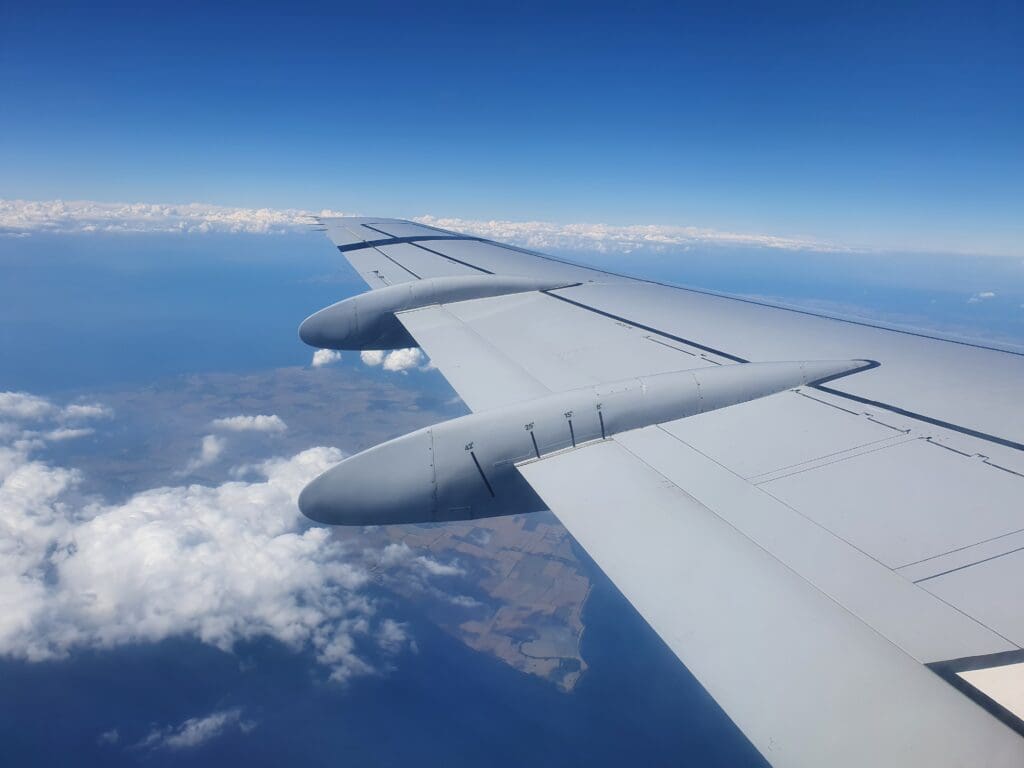
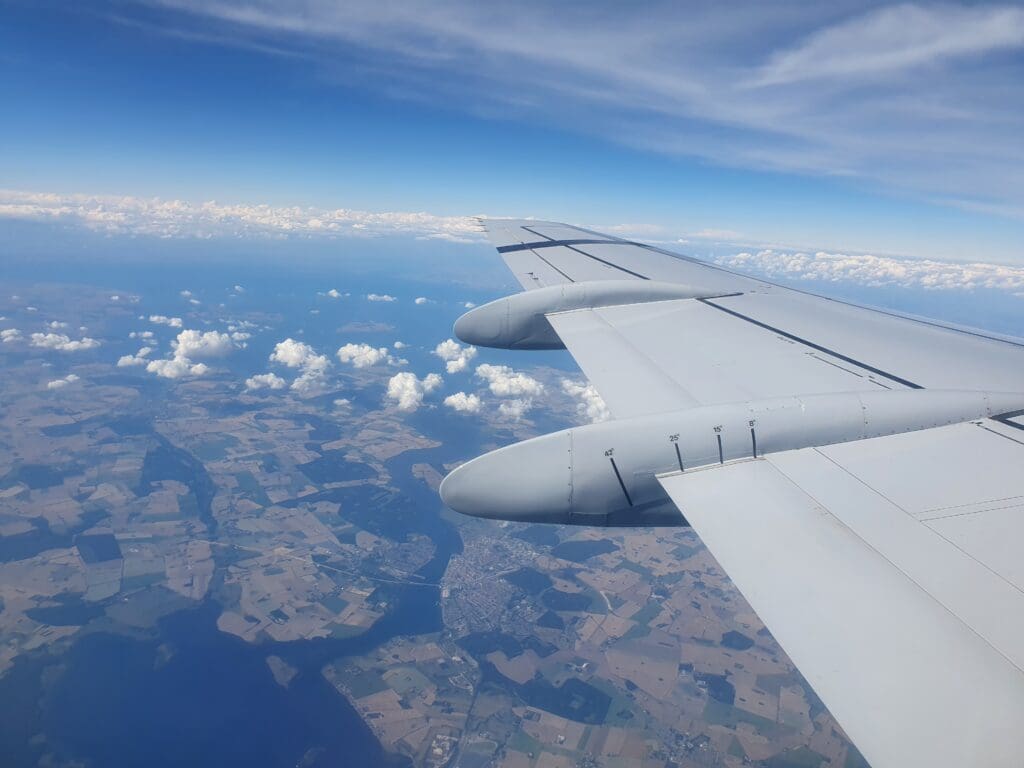
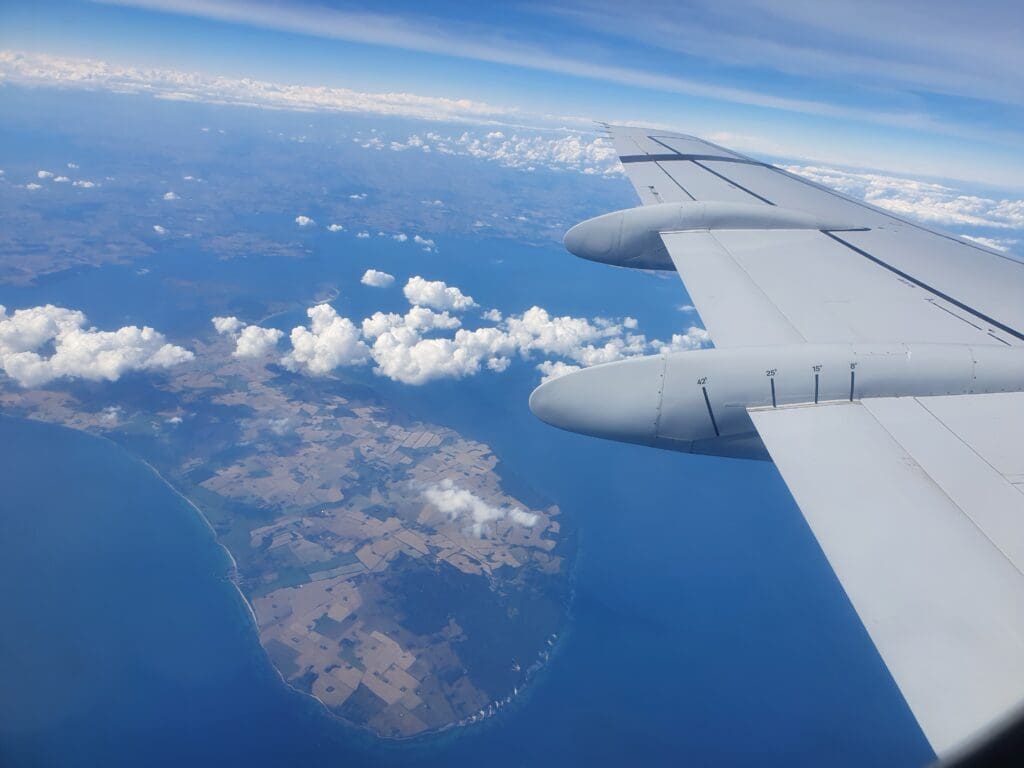
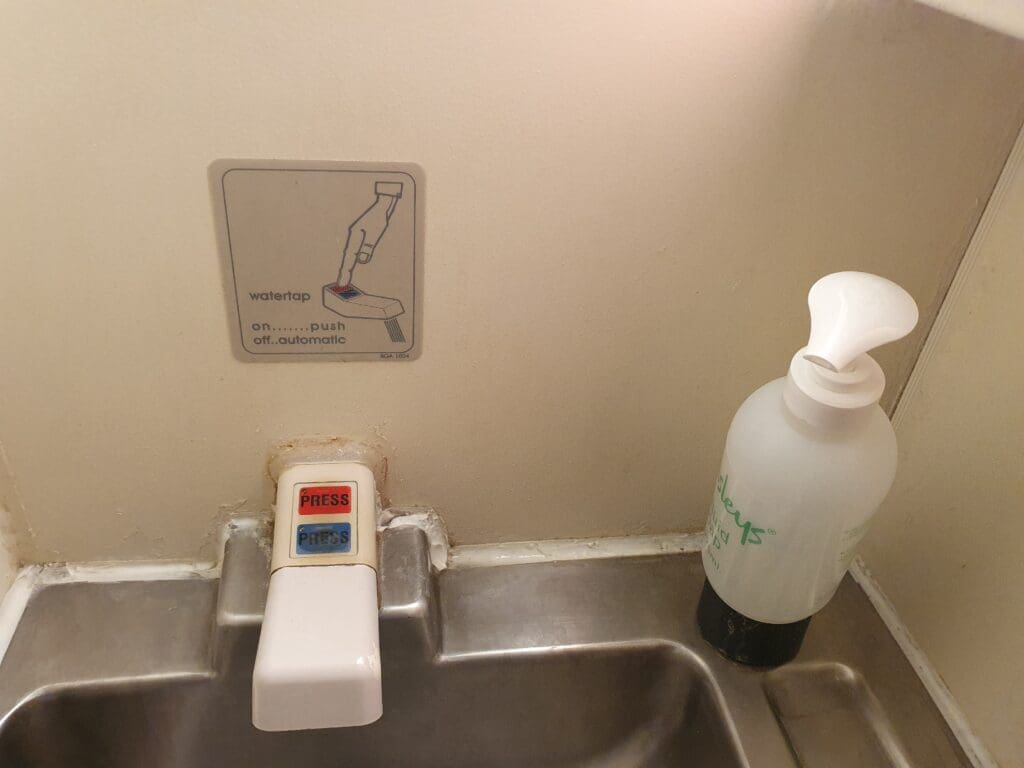
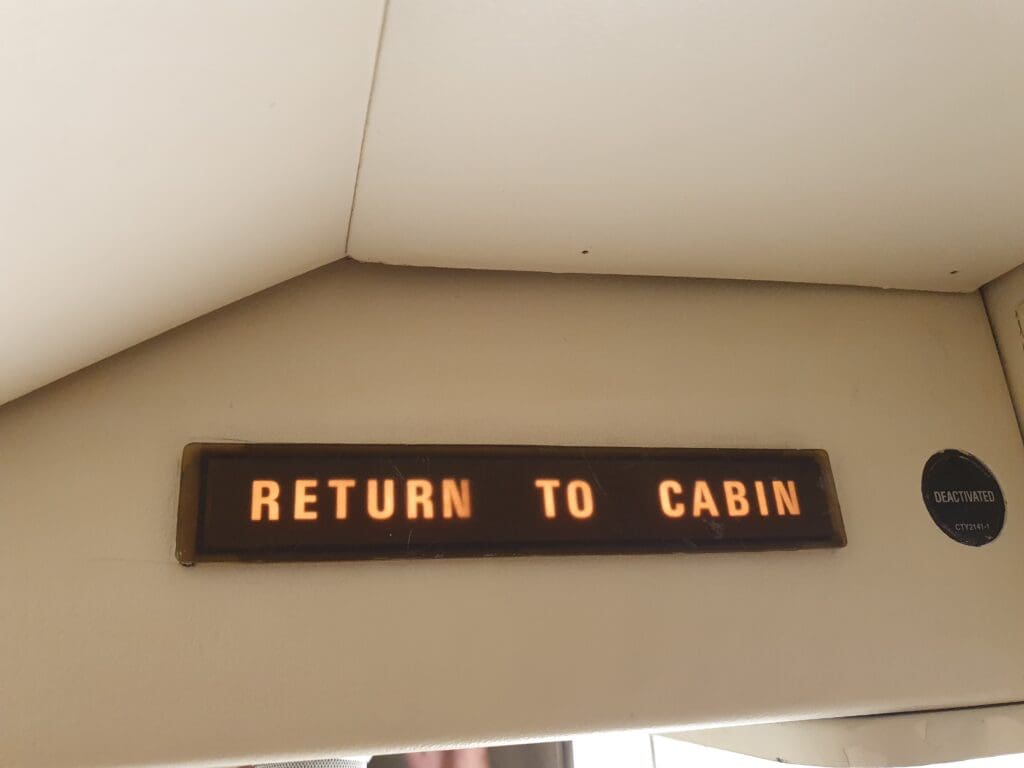
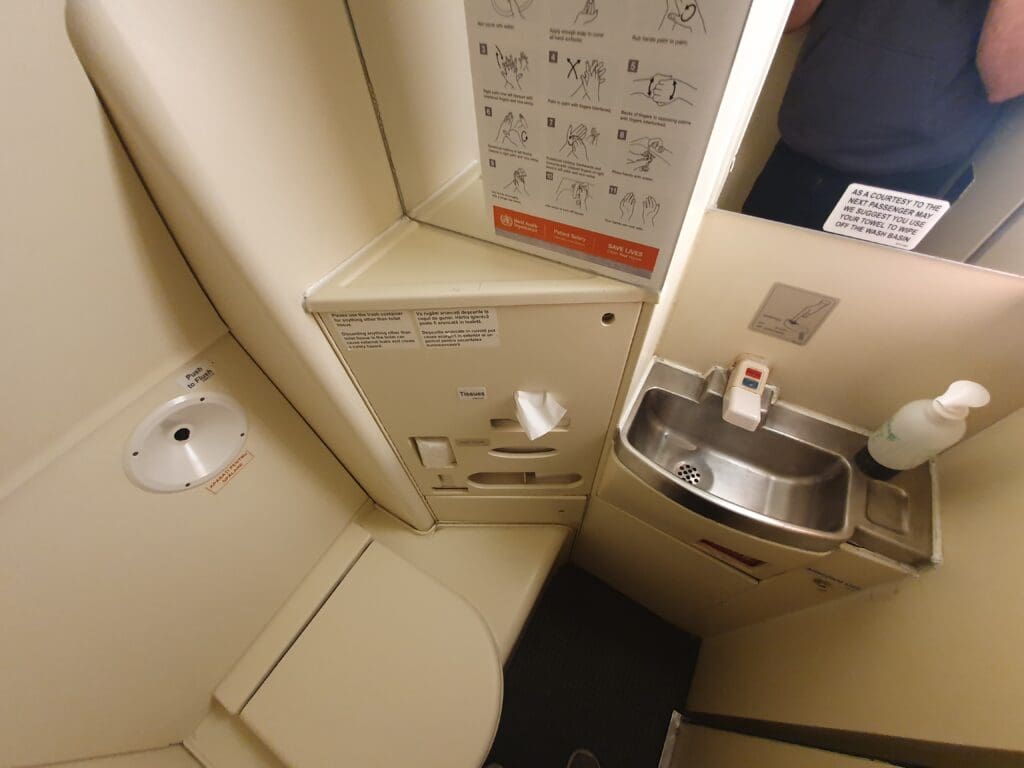
Fortunately for those not too keen on turbulence, the seatbelt signs were switched off around five minutes later. At this point, seeing that I may well not get the opportunity to do so at any time in the near future, I decided to make a trip to one of the Fokker 100’s two lavatories, both of which are positioned at the rear of the aircraft on either side of the cabin. As I made my way into one of these, I found the toilet to be small and very dated in its appearance – both in terms of its design and the number of marks and scratches that could be seen all over this. However, this served its purpose, appeared to be fairly clean and was complete with running water and all the basics that you would expect to find in an aircraft lavatory. Taking a few moments to look at the plethora of signage in this, whilst some of the signs appeared to be incredibly retro, I failed to spot any that specifically related to any of the aircraft’s former operators. Following my comprehensive examination of the Fokker’s facilities, the aircraft hit another patch of turbulence although this time, this was not strong enough to warrant the re-illumination of the seatbelt signs. At this time, an announcement was made about the onboard shopping service however this appeared to have few takers that afternoon.


At 1653 Eastern European Summer Time, the rackett produced by the two Rolls-Royce engines subsided slightly and the Fokker could be felt departing from its cruising altitude and commencing its journey back to earth. A couple of minutes later, the Captain announced ‘cabin crew prepare to land in twenty minutes, the temperature on the ground 24 degrees’. This was followed by a more formal announcement from the Carpatair Purser who went over the usual instructions regarding seat belts, tray tables and window shades before mentioning the temperature on the ground in Riga. Wasting no time, the seatbelt signs were soon reilluminated and the crew passed through the cabin ensuring all was in place for our arrival.
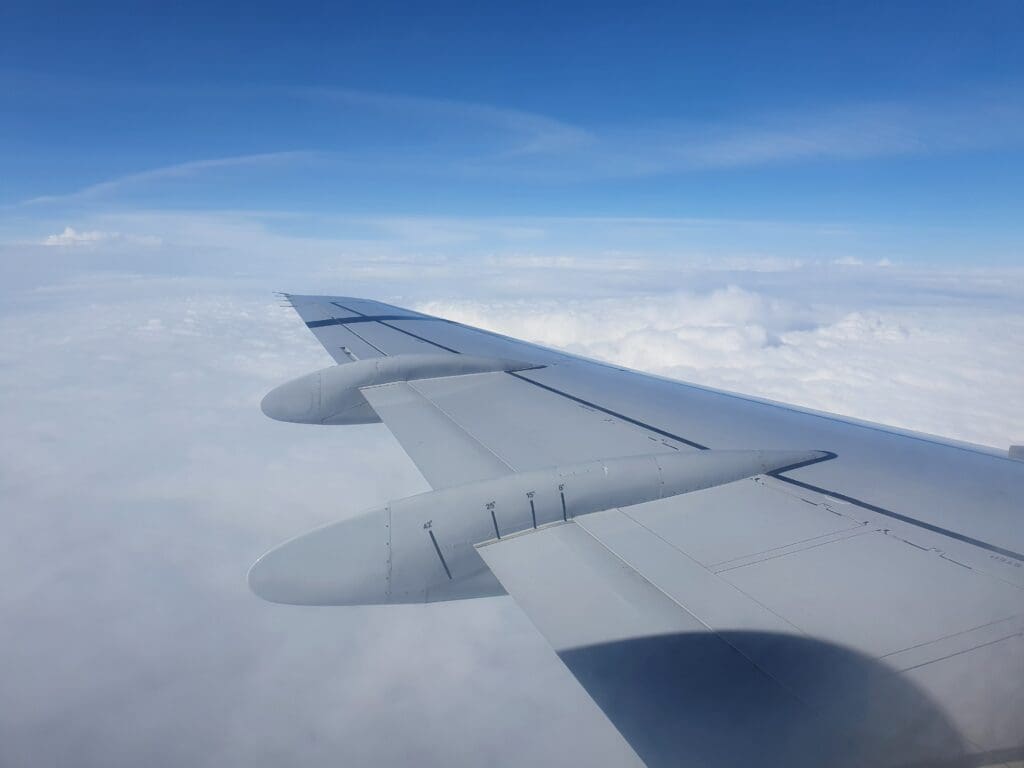
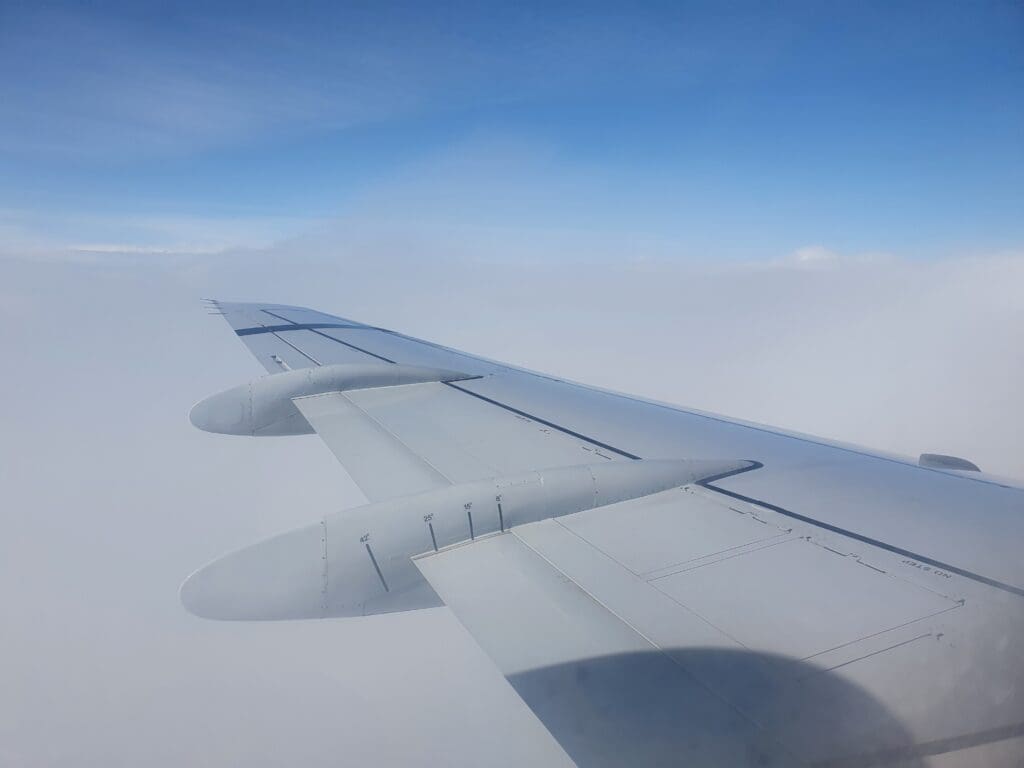
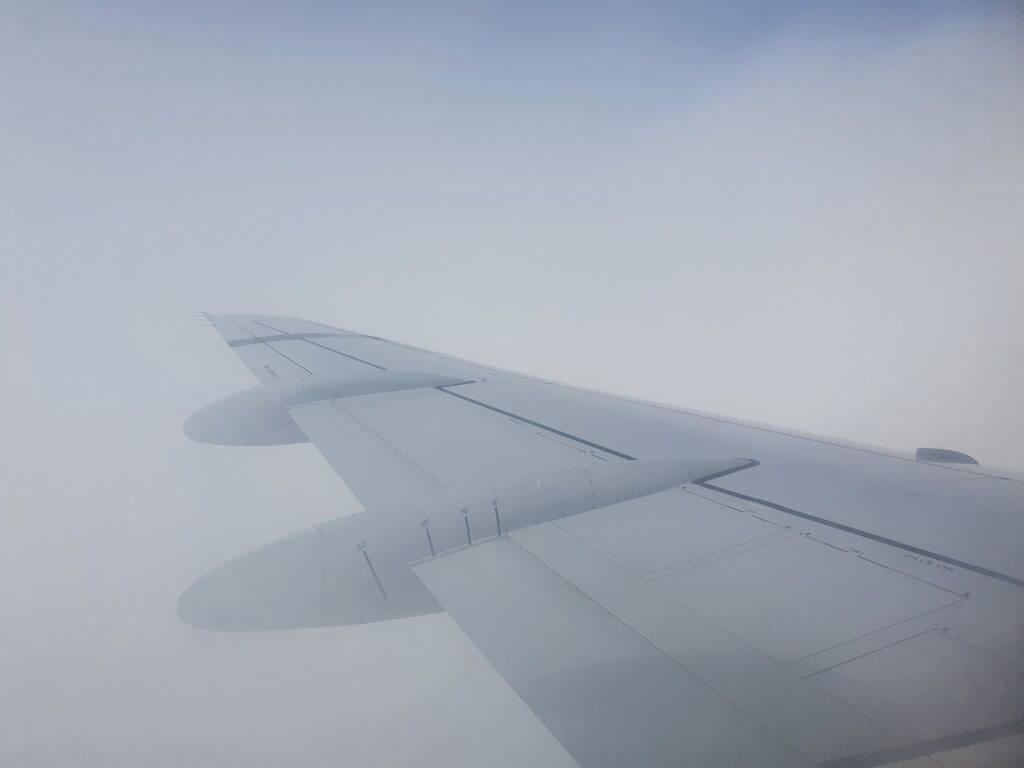
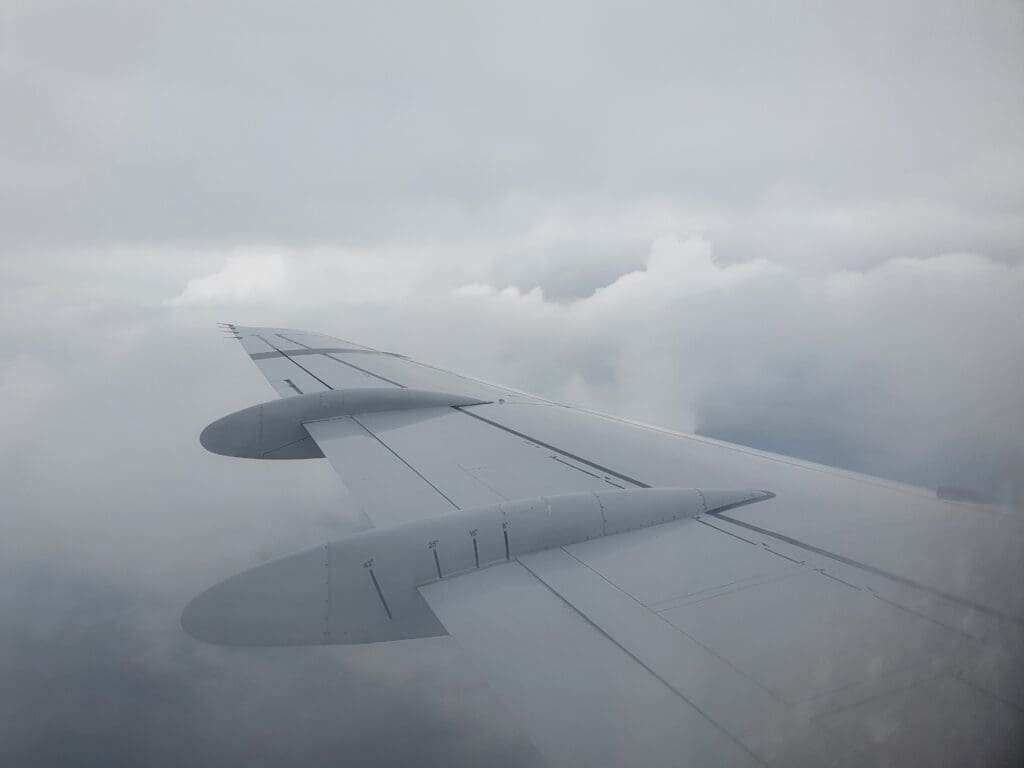
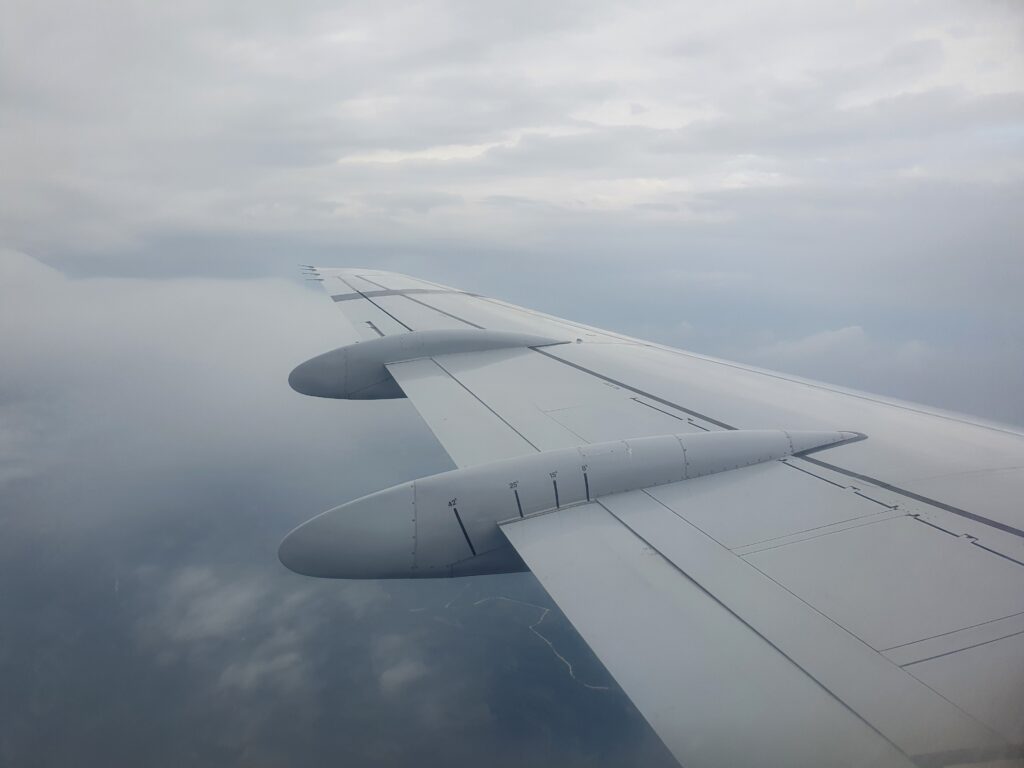
As the aircraft descended, this shuddered occasionally which I assume was the result of the Fokker’s tail speedbrake extending to slow the aircraft down. A short time after leaving our cruising altitude, the Fokker passed over the Latvian coastline just to the north of the country’s third largest city, Liepaja before sinking downwards towards the clouds. From there, the Fokker cut across the south of Latvia’s Courland Peninsula as the jet bounced around a little as it made it through the clouds. Just before reaching the peninsula’s eastern coastline to the northeast of Tukums, the Fokker sank beneath the clouds bringing Courland’s sandy coastline and the waters of the Gulf of Riga into view. As the jet crossed this, the flaps were partially extended and a flotilla of cargo ships waiting to enter port could be seen passing below.
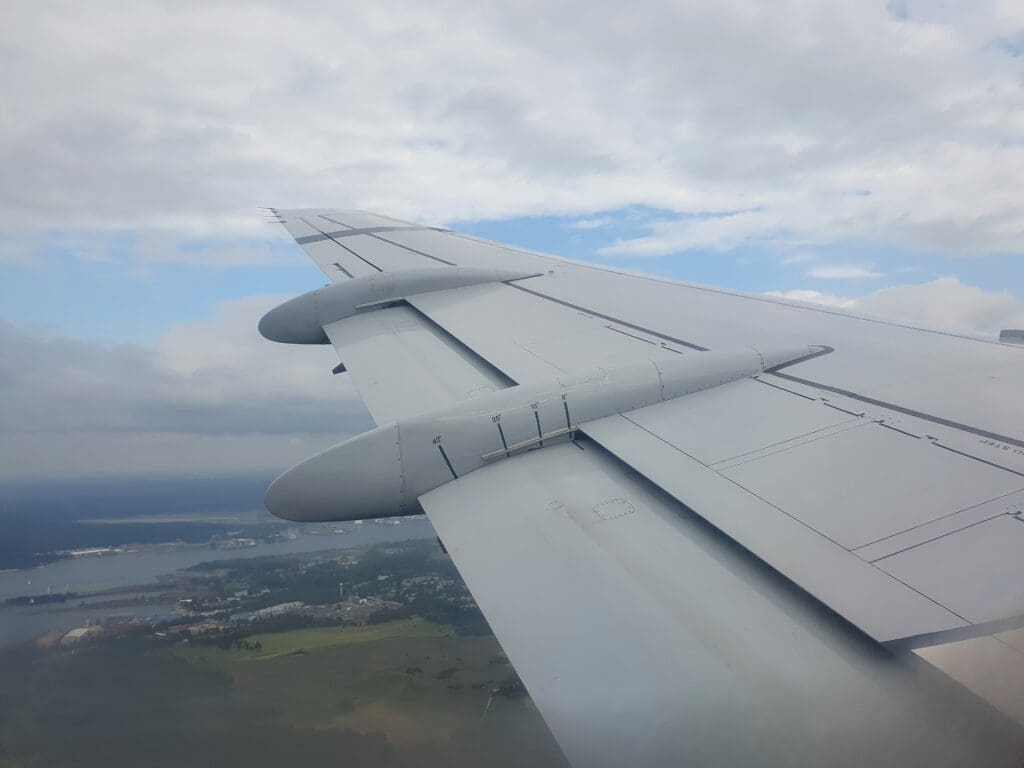
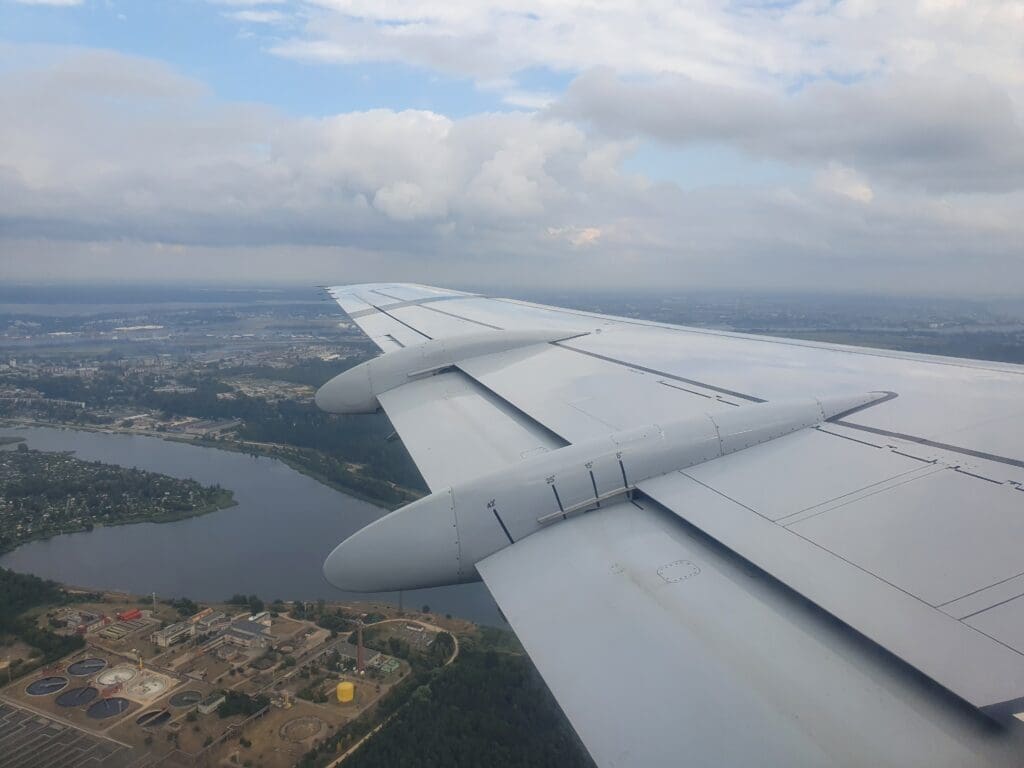
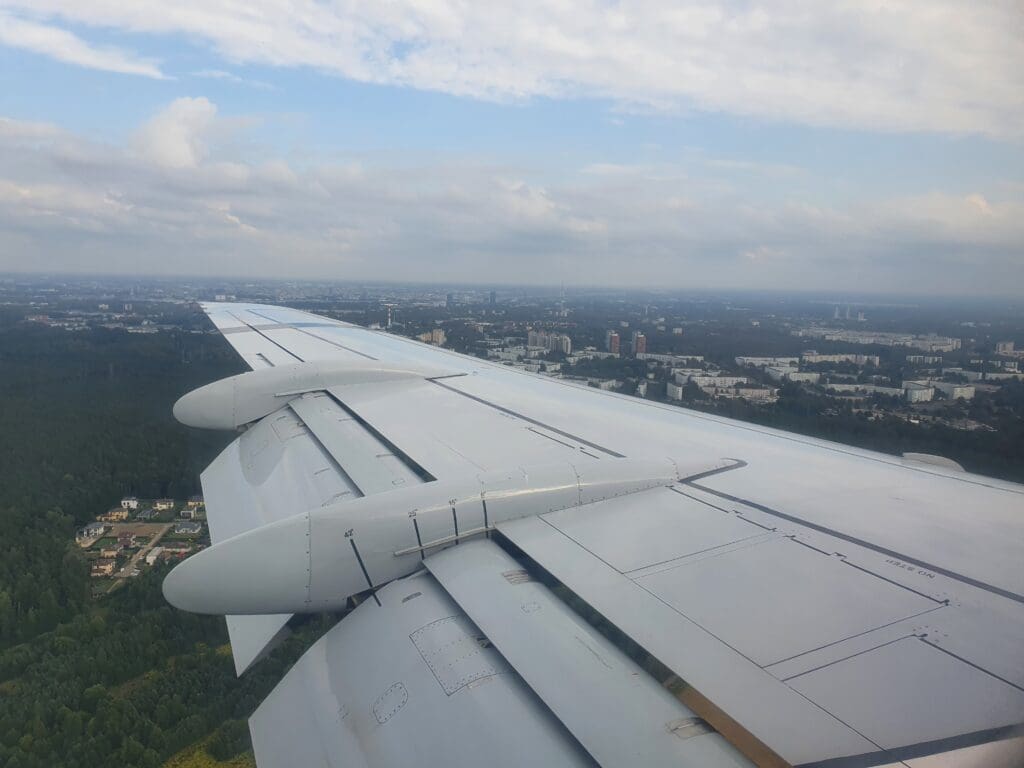
With all crew members secured in the jumpseats, the aircraft soon turned southwards to fly towards Riga and lined itself up for an approach to Riga Airport’s Runway 18 at which point full flaps and the landing gear were extended. Moments later, the mouth of the Daugava could be seen before the centre of Riga came into view in the distance. Below, the aircraft passed over a mixture of forests and low-rise neighbourhoods before reaching the Soviet-era apartment blocks of the neighbourhoods of Imanta and Zolitude as the jet neared the airport.
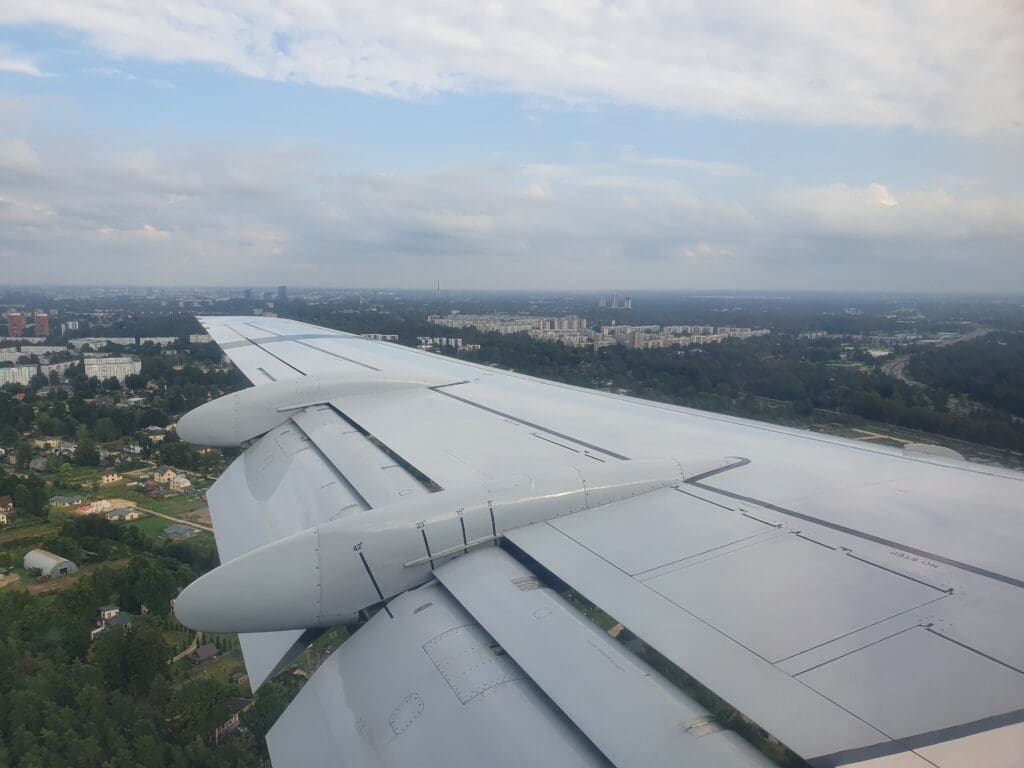
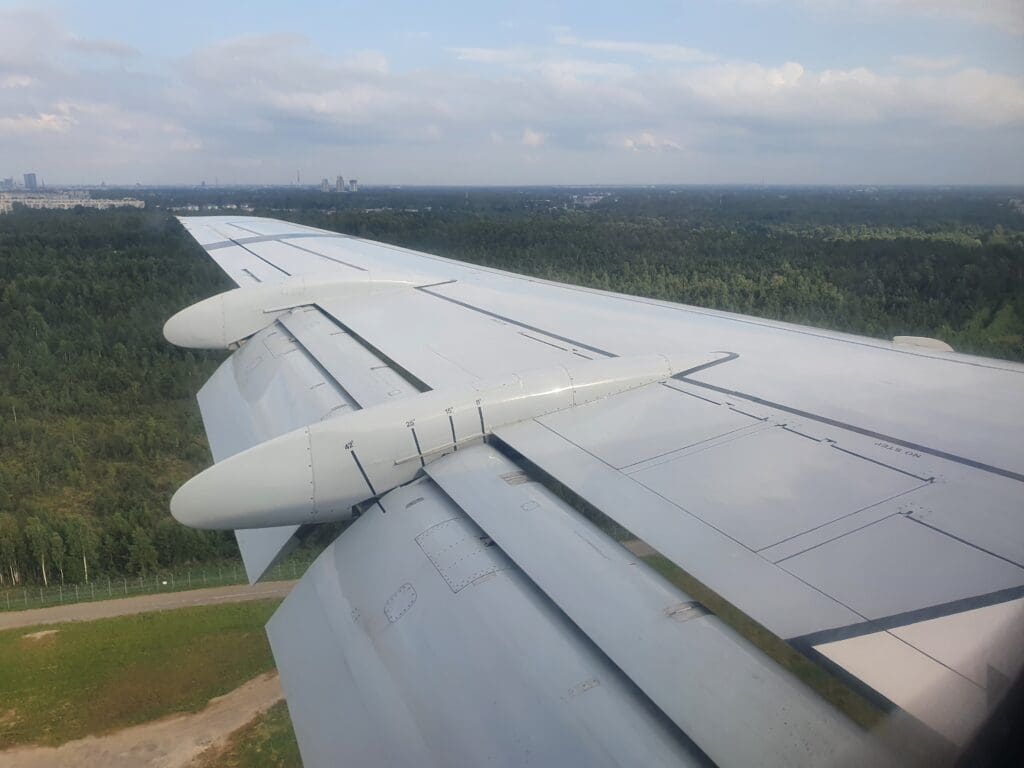
A short time later, the Fokker sank over Riga Airport’s northern perimeter and a selection of aircraft parked at remote stands could be seen. These included a Jacksonville-based US Navy Lockheed C-130T Hercules, an all-white Airbus A330 and local carrier RAF-Avia’s sole remaining Antonov An-26. Following 1H22 in the air, at 1717 the Fokker made a reasonably soft touchdown on Runway 18 at which point the aircraft’s large speed brakes were extended and the aircraft decelerated rather quickly. A short time later, the Fokker vacated the runway to the left at which point a selection of aircraft including a sleek-looking Boeing 737 Business Jet and several retired airBaltic Dash 8 Q400s alongside the carrier’s newer Airbus A220s could be seen.
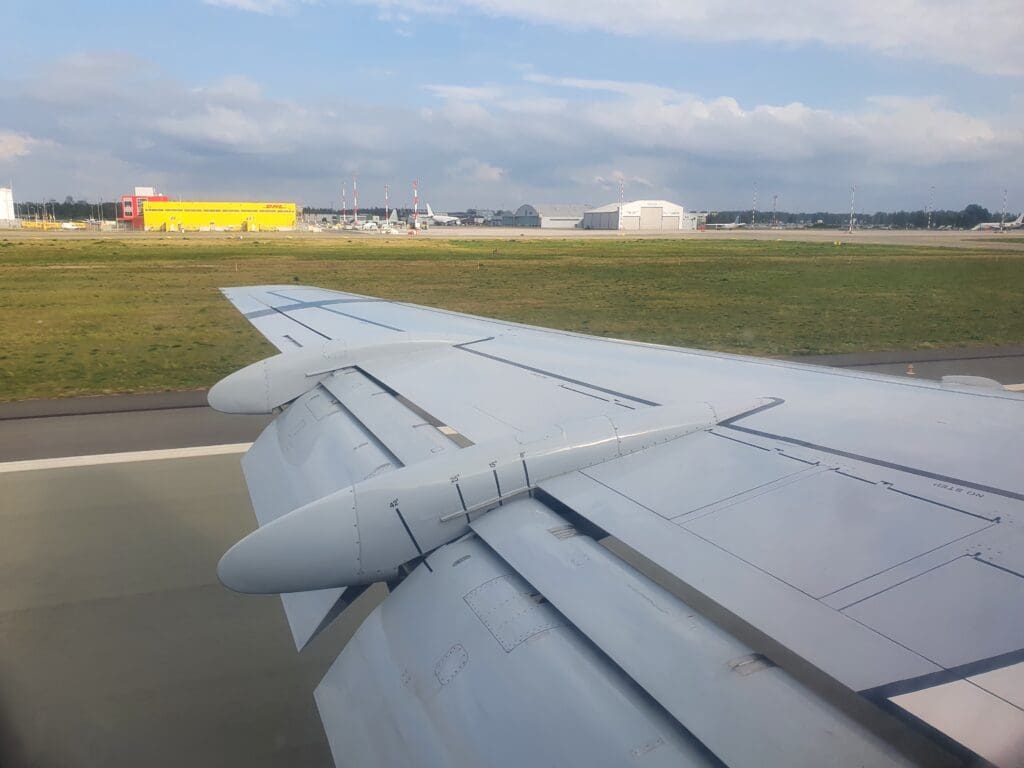
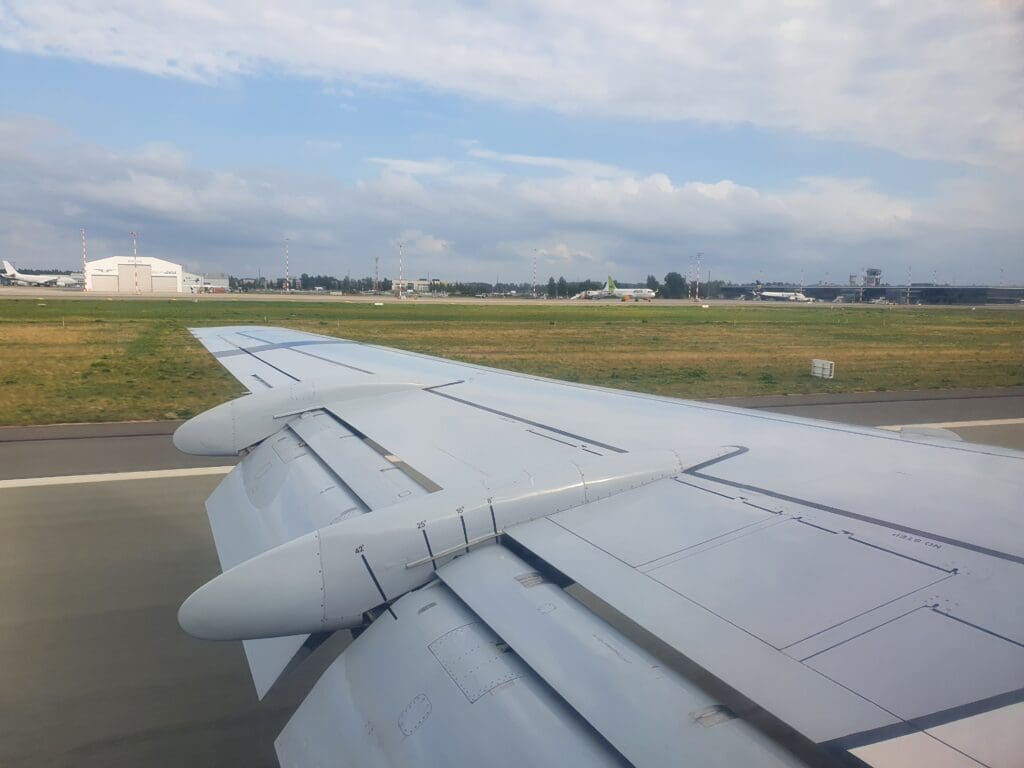
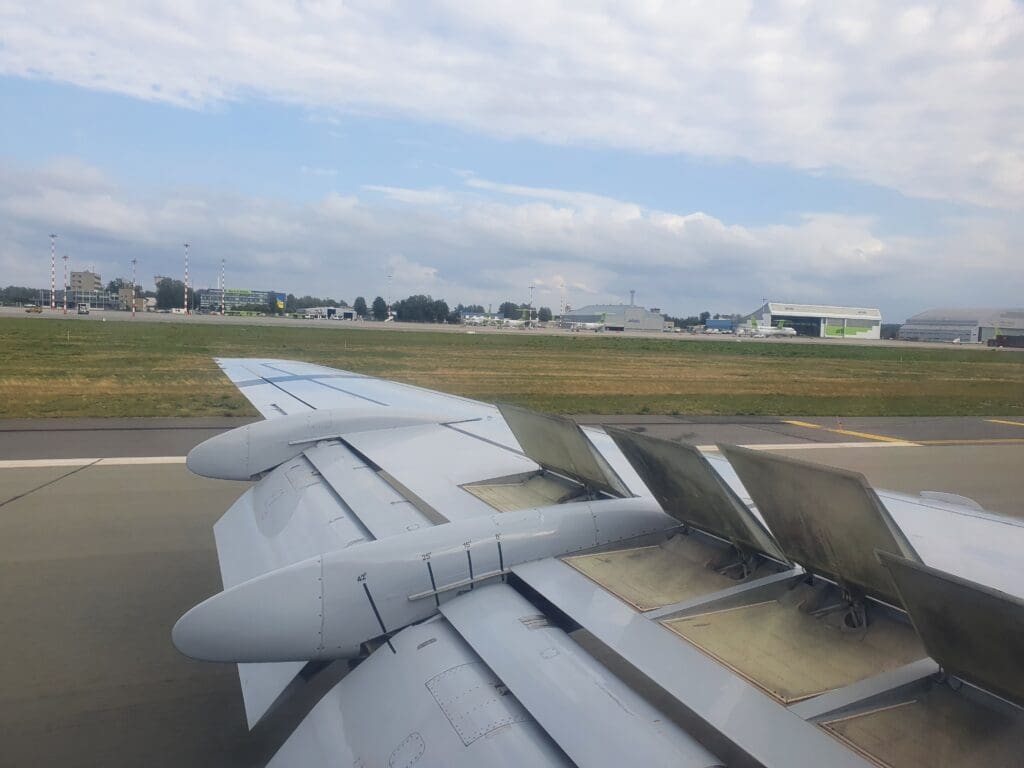
After leaving the runway, the Purser welcomed all to Riga and advised passengers to remain seated until the aircraft had arrived at the gate. Being a fairly compact airport, it did not take long for the Fokker to reach the terminal building and at 1721, the aircraft came to a gentle halt at Gate 106 before the two Tay engines spooled down. As is often the case, as soon as the seatbelt signs were extinguished, many of my fellow passengers stood up in preparation to make a quick exit from the Fokker. Looking outside, I watched as a set of airstairs was manoeuvred up to the forward exit, with disembarkation commencing a short time later. Seeing as I was seated in one of the rearmost rows of the aircraft and with no rear airstairs like some other T-tailed jets, a fair amount of waiting was in store whilst those in the rows ahead of me made their way out of the aircraft.
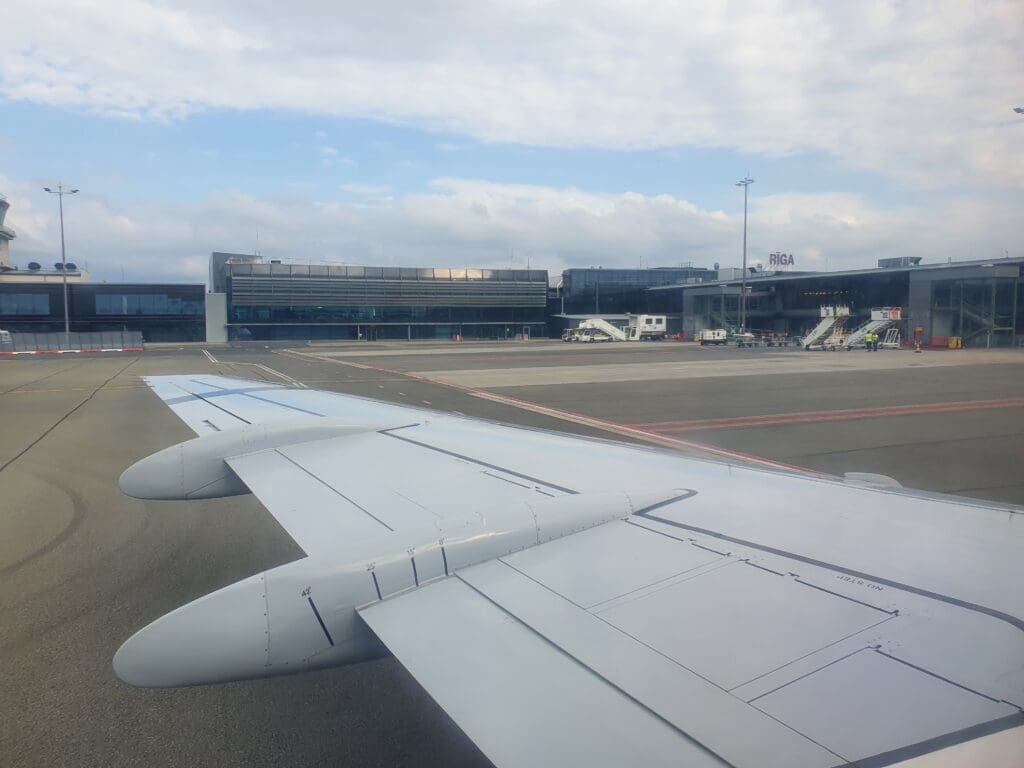
Following a wait, at 1730 I made my way through the aircraft, thanking the flight attendants as I headed through the cabin before I journeyed out into the pleasantly warm Latvian summer evening air and walked the short distance into the terminal – successfully bringing an end to my first Fokker 100 flight in almost four years. That afternoon, my flight’s delayed departure from Hamburg had brought with it some unnecessary concern about my tight connection in Riga. However thankfully, this needn’t have caused any worry as I ended up having a stress-free and quick connection which is detailed in the next instalment where I take an Air Horizont Boeing 737-400 to Copenhagen.
Summary
Whilst clean, the Carpatair Fokker 100 that had powered me eastwards across the Baltic that afternoon was clearly a dated jet. In terms of comfort, the legroom afforded by its seats may have proven to be a little uncomfortable on a longer flight. However, given the rarity of the Fokker 100, I could not really make any reasonable complaint about my experience with Carpatair. Furthermore, I ought to mention that I found all the Carpatair cabin crew to be friendly, polite and welcoming, far more so than their airBaltic counterpart. Thus, whilst it’s unlikely that I will travel on Carpatair at any point in the near future, I would not hesitate to do so, especially if a rare Fokker 100 is involved!
Flying aboard a rare type is a thrill! Even better when it’s a remote stand.
I recently flew aboard an Airbus A318! Once, I flew aboard a Fokker F70! Several times on a Fokker 100 but not recently.