Flying to the Hebrides on a Scottish Twin Otter: Loganair Review – Glasgow to Tiree
Background
After a long period of uncertainty, by early May 2021, things were gradually starting to look up. On a national level, the number of COVID-19 cases in the UK was down and the ongoing vaccination campaign was making good progress. As a result, a further loosening of restrictions regarding travel and overnight stays was on the near horizon. Meanwhile, on a personal level, I was nearing the end of my master’s degree, and after literally hundreds of applications, I had finally been offered a job! With both of these considered, I decided to make the most of the reintroduction of national freedom in my final moments of freedom before employment to tick off some items from my UK aviation bucket list. With all factors considered, I decided on a short trip north across Hadrian’s Wall to Scotland. There, I intended to catch a ride onboard a Loganair Twin Otter, a couple of Saab 340s as well as Hebridean Air Services’ bright yellow Britten-Norman Islander before returning to London on the famous Caledonian Sleeper. Unfortunately, the weather meant that the very last trio of flights did not work out, although I would get to sample this experience later on in the year!
Whilst the Twin Otter has been ploughing the skies of Scotland for decades, serving some of the most remote commercial airports in the UK, I had yet to venture north to sample a ride on the type. The most obvious route for an aviation enthusiast would be that up to the beach runway at Barra, however costing £160 return, this was a little above my price range and so I instead settled for a much more reasonably priced one-way flight to Tiree – a small island in the Inner Hebrides. A Fly Flex fare for this set me back £45.99 and I was able to purchase this quickly and easily via Loganair’s website.
Unfortunately, as my schedule panned out, I ended up having to delay my trip to Scotland by a week. Thankfully, rescheduling my flight via Loganair’s website proved not to be an issue although only the slightly more expensive FlyFlex+ fare remained available, requiring an additional payment of £25.01. On the plus side, this came with complimentary seat selection and a fast-track pass for security at Glasgow Airport. Once I selected my new flight, I was presented with a nearly completely vacant Twin Otter seat map. With Seat 1A non-selectable, I instead went for 1C which would hopefully allow for a good view of both the Scottish countryside and the cockpit. Once I had paid the additional fee, I received confirmation for my new flight almost instantly and was all set to go.
The Journey
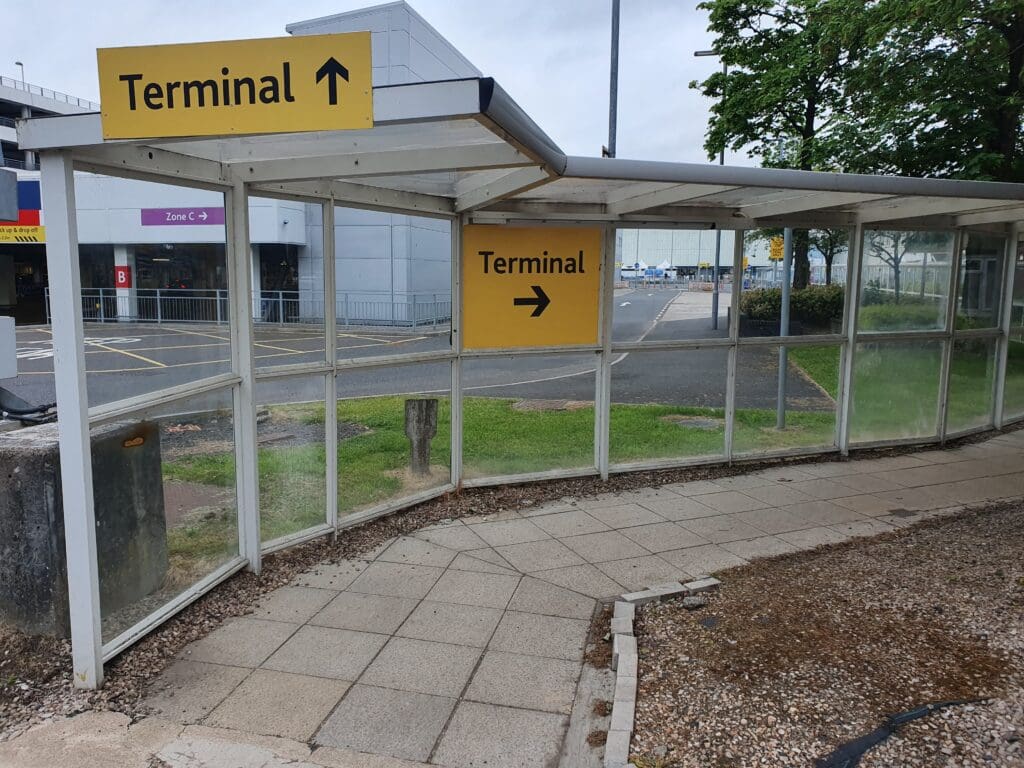
Following a short night at the Glasgow Airport Travelodge, I woke up at 0600 and following a quick shower, I made my way out into the cool early morning air and commenced the short walk over to the terminal. Despite being far from a luxury hotel, the local Travelodge left me with nothing to complain about. Not only did this set me back just £27.99 for a one-night stay, this was clean, modern and located nothing more than a short and well-signposted walk away from the terminal. Following the signs and managing not to get lost, approximately ten minutes after leaving the hotel, I caught sight of Glasgow Airport’s drab and box-like main terminal.
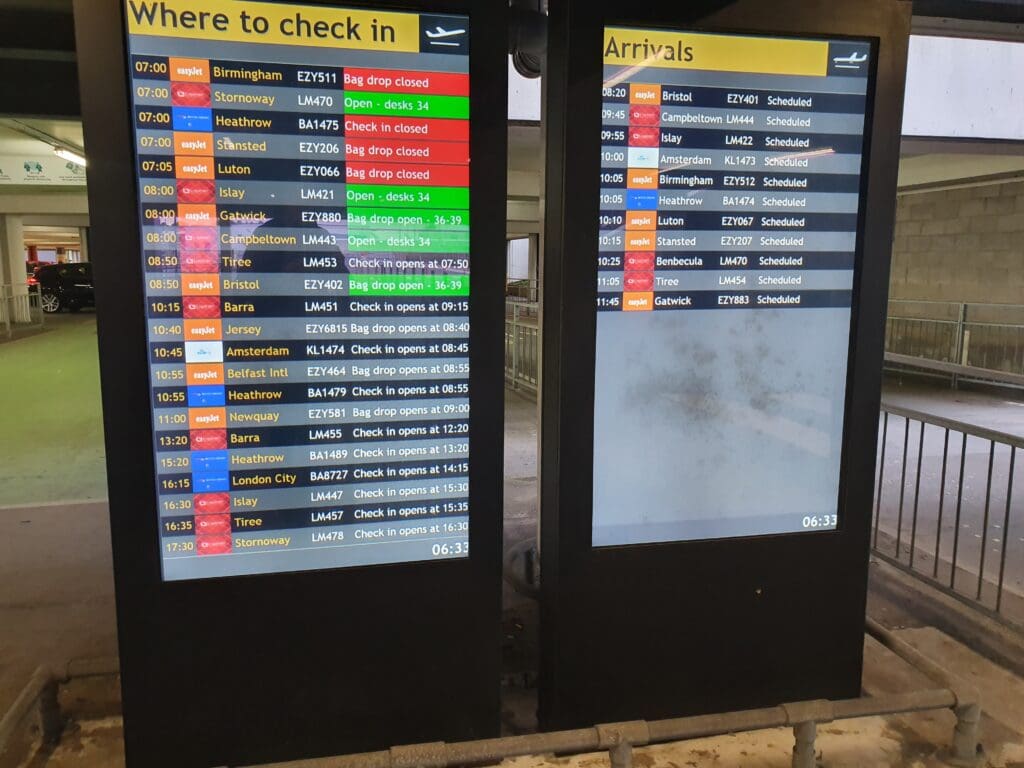
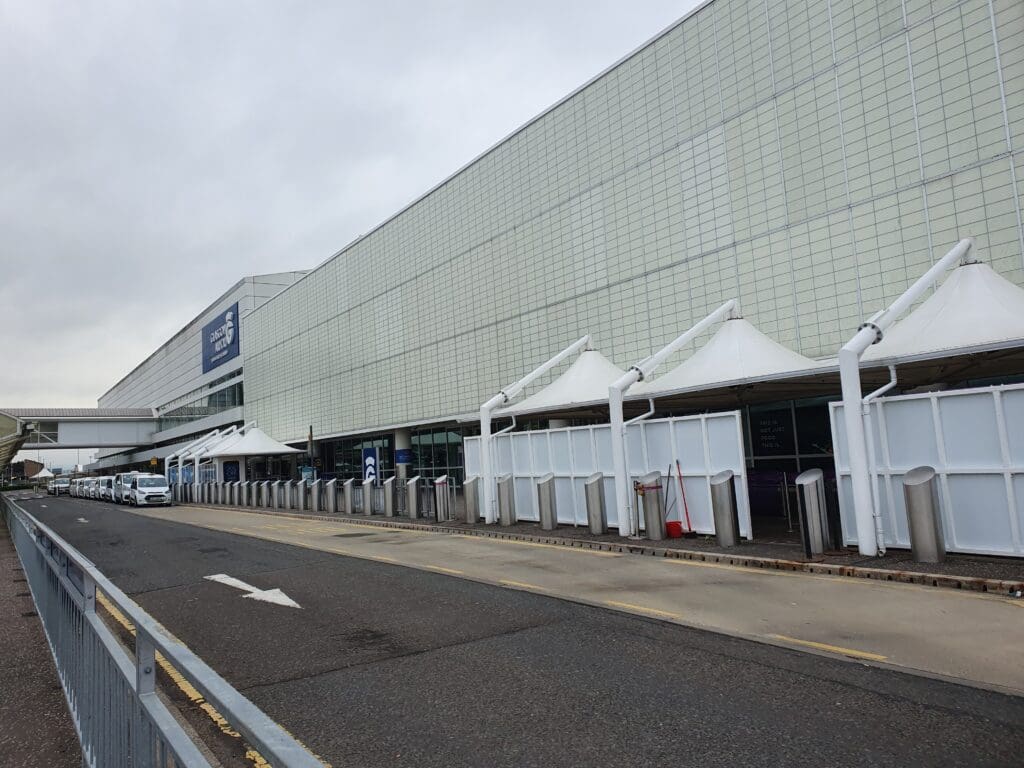
Whilst Glasgow Airport can hardly be described as being in any way architecturally inspiring, once inside the landside area I was pleased to find this to be clean and in good condition. Feeling rather peckish, my first stop was at the local WHSmiths where I pushed the boat out and purchased an overpriced sandwich-snack-soft drink meal deal for a total of £4.99. After consuming this on the bench, I had a quick wander around the landside area and passed through the large yet eerily quiet check-in hall. At that time, only a small handful of EasyJet and Loganair check-in desks were open. Seeing as I had a mobile boarding pass and lacked any hold luggage, after wandering around I voyaged up the escalators to the equally empty security area. At that time, two checkpoints were open, however with both of these lacking so much as a single passenger, it turned out that the security fast-track included in my ticket would not be particularly useful! With no queuing and a very friendly set of security workers, that morning, passing through this and reaching the airside portion of the terminal was a breeze.
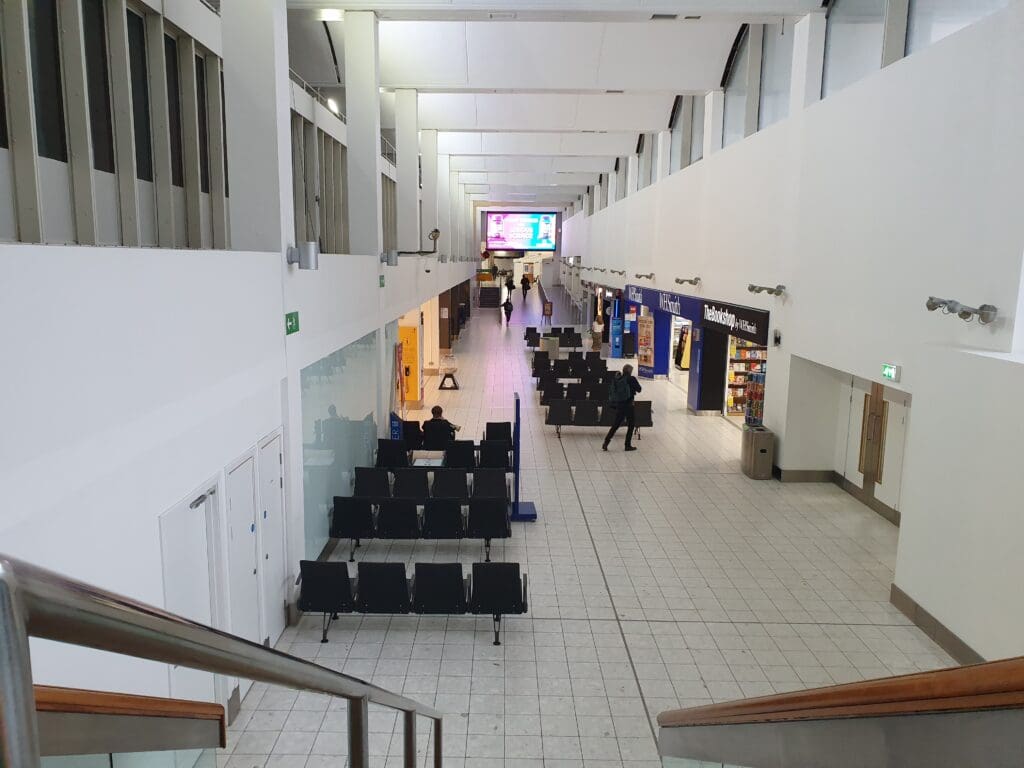
As airside areas go, that of Glasgow Airport is fairly standard for a medium-sized British regional airport. This is home to the usual selection of bars, cafés and shops, however, given the early hour and the ongoing pandemic, many of these were shut. Seeing as my ticket also included lounge access, I was slightly disappointed but not all too surprised to find that the terminal’s premium lounges were all closed. Returning to the positives, that morning everything appeared to be clean and tidy, whilst ample seating was available throughout the terminal and I did not struggle to find a free plug socket. For aviation enthusiasts, good views of the apron and runway can be had down all three of the terminal’s piers. Having had breakfast and with little else to do, I decided to head down one of the piers where I charged my phone and watched the action outside.
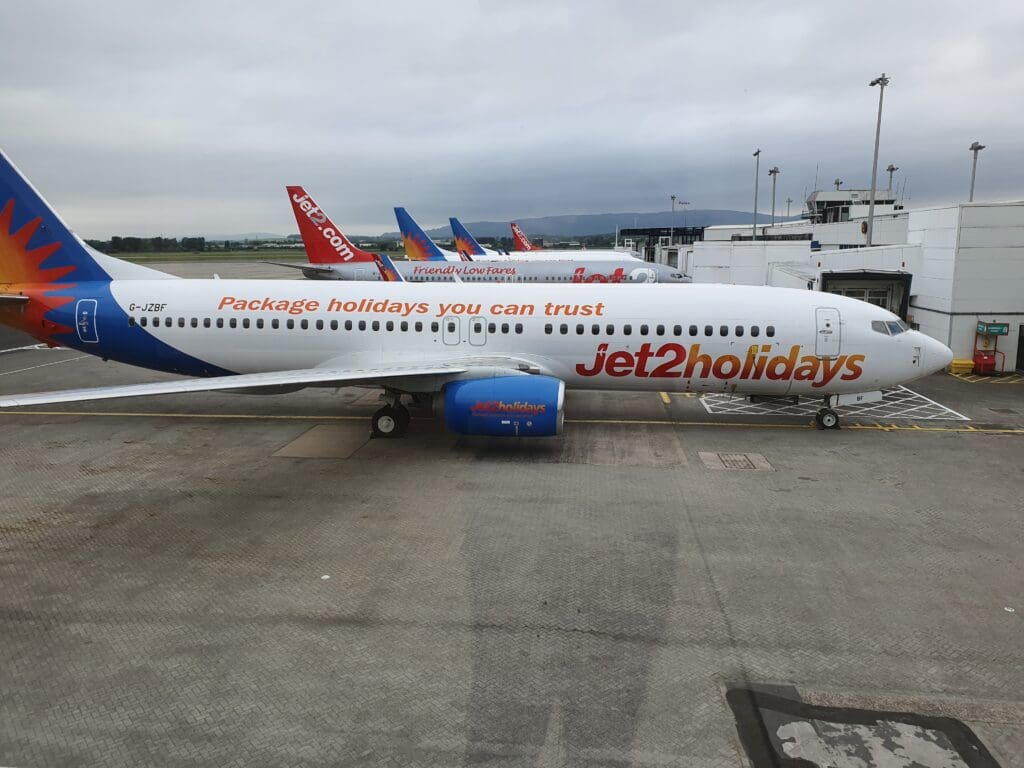
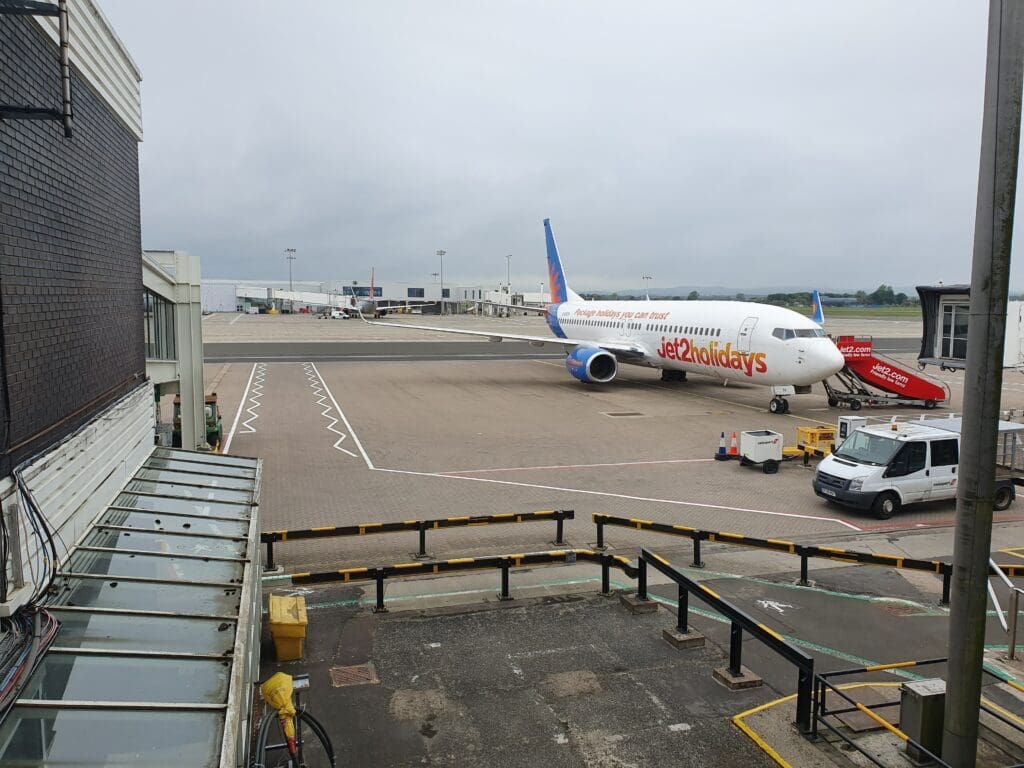
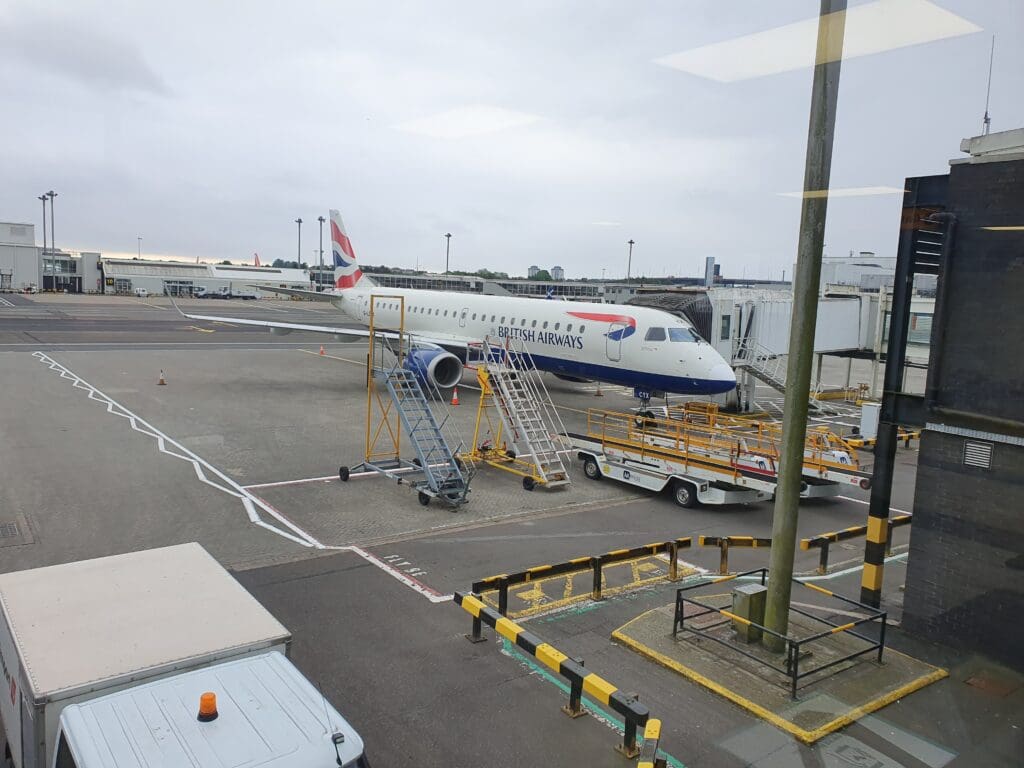
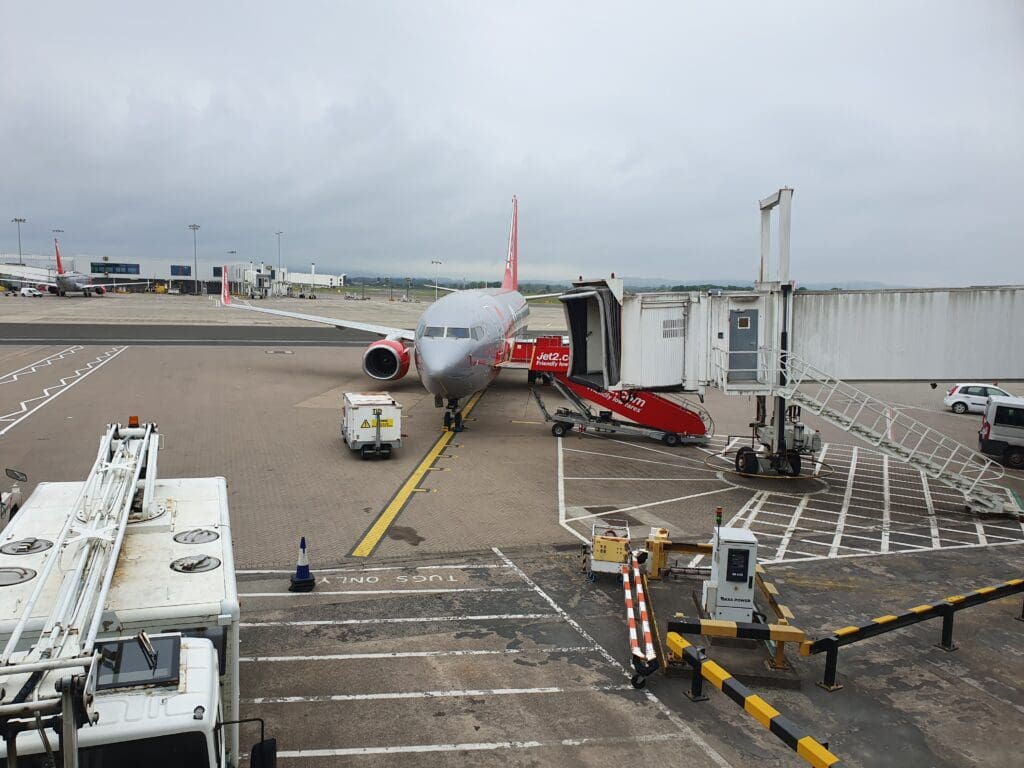
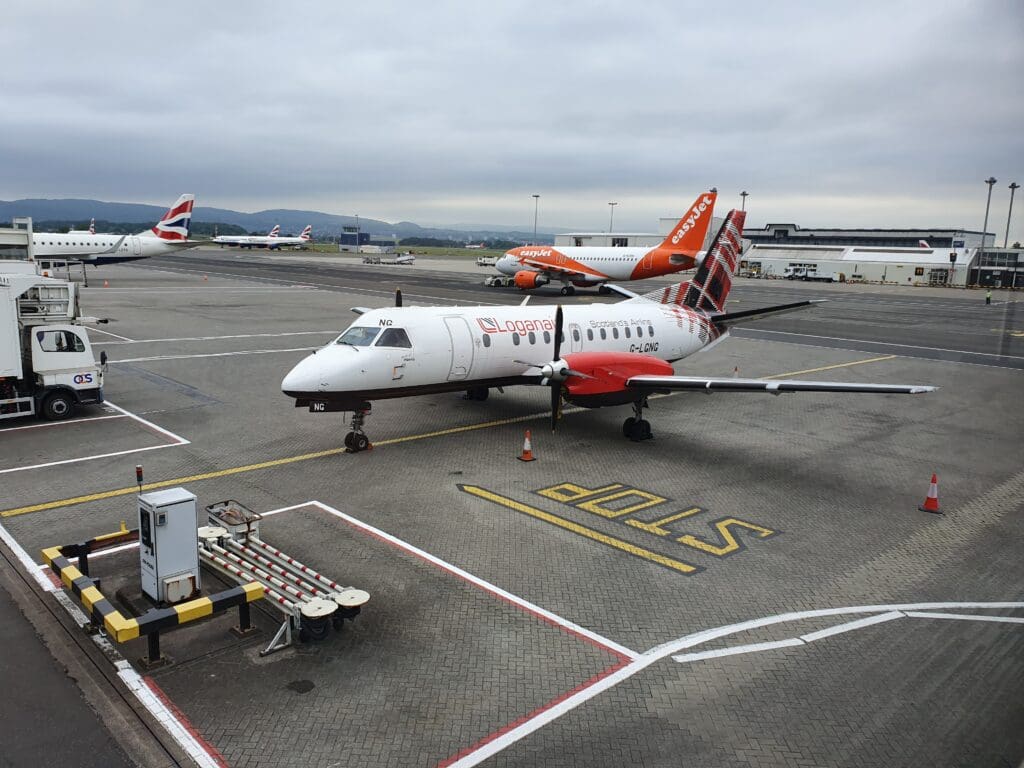
At that time in the morning, a good number of locally based EasyJet Airbus jets could be seen commencing their working days with flights to destinations south of the border – namely Birmingham, Gatwick, Luton and Stansted. Meanwhile, upon arriving it also seemed to be a busy time for Loganair with Embraer, Saab and Twin Otter flights to Benbecula, Campbeltown and Islay. As I waited, I noticed Viking Air DHC 6-400 G-HIAL being towed over to Stand 12. Once the Viking Air Twin Otter G-SGTS departed off to Campbeltown, seeing as there appeared to be little happening around the airline’s older Twin Otter, it became evident that G-HIAL would operate the morning service up to Tiree.
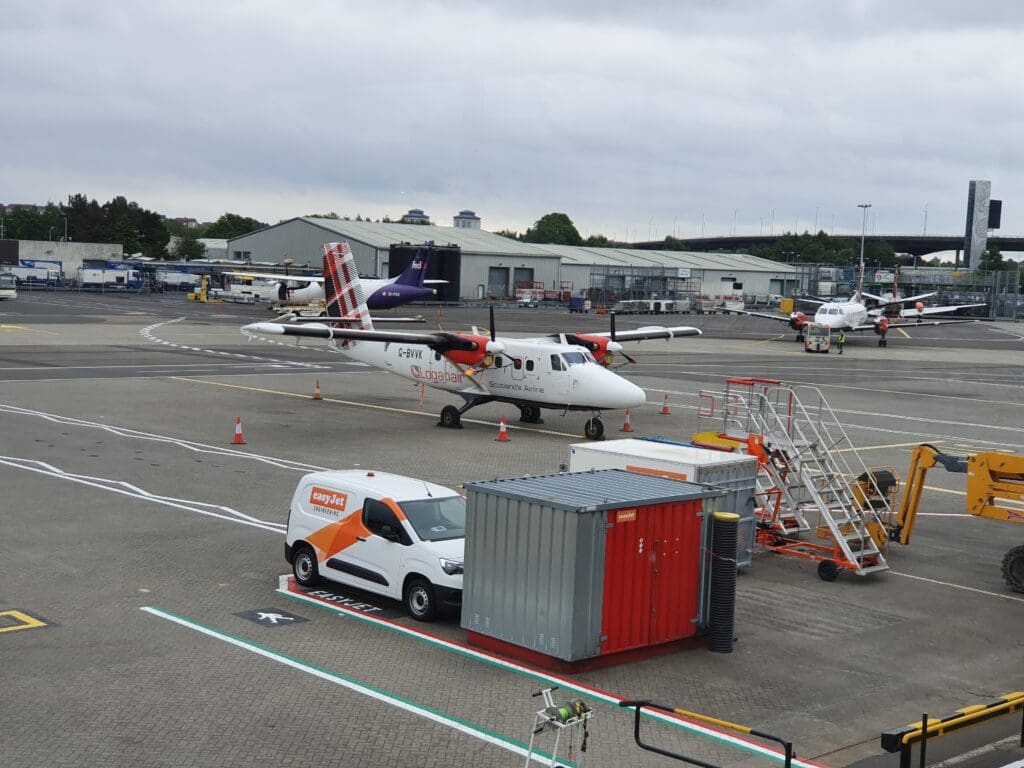
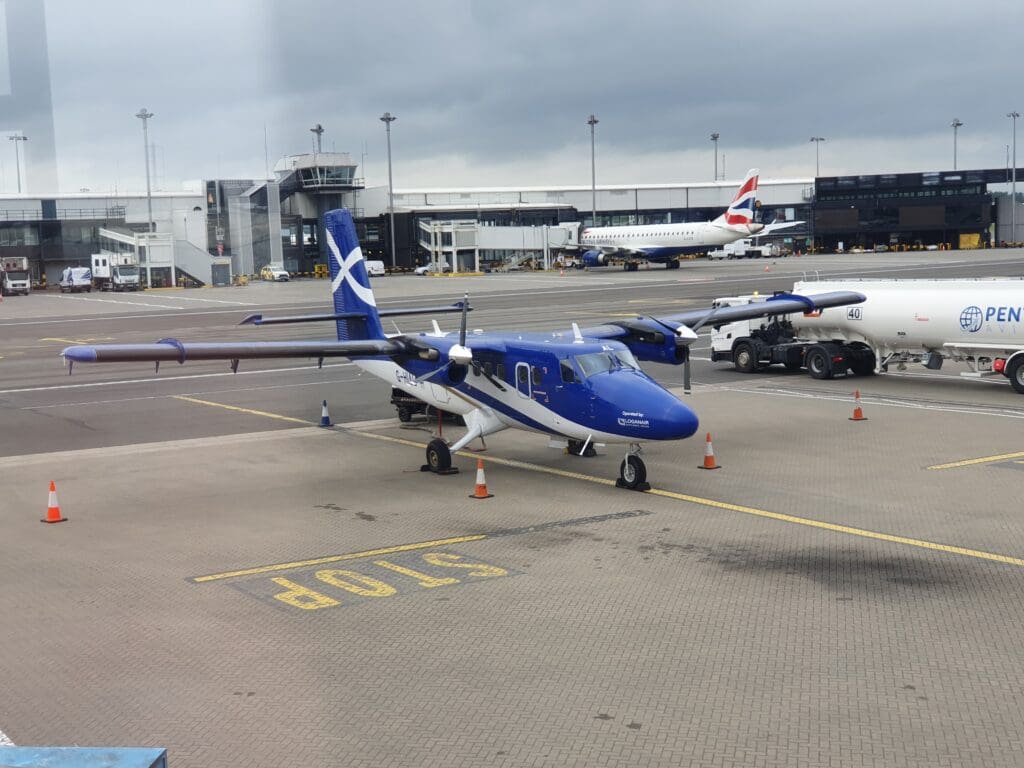
Manufactured at Viking Air’s plant at Victoria Airport on Vancouver Island, this particular Twin Otter first took to the skies in late 2014 sporting the test registration C-GLVA. In January 2015, the aircraft journeyed a short distance south to the United States where it was painted into its uniquely Scottish livery at Spokane Airport before returning to Canada. In May 2015, still wearing its Canadian registration, the Twin Otter embarked on its long two-night delivery flight to Scotland alongside G-SGTS (then C-FVIK). After departing British Columbia, the duo made stops in Calgary, Churchill, Iqaluit and Reykjavík before touching down at the aircraft’s new home in Glasgow. Sporting a different colour scheme to Loganair’s older Twin Otter (G-BVVK), as far as I am aware, whilst operated by Loganair, these two newer Twin Otters are owned by Highlands and Islands Airports Limited (HIAL). This of course explains the registration G-HIAL! In the week before my flight, this particular Twin Otter appeared to have undertaken a total of zero flights and had remained firmly on the ground in Glasgow.
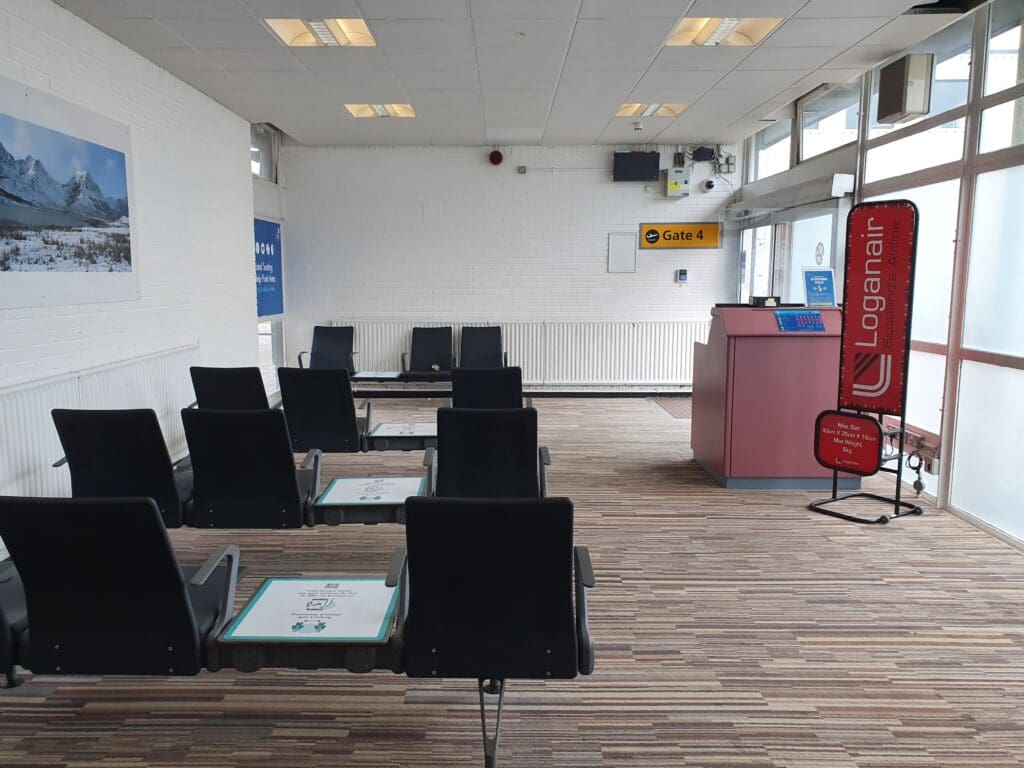
With 35 minutes to go until the flight’s scheduled departure time, at 0815 the departure boards updated to show that the flight to Tiree would depart from Gate 4. This confirmed my suspicions that G-HIAL would be operating the flight that morning. Whilst there was still plenty of time to go, I decided to make my way over to the gate without delay, heading down a stairwell to a small and slightly old-fashioned waiting area on the ground floor level of one of the piers. Not designed for any long waits, this contained little bar some seats, a podium and a single toilet, and appeared to be out of range of the terminal’s complimentary wifi network. Given my eagerness to head off on my first ever Twin Otter ride, unsurprisingly, I ended up being the first passenger to arrive at the gate, however, I was soon joined by a host of fellow travellers, being one of nine heading to Tiree that morning. Overhearing conversations, most passengers appeared to be Tiree locals who recognised one another – with the only visitor to the island other than myself appearing to be some sort of contractor.
After around twenty minutes of waiting, two Loganair staff members appeared at 0840 and were soon joined by the flight’s dispatcher at which point an announcement was made asking all passengers to come forward for boarding. Within seconds my boarding pass was scanned albeit not with a few failed attempts first, before I headed outside and made the short walk over to the blue and white Twin Otter. Upon reaching the aircraft’s port wing tip I was greeted by the friendly First Officer who had a look at my boarding pass before advising me to take Seat 2A instead of Seat 1C for weight and balance purposes.
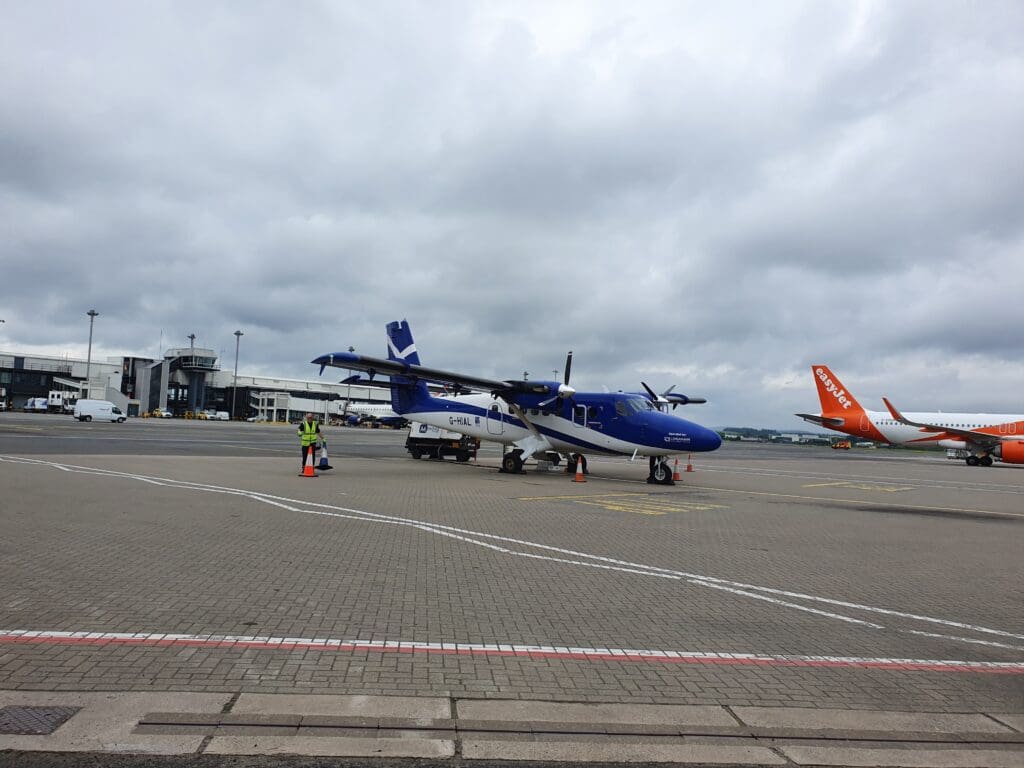
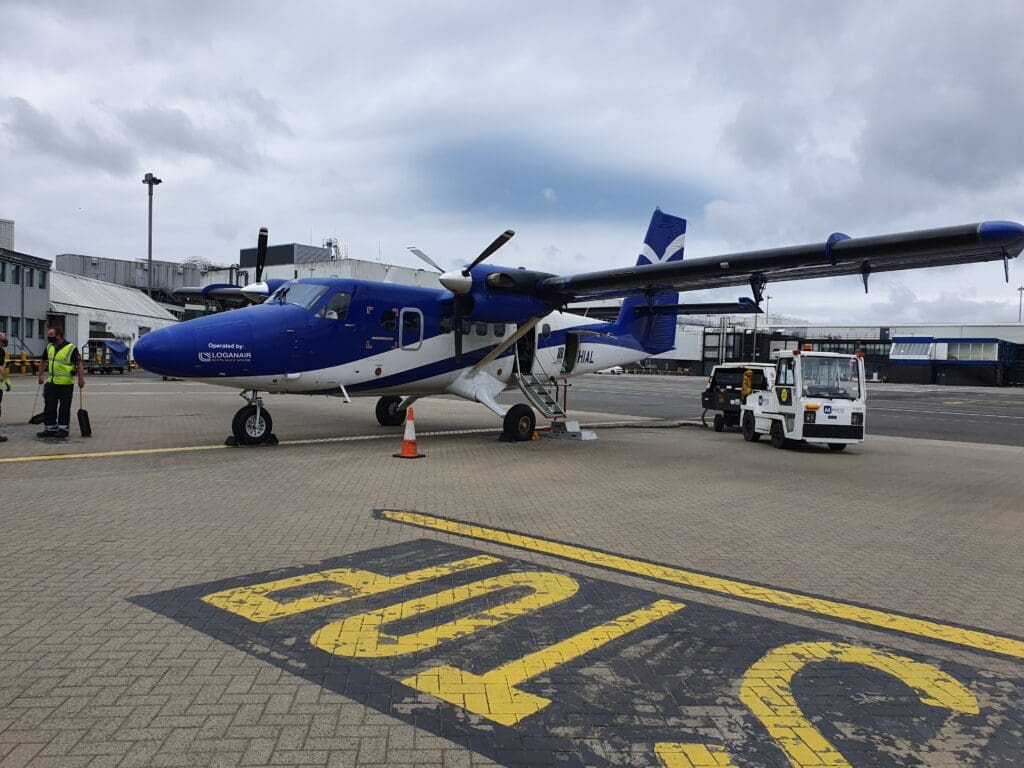
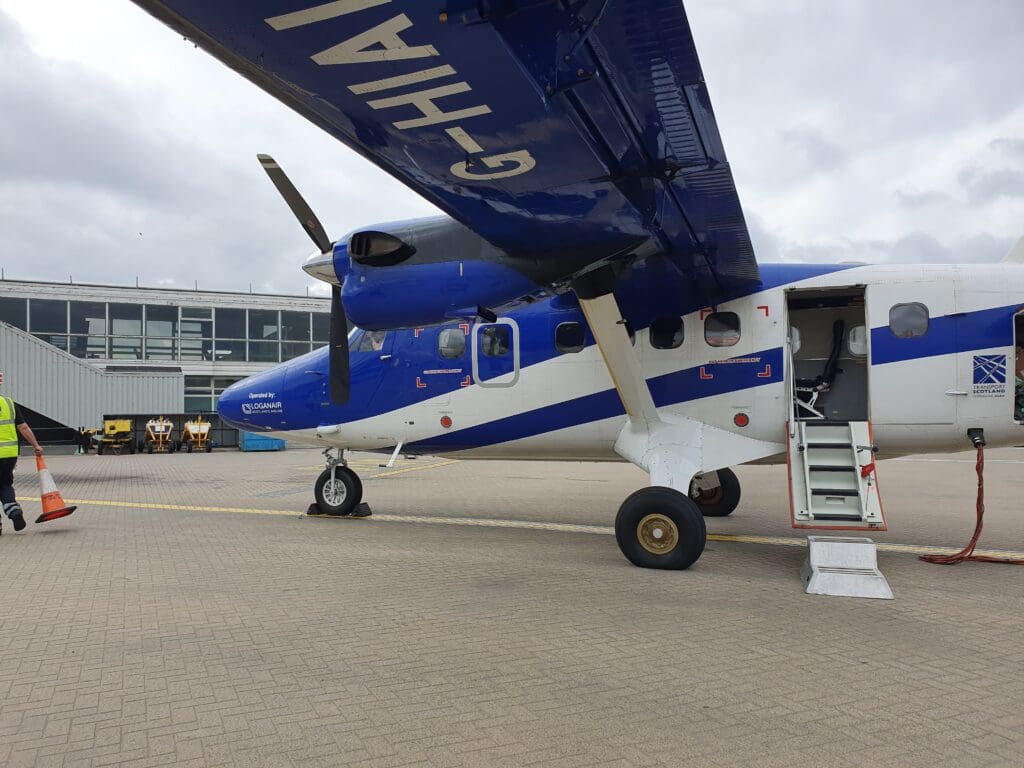
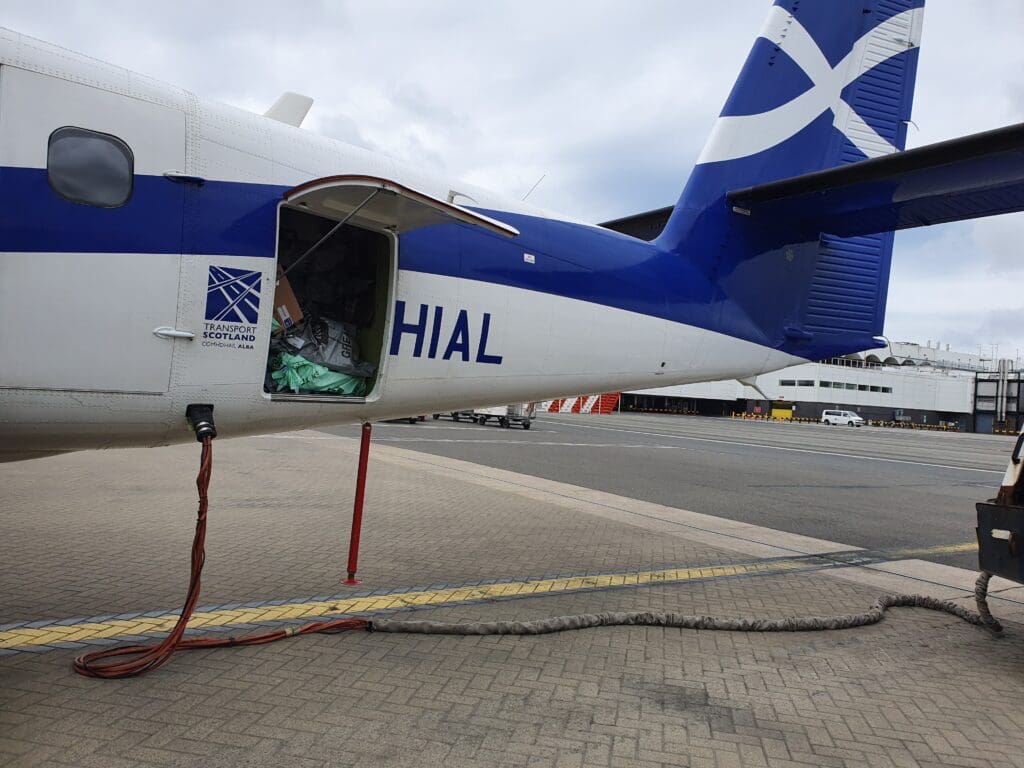
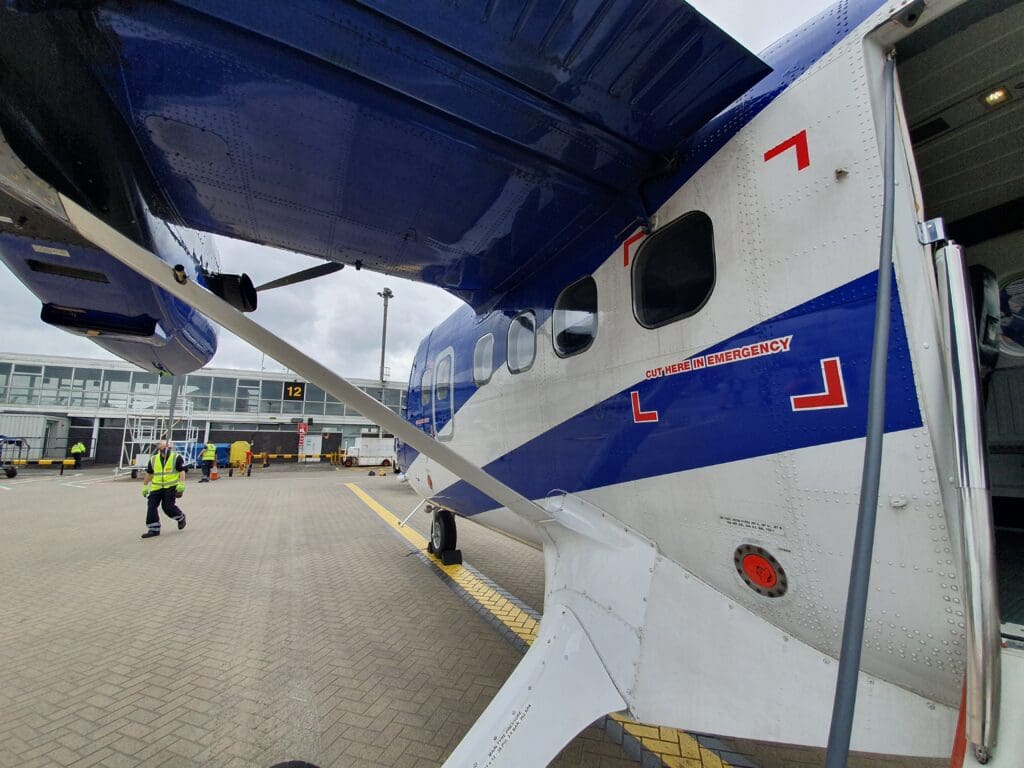
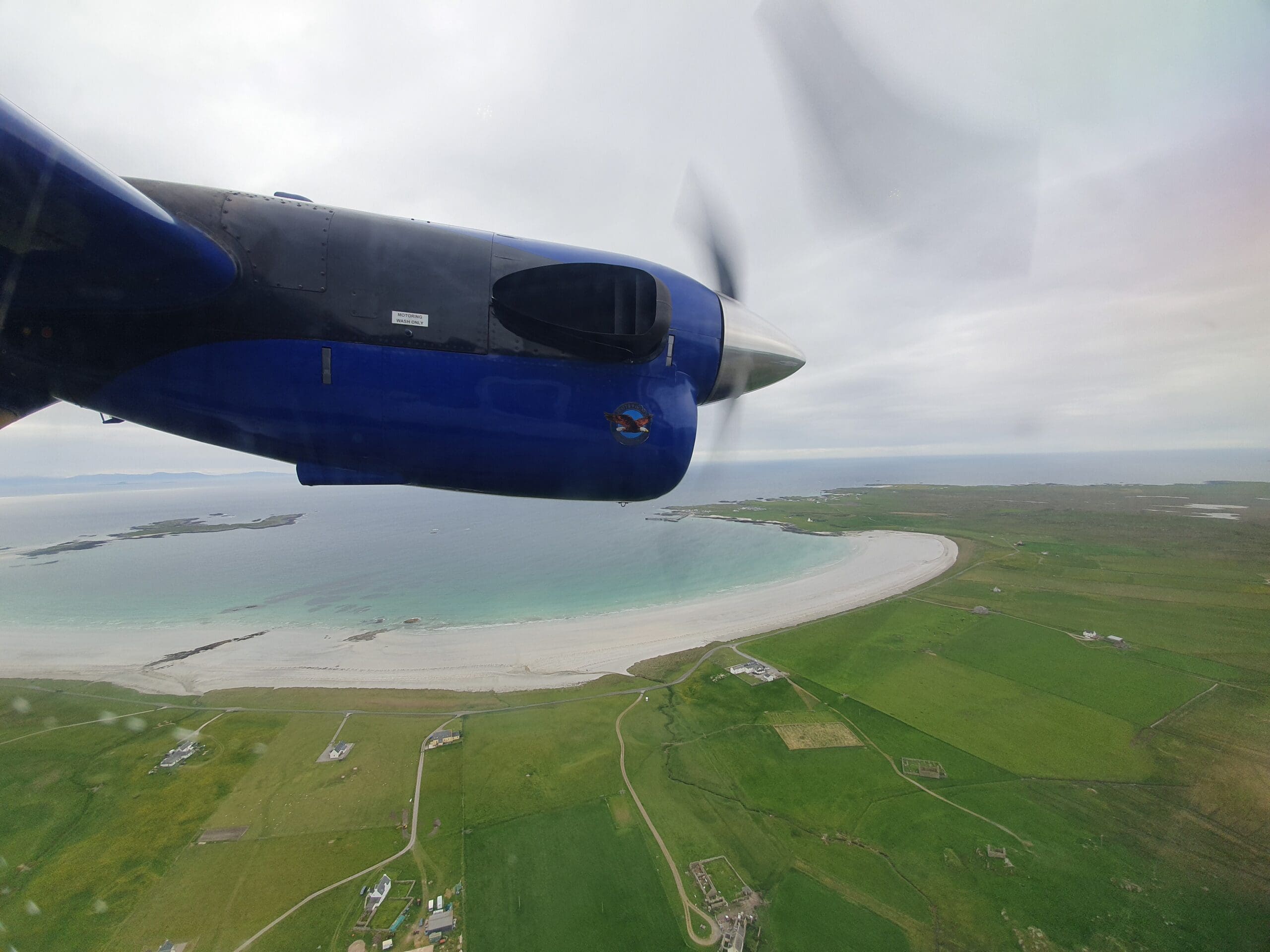
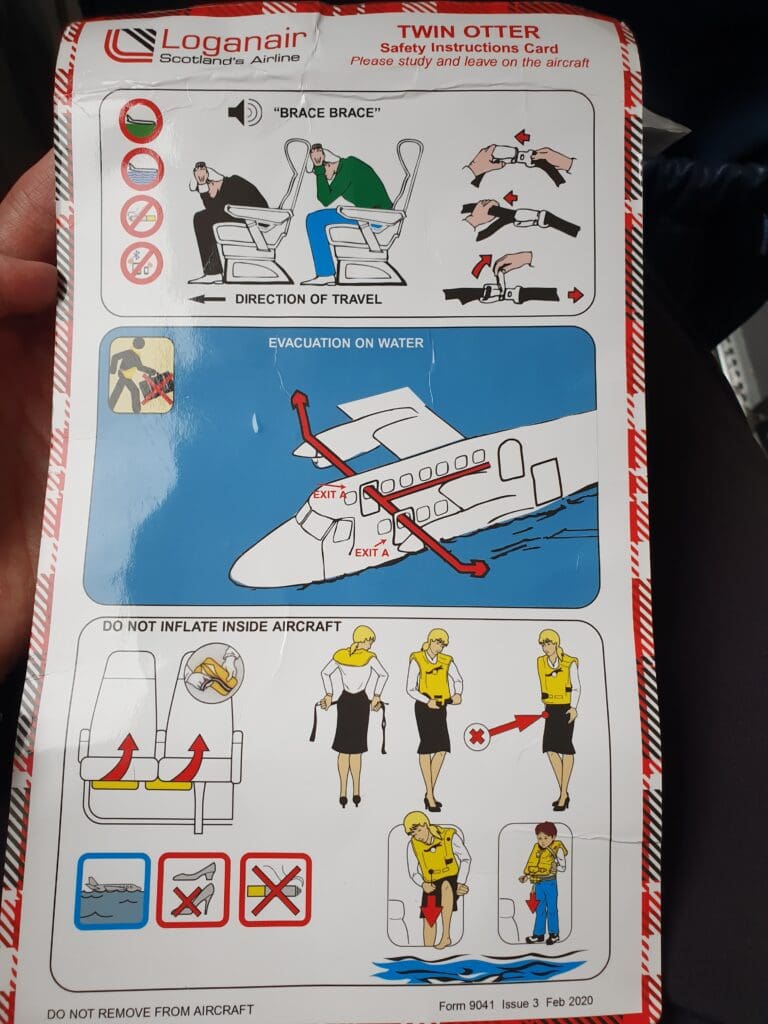
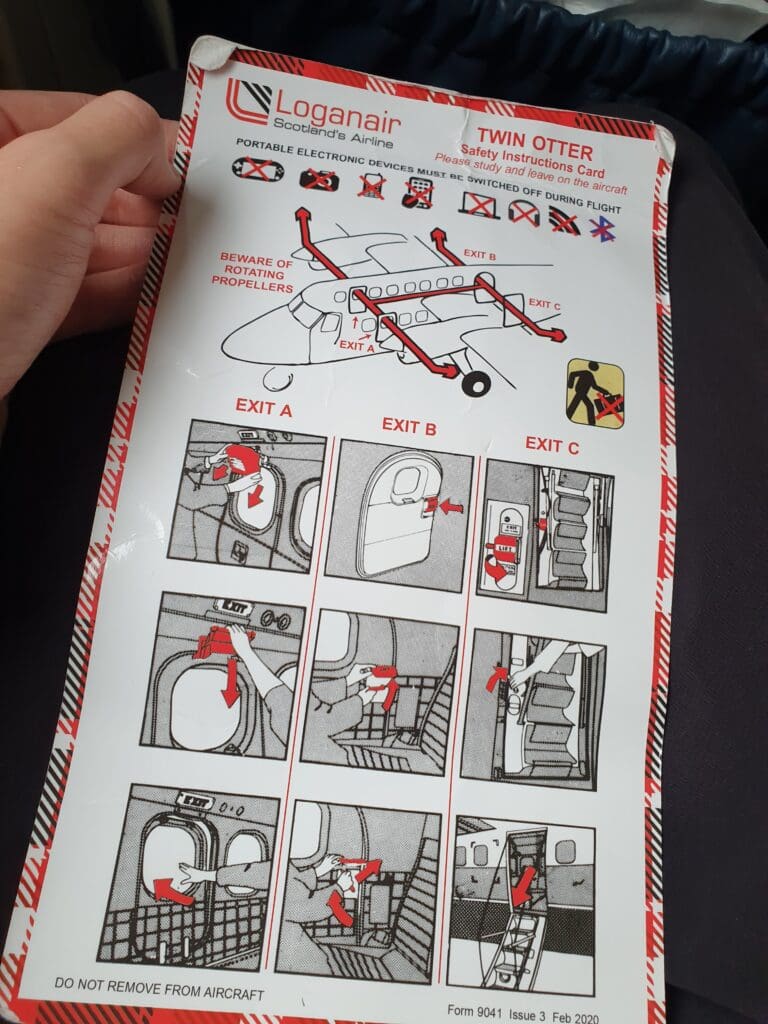
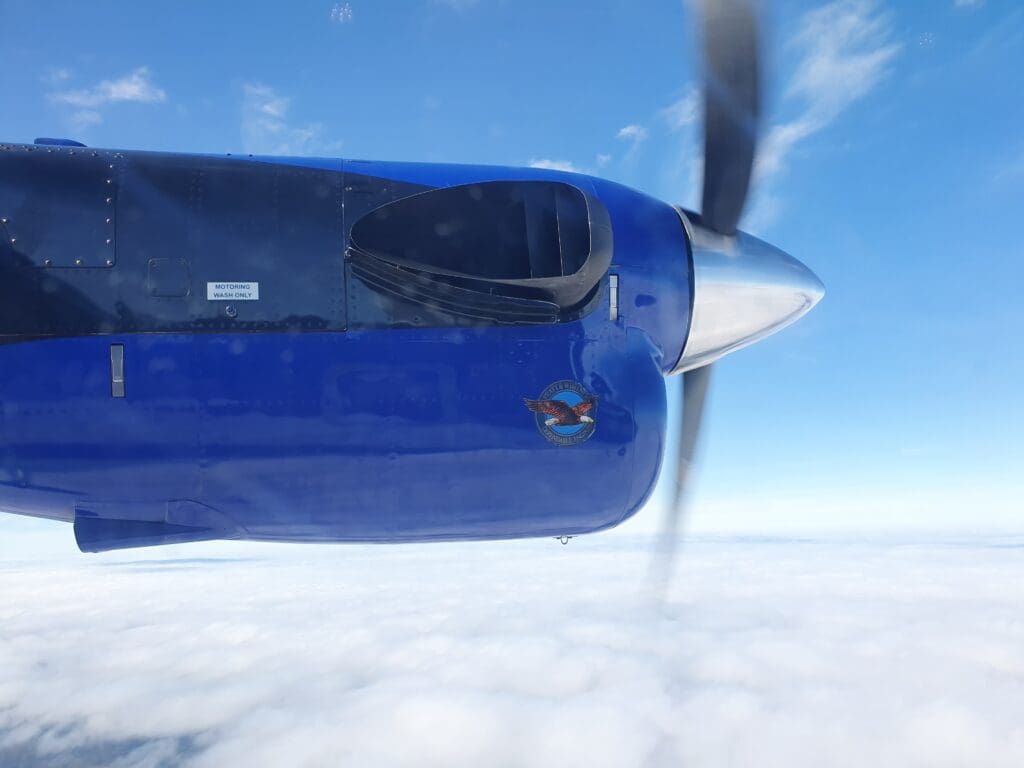
Once I had taken a few photos, I climbed up the aircraft’s sturdy built-in steps before bending over to avoid banging my head on the 1.42 metre-high cabin door as I entered the Twin Otter’s small cabin. Onboard, a total of nineteen seats could be found with all rows bar the rearmost featuring three seats in a 1-2 configuration. Each of these is covered in dark blue (faux?) leather and appears to be relatively thin however upon sitting down I was pleased to find these to be fairly comfortable and offer a decent amount of legroom for such a small aircraft. Much to my delight, aside from offering a good view of the cockpit, I was pleased to find that my seat aligned perfectly with the window, allowing for a good view of the world outside and one of the aircraft’s two powerful Pratt and Whitney PT6A-34 turboprop engines. As is the norm on the Twin Otter, none of the aircraft’s nineteen seats features a tray table, meanwhile, the seatback pockets contain a safety card and a plain white sickbag. Finally, seeing as the aircraft had only just emerged from maintenance, I was hardly surprised to find this to be in a clean state. However, a fair number of marks and scratches could be seen dotted about my seat area – although this was to be somewhat expected given the nature of the Twin Otter as a rugged utility aircraft and not a conventional airliner.
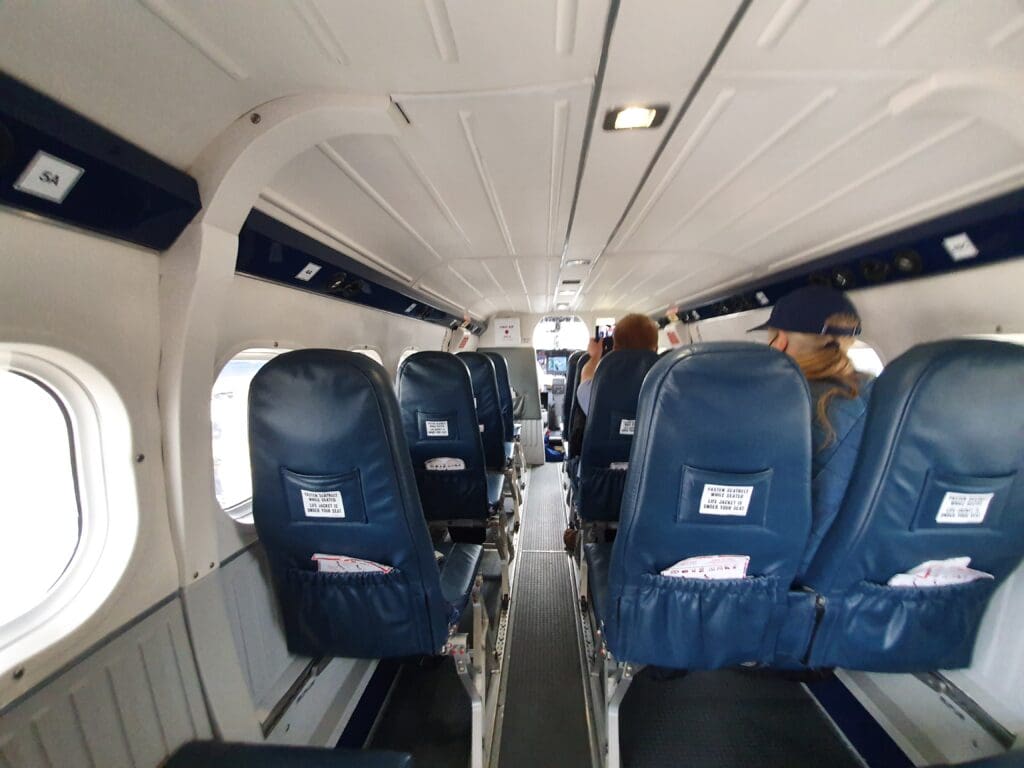
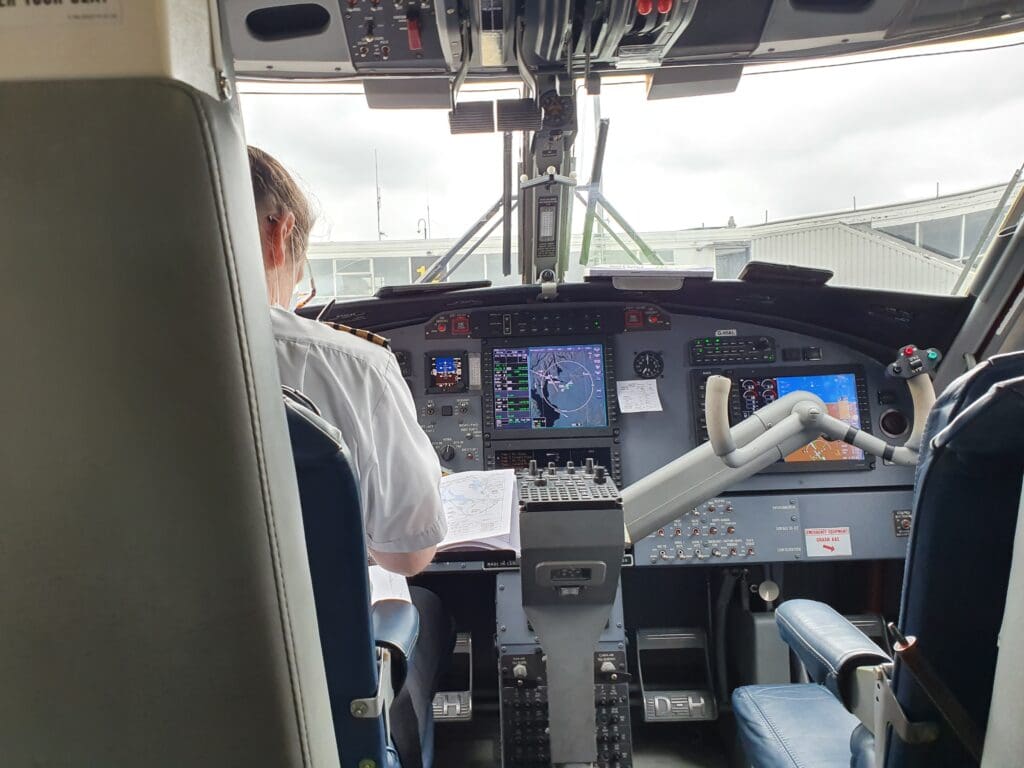
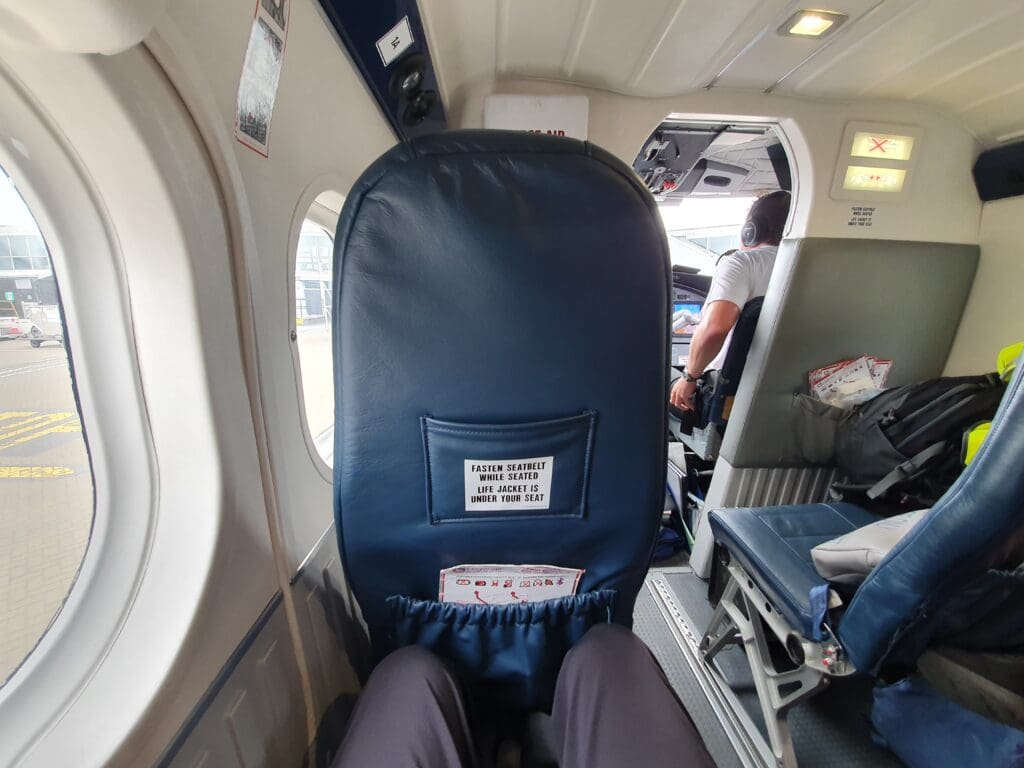
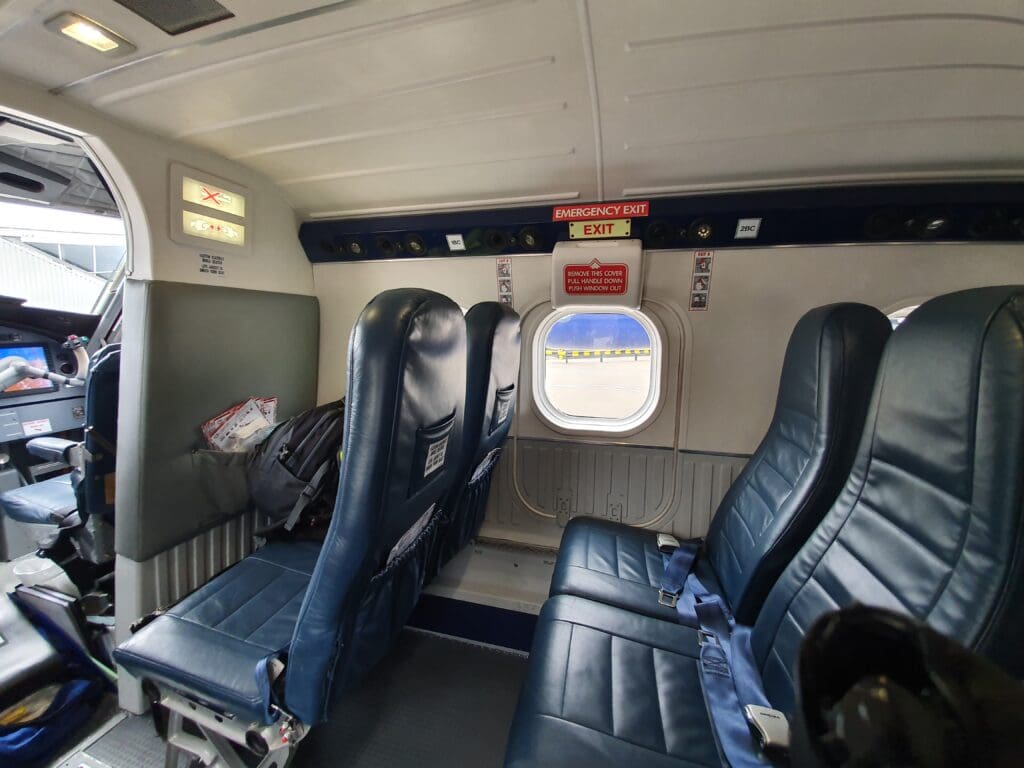
Given the small size of the Twin Otter and the light load that morning, all passengers managed to board the aircraft and strap themselves in within about five minutes of the commencement of boarding. After having a final conversation with the dispatcher, the First Officer made their way into the aircraft and the main cabin door was closed with a thud. Once done, the pilot made their way to the front of the cabin and performed a friendly and informal welcome speech, during which they offered antibacterial wipes for those who wished to disinfect the area around their seat, whilst also detailing the flight time and weather enroute. This then transitioned into a brief safety briefing before the First Officer retreated to the cockpit and strapped themselves in for departure.
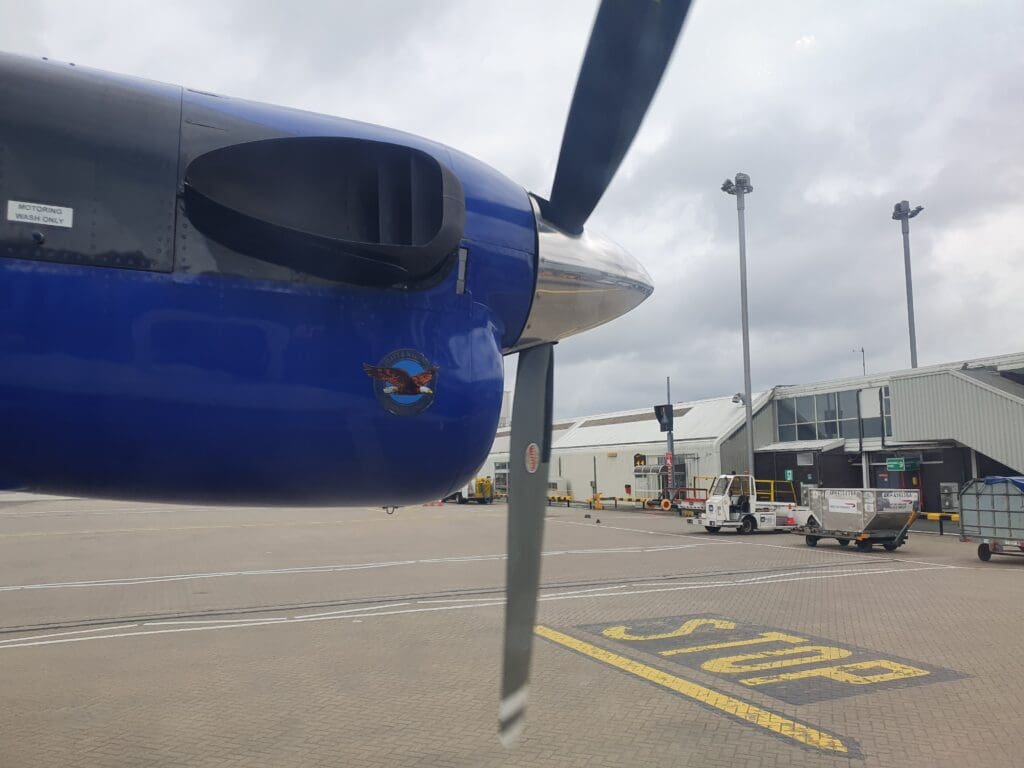
After a pause of a few minutes, whilst the two pilots appeared to run through multiple checklists, the lack of soundproofing in the Twin Otter soon became evident as the two turboprop engines powered up and the Hartzell three-blade propellers whirled into life. This filled the cabin with a significant amount of noise and vibration. Soon, and for the first time in my life, the aircraft pushed itself back from the terminal under its own power and pointed itself in the direction of the runway. With the wind blowing in from the west, Runway 23 was in use for all arriving and departing aircraft that morning.
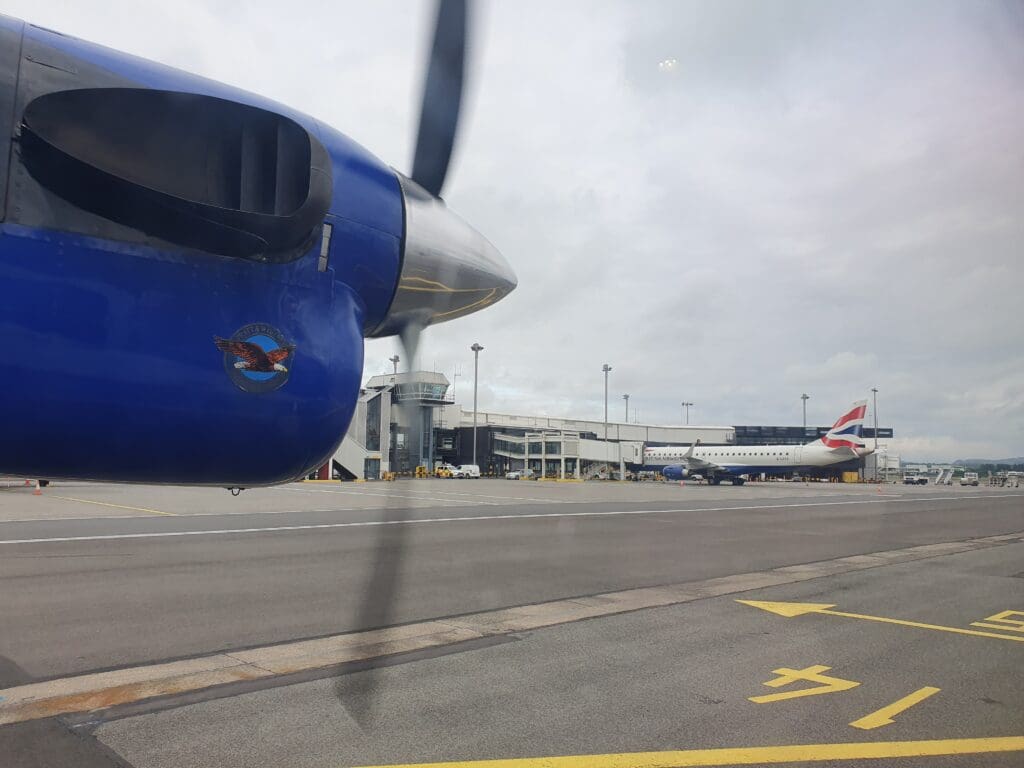
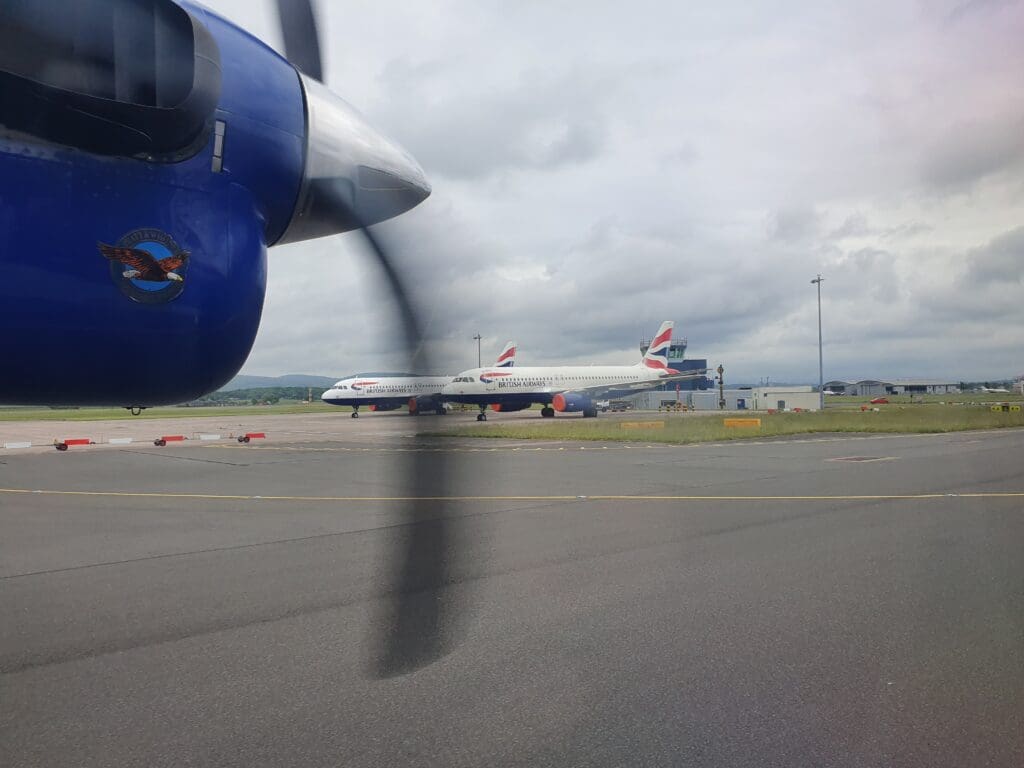
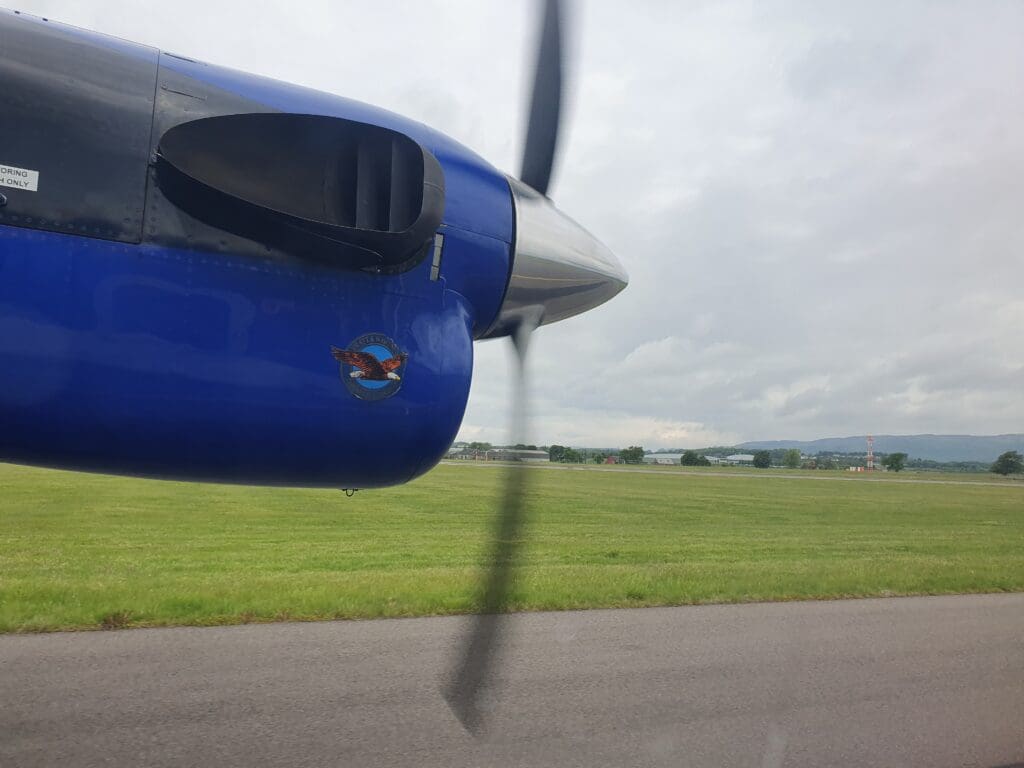
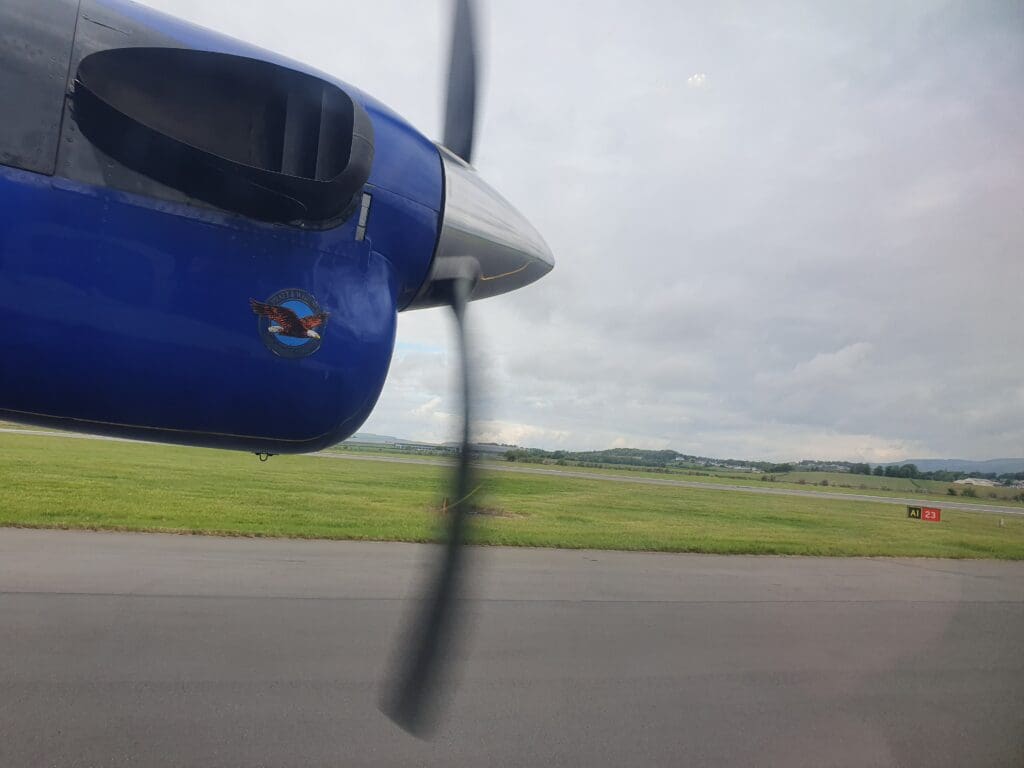
Following another short pause, the aircraft headed away from the ramp and turned right before traversing down Taxiway Alpha as the Twin Otter made what seemed to be a squeaky taxi. Sitting on the left-hand side of the aircraft, during this journey little could be seen except a trio of stored British Airways Airbuses and the picturesque green hills in the distance. Meanwhile, those on the opposite side were treated to views of the airport’s general aviation area and the smorgasbord of Air Charter Scotland and Gama Aviation aircraft waiting for their next sorties. No more than a couple of minutes after leaving its stand, the Twin Otter arrived at the holding point, and with no other traffic, our departure seemed imminent. However, once there the aircraft paused for some time and ‘revved up’ its two engines three times – causing even more noise and vibration, and giving passengers a taste of what was to come.
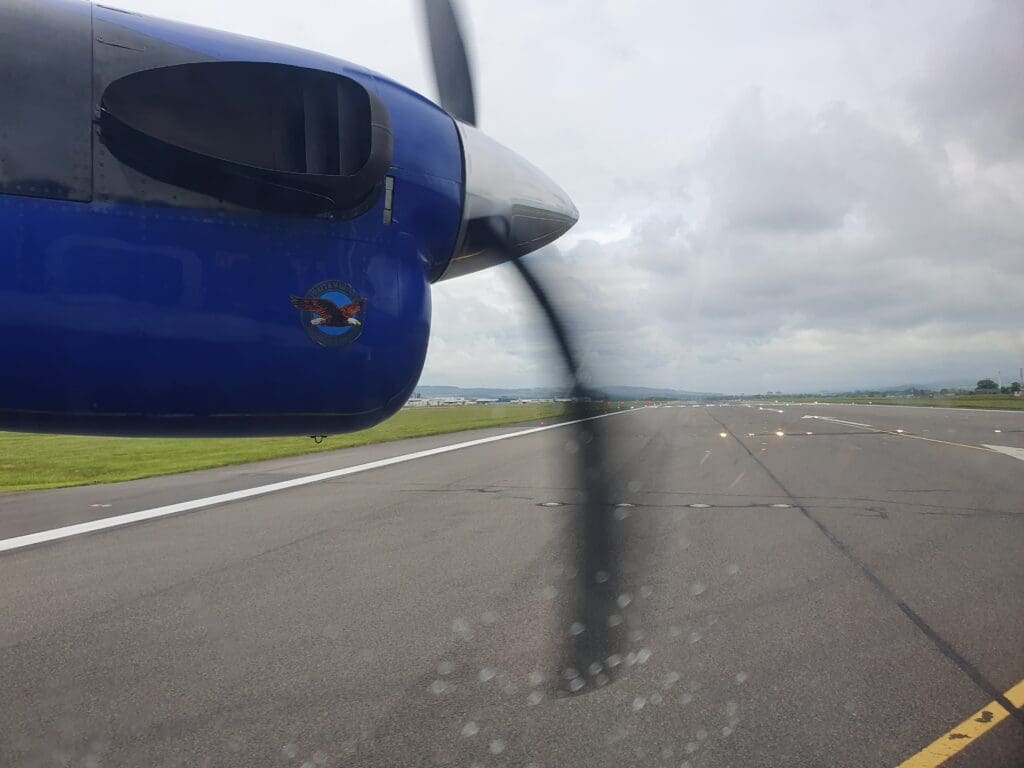
At 0904, the Twin Otter finally positioned itself onto the runway and the aircraft’s two engines were spooled up once again as the brakes were held. Once these were released, the aircraft powered down the runway. Although this take-off roll was slightly more gentle than I had expected, given the Twin Otter’s status as a STOL aircraft, the aircraft floated off the runway in a matter of seconds and I was offered a fantastic bird’s eye view of the airport during the first few moments of the flight. As the aircraft climbed upwards and left the airport behind, decent views could be had of the nearby town of Paisley as the aircraft banked to the right, placing it on a northwesterly course towards Loch Lomond and the Trossachs National Park. In good weather, this flight is known to offer superb views of some of Scotland’s most picturesque scenery. However, that morning the country was shrouded in cloud – with this seizing views of the ground below only two minutes after departure. However, during the initial stages of the flight patches of green appeared through breaks in the cloud before the aircraft headed up above the clouds for good.
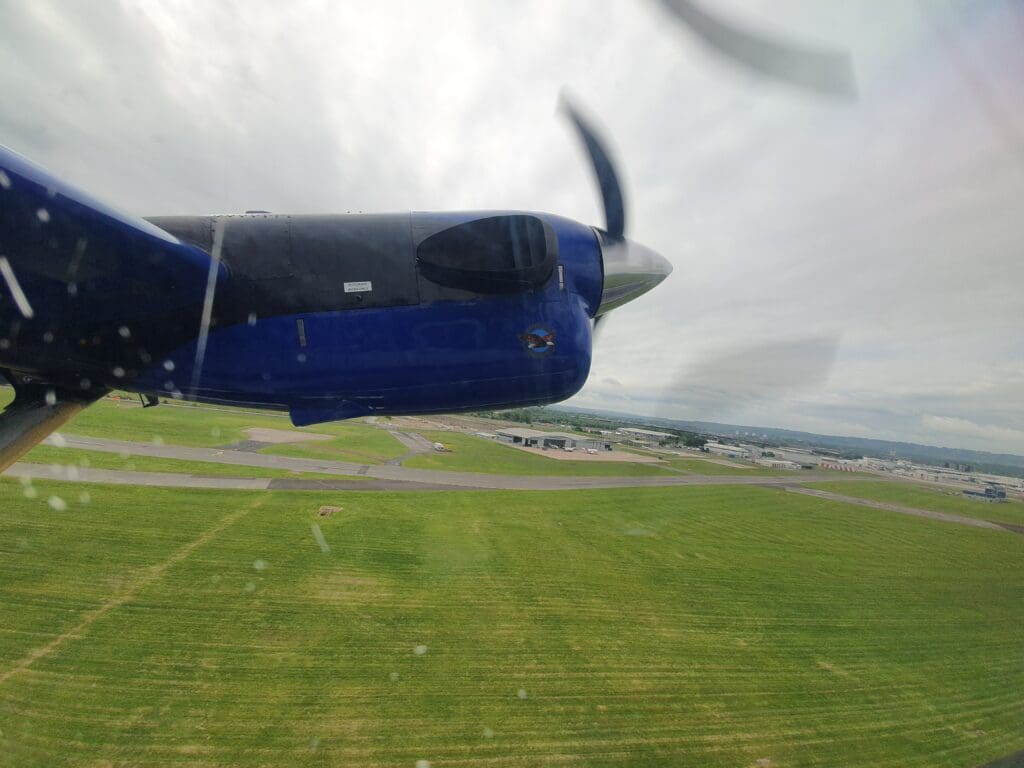
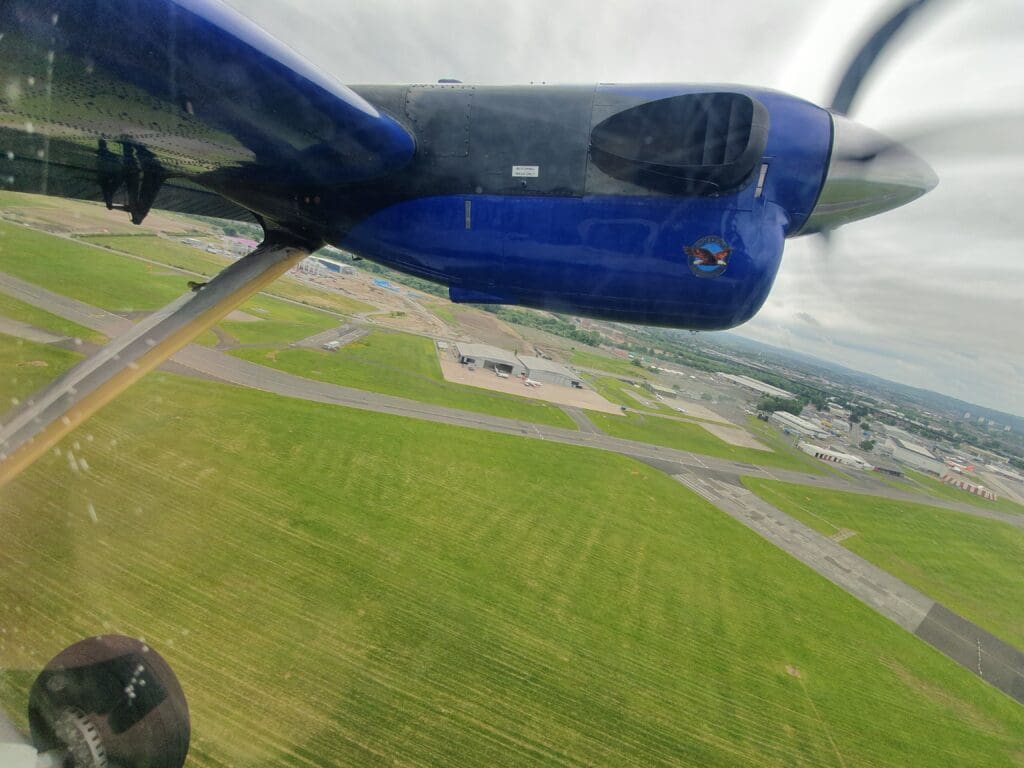
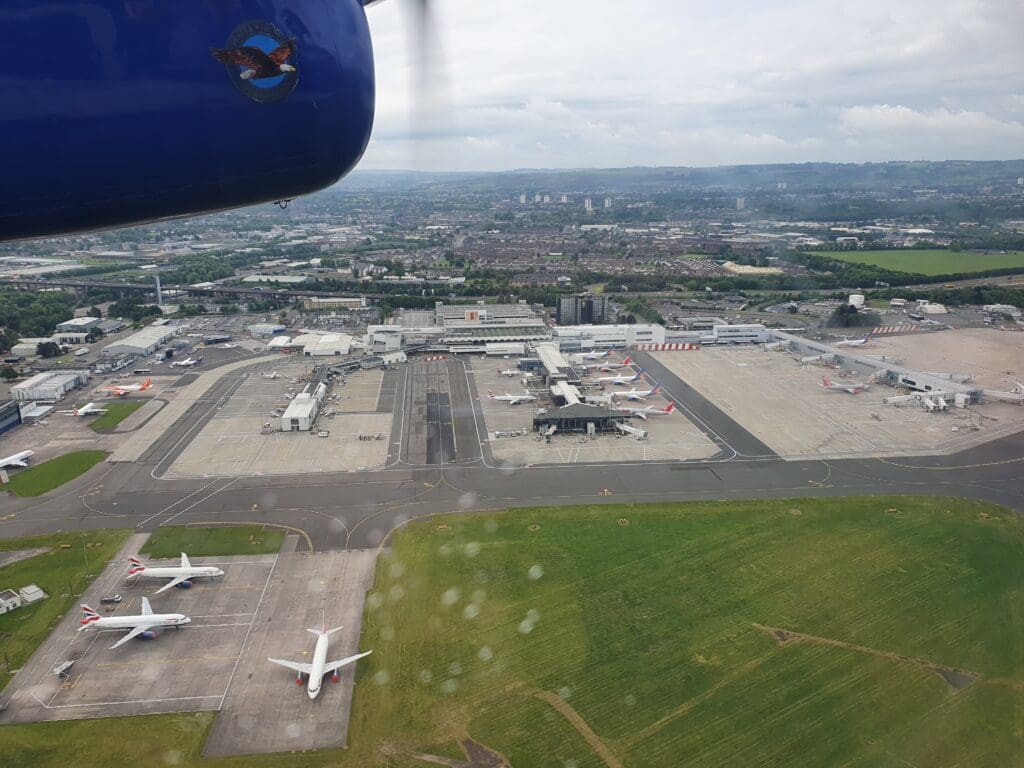
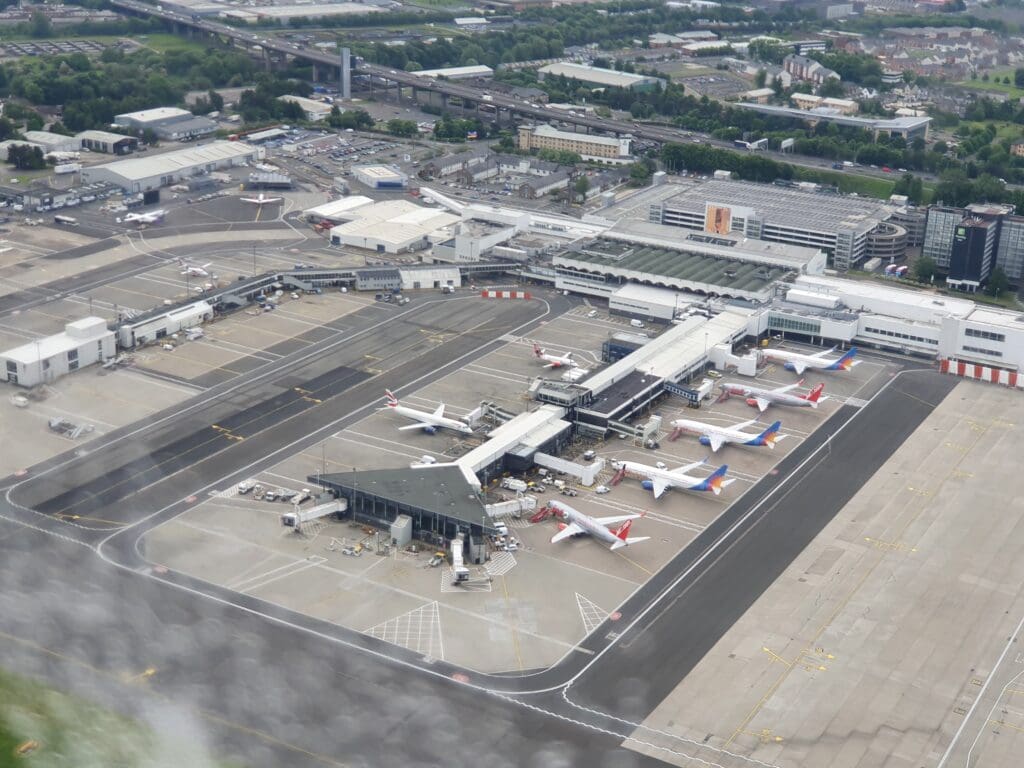
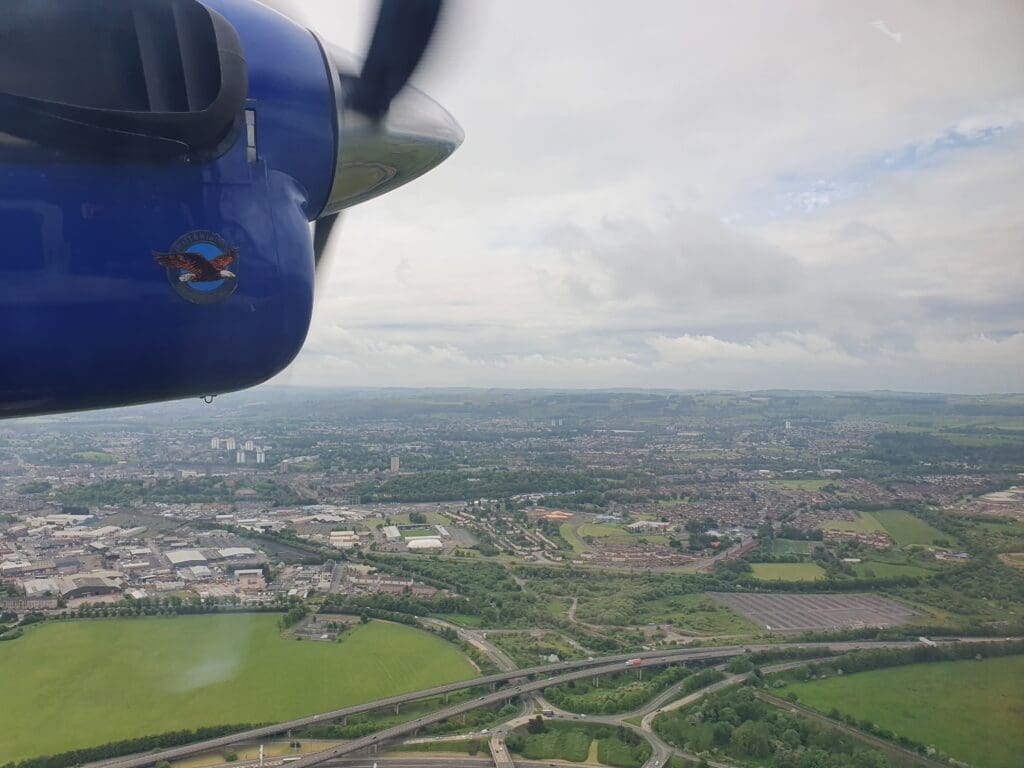
After leaving Glasgow, the aircraft made its way towards the town of Greenock before heading out over the River Clyde. From there, the aircraft reached the Cowal Peninsula and levelled off at its low cruising altitude of 8,000 feet. Despite the lack of turbulence, with nowhere for passengers to go, the seatbelt signs remained illuminated for the duration of the flight. Turning to the service onboard, the lack of cabin crew ensures that this is non-existent, even in the pre-Covid era. Whilst the offering of a chiller bag of complimentary snacks and drinks, or the placing of water bottles in the seatback pockets is not entirely rare on those flights without cabin crew, this is an area that Loganair has yet to venture into. Nevertheless, given the length of the flight, this was hardly something to complain about and I am sure that all onboard could make it Tiree without some mid-journey sustenance.
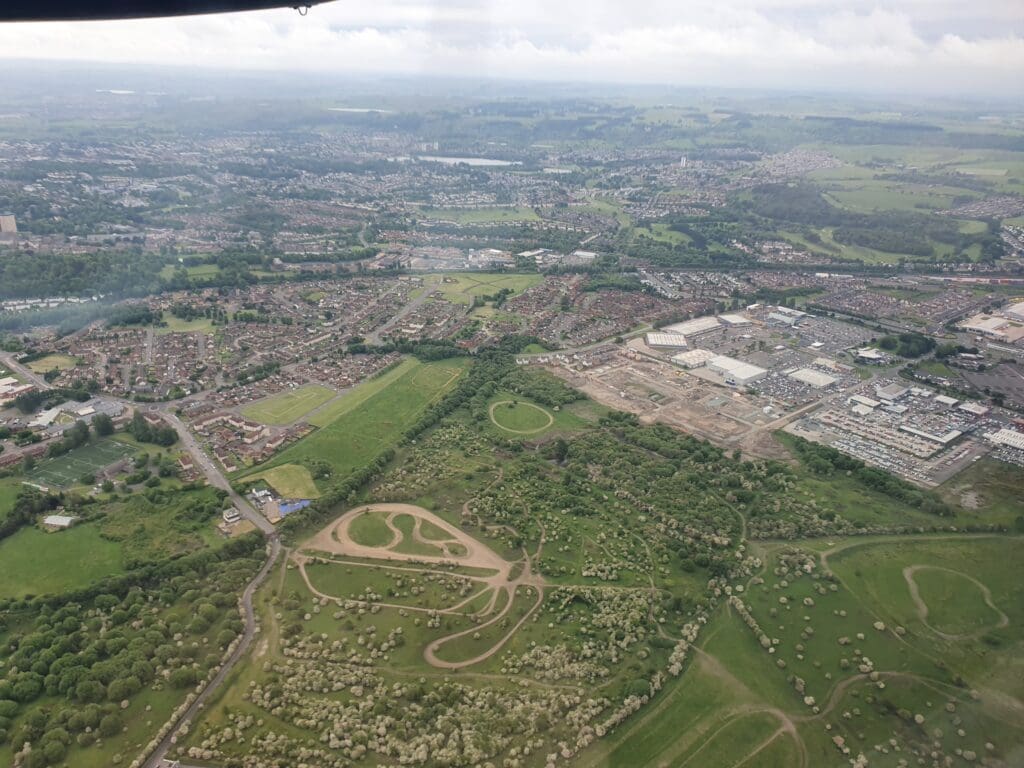
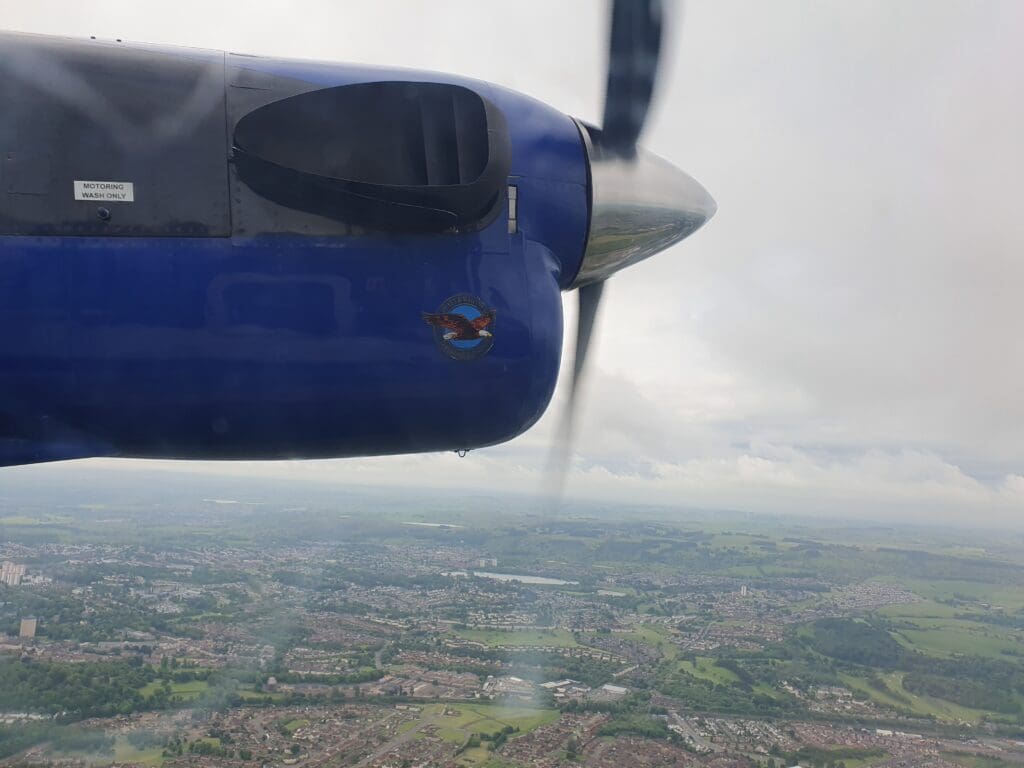
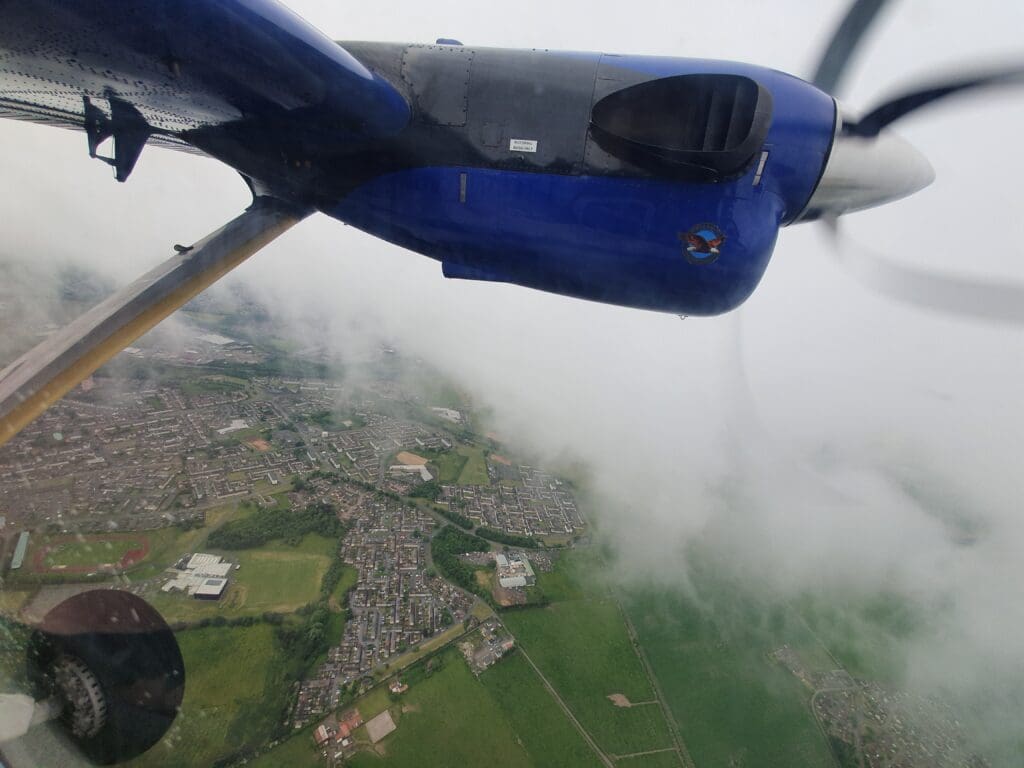
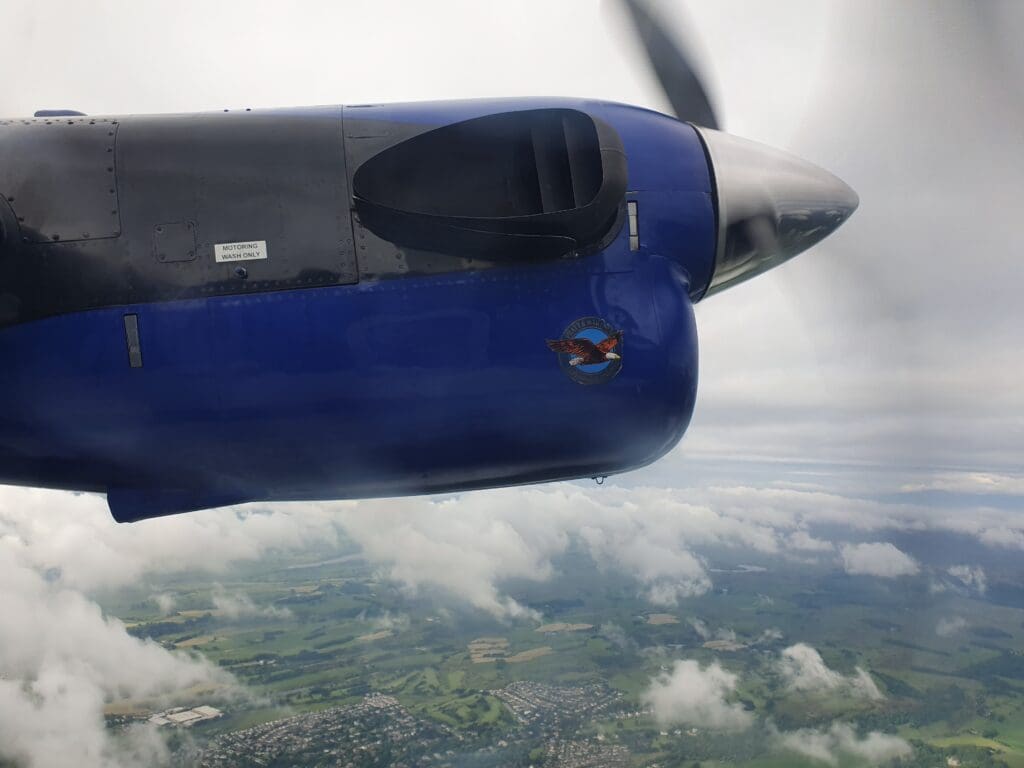
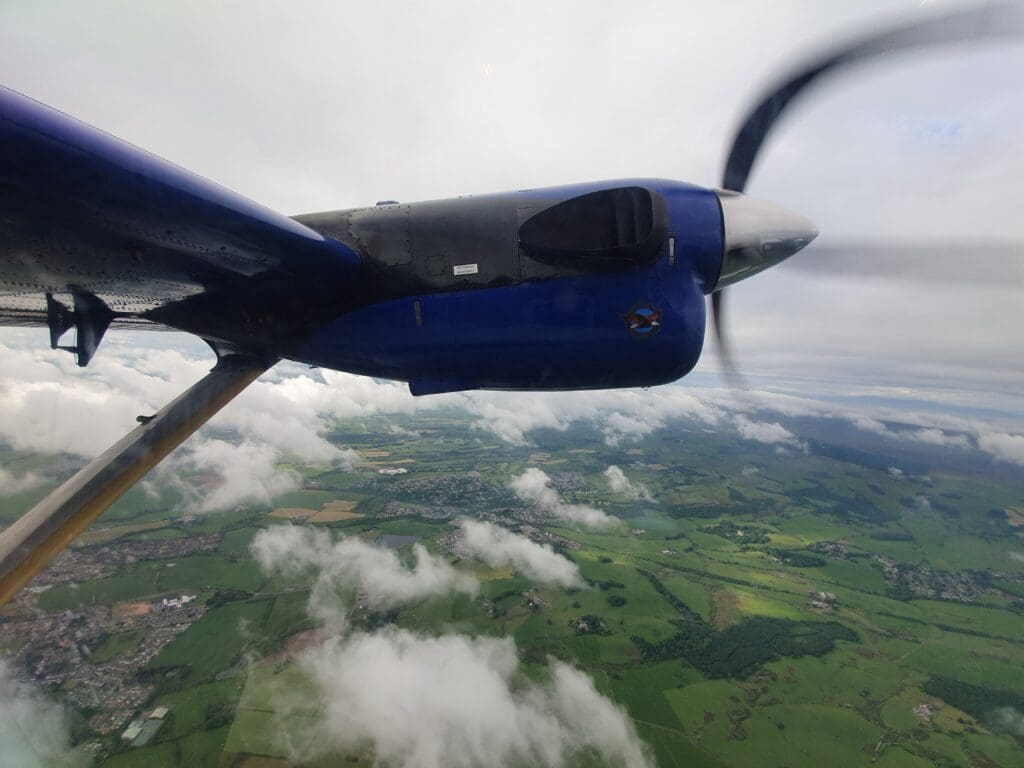
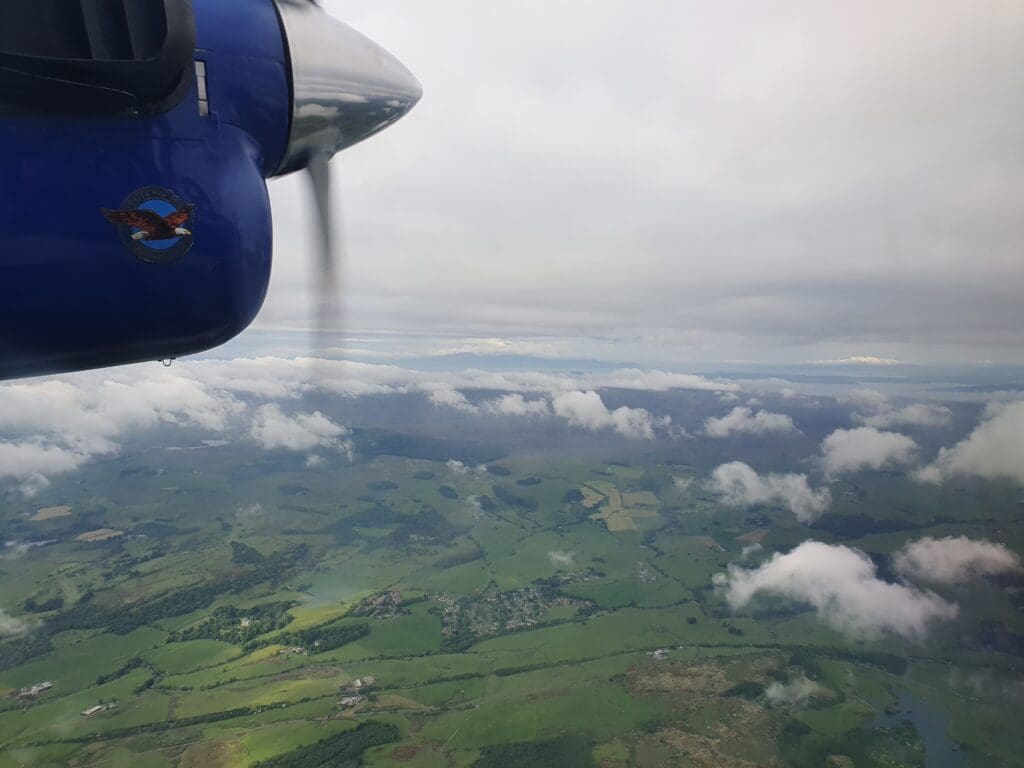
With little to see below, as the aircraft cruised northwest over the Scottish countryside, I found myself with little to do other than soak up the atmosphere of this unique aircraft and peer ahead towards the cockpit. Returning to the route, once the aircraft passed over the Cowal Peninsula, we went over Loch Gilp before reaching the Craignish peninsula. Around six minutes later, the aircraft left the mainland behind and approached the Isle of Mull.
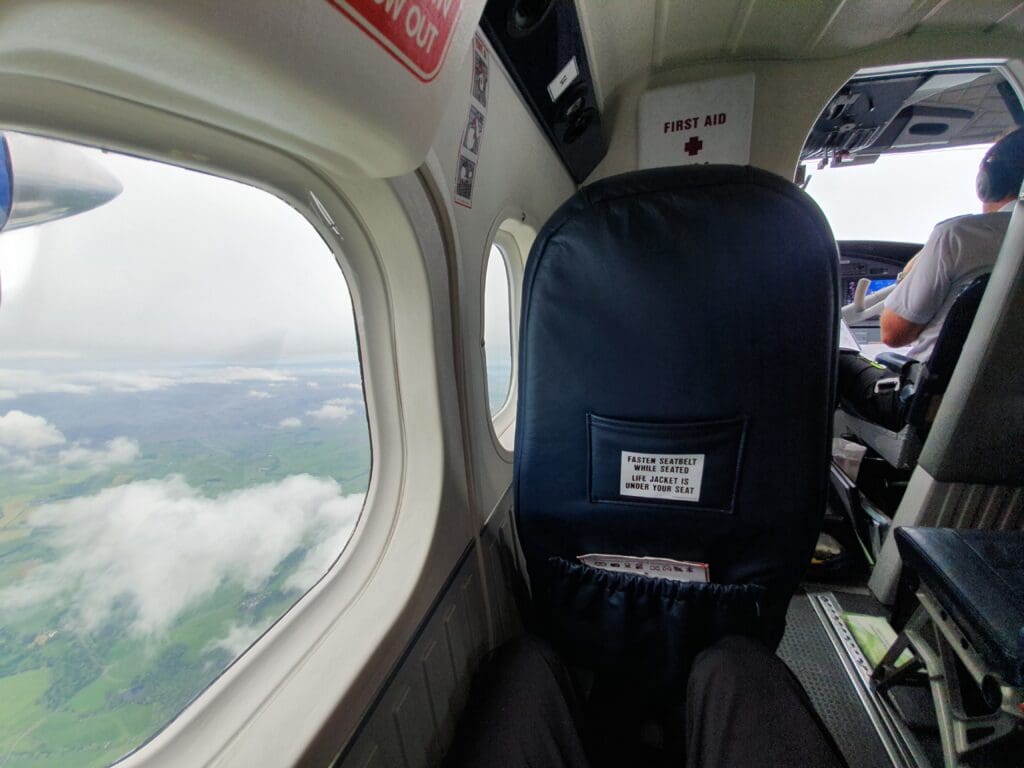
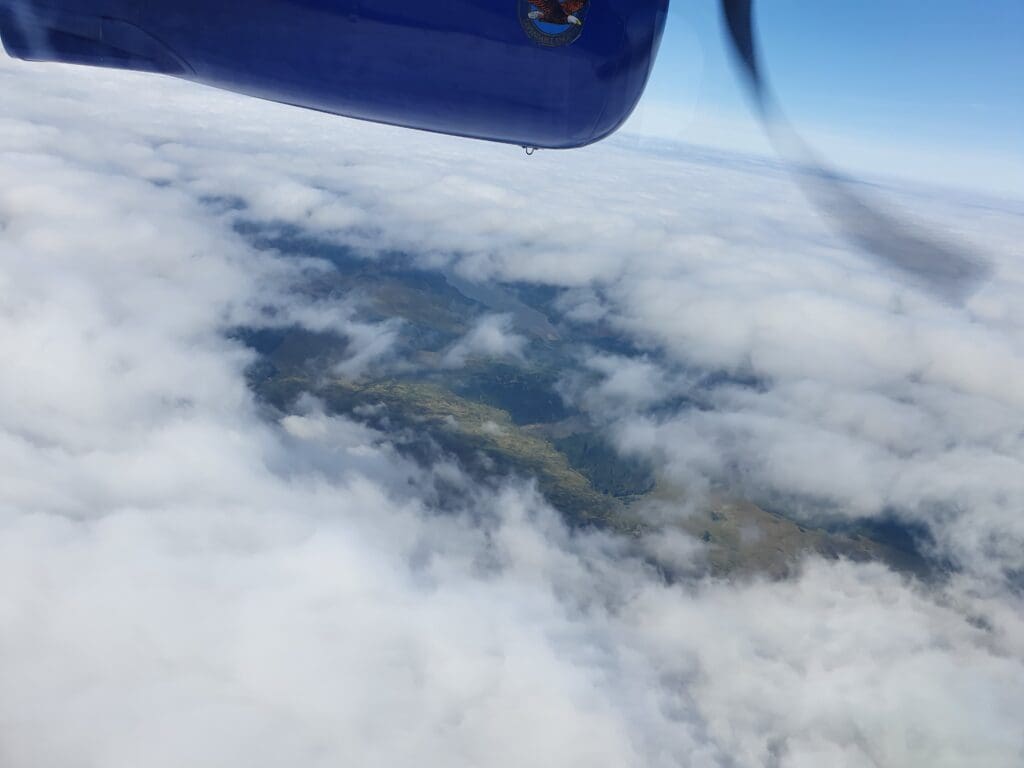
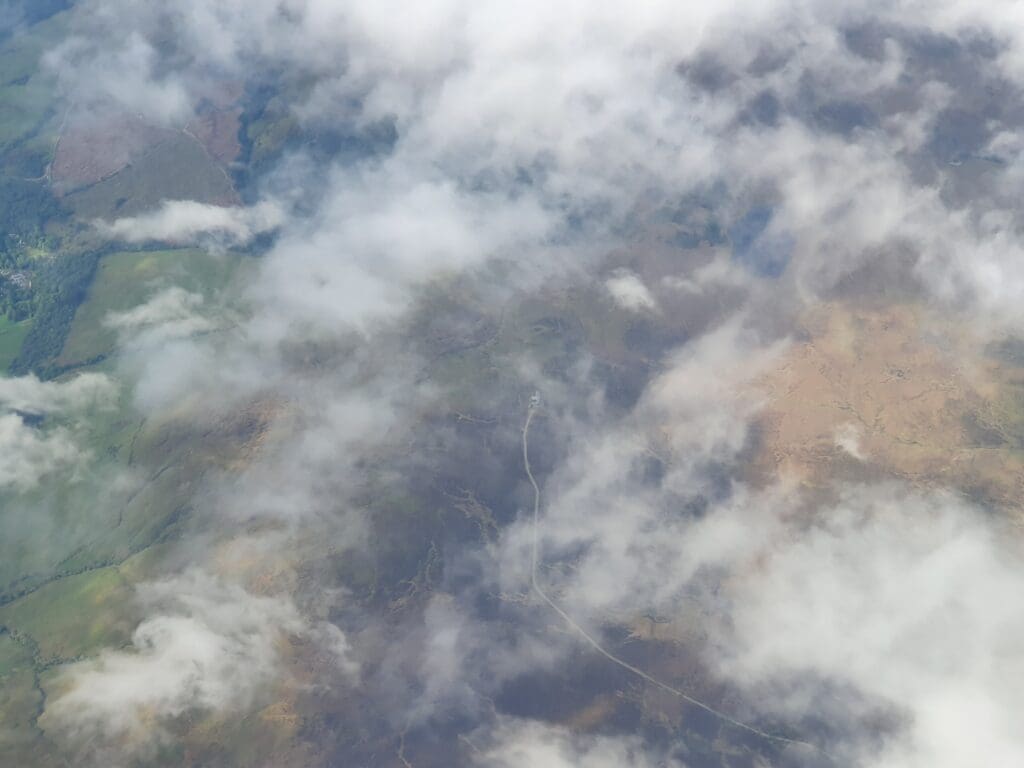
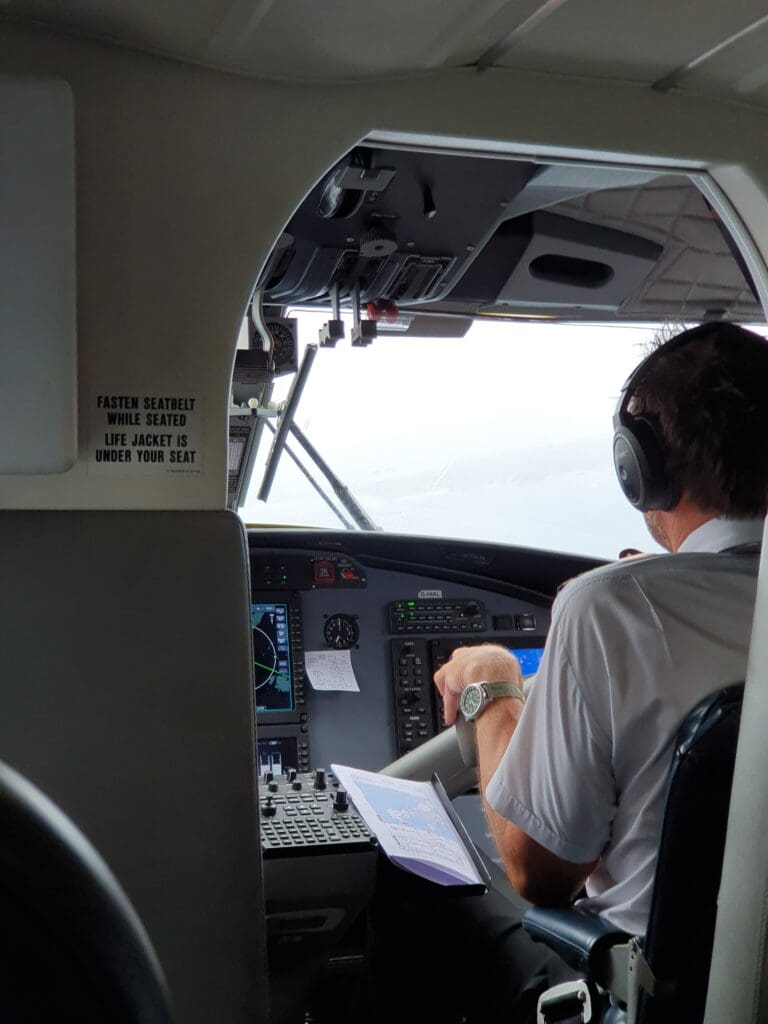
As the aircraft cut across the Ross of Mull, the Twin Otter could be felt commencing its descent and made its way back towards the ground at what seemed to be a rather steep angle. Soon enough, the aircraft sank below the clouds and at 0942 the chilly blue waters of the North Atlantic popped into view. Several moments later, I received my first glimpse of Tiree before the aircraft passed over turquoise waters and the white sandy beach at Gott Bay. After making landfall, the aircraft banked left towards the airport and continued to sink over the island’s green fields.
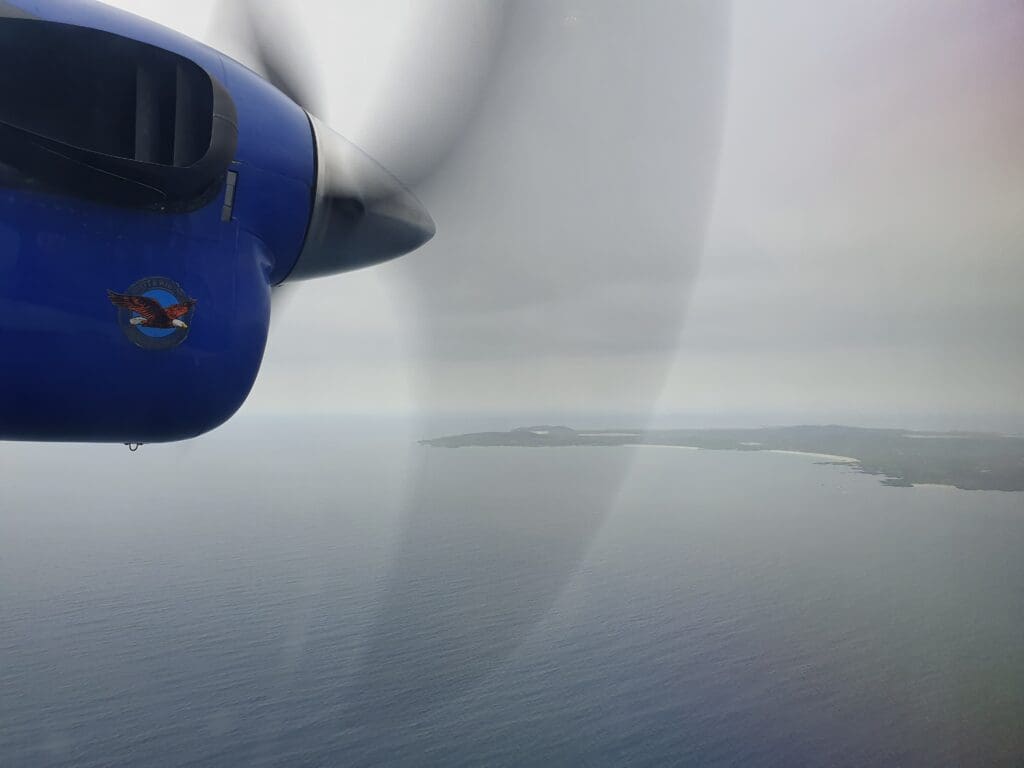
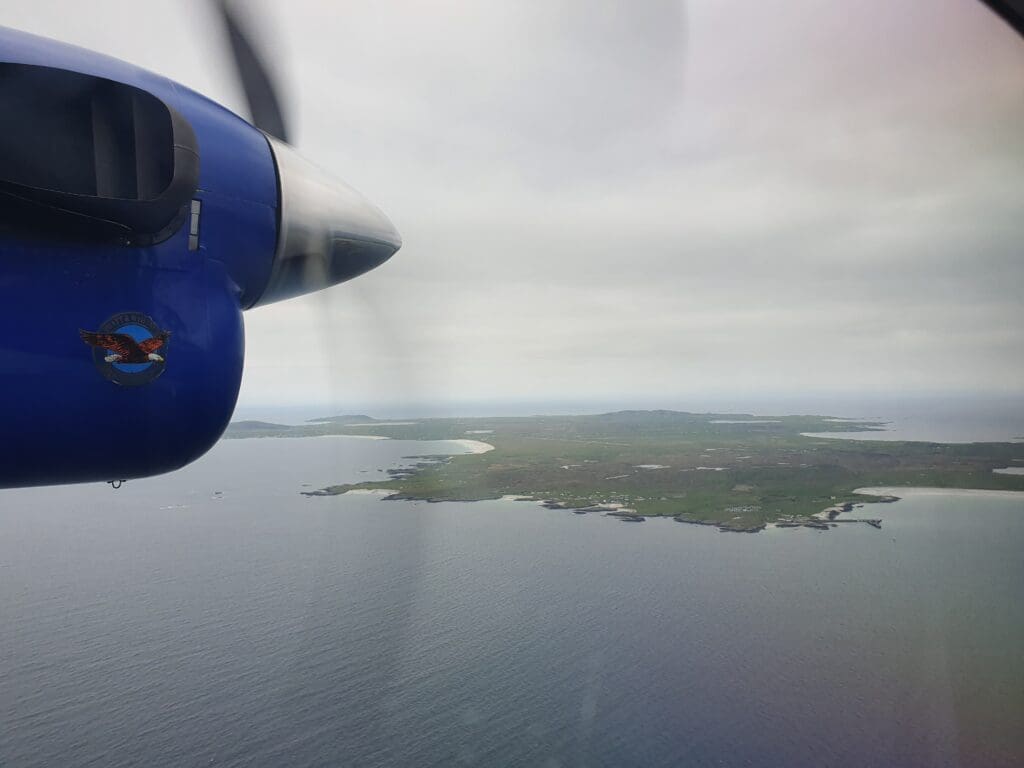
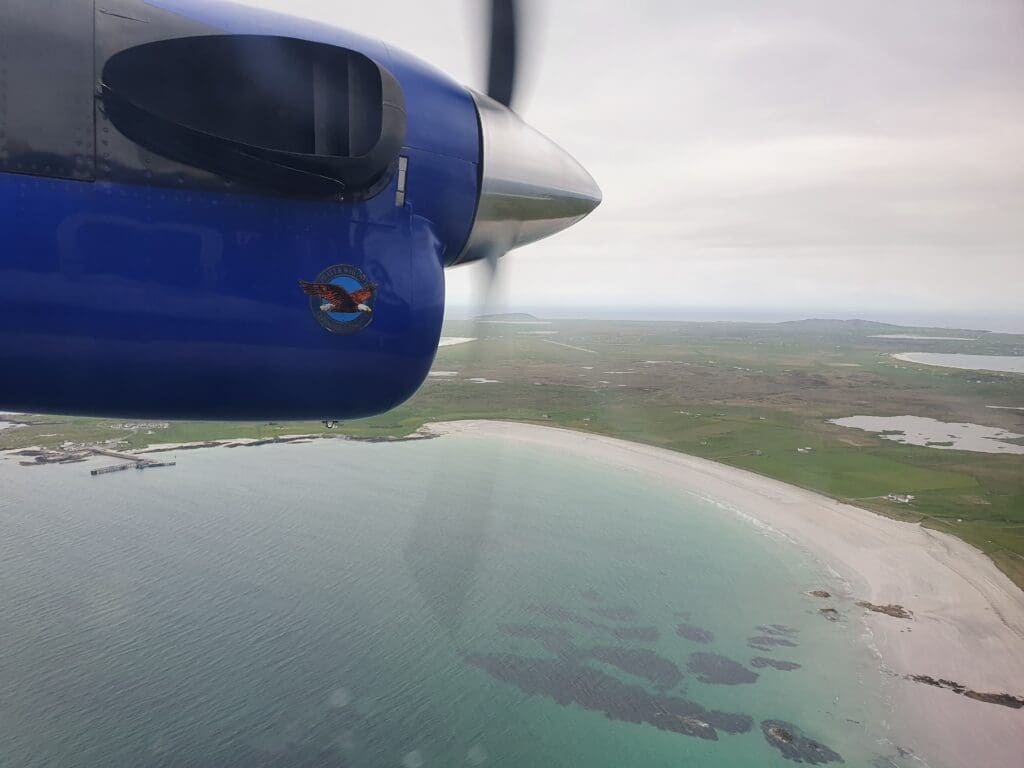
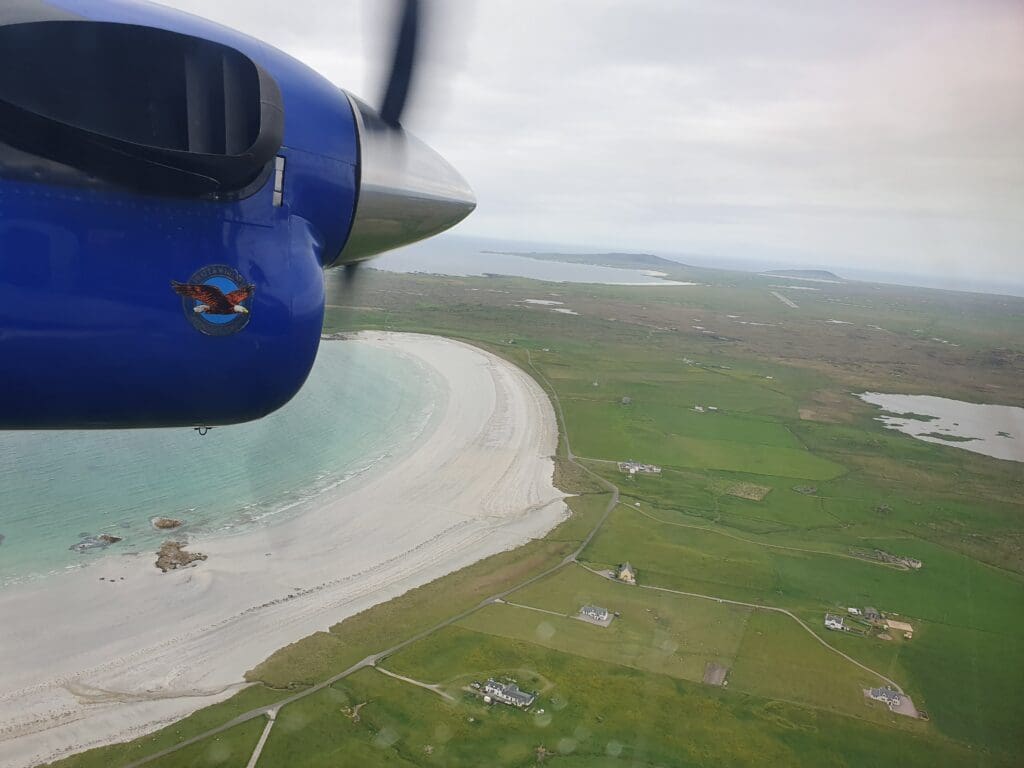
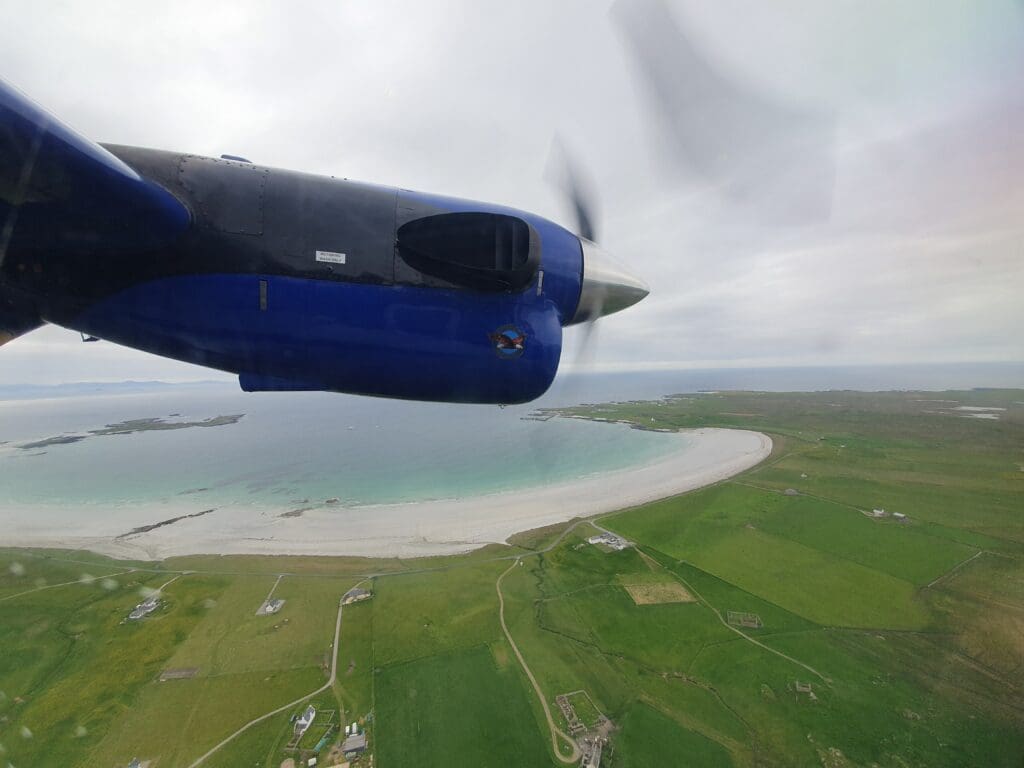
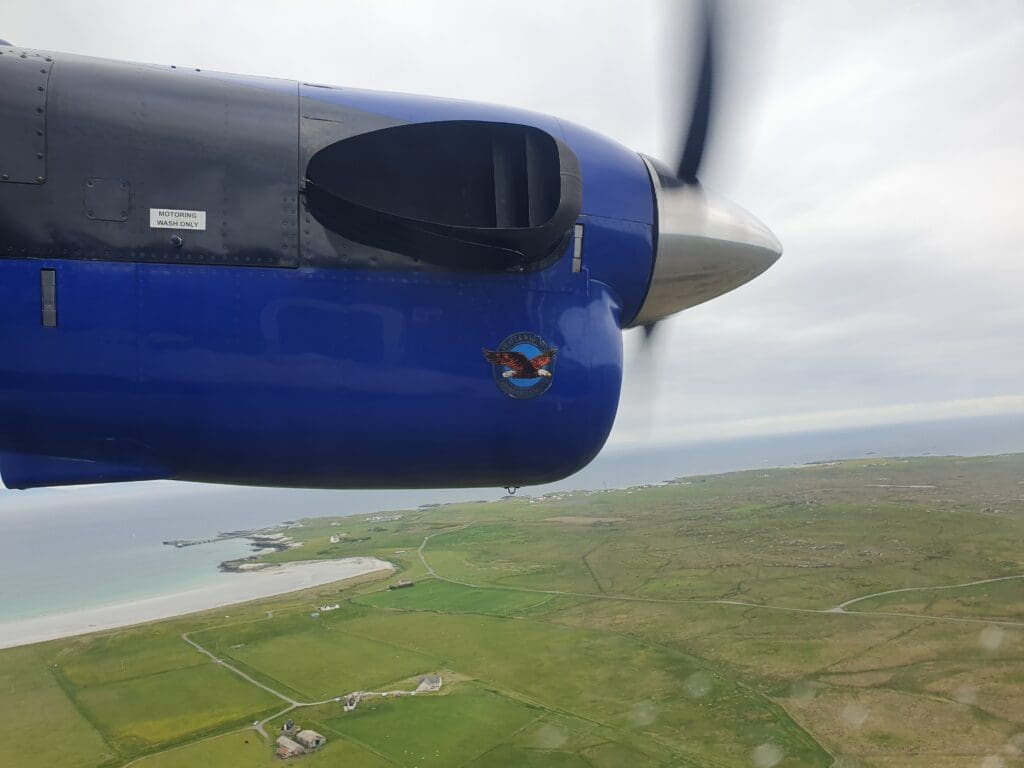
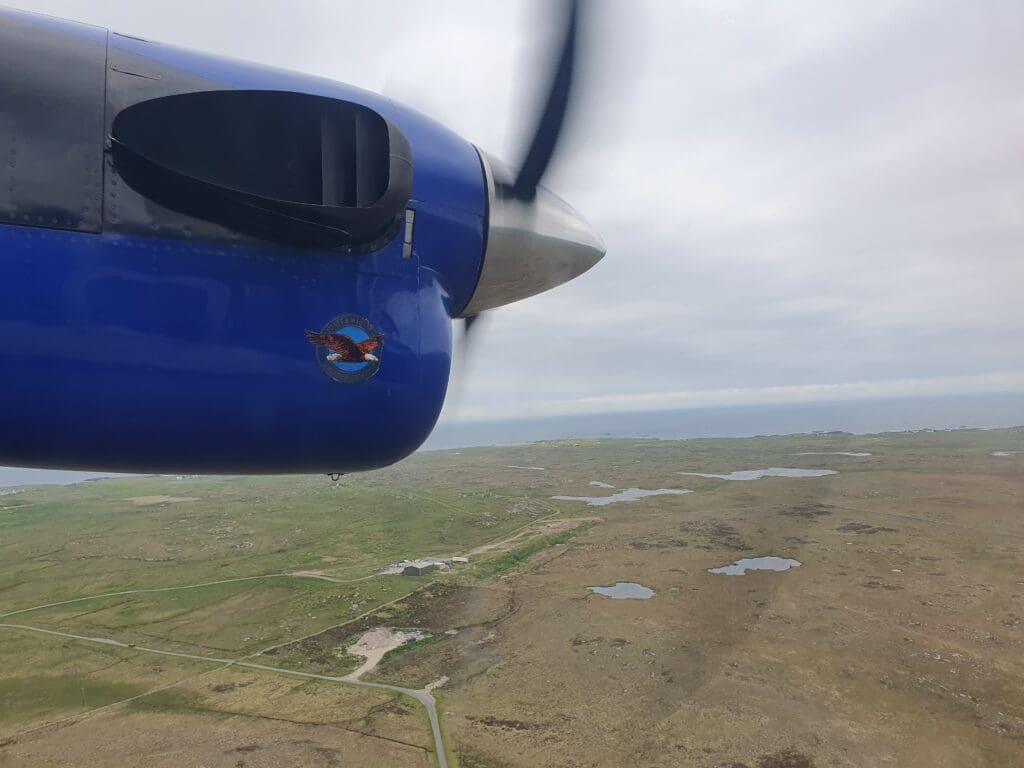
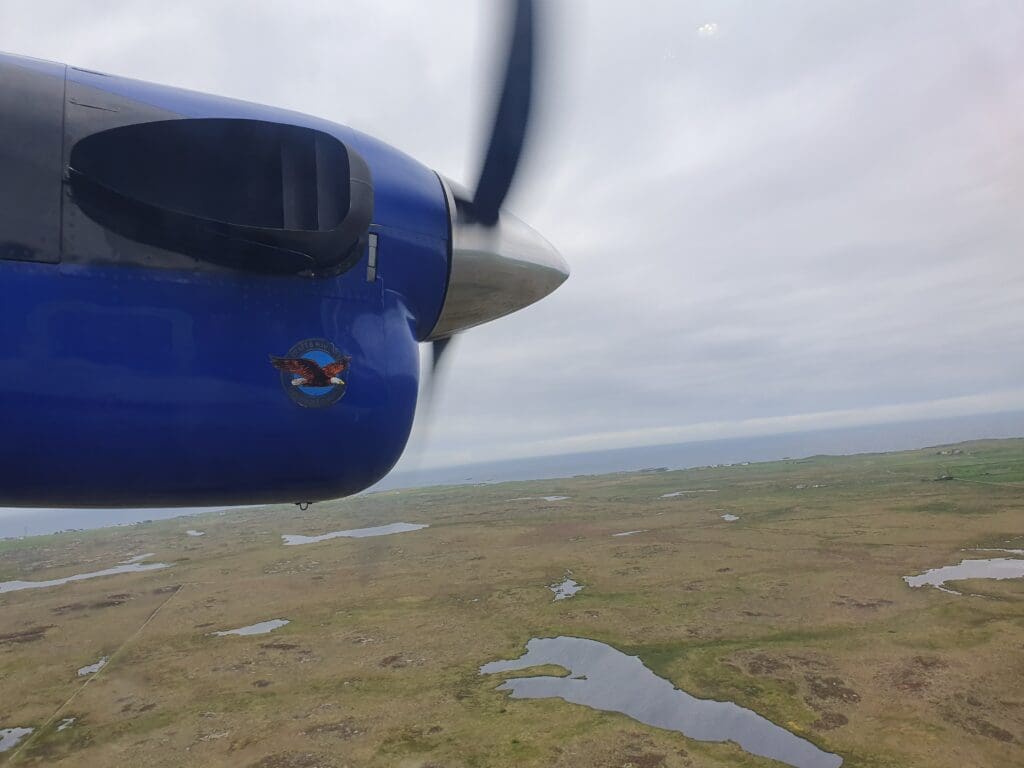
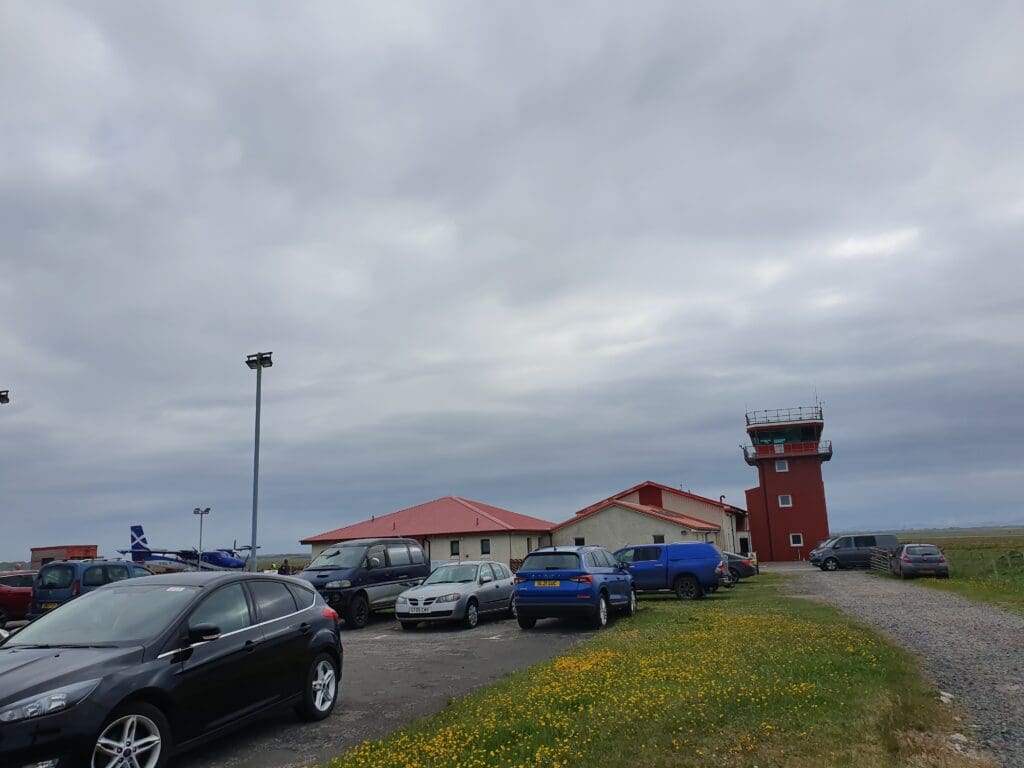
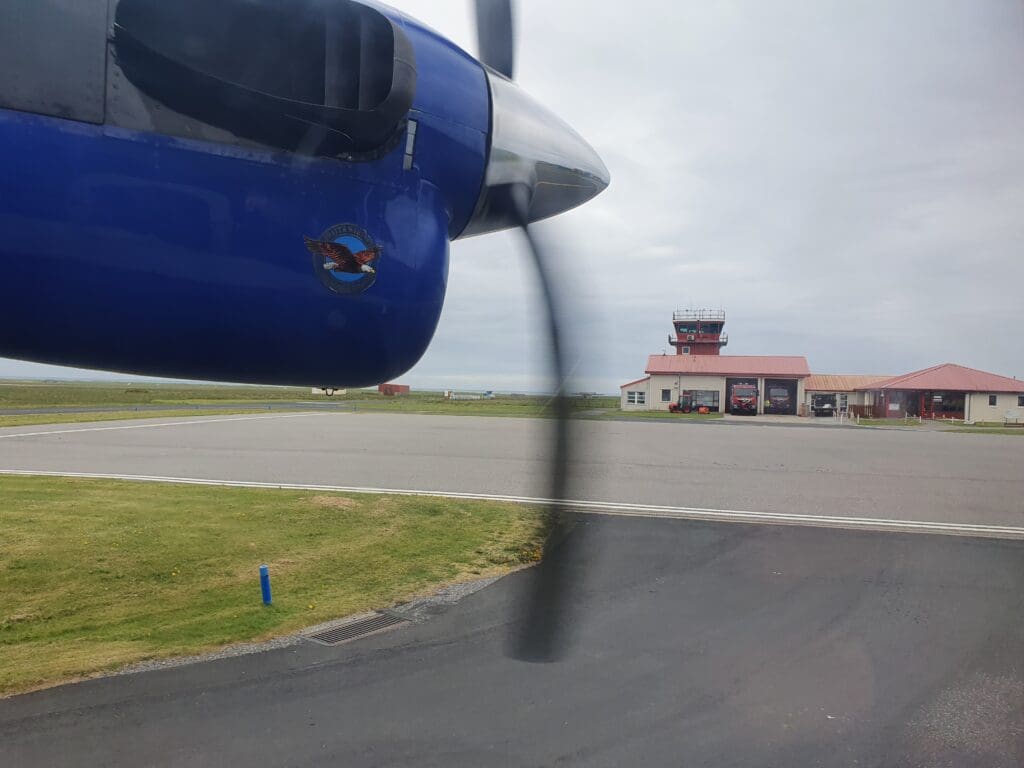
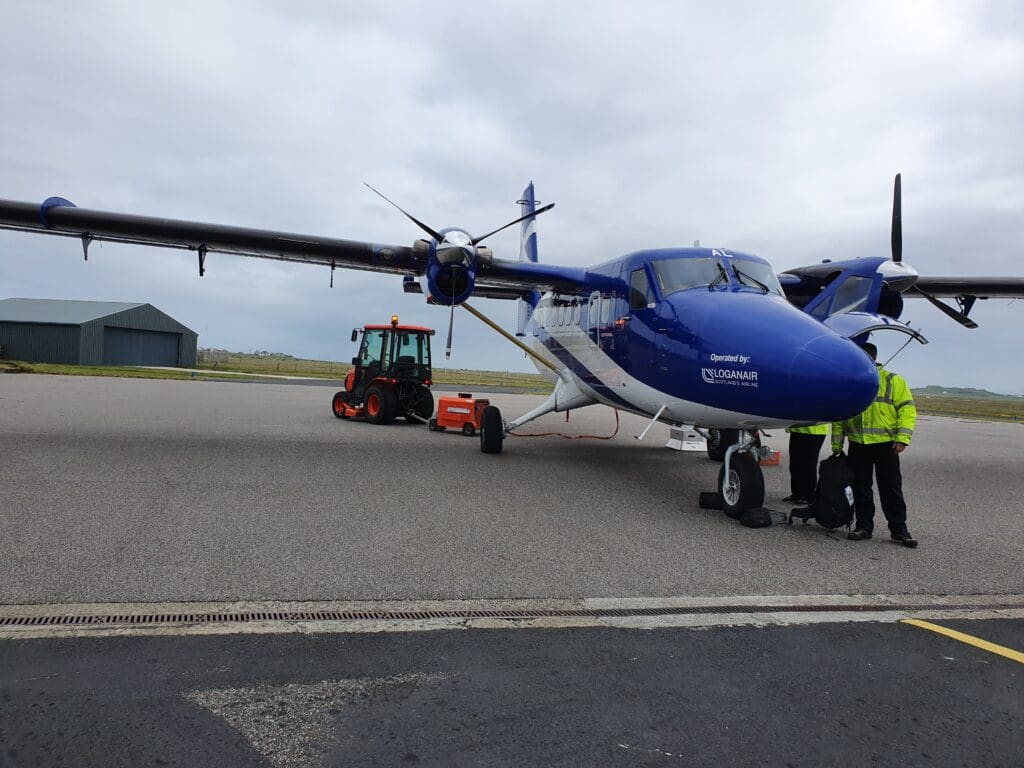
Following a pleasant 42 minutes in the sky, at 0947 the Twin Otter touched down on Runway 23 with a very gentle bump accompanied by a loud squeak. Measuring a total length of 1,472 metres, Tiree Airport’s runway poses little by means of a challenge to the Twin Otter, however appearing keen to exit the runway, the pilots braked rather harshly in order to minimise our taxi time. Following a 180-degree turn, the aircraft left the active runway and headed down the slightly narrower Runway 11/29 at which point the flaps were retracted. As the aircraft headed down this, I caught sight of the airport complex – consisting of an air traffic control tower, fire station and terminal building. Meanwhile, as the aircraft approached the airport’s small square apron, a team of ground crew alongside a tractor towing a ground power unit and a Ford Transit van for passengers’ luggage could be seen waiting to meet the aircraft.
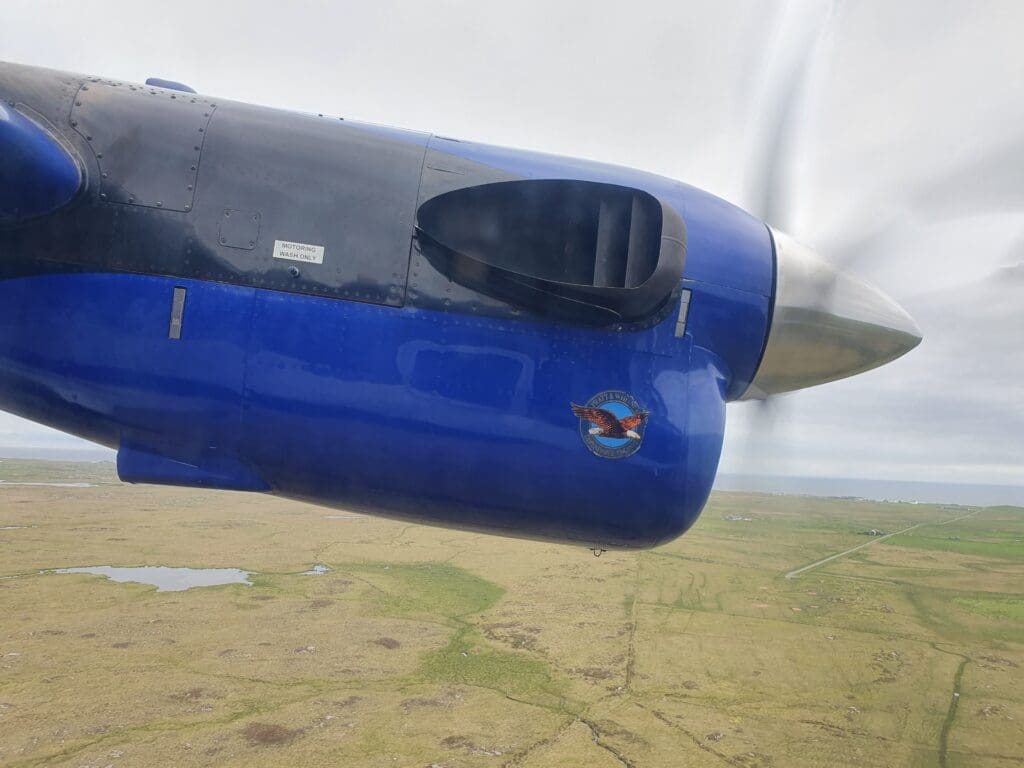
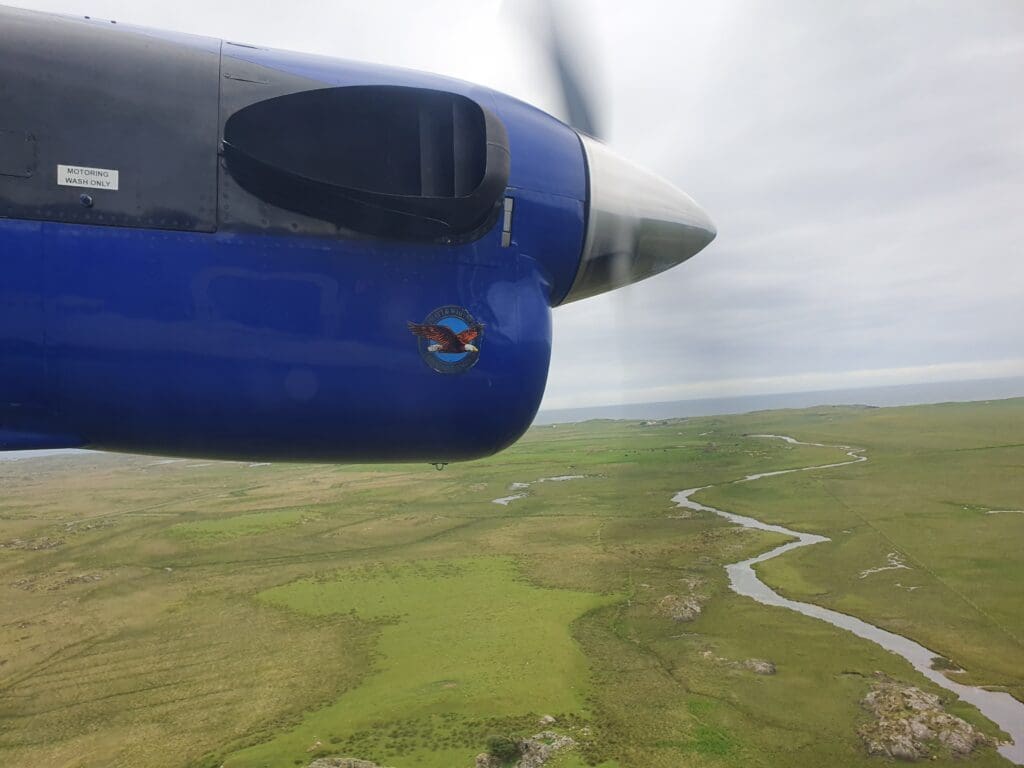
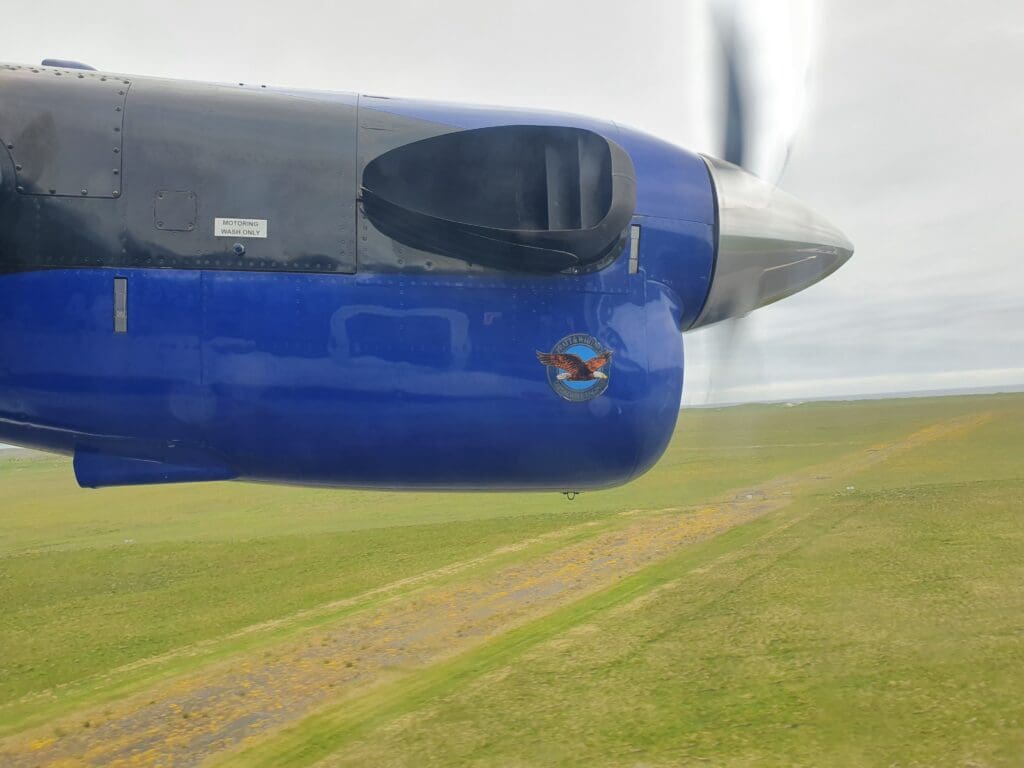
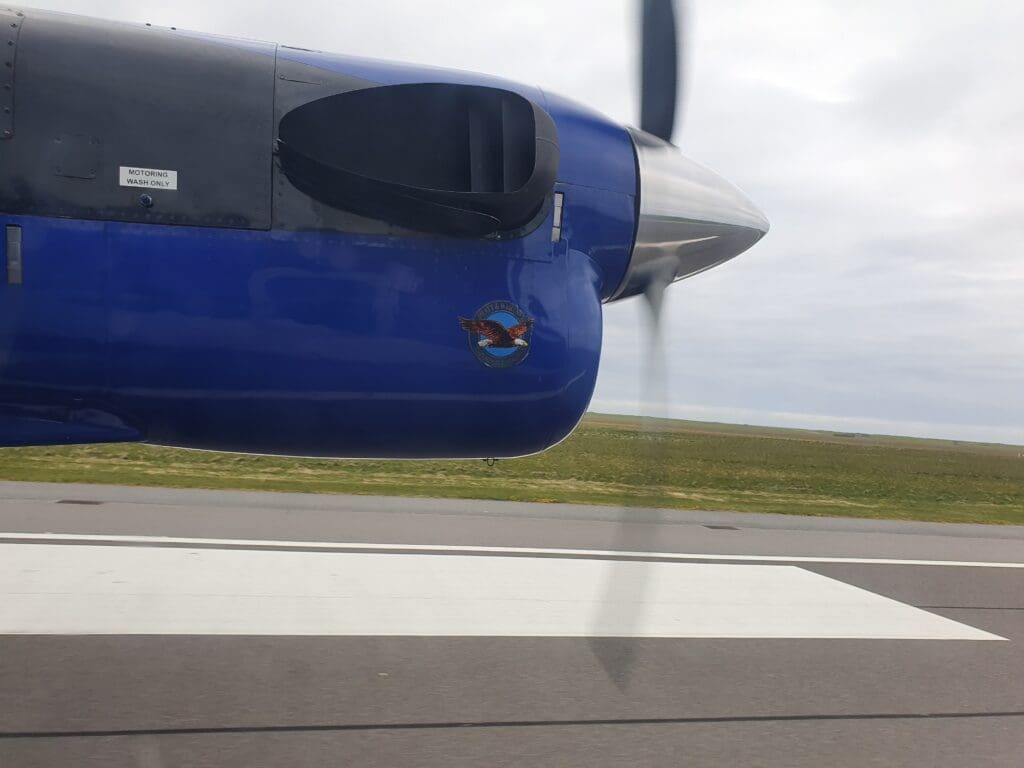
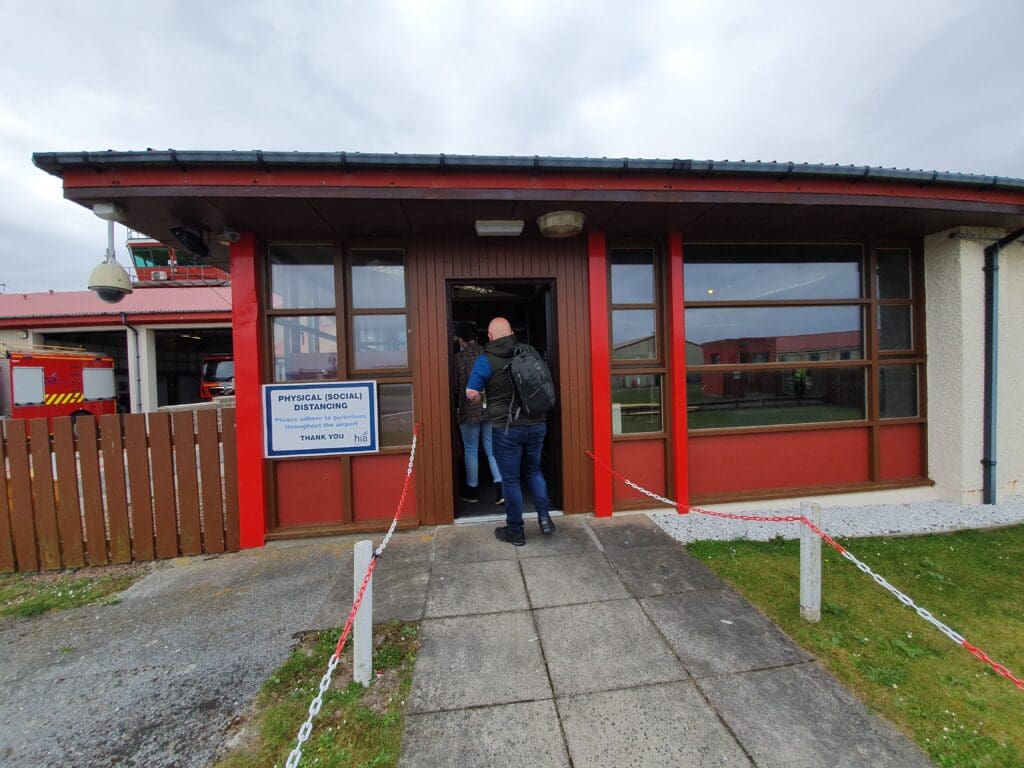
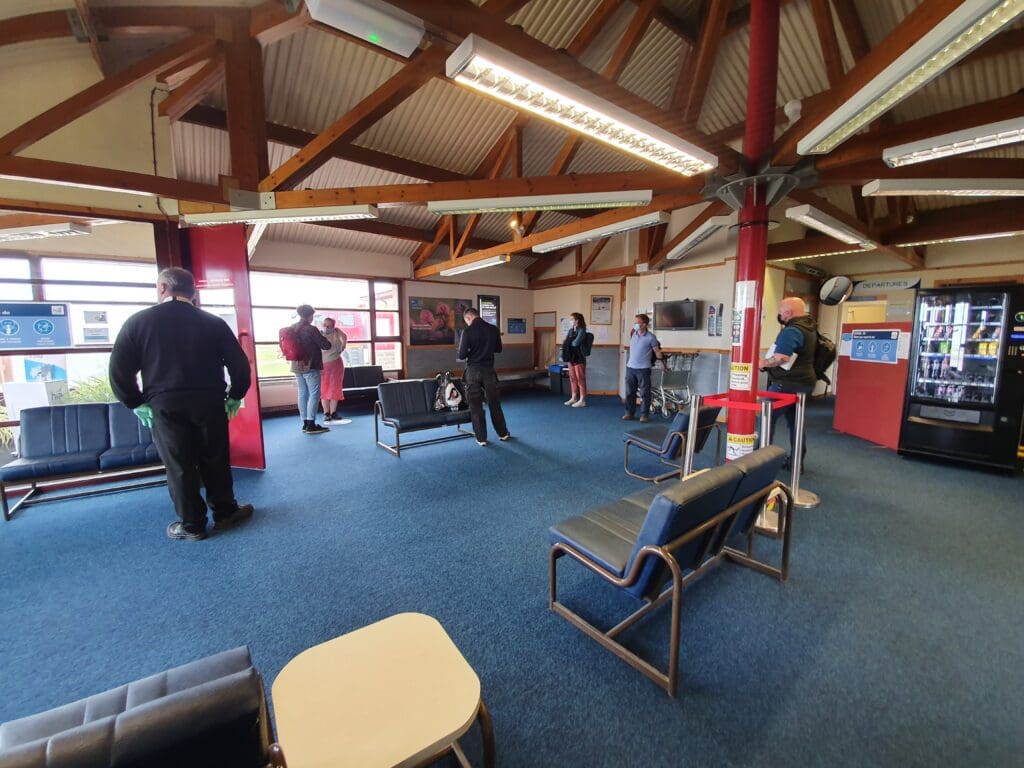
Pulling up directly outside the terminal building, the Twin Otter came to a gentle halt and the engines spooled down. Following around an hour of noise and vibration, things seemed a little too quiet once the engines were shut down, although the silence was broken by a passenger at the rear of the aircraft remarking how glad they were to be back on the ground! A few moments later, the First Officer entered the passenger cabin once again and welcomed all to ‘sunny Tiree’ before making their way to the rear of the aircraft and working with the ground crew to open the main cabin door. Once this was open, disembarkation commenced immediately and was an unsurprisingly quick process. As I stepped onto the island, I thanked the First Officer before heading over to the small and homely terminal, ensuring to sanitise my hands before entering this. Seeing as I had no bags to pick up, after a quick toilet stop, I headed back outside and commenced my day-long stay on the island.
Summary
For those in the UK, I would thoroughly recommend a flight on one of Loganair’s Twin Otters. Although the weather that day prevented the views from being as fantastic as expected, the experience was still far from ordinary and enjoyable from start to finish. As I write this, I have already started planning my next trip on one of Loganair’s Twin Otters!
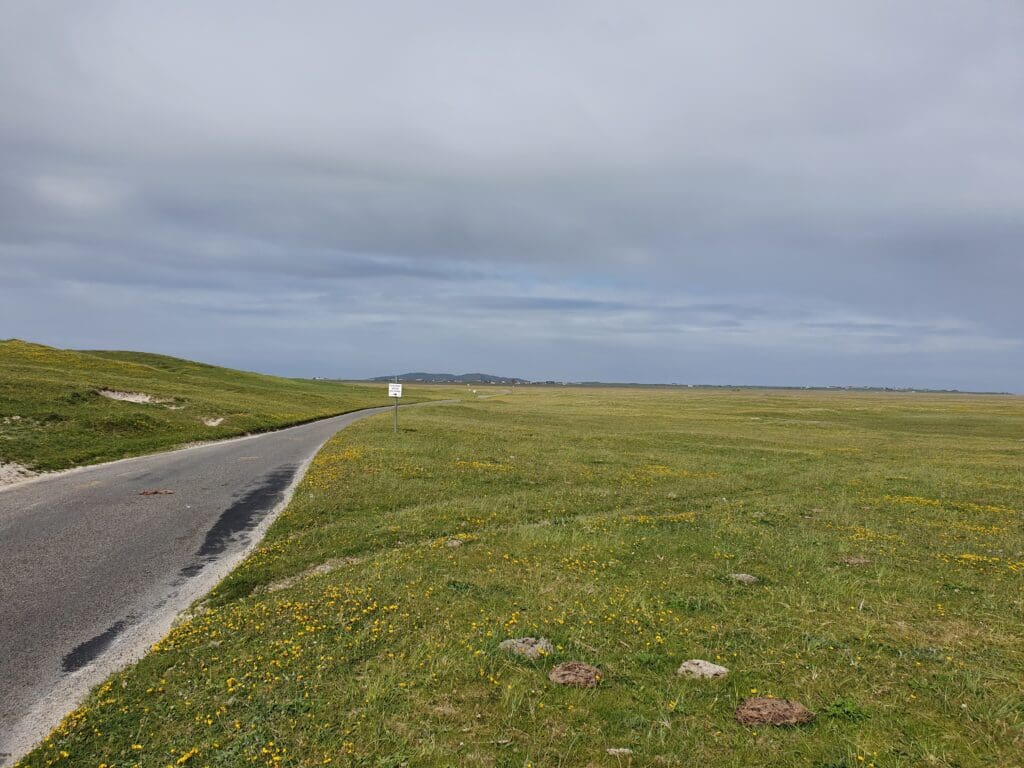
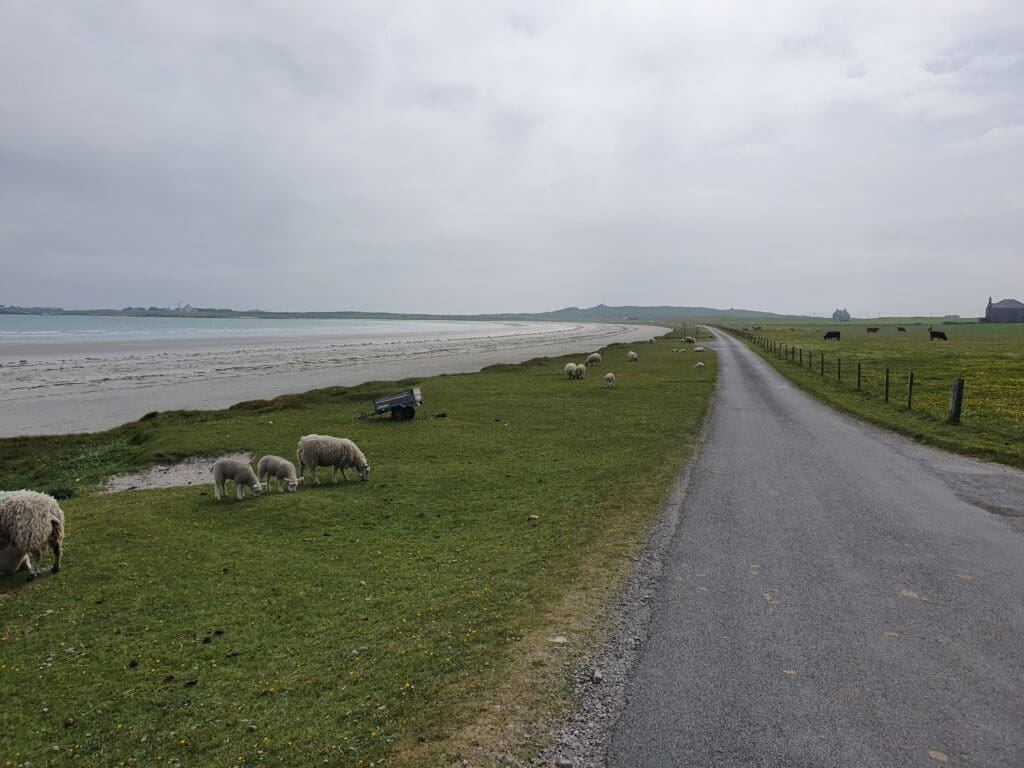
To end, here are some photos from the rest of my day