Flying T’way’s Airbus A330-200: Jeju to Seoul Gimpo
Background
First announced in November 2020, the merger between Korea’s two largest carriers, Asiana Airlines and Korean Air has been long, drawn out and accompanied by a few unexpected twists and turns. One unforeseen consequence was Korean low cost carrier T’way Air’s receipt of four ex-Korean Air Airbus A330-200 jets and their commencement of flights to four major European destinations – Barcelona, Frankfurt, Paris CDG and Rome Fiumicino.
So how did this happen?
Should all go ahead with the merger between Asiana Airlines and Korean Air, contradicting antitrust regulations, Korea’s mega-airline would end up dominating many long haul routes from Seoul Incheon to destinations across the world. Namely, those that had previously been operated by the two competing airlines and no other carriers. Opposing this, in the European Union, the relevant authorities opted to make their approval of the merger conditional on Korean Air surrendering several inherited slots to an unrelated Korean airline to maintain healthy competition.
Seeing as neither Eastar Jet nor Jeju Air partake in long haul operations, let alone have aircraft that would be capable of reaching Europe, both were out of the question. Meanwhile, whilst Jin Air operates four Boeing 777-200ER jets, their status as a low cost subsidiary of Korean Air ruled them out of the running and left just two airlines – Air Premia and T’way Air. With five Boeing 787-9 Dreamliners and focusing almost exclusively on long haul operations, Air Premia was perhaps a good candidate. However, having already benefited from similar measures in the North American market, the decision was made to hand these flights to T’way Air. Having operated a trio of Airbus A330-300s since 2022, and serving long haul destinations, namely Bishkek, Singapore, Sydney and Zagreb, T’way Air had some experience in long haul operations. However, the airline was not to embark on this new expanded European operation on its own. Instead, perhaps in an effort to appease regulators, this endeavour would be fully supported by Korean Air who would damp lease four Airbus A330-200s to T’way Air, and provide all the necessary training, engineering and other support required to ensure that these new routes took off the ground.
All of this happened rather quickly, and in May 2024, the first Korean Air Airbus A330-200 jet was painted from into T’way Air’s red and white livery and handed over to the low cost carrier. From June until early August 2024, T’way Air operated their new toy on the short route from Seoul Gimpo to Jeju, allowing for crew familiarisation before these jets entered long haul service. Seeing as I was in Korea at this time, I could hardly pass on the opportunity to sample the delights of T’way Air’s latest addition, especially seeing as I would be unlikely to fly this on a longer route.
About T’way Air
T’way Air is what some may consider to be a ‘first generation’ Korean low cost carrier, having emerged along with Jeju Air way back in 2005 when a shift in regulations allowed newcomers to break the duopoly held by Asiana Airlines and Korean Air. Initially known by the arguably less catchy name of Hansung Airlines and operating a fleet of four ATR 72s, the carrier commenced operations in August 2005 from Cheongju International Airport to destinations across Korea. However, the carrier was not to last too long, and despite having international aspirations and an order for a whopping twenty aircraft, finances soon dried up, with the carrier ending operations in October 2008.
Despite this turbulent start, it wasn’t long before Hansung Airlines’ management team revived their efforts and in 2010, T’way Air was born. For those who wonder where this name stems from, the ‘t’ in this represents ‘together, today and tomorrow’. Recommencing operations with the arguably more suitable Boeing 737-800, in September 2010, the airline revived its old service between Seoul Gimpo and Jeju. The following year, the airline received permission to commence international operations and in late 2011 flew its first services from Seoul Incheon to Bangkok and Fukuoka. Since then, the airline has continued to grow, initially developing an all-Boeing 737-800 fleet of 27 aircraft, serving destinations across East Asia. However, in 2022, these Boeings were supplemented by three former Aeroflot Airbus A330-300s, enabling the airline to commence long haul services. Meanwhile, two Boeing 737 MAX 8s also joined T’way Air’s growing fleet in late 2022 and early 2023.
Despite being a constant feature of the Korean airline industry throughout my time having a connection with the country, my experience of flying with T’way Air had been limited. To date, I have never flown on one of the carrier’s many international routes, whilst before this trip, my only flight with the airline had taken the form of a short domestic Boeing 737-800 operated hop from Seoul Gimpo to Jeju back in April 2018. This was not a particularly memorable flight, yet at the same time left me with no complaints and thus I was happy to fly with T’way Air again.
Booking
As experience has taught me, when flying domestically in Korea, it is almost always better to book directly with the operating carrier. Not only does this simplify things if you end up having to change your plans, but I have found that ticket prices are usually cheaper and more flights are available when booking directly with the airline. Thus, once I had set my itinerary, I made my way over to T’way Air’s website. Accessing this from the UK, for some reason, I was automatically directed to T’way Air’s Singapore website and was immediately presented with a graphic that highlighted the airline’s partnership with Pokémon, displaying Pikachu floating through the skies, precariously propelled by a cluster of balloons.
Briefly looking around T’way Air’s website, this was fairly modern and provided everything you would expect to find from an airline’s website. When it came to languages, this could be accessed in Chinese (simplified and traditional), English, Japanese, Korean, Thai and Vietnamese. Whilst this selection was not fully representative of T’way Air’s destinations, it was a slightly better selection of languages than is offered by many other Korean low cost carriers.
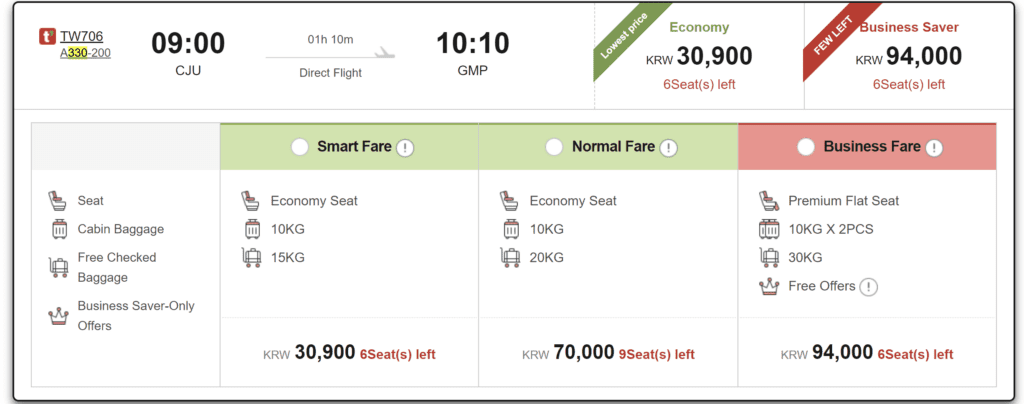
Following my quick exploration, I made my way back to the airline’s homepage and undertook a search for flights. Within seconds, I was presented with T’way Air’s fifteen direct services between Jeju and Seoul that day. These departed at regular intervals between 0755 and 2105, with twelve operated by Boeing 737-800s, and three by the Airbus A330-200. Of these flights, the cheapest came in at 30,000 won (£17.17) for a one-way ticket. Whilst still reasonable, this was slightly more expensive than the likes of other low cost carriers on the route and only just below the cheapesT Asiana Airlines and Korean Air tickets. Even though the Airbus A330 was only a short-term addition to T’way Air’s domestic operations, tickets for the aircraft’s Business cabin were sold as ‘Business Saver’ fares and came in at a flat fare of 94,000 won (£53.58). Whilst this was cheaper than the premium fares on Korea’s two legacy areas, this excluded lounge access and complimentary refreshments onboard.
Fortunately, I was in luck as the 0900 Airbus A330 operated service ended up being the cheapest that day. Once I had selected this, I steamed onwards and was presented with two fare options – Smart and Normal. As is the norm on Korean low cost carriers, both of these included complimentary hold luggage, with the difference between them being that the cheaper Smart fare would only allow me to take 15kg of baggage as opposed to 20kg. However, seeing as I wouldn’t be travelling with any sort of hold luggage I had no reason not to go for the cheapest option. Once I had selected this, my fare shot up to 46,100 won (£26.38) thanks to the mandatory 12,100 won fuel surcharge and 4,000 airport tax.
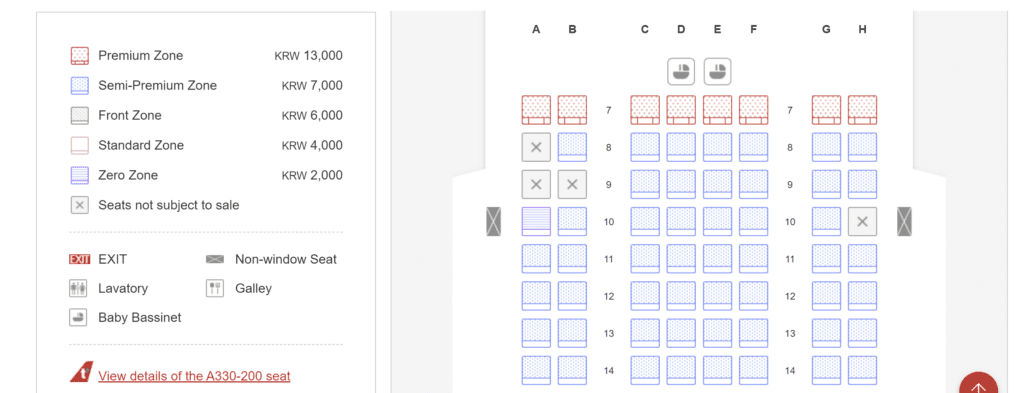
Given T’way Air’s status as a low cost carrier, I was not surprised to be presented with a page of optional extras. These included adding the ‘Bag Pack’ for 10,000 won which included 20kg of luggage and a free seat in the aircraft’s ‘Standard Zone’, or the ‘Multiple Pack’ for 14,000 won (£5.72), which would include the same allowance albeit with priority baggage handling, the ability to select any Economy seat and use of the T’way Air’s premium counter in Jeju. Seeing these as unnecessary, I steamed onwards and entered my details. Once done, I was free to select a seat from the mostly empty seat map – there a total of five different seat classes were offered, ranging in price from 2,000 won (£1.14) to 13,000 won (£7.44). Opting for a window seat in the ‘standard zone’, this added an extra 4,000 won to my booking. Next up was the usual series of boxes to tick, confirming that I had read the myriad of regulations regarding privacy, payment and prohibited items. Finally, I was taken to pay, and, other than the fact that I could not pay by American Express, this was quick, easy and without complication.
As with many airlines across the world, T’way Air allows passengers to check-in online up to 24 hours before departure. Making my way over to T’way Air’s website, I entered my booking details and then attempted to check-in. Seeing as I rarely encounter issues checking in for Korean domestic flights, I was a little surprised to stumble across an error message and I can only assume that this may be due to teething issues with their latest addition.
The Journey
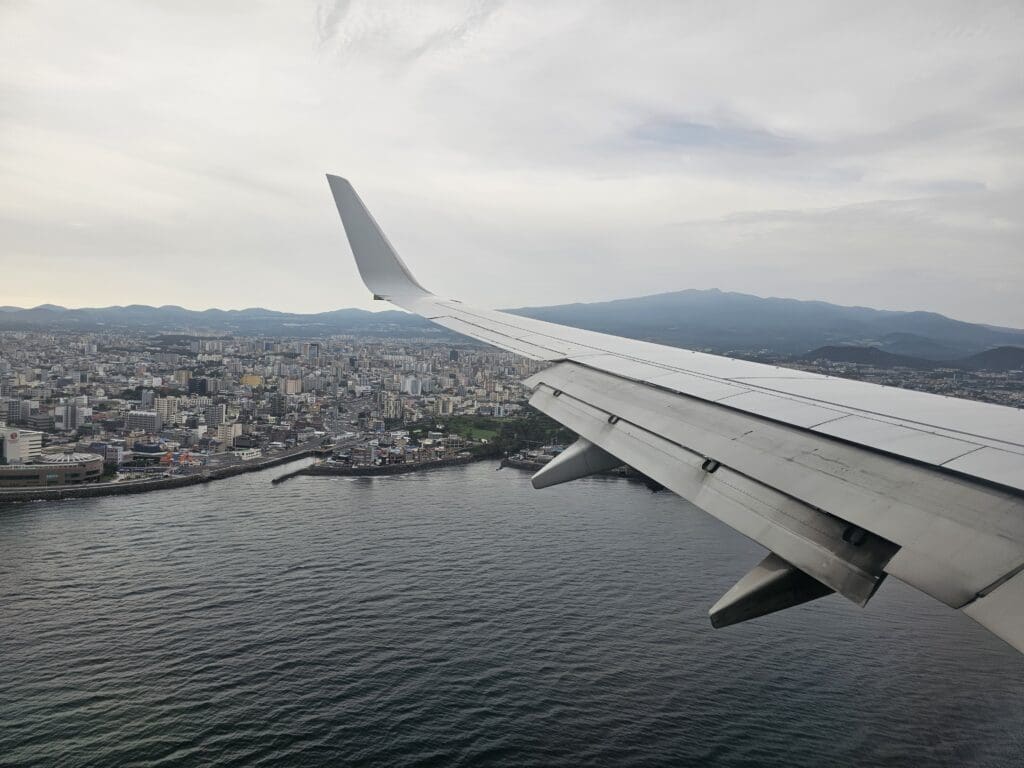
Having travelled relatively extensively, I can say with confidence that the island of Jeju is undoubtedly one of my favourite places in the world. Whether it be the north, south, east or west coast, or the island’s luscious mountainous interior, I would jump at the opportunity to spend any amount of time in Jeju! Sadly, on a tight schedule, that Monday morning, I wouldn’t have much time to spot any Harubangs or eat a Hallabong, and my sole purpose for visiting was to sample the delights of T’way Air’s Airbus A330-200. After a ride onboard a modern yet cramped Jin Air Boeing 737-800, I touched down on the island at 0710 and by the time I had made it into the terminal, I was left with around an hour and forty minutes until my flight back to Seoul was scheduled to depart.
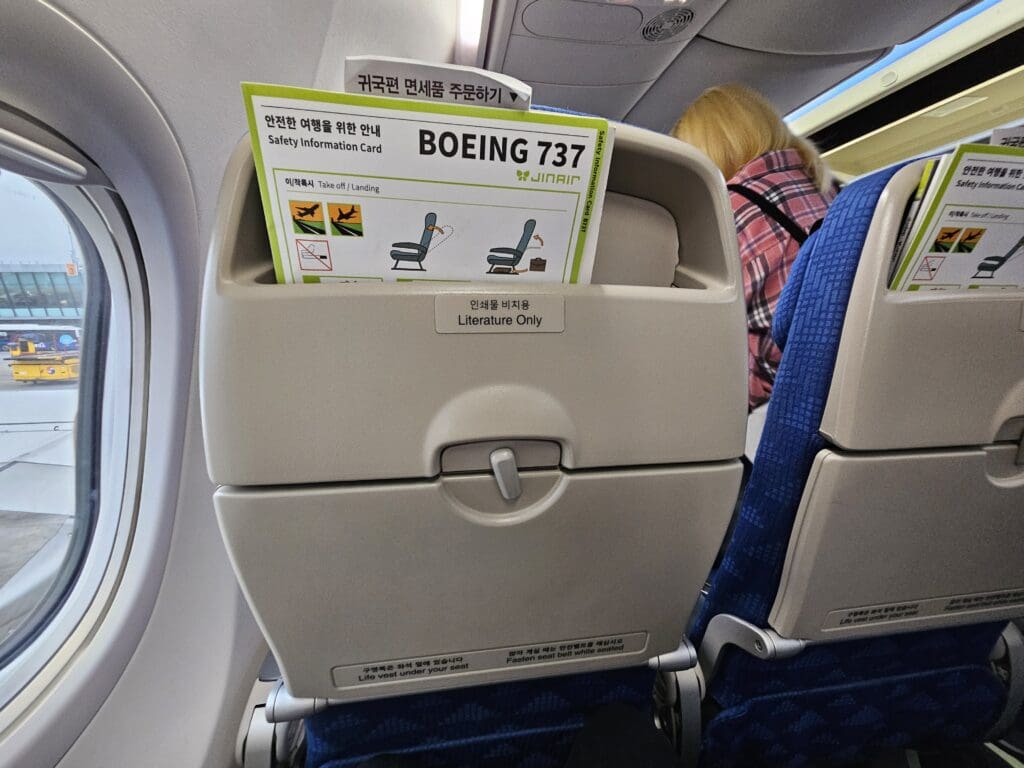
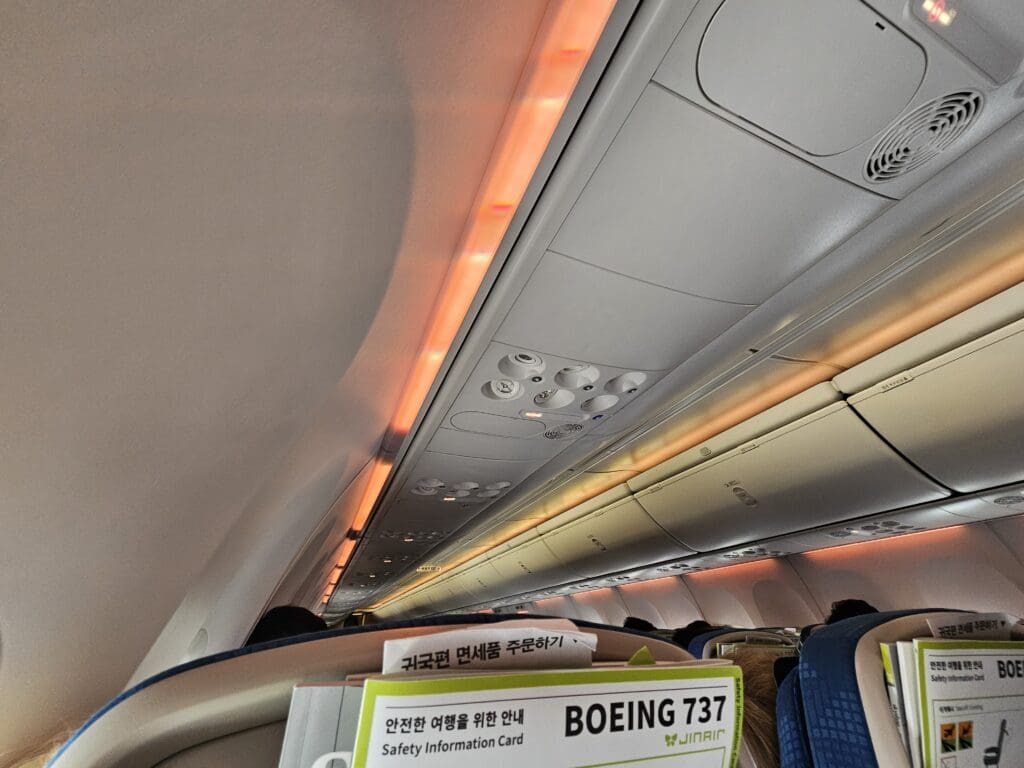
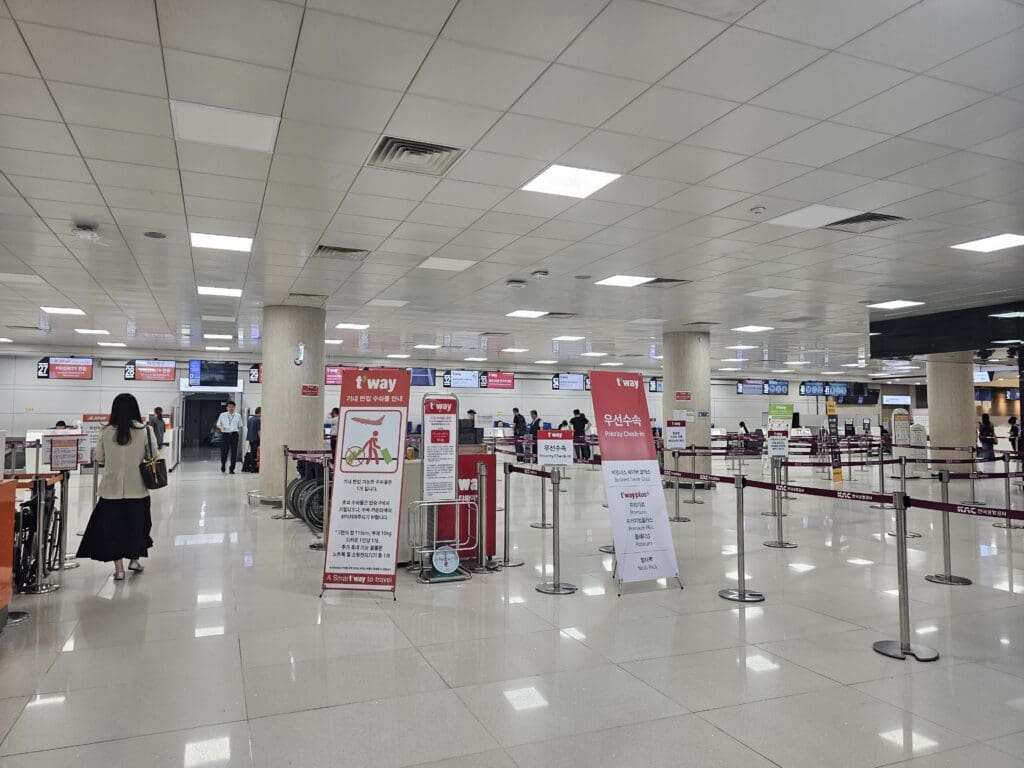
Seeing as I still needed to check-in, upon making it out into the very busy landside arrivals area, I headed up two flights of escalators to the terminal’s relatively large domestic check-in hall. Looking around, it is fair to say that this is not the most attractive space in the world and was clearly designed to be functional rather than aesthetically pleasing. Indeed, in all the times that I have passed through Korea’s second busiest airport, I have never experienced much of a wait at either check-in or security. This consists of a large hall where each airline enjoys its own well-branded dedicated desks. Meanwhile, a good number of Korea Airport Corporation self-check-in machines are available and can be used by all those departing on domestic flights, regardless of airline. Making my way over to T’way Air’s well-branded check-in area, seeking some human interaction, I decided to head for the airline’s six-staffed desks. However, upon approaching these, the friendly T’way Air ground staff member instead pointed me in the direction of a self-check-in machine and noted that the desks were dropping bags off only. Fortunately, I encountered no issues whilst using the self-check-in machines which soon printed off my receipt-style boarding pass.
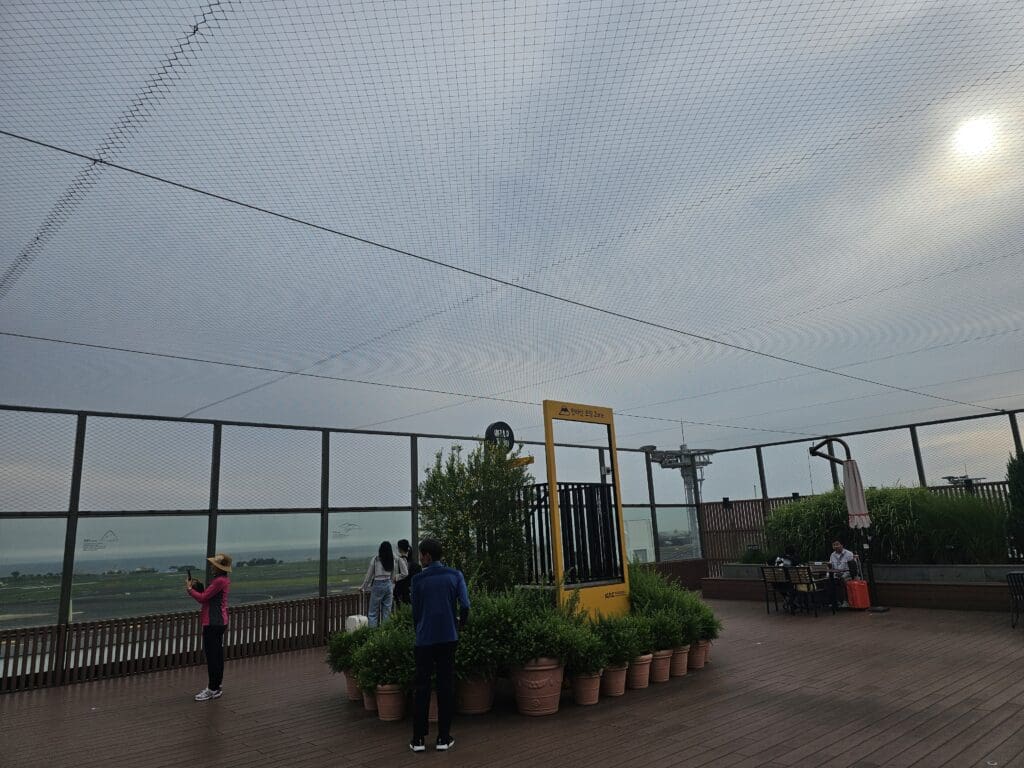
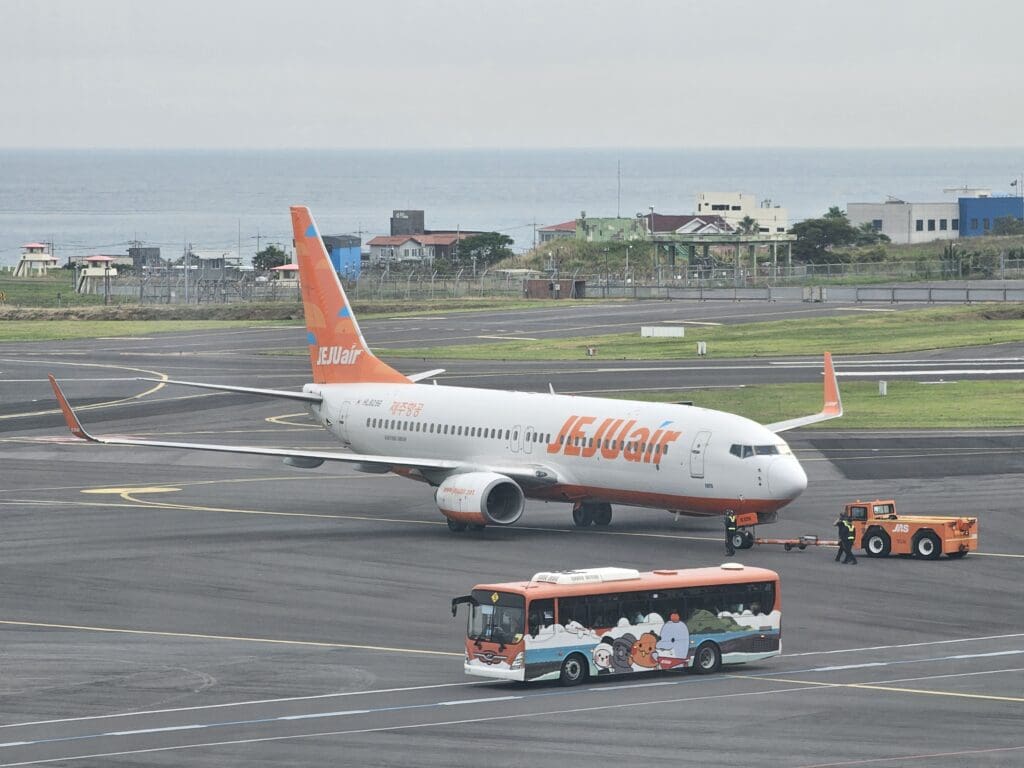
Seeing as I still had plenty of time on my hands and not predicting any major queues at security, I decided to pop upstairs to Jeju Airport’s outdoor observation deck. Having opened its doors in 2022, this provides both passengers and non-passengers alike a good viewpoint to look out over much of the ramp and the airport’s main runway. However, I should add that thanks to a glass barrier (which was fairly dirty), taking any decent photographs there proved to be something of a challenge. Grabbing a coffee from the neighbouring café, I spent about twenty minutes watching the comings and goings of aircraft, and, as is usually the case at Jeju International Airport, I was treated to a constant stream of movements. During my short stay, I spotted aircraft from all of the eight Korean carriers that serve Jeju. In addition, whilst it wasn’t peak time for the airport’s international services, I also caught site of three Airbus A320s operated by Chinese low cost carrier Spring Airlines, as well as a single Airbus A321neo operated by Singapore Airlines’ low cost carrier, Scoot.
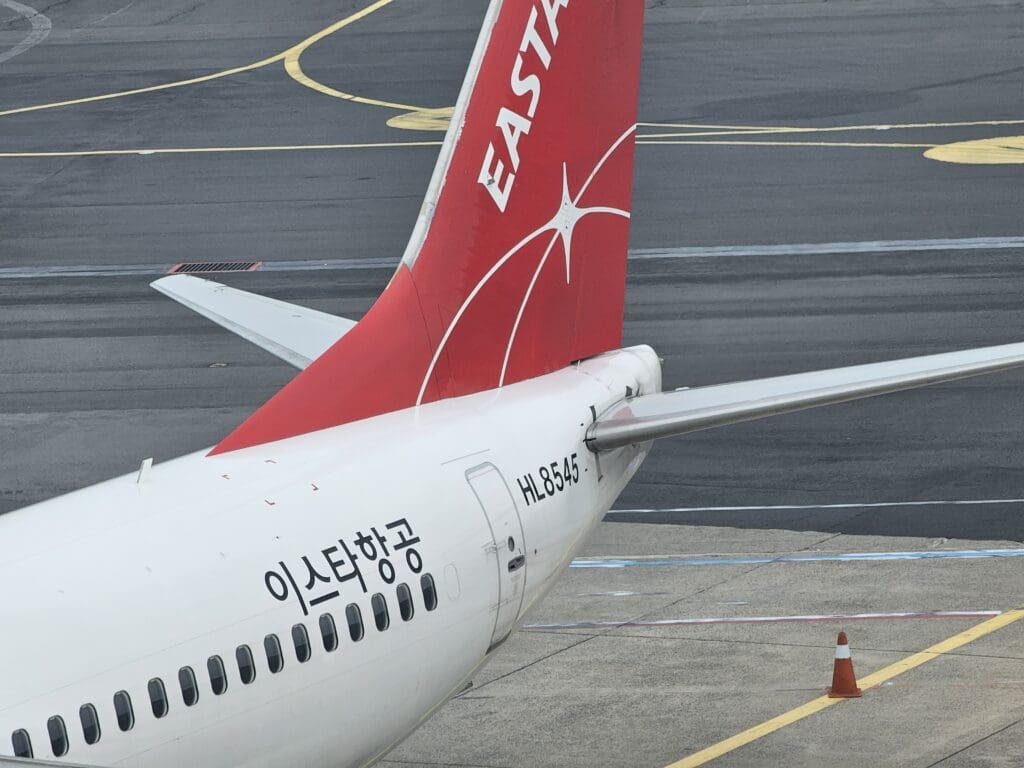
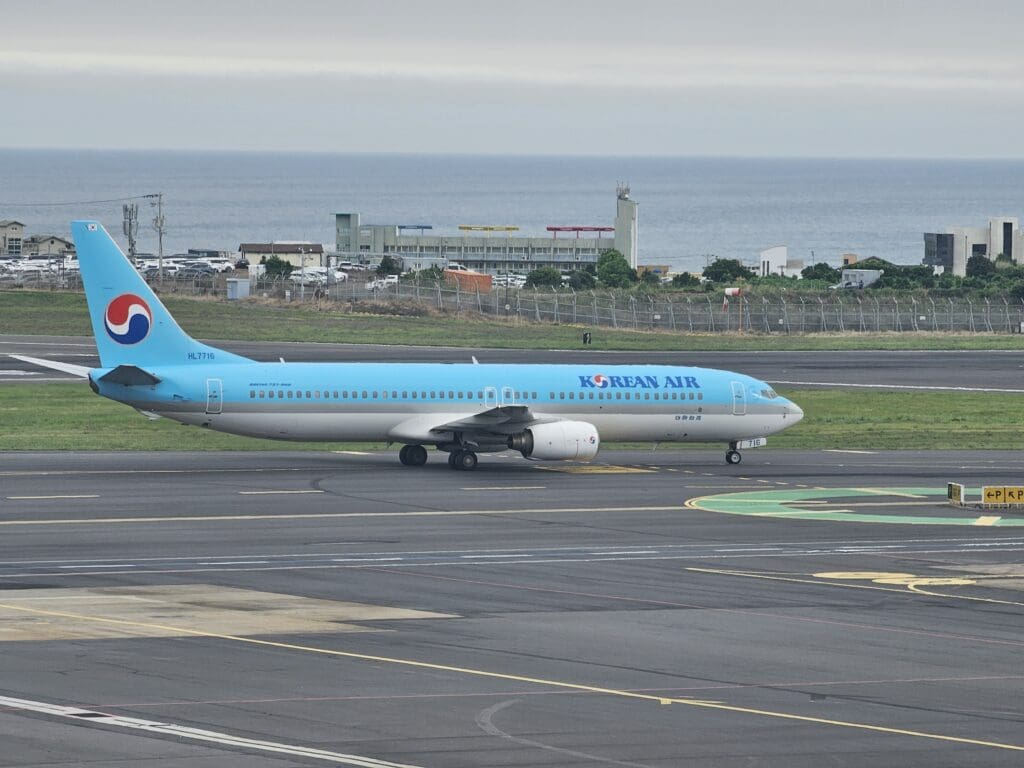
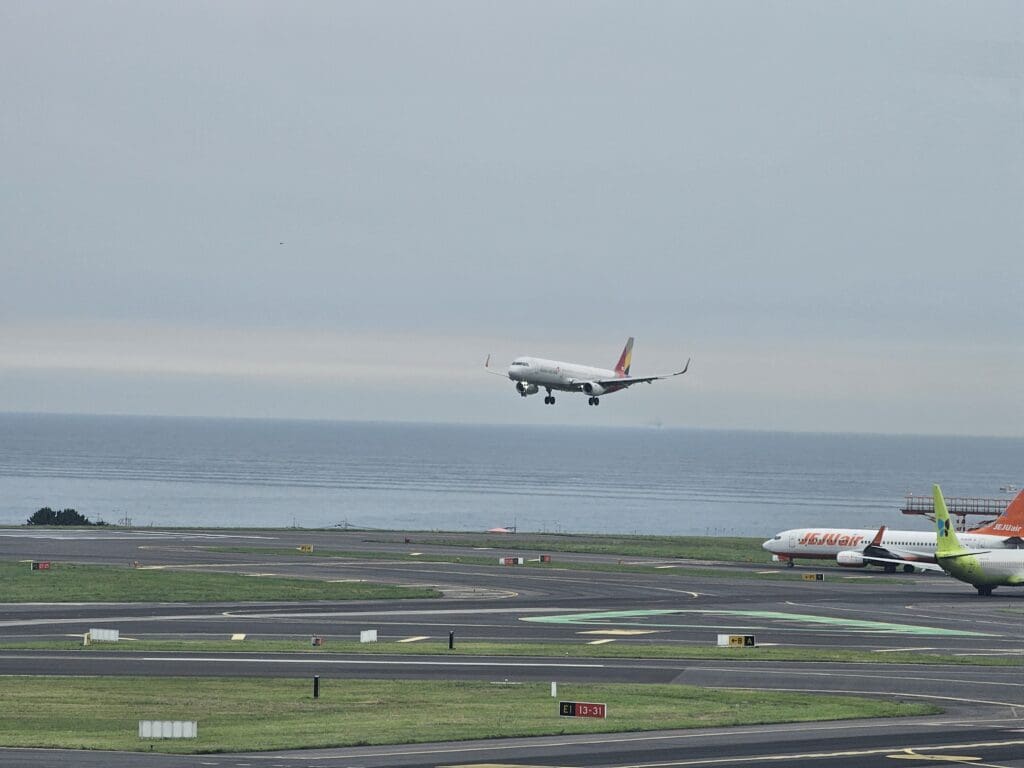
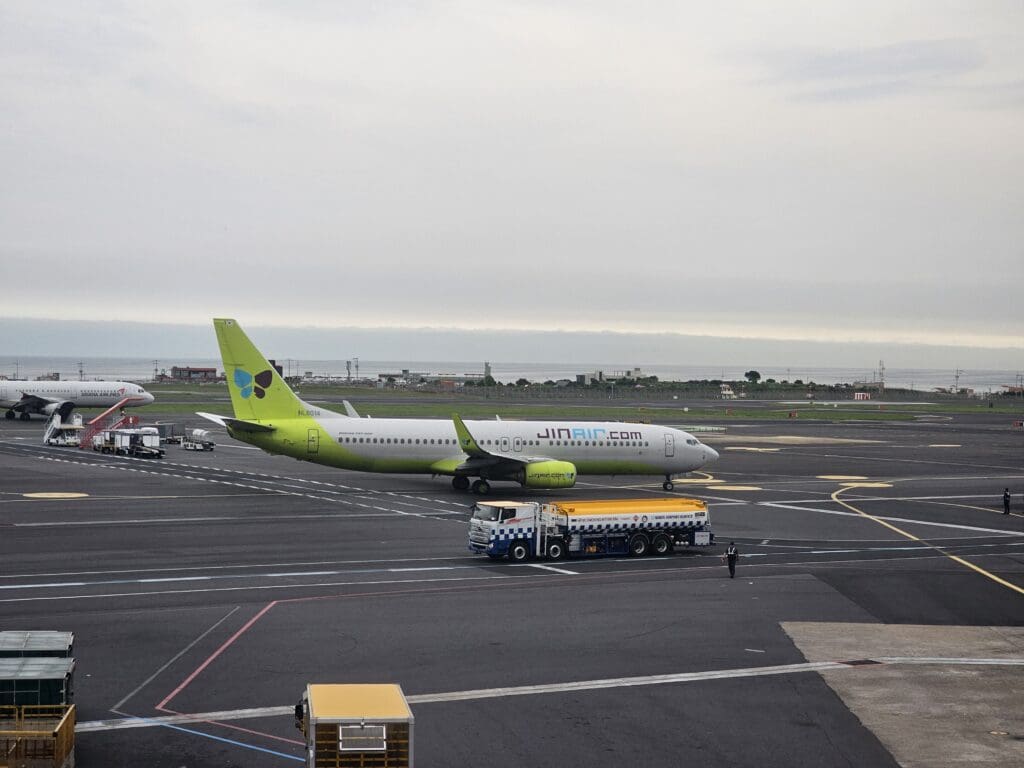
With an hour to go until departure, I headed back down the escalators and made my way over to the security checkpoint – with two of these available for those heading off on domestic flights and sitting on either side of the domestic check-in hall. For overseas passport holders, departure arrangements at Jeju are unique as it is the only Korean domestic terminal where such passengers have a separate entrance to security as they must first undergo an immigration check. This is explained by the fact that there are quite a few nationalities that require a visa to visit mainland Korea but are able to visit Jeju without one. The purpose of this check is to ensure that those passengers who fall into this category and don’t have a visa to visit Korea are not allowed to leave the island. Once there, I joined the short queue for overseas passport holders and had my boarding pass scanned. Next up, I was ushered to one of three immigration gates. After scanning my passport, I entered the booth where I had to provide my fingerprints. With these presumably matching up with the fingerprints that I had taken upon arrival in Korea, the gate swung open and I was allowed to continue onwards to security. As is usually the case, security was a breeze and with most checkpoints open, I passed through this no longer than a minute after I had left the immigration area.
Immediately after passing through security, passengers emerge onto something of an observation area that offers near-panoramic views of the ramp outside. It is worth noting that this is pretty much the only place in the airside portion of the terminal that offers such unobstructed views. This is thus definitely a place where aviation enthusiasts may prefer to sit and wait for their flight rather than waiting in the usually busy main portion of the terminal on the floor below. Having inadvertently timed things just right, as soon as I made it through security the yellow glow of the landing lights of the Airbus A330 that would be taking me to Seoul could be seen floating down on the horizon. I thus decided to stay and watch this aircraft as it made a smoky touchdown on the island before taxiing past and voyaging over to Stand 1 at the far end of the terminal building.
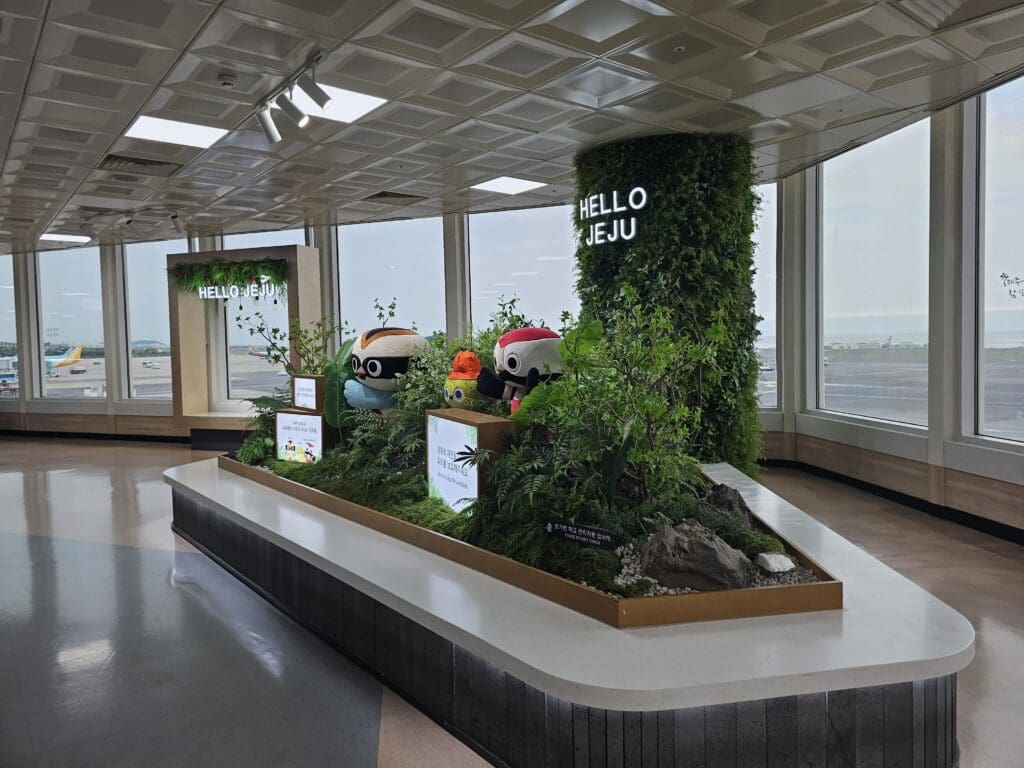
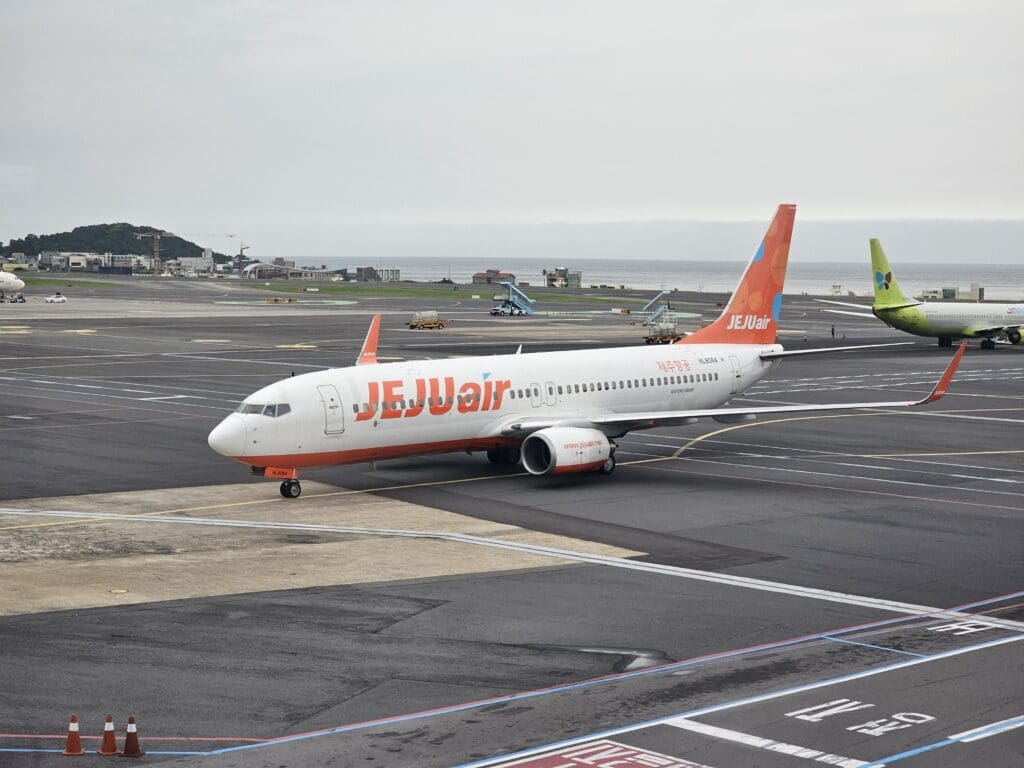
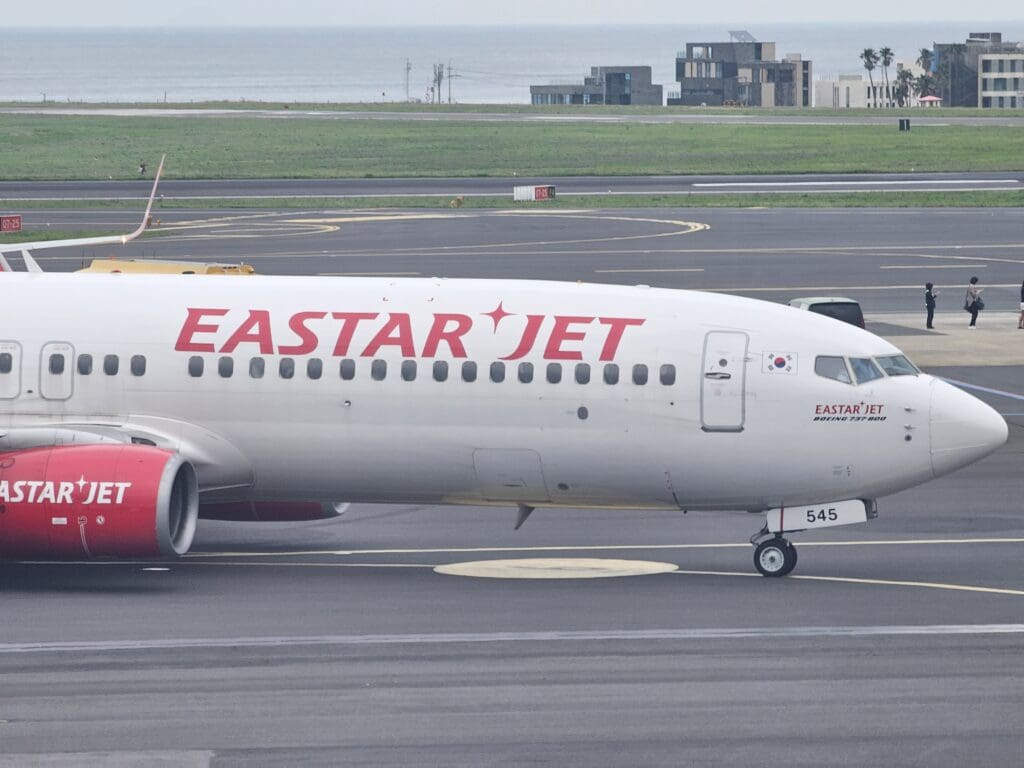
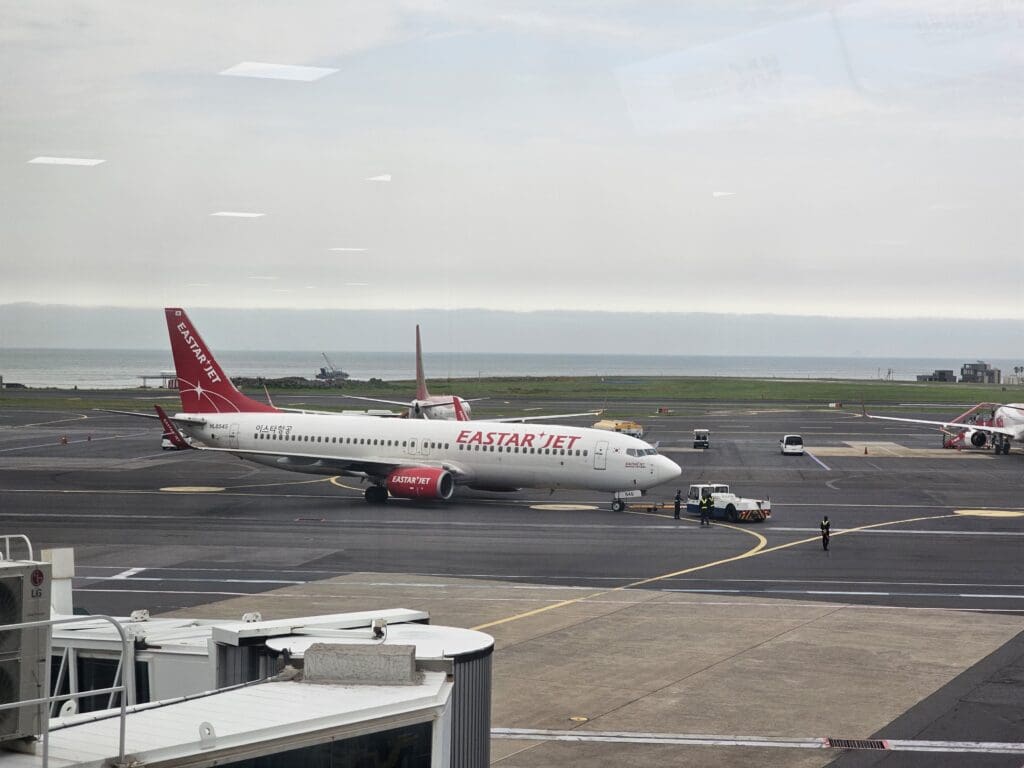
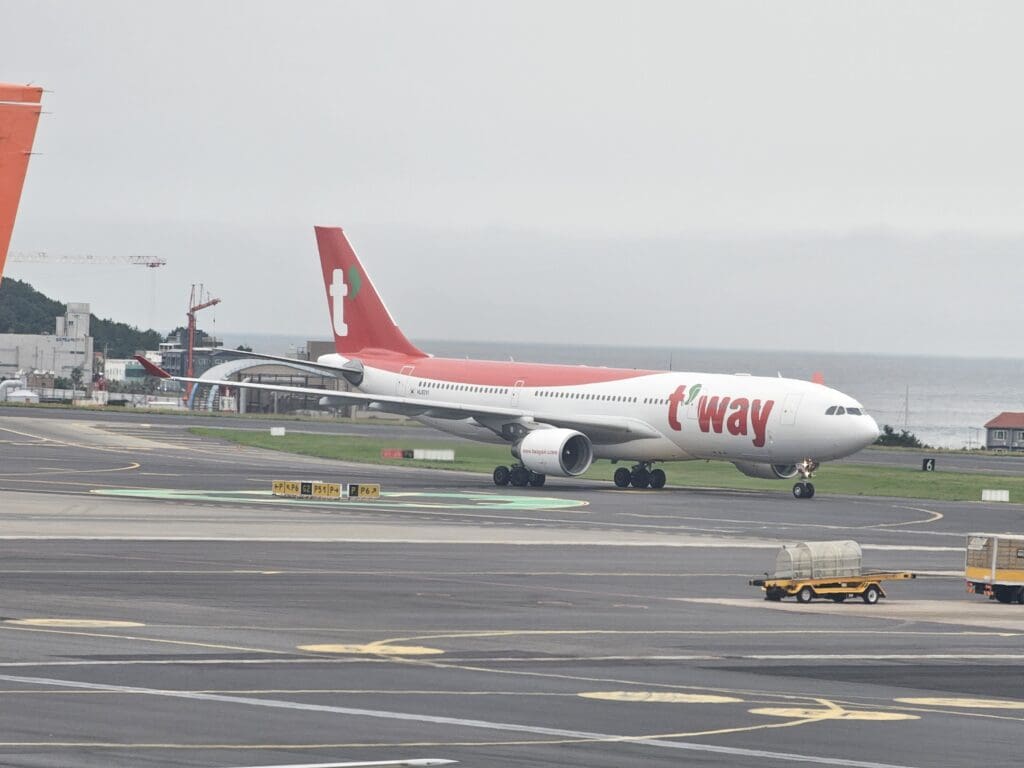
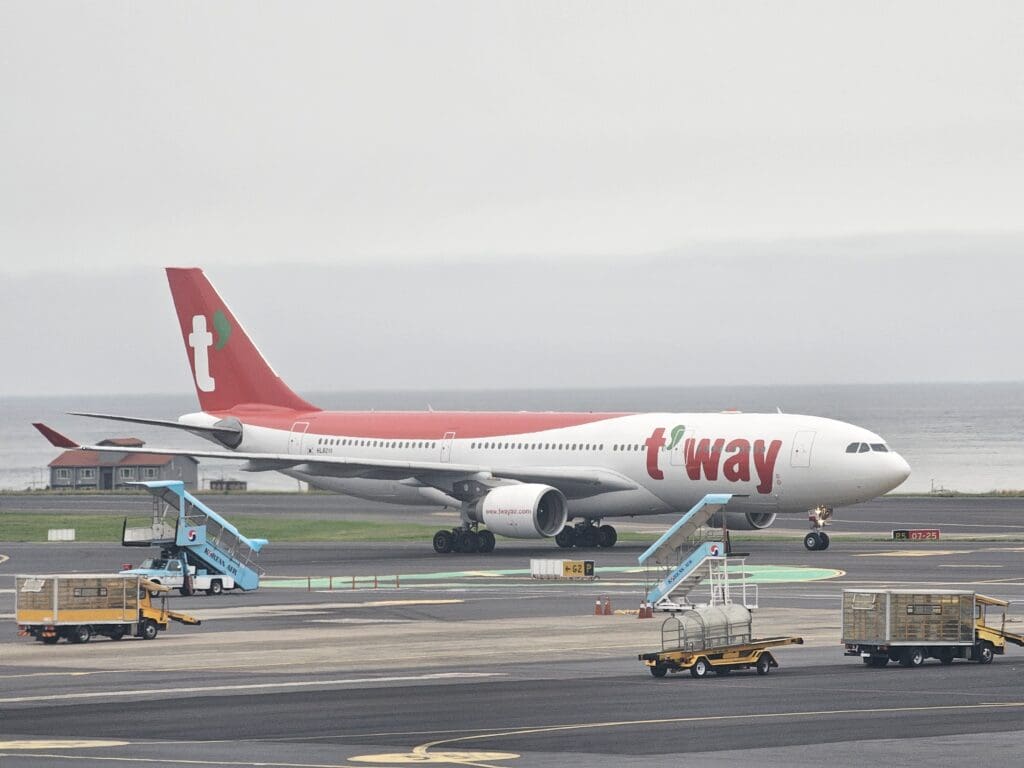
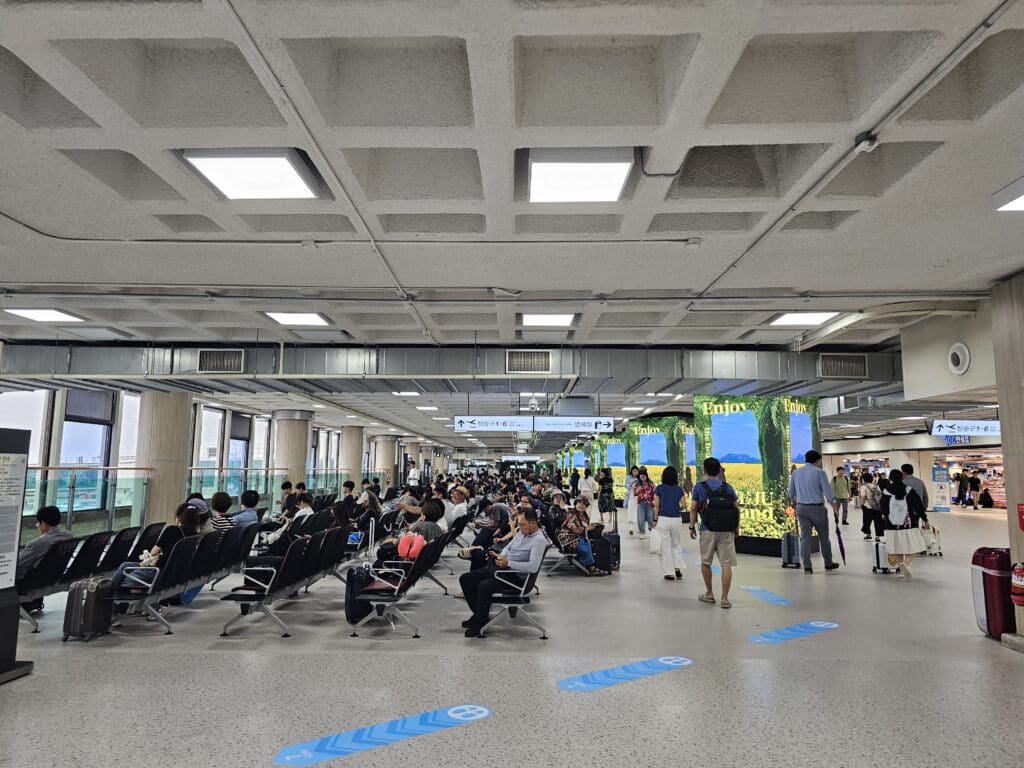
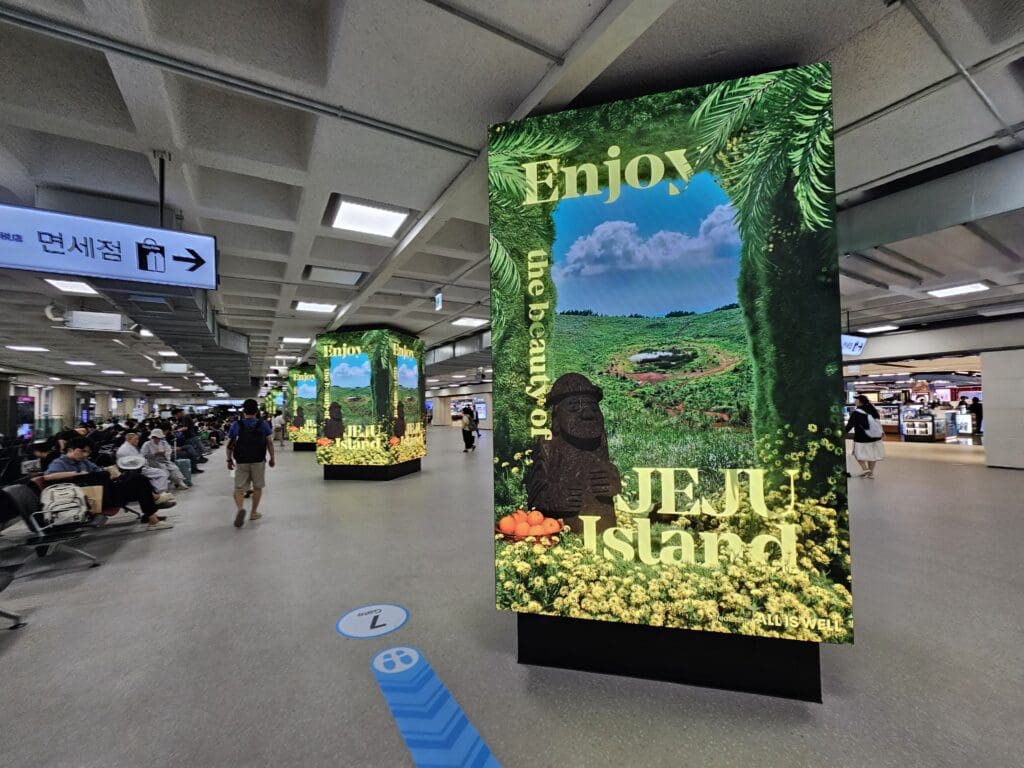
Once the aircraft had taxied past, I decided to head down the escalator to the main portion of the terminal. This was as busy as ever, and unlike the likes of Gimpo or Incheon which are functional and stylish, the airside portion of Jeju is function but by no means architecturally memorable. However, with no security queues and with the terminal appearing to be mostly clean and tidy, with plenty of facilities offered, I was left with no reason to complain. In terms of facilities, the airside portion of the terminal is home to a large JDC Duty Free store selling the usual smorgasbord of both local and non-local items, alongside four cafés, two restaurants and a 7-Eleven.
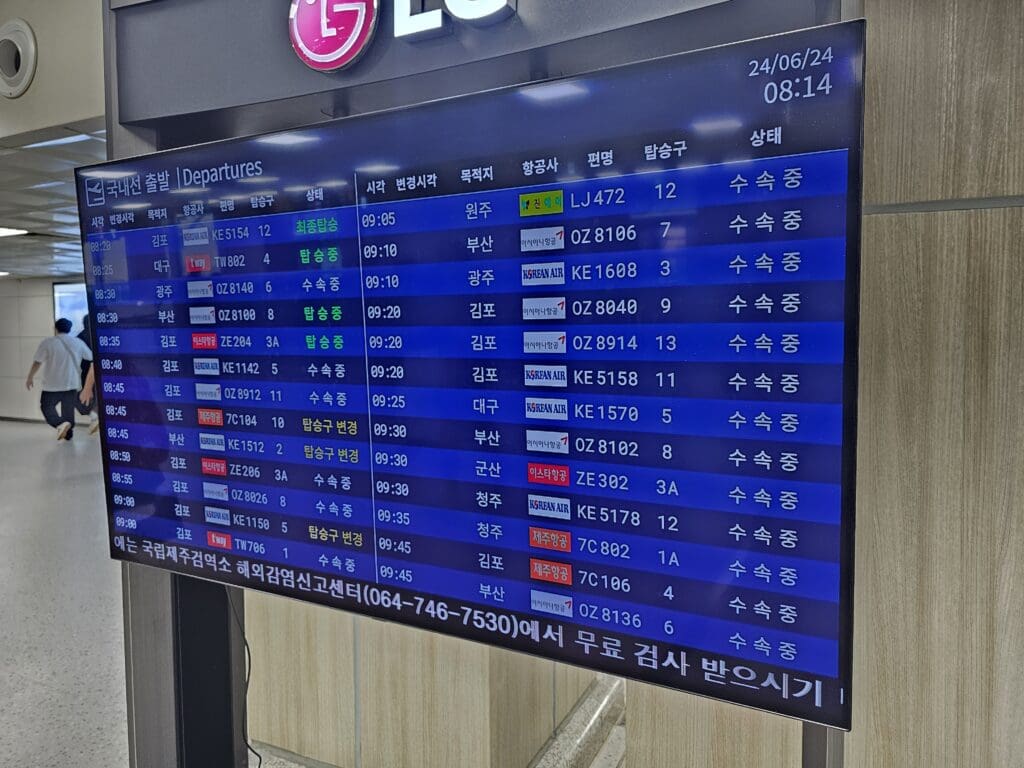
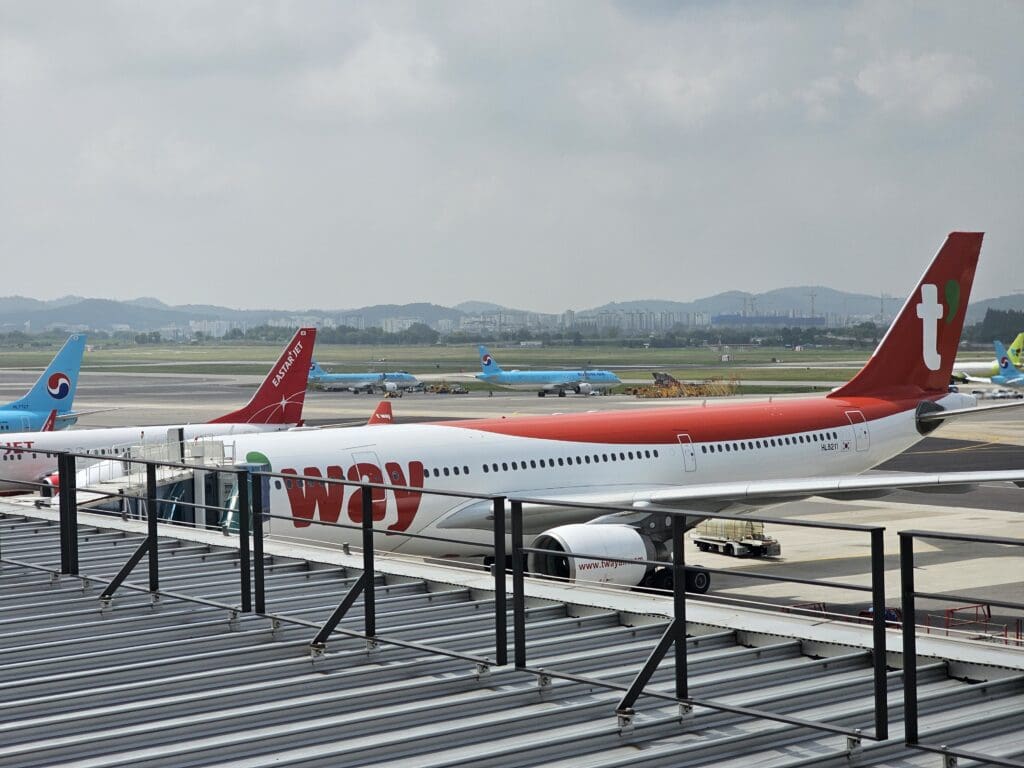
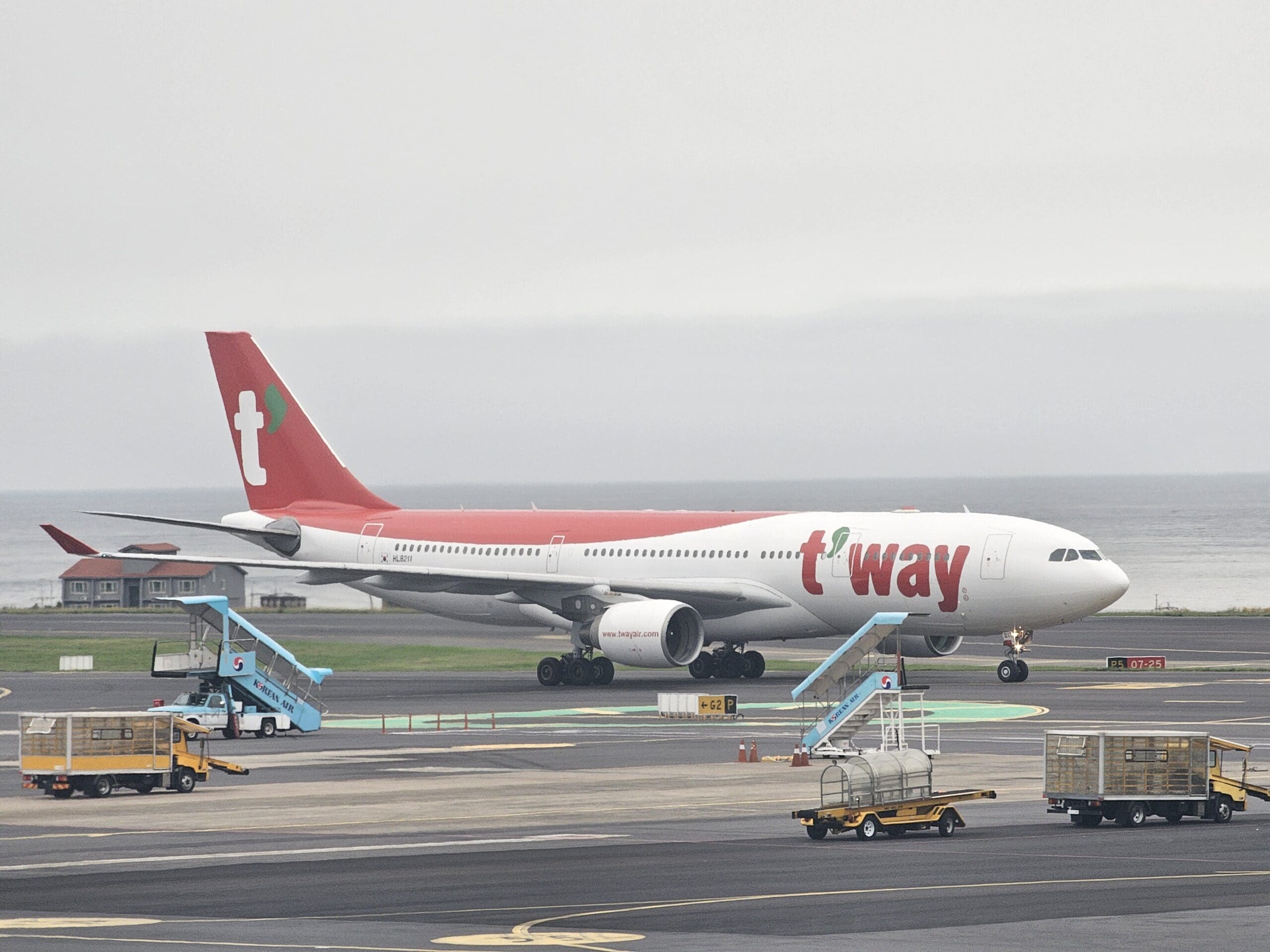
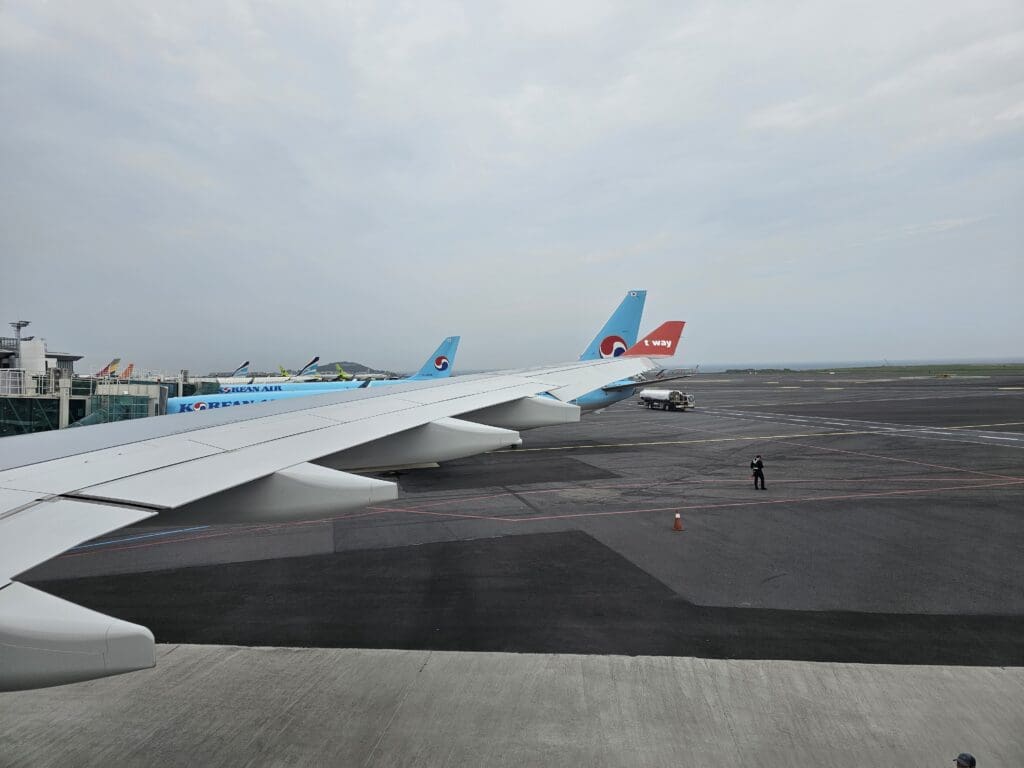
Seeing as T’way Air operated just a single Airbus A330-200 at the time of my flight and having spotted this in Gimpo that morning, it wasn’t too difficult to predict which aircraft would be taking me back to Seoul! This came in the form of Airbus A330-223 HL8211. Like all Airbus A330s, this particular aircraft was assembled at Airbus’ plant in Toulouse Blagnac and first took to the skies in June 2010 with the test registration F-WWKA. This made the jet almost exactly fourteen years old at the time of my flight and was neither the youngest nor oldest Airbus A330 that I have ever flown. In late July 2010, the Airbus was handed over to Korean Air where it spent nearly fourteen years flying across the world. Highlighting the Airbus A330’s versatility, this aircraft operated an eclectic mixture of short, medium and long haul routes, and served Korean Air destinations on every single continent! During its career with Korean Air, according to the Aviation Herald the aircraft experienced one notable incident when, in July 2015, the aircraft was forced to return to Riyadh following a loud bang from one of its engines. Other than this, the aircraft seems to have had an uneventful life and between October 2012 and December 2014 sported Korean Air’s ‘Future Artist Olympiad’ livery. In early April 2024, the aircraft flew its last flight with Korean Air, flying from Changsha to Incheon before being ferried to Busan where it was repainted into T’way Air’s distinctive red and white livery. In May 2024, the jet was handed over to T’way Air and was soon pressed into service on a series of familiarisation flights on the short hop between Seoul Gimpo and Jeju.
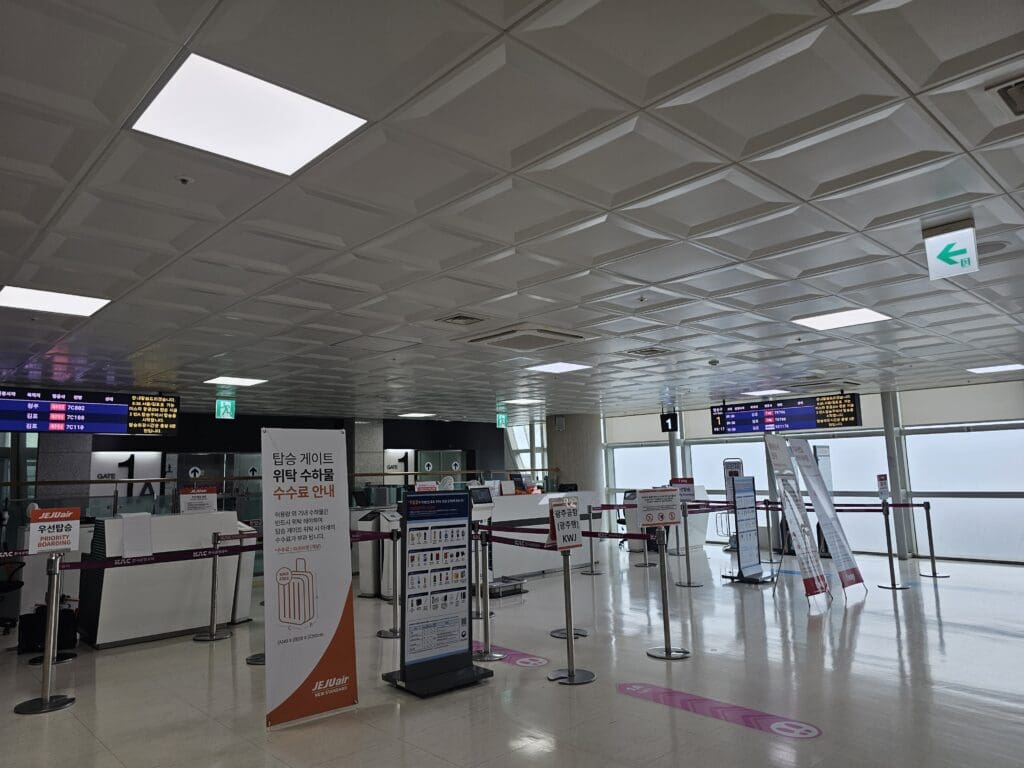
After a wander around, I plonked myself down at the gate, and unfortunately, this failed to offer any view of the Airbus A330 standing outside. At that time, the area around this was rather busy and an army of T’way Air ground staff could be seen at the podium undertaking preparations for boarding. According to my boarding pass, boarding would commence at the very specific time of 0837, by which time a reasonably long line of passengers had already formed. Four minutes after this at 0841, boarding commenced at which point an announcement was made in Korean and English inviting passengers to proceed forward for boarding. As far as I could tell, despite a generic T’way Air sign at the gate which advised that boarding would be undertaken in five zones, this wasn’t the case and instead, all passengers were invited to board at once. Nevertheless, boarding was far from chaotic and following a short wait, my boarding pass was scanned and I made my way up the jetbridge towards the Airbus A330.
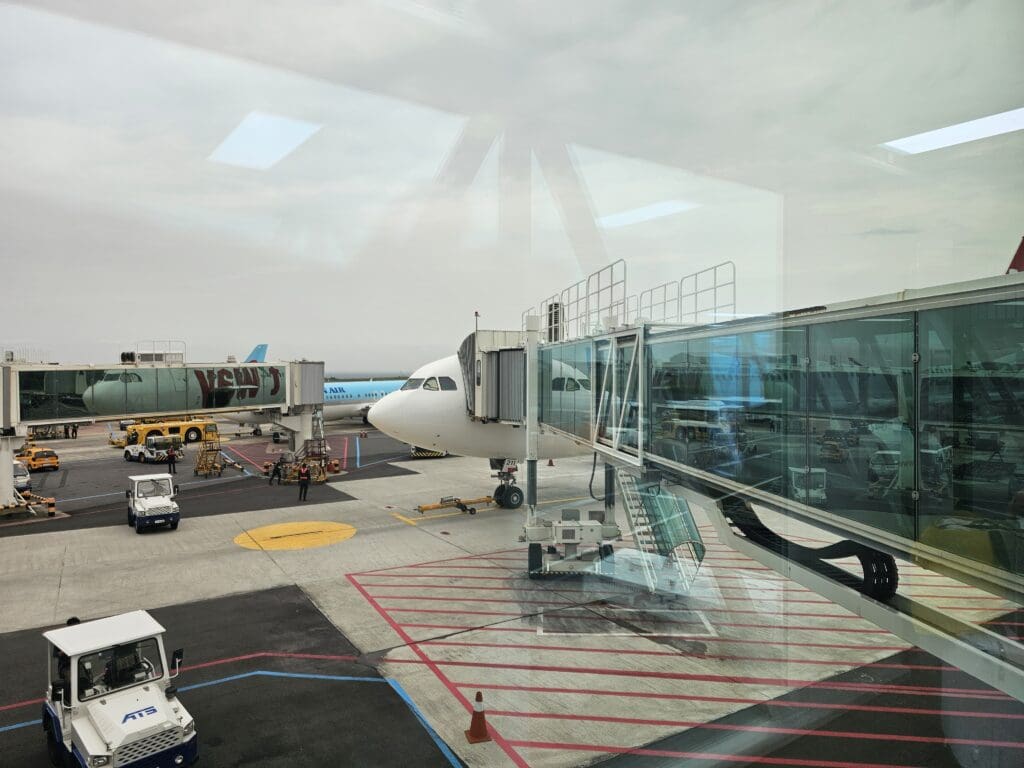
That morning, boarding was undertaken via the Airbus’ 2L door and interestingly as I approached this, I spotted one of T’way Air’s smartly dressed cabin crew on the jetbridge scanning passengers’ boarding pass with a handheld scanner. As I approached them, I was given a slightly subdued greeting before my boarding pass was scanned. After this I stepped into the galley that separates the two Business Class cabins and promptly received a warm and friendly greeting from both of the two flight attendants standing there. With no third boarding pass check undertaken there, I soon turned right and entered the smaller Business Class cabin.
When it came to knowing what to expect from T’way Air’s Airbus A330-200’s cabin, for the first time in donkey’s years, I was going into the trip blind as I failed to find any interior photos or reviews of the aircraft before my trip. However, seeing as the aircraft was leased from Korean Air, I was somewhat expecting this to feature Korean Air’s standard interior. Yet adding to the mystery, the seat map of this aircraft was significantly different to those of Korean Air’s Airbus A330-200s – with just a small premium cabin. Therefore, this indicated that the cabin had been reconfigured in preparation for commencing low cost operations. Indeed, Korean Air’s spacious layout would not be all too conducive to low cost flying, with their Airbus A330-200s coming with 30 Prestige Class seats and just 188 Economy seats.
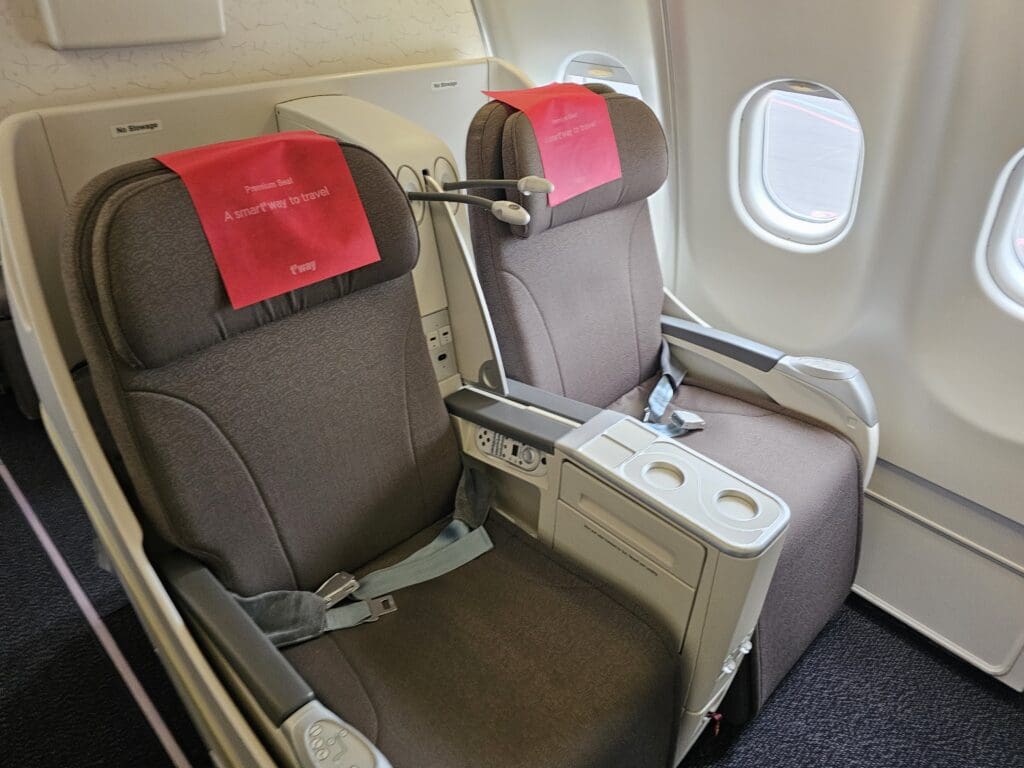
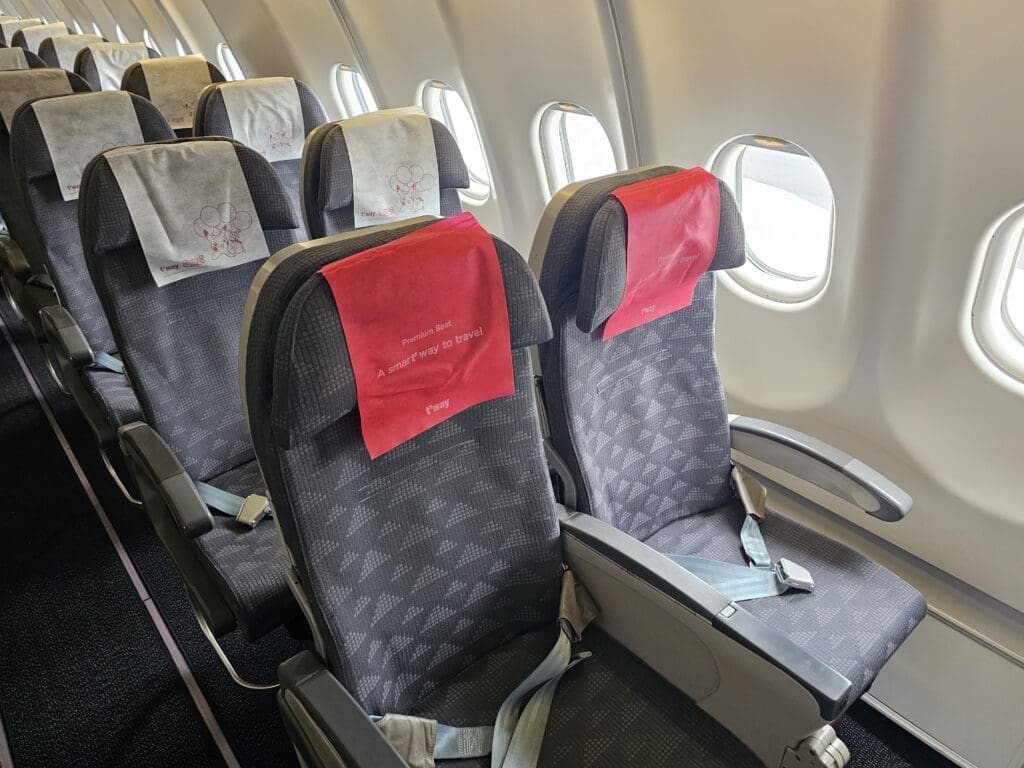
As I voyaged into the aircraft, all unknowns about the cabin were revealed. As it turned out, on the inside this Airbus was still very much a Korean Air aircraft, and the only sign that this wasn’t the case was the T’way Air branded disposable fabric antimacassars that could be seen on each seat as well as the reupholstered ex-Prestige Class seats which were now sporting a brown fabric cover rather than a distinctive turquoise one. First up on my journey to the rearmost cabin was the much smaller of the Airbus’ two premium cabins. Unsurprisingly, Korean Air had not leased out one of their Apex suite fitted Airbus A330s and instead, the airline’s more dated Prestige Class product could be seen. This took the form of two rows of B/E Aerospace MiniPod seats arranged in a 2-2-2 configuration, with each covered in a turquoise fabric cover. Whilst this is most certainly luxurious for a low cost carrier, those who had flown with the aircraft during its days with Korean Air may have been disappointed with the slightly dated and privacy-lacking seats. However, that said, during its final years with Korean Air, this particular aircraft primarily operated short and medium haul flights within East Asia, whilst their Apex suite fitted Airbus A330s undertook longer slogs.
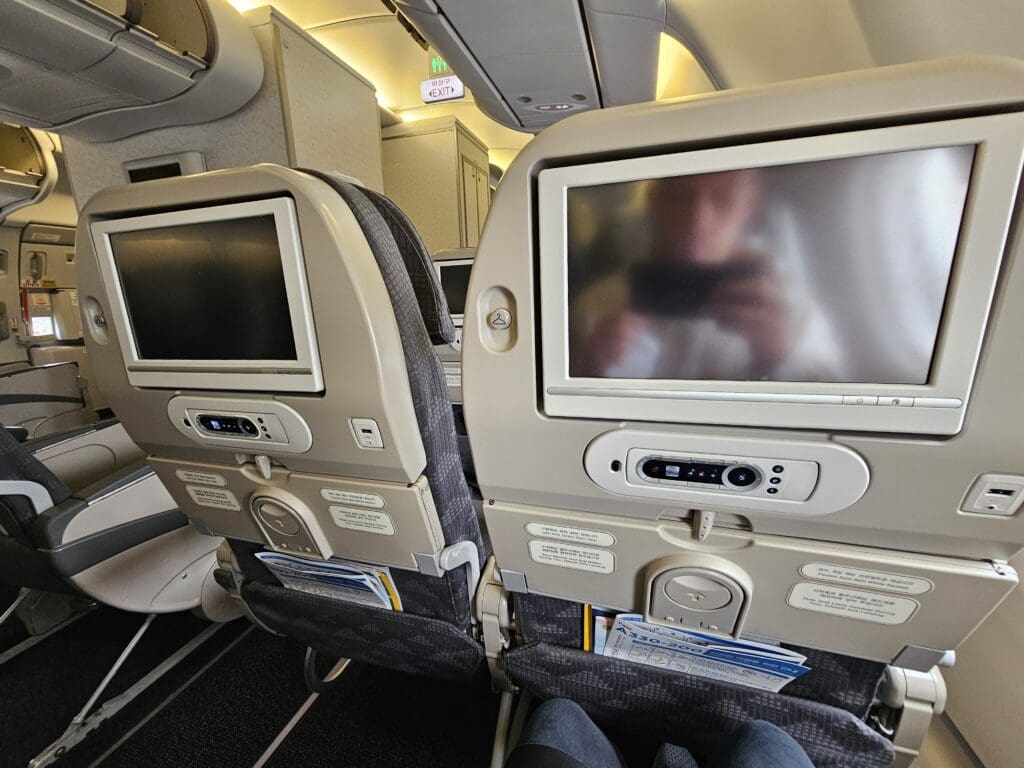
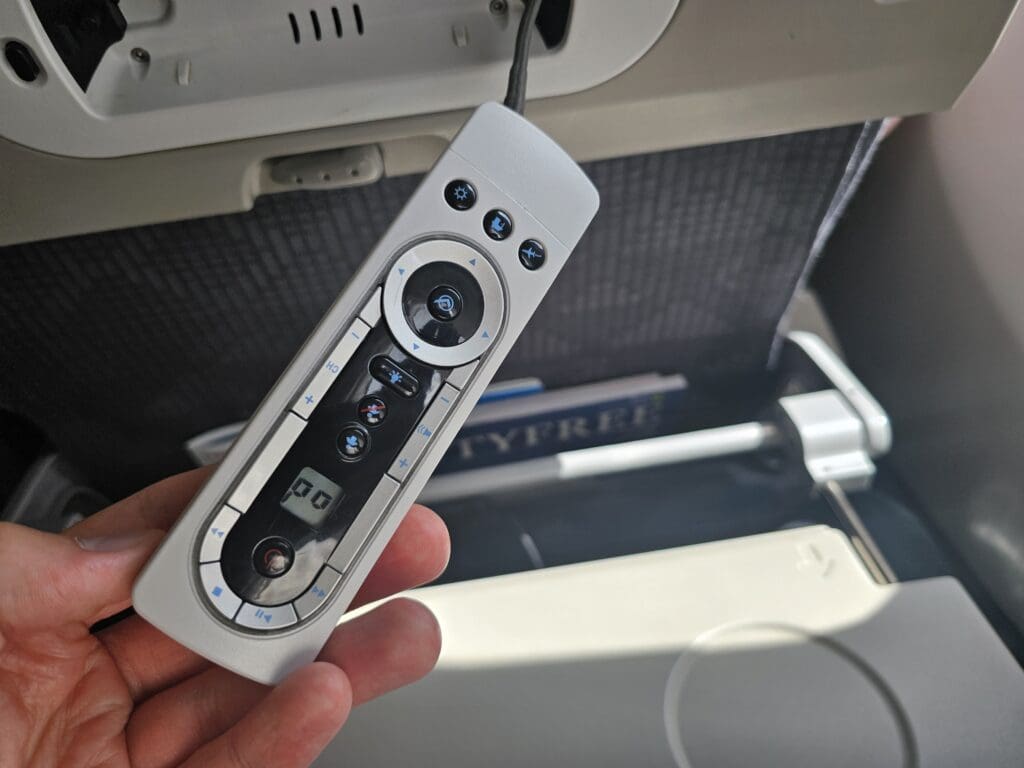
Soon speeding through the premium cabin, I arrived in the aircraft’s forwardmost Economy section. As expected, there, each seat was covered in Korean Air’s somewhat dull fabric, with these sporting either a dark blue or brown cover that features a repeating isometric pattern. Each seat came with an adjustable headrest, along with an inflight entertainment screen accompanied by a chunky controller, a bifold tray table, a coat hook and a cup holder. Meanwhile, power was provided in the form of both a USB port and an under-seat universal power outlet, both of which worked without issue.
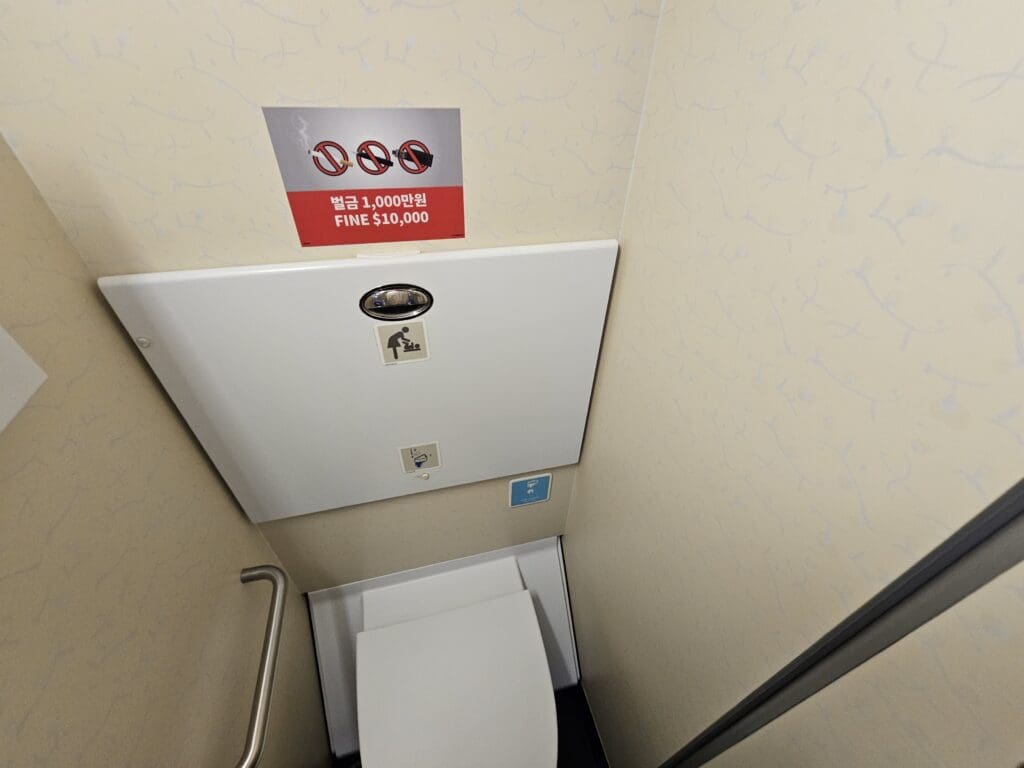
Leaving me with a good first impression of the crew, as I trundled down the cabin I received a friendly greeting from each crew member I passed, and after a stop-start journey, I reached Seat 26H. Seeing as I may well be trapped in for the flight back to Seoul, after plonking my bag down I decided to make a trip to one of the Airbus’ lavatories. In total, six lavatories are available for those in Economy, with two positioned at the rear of the cabin and four in between the forward and rear Economy cabins. This equates to a very decent ratio of 31 passengers per lavatory. Upon opening this up, this was clean, spacious and stocked with the basics, thus leaving me with absolutely nothing to complain about. Inside this, as well as on the bulkhead walls, Korean Air’s cherry blossom pattern could be seen, providing yet another reminder of the aircraft’s former life.
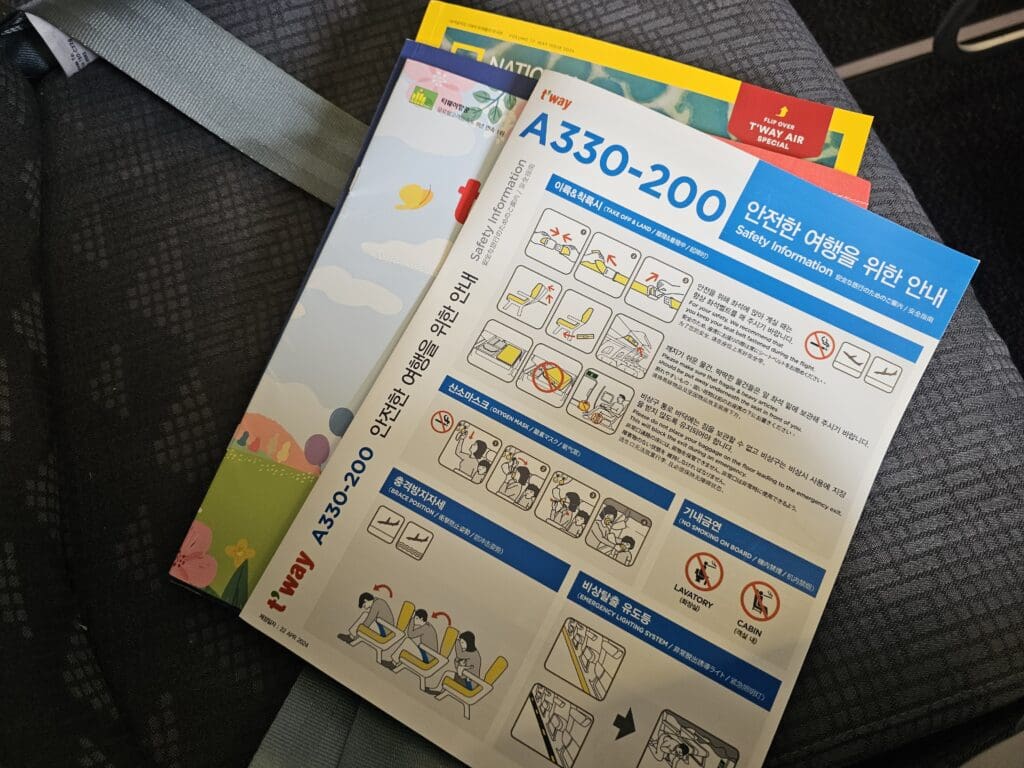
Having flown on plenty of Korean Air flights, I am well aware of the bountiful space that is usually afforded to those in their Economy seats and thus had high expectations when it came to comfort. Indeed, with just 188 seats in Economy, this was one of the less densely configured Airbus A330s that I have had the pleasure of flying onboard. Needless to say, once seated, I was not disappointed, with the seat coming with buckets of legroom and also proving to be soft and comfortable. Furthermore, the cabin seemed to be spotlessly clean and whilst a few signs of wear could be seen, these were for the most part, minimal. Thus, I would have absolutely no qualms sitting in the seat on one of T’way Air’s long flights to Europe. Turning to the seatback pocket, this contained a Duty Free catalogue, menu, safety card, sick bag and a copy of the inflight magazine – all of which seemed to be in good condition.
Perhaps owing to the slightly late start to boarding, the final passengers did not make it onto the aircraft until about two minutes after our scheduled departure time, and soon, the L2 door was closed and any remaining equipment and cones were removed from around the aircraft. That morning, the rear Economy cabin was reasonably full and just a small number of vacant seats could be seen. Unsurprisingly, the vast majority of passengers took the form of Korean tourists returning home to the mainland, whilst a few smart looking suited business people could also be seen. Once each flight attendant had confirmed on the PA system that their door was armed, the Purser commenced their welcome announcement. This consisted of a fairly detailed welcome in Korean with all the usual welcomes, thanks and warnings, followed by a very brief welcome in English which omitted most of the information included in the Korean version of the announcement. Indeed, throughout the flight, unusually for a Korean carrier, most announcements were performed in Korean only.
Once the Purser had concluded their welcome announcement, the crew took to the aisles and T’way Air’s pre-recorded safety announcement rang out in Korean and English. This went through all the usual information and ended with a stern warning cautioning against bad behaviour onboard. As this was underway, the Airbus was pushed back away from the gate, during which its two large Pratt & Whitney PW4168A engines quietly spooled into life with some hums, whirrs and vibrations. In the usual manner, once our two engines had spooled up, the tug was disconnected and the flaps were partially extended in preparation for our departure before we slowly taxied away from the apron.
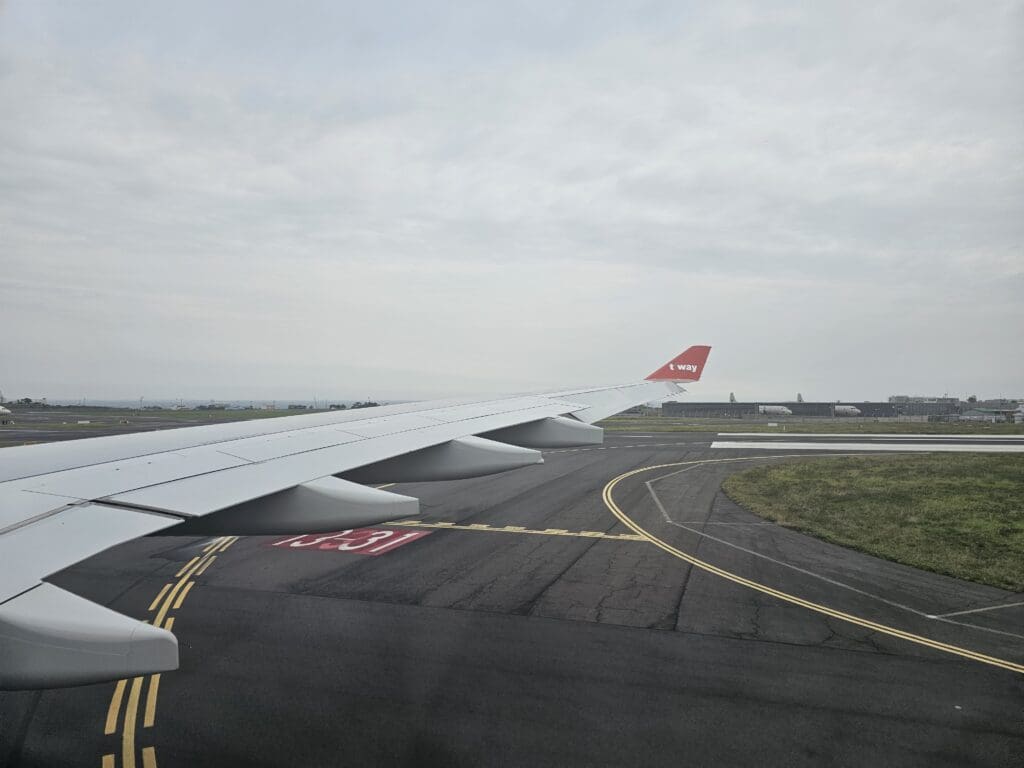
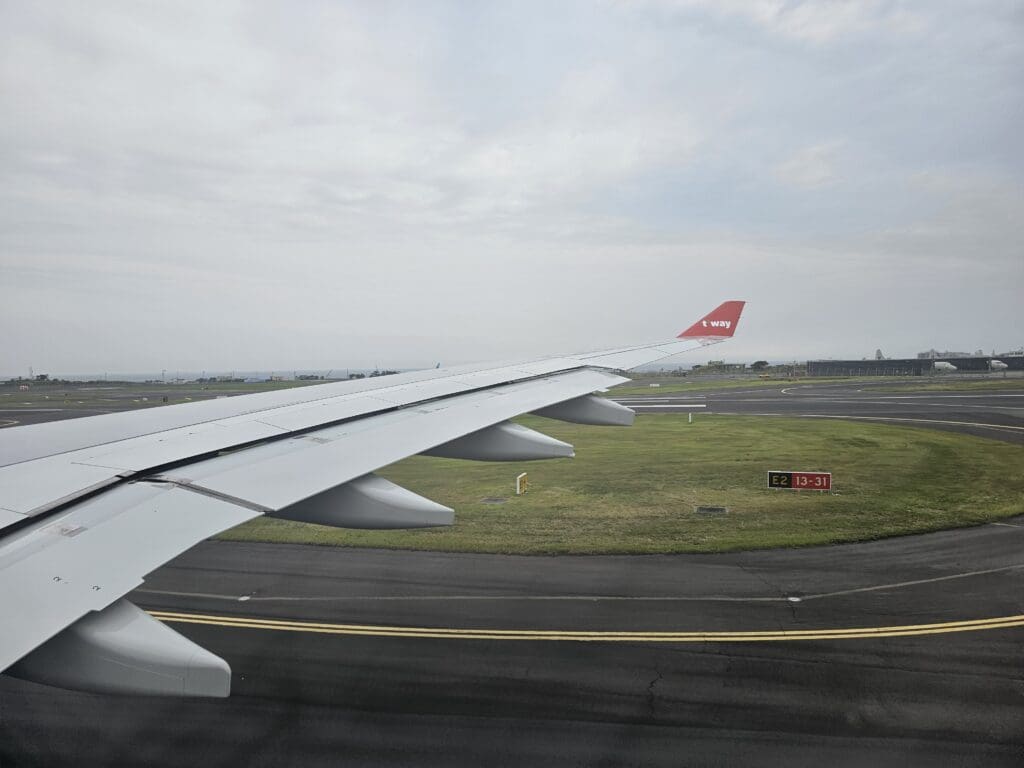
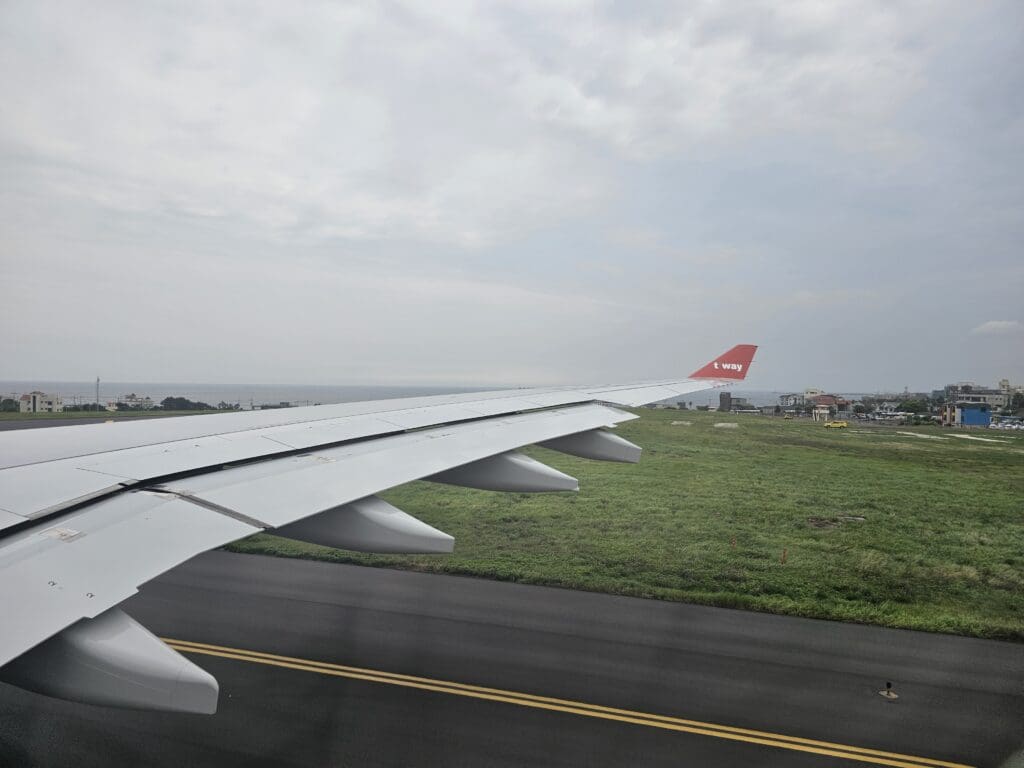
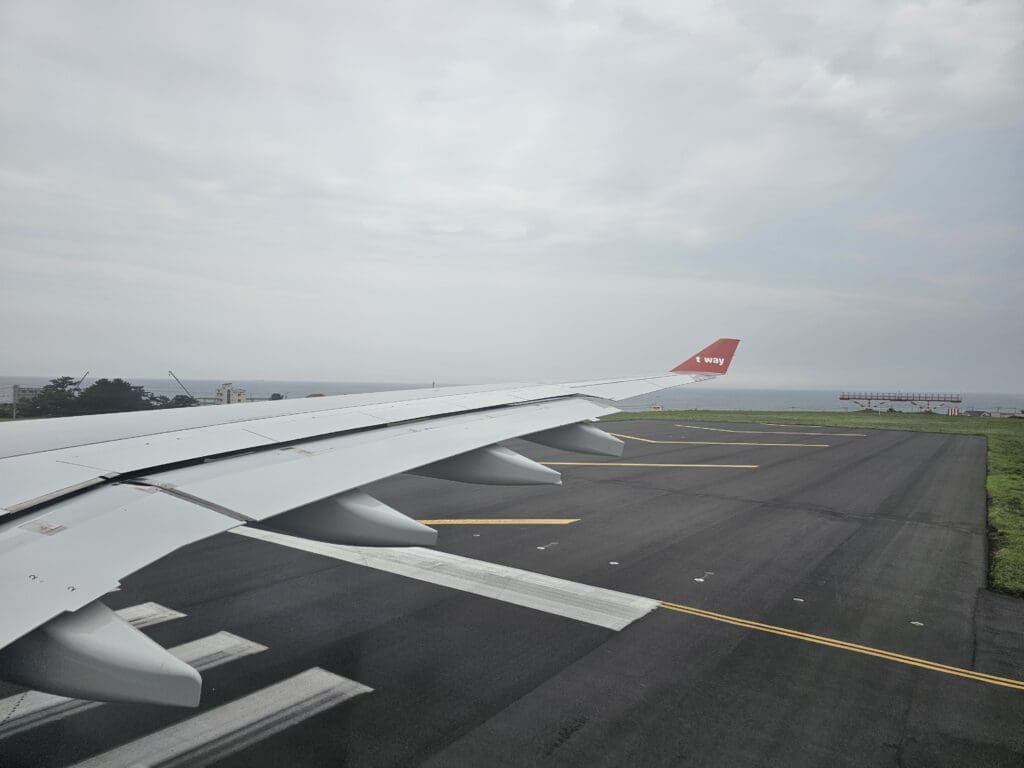
Seeing as Runway 25 was in use for both departing and arriving aircraft, nothing more than a very short taxi was in store to reach the end of Runway 25. This took us over the shorter of Jeju Airport’s two runways before we made our way past Jeju International Airport’s military area. Like many of Korea’s regional airports, in Jeju, civilian aircraft share the taxiways and runways with locally based military hardware. Specifically, Jeju is home to several Republic of Korea Navy Lockheed P-3CK Orions, although I have only ever spotted these in action a small handful of times during my many trips through the airport.
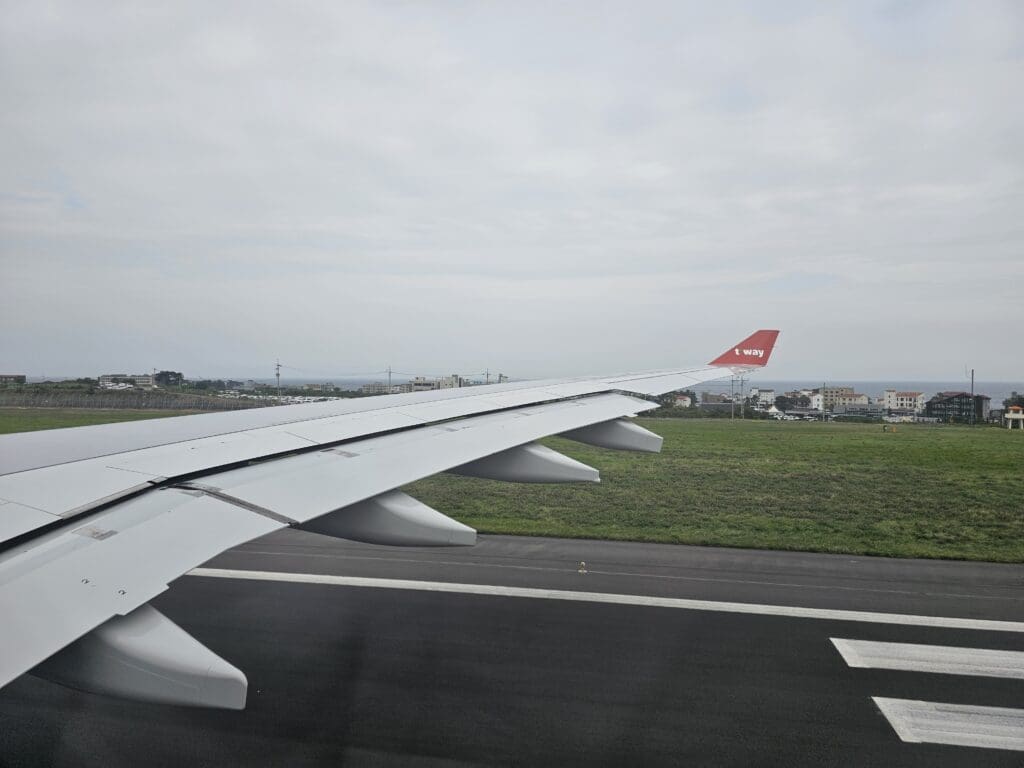
Being Korea’s second busiest airport, yet usually only with one runway in use at a time, unsurprisingly it isn’t all too uncommon to end up in a long take-off queue upon departure from Jeju. However, despite there being a constant steam of traffic, I was delighted to find that that morning, no waiting was required and we managed to make it onto the runway without any holding. Once there, the Airbus came to a halt for about half a minute, and at 0916, the two Pratt & Whitney engines roared into life as we were flung down the airport’s 3.18-kilometre-long runway. Swaying slightly from side to side, I watched as the line of pensions and hotels that are sandwiched between the airport and sea whizzed past before the nose was pointed skywards and we headed up into the air.
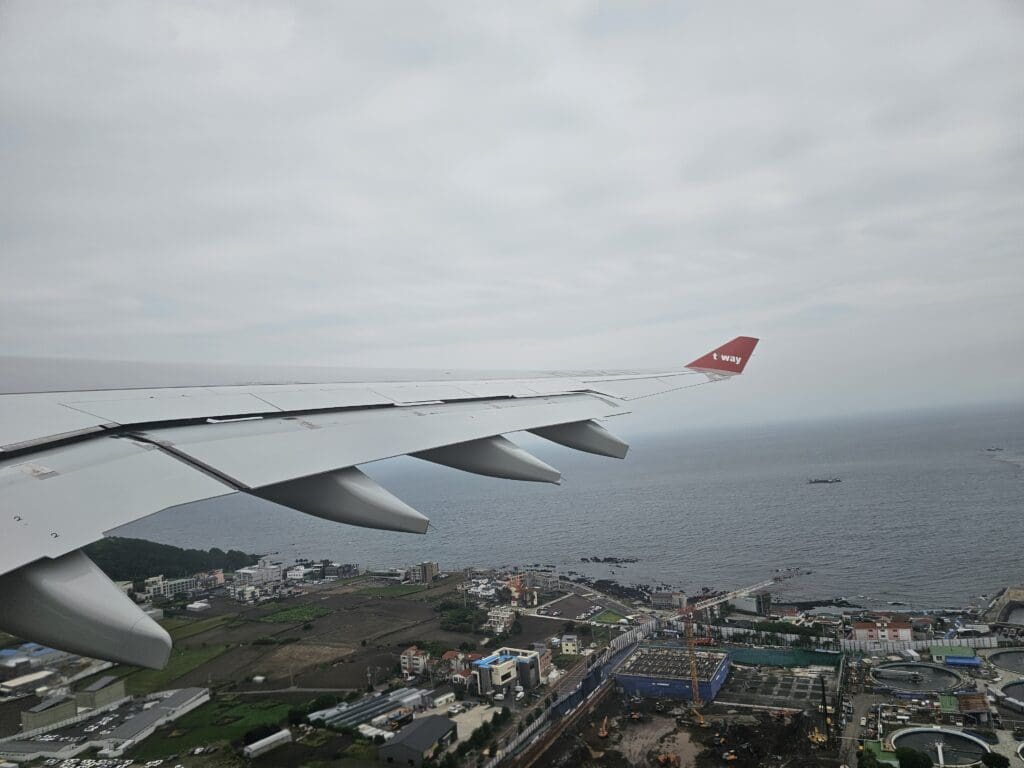
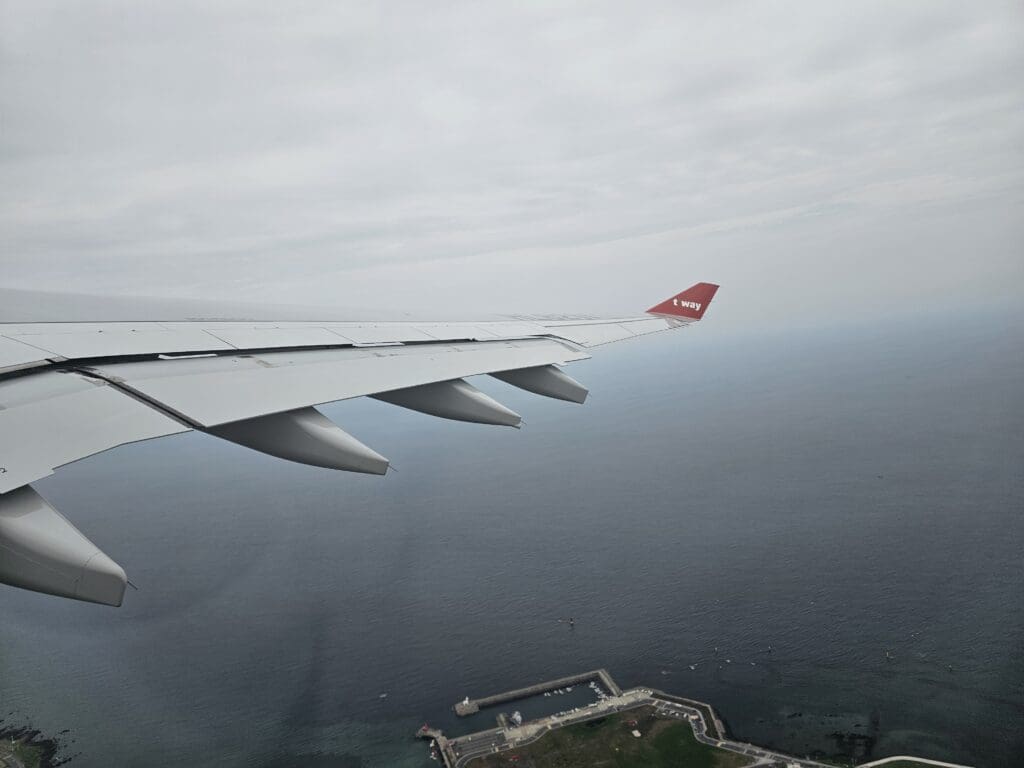
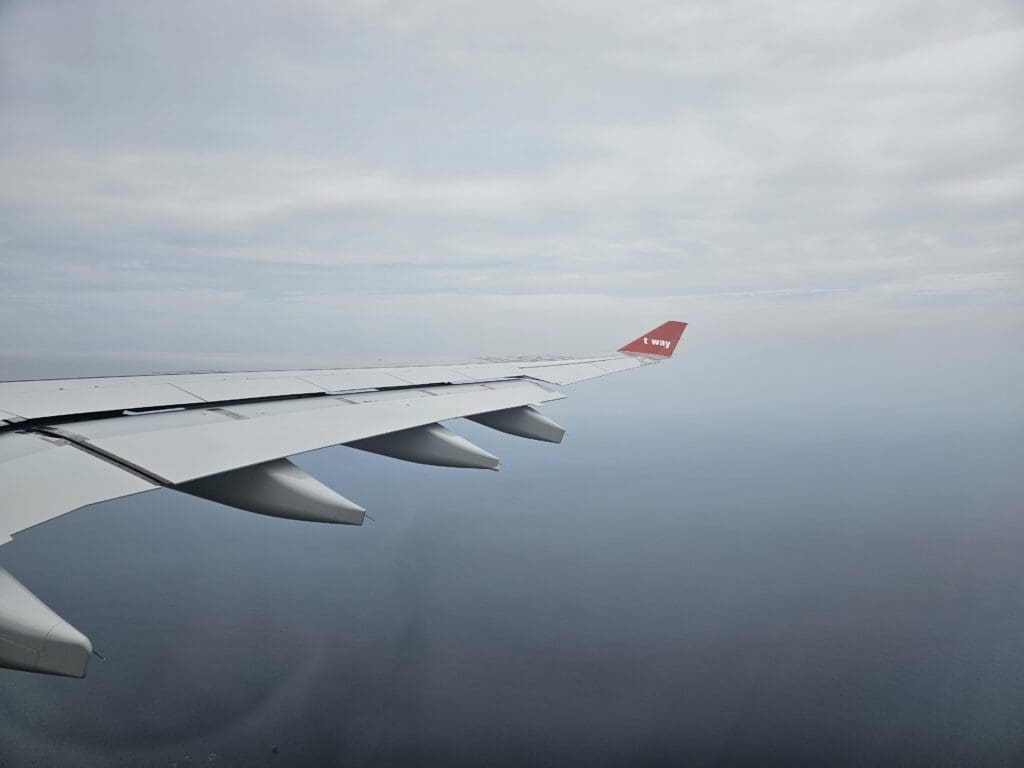
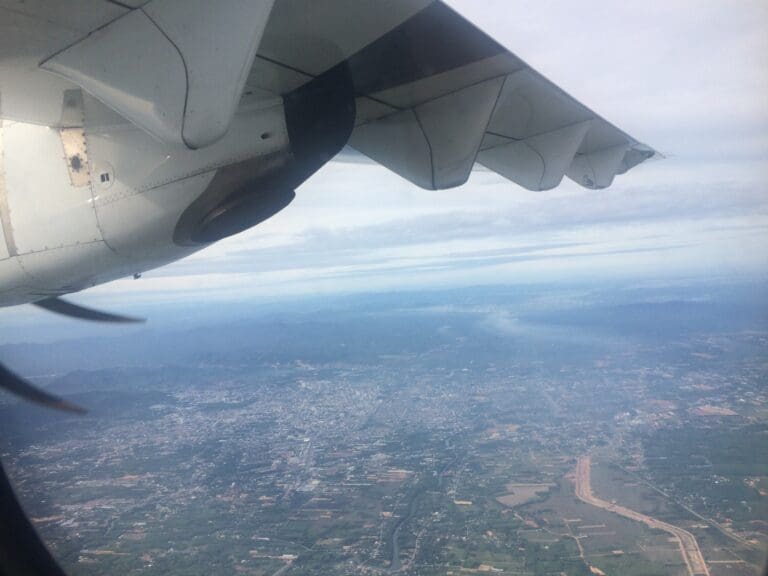
After leaving Jeju Airport behind, plenty of coastal villages could be seen as we made our way along the island’s northern shoreline for a few minutes. As we trundled along this, I caught sight of Dodubong, Iho Tewoo Beach and the Gueom Stone Salt Flats before we reached one of Jeju’s largest towns, Aewol. Upon reaching Aewol, the Airbus turned onto a northerly heading and began its short trip across the stretch of sea that separates Jeju from South Jeolla Province on the Korean mainland. Soon, the Airbus rose up above the clouds at which point the seatbelt signs were extinguished. This was followed by the usual announcement from the Purser advising passengers to keep their seatbelts fastened whilst seated before moving on to a promotional message advertising the airline’s interesting paid-for membership service, T’way Plus.
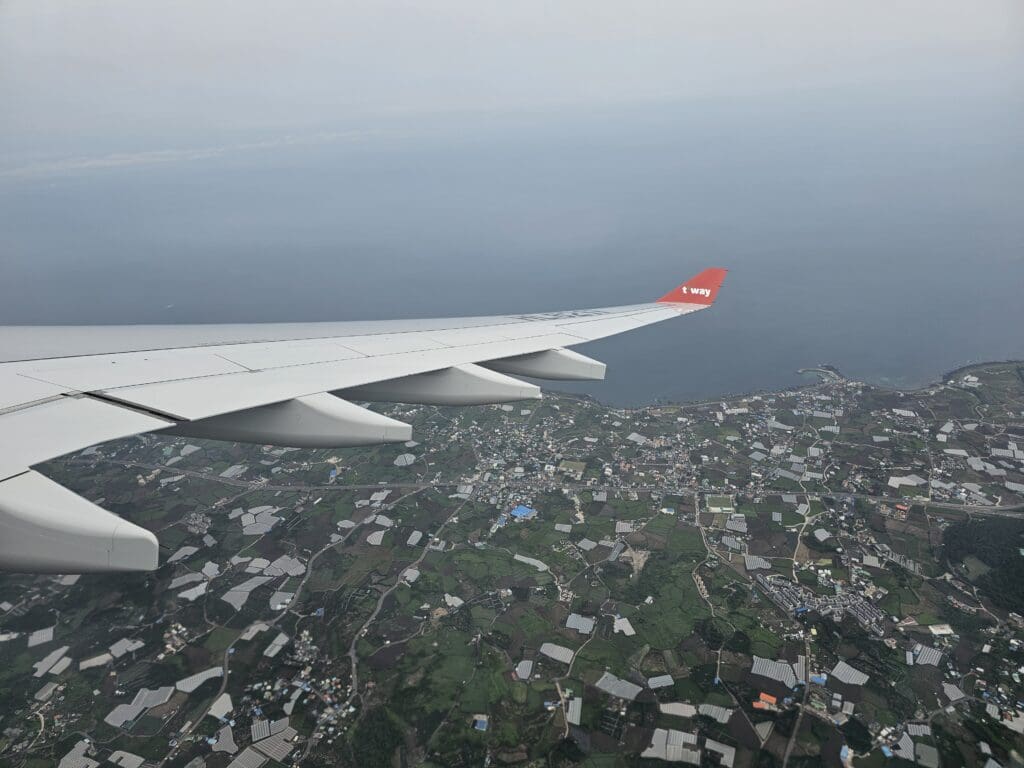
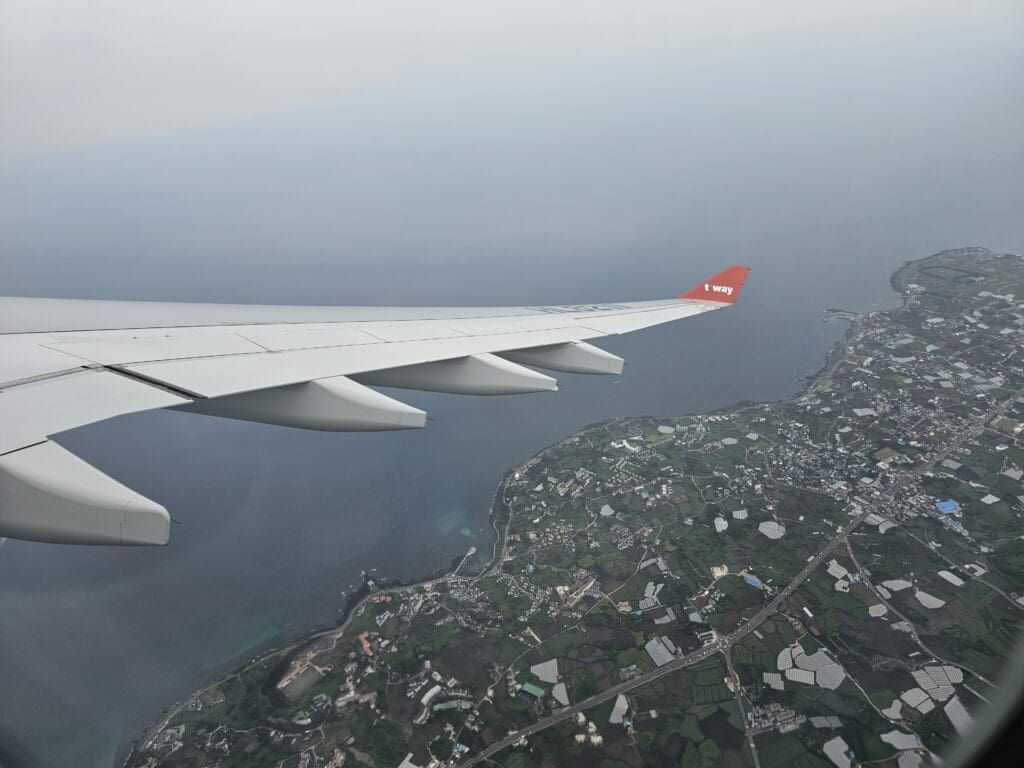
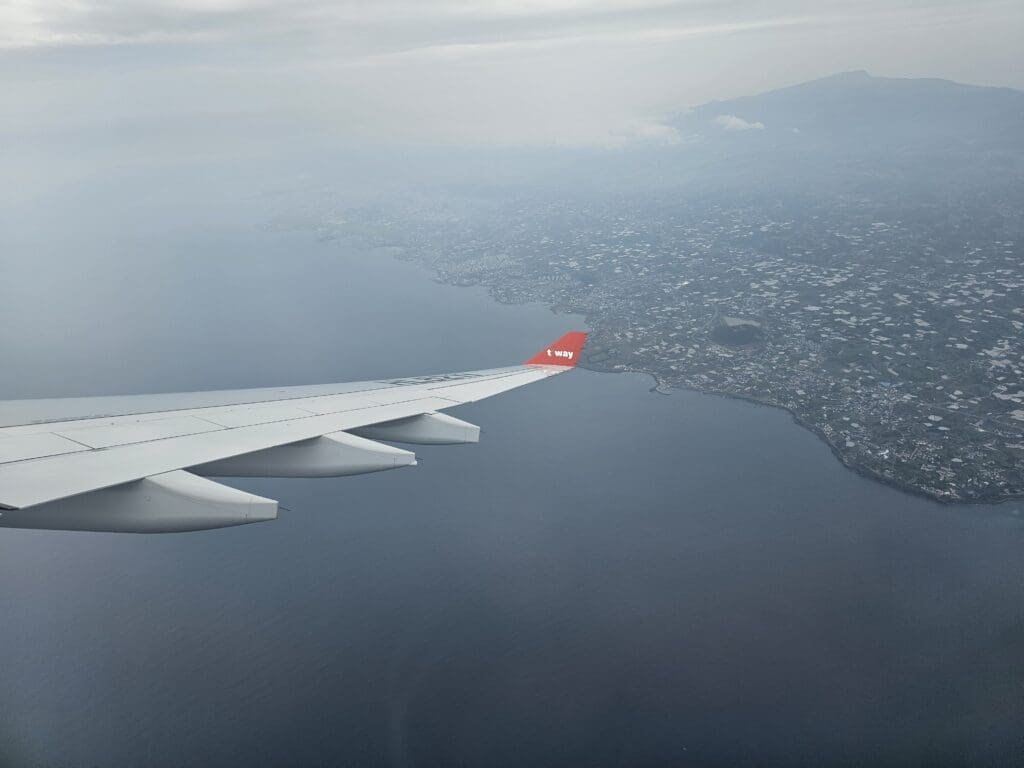
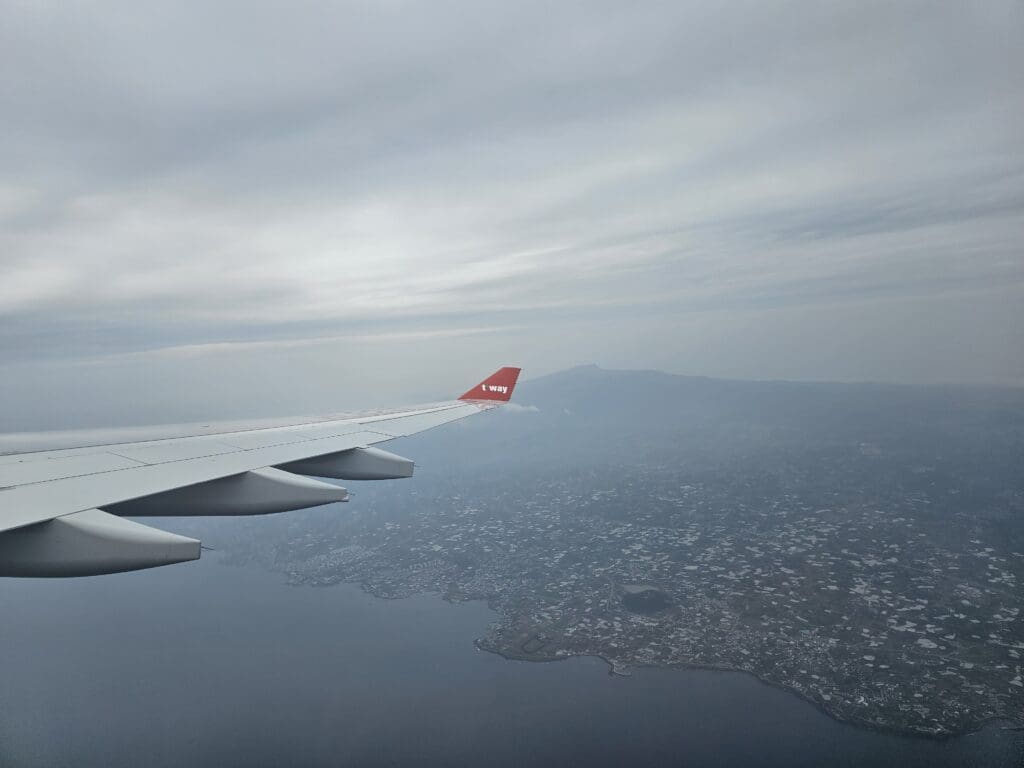
Almost ten minutes after leaving Aewol behind, the Airbus neared the mainland and we levelled off at our low cruising altitude of 21,000 feet. At this stage, Captain Kim performed their welcome announcement in Korean and English, which consisted of a basic welcome and word of thanks for flying with T’way Air, lasting no more than a few seconds in each language. Looking around, by this stage of the flight many of my fellow passengers appeared to be fast asleep, and we soon crossed the Korean coastline over South Jeolla’s rural Gangjin County. From there, we continued heading north and passed almost directly overhead the region’s largest city, Gwangju, around three minutes later.
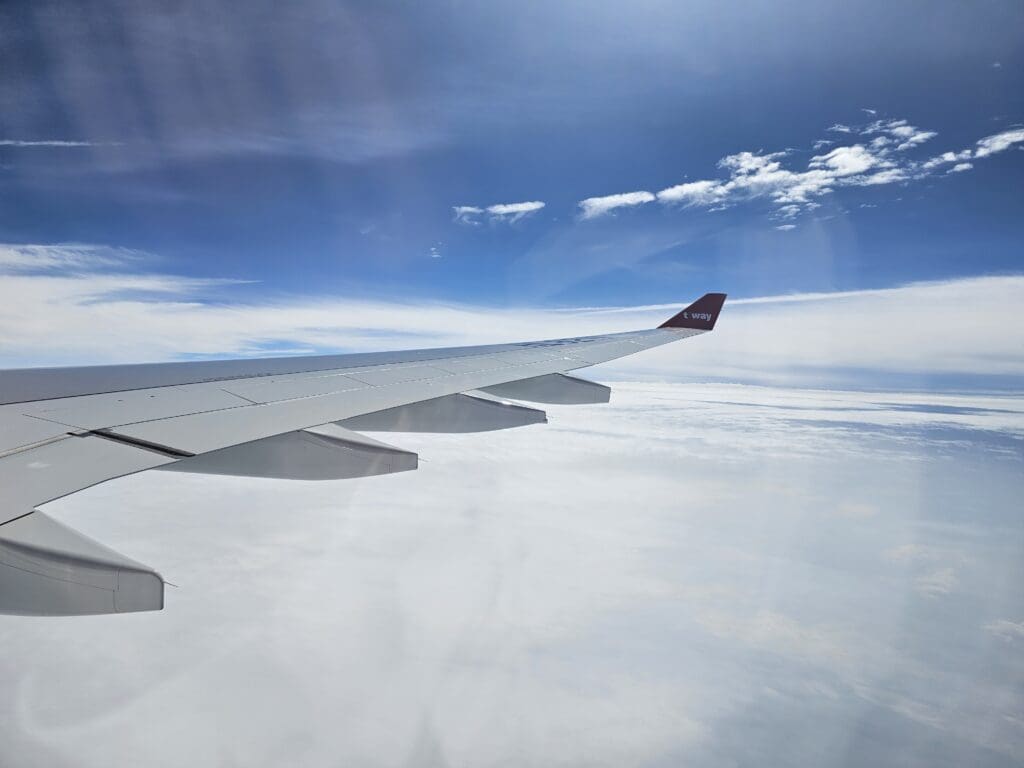
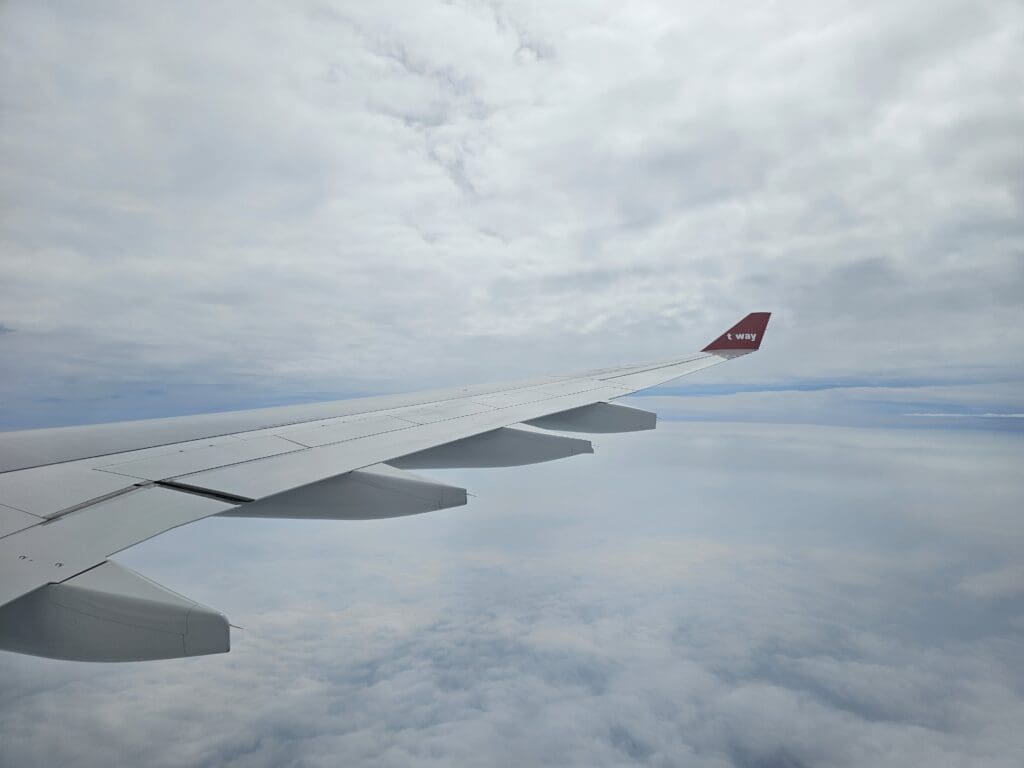
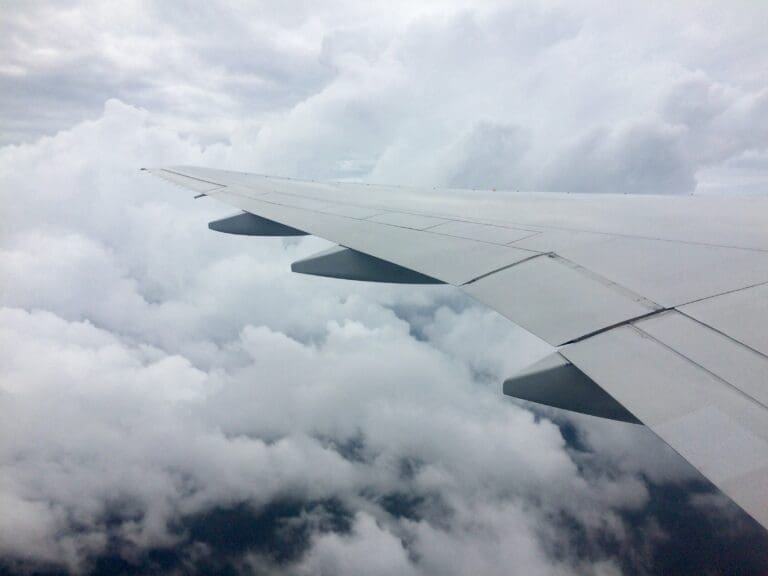
Unfortunately, thanks to the clouds below, absolutely nothing of Korea could be seen below as we trundled northwards over the country towards the capital. I therefore decided to turn my attention to the entertainment available. With this particular aircraft being the first ever T’way Air jet to feature personal inflight entertainment screens, unsurprisingly these remained off for the duration of the service and could not be turned on. I am not too sure whether the airline has plans to utilise these once the aircraft is dispatched on its long flights to Europe, however, no inflight entertainment is provided onboard their pre-existing long haul Airbus A330-300 operated services. Turning to the inflight magazine, this seemed to be a fairly decent publication, being of both good quality and lacking in the same flood of advertisements as is standard to see in low cost carrier magazines. Unusually, this was split into two, with half being taken up by a condensed version of National Geographic’s Traveler magazine published in partnership with the airline, and the other half by T’way Air’s nicely named ‘Change Begins’ inflight magazine. These contained an interesting range of mostly travel-related articles, alongside information and the latest news from T’way Air. However, this clearly focuses on Korean travellers, as almost the entire publication was in Korean only.
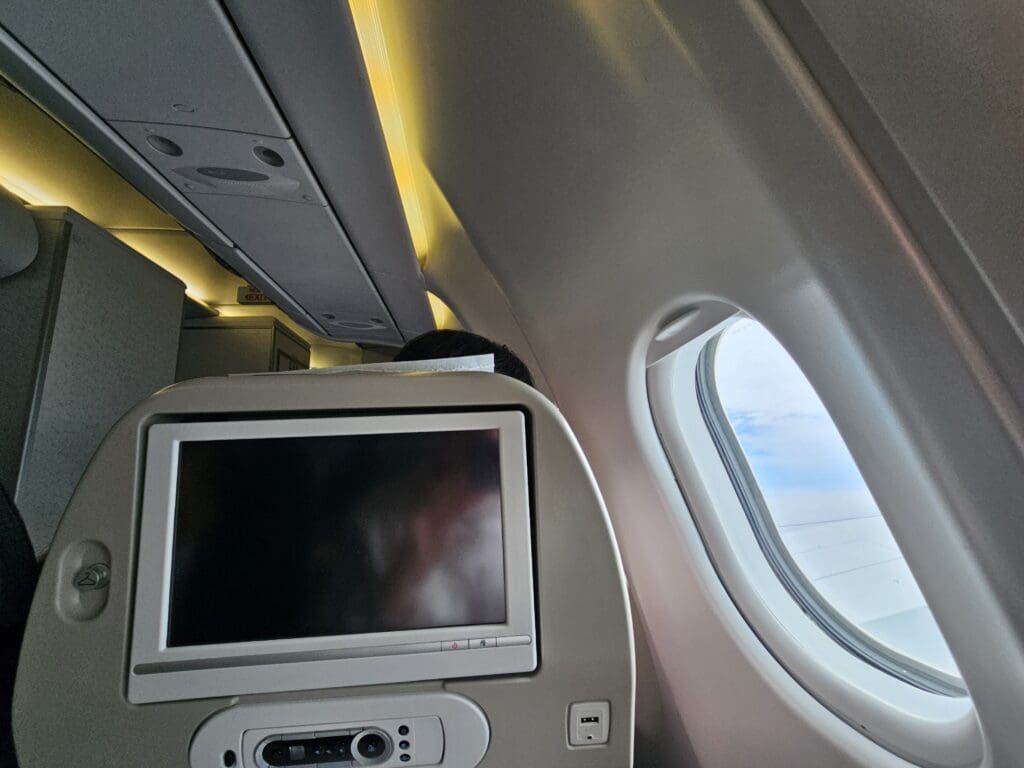
Despite being a low cost carrier, T’way Air does not offer any buy-on-board service on its domestic flights, and unsurprisingly there are no complimentary offerings onboard these either. Thus, other than when undertaking their checks, the crew remained firmly in the galleys for the duration of the flight.
Returning to the route, once the aircraft had left Gwangju behind, we continued heading north towards the province of North Jeolla, roughly following the course of the high-speed Honam rail line. Soon, the jet passed the city of Jeonju, famous for its local bibimbap and many traditional Korean houses, or, hanoks, before speeding past the less well-known city of Iksan. As we passed Iksan, after around fourteen minutes spent at our cruising altitude, the Airbus could be felt commencing its descent towards Earth.
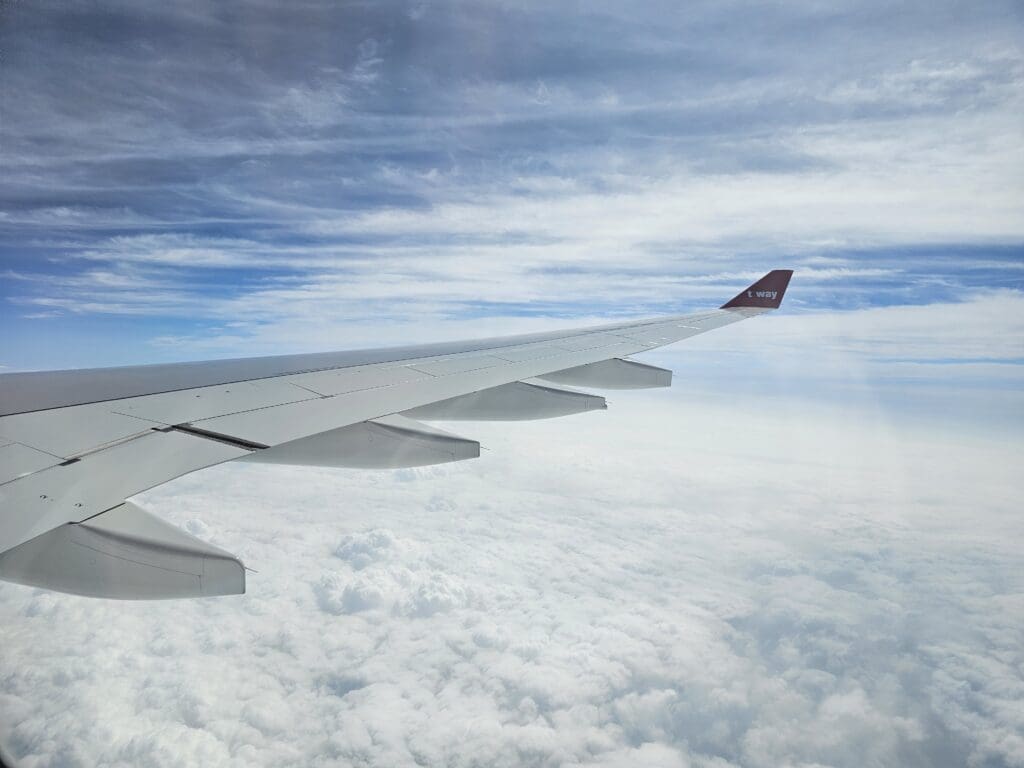
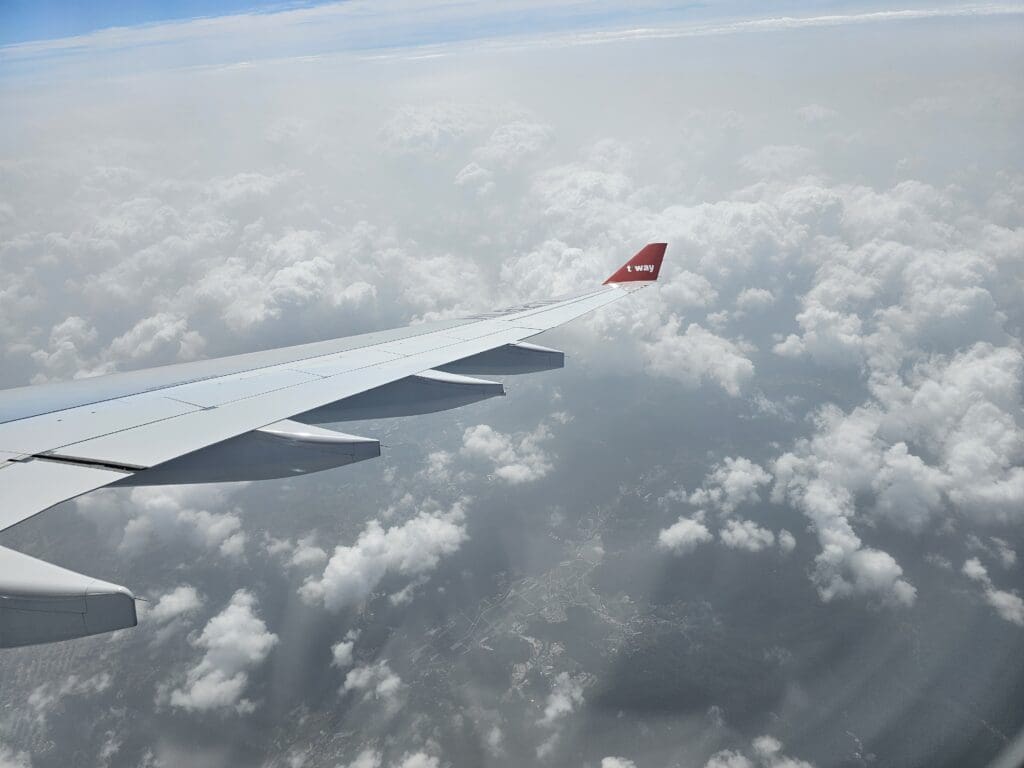
Bouncing around a little during the initial stages of our descent, it wasn’t long before the seatbelt signs were re-illuminated, with the crew soon passing through the cabin and undertaking a thorough check to ensure that all was secure and in place for our arrival. From Iksan, the Airbus headed northwards and cut across the provinces of South Chungcheong and North Chungcheong, passing over the likes of Asan and Cheonan before reaching the province of Gyeonggi which loops around the capital. As we approached the city of Yongin, famous for its large amusement park, Everland, the mountains and apartment blocks below could be seen through a few gaps in the clouds and the speedbrakes were partially extended causing our Airbus to shudder and shake for a few moments.
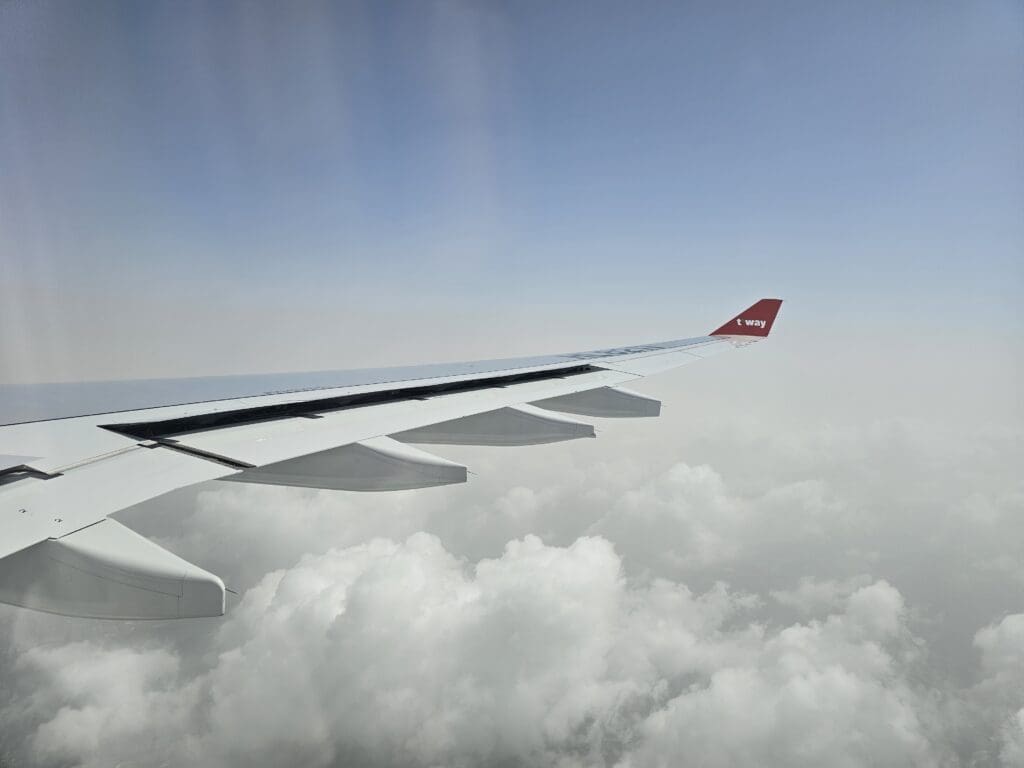
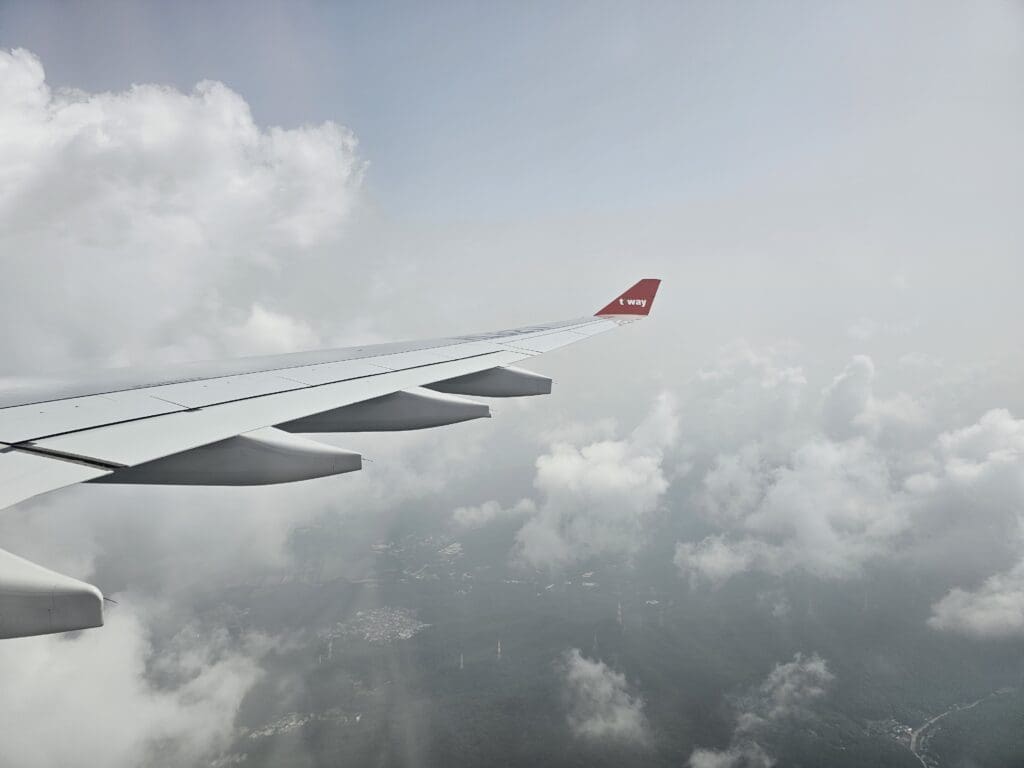
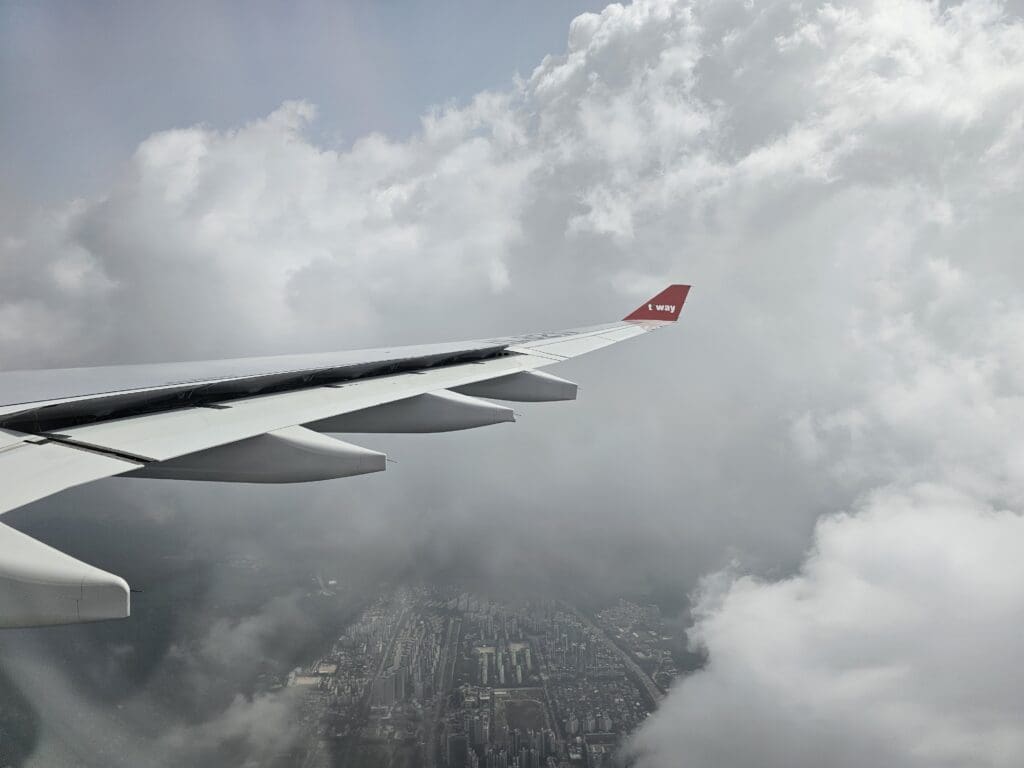
A short time later, one of my favourite hiking spots in Seoul, Mount Gwanak appeared shrouded in clouds indicating that we were nearing our destination. Whilst I picked a seat on the right-hand side of the aircraft in the hope that I would be treated to good views of the Korean capital whilst on approach, that day I was not in luck thanks to the lingering cloud and haze. However, I did still manage to get a reasonable view of some of Seoul’s southwestern suburbs. Soon, the flaps and landing gear were extended and the Airbus sank over the neighbourhoods of Guro and Sindorim, which sit just to the south of the Han River.
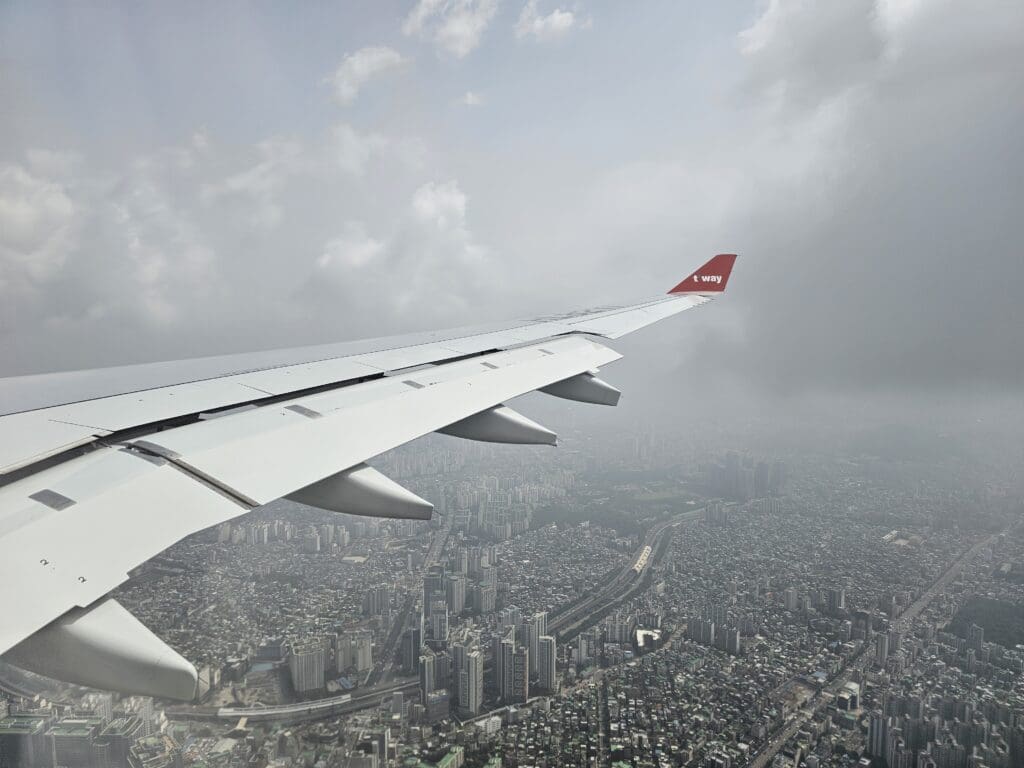
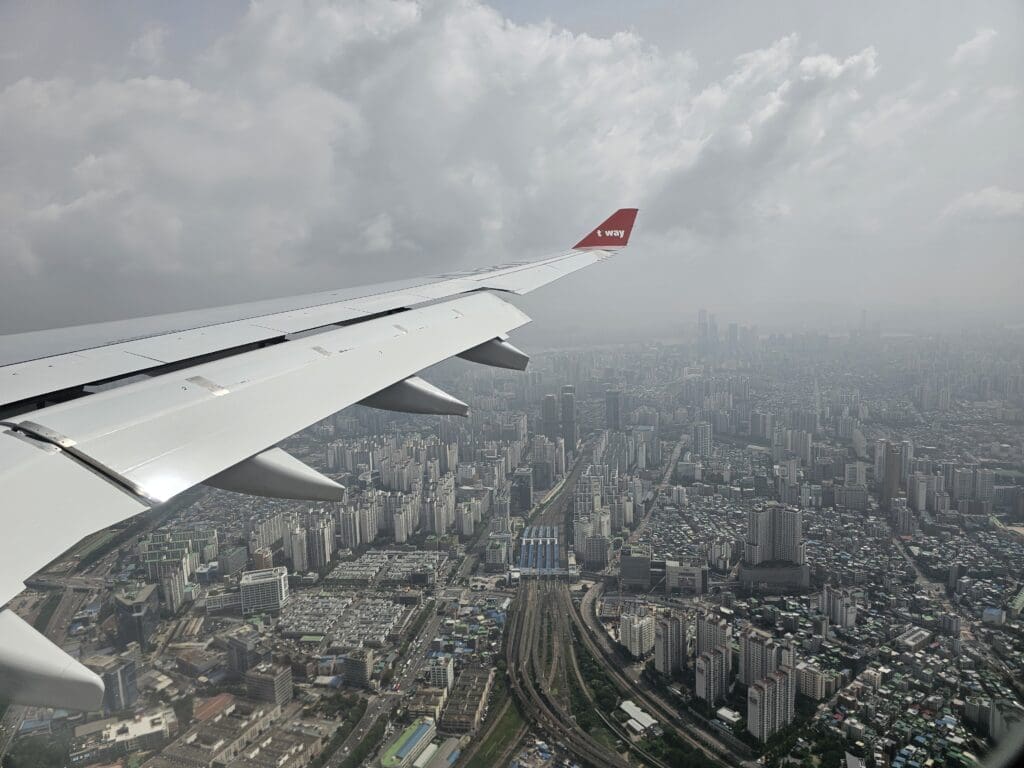
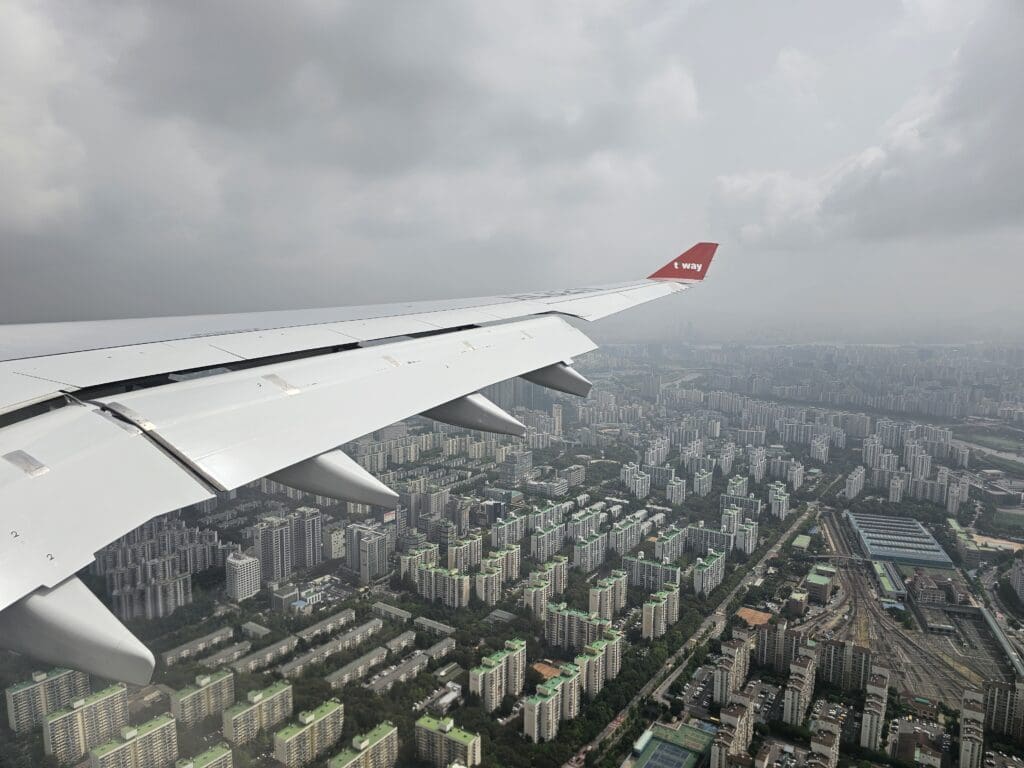
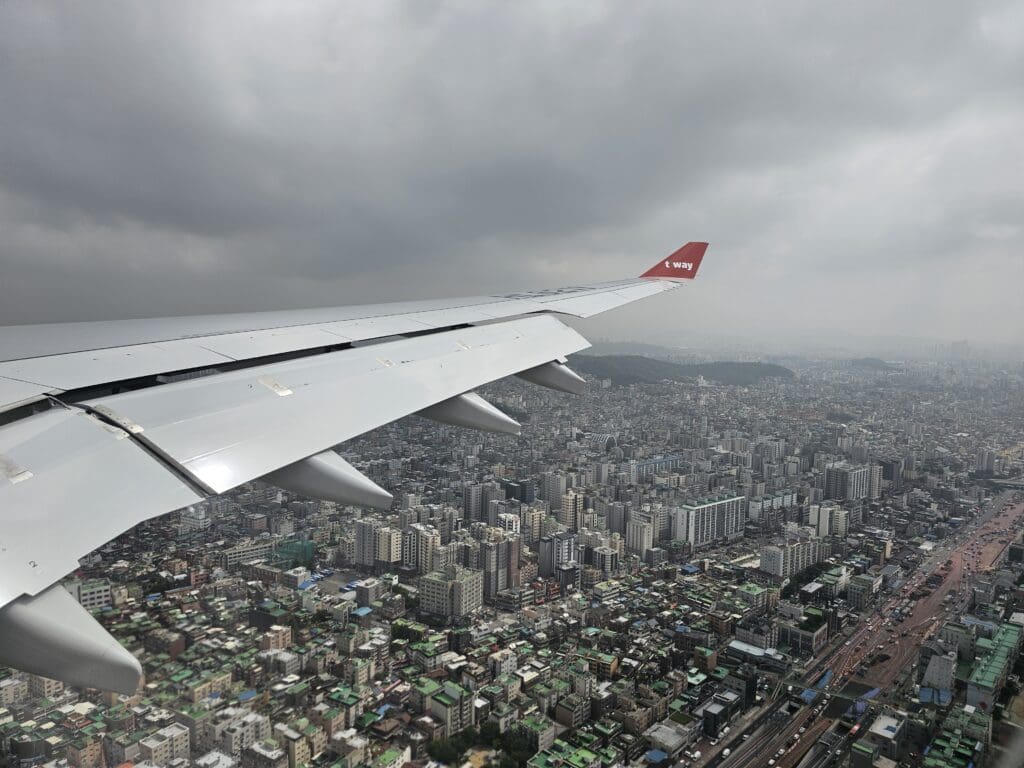
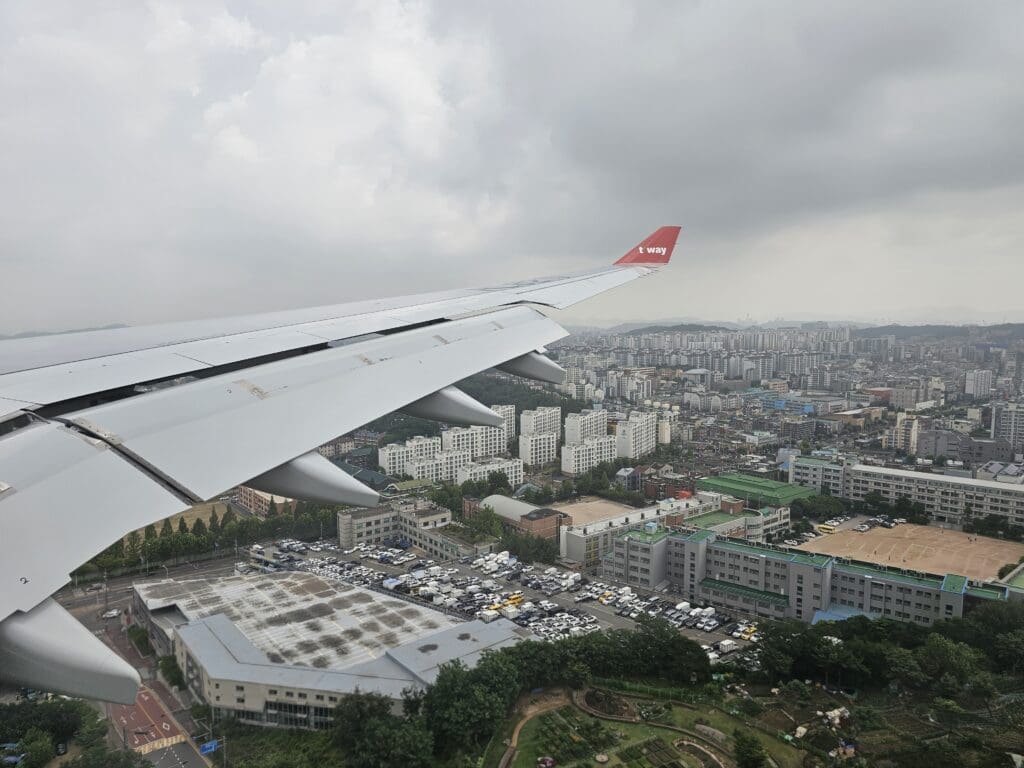
Continuing onwards, the aircraft sank over the seemingly endless rows of concrete apartment blocks before Korean Air’s large hangar complex appeared as we neared the end of the short flight from Jeju. After a total of just 48 minutes in the air, the Airbus performed a rather firm touchdown on Runway 32R before decelerating rapidly as if the pilot sought to minimise our taxi time or clear the runway to make way for the next arriving jet. As we slowed, I caught sight of a fairly unusual visitor, a San Marino registered Boeing Business Jet, which was on its way out to the runway for a long flight down to the Indonesian capital, Jakarta.
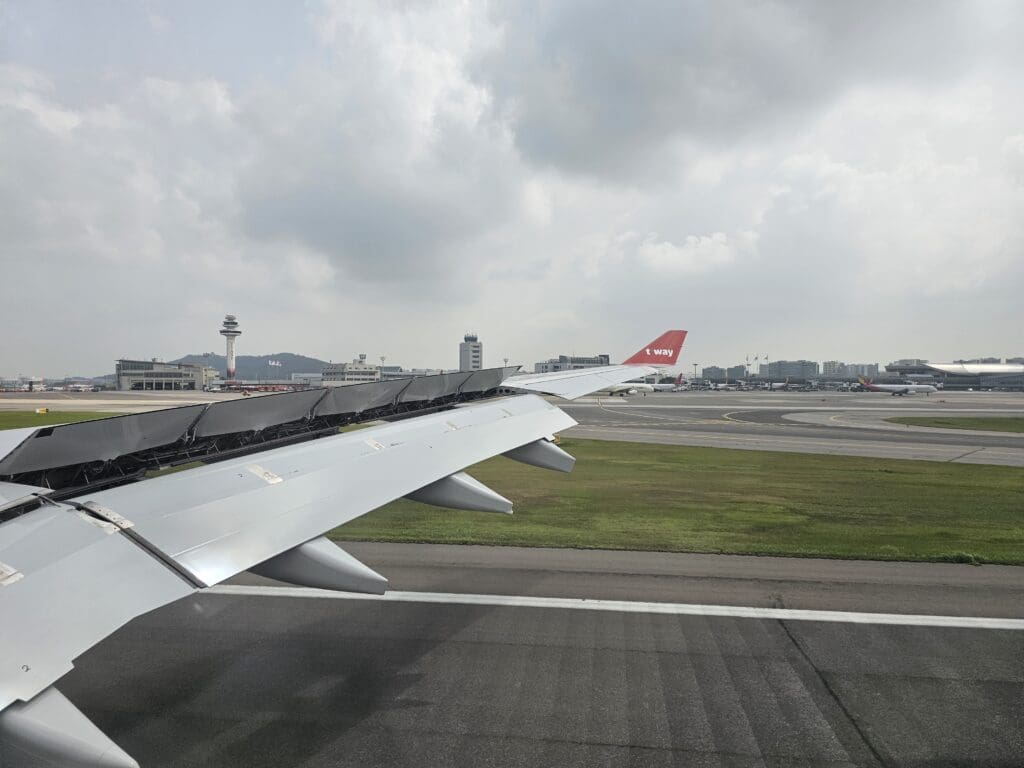
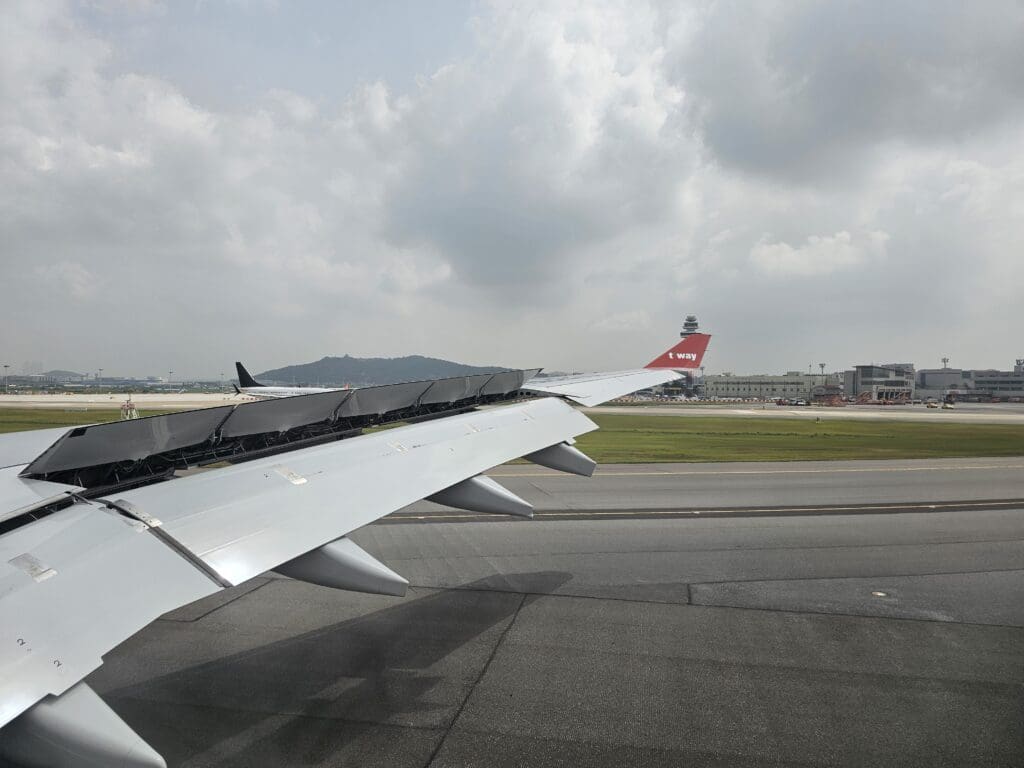
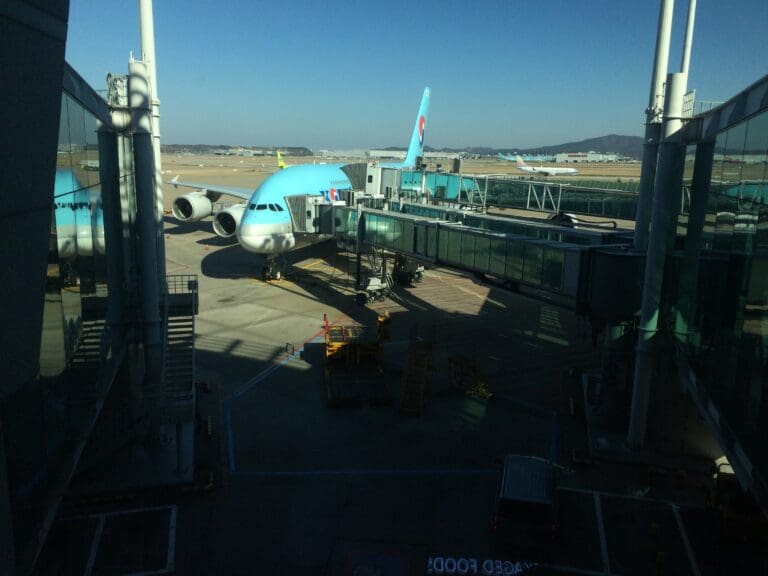
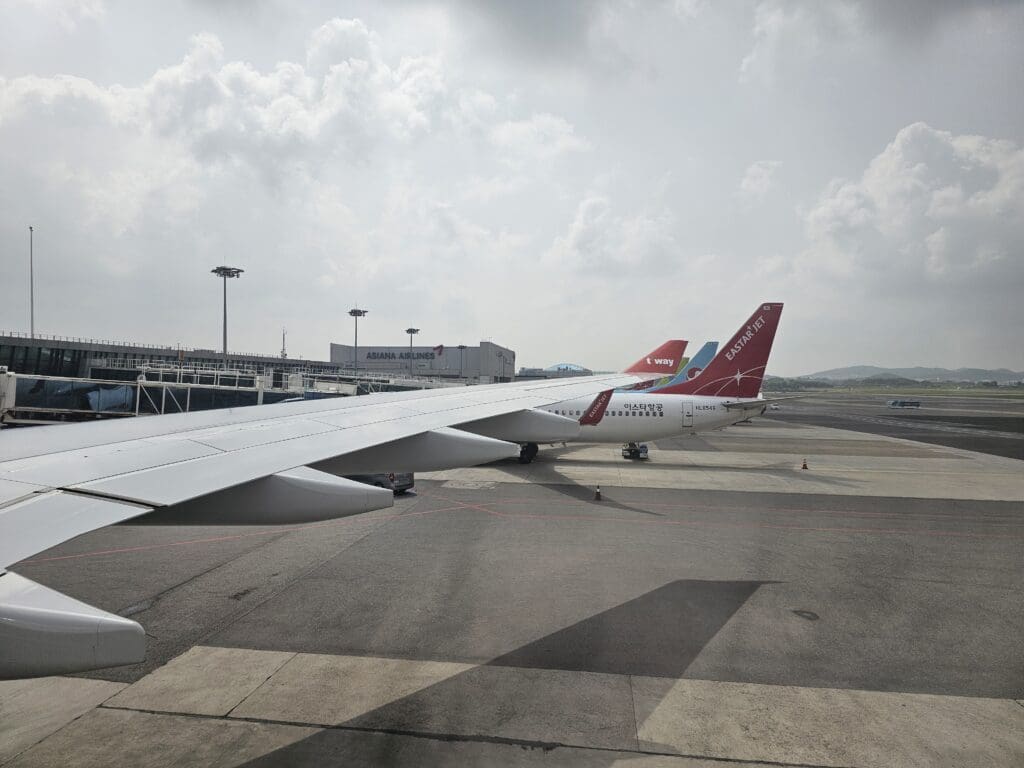
As we made our way off the runway, the Purser performed their welcome announcement in Korean and we made a short taxi to the domestic terminal where we slotted in between Korean Air and Eastar Jet jets at Stand 8. That morning, we came to a halt at 1011, arriving at the gate a scandalous one minute behind schedule! As soon as the engines spooled down and the seatbelt signs were extinguished, many of those around me jumped up in a rush to disembark and thankfully for them, the 2L was soon opened and disembarkation commenced. After a few minutes, I made my way through the cabin, thanking each crew member and receiving a farewell in return before I stepped off the aircraft and made my way up the jetbridge. Having arrived near the centre of the terminal, there was not a particularly long walk from our arrival gate to the terminal’s large baggage collection hall, and once I had made it there, with nothing to collect I continued on my way out of the terminal and soon found myself in the landside arrivals area, thereby ending my journey with T’way Air.
Summary
Starting with the positives, I found T’way Air’s ‘new’ Airbus A330 to offer a comfortable and pleasant ride, to the extent that, ignoring the lack of an inflight entertainment system, I would have no issue with flying this on a twelve-hour slog to Europe! Furthermore, this was clean and in good condition, and whilst my interaction with them was limited, I found the cabin crew to be polite and friendly. When it came to the negatives, to be honest, I didn’t really have any, other than perhaps it would have been nice to have more bilingual announcements onboard. Additionally, despite offering a comfortable ride, I can’t say that T’way Air provided many stand-out features and I probably wouldn’t pay a premium to fly with the carrier.