Greenland Domestic Flying: Ilulissat to Kangerlussuaq on a Dash 8 Q100
This flight review is part of my Greenlandic adventure, you can read more about this trip on my report from Copenhagen to Kangerlussuaq on Air Greenland’s Airbus A330-800 here. You can read about my scenic Dash 8 ride from Kangerlussuaq to Ilulissat via Aasiaat here.
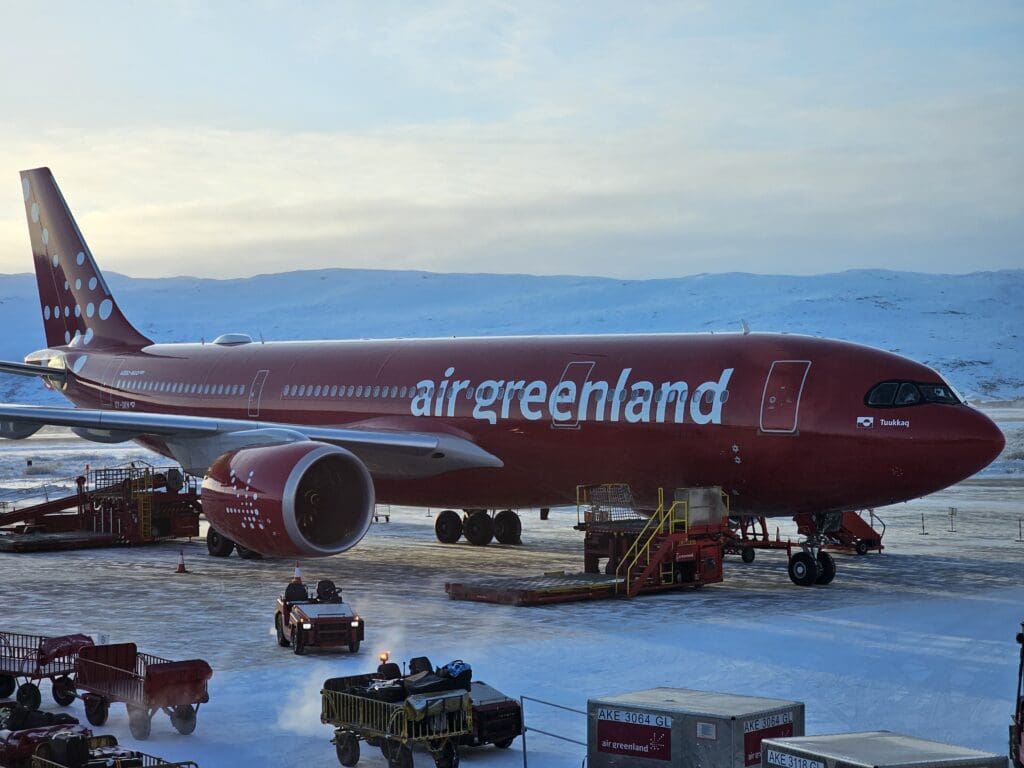
Following a weekend spent enjoying the sights of Ilulissat, sadly, my time in Greenland was drawing to a close and it was time to turn my attention to the long trek back to the UK. In summer, the most direct means of returning home to Leeds would involve hopping onboard one of Icelandair’s Dash 8s and connecting onto a Manchester or Leeds Bradford-bound service at Keflavík – with services to the latter airport offered by leisure giant Jet2. However, Air Greenland enjoys a monopoly on all routes from Ilulissat in winter. Thus, my journey back to Britain would involve hopping down to Air Greenland’s hub at Kangerlussuaq on a Dash 8 Q200. From there, I would ride the airline’s flagship Airbus A330-800 across the Atlantic to Copenhagen. Following an overnight stay in an airport hotel, I would then have a short hop across the North Sea to Manchester on an EasyJet Airbus A320neo.
The vast majority of passengers flying on Air Greenland’s fixed-wing services can check in online up to 22 hours before departure. Having had a smooth check-in experience during my outbound leg, I hope for a similarly painless experience for my return journey. Indeed, check-in went without a glitch, and credit ought to be given to the fact that despite travelling the cheapest ticket, I could amend my pre-assigned seat and select a spacious exit row or bulkhead seat without parting with a penny! With that considered, I opted to move forward to the first row in Economy, a bulkhead seat, selecting Seat 12A for my Airbus A330 service to Copenhagen.
The Journey
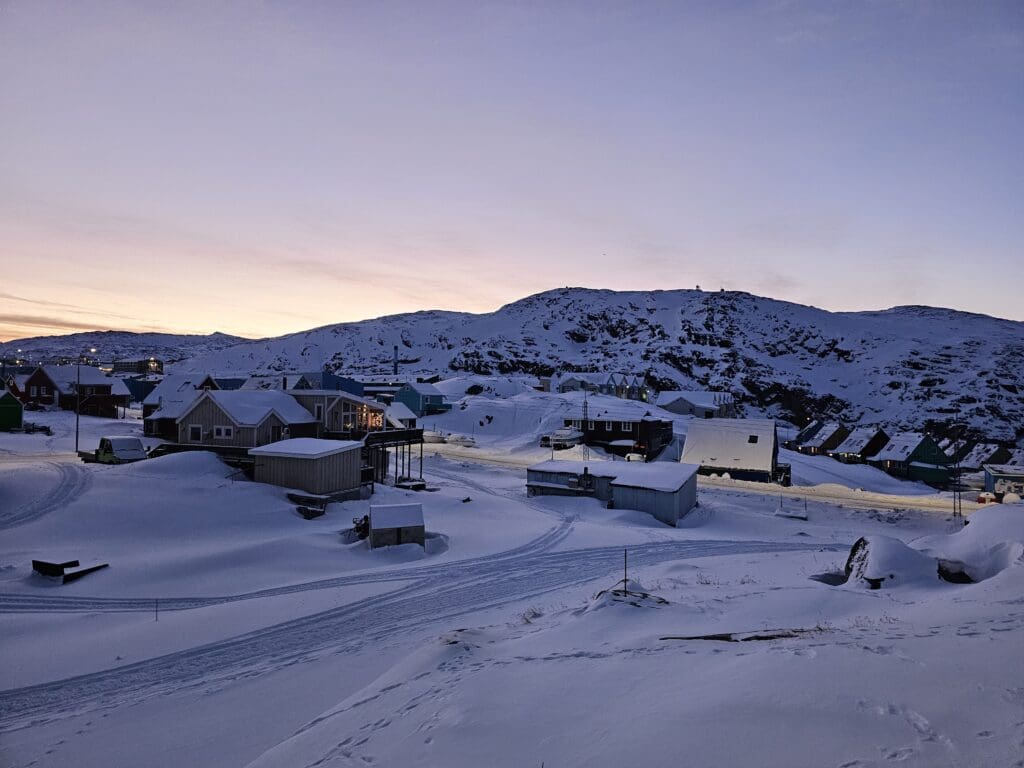
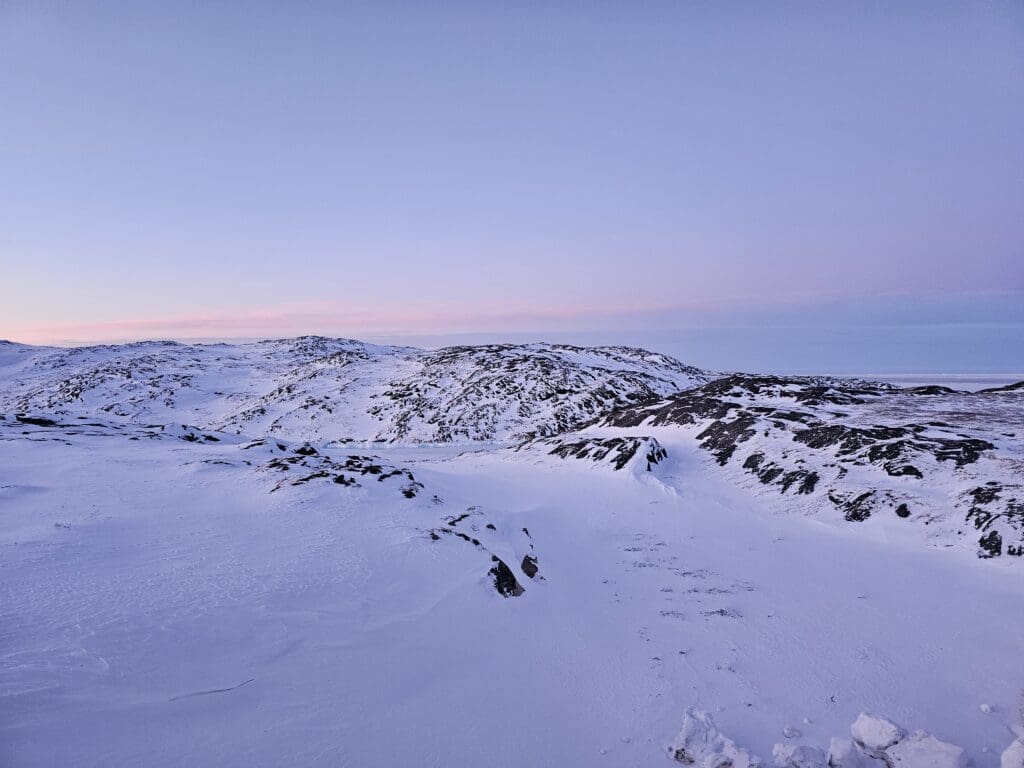
Home to fewer than five thousand residents and covering an area of less than fifty square kilometres, it may not come as a surprise to hear that Ilulissat Airport does not sit particularly far away from the centre of Greenland’s third largest city. Indeed, Ilulissat’s longest road, Mittarfimmut Aqqutaa, winds through the rocky landscape and along the Atlantic coastline and allows for an easy journey between the centre and the airport. Being one of Greenland’s main tourist centres, for its size, Ilulissat features a surprising number of hotels, many of which offer a complimentary shuttle service to and from the airport. However, with my father and I’s budget not stretching to such luxurious accommodation, we spent our three nights in Ilulissat at a much more homely Airbnb on the fringes of town. Not fancying a three-kilometre trek through the -30 degree temperatures with a suitcase in tow, we decided it best to take a taxi on the morning of our flight. Fortunately, Ilulissat seems to have more taxis per capita than any other place that I have ever visited, so I was not particularly worried about not making it to the airport in good time for our 1140 flight to Kangerlussuaq.
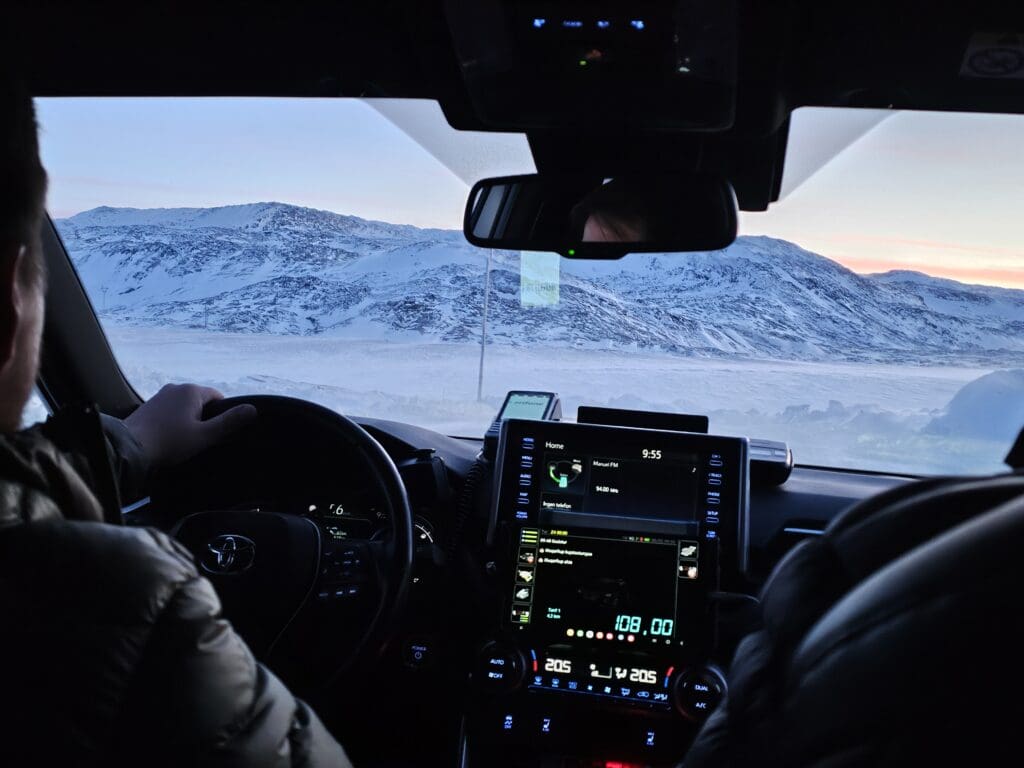
Waking up dark and early, we bundled the last of our things into the suitcase and following a breakfast consisting of pastries and coffee and a final clean of the Airbnb, we headed out onto the cold morning streets at 0940, two hours before departure. Making the trek downhill through the snow and ice, we reached the main road and waited in the hope that it wouldn’t be too long before a taxi appeared. Fortunately, we were in luck, and after a total of just three minutes in the cold, we were able to flag down a passing vacant taxi. After bundling the suitcase into the boot of the Toyota, we wended our way up and down Ilulissat’s hills. Undeterred by the icy streets and perhaps confident in both their tyres and driving abilities, our driver that morning whisked along at an, at times, alarming speed. Leaving the town centre behind, we made our way along the winding coastal road to the airport, passing some very impressive snowdrifts before pulling up to Ilulissat Airport’s modest terminal around eight minutes later. Coming to a total of around 125 DKK (£14.50), this did not seem to be a particularly extortionate fare given just how expensive Greenland can be, and you may well end up splurging more than that for a Black Cab journey of similar distance in London!
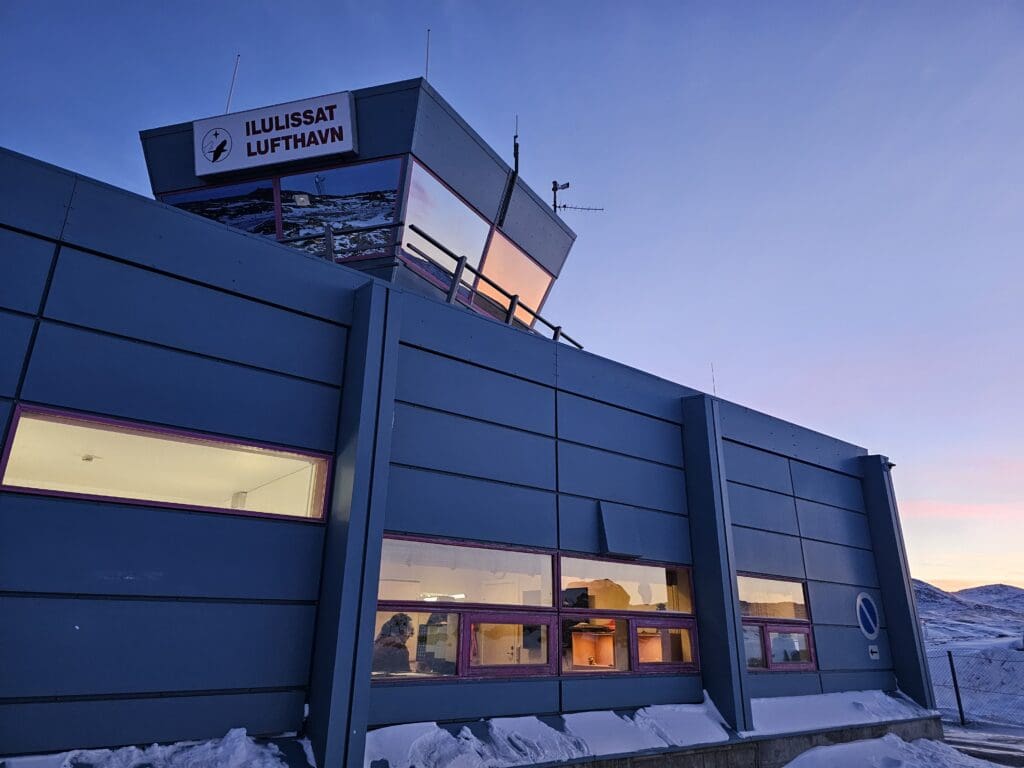
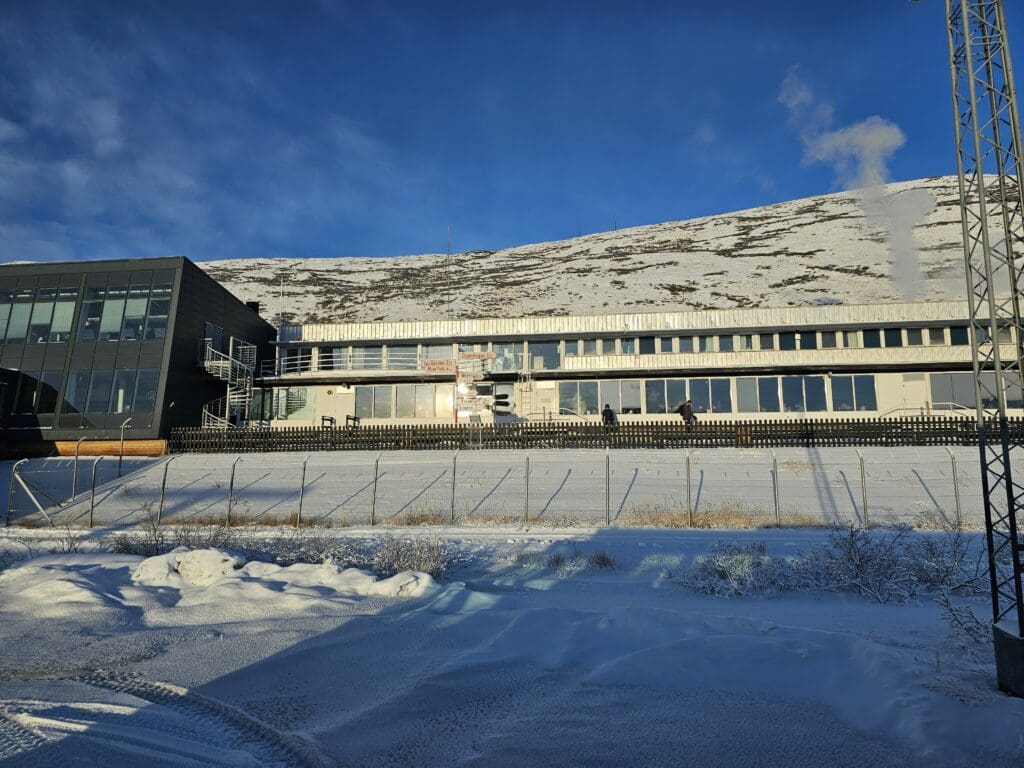
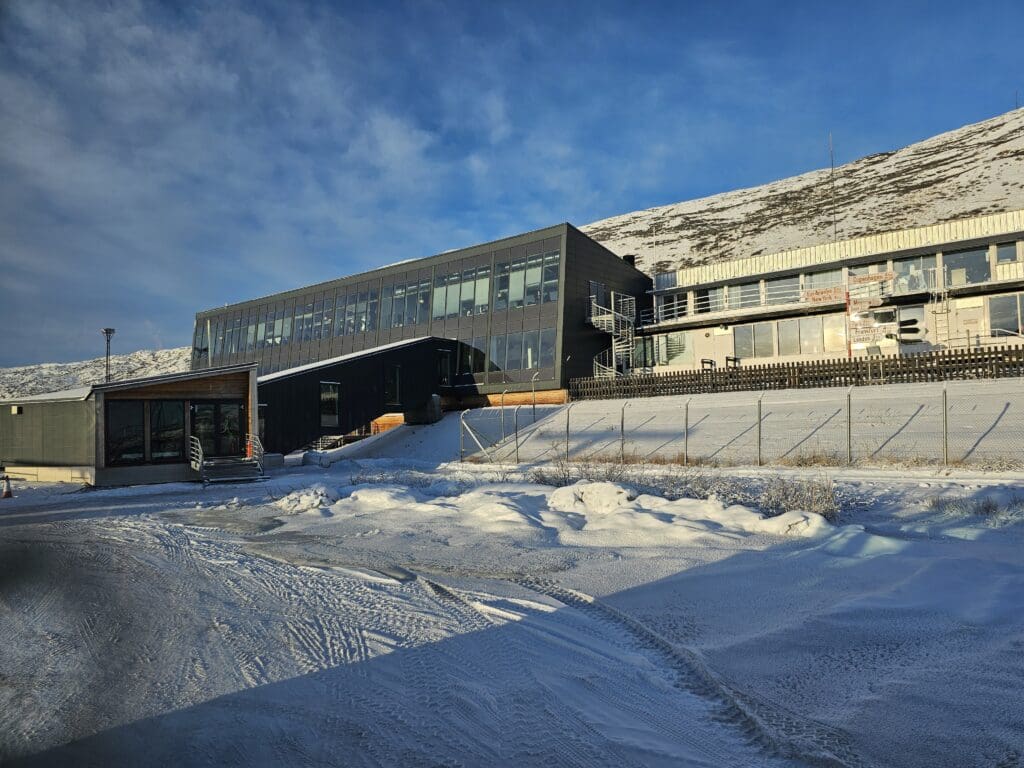
By all accounts, Ilulissat Airport is most certainly not large, however, it is one of the territory’s busier airports and serves as somewhat of a regional hub with flights to destinations to towns and villages across Greenland’s western coastline. Constructed in the early 1980s, the airport features a comparatively short 845 metre long runway, with a small ramp in the far southwestern corner of the airport. Alongside the ramp sit a couple of hangars, one occupied by Air Greenland and the other by Air Zafari, who, in partnership with Copenhagen Air Taxi, offer a range of services with a trio of Partenavia P.68 aircraft. Meanwhile, the airport is home to a small terminal with a control tower jutting up out of this, allowing for a good view over the ramp and runway.
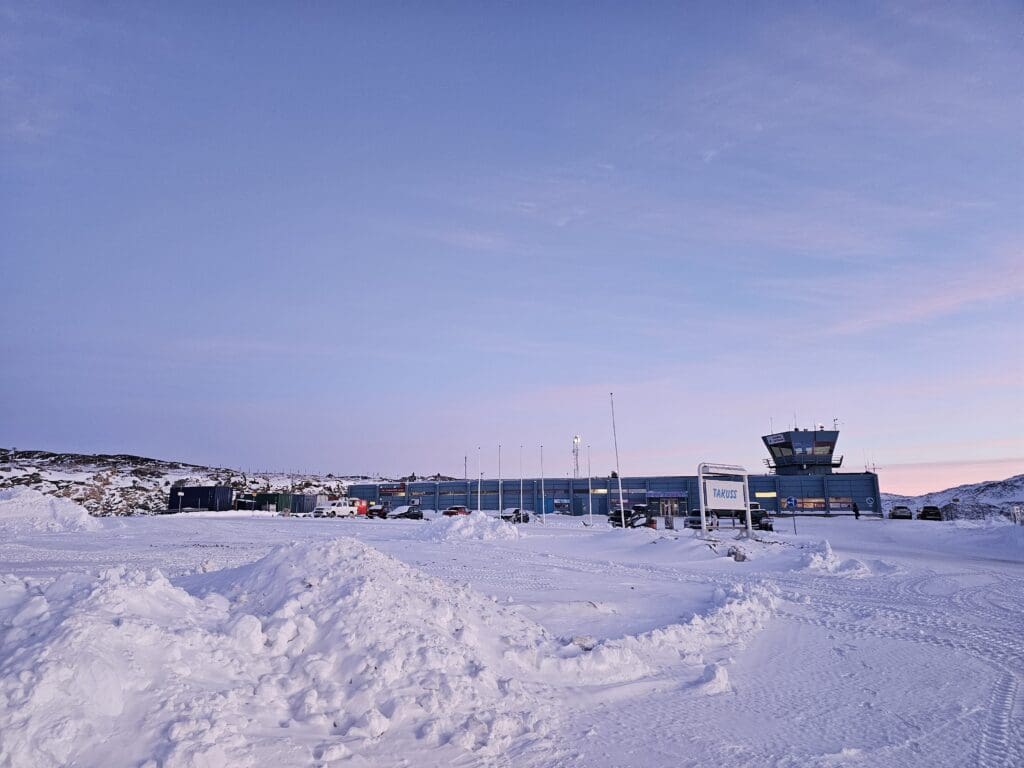
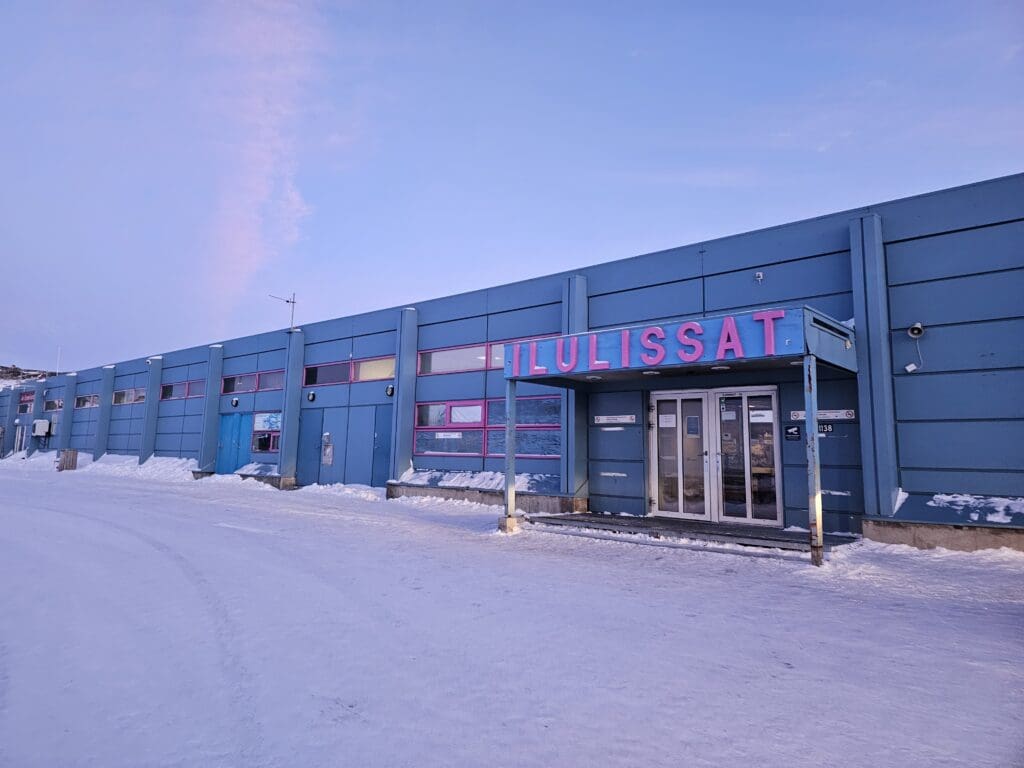
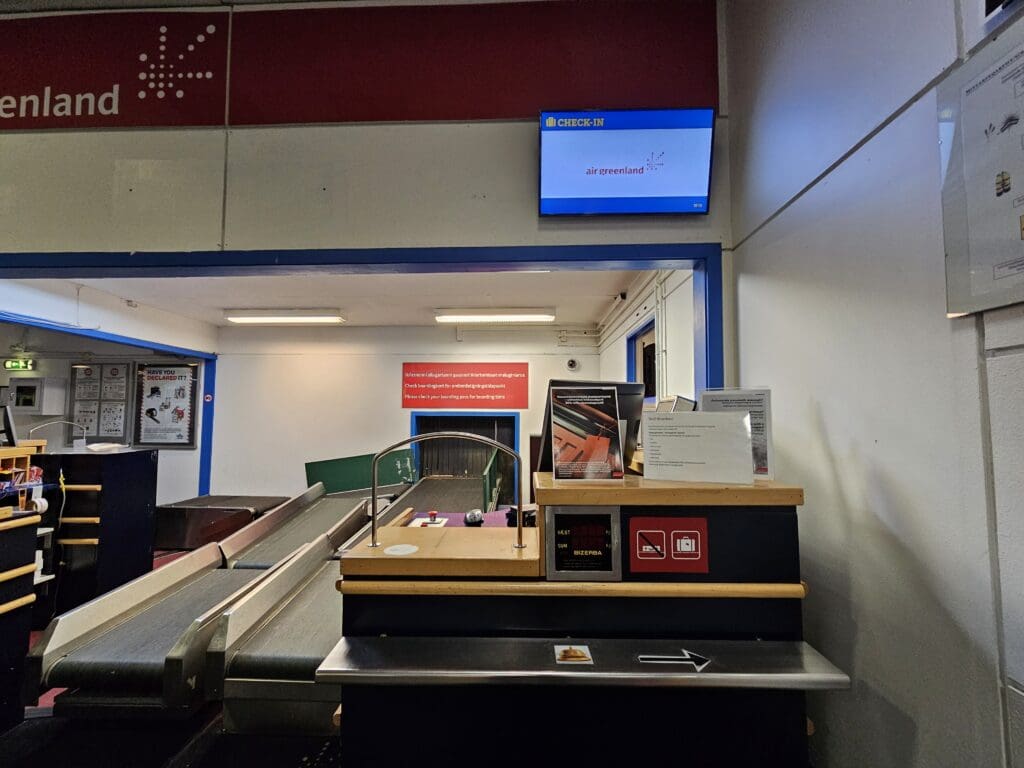
Seeing as the terminal is around forty years old, inside, this is neither particularly modern nor stylish. However, this serves its vital purpose and I found it an acceptable place to sit and wait for an hour or so. Inside, this consists of a main waiting area complete with a ticketing and check-in counter in one corner and a small kiosk selling light snacks and souvenirs in the other at the opposite end of the waiting area. In addition, plenty of displays and information boards can be found, whilst windows offer a decent view out onto the apron. That morning, this was clean and tidy, although I should note that plug sockets were hard to come by and public wifi was non-existent. Upon arriving at the terminal, we made a beeline for the single check-in desk to drop off our suitcase. With nobody there at that time, we pressed a doorbell-type button on the counter, and moments later, a member of Air Greenland staff emerged from the neighbouring office. Following a quick and friendly interaction, our bag was tagged through to Copenhagen and sent off into the depths of Ilulissat Airport.
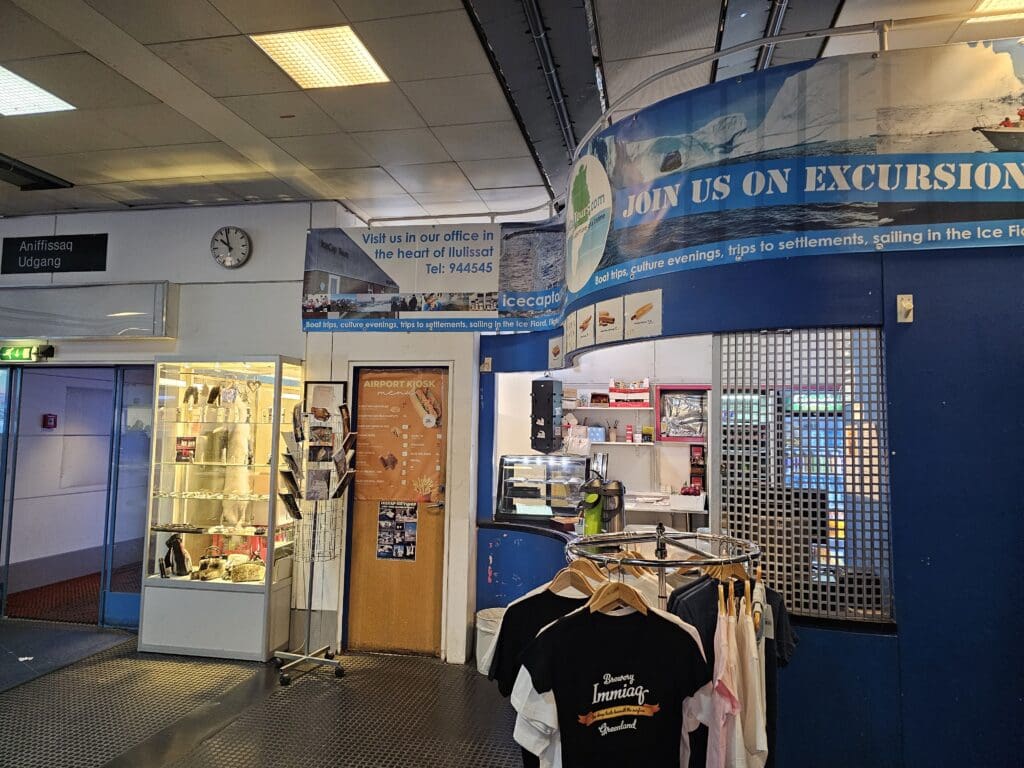
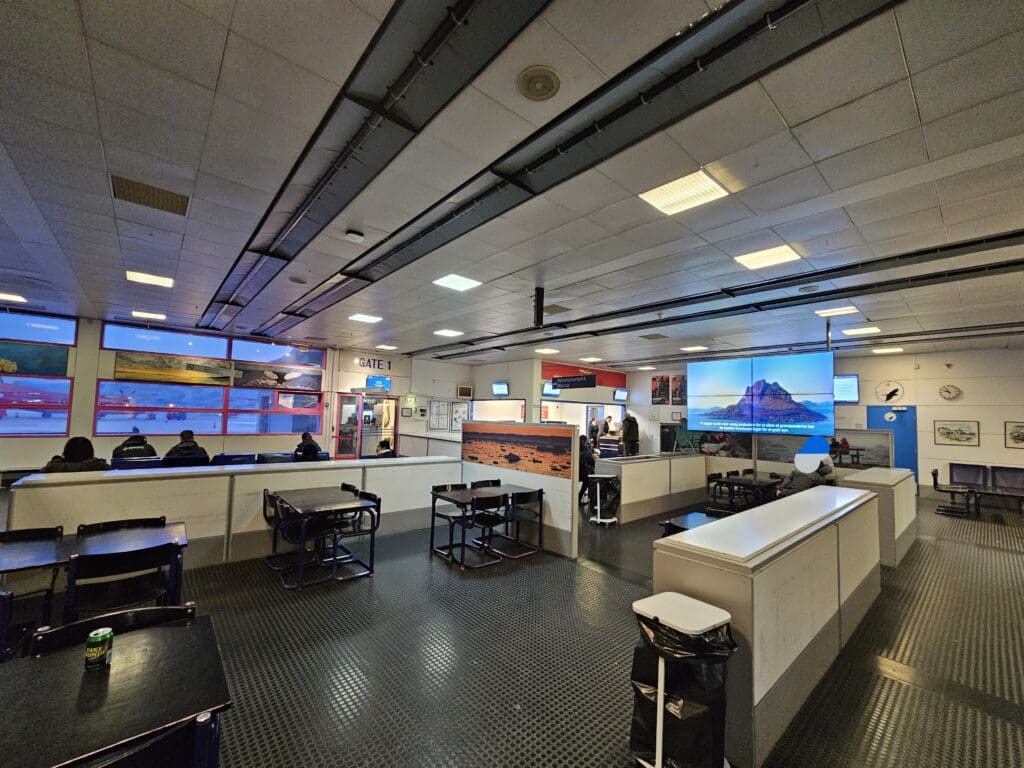
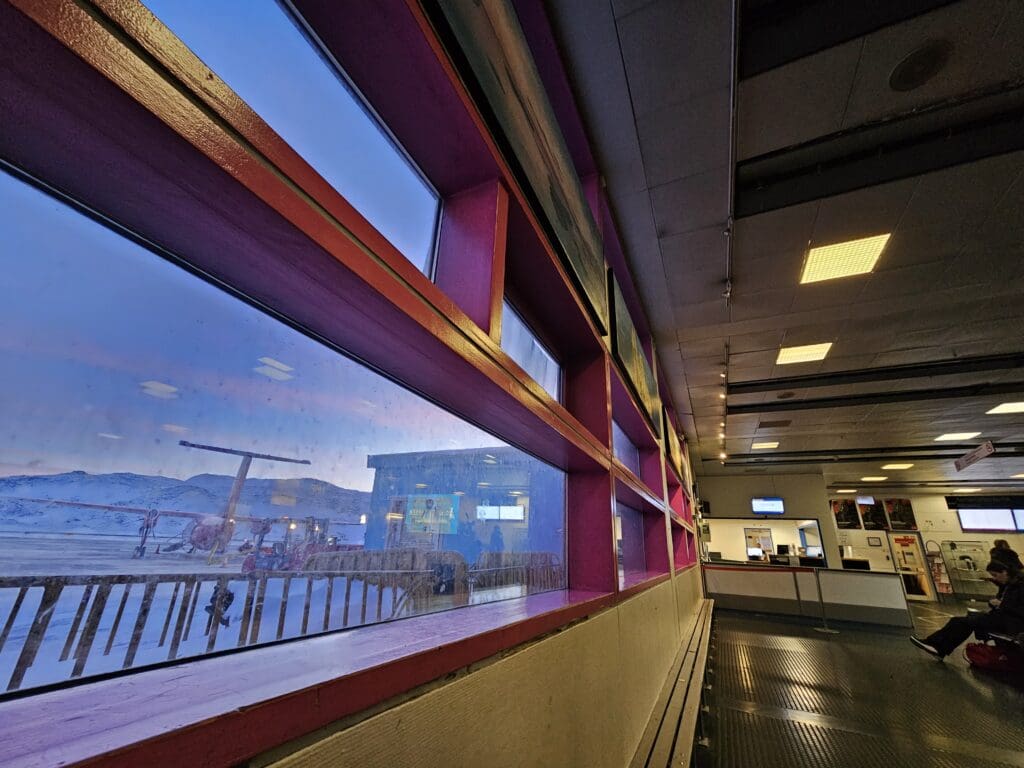

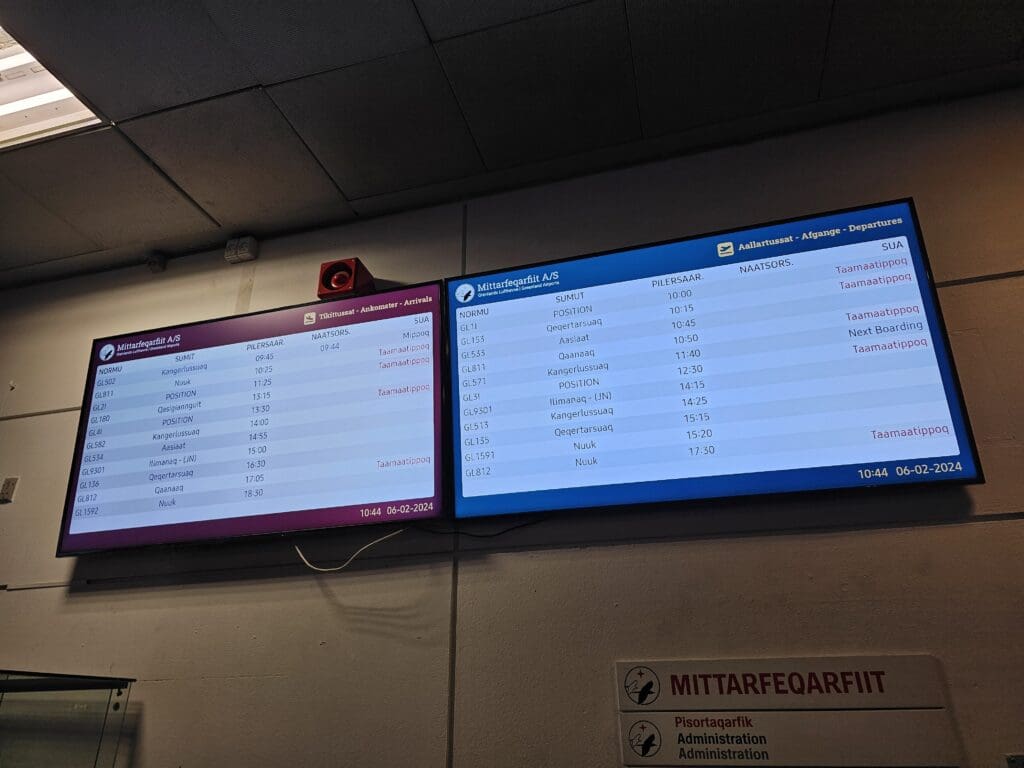
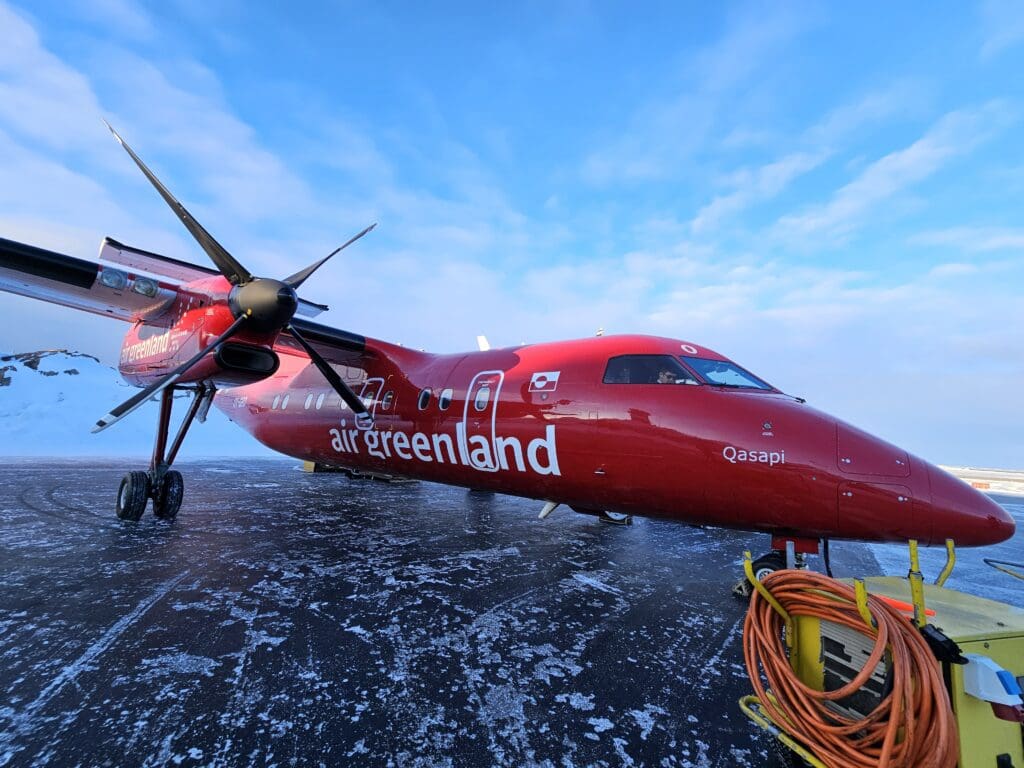
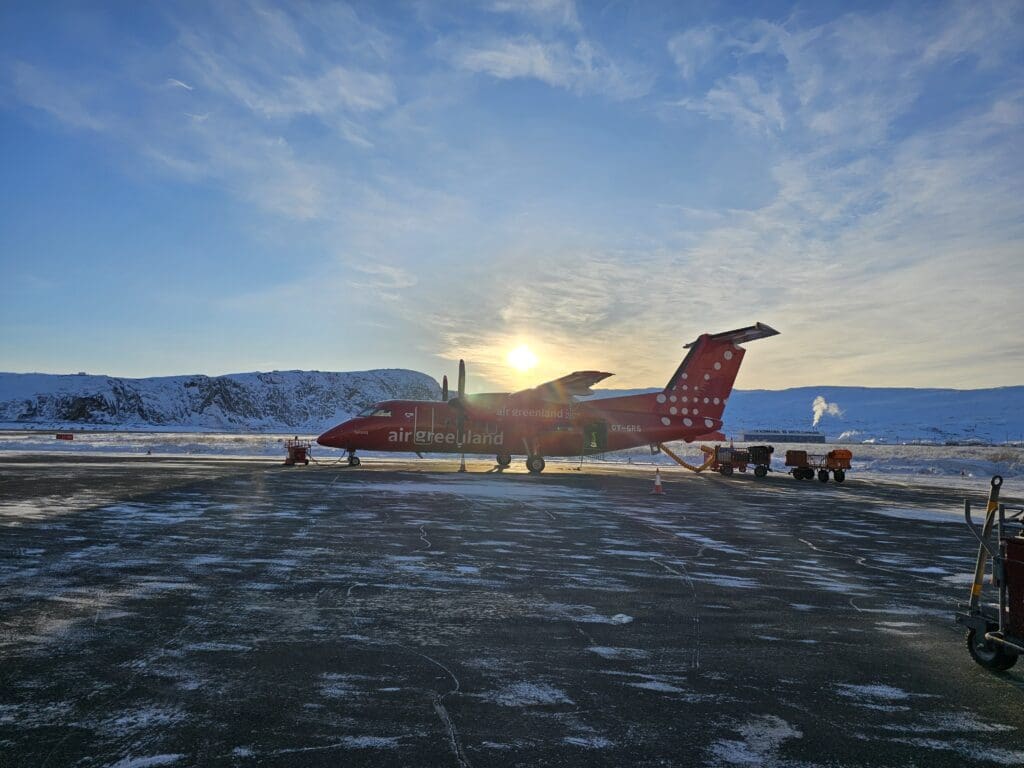
With the bag drop-off formalities successfully completed, I grabbed a coffee for 15 DKK (£1.70) from the kiosk and took a seat next to the terminal’s rather dirty windows. Outside, a pair of Dash 8 Q200s could be seen waiting, one of which was to operate the 1045 flight to Nuuk and Kangerlussuaq via Aasiaat, whilst the other would take us straight to Kangerlussuaq at 1140. Inside the terminal, things were relatively busy as the departure time for the 1045 flight approached; however, once boarding for this service commenced, things quietened down. After watching this rocket off on its short journey to the southern shores of the Disko Bay, there was little movement outside. That Tuesday, there would be a total of six departures from Ilullisat, with these bound for Aasiaat, Ilimanaq, Kangerlussuaq and Qeqertarsuaq, and operated by either the Dash 8 Q200 or Eurocopter EC155B1. Simplifying arrangements, as with all flights within Greenland, there was no security check, so there was little passengers needed to do before heading off across the country.
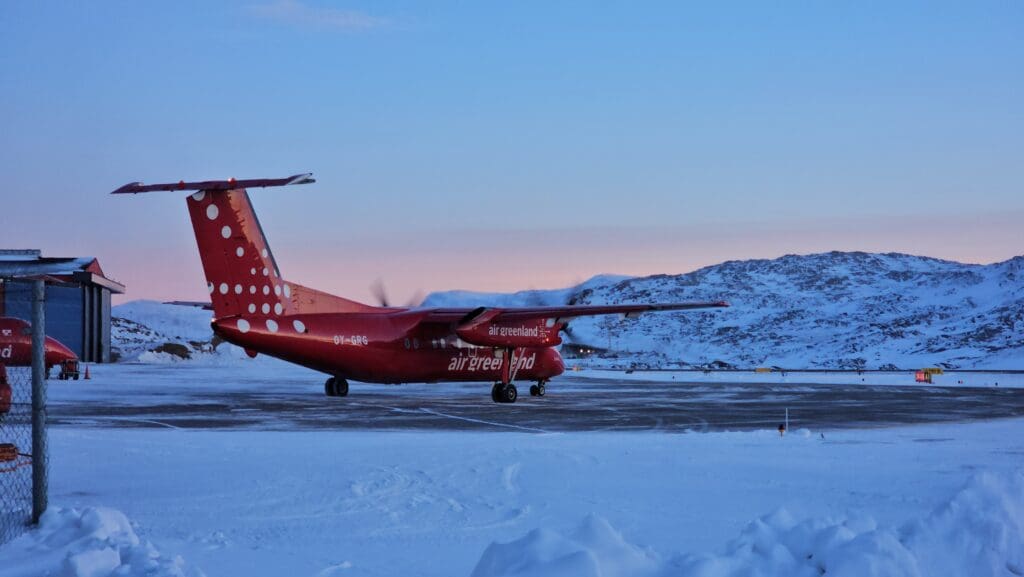
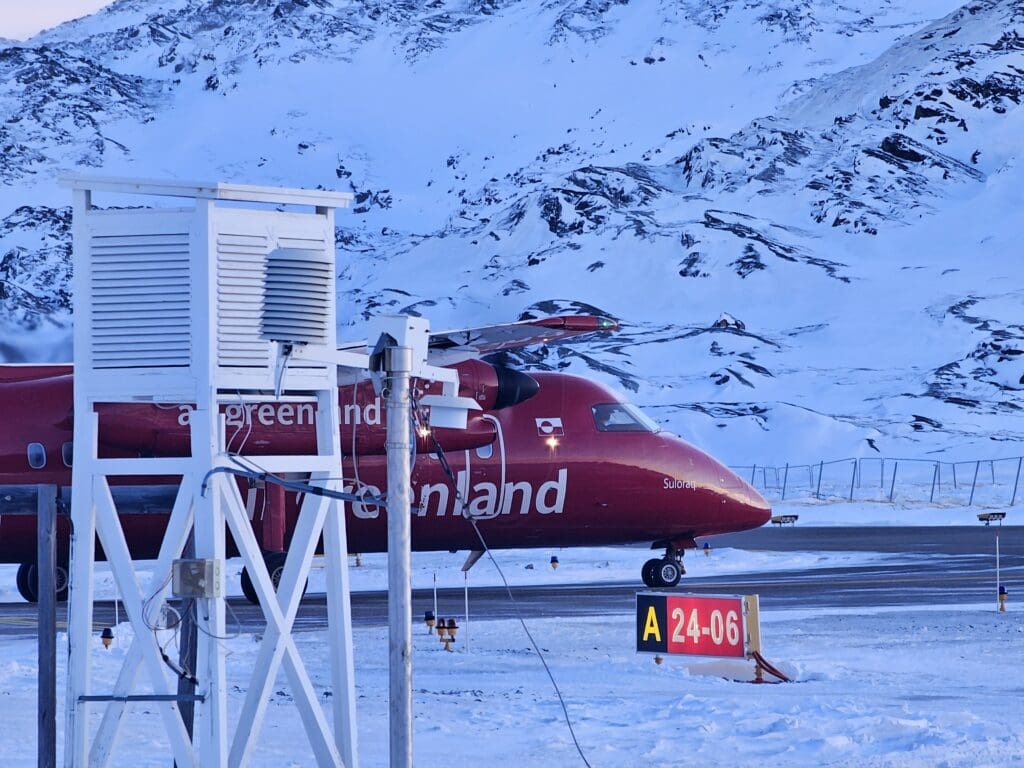
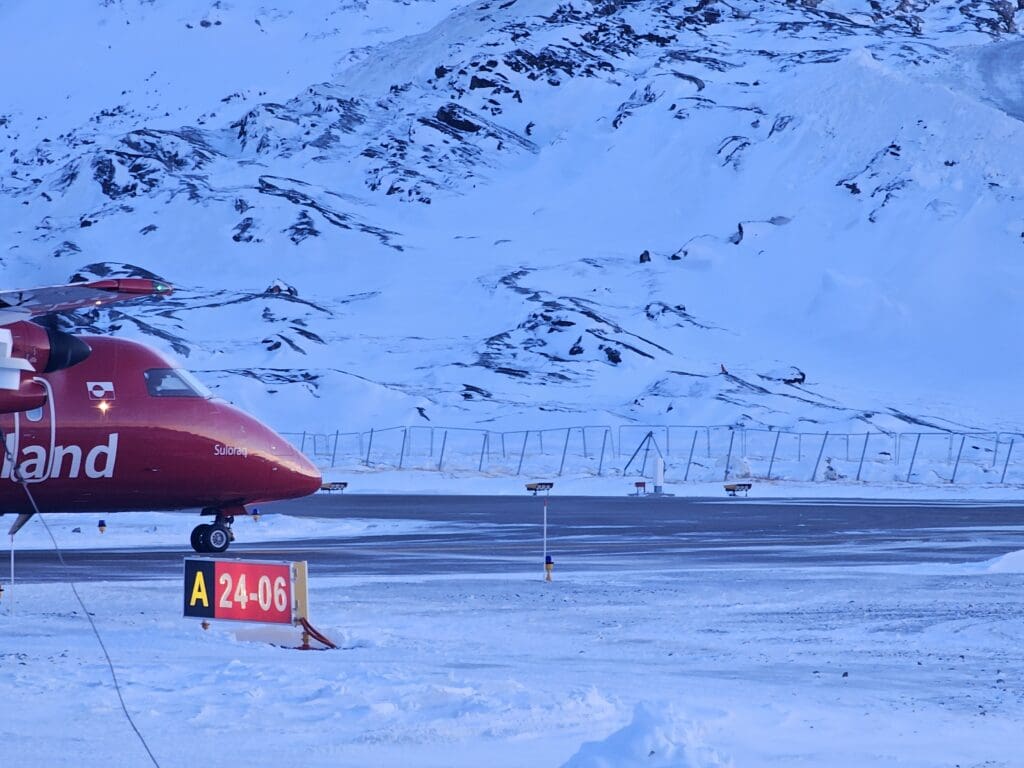
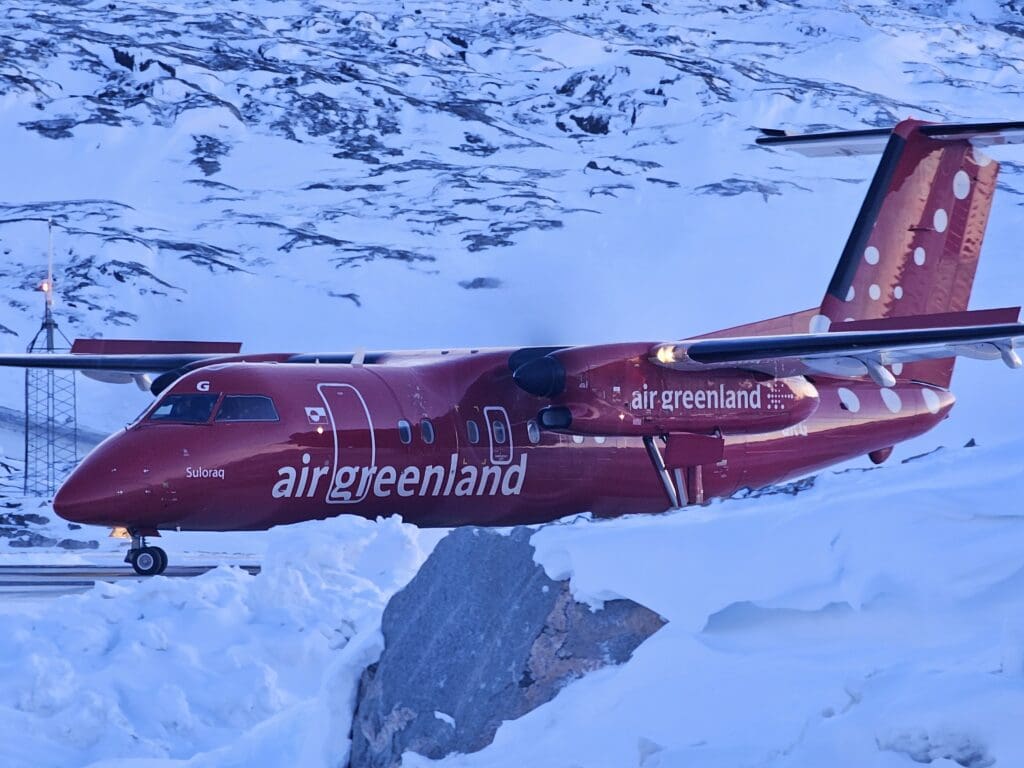
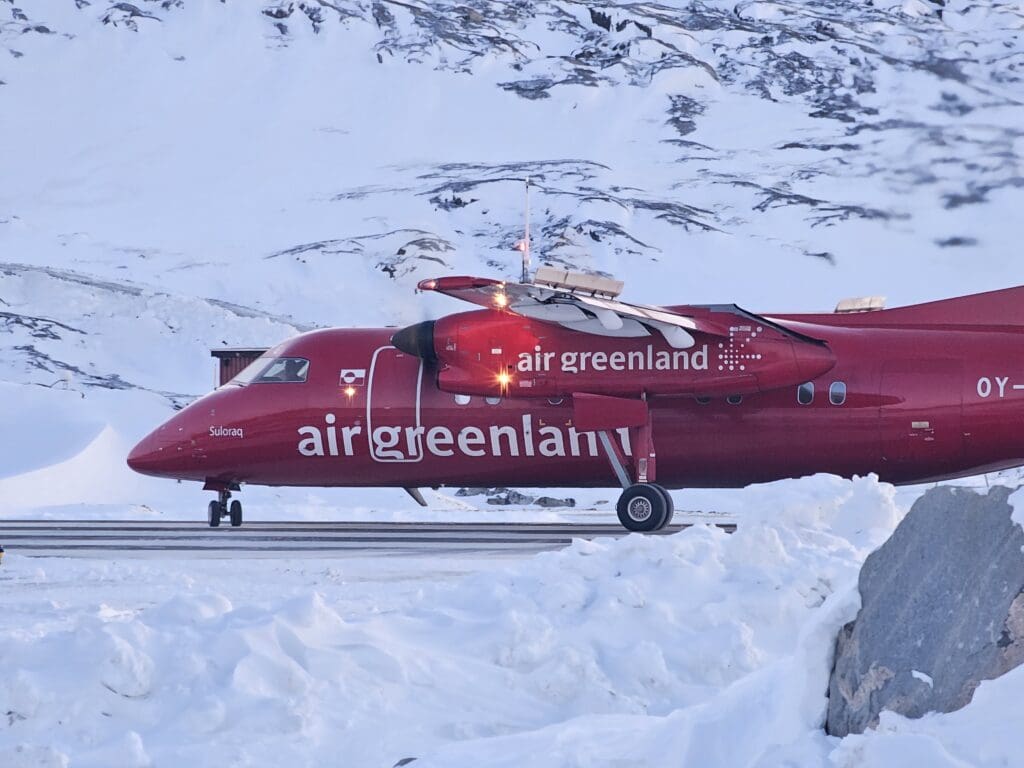
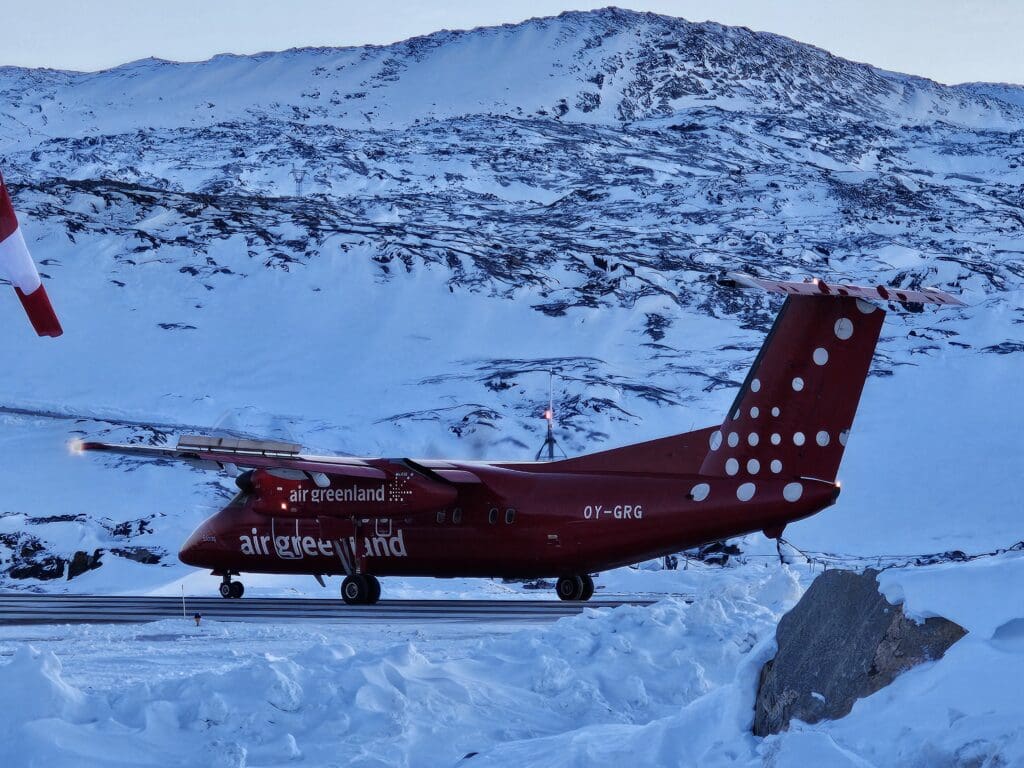
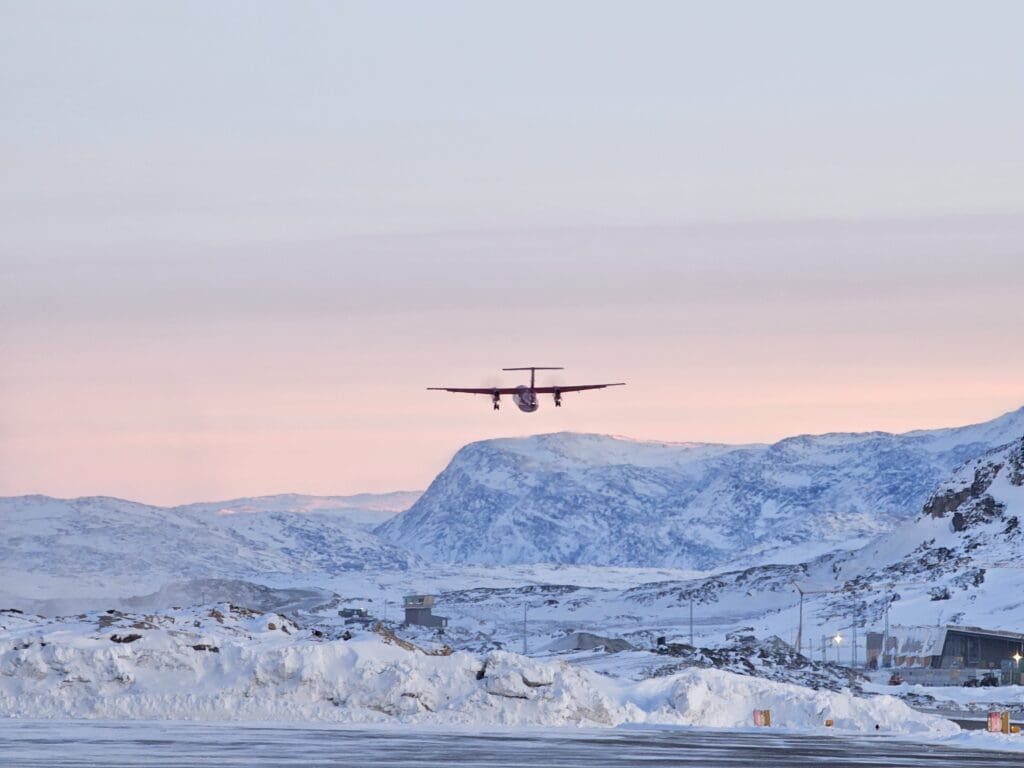
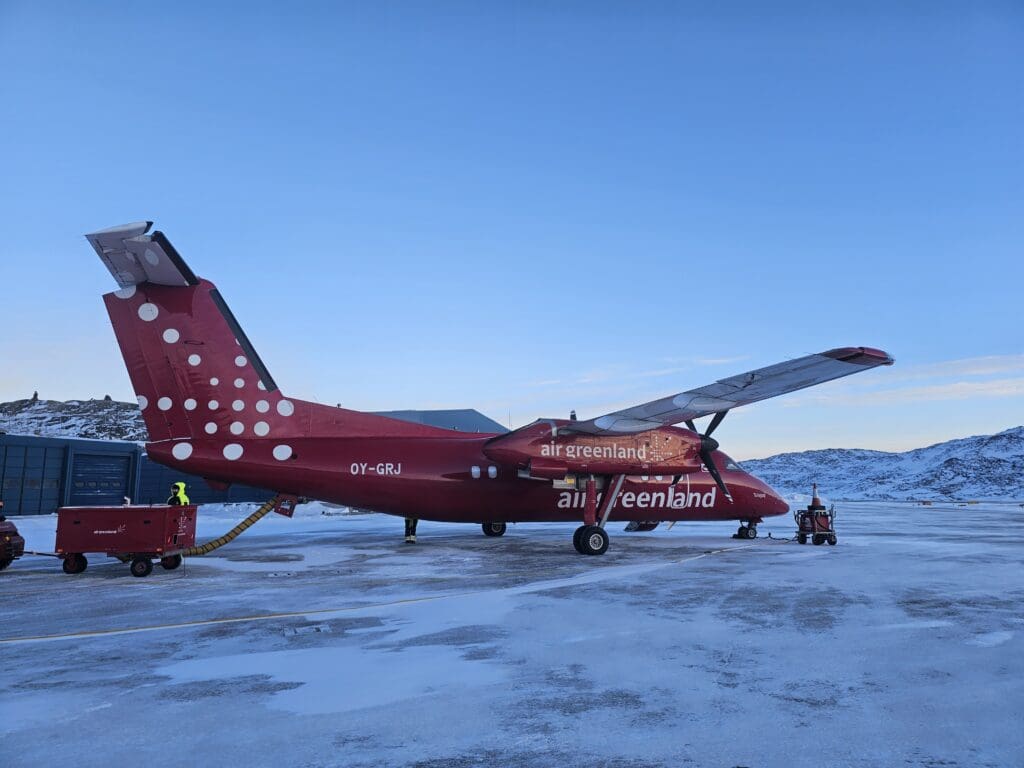
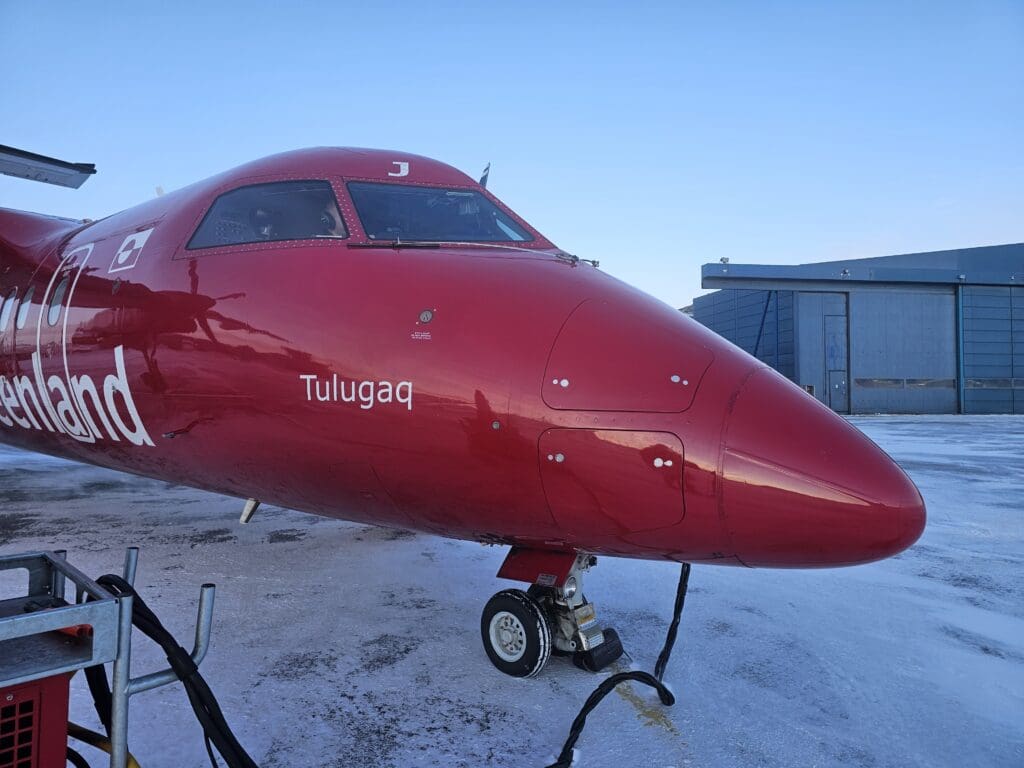
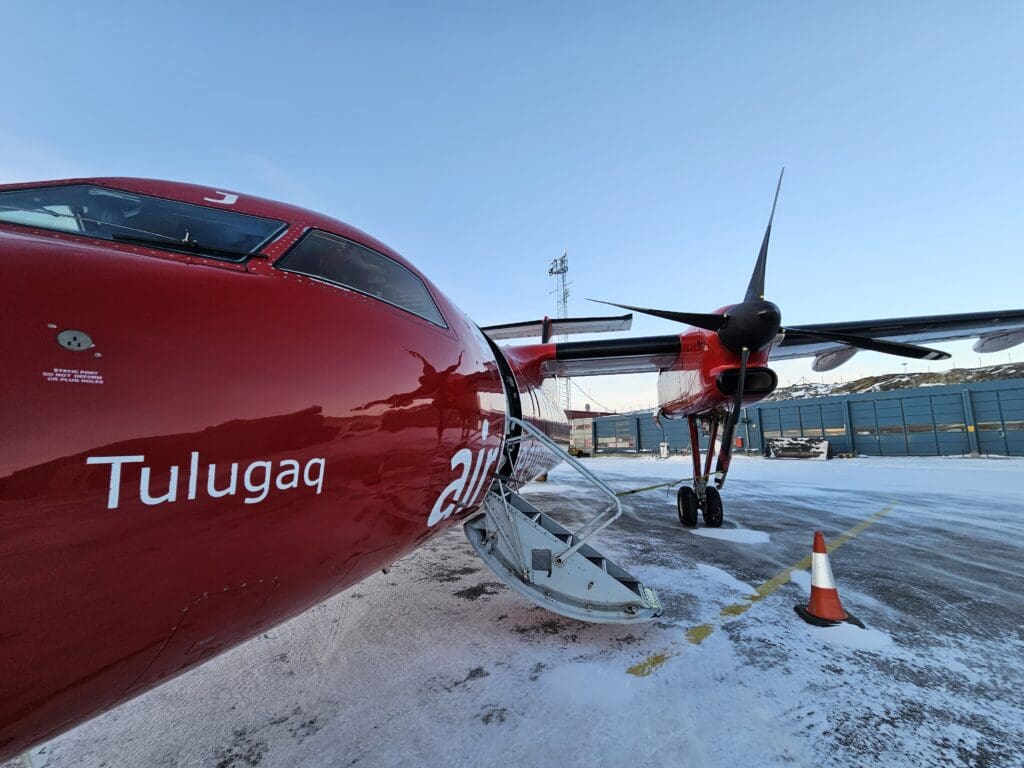
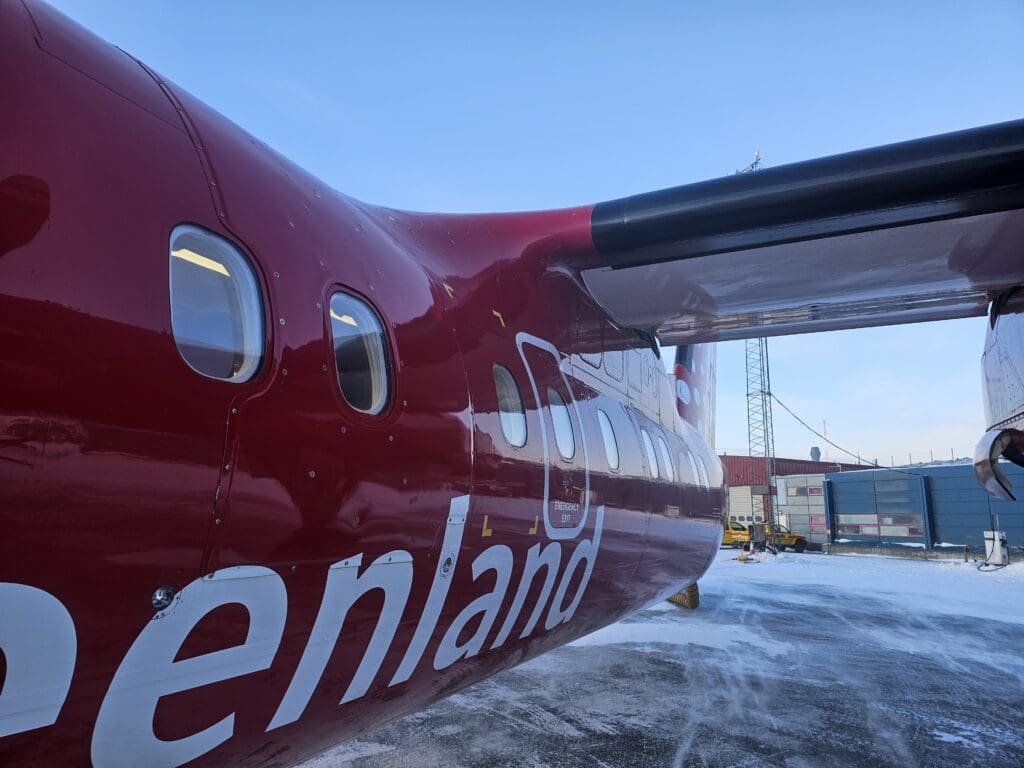
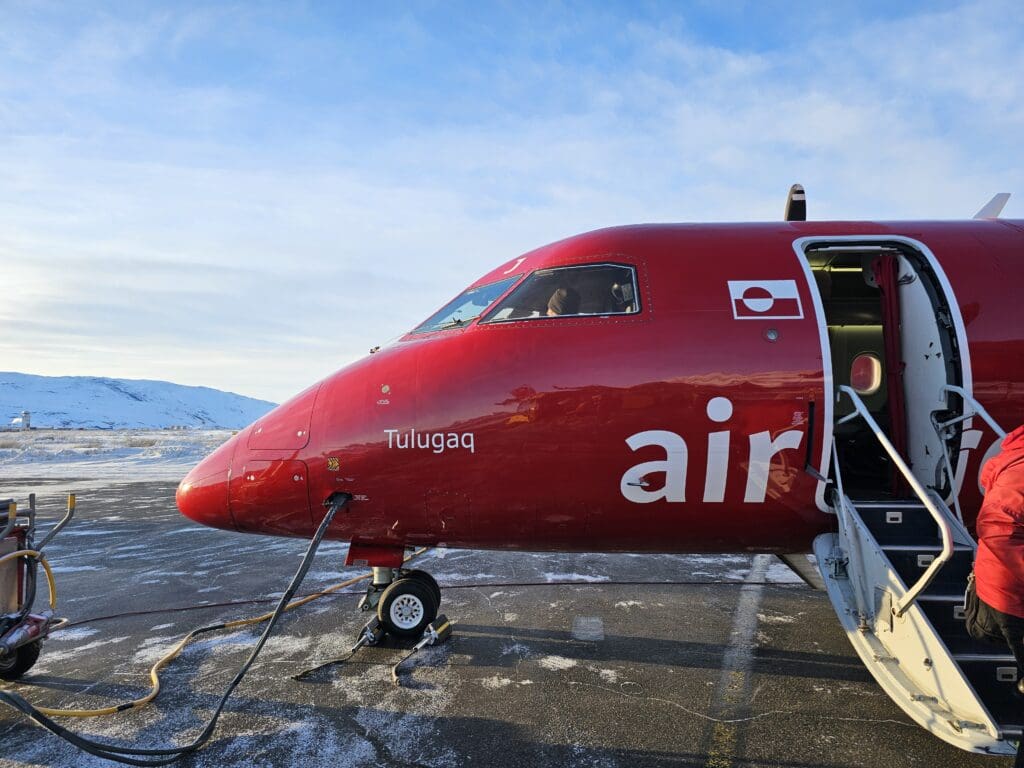
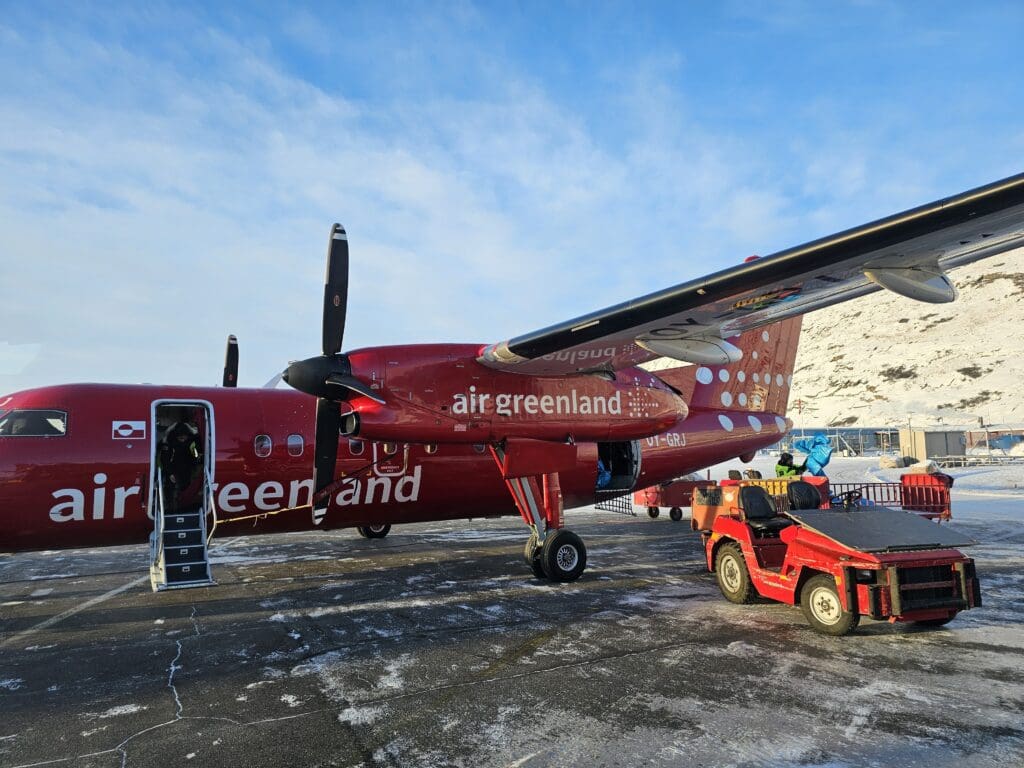
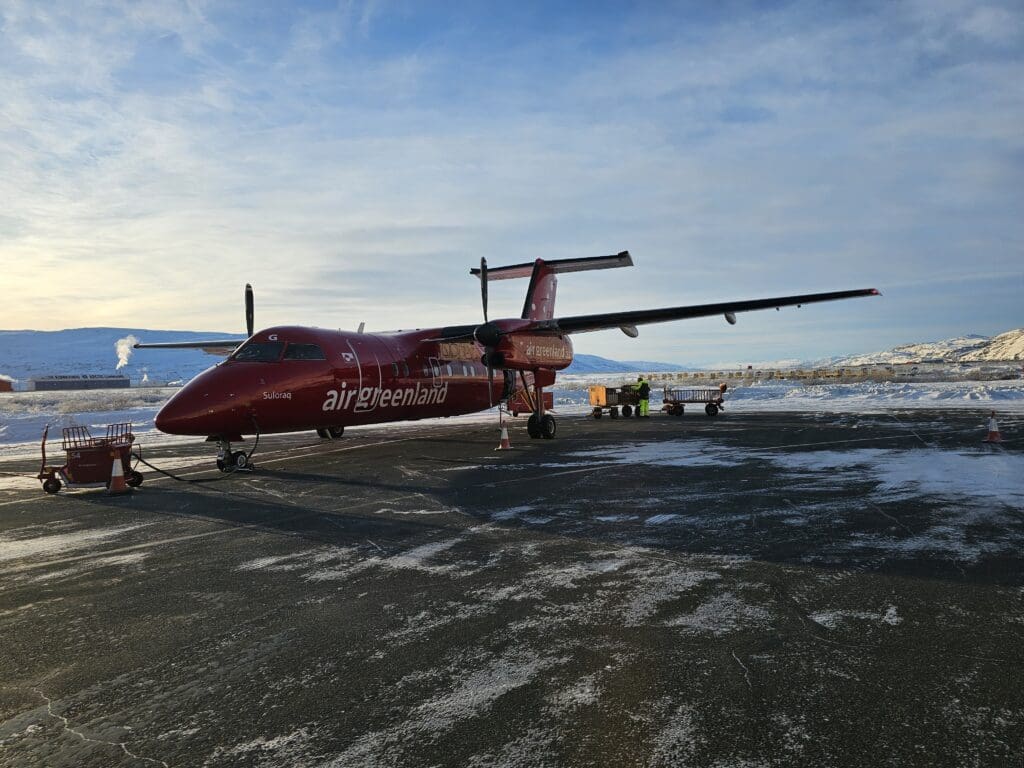
That morning, Bombardier Dash 8 Q202 OY-GRJ, named Tulugaq, meaning raven, and commonly associated with the mythical creator of flight, would be operating the service down to Kangerlussuaq. This had spent the night in Ilulissat, having arrived from the northern town of Upernavik the previous day. Manufactured at Toronto Downsview Airport, this particular aircraft first took to the skies in 1997 and was delivered to American regional carrier Horizon Air in September of that year. This made it 26.5 years old at the time of my flight. Flying up and down the Northwestern United States, the aircraft spent over ten years with the company as N353PH until it was withdrawn from use in 2008. Fortunately, the aircraft soon found a new lease of life with Win Win Aviation, where it was painted into a non-descript livery and began flying mysterious missions on behalf of the US Air Force, with photographs from this stage of the aircraft’s career showing this in both Europe and Puerto Rico. Remaining there until 2011, the aircraft was then given a Canadian registration and entered storage before entering service with Air Greenland in March 2012 as the carrier slowly but surely replaced its old Dash 7 fleet with Dash 8 Q200s. In the week before my flight, the Nuuk-based aircraft had visited Aasiaat, Ilulissat, Kangerlussuaq, Qaanaaq, Sisimiut and Upernavik.
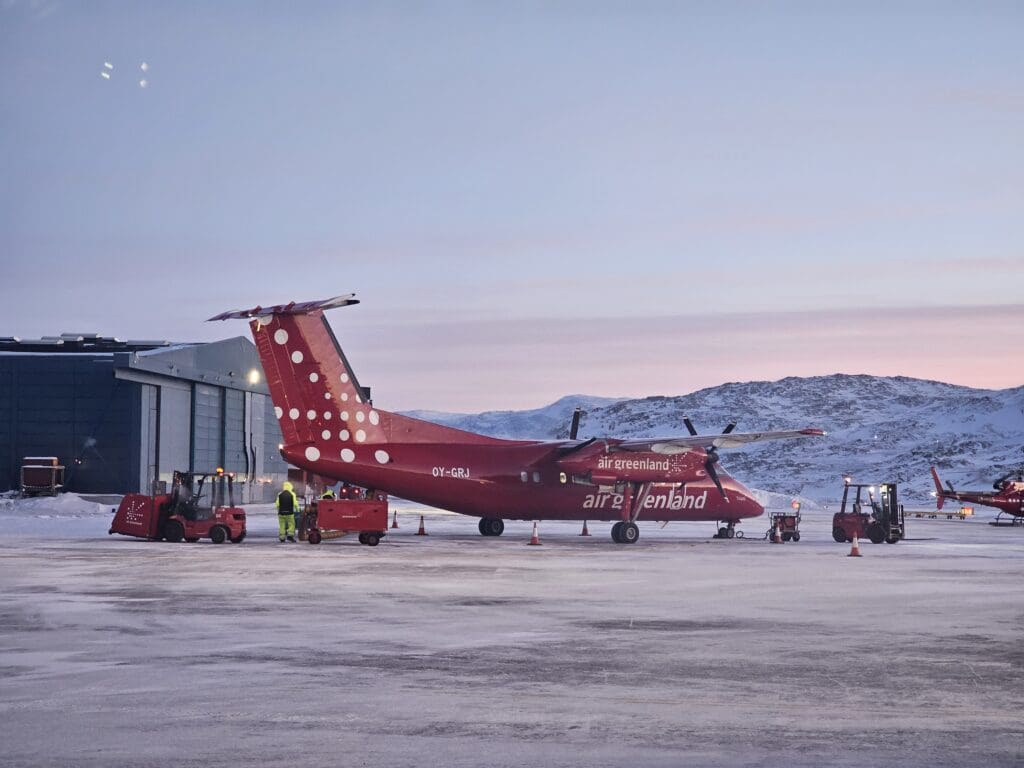
At 1050, an engineer could be seen heading out to inspect the aircraft and supervise the soon-to-commence fuelling and was followed by the flight attendant around ten minutes later. Last to arrive amongst the three-strong crew were the two pilots, who at 1110 made their way out from the Air Greenland office in the terminal and headed through the cold to the Dash 8, with one immediately getting to work on the pre-flight walkaround and the other heading into the warmth of the cockpit. Whilst this flight likely carries less cargo than those heading up from Kangerlussuaq, several mail sacks could be seen at the rear of the aircraft waiting to be loaded into the rear hold.
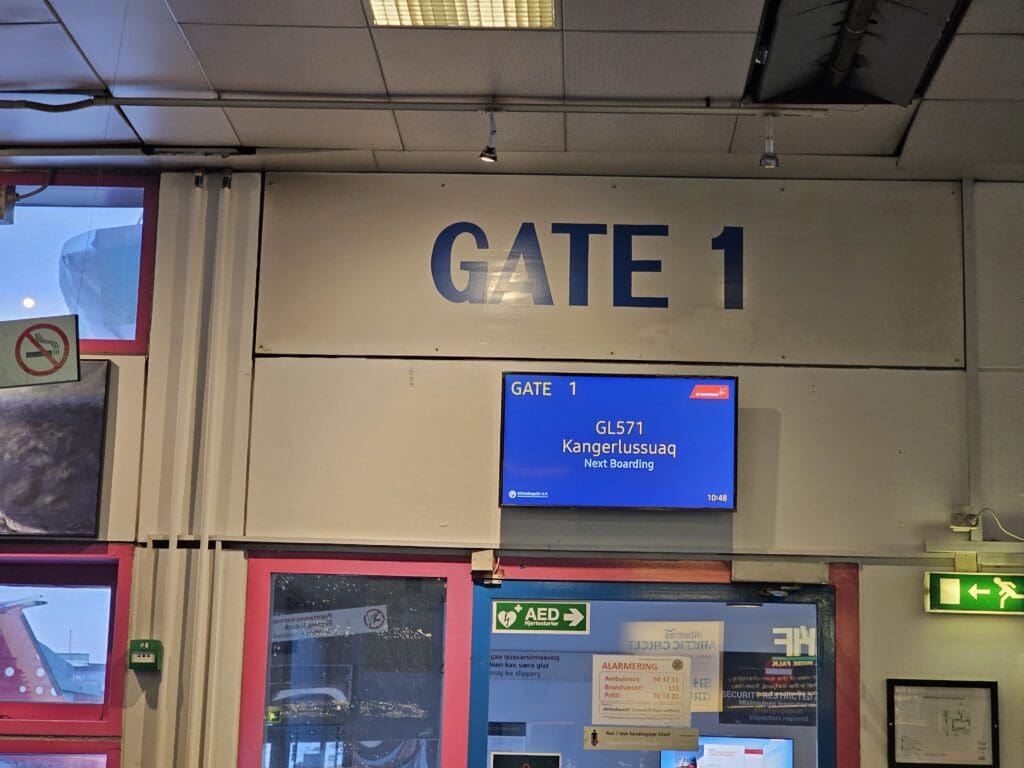
That morning, boarding for the flight was scheduled to commence fifteen minutes before departure at 1125 however indicating that we would be making a punctual departure, an announcement was made in Greenlandic, Danish and English at 1120 inviting all passengers to board and soon a queue formed in front of the double doors leading out onto the apron. Joining this, I soon had my boarding pass scanned before I headed into the freezing Arctic air and darted over to the bright red Dash 8 glistening in the low morning sunshine. Making my way around the aircraft’s shiny nose, I soon climbed up the steps built into the inner side of the aircraft door before I received a very friendly greeting in Danish and English from the sole flight attendant.
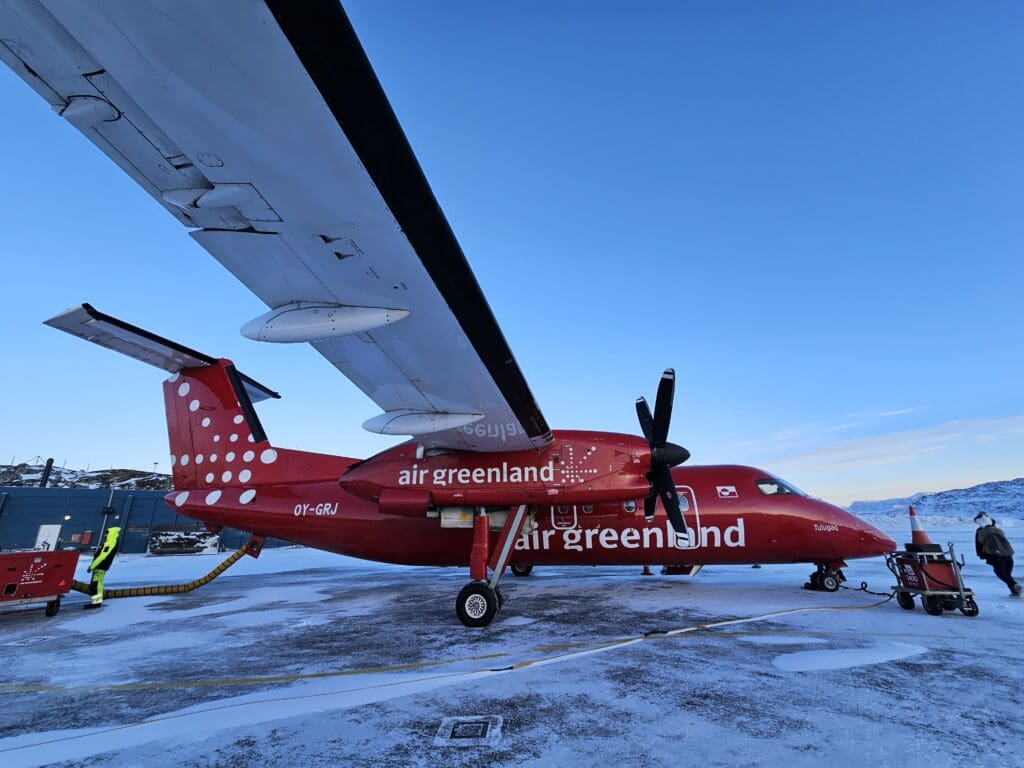
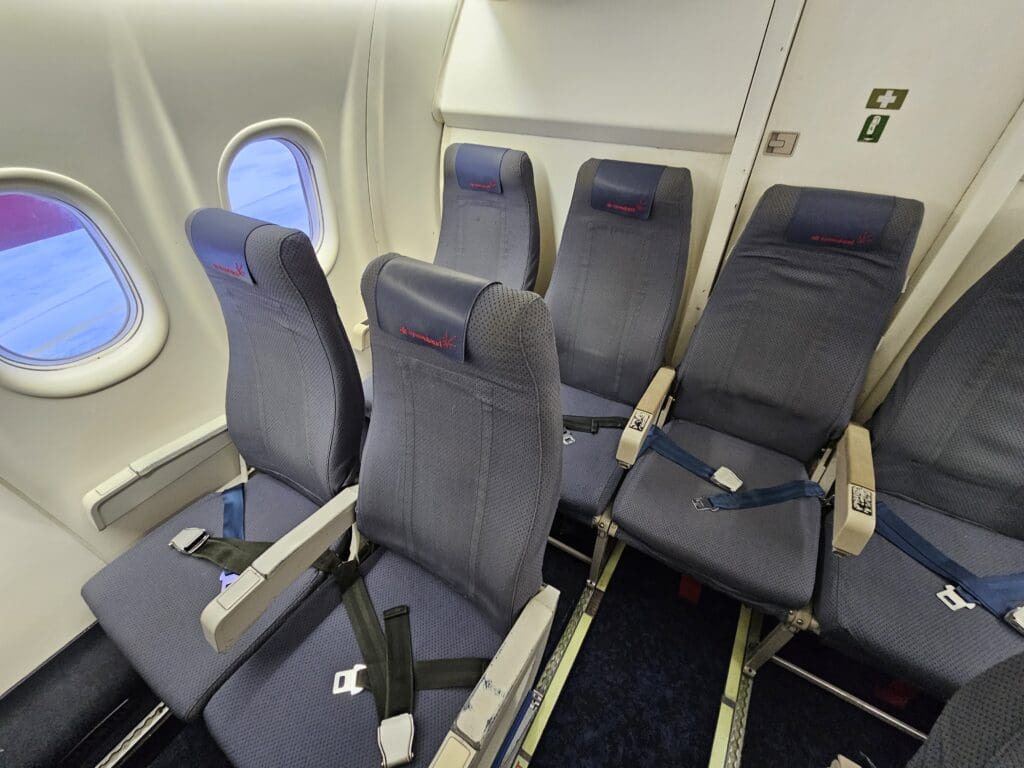
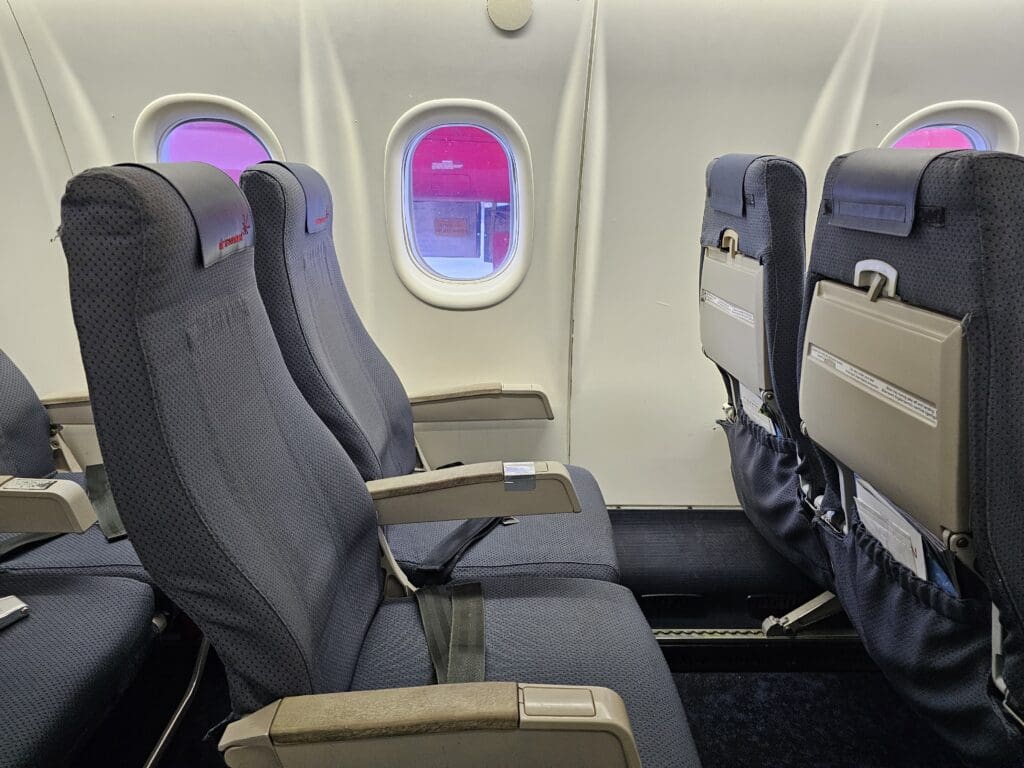
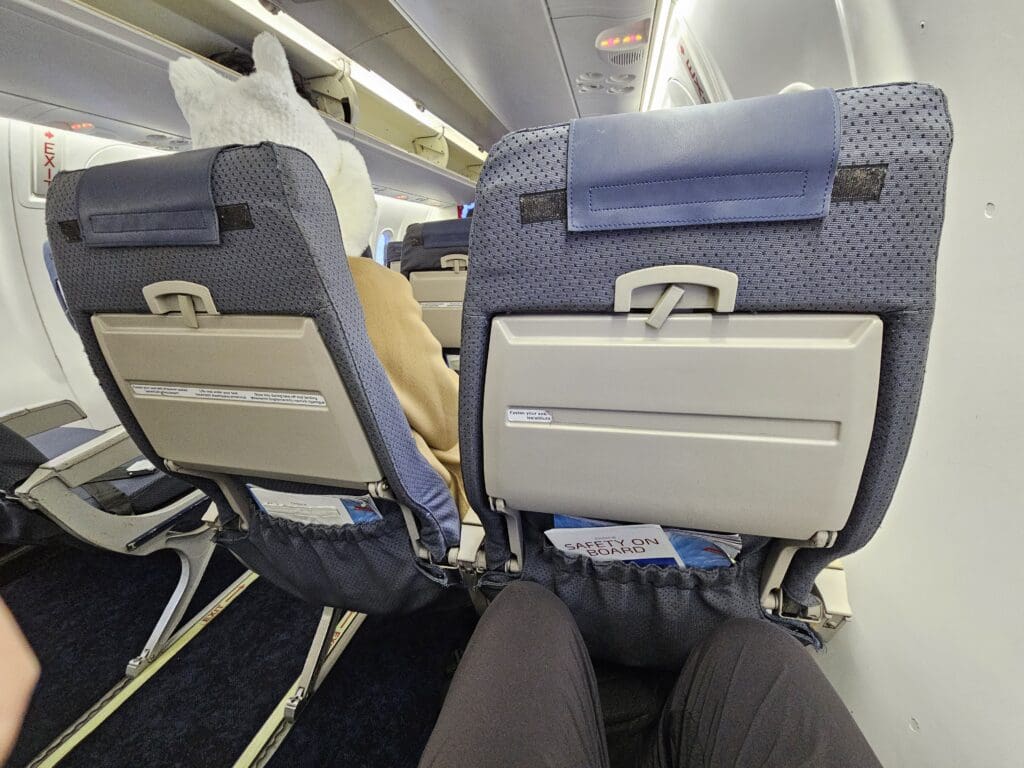
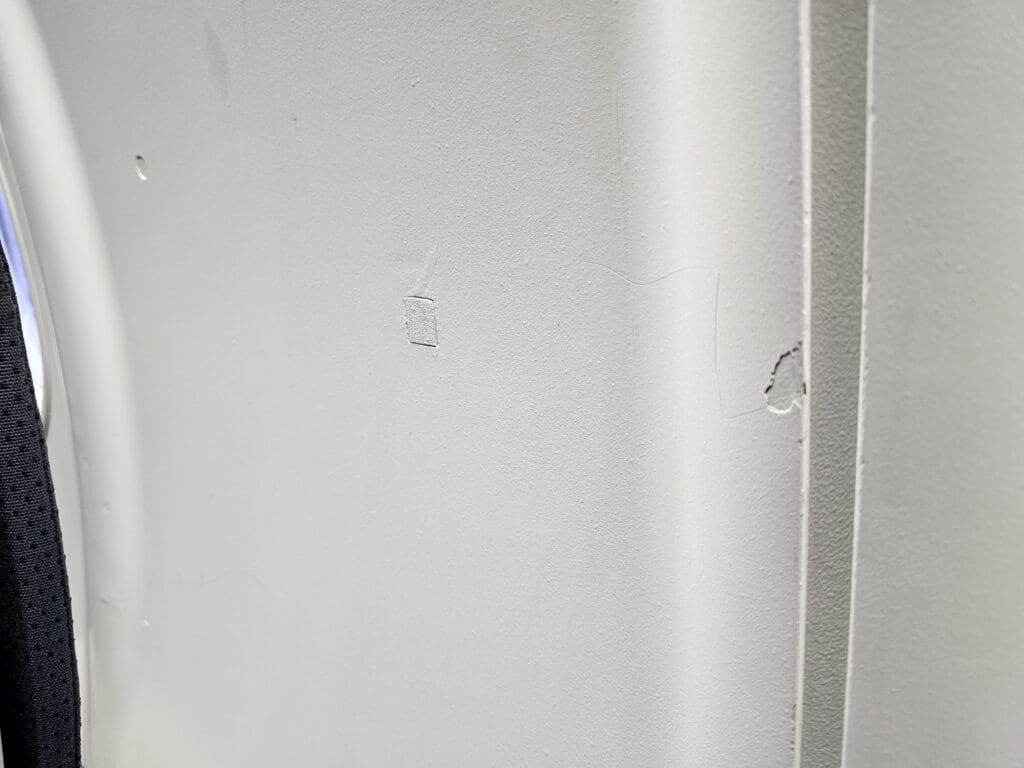
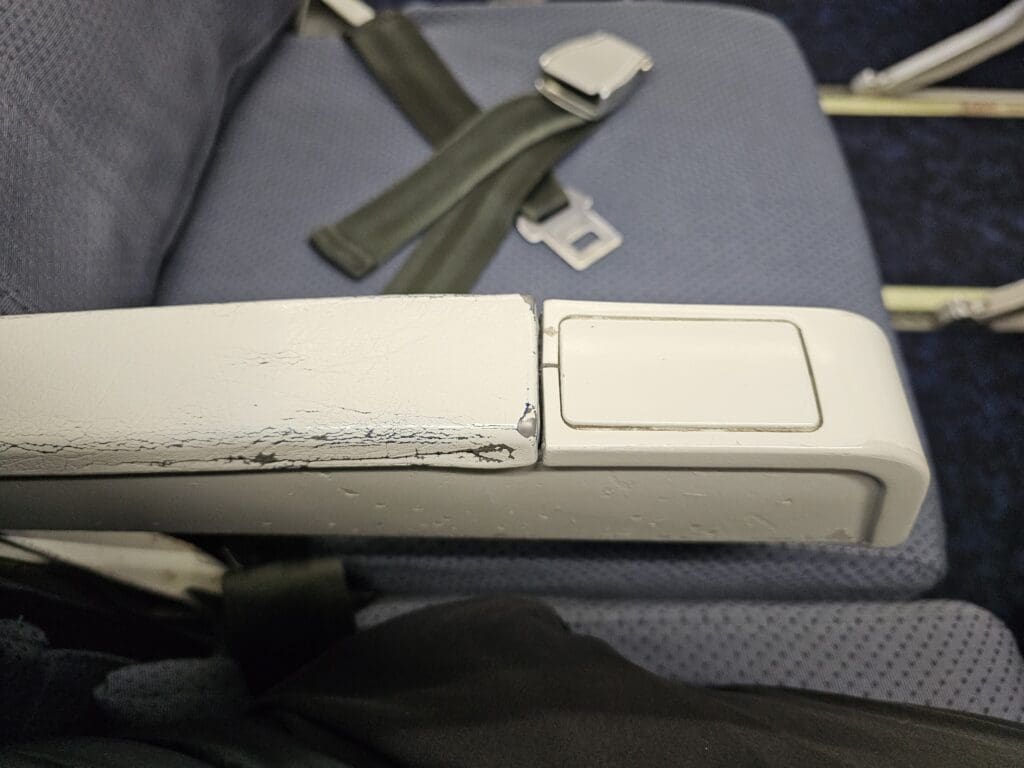
With no need for any sort of boarding pass check once onboard, I turned right and made my way into the cabin of the short and stubby Dash 8, soon making it to Seat 6D near the rear of the aircraft. As I had learnt from my first ride onboard the Dash 8 Q200 several days earlier, despite not being a particularly large backpack, there was absolutely no chance that I could fit this into the aircraft’s unusually small overhead lockers, so I instead squished it as best as possible underneath the seat in front. As with virtually all Dash 8s, onboard, seats were arranged in a 2-2 configuration and were squarish in their design, similar to those on many older Dash 8s and Bombardier CRJs. Air Greenland’s Dash 8s have a standardised interior, and onboard, each seat was covered in a grey fabric and was topped with a leather antimacassar on which Air Greenland’s logo was embroidered. Looking around, I found that the seat was slightly battered, with plenty of marks and scratches. Although this was somewhat expected given the rough and ready nature of operations in the Arctic, otherwise, I could find few things to complain about. Importantly, the cabin seemed to be clean, and I found the seat to be surprisingly comfortable and spacious for such a small aircraft. Turning to the seatback pocket, this contained the latest copy of Air Greenland’s Suluk magazine, a safety card and a sick bag.
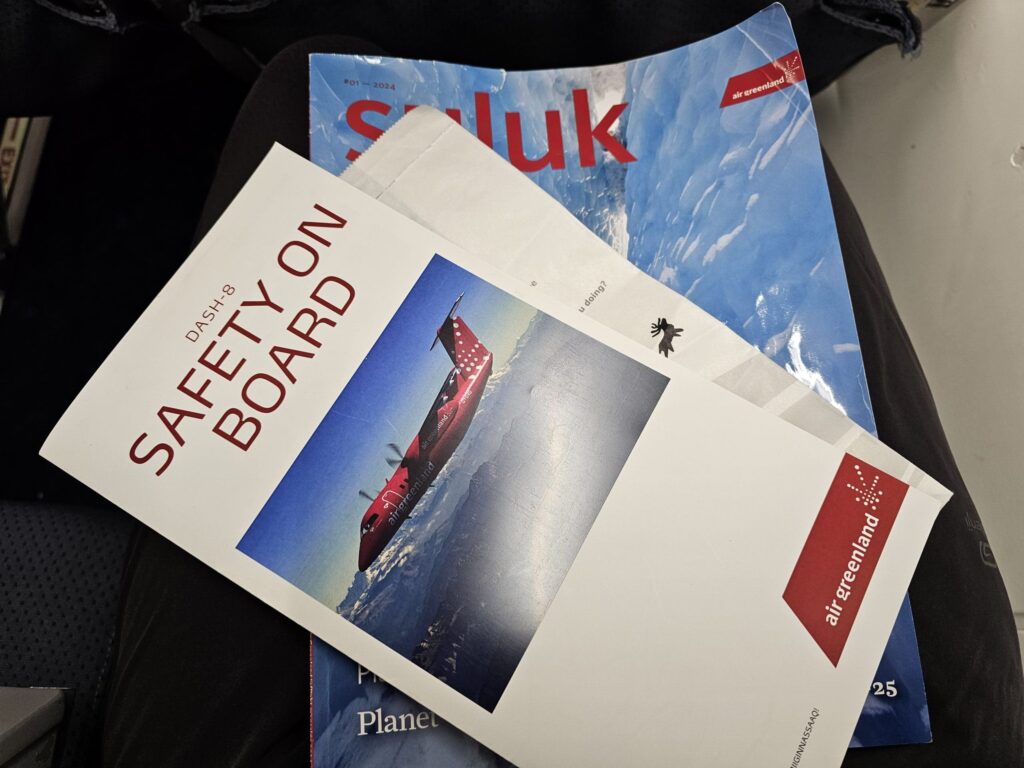
Given the small size of the 37-seat Dash 8, unsurprisingly, it didn’t take too long to board, with the final passenger entering the cabin just six minutes after boarding had commenced. However, thanks to the lack of storage space onboard, it took a few more minutes for passengers to squeeze their bags into the overhead lockers or under the seats. That morning, the flight was almost full, with just one free seat spotted onboard the aircraft. Compared to my ride up to Ilulissat via Aasiaat, the service was somewhat more international, with plenty of Danish passengers along with some fellow Brits, as well as German, Indian and Taiwanese tourists. Unsurprisingly, many passengers were on their way home and were like me, connecting onto Air Greenland’s flight to Copenhagen.
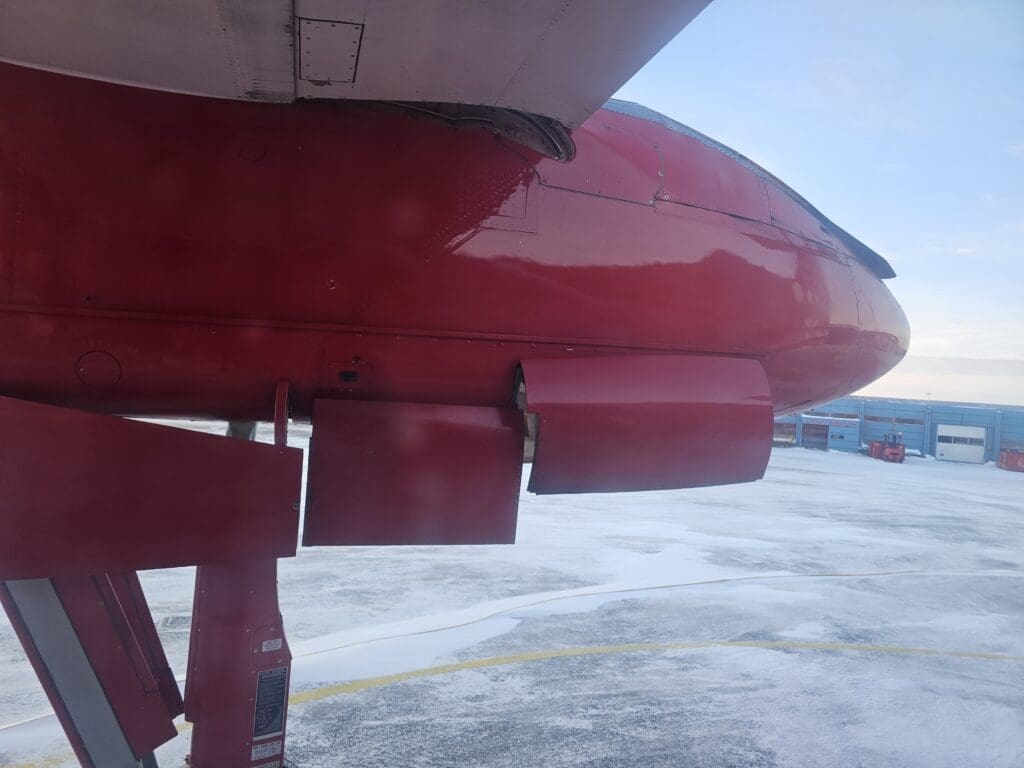
At 1131, the cabin door was closed with a loud thud, and almost immediately, the Dash 8’s two Pratt & Whitney Canada PW123D engines spooled into life. Whilst the ‘Q’ in the Q series of Dash 8s stands for quiet, the start-up was anything but, and soon the cabin was filled with noise and vibrations as the two propellers began to whirl. Inside the cabin, the flight attendant performed their welcome announcement in Greenlandic, Danish and English before taking their position in the aisle for the safety demonstration. This consisted of a pre-recorded announcement in Danish and Greenlandic, which detailed the safety instructions before the flight attendant passed through the cabin, ensuring all was in place and secure for our departure as we began our short taxi to the runway.
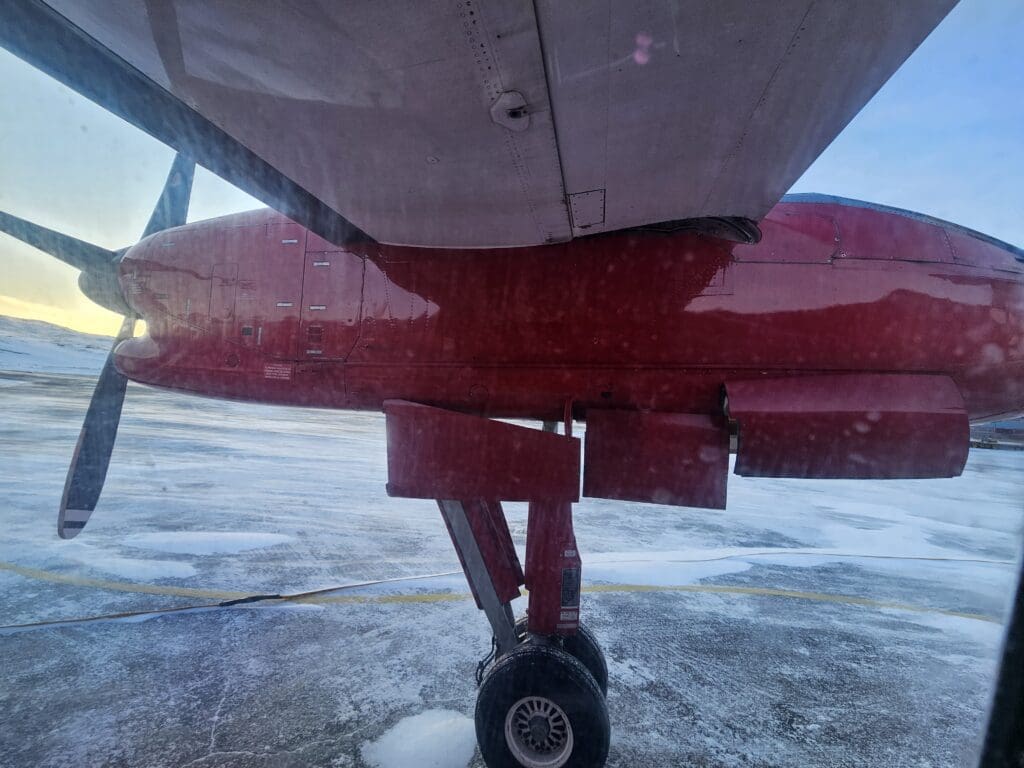
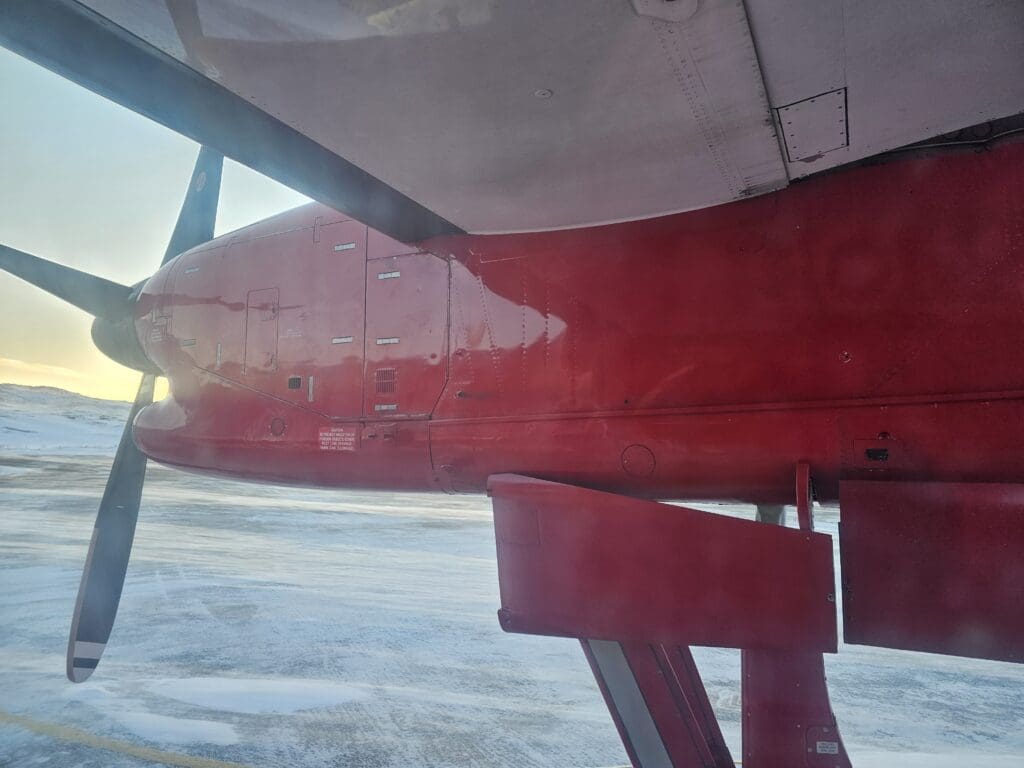
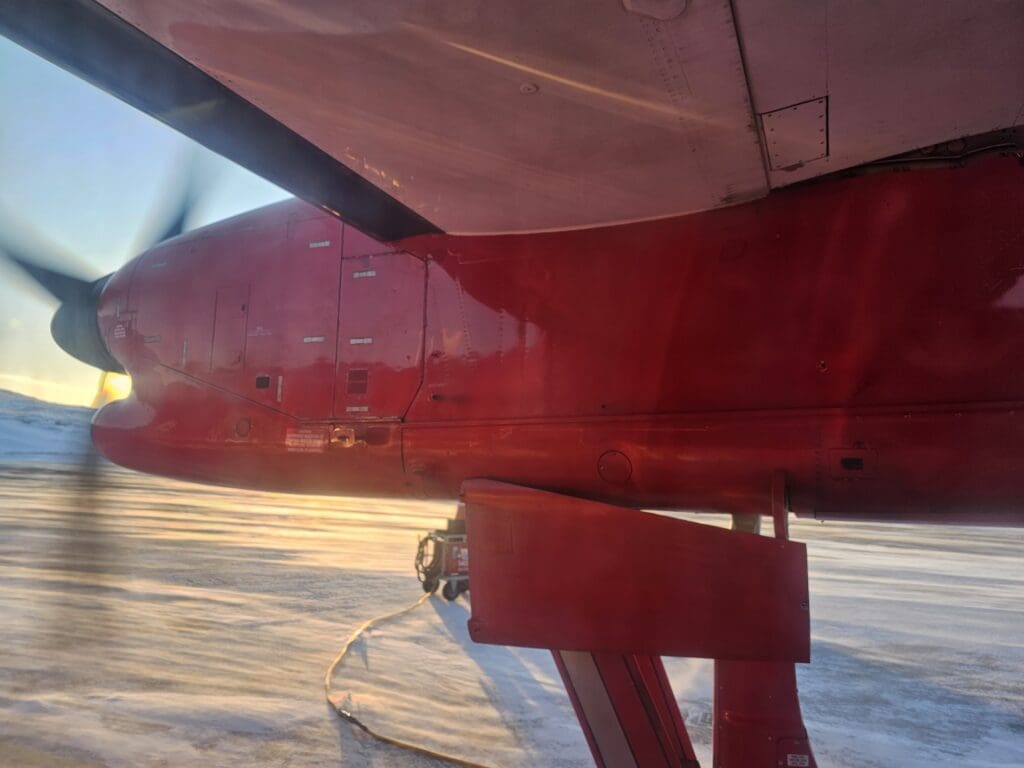
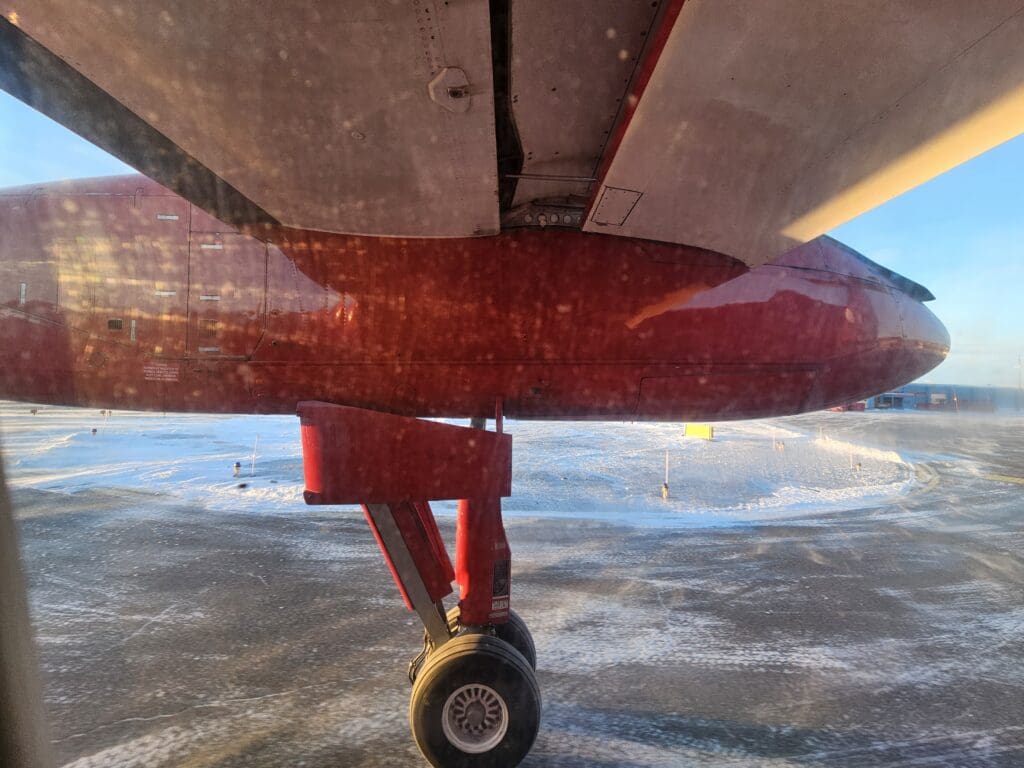
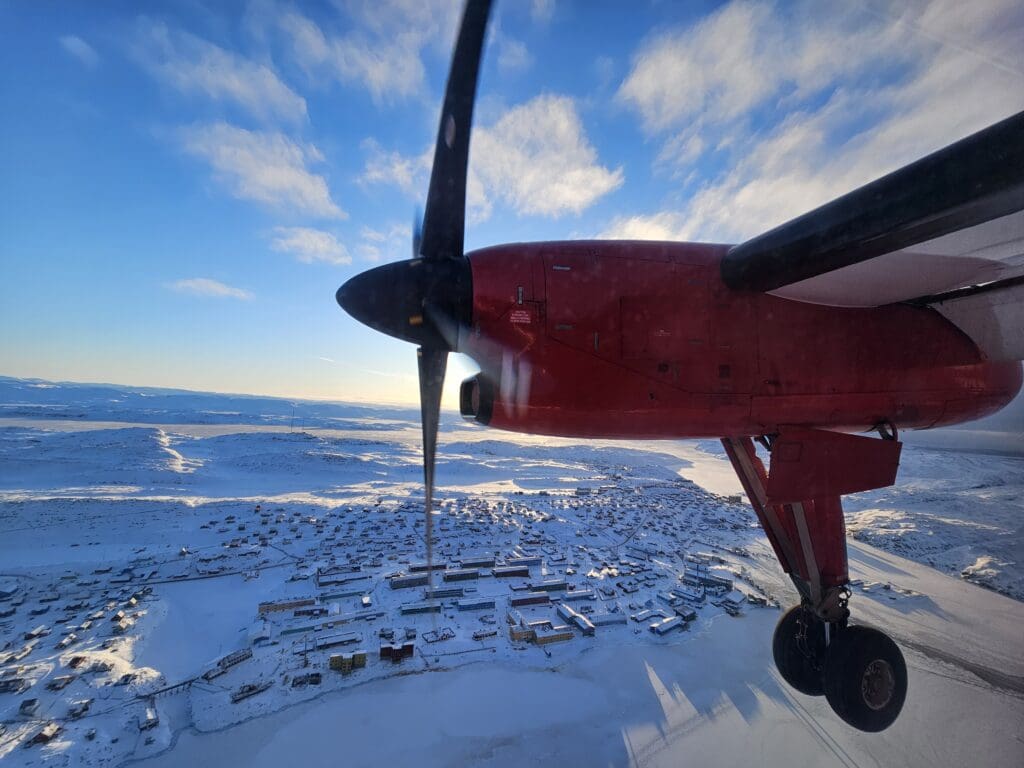
Given the small size of Ilulissat Airport and the fact that we would be departing from Runway 06, the end of which sits right next to the terminal, we made it to the runway in a matter of seconds and upon taxying onto this, we held for a minute or so. Eventually, with the brakes held, the engines spooled up and we soon went flying down the runway, making a short take-off roll before rocketing upwards into the skies allowing for a superb view of the jagged peaks and snowy landscapes to the north of Ilulissat.
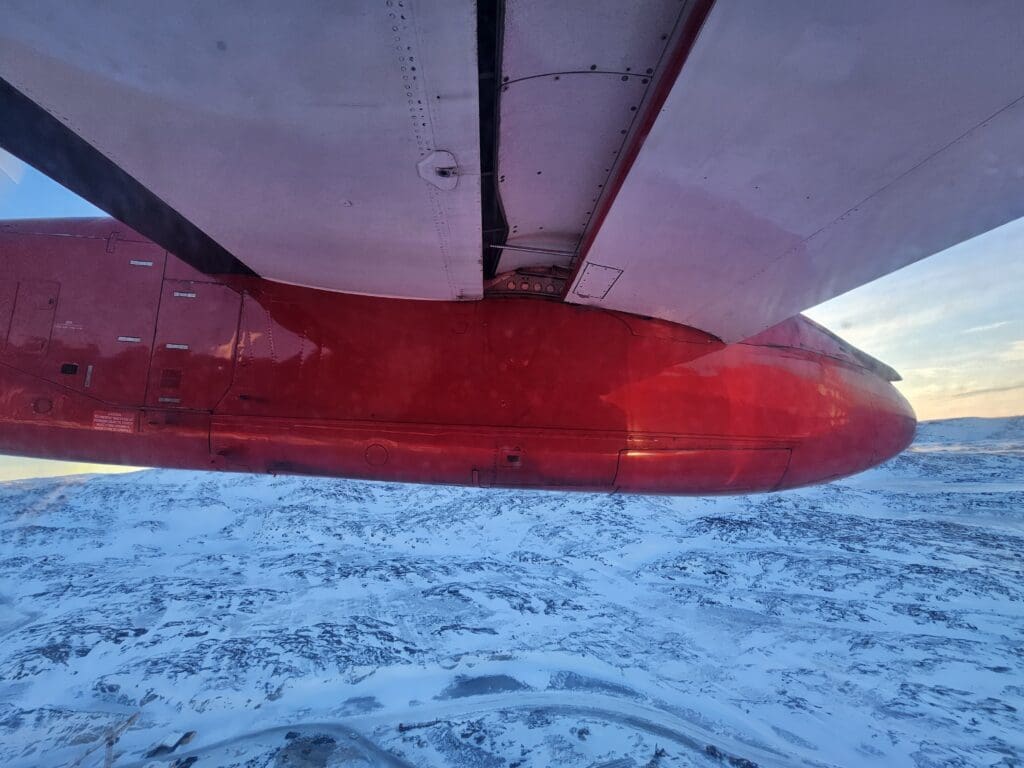
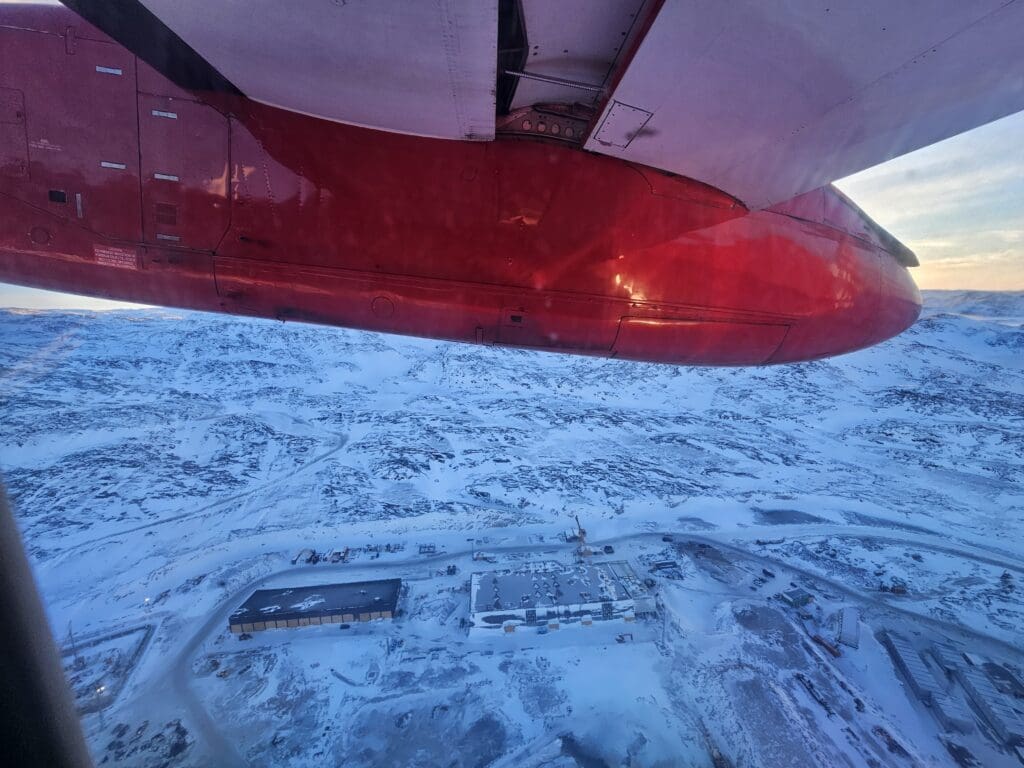
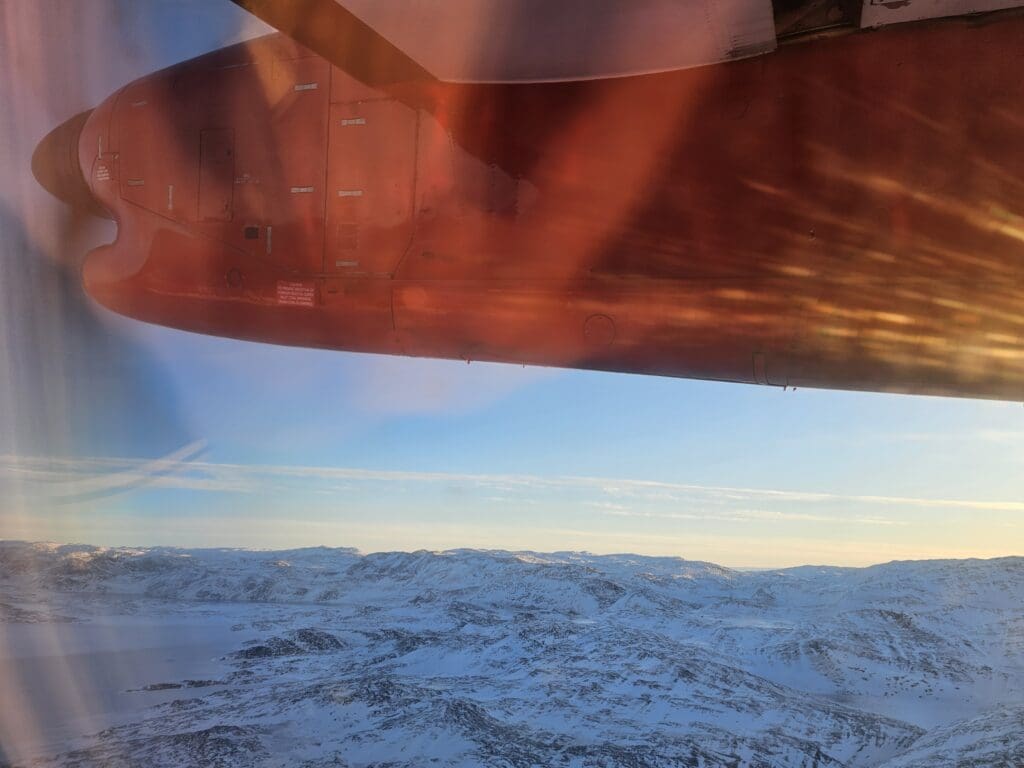
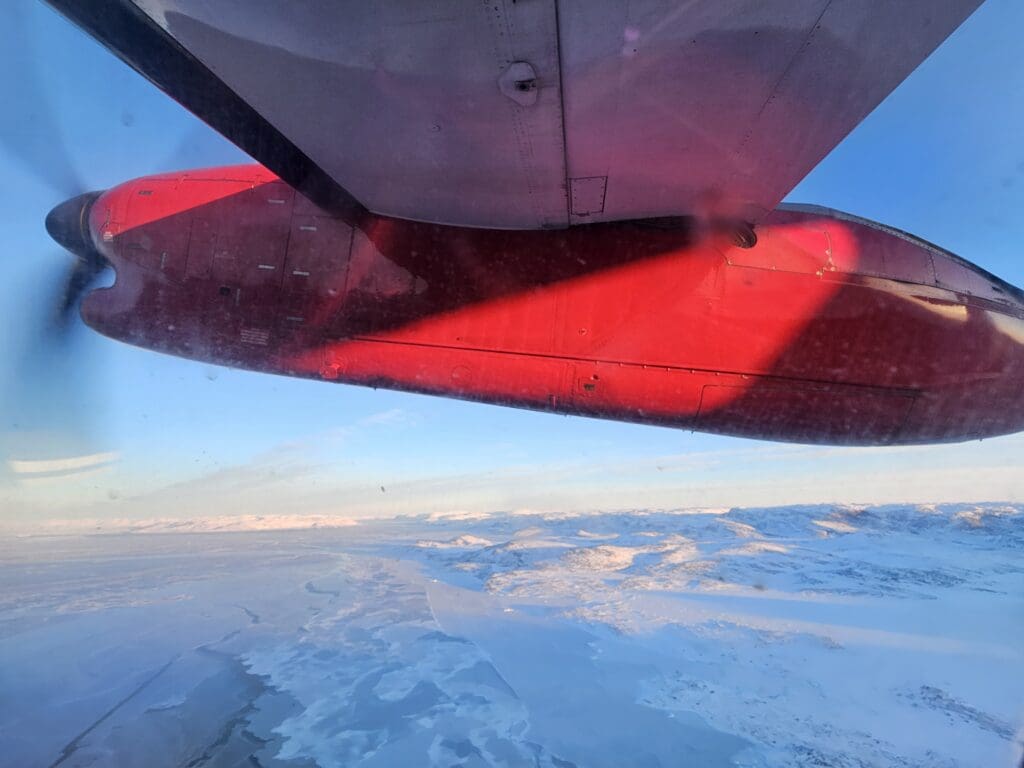
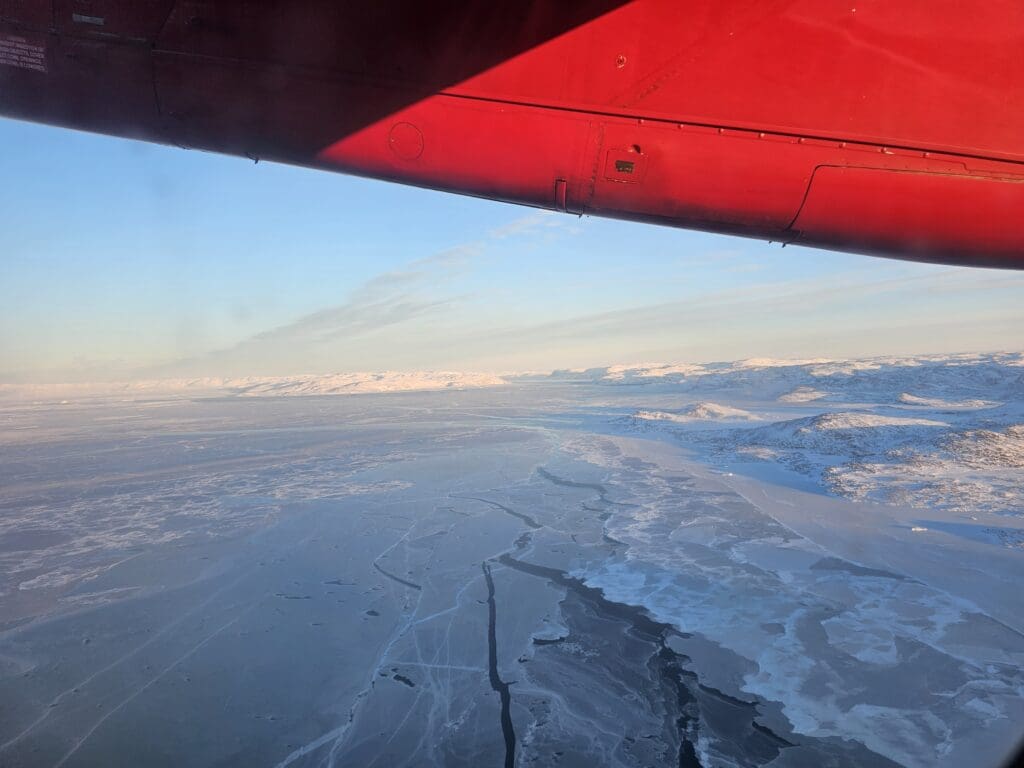
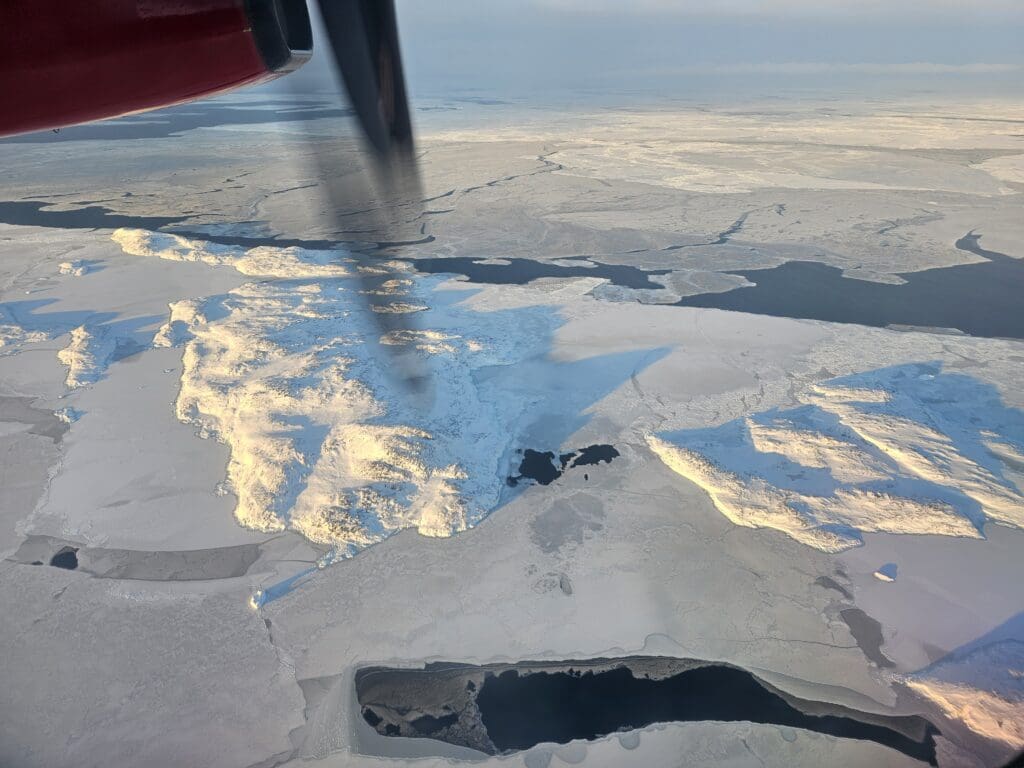
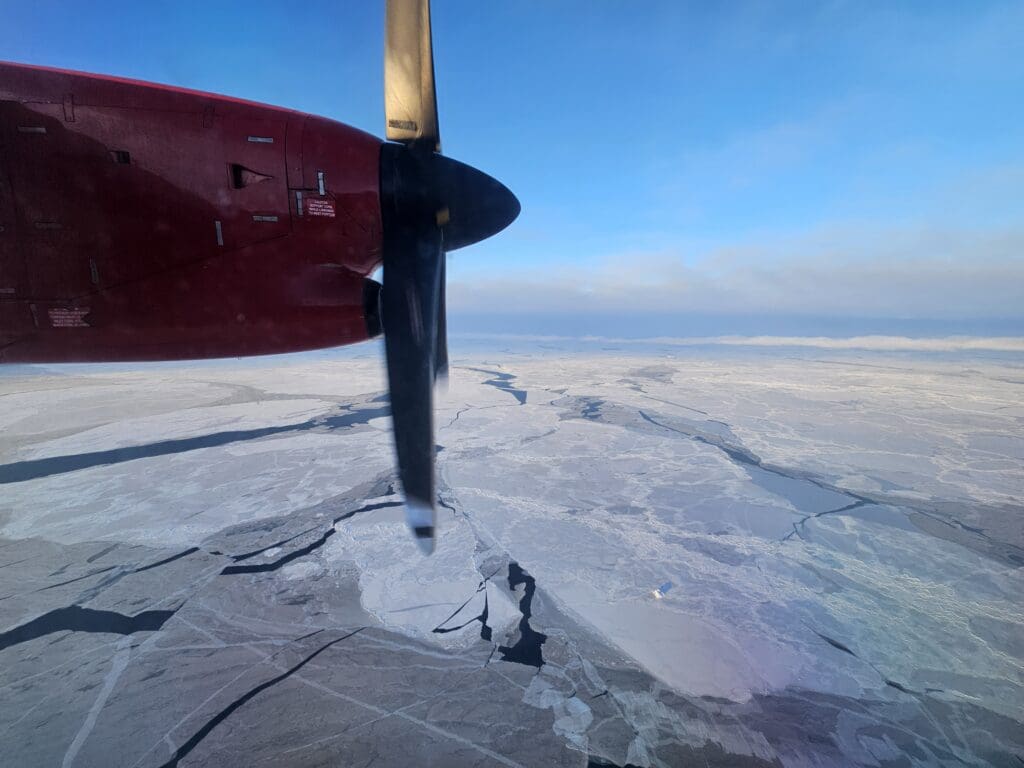
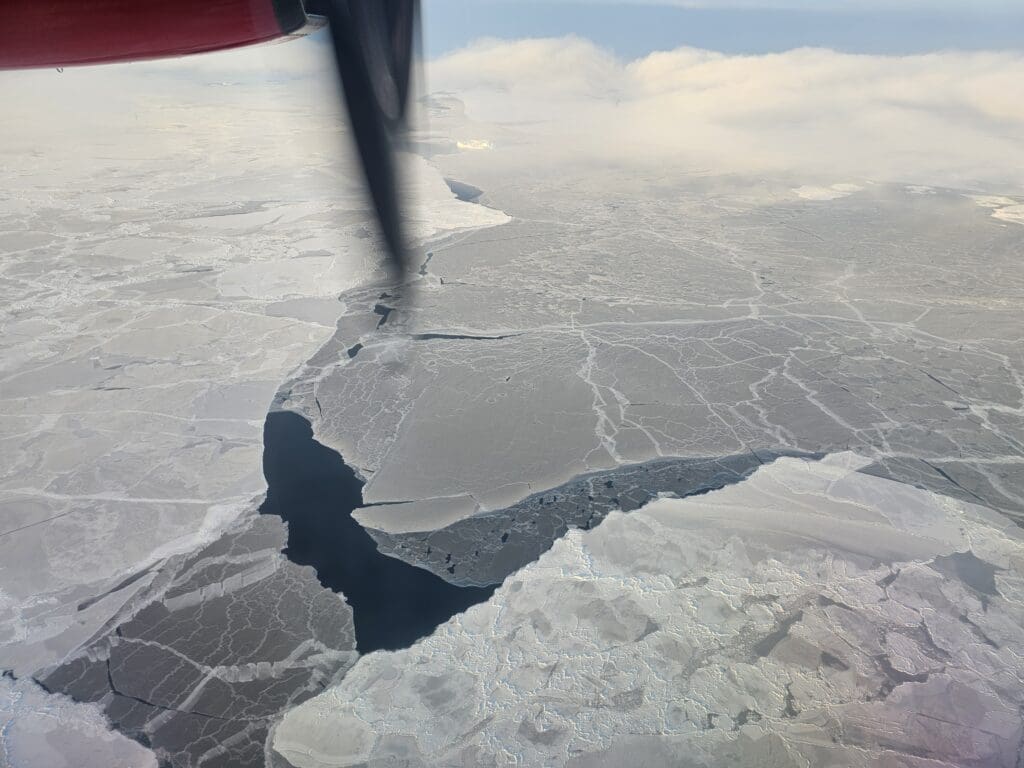
For the first minute or so of the flight, the Dash 8 bounced around a little; however, it wasn’t long before things smoothed out. Upon leaving Ilulissat, the aircraft continued on the runway heading for around a minute or so before turning south and climbing out over the frozen waters of the Disko Bay. During this time, a fantastic view of the impressive icebergs could be seen from the right-hand side of the aircraft, and it appeared that many of my fellow passengers snapped away as we climbed up and made our way past Ilulissat.
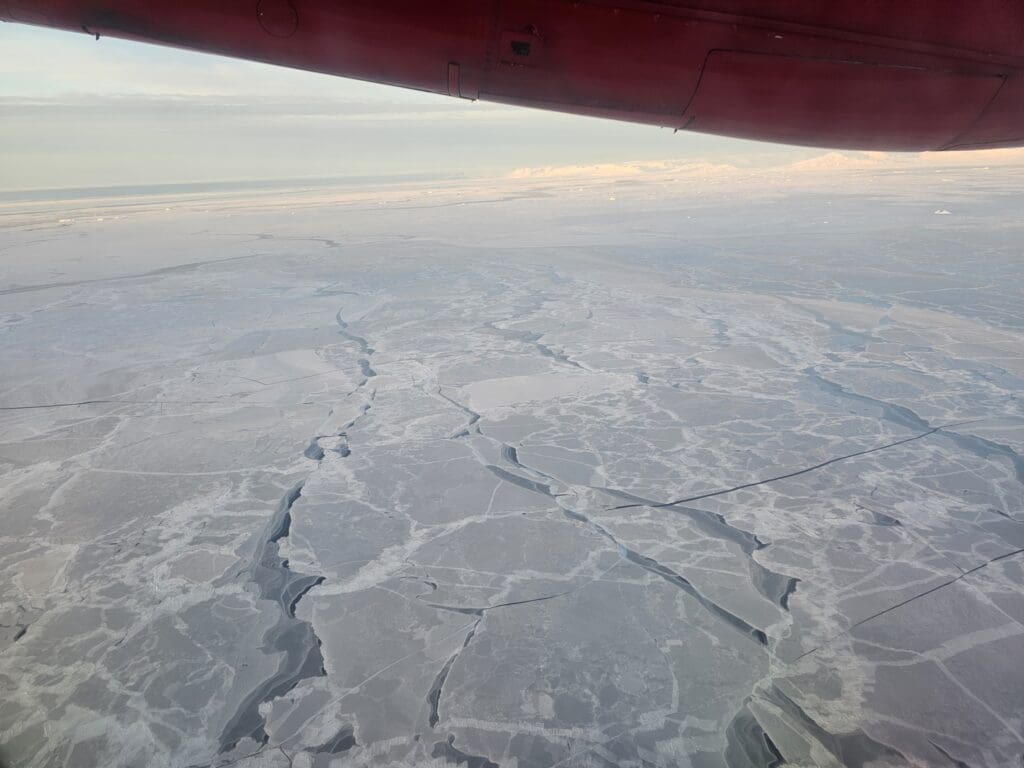
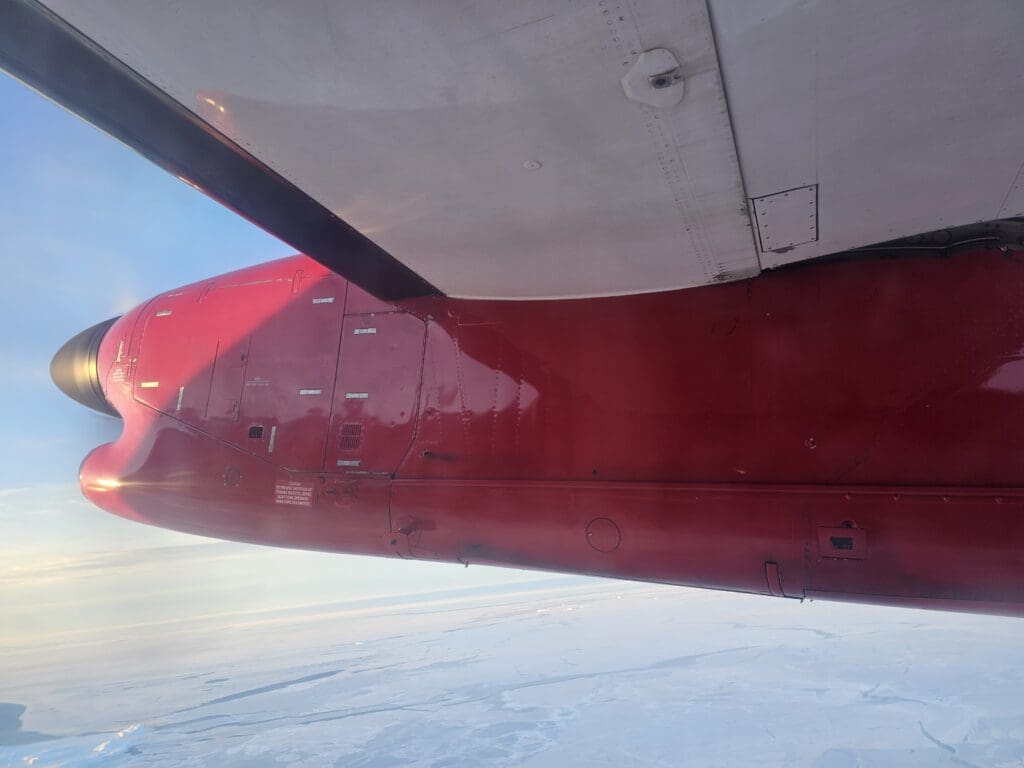
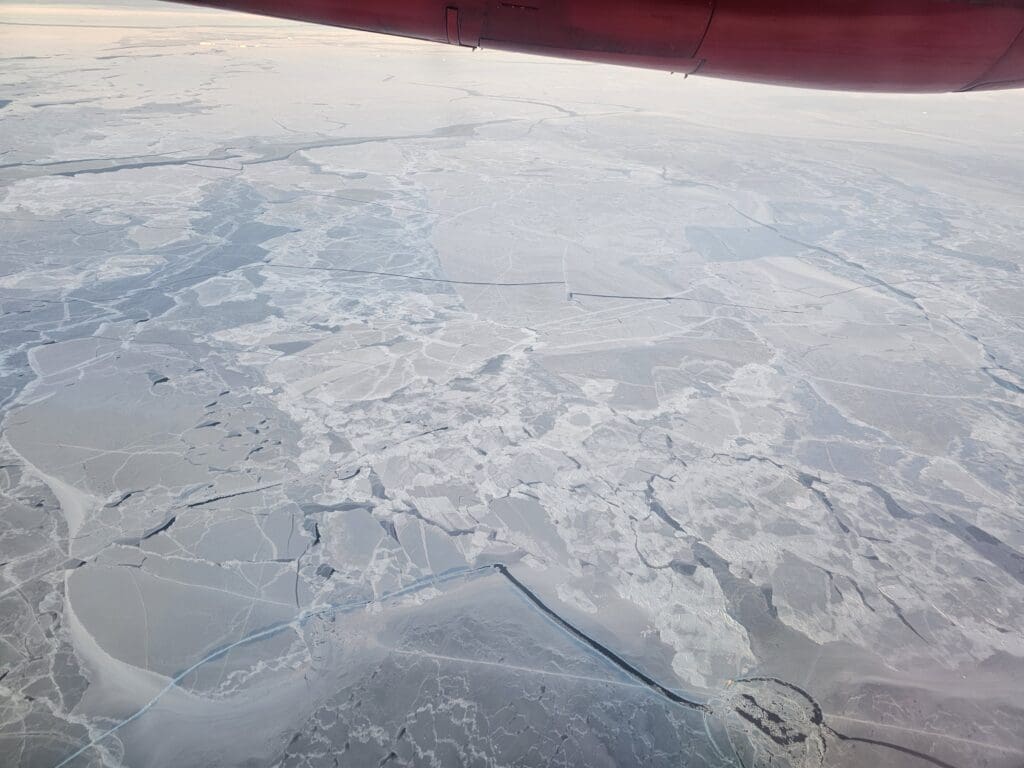
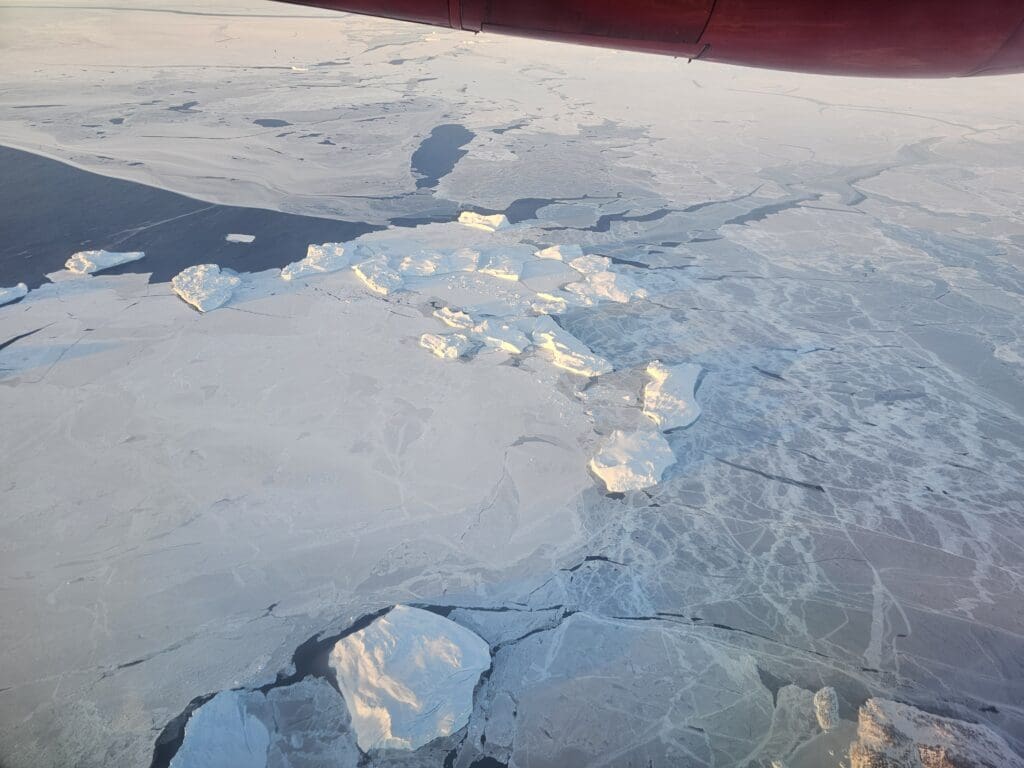
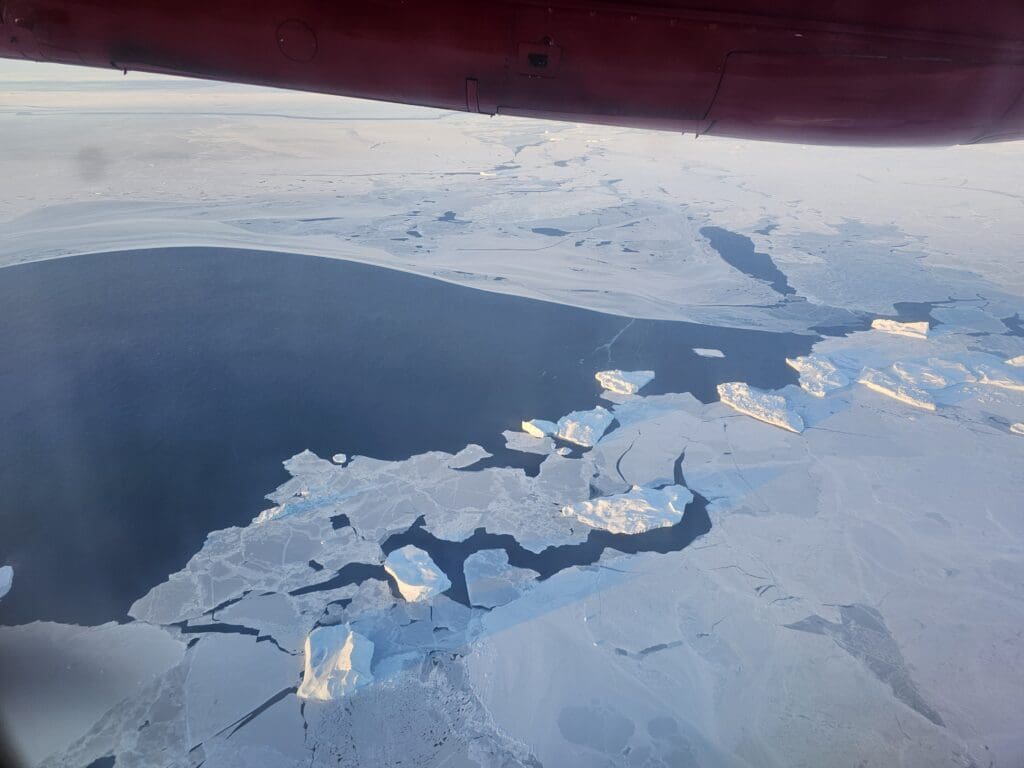
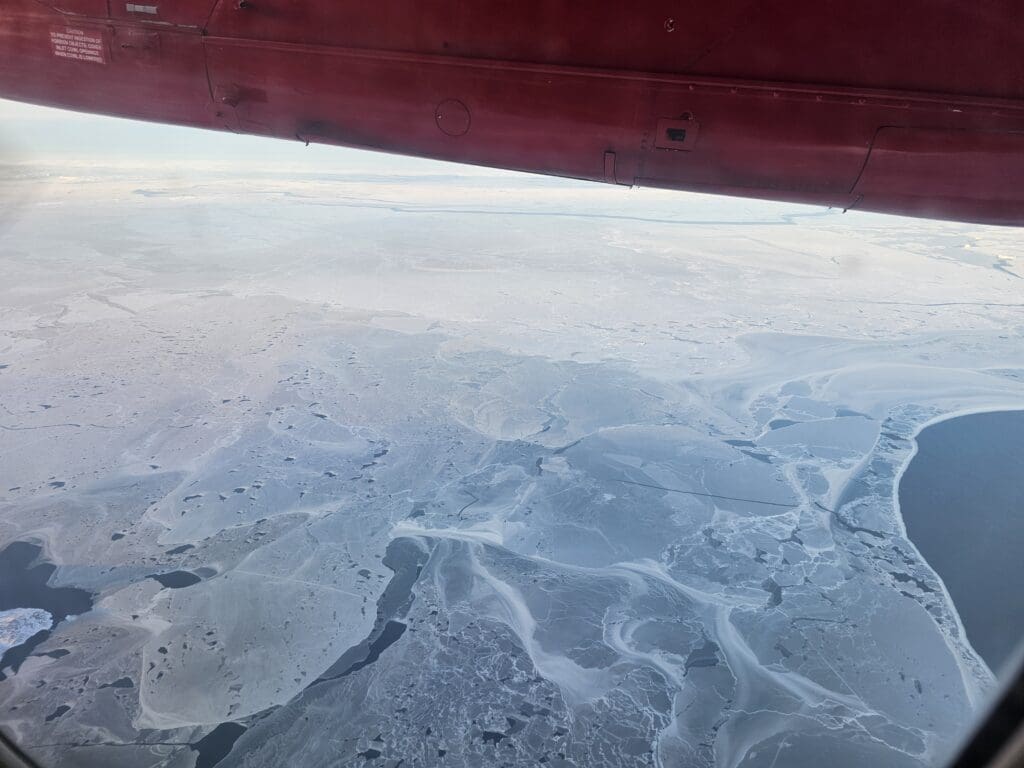
From Ilulissat, we headed almost directly southwards, crossing directly over the town, and soon reaching the coastal village of Ilimanaq a very short time later. With our climb being a relatively smooth affair, it wasn’t long before the seatbelt signs were extinguished, at which point the flight attendant jumped up and closed the curtain at the front of the aircraft as they prepared the onboard service. As on the flight up to Ilulissat, the flight attendant wore noise-cancelling headphones when not serving passengers – the Dash 8 being a noisy working environment!
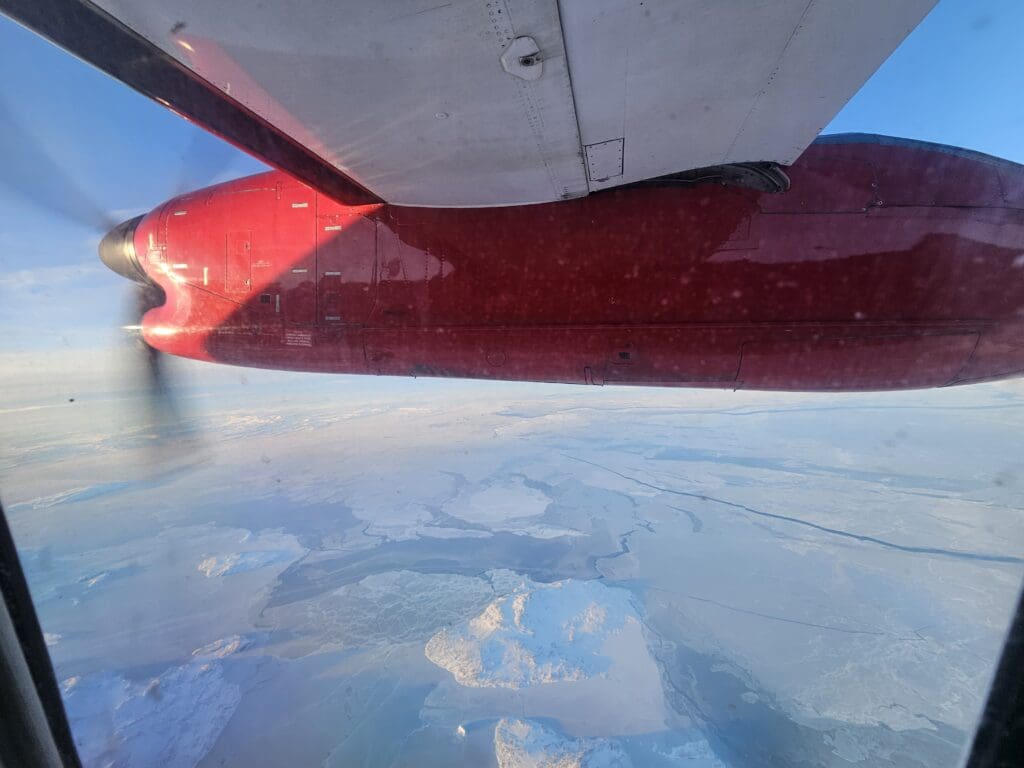
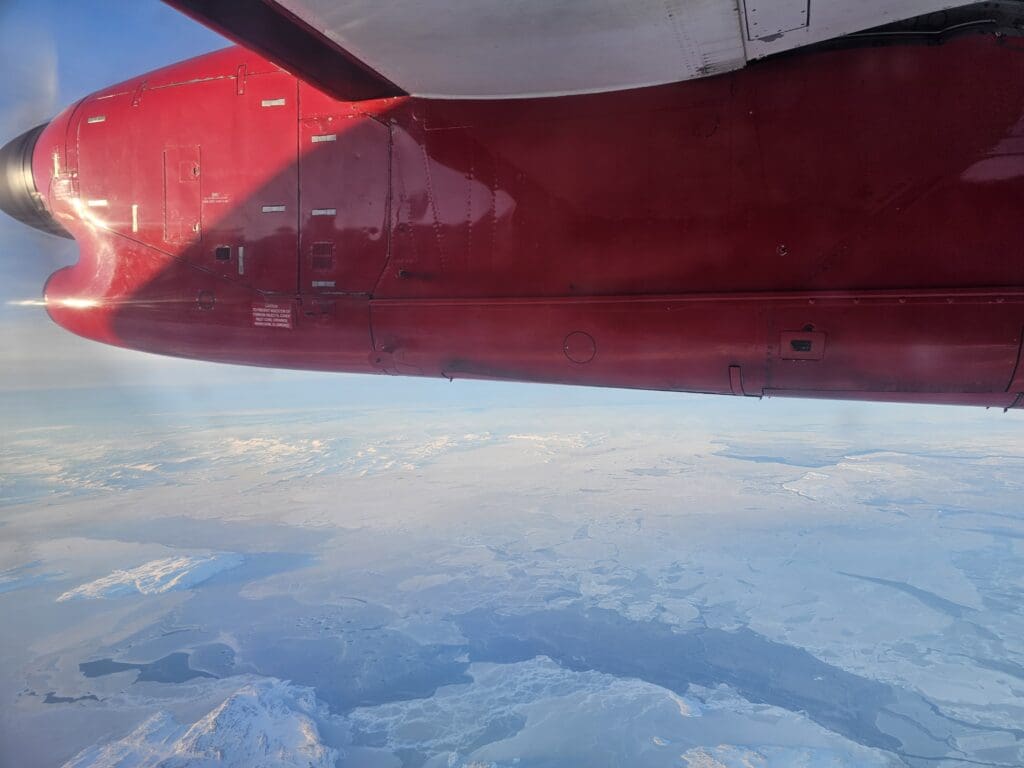
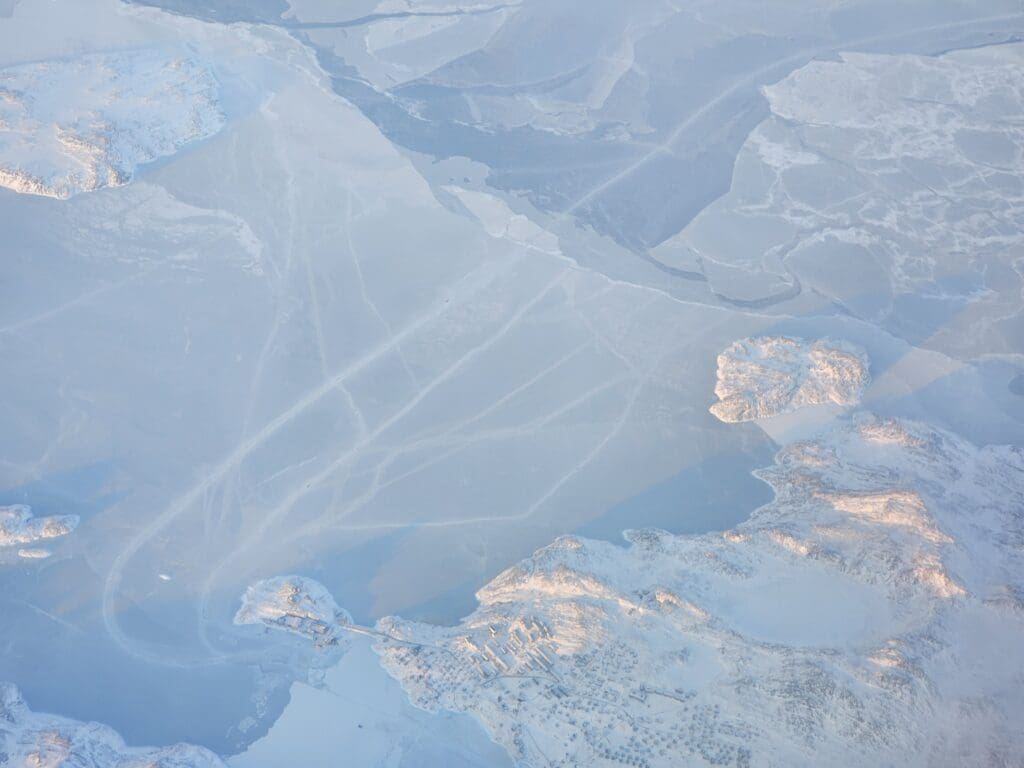
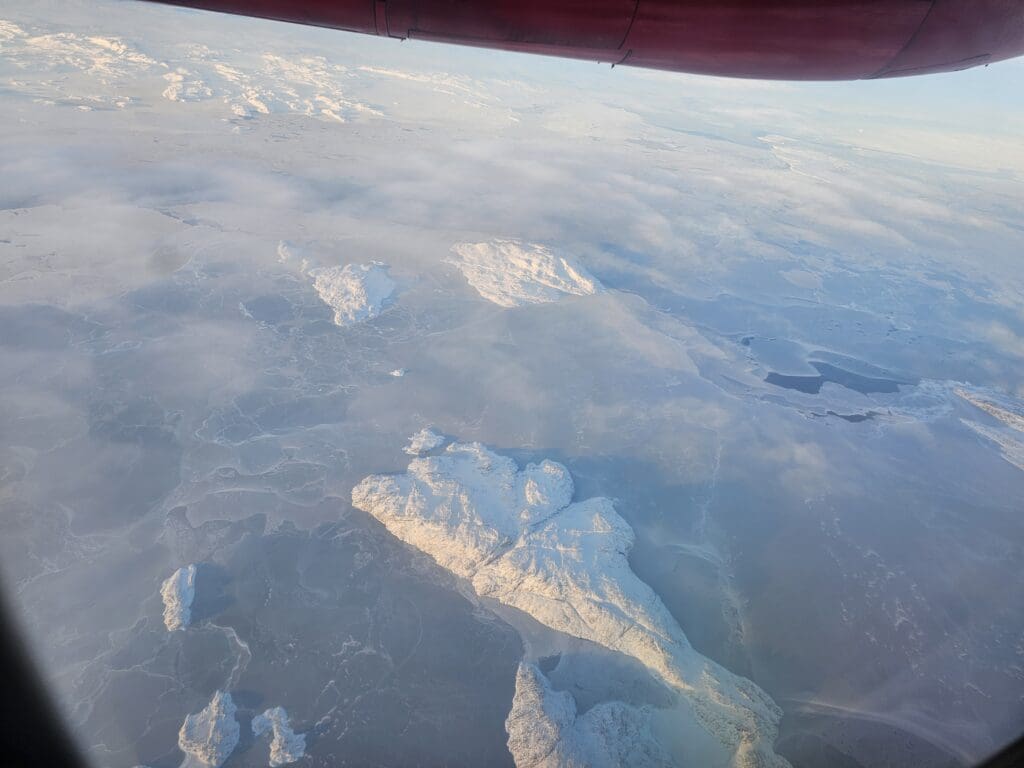
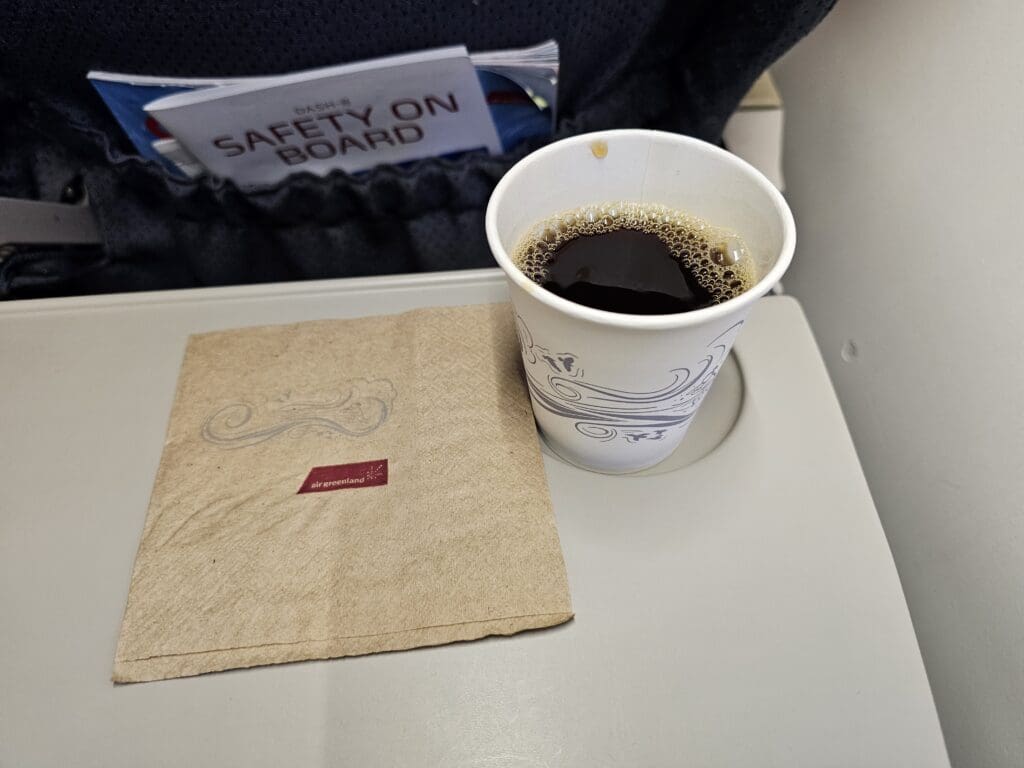
A grand total of twelve minutes after taking to the skies, the Dash 8 levelled off at its cruising altitude of 18,000 feet. At this point in the flight, a coastal settlement appeared which I later deciphered to be Qasigiannguit, Greenland’s thirteenth largest town, connected to Ilulissat and Aasiaat by Air Greenland helicopters. As we passed this, the flight attendant rolled out the cart and began serving passengers complimentary tea and coffee. Upon making it to my row, I opted for a coffee, which was served to me in a pleasant and friendly manner, with this coming in a nicely branded Air Greenland paper cup along with a serviette.
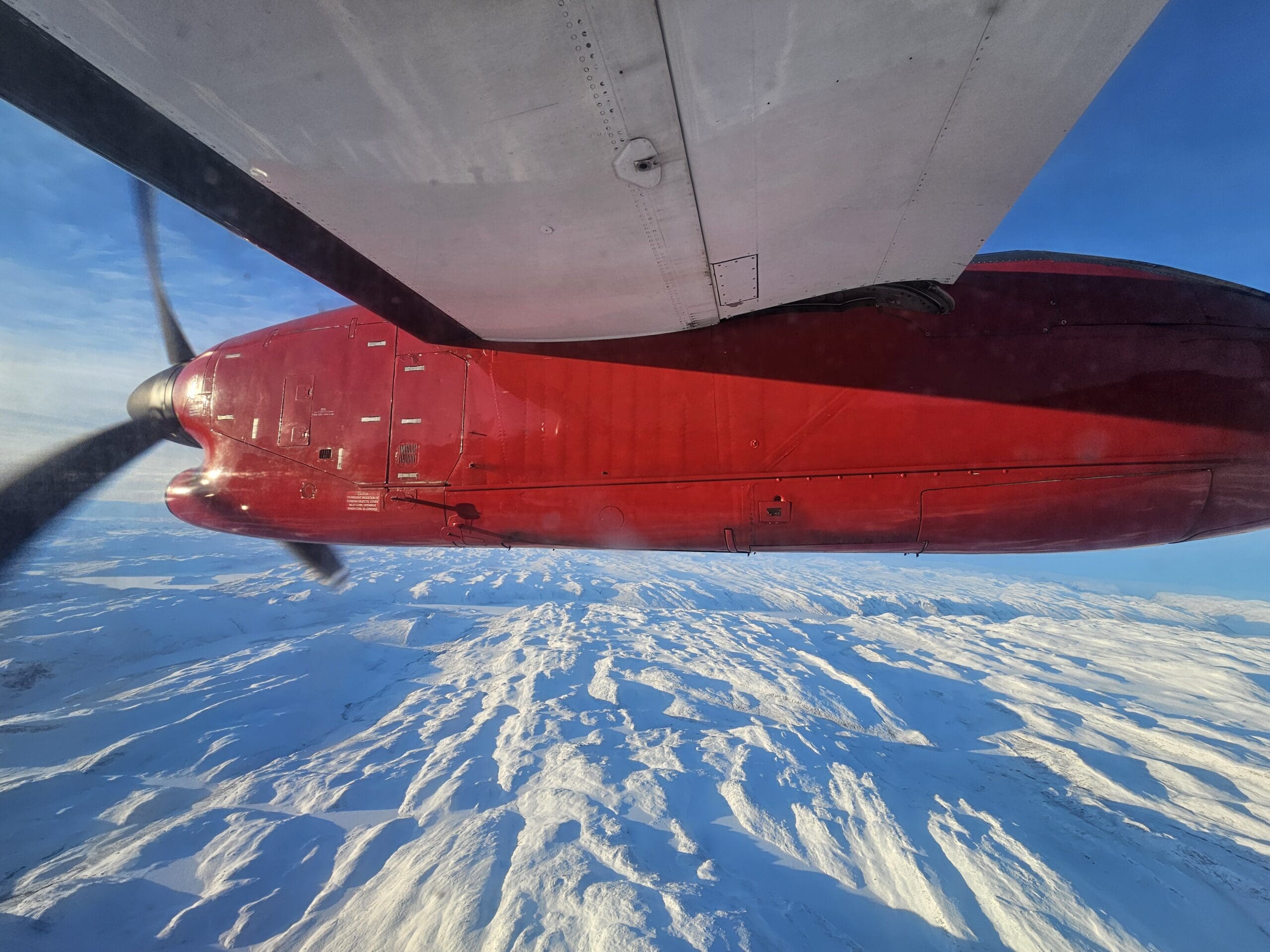
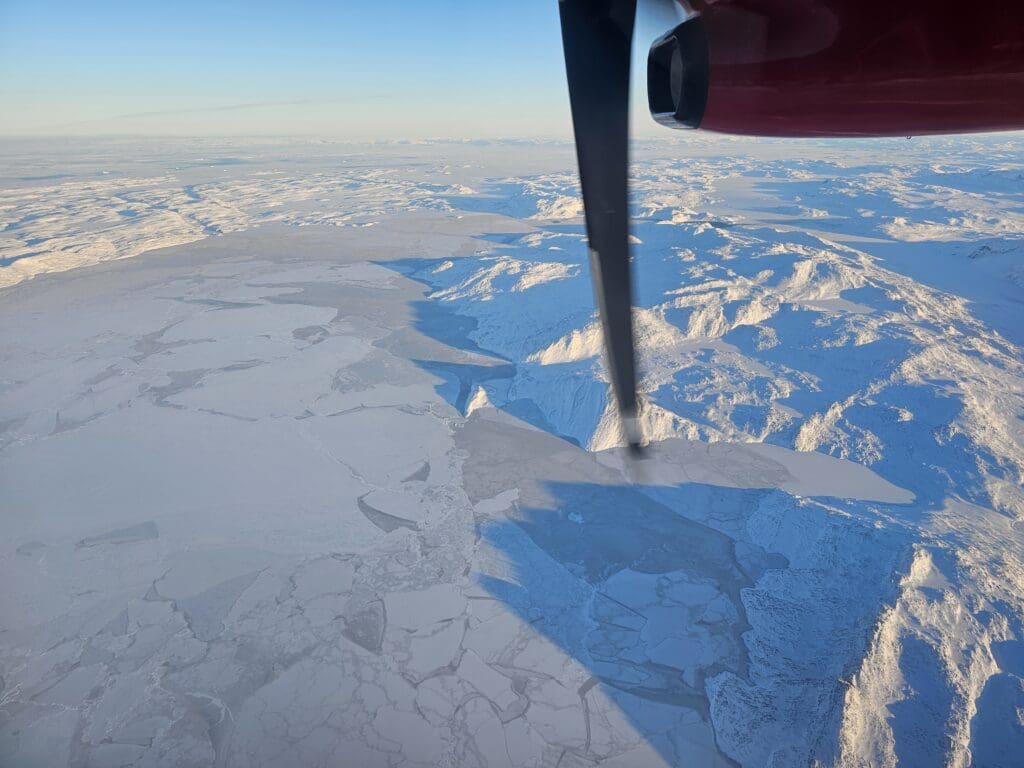
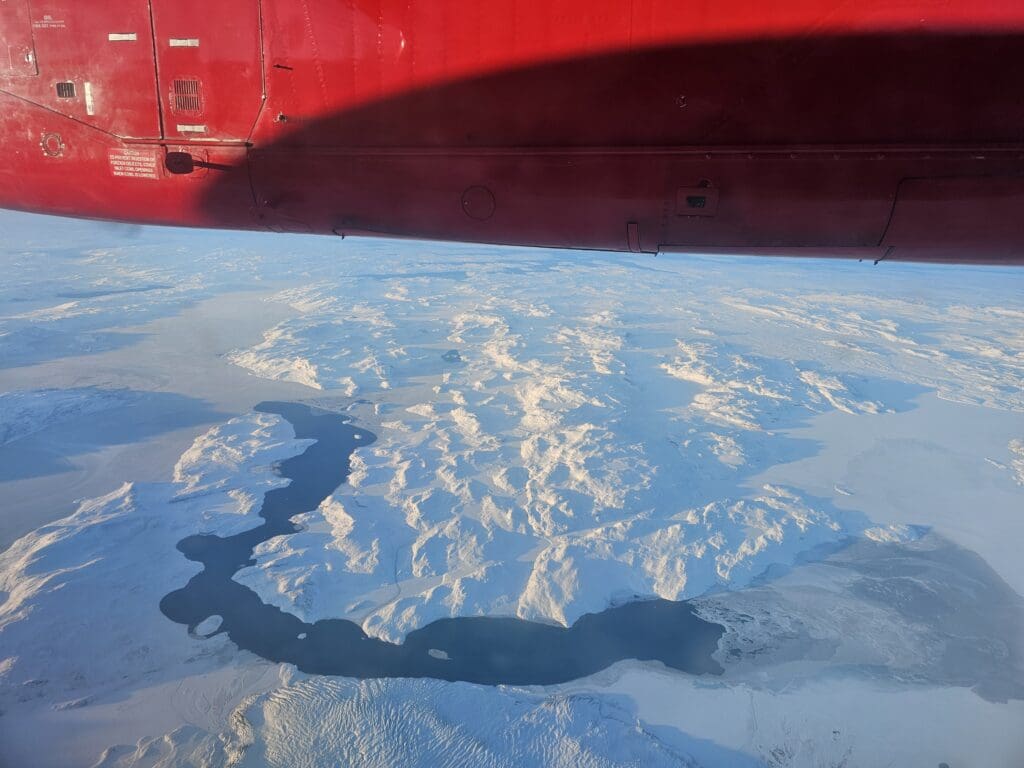
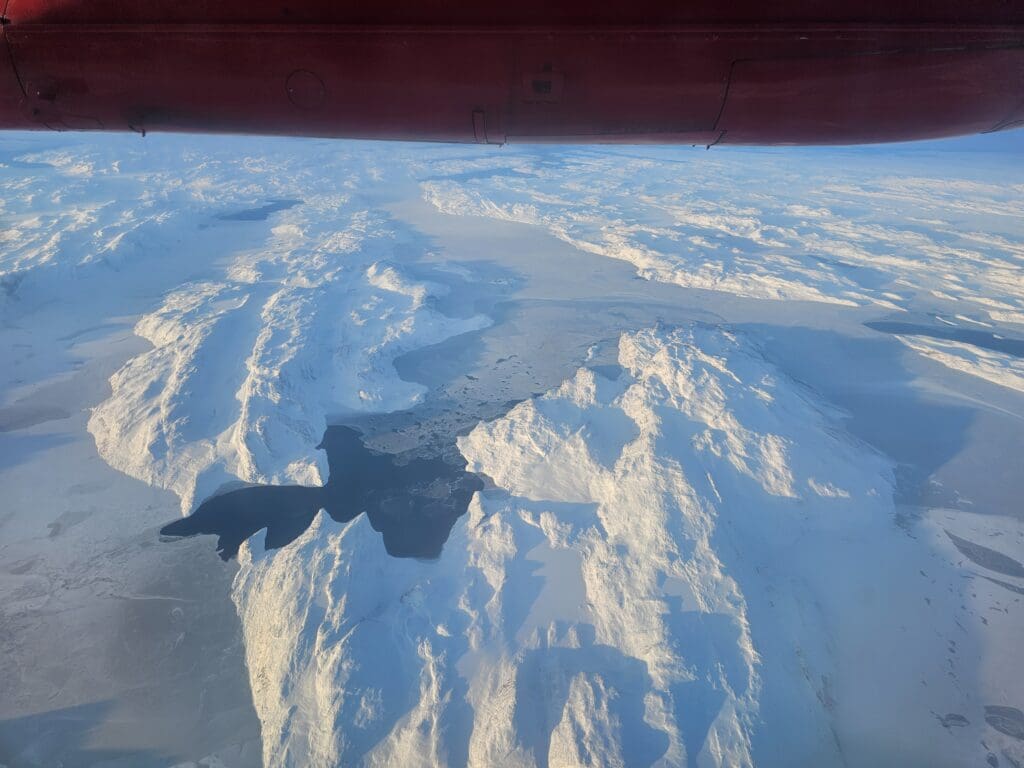
As I sipped my coffee, I watched as the amazing scenery passed below, consisting of icebergs, hills, mountains and snow-covered fjords, with few signs of human life seen below as we buzzed through the skies on our journey southwards. In the distance, the Atlantic Ocean could be seen as we skirted along the western coastline of Qeqertalik. Inside the cabin, those who weren’t fixated on the passing scenery appeared to be either sleeping or engaging in conversation with their fellow passengers, and I overheard several flyers swapping travel stories from their adventures across the world and showing one another their travel snaps from Greenland.
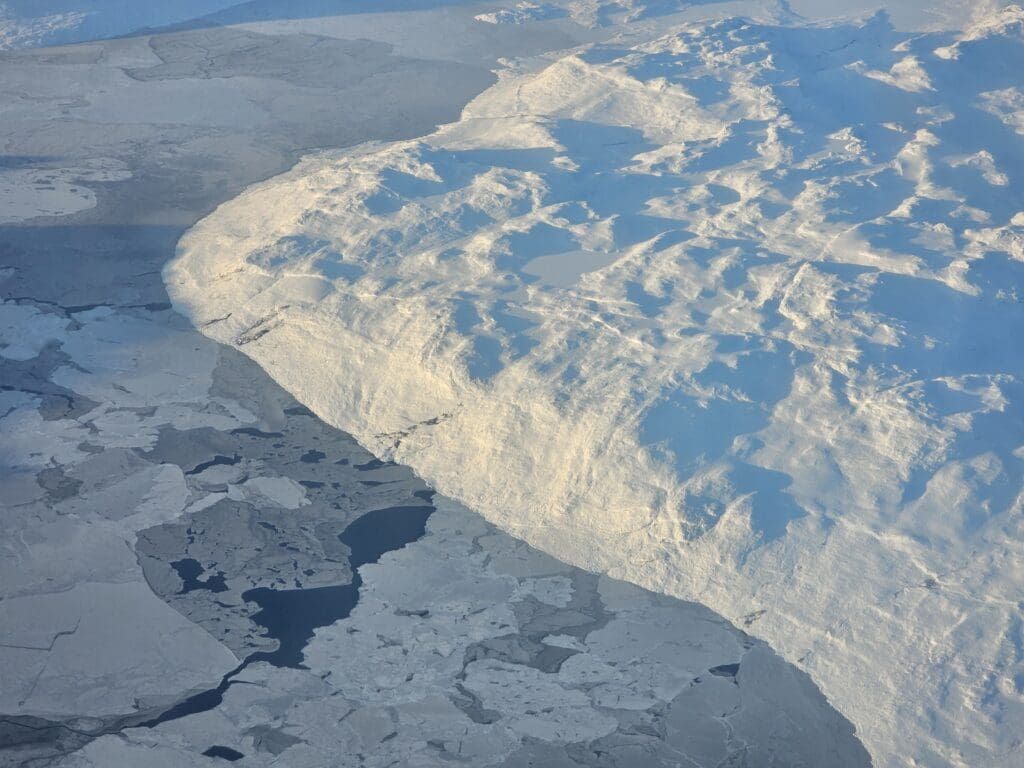
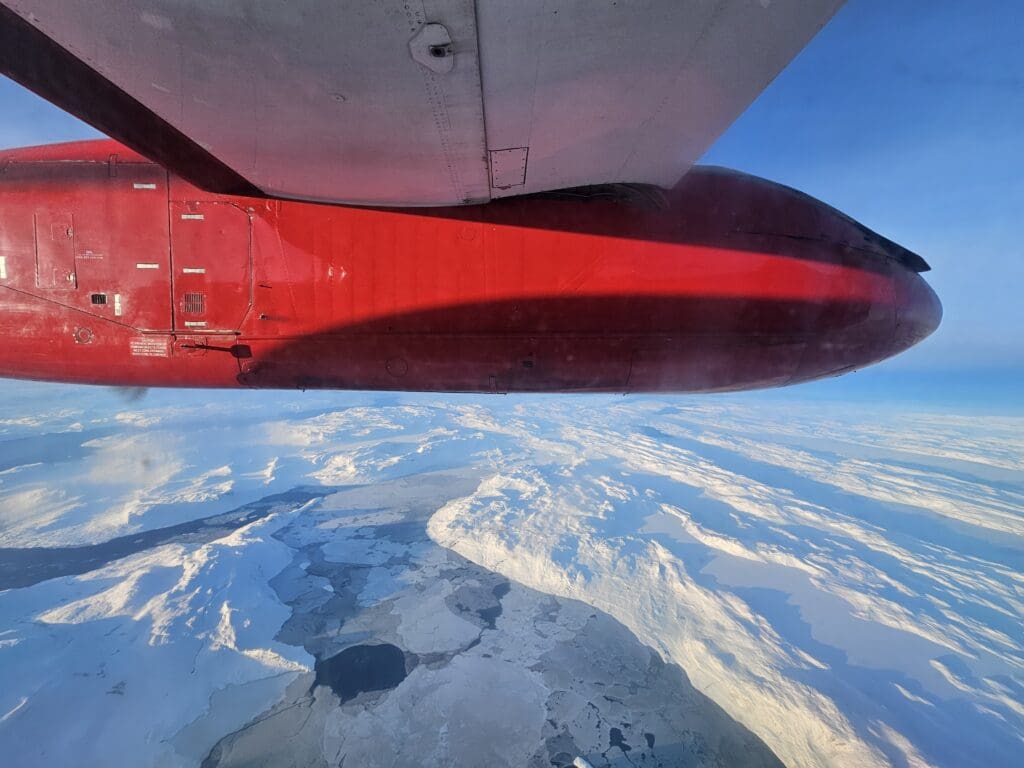
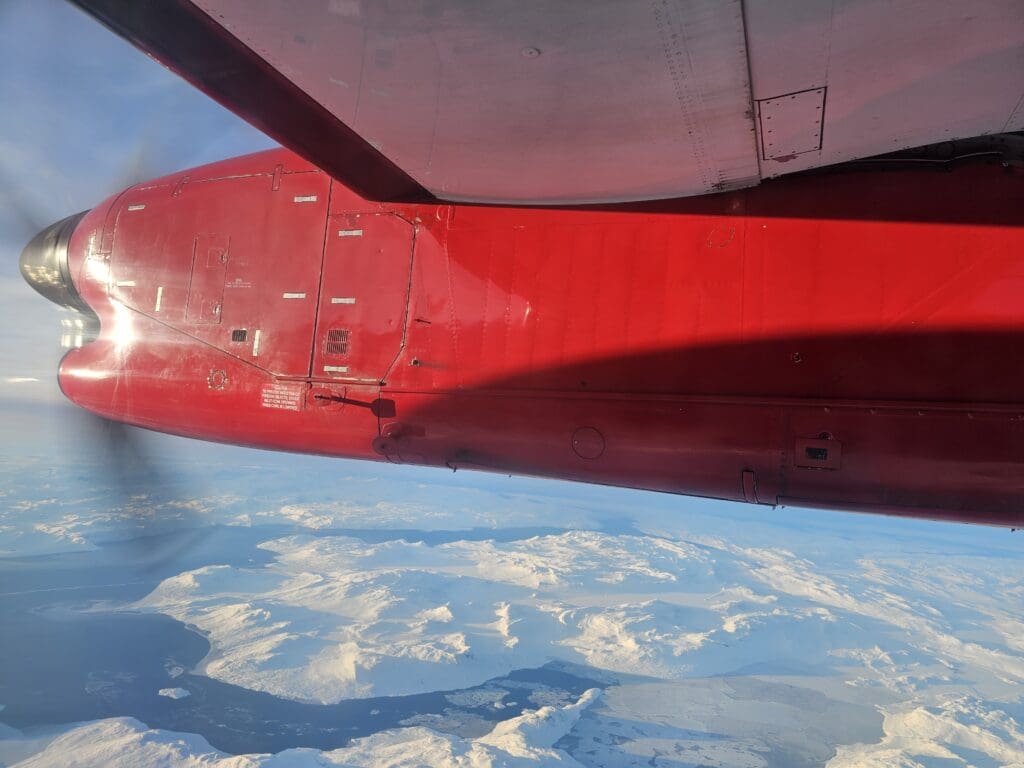
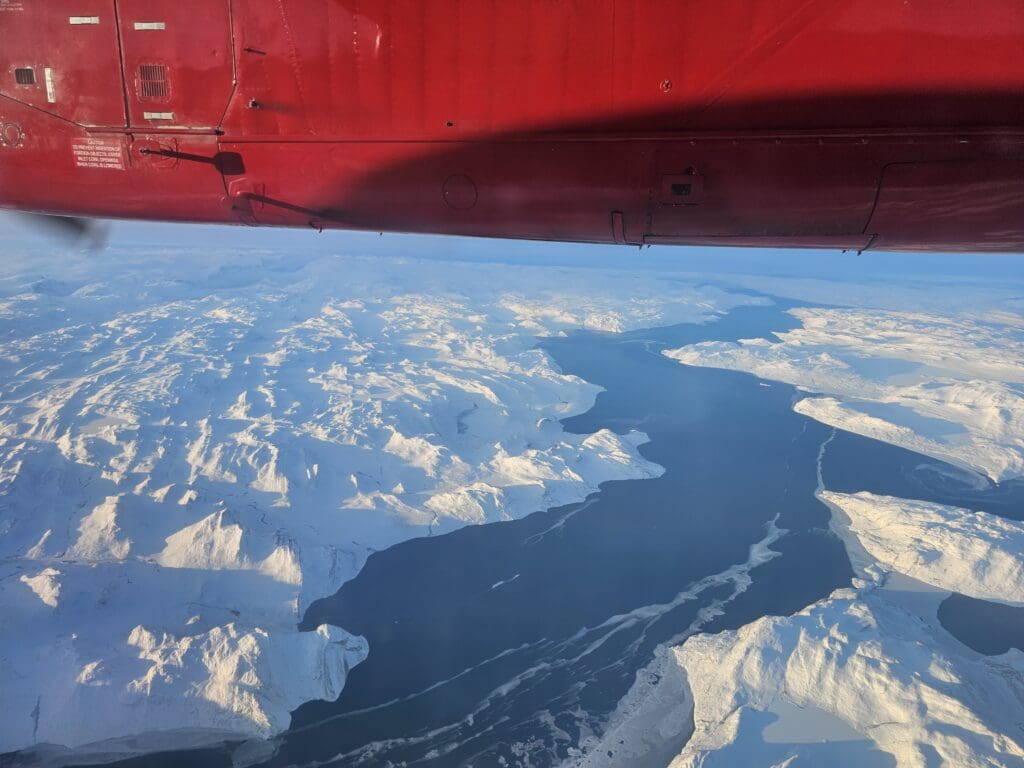
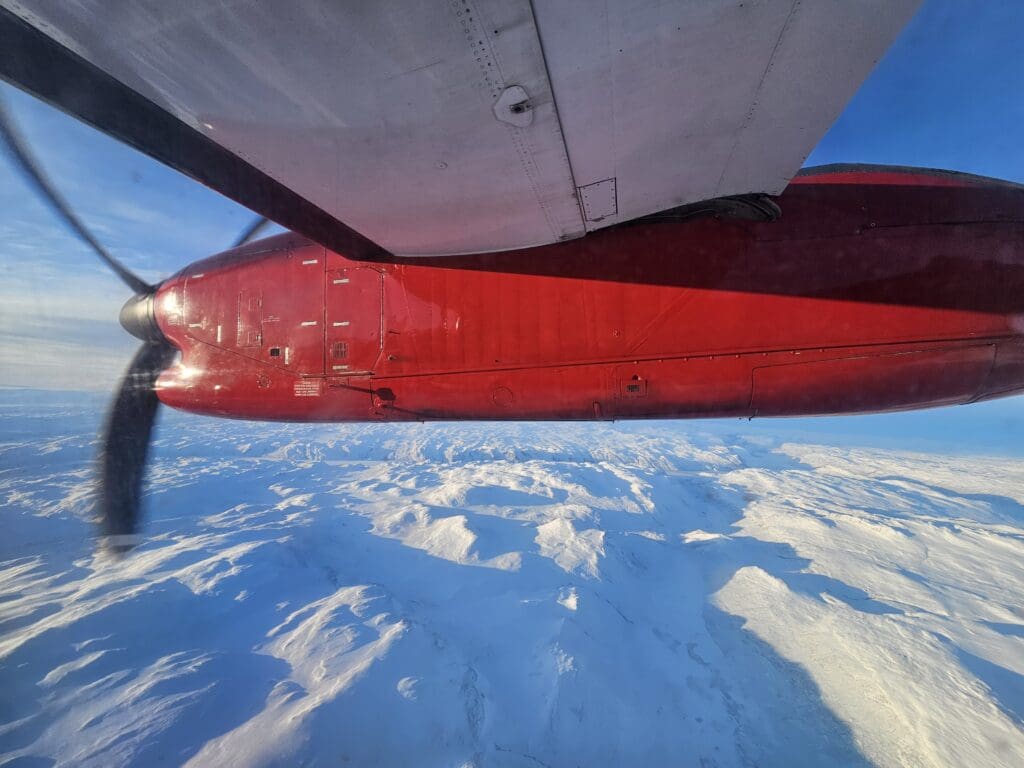
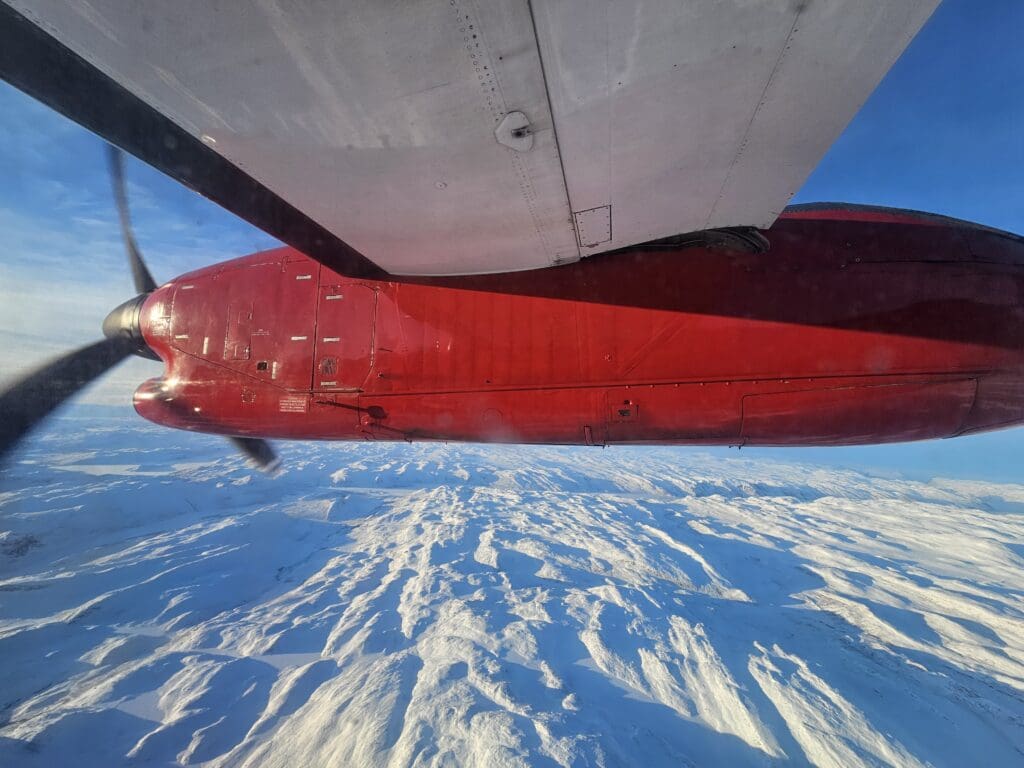
At 1200, the flight attendant emerged from the galley and passed through the cabin collecting passengers’ rubbish. Several minutes later, the noise from the two engines decreased very slightly, and the Dash 8 could be felt leaving its cruising altitude at the start of its journey back to Earth. At this time, a loud ding could be heard as the seatbelt signs were re-illuminated before the captain performed the first announcement from the flight deck during the flight. This was conducted in Danish and English and consisted of an update of the ‘very nice weather’ in Kangerlussuaq, with sunshine and a temperature of -32 degrees, as well as a mention that we could expect to land in ten minutes’ time. Immediately after this, the flight attendant performed a trilingual announcement going through all the usual pre-arrival warnings and instructions before passing through the cabin, ensuring that all was secure for our arrival.
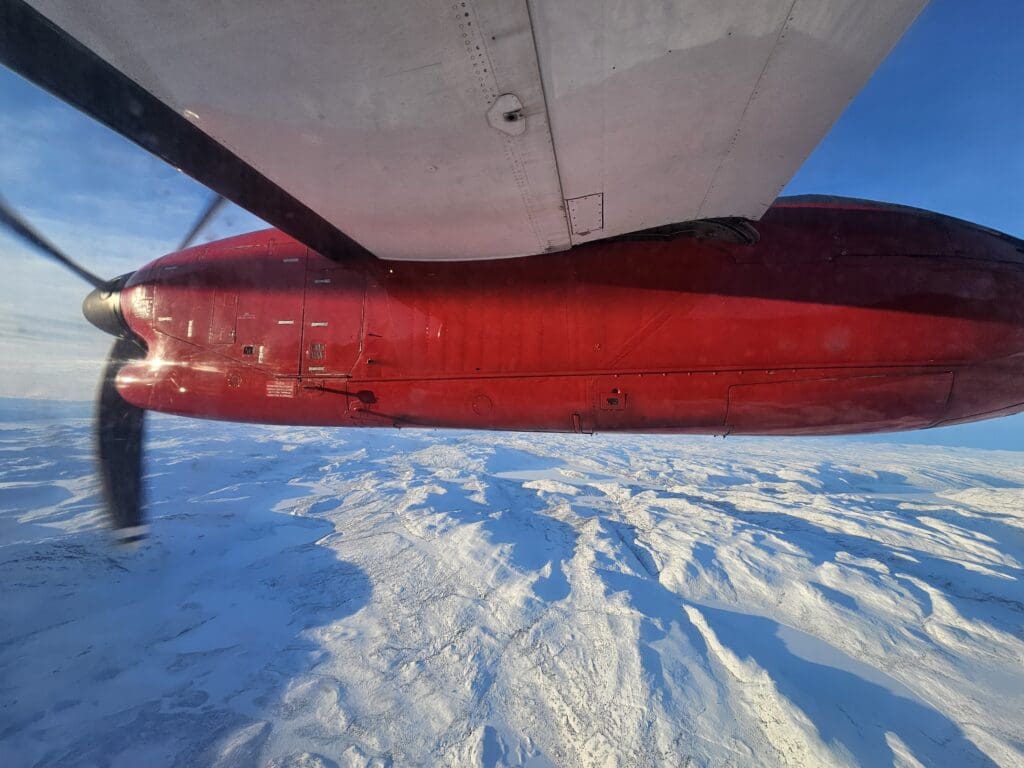
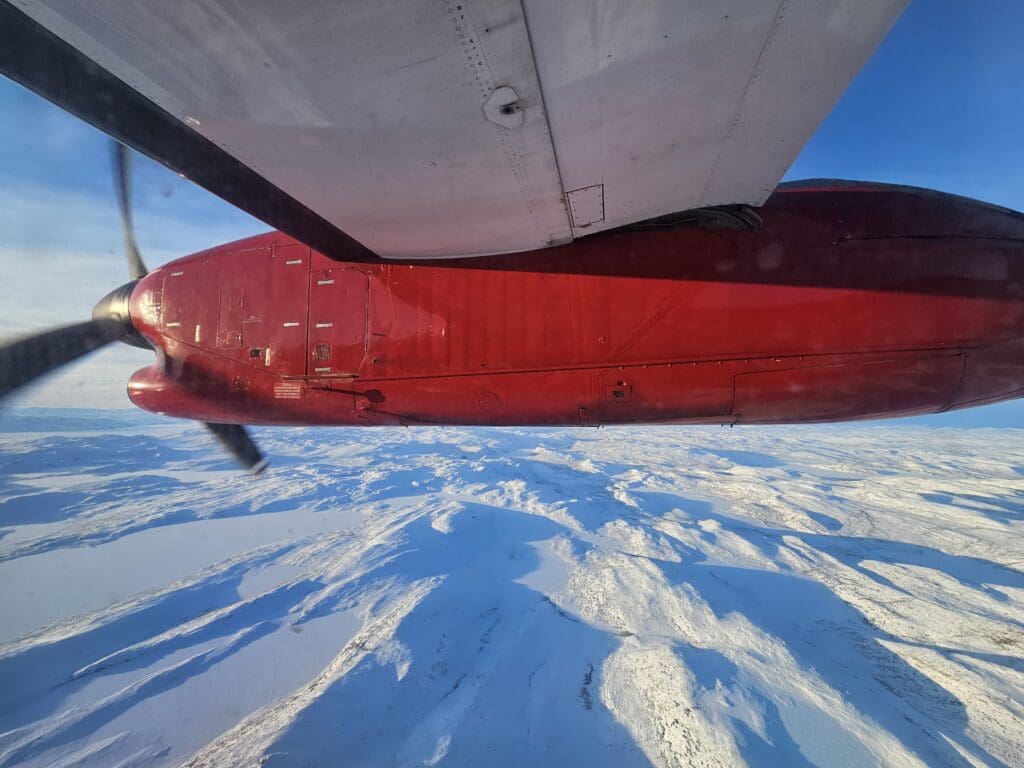
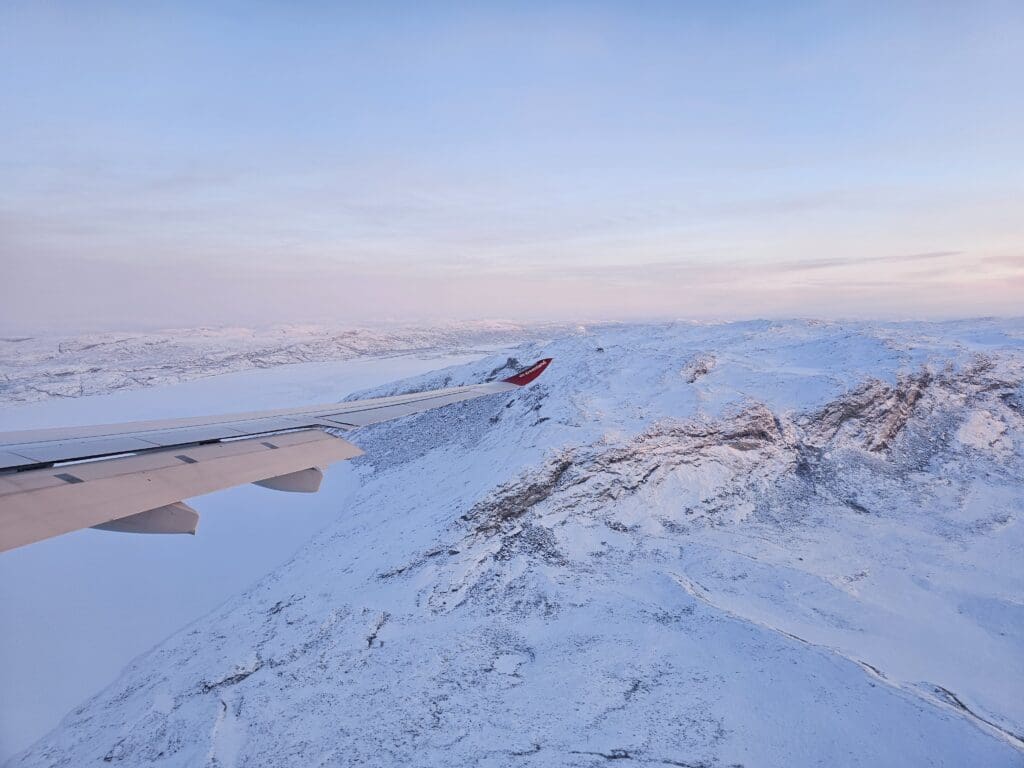
Descending lower and lower, a fantastic view was offered of the isolated icy and rocky landscapes below, where no signs of human life could be seen for miles around. A short time and a few bumps later, the Dash 8 passed a short distance above the peaks that line the north side of Kangerlussuaq Fjord as the flaps and landing gear fell into position before we lined up for an approach to Runway 09.
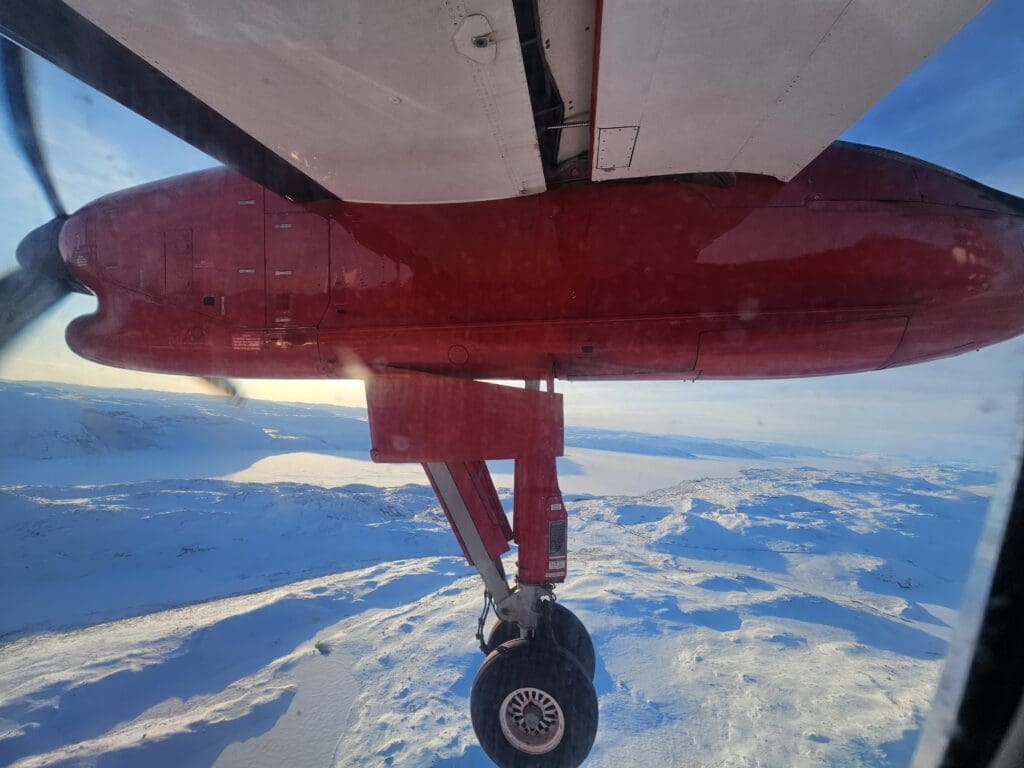
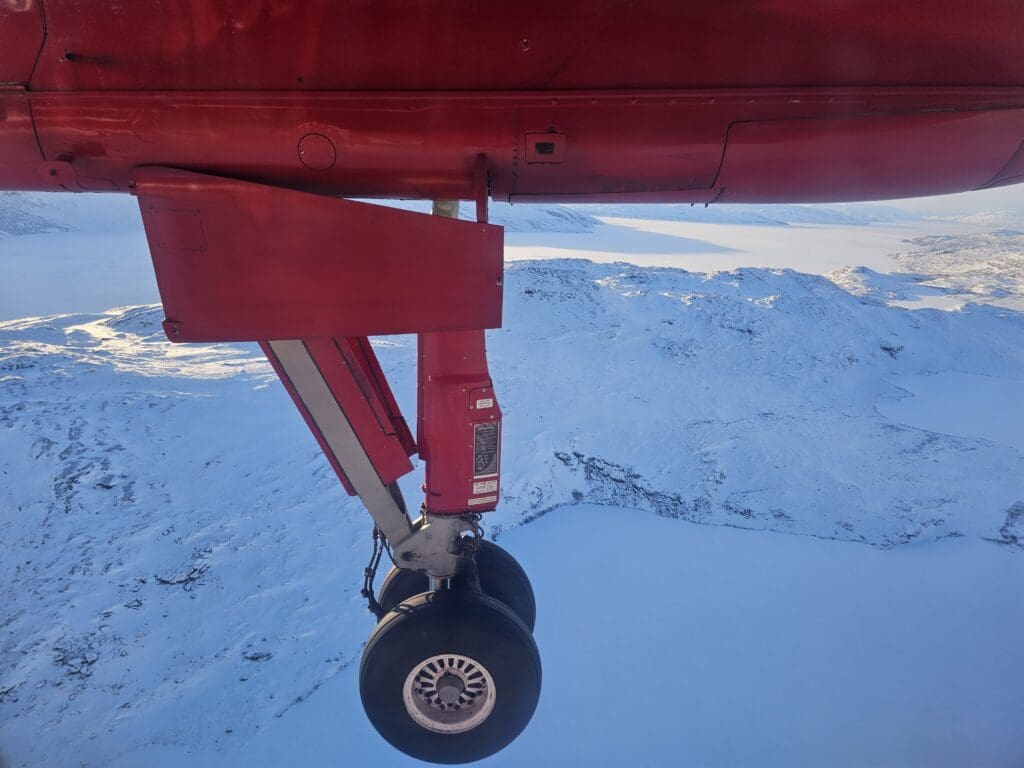
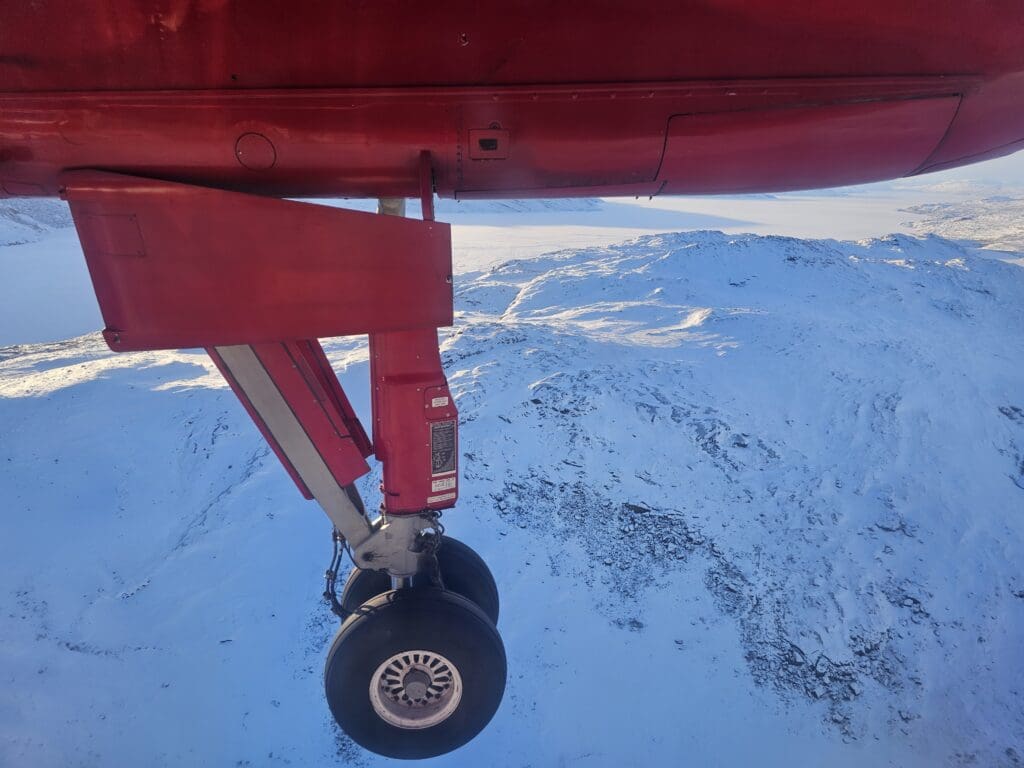
Flying east along the fjord and towards the ice sheet, soon enough, the Dash 8 dashed over the airport’s perimeter fence before making a soft touchdown on the runway. Unlike many of Greenland’s other regional airports, there is most certainly no shortage of runway in Kangerlussuaq and with the apron located at the far end of this, the Dash 8 decelerated rather gently likely so as to avoid a longer than required taxi time. As we slowed, the Air Greenland and Danish military Joint Arctic Command hangars came into view, although no aircraft could be seen parked outside at that time. Inside the cabin, the flight attendant welcomed all to Kangerlussuaq and made the usual warnings and instructions requesting passengers to remain seated.
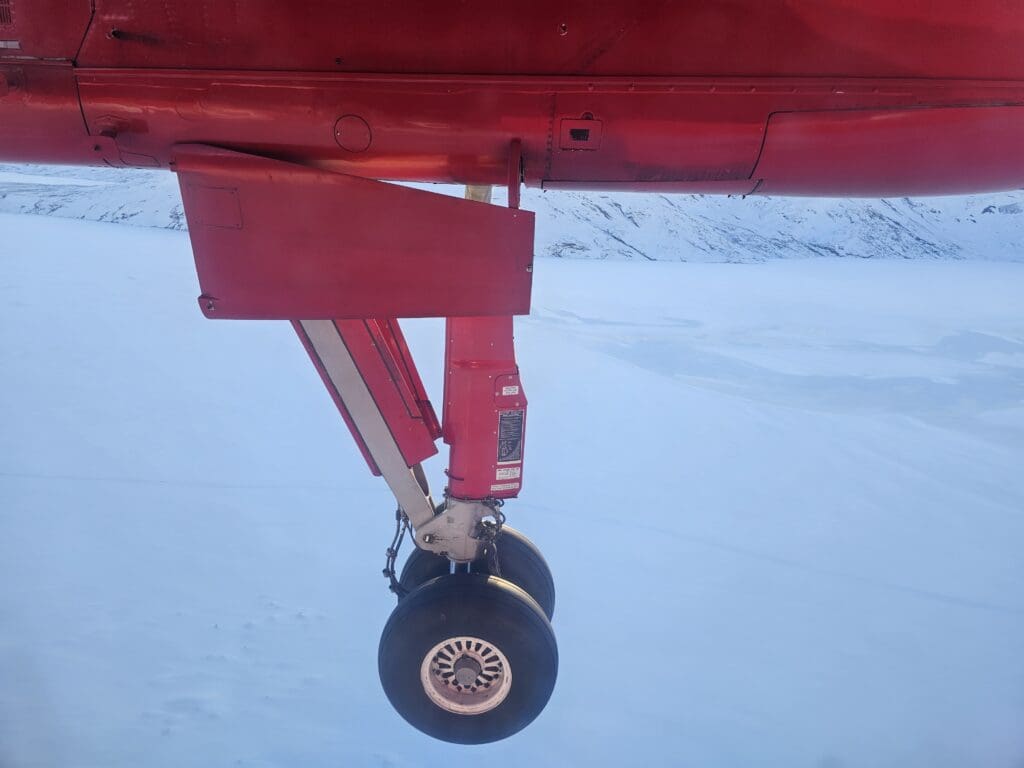
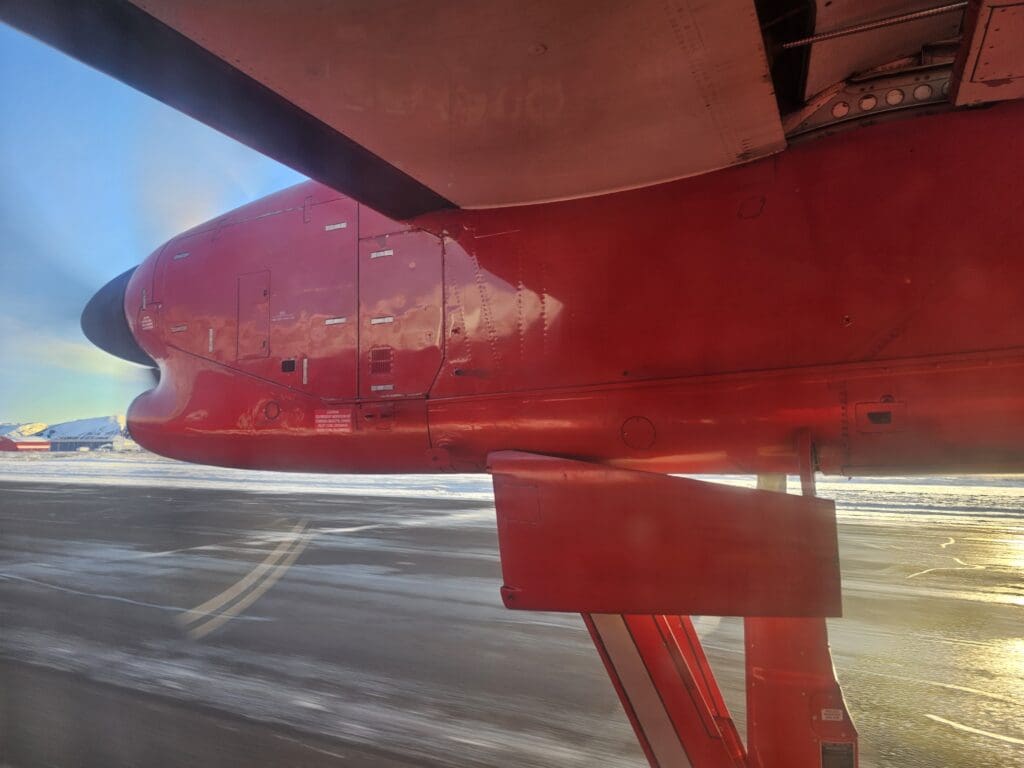
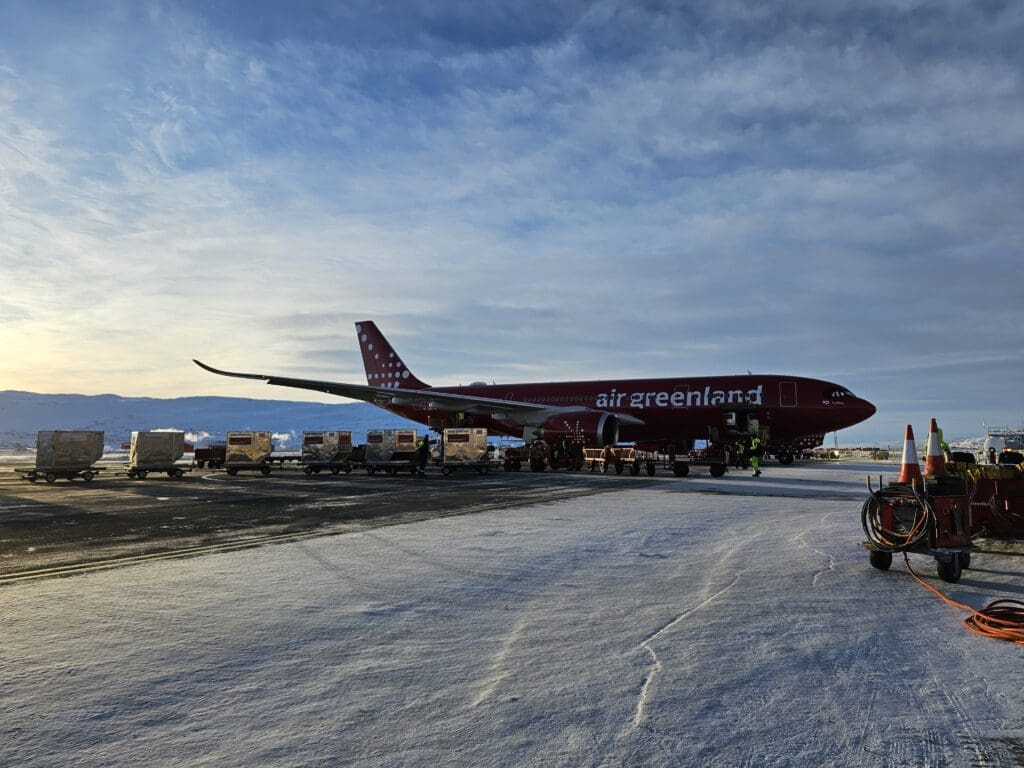
Eventually, the aircraft took a left and made a short taxi to its parking position right next to the Airbus A330 that would be taking me over to Copenhagen in an hour or so. At 1221, the Dash 8 came to a stop, with the engines spooling down and passengers jumping up almost as soon as the seatbelt signs were extinguished. With many of my fellow flyers also connecting, passengers were perhaps a little anxious given the short connection time. However, given the minuscule size of Kangerlussuaq Airport’s terminal, I was not particularly worried about this!
Once the engines spooled down, Greenlandic music rang out through the cabin and the door was soon opened. Much to my surprise given the small size of the apron, passengers would be bussed over to the terminal that lunchtime in one of the airport’s very few buses. Seated near the rear of the aircraft, I ended up being one of the last passengers to disembark and eventually, I stood up, ensuring to take everything with me before heading through the cabin, thanking the flight attendant and heading out into the cold lunchtime air. Soon, the bus headed around the apron and arrived at the tunnel that led to the terminal’s main waiting area. However, thanks to a departing Dash 8, we had to wait for several minutes before disembarkation was permitted. Eventually, a grand total of ten minutes after the aircraft had pulled onto the stand, passengers were allowed to disembark the bus, and I headed straight up into the terminal ready and raring to head off on my next flight.
Summary
Overall, I was pleased with my final Air Greenland Dash 8 dash and was left with absolutely nothing to complain about. The aircraft was clean and comfortable (if not a little battered), the flight attendant was friendly and welcoming, and despite the short flight time, passengers were served tea and coffee. Arriving in Kangerlussuaq in one time and one piece, I was left with absolutely zero reasons not to fly onboard an Air Greenland Dash 8 at some point again in the future.