Iceberg Spotting from an Air Greenland Dash 8: Kangerlussuaq to Ilulissat via Aasiaat
You can read all the background behind this trip on my Airbus A330-800 report from Copenhagen to Kangerlussuaq!
A Bit About Kangerlussuaq Airport
Of all the hub airports that I have been to across the world, Kangerlussuaq Airport was unquestionably the most unique. Home to around five hundred residents, sitting over three hundred kilometres to the north of Greenland’s capital Nuuk and not connected to this by anything other than air, at first glance, Kangerlussuaq does appear to be the logical choice for Greenland’s main air hub. However, despite its apparent illogicalities, Kangerlussuaq Airport has been of vital importance since the 1940s. When you start to examine Greenland’s topography, things start to make a little more sense. Around 80% of Greenland is covered by the ice sheet, and many coastal areas are rough and rocky, therefore, few sites across the country are suitable for a long runway.
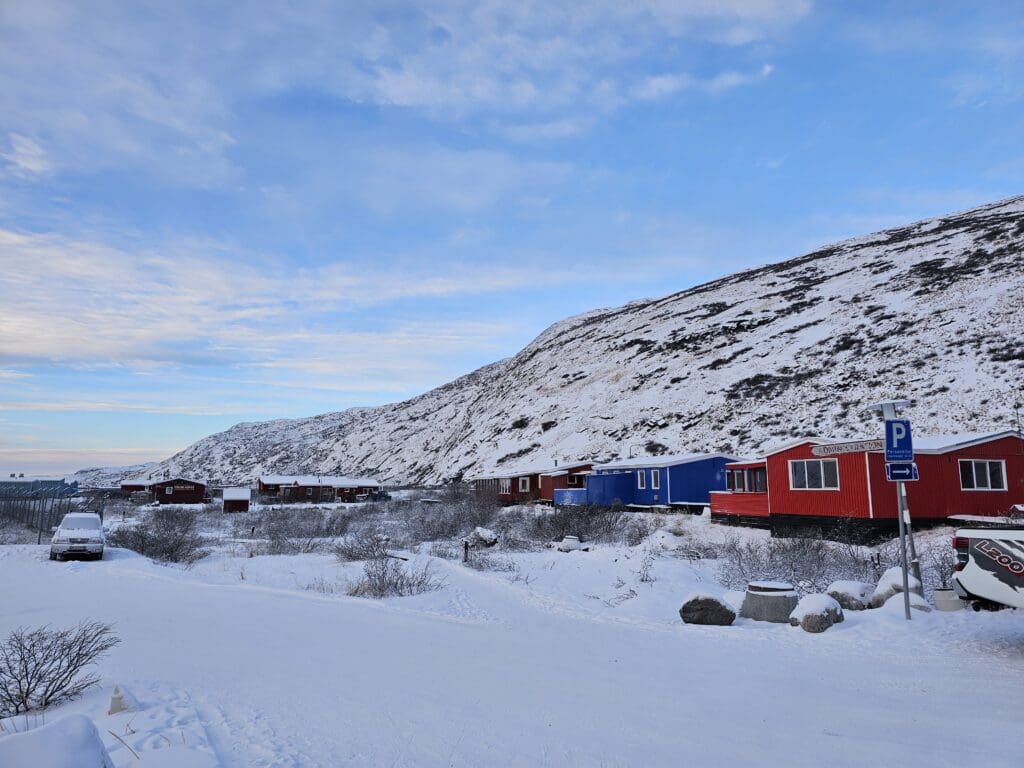
Following the German invasion of Denmark in April 1941, Greenland soon became a temporary protectorate of the United States. Given its location in the North Atlantic, the territory was of significant strategic importance and served as, amongst other things, a vital refuelling stop for American and other Allied aircraft as they were ferried to and from the European Theatre. Thus, once under American control, personnel scouted Greenland in search of prime airfield estate. In total, fifteen sites were deemed to be suitable enough to support the construction of an airfield, one of which sat alongside Kangerlussuaq Fjord. There, they discovered a decent stretch of flat land flanked on three sides by high rocky terrain, providing easy access to the Atlantic Ocean during the summer months when the fjord wasn’t frozen over. In October 1941, construction of an airfield commenced, and despite the harsh winter conditions, in April 1942, Bluie West-8 Air Base opened for business.
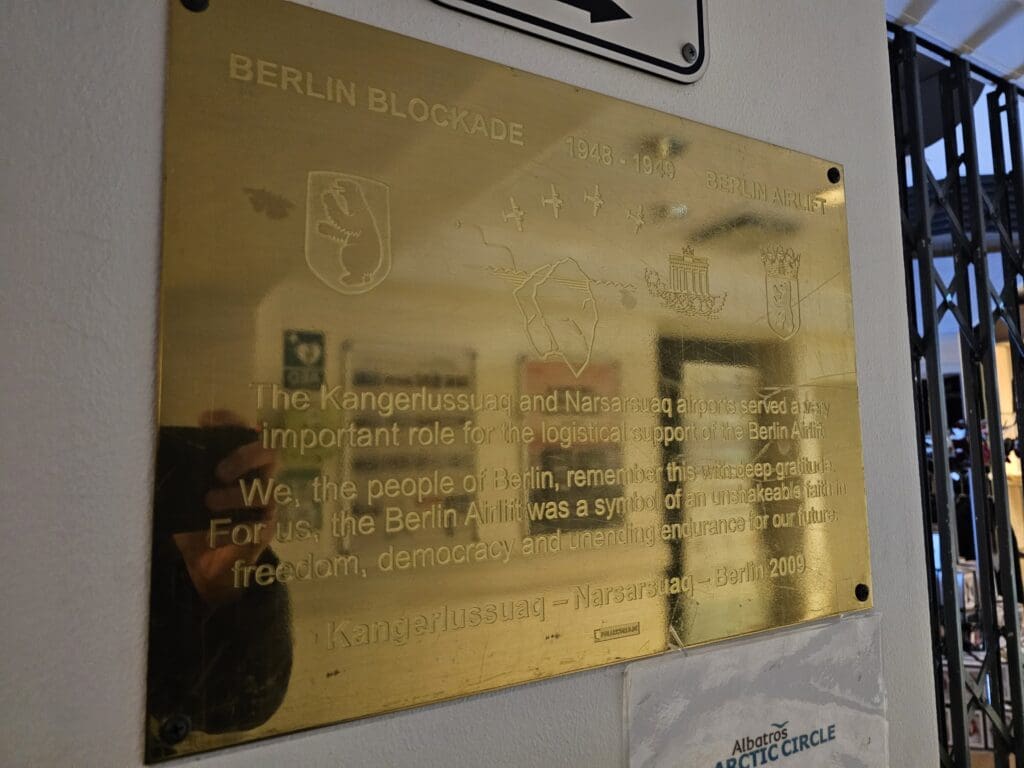
When the Second World War came to an end, the base was renamed Sondrestrom Air Base after the Danish name for the fjord, Søndre Strømfjord. This continued to be of strategic importance, most notably as a key refuelling stop during the Berlin Airlift, and a plaque commemorating its role in this can be found in the terminal. Meanwhile, slightly later on during the Cold War, Kangerlussuaq supported the development and operation of the Distant Early Warning Line. Alongside its military role, being home to one of the few long runways in Greenland, Kangerlussuaq acted a civilian airliner refuelling stop, whilst also connecting Greenland with the outside world.
As the years progressed and technology developed, fewer aircraft needed to stop to refuel in Kangerlussuaq, and the collapse of the Soviet Union and subsequent fall of the Distant Early Warning Line sounded the death knell for an American military presence in Kangerlussuaq. Thus, in 1992, the last American forces withdrew, and today, the American military operates just a single base in Greenland, the Pituffik Space Base in the far north of the country (previously known as Thule).
Whilst the Danish military continues to maintain a presence at the airport, since the American withdrawal, Kangerlussuaq Airport has primarily focused on civilian operations. At the time of my trip, this served as Air Greenland’s main hub for flights to Denmark and was the only airport in the country (other than Pituffik) capable of handling the Airbus A330. However, since my trip, things have changed as Nuuk Airport’s extended runway opened for business in November 2024, resulting in Air Greenland shifting its Airbus A330 service to the capital city. As a result, today, Kangerlussuaq Airport no longer serves as a hub, with this now only hosting Dash 8 operated services to Nuuk and Sisimiut.
The Journey
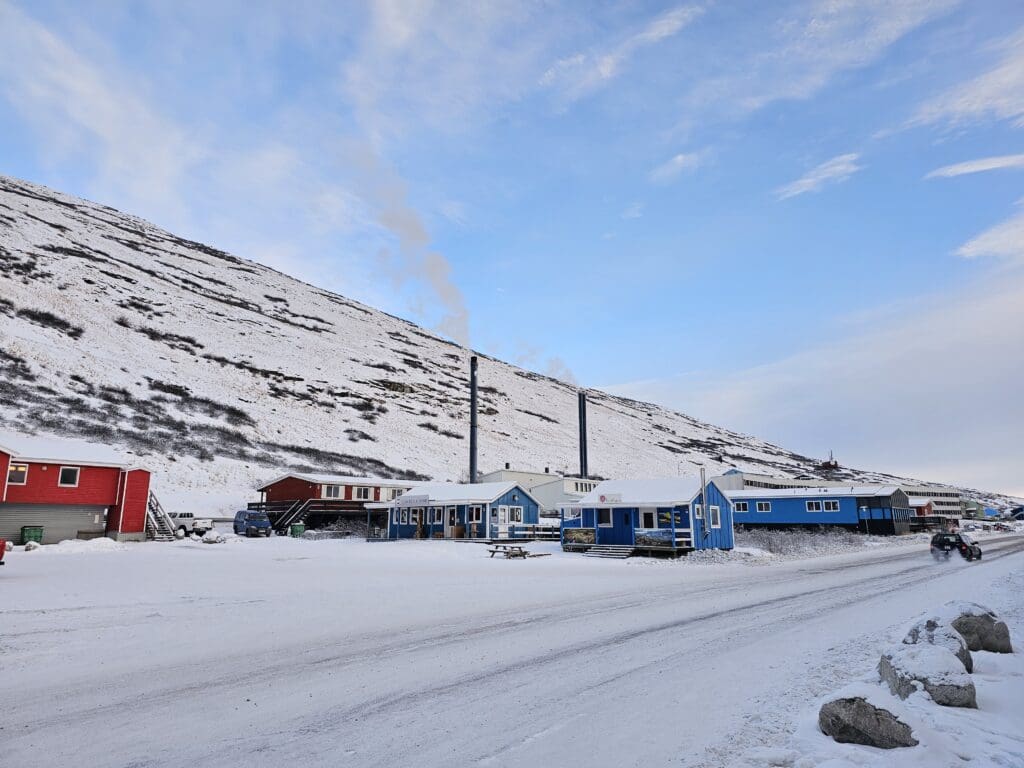
Kangerlussuaq Airport splits the town of Kangerlussuaq into two halves – with some of the settlement sitting to the north of the runway and the other half to the south. On the southern side, many buildings once sat within the fence line of the American military base and have since been repurposed. This becomes evident when examining the building styles, with Kangerlussuaq’s buildings wildly deviating in architectural style from the colourful wooden houses that can be seen across Greenland. Meanwhile, many of Kangerlussuaq’s roads retain their American names, such as ‘Myers Avenue’, ‘North Avenue’ and ‘Balchen Avenue’. The latter is named after the Norwegian-American US Air Force officer, Colonel Bernt Balchen, an Arctic aviation pioneer. Having arrived from Copenhagen the previous morning, my father and I had made the most of our time in Kangerlussuaq by embarking on a fantastic tour up to Point 660 on the nearby ice sheet.
With plenty of passengers stopping overnight in Kangerlussuaq before heading onwards to destinations across Greenland or voyaging back across the Atlantic to Copenhagen, several tour providers offer a range of day and half-day trips from Kangerlussuaq, catering to those who want to make the most of their stopovers. For those who end up staying overnight, there are several accommodation options in Kangerlussuaq. The most convenient yet expensive of these takes the form of the Hotel Kangerlussuaq, which is located above the terminal. However, travelling on a budget, my father and I had spent the evening in the Kangerlussuaq Youth Hostel, located in the former American non-commissioned officer club hall on the south side of the airport. Setting us back a total of 750 DKK (£85) for a twin room without a private bathroom. For Kangerlussuaq, this was reasonably priced and offered a comfortable, clean and adequate place for a short stay. Soon enough, morning came, and we awoke well before sunrise at 0700. If travelling in summer, it is possible to walk from the southern half of the town to the airport terminal; however, with the temperature that morning hovering at a far-from-balmy -35 degrees, it did not take long for us to decide that this was not a particularly sensible option! Fortunately, there is a regular bus service that operates from the terminal and takes a circular route around Kangerlussuaq before heading back to the airport. With a one-way ticket priced at just 12 Krone (£1.37), this proved to be far cheaper than taking a local taxi.
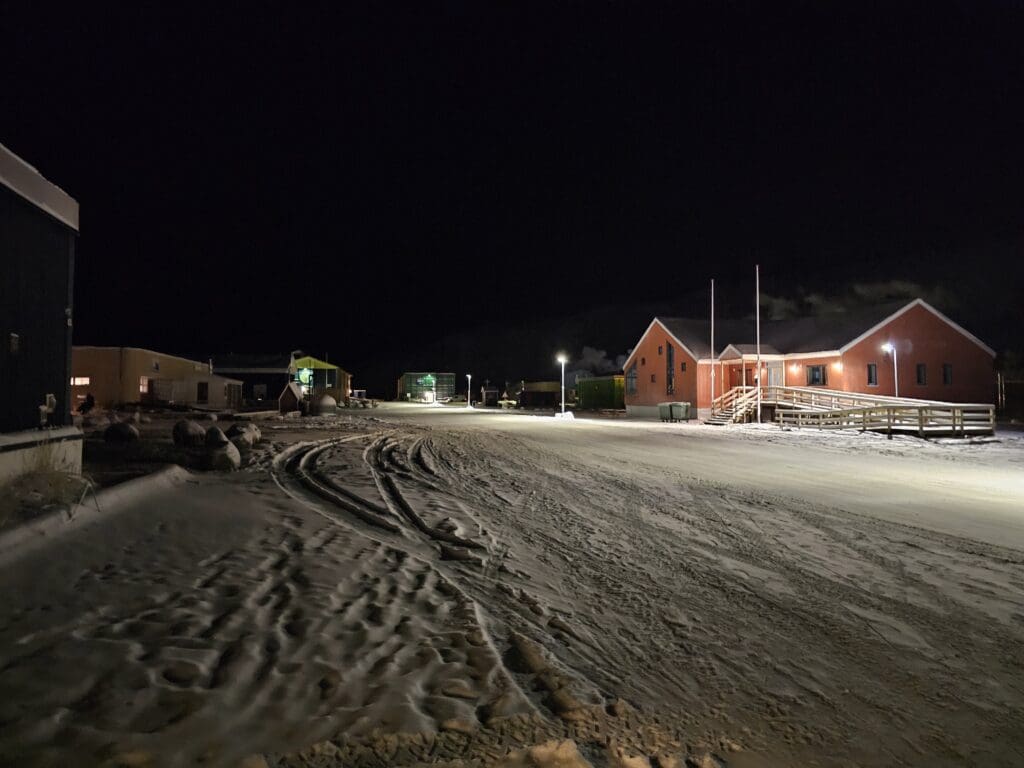
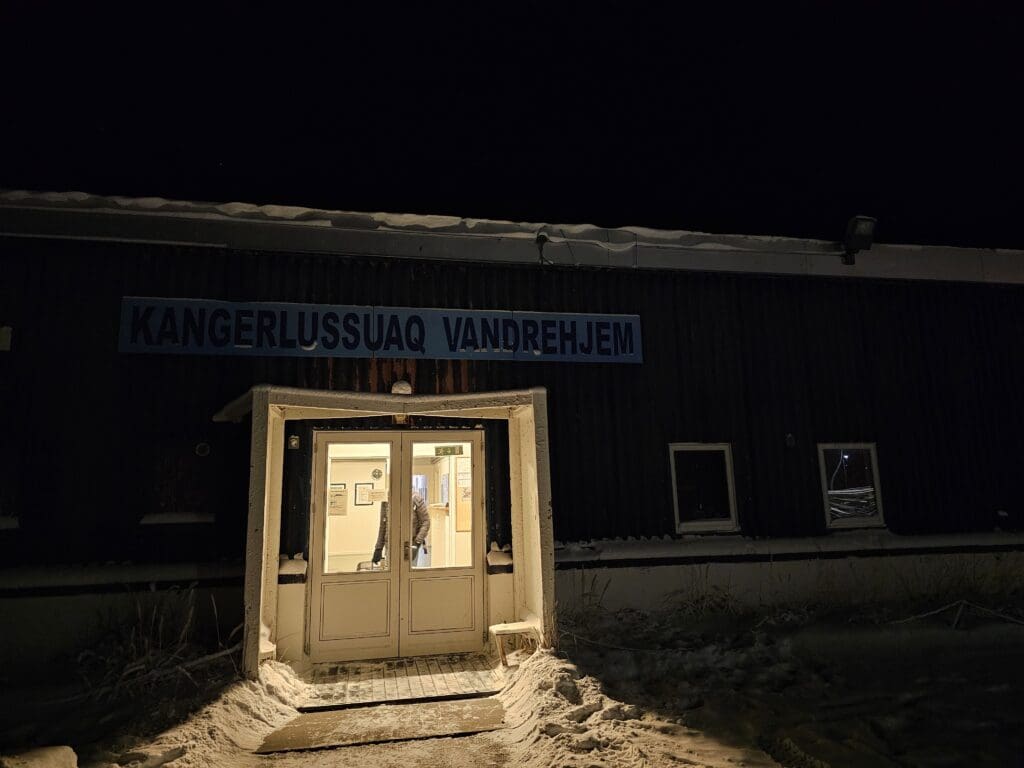
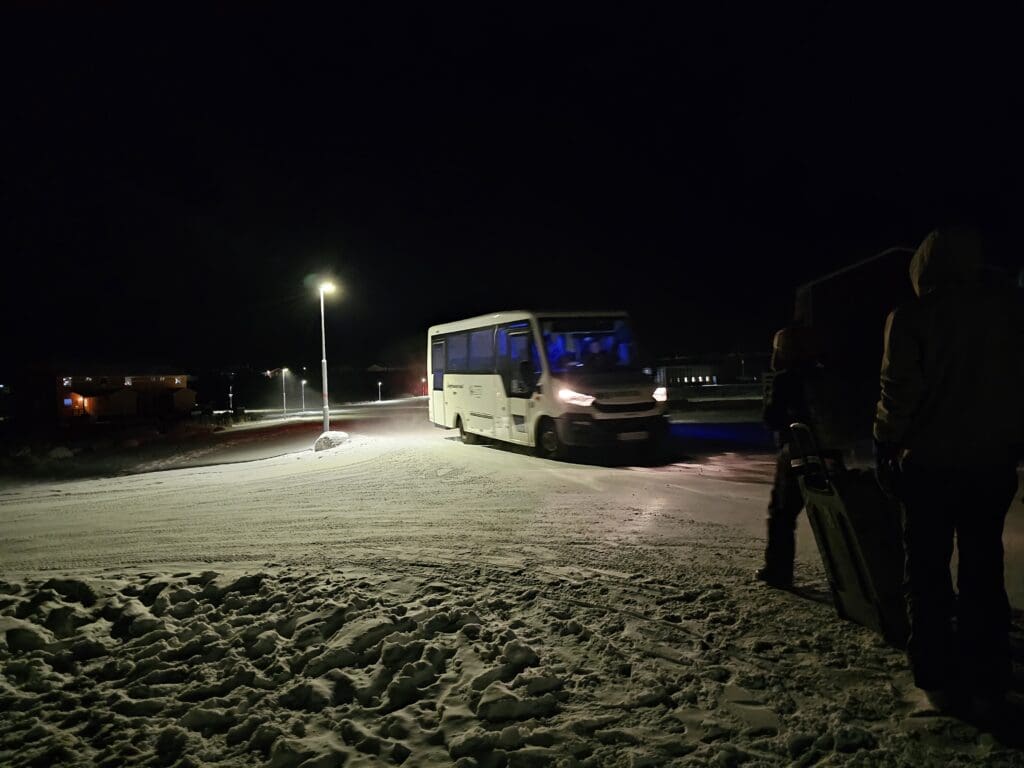
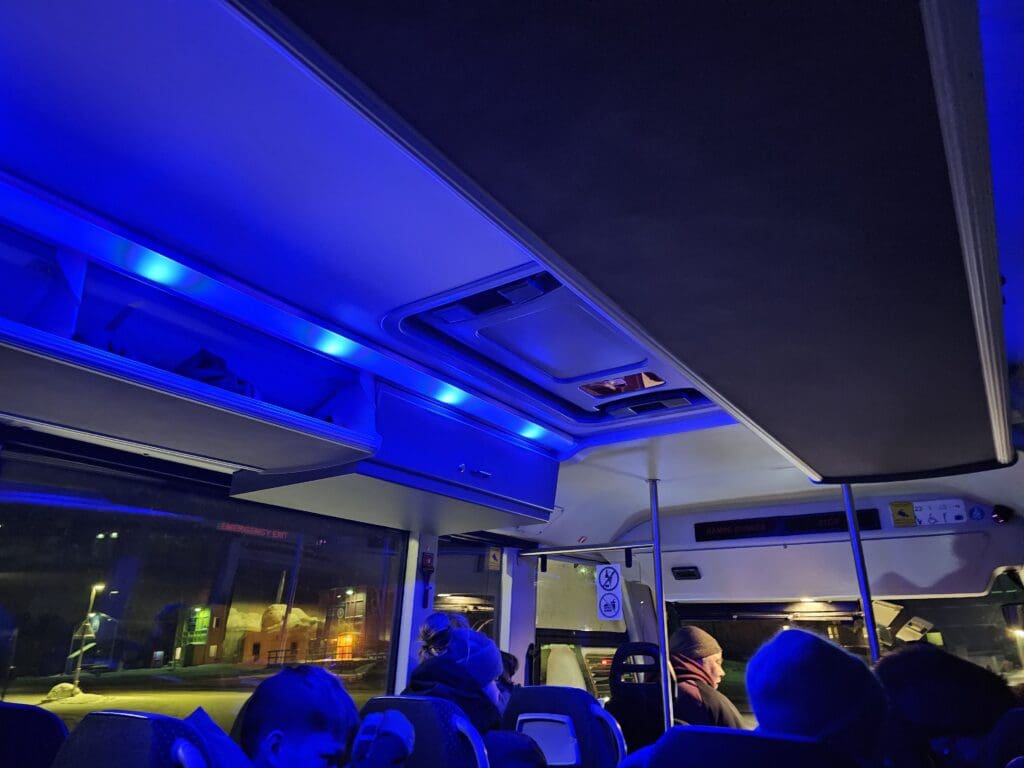
With the nearest bus stop located almost directly opposite the hostel, at 0750, we trekked outside into the freezing cold along with a family of Nuuk-bound passengers, cautiously lugging our suitcase over the icy snow-covered road. After a few minutes of waiting, the welcome sight of the small Iveco bus appeared right on time at 0755, just before I transformed into an icicle. Entering the welcoming warmth of the bus, I received a lively greeting from the same friendly driver who had delivered us to the hotel the previous evening (I can’t imagine there is a large pool of drivers operating Kangerlussuaq’s only bus route!). Once I had paid out 24 Krone fare, I made my way down into the bus and plonked myself down for the short ride over to the terminal. Following a couple more stops, the bus made its way around the airport’s eastern perimeter, and a total of seven minutes later, we pulled up to Kangerlussuaq Airport’s modest terminal building.
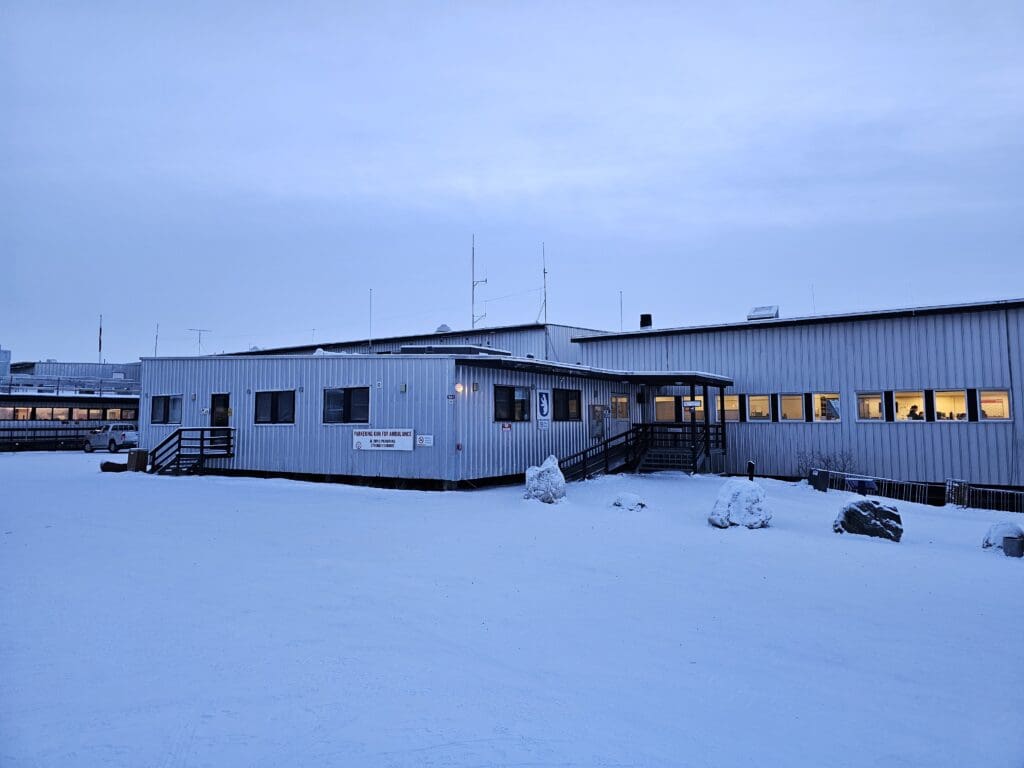
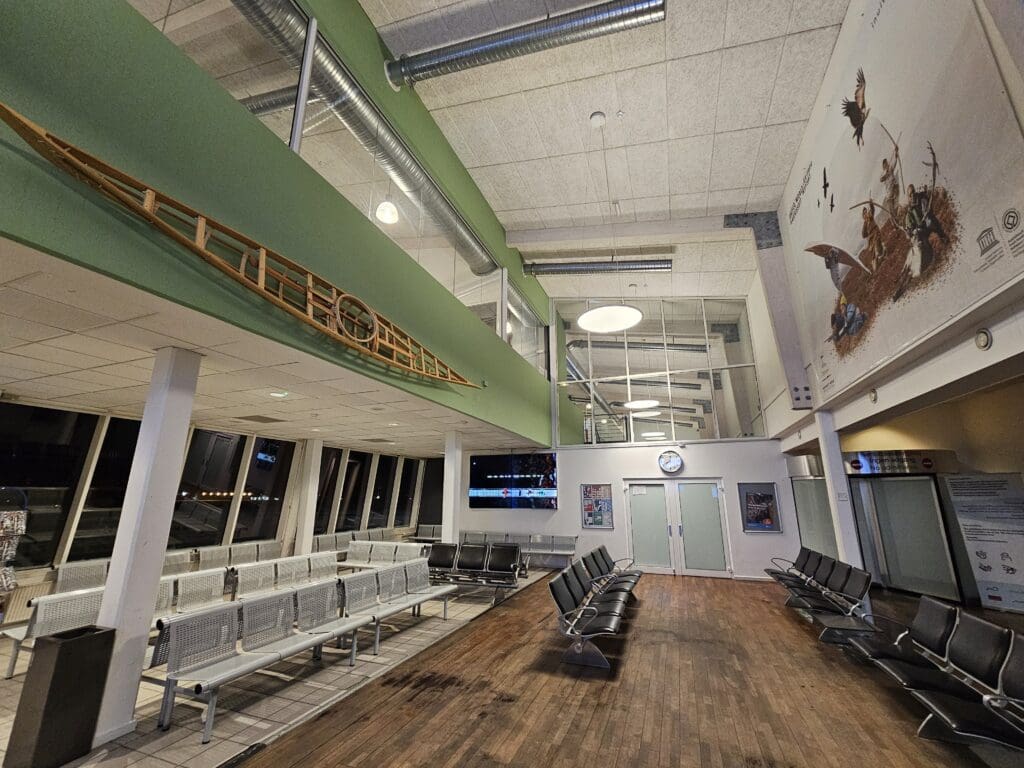
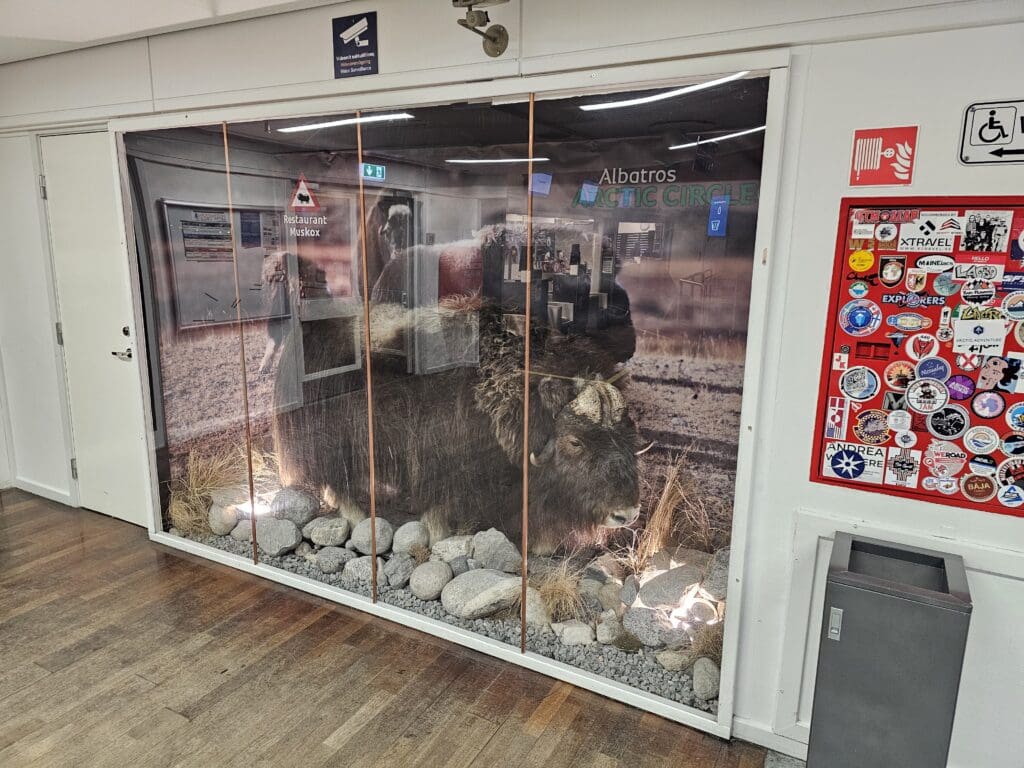
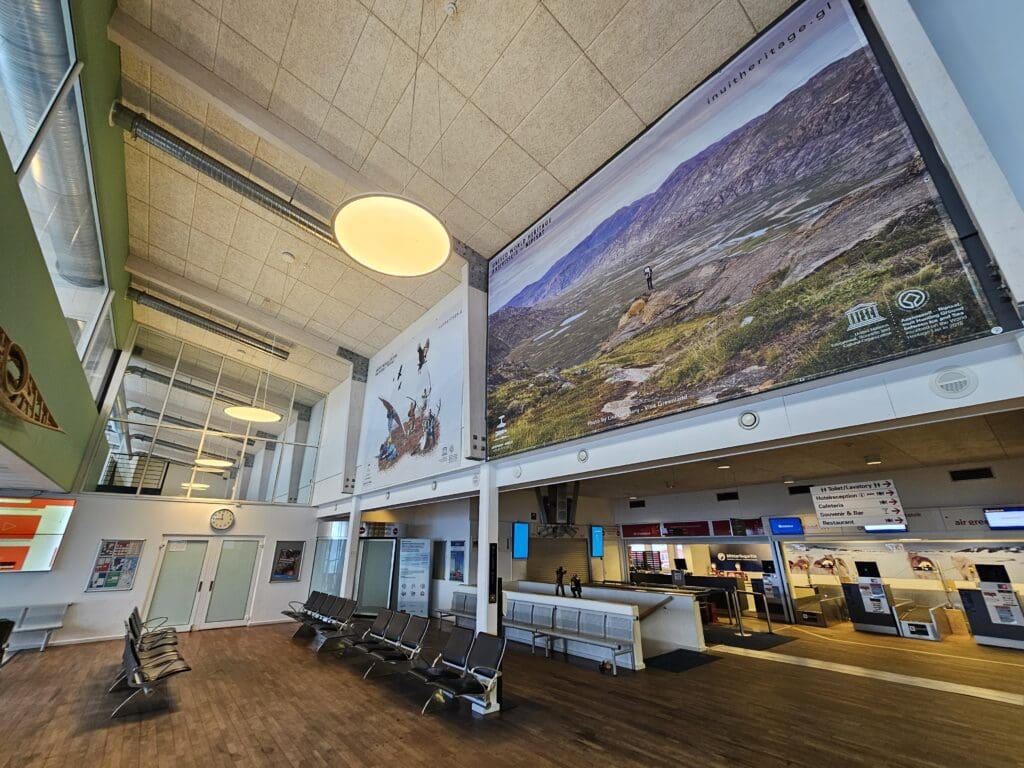
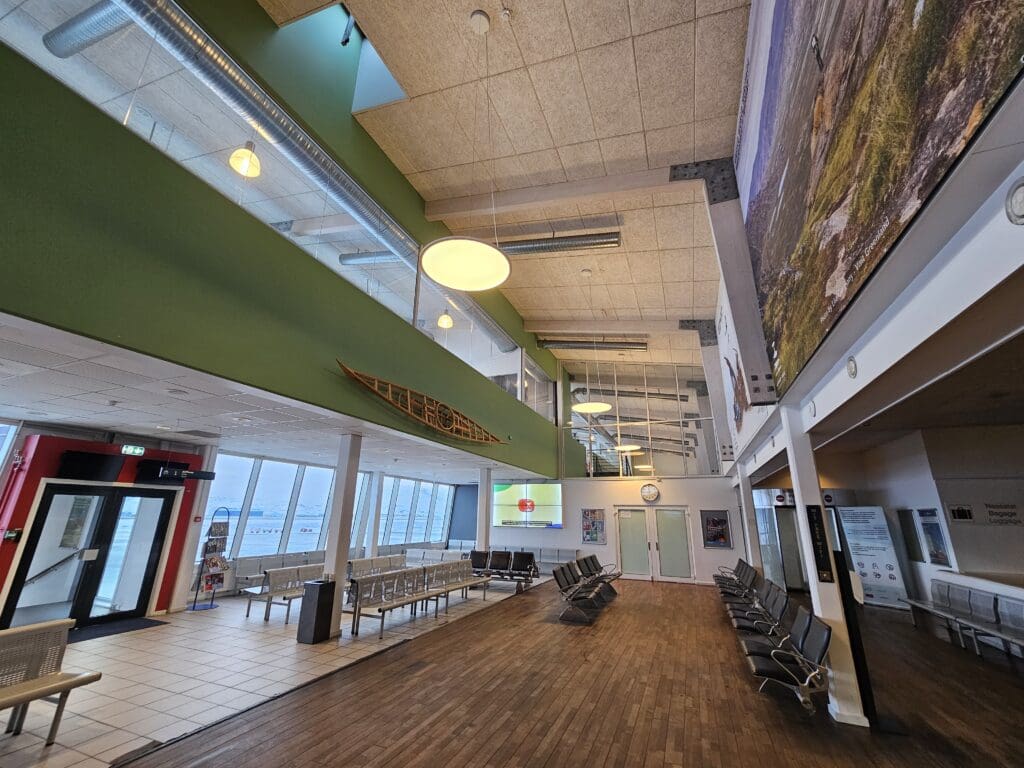
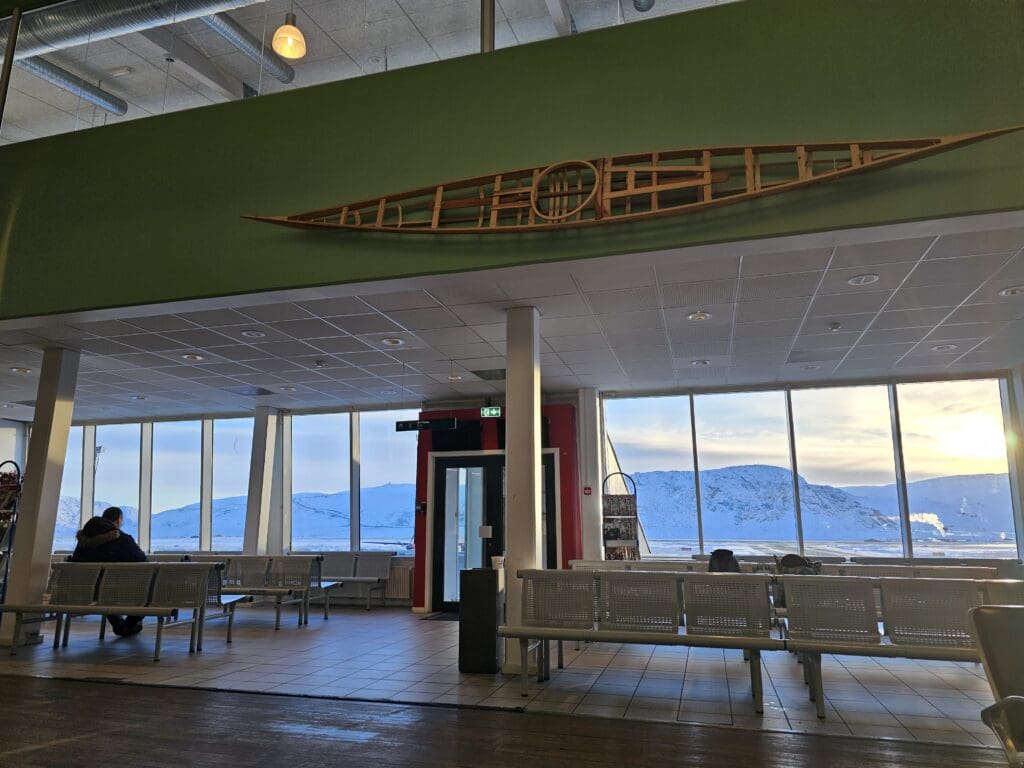
Despite Kangerlussuaq Airport’s then-status as Greenland’s main air hub, its terminal is by no means large. From the outside, this is a small and rather inconspicuous building with few signs or other trimmings to denote that this serves as one of Greenland’s most important transportation facilities. Once off the bus, we sped through the bitter cold and darted into the warmth of the terminal. Unlike the terminal’s somewhat plain exterior, its interior is full of character and charm and features a range of displays that celebrate the culture, history and nature of the local area. For example, the wooden frame of a traditional kayak can be seen hanging up in the main waiting area, whilst a musk ox (I’m not sure whether it is stuffed or fake) can be seen behind a glass screen. In terms of its design, the terminal is not particularly modern and did seem to be a little retro in places, but by and large, it was clean and comfortable. However, I should note that toilet facilities were both limited and appeared to have become a target for aspiring graffiti artists.
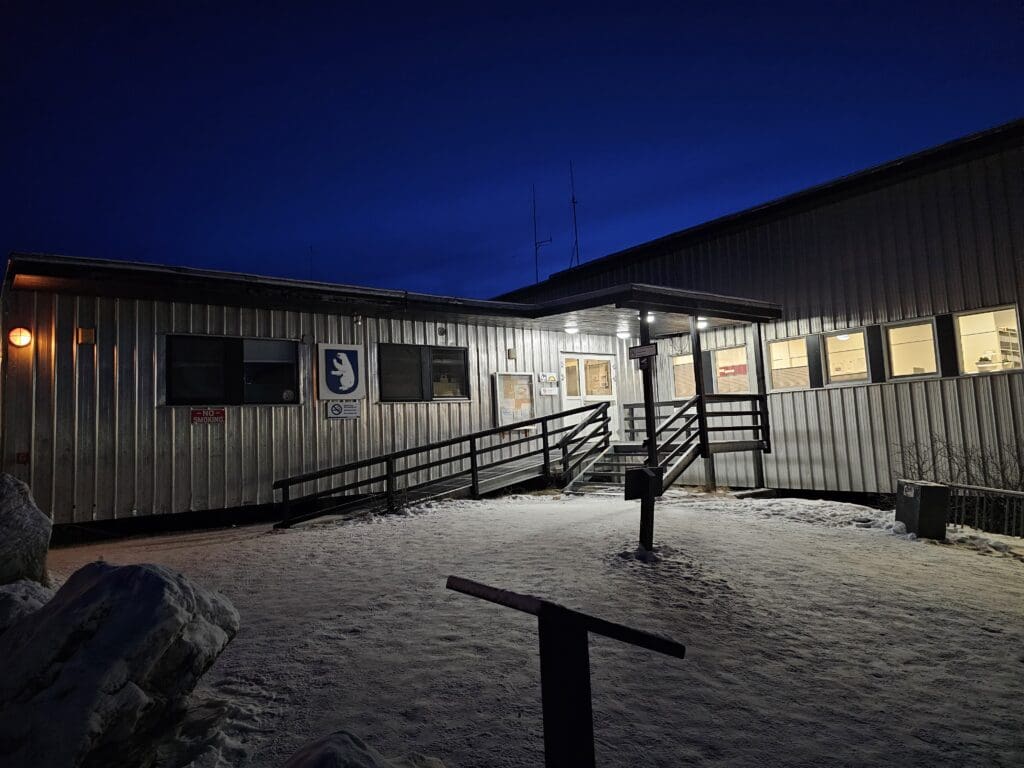
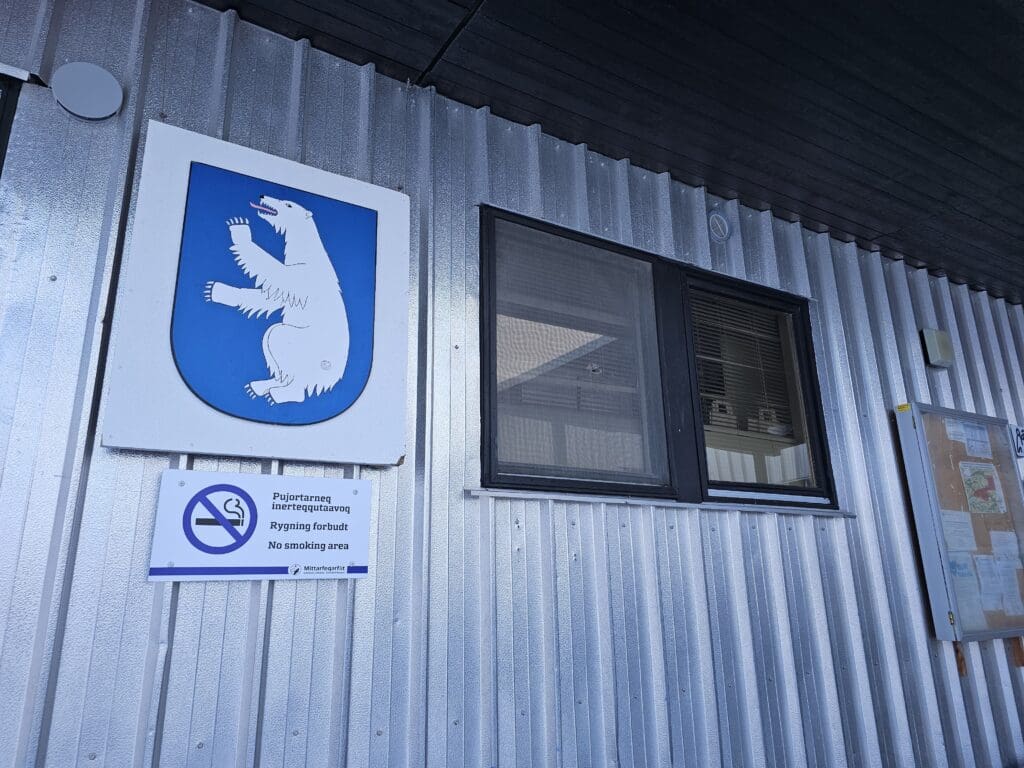
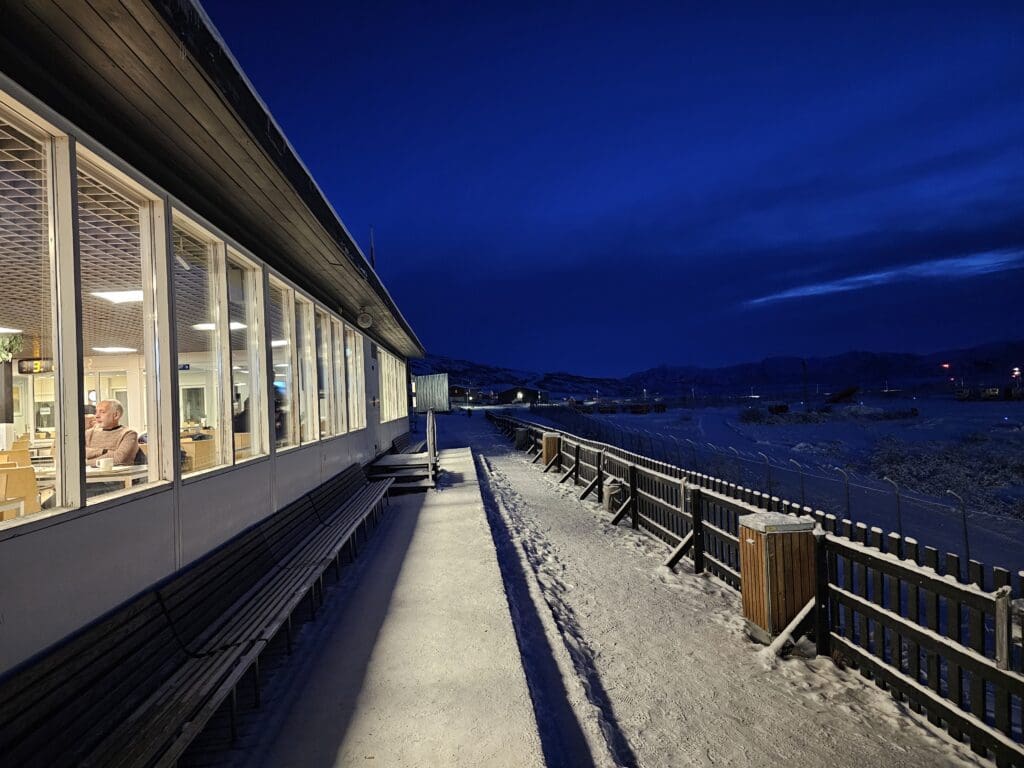
Whilst the terminal is small, the operator, state-owned Mittarffeqarfiit (Greenland Airport Authority), has done well to squeeze as much as possible into the space available. Immediately upon entering this, passengers arrive at the square-shaped waiting hall. Alongside one side of this, Air Greenland’s ticketing and check-in counters can be found, whilst on the other, large windows offer a good view of the apron and runway. On the other side of this is the entrance to the security checkpoint, which at the time of my flight was only used by flights departing for Copenhagen, and on the opposite side, an information and tour counter could be found. The terminal also features Kangerlussuaq’s only medical facility, which serves those living and working in Kangerlussuaq, as well as those passing through, a shop selling a range of souvenirs and light refreshments, a cafeteria and the Musk Ox Restaurant, plus the aforementioned Hotel Kangerlussuaq, which sits above the terminal. Last but not least, the terminal features an outdoor smoking area that doubles up as an observation deck, providing fantastic views of the apron. This is also home to the famous sign denoting the distances from Kangerlussuaq to cities across the world.
Given the size of Kangerlussuaq Airport and the fact that those departing on domestic flights do not need to pass through any sort of security check, there is no need for passengers to arrive hours before departure. Once inside, with around an hour and a half to go until the first departure of the day, the terminal was eerily quiet, with few passengers milling around. Seeking to get rid of our suitcase as soon as possible, our first stop was Air Greenland’s counters. This was manned by a single staff member, and following a short wait, I reached the desk and, following a quick and easy procedure, the very friendly check-in agent took my bag and handed me a boarding pass.
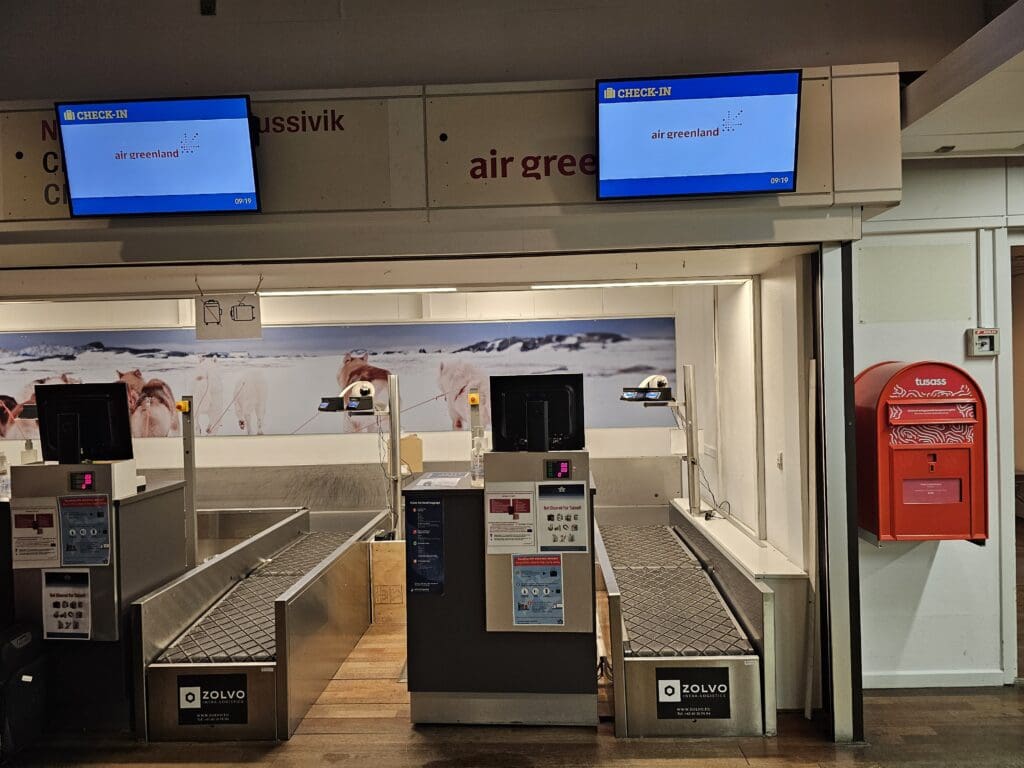
Once the check-in formalities had been completed, we had yet to have breakfast, and so we voyaged over to the cafeteria to grab something to eat. Until 1000, this serves a light buffet breakfast, which is free for those staying in the Hotel Kangerlussuaq and costs 100 Krone (£11.31) for those who are just passing through. After doing the maths, we deciphered that it would not cost much more to partake in the buffet option when compared to simply grabbing a few pastries and a coffee. Furthermore, by doing so, we could spend much of our wait in the relative comfort of the cafe where plenty of plug sockets could be found and good views of the action outside could be had. As time passed, this proved to be a popular spot and slowly became busier with a mixture of passengers and airport staff.
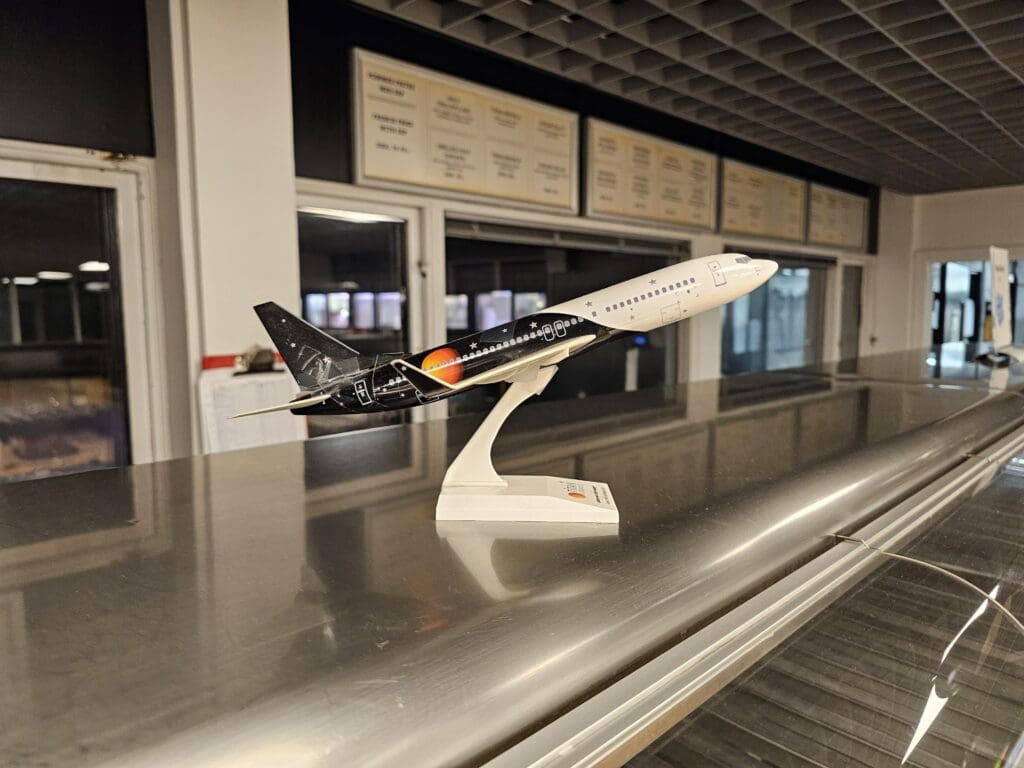
As we relaxed in the cafeteria, it wasn’t long before the whine of Pratt & Whitney Canada PW123D turboprop engines could be heard as the first arrival of the day came to a halt on the apron outside. This took the form of one of Air Greenland’s eight Dash 8 Q200s that had arrived from Ilulissat. This service plays an important role in connecting Ilulissat with the capital, Nuuk, and following a short time on the ground where several passengers would join the service, at 0930, this would continue heading southwards and serve as Kangerlussuaq Airport’s first departure of the day. That morning, our aircraft would be operating this service, albeit in the other direction, and was scheduled to touch down from Nuuk at 0925. However, keeping my eyes peeled on FlightRadar24 and the online Nuuk Airport departure boards, by around 0900, I already knew something was awry, with this aircraft still yet to take to the skies, thereby indicating that a delay was inevitable.
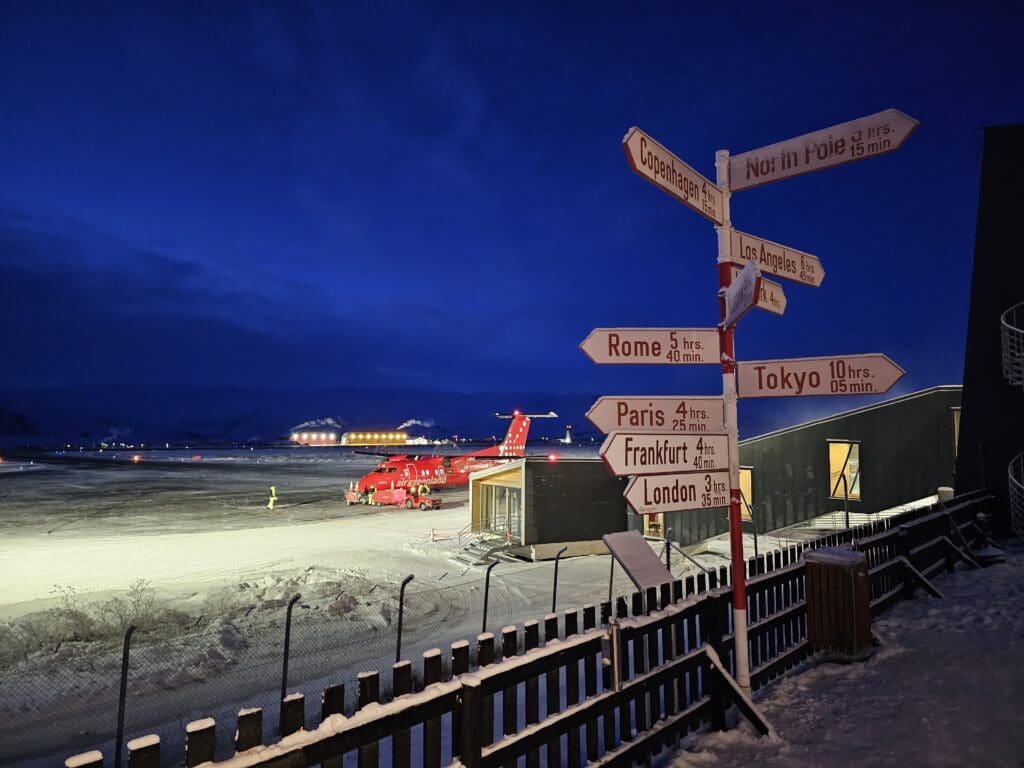
At around 0915, I received an email informing me that the 0955 service to Ilulissat had been cancelled and that I had been moved to the 1255 flight. Seeing as this operates with a short stop in the coastal town of Aasiaat, around 90 kilometres to the southwest of Ilulissat, enabling me to bag an extra ride on the rare Dash 8 Q200 and allowing me to visit another airport in Greenland, I most certainly could not complain about this! However, with my father not receiving any updates, I headed back to the desks. By that time, two agents could be seen hard at work, and the line had grown slightly longer. After a few minutes, I made it to the front of the queue, and the friendly agent whom I had spoken to a little over an hour earlier took my boarding passes and began typing away. After a short while, they advised me that my father would be sent directly to Ilulissat on the 1110 service.
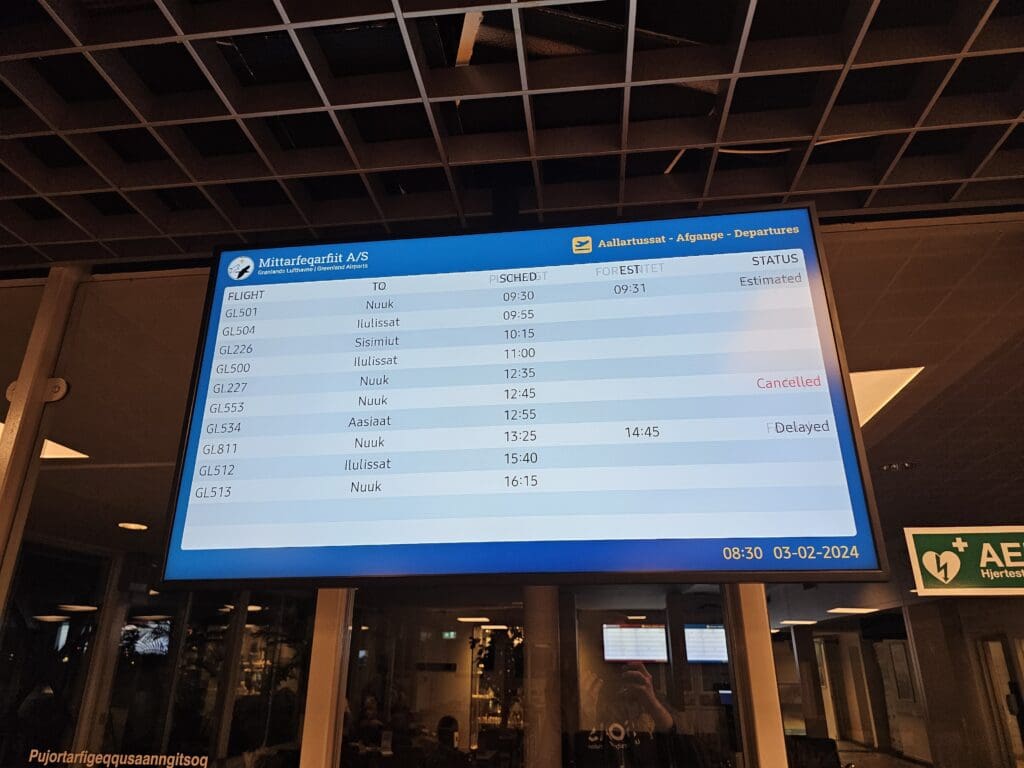

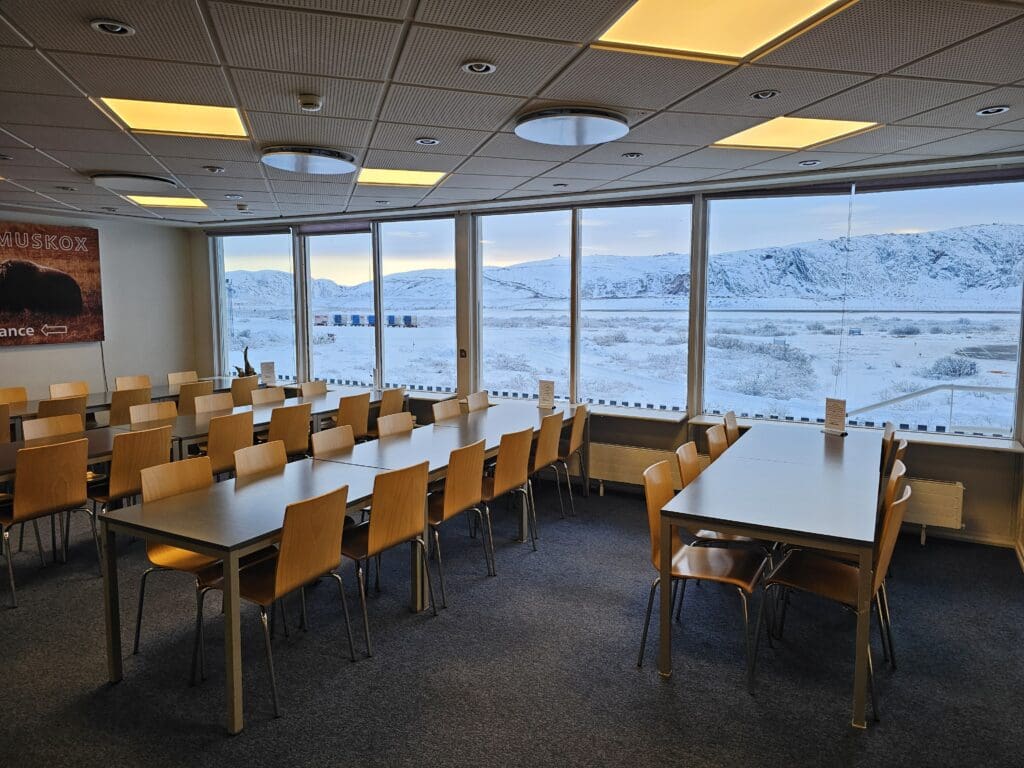
With new boarding passes in hand, I returned to my father in the restaurant and relayed the news. A few minutes later, the check-in agent appeared at our table and apologised for forgetting to hand me a meal voucher. This was worth 125 Krone and could be used in the cafeteria or the Musk Ox Restaurant. Remaining at our table in the restaurant, we watched as the skies began to slowly brighten and various Dash 8s came and went, undertaking quick turnarounds in what seemed to be a very efficient and well-oiled operation. Despite Kangerlussuaq’s status as a hub airport, that day, there was neither a great number of departing flights nor much variety in their destinations. In total, that day, there would be eight departures – four flights to Nuuk, two direct flights to Ilulissat, one flight to Sisimiut and one flight to Ilulissat via Aasiaat, with all services operated by Air Greenland’s Dash 8 Q200s.
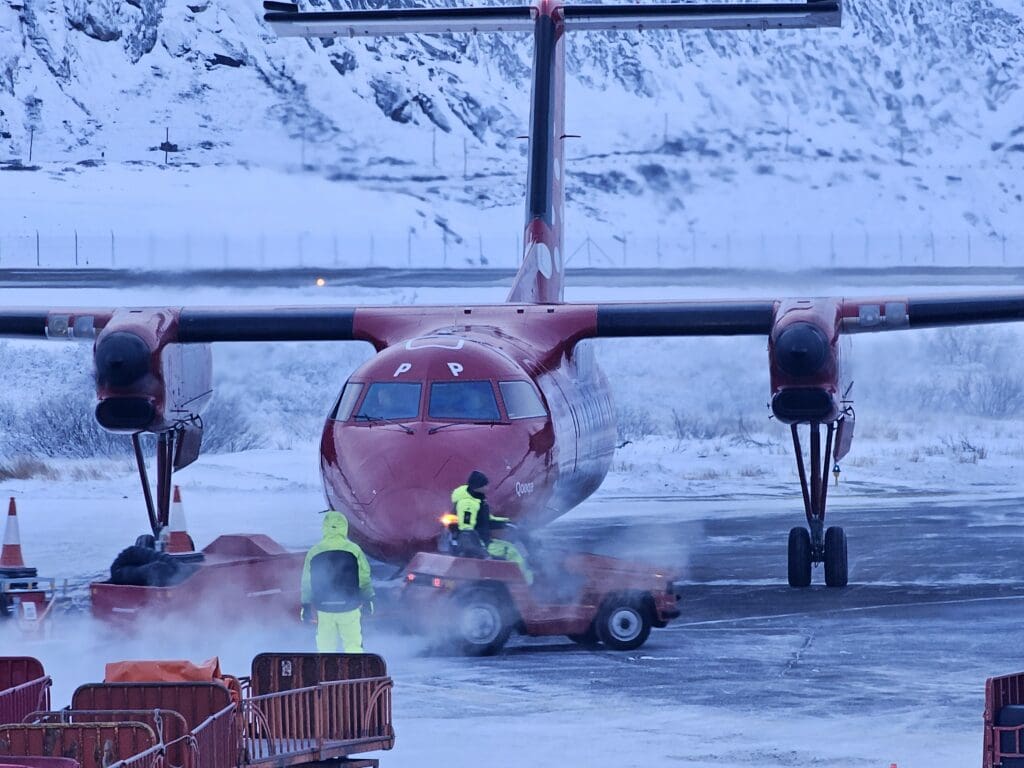
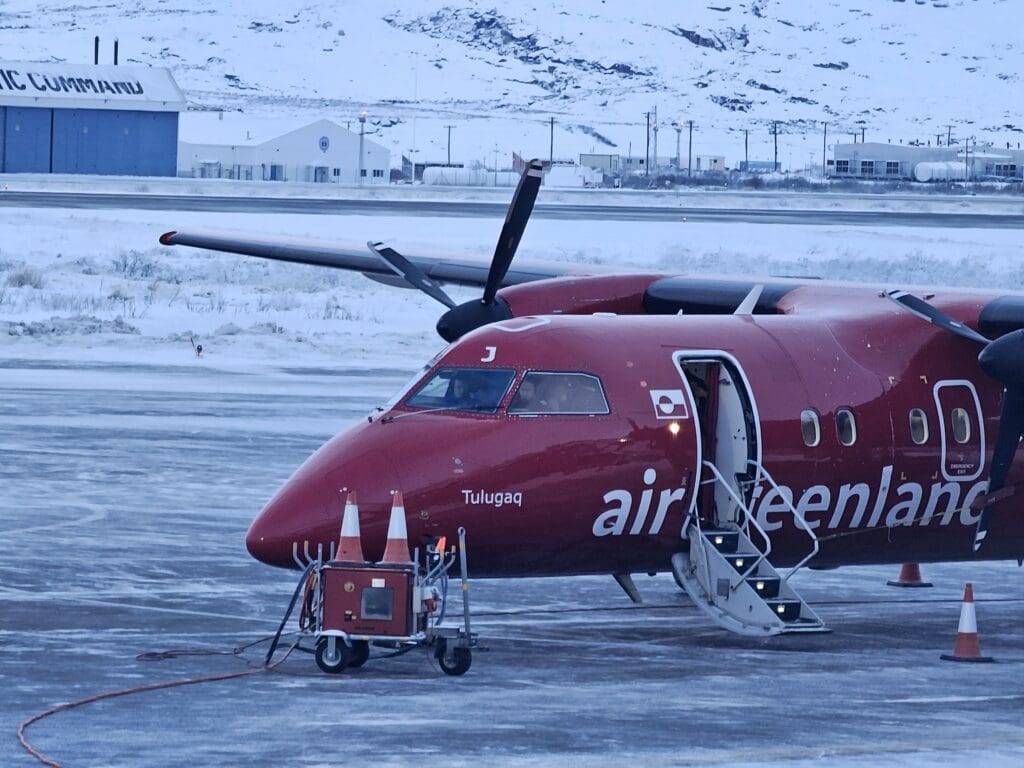
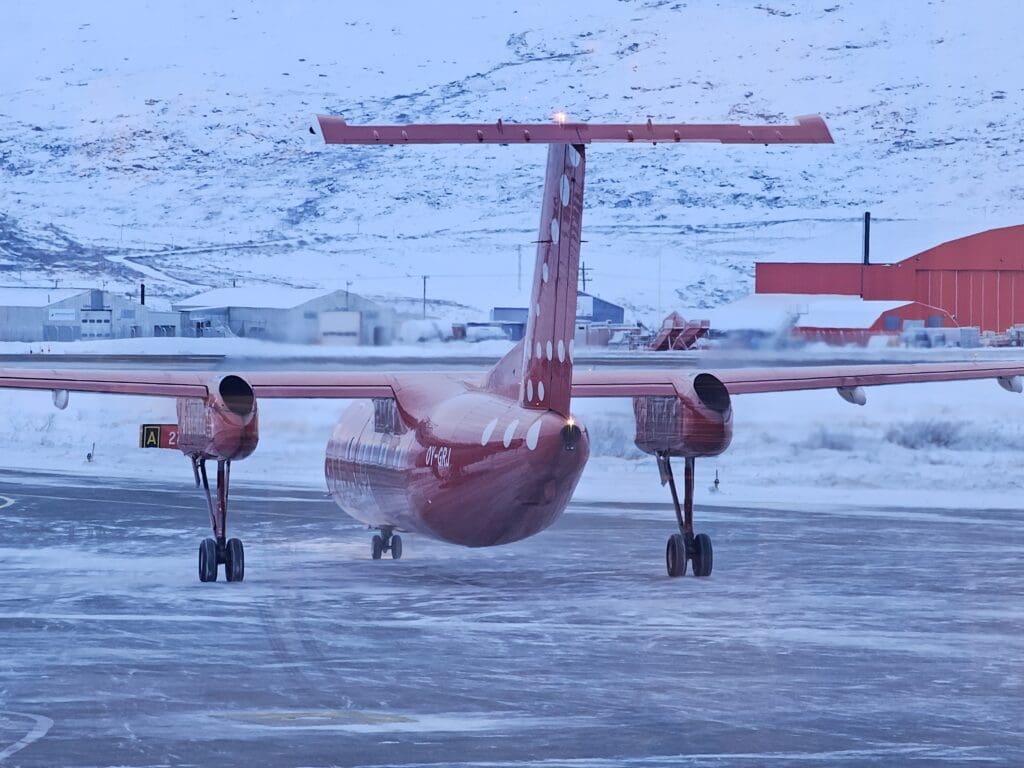
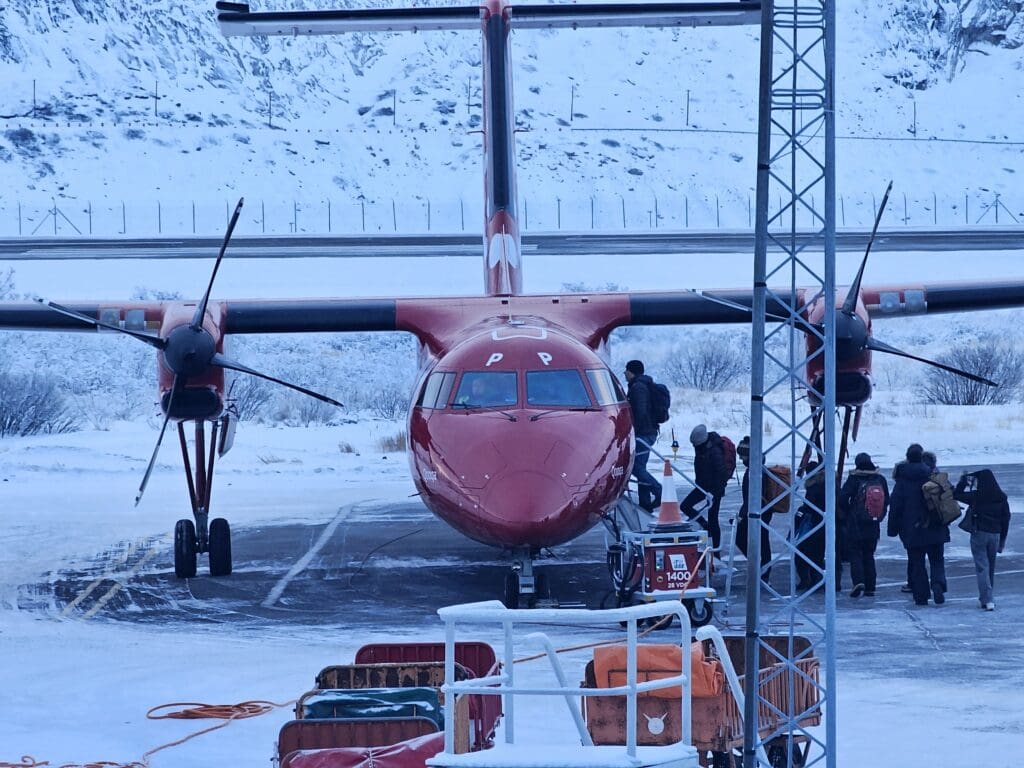
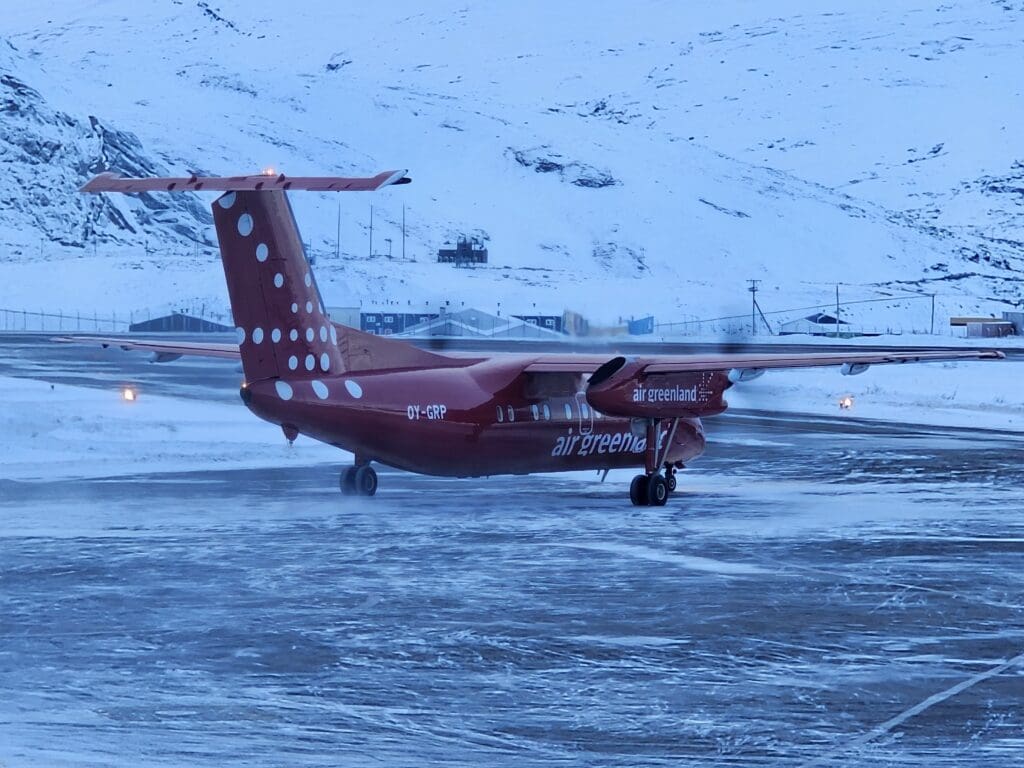
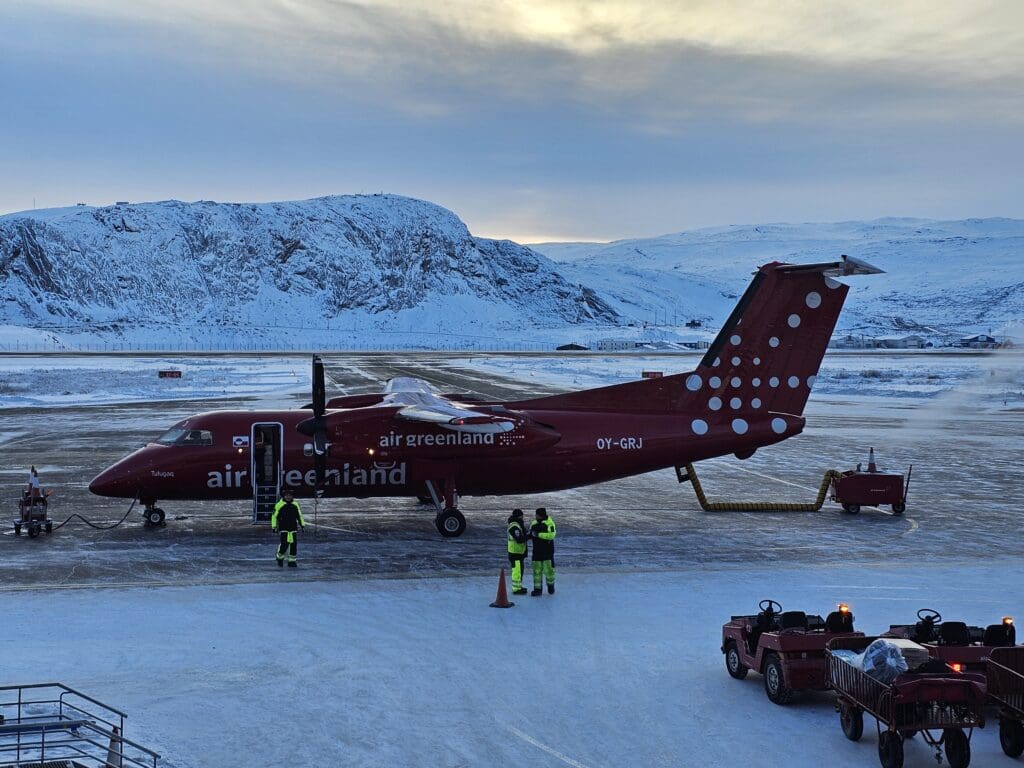
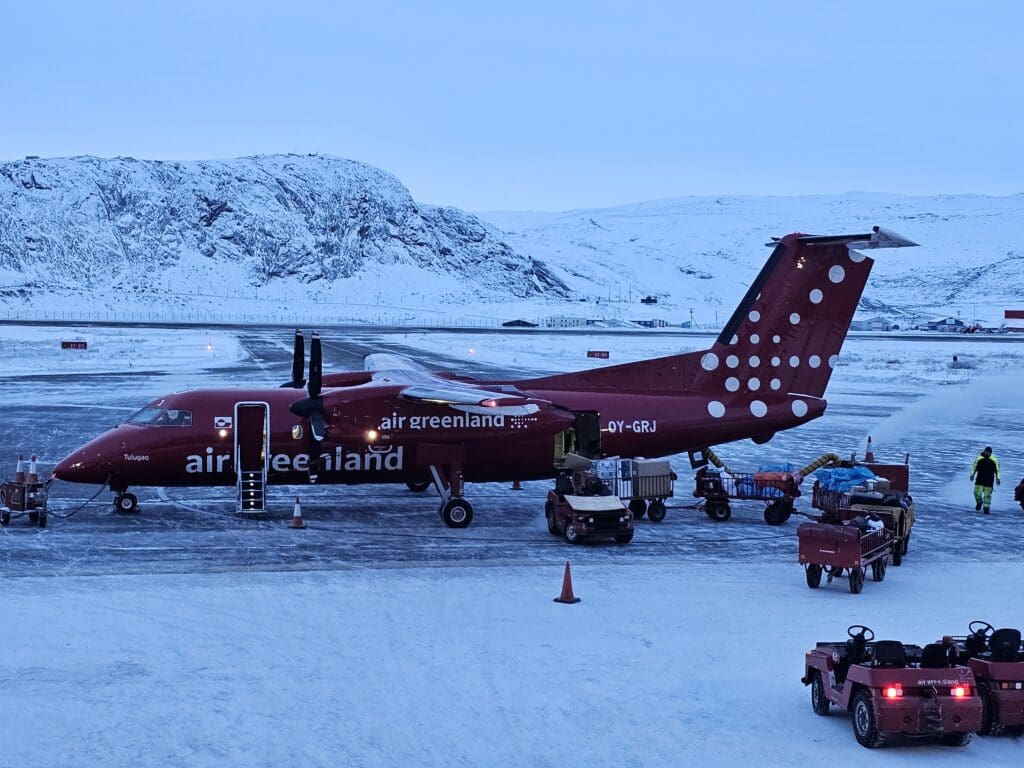
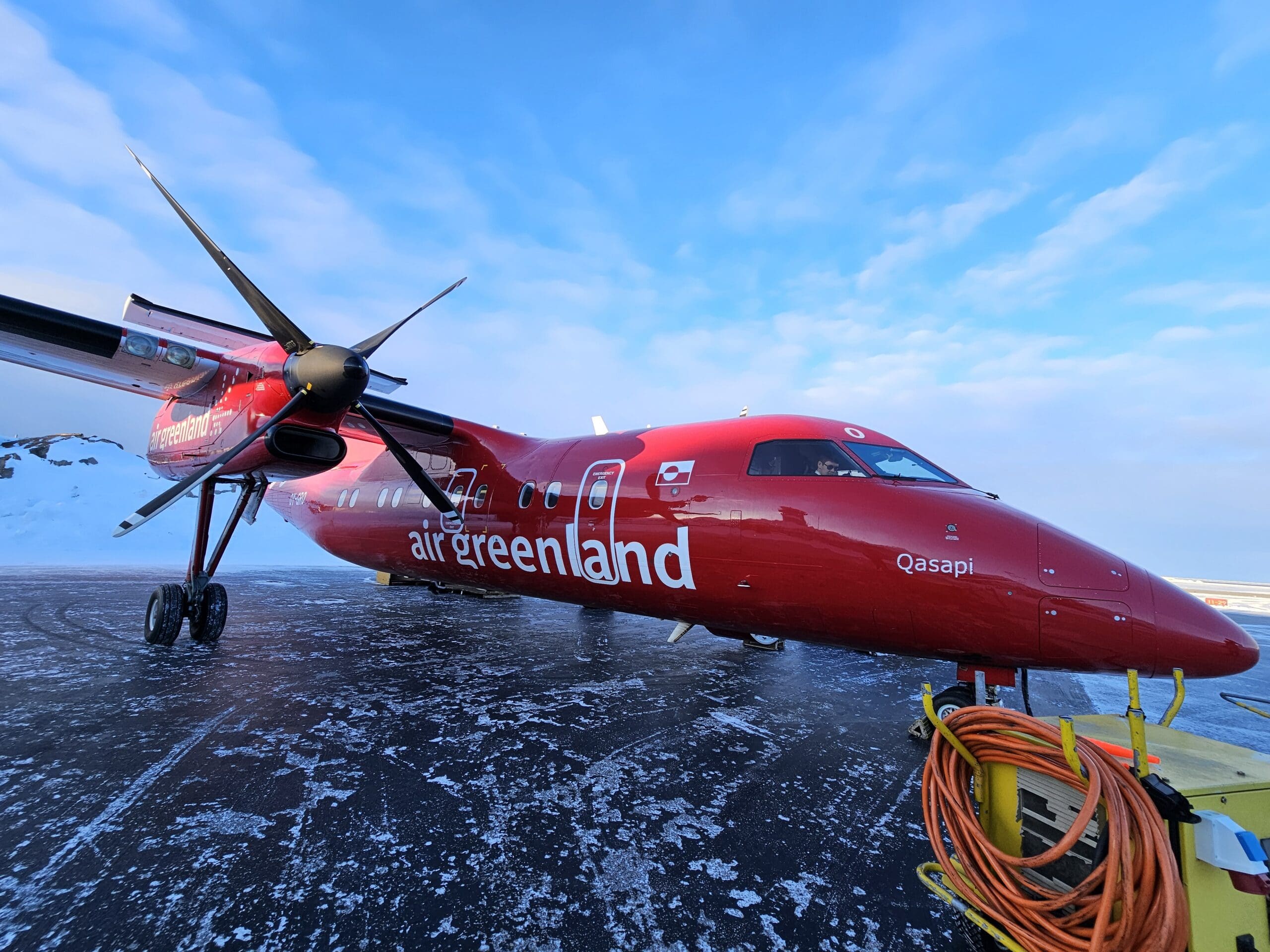
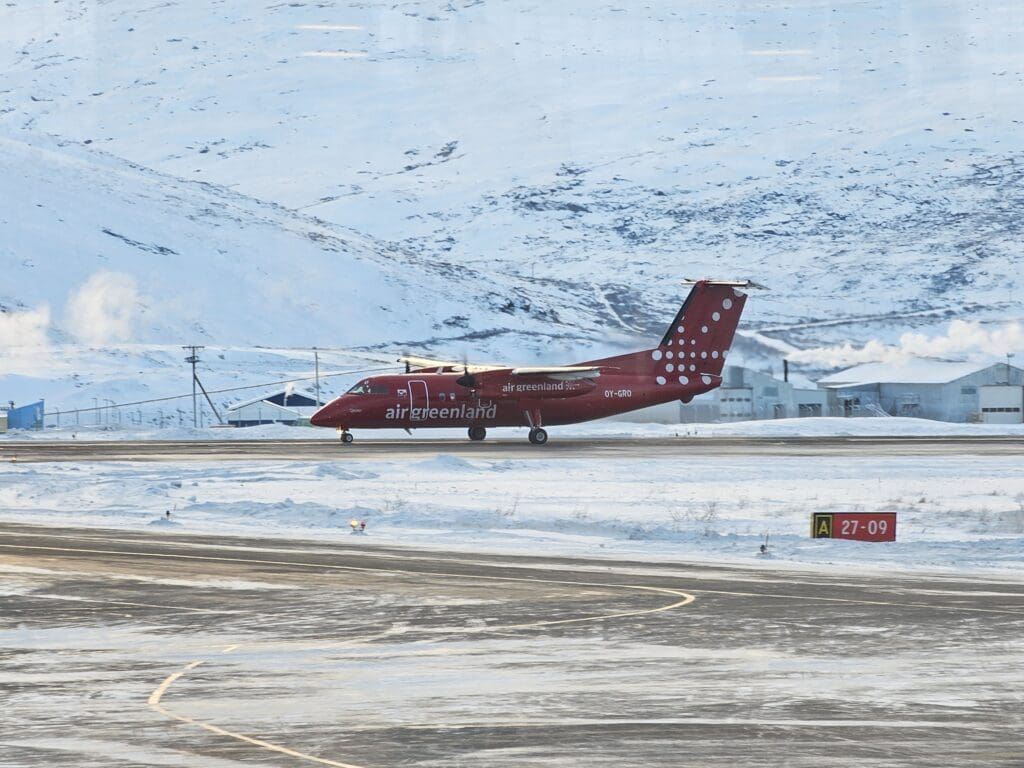
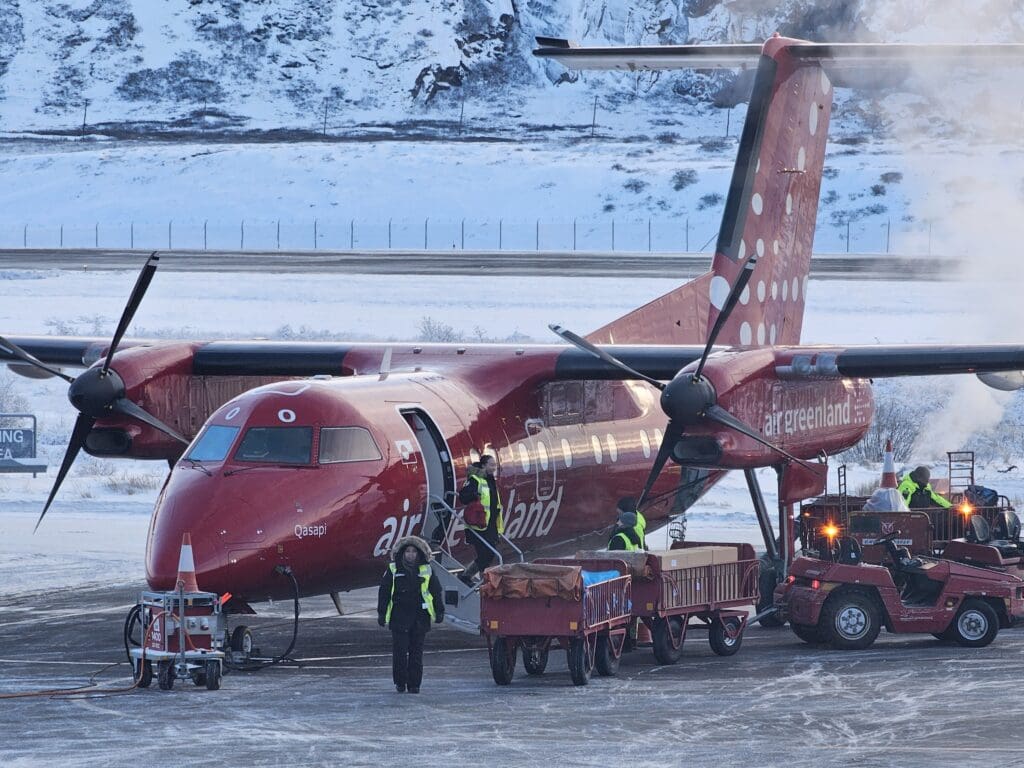
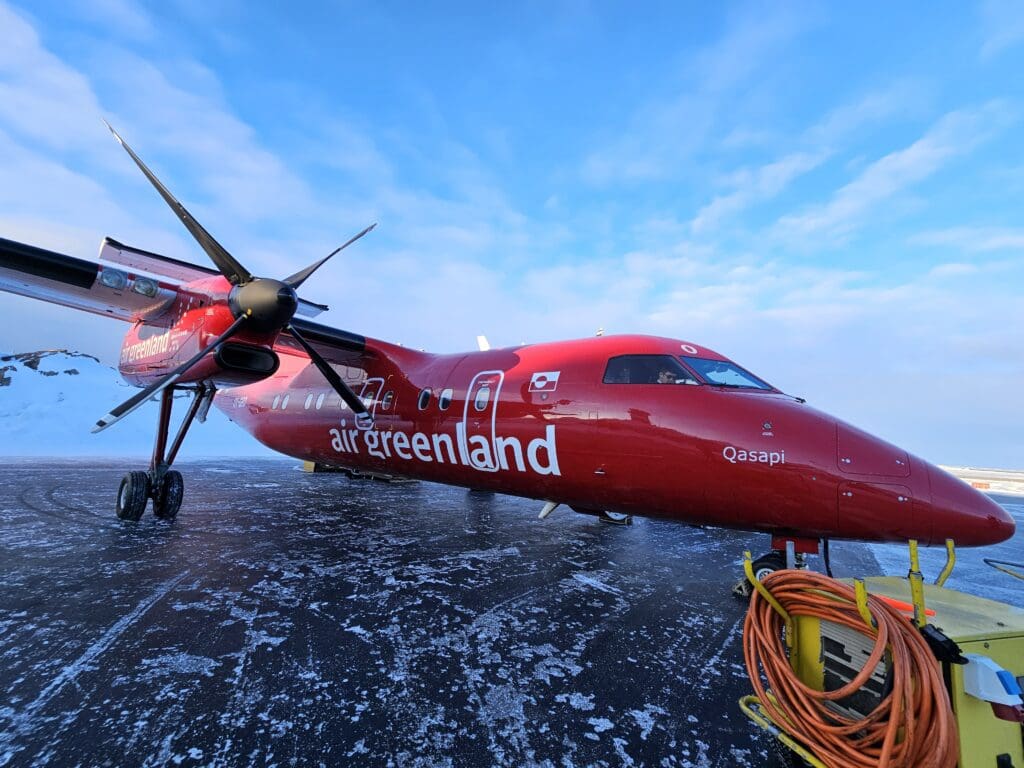
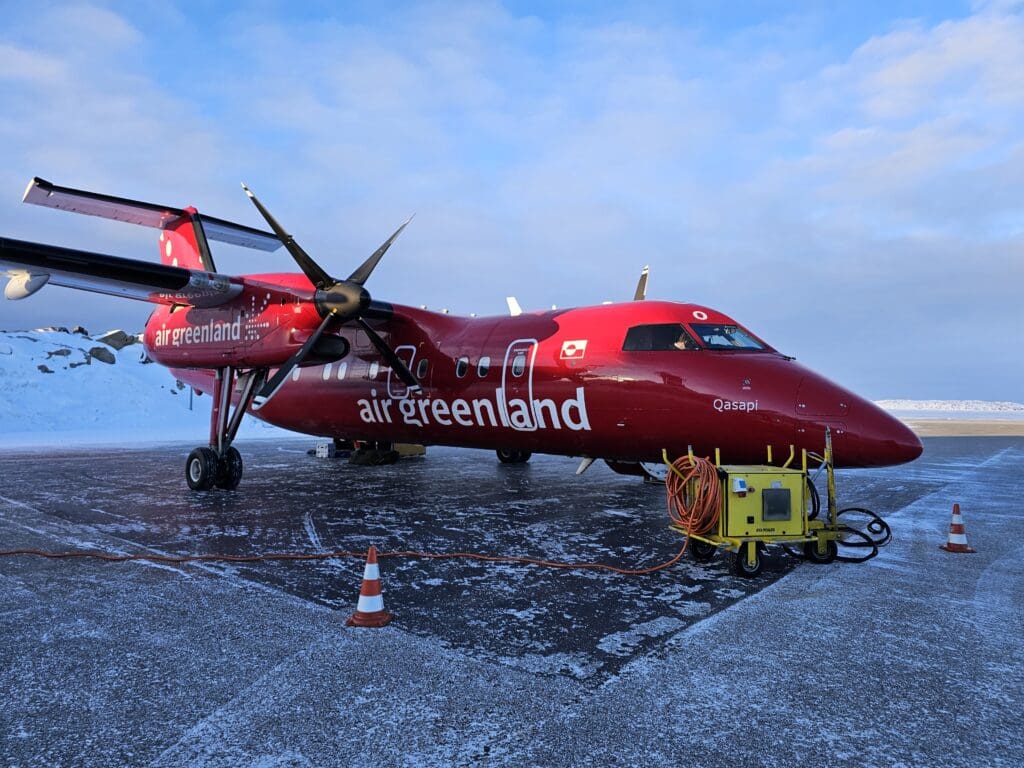
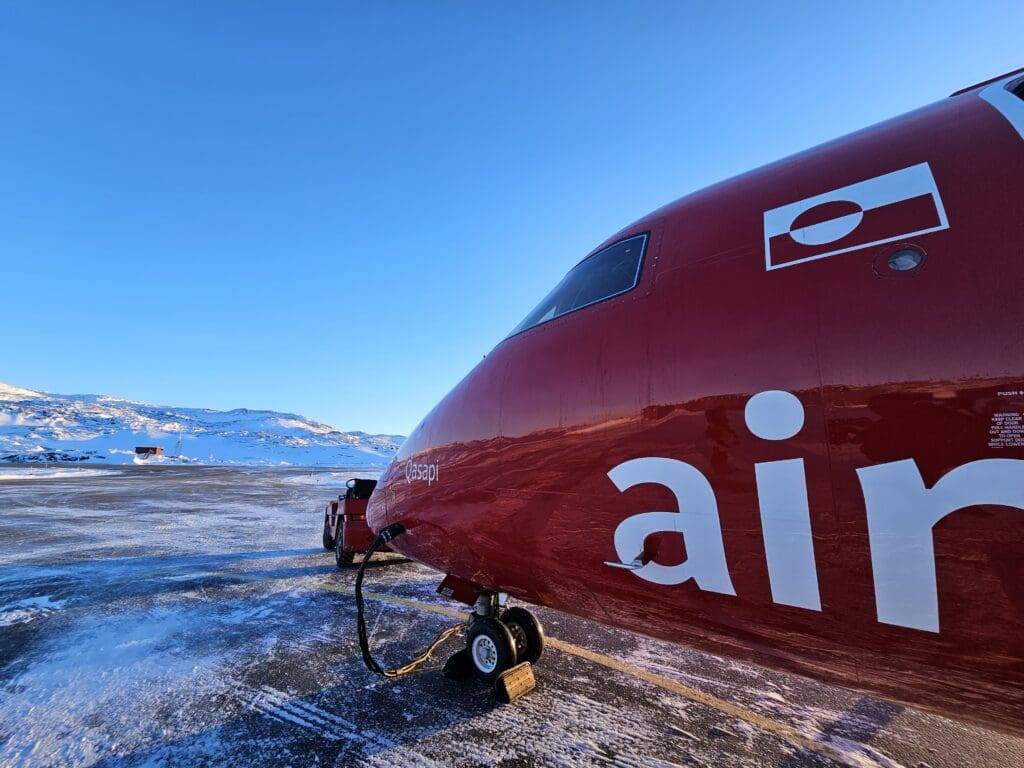
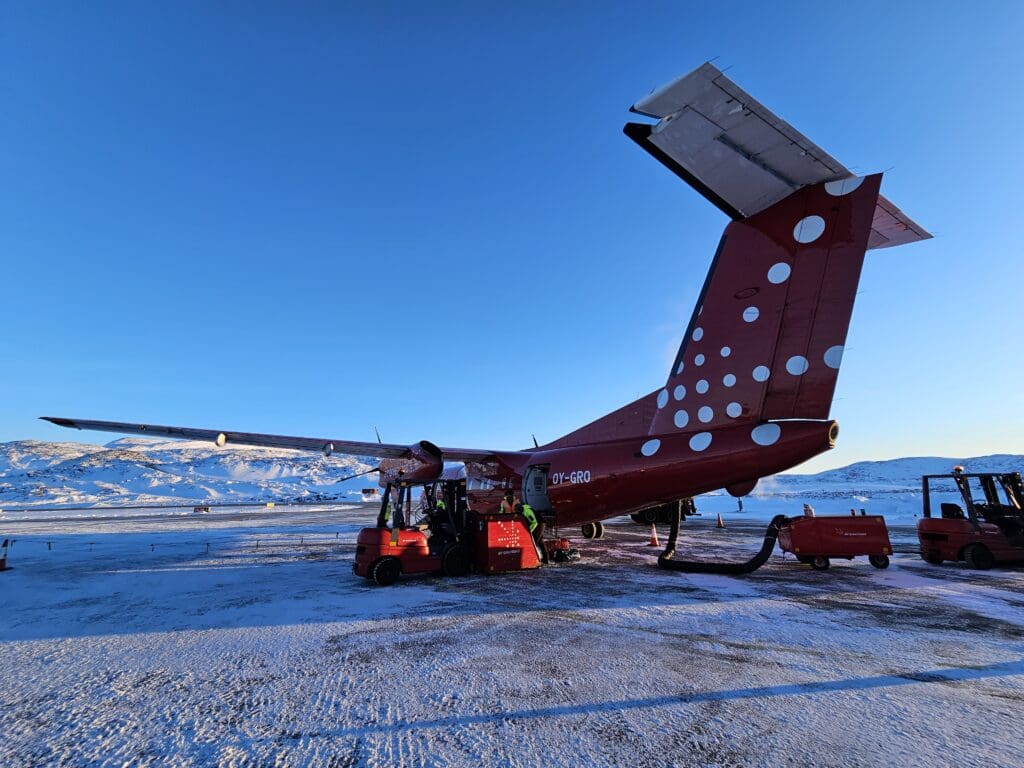
From an aviation enthusiast’s perspective, one nice feature of Air Greenland’s website is that the flight information page lists the exact aircraft scheduled to operate each of the carrier’s flights on both that particular day and the following day. This revealed that my flight up to Aasiaat and Ilulissat was to be operated by OY-GRO, the aircraft that had been scheduled to operate the cancelled 0955 service. Manufactured at Bombardier’s factory at Toronto Downsview Airport, this particular Dash 8 Q202 first took to the skies in 1997 and carries the construction number 482. In April 1998, the aircraft was ferried to its new home in Brisbane, where it was flown by Sunstate Airlines as VH-SDA, operating services on behalf of Qantas and later QantasLink. In 2008, the aircraft was transferred to Eastern Australia Airlines. Sixteen years after first commencing its Australian career, in May 2014, the aircraft entered storage in Sydney before being ferried across the Pacific to its homeland, where it was given the Canadian registration of C-FEBU. Fortunately, in May 2015, the aircraft was given a new lease of life when it was taken up by Air Greenland and given the registration of OY-GRO and the name Qasapi. Since then, the aircraft has primarily operated flights across the territory, whilst also occasionally flying longer hops between Greenland and Iceland. As with all Air Greenland Dash 8s, this particular aircraft is based in Nuuk and, in the week before my flight, had made visits to Aasiaat, Ilulissat, Kangerlussuaq and Sisimiut.
Eagerly tracking the inbound flight as it journeyed up from Nuuk, as the Aasiaat and Ilulissat flight’s departure time approached, I was glad to see that the Dash 8 was on its way. However, having departed Greenland’s capital behind schedule, a check of the departure boards revealed that the departure time had been pushed back to 1335. Fortunately, this was no disaster, and soon, I watched as the brightly coloured Dash 8 popped into view as it flew down Kangerlussuaq Fjord before touching down on the runway, coming to a noisy halt on the small ramp a very short time later. Likely wanting to minimise the delay, several carts filled with various types of cargo could be seen waiting to be loaded into the aircraft – with these consisting of mail sacks, boxes and what appeared to be a folded-up bicycle. Despite the delay, once the aircraft was on the ground, I decided that it would be sensible to wait in the main waiting hall next to the gate entrance just in case boarding was called earlier than expected. At that time, a small cluster of passengers could be seen waiting, and at 1310, a member of airport staff rounded up those passengers who had been waiting in the restaurant. In total, once everyone was at the gate, I counted no more than about fifteen passengers, indicating that it would not be a particularly busy hop up to Aasiaat.
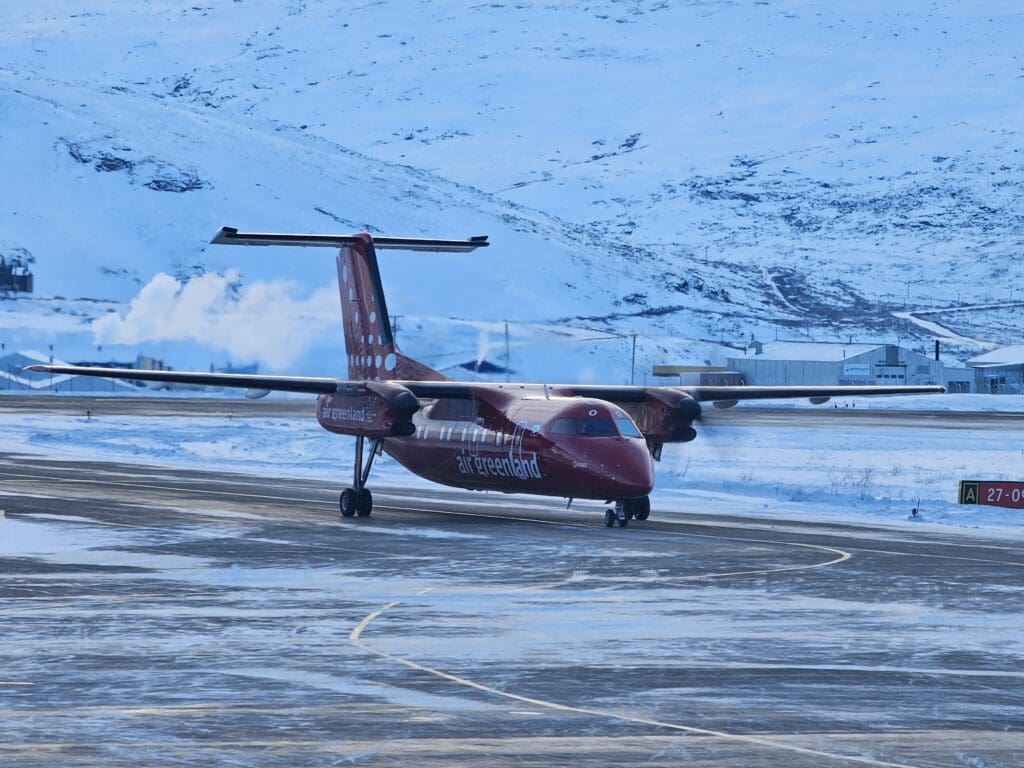
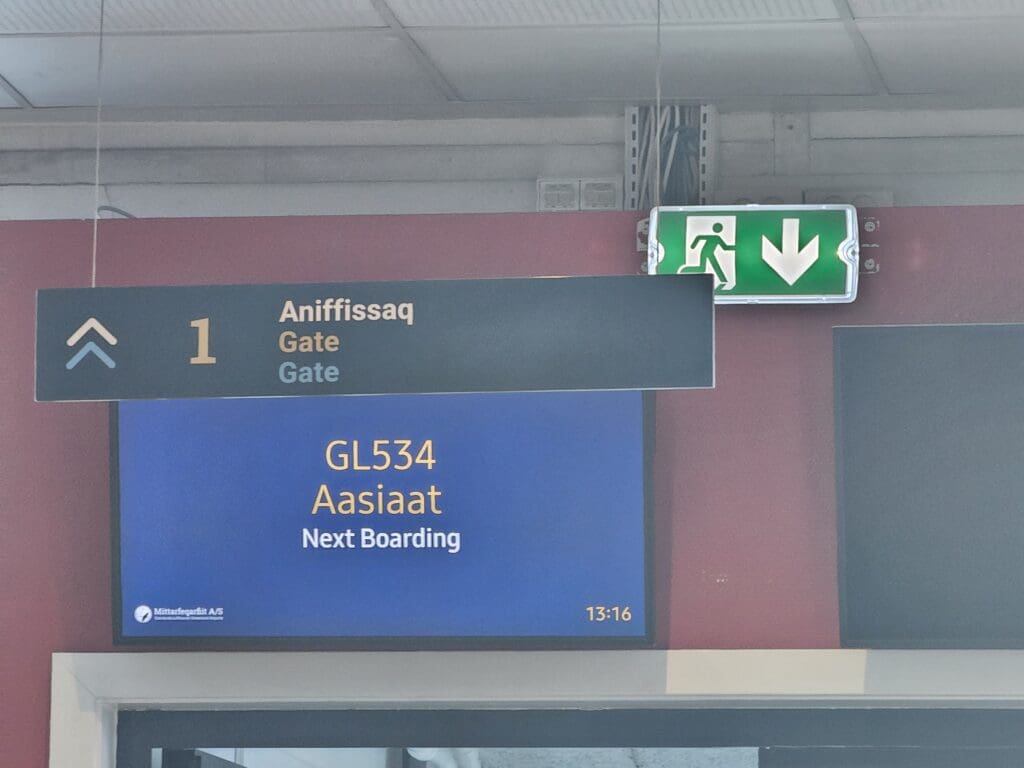
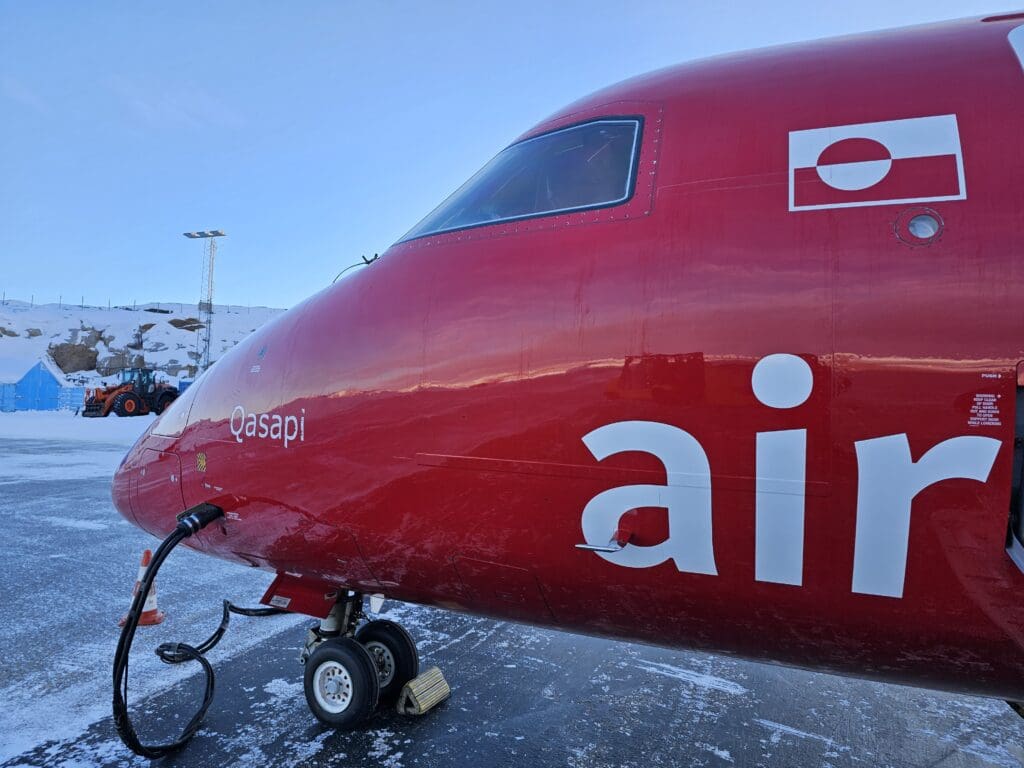
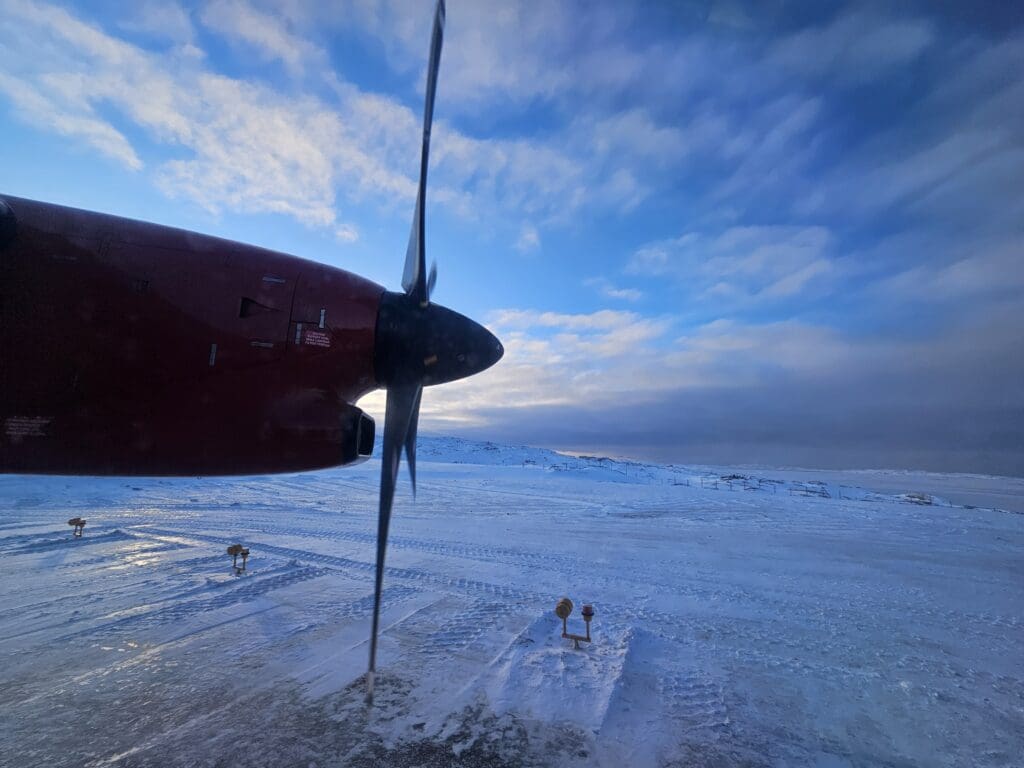
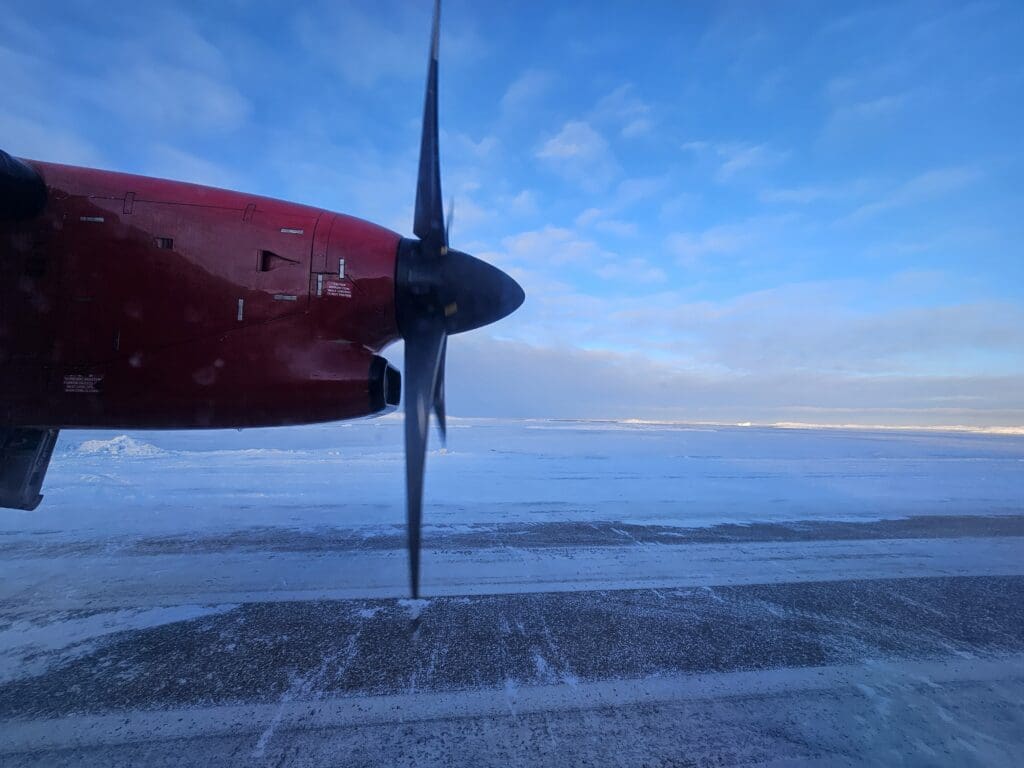
At 1310, the door to the boarding tunnel was opened, and the screen above this was turned on and displayed the flight information for the service to Aasiaat and Ilulissat. Five minutes later, an announcement was made in Greenlandic and English regarding the commencement of boarding, and we all voyaged down the chilly boarding tunnel. Whilst there was no security check, as you would expect, boarding passes were scanned in the usual manner, and once this had been done, I was free to head out into the cold and make the short walk over to the bright red short and stubby aircraft glistening in the low winter sunshine.
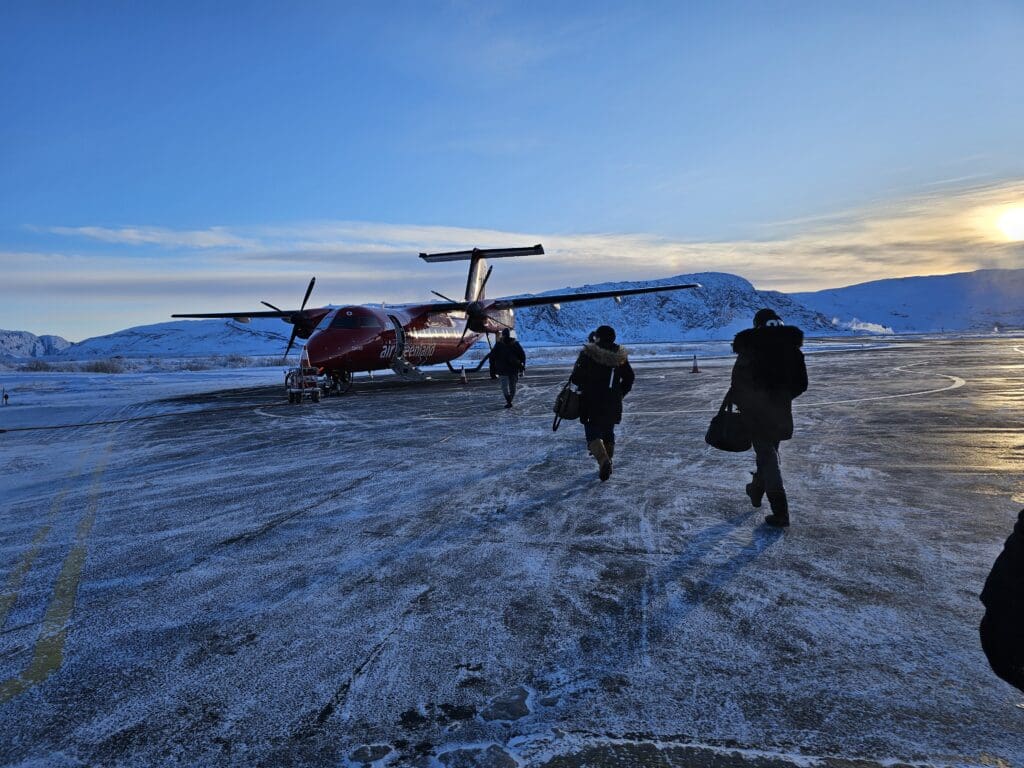
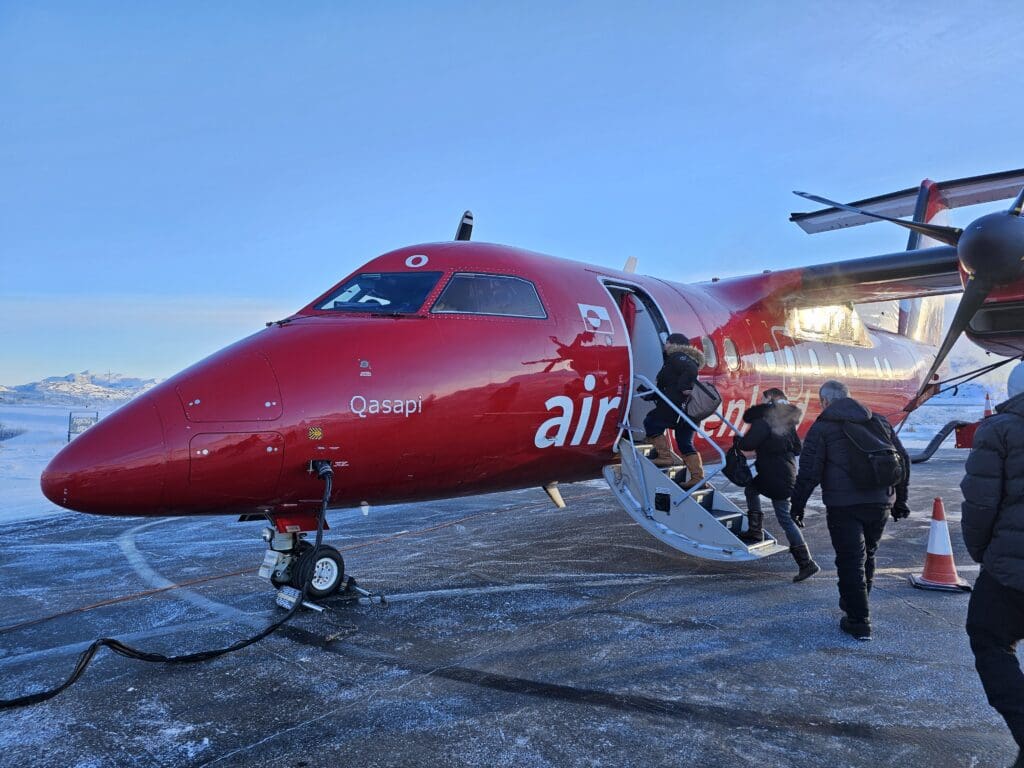
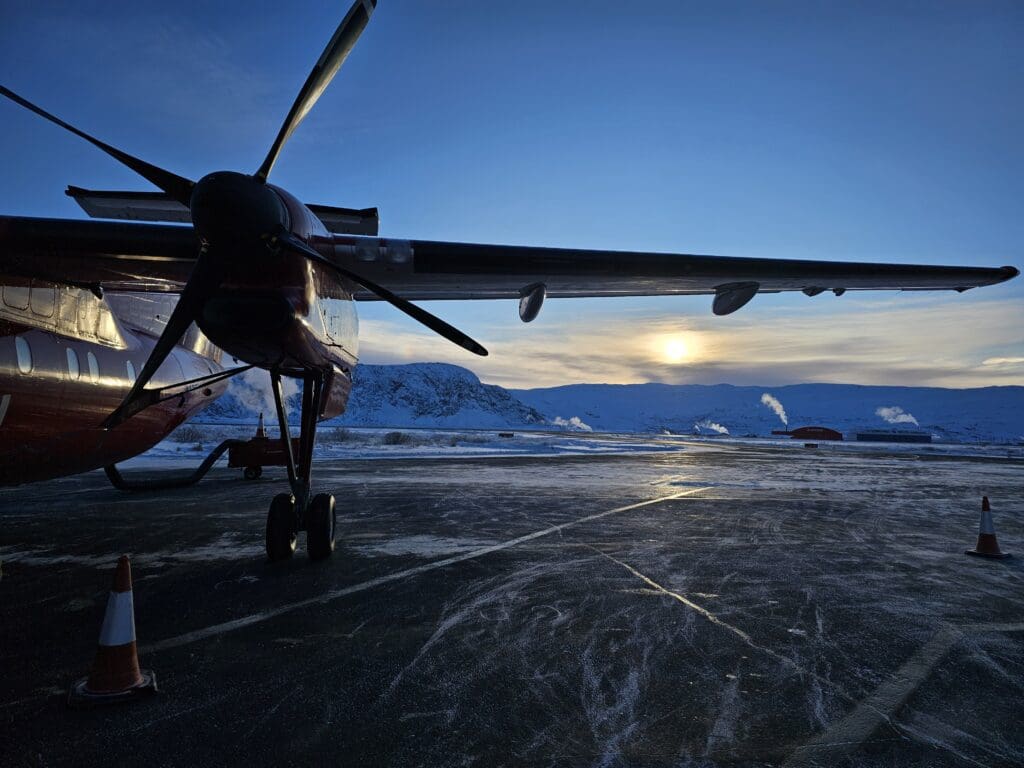
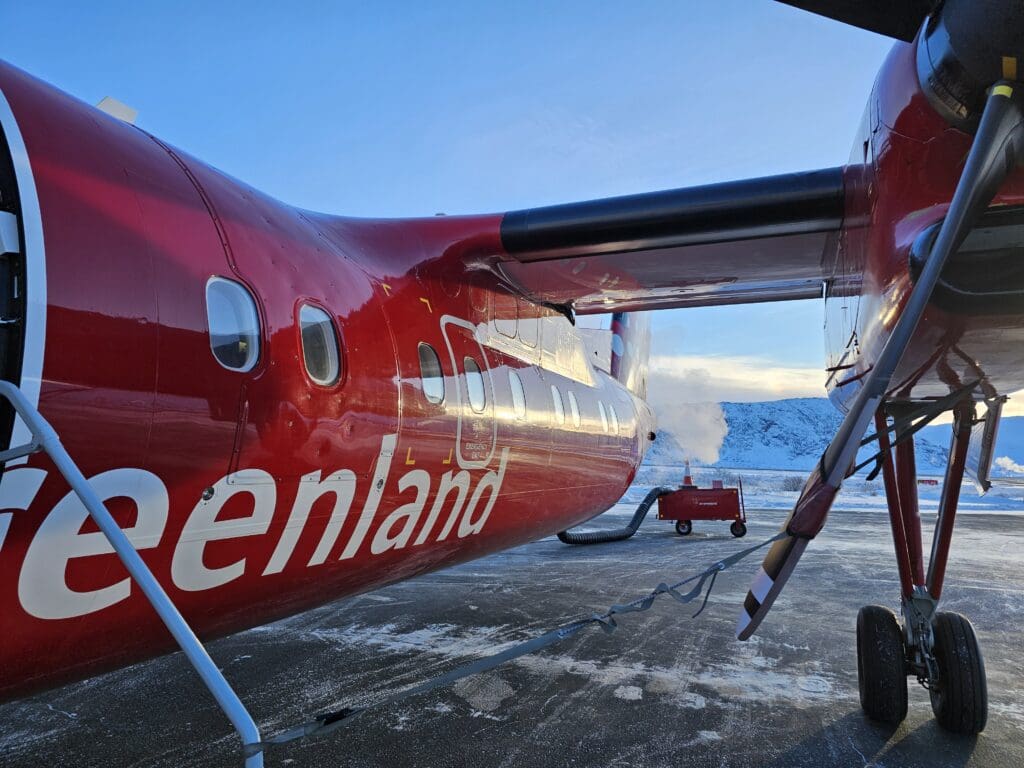
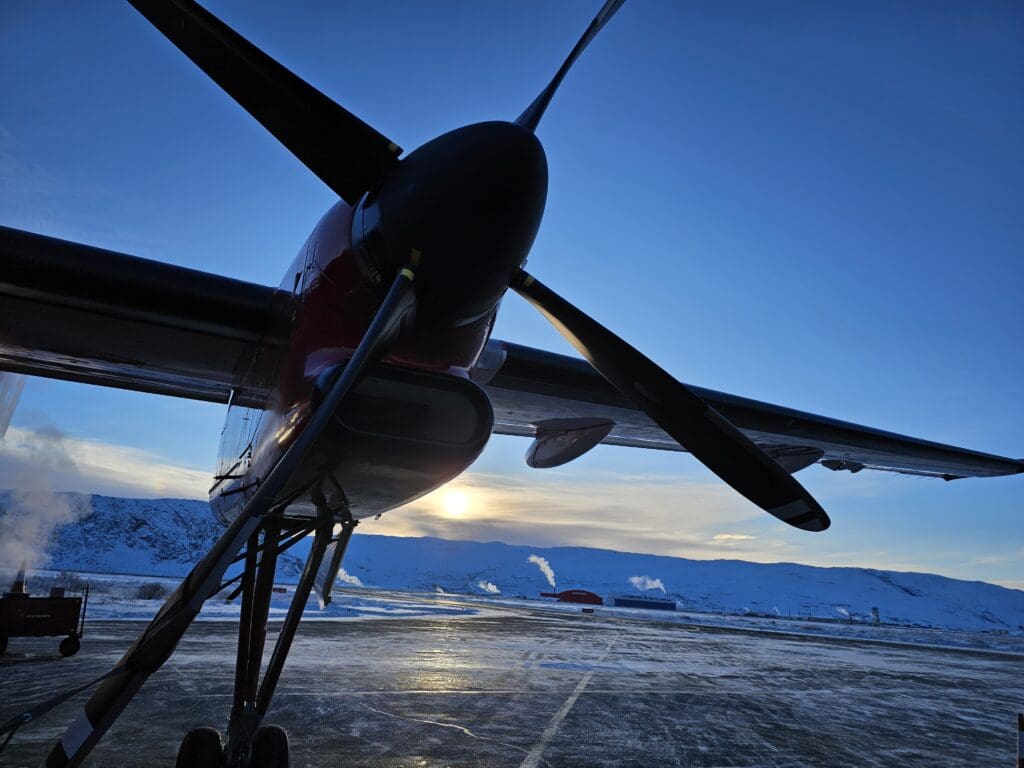
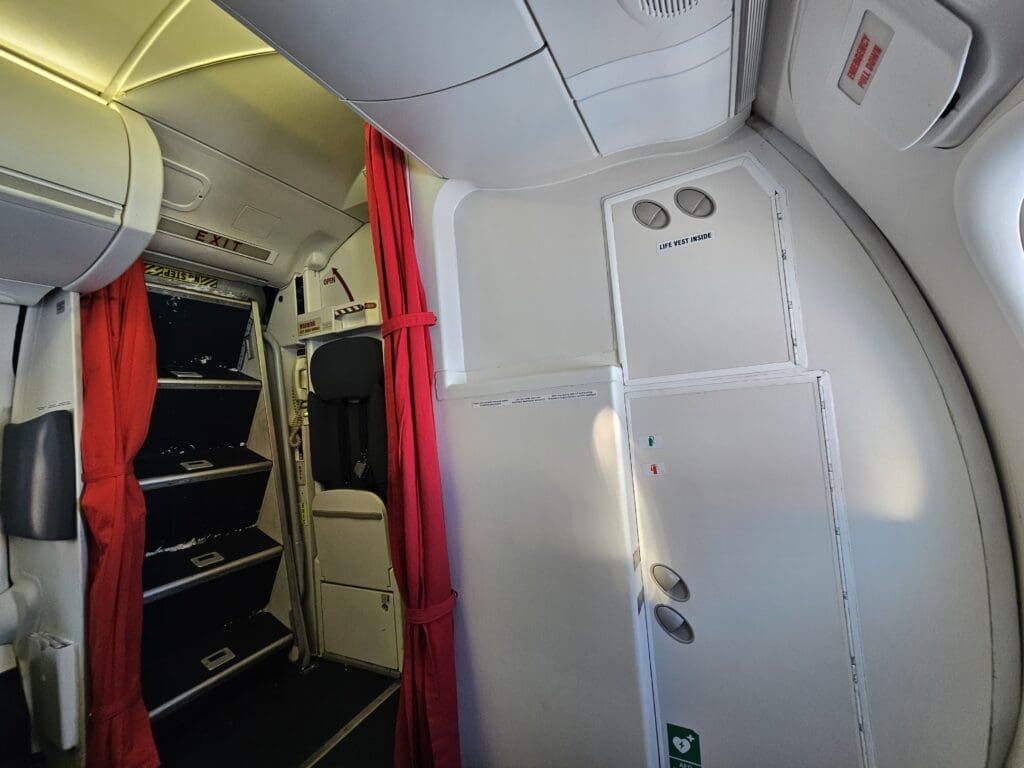
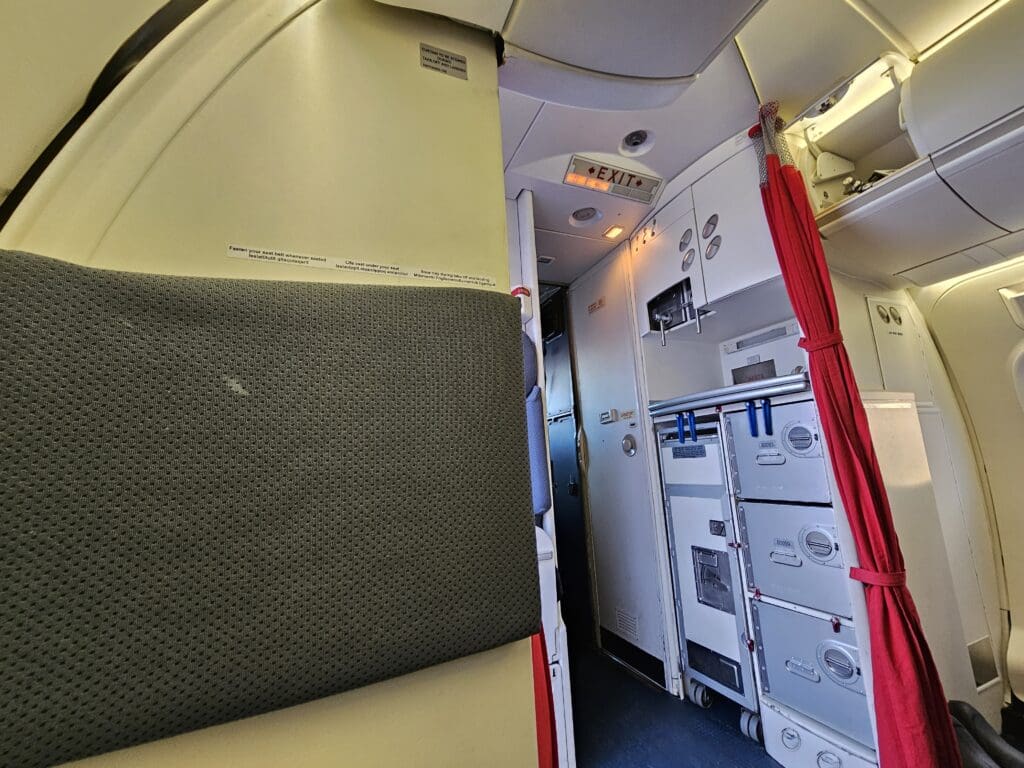
After snapping a few photos, not wanting to get more frostbite than necessary, I cautiously made my way up the five steps built into the inner side of the Dash 8’s passenger door. As I entered the small area at the front of the aircraft, which is home to a minuscule galley and a toilet, I received a friendly greeting in Danish from the sole flight attendant onboard. Understandably, given the freezing Arctic conditions, the flight attendant sported a thick and comfortable-looking coat as well as traditional sealskin kamik boots. Set to travel up to Ilulissat in Seat 1A, I made it there in a matter of seconds, however, I had forgotten just how small the overhead lockers are on the older and smaller Dash 8 variants and thus had some issues squeezing my backpack into this. Noticing my struggle, the flight attendant helpfully assisted in placing this under the seat, and, seeing as all passengers had now boarded, they advised me that I could move across to Seat 1D, which would offer a slightly better amount of legroom, being an emergency exit seat.
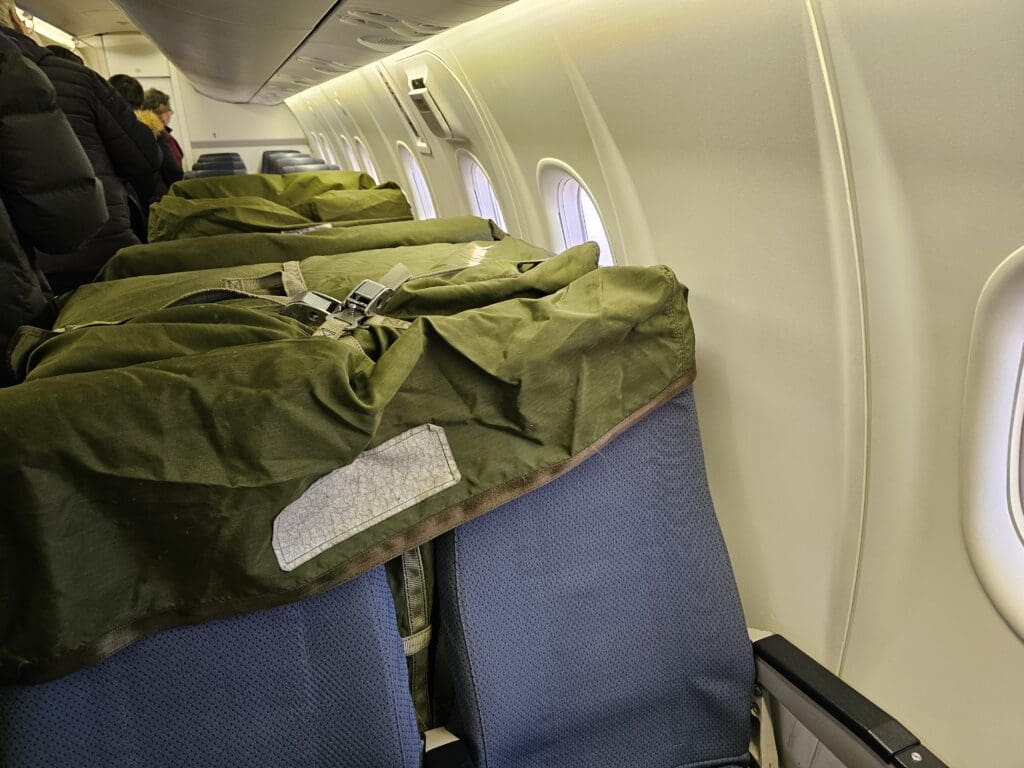
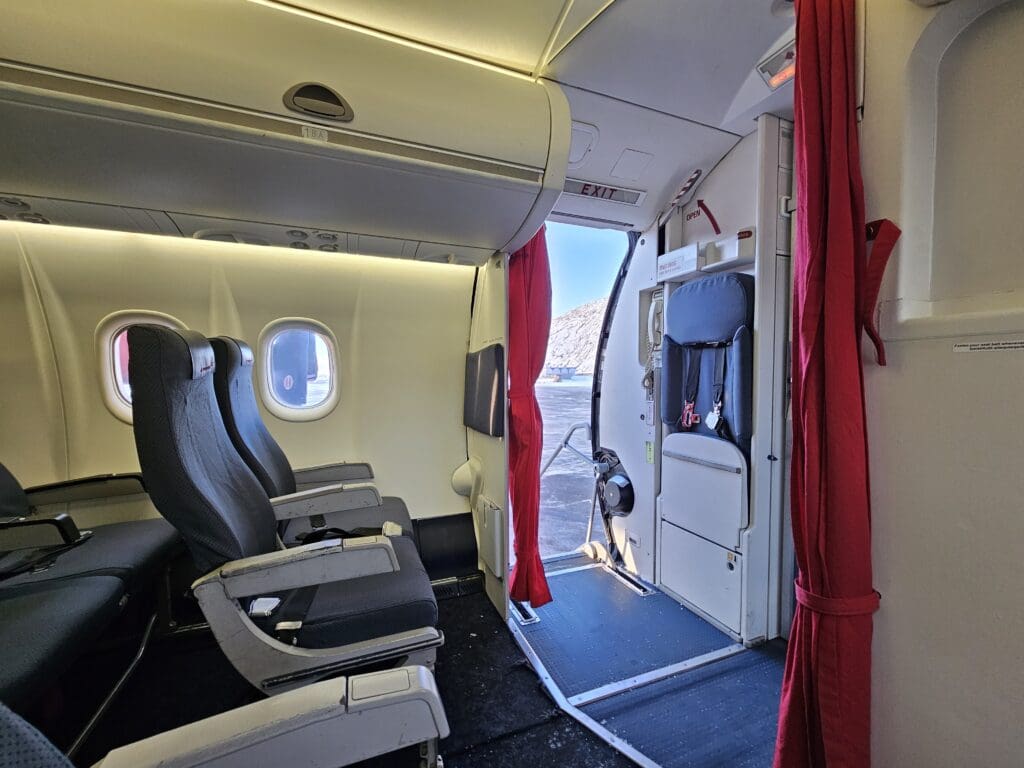
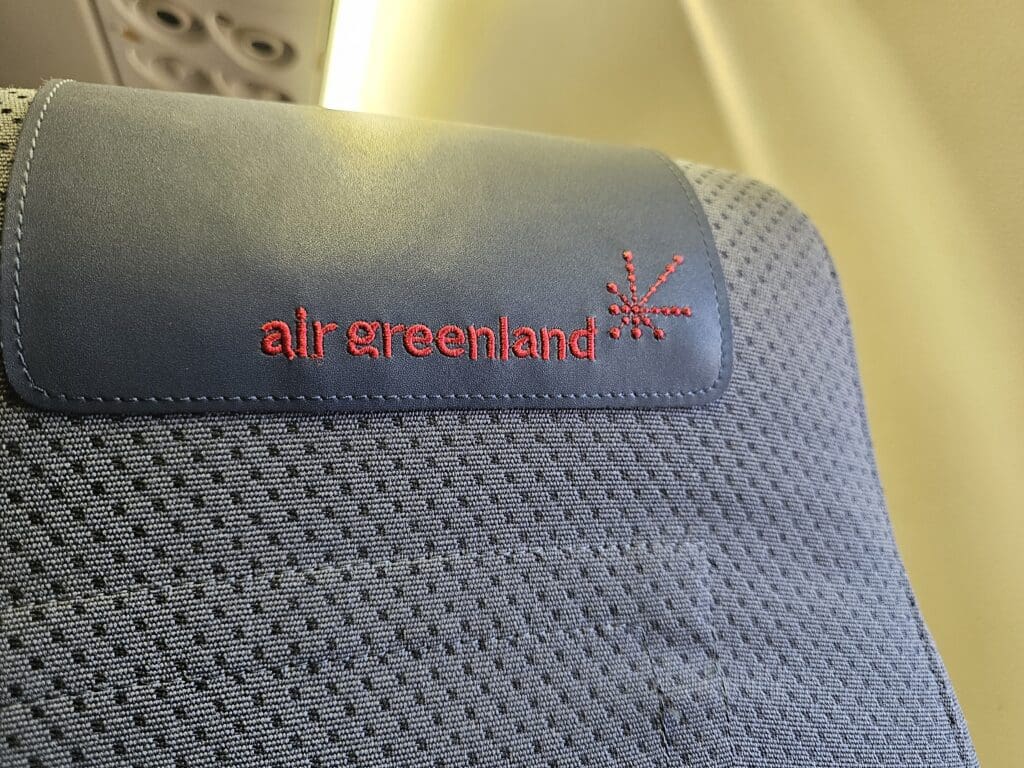
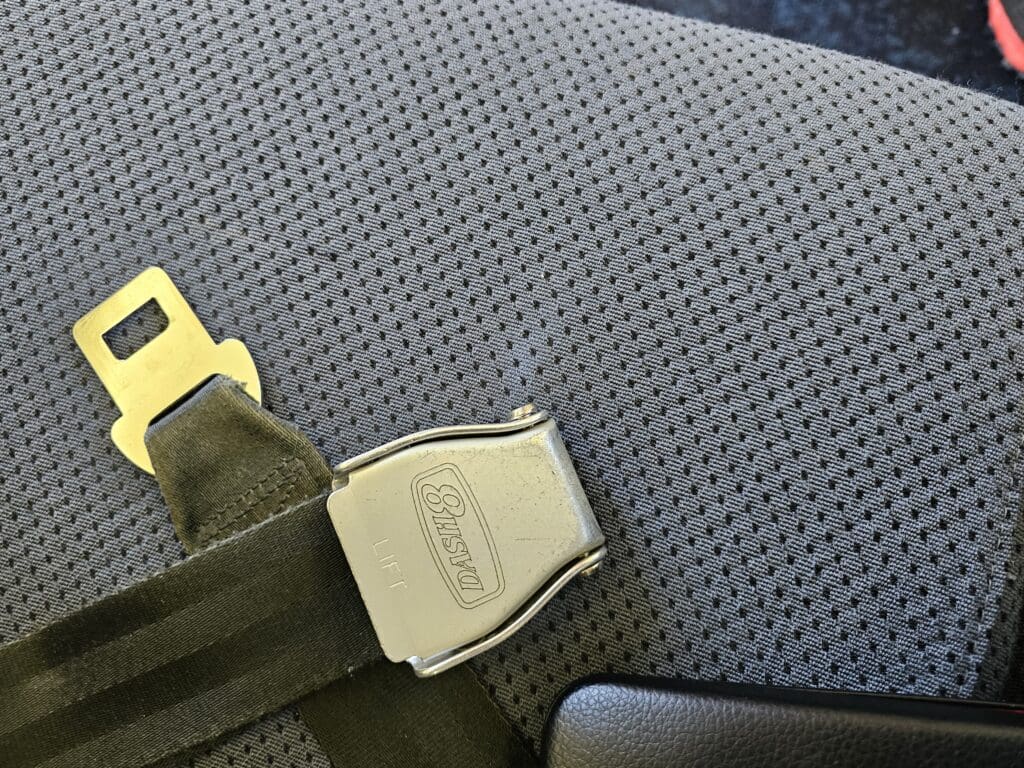
Air Greenland’s Dash 8 Q200 aircraft are fitted with a total of 37 passenger seats, which come in the form of the standard square-ish Dash 8 seats arranged in a 2-2 configuration (other than the rearmost row). These seats are covered in grey fabric and topped with a smart leather antimacassar on which Air Greenland’s logo is embroidered. That lunchtime, several cargo bags had been placed over several seats, which meant that even though the flight was not particularly busy, there were only a small number of vacant seats throughout the aircraft. At some point in the aircraft’s life, the cabin appears to have been upgraded and features fairly modern cabin panelling and lighting when compared to that of older Dash 8s that I have flown on (such as those of Olympic Air and PAL Airlines). Once seated, I found the seat to be soft and well-padded, whilst seeing as I was seated in an emergency exit row I could find little reason to complain about the amount of legroom. Looking around, the aircraft seemed to be in a relatively clean and tidy condition, however, it did feature a fair few marks and scratches. Admittedly, this was perhaps to be expected given the rough and ready nature of flying in the Arctic, and overall, the cabin and my initial interactions with the flight attendant had left me with nothing to complain about.
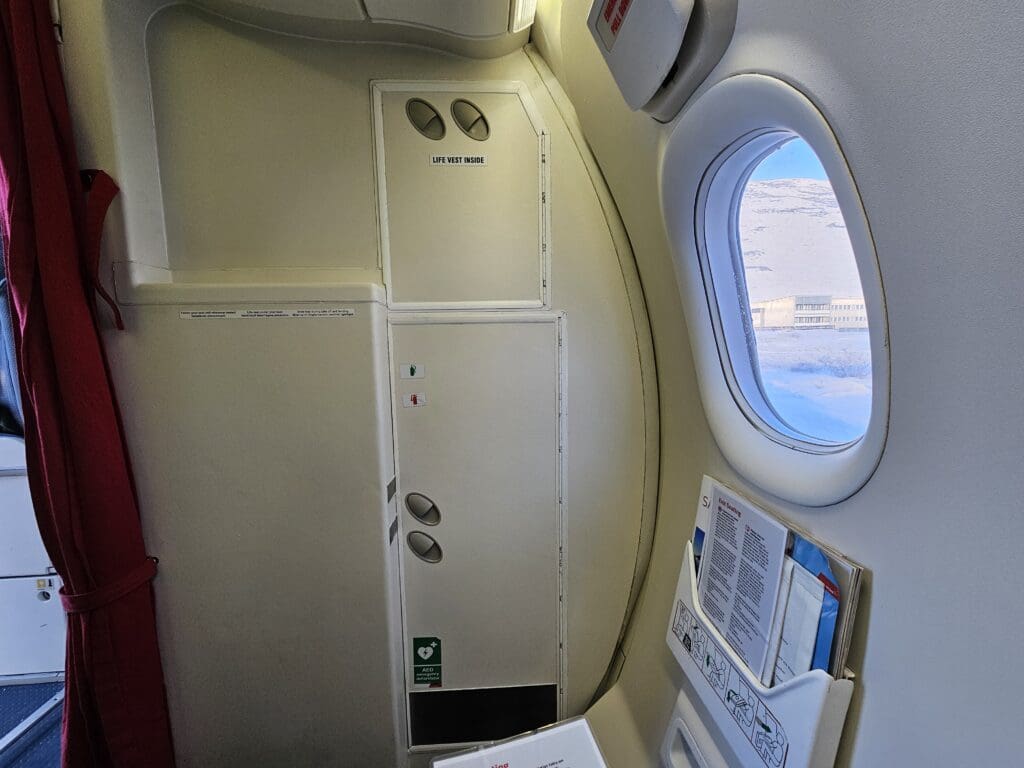
Once all were onboard, the dispatcher shuttled in and out of the cockpit for a few minutes and seeing as there was no real divider or windbreak between the cabin and the forward galley, seated at the very front of the aircraft I ended up getting a little chilly. Focusing on my fellow passengers, I seemed to be just one of three non-Greenlandic passengers, with the other two consisting of an Ilulissat-bound couple who hailed from Thailand. Soon, the door was closed with a thud, and the flight attendant performed their welcome announcement in Greenlandic, Danish and English. This consisted of the usual welcomes and thanks, a mention of our forty-minute flight time to Ilulissat and an apology for the delay, which was put down to ‘aircraft issues’. A few seconds later, a pre-recorded safety announcement was played, albeit in Greenlandic and Danish only, with the flight attendant undertaking a demonstration along with this. Once they had finished this, they then passed through the cabin, ensuring all was in place for our departure and upon reaching my row, I was reminded that I was sitting in an exit seat and asked to read the emergency exit instruction card.
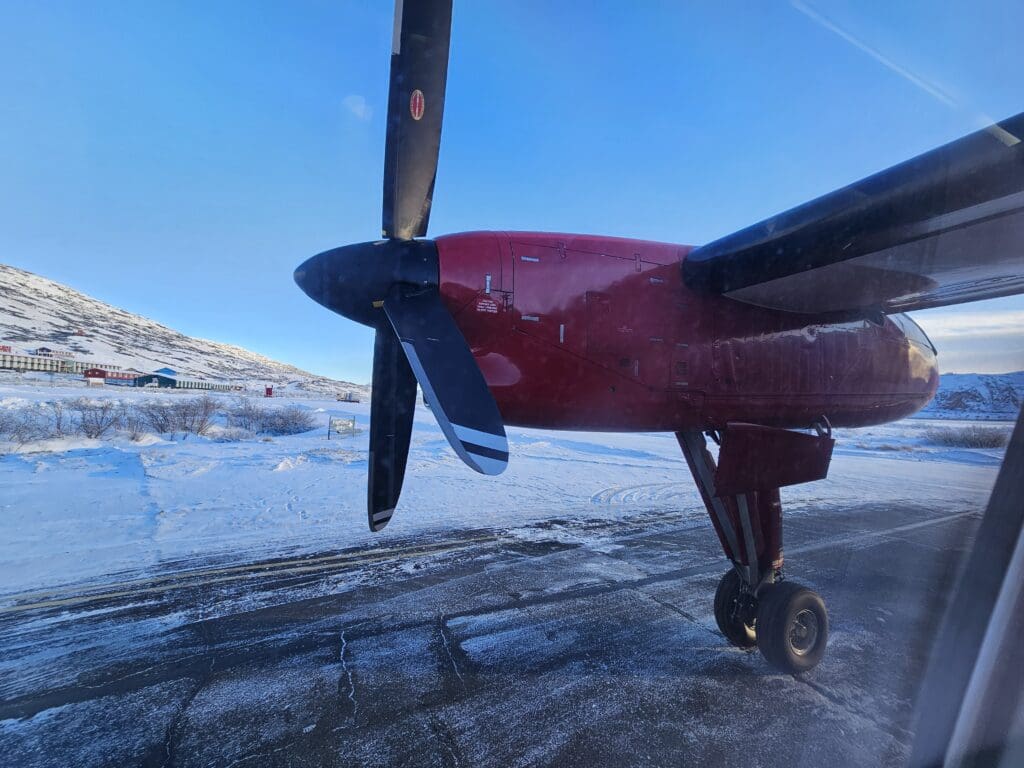
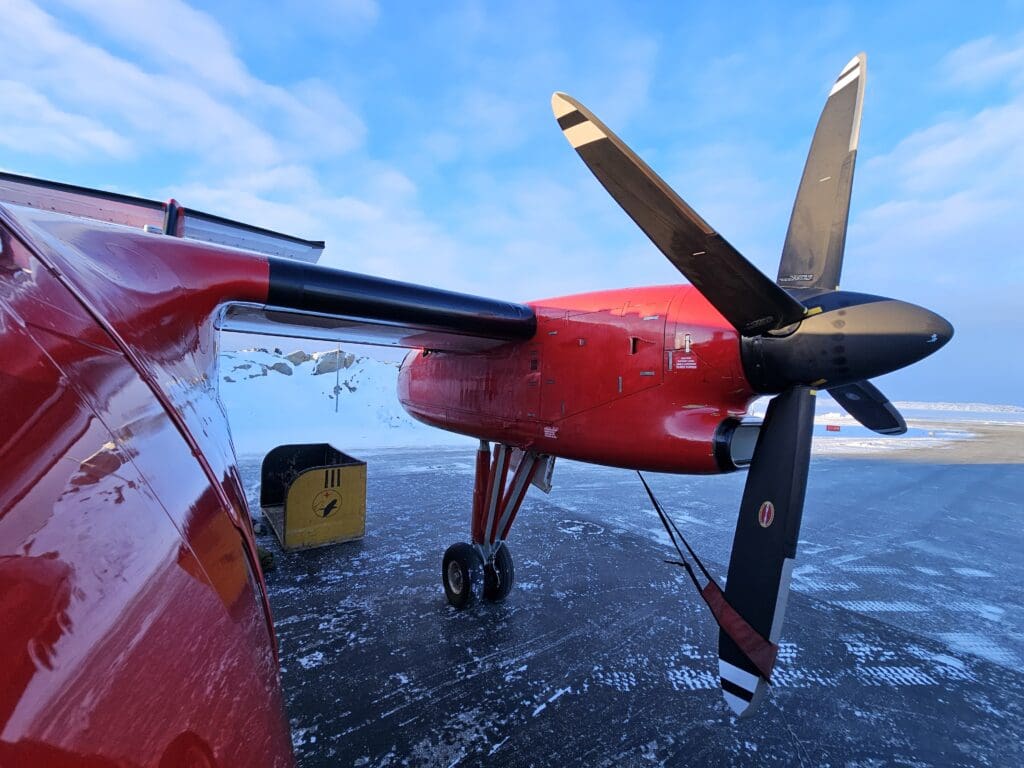
As the flight attendant passed through the cabin, the two four-blade Hamilton Sundstrom propellers of each engine whirled as the engines powered up, causing plenty of noise and vibration. A very short time later, the Dash 8 taxied forward out of its parking position and made an about-turn before commencing the short taxi to the end of the runway. Arriving at the holding point in a matter of seconds, once there, the First Officer undertook their welcome announcement in Greenlandic and English, during which they informed all onboard of the expected good weather en route, the weather in Aasiaat and advised that we were holding to allow an aircraft to land. Indeed, looking outside of the window, I watched as a bright yellow Hawker 800XP air ambulance touched down following a flight from the Norwegian town of Bodø. Operated by Billund-based Sun-Air of Scandinavia (also known for their Dornier 328s services operated on behalf of British Airways), this particular Hawker is a regular visitor to Greenland, shuttling patients to and from hospitals in Denmark.
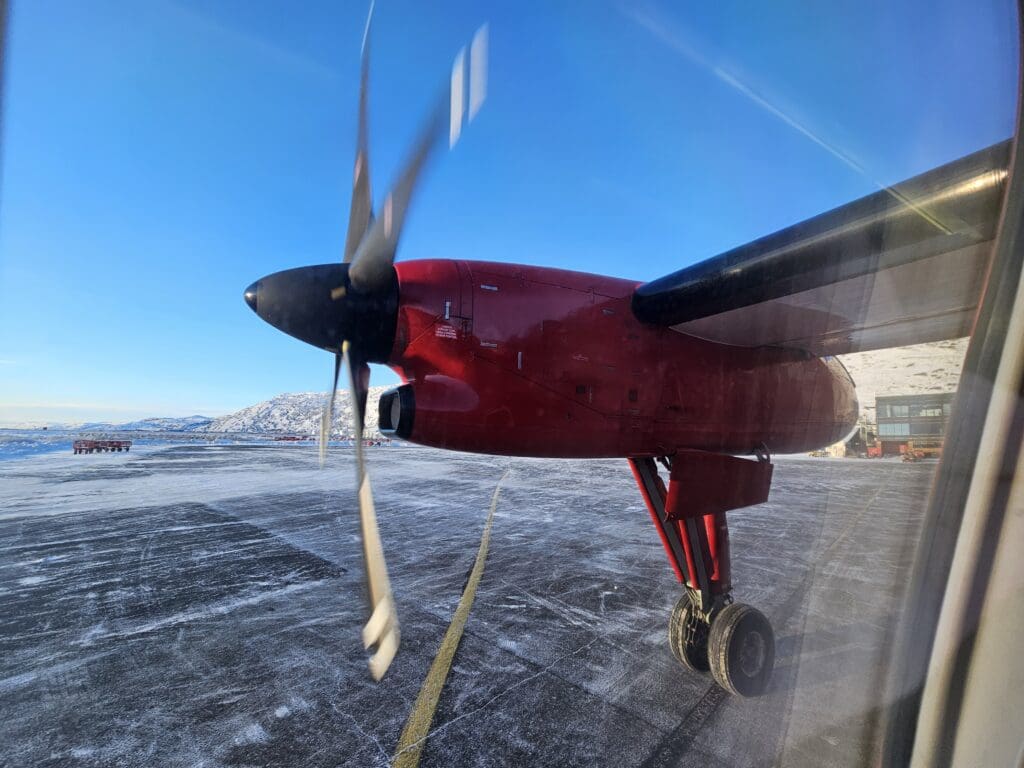
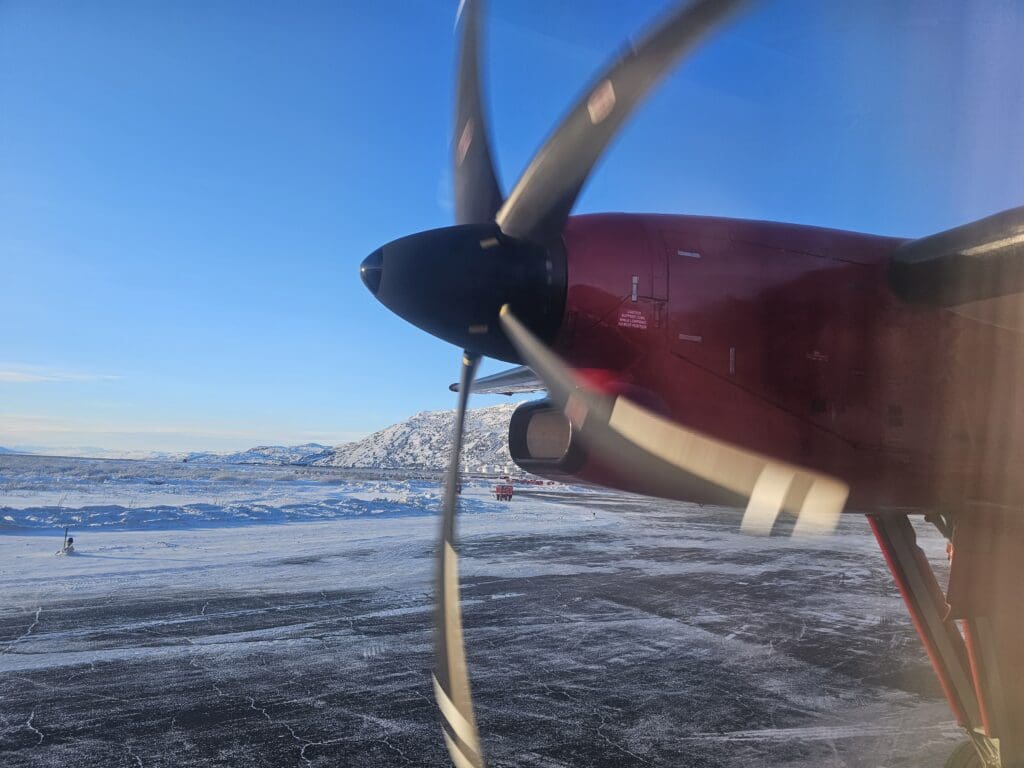
Soon, the Dash 8 lumbered onto Runway 27, and seeing as the Dash 8 is far from the world’s quietest working environment, understandably, at this point, the flight attendant donned a pair of noise-cancelling headphones. Following a very short pause, the Dash 8’s two engines roared into life, and we were sent flying down the runway. Looking out, we soon whizzed past the terminal and apron before rocketing upwards into the clear Greenlandic skies within a matter of seconds. Once our positive climb had been confirmed, the landing gear was retracted into its housing, and we soon left Kangerlussuaq Airport behind. From there, the Dash 8 continued flying down Kangerlussuaq Fjord in the direction of the Atlantic Ocean before turning onto a northerly heading that would take us towards Aasiaat and pass over the high ground that sits to the north of the fjord.
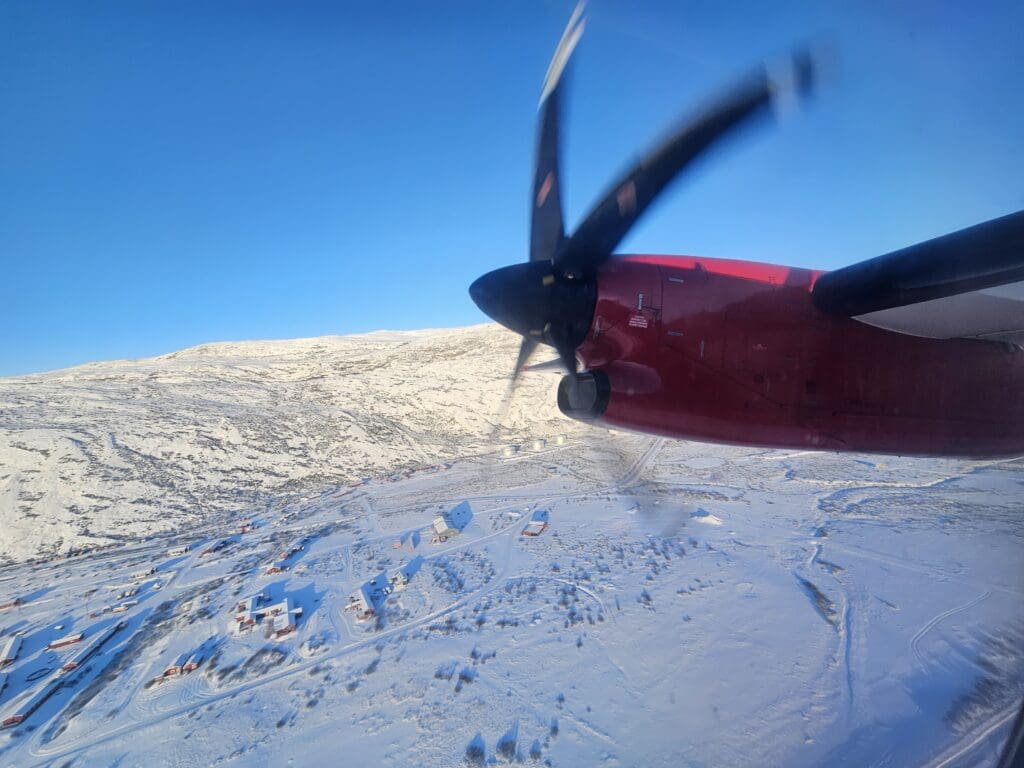
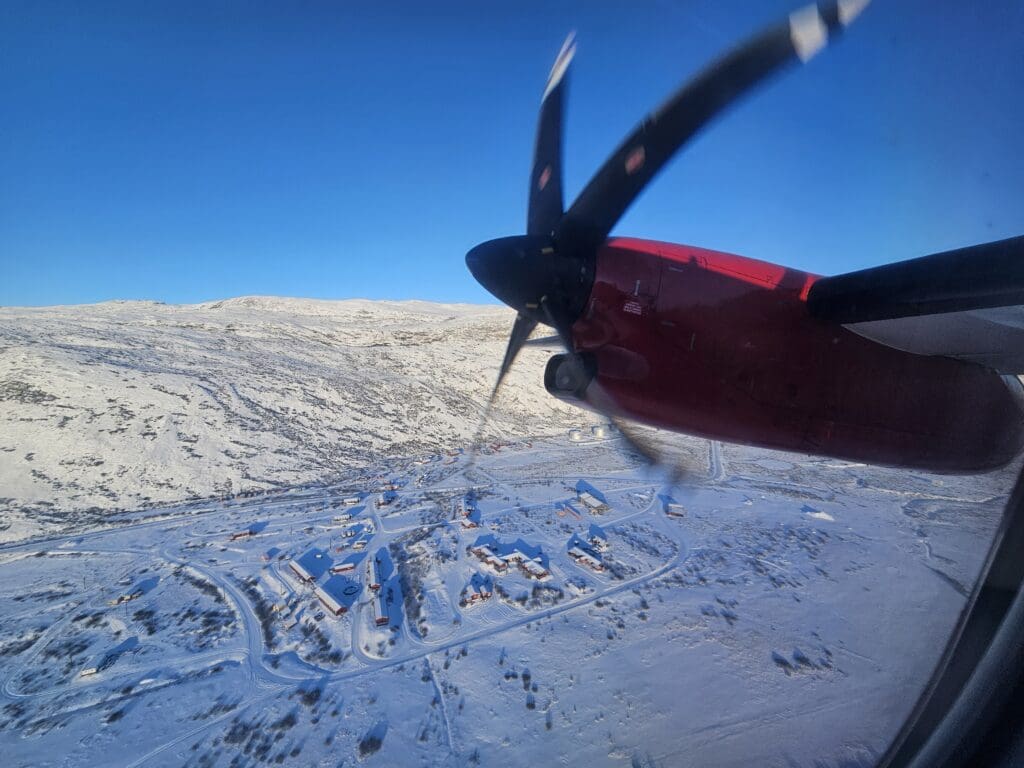
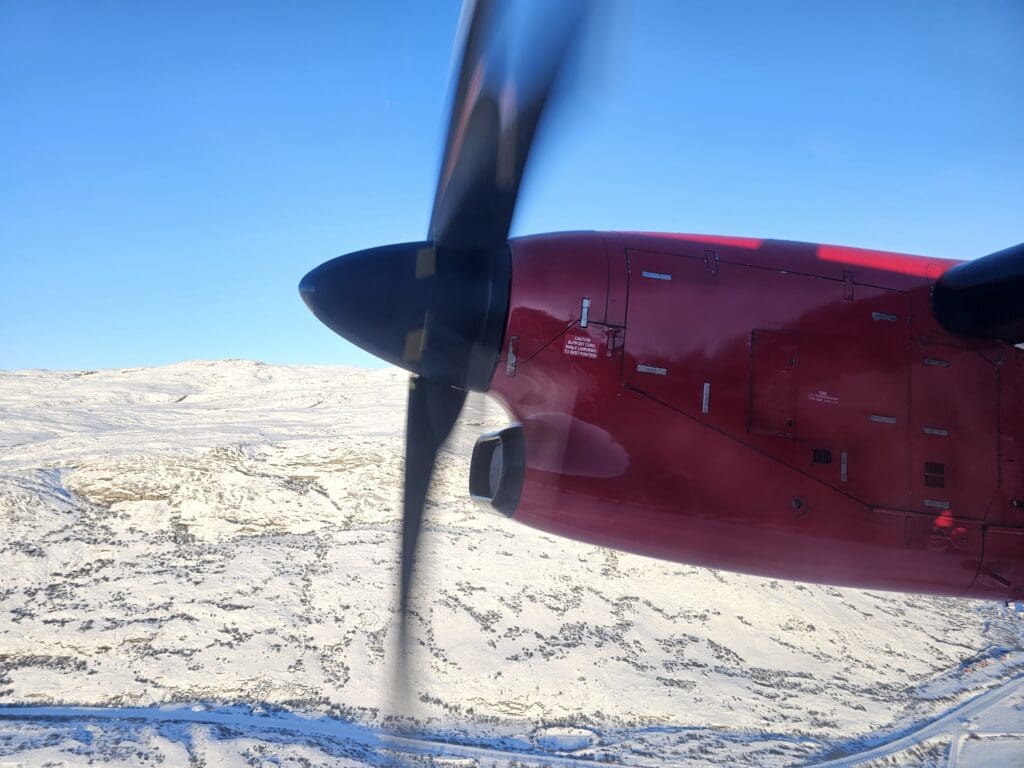
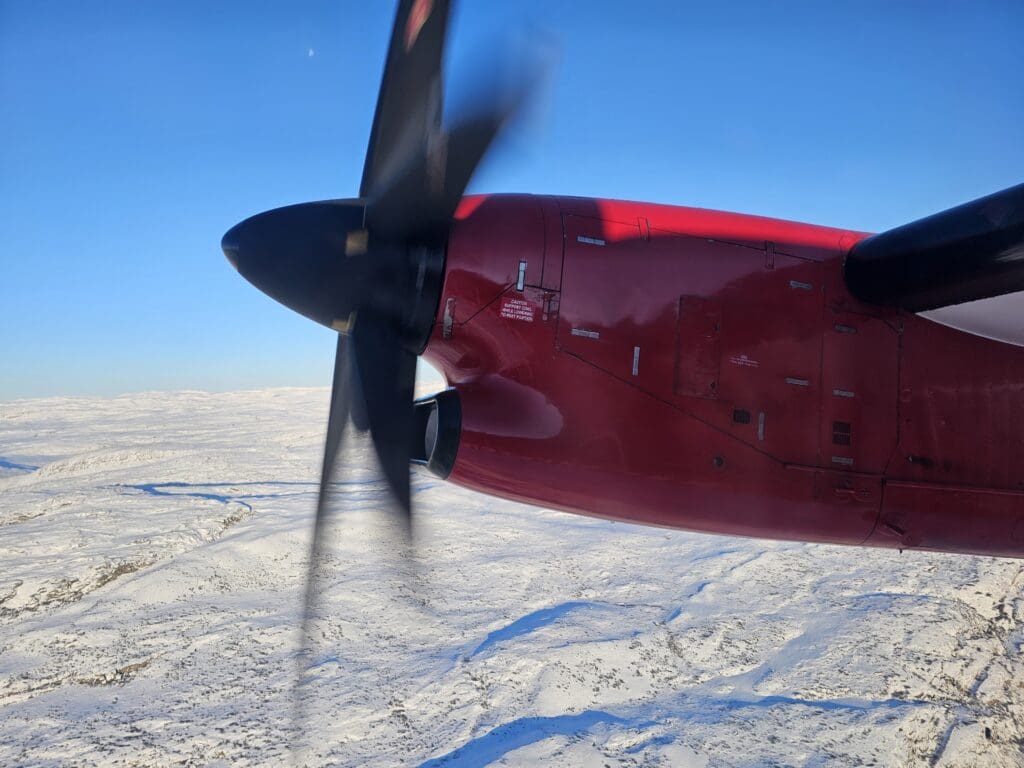
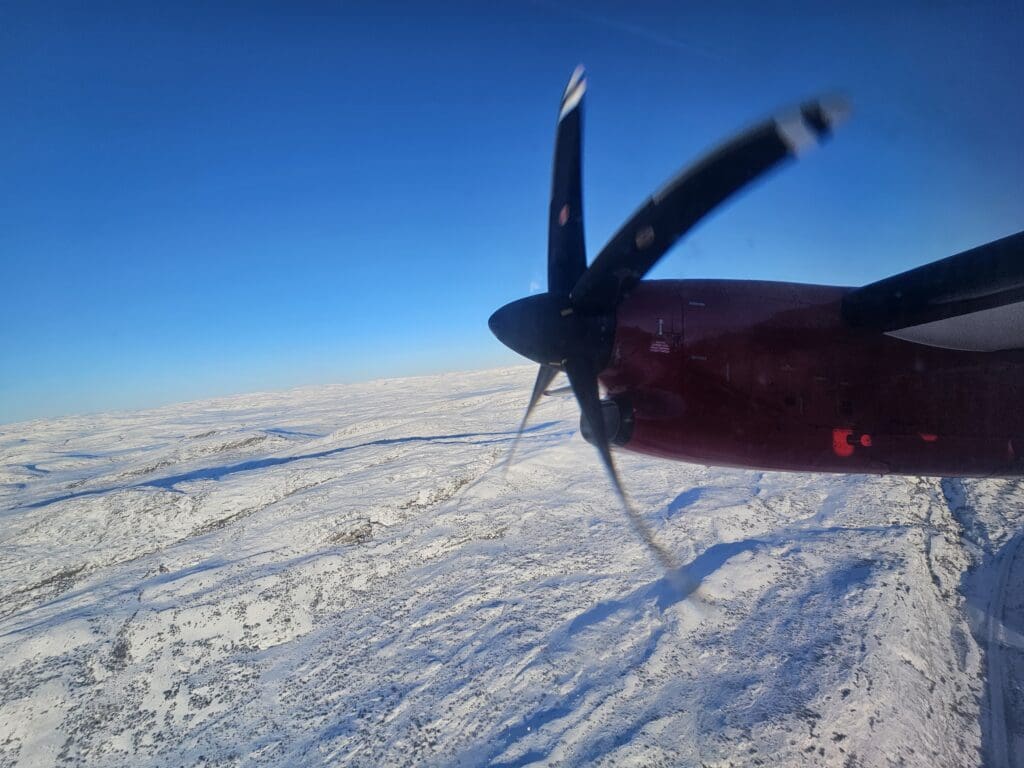
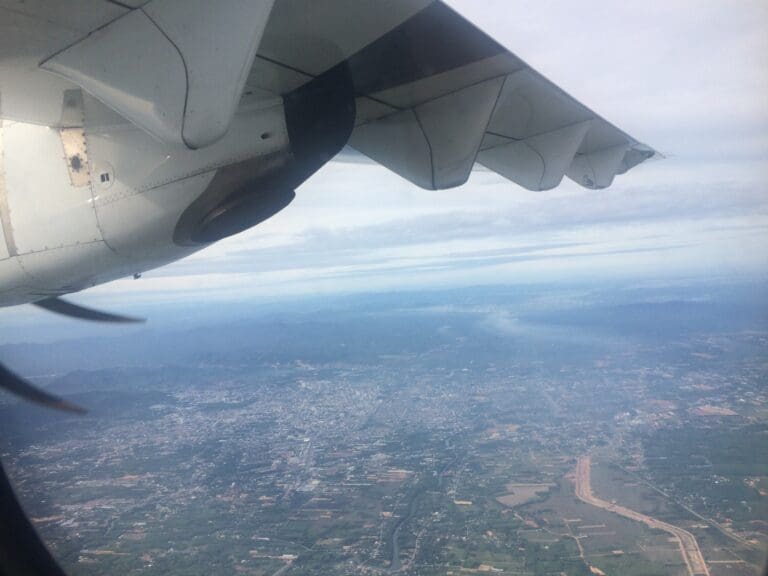
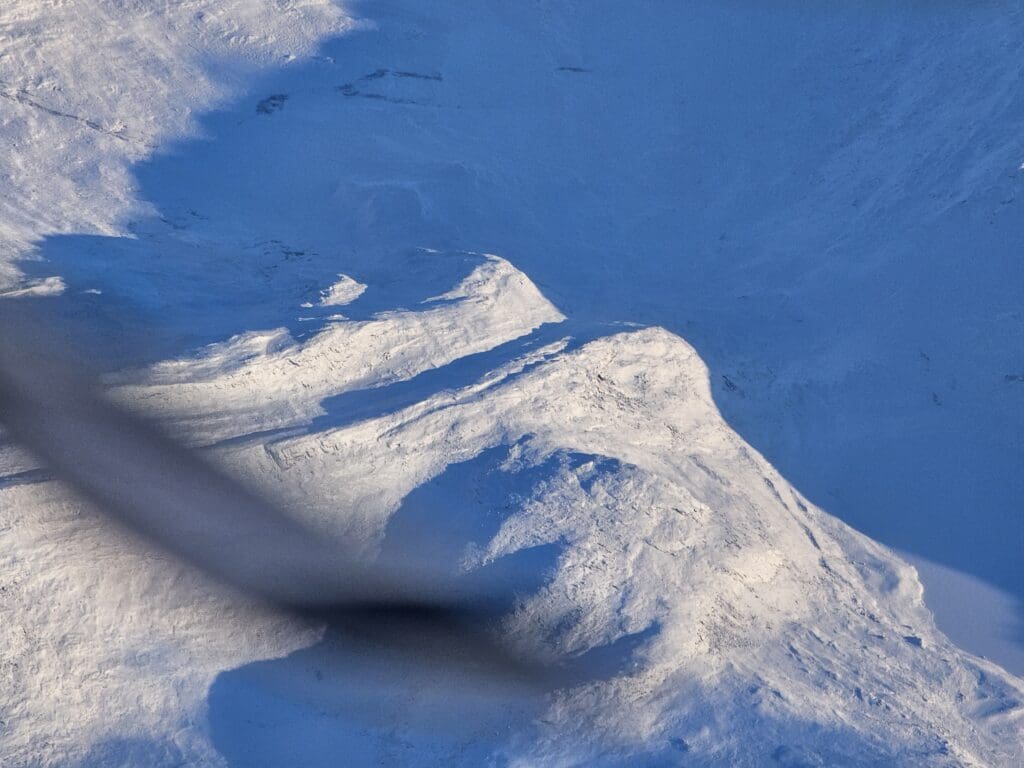
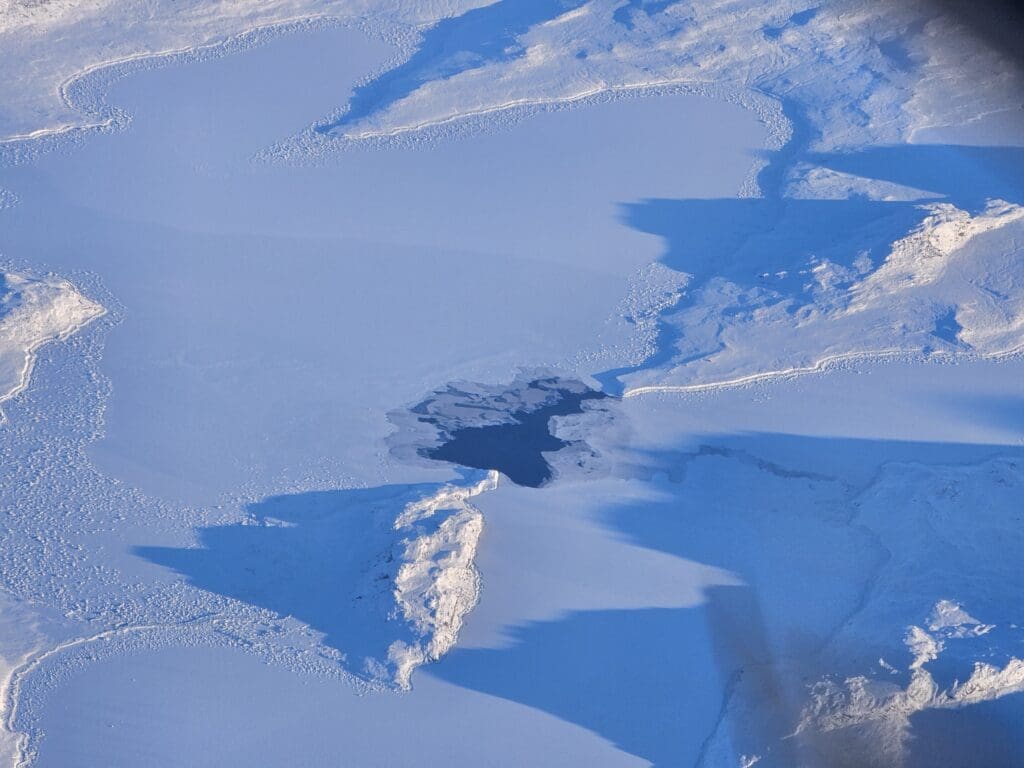
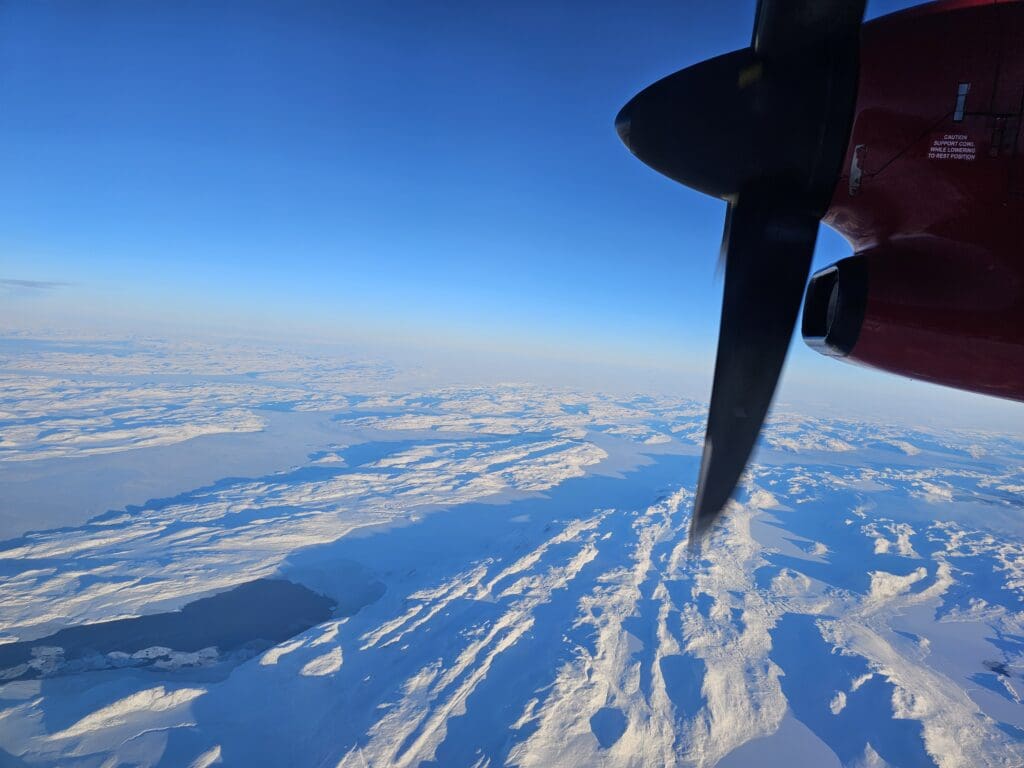
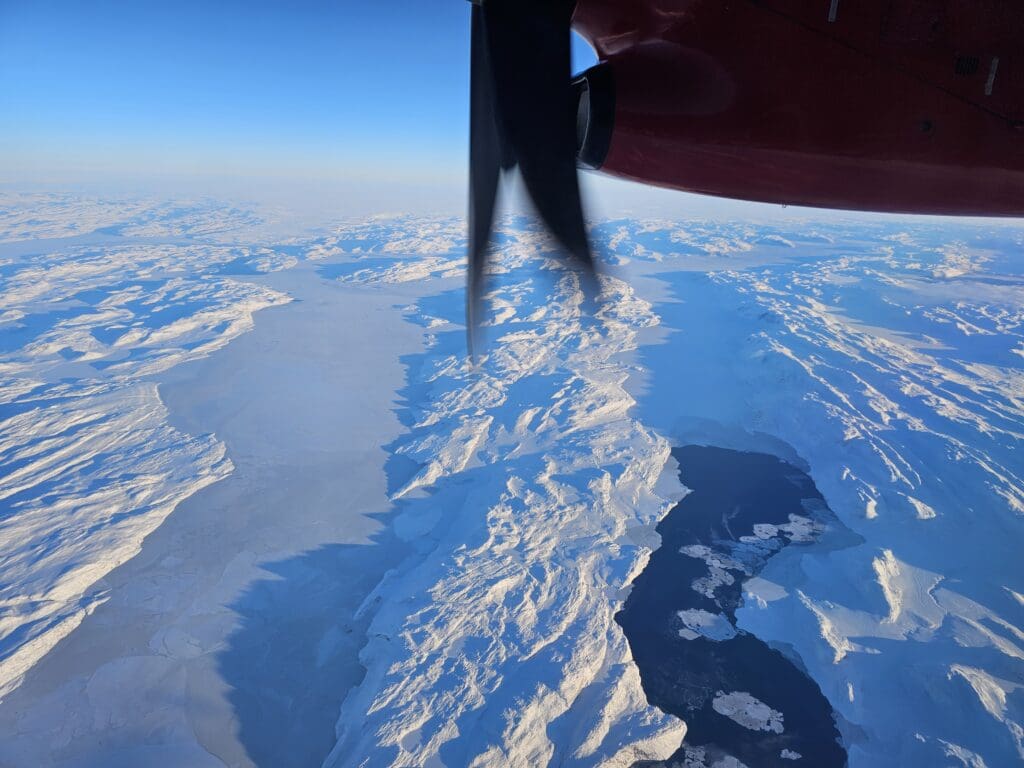
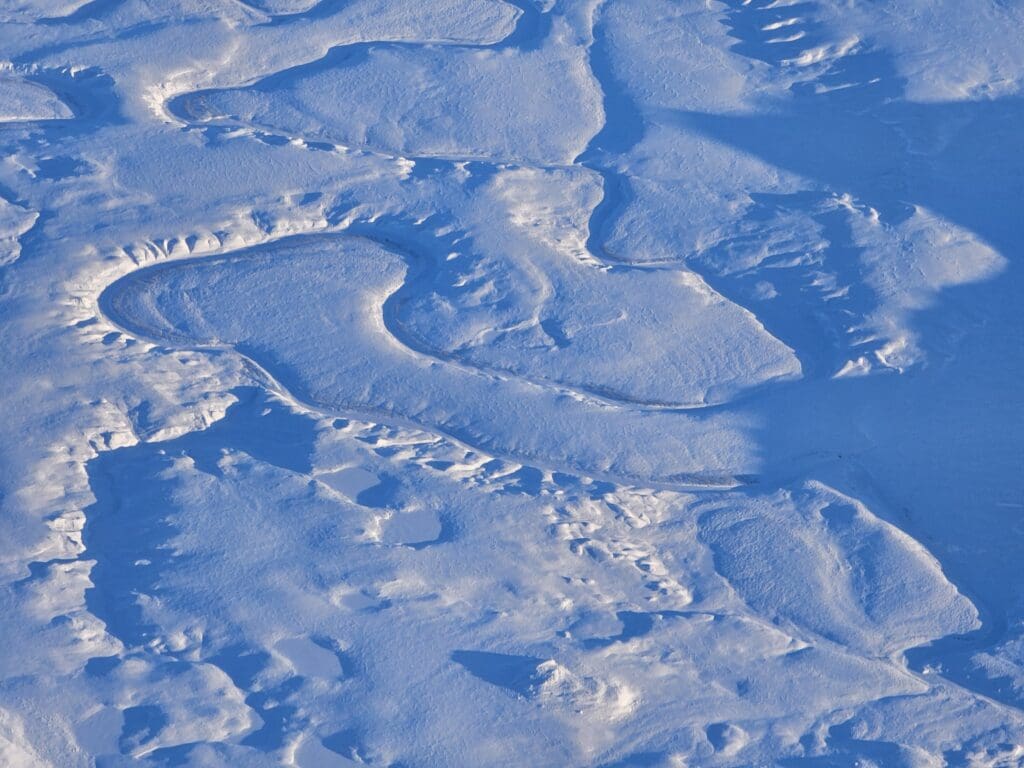
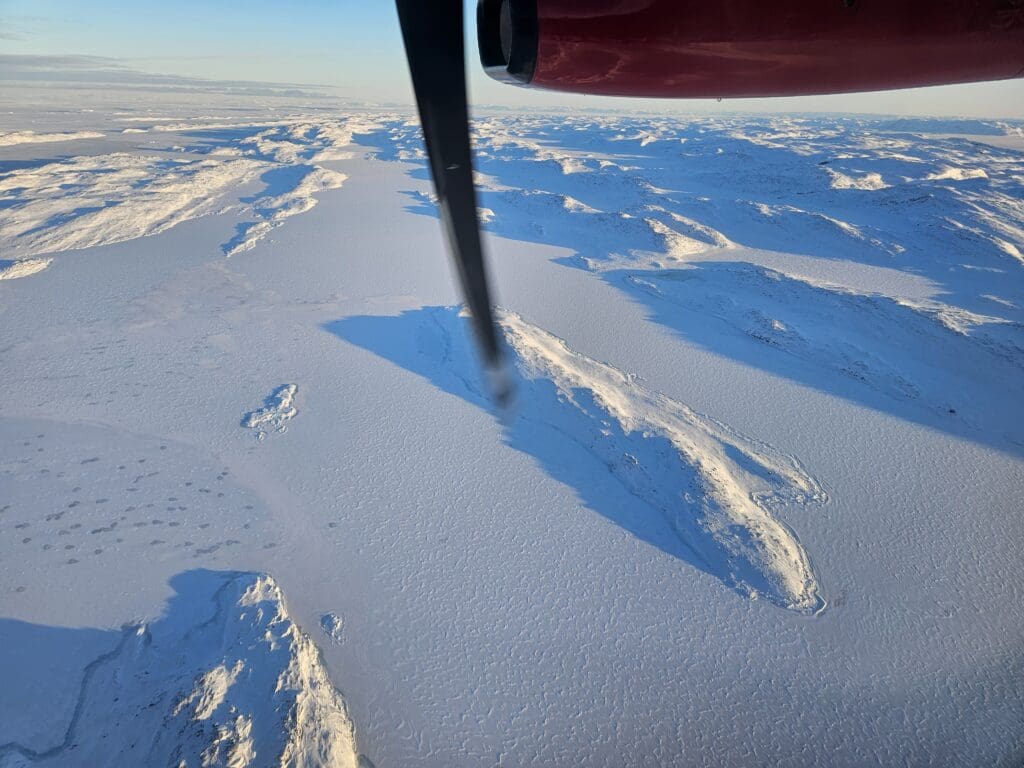
With clear skies lingering over the western coastline, I was treated to captivating views of the fjords, islands, hills and ice caps as we buzzed through the skies of Greenland. With this being my first visit to the country, and indeed the Arctic, the scenery was unlike anything that I had ever seen in person, and I spent much of the flight glued to the window!
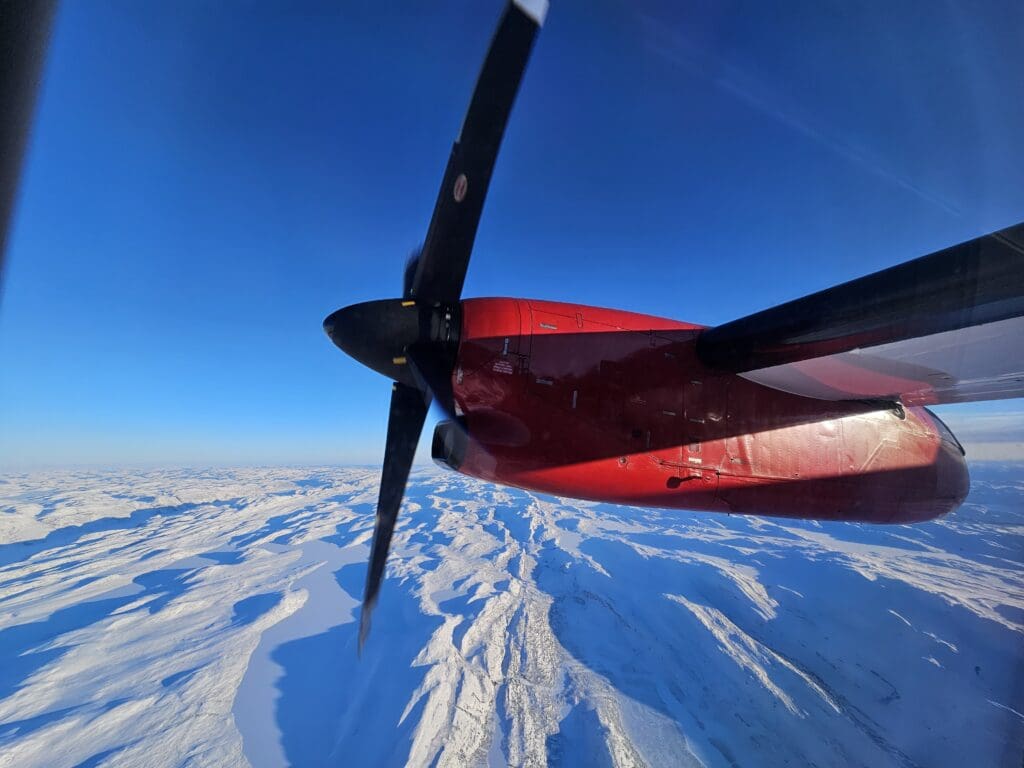
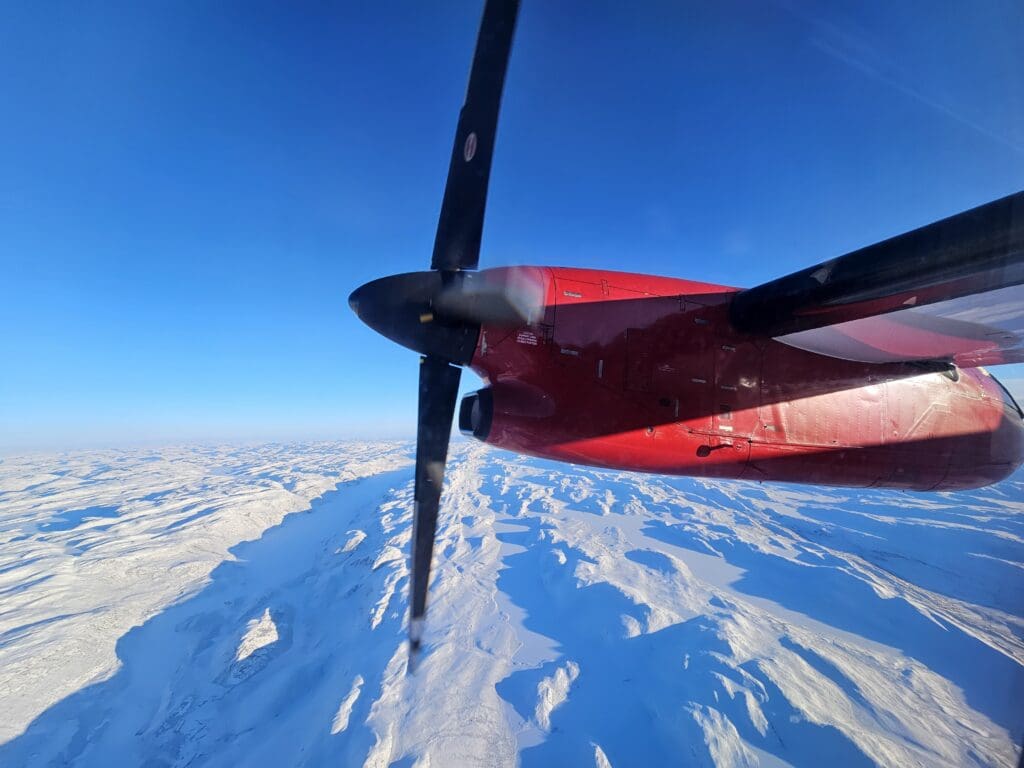
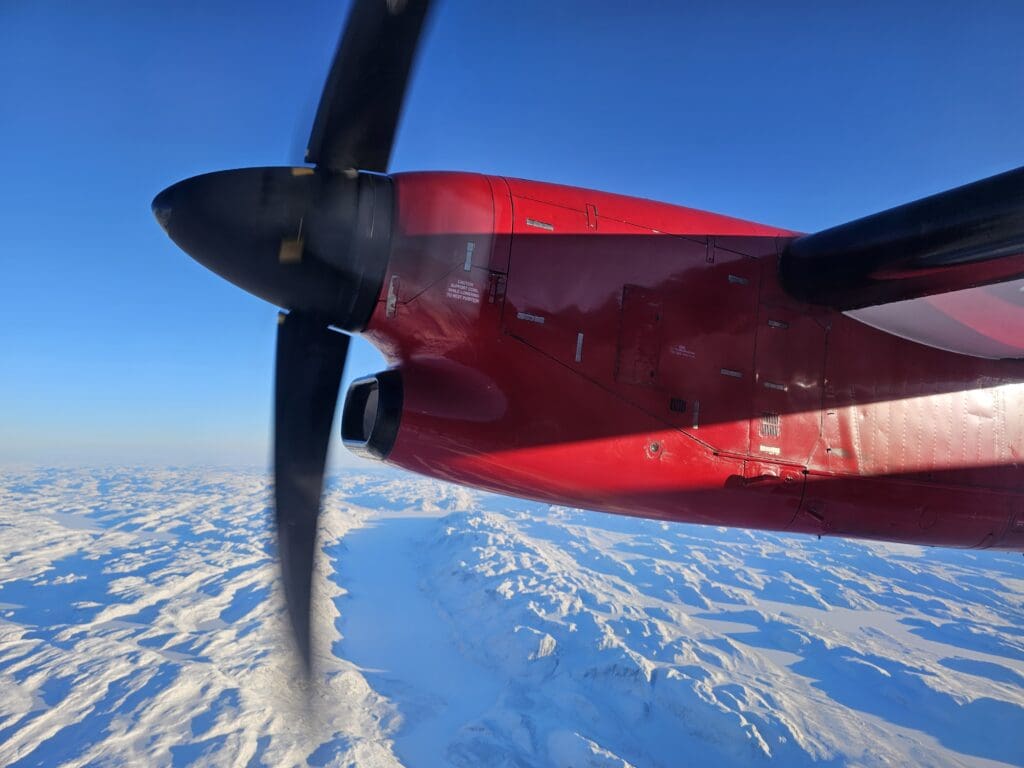
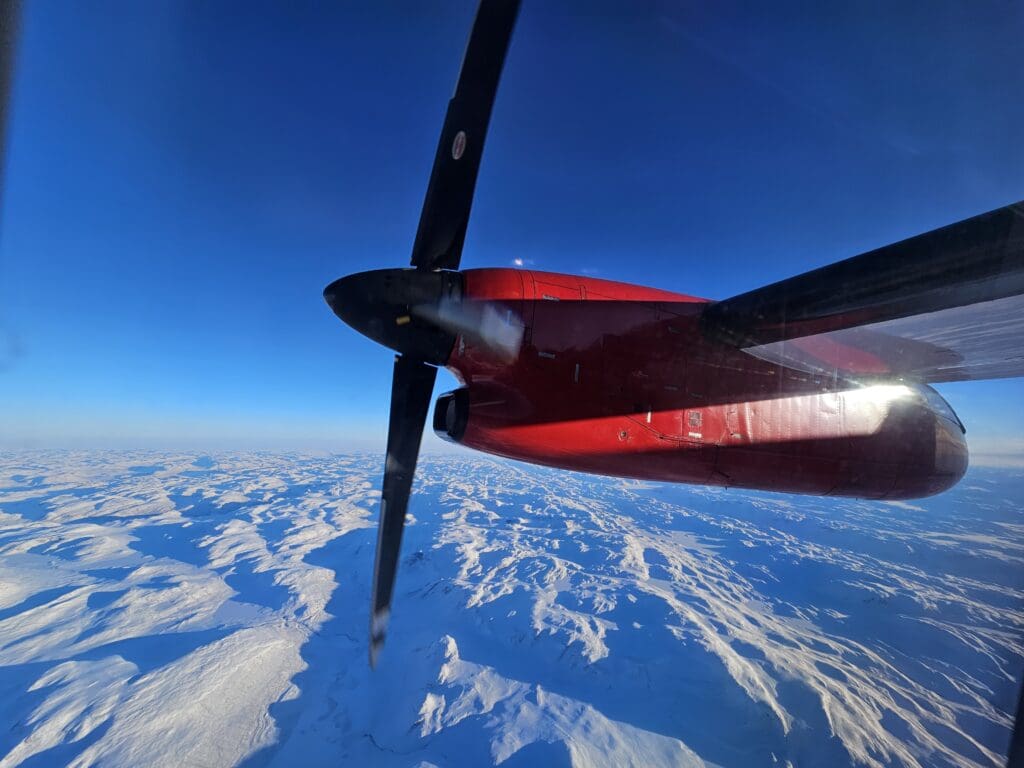
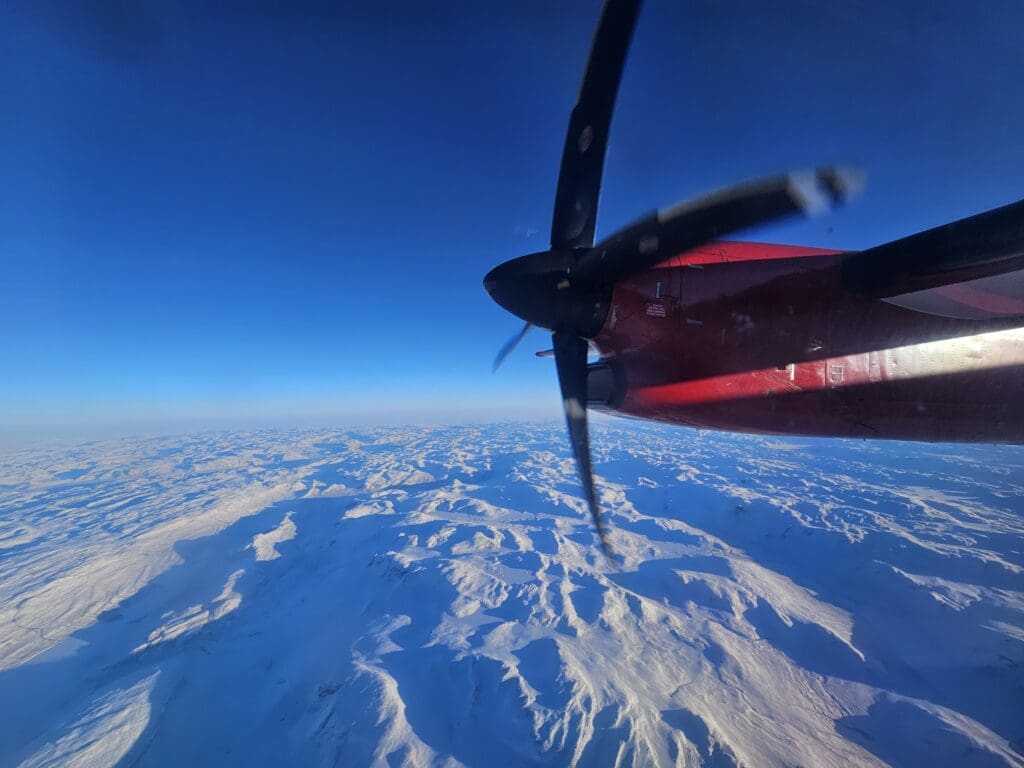
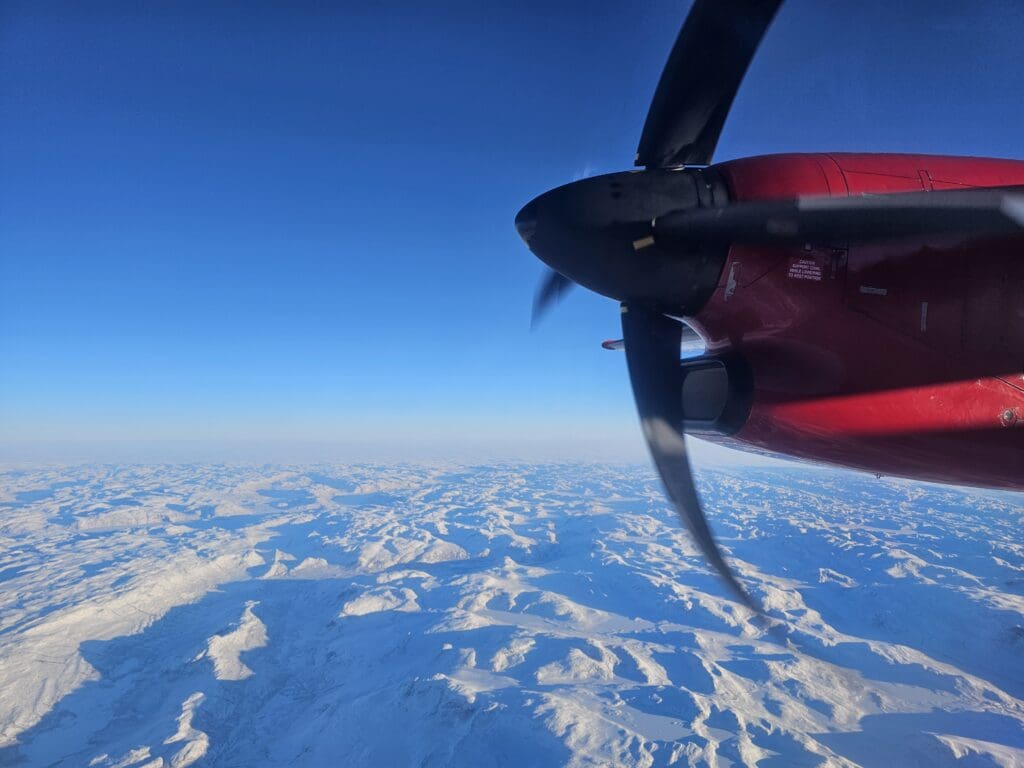
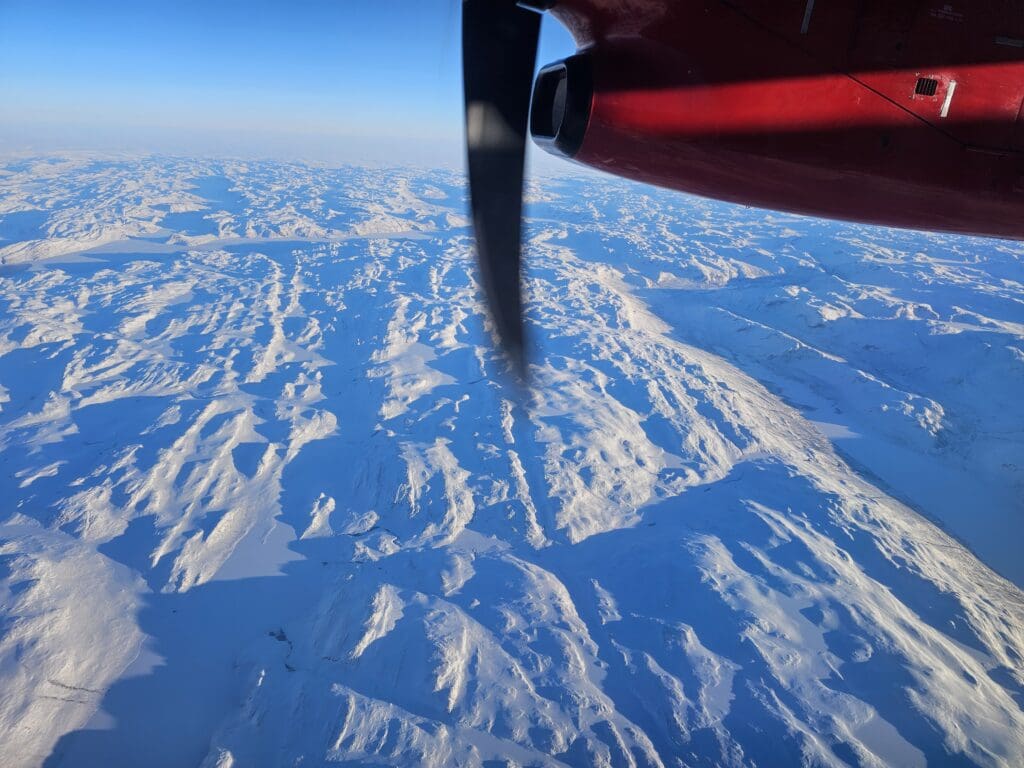
Despite being a short flight, Air Greenland offers a complimentary round of service, all bar the very shortest of its fixed-wing services. On domestic flights, this consists of a round of tea and coffee, with the former complimentary offering of chocolate biscuits having been eliminated at some point during the pandemic. A few minutes after our departure, a loud ding rang out, at which point the flight attendant stood up, closed the curtain separating the cabin from the forward galley and commenced their preparations for the onboard service. A few minutes later, they emerged pushing a cart down the cabin, and I was offered a hot drink. Given the short length of the flight, this could have easily been omitted from the service, and so, whilst basic, this offering was still appreciated. However, seeing as I had already partaken in an unhealthy number of cups of coffee that morning and not fancying a tea, I rejected this, and they continued making their way down the cabin. Around twelve minutes into the flight, the Dash 8 levelled off at its relatively low cruising altitude of 19,000 feet and the seatbelt signs were extinguished. Despite this, all passengers remained firmly in their seats for the duration of the service up to Aasiaat. Examining the route from Kangerlussuaq, the aircraft headed northwards over the municipality of Qeqqata, and I failed to spot any signs of life as we headed up the country’s western coastline. However, those on the opposite side of the aircraft would have likely been treated to glimpses of some of the small settlements that are dotted along the coastline.
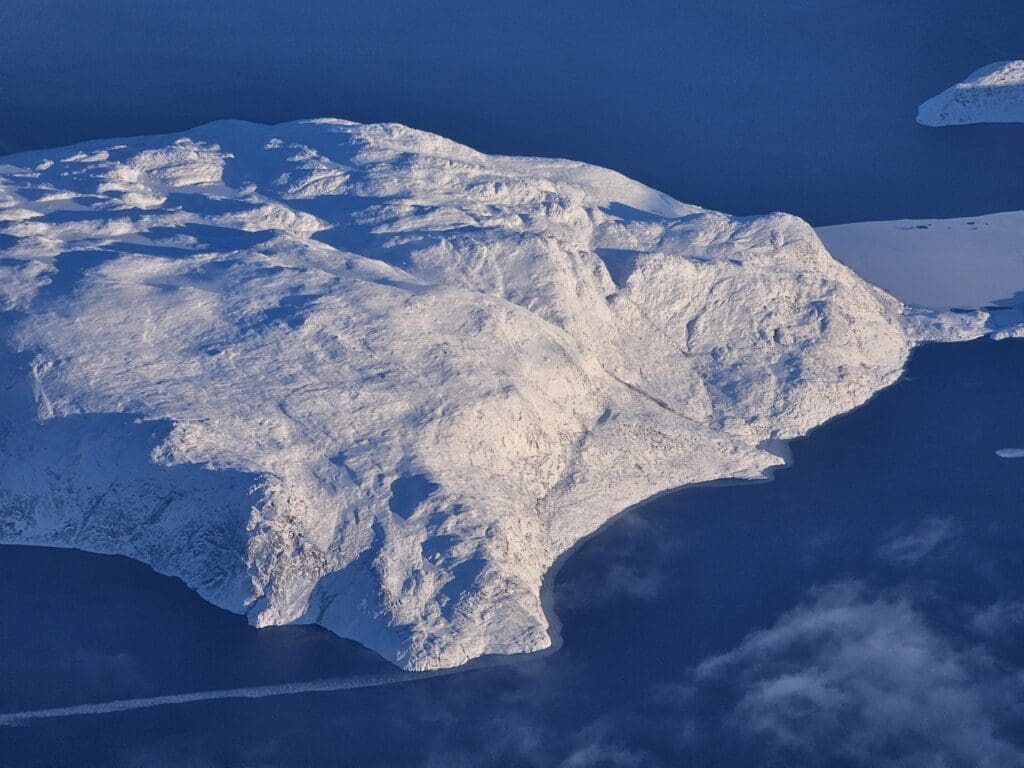
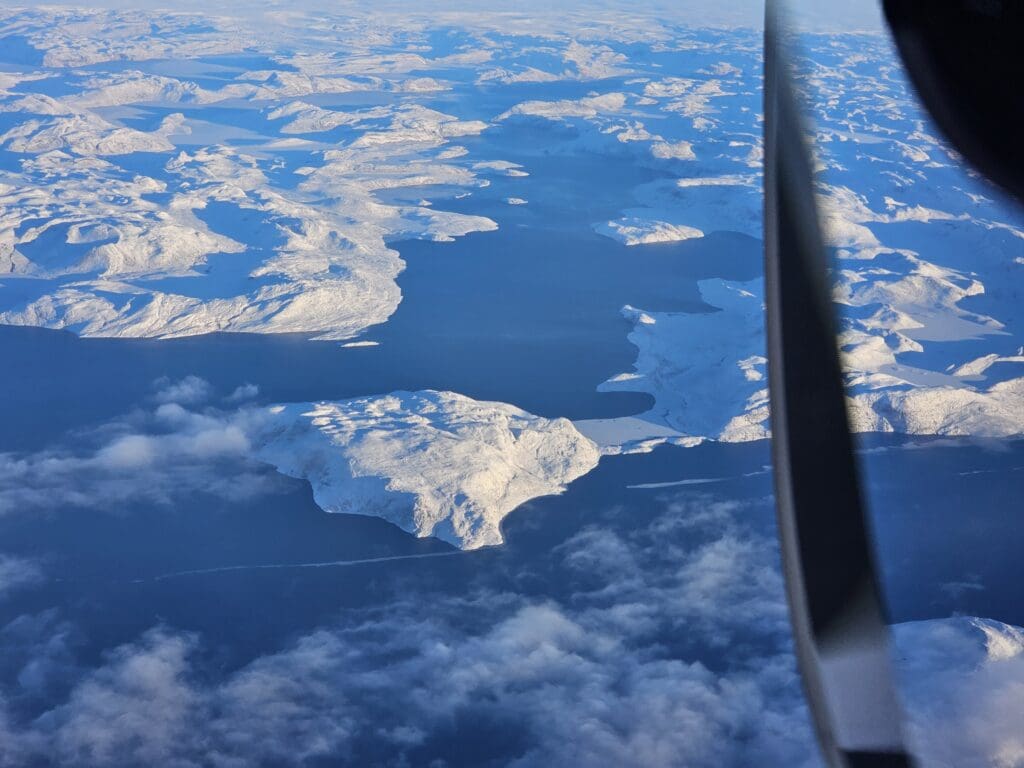
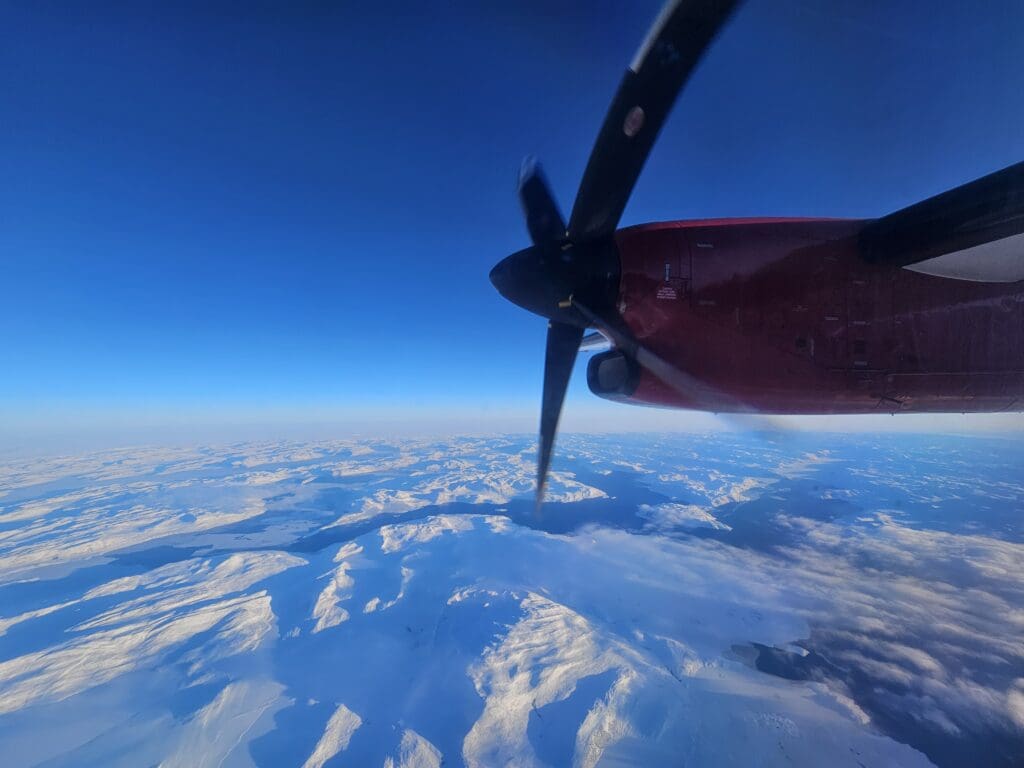
Given the light load, the flight attendant was able to complete the onboard service quickly, after which they retreated to the galley and closed the curtain once more. They then remained there for about five minutes before passing through the aircraft and collecting any rubbish that passengers had accumulated. Soon, the aircraft passed from the skies of Qeqqata to Qeqertalik, and after just ten minutes spent at 19,000 feet, the Dash 8 could be felt sinking back towards Earth. Almost immediately afterwards, the seatbelt signs were reilluminated and the flight attendant performed an announcement regarding our impending arrival and provided the usual instructions concerning seatbelts, tray tables, seatbacks and window blinds. A few moments later, the flight attendant passed through the cabin, ensuring that all was secure and in place for our arrival into Aasiaat.
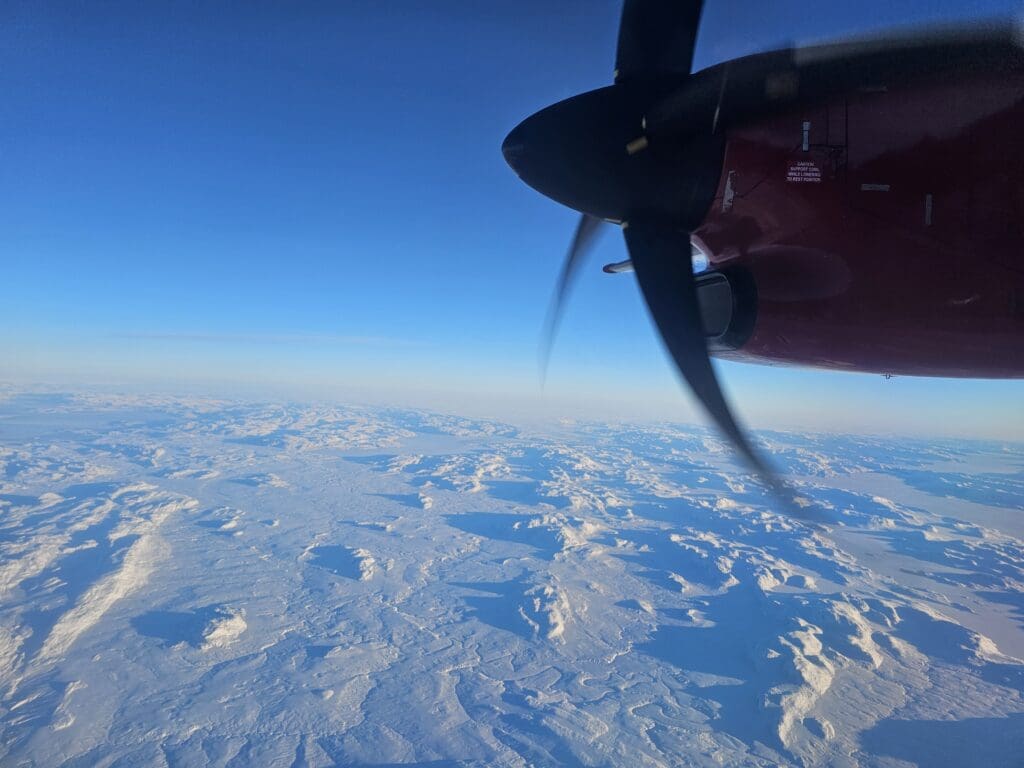
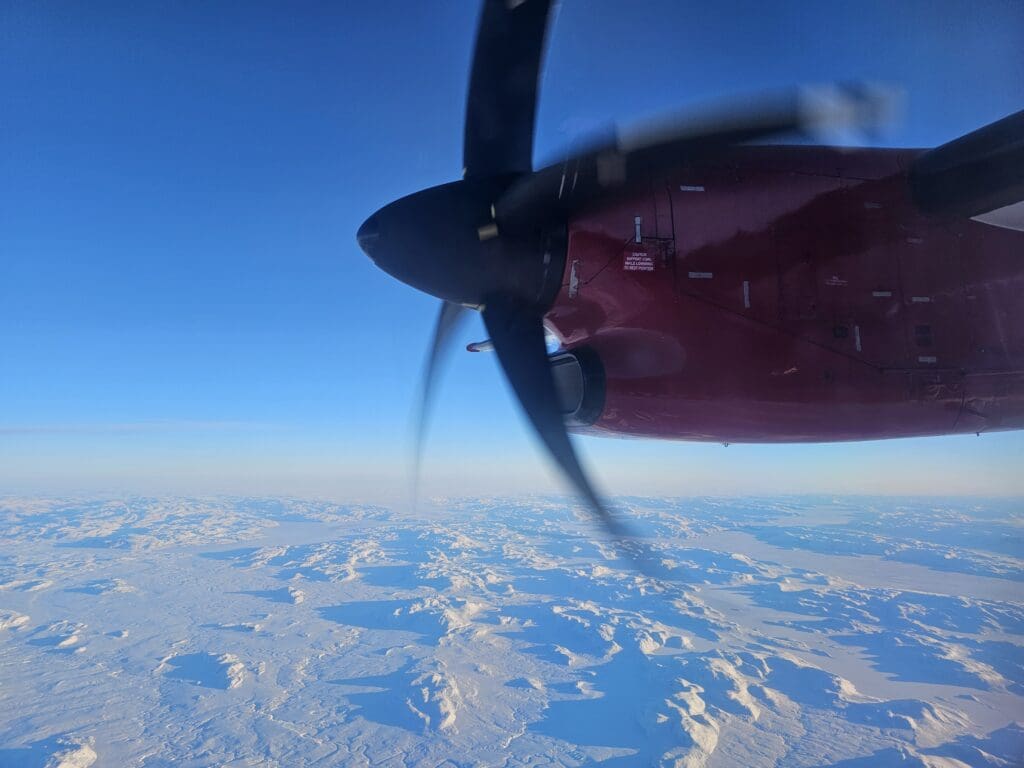
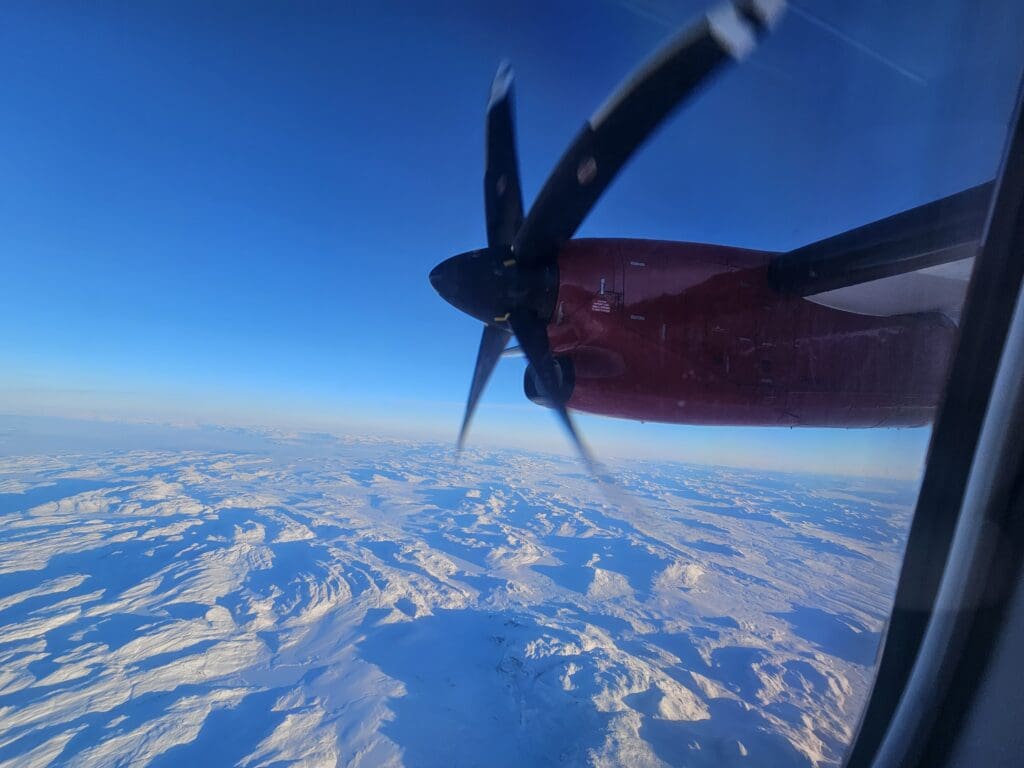
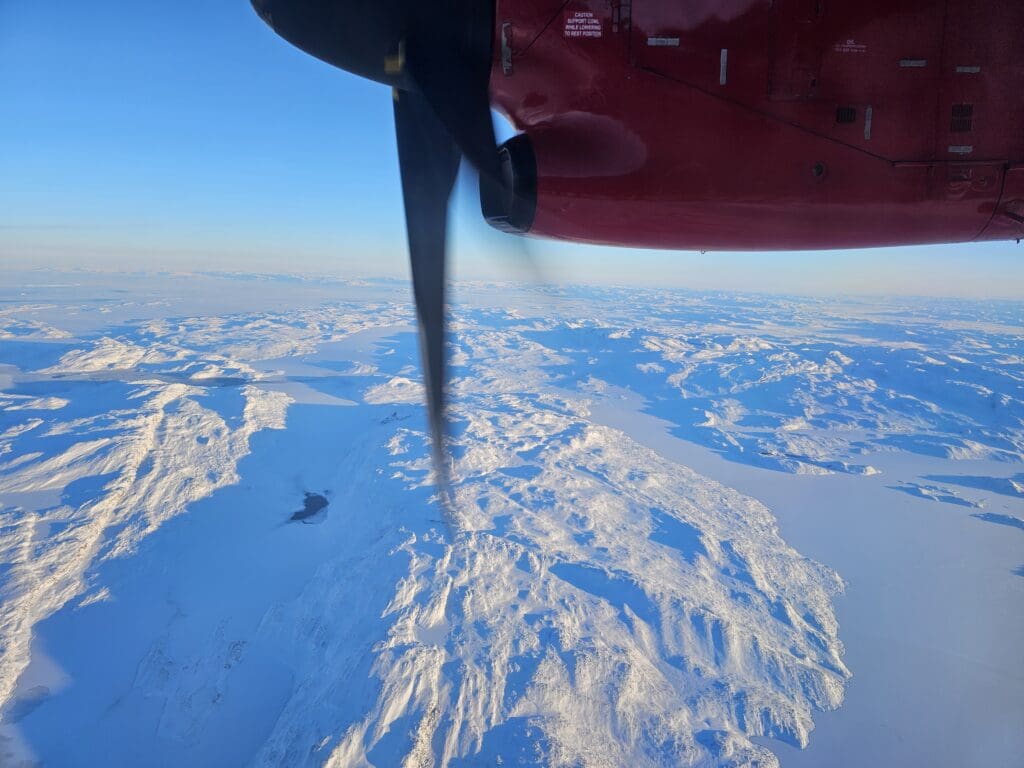
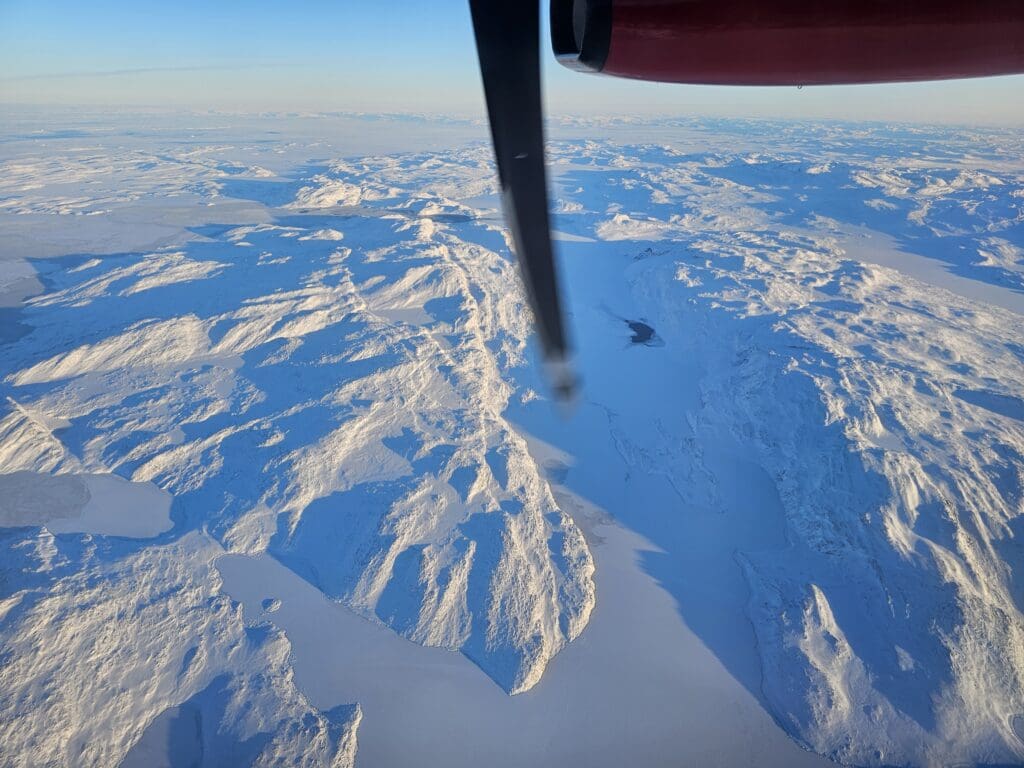
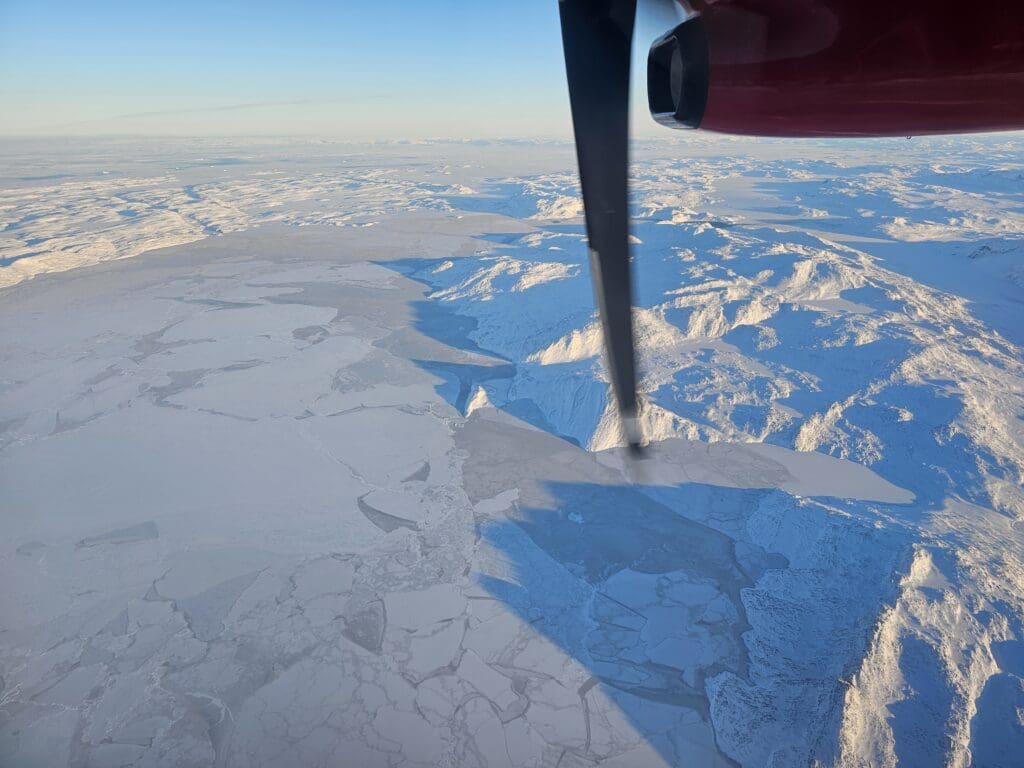
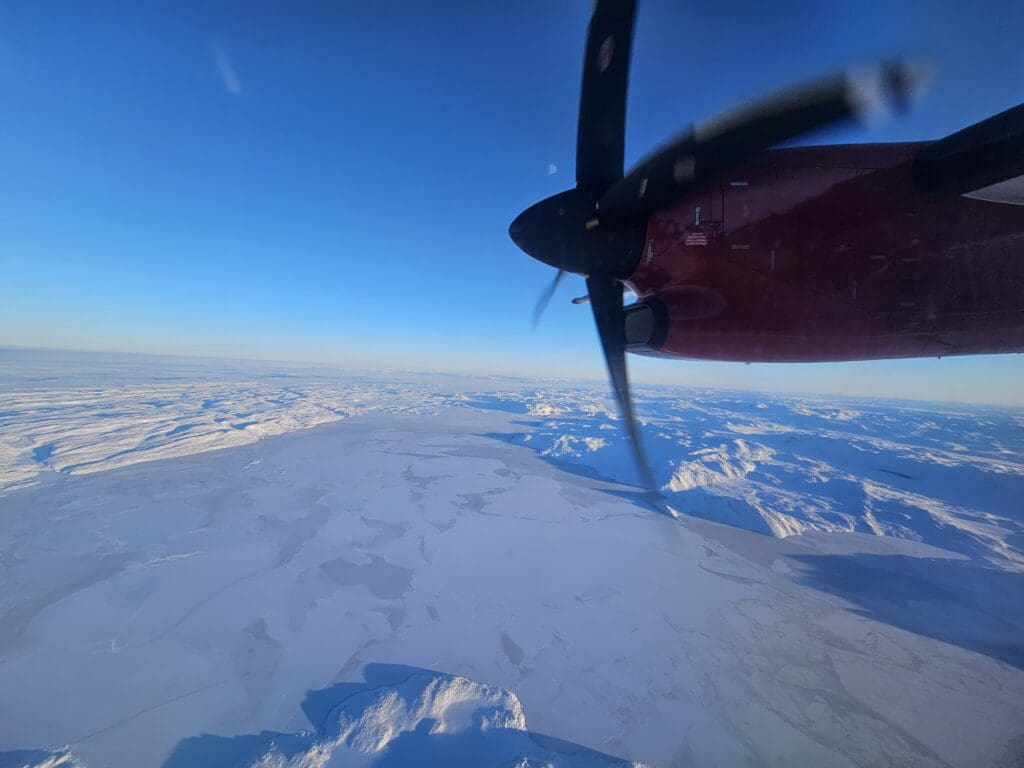
As the Dash 8 edged closer to Aasiaat, little could be seen in the spectacular landscapes below as we passed over the cluster of islands that make up the Aasiaat Archipelago. As we descended, I caught glimpses of the island of Ikamiuk as well as several smaller uninhabited islands before reaching the shores of the island of Aasiaat. Not only is Aasiaat an island, but it is also the largest settlement of this, and is home to around 3,000 residents which makes it Greenland’s fifth most populous town.
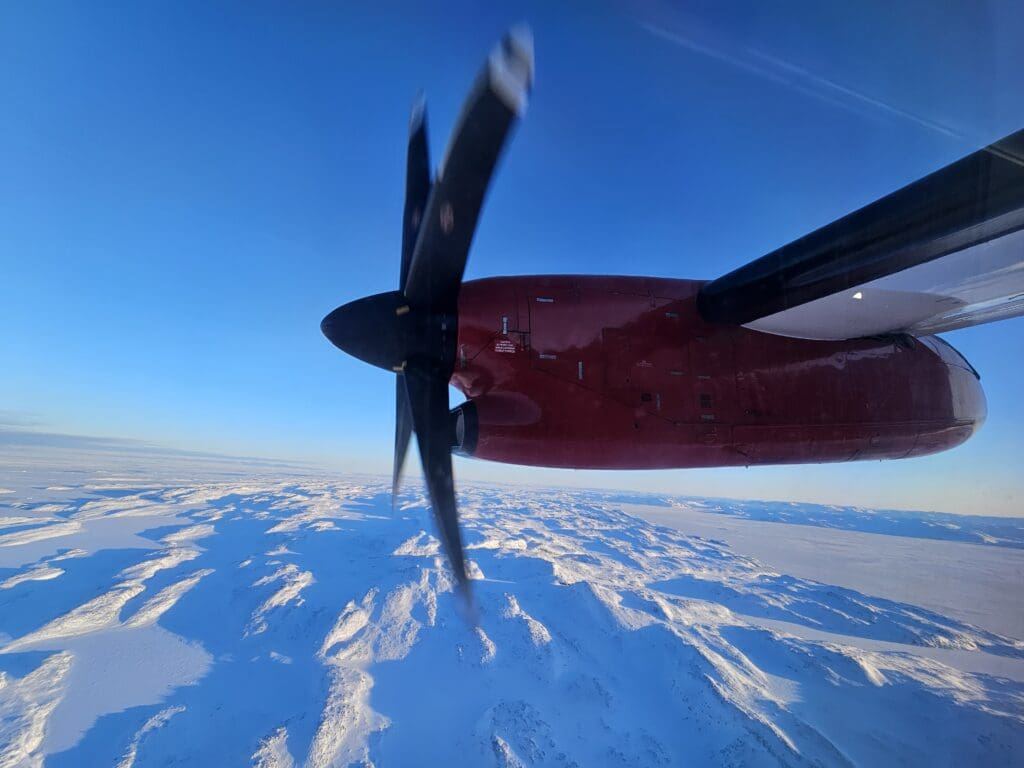
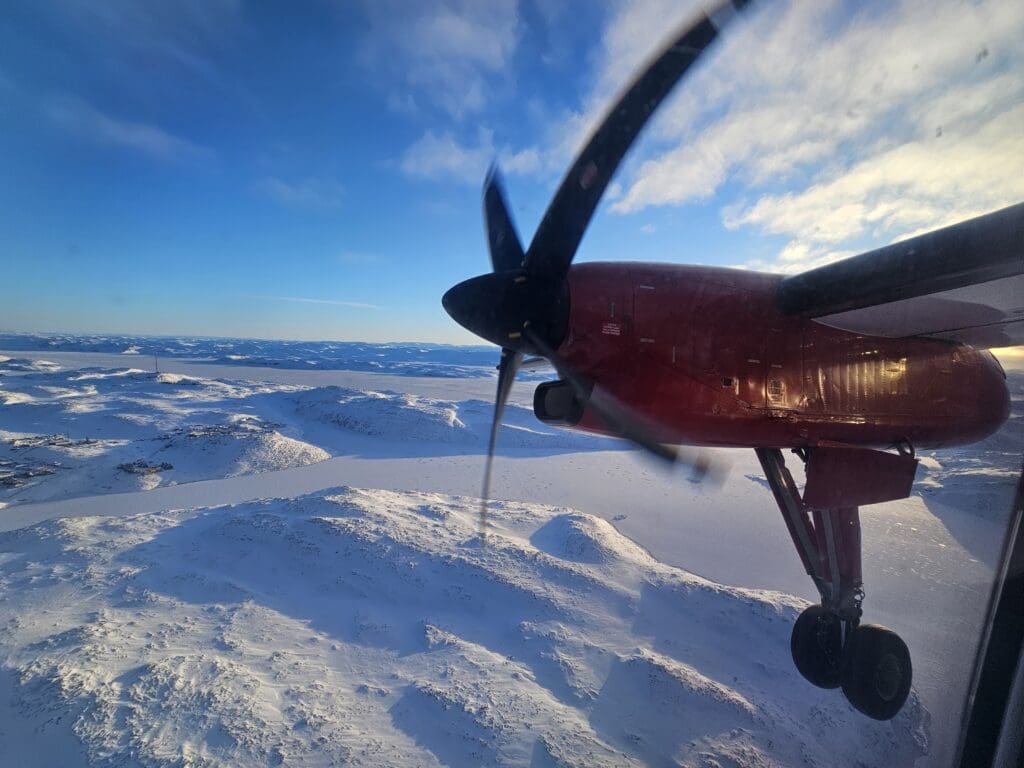
Soon, the Dash 8 turned to line up for an approach to Aasiaat Airport’s Runway 11 at which point the landing gear and flaps were extended before the colourful buildings of the town popped into view. As we passed this, the noise produced by the engines increased, presumably to maintain speed and counteract the drag produced by the landing gear and flaps. Within a few moments, our aerial tour of Aasiaat came to an end as this faded out of view, and we continued following the road that links the town with the airport.
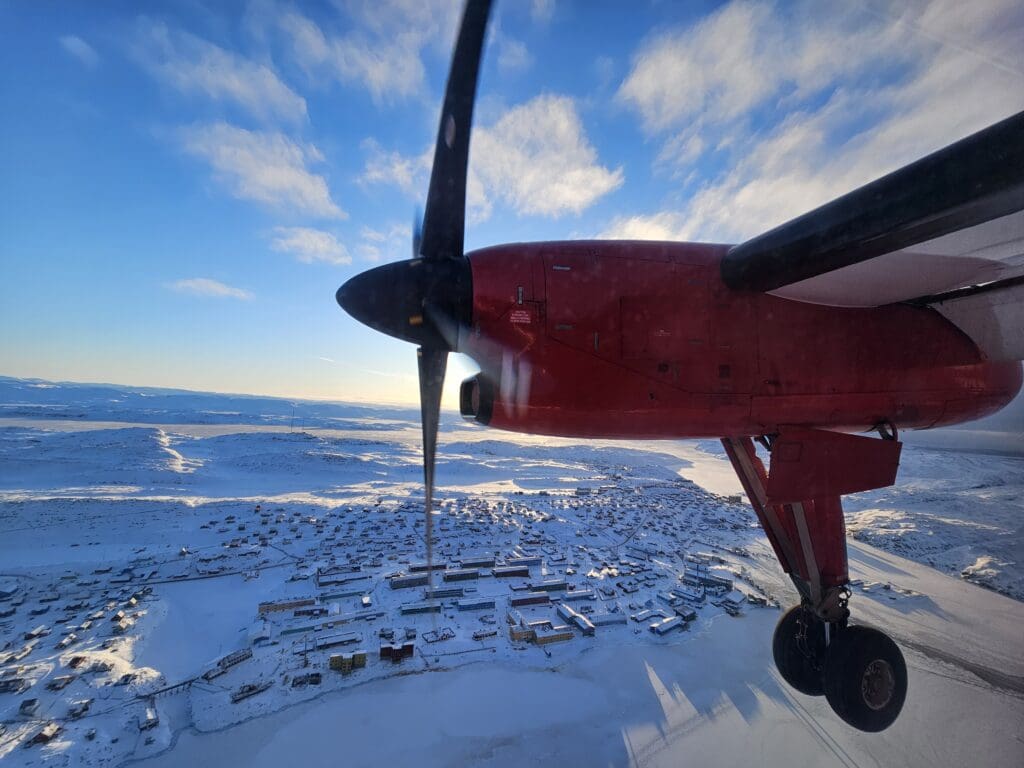
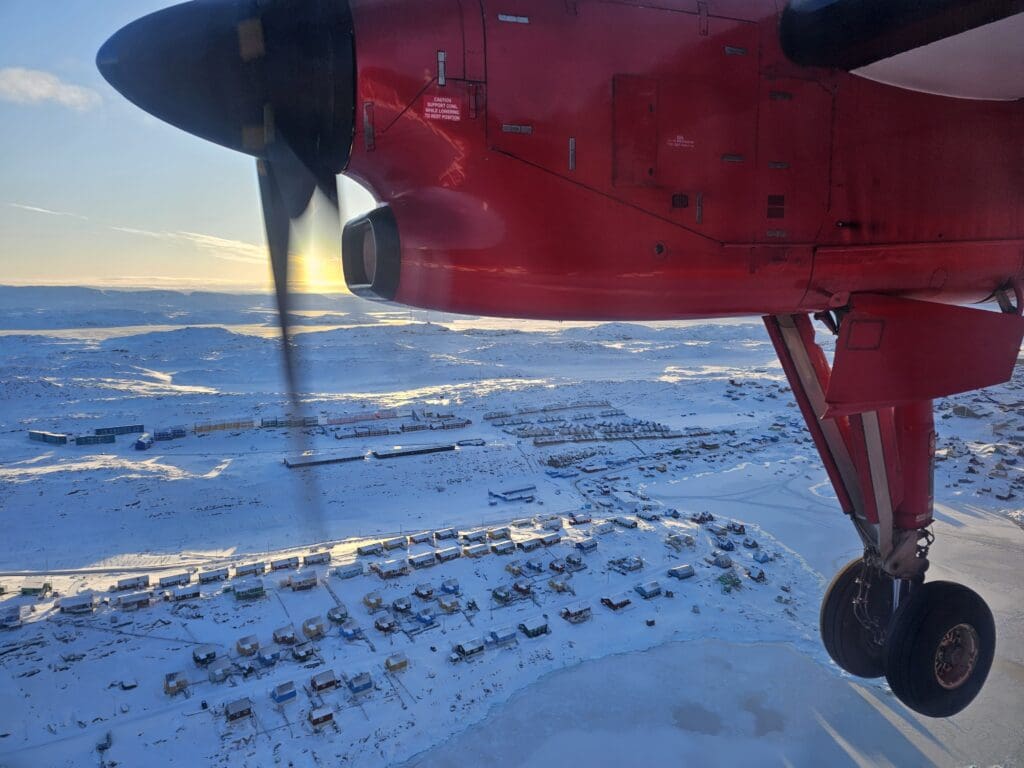
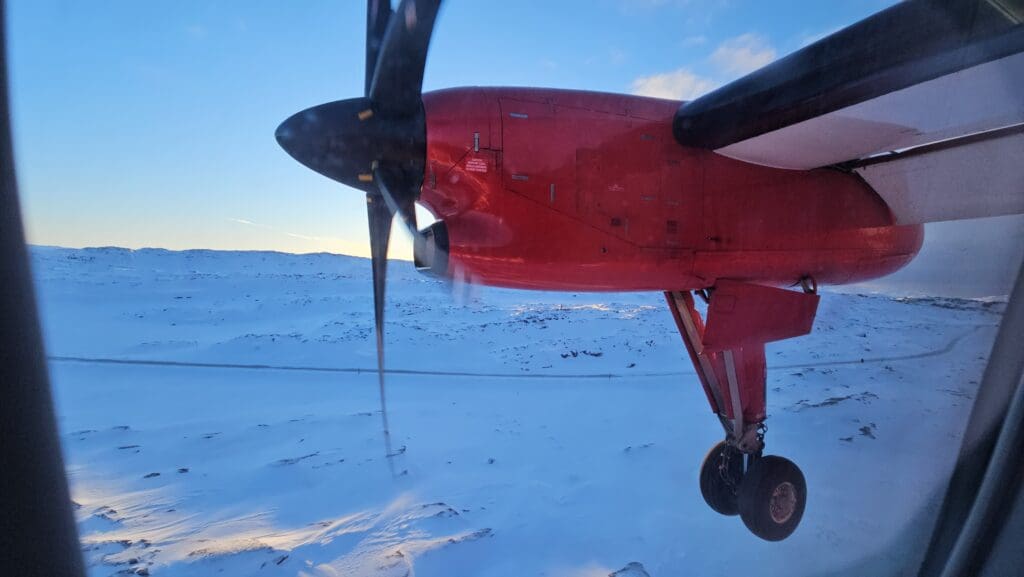
A total of 31 minutes after rocketing into the skies of Kangerlussuaq, the Dash 8 crossed over the perimeter fence, whizzed past the terminal and made a firm touchdown on the runway. Standing at just 799 metres long (very nearly twice around an athletics track), runway space is very much at a premium and thus unsurprisingly the brakes were slammed on and we made a rather quick deceleration before turning around near the runway’s end at which point I caught a few glimpses of the large icebergs floating in Disko Bay – something that I have never seen before from an aircraft! With the small apron and terminal located in the far southwestern corner of the airfield, once on the ground, the Dash 8 was required to backtrack down the runway and as we did so the flight attendant welcomed all to Aasiaat, advised passengers to remain seated and noted that those passengers continuing onwards to Ilulissat could remain onboard the aircraft.
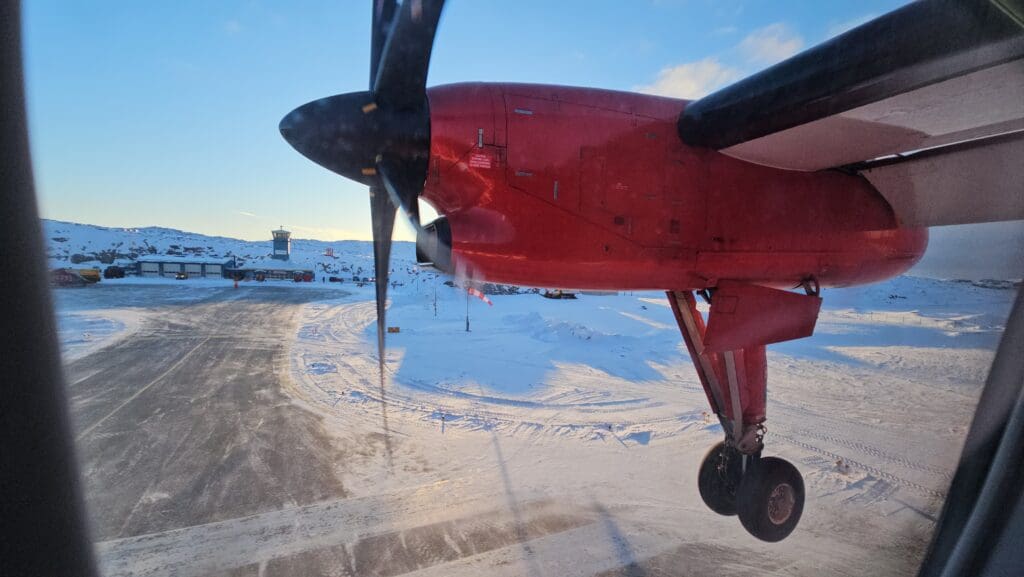
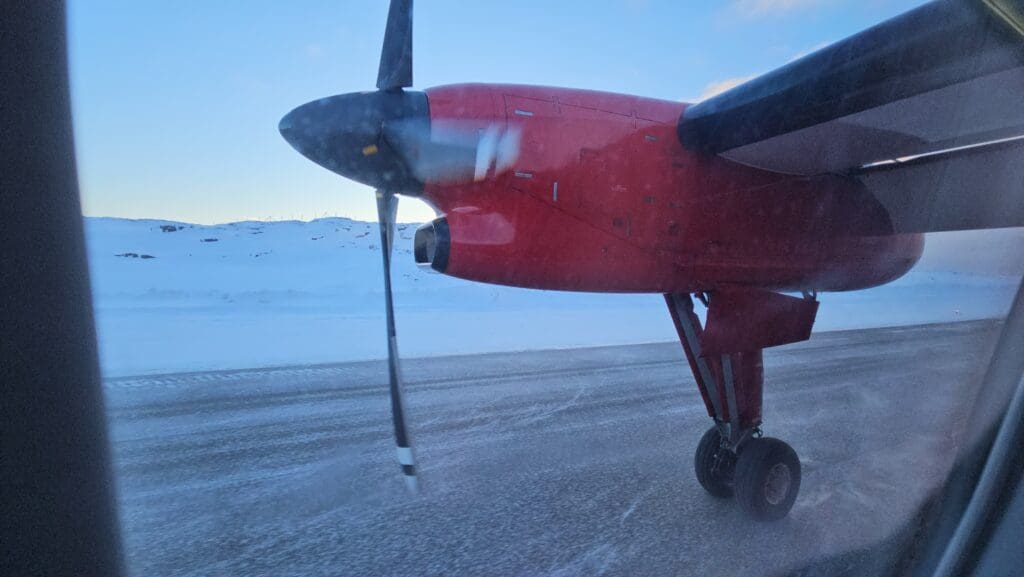
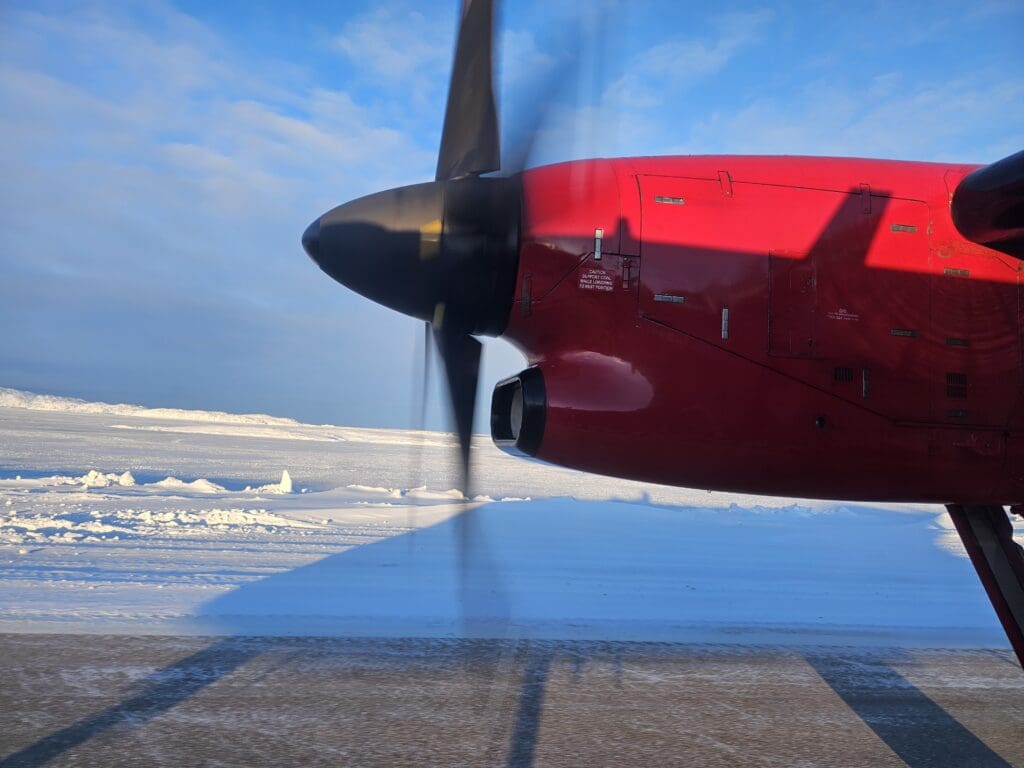
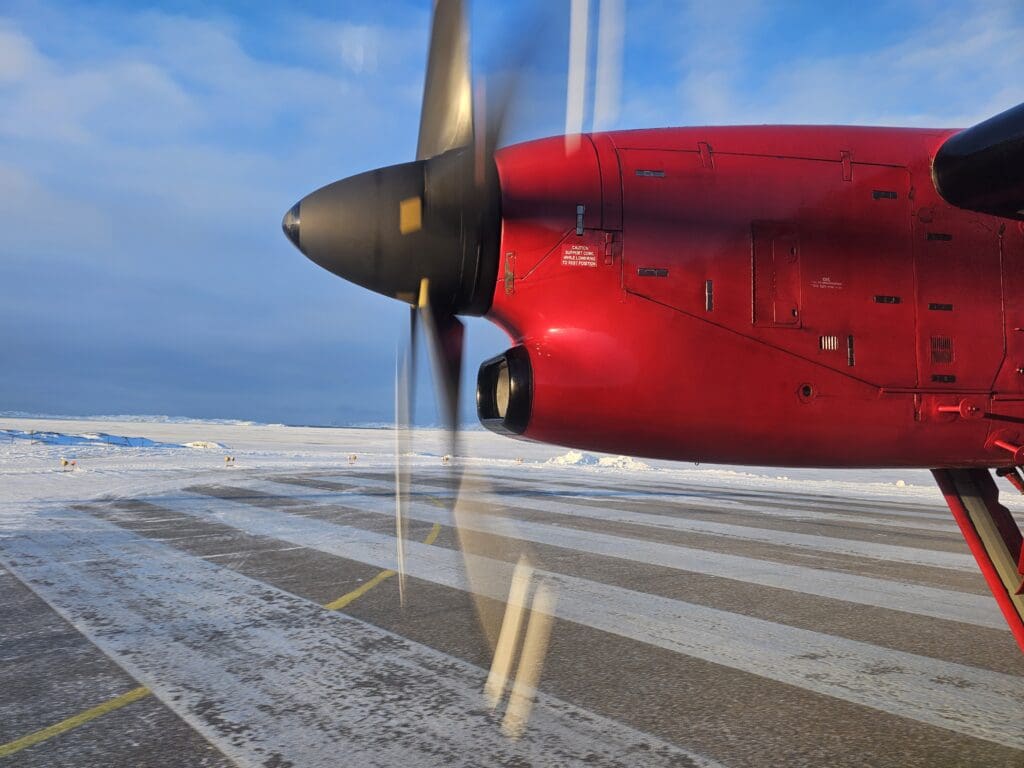
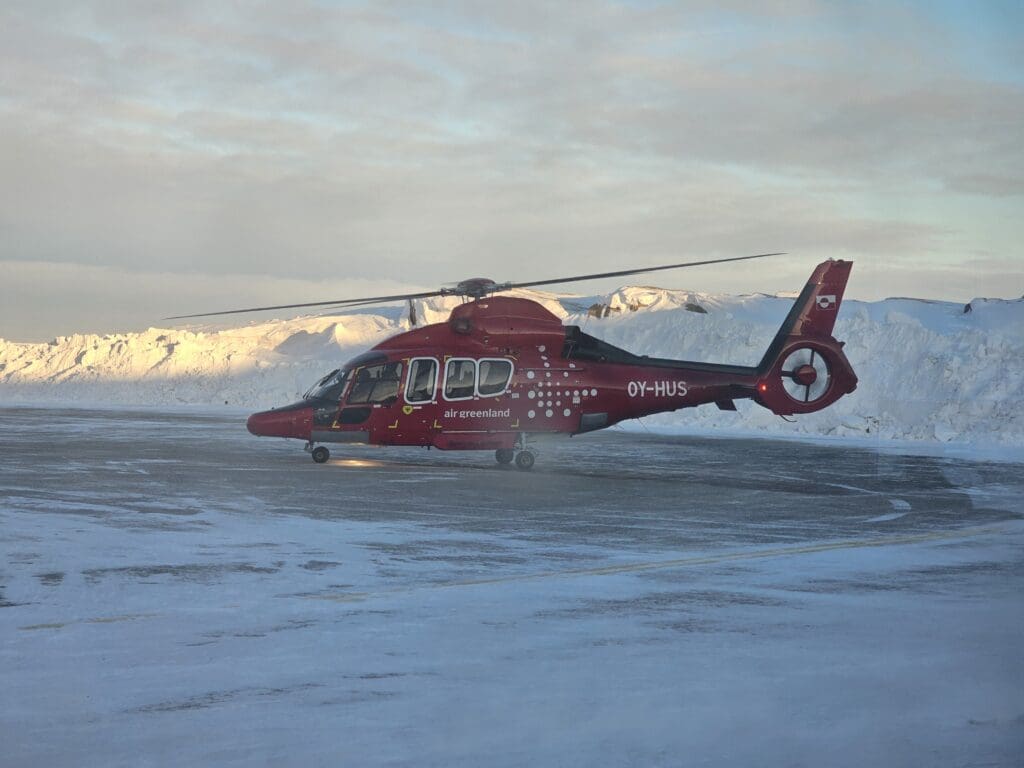
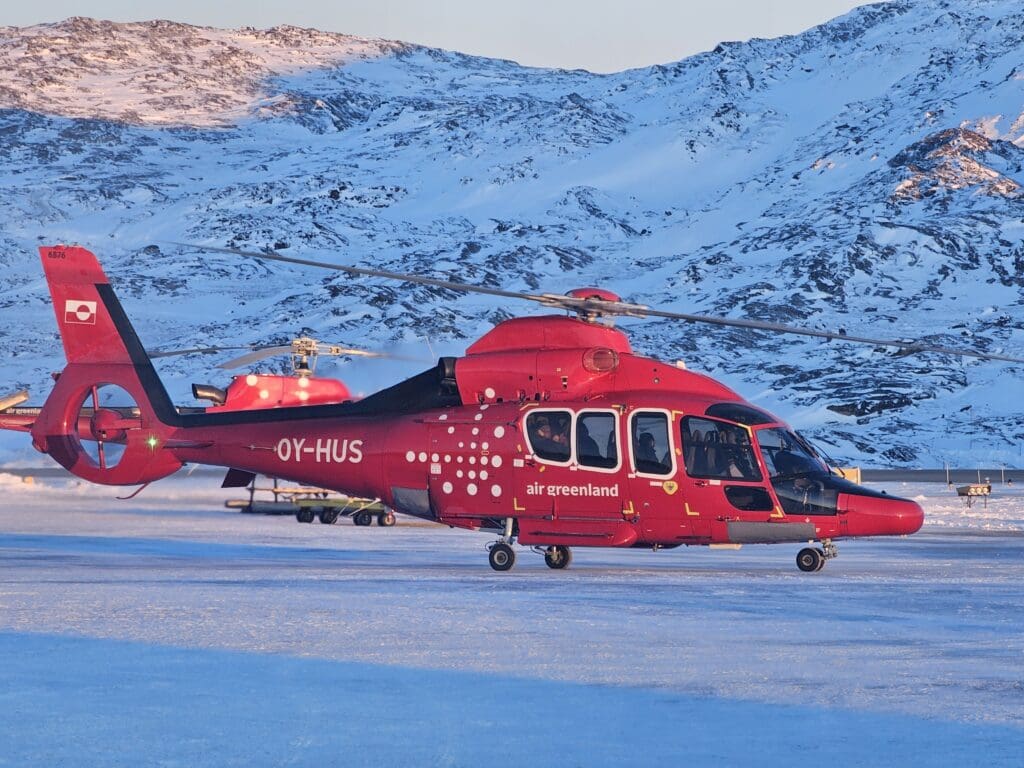
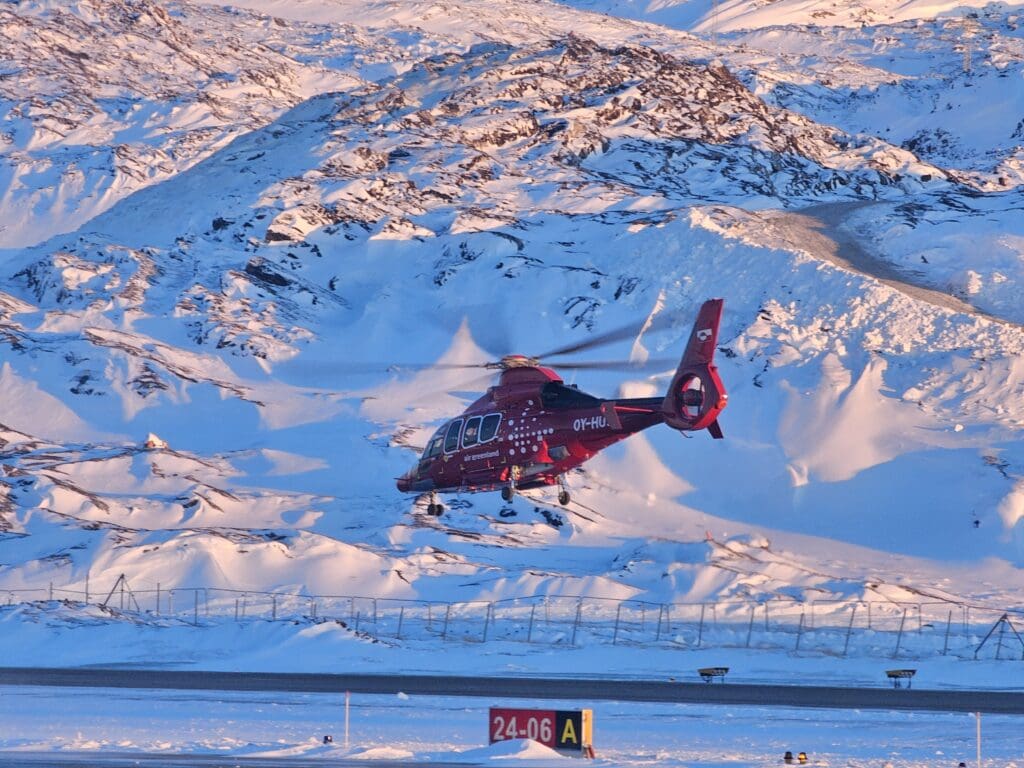
Joining a Eurocopter EC155B1 Dauphin on the ramp that would shortly be heading off to the small Disko Bay town of Qasigiannguit, we came to a halt right outside the small terminal building, at which point the engines spooled down and a playlist of upbeat Greenlandic songs rang out over the cabin speakers. With no jetbridge or ramp needing to be connected, the door was soon opened, and disembarkation commenced. Following the flight attendant’s instructions, I remained firmly in my seat and was one of just four passengers who would be continuing onwards to Ilulissat. Once all Aasiaat-bound passengers had disembarked, a ramp worker made their way onto the aircraft and following an exchange of words with the flight attendant, they then passed through the cabin requesting all Ilulissat-bound passengers to disembark to ensure the safe and easy unloading of the cargo that was being carried in the passenger cabin. Whilst this may have been slightly burdensome to more ‘normal’ passengers, being an enthusiast, I could not find any reason to complain about getting the opportunity to experience another Greenlandic airport terminal!
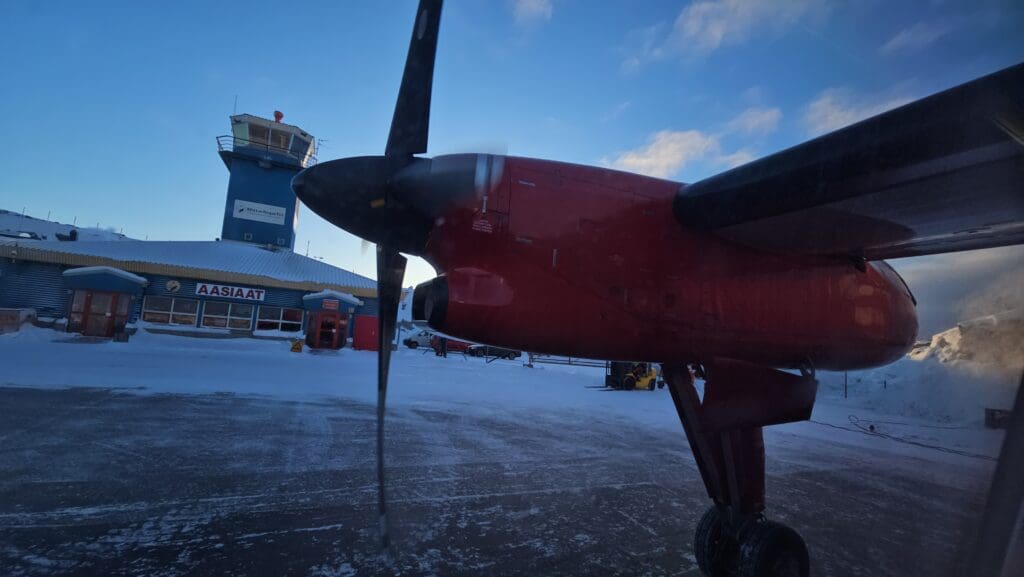
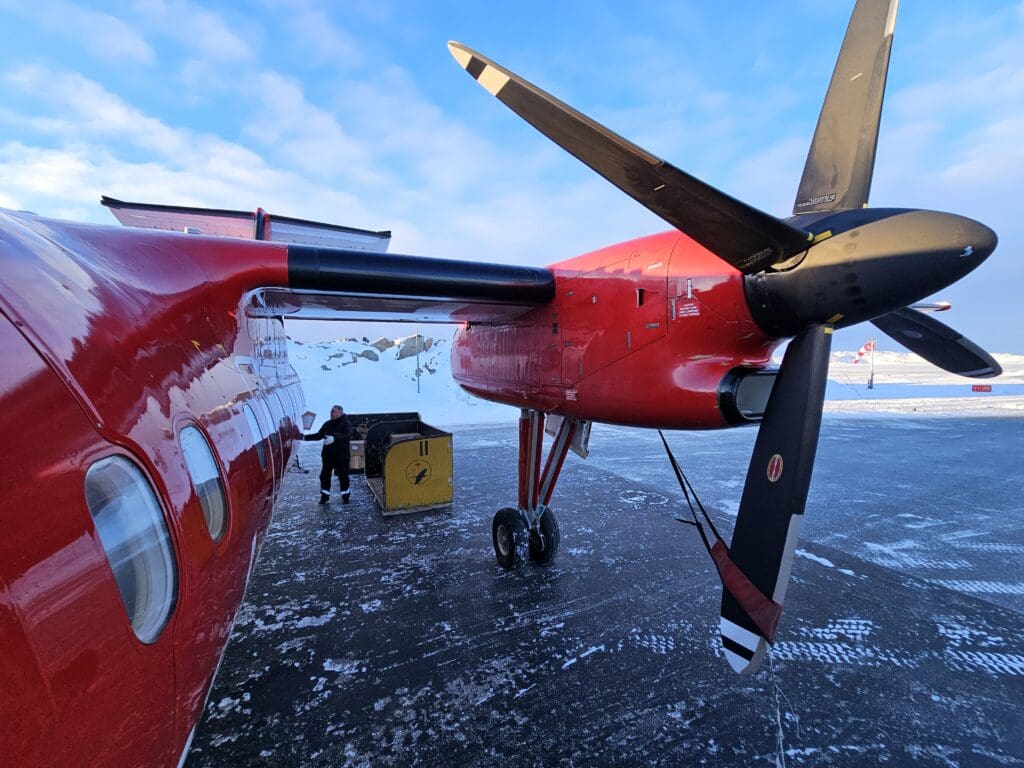
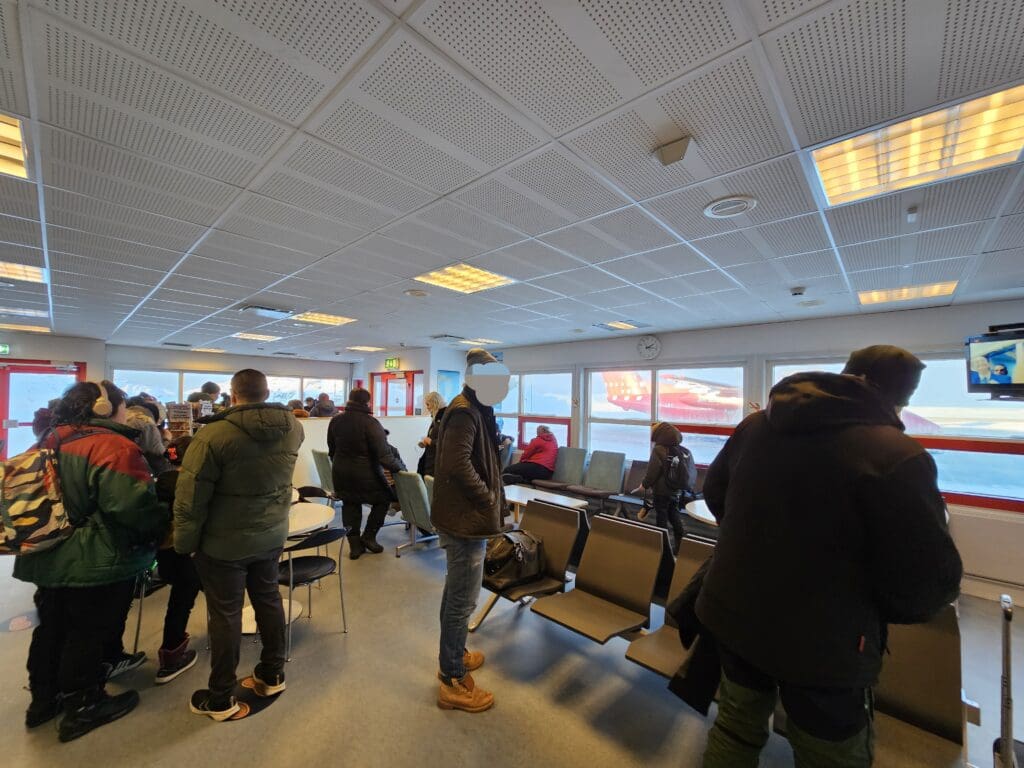
Once just a heliport, in 1998, Aasiaat Airport’s runway was commissioned alongside its small terminal, which features a control tower protruding out of this. Soon making my way in, with both arriving passengers waiting for their luggage, departing passengers waiting for boarding to commence and plenty of family and friends both meeting those arriving and saying goodbye to those heading off, the terminal proved to be fairly busy with few free seats remaining. However, other than this, a quick inspection of the waiting area revealed little to complain about. This was fairly clean and offered good views out onto the apron and the far western section of the runway. Facilities were, however, limited, with just a vending machine available for those wanting anything to eat or drink. Following a quick toilet stop, I lingered around near the door to the apron and watched as the aforementioned Eurocopter taxied onto the runway before noisily hovering upwards into the skies.
Following a ten-minute wait in the terminal, at 1425, the ramp agent and a young child (I presume it was ‘take your child to work day’!) escorted three unaccompanied minors out towards the waiting Dash 8. Once they were safely onboard, boarding for the rest of us commenced and a short time later, I had my boarding pass scanned before I darted out once more into the freezing Arctic cold. Making my way around the Dash 8’s bright red nose, I soon climbed up the aircraft’s built-in steps, where I was welcomed back onto the aircraft by the friendly flight attendant before I took my original Seat 1A. Compared to Seat 1D, this did offer less legroom although this seat was by no means cramped and still offered a slightly greater amount of legroom than the standard seats Once again, the area around my seat featured plenty of signs of wear and tear, however, for the most part, this was clean and tidy and I was thus left with little to complain about.
As I had suspected, given the number of passengers in the terminal, my second flight was almost full, and there was to be no cargo transported in the passenger cabin up to Ilulissat. After a few minutes, the final passengers made their way onto the aircraft and wasting no time, the cabin door was soon closed, and the upbeat music came to an end. Once the flight attendant had removed their thick coat, they performed a trilingual welcome announcement in Greenlandic, Danish and English as the two engines spooled up into life once again in preparation for the short journey across Disko Bay. During this, they announced that the flight time would be just 17 minutes. Immediately after this, they then performed the safety demonstration along to the pre-recorded announcement in Greenlandic and English as we left our parking position and made our way to the end of Runway 11.
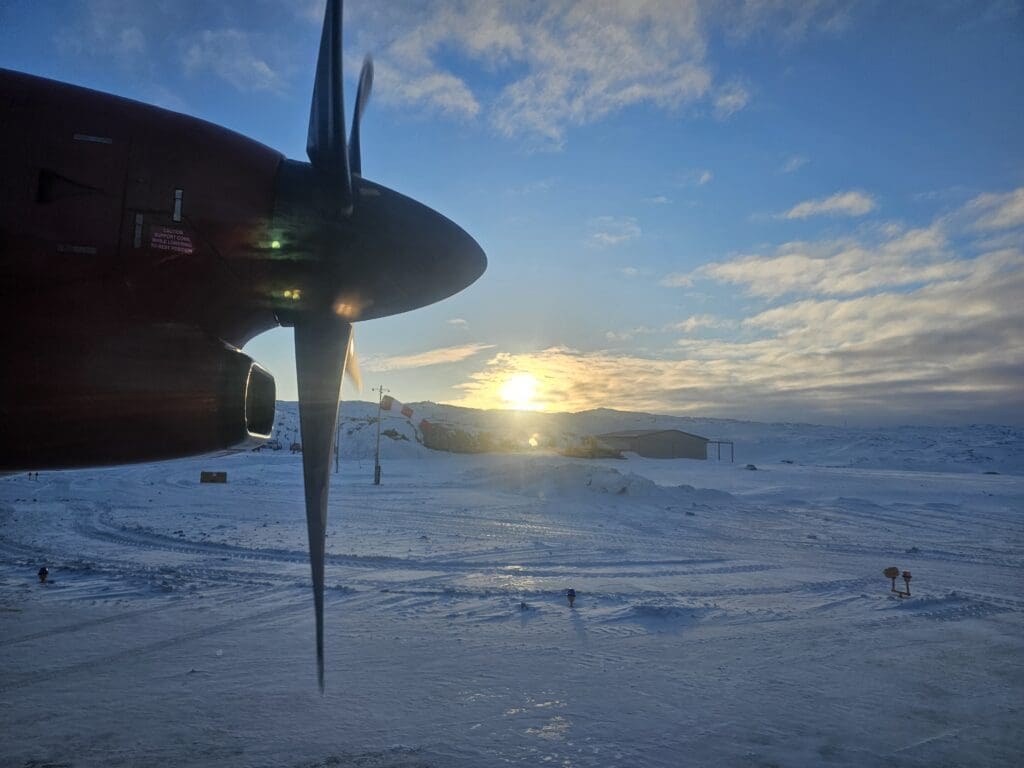
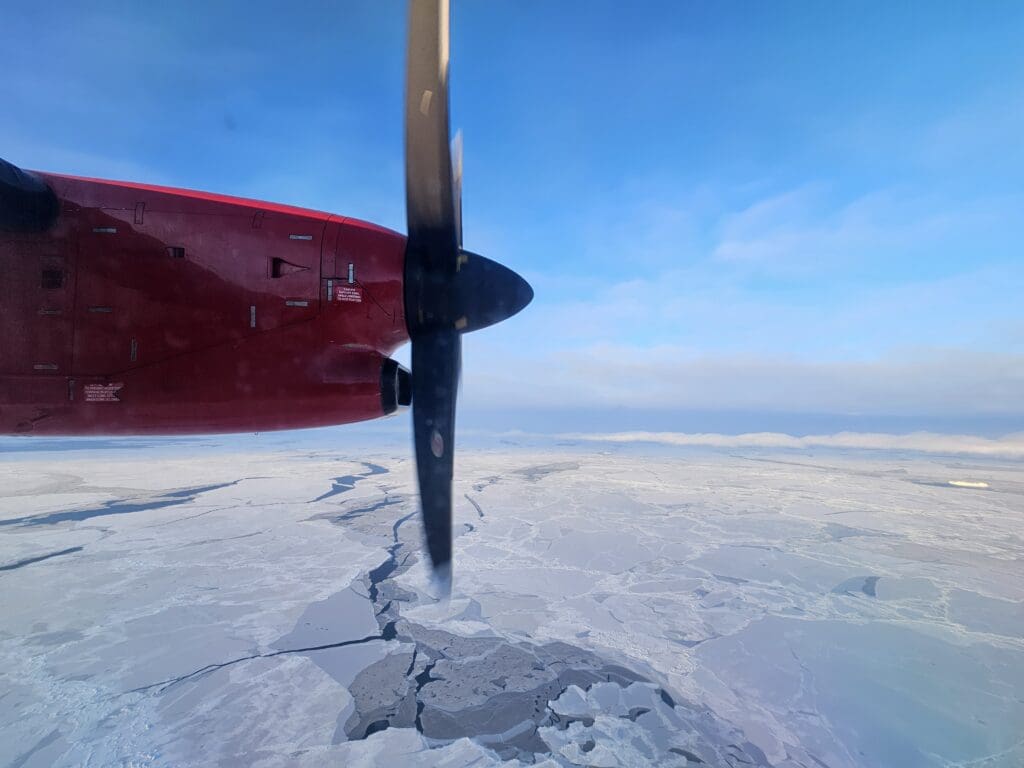
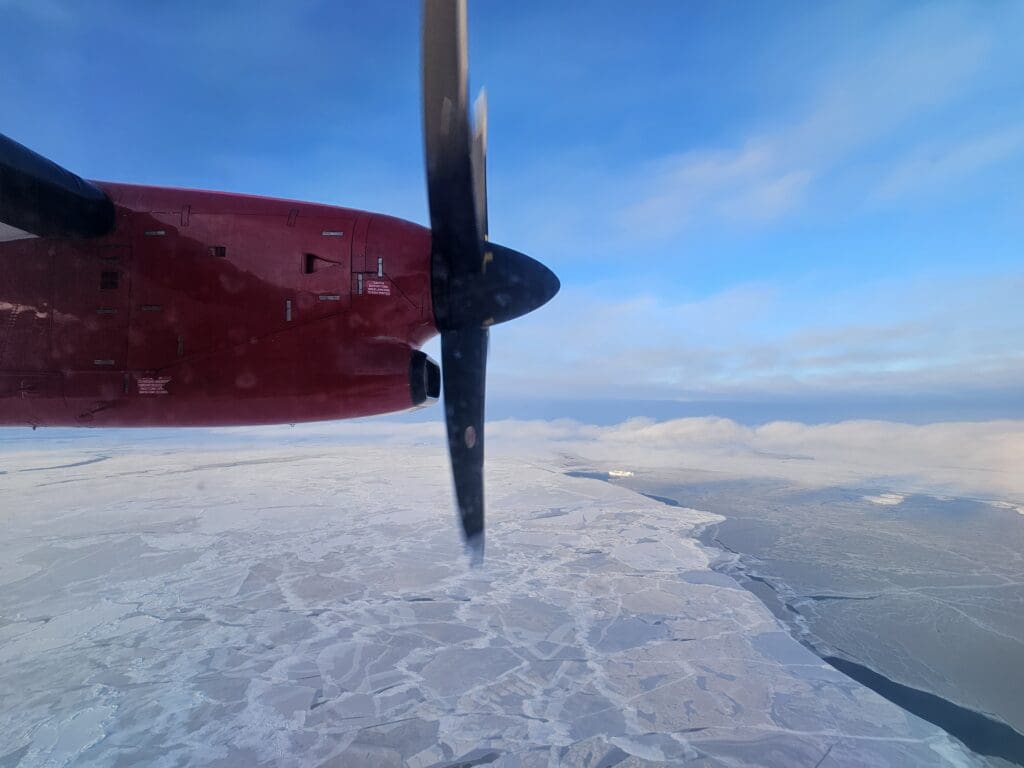
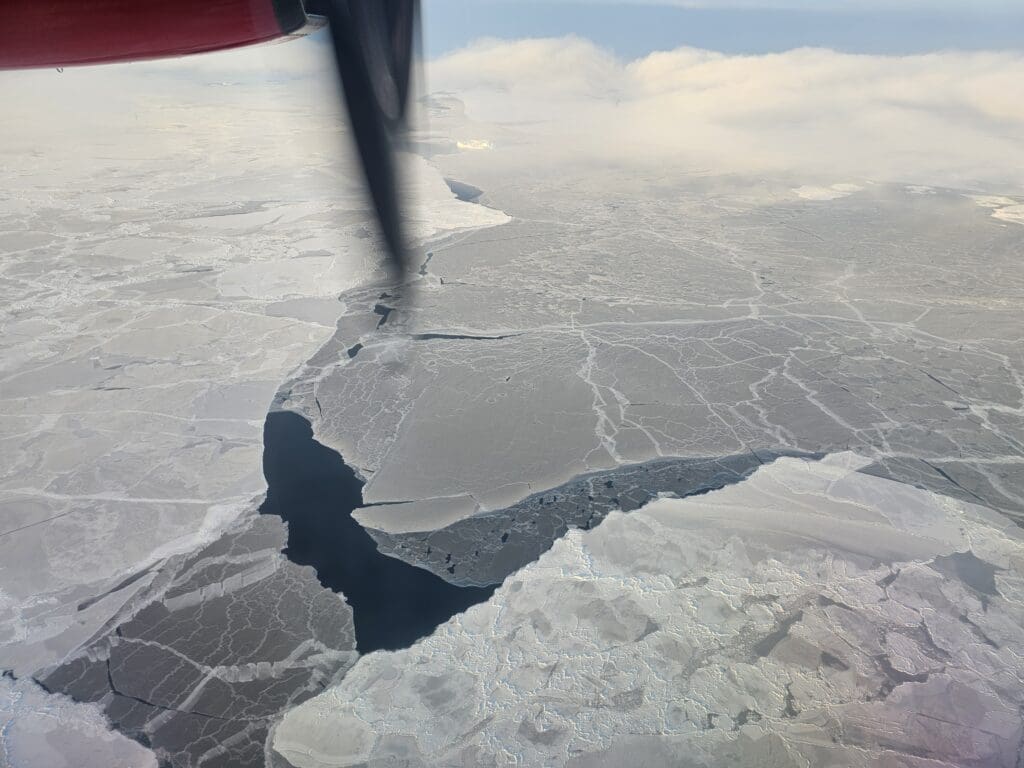
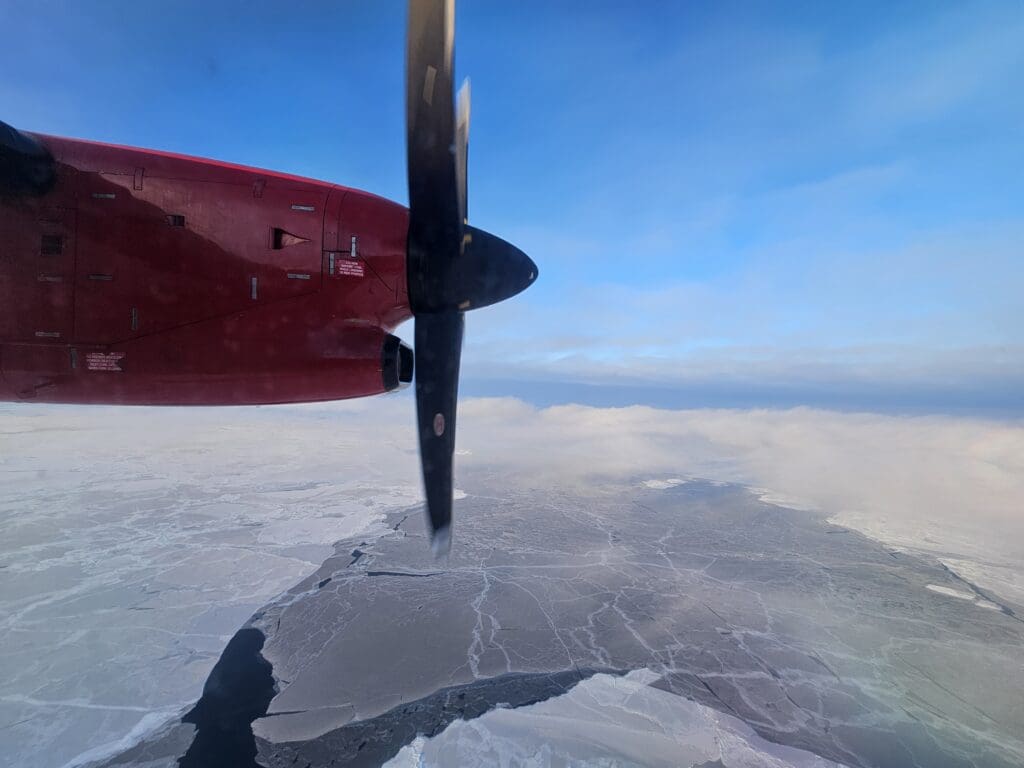
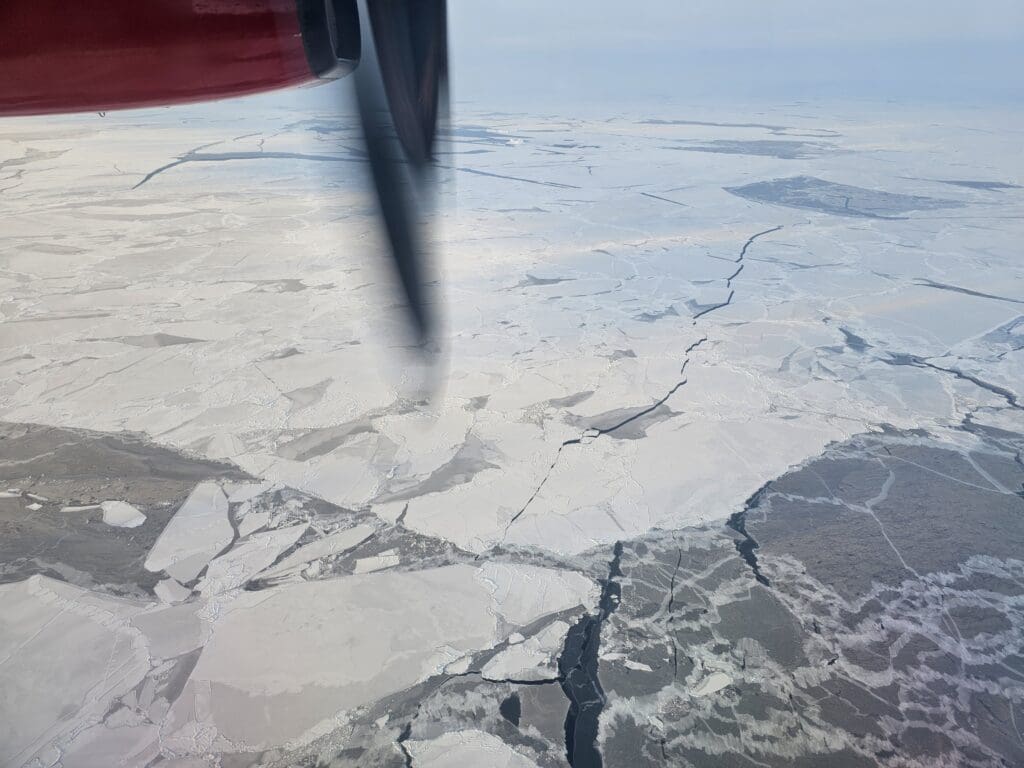
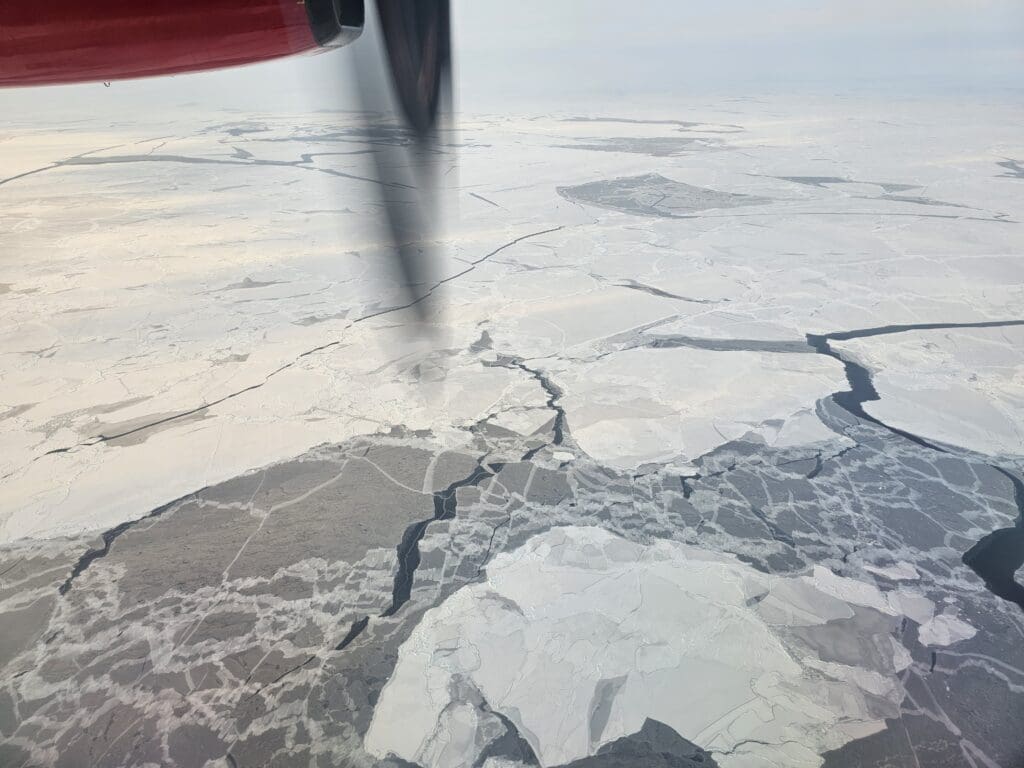
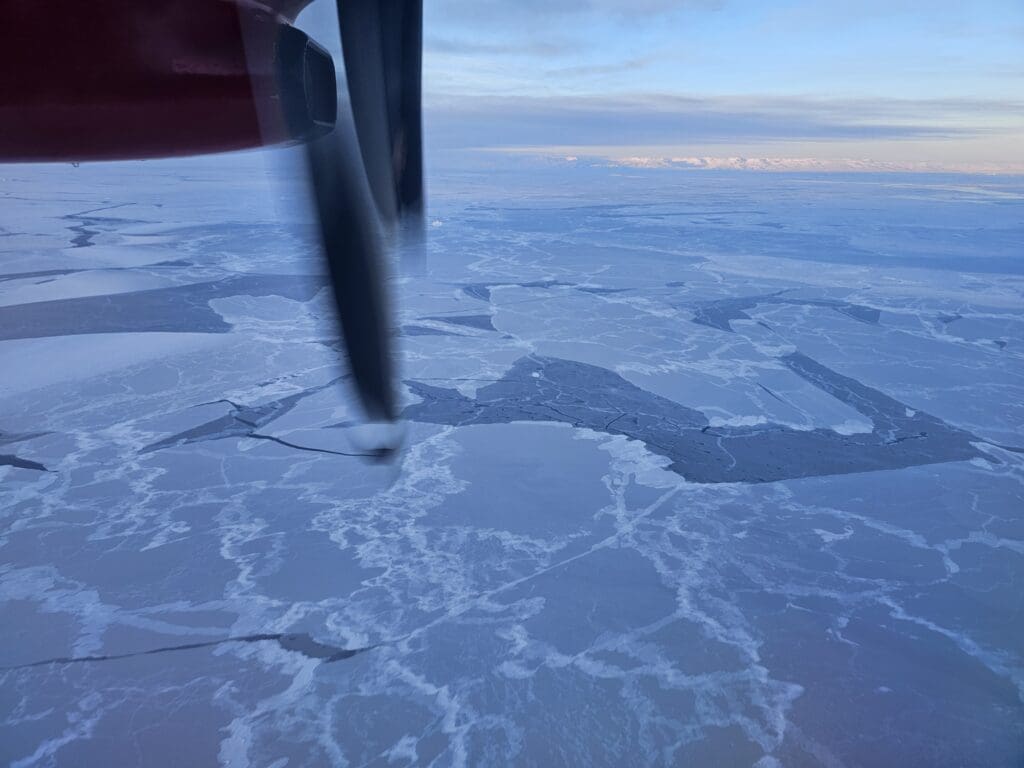
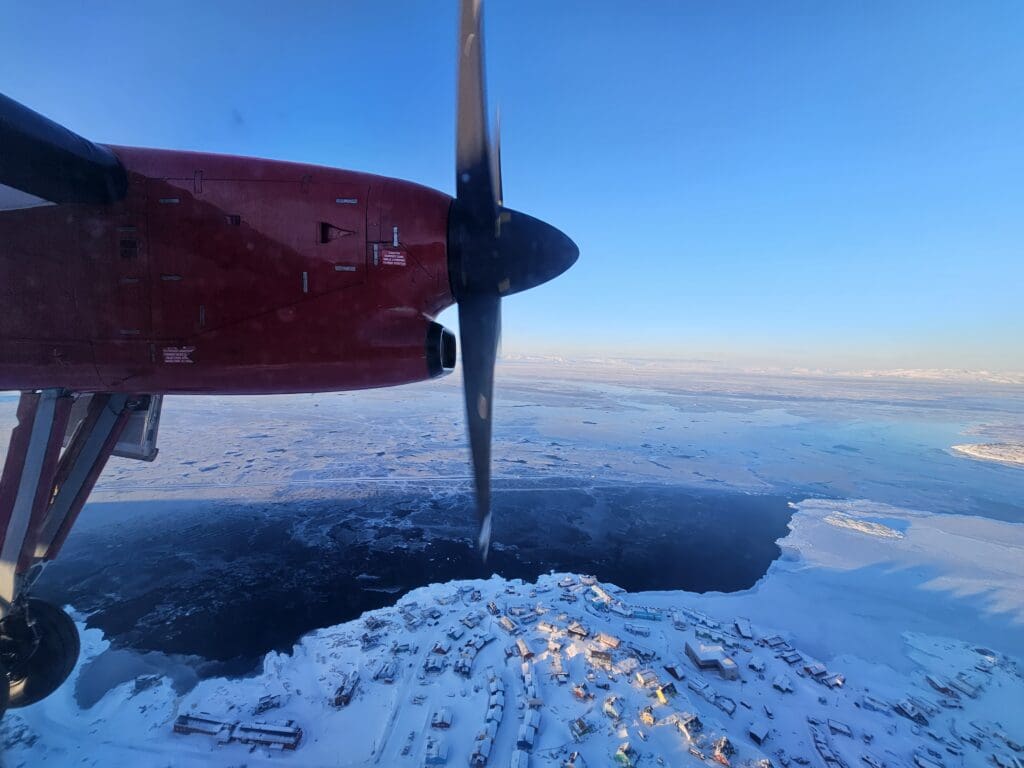
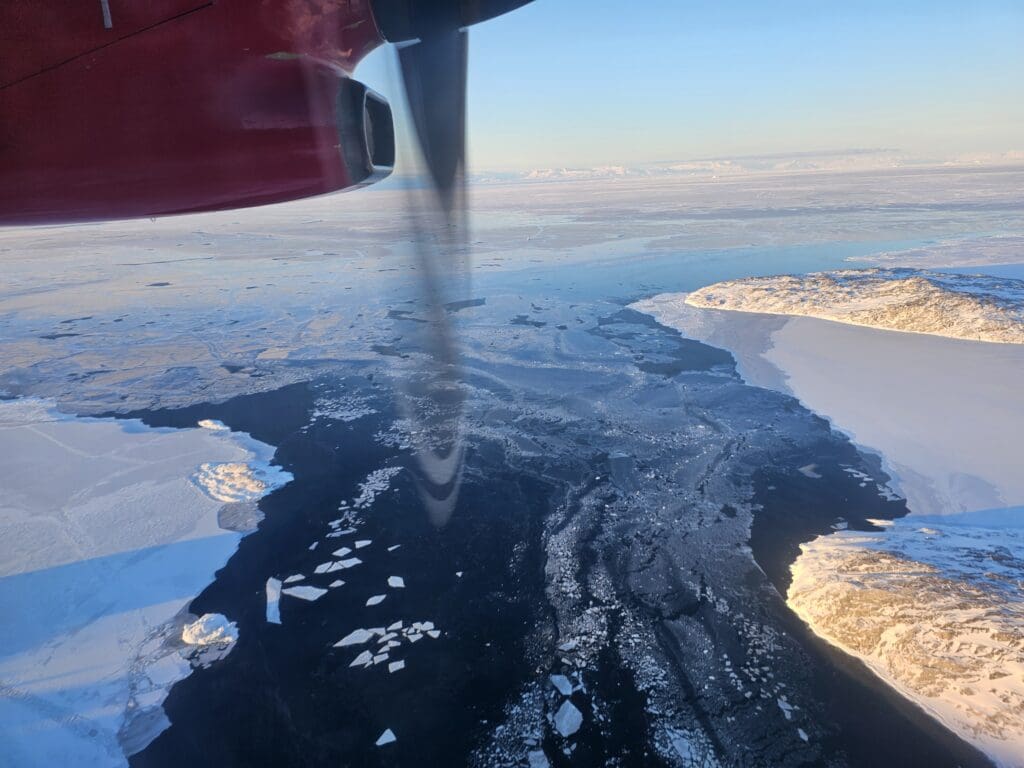
Given the very small size of Aasiaat Airport, once we had left our parking position, the Dash 8 reached the runway in a matter of seconds. With the flight attendant still performing the safety demonstration and with the cabin yet to be confirmed as being secure, once there, we held until the demonstration had come to an end and the flight attendant had undertaken their pre-departure check of the cabin. A few minutes later, we were ready to go, at which point the two engines spooled up and filled the cabin with noise and vibration as we commenced our smooth yet powerful take-off roll. Within a few short moments, the Dash 8 took to the skies at which point I was treated to a superb view of the near countless number of icebergs floating a short distance away in the Disko Bay.
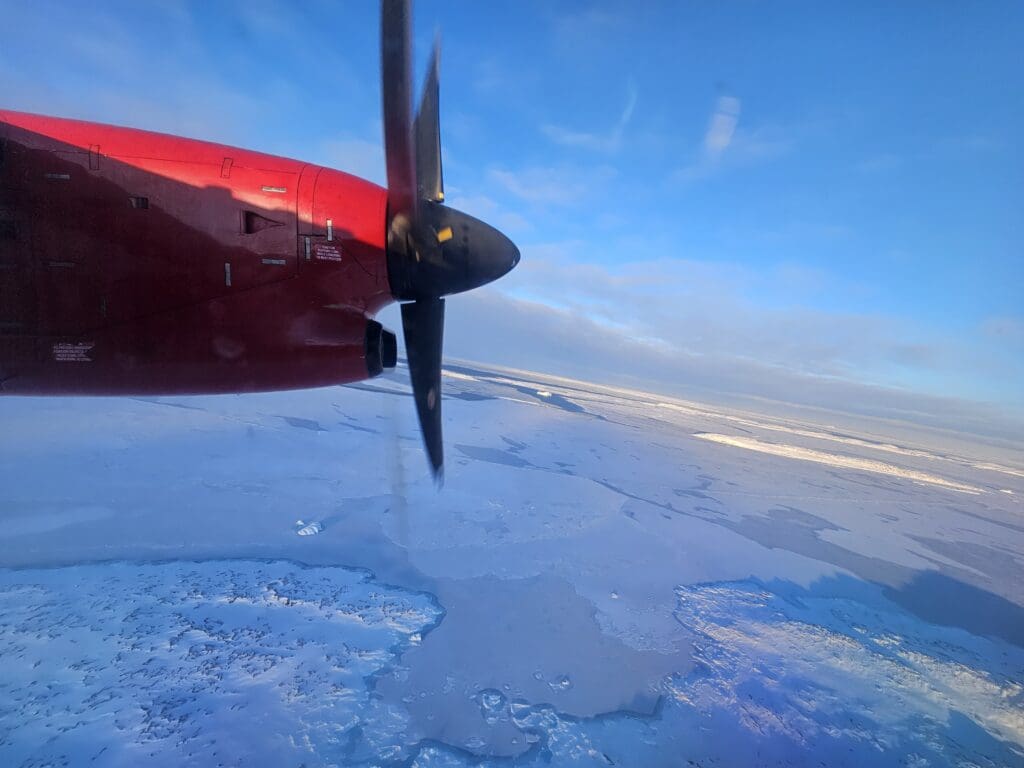
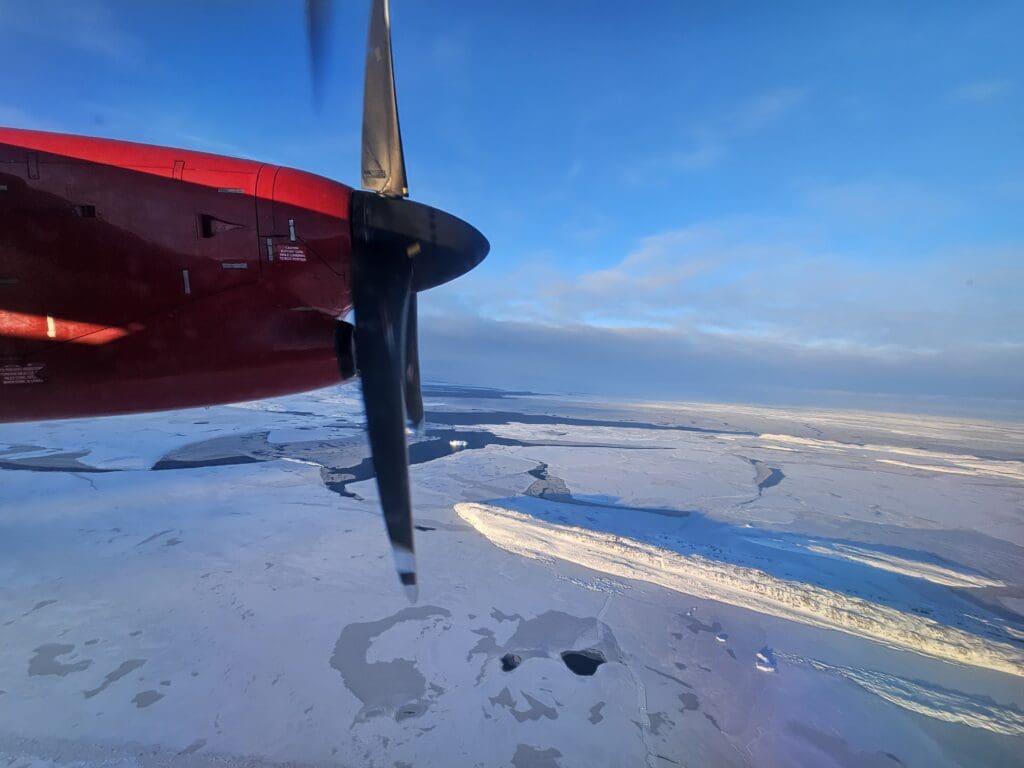
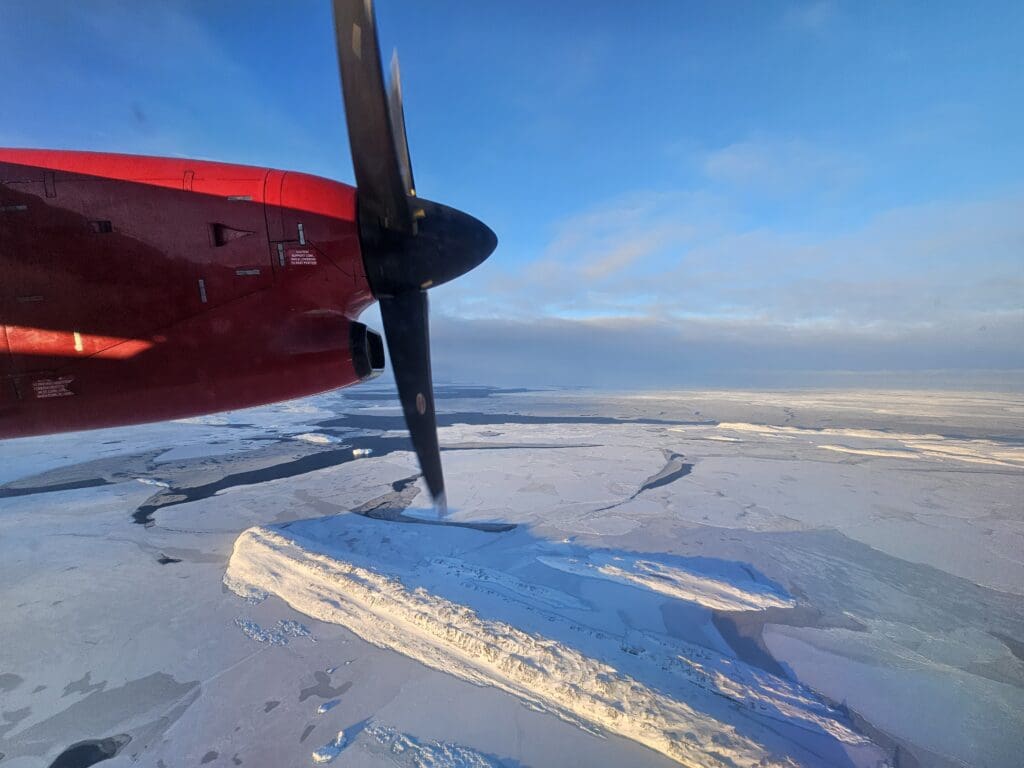
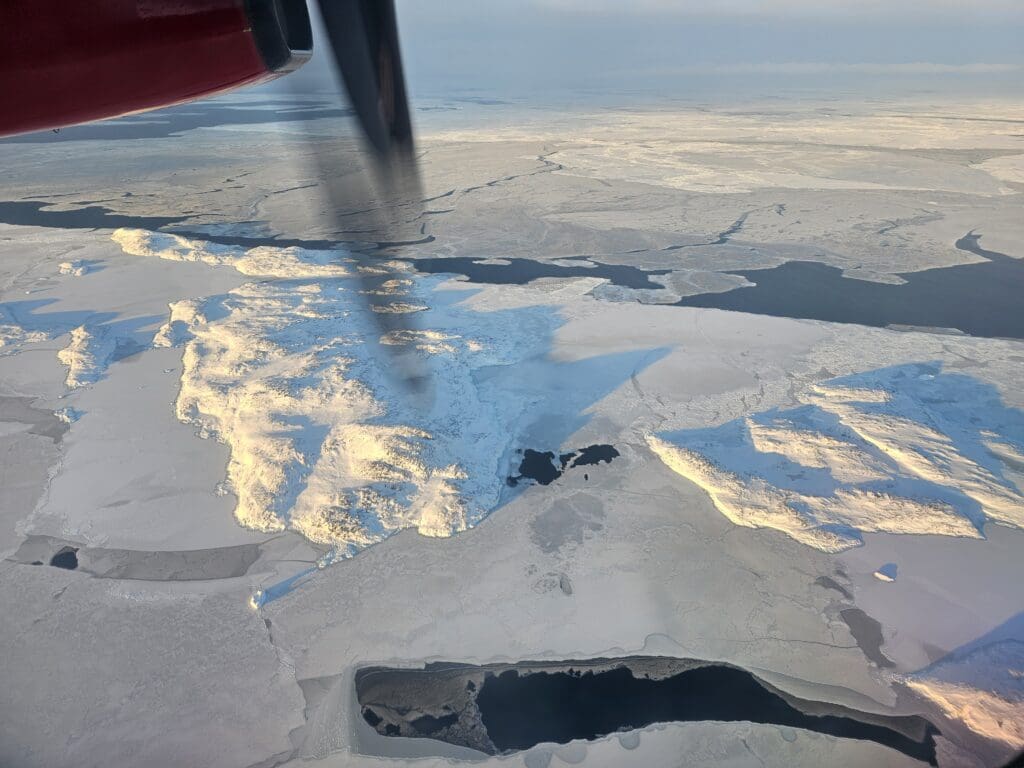
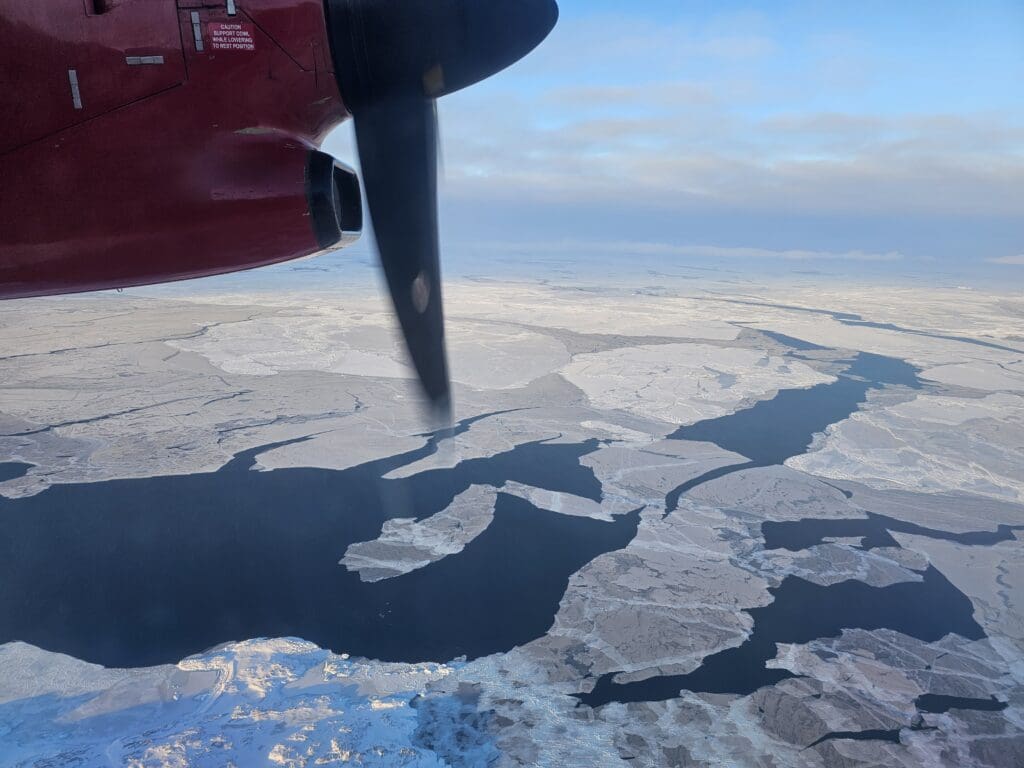
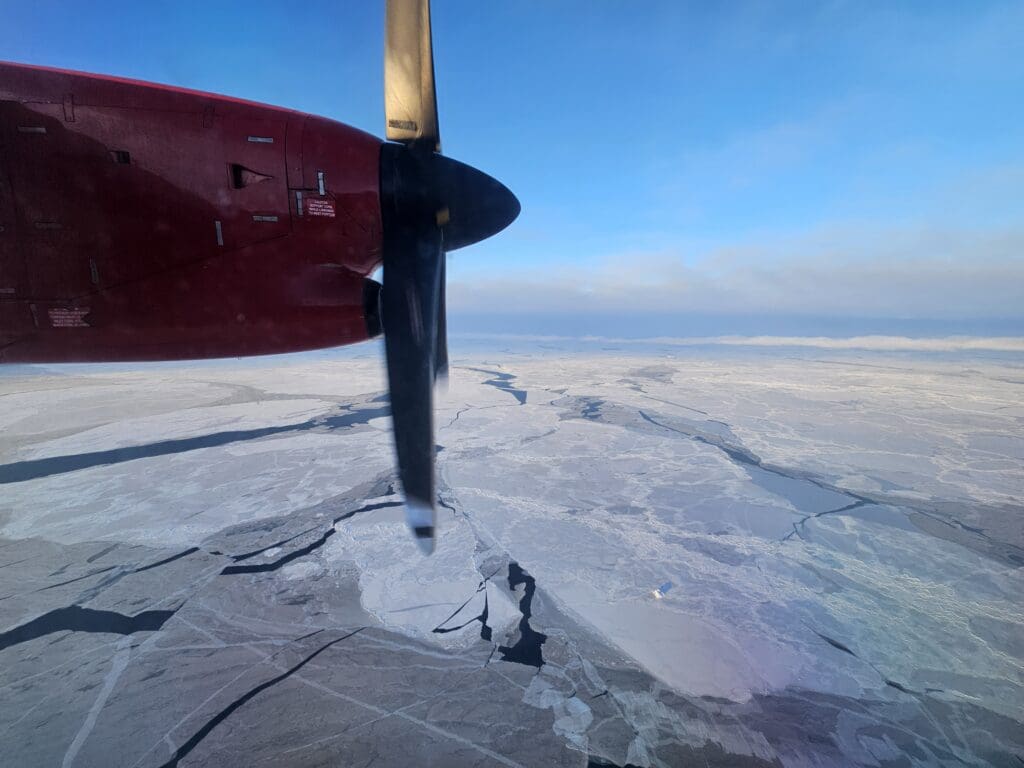
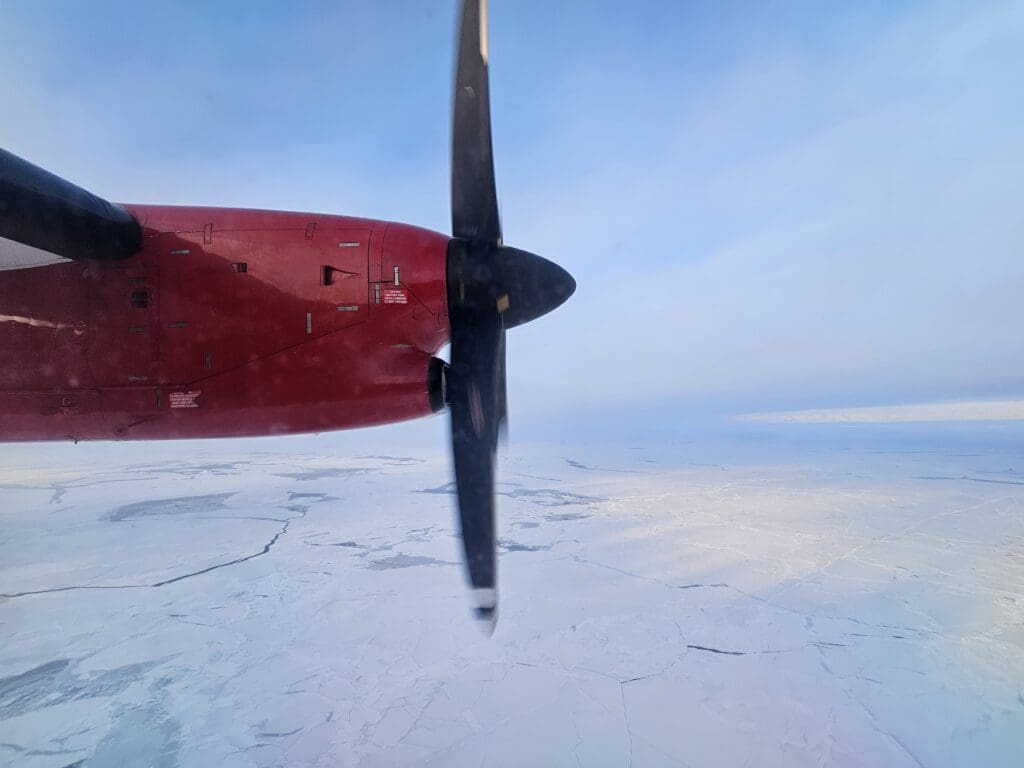
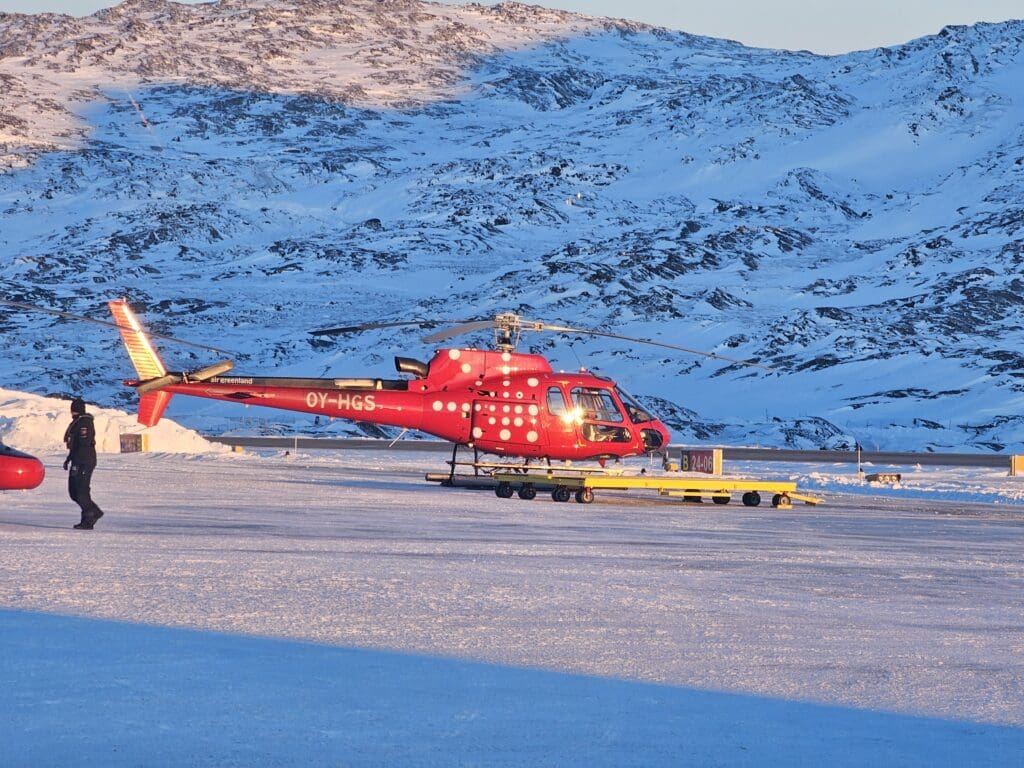
From the airport, we immediately crossed over the coastline, and with Aasiaat and Ilulissat sitting just 56 miles apart, unsurprisingly, we flew at a very low cruising altitude of just 3,000 feet. This allowed for a fantastic view of the icebergs of Disko Bay as if on some surveillance or search and rescue mission, and once agai,n I spent the majority of the flight glued to the world below. Looking out, in the distance, the southern shores of Disko Island could be seen somewhere around the island’s largest settlement, Qeqertarsuaq. In winter, this is connected to both Aasiaat and Ilulissat by several Eurocopter EC155B1 Dauphin-operated Air Greenland flights, whilst in summer, this service is replaced by a ferry.
Given the length of the flight and our low cruising altitude, unsurprisingly, the seatbelt signs remained firmly illuminated, and there was nothing by means of an onboard service. Around halfway into the flight, the Captain made an announcement in Greenlandic and English. During this, they thanked passengers, noted that we were eight minutes away from Ilulissat and advised those continuing onwards to Nuuk and Kangerlussuaq that whilst the same aircraft and crew would be operating the onward service, passengers would be required to disembark in Ilulissat as the aircraft would be refuelled. Once this announcement had been made, the flight attendant made their trilingual pre-arrival announcement before passing through the cabin to check that all was secure before strapping themselves into the jumpseat at the front of the cabin.
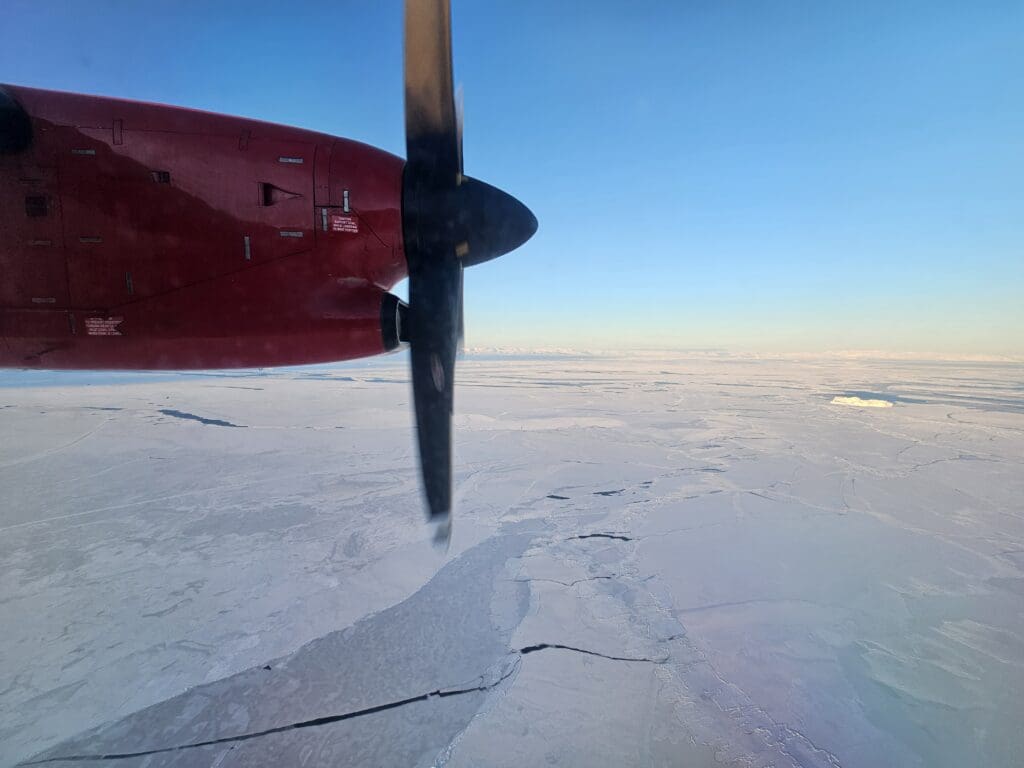
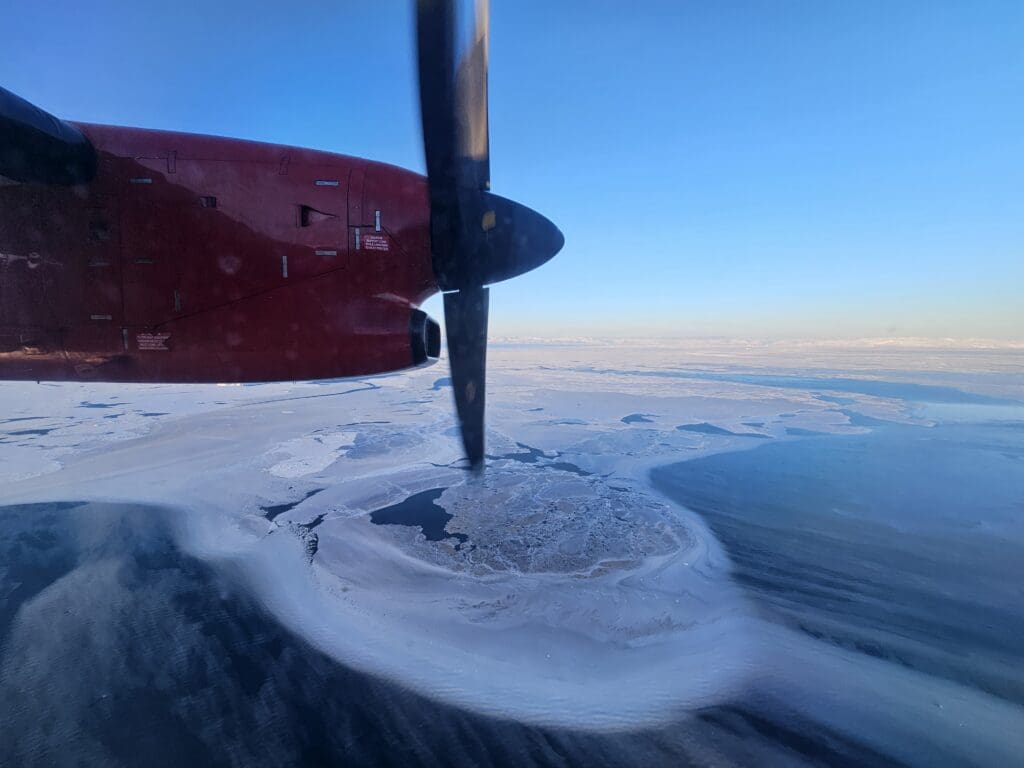
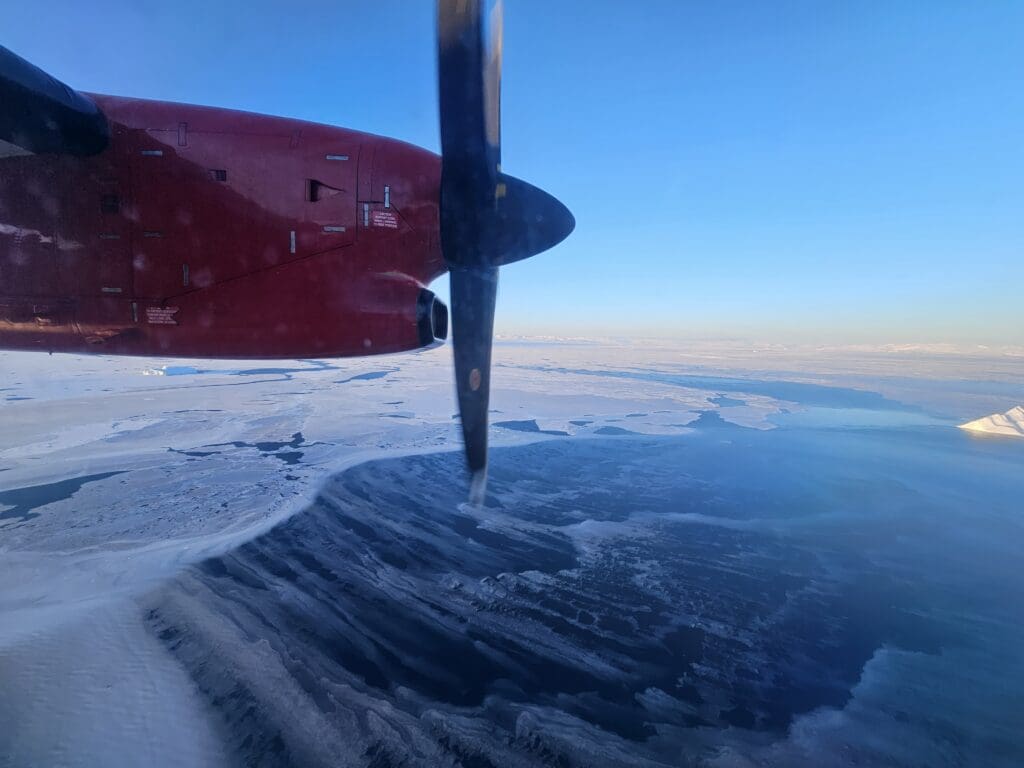
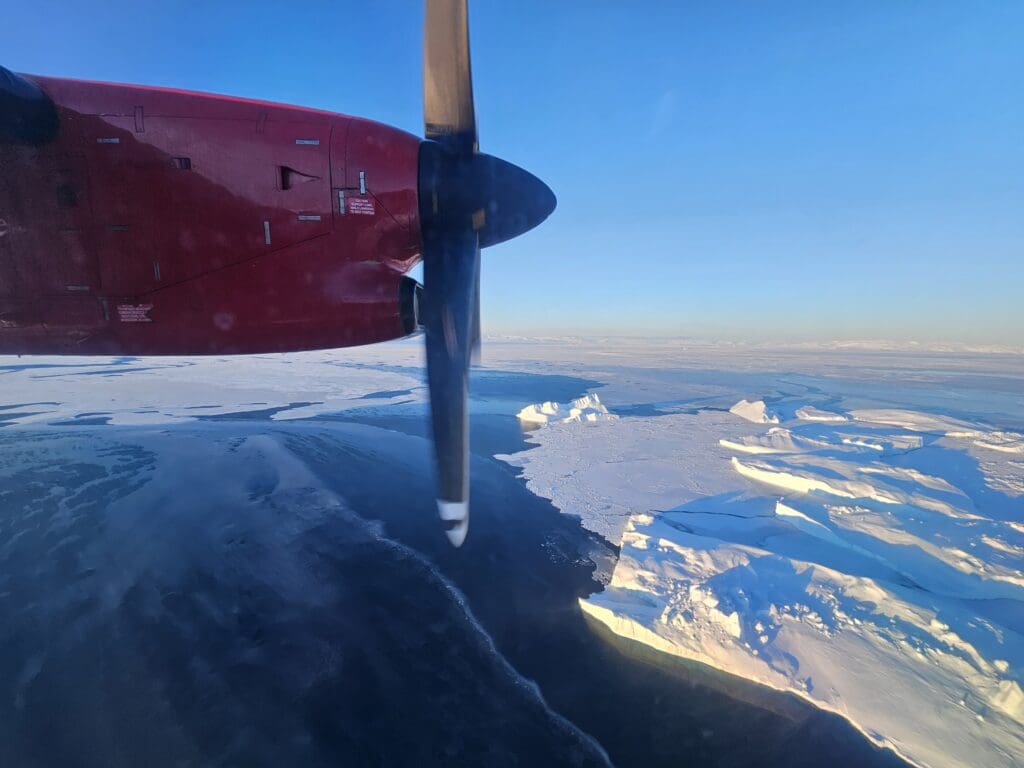
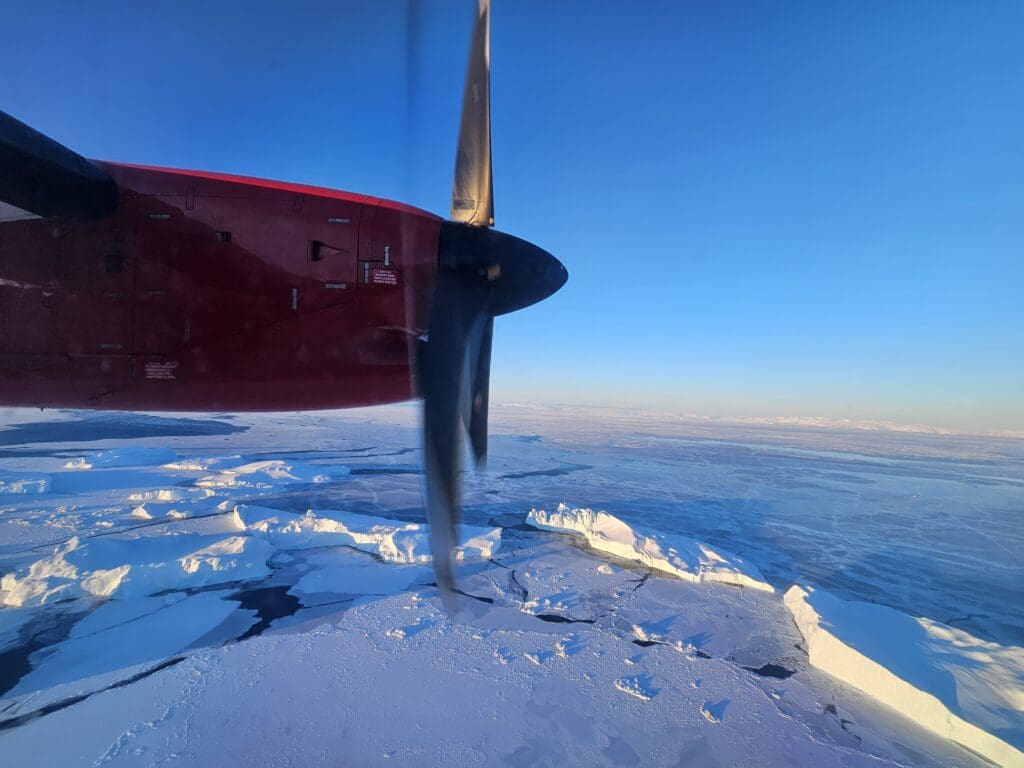
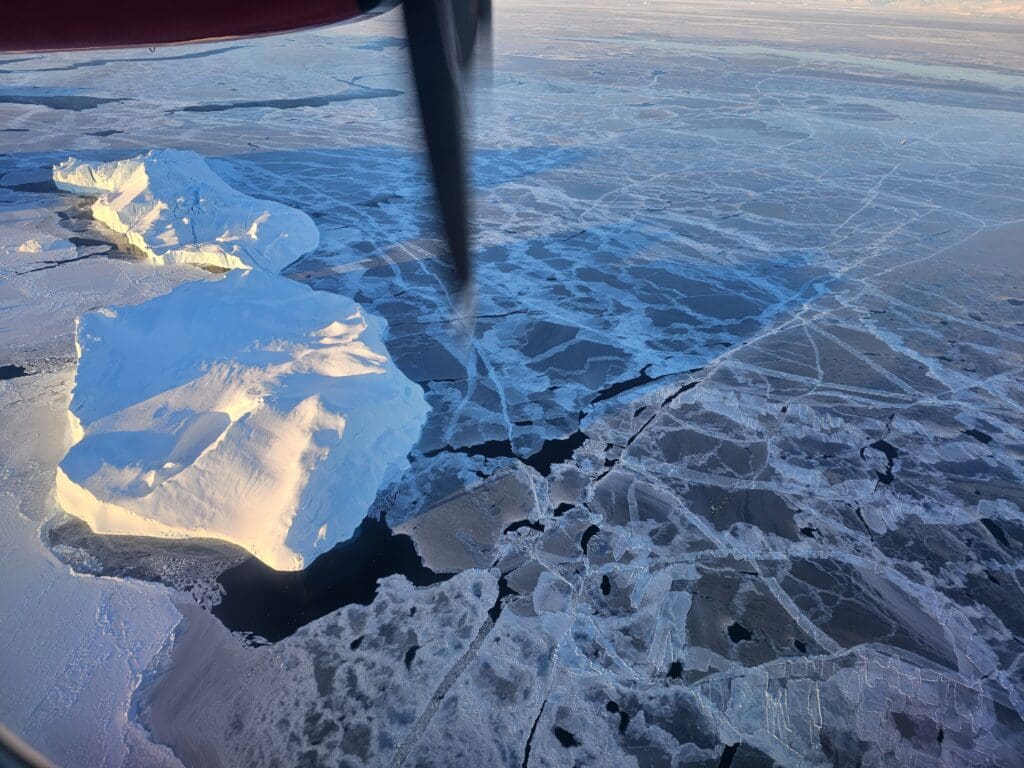
Flying towards Ilulissat, whilst those on the opposite side of the aircraft would have likely had a glimpse of the village of Ilimanaq, as we approached the town nothing could be seen other than the impressive icebergs and the icy Atlantic waters a short distance below. However, indicating that we were almost there, soon, the flaps were lowered into position, and the landing gear dropped down before we made landfall just to the south of Ilulissat. Crossing directly over the town, relatively little of this could be seen although I did catch a glimpse of the Hotel Icefjord, the hospital and several colourful hours before we left the town behind and continued onwards towards the airport.
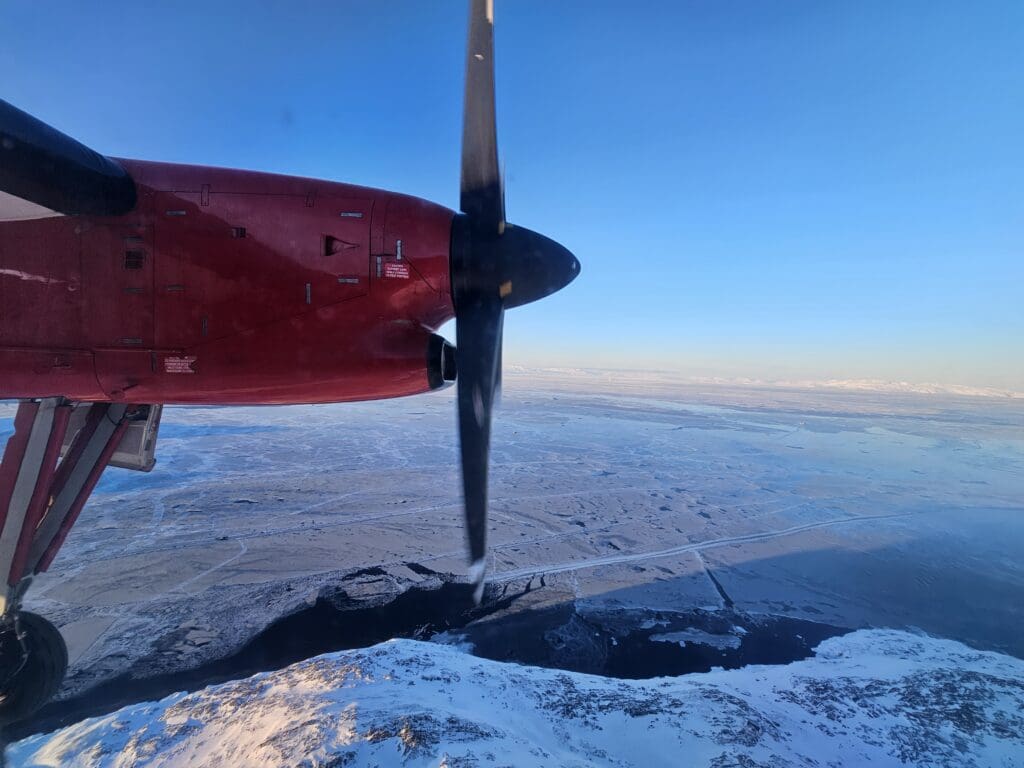
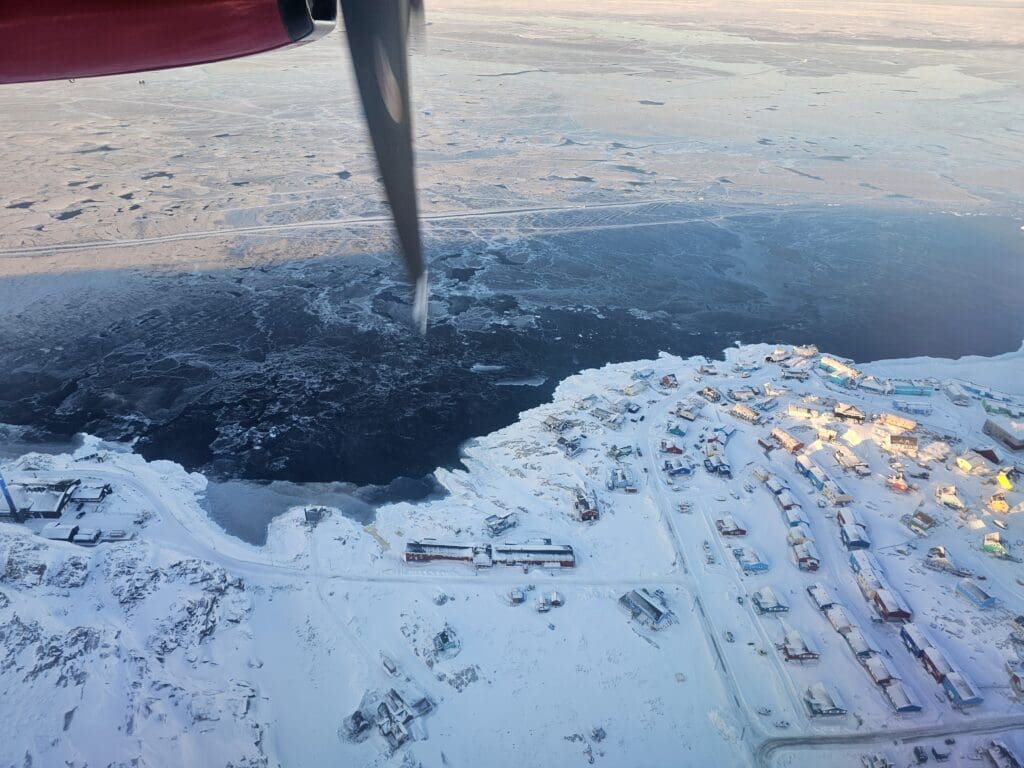
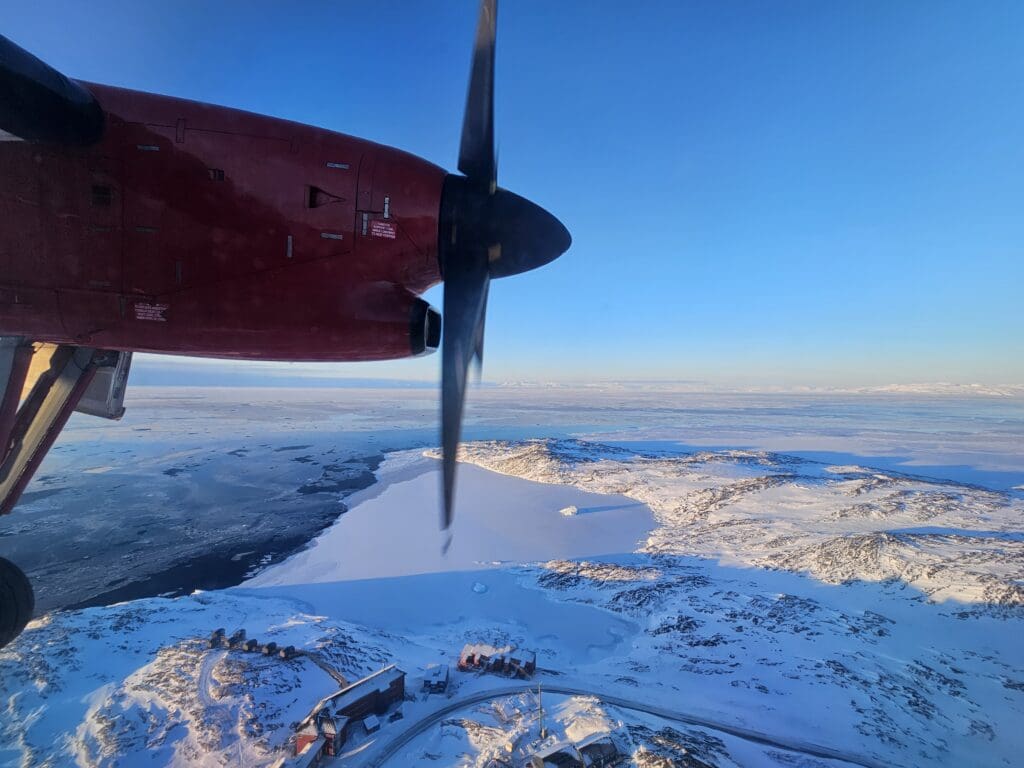
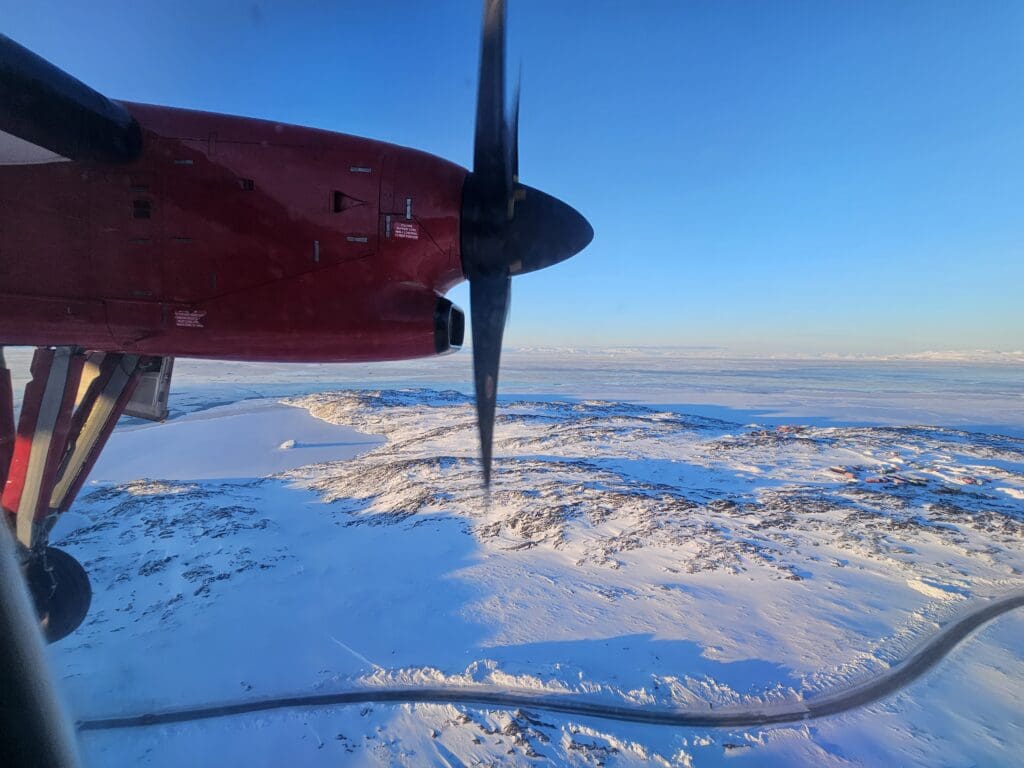
With Ilulissat’s runway running from south-southwest to north-northeast, virtually no turning was required to line us up for an approach to Runway 06 and we soon descended over the perimeter fence, passing the small terminal and a cluster of hangars before we made a firm return to earth. As with the runway at Aasiaat, Ilulissat Airport has a short runway, which is not a great deal longer, standing at 845 metres and we rapidly decelerated before once again undertaking a quick backtrack to take us over to the small apron.
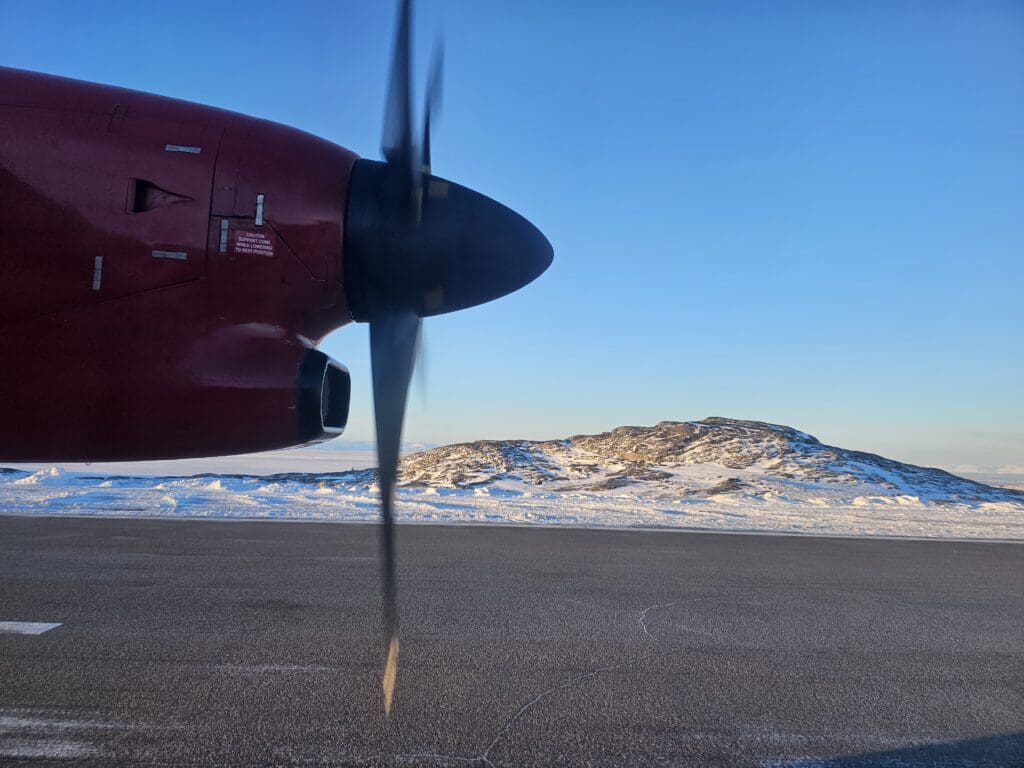
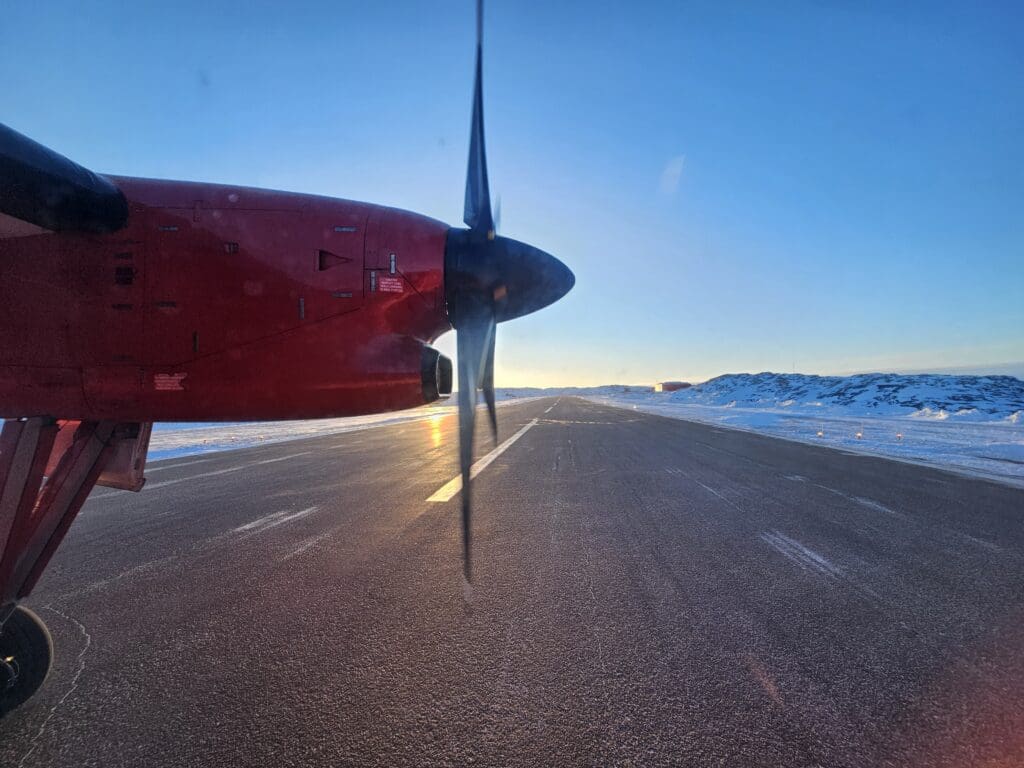
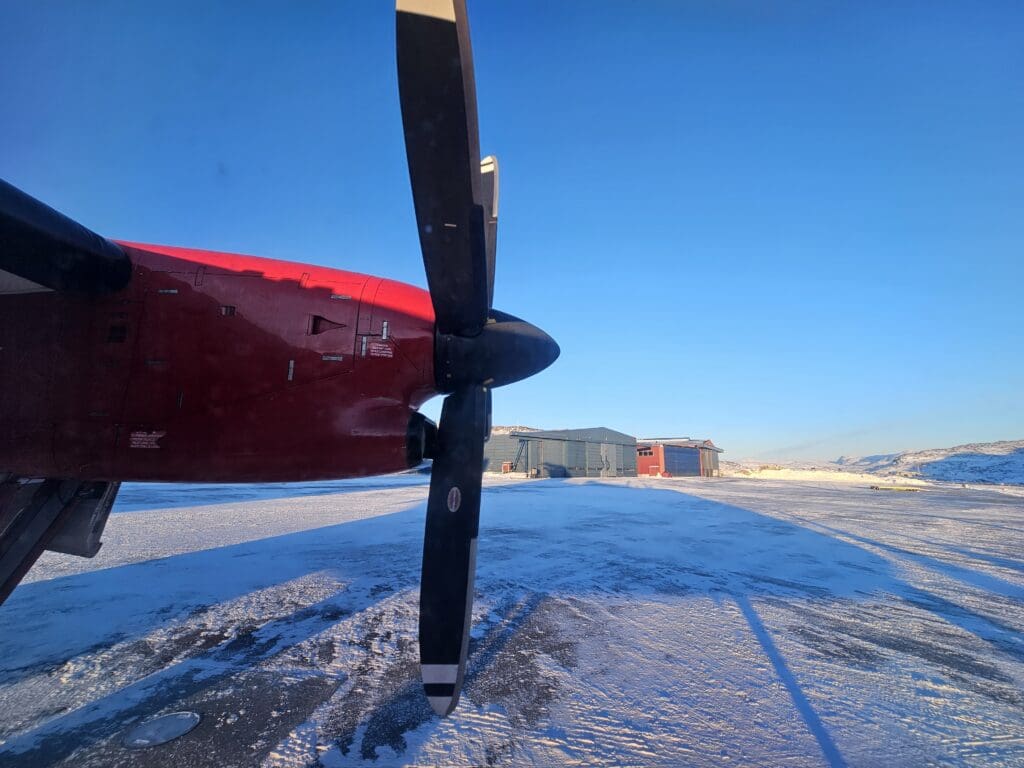
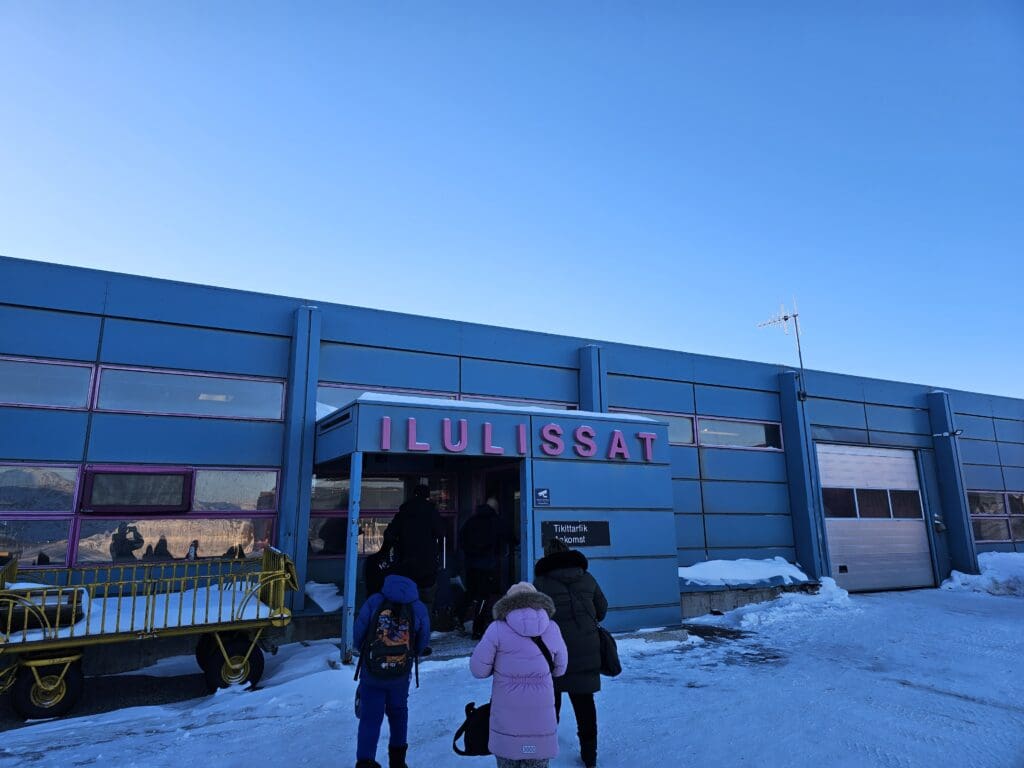
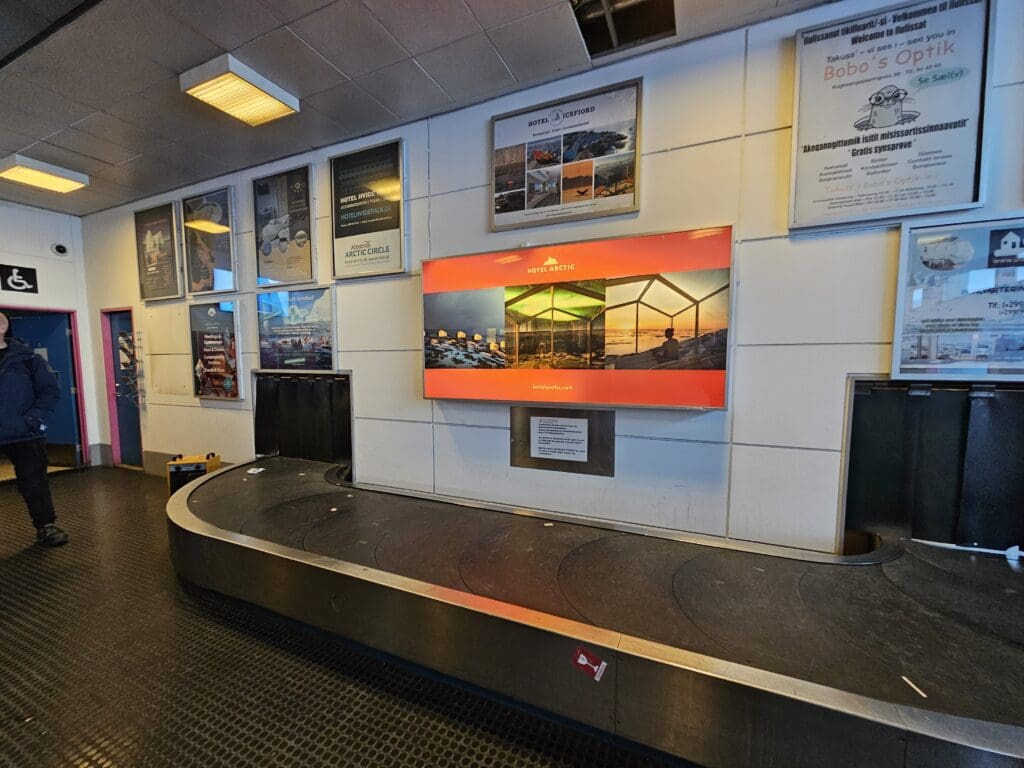
Once heading towards the terminal, the flight attendant welcomed all to Ilulissat and reiterated the instructions for those continuing onwards to Kangerlussuaq and Nuuk. No more than a couple of minutes after touching down, the aircraft came to a halt and the two engines spooled down, temporarily filling the cabin with silence for a few moments before the playlist of upbeat Greenlandic songs rang out once more. Unlike on many flights, once the seatbelt signs were extinguished, there was no mad rush to exit the aircraft and the door was soon opened at which point passengers began to filter off the aircraft. Not being in any particular rush, eventually, I stood up, thanked the flight attendant and disembarked before wandering over to the terminal building. Once inside, I passed through the minuscule luggage collection area and made my way out into the shared arrivals-departures area, ending my first Greenlandic domestic flight!
Summary
Whilst some may have complained about the delay, given Greenland’s temperamental weather, this could have been much worse and I was thankful that I made it to Ilulissat! In addition, I thought this was handled relatively well on the ground in Kangerlussuaq and I was pleased with the 125 Krone meal voucher, which enabled me to enjoy a rather substantial lunch before my flight. Once onboard, I found the Dash 8 to be comfortable enough, and whilst the cabin was a little worse for wear, overall, I had no complaints and was pleased with the service offered and the very friendly crew member.
.