Is SCAT as Average as I Remembered? Almaty to Astana on a Boeing 737-800
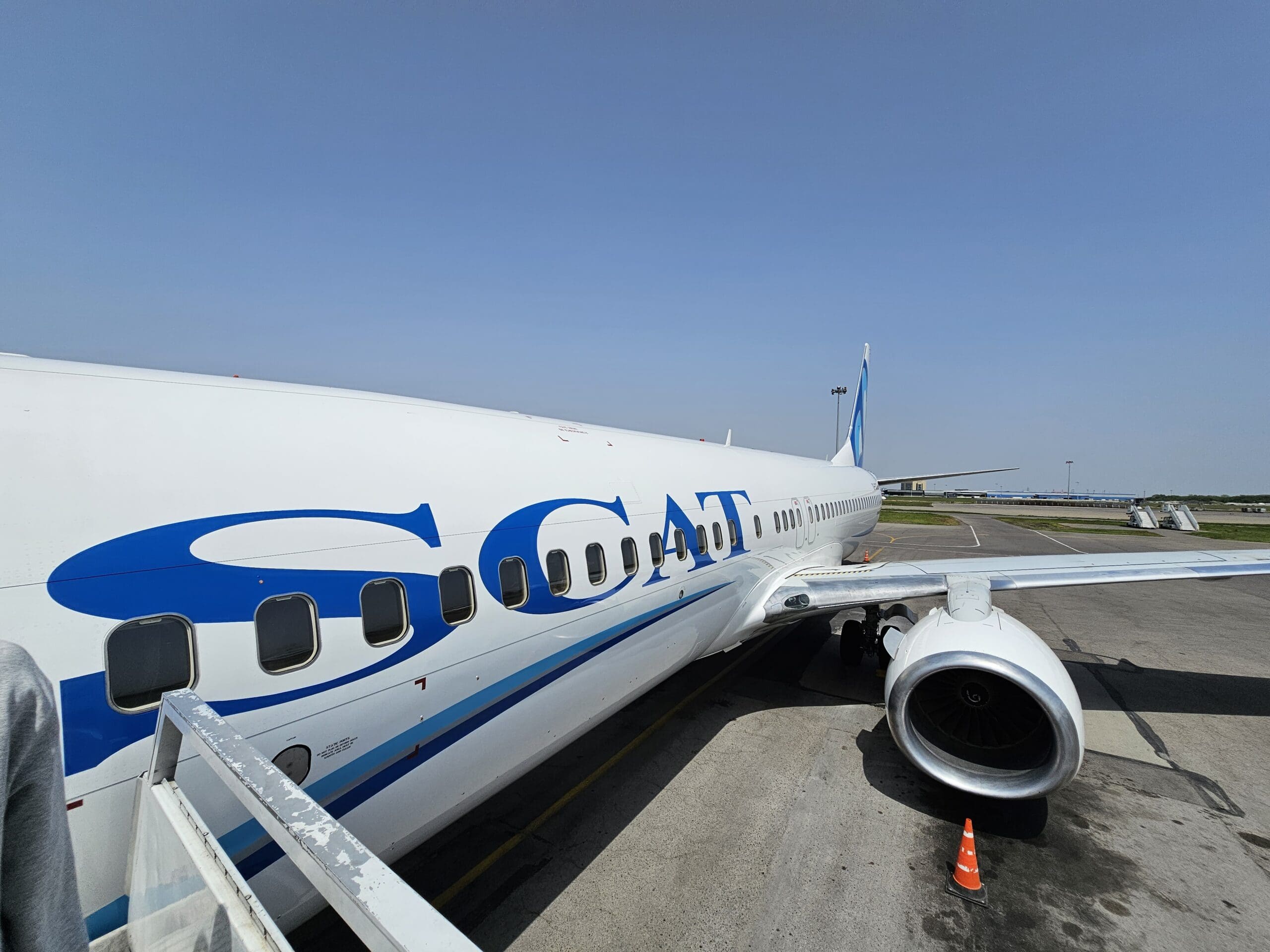
You can read about my first ever flight with SCAT Airlines from Xi’an to Almaty on one of their old Boeing 737-500s here
Background
This flight was one that I had never originally intended to take. Whilst my trip to Kazakhstan would of course not be complete without a ride onboard the country’s second-largest airline, SCAT Airlines, this was not supposed to take place until I left the country. Specifically, I had booked to fly on one of the airline’s long international services from Almaty to Istanbul. Instead, to get from Almaty to Astana, I had booked a ticket with Southern Sky Airlines to fly on one of their rare Antonov An-24 turboprops via the small town of Ushural. Unfortunately, these flights were cancelled less than a day before departure (thankfully I did still manage to get a couple of Antonov rides on this trip!), however, I still needed to get to Astana. Thankfully, a near-endless stream of flights operates between Almaty and Astana throughout the day, with Air Astana, FlyArystan, Qazaq Air and SCAT Airlines all ploughing this route. Travelling on a budget, I went for the cheapest option, one of SCAT Airlines’ thrice daily services. However, seeing as I was booking less than twelve hours before departure, was not very cheap at all, setting me back an eyewatering 55,567 Tenge (£99).
The Journey
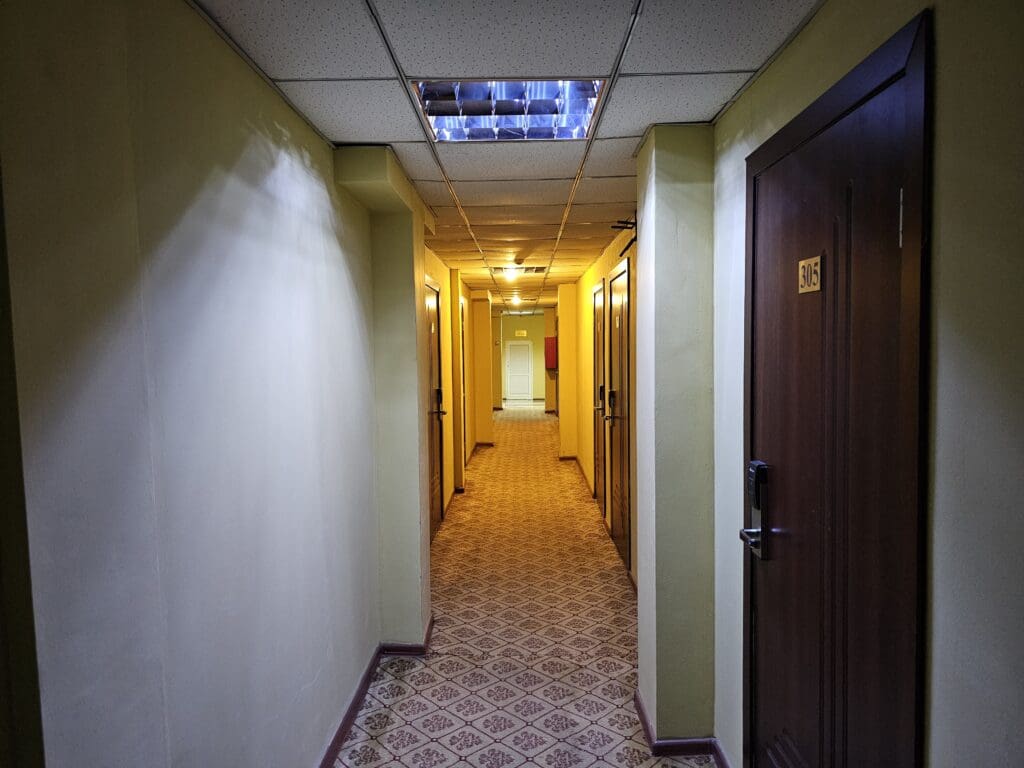
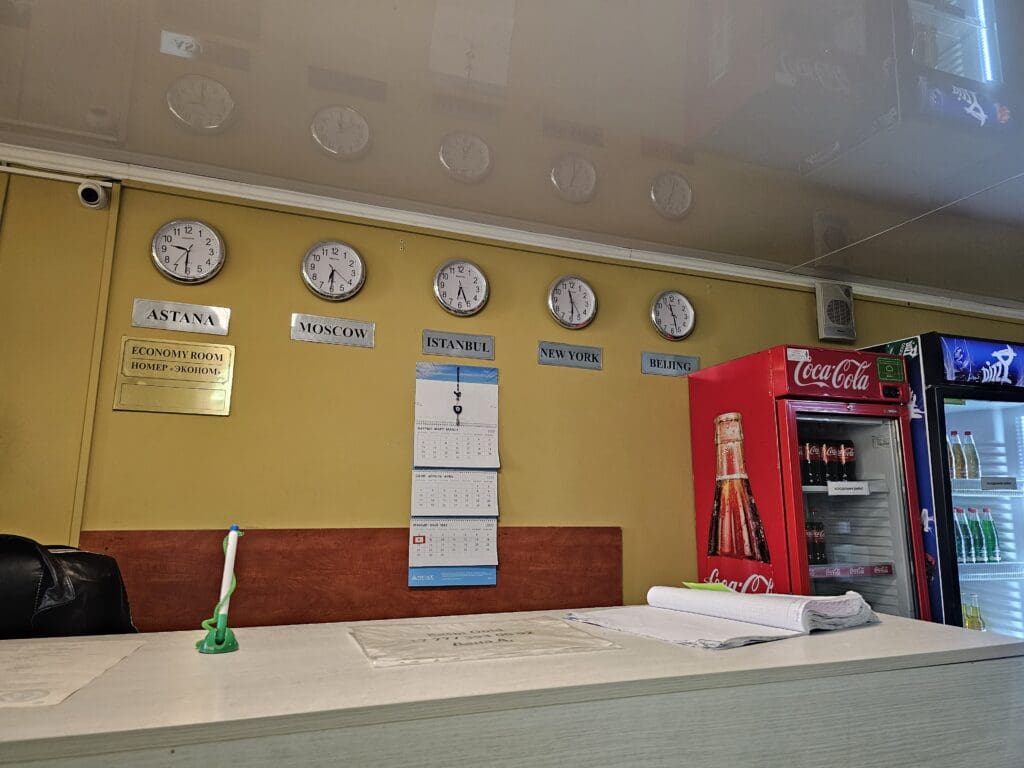
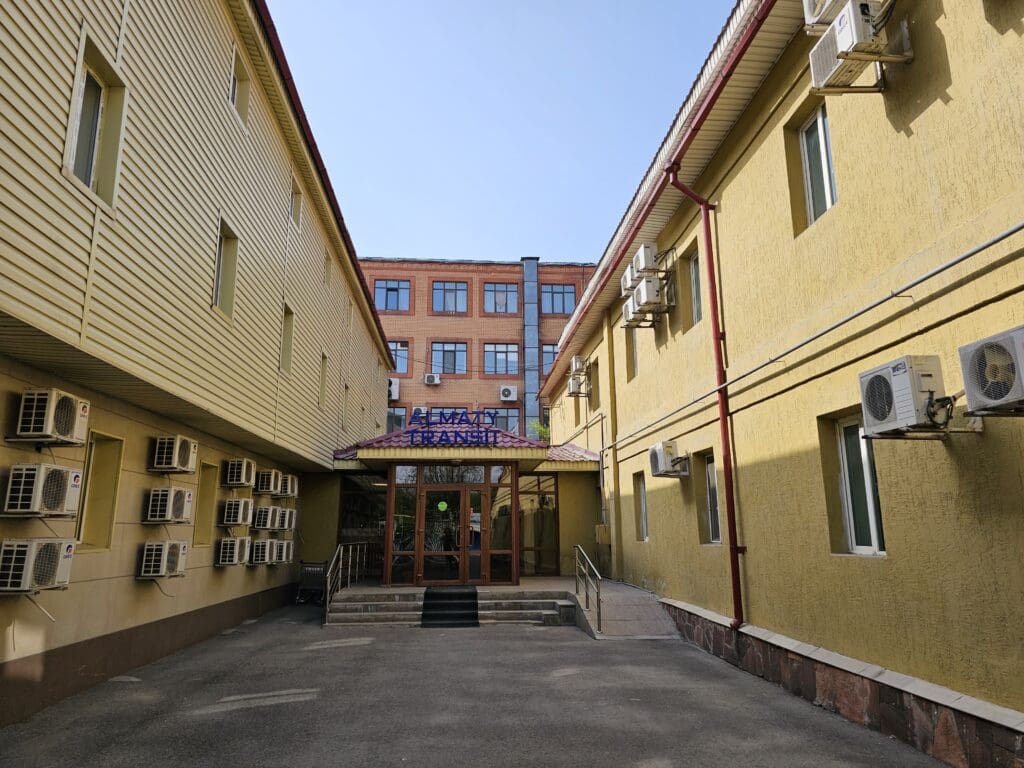
Whilst Almaty may be Kazakhstan’s largest city and home to a fair number of attractions, on this particular trip my stay in the city was going to be short. Following an enjoyable flight aboard an Air Astana Airbus A320neo, I touched down on Kazakh soil at 0300 leaving me with a little over eight hours until the scheduled departure time of my SCAT Airlines flight up to Almaty. Travelling on a budget, I had debated spending this in the confines of the terminal building although in the end, I succumbed to one of the two airport hotels near the terminal. Setting me back 12,000 Tenge (£22) for 24 hours, I opted for the Almaty-Tranzit N1 Hotel. Getting what I’d paid for, this turned out to be a large and very dated-looking hotel down a dark backstreet around a ten-minute walk away from the terminal. However serving its purpose, and having most certainly not expected the Ritz, I was not left overly disappointed by my stay.
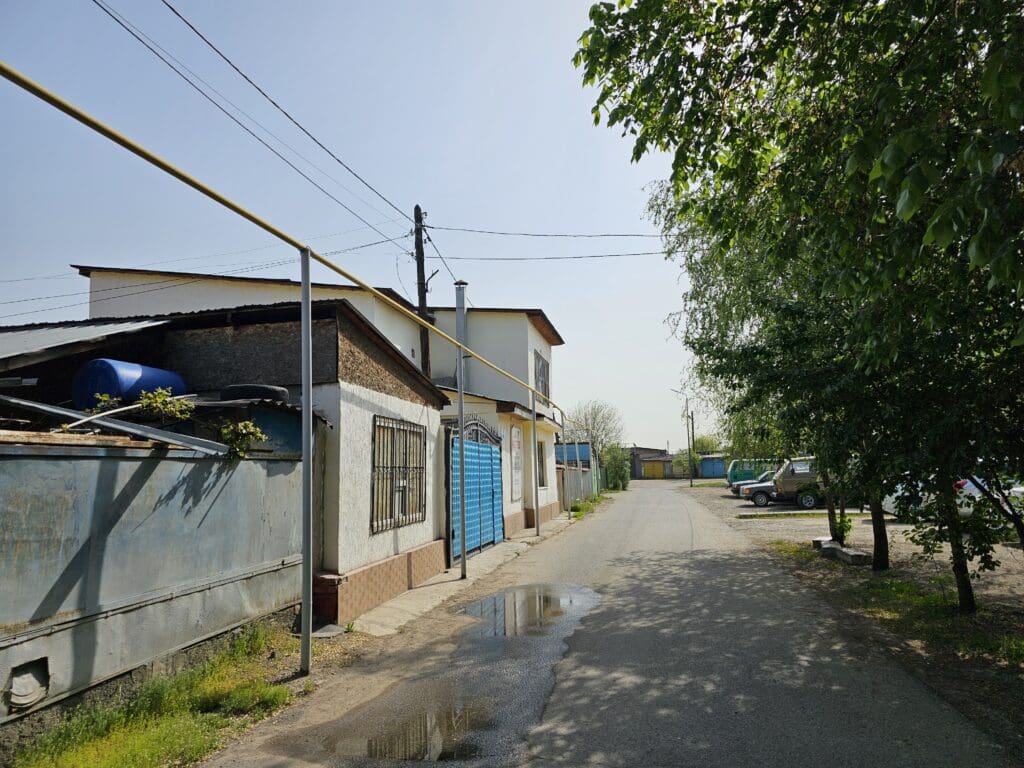
Following a short night of around four hours’ worth of sleep, I woke up at 0830, ready and raring to head to Kazakhstan’s capital city. After a quick shower, I dropped off my key and voyaged out onto the quiet backstreets of Almaty ready and raring to head off on a SCAT adventure. Being early May and following a cloudless night, that morning it was a little chilly although the lack of haze provided a superb view of the snow-capped Tian Shan Mountains in the distance. After passing several old Soviet-era apartment blocks, also known as khrushchevkas, around ten minutes after leaving the hotel, the airport’s somewhat distinctive terminal building appeared as I entered the home stretch. Following the sparkling diamond on top of the terminal building, I headed up the ramp and entered the terminal’s first-floor departure level. Since my last trip through the airport, the security check at the door has been removed and thus I was able to wander straight into the terminal without any sort of hassle.
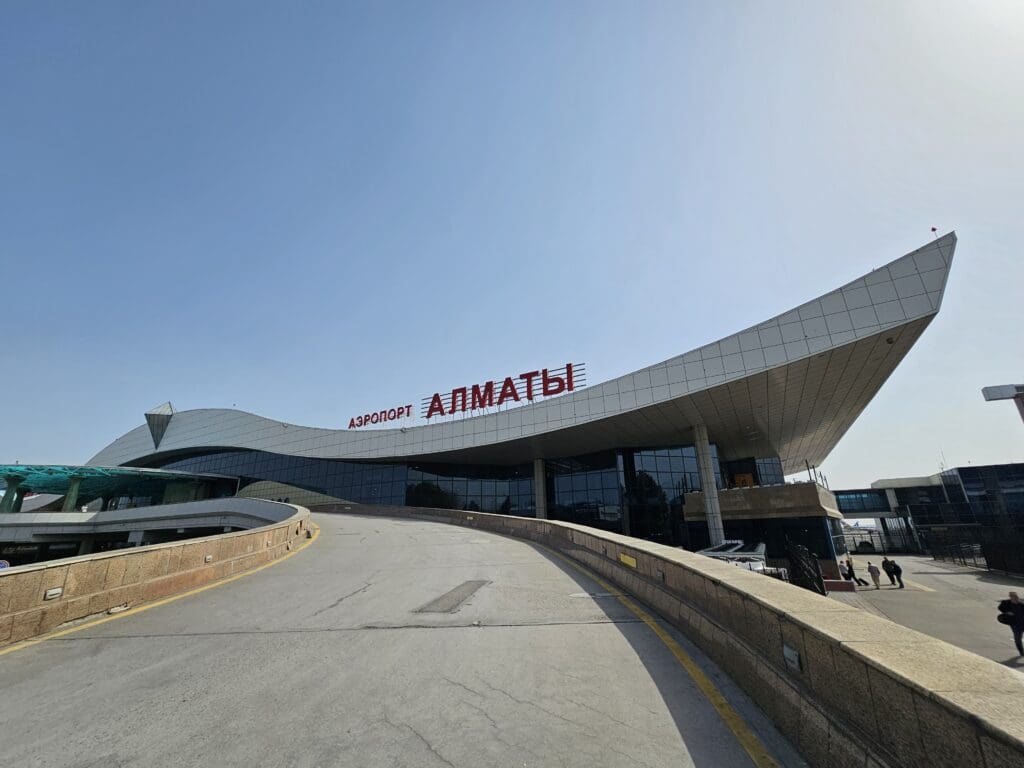
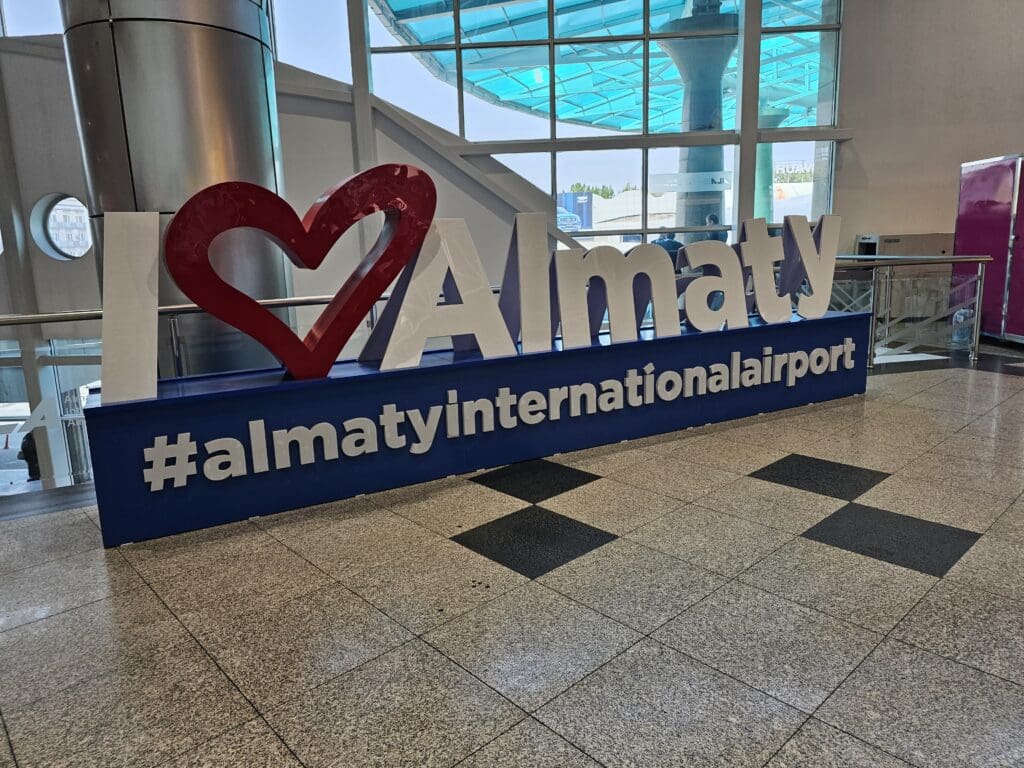
Even though Almaty is no longer Kazakhstan’s capital, it remains home to the country’s busiest airport. However, despite this, the landside portion of the terminal is by no means large. It does however feature a decent number of facilities including five cafés and multiple shops. Once inside, I headed to a currency exchange counter where I swapped my last Uzbek Som for Kazakh Tenge before heading to the local branch of Gloria Jean’s Coffee for, you guessed it, a coffee. In terms of its layout, Almaty Airport features two check-in halls which are located at opposite ends of the landside departures area – one for international services and another slightly smaller hall for domestic flights. Having arrived in good time for my flight, I was in no particular rush and after polishing off my cappuccino I strolled over to the domestic check-in hall. Once there, it became clear that Air Astana ruled the roost, with plenty of desks heavily decked out in the national carrier’s branding, whilst comparatively few desks had been assigned to Kazakhstan’s second airline, SCAT Airlines.
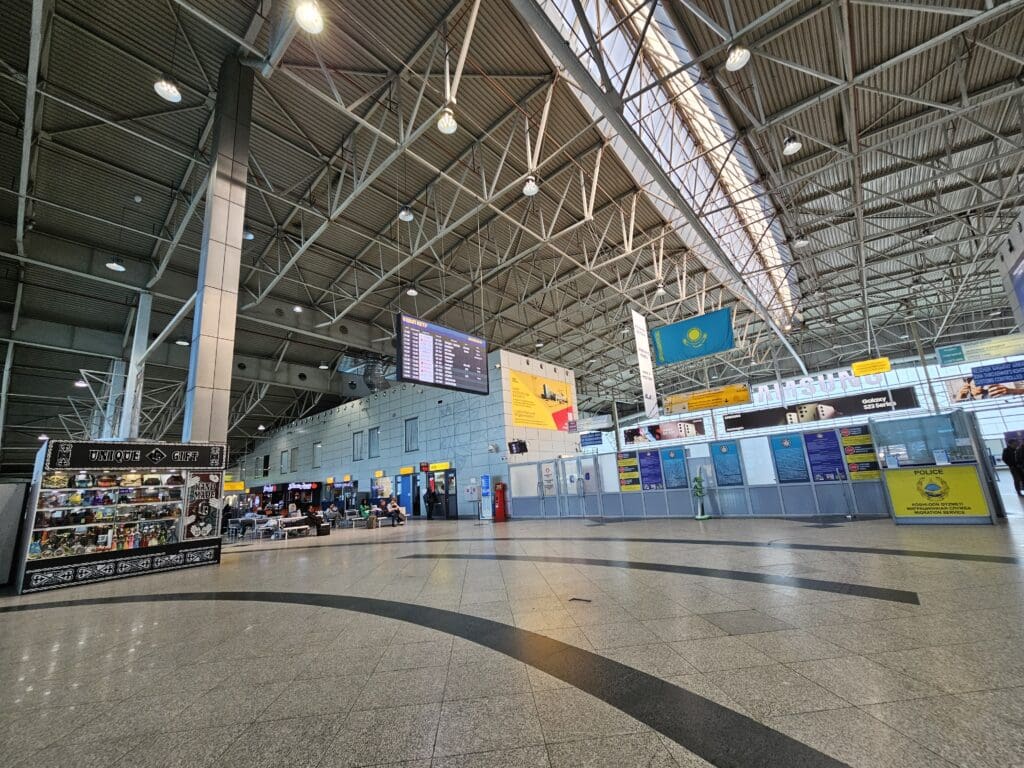
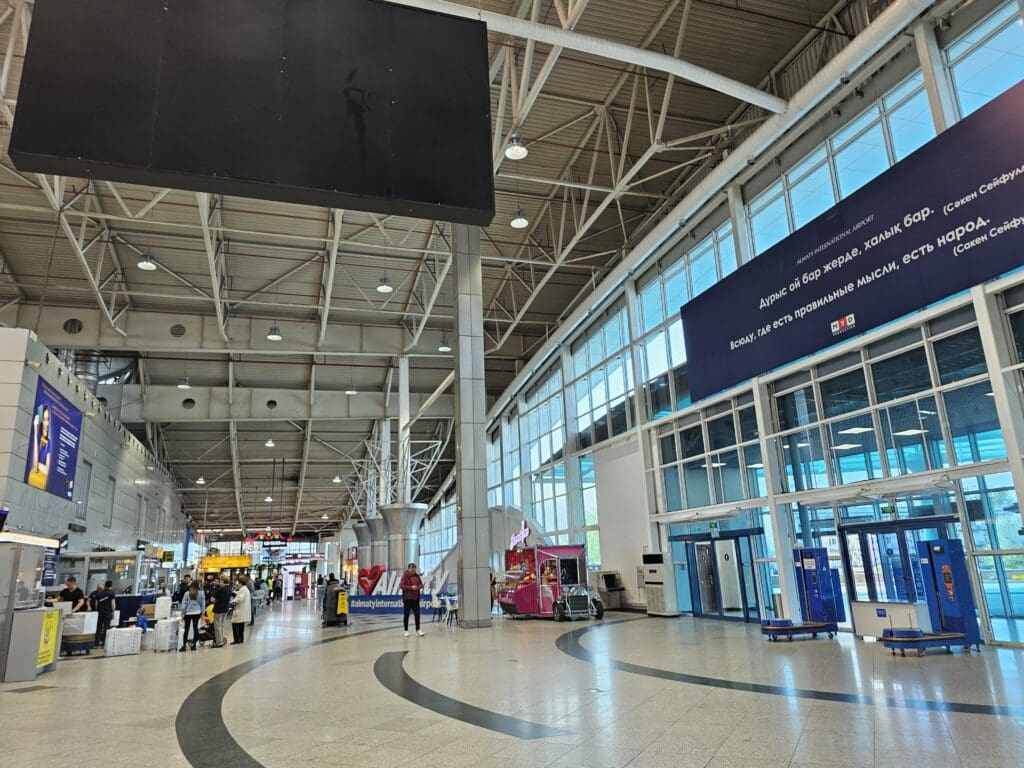
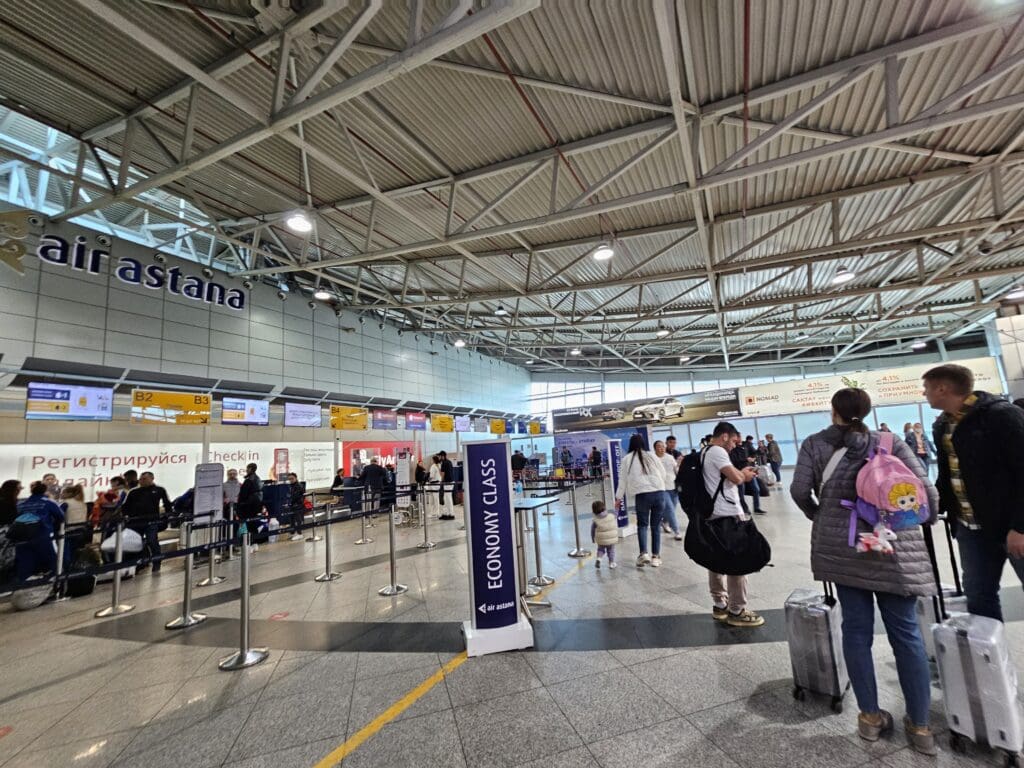
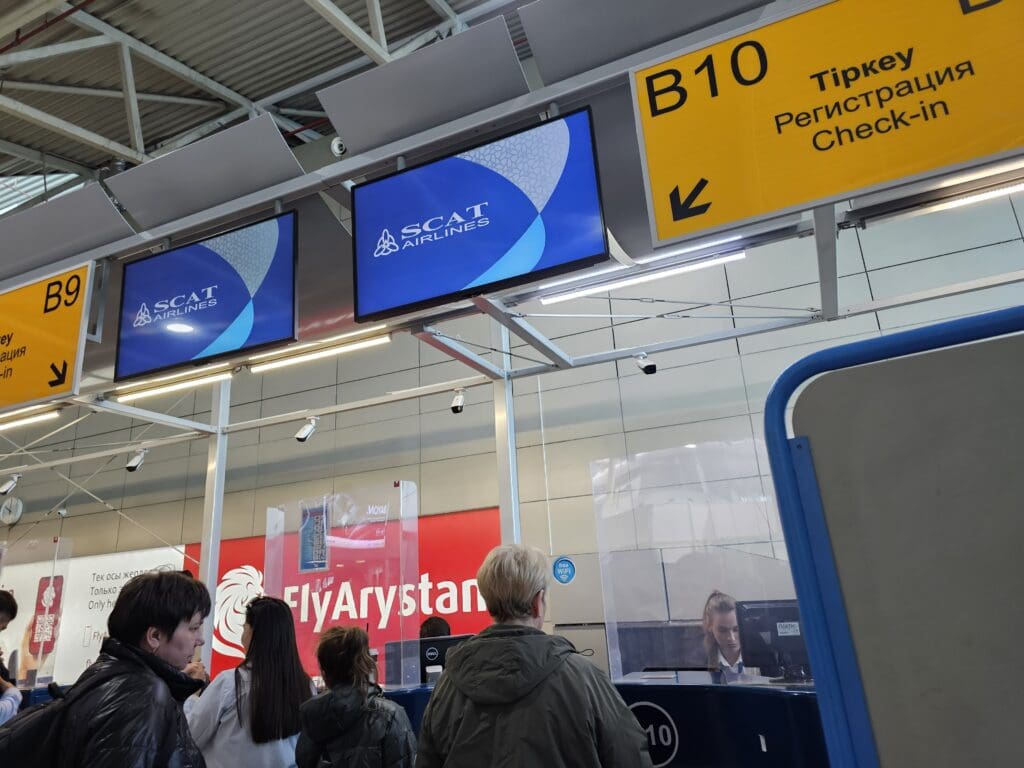
Having checked in online right after I had made my booking, and lacking any bags to check-in, I decided to steam through the check-in hall and join the short queue for the single security checkpoint. After several minutes, I reached the front of this, however, I was promptly turned away from the checkpoint and advised that I must hold a paper boarding pass. Turning around, I headed over to the fairly empty SCAT Airlines desks and following another short queue, I handed over my passport to the friendly and welcoming agent manning the desk reserved for those who had checked in online. Explaining my predicament, they soon handed me a paper boarding pass and I re-joined the security queue. Fortunately, things went a little smoother the second time around and I was able to pass through this checkpoint without issue within around five minutes.
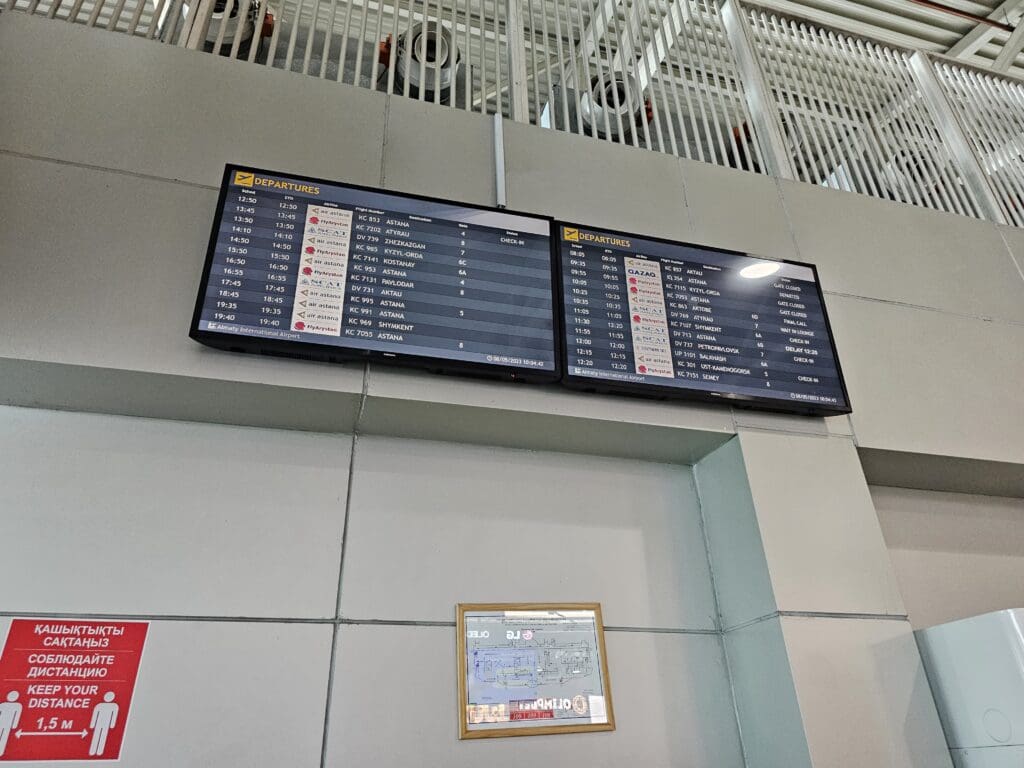
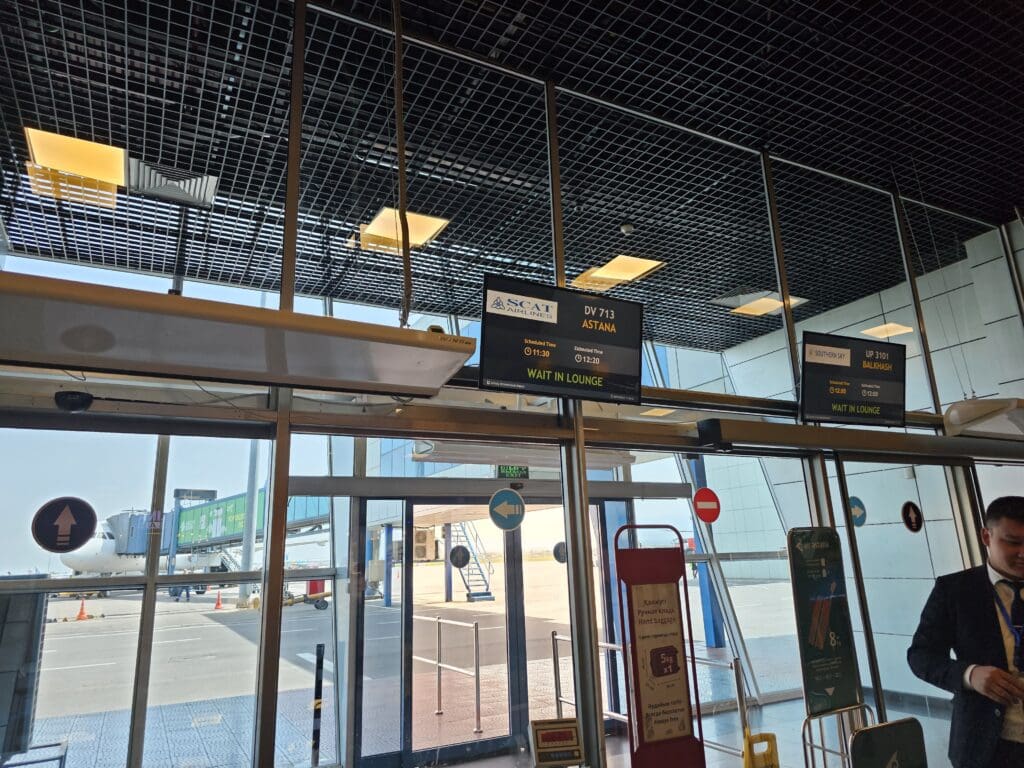
In what seems to be something of an unorthodox layout, the domestic airside portion of Almaty Airport is separated into two waiting areas – one that sits above the domestic arrivals hall and another on the ground floor beneath the security and domestic check-in hall. Once through, a quick check of the departure boards revealed that my flight had been delayed by fifty minutes and would now depart at 1220. Meanwhile, boarding would be undertaken via bus, with passengers requested to board via Gate 6B. This was unsurprising given the fact that Almaty Airport has just three jetbridges which seem to be exclusively used by Air Astana and overseas carriers. Examining the service’s historical data, it appeared that the Astana flight was usually operated by the aircraft that flew SCAT Airlines’ overnight service from Istanbul to Almaty via Aktau. Indeed, this checked out seeing as both sectors had departed over an hour behind schedule.
With some time on my hands, I decided to have a walk around the domestic portion of the terminal. Whilst not the largest of spaces to wait, I was pleased to find that both did not seem to be particularly crowded, even though there would be a total of eight domestic departures before my flight’s new departure time. With this being my first visit to this part of the airport in almost six years, I was pleased to find that this had been updated and appeared to be clean, tidy and relatively modern. For those looking for refreshments, plenty of cafés could be seen as well as a good number of shops selling a range of goods. Turning to the negatives, compared to some other terminals worldwide, airside views were limited, although the ‘no photography’ signs in place during my last visit had since been removed. Furthermore, the official WiFi network required text verification which, as in Uzbekistan, did not work without a local number. However, I was able to get around this by connecting to Stabucks’ complimentary network. Fully explored, I decided to head to the ground floor waiting area in case by some miracle boarding was announced on time. Plonking myself down near one of the windows, I gazed out at the sea of mostly Air Astana and SCAT Airlines that could be seen outside.
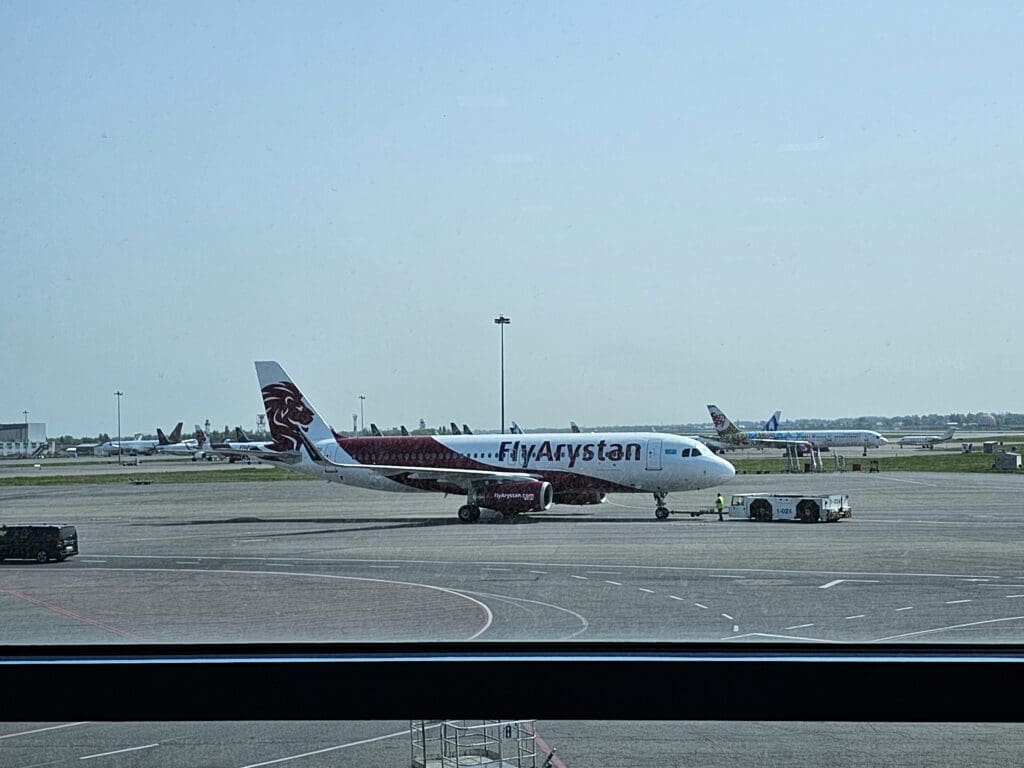
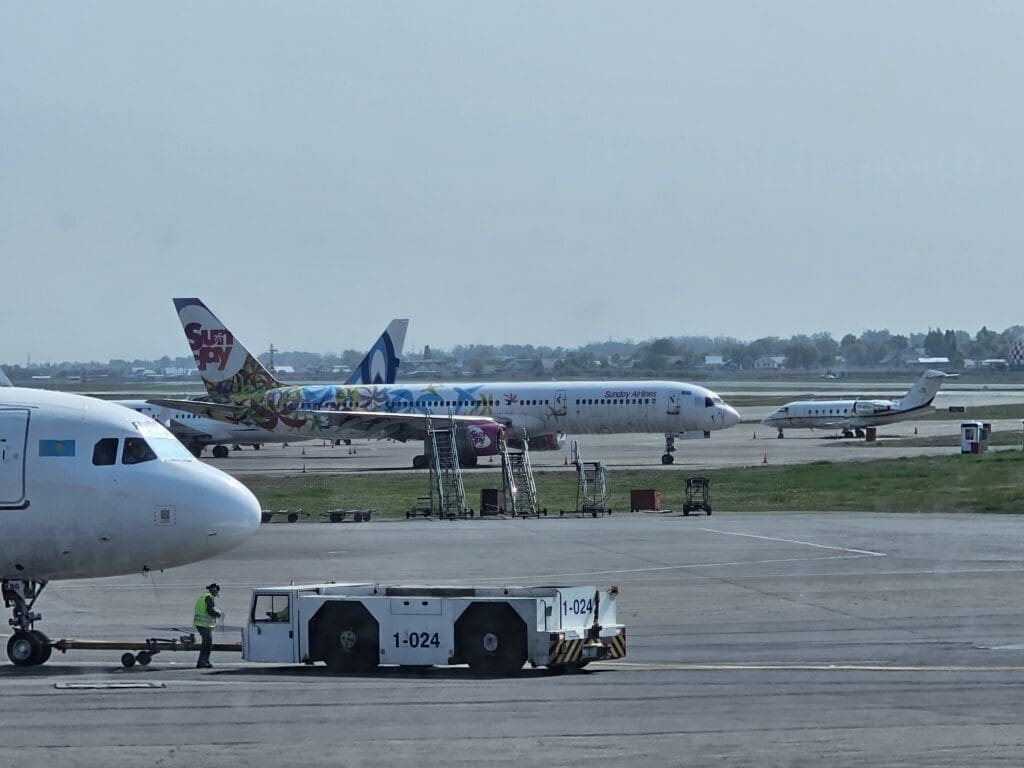

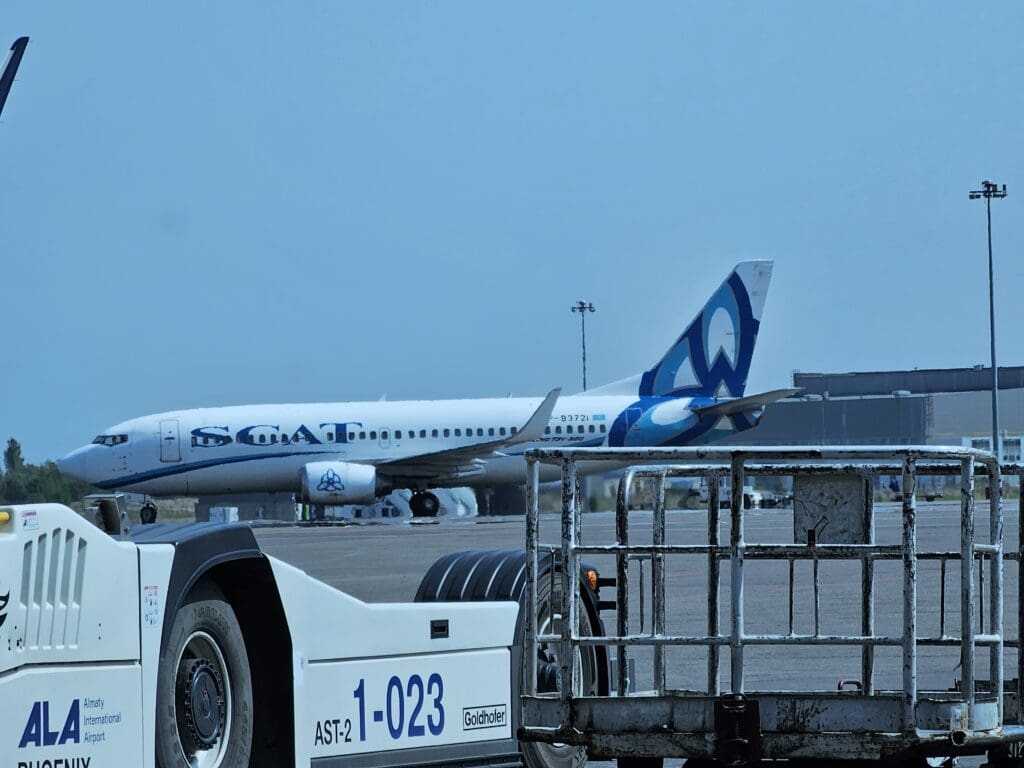
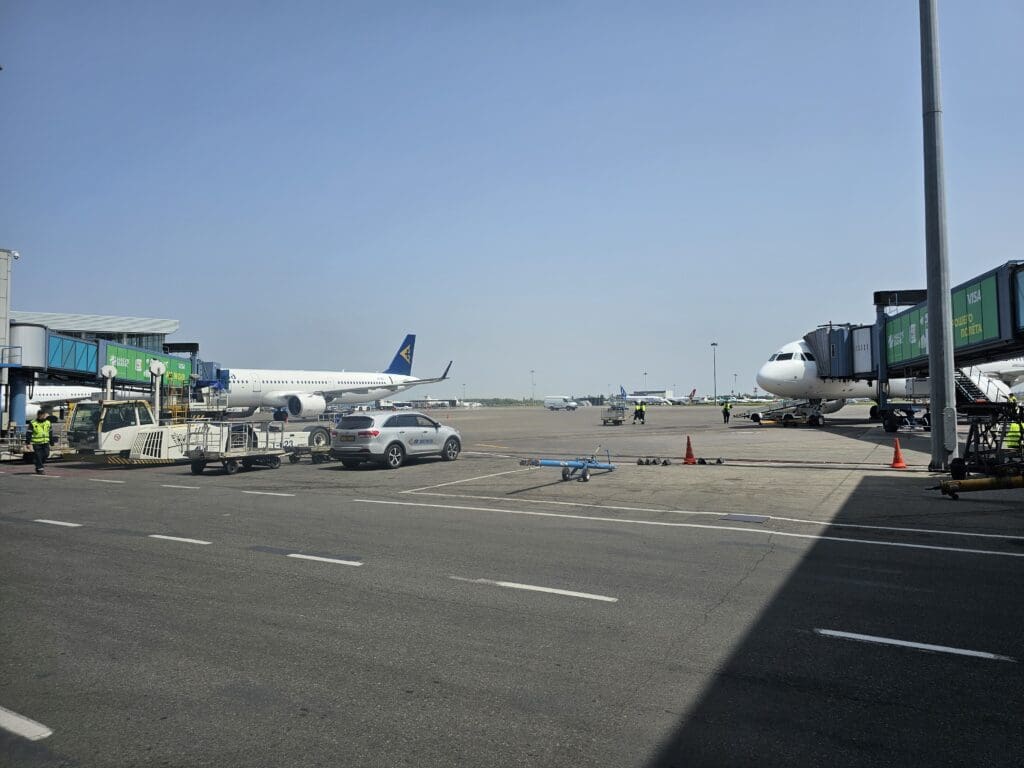
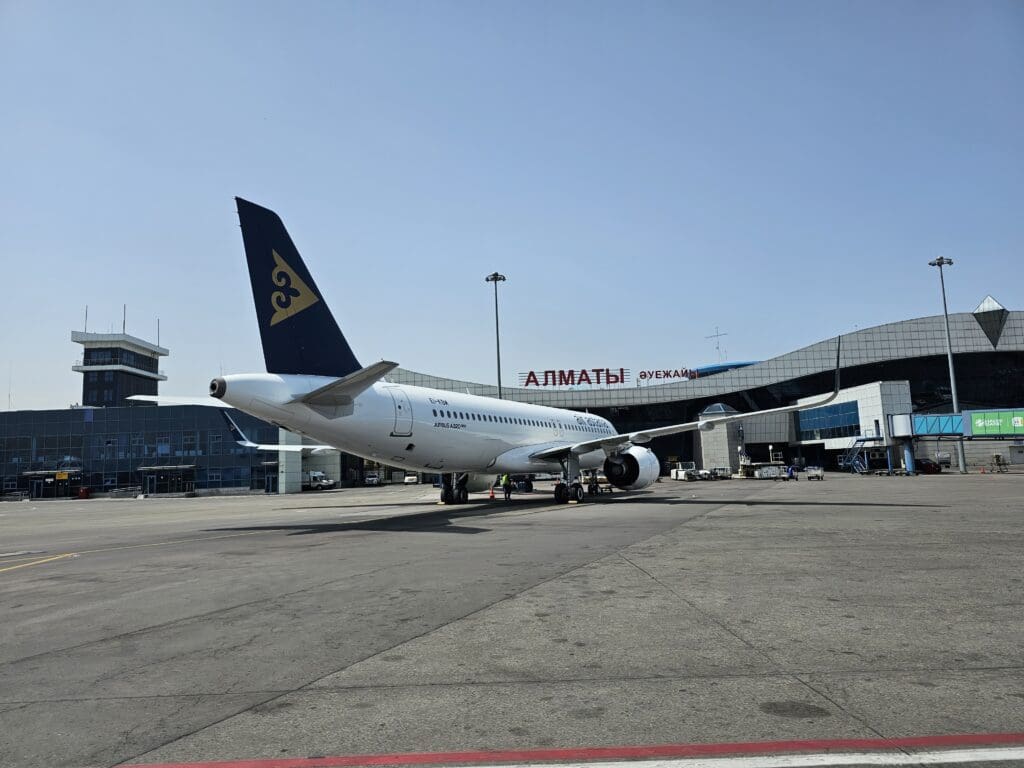
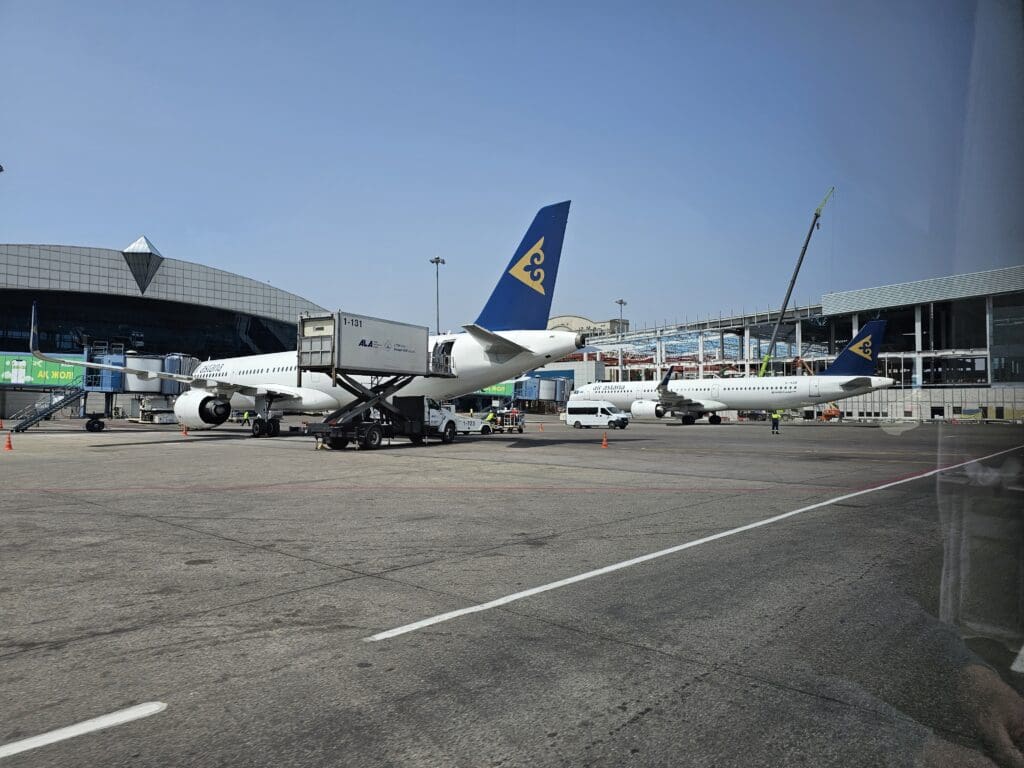
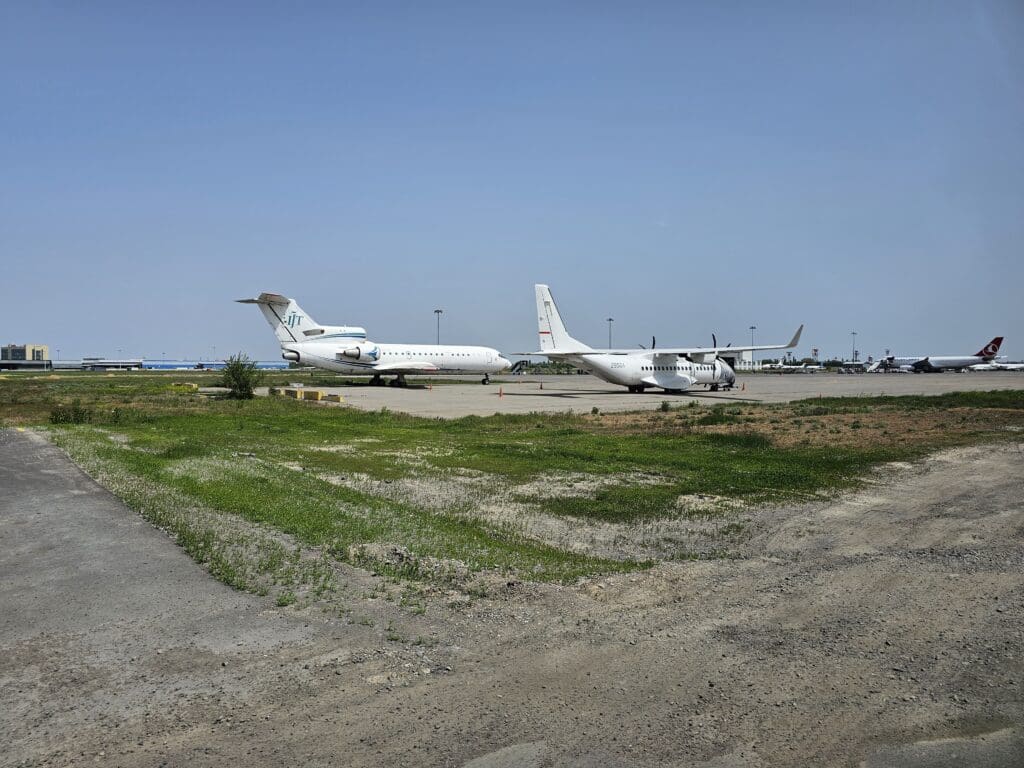
As I waited, passengers came and went, with a near-constant stream of passengers passing through this part of the terminal bound for destinations across Kazakhstan. Before long, several SCAT Airlines staff dressed in casual clothes and reflective jackets appeared and took their positions behind the gate podium, and at 1155 boarding commenced through Gate 6B. Perhaps unaware of the fact that the flight had been delayed, by this time, a reasonable-sized queue of waiting passengers could already be seen. After a few minutes of jostling, my boarding pass was scanned and my passport checked without a word before I stepped onto the boiling hot Almaty Airport branded bus that would shuttle the first load of passengers out to the aircraft. Squeezing myself in next to one of the windows, after a few minutes the doors closed and the bus pulled away from the terminal building. This journey took us past a trio of modern Air Astana Airbus A320 and Airbus A321neos before darting across the apron and passing a pair of very interesting aircraft, a winglet-fitted Casa 295 operated by the National Security Committee and a registration-less Yakovlev Yak-42D.
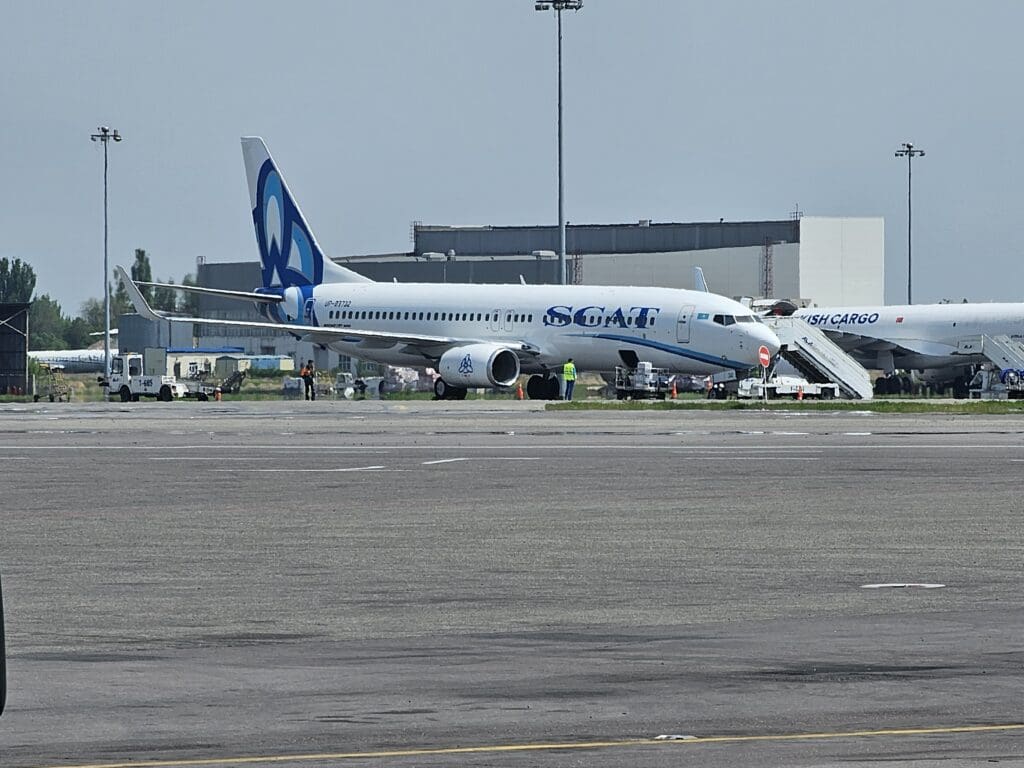
Following our short journey over from the terminal, the bus neared the cluster of SCAT Airlines Boeing 737s and soon came to a halt near the front of one of these. That day, Boeing 737-82R UP-B3732 had been assigned the task of flying the late morning service up to the capital city. Assembled at Boeing’s factory in Renton, this aircraft first took to the skies in August 2008 making it almost fifteen years old at the time of my flight. As diehard enthusiasts will know from the aircraft’s customer code of ‘2R’, this commenced its career in Turkey where it flew for low-cost carrier Pegasus and sported the name Gülce. Over the next eight years, the aircraft visited destinations across Pegasus’ growing route network encompassing Central Asia, Europe, the Middle East and North Africa from its hub at Istanbul Sabiha Gökçen. Remaining in the Pegasus bubble, in June 2016 the aircraft was shuttled to Kyrgyzstan where it operated for partially owned subsidiary Air Manas as EX-37802 and was given the name Bubusara. In October 2018, the aircraft was ferried back to Istanbul and re-entered service with Pegasus with the name of Hüma and registration of TC-CCK. During this portion of the aircraft’s career, in January 2020 the jet was involved in a serious incident when it ran off the runway in Istanbul whilst landing in crosswinds. Following repairs, this was pressed back into service and remained with Pegasus until October 2021 when it was passed on to its current operator, SCAT Airlines. In the week prior to my flight, the aircraft had been flying almost non-stop and flown a total of 37 sectors covering at least 43,600 miles, visiting Aktobe, Aktau, Almaty, Astana, Atyrau, Istanbul, Moscow Sheremetyevo, Moscow Vnukovo, Petropavl, St Petersburg and Yerevan.
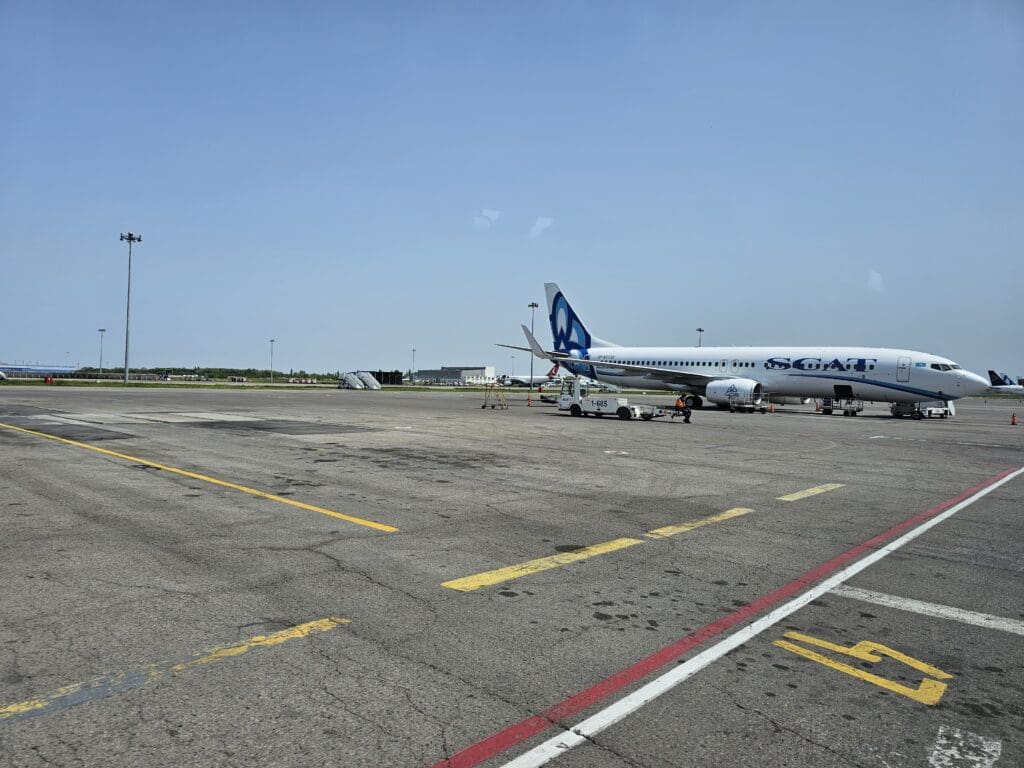
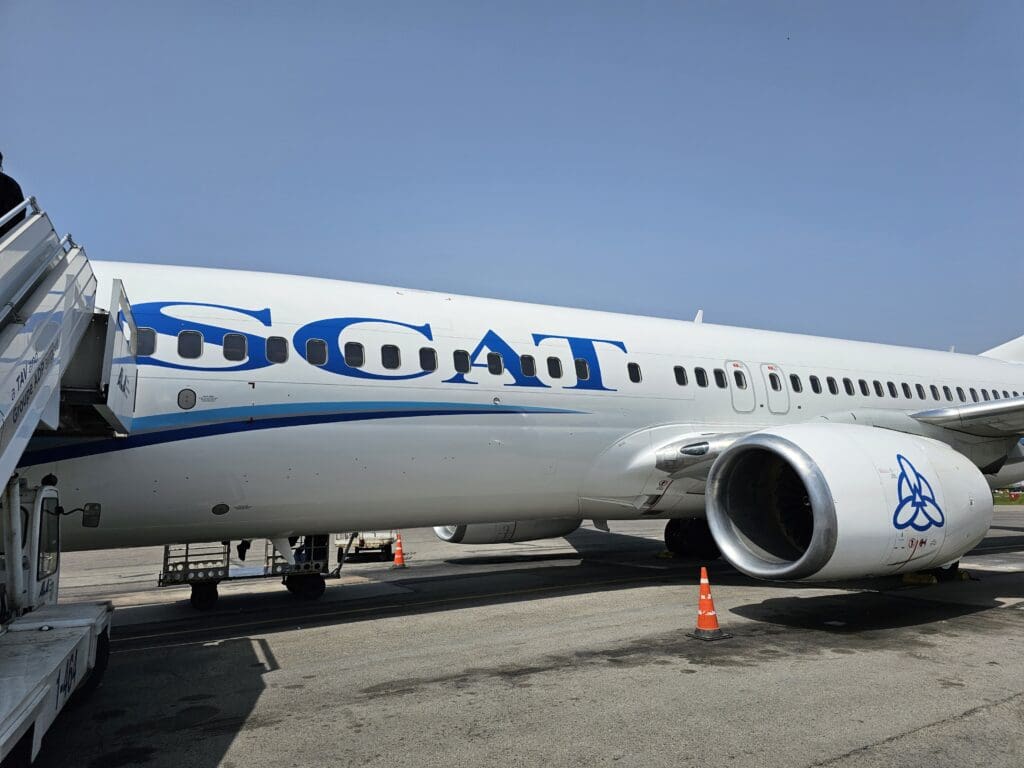
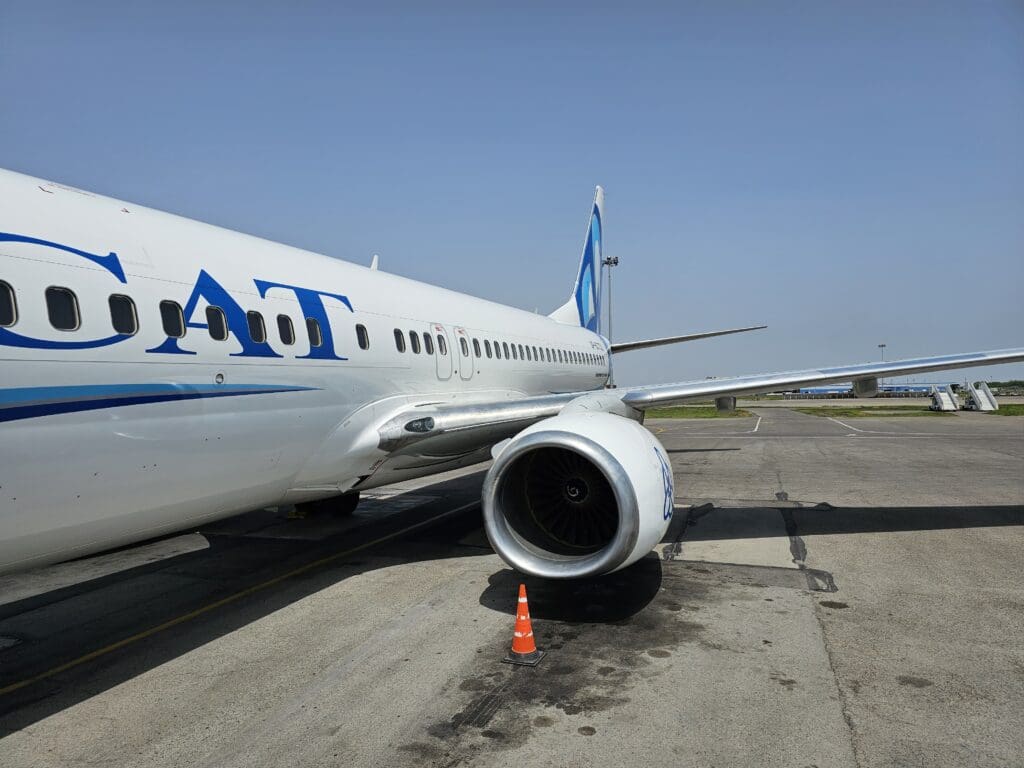
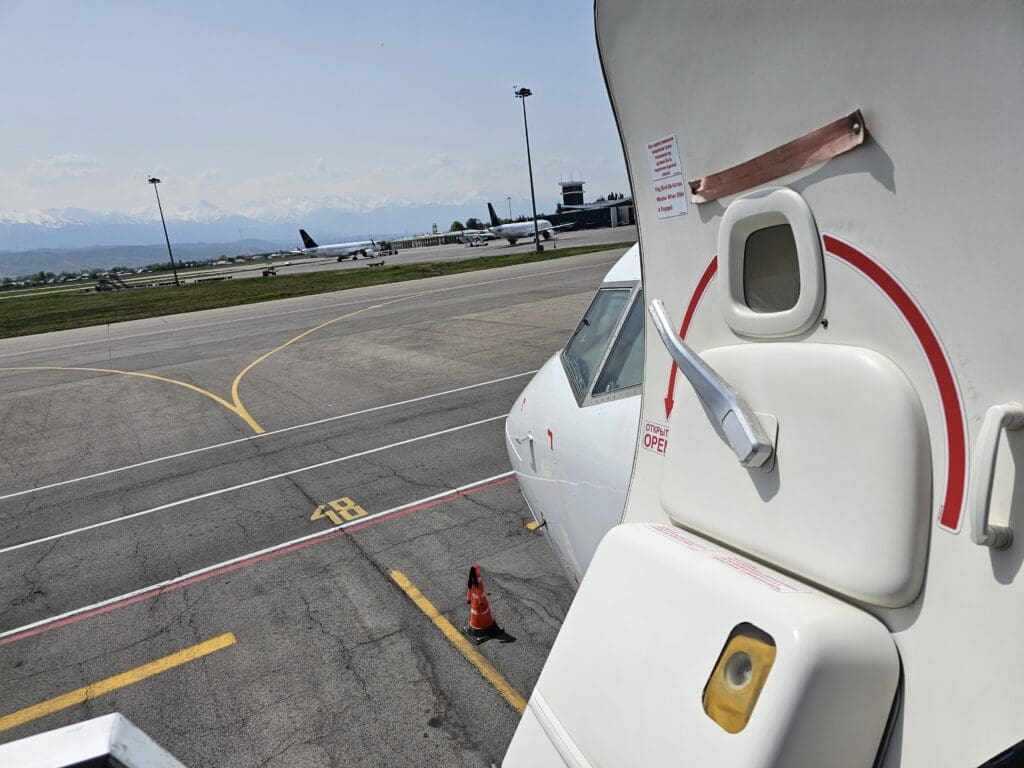
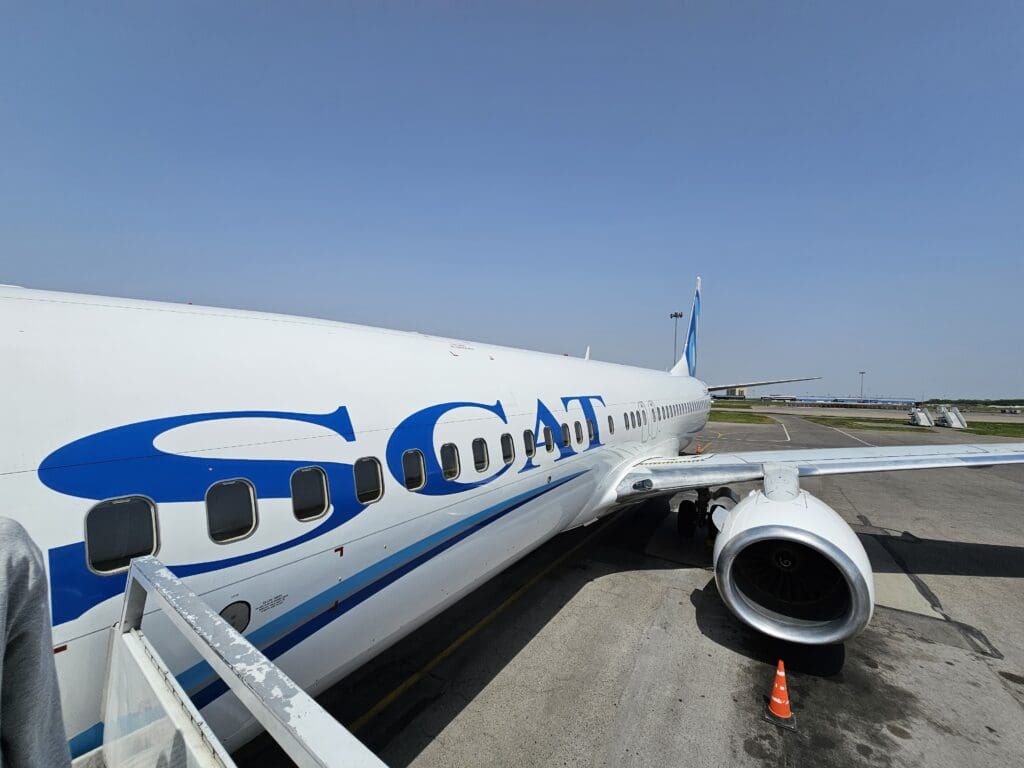
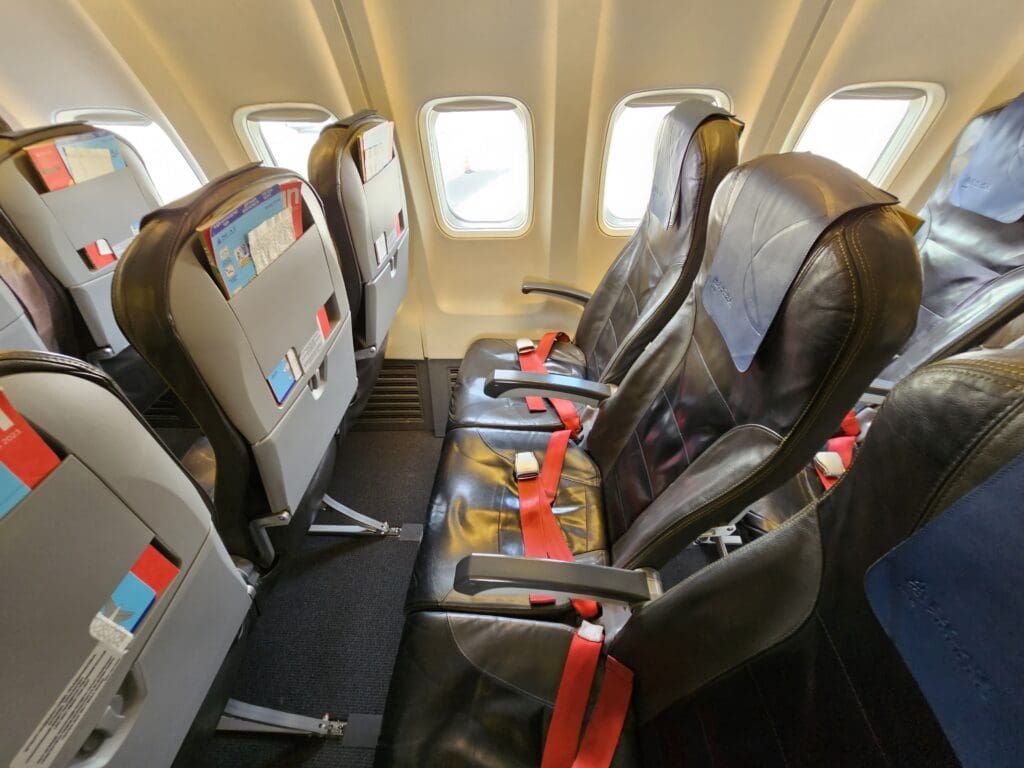
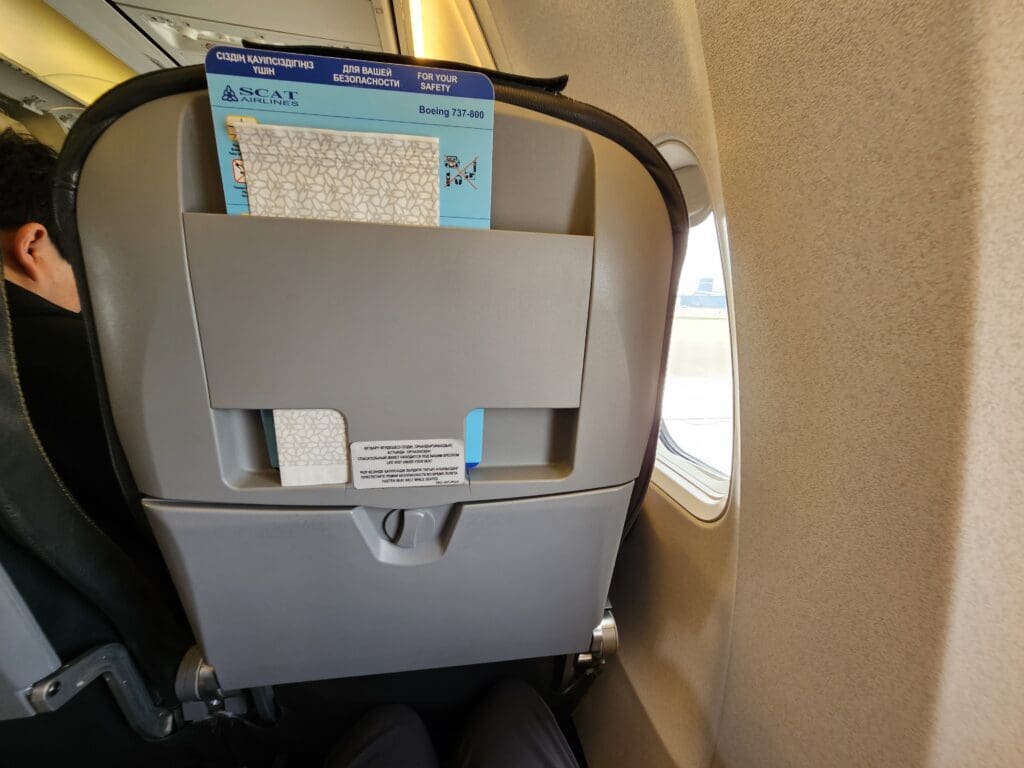
As soon as the doors of the bus slid open, passengers spilt out onto the apron and into the warm morning sunshine. There, plenty of jostling occurred as passengers appeared to be in a rush to get on board and head to Astana. Unlike most, I was in no particular hurry and snapped several photos of the jet before heading up the airstairs and stepping into the Boeing’s forward galley. As soon as I did so, I was welcomed in Russian by one of the flight attendants dressed in SCAT Airlines’ new distinctive turquoise uniform before I turned right and entered the cabin. Onboard, SCAT Airlines’ jets do not feature any sort of Business class product and, whilst not officially a low-cost airline, this particular aircraft was fitted with an LCC-standard 189 seats. Except for the removal of Turkish signage and the addition of leather antimacassars on which SCAT Airlines’ could be seen debossed, I may as well have been on a Pegasus jet. This aircraft featured Pegasus’ interior with low-cost thin pleather seats with yellow stitching and red seatbelt straps in line with the Turkish airline’s branding. Each seat featured a literature compartment complete with the April 2023 copy of SCAT Airlines’ Aspan magazine, a sick bag adorned with the carrier’s motif and a safety card.
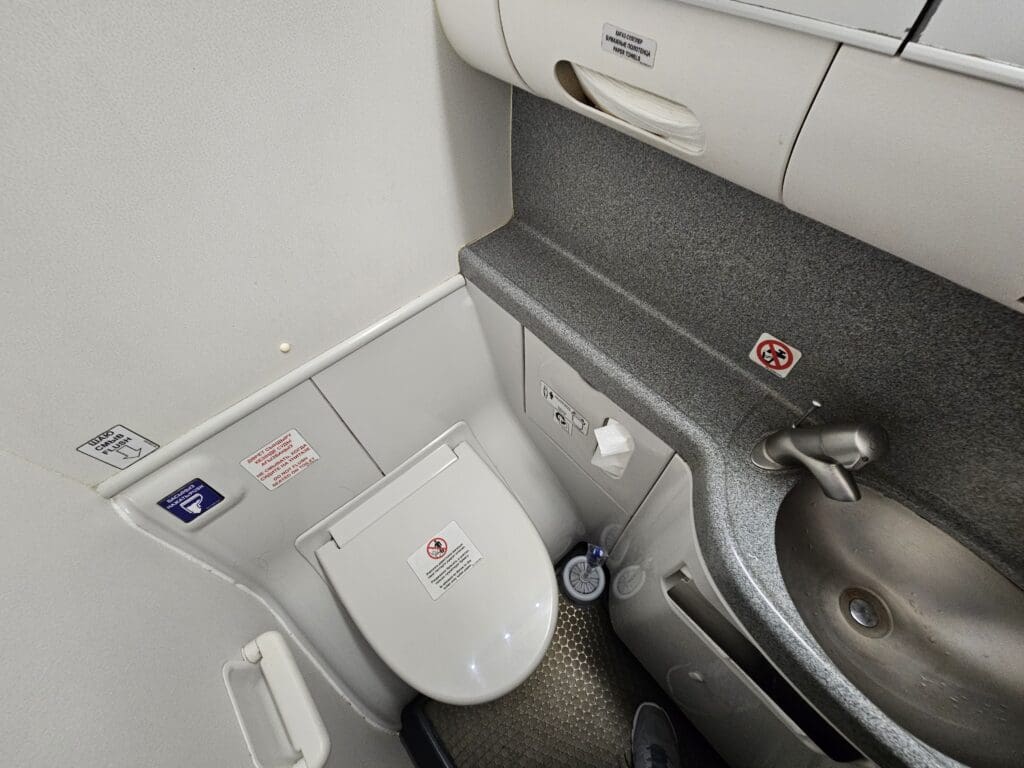
Passing my row, noticing that both the aisle and middle seat were taken and that I would otherwise be unlikely to get the opportunity to do so on this comparatively short flight, I decided to make a quick trip to one of the two lavatories at the rear of the aircraft. Once there, I was pleased to find this to be clean and in a reasonable condition.
Upon returning to my row, I squeezed in past my two seatmates who seemed to not want to stand up to let me in and plonked myself down. As was to be expected, having read plenty of reviews of the aircraft’s former operator, I found the seat to be firm and lacked a great amount of legroom. This made me hope that I would not be travelling in this aircraft on my long flight from Almaty to Istanbul a couple of days later! Although I was pleased to find this to be in a reasonably clean state and lacking any major signs of wear and tear. Once all those from the first bus had taken their seats, it wasn’t long before the second bus pulled up to the aircraft and any vacant seats that remained were filled.
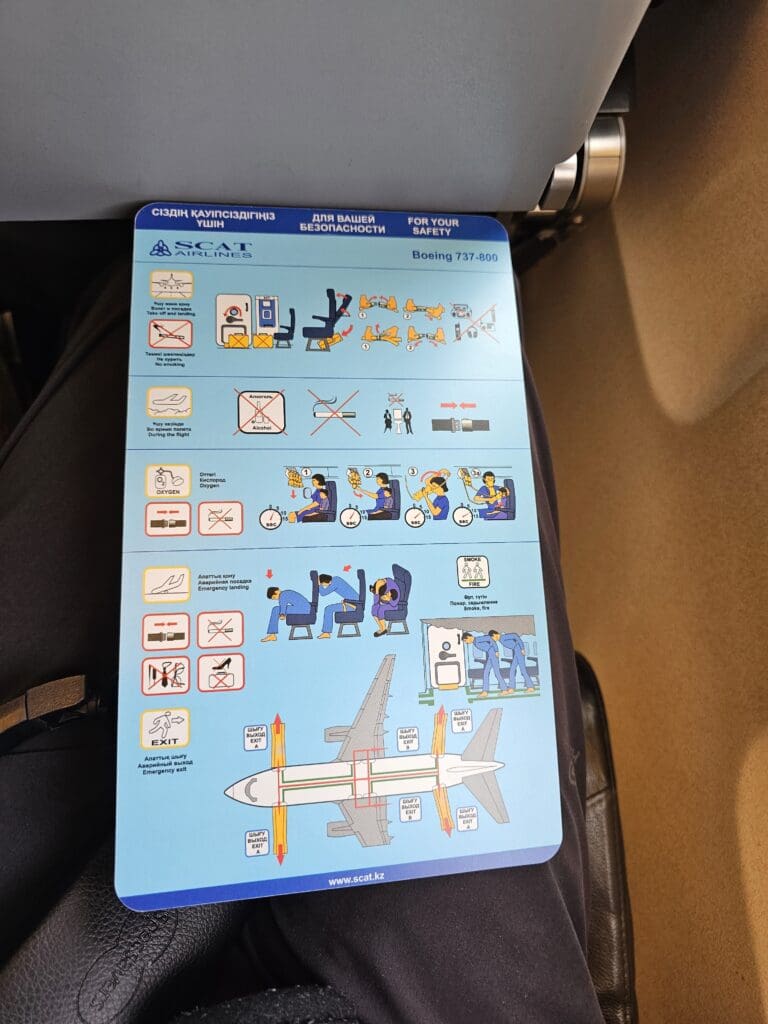
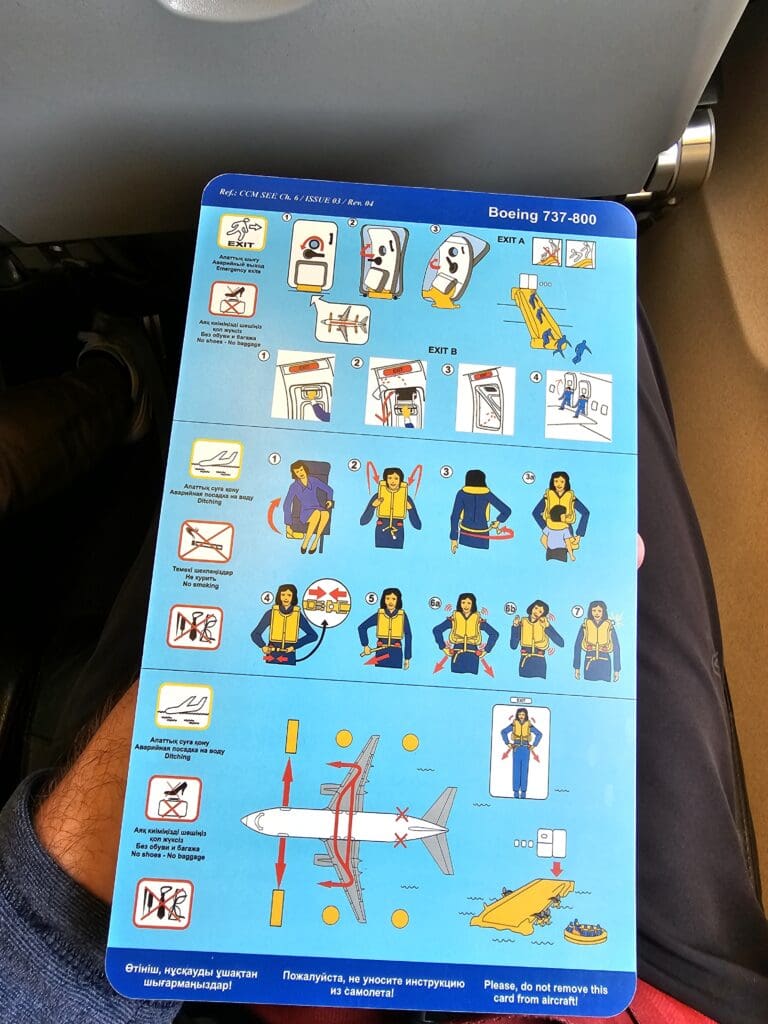
At 1221 boarding was announced as complete at which point the Purser performed their welcome announcement in Kazakh, Russian and English. As well as giving the usual welcomes and thanks, the Purser noted that it would take us an hour and a half to reach Astana that day. At 1228, the door was closed and the crew took to the aisles to perform a safety demonstration to a pre-recorded announcement. As this was underway, the Boeing’s two CFM56-7B26 could be heard spooling up causing a small amount of vibration and soon the crew passed through the cabin ensuring that all was in place for our departure. Once the two engines had spooled up, the flaps dropped into position and at 1232, the Boeing lurched forwards out of its stand and commenced the short taxi over to the end of Runway 05R.
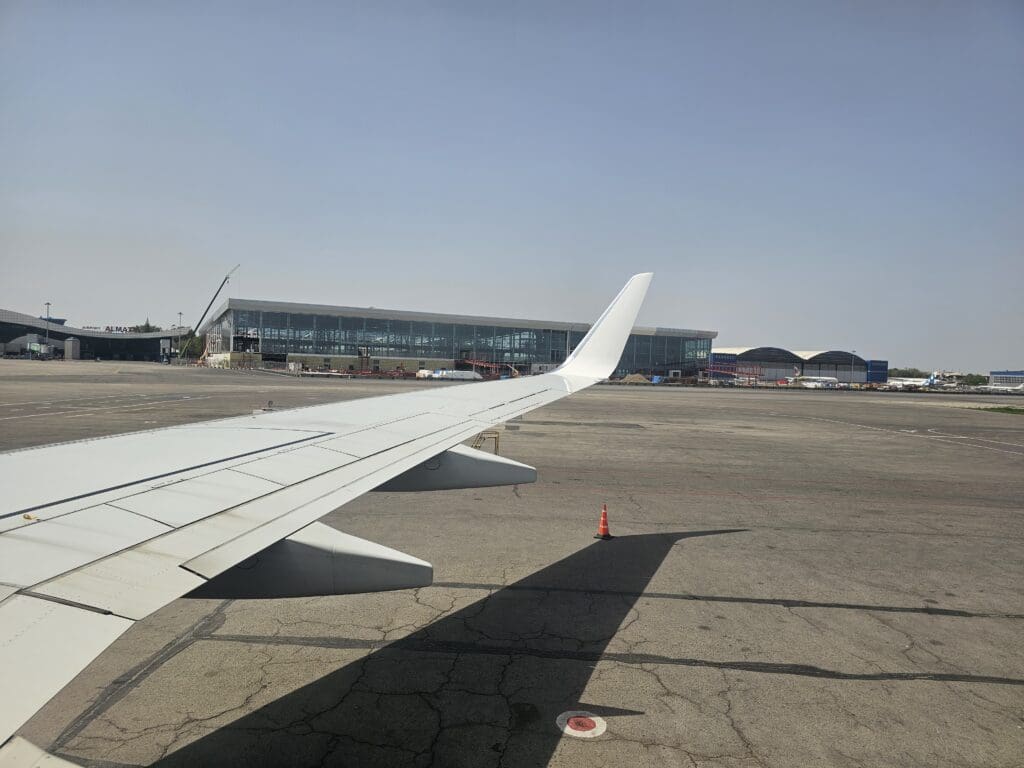
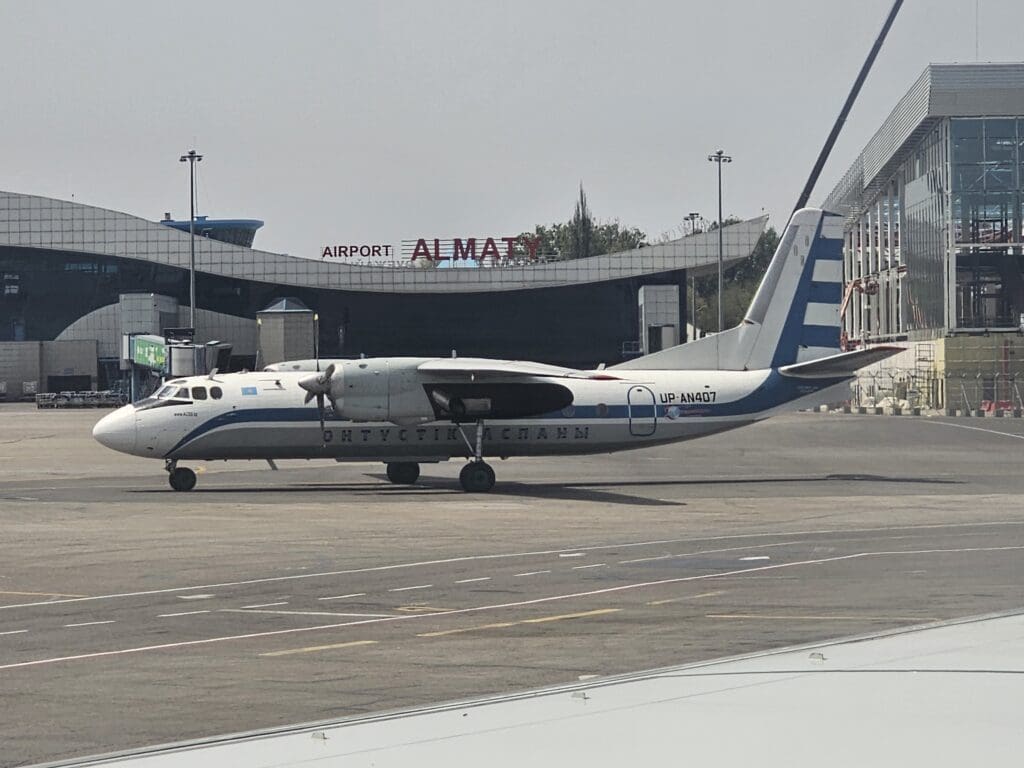

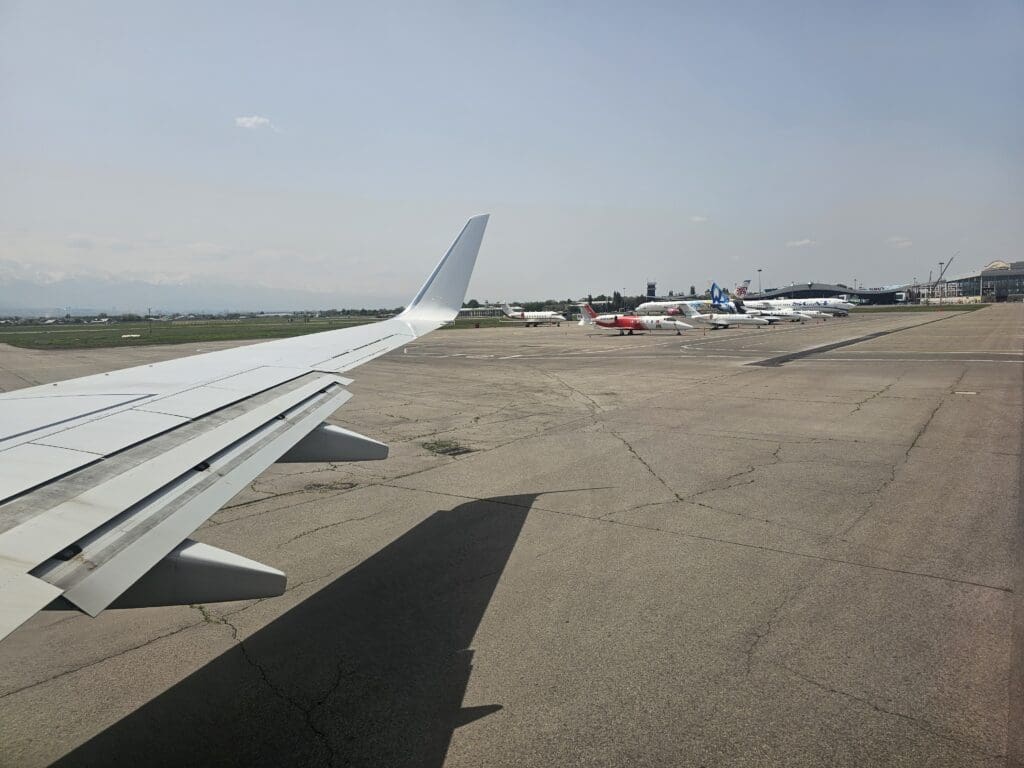
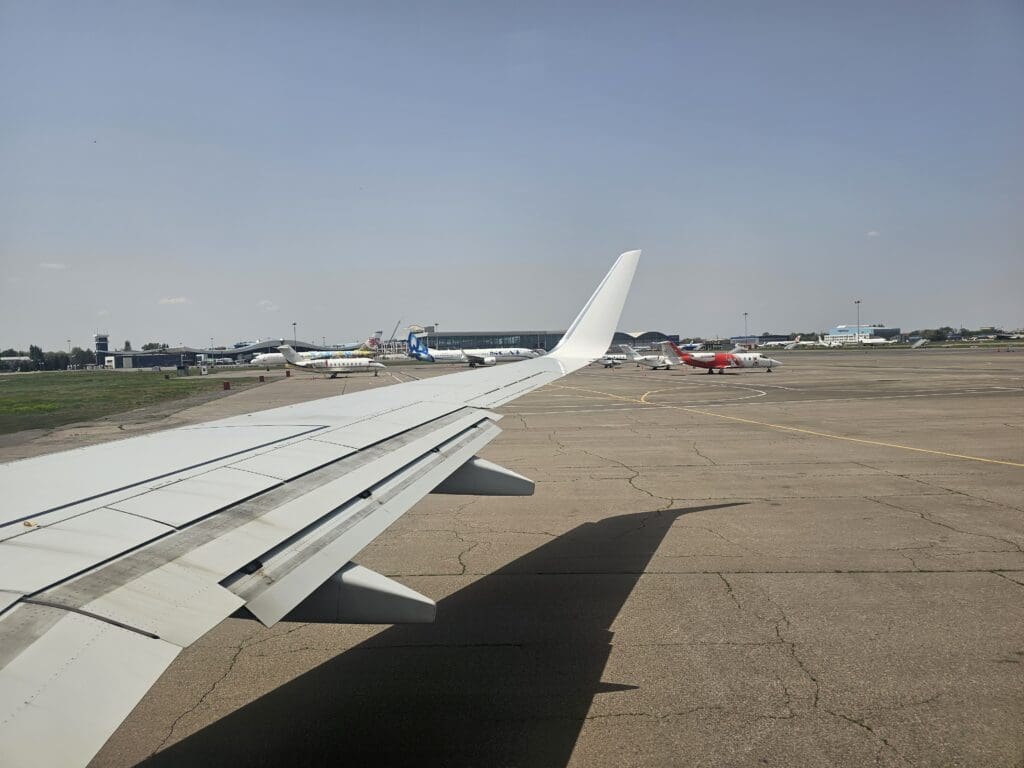
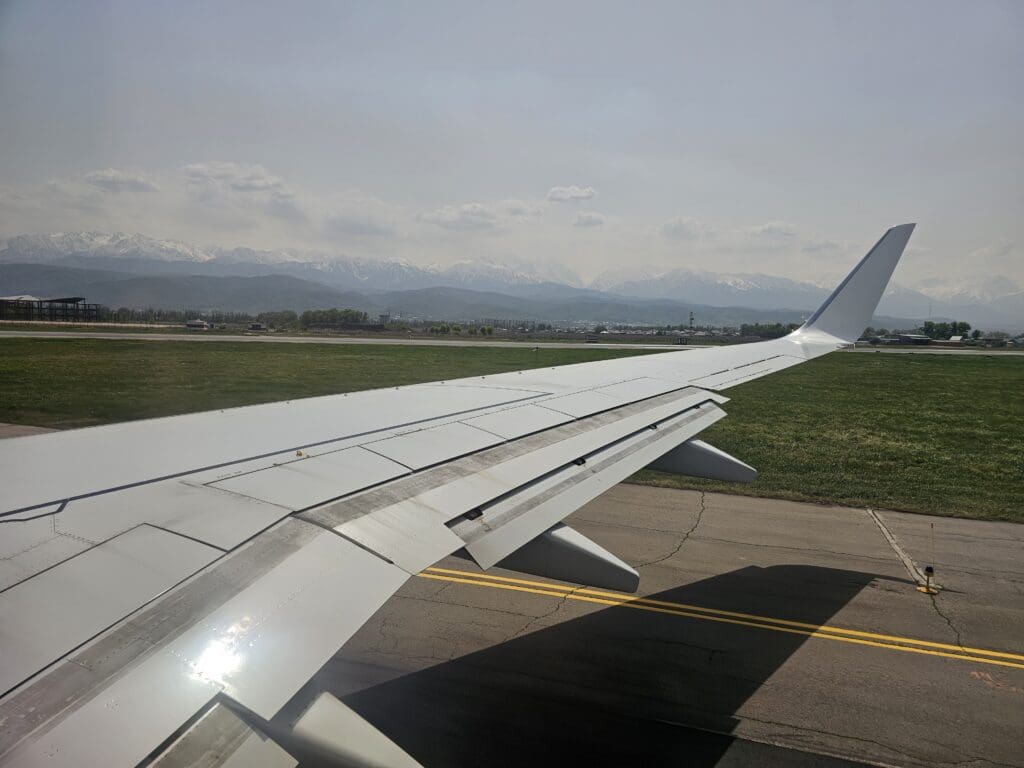
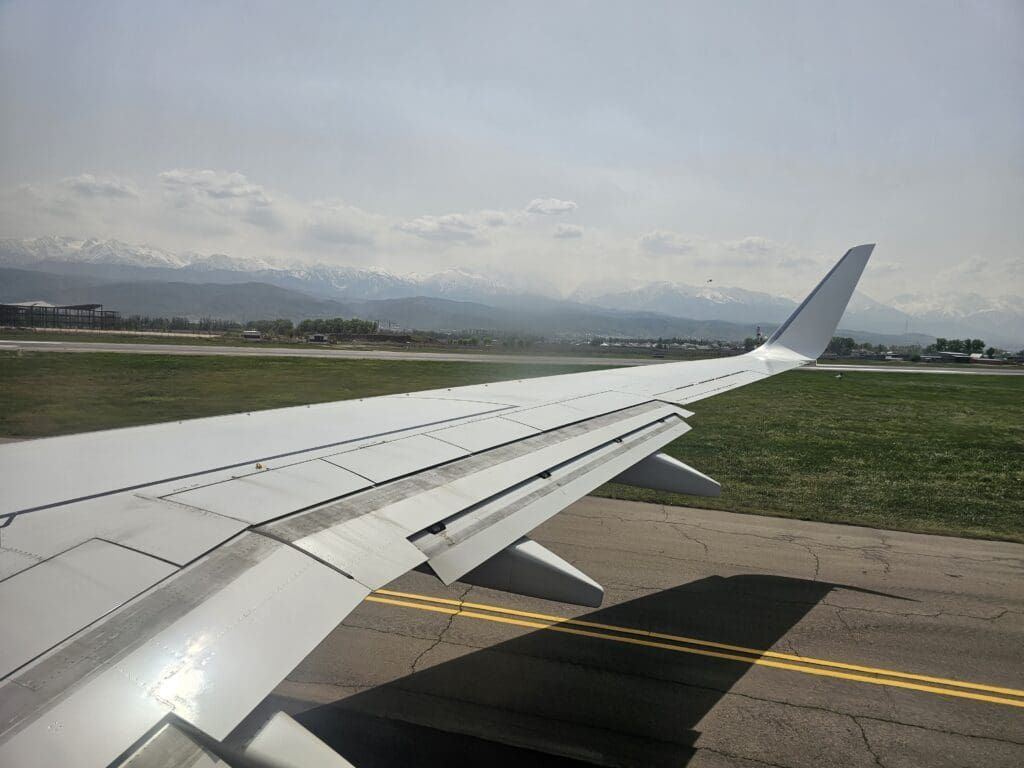
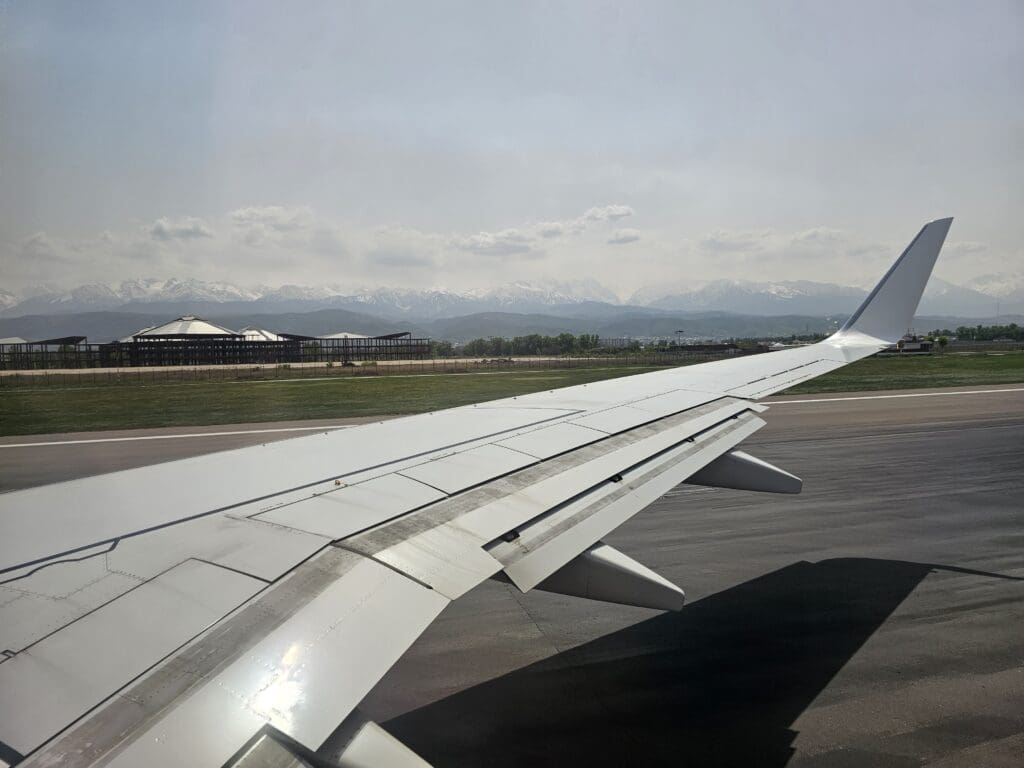
Upon arriving at the runway, the Boeing came to a halt just as a FlyArystan Airbus A320 could be seen undertaking a go-around. Once this passed overhead, the Boeing made its way onto the runway and came to a halt for around a minute. At 1237, the two engines powered up and the aircraft performed a powerful takeoff roll, soon rocketing upwards into the skies. Whilst slightly hazy, a good view of the picturesque Tian Shan Mountains could be had as we climbed over the fields and towns that sit just to the east of the airport before the aircraft banked onto a northerly heading that would take us to Astana with no further turns until on final approach.

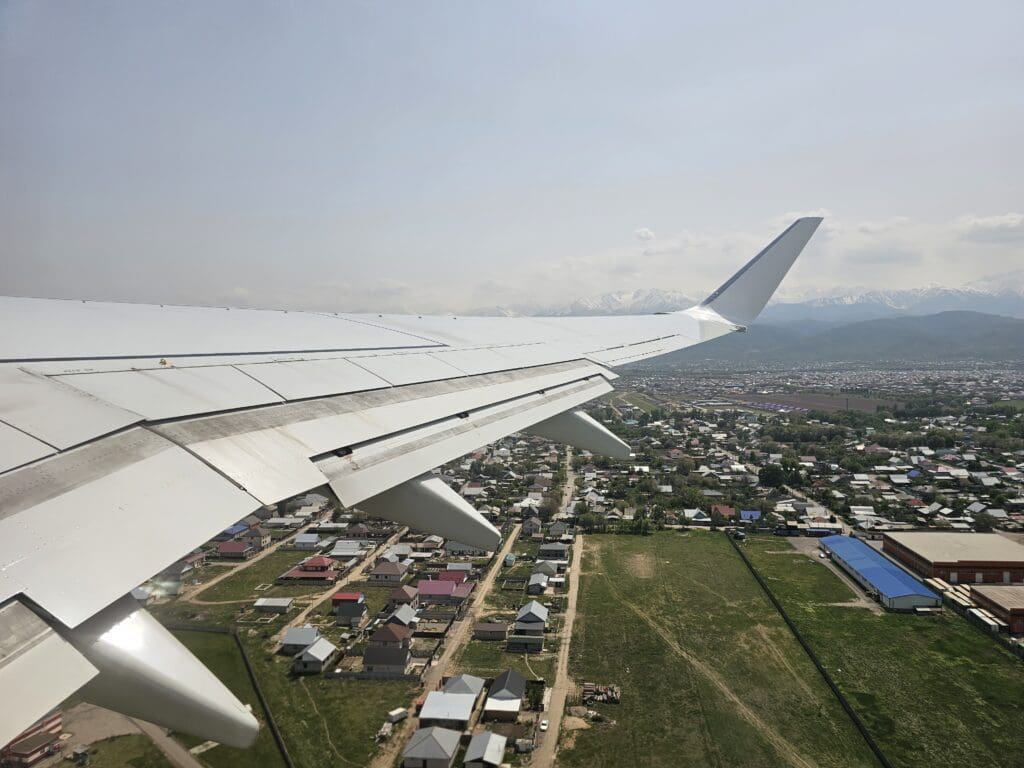
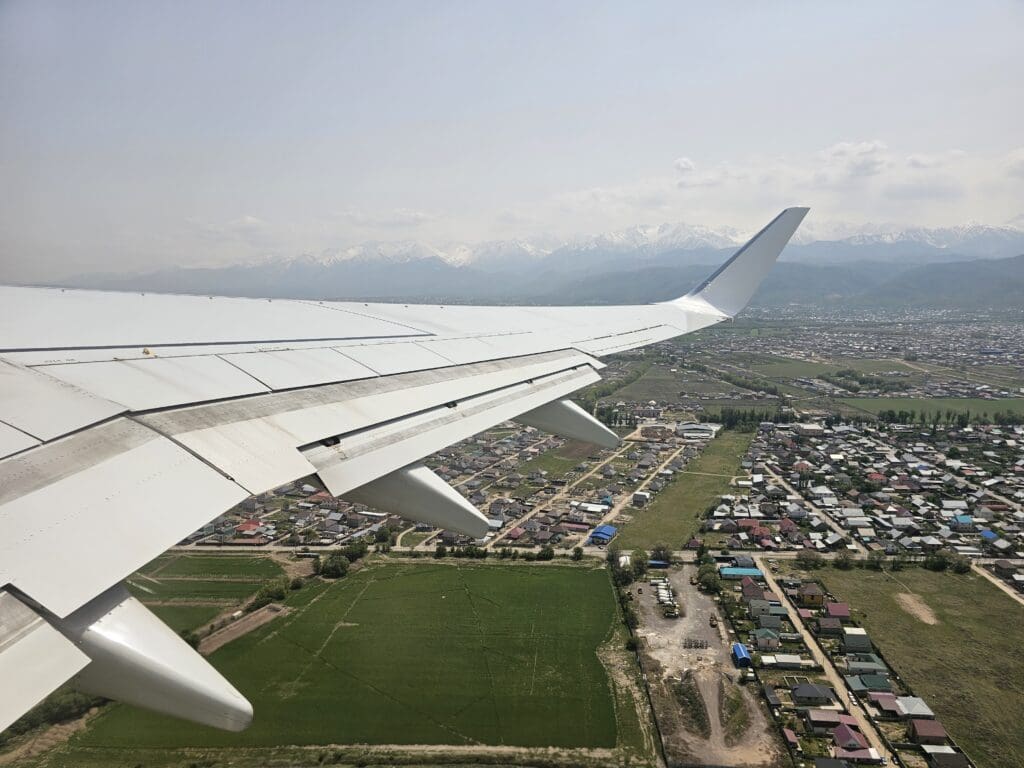
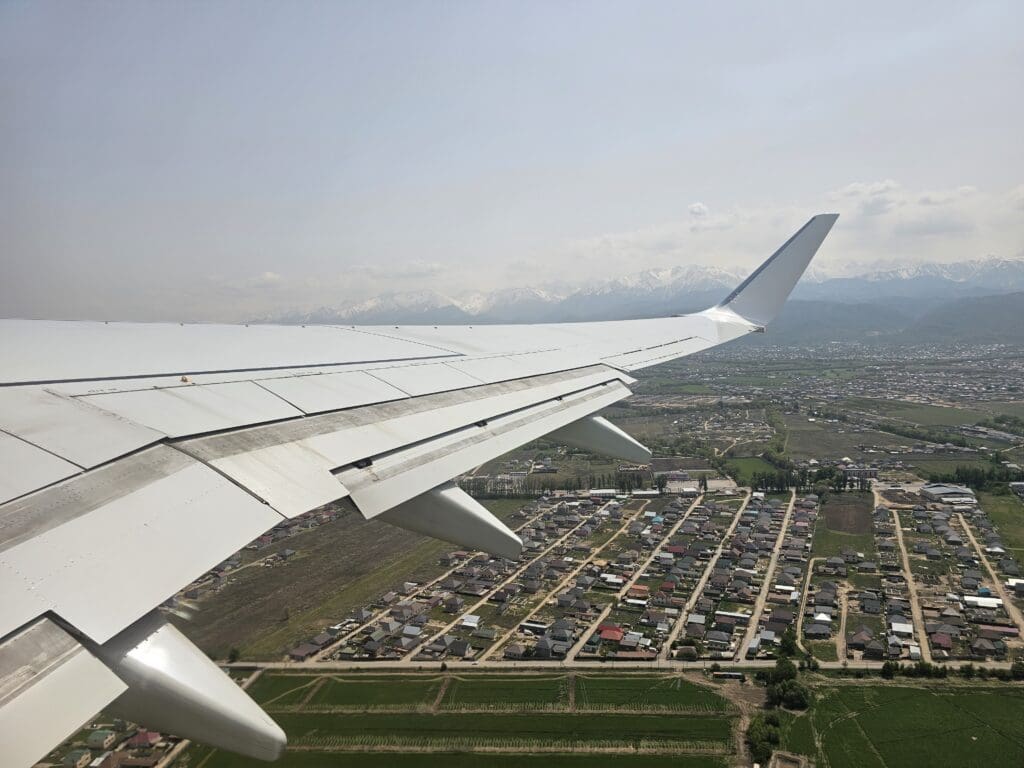
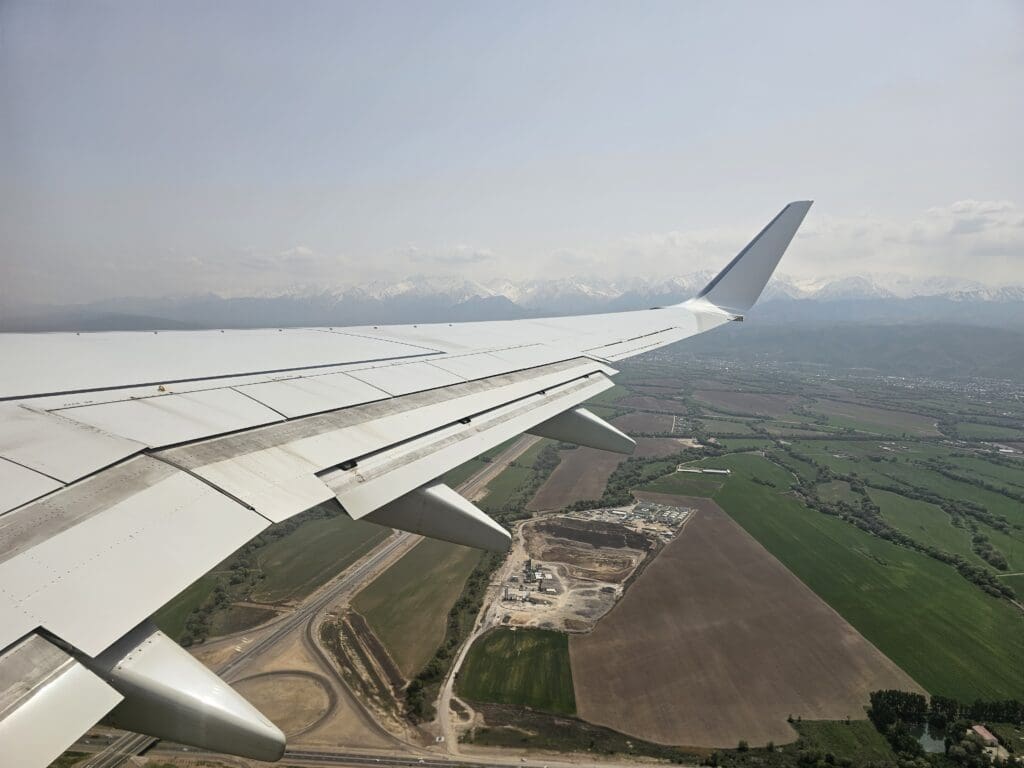
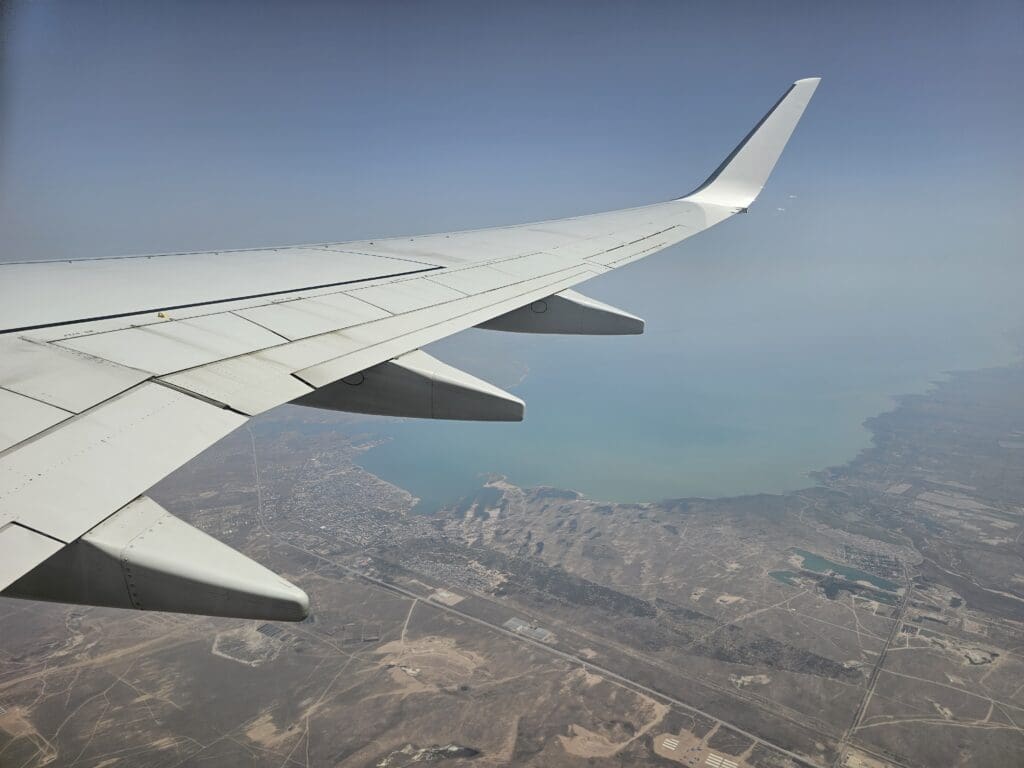
Looking outside, it wasn’t long before the green landscapes around Almaty became much arider and sandier looking and soon I caught soon caught sight of the airbase at Zhetygen. This is home to the old Antonov An-26 as well as the comparatively new Casa 295M, plus a fleet of Mil Mi-17V-5 helicopters. This was then followed by vistas of the turquoise waters of the Kapchagay Reservoir and the town of Qonaev. After this, comparatively little could be seen other than the odd road and small village as we followed the Ile River northwards for some time before leaving this behind just before reaching our cruising altitude of 38,000 feet. As seems to be fairly common in this part of the world, despite our smooth departure and climb, the seatbelt signs remained firmly illuminated until we reached our cruising altitude. Once we had levelled off, these dinged off and the usual announcement regarding keeping these fastened whilst seated rang out through the cabin.
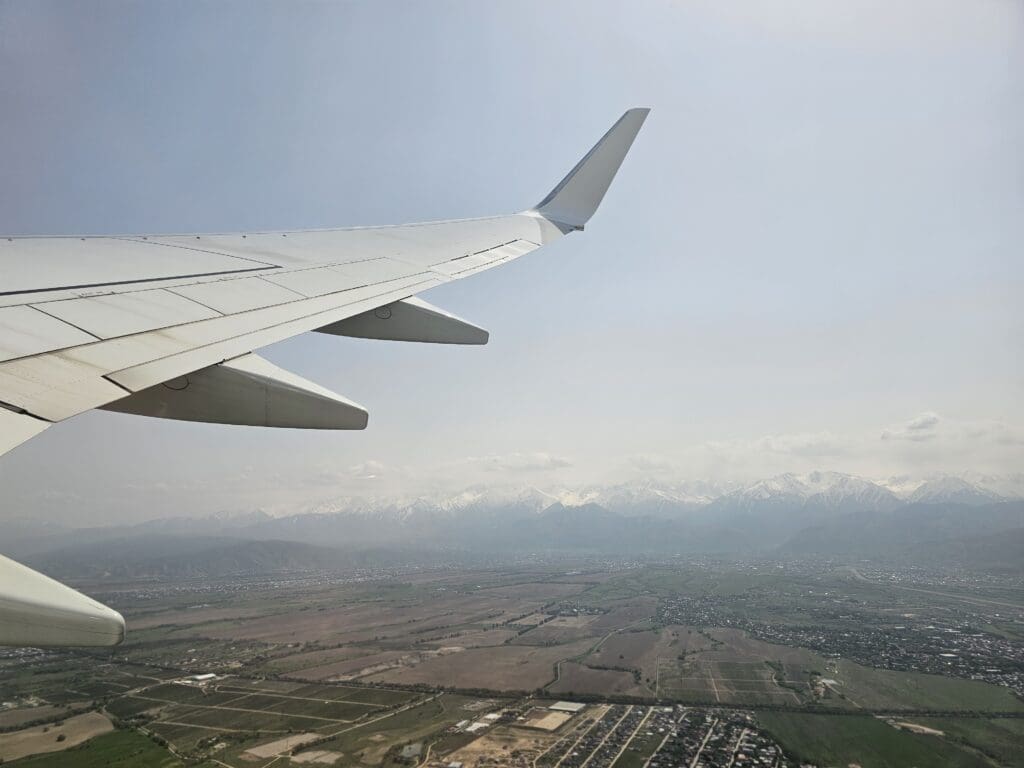
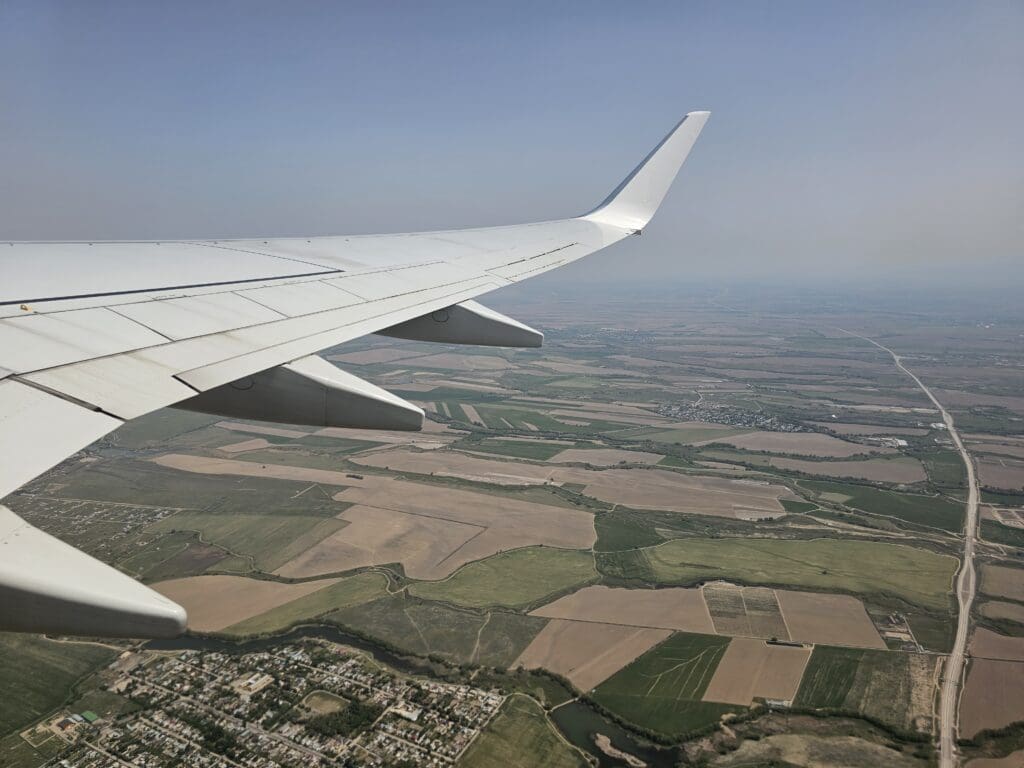
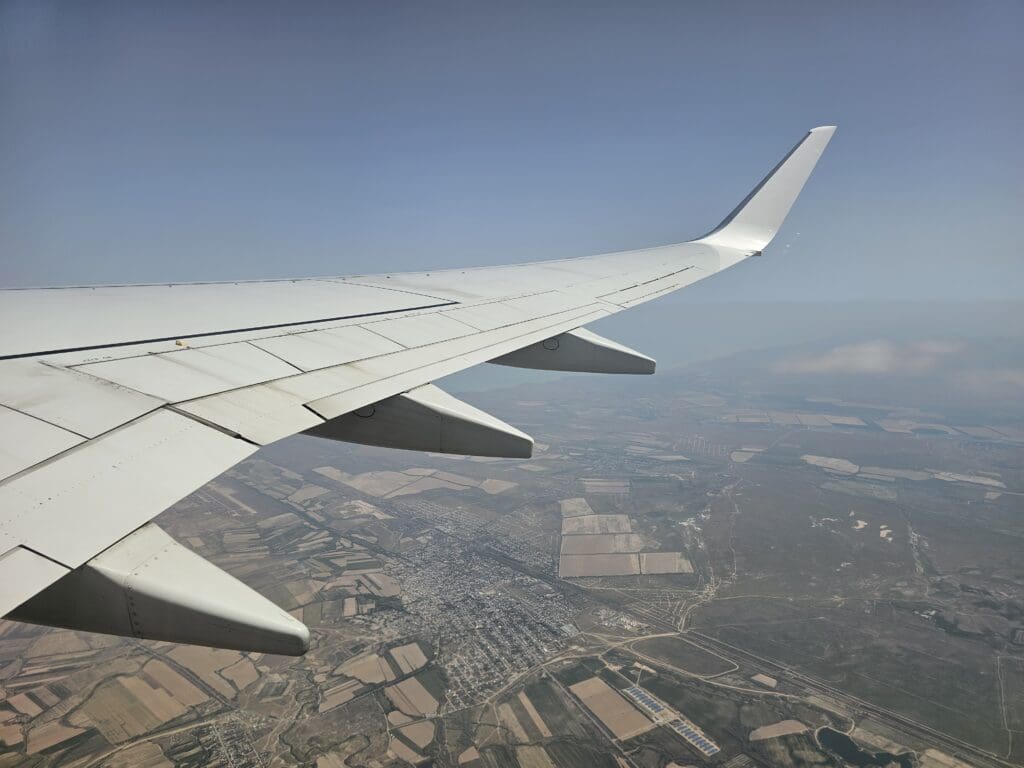
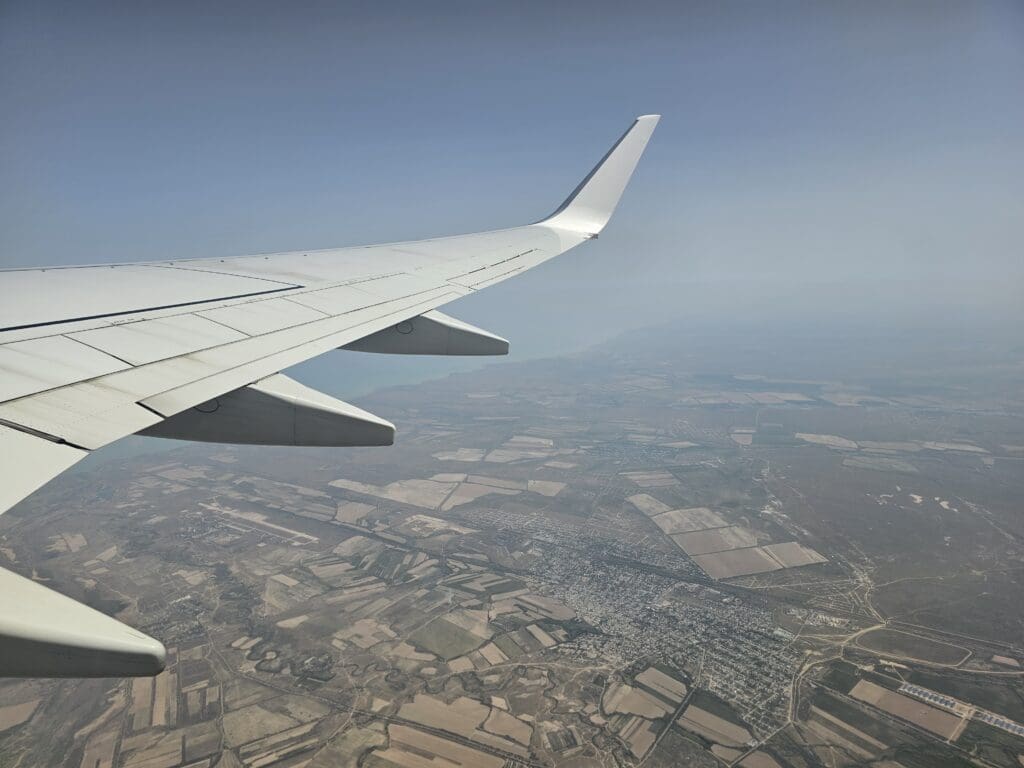
Since my last flight with SCAT Airlines back in August 2017, the airline has introduced a buy-on-board service on its short-haul services, and, given the length of the flight, once at cruising altitude, the crew took to the aisle and commenced this. Browsing the menu in the inflight magazine, a reasonable selection of items were on sale, with the most substantial options being two types of sandwiches – cheese or turkey rolls priced at 2,000 Tenge (£3.57) each. Meanwhile, a coffee would have set me back 500 Tenge (89p) and a chocolate bar between 300 and 700 Tenge. Whilst this was not the most expensive inflight menu that I have ever come across, the items on this were still fairly highly priced compared to similar items on the ground. Fortunately, not in need of refreshment I decided to pass on any inflight offerings and continued to gaze outside at the impressive and diverse Kazakhstani landscapes as they passed by.
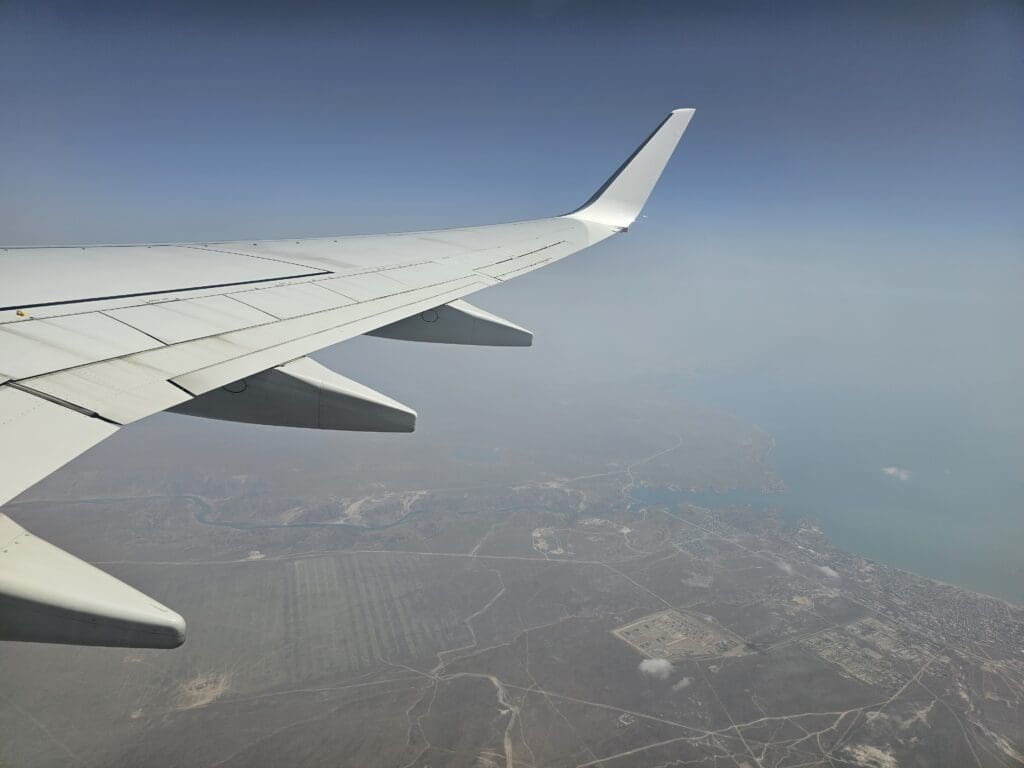
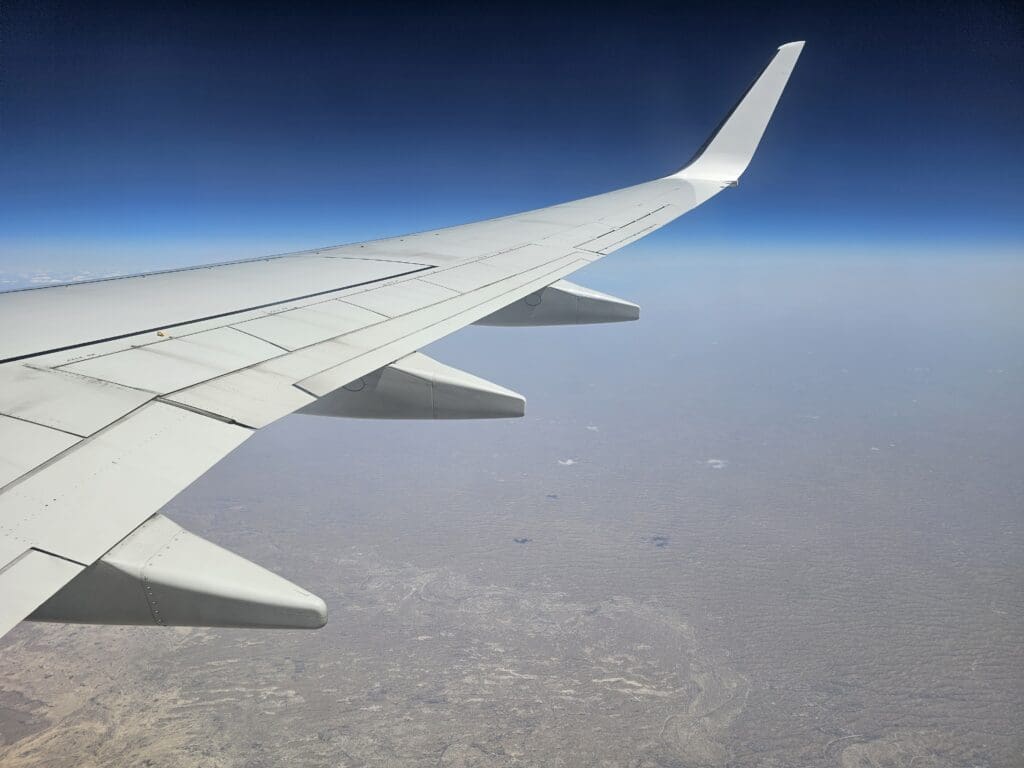
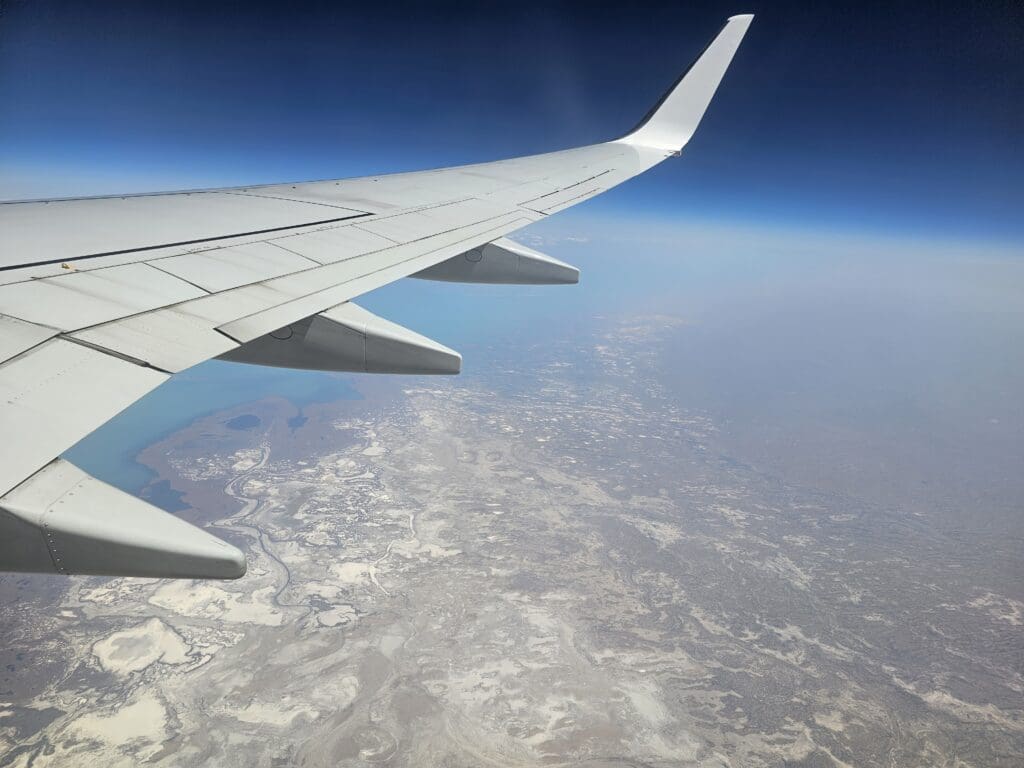
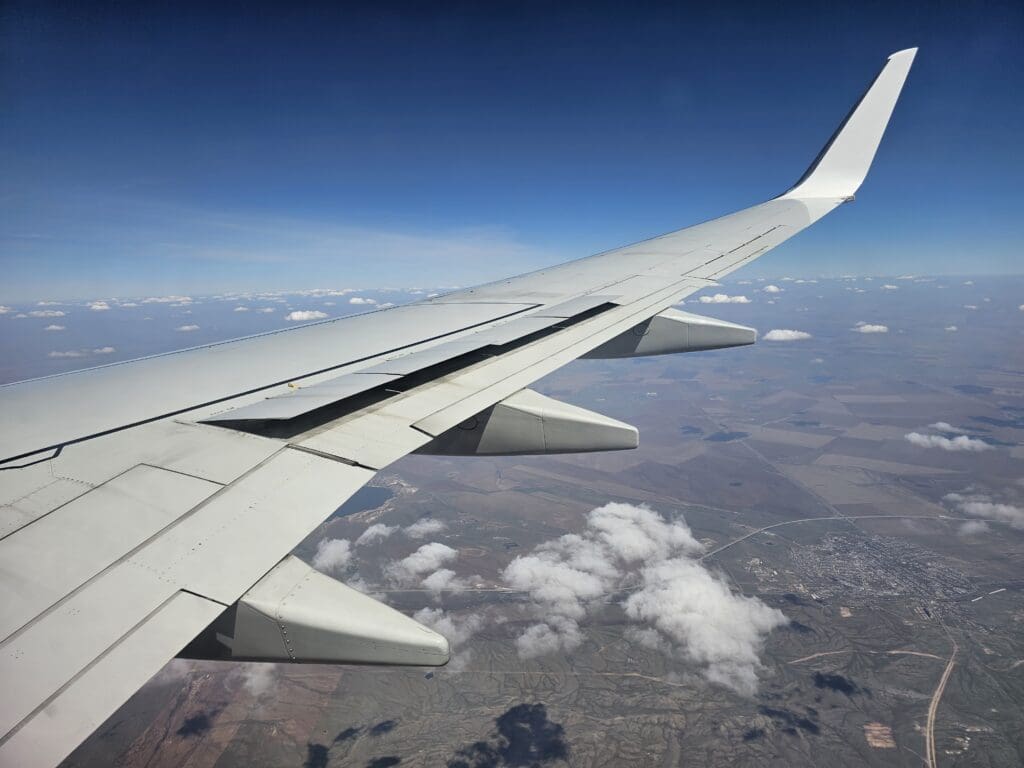
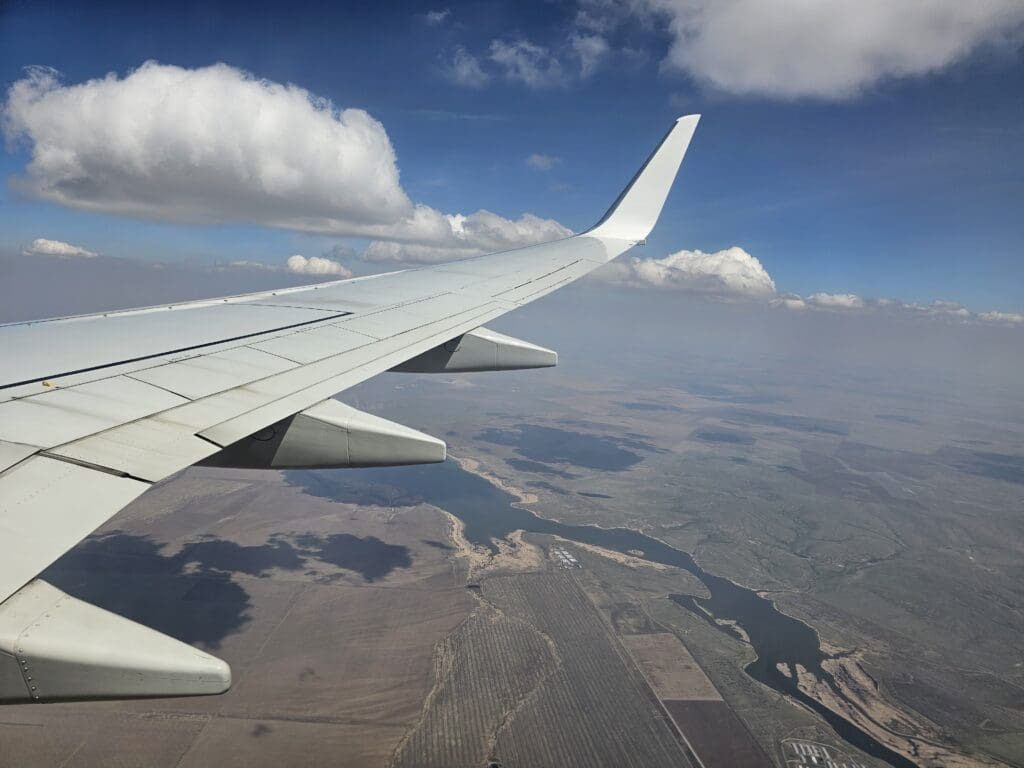
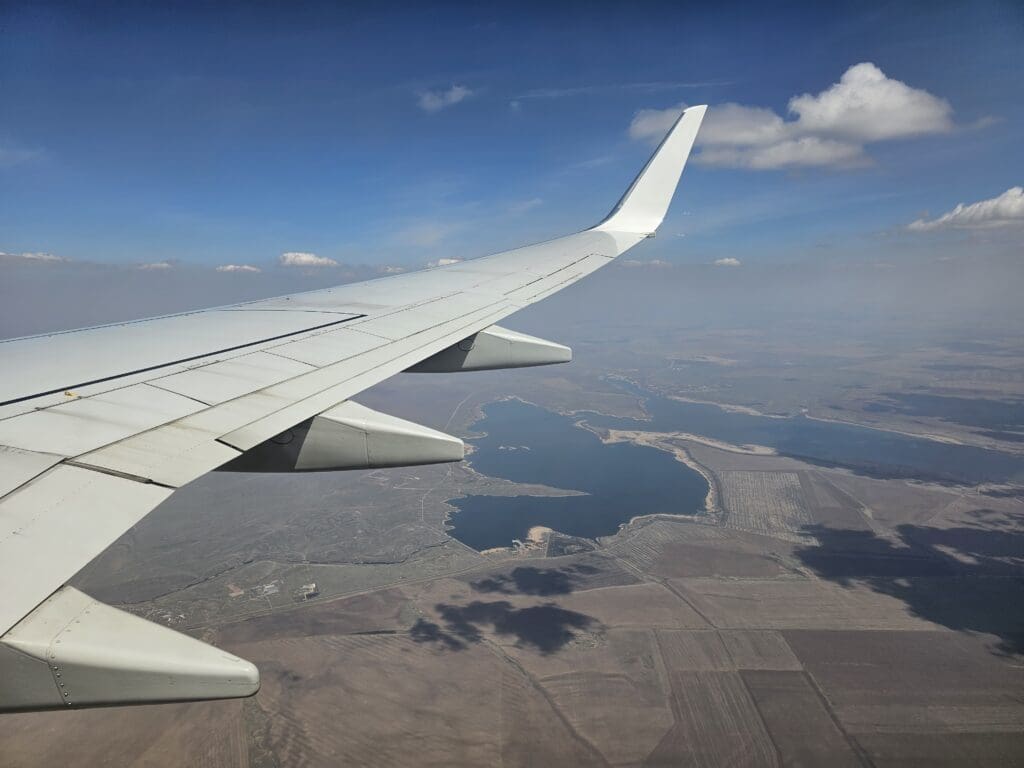
Turning my attention back outside, after leaving the Ile River behind I failed to spot a single sign of human life below as we cruised towards the fifteenth largest lake in the world, Lake Balkhash. As we neared this, the scenery below became rather impressive before we headed out over the lake’s turquoise waters and crossed from the Almaty Region to the Karaganda Region. Following our quick lake crossing, the Boeing arrived at the lake’s northern shores near the small city of Balkhash and continued heading northwards over the near-empty lunar-like landscape below.
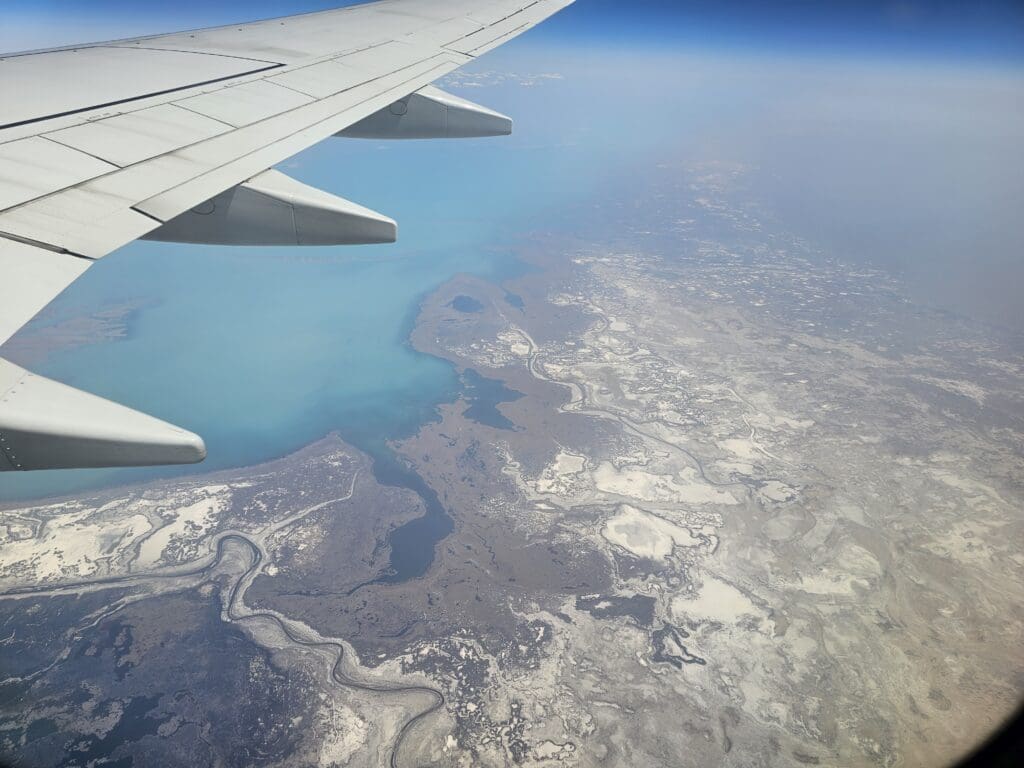
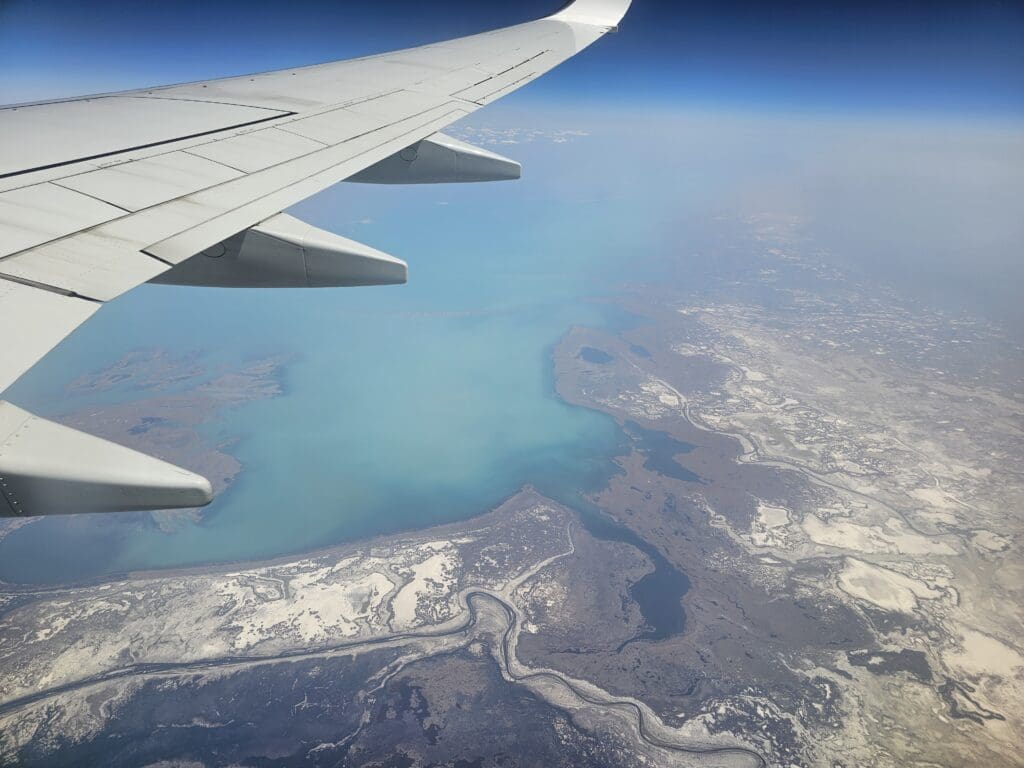
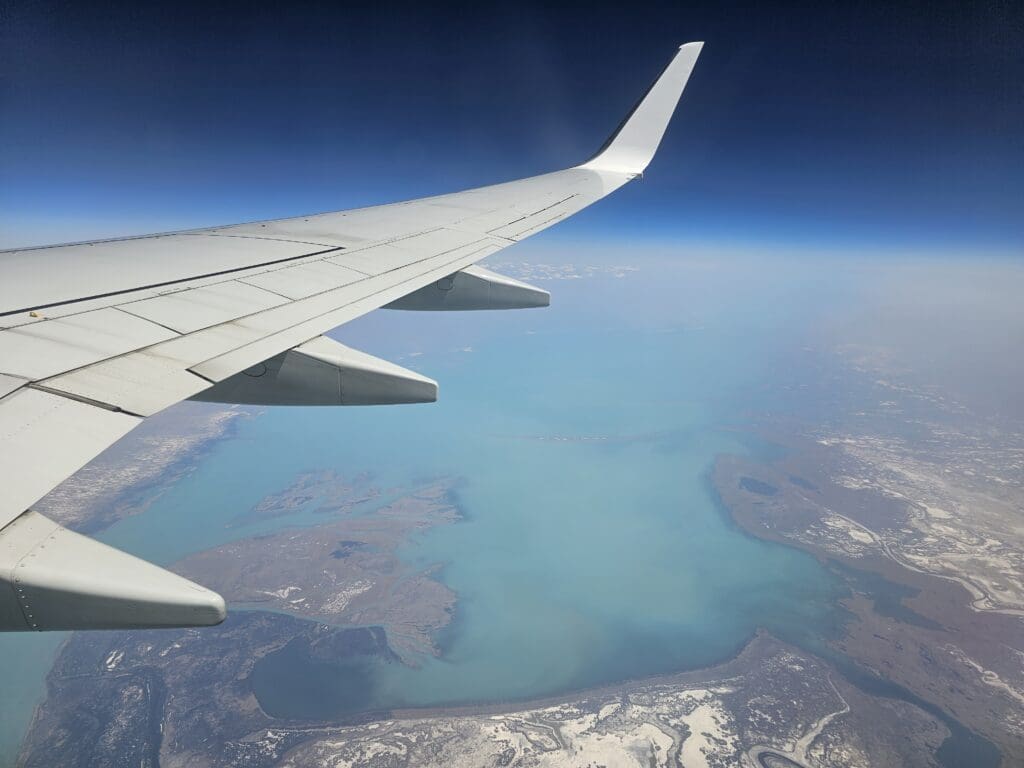
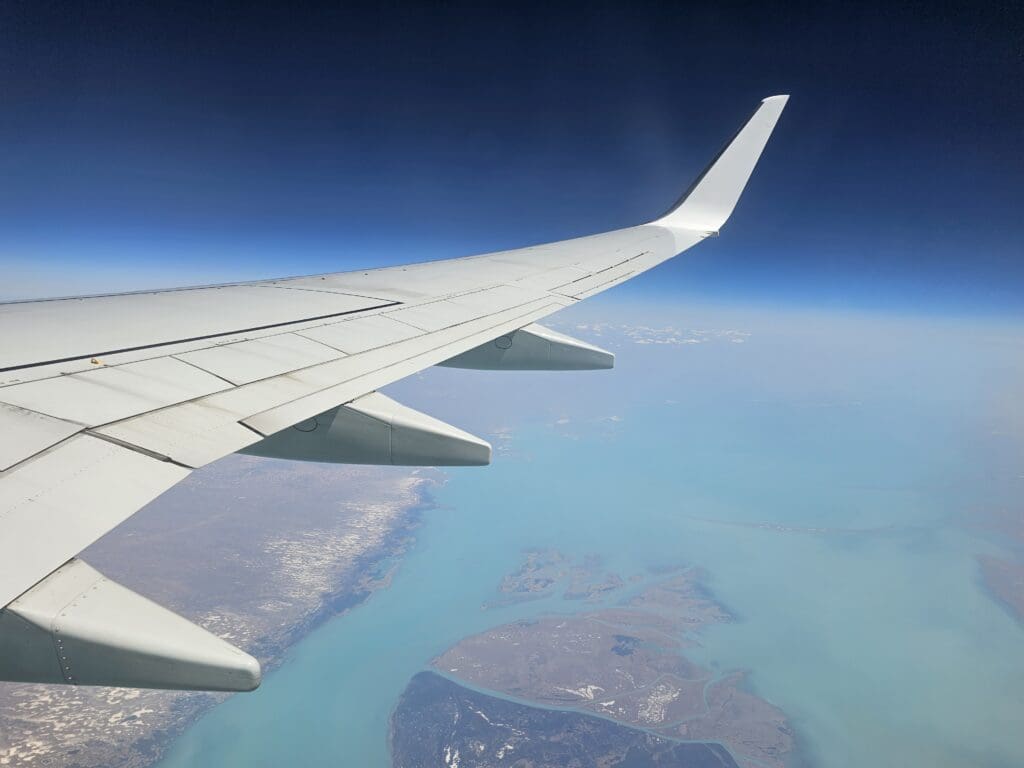
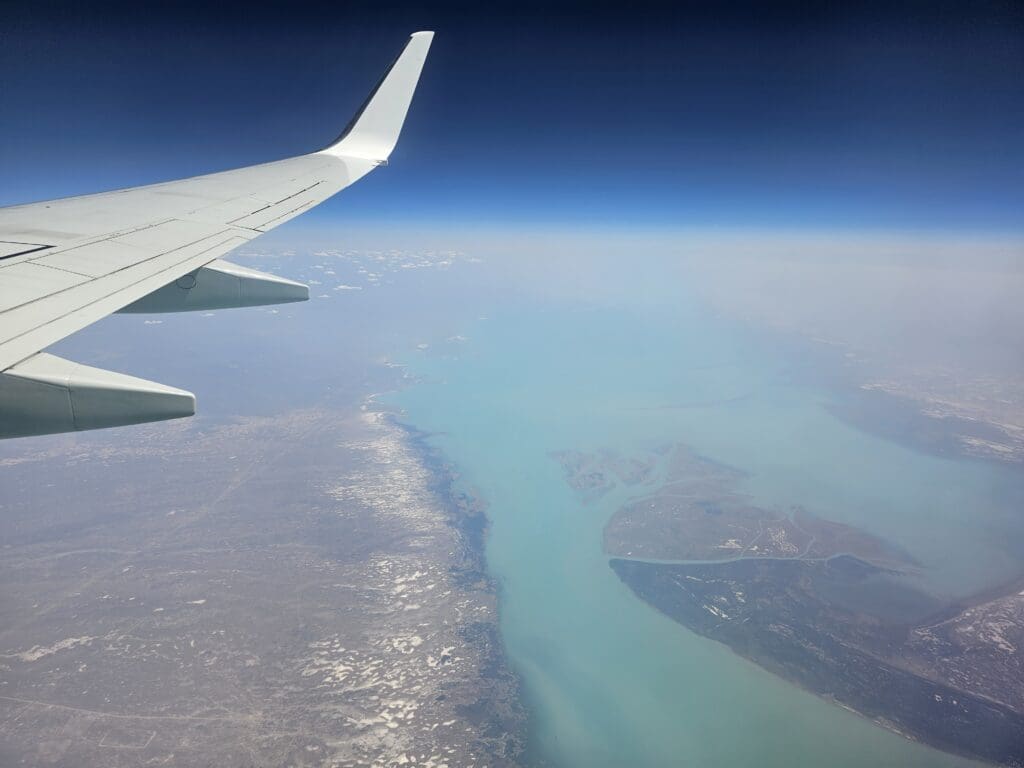
As we cruised north, the landscape became a little more rocky and hillier for a time roughly halfway between Balkhash and Karaganda, although once more, few signs of life could be seen below until we neared the city of Karaganda. Almost an hour into the flight, a ding rang out through the cabin as the seatbelt signs were reilluminated in preparation for our arrival into Astana. This was followed by a trilingual announcement with the usual pre-arrival instructions with the crew soon passing through the cabin in order to ensure that all was set and in place for our arrival. At this time, the aircraft passed just to the west of Karaganda Airport, although no aircraft could be seen on the ground there at that time. This was then followed by views of the apartment blocks to the east of the city’s centre
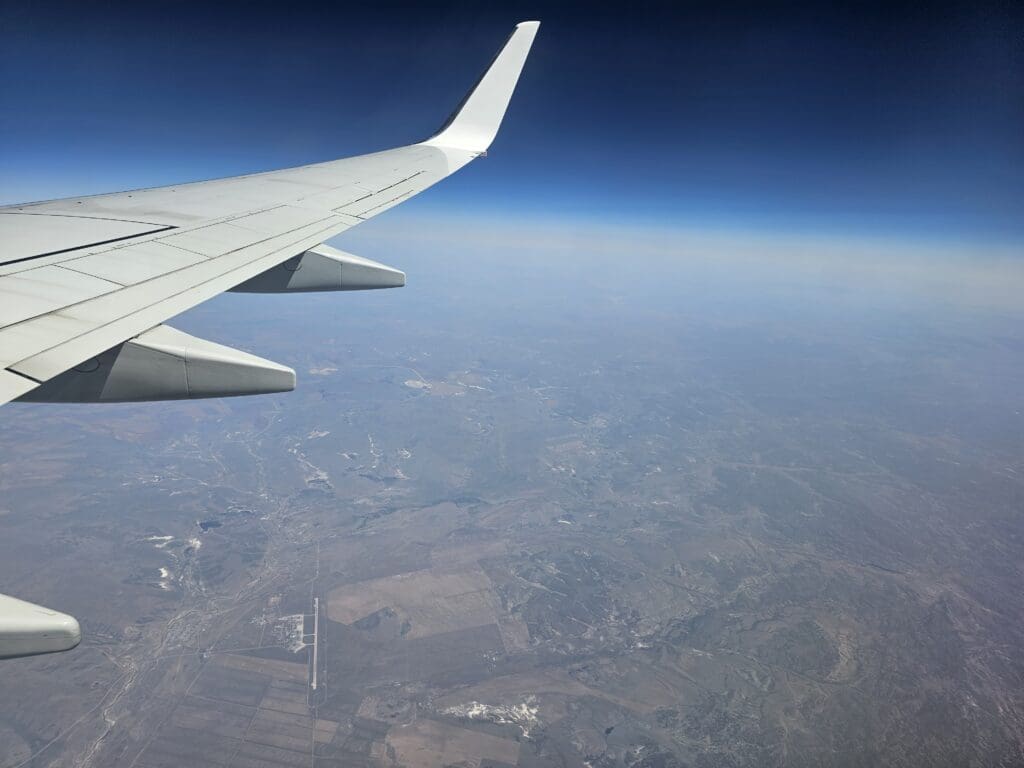
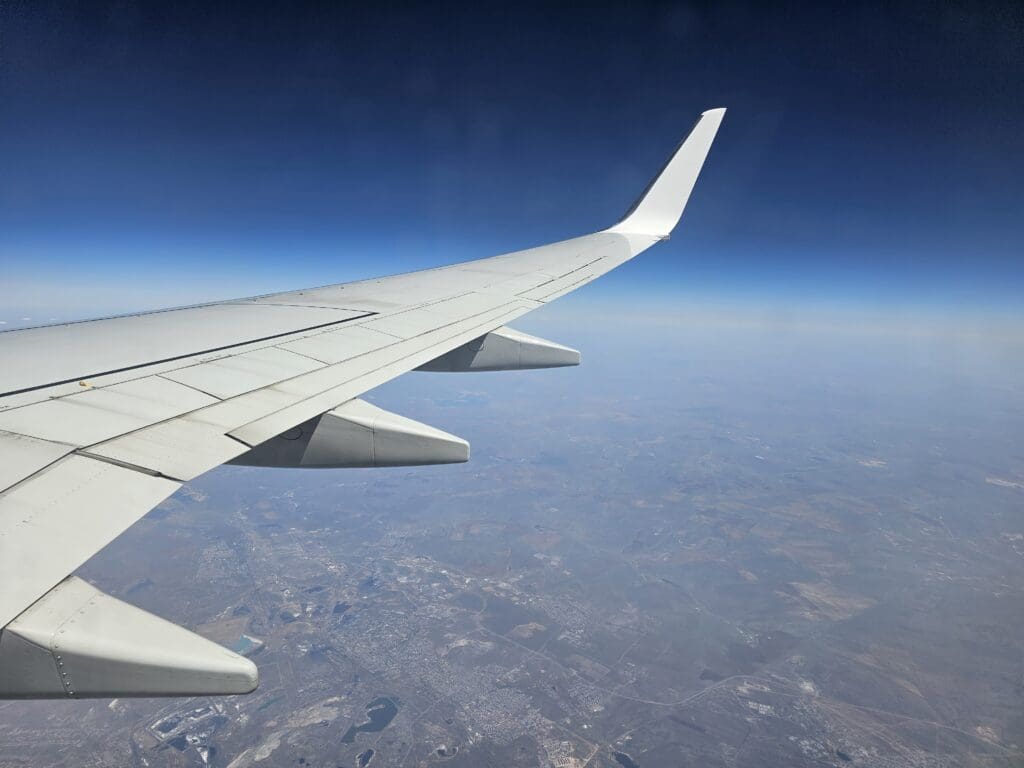
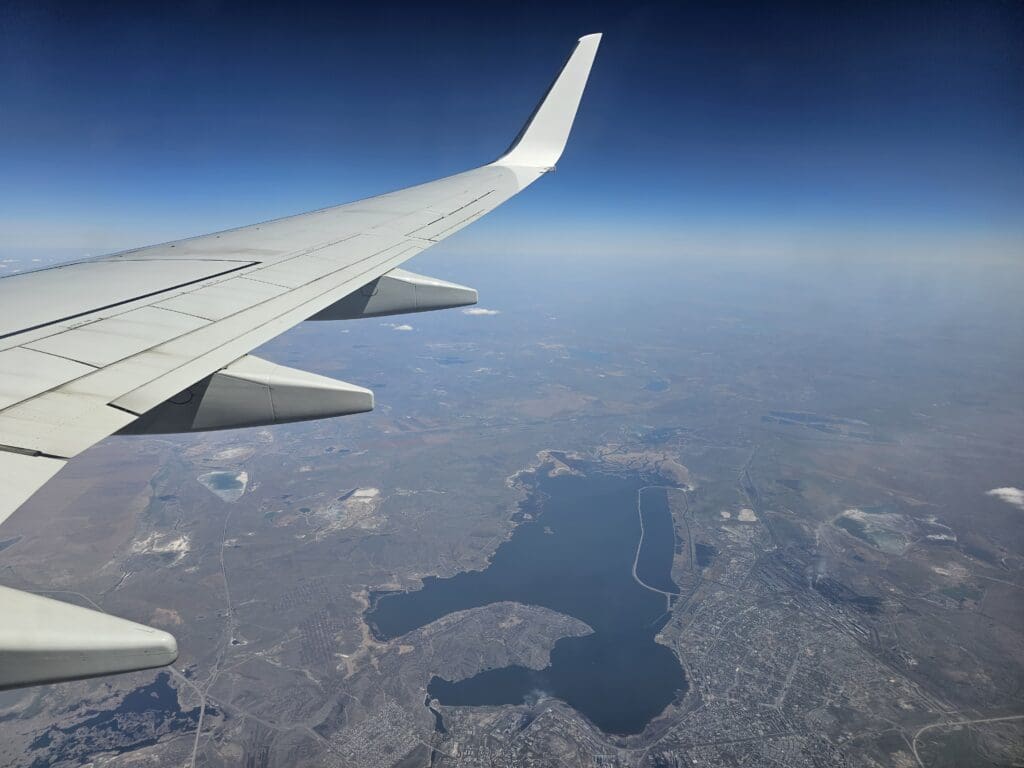
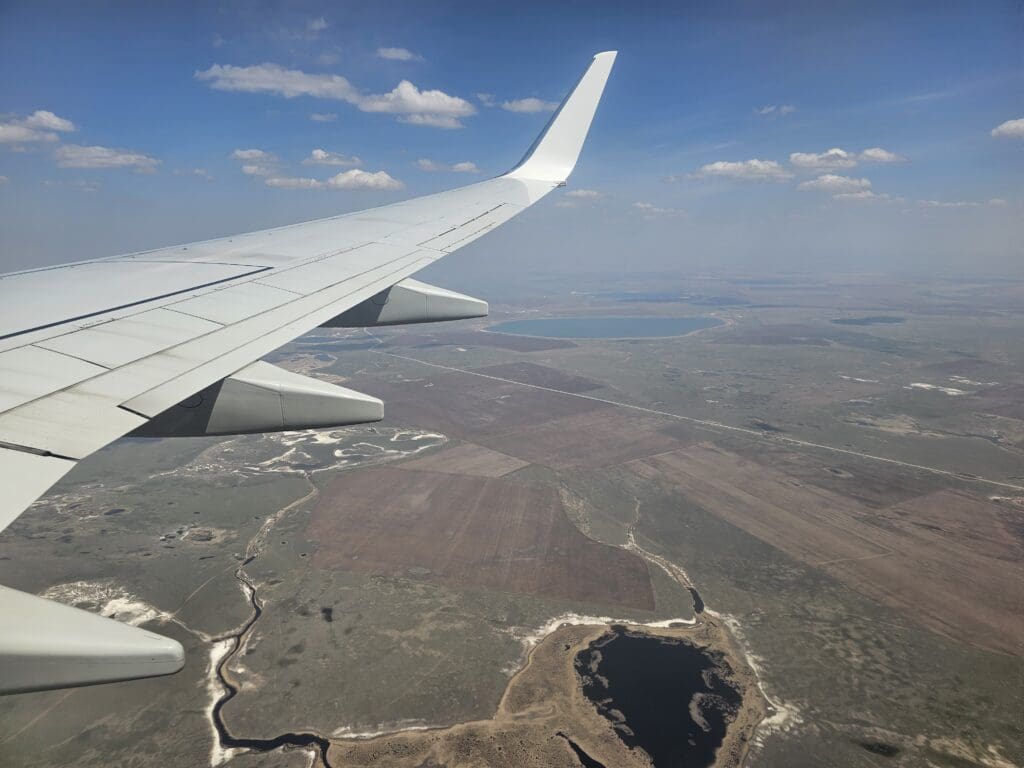
A short time after the seatbelt signs had been reilluminated, the crew passed through the cabin ensuring all was in place for our arrival and collecting any remaining rubbish before strapping themselves in with plenty of time to go until landing. After leaving Karaganda behind, the town of Termitau and the neighbouring Samarkandskoe Reservoir could be seen before we followed the course of the M-36 motorway up to Astana. At this point of the flight, a few bumps could be felt as we sank downwards, although these were not particularly rough and did not warrant any major concern. Continuing onwards, several lakes, villages and small towns could be seen sitting on the flat steppe and before I knew it the flaps were partially lowered in preparation for our arrival.
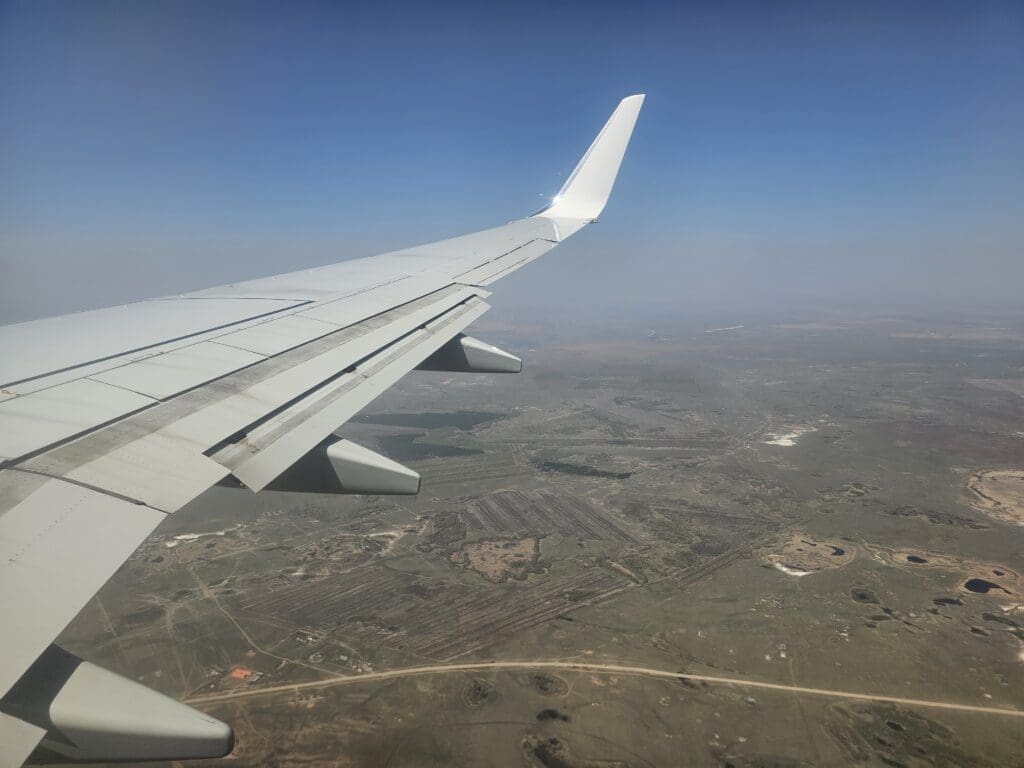
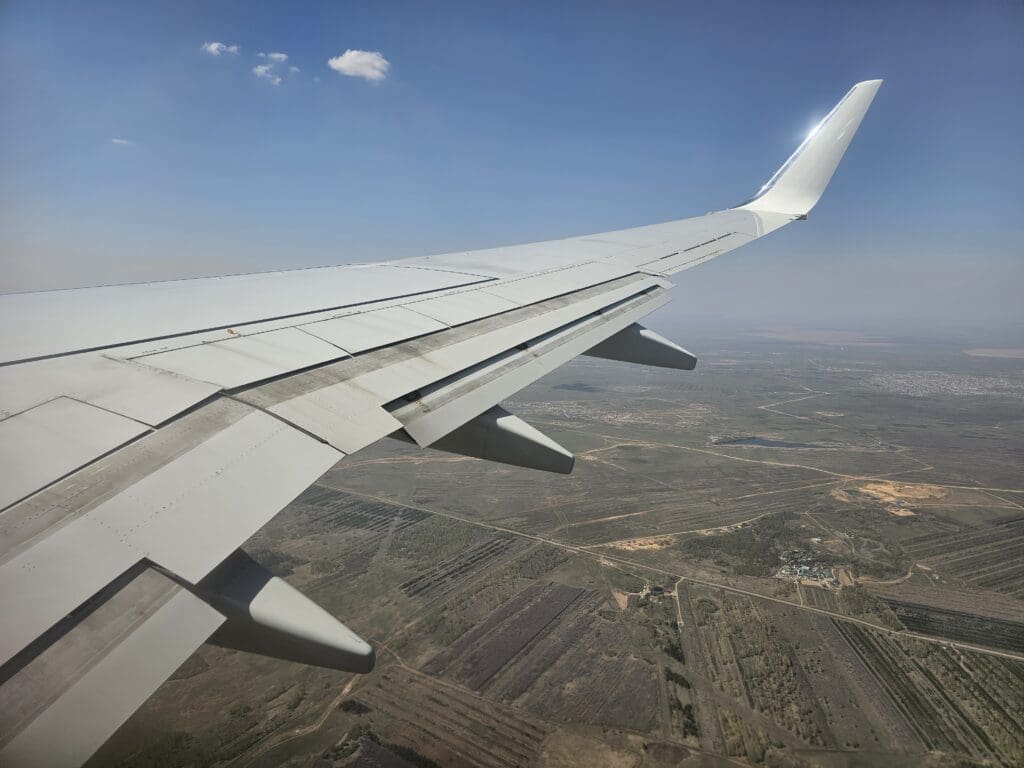
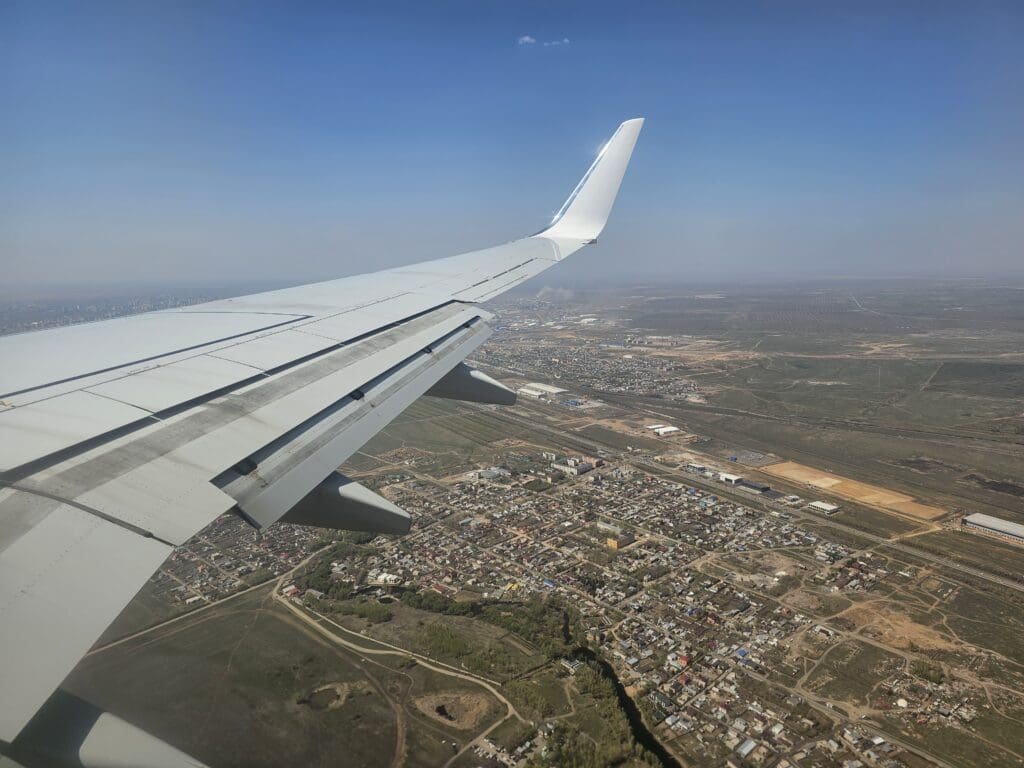
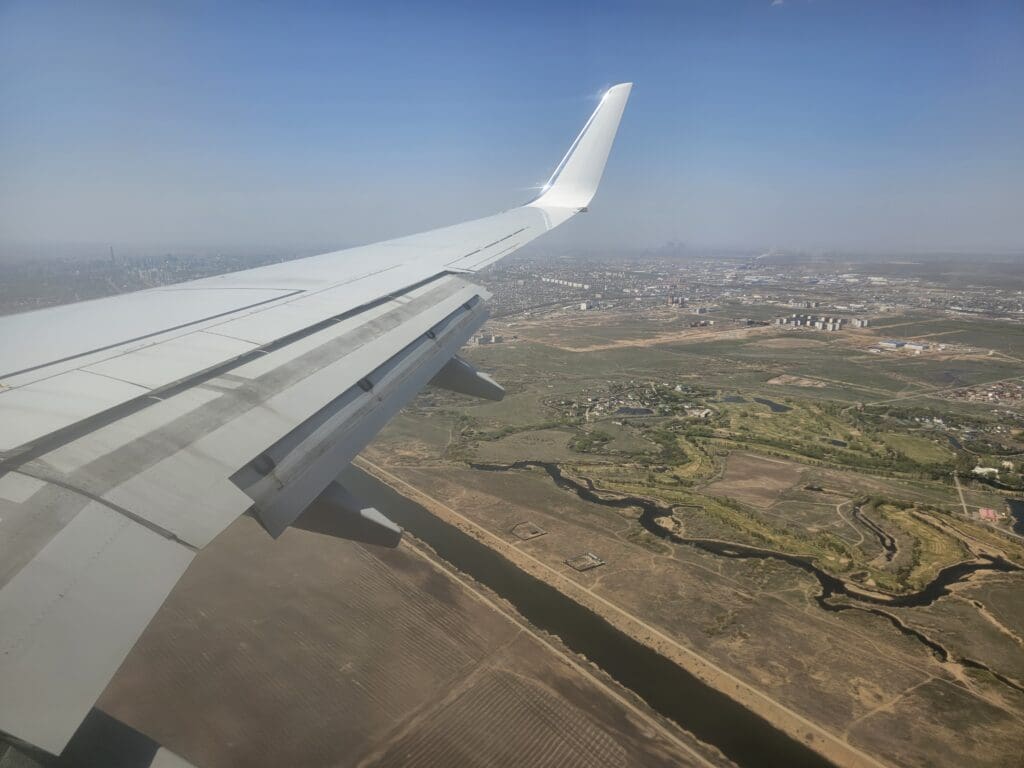
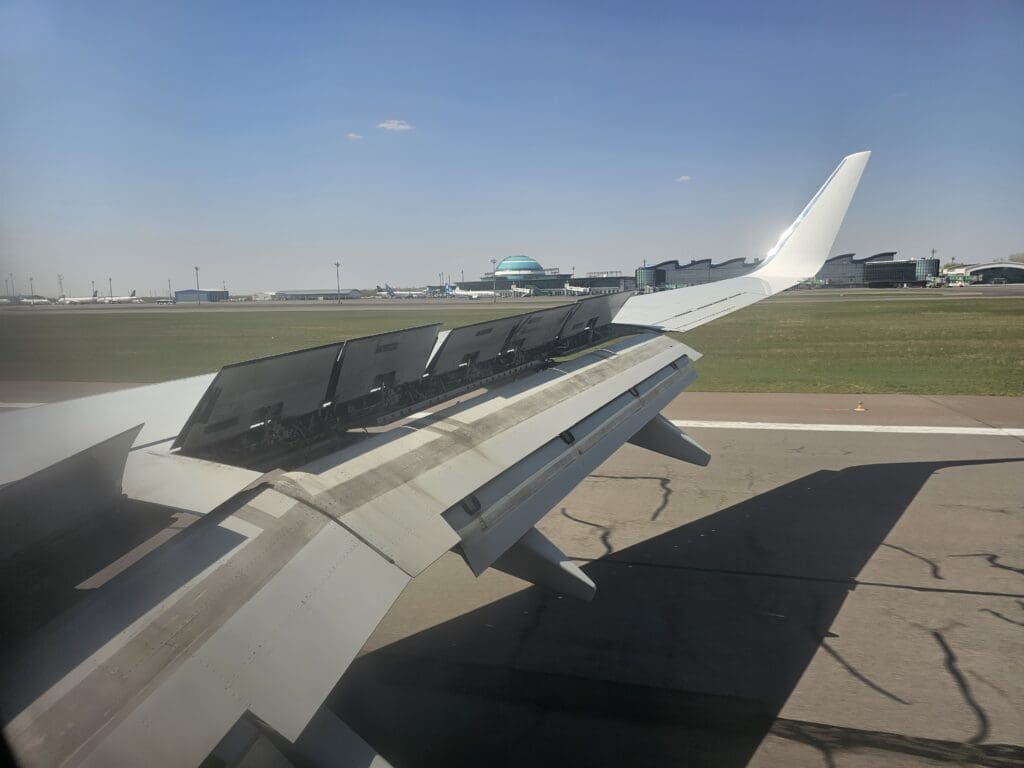
At 1359, all of a sudden, Astana’s suburbs rose out of the steppe and were followed a short time later by the famous sights of the city centre. As we trundled towards the airport I caught a fleeting glimpse of the Presidential Palace, Baiterek Tower and the top of the Khan Shatyr Entertainment Center in the distance as the landing gear fell into position in preparation for our arrival. A couple of minutes later, the Boeing sank over the perimeter fence with some slight swaying as if to indicate that there was a crosswind blowing at which point a cluster of diverse and interesting types operating for the government and military could be seen well away from the main terminal building. These included the Antonov An-12, An-26, An-74, the Let L-410 and a selection of Mil helicopters. This was then followed by the sight of a SCAT Airlines Boeing 737-300 holding short of the runway and a more modern Air Astana Embraer E2.
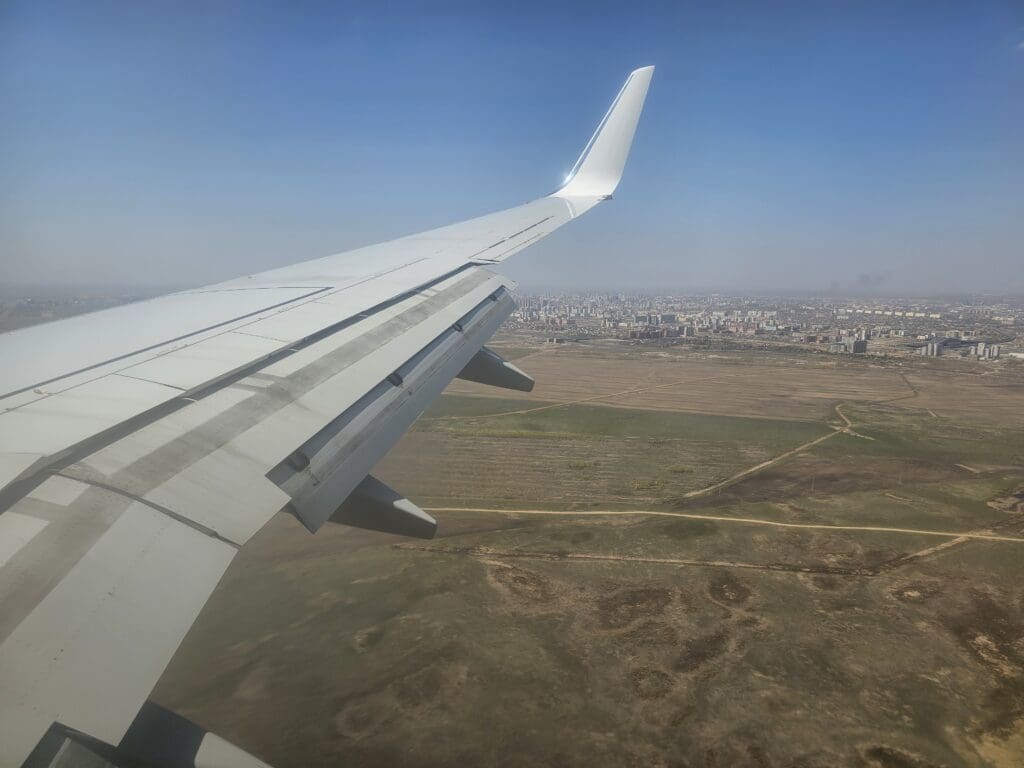
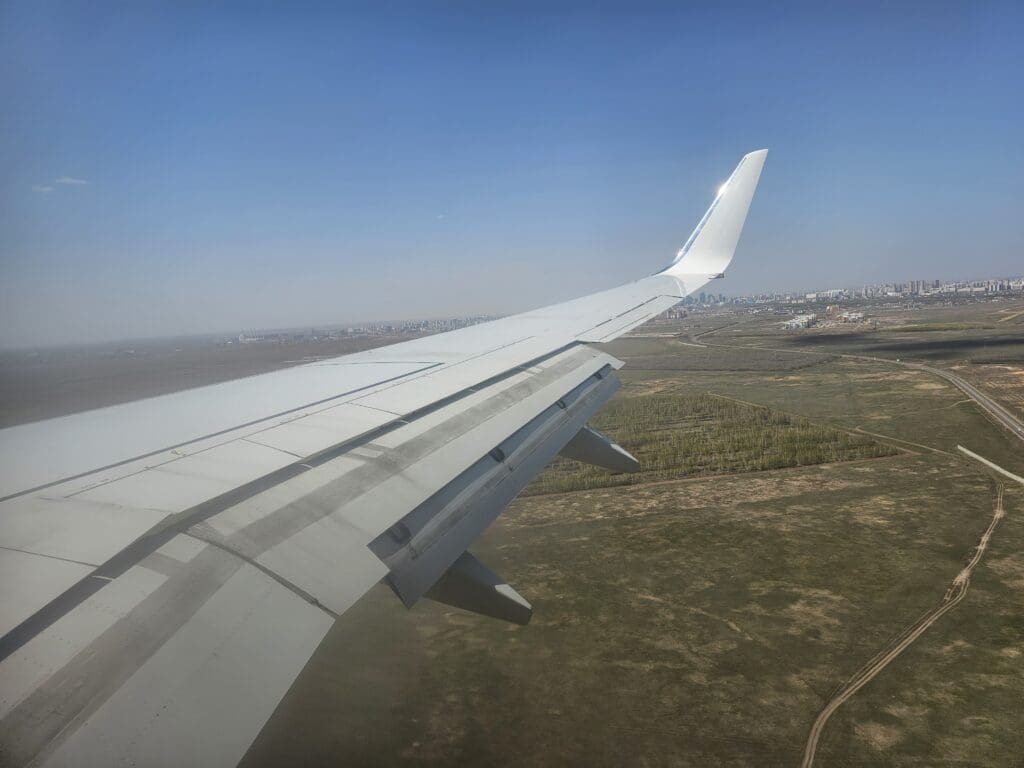
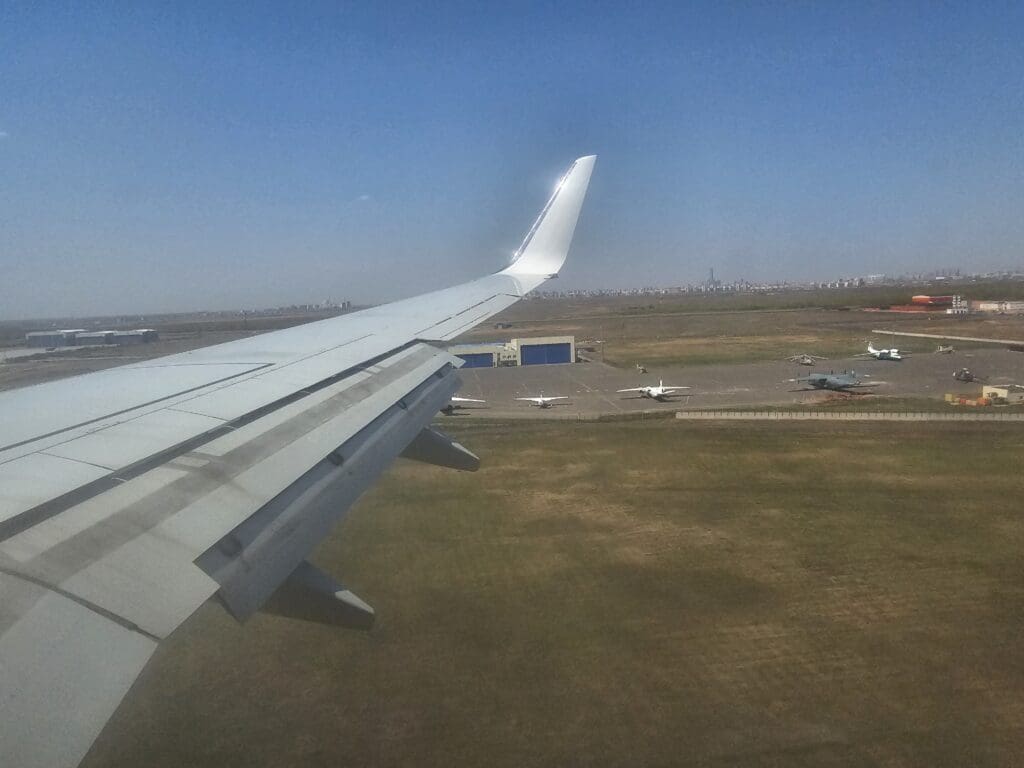
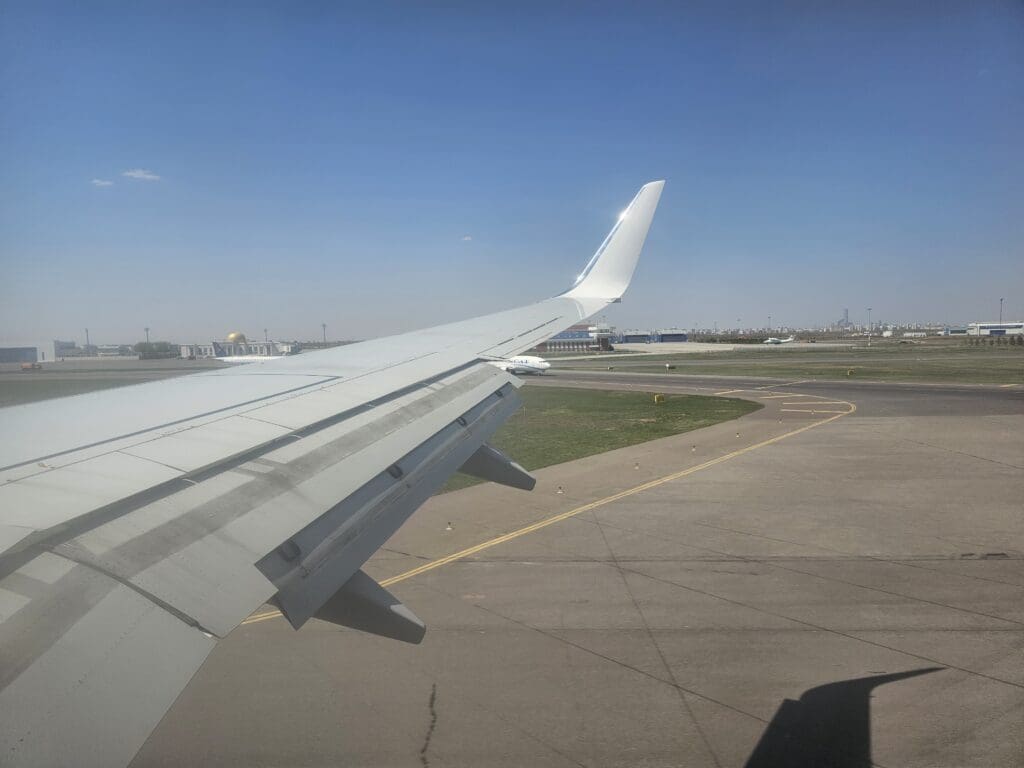
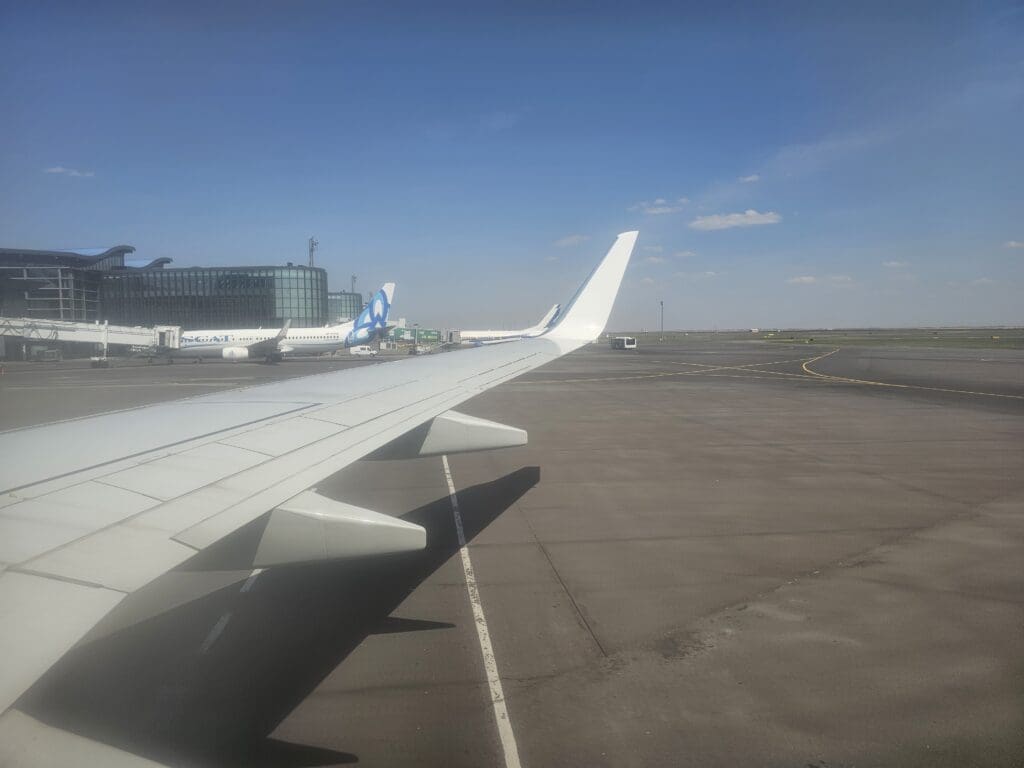
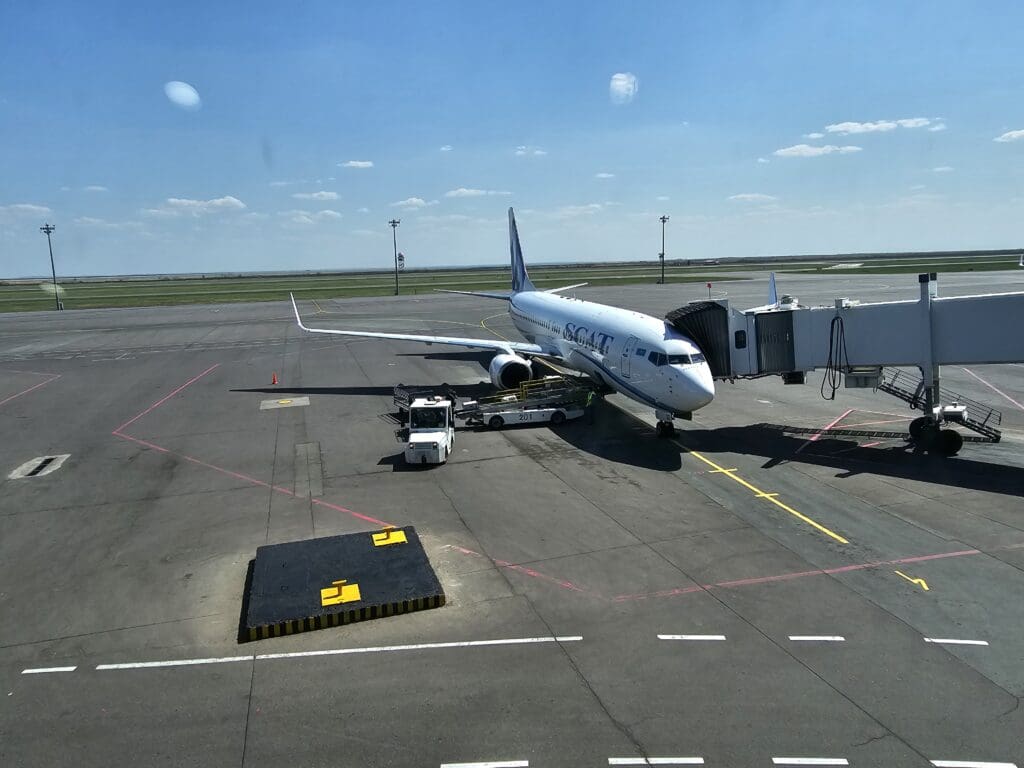
At 1402, the Boeing returned to earth with a firm thud at which point many passengers applauded the skills of the pilots and we decelerated rather rapidly before vacating the runway to the right. As we decelerated, I caught sight of a rare (for me) Sukhoi Superjet operated by Russian leisure carrier Red Wings Airlines. As we made our way to the terminal, in the usual manner, a post-arrival announcement was made and we were all thanked for flying with SCAT Airlines and advised to remain seated until the seatbelt signs had been switched off. With Astana Airport enjoying many more jetbridges than Almaty, that afternoon the Boeing cautiously pulled into stand 4 at the main terminal and a short time later, a jetbridge was connected. Once connected, it wasn’t long before disembarkation commenced and I soon headed forward and made my way down the cabin. After thanking several of the flight attendants, I stepped off the aircraft and headed up into the terminal building ready to explore the sights of Astana, ending my second-ever flight with SCAT Airlines.
Summary
That day, whilst SCAT Airlines delivered me to Astana in one piece, in the end, we pulled into the gate in Kazakhstan’s capital city almost an hour behind schedule with no reason or apology for the delay given. However, with nowhere to be that afternoon, I was not overly bothered by the lack of punctuality that day. Turning to the aircraft, whilst credit ought to be given for the fact that the cabin appeared to be clean and was in good shape, the seat was not particularly comfortable and I would not have liked to spend a much longer flight sat in the firm and cramped seat. Ending on a positive, even though my interaction with them had been minimal, I found the crew to be friendly and welcoming.