Korea’s New and Exciting LCC: Jeju to Cheongju on Aero K
Background
Just like most places in the world, forming an airline in Korea is a highly complex and prohibitively expensive endeavour. Many may even argue that doing so is a foolish feat with little chance of reward, as once you’ve successfully leapt through a seemingly endless series of regulatory hoops, you are greeted by the harsh surroundings of a cutthroat and highly saturated market. Despite this, proposals for new airlines seem to hit the news on an annual basis, even if success stories have been mythical. Some airlines such as Air Daegu and FlyYangyang failed to take to the skies, whilst others such as Air Philip (read my review here!), Air Pohang, Hi Air and Fly Gangwon all came and went within the blink of an eye. Thus, when a new airline emerges in the Korean airline scene, I find it difficult not to get a little sceptical.
Despite the growing list of failed start-up carriers, in May 2016 the clunkily named K-Air Aviation emerged was established, and was soon renamed to Aero K. Eagle-eyed readers may notice that this is Korea spelt backwards! As with many Korean airline start-ups, Aero K opted against focusing on the oversaturated Seoul market. Instead, the airline casted its eyes 112 kilometres southwards to the city of Cheongju, home to around 850,000 residents. Whilst far from Korea’s most populous city, on its outskirts sits Korea’s sixth busiest airport, Cheongju International Airport. This also serves the larger city of Daejeon, and Korea’s politically important planned city, Sejong City. Establishing its headquarters in the fringes of the city, the airline soon made plans to base a fleet of Airbus A320s at the local airport from where they would fly to a host of destinations across East Asia. Granted, on most of their intended routes Aero K would come up against competition from well-established Korean low cost carriers Eastar Jet and T’way Air, who connect Cheongju to destinations across China, Japan, the Philippines, Taiwan, Thailand and Vietnam. Nevertheless, this was still less competition than the airline would have to face if operating from the capital, not to mention the lower operating costs at a regional airport and potential support from local authorities.
Despite having strong backing and a clear plan for their operation, citing a lack of capital and excessive competition, in December 2017 Korea’s Ministry of Land, Infrastructure and Transportation (MOLIT) rejected Aero K’s application for a business licence. Not only did this lead Hanwha to withdraw their backing, but following their rejection MOLIT upped the capital requirement for new carriers from $13.9 million to $28 million! Despite this new barrier and other hurdles, in 2019 Aero K’s application for a business licence was approved along with applications from Air Premia and Fly Gangwon.

Following this initial turbulence, in February 2020, Aero K’s first Airbus A320 touched down in Cheongju to much celebration. Leased from Carlyle Aviation Partners, this Airbus had previously flown with Virgin America and Alaska Airlines and had undergone a cabin refresh before entering service with Aero K. Once in Korea, the jet undertook a series of testing and proving flights to demonstrate the carrier to be a safe and reliable operator, and in December 2020, MOLIT granted Aero K its AOC. A short time later, Aero K launched its first service, flying its single aircraft between Cheongju and Jeju several times per day. With this being Aero K’s sole focus of operation, it wasn’t until 2023 that Aero K took delivery of additional aircraft and expanded its route network. As of Summer 2024, Aero K operates a total of five aircraft from Korea to destinations in Japan, Mongolia, the Philippines, Taiwan and Vietnam. More recently in May 2024, Aero K opened up a new base at Seoul Incheon and joined the near-endless list of carriers operating from there to Nha Trang and Tokyo Narita.

Unlike some airline start-ups, Aero K seems to have garnered a significant amount of positive publicity during their first few years of operation. Whether it be their stylish yet simplistic branding, functional genderless designer uniforms or simply their often very low fares, Aero K has been able to develop a distinctive identity as a trendy and modern low cost carrier, that differs from those already in the market. As an aviation enthusiast finding myself in Korea, I could hardly miss the opportunity to sample the delights of the carrier on its sole domestic route between Cheongju and Jeju!
Booking
Seeing as Aero K offers just one single domestic route, I didn’t have much choice when it came to deciding where I wanted to fly. As per Summer 2024 schedules, Aero K operates three rotations each day between its hub in Cheongju and Jeju. With Eastar Jet, Jeju Air, Jin Air, Korean Air and T’way Air all operating multiple daily flights between the two, it is fair to say that this route is already fairly well served! Staying in Seoul, some deliberation was required to decipher whether I would fly southwards or northwards. In the end, I decided that I would catch Aero K’s morning service from Jeju to Cheongju, before travelling by train back to Seoul where I would arrive in the mid-afternoon.
With my itinerary set, I then turned my attention to booking my Aero K ticket. As with most Korean domestic flights, tickets for these services can be purchased via both the airline itself and an array of online booking websites. However, as always, I would advise prospective passengers to try to book directly with the airline where possible. Not only are such tickets usually cheaper, but they also enable passengers to make use of Korean airlines’ very generous penalty fees if you end up needing to refund or change your ticket.
With Aero K lacking an app at the time of my trip, I soon navigated my way to the airline’s sleek and modern yet minimalistic homepage. There, no advertisements could be seen and I was instead presented with the flight search engine superimposed on a royal blue background. As far as airline websites go, this left me with absolutely no complaints, being quick to load and easy to navigate. This comes complete with all the usual information about the airline, including a relatively detailed page about the airline’s fleet, offering a seat map for each aircraft and information on the amount of pitch provided by each seat on each aircraft! In terms of languages, alongside the usual Korean and English Aero K’s website was available in Chinese and Japanese.
Once I had explored Aero K’s website, I entered all the required information into the flight search engine and was promptly presented with the carrier’s three flights between Jeju and Cheongju that day. These consisted of departures at 1020, 1640 and 2125, and each flight had three fare options: Lite, Basic and Plus. The base fares for these ranged in cost from just 2,500 won (£1.43) up to 64,000 won (£36.74). Seeing as I would not be travelling with any baggage, I went for the cheapest fare and soon taxes and charges were added which brought my ticket up to 21,100 won (£12.12). Whilst this was quite the increase on my base fare, this was still one of the cheapest domestic flights that I have booked in recent times and I was left with no complaints!
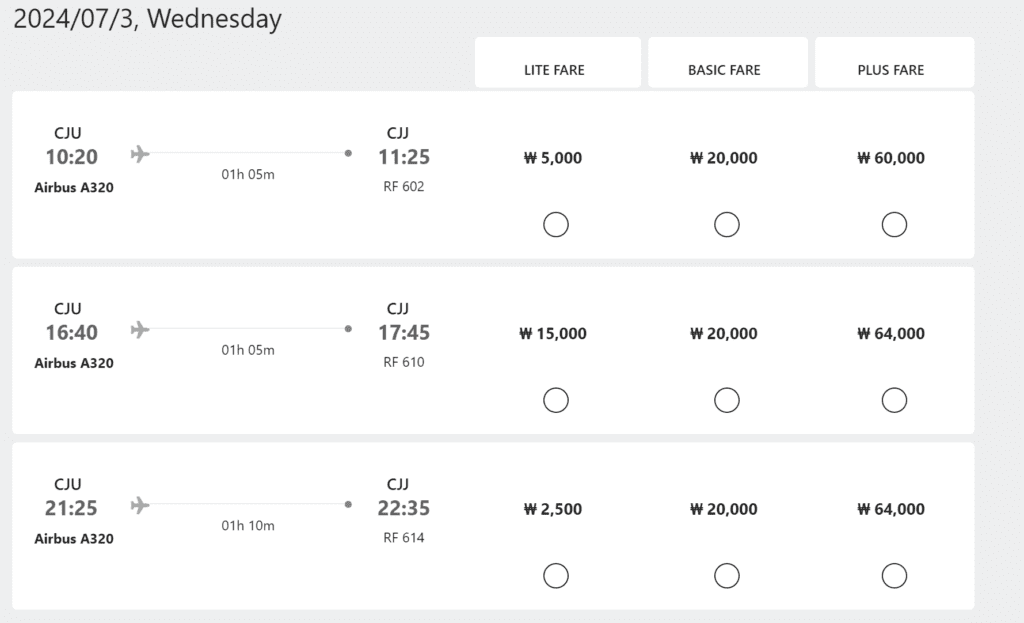
Next up, I entered my details before being given the option of pre-selecting a seat and adding hold luggage to my booking. At this stage of the process, those on Aero K’s international services can pay to pre-reserve a hot meal, with options consisting of mandu gratin or tomato pasta, both of which cost 10,000 won (£5.70). There, I opted to add a regular window seat for 4,000 won (£2.30) before I went ahead and made payment. Much to my delight, this was quick and easy and I soon received my ticket and payment receipt via email.
Finally, according to Aero K’s website, online check-in is offered to all passengers from 24 hours prior to their flight’s scheduled departure time. Unfortunately, for whatever reason, upon clicking the online check-in button on both the Korean and English versions of Aero K’s website, this page failed to load. Thus, I was left with no other option than to resign myself to the fact that I would have to check in for the flight at the terminal.
The Journey
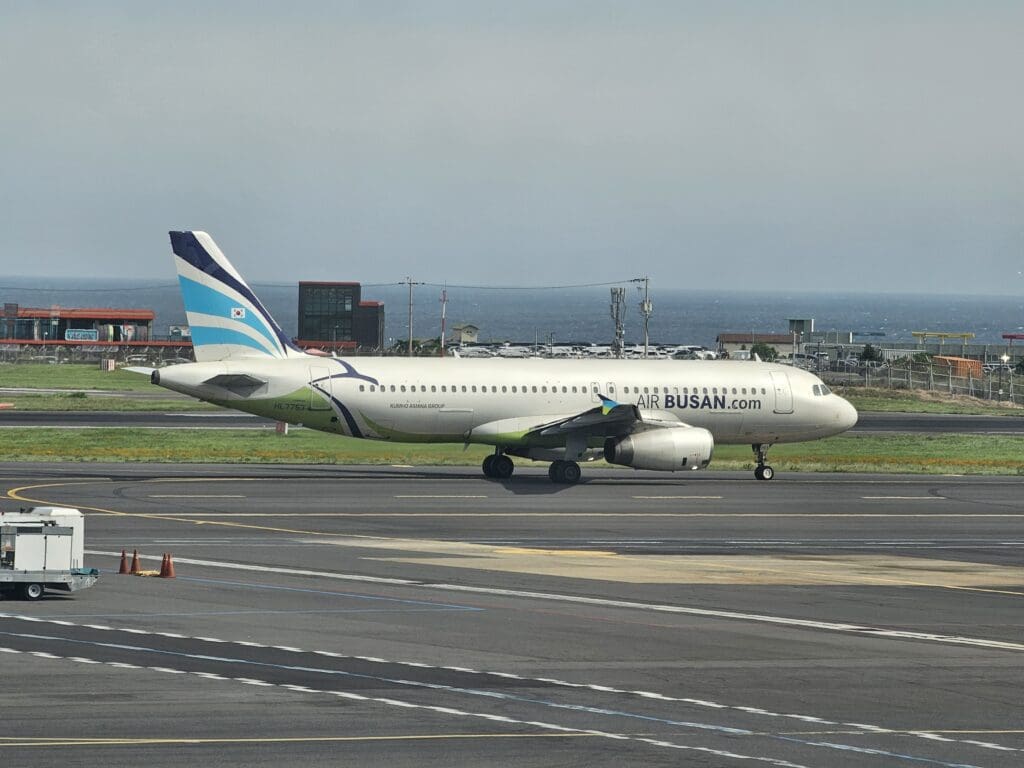
Having experienced a surprisingly cramped ride down from Seoul Gimpo onboard an Air Busan Airbus A320, upon making it to Jeju International Airport’s busy arrivals area, I was left with about ninety minutes to go until my flight to Cheongju was scheduled to depart. Whilst this may have been leaving things a little too close for comfort at many airports across the world, especially for a traveller like me with a penchant for punctuality, I didn’t envisage any problems in checking in and making it through security in good time for my flight. Indeed, as with most, if not all Korean domestic terminals, Jeju International Airport was designed with speedy departures and not long stays in mind. Looking back at the fifteen times that I had departed from the airport before this trip, I can’t think of a time that the journey from the landside to the airside portion of the terminal’s domestic area has taken me more than five minutes!
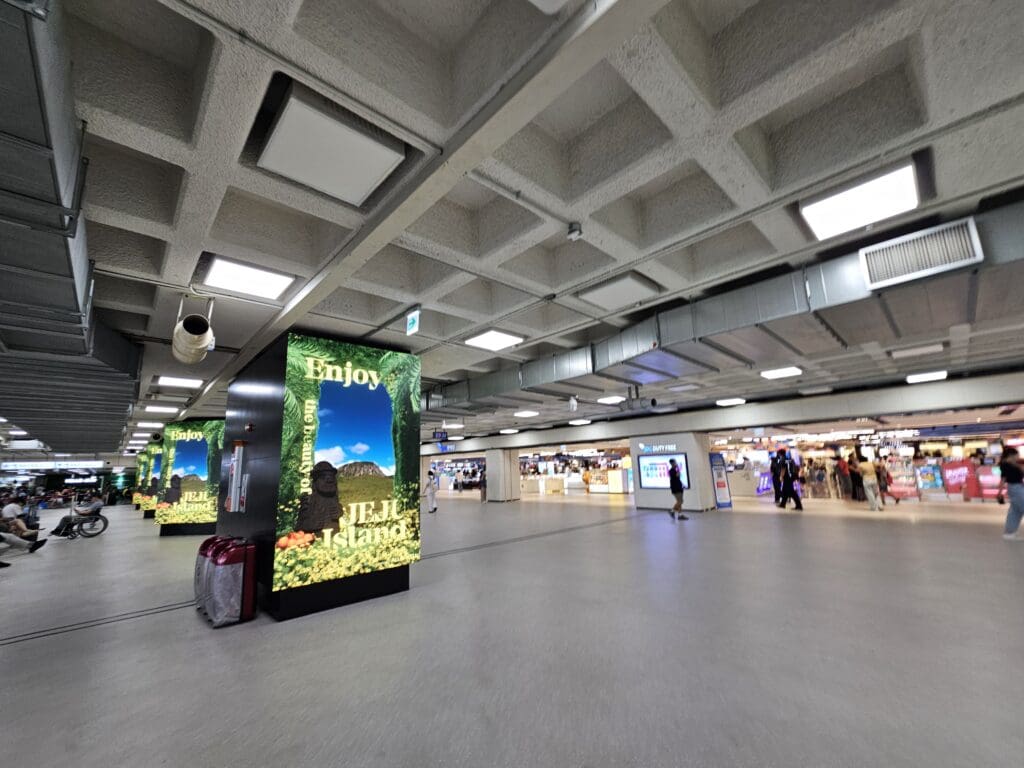
Whilst not in any pressing rush, wanting to fully soak up the (not so) expansive sights of the domestic airside area, once I had arrived in the landside arrivals area, I made my way upstairs to the domestic check-in hall. Spread out across four floors, the domestic portion of the airport is large, functional and for the most part, very clean, despite the near constant stream of passengers ploughing through this on their way to destinations across Korea. Before heading through security, those fancying something to eat or drink can stop by at one of the landside area’s seven restaurants or six cafés. Meanwhile, a total of five shops are also offered in this part of the terminal, including a convenience store which enables passengers to purchase an array of food and drink and uninflated airport prices. Last but not least, I would advise aviation enthusiasts with time on their hands to head to the terminal’s top floor which is home to one of just three open-air observation decks at Korean airports (if you include Incheon Airport’s observatory which sits on the edge of the airport rather than at its terminals).
Returning to the journey, once I had made it to the check-in hall, it wasn’t long before I spotted Aero K signage. With Aero K having significantly fewer flights than any other Korean carrier at Jeju, unsurprisingly the airline’s check-in area was notably more compact than those of other airlines, with this featuring just three desks. Curiously, each of these was manned by two agents! However, despite Aero K’s small size, passengers can use the terminal’s many Korea Airports Corporation-owned self-check-in machines to check in for the airline’s services to Cheongju. Or at least that was what I had thought! Upon making my way over to one of these, I selected the Aero K option and was presented with the airline’s reasonably modern and stylish self-check-in system, which was available in four languages. However, once I had entered my booking reference, I received an error message and was thus left with no option but to check-in at one of the desks.
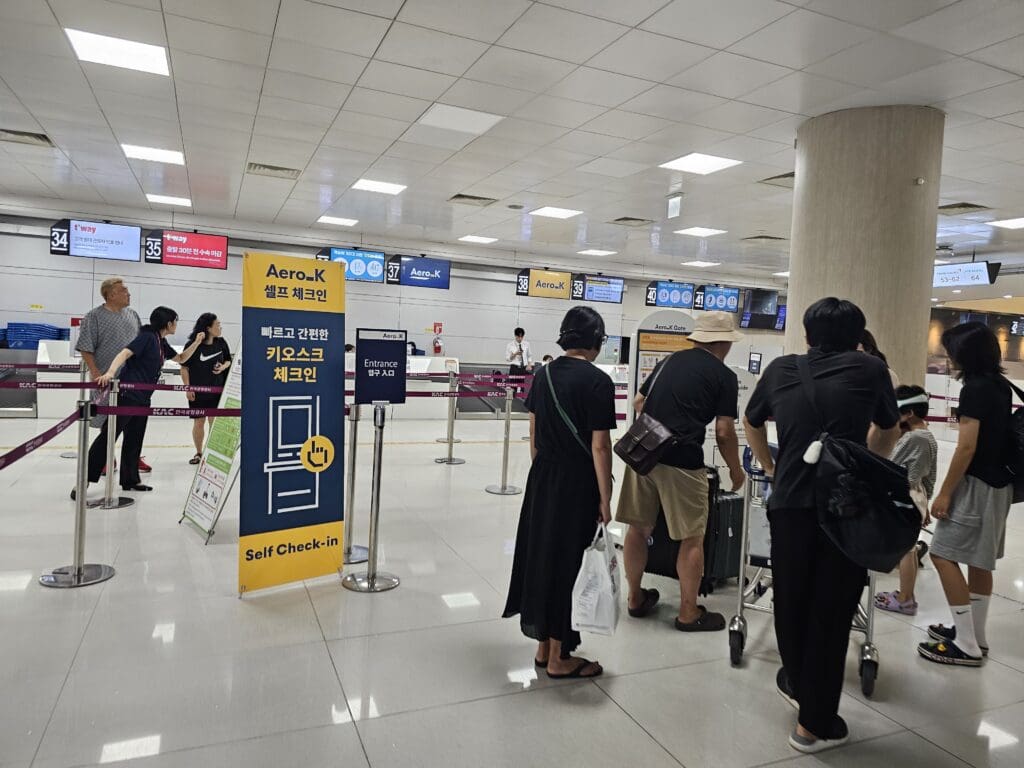
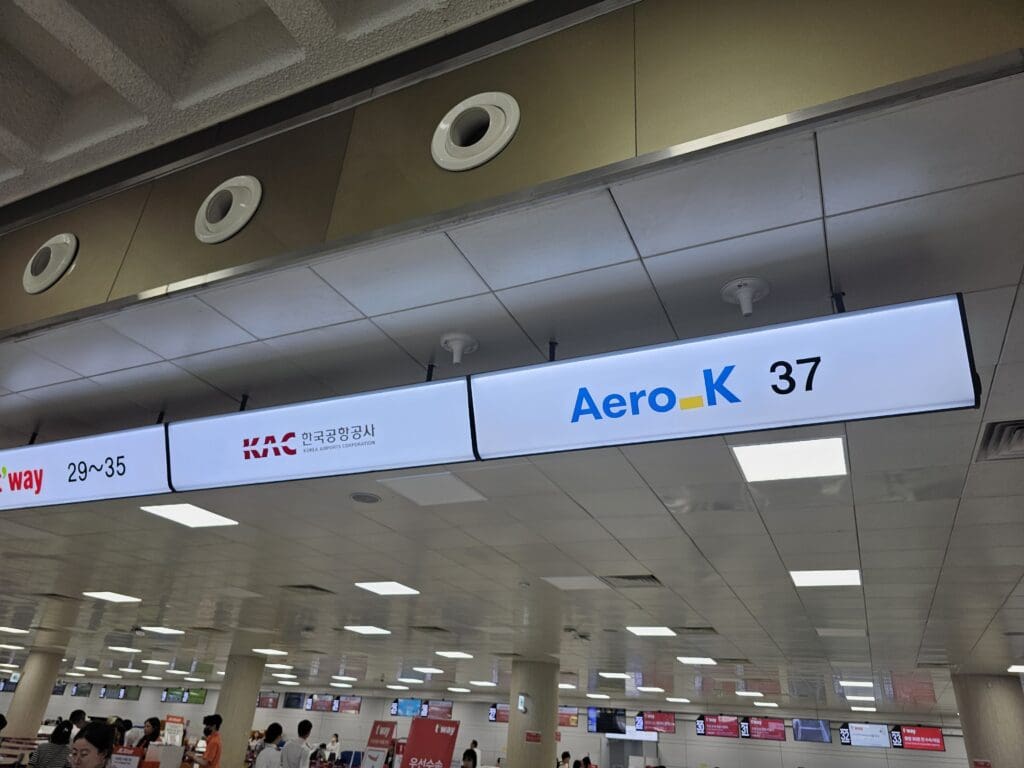
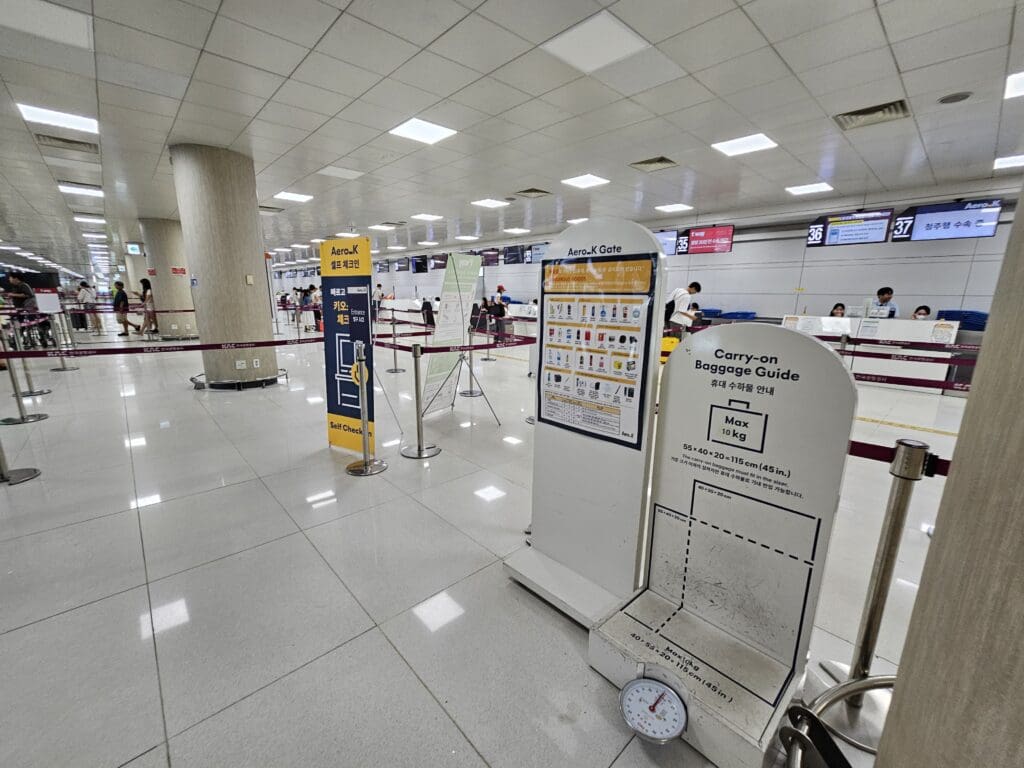
With few passengers at the time, thankfully I was able to walk straight up to one of Aero K’s desks without queuing. In Jeju, Aero K outsources the passenger and ramp handling of its flights to ATS Airport Service, a relatively small Korean handling company with a presence at just four of the country’s airports (Busan Gimhae, Cheongju, Jeju and Seoul Gimpo). Once at the desk, unfortunately, I didn’t find the two agents that I interacted with to be particularly warm or friendly, especially when compared to my usual interactions at check-in desks when flying with other Korean carriers. Furthermore, both staff members manning my desk seemed to be mystified that I did not have a Korean identity card. This served to imply that few non-residents fly on Aero K’s sole domestic route! This resulted in a fair amount of typing, however, thankfully, after a longer-than-usual wait of about three minutes, all was resolved and after providing my Korean phone number, my receipt-style boarding pass was printed off.
Once I had checked in, I decided to head over to the security checkpoint in the centre of the terminal. Amongst Korean domestic terminals, Jeju International Airport is unique in that foreign passport holders must undergo something of an immigration check before being permitted to enter security. This exists as a result of a nuance in Korea’s visa policy which enables a significant number of nationalities that require a visa to enter mainland Korea, to holiday on the island of Jeju without one. Thus, to prevent international visitors without a Korean visa from travelling from Korea to the mainland, an immigration checkpoint is in place before security. Once upon a time, this consisted of an immigration officer who simply looked at passengers’ passports in search of a Korean visa or a mainland entry stamp. However, today, this is a little more high-tech, with three e-gates provided whereby passengers must scan their passports and have their fingerprints read. If the latter aligns with those provided upon entering Korea, then passengers are allowed to continue on their journey.
Fortunately, that day, I had no issues passing through immigration, and as always, this was a speedy experience that lasted no more than thirty seconds. From there, I entered the security hall, where, even though only half the checkpoints were open, I managed to make it through in about two minutes. Immediately after passing through security, I reached the airside observation area which offers views of the main runway as well as many of the terminal’s stands. Sitting above the main airside waiting area, this is the only place in the terminal which offers any sort of reasonable view and thus proves to be a popular waiting spot for both enthusiasts and non-enthusiasts alike. Still with some time on my hands, once through security, I decided to plonk myself down on one of the benches in this part of the terminal and watched as a constant stream of aircraft came and went.
Jeju International Airport is Korea’s second busiest after the country’s main international hub, Seoul Incheon Airport. Whilst not as perhaps as exciting as Incheon Airport, with far fewer airlines and aircraft types serving this, the airport is most definitely the place for enthusiasts looking to spot an endless array of Korean airlines. As of July 2024, all Korean passenger carriers bar the relatively new hybrid low-cost carrier, Air Premia, served the airport. In addition, the airport is also served by fifteen carriers from across China, alongside one each from Hong Kong, Taiwan and Singapore, and occasionally hosts some interesting charters, such as an Embraer 190 operated by Mongolian carrier Hunnu Air that I spotted in Jeju back in May. Finally, if you’re lucky you may spot some of the locally based Korean Navy Lockheed P-3CK Orions that are based at the airport!
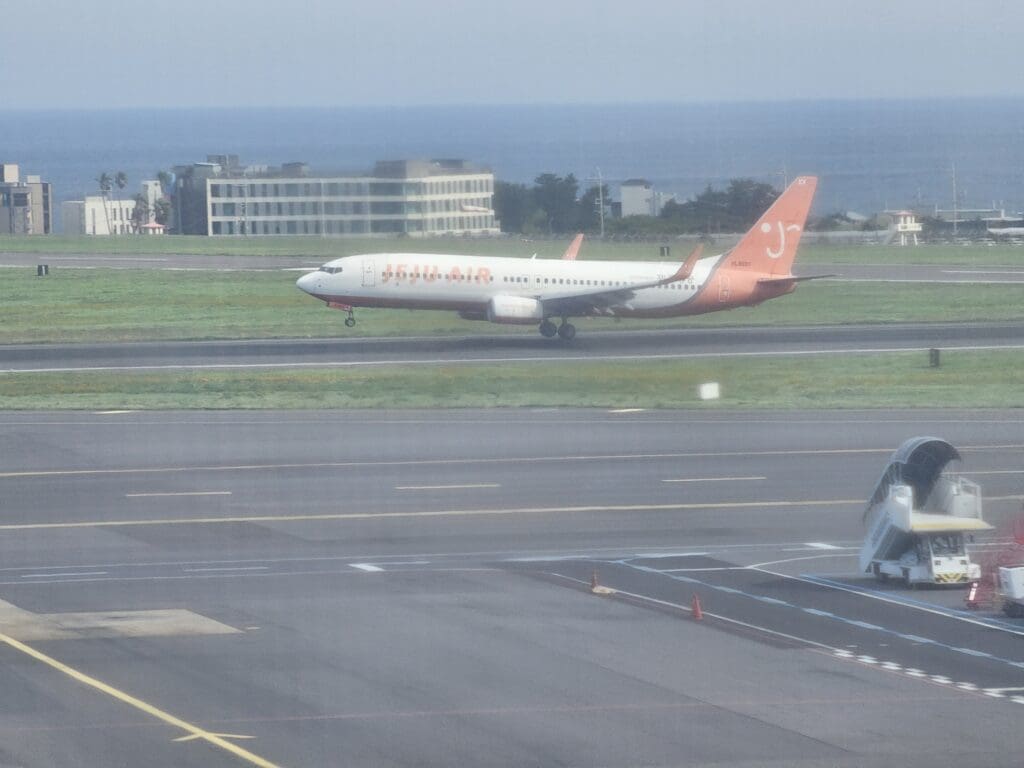
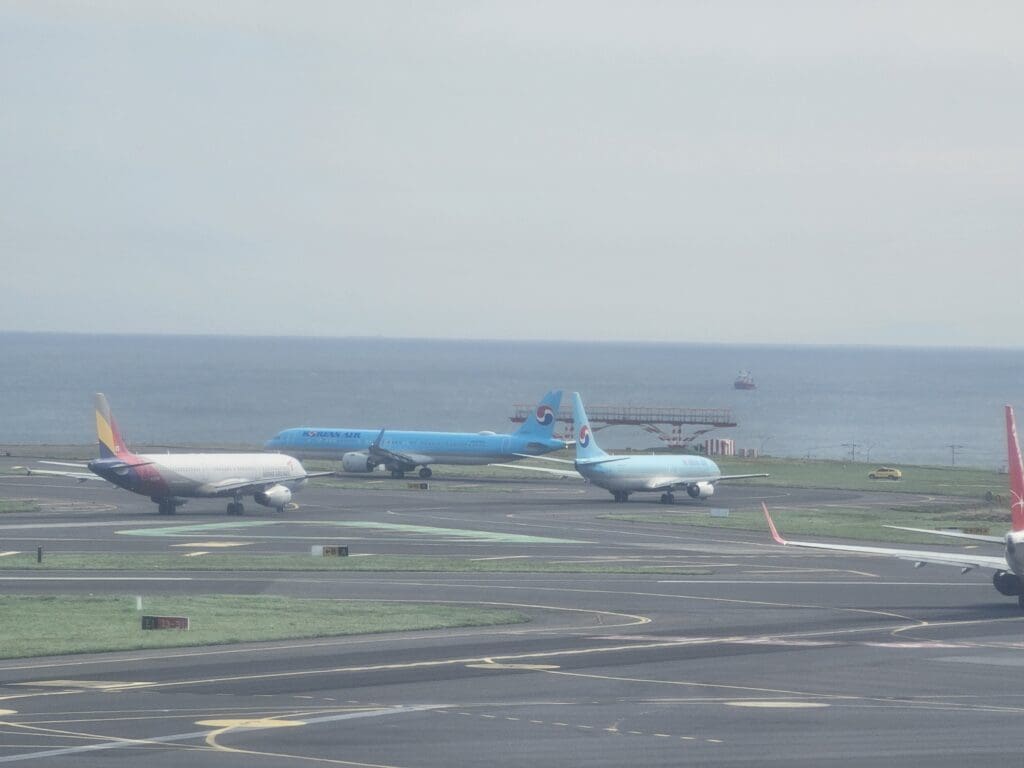
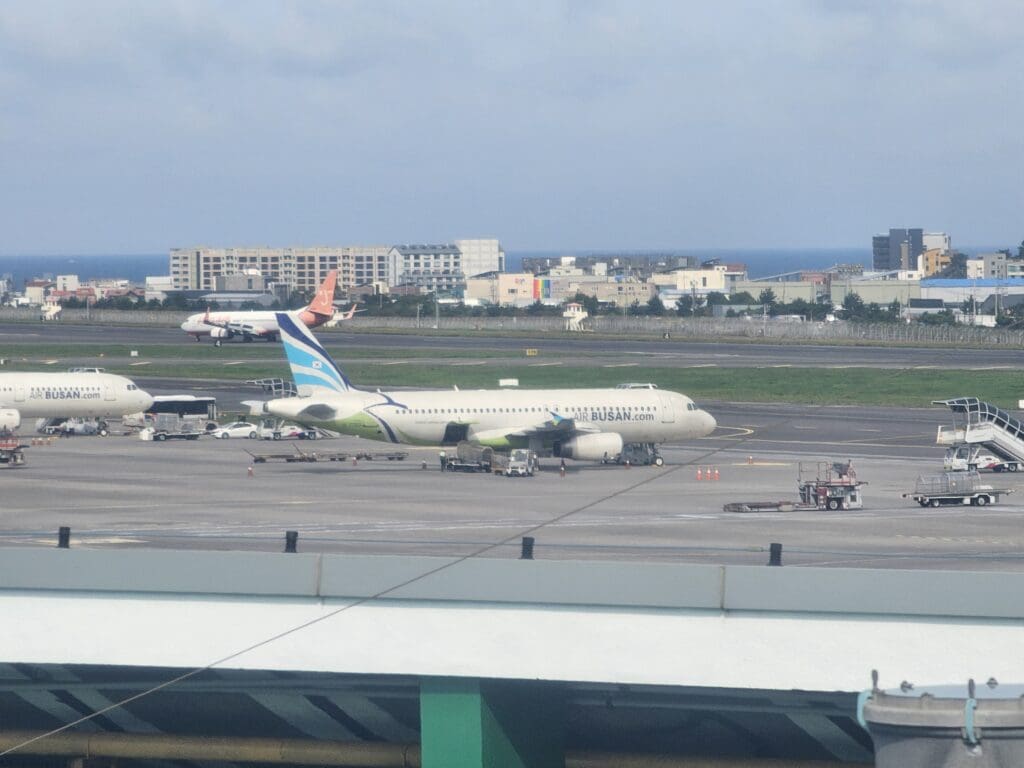
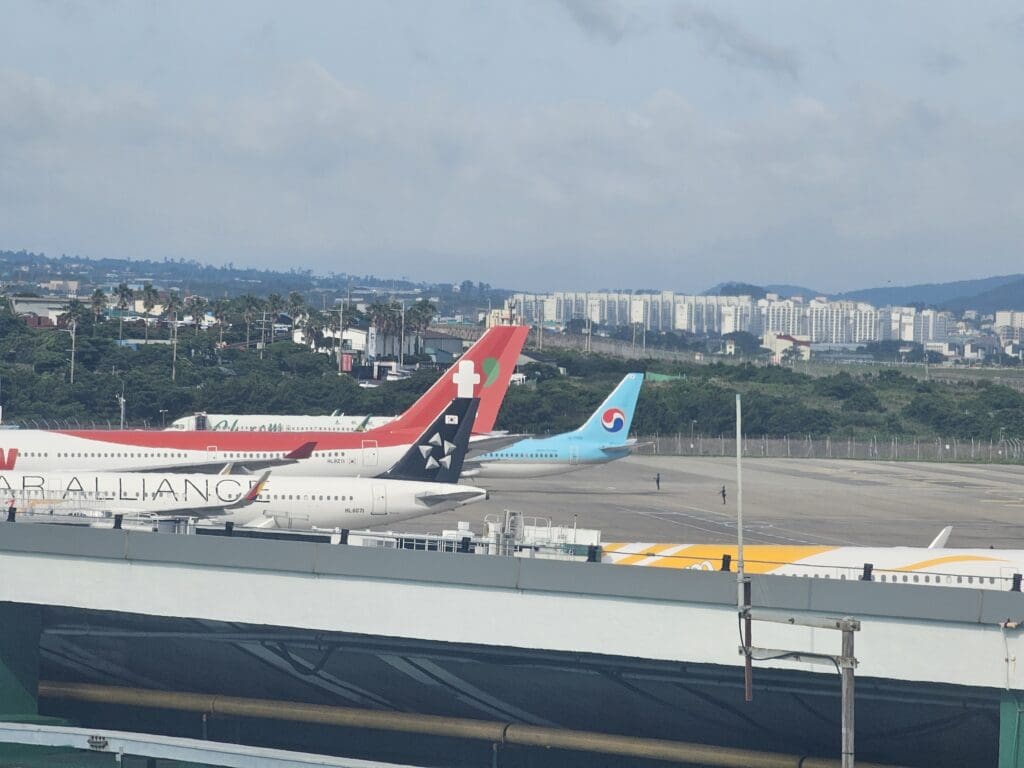
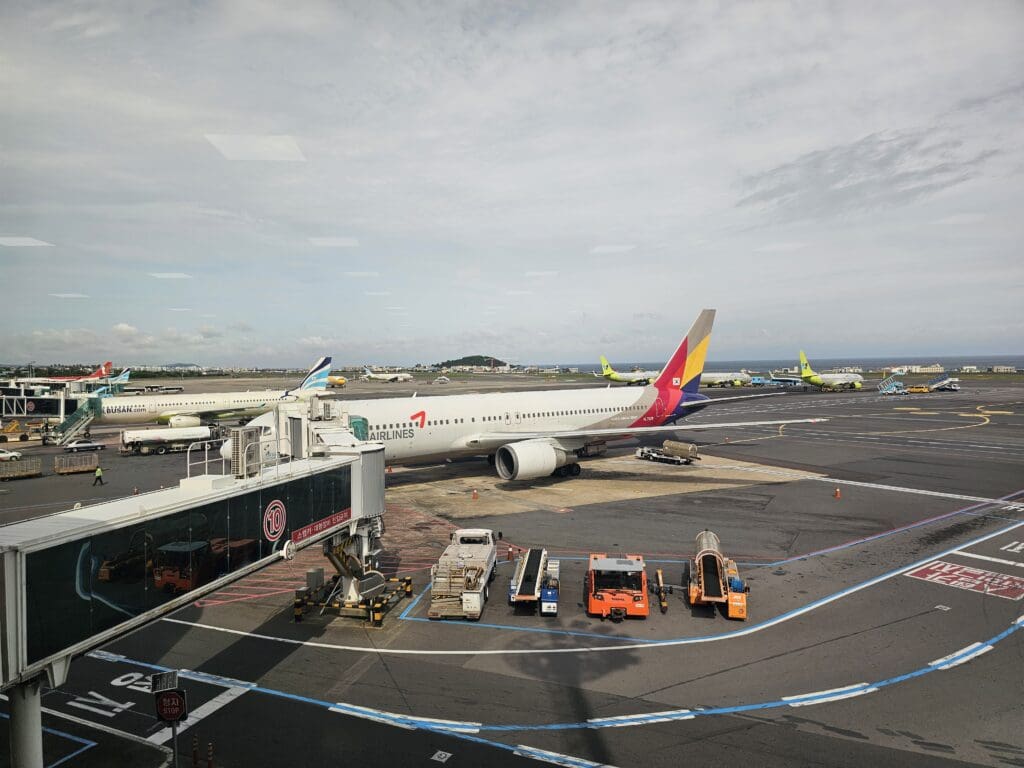
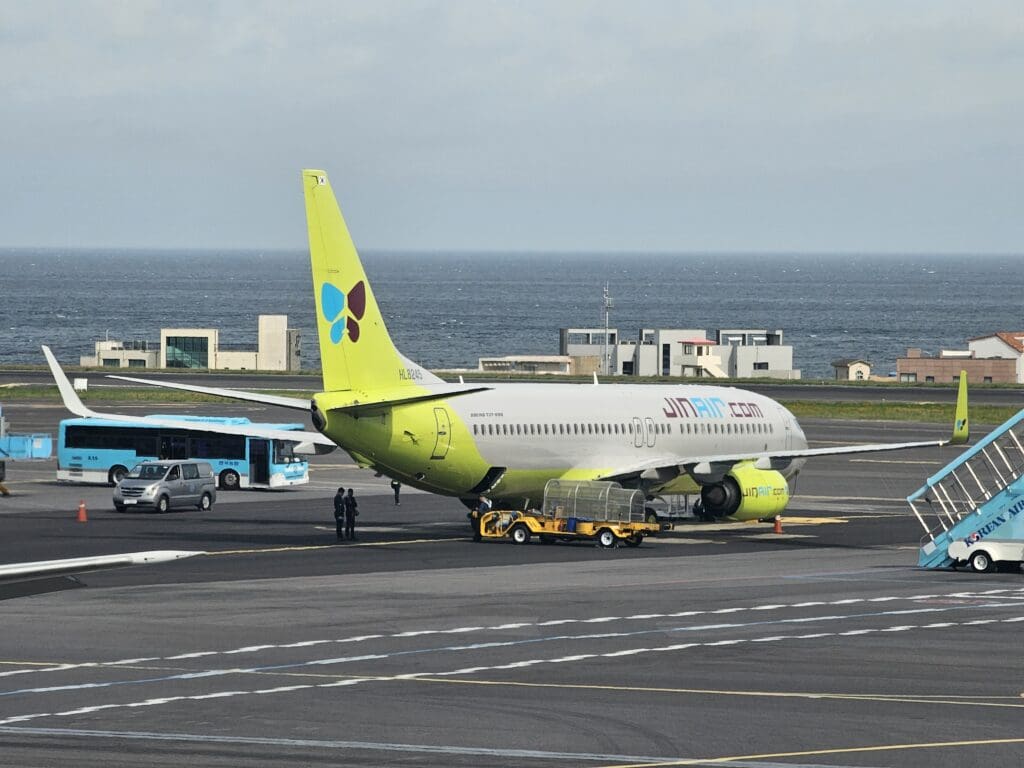
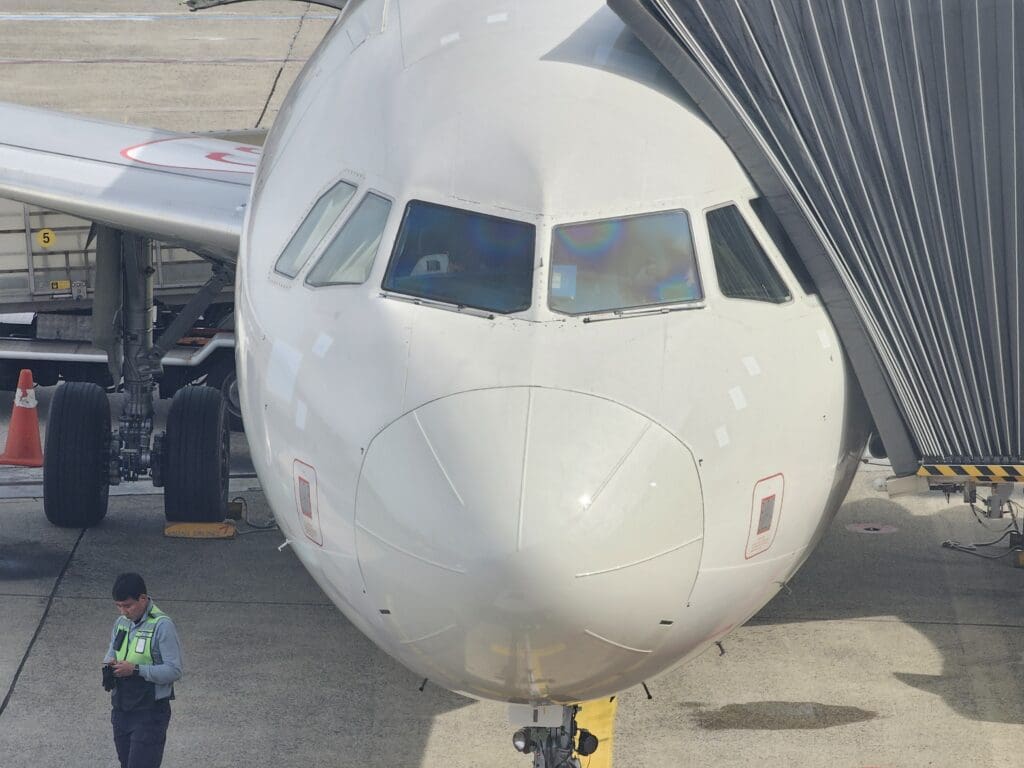
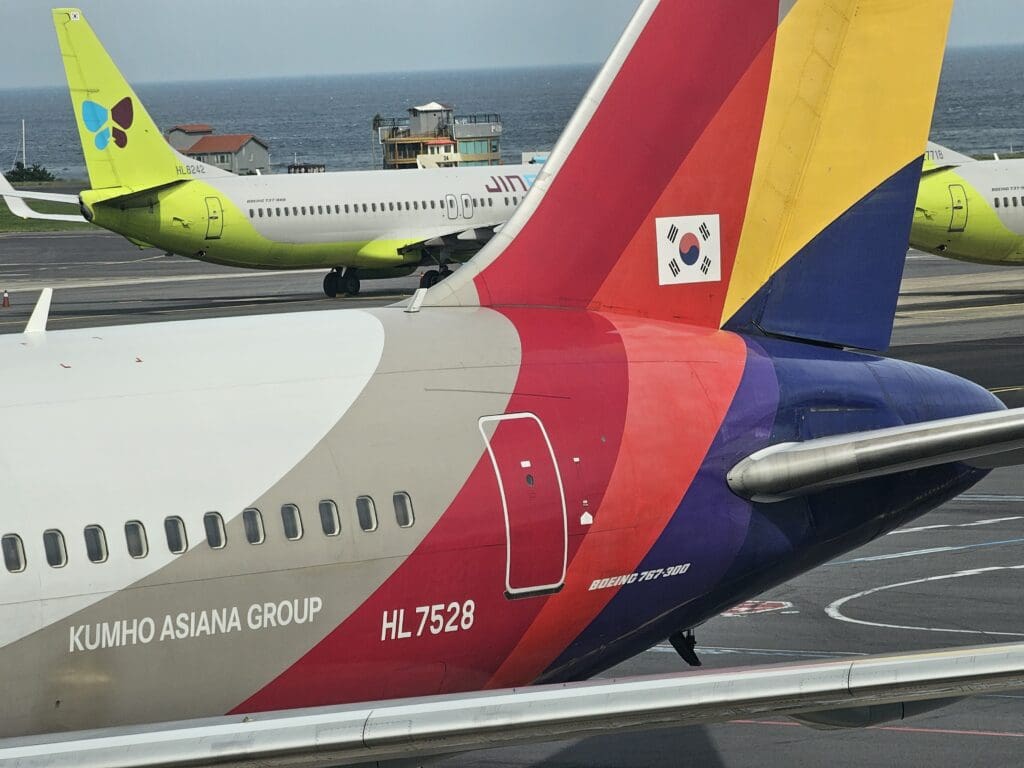

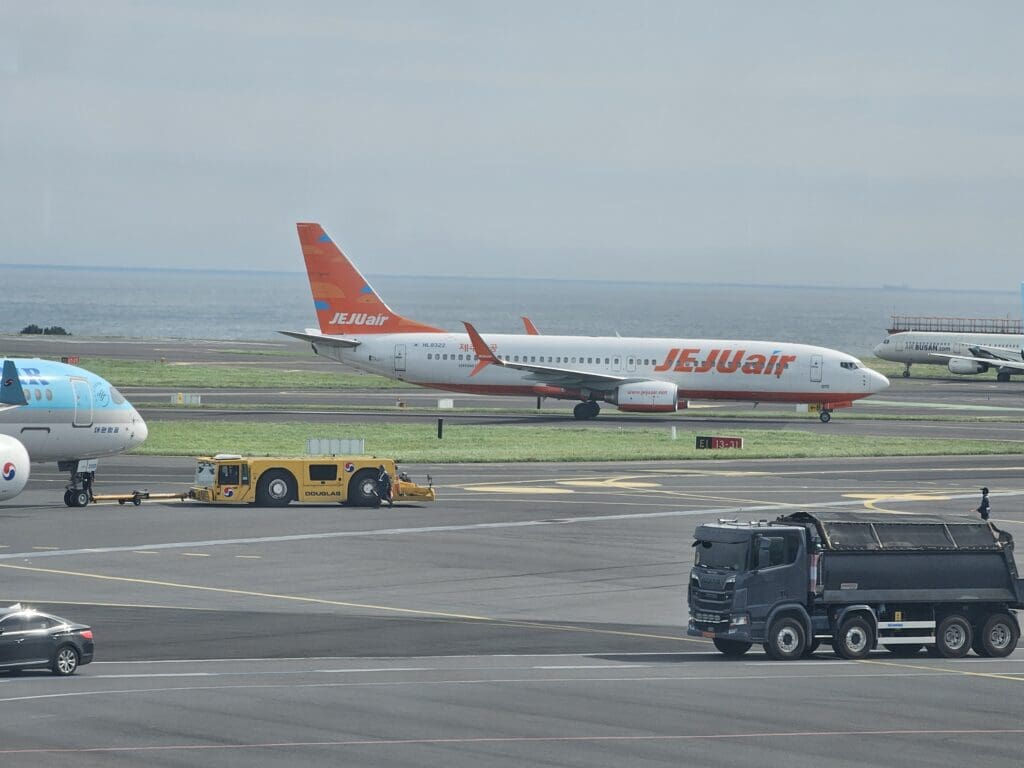
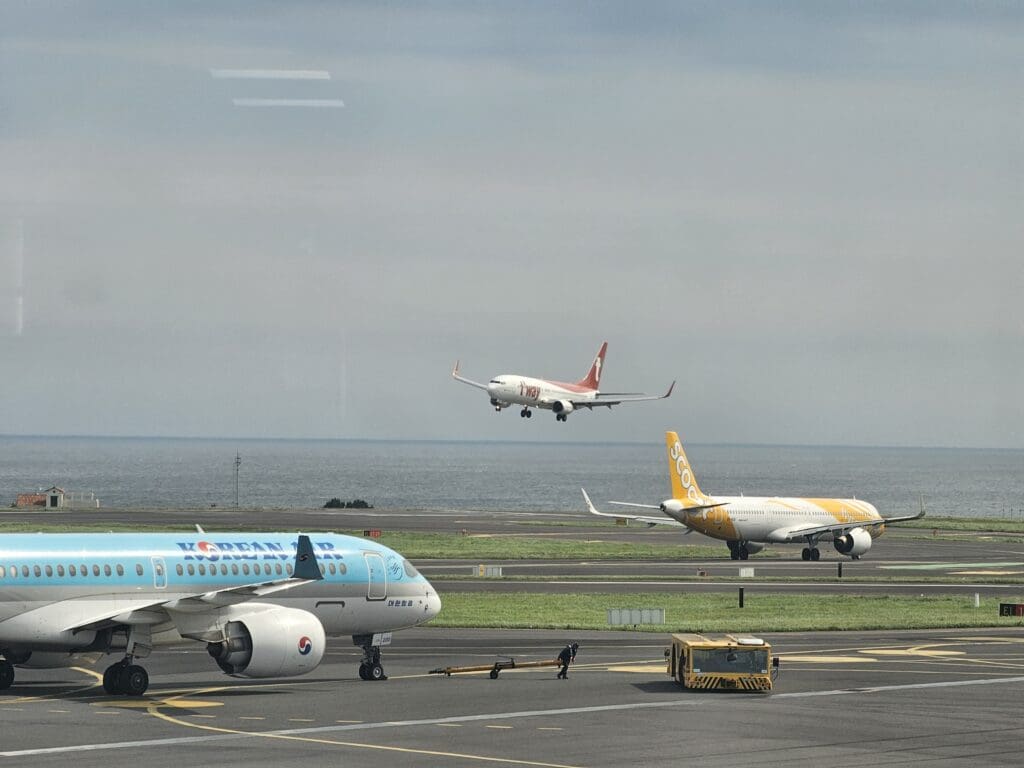
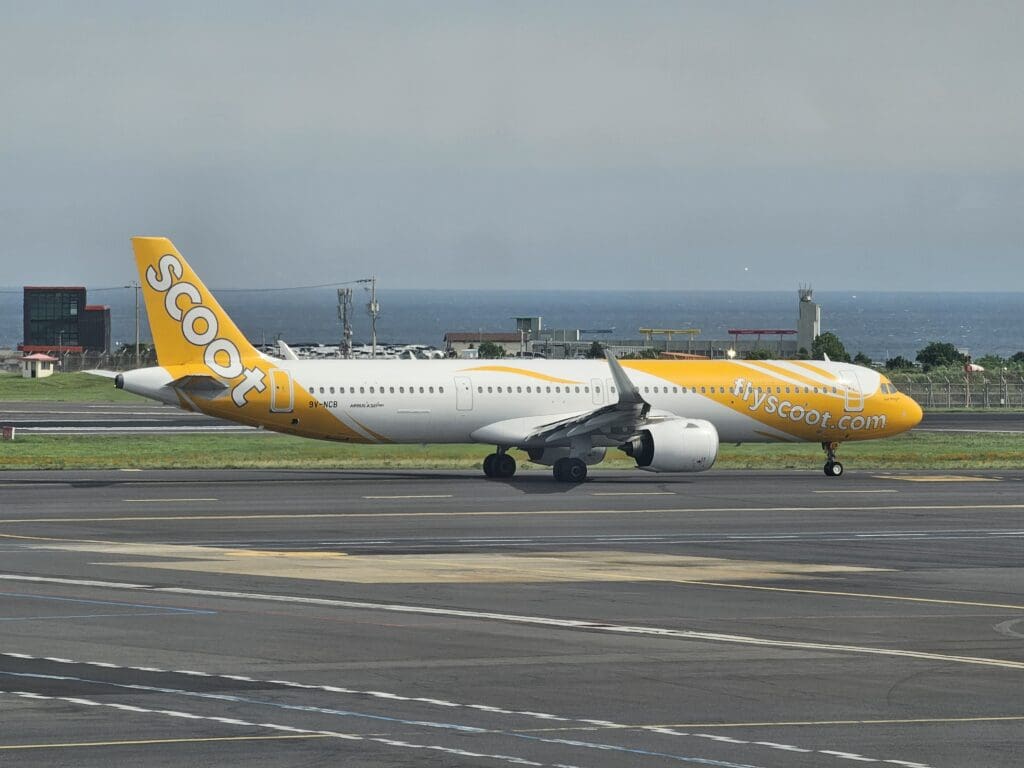
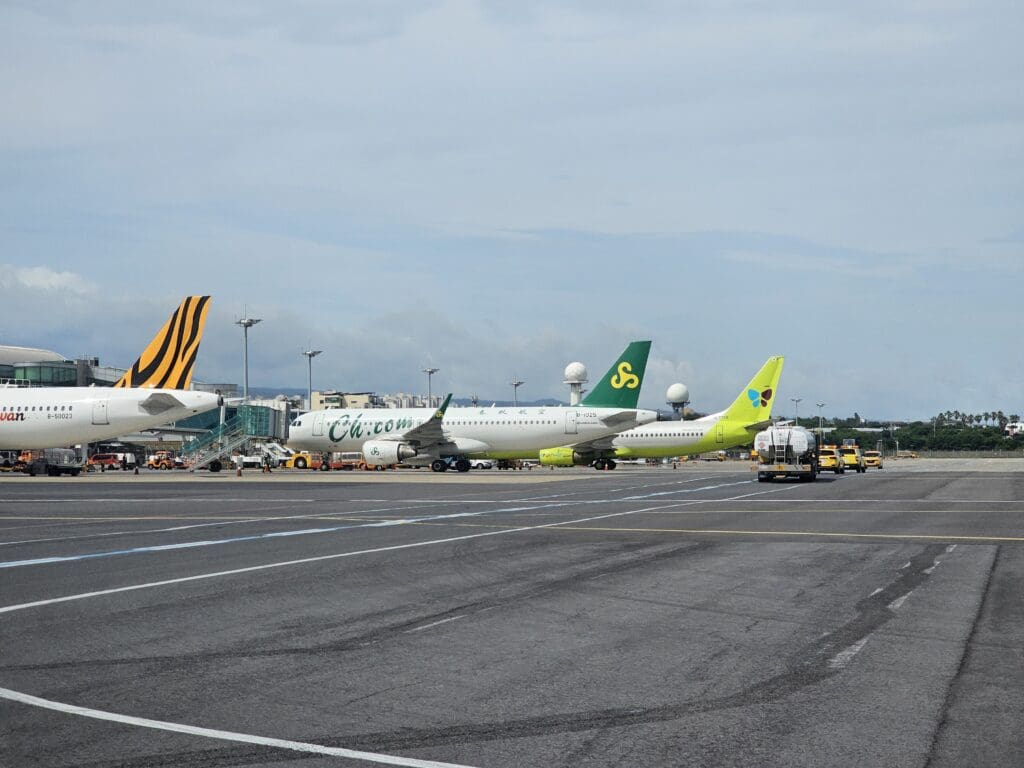
Alongside plenty of Korean airlines, as I waited I spotted two guests from abroad, a Scoot Airbus A321neo heading off at the start of its long five-hour slog down to Singapore, and a Tiger Air Taiwan Airbus A320 touching down at the end of its relatively short flight from Taipei Taoyuan. Meanwhile, as always seems to be a permanent fixture at Jeju, several Spring Airlines Airbus A320s could be seen on the ground waiting to head back to China. Looking at Flightradar24, I tracked the inbound Aero K Airbus as it made its way down from Cheongju. Following a 54-minute hop, I watched as the inbound aircraft floated down over the blue sea and made a slightly smoky touchdown on Runway 25 at its scheduled arrival time of 0925.
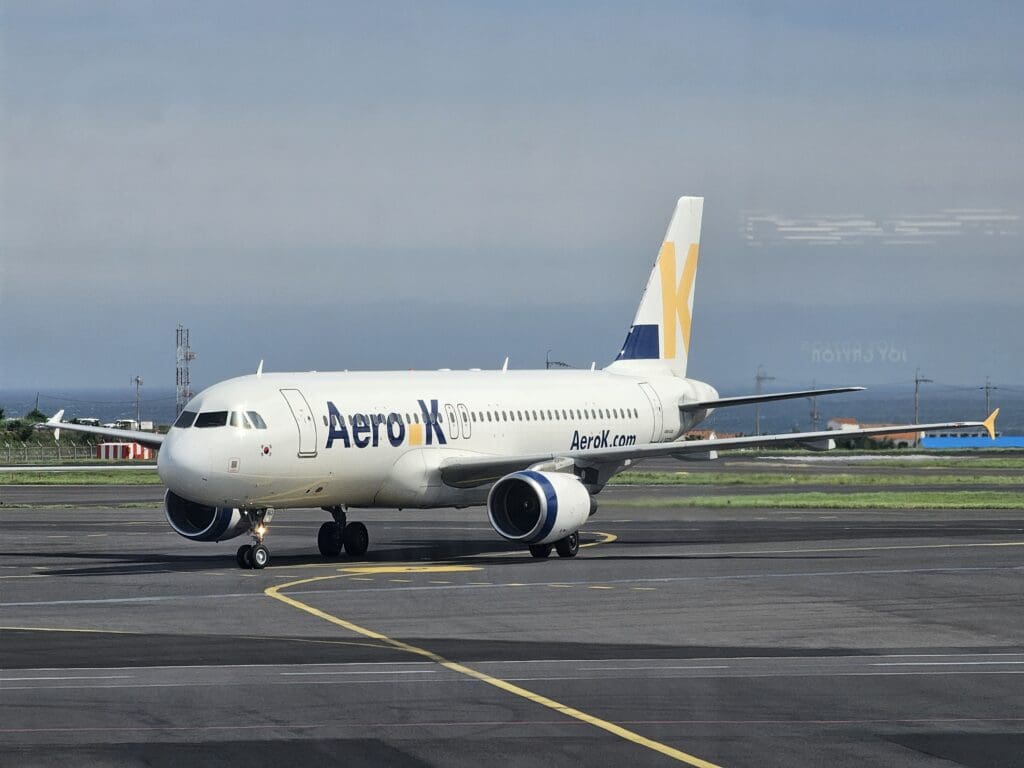
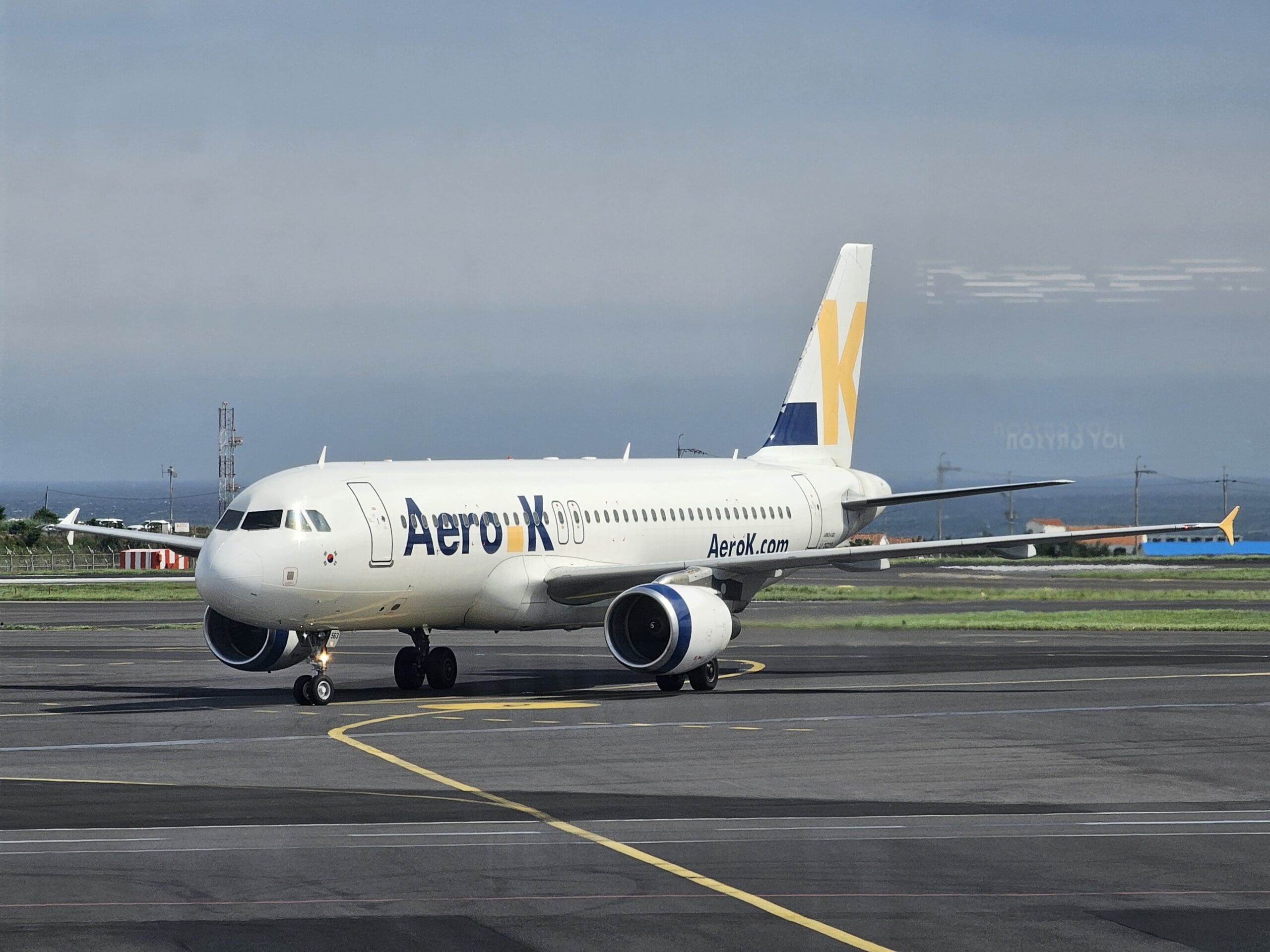
That morning, Aero K’s newest delivery, yet oldest aircraft, had been given the task of operating the Jeju rotation. This aircraft came in the form of Airbus A320-214, HL8563. Assembled at Airbus’ home factory on the grounds of Toulouse Blagnac Airport, this jet carries the manufacturer serial number 2407 and first took to the skies in March 2005 with the test registration F-WWDC. This made the aircraft 19.3 years old at the time of my flight. Following testing, the aircraft was flown southwards to its new home in Barcelona and was given the registration EC-JGM. There, the jet became the seventh aircraft to join the fleet of the then less than one-year-old Spanish low-cost carrier Vueling, where it was christened ‘The Joy of Vueling’. For the next fifteen years, the aircraft connected Barcelona with destinations across Europe and North Africa. During this time, the aircraft was involved in three significant incidents – two involving issues, whilst in 2016 the aircraft came into contact with a tug at Manchester Airport, grounding this for over two months.
Like many airlines across the world, the onset of Covid saw a rapid decrease in Vueling’s operations and as a result, EC-JGM entered storage and remained out of passenger use for well over two years, with this being kept at Barcelona, Castellón, Ciudad Real and Malta. Finally, in June 2022, the aircraft re-entered Vueling service, although this was not to last long and in January 2023, the aircraft was retired from Vueling for good. Taken up by FTAI Aviation, the Airbus was given a temporary Austrian registration of OE-LOH and was bound for start-up Uzbek airline Panorama Airways. Arriving in Tashkent in March 2023, the Airbus remained on the ground in the Uzbek capital for months until November of that year. With Panorama Airways never taking this up, the aircraft was flown to the Serbian capital, Belgrade, for checks before being repainted into Aero K’s livery in early 2024. Finally, in February 2024, the aircraft was ferried from Belgrade to Cheongju, making a mid-journey stop in Almaty, before commencing its new life with Korea’s new low-cost carrier. In the week prior to my flight, the aircraft had operated almost exclusively between Cheongju and Jeju. The exception to this being two rotations to Osaka Kansai, and a single trip to the Mongolian capital, Ulaanbaatar.
Once the Airbus had come to a halt at its remote stand, I decided to head down into the main airside waiting area and wandered over to Gate 3A. As with Jeju International Airport’s landside area, I wouldn’t describe the airside portion of the terminal to be overly modern, spectacular, or even memorable in its design, and it isn’t really somewhere that was designed with long waits in mind. Nevertheless, this seems to serve its function and so long as you don’t end up spending more than an hour or so waiting around there, you probably won’t be left with any major complaints. That morning, this was as busy as always, with plenty of gloomy-looking homeward-bound tourists seen waiting to head off to destinations across the Korean mainland. In terms of facilities, the airside portion of the terminal features a large duty-free store operated by JDC Duty Free, four cafés, two restaurants and a 7-Eleven.
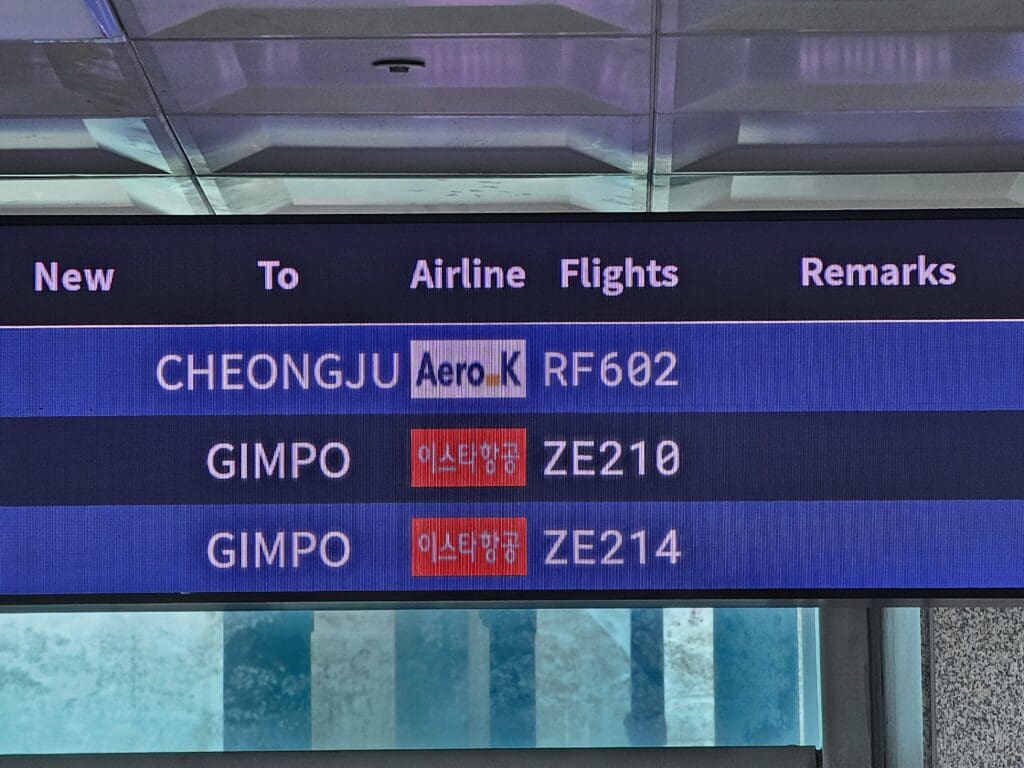
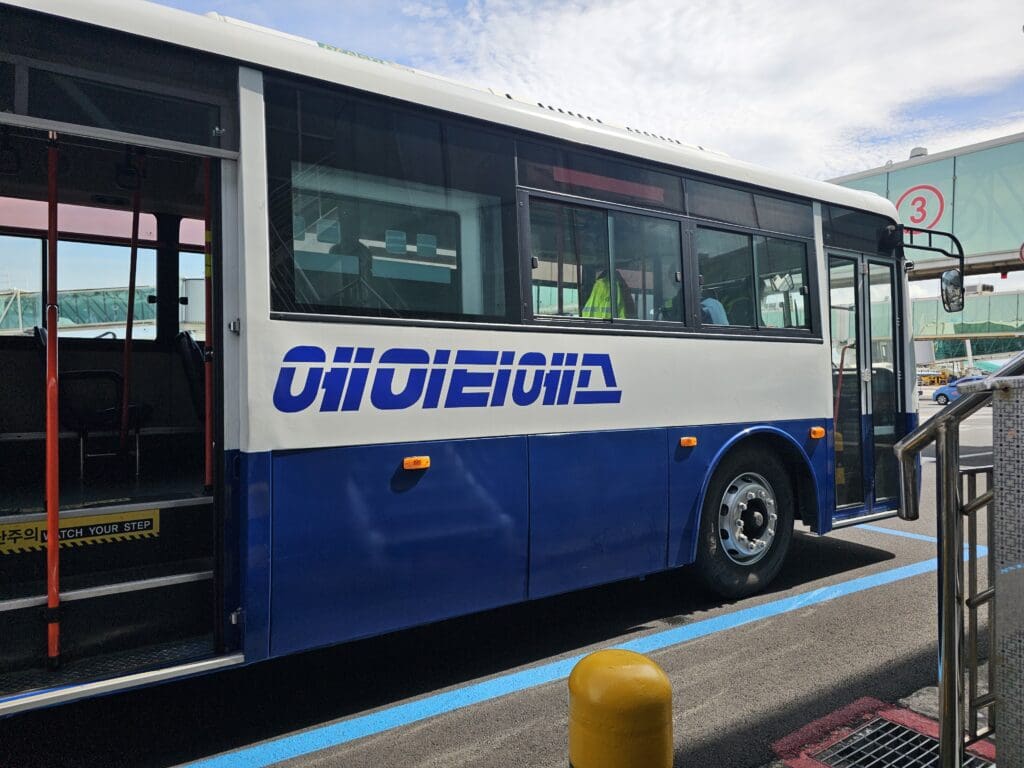
That morning, boarding was scheduled to commence twenty minutes prior to departure at 1000. Considering the fact that passengers had to be shuttled to a remote stand, this didn’t seem like a great amount of time, however, with over an hour between my flight’s scheduled arrival time and my train from Cheongju Airport to Daejeon, I was not particularly concerned about any minor delays. At 0950, two ATS Airport Service agents appeared at the gate and performed an announcement in Korean only advising passengers that boarding was soon to commence. A minute or so later, passengers were permitted to shuffle forward and it wasn’t too long before I reached the gate podium where my boarding pass was scanned and the agent wished me a nice flight. From there, I headed down the stairs and boarded the waiting bus. Compared to Asiana Airport Services and Korean Air buses that I have had the pleasure of riding at Jeju Airport, this was a little more basic and seemed to simply take the form of an old city bus that had found a new life at Jeju Airport. Very surprisingly given the bus’ airside role, the windows of this could be slid open!
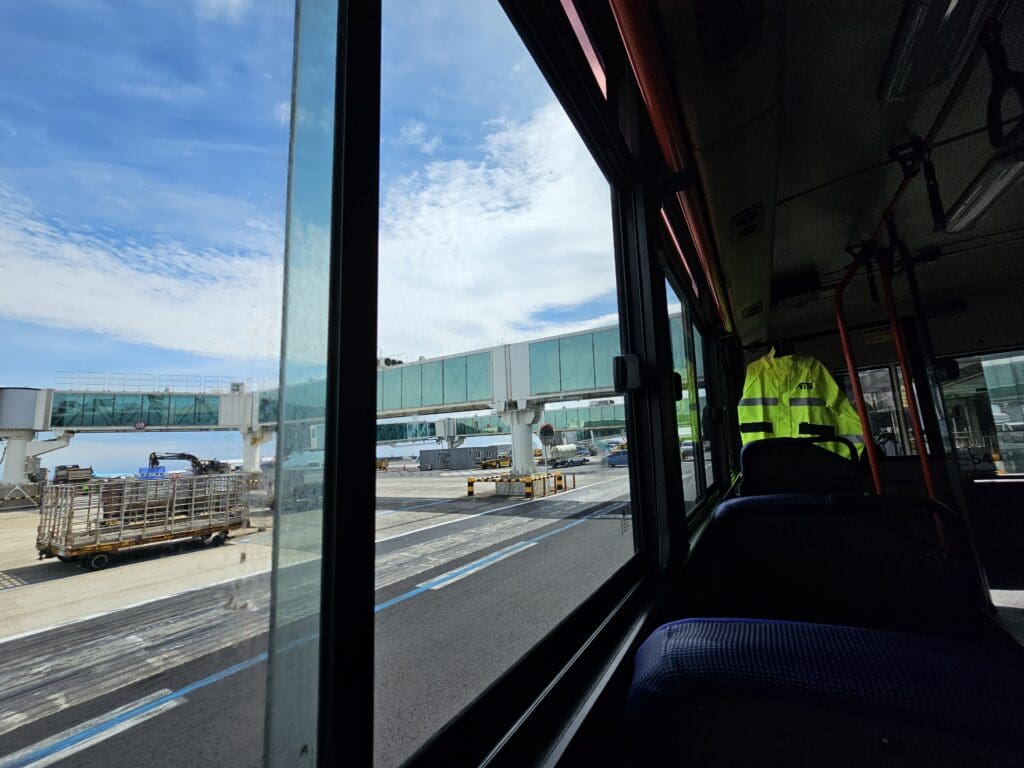
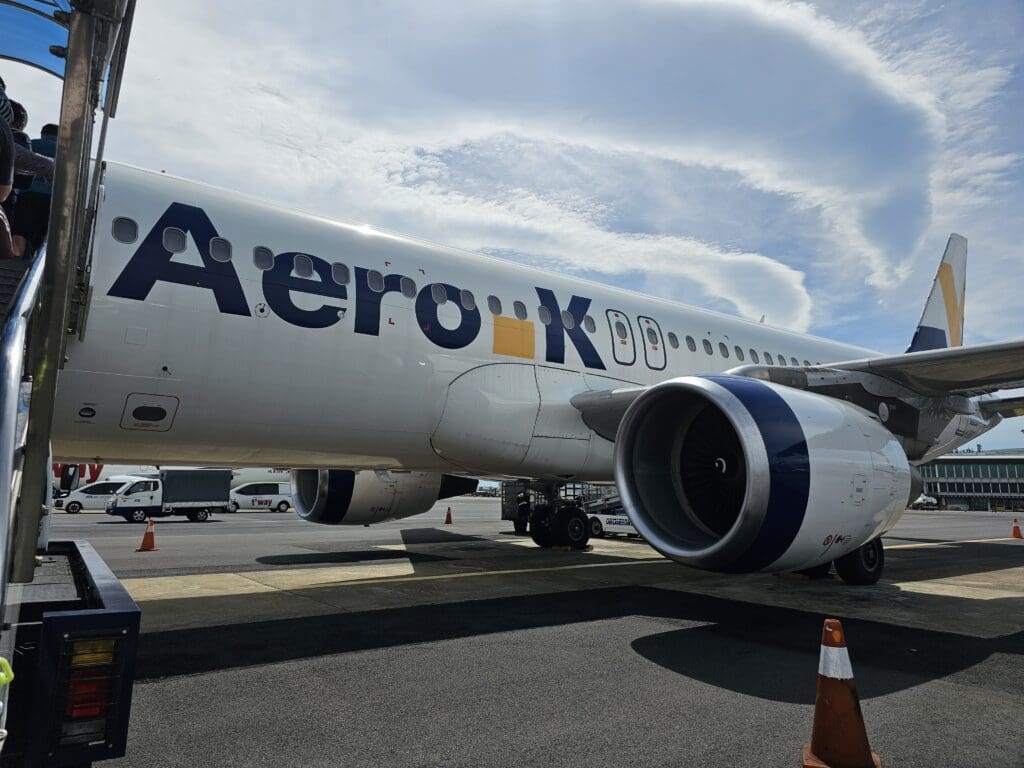
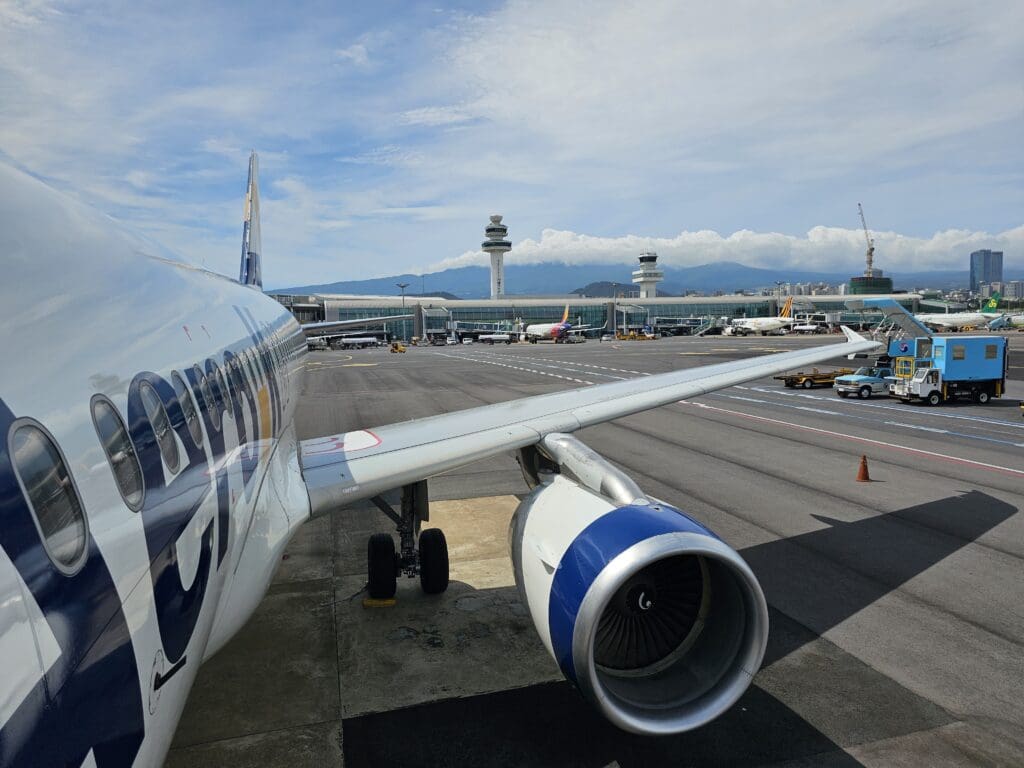
By 1000, the bus was full at which point the doors were closed and we began to trundle down the flight line before crossing the apron and journeying over to Stand 54. That morning, I would end up flying onboard Airbus A320-214, HL8563, and as we made our way towards this, a long stream of passengers’ bags could be seen being loaded into the aircraft for the short 228 mile hop back to its home base. Following our short journey out to the aircraft, the bus came to a halt near the foot of the covered airstairs that had been positioned up to the L1 door. As soon as the doors slid open, passengers spilt out onto the apron. Perhaps being just as excited as myself to sample the fine delights of Aero K, it appeared that my fellow passengers were in an urgent rush to board the aircraft and thus a scrum on the airstairs soon followed. Joining the passengers on the airstairs, I waited for a couple of minutes or so and I was blown around a little with a strong breeze blowing down from Mount Halla in the distance.
After admiring the largely clean exterior of the waiting Airbus in front of me, it was finally time to step onboard. Getting things off to a good start, as soon as I entered the Airbus’ forward galley I received a lively greeting in English. There, two crew members could be seen standing, both donned in Aero K’s stylish and casual yet smart uniform, designed by the trendy and expensive Korean brand, Matin Kim. For the first time on a Korean airline, one of those who welcomed me onto the aircraft sported a delightful bear, highlighting the positive cultural differences between Aero K and other Korean carriers. Once one of the flight attendants had checked my boarding pass, I was directed towards the rear of the aircraft and so without hesitation, I turned right and entered the cabin.
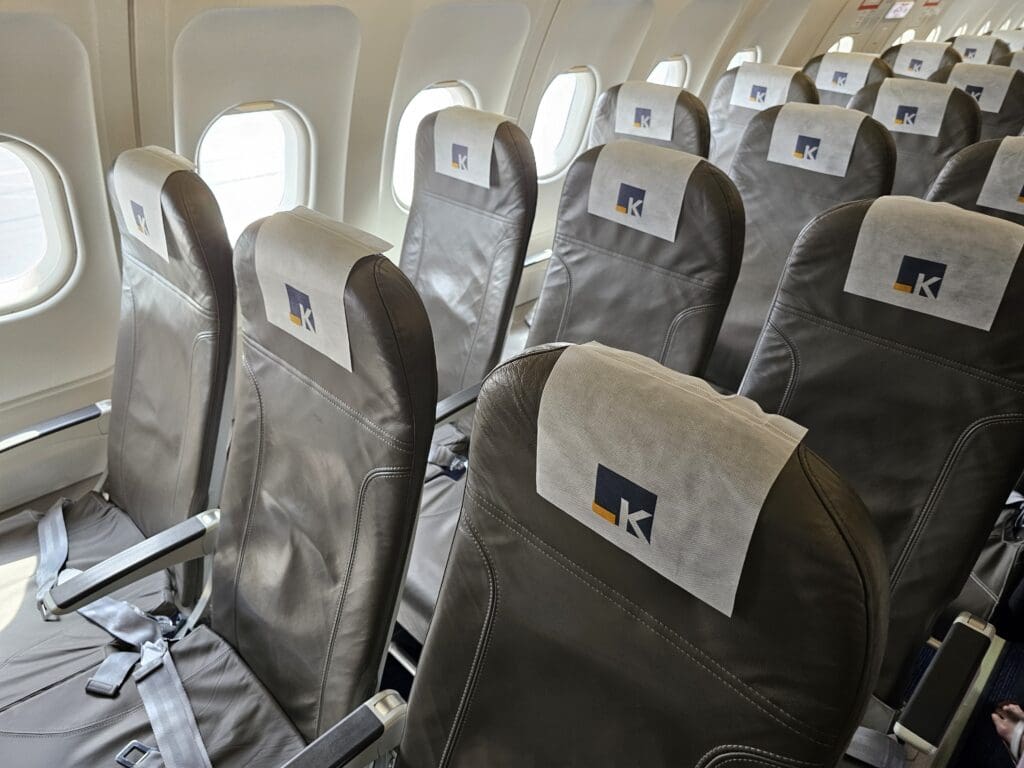
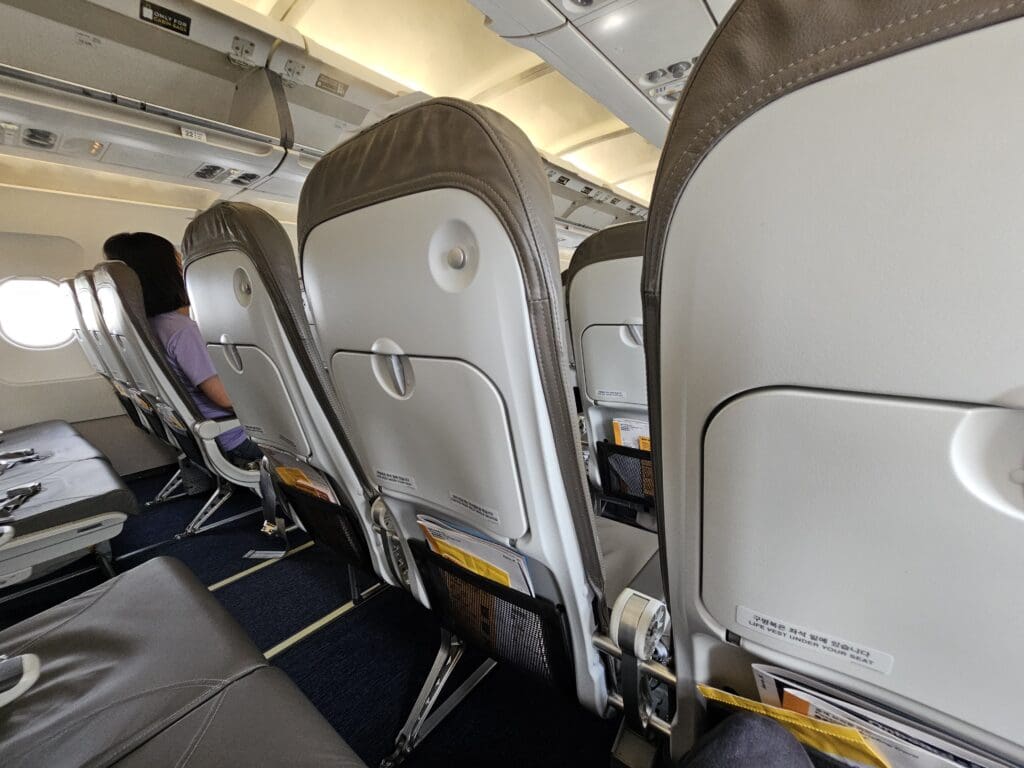
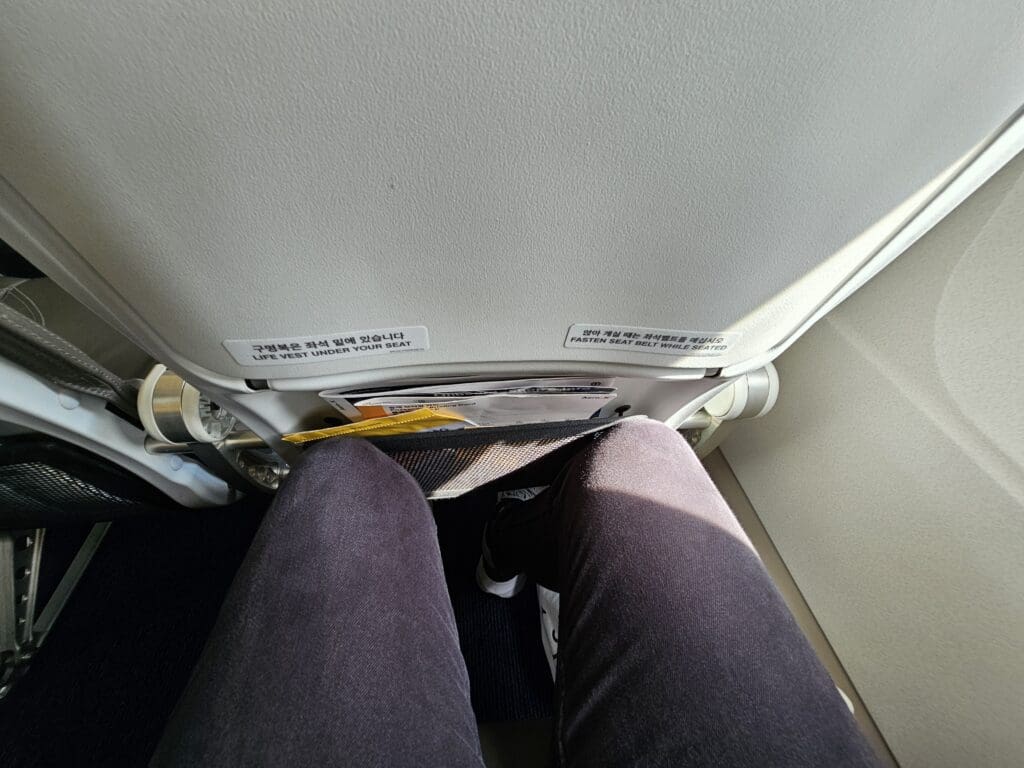
Looking online, photographs of Aero K’s cabins revealed the seats within these to be slim and modern, and in keeping with the airline’s brand colours, are covered in a blue and yellow pleather. Eager to sample this seat, as I passed through the windbreak I was a little disappointed to be presented with the familiar sight of 180 ironing board like Recaro SL3510 seats. From 2018 until 2024, these were the International Airlines Group’s seat-of-choice for their narrowbody Airbus fleet, found on the jets of British Airways, Iberia, and the group’s low-cost carrier, Vueling. This serves to explain how this seat ended up in Korea. Other than the removal of most Spanish signage, the aircraft’s cabin had undergone virtually no transformation since its days with Vueling, with each seat covered in a grey pleather cover, the only addition being a fabric antimacassar that sported Aero K’s motif. Meanwhile, on the inner side of the overhead locker doors, Vueling decals could be seen advising passengers to stow smaller items under their seats. As you may be able to guess, the Recaro SL3510 is far from my favourite seat model, and having had the (dis)pleasure of sitting in them on slogs across Europe with British Airways, I can safely say that these are cramped, firm, thin and spartan, offering nothing more than a coat hook, a small tray table and a seatback pocket.

As I made my way down the aircraft, I was left very impressed by the flight attendants, who not only gave me warm and friendly welcomes, and assisted passengers with storing their luggage and finding their seats, but they genuinely seemed very happy to be at work! Having had plenty of experience flying on Korean carriers, whilst service levels are usually high, sometimes the crew can seem to be a little robotic. However, I was delighted to find that this wasn’t the case on Aero K. After receiving two more lively welcomes as I wandered down the cabin, I reached 23F, and, seeing as I may end up trapped for the duration of my flight, once I had stowed my bag, I decided to pay a visit to one of the two lavatories at the rear of the jet. Upon opening this up, I found the lavatory to be clean, tidy and in a reasonable state with only a few signs of wear and tear. Hinting at the aircraft’s past life, I spotted a single bilingual Spanish-English sign.
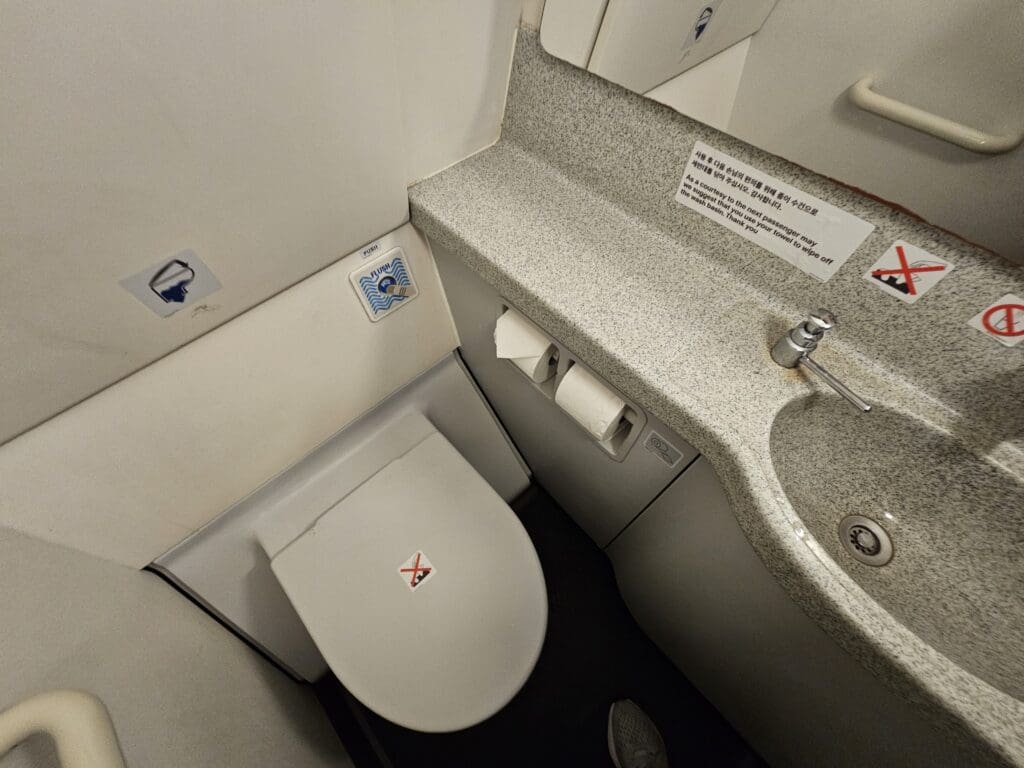
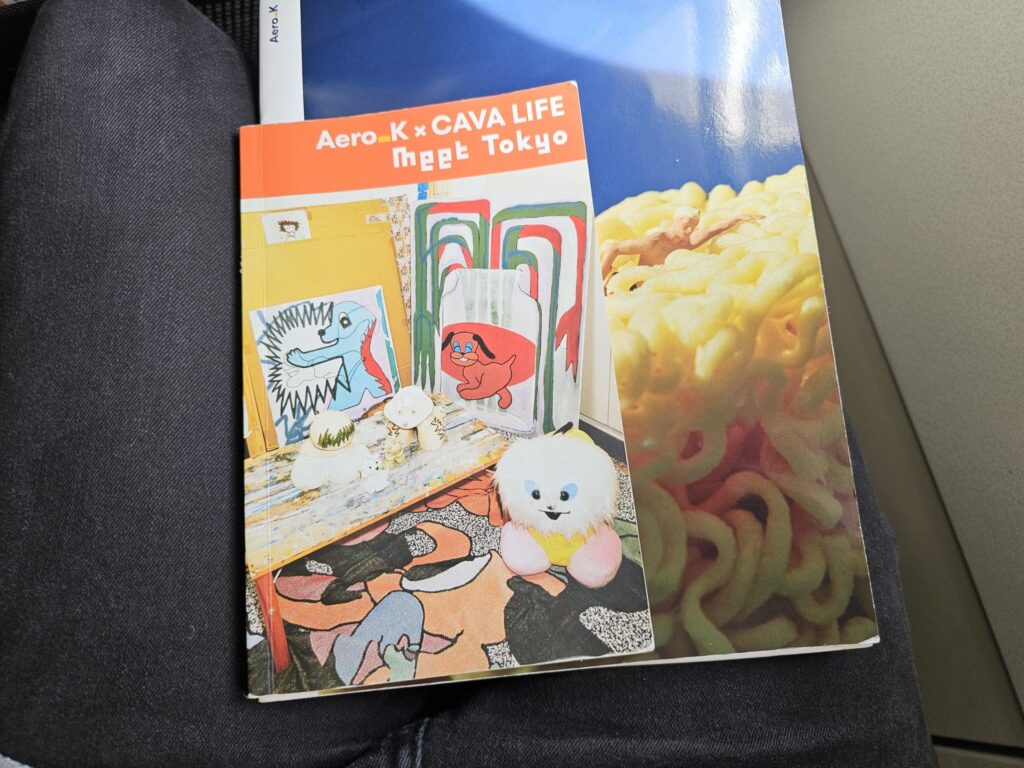
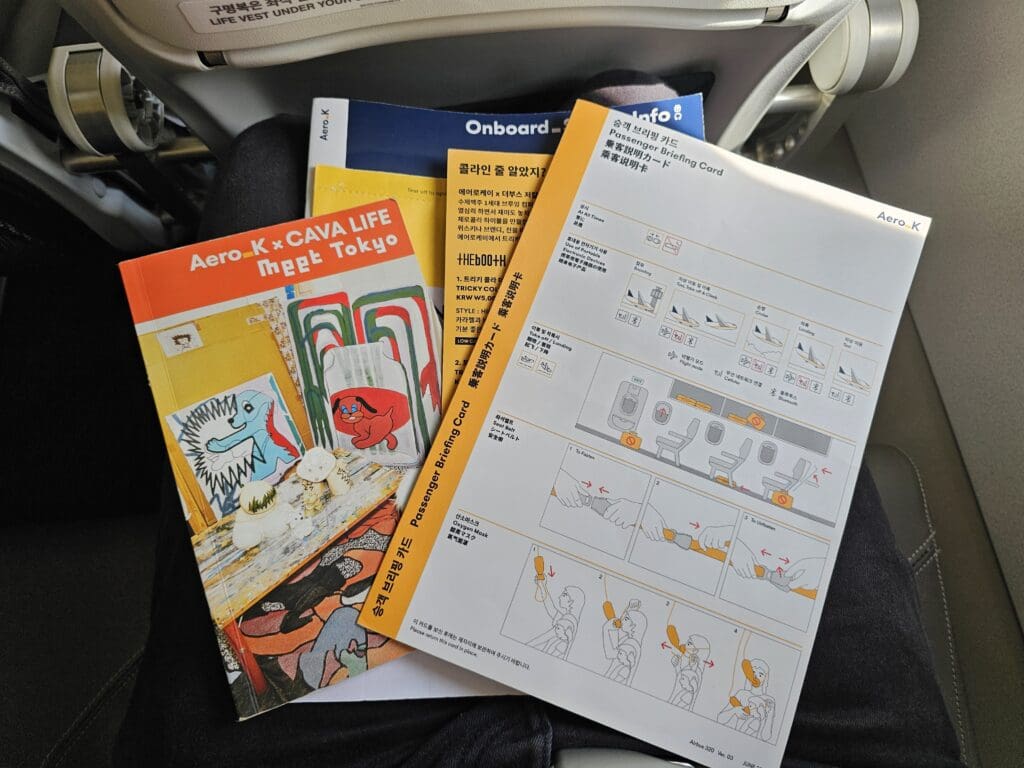
Following my quick lavatory visit, I returned to my seat and squeezed in for the short journey ahead. As I had suspected, the seat was uncomfortable and cramped, being as hard as an ironing board and offering very little in the way of legroom. Interestingly whilst the aircraft lacks any sort of inflight entertainment system, the amount of space was further limited by the presence of a rogue inflight entertainment box. However, all was not doom and gloom, as despite the aircraft’s long career with Vueling, I found the seat and surrounding area to be in good condition with very few signs of wear and tear. Meanwhile, this was also spotlessly clean and tidy. Turning to the seatback pocket, this contained the all-important safety card, a sick bag, an onboard shopping menu and a promotional card advertising three drinks for sale brewed by Seoul-based microbrewery, the Booth Brewing Co., as well as something of a Tokyo guide published in cooperation between Aero K and Cava Life.

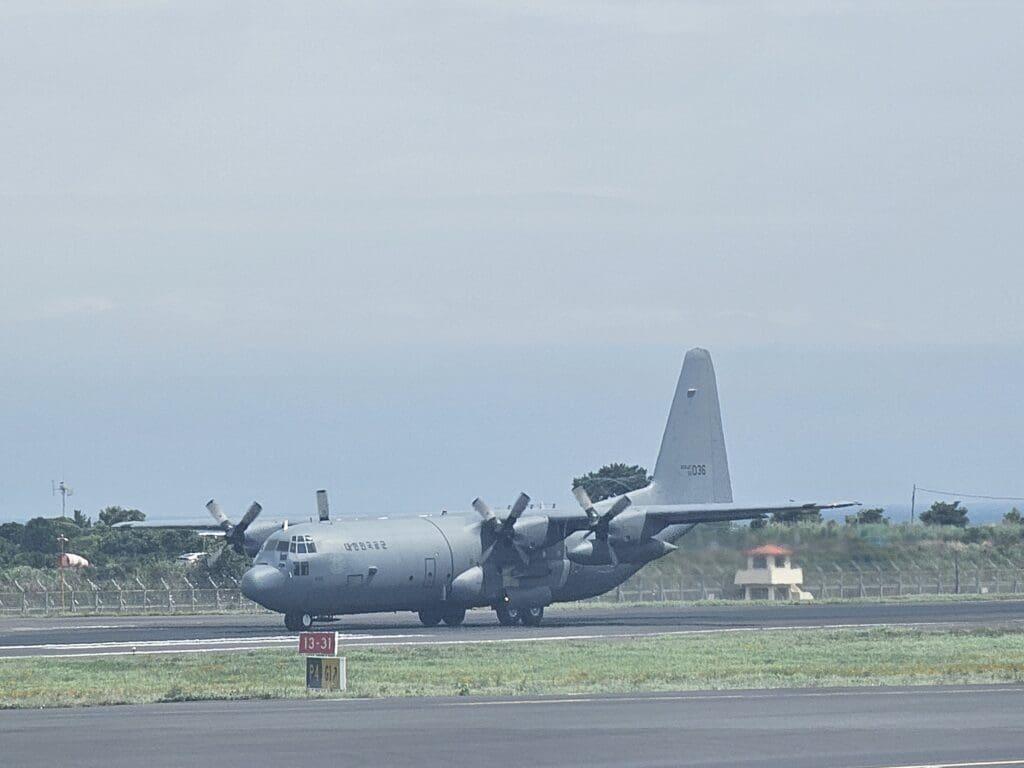
No more than a couple of minutes after I had taken my seat, the second and final bus load of passengers pulled up to the aircraft and I was soon joined by two muscly seatmates who appeared that they may well have been in town for the local bodybuilding competition. Thus guaranteeing that I would be squeezed up next to the window for the ride up to Cheongju! At this stage of the journey, water vapour could be seen steaming out of the air conditioning vents, however, for those not expecting this, the cabin crew made multiple announcements in Korean and English advising passengers that this was nothing to worry about. As I waited, looking outside, all bags appeared to have been loaded up into the belly of the aircraft with plenty of time to go until departure. Meanwhile, I managed to spot a noisy ROKAF Lockheed C-130 Hercules rocketing down the runway at the start of its flight back to the mainland, with this being one of two such aircraft spotted in Jeju that morning.
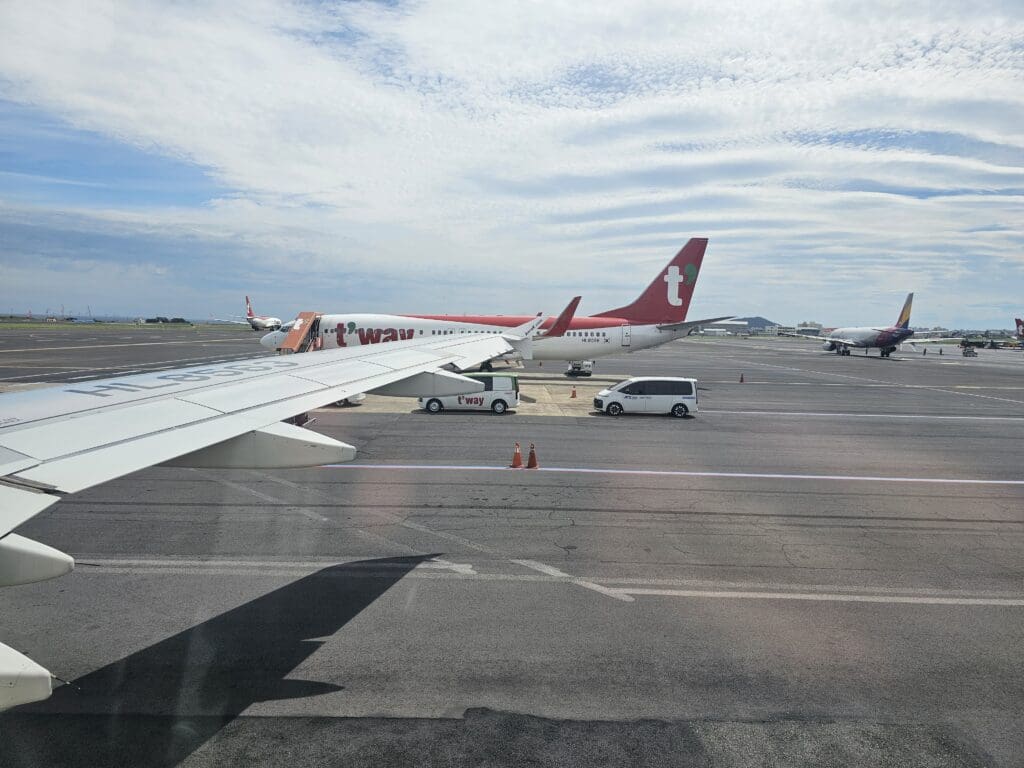

As I had suspected, boarding took a little longer than twenty minutes and the final passenger didn’t make it onto the aircraft until just after our scheduled departure time. Fortunately, by this time, all else appeared to be ready to go and the cabin door was closed immediately behind them before all equipment was removed from around the aircraft. That morning, the flight seemed to be full, and as I cast my eyes around the cabin, I failed to spot any spare seats. Whilst many passengers hailed from Korea, there also seemed to be plenty of Chinese-speaking passengers onboard too, with most onboard taking the form of tourists, including a fair number of families. Once the cabin doors had been closed and armed, the Purser performed their welcome announcement in Korean and English, which consisted of the usual welcomes, greetings, thanks and warnings regarding seatbelts and not breaking Korea’s Aviation Security Law. Once this had been completed, the crew took to the aisles and performed the safety demonstration whilst the Purser read through the safety instructions in Korean and English.
Many would argue that, unlike a safety video, a safety demonstration is a safety demonstration, and there isn’t much that distinguishes one airline’s demonstration from another’s. However, likely in an attempt to capture passengers’ attention, this seemed to be a little more upbeat and lively when compared to your bog standard run-through of the emergency procedures. For example, this commenced with a rather over-the-top clap that most certainly managed to draw my attention! As this demonstration took place, the Airbus’ two CFMI CFM56-5B4/P engines hummed into life accompanied by the Airbus A320 Family’s famous squeaky ‘barking’ noise. One advantage of our parking position was that, like many of Jeju International Airport’s remote stands, no pushback was needed and so, despite the late end to boarding, the Airbus powered forward out of its stand just seven minutes after our scheduled departure time.
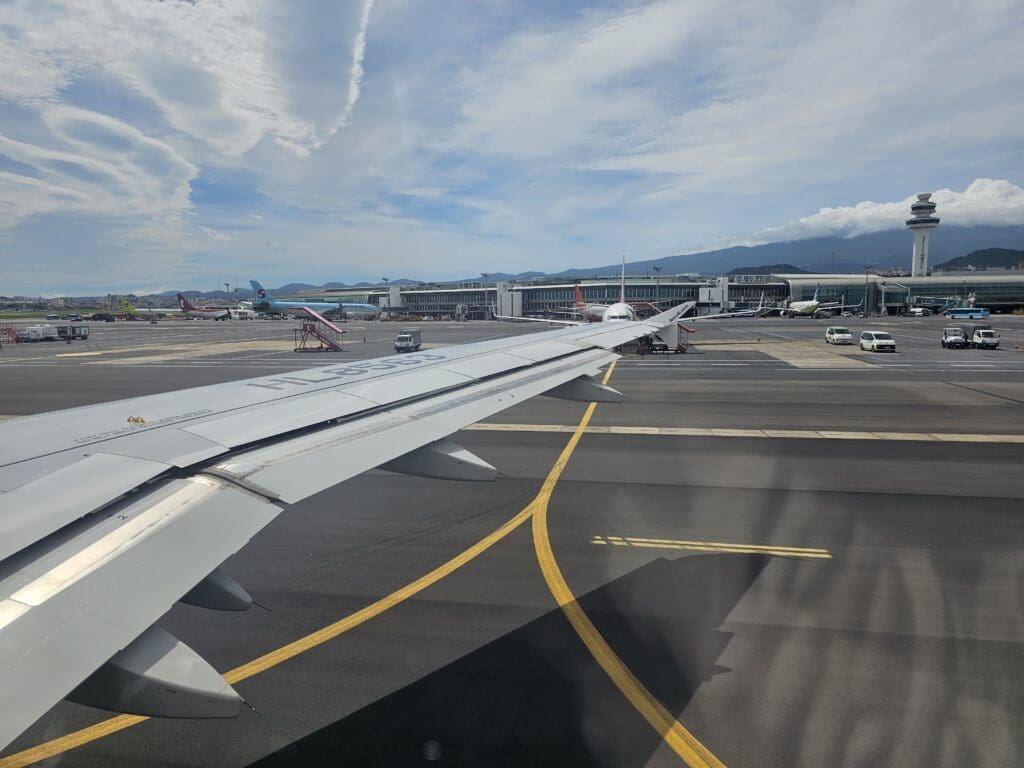
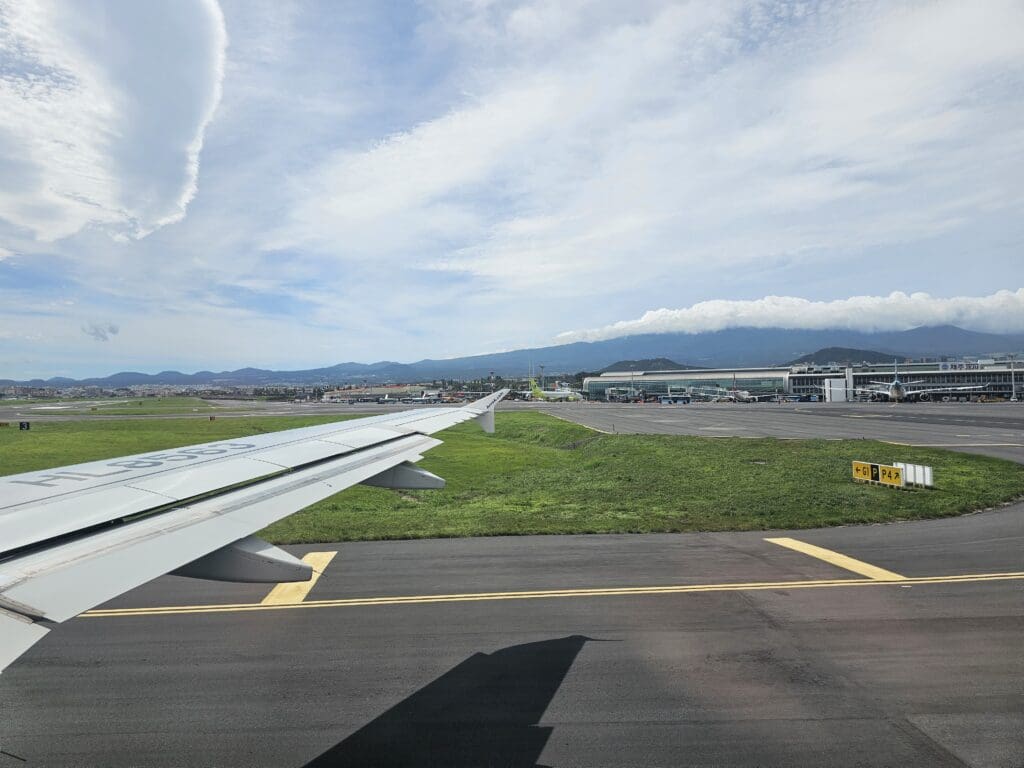
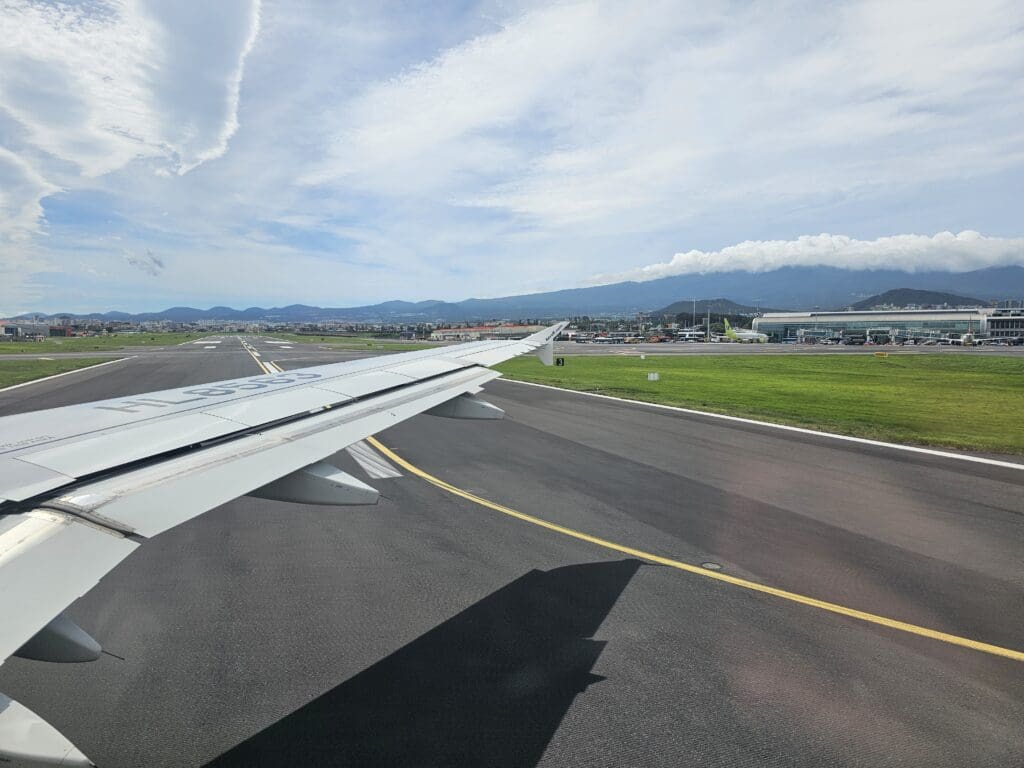
As we slowly edged forward, two members of the ground crew waved us goodbye before we swung left and began our taxi to the end of Runway 25. Whilst this was not a long journey in terms of distance, as always, the airport was rather busy and this ended up being a stop-start journey as we shuffled along the takeoff queue. Ending up sixth in line to take-off, we took our position behind aircraft operated by Asiana Airlines, Jeju Air, Korean Air and T’way Air bound for the mainland, along with a Tigerair Taiwan Airbus A320 returning back to its base in Taipei. Meanwhile, with a single runway in use for both arriving and departing traffic, we were also required to wait for two Jeju Air Boeing 737-800s to touch down on the island before we could head off.
With no tight connection in Cheongju, and with the slow journey allowing me to get a good look at the Korean Navy’s Lockheed P-3 Orions, I couldn’t complain. Upon taking the second position in the queue, the Purser’s voice filled the cabin as they apologised for the delay and advised we could expect to take off in fifteen minutes. Given our position in the takeoff queue and the lack of inbound traffic at that time, I was rather sceptical that this would be the case and indeed, no more than three minutes later, ‘AEROHANGUK 602’ was cleared to enter the runway. On a side note, the ‘Hanguk’ in Aero K’s callsign means Korea in Korean, and thus, if translated, this essentially means Aero Korea, which can be shortened to Aero K! Following a short pause to allow for the recently arrived Jeju Air jet to taxi off the runway, at 1042, the two CFMI engines spooled up and the Airbus performed a reasonably powerful takeoff before rotating upwards into the sunny skies of Jeju.
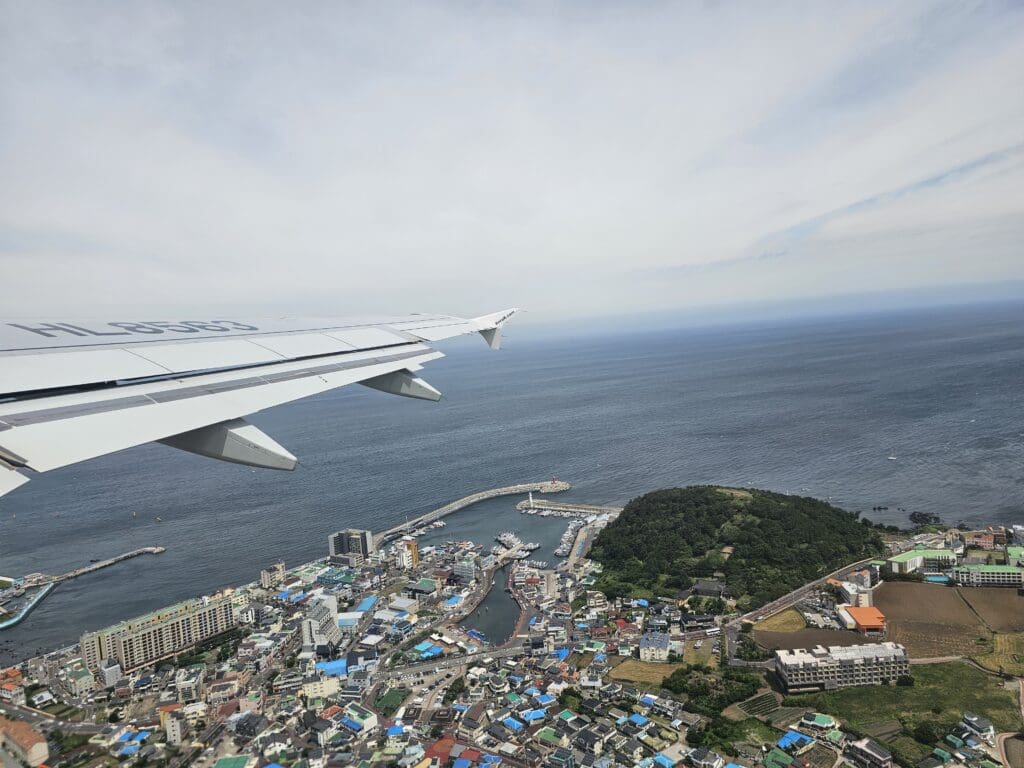
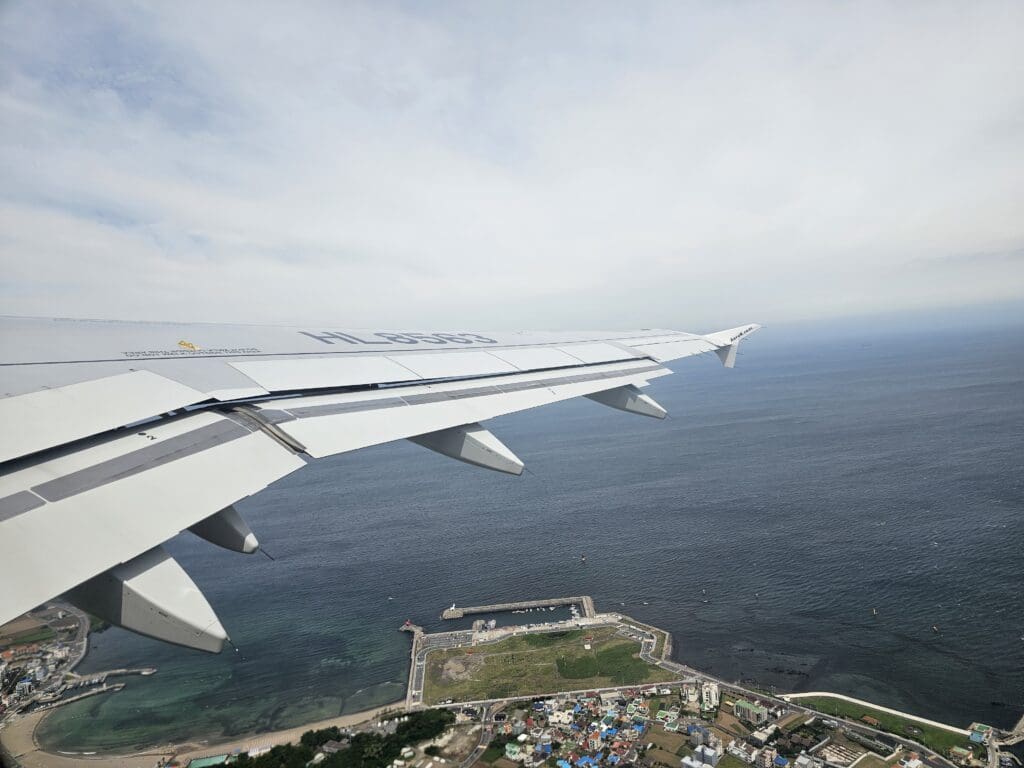
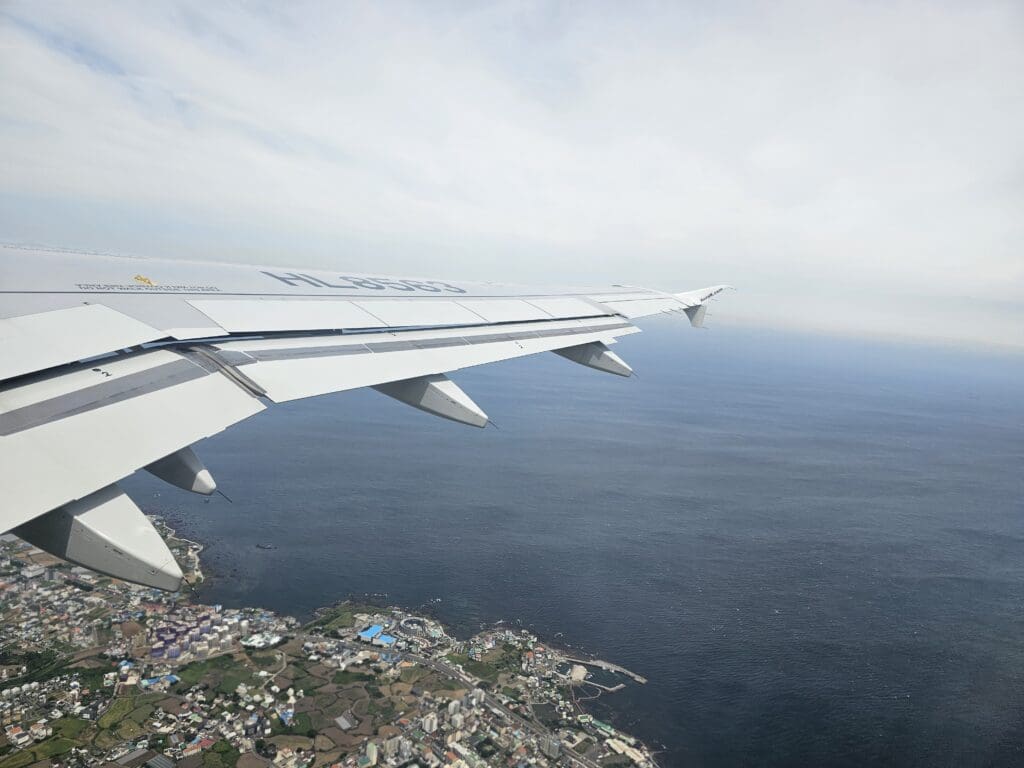
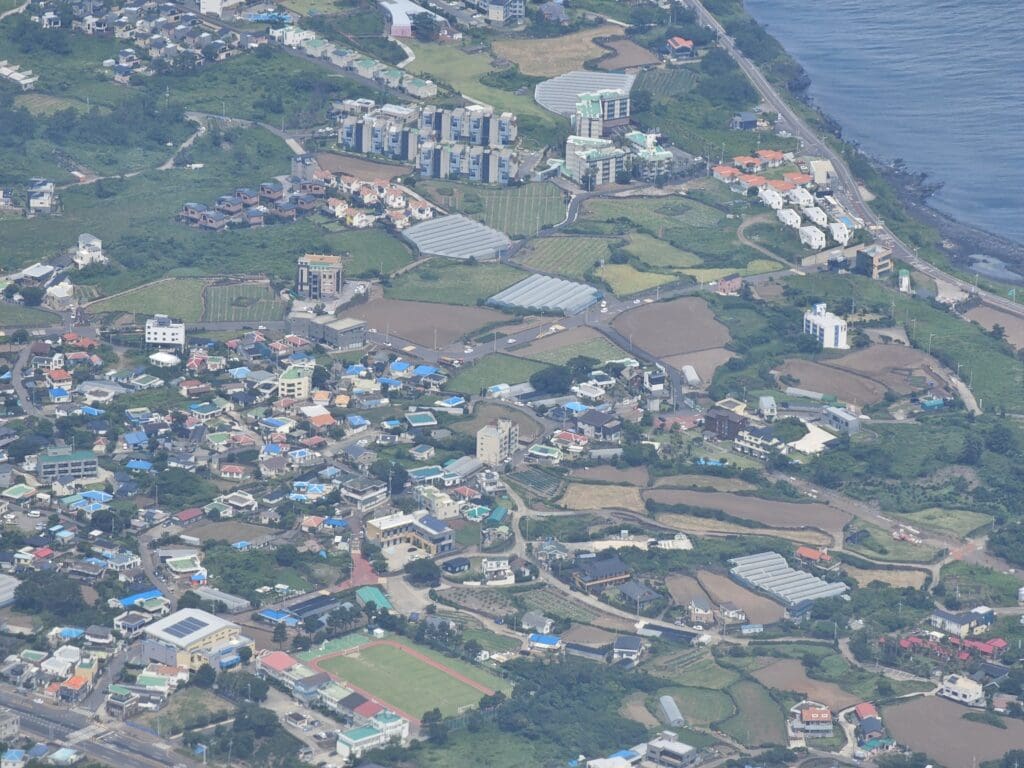
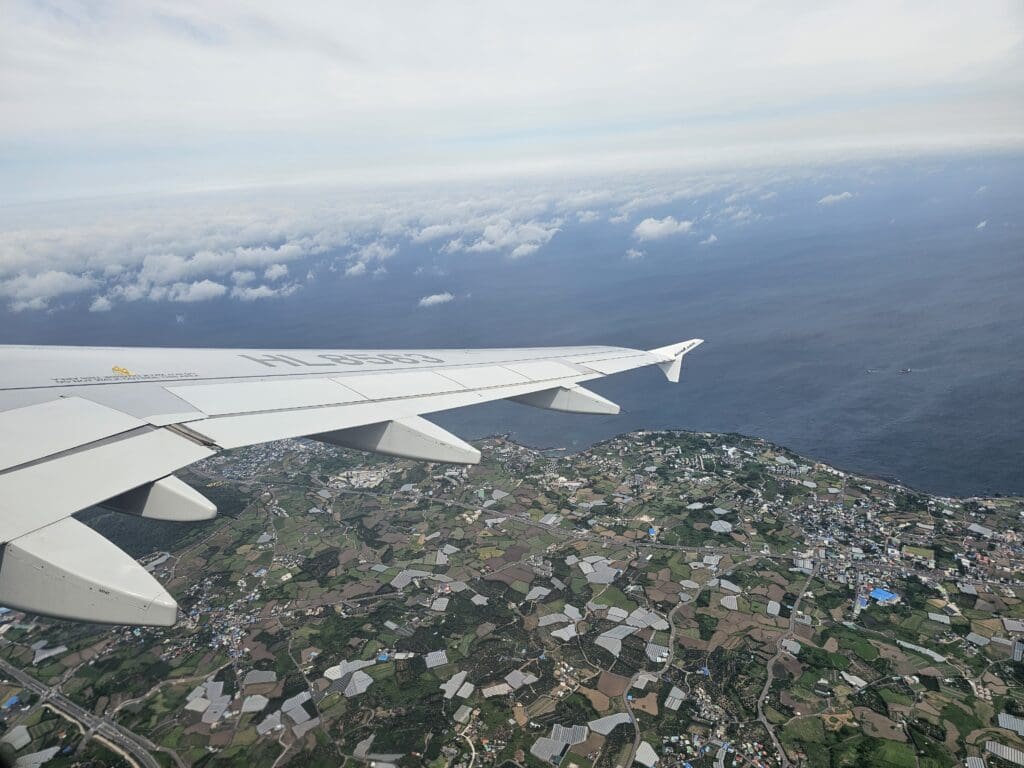
Moments after taking to the skies, we began to be shaken around a little, with a reasonably strong crosswind blowing across the runway that morning. Meanwhile looking outside, I was treated to good views of the blue seas and parts of Jeju’s northern coastline. During the initial stages of our climb, I caught sight of Dodubong, a small hill to the south of the airport, as well as Iho Tewoo Beach and the Gueom Stone Salt Flats before we reached one of Jeju’s largest towns, Aewol. Upon reaching Aewol, the Airbus turned onto a northerly heading and began its short trip across the stretch of sea that separates Jeju from South Jeolla Province.
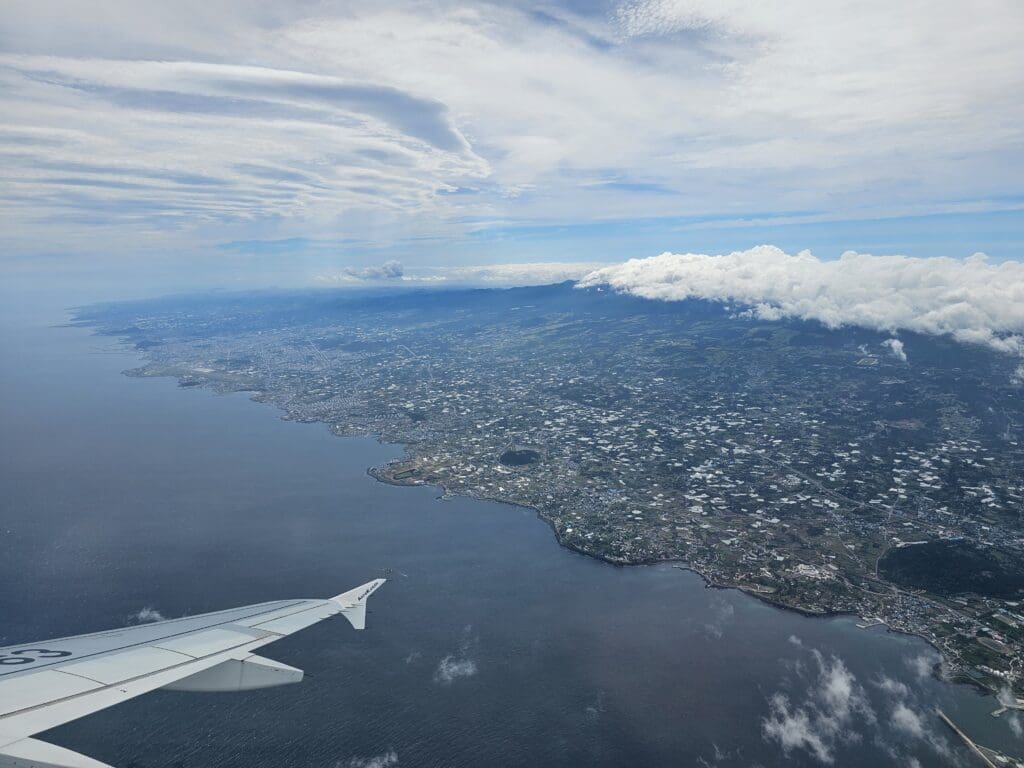
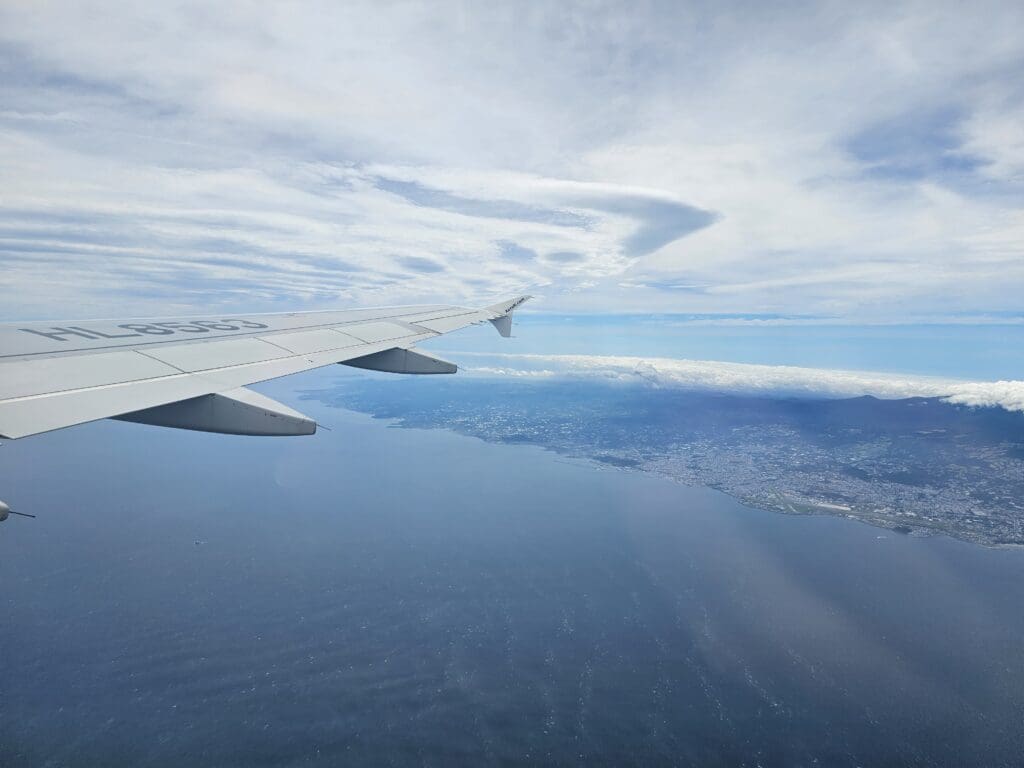
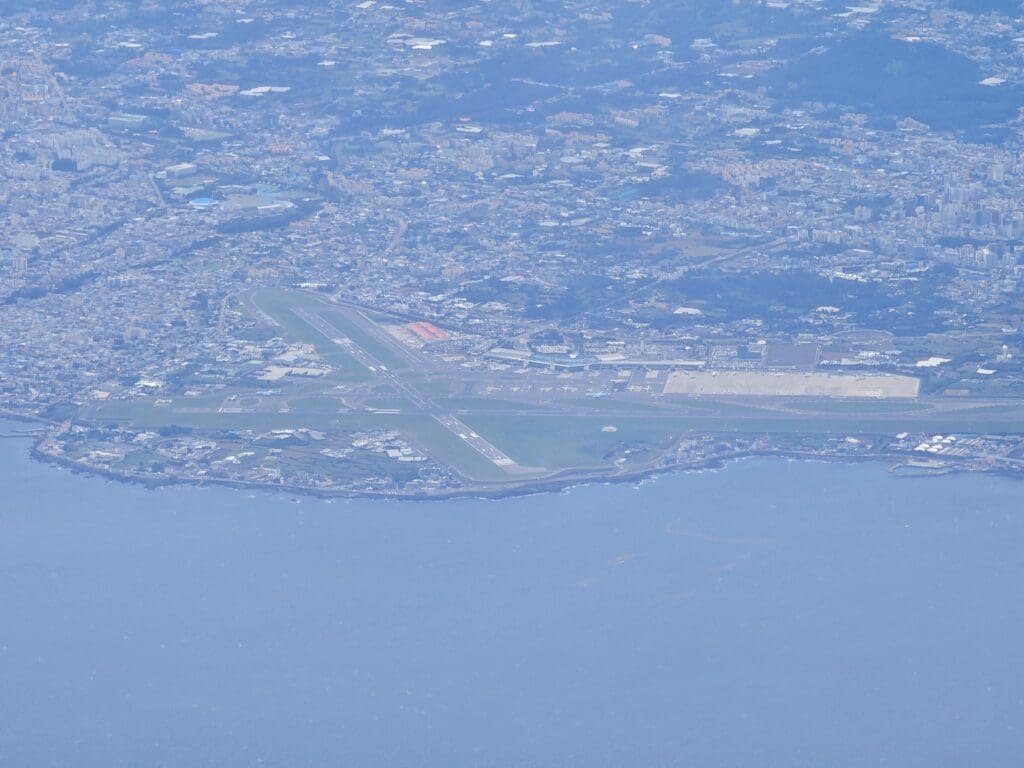
Despite the rocky start to the flight, once away from Jeju, the turbulence calmed down and the seatbelt signs were extinguished immediately upon reaching 10,000 feet. At this time, the Purser performed the usual announcement requesting passengers to keep seatbelts fastened whilst seated and followed this with another announcement regarding the soon-to-commence onboard shopping, food and beverage service. During the Korean version of the latter announcement, the Purser mentioned Aero K’s shipping service which enables passengers to order an item onboard and have this sent to their home address in Korea. Whilst this is not particularly unusual, this was still a nice touch given the small size of Aero K. Browsing the onboard shopping catalogue, this was fairly comprehensive and included plenty of Aero K merchandise and souvenirs, ranging from your usual aircraft models and keyrings, to more unique items such as the MG designed Aero K crew trainers for 106,000 won (£60.56) and Aero K branded crew bags for 80,000 won (£45.76).
When it comes to onboard refreshments, being a low-cost carrier, expectedly Aero K does not offer its passengers any form of complimentary offering. However, having flown on almost all other Korean low-cost carriers in the month leading up to this flight, I was positively surprised to see that Aero K is the only carrier that seems to care about making an onboard sale! Onboard all other low-cost carriers, when it’s time for the BoB service, one member of the crew simply walks through the cabin displaying the menu and in my experience, usually fails to make much by means of sales! However, onboard Aero K, a trolley was rolled out into the aisle and the crew soon made their way down the cabin. In terms of offerings, Aero K offers a range of hard and soft, hot and cold drinks, as well as light snacks such as ramyeon and Pringles. In terms of prices, these were all very much standard for a low-cost carrier. For example, a cup of ramen would have set me back 4,000 won (£2.30) whilst an iced coffee would have cost 6,000 won (£3.43). Perhaps unsurprisingly given the short length of the flight, despite their best efforts, the crew seemed to have few takers for morning snacks and so they soon retreated to the galleys.
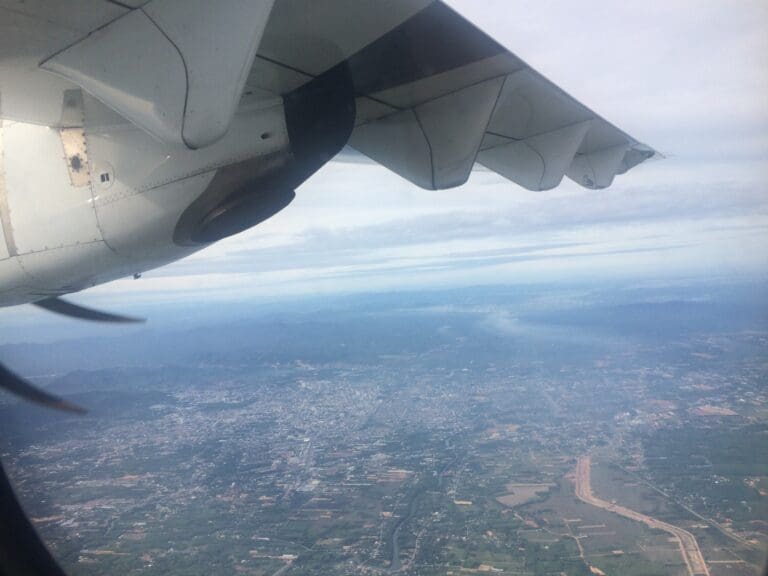
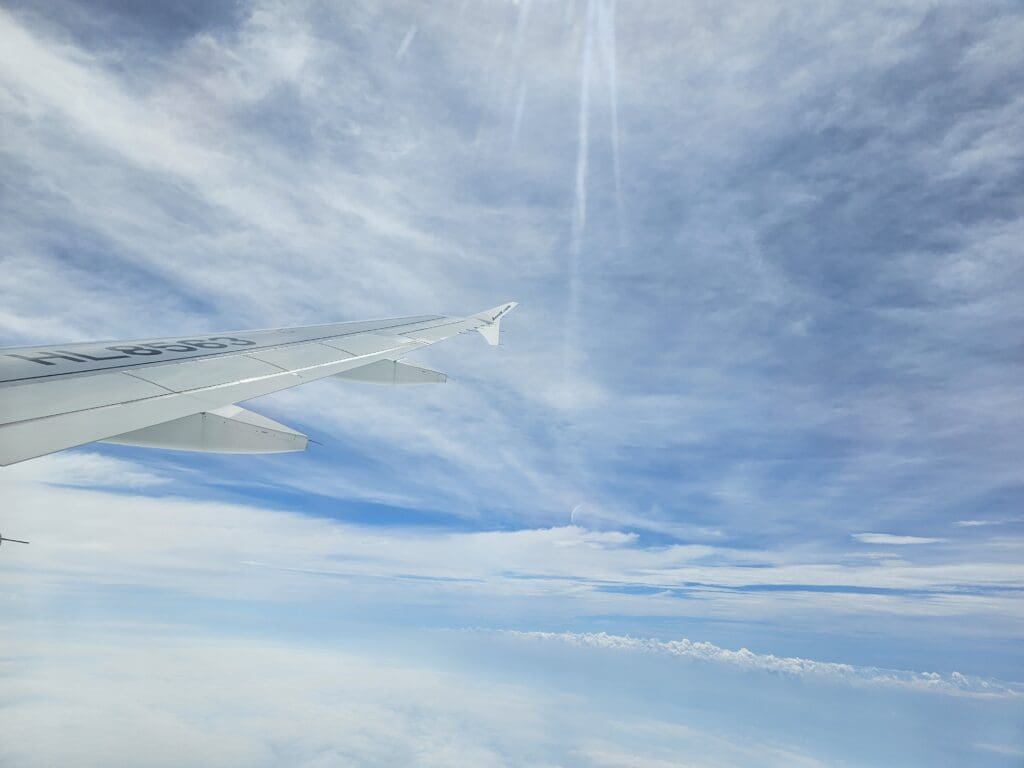
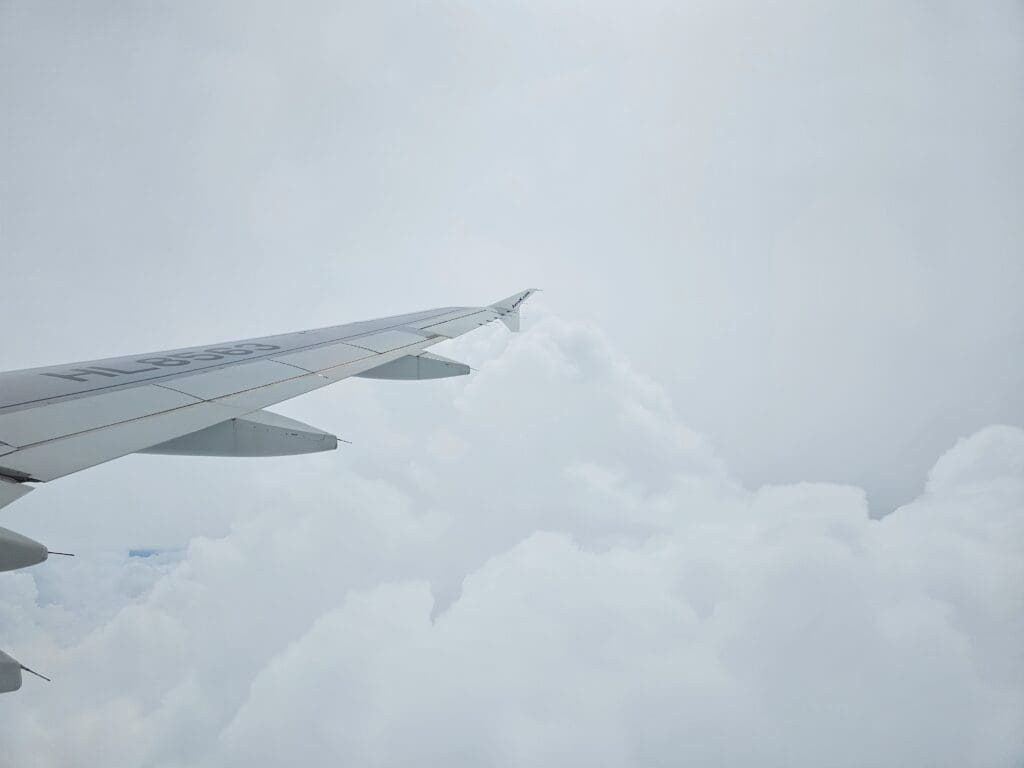
As we crossed the stretch of sea between Jeju and the mainland, clouds rolled in below and blocked any views of the ground below until we were on the approach to Cheongju. As we neared the cluster of islands that sit off the coastline of South Jeolla, the Airbus levelled off at its low cruising altitude of 17,000 feet and soon the First Officer’s voice filled the cabin. Undertaking their welcome announcement in Korean and English, they noted the flight time to be 55 minutes, provided an update on the weather in Cheongju, which was 24 degrees, ultra-humid and accompanied by constant rain for the rest of the day, thanked passengers for flying with Aero K and encouraged passengers to keep their seatbelts fastened as we would likely shortly be facing some turbulence. Indeed, true to this, as we made our way from the South Jeolla coastline towards the region’s largest city, Gwangju, the Airbus bumped around and we experienced what was in places, some rather rough turbulence. Almost as soon as we hit this, the seatbelt signs were illuminated, and, given the short flight time, remained on for the rest of the journey, whilst the crew passed through the cabin ensuring all was secure.
In terms of entertainment, perhaps unsurprisingly, Aero K does not feature any sort of inflight entertainment system, nor is wifi present onboard its aircraft. Thus, those travelling on the airline’s longer flights to South East Asia may wish to bring their own entertainment along with them. I did however have a quick flick through the guide to Tokyo which was provided in the seatback pocket. Matching Aero K’s trendy image, this was a stylish guide that featured some nice photographs of hot spots throughout the Japanese capital, however, this was published in Korean only. Returning to the route, after passing directly over the city of Gwangju, the Airbus then banked and perhaps to avoid the inclement weather, the Airbus took what seemed to be an unusually winding route from South Jeolla to North Jeolla, and then onwards to South Chungcheong. At this stage of the flight, we ended up bouncing around a fair bit and even heard several concerned gasps coming from my fellow passengers.
Fortunately for those who were eager to get back on the ground, around 25 minutes into our flight, the First Officer requested the cabin crew to ready the cabin for our arrival and a short time later the Airbus could be felt commencing its journey back down to earth. Whilst the Airbus was full, with passengers not having had the time to spread out or accumulate much rubbish during the short flight, it didn’t take too long for the crew to pass through the cabin and ensure everything was in place for our arrival. As they did this, the Purser performed an announcement with the usual pre-landing warnings regarding seatbelts, tray tables and window shades, and as is standard practice when flying out of an airport that is shared with the Korean military, passengers were advised that taking photographs on the ground in Cheongju was strictly prohibited. Indeed, hosting a squadron of ultra-modern F-35A fighter jets, Cheongju Airport is one of Korea’s most strategically important airfields!
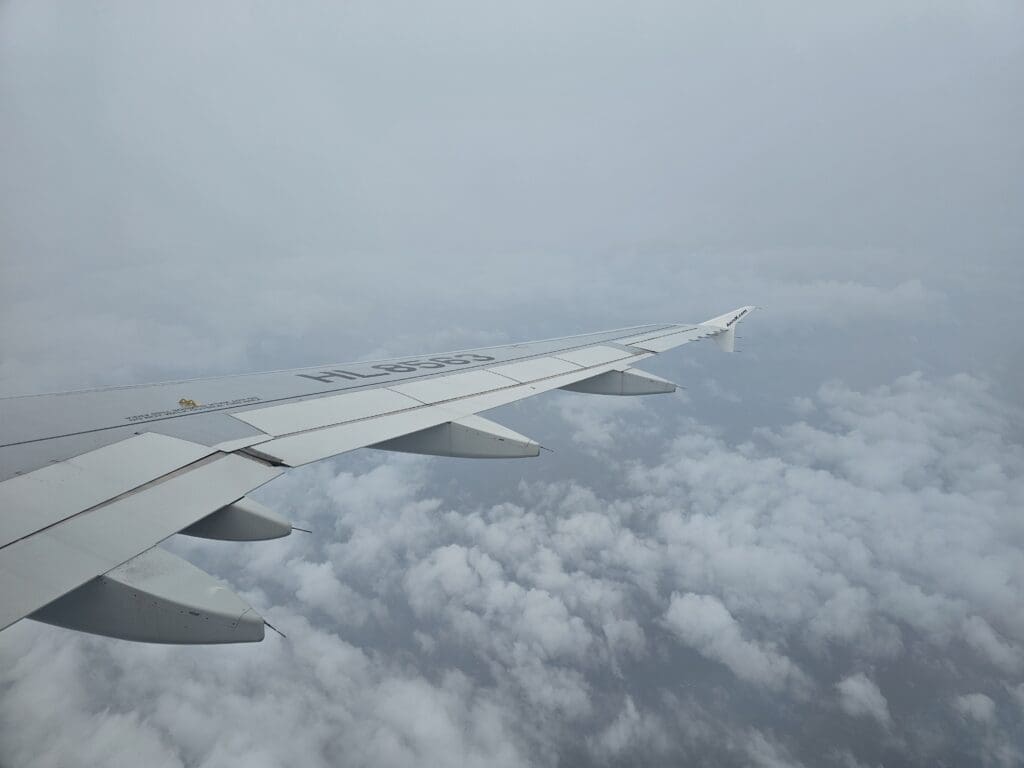
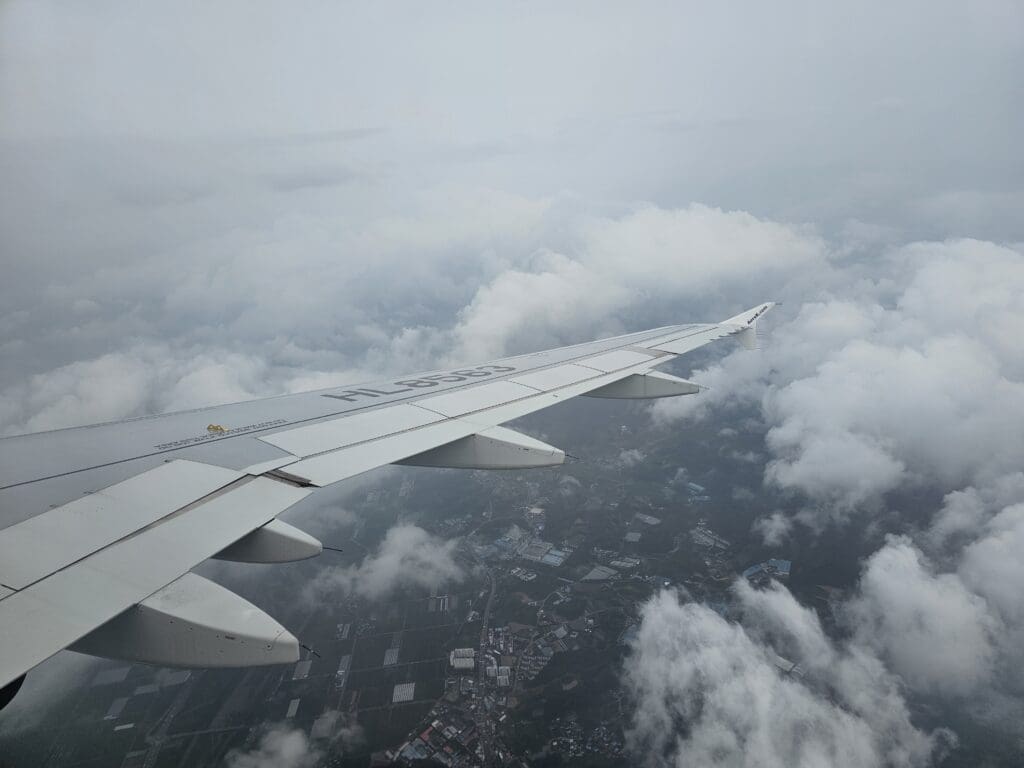
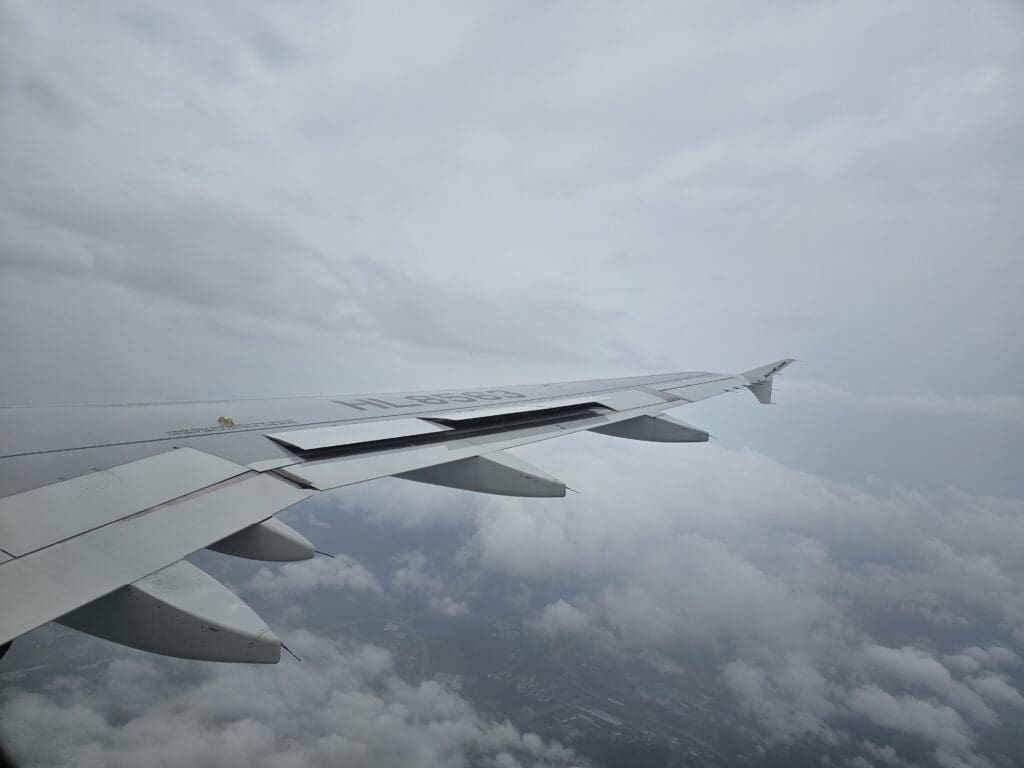
Trundling up the western side of the provinces of North Jeolla, South and North Chungcheong, not too far from the sea, the Airbus descended past the cities of Gunsan and Iksan, at which point the rain-soaked green rural landscapes of the region temporarily popped into view. Unfortunately, thanks to that day’s rainy weather and low clouds, nothing could be seen of the mountainous landscapes below as we flew to the west of Korea’s fifth largest city, Daejeon, followed by Sejong City. Soon, the aircraft turned towards Cheongju Airport and the flaps were partially extended in preparation for arrival, however, at this point, nothing could be seen as we sank lower and lower towards the ground.
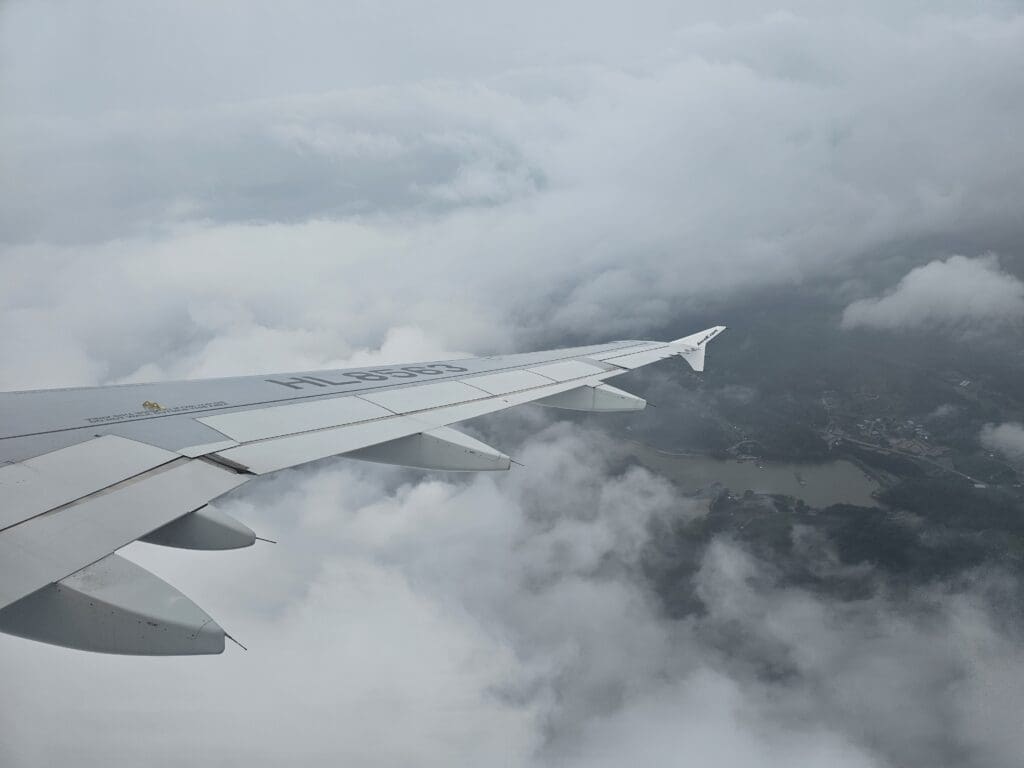

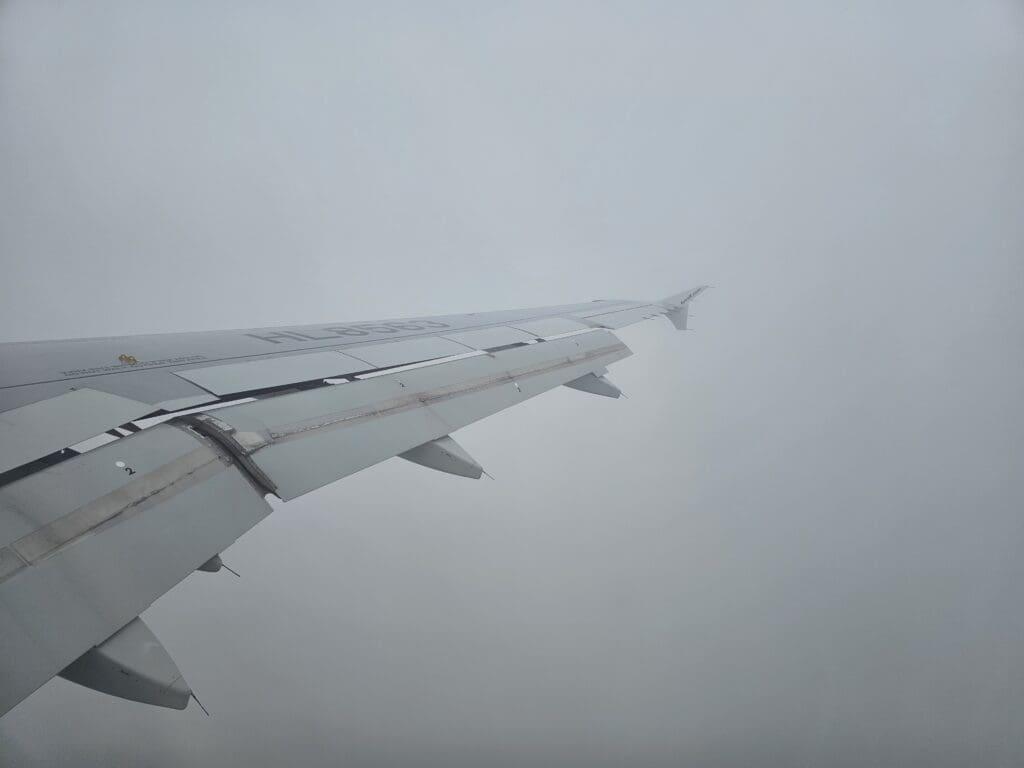
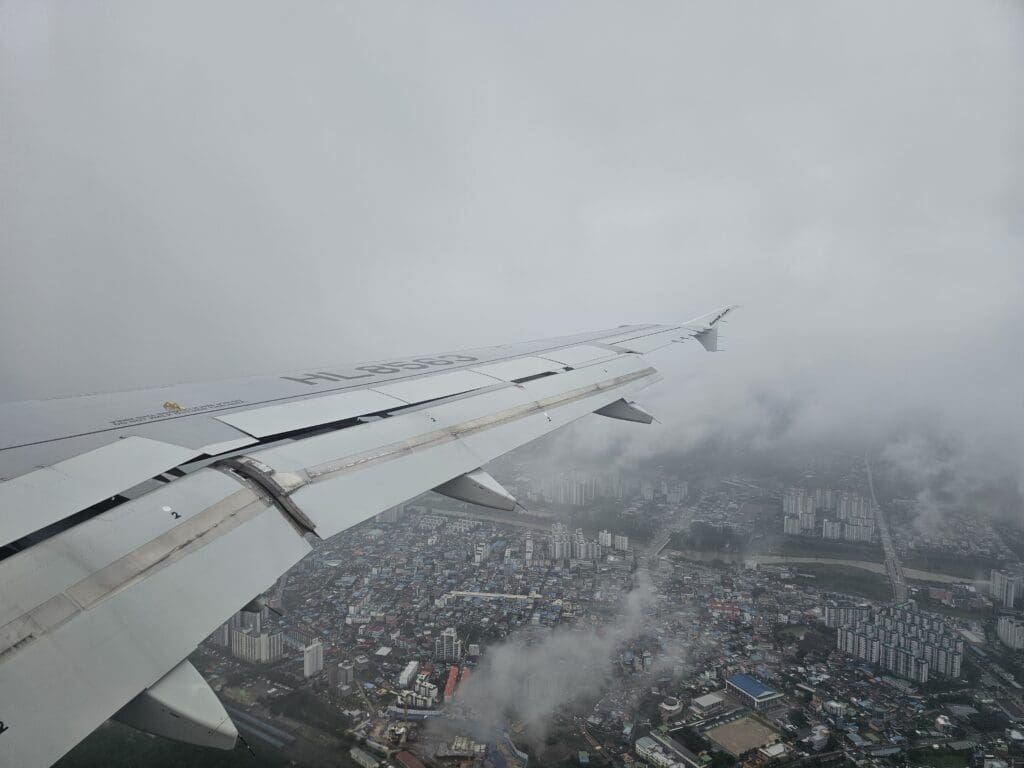

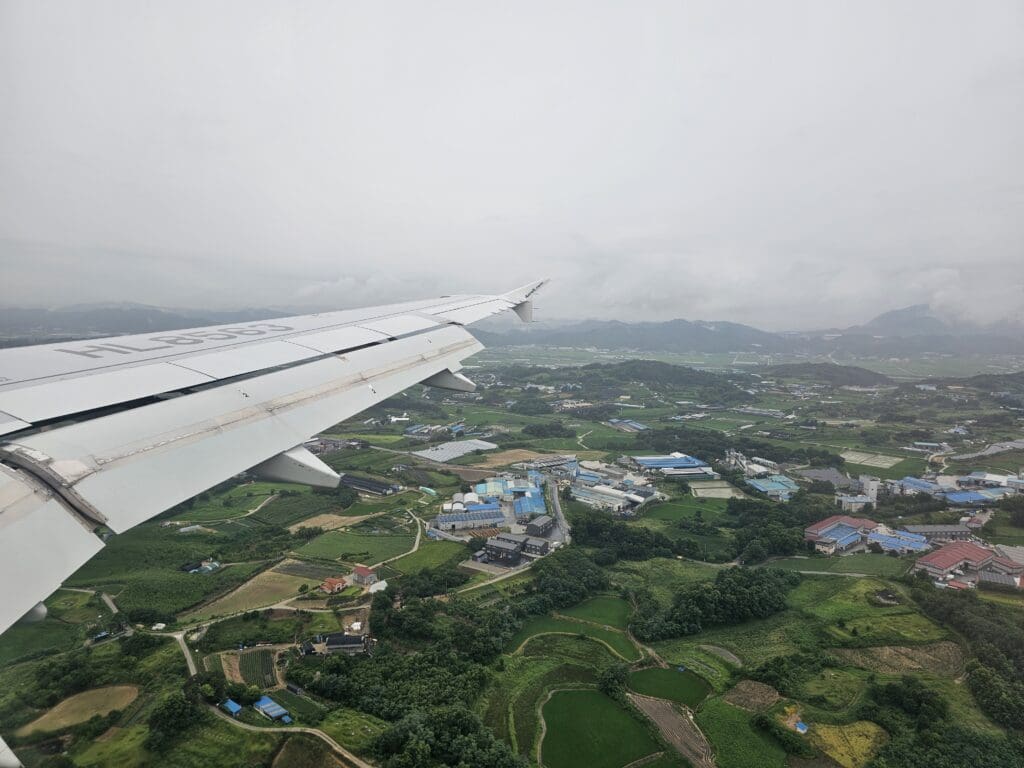
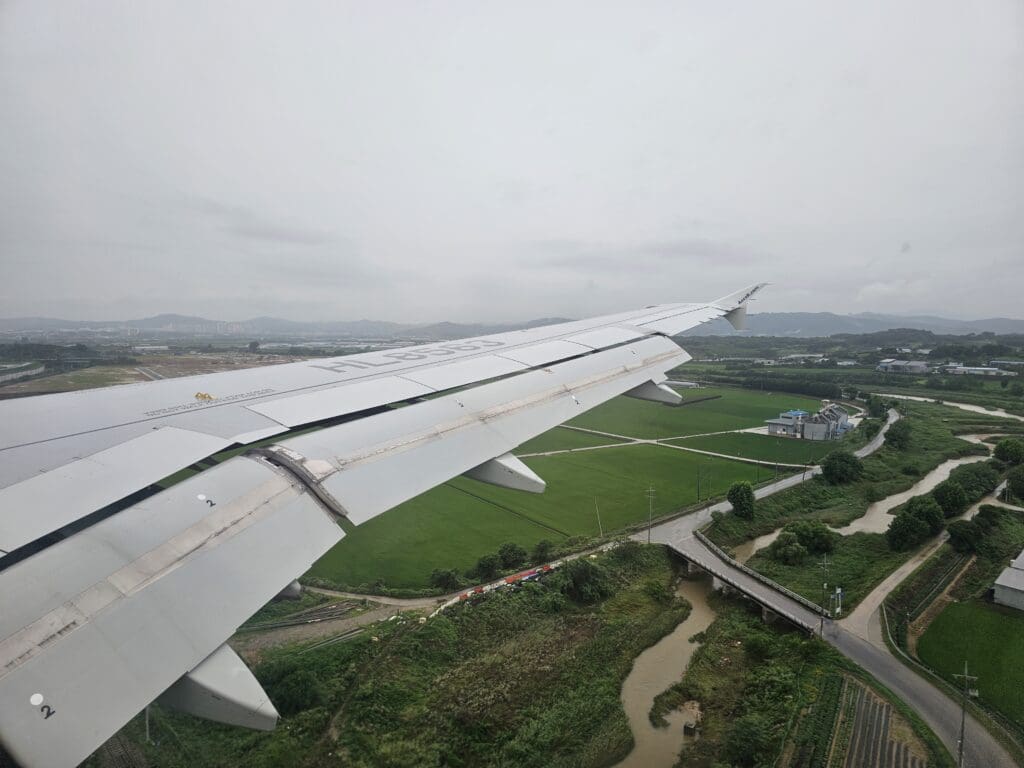
Eventually, just after the aircraft turned onto finals for Cheongju Airport’s Runway 25R, the clouds parted and revealed the rural landscape consisting of fields, farms and the odd factory, as well as the small town of Jeungpyeong as full flaps were extended and the landing gear was lowered into position into preparation for our arrival. Before I knew it, the Airbus passed over the very well-guarded airport perimeter, before making a soft touchdown on the drenched Runway 25R, ending our 48-minute journey through the Korean skies. Almost instantly, Cheongju Airport’s modern terminal appeared where a cluster of airliners could be seen waiting for their next missions. Sadly, nothing of the airfield’s locally based squadrons of fighter jets could be seen, with these all tucked away safely in their hangars and well out of the view of the general public!
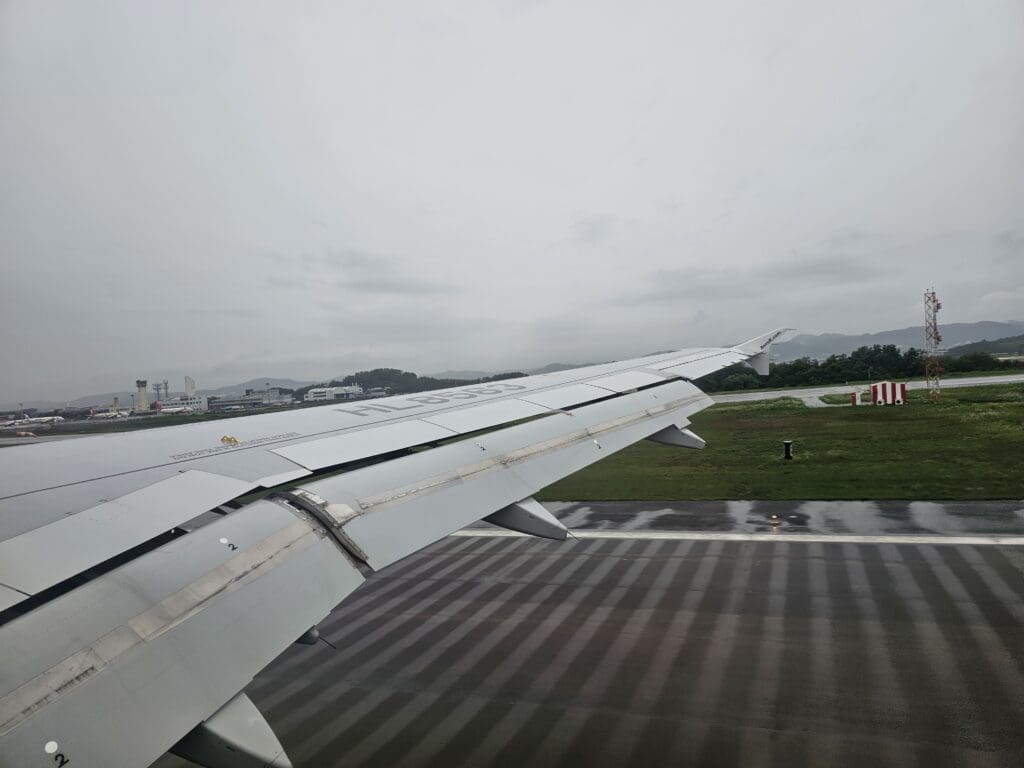
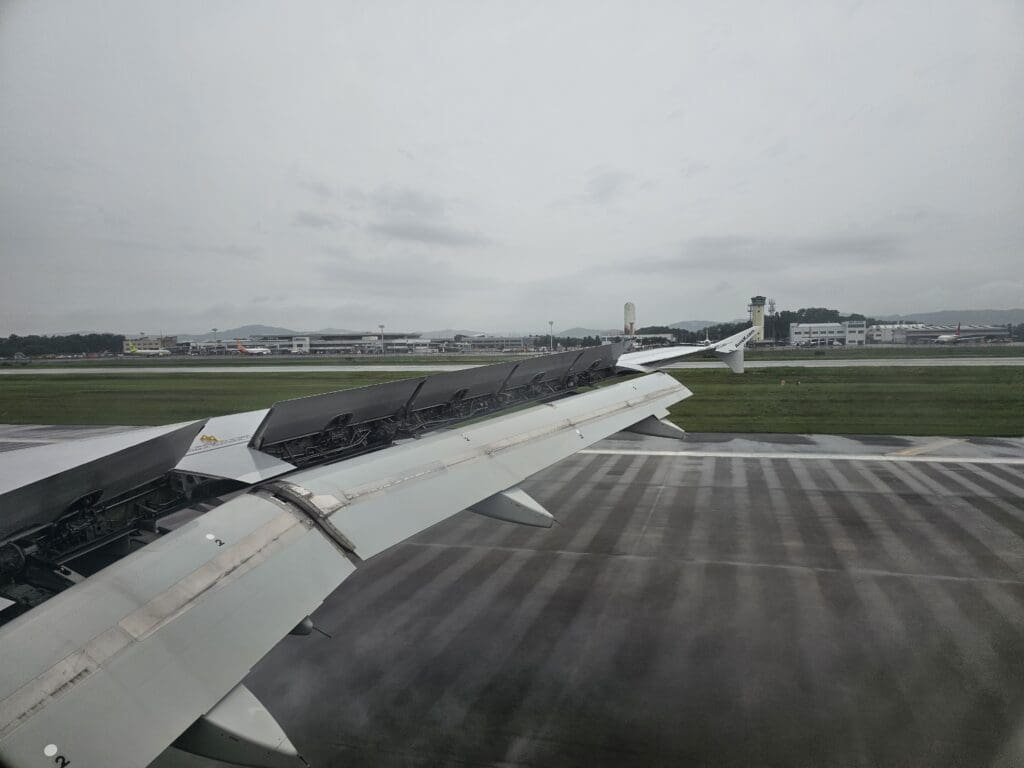
In the usual manner, once off the runway, the Purser welcomed all to Cheongju, thanked passengers for flying with Aero K and requested all passengers to remain seated with their seatbelts fastened. Like many of Korea’s regional airports, the majority of the airfield at Cheongju seemed to be taken up by the military, with just a comparatively small civilian ramp sitting in the northeastern corner of the airfield. At that time, the ramp seemed to be rather busy and I managed to spot four Boeing 737-800s operated by Eastar Jet, Jeju Air and T’way Air, a single Jin Air Boeing 737-900 and another Aero K Airbus A320. Other than these, four Cessnas and four Diamond DA-40s operated by Cheongju University could be spotted.
Following a short and uneventful taxi, the Airbus pulled into Stand 1 where it joined the aforementioned Jin Air jet although this soon pushed back at the start of its journey to Jeju. Thanks to the departure queue in Jeju, the Airbus came to a halt ten minutes behind its scheduled arrival time at 1135. Once the engines spooled down and the beacon light had stopped flashing, an army of rather soaked Swissport agents scrambled into position and began to empty the holds of passengers’ bags. Meanwhile, inside, passengers flocked to the aisles although it seemed to take a few minutes until disembarkation commenced. After a few minutes, I stood up and began to make my way through the now mostly empty cabin. Upon reaching the forward galley, I received a friendly farewell from the same two flight attendants who had greeted me an hour or so earlier before I stepped onto the covered air stairs.
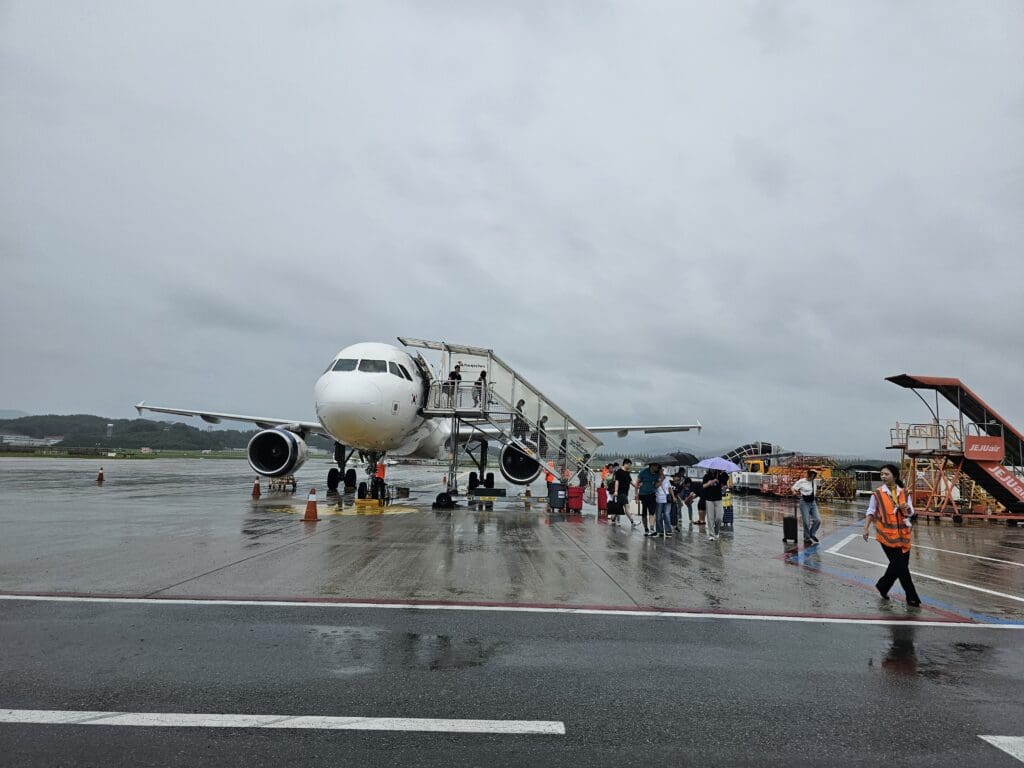
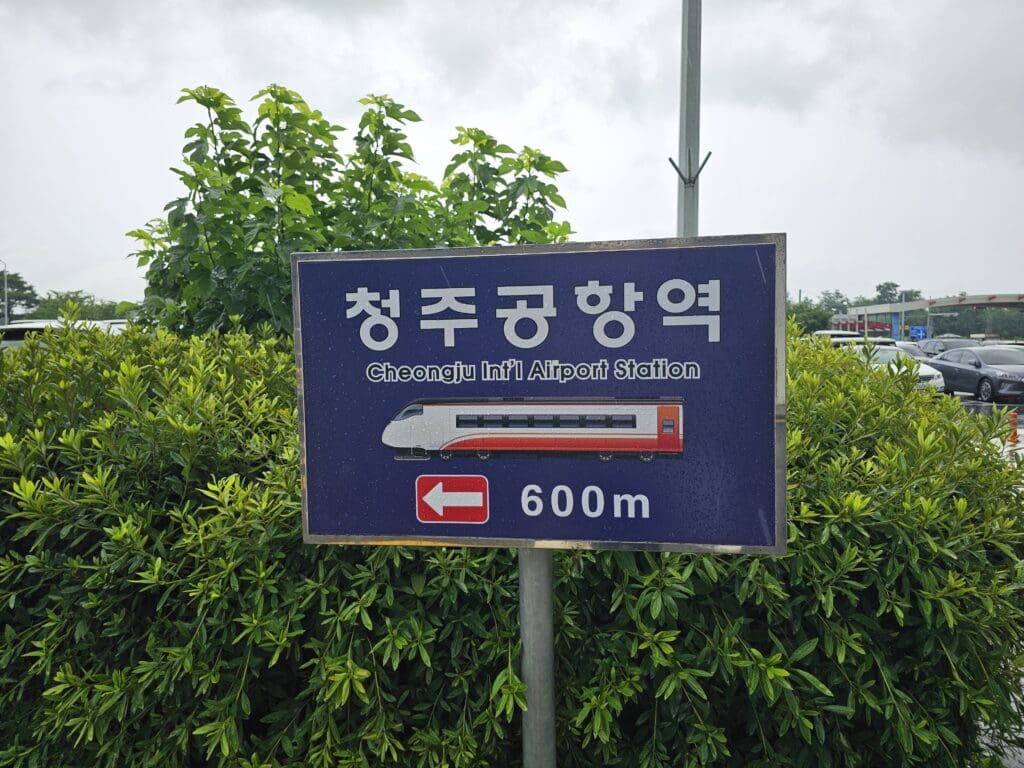
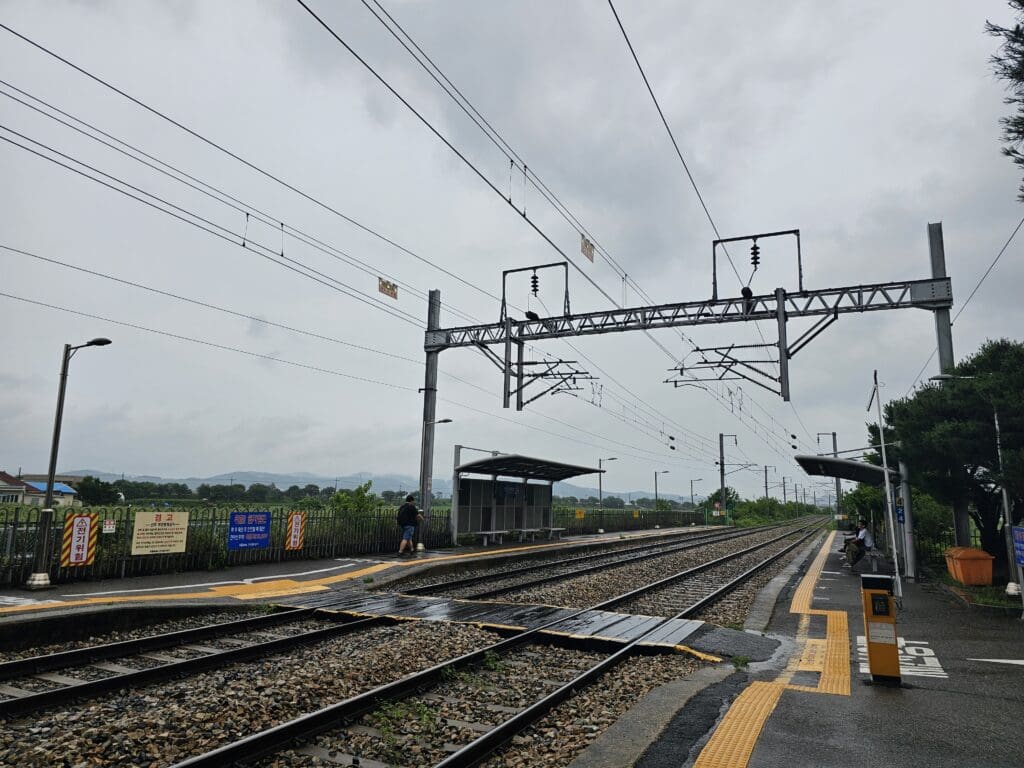
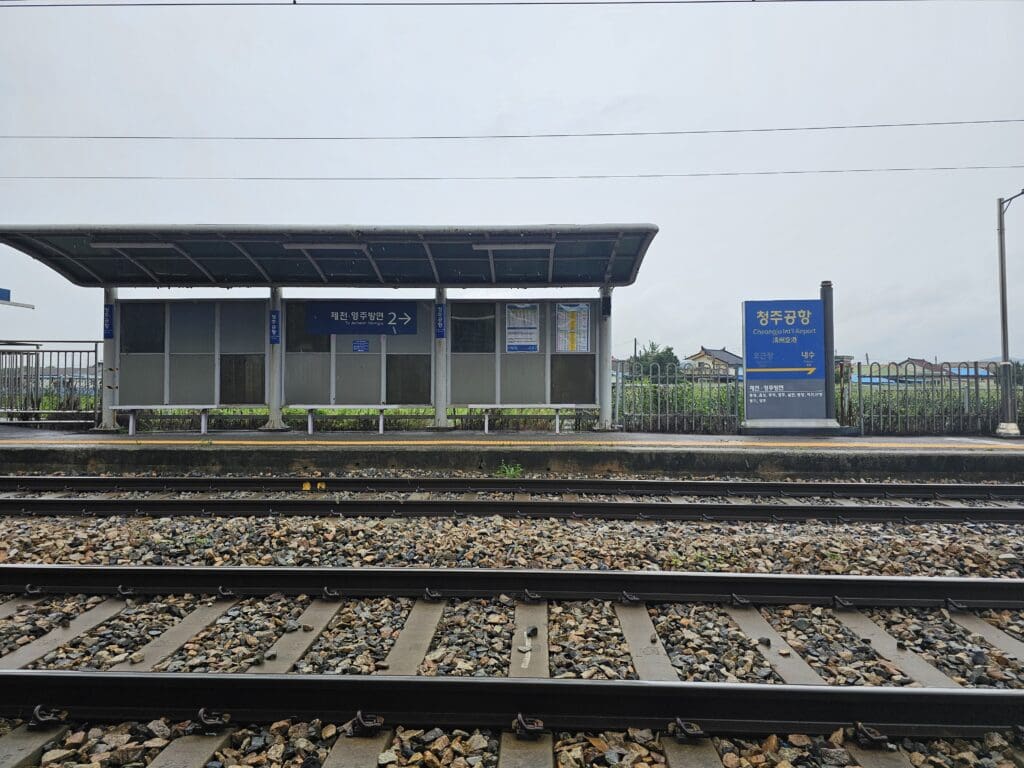
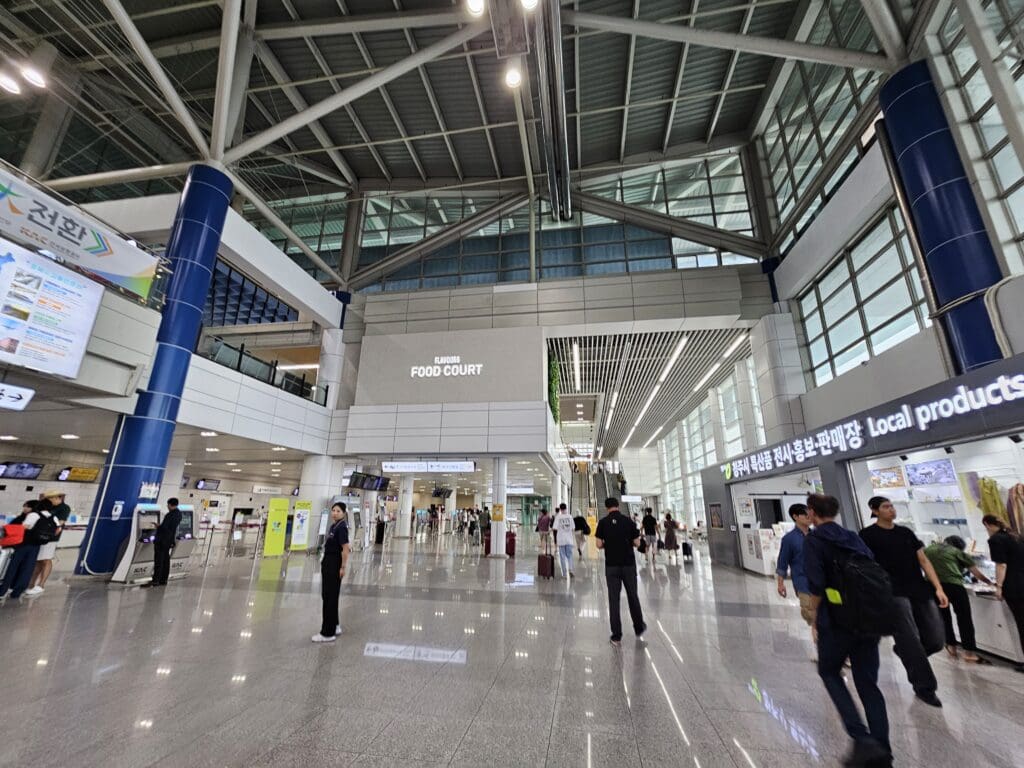
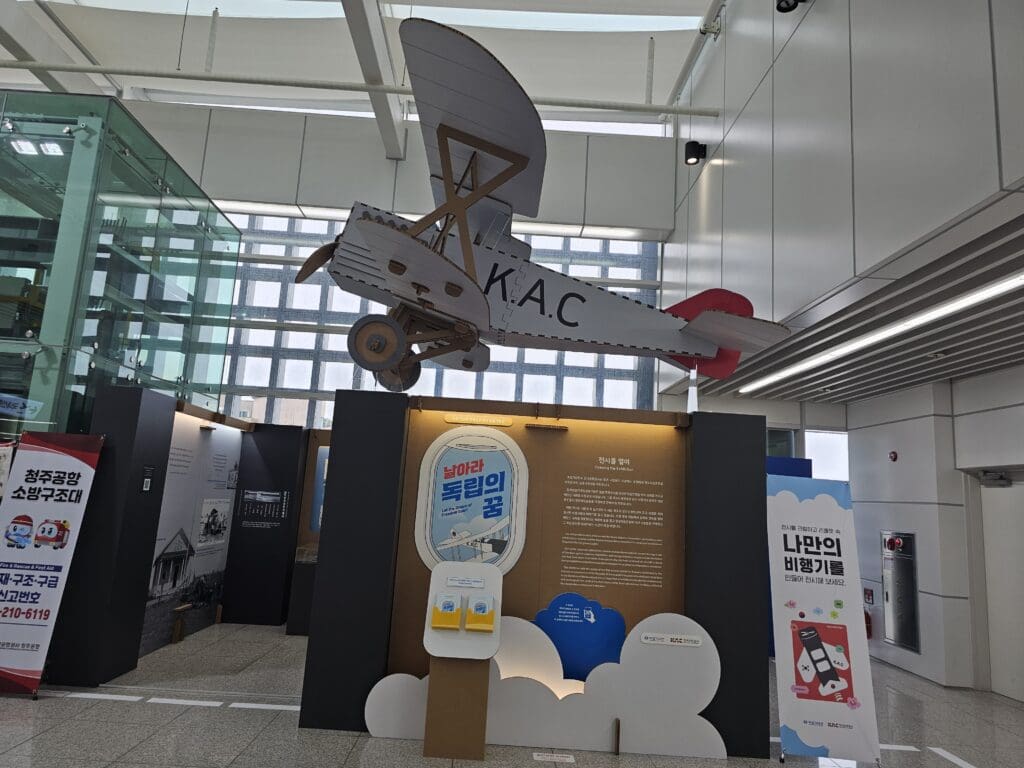
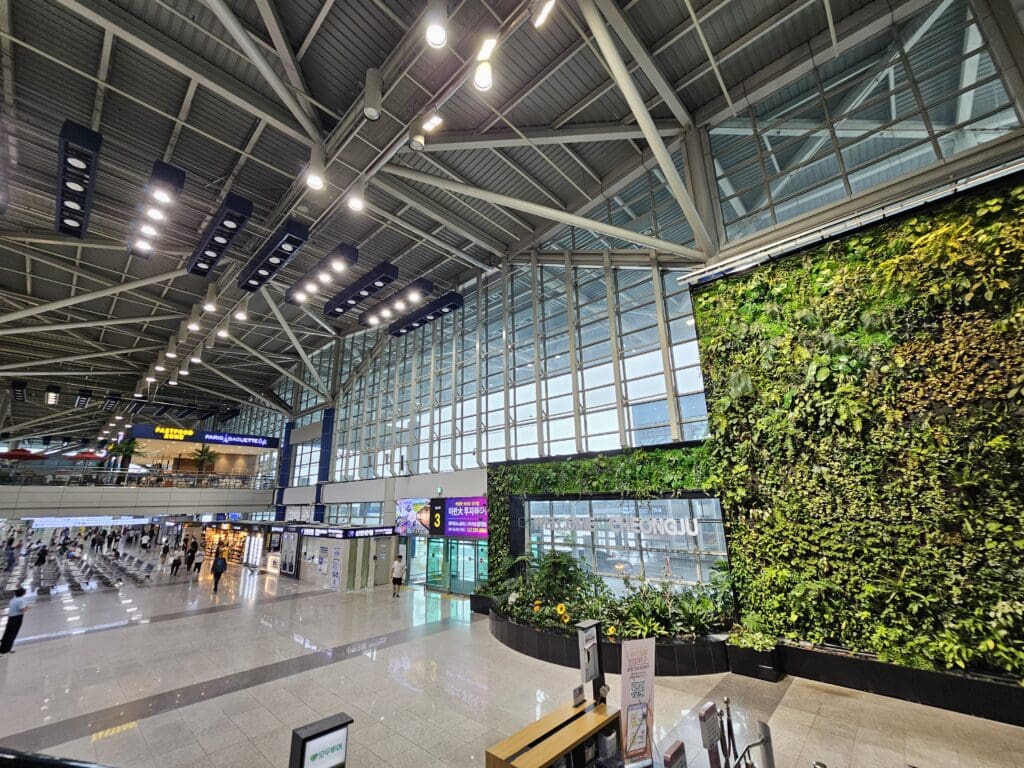
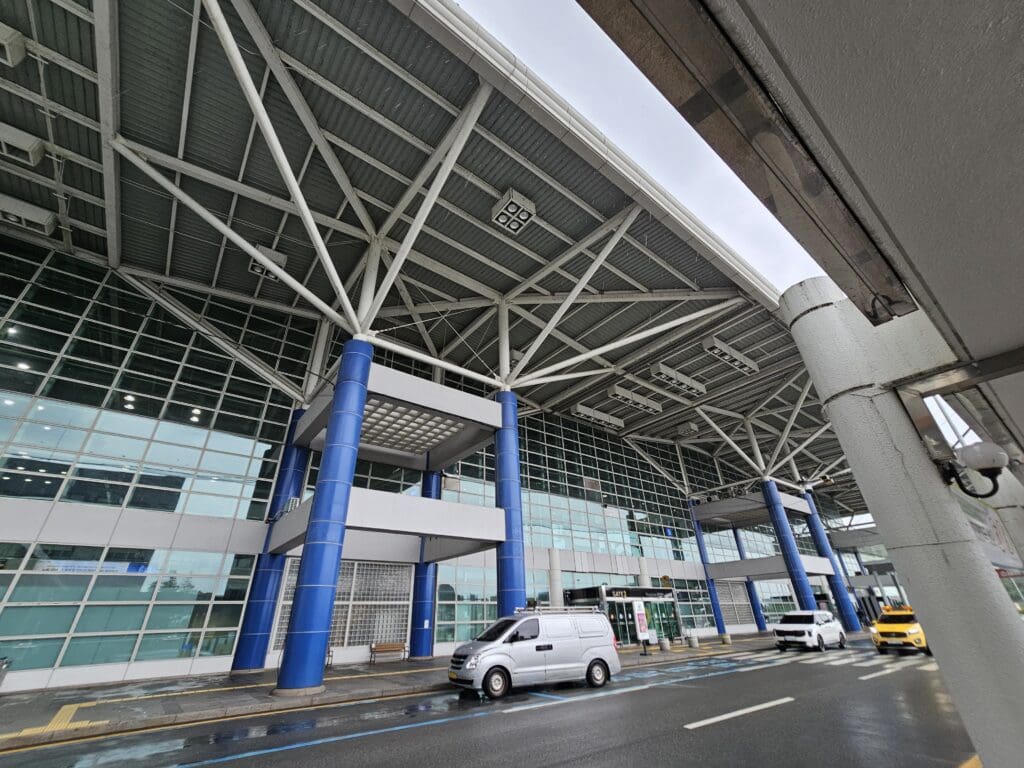
From the Airbus, a very short walk to the terminal was in order, however, I was impressed to find that Aero K provided passengers with umbrellas to avoid passengers getting unnecessarily soaked. This was a very nice touch, especially for a low-cost carrier, and was something that I had only ever experienced twice before – once in Foggia when heading off on Lumiwings, and in the Korean city of Pohang when departing onboard an Air Pohang CRJ-200. Once inside the terminal, I was impressed to see that the bags from the flight were already spinning around on the carousel. However, with nothing to collect, I made my way straight out into Cheongju International Airport’s large and modern terminal and grabbed a coffee before heading to catch my train from the airport’s dedicated station.
Summary
Overall, I was incredibly pleased with Aero K. Whilst the issue with online check-in and self-check-in were a little burdensome, and the outsourced ground staff in Jeju were a little cold, once onboard I was impressed by the level of service provided by the crew. Nevertheless, I can’t ignore that the aircraft was incredibly cramped and were I to fly with them again, I would most definitely want to end up on one of their slightly more spacious aircraft complete with Aero K’s own interior.