Malta Meets Latvia: Riga to Copenhagen on a Rare Air Horizont Boeing 737-400
You can read all about the background to this trip as well as my report from Hamburg to Riga onboard a rare Carpatair Fokker 100 by clicking here.
The Journey
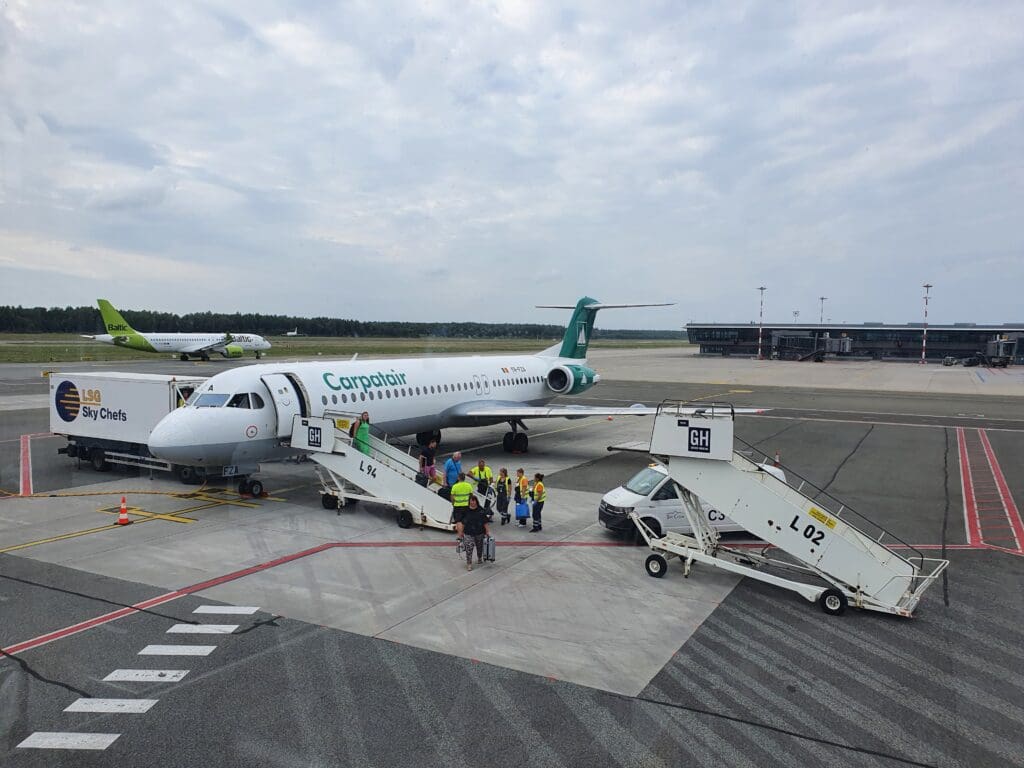
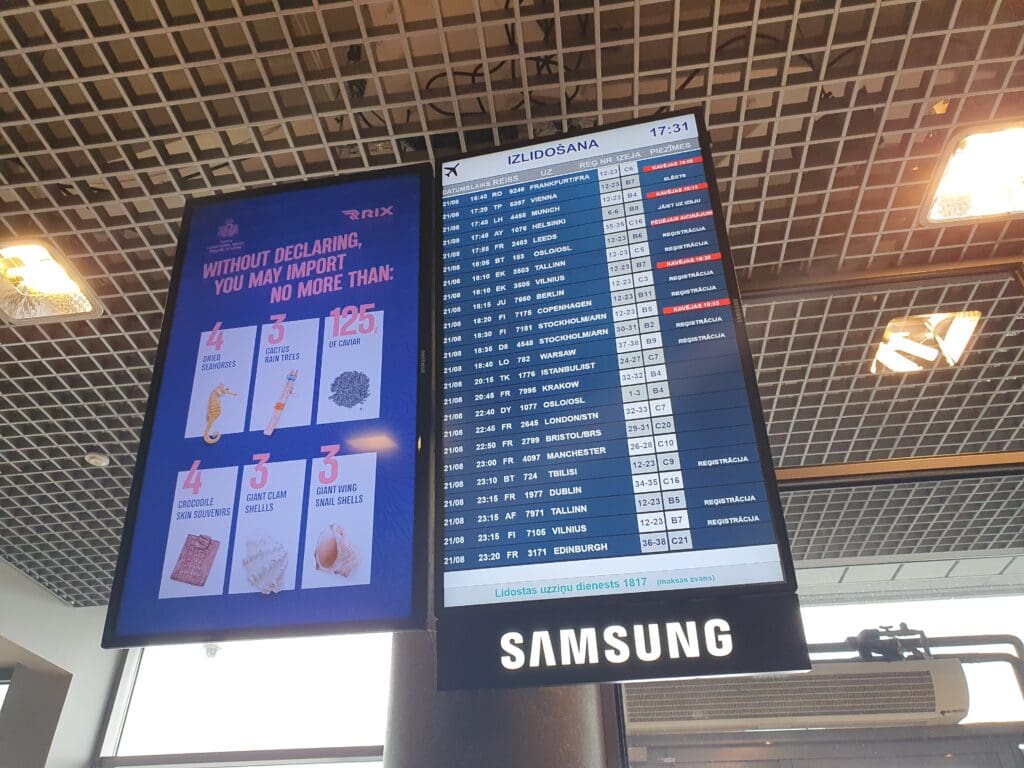
After a short yet enjoyable flight across the Baltic from Hamburg onboard a rare Carpatair Fokker 100, I arrived in Riga ready to head in the other direction on a retro Boeing 737-400. That afternoon, the first leg of my itinerary ended up running behind schedule with the Fokker pulling up to the terminal at 1721, and thus my 1H20 connection in Riga ended up being shortened to just 59 minutes. Fortunately, with Riga Airport being far from the largest in Europe and seeing as I would not need to pass through either immigration or security on Latvian soil, I wasn’t too worried about missing my flight to Denmark. By the time I had exited the Fokker and made it up into the terminal building, it was 1730, and so once inside I made my way over to the nearest departure board which revealed that my flight would be boarding through Gate B11. Having seen my aircraft parked at a remote stand during my arrival, upon arriving at the gate a couple of minutes later, I was not surprised to find this to be a bus boarding gate on the ground floor level of the terminal.
Whilst my stay in Riga Airport was to be short, inside I found this to be bright, pleasant and clean – with plenty of wood and glass used in its construction giving it a fairly modern feel. In terms of layout, Riga Airport consists of a central hub with just two piers branching off this. That evening, plenty of flights could be seen on the departure boards heading off to destinations across Europe and subsequently, the terminal was a hive of activity, with plenty of passengers seen scurrying about and waiting for their flights. Whilst it may have been the case that I would have ended up with something negative to say about the terminal had I been there longer, that evening my only gripe was that I was unable to connect to the airport’s complimentary wifi network for the duration of my stay.
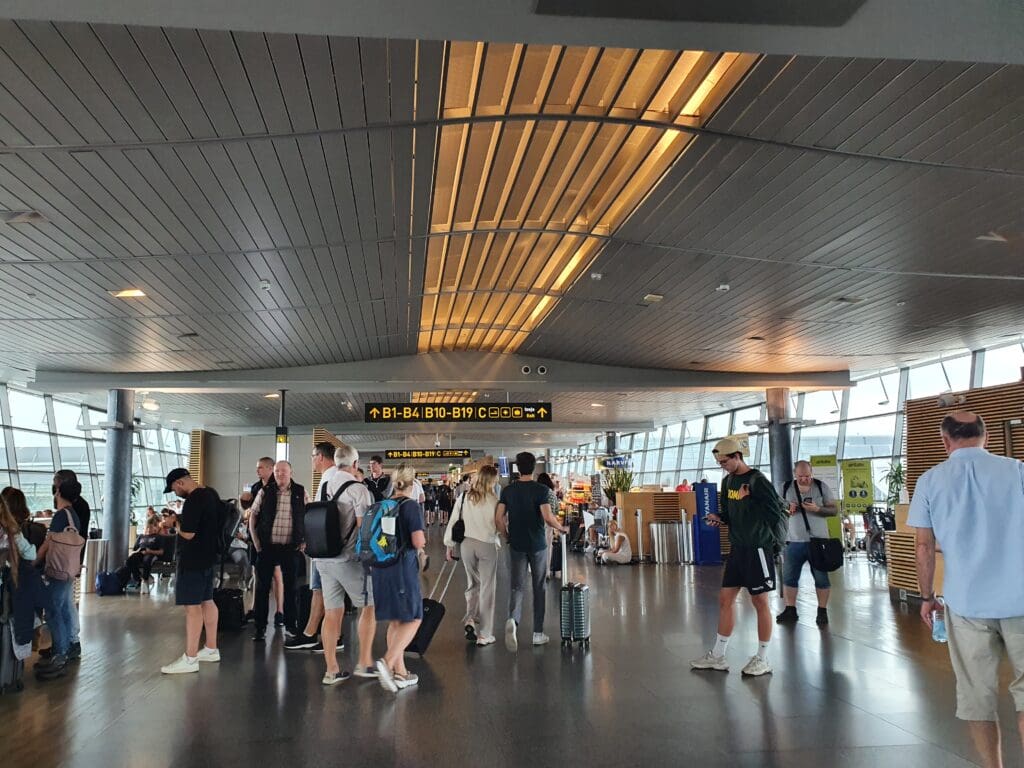
Upon arriving at the gate, I was not particularly surprised to find that this was already looking rather busy, with a good number of passengers seen waiting to head off on the evening service to Denmark. However, with no bus outside and no airBaltic staff to be seen anywhere around the gate, there was no sign that boarding would be commencing anytime in the immediate future. Following a quick toilet stop at a block of toilets that I found to be in a far better state than those that I had left behind at Hamburg Airport, I took a seat at the gate and waited for boarding to commence. Looking through the large terminal windows, during my short stay a reasonable number of aircraft could be seen arriving at the end of their afternoon flights. These included a couple of airBaltic Airbus A220s arriving from Stuttgart and Zurich, a Norwegian Boeing 737-800 from Stockholm Arlanda as well as two turboprops – an ATR 72 operated by Finnair’s regional subsidiary, Norra, and a LOT Dash 8 Q400. Meanwhile, indicating that boarding was soon to commence, it wasn’t long before a bright green airBaltic branded Cobus appeared right outside whilst an airBaltic agent made their way over to the gate podium inside.
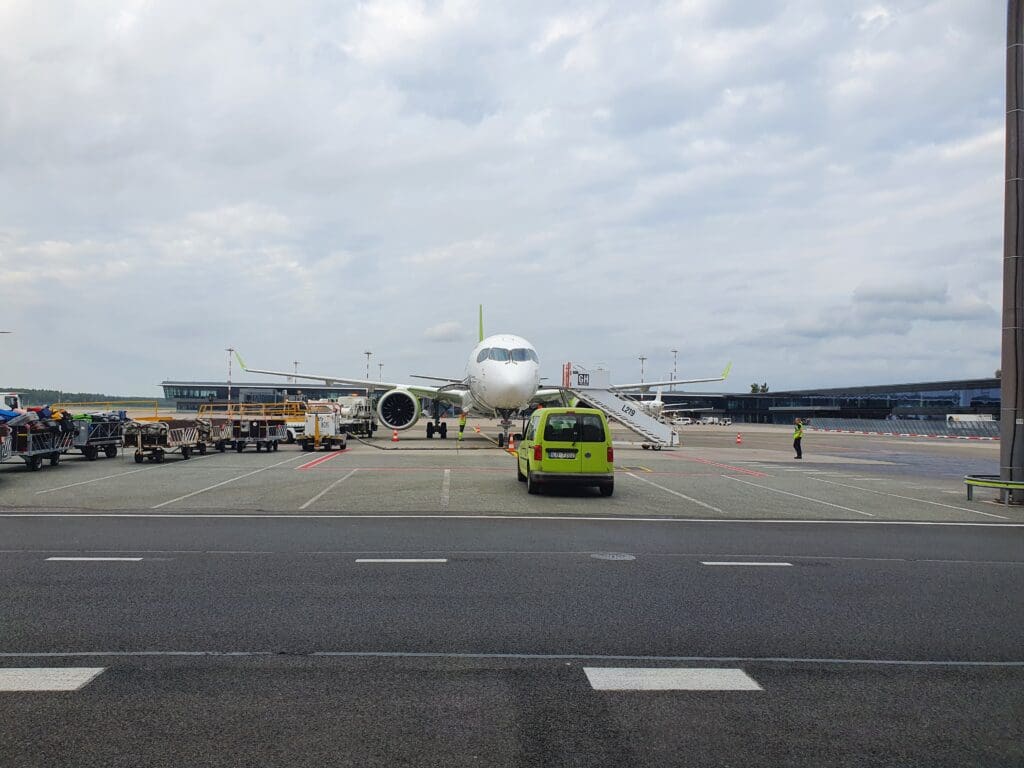
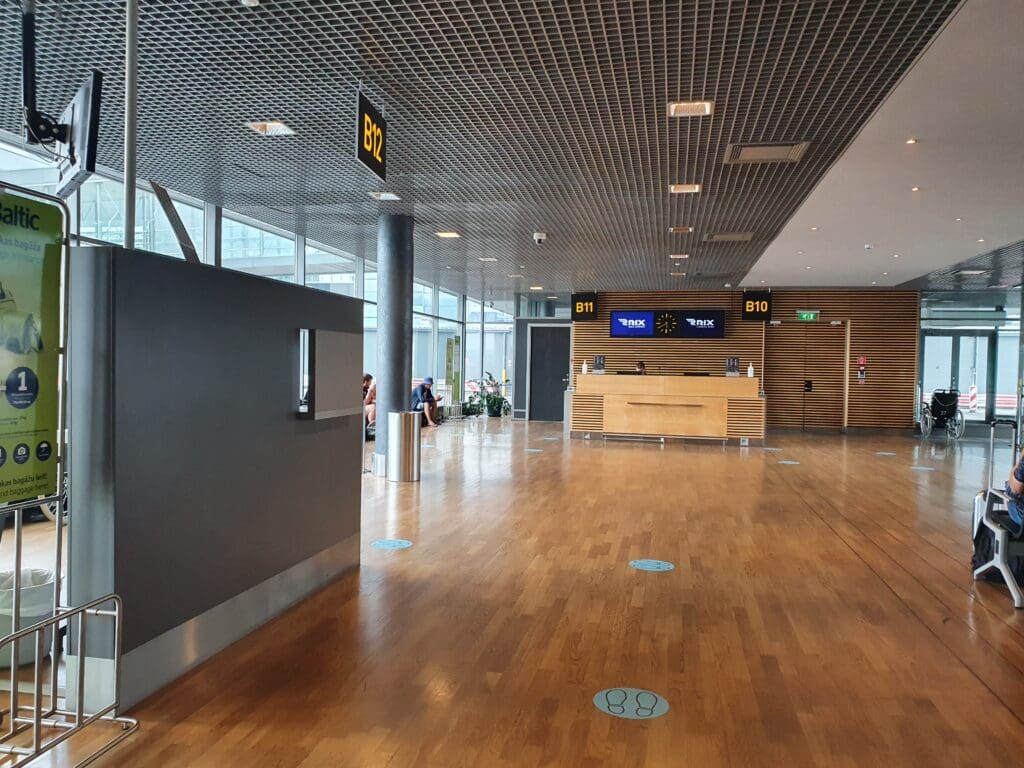
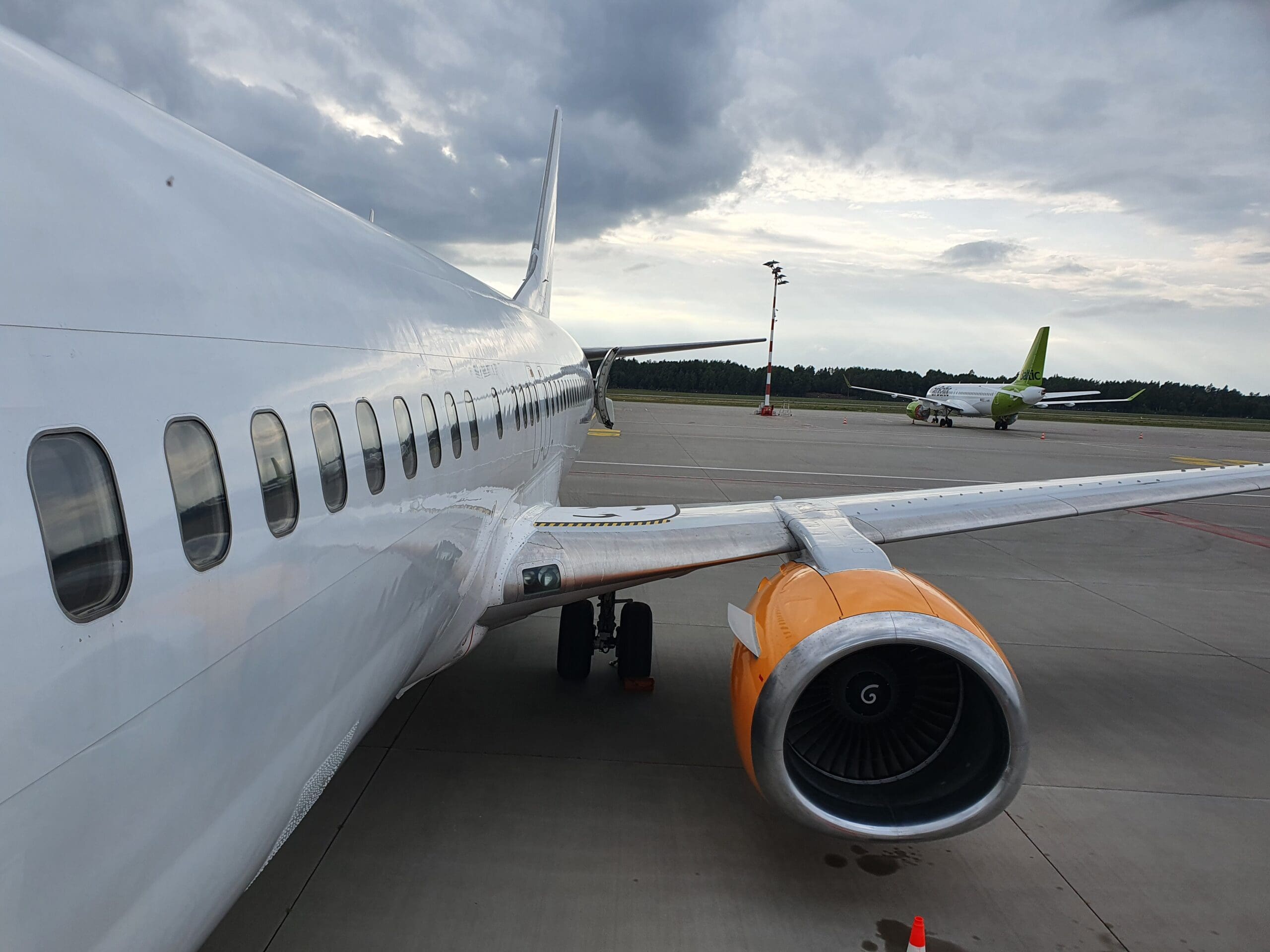
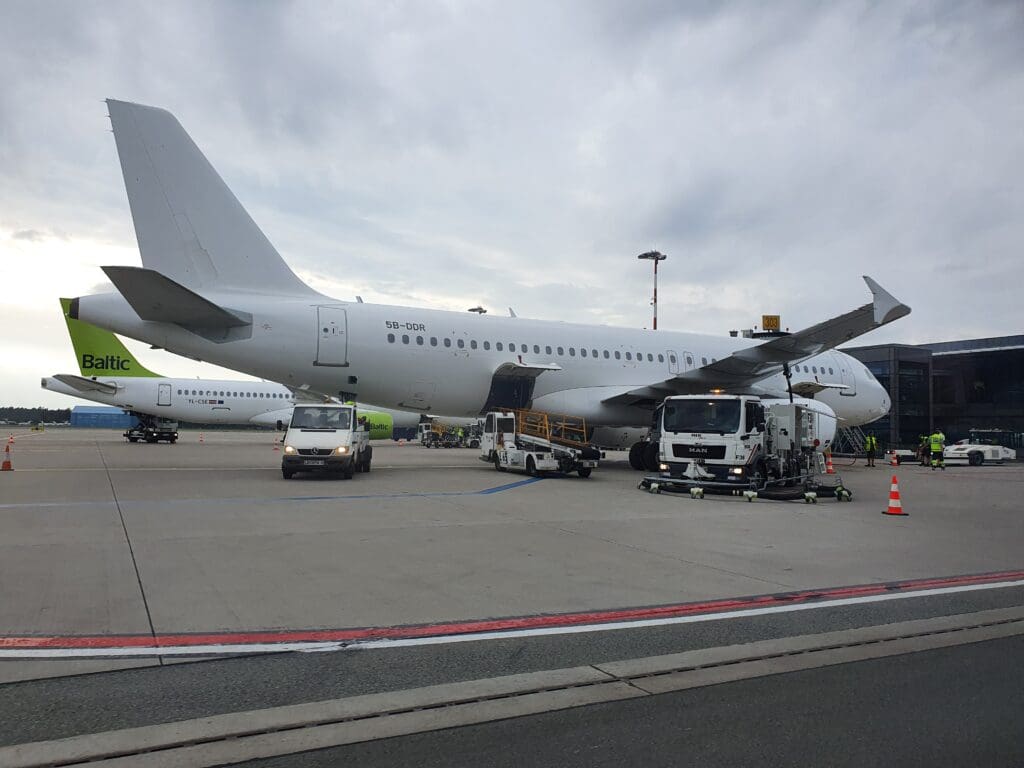
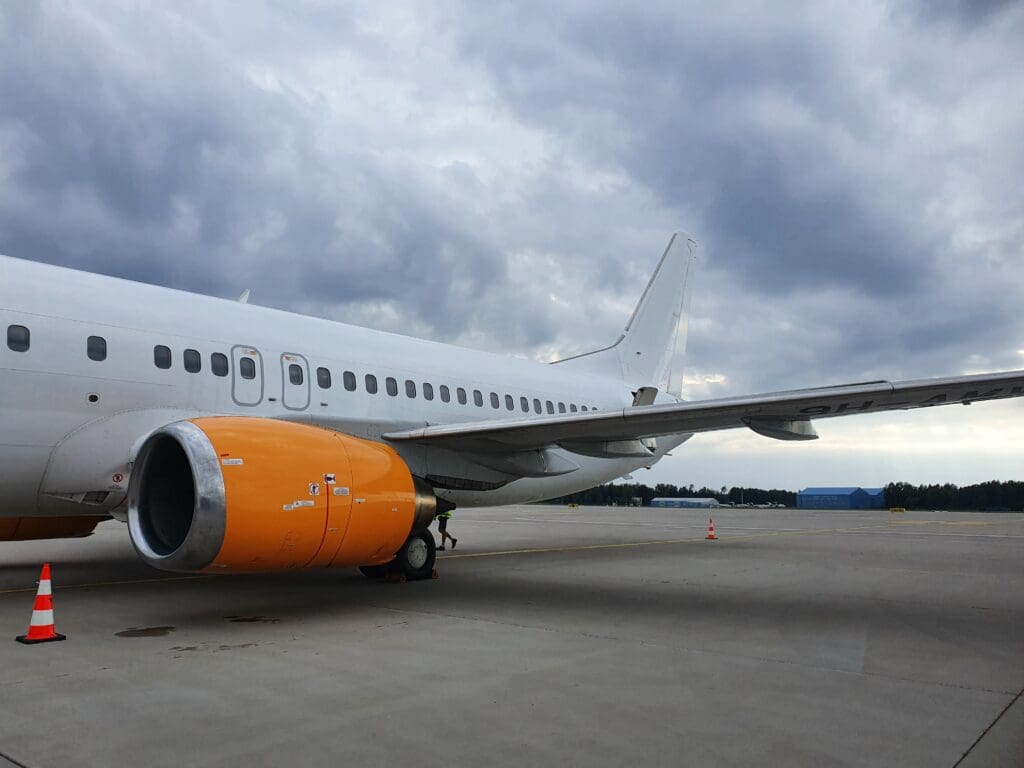
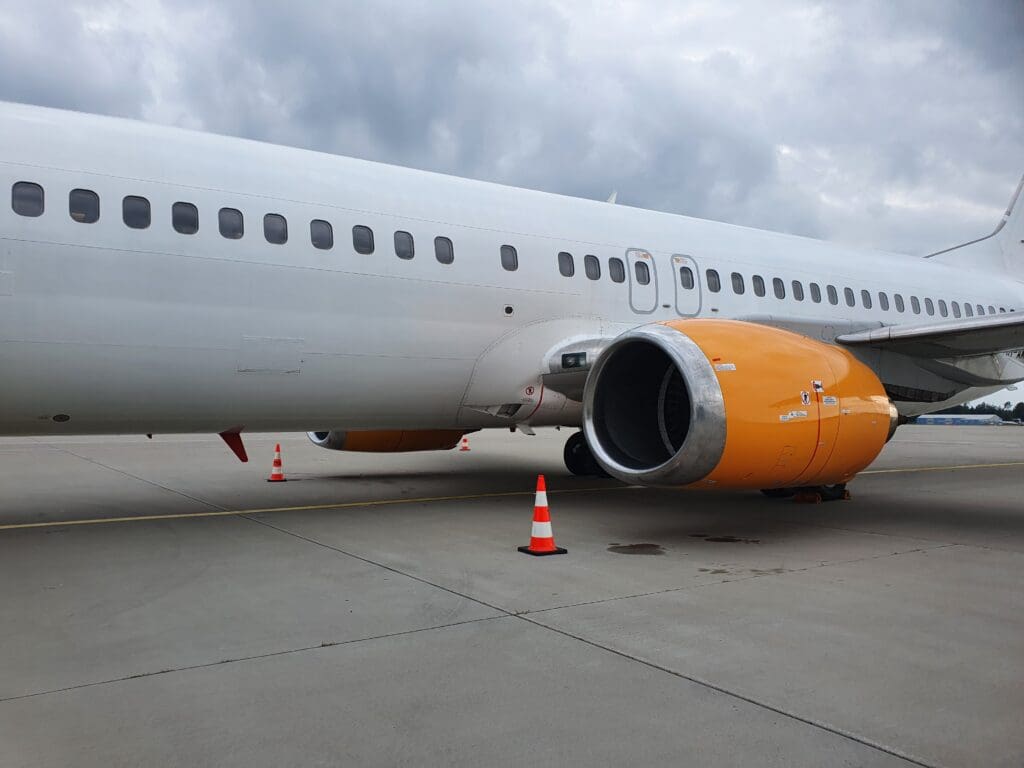
Once the gate agent began typing away at the gate podium, a queue of eager passengers formed almost immediately. Fortunately, for those in a rush, at 1750 the gate agent invited those travelling in Business, as well as those needing assistance and/or travelling with young children to make their way forward for boarding. A short time later, all other passengers were invited forward at which point I joined the queue and began to shuffle forwards towards the podium. Upon reaching this, I scanned my boarding pass on the scanner and was given a quick ‘paldies’ before I headed outside and darted onto the waiting bus. As soon as this was full, at 1757 the doors slid closed and we began our voyage out to the aircraft. Making our way slowly around the other pier, we passed several of airBaltic’s Airbus A220s as well as an all-white liveried Cyprus Airways Airbus A320 that was being utilised by the Latvian carrier to meet demand. Upon leaving the terminal behind, the inconspicuous logoless all-white (except for the orange engines) Boeing that would be operating the evening service to Copenhagen could be seen waiting at Stand 321. With airBaltic making use of just one Air Horizont aircraft, it wasn’t particularly difficult to ascertain which of these would be operating the service to Copenhagen that evening. As expected, this took the form of Boeing 737-4Q8 wearing the Maltese registration of 9H-AMW.
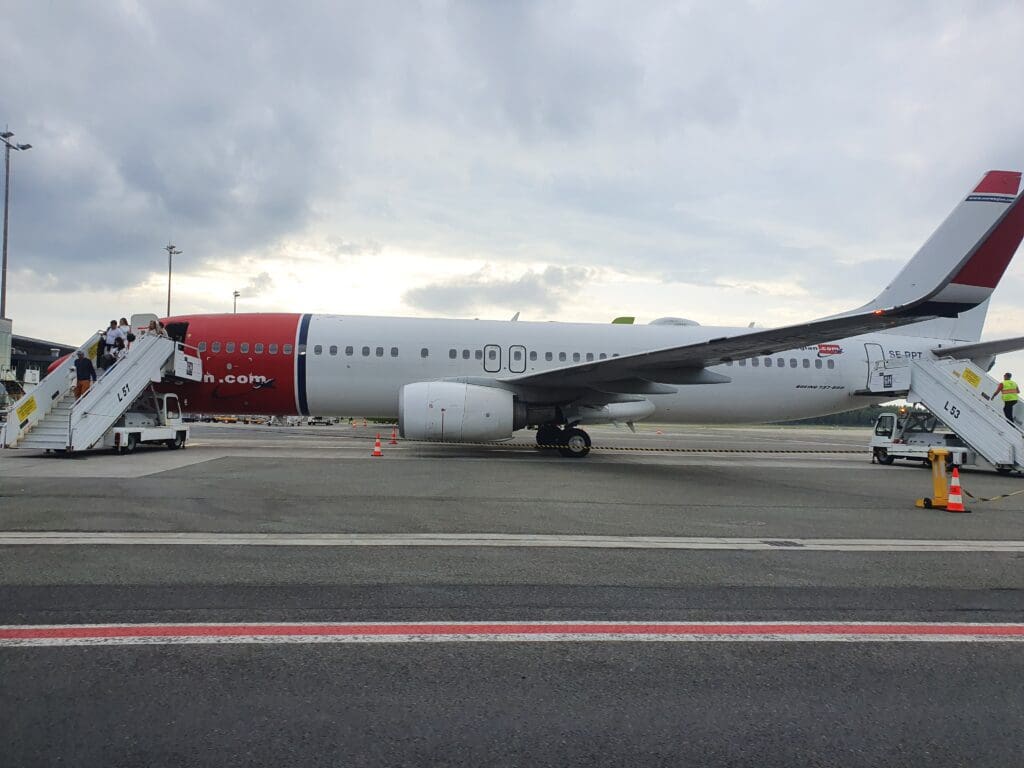
As with many Boeing 737 Classics that fly today, this particular jet has a long and interesting history, having previously operated across the world. Assembled at Boeing’s plant in Renton, this particular jet took to the skies for the first time in October 1992 making it a little under 30 years old at the time of my flight. Following testing, the aircraft was delivered to the long-defunct aviation arm of Carnival Cruise Lines, Florida-based Carnival Air Lines. Operating with the registration N401KW, the aircraft spent several years flying both charter and scheduled services – primarily shuttling passengers between the Northeastern US and Florida and the Caribbean. The jet remained operating for Carnival until the closure of the airline in February 1998 before being ferried across the Atlantic in June of that year. There, the aircraft received the registration SX-BKN and entered service with the Greek national carrier Olympic Airways. Following the closure of the carrier in 2009, the jet was returned to its lessor, ILFC and placed into storage in Miami with the American registration N164LF. Spending several months on the ground, at this time the aircraft had initially been earmarked for Eritrean carrier NasAir however this plan never came to fruition. Instead in May 2010 the aircraft received the German registration D-ABRF and was ferried back to Europe, making stops in Gander and Prestwick before arriving at Berlin Schoenefeld. In Germany, the aircraft operated for the very short-lived charter carrier Bremenfly however with this carrier ending operations in October 2010, the aircraft soon entered storage once again, this time in Perpignan.
Following a year in storage, the jet’s next adventure commenced in November 2011 with the Boeing beginning the long journey to Indonesia. Once there, the aircraft received the registration PK-CKN and began operating for Sriwijaya Air with the name Sukacita. Spending several years shuttling passengers across Indonesia as well as to neighbouring states, in February 2016 the aircraft was withdrawn from service and shuttled back to the US where it temporarily settled at Goodyear Airport in Arizona. In May 2016, the aircraft received its current registration of 9H-AMW and began to operate for Aerotron and later VVB Aviation Malta. In this guise, the aircraft operated ad-hoc charters as well as undertaking ACMI leases for carriers including Air Djibouti, Albawings, Blue Panorama Airlines and Meiridana. In August 2018, the aircraft commenced operating for Air Horizont. As with many aircraft across the world, as the pandemic began to take hold, the aircraft entered long-term storage with this being stored between February 2020 and September 2021. In the week before my flight, the aircraft had connected Riga with Barcelona, Copenhagen, Dubrovnik, Dublin, Palma de Mallorca, Rome Fiumicino and Split, covering an impressive total of over 26,500 miles in the process.
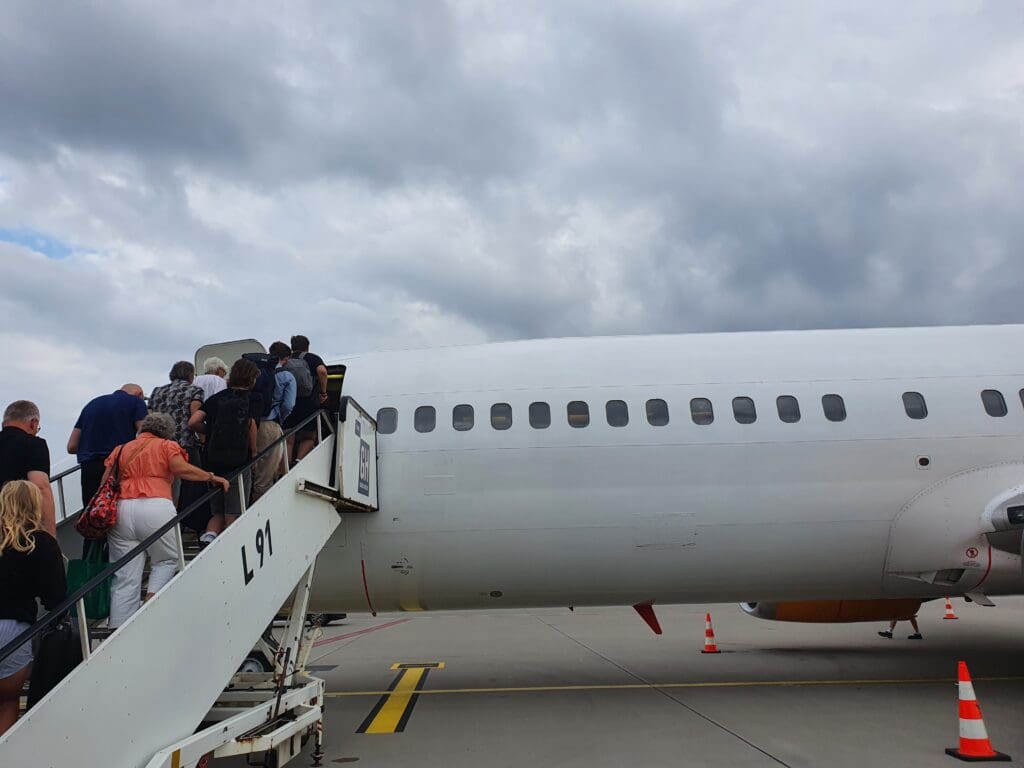
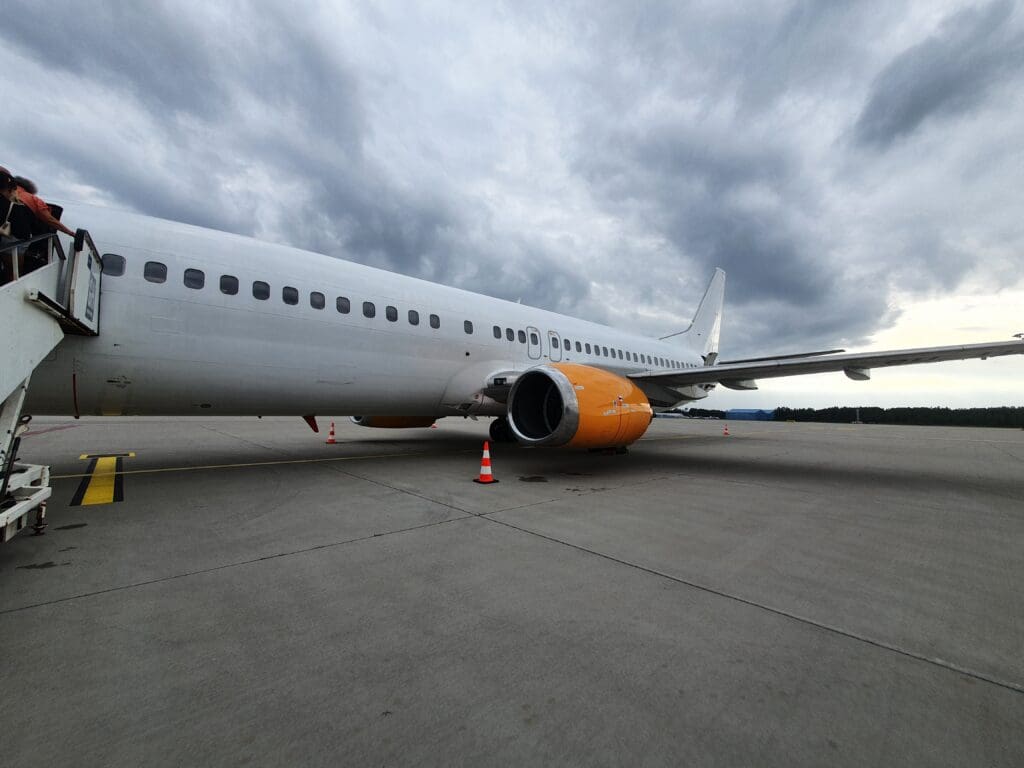
Once the bus came to a halt, the doors opened and passengers spilled out onto the apron. Ending up towards the tail end of the bus load of passengers, I had plenty of time to snap a few photos before I made my way up the airstairs towards the waiting jet. Eventually, I stepped into the Boeing 737’s forward galley where I received a lukewarm greeting from an Air Horizont flight attendant. As with the Carpatair-operated service over to Riga, an airBaltic flight attendant stood next to them and then greeted me in Latvian as I turned right and entered the cabin. That evening, there were to be a total of six flight attendants onboard – four Spanish crew members from Air Horizont and two from airBaltic who presumably had the job of ensuring that airBaltic’s standards were maintained onboard and providing passenger support in Latvian.
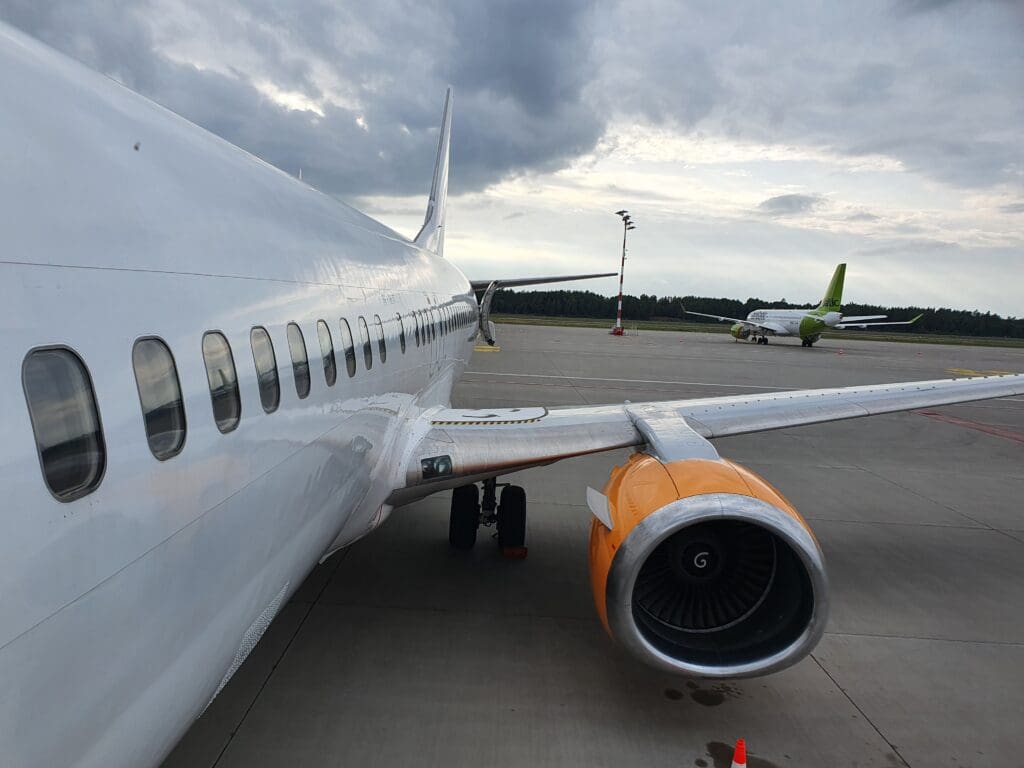
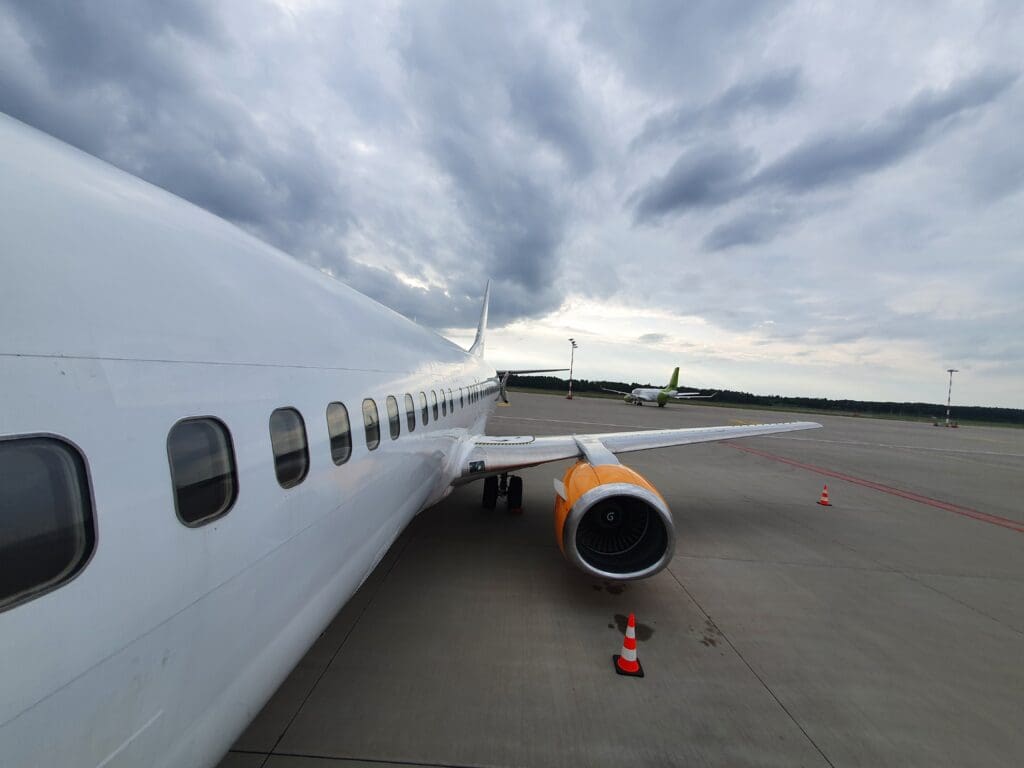
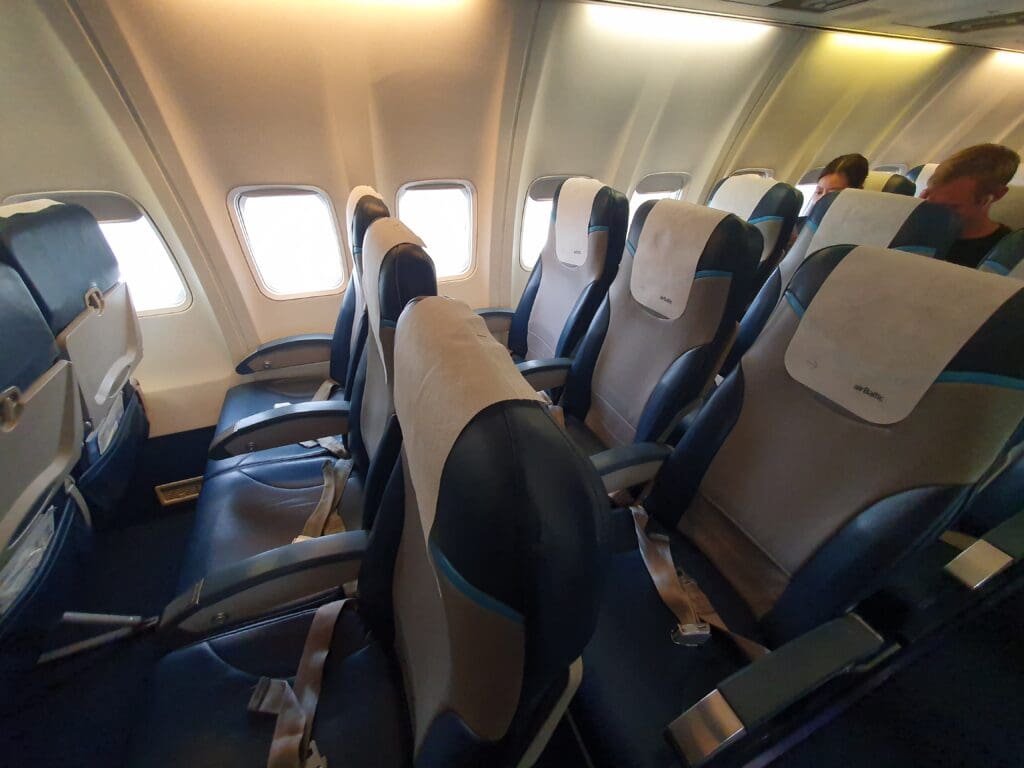
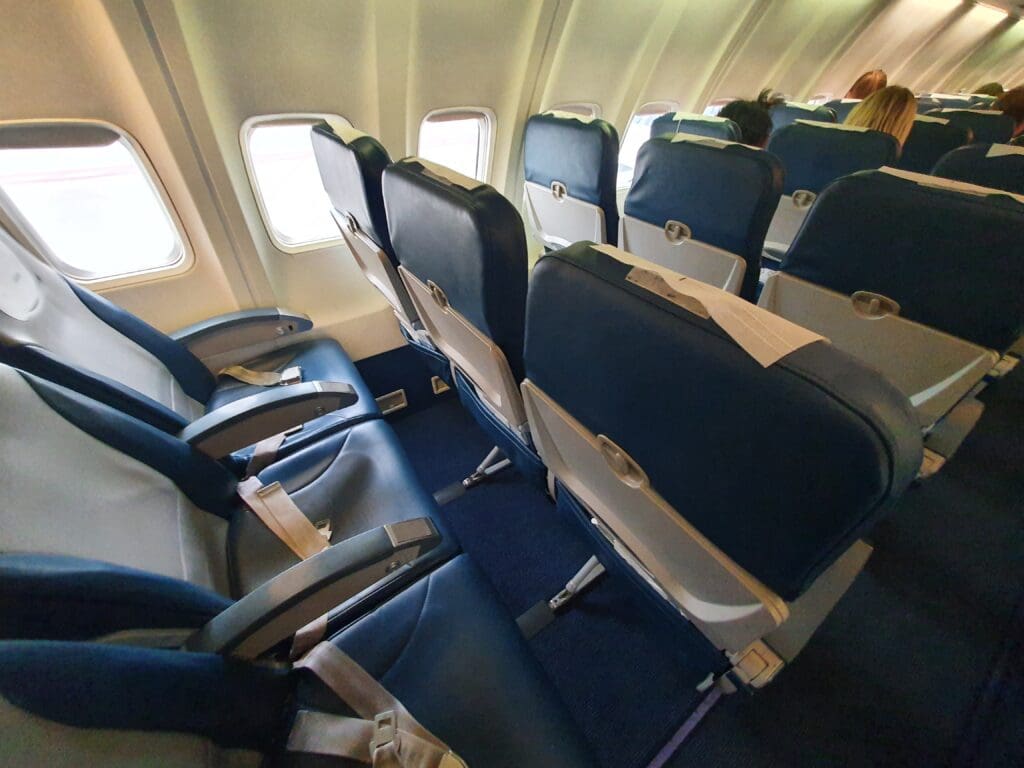
Whilst Air Horizont also operates VIP-configured Boeing 737s for things such as sports team charters, this particular Boeing 737-400 features a much more grounded 168-seat all-economy cabin. Onboard, the forwardmost row of the aircraft had been dedicated to airBaltic’s Business class however with no curtain on the middle seat drinks table, the only thing that denoted this part of the cabin as being ‘special’ were the antimacassars that had ‘Business’ printed on them. Onboard, each seat was identical in design to those that I had encountered onboard one of Albawings’ Boeing 737-400s on a flight from Forlí to Tirana four months earlier. On both aircraft, each seat was fairly thin and covered in a faux leather covering which sported a basic design of grey, dark blue and light blue. With stints at Olympic Airlines being the common factor between these aircraft, I imagine that these were fitted to the aircraft during its time with the Greek carrier. As with any ‘real’ airBaltic aircraft, each seat sported disposable fabric antimacassars featuring the carrier’s logo. Meanwhile, in true retro style, the cabin was illuminated by a mismatched mishmash of orange and yellow lighting, some of which annoyingly flickered for much of the flight. Meanwhile, as I journeyed to my seat, I also couldn’t help but notice the emergency exit signs which featured the Indonesian word for exit, Keluar, alongside its English equivalent.
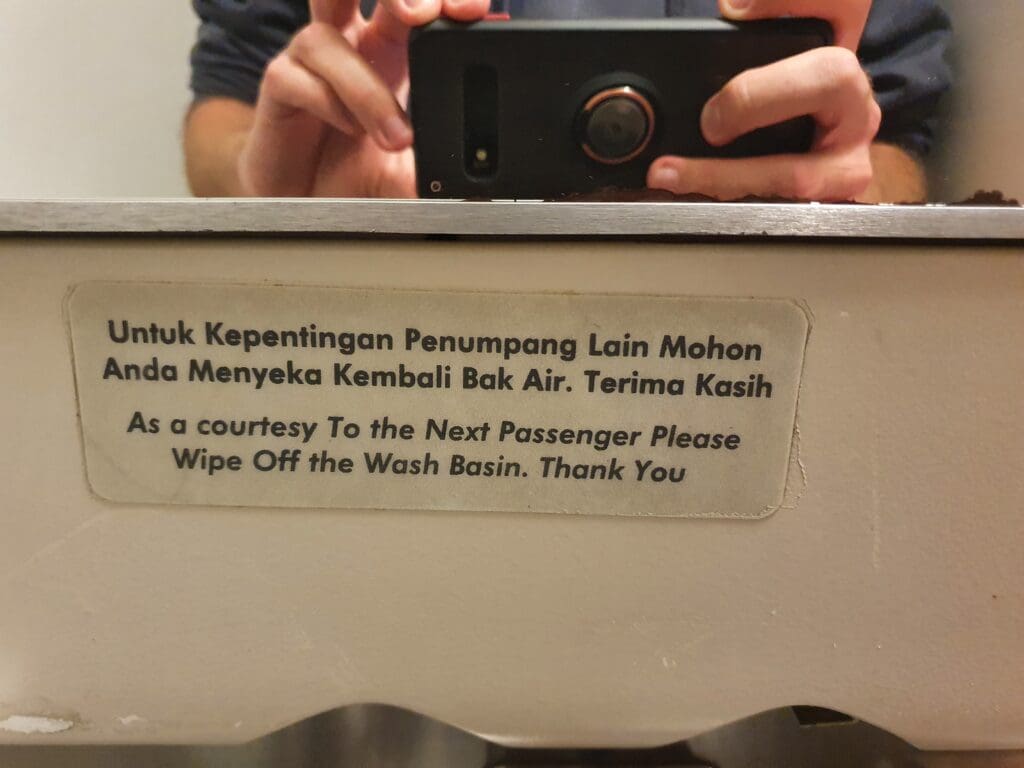
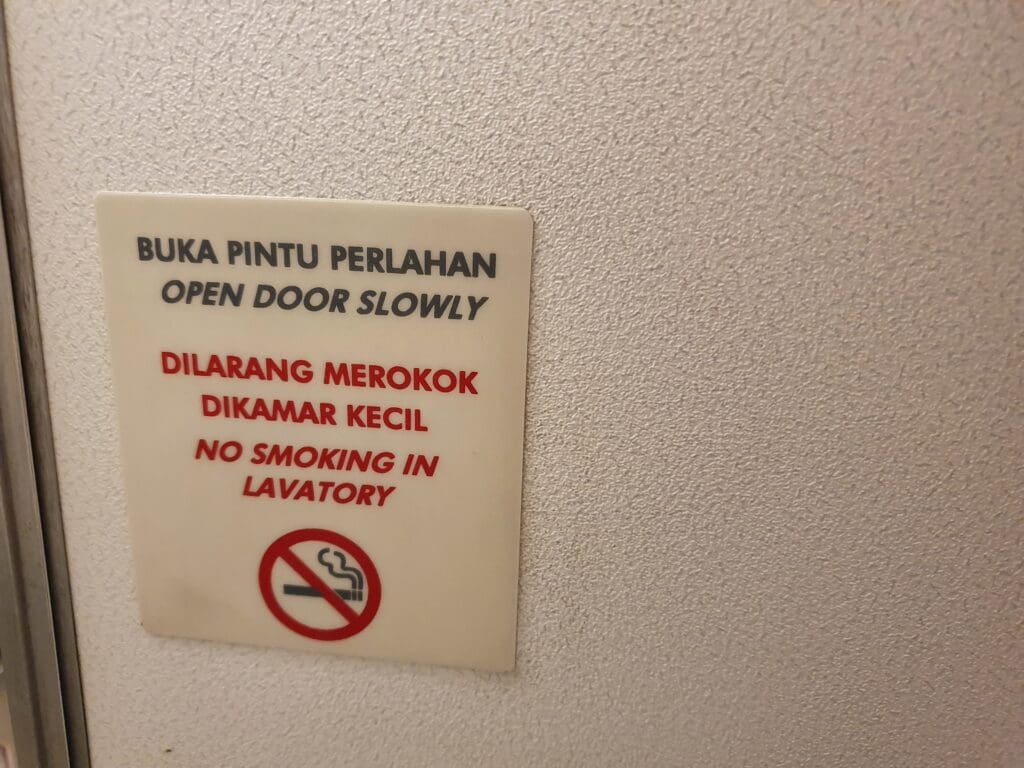
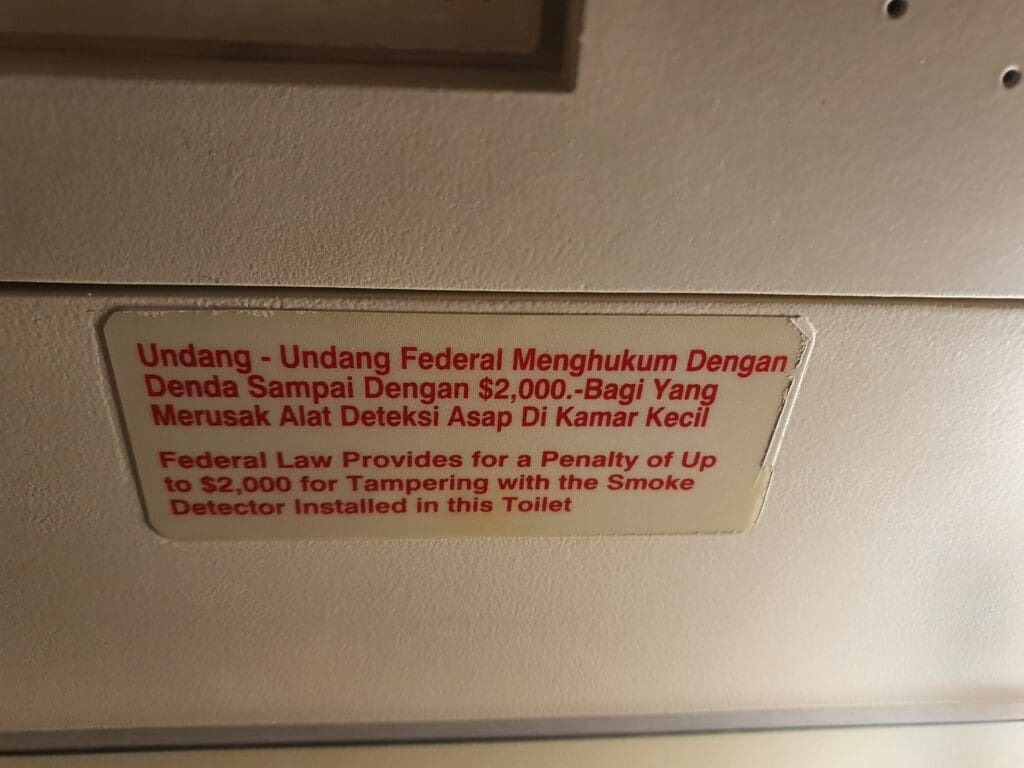
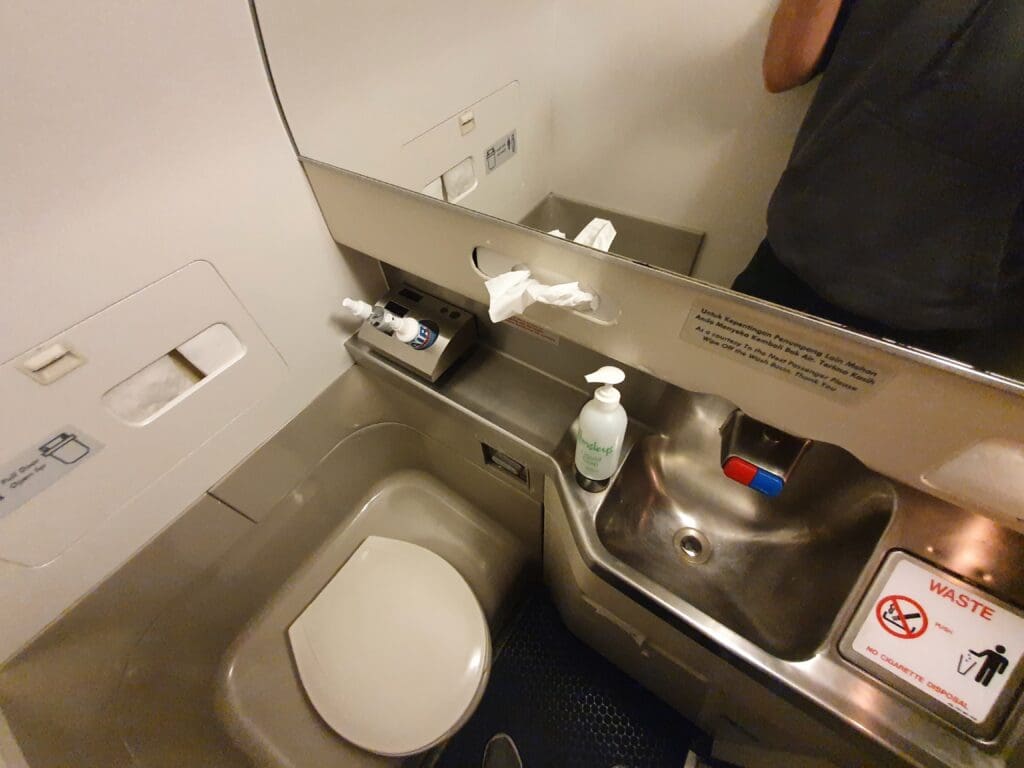
By the time I arrived at Row 19, my two seatmates had already arrived and took the form of stern-looking fellows with an expression and stature that implied they were off to the world convention of bodyguards. Not wanting to push past them during the flight, I temporarily placed my bag in one of the overhead lockers before making a quick trip to one of the two lavatories located at the rear of the cabin. Once inside, I found this to be rather dated in its appearance and all signs remained in both English and Indonesian from the jet’s days flying with Sriwijaya Air, whilst one sign referring to Federal Law and a $2000 penalty for smoking likely predated these signs by some way. Nevertheless, despite its retro appearance, the toilet was clean although I was unable to get the taps to work. Fortunately, anti-bacterial gel was on hand so this was no disaster.

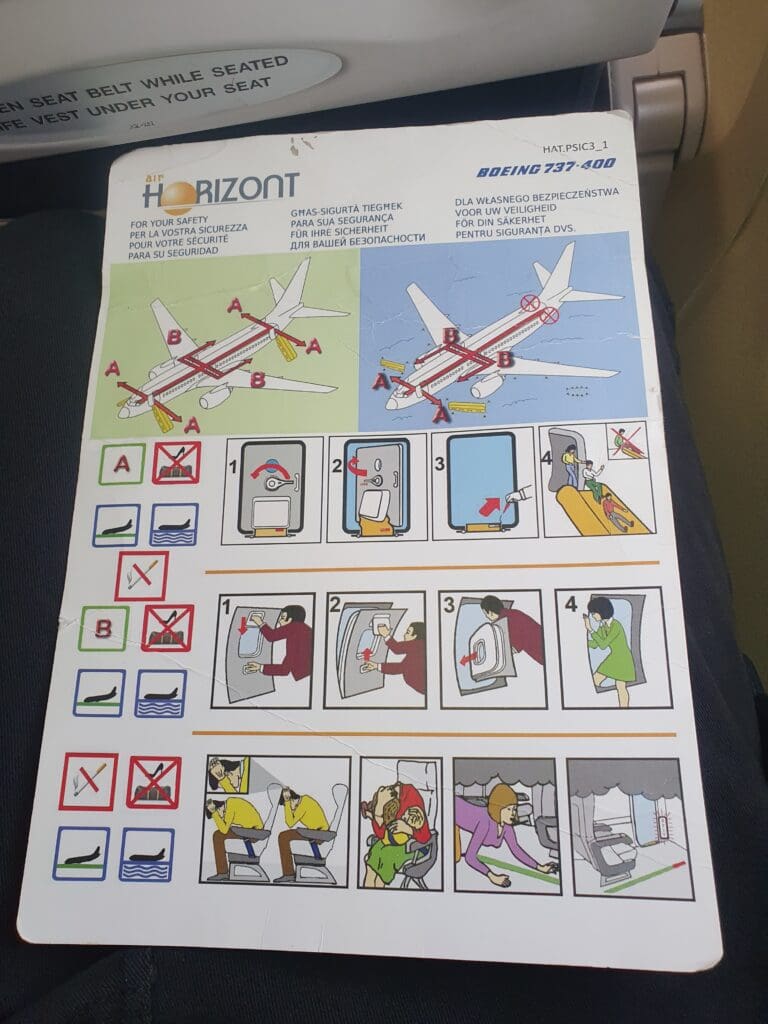
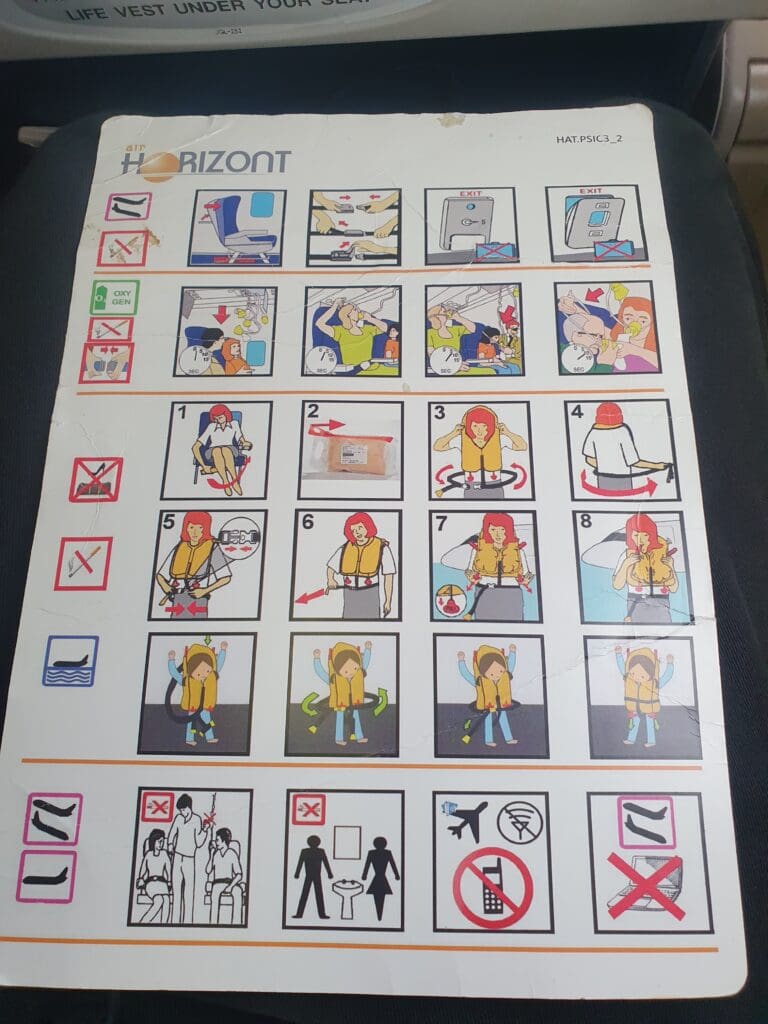
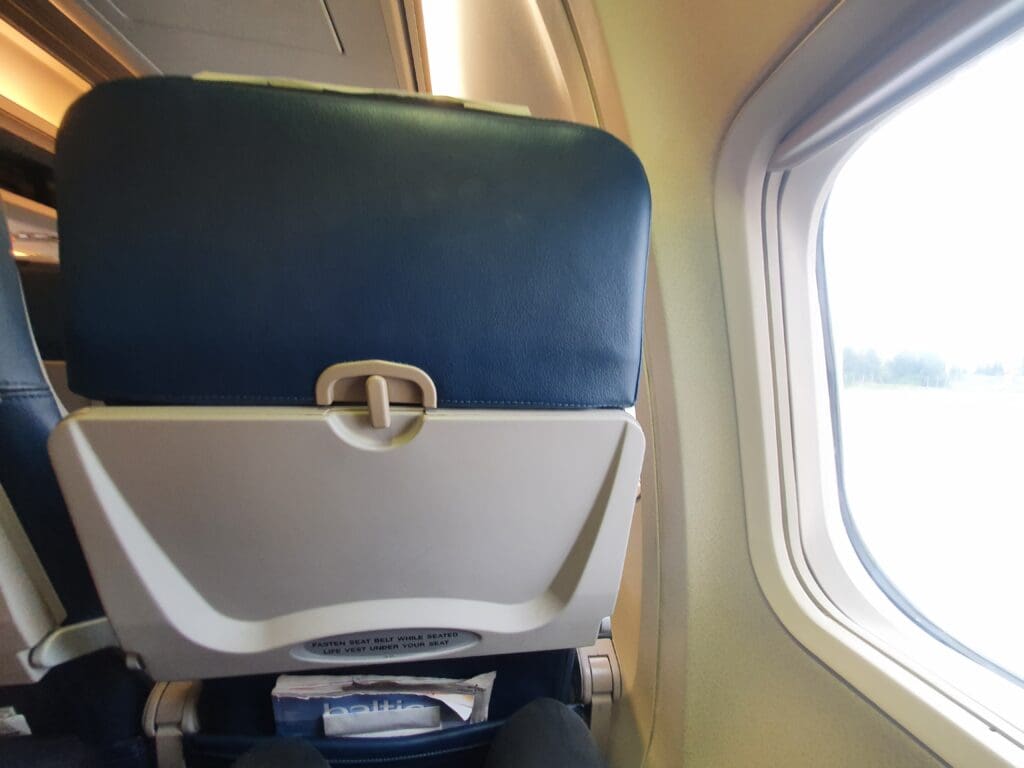
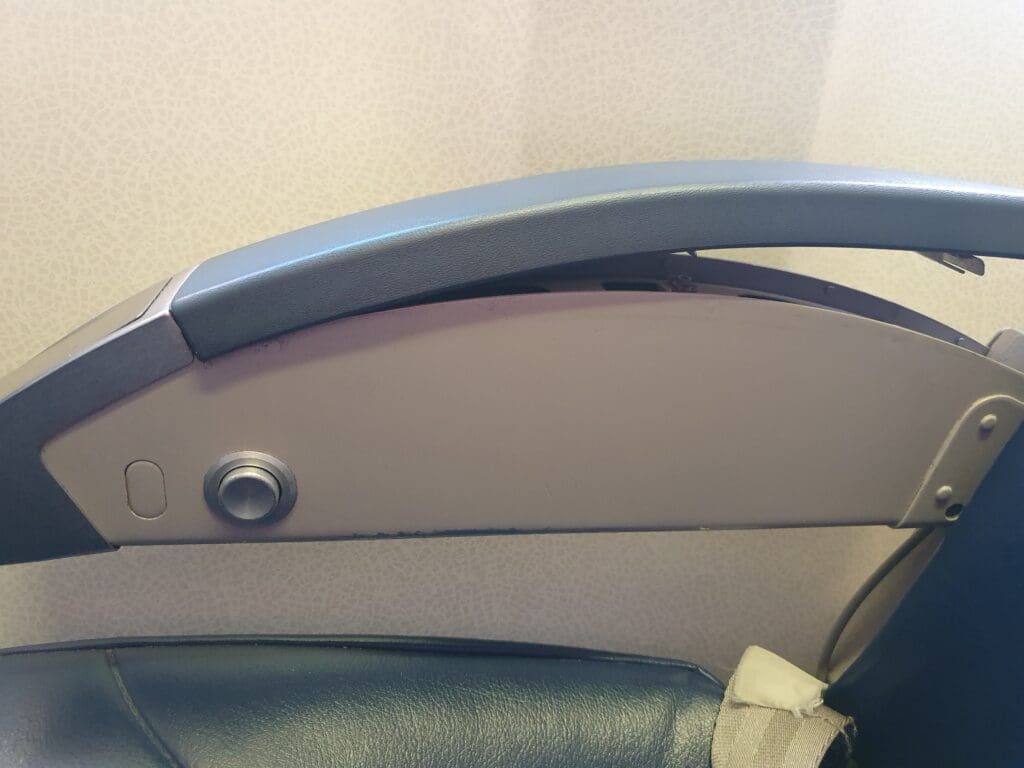
Following my quick trip, I made my way back up the cabin to Row 19 where my two seatmates grudgingly obliged to stand up to let me into the window seat. Upon sitting down, I got to work inspecting the area around my seat. As was to be expected given the jet’s age, this featured a few signs of wear and tear in the form of scratches and marks, as well as a slightly blurry window although this did seem to be in a better state than the Albawings Boeing 737-400 that I had flown in earlier that year. Meanwhile, other than some well-ingrained bits of dirt, the area around my seat seemed to be clean and tidy, however, that was to be expected given the fact that the jet had been sitting idle in Riga since arriving from Rome Fiumicino the previous evening. In terms of comfort, whilst the seat was not terrible, this was not designed with long flights in mind and proved to be rather thin and firm, whilst offering an amount of legroom that could be described as mediocre at best. Finally, turning to the seatback pocket, this featured a battered safety card, a plain white sickbag and a copy of the August 2022 edition of airBaltic’s Baltic Outlook magazine.
By the time that I had strapped myself in, the final bus load of passengers could be seen entering the cabin and it soon appeared that the flight would be full on its trip across the Baltic. Focusing on demographics, most of my fellow passengers appeared to hail from Latvia, with just a small collection of passengers seeming to be from Denmark or elsewhere. With nine minutes to go until the flight’s scheduled departure time, at 1811 boarding was announced as complete. However, indicating there to be an issue, many of the cabin crew could be seen scurrying up and down the cabin with slightly worried looks whilst the dispatcher shuttled in and out of the cockpit acting as the middleman between the pilots and the ground crew. At our scheduled departure time of 1820, this continued however thankfully, indicating that there was nothing wrong, at 1821 the cockpit door was closed, followed by the main cabin door.
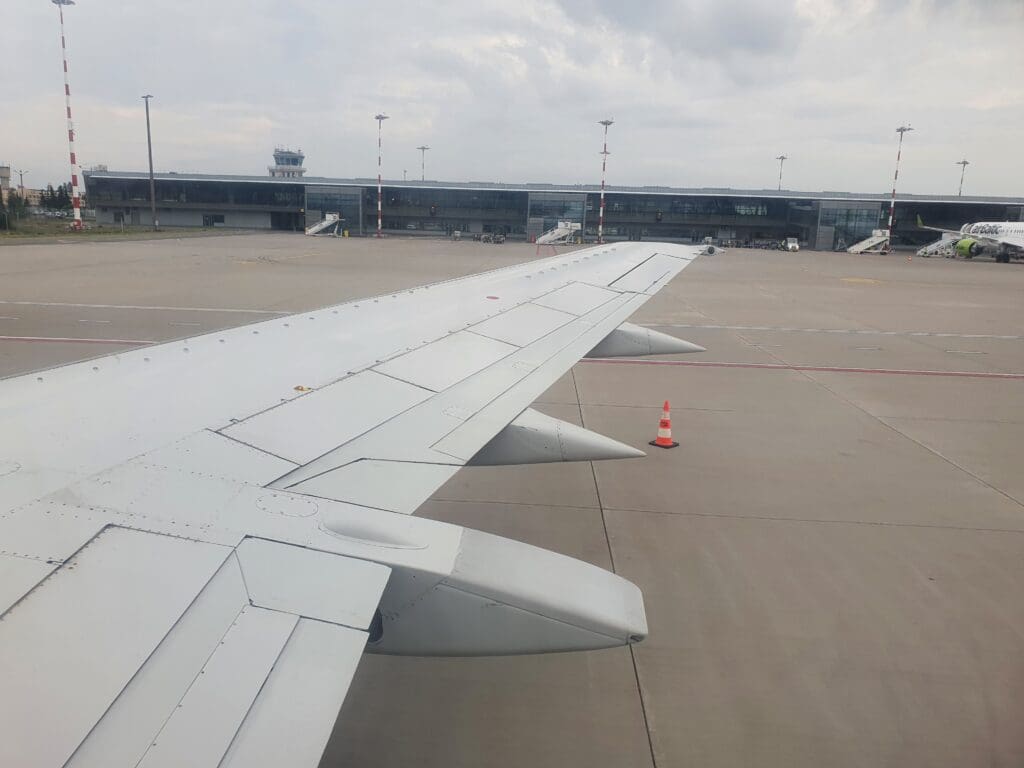
At 1823, the Air Horizont Purser undertook their welcome announcement during which they informed passengers that we could expect a flight time of an hour and fifteen minutes, before moving on to the safety instructions during which several crew members took to the aisle and performed a demonstration in the usual manner. However, when the lifejackets came out, I couldn’t help but notice that these were adorned with Sriwijaya Air’s distinctive logo! As with the Carpatair service over to Riga, neither of the two airBaltic crew members went through any of the safety instructions in Latvian, nor was a recording of these played. After this, several crew members passed through the cabin ensuring that all was in place for our departure before retreating to the jumpseats in the front and rear galleys. With all set to go inside the cabin, there was little movement as presumably, the flight was yet to receive its clearance to push back away from the stand. After around ten minutes of waiting, at 1835 the Boeing jolted rearwards as the tug pushed the jet away from the stand before pointing the aircraft’s nose in the direction of the terminal. As this took place, the aircraft’s two CFMI CFM56-3C1 engines powered up into life one by one. Despite my position just behind the wing, the start-up of the two engines did not prove to be a particularly noisy affair, although this did cause a fair amount of vibration as the two engines powered up. Once the tug had been disconnected and the flaps had been partially extended, at 1841 the aircraft powered forward under its own steam and began its taxi to the runway.
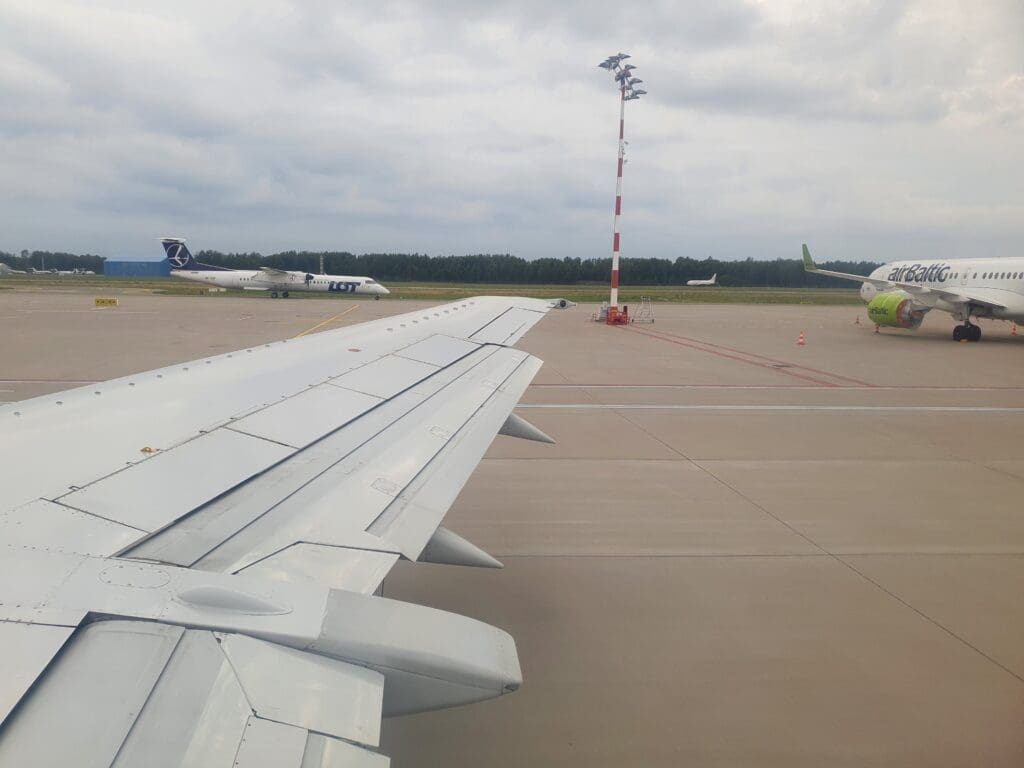
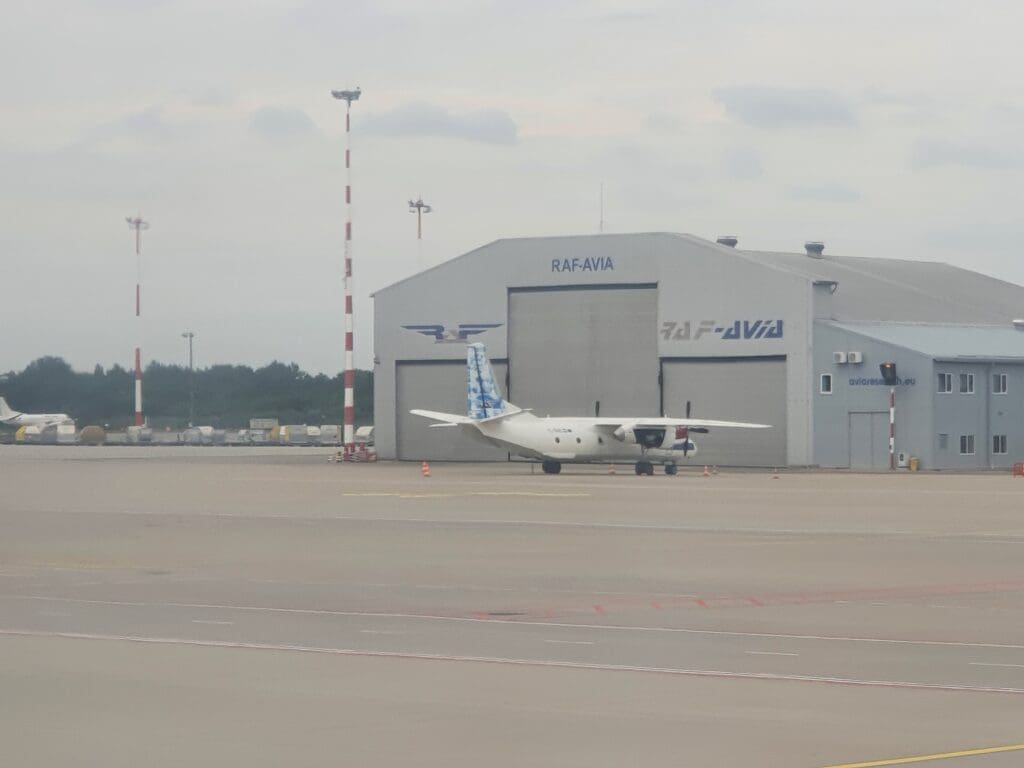
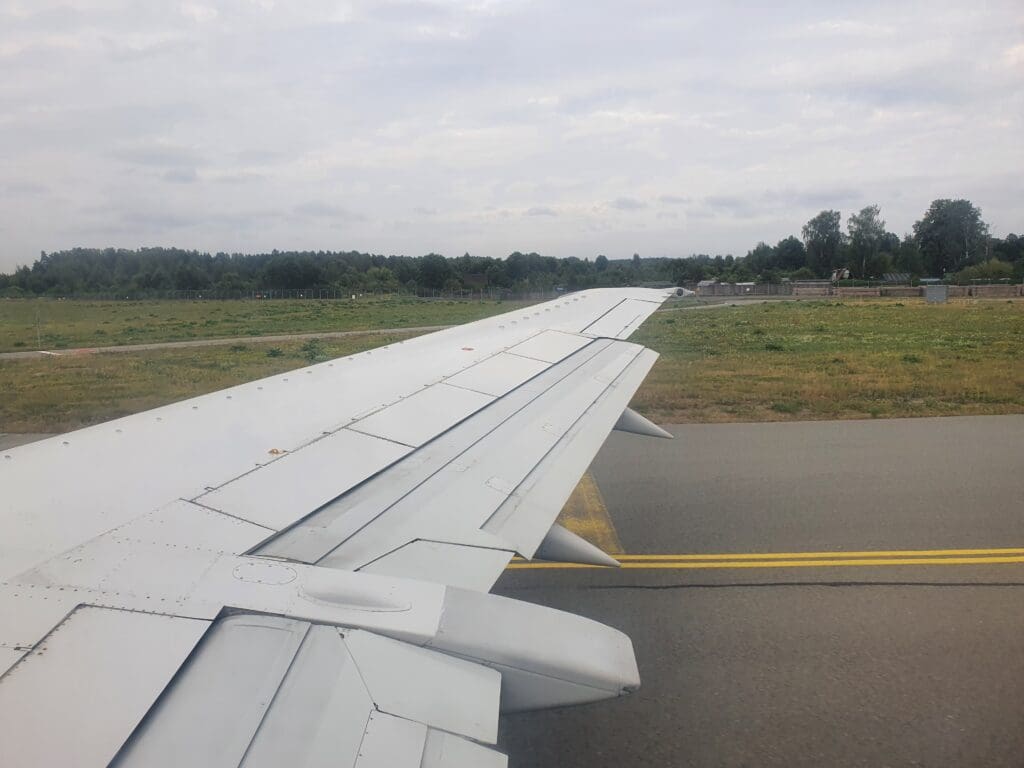
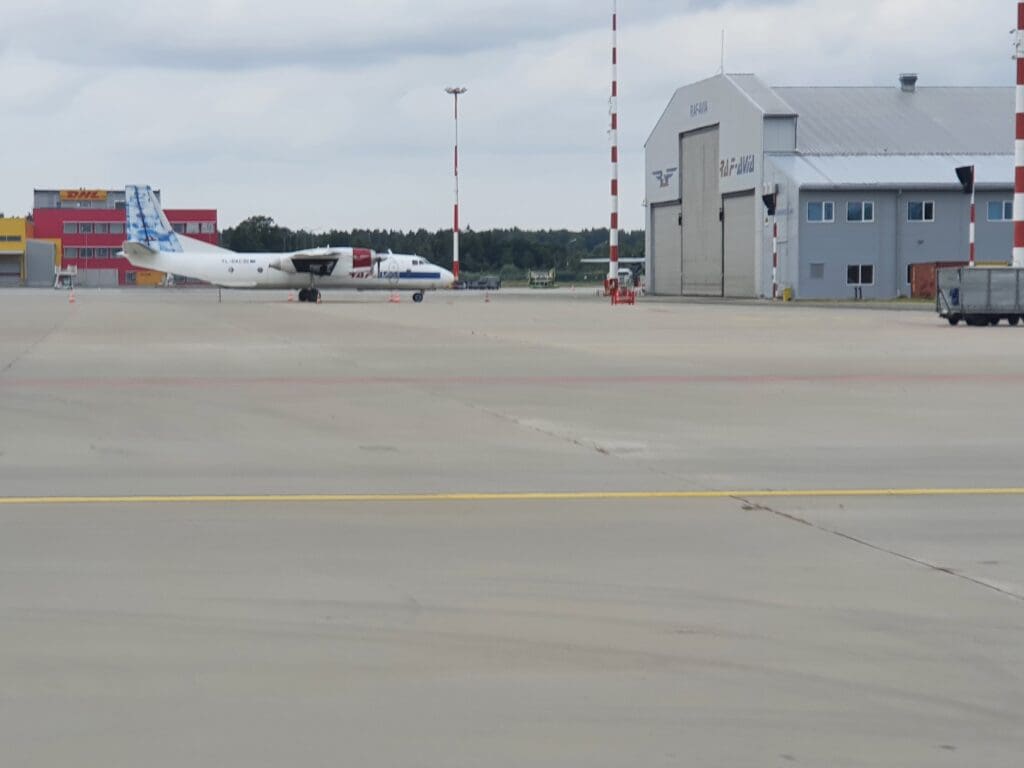
With a light wind blowing almost directly from the south, that evening Riga Airport’s runway was in use for all departing and arriving aircraft. Thus, our pre-flight taxi was not to be particularly long. After leaving the apron behind, a collection of parked aircraft could be seen. These included a vintage Antonov An-26, the final example remaining in service with locally based carrier RAF-Avia, as well as several of the airline’s more modern Saab 340 freighters. Alongside these, an all-white Airbus A330 could be seen as well as a US Navy Lockheed C-130T Hercules based thousands of miles away at NAS Jacksonville in northern Florida.
After passing this interesting collection of aircraft, ‘Air Baltic 1 Papa 9’ taxied onto Runway 18 without holding and came to a brief halt before the engines spooled up with the brakes held. At 1845, the brakes were released and the Boeing began a powerful takeoff roll down the runway. During this, the aircraft passed the Airline Support Baltic maintenance facilities where a cluster of business jets in various states could be seen, before rotating upwards into the gloomy evening skies. During the first few seconds of the flight, I caught sight of a few of the interesting Soviet-era aircraft at the local aviation museum, as well as the official observation mound which seemed to be rather popular that evening with a long line of people watching as the Boeing rocketed upwards into the skies.
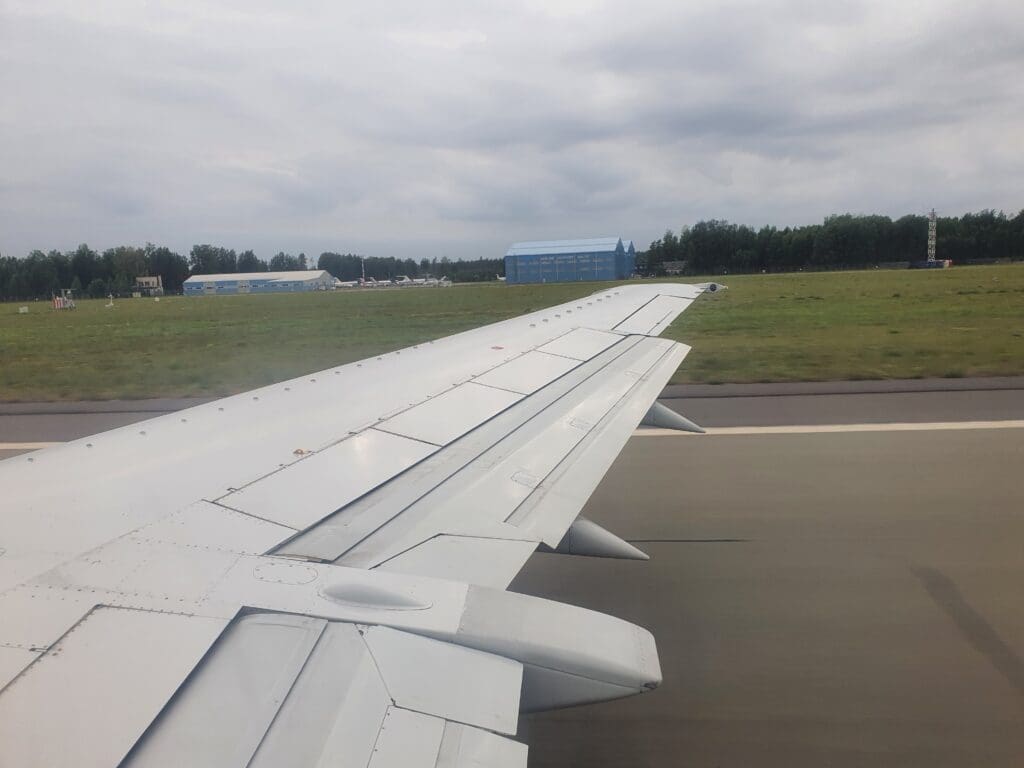
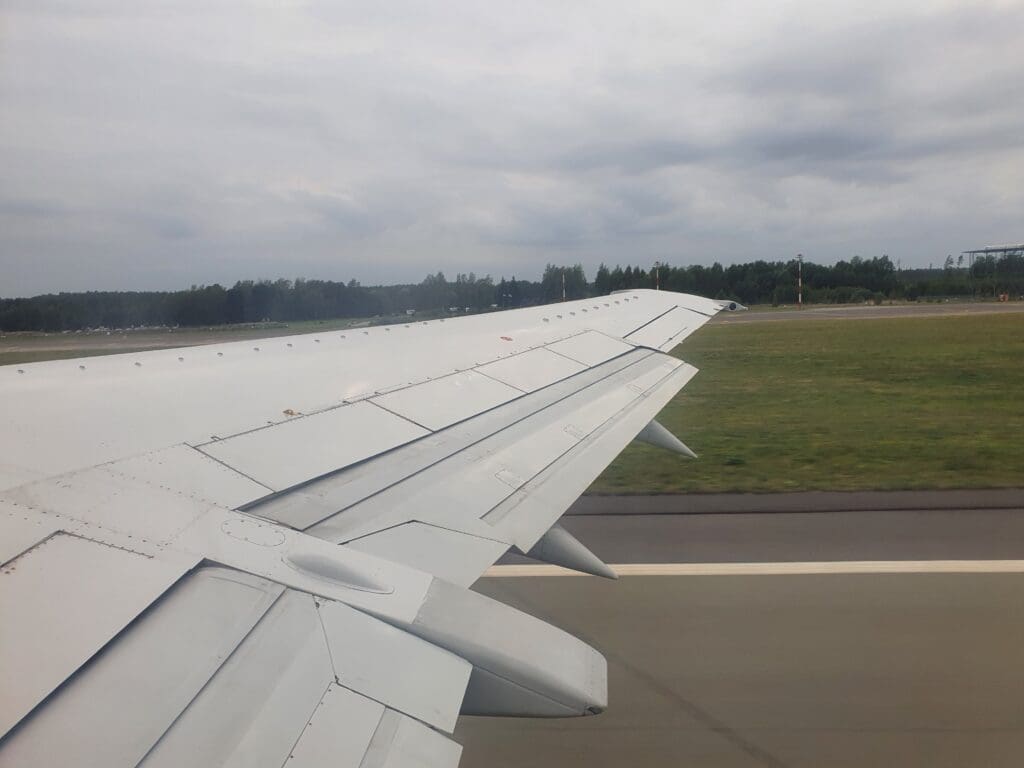
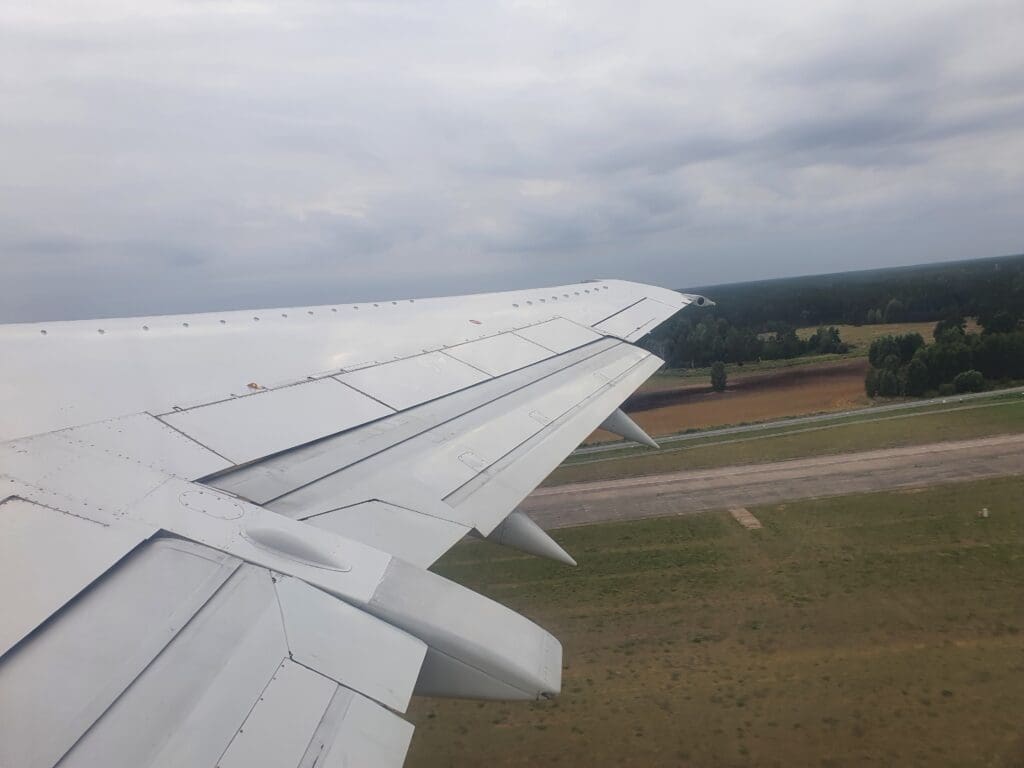
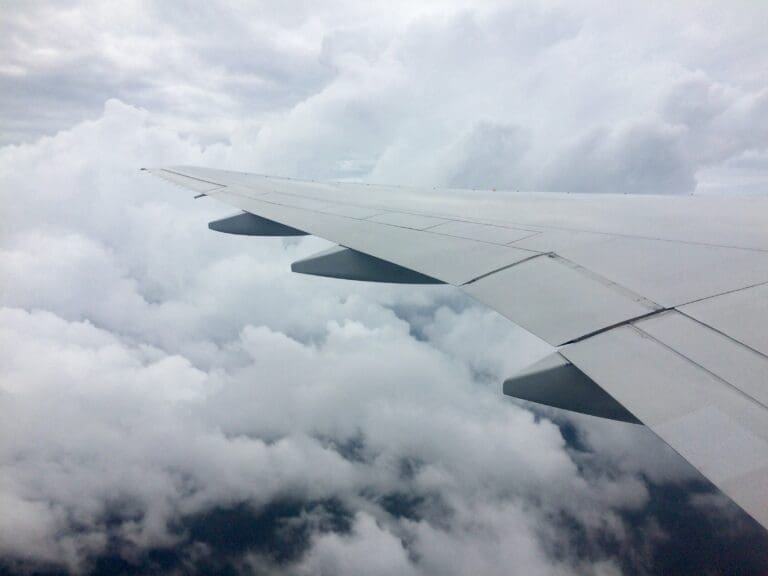
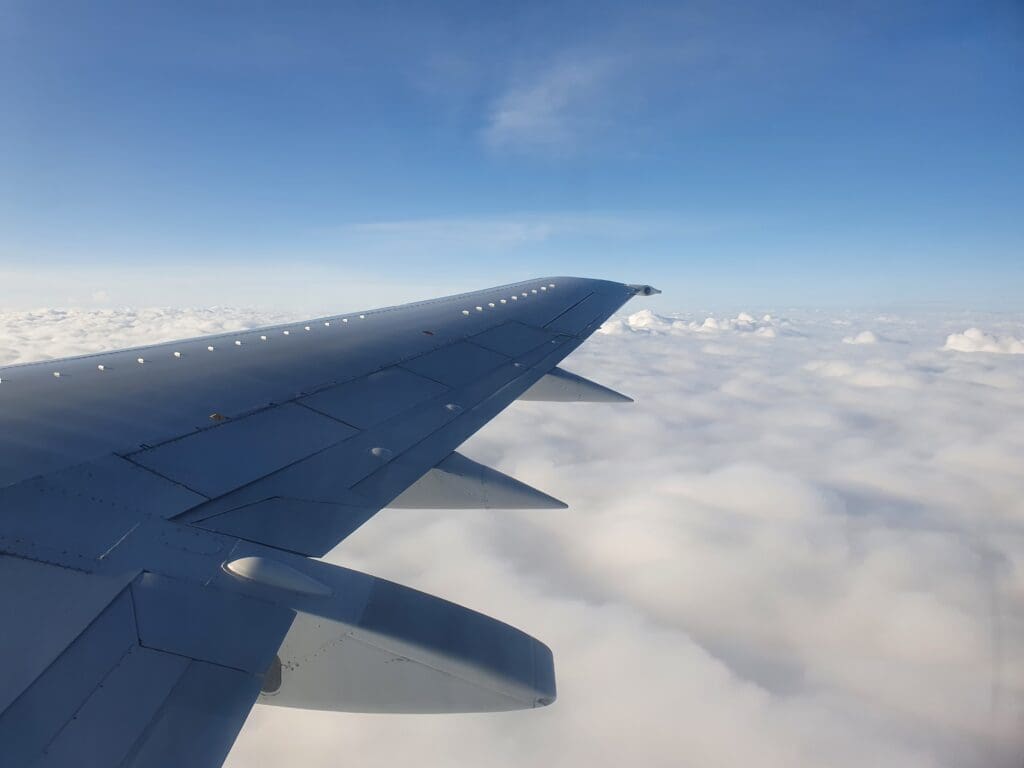
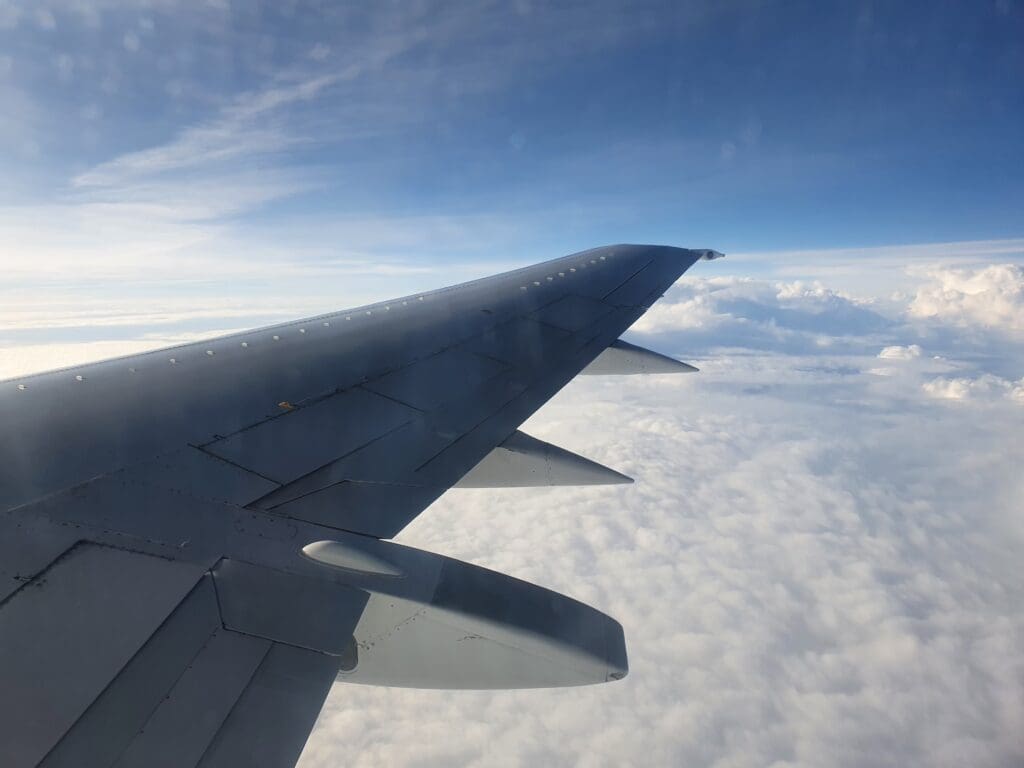
After passing over the airport’s perimeter fence, the Boeing climbed the forests that surround the airport before reaching the small town of Jaunmārupe. After making its way past the town, the Boeing banked and flew southwestwards towards the city of Jelgava however before reaching this, the aircraft rose into the thick layer of clouds that lingered over Latvia that evening. A short time later the aircraft banked right once again before heading almost directly westwards towards the town of Saldus. Following a bumpy journey up through the clouds, blue skies appeared above and almost immediately after leaving the clouds a ding could be heard indicating that the crew were free to leave their seats. This was promptly followed by an announcement by the Purser which contained the usual warnings regarding seatbelts. A few seconds after this, one of the airBaltic flight attendants performed an announcement in Latvian and English regarding the soon-to-commence buy-on-board service, whilst advising those in Business and passengers in Economy who had pre-ordered meals that these would be served shortly.
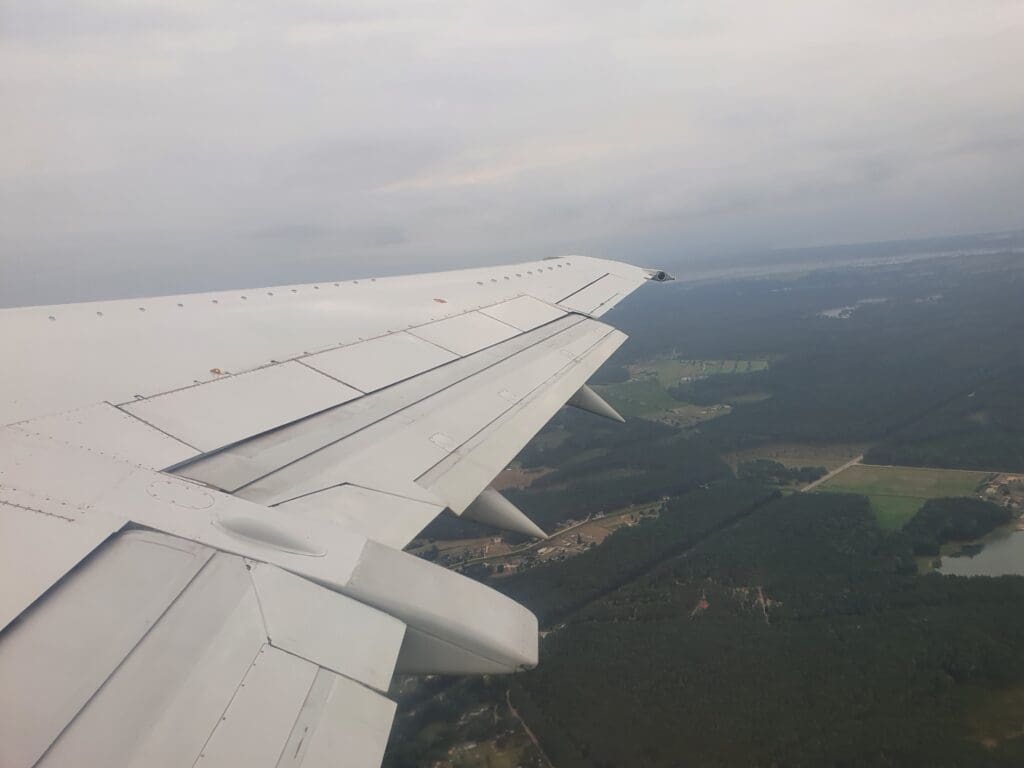
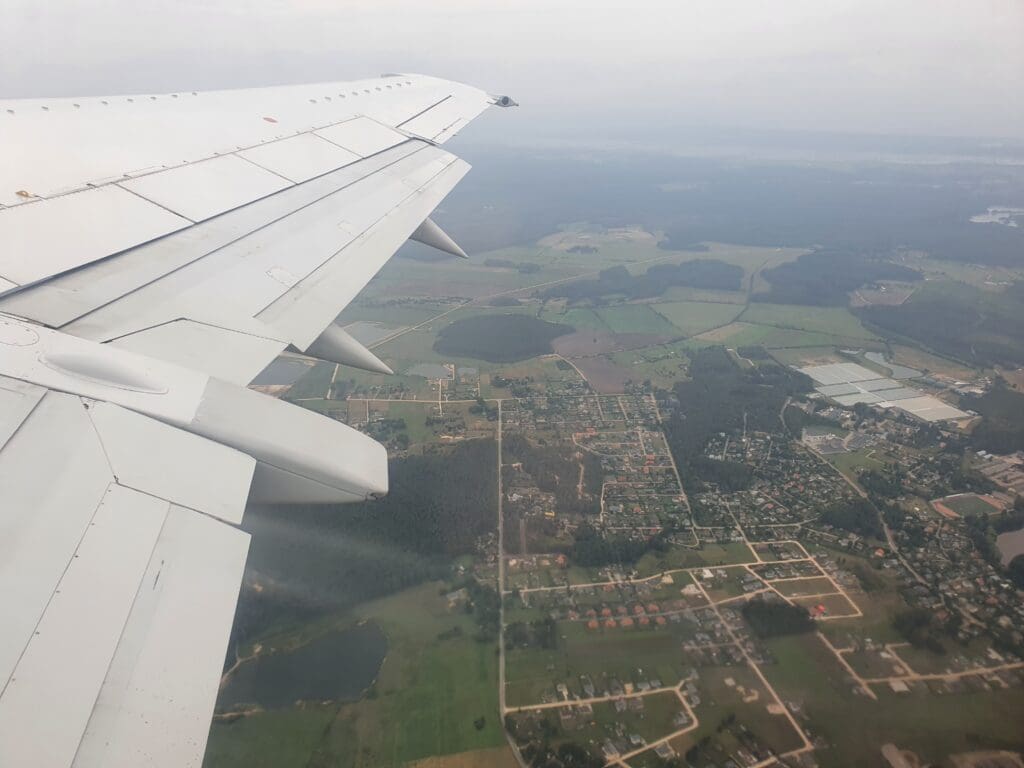
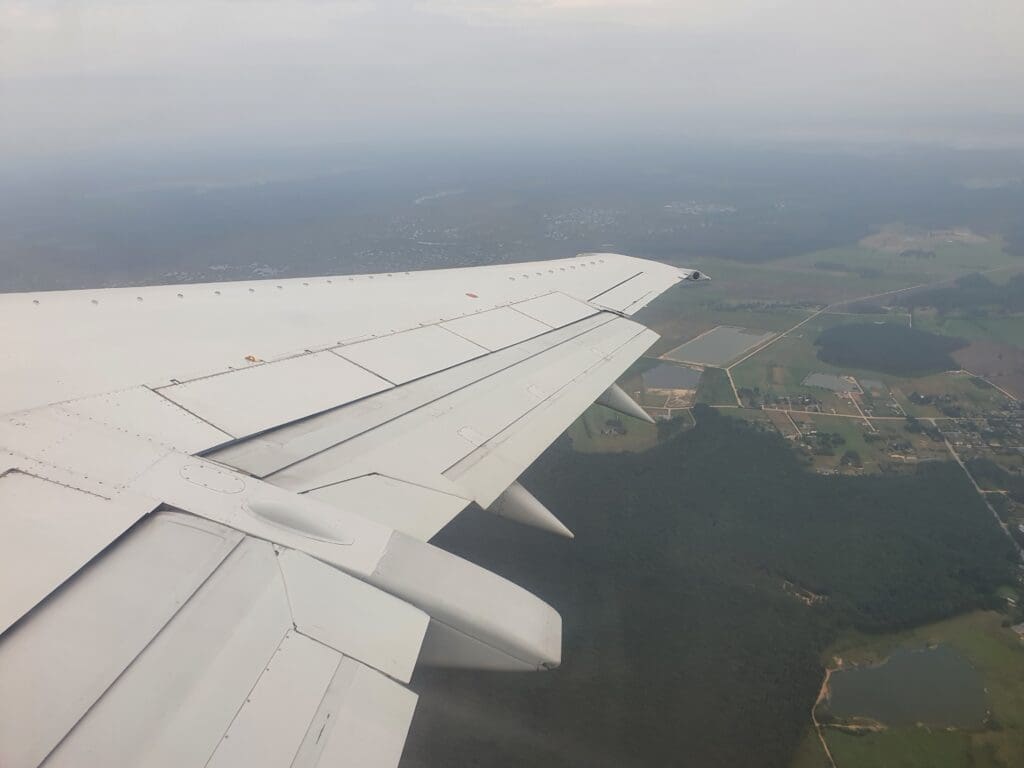
At 1900 a trolley was rolled to the front of the cabin and two airBaltic crew members commenced their buy onboard service. Making quick progress, perhaps put off by the high prices, few appeared to purchase anything onboard, except for the loud and merry group a couple of rows behind who decided to purchase some additional beer to keep them going until Denmark. Upon reaching the middle of the cabin, one of the Air Horizont crew members passed the airBaltic crew a stack of inflight meals. The first of these headed to the Business cabin before I was handed over a cardboard box and a paper cup without so much as a word from the flight attendant.
Wasting no time, I opened this up and was presented with the sight of a veritable spread. This contained my main meal, a packaged slice of bread, a salmon side dish, a slice of cake for dessert as well as some butter. Meanwhile, keeping up with the sustainable theme offered by the cardboard packaging, the eating utensils were made of wood fibre rather than plastic – something that I have only previously seen on Air France. Soon getting stuck into this, whilst the chicken was slightly bland, I was pleased to find this to be a fairly good inflight meal. I was particularly impressed by the slice of bread which seemed to have a nice minty tinge, as well as the delicious dessert. However, I was still left wondering whether it was worth the €17.99 that this had cost and I am not entirely sure whether I would partake in this expense again, unless, of course, I found myself on say airBaltic’s long flight to Abu Dhabi. Nevertheless, I was glad to have tried the culinary delights of airBaltic.
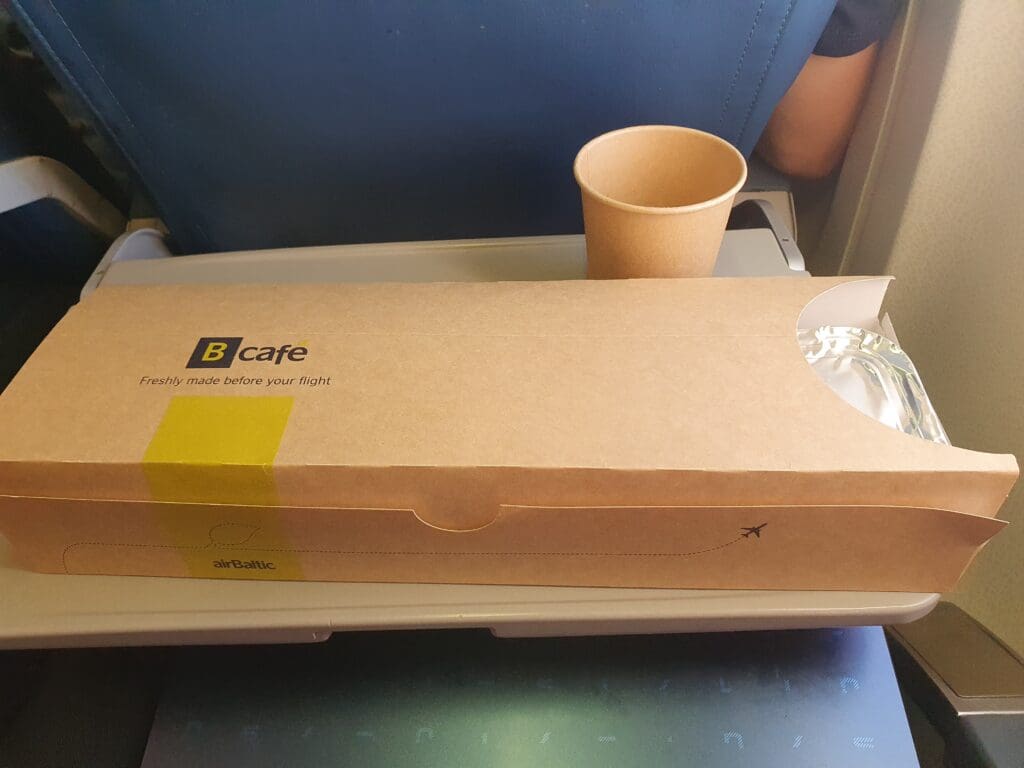
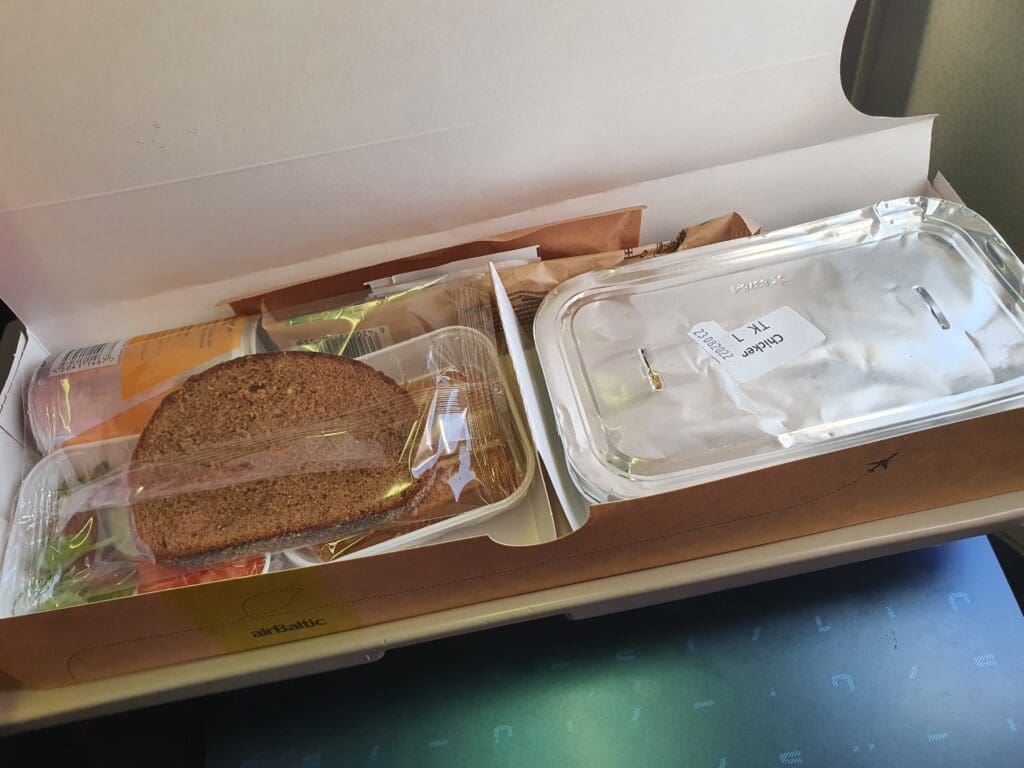
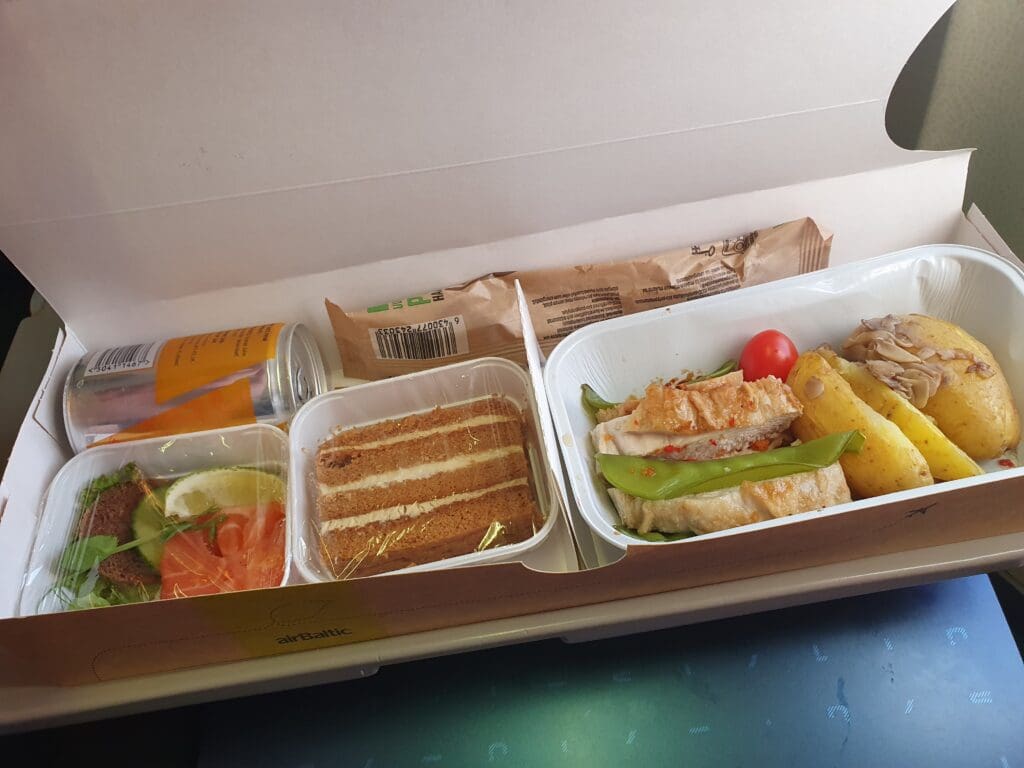
Turning back to the flight’s progress, once the Boeing had levelled off at its cruising altitude of 34,000 feet, the aircraft passed over Latvia’s third-largest city, Liepaja before heading out over the Baltic Sea. Unfortunately, the omnipresent cloud cover below meant that nothing could be seen of the world below as we journeyed westwards towards Scandinavian shores. Around ten minutes after finishing my meal, I passed the remains of this onto one of the Air Horizont flight attendants who patrolled the cabin collecting passengers’ rubbish for much of the cruise. A short time later, one of the Air Baltic flight attendants made an announcement in Latvian and English regarding the onboard shopping service, although once again there appeared to be few takers. With no food or views to entertain me, after handing over my rubbish I turned to the inflight magazine. Reintroduced comparatively early in July 2020, I found this to be filled with the usual smorgasbord of articles – featuring travel articles on Athens, Dubai, Iceland, Paris, Riga, Valencia, Vienna and Zurich, as well as plenty of advertisements.
Upon passing just to the south of the Swedish city of Karlskrona, at 1828 Central European Summer Time, the aircraft could be felt leaving its cruising altitude and beginning its descent back to earth. Perhaps anticipating a bumpy descent or simply wanting to get all passengers seated and strapped in in good time for our arrival, a short time later the seatbelt signs were switched on and the Purser conducted a pre-arrival announcement in English which featured the usual warnings and a mention of the pleasant 24 degree temperature on the ground in Copenhagen. A short time later, several Air Horizont crew members passed through the cabin, taking their time to ensure that all was in place for our arrival. During this, I overheard one of the flight attendants barking at a nearby passenger with the abrupt and uncensored demand of ‘Seatbelt now! We’re landing!’.
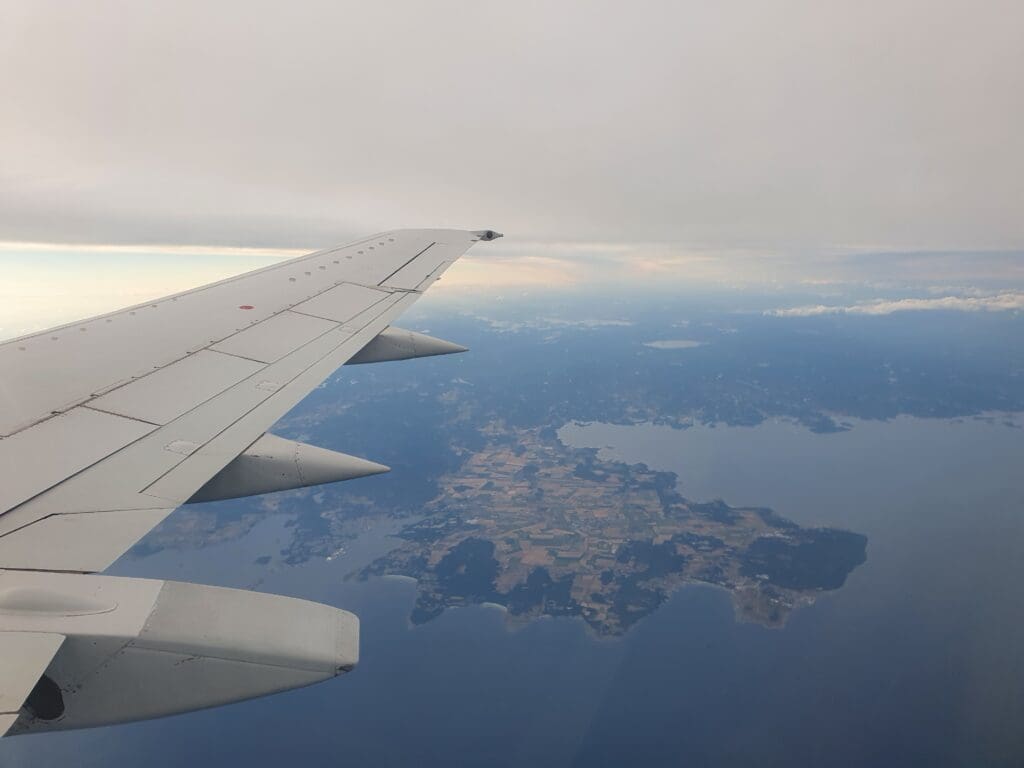
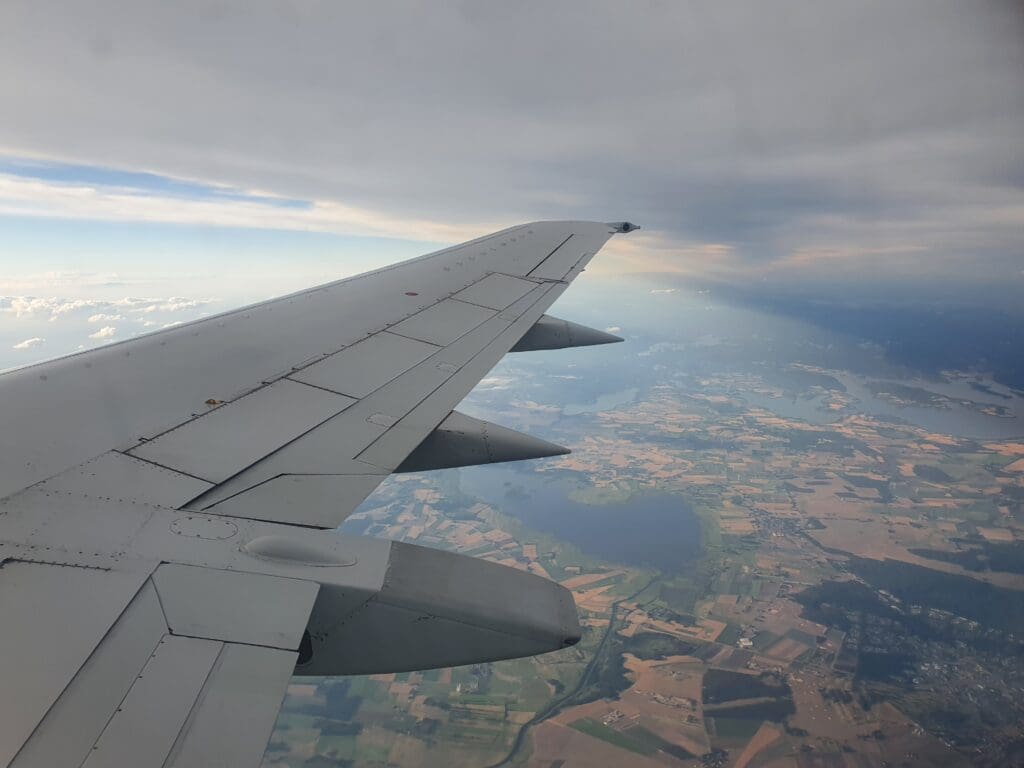
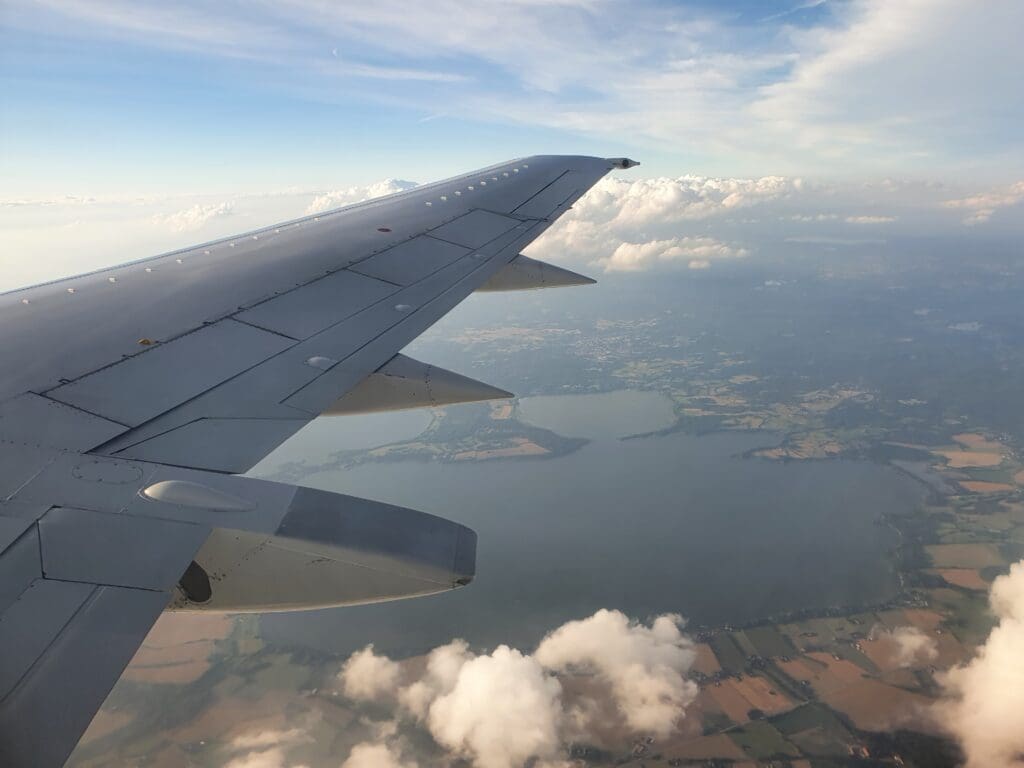
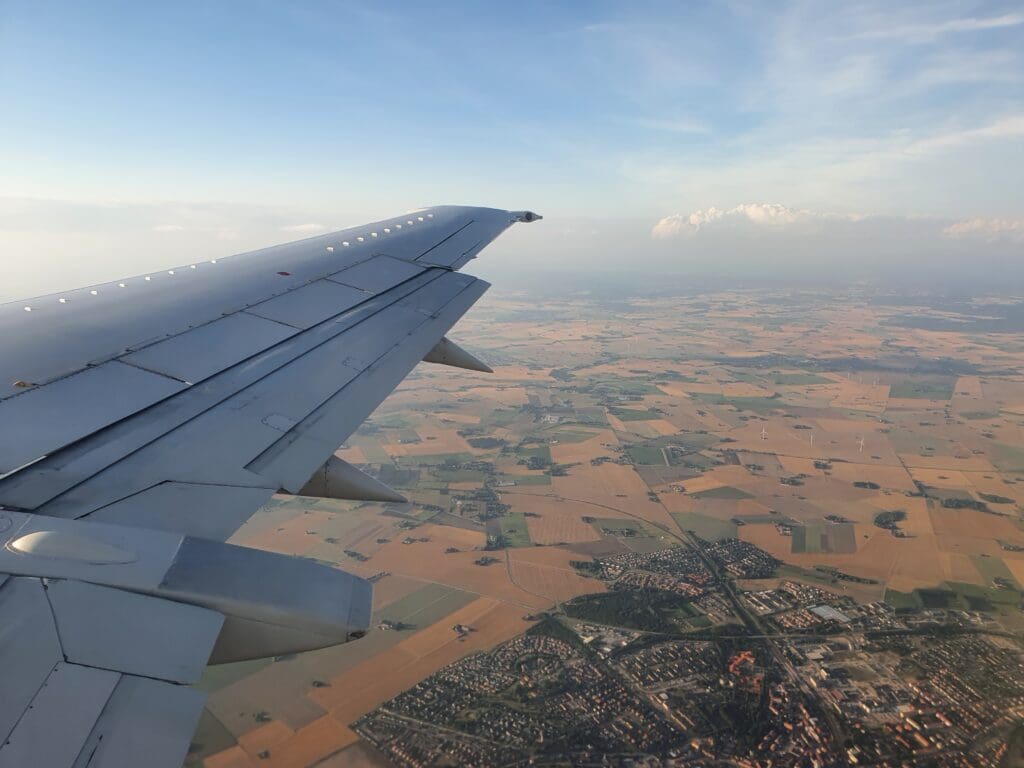
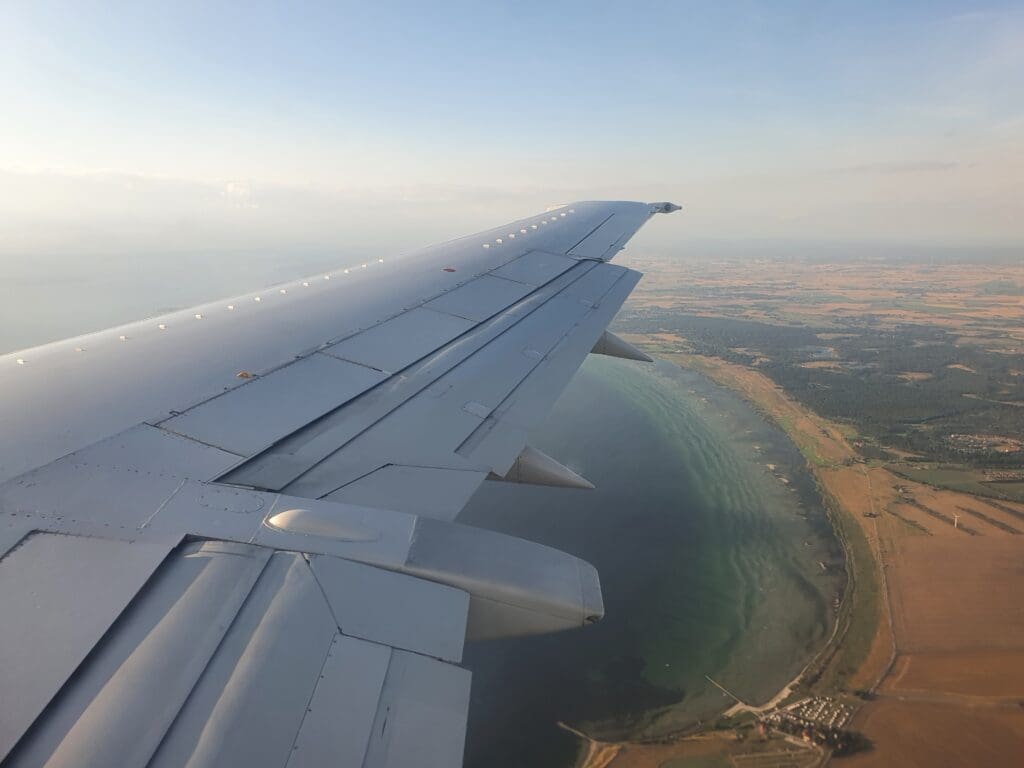
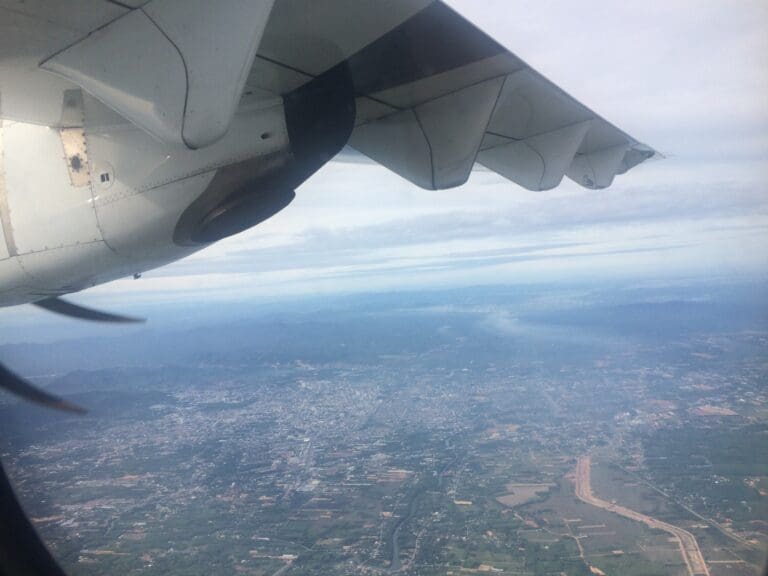
Following our short 35-minute crossing of the Baltic Sea, at 1838 the aircraft made landfall just to the south of the Swedish coastal town of Åhus. After sinking through the clouds, the countryside of Sweden’s Skåne County came into view and I caught sight of the town of Hörby, followed by the large lake of Ringsjön. After passing the lake, the town of Eslöv could be seen at which point the flaps were partially extended for our arrival and the aircraft journeyed over Barsebäckshamn before heading out over the blue waters of Øresund at which point the aircraft turned southwestwards towards Copenhagen Airport.
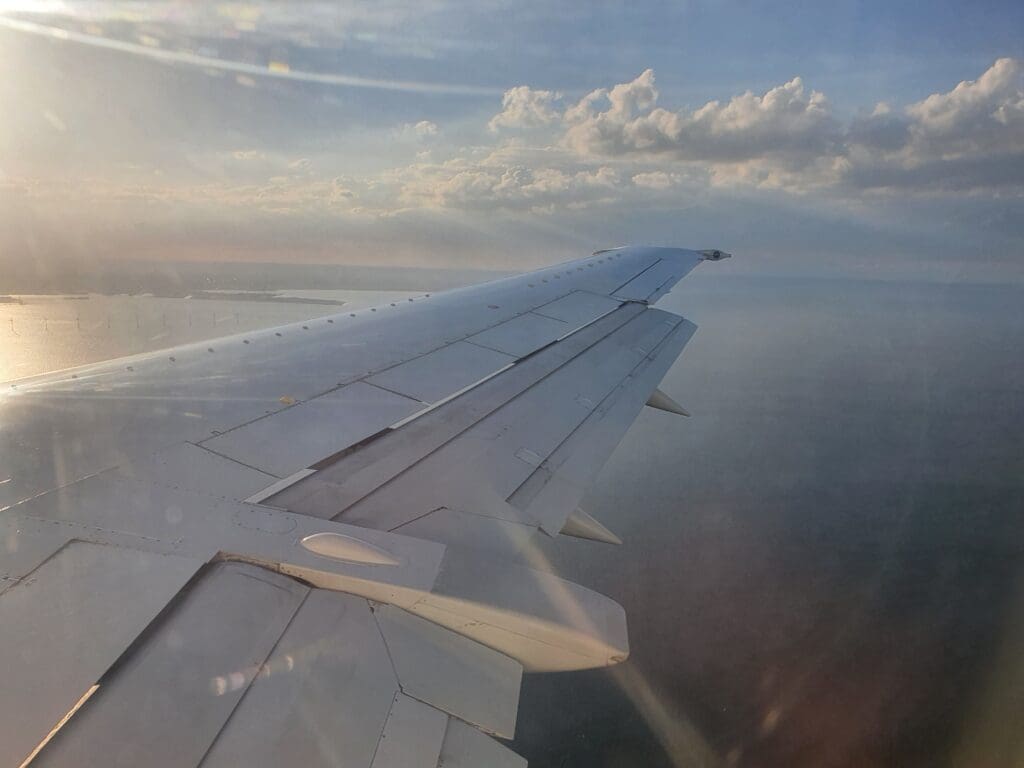
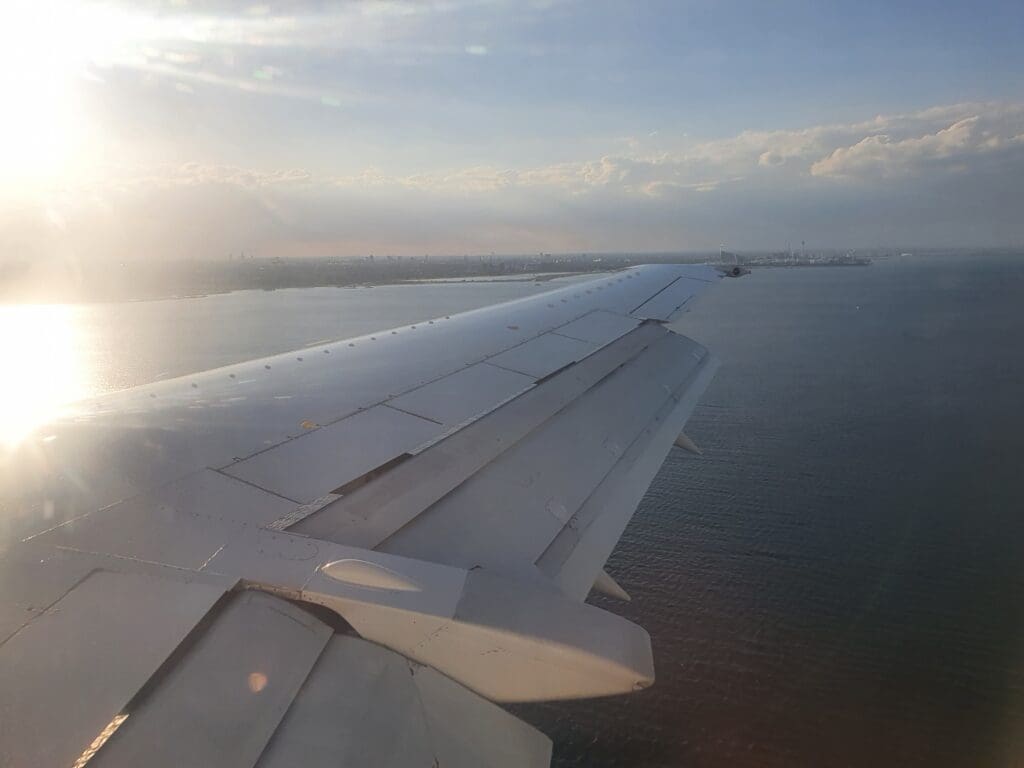
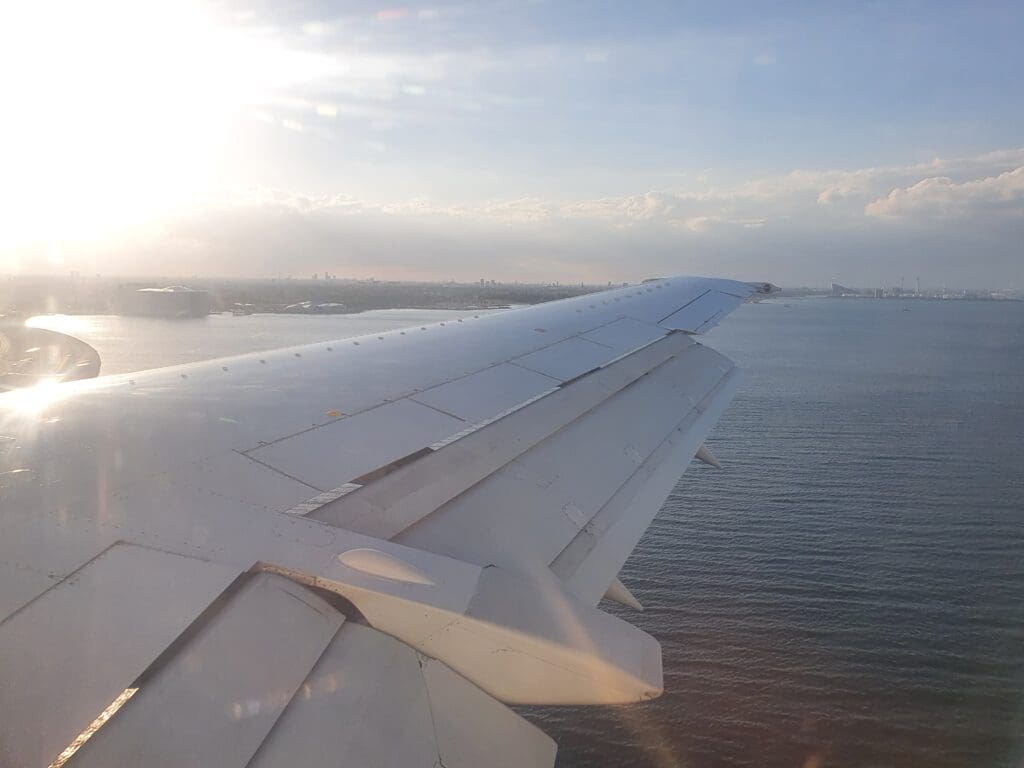
Soon enough, the flaps were extended further and the gear fell into position directly below with a large clunk. In the distance, Copenhagen could be seen whilst I spotted several ships journeying below. With the crests of the waves of the Øresund becoming increasingly visible below, I was somewhat reassured to cross the coastline at which point a good collection of Scandinavian Airlines aircraft could be seen near the airline’s maintenance facilities at the north of the airfield. One hour and eight minutes after rocketing upwards into the skies of Latvia, at 1853 the Boeing made a firm touchdown on Copenhagen Airport’s Runway 22L before decelerating rather rapidly in an apparent rush to get off the runway during which items could be heard sliding about in the overhead lockers above.
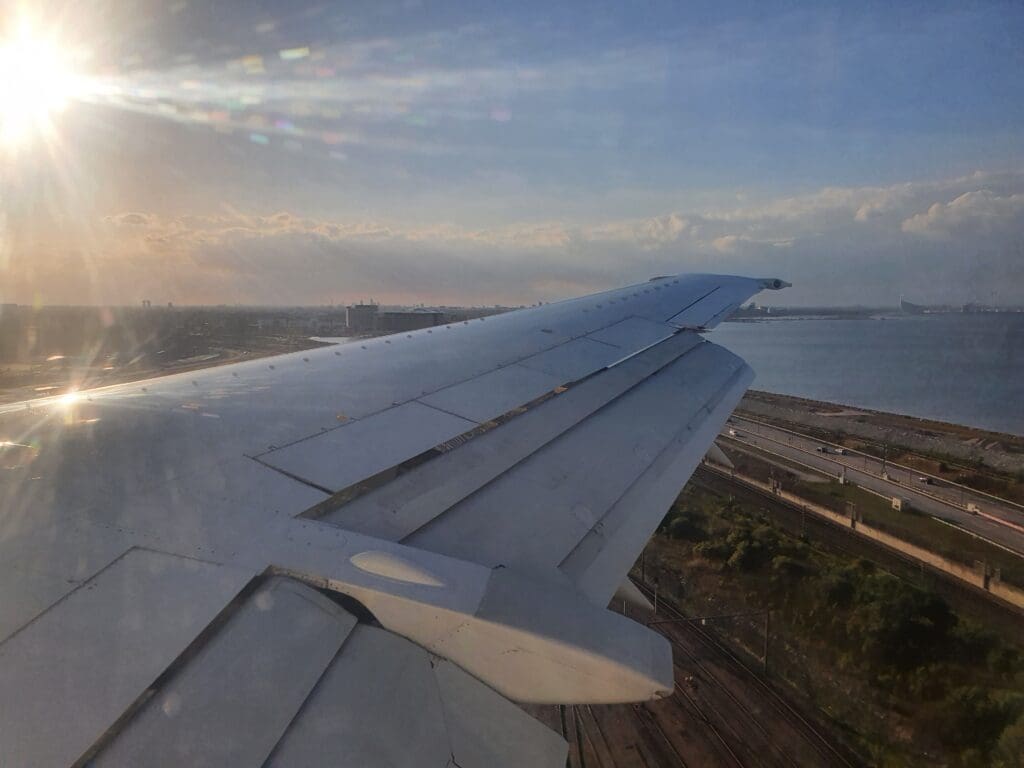
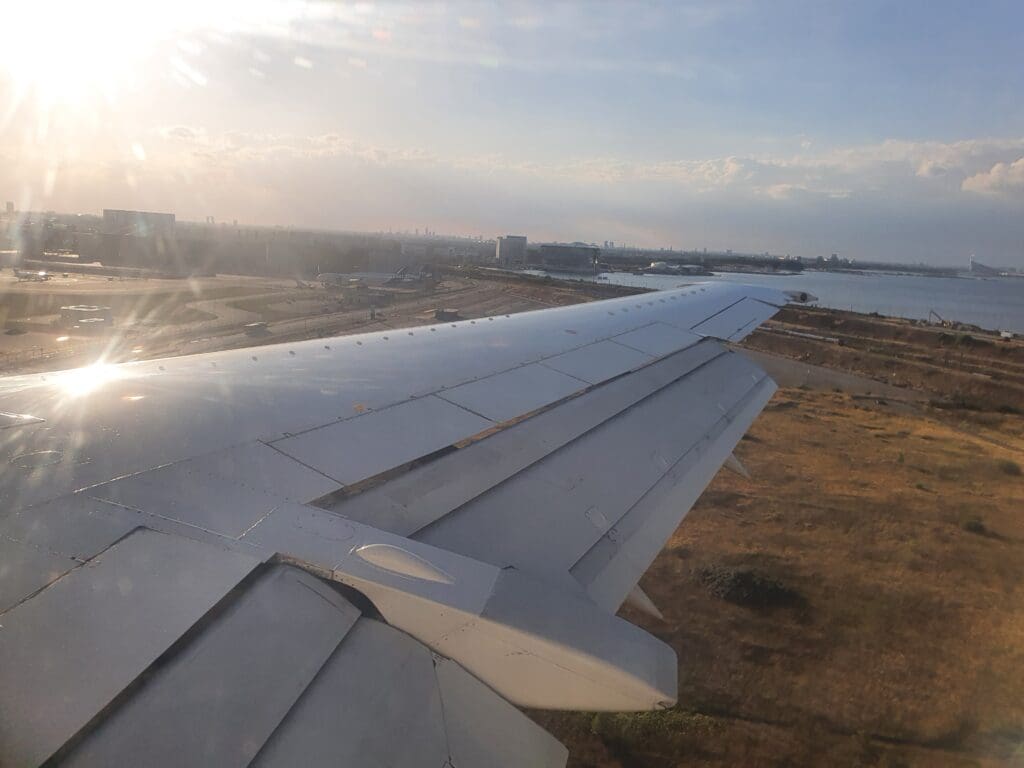
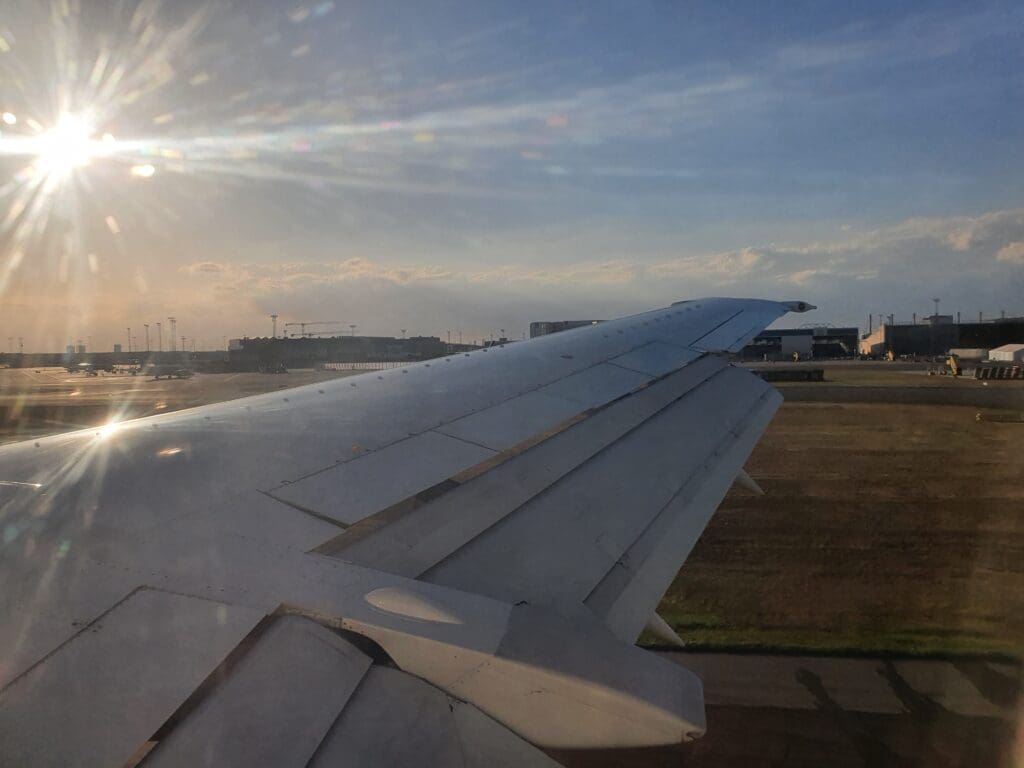
A short time later, the aircraft vacated the runway to the right and began a short taxi over to the terminal’s ‘B’ pier. That evening, the usual cluster of aircraft that you would expect to see in Copenhagen could be seen, which included plenty of Scandinavian Airlines and Norwegian aircraft as well as visitors from major airlines across Europe. However, being a UK-based spotter, there were some airlines that whilst aware of, I had rarely come across. These included two Egyptian Airbus A320s from Air Cairo and Nesma Airlines, as well as an all-black Alsie Express ATR 72 departing on its short flight to Sønderborg. Four minutes after touching down, the Boeing pulled in to Stand B8 and came to a halt at which point many passengers jumped up in the usual manner, eager to exit the aircraft.
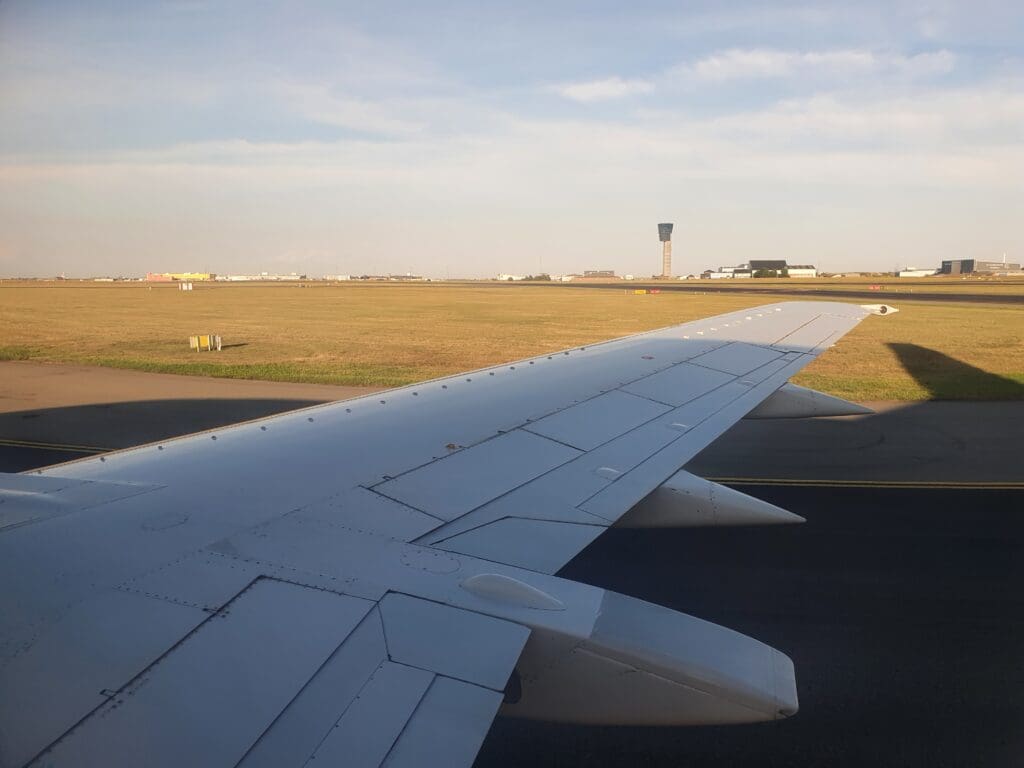
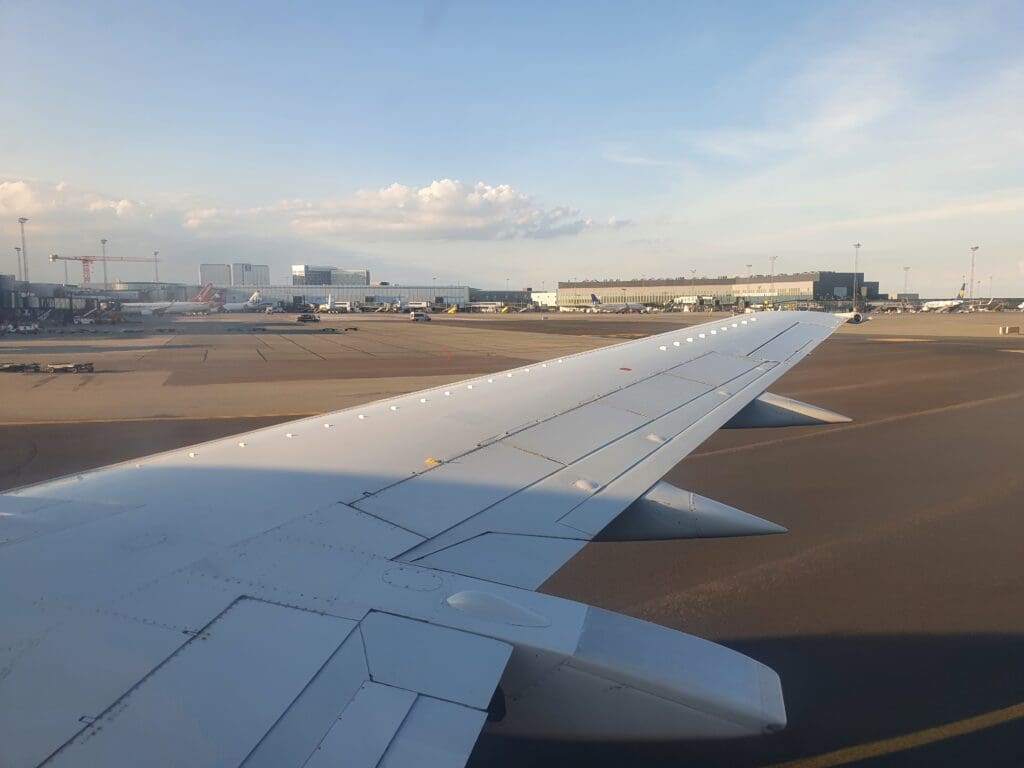
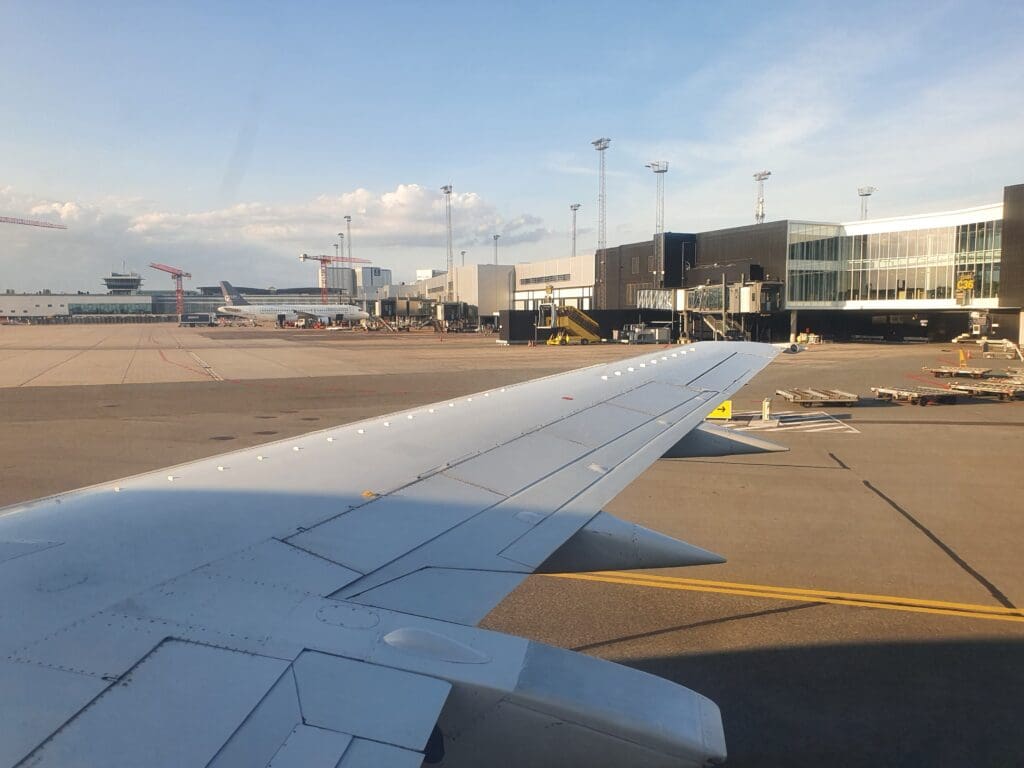
Whilst a jet bridge needed to be connected to the aircraft, this appeared to be joined up in record time and disembarkation commenced a short time later. With a long stop in Copenhagen until my 2320 Ryanair flight back to London Stansted, I was in no particular rush and I waited for a while for the queue to die down before I stood up and trundled forward through the cabin. After thanking two Air Horizont crew members who stood in the forward galley, I stepped up and made my way into Copenhagen Airport’s very pleasant terminal, ending my first-ever semi-experience with airBaltic.
Summary
Had I been flying Air Horizont as a regular, I may have been slightly disappointed by the hard seats and mediocre legroom, the retro nature of the slightly tired-looking cabin or the coolness of the crew who failed to make a lasting impression. Fortunately, not being a ‘regular’ passenger, rather than being upset with the aforementioned features of the flight, I was simply happy to have experienced another flight on a Boeing 737 Classic at a time when they are becoming increasingly rare.
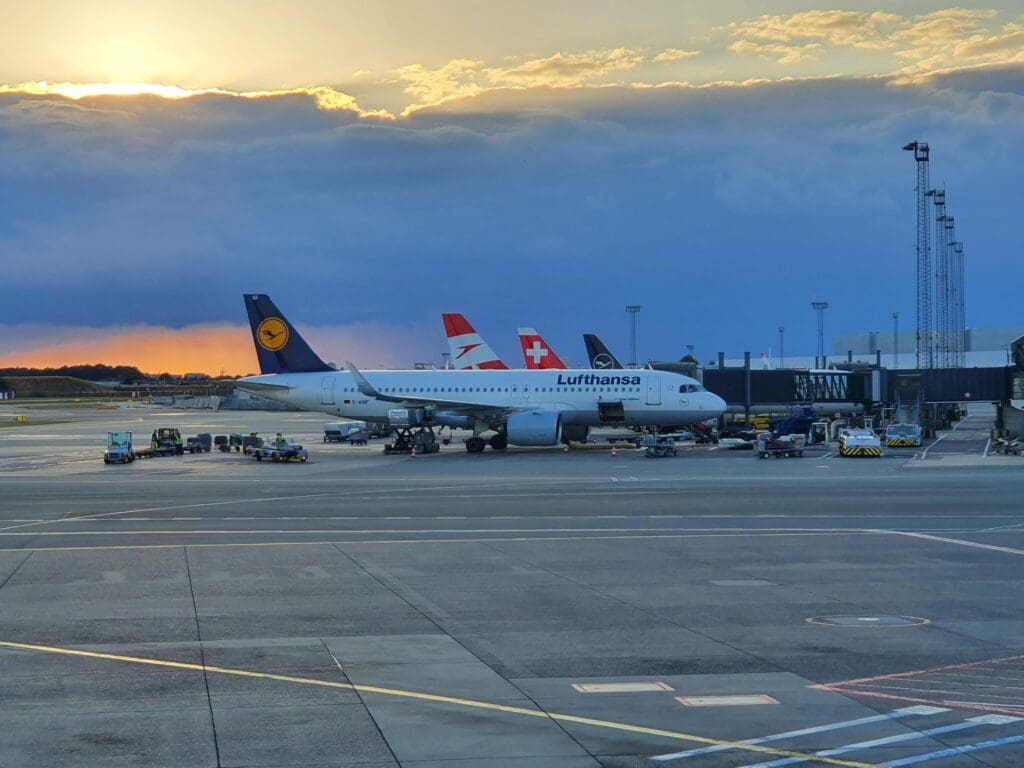
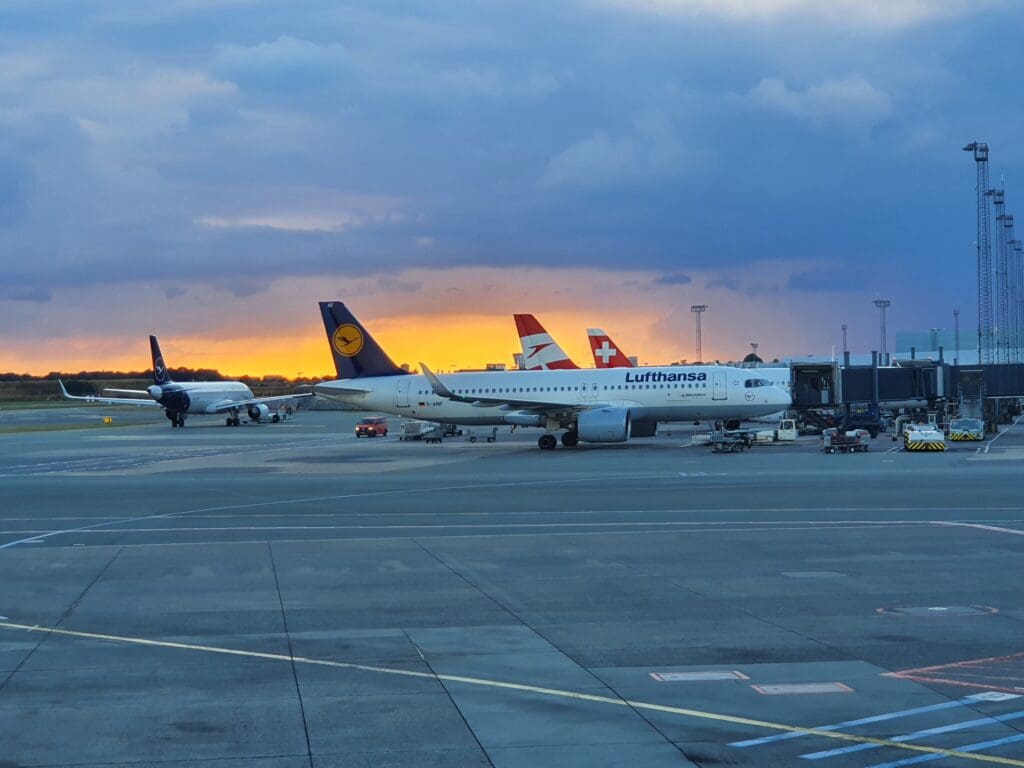
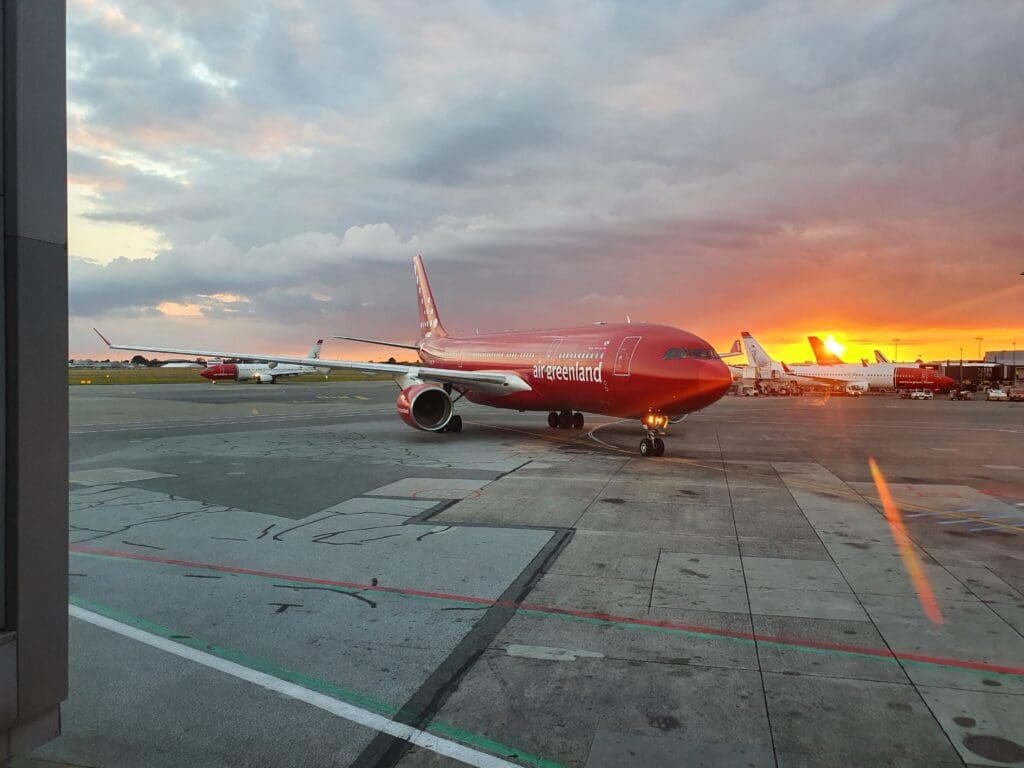
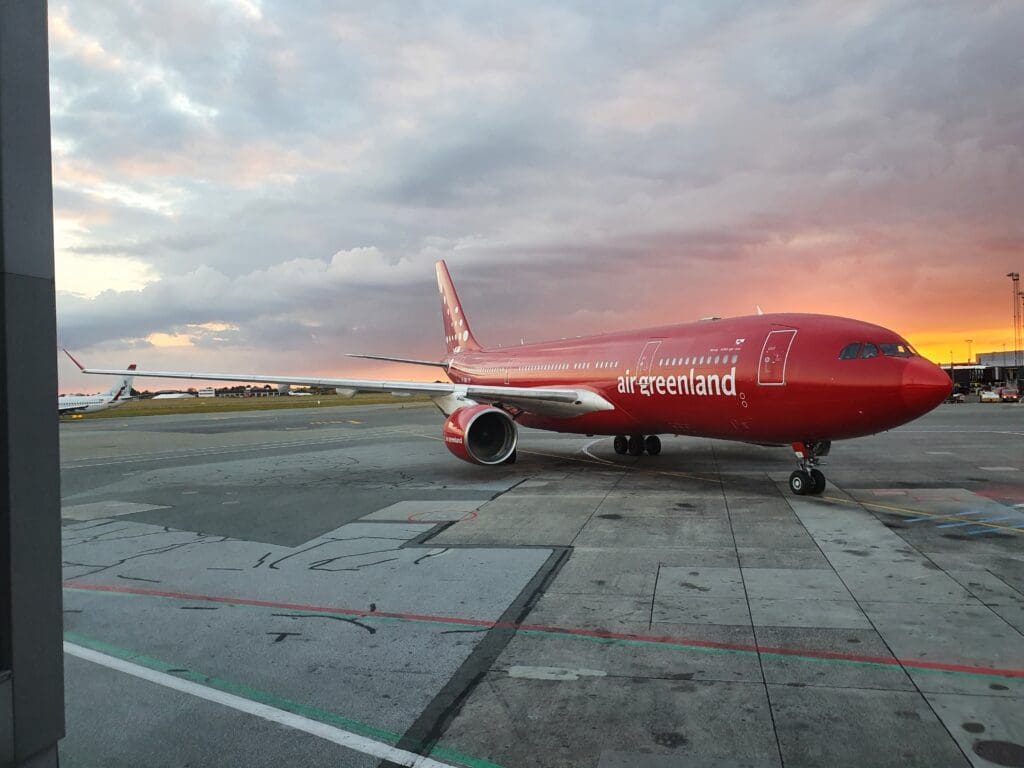
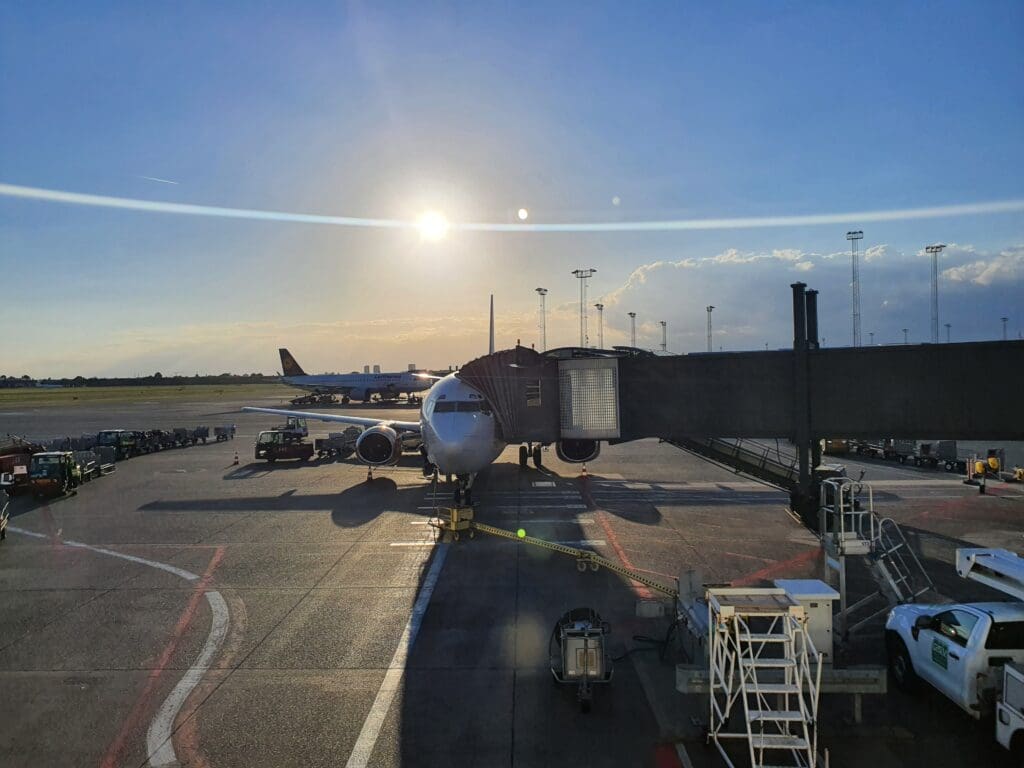
To end, here are some evening pictures from Copenhagen Airport: